Best Small SUVs in Australia
Looking to get into a brand-new small SUV? Our stories below will guide you to the model that best suits your needs:

So does Wheels, but it seems those days are well and truly gone. At a time when everything costs more than it ever has, the concept of the affordable small car has shifted significantly.
Going back to when small cars were affordable, let’s look back at the first thoughts of Wheels testers when driving both of this issue’s combatants.
Yaris first graced the pages of Wheels in February 2006, with Peter Robinson and John Carey both getting behind the wheel. “It feels a very mature, responsible car that you’d recommend to anybody,” Robbo wrote.
“The 1.3-litre is elastic and enthusiastic, if a little uncharismatic,” Carey said. “While the light-shifting manual transmission is a pleasure to use, the indecisive four-speed auto isn’t so smart.”
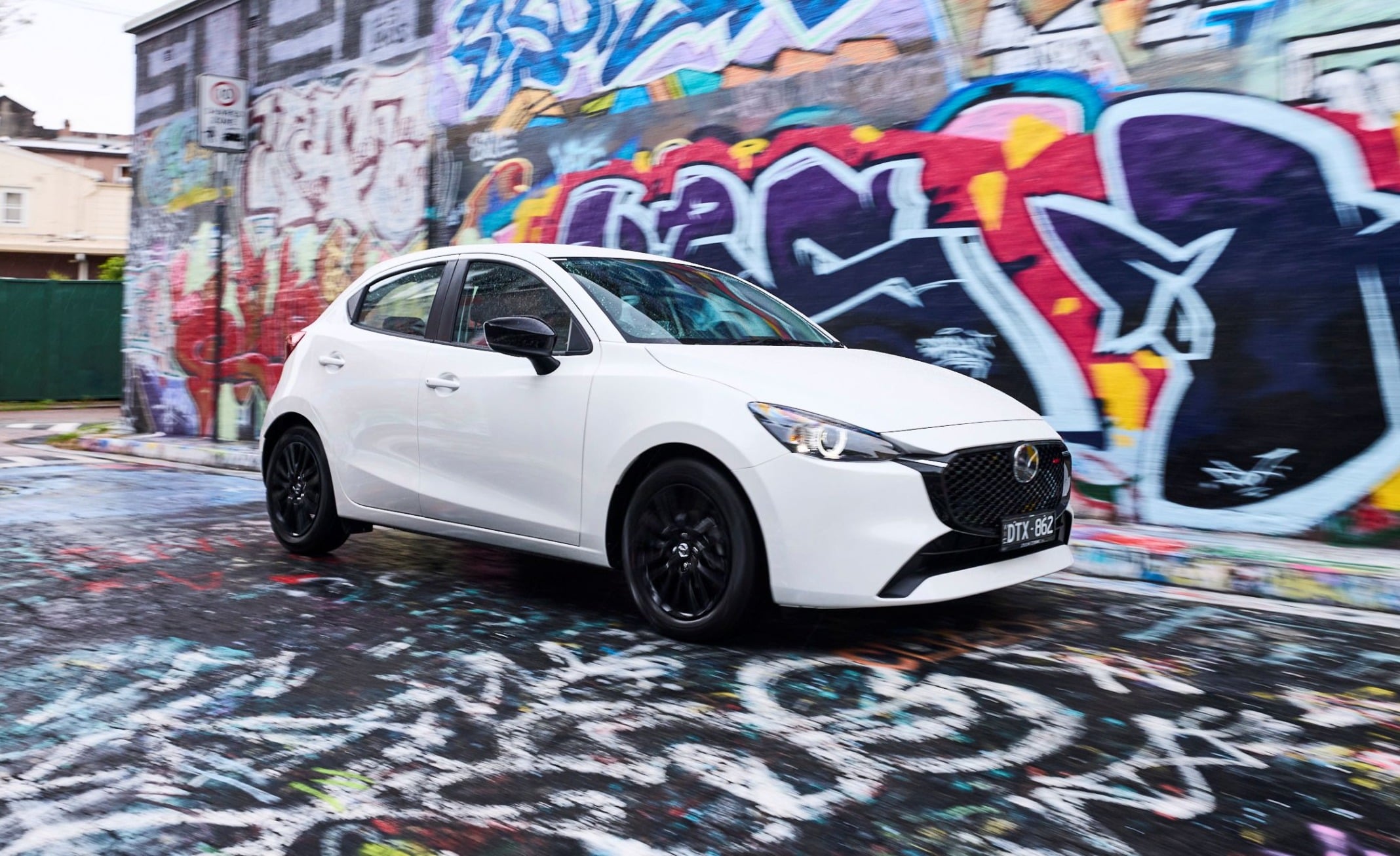
It was the Mazda 2’s turn in August 2004, with Nathan Ponchard testing this time.
“The Mazda 2 responds well to a fast-spinning crank and a driver with intent,” Ponch wrote. “The specs say it produces 90 per cent of its maximum torque from just 1900rpm, but the reality is that the 2’s all-alloy MZR engine is a fairly peaky unit that needs at least 3500rpm showing on its tacho to feel perky.”
More than two decades on, the concept of an affordable car with a manual transmission has almost gone the way of the dodo, but the formula remains genuinely close to the original. That is, deliver
as much as a manufacturer can, in a package as diminutive as possible. Time to find out whether that works beyond the theory.
It’s at the cash register where things get really interesting. The concept that any Yaris is ‘cheap’ is long gone, with the starting price for our tester a hefty $34,590 before on-road costs. At the time of testing, that equated to a driveaway price of $34,590.
And if you’re thinking that mid-thirties is a big ask for a compact city car, you’re not alone. You do get a healthy serving of standard equipment, and we’ll get to that in a minute. Rewind back to 2006 as we did above, though, and you’ll remember that Yaris launched as an attractive three-door manual, starting at just $18,990. Haven’t times changed?
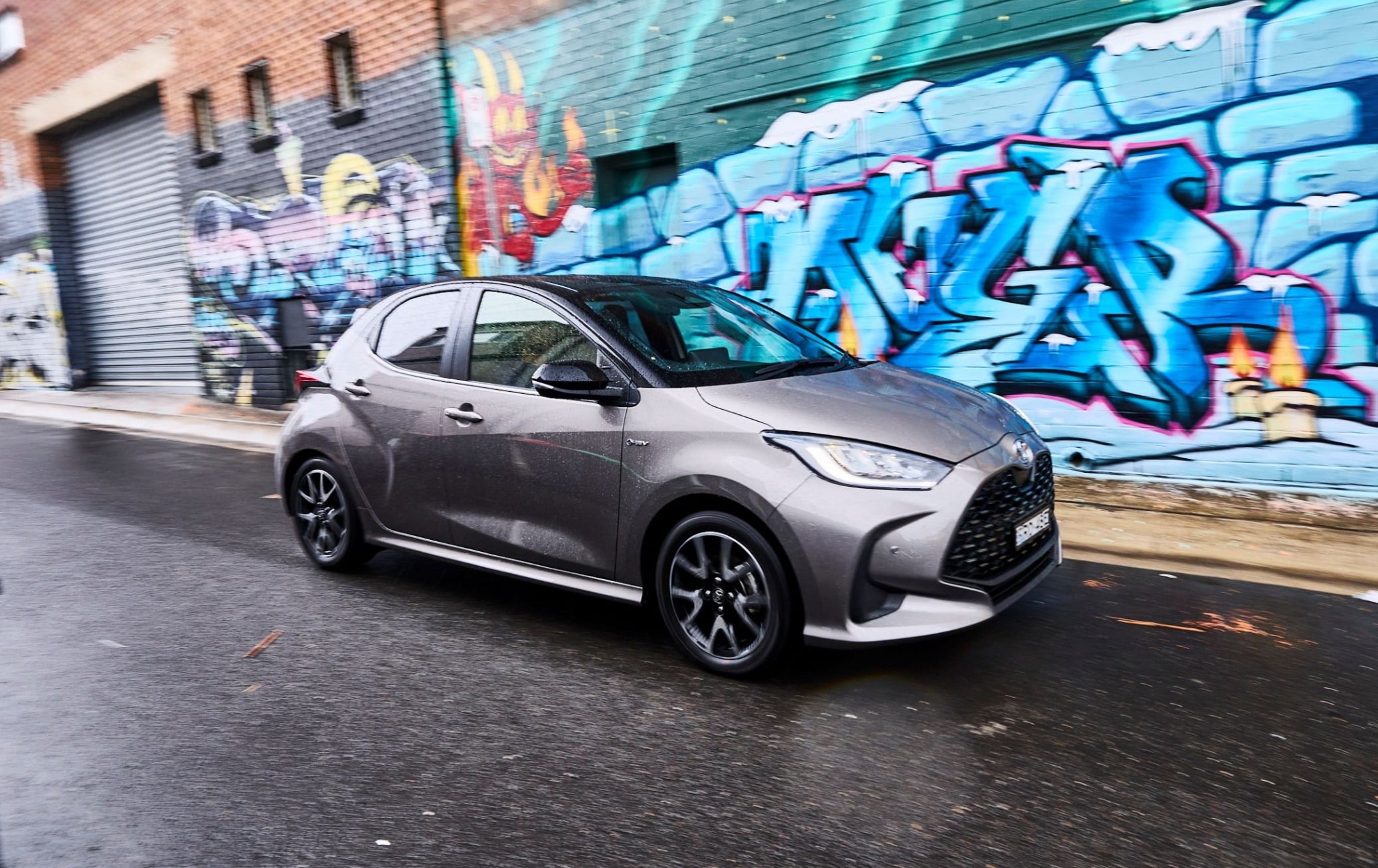
The Yaris range starts from $28,990 before on-road costs for the Ascent Sport, while the mid-grade SX starts from $32,390 before on-road costs, and the next step is to the range-topper we have here. Why is all this interesting? Put simply, it’s the asking price of the Mazda that spices things up.
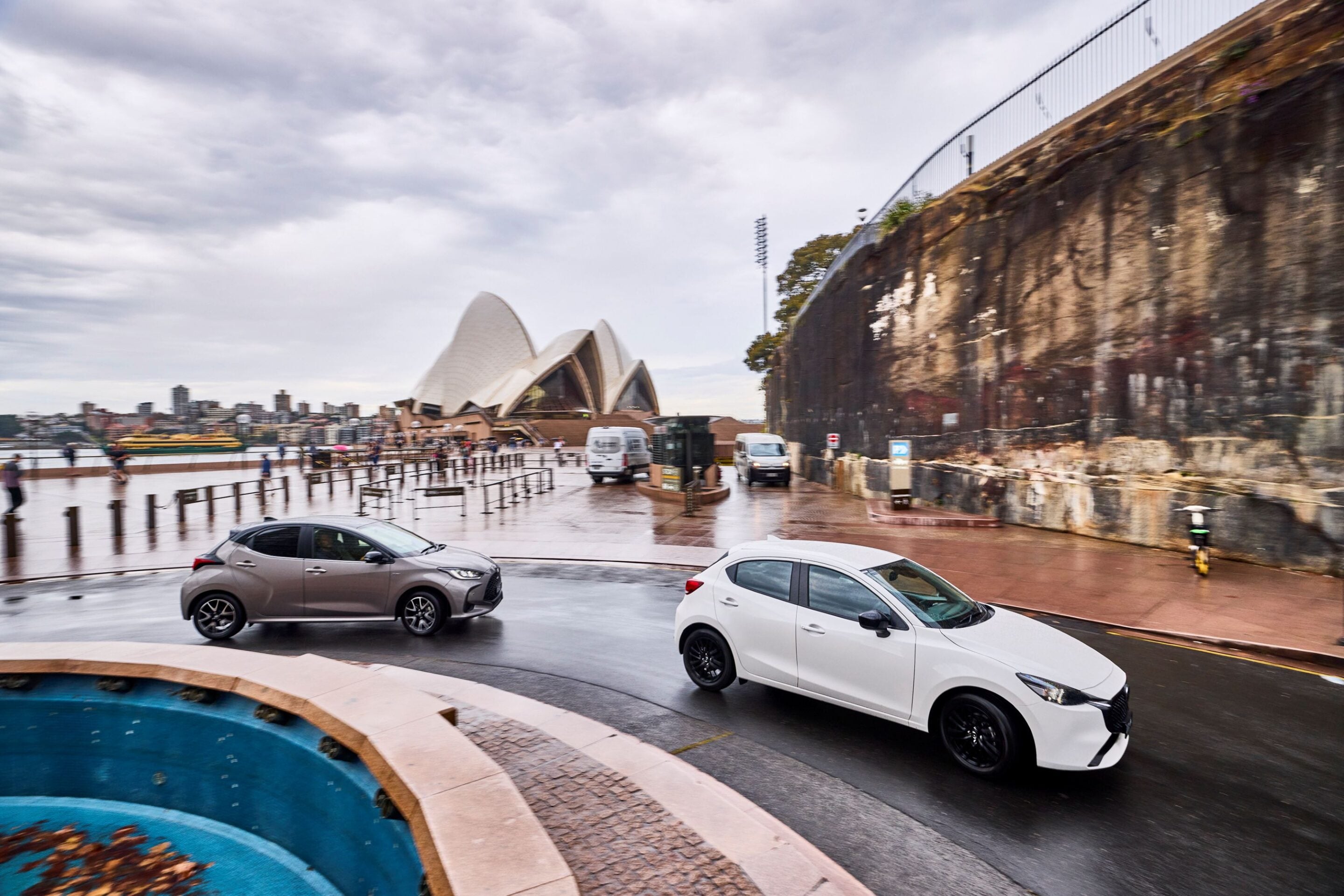
On test, we have the more affordable – in the two-grade range – Mazda 2, which starts from $27,290 before on-road costs, or $28,990 driveaway at the time of testing. As such, this comparison seeks to answer the following question. Is the most affordable 2 all the city car you need? Or do you really get ‘more for more’ with the most expensive Yaris?
There’s no doubt that $34,590 versus $28,990 might, in theory, answer the question for you, but the reality runs a little deeper. The Yaris promises to be significantly more frugal thanks to its efficient hybrid drivetrain, and while you won’t save the buy-in price difference in fuel in the first three to five years, Toyota would be banking on brand loyalty and standard equipment to entice buyers.
Under the bonnet, Yaris gets a zesty 1.5-litre three-cylinder DOHC petrol engine, running an electric motor and Toyota’s long-serving hybrid technology by way of a 4.3Ah lithium-ion battery.
Yaris uses an e-CVT and front-wheel drive, and Toyota claims a peak combined power output of 85kW. While the petrol engine generates 120Nm and the electric motor tips in 141Nm, the total torque
figure matches the electric motor’s 141Nm.
The combined fuel-use claim is low to say the least, with Yaris consuming just 3.3L/100km on the test cycle. Against that, under real-world Wheels testing, with our usual 70:30 city versus highway mix, Yaris used 4.1L/100km.
Mazda 2 Evolve costs less, and is less technologically complex beneath the stubby bonnet as well, with a more traditional take on the city car segment. There’s no hybrid tech, or associated weight, only stop/start to assist the little Mazda in reducing fuel use. For some, that lack of complexity might be enough to sway the purchase decision.
There’s a 1.5-litre, naturally aspirated, DOHC petrol four-cylinder, which makes 81kW and 142Nm, driving through a traditional six-speed automatic and on to the front wheels. Mazda quotes 5.0L/100km on the combined cycle, and over the same testing loop as the Yaris, Wheels saw a return of 6.7L/100km.
While the lack of hybrid technology might lead you to think the Mazda is significantly lighter than the Toyota, that doesn’t play out in the real world. The Yaris tips the scales at 1130kg, while the Mazda doesn’t undercut it anywhere near as much as you might think, weighing 1109kg. That means the fuel
efficiency of the Toyota is as real as it is tangible, given it’s hauling around almost the same weight.
Both will run on 91RON fuel, and warranty coverage is five years/unlimited kilometres for both cars. Both also ask for a service every 12 months of 15,000km. Across the first five years, the Mazda 2 will cost $2290 to service, while the Yaris costs just $1325 over the same period.
A surfeit of equipment isn’t necessarily the key driver when buyers are looking at this segment, but it certainly doesn’t hinder the sealing of the deal if your focus is on the specification sheet. First up, let’s look at the equipment that both these compact city cars share.
That list includes automatic dusk-sensing LED headlights, 16-inch alloy wheels, temporary spare wheels, auto-folding mirrors, push button start, single-zone automatic climate control, leather-wrapped steering wheels (the Toyota’s is synthetic), touchscreens with wireless Apple CarPlay and Android Auto, satellite navigation, AM/FM/DAB+ radio, autonomous emergency braking with pedestrian detection, adaptive cruise control, lane keeping assistance, blind-spot monitoring with rear cross-traffic alert (with braking), traffic sign recognition, reversing cameras, rear parking sensors, head-up displays, and driving modes.
Drilling into the specification sheet a little deeper indicates that the Mazda gets rain-sensing automatic wipers, a leather-wrapped gear selector and handbrake, and five years of roadside assistance – features the Yaris doesn’t get, with Toyota requiring owners to pay for roadside assistance.
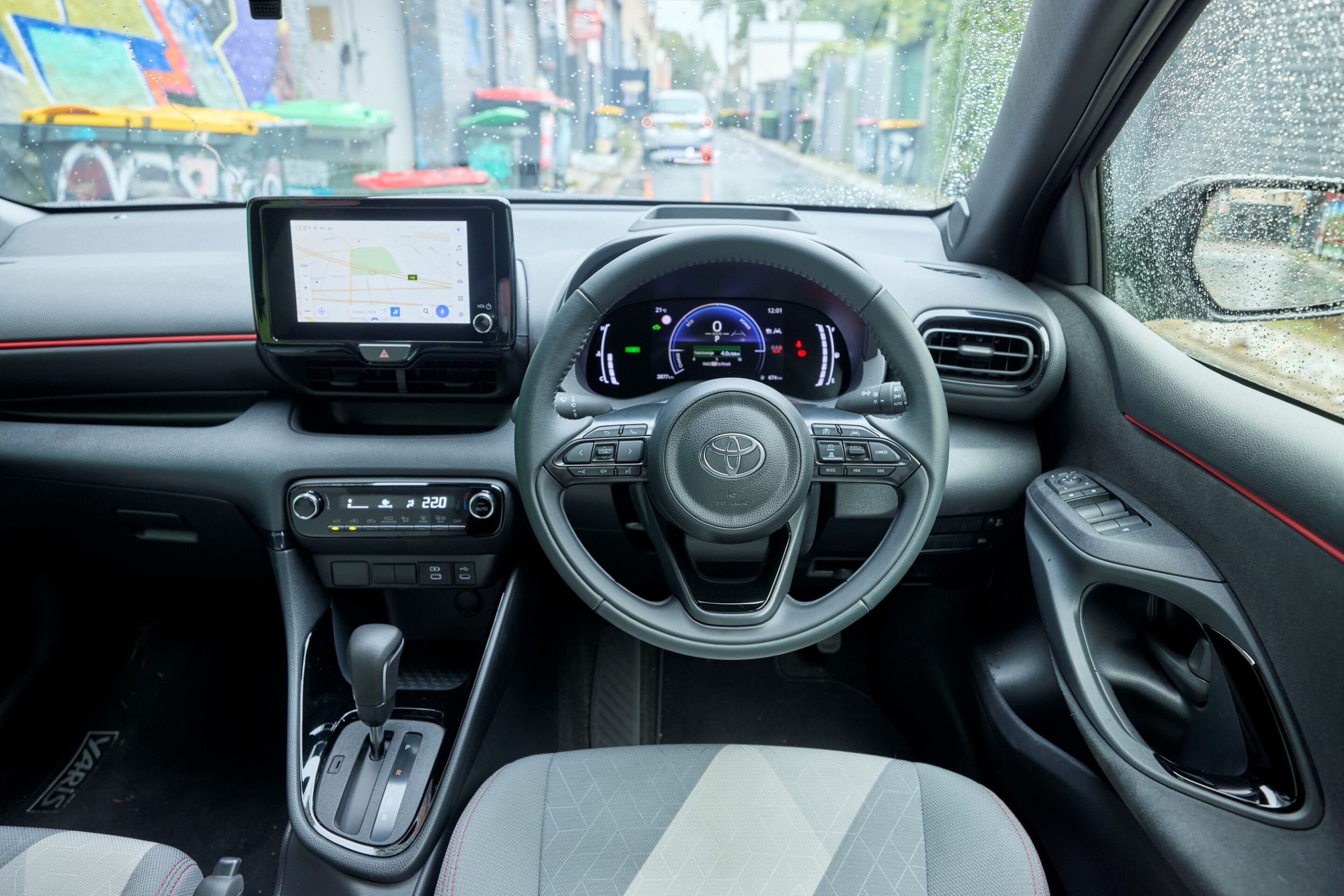
However, Yaris counters with the following equipment that 2 misses out on: smart keyless entry, adaptive lane guidance, a digital driver’s display, live services, automatic calling after a crash, two extra airbags for eight in total, front parking sensors, a more advanced AEB system with cyclist detection and daytime intersection assistance, four automatic windows, a larger touchscreen – 8.0-inch v 7.0-inch – a dual-level boot floor, Eco and EV driving modes and cabin air purification.
Outside of roadside assistance, there isn’t anything Mazda brings to the party (that Toyota doesn’t)
that you genuinely need to enjoy your daily drive. However, in the case of the Yaris – which it’s worth remembering, is a more expensive proposition – the inclusion of extra airbags, extra sensors, and a larger touchscreen for example, are material benefits that absolutely convey a sense of value.
The Yaris cabin is light and breezy, but that attractive light grey seat trim is prone to stains, something Wheels can attest to, given the time we spent cleaning them post collection before the photos were taken. The seats are comfortable, visibility is excellent, and there’s room for six-footers up front, but you’ll then need to assume the rear seats are for show only.
There are some hard plastics throughout, but not in the high contact areas to the point it becomes annoying. Toyota claims 270 litres storage space in the boot, which is useful for city dwellers or weekends away for two. Fold the second row down and the adjustable floor base allows you to have a decent, flat space.
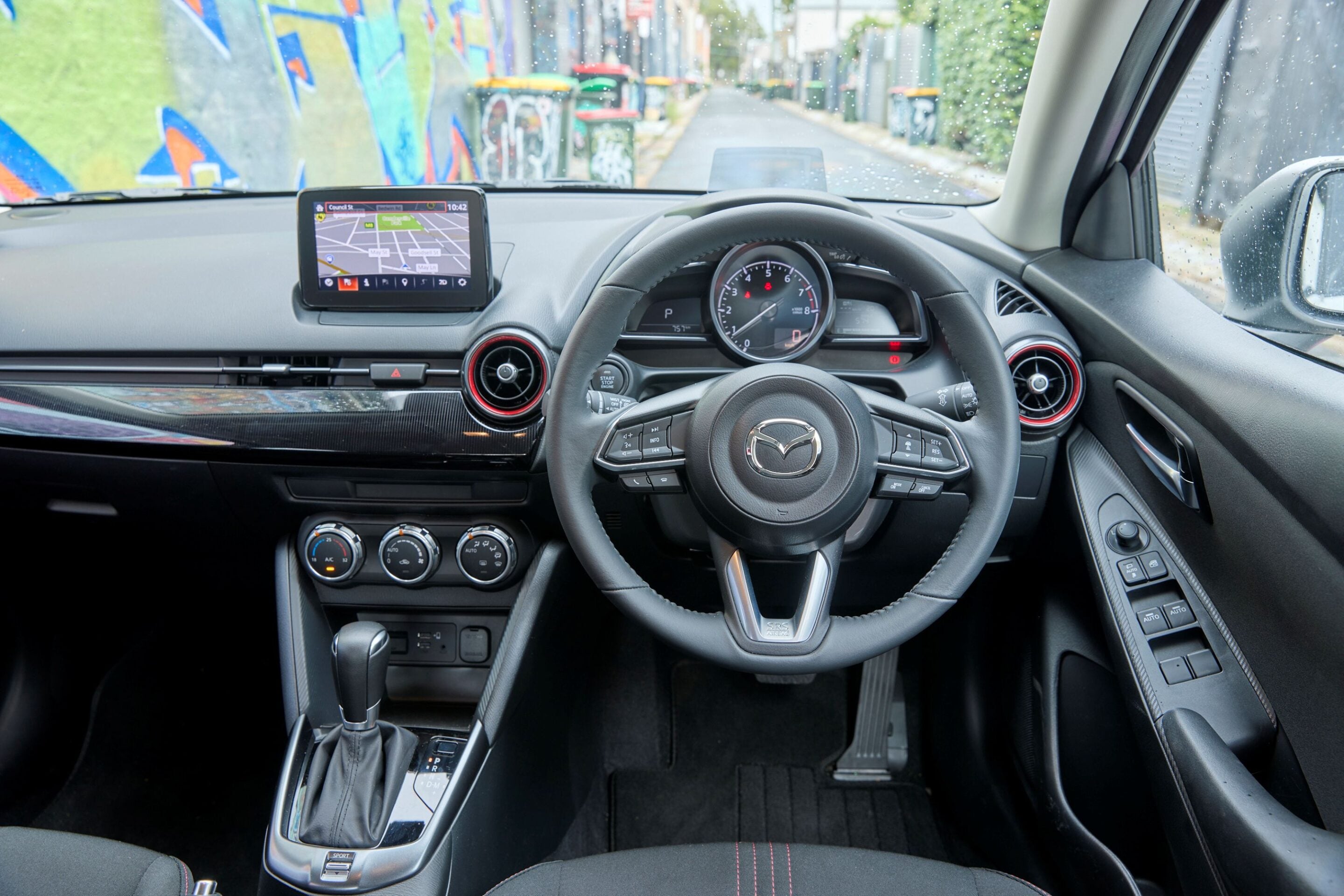
In terms of cabin tech, a bigger screen is one thing, but it needs to work efficiently and in the case of the Yaris, it does. Wireless Apple CarPlay was easy to connect and works well, and the interaction between driver and car is an easy one. Toyota’s head-up display beats Mazda’s, not so much in terms of the information displayed or clarity, but in terms of physical execution.
The small storage shelf at the top of the centre stack is a clever place to stow your smartphone. Yaris is first and foremost a compact car, and that’s never more evident than inside the cabin, where there’s not a huge amount of storage space, but the daily requirements you’ll want – bottle holders in the door, safe houses for takeaway coffee in the centre console and somewhere to keep your phone and personal items tucked away – are all accounted for.
Open the door to the Mazda 2, and despite the sharper starting price, you’ll find a muted, classy, and premium-looking cabin. Unanimously, everyone who poked their head into the two hatches commented that the Mazda conveyed a luxurious air the Toyota couldn’t quite match.
Like Yaris, there are still hard plastics in evidence, but again, not in areas where they will be annoying. Neither car feels built down to a price, but the 2 does a better job – with its black cabin trim and contrast red stitching – of feeling the more premium of the two. It certainly feels sportier, even though that’s more based on looks than anything you can measure.
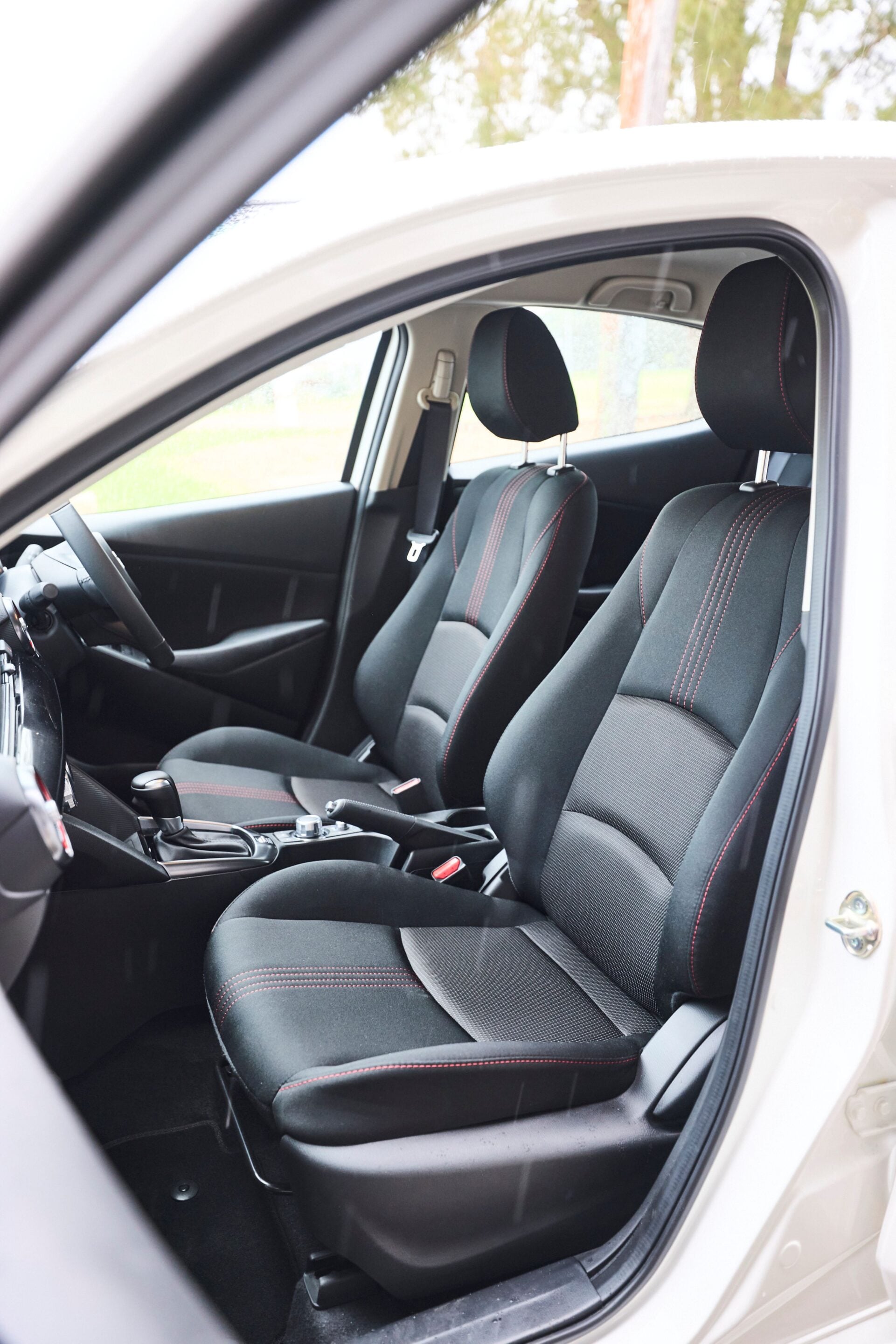
If you’re looking for the more hard-wearing interior, the Mazda’s black trim is the obvious choice. The fact you can adjust the height of the 2’s seatbelts – something you can’t do in the Yaris – is something Wheels’ testers of varying heights appreciated.
Mazda’s screen is an inch smaller, but still works well to clearly display the information you need. There is, however, a control hangover that Wheels is regularly annoyed by. It is a touchscreen, with a catch. Touch inputs work so long as you’re not moving, because once you take off, it’s over to the console-mounted rotary dial to control infotainment features. Yes, you’ll get used to it if you’re an owner, but it’s neither simple nor intuitive.
Mazda’s steering wheel controls are neatly arranged, and have a robust feel to their action, but the way the head-up display relies on a pop-up plastic screen feels a little bit last generation compared to the slicker display of the Yaris.
The front seats are comfortable, on par with the Toyota’s but it’s the same story with tall occupants knocking out the effectiveness of the rear seats. Storage feels the same when you look at the cabin, but looks are deceiving, with the Mazda offering 250 litres and thus losing out to the Toyota.
Comparing the two back-to-back, the Mazda’s cabin feels tighter than the Toyota’s. The storage bin ahead of the shifter isn’t large enough to accommodate a smartphone, perhaps showing the age of the 2 platform.
Both these hatches are in their absolute element dealing with the cut and thrust of city traffic, with sharp steering, excellent ride quality, predictable brakes and decent power delivery – a heady recipe for city success.
Manoeuvrability – despite a 20mm longer wheelbase – goes in favour of the Mazda 2 with its compact 9.8-metre turning circle making easy work of the urban grind, against the Yaris’ 10.2m turning circle. If you’re frequently driving bigger, heavier SUVs, as the Wheels testing team often is, the lightness, change of direction and general fun these city cars provide is a revelation.
The Yaris is an interesting conundrum in that the transition from electric propulsion to petrol is as smooth as any Toyota we’ve tested. So much so that you hardly notice it and have to pay attention if you’re looking for it. Likewise, the working of the e-CVT, which dulls some of the sensation of speed increasing, is significantly better than the CVTs of old.
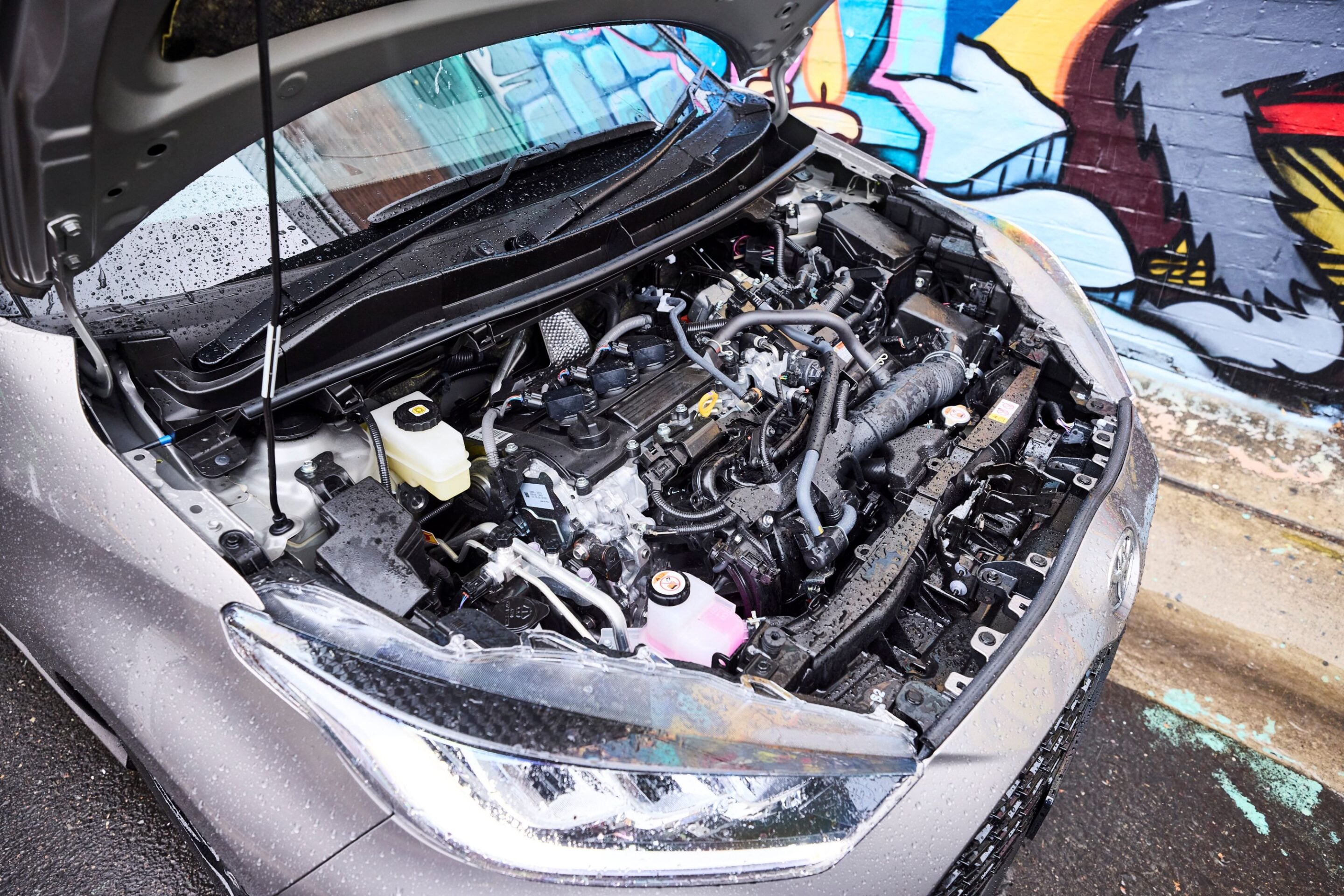
Against that smoothness, though, is the gruff, throaty edge to the 1.5-litre three-cylinder. We’d
appreciate the slightly unrefined nature of the way only a three-pot can work in a sporty application, but it jars with the otherwise smooth progress of the hybrid Yaris. It’s something you only notice under load, but such is the nature of both these cars that you need to get the engine spinning to really get moving.
As such, and when you do, you’ll hear the little three-cylinder belting out its song a little louder than you might like. Cranking up to highway speed, for example, you’re asking the Yaris to work a little harder than it wants to.
Yaris delivers a beautiful mix of bump absorption and handling competence, with none of the choppiness or harsh ride some small cars are guilty of. Riding on 185/55/16 tyres against the chubbier 60-profile rubber of the Mazda, you might expect the Yaris to ride firmer, harsher even, but it doesn’t. Even loaded up with photo gear and two adults, the ride remains nicely controlled. Sharp speed bumps are easily
dealt with, ensuring that whatever you need to tackle in the city won’t see the Yaris lose composure inside the cabin.
Readying itself in silence and with the ability to crawl up to 30km/h on electric power alone, the Yaris is focused nicely on exactly the type of driving the urban buyer needs. Leave the confines of the city and the 36-litre fuel tank and low consumption mean you can tackle longer distances just as easily. The light, city-focused steering works well on a twisty road, too, and the Yaris is deceptively nimble – and fun – as speed increases.
Most of you would assume the Mazda 2 is the sportier of the two options here, and that’s borne out by the driving experience. Despite both power and torque sitting lineball in terms of the numbers, it’s the 2 that feels sharper, punchier, and more inclined to want to be let off the leash.
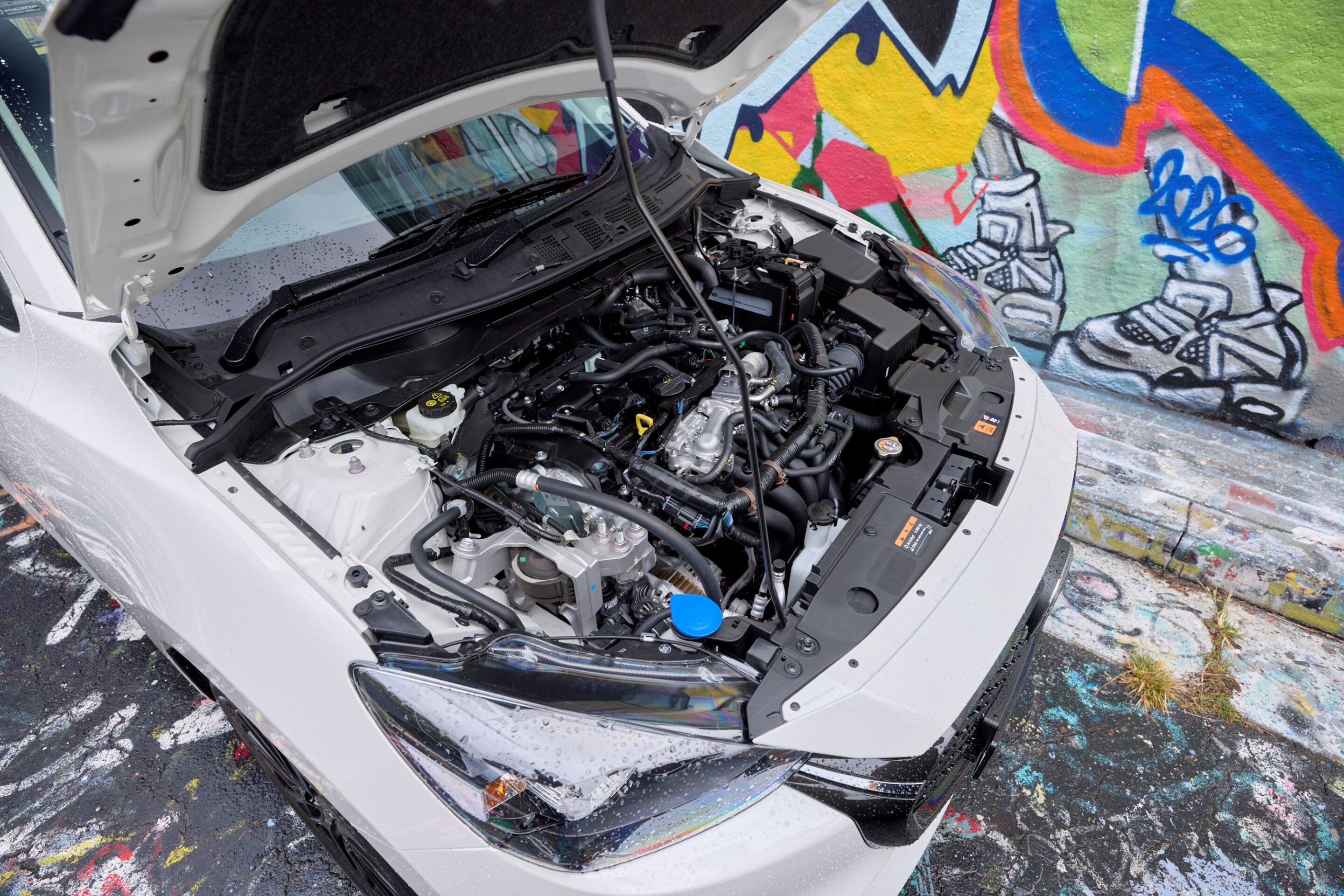
The four-cylinder makes some noise as the revs increase, and they will often if you want to keep the Mazda 2 accelerating, but it’s a quieter engine under load than the three-cylinder in the Yaris. Both lack punch off the mark though, and the Mazda 2’s gearbox, traditional as it is, isn’t as precise as some conventional automatics under enthusiastic acceleration.
While neither of these hatches are fast in real terms, it’s the 2 that delivers more urgency. However, like the Yaris, it doesn’t love highway speed, or getting there too quickly. The auto can feel slow to react to downshift requests, and we noticed it moving between sixth and fifth a little too much as we worked between 100km/h and 110km/h zones on the highway.
Braking and steering are excellent, and the Mazda’s tight turning circle makes it a joy to thread through traffic and into parking spaces – no matter how compact they might be. Like the Yaris, the 2 is more
direct and fun than you’d expect of this segment, and while it may not encourage you to really hustle it along, it is capable of such folly.
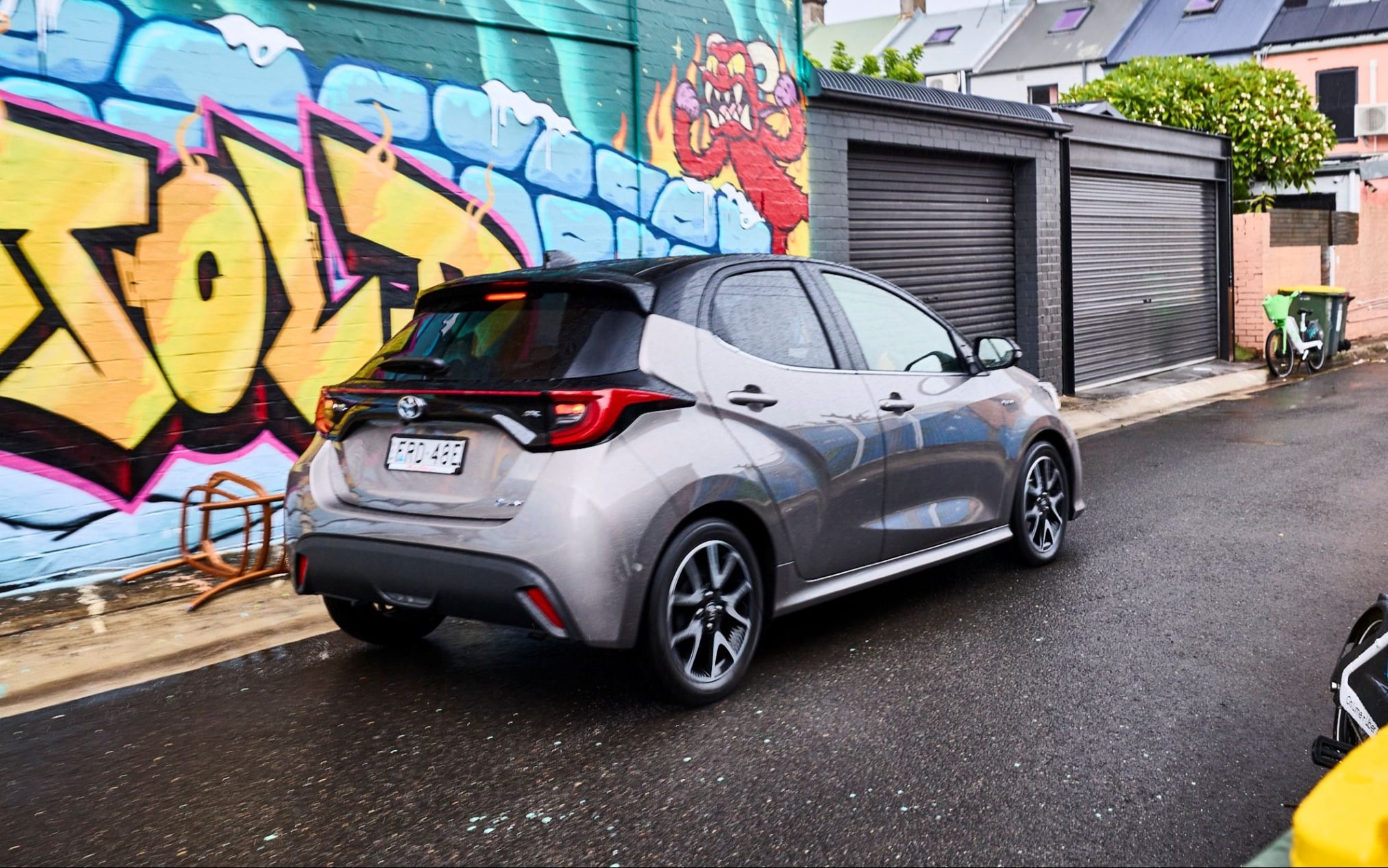
The ride is a fascinating comparison back-to-back on the same choppy inner-city surfaces. Mazda gives the 2 marginally more sidewall (60 profile v 55) on the same 185 width and 16-inch wheel diameter. So, you’d expect the 2 to be slightly cushier, but it’s not. The ride is actually a little firmer, but somehow even more composed and comfortable. Kudos to Mazda’s engineers for that one, especially on our pathetic road network.
Of the two, the Mazda is the driver’s pick – more engaging, less removed from the driving experience, and more fun – but the Yaris is more frugal, and is the better roadtrip tool, especially over longer distances.
If you put the asking price and fuel consumption to one side, these two are so closely lined up, it’s difficult to split them. However, where the Toyota costs more to buy, it uses less fuel and is cheaper to service than the Mazda. And, there’s no doubt you do get more for more in terms of the extra standard equipment loaded into the more expensive Toyota. The Toyota also feels newer than the Mazda and looks it from inside the cabin.
The 2, as has been the case for quite some time now, remains the better driver’s car. It’s not so important in this segment, but if you value the engagement of the drive, the Mazda 2 is the more competent, connected and enjoyable of the two. So on that count, Wheels would direct you to your nearest Mazda showroom.
However, if you can extend your spend at the point of purchase, the Yaris shines. It uses less fuel, is just as competent around town, and the extra standard equipment is something you see, feel and use every day, which makes the case for spending the extra money.
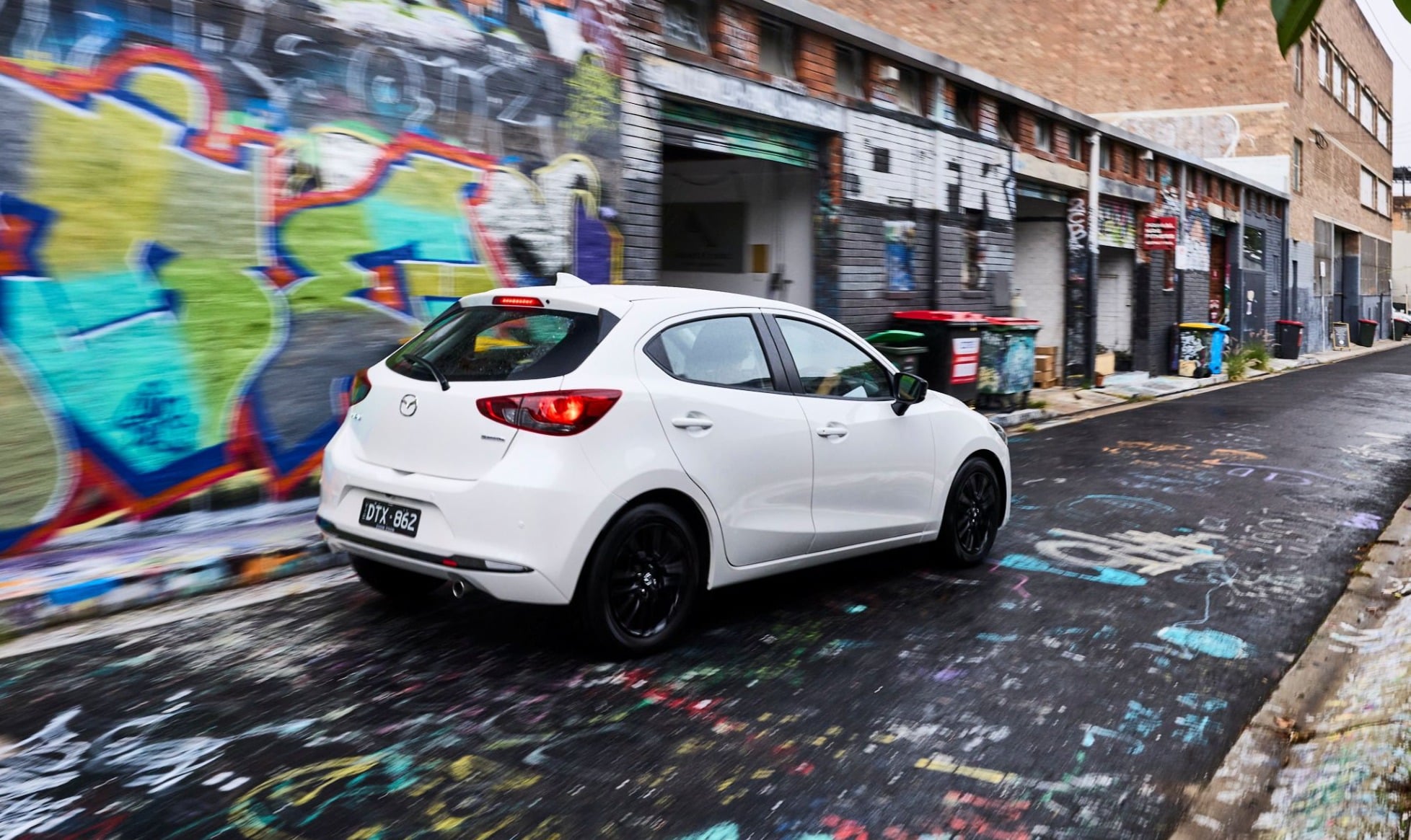
But if Wheels could pick only one, we’d opt for the Mazda 2 and save the extra money, such is the driving enjoyment and engagement it brings in what could be a much more boring platform. It’s a comparison of splitting hairs between these two, there’s no doubt about that, but the Mazda 2 – just – hangs onto the top step of the podium.
| Price | $34,590 plus on-road costs |
|---|---|
| Engine | 1490cc three-cylinder DOHC petrol + electric motor |
| Engine outputs | 67kW/120Nm |
| E-motor outputs | 59kW/141Nm |
| Peak system power | 85kW |
| Peak system torque | 141Nm |
| Transmission | e-CVT automatic, front-wheel drive |
| Claimed fuel economy | 3.3L/100km |
| Claimed CO2 emissions | 76g/km |
| Fuel type | 91RON regular unleaded |
| Fuel tank | 36 litres |
| Dimensions (l/w/h/wb) | 3950/1695/1495/2550mm |
| Boot size | 270 litres (rear seats up) |
| Kerb weight | 1130kg |
| Warranty | Five-year/unlimited km |
| On sale | Now |
| Overall rating | 7.5/10 |
| Price | $27,290 plus on-road costs |
|---|---|
| Engine | 1496cc four-cylinder DOHC petrol |
| Peak power | 81kW (@ 6000rpm) |
| Peak torque | 142Nm (@ 3500rpm) |
| Transmission | Six-speed automatic, front-wheel drive |
| Claimed fuel economy | 5.0L/100km |
| Claimed CO2 emissions | 117g/km |
| Fuel type | 91RON regular unleaded |
| Fuel tank | 44 litres |
| Dimensions (l/w/h/wb) | 4085/1695/1495/2570mm |
| Boot size | 250 litres (rear seats up) |
| Kerb weight | 1109kg |
| Warranty | Five-year/unlimited km |
| On sale | Now |
| Overall rating | 7.7/10 |
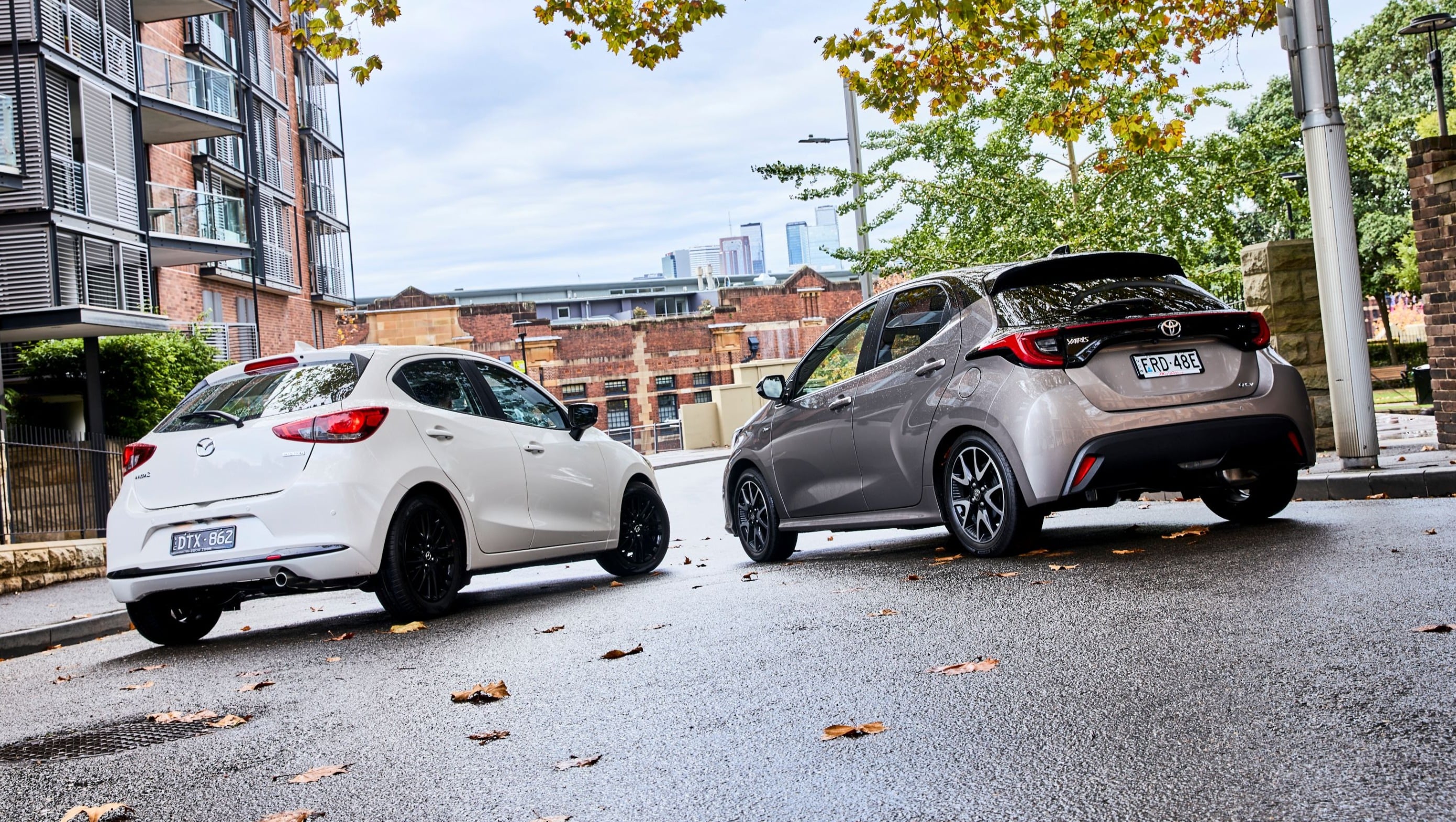
This story first appeared in the June 2026 issue of Wheels magazine, now on sale. Subscribe here and gain access to 12 issues for $109 plus online access to every Wheels issue since 1953.
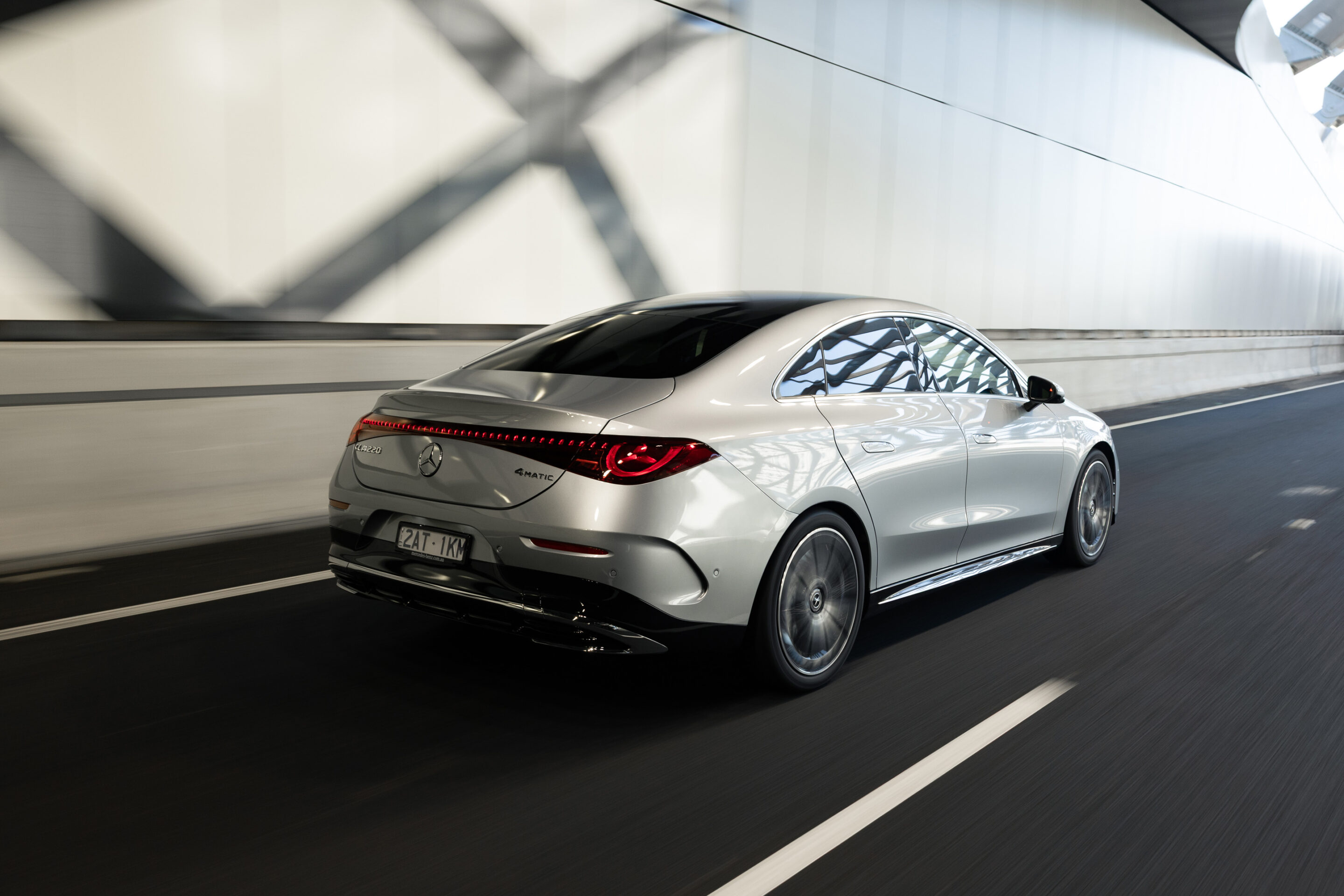
The arrival of the third-generation Mercedes-Benz CLA brings with it a marked shift, the new model casting off the shackles of its predecessor in a package that holds more appeal than ever before.
Where previous generations always seemed a bit ‘entry-level’, the new CLA holds nothing back, a generational update that not only brings new architecture along with new hybrid and battery electric powertrains, but also a level of in-car technology and interior fitment that imbues it with the feeling of a ‘proper’ Mercedes.
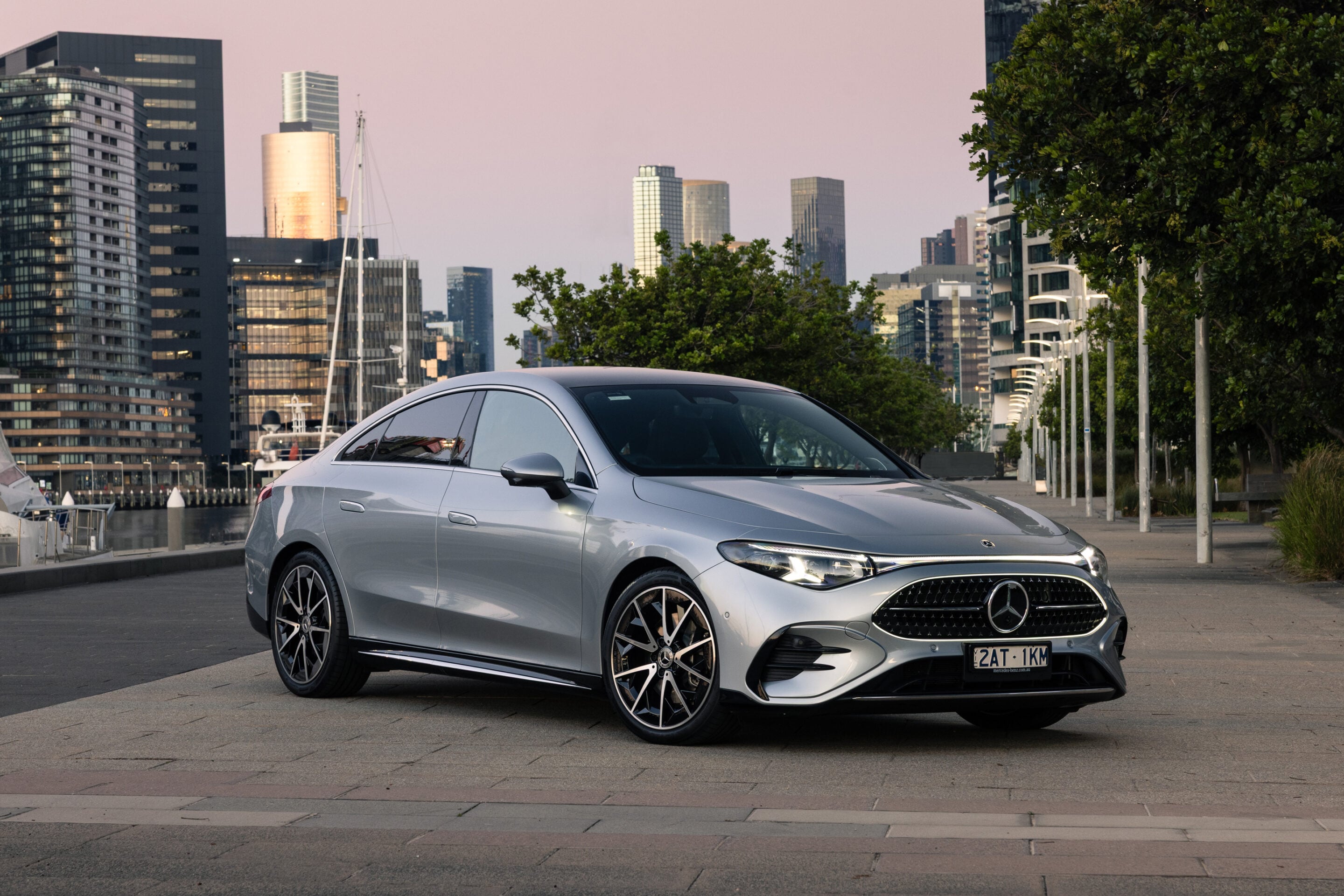
And it does so while being significantly more affordable than the previous model, no easy feat in an age where the cost of everything is rising on an almost daily basis. Cue, aspirational first-time buyers flocking into showrooms.
Mercedes-Benz Australia is staggering the rollout of its newest baby, with mild-hybrid variants first, followed shortly by the CLA’s EV variants. First up, the flagship hybrid CLA 220 4Matic.
In a remarkable turn of events in these cost-of-living-pressure times, Mercedes-Benz has ensured the price of the new CLA is significantly more affordable than the model it replaces.
The mild-hybrid range gets underway with a new entry-level model, the CLA 180, priced from $66,500 before on-road costs. Stepping into the mid-spec CLA 200 asks for $68,100, a significant drop of $5100 over the outgoing model while the range-topping CLA 220 4Matic is also more affordable than the model it replaces, down $3300 for a sticker price of $84,300.
Two electric models will join the range soon – the CLA 200 ($72,200) and the flagship CLA 350 4Matic ($91,300).
For now, though the focus is on the mild-hybrid range and whether Mercedes-Benz’s claims that its 48-volt electric architecture more closely resembles a regular series hybrid stack up.
All hybrid models pair a turbocharged 1.5-litre four-cylinder petrol engine with an integrated electric motor housed inside an eight-speed dual-clutch transmission.
A small 1.3kWh lithium-ion battery powers the electric motor which can, according to Mercedes, propel the CLA in electric-only mode in urban environments where less than 20kW of power is needed. It’s a bold claim of the 48-volt mild-hybrid architecture and one I’m keen to test. Power and torque outputs differ across the three hybrid models.
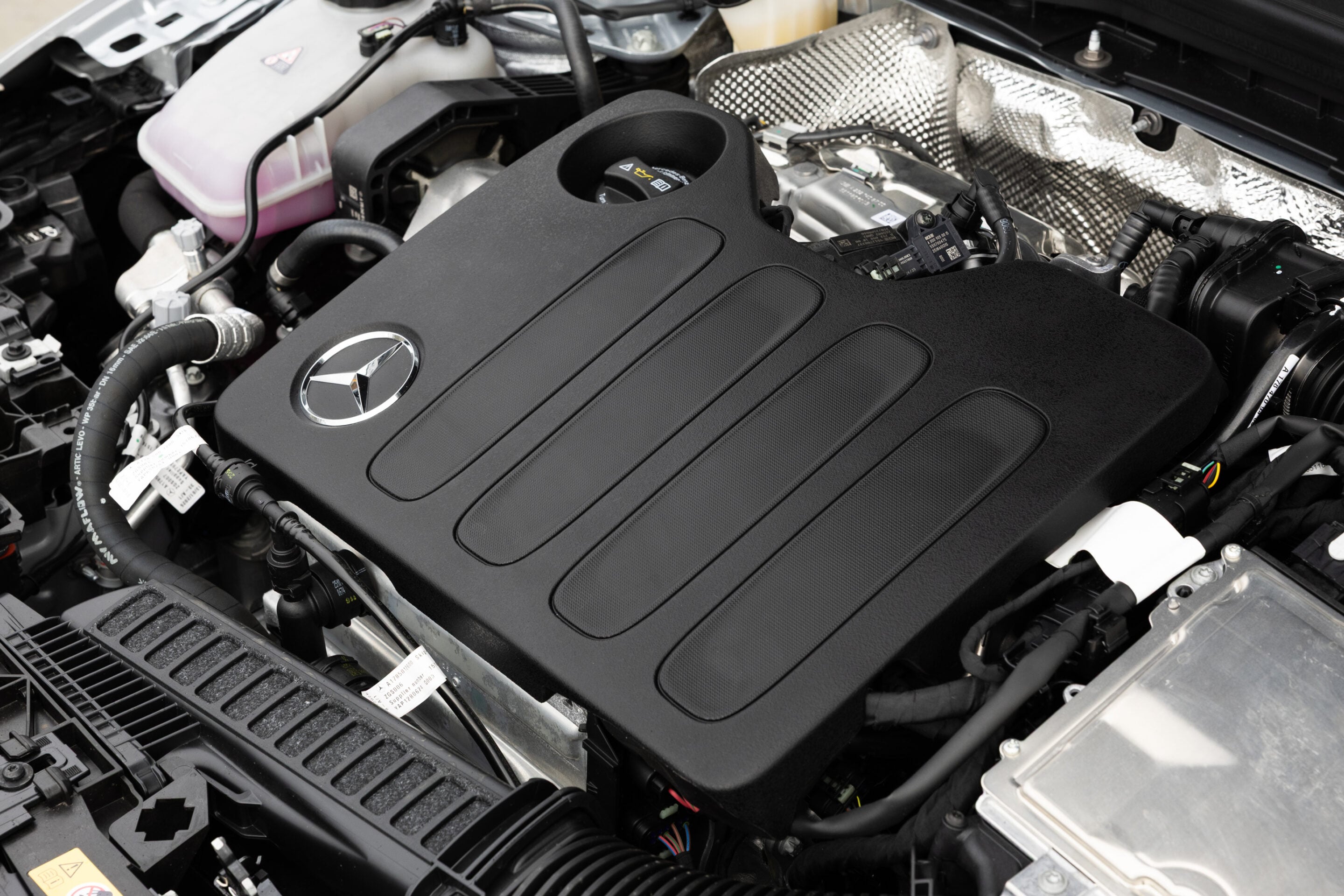
In the CLA 180, outputs are rated at 100kW and 200Nm, giving a 0-100km/h claim of 8.8 seconds. The CLA 200 ups the ante marginally, with 120kW and 250Nm and 8.0 seconds from zero to 100km/h. The CLA 220 4Matic, the only all-wheel drive model in the hybrid line-up, enjoys 140kW/300Nm and a 0-100km/h sprint time of 7.1 seconds. All three models benefit from an extra 22kW boost thanks to its electric motor.
Mercedes brought just one model to the Australian launch, the hybrid flagship CLA 220 4Matic.
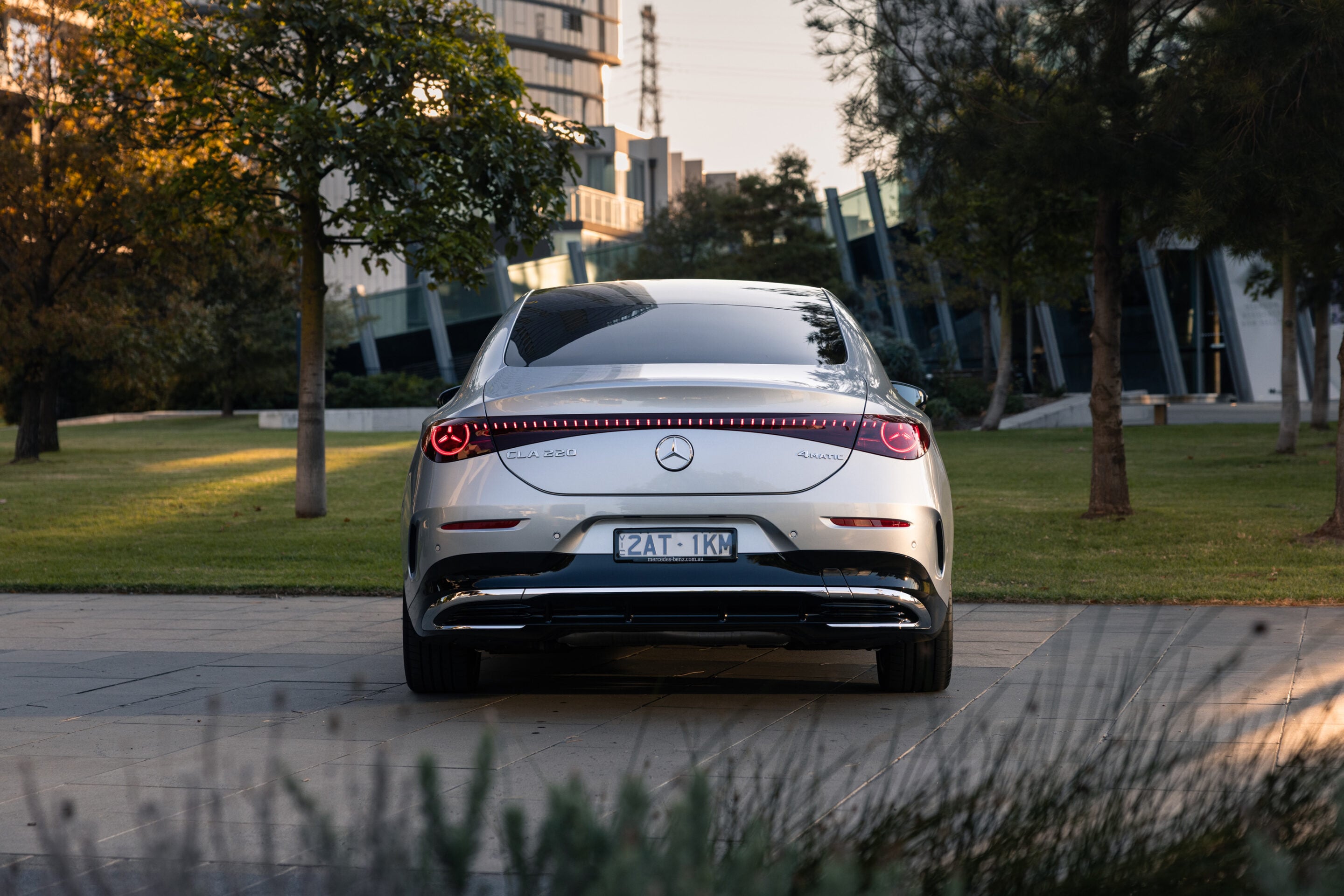
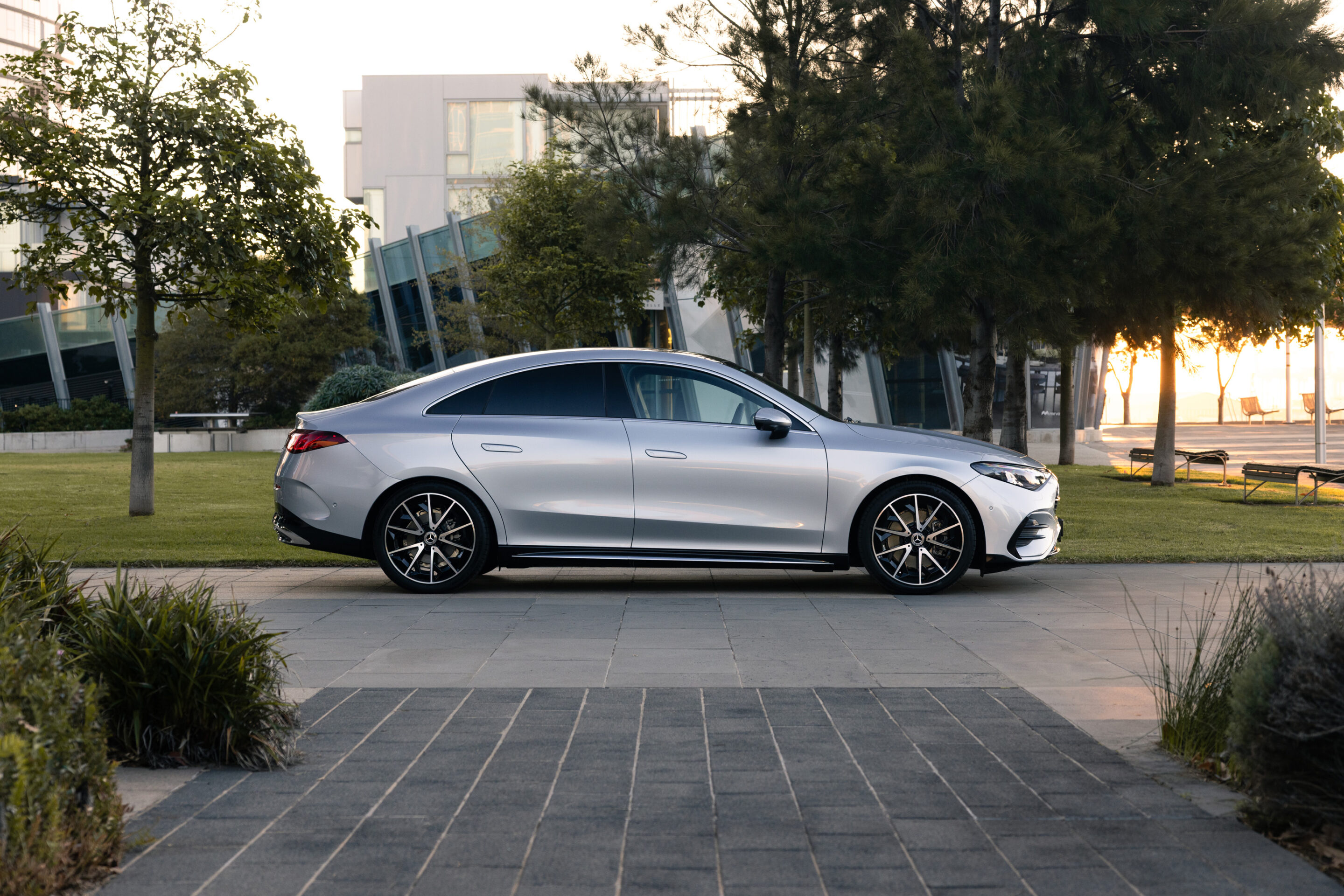
While this new third-generation CLA may resemble its predecessors, thanks to its swoopy profile, the reality is it’s a much bigger car than previously, growing in stature by every measure – 43mm longer, 25mm wider, 17mm taller and sitting on a 61mm longer wheelbase.
That growth spurt has led to a more resolved profile than before, as if the CLA has finally grown into its skin.
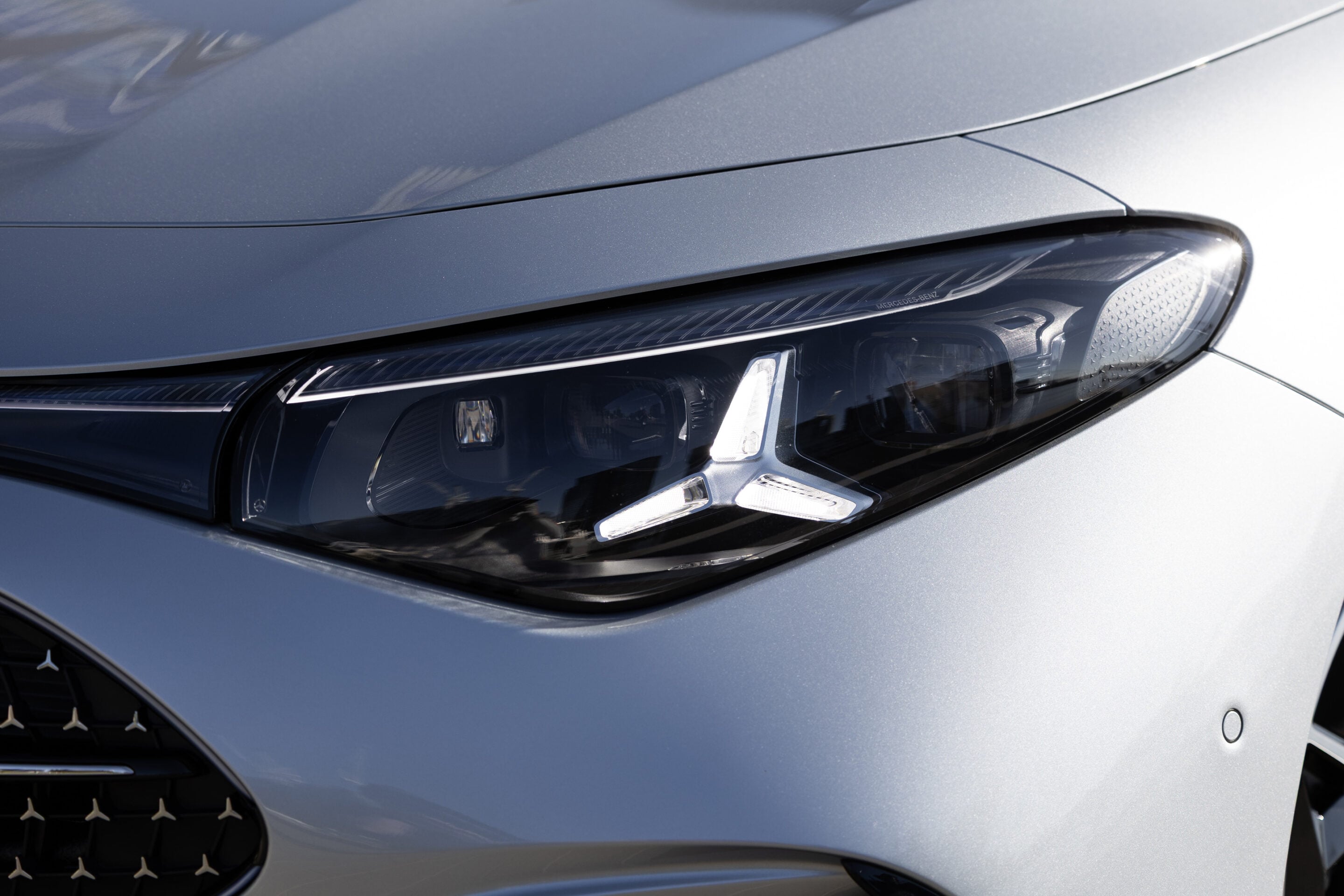
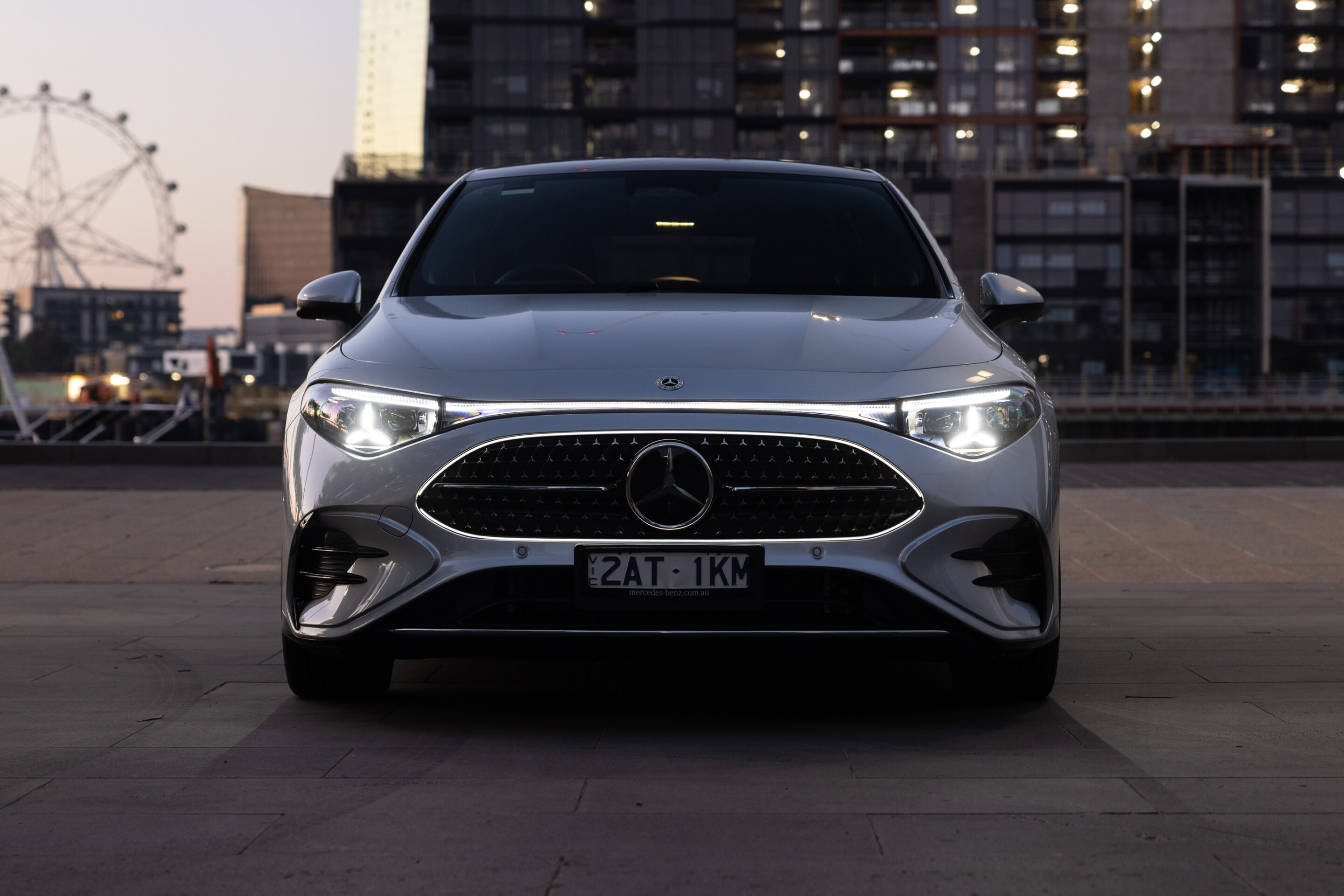
Up front, new headlights featuring a three-pointed star motif, are joined by a light band that stretches the width of the grille. The new “shark nose” grille features an illuminated frame, the effect at night distinctive and striking.
That theme is mirrored out back with new tail-lights (again with three-pointed star signature) joined by a light band across the width of the bootlid.
CLA 220 (and CLA 200) comes with Mercedes’ AMG Line package as standard that brings body enhancements including to the front and rear splitter and diffuser. The CLA 220 sits on 19-inch AMG alloy wheels in a five-twin-spoke design while both the CLA 180 and 200 are fitted with 18-inch alloys.
In profile, the CLA’s aero efficiency is underscored by frameless doors and retractable door handles helping the small sedan achieve a drag coefficient of just 0.21Cd.
The AMG Line theme continues inside with sports seats, a multifunction sports steering wheel, carbon-grey trims, and plenty of AMG logos including on the floor mats.
Thanks to its growth spurt, the cabin feels significantly larger than its predecessor’s, a feeling enhanced by the standard panoramic glass roof that fills the cabin with light.
The choice of materials throughout is excellent, playing right into Mercedes’ premium playbook. Highlights include the Artico and Microcut leather seats with contrasting red stitching, available in black as standard or a stunning black and white two-tone as a no-cost option. I sampled both and as much as I can see the white causing some headaches after prolonged use, it’s the colourway I’d opt for. It looks sensational.
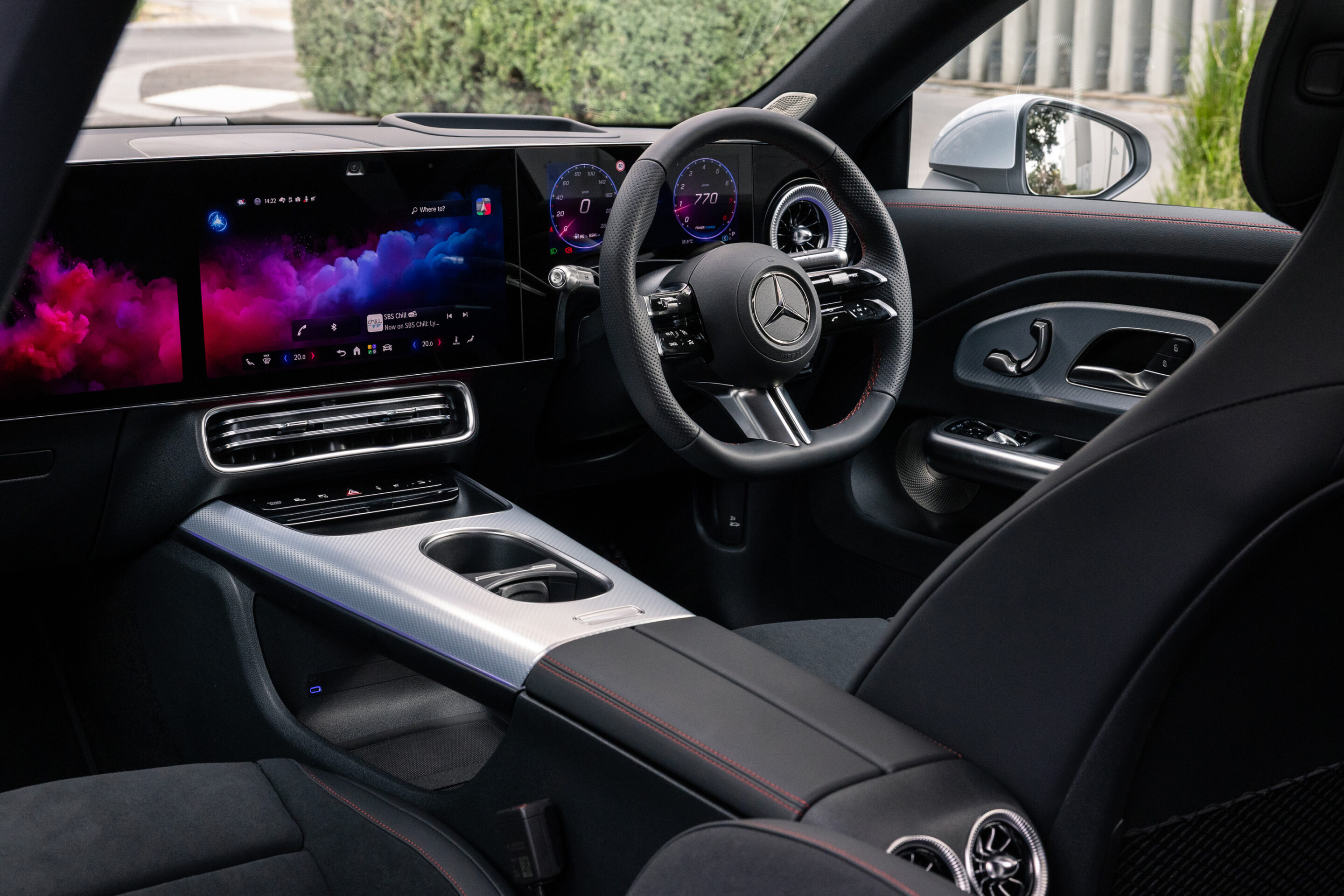
There’s plenty of storage on offer including in the generous centre console and door pockets that easily accommodate bottles. The centre console is floating too, freeing up additional space underneath for smaller items.
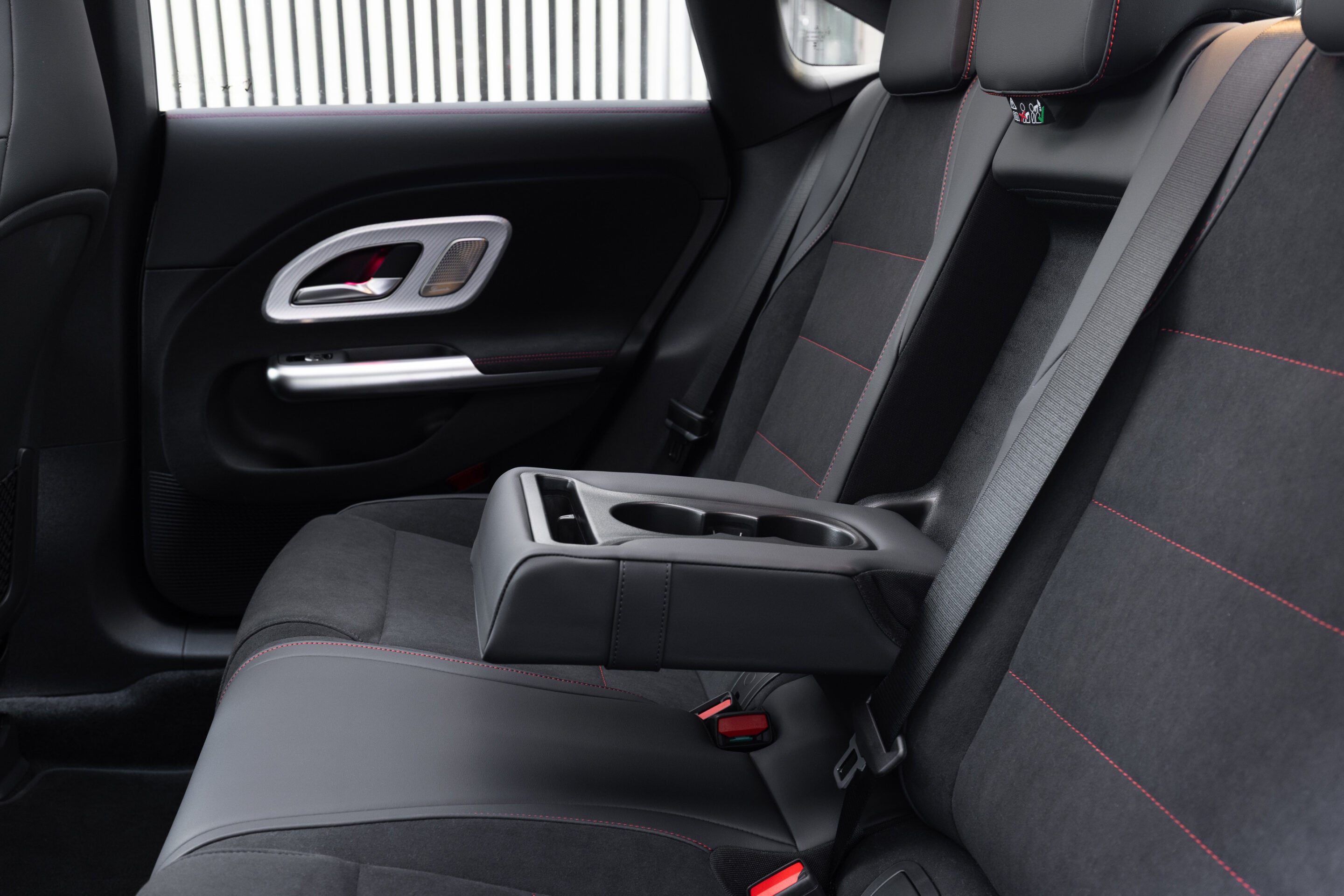
The second row is more generously proportioned than previously, with excellent knee and legroom. But despite an additional 28mm of height in the second row, headroom is still at a premium for anyone over 182cm. Still, my 173cm frame had no trouble getting comfortable in the second row, which, thanks to the presence of that panoramic roof, offered a vibrant and light-filled space to spend time in.
Boot space is quoted at 405 litres and while the second row seats can be folded in 40:20:40 split fashion, Mercedes-Benz does not quote a combined figure for the expanded area. Don’t look for a spare wheel and tyre, though, the CLA range equipped with a ‘repair kit’ to get you out of flat tyre purgatory, which, while increasingly the norm in today’s new car landscape, still rankles. Call your local roadside assistance is our recommendation.
The CLA’s suite of in-car technology is as impressive as it is in-your-face. There’s no hiding from the massive cabin-wide, single-frame screen that runs the length of the dash. Dubbed the MBUX Superscreen it debuts Mercedes’ in-house developed MB.OS operating system.
The Superscreen blends a central 14-inch infotainment touchscreen, a 10.25-inch digital driver display and an optional 14-inch touchscreen for the passenger. It looks like the future, as impressive as it is large but most importantly, it functions beautifully.
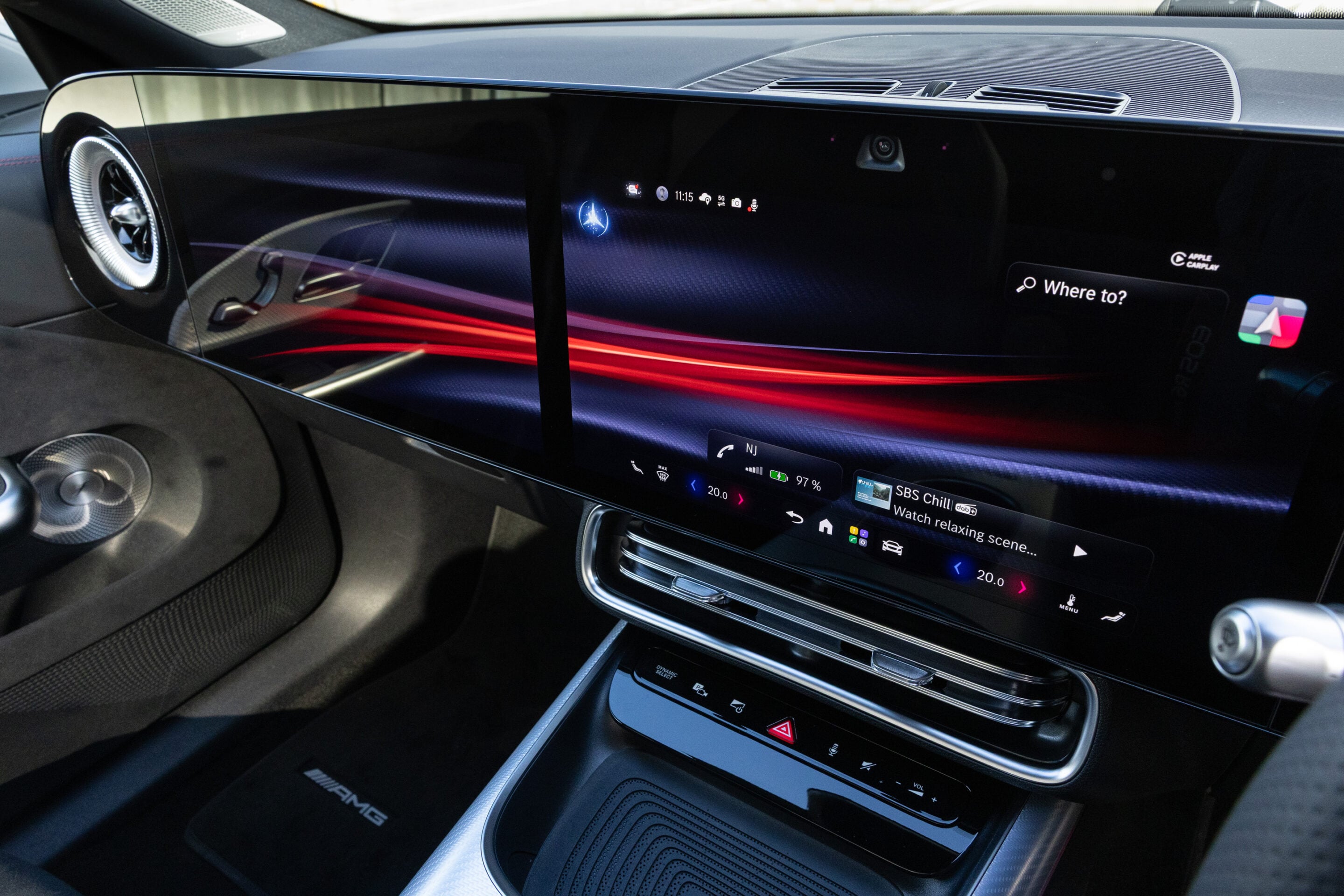
High-res graphics coupled with smooth animations and sharp respsonses to inputs, the MBUX Superscreen is the nerve centre of the CLA. Mercedes-Benz has partnered with some of the giants of the tech world to offer familiar functionality, including Google (mapping), as well as Gemini, ChatGPT and Bing AI-powered voice assistants. We did briefly try the AI assistant, which wasn’t as helpful as advertised on the box. I suspect, however, that my short time with the CLA at launch precluded me from a more thorough dive into the world of automotive AI so will reserve judgment for when we get the car through the Whichcar by Wheels garage for an extended loan.
Wireless Apple CarPlay and Android Auto are standard as is wireless smartphone charging, bringing a more familiar environment to interact with the CLA.
The optional passenger screen has access to third party streaming apps such as Netflix and Disney+ and even a suite of games including Angry Birds. The caveat here is they only work when the car is stationary. I’d suggest not ticking that box on the options list.

Where the CLA has – arguably – taken its greatest strides over the outgoing model is in the driving experience.
A newly-developed 1.5-litre turbo-four does the heavy lifting, augmented by a 22kW electric motor housed inside the eight-speed dual-clutch transmission. Ostensibly, this is a mild-hybrid setup, but the reality is, out on the road, the CLA 220 does a great job of mimicking a conventional series hybrid.
Take off from standstill is predictable and smooth, the initial surge of speed coming courtesy of the electric motor before the petrol engine chips in, seamlessly and quietly, to take over the motivation.
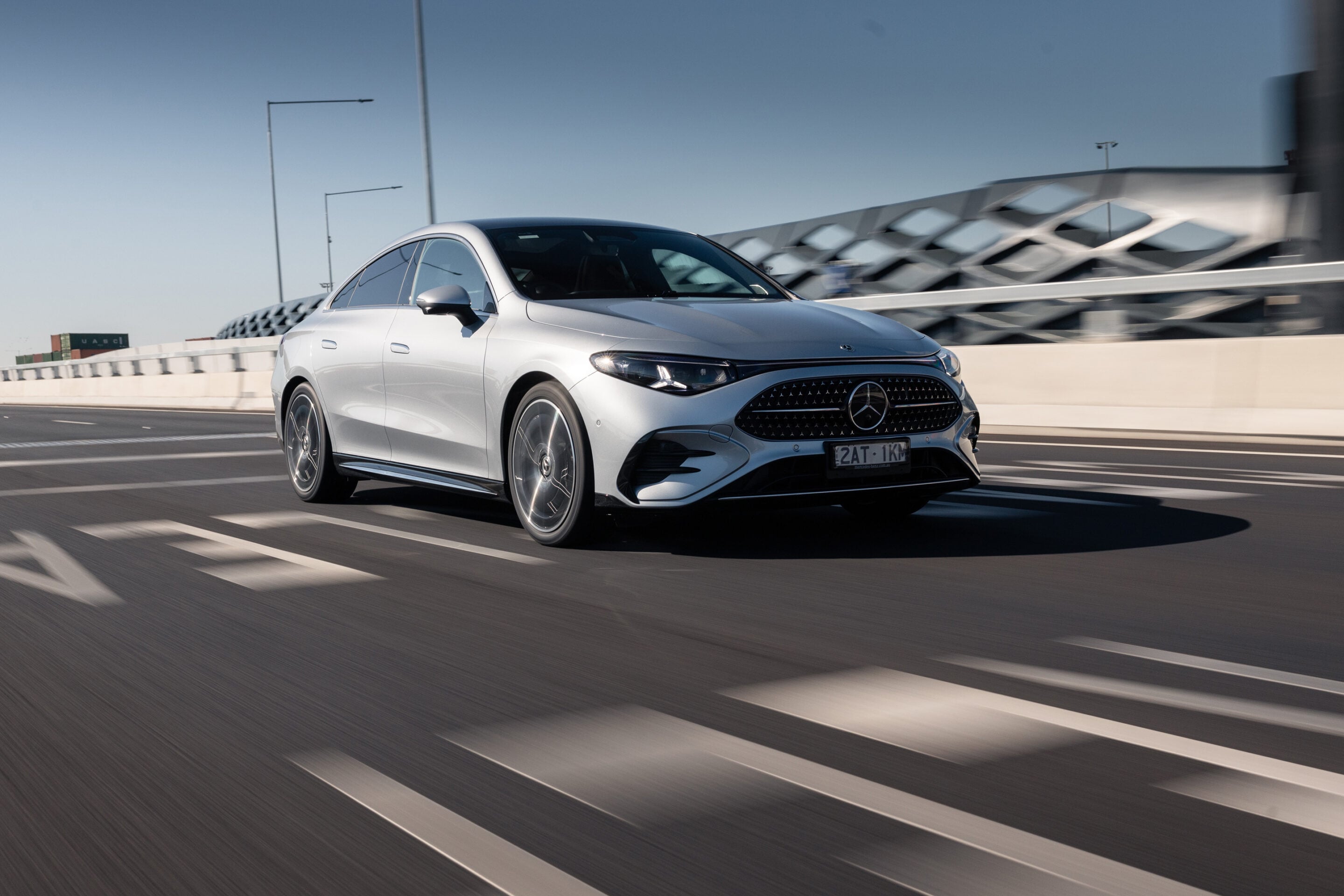
In everyday traffic situations, the electric motor is happy to hum along without assistance from the 1.5-litre petrol. To a point. Mercedes-Benz claims it’s capable of powering the car alone under a light power load, quoted at 20kW. And while that’s not measurable out in the real world, it certainly feels on the money.
Navigating flat suburban streets at speeds of around 30km/h results in the petrol engine lying dormant under the bonnet. Once over that threshold, or when faced with even the slightest incline, Merc’s newest four-cylinder feels the need to chip in.
Once up to speed, however, and under cruising conditions, the petrol engine is happy to switch off and let the electric motor drive the wheels for short spells, helping to eke out fuel consumption.
It’s not a series hybrid, by any stretch, but also park your notions of what a mild-hybrid can do because Mercedes’ system has moved the 48-volt game forward. Significantly.
Better still, the eight-speed dual-clutch actually features a third clutch, which is able to decouple the engine and gearbox from the wheels, allowing the CLA 220 to cruise at 100km/h on flat stretches of highway on electric power alone. It works too, and nicely at that, with flat and downhill stretches of the motorways that formed part of the test drive completed solely on electric power.
Mercedes-Benz has also addressed one of the more strident complaints of the previous model with this new CLA. Where the older model always felt firm and jarring on the road, this new third-gen iteration takes the idea of ride comfort seriously. There’s no adaptive damping, and after covering around 230km over the full gamut of road surfaces, there doesn’t need to be.
Instead, the steel-spring suspension – three-link up front and multi-link at rear – delivers an excellent comfort and handling package, equally at home on suburban streets as it is hustling through some twisties.
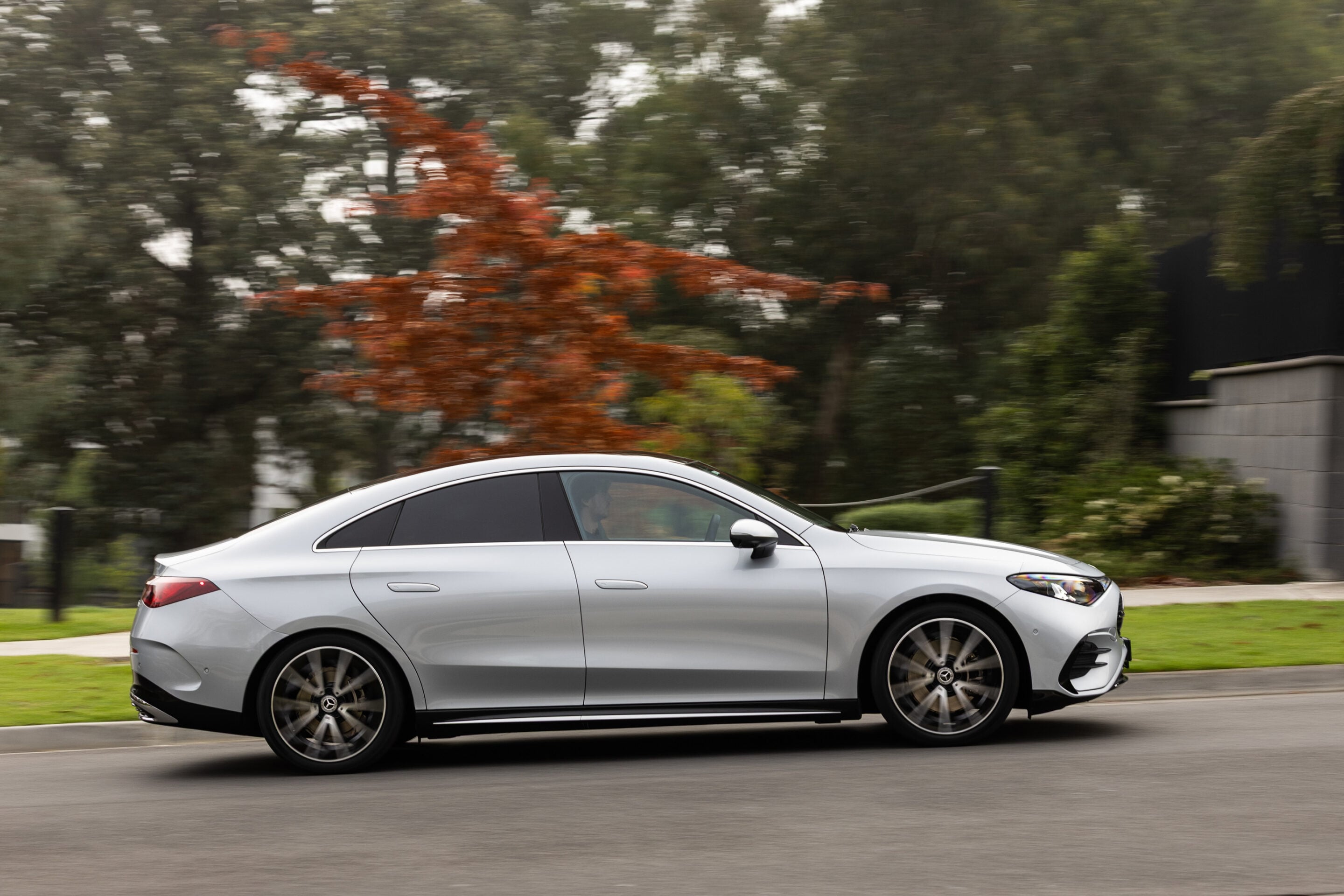
Patchy and scarred road surfaces are handled with composure, ironed out with barely a ripple transmitted into the cabin. But underscoring the suspension’s well resolved engineering, hustling through some corners reveals a nicely-balanced chassis with decent body control. It’s by no means a corner-carver, but there is enough inherent enjoyment engineered into the CLA 220 to elicit a grin.
There is a small downside, however. The eight-speed transmission, as slick and as responsive as it is under normal driving conditions, can prove a little recalcitrant when on the move, taking a moment too long to engage the right ratio under harder acceleration. But it’s a minor brickbat in a field of bouquets.
So how does the new CLA stack up at the bowser? In a word, brilliantly. Mercedes-Benz claims a combined fuel consumption number of 5.8L/100km. After a day behind the wheel, covering the full range of driving conditions – from urban traffic, to motorway cruising, and a spirited fling through some beguiling backroads in Victoria’s Yarra Valley, we saw an indicated 5.7L/100km, bettering the manufacturer’s claim.
The highest we saw was 7.1L on the climb up the Dandenongs and into the Yarra Valley, but the return leg highlighted the efficacy of Merc’s mild-hybrid system to good effect, dropping back to our final readout in the heart of suburban Melbourne.
Mercedes-Benz hasn’t offered a fuel octane rating, but we suspect it’ll be at the premium end of the bowser spectrum.
The new third-generation Mercedes-Benz CLA has struck the right chord of premium affordability in a tech-laden package that is sure to appeal to younger, aspirational buyers.
Sharp styling and premium appointments only tell part of the story, though, With its fuel-saving technology, Mercedes has added broader appeal in a market where hybrids of all colours are dominating the new car landscape. And with the imminent arrival of the CLA electric range, every fuel-saving whim is catered to.
The driving experience has improved markedly over the outgoing model, with better ride comfort and, thanks to this new mild-hybrid powertrain, enough sportiness to sate the needs of most.
That Mercedes-Benz has managed to achieve this while significantly cutting the price of entry should ensure the brand attracts an entirely new cohort of buyers.
| Model | Mercedes-Benz CLA 220 4Matic |
|---|---|
| Price | $84,300 plus on-road costs (circa $91k drive-away) |
| Engine | 1.5-litre turbocharged four-cylinder petrol mild-hybrid, AWD |
| Peak power | 140kW @ 5500rpm plus 22kW electric motor |
| Peak torque | 300Nm @ 2000-3500rpmrpm |
| Transmission | 8-speed dual-clutch auto |
| L/W/H/WB | 4731/1855/1463/2790mm |
| Weight | 1718kg (tare) |
| Fuel consumption | 5.8L/100km (claimed); 5.7L/100km (tested) |
| Boot size | 405L |
| 0-100km/h | 7.1s |
| Warranty | 5 years/unlimited km |
| Servicing | 12 months/25,000km |
| Servicing costs | $6710 five years/125,000km |
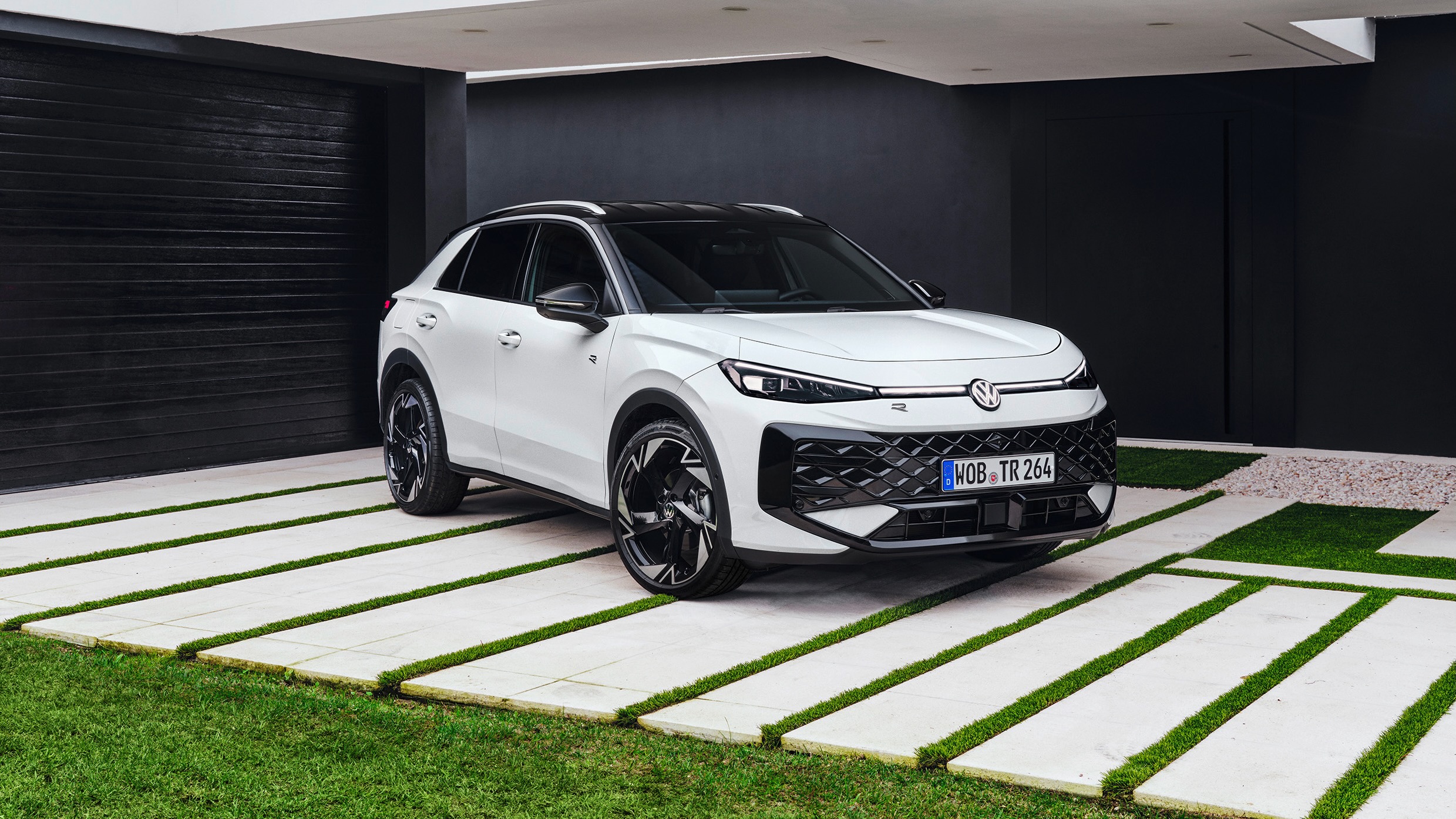
Volkswagen Australia has announced that the second-generation T-Roc small SUV will be launching locally in the first half of 2027. When it does, the range will be entirely hybridised, firstly with 48-volt mild-hybrid drivetrains and then likely the full hybrid system that recently debuted in Europe later down the line. As part of the brand’s future product line-up, every Volkswagen SUV release locally from now will be electrified in some way, either through hybridisation or a fully electric drivetrain.
Initially revealed in August 2025, the second-generation T-Roc is larger, sharper styled and more spacious inside than the model it replaces. Volkswagen is yet to confirm which engine options will be offered locally, but in Europe, 1.5-litre and 2.0-litre four-cylinder ‘eTSI’ turbo-petrol options are available.
Both engines will feature 48-volt mild-hybrid technology as standard in Australia, and in the UK, the 1.5-litre is rated at the equivalent of 5.6L/100km, which is a useful improvement on the current 1.4-litre model’s 6.3L/100km rating.
On the performance front, the 1.5-litre engine makes 110kW/250Nm outputs and the 2.0-litre makes 150kW/320Nm, making them obvious choices to replace the current 110kW 1.4-litre and 140kW 2.0-litre turbo-petrol drivetrain options. A seven-speed dual-clutch transmission will be standard equipment, and the smaller engine is front-wheel drive with the larger option adding all-wheel drive.
The recently announced T-Roc hybrid, using the same 1.5-litre turbo-petrol engine, an electric motor and a 1.6kWh battery is also likely to be sold in Australia, though if it is sold here, it will arrive later in 2027 to battle rivals like the Toyota Corolla Cross, Honda ZR-V and Nissan Qashqai.
Sitting above those models will once again be the T-Roc R, which will use an uprated version of the 2.0-litre engine with a mild-hybrid system. Performance figures for the T-Roc R are yet to be revealed, but we’re expecting it to pump out around 235kW, as in the latest Golf R.
Volkswagen Australia is also yet to announce the local line-up for the new T-Roc, but we’re expecting it to follow the brand’s global naming structure with Life at the entry point, Style in the middle and R-Line as the penultimate model, with the R sitting above those as the performance model.
Local pricing and specifications for the new Volkswagen T-Roc will be announced closer to its first half of 2027 release.
Australia’s obsession with SUVs shows no sign of slowing down, but one question matters more than ever for buyers: how big is the boot? While pricing, in-car tech and running costs all play a role in a new vehicle purchase, cargo capacity remains one of the biggest deciding factors for SUV buyers. In this feature, we’ve ranked the boots of Australia’s best-selling SUVs purely by the numbers to see which is biggest of the top five best-selling models in each segment.
264 litres

The CX-3 certainly lives up to its compact SUV tag when it comes to storage space. An excellent car with a dynamic drivetrain, it may be roomy for the human occupants, but its cargo volume is just 264 litres (231 for the G20 Akari). The seats do split-fold to open the area up to 1174 litres, but if you need to carry two kids or a dog with a weekend’s worth of luggage, you may need to invest in roof racks.
85 litres (Jimny) – 211 litres (Jimny XL)
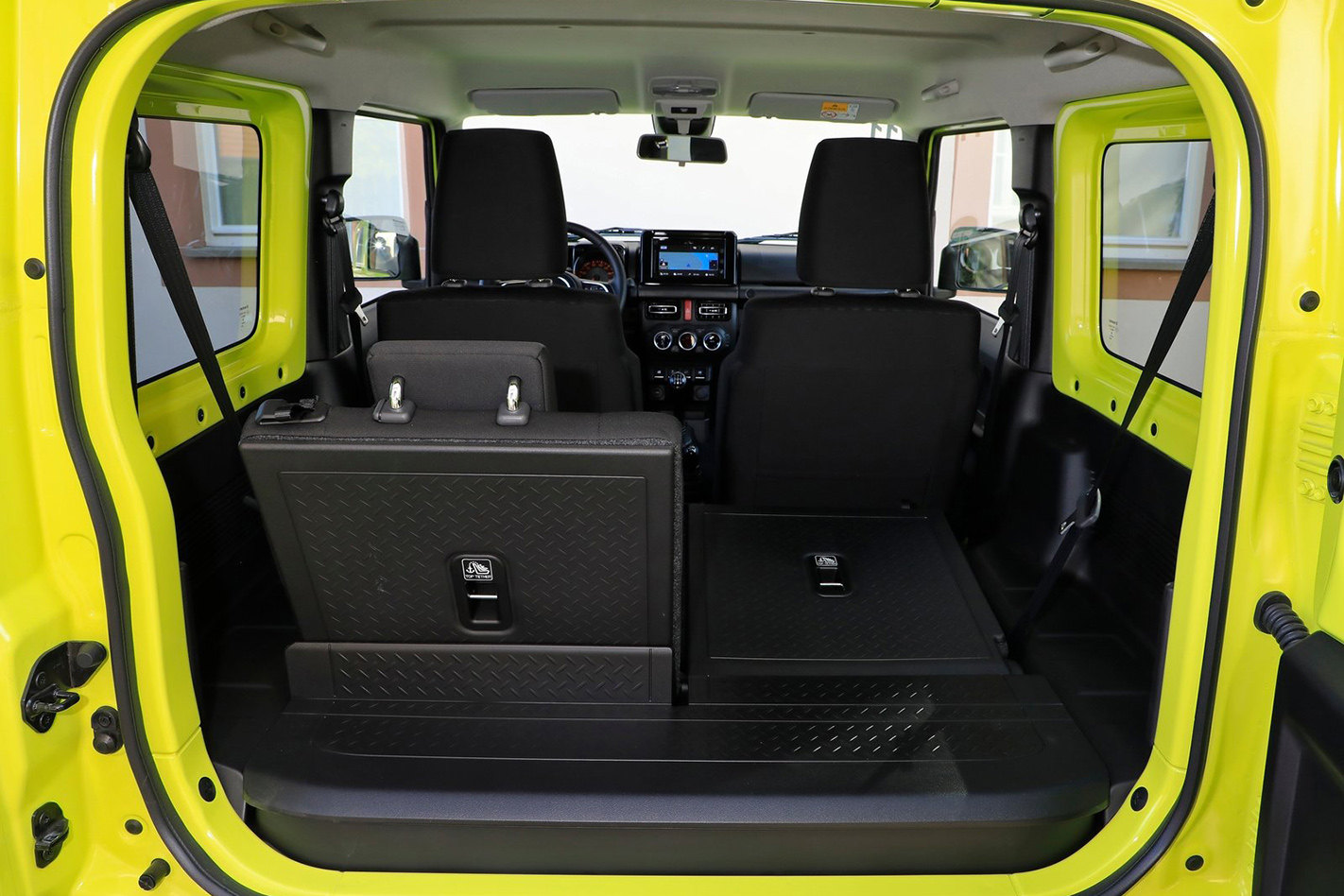
Considering that the Suzuki‘s little off-roader is such a small car, it’s no surprise to see that it offers just 85 litres of space with the rear seats up. Folding them down, as many owners do, opens up a much larger 830 litres and allows for much more carrying capacity. Choosing the larger Jimny XL increases the available bootspace to a healthier (but still small) 211 litres with the rear seats up and 1113 litres with them folded.
390 litres (314L in AWD models)
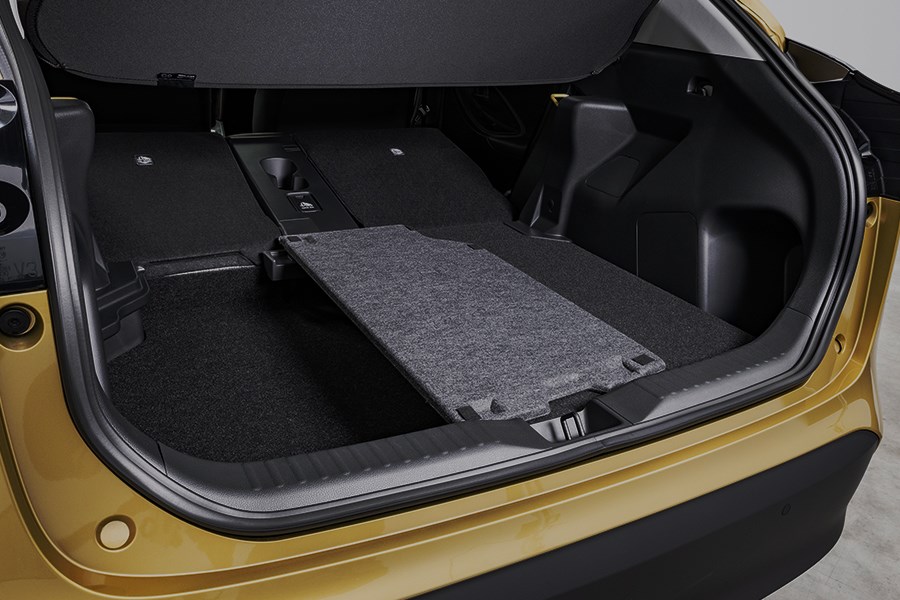
The front-wheel-drive Yaris Cross versions come with a very useful 390-litre boot, while opting for all-wheel-drive traction reduces that to 314 litres. The front-drive models gain the extra space via a 60:40-split false floor that provides more depth and practicality. All versions feature a 40/20/40-split rear seat with each individual section able to be folded flat to increase the rear luggage space up to a total of 1097 litres.
355 litres
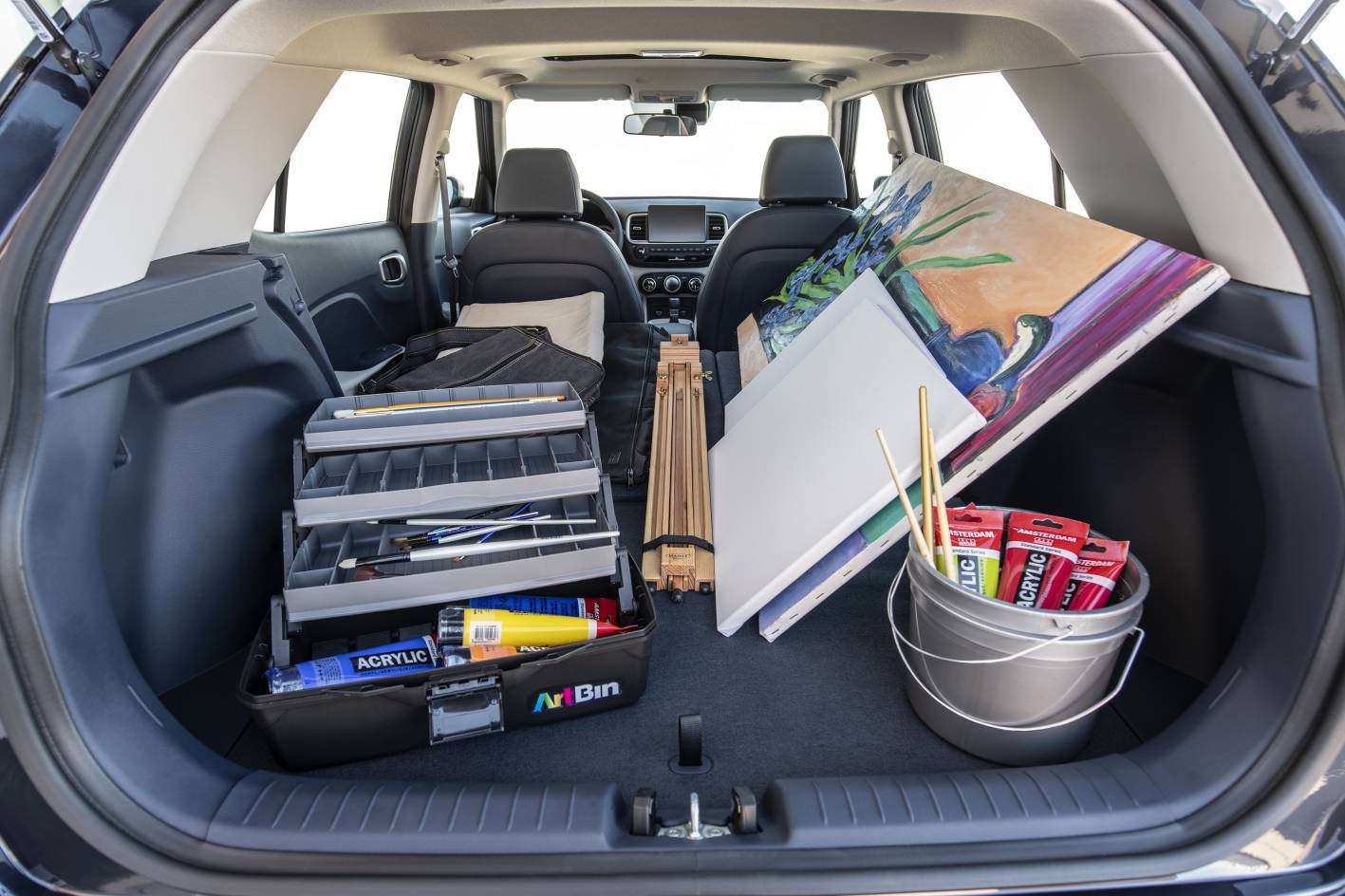
With the second-row seats upright, the Venue’s cargo bay holds 355 litres with cover in place, which is just 52 litres less than its bigger Kona sibling. Boot capacity is helped by the two-stage floor that can be lowered, while the boot’s relative tallness compared with rivals means that it can accommodate taller items with ease. The parcel shelf can be also cleverly tucked away neatly behind the rear seats to accommodate taller items. With the rear seats down, it can carry up 903 litres of stuff.
352 litres
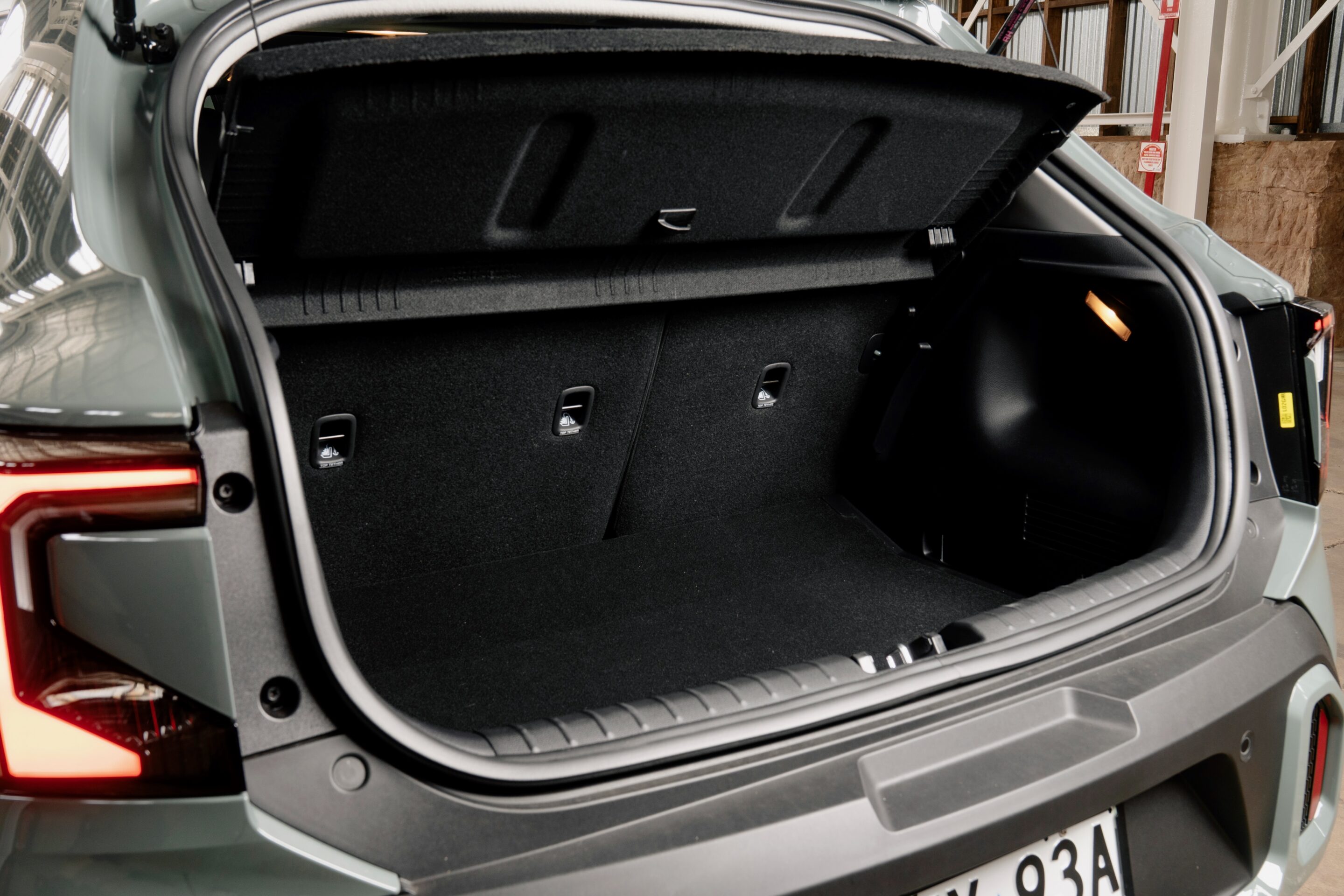
The Stonic offers a practical bootspace in the small SUV segment, with 352 litres with the rear seats up and 1155 litres with them folded. Its recent mid-life update added a mild-hybrid system with the 12-volt battery now located in the spare wheel well – so there’s no longer a spare wheel – but Kia did redesign the boot floor so that it now has a joined lip at the base of the seat for a smooth floor with the seats folded
380 litres
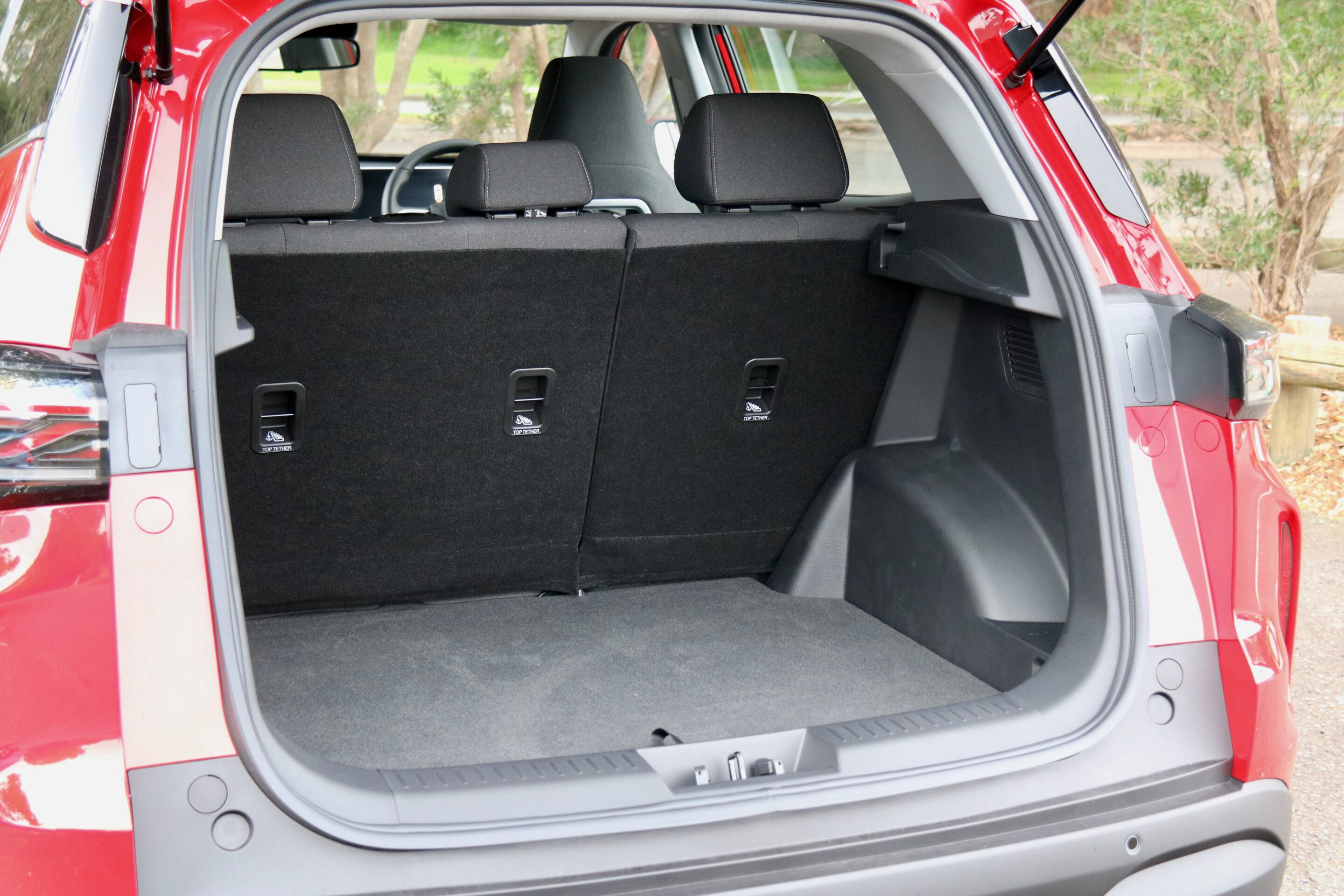
Australia’s best-selling small SUV, the Chery Tiggo 4, offers a reasonable 380-litre space, accessed by a wide opening and a relatively low loading lip. While there is little in the way of extra hooks and tie down points, folding the rear seats down opens up 1225 litres of space, though there’s an annoying lip when the seats are folded. One curiosity for the Tiggo 4 Hybrid’s boot is that the 12-volt battery lives under the boot floor and as a result, an extra hump lies in the boot floor.
430 litres
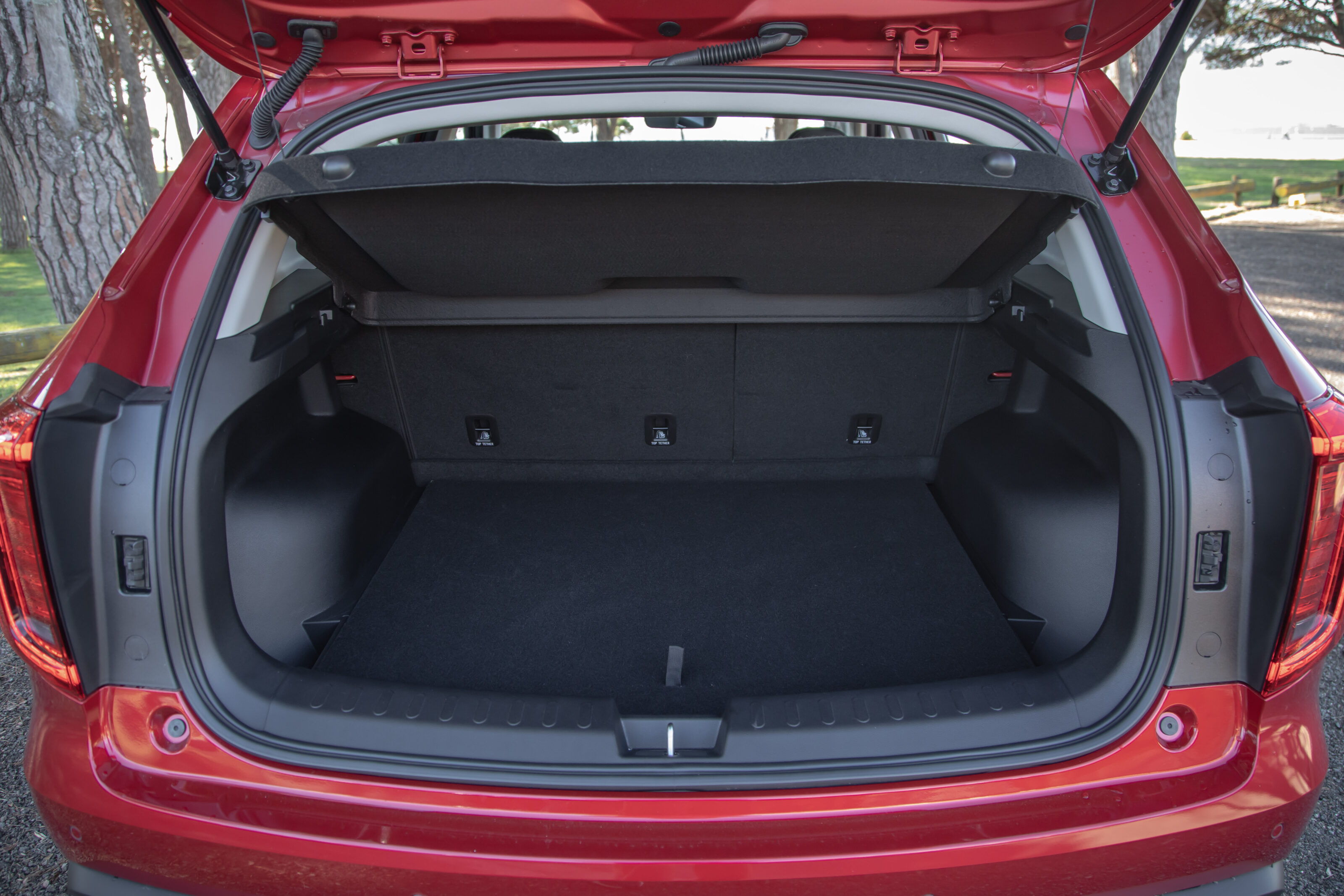
The Jolion is significantly larger than the H2 it replaces, starting with the boot, which offers an impressive 430 litres of capacity on petrol models with the seats in place and 1133 litres with the rear seats folded. Choosing the hybrid variant reduces that to just 291 litres, which is small for the segment, but still offers side storage and a low opening lip.
407 litres
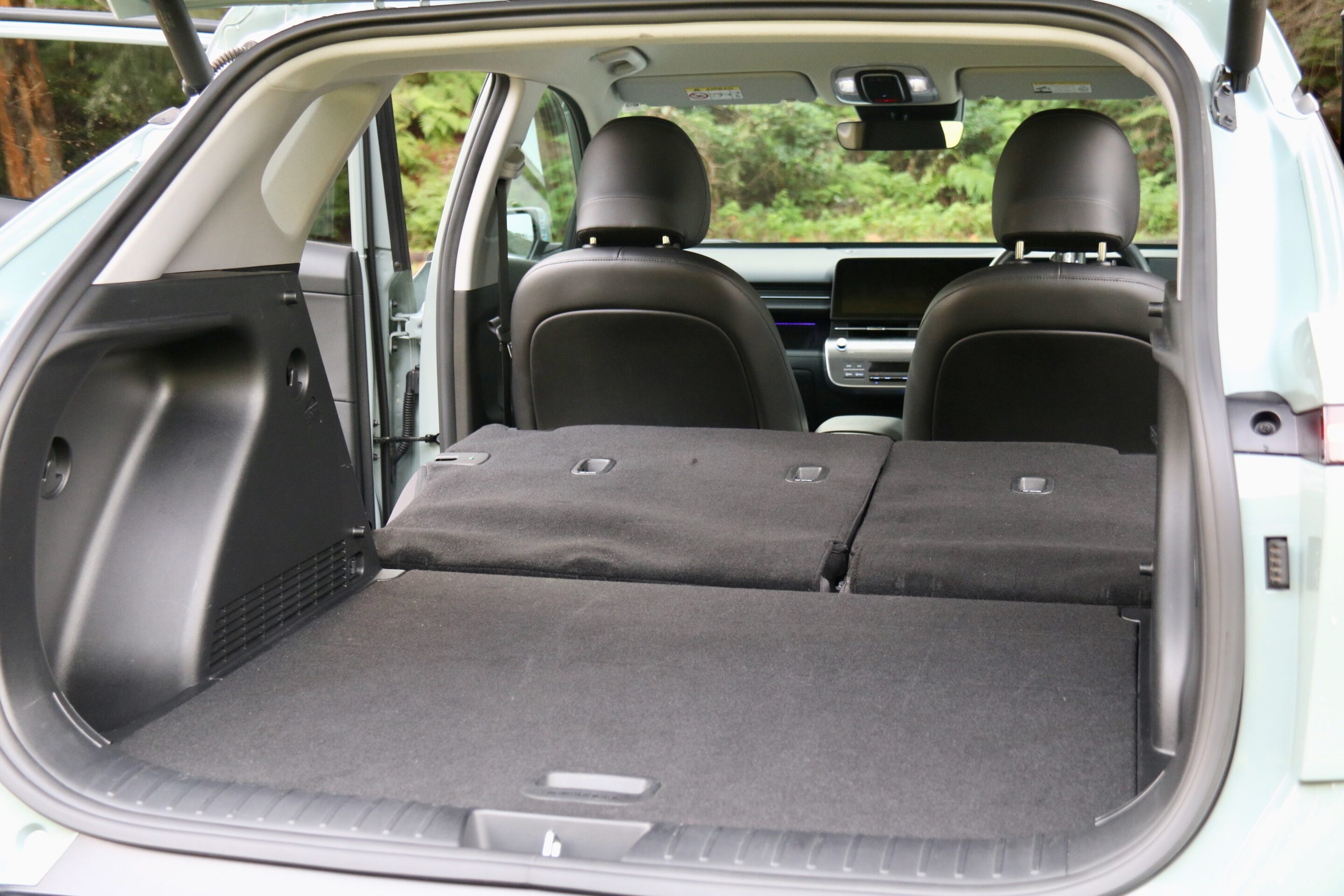
At 407 litres, the Kona offers a large boot for the small SUV segment. Its loading lip is a bit high, but there’s an adjustable boot floor to store extra features, as well as side storage and hooks to hang bags off. With the rear seats folded, the capacity extends to a healthy 1241 litres, and impressively, all new Kona variants feature a spare wheel as standard, even the electric models. Speaking of the Kona Electric, it features an additional 27 litres of cargo area in the front as well.
443 litres
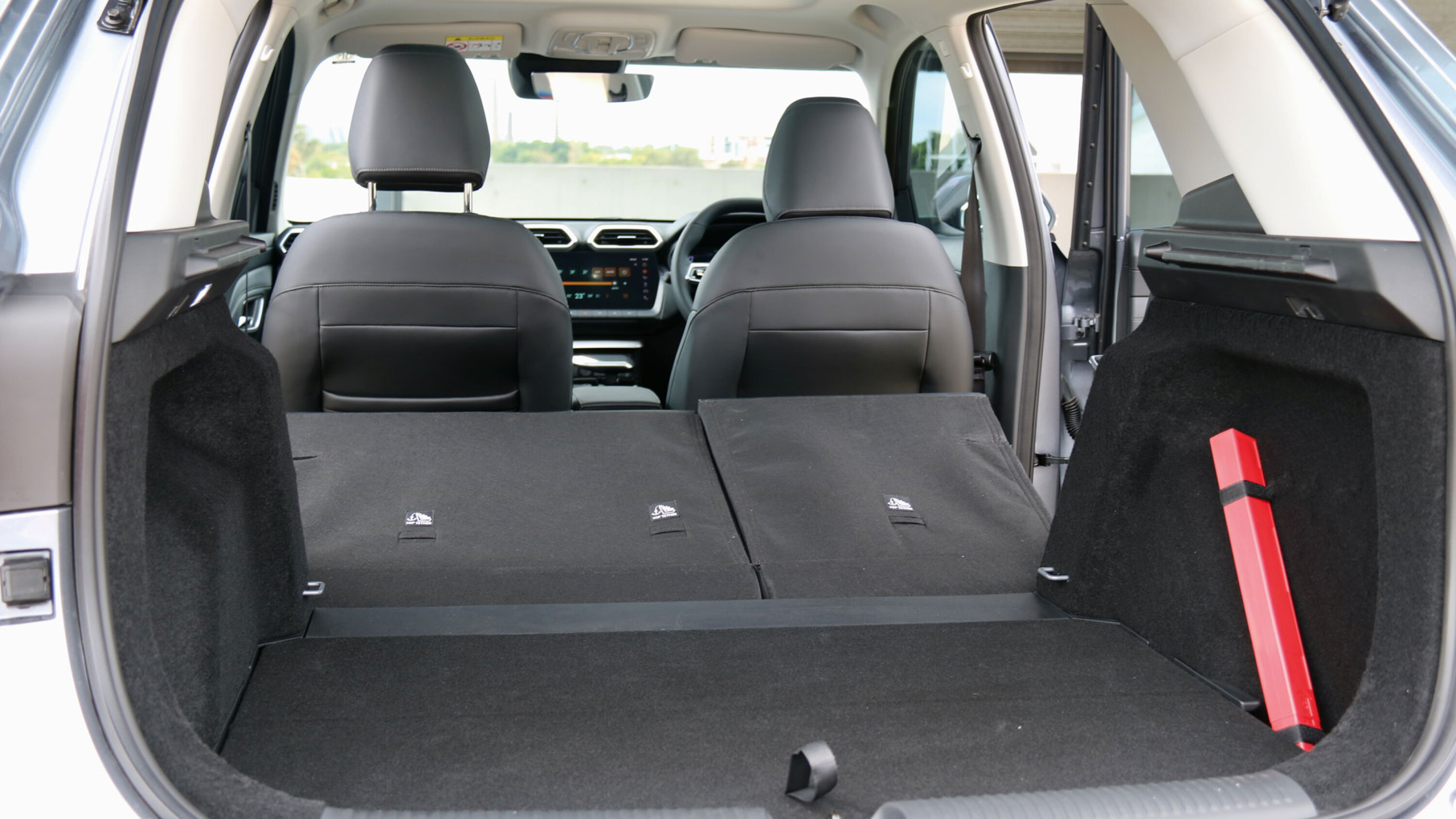
The bootspace in the second-generation MG ZS is a nice improvement on the model it replaced, with 443 litres with the rear seats up and 1457 litres with them folded, the latter of which is more space than some cars in the segment above. There are some clever features like a dual-level boot floor, side storage and hooks to hang bags off, though the floor is far from flat once the rear seats are folded.
425 litres
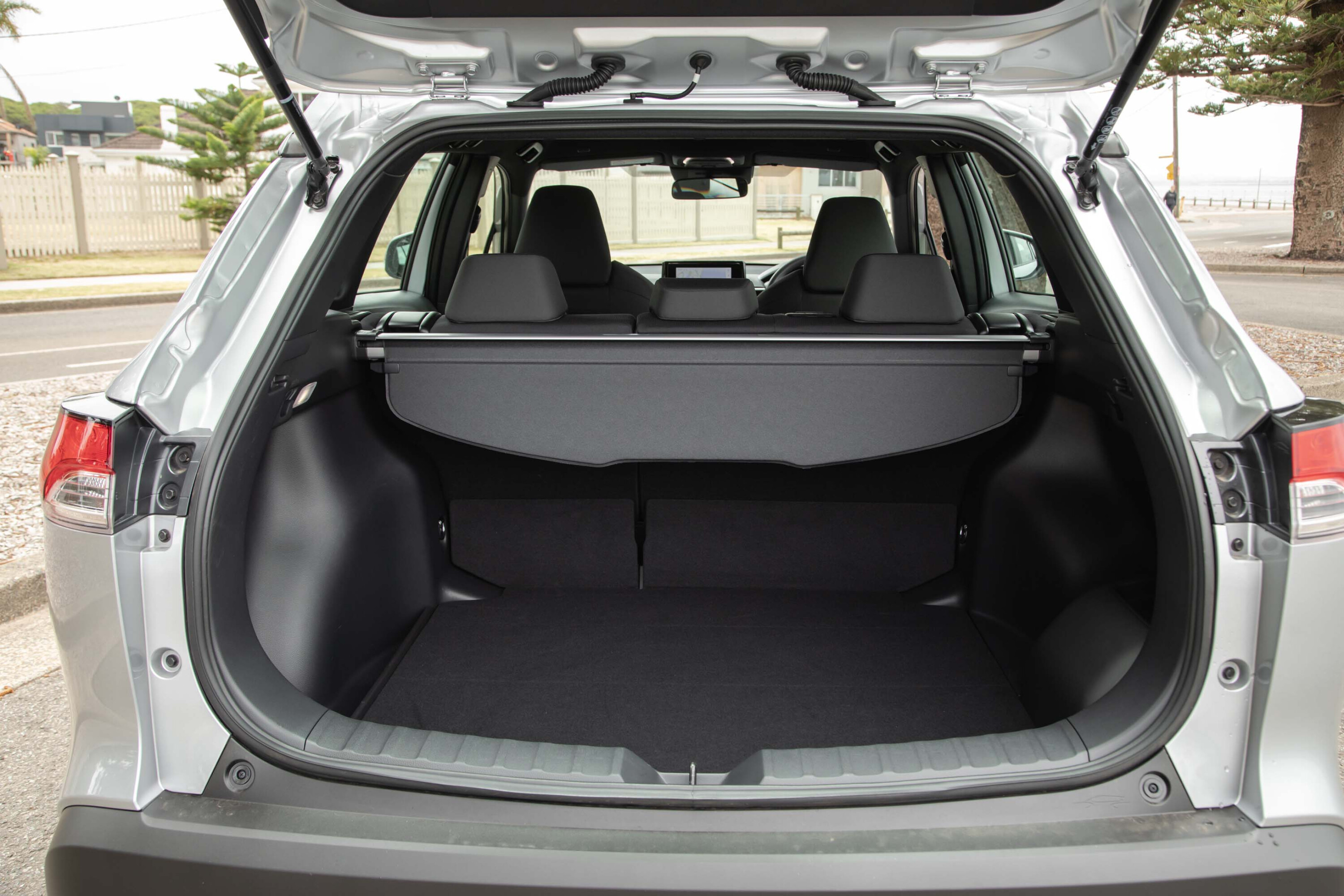
Measuring 4460mm in length and 1825mm in width, the Corolla Cross is one of the larger small SUVs available. The Corolla Cross starts with a cargo capacity of 425 litres, but this is reduced when all-wheel drive and amenities like additional speakers on the Atmos and GR Sport models are selected.
478 litres

The Mitsubishi Outlander is another medium SUV that manages to fit seven seats in the back of some variants, though, unlike the X-Trail, it has a pretty tight 478-litre boot to begin with, which means there are just 163 litres to play with all three rows in use. With the second-row seats folded capacity increases up to 1461 litres. The entry-level ES with five seats has a 485-litre boot.
580 litres
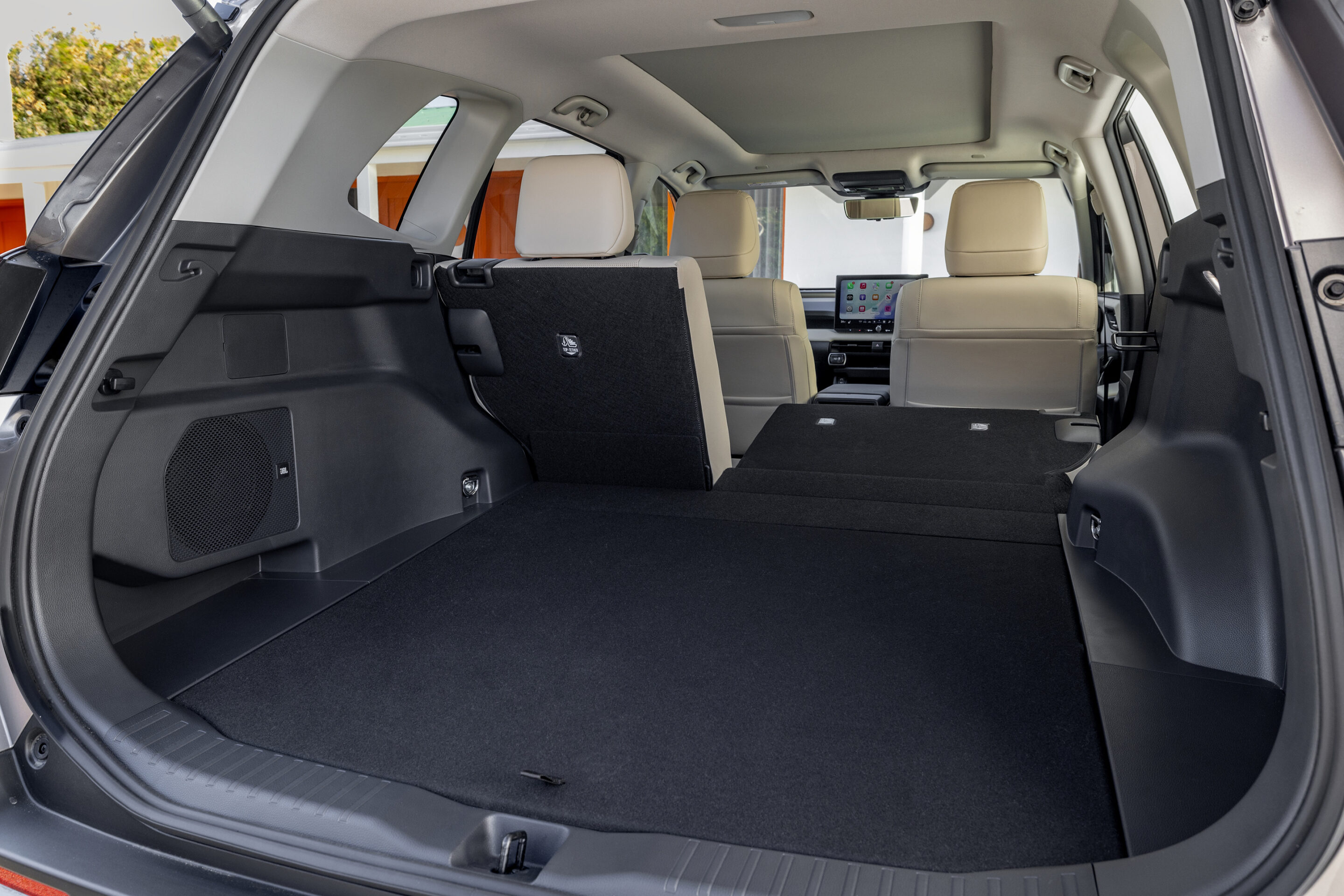
Toyota has always been big on the storage solutions, and the big-selling RAV4 is no exception with its large 580-litre boot, which expands to 705 litres to the roof (a seats folded figure is not available, though it’s likely around 1700 litres). It also offers under-floor storage and a few tie down points, but little in the way of clever storage.
466 litres
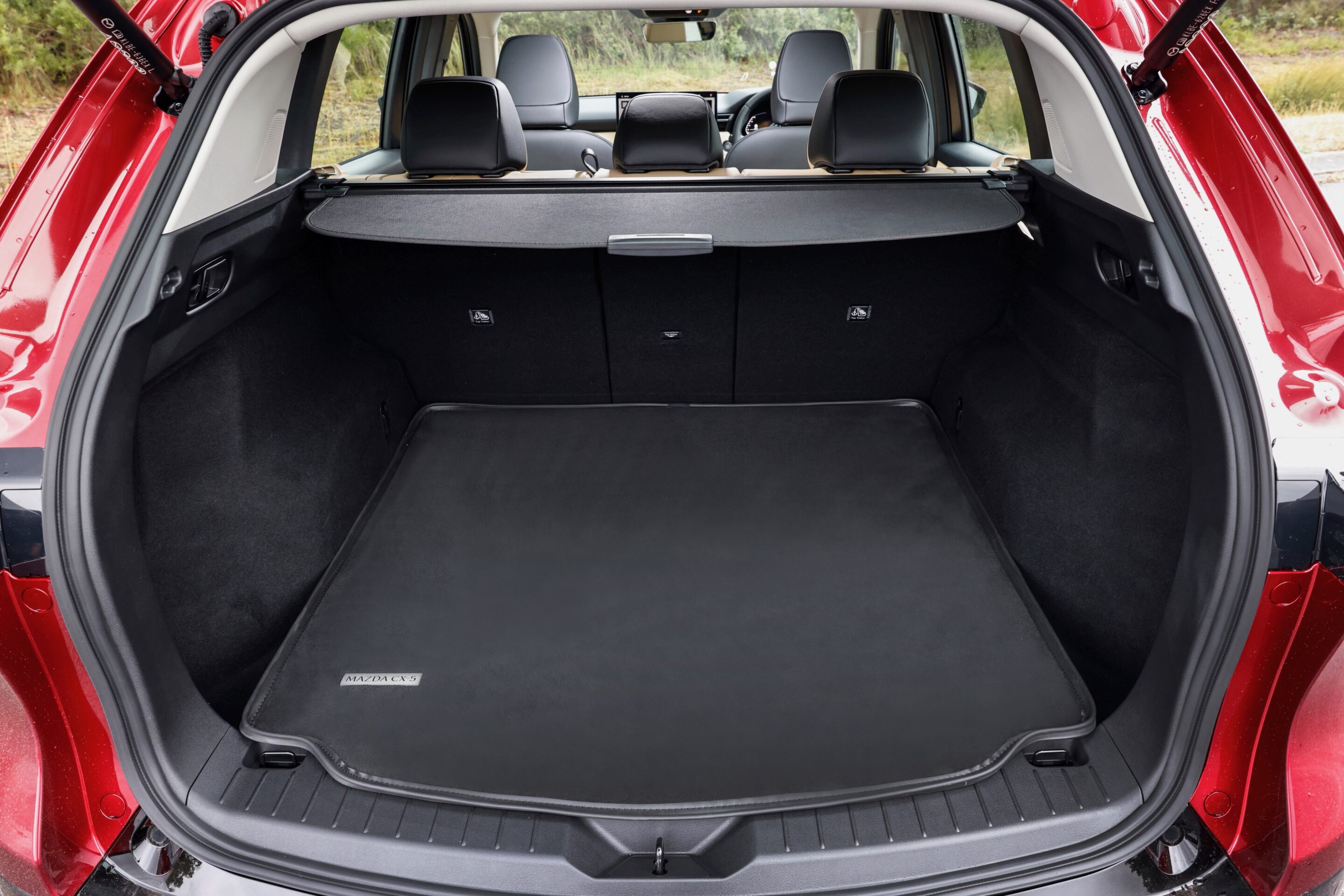
Like most Mazdas, the CX-5 is below the best in the segment compared with its main rivals when it comes to boot space, but the larger third-generation CX-5 is now larger in the boot area with a 466-litre space. That’s still below the best, like the 586-litre Tucson hybrid, but it’s larger than the old model and folding the seats down unlocks 1594 litres. Clever touches include a 40:20:40-split rear seat, side storage, a dual-level boot floor, hooks to hang bags off and remote releases to fold the seats.
582 litres

One of the largest boots in the medium SUV segment belongs to the Hyundai Tucson Hybrid, with a large 582 litre space on offer, which expands to a massive 1903 litres with the rear seats folded. Helping its cause further are a low load lip, under-floor storage and remote releases for the rear seats.
582 litres
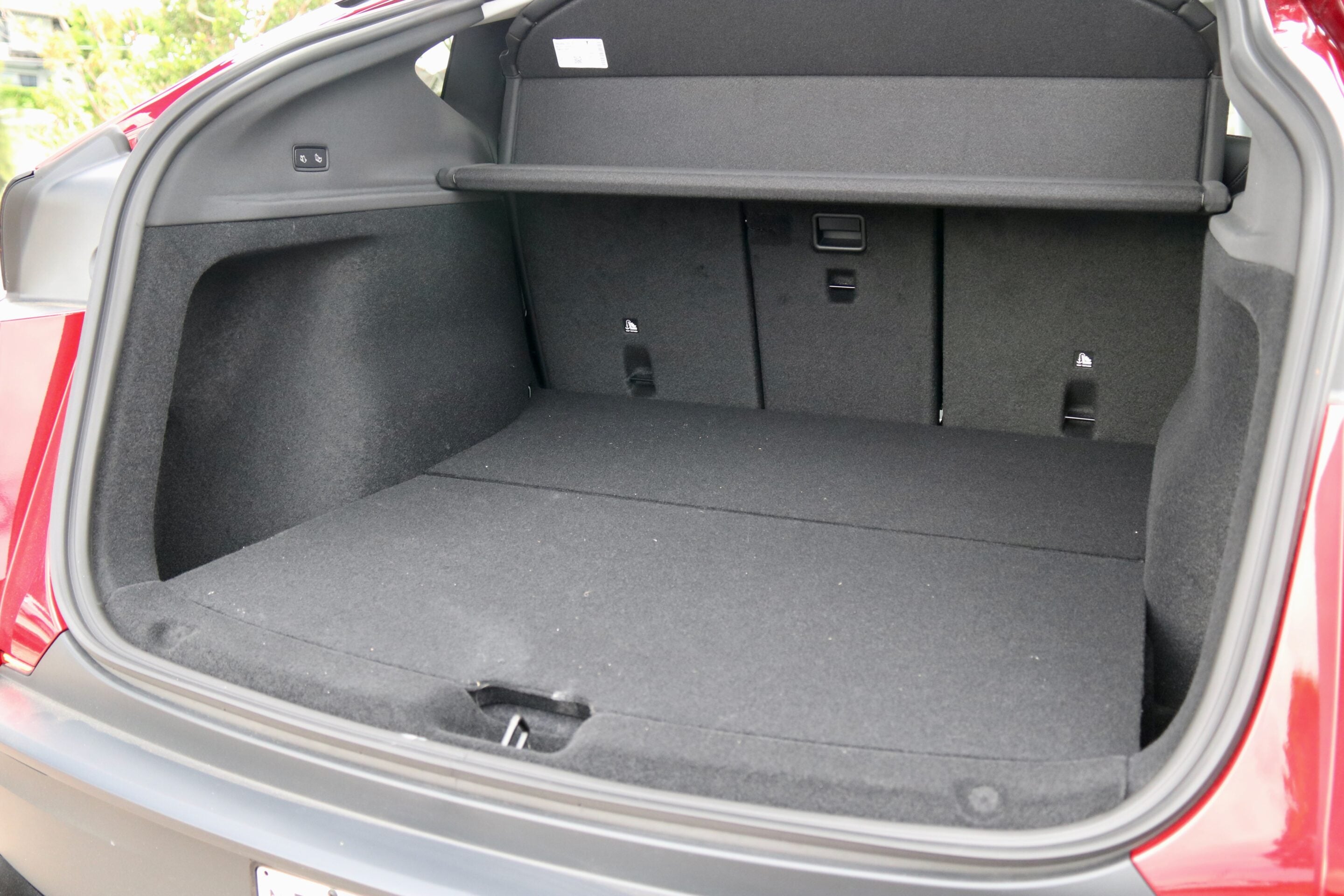
Tesla‘s Model Y is the fifth best-selling medium SUV so far this year and it’s also the most practical with a massive 854-litre bootspace (which includes the huge under-floor section). The rear seats are 40:20:40 split, they lower and raise electrically to unlock 2158 litres of space when folded and in addition, there’s also a large 117-litre front boot for even more space.
898 litres
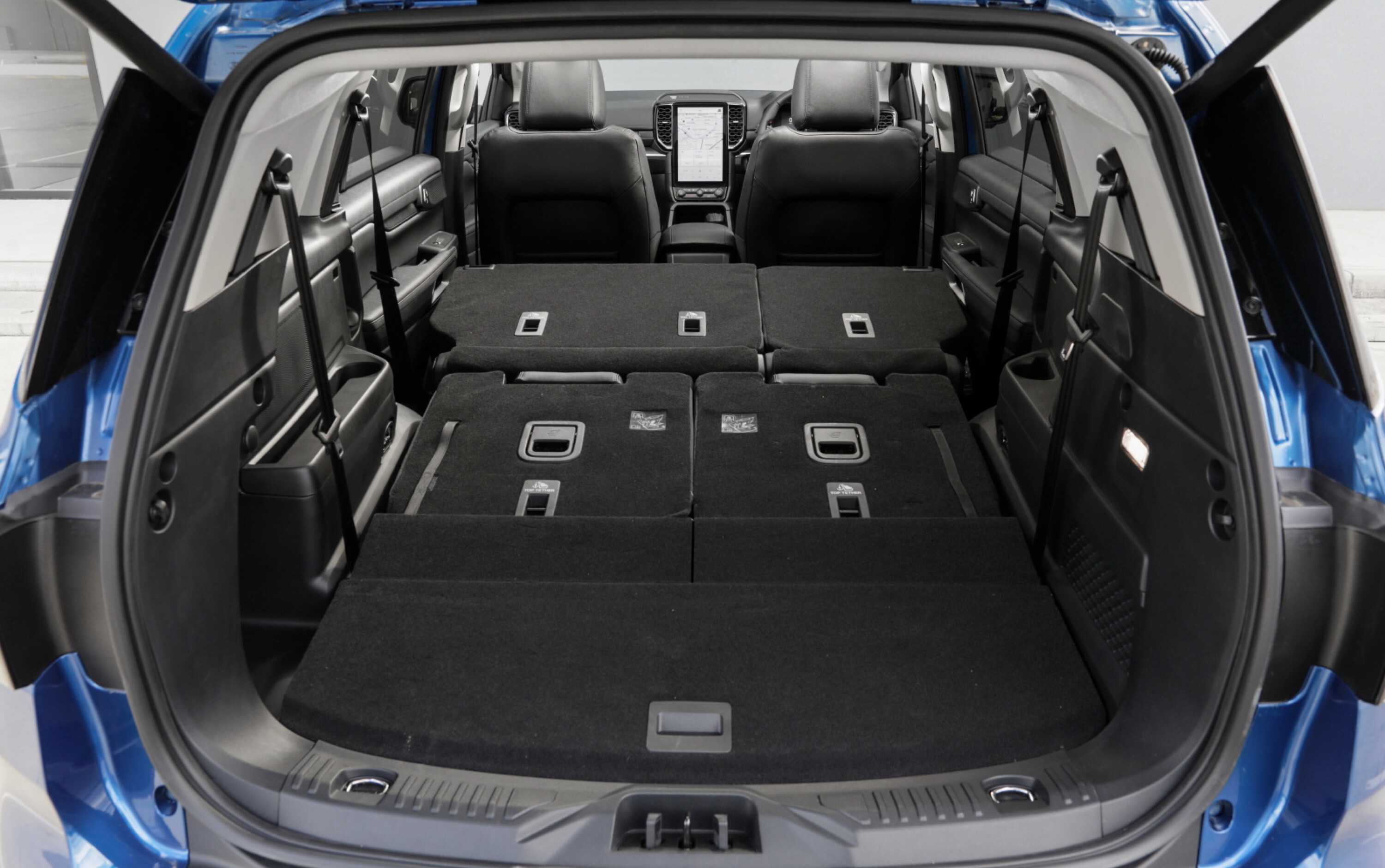
The Ford Everest, which is the best-selling large SUV in Australia, is as practical as you’d expect, offering 259 litres of space behind the third row, 898 litres with the third row folded and a large 1823 litres with all the rear seats folded. Helping practicality further is the easy of folding the rear seats – it’s a one-touch affair – while more storage lies underneath the boot floor.
954 litres
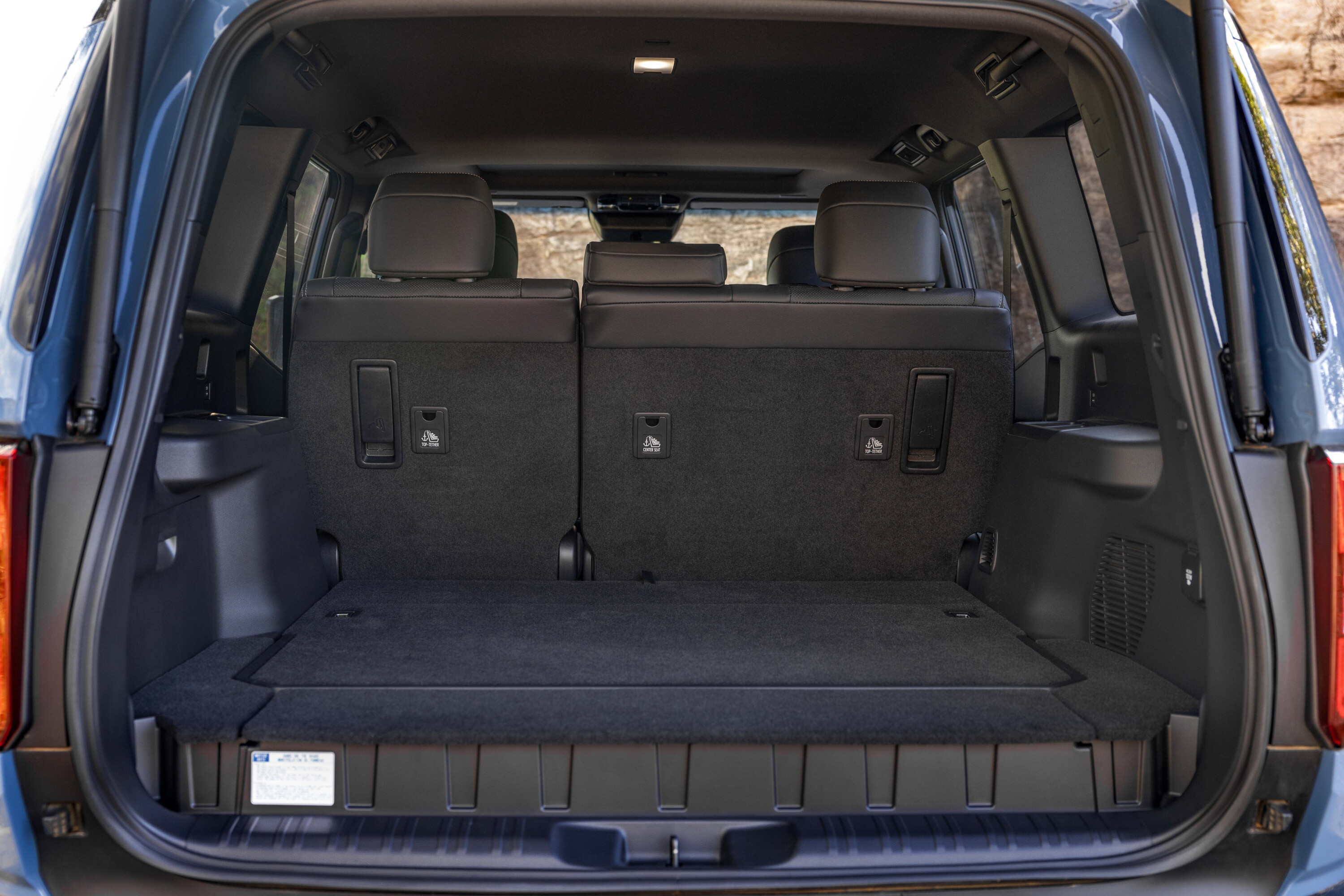
The latest-generation Toyota Prado is quite large in the rear, though the figures actually depend on which model you buy. The five-seater is more capacious with 954 litres of space behind the rear seats and a large 1895 litres with the rear seats folded – choosing a model with seven seats reduces that to 906 litres and 1829 litres respectively. If you choose a seven-seater, behind the third row lies 182 litres of space.
1119 litres
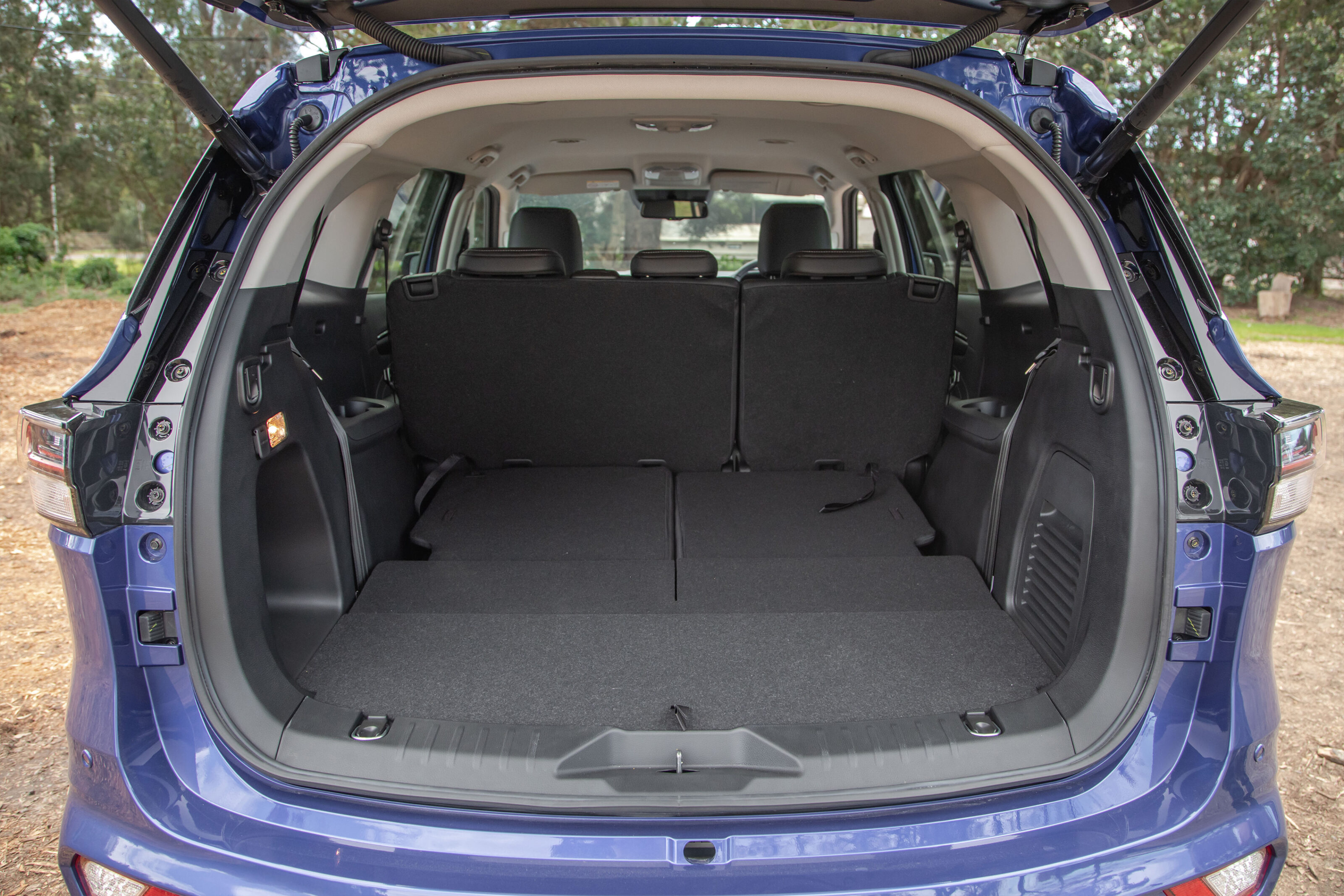
The seven-seat MU-X has a handy 311 litres of boot space behind the third row that expands to a whopping 1119 litres as a five-seater, with a nice flat load space, bag hooks and even under-floor storage. Folding down the middle row brings a van-like 2138 litres, and pleasingly for runs to furniture shops, the seats fold almost completely flat.
960 litres
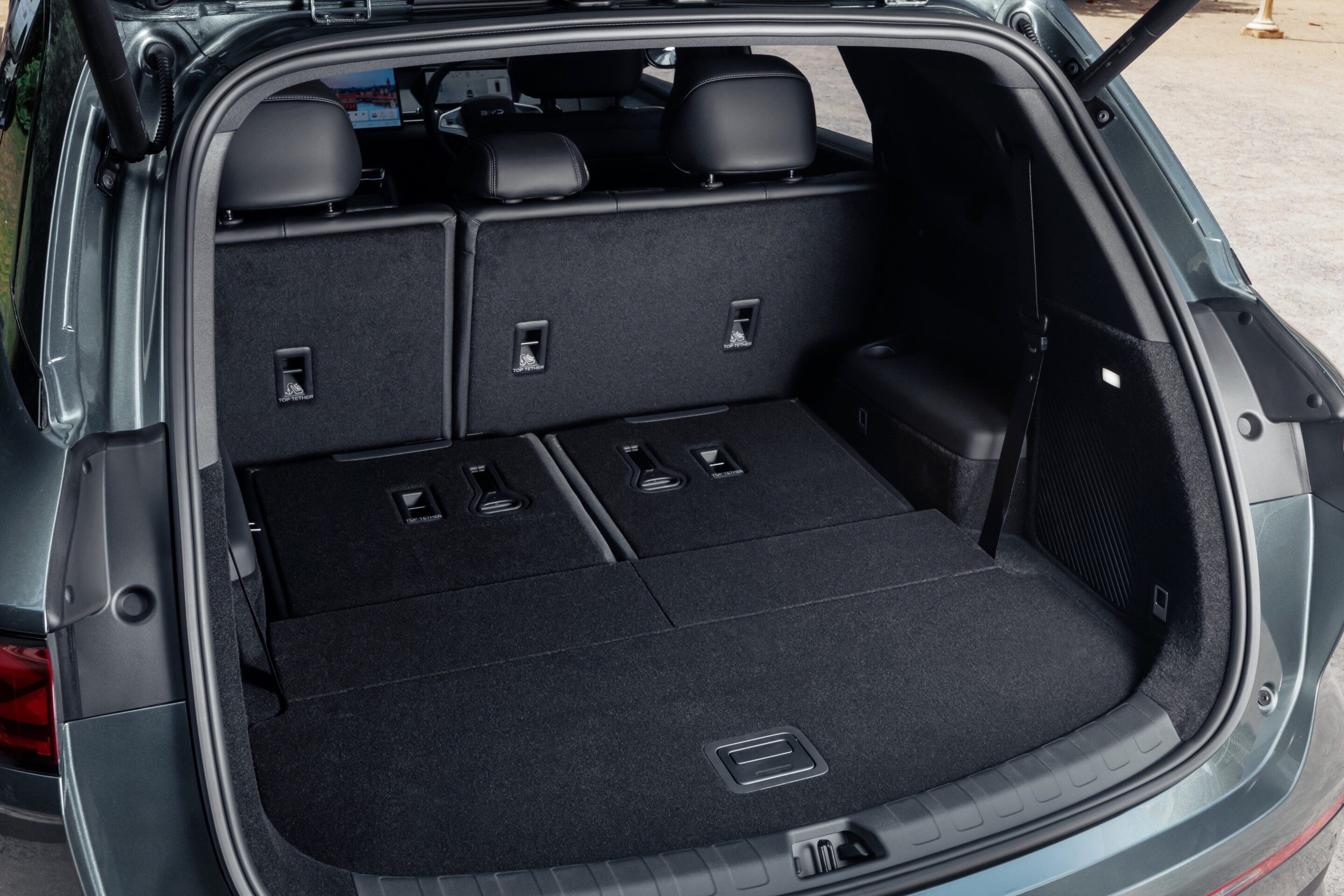
BYD’s Sealion 8 is new to the market but already selling quite well. Part of that is its awesome practicality, with a huge 960-litre bootspace with the third row folded. With the third row up, there’s 270 litres of space, and folding all the rear seats opens up 1960 litres, which is quite large.
642 litres
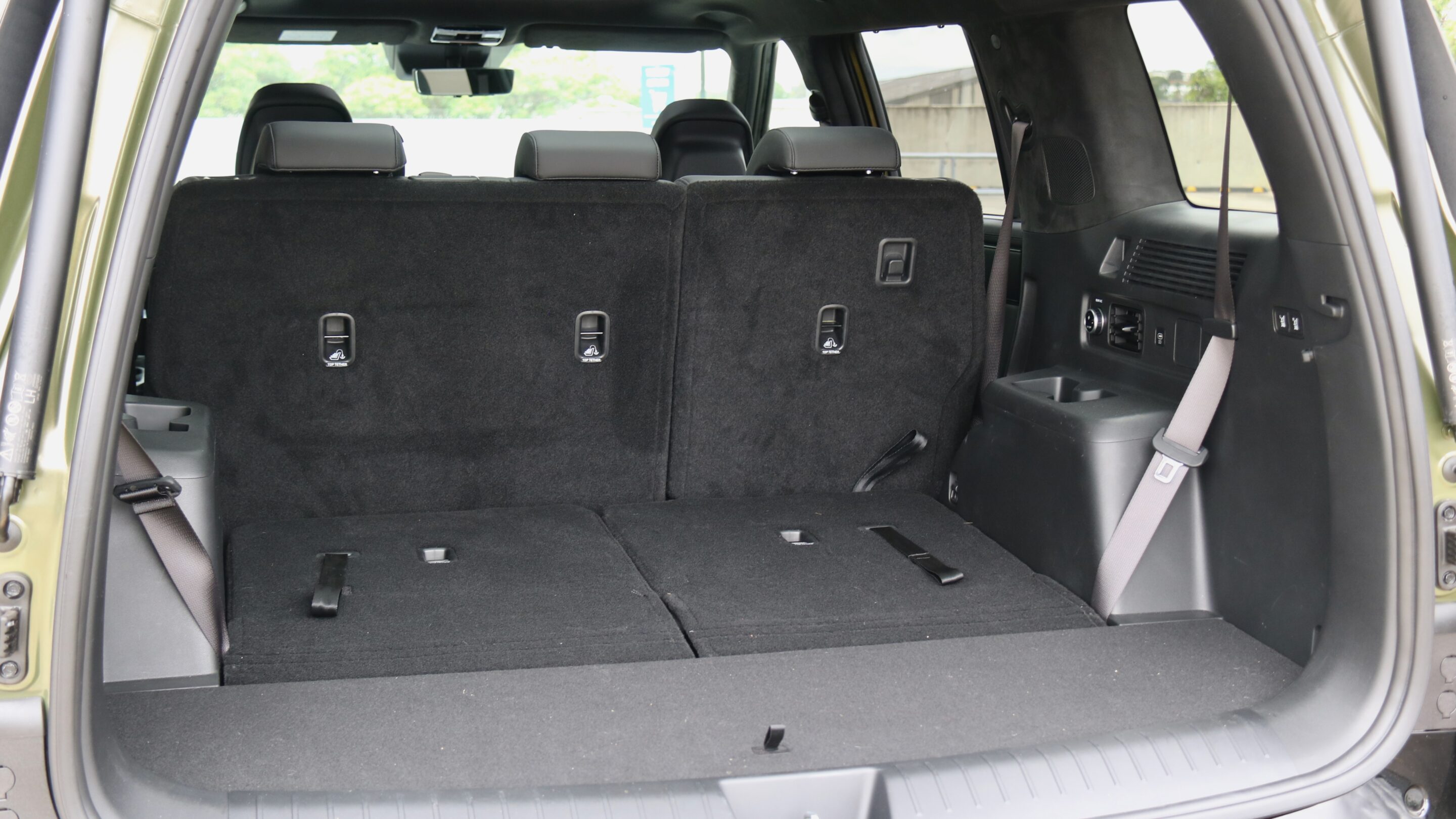
The Hyundai Santa Fe grew and became boxier for its fifth generation, released in 2024, and that was done to eke out as much space from the cabin as possible. The brand doesn’t quote how big the boot is with the third row extended, but it’s a large space with under-floor storage. Folding the third row unlocks a healthy 642 litres (628L for hybrid models), and releasing the second row unlocks 1949 litres.
Urban small SUVs are evolving rapidly as buyers prioritise compact dimensions, low running costs and easy manoeuvrability for city life. In 2026, the category covers vehicles compact petrol crossovers to affordable EVs, all designed to maximise practicality in tight urban environments. The best contenders combine clever packaging, strong value and modern technology without sacrificing comfort or everyday usability.
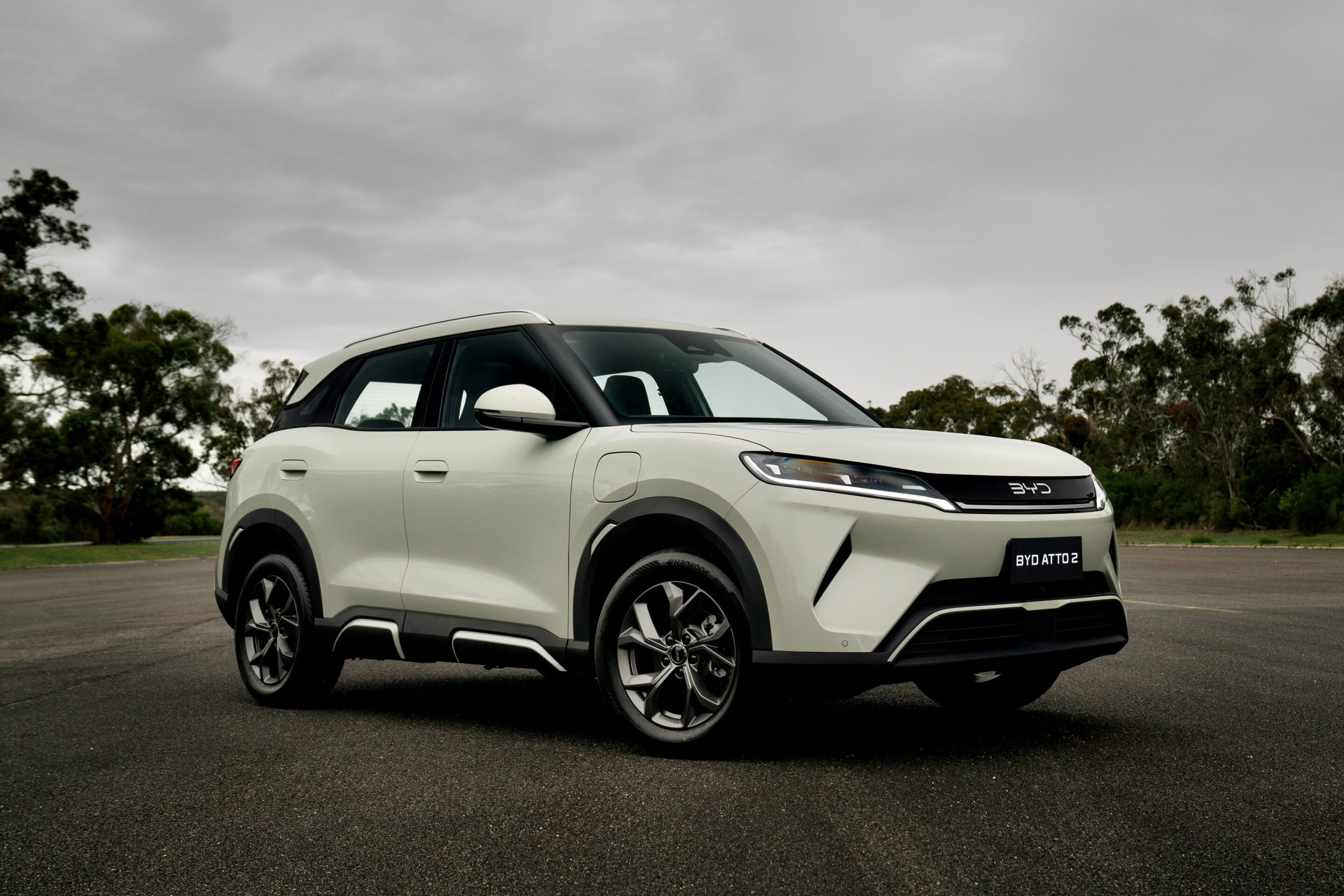
Price: From $31,990 plus on-road costs
Drivetrain: Single-motor electric, 51.1kWh battery
Outputs: 130kW/290Nm
Range (WLTP): 345km
Warranty: Six-year/150,000km
Five-year service cost: $1430 ($286 per year)
| Driving | |
| Interior | |
| Practicality | |
| Overall value | |
Priced from just $31,990 plus on-road costs, the BYD Atto 2 is officially Australia’s cheapest electric SUV, which is a massive feat considering that just a few years ago, most were comfortably above $40,000. Beyond its obvious value, however, Wheels thinks its the best equipped small SUV for urban driving on the market, blending excellent equipment levels, superior practicality, latest tech and good range.
The low starting price gets you a lot of car and even in entry-level Dynamic form, a lot of equipment. Features include 16-inch alloy wheels, automatic exterior lighting and wipers, synthetic leather upholstery, automatic climate control with rear air vents, a 10.1-inch touchscreen with wireless smartphone connectivity and over-the-air updates, a heat pump and a long list of safety kit.
Above the Dynamic sits the $35,990 +ORC Premium, and that adds extra features like larger 17-inch wheels, roof rails, a panoramic sunroof, auto-folding mirrors, electric front seat adjustment with heating and ventilation, a larger 12.8-inch touchscreen and a wireless phone charger. At around $40,000 including on-road costs, the Atto 2 Premium is very well equipped, but both models are excellent value.
The cabin of the Atto 2 is its strongest attribute as not only is it spacious, but it’s also good quality, comfortable and easy to use in every-day, urban driving. The entry-level Dynamic features a 10.1-inch touchscreen, which is well featured and accessible, though its small icons make interacting with it more difficult than necessary. Storage is impressive up front, as is seat comfort, and both the rear seat and 380-litre (1320L with the seats folded) boot are larger than you’d expect.
On the road, the Atto 2 works excellently as an urban small SUV because of its comfortable ride quality, good visibility and light steering. A 130kW/290Nm front electric motor provides propulsion, which is more than enough grunt, and the 51.3kWh battery gives a WLTP-rated range of 345km, which is more than enough for those doing primarily city driving.
The BYD Atto 2 wins this segment thanks to its low opening price, long list of standard features, comfortable and practical cabin, and reasonably long six-year/150,000km warranty. It could be better to drive and its charge speed is slow compared to some rivals, but for primarily city drivers wanting a cheap, practical small SUV that happens to be electric, it’s one of the main options.
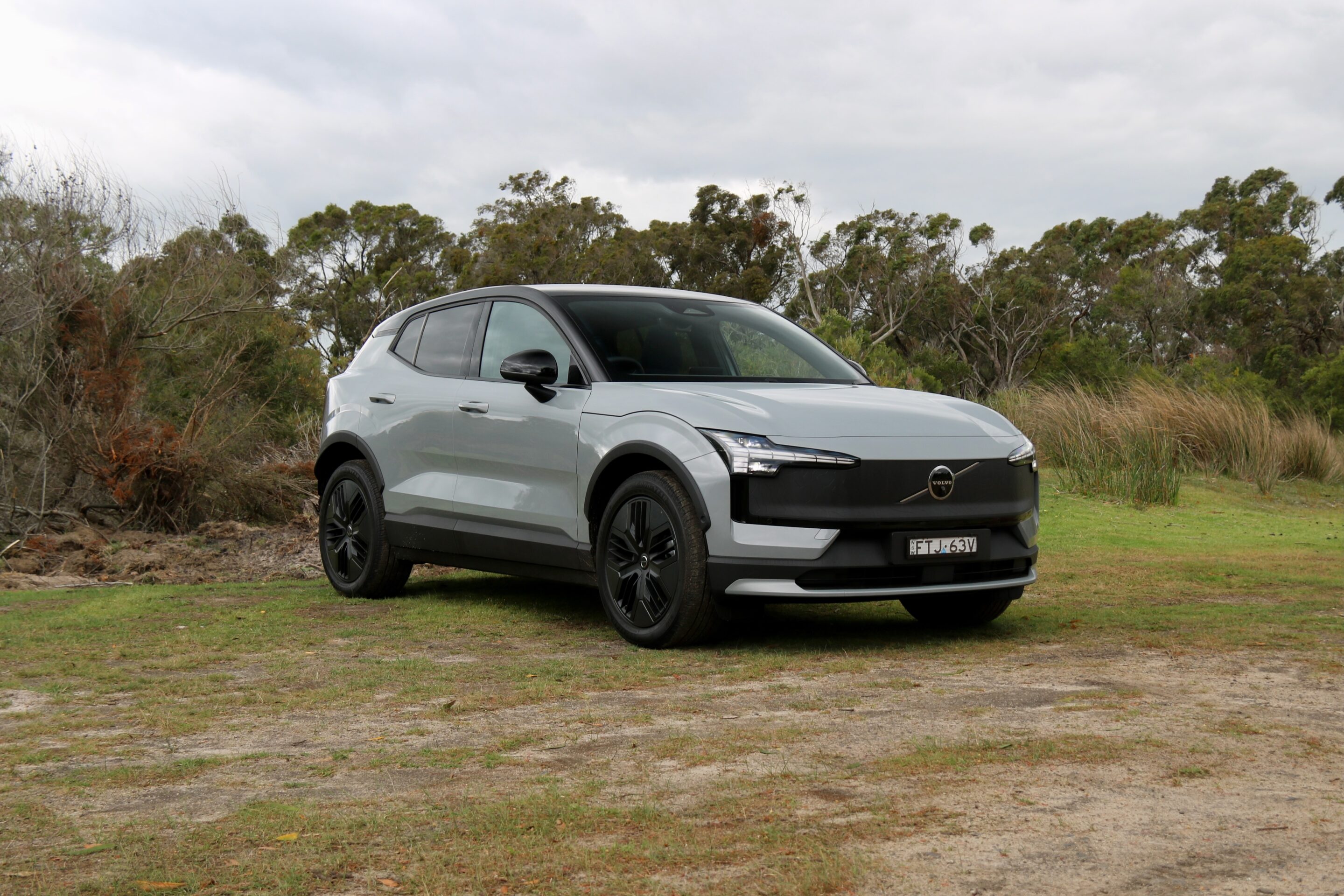
Price: From $49,990 plus on-road costs
Drivetrain: Single or dual-motor electric, RWD or AWD, 69kWh battery
Outputs: 200kW/343Nm – 315kW/543Nm
Range (NEDC): 417km – 462km
Warranty: Five-year/unlimited km
Five-year service cost: Included
| Driving | |
| Interior | |
| Practicality | |
| Overall value | |
Launched locally in 2024, the Volvo EX30 is the brand’s smallest product and rides on a new Geely-derived platform. Pricing starts at $49,990 plus on-road costs, which is $10,000 lower than the pre-updated model, making it much better value than before. Peak charging speed is a healthy 175kW for a 10-80 per cent charge in 28 minutes, while the 69kWh battery allows for a claimed NEDC driving range of up to 462km for the single motor variant (417km for the dual motor Cross Country).
Inside the EX30 is definitely not huge, but it may be more practical than you might initially think considering its tiny footprint. Two six-foot adults will just about fit in the rear seat with just enough legroom and headroom, though the 318-litre boot is not huge (it opens up to 1000 litres with the rear seats folded). Quality is solid with lots of sustainable materials that look and feel high quality used throughout the cabin, and there’s plenty of cabin storage space in the front seat, including a cool opening centre console in the front cabin and large door bins.
Centre of the cabin is a 12.3-inch touchscreen that controls almost every function of the car with very little in the way of buttons – there isn’t even a driver’s display to show the car’s speed, like in a Tesla, which could prove extra annoying in urban driving. The touchscreen is quick to use and the display is bright, but functions such as the headlights and mirrors are buried within and often take two or three presses to activate, taking eyes off the road.
Surprisingly given Volvo’s somewhat beige reputation, even the base model EX30 makes 200kW of power, enough for a quick 5.3-second 0-100km/h sprint time, while the top-spec 315kW dual-motor variant is even quicker. The driving experience of the EX30 is fun, with direct, nicely-weighted steering and enjoyable handling, though some might find its ride quality to be a bit firm in everyday use, especially those driving only in urban conditions where bumps are easily felt in the cabin.
The EX30’s aftersales package is good with a five-year service plan included in the price and two-
year service intervals, making the EX30 pretty painless from an ownership point of view. Overall,
the Volvo EX30 is a strong entrant into the electric small SUV segment – that is, if you don’t need
the largest or most practical cabin. It’s fun to drive with a reasonable range, good equipment list
and, thanks to a recent cut, an accessible price.
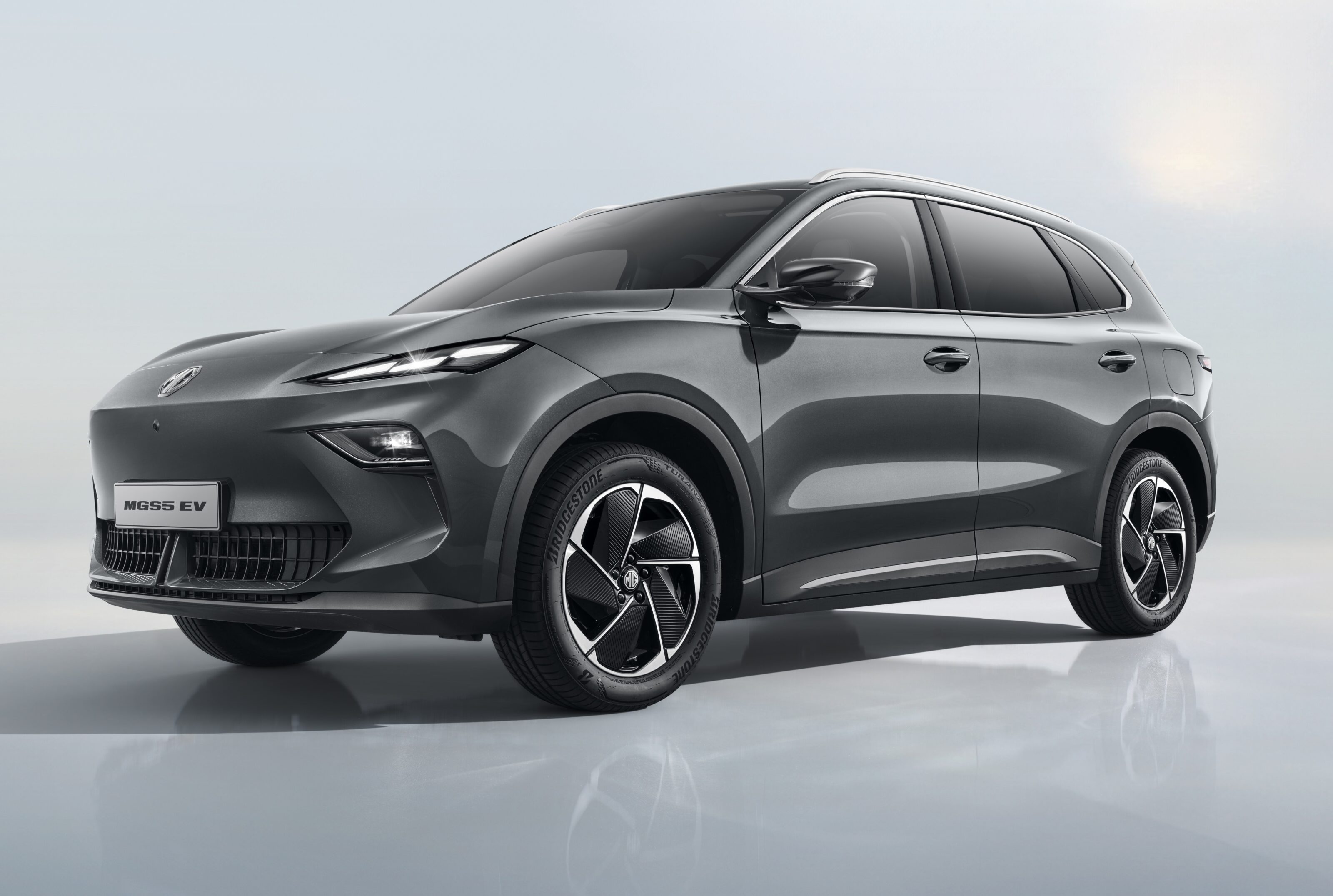
Price: From $40,990 driveaway
Drivetrain: Single-motor electric, RWD, 49kWh or 62kWh batteries
Outputs: 125kW/250Nm
Range (WLTP): 340km – 425km
Warranty: Seven-year/unlimited km (service-activated up to 10 years/250,000km)
Five-year service cost: $1967 ($393 per year)
| Driving | |
| Interior | |
| Practicality | |
| Overall value | |
Based on the same excellent platform as the MG4 hatchback – not the new MG4 Urban – the MGS5 EV was launched in Australia in 2025. Building on the strengths of the MG4, including its great chassis, keen pricing and good practicality with a more practical body and a new dashboard layout with higher quality materials, the MGS5 EV is a great option for an electric small SUV.
Pricing starts at just $40,990 driveaway for the entry-level Excite 49, which features a 49kWh LFP battery for a claimed 340km of range (WLTP) and a 125kW/250Nm rear-mounted motor. Sitting above that are a larger 62kWh battery and the higher-spec Essence model (which also offers both battery sizes), with the top-spec Essence 62 priced from $45,990 driveway – or the same price point that the entry-level Hyundai Kona Electric is currently being offered at on special.
As we’ve come to expect from the MG brand, the MGS5 EV is great value for money and even for a base model, the Excite is well equipped. Standard features include 17-inch alloy wheels, automatic LED exterior lighting, cloth seat upholstery, single-zone automatic climate control with rear air vents, a large 12.8-inch touchscreen with live services and wireless phone mirroring, plus the MG Pilot suite of active safety features.
Charging speeds for the S5 EV are reasonable, with the smaller battery capable of 120kW and the larger 139kW for a 10-80 per cent charge time of as little as 19 minutes for the smaller unit. On the road, the S5 EV impresses with a keen chassis and excellent ride quality. It’s a breeze to drive in urban conditions thanks to good visibility and a comfortable ride quality, while the quick steering makes it fun from behind the wheel too.
The S5 EV’s cabin is good quality and spacious, and the 12.8-inch touchscreen is easy to use and – unlike many new cars – features buttons located below to help with usability. Two six-footers will be more than comfortable in the rear seat, and the 453-litre boot is a reasonable size, opening up to 1441 litres with the rear seats folded.
The MGS5 EV is a pretty good option if you’re after a value-packed electric small SUV. Prices start at just $40,990 driveaway for the entry-level Excite 49, which provides a reasonable range of up to 325km (WLTP), but if you’re wanting more, the larger battery can give up to 430km of range. We wish that the more powerful motors offered overseas were sold in Australia, but 125kW is enough to motivate the S5’s keen chassis.
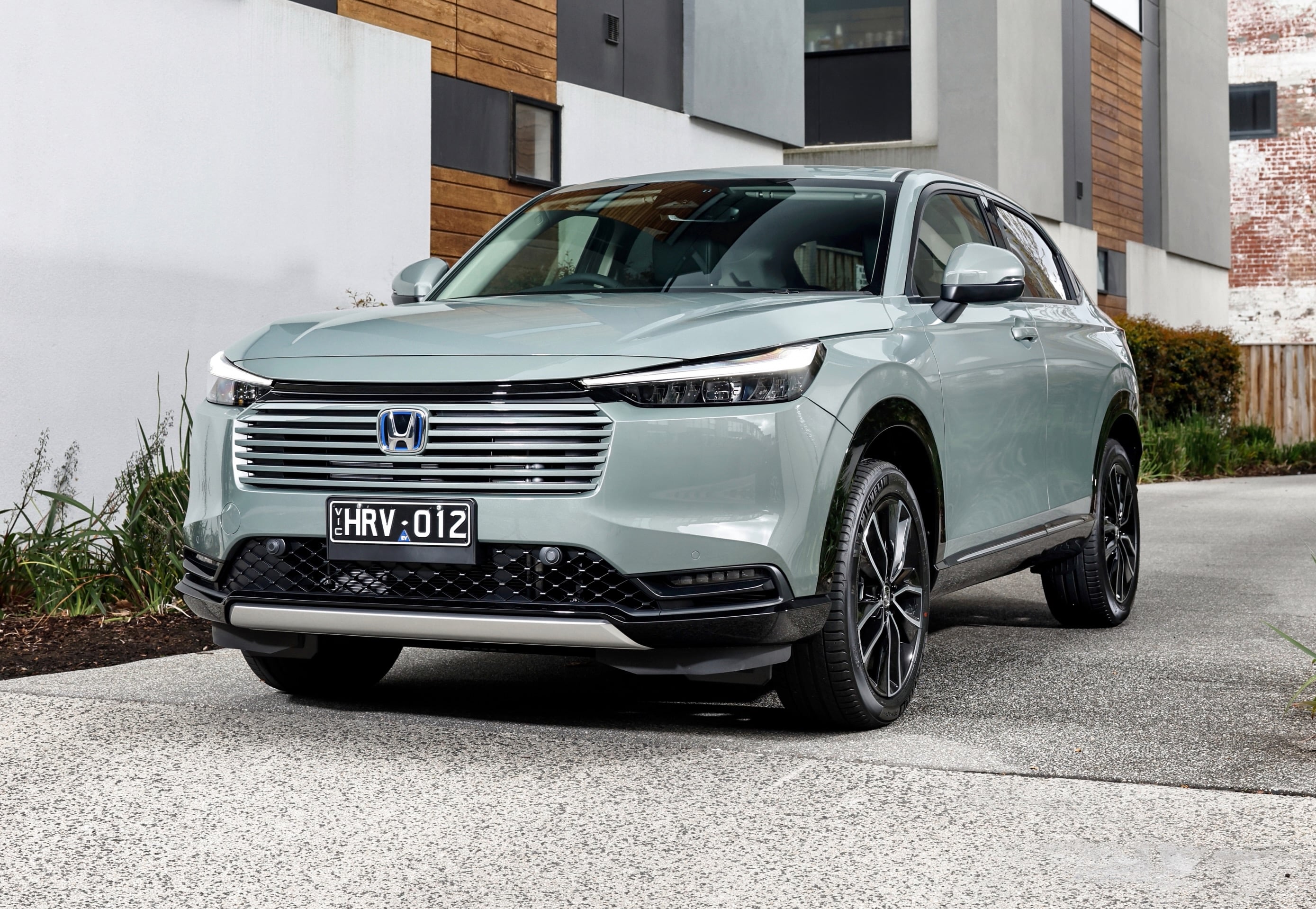
Price: From $32,900 drive away (e:HEV X)
Drivetrain: 1.5-litre four-cylinder petrol or 1.5-litre four-cylinder hybrid, CVT or e-CVT auto, FWD
Outputs: 89kW/145Nm (1.5L petrol), 96kW/253Nm (1.5L hybrid)
Combined fuel economy: 4.3L/100km (hybrid) – 6.2L/100km (1.5L petrol)
Warranty: Five-year/unlimited km
Five-year service cost: $995 ($199 per year)
| Driving | |
| Interior | |
| Practicality | |
| Overall value | |
The Honda HR-V is one of the most dependable options in the small SUV segment, with a wide range of talents. Pricing starts at $32,900 driveaway, though the entry-level hybrid is $39,900 driveaway. It’s only available as a four-seater in Australia, which may be unsuitable depending on your situation. Features like rear air vents – which we think all cars should feature as standard – are also only available on the top-spec e:HEV L. If those issues don’t bother you, the HR-V is a great choice, especially if you’re an urban dweller.
There are two drivetrains available in Australia for the HR-V – a 1.5-litre petrol or a 1.5-litre hybrid – and if you’re wondering, the hybrid is the clear choice as it’s not only more powerful than the petrol but more refined and a lot more fuel efficient as well. The HR-V is a good thing to drive too, with a nimble chassis, planted ride quality and hybrid system that doesn’t just give you a wall of noise when you plant the throttle. Around town, the HR-V is easy to drive and its active safety features feel as though they’re assisting – not constantly correcting – you.
The interior of the HR-V is typically Honda-high quality, with cool touches like the climate control knobs lighting up blue or red when adjusting the temperature and side air vents that can be set to direct airflow towards the roof. Storage is plentiful and front seat comfort is good too, though electric adjustment would be a nice feature to have. The 9.0-inch central touchscreen could be sharper but it’s a breeze to use and features sat-nav, DAB+ digital radio and wireless smartphone mirroring.
Turning to the back seat reveals the HR-V’s party piece in the small SUV segment: its excellent packaging. The rear seat is one of the roomiest in the segment with excellent legroom and headroom for two adults. Amenities include a centre armrest, map pockets and door pockets, with the upper-spec e:HEV L further adding the aforementioned air vents and USB charging ports as well.
Slightly making up for the lack of a fifth seat is Honda’s ‘Magic Seats’ system, which allows for a completely flat floor with the rear seats folded, but their coolest trick is that the seat base folds up to rest against the backrest, and combined with the flat floor, taller items like plants or furniture can be carried in the rear cabin. The boot is not massive at 304 litres, though that extends to a large 1274L with the rear seats folded. Annoyingly, there’s no spare wheel.
All in all, if you can get past the lack of a fifth seat and the fact the starting price might be higher than you’d expect, plus that some features we expect in all models are limited to the top-spec car, the Honda HR-V is a sure choice for an urban small SUV. It’s quite fuel efficient as a hybrid, enjoyable to drive around town, good quality inside, quite practical and very cheap to service as well.
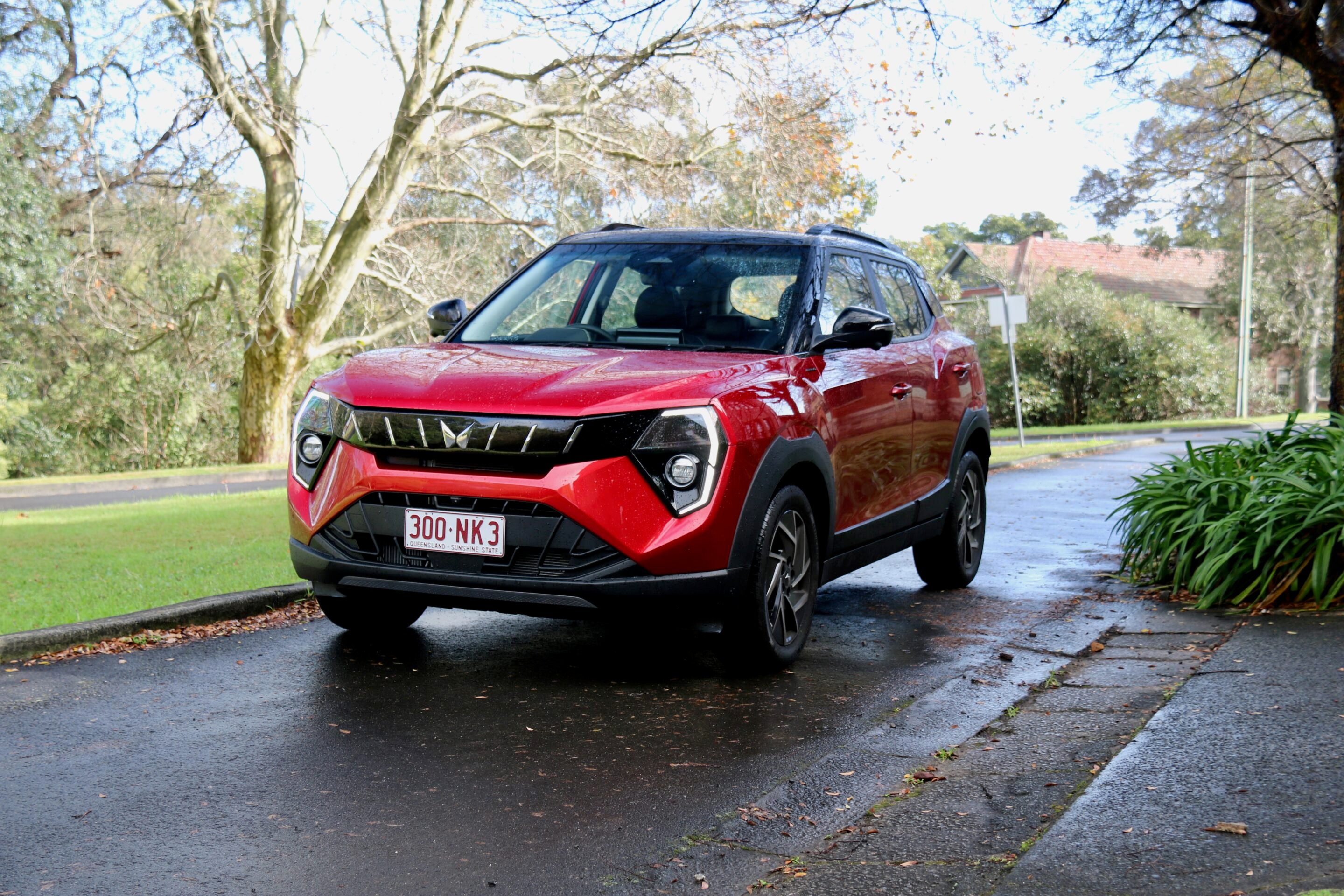
Price: From $23,990 driveaway
Drivetrain: 1.2-litre turbocharged three-cylinder petrol, six-speed auto
Outputs: 82kW/200Nm
Combined fuel economy: 6.5L/100km
Warranty: Seven-year/unlimited km
Five-year service cost: $1595 ($319 per year)
| Driving | |
| Interior | |
| Practicality | |
| Overall value | |
Mahindra launched the XUV 3XO in Australia in 2025 and above all else, it delivered a really affordable option that we think will continue to win it a lot of fans locally. Pricing kicks off from $23,990 driveaway –the same pricepoint as the entry-level Tiggo 4 – and standard equipment on the entry-level AX5L is impressive.
Equipment highlights include 16-inch alloy wheels, keyless entry with push button start, dual-zone automatic climate control with rear air vents, a leather-wrapped steering wheel and gear knob,
automatic LED headlights, rain-sensing wipers, dual 10.25-inch displays, wireless Apple CarPlay and Android Auto, and safety equipment like autonomous emergency braking, lane keeping assistance, adaptive cruise control and traffic sign recognition. Even a sunroof is standard.
Jump up to the upper-spec AX7L and features like a 360-degree camera, a blind-spot camera, leatherette upholstery, a panoramic sunroof and a thumping (seriously, it’s excellent) Harman Kardon sound system. Yet, it’s only $26,990 driveaway. Adding further to the XUV 3XO’s impressive value is the brand’s seven-year/150,000km warranty and five years of servicing only costs $1595, or just $319 per year.
The XUV 3XO uses a turbocharged 1.2-litre three-cylinder engine, which makes 82kW/200Nm outputs and is mated to a six-speed automatic transmission as standard. It’s a grunty and characterful engine, with impressive refinement as well. The XUV 3XO drives well, too, its tight, nimble chassis delivering excellent ride quality that soaks up bad road surfaces.
Inside, the XUV 3XO isn’t the most modern or up to date, but it’s good quality, practical for its small size and well featured. The 10.25-inch touchscreen could be faster, but its graphics are sharp and it’s easy to use. The rear seat is impressively spacious for its size too, though its boot is quite small. In the XUV 3XO Mahindra delivers a good car that is practical, good to drive, well equipped and covered by a long warranty. For a lot of buyers, that will make it a winner.
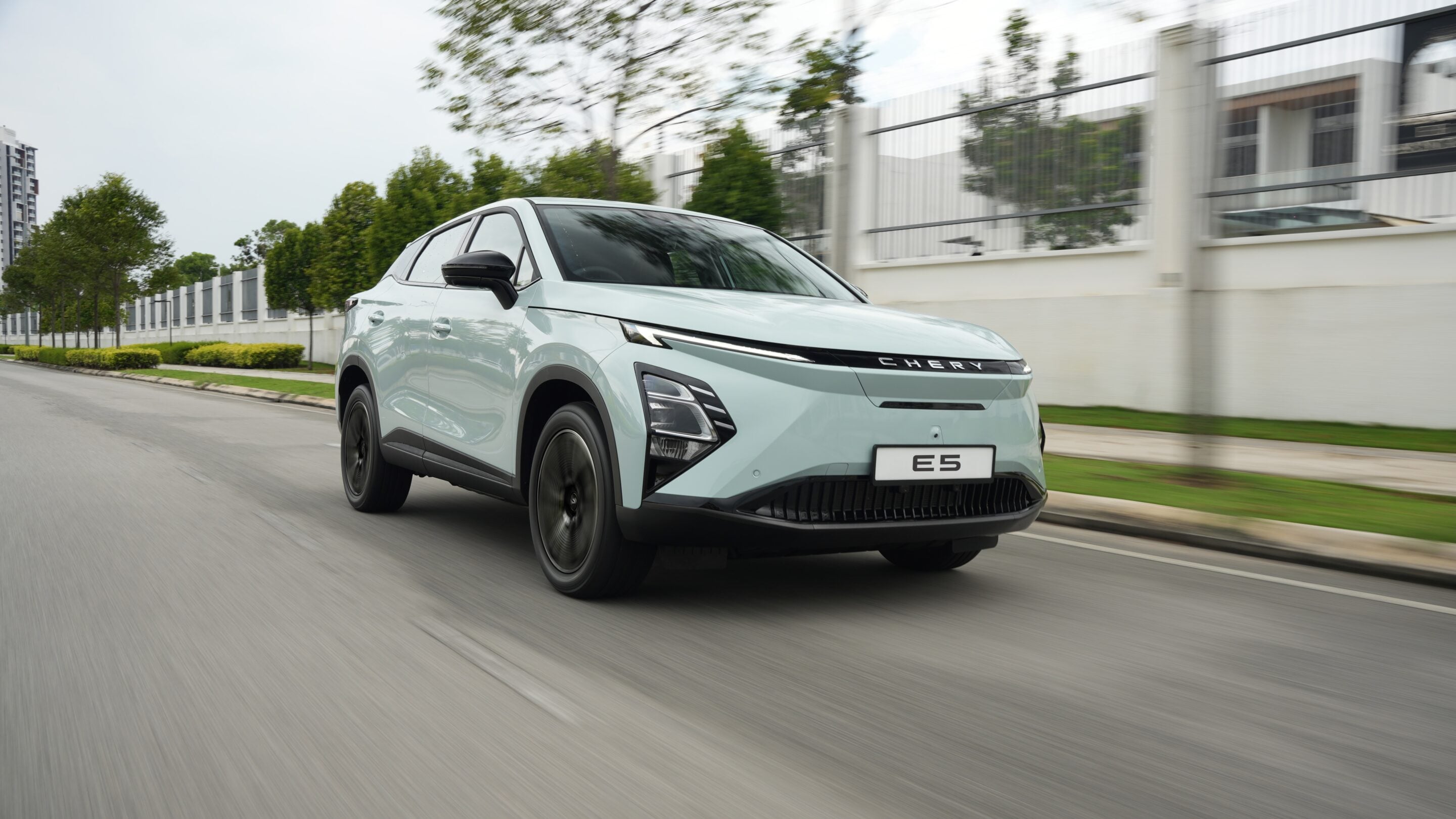
Price: From $37,990 driveaway
Drivetrain: Front-mounted single-motor, FWD, 58.9kWh battery
Outputs: 155kW/288Nm
Range (WLTP): 345km
Warranty: Seven-year/unlimited km
Five-year service cost: $1145 ($229 per year)
| Driving | |
| Interior | |
| Practicality | |
| Overall value | |
Formerly known as the Omoda E5 before Omoda became a separate brand in Australia, the Chery E5 is its smallest electric SUV in Australia and it’s a great option for those wanting an urban option for that type of vehicle. Its small dimensions make it easy to drive in traffic, its ride quality soaks up Australia’s poor quality roads with ease, and its ample grunt and instant torque makes darting through traffic easy.
Chery just rejigged the local E5 line-up and made the former top-spec Ultimate the only model available, but it’s now priced $3000 lower at $37,990 driveaway, making it great value for money.
Standard equipment is lengthy and includes a sunroof, synthetic leather upholstery, heated front and rear seats, dual 12.3-inch displays, wireless phone charging, a suite of safety features like adaptive cruise control and traffic jam plus – rarely for an electric vehicle – a full-size spare wheel.
Using a 58.9kWh LFP battery, the E5 offers a WLTP-rated range of 430km (505km on the more lenient NEDC cycle) and its battery can be charged at up to 130kW for a claimed 30 to 80 per cent charge time of 30 minutes. Powering the E5 is a front-mounted 155kW/288Nm electric motor with more than ample performance.
The interior of the E5 is attractive with its waterfall centre console and sharp dual 12.3-inch displays, while plenty of soft touch materials elevate the aesthetic. Front seat comfort is good, though extra driver’s seat adjustment like lumbar and under-thigh angle would make the driving position that much better. The E5 is spacious and four adults will fit fine, thanks to fine rear leg- and headroom, while the 300-litre boot is a good size (though its maximum capacity of 1079 litres isn’t huge). What’s more impressive is the aforementioned spare wheel, which most modern EVs don’t include.
Chery’s aftersales program is one of the best in the industry with a seven-year/unlimited km warranty covering the E5 and five years of servicing costs just $1145 or only $229 per year.
The Chery E5 is comfortable and drives well in urban conditions, where its suspension soaks up bumps well. Its quick, light steering makes tight streets easy to drive on. And while it could be more practical inside and its active safety systems are overzealous at higher speeds, it a solid value-for-money option.
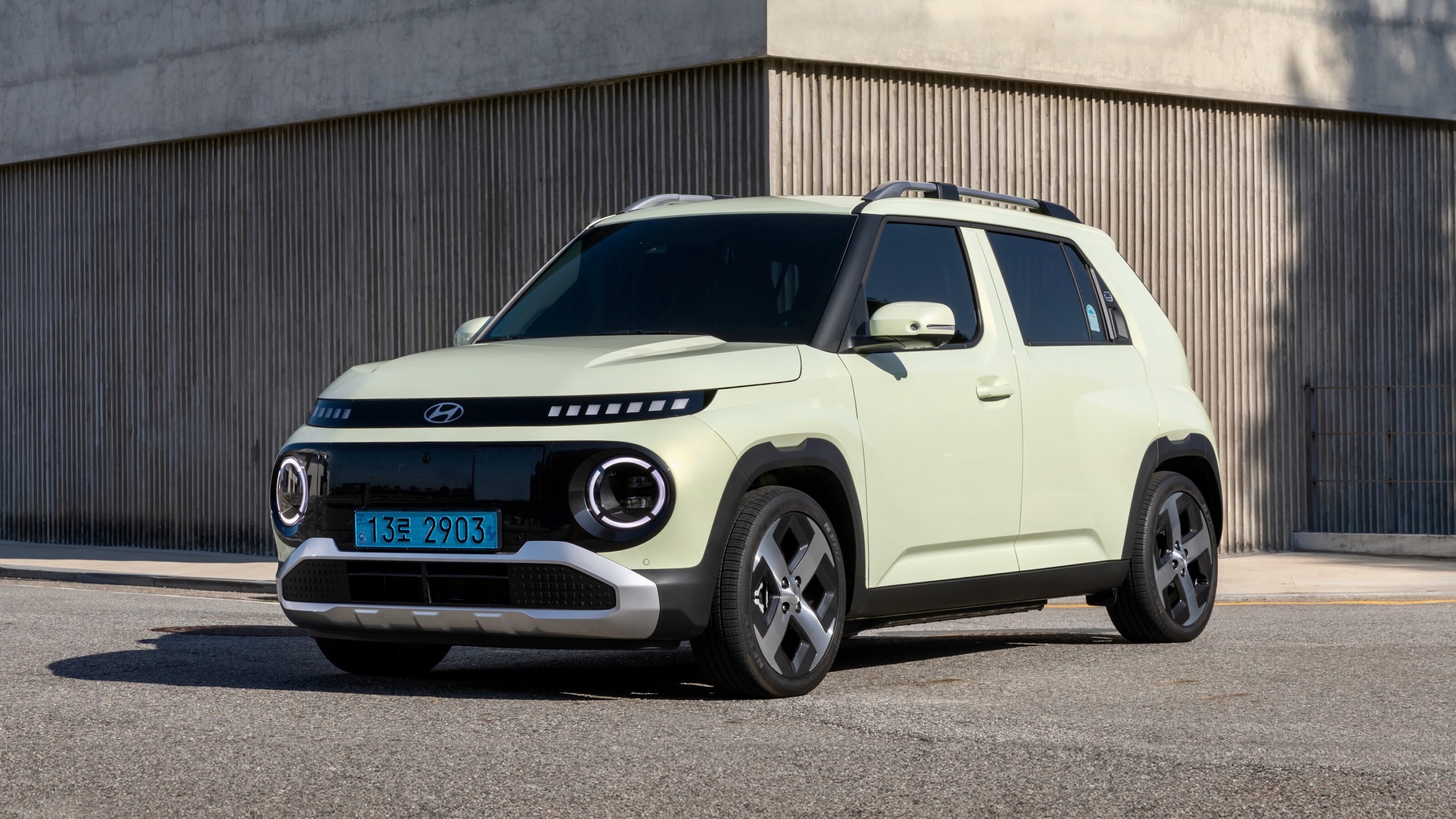
Price: From $39,000 plus on-road costs
Drivetrain: Front-mounted single-motor, FWD, 42kWh or 49kWh battery
Outputs: 71kW/142Nm (Standard Range) or 85kW147Nm (Extended Range)
Range (WLTP): 293km – 360km
Warranty: Seven-year/unlimited km
Five-year service cost: $1340 ($268 per year)
| Driving | |
| Interior | |
| Practicality | |
| Overall value | |
One of the cutest car releases of 2025 was the Hyundai Inster, which is the brand’s smallest electric SUV in Australia. Just look at it: those eyes, that funky boxy shape and cool details like a screwdriver pattern on the door panels. It’s clear that Hyundai let its designers let loose with the Inster and as a result, they created something really cool.
The Inster is actually based on the petrol-powered Casper sold in the South Korean market, but was extended in length to accommodate its battery and electric motor. It may be small from the outside, but it’s actually very well packaged.
There are two Inster models available in Australia: entry level and upper-spec and off-road themed Cross, with two battery sizes: a smaller 42kWh unit in the base model or a larger 49kWh version that’s available in both models. Prices start at $39,000 plus on-road costs for the entry-level model, and standard features include 15-inch alloy wheels, automatic LED exterior lighting with automatic wipers, keyless entry with push button start, automatic climate control, dual 10.25-inch screens and a lot of active safety features. But while it’s reasonably well equipped, it’s not cheap and top-spec models are priced at almost $50,000 once on-road costs are included.
The claimed WLTP range is between 293km and 360km, which wouldn’t be enough to tour Australia, but great for urban driving. A 71kW motor features with the smaller battery and a more powerful 85kW motor with the larger one, but even the lesser amount is more than enough grunt for city life. As with all EVs, it feels quicker in real life than its outputs suggest, and its darty chassis and tiny sizing make it perfect for urban driving. Having said that, its firm ride quality is less than ideal considering how bad our urban roads can be.
Inside the Inster is a surprisingly spacious for such a small car thanks to its excellent packaging. Strictly a four-seater, the Inster’s two rear seats slide and recline independently, opening up either rear seat space or the boot. Minimum space is a small 280 litres, though moving the seats forward expands that. With the rear seats folded, 1059 litres of space is on offer, which is huge for such a small car.
Hyundai covers the Inster with its five-year warranty, though that’s extended to seven years in total if serviced through a Hyundai dealership in that time. Five years of servicing costs $1340, or only $268 per year. Overall, the Hyundai Inster isn’t cheap and it is a bit firm to drive around town, but it is cool, very well packaged, practical, good to drive and did we mention it looks cool?
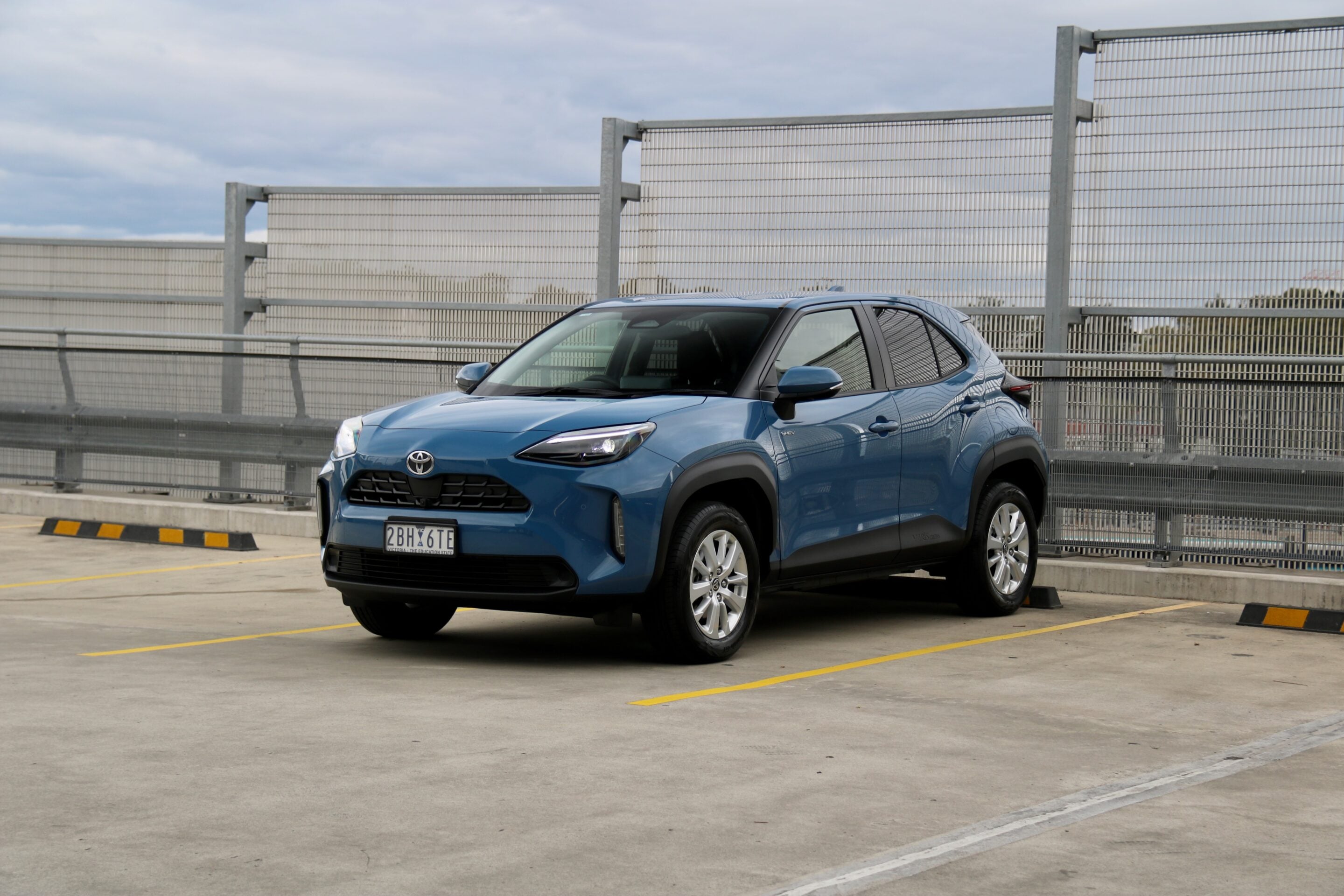
Price: From $31,790 plus on-road costs
Drivetrain: 1.5-litre three-cylinder hybrid, FWD or e-AWD
Outputs: 85kW
Combined fuel consumption: 3.8L/100km
Warranty: Five-year/unlimited km
Five-year service cost: $1250 ($250 per year)
| Driving | |
| Interior | |
| Practicality | |
| Overall value | |
Toyota offers three small SUVs in Australia and the Yaris Cross is the smallest – and best option for urban driving – of them all. Pricing starts at $31,790 plus on-road costs and there are four models on offer: entry-level GX, mid-spec GXL, sporty-looking GR Sport and top-spec Urban. We’d pick the $34,790 +ORC GXL as it adds a number of useful features to the GX and includes features like automatic LED lighting, automatic climate control, keyless entry and push button start, rear privacy glass and safety kit like a 360-degree camera, eight airbags, adaptive cruise control and adaptive lane guidance.
All Yaris Cross models use a 1.5-litre three-cylinder hybrid drivetrain making a combined power output of 85kW, and while Toyota doesn’t quote an equivalent torque figure, it’s got more than enough shove for city driving as its electric motor pitches in from zero. When it comes to ride and handling, the Yaris Cross is excellent. Its small-ish 16-inch alloy wheels with plenty of sidewall provide a great ride quality, while its quick steering rack offers fun handling.
While there has been a huge increase in electric vehicle sales recently thanks to those wanting to lessen costs and ditch fuel altogether, the Yaris Cross makes a great case for buying a hybrid instead – it’s rated at just 3.8L/100km on the combined cycle and, being a hybrid, doesn’t need to be charged with a plug as braking and coasting instead tops up the battery. Importantly, unlike some cars, the Yaris Cross will easily do close to its fuel consumption claim.
Inside, the Yaris Cross is starting to feel a bit dated thanks to its basic materials, including plenty of hard plastics and blank buttons making you wonder what features Australia missed out on. A quick 8.0-inch touchscreen is standard with features like wireless smartphone mirroring and live services, and there are plenty of storage spaces in the front cabin, though rear seat room is tight for taller adults. The 390-litre boot is large, though reduces to 314 litres if equipped with the optional all-wheel drive system – we wouldn’t bother as the Yaris Cross is at home in the city.
Toyota covers the Yaris Cross with a five-year/unlimited km warranty, but servicing it at a Toyota dealer will extend the battery warranty up to 10 years, which is excellent coverage. Its service pricing is also cheap at $250 per year, though roadside assistance is an extra cost item. For city drivers, Yaris Cross is a winning urban small SUV thanks to its efficient hybrid drivetrain, nimble chassis, small size, good practicality and long list of features.
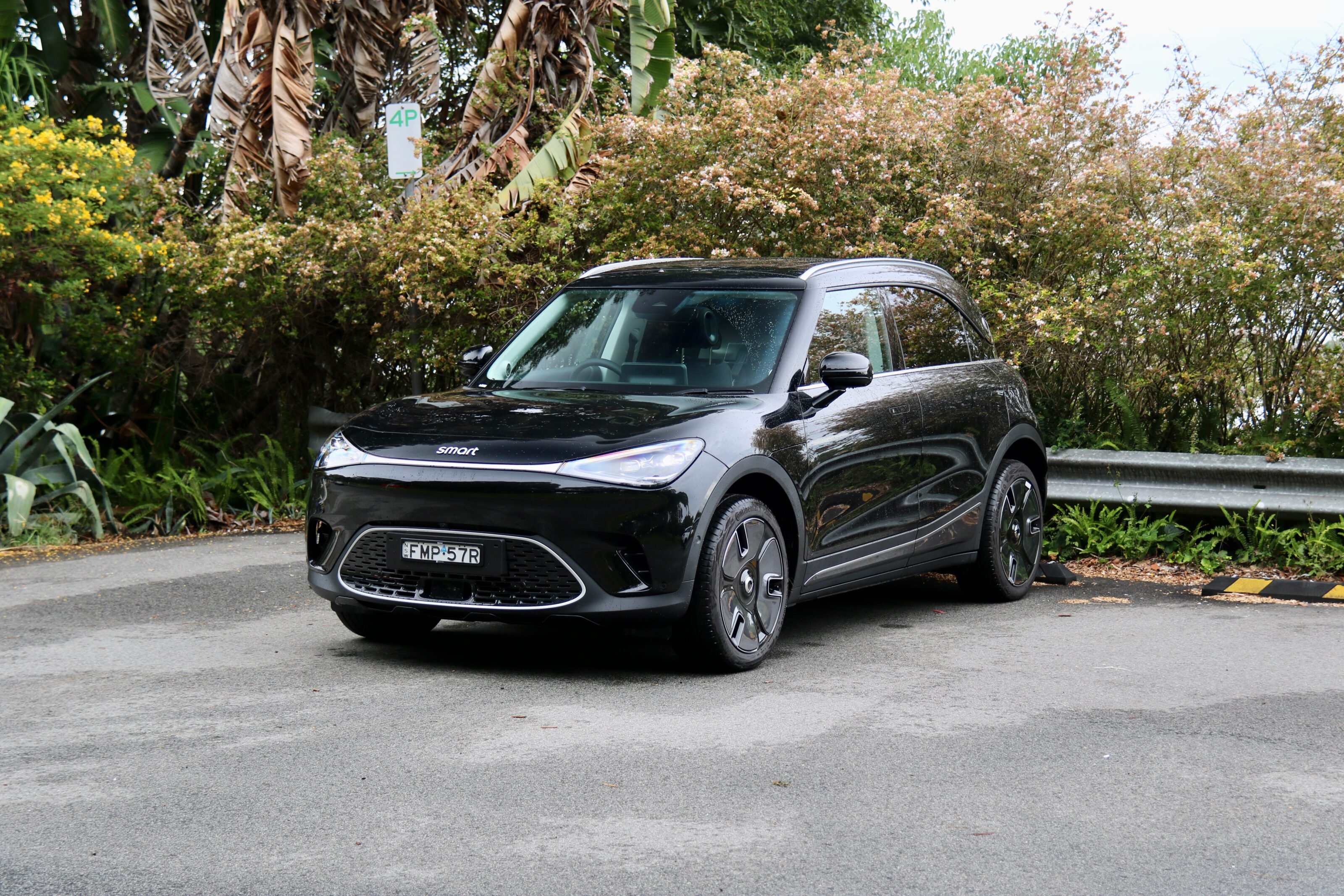
Price: From $54,900 plus on-road costs
Drivetrain: Front-mounted single-motor or dual-motor, RWD or AWD, 66kWh battery
Outputs: 200kW/343Nm or 315kW/543Nm
Range (WLTP): 400km – 440km
Warranty: Five-year/150,000km
Five-year service cost: $1998 – $2208 ($399 to $442 per year)
| Driving | |
| Interior | |
| Practicality | |
| Overall value | |
Famous for its tiny city cars from the late 1990s (2003 in Australia), now-part-Chinese-owned brand Smart returned to local shores in 2024 with two models: the #1 and #3 (yes, the hashtag is part of the name). Both are electric small SUVs and in the urban section, we’re focusing on the smaller #1. It uses the same platform as the Volvo EX30, and also uses the same 66kWh battery for a claimed WLTP range of up to 440km.
Pricing starts at $54,900 plus on-road costs, and three models are offered: the entry-level Pro+, mid-spec Premium and top-spec Brabus (yes, as in Brabus the famous tuner). All three are quite well equipped, with 19-inch alloy wheels, LED lighting, a panoramic glass roof, an electric tailgate, heated electric front seats, synthetic leather trim and a 12.8-inch touchscreen with live services.
The Premium adds real leather trim and a Beats sound system, while the Brabus adds sportier exterior and interior styling and an extra motor at the front for 315kW of total power.
On the road, the Smart #1 drives really well and is at home in urban conditions. Thanks to its funky tallboy body with big windows and mirrors, visibility is excellent, and its quick steering and small position on the road makes it easy to drive. Yet even the base Pro+ is surprisingly powerful making 200kW, which is enough grunt to see it hit 100km/h in 6.7 seconds.
The #1’s cabin is modern, good quality and practical. The 12.8-inch touchscreen is a bit confusing to use at first – activating the live services helps unlock its full functionality, thanks to its menu structure – but screen quality is sharp and the fox gives it character compared to more austere rivals. Material quality is good, with synthetic leather trim around, while thanks again to the tallboy body, rear headroom is awesome. The 313-litre boot isn’t huge, however, but the second layer below the floor unlocks an extra 70 litres of space.
Addressing past criticism, Smart has reduced the servicing costs for the #1 and it now costs between $1998 and $2208 to service over the first five years/100,000km – a reduction of up to $912, and far more competitive. A five-year/150,000km remains, and still looks a bit short in the industry. But overall, the Smart #1 is a great choice for an urban small SUV thanks to its small size, fun to drive nature, good interior quality and long list of standard features.
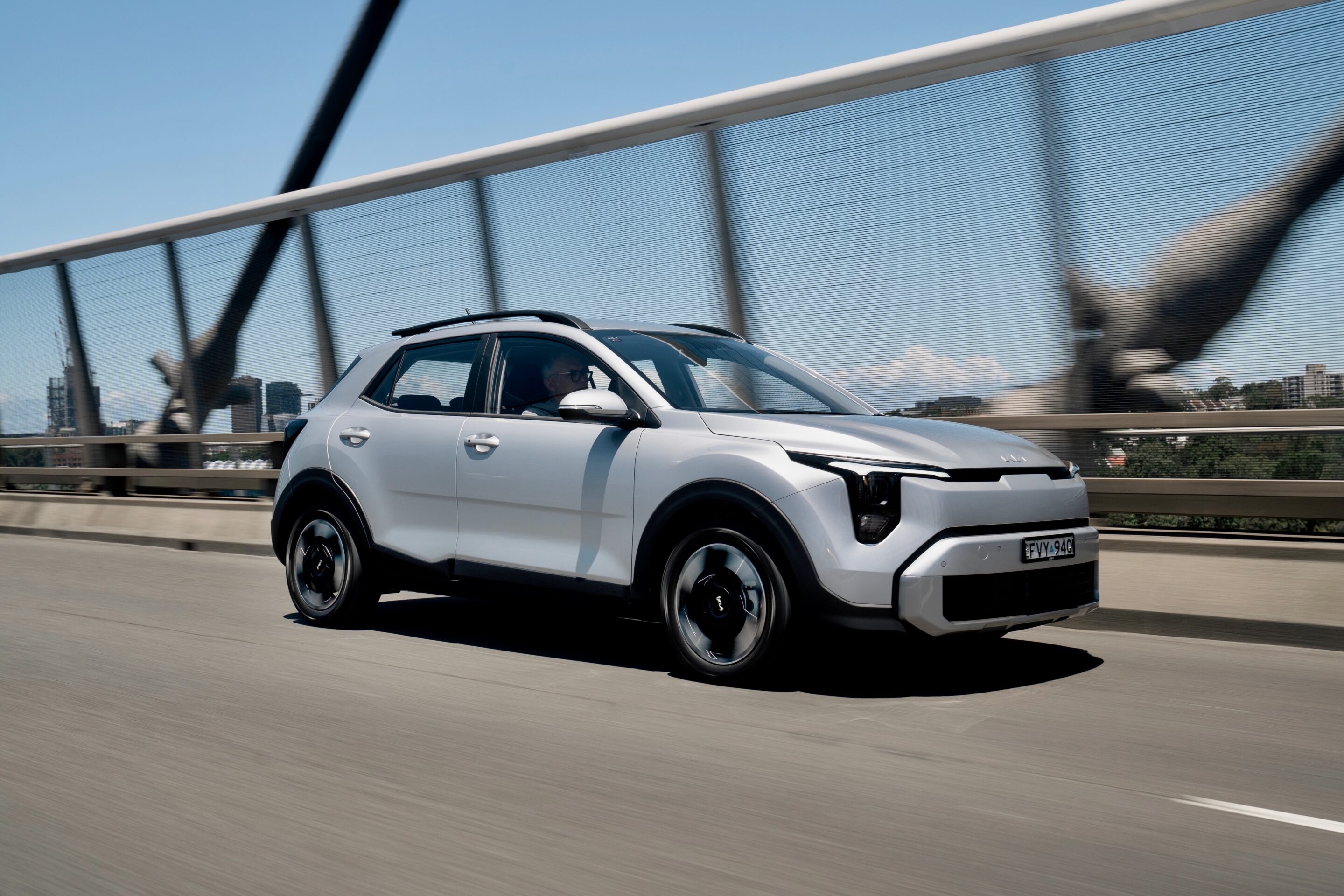
Price: From $28,180 driveaway
Drivetrain: 1.0-litre three-cylinder turbocharged mild-hybrid, seven-speed dual-clutch, FWD
Outputs: 88kW/172Nm
Combined fuel consumption: 5.0L/100km
Warranty: Seven-year/unlimited km
Five-year service cost: $2464 ($493 per year)
| Driving | |
| Interior | |
| Practicality | |
| Overall value | |
Having received a big mid-life in late 2025, the Kia Stonic is now a far more serious option in the small SUV segment. Pricing starts at $28,190 plus on-road costs, which is a lot more expensive than it used to be before it was facelifted, but with new styling and a new dashboard, a new mild-hybrid drivetrain and more standard equipment across the range, we think the price rise is worth it.
Three models are offered in the Australian Stonic range: entry-level S, mid-spec Sport and top-spec GT-Line, and all three are well equipped. The S offers a 16-inch wheels, automatic lighting, an 8.0-inch touchscreen with wireless smartphone mirroring, keyless entry with push button start and important safety features like autonomous emergency assist and adaptive lane guidance.
The Sport adds larger 17-inch wheels, a 12.3-inch touchscreen (which oddly reverts to wired smartphone mirroring), automatic climate control and live services, with the top-spec GT-Line adding a sunroof, LED headlights, a wireless phone charger, heated front seats and a heated steering wheel. Driveaway, you’re looking at over $38,000 for the GT-Line, but we think it’s good value for money.
The only drivetrain available on the Australian Stonic range is a 1.0-litre turbocharged three-cylinder petrol engine with new mild-hybrid assistance, making 88kW/172Nm outputs and mated to a seven-speed dual-clutch transmission as standard. It’s more refined and quicker than the former 1.4-litre naturally aspirated engine that used to feature in S and Sport variants of the Stonic, and it’s far more fuel efficient too, rated at 5.0L/100km. Like all new Kia models, the Stonic features a unique suspension and steering tune for Australian roads which is noticeable as it handles and rides very well. Around town, its visibility is excellent and it’s quite darty, too.
Inside, the Stonic’s mid-life update brought a new dashboard that follows more expensive Kia models, more storage thanks to a new centre console layout, upgraded materials and more modern displays. The rear seat and boot didn’t change much – aside from removing the former spare wheel and adding a new boot floor so that there’s a seamless connection to the rear seat base – but it’s still a roomy and practical small SUV.
The Stonic is covered by Kia’s seven-year/unlimited km warranty, with five years of servicing priced at an expensive $2464 and with short 10,000km service intervals. Aside from that, the updated Kia Stonic is a really solid choice for a small SUV as it’s well equipped, practical, drives well and is good value for money.
Looking to get into a brand-new small SUV? Our stories below will guide you to the model that best suits your needs:
Mercedes-AMG has introduced a new Edition R+ version of the C 43, bringing a more aggressive design and added performance-focused features to the brand’s mid-range sports sedan.
While the mechanical package remains unchanged, the Edition R+ distinguishes itself through a series of visual upgrades and additional equipment aimed at drivers seeking a sharper, more track-oriented feel.
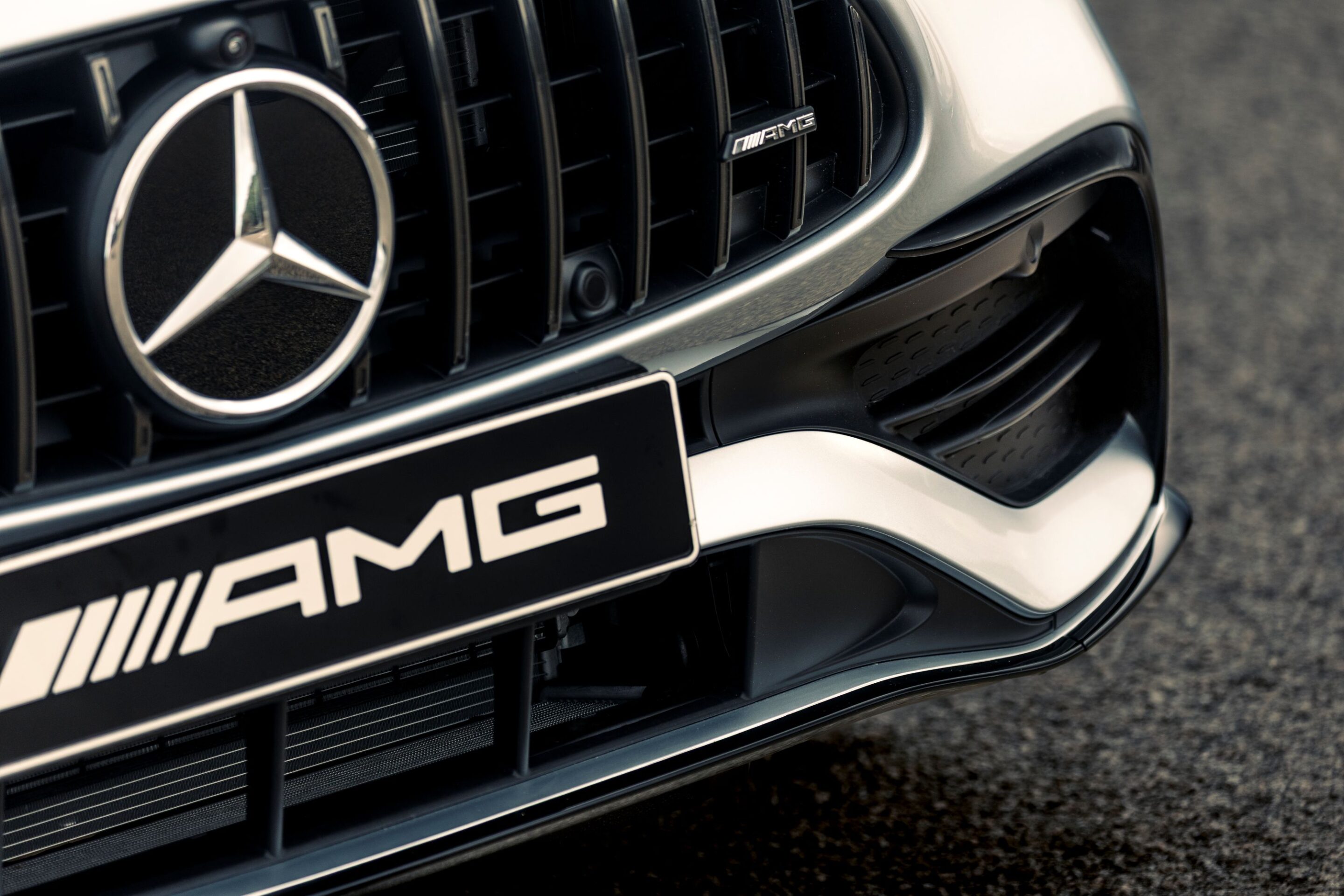
The most obvious changes come in the form of the AMG Styling Package, offered on the C 43 for the first time. This adds a range of high-gloss black aerodynamic elements, including a revised front apron with a prominent splitter and air inlet detailing, giving the car a more assertive stance. At the rear, a larger spoiler lip and diffuser design – borrowed from the more potent C 63 S E Performance – reinforce the connection to AMG’s higher-performance models.
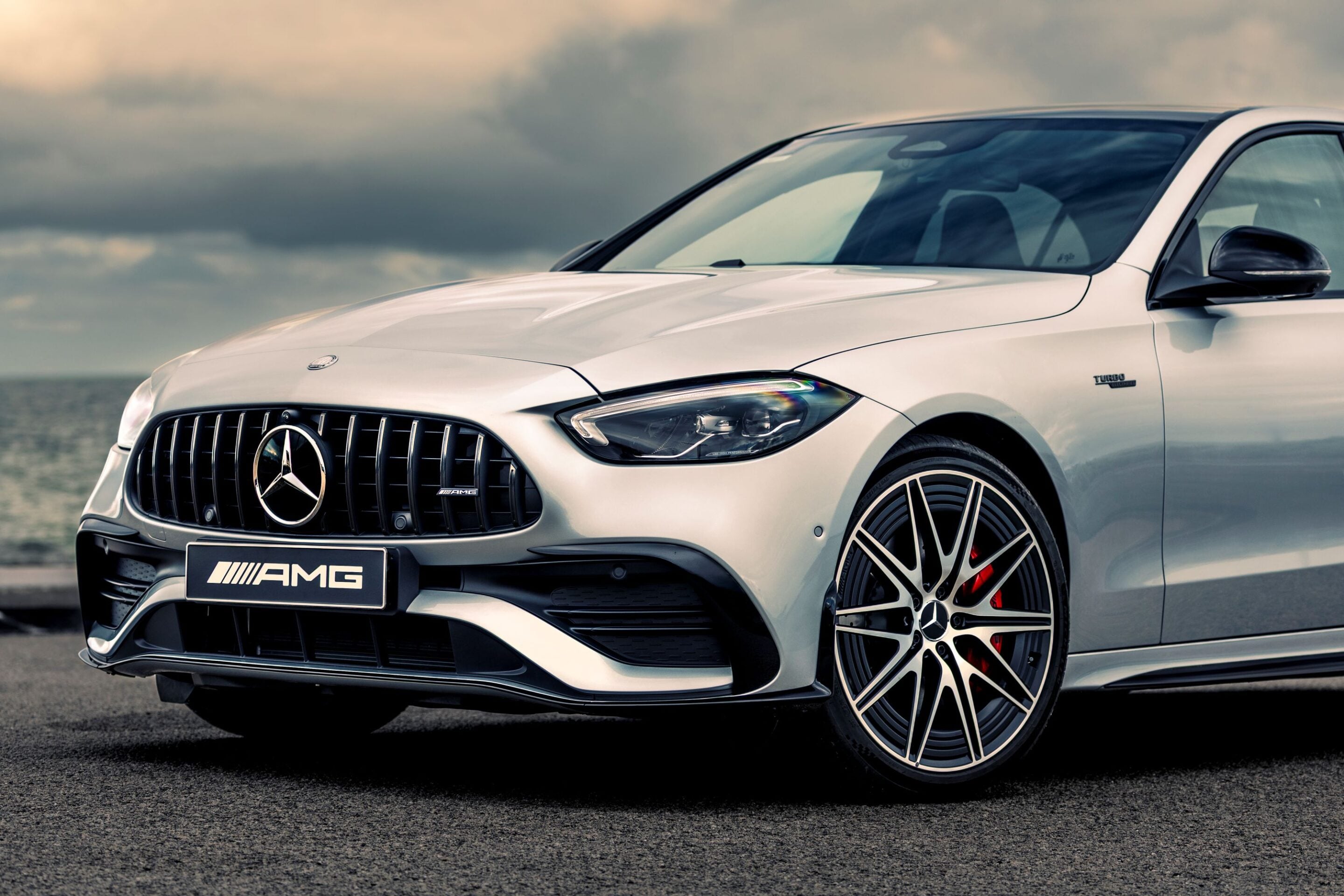
These updates are complemented by the inclusion of the Night Package and Night Package II, which extend the blacked-out theme across the exterior. Matt black 20-inch alloy wheels with red brake callipers complete the look.
Under the bonnet, the Edition R+ retains the AMG-developed 2.0-litre turbocharged four-cylinder engine with an electric exhaust gas turbocharger and 48-volt assistance. Outputs stand at 310kW and 500Nm, delivered through a nine-speed automatic transmission and all-wheel drive system.
Performance upgrades come via standard inclusion of the AMG Dynamic Plus Package, which adds features such as dynamic engine mounts and an additional ‘Race’ driving mode alongside existing Sport and Sport+ settings. The system is designed to improve responsiveness and driver engagement, particularly under more demanding conditions.
Further enhancing its track credentials is AMG Track Pace, which allows drivers to monitor and analyse detailed vehicle data during circuit driving.
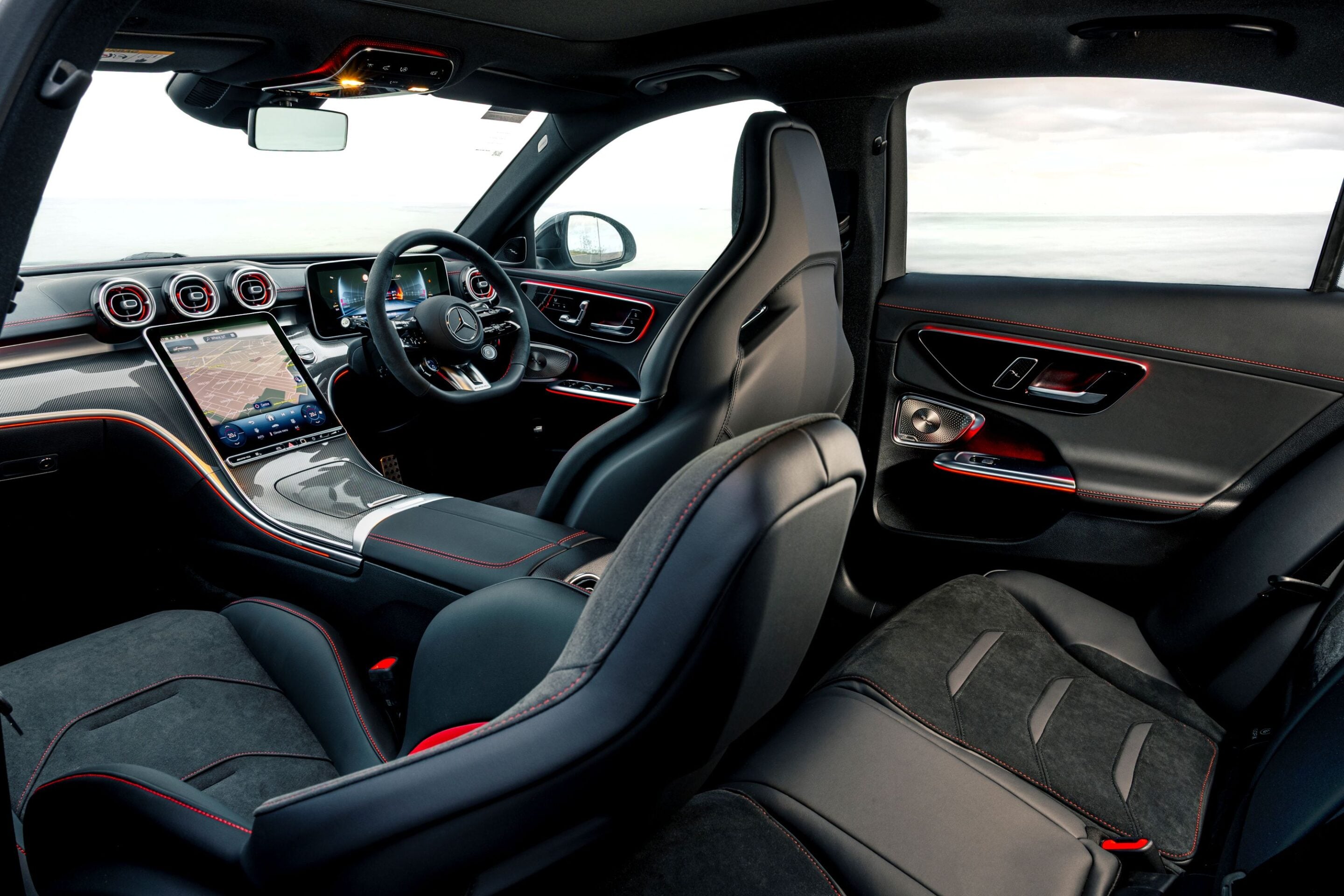
Inside, the Edition R+ builds on the C 43’s existing specification with features such as the latest MBUX infotainment system, a head-up display, Burmester surround sound system and panoramic sunroof. AMG Performance seats, trimmed in a mix of synthetic leather and microfibre, provide added lateral support.
Ride and handling are supported by adaptive suspension and rear-axle steering, both standard.
The Mercedes-AMG C 43 Edition R+ is available in limited numbers in Australia, priced from $121,200 before on-road costs.
With fuel prices still rising and global oil supply under threat, many drivers are looking for practical ways to reduce their reliance on petrol and keep running costs affordable. While it’s possible to change things like how often you drive, choosing a more fuel efficient vehicle can ultimately make more of a difference.
Not all of us can afford an expensive electric or hybrid SUV but there are many fuel-sipping vehicles priced comfortably underneath $30,000. Here’s the WhichCar by Wheels guide to the 10 cheapest new cars currently available (based on driveaway pricing in New South Wales):
Drivetrain: 1.25-litre four-cylinder petrol, 66kW/122Nm, five-speed manual or four-speed automatic
Combined fuel efficiency: 5.4-6.0L/100km
Warranty: Seven-year/unlimited km, up to eight years of roadside assistance
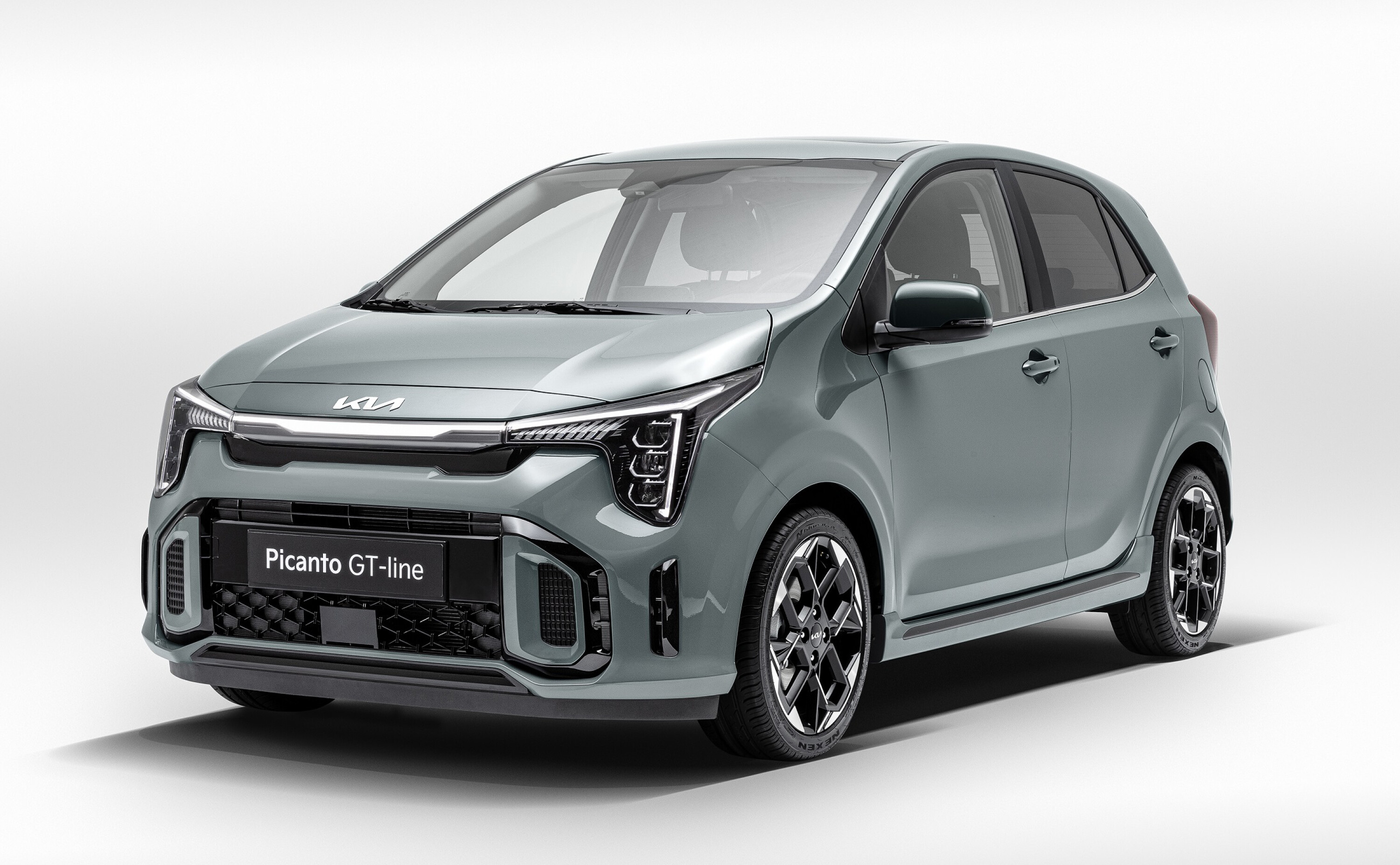
Although it’s more expensive than it once was, the Kia Picanto is currently the cheapest new car you can buy in Australia. Priced from just $22,140 driveaway for the five-speed manual – $23,240 driveaway for the four-speed automatic – the Picanto is excellent value for money. It’s not a stripped out package, either, with plenty of standard feature and a 1.2-litre engine that may not be considered ‘powerhouse’ but is relatively fuel efficient and grunty enough for city driving.

Drivetrain: 1.5-litre four-cylinder petrol, 81kW/142Nm, CVT automatic
Combined fuel efficiency: 6.0L/100km
Warranty: Seven-year/unlimited km (extendable to 10 years/250,000km with dealer servicing)
The MG 3 has been one of Australia’s biggest-selling small cars since it landed and the latest version is larger and much better equipped, even in entry-level Vibe spec. A 1.5-litre petrol engine with a CVT automatic transmission is standard, though if you’re looking to save more money at the pump, a hybrid version is available for closer to $30,000 driveaway in upper-spec Excite form.
Drivetrain: 1.5-litre four-cylinder petrol, 81kW/140Nm, CVT automatic
Combined fuel efficiency: 6.7L/100km
Warranty: Seven-year/unlimited km (extendable to 10 years/250,000km with dealer servicing)
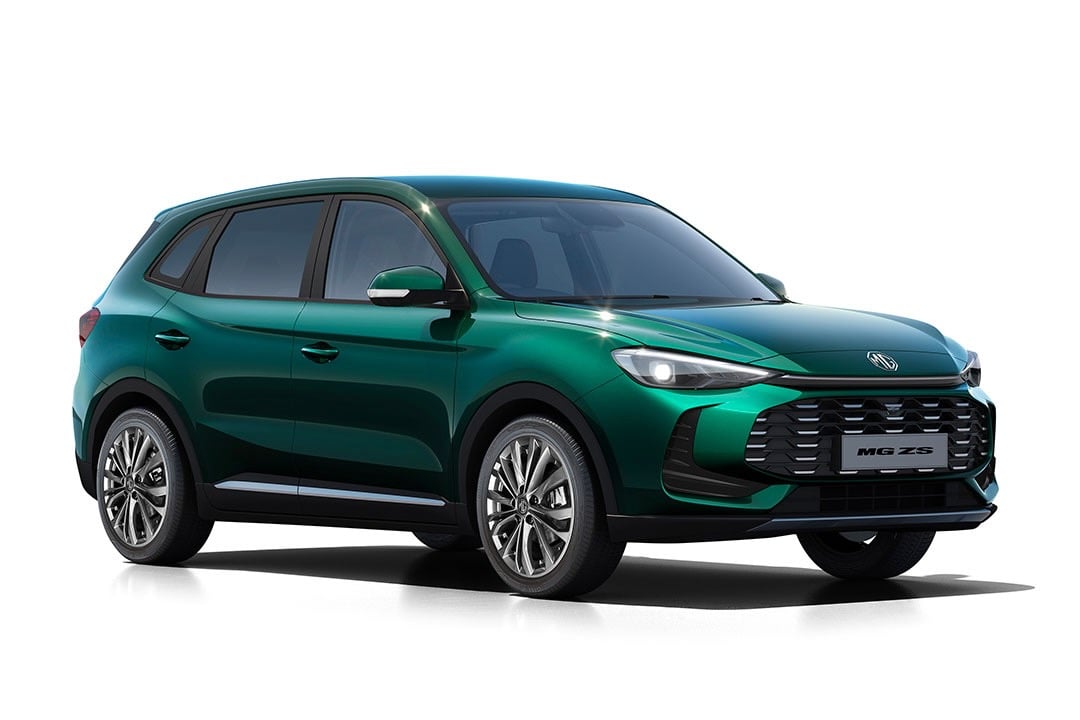
The MG ZS is a popular and attractive small SUV, and the new Vibe model is now cheaper than before, priced at just $22,990 driveway. That makes it Australia’s cheapest SUV, which is important for those wanting a cheap and practical new car. Power comes from the same 1.5-litre petrol engine as the MG3, meaning that the ZS is certainly no performance car, but it’s got enough go for efficient urban driving.
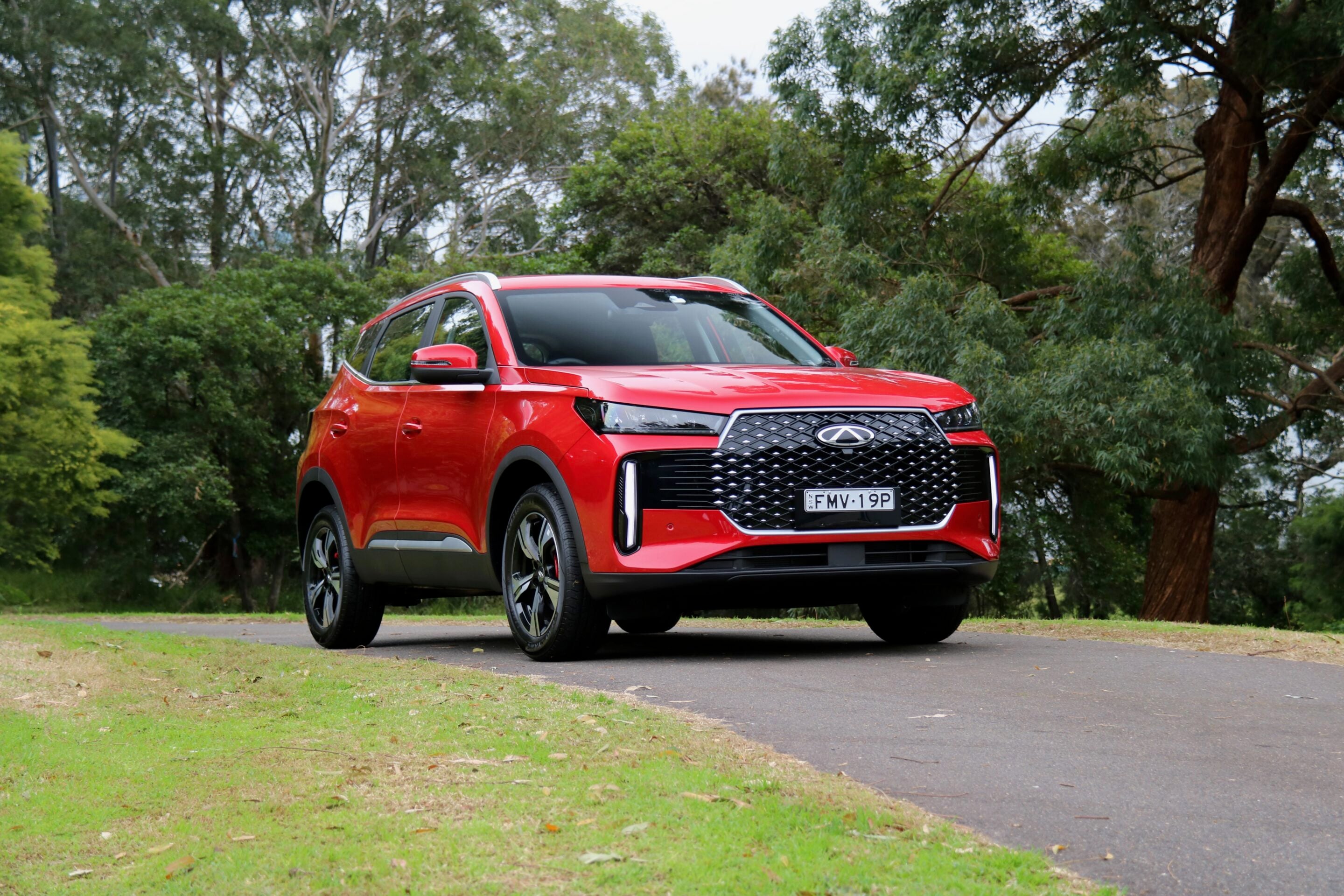
Drivetrain: 108kW/210Nm 1.5-litre turbocharged four-cylinder, CVT (Chery); 82kW/200Nm 1.2-litre turbocharged three-cylinder, six-speed auto (Mahindra)
Combined fuel economy: 7.4L/100km (Chery); 6.5L/100km (Mahindra)
Warranty: Seven-year/unlimited km (Chery); seven-year/150,000km (Mahindra)
Both the Chery Tiggo 4 Urban and Mahindra XUV 3XO AX5L are priced at just $23,990 driveaway and used to be the cheapest SUVs in Australia. Although that’s $1000 more expensive than the MG ZS Vibe, both the Tiggo 4 Urban and AX5L are better equipped and gruntier than the MG thanks to their turbocharged petrol engines. Both are covered by long warranties too, and present comfortable driving experiences from behind the wheel.
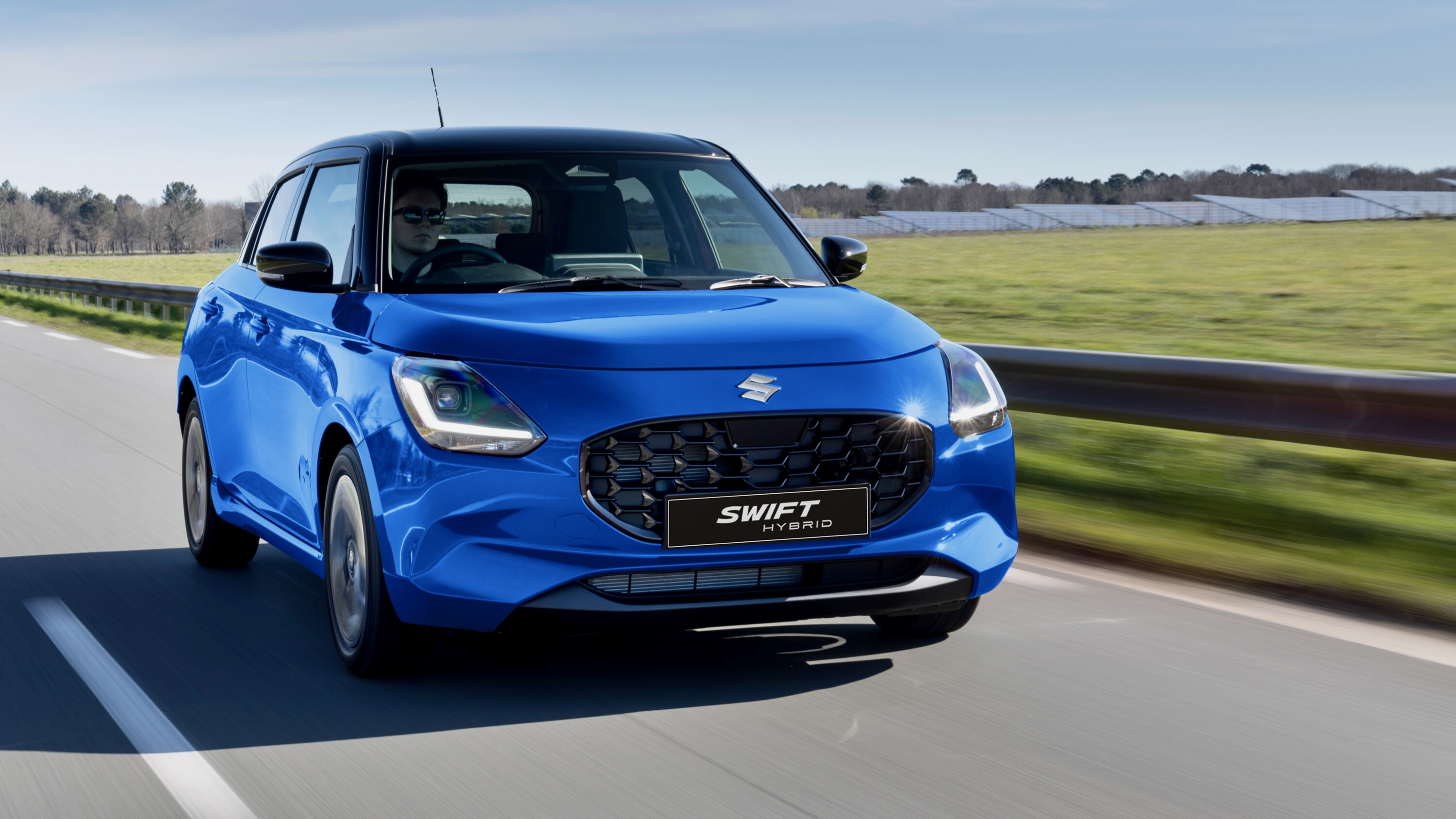
Drivetrain: 1.2-litre mild-hybrid three-cylinder, 61kW/112Nm, five-speed manual
Combined fuel economy: 3.8L/100km
Warranty: Five-year/unlimited km
The Suzuki Swift is an iconic little car and in its latest generation, it’s a good to drive as well as fuel efficient. Pricing starts from $25,490 driveaway and its 61kW 1.2-litre engine is hardly a firecracker, but it’s fine around town and with fuel economy rated from 3.8L/100km for the manual (CVT auto: 4.0L/100km), it’ll likely save you a lot in petrol. The Swift range is well equipped, with even the base model featuring a 9.0-inch touchscreen with inbuilt sat-nav, wireless Apple CarPlay and safety features like autonomous emergency braking and adaptive cruise control.
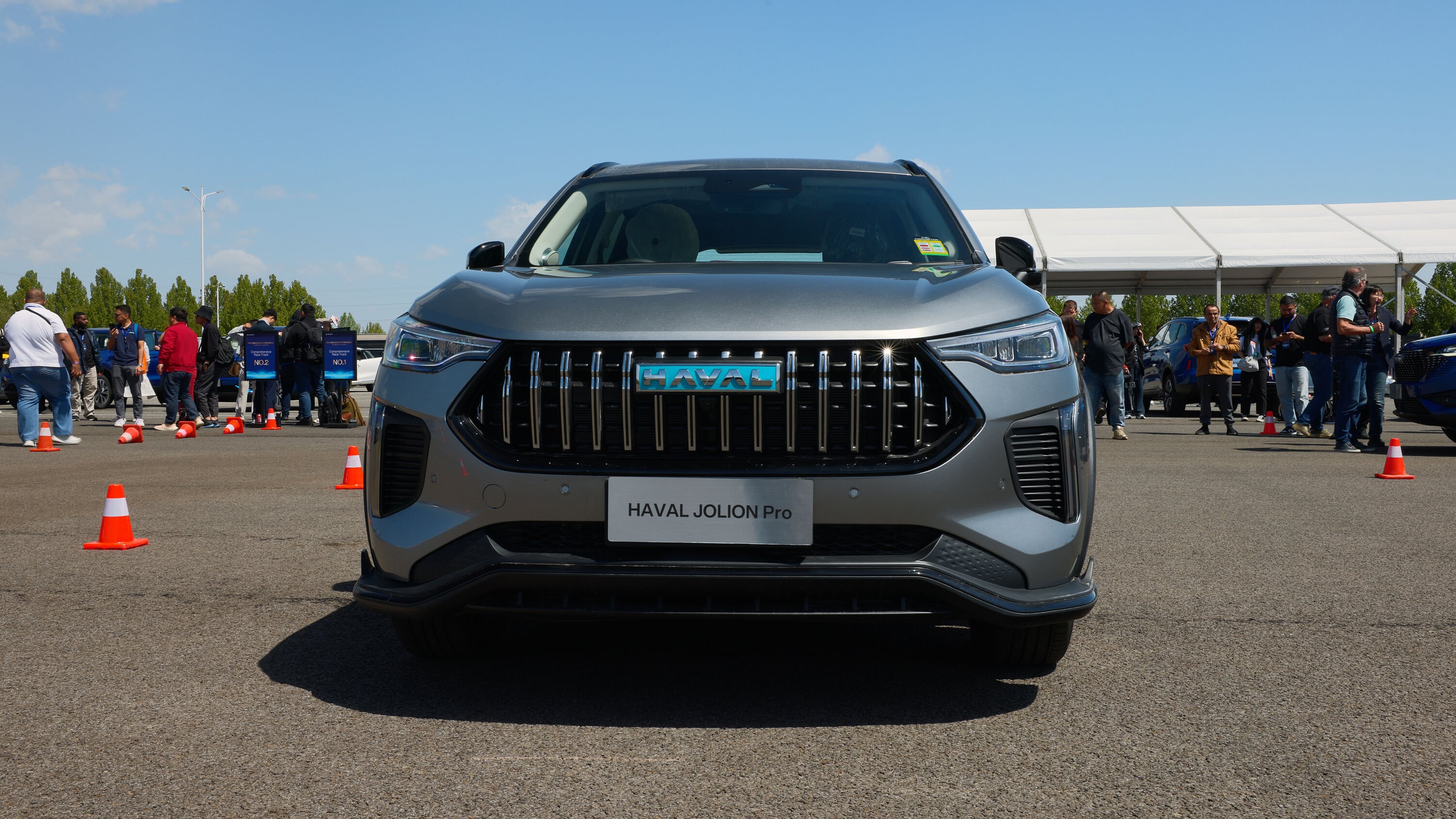
Drivetrain: 1.5-litre turbo four-cylinder, 105kW/210Nm, seven-speed dual-clutch
Combined fuel economy: 8.1L/100km
Warranty: Seven-year/unlimited km
The Jolion is a highly popular small SUV with 3593 sales under its belt in Australia to the end of February, and it’s easy to see why. It’s excellent value for money priced from just $26,990 driveaway, though there are deals to be had – for example, the base Lux is currently available for just $23,990 driveaway. Standard features are healthy across the range, and a 105kW 1.5-litre turbo-petrol engine is standard across the range – plus, a hybrid is also available.
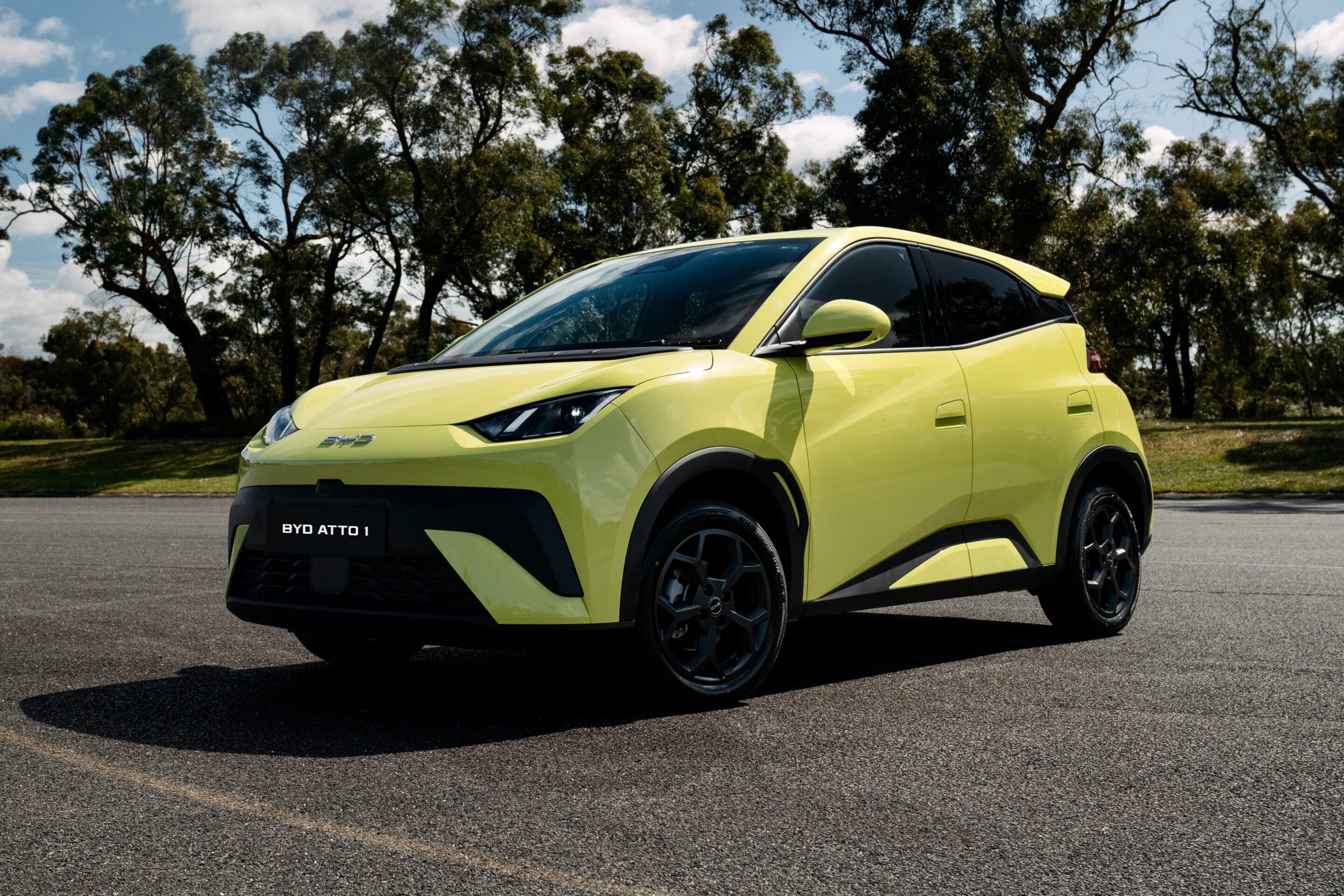
Drivetrain: Single-motor electric, 65kW/175Nm, single-speed
Range: 220km
Warranty: Six-year/150,000km (car), eight-year/160,000km (battery)
Perhaps surprisingly, it is possible to buy a fully electric vehicle for comfortably under $30,000 including on-road costs. BYD launched the Atto 1 electric light hatchback in late 2025 and it’s available in two specifications with the entry-level Essential using a small 30kWh battery for a reasonable 220km of range. The upper-spec Premium uses a larger 43.2kWh batter for 310km of range, though that’s priced at around $32,000 driveaway.
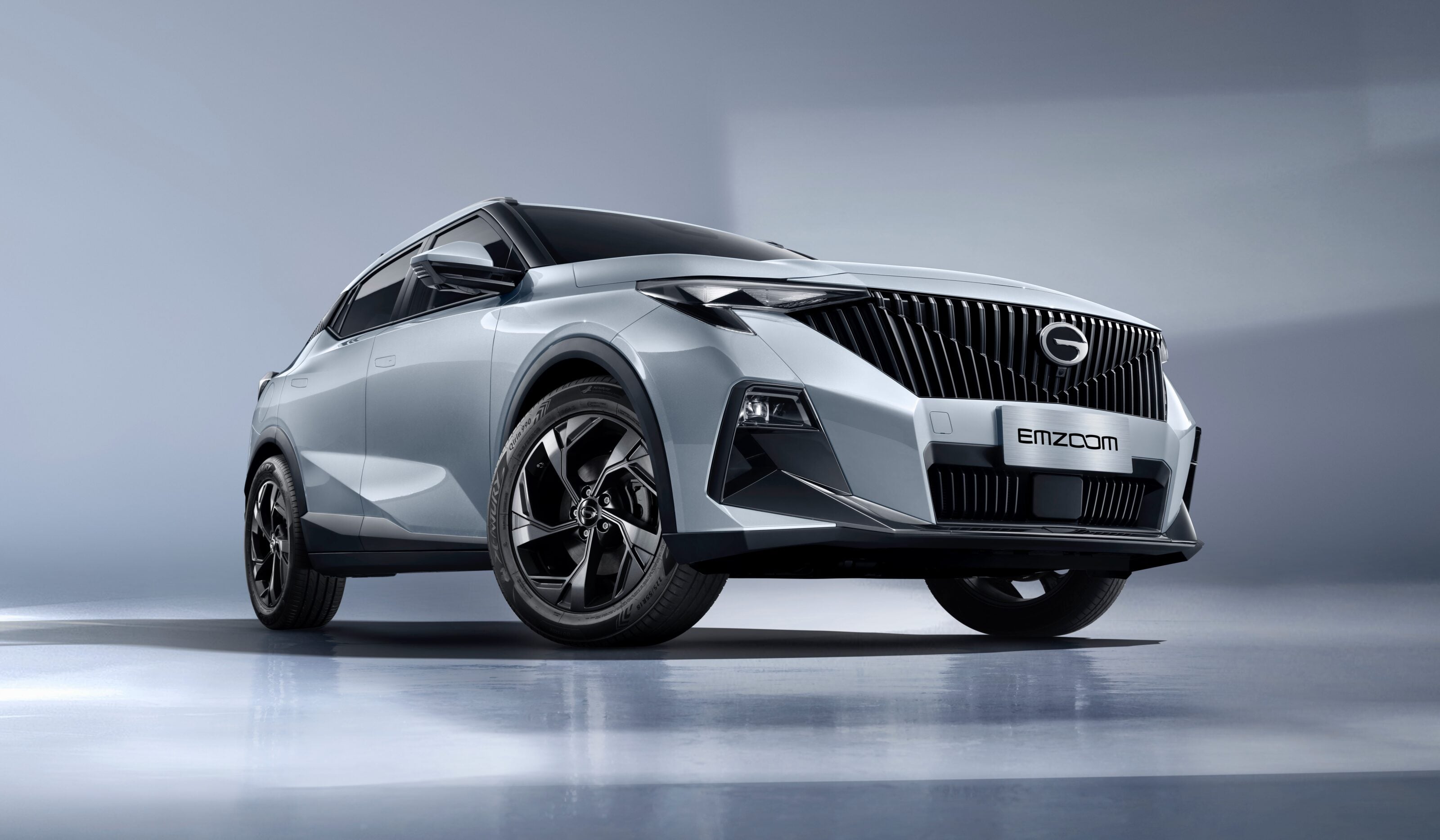
Drivetrain: 1.5-litre turbocharged four-cylinder, 125kW/270Nm, seven-speed dual-clutch
Combined fuel economy: 6.1L/100km
Warranty: Seven-year/unlimited km
GAC is a new brand to Australian shores – the Emzoom is its petrol-powered small SUV and its most affordable product locally. It features a 1.5-litre turbo-petrol engine making a gutsy – for this list, anyway – 125kW of power and 270Nm of torque, which is mated to a seven-speed dual-clutch transmission. The Emzoom is funkily styled and well equipped, and is one of Australia’s cheapest small SUVs.
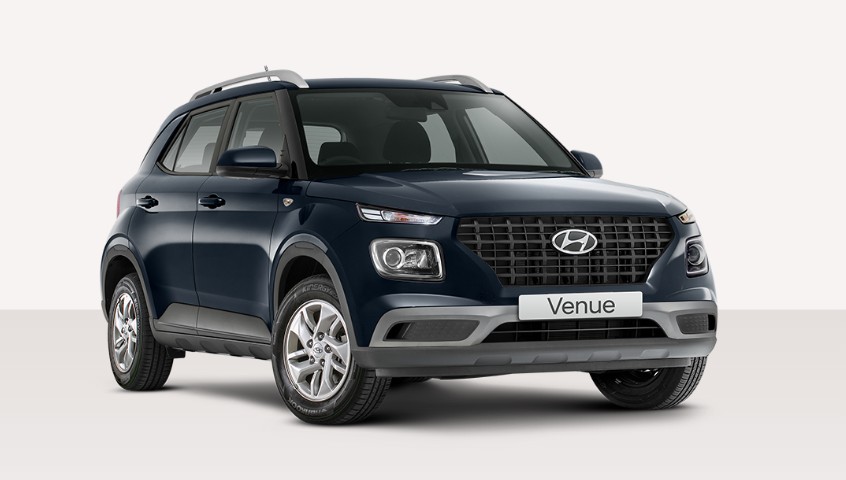
Drivetrain: 1.6-litre four-cylinder, 90kW/151Nm, six-speed manual or automatic
Combined fuel economy: 7.0-7.2L/100km
Warranty: Five-year/unlimited km (extendable to seven years with dealer servicing)
The Hyundai Venue is the cheapest product that Hyundai sells locally, but it’s also a good small SUV option thanks to its spacious feeling inside, solid driving experience and – rarely – the fact it still offers the option of a six-speed manual. A 1.6-litre petrol engine is standard across the range, which is a little thirstier than competitors, but it makes a reasonable 90kW of power.
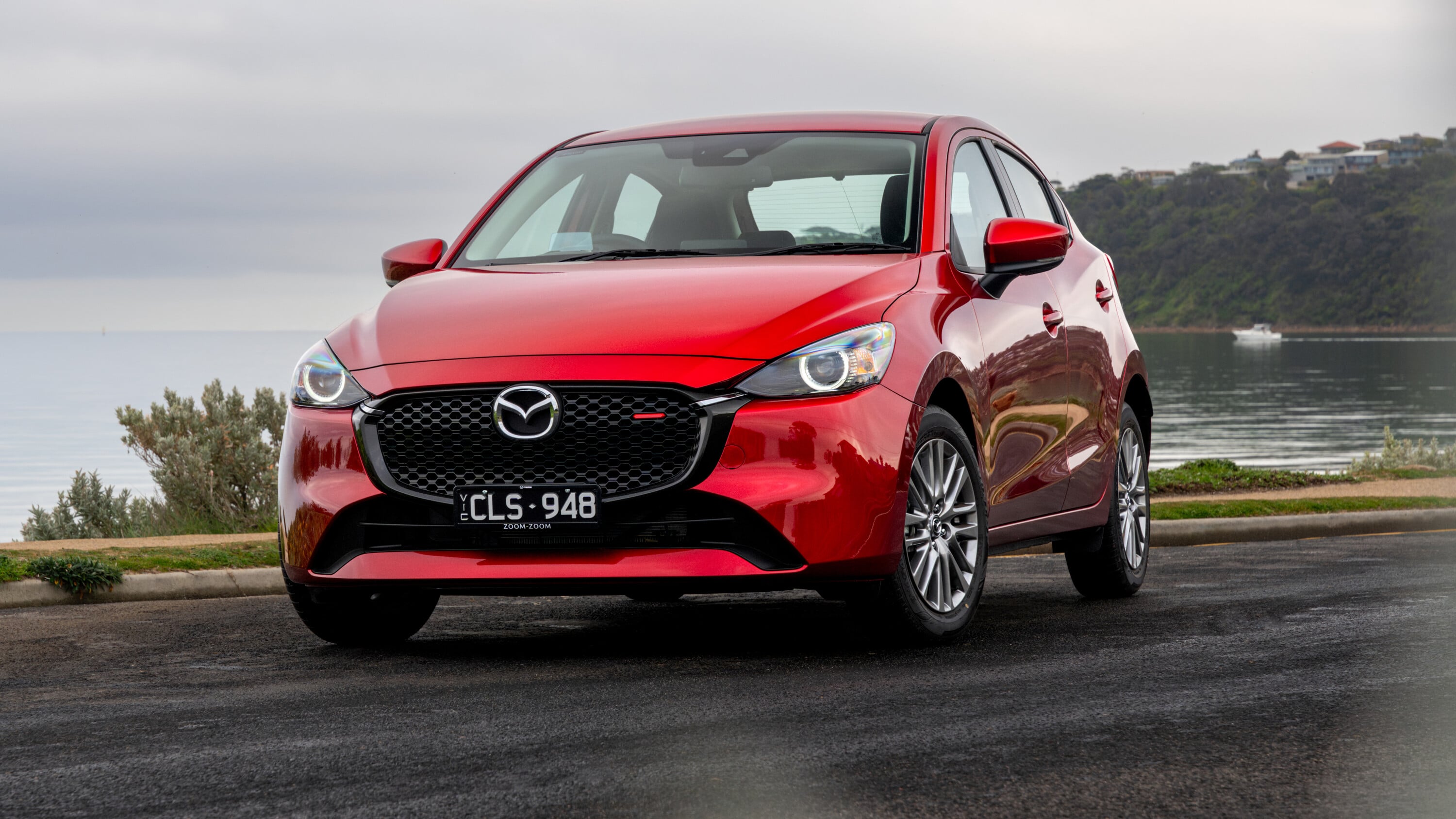
Drivetrain: 1.5-litre four-cylinder, 81kW/142Nm, six-speed automatic
Combined fuel economy: 5.0L/100km
Warranty: Five-year/unlimited km
The final entrant in the top 10 cheapest cars in Australia is the venerable Mazda2, which is currently priced from $28,990 driveaway. An 81kW/142Nm 1.5-litre petrol engine with a six-speed automatic transmission is standard across the range, as is a long list of standard features like climate control, an 8.0-inch touchscreen with wireless smartphone mirroring and even adaptive cruise control. The 2 is also fun to drive and fuel efficient too, rated at just 5.0L/100km.
Not so long ago, the dual-cab, 4WD segment was a diesel-only affair, and with the conflict in the Middle East sending the cost of diesel soaring, there’s interest in the most efficient diesel engines on the market and – more than ever before – petrol alternatives.
To compare, we’ve chosen three that make their mark in the dual-cab segment for very different reasons – the Toyota HiLux, the BYD Shark 6 and the Kia Tasman. In the case of the HiLux, it’s the long-standing segment favourite, vying for top billing with the Ford Ranger, now with 48-volt mild-hybrid technology.
The BYD Shark 6 is, according to BYD, the way of the future, with a small petrol engine matched with plug-in hybrid technology. Then there’s the Tasman, Kia’s much-hyped new kid on the block, which takes a more traditional powertrain approach.
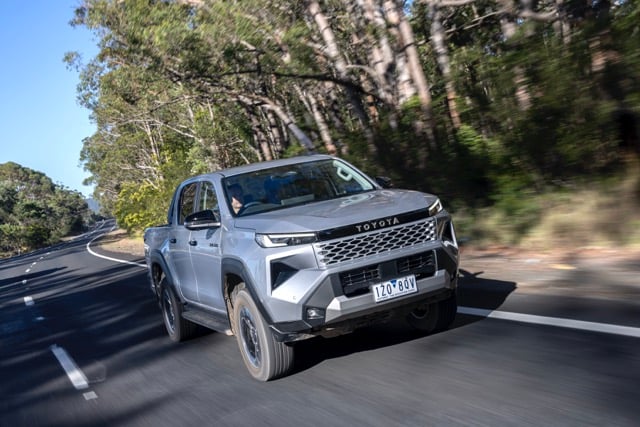
Price: $71,950 (drive away)
Drivetrain: 2.8L turbo-diesel, four-cylinder with 48V mild hybrid
Transmission: Six-speed automatic
Power: 150kW
Torque: 429Nm
Tow rating: 3500kg (braked)
Payload: 940kg
Claimed fuel use: 7.4L/100km
With a dealer and service network second to none, and off-road heritage that touches every corner of the continent, Toyota has recently updated HiLux to continue to go head to head with the best in segment. Cabin space can’t match segment standard setters, but revised styling, robust build quality, and exceptional off-road performance ensure HiLux remains in a favourite – especially with those intent on exploring the outer reaches of the Australian outback. New model opts for 48V mild-hybrid tech, which adds complexity, but cuts low-speed fuel thirst, handy around town. Fuel use will stay in the 8.5L/100km to 9.5L/100km range in the real world no matter how you work the new HiLux.
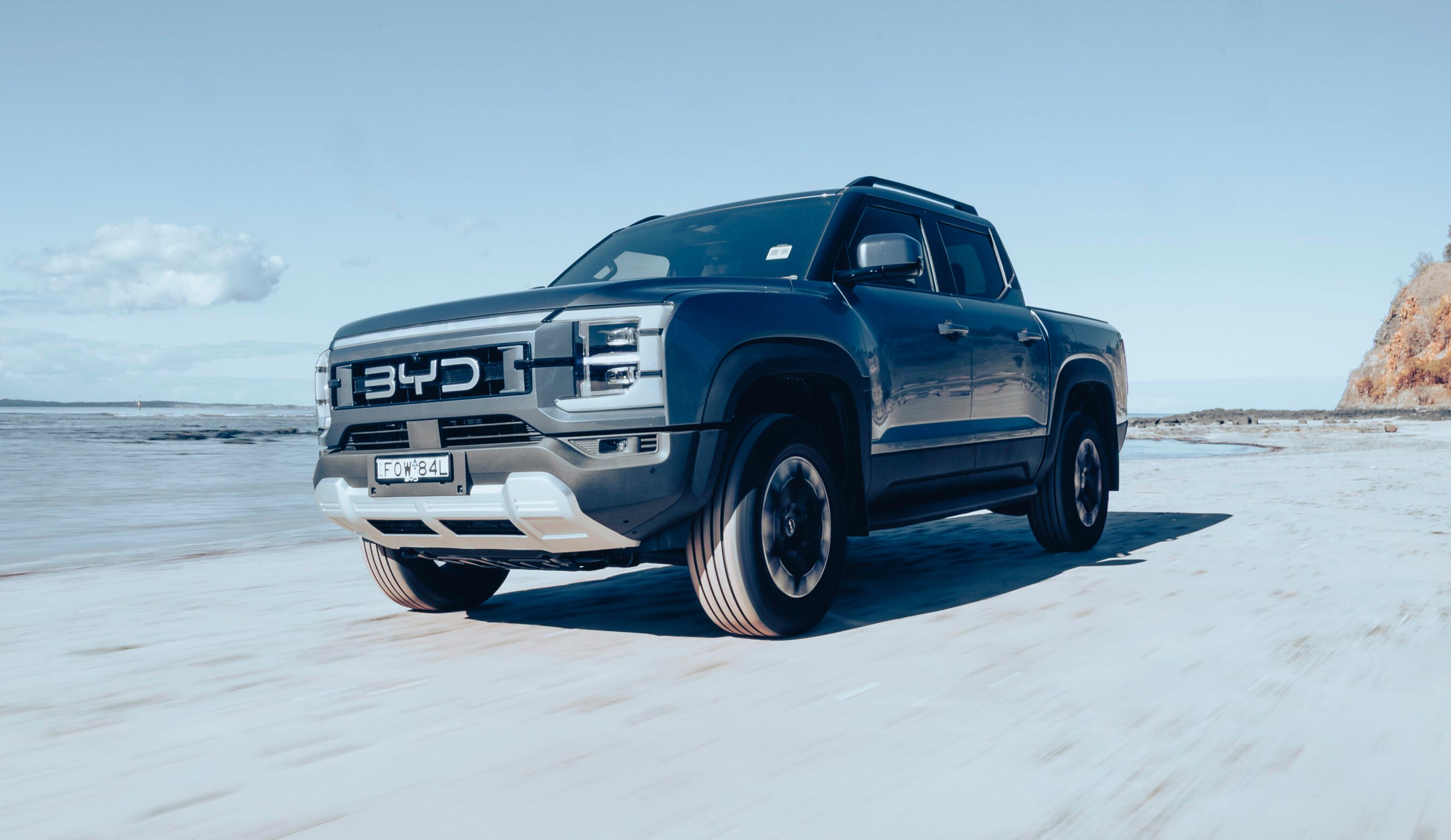
Price: $57,900 (drive away)
Drivetrain: 1.5L turbo-petrol, four-cylinder, two electric motors, 29.58kWh LFP battery
Transmission: Single-speed, direct drive reduction gear
Power: 321kW
Torque: 650Nm
Tow rating: 2500kg (braked)
Payload: 790kg
Claimed fuel use: 100km range (electric), 2L/100km (battery 25%-100%)
BYD’s Shark 6 presents the newest way to tackle the age-old dual-cab debate. With a claimed 100km pure electric range (80-85km real world), and a smaller 1.5L turbocharged petrol four-cylinder and two electric motors, the Shark presents the opportunity for most of us to do our weekly commuting without using any fuel at all. While fuel use will climb if you’re towing long distances or working in low-range off-road, the system does its best work during general driving, where you’ll average between 6.8L/100km and 8.8L/100km, with charging whenever possible the best course of action. If you drive the same distance as the average Aussie, and charge at home though, you’ll use no petrol at all for your weekly work.
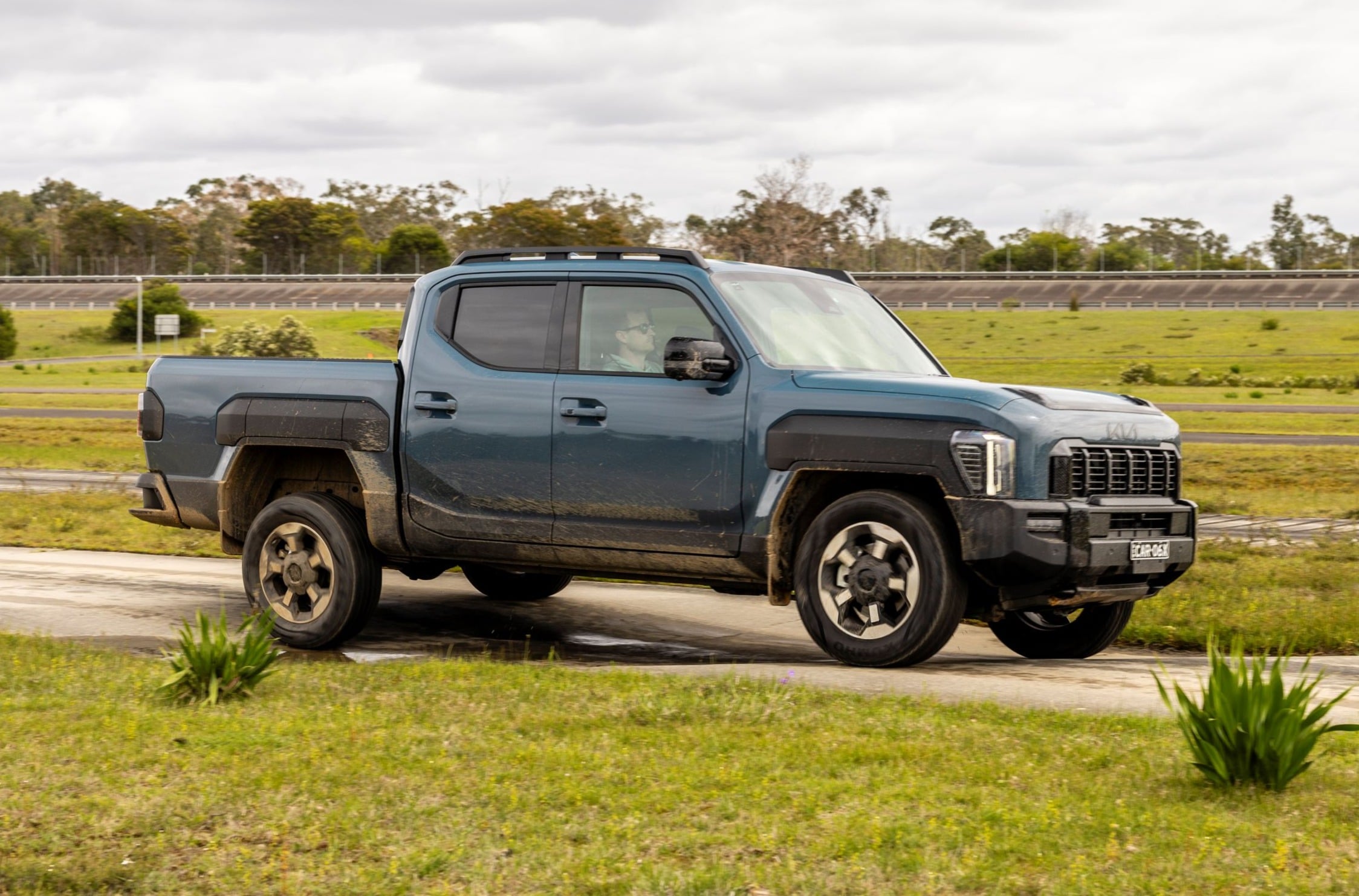
Price: $70,990 (drive sway)
Drivetrain: 2.2L turbo-diesel, four-cylinder
Transmission: Eight-speed automatic
Power: 154kW
Torque: 440Nm
Tow rating: 3500kg (braked)
Payload: 919kg
Claimed fuel use: 7.8L/100km
Almost as frugal as the HiLux, without any of the 48V hybrid complexity, the Tasman positions itself as the most up to date way of tackling the segment in the traditional way – that is a turbocharged diesel engine. The 3500kg braked towing capacity matches the segment best, but left-field styling polarises. Tasman’s cabin is excellent, with both flexibility and practicality, ensuring it feels much more SUV-like than truck-like to drive. Driver comfort, especially on longer road trips, is noteworthy. Second-row space and comfort is another highlight, and in the real world, driving normally, factor in fuel consumption between 8.8L/100km and 9.8L/100km.
One fault of modern cars is that some don’t offer a level of connection with the driver that many of their predecessors used to and as such, finding non-performance cars that are satisfying for keener drivers is difficult. That’s especially true with the influx of SUV models, which can exacerbate the problem thanks to their higher centres of gravity and carrying more weight.
Thankfully for some, there are some small SUV options that drive as nimbly and responsively as cars. Here’s the WhichCar by Wheels guide to five of the best:
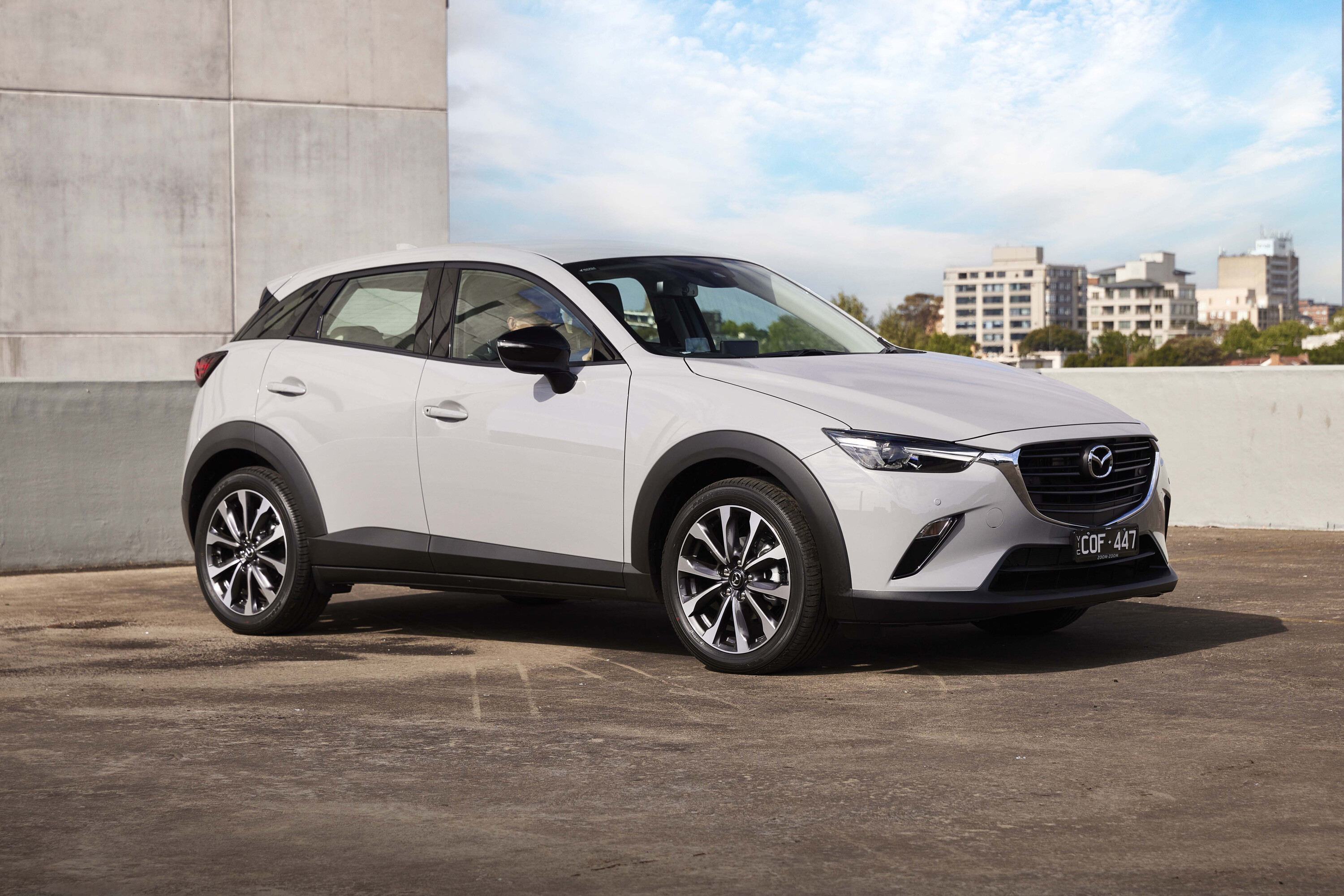
Price: From $30,670 plus on-road costs
Drivetrains: 110kW 2.0-litre petrol, six-speed auto, FWD
With the dynamic Ford Puma no longer sold in Australia, the Mazda CX-3 has taken over as the most car-like small SUV to drive. Of course, it’s not the newest kid on the block – in fact, it’s over a decade old, but that means that unlike a lot of its competition, its steering actually offers feel and its chassis is sharp. Its ride quality is also sharp – it could be a bit softer in urban driving – but it’s quite fun to drive, like the Mazda2 on which it’s based. The CX-3 doesn’t score well for practicality, but if you’re after a non-performance small SUV that still rewards the driver, it should be at the top of your list.
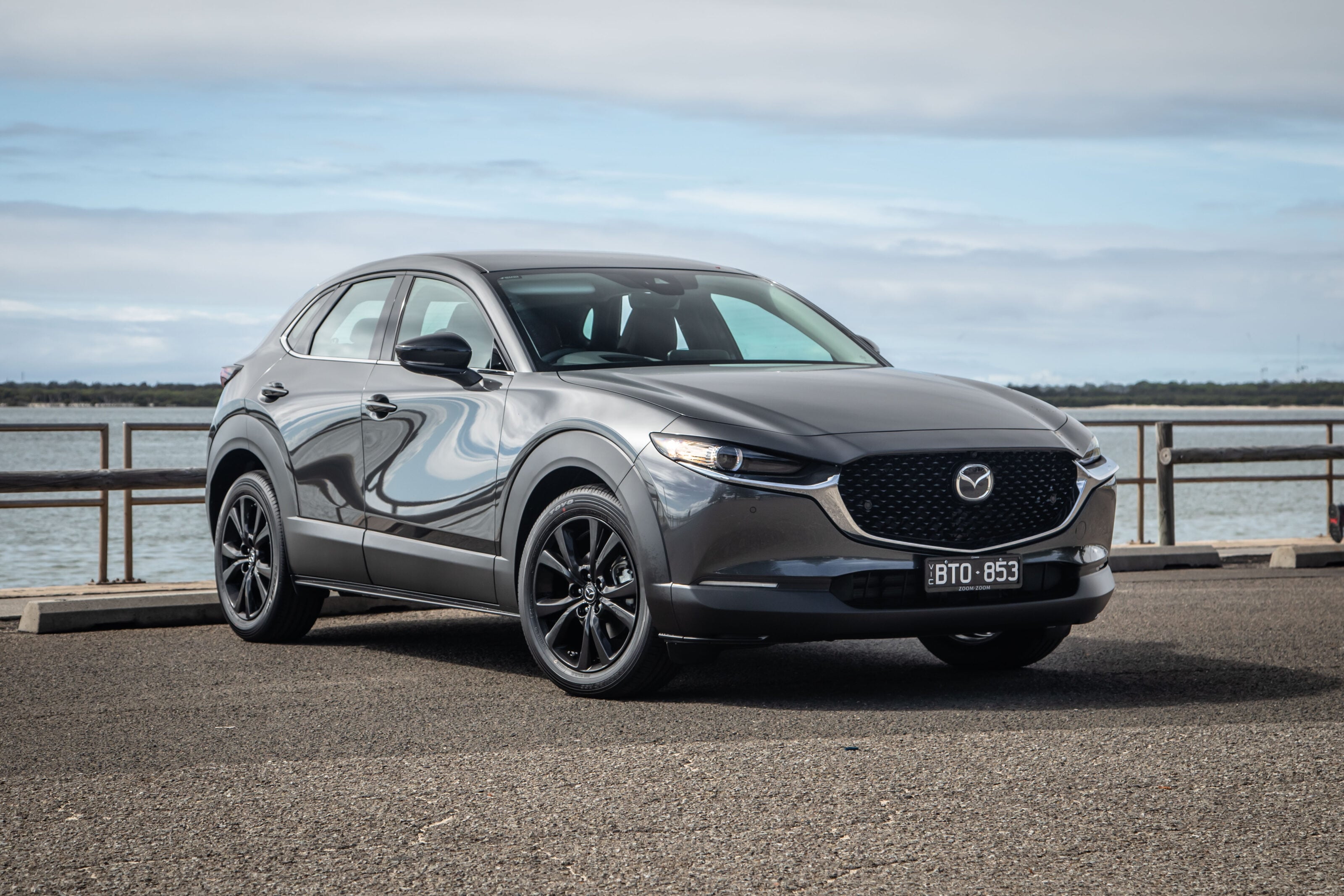
Price: From $34,360 plus on-road costs
Drivetrains: 114kW 2.0-litre or 139kW 2.5-litre petrols, six-speed auto, 2WD (2.0L) or AWD (optional on 2.5L)
Take what we said above about the CX-3 and also apply it to the slightly larger CX-30, though add a touch of extra comfort at the slight expense of driving fun. Like the Mazda3 with which it shares so much, the CX-30 is great to drive with a communicative chassis, keen steering and revvy petrol engine. In addition, the CX-30’s quality is excellent with luxury-like materials throughout the cabin and even in the base model Pure, a long list of standard features.
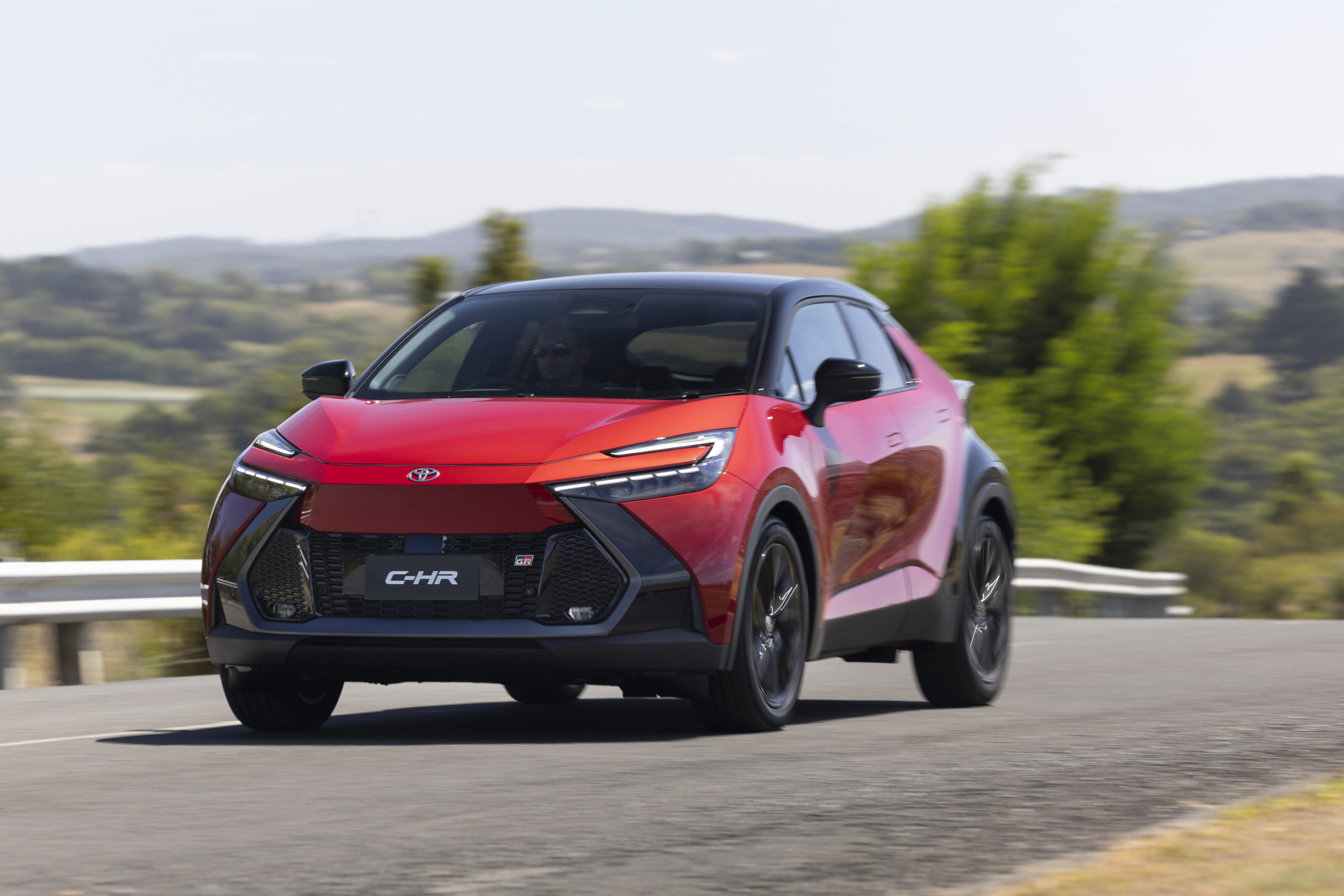
Price: From $46,940 plus on-road costs
Drivetrains: 103kW 1.8-litre hybrid or 146kW 2.0-litre hybrid, eCVT, FWD (1.8L) or AWD (2.0L)
Believe it or not, the previous C-HR was actually one of the first Toyota products that was developed with a newfound sense of dynamism for the Toyota brand. That was largely thanks to the then-new ‘TNGA’ platform, which the C-HR was the first SUV to use. It meant that even a base model Toyota small SUV was far more dynamic than you’d ever have expected. The second-generation C-HR is even better thanks to more power to compliment the excellent chassis and yet, it’s also very comfortable, as you’d expect from a Toyota.

Price: From $28,180 plus on-road costs
Drivetrains: 88kW 1.0-litre turbo mild-hybrid, seven-speed dual-clutch, FWD
The Stonic is heavily based on the last-generation Rio hatchback, which was a tidy car to punt around, and that shows in the driving experience. Of course, the Stonic is slightly higher off the ground but it’s still a comfortable and fun car to drive. Kia’s local tuning operation has achieved impressive results – all of its products drive quite well, and the Stonic is no different as it’s nimble and fun. The new mild-hybrid drivetrain also makes more grunt than before, so it now has more performance to better match its fine chassis.
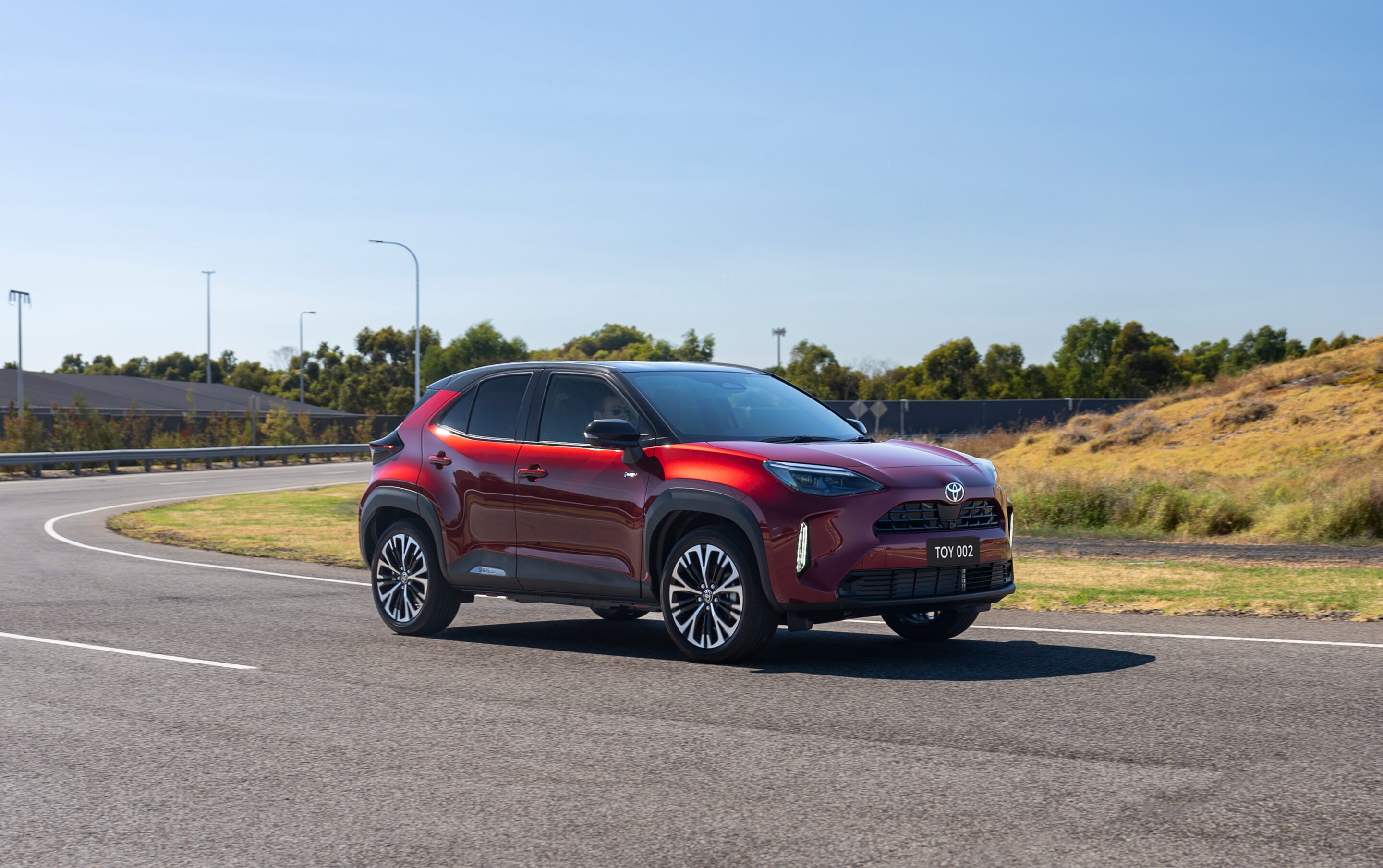
Price: From $31,790 plus on-road costs
Drivetrains: 85kW 1.5-litre hybrid, eCVT, FWD or AWD
Like its C-HR sibling above, the Toyota Yaris Cross is a small SUV that drives like a car but it’s actually not overly sporty. Instead, like the Yaris hatchback, it’s quite comfortable and handles bad roads with ease. That’s not to say that it can’t be fun to drive – it can – but performance is not its purpose, even the sporty-looking GR Sport model. Surprisingly, all-wheel drive is available and it adds a more sophisticated, independent multi-link layout for even better ride quality. The Yaris Cross’ 85kW hybrid drivetrain is hardly going to set the world alight for performance, but its sub-4.0L/100km combined fuel consumption is impressively low.
In 2025, 189,021 large SUVs were sold in Australia from a variety of brands at a variety of price points, proving we are big fans of the segment. Nevertheless, cost-of-living concerns mean that while we love a bigger car, fuel efficiency is a major consideration at new-car purchase time.
Surprisingly despite their dimensions and ability to carry many passengers, some large SUVs can actually be quite thrifty with fuel. Excluding electric and plug-in hybrid models, here’s the WhichCar by Wheels guide to the 10 most fuel-efficient large SUVs on the new car market:
Perhaps unsurprisingly for a company using Toyota’s hybrid systems, the most fuel efficient non-plug-in large SUV in Australia is the Lexus RX350h. Rated at just 5.0L/100km on the combined cycle, the RX350h uses a 184kW 2.5-litre four-cylinder hybrid drivetrain with an eCVT transmission, sending power to solely the front wheels.
In a likely surprise to some that the second-most efficient large SUV on sale in Australia currently is a Peugeot. Specifically, it’s the third-generation 5008, which uses a hybridised 1.2-litre turbocharged three-cylinder engine mated to a six-speed dual-clutch transmission for 107kW total outputs and a combined fuel consumption rating of just 5.1L/100km. Overseas, both plug-in hybrid and fully electric drivetrains are also available in the 5008, but only the hybrid is sold locally.
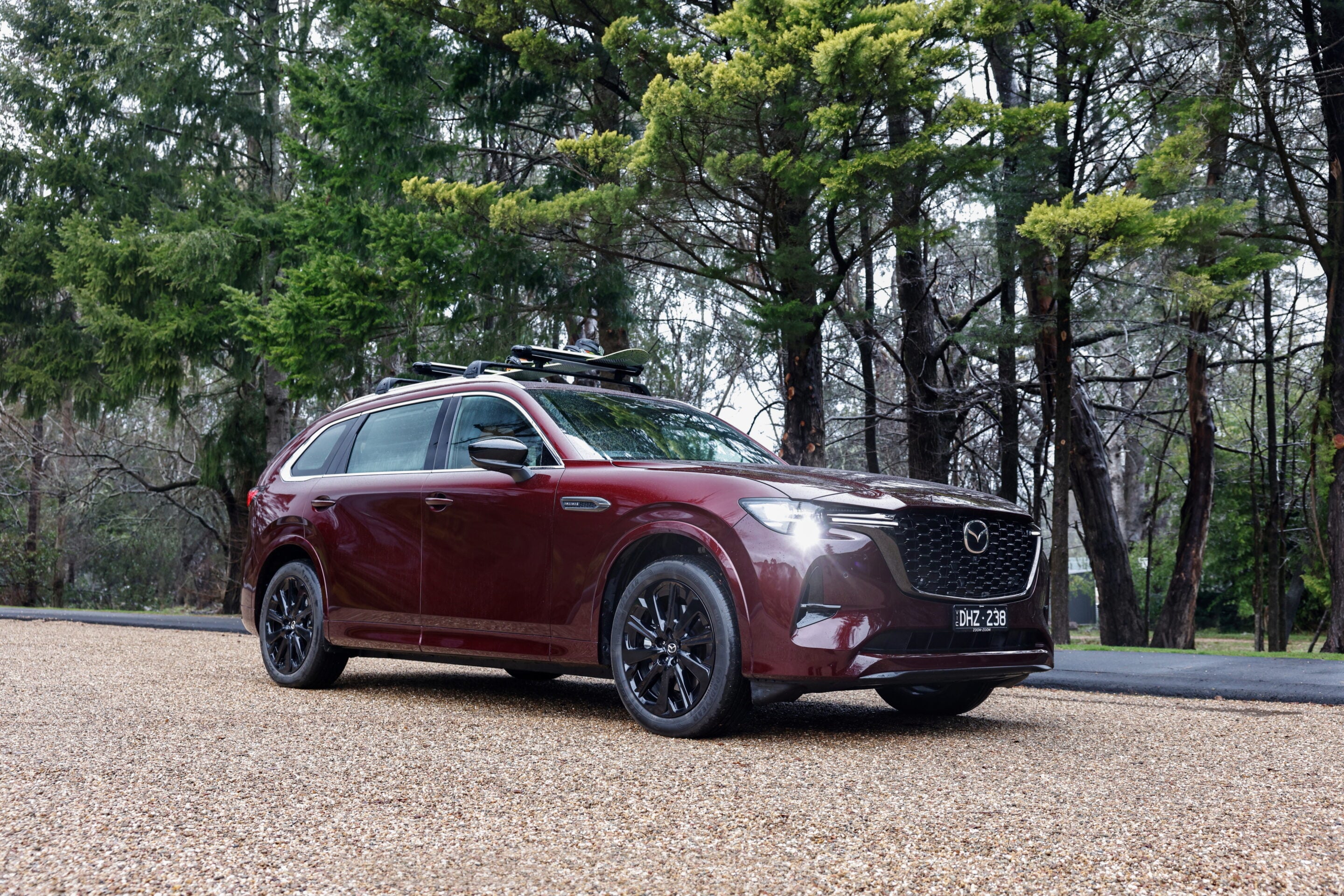
While Mazda sells a plug-in hybrid version of the CX-80 that’s capable of 65km of electric driving (WLTP), we’re ignoring plug-in hybrids for this list and in that sense, the diesel variant is the most efficient CX-80. Returning a claimed 5.2L/100km despite using a big 187kW/550Nm 3.3-litre six-cylinder turbo-diesel engine and coming it at a sizeable 4990mm in length, the CX-80 is uses mild-hybrid tech to shut off the engine when not required and earn impressive fuel consumption as a result.
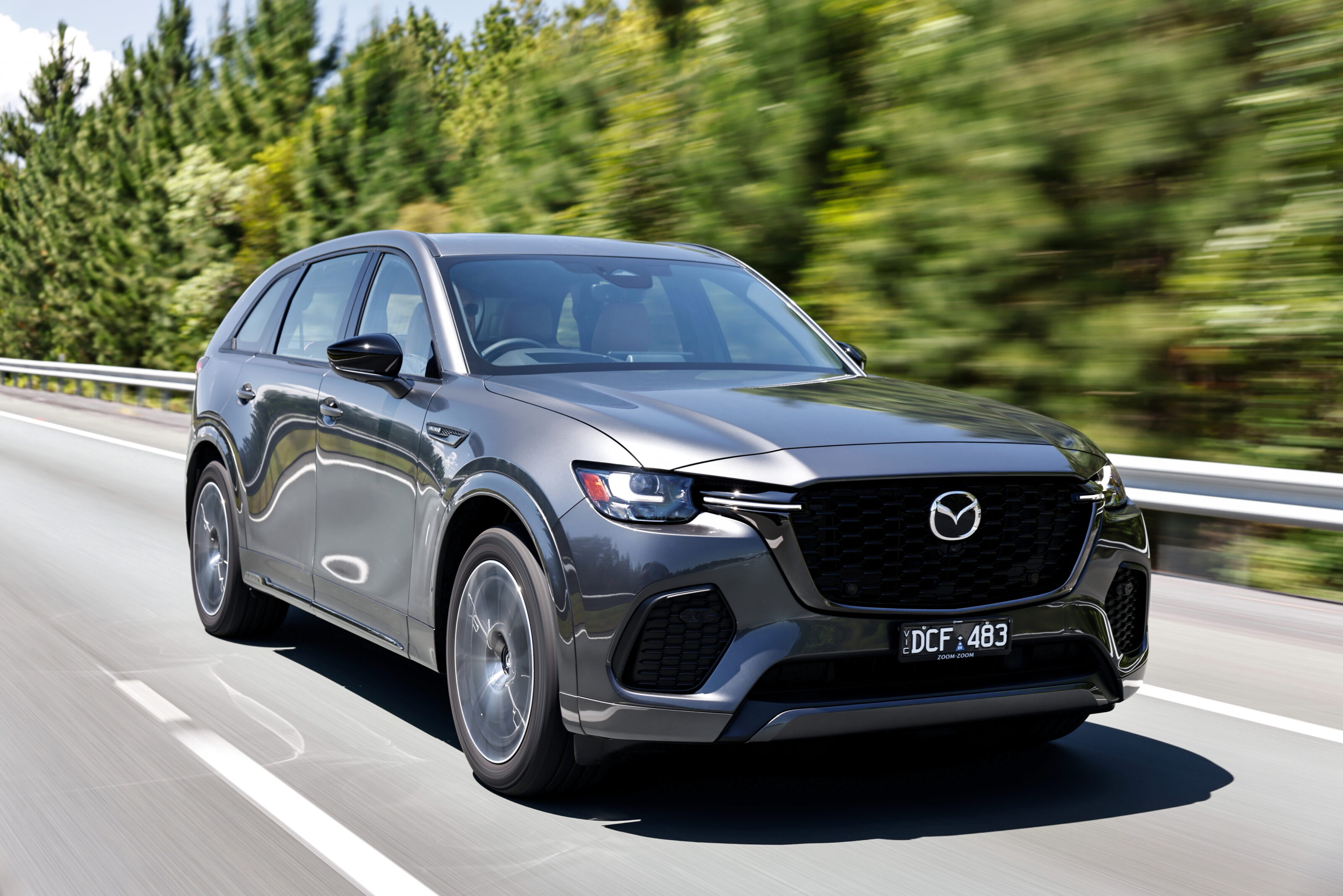
Mazda’s biggest SUVs, the CX-70 and CX-90, use the same 3.3-litre turbo-diesel as the slightly smaller CX-80 for a combined rating of 5.4L/100km, which is quite impressive for such large vehicles. Like the CX-80, their powertrains use mild-hybrid tech to help with performance and shut off the engine when not required, such as when coasting or braking. As a result, they’re some of the most fuel efficient large SUVs on the market.
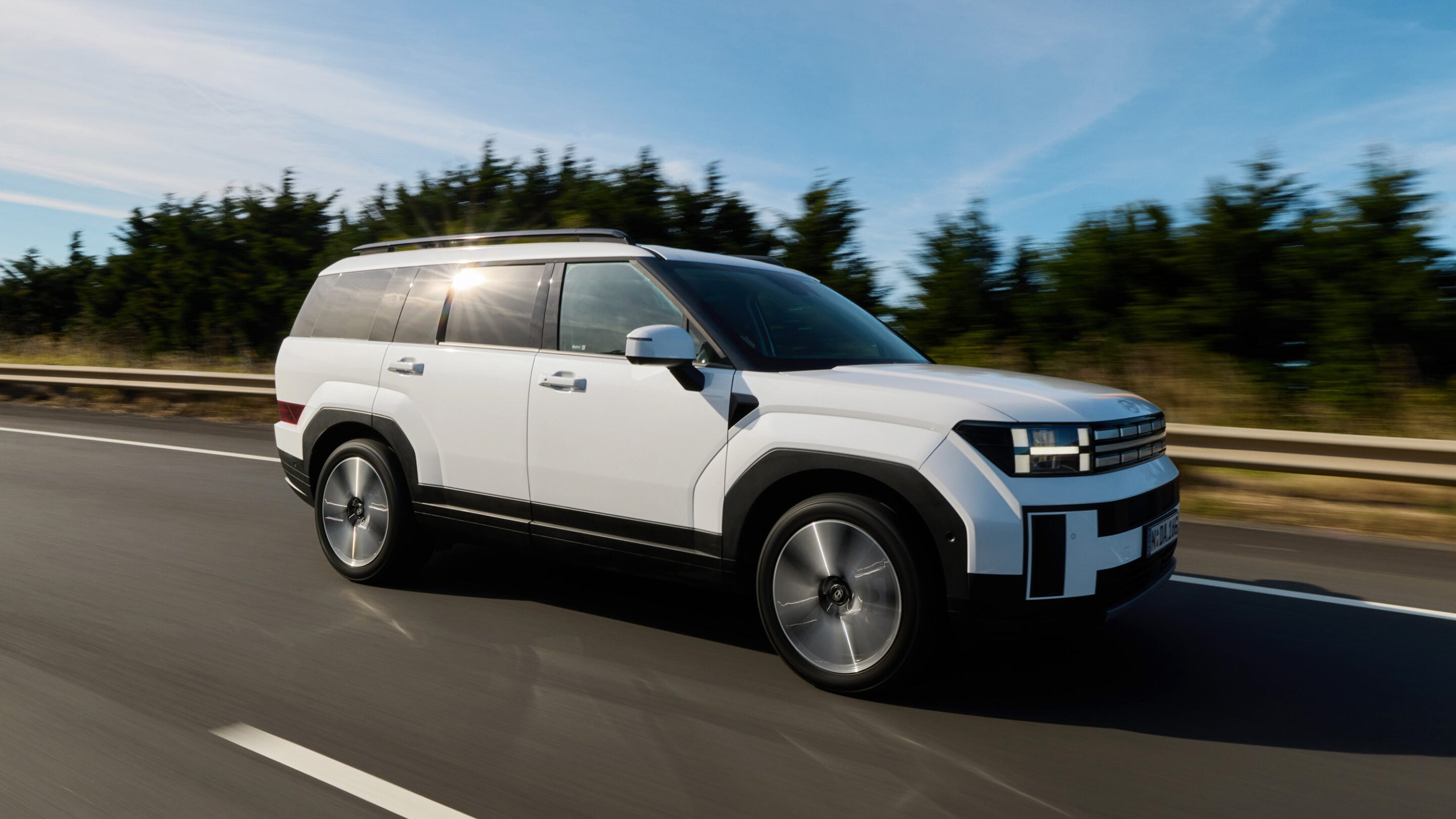
It’s clear that hybrids are also a great way to save fuel, a point proven by both the Hyundai Santa Fe and Toyota Kluger as both are rated at just 5.6L/100km on the combined cycle. Hyundai uses a 1.6-litre turbocharged engine mated to a six-speed automatic to achieve that number, while Toyota uses a naturally aspirated 2.5-litre engine instead. The Kluger is solely available in all-wheel drive form, while the Santa Fe is also available as a front-driver at the bottom of the range.
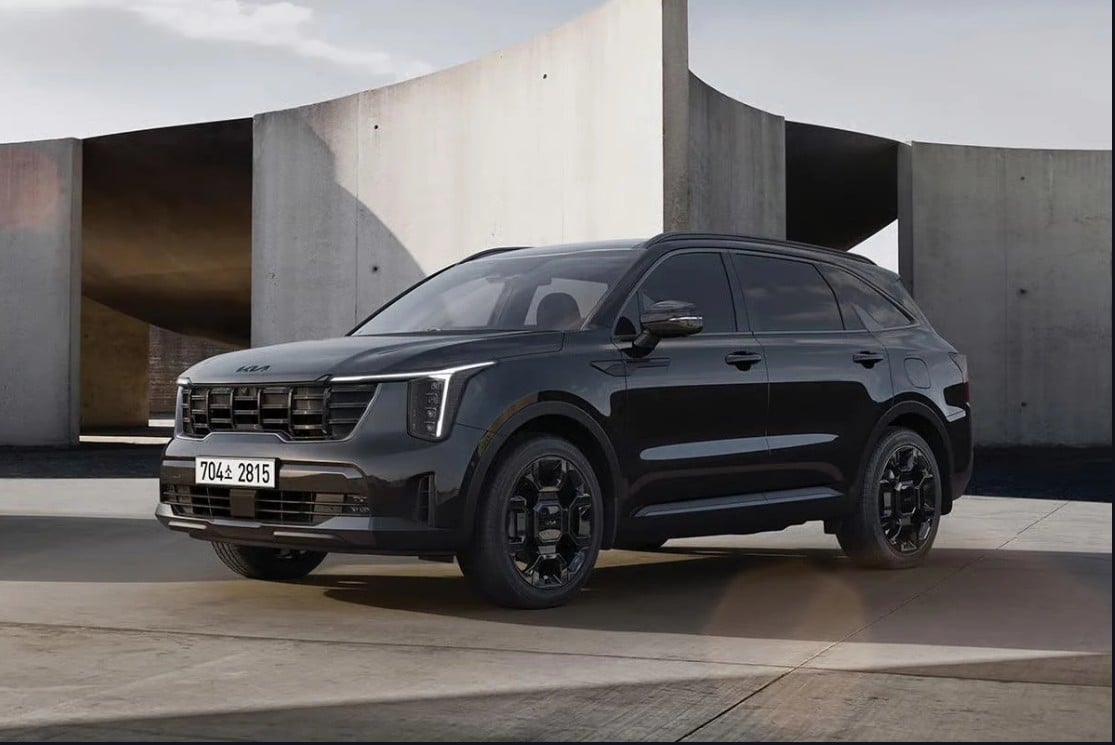
Using the same hybrid drivetrain as the Santa Fe, the Kia Sorento Hybrid uses a bit more fuel at 6.0L/100km, but it’s still quite fuel efficient for such a large vehicle. It’s available across the Sorento range, in front- or all-wheel drive forms. Skoda also features on this list thanks to a new 1.5-litre turbocharged mild-hybrid drivetrain that’s set to launch soon in the Kodiaq SUV, which is also rated at just 6.0L/100km, or 3.2L/100km less than the all-wheel drive, non-mild hybrid 2.0-litre turbo-petrol engine currently available. Both the Sorento and Kodiaq also offer plug-in hybrid drivetrains.
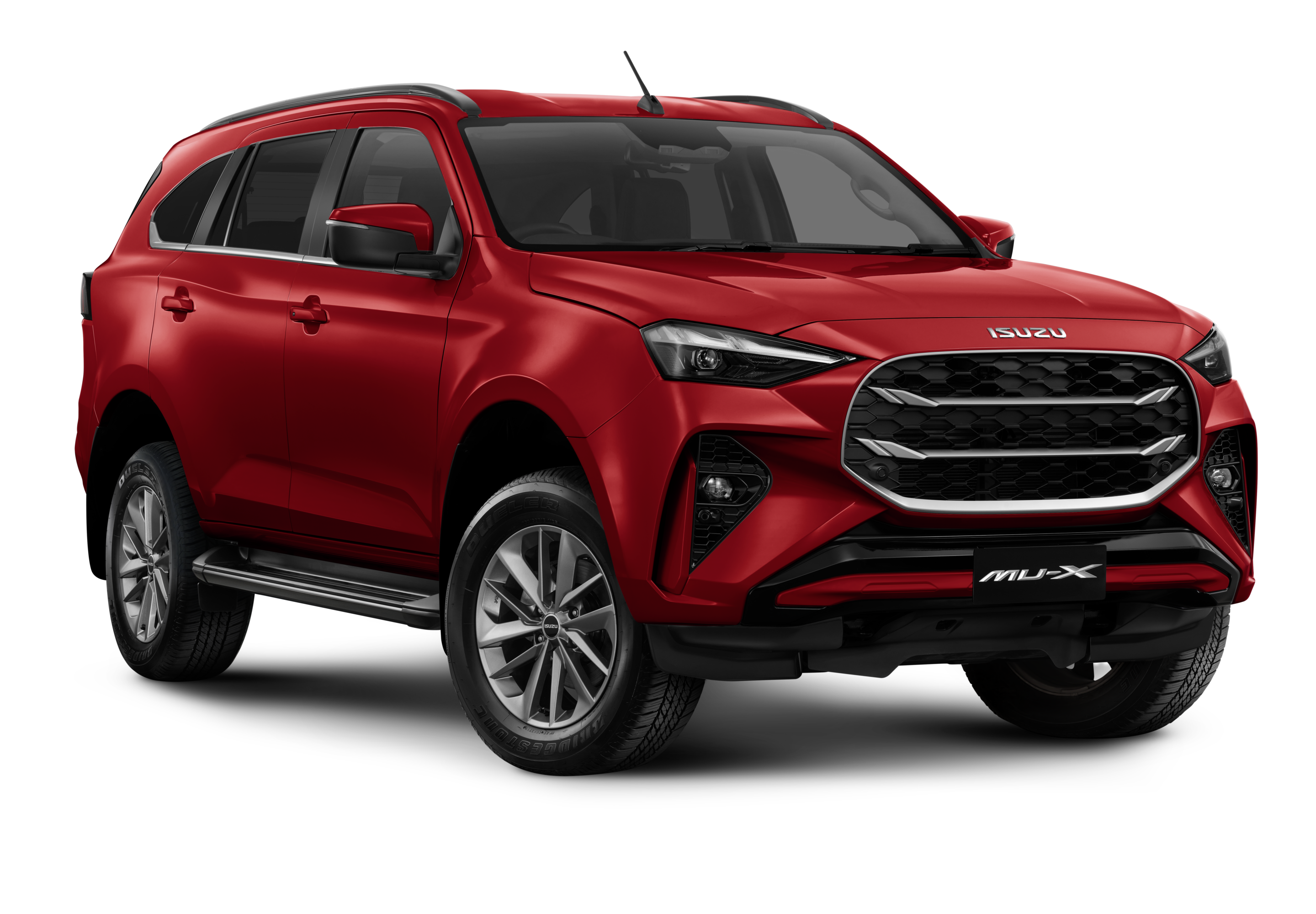
In another reminder that diesel engines can be quite fuel efficient, the new 2.2-litre four-cylinder turbo-diesel in the entry level two-wheel drive version of the Isuzu MU-X is rated at just 6.4L/100km on the combined cycle. Despite not featuring any hybrid tech, plus its hefty dimensions and 1995kg kerb weight, the MU-X is reportedly capable of 5.6L/100km economy at highway speeds, which is also impressive, though this MU-X is only the two-wheel drive version.
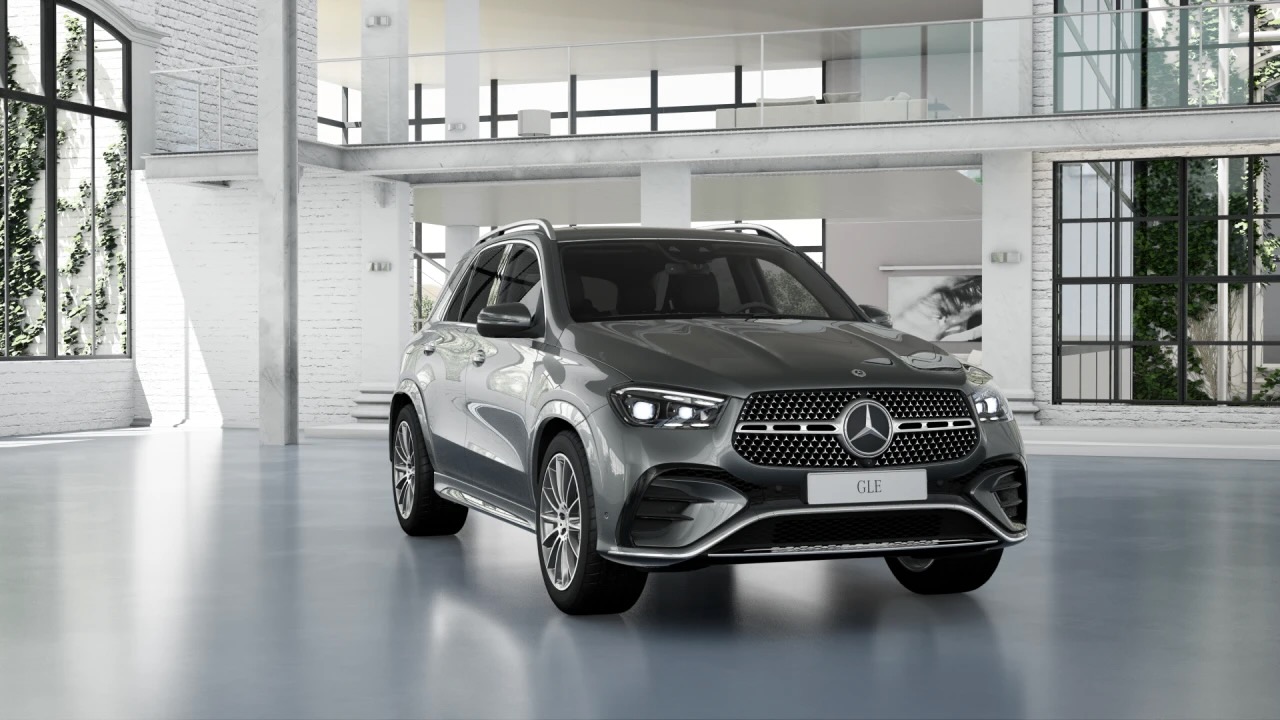
Using a 2.0-litre four-cylinder turbo-diesel engine with a mild-hybrid system, the Mercedes-Benz GLE 300 d punches above its weight making 198kW of power and 550Nm of torque (plus 15kW from the mild-hybrid system at certain times). Featuring four cylinders helps with economy as the GLE 300 d is rated at 6.6L/100km on the combined cycle, which is impressive for such a large and heavy vehicle.
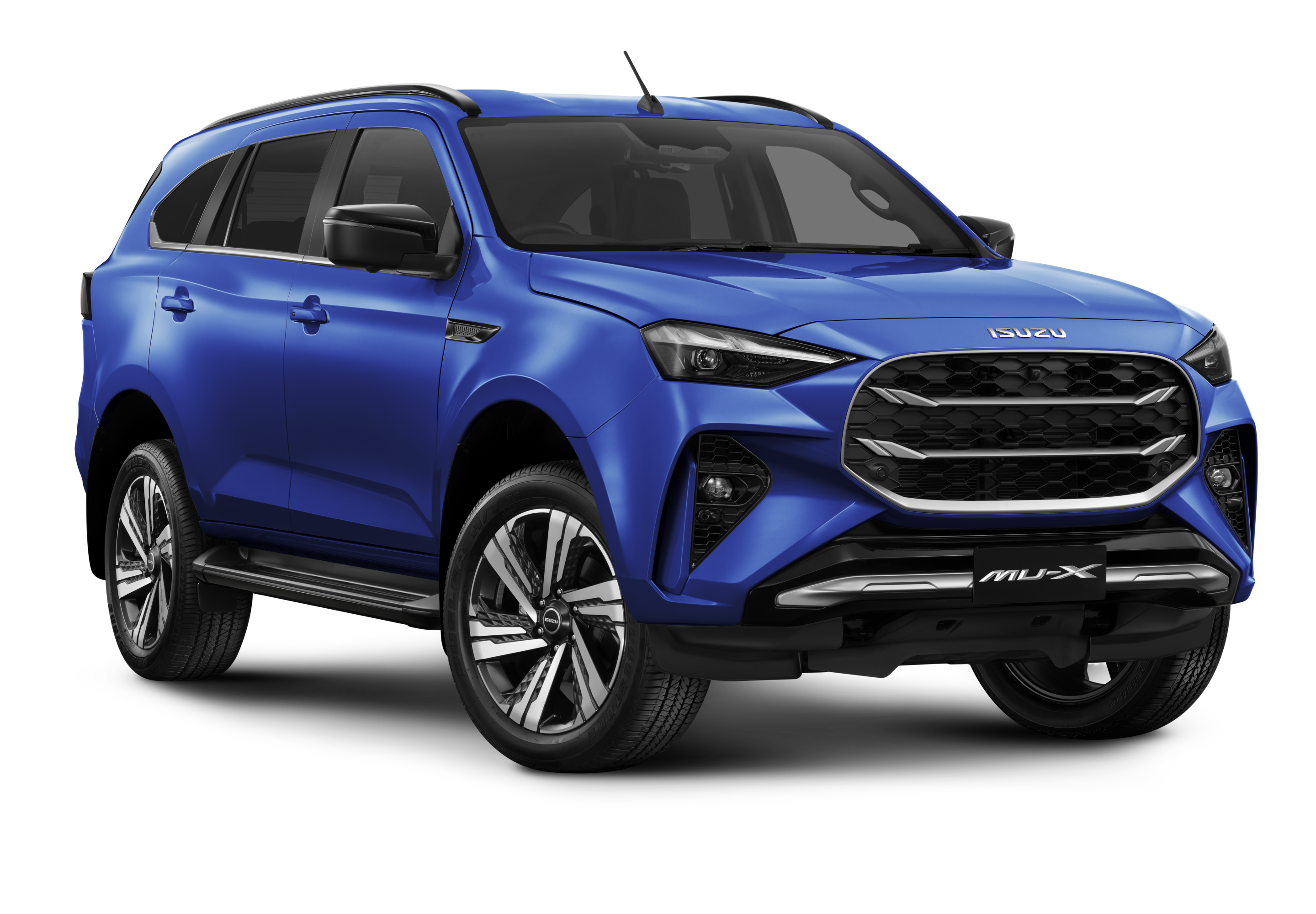
The MU-X’s second entrant on this list is 0.3L/100km higher than the first due to the addition of a four-wheel drive system that gives the MU-X the legendary off-road capability that Isuzu is known for. Like the 4×2 variant of the MU-X, the 4×4 uses a 2.2-litre turbo-diesel with an eight-speed automatic, but a larger 3.0-litre diesel is also available for 20kW/50Nm more grunt that pushes fuel consumption up to 7.6L/100km.
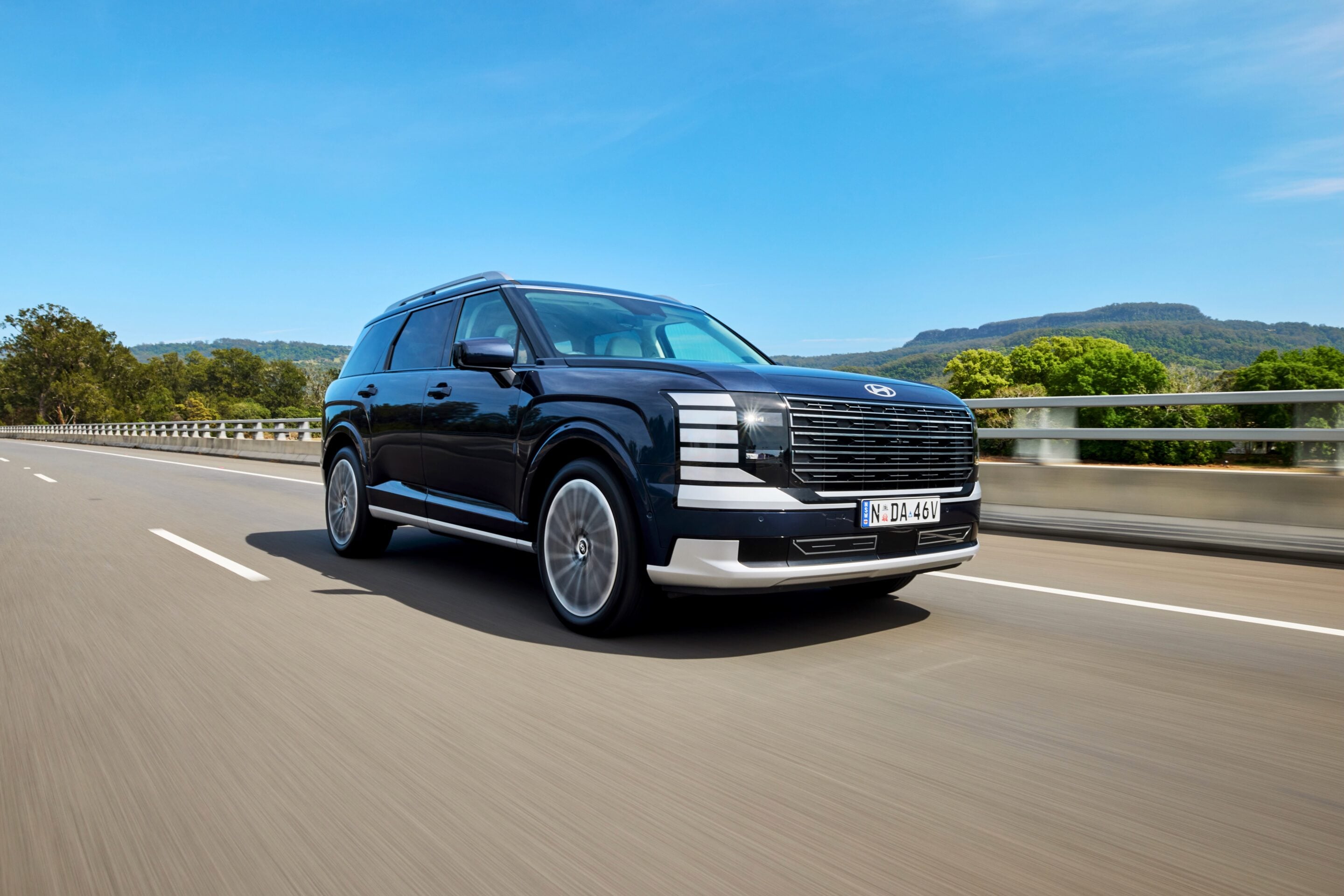
Rounding out the top 10 most fuel efficient large SUVs is the new Hyundai Palisade, which went on sale locally late last year. Featuring a new 2.5-litre turbo-petrol hybrid drivetrain making 245kW of power, it’s the most powerful car on this list, rated at 6.8L/100km on the combined cycle. Available only in top-spec Calligraphy trim for now, the Palisade will also offer a lower-spec Elite later this year, which could be made available in more efficient front-drive form too.
