
Nissan has updated its X-Trail for 2025, with the popular mid-size SUV receiving a selection of new tech and convenience features. Despite these changes, prices remain largely unchanged from MY24.
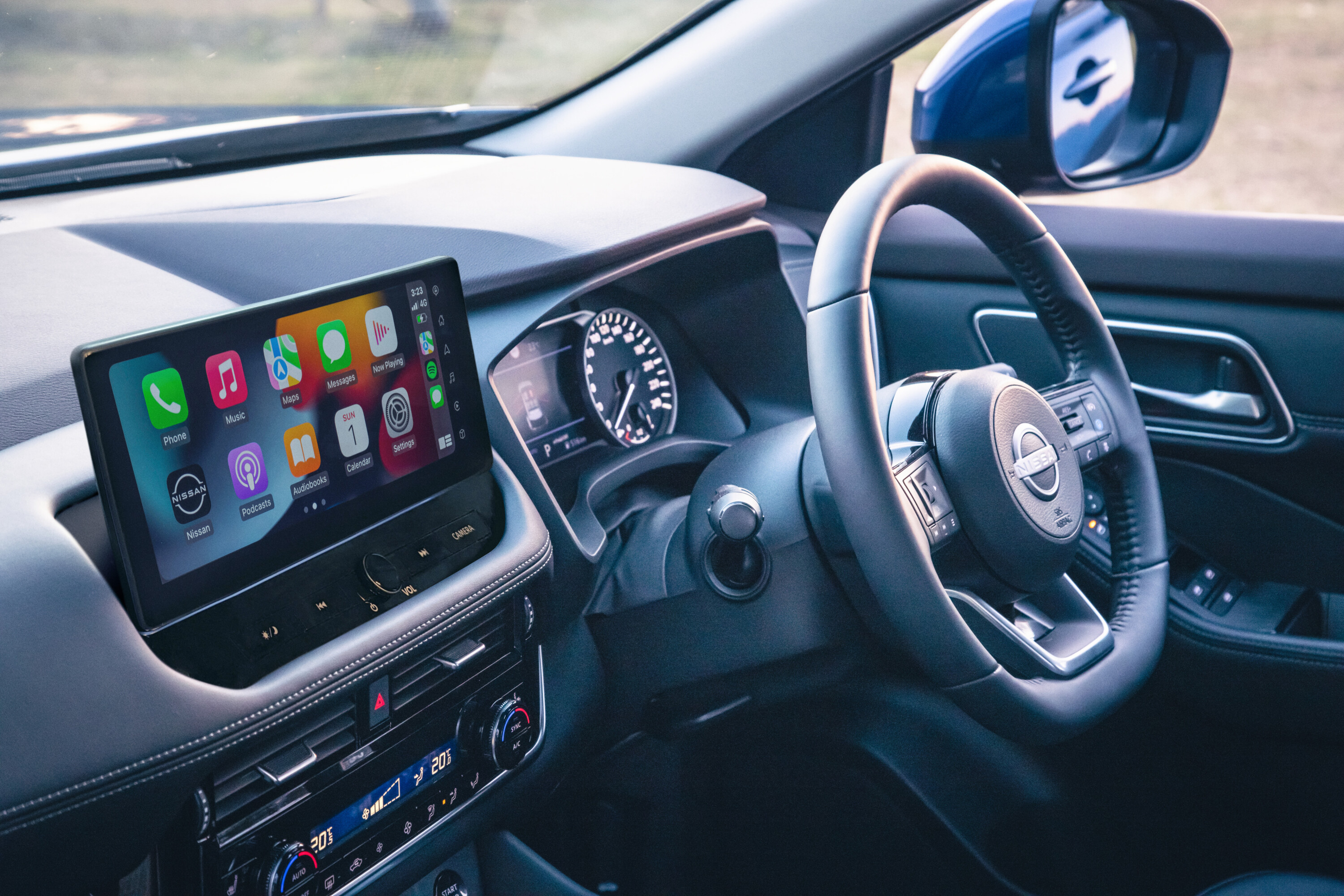
A new ‘approach unlock and walkaway lock function’ is now standard across the entire X-Trail range, from the base-spec ST up to the top-spec Ti-L and N-TREK variants, which enables the vehicle to automatically lock and unlock when the smart key fob is within or out of a specific range.
JUMP AHEAD
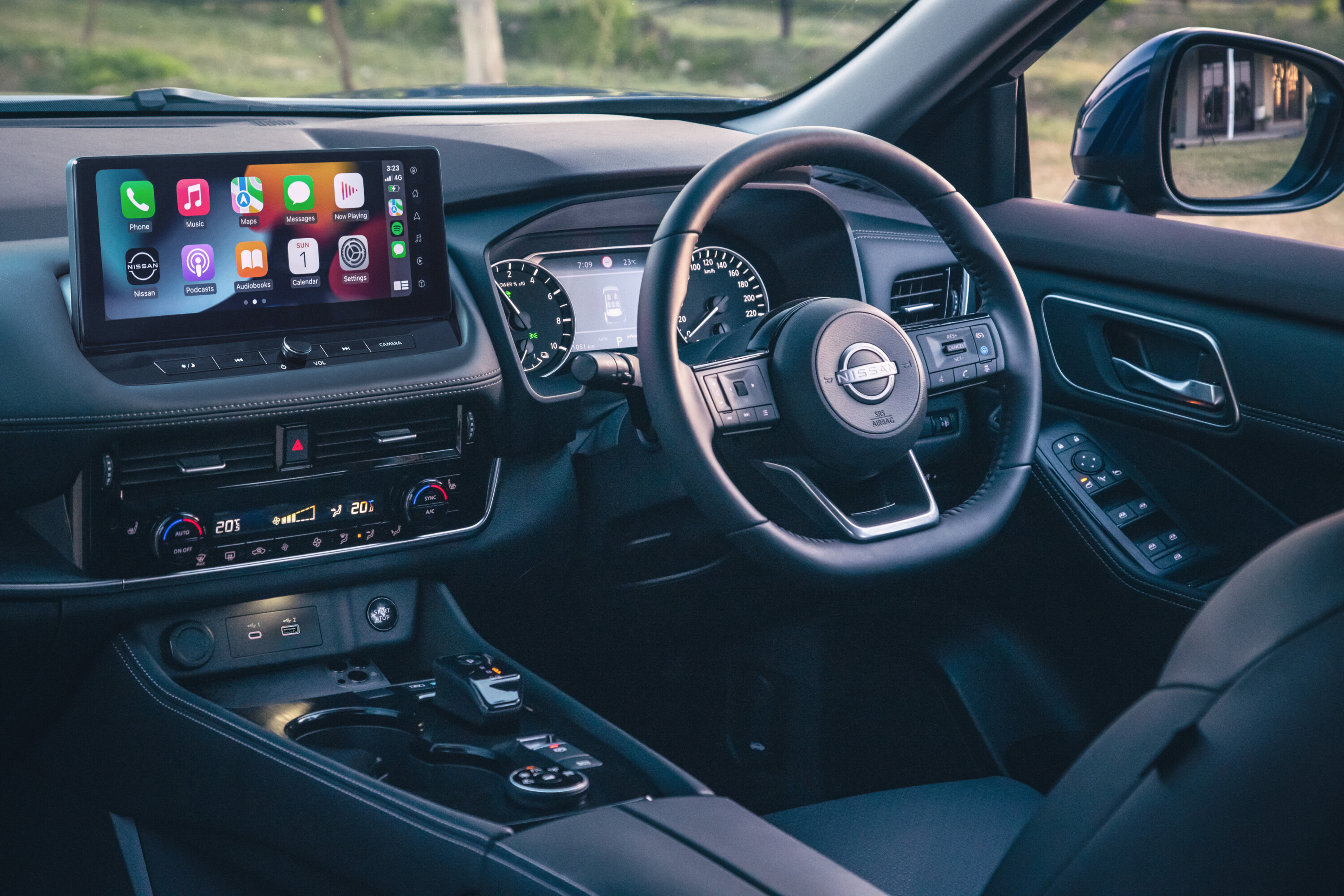
Step up to the ST-L and customers will also reap the benefit of the inclusion of the 12.3-inch central touchscreen previously exclusive to higher-spec models. The infotainment comes with satellitlte navigation, a wireless charging pad, and wireless Apple CarPlay and Android Auto.In addition to the ‘approach unlock and walkaway lock function’ , the Ti, Ti-L and N-TREK models now add Wireless Android Auto (previously only Apple CarPlay was compatible). A hands-free tailgate has been implemented into Ti models; while the top-spec N-TREK gets the wireless charigng pad.
“The X-TRAIL is one of Australia’s most flexible — and, with over 300,000 sold to date in Australia, most popular — family-focused SUVs,” says Nissan Australia’s Marketing Director, Sriram Padmanabhan.
“These MY25 updates aim to further improve the popular X-TRAIL formula, with important technology and convenience upgrades that our customers will notice and enjoy every time they take the wheel.”
Full feature lists
ST
- Auto-fold, heated mirrors
- Auto LED headlights
- High Beam assist
- LED rear lights
- Rear camera
- Shift-by-wire (e-Shifter)
- Paddle shifter
- Hill Descent Control (4WD only)
- Elec park brake
- iKey – New Design
- 6-way manual Dr + pwr lumbar
- 4-way manual AS
- Roof rails
- Rear seat Alert
- 60:40 split rear seats
- USB (2+2)
- 8” display audio w/ DAB
- 6 speakers
- 17” alloy wheels
- Temp spare wheel
- Far side airbag
- Emergency Stop Signal
- Rear parking sensors
- FEB Junction (ped+cycl.)
- Predictive FWD Collison Warning
- Lane Dep Warning / Prevention
- Blind Spot Warning + Intervention
- X traffic Alert + Rear AEB(ped)
- Driver Attention Alert
- Traffic Sign Recognition
- Intelligent Cruise Control
ST- L
- Privacy glass
- Auto dim rear-view mirror
- Leather Steering Wheel^
- 8-way power Dr seat
- 40:20:40 split rear seats
- Sliding rear seats
- Heated front seats
- Synthetic leather trim
- Luggage boards (2P)
- Dual zone A/C
- 18” alloy wheels
- Digital Around View Monitor
- Front parking sensors
- Tyre pressure sensor monitor
- ProPilot w/ Lane Keep Assist
- Approach / Walk-away lock
- Wireless Charger
- Wireless Apple Carplay and Android Auto
- 12.3″ infotainment
- Satellite Navigation
Ti
- LED turn signal
- Intelligent Rear View Mirror
- Adaptive Driving Beam
- 8-way power AS + pwr lumbar
- Genuine leather trim
- Ambient lighting (console)
- Wireless charger
- Tri zone A/C
- Panoramic sunroof
- Power back door
- 19” alloy wheels
- Rain-sensing wipers
- 10.8” Heads Up Display
- 12.3” Full TFT meter
- 12.3” infotainment
- Satellite navigation
- Wireless Apple CarPlay
- Approach / Walk-away lock
- Wireless Android Auto
- Hands-free tailgate
Ti-L
- Reverse tilt, memory mirrors
- Heated Steering Wheel
- Memory seats
- Heated rear seats
- Quilted Nappa leather trim
- Ambient lighting (door)
- 10 speaker Bose® audio
- Hands-free tailgate
- Remote engine start
- Rear sunshade
- 20” Alloy Opt (e-POWER only)
- Approach / Walk-away lock
- Wireless Android Auto
N-TREK
- Black Roof Rails
- Black V-motion Grille
- Front Under Protection
- Unique 18” Alloy Wheels
- Black Door mirror
- Gloss black door handles
- Gun Metallic rear bumper with dark chrome finisher
- PVC door trim
- Waterproof seats
- Rain-sensing wipers
- 10.8″ Head up Display
- 12.3″ full TFT meter
- 12.3″ Infotainment
- Satellite navigation
- Wireless Apple CarPlay
- Approach / Walk-away lock
- Wireless Charger
- Wireless Android Auto
Pricing
| X-Trail 2WD | |
|---|---|
| 2.5 ST CVT 5 Seatu00a0 | $37,750 |
| 2.5 ST-L CVT 5 Seat | $44,190 |
| 2.5 N-TREK CVT 5 Seat | $47,790 |
| X-Trail 4WD | |
|---|---|
| 2.5 ST CVT 7 Seatu00a0 | $40,790 |
| 2.5 ST-L CVT 7 Seatu00a0 | $47,290 |
| 2.5 N-TREK CVT 7 Seatu00a0 | $50,890 |
| 2.5 Ti CVT 5 Seat | $50,990 |
| 2.5 Ti-L CVT 5 Seat | $53,990 |
| 1.5 ST-L e-Power 5 Seat | $50,490 |
| 1.5 Ti e-Power 5 Seat | $55,190 |
| 1.5 Ti-L e-Power 5 Seat | $58,190 |
Two powertrain options are implemented across the X-Trail range: a 135kW/245Nm 2.5-litre four-cylinder and a 1.5-litre e-POWER (ST-L, Ti and Ti-L). More than 300,000 X-Trails have sold in Australia since it arrived.
For a brand that once hedged its reputation on bulletproof, boxy, pragmatic station wagons, Volvo has pivoted on that family-friendly ideal and very successfully transitioned into mastering large, seven-seat premium SUVs.
The two generations of XC90 that preceded this all-new, all-electric seven-seat EX90 each matured beautifully – improving over time to become almost a default purchase for premium-brand family buyers chasing safety, surety and space.
And now we have yet another Swedish pivot on the notion of family mobility with the XC90-inspired EX90, which will launch in Australia later this year.
JUMP AHEAD
- Is the 2024 Volvo EX90 worth my attention?
- What about inside?
- What powers the Volvo EX90?
- How does it drive?
- Is it worth waiting for the 2024 Volvo EX90?
Is the 2024 Volvo EX90 worth my attention?
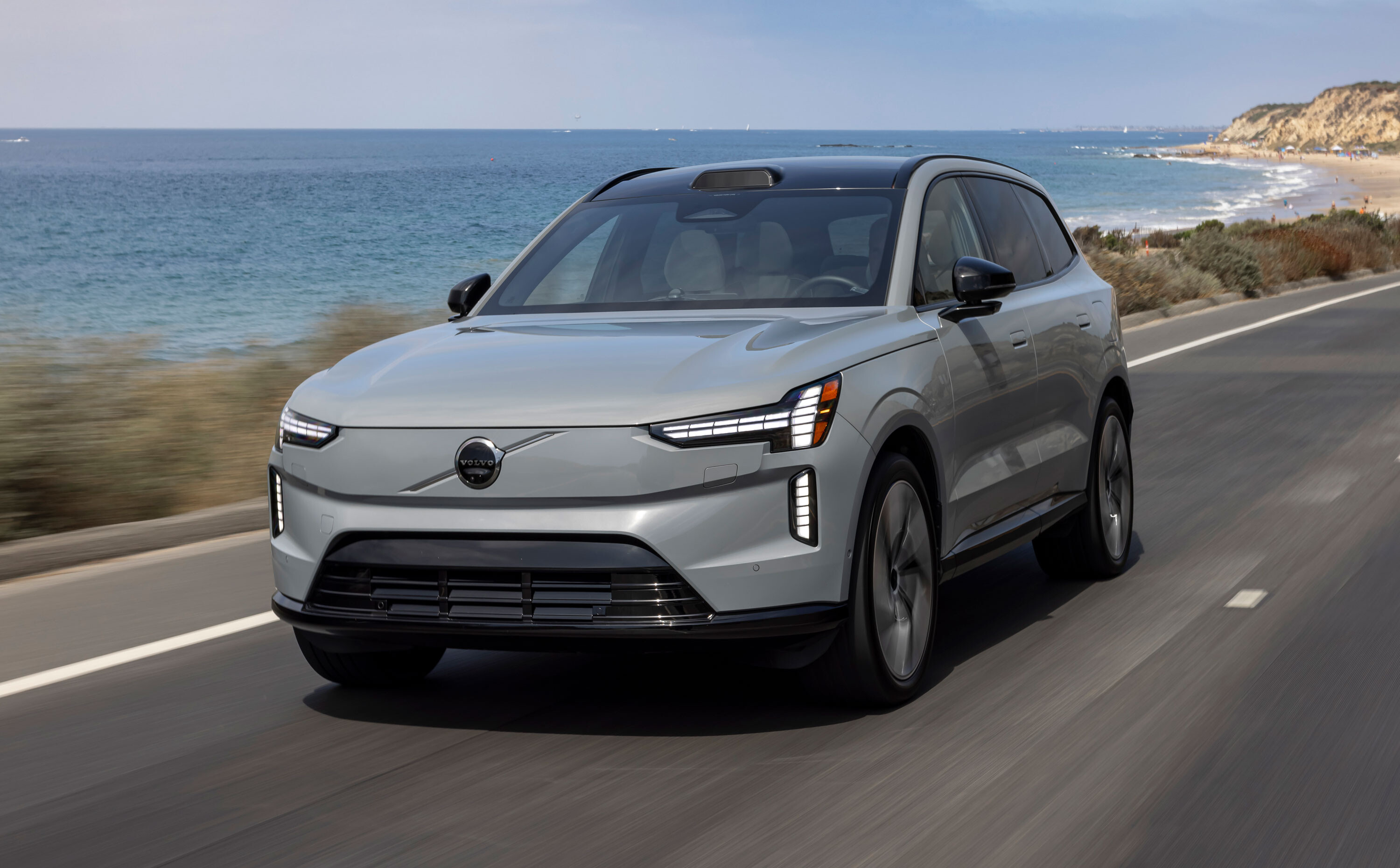
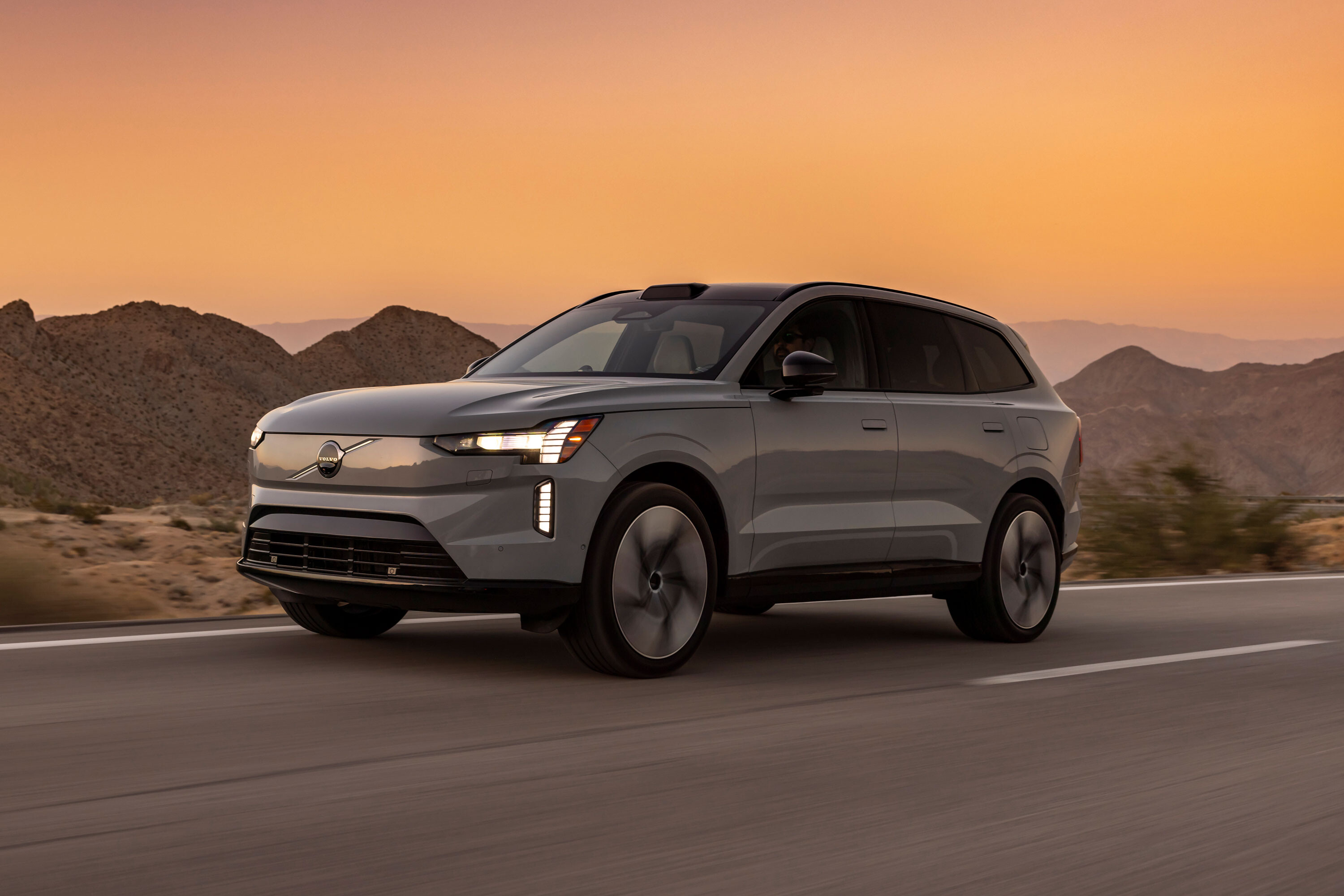
Externally, the EX90 is clearly an evolution of the now decade-old second-gen XC90. The body shape, door apertures, window line – it’s all familiar Volvo DNA. And in 2024, perhaps too familiar for a tech leader such as this when its five-seat relative – the Polestar 3 – looks so damn striking from almost every angle.
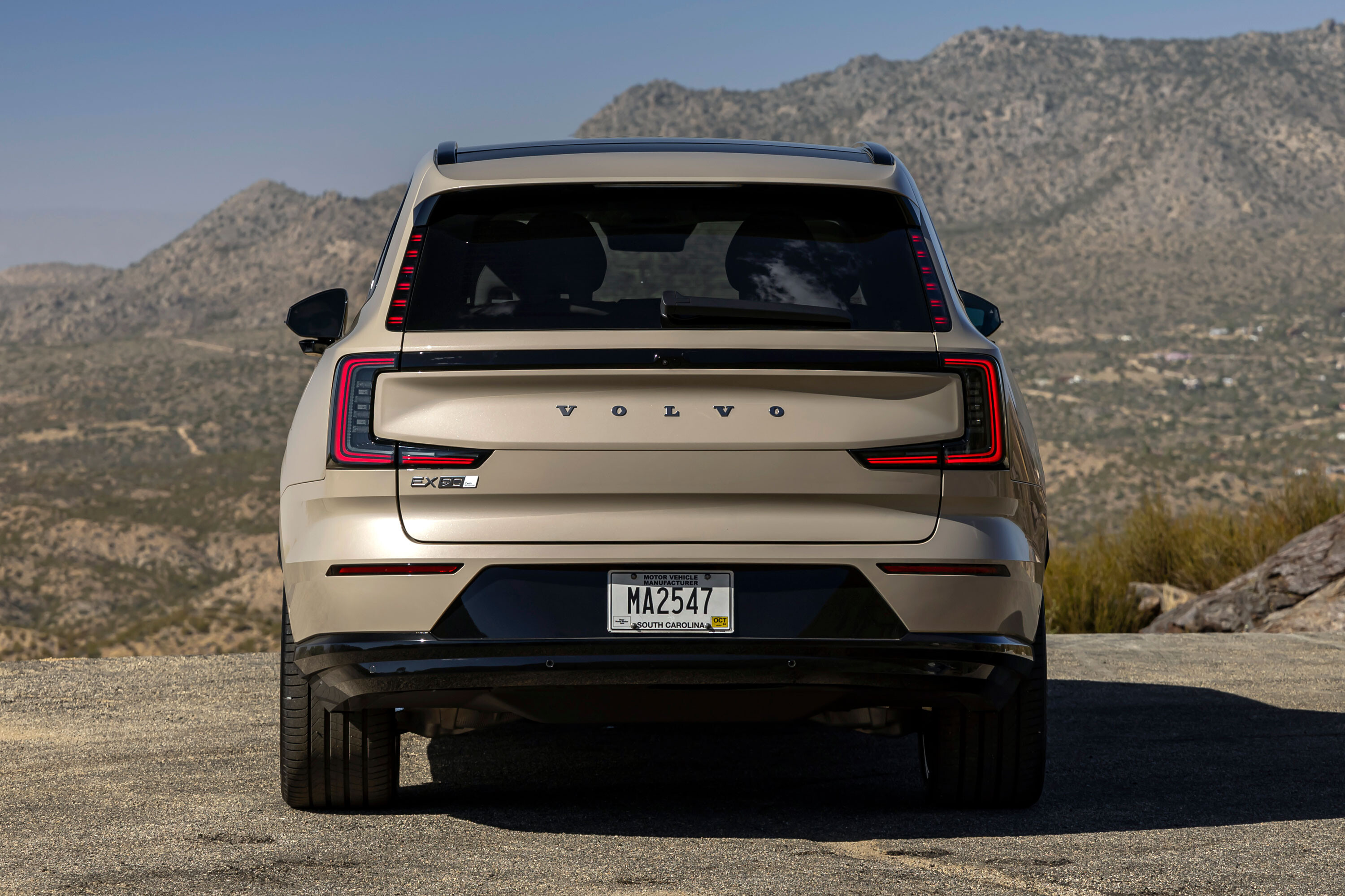
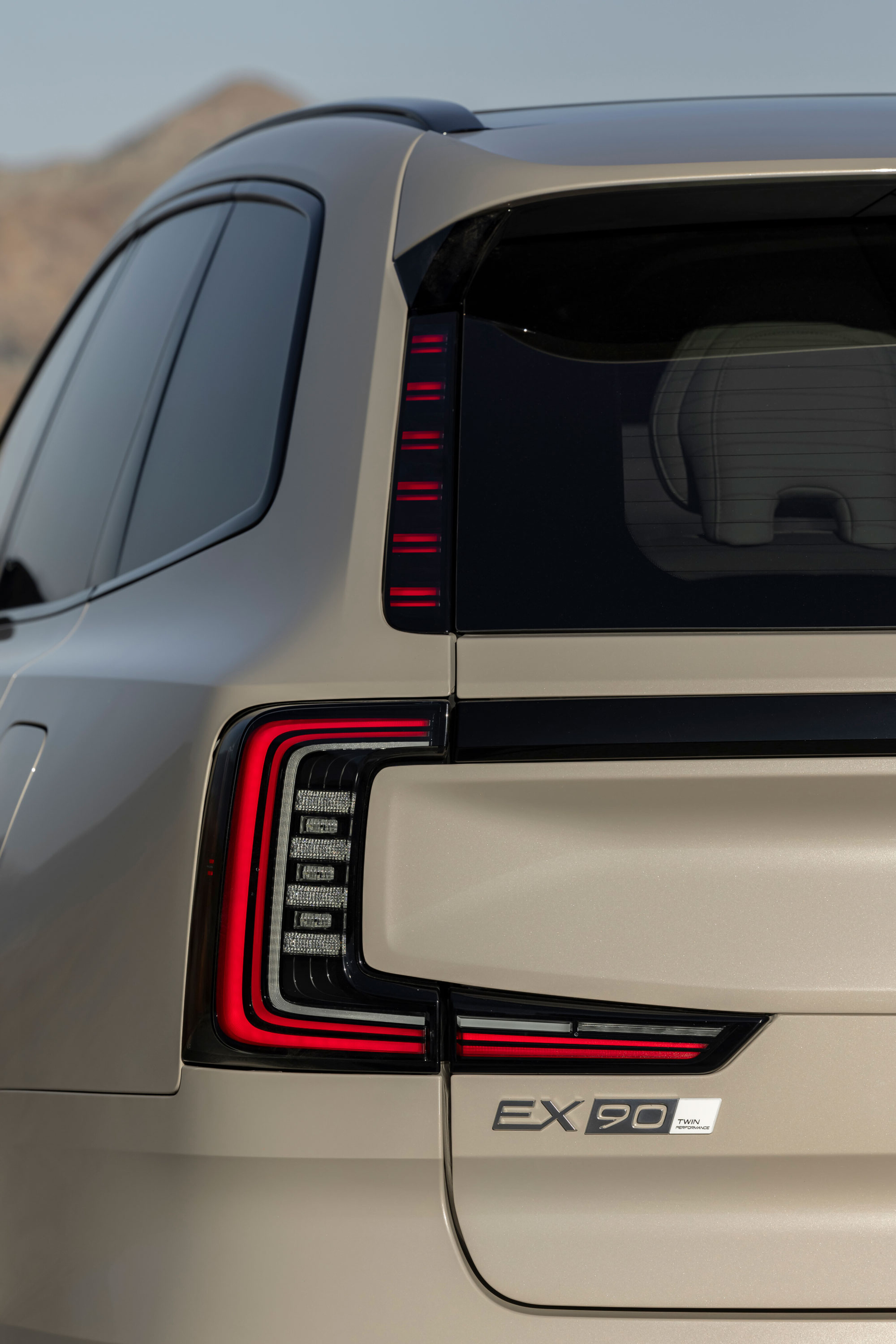
The EX90’s front three-quarter aspect conveys a clean, handsome, modern visage, but its rear-end view is perhaps not so flattering – especially the dorky dotted lights that bookend the tailgate glass, making the EX90 look tall and narrow from behind. Which it isn’t.
Dimensionally, it’s very close to its combustion-engined predecessor – meaning a near-identical 2985mm wheelbase, similar 5037mm length (+87mm) and 1964mm width (+41mm), and marginally lower 1747mm height (-28mm).
But proportionally, that puts the EX90 at odds with the current seven-seat EV benchmark – the Kia EV9 – which is slightly shorter than the Volvo but rides on a much longer wheelbase (3100mm) for significant gains in packaging space and cabin flexibility, and has a broader stance on the road.
The EX90 comfortably one-ups the EV9 with its wheel size though – our top-spec EX90 Ultra Performance wearing 22-inch alloys with staggered-width Pirelli Scorpion tyres, the rear pair being enormous, sports-car-rivalling 295/35R22s.
And it also features adaptive air suspension with dual-chamber air springs, as well as an excellent torque-vectoring dual-clutch rear axle – giving the dual-motor EX90 flagship the mechanical hardware to achieve a premium level of dynamic sophistication and cohesion.
What about inside?
As for whether the EX90 can pull off a genuinely premium feel inside, in the same way its Polestar 3 relative can, that’s probably a matter of priorities.
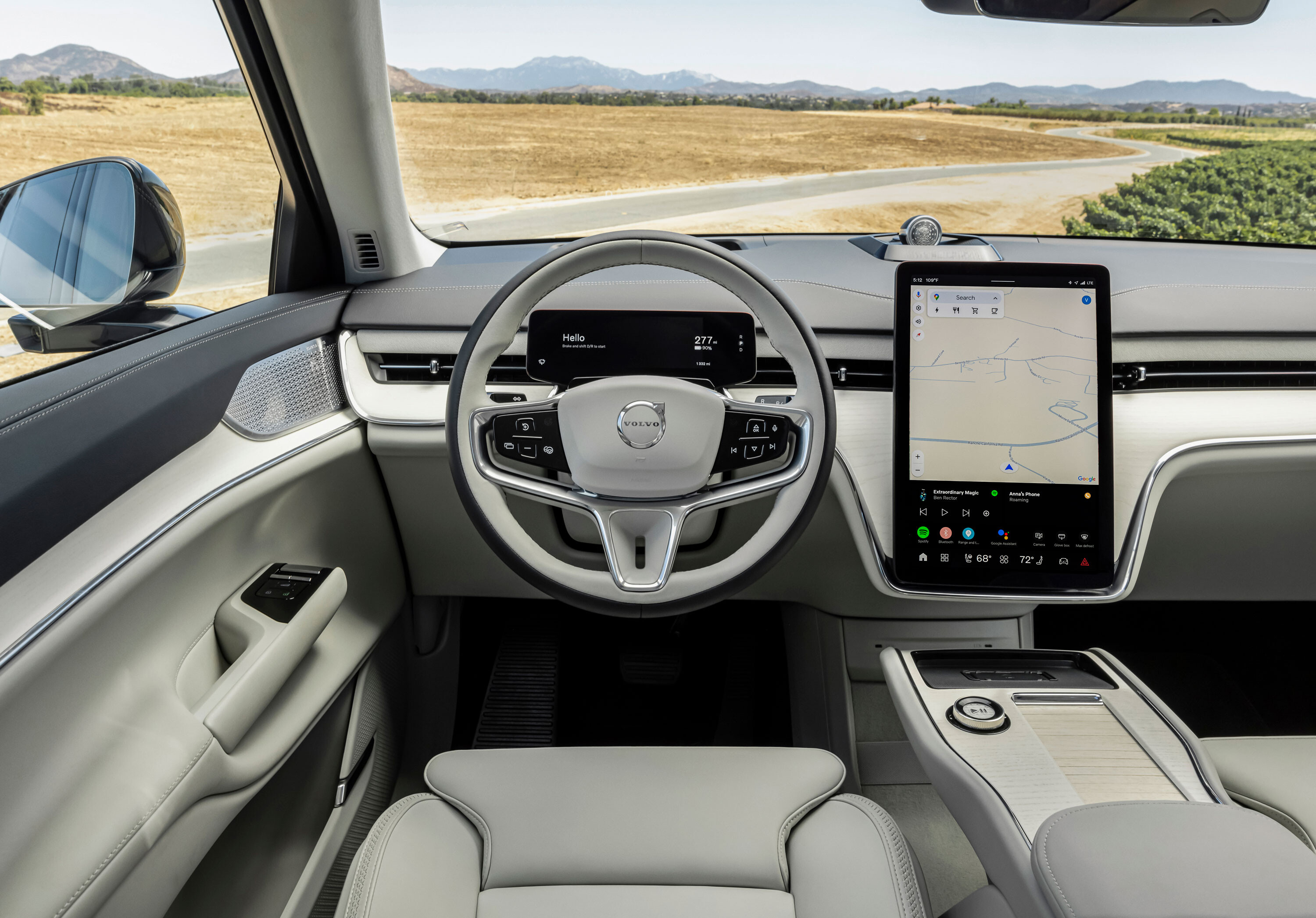
On the surface, its tactile finishes, slick digital screens, subtle light-coloured wood inlays and our test car’s (100% sustainable) Wool Blend upholstery neatly combine classy tech with textural warmth.
The seat trim, in particular, has an almost mid-century vibe about it, seemingly inspired by the grey suit worn by Kim Novak’s Madeleine Elster/Judy Barton character in Hitchcock’s 1958 masterpiece Vertigo.
But then the leather-like, diamond-stitched Nordic Dawn alternative also looks suitably luxe, especially when combined with a light-coloured two-tone steering wheel. And that demure blonde wood turns quite racy at night – transforming into a black fishnet pattern with deep yellow backlighting. Talk about surprise and titillate, I mean delight.
Yet the EX90 betrays Volvo’s cost consciousness in a few areas. The doors don’t close with the expected thunk and are incapable of taking anything beyond a 600ml plastic bottle, unlike the outgoing XC90 which accommodates up to 1.5-litre bottles.
And the EX90 is devoid of the XC90’s proper door grab handles or indeed any overhead grab handles (which feature stitched upholstery in an XC90). Small details, sure, but they detract from both the EX90’s feeling of expense and its utility.
The electric front seats also lack the range of adjustment of an XC90 (there’s no under-thigh tilt, for example), though comfort is still impressive and the minimalist single-dial seat adjuster is the definition of cleverness.
That flavour carries over into the EX90’s column stalks and steering-wheel controls – with each area controlling a simple group of related functions – and its overall interior aesthetic, which is refreshingly light, airy, and highly functional in terms of centre-console storage.
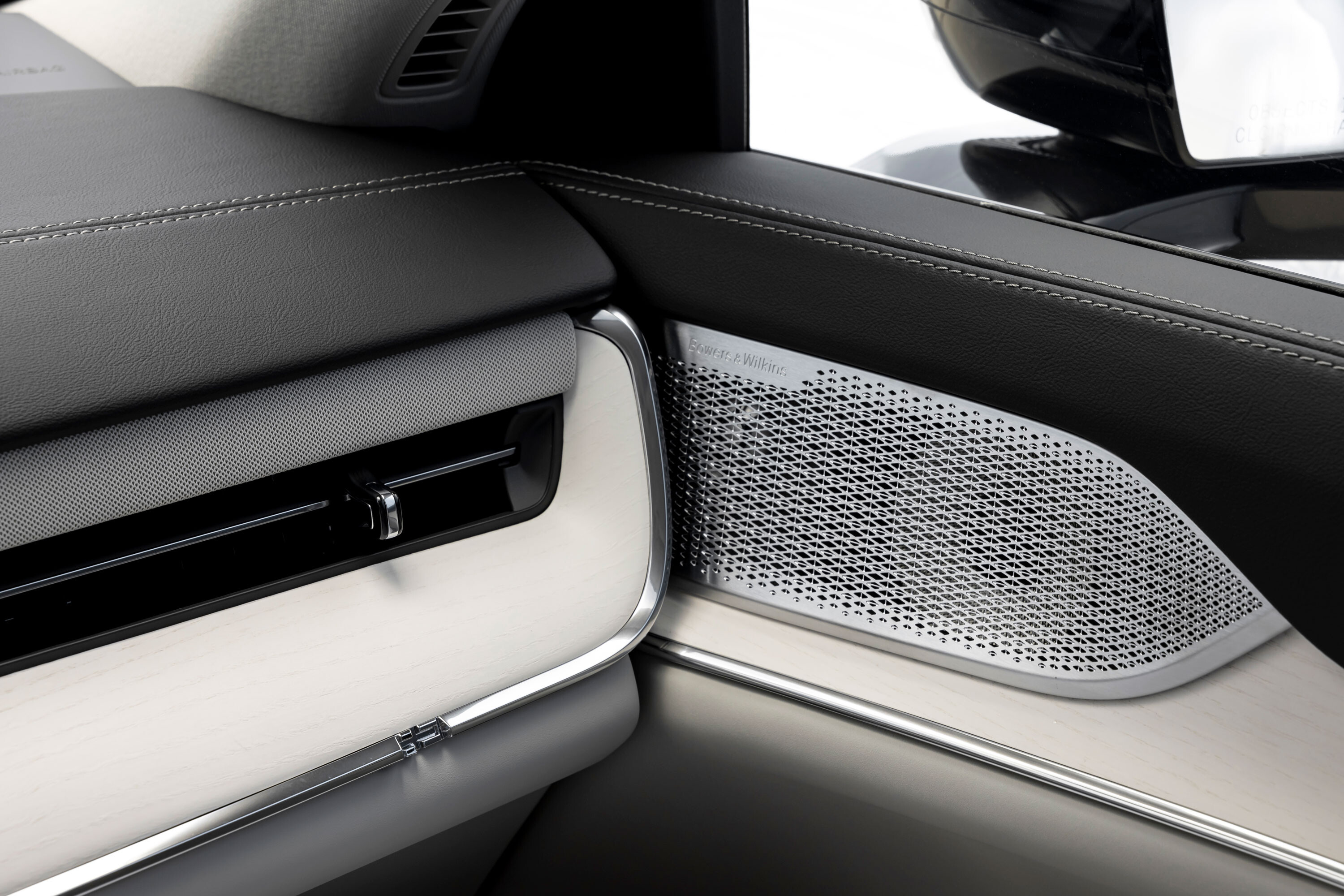
When the superb 25-speaker, 1610-watt Bowers & Wilkins stereo is fitted (like our test car), each door gets Remington Steel-esque speaker grilles, and there’s even a ‘Bowers & Wilkins’ metal sliver on the sides of the front headrests to remind passengers they’re riding in surround-sound heaven.
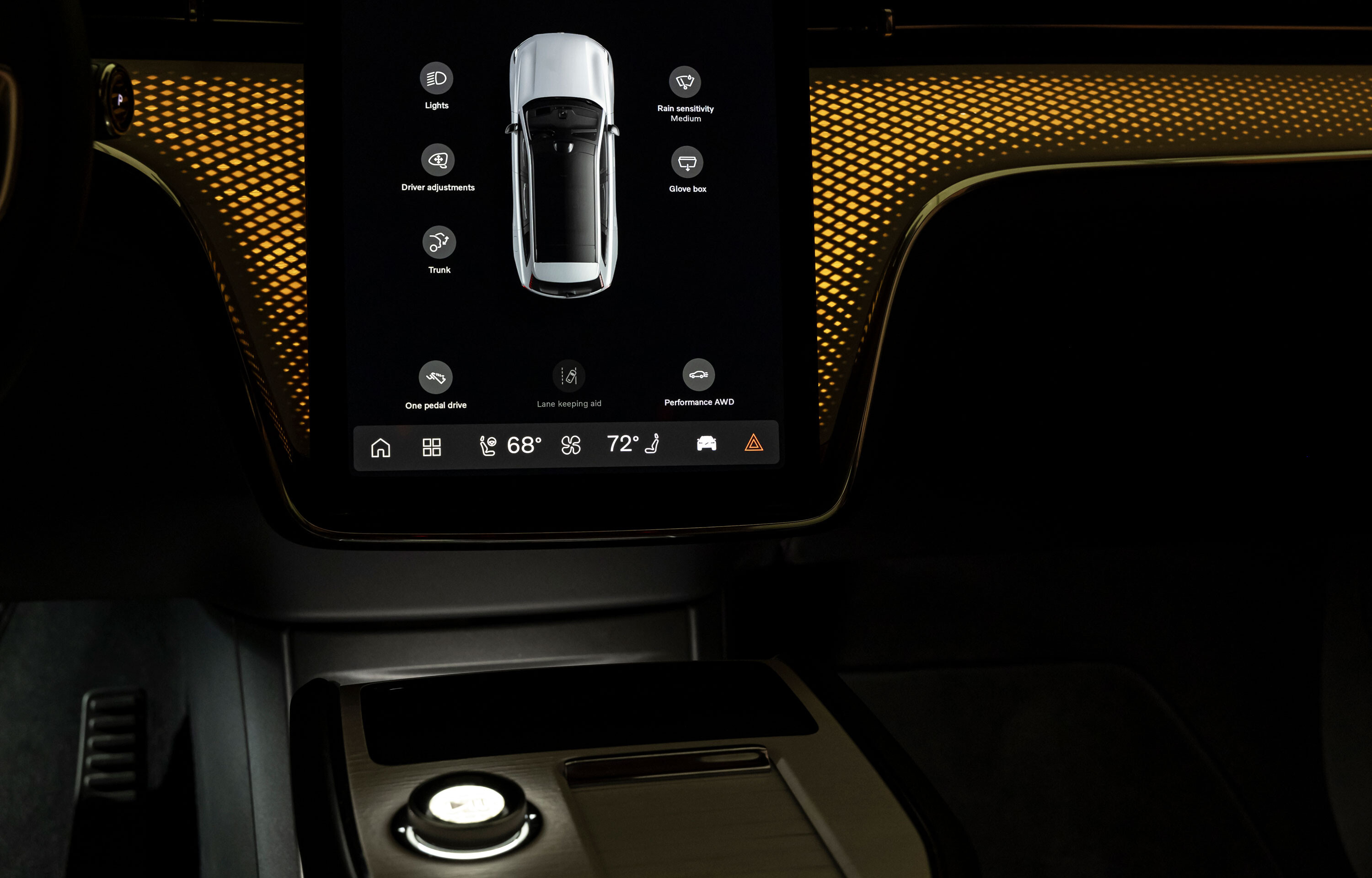
As for the rest of the tech, I don’t think Volvo’s version of the 14.5-inch portrait touchscreen is quite as seamless and classy as the Poletsar 3’s (though it’s close) and some touchscreen functions (such as suspension modes and even braking regeneration levels) are buried a few layers too deep for aspects that affect the way the EX90 drives.
The second-row operates as three individual seats, each on their own fore-aft sliders, though even the outer pair aren’t as generously sized as, say, the equivalent pair in an Audi Q7.
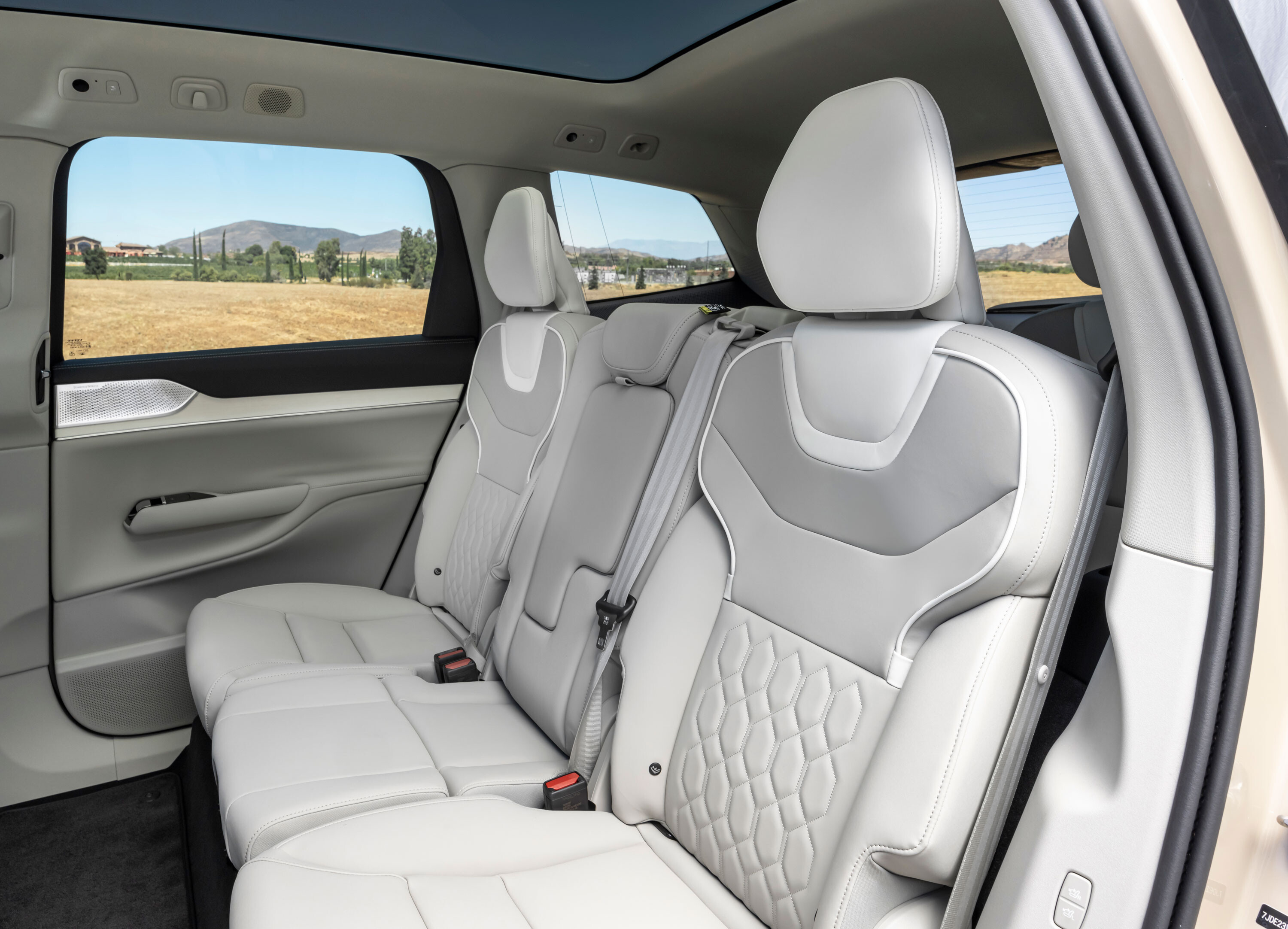
And while there’s a fully flat floor, dual-zone climate control (with centre and B-pillar vents), outboard heating and door sunshades, the range of adjustment for the individual backrests is relatively modest – in contrast to the all-round vision, which is expansive, and enhanced by an all-glass roof (that does introduce a fair amount of heat to the cabin on hot days).
Access to the third row is reasonably deft, even for adults, and that’s mirrored in the space back there, which is doable for grown ups but ultimately intended for children – hence the USB-C ports and C-pillar air vents.
Conveniently, you can electrically lower each third-row seat via buttons in the rear door frames, and when you do, that unlocks 669 litres of boot space (324L, including under-floor storage, with seven seats in use).
What powers the Volvo EX90?
Despite weighing 2712kg in fully optioned Ultra Performance dual-motor guise, the EX90 is true to its name in offering plenty of punch for an electric seven-seater.
It shares its 400-volt electrical architecture, 111kWh battery, and 380kW/910Nm outputs with the Polestar 3 Performance Pack, and that’s enough for a claimed 0-100km/h time in 4.9sec.
Day-to-day acceleration is mostly smooth and linear, though there is some hesitancy before it really starts to punch – perhaps to minimise energy consumption. But if you want everything the EX90 Ultra offers, then selecting ‘Performance AWD’ unleashes a light-switch response to a mashed right pedal and neck-straining urge – all backed by the crisp, quiet sound of rapidly gathering momentum.
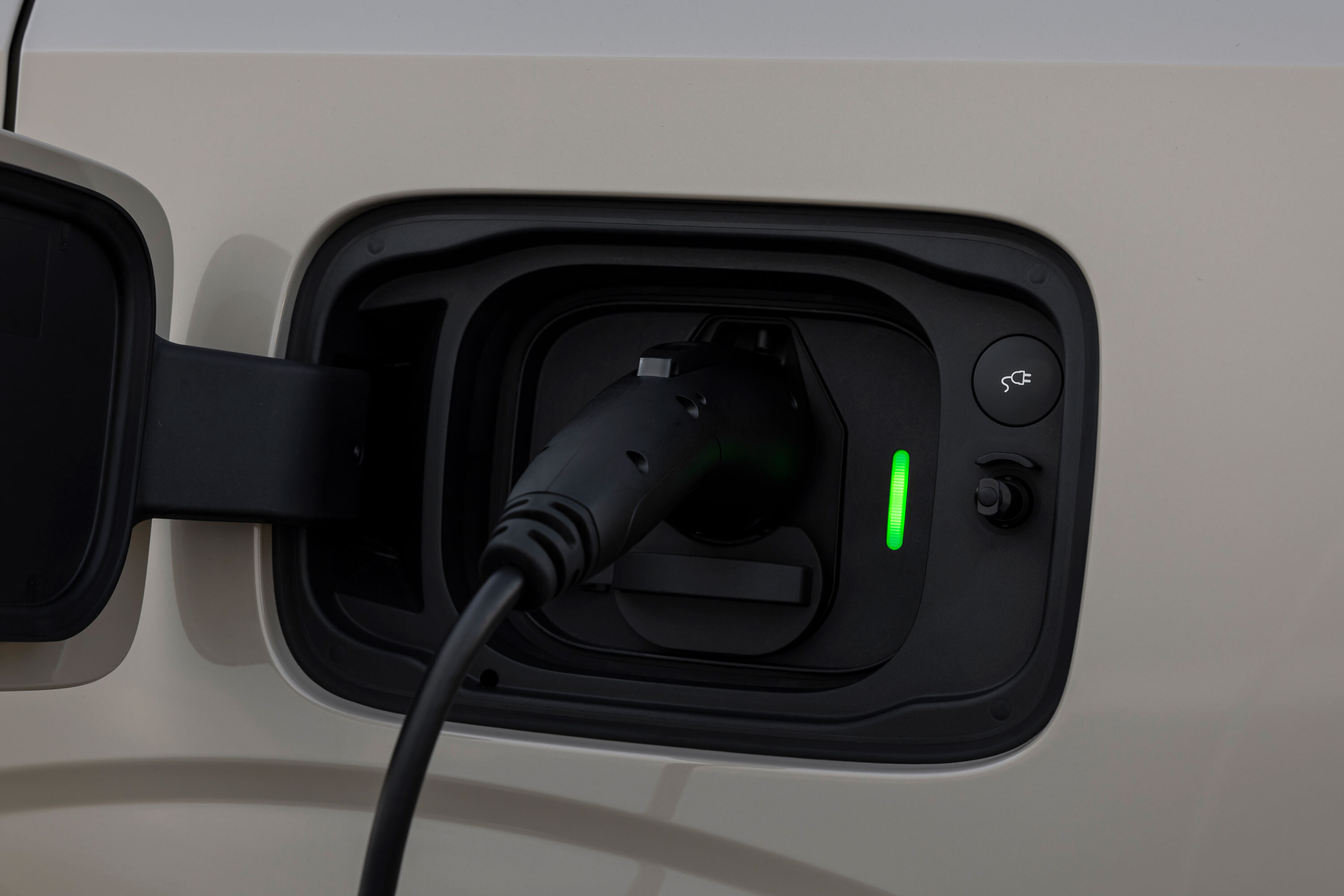
The EX90 is capable of handling up to 250kW DC charging and has a claimed 10-80 percent charge time of 30 minutes. Volvo also claims a WLTP range of 570-614km (depending on options and wheel size) for the dual-motor Performance, though we averaged 25kWh/100km over 239km, which calculates to a real-world range of 428km (when being punted by motoring journos).
Interestingly, that energy consumption and resultant range is almost identical to what we achieved from the closely related Polestar 3 Performance Pack in Spain back in May!
How does it drive?
With its standard adaptive dual-chamber air springs and adaptive damping – at least in Ultra Performance guise – the EX90 proves surprisingly adept at tackling whatever the road conditions throw at it, even when riding on 22-inch wheels.
It only offers two suspension settings (Soft and Firm), whereas the Polestar 3 offers three, and can be height adjusted across a 40mm range (from 210 to 250mm ground clearance), whereas the Polestar 3 offers 60mm. But that’s simply appendage-measuring. What matters is that the Volvo’s suspension set-up really works.
In Soft, it’s nicely level and absorbent yet never mushy (as the name would suggest), and in Firm it’s nicely disciplined and impressively agile in corners, without erring towards what we call ‘dickhead spec’ – meaning stupidly stiff and unyielding, without any subtlety. In this regard, the EX90 treads a fine, yet rewarding line between body control and passenger comfort.
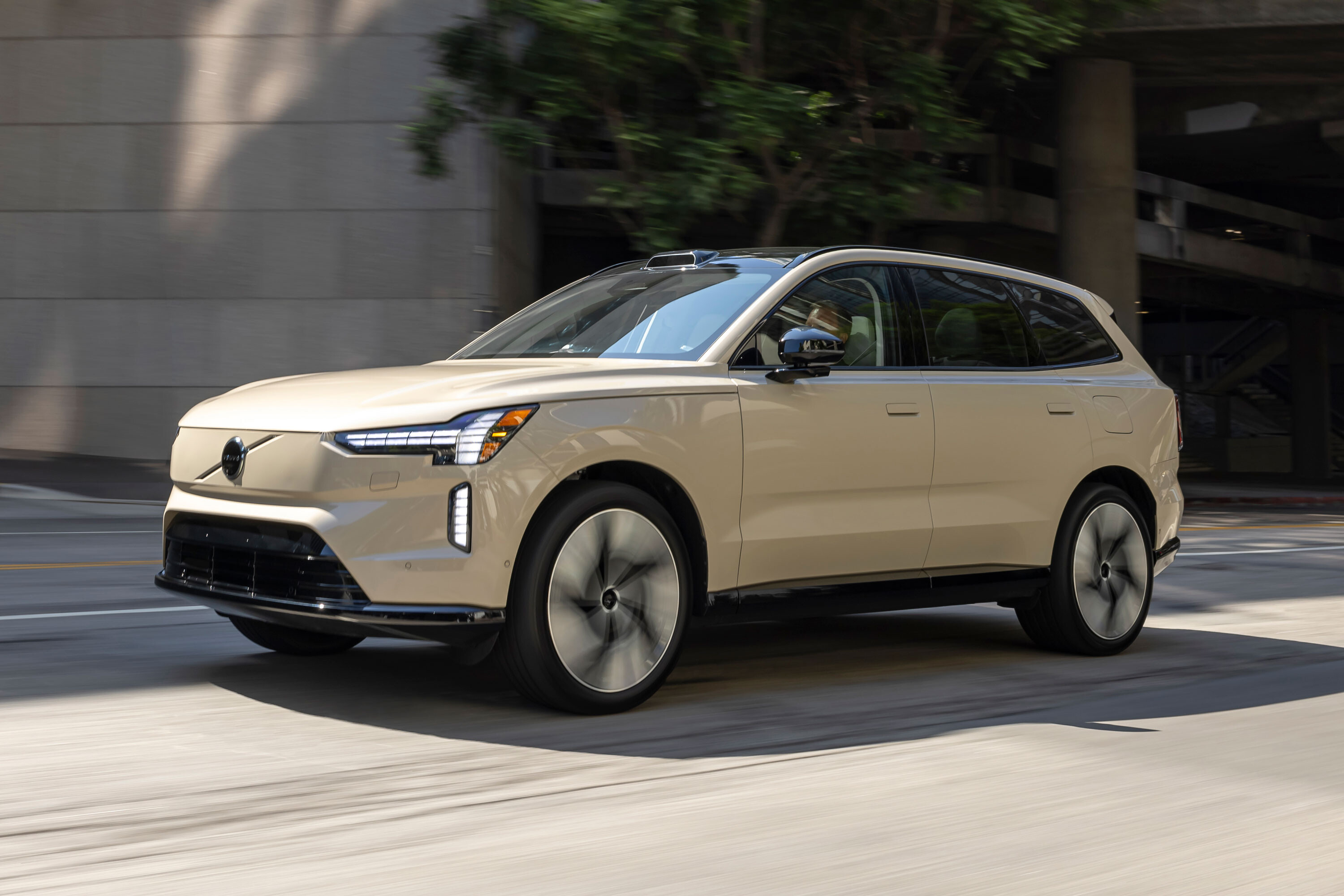
Just like its Polestar 3 relative, the EX90 feels surprisingly lithe for such a hefty beast of a thing, thanks to its low centre of gravity, excellent weight distribution, and the mechanical smarts of its Borg-Warner dual-clutch rear diff that can torque vector up to 100 percent of drive to either rear wheel. The EX90 has a fluency to it – far beyond what the comparatively leaden XC90 T8 offered – and that bodes well for its affinity towards challenging Australian surfaces.
Even its regenerative braking performance is impressive – allowing it to come to a full stop – though having to rifle through menus to access it is annoying, even though you get used to it. For a company so intrinsically bound by its safety reputation, having to delve through five menus to be able to change the suspension mode, for example, is needlessly fiddly and silly.
At least the EX90’s plethora of safety systems work with far greater ease and slickness, offering subtly tuned lane-keep assistance and brilliantly calibrated adaptive-cruise blasting (at 130km/h-plus on Californian highways).
When you turn the lane-keep assistance off, it remains off next time you start the car – meaning there isn’t that incessant need to recalibrate everything each and every time you drive. Even just nudging the gear selector down to Drive to set the cruise speed seems intuitively clever (once you realise that’s how it works).
Is it worth waiting for the 2024 Volvo EX90?
We’ve been waiting some time for the EX90 – almost two years, in fact. It was first displayed in road-ready form in November 2022 but didn’t begin production until mid-’24, initially in South Carolina, and to be followed by China.
And yet the EX90 launch cars still hadn’t completed final calibration, with a multitude of glitches affecting the phone-prioritised keyless entry system, the adaptive cruise operation and even the instrument display in one EX90.
Volvo assured us that final-production EX90s will have these problems nixed, and that future over-air software updates will continue honing the operation of its electronic systems.
Given that they were taking notes when we gave feedback about the touchscreen-menu complexity of the suspension modes and such, we have confidence that Volvo is listening and is keen to make the EX90 as good as possible.
Expected to be priced around the $130,000 mark (for the Ultra Performance AWD) when it goes on sale by the end of 2024, though possibly even in the $120K bracket, there’s a lot to like about the EX90. Yet arguably its best aspect is the way it drives, and if any area truly conveys a premium level of engineering, then that is it.
| 2024 Volvo EX90 Ultra Performance AWD specifications | |
|---|---|
| Price | $130,000 (estimated) |
| DRIVETRAIN | |
| Electric motors | Two permanent magnet synchronous |
| Battery | 111kWh nickel-manganese-cobalt |
| Drive | All-wheel drive |
| System power | 380kW |
| System torque | 910Nm |
| Transmission | 1-speed reduction |
| CHASSIS | |
| L/W/H | 5037/1964/1747mm |
| Wheelbase | 2985mm |
| Track(f/r) | 1672/1666mm |
| Weight | 2712kg |
| Boot | 669 litres + 46L front |
| Range | 570-614km (WLTP) |
| Efficiency | 25.0kWh/100km (tested) |
| Suspension front | double A-arms, air springs, adaptive dampers, anti-roll bar |
| Suspension rear | multi-links, air springs, adaptive dampers, anti-roll bar |
| Steering | Electric power-assisted, 11.8m turning circle |
| Front brakes | Ventilated disc (400mm) |
| Rear brakes | Ventilated disc (390mm) |
| Tyres | Pirelli Scorpion |
| Tyre size | 265/40R22 (f), 295/35R22 (r) |
| SAFETY | |
| NCAP | Unrated |
| 0-100km/h | 4.9sec (claimed) |
When it boils down to it, buying a mid-size SUV is mostly about responsibility.
There’s a responsibility in providing a safe vehicle for your family, a responsibility in spending your hard-earned money wisely and a responsibility in doing your best to guarantee a certain peace of mind around the ownership experience.
Of late, answering that call would mean spending $45-$50K on something like a Toyota RAV4, the caveat being that your order would be fulfilled just as your kids had graduated university and left home. Of course, you could have bought an MG HS instead, but then you’d see those empty nesters in a RAV4 and have the distinct impression that you’d made a few compromises along the way.
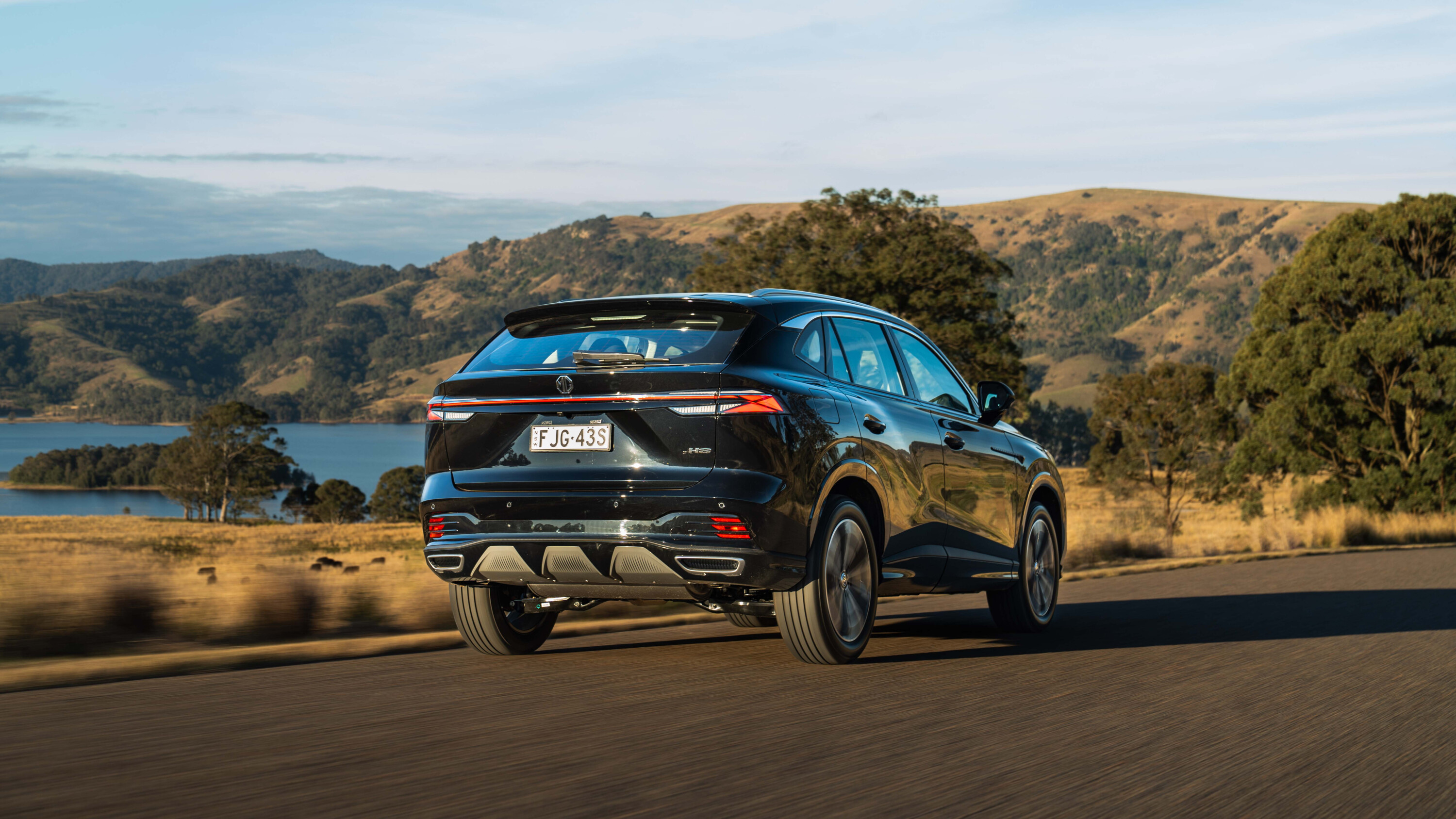
The old HS, introduced back in 2019, wasn’t a bad car, but it was the sort of car that found itself beaten by a Mitsubishi Eclipse Cross in a January 2022 test, which tells you as much as you need to know about its place in the greater scheme of things.
MG is not a company to sit on its hands, that much we’ve become acutely aware of. In fact it’s on a headlong tear of vehicle development, and the accelerating competence of its recent wares – think new MG4, Cyberster and latest MG3 – clearly show that we the days of damning its products with faint praise are well and truly over.
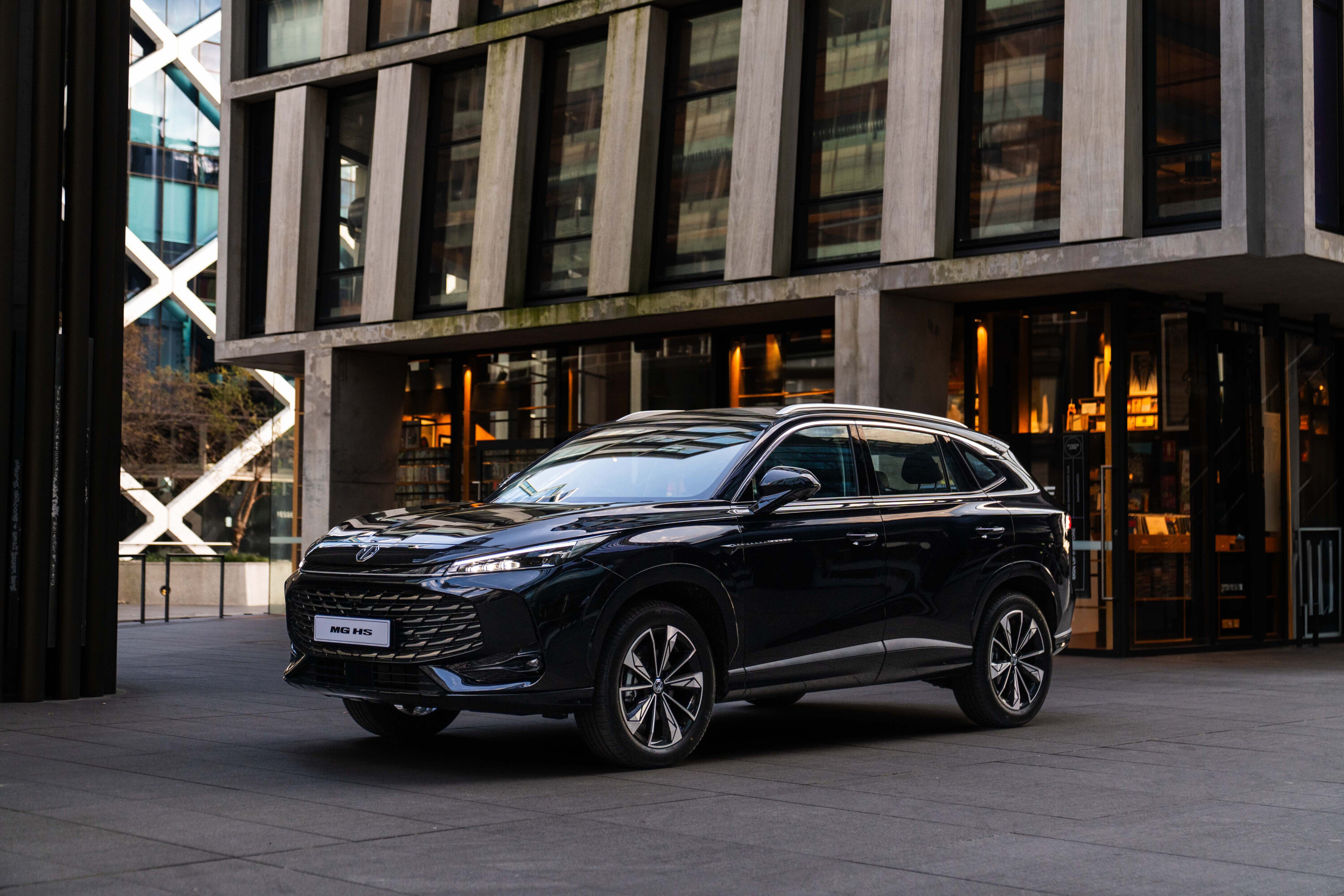
That may well be the case, but I’ve just driven the new MG HS and I’m genuinely shocked at how good it is. Some perspective. It’s not so good that it makes the rest of its rivals look stupid. Nevertheless, it is a huge leap forward when compared to its predecessor and it’s good enough to absolutely warrant a place on your midsize SUV shortlist, even if you’ve got the budget to be looking at some of the more established rivals.
MG calls the HS all-new, and it’s a reasonable call. Not only is the HS significantly bigger than its predecessor, but it gets a heavily revised powerplant too.
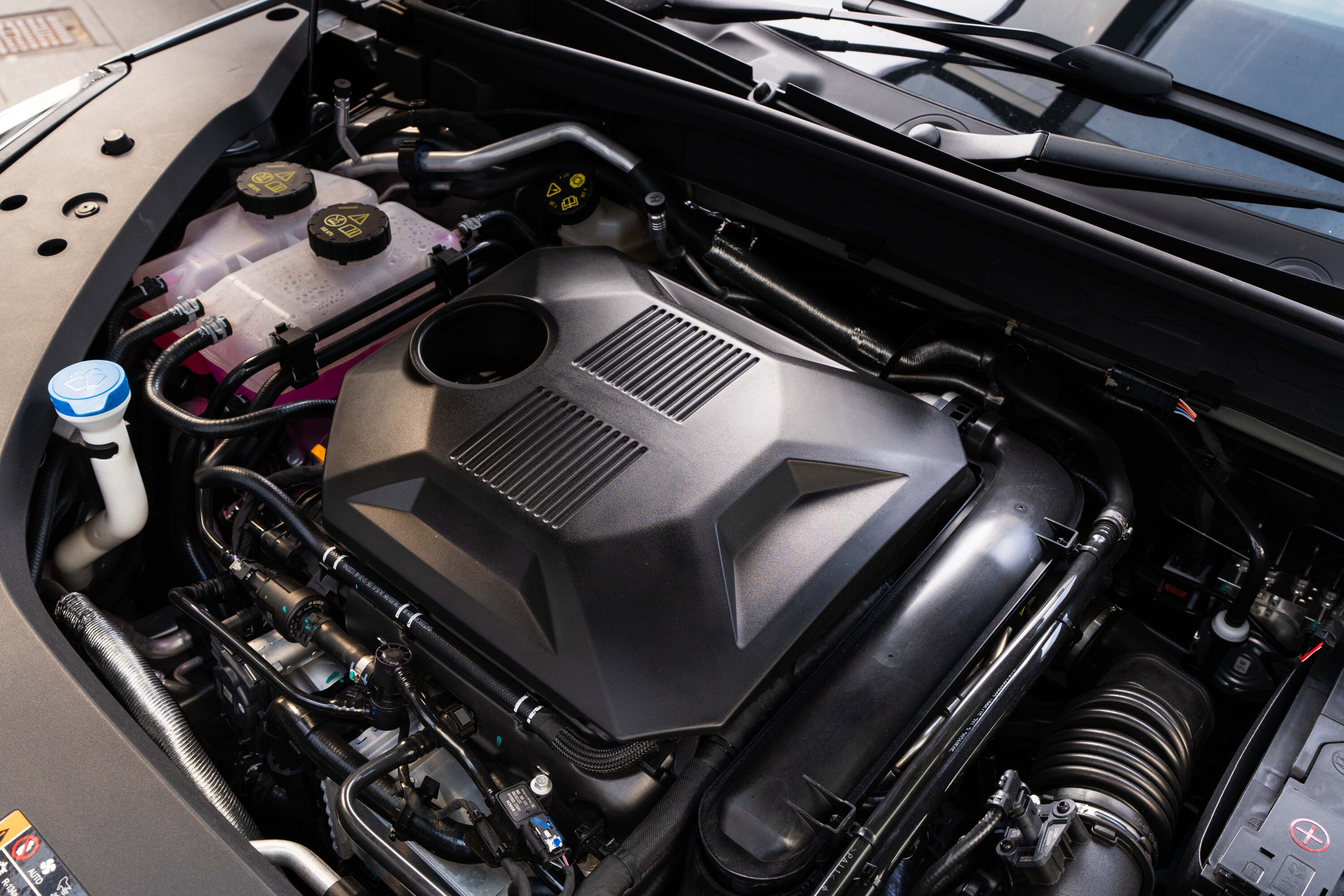
Hybrid and plug-in hybrid variants are in the works, but for the time being the sole mechanical configuration available to Aussies is a 1.5-litre four-cylinder turbocharged petrol engine that drives the front wheels via a new (for MG) design of oil-cooled seven-speed dual-clutch transmission.
Some meat on those bones. Where the old HS measured 4574mm from stem to stern with a 2720mm wheelbase, the latest car eases the belt out a bit. At 4655mm long, it’s 81mm lengthier and the wheelbase grows by another 45mm to 2765mm. That means that it’s now 55mm longer than a RAV4 and offers 75mm more in the wheelbase. It’s become one of the bigger cars in its class.
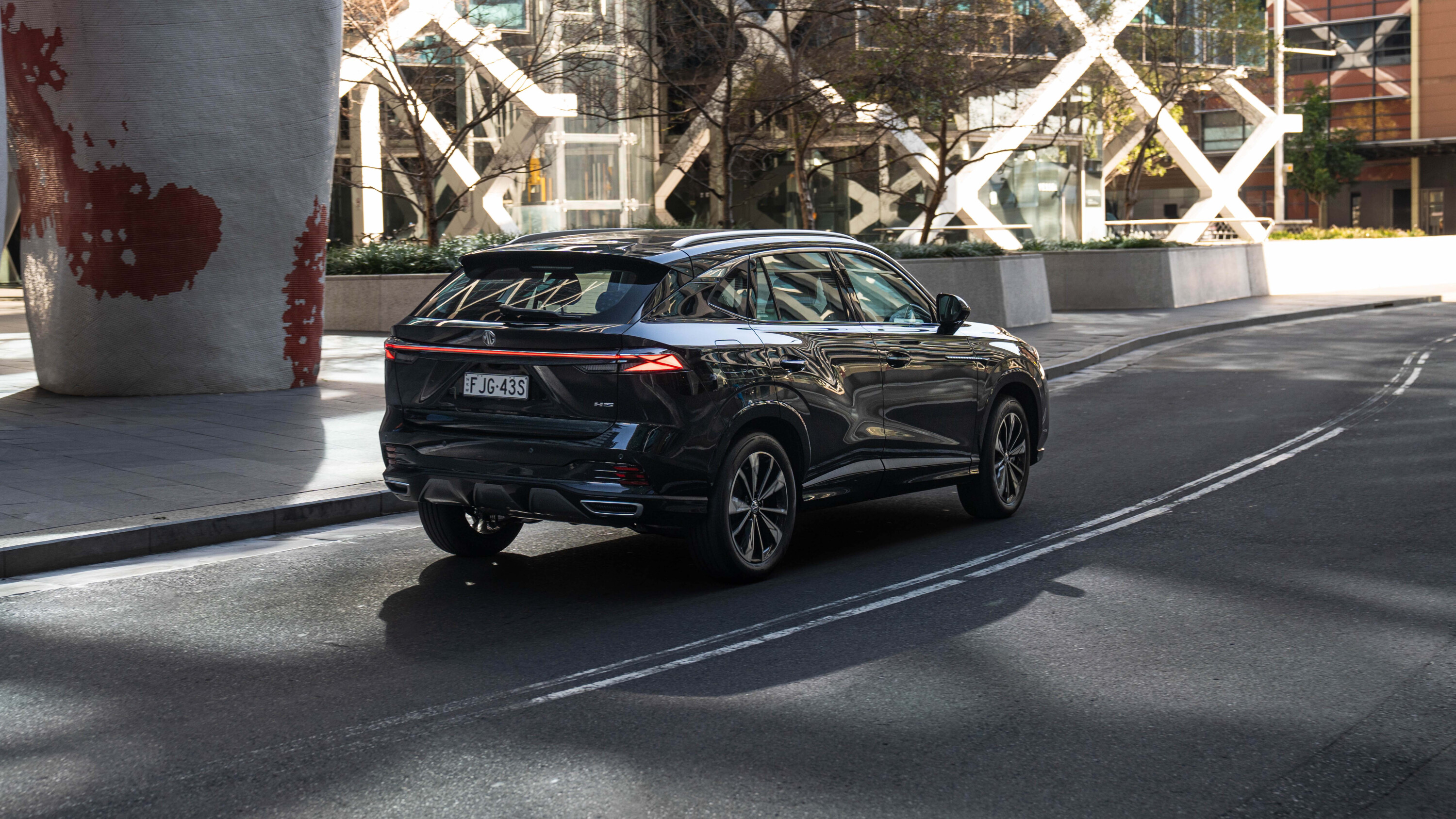
Possibly one of the better looking ones too. There’s a hint of Lexus in some of the glasshouse angles towards the rear and some saw Volkswagen around the wheel arches, but they’re not bad names to be associated with.
The rear lights and the 19-inch alloy wheel designs riff off the design of Renzo Piano’s iconic Shard building in south London. There’s a full width light bar at the rear and a full-width chrome strip atop the shapelier front grille, with the subtler MG badge now moved to a body mount rather than sitting in the middle of the grille as before. Six metallic paint finishes are offered: Cashmere Silver, Lunar Grey, Arctic Blue, Diamond Red, Black Pearl and Pearl White.
You’ll be forgiven if you think a 1496cc engine might struggle to haul circa 1600kg of generously-proportioned SUV up the road, and while 125kW and 275Nm are hardly stats that are about to sent your pants ablaze, it’s still 5kW and 72Nm more than you’d get from Toyota’s 2.0-litre engine in the RAV4, so it’s fair to say that the MG is punching above its weight.
A lot of work has clearly been devoted to improving the driving dynamics of the old HS.
That vehicle was somewhat underdamped, suffered from inconsistent control weights, was encumbered by significant cabin noise and was lumbered with an indecisive transmission. In order to give the HS some European polish, all of the chassis dynamic work was carried out at the IDIADA test facility in Spain against the best of European rivals and, on first acquaintance, there’s reason for optimism.
The test route MG assigned for our first drive was a route through Sydney’s CBD, which clearly offered little scope for extending the vehicle in any dynamic regard so this review will carry that caveat until we can get our hands on the HS to put through a proper test process.
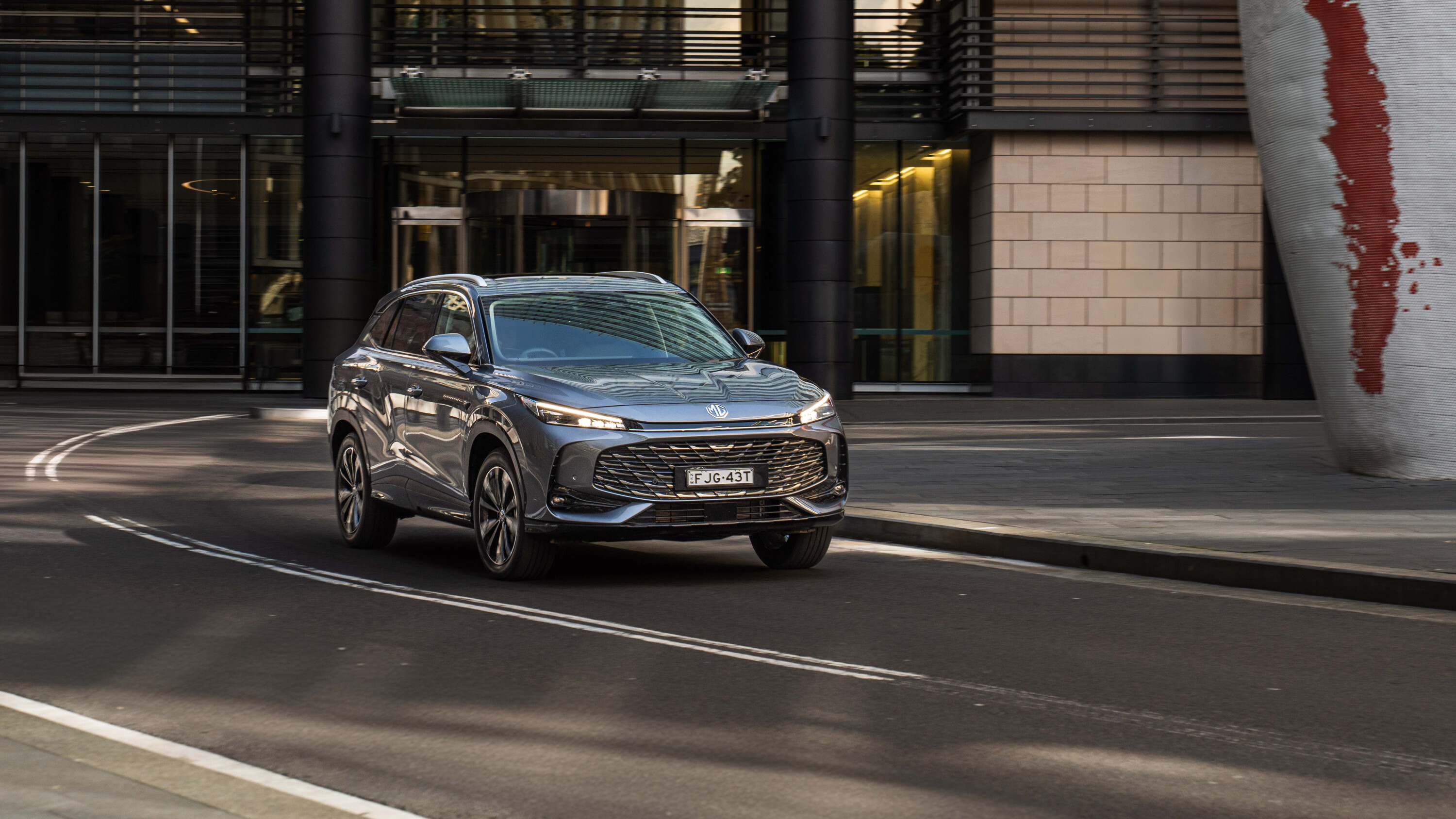
What I can tell you is that the ride is firmish, the steering fairly light and geared with a ratio of 14.8:1 (for an 11.3m turning circle), and the transmission logic is a few degrees smarter than before.
Despite a stack more soundproofing, the engine still makes its presence heard inside the cabin, although the little four sounds fairly purposeful. There’s a surprising degree of polish to the controls that is a significant step forward when compared to its predecessor.
The engine has enjoyed some upgrades to the valve timing system, features a water-charged air cooler, a variable geometry turbo and a pendulum dual-mass flywheel all in a bid to increase the responsiveness of the engine, and sync it with the sharper-witted wet DCT gearbox.
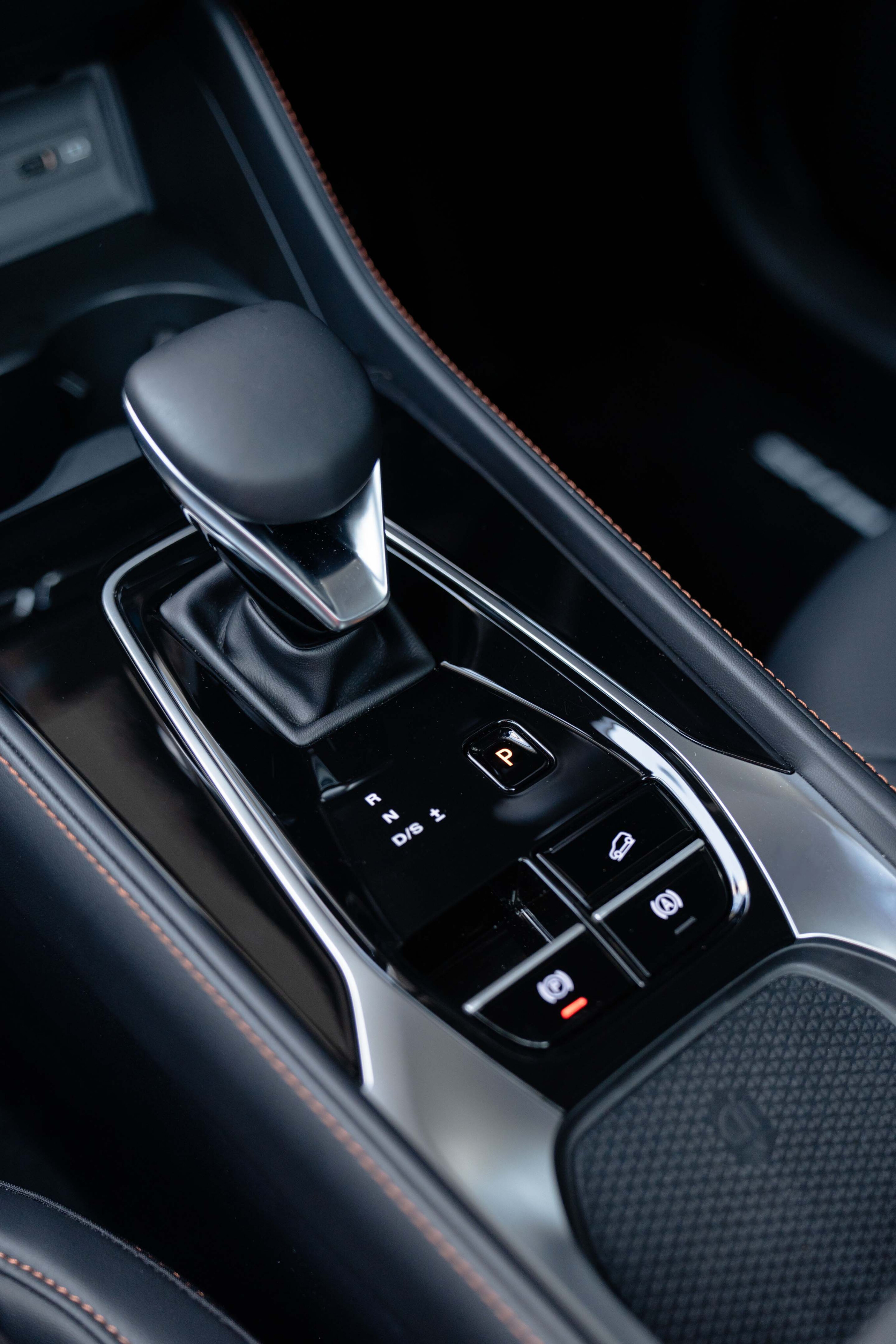
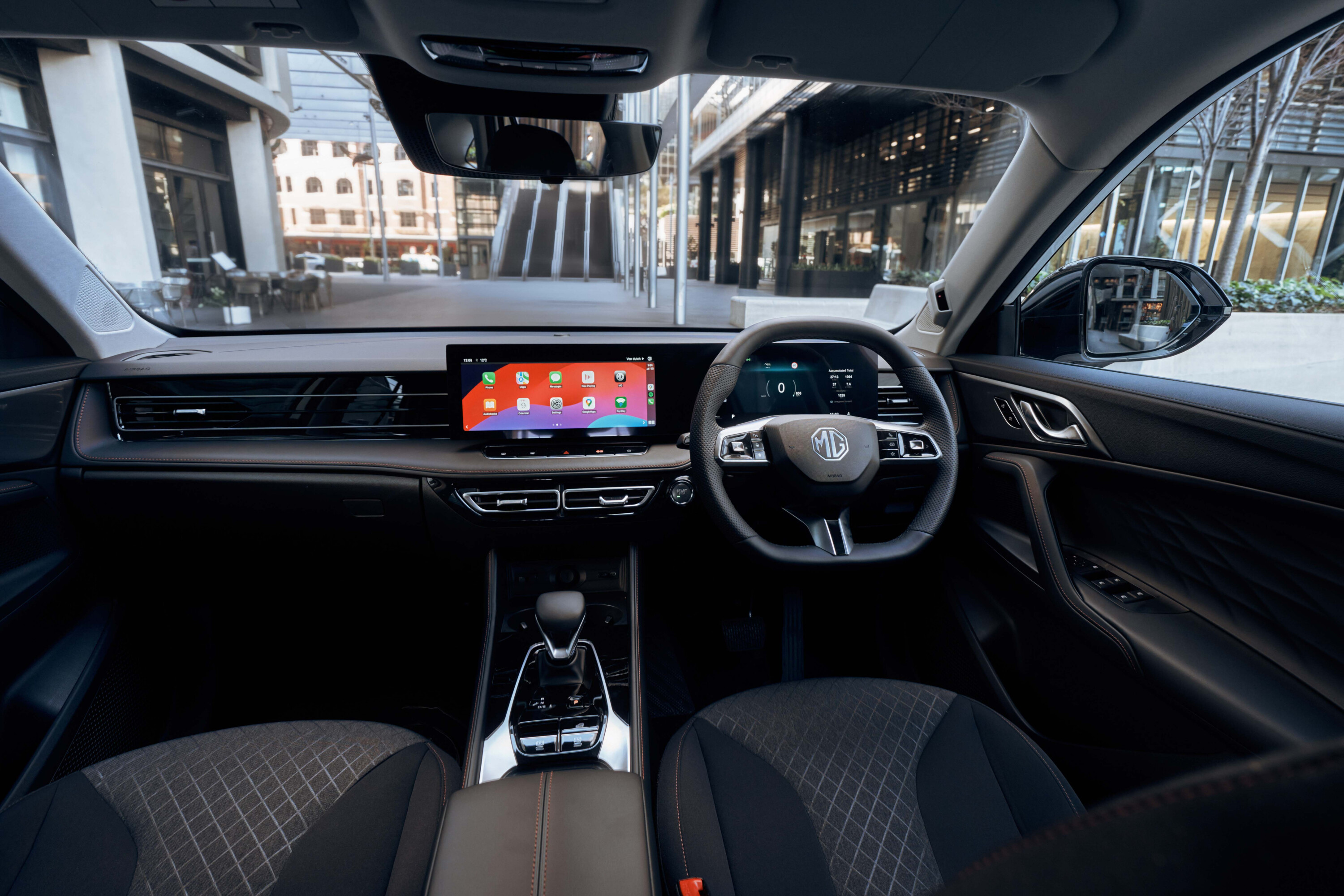
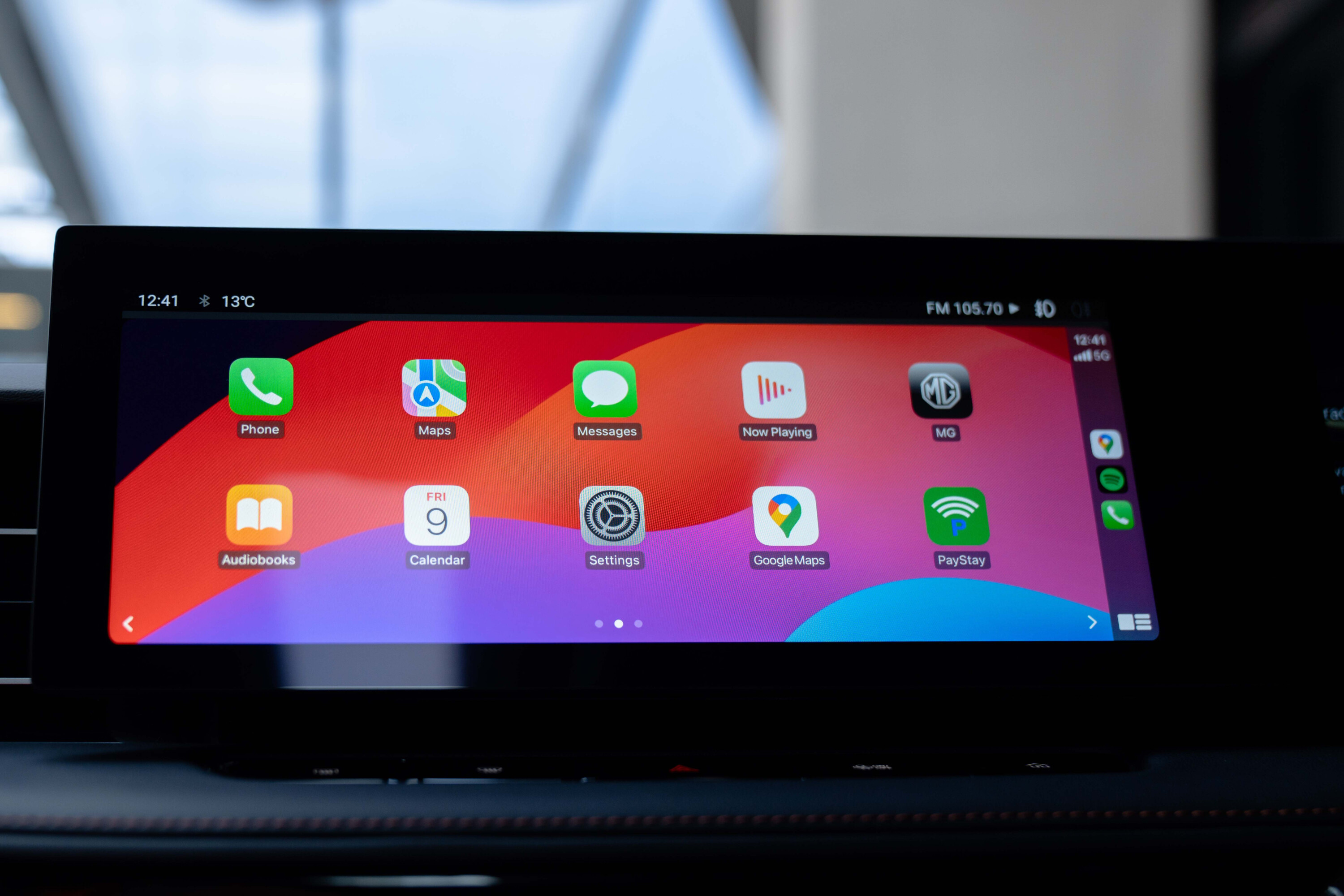
The cabin is well finished too, with the two 12.3-inch floating displays being the technical standout.
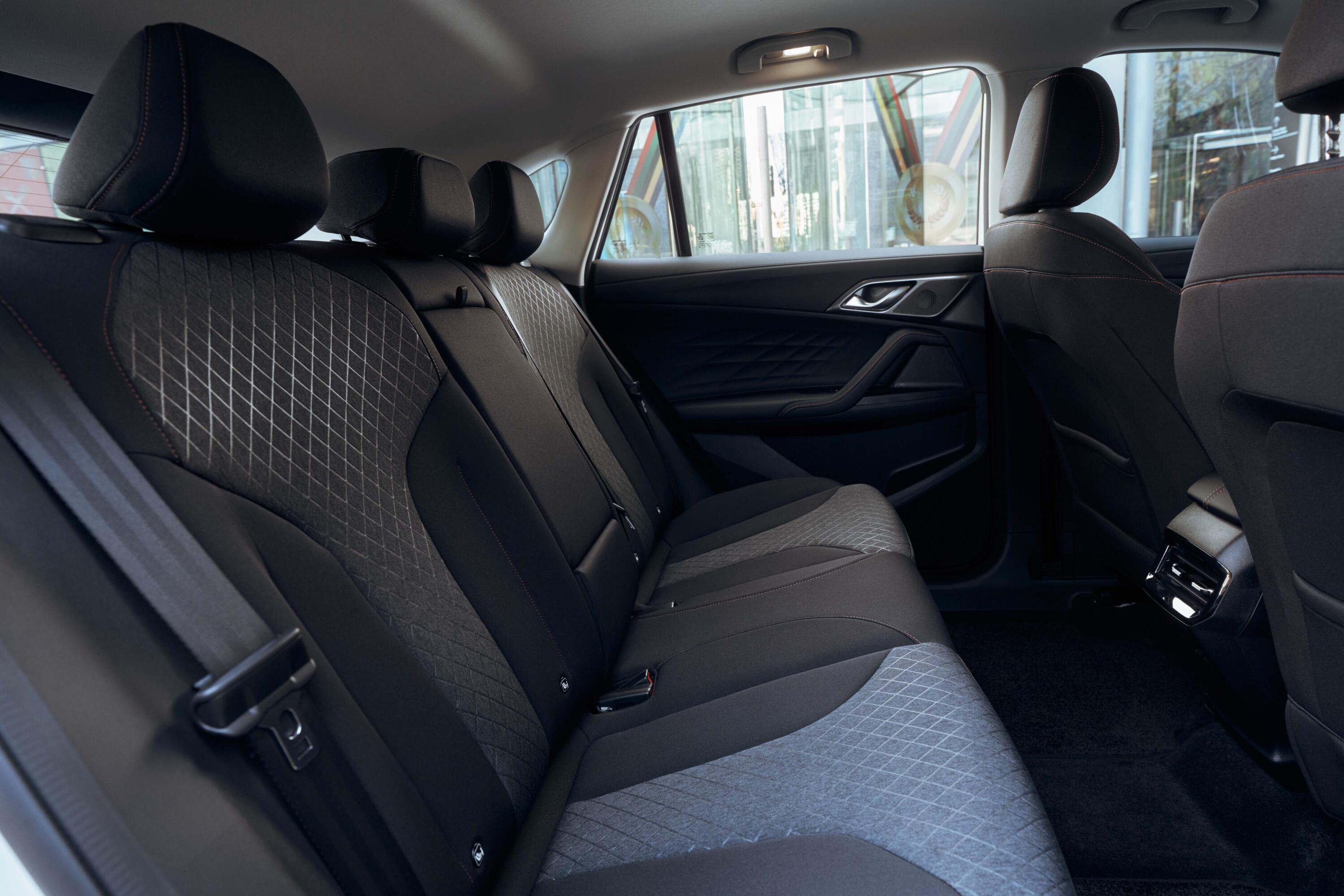
Even the base variant gets a leather-look finish to the dash with orange feature stitching and there’s stacks of room in the cabin. I’m 6’4” and found I could easily sit behind my driving position in the rear. The dual-pane panoramic roof of the top trim doesn’t come close to pinching headroom and, because this is a resolutely front-wheel driver model, there’s no transmission tunnel in the rear to rob centre occupants of foot space.
Grumbles? I’m not sure that the mix of functions split between buttons and the touch screens is quite optimised just yet and both the wheel-mounted thumb switches and the lid of the centre console storage bin feel as if they might struggle to wear some big mileages.
There’s also a huge array of ADAS functions which we couldn’t have hoped to put to the test in the short stint with the vehicle but the speed warning system makes its presence felt.
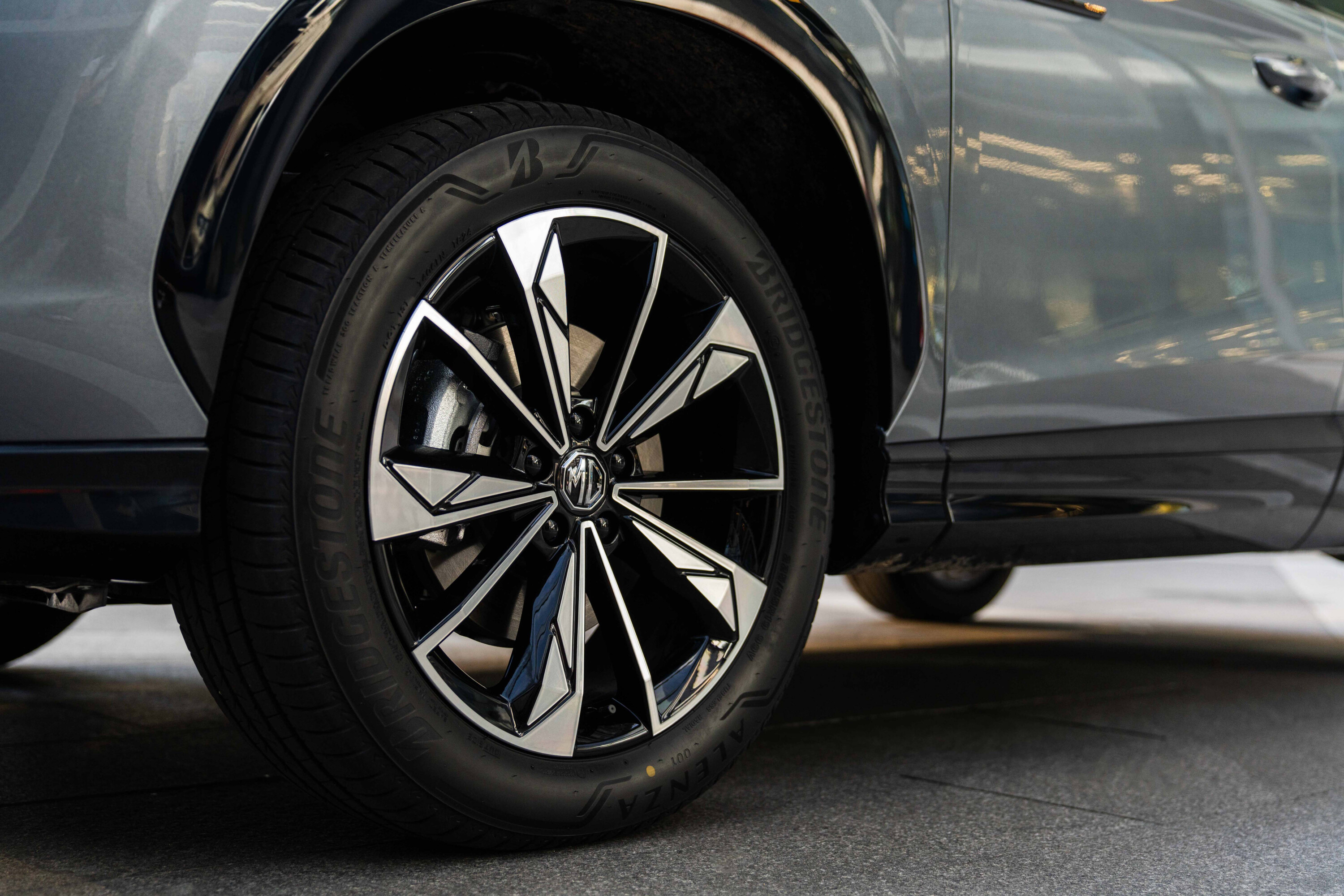
We’re assured that a wheel-mounted shortcut key can take you to a screen where you can opt in or out of these warnings. The HS has no paddles behind the wheel to take care of manual shifting duties and the lever shifts the wrong way (forward to upshift).
Open the tailgate and you’ve got 507 litres of space to play with (up 44L on the old car) and up to 1484 litres if you fold the 60/40 split rear bench. That’s reasonable, but the best cars in this class all offer capacities in the high 500s with the seats in place, so if ultimate carrying capacity is your thing, the MG may struggle to make the cut.
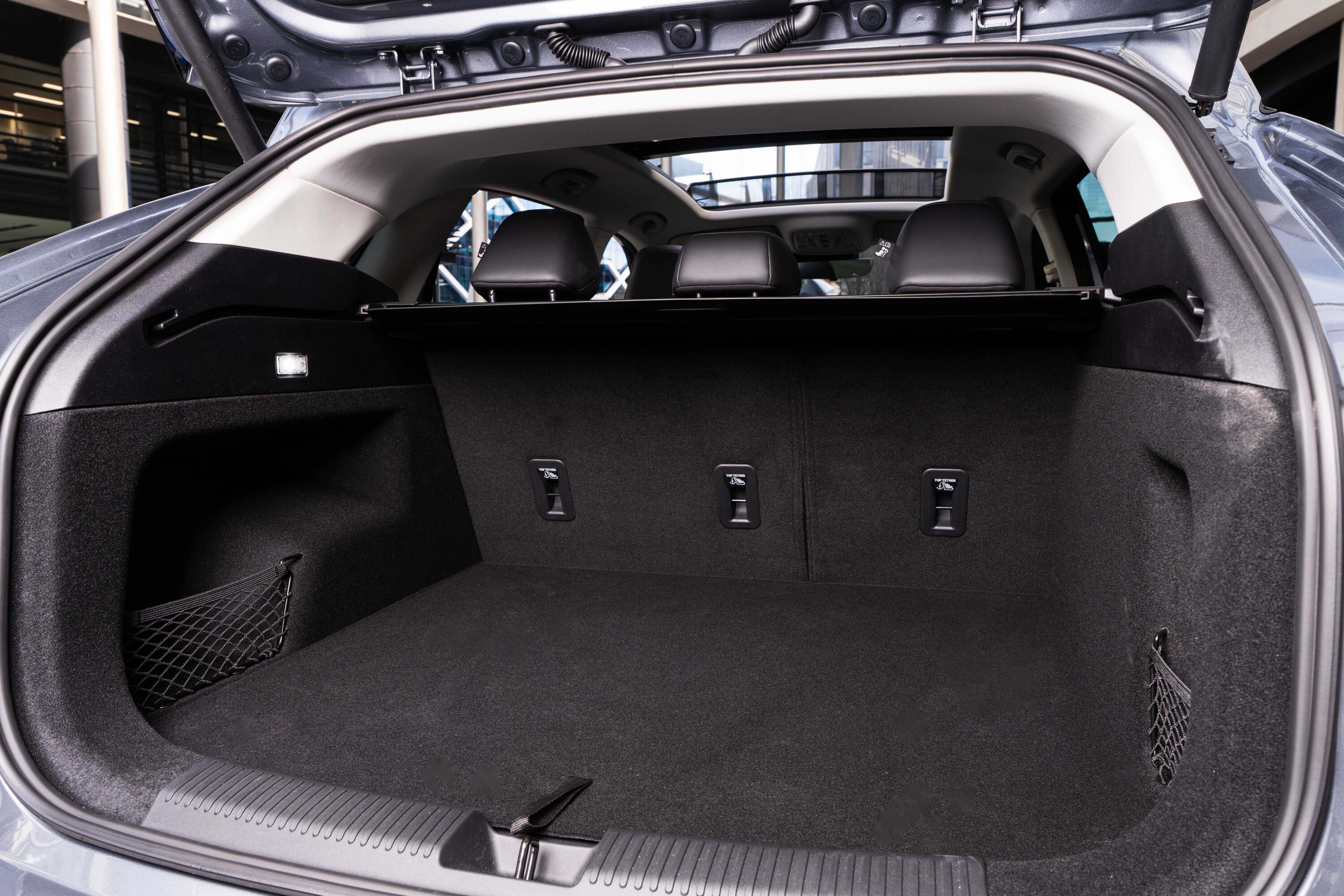
Beneath the boot floor is a space saver spare, which is a good deal more reassuring than the can of foam that some manufactures deliver in a bid to increase space, shed weight and, yes, cut costs.
Three mechanically identical trim levels are offered and the prices are razor sharp. The Vibe opens proceedings at $33,990 drive-away. Then there’s the midrange Excite at $36,990 and the range-topping Essence rounds out the range at $40,990, again all drive-away. Even the base Vibe gets dusk-sensing LED headlights, the dual 12.3-inch screens, a six-way powered driver’s seat, 18-inch alloys, rain-sensing wipers and the MG Pilot safety suite.
Step up to the Excite, which is expected to be the best-selling variant, and there’s leather-look seats, a 360-degree HD camera, 19-inch alloys, native sat nav, front fog lights and iSmart connectivity.
This is an embedded SIM card that allows remote functions such as lock/unlock, cabin temperature pre-conditioning and so on. As it stands there’s no facility for over-the-air updates but that capability is being worked on.
The top of the range is the Essence tacks $4,000 on again but brings with it the big panoramic sunroof, rear privacy glass, an electric tailgate, front parking sensors, front seat heating, lumbar control for the driver’s seat, dual-zone climate control, 15v wireless phone charging, an 8-speaker stereo and a memory function for the driver’s seat and door mirrors.
Seven airbags are fitted including a front centre bag that keeps front passenger’s heads apart in the event of an accident.
Running costs are very reasonable, with the car coming with a 10-year, 250,000km warranty and fuel economy of 6.9L/100km. There’s also a fixed price servicing plan that will take you to 150,000km/10 years for a total of $5741.
The bigger bills come at the 60,000km service ($936) and 120,000km job ($1647), which is something you might want to bear in mind a few years down the track if you’re in the market for a used HS and you’re wondering why there are so many for sale just shy of these odo readings.
Safety looks decent, but we’ll caveat that with the fact that the car has yet to be tested by EuroNCAP. MG expect a five-star rating, but expectations have occasionally been confounded by testing.
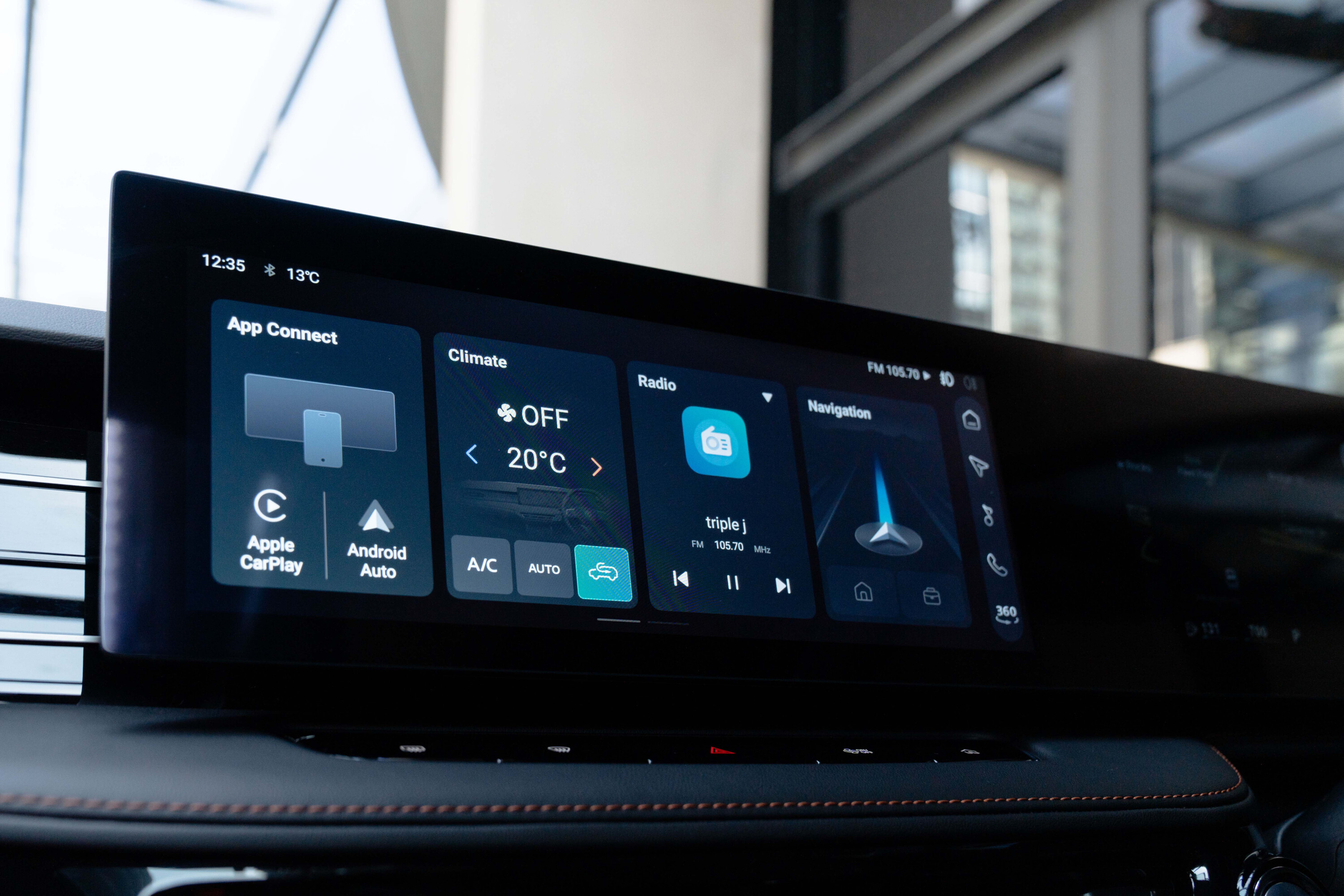
The 360-degree camera also incorporates ‘transparent chassis’ tech
The Pilot safety suite includes features such as adaptive cruise control, lane departure warning, AEB, intelligent high beam control, speed assistance system, emergency lane-keep assist, driver monitoring, blind spot detection and front collision warning as part of a suite of 15 electronic functions. The 360-degree camera also incorporates ‘transparent chassis’ tech
Were you to jump into some of the more self-assured cars in this class – and we’re thinking Kia Sportage, Honda CR-V and Mazda CX-5 – the MG HS might seem a little shy of their design maturity and finish.
But it’s not that far short. It’s certainly a huge step up from what you might have been expecting from a budget contender. Indeed, that feeling of pleasant surprise is a virtual constant when encountering the HS.
If you last drove an MG even just two or three years ago and came away unimpressed, I can understand that. I was the same.
This is part of the challenge that MG currently faces in communicating to buyers how quickly its products have improved. It can’t afford the usual model lifecycles of facelift at three years and replace at seven. The company is not going to level with or overtake the established players if it plays by established rules.
That’s exactly what it’s trying to do and, judging by how far the HS has narrowed the gap to the best in class, it’d be foolhardy to bet against MG making a damn good fist of that.
| 2024 MG HS 1.5T specifications | |
|---|---|
| Engine | 1496 4cyl, DOHC, 16v, turbo |
| Max power | 125kW @ 5000rpm |
| Max torque | 275Nm @ 3000-4000rpm |
| Transmission | 7-speed dual-clutch |
| Weight | 1685-1630kg |
| Economy | 6.9L/100km |
| 0-100km/h | 9.4sec |
| Price | $33,990-$40,990 |
| On sale | Now |
Lane Assist systems are now a mandatory safety requirement in Australia and in theory provide a significant benefit to road users.
They not only alert a driver should they unintentionally cross lanes, but they can physically keep a vehicle within the lines if required.
The technology most commonly features a forward-facing camera installed behind the rear vision mirror, which can detect lane markings and road signs and sends alerts if it registers lane drifting. If these audio and visual cues are ignored, some manufacturers use a system that gently tugs at the steering wheel to correct a vehicle’s course. Some even engage the brakes to slow or stop the vehicle – and there have been circumstances where said technology has overruled inappropriately.
While the benefits are obvious, a common criticism of Lane Assist systems is that the constant chimes and wheel corrections can be very intrusive to the driver – the current-gen D-MAX and Triton spring to mind – especially when combined with other driving aids. In fact, Mitsubishi only recently scaled back its overbearing Driver Monitoring tech to be less intrusive.
So can you permanently disable these at-times annoying Lane Assist systems? For new vehicles manufactured in 2024, the short answer is no.
Not only is Lane Assist an essential safety requirement for a vehicle to achieve a five-star ANCAP safety rating, but it’s now mandatory in 2024 and must be fitted to all new vehicles to meet the safety requirements of the National Road Vehicle Standards (Australian Design Rule 107/00).
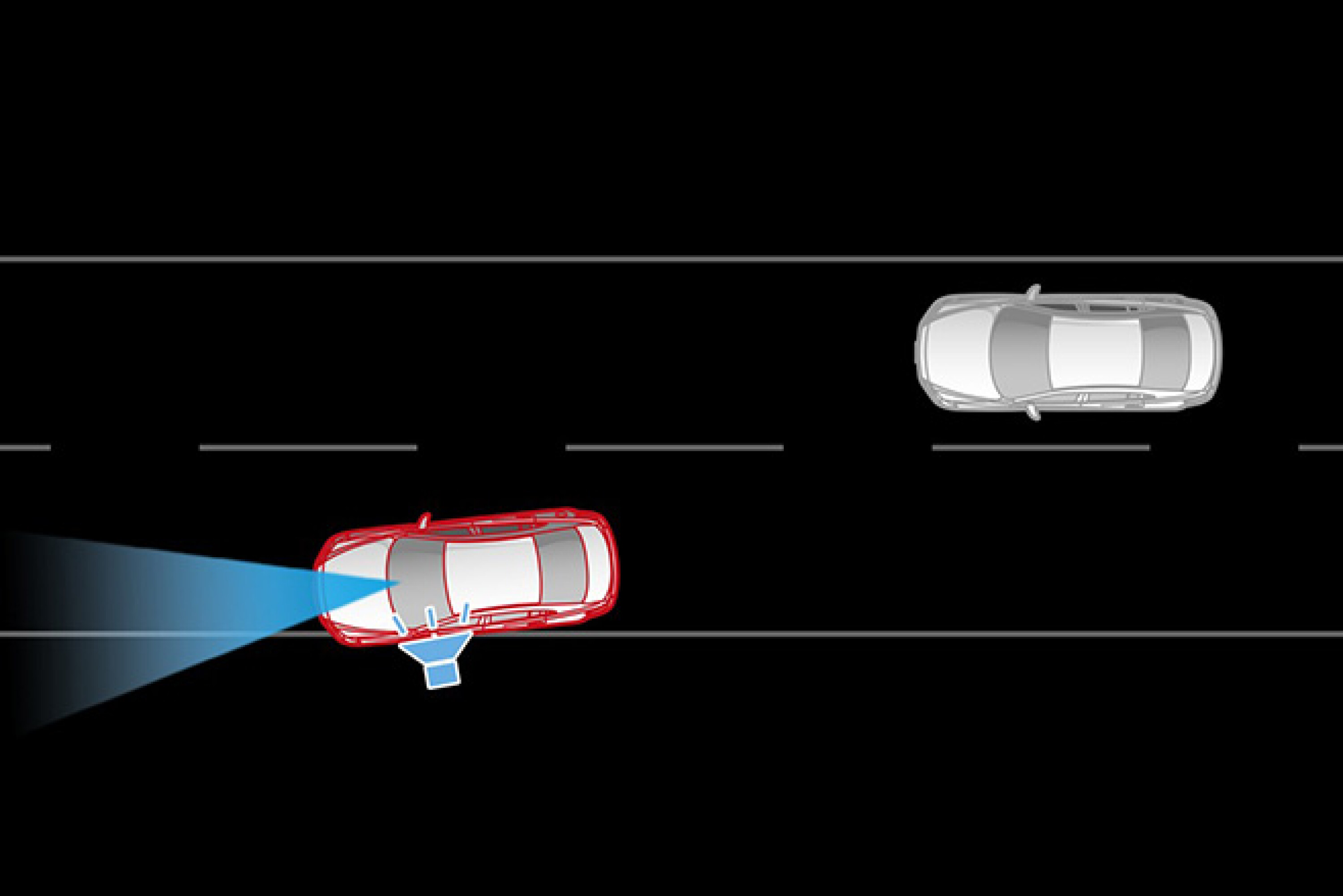
There is a solution, depending on the make and model: You can adjust the sensitivity of this function, or temporarily turn off the system completely – but it’ll often reset on every ignition cycle, as will other safety functions you may have also altered or switched off during the process.
How can I configure the settings for the Lane Assist function?
In most modern vehicles, the process of deactivating Lane Assist can be performed via the settings tab within the system’s main infotainment system, or via driver’s head-up display. Here is a quick breakdown on how they can be configured on the five most-popular vehicles in Australia:
2024 Ford Ranger
- Click on the vehicle icon on the top right-hand side of the touchscreen.
- From here, select Settings, then select the Driver Assistance tab.
- Click on the Lane Keeping system, then adjust the sensitivity to alert sounds and aids.
2024 Kia Sportage
- Press and hold the menu button on the top right-hand side of the steering wheel.
- Scroll to Driver Assistance on the screen in the centre cluster.
- Hold OK Settings for a few seconds.
- On the main infotainment screen click on Lane Safety.
- Go ahead and press disable.
2024 Toyota HiLux
- There is a Lane Departure button on the steering wheel, to turn it OFF and ON.
- Another way to configure this system is to scroll to the Settings tab within the screen in the centre gauge cluster.
- Click on LDA and switch off YAW Assist or sensitivity of the LDA.
2024 Toyota RAV4
- On the left side of the steering wheel, use it to scroll to the Settings icon.
- Click on LTA by pressing OK.
- From here, click on Lane Assist ON to OFF.
2024 Hyundai Tucson
- Hold down the mute mutton for about five seconds.
- Click on Setup on the main infotainment screen.
- Click on Vehicle and that will take you to the driver assistance menu.
- Now click on Forward Collision.
- Scroll down to Lane Assist.
- Select lane assist and turn OFF.
Here are the latest cars from Grays that have appeared on our radar.
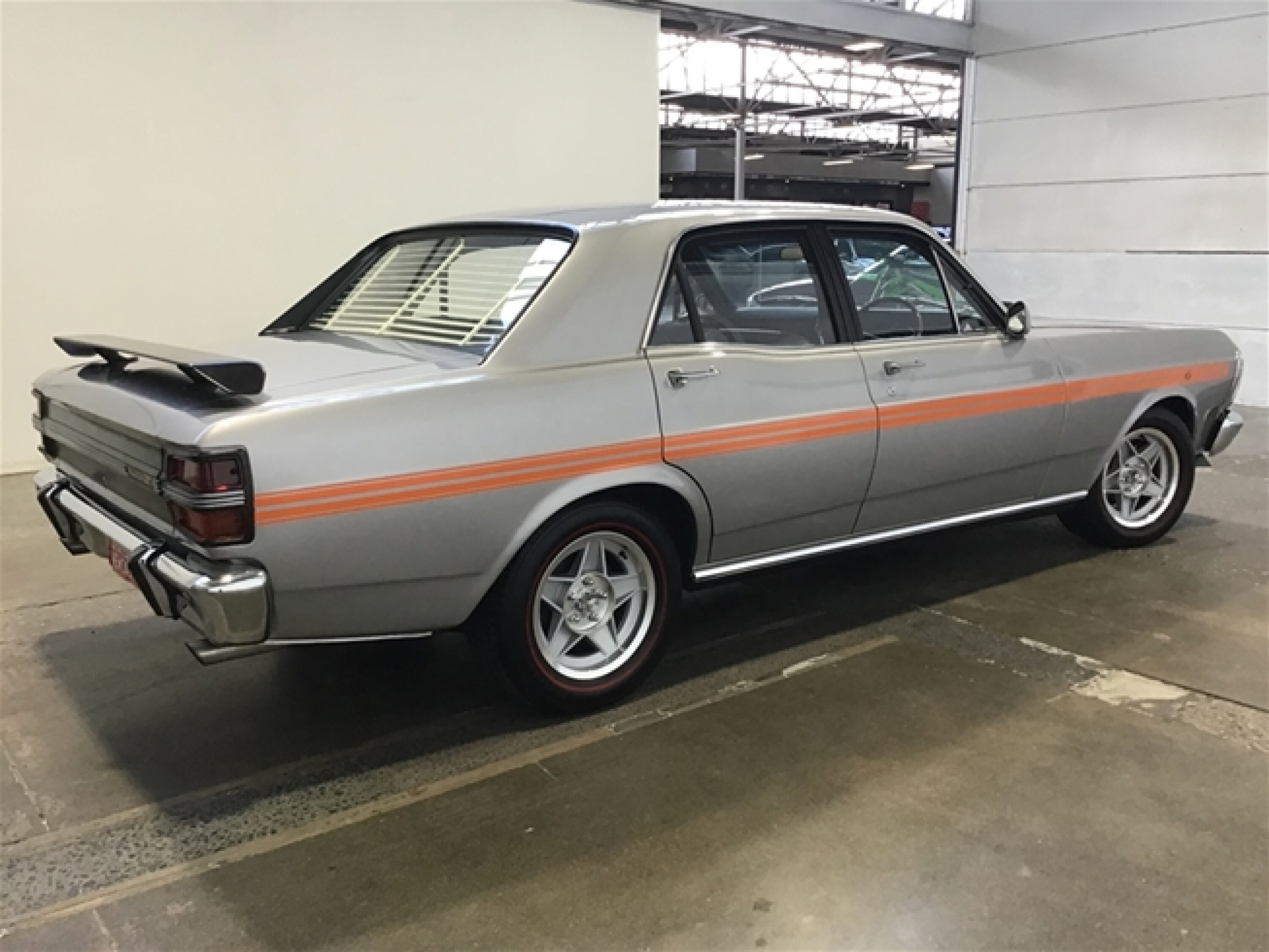
1971 Ford Falcon XY GTHO (replica)
Sure, it might be a replica but there’s still something about the sheer presence of these XY GTHO’s.
Still commanding a premium, this classic Falcon will surely provide plenty of theatre for those afternoon coastal drives.
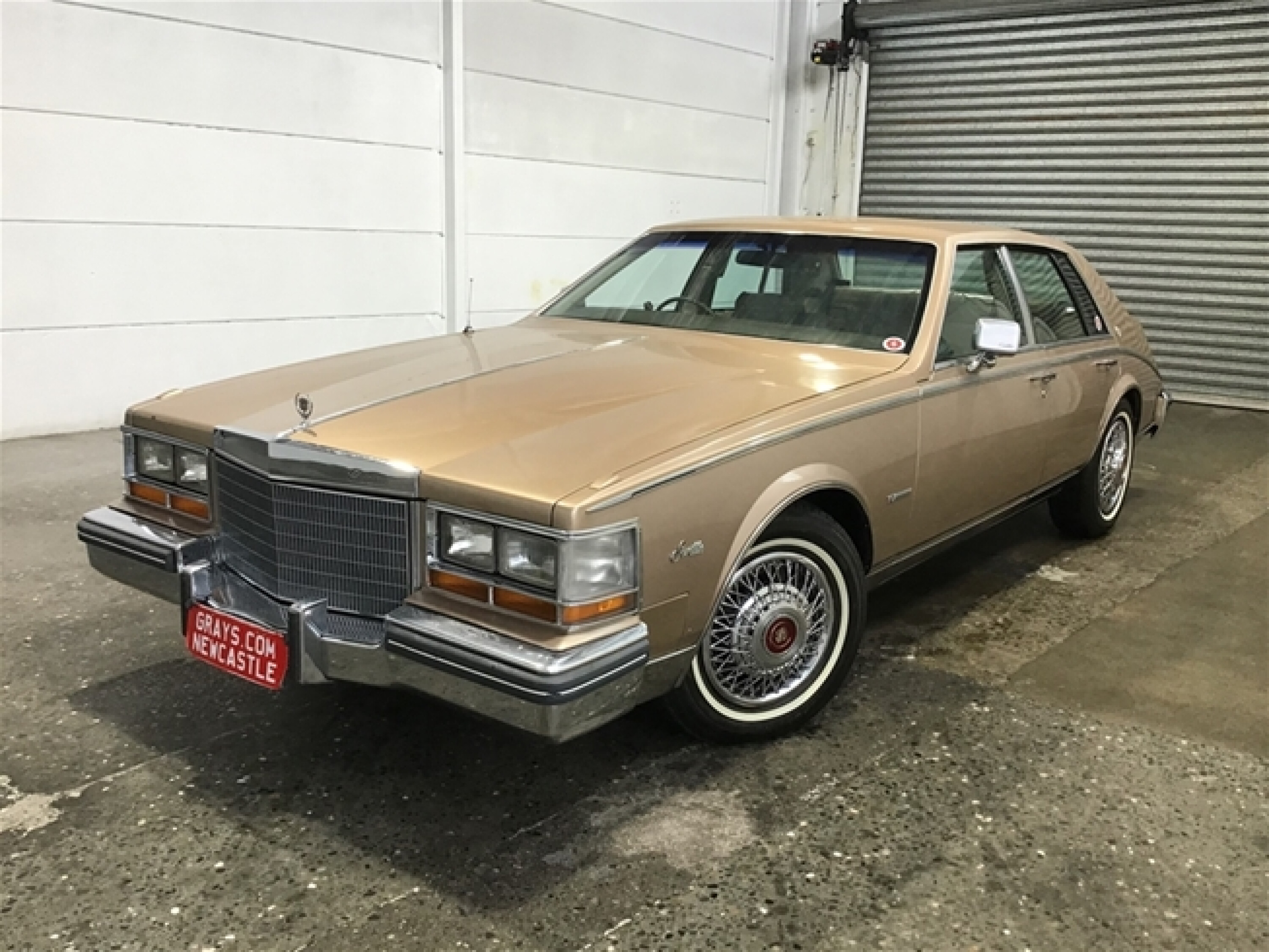
1981 Cadillac Seville automatic
Around the same time Australia had the GTHO, across the Pacific were the US cruisers like the Cadillac. The American brand is soon due to come to Australia with their electric offerings, but why not take a look at their classic range beforehand by checking out this Seville?
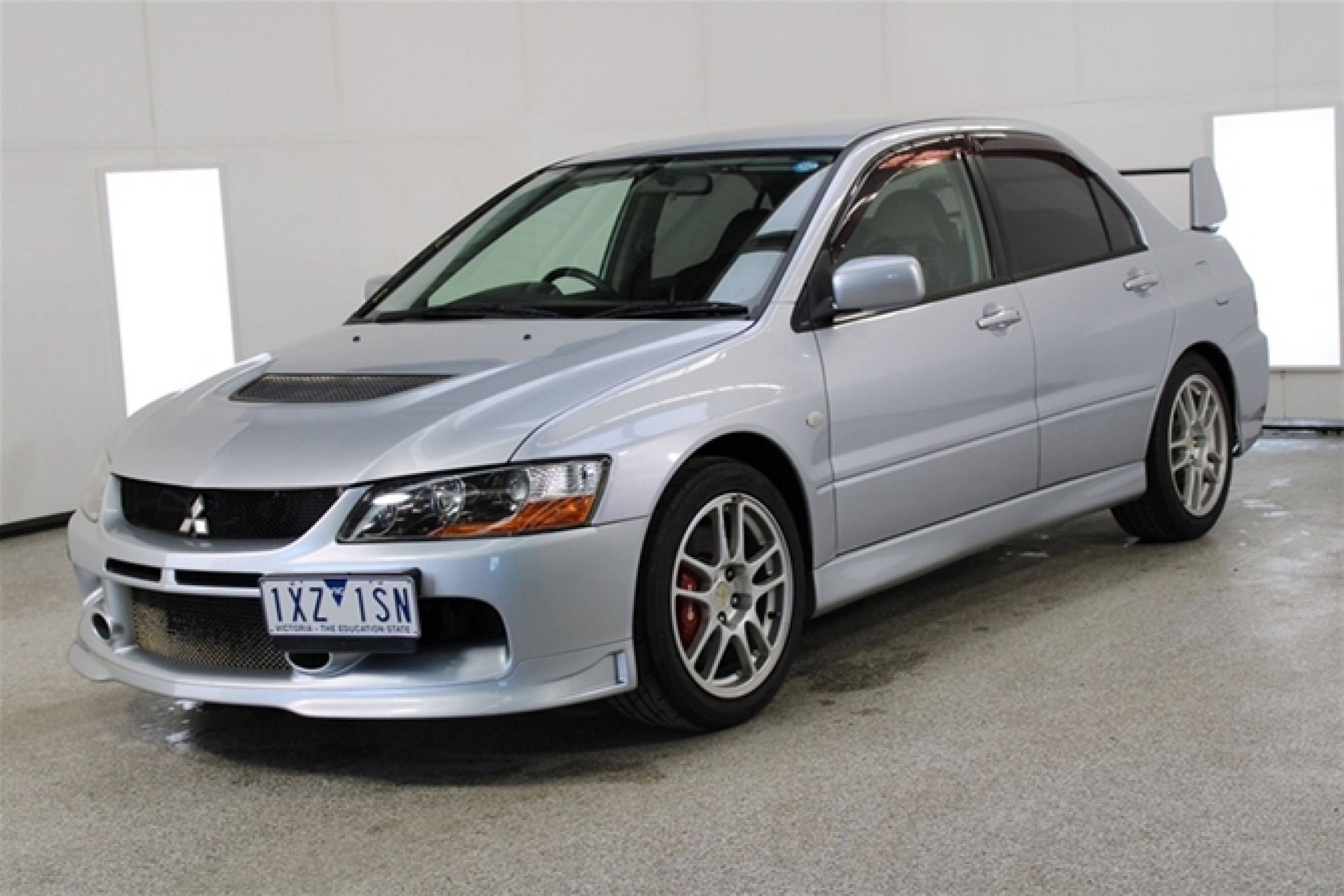
2006 Mitsubishi Lancer Evolution IX MR
Getting away from the cruisers yields an example of Mitsubishi’s iconic Evolution. This ninth generation of the rally stormer was the penultimate version before the Evolution X delivered the final farewell for the badge in 2016.
2013 BMW 4 Series 435i automatic
Two-door luxury seekers could give this BMW 4 Series a look, with 71,000km on the odometer – a fairly low annual figure for a car that’s just past a decade old.

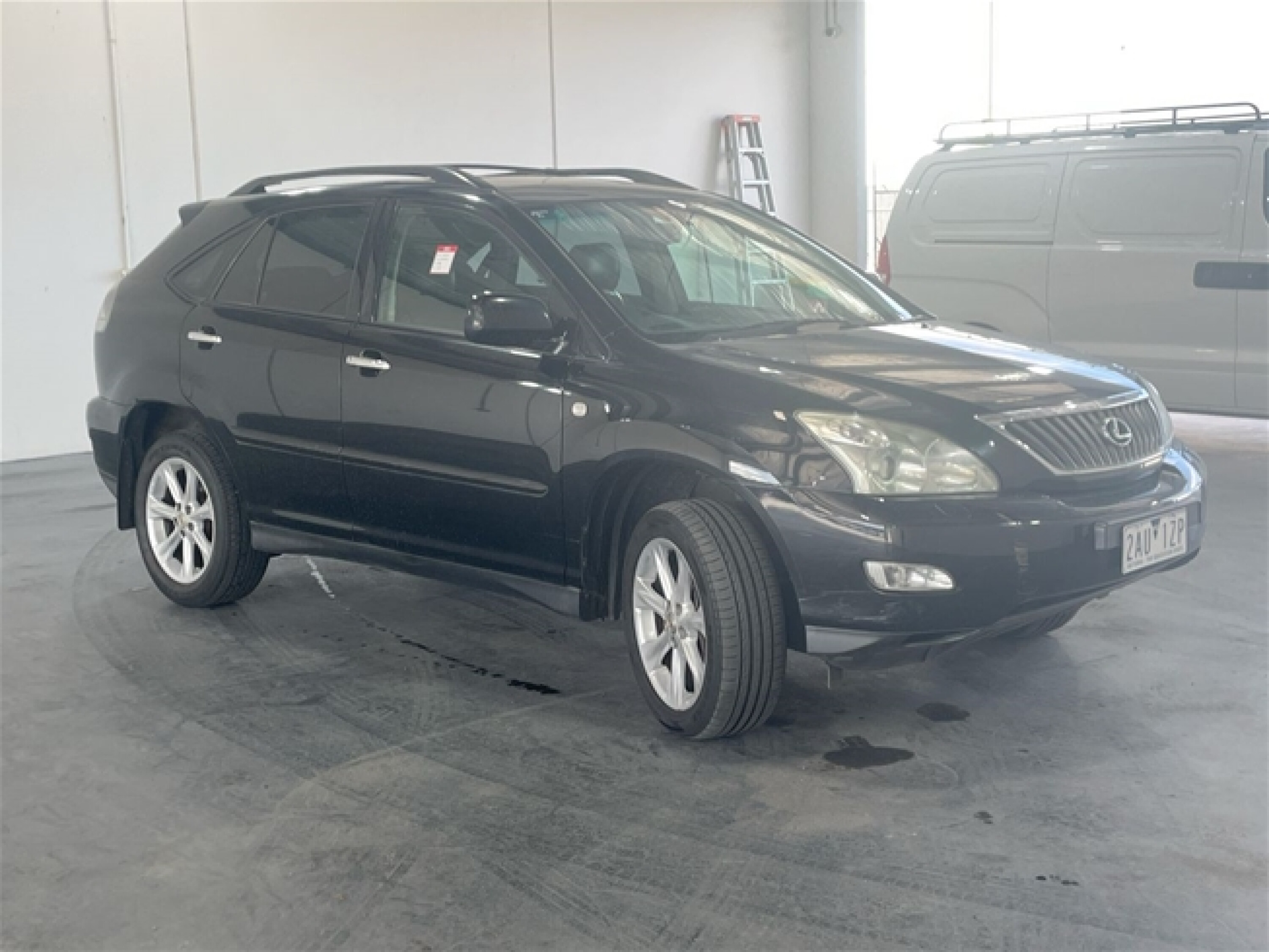
2007 Lexus RX350 Sports Luxury
Lexus has always provided a solid alternative to those in the luxury market, and the RX line from the Japanese Make has always been a solid contender in the SUV arena, selling solid numbers for a number of decades now.
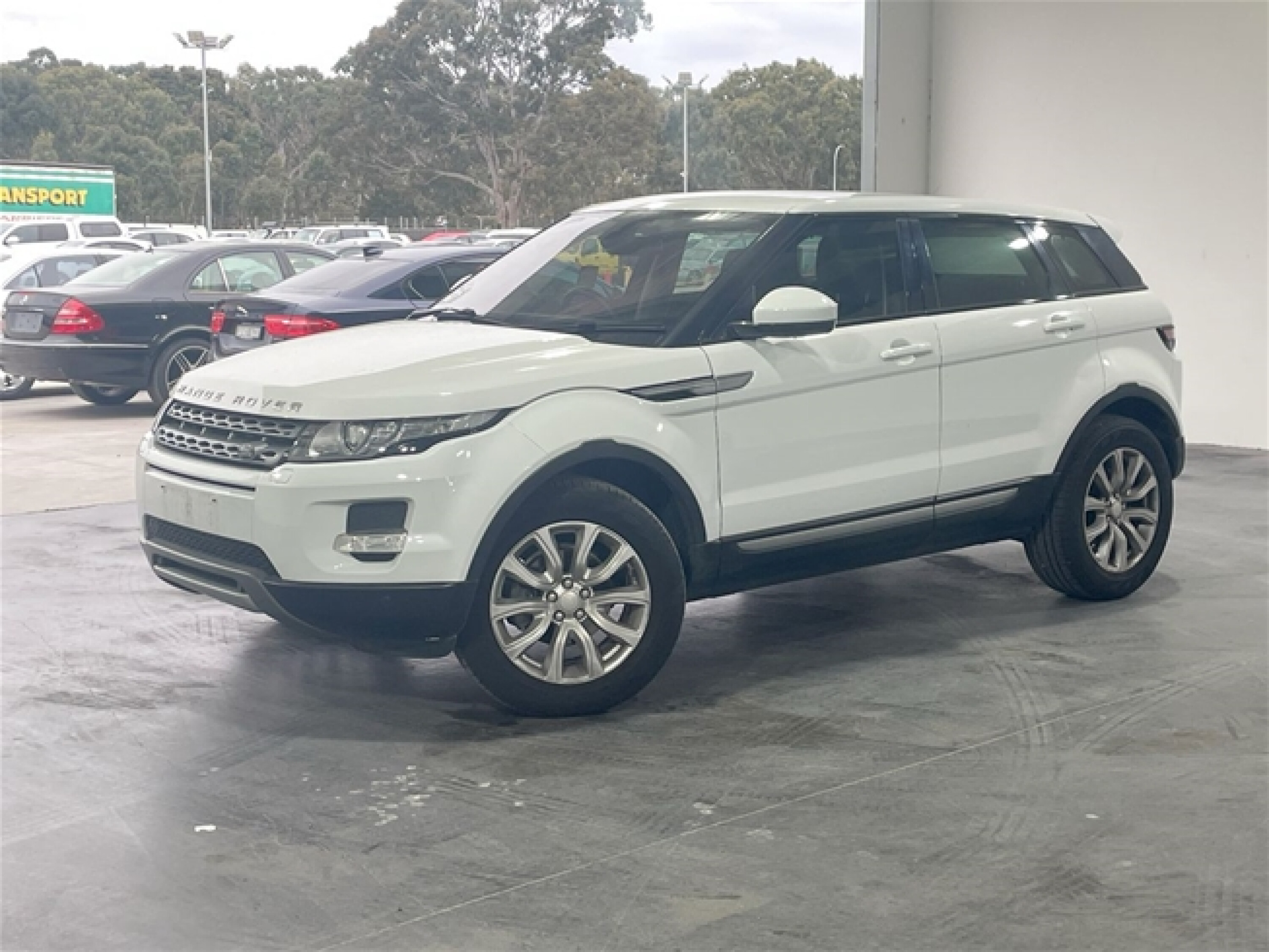
2014 Land Rover Range Rover Evoque SD4
And finally there’s this Range Rover Evoque, which is always something that offers a little more stylistic edge over other SUV’s in the premium segment.
Take a look at Grays’ entire listings here [↗]
After notching up a spot in the top-ten of the most popular brands of 2023, MG’s product pipeline still has more to deliver.
The MG4 has been making waves in the EV space, while the MG3 launched in new-generation form in 2024 to help continue the sales momentum of that nameplate – both are currently leaders in their respective segments.
What’s coming? A tasty new sports car is bound to be an attention-grabber for the brand as it launches locally at the end of 2024, while the more prosaic MG HS gets an all-new replacement in the second half of the year too.
JUMP AHEAD
New models
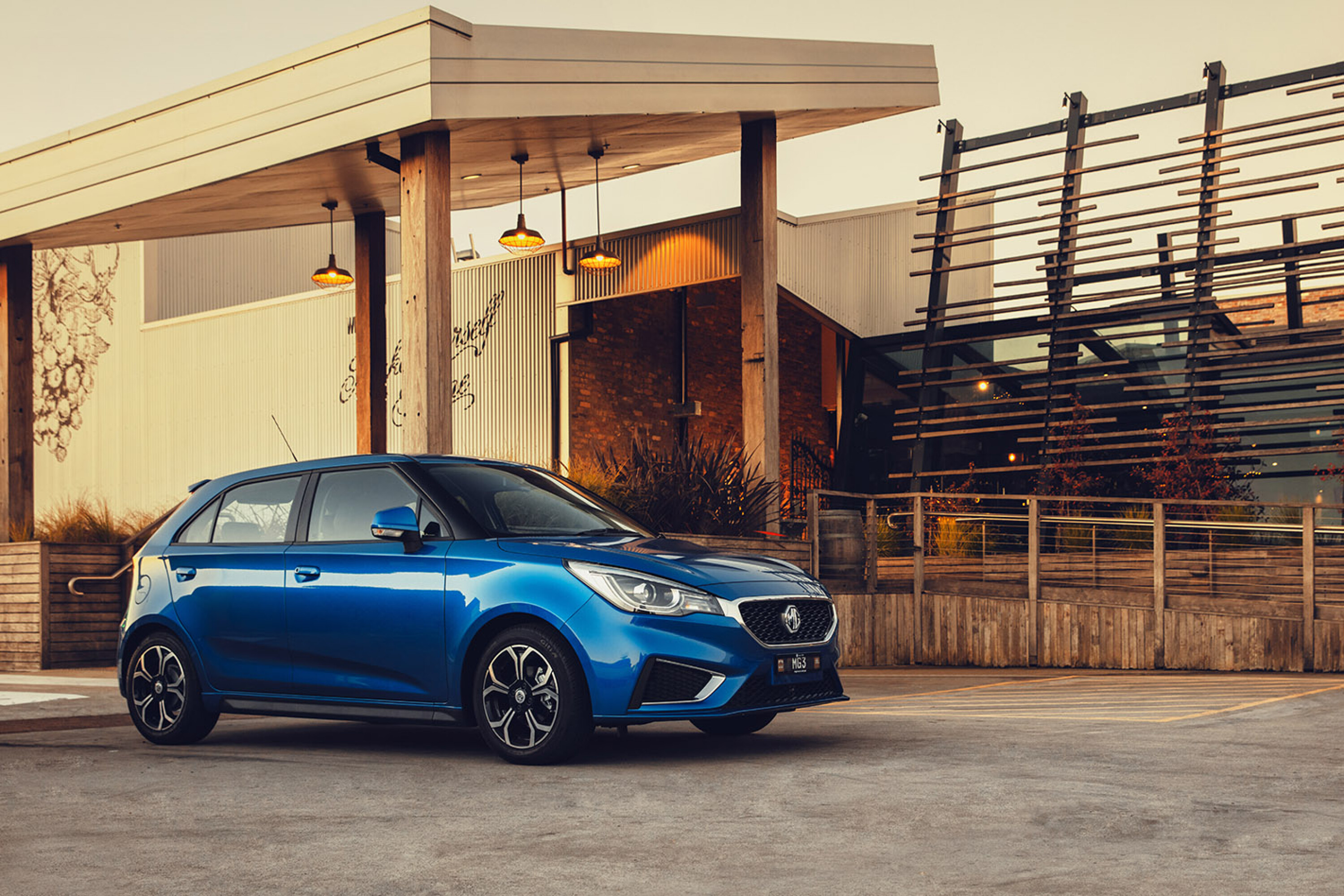
MG3
Affordability (read bargain-basement pricing) was the old MG3’s calling card, but its brand-new replacement is different.
The new-generation MG3 arrived in Australia in mid-2024, with price increases across the range meaning it lost the title of “Australia’s Cheapest Car” to the Kia Picanto.
However, a general uplift in size, quality and equipment means comparisons between the new MG3 and the old one aren’t exactly fair, and with the arrival of a surprisingly grunty 155kW hybrid variant – facilitated by the adoption of a more advanced platform – this MG3 is no longer one for the penny-pinchers.
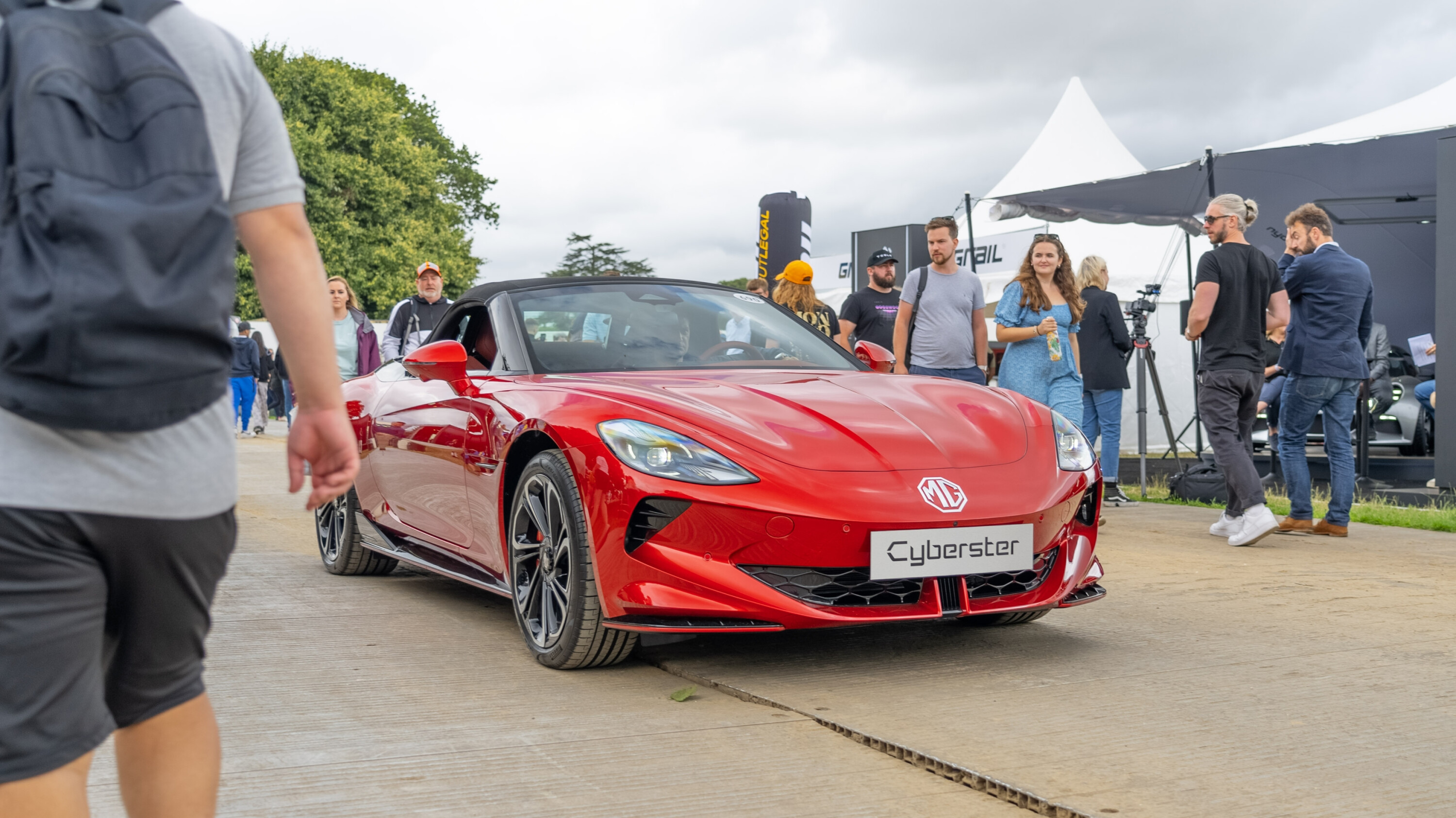
Cyberster
Currently being rolled out in MG markets overseas, MG’s gullwing electric sports car will land in Australia by the end of 2024.
It will put the brand in a new space for price point, potentially becoming the first MG to cross the $100,000 barrier – and potentially stretching as high as $150,000.
The Cyberster, though, competes in a market of one, with prodigious performance, rear-wheel-drive and just two seats. Specifications and final pricing will be released closer to its Q4 2024 arrival.
HS
MG’s mid-size SUV is one of the company’s older products, having launched locally back in 2019 after its Chinese debut the previous year.
Later this year, an all-new replacement arrives with a wider and longer body, with a 30mm longer wheelbase also helping deliver a larger cabin and bigger boot, pushing the HS towards the bigger end of the midsize segment where rivals like the Honda CR-V and Toyota RAV4 reside.
Pricing and features are yet to be announced, but MG Australia is promising a local launch sometime in the second half of 2024.
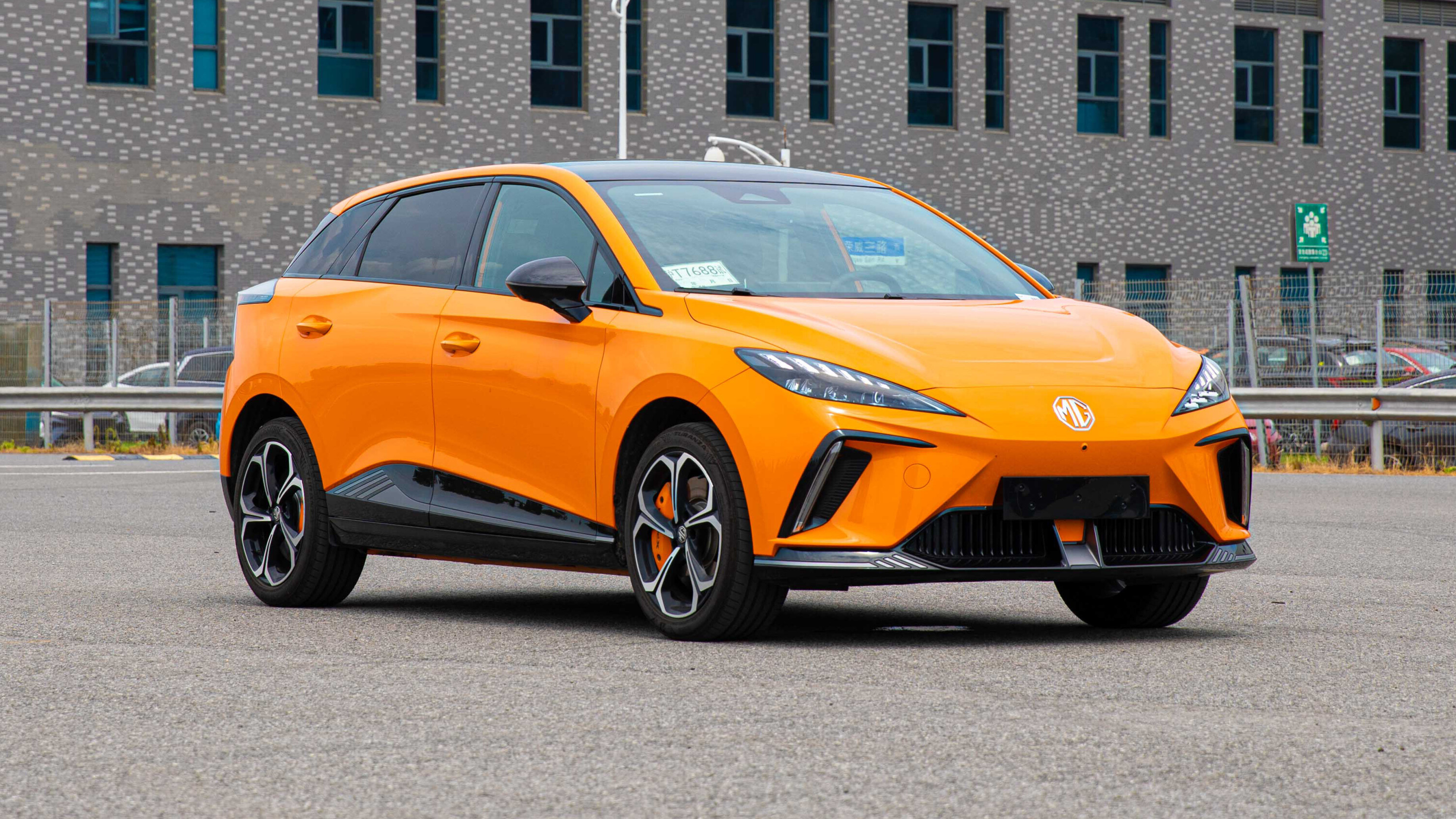
MG4 update
The MG4 has been a strong performer in Australia since launch.
While 2024 didn’t see much in the way of big changes for the still-fresh electric hatchback, a pricing rejig wheeled out in August has tweaked the value equation for the MG4.
A national drive-away price has been discontinued, replaced instead by a stat-by-state drive-away price framework that stretches from $39,252 for an MG4 Excite sold in the NT, to $61,282 for an MG4 XPower sold in WA. When examining retail prices, however, the prictag has dropped by several thousand dollars for each variant, with the base model now starting at an RRP of $37,990 and the XPower capping the range with its $55,900 RRP.
Future product
ZS/ZST
The current ZS is no spring chicken, having entered production way back in 2017, but its replacement has just broken cover.
We’ll have more details in the near future – including local timing – but right now don’t bank on this one arriving in Australia until sometime in 2025.
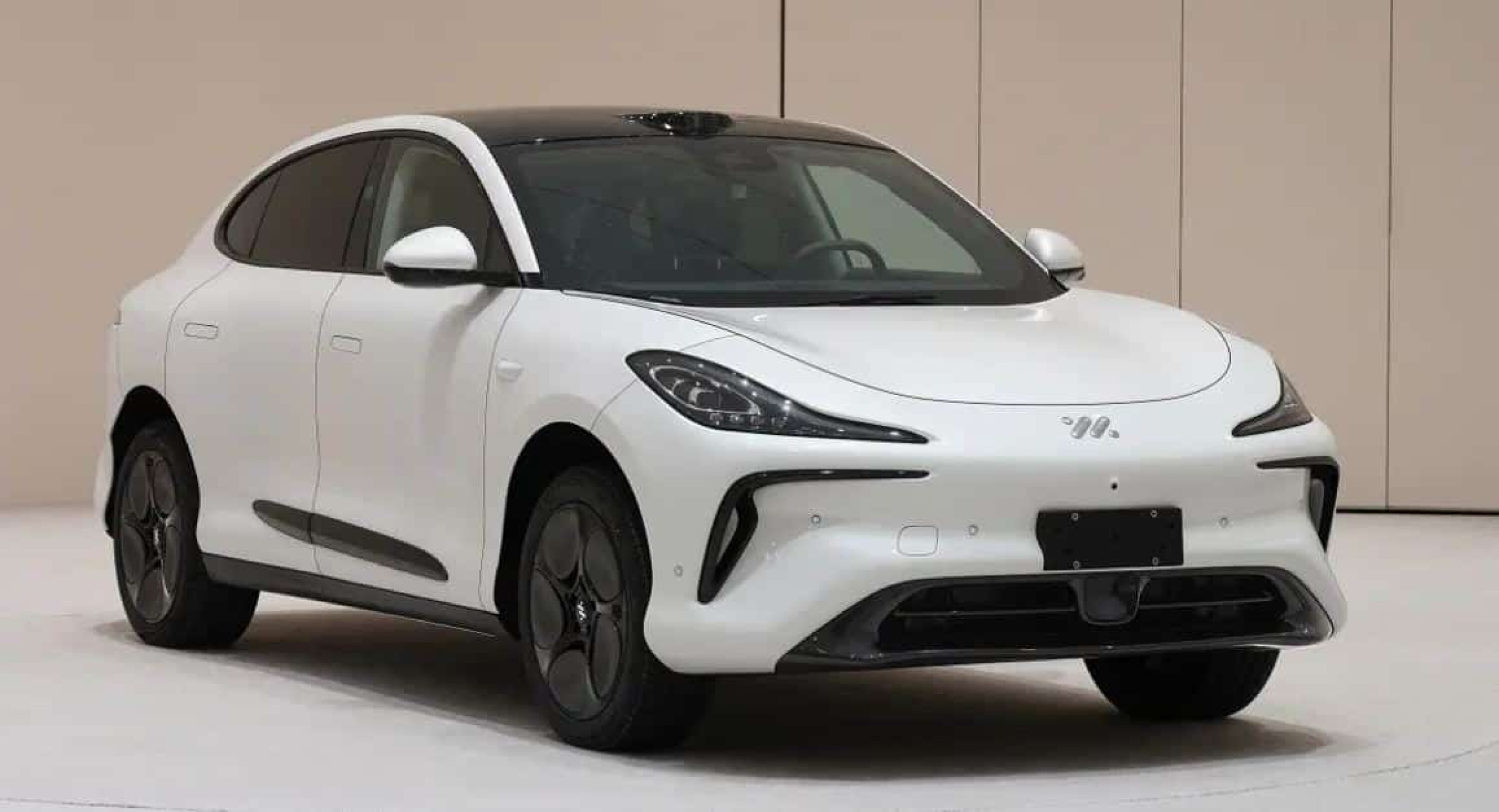
LS6 EV
According to reports, MG Australia is very keen to import a mid-sized luxury SUV from its sister brand IM Motors, the LS6, which is similar in size and concept to the ultra-successful Tesla Model Y.
It will likely crash through the $100,000 ceiling and, like the Cyberster, will help to expose the local market to a side of the MG brand not yet seen locally.
In terms of performance, the top-spec LS6 punches out 576kW and 800Nm of torque from a pair of electric motors, while offering a potential range in excess of 600km on a single charge.
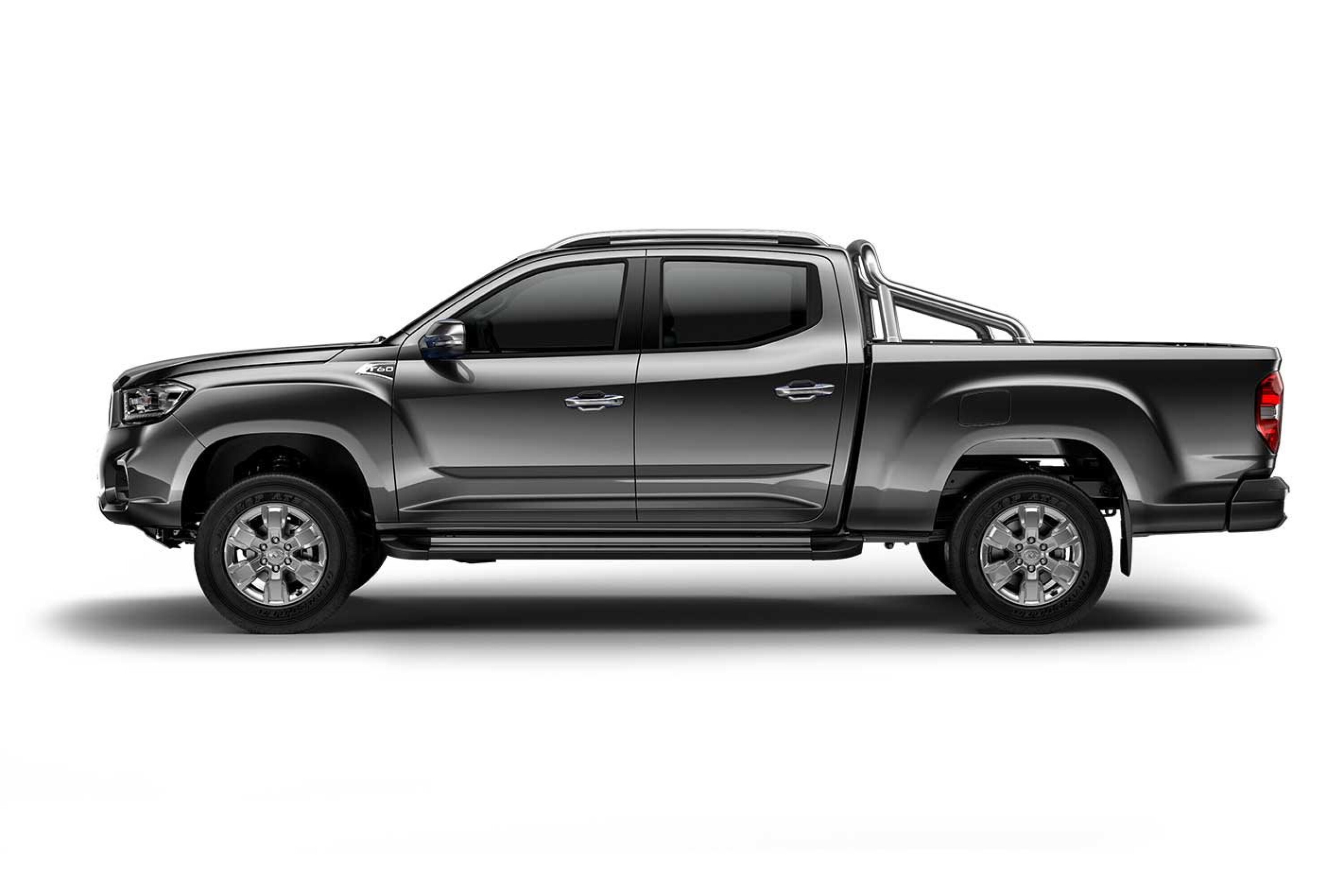
MG commercial vehicles
Could we ever see an MG dual-cab ute? Short answer: not in the short term.
The LDV brand of vans and utilities is part of the wider SAIC family that MG belongs to, so it’s theoretically possible that a rebadged range of LDV products could be sold under the MG name.
It certainly would give MG extra firepower as it eyes greater success in the Australian market – and it would be buoyed to see the success of other Chinese utes like GWM in the cut-throat space.
However, selling LDV under the MG badge is not a strategy that SAIC has rolled out anywhere else in the world, and the LDV brand is sold locally under licence by ATECO in Sydney.
So while it’s theoretically possible, a lot of water needs to go under the bridge before it happens.
The meteoric rise of BYD has been one to watch, with the Chinese newcomer going from a literal unknown to being a household name in just two years.
As we write this in mid-2024, the all-electric Atto 3 SUV and the newer Seal EV sedan have notched up nearly 9000 sales between them, with sales from those two models alone putting the brand on track to demolish its 11,000-unit sales tally from 2023. The Dolphin hatch and Sealion 6 plug-in hybrid SUV are also winning their fair share of fans, but there’s more on the way, with one model in particular shaping up as potentially BYD’s most commercially-important entrant to the Australian market…
JUMP AHEAD
BYD Shark
BYD’s rival for the likes of the Ranger and HiLux will launch towards the end of 2024 with a plug-in hybrid drive system, ahead of the arrival of an all-electric variant in late 2025.
With combined petrol and electric power for the plug-in hybrid (PHEV), BYD’s Shark is slated to beat the incoming Ford Ranger PHEV to Australia, giving tradies and offroaders a surprisingly muscular treehugger of a ute. Claimed outputs are a combined 321kW from its dual electric motors (170kW/310Nm front, 150kW/340Nm rear), with a zero-to-hundred time of 5.7 seconds. A 1.5-litre turbocharged petrol inline four charges up the onboard battery to extend range to around 840km on the Chinese test cycle, with an electric-only range of around 100km (again, that’s on the Chinese fuel economy test – expect a lower figure for Australia).
Payload in the tub is a healthy 835kg, though its tow capacity of 2500kg is sub-par for the ute segment. The Shark launches soon – we’ll have the full local info as we get closer to that time. Specs for the Shark EV have yet to be announced, expect to hear more about that one in 2025.
BYD ‘Atto 2’
BYD has yet to officially unveil its new small SUV, but images and details published by the Chinese government reveal more than a few key details.
As a small SUV, the ‘Atto 2’ (Yuan Up in China) will take its styling cues from the popular and larger Atto 3. If it comes to Australia, expect the Atto 2 to slot in above the Dolphin hatch as the brand’s most affordable SUV. Read more here.
BYD Sealion 6
Unveiled in 2022, the mid-sized BYD Seal U electric SUV went on sale in Australia this year as the Sealion 6 plug-in hybrid.
But where be the all-electric version of the Sealion 6 that’s available overseas? Apparently, a hold-up on development of a right-hand drive example means a local intro for what would otherwise be an intriguing alternative to a Tesla Model Y is so far not in the immediate future for BYD’s local office.
Watch this space, though.
BYD U7
In January, BYD revealed its rival to large luxury EVs like the BMW i5, Mercedes EQE and Tesla Model S.
Full details are still to come, but the U7 – which is actually sold in China under BYD’s subsidiary Yangwang luxury brand – is understood to feature four electric motors – one at each wheel – and produce more than 1000hp (745kW).
Whether we’ll see this model in Australia is unclear, with the brand’s local arm yet to comment on its potential.
BYD Sealion 07
Late last year, BYD unveiled its latest electric offering for China, in the form of the Sealion 07 coupe-SUV.
The Sealion 07 wears a more sleek and aggressive design than the Seal U revealed a year earlier, looking more than a little like the Seal sedan it shares a name with.
In China, the Sealion 07 will neatly undercut the Tesla Model Y, with a low starting price of RMB200,000 ($42,650), while a recent price cut now sees the Model Y start from RMB299,900 in China ($63,775).
Will we see it in Australia? Likely not in 2024, but perhaps later.
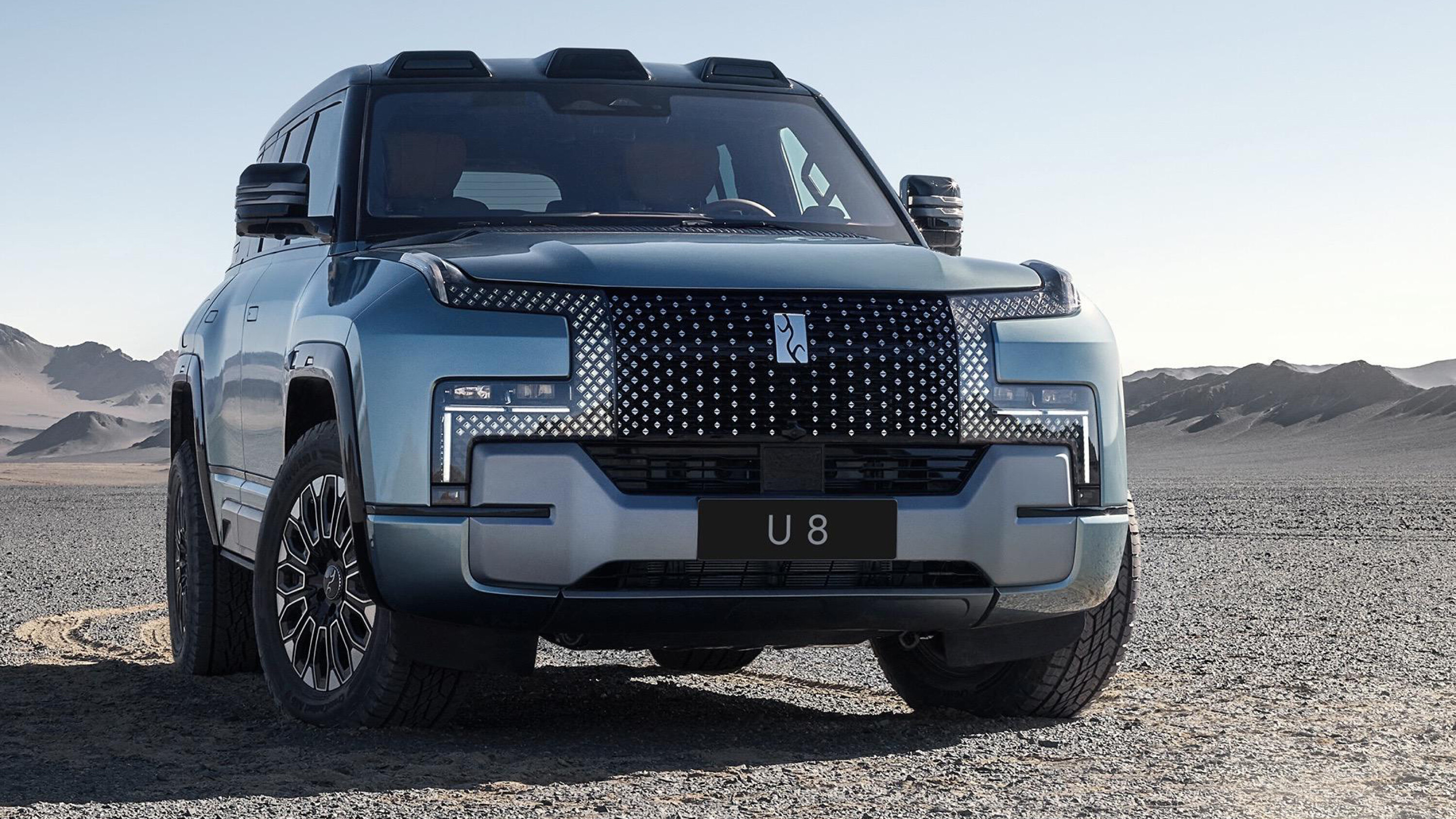
BYD U8
Even if you don’t recognise the name, you’ve probably already seen the U8 – it’s Insta-famous after all.
Sold in China as the Yangwang U8, this monolithic quad-motor plug-in hybrid SUV has gone viral on social media not only for its ability to perform tank turns, but also the fact it’s been deliberately engineered to float on water – with plenty of video evidence of it successfully doing so.
Add to that a colossal 880kW power output and a tech-packed cabin that looks remarkably luxe, and it’s not hard to understand why the the U8 commands attention like few other cars.
Like the U7 mentioned above, the hulking U8 holds potential for an Australian launch potentially wearing BYD badges, although local leadership has indicated it’ll be at least two years away, with right-hand-drive models still in development.
Although it’s a big LandCruiser 300-sized SUV, the U8 is powered by a seemingly modest 200kW 2.0-litre turbo petrol engine matched to electric power in a plugin-hybrid arrangement. Dive deeper, though, and it’s not so modest: the electric side of the equation is four motors of 220kW apiece, equating to a massive 880kW and 1280Nm of combined power and torque.
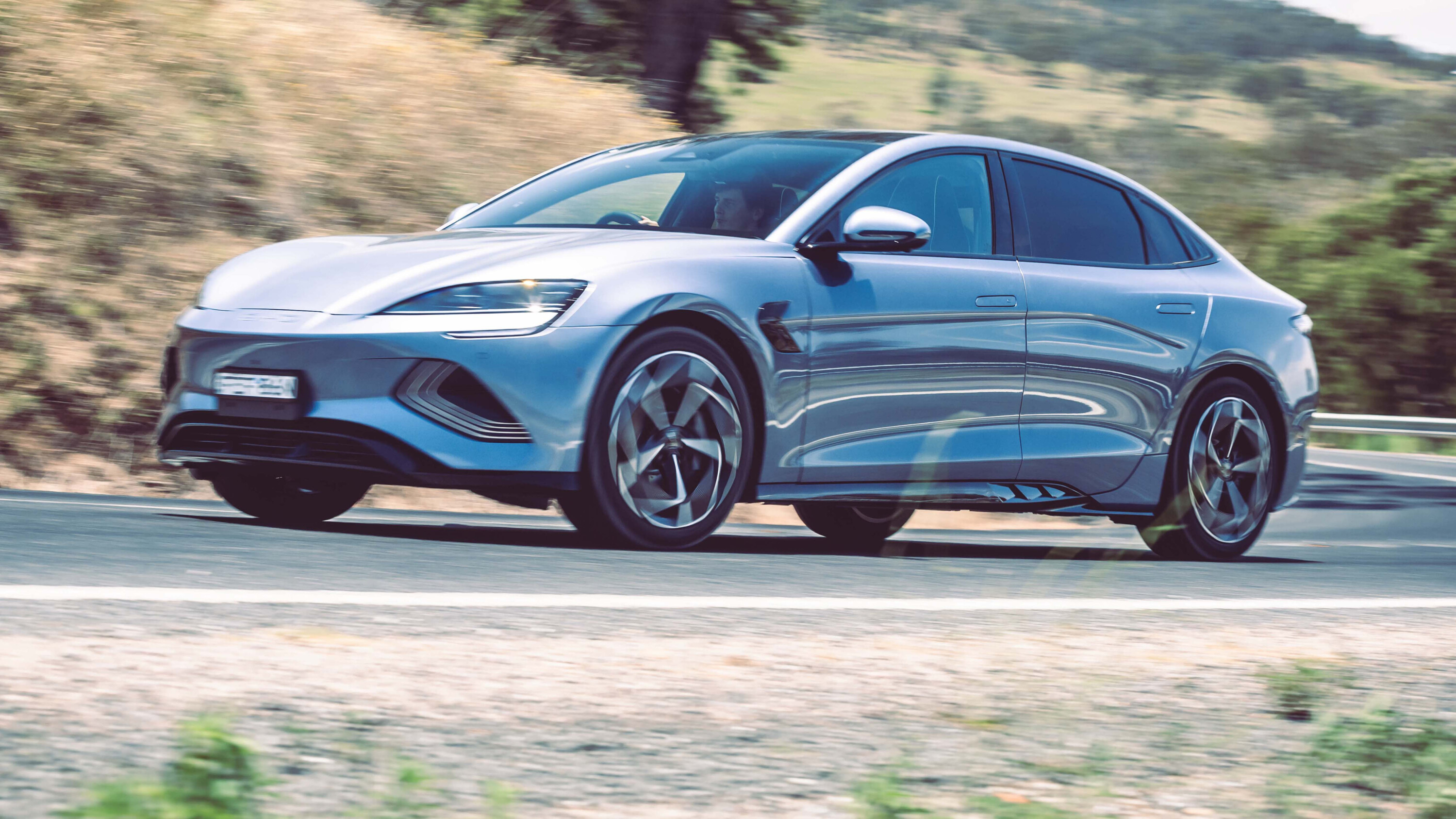
EXISTING MODELS
BYD’s Australian line-up now includes three models: the Atto 3 SUV, the Seal sedan and the Dolphin hatch. Learn more about each model at their respective WhichCar pages.
Mazda might be a relative minnow in the car world but in Australia it punches like a heavyweight, consistently sitting on the finisher’s podium in the monthly car sales tally.
Central to its appeal is a brand-wide emphasis on pleasing dynamics, and though it only sells one performance car – the MX-5 – Mazda still goes to the trouble of imbuing even its more pedestrian nameplates with plenty of driving panache. Beyond that, there’s very little dead weight in the range. Pretty much every Mazda currently on sale is either at the pointy end of its segment in terms of sales, or sits very close to it.
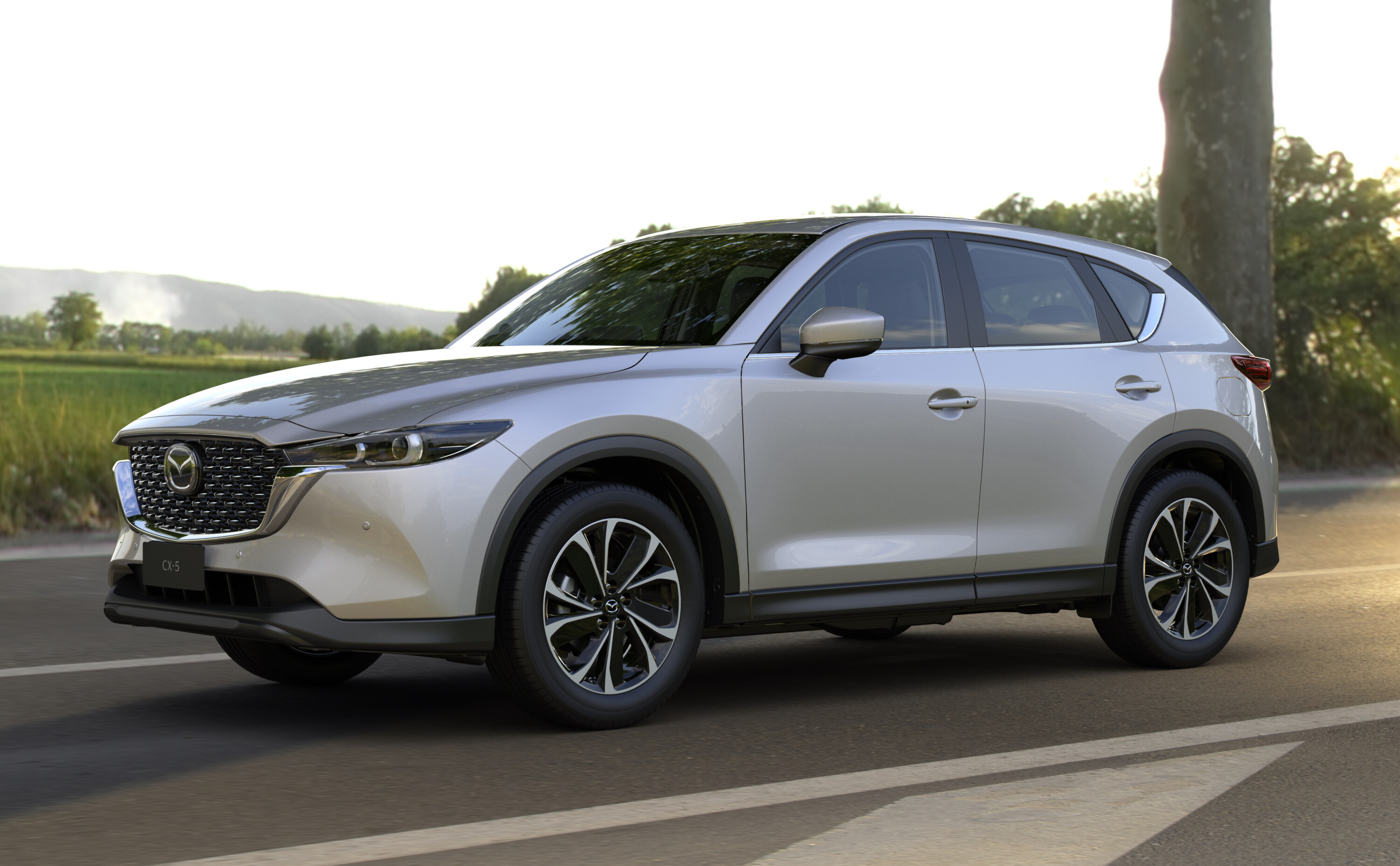
So far in 2024, the brand has spent significant effort in extending its push into the premium space, a process it started in 2023 with the clean-slate CX-60 and CX-90 SUVs.
Though there’s a fair bit of old metal in the Mazda showroom, such as the 12 year-old GJ-generation Mazda 6 and the 10 year-old DJ Mazda 2, running updates have kept the lineup as fresh as possible.
Some subtraction has occurred though, with the popular Mazda CX-9 now retired and the CX-8 following it into the nursing home as Mazda’s new range of longitudinally-engined large SUVs take over their roles. The MX-30 was also quietly withdrawn after sluggish sales in Australia, and manual-equipped versions of the CX-30 and CX-5 were discontinued as well.
But both 2024 and 2025 have more than a few new arrivals for the brand. Here’s what’s fresh – and what’s lurking around the corner – for Mazda:
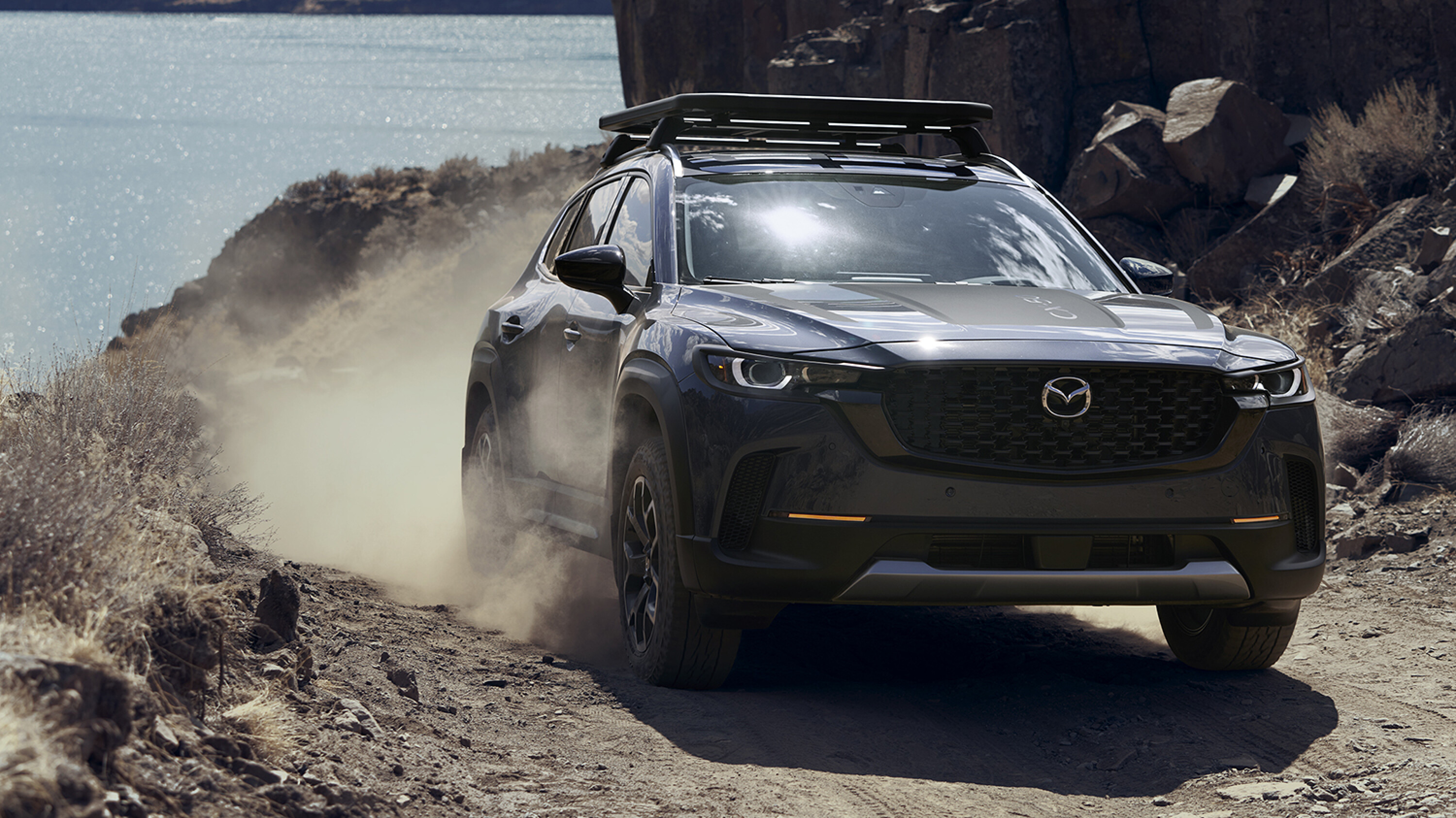
JUMP AHEAD
Confirmed models
Potential models
Confirmed
CX-70
In October 2024, Mazda Australia will bulk out its large SUV family with the arrival of the Mazda CX-70.
As a five-seat longitudinally-engined SUV, what sets it apart from Mazda’s existing large five-seat high-riding wagon, the CX-60? Space. In essence, the CX-70 is not much more than a five-seat derivative of the CX-90 that’s already landed, meaning you get the more generous proportions of the CX-90 in the first and second row, but without the fuss – and weight – of the third row. Besides that, pretty much everything else, including engine, trim options, and sheetmetal, should be basically identical to the CX-90.
Prices are still under wraps until the local launch, but expect customer deliveries to commence before the end of 2024.
CX-80
The CX-80 is also slated to arrive in October, and essentially flips the CX-70’s script – it’s fundamentally a seven-seat version of the CX-60 that launched here in 2023.
Unlike the CX-70, however, there’s greater exterior differentiation between the CX-70 and its CX-60 cousin, with unique sheetmetal around the rear end to accommodate its fold-out third row and subtly different body plastics and lamp clusters.
Like the CX-70, local pricing and specs are still TBD, but with an October launch on the calendar you won’t need to wait long to find out.
CX-5 replacement
While a replacement for Mazda’s best-selling SUV was expected to land in 2025, word on the street is that the second-gen Mazda CX-5 still has one more minor update in front of it before an all-new model makes its debut, which now seems more likely to happen in 2026.
Mazda has given the CX-5 almost annual changes to keep since the nameplate went on sale in 2012 to keep its mid-size SUV in the mix – which appears to have succeeded, if sales figures are anything to go by.
What will replace the CX-5, though? That’s still a closely-guarded secret, with Mazda even going so far as to say that though it definitely has a next-generation mid-size SUV in the works, it’s not even sure if the CX-5 nameplate will be put on it. All we know is that it’s unlikely to make an appearance until 2026, or very late in 2025 at the earliest
MX-5
In 2025, we’ll likely get our first look at what will replace the current ND-generation MX-5 – the 2016 Wheels Car of the Year – and with rumours of hybridisation or even a shift to full electrification, it’s promising to bring a seismic shift to the tiny roadster.
Before then, the current ND MX-5 will be treated to some final tweaks before it’s replaced. Earlier in 2024, the manual MX-5 GT RS arrived with a new ‘DSC Track’ mode, BBS alloys and stiffer Bilsteins, while all three-pedal MX-5s scored an Asymmetric Limited Slip Differential (LSD) plus improved throttle response and steering changes.
Automatic MX-5s missed out on those changes, but range-wide new alloy wheel designs and fresh seat trims – as well as price rises – accompanied the arrival of the MX-5 RF GT auto trim level.
It’s worth noting that 2024 marks the 35th anniversary of the MX-5, and according to the MX-5 program manager Mazda’s engineers have been cooking up a special edition to celebrate the occasion. We expect to see that one land locally sometime next year as the final evolution of the ND MX-5.
CX-90 Plug-in Hybrid
The six-cylinder CX-90 large SUV arrived in 2023 as Mazda’s largest SUV with premium appointments, and a premium price, to tackle German prestige marques.
But what’s been missing from the CX-90 is a plug-in hybrid drivetrain. The CX-90’s platform partner, the CX-60 has that option in Australia, and it exists in overseas markets like the USA – so why do we only get six-pots Down Under?
Mazda sees the USA as the priority market for the CX-90, and with the extra complications of engineering a right-hook version of the PHEV just for Aussies is, apparently, a bridge too far for now. That may change in the future, though don’t expect to see an Australian plug-in CX-90 until very, very late in 2025 at the earliest.
Potential future models
EZ-6 electric sedan
When it broke cover at the Beijing Auto Show in April 2024, the Mazda EZ-6 sparked a flurry of speculation – was this Chinese-market electric sedan Mazda’s answer to the Tesla Model 3?
Would the rest of the world eventually get to sample the sleekly-styled four-door, which is largely based on the Deepal SL03?
Media reports have since surfaced of a supposed plan to commence exports of the EZ-6 to Europe, however we checked with Mazda themselves and those reports are, at this point in time, far from confirmed, with no timeline for a global release announced.
However with the Mazda 6 so long in the tooth, perhaps the time is right for a new-energy replacement to carry Mazda’s baton in the mid-size segment? As to its prospects for Australia that would hinge on availability of a RHD version, but given Deepal, Mazda’s Chinese dance partner on the EZ-6/SL03 joint venture, is planning on entering the Aussie market, that’s not outside the realm of possibility.
Mazda 2
The current third-generation Mazda 2 went on sale in 2014, making it well past retirement age in passenger-car terms.
It’s still an important model globally so it’s unlikely it will not be replaced, but the next Mazda 2 may well be an electric-powered city car using the car maker’s new electric architecture.
The new platform will not be ready until 2025 – leaving the current car in showrooms for another 12 months, likely longer.
The existing Mazda 2 received its second significant facelift in July 2023, which suggests Mazda Australia won’t follow Mazda Europe, where the 2 was replaced by a rebadged Toyota Yaris Hybrid to meet emissions regulations.
Instead, the compact hatchback and sedan got a minor update for Australia in late 2023 that brought that facelift in and shifted spec levels and pricing, including new support for Android Auto and Apple CarPlay.
CX-3
The CX-3 remains one of the biggest-selling small SUVs in Australia – and still using the same underpinnings that it took from the Mazda 2 in 2015.
While minor updates in the last 12 months saw AWD and manual transmission models deleted from the line-up, a new CX-3 is needed in the near-term for continued success.
As Mazda focuses on higher-grade ‘CX’ SUVs, the CX-30 has pushed the CX-3 out of its US and European showrooms, but the CX-3 remains the third-best-selling Mazda here after the CX-5 and BT-50 ute.
Pulling the CX-3 off sale comes with huge risk and the local arm has genuine sway with head office in Japan, given its consistent success in Australia, so a successor cannot be ruled out based on other markets alone.
A new CX-3 may have to wait until new architecture arrives meaning a 2025 arrival.
Meanwhile, minor spec changes saw price rises in 2023 but saw the inclusion of Apple CarPlay and wireless phone charging.
However, like the 2, Australian CX-3s did not receive the latest infotainment system upgrade Japan’s CX-3 were given in December.
That’s likely to change in 2024 as the brand transitions to its newer systems.
CX-50
Mazda Australia has made no secret that the CX-50 is on its ‘wish list’.
Currently only produced in left-hand drive, the CX-50 mid-size SUV is manufactured in China and the USA.
In North America, it uses the same 2.5-litre four-cylinder non-turbo powertrain, electric motor and CVT as the Toyota RAV4 Hybrid as part of a technology sharing arrangement in North America between Mazda, Toyota and Subaru.
It’s unclear as to whether the CX-50 – if produced in right-hand drive – would be a replacement for the CX-5, or if the CX-5 will be given hybrid powertrains instead. All we know is that Mazda’s Australian outpost has been holding its hand up for the CX-50 ever since that model came into existence.
Mazda 6
The Mazda 6 was updated in 2023 with a 20th Anniversary model added to the line-up, but it may not have many birthdays remaining.
Axed from the US market in 2021, the current-generation Mazda 6 sedan and wagon has been on sale in Australia for more than a decade, with no replacement in sight – yet Mazda says it’s committed to the segment.
The Large Platform architecture underpinning CX-60 through CX-90 SUVs offered hope for those seeking a new 6, but Mazda has said the rear-drive architecture is designed for SUVs only. That also put paid to the platform being used for a rear-drive sports car, too.
So while Mazda says it’s sticking with 6, it won’t confirm a replacement, either – but a decision has to be made sooner rather than later. Our advice: if you’d like to buy a brand-new Mazda 6, you might want to expedite before it dips out of showrooms for good.
RX-7
Teased at the October 2023 Tokyo show, the stunning Mazda Iconic SP concept is a tantalising look at a potential rotary-powered hero sports car as a successor to the RX-7 and RX-8.
The red two-door hardtop was revealed with the same rotary-hybrid and electric motor drivetrain as the Mazda MX-30 RE-V but at 270kW has more than double the power.
Larger than an MX-5, heavier too – at a 1430kg goal weight – design elements pay homage to the RX-7 while 50:50 weight distribution as per the latter RX-8 is targeted, too.
While the Iconic SP concept had its combustion engine incorporated as a mere range-extending generator, a recently-discovered patent filing by Mazda reveals that the company is now considering a configuration that has a twin-rotor engine driving the rear wheels mechanically, with the assistance of an electric motor – good news for sports fans.
October: Zeekr X now on sale in Australia
The first Australia-bound model from Geely’s Zeekr brand, the Zeekr X electric SUV, is now available from $56,900 before on-road costs.
August: Zeekr X makes Australian debut
The all-electric Zeekr X has been officially unveiled ahead of its local launch, marking the brand’s first entry into the Australian market.
Classed as a compact lifestyle SUV, the Zeekr X will be the first of two new models introduced to Australia in 2024, with a luxury MPV dubbed Zeekr 009 expected by the end of the year.
The Zeekr X will be available to pre-order in September, with the Australian launch to follow in October. Customer deliveries will begin following the vehicle’s official launch.
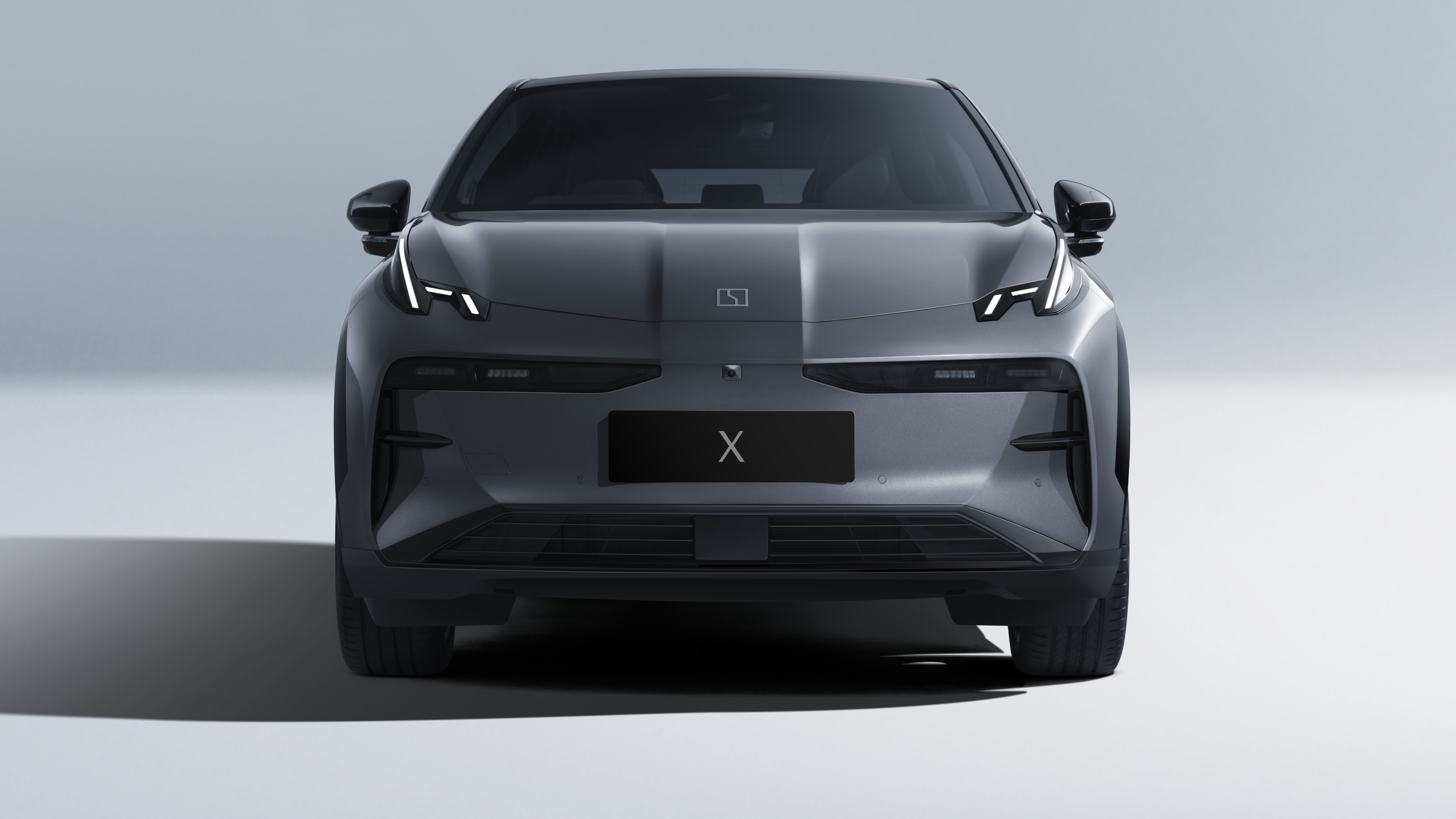
The Zeekr X – available in RWD and AWD – is powered by a 66kWh lithium-ion battery that can deliver a claimed range of up to 540km (in single-motor, RWD models) or 470km (AWD models). Packaged beneath the floor of the vehicle to liberate space in the cabin, the battery is covered by an eight-year/160,000 km warranty.
Its 150kW DC charging is capable of replenishing the battery from 10 to 80 per cent in less than 30 minutes; while a 7.2kW AC on-board charger can fully charge the battery in a RWD model from empty in about seven hours (AWD models have an 11kW AC charger).
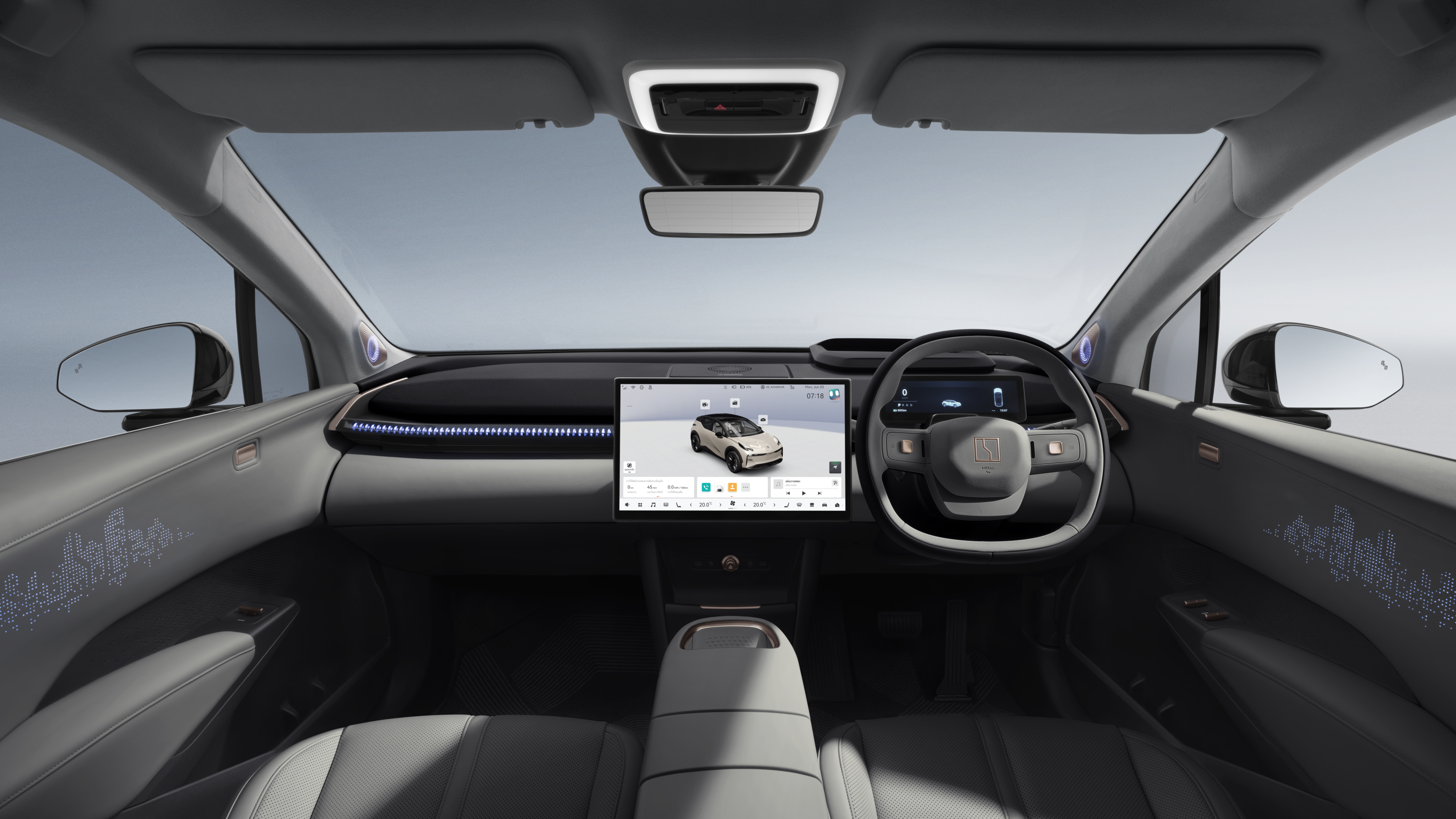
“Zeekr’s expansion into the Australian market brings our innovative and cutting-edge electric vehicles to a new audience, offering a unique driving experience that blends style, performance, and sustainability,” said Connal Yan, Managing Director of Zeekr Australia.
“By selecting SXSW Sydney as the stage for our launch, Zeekr is demonstrating its commitment to innovation, showcasing our products to a global audience, and setting the foundation for a future of limitless possibilities in sustainable mobility.”
RWD model
| 200kW / 343Nm | 66kWh lithium-ion (NCM) battery |
| 540km range (ADR 81/02) | 5.6s (0-100 km/h) |
| 10 ~ 80% DC charge: ~30min [150kW] | 0 ~ 100% AC charge: 11.5h [7.2kW] |
| Vehicle To Load (V2L) functionality | 19″ alloy wheels u2013 235/50 R19 |
AWD model adds
| 315kW / 543Nm | 470km (ADR 81/02) |
| 3.8s (0-100 km/h) | 0 ~ 100% AC charge: 7.5h [11kW] |
| 20u201d forged alloy wheels u2013 245/45 R20 |
Standard features
| Two-tone body colour. Black tone roof/mirrors | Panoramic glass roof |
| Frameless exterior mirrors | Charcoal black/stone grey leather-free interior |
| Six-way power driver seat | 362 ~ 1182L cargo capacity (ISO) |
| 8.8” full HD instrument cluster | 14.6” central touchscreen |
| Qualcomm Snapdragon 8155 processor chip | 7-speaker high performance audio |
| Connected Service Network: 5G/WiFi Hotspot | Vehicle OTA upgrade capability |
| Wireless Apple CarPlay and Android Auto | Digital Key – Zeekr app remote control |
| Auto-dimming frameless rear-view mirror | Rain-sensing wipers |
| Mobile phone wireless charging | Dual-zone climate control |
| Rear air vents – B-pillar mounted |
Optional features
| Driver seat memory | 6-way power front passenger seat |
| 4-way power lumbar support for front seats | Driver and front passenger seat heating/ventilation |
| Heated steering wheel | 13-speaker YAMAHA surround stereo |
| “Ice Block” LED ambient lighting inc. doors | 24.3″ Augmented Reality (AR) HUD |
| Intelligent B pillar display |
Pricing for the Zeekr X has yet to be established, but Zeekr is in the process of collecting expressions of interest via its website.
UPDATE, October: Zeekr X now on sale in Australia
The first Australia-bound model from Geely’s Zeekr brand, the Zeekr X electric SUV, is now available from $56,900 before on-road costs.
The Eclipse Cross made its debut on our shores in early 2018, joining the local compact SUV market.
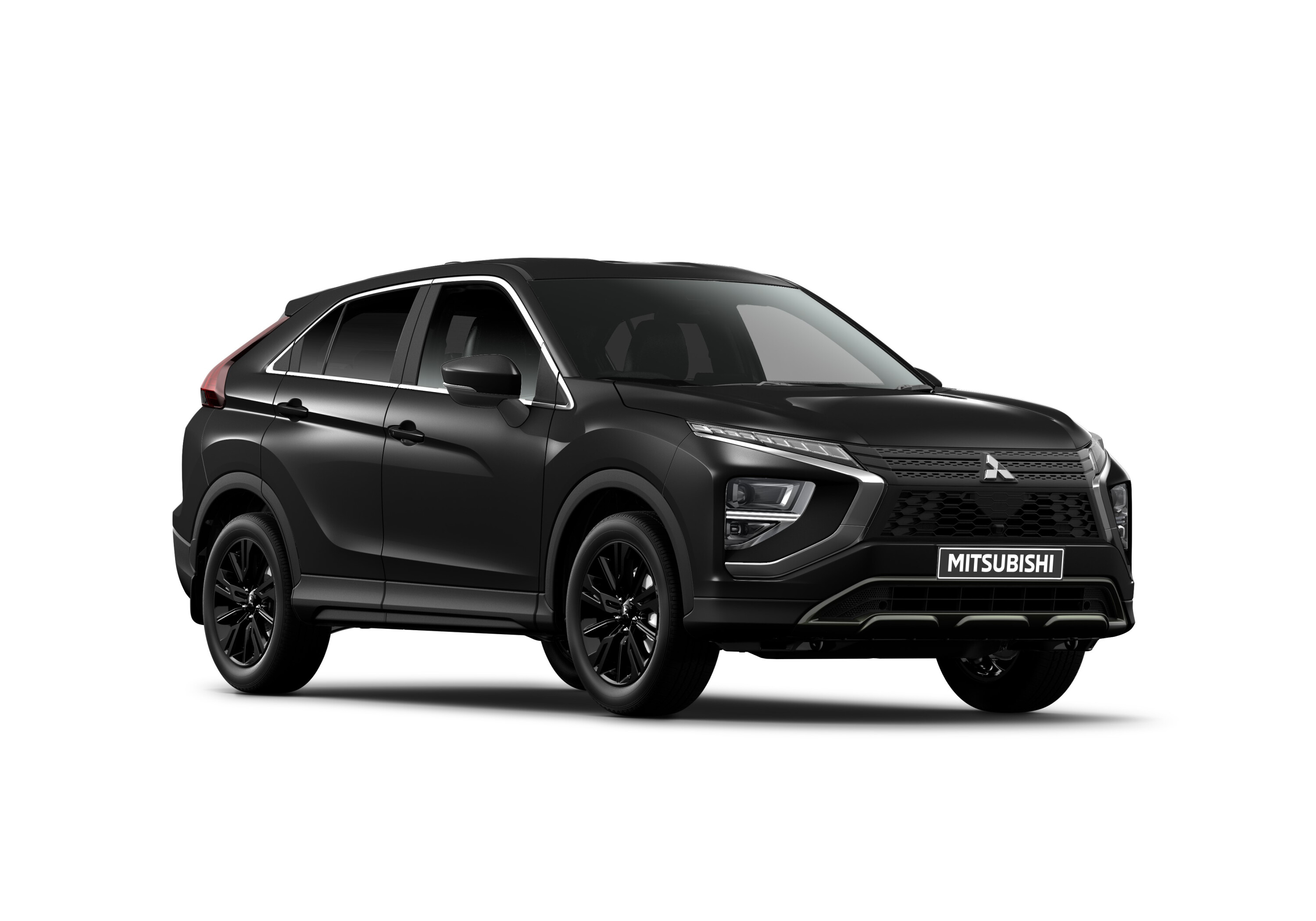
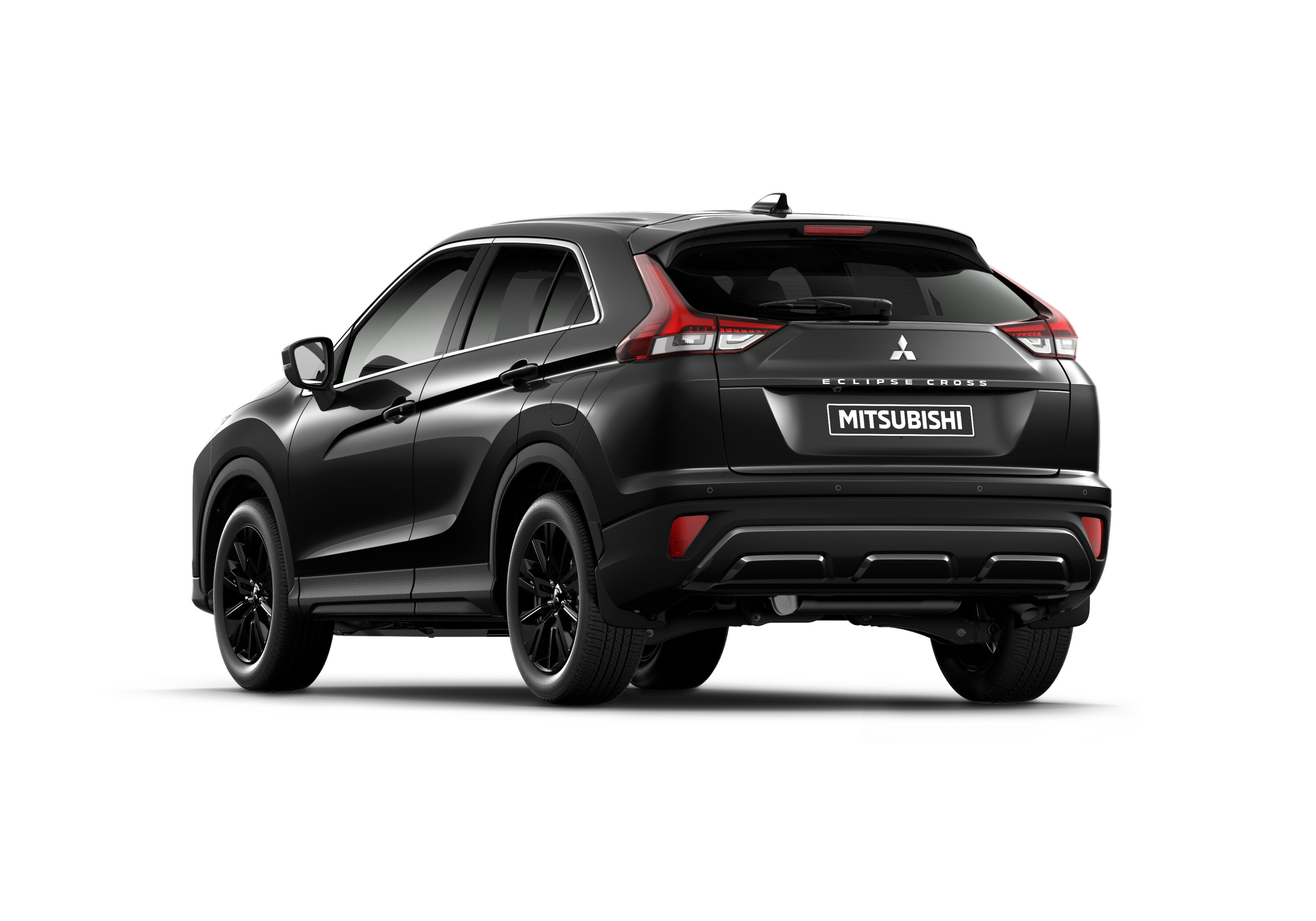
Manufactured by the Japanese automaker Mitsubishi, the Eclipse Cross provides seating for five individuals, offering a bit more space than its predecessor, the Mitsubishi ASX. Fast forward to 2024, the Eclipse Cross has undergone a minor price adjustment and received some additional features, enhancing the LS variant just above the entry-level trim.
Pricing and features
The 2024 Mitsubishi Eclipse Cross LS is priced at $34,740 before on-road costs for two-wheel drive variants. All-wheel LS variants drives add $2500.
It is powered by a 1.5-litre turbocharged petrol engine generating 100kW and 240Nm, and its combined fuel economy is quoted at 7.3L/100km.
Equipped with a continuously-variable automatic transmission as standard, the Eclipse Cross LS offers the option of front- or all-wheel drive.
Features
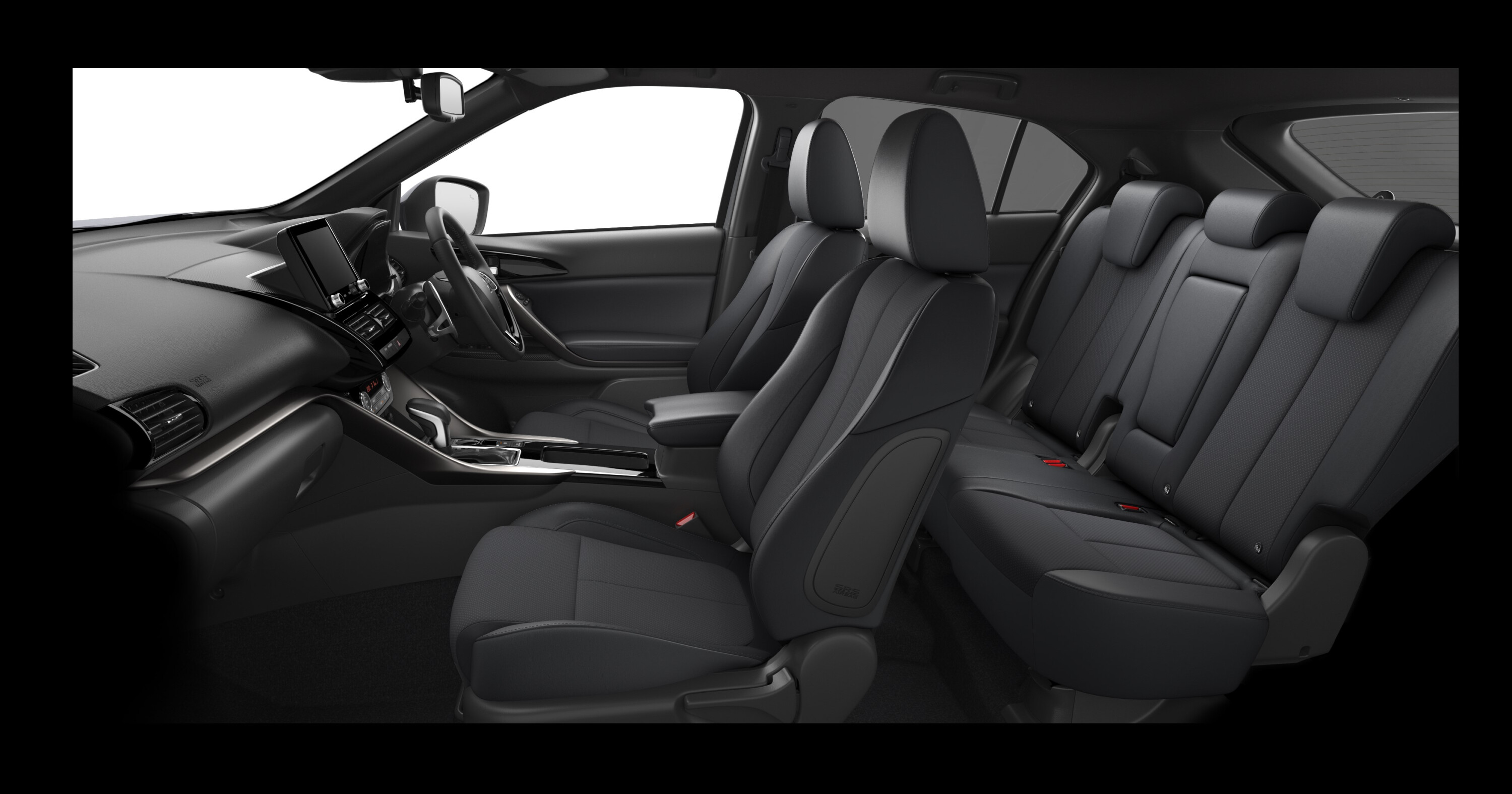
The Eclipse Cross comes with a decent amount of standard spec, including the following key features ?
| 2024 Mitsubishi Eclipse Cross LS key features | |
|---|---|
| Auto-dimming rear-view mirror | High beam assist |
| Second-row USB ports | Electronic parking brake |
| Lane change assist | Rear privacy glass |
| Blind-spot monitoring | Six-speaker audio system |
| Rear cross-traffic alert | Leather-wrapped steering wheel |
| 18-inch alloy wheels | LED fog lights |
| Keyless entry and push-button start | Heated, power-folding side mirrors |
| Illuminated front door trim | Black roof rails |
| Rain-sensing wipers | |
Safety
The current status of the Mitsubishi Eclipse Cross with ANCAP is ‘unrated’. Previously, it attained a five-star ANCAP rating following testing conducted in 2017, which expired in 2023.
Across all variants, seven airbags are included as standard, comprising dual front, side, curtain, and driver’s knee airbags.
Active safety features encompass autonomous emergency braking for both vehicles and pedestrians, a reversing camera, lane-departure warning, rear parking sensors, and an emergency stop signal.
Additional safety features such as blind spot monitors, rear-cross traffic alert, automatic high beam, and lane-change assist are available in this LS variant.
Key rivals
The Mitsubishi Eclipse Cross LS competes against other successful nameplates in the small SUV:
Should I put it on my shortlist?
Recognising the potential within the small SUV market and building on its achievements with the ASX, Mitsubishi aimed to introduce a sportier option with a strong emphasis on style.
In 2024, the Eclipse Cross LS demonstrates its distinct place among competitors. It’s a vehicle that seamlessly integrates into your lifestyle, providing precisely what you require. While it may not excel in any particular aspect, it effectively fulfils various roles.
