
For the most part, car factories are much of a muchness. Few stand out as anything particularly bold.
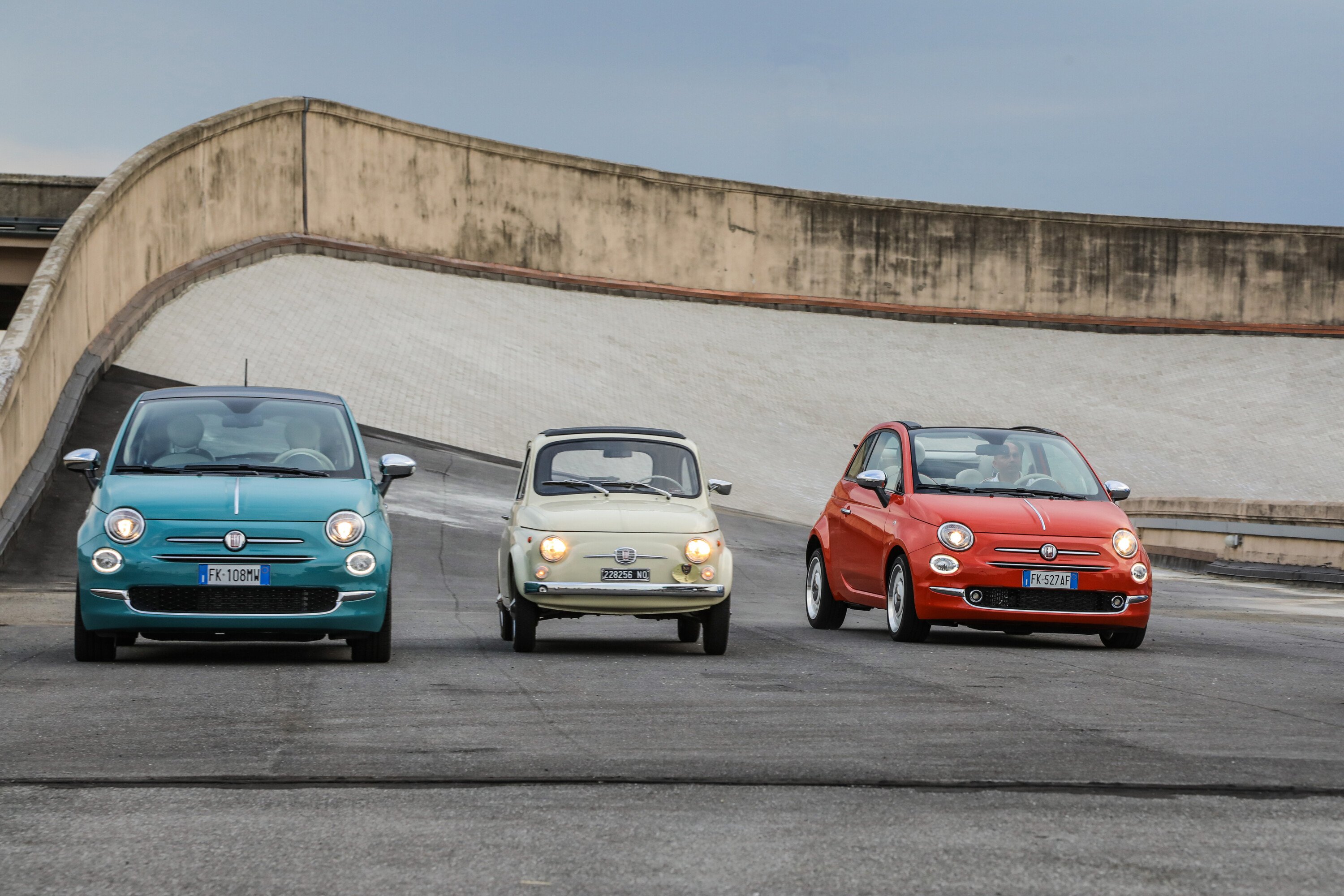
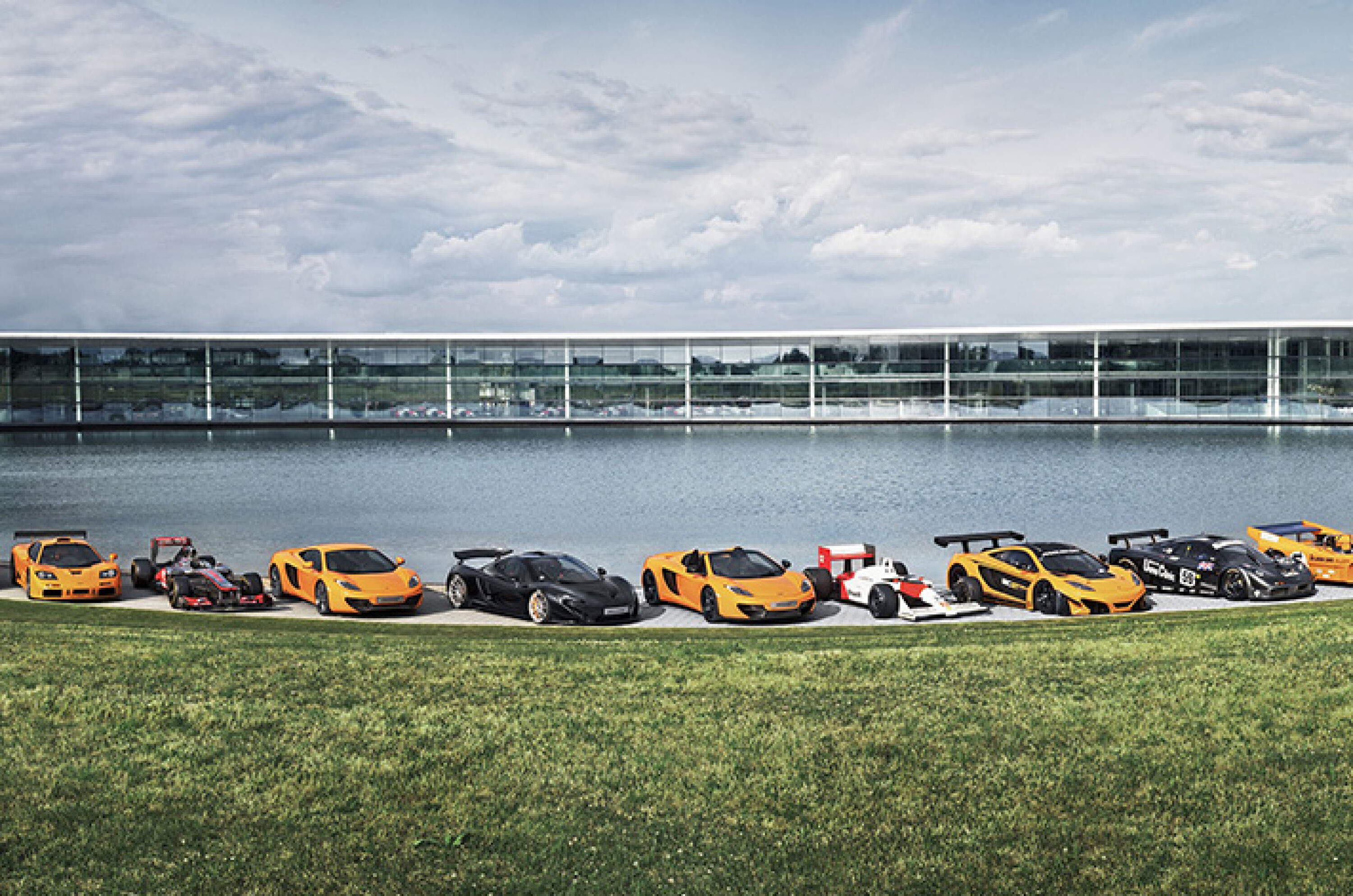
Of course, there are exceptions, such as Volkswagen‘s ‘Transparent Factory’ at Dresden, Rolls-Royce’s grass-roofed facility at Goodwood and McLaren’s Bond-villain lair at Woking – but when it comes to iconic car plants, nothing really gets close to Fiat’s Lingotto building on Via Nizza, Turin, which celebrates its centenary this year.
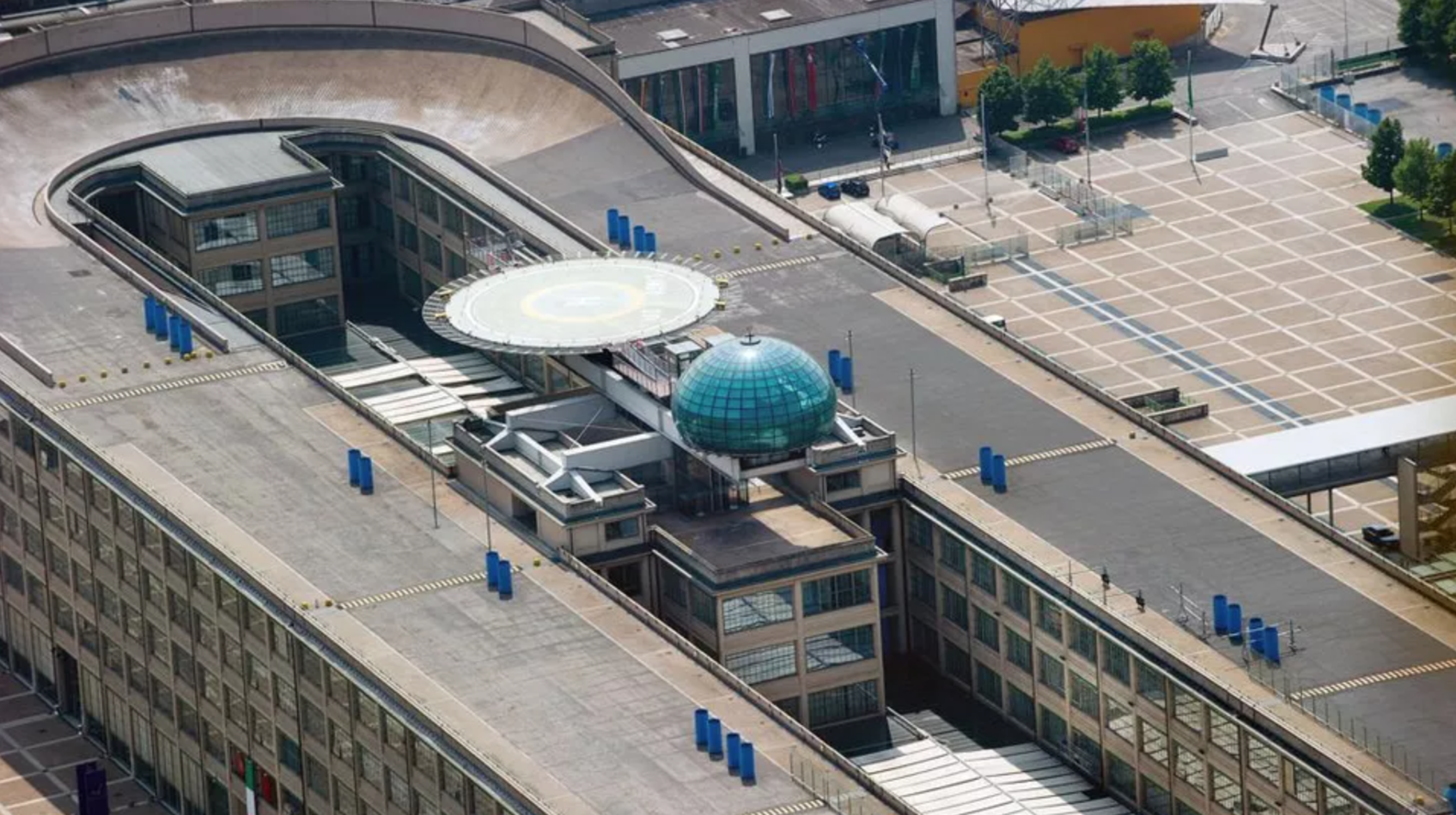
The design of the building was daring in its scope and execution, with the raw materials entering at the ground floor, whereupon the production line ascended through five storeys before emerging at rooftop level onto the banked 1.5km-long test track.
1
The last time I was at the Lingotto was for Fiat’s centenary in 1999. We were sampling the facelifted Punto and were scheduled to arrive back at the Lingotto for a gala dinner.
Upon arriving at the building, I noticed that the spiral ramps up to the roof were unattended, so I thought I’d go for a drive up.
Once on the rooftop, I decided it would be a shame to waste the opportunity of going for a lap or twelve and can report that things got very exciting when rounding one of the banked sections, whereupon a huge bump would fling the car into the air, pitching it about a metre sideways towards the concrete wall in the process.
While airborne, you got a wonderful view over the rooftops of Turin, but that’s probably by the by.
1
Having joined the dinner, I realised the guest next to me for dinner was Henry Kissinger.
Aware that I was probably out of my depth when it came to US foreign relations of the 1970s, I instead regaled him with my story of driving on the roof of the Lingotto. He seemed very impressed.
It was at that point that Fiat’s chairman took to the stage and rattled off a list of achievements and then future aspirations, one of which involved recommissioning the roof of the Lingotto building, as “it has been many years since it has been in a safe condition for driving.”
Kissinger stared at me. His expression was hangdog, dark. I didn’t really know what to say, so just reddened and wondered how long it had been since he had been exposed to this level of buffoonery. Maybe he just wasn’t geared up for it.
After what seemed like an eternity, he broke into gales of laughter. I laughed along in a good-natured, self-deprecating fashion. Long after I’d stopped, he was still going. I moved to another table. Henry Kissinger was far too good at being a giant arse for me to compete with.
1
Kissinger stared at me. His expression was hangdog, dark. I wondered how long it had been since he had been exposed to this level of buffoonery.
Like the Lingotto building, Kissinger celebrated his centenary this year, the last living politician of the Nixon cabinet. His legacy remains chequered. The Lingotto building only grows in significance for Fiat despite the fact that cars are no longer built there. In fact, the last car built at the plant wasn’t even a Fiat but a Lancia Delta in 1982.
Olivier Francois, Fiat’s CEO, points to the design themes of the Lingotto influencing Fiat design from 2024. “At Fiat we think that the Lingotto and the track are such a landmark that they deserve to become design markers,” he claimed.
Oval-shaped design motifs and a focus on attention to detail and lightness are the Lingotto’s legacy. La bella fabbrica? It’s a century-old signpost to Fiat’s way forward. US secretaries of state? Much of a muchness, I reckon.
MORE
More Industry news
MORE
Everything Fiat
A strike that has affected America’s three biggest carmakers is entering its second week – and the acrimonious stand-off shows no sign of abating.
On one side is the United Auto Workers (UAW) union, which has 400,000 members across the United States.
It is seeking a 36 per cent wage rise for its members, as well as a 32-hour work week and a return to a retirement pension-plan model.
On the other side stands GM, Ford and Stellantis, America’s three largest carmakers.
The union is pitching its strike action – the first simultaneous strike against the companies in the union’s history – in the face of huge profits for the Big Three in the wake of COVID-19 pandemic-led supply issues.
“You deserve what you’ve earned, and you’ve earned a hell of a lot more than what you’re getting paid now.” – US President Joe Biden to Ford workers.
Stock shortages across the board have meant maximum profit margins for carmakers, despite fewer cars being sold.
Leading the union charge is its firebrand leader Shawn Fain, who theatrically hurled wage proposals from the car companies into his office garbage bin on video in the lead-up to the September 14 deadline.
The UAW represents 46,000 GM, 57,000 Ford and 43,000 Stellantis workers. Up to 19,000 employees across all three companies are now said to be on strike.
The union says it has a war chest of some A$1 billion, with striking workers receiving US$500 ($800) a week while off the job.
41 carmaker facilities affected
With a resolution still not reached, the union’s members have walked off the job at multiple facilities across America, including three manufacturing plants and 38 parts distribution centres.
The strike has the capacity to bring vehicle production – which was starting to normalise after a traumatic two years – to a grinding halt once again.
And the union appears to be in it for the long haul.
A series of leaked texts from the UAW’s communication head Jonah Furman to his boss suggests the union is ready for a protracted battle to get what it wants; vastly more pay and better conditions for its members.
“They can basically price in an all-out [strike]”, Furman texted to Fain. “But if we can keep them wounded for months, they don’t know what to do.
“Plus we’re breaking pattern and they’re bargaining against each other for the first time in 70 years.”
Furman dismissed the texts as “private messages”.
It has been estimated that the strike action could potentially cost each carmaker up to A$700 million each week if the action continues.
Presidential play
The strike has now become a political football, with President Joe Biden recently attending a UAW rally at a Ford facility.
He is the first US president to attend a picket line in modern history.
“You deserve what you’ve earned, and you’ve earned a hell of a lot more than what you’re getting paid now,” Biden said to the Ford workers.
Asked later whether workers deserved a 40 per cent pay rise, Biden said, “Yes. I think they should be able to bargain for that.”
Currently, the three automakers are offering pay increases in the order of 20 per cent.
Just hours before President Biden’s visit, a terse press release from Ford confirmed the company would halt work on a new battery factory in Michigan, a move interpreted by the UAW as a “barely veiled threat” on worker’s jobs.
Part of the stand-off is understood to be centred on matching pay and conditions for workers on EV assembly lines.
Meanwhile, former president Donald Trump appeared at a non-unionised parts maker in Michigan, declaring that electric vehicles would “spell the death of the US auto industry”, and railing against EVs that can “only drive 15 minutes before you have to get a charge”.
The former president, who is currently facing multiple charges including tax fraud, falsifying business records and tampering with classified documents, appeared to be addressing the Drake workers as though they were part of the strike, even though they were not.
Australian impact yet to be felt
While the factories and distribution centres affected by the strikes supply the US market, a potential tools-down at Ford’s Canadian engine plant in Ontario may restrict the flow of Coyote V8s that are destined for the engine bays of Mustangs.
Stellantis’s Toledo plant builds Wrangler and Gladiator models.
If the strike continues, parts supplies sourced from North America to suit Australian-delivered products may begin to dry up.
MORE
VFACTS
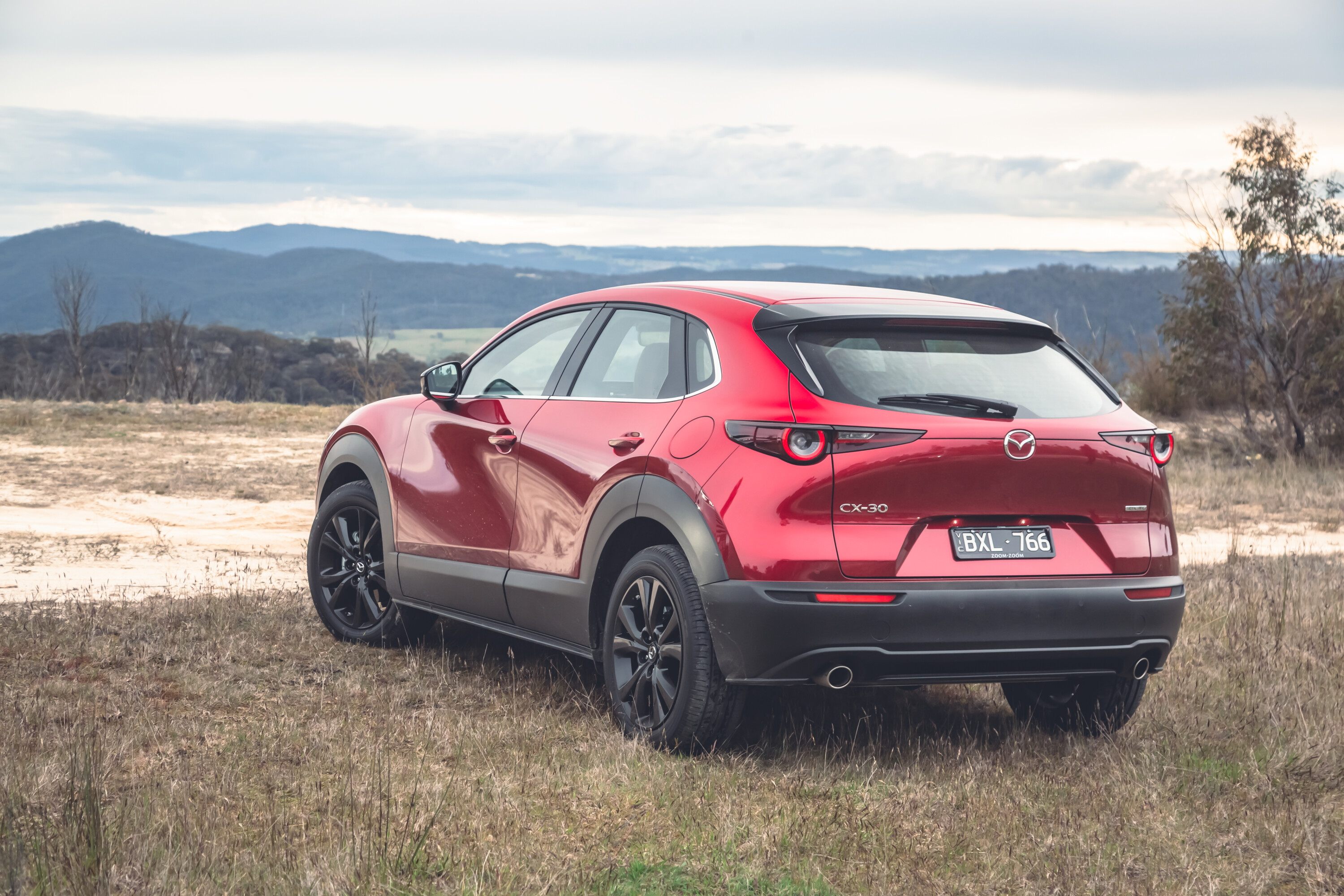
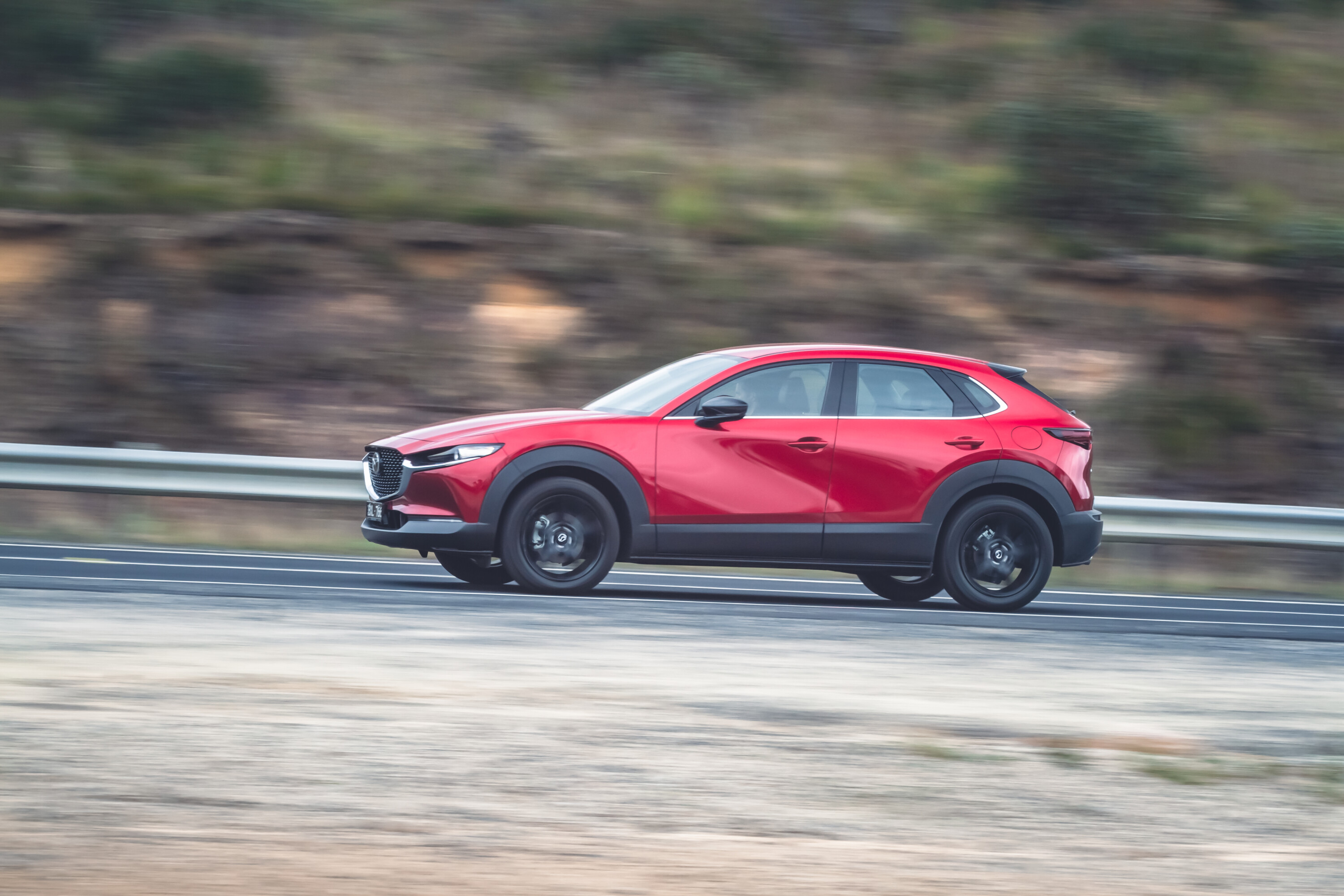
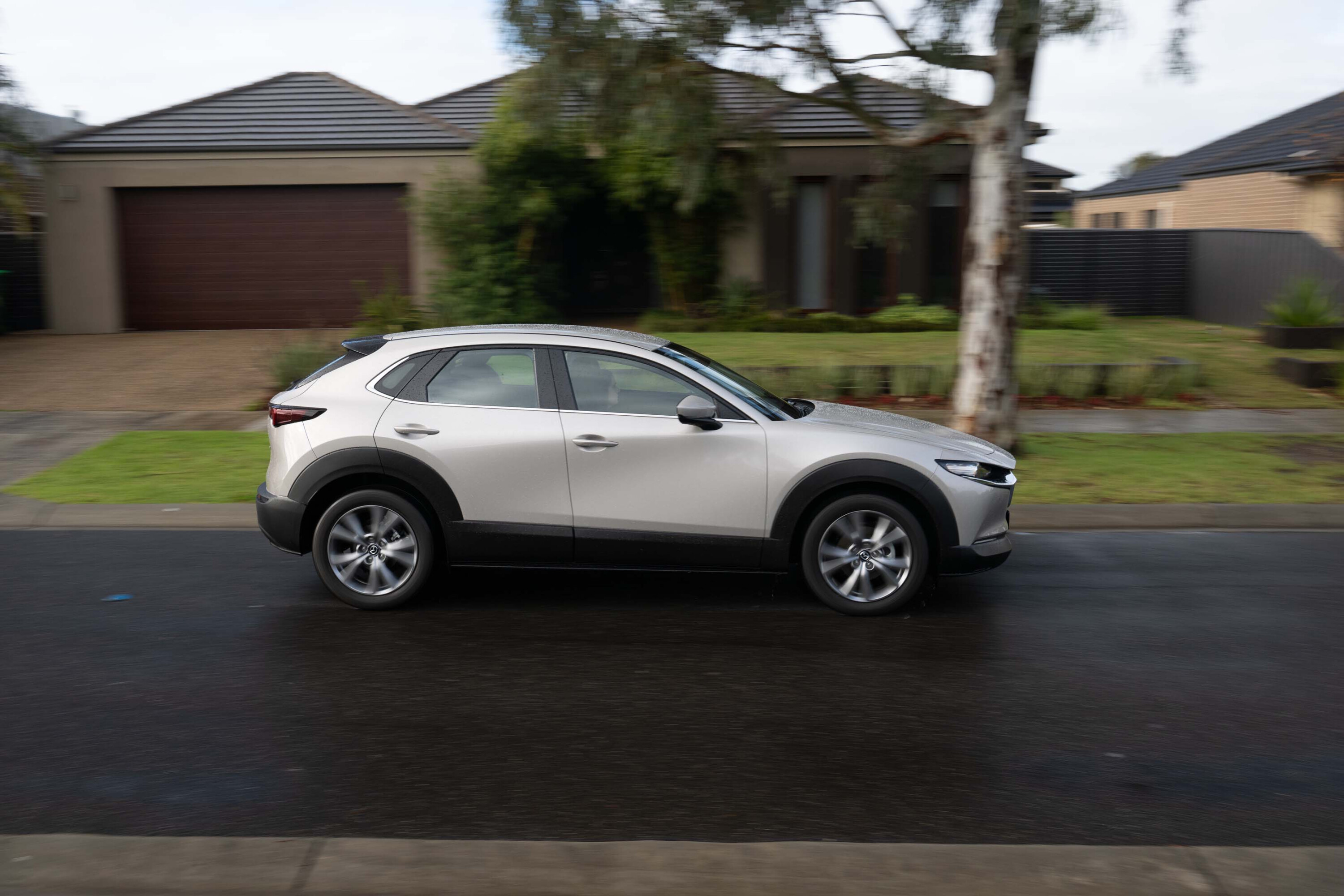
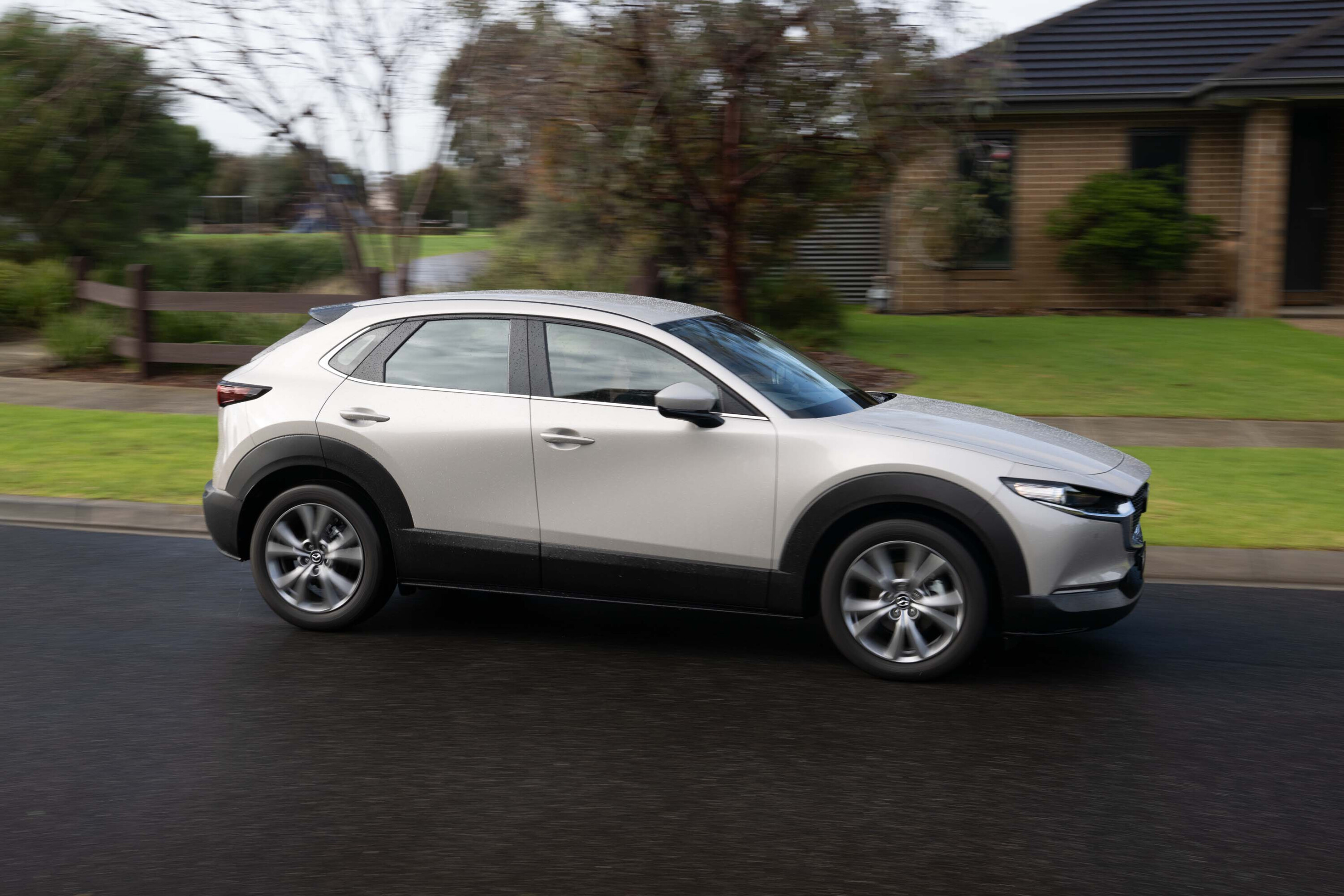
The Mazda CX-30 is a small crossover SUV based on the same platform as the Mazda3 small car. It’s larger than the CX-3 small SUV but smaller than the CX-5 medium SUV.
A winner of Wheels Car of the Year in 2021, the CX-30 is an excellent small-to-medium vehicle with a premium-feeling interior and loads of features and equipment.
The CX-30 range starts at $30,120 for a base manual G20 Pure front-wheel-drive and tops out at $48,310 with the six-speed automatic X20 Astina all-wheel-drive with its mild hybrid powertrain.
1
JUMP AHEAD
- Pricing
- What body styles are available for the Mazda CX-30?
- What features are standard in every Mazda CX-30?
- What key features do I get if I spend more?
- How safe is the Mazda CX-30?
- How comfortable and practical is the Mazda CX-30?
- How much boot space does the Mazda CX-30 offer?
- I like driving – will I enjoy this car?
- Which Mazda CX-30 engine uses the least fuel?
- What is the Mazda CX-30’s towing capacity?
- How long is the warranty and what are the Mazda CX-30’s servicing costs?
- Which version of the Mazda CX-30 does Wheels recommend?
- What are the Mazda CX-30’s key rivals?
Pricing
| 2023 Mazda CX-30 variant | Price |
|---|---|
| G20 Pure (FWD) (manual) | $30,210 |
| G20 Pure (FWD) (automatic) | $31,210 |
| G20 Pure Vision (FWD) | $32,710 |
| G20 Evolve (FWD) | $32,910 |
| G20 Evolve Vision (FWD) | $34,410 |
| G20E Evolve Mild Hybrid Vision (FWD) | $36,660 |
| G20 Touring (FWD) | $36,810 |
| G20 Touring Vision (FWD) | $38,110 |
| G25 Touring (FWD) | $38,310 |
| G20 Touring SP Vision (FWD) | $38,610 |
| G25 Touring Vision (FWD) | $39,610 |
| G25 Touring SP Vision (FWD) | $40,110 |
| G25 Touring (AWD) | $40,310 |
| G25 Touring Vision (AWD) | $41,610 |
| G20 Astina (FWD) | $41,810 |
| G25 Touring SP Vision (AWD) | $42,110 |
| G25 Astina (FWD) | $43,310 |
| G25 Astina (AWD) | $45,310 |
| X20 Astina (AWD) Mild Hybrid | $48,310 |
| Prices exclude on-road costs |
1
What body styles are available for the Mazda CX-30?
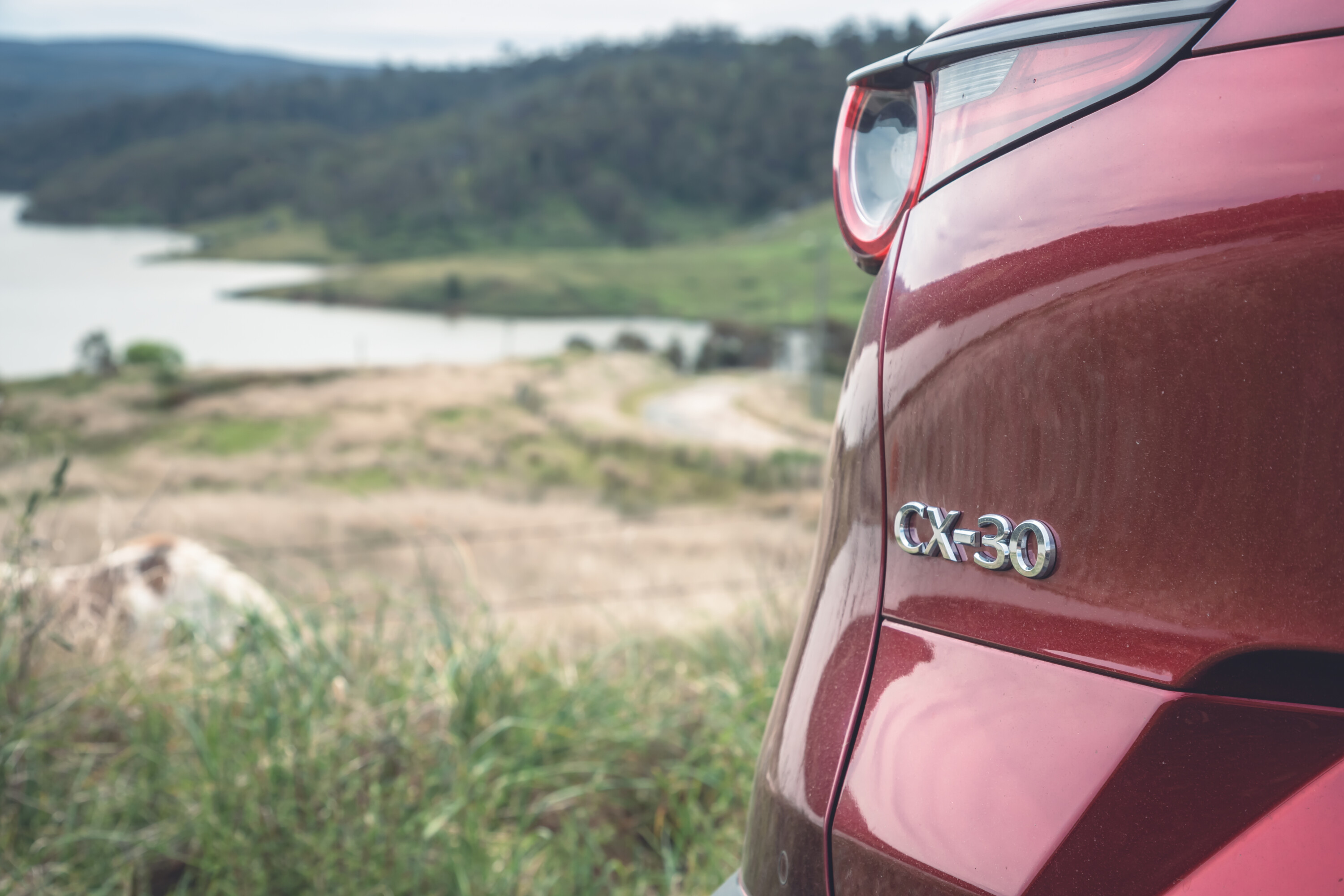
The CX-30 comes as a five-door crossover SUV only, with a maximum seating capacity of five. There are front-drive and all-wheel-drive models, a six-speed manual and six-speed automatic (depending on the model), and four engine options. They are a 2.0-litre inline-4 producing 114kW/200Nm; a beefier 2.5-litre offering 139kW/252Nm; a very-mild hybrid 2.0-litre and a less-mild hybrid 2.0-litre available in the range-topping X20 Astina.
1
What features are standard in every Mazda CX-30?
The features listed below are standard in the entry-level model and will appear in higher-grade models, unless replaced by more premium equivalent features.
| 2023 Mazda CX-30 standard features | |
|---|---|
| 16-inch alloy wheels (metallic grey finish) | Mazda Radar Cruise Control (MRCC) with Stop & Go |
| 7.0-inch digital instrument display | Parking sensors (rear) |
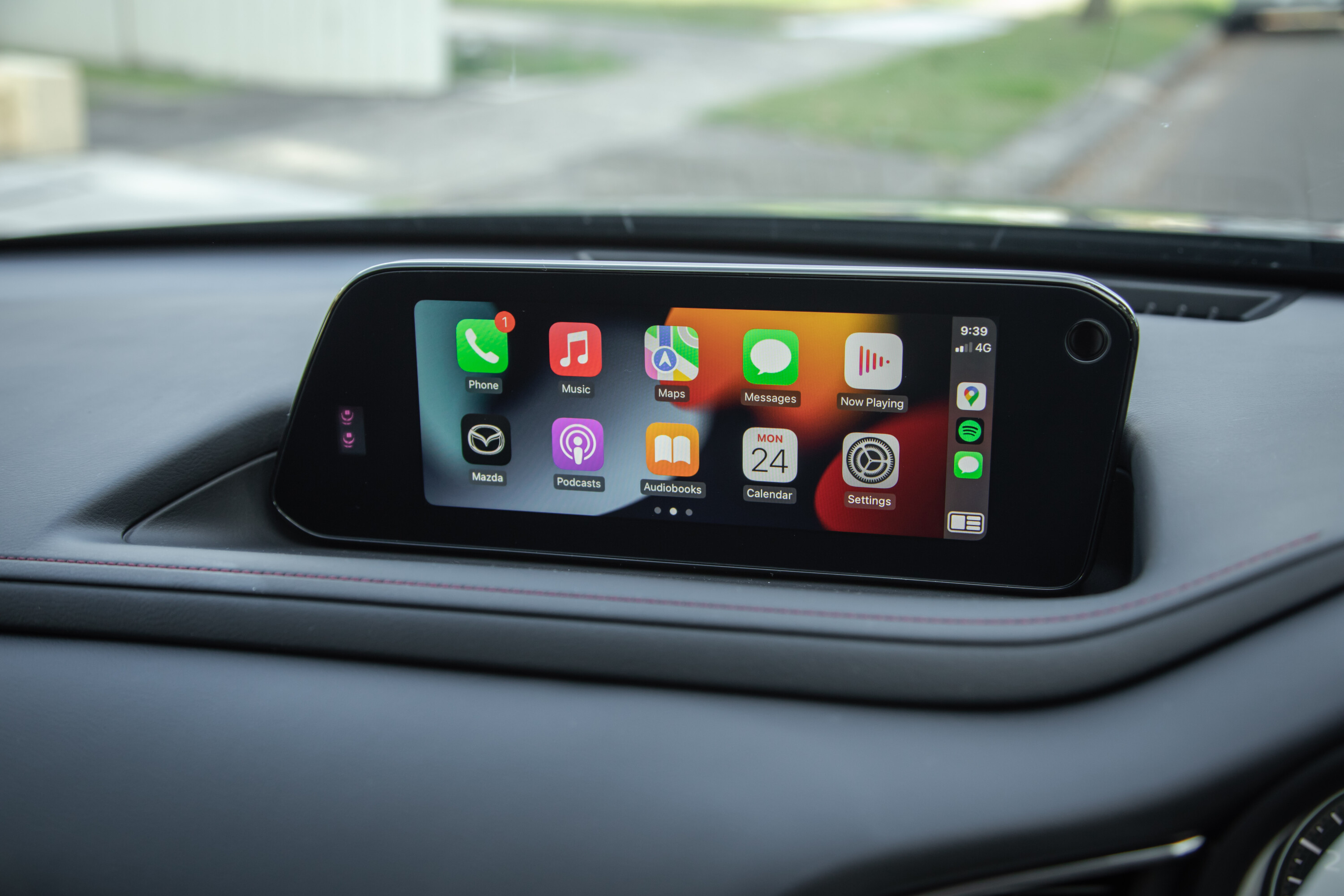
| 8.8-inch infotainment touchscreen with Apple CarPlay and Android Auto | Electrically adjustable and folding exterior mirrors |
| 8-speaker audio with Bluetooth and DAB digital radio | Power windows with auto up/down (all windows) |
| Keyless entry with push-button start | Rear Cross Traffic Alert (RCTA) |
| Airbags SRS: front (driver and passenger), side (front), knee (driver) and curtain (front and rear) | Rear spoiler |
| Air-conditioning | Reverse camera |
| Blind Spot Monitoring (BSM) | Satellite navigation |
| Driver Attention Alert (DAA) | Cloth seats |
| Electric parking brake with Auto Hold | Rear seats with 60/40 split-fold backrest |
| Emergency Stop Signal (ESS) | Smart Brake Support (SBS) |
| Forward Obstruction Warning (FOW) | Smart Brake Support u2013 Rear (SBS-R) |
| Headlamps (LED) with auto on/off function | Smart Brake Support u2013 Rear Crossing (SBS-RC) |
| Head-up display | Tilt and telescopic adjustable steering wheel |
| High Beam Control (HBC) | Traffic Sign Recognition (TSR) |
| Hill Launch Assist (HLA) | Tyre Pressure Monitoring System (TPMS) |
| Lane Departure Warning (LDW) | USB input (iPod compatible) |
| Lane-keep Assist System (LAS) | Rear wiper |
| Leather-wrapped gear shift knob and steering wheel | Rain-sensing front wipers |
1
What key features do I get if I spend more?
Mazda tells us the mid-spec G20 Evolve and G20 Touring are the most popular variants, followed by the entry-level G20 Pure.
As ever, as you spend more money, you get more goodies.
In a unique move, Mazda allows buyers to option the Vision Technology package on the automatic (but not manual) G20 Pure and G20 Evolve, whereas it is standard on the Evolve M-Hybrid, Touring SP and Astina variants.
Opting for this pack nets a 360-degree camera system, front parking sensors, a driver monitoring camera, front-cross traffic alert and traffic jam assist. A necessary tick-box? Nope, as the standard array of active safety kit is comprehensive enough.
1
However, if your budget can stretch a further $1500, the higher-quality cameras and front sensors are a nice-to-have – but be prepared for the potential of an extended wait time since the option is factory-fitted.
It’s important to remember that across the range there are three engine options. The least powerful 2.0-litre produces 114kW/200Nm, then there’s the 2.5-litre which steps things up to 139kW/252Nm and lastly there’s the hybridised 2.0-litre which produces 132kW/224Nm.
There’s also the G20e Mild Hybrid with a lithium-ion battery but it only saves 0.2L/100km – hardly anything.
The Evolve also brings:
| 2023 Mazda CX-30 Evolve features | |
|---|---|
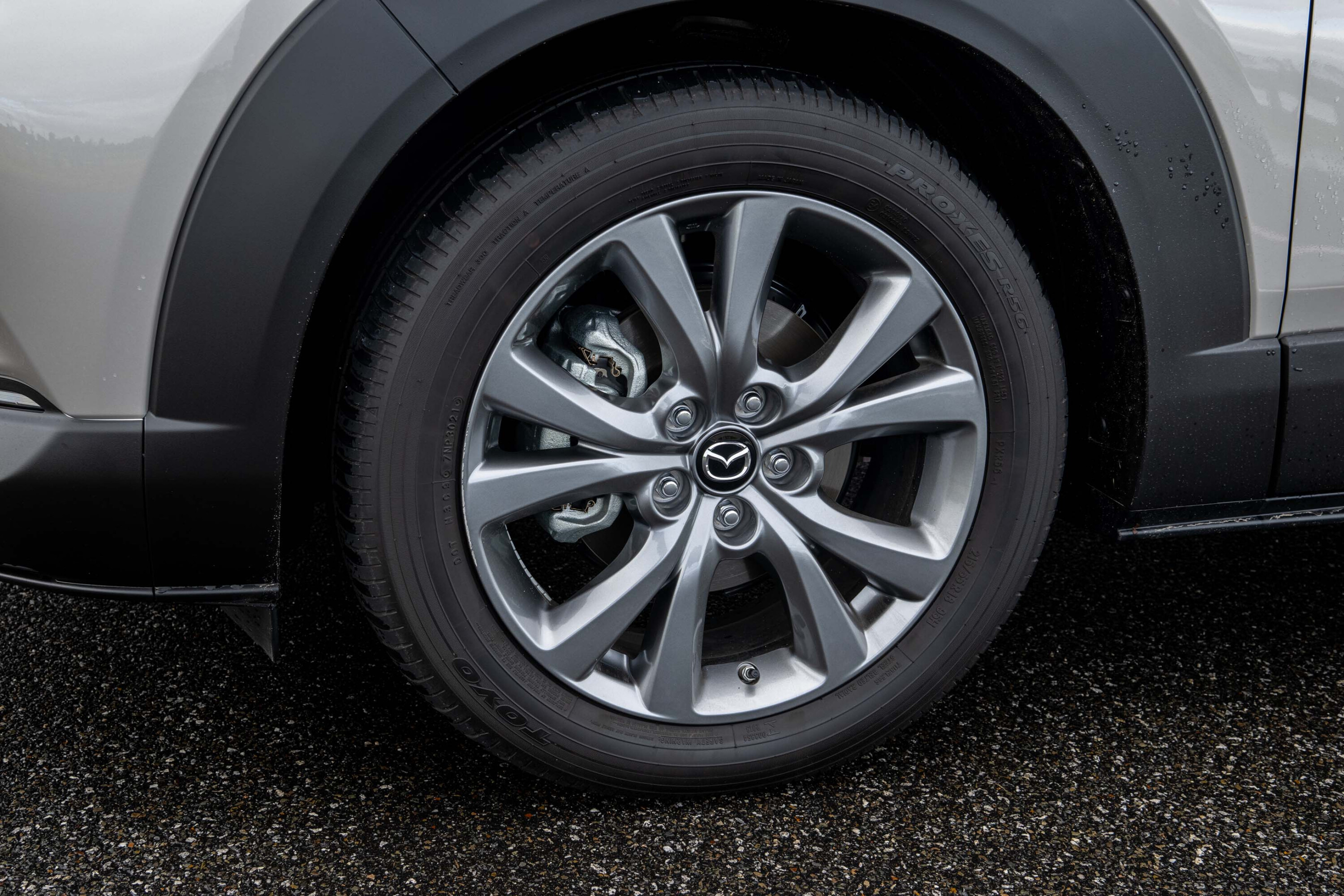
| 18-inch alloy wheels (silver finish) | Paddle shift gear control |
| Dual-zone climate control with rear vents | Auto dimming rear-view mirror |
| Overhead sunglass storage box | Rear seat centre fold down armrest with cup holder |
1
Paying more again for a Touring gets you those features plus:
| 2023 Mazda CX-30 Touring features | |
|---|---|
| Auto-dimming driver side mirror with automatic reverse tilting | 10-way electrically adjustable driver seat including lumbar adjustment and 2-position memory |
| Exterior mirrors with position memory | Front illuminated vanity mirrors |
| Leather seat trim | Front parking sensors |
Then there’s the Touring SP which adds this again:
| 2023 Mazda CX-30 Touring SP features | |
|---|---|
| 18-inch alloy wheels (black metallic) | Front Cross Traffic Alert |
| Top-down 360-degree parking camera | Burgundy leather seat trim |
| Cruising & Traffic Support | Side mirror caps in piano black |
| Driver monitoring | |
1
The Astina tops the range and in addition to everything above includes:
| 2023 Mazda CX-30 Touring SP features | |
|---|---|
| 18-inch alloy wheels (bright finish) | Heated steering wheel |
| Adaptive LED Headlights | Frameless rear view mirror (looks really cool) |
| Glass sunroof with power tilt and slide | Premium Bose amplifier and 12 speakers |
| Black leather or optional Pure White leather | Remote operated power tailgate (open/close) |
| Heated front seats | |
1
How safe is the Mazda CX-30?
A five-star ANCAP safety rating covers the Mazda CX-30 range, based on testing conducted in 2019.
Seven airbags (dual front, side, curtain, and driver’s knee) are standard.
It packs a comprehensive suite of active safety features even in base form. This includes autonomous emergency braking with vehicle, pedestrian, cyclist and reversing detection, adaptive cruise control, lane-keep assist, lane departure warning, blind-spot monitoring, rear cross-traffic alert, driver attention alert and traffic sign recognition.
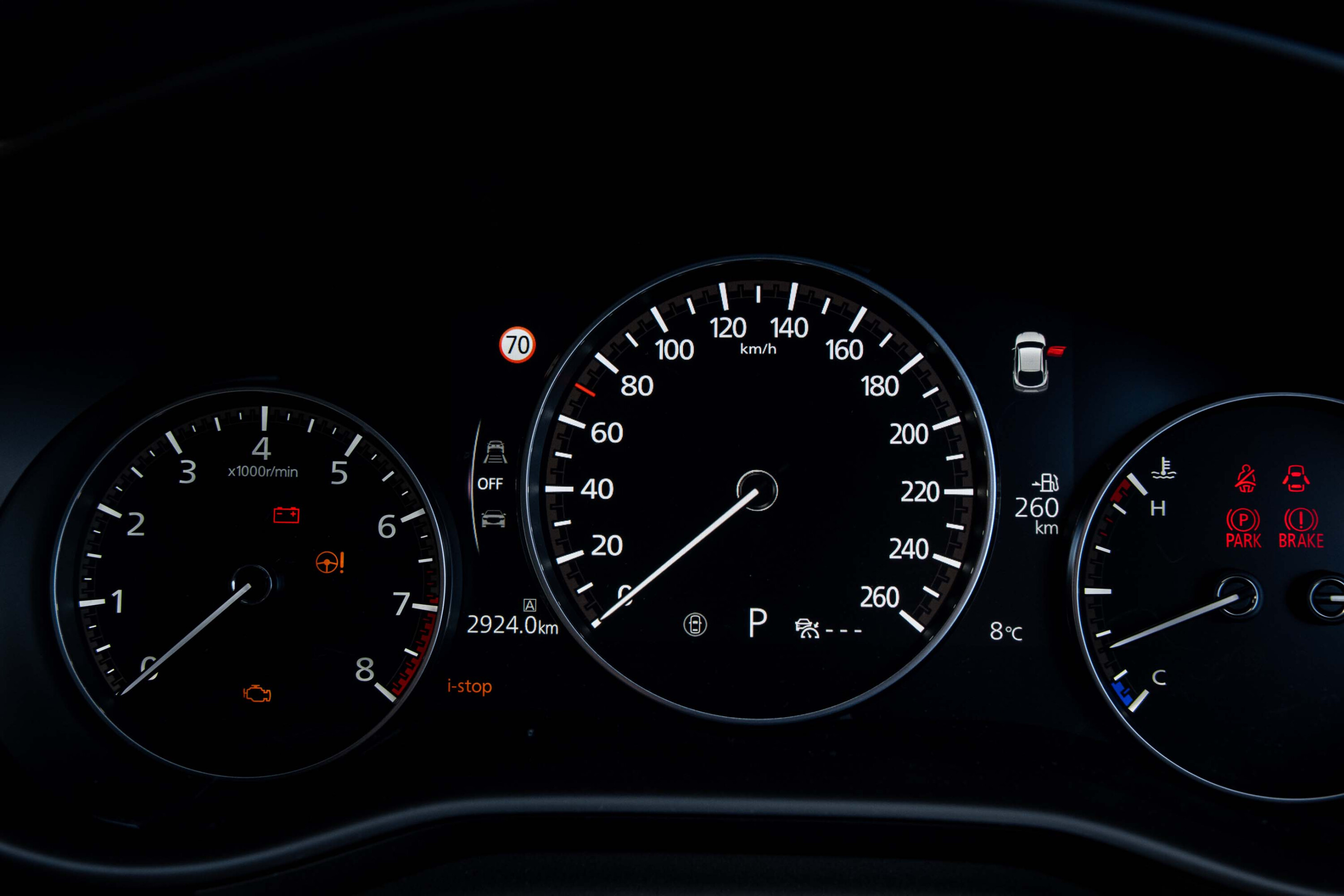
The lane-keep assist system works well for steering intervention, with a subtle jolt of the wheel when veering close to the edge, but it is quick to alert the driver – either visually in the head-up display or audibly too.
1
Meanwhile, Mazda could improve the traffic sign recognition system during roadworks and in wet weather, but it is almost perfect in normal conditions. It can work with the speed limiter (known as intelligent speed assist in Mazda parlance) but not with the adaptive cruise.
A reversing camera and rear parking sensors are standard, which can be expanded to include a better-quality 360-degree system and front sensors – plus front cross-traffic alert, traffic jam assist and a driver monitoring camera – with the $1500 Vision Technology package.
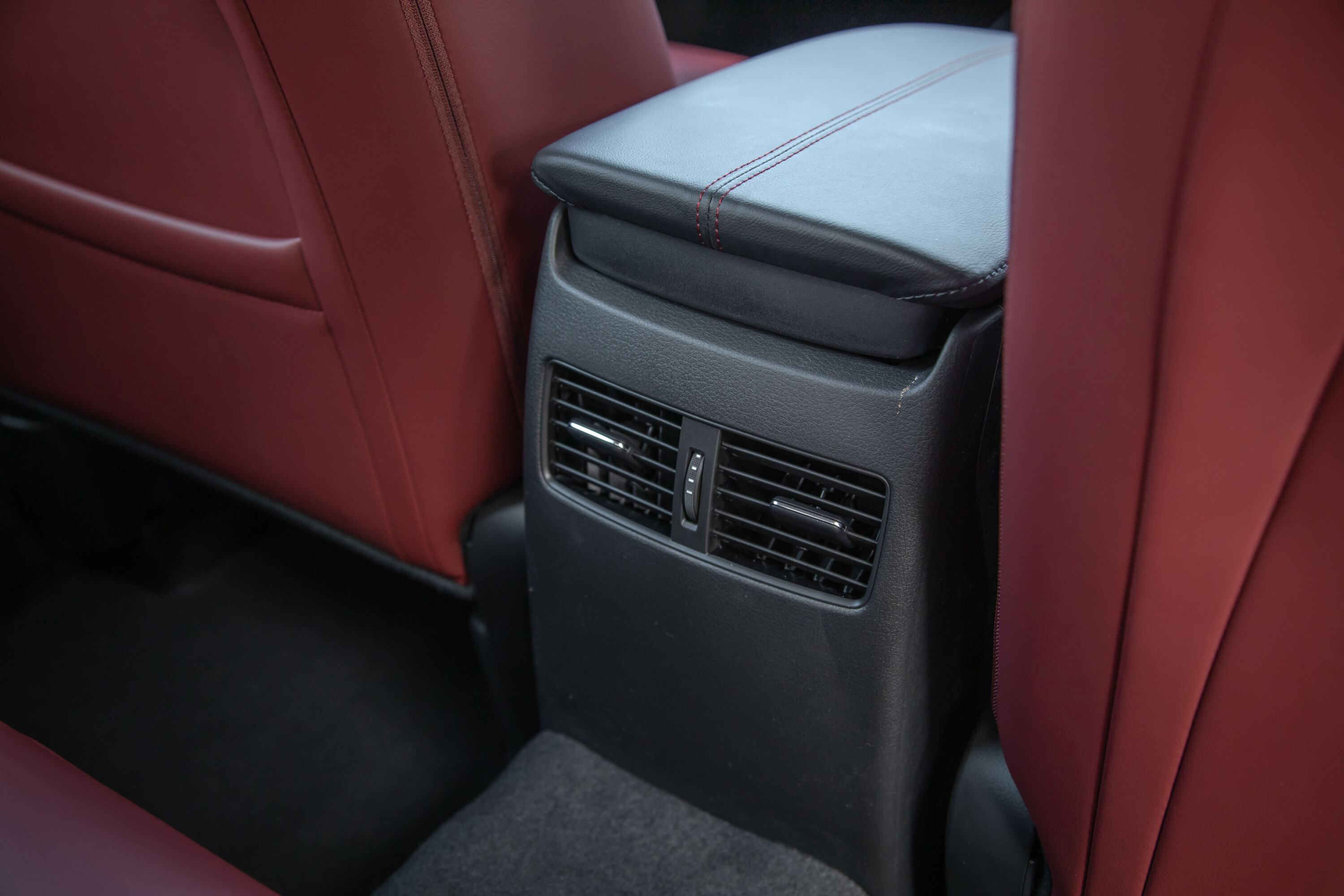
The second row includes two ISOFIX anchors, three top tether points and rear door locks.
1
How comfortable and practical is the Mazda CX-30?
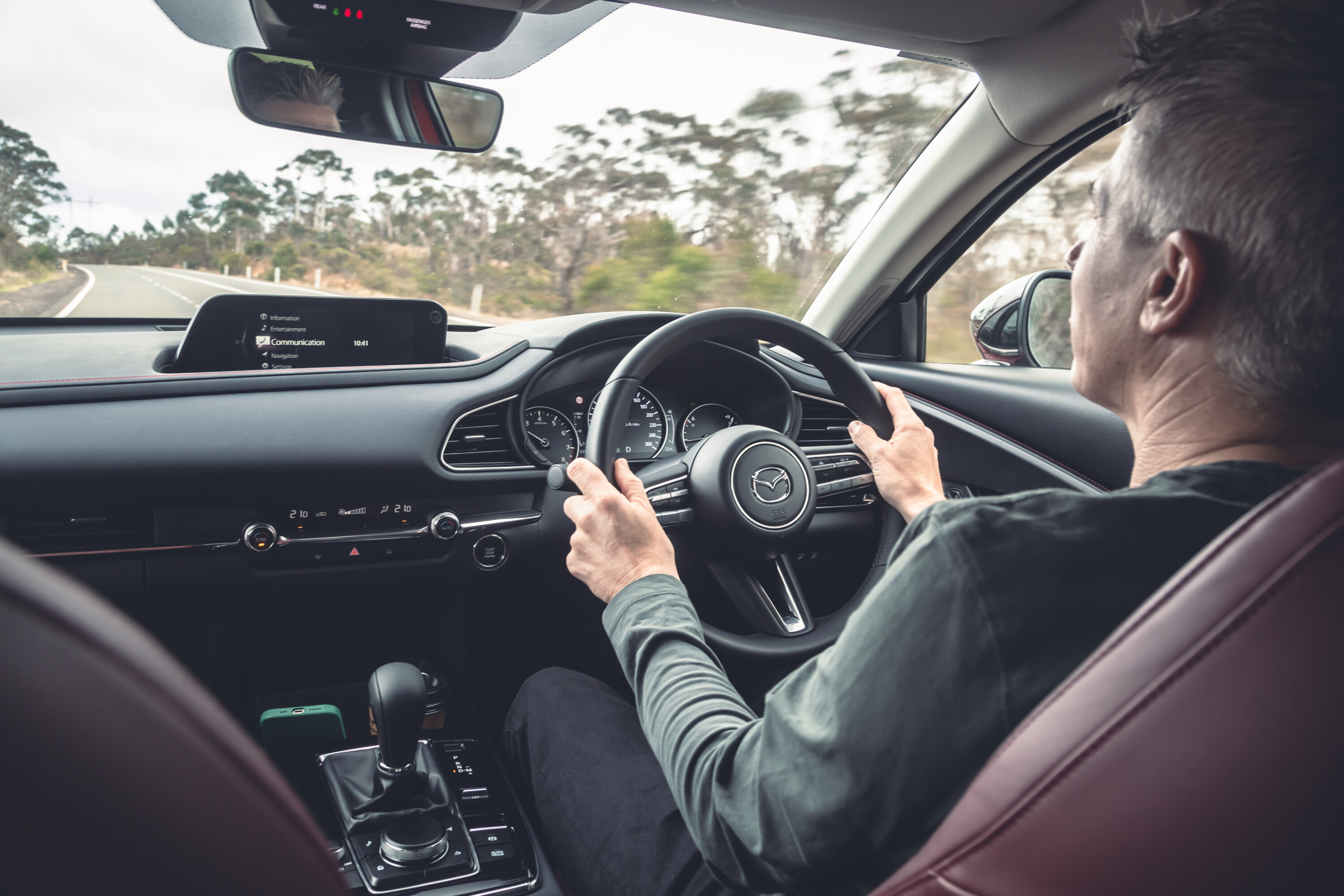
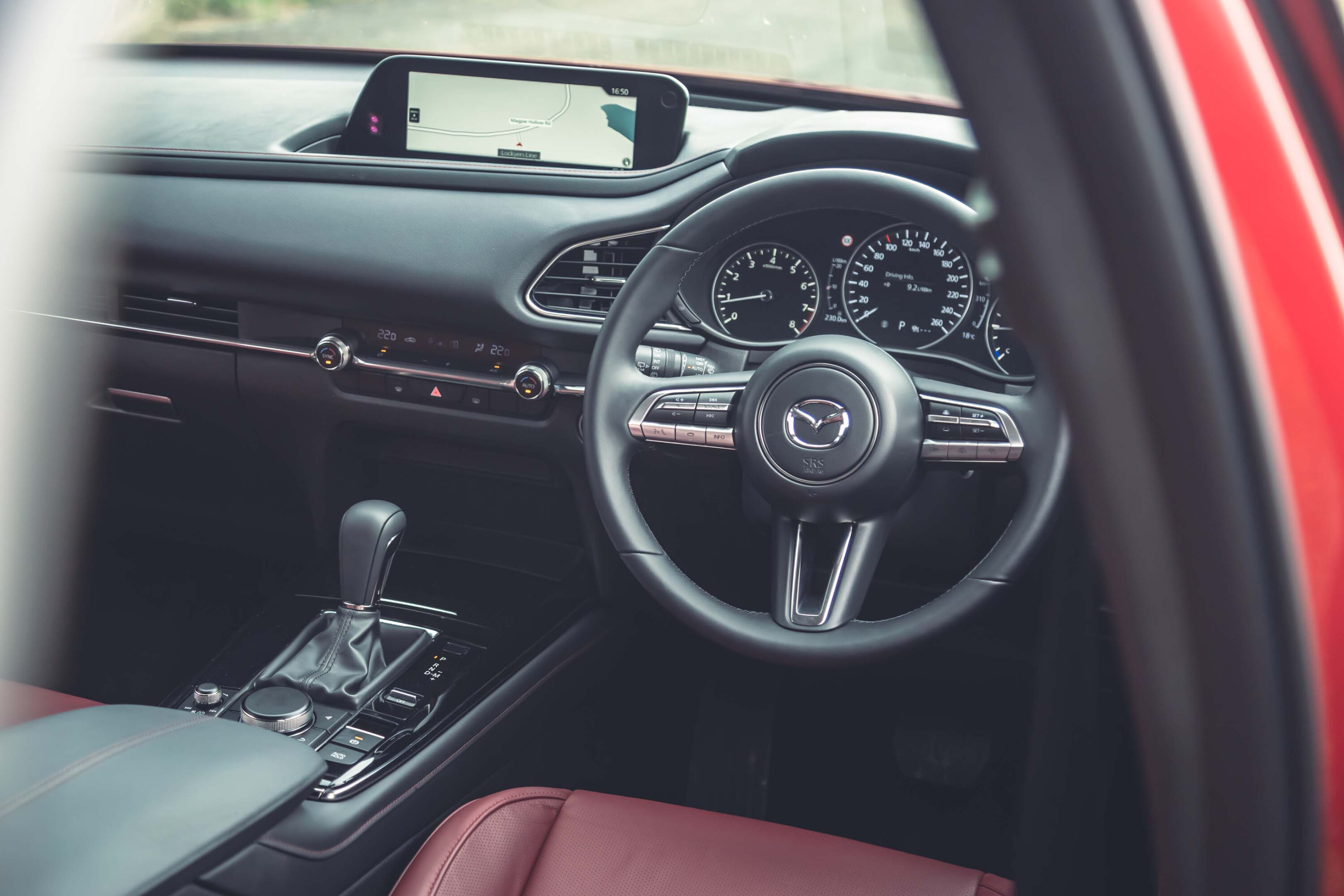
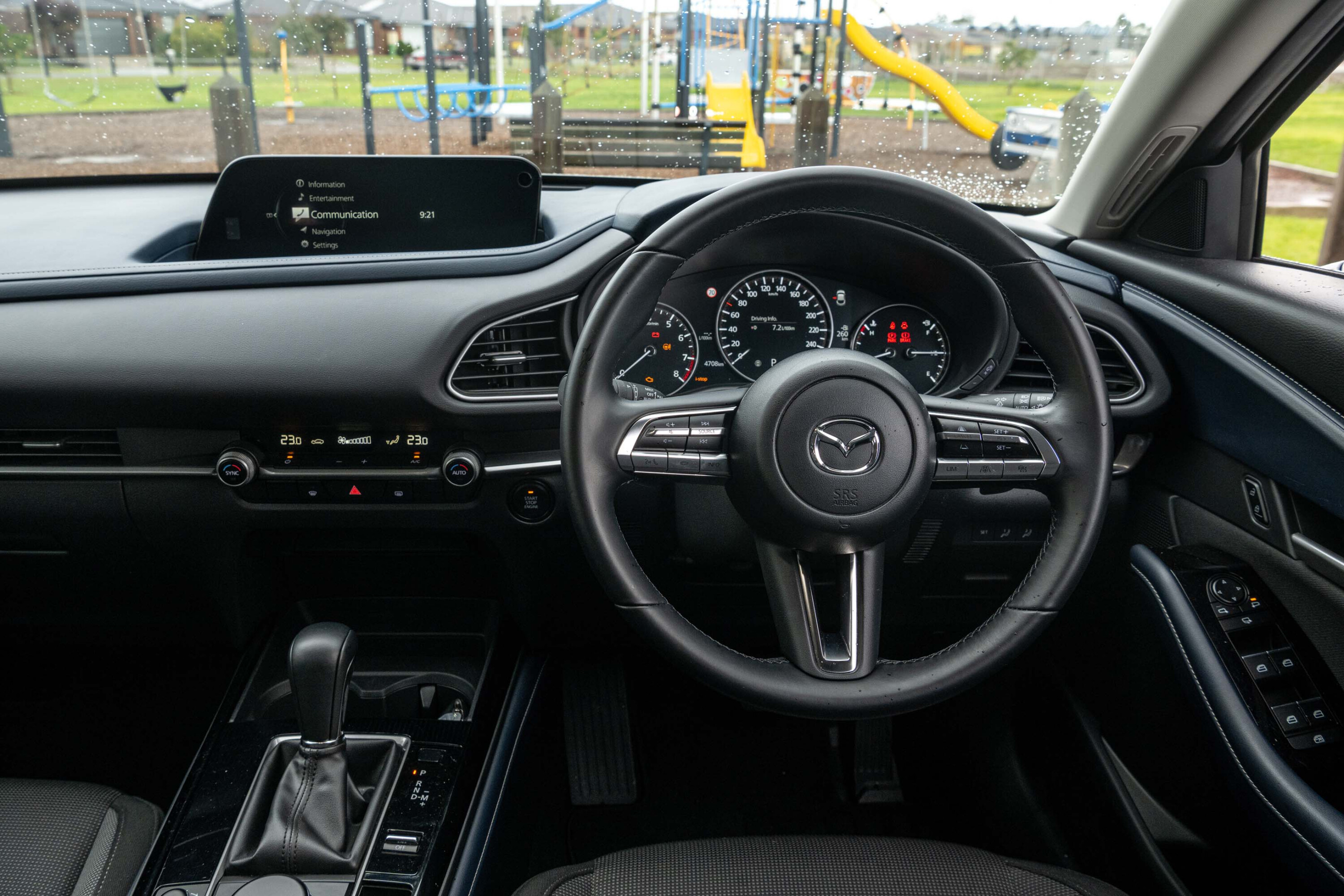
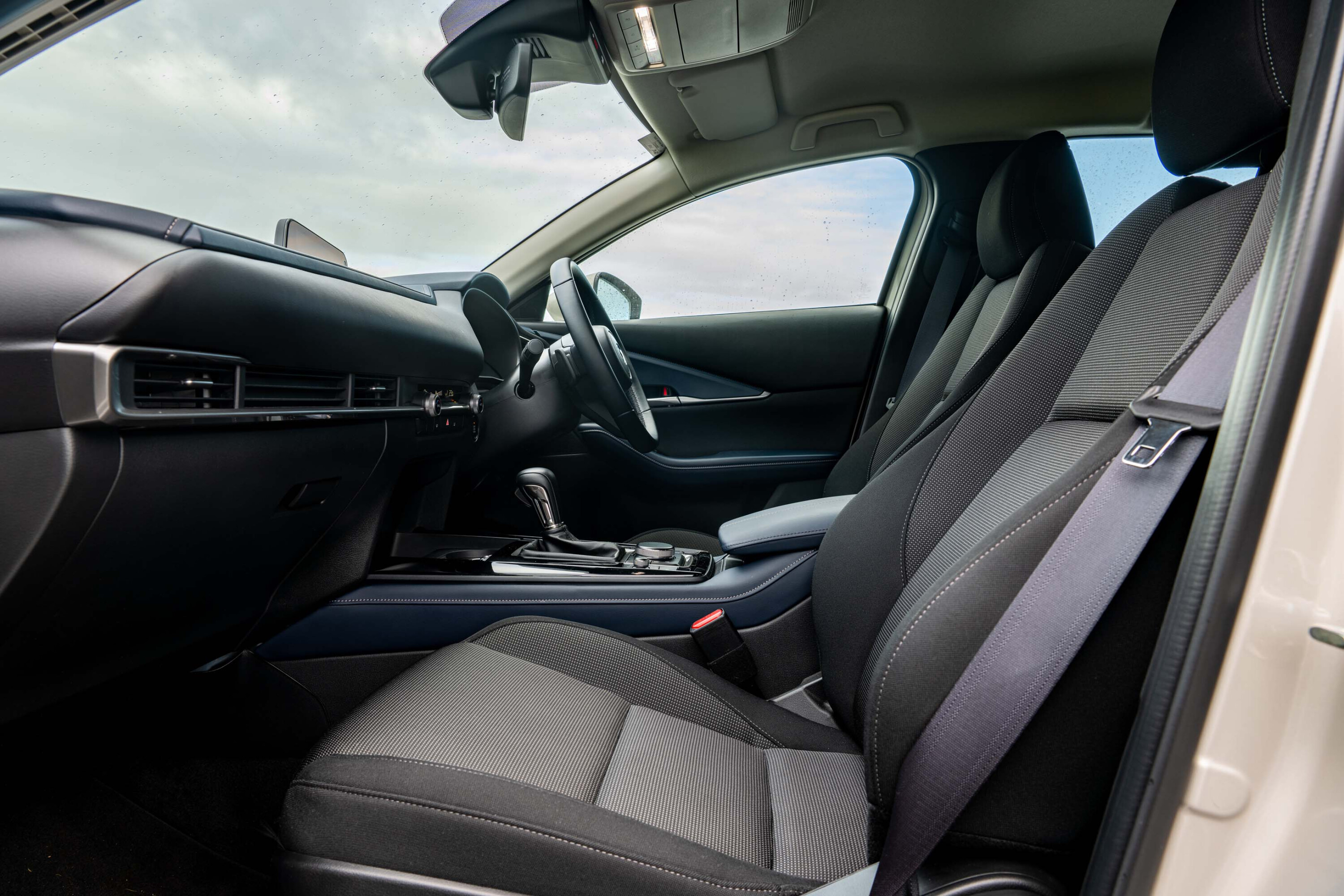
The CX-30 has a beautifully designed interior. There’s nothing whacky or “goodness, that’s clever” but it’s a model of clarity and deeply sensible ergonomics. Everything falls easily to hand, the materials are top-notch and with the SP’s burgundy leather, it’s not as dark as lower-spec CX-30s in the cabin.
Smaller Mazdas tend not to be market leaders in cabin space and the CX-30 is no different.
Front and rear-seat passengers each score a pair of cup holders and a bottle holder in each door. The centre console bin is a small but useful space and the glove box is tiny, presumably in the interest of offering more knee room.
1
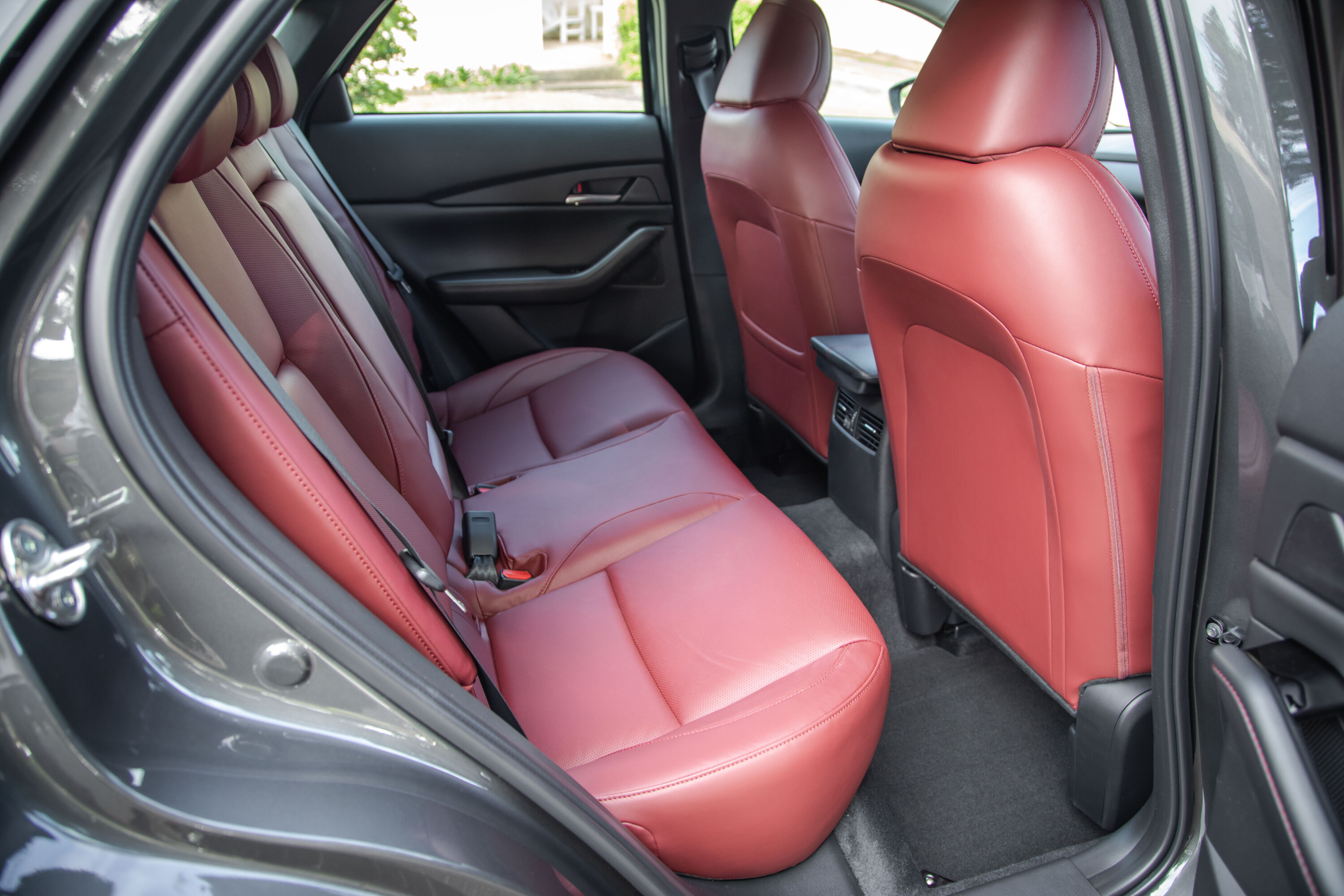
Rear-seat passengers get roughly the same deal as those in the 3 except for the middle passenger.
There is a reasonably chunky transmission tunnel that robs the middle occupant of precious foot space. It will do the job for most city trips. Headroom isn’t super generous, either, but one 180cm Wheels tester was okay and fit comfortably behind their own driving position.
At the centre of it all is an 8.8-inch infotainment screen, which is easy enough to navigate (even if it does just look like a giant sideways phone) and – in a wild departure from the direction most of the industry is going – is accessible through a rotary dial on the centre console rather than being a touchscreen.
1
How much boot space does the Mazda CX-30 offer?
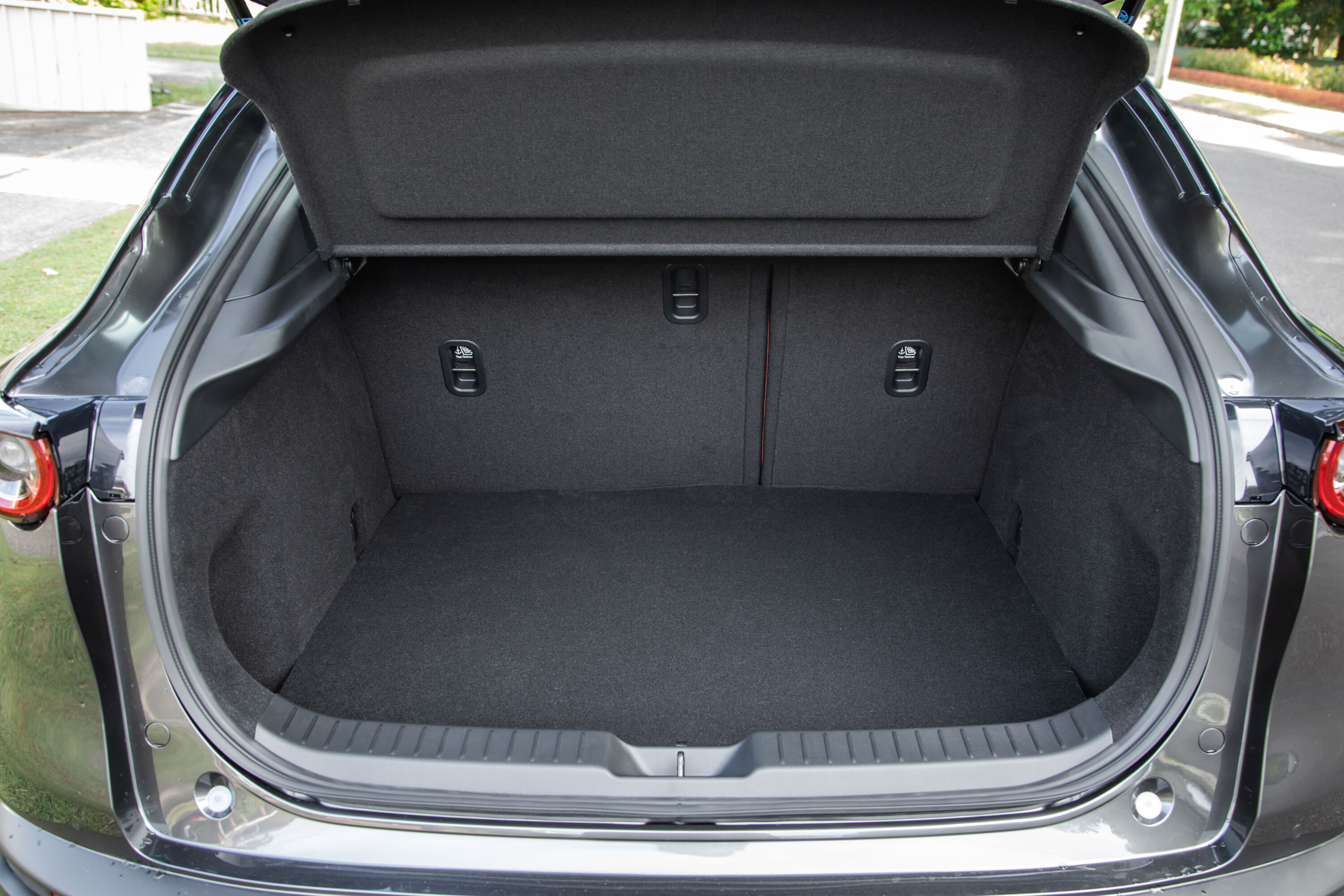
The boot has a small 317-litre capacity. This compares poorly against the Nissan Qashqai (490L), Toyota Corolla Cross (487L), Honda HR-V (437L) and Kia Seltos (433L), while even the slender Hyundai Kona has a larger 374L capacity.
It’s not all bad, though, as the CX-30 can extend up to 430 litres with underfloor storage. With the 60:40 split-fold second row down, it has a 1406-litre total capacity.
All CX-30s use a space-saver spare wheel.
1
I like driving – will I enjoy this car?
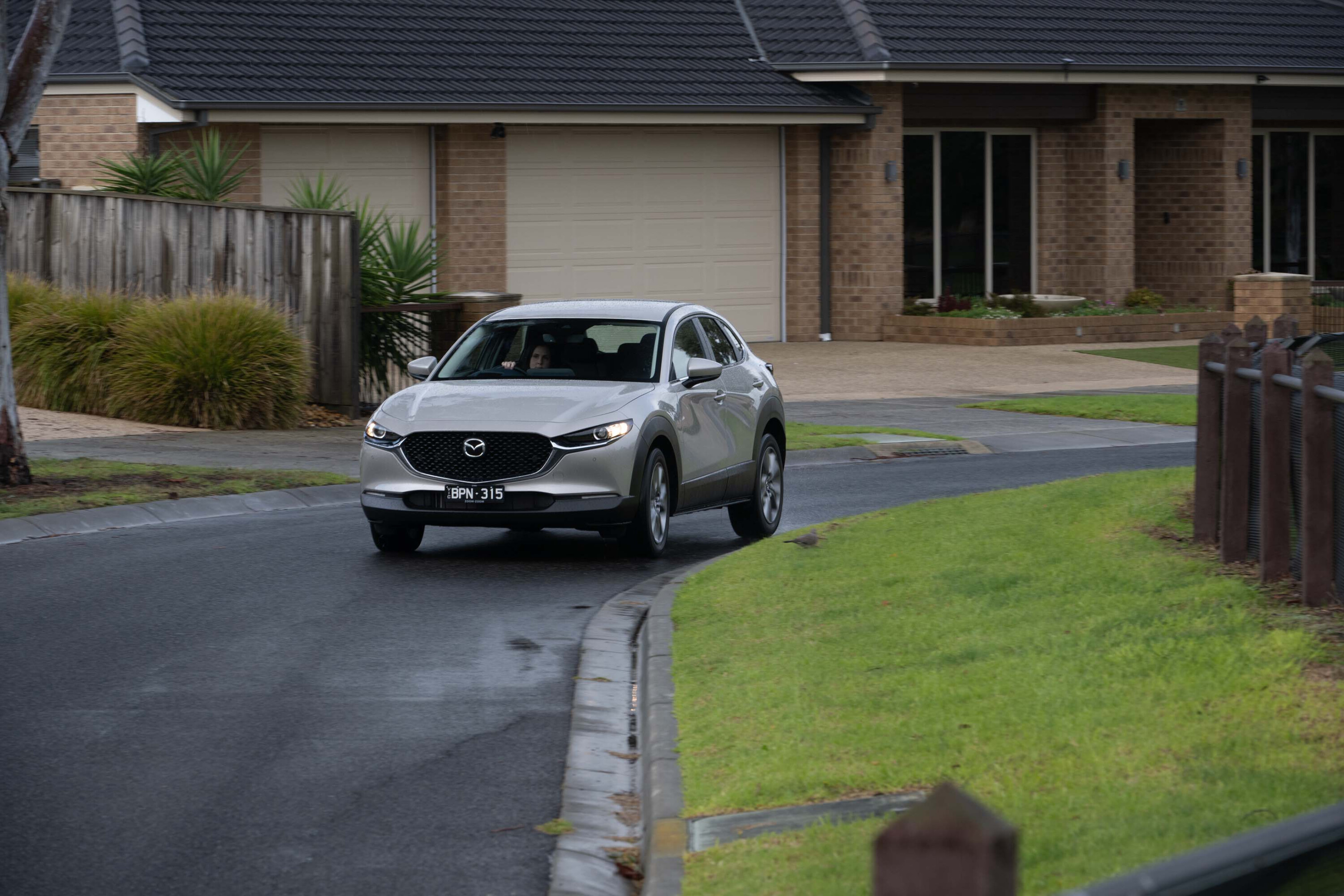
Yes. The Mazda CX-30 is a great car to drive, even amongst its peers.
The impression of being a jacked-up Mazda3 hatchback transcends beyond the CX-30’s design. This is no surprise as it retains the same underpinnings. Despite its heavier weight, the small SUV body hasn’t affected dynamics, with the CX-30 feeling just as planted.
Mazda’s engineers focused on retaining its sporting DNA, with a sharp turn-in and sharp, weighty steering. The agile handling is likely to plant a smile on your face; even around tighter bends, there’s minimal body roll and your progress is assisted by a torque vectoring system for enhanced stability.
It has a smooth ride, but the suspension can become fidgety at low speeds and over obstacles such as large potholes or speed bumps. While we could blame this on the torsion-beam rear suspension, the front suspension isn’t perfect either.
1
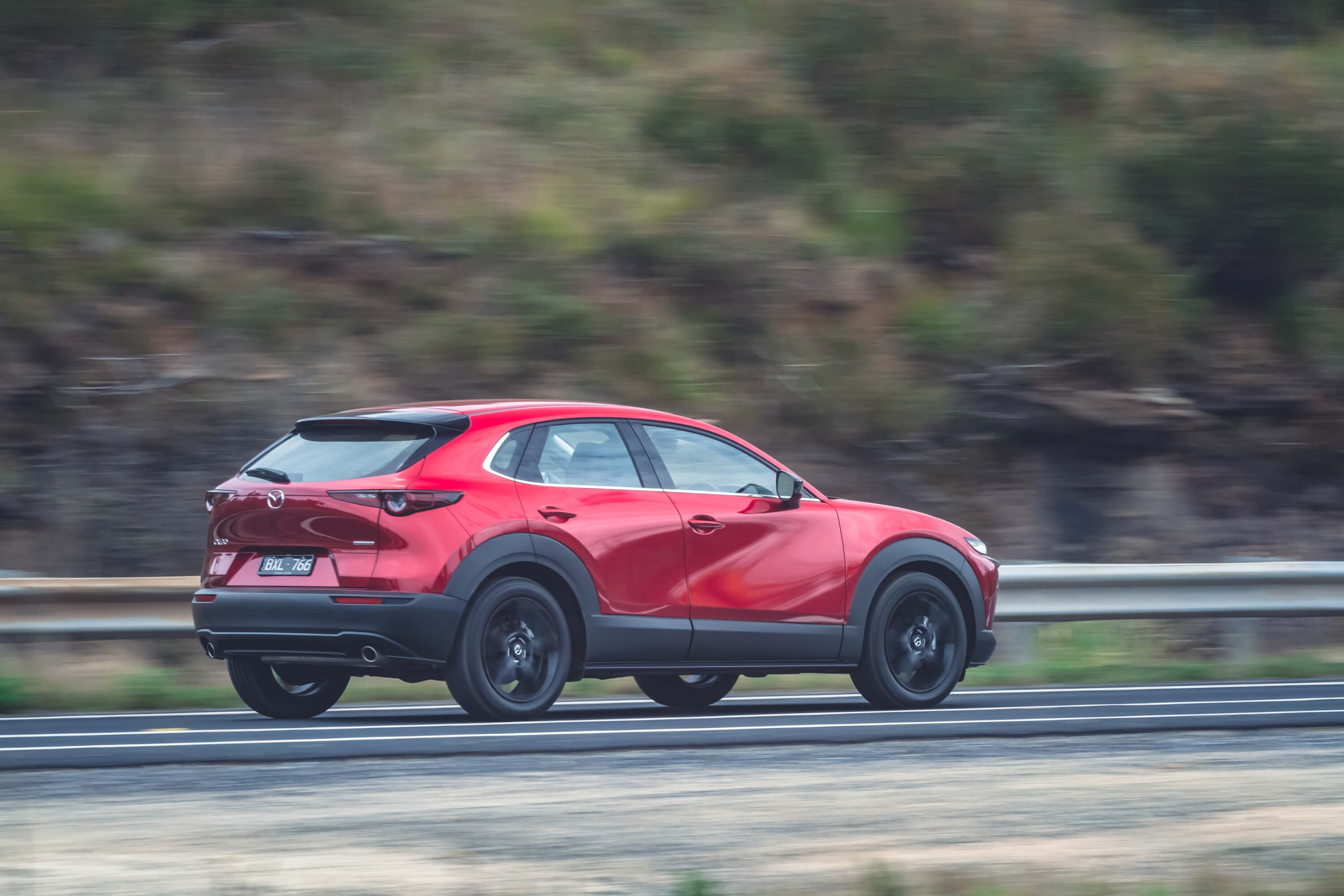
It’s an eminently comfortable cruiser, cheerfully knocking over the miles. The 2.5-litre has the distinct advantage of being able to shut down cylinders when in a level cruise to reduce fuel consumption. It’s quiet and composed and you only get a mild racket from the tyres if the surface is terrible.
It’s very happy around town, too, and the lovely thin-rimmed steering wheel is just right for all the maneuvering and turning in and out of the cut and thrust of suburban and urban driving. The transmission calibration also does its best to make it feel sprightly, although do expect to get rinsed by plenty of other cars on the road. The CX-30, even in 2.5-litre guise, isn’t going to win many drag races.
1
- What is a Powertrain or Drivetrain?
- Power vs torque
- Car suspension explained
- Automatic transmissions (‘gearboxes’) explained
- Chassis control systems explained
- Car vs Ute vs SUV: How the vehicle you buy should guide the way you drive
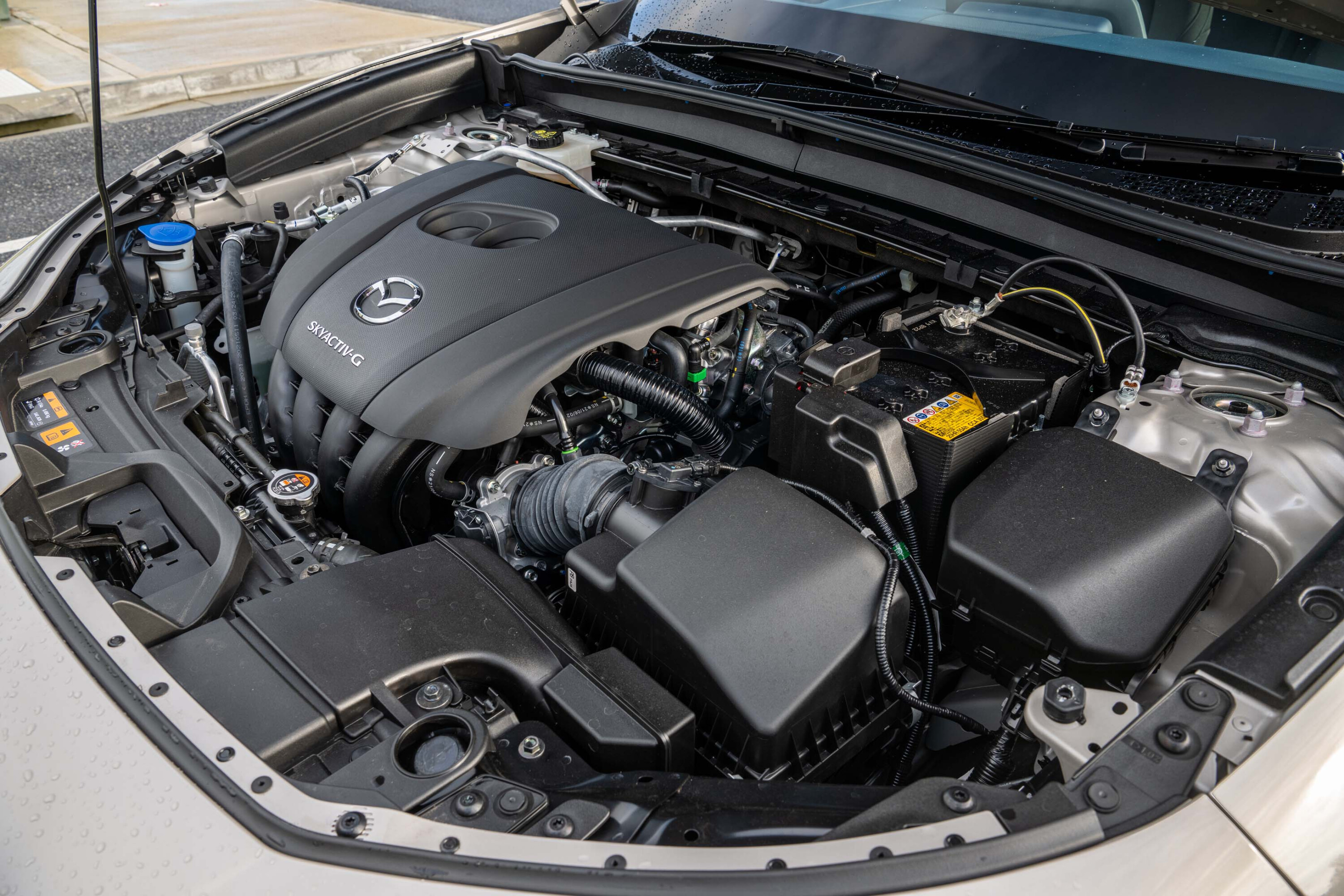
If fuel use is your greatest concern, get the hybrid e-Skyactiv X range-topper which uses 6.0L/100km on the ADR81/02 combined cycle. However, it’s worth noting it requires 95RON premium fuel. All other CX-30s will happily run on cheaper 91RON or even E10.
Next best is the 2.0-litre e-Skyactiv at 6.3L/100km. Mazda calls this a mild hybrid but using the word hybrid is a stretch if you ask us.
The 2.0-litre version uses 6.5L/100km (both manual and automatic). The 2.5-litre front-drive uses 6.6L/100km combined while adding all-wheel-drive lifts that to 6.8L/100km.
1
What is the Mazda CX-30’s towing capacity?
The Mazda CX-30 can tow up to 1200kg braked, 600kg unbraked and has an 80kg maximum towball limit.
How long is the warranty and what are the Mazda CX-30’s servicing costs?
The Mazda CX-30 is covered by a five-year, unlimited kilometre warranty. That’s the same as a Toyota, and it’s worth noting that rivals such as the Mitsubishi ASX and Eclipse Cross, Kia Seltos and Haval Jolion offer longer warranties.
The CX-30 requires servicing every 12 months or 10,000km, whichever comes first. Servicing costs vary depending on the grade, but are on average around $1800 over five years.
1
Which version of the Mazda CX-30 does Wheels recommend?
If it’s a first car, you honestly can’t go wrong with the base G20 manual which has an impressive equipment list including safety features.
If you’re after something a bit more richly equipped, you can’t go wrong with an Evolve or Touring. Although avoid the G20 Evolve mild hybrid. Save yourself the $2K and just get the normal 2.0-litre variant.
If you’re getting an Astina, we’d probably steer you away from the e-Skyactiv X 2.0 and point you towards cheaper versions like the $41,810 front-drive G20 Astina which leaps out as a great purchase. You don’t really need all-wheel-drive these days.
1
If you like a bit of power, there’s the 2.5-litre version as well. A 0.8L/100km economy penalty (over the X 2.0-litre) is worth it – plus it’s a few grand cheaper outright, and can run on less expensive 91RON fuel.
Mazda needs to make its hybrids save fuel like Toyota’s hybrids. They’ve got a long way to go in that department.
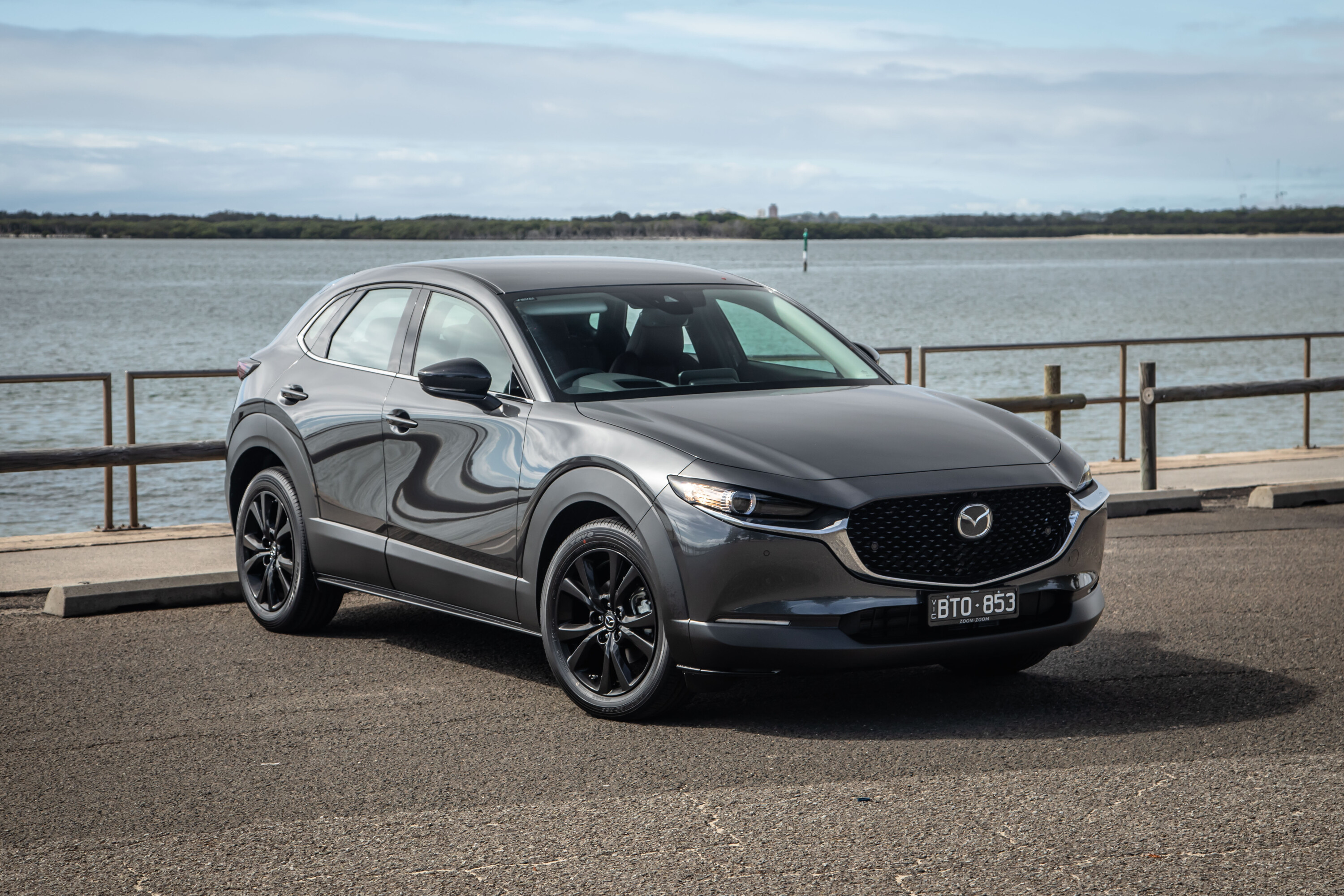
It’d be hyperbole to say the Mazda CX-30 gets the heart racing (although no judgement if it does for you), but little touches like its indicator chime, plush cabin, available red leather and attractive styling make it a more emotional choice compared to some rivals such as the Toyota Corolla Cross.
1
What are the Mazda CX-30’s key rivals?
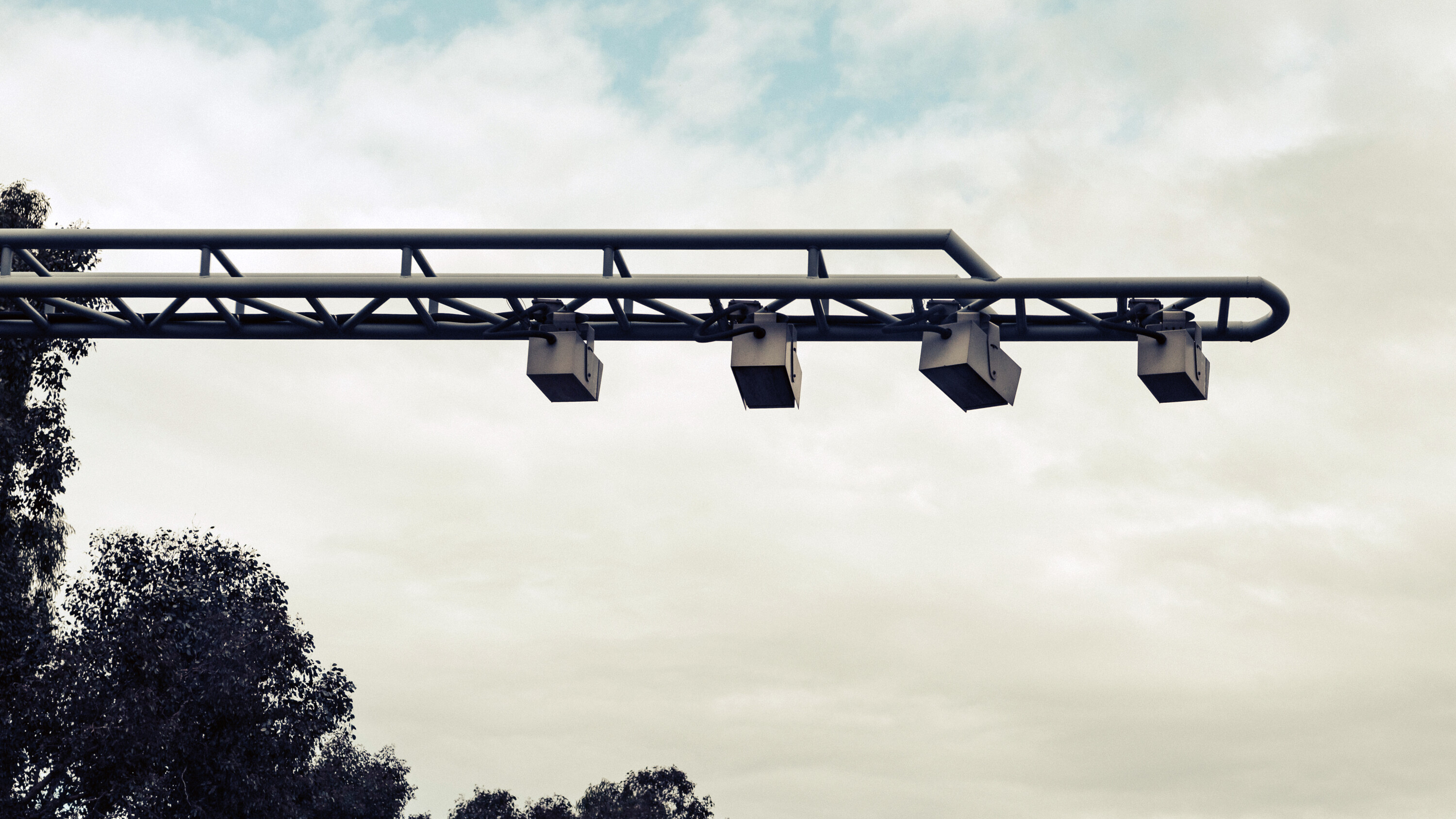
ud83dudd3c Back to topDid you know that speed cameras aren’t a thing in California, America’s most populous state?
As I write this, there isn’t a single one in all of California. They’re literally illegal. “They’re all red light cameras,” says my Uber driver as I get a lift from LAX to downtown LA where I’m staying, fresh off a direct Melbourne flight.
He’s talking about all the new-looking white cameras on poles at intersections, identical to those occasionally hidden behind road signs in Victoria.
“We don’t do speed cameras in California” he shrugs.
Update: October 14, 2023
Well, soon they will…
In the days since this column was published online (it first appeared in the October edition of Wheels magazine), California governor Gavin Newsom has signed legislation allowing speed cameras to be used in the state. Read about it at The New York Times.
Story continues
Days later, I find myself on one of LA’s monstrous eight-lane freeways – during a rare period when they aren’t choked with traffic. Cars and giant pickups hammer down the far left lane at up to 90mph – 145km/h in new money.
Do 130km/h – not that I did, officer; I’m relating a story from someone else – and you’re likely to get almost maliciously tailgated. And while black-and-white highway patrol cars occasionally lurk beside the road just as they do in Australia, nobody seems to blink an eye as they blast past them.
1
You might suppose, then, that the road toll is going down in Australia – where speed cameras are widely employed – and up in California.
In fact, it’s the other way around.
Despite this, Californian lawmakers are trying to push through legislation that would allow the first speed cameras to be installed.
They argue state pedestrian deaths are the highest they’ve been in 41 years – and the cameras are the fix they desperately need. (A law against staring at your phone while crossing the street might also be sensible.)
If passed, the new bill would make California only the 19th US state to install speed cameras. At least initially, the cameras would only issue tickets to those doing a minimum of 11mph (17km/h) over the speed limit.
They would first issue a warning to anyone caught, before passing on fines starting at $50. Camera fines would be exempt from California’s equivalent of Australia’s demerit point system. But all in all, they’d clearly be fairly light whacks with a stick compared to Australia – if the law passes.
For now, California remains speed camera free. And as someone coming from Victoria – where the hidden speed camera network has had an almost sedative effect over local drivers – I couldn’t help but notice myself driving a little bit differently in America’s Golden State. (And no, I don’t mean speeding everywhere…)
Mostly, it was freeing not having to know the local speed camera system and how strictly you needed to adhere to any limit. An email or two from the hire car company a month after your holiday is not the kind of souvenir anyone wants – especially if old mate Hertz also clips the ticket themselves along the way.
Without a sizeable percentage of my mental capacity (already limited, if you ask my missus) permanently concerned with either my speed, or where the next camera is – or scanning the side of the road for an awkwardly parked Toyota Kluger – I felt more trusted to make my own judgements and decisions, more engaged even in urban driving.
I wanted to turn off the podcast and focus more on what was out the windscreen – and, invariably, opportunities to save a bit of time.
Driving in busy, free-flowing traffic even felt a bit more, dare I say, fun. Other drivers seemed more alert; the roads seemed to work ‘better’. If passed, California’s speed cameras would be trialled for five years from January 1, 2024, after which the program would be reassessed. A few months spent driving around parts of Australia would save them the time.
Snapshot
- 2024 Model Y updated with subtle design tweaks
- Retains steering wheel stalks
- More range, better performance on some variants
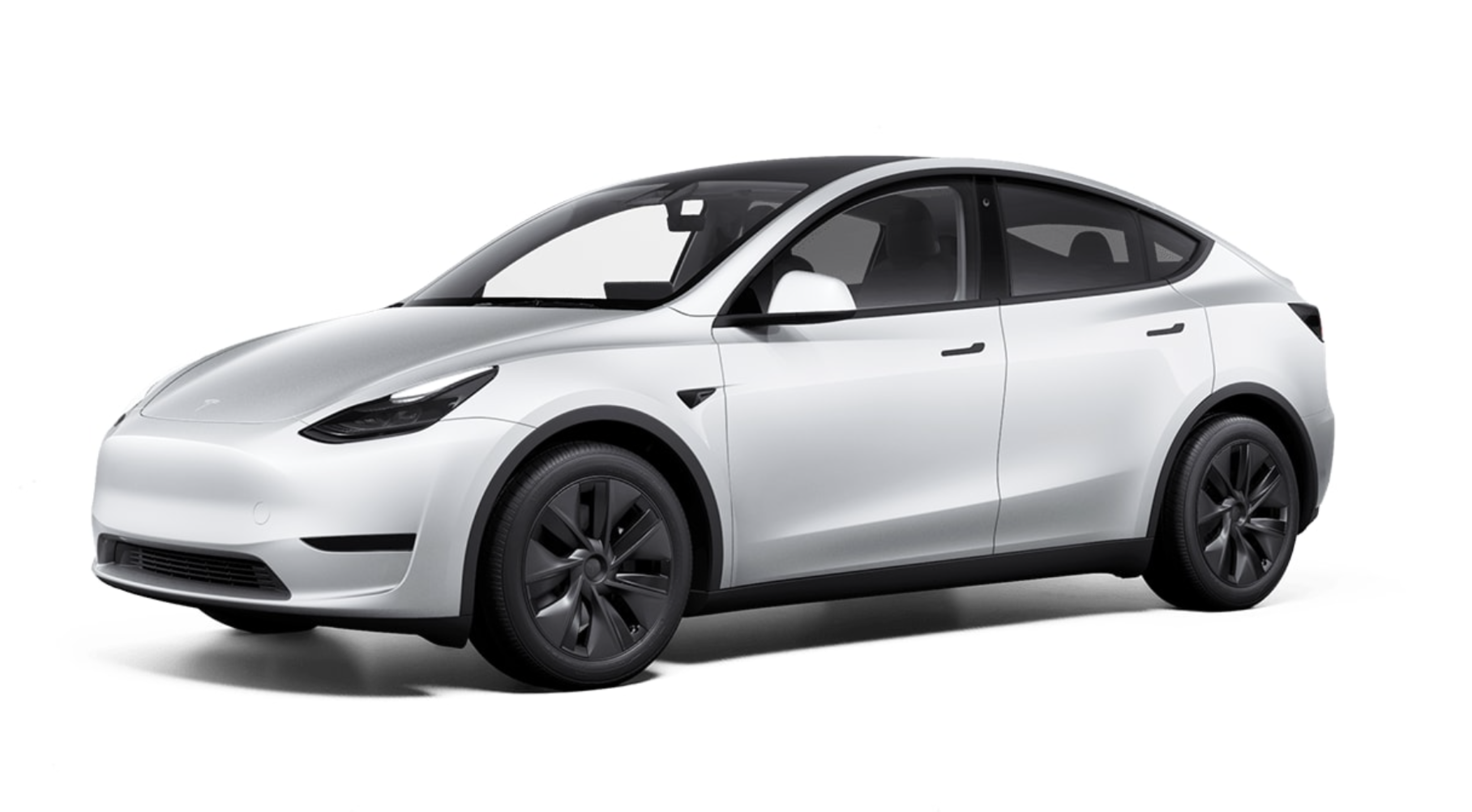
The Tesla Model Y electric SUV has received a minor refresh in China – but the changes are not yet confirmed for Australia.
The world’s best-selling electric car brings some new features from the facelifted Model 3 sedan – due in Australia early next year – but also carries over previous features.
1
Exterior tweaks
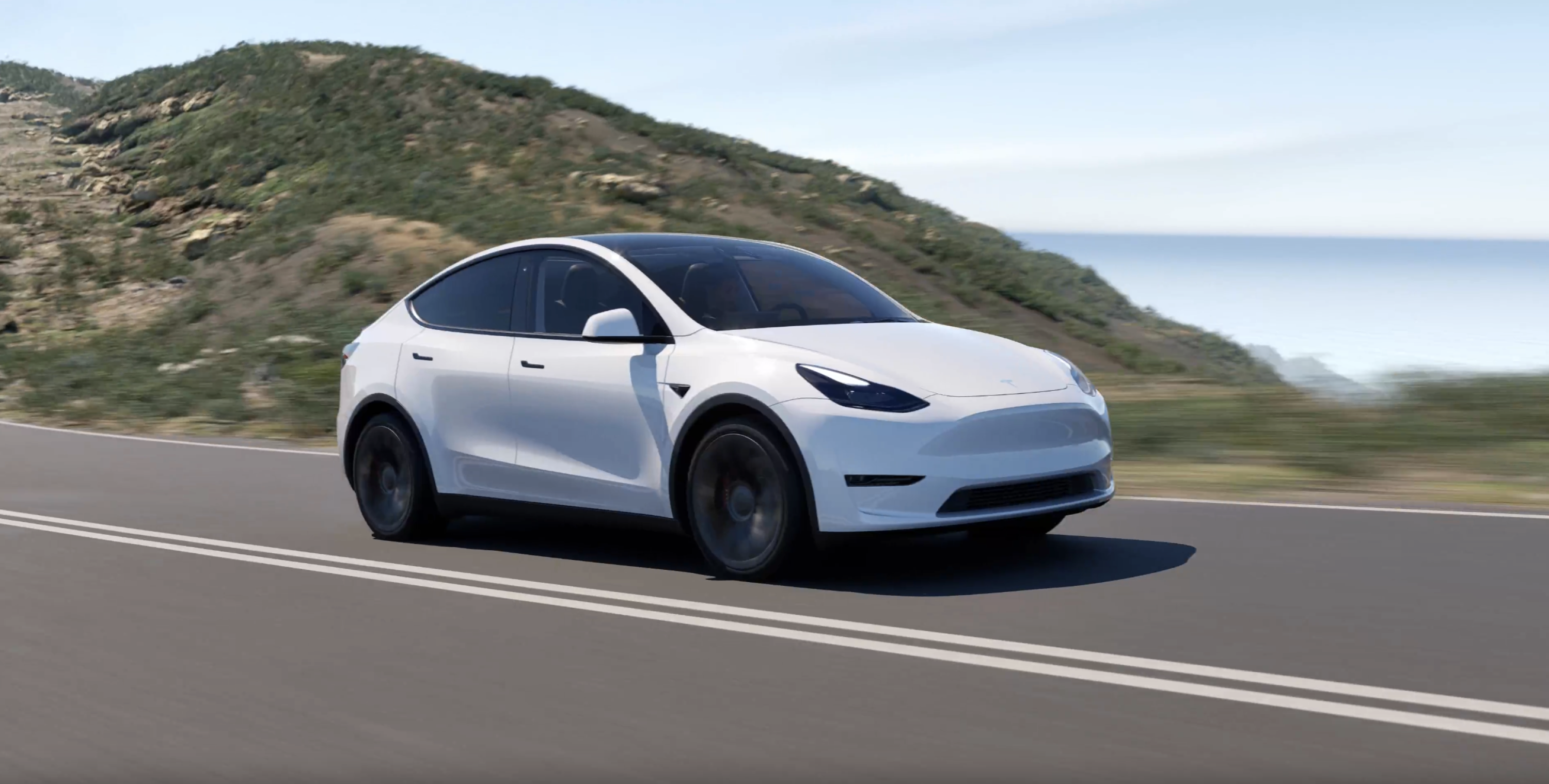
The front lower bumper intake appears to be more prominent, while darker 19-inch ‘Gemini’ aerodynamic wheel covers are now standard.
However, the head- and tail-lights, optional 20-inch ‘Induction’ wheels, and the flagship Performance’s 21-inch ‘Überturbine’ alloys are unchanged.
1
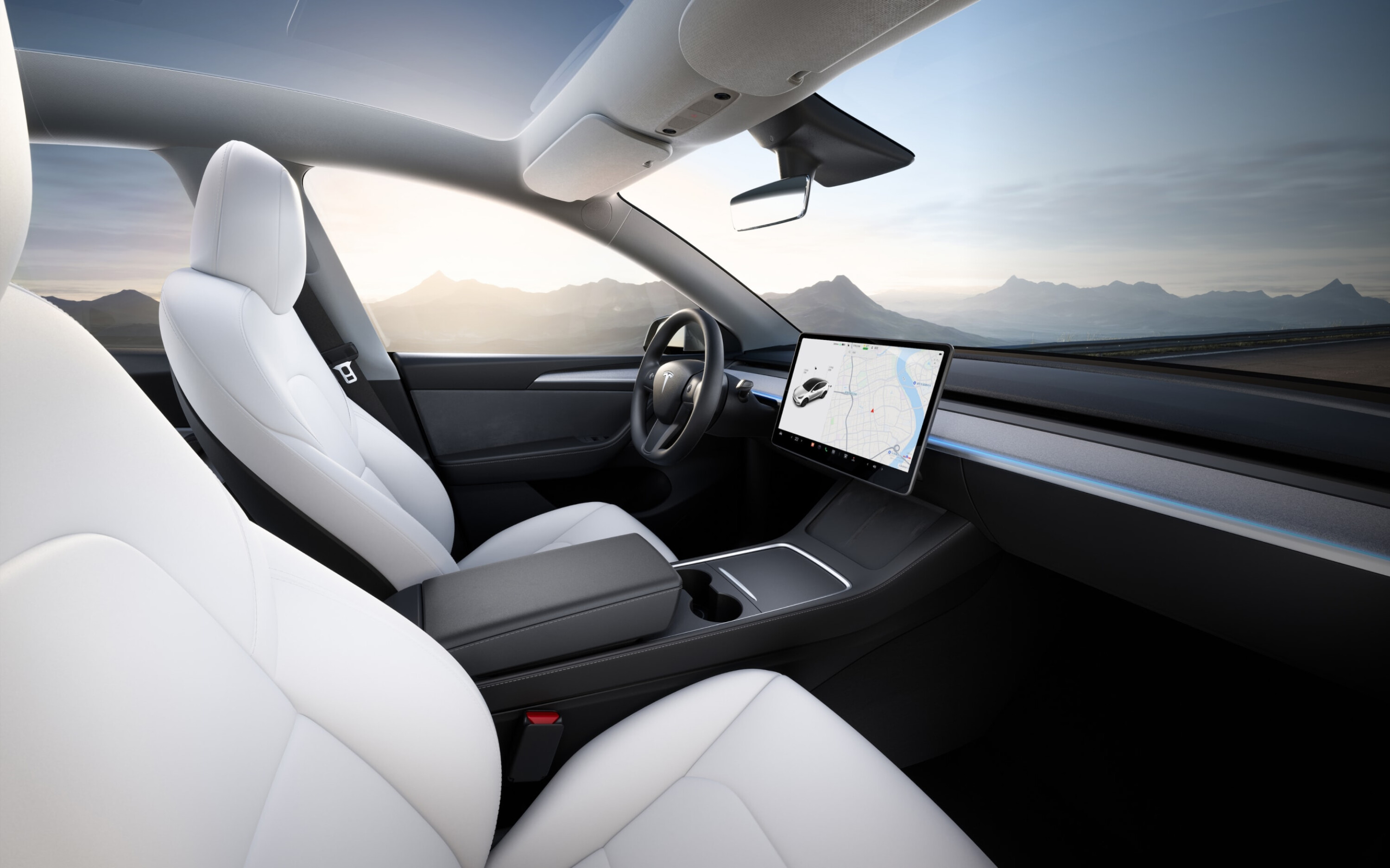
Fresher interior
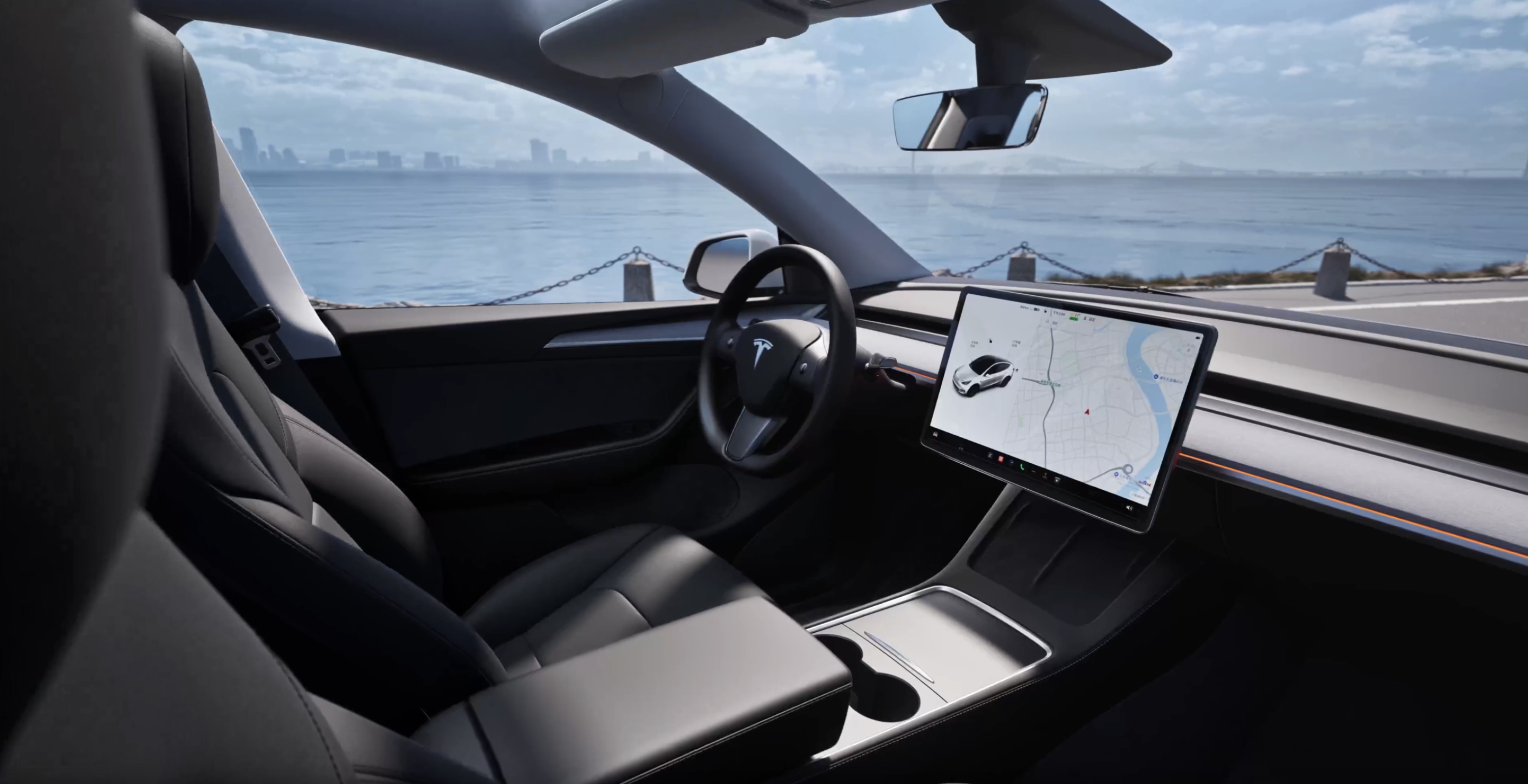
The new Model Y introduces an updated dashboard with a fabric-like material (previously a faux wood trim) and a colour-selectable ambient lighting strip.
Unlike the facelifted Model 3 electric sedan, the dash piece is still angled toward occupants, while the ambient light is placed lower and doesn’t extend along the windscreen and into the front and rear doors.
The optional white and black interior no longer changes the dashboard material.
Also notably unchanged is the steering wheel – which still offers indicator and drive selector stalks – the centre console layout, and identical 15.0-inch central touchscreen. It also doesn’t bring a rear passenger display.
For context, the related 2024 Model 3 has a brighter and larger 15.4-inch unit with slimmer bezels.
1
Improved range and power
| 2024 Tesla Model Y (China specs) | RWD | Long Range | Performance |
|---|---|---|---|
| Claimed range (combined CLTC) | 554km (up 9km) | 688km (up 28km) | 615km |
| Claimed 0-100km/h | 5.9 secs (1.0 secs faster) | 5.0 secs | 3.7 secs (1ft rollout subtracted) |
| Drive type | RWD | AWD | AWD |
| Max AC / DC charging speed | 11kW / 170kW | 11kW / 250kW | 11kW / 250kW |
| Recommended charging limit | 100% | 90% | 90% |
| Weight | 1911kg (up 2kg) | 1981kg (up 2kg) | 1998kg (up 1kg) |
| Boot / frunk volume | 845-litres / 117-litres | 845-litres / 117-litres | 845-litres / 117-litres |
Under the unrealistic China Light-Duty Vehicle Test Cycle (CLTC), the base Model Y RWD has gained nine kilometres more claimed driving range, while the mid-pack Long Range is up 28km.
For context, the current Model Y RWD offers 455km claimed range, Long Range at up to 533km, and the Performance is rated at up to 514km on the stricter Worldwide Harmonized Light-Duty Test Procedure (WLTP).
The updated Model Y RWD is also one-second faster in the 0-100km/h acceleration time, with all variants being up to two kilograms heavier.
Therefore, it’s likely that the battery packs are unchanged as per the facelifted Model 3.
This means a 57.7kWh usable (60kWh gross) lithium-iron-phosphate (LFP) battery on the RWD and a 75kWh usable (78.1kWh gross) nickel-manganese-cobalt (NMC) lithium-ion type battery on the Long Range and Performance, according to figures provided by EV Database [↗].
7
Will the new 2024 Model Y launch in Australia?
The updated 2024 Tesla Model Y is now available to order in China, with deliveries estimated to start later this month or in November.
Prices across the three-model line-up are unchanged in China, too.
Australian-bound Model Y examples are produced in Tesla’s Shanghai, China factory, but the update is still to be announced for local examples.
Previous reports indicated the Model Y would be updated late next year, under the internal codename project ‘Juniper’.
MORE
Everything Tesla
Update: Subaru BRZ tS priced for Australia
Subaru has confirmed that the tS will join its Australian BRZ range in 2024.
The flagship model costs $48,690 in manual or $49,690 in automatic trim and is available to pre-order now. It also benefits from updates made to the broader BRZ range for 2024 – click the link below for all the information.
30 September 2023: Subaru BRZ tS confirmed for Australia
Snapshot
- 2024 Subaru BRZ tS revealed
- u2018Tuned by STIu2019 variant adds unique suspension, Brembo brakes
- Confirmed for Australia
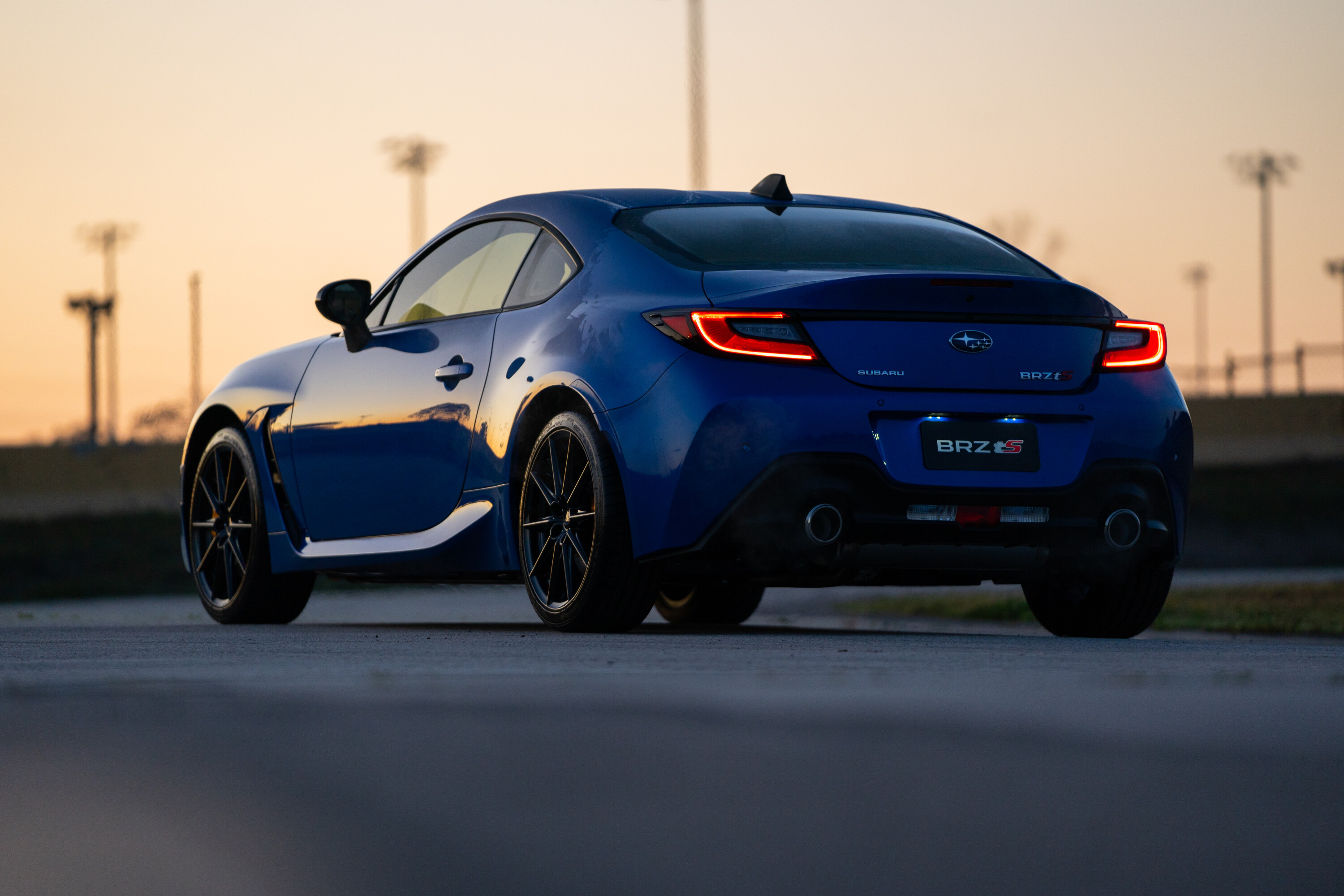
The “sharper and more focused” 2024 Subaru BRZ tS has debuted.
Short for ‘tuned by STI’, the BRZ tS returns in second-generation form with unique suspension and Brembo brakes with gold-painted calipers.
UPDATE, 30/09/23: 2024 Subaru BRZ tS confirmed for Australia
Subaru Australia confirmed the BRZ tS will arrive in Australia in 2024 at this year’s annual SubiNat’s owners’ festival at Sydney Motorsport Park. This story, first published in July 2023, has been updated to reflect the latest information.
1
“More information on the availability and pricing of the 2024 all-new Subaru BRZ tS will be confirmed soon,” said Subaru Australia.
In addition to the tS, the 2024 Subaru BRZ line-up will also introduce active safety features – including potentially life-saving autonomous emergency braking – for manual transmission variants.
Under the skin, the BRZ tS – firstunveiled at this year’s annual Subiefest California in the United States – adds STI-tuned front and rear Hitachi dampers said to enhance handling.
The “high-performance” Brembo braking system comprises gold-painted 4-piston front calipers, and 2-piston rear calipers, and larger pads and rotors.
1
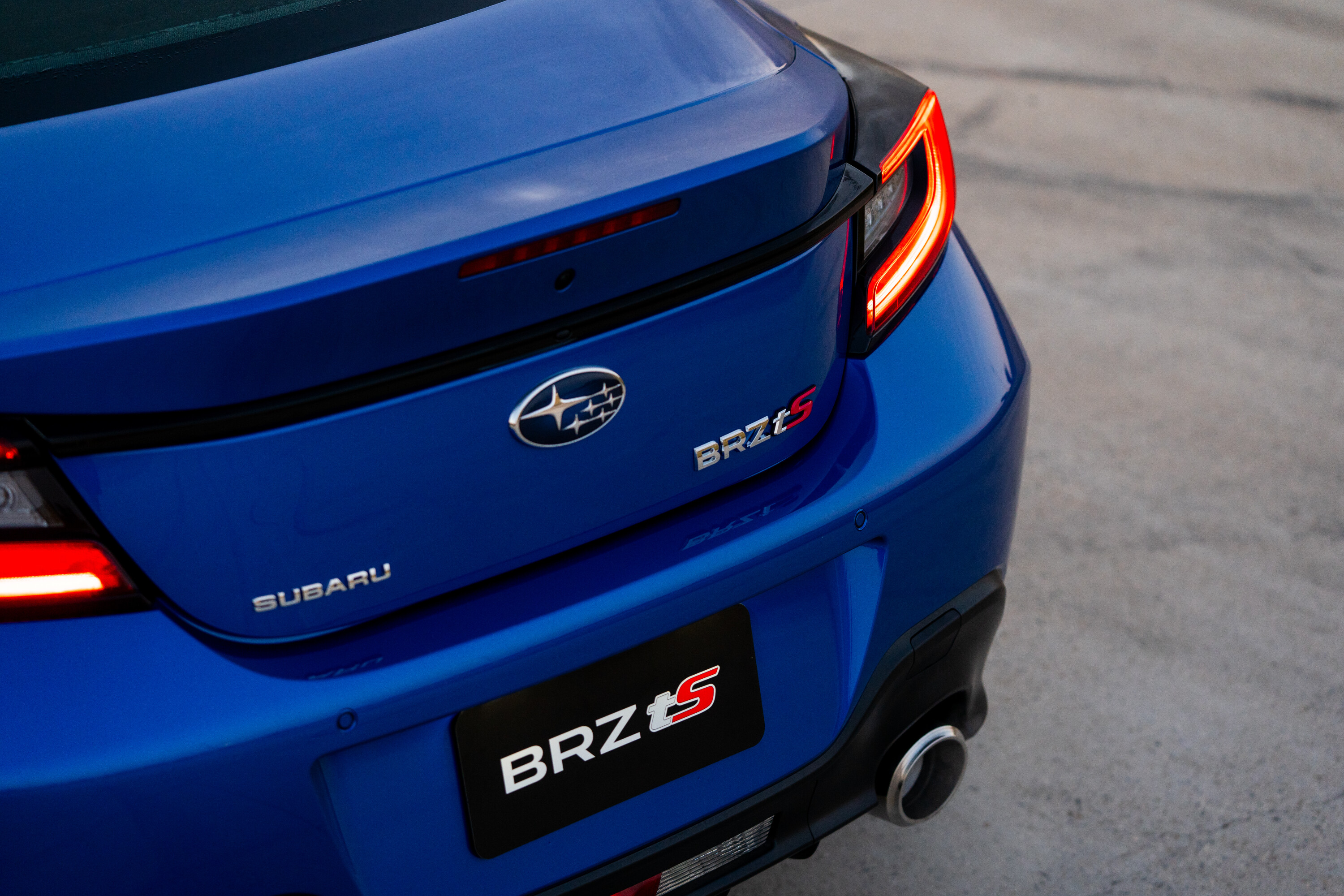
Design changes include tS badges on the grille and bootlid, black-painted side mirrors and antenna, and darker 18-inch alloy wheels, with unchanged Michelin Pilot Sport 4 all-season tyres.
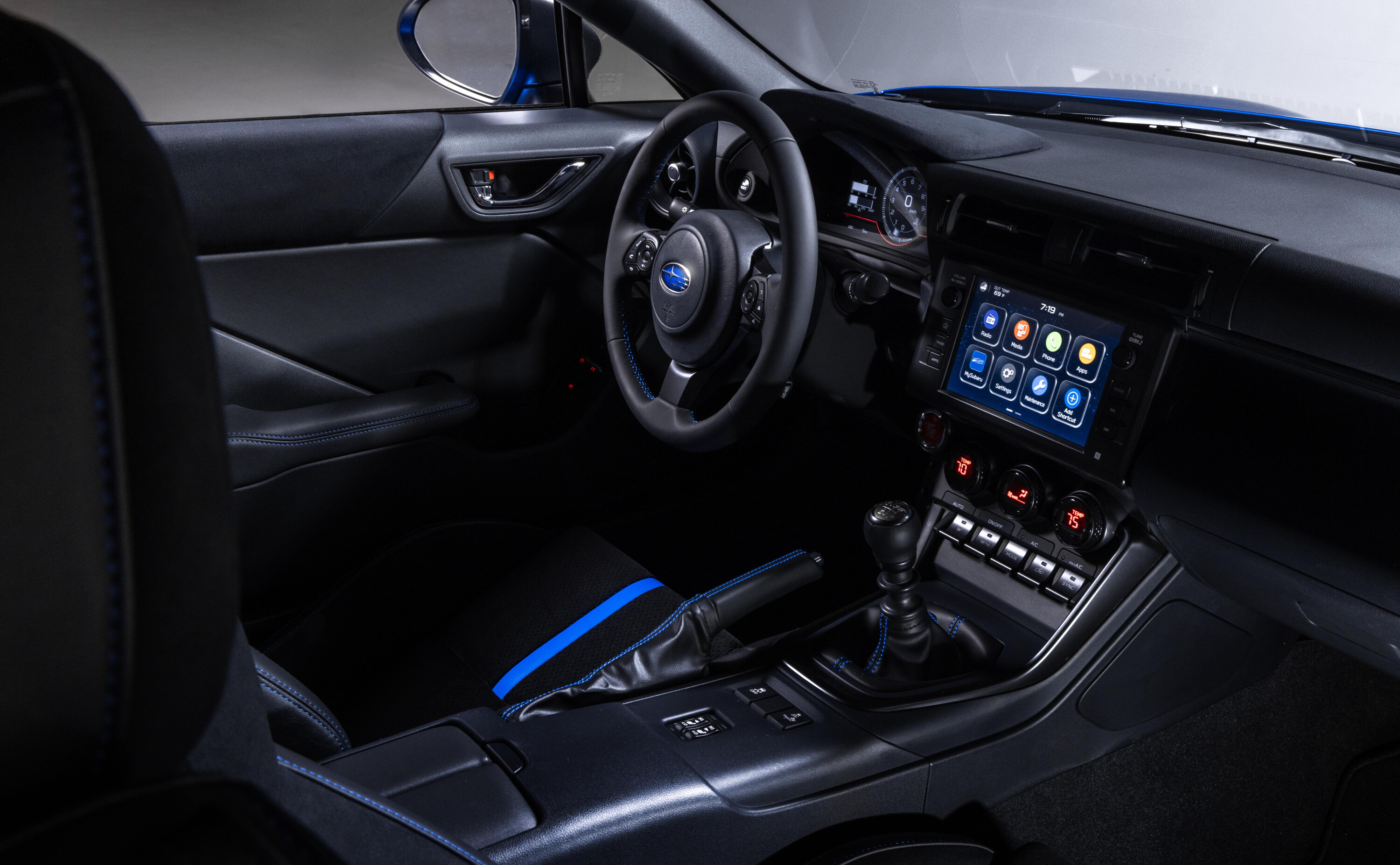
Inside, the BRZ tS adds blue contrast stitching throughout, a blue accent for the front seats, and suede “nubuck-like” accents for the instrument cluster hood and door trim.
STI badging is also added for the start/stop button and 7-inch semi-digital instrument cluster, with the latter adding red accents.
Paired exclusively with a six-speed manual transmission in the US, the BRZ tS is unchanged mechanically, with a 173kW/250Nm 2.4-litre naturally-aspirated boxer-four engine sending power to the rear wheels.
1
While an automatic version is available in Japan as the BRZ STI Sport, it is unclear if the BRZ tS will be manual-only in Australia or if it’ll offer both options.
Launched in 2017, the previous-generation BRZ tS was a permanent offering in Australia with the choice between manual or automatic, but it was dropped in 2021 with the launch of the current BRZ.
The 2024 Subaru BRZ tS will launch in Australia in 2024, with more details to be announced closer to its launch.
MORE
Everything Subaru
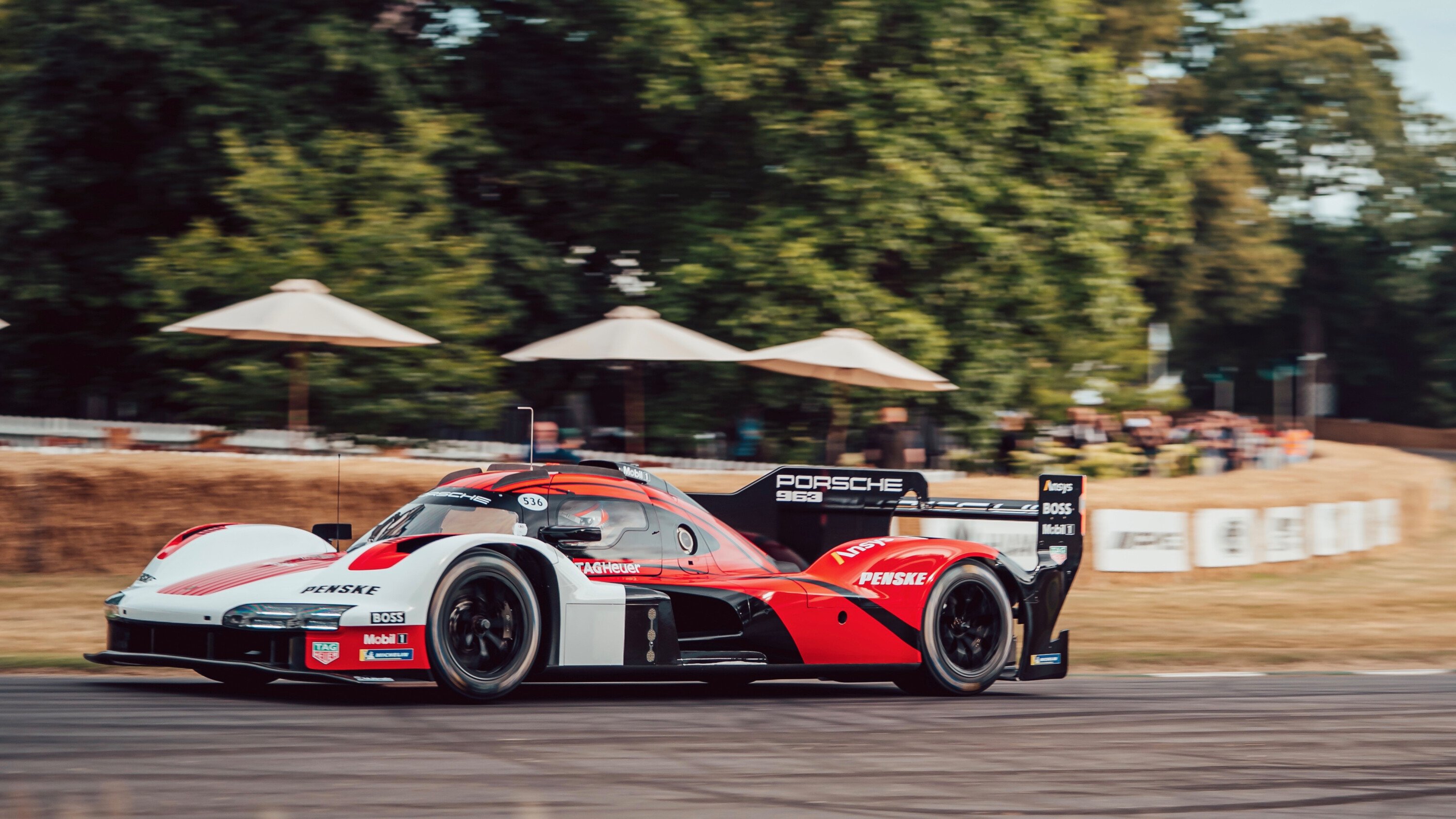
It’s easy to crash a car at the Goodwood Festival of Speed. The typical run up the hill usually involves you being introduced to your vehicle of choice about two minutes before you get flagged to go.
A representative from the manufacturer in question will give you a very quick series of instructions on how not to grenade the mechanicals, you’re belted in and left to your own devices for one of the most nerve-wracking minutes of your life.
Then it’s go time, on cold tyres, in an unfamiliar and often hugely expensive vehicle, in front of thousands of expectant fans and millions of viewers on the global feed. And all that before you’ve even factored in the pheasants. What could possibly go wrong?
1
As we’ve seen from this year’s event quite a lot, actually. Hyundai’s RN22e took top billing with its attempt to launch a set of hay bales to exit velocity but a BMW M1 Procar, a Porsche 911 GT1-98, a McLaren F1 GTR and an Adrian Newey-designed Leyton House Judd F1 car also failed to arrive at the top of the hill entirely unscathed. Or at all.
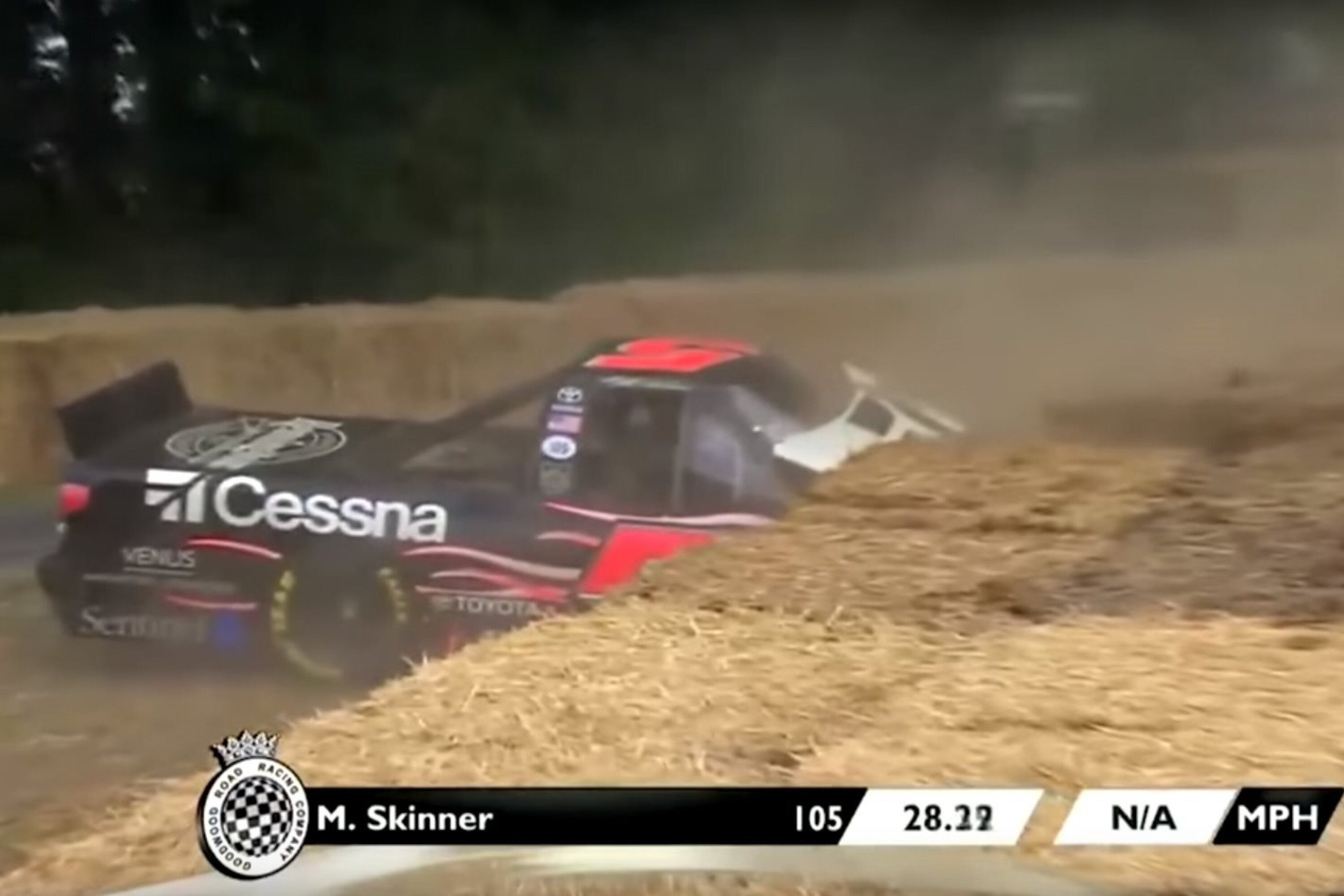
Molecomb Corner is the one that got the Hyundai and has claimed a number of scalps over the years. Remember Sir Chris Hoy binning then-Nissan boss Andy Palmer’s own R35 GT-R Nismo in 2014? Or Rod Millen’s Toyota Tacoma Pikes Peak the year prior? How can such an innocuous-looking left-hander cause such carnage?
Koenigsegg factory driver Robert Serwanski explains. “Molecomb corner is a 90-degree left hander which you reach at very high speed after being flat out. The tarmac has some dips and small bumps, which often can be felt quite significantly during braking.
1
This corner is the one that catches quite a few drivers out since you must brake before you actually can see the corner itself.”
That’s key. If you see the corner and then jump on the picks, you’re already destined for the bloopers reel. What Serwanski neglects to mention is that the heavily crowned track snakes subtly to the right in that braking zone, so even if you do brake in a responsibly straight line, you can still find yourself on the left-hand (read wrong) side of the track, again with that inevitable feeling that hay is in your future/teeth.
It’s almost the perfect ‘gotcha’ corner, which is why every year we see the same crashes repeated.
2
So spare a thought for the red-faced chaps who emerge from the bent metal. They’re trying to put on a show for us fans in circumstances that are often more testing than you’d give credit for. We’ve all pointed and laughed, but the last ‘moment’ I experienced at Molecomb was passengering in a Maserati Birdcage with Stirling Moss at the wheel.
If he could misjudge the bend, I reckoned virtually anyone could. Discretion has taken the better part of valour ever since. So while I wince at some of the footage from this year’s FoS, I raise a glass to all those people braver than me. Chapeau, chaps and chappesses.
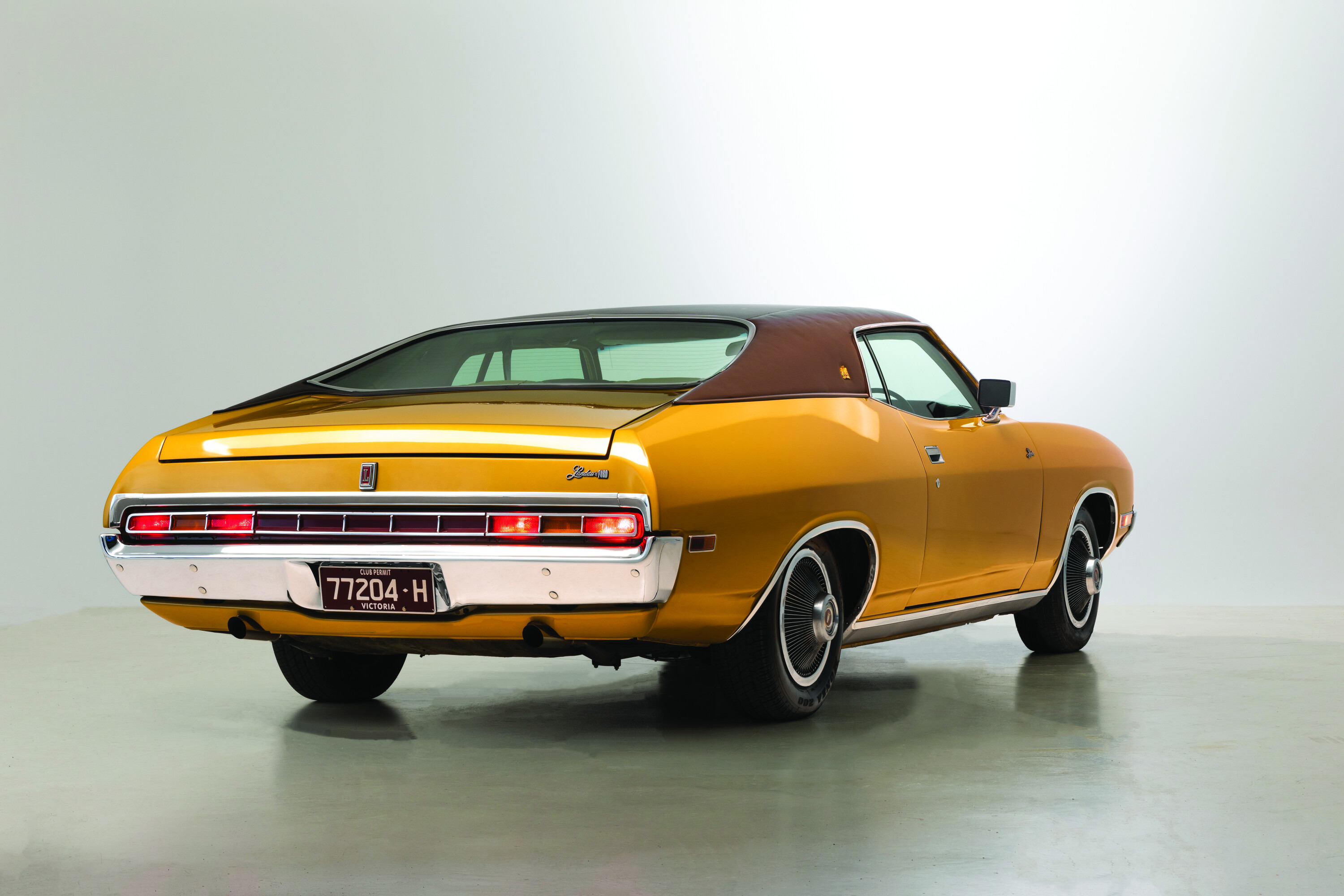
This month marks 50 years since the launch of Australia’s first locally designed luxury car, the Ford LTD.
That makes it also the 50th anniversary of Australia’s shortest-lived, least-produced and least-acknowledged production car – the LTD’s two-door sister, the Ford Landau.
It’s ironic that the Landau was the brainchild of Ford Australia Managing Director and marketing legend Bill Bourke. Just a few years earlier, it had been Bourke’s idea to make a high-performance GT four-door Falcon, at a time when ‘GT’ everywhere else in the world meant a two-door coupe.
The XR GT of 1967 and subsequent Falcon GT series, which added a two-door coupe in August 1972, put Aussie muscle on the global map.
1
As early as 1970, as Ford concurrently developed the Fairlane-based P5-series LTD sedan and the new Falcon hardtop, Bourke once again put two and two together and came up with a two-door LTD. This time, it didn’t add up.
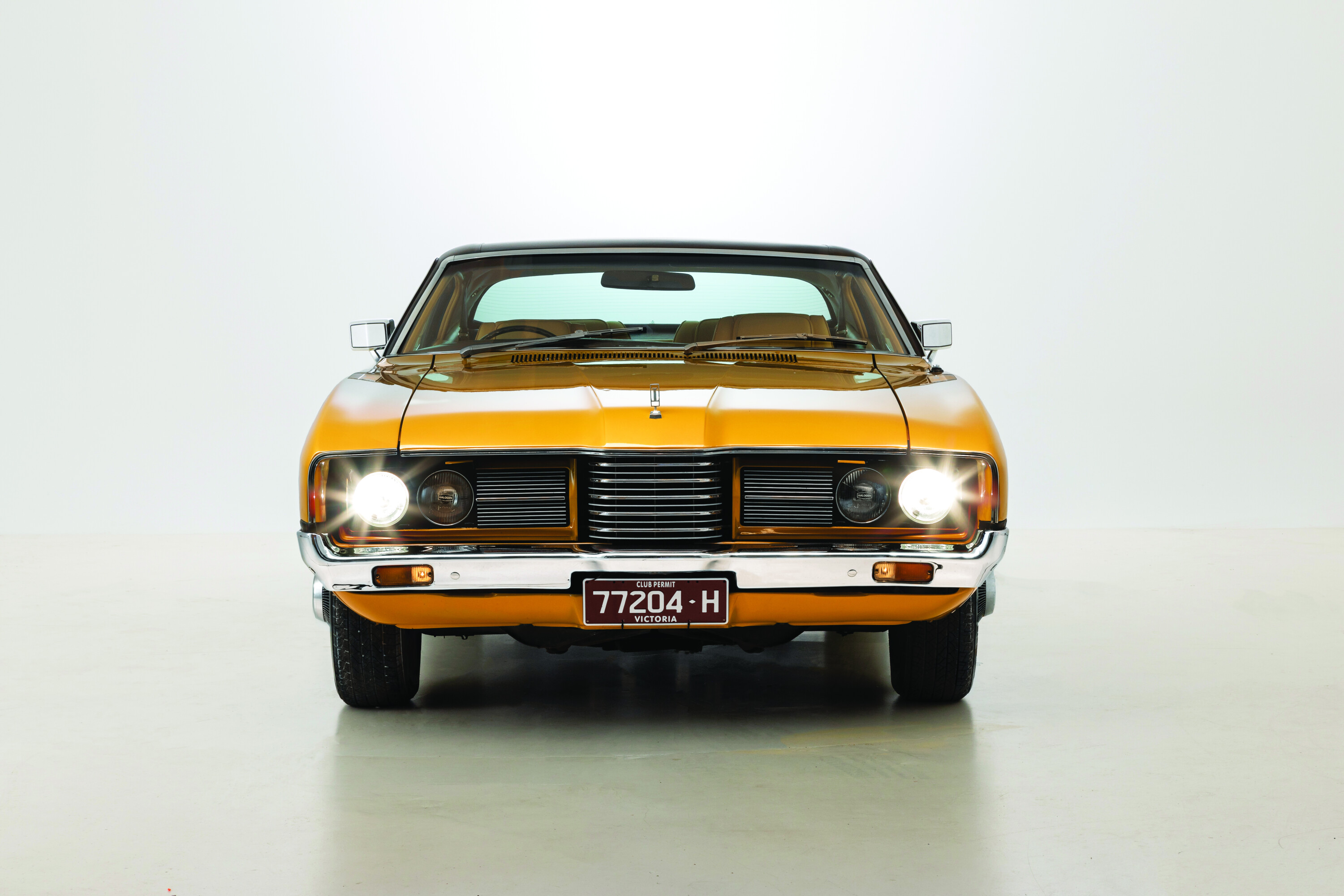
Launched alongside the LTD, the Landau used the bodyshell of the XA-XC hardtop, but with a shortened side window opening. This and the obligatory vinyl top were presumably meant to evoke the traditional landau coachbuilding style.
The nose clip, per the LTD, featured vacuum-operated retracting headlight covers, similar to those used on the US Mercury Cougar and Ford Torino. The ornate wheel trims, on 15×6-inch steels, were from the Thunderbird.
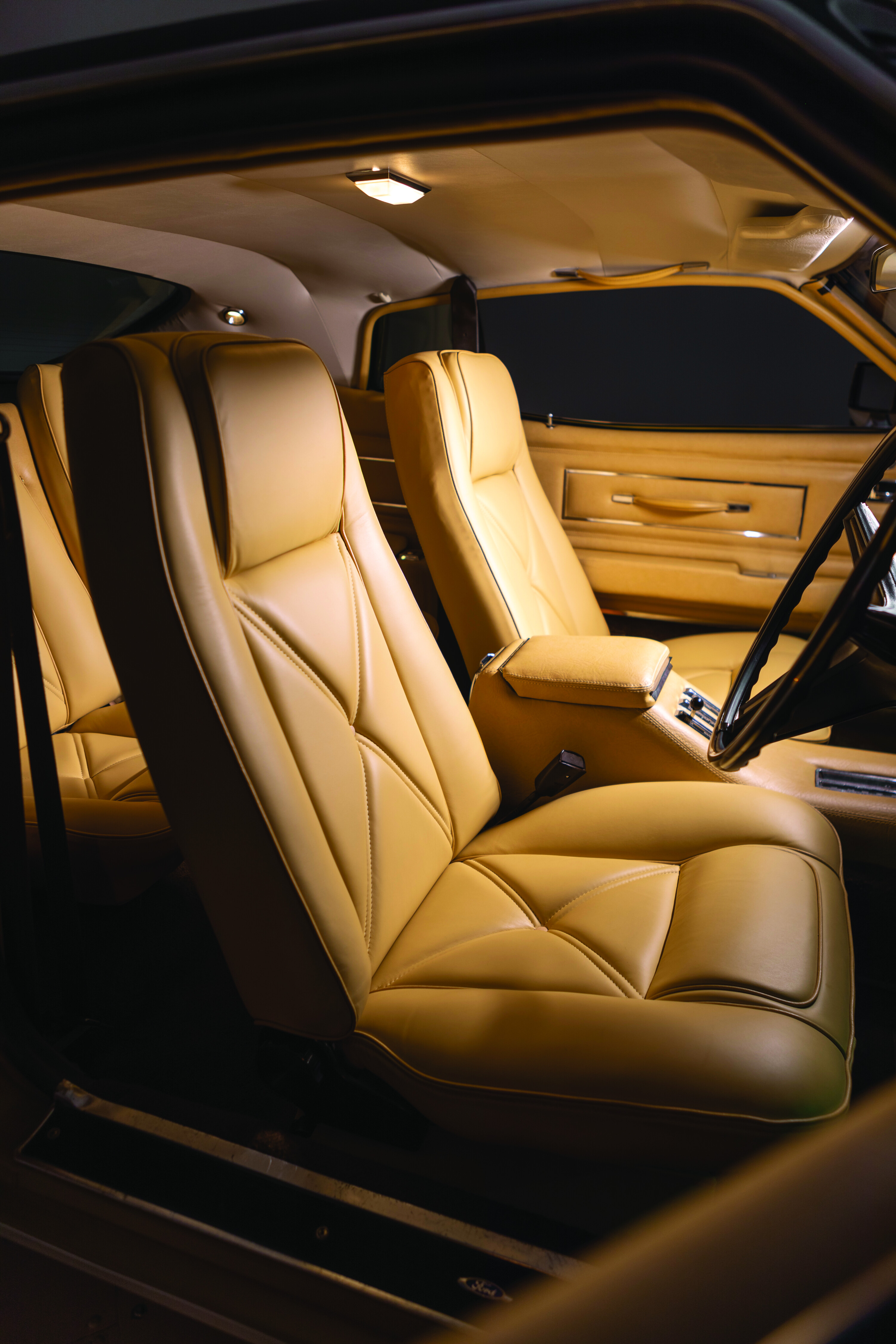
Power steering, air-conditioning, power windows, ‘Select-Shift’ T-bar auto and reclining bucket seats all conspired to slake the various desires of a thrusting executive or entrepreneur. The only options listed were Howe leather upholstery ($250) and a stereo cassette player at $140.
1
Due diligence was needed for the sales brochure’s pitch of a ‘driver’s car’ with ‘the road-holding and precise handling characteristics that belong only to a personal coupe.’
The Landau was up to 200kg lardier than a similarly engined Falcon GT hardtop and its LTD suspension tune even softer than a standard Falcon V8’s. The 5.8-litre V8 came exclusively with the three-speed slushbox and a moonshot final-drive ratio, in keeping with the quiet and cruisy ambience.
A little too quiet, as it turned out: just 1385 Landaus were built before it disappeared in the September 1976 P6 facelift of the LTD. Only in the past few years has the Landau been gaining admirers, in the slipstream of Falcon GT hardtop values.

1
Revs – who’s counting?
Luxuriating in the Landau meant a face-full of fake burr walnut, fake (or optional real) leather, courtesy lights and cut-pile carpeting, including the boot.
A quirk was the woodgrain-finish steering wheel with its circumferential ‘rim-squeeze’ horn switch, although the missing tacho was an unfortunate departure from Falcon hardtop spec.

1
Not exactly Falcon quick
Landau’s 5.8-litre Cleveland V8 amounted to Falcon GT spec, with an Autolite 4300 four-barrel carb helping it to outputs of 216kW and 515Nm.
The three-speed slushbox, 2.75:1 diff (with LSD) made for a 17-sec quarter mile, a half-second slower than a Falcon GT 351 auto. The upside of the weight was the fitment of four-wheel disc brakes.
1
MORE
Everything Ford
| In detail | |
|---|---|
| 34 | $ hub cap price |
| 6950 | $ new price ($7770 for LTD) |
| 4 | wheel disc brakes, an Aussie first |
| 1719 | kg kerb weight |
| 1385 | Total production |
Shopping in Japan is an exercise in being overwhelmed by the tyranny of choice.
You’re buried in an avalanche of features, specifications, colours and nested niches to the extent that you begin to wonder how this Darwinian proliferation of products is set to play out.
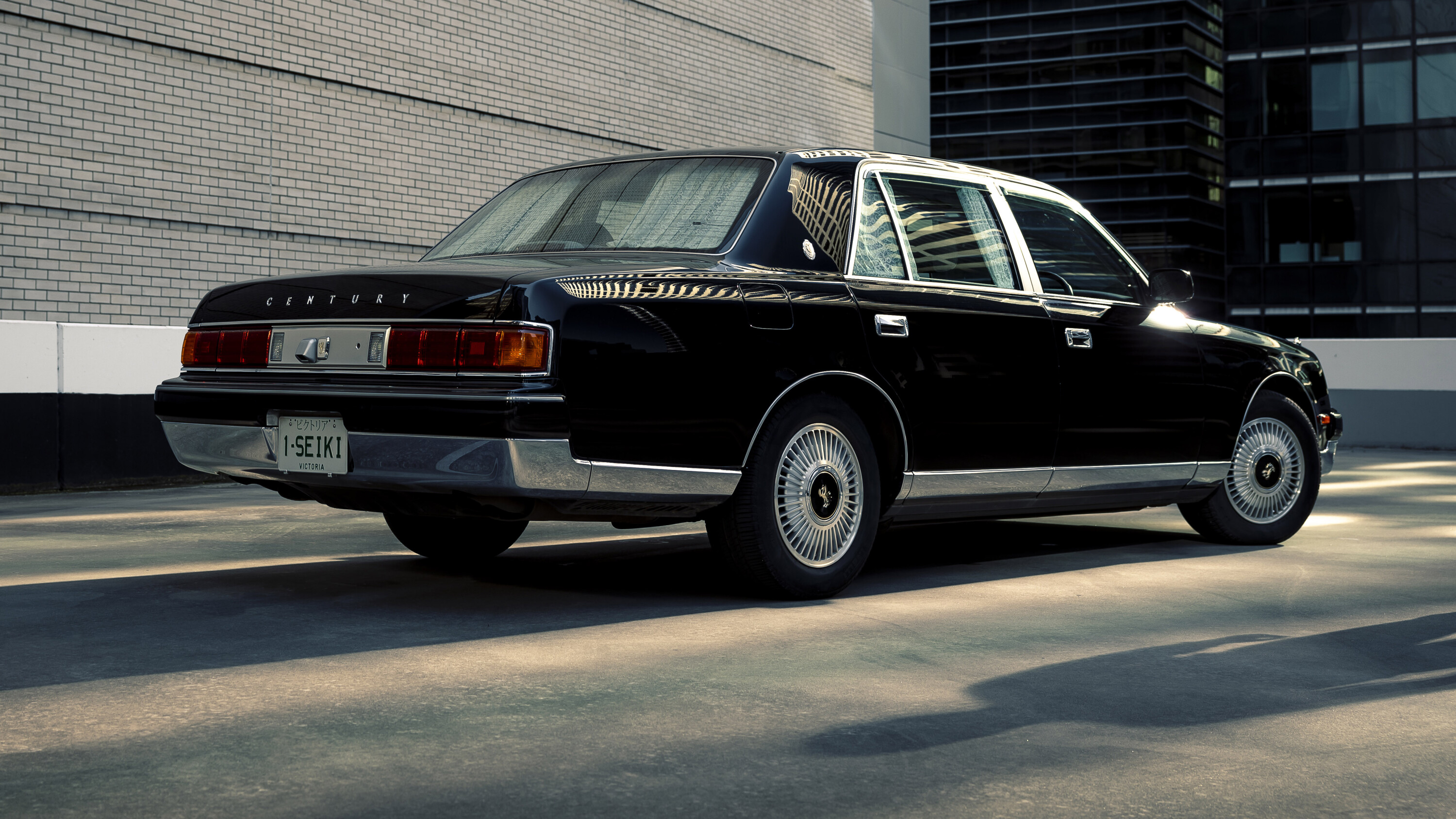
Yet if you want a Japanese production car with a V12 engine, the choice is really rather simple, because there’s only one and you’re looking at it right here: the Toyota Century.
Of course there have been Japanese V12 racing engines from the likes of Isuzu, Yamaha, Nissan and Honda. The Nissan Dump Truck WD38 also sported a twelve-pot 15-litre diesel but that’s not quite the same thing.
1
In fact, the Century’s engine is not only the reason Lexus stopped at 10 cylinders – it’s also the reason Toyota’s luxury brand came as such a big surprise to to Western markets when it launched in 1989.
While we were astonished at the quality of the original Lexus LS400, to the Japanese this was simply a more proletarian sedan than the flagship Century.
By the time the LS400 launched, the Century had been a fixture on the domestic market for 22 years. The badge draws its name from the centenary of Sakichi Toyoda, the founder of Toyota Industries, who was born on 14th February 1867.
1
In that regard, the Century was born as an indulgence, a present to Toyota from itself and was influenced by the quiet restraint of vehicles like the Daimler DS420 Limousine and the Rolls-Royce Phantom V.
Originality of concept was not a noted feature of 1960s industrial Japan. Perhaps that should be contextualised somewhat. Western society has long been fascinated at the speed of Japanese cultural assimilation, this fascination tinged with a suspicion of subsequent remake and refinement of concept.
Yet the creative exchanges that Japan has enjoyed with the outside world worked both ways. Japanese lacquering techniques were introduced to the West in the 19th century, and there’s evidence of the use of lacquers in Japan dated back to 7000 BCE, at which point Europe was only just getting the hang of agriculture. More on lacquer later.
1
The Century itself was preceded by a pair of vehicles of similar aspiration: the Nissan President, which served as the official car of the Japanese Prime Minister Eisaku Satō, and the Nissan Prince Royal, which was the official carriage of the Emperor of Japan.
Toyota didn’t get into the Imperial market until the arrival of the 2006 Century Royal. Good things come to those who wait and all that.
While many have associated the Century with the Japanese nobility and, at the other end of the spectrum, Yakuza mobsters, its original target market was none of the above. As Toyota’s promotional material states, ‘The Century is acquired through persistent work, the kind that is done in a plain but formal suit.’
1
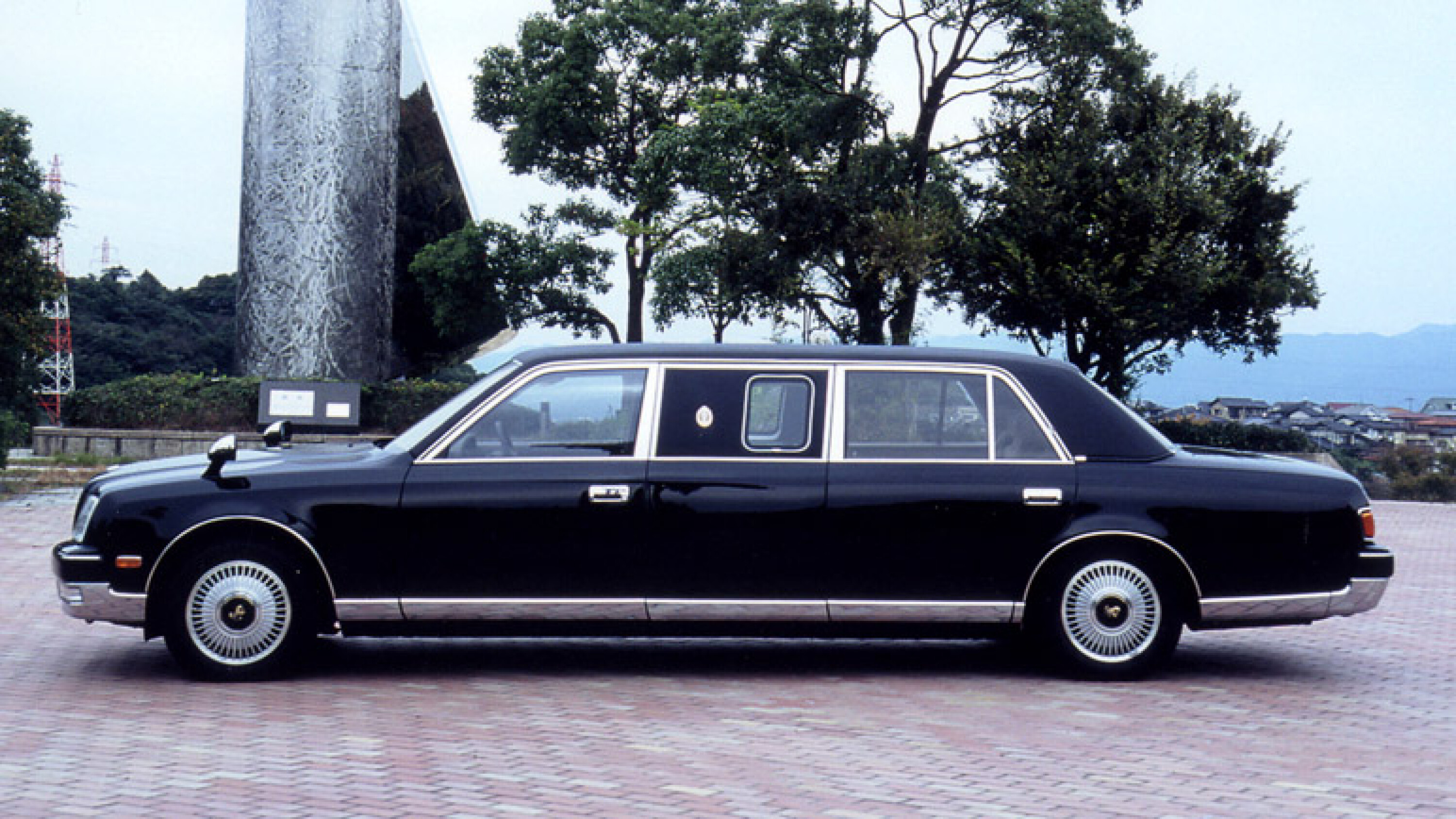
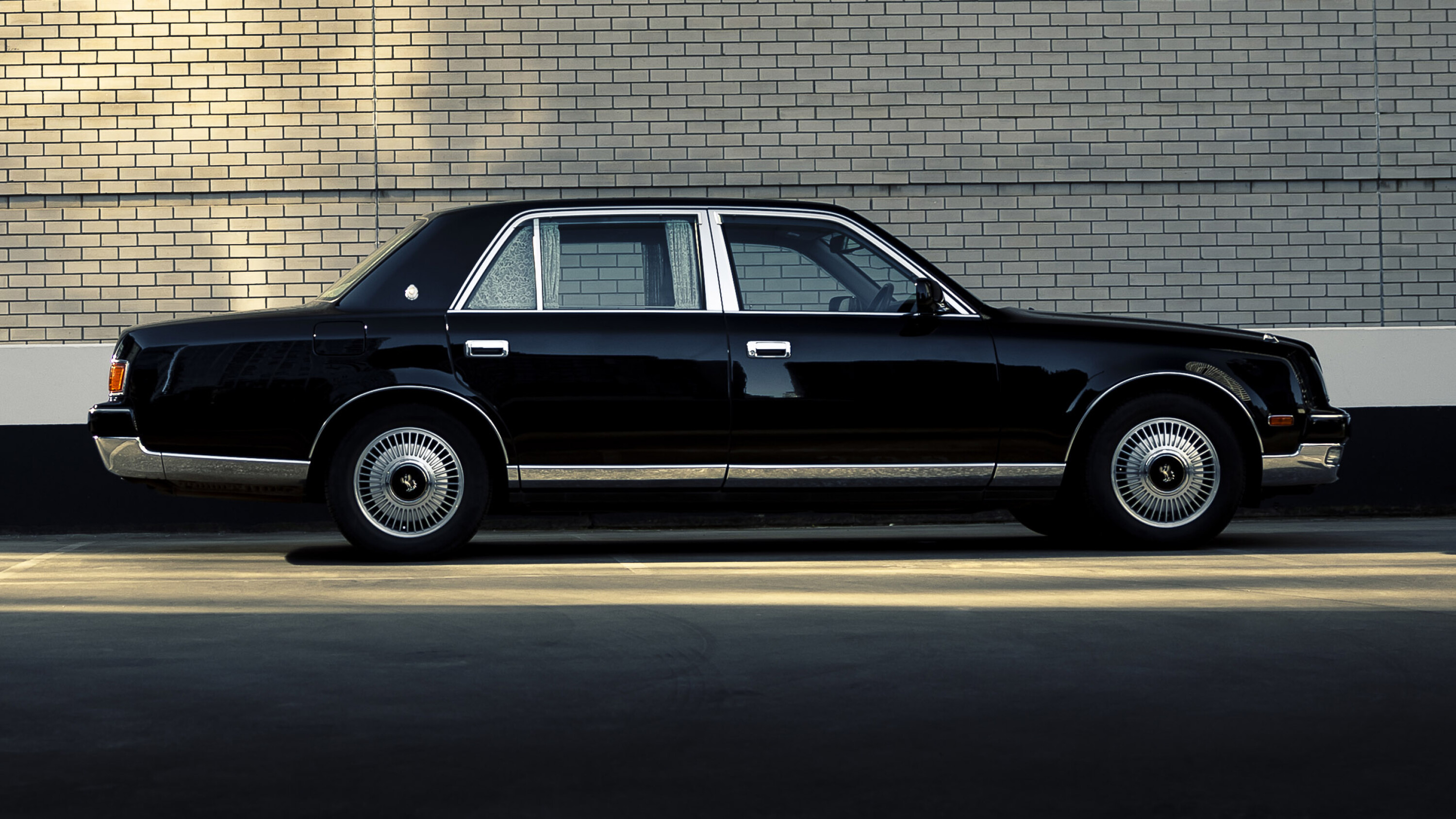
This was a vehicle for the chief executive, a marker of status that’s anything but overt, a vehicle that will usher its passengers discreetly and serenely between appointments, the rear seat occupants hidden behind lace curtains.
Some 30 years after the first generation Century – which saw three specific series dubbed G20, G30 and G40 – the second generation car arrived. Still resolutely retro in styling, the 1997 G50 was the first to be exported and the first to feature the turbine-smooth 1GZ-FE V12 powerplant.
Most expect this to be a fairly rudimentary piece of technology, yet it’s immediately clear that this is no piece of low-tech iron.
1
Overengineer and understress is the mantra behind this engine, with the official 206kW power complying with the Japanese gentleman’s agreement.
Today Toyota develops more power from a 1.6-litre three-cylinder, but then a GR Corolla won’t generate 481Nm and 80 percent of that from just 1200rpm; key to the refined step-off you expect in a high-end limousine. The actual power output stands somewhere nearer 230kW but what’s a few kilowatts between gentlemen?
This G50 – the middle child in the Century’s timeline – was the only one to be fitted with the V12, the subsequent G60 arriving in 2018 and utilising the V8 hybrid drivetrain from the Lexus LS600h. Production of the Century then moved from the Higashi-Fuji plant in Shizuoka to Toyota City’s Motomachi assembly works.
1
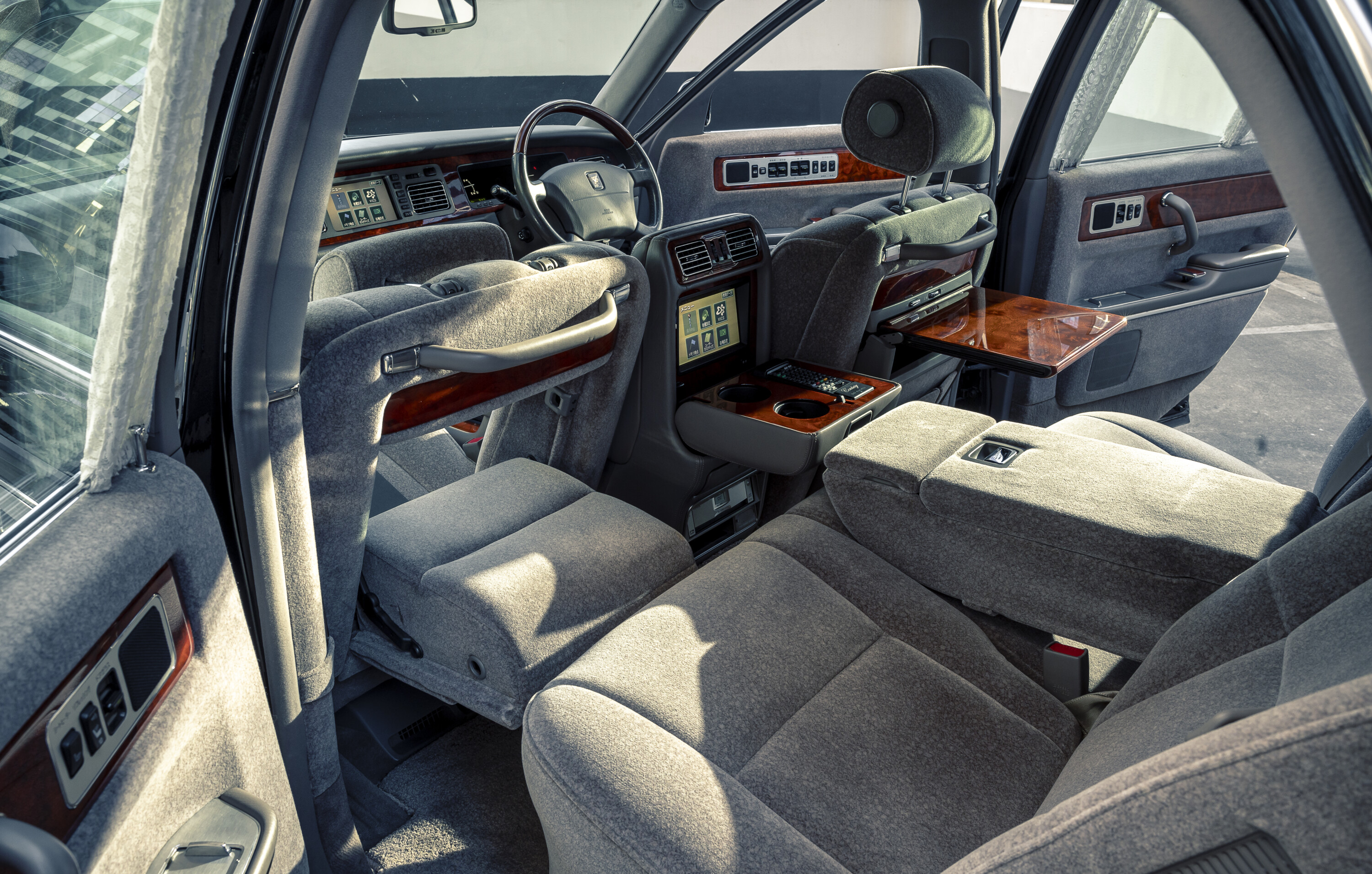
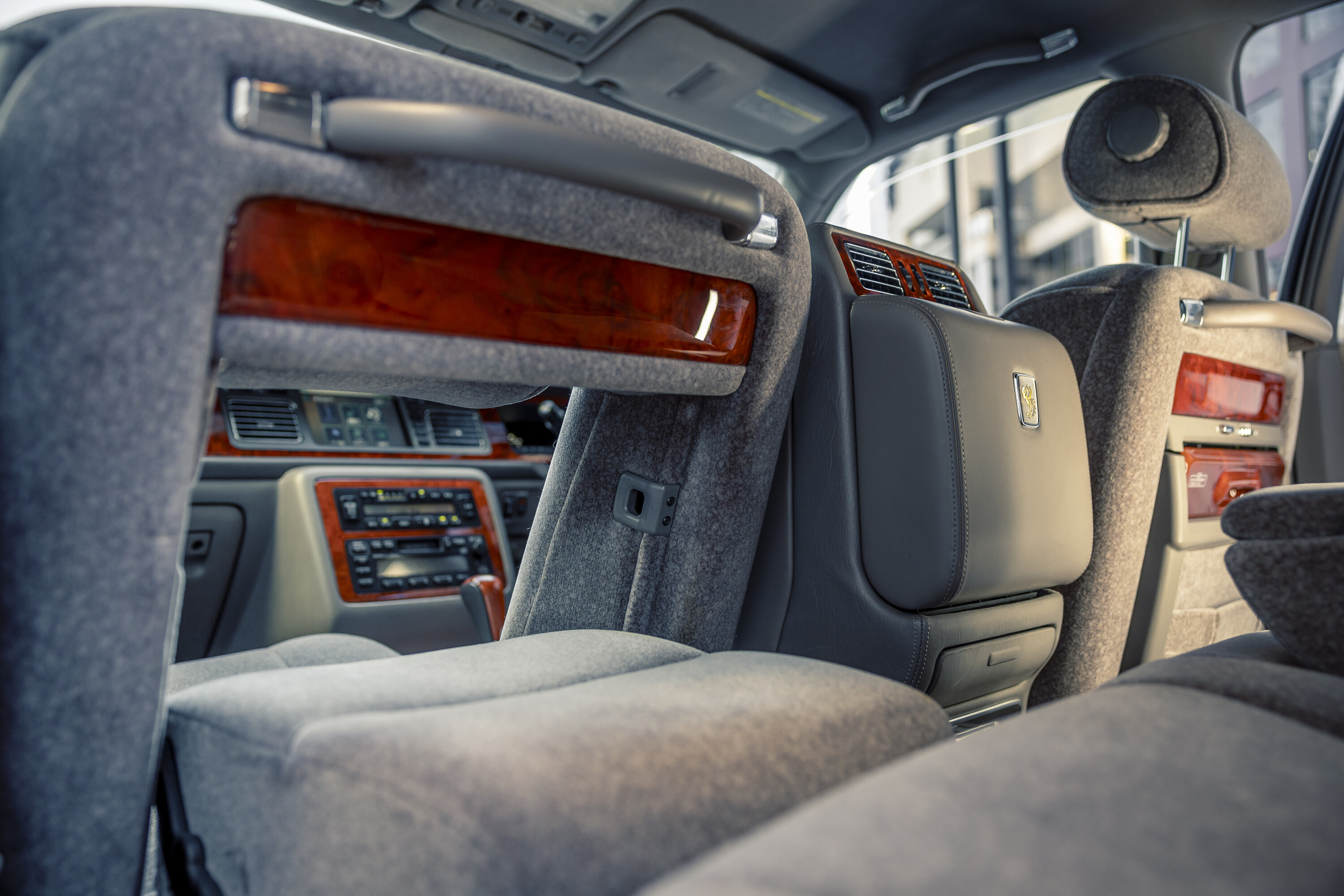
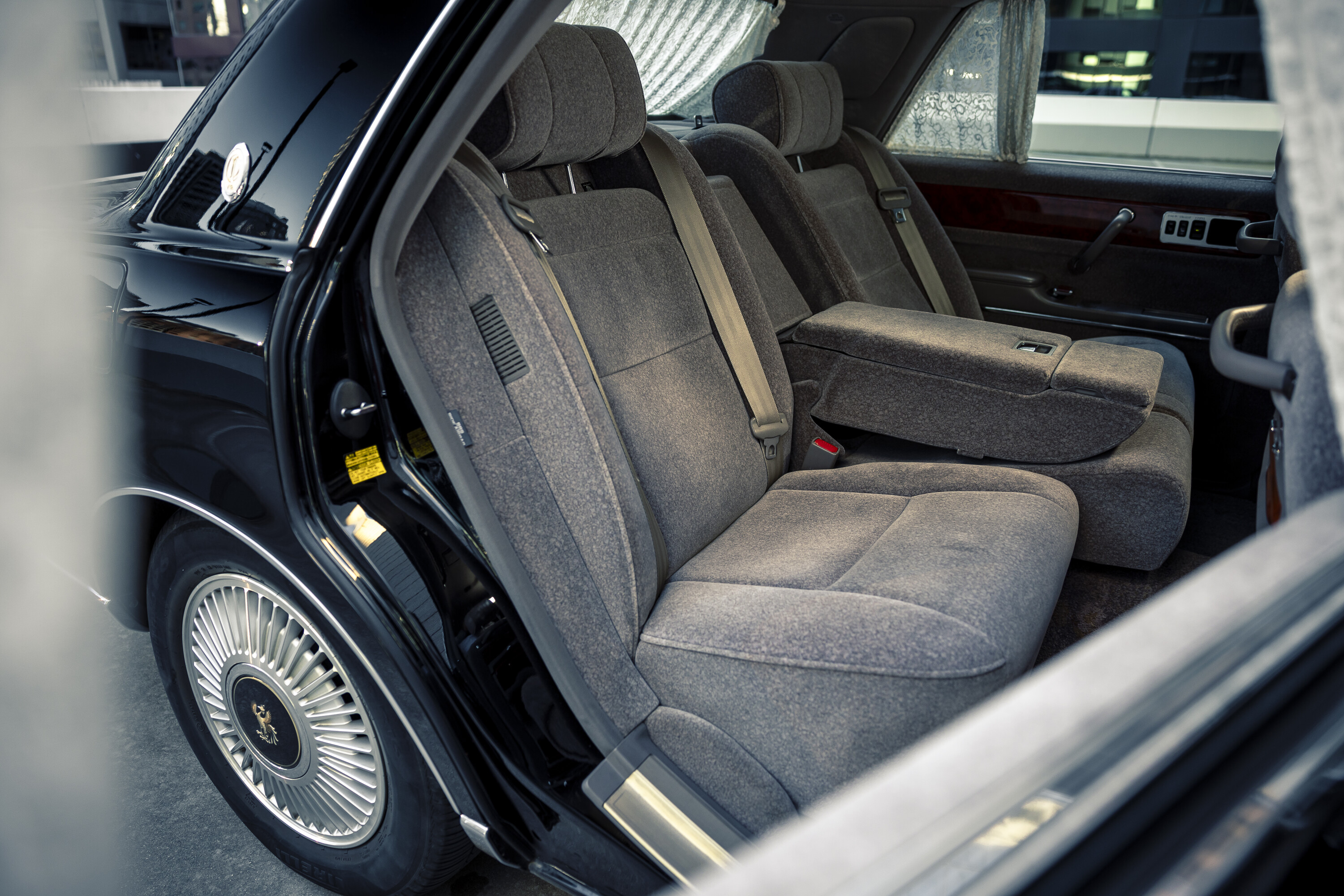
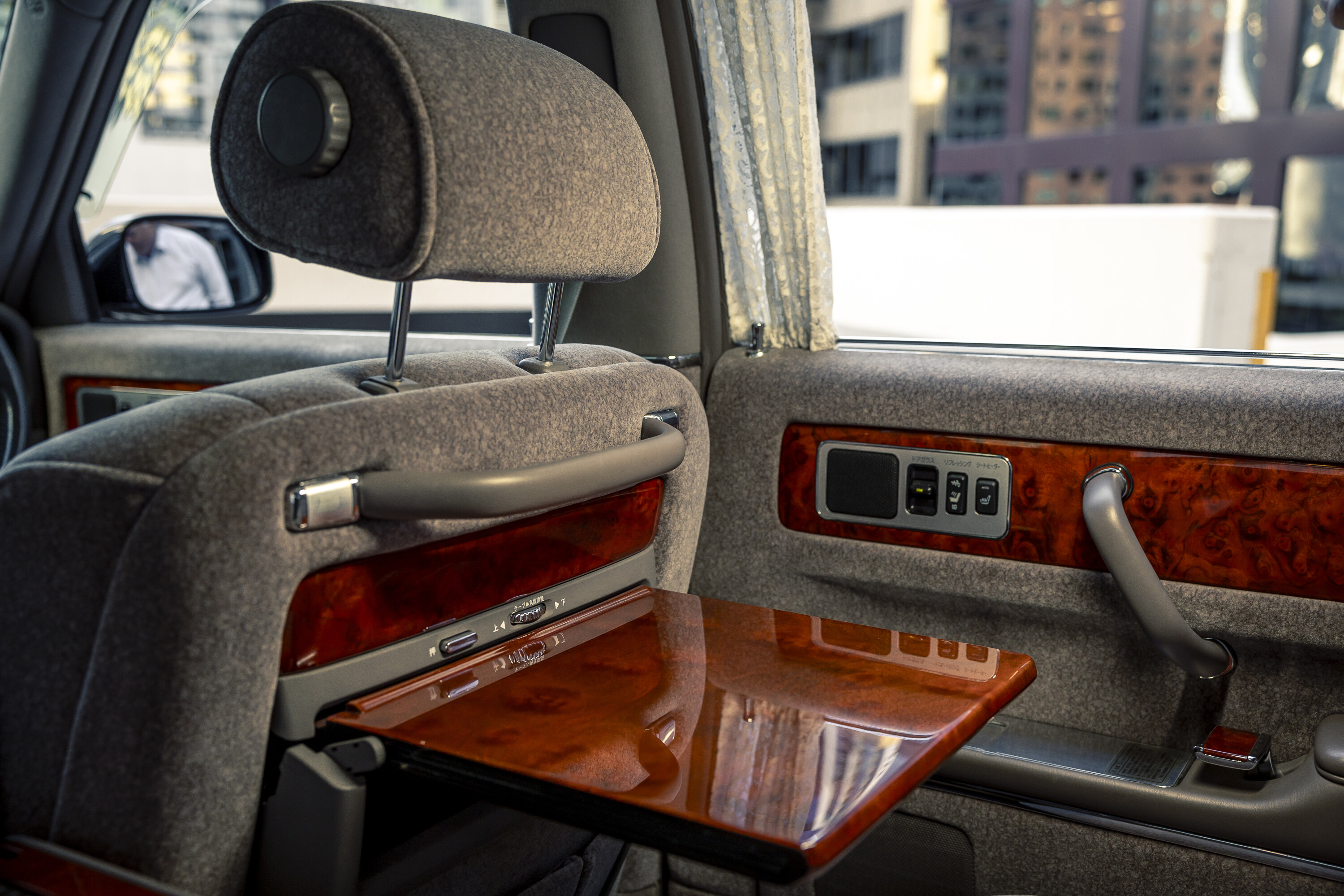
In the finest traditions of coachbuilt luxury, there are no leather seats in here. Leather was the weatherproof material a driver sat on, exposed to the elements, while passengers were cocooned inside atop fine fabrics.
The Century’s seats are trimmed in a short and fine-piled wool called Ruikyo, which has the velvety nap of snooker table baize. It’s thermally neutral and completely silent when you move across it. What’s more, it’s incredibly hardwearing.
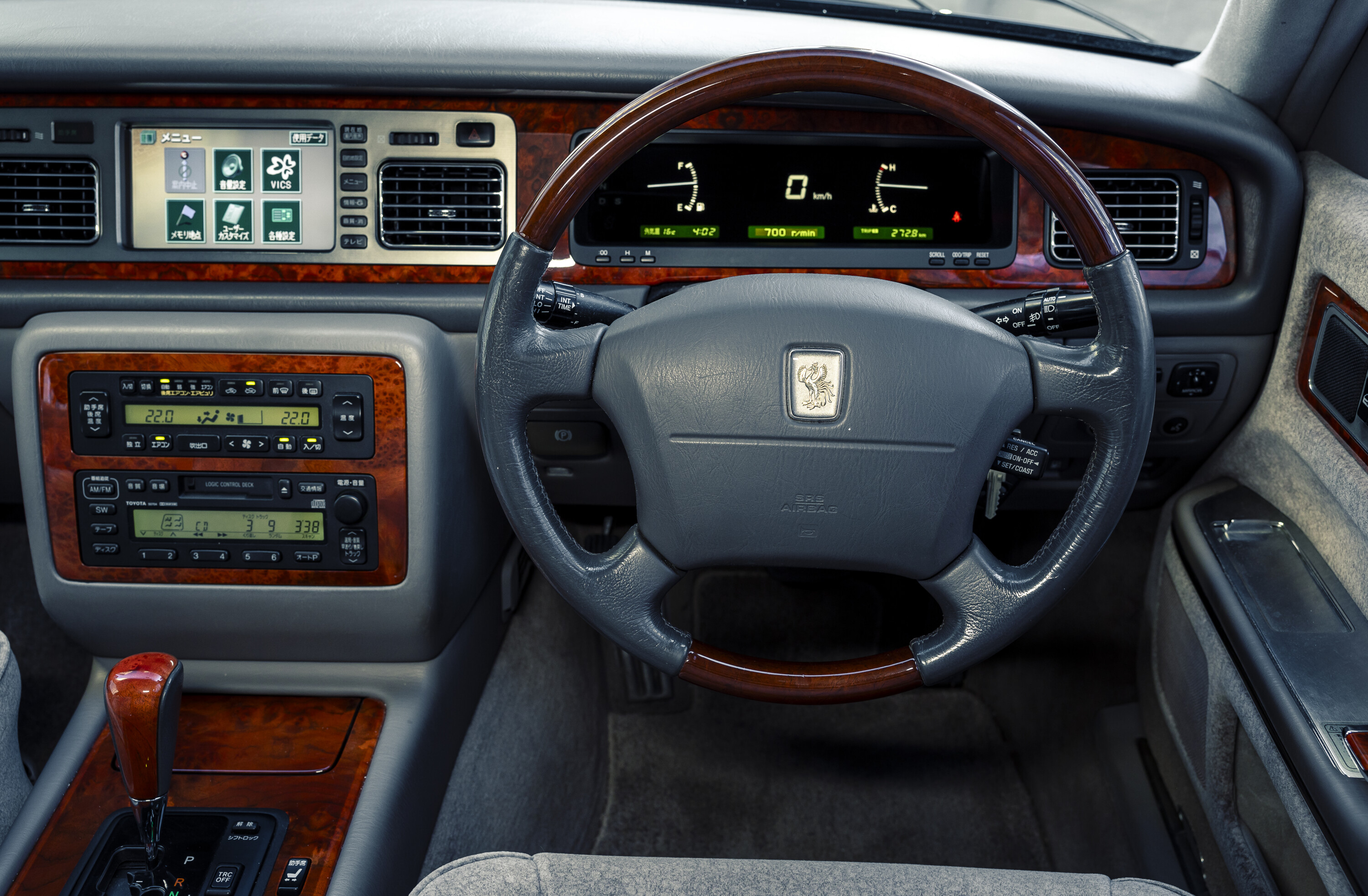
Everywhere you look inside the car there are intriguing details. It’s commonly held that the Lexus SC430 coupe-cabriolet was the last car to feature a standard cassette deck when it ceased production in 2010, yet the G50 Century still allowed you to rock a C90 right up until 2017. Not sure if an emergency spooling biro was also supplied.
1
The rear-seat ottoman is probably the most well-known feature of the Century’s interior, whereby a passenger can flip down a section of the front passenger seat and recline in comfort.
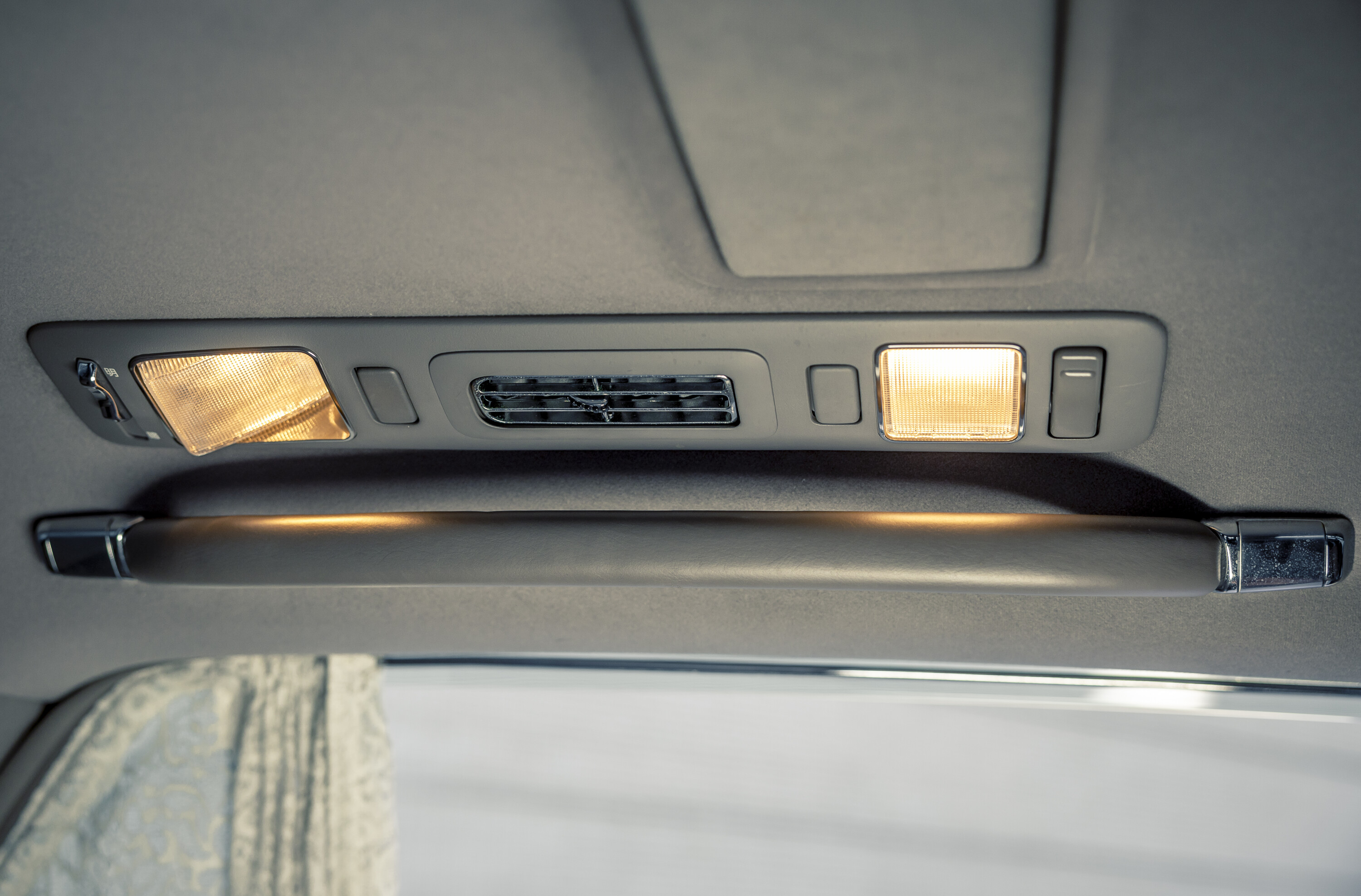
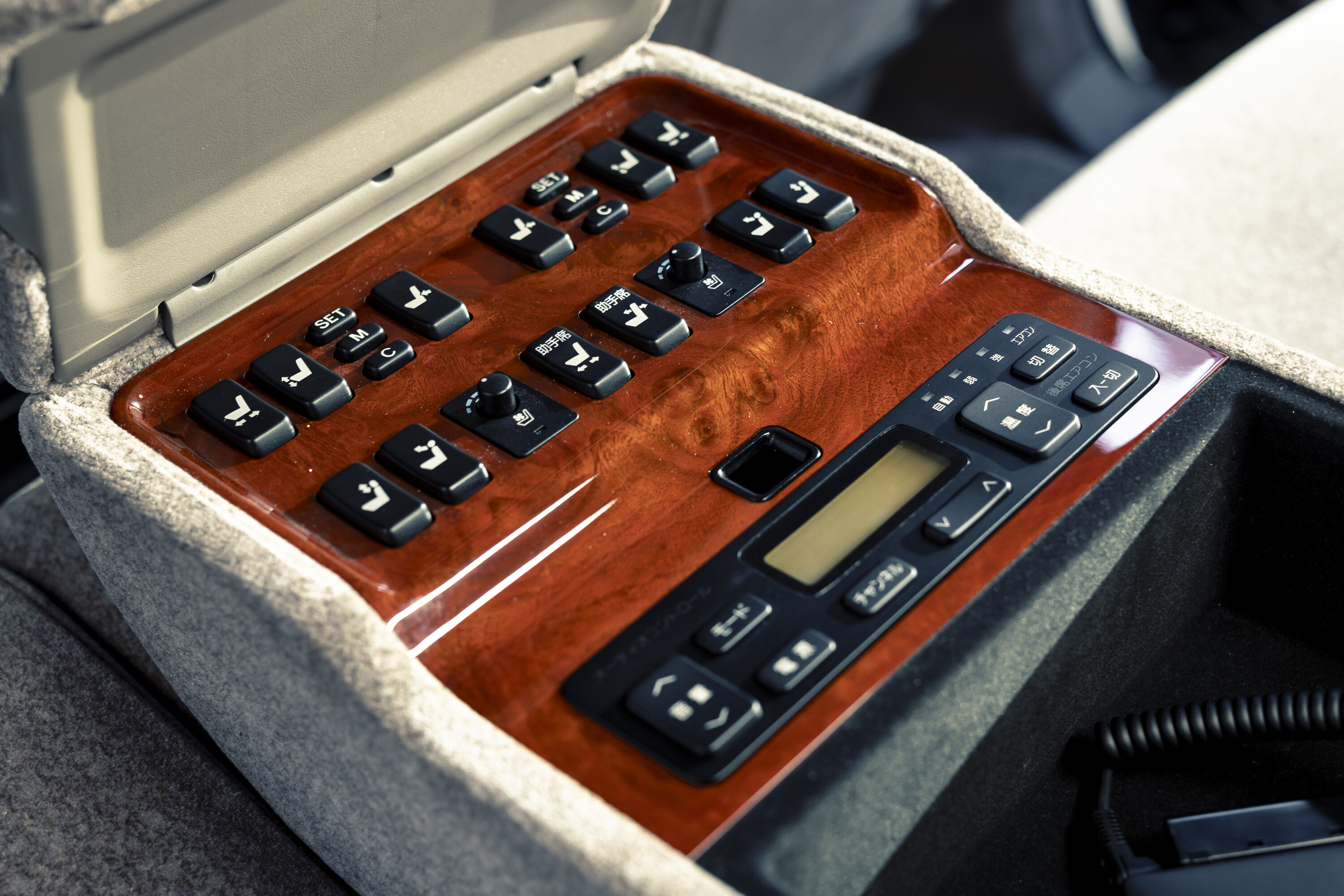
There’s a whole host of rear-seat luxury features which include recline and headrest tilt functions, dimmable lights and even an accessory Century dictaphone. You can also tilt the front passenger headrest forward if you need to be get a better look through the windscreen.
Those in the heated and cooled rear seats can opt for a rather vigorous massage function and can also electrically control the front seats if you want to show the chauffeur on his independently sprung seat who’s boss.
1
What’s slightly disorientating about this incredible car is the fact that there are parts that are obviously and expensively native to this car and this car only. Yet these are interspersed with what look like Camry-spec mouldings and minor switchgear.
Then there’s the woodwork which is equally out there. Most luxury car manufacturers want their wood to look like wood. This means subtle, flat cuts with texture in the graining. The Century is different.
It’s almost as if the target was to make wood look and feel like plastic. At first that sounds a reductive and slightly sniffy thing to say, but it’s only when you realise that veneers have been artfully bent and teased into frankly unlikely shapes that you begin to realise how much work has gone into it.
1
The rosewood single-grain panels that run across the dash are finished by Yamaha musical instruments.
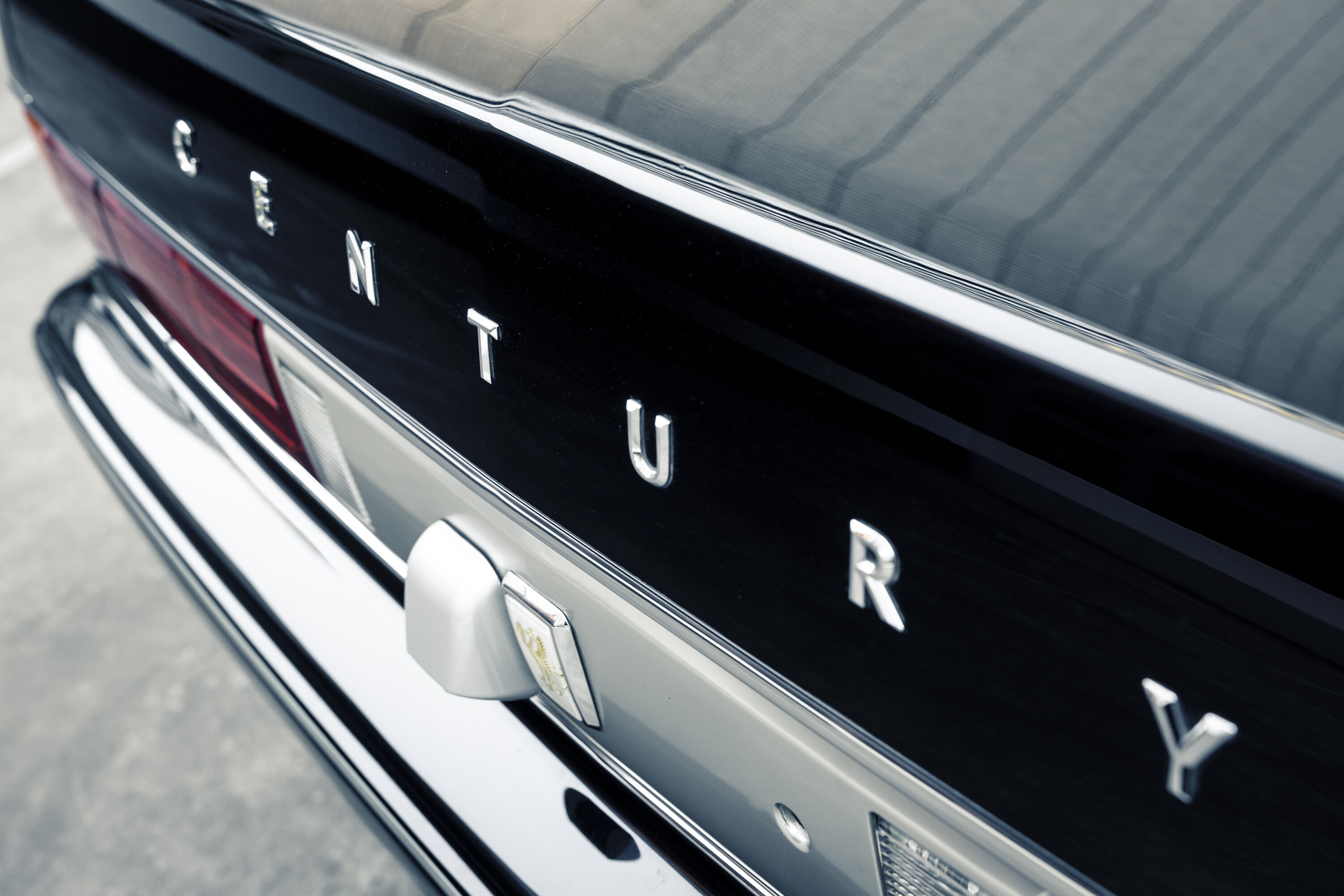
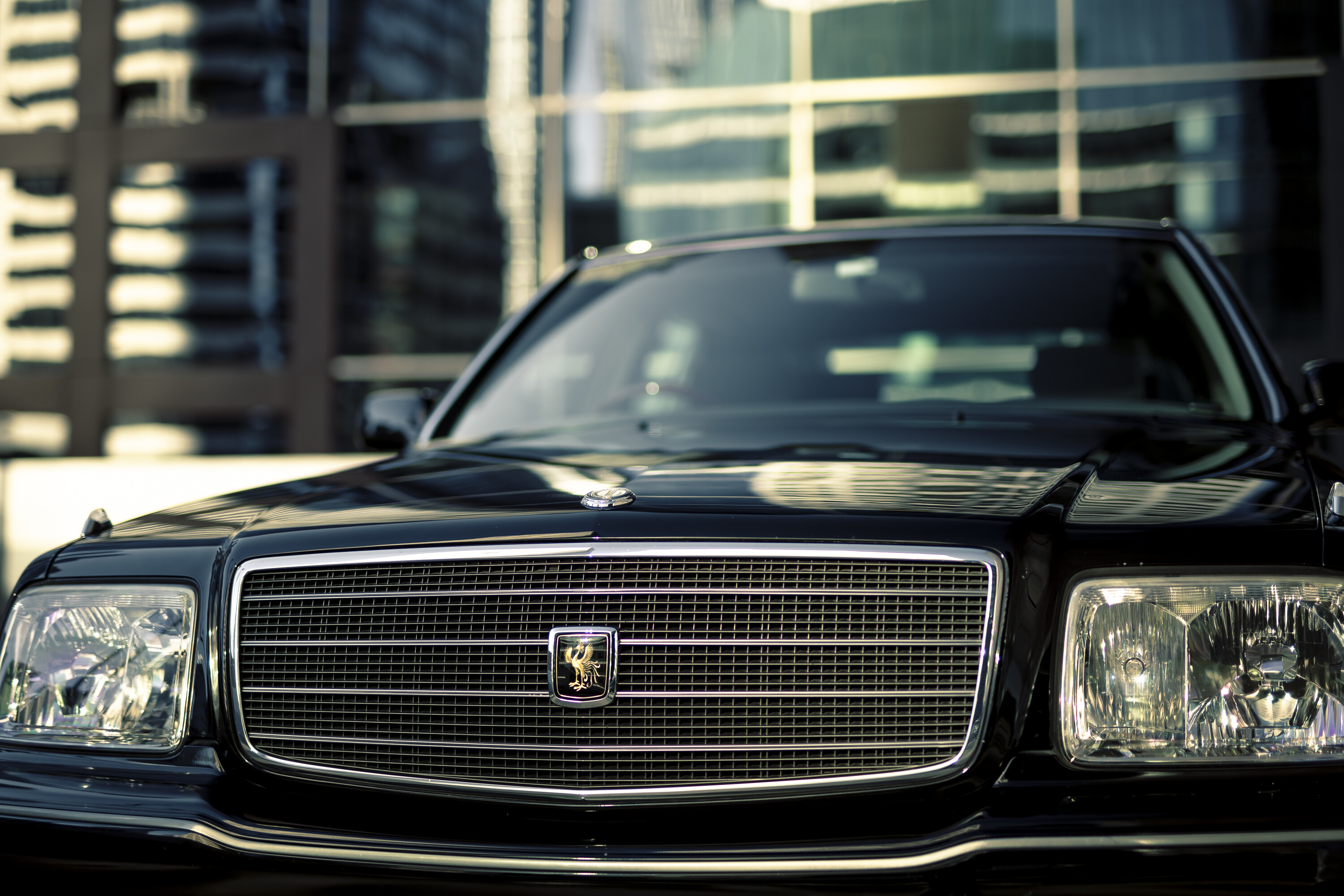
The external colour palette isn’t exactly a kaleidoscope, with only five paint finishes ever offered on the Century. These are Ebony Teal Pearl, Blue Mica Metallic, Grey Metallic, Blu Metallic, and the signature colour, Black.
This paint colour was developed to give the impression of black lacquer, and involves laying seven separate coats, including a clear coat that contains black pigments to give the required depth to the paint finish. A modern luxury car’s paint is typically between 140 and 150 microns thick. A G50 Century’s paint nudges 200 microns.
1
Three times, between coats, the microscopic imperfections in the paintwork are sanded under running water, creating the perfect undercoat. The final step after painting is a mirror-finish polish. This is key. When alighting from the rear seats, the Century’s flat C-pillar is designed to become an exterior vanity mirror, allowing dignitaries a final check on their appearance before attending a function.
There’s a nod to Shinto symbolism here too. The Imperial Regalia of Japan include a sword to represent valour, a jewel to signify benevolence while the mirror embodies the virtue of wisdom.
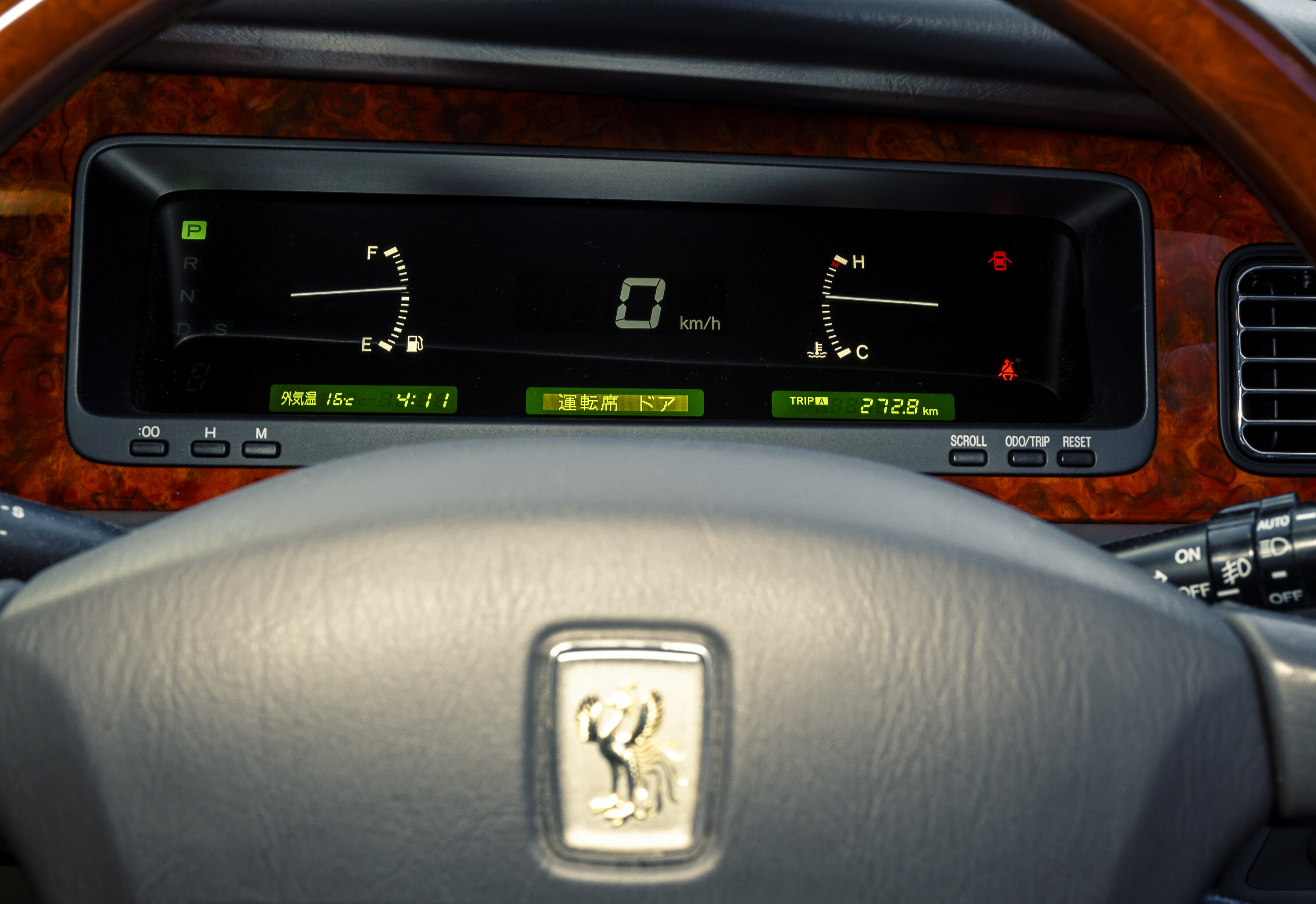
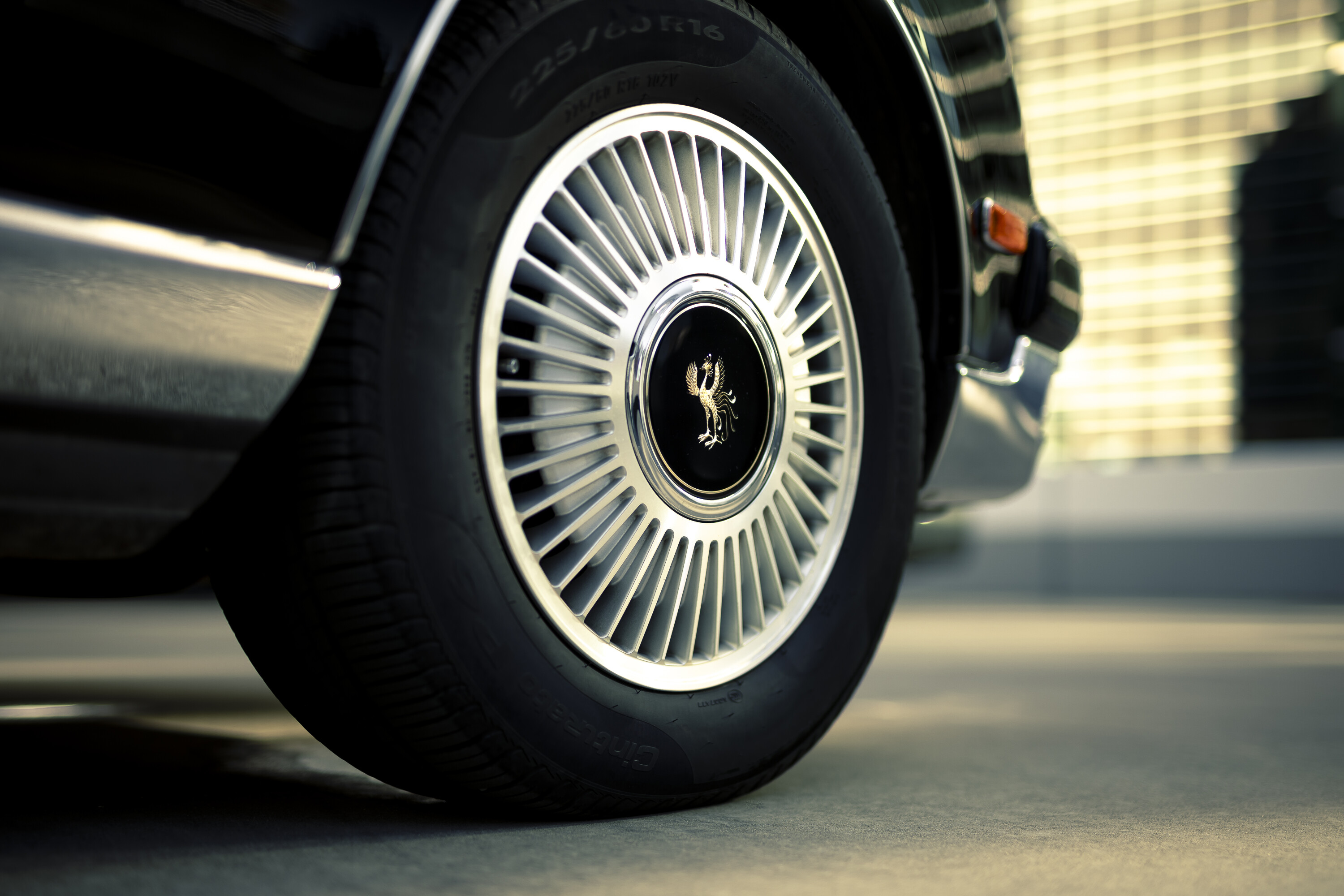
The gold phoenix – or Hō-ō – as seen on the on the Century’s wheels, grille and steering wheel boss was adopted as a symbol of the imperial household, often worn by an empress, representing fire, the sun, justice, obedience, fidelity, and the southern star constellations.
1
Starting with this second-gen G50 version, every Century owner can track the history of their vehicle. Books are kept at the Century plant which document the inspections performed after each process, identifying the supervisor and the date. The Century is a car built painstakingly by hand, and Toyota is keen to log that exact process, with access available via the touchscreen in the dash.
The G50 Century received a significant update in 2006, gaining features such as curtain airbags, LED rear lights, an air purifier, and a DVD-based 12-speaker cinema installation.
The following year, the car was updated with a digital TV tuner, with HID headlights arriving in 2008 and a reversing camera in 2011. Now that the earlier G50 models are eligible to import to the United States under 25-year regulations, prices have generally crept up for good examples.
1
The Century is generally reliable, as you would expect from a vehicle built with such care, but any car with this amount of electronic functions of this vintage merits a good looking over.
The wool interiors aren’t particularly happy if constantly exposed to Aussie UV and there are some parts of the A342E six-speed auto ‘box that are uniquely Century. Above all, look for accident damage (all panel gaps should be around 3mm) and paint damage.
As long as you’re equipped with a parts number, spares are, thanks to Toyota’s excellent parts back-end, often less tricky to source than you might expect. Anything Century-specific can be costly, however, and needs to come from Japan.
1
The G50 Century wasn’t a notably rare car, with 9573 vehicles built across almost 20 years of production, so if you’re shopping, don’t reflexively buy the first one you see.
The G50 Toyota Century is a truly exceptional car, largely due to the shackles being cast off by its domestic focus. It’s this inherent and all-pervading Japanese-ness that lends it its charm, while its quality and rich feature set are durable points of difference that never fail to provide a talking point.
It’s not a Japanese Rolls-Royce, largely because its unique sense of identity became so strong. When the G50 Century launched in 1997, Japan was still building VHS players and CRT screens. When it ceased production in 2017, we were in a world of mini-drones, robovacs, VR headsets and home hubs. You’d think that time may have wearied it. You’d be wrong.
1
Grand Royal
Built between 2006 and 2008, the rarest of the Century models is the Century Royal V12. It’s the long wheelbase state limousine of the Emperor of Japan and three custom-built sedans were built as well as one hearse.
It features internal granite entry steps and Japanese washi rice paper headlining for the passenger compartment, with the rear passenger compartment trimmed in wool and the front upholstered in leather.
Fact check
The good
The 5.0-litre 60-degree V12 features a reinforced aluminium block, forged, fully counterweighted steel crank, four valves per cylinder, dual overhead cams per bank and an aerospace-level of commitment to mechanical redundancy.
In the unlikely event that one bank of cylinders fails, separate injection ECUs mean that the other bank would still function perfectly.
The bad
Go expecting a truly business class level of rear legroom and you’re likely to come away a little crestfallen.
The Century is a sizeable car at 5270mm long, but the old-school 3025mm wheelbase is a mere 5cm longer than a current BMW 5 Series and means that rear accommodation in the passenger cell is perhaps a little more intimate than you’d first envisage.
MORE
Classic Wheels
MORE
Everything Toyota
| Toyota Century G50 specifications | |
|---|---|
| Model | Toyota Century G50 |
| Engine | 4996cc V12, 48v, dohc |
| Max power | 206kW @ 5200rpm |
| Max torque | 481Nm @ 4000rpm |
| Transmission | 6-speed automatic |
| Weight | 2050kg |
| 0-100km/h | 7.8sec (claimed) |
| Price (now) | from $30K |
New recall notices have been issued, affecting Renault, Ford, Kia, Range Rover and Alfa Romeo vehicles.
The details of each recall, as published, are posted below.
1
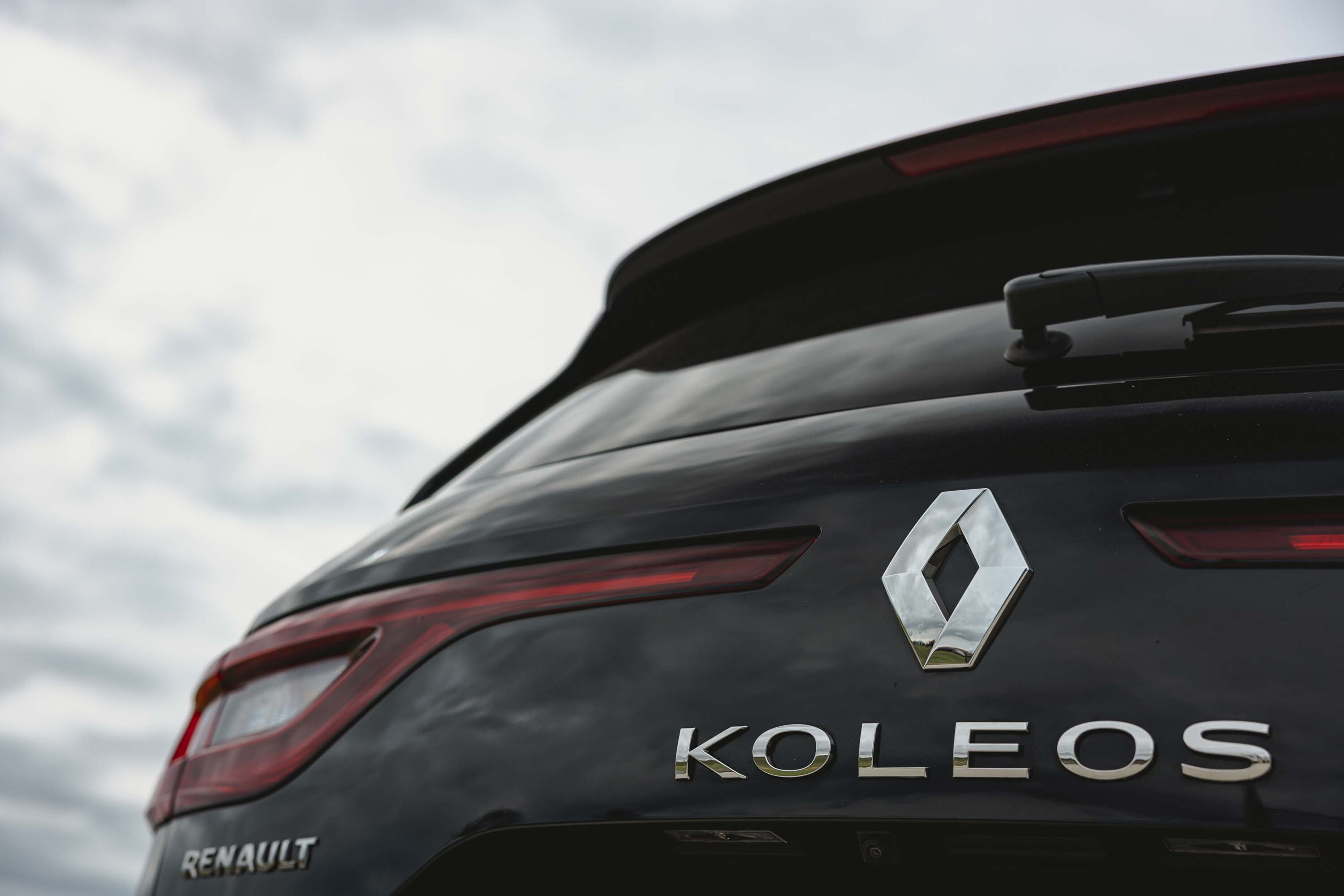
Recalls: 2022-23 Renault Koleos
- Recall number: REC-005786
- Campaign number: 0E4D
- Original published date: 28 September 2023
- Year range: 2022 – 2023
- Affected units: 1872
- List of affected VINs (.csv file) [↗]
- Variant applicability: This model does not include variants
What are the defects?
Due to a manufacturing defect, the bonnet outer panel and inner frame may not have been bonded correctly. As a result, the bonnet outer panel could detach due to vibrations whilst driving and/or at high speed.
What are the hazards?
In the event of the bonnet outer panel detaching from the vehicle whilst driving, it can increase the risk of an accident causing serious injury or death to vehicle occupants and/or other road users.
What should consumers do?
Owners of affected vehicles should contact their preferred Authorised Renault Dealer to arrange for inspection and repair of their vehicle, if necessary, free of charge.
To find a local dealer, visit https://www.renault.com.au/find-a-dealer/ [↗]
Supplier details
RENAULT
Who should owners/operators contact for more information?
Renault Australia Customer Care
- Contact phone: 1800 009 008
- Contact website: www.renault.com.au/contact/ [↗]
\n
1
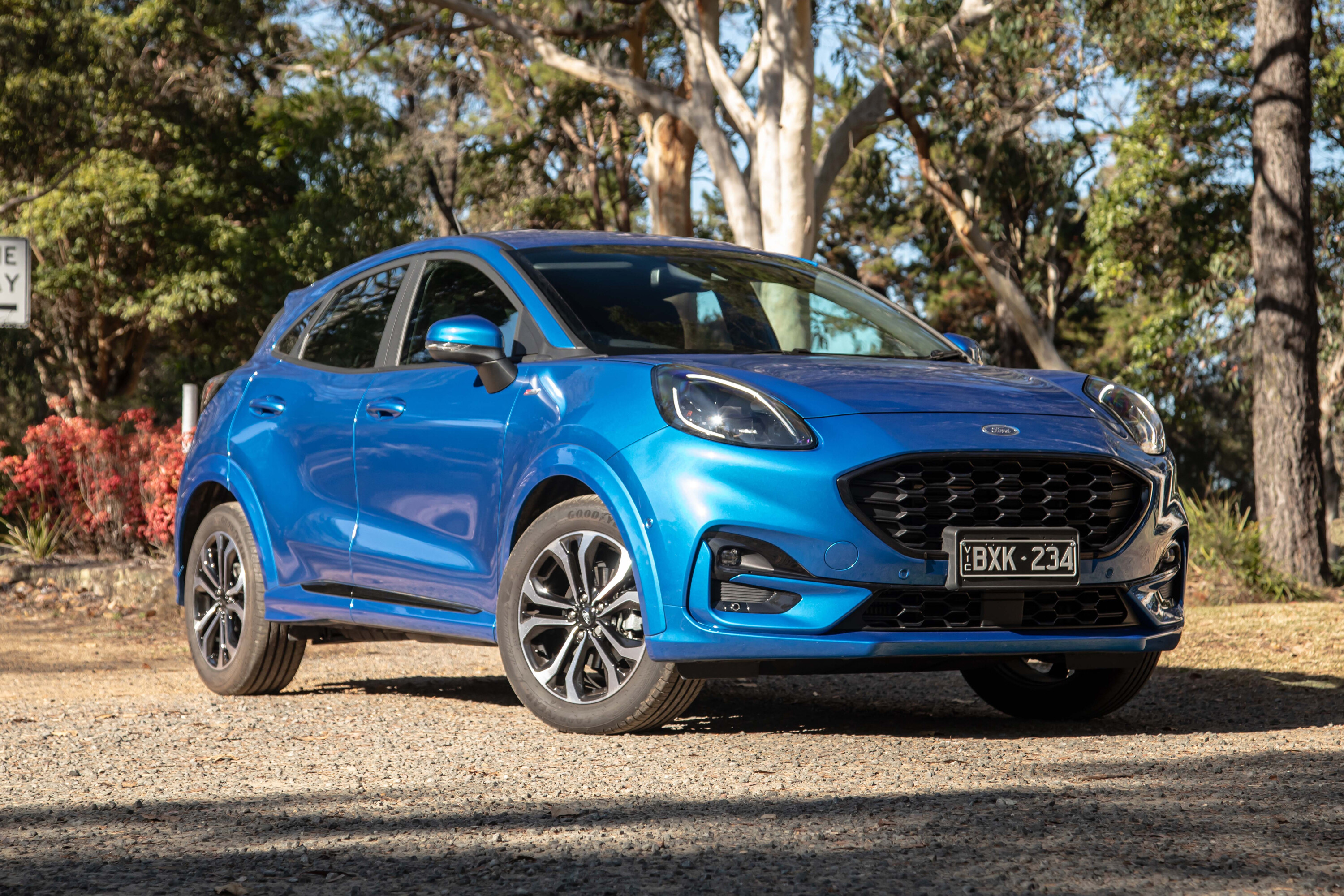
Recalls: 2023 Ford Puma
- Recall number: REC-005775
- Campaign number: 23S52
- Original published date: 20 September 2023
- Year range: 2023
- Affected units: 307
- List of affected VINs (.csv file) [↗]
What are the defects?
During the manufacturing process, the Restraint Control Module (RCM) was loaded with an incorrect configuration. As a result, if an incorrect replacement part is installed in the system, warnings will not be displayed and the seatbelt pretensioners and airbags may not perform as intended in the event of an accident.
What are the hazards?
In the event of an accident, an airbag not deploying or seatbelt pretensioner not activating correctly could increase the risk of injury or death to vehicle occupants.
What should consumers do?
Ford will contact affected owners in writing requesting they make an appointment at their preferred Ford Authorised Dealership to update the RCM configuration, free of charge.
Supplier details
FORD MOTOR COMPANY OF AUSTRALIA PTY LTD
Who should owners/operators contact for more information?
Ford Customer Relationship Centre
- Contact phone: 133 673
\n
1
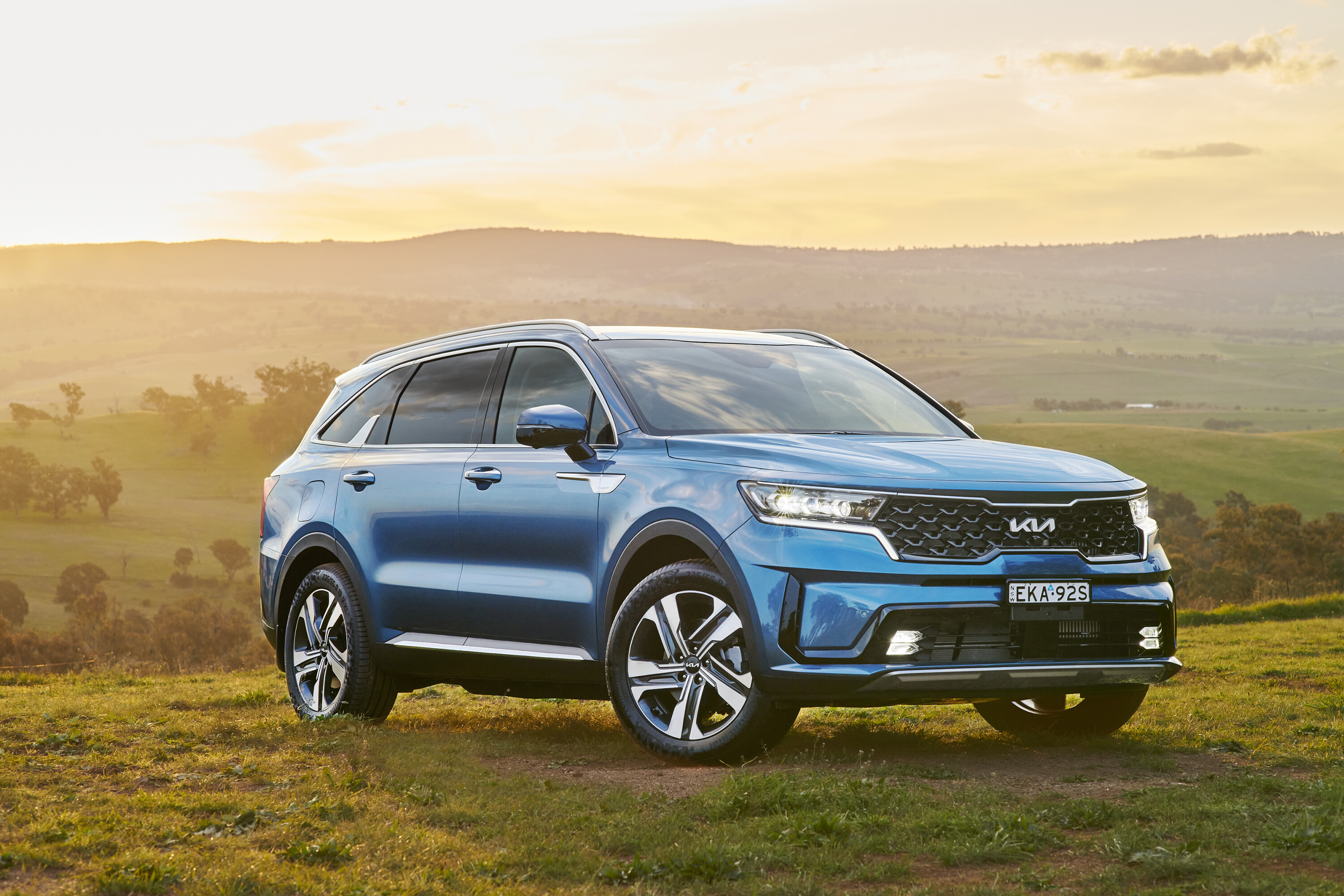
Recalls: 2020-22 Kia Sorento
- Recall number: REC-005780
- Campaign number: 231073
- Original published date: 25 September 2023
- Year range: 2020 – 2022
- Affected units: 167
- List of affected VINs (.csv file) [↗]
- Variants: HEV, PHEV
What are the defects?
Due to a manufacturing issue, the seat belt pre-tensioner inflator cap may fracture when deployed in the event of an accident.
What are the hazards?
If the seat belt pre-tensioner inflator cap fractures, metal fragments may be propelled at high speed towards the vehicle occupants and could cause serious injury.
What should consumers do?
Owners of affected vehicles should immediately contact their preferred Kia dealer to schedule an appointment to have the repair work undertaken, free of charge.
Supplier details
KIA AUSTRALIA PTY LTD
Who should owners/operators contact for more information?
Kia Customer Service
- Contact phone: 131 542
- Contact email: [email protected] [↗]
- Contact website: www.kia.com.au [↗]
\n
1
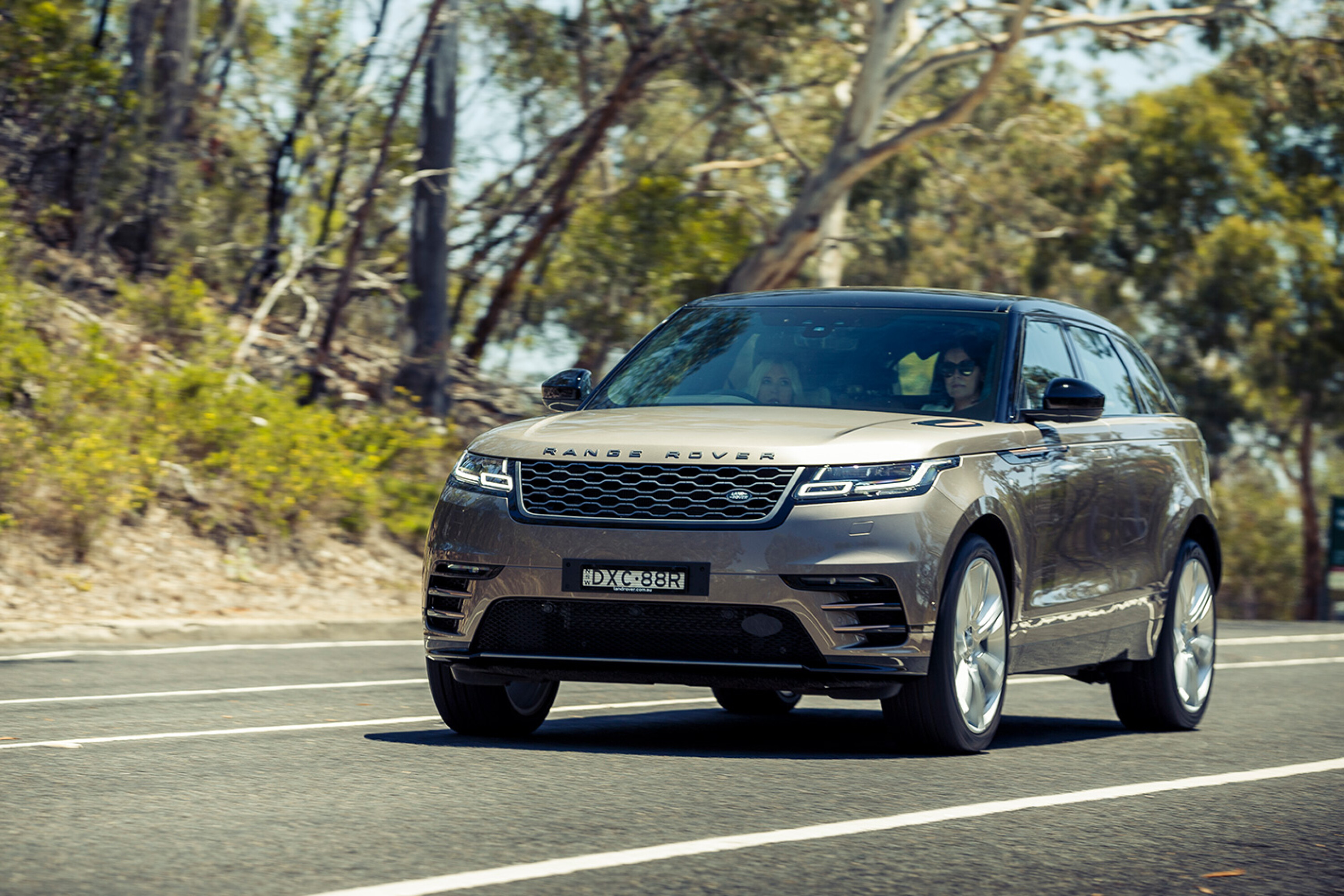
Recalls: 2022-23 Range Rover Velar
- Recall number: REC-005785
- Campaign number: N822
- Original published date: 25 September 2023
- Year range: 2022 – 2023
- Affected units: 116
- List of affected VINs (.csv file) [↗]
What are the defects?
Due to a configuration setting issue, the vehicle’s tilt sensor that detects any change to the vehicle angle relative to the ground may not activate as intended.
What are the hazards?
A loss of tilt alarm notifications increases the risk of an accident causing injury or death to vehicle occupants.
What should consumers do?
Owners should contact their preferred Jaguar Land Rover authorised dealer to have their tilt sensor configuration file updated, free of charge.
Customers are advised to be extra vigilant when leaving their vehicles unattended and park in secure or well-lit areas wherever possible until this recall is completed.
Supplier details
JAGUAR LAND ROVER AUSTRALIA PTY LTD
Who should owners/operators contact for more information?
Customer Relationship Centre
- Contact phone: 1800 625 642
- Contact email: [email protected] [↗]
- Contact website: www.landrover.com.au [↗]
\n
1
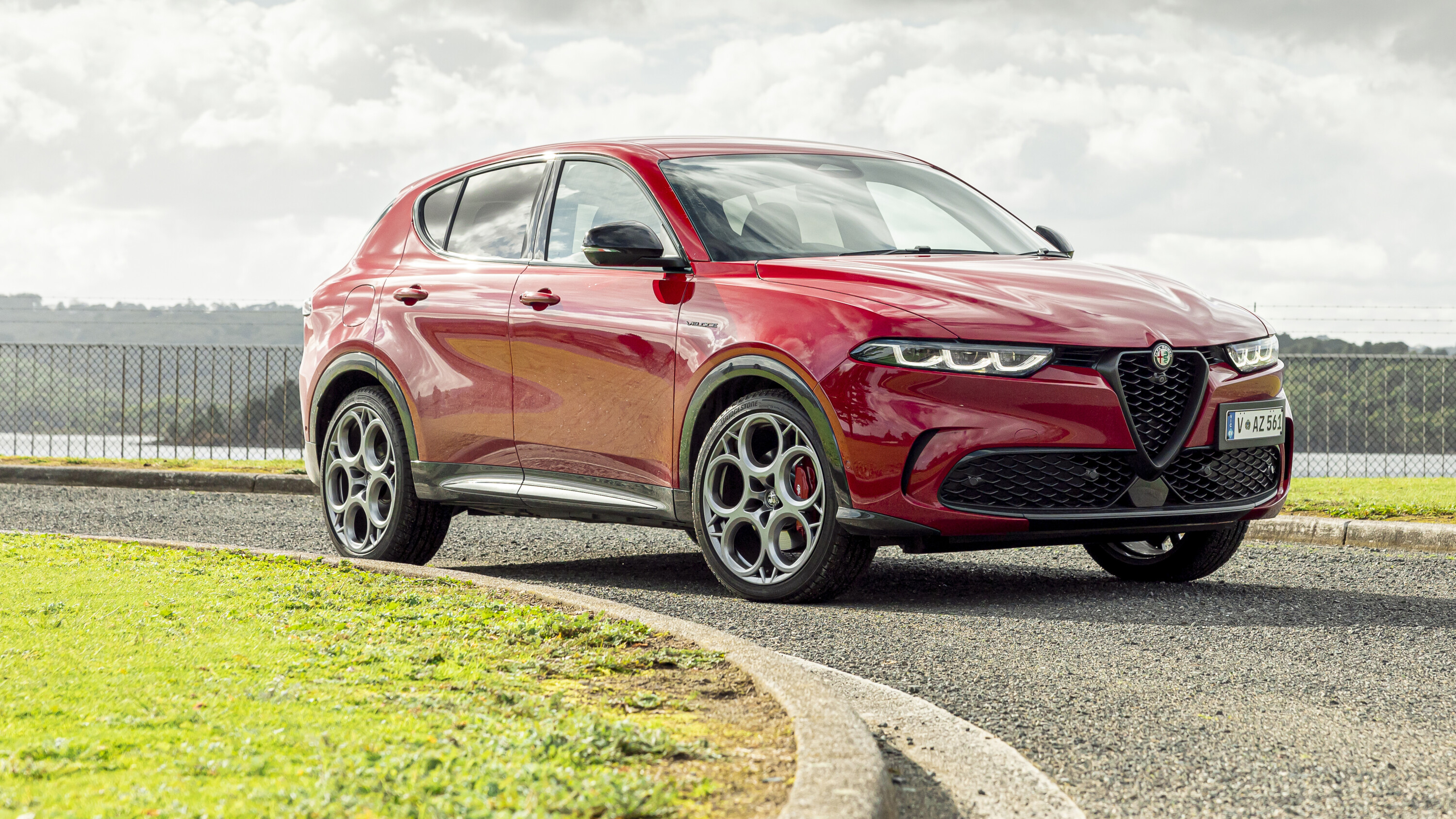
Recalls: 2022-23 Alfa Romeo Tonale
- Recall number: REC-005766
- Campaign number: 6624
- Original published date: 18 September 2023
- Year range: 2022 – 2023
- Affected units: 32
- List of affected VINs (.csv file) [↗]
- Variant applicability: All variants within this model
What are the defects?
Due to a manufacturing defect, the 48 Volt battery is susceptible to water ingress if exposed to moisture for extended periods. Water ingress can cause the battery to overheat which may result in a vehicle fire.
What are the hazards?
A vehicle fire could increase the risk of injury or death to vehicle occupants, other road users or bystanders and/or damage to property.
What should consumers do?
Owners of affected vehicles can contact their nearest authorised Alfa Romeo Dealer to have the vehicle’s battery inspected and if required replaced, free of charge.
Supplier details
FCA AUSTRALIA PTY LTD
Who should owners/operators contact for more information?
Stellantis Australia
- Contact phone: 1800 075 397
- Contact email: [email protected] [↗]
- Contact website: www.alfaromeo.com.au/contact-us.html [↗]
\n
