
There’s a moment to savour on the road to Mount Buller. Ditch the Hume at the Flowerdale exit and head east 11km along this road to the Murchison Gap lookout. You’ll crest a rise, the vista opening to a stunning panorama of rolling green hills as the road tumbles down a scarp slope in a series of lazy hairpins. Known informally as the Broadford Bends, it’s a well-trodden road-testing spot, the scarred guard rail bearing testament to those with a surfeit of ambition and a shortfall of skills.
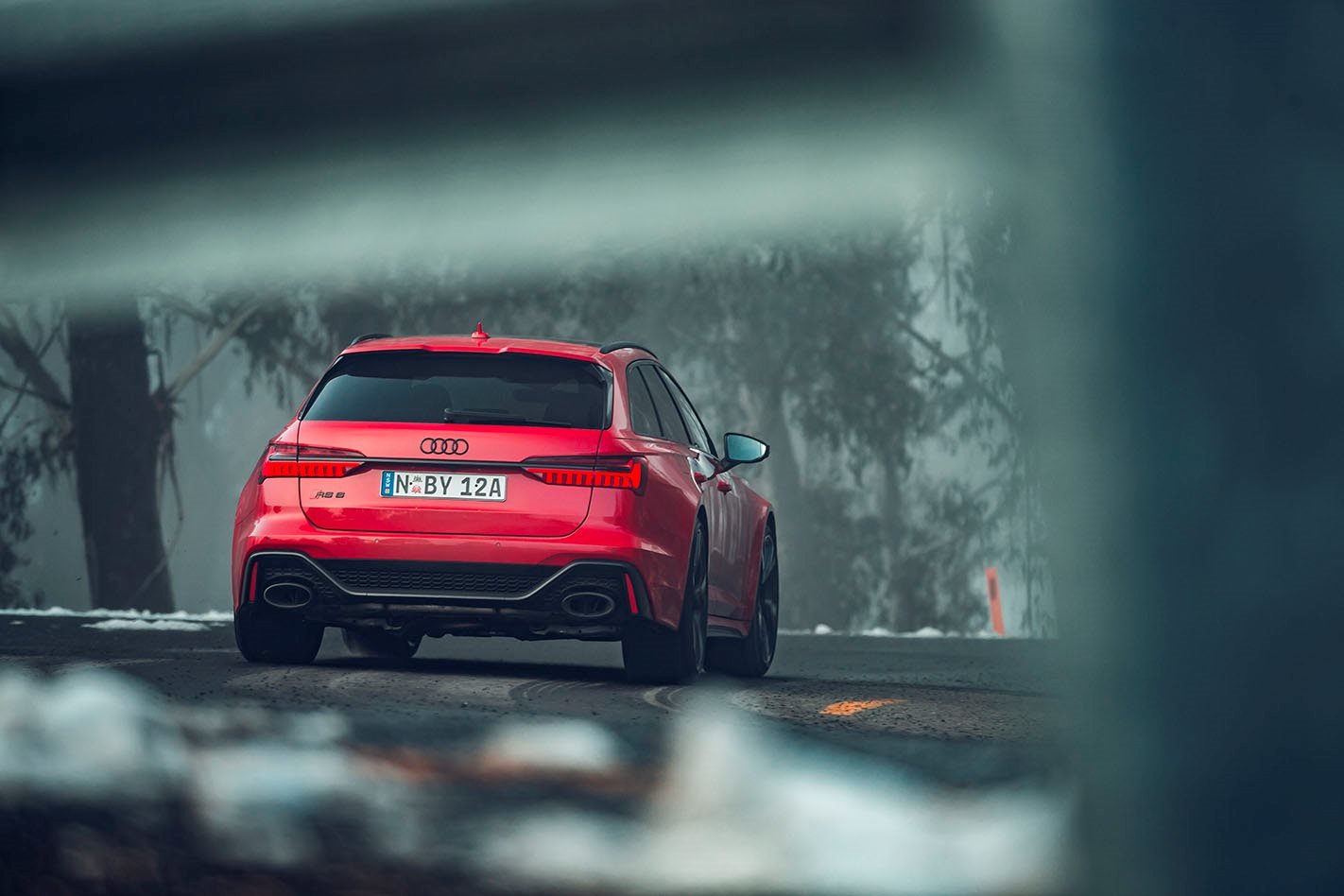
An Audi RS6 would be mighty here. I can’t say for sure because I’m stuck behind a B-double that insists on driving at 120km/h along any vaguely straight piece of road and then slowing to a virtual crawl for corners. Unbroken white lines stymie any attempt to power the 441kW Audi past the truck on corner exit. I could sit, take a ten-minute break and continue on my way. Problem is, the RS6 isn’t that sort of car. Like Truman with the bomb, if you’ve got it, you’re going to want to use it.
This C8 version is the fourth-generation RS6, and you can get up to speed with a brief history in the genealogy extract below. Like all of the others, it’s built around a twin-turbocharged engine that drives all four wheels via a tiptronic automatic gearbox, in this instance using a 4.0-litre V8 developing 441kW and 800Nm. This version is the first to feature a (very) mild hybrid drive system, but the RS6 hasn’t gone all Prius on you. Anything that can propel 2075kg of wagon to 100km/h in 3.6 seconds is anything but meek.
Firing past the truck is the first time I’ve matted the throttle pedal and it’s an unnerving experience. At first I can’t put my finger on quite what it reminded me of but the thought gently coalesces. My father was a giant of a man, with huge hands that could bend six-inch nails as a party trick like most would mangle a paper clip. I remember as a kid challenging him to an arm wrestle and he’d grin and let me win.
I knew he was just sandbagging, so I cajoled him to try harder and the RS6 rekindled that first feeling of unanswerable and hitherto unimagined force. Suddenly I was eight years old again and realising that there are some things that you needed to be wary of.
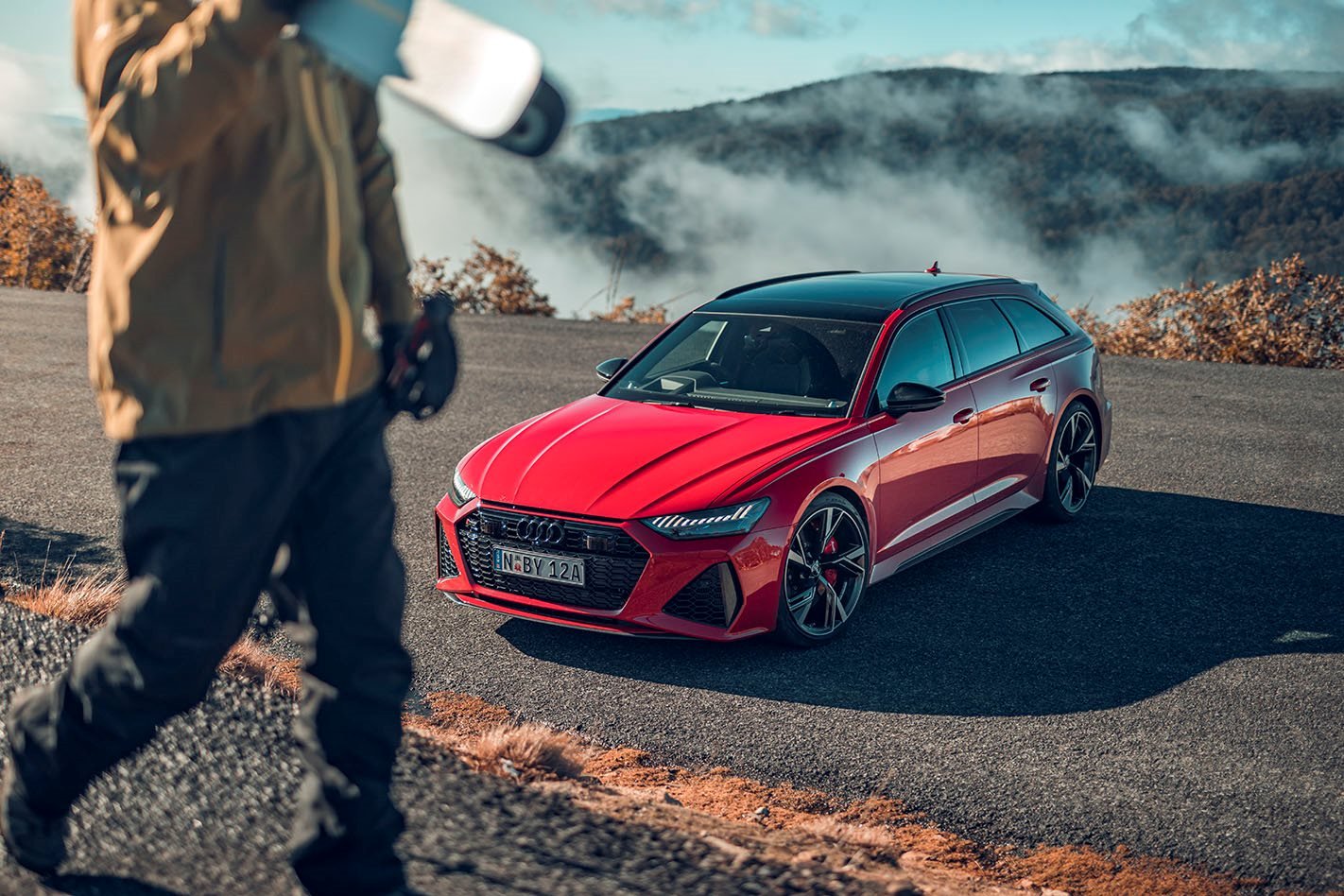
There’s little in the way of turbo lag, although such are the many permutations of drive modes and gearbox settings that if you’re set into one of the more benign modes, the system can take a moment to figure out the details of your request. From there, it’s just a case of clinging on, the scariest part being the kilometres per hour racking up on the head-up display. There in microcosm, is the Audi RS6’s greatest strength and greatest weakness.
Here at Wheels, we’ve long argued that involvement is just as important as sheer speed, and on balance, we prefer to nail our colours to the mast of fun at sensible velocities. Given this RS6 initially seems to be all about speed without subtlety, we might need some convincing as to its merits.
That’s why we’re heading to the snow of Mount Buller today, to try and get to know this enigmatic car that’s usually on the lists of lottery winners looking for a vehicle that does almost everything. If we can’t figure it out on these great roads, with hours of seat time and, if we’re lucky, a bit of snow and ice to allow us to see all of Audi’s torque-deployment techniques at work, we never will.
Of course, there are times when you don’t crave involvement. On the motorway schlep, it’s clear that the RS6 is a fantastic cruiser. A car on 22-inch wheels and liquorice-strap 30-series tyres has zero right to ride as well as it does, but the air suspension does a brilliant job of ironing out freeway chatter. At speed, the engine is so quiet that I have no idea when it’s telling cylinders two, three, five and eight to stand easy by switching off their injectors and closing the intake and exhaust valves.
The only grumble is the noisiness of the air conditioning fans, which make quite a racket even when set to their lowest speed. These get the manual deactivation treatment. There’s also a curiously un-Audi-like creak from the right-hand side of the dash that grows tiresome. In order to stop fixating on it, I crank up the B&O stereo. The COVID restrictions mean that I’ve got no photographer in the vehicle to torture with my appalling music collection/singing. Alastair Brook is hauling his Canon collection in another all-wheel-drive wagon.
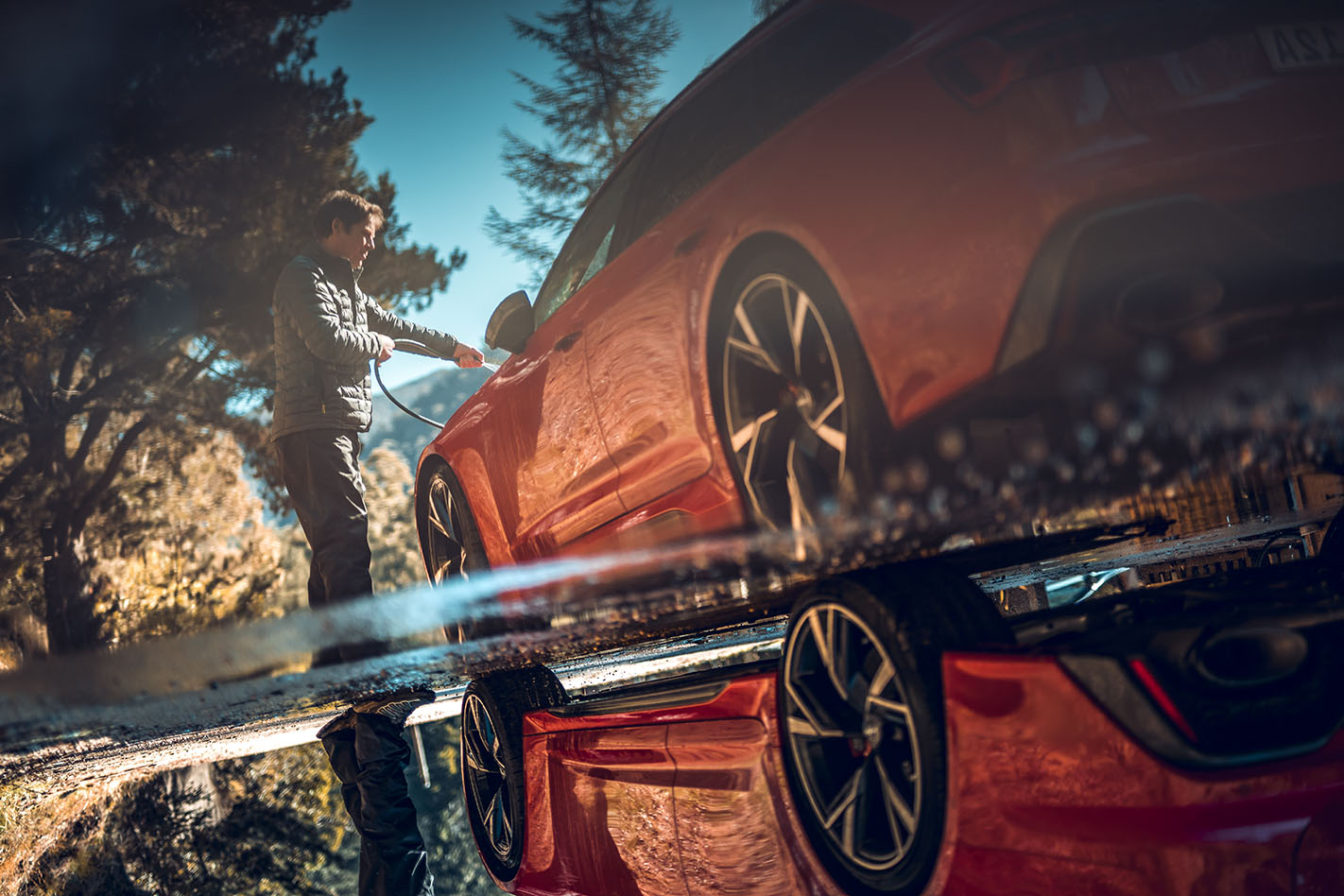
The stringybarks on the road approaching Mansfield knit their fingers overhead, framing a snowy Mount Buller as its summit peeks through the clouds. Were I the sort of person who could drop $216,000 on a tango red Audi RS6, maybe I’d have a chalet on the mountain and use the car for weekend blasts to the snow. It certainly feels right to have a pair of skis and boots in the car with me, despite Australian ski resorts having a very odd relationship with drivers.
Unless you’re a resident, Buller won’t let cars up to the village itself in winter. We can get most of the way there, but the Horse Hill car park is our final destination today, a few bends down the hill from the lodges. We pass signs in the valley informing us that 2WD vehicles need chains. That sounds promising.
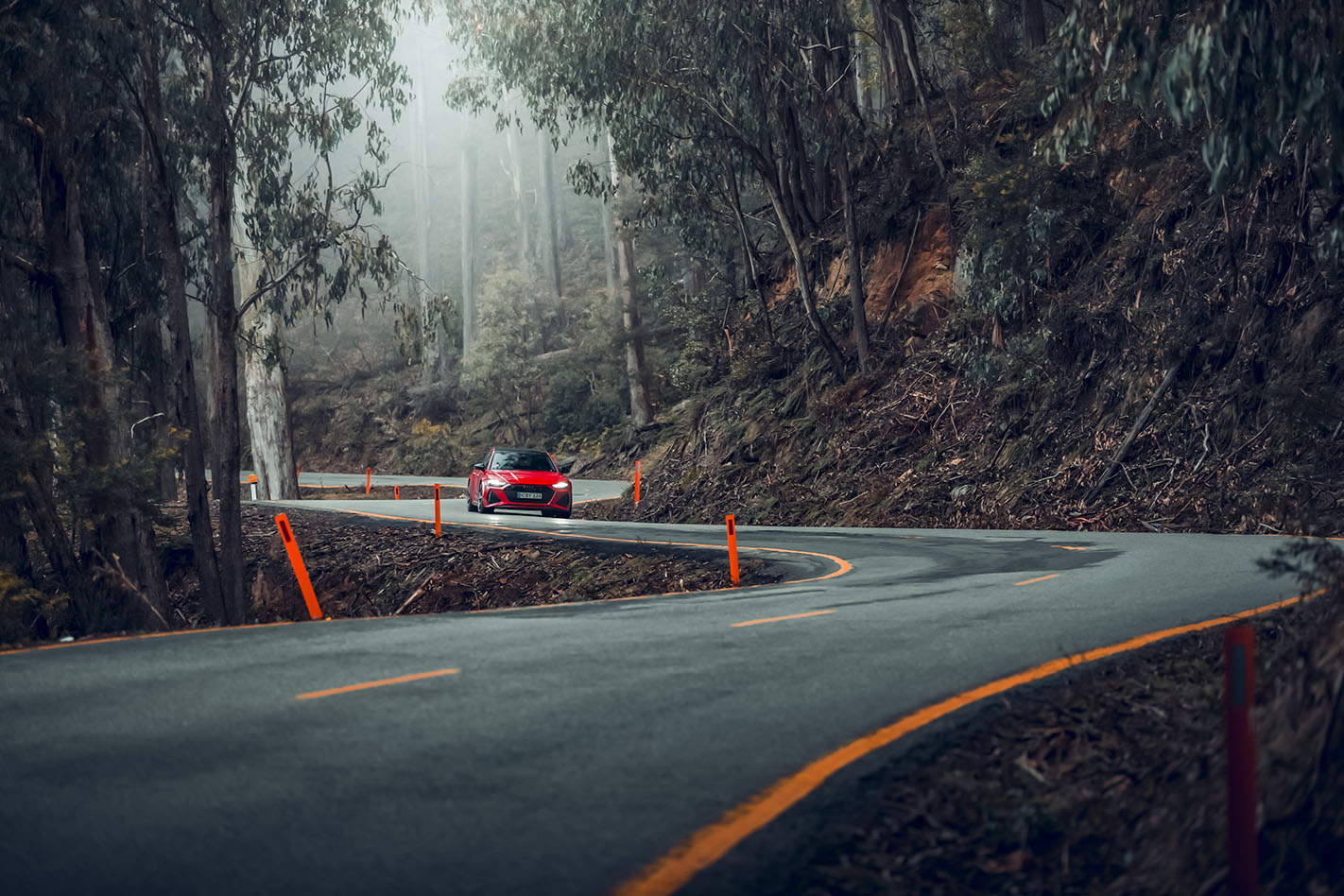
The road itself is a sharp and gnarly climb from Mirimbah, with little in the way of respite. The Audi feels agile in the tighter hairpins thanks to four-wheel steering, while clicking the RS button on the steering wheel tightens the suspension, steering, throttle map, gearshift strategy and – if you then click an option on one of the two haptic-glass screens – you can bring up RS1 and RS2 menus that customise things still further, allowing you to tailor the quattro sport diff, the exhaust sound and the ESC settings. It’s not as slick as the M1/M2 tabs on the wheel of a BMW M car, but it’s not bad.
The exhaust sounds more purposeful, but the rest of the dynamic changes are comparatively subtle. There’s no great duality of character here, which would be an issue were the basics not fundamentally good. Fortunately they are. The RS6 disguises its weight adroitly, helped by massive carbon ceramic brakes and an air spring module with a 50 percent higher spring rate.
Nominally a 40:60 front to rear torque split, the mechanical centre differential can send up to 85 percent of torque rearwards. The quattro sport differential on the back axle then metes out that measure between the rear wheels with backup from wheel-selective torque control, effectively a torque-vectoring by braking system. That dull plough-on understeer that used to be the bane of RS6s? Pretty much gone.
The steering is accurate but devoid of any great feedback. It encourages you to cleave clean lines through corners, and is geared nicely to cleanly catch up the few degrees of yaw the RS6 will exhibit when powering out of hairpins. At just 2.1 turns lock-to-lock, it’s quick but never feels darty or neurotic. You’re always mindful of the fact that this is a sizeable car, only a handful of millimetres less than five metres stem to stern.
The engine isn’t one that really encourages chasing the limiter, on public roads at least. Peak torque arrives at 2000rpm, and while maximum power comes at a relatively heady 6000rpm, the gearbox’s software will slur up a gear long before that in most drive modes. Switch it into RS mode and the dial pack and head up display change to a bar graph tachometer which strobes an angry red as you approach the redline.
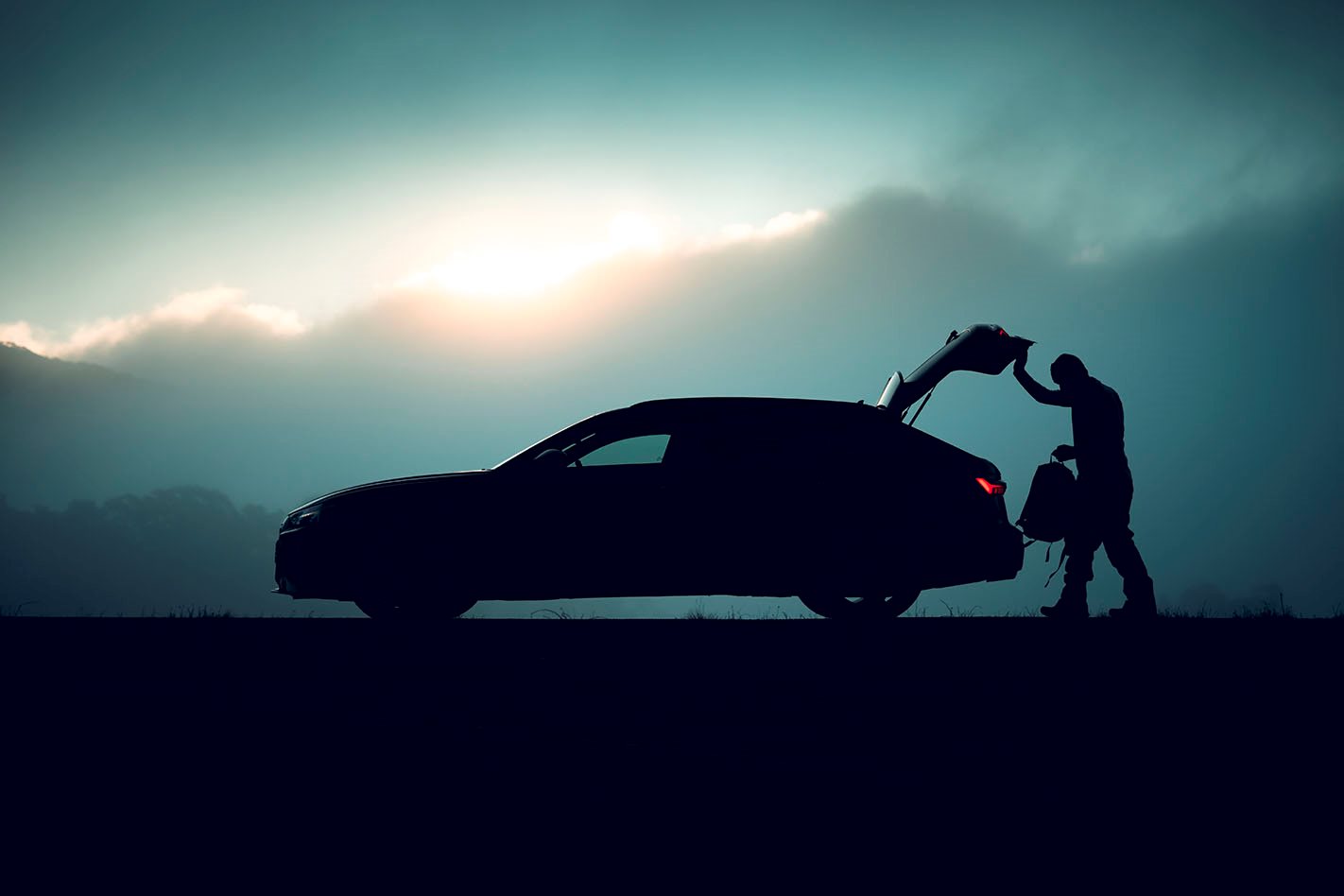
Dew point reached, cloud now blankets the mountain, the tops of the alpine ash trees stretching into the mist. We roll through Unnamed Corner where Conrad Whitlock’s car was found parked in July 2019. The businessman was never seen again, one of four people who have disappeared without trace within 12 months and a 60km radius of the Wonnangatta Valley.
Locals speak of a high country bushman called the Button Man, who carves buttons from the antlers of deer he spears and does a sideline in terrifying campers by appearing out of nowhere or pitching his camp silently next to theirs in the middle of the night. Police claim he’s odd but innocent, but it’s a very real reminder that there are some parts of the Victorian Alps that remain resolutely wild.
Scruffy snow remnants start to dot the roadside, but the Audi’s thermometer is telling us it’s still seven degrees Celsius outside. A bit of rough calculating on one degree dropped per hundred metres ascended suggests it’ll be four or five degrees at the top. As we approach the cloud tops, the light becomes blindingly diffuse, like driving into a giant photographic soft box. The seat heater and then the heated rear screen go on because I still refuse to entertain the noise of that air-conditioning fan.
Busting through the cotton-candy cumulus is a magical moment, almost as if you’re flying your own fighter jet, the road ahead jinking through the cloud tops. We swing into the massive Horse Hill car park to find but a few cars and, to our surprise, a covering of snow and ice in its shaded lower section.
On a summer tyre like the 285/30 ZR22 Pirelli P Zero the RS6 is shod with, this would normally be virtually undriveable, but it’s instructive to see how the rear diff in particular manages to eke traction from almost glare ice. Set into Sport mode and with the ESC in Sport, it allows a safe degree of oversteer before intervening, but will allow a slightly disconcerting degree of power understeer on icy surfaces, which is something to consider on mountain hairpins if you’ve never heard of ‘slow-in, fast-out’.
I’m tempted to dismiss the mild-hybrid tech as a bit of an unnecessary addition. Yes, the integrated starter-generator finesses the idle-stop system very agreeably and up to 12kW of power can be recovered and stored in a separate 48v battery, but it seems a huge amount of cost, weight and complexity to save ‘up to’ 0.8 litres per 100km.
Audi would have been better served shaving 200kg from the car’s weight to achieve much the same end. Besides, if you’re really that concerned about fuel saving, you’re probably not about to buy a wagon that, on our test route, averaged 16.3L/100km.
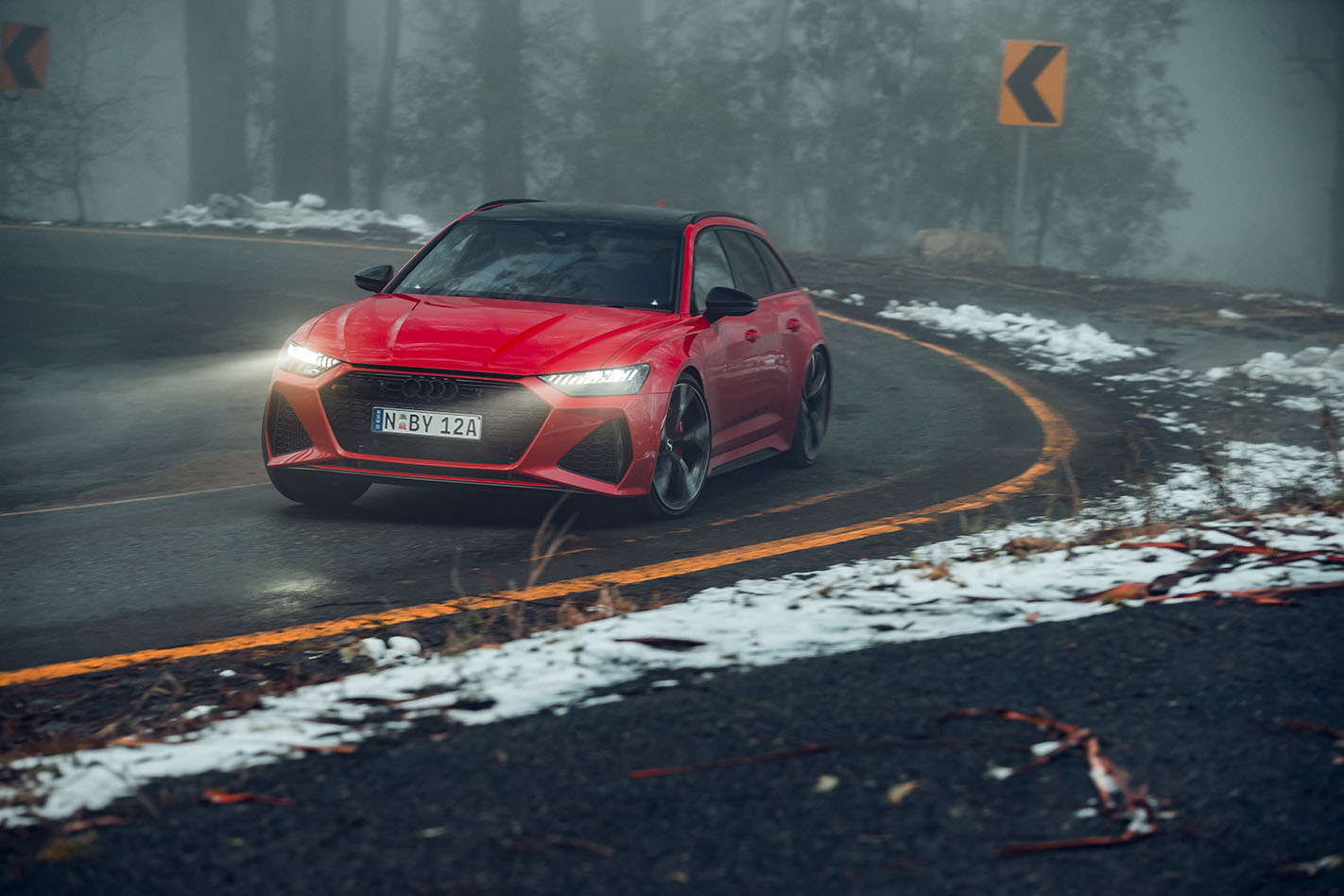
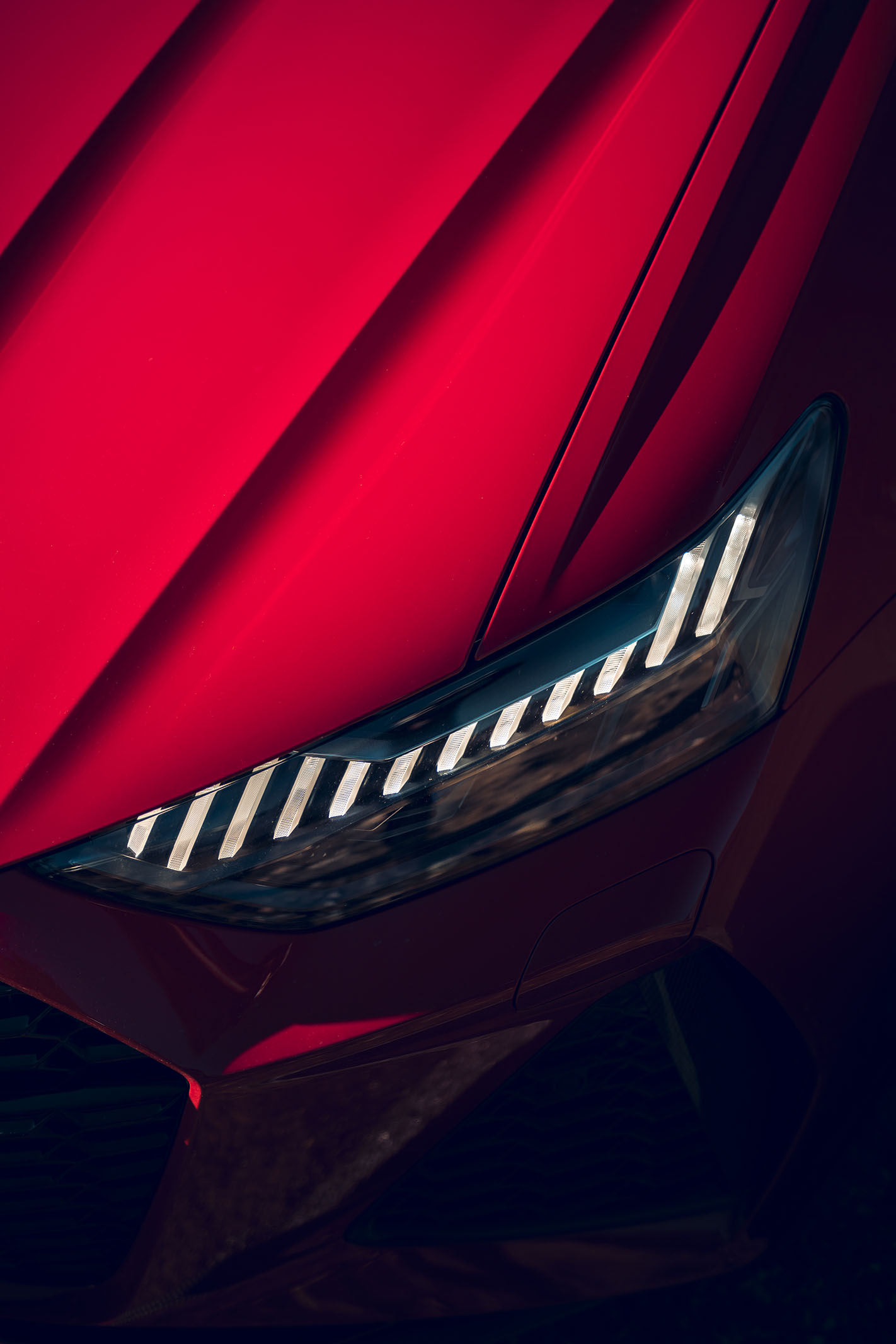
Your mileage may well vary on the styling of the latest Audi RS6, but it certainly no longer falls into the ‘sleeper’ category, with its 40mm blown-out guards, power dome in the bonnet and monster alloys that hunker right up into the arches. As darkness falls over the mountain, we head for home. The astonishing headlights deserve a special mention. The Matrix LED laser headlights can be set into an automatic mode where the individual LEDs mask out oncoming road users, dimming the lights in one of 64 stages.
Despite casting a beam of light that looks for all the world as if it’ll be cremating the retinas of oncoming drivers, not once did anyone take umbrage. In fact, on sweeping left handers, it’s possible to see the cone of light chasing the rear of oncoming cars, a wall of photons panning in perfect synchronicity a couple of metres behind them. The haptic throttle pedal is also an interesting piece of tech, mildly vibrating the pedal if the car thinks you’re about to miss a sat-nav instruction or you’re piling in too fast to a speed limit change.
Collecting thoughts on the Audi RS6 isn’t easy. For all its styling excess, it has a quietly opaque persona and, after some consideration, one that is surprisingly endearing. It delivers a cerebral blend of ride comfort, grip, performance and handling whereby one part of its dynamic makeup never serves to overwhelm the others.
While its engine isn’t as charismatic as an AMG V8 or its dynamic reserves as explicit as a BMW M5, it’s perhaps the RS6’s wholly unexpected gentleness that is its greatest asset. Its mannered reluctance to impose its personality on you is very Audi. Here’s a tool that works beautifully, forward through technology. Would make a good marketing slogan, that.
THE WAGON GENEALOGY
The RS6 debuted in 2002 with the C5, powered by a 331kW 4.2-litre twin-turbo V8. It lasted a mere two years, with the next version being the crazy V10-powered C6 of 2008. Sharing tech with Lamborghini’s V10, this 426kW monster also spent just a couple of years in market.
Things became a bit more sensible in 2013 with the softer-edged 4.0-litre C7. This made 412kW, but Audi couldn’t help but introduce a punchier Performance model with 445kW. The C7 was sold until 2018 and the current 441kW C8 is expected to be the biggest seller. The reason? It’s the first RS6 model to be exported to the US.
AUDI RS6 QUATTRO AVANT SPECS
Engine: 3996cc V8 (90°), dohc, 32v, twin-turbo
Max power: 441kW @ 6000-6250rpm
Max torque: 800Nm @ 2050-4050rpm
Transmission: eight-speed automatic
Dimensions (L/W/H/W-B): 4995/1951/1487/2930mm
Kerb weight: 2075kg
0-100km/h: 3.6sec (claimed)
Economy: 16.3L/100km (tested)
Price: $216,000
On sale: Now
Sign-up here to get the weekly Wheels highlights
New research into road rage behaviours has found that while a vast majority of us believe we aren’t aggressive on the road, almost two-thirds of drivers still report being the victim of road rage.
The independent survey conducted by car insurer Budget Direct suggests that 80 per cent of us don’t think we exhibit road rage, yet 65 per cent of respondents claimed to be the victim of verbal assault or rude gestures.
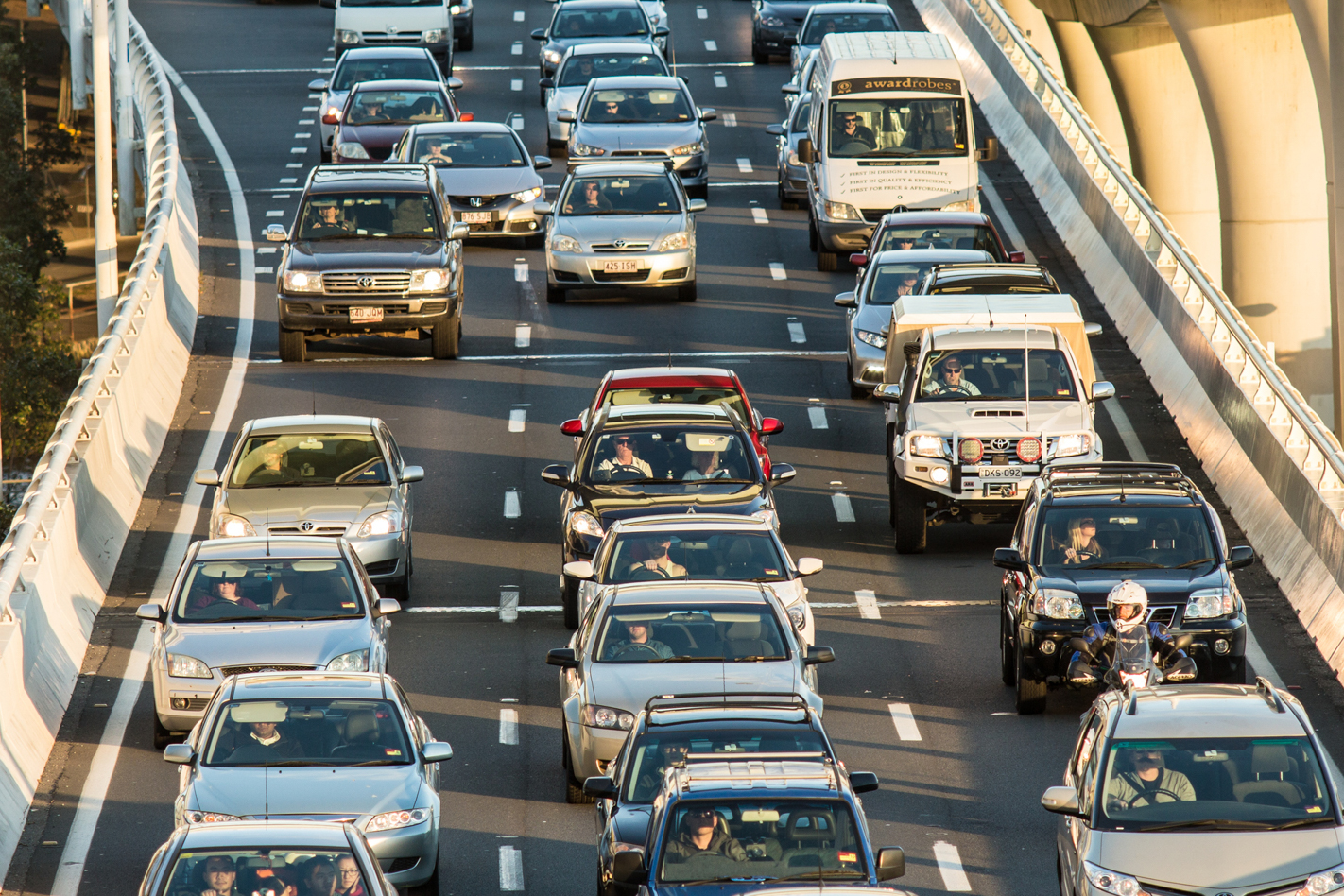
Furthermore, in the past 12 months, more than one in five people reported someone intentionally damaging or attempting to damage their vehicle and 23 per cent reported someone threatening to physically assault them.
It’s not all between drivers, either – more than one third (36 per cent) of motorists report cyclists showing aggression towards them and on the other hand, just over two in five (22 per cent) motorists report levelling abuse at a cyclist.
On the back of these findings, Budget Direct partnered with the National Road Safety Partnership Program (NRSPP) along with Monash University Accident Research Centre (MUARC) to form a campaign around changing negative driving behaviours.
How to cure road rage
The new ‘Travel Time. Your Time’ campaign focuses on mindfulness – that is, to be aware of one’s own emotions and behaviours in the moment – and not letting the actions of other people influence their emotions.
MUARC aggressive driving expert, Dr Amanda Stephens, encourages drivers to think positively about their time behind the wheel.
“How you feel is how you drive, so a negative mood will translate into poor driving practice,” Stephens said.
Drivers are being urged to practice interventions that promote less hostile thought processes and to choose to accept a given situation rather than react instinctively.
“Most drivers see others as the problem, so it’s really important to focus on our own mental wellbeing during our travel time and commit ourselves to a positive driving experience.”
With greater travel restrictions on the verge of being eased, drivers are will become reacquainted with road congestion and heavy traffic, which could negatively impact motorists’ mood levels.
Take it easy out there; there’s no use in making a mountain out of a molehill.
NOW CHECK OUT The best road trips in Australia for driving enthusiasts
Introduction: Triple threat
Three-pot hottie knows how to cut the rug
- Price as tested: $32,940
- This month’s fuel economy: 226km @ 7.8L/100km
This is one of the first Fiesta STs in the country, and having to collect it from Ford means online editor Cam Kirby arrived late to Heathcote. We’re here for our cover shoot with the Mercedes-AMG A45 and to run both cars down the dragstrip. Find them an odd pairing? Don’t fret, our logic is sound: few hatches carry as much hype as these two, or as much interest from people who really care about driving. Plus, they neatly bookend the hot hatch segment – the $93K ‘hyper hatch’ A45 packing 310kW/500Nm and this more attainable $32K Fiesta ST punching out 147kW/290Nm.
Predictably, they couldn’t be more different at the strip. Where the A45 does its best to force all of the skin on your face towards your ears as it tears away from the line to hit 100km/h in 3.9 seconds, my first launch in the Fiesta is a tangled mess of wheelspin and shuddering axle tramp. There’s more torque than I was expecting from a three-pot. It sounds fruitier than I was anticipating, too, and the sound symposer system (which boosts theatrics by piping exhaust noise through the speakers) is fairly subtle and authentic.
The second and third runs are cleaner, my technique being finessed with each launch. Managing wheel spin is the biggest priority: it’s 31 degrees and the unprepped surface is slippery enough to have the 18-inch Michelin Pilot Sport 4 tyres chirping as I shift into third. It feels fast, and the sensation is far more exciting than the numbers suggest. My best run takes 6.7sec to reach 100km/h, which is a couple of tenths off Ford’s official 6.5sec claim. The quarter takes 14.9sec at 154.8km/h. Not bad given I didn’t use the launch control feature or exploit the ST’s ability to handle flat shifts (ie not lifting the throttle on upshifts). Mechanical sympathy won out there.
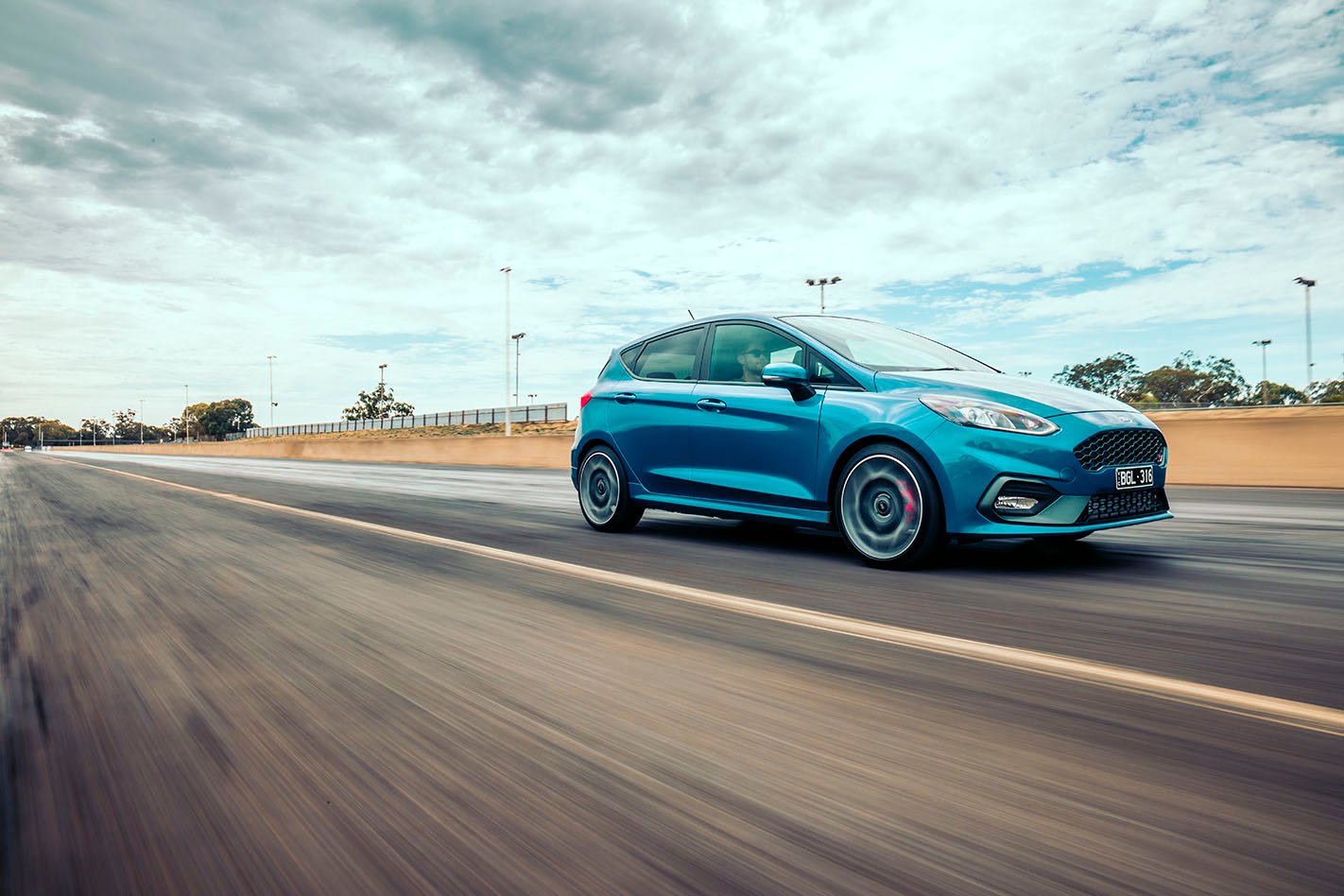
But here’s the thing – I’m quickly learning the Fiesta is about more than binary acceleration figures. Just as its real-world performance feels faster than the numbers suggest, the rest of the car imbues an immediate sense of personality and fun. It sounds naughty, even at idle, and obvious thought has gone into how you interact with the car. All of the control weights are nicely judged, the stubby gear shifter fluidly snicks from slot to slot, and you’re cocooned in heavily bolstered Recaros. The seats are so good you quickly forget you’re set a little higher than you’d like, though while they hug me comfortably, others could find them a little snug.
I won’t be wanting for equipment, either. Aussie STs score a full suite of advanced safety gear, an 8.0-inch central touchscreen with clear graphics and Apple CarPlay/Android Auto, and all of the extra ‘go fast’ bits usually reserved for an optional Performance Pack (Quaife LSD, 18s, launch control) as standard. The only extra cost to our example is Ford Performance Blue paint for $650.
It’s a strong first impression, then, yet the real measure of a great hot hatch isn’t how quick it is in a straight line, but how it tackles a tortuous back road. Three months of lift-off oversteer and cocking inside rear wheels await.
Update #2 Expecting big things
On the hype train – first stop, scepticism
- This month’s fuel economy: 344km @ 8.1L/100km
Okay, that last part isn’t true, but you get the point. So why am I wondering what all the hype is about? All I can think, as I bounce and jiggle my way to complete my weekly shop, is that the ride is pretty firm. And that the turning circle, courtesy of the super-fast 12:1 steering rack, feels wider than the orbit of the moon. And that when I close the door, there’s an odd plasticky graunch like the seatbelt buckle gets caught.
I know the reason: COVID-19. What a buzz-kill this virus turning out to be. Self-isolation, which initially sounded okay because it meant we could all work from home, quickly turned into purgatory when I realised it meant we could no longer just ‘go for a drive’.
There’s a silver lining, however. We had the ST booked in for a comparison test with the Polo GTI and Suzuki Swift Sport, and given this could be explained away to the constabulary as work, I loaded my pockets with hand sanitiser and grabbed the keys.
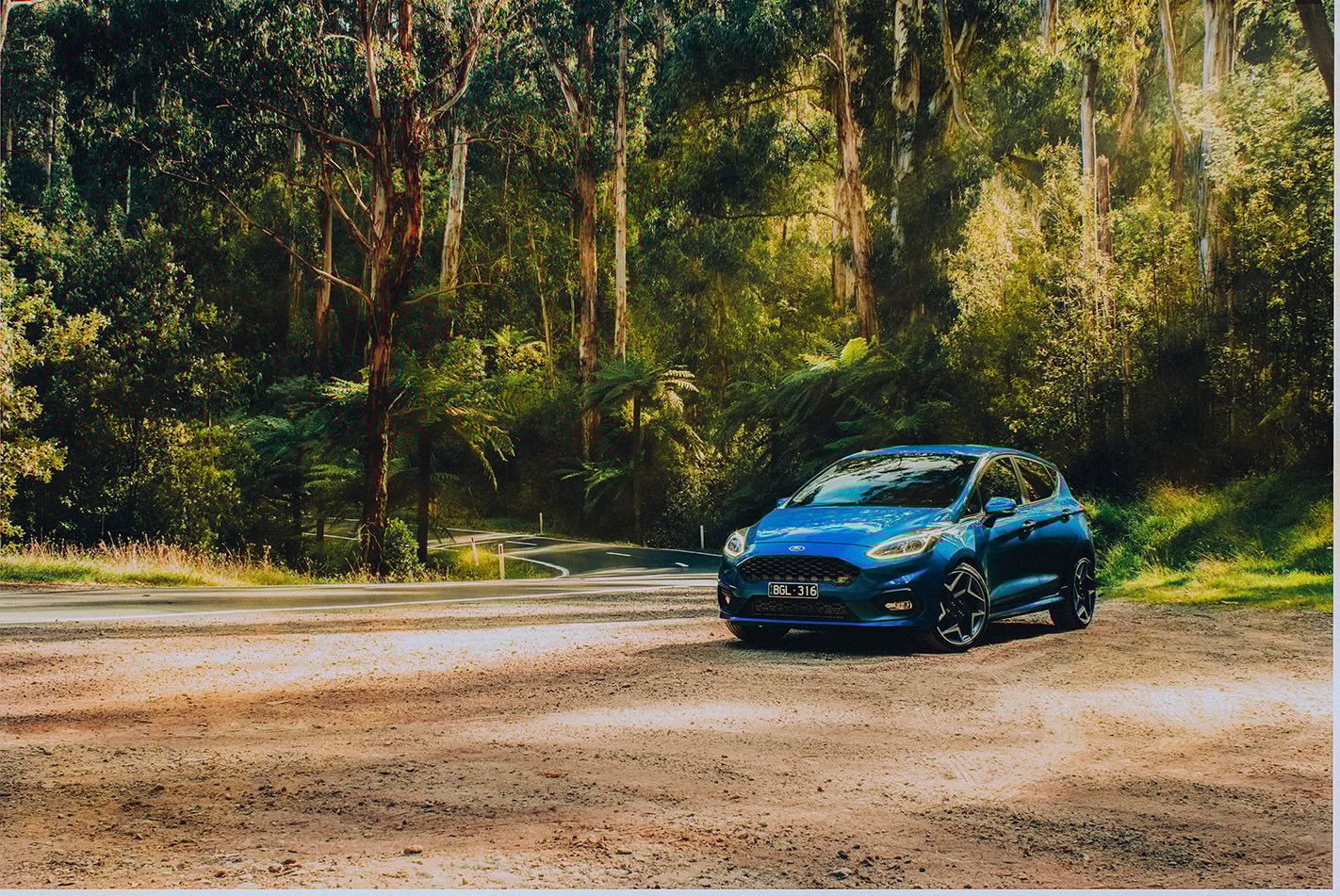
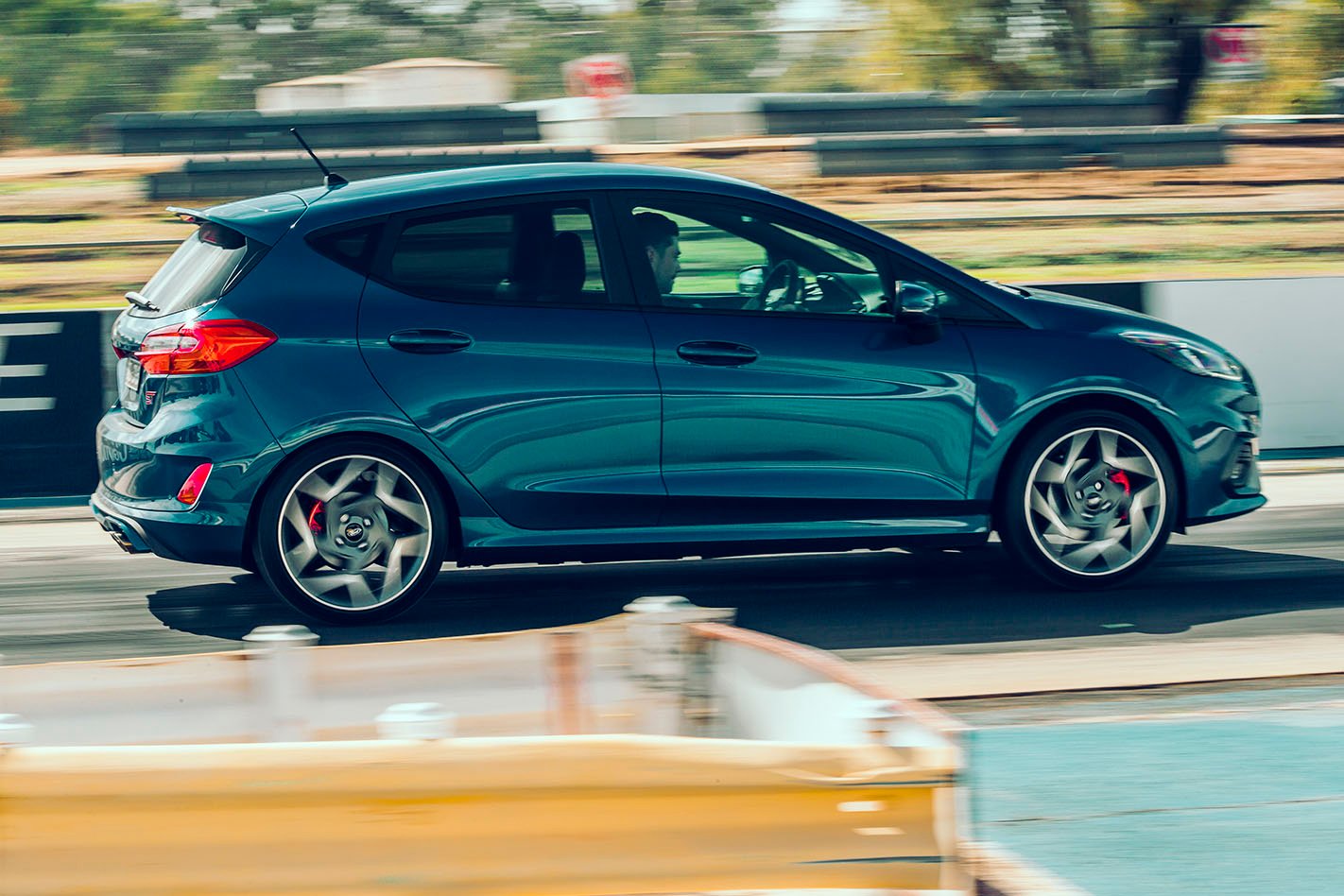
That first proper drive wasn’t so much eye-opening as it was revelatory. There’s something joyous about a well-sorted and slightly over-powered hatchback, and this one’s special. Next month’s comparison will tell all, though the Fiesta ST smacks of being created by people who care about driving. The front axle is incredibly sharp, and the steering, which felt so woeful in the car park at Coles, coalesces as the speeds rise. Its accuracy and immediacy are almost perfectly judged. You don’t steer this car with your arms; mostly you guide it with your wrists.
But the best bit is the playfulness of the chassis. Pile in a smidge too hot (205-section front rubber means it will push if you get too greedy) and you have two options: grab the throttle early and feel the diff help pull you towards the apex, or lift off and revel in readily accessible degrees of oversteer. Track mode is your friend here. It slackens the electronic safety net to allow a quarter turn of corrective lock, though it still has your back should you overstep. It’s amusing, addictive, and crucially, the fun is accessible at sane speeds on regular roads.
So the hype is real. The ST is deserving of the praise. And that plasticky sound when you close the door isn’t crummy build quality, but the noise of retracting plastic guards that spring open to protect the door edge. I guess that’s another positive…
Update #3: A game of confidence
What happens when you take the grip away?
- This month’s fuel economy: 519km @ 7.9L/100km
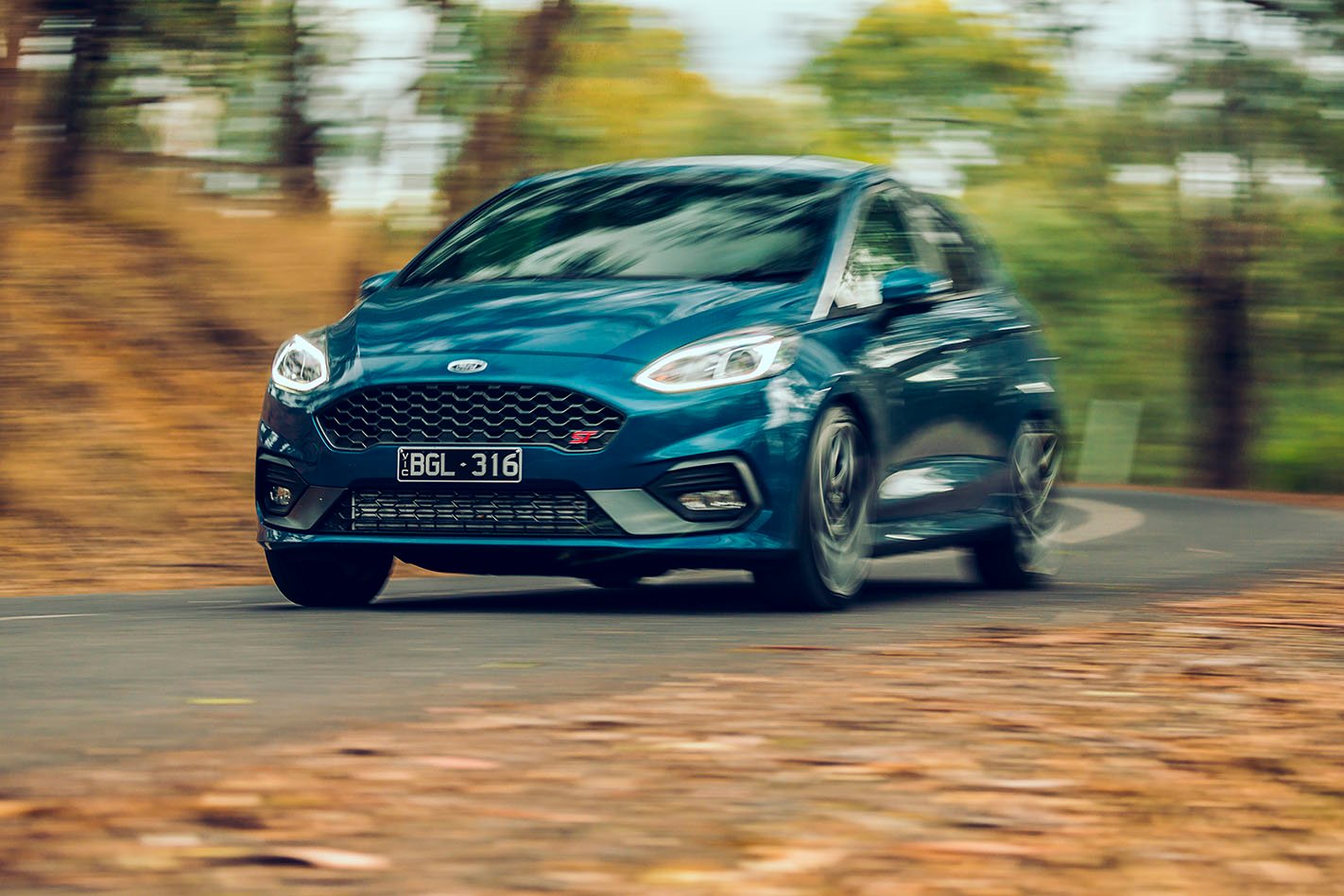
Fast running in conditions like these requires confidence, both in your ability to read the road and in the car beneath you. The Fiesta is relishing the challenge.
This is its first real crack at anything other than bone-dry tarmac and I’d worried that a low grip surface might expose some previously hidden dynamic flaws. Torque steer was my primary concern, closely followed by savage snaps of oversteer should I lift too suddenly. Memories of a fellow journo disappearing backwards into the undergrowth in the previous-gen ST loom large, though this new car is far more forgiving.
True, the steering is ultra-fast, but slow your inputs down a little and it’s remarkably easy to place the front tread blocks exactly where you want them. The balance front-to-rear is expertly judged too, and far from backing off, I soon find myself loosening the electronic safety net to initiate small slides through the apexes of the tighter turns.
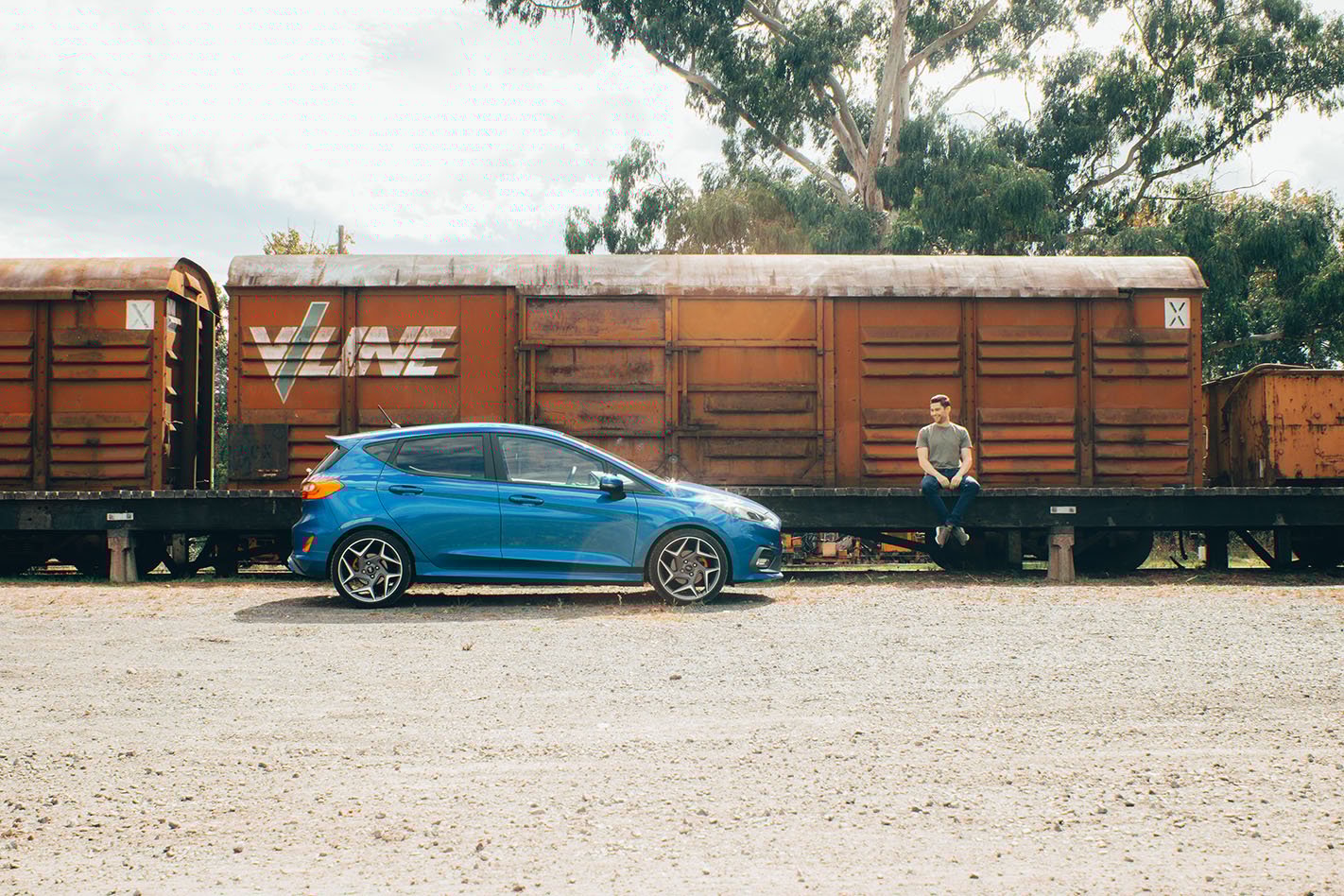
The conditions mean I feel faster on the way in than I do on the way out, though there’s something deeply satisfying about sensing the Quaife LSD tighten to pull the nose into line as I power through the exit. It’s high consequence driving, though I’d rate that run up a rain-soaked mountain road as one of my driving highlights of 2020. I doubt my speed ever crept higher than 70km/h.
Pulling up to watch the sun set outside the (now dry) country town of Healesville gives me time to reflect. It really is masterfully complete, this little Ford. So much so, that I find myself wondering what I’d prefer: one of these, or the fractionally more expensive Mazda MX-5 1.5? They offer different paths to the same means, though the Ford’s crisper body control and keener front end get it over the line for me. The fact it can also lug about four mates, and their shopping, in relative comfort is testament to the appeal of a well-sorted hot hatch.
And while the rear-drive Mazda might have the edge in power down adjustability, I know which would be quicker up a soaking Victorian backroad. It really is a giant killer, this little Ford.
Update #4: A firm goodbye
It’s a hot hatch for the ages, if you can handle the ride…
- This month’s fuel economy: 1119km @ 7.1L/100km
- Overall fuel economy: 2207km @ 7.5L/100km
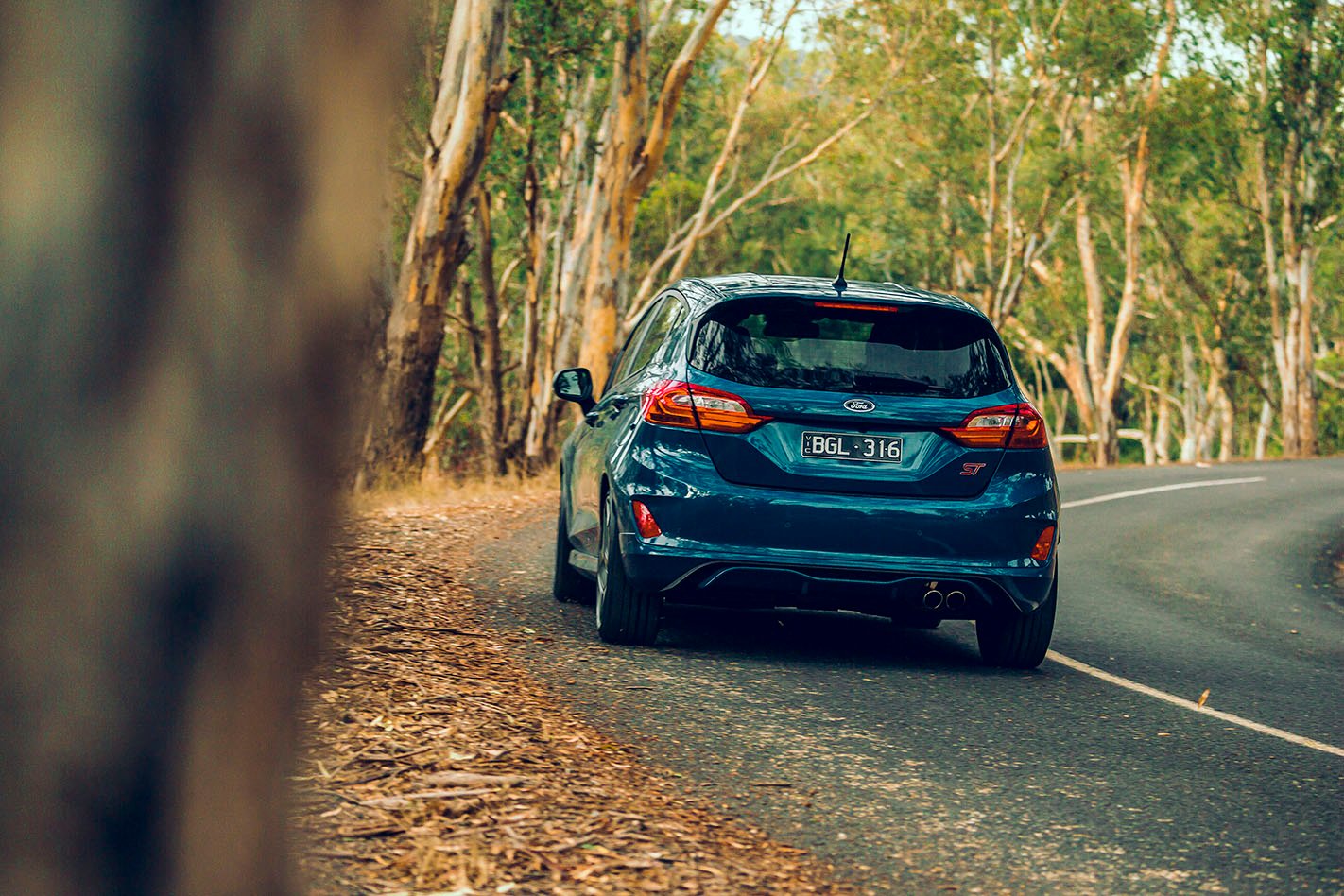
The consequences of this looming departure have been twofold. The first is that, in order to squeeze out every last drop of fun while I still can, I’ve started to drive with a possessed kind of urgency. Even quick dashes to the shops have become hyperactive affairs, and I’ve discovered it’s easy to dial up the drama, and the fun, without dialling in the attention of the local police.
Sport mode is my new default and it’s been something of a revelation. Throttle response is considerably sharper, the steering gains a meatier edge, and the exhaust note is much more pronounced with additional cracks and pops on the overrun. For best results, however, I’d recommend activating Race Track mode and dropping down the 60:40 folding rear seats to better allow the surprisingly deep baritone of the gutsy three-pot to fill the cabin. Mercifully, given the already taut ride, dialling up the drive mode aggression does nothing to alter the firmness of the dampers.
I’d been expecting this month’s fuel figures to skyrocket (heavily boosted three-cylinder engines are notoriously thirsty when driven hard), though once again, the Fiesta has been one of the thriftiest members of our Garage. Only Andy’s CX-30 drank less fuel.
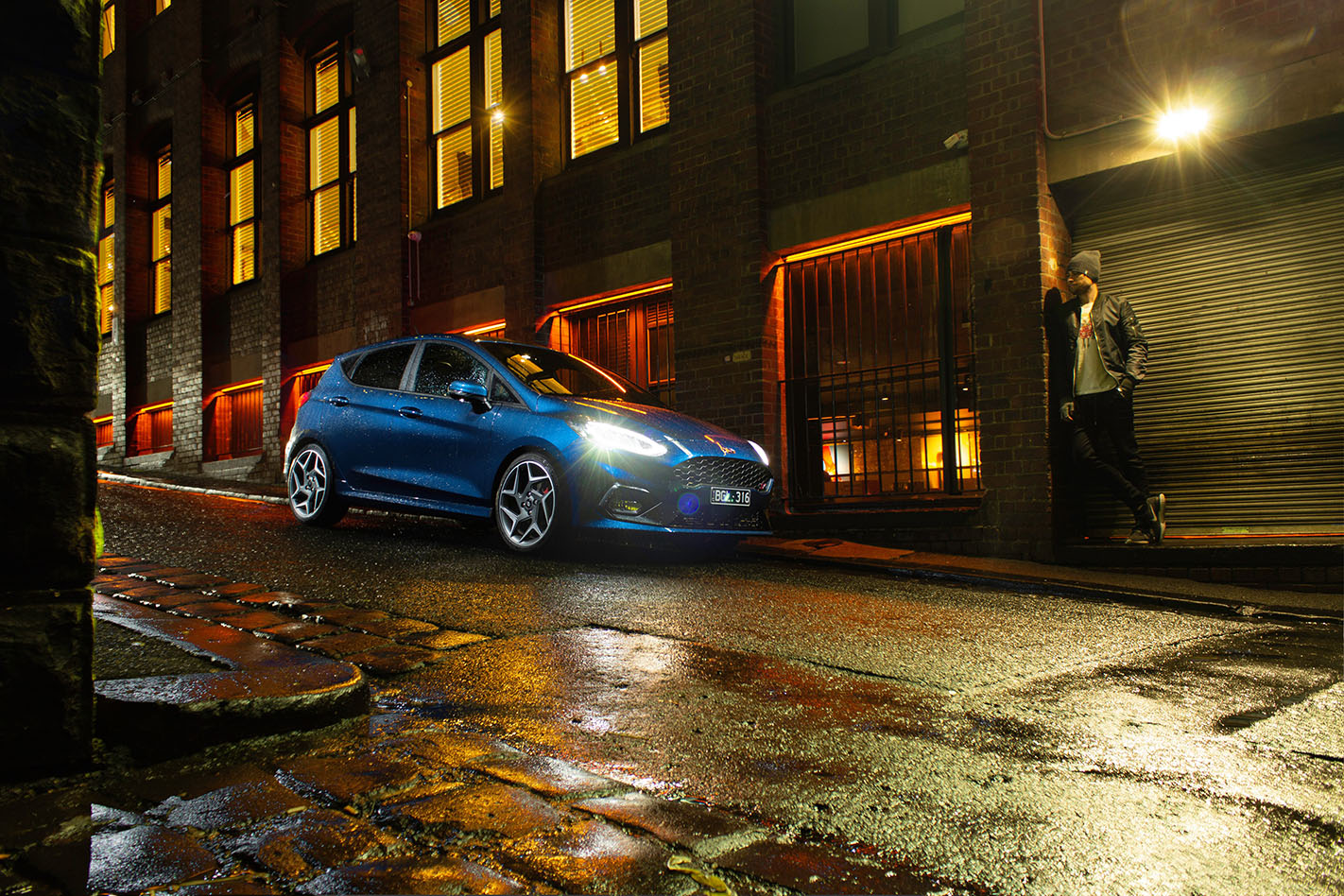
Which segues nicely into the second consequence of the Fiesta’s departure: mulling the finer points of its ownership experience. Ultimately, the Fiesta’s driveability/liveability balance is overwhelming positive, though there are a few caveats worth mentioning should you be considering buying one.
Take the packaging, for example. On balance, it’s excellent. I’ve relished the sense of nimbleness and opportunity that comes from driving such a small car (especially when jagging tight parking spots), and Ford has done a decent job of using the available space. The 311L boot is large enough for two border collies, and as I found out when setting up my home office, if you fold the rear seats you can fit an office chair, a desk and a large computer monitor.
Care has been given to rear-seat passengers, too, who will appreciate decent vision and supportive cushions, but knee-room is at a premium which makes the rear bench more of a kid-friendly zone. And a large turning circle erodes the aforementioned sense of nimbleness when parking.
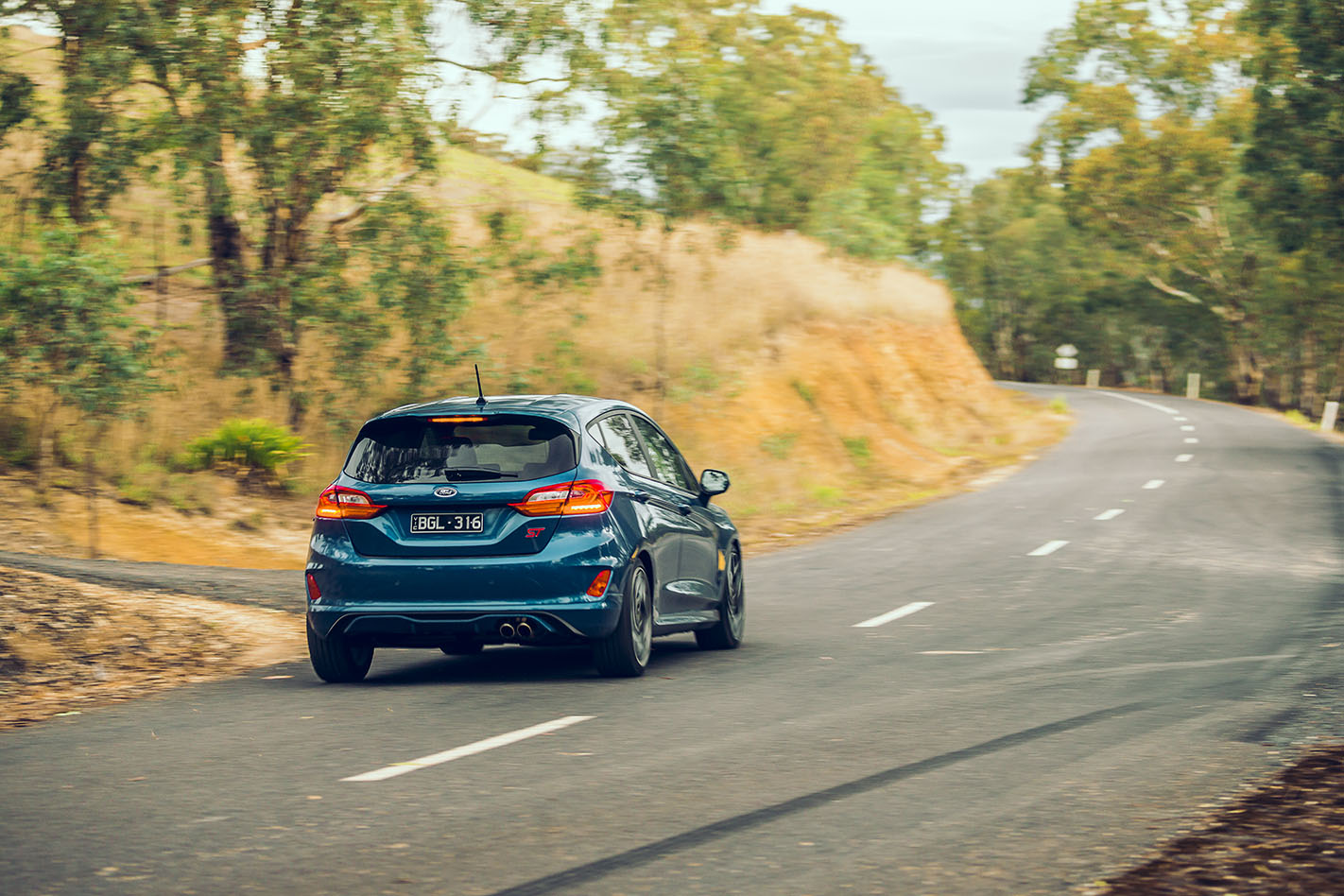
There’s less to complain about up front. The Recaro seats are excellent, all of the controls are logically laid out, and SYNC3 is simple to navigate and works well with Apple CarPlay. Fussier minds might complain about the extensive use of hard plastics, but few could find issue with the level of standard equipment on offer.
But my biggest bugbear, by far, is the ride. It might deliver superb control and nuance on a winding road, but in day-to-day driving the Fiesta is jittery and jostles its passengers. At first I was so taken with how the Fiesta drives that I accepted the firm ride as fair trade, but this month the scales tipped from tolerable to tiresome. It’s become such an issue that my wife now refuses to take the Ford on longer drives because “our Golf GTI is way more comfortable”. If you’re buying a Fiesta ST as your sole family car, I’d express caution.
Still, while its extended stint may have dulled its sheen a little, there’s no denying this is a brilliant hot hatch. But with its return looming, my attention is already shifting towards its replacement. Another Ford will fill these pages next month and it too will wear an ST badge. It’s going to have big shoes to fill…
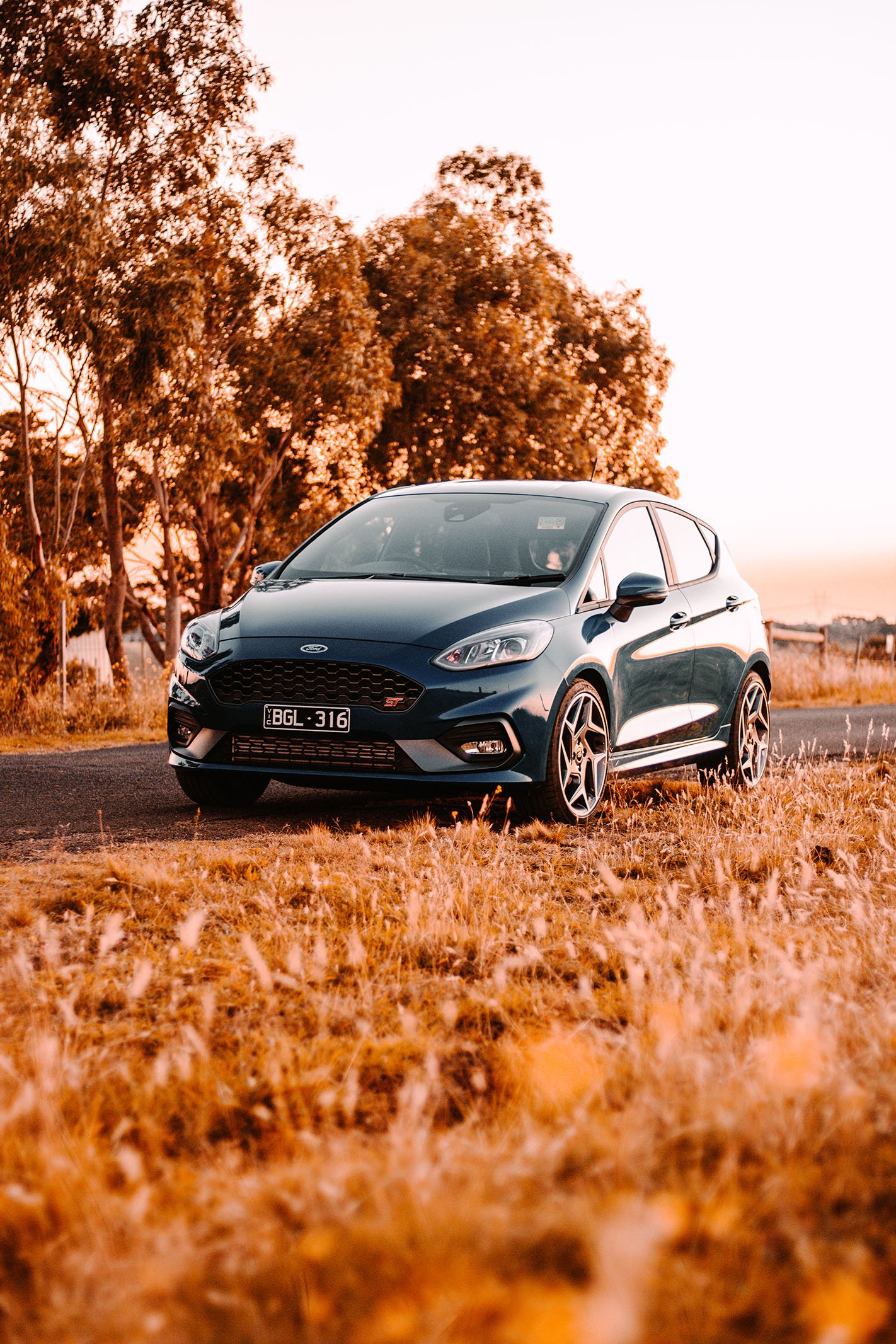
From sculptors, marketing gurus, political activists and just misguided car manufacturers, most wacky car creators have just too much time on their hands!
Take a look at some of the weirdest works of art on wheels you’re ever likely to see.
Dieter Sturm’s jet-powered Cheese-n-ator
Built in 2016 by apparently unhinged but commendable Wisconsin man Dieter Sturm, the Cheese-n-ator is a… well, it’s a jet-powered wedge of cheese.
Or at least, it’s a car shaped as such, and the world’s first. Amazingly, no one else had thought to do this.
It even has a switch for “fondue” (a flamethrower switch for the jet) and for “smoked cheese” (smoke, also from the jet).
As the time of writing, October 2020, the Cheese-n-ator is for sale on Facebook marketplace by the creator himself.
Erwin Wurm Fat Car
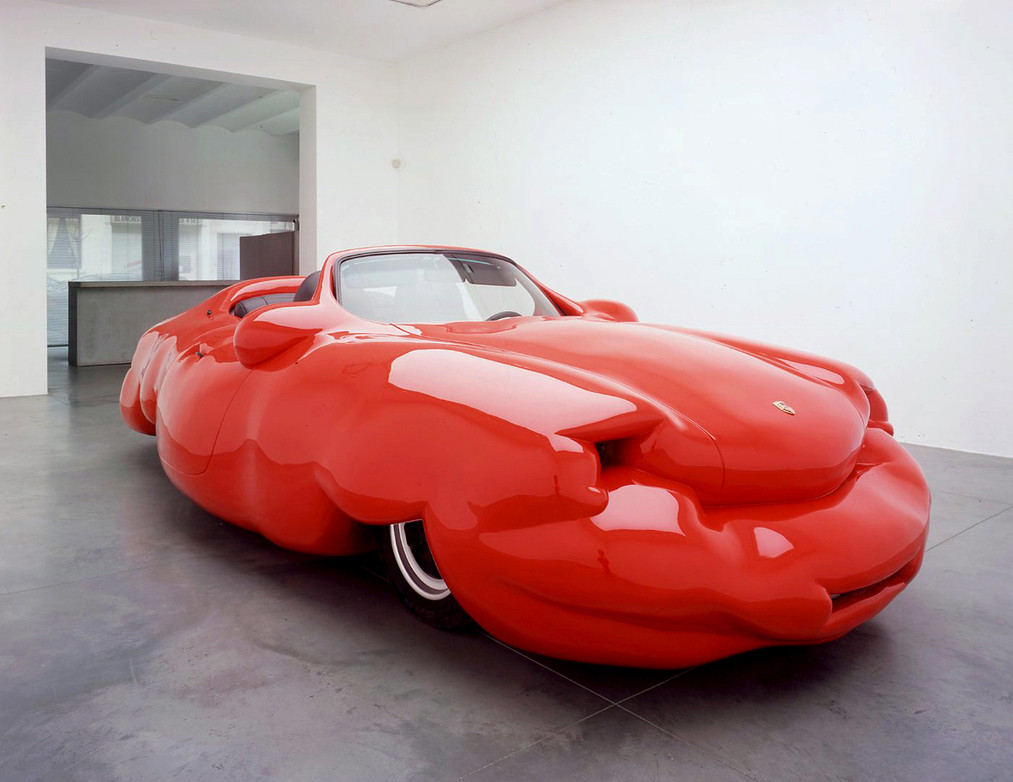
Technically a sculpture by Austrian artist Erwin Wurm, beneath that bloated fiberglass lies a real car – a Porsche 911, no less. A commentary on power, wealth and obesity, or just a waste of a good car?
Quasar Unipower

Feel a bit vulnerable when driving a small car? Well, the Quasar Unipower would surely put your anxiety into overdrive thanks to it being not only pint-sized, but also a literal glass box that presumably turns into hundreds of inward-facing daggers the instant you have a crash. It was not a commercial success.
Snaefell sidecar

You’d think after 10 years of development they would have worked out what they were making.
With 10,000 hours of labour and more than 15,000 Euros thrown into the project, it’s probably best not to ask.
Ken Block’s Trax STI
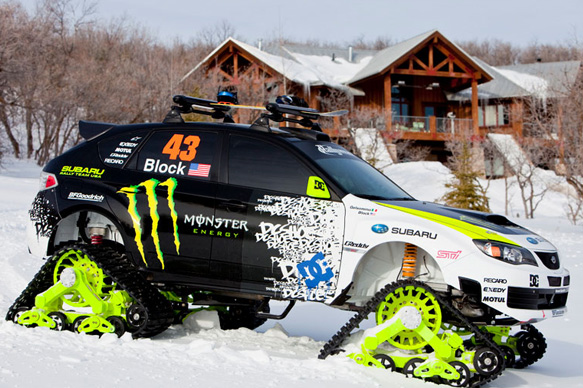
Well what do you expect when you put Ken Block in charge of modifying a Subaru Impreza WRX STI.?
With its beefed up suspension, turbo charged engine and cat tracks replacing wheels, this is a winter wonder car to beat any weather.
Vantagefield Benz Rover Hunter
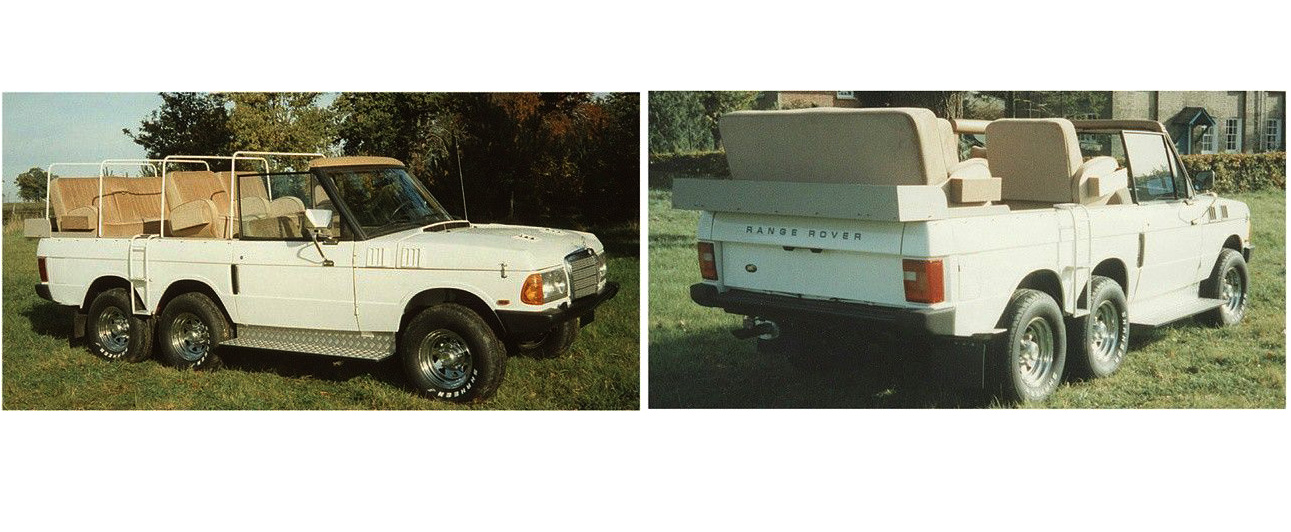
Cocaine was extremely popular in the 1980s. Vantagefield offered this six-wheeled Benz/Rangie hybrid convertible in the 1980s. Are the two things linked?
Stiletto Art Car

This now-famous stiletto art car was a peace offering from David Crow to his girlfriend after years of teasing her about her obsession with shoes.
Clearly, time management should be next on David’s to-do list, as his girlfriend didn’t hang around for the four years it took to complete his apology!
Oscar Mayer Wienermobile
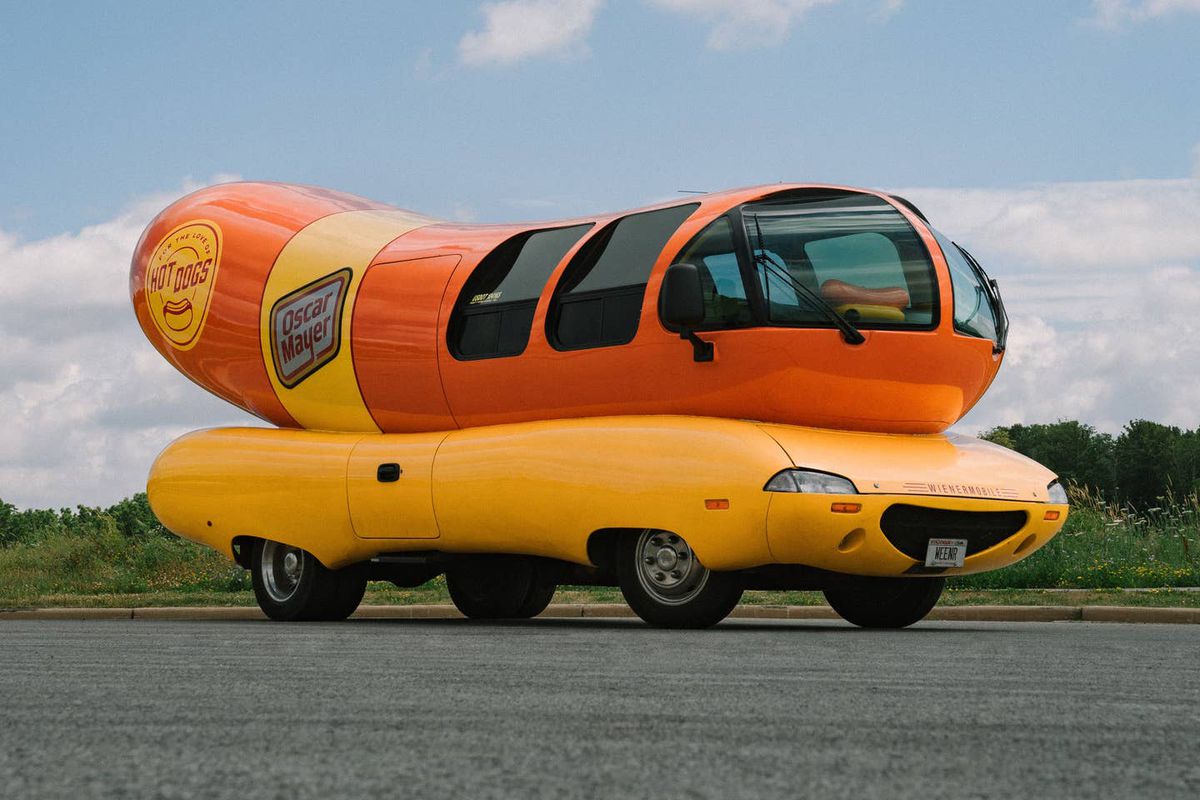
To promote its brand of hot dogs, Oscar Mayer has had around a dozen hot dog-shaped trucks built over the decades. Their drivers are called hotdoggers.
There are also Hot Wheels models of Wienermobiles, one of which may or may not be on one journalist’s desk in the WhichCar office…
Olaf Mooj’s DJmobile

The track God is a DJ apparently inspired this nightclub on wheels. With aerodynamic design, two turntables, and an ample speaker system… watch out, neighbours!
Li Shi Guang Ming The Book Of Songs
We kid you not, that’s it’s actual name.

This electric runabout with a 160km range would have cost $13K in today’s money, meaning that not only is it brutally ugly, but it’s also exceptionally poor value.
Chevrolet Orlando Play-Doh car

Promoting the launch of the new Chevy Orlando MPV and not a new Smurf movie, this life-size Play doh car sculpture took eight model makers two weeks to complete.
Harold Blank camera van
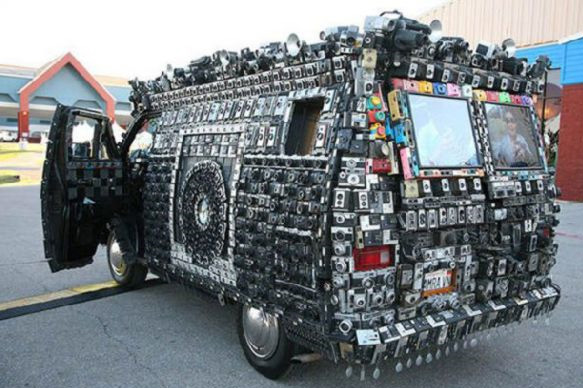
If you think this crazy van is haphazardly thrown together- think again. It’s a fully functioning work of art that snap happy owner Harold Blank tours the world in.
With a front grill made from every Polaroid camera ever made and the passenger side reserved for a collection of antique cameras, it’s no wonder Harold has hidden cameras to snap public reactions!
William Burge’s Phantom art car

This devilish ride made its debut at Essen Motor show in Germany 2007. Again, it’s the popular Beetle that gives it foundation to this beast.
Scot Campbell, Extremo the Clown
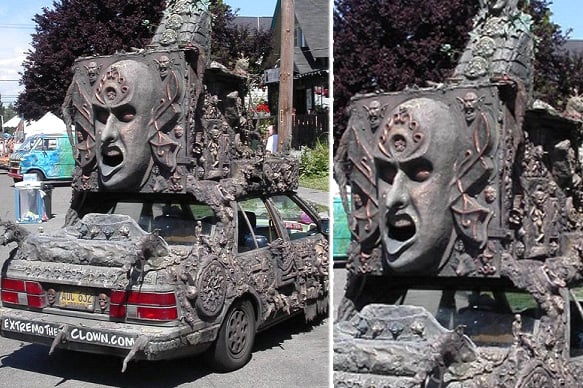
How do you even describe this monstrosity? We’d like to see its owner, Extremo the Clown (Scot Campbell, also once a mayoral candidate in Portland, Oregon), manoeuvring a multistorey car park!
Wire VW Beetle art car
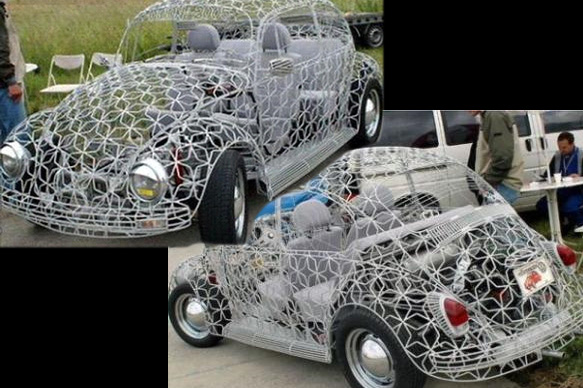
Looking more like a portable birdcage than a driveable car, even the steering wheel is wired in this VW. ANCAP says no.
Dai Geng’s BMW Z4 brick art car

This replica z4 took one artist over a year to construct. Apart from the windows, every part of the BMW, from the detailed and authentic BMW interior to the hinges allowing the doors to swing open, is made from brick.
Motherboard car
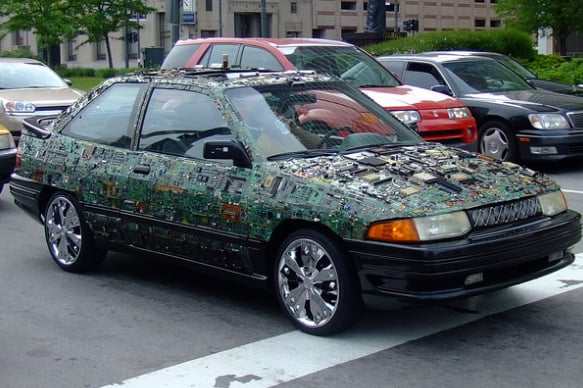
What better way to discard old bits of computer than gluing the parts to your car.
Hopefully it doesn’t cause a short circuit.
Ripper the Shark
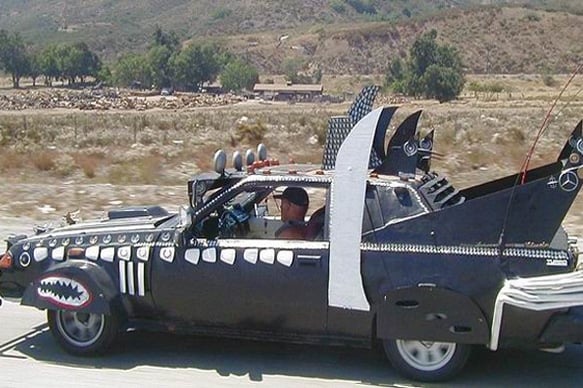
‘Cartist’ Tom Kennedy was a pioneer of art cars. One of his most famous designs was Ripper the Shark, complete with moveable jaws and a swishing tail.
Olafur Eliasson – Your Mobile Expectations
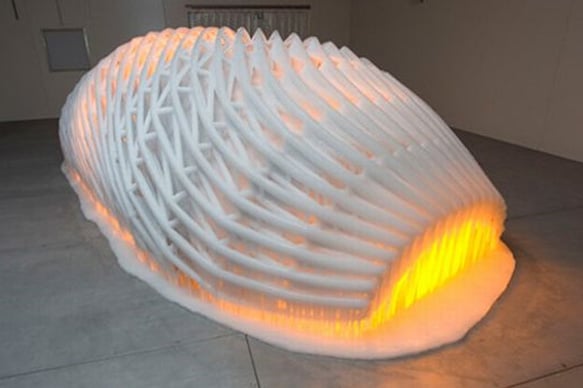
No not an alien creature or heating system for Eskimos, this is a BMW hydrogen-powered racecar hidden under ice, steel mesh and mirrors.
Aimed to show the connection between climate change and cars, the project took artist Eliasson 3 years to finish.
Big Al’s Versatile

Covered with over 272kg of plates and tiles, this mosaic masterpiece took owner Big A six months to create.
Naming the revamped 1971 Buick Versatile, Big Al says the car depicts the idea of opposites.
Japan’s BatVan

Obviously, the Japanese Batman is a little more out there than our regular Bruce Wayne, but A for effort!
The trail is deteriorating as it descends; cracks in the clay base creating fissures wide enough to swallow a wheel, while the rocks have quickly scaled up from softball-sized to bread loaves. Ahead of me, the new Isuzu D-Max picks its path carefully, its shiny flanks now dulling under a first coating of dust.
The trail never gets gnarly enough to require low-range, but flexes just enough attitude to keep SUVs out as it levels off on the valley floor of the Tarlo River National Park in the NSW southern tablelands, and leads us to a causeway across the gentle flow of the river itself.
It occurs to me that if we perhaps had a couple of mountain bikes in the trays and a few kids grubbing up the rear seats of these dual-cabs, we’d actually be using them in the way their makers intended, and realising the buyer aspirations that are obviously fuelling the popularity of this segment. Yes, 4×4 utes are heavily compromised on-road in terms of dynamics, NVH, and pretty much any other metric you want to throw in their direction.
And yes, their leaf-sprung rear ends and drum brakes appear cynical, low-cost throwbacks to a bygone era. But that’s not deterring the tens of thousands of private buyers each year who seem happy to accept this trade-off for the versatility and adventure potential they offer. How many actually use them like this? Doesn’t matter. Knowing they can is what counts.
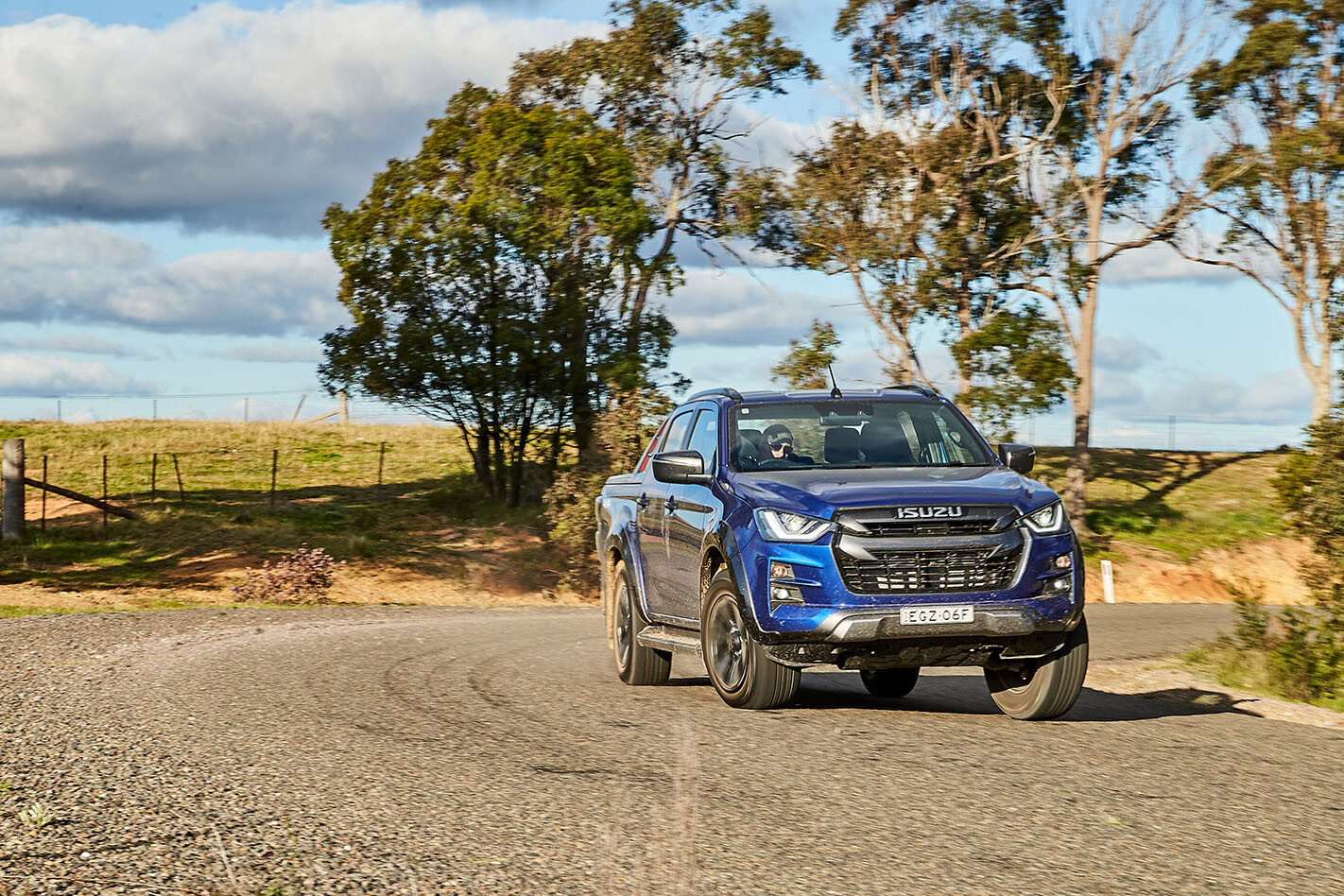
This demand from private buyers to use their dual-cab utes as family trucksters partly explains why Isuzu has pitched its new D-Max further upmarket than it previously attempted. If you run an eye over our Marketplace page each month, you’ll know that the outgoing D-Max was regularly just outside the top 10 best sellers, trading not on sophistication or a polished driving experience, but more on value, a reputation for rugged reliability, a six-year warranty, affordable servicing schedule, and keen driveaway pricing.
This new model (which Mazda offers repackaged as its new BT-50) aims to retain the nameplate virtues, but moves more upmarket not just in cabin presentation, but significantly, in safety and convenience equipment. Here in top-spec (auto-only) X-Terrain spec it lists for $62,990, a decent chunk above the previous $55K flagship LS-T. Yet you can ignore this number for now, as the X-Terrain is currently being offered at a driveaway deal of $58,990; a figure some pundits suggest will become the regular price.
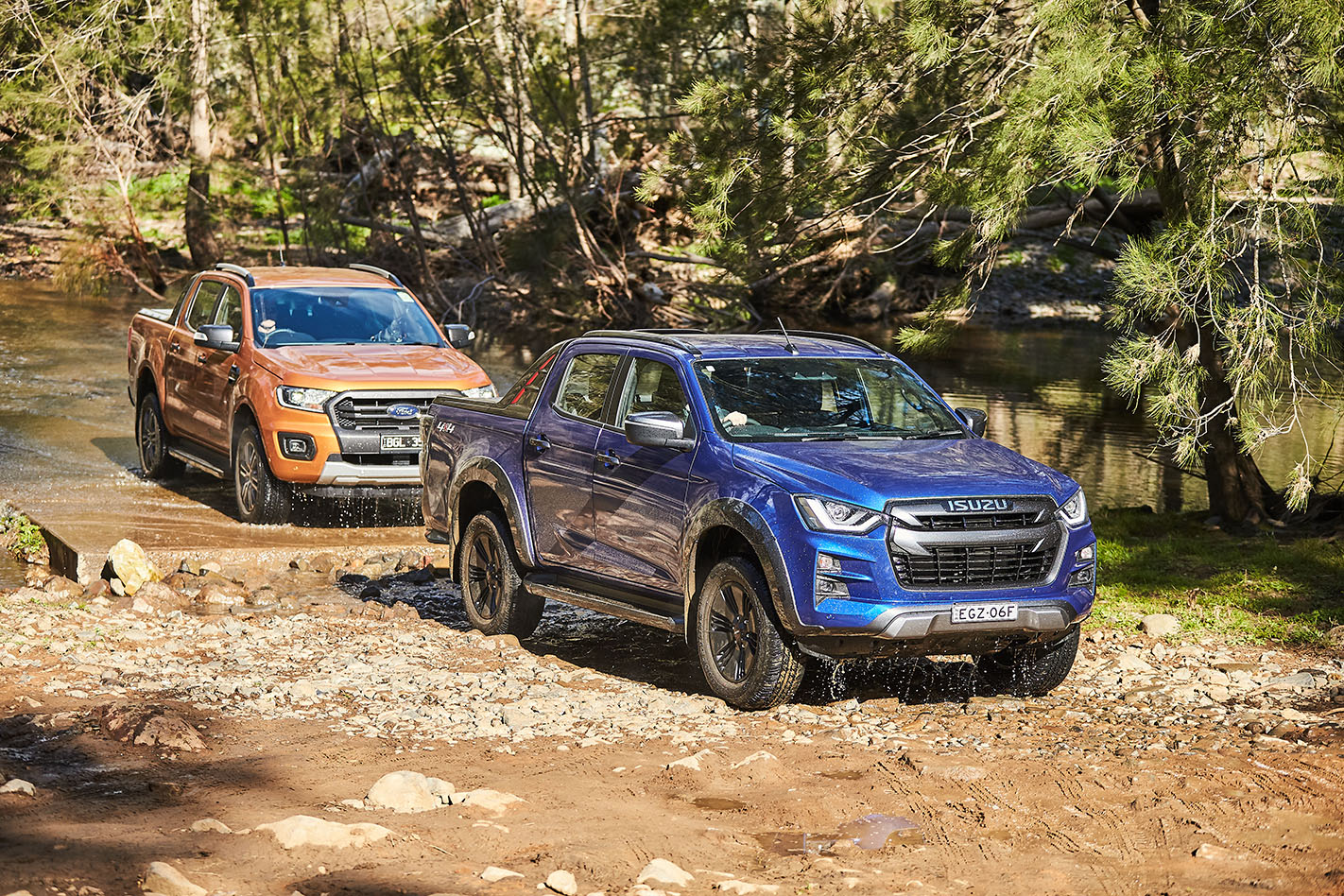
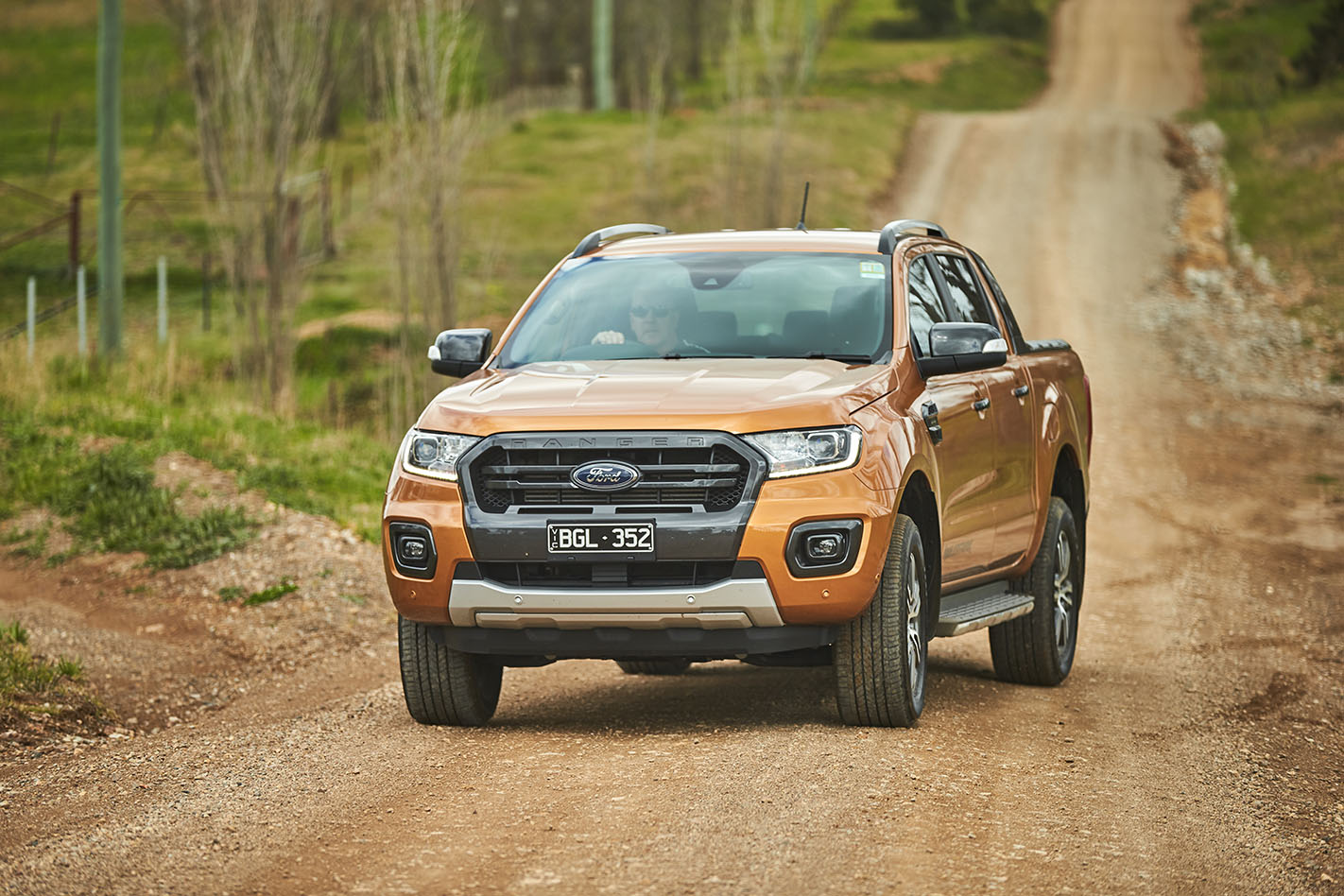
A quick caveat: we originally intended for this to be a three-rig shootout, with the inclusion of the recently updated (and top-selling) Toyota Hilux. Toyota wasn’t able to provide a tester, so we’ve lined up the flagship Isuzu against the other heavyweight in the up-spec ute class, the Ford Ranger Wildtrak, priced at $64,490 driveaway.
If you know your Ford utes, you’ll know that the long-serving in-line 3.2-litre turbo-diesel five-pot is offered right across the four main spec levels, with the more recent 2.0-litre twin-turbo diesel available as an alternative in XLT and Wildtrak, as well as range-topping Raptor.
That’s the engine we’ve gone for here, as it has a refinement advantage over the gravely five-pot, as well as on-paper power and torque superiority, despite the sizeable capacity disadvantage: 157kW/500Nm against the five’s 147kW/470Nm. It also has (count ’em) 10 ratios in its auto transmission; four more than both the transmission fitted to the five-pot, as well as its Isuzu rival here. As it turns out, that’s probably two more than it needs, but we’ll get into that shortly.
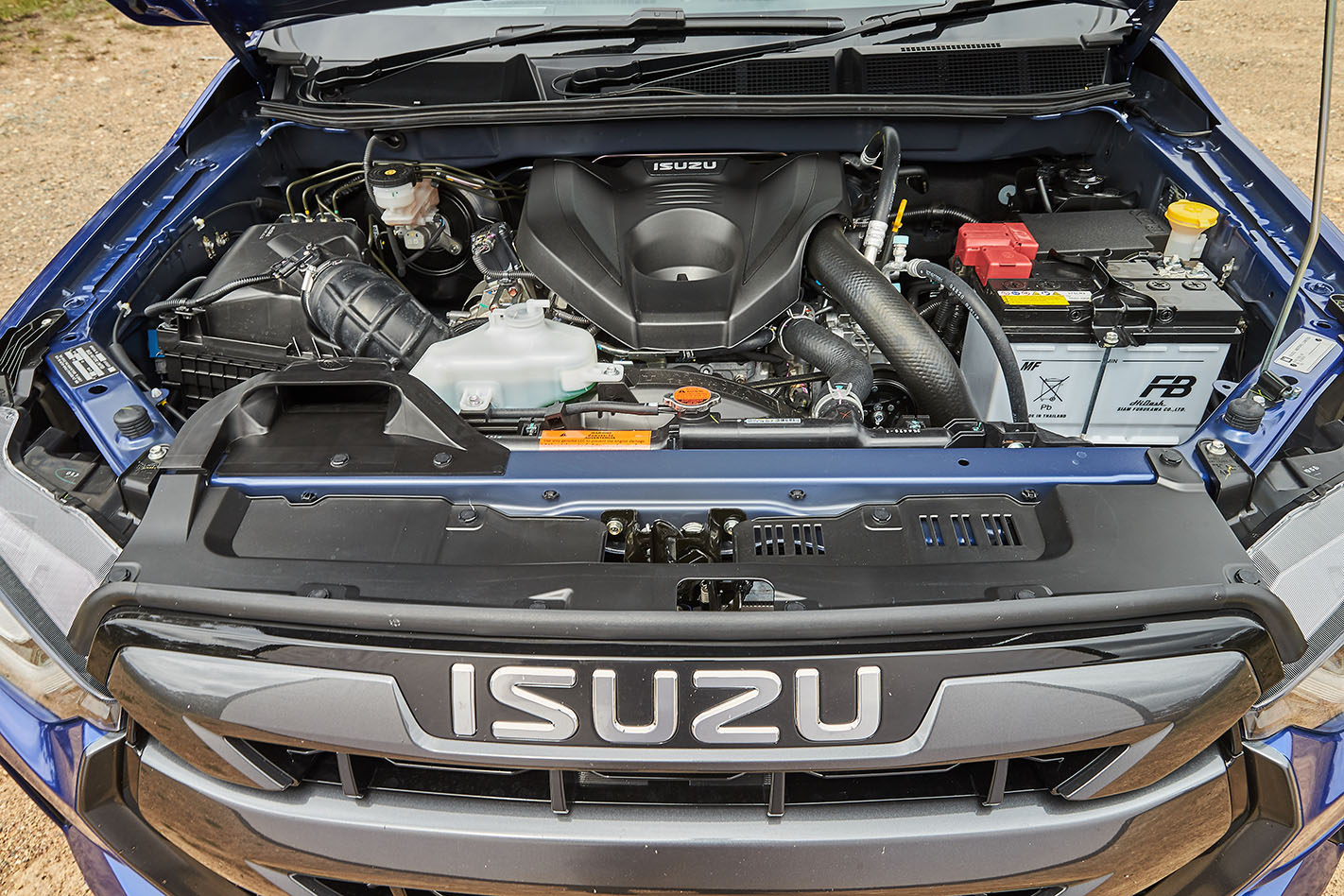
As for the engine in the D-Max, the new 4JJ3-TCX is an evolution of the old unit with mostly new bits, rather than a clean-sheet design. (See sidebar, left.) Its peaks of 140kW and 450Nm are gains of 10kW and 20Nm respectively; but still well short of what Ranger delivers with a litre less squeeze space in its four pots.
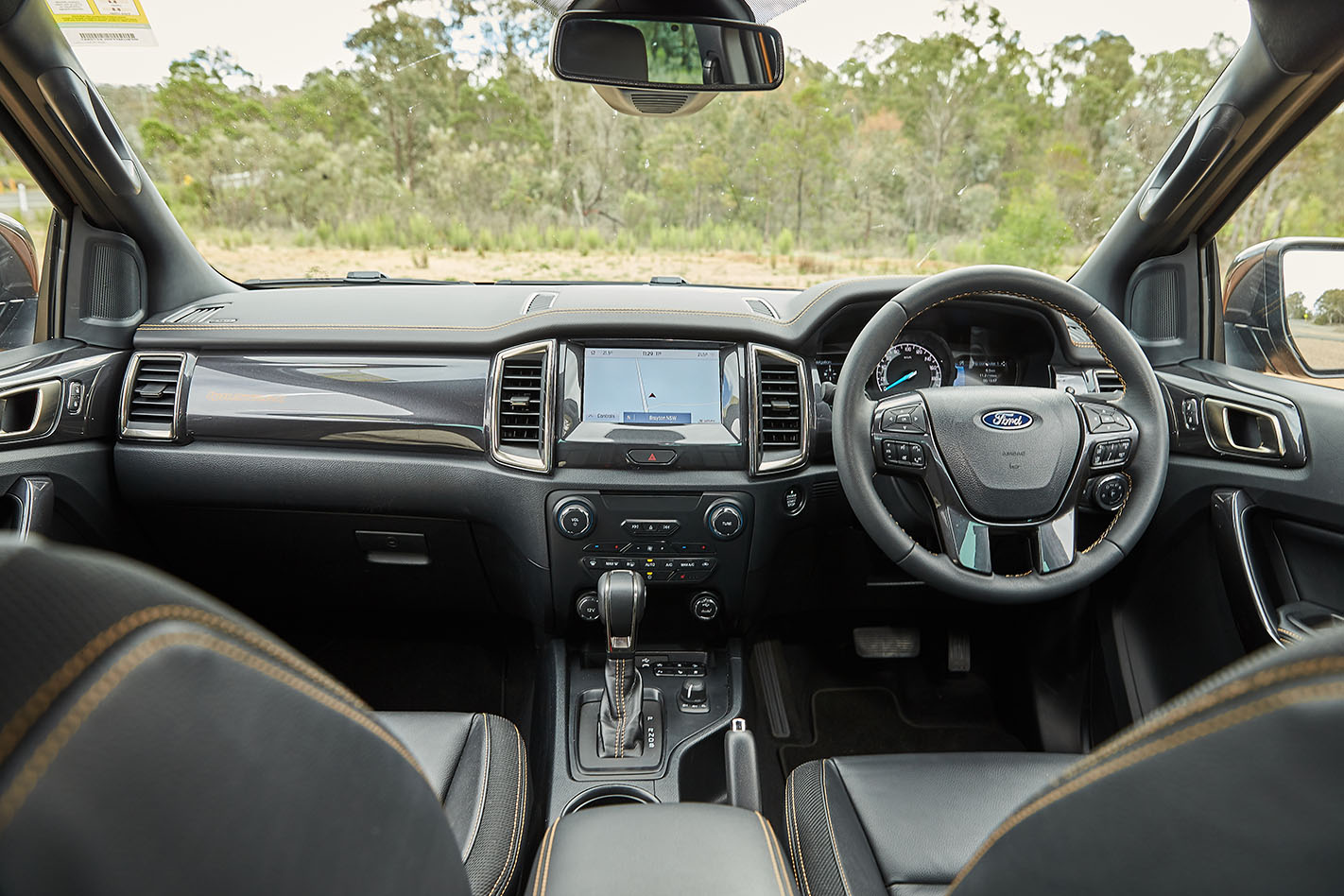
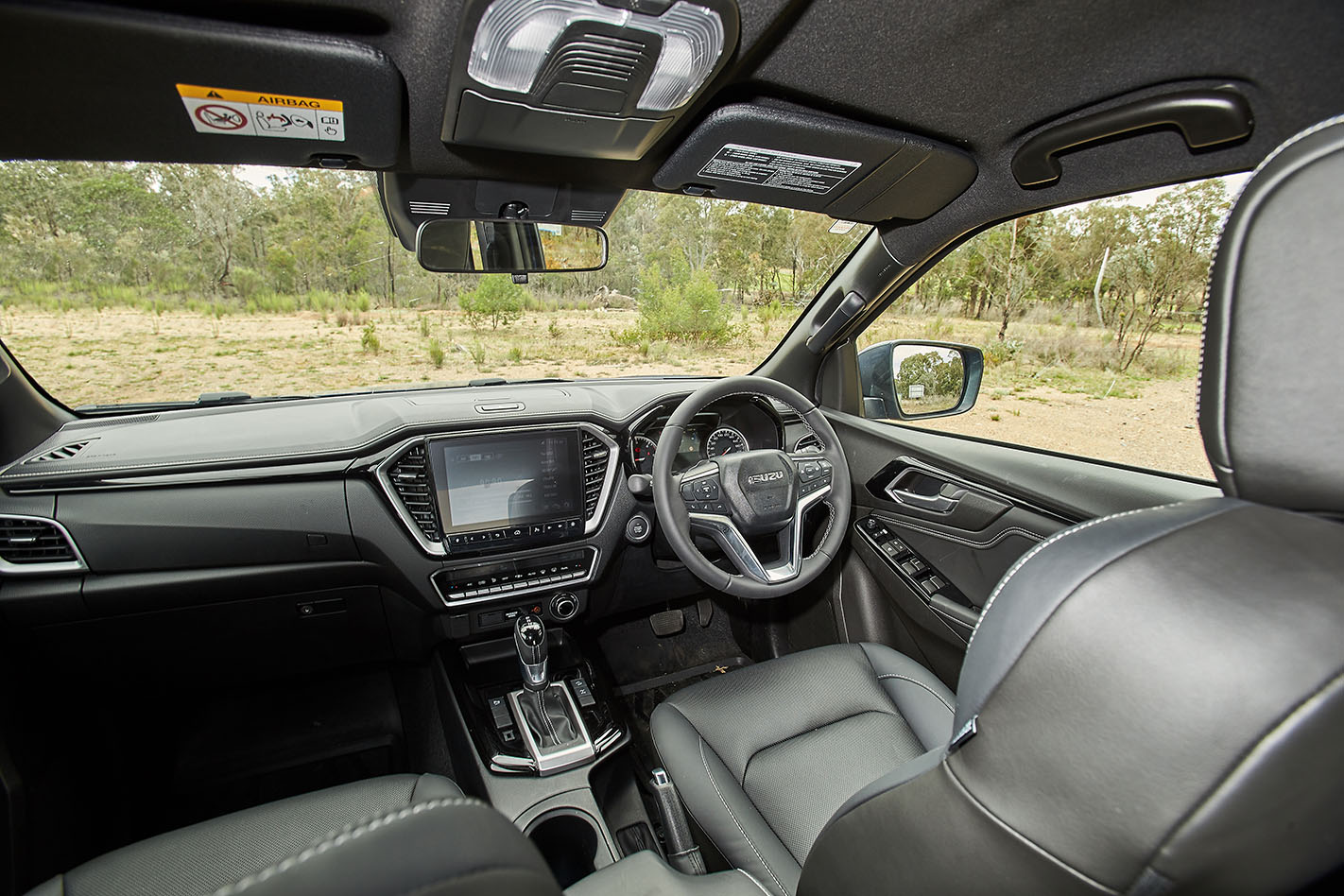
But clearly this battle is about much more than good old-fashioned grunt. The buying process now involves issues of family safety; suitability for the better half to use the rig for the school run, and keeping the kids happy in the second row. And here the D-Max, by virtue of its newness, grabs an early upper hand. Its dash presentation has an aesthetic that looks a generation ahead of Ranger, because it is.
The instruments, HVAC design and 9.0-inch multimedia screen all look of the moment; whereas the Ford’s smaller 8.0-inch screen and basic HVAC panel look dated by comparison, with the CD slot above confirming that this layout was conceived back when Spotify was to flick mud on the back of your mate’s shirt.
The D-Max’s wheel, too, offers adjustment for both height and reach (the luxury!) compared to the height-only adjustment in the Ranger, making an optimum driving position simple to achieve. And while the Ranger received updates that have helped keep it contemporary – like lane-keep assist and radar cruise – it can’t match the sophistication of the D-Max.
Isuzu’s AEB system, for example, uses twin 3D cameras mounted in the windscreen which enables the tech to more precisely detect vehicles, pedestrians, and cyclists, or tell if you’re about to turn across traffic in front of an oncoming car. Lane-keep assist, blind-spot monitoring and speed-sign recognition (linked to the radar cruise) all feature, and there are now eight airbags, including a first-in-class centre bag between the front occupants. In the Wildtrak, you’ll do without rear cross-traffic alert, blind-spot monitoring, or a 360-degree camera.
But it’s not all a clean-sweep for D-Max. The Ranger’s seats are more shapely, less slippery, and provide a bit more underthigh support than those in the D-Max. The Ford also puts a USB port up in the camera housing ahead of the rear view mirror, allowing you to connect a dash cam without an untidy cable dangling down to the lower console area. And the Isuzu’s up/down buttons for audio volume, instead of a simple knob, seem put there purely to irritate you.
In the back, there’s not much to split them in terms of leg, shoulder and headroom. D-Max provides air vents, a 12v plug, decent-sized door bins and a flip-down armrest with cupholders; all matched by Ranger.
In terms of load ability in the respective trays, not much to split them here although the Ranger handily provides a 12v power outlet in the back, missing from the D-Max. Also, the roller shutter on the Wildtrak can be operated via remote control; the D-Max’s roller shutter is manual, and not as slick in operation. But the wheelarches of both do intrude more than would seem ideal for a load hauler.
If you’re serious about using your dual-cab for agriculture or construction, where you need to have a pallet of materials forklifted straight into the tray, the old but still excellent VW Amarok remains your go-to choice. And if you plan to tow, you’ll find the tow bar standard on Ranger, versus a $1164 option on D-Max.
Okay, so despite a few handy counter-jabs, the Wildtrak has to pretty much tap out in submission to the D-Max when it comes to cabin glitz, and gleam of the spec list. But fact is, there’s little wrong with the actual functionality of the Ranger’s cabin, nor its equipment list, and the moment you’re on the move in each of them, well, the sheen of the D-Max suddenly loses a little of the lustre.
Yes, it’s a vast improvement on the old model, but the inescapable fact is the Ranger holds a tangible advantage in just about every aspect of the driving experience. As we claw our way up and out of the Tarlo’s firetrail, it’s a chance to focus on just how much better the Ranger suppresses its diesel soundtrack.
From idle right into the meat of its torque curve, the little 2.0-litre twin-turbo is a way more polished and willing engine, and under load, its auto’s shifts are quick and syrupy smooth. The D-Max is coarser, more vocal and slower to spin up. But thankfully it remains very much a slogger, so really doesn’t need to work hard in normal driving.
Its max torque output of 450Nm is available from 1600rpm to 2600rpm, which is pretty much its optimum operating zone. Check the actual torque curve and we see 400Nm is on tap between 1400rpm and 3250rpm, which is why it mostly feels grunty enough. Toward 4000rpm, though, the louder D-Max sends an audible message that it’s not relishing the workload, and becomes borderline ornery up near max revs.
The more attenuated Ford always sounds industrious and happy to be getting on with the job; there’s less clatter in the step-off phase, a smoother transition into the midrange, and a way more pleasant demeanour when you work it hard. It’s also a little quicker to 100km/h than the D-Max: 9.7sec against 10.2sec for the Isuzu.
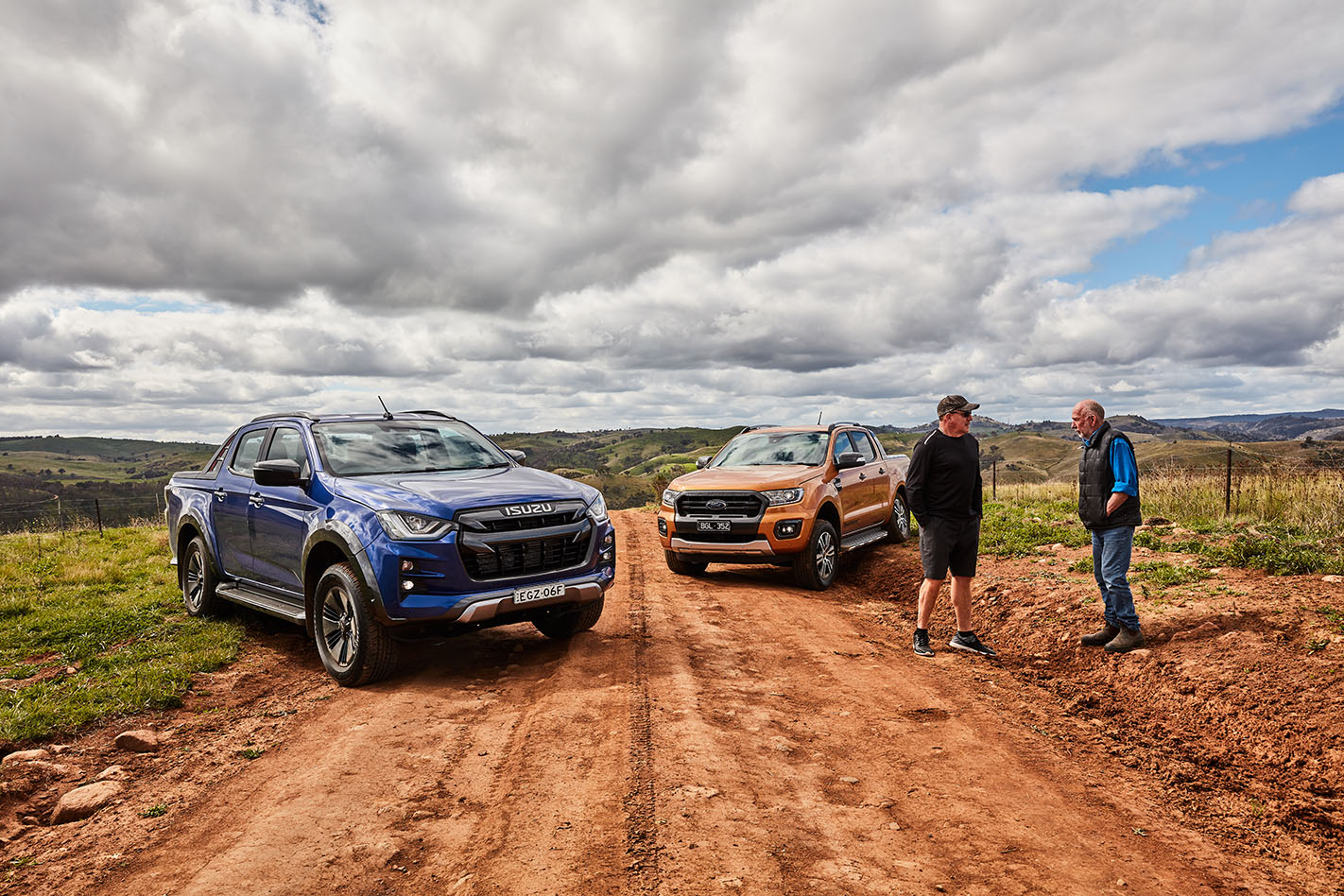
As for off-road ability, the new D-Max is now fitted with a locking rear diff (limited to 28km/h in low-range), as well as a more advanced tune for the off-road traction control. The only spot we were able to test both cars was a deeply rutted and greasy climb linking the lower part of the Swallowtail firetrail with the upper section, and both rigs were defeated as their (identical) Bridgestone Duelers spun helplessly in the slime.
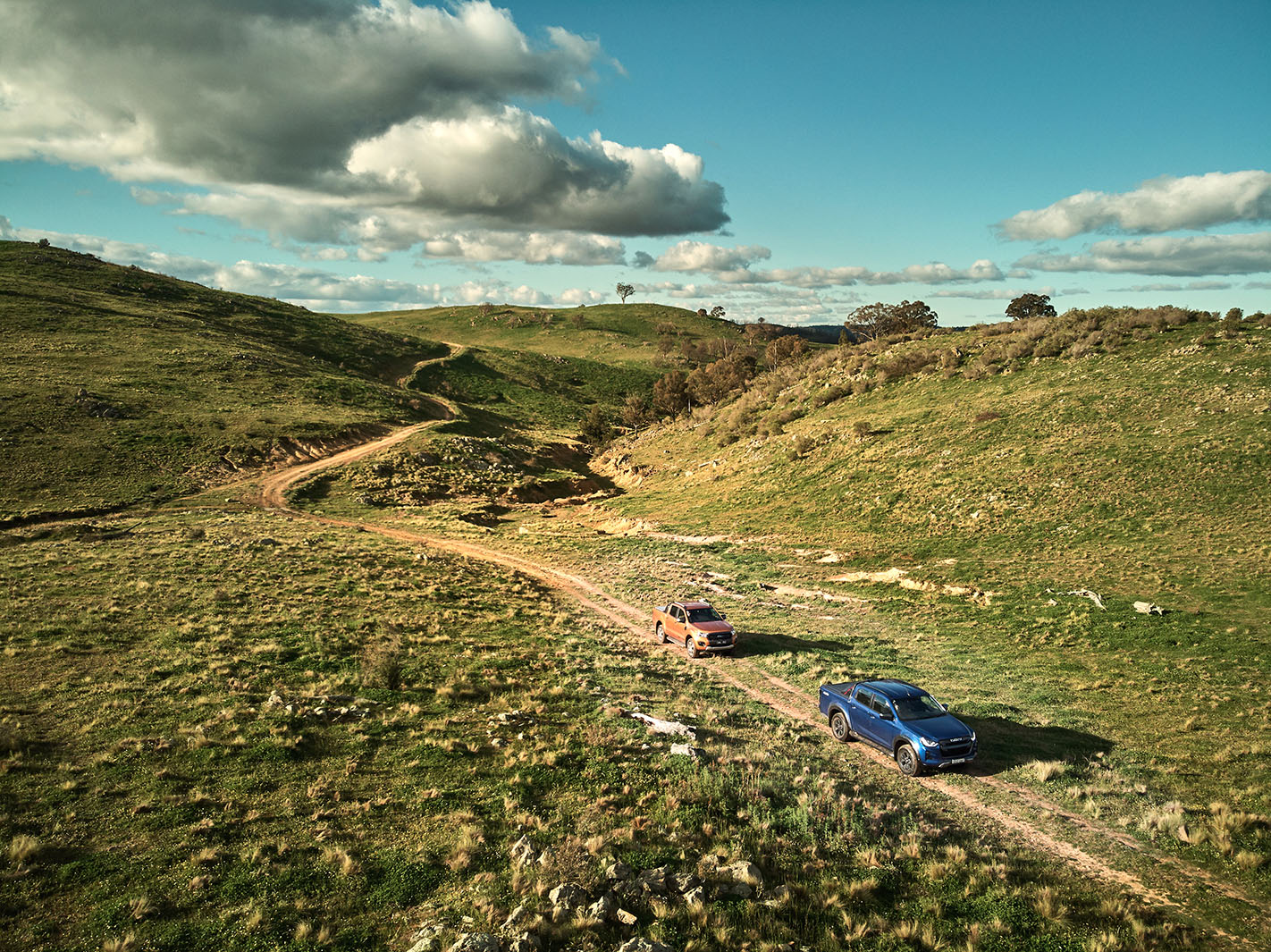
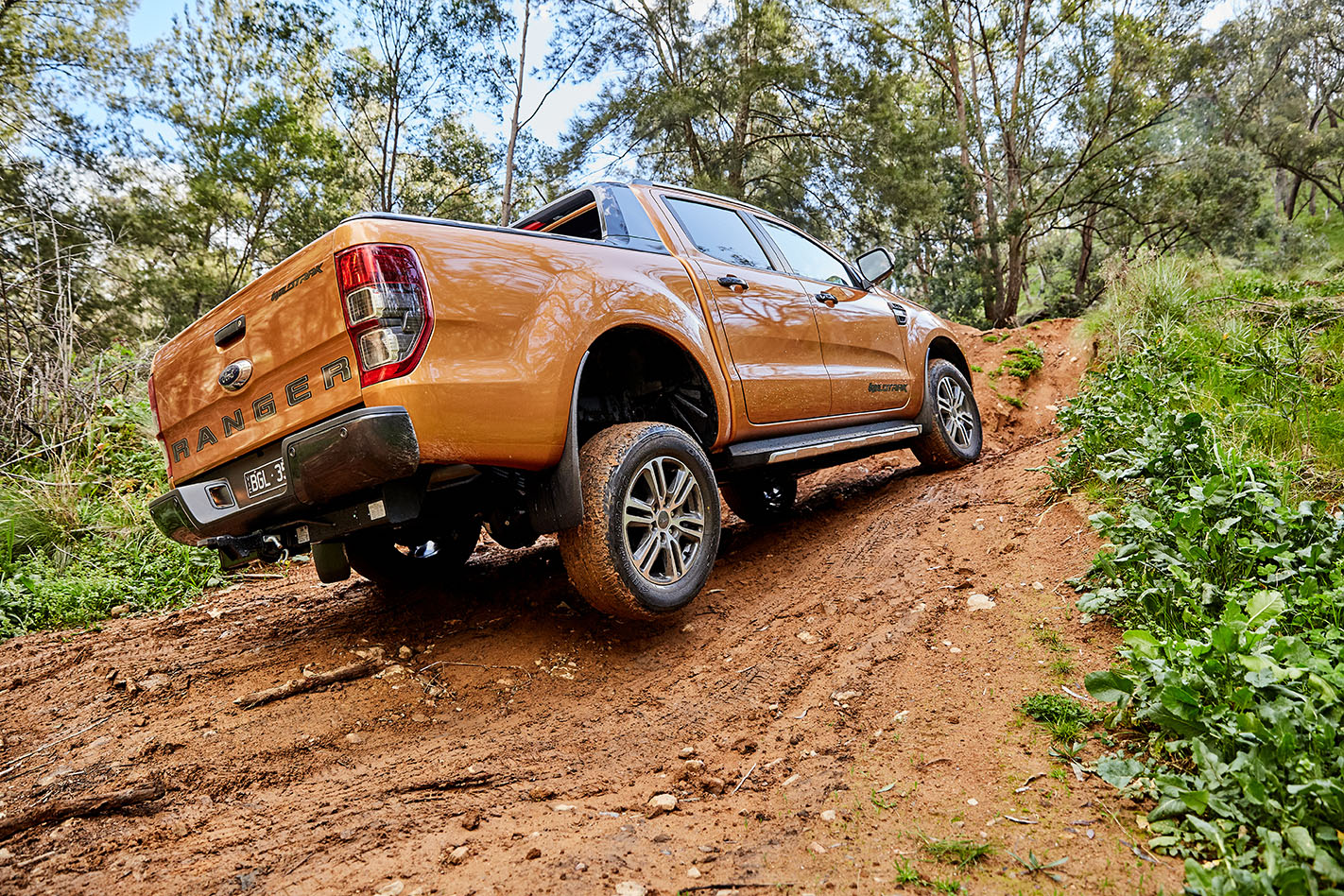
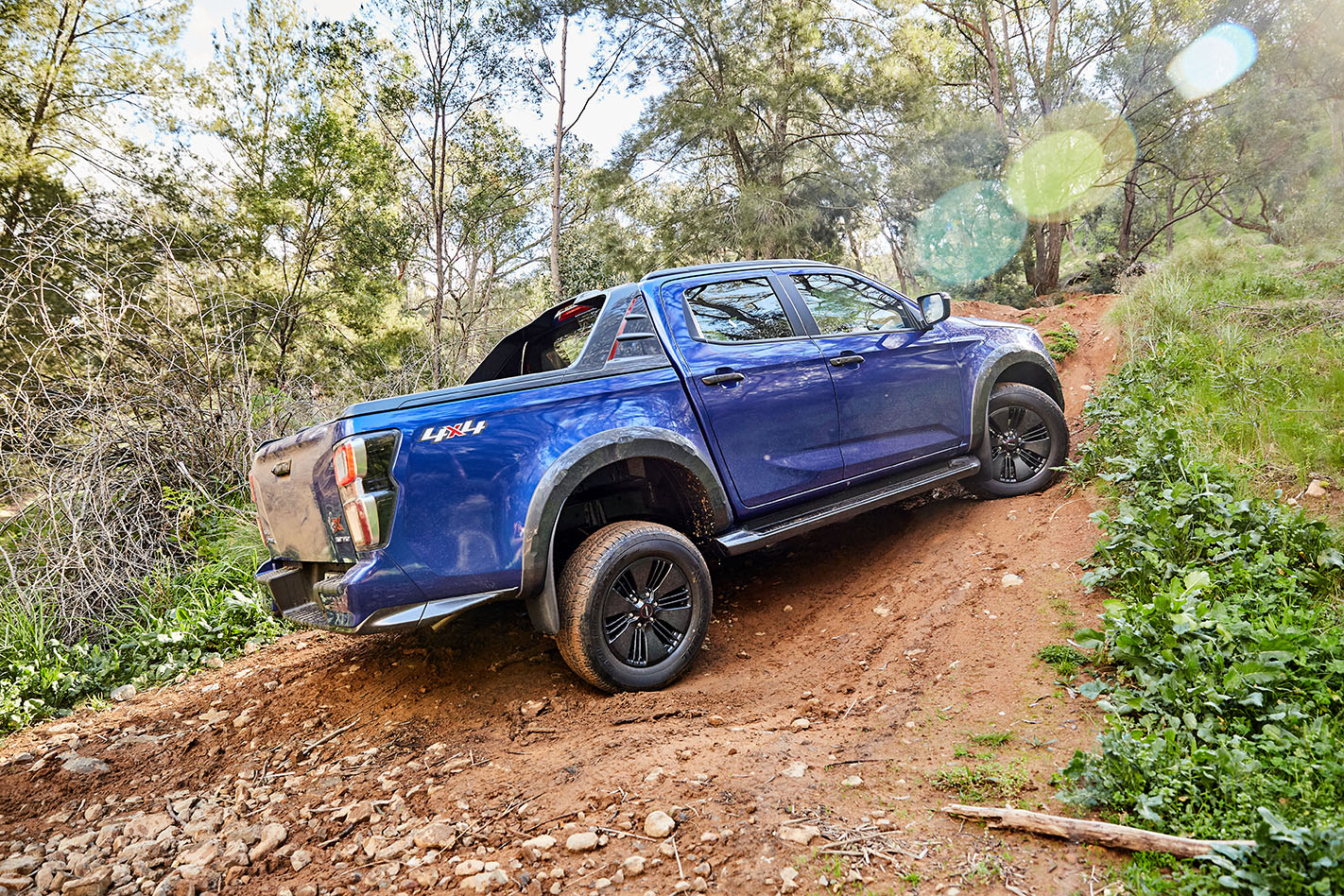
But, improved ground clearance, smaller front and rear overhangs, and decent rear-end articulation do help improve the D-Max off-road. Its wading depth is also improved, now up to 800mm thanks to a redesigned air intake. But it’s worth noting that engaging the D-Max’s rear diff lock also turns off your traction control; not the case in Ranger. Bottom line: both will probably get you through similarly tough terrain; for more extreme work, a change of tyres and suspension lift kit will be needed.
Back on the bitumen, on flowing roads flanking the wind farm near the little town of Taralga, the Ranger takes it powertrain advantage, and doubles down with greater chassis sophistication, despite the advances made by the D-Max.
Isuzu ditched the previously hydraulically assisted steering rack for EPAS (which the Ranger adopted in 2015) so effort is light, and there’s a softness just off centre that makes D-Max feel relaxed at cruising speeds. That’s in contrast to the Ranger, which always feels more hyper-alert. But while the D-Max always provides a faithful sense of connection, it does requires nearly half a turn more from lock to lock, so there’s always greater inputs and arm-twirling needed at roundabouts and in urban cut ’n’ thrust compared to Ranger.
D-Max also features new suspension geometry up front, along with a thicker anti-roll bar, aimed at improving body control, but fact is it’s still no match for the Wildtrak. The Ford holds your chosen line with greater authority, and there’s a compliance in the spring and damper tune that allows the chassis to breathe with Aussie roads.
The Isuzu is stiffer, which delivers admirable body control on the smooth stuff, but makes it more prone to being kicked off line by mid-corner bumps. Shock news just in: Australia has a lot of mid-corner bumps. Over long stints, the D-Max can start to feel as though it’s in a near-constant state of mild agitation with typical B-roads, whereas the Ranger is just loping along, soaking up what’s thrown at it, cheerfully hoovering up the kays.
Granted, in this type of undulating terrain, the Ford’s 10-speed auto can occasionally lose the plot a little, sometimes clunking and hunting excessively for the optimum ratio. More finessing is needed for transmission calibration, and ultimately perhaps an acknowledgement that 10 ratios may be around two too many. But more broadly, the Ranger remains the appreciably better rural tourer.
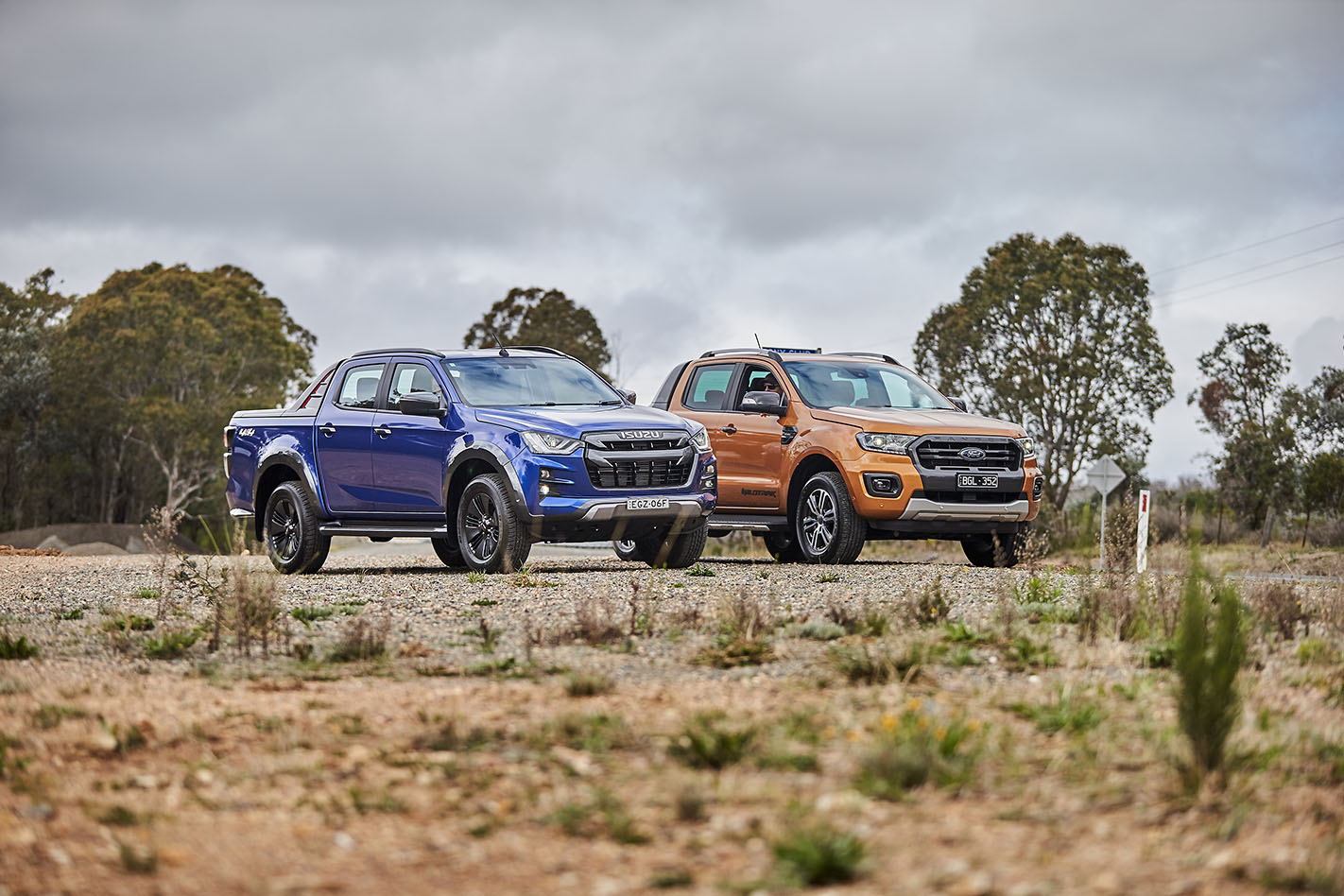
Ultimately, making a call between this pair boils down to where you place a higher priority. The D-Max has leapfrogged to top of this segment for safety, connectivity, driver assistance, and cabin design. The fact it holds a circa-$5500 price advantage over the Ranger Wildtrak is also significant. But the D-Max is also coming off a low base for powertrain refinement and chassis development, and despite the advances, this new model can’t quite overcome those joint hurdles to top the field in these areas.
The Ranger may have been around since 2011, but constant tweaks and upgrades have kept the old stager competitive, and it continues to nail the fundamentals in terms of overall comfort, refinement and drivability. Despite the higher price and lesser spec, we reckon that’s enough to give it a narrow nod here. So, as the sun finally drops below the horizon line, and I start the three-hour haul home towards Sydney’s north, it’s the Wildtrak I want to be in, which says plenty.
GRIST FOR MILL
Developed specifically for the Australian and Thai markets (the latter where the D-Max is built, and where it outsells Toyota HiLux and Ford Ranger) the Isuzu’s turbo-diesel four still displaces 3.0 litres from the same bore and stroke, but features a new block, head, pistons and fuel-injection system, among other extensive component changes. It’s cleaner, but bumps in both power and torque – 10kW/20Nm – are modest.
THREE THINGS OF NOTE IN THE FORD RANGER
- Ranger shows its age with smaller, lower resolution screen and a slot for those quaint old things called CDs. But good old-fashioned volume knob way superior to D Max’s button-fest.
- There are 10 ratios in Ranger’s auto, and it occasionally gets confused as to which one is optimum for road speed and gradient. In urban driving, though, it’s smooth and quick shifting.
- There’s now an app for Wildtrak called FordPass Connect that will help you locate it if you have a senior moment in a crowded carpark, as well as start it remotely, and provide ‘health alerts’.
THREE THINGS OF NOTE IN THE ISUZU D-MAX
- D-Max’s larger, hi-res screen wins the multimedia battle, but its sub-menus aren’t always intuitive, and you’ll need to constantly dig around to disable things like lane-keeping.
- Height and reach adjustment for the D-Max’s wheel gives it an advantage over Ranger’s height-only offering. Seats need more under-thigh support, and only driver’s is electric.
- Handy storage options include a lidded compartment in the dash top, separate dual-level gloveboxes, and lidded console bin. Cup holders also swallow an aluminium drink bottle.
FORD RANGER WILDTRAK SPECS
- Score: 7.5/10
- Price: $64,490 driveaway
- Engine: 4cyl, dohc, 16v, twin-turbo diesel
- Layout: front engine (north-south), all drive
- Capacity: 1996cc
- Power: 157kW @ 3750rpm
- Torque: 500Nm @ 1750-2000rpm
- Gearbox: 10-speed automatic
- Body: steel, 4 doors, 5 seats
- L/W/H/W–B: 5389/1850/1848/3220mm
- Track (F/R): 1560/1569mm
- Weight: 2200kg
- Payload: 1136kg
- Fuel/tank: diesel/80 litres
- Economy: 11.5L/100km (test average)
- Front suspension: struts, A-arms, coil springs, anti-roll bar
- Rear suspension: leaf springs, dampers, anti-roll bar
- Steering: electric rack-and-pinion
- Turn circle: 12.7m (3.2 turns lock-to-lock)
- Front brakes: ventilated discs (310mm)
- Rear brakes: drums (295mm)
- Tyres: Bridgestone Dueler HT
- Tyre size: 265/60 R18
- ANCAP rating: 5 stars
- Warranty: 5yr/unlimited km.
- Service interval: 12 months/15,000km.
- Glass’s 3-year resale: 54%
- Budget Direct insurance: $1130.
ISUZU D-MAX X-TERRAIN SPECS
- Score: 7.0/10
- Price: $58,990 driveaway
- Engine: 4cyl, dohc, 16v, turbo diesel
- Layout: front engine (north-south), all drive
- Capacity: 2999cc
- Power: 140kW @ 3600rpm
- Torque: 450Nm @ 1600-2600rpm
- Gearbox: 6-speed automatic
- Body: steel, 4 doors, 5 seats
- L/W/H/W-B: 5280/1880/1810/3125mm
- Track (F/R): 1570/1570mm
- Weight: 2130kg
- Payload: 970kg
- Fuel/tank: diesel/76 litres
- Economy: 11.2L/100km (test average)
- Front suspension: struts, A-arms, coil springs, anti-roll bar
- Rear suspension: leaf springs, dampers, anti-roll bar
- Steering: electric rack-and-pinion
- Turn circle: 12.5m (3.8 turns lock-to-lock)
- Front brakes: ventilated discs (320mm)
- Rear brakes: drums (295mm)
- Tyres: Bridgestone Dueler HT
- Tyre size: 265/60 R18
- ANCAP rating: 5 stars
- Warranty: 6yr/unlimited km.
- Service interval: 12 months/15,000km.
- Glass’s 3-year resale: 55%.
- AAMI Insurance: $1224.
Supercars has lost its marquee event, the Adelaide 500, after the South Australian government announced it would withdraw its support.
It’s a blow to the series, but with slumping attendances and the impact of COVID-19 on logistics and planning for next year, the decision comes as little surprise.
Initially, the event – latterly known as the Superloop 500 – was to be pushed to a late-season spot on the 2021 calendar.
Events South Australia executive director Hitaf Rasheed confirmed in September that the Superloop Adelaide 500 would not take place in its traditional time slot of late February/early March in 2021.
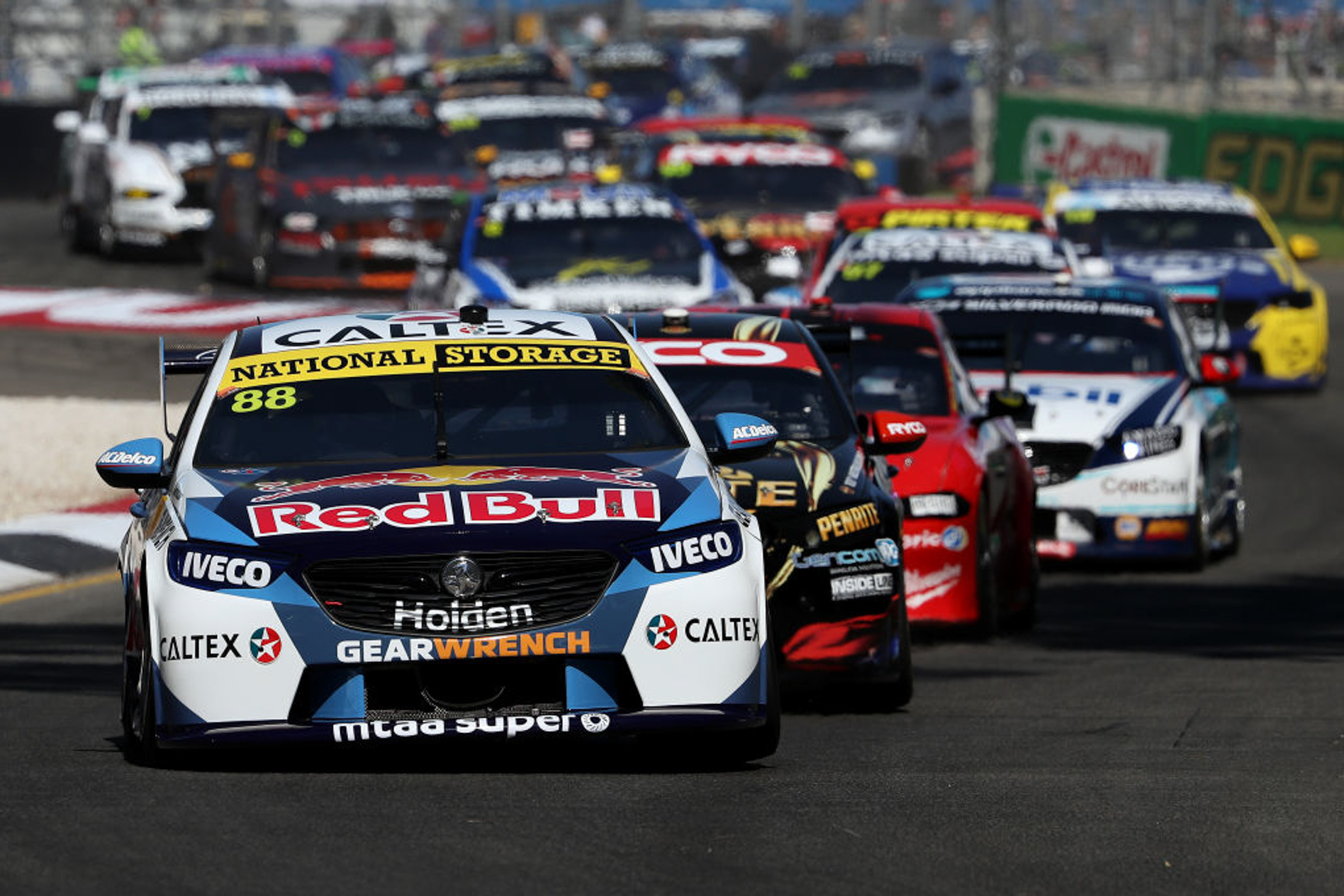
“Our world-class street circuit requires significant planning and temporary infrastructure to operate successfully. Our event-build is one of the largest in the state and comes with considerable risk and reward,” she said.
Now, the South Australian government has withdrawn its support for the race for next year, and will not seek to renew its contract to run the event going forward.
“The South Australian Government has communicated its decision to no longer conduct the Adelaide 500,” read a short statement from Supercars.
“Supercars have enjoyed racing at this event since 1999. We regret that the South Australian Government has decided to cease holding this event.
Supercars are looking forward to providing our fans with an exciting 2021 Championship across Australia and New Zealand. If at any time in the future, the South Australian Government decides to recommence the Adelaide 500, Supercars would be delighted to be there.”
South Australian Tourism chief executive Rodney Harrex confirmed the news.
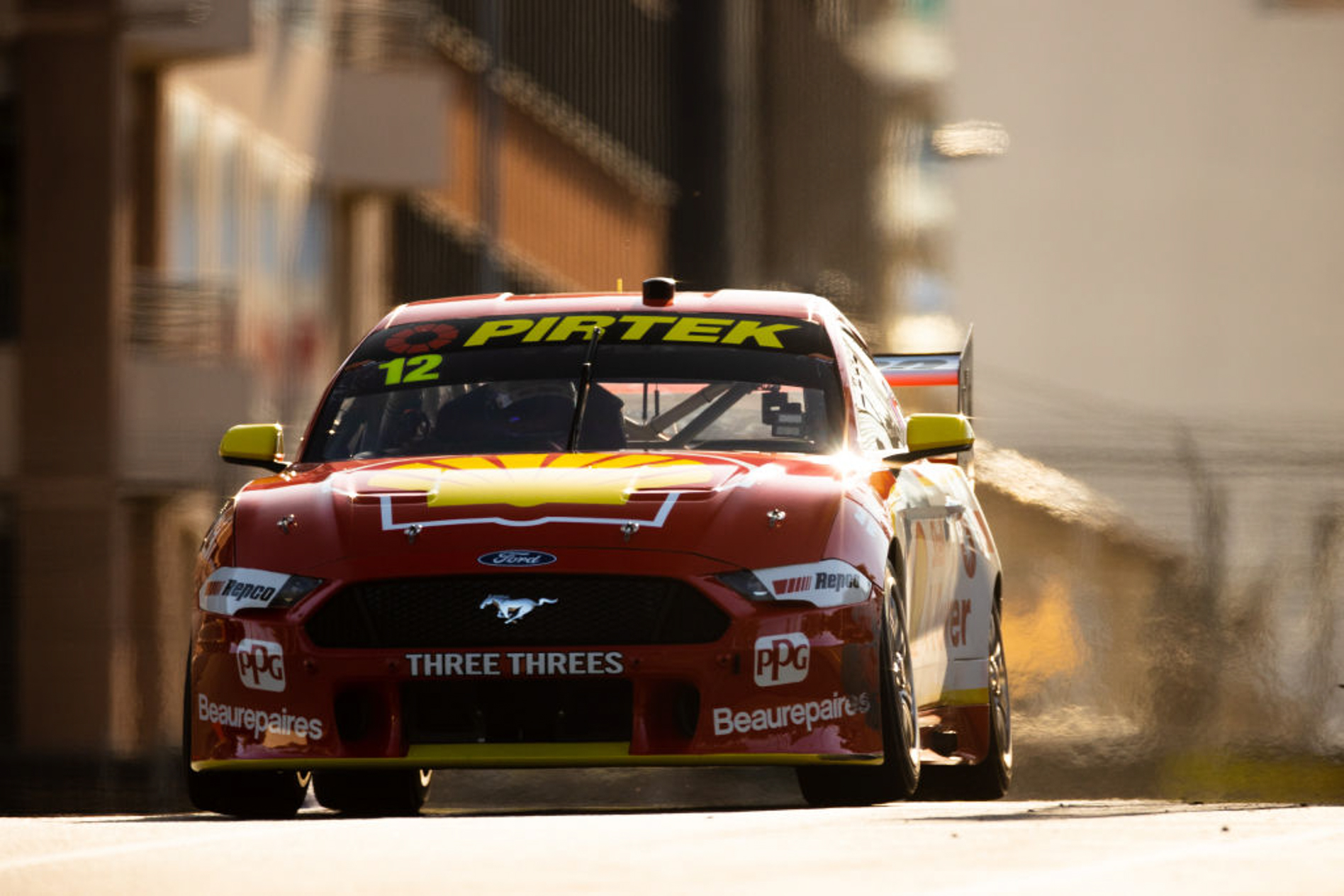
“We have been in discussions with Supercars for the majority of this year, working through possible scenarios,” he said in a statement. “At the end of the day, with the current set of circumstances, we are not in a position to deliver a sustainable, successful future for the event for next year and beyond.”
The track was first conceived for Formula 1, hosting the series for ten years from 1985 before it moved to Melbourne.
Backed by state governments as a tourist revenue raiser, a shortened version of the Adelaide circuit was revived, and it played host to the V8 Supercars – now Supercars – from 1999 until 2020.
However, with the opening of The Bend, a large motorsport venue about an hour away from Adelaide, the government will switch its motorsport dollars from the infrastructure-heavy street track to the purpose-built facility in Tailem Bend.
““We have a terrific world-class motor racing facility at The Bend. We are very fortunate to have had significant private investment in that circuit, and we already know the motoring faithful are keen to support ongoing races there,” confirmed Harrex.
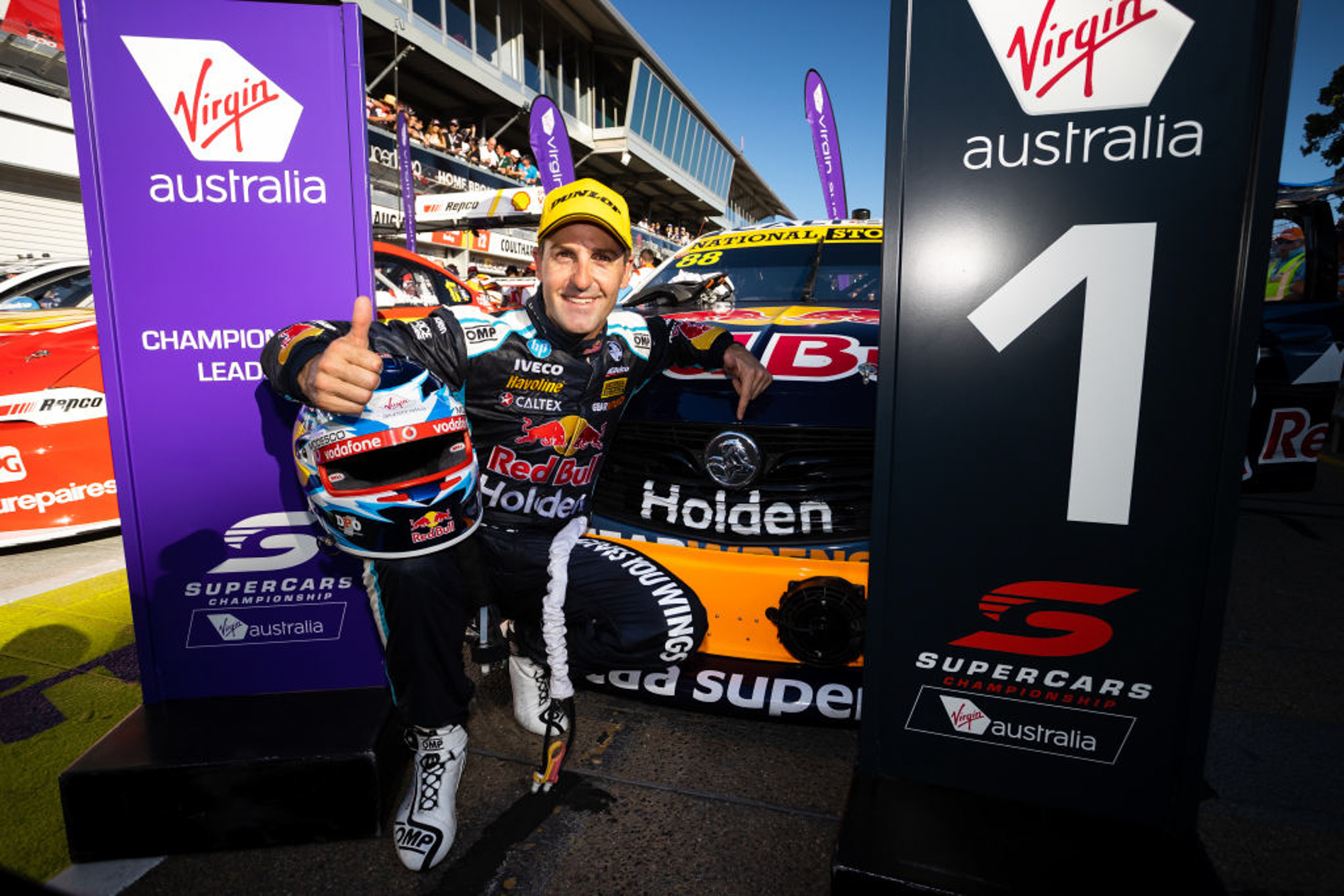
The Adelaide circuit also played host to a round of the American Le Mans series on New Year’s Eve of 2000.
Known as the Race of a Thousand Years, it was stopped two hours early and 250km short of its 1000km distance.
Kelly Racing is selling one of its Ford Mustangs… but this beast is not going anywhere fast.
That’s because it’s the racing simulator the team used for a tilt at the sport’s online All Stars Eseries.
The online competition took centre stage this year during a COVID enforced shutdown, seeing the Supercars squad take to iRacing for battle.
It was a hard-fought series that allowed drivers like Max Verstappen to get involved while Shane Van Gisbergen – a keen sim racer – took the top spot.
Rick Kelly – who has just announced his retirement from full-time driving after 19 years, a championship and two Bathurst wins – took things pretty easily as the series kicked off, using an entry-level Logitech set-up teamed with a camp chair and a telly to take on his rivals.
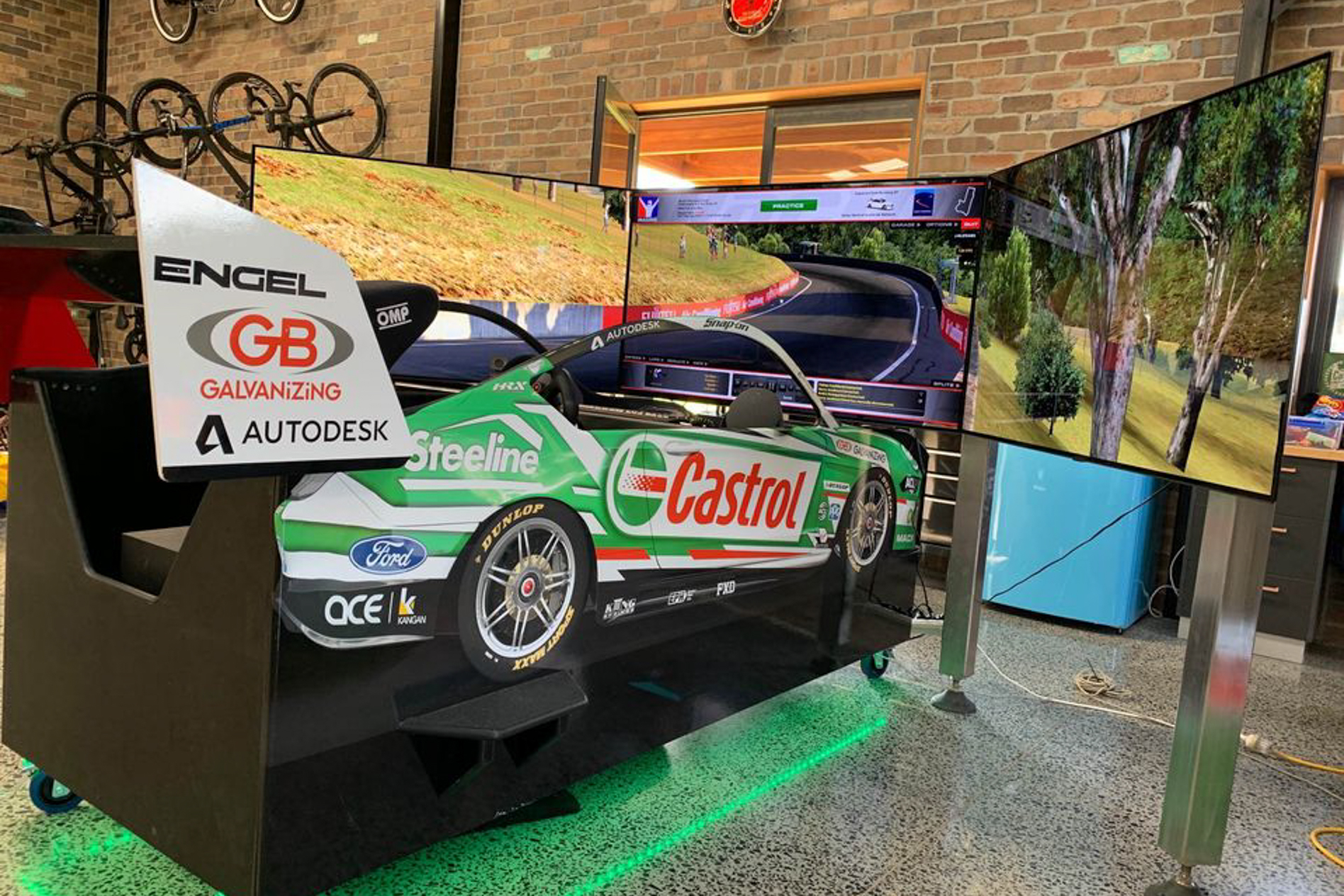
But rest assured, this set-up is a lot more advanced. As you can tell from the photos and price, set at $24,600, Rick Kelly’s machine is a fairly high-end setup.
It starts with the gold-standard of three screens for a more immersive visual experience, while it’s also kitted out with SimWorx products that include a load-cell brake pedal for a more realistic feel, as well as a direct drive steering wheel box fitted with a proper Supercars wheel and buttons, sequential shifter and a custom-made frame.
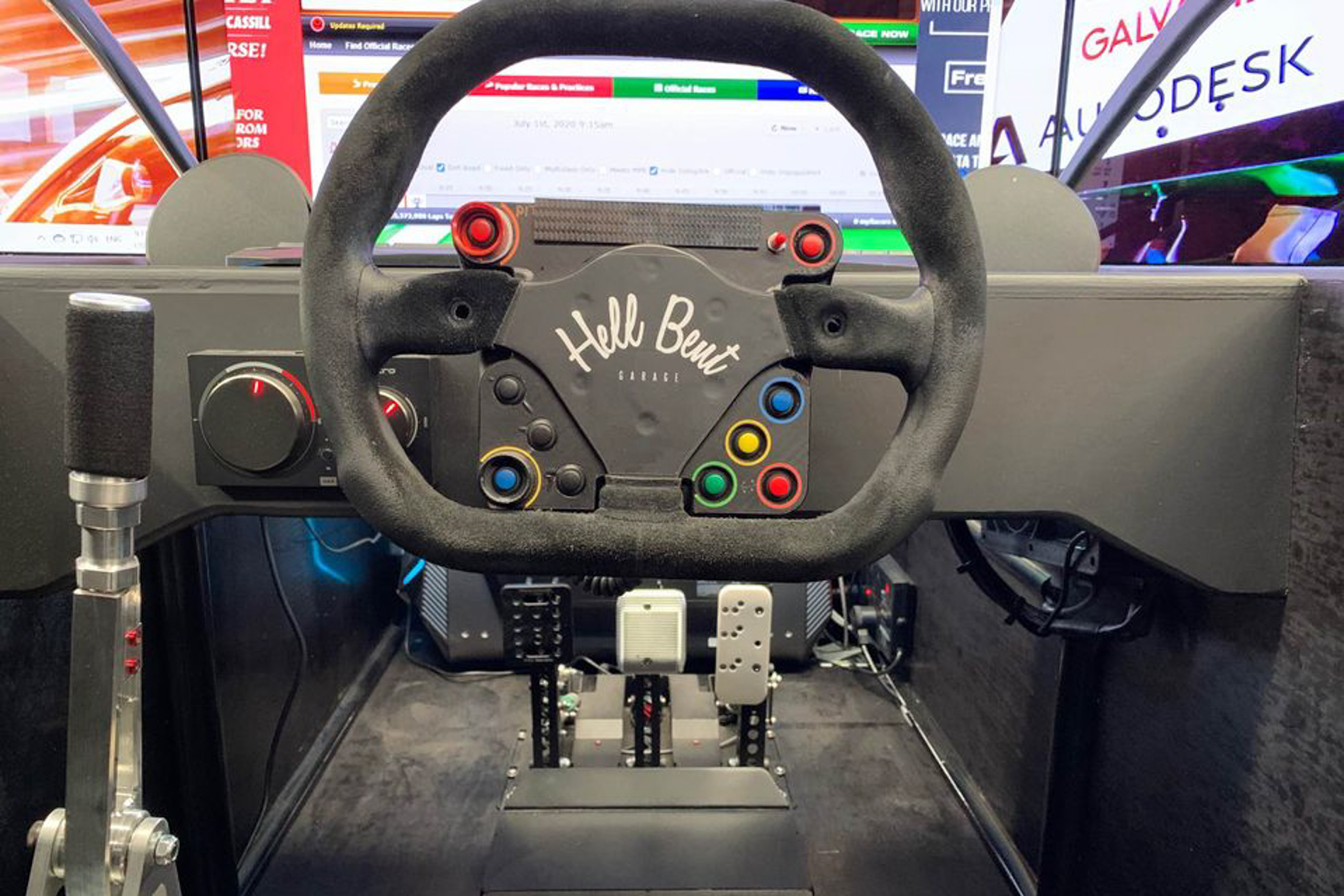
Among the race-ready gear is a high-end gaming PC, audio system and an OMP bucket seat on sliding rails – crucial given how much torque the steering wheel can produce.
And it’s all contained within a custom Mustang silhouette box designed with the 2020 car’s livery and complete with neon underbody lighting, while the whole thing rolls on castors if you need to wheel it around your racing cave.
While the price seems high, the setup should come in close to buying each individual component yourself with the added some provenance of it being built by Rick Kelly – not least because of his appearance as MOTOR’s tame racing driver at the 2019 edition of Performance Car of the Year. Ahem.
If you follow the professional Supercar racer on YouTube you’ll know he’s keen on the tools. There he documented the entire build process on video, with input from teammate Andre Heimgartner along the way.
Of course, fitting it in your house might be hard, given it stretches three 55-inch screens wide and the box ‘Mustang’ sports a big wing. But it’s worth a try.
So, interested? You can check out the listing yourself on Facebook here.
Skoda has given its Kodiaq large SUV and Karoq mid-sized SUV ranges a light refresh for the 2021 model year with extra equipment and technology added across the ranges, along with an increase to pricing.
In the case of its largest SUV, the entry-level Skoda Kodiaq 132TSI gets the latest Skoda MIB 3 information and entertainment system complete with a 9.2-inch touchscreen, wireless charging and Apple CarPlay now included as standard.
In addition to the front keyless opening doors, the rears now get the feature for increased convenience and a light aesthetic refresh comes in the form of new-design ‘Crater’ 19-inch alloy wheels in matte black and a flat-bottomed steering wheel with paddle shifters.
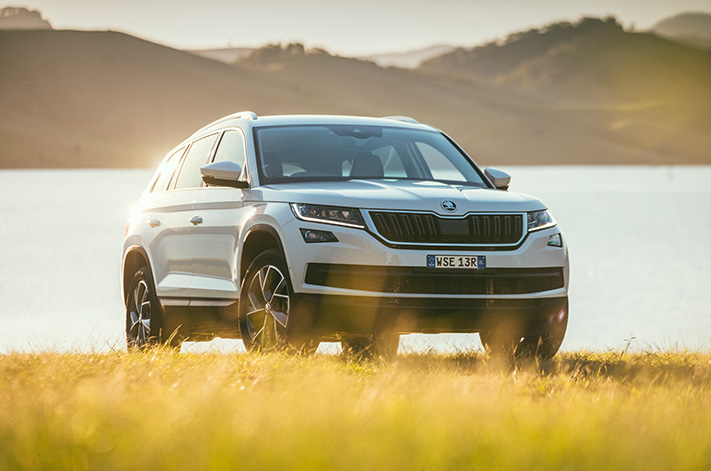
The extra kit has lifted the entry price to $46,390 before on-road costs, representing a $1500 hike over the previous price.
Customers of the mid-range 132TSI Sportline gain a new Super Sport leather steering wheel and the option to upgrade the synthetic suede seat upholstery to leather with ventilation in the front for $1900.
Its price creeps up by $1400 to $50,290.
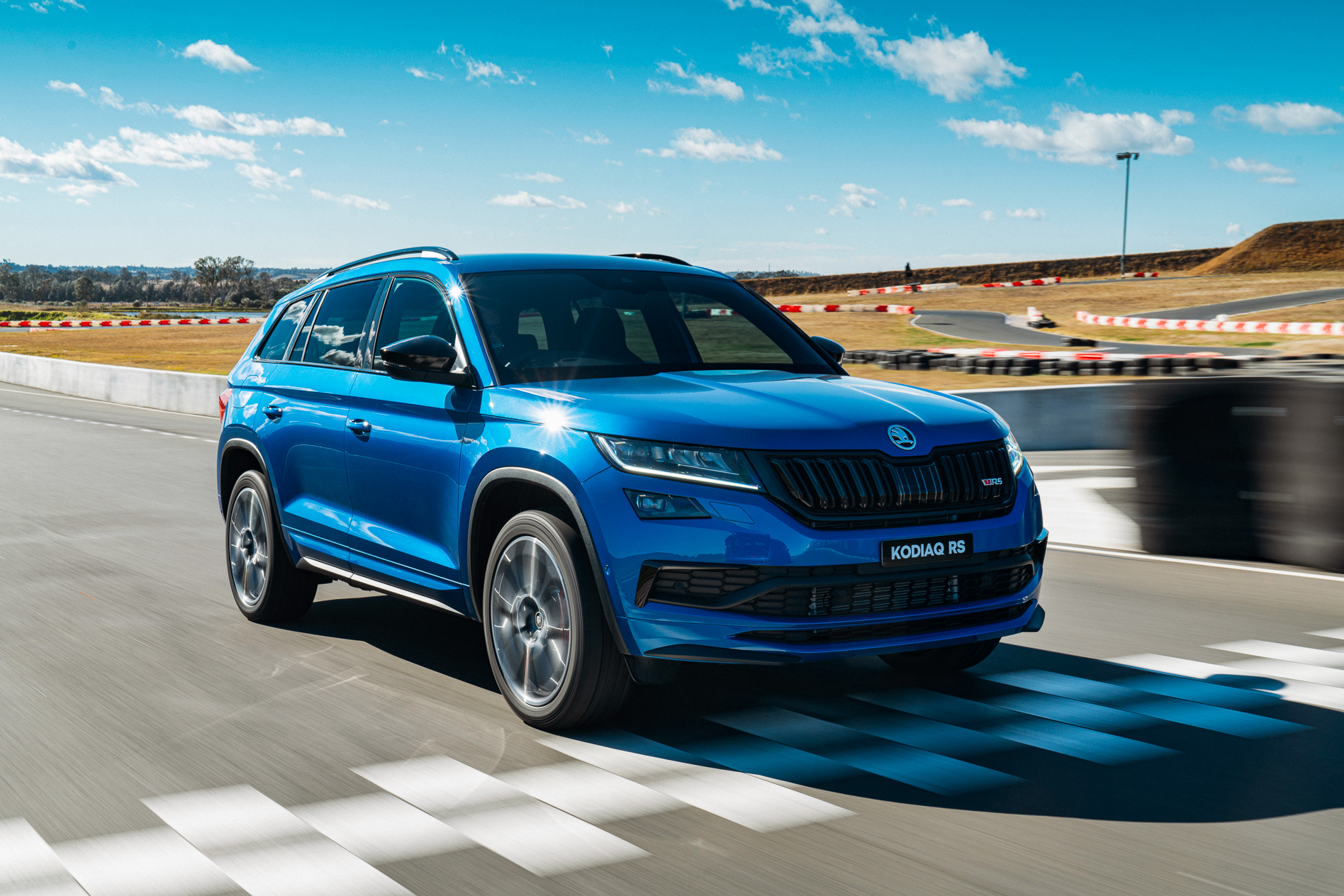
At the top of the Kodiaq pack, the mighty RS now has the previously optional $1900 panoramic sunroof thrown in as standard.
The RS’s price has also increased by $2900 to $68,890.
In the Kodiaq’s smaller sibling’s line-up there have been similar updates with the entry Karoq 110TSI given an information and entertainment system upgrade to MIB 3 Bolero and the same Apple CarPlay addition as the Kodiaq, although its touchscreen remains the same size at 8.0-inch.
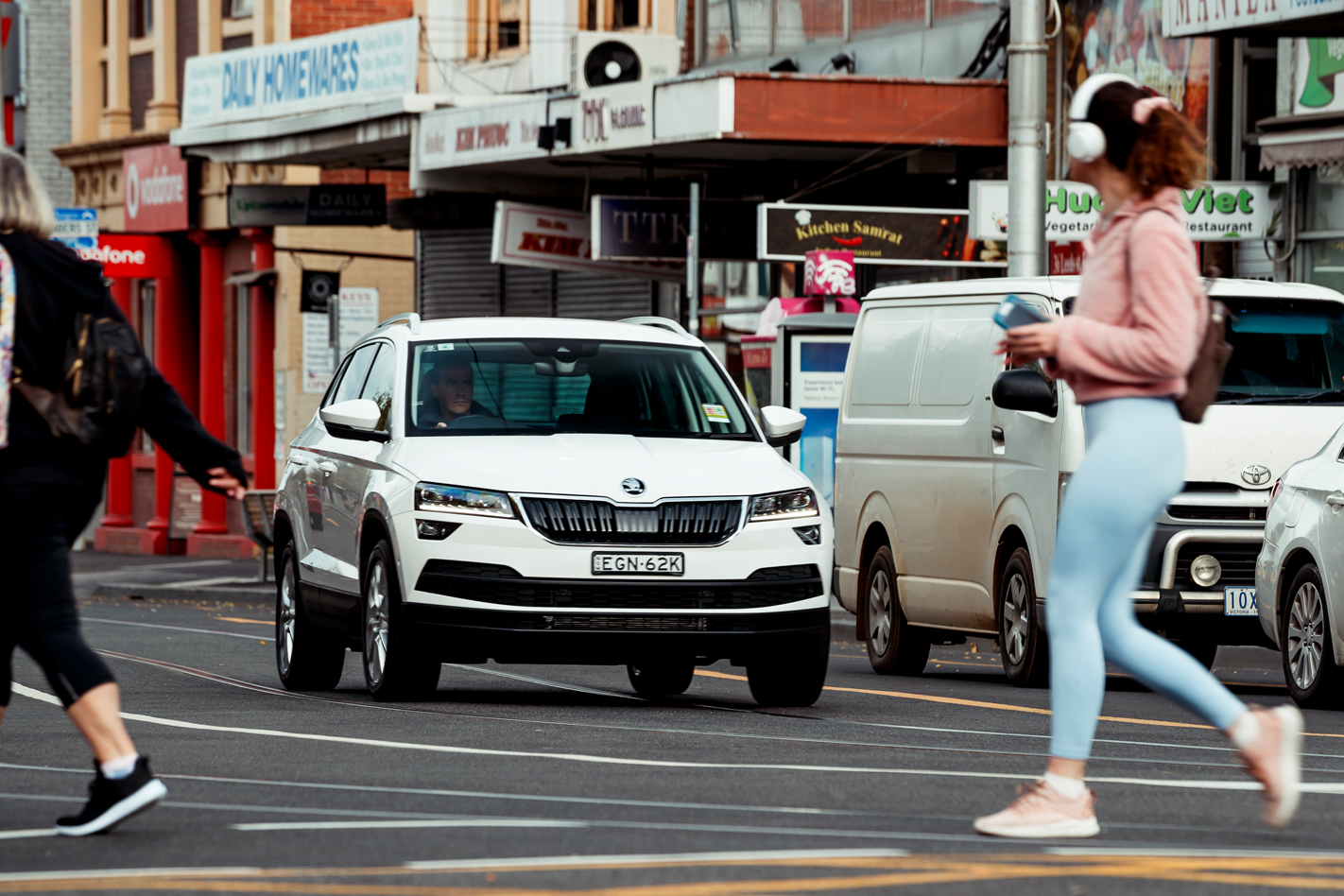
It doesn’t get the wireless charging of its bigger sister although there is now the option to connect devices via a new USB-C type socket.
The additions have meant an increase the base variant’s price by $1600 to $34,590.
Moving up to the Karoq 140TSI Sportline and the update brings a new sportier D-shaped steering wheel with multi-functions and paddle shifters, and seat heaters as standard in the front row, while customers are offered the option to upgrade to leather upholstery with power adjustment and memory function for the driver’s seat.
That adds another $3200 to the cost.
The 110TSI Sportline price has increased to the tune of $1300 to a new starting price of $41,290.
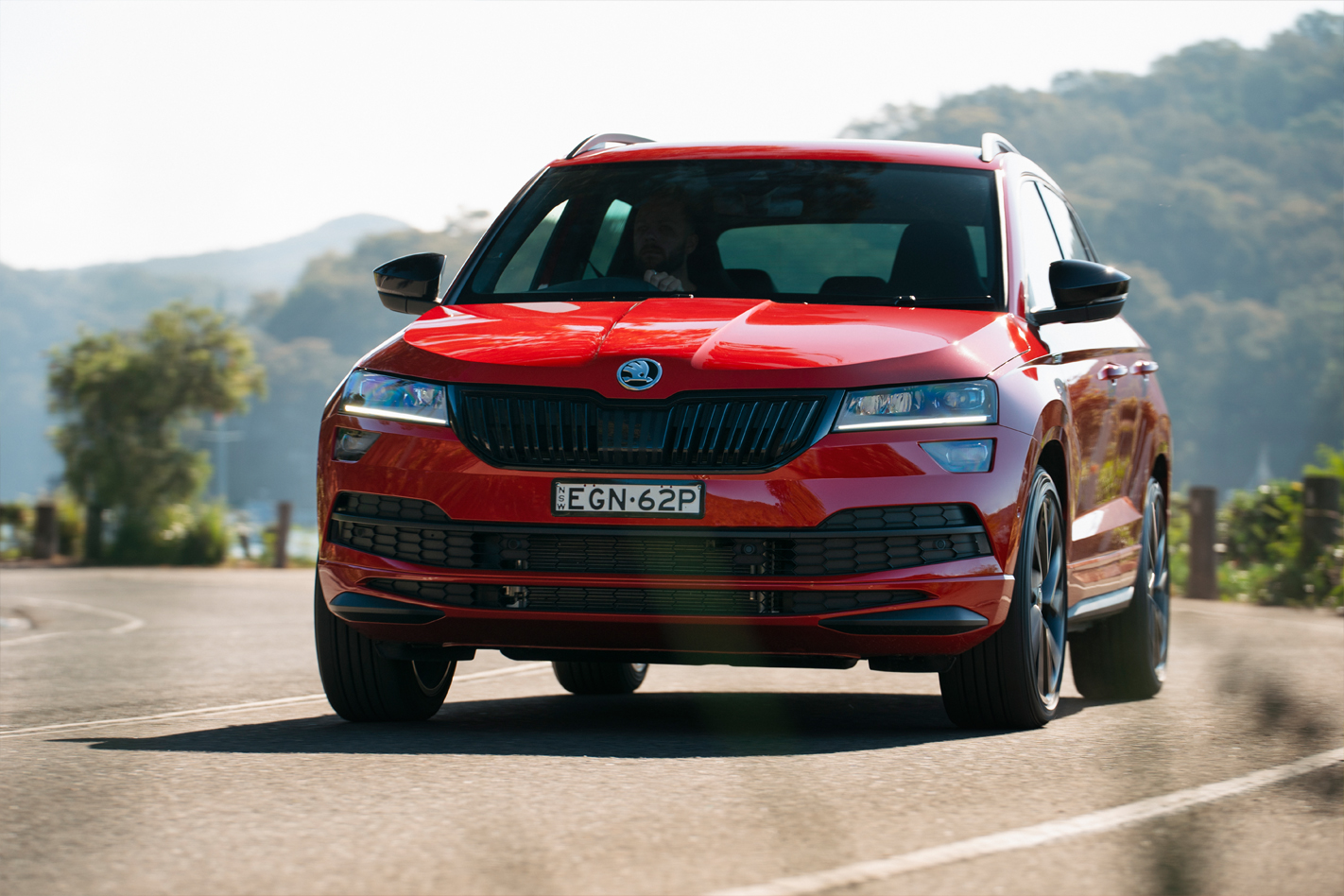
After a relatively soft start, Skoda re-launched it Karoq range earlier this year, introducing the more driver-focused Sportline, while enhancing the practical proposition of the 110TSI.
It’s unlikely the most recent Kamiq will be treated to a similar update given its relatively short time in the market.
While the Czech brand’s sales have taken a pummeling in the COVID-19 crisis, It was one of the few carmakers who had a decent 2019, posting a reasonable increase in sales compared with virtually all other mainstream brands.
2021 Skoda Kodiaq Australian pricing
- Kodiaq 132TSI – $46,390
- Kodiaq 132TSI Sportline – $50,290
- Kodiaq RS – $68,890
2021 Skoda Karoq Australian pricing
- Karoq 110TSI – $34,590
- Karoq 140TSI Sportline – $41,290
NOW WATCH Our Skoda Kodiaq RS experiment
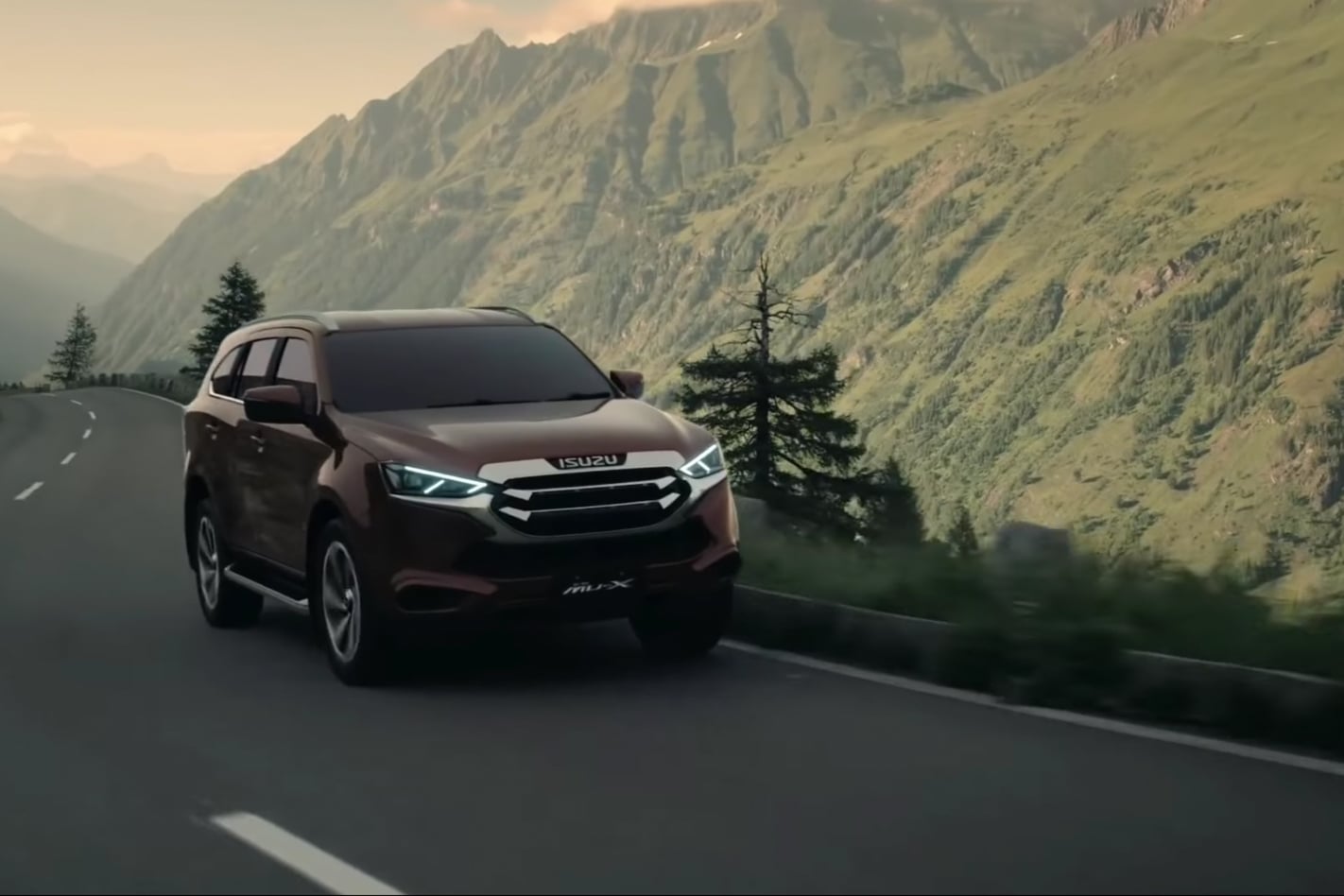
Isuzu has previewed the next-generation MU-X off-road SUV in Thailand, which looks as if it will move further away it from its ute-based brethren, the D-Max.
While the second-generation Isuzu MU-X has taken a step away from D-Max in terms of design, it’s still based upon its ute sibling.
That said, there’s no doubt that this latest iteration is a huge step forward from its predecessor, and a definite side-step away from the D-Max.
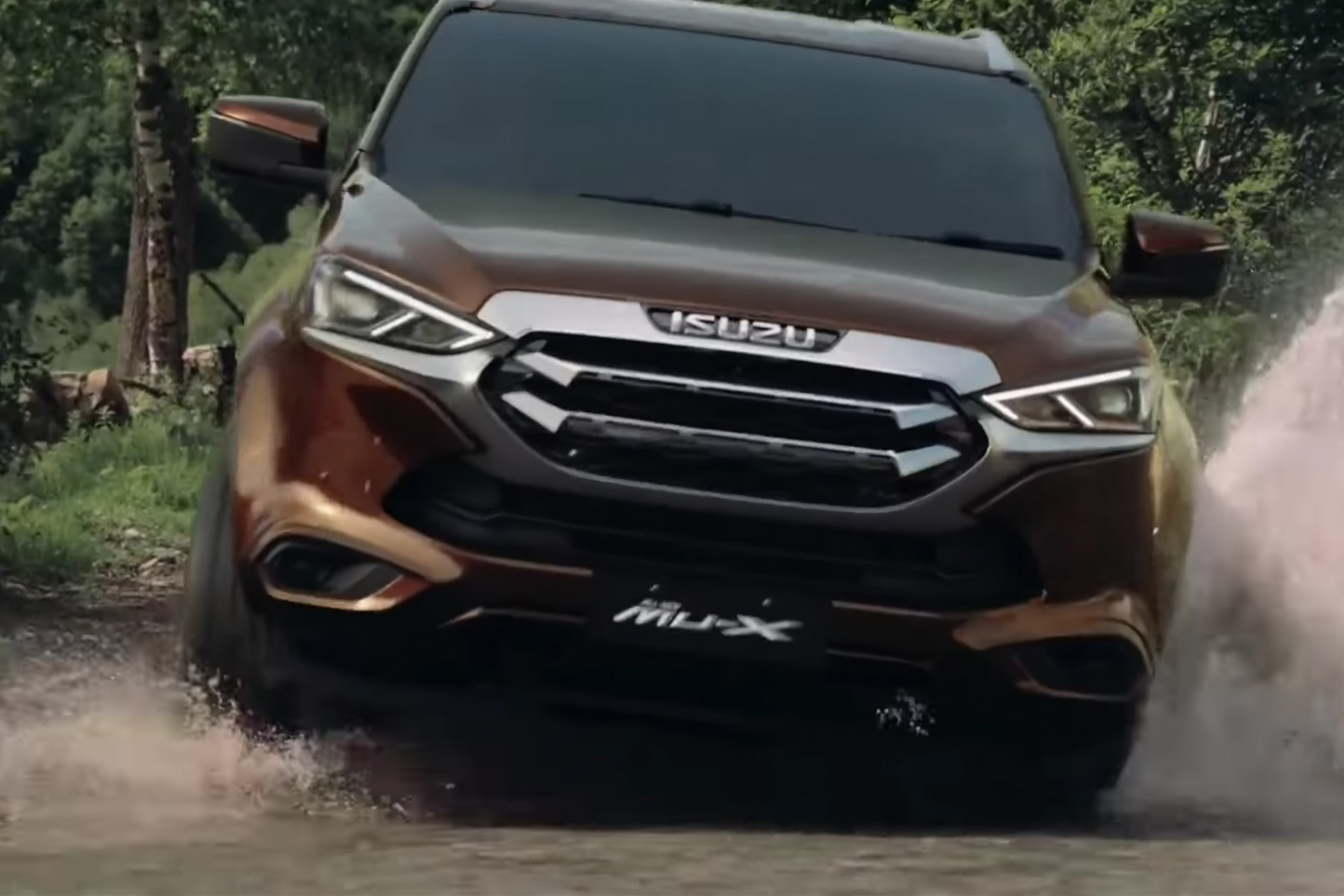
Despite Thai MU-X models being slated for a November on-sale date, an Australian arrival isn’t expected until the second half of 2021.
Isuzu Australia has just launched the Onyx special editions of the current-generation for the interim.
This is the new 2020 Isuzu D-Max
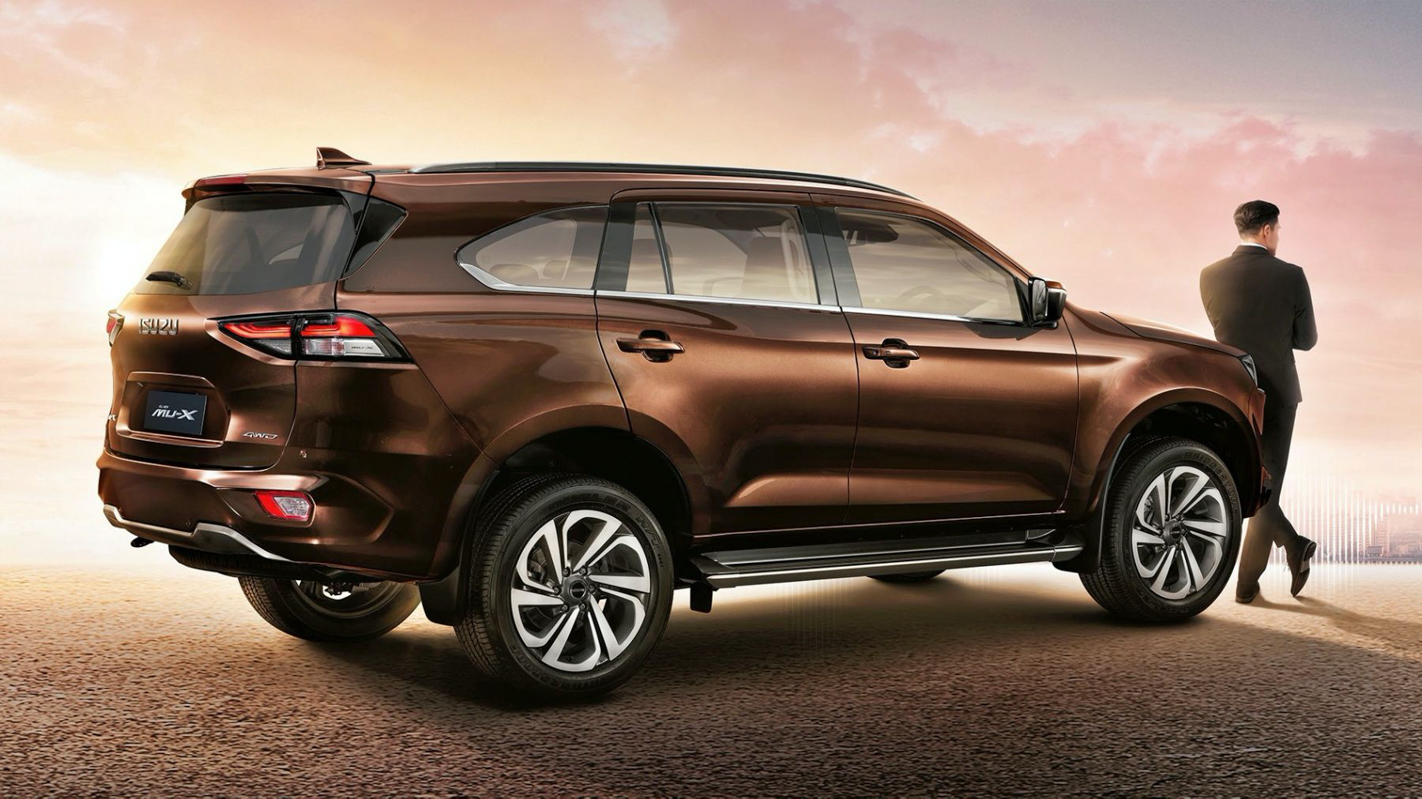
The 2021 Isuzu MU-X styling now stands on its own, with slimmer LED headlights, a high-placed chrome grille, high waistline profile, a different wheel design and a vastly different tailgate design at the rear.
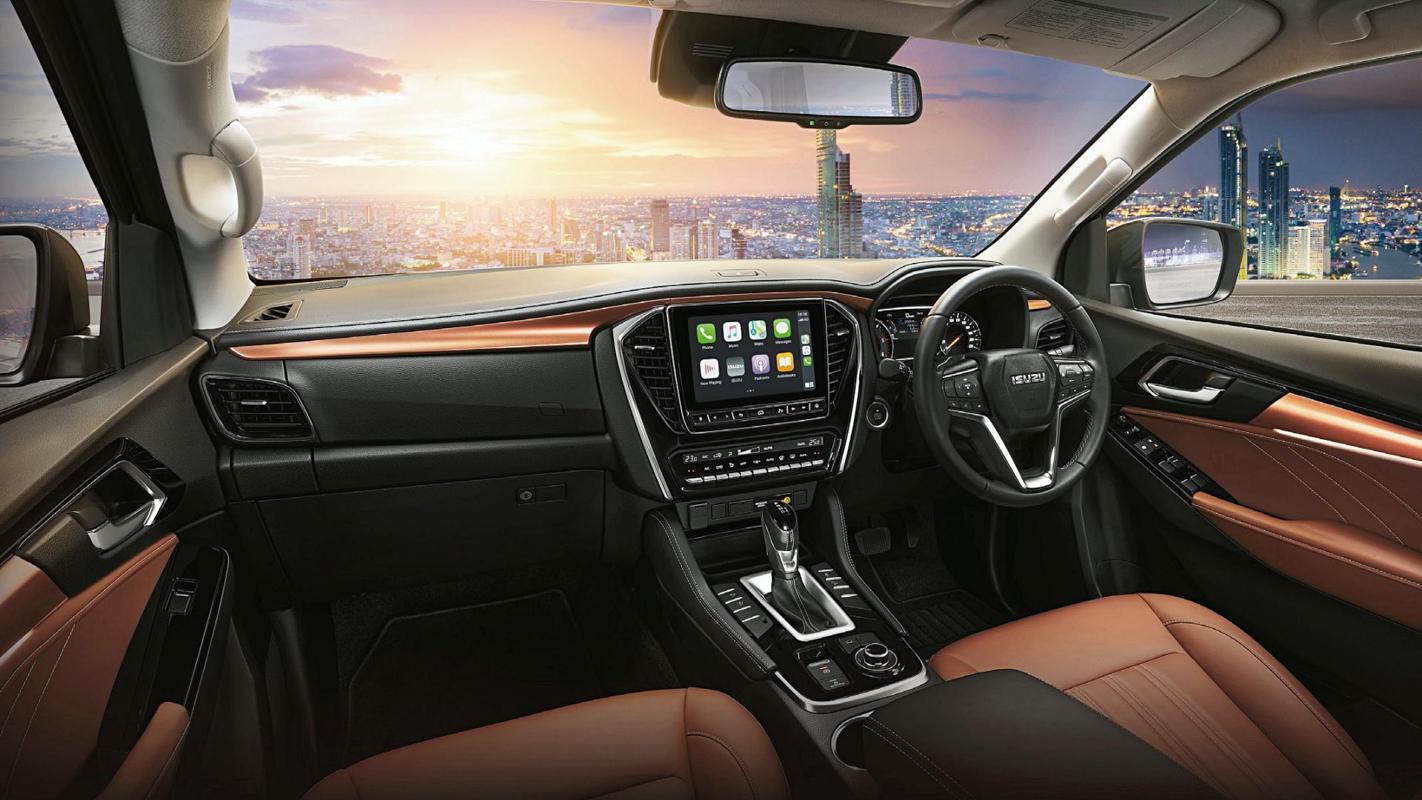
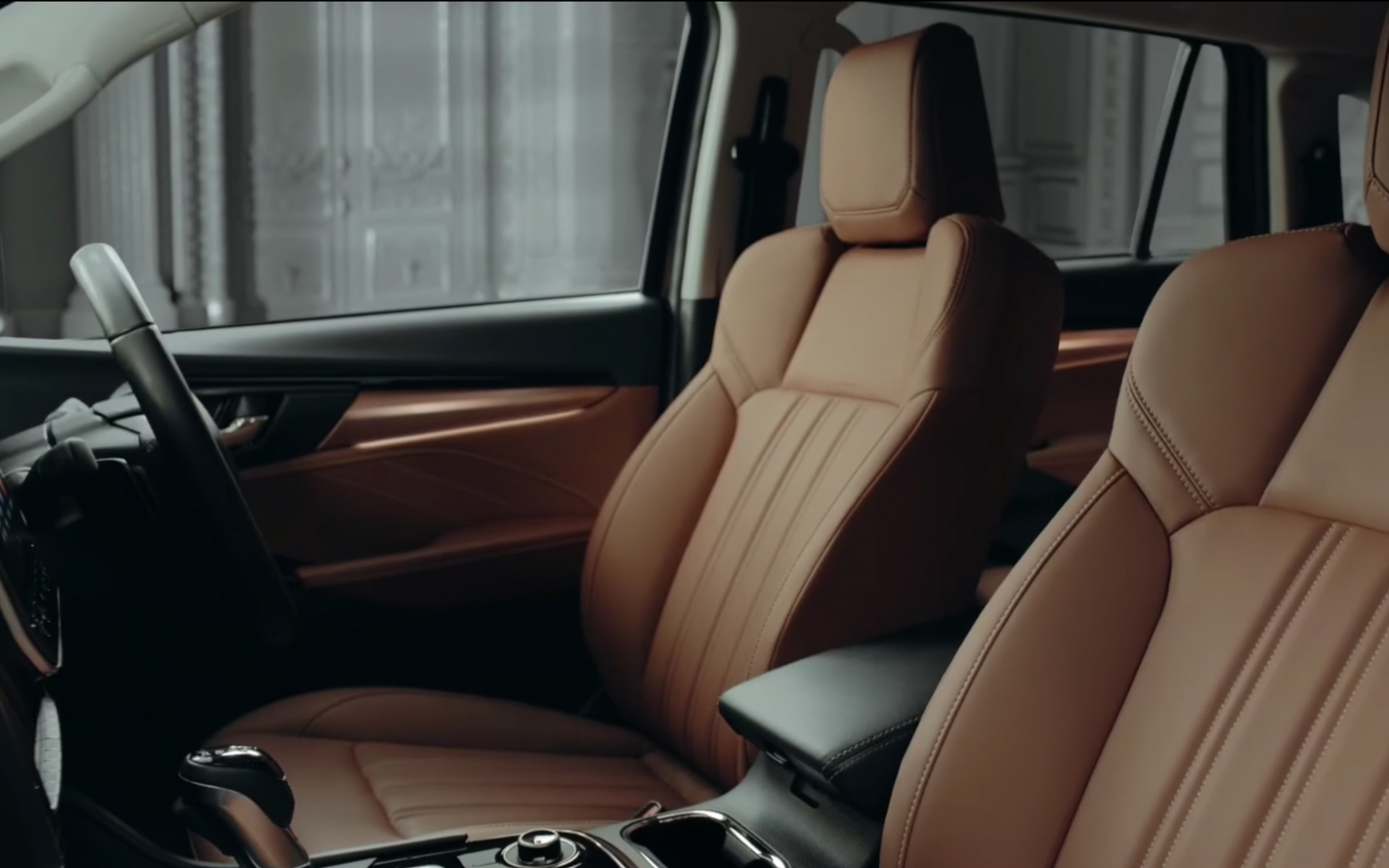
Less is changed on the MU-X’s interior, which appears similar to what you’d find in the new-gen D-Max.
That means 9.0-inch touchscreen infotainment with Android Auto/Apple CarPlay smartphone mirroring, a small digital display within the instrument cluster and an electric parking brake.
Depending on specification, other features include dual-zone climate control, multifunction steering wheel with paddle shifters, power-adjustable ventilated seats, USB-A and 12v charging ports, reclining third-row, electric tailgate, remote engine start and ambient lighting.
The new 4JJ3 3.0-litre four-cylinder turbo-diesel engine – a thorough overhaul of the long-serving 4JJ1 in the current MU-X – will be offered, boasting the same 140kW/450Nm outputs as D-Max.
A six-speed torque converter automatic transmission will feature, though nothing is mentioned about a manual offering as yet.
A smaller 1.9-litre twin-turbo diesel engine is also on the spec sheets, but is an unlikely starter for Australia.
The 4×4 version of the MU-X will likely score a differential lock as per the D-Max, and will also receive multiple traction control modes for varied off-road situations.
Isuzu has increased the fuel tank capacity to 80 litres, too, up from 65 litres in its predecessor.
While the MU-X will borrow the ladder-frame chassis of the D-Max, ride comfort is improved with the use of a five-link rear suspension with coil springs in place of leaf springs.
Isuzu also says roll rigidity and drive stability is improved when cornering, thanks to a widening of rear suspension links.
Safety in the 2021 MU-X gets a major upgrade with a host of additions such as lane departure warning, adaptive cruise control, automatic emergency braking, rear-cross traffic alert, blind-spot monitoring.
It also offers six airbags.
No information has been given regarding the Australian market example at the moment, but we’re not expecting an Aussie touch-down until well into next year.
When it arrives Down Under, the new-generation MU-X will continue to do battle with the Mitsubishi Pajero Sport, Ford Everest and new Toyota Fortuner in the large SUV category.
To see more of the new 2021 Isuzu MU-X, click through the photo gallery at the top of this story.
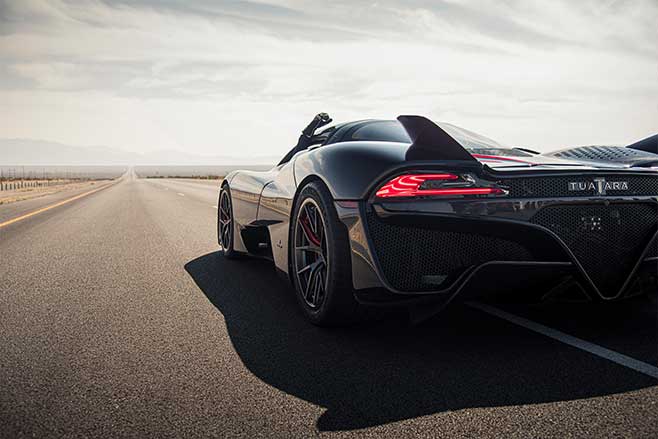
SSC has answered calls from the media and fans alike to explain the inconsistencies in its Tuatara production car speed record video, in which the hypercar appears to fall short of the claimed record-breaking speed.
According to the US car maker, an error in the video’s production is the cause of the apparently impossible speed of 508.73km/h, although the company has not detailed the exact nature of the problem.
“Somehow, there was a mix-up on the editing side, and I regret to admit that the SSC team hadn’t double checked the accuracy of the video before it was released,” said SSC founder Jerod Shelby.
The most likely explanation is that, the Driven Studios production team simply used the wrong footage of an earlier run in which the milestone speed was not achieved. We speculated this in our original story.
However, the response by SSC does not entirely appease suspicious watchers. If the incorrect footage was of a slower run, the laptop placed on the passenger seat contradicts the theory as it’s reading the record-breaking speed.
Once again, this either means the editing team intended to deceive and deliberately inserted the footage of the laptop reading a different figure to the speed the Tuatara was actually travelling at, or the speed measuring telemetry was inaccurate.
Measuring equipment supplier Dewetron was quicker to respond than SSC and has already commented on our story below, distancing themselves from the test but assuring the dependability of its hardware when correctly used.
“We neither take any responsibility for the parameters shown in the video above nor for their accuracy,” it commented. “Dewetron did not have the opportunity to analyse the measurement data or to confirm its accuracy yet. Therefore, Dewetron has not made a public statement yet”.
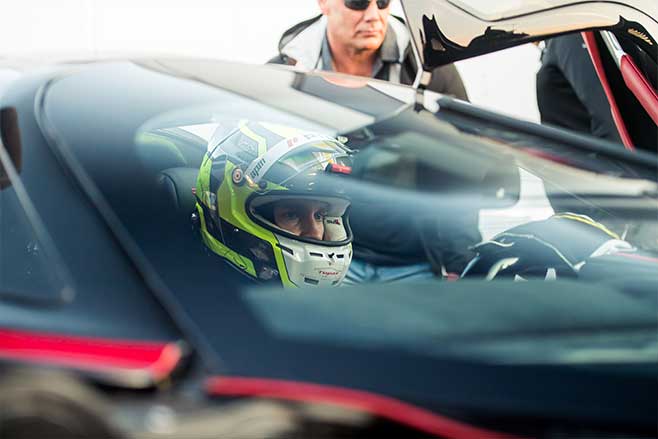
The hired gun at the wheel of the Tuatara during the record attempt, Oliver Webb, has also responded to the controversy, explaining he is not employed as a test-driver for the company and is unable to shed any extra light on the inconsistencies.
“I know nothing more than what I’m finding out online,” he confirmed in a social media video.
https://www.instagram.com/p/CG5O1zXhv6h/?utm_source=ig_embed&utm_campaign=loading
While acknowledging the mistake in editing and admitting it mislead anyone who assumed the video was an accurate representation of the historic run, SSC assures that the speed was indeed achieved.
Furthermore, the hypercar maker has promised to get to the bottom of the mistake and deliver the true video of the run.
Until then, we will remain skeptical.
Original story published October 27
Its exhaust manifolds have barely finished ticking and the bugs have only just been scraped from the Tuatara’s windscreen, but SSC’s world’s fastest production car record is already being scrutinised as potentially inaccurate or, at worst, faked.
Last week, the US car maker claimed it had snatched the coveted V-max title from Koenigsegg with an almost unbelievable figure of 508.73km/h laid down on a closed public road in Nevada… but it seems that number might not have been ‘almost’ unbelievable after all.
Poring over the information released by SSC, several analysts have now revealed inconsistencies between the claimed top speed, published data and video of the record run.
Controversially, though, all but one of the possible explanations arrive at an embarrassing conclusion – that the claimed top speed was simply not possible.
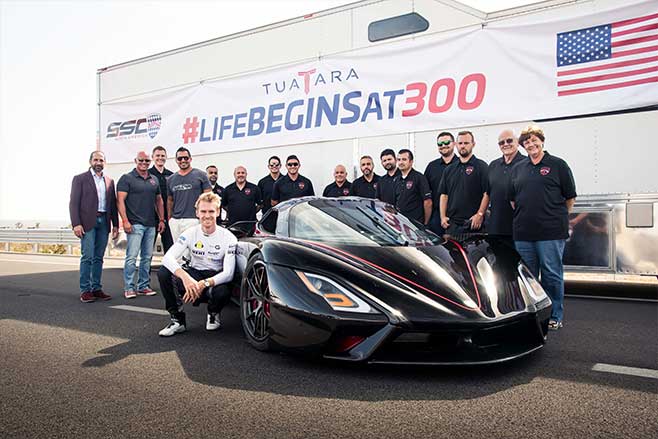
Here’s why several different methods of speed calculation, clearly laid out by YouTube star Tim Burton, who works under the moniker of Shmee150, suggest the SSC Tuatara only managed about 450km/h and may not have taken the production car world record from Koenigsegg after all.
How fast did the SSC Tuatara really go?
The simplest mathematical method of calculating the average speed of an object is distance over time. Conveniently, the road used near Las Vegas offers two measurable distance references in the form of crash barrier medians, and line markings on the road itself.
As for the time? That’s provided by SSC’s video. The easily identifiable breaks in the safety barriers are captured by the Tuatara’s onboard camera, and then it’s simply a matter of counting the seconds between the next median marker.
Even if there were small inaccuracies in the time measurement or distance between references, the simple calculation reveals the SSC was travelling at about 280mph or 450km/h – not slow, but also nowhere near the claimed new achievement.
The smoking gun, however, is the simultaneously overlaid speed reading according to SSC’s telemetry which can be seen repeated on the laptop in the passenger seat.
At all times, the displayed claimed speed is higher than the average speed the simple calculation suggests the car was actually travelling – which, of course, is mathematically impossible.
Exactly the same equation can be applied using the white lane markings also visible in the video.
As the lines are painted using a US standard of 3.5 metres followed by an approximate 9.0-metre gap, again it’s simply a matter of establishing the distance the car has travelled, compared with the time taken to cover it.
Using the white lines as a distance reference, the calculations, once again, propose a maximum speed of about 450km/h.
It’s exactly this simple but reliable method that was used as evidence to convict a driver in the UK recently, who posted a video which showed an Audi R8 being driven far in excess of the speed limit.
Either SSC’s video has been inexplicably slowed down – an unlikely move given it’s supposed to depict a Herculean feat of speed – or the car was, in fact, nowhere near the claimed maximum.
Koenigsegg Komparison
Usefully, the stretch of road used for the record attempt is the very same site for the Koenigsegg Agera test in 2017 allowing a second analysis of the SSC run.
When synchronised at the same start point, the Swedish monster passes a second reference point sooner than the SSC, suggesting it is going faster.
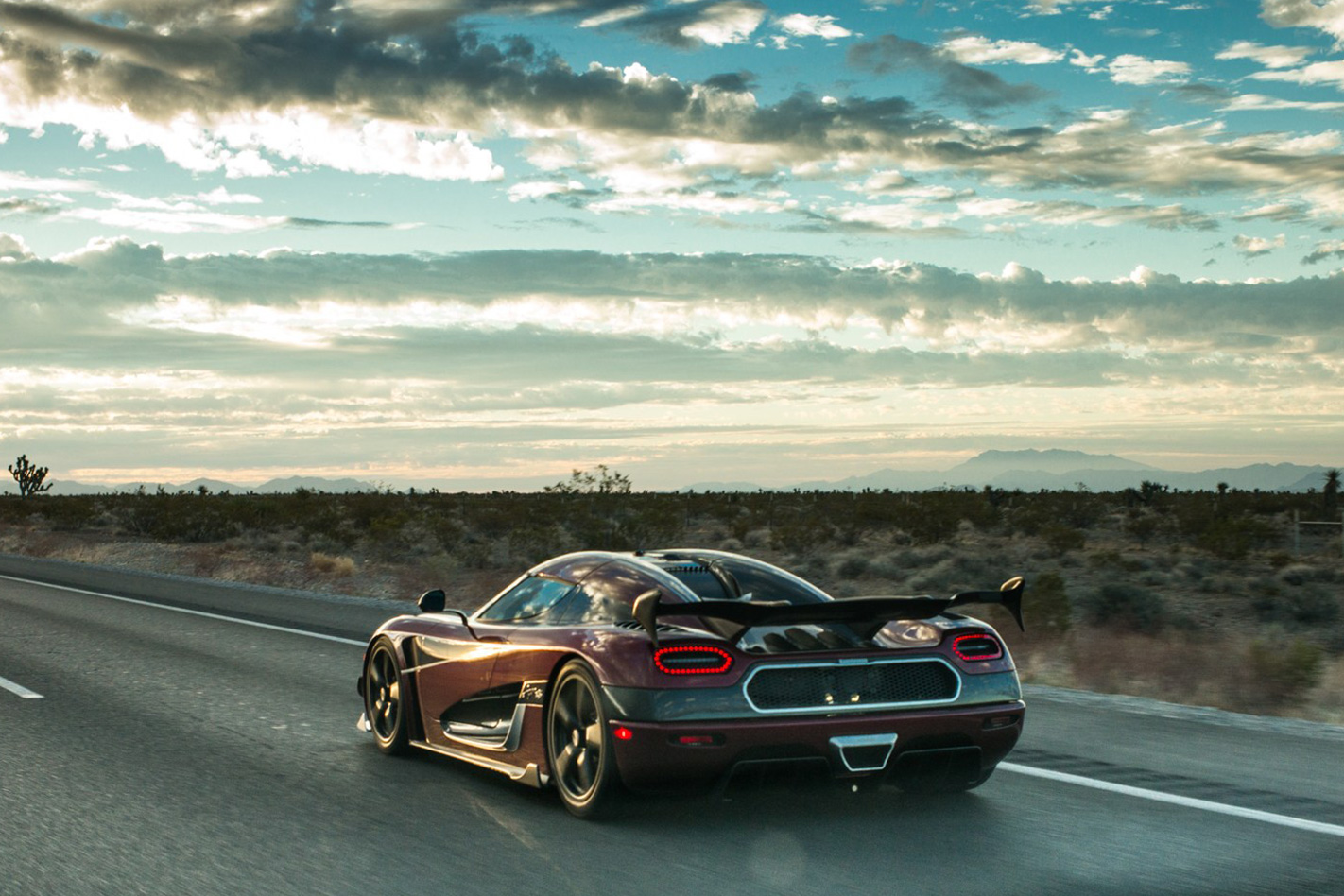
However, the speed reading displayed in the Tuatara video claims to be higher than the Koenigsegg at all points – again something doesn’t add up.
Either one video has been sped up, the other slowed down, or the SSC’s telemetry is inaccurate.
Devil’s in the detail
Finally, a third seemingly indisputable source of data can be used to establish if SSC’s car was capable of hitting the claimed speed before it even turned a single wheel.
Using the outside diameter of the tyres fitted, the transmission ratios and the maximum engine speed (all information provided by the car’s maker), the maximum permissible velocity of the SSC tuatara can be calculated.
For the final run, racing driver Oliver Webb chose to keep the car in sixth gear rather than flick up to top and back off ahead of the redline, but even if he had pushed it to the limiter, the maximum speed, bound by the mechanical design, is 471.5km/h.
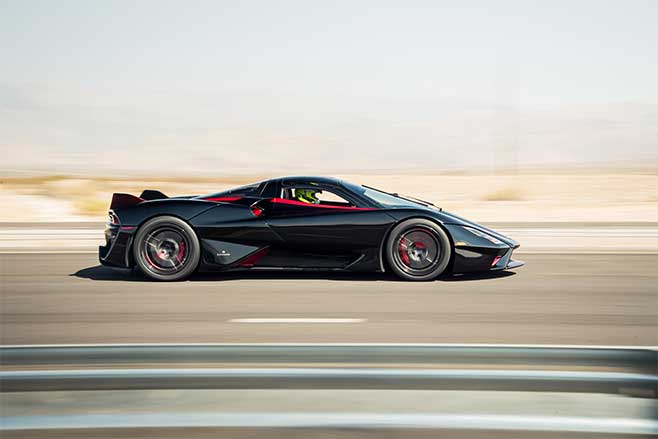
Of course, the car’s own speedometer might add some perspective or clarity but, adding to the controversy and suspicion, its reading is blurred out in the video as it passes 301mph (484km/h) – already higher than the car is mechanically capable of going in sixth.
Perhaps the pre-production unit had not yet been calibrated to display speeds higher than the final visible reading, or it may have been obscured to hide an inaccurate over or under reading.
Either way, it seems an unusual move in a record all about speed.
One final possibility is that SSC encountered a technical issue when filming the actual record-breaking speed and was forced to use footage of a previous slower run, but using speed figures from the actual milestone mission.
This is also hard to believe as the laptop is displaying a speed reading that is contradicted by all other reference and engineering methods of calculation.
Why would SSC slow the video without a disclaimer? Why did it blur the speedo without explanation?
And why do all methods of calculating the Tuatara’s speed using the information provided by its maker suggest it actually managed a max nearly 60km/h slower than it is claiming?
It appears that Burton didn’t attempt to contact SSC for verification, but the company has issued a brief press release attesting that the record was recorded accurately.
“DEWETRON, a globally respected GPS data-measurement manufacturer, has validated SSC North America’s claim that its Tuatara hypercar had averaged a top-speed run of 316.11mph (508.73 km/h) as recorded on October 10, 2020 near Pahrump, Nevada,” read the release.
“That average speed was determined based on two runs, of 301.07 mph (484.53 km/h) and 331.15 mph (532.93 km/h), travelling in opposite directions.
“DEWETRON has worked with SSC since the hypercar manufacturer utilized [sic] its GPS measurement systems for the Ultimate Aero top speed record in 2007. Four out of five of the last world top-speed records were measured and validated on the same DEWETRON system.”
As the expression goes, the simplest explanation is often the correct one, which in this case points to inaccurate measurement equipment or methods.
But until SSC can address the disparity and prove its claims, it’s possible Koenigsegg might still hold the world’s fastest production car record.
