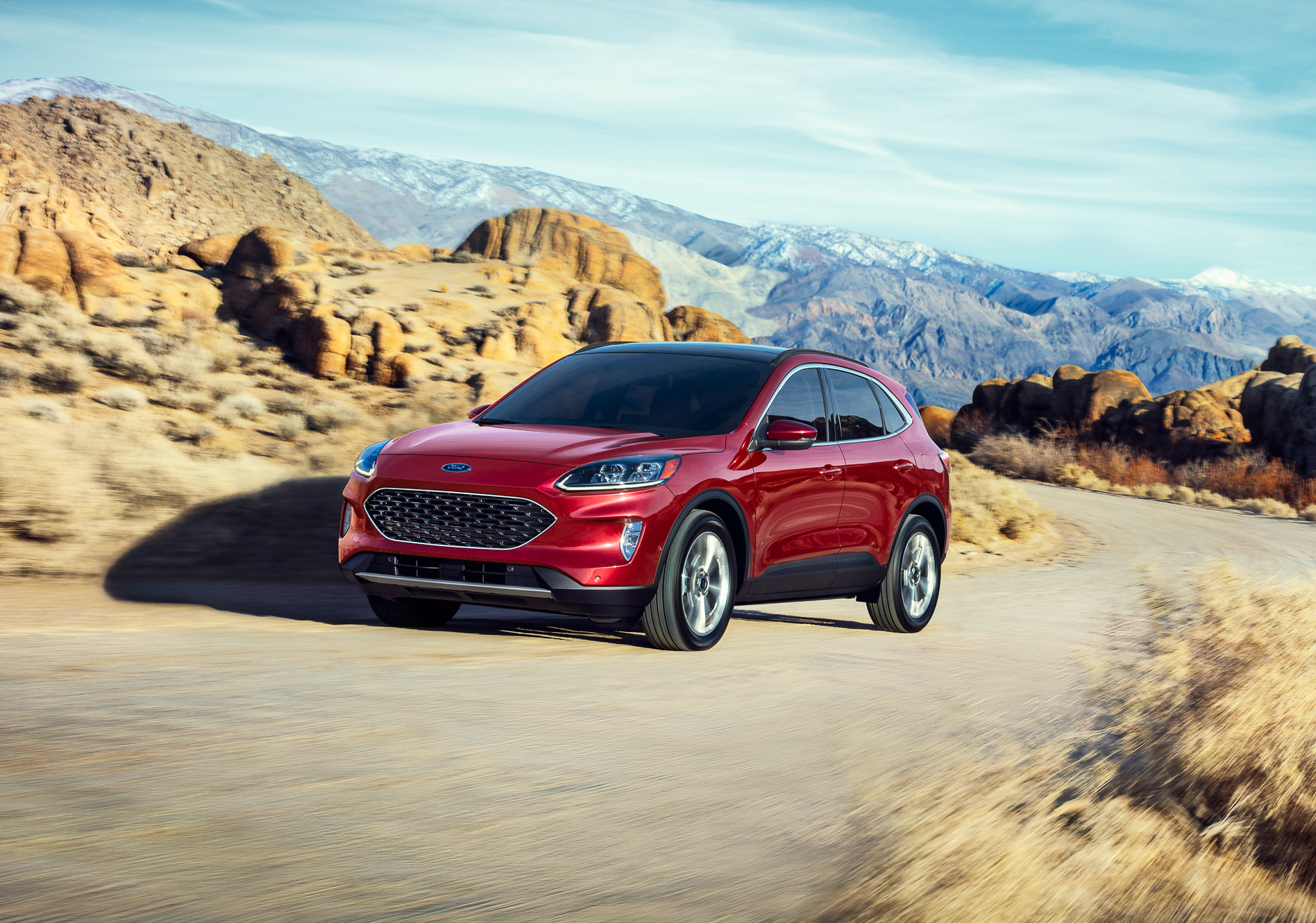
Ford has confirmed that its brand new mid-sized Escape SUV will arrive in November, and that it will also offer the five-door, five-seat high-rider with drive-away pricing on some variants from launch.
However, those Blue Oval fans hoping to get their hands on the plug-in hybrid version will have to wait, with the electrified version now delayed until late 2021.
In Europe, the hybrid version has been subject to a recall after a fire risk was identified. The knock-on effect means PHEV Escapes won’t be arriving with the three petrol-only offerings next month.
The good news is that Australian market models have not yet commenced production and when they do eventually start rolling into local showrooms, they will not contain the fault identified in cars sold overseas.
“I can confirm that the vehicles bound for Australia have not yet been built,” said Ford Australia’s head of communications, Matt Moran. “So they are not impacted by the issues that are in the news.”
Ford Escape ANCAP safety rating
Safety ranks high on the Escape’s feature list and the new model has been awarded the full five-star rating by the Australasian New Car Assessment Program (ANCAP), with particular praise awarded for its autonomous emergency braking system (AEB).
Not all crash mitigation systems are the same but the safety assessment specialist has identified that Ford’s Escape technology is of particular note thanks to effective pedestrian and cyclist detection with almost full marks scored in the test.
The rating has been derived from Euro NCAP test data conducted in late 2019, according to Ford, which means that the Escape’s five-star ANCAP rating is based on 2019 protocols.
This means that it misses out on items like centre-front airbags that would be required for a five-star pass under 2020 protocols.
Virtual test drive
With the arrival of the Escape, Ford will also relaunch its Desk Drive virtual walk-round service, offering customers an opportunity to get to know the new model ahead of its arrival, as well as an introductory discount if they proceed with a purchase.
Its Desk Drive online presentation and Q-and-A sessions were introduced ahead of the Puma small crossover arrival, and Ford says the success of the initiative has prompted the company to roll out a second version for its bigger sibling.
Not only will customers be able to interact with Escape experts via the Facebook Live event on the Ford Australia Facebook page, the Blue Oval will also offer drive-away pricing for the entry-level Escape, as well as for the sporty ST-Line in both front and all-wheel-drive variants.
This drops the price of the base Escape to $36,490, while the front-wheel-drive ST-Line moves to $38,990 and the all-wheel-drive version costing $3000 on top of that.
The price change to the Ford Escape puts closer to the entry-level Mazda CX-5 Maxx Sport ($30,980 plus ORCs), and a little below the Toyota RAV4 GXL automatic ($37,415 plus ORCs). These two top the medium SUV sales charts.
Pricing of the ST-Line plug-in hybrid and flagship Vignale versions are still subject to on-road costs.
2020 Ford Escape pricing
- Escape 2.0L FWD – $36,490 drive-away
- Escape ST-Line 2.0L FWD – $38,990 drive-away
- Escape ST-Line 2.0L AWD – $41,990 drive-away
- Escape ST-Line PHEV FWD – $52,940 plus ORC – Arrival date TBC
- Escape Vignale 2.0L FWD – $46,520 plus ORC
- Escape Vignale 2.0L AWD – $49,490 plus ORC
If the initial virtual meeting has piqued the customer’s interest, a dealership visit and test drive can then be arranged to take things further if required.
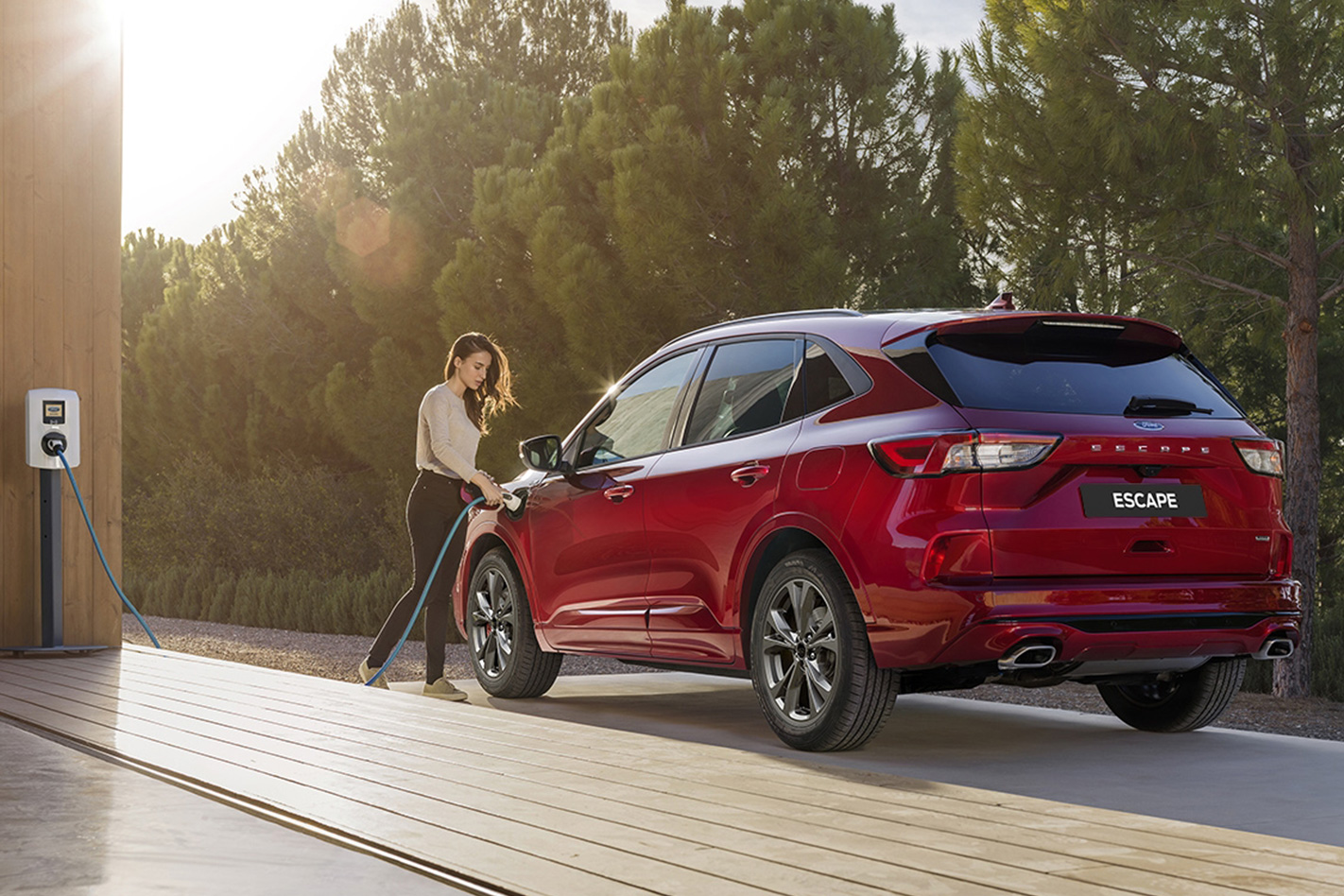
As an extra perk, Ford is offering a $500 sweetener to any customer that buys a new Escape following a Desk Drive and then actual test-drive through the Ford national dealer network.
“Through initiatives like our virtual Desk Drive, we have worked with our dealer network to make buying an all-new Escape an easy, informed experience, including special introductory offers and opportunities for Australians to get to know the Escape however and wherever suits them,” said Ford Australia’s new president and CEO Andrew Birkic.
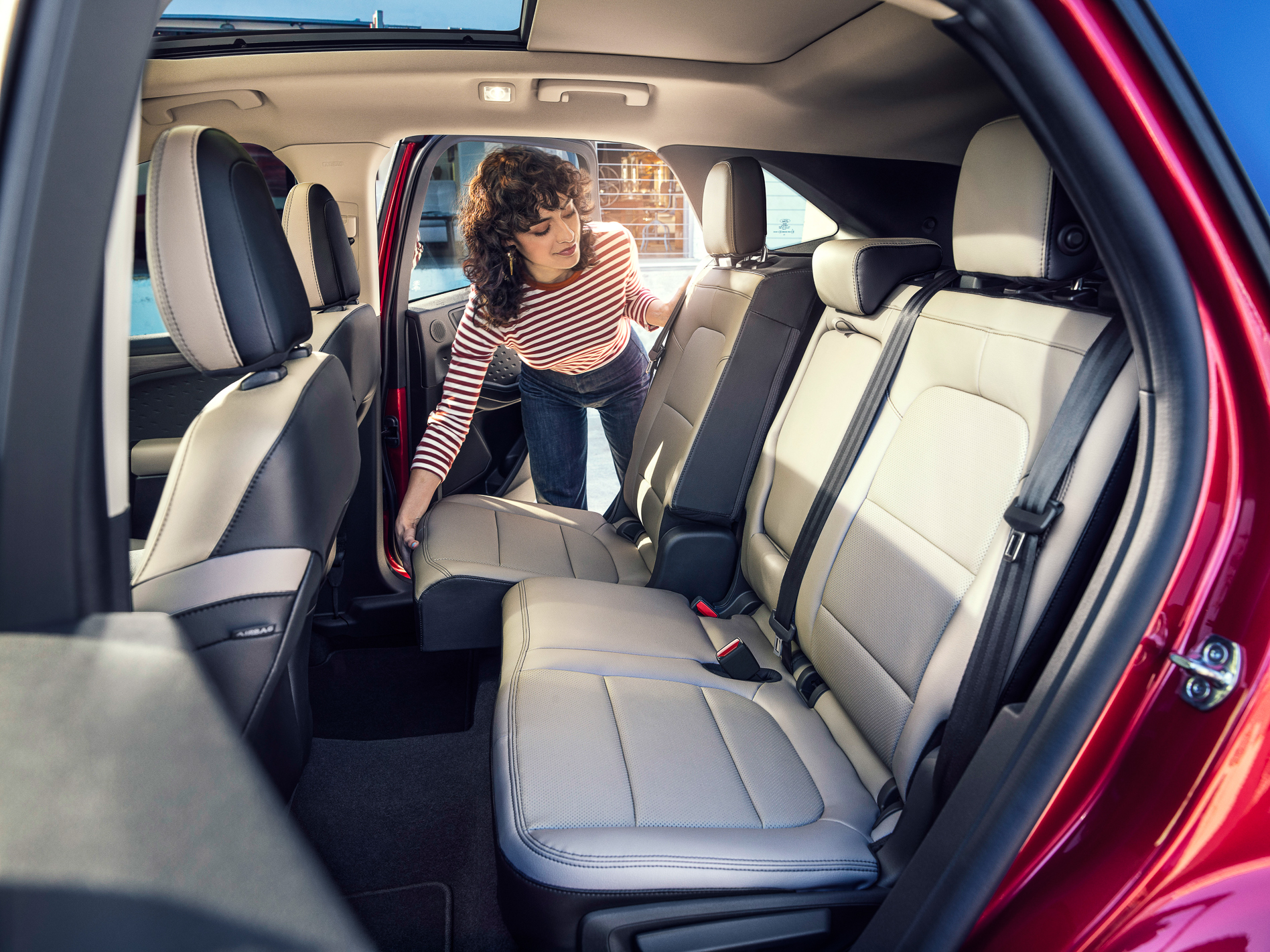
Ford’s Desk Drive is the latest in a number of convenience services that make the car-buying process easier for customers. In addition to online inspection and configurators, a number of brands are offering test-drives and servicing from home, while an increasing number are rolling out complete web purchasing.
NOW CHECK OUT All of the Ford Escape’s pricing and features info
The small SUV from Coventry, the Jaguar E-Pace, has been updated for 2021 with its range expanding to four variants here in the Australian market.
Design tweaks are joined by more tech and safety features across the entire range, with upgrades such as a new infotainment system accessed though a new 11.4-inch curved glass touchscreen, and updated chassis architecture which Jaguar says improves comfort and handling.
Starting at the entry point of the new range, the E-Pace R-Dynamic S P250 is priced from $63,900, with a 184kW/365Nm 2.0-litre four-cylinder turbo engine, and the same 9-speed auto and all-wheel drive as the rest of the range.
Next up the ladder, the E-Pace SE P250 starts at $67,200 with the same engine as the S, with the E-Pace HSE P250 which starts at $71,300. The S and SE are now priced slightly higher than before, though the HSE has been made slightly cheaper (it was $73,648) to accommodate the 300 Sport at the top of the range.
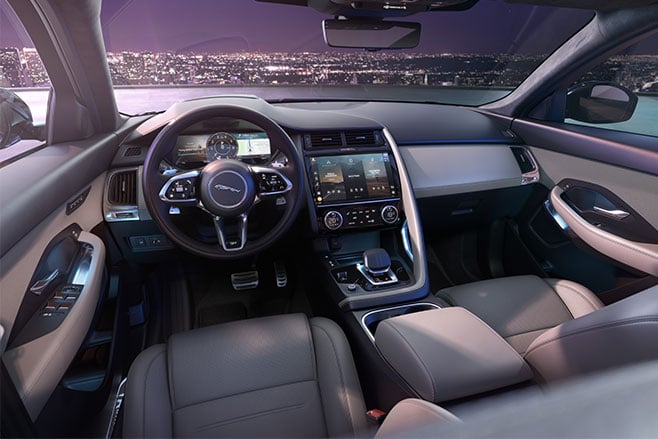
All three P250 variants share the same drivetrain specifications, being separated primarily by trim such as the upgrade in sound system (an 11-speaker Meridian system) you get for graduating from the S to SE, or the larger instrument panels in the HSE over the others.
At the top, the new 300 Sport is the newest addition to the range with a mild hybrid version of the 2.0-litre turbo engine, which stores otherwise lost power from deceleration in a battery pack under the boot.
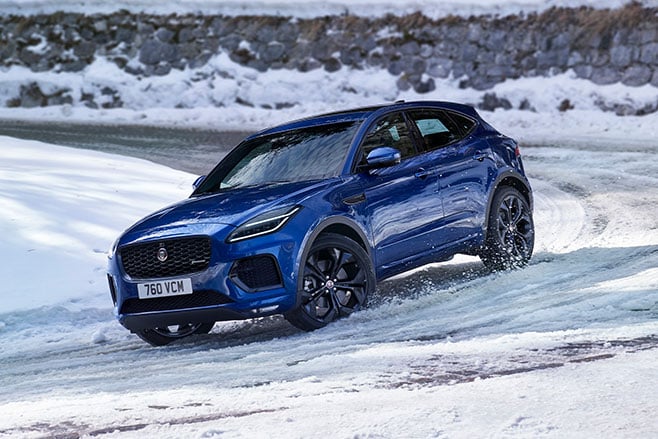
The engine is also more powerful at 221kW/400Nm, though pricing jumps to $79,600 for the E-Pace 300 Sport.
The new 300 Sport fills a gap left by the previous P300, though has a slower performance claim to 100km/h than the previous. 6.9 seconds, as opposed to 6.4.
Jaguar Australia says the new E-Pace range is already available to order with deliveries expected to kick off in Q1 2021.
It might not be immediately apparent from the outside, but Bentley, like many car manufacturers, is not having a great 2020.
On top of the coronavirus pandemic and all the economic difficulties it has brought, the England-based brand continues to get a kicking from Brexit fallout.
But while the company has been owned by the Volkswagen Group since 1998, nepotism has resulted in the German brands receiving prioritised support.
Call it too much autonomy or call it neglect, the result is an ailing Bentley that needs urgent assistance.
And it seems that help is coming in the form of four rings as reported by carmagazine.co.uk and, from next year, the iconic British brand will have Audi’s hand on its tiller.
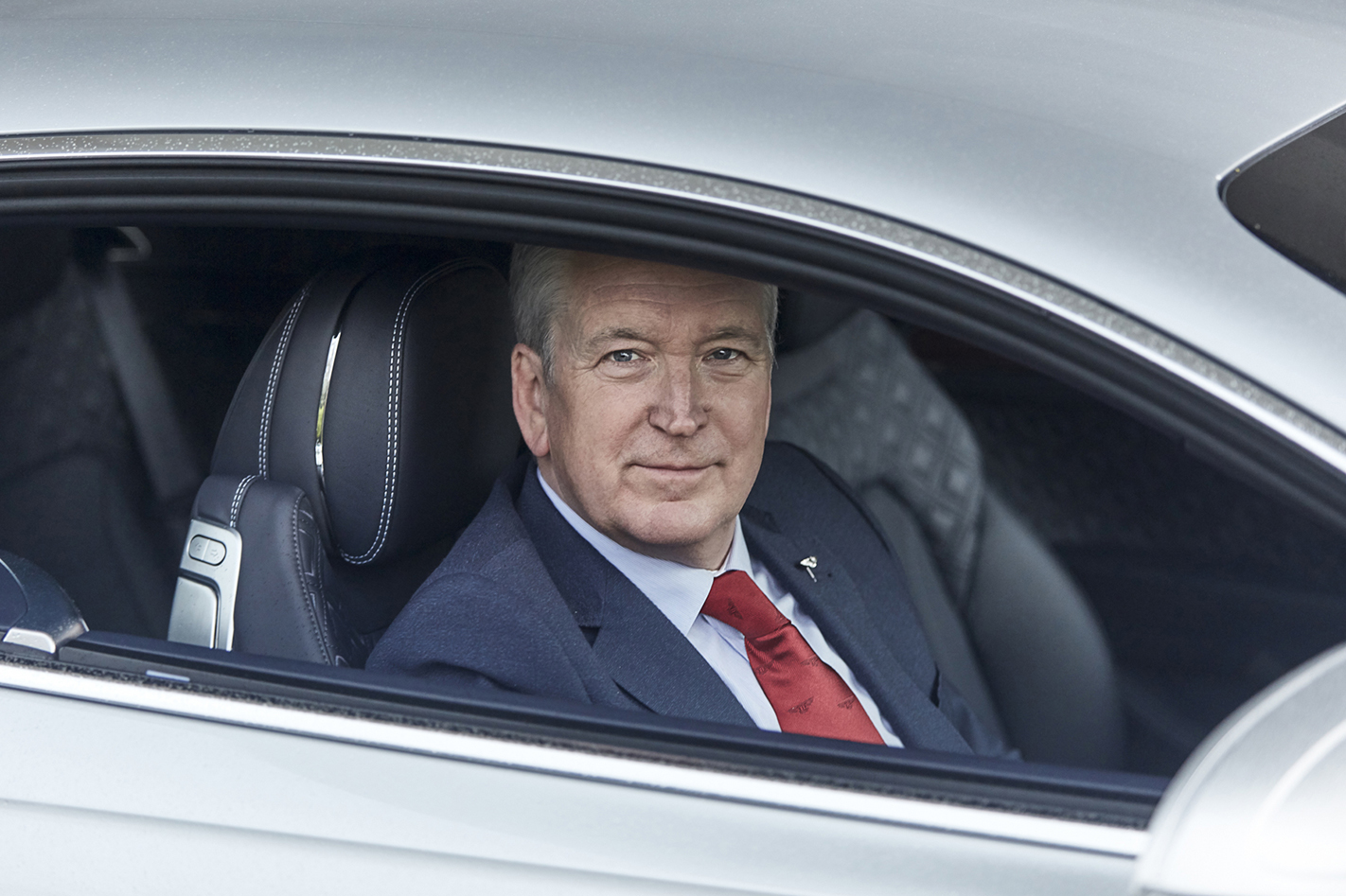
That means the German premium brand’s relatively fresh CEO Markus Duesmann can add the job of steering Bentley back onto its rails to the stack of other tasks he inherited with the role in March this year.
Audi acting early
In 2019, Bentley managed to increase global sales by 5.0 percent to about 11,000, with the USA accounting for the largest share, closely followed by Europe.
The respectable rise was thanks to the combined power of two models – the all-new Continental GT and the company’s first SUV, the Bentayga.
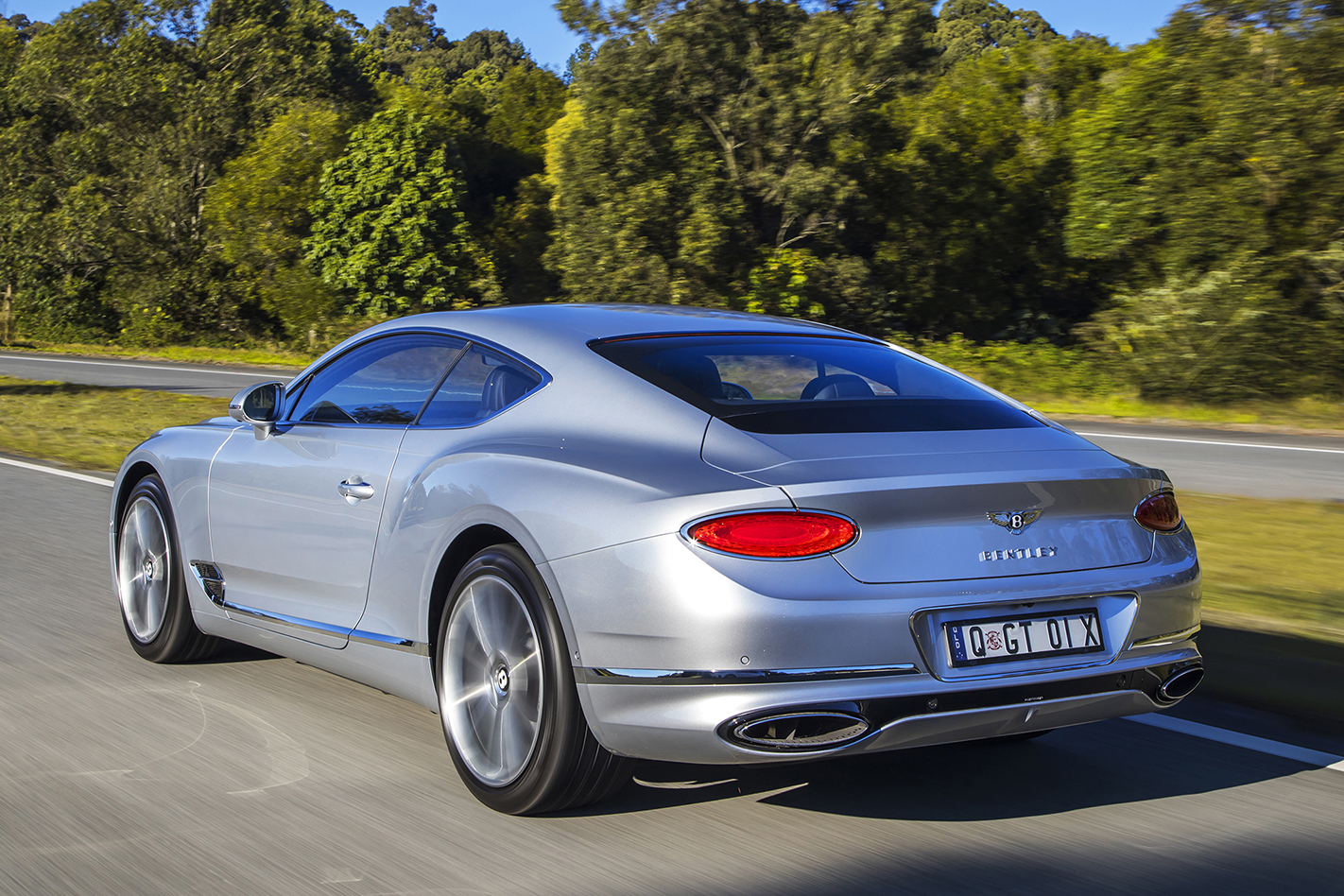
However, the sales slide started in 2020 and it’s no coincidence that the brand’s two biggest markets are also two of the world’s continents hardest hit by COVID-19.
Global and national economic variables aside, though, the brand should be doing better.
It has a resoundingly good new Continental coupe and convertible on its books (once the company best-seller) thanks to the collaboration with Porsche and shared Panamera parts, while the Bentayga is still relatively fresh in the market and has the potential to swing haymakers in the lucrative luxo SUV arena.
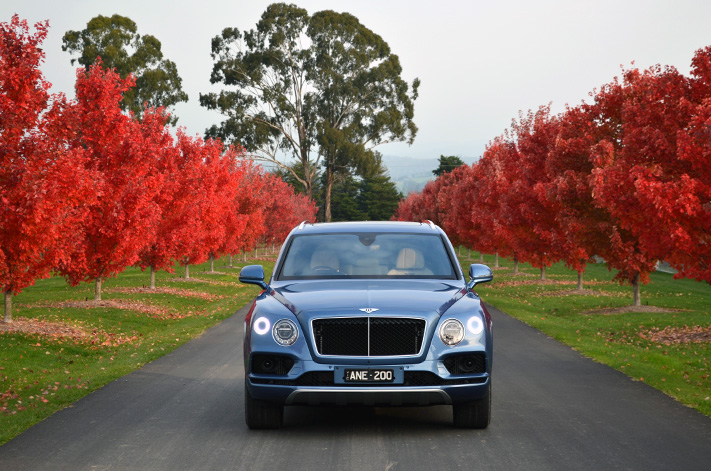
Bentley’s Australian operations haven’t escaped with year-to-date Bentley sales down 20 percent – and it’s certainly not the hardest hit global region. But what can be done to reverse the trend?
How will Audi help Bentley?
With the exception of a small number of Continental GT and Bentayga production stages that are completed at Volkswagen factories in Germany and Slovakia, a majority of Bentley models are produced in Crewe in the UK.
One possibility would be to move a larger share of Bentley manufacturing operations into European facilities, mitigating the economic damage to UK industry by Britain’s exodus from the EU.
VW Group has previously floated the idea to move all but special vehicle operations elsewhere, but it was opposed by Bentley Motors CEO Adrian Hallmark. With Audi now at the helm and more local economic problems added into the mix, the strategy may be revisited.
More model efficiency
With the departure of the Mulsanne, all models in the Bentley line-up now share DNA with other Volkswagen Group vehicles, and you can expect that cost-sharing exercise to continue and intensify.
While the company doesn’t have plans to drastically grow the number of options beyond the current Bentayga, Continental GT and Flying Spur trio, a fourth model is on the horizon as a product of VW’s Artemis project.
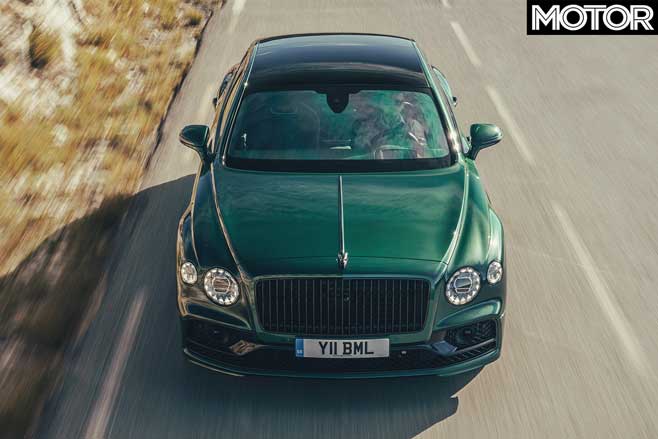
“Resources and technologies of the entire Volkswagen Group are potentially available for this,” said VW at the time of the announcement.
“Duesmann and his Volkswagen Group colleagues also expect the Artemis project to provide a blueprint for the future agile development of cars throughout the Volkswagen Group”.
The broad-reaching strategy was introduced by Duesmann shortly after his appointment and aims to accelerate the development of new models while reducing the cost.
First off the rank will be a crossover that slots in at the large end of the spectrum and, if a derivative joins the Bentley ranks, it will be positioned above the Bentayga in terms of size and premium status.
At the time of the Mulsanne’s retirement announcement, Hallmark alluded that the vacuum created by the outgoing large limo would not remain unfilled.
Expect the big-B SUV to form a new halo of the brand when it arrives, taking the role from the current custodian Flying Spur.
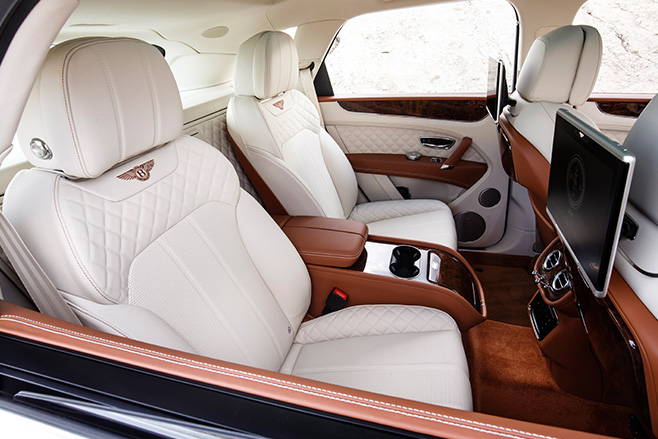
You can bet your last penny the new model will be significantly more fuel-efficient than the 6.75-litre model it effectively replaces, swinging the company’s corporate average fuel economy in the right direction and appeasing tightening emissions regulations.
V8 to EV
However, the most advanced architecture in the stable is also highly likely to introduce more electrification options for the brand. It’s little more than conjecture at this stage but a Bentley EV would align with its Beyond 100 plan.
The strategy has already spawned a plug-in V6 petrol hybrid Bentayga but the company has promised a pure electric vehicle before 2026 and a hybrid version of each model by 2023.
To date, Australia’s most frugal Bentley is the Bentayga Diesel which also borrows Audi bits to return a fuel economy of 8.0-litres per 100km but, diesel is still a dirty word in the eyes of much of the motoring world and its future is finite compared with electric.
The recent developments make the prospects of a production version of the EXP 100 GT concept less bright.
It previewed a sporty electric coupe, but it’s more likely the EV debut will be made by a crossover.
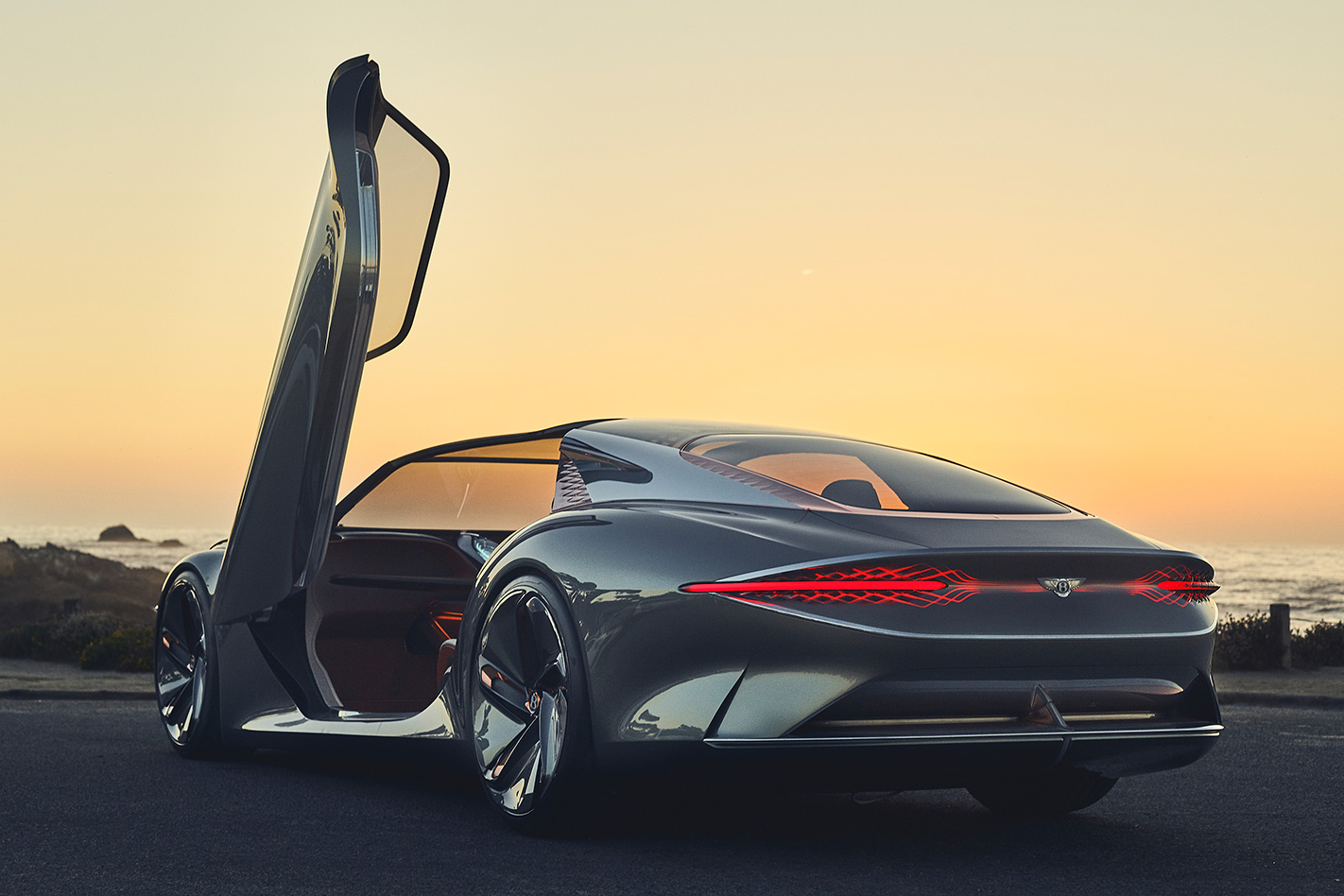
Will it be enough to swing the tide for Bentley? With the full might of the Volkswagen Group soon behind it, it’s possible, but there have been fewer challenging times for the automotive landscape and we could yet see the Bentley brand up for grabs once again.
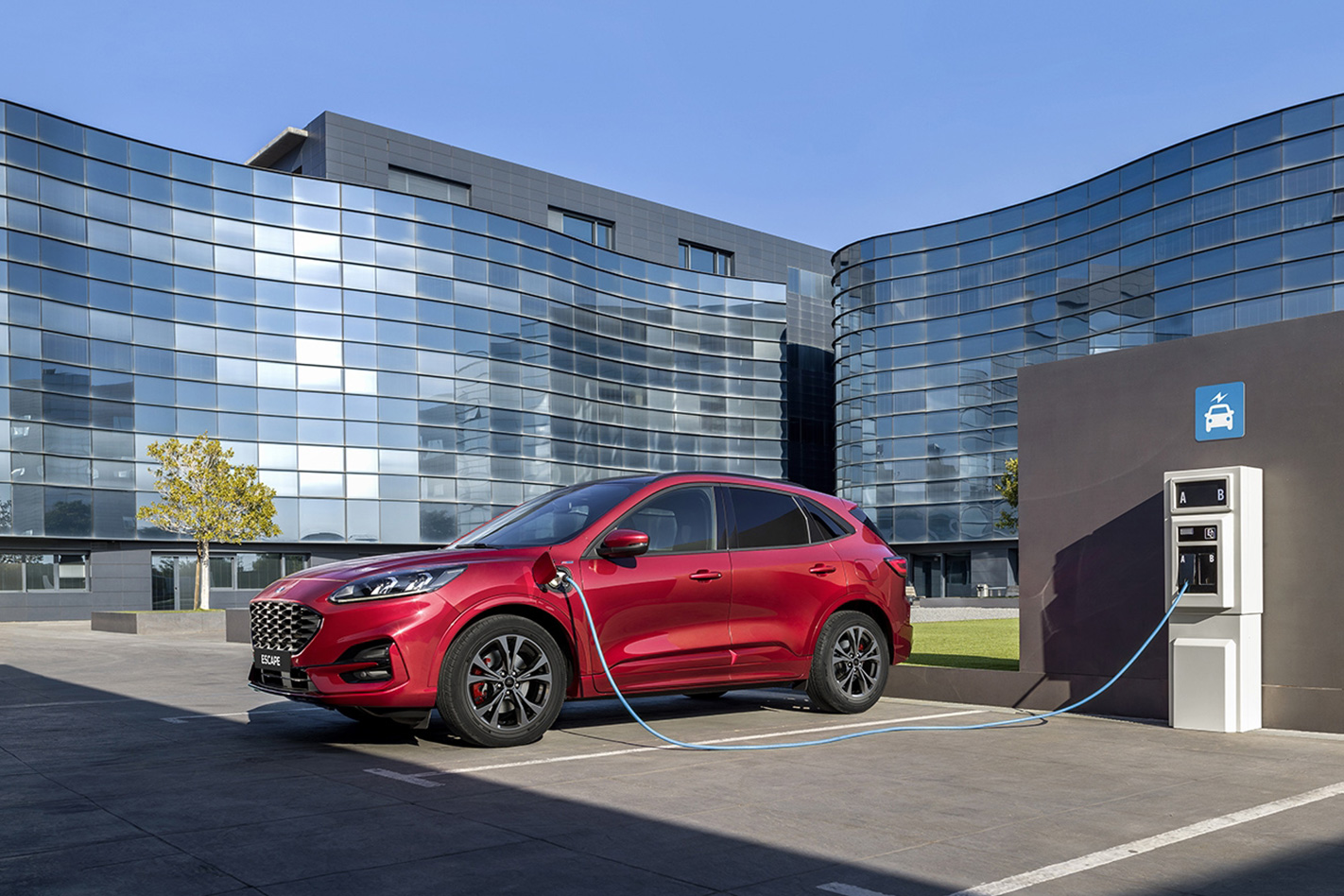
The next-generation Ford Escape will land in Australia this November with a $35,990 starting price ($36,490 drive-away until the end of December 2020), a new flagship variant and a pricey plug-in hybrid (PHEV) option.
The story to here
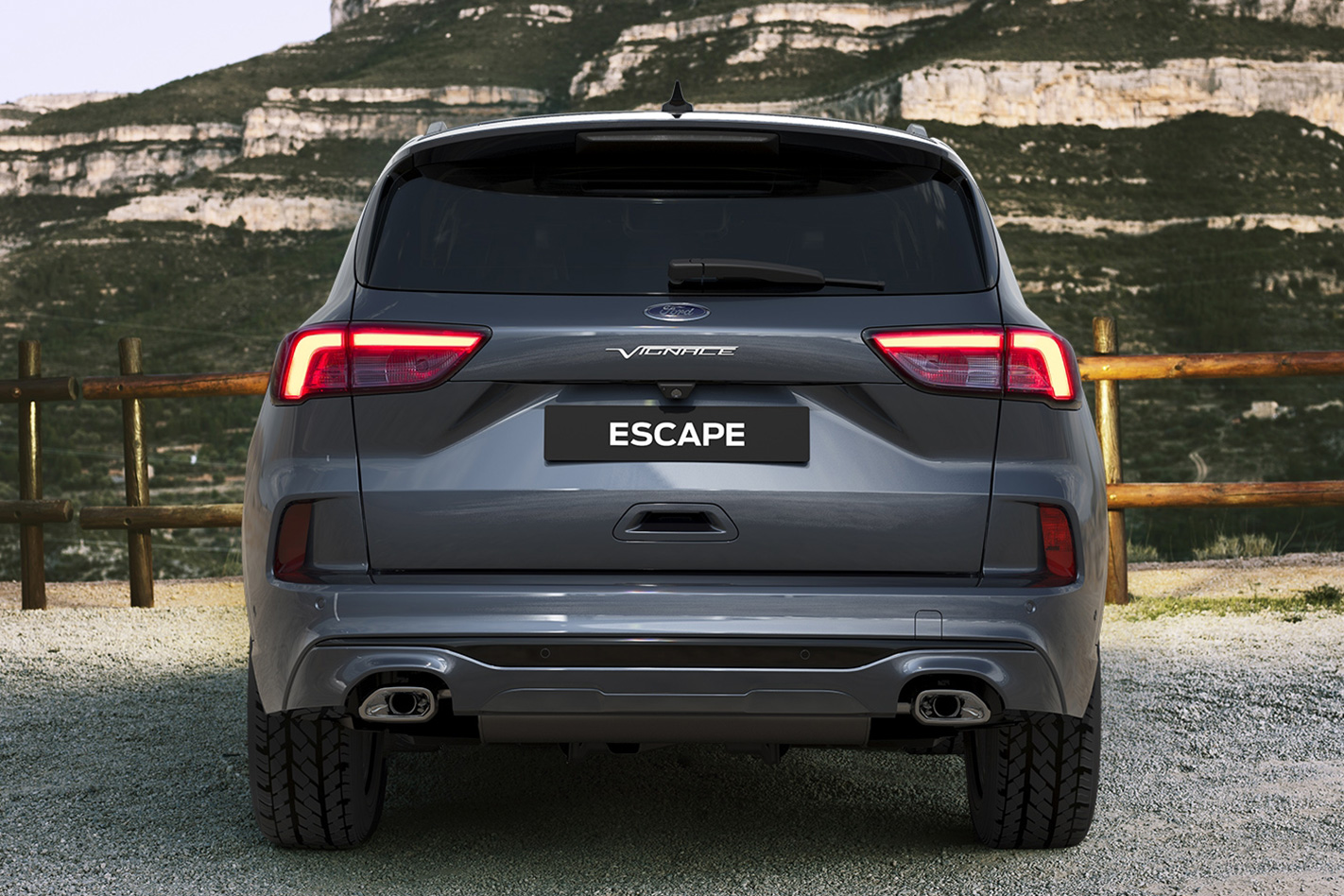
Ford’s new five-seat, five-door medium SUV will be available in three spec grades including the entry-level Escape, along with the ST-Line and the new Vignale, which replaces the Titanium name at the top of the range.
Engines include a 2.0-litre EcoBoost four-cylinder turbo with a choice of front-wheel drive and all-wheel drive, along with the FWD PHEV that’s only available in mid-spec ST-Line guise.
Combining a 2.5-litre four-cylinder Atkinson-cycle petrol engine, electric motor and generator and a 14.4kWh lithium-ion battery to produce 167kW of power, the ST-Line PHEV has an all-electric range of about 50km to help achieve a claimed combined fuel economy figure of just 1.5L/100km.
It won’t be cheap to buy, though, with the ST-Line PHEV FWD the most expensive variant in the range with its $52,940 price tag representing a $14,940 lift over the ST-Line 2.0L FWD.
That price, however, compares well to the lesser-equipped Mitsubishi Outlander ES PHEV ADAS that retails for $47,990, and the up-spec Outlander Exceed PHEV ($55,990).
The Toyota RAV4 Cruiser hybrid is just $41,990 in FWD and $44,990 in all-wheel-drive guise, though it does have a standard hybrid powertrain without the plugin capability as well as a higher 4.7L/100km combined fuel economy.
However, the pricing of the Escape hybrid may change, given that it is now delayed until late 2021, according to Ford Australia.
The Escape’s volume-selling 2.0-litre EcoBoost, meanwhile, produces 183kW/387Nm and is coupled with an eight-speed automatic transmission.
It’s available across the range as a front-driver in the entry-level variant, and with either front- or all-wheel-drive in the ST-Line and Vignale. Claimed combined fuel economy is 8.6L/100km with either drivetrain.
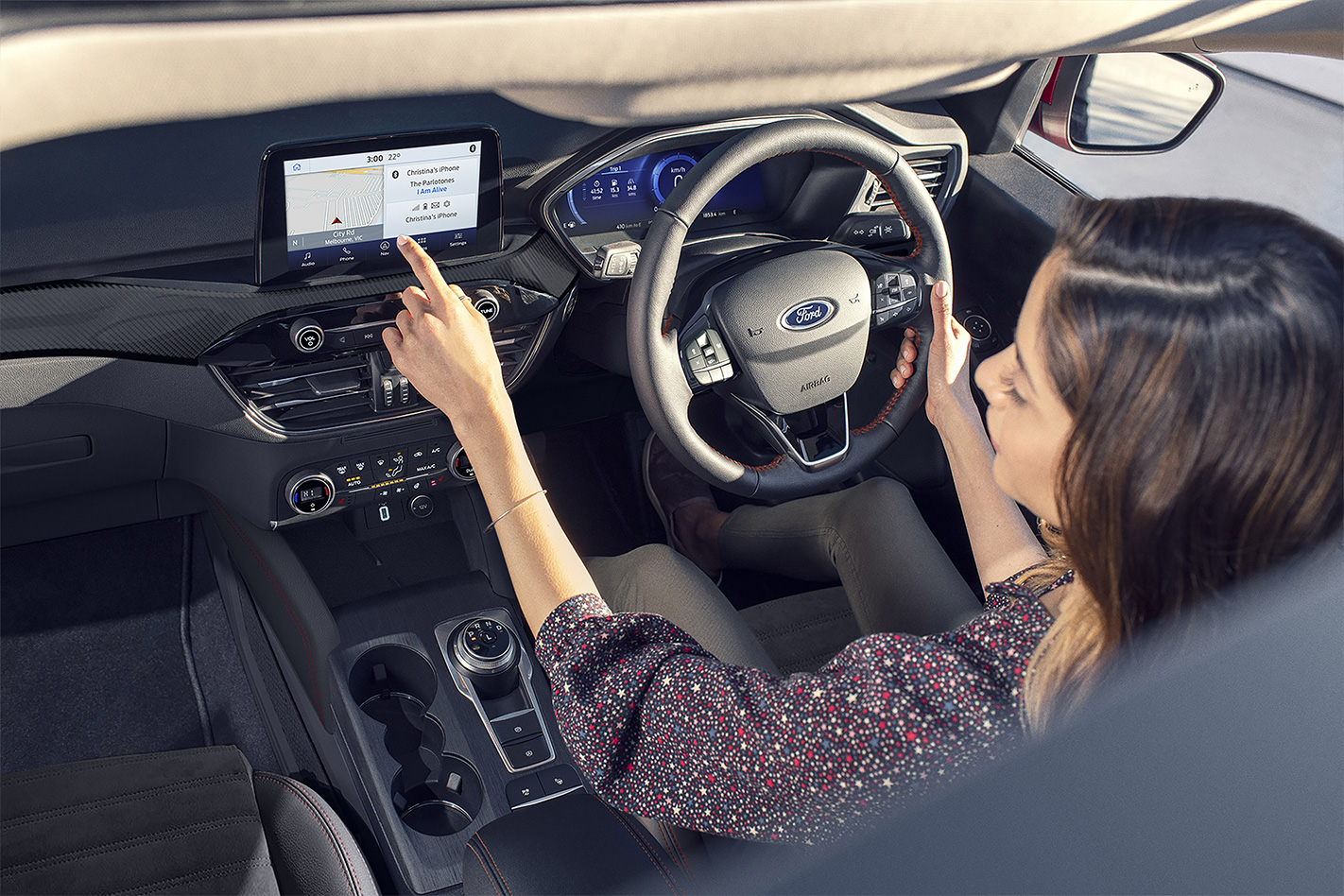
The fourth-generation Ford Escape is built on the same C2 platform as the Ford Focus that allows for a longer wheelbase and wider cabin that brings more shoulder and headroom than its predecessor.
It’s got 25mm more suspension travel than the Focus, and has about 20mm more width and wheel track, according to the Escape’s global lead engineer, Jim Hughes.
“We actually tried to maintain ride height for aero [efficiency], so we’ve tried to contain that 25mm of travel within the architecture itself without significantly changing the ride height,” he told WhichCar.
Hughes also said that the team worked hard to strike a balance between keen handling and ride comfort, confirming that the ST-Line variant actually has different suspension components than the more comfort-oriented Vignale, as well as changes to the “architectural changes in the set-up” of the ST-Line.
“What you’ll see when you drive the ST-Line, you’ll be able to see that it more prioritises handling and direct steering, where you get into the base Escape or Vignale it’s more prioritised to comfort,” he said. “So we’ve tried to provide that balance on the vehicle.”
It’s also a claimed 90kg lighter, thanks to an aluminium bonnet, lighter carpet and insulation, alloy control arms, alloy space save spare, bumper supports, a lighter brake system, hollow damper rods, and even lighter speakers in the cabin.
2020 Ford Escape pricing (until 31 December 2020)
- Escape 2.0L FWD – $36,490 drive-away
- Escape ST-Line 2.0L FWD – $38,990 drive-away
- Escape ST-Line 2.0L AWD – $41,990 drive-away
- Escape ST-Line PHEV FWD – $52,940 plus ORC – Arrival date late 2021
- Escape Vignale 2.0L FWD – $46,520 plus ORC
- Escape Vignale 2.0L AWD – $49,490 plus ORC
The 2020 Escape’s starting MSRP is $7000 more than the current model, but it comes with a more powerful engine and automatic gearbox as standard along with plenty of extra kit including:
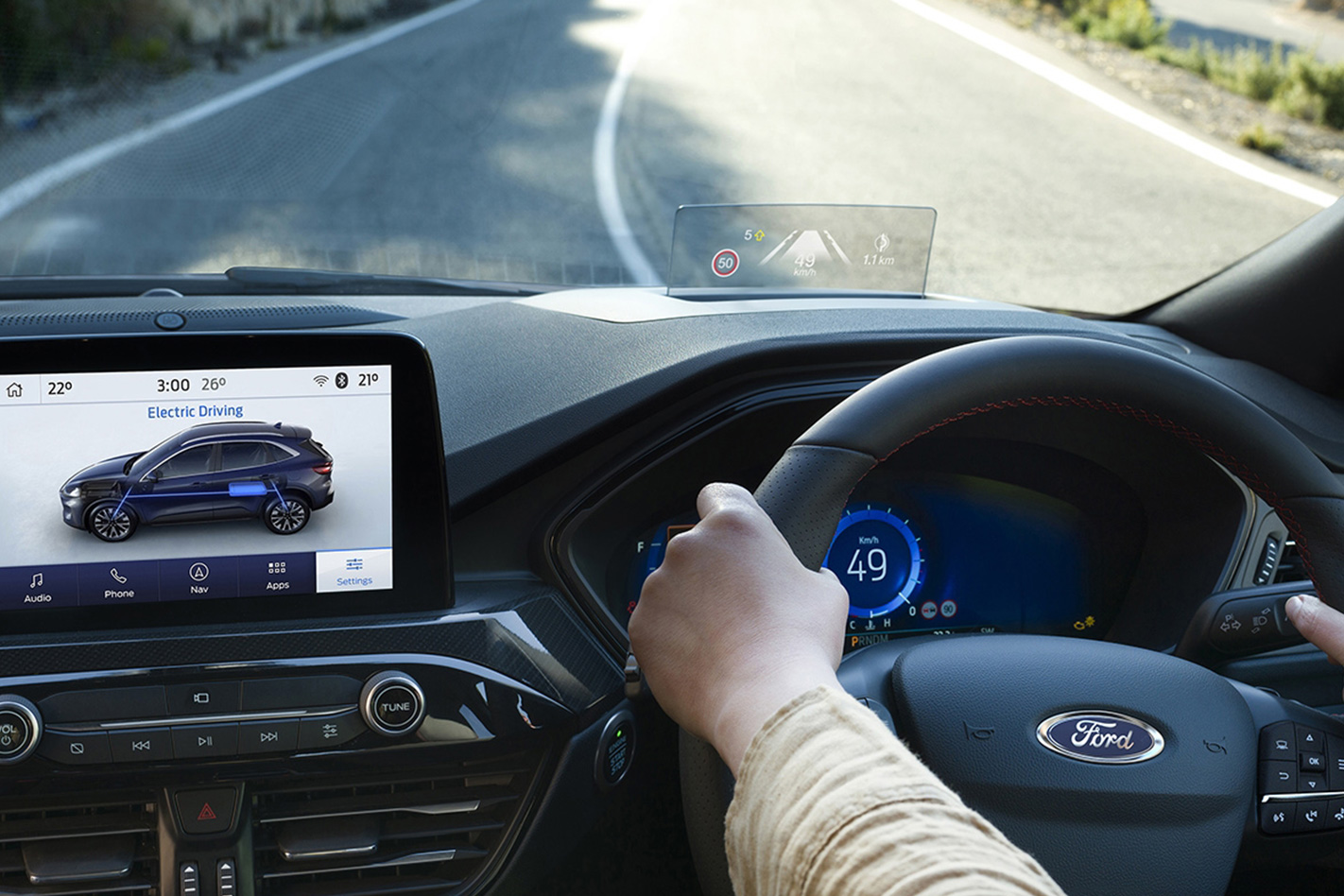
- Push-button start
- Wireless smartphone charging
- DAB+ radio
- SYNC 3 infotainment with Android Auto and Apple CarPlay
- Voice-command in-built sat-nav with Australian accent recognition and Traffic Management System
- 8.0-inch full-colour touchscreen
- Reversing camera
- Front and rear parking sensors
- Power windows with global opening and closing via key fob
- Cruise Control with adjustable speed limiter
- Autonomous emergency braking with pedestrian detection
- Evasive steering assist
- Forward collision warning
- Traffic sign recognition
- Blindspot detection
- Lane keep assist
- Lane departure warning
- Driver impairment monitor
- Tyre pressure monitor
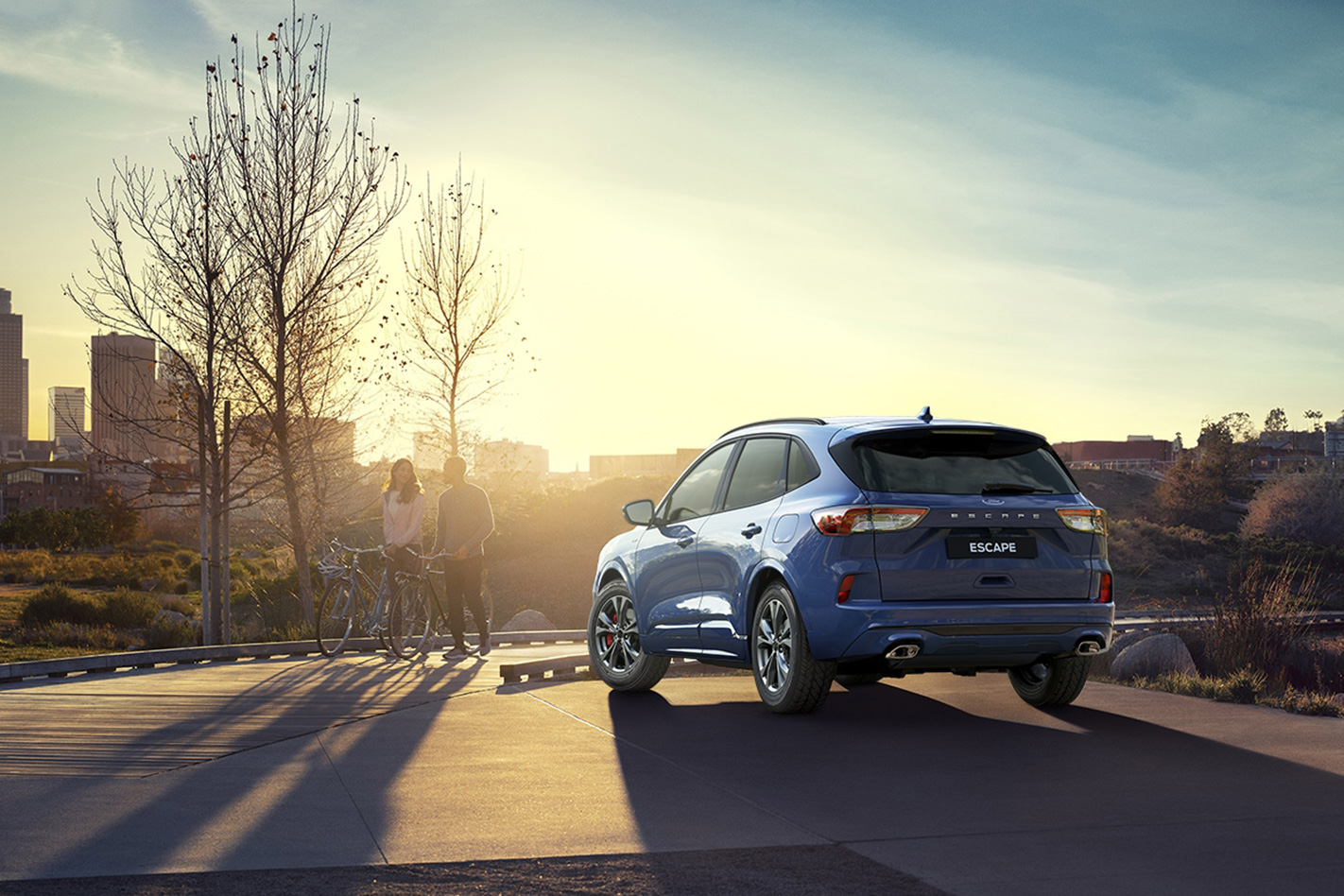
The ST-Line spec adds bespoke 18-inch alloys and upper grille design, sport front and rear bumpers and side skirts, lowered sports suspension, black roof rails and a bigger rear spoiler.
The interior is also a bit racy, with a flat-bottomed steering wheel, red-stitching and metallic foot pedals.
Opt for the ST-Line PHEV and you get partial leather trim, 10-way power-adjustable driver’s seat and a 10-speaker premium audio.
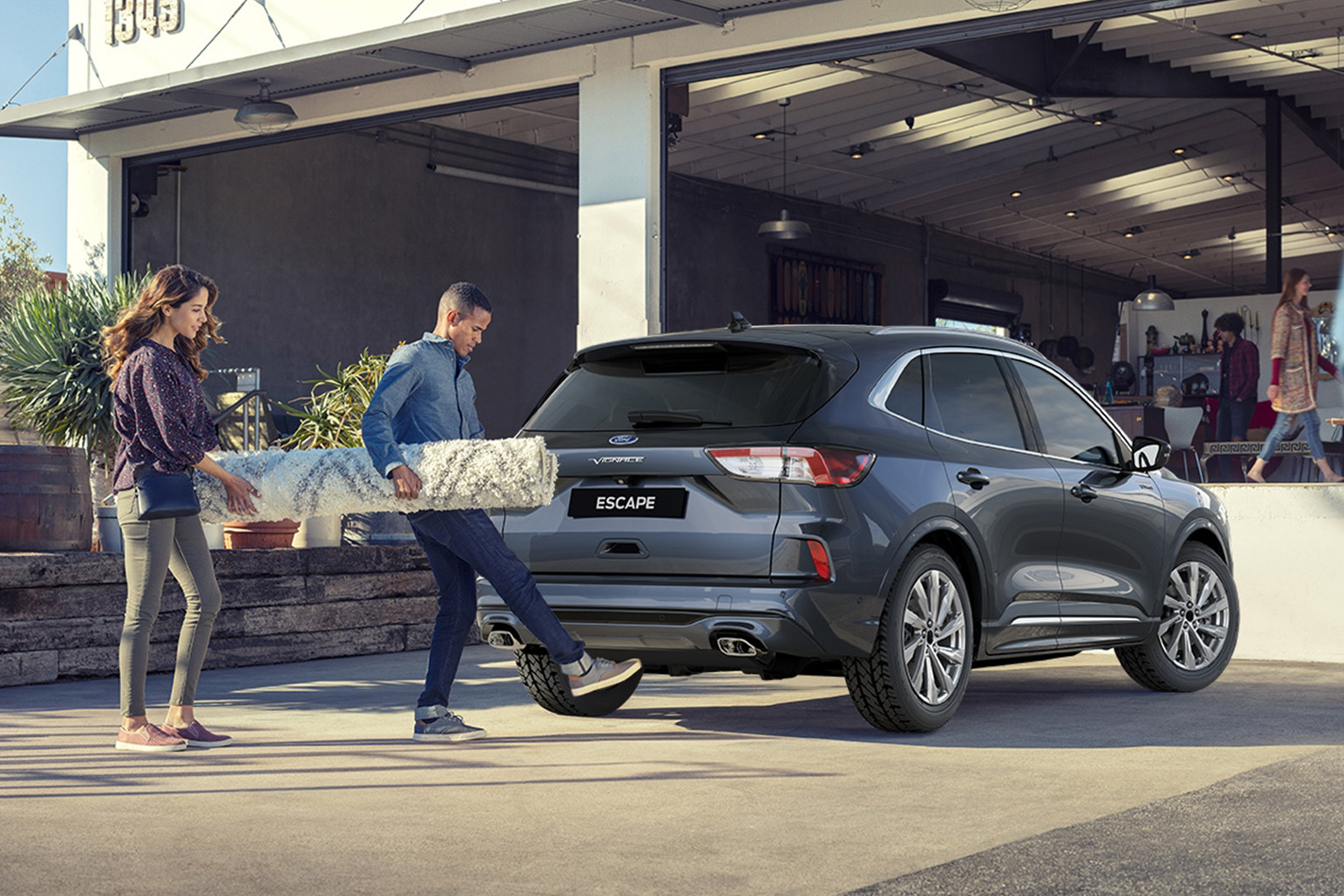
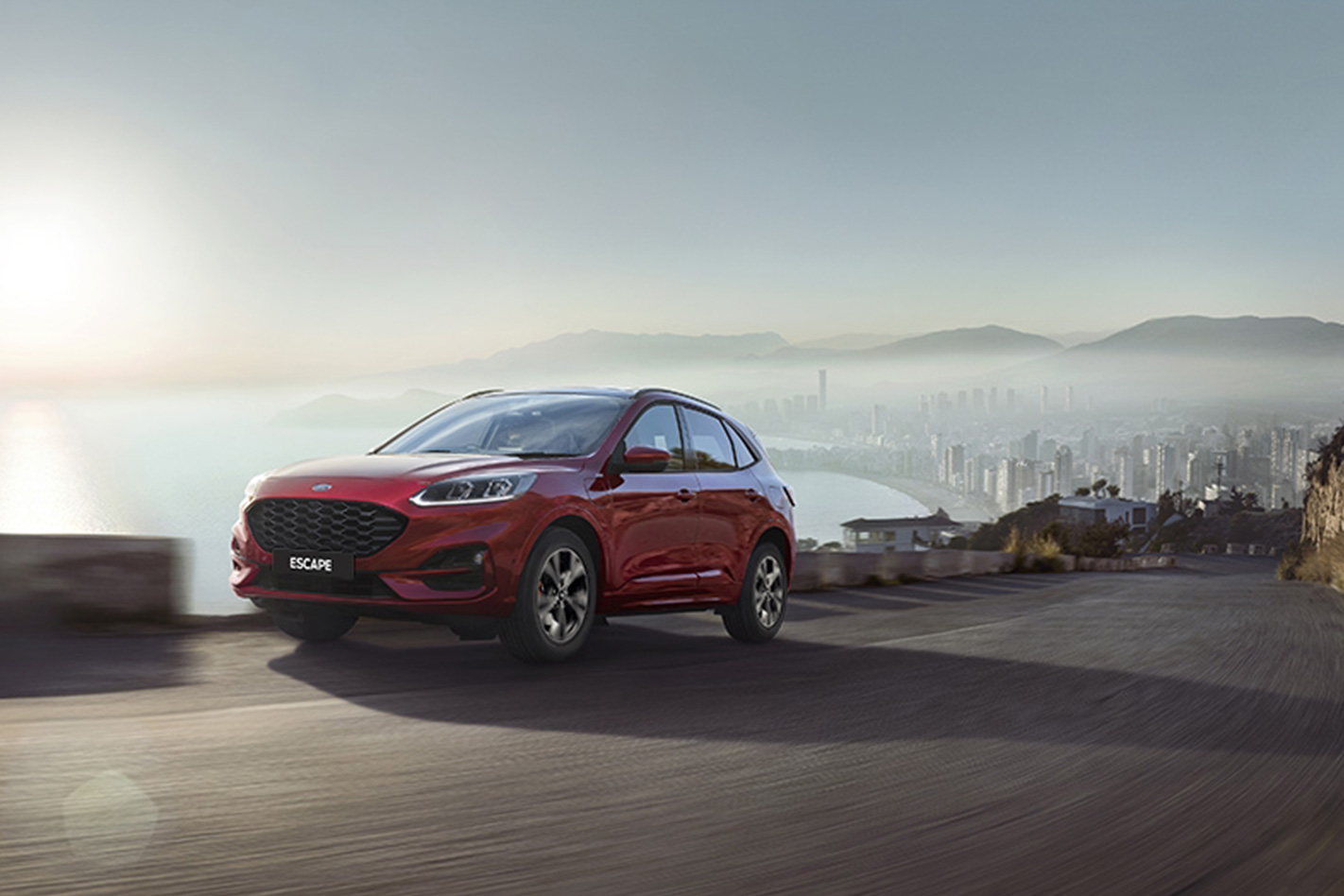
The luxury-focused Vignale sports its own unique body styling that includes a chrome front fascia, 19-inch alloy wheels and self-levelling LED quad-projector headlights with a dynamic bending function to help is ‘see’ around corners.
In addition to the EcoBoost Escape and ST-Line versions, the Vignale comes with:
- Advanced keyless entry
- Heated leather-wrap steering wheel
- Leather accented seating
- 10-way power-adjustable front seats
- Heated front seats
- Heated rear outboard seats
- Panoramic sunroof
- Head-up display
- Hands-free power tailgate
- 180-degree rear-view camera
- Advanced automated park assist.
It also has a service called Ford Guide, who can assist – by phone or email – with any queries about connected services.
The 2020 Ford Escape range will arrive in Australian showrooms around October this year when it will take on the likes of Toyota RAV4, Subaru Forester and Mitsubishi Outlander.
It’s part of a new SUV push by Ford Australia, which began with its Endura large SUV last year and bolstered by the small Puma crossover.
2020 Ford Escape pricing (November 2020)
- Escape 2.0L FWD – $36,490 drive-away
- Escape ST-Line 2.0L FWD – $38,990 drive-away
- Escape ST-Line 2.0L AWD – $41,990 drive-away
- Escape ST-Line PHEV FWD – $52,940 plus ORC – Arrival date end of 2021
- Escape Vignale 2.0L FWD – $46,520 plus ORC
- Escape Vignale 2.0L AWD – $49,490 plus ORC
Contributing: Tim Robson
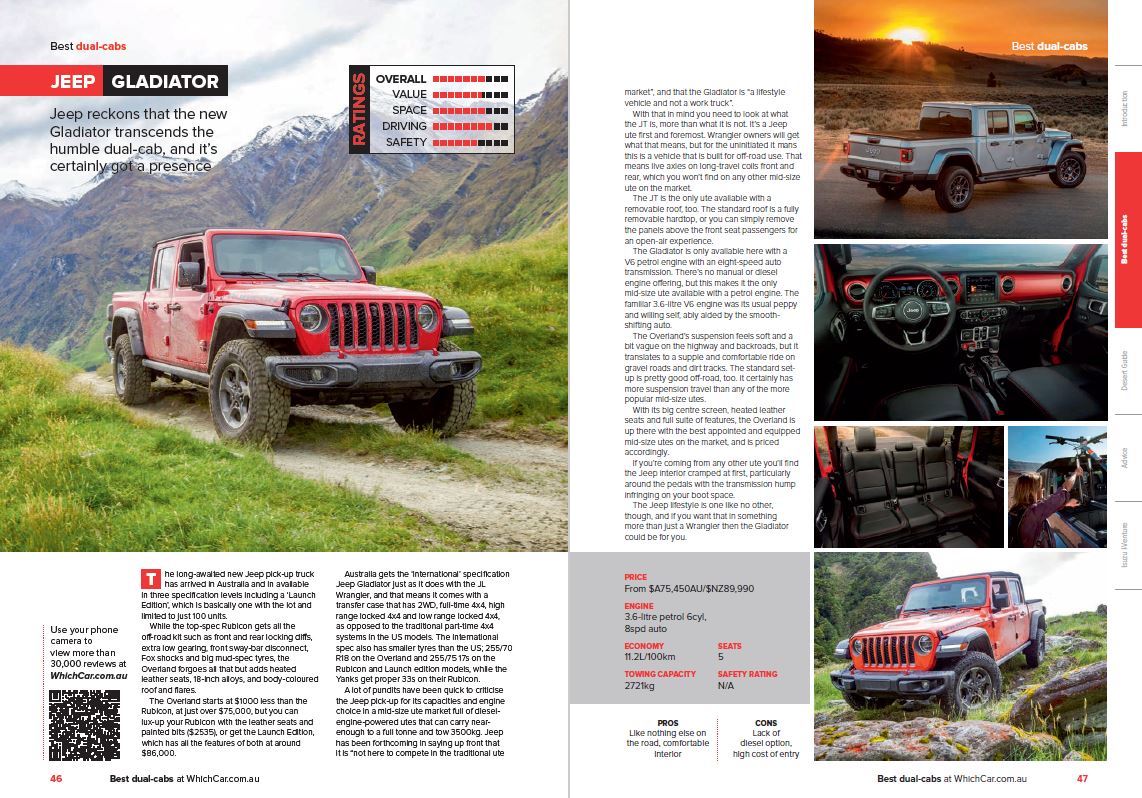
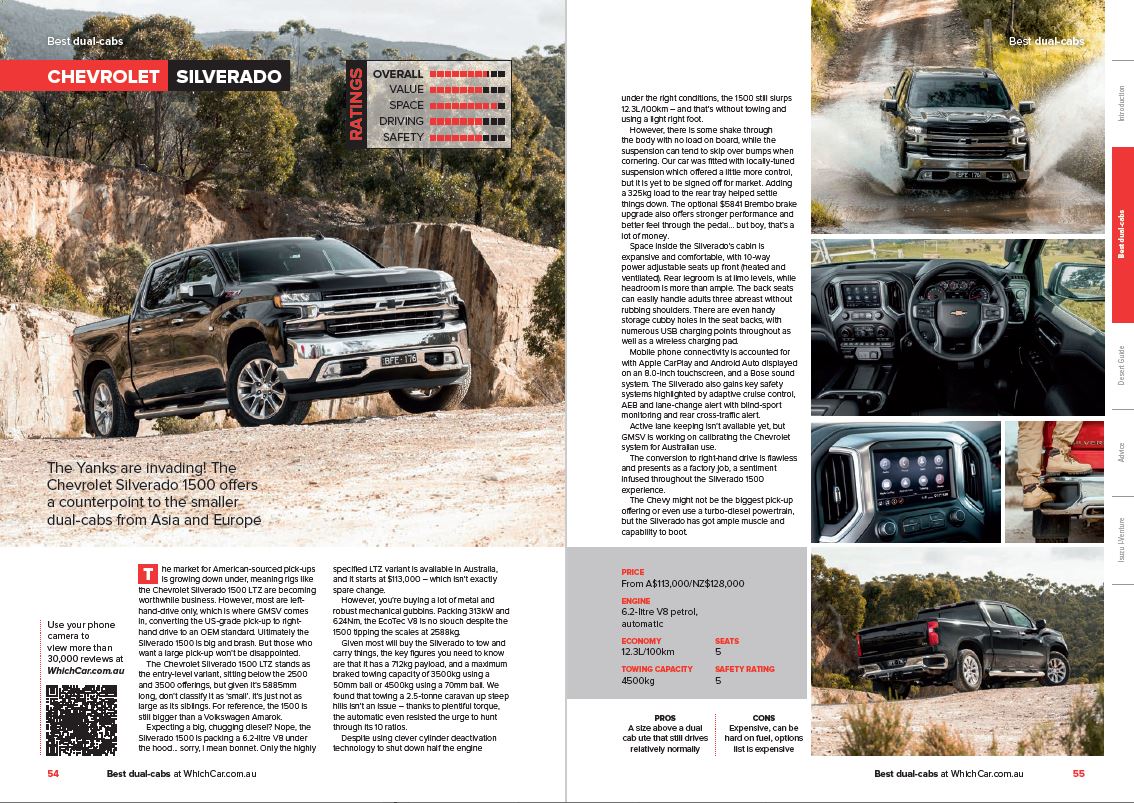
Australians are currently going crazy over the Ram 1500 and Silverado 1500 pick-ups that are fresh, plus-sized additions to the local dual-cab market.
However, there is a third player in the Australian market that has gone largely unnoticed, despite being one of the most popular cars in the world.
We are of course talking about the Ford F-150, which dominates the North American market and has just entered its 14th generation.
So, if you want possibly the most iconic American pick-up of them all, the Ford F-150, and you live in Australia, what are your options?
As much as we may want Ford to sell the F-150 in right-hand drive from the factory, it just isn’t going to happen in the foreseeable future.
Ford Australia similarly doesn’t look set to organise a local re-engineering process by a third party, like that completed by Walkinshaw for GM and Ram, any time soon.
There are, however, several converters outside of Ford that will important and sell F-150 variants in Australia.
While the new 2021 Ford F-150 is about to go on sale in the US, it is the outgoing 13th generation model offered in Australia for now.
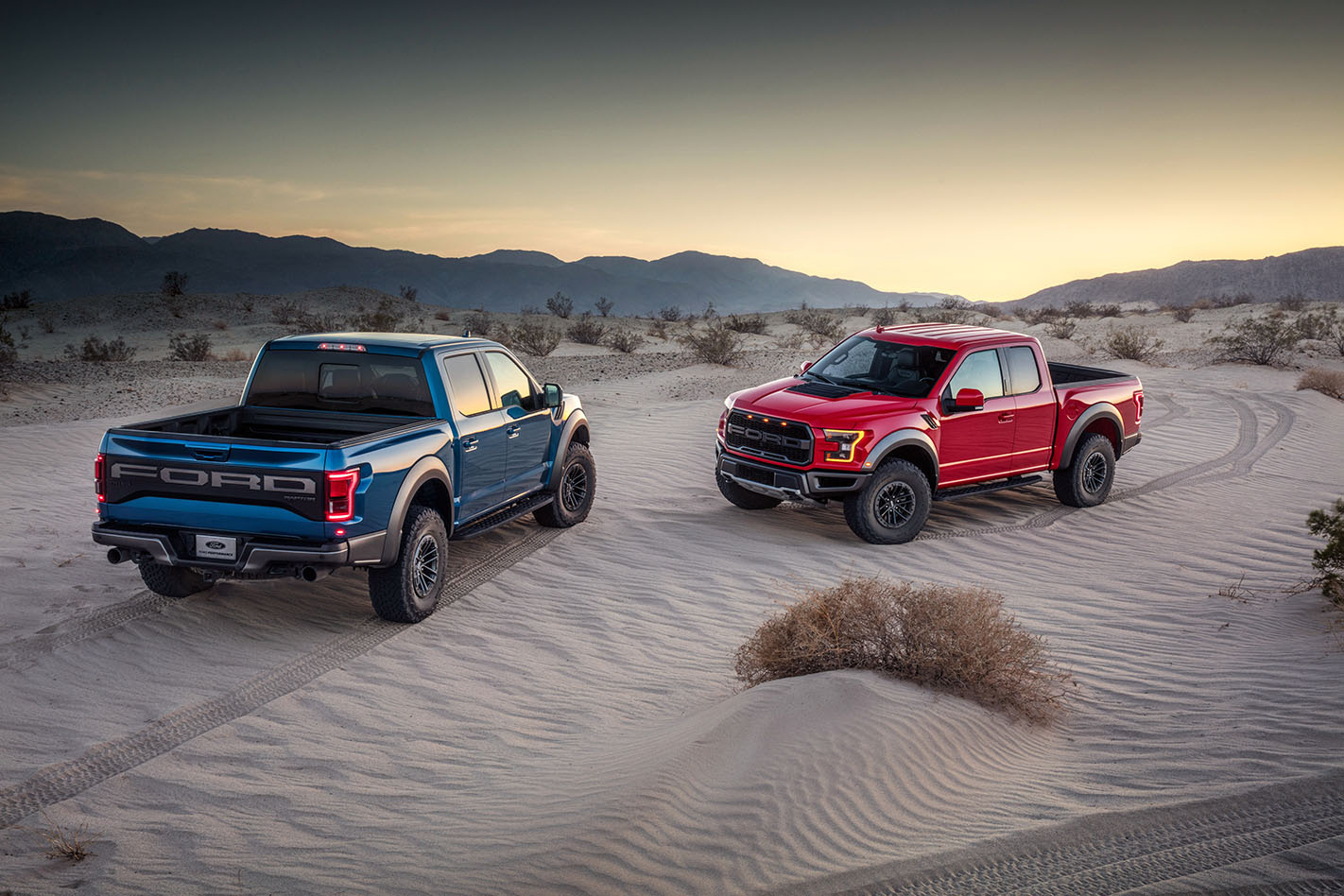
One of the most respected is Performax International, which has a long history in re-engineering American cars and trucks to meet local ADR standards.
Kevin Thoroughgood is a dealer principal for Performax, and he says that the process of buying an F-150 is much like any other car in Australia.
“It’s pretty simple really; you just go to the dealership and buy it,” he tells WhichCar.
However, it’s not quite that simple at the moment.
The combination of booming demand for American pick-ups, and a strained global supply chain, means buyers wanting an F-150 in their driveway may have to wait for quite a while.
“COVID has changed everything this year, so there is a bit more to it currently,” Thoroughgood adds
“But normally I would have vehicles sitting here, or all our dealers would have vehicles, and you can just go to them or ring up and buy one off the showroom floor.
“This year, due to demand absolutely smashing supply, you could be waiting up to a year.
“We had a lot of stock early in the year, and by mid-year, we were sold out.
“We’ve got stuff coming all the time, our factory is busy, and our dealer has got orders, but everything is sold. All seven of our dealers have already sold out everything that we have coming to Australia.
“We are running at full production as well, we can’t produce any more.”
If you have your heart set on buying an American icon, Performax offers multiple ways to put a brand-new F-Truck in your garage.
“There are three ways to buy,” Thoroughgood explains. “You can get one off the showroom floor if we have something in stock – which in a normal world we would have, this year is an exception.
“The second way is you can buy out of inbound stock that we have already got coming that suits.
“The third way is to do a factory order, which means we order exactly what you want from the Ford factory through a dealer in Canada and wait until it gets built.”
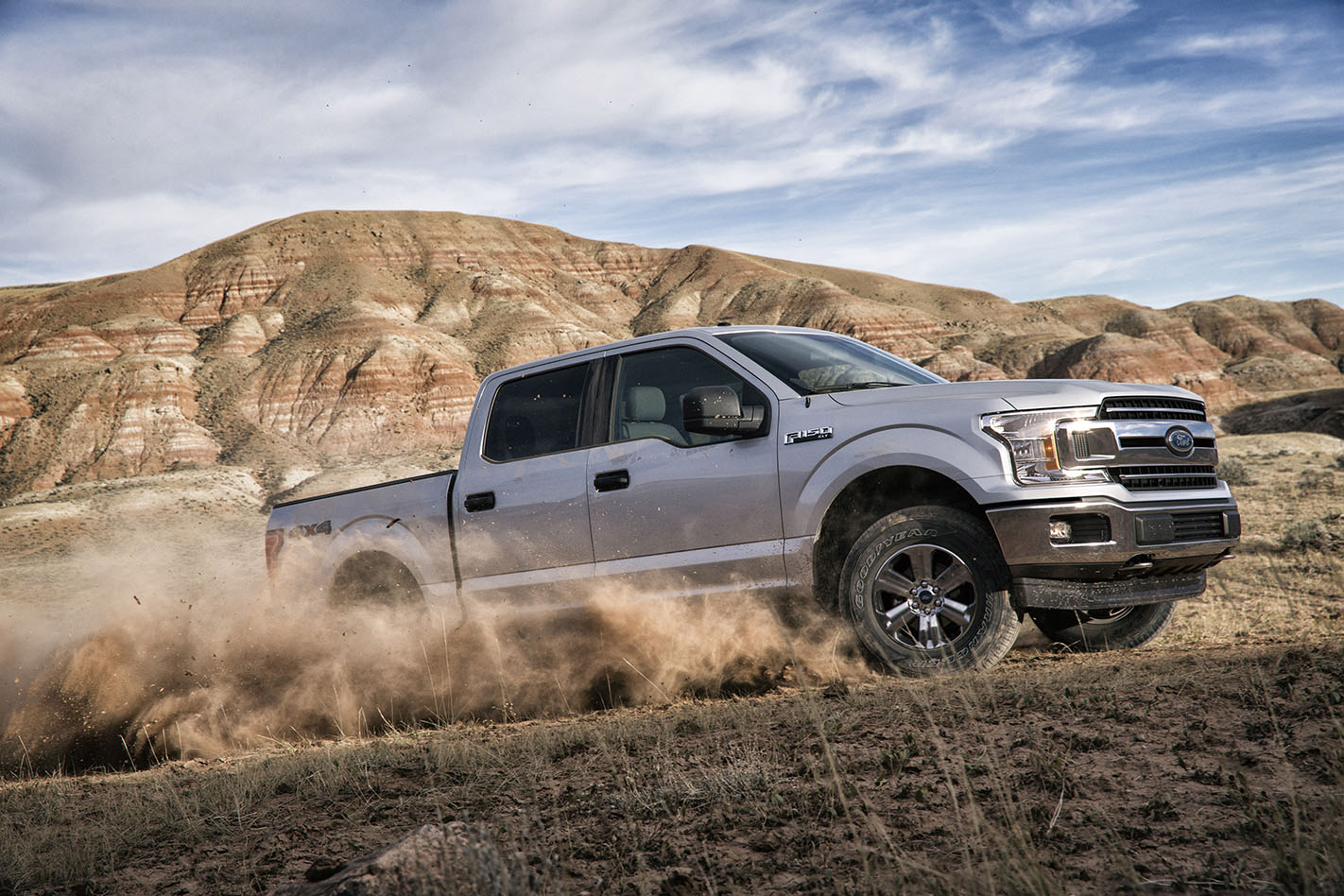
A combination of high demand and manufacturing delays means it the third option can result in a lengthy wait.
“A factory order in the current climate is taking nine to 12 months,” Thoroughgood adds.
“Normally we could do a factory order in less than six months, but now with manufacturing delays in the US it is an easy nine to 12 months wait to get something specific.”
According to Thoroughgood, getting the car prepped to meet Australian standards is one of the quickest parts of the buying process.
“The conversion only takes one to two weeks,” he added.
When it comes to pricing, Performax offers a range of different models to suit a wide variety of budgets – not just the desert smashing Raptor.
“An F-150 can range from $99,000 to $250,000 depending on what the customer wants,” Thoroughgood continues.
“It is like going and buying a BMW. You can start off with the basic 3 Series, or go right through to the M Series with everything on it and there is over a $100,000 difference between the top and the bottom.
“XLTs are usually around the $120,000 mark, which is a fairly high-spec cloth-trim model. They are not basic, but very well optioned with two power seats and a sunroof etcetera.
“A Lariat, with a lot of gear in it which is what most people would buy, is between $135,000 and $145,000 usually. That’s depending on what options they want to choose and which packs they add.
“Raptors run into the $190,000 bracket if you go fully optioned. A Raptor buyer doesn’t buy a cloth-trim model, they buy the top of the range. And a Raptor isn’t the highest we go either, we can bring in Shelby Trucks and Black Ops by Tuscany – we’ve got a licence to do all those as well.”
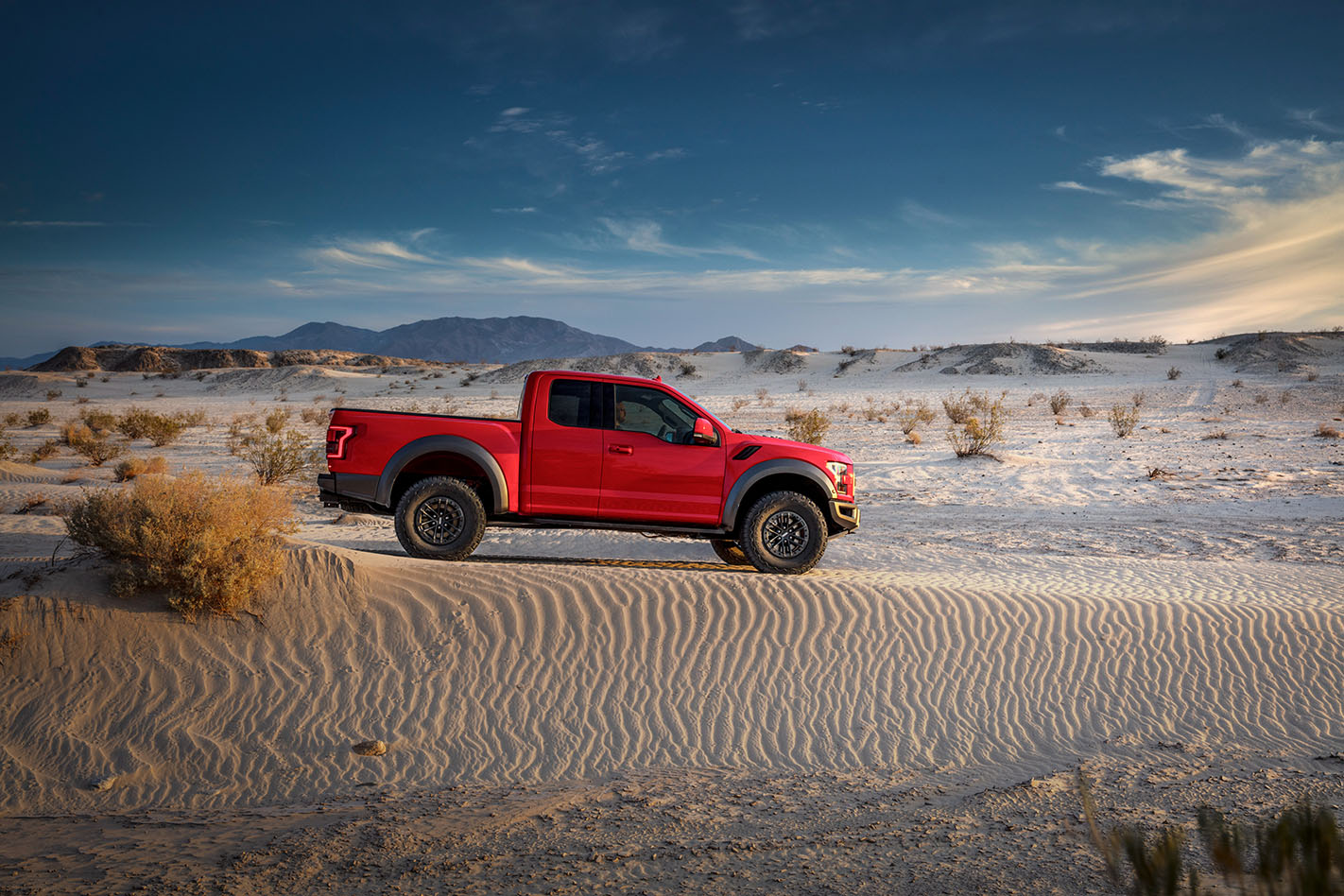
Features that most Australians would expect to come as standard locally are optional extras in North America, which is something to be factored into budget considerations.
“An F-150 Lariat, you could probably get it for not much more than something like a Toyota LandCruiser Sahara, but there will be $20,000 of possible options, so that truck can all of a sudden get up to around $150,000.”
Interestingly, while it is the hero model in the F-Truck range, Thoroughgood says that most of the people that enquire about buying the flagship F-150 Raptor actually end up purchasing a different variant.
“When Raptors were really hot, we had a bunch of them and a heap in stock,” he explains. “But now they are a dream car for people that don’t really know how to drive them or what they are used for. Once we qualify them, we find out they are not really Raptor buyers.
“Anyone that calls up for Raptor, for 95 percent it isn’t the right car for them. They actually normally end up going for Lariats or XLTs.
“A lot of people don’t understand what a Raptor is. It is a Baja pre-runner, used for the Baja races as a car to go out and test the tracks, and that is what they were built for.
“They are not built to carry anything, they can’t carry a payload, and can’t tow much. Raptors are Ferraris for off-road. Not practical, but a lot of fun.”
Despite F-150s being intrinsically linked with the good ol’ United States of America, Perfomax imports the majority of its models from Canada.
This is in part due to a more reasonable currency exchange rate. The F-150s are still built in their US factories
All F-150s are built in Ford’s Dearborn plant in Michigan. The Ontario Truck plant in Oakville once built F-Trucks in Canada, but that facility was closed in 2004.
“The US exchange rate is not very favourable, and if we were buying from the US the prices would be exorbitant,” Thoroughgood adds. “It would be too much.
“Prices are already at a level that we don’t really like them at, but you can’t help it. No one in Australia would pay the price for a US-sourced car.”
All F-150s sold by Performax are re-engineered to right-hand-drive in Australia, and are offered with a five-year warranty.
The local converter also stocks all the spare parts necessary for servicing and upkeep of the vehicles it sells locally.
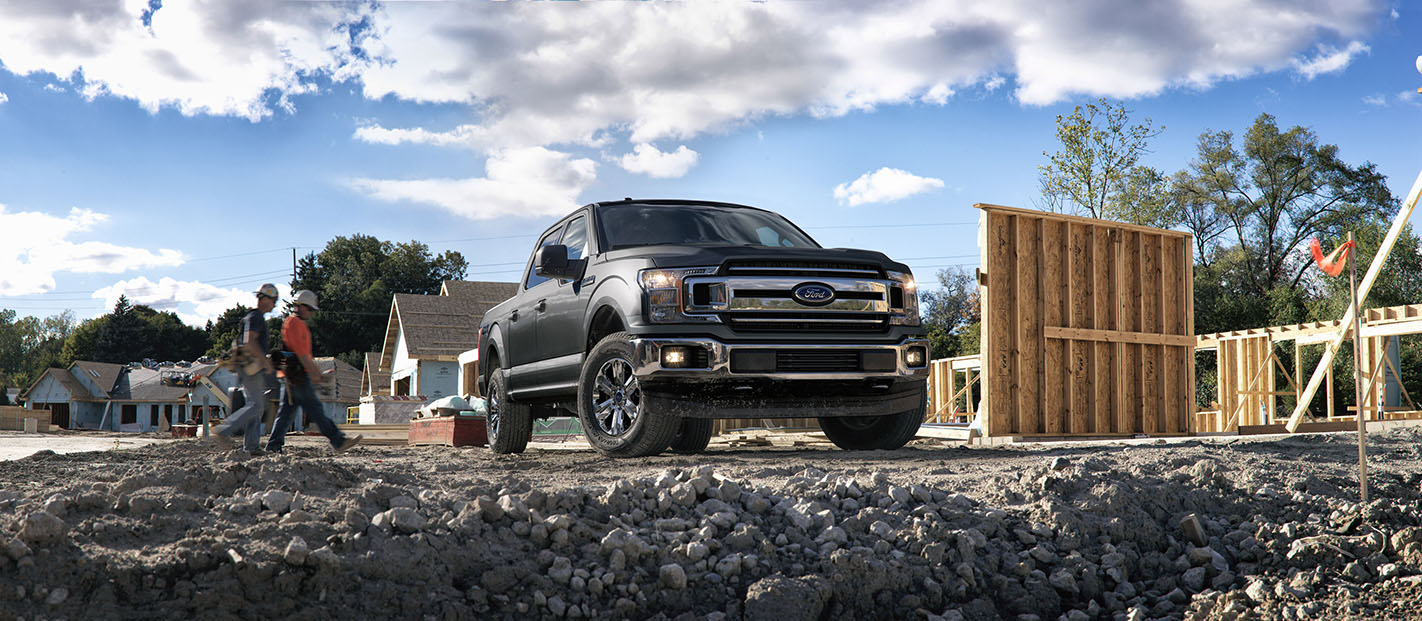
Somewhere in the depths of a workshop in Sydney, a remarkable thing is happening: the resuscitation of what is probably the world’s most desirable Japanese car, and certainly an internationally-recognised top-end classic.
It’s a 1967 Toyota 2000GT.
Just 337 production versions are thought to have been made, for a total of 351 including pre-production prototypes.
Powered originally by a Yamaha-designed double overhead cam straight-six engine, these gems came to international attention thanks to a drive-in role in the 1967 James Bond movie You Only Live Twice, starring Sean Connery.
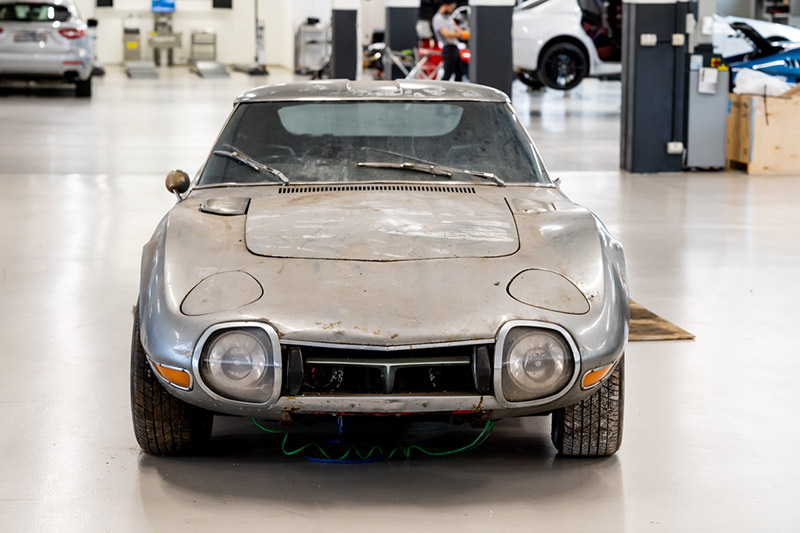
The first version of the GT, the MF10, is the most desirable.
What you see here is an MF10, which hadn’t – until recently – seen the light of day for the best part of four decades. It’s being restored by the McCarroll’s automotive group in Sydney.
What shape was the GT in? “Horrible,” said Phil McCarroll. “We do a lot of classic cars here and this is the furthest away from what was presented by the factory.
“The chassis was modified, the engine was wrong, the gearbox was wrong, rear trailing arms modified, chassis cut open.”
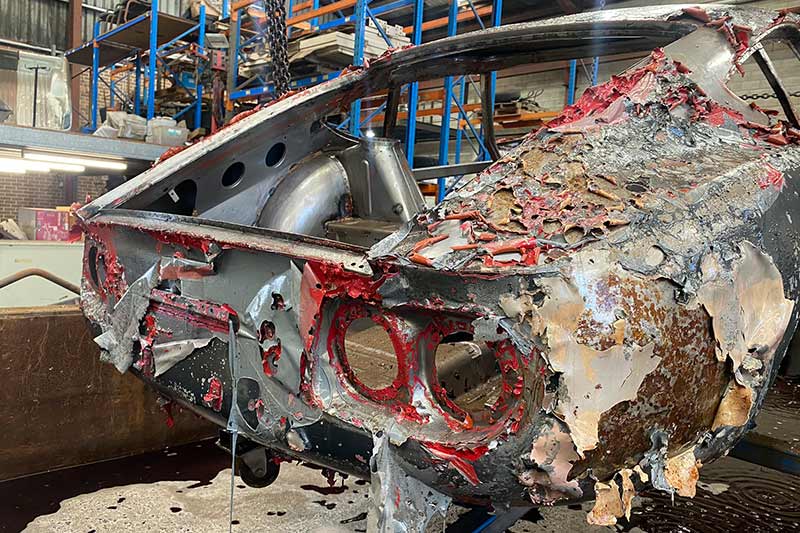
For more on this incredible tale of automotive rescue, click here
The Aston Martin and Mercedes-Benz relationship has gotten closer, with Mercedes-Benz taking a 20 per cent stake of the famous British marque in exchange for shared drivetrain technologies.
It’s a natural progression for the two – Mercedes-Benz has shared a number of its engines with Aston Martin since 2013, Aston’s new CEO Tobias Moers is formerly of Mercedes-AMG, and Mercedes’ stake in Aston climbs from its current 2.6 per cent holding.
The deal won’t actually involve a monetary trade for a larger slice of ownership pie; rather, Mercedes-Benz will provide next-generation hybrid and electrified powertrains to the beleaguered British marque.
It also gives Mercedes-Benz bigger economies of scale for its own costly EV research and development program.
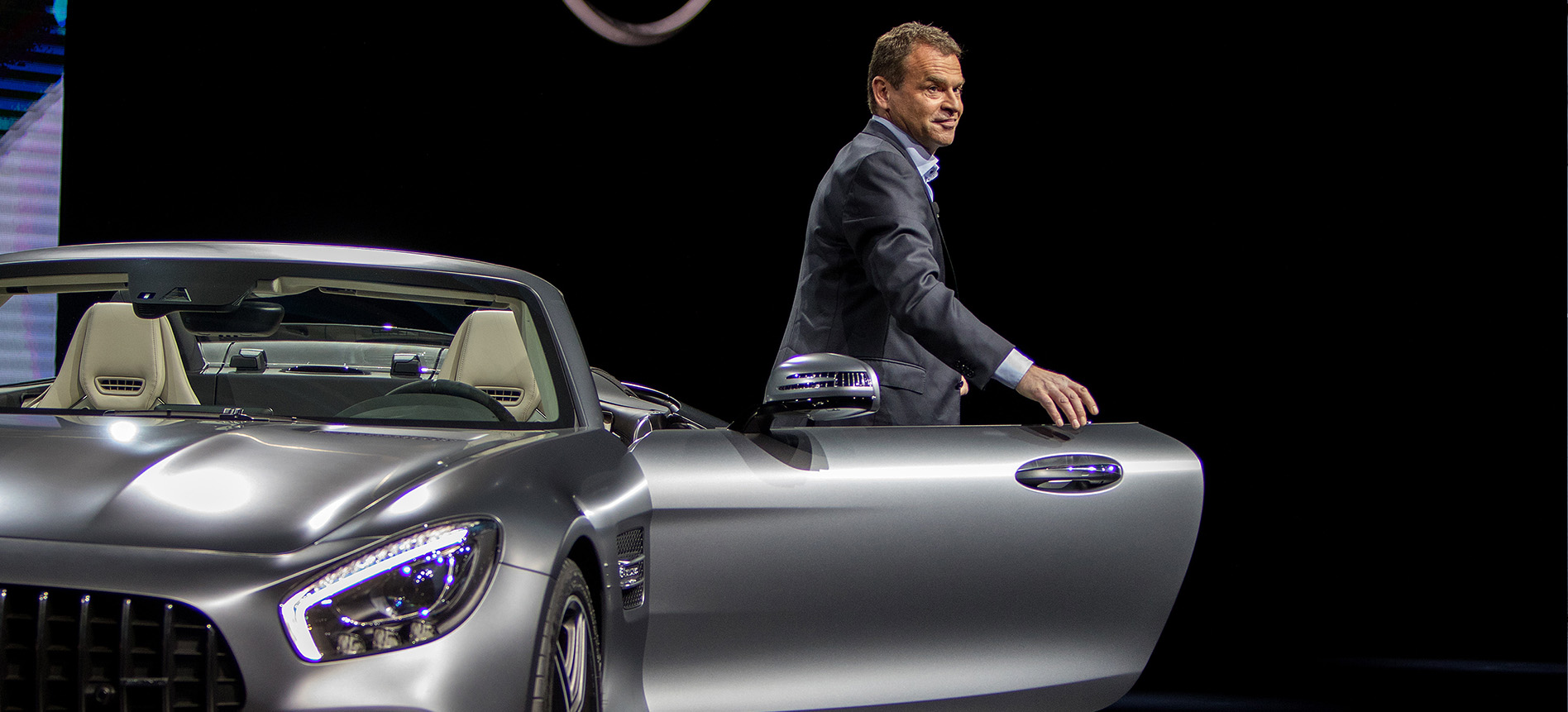
In return, Aston Martin will grant Mercedes-Benz new shares in its company in various stages over the next three years.
As of today, the would-be 20 per cent equity stake is worth £286 million (AU$523,265,000).
Further stages of the deal will involve a direct commercial trade for technology packages, with the finer value details still to be decided, but Mercedes-Benz has said it won’t take any more than a 20 per cent stake in Aston.
Mercedes-Benz will also install a non-executive board member into Aston’s ranks.
The new plan comes at a particularly critical time for Aston Martin, which is struggling under the weight of a coronavirus-triggered downturn.
In the first six months of 2020, sales were down 41 per cent, selling just 1770 cars. This is despite increased sales for brands like Porsche, Audi and Ferrari.
Extensive spending on a new factory in St Athan for Aston Martin’s first SUV, the much-delayed DBX, also would not have helped the bottom line.
It also shelved advanced plans to roll out a bespoke electric platform under a reborn version of its four-door saloon, the Rapide E, earlier this year.
However, these plans could now be revisited, thanks to its access to Mercedes-Benz’s growing EV portfolio.
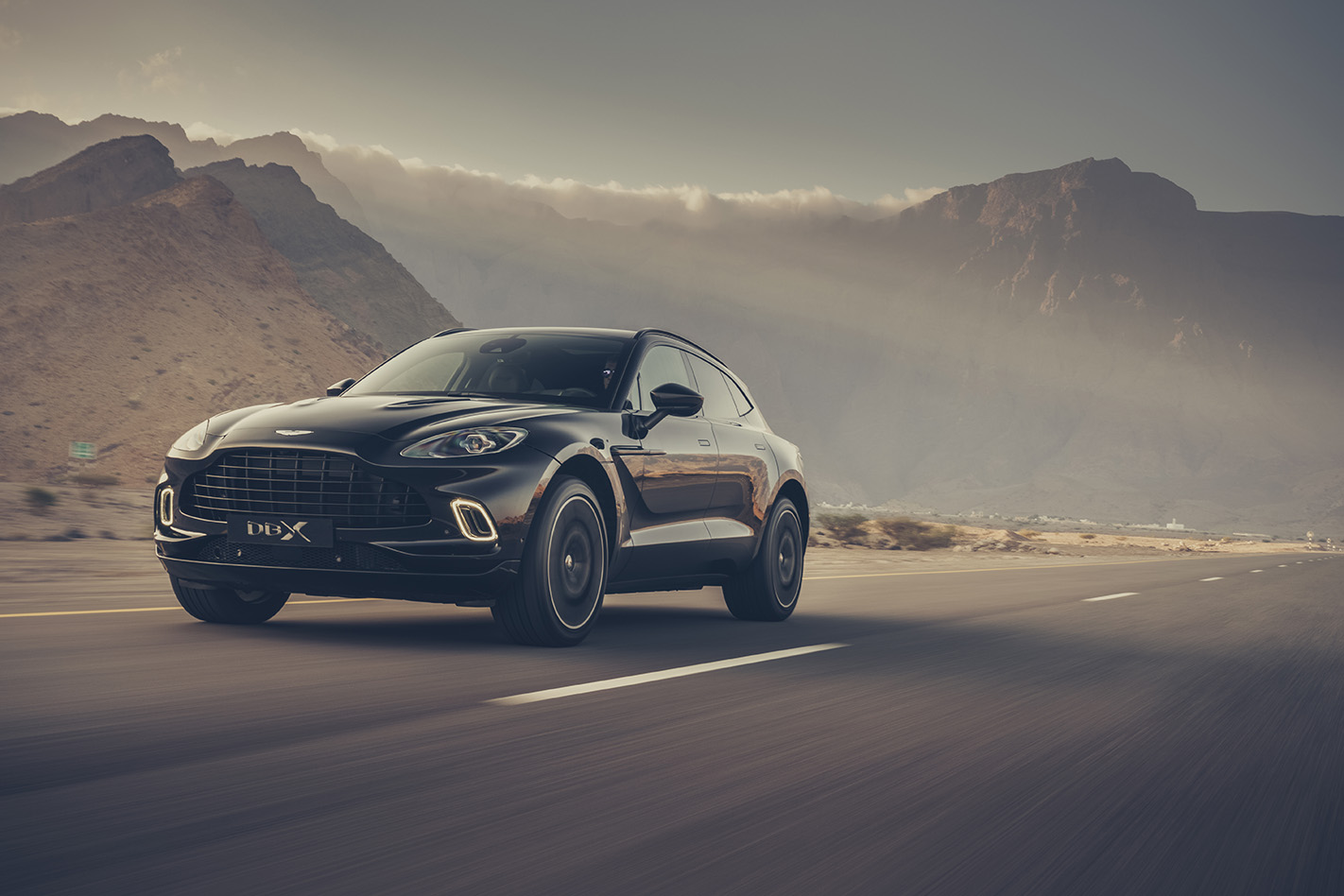
This new turn of events was kickstarted by new executive chairman Lawrence Stroll, who installed Tobias Moers as CEO mid-way through the year and formed plans to turn his Racing Point Formula 1 team into a factory Aston Martin squad for 2021.
“Today, we take another major step forward as our long-term partnership with Mercedes-Benz AG moves to another level with them becoming one of the company’s largest shareholders,” said Stroll.
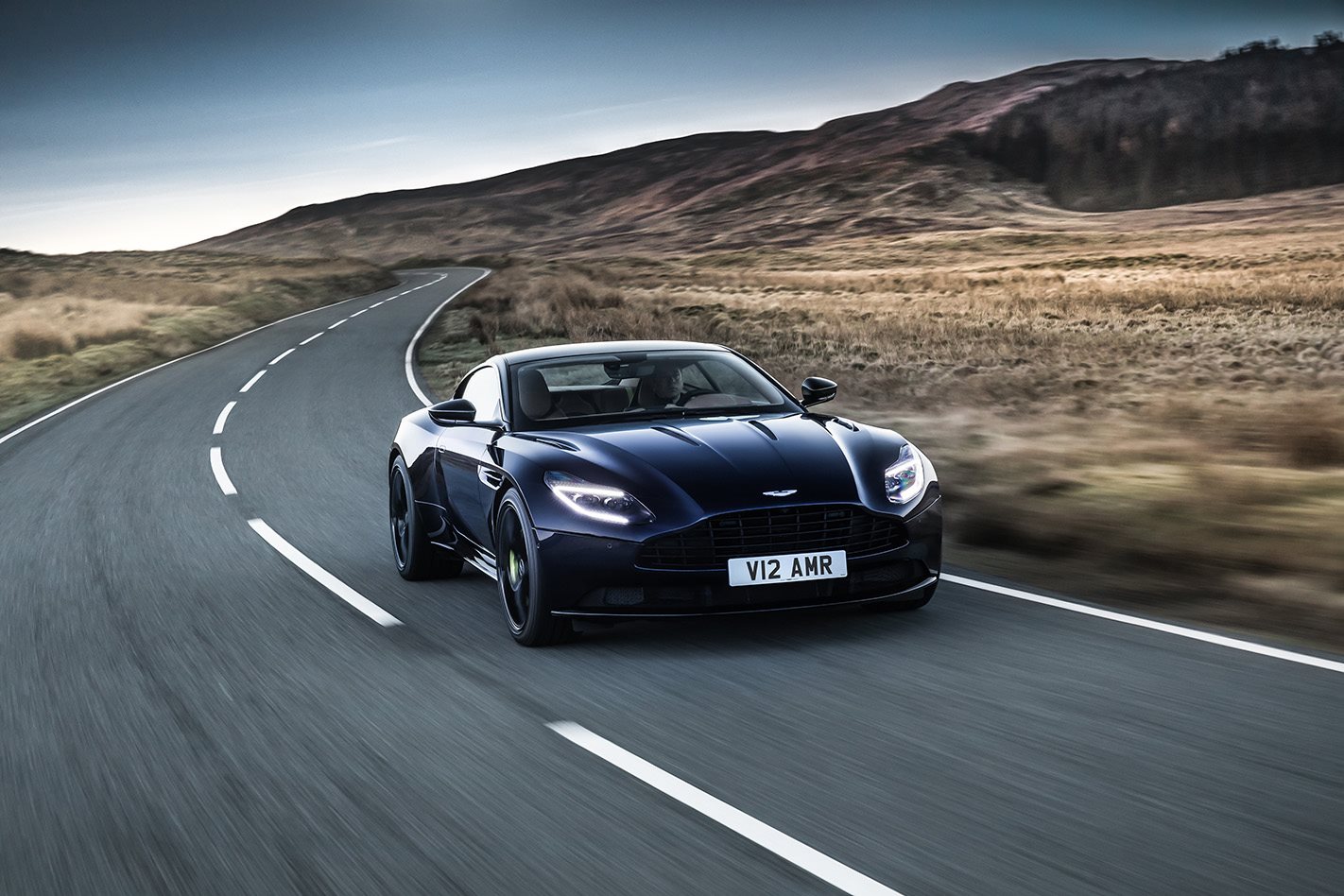
“Through this new expanded agreement, we secure access to world-class technologies to support our long-term product expansion plans.”
Aston Martin is aiming to sell 10,000 cars and generate £2 billion (AU$3.6b) in revenues by 2025.
An independent report tendered to the Federal Court of Australia has pointed to design defects in thousands of Toyota diesel-engined dual cab utes and SUVs, as the class action over its diesel particulate filter performance takes a step forward.
The report also claims that none of the methods used by Toyota to solve the problems – which, the suit alleges, include excess fuel consumption, ‘”foul-smelling” smoke and additional repair costs to the customer – have been effective in solving the issue.
These methods, according to the report, have included at least three engine computer updates, a change in the precious metals used in the DPF, the addition of a manual override button to force the DPF to work, and even so-called ‘super burns’ on the affected filter performed at dealerships.
“The core defect was that the DPF system was not designed to function effectively during all reasonably expected conditions of normal operation and use in the Australian market,” wrote the author of the report, David P Garrett, who is president and principal consultant at Garrett & Associates, and a former emissions compliance expert at General Motors.
“The countermeasures attempted by the Respondent [Toyota] during the Relevant Period [2015-2018] were ineffective to remedy the problem, and in some cases caused the DPF System to malfunction in Relevant Vehicles [vehicles belonging to the participants in the suit] which had not previously suffered from any defect consequences.”
The suit, which names Kenneth John Williams as the applicant, alleges Toyota’s most popular diesel engine – the 1GD-FTV 2.8-litre four-cylinder turbocharged diesel found in the HiLux, Prado and Fortuner – is fitted with a potentially poor quality diesel particulate filter (DPF) that is costing vehicle owners money.
The diesel particulate filter sits within the exhaust system of the affected engine, capturing diesel particulates and incinerating them at regular intervals.
“The court has today adopted a report by an independent expert which confirms that Toyota sold hundreds of thousands of Australians defective Hilux, Prado and Fortuner diesel vehicles,” said Charles Bannister from Bannister Law.
“This is an important step towards obtaining compensation for all of those people who were sold defective cars they were told were “unbreakable”, who missed days off work while their cars were at the mechanics and who had to sit in at the traffic lights in clouds of foul-smelling white smoke.”
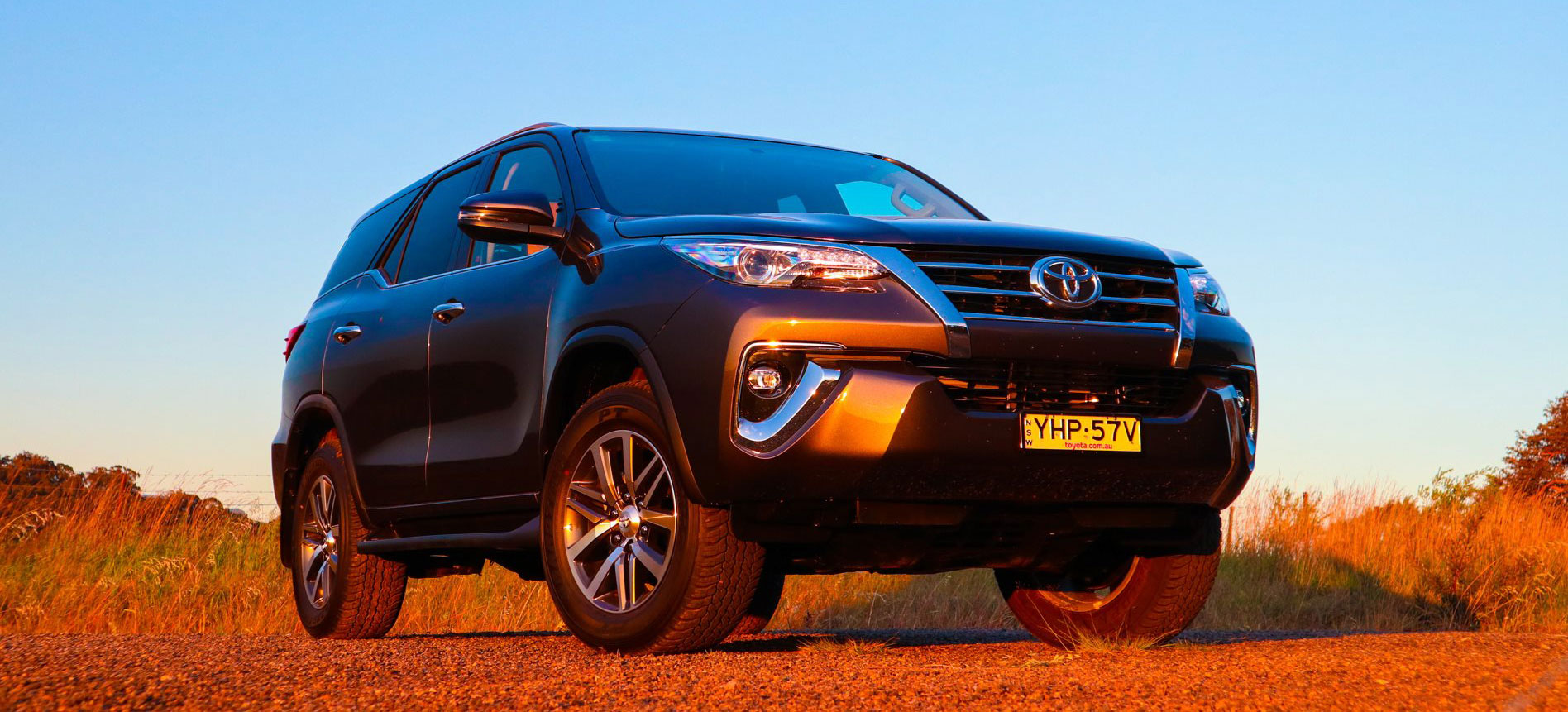
The claim will seek compensation for the loss and damage, including the reduction in value of the vehicles and the costs of excess fuel consumption resulting from the defects, inspection, service and repair costs, as well as lost income.
For its part, Toyota has extended its warranty on the DPF system to 10 years from the first delivery date of the vehicle when new, with no limitation on kilometres.
“This warranty extension applies to customers who may have experienced an issue with the DPF system which may present as substantial white smoke discharged during the regeneration process or the Malfunction Indicator Lamp (MIL) may illuminate and in some cases, as a precautionary measure, engine power may be reduced (‘limp home’ mode),” reads a release from Toyota.
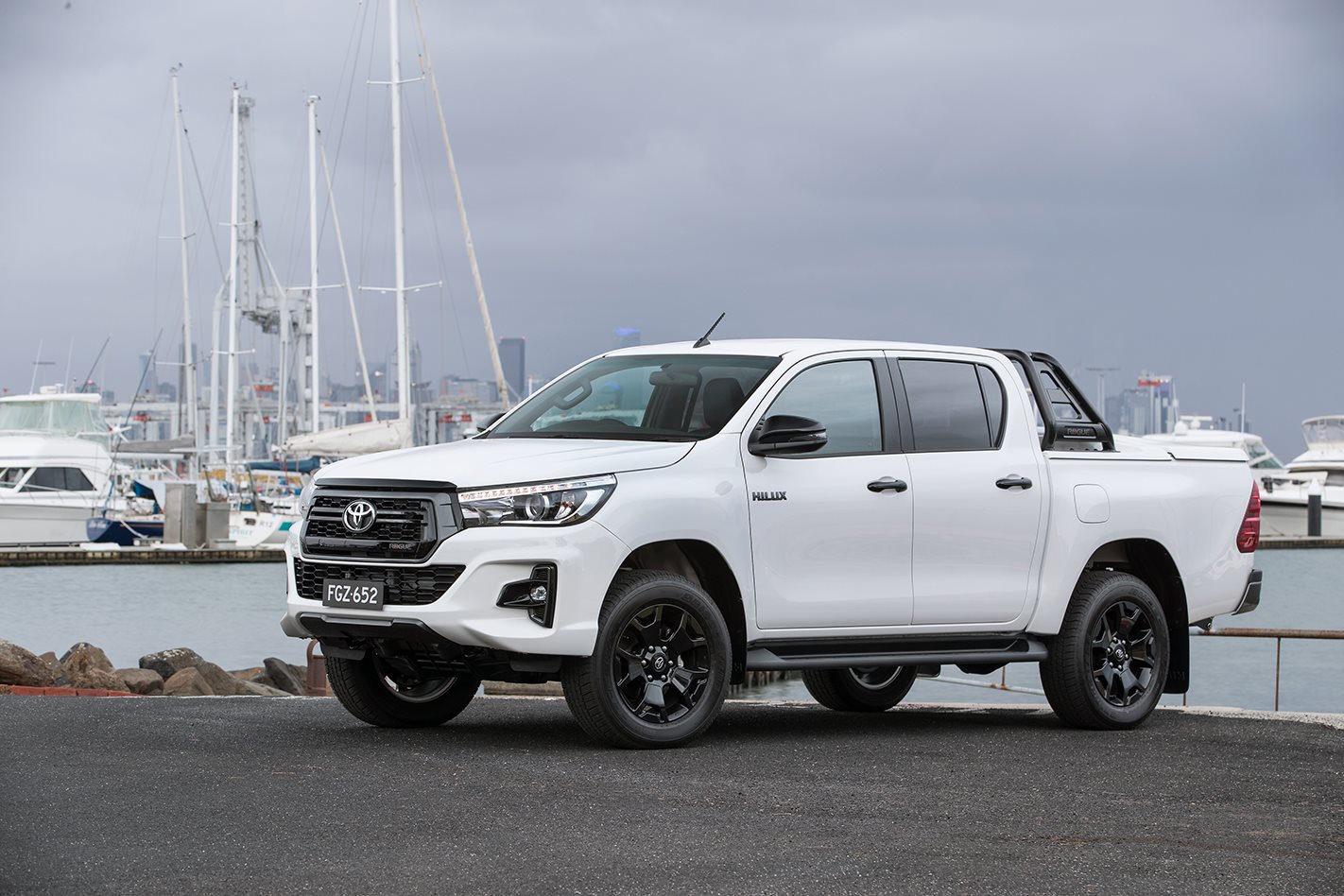
However, there is no recall of Toyota vehicles for DPF problems in play, as the company states that “there are no safety concerns associated with the DPF issue.”
The mid-life update of the 2020 Toyota HiLux has brought power increases and technical updates for the 1GD engine, which Toyota claims has rectified the issues.
The home of Volkswagen is set to have its name on another model headed for Australia, with 300 Volkswagen Touareg Wolfsburg large SUVs arriving next year.
With a split between V6 engines and V8 engines – 200 and 100 respectively – the Touareg Wolfsburg will feature a more menacing version of the R-Line styling pack in black, as well as a handful of exclusive mod-cons.
Of course, the Wolfsburg name also commands some clout among VW enthusiasts.

As the only difference between the V6 and V8 versions is the engine itself – 3.0-litres and 210KW/600Nm for the former, 4.0-litres and 310kW/900Nm for the latter, and both turbo diesels – the list of Wolfsburg bonuses is the same for all 300 units.
Aside from the style pack, which blacks out much of the Touareg’s trim, the Wolfsburgs also receive 19-inch Suzuka alloys, infrared night vision cameras, and a sound and comfort pack with four-zone climate control, heated second-row outer seats and extra safety features.
The Touareg Wolfsburg also gets soft-close doors as an exclusive extra, which gently cinch the doors tight if they’re already almost closed.

Volkswagen Australia also says that the 100 Wolfsburg V8s will be the last Touaregs built with that particular engine.
We’ve contacted VW Australia for clarification as to whether the 100 V8s destined for Australia are the final units to be built worldwide.
Pricing for the V6 starts at $119,990, while the Wolfsburg V8s will be priced from $139,990. This marks a small price bump for the V8 over its non-Wolfsburg variant, but it’s an almost-$29,000 jump to the V6 Wolfburg from the top-spec Adventure V6, which is priced just above $90,000.
The only options available on the Wolfsburg is a $3000 panoramic sunroof, or any of the three available colours that aren’t white.
These are black, blue, and silver, and each will cost an additional $2100.
VW says the Touareg Wolfsburgs will arrive in March 2021.
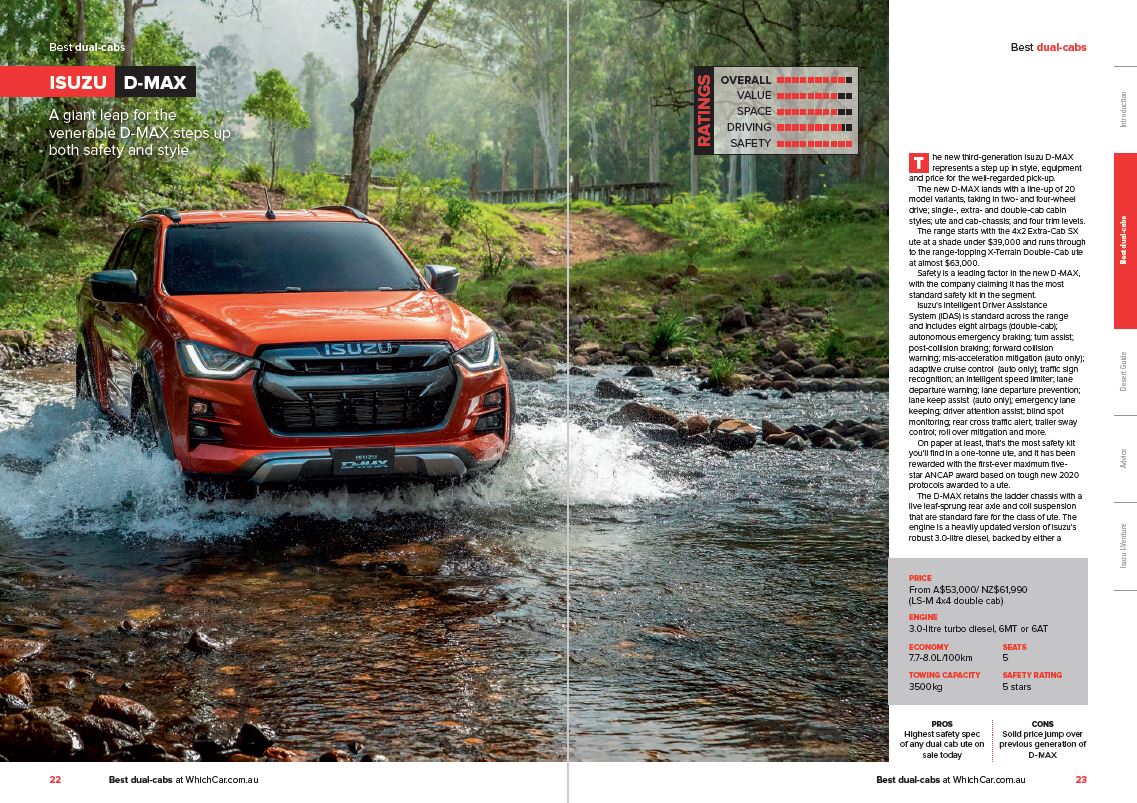
In issue two of WhichCar magazine, we’re looking closely at the hottest selling cars in the Australian market today, the dual-cab ute.
The WhichCar team rates and reviews the best dual-cabs from across all price points and brands.
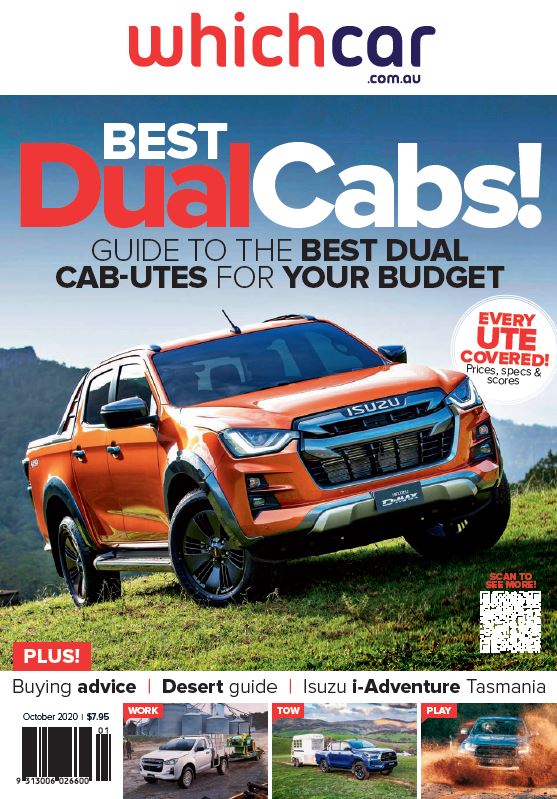
From the humble Toyota HiLux right through to the RAM 1500, we pull apart the most popular cars on sale in Australia today.
The price of every car on sale in Australia today
As well, the magazine is chock-full of advice and tips to make buying and owning a car easier. From financing and insurance to what to do in a crash, our team of experts has all the answers!
As well, we’re using the power of the internet on the printed page this issue, with QR codes throughout the mag leading you right to our most current review, video and news on the car you’re after.
Featured cars