
It seems the clock has been put on the current generation A90 Toyota Supra but, according to Japanese title Best Car, it looks set to go out with a bang.
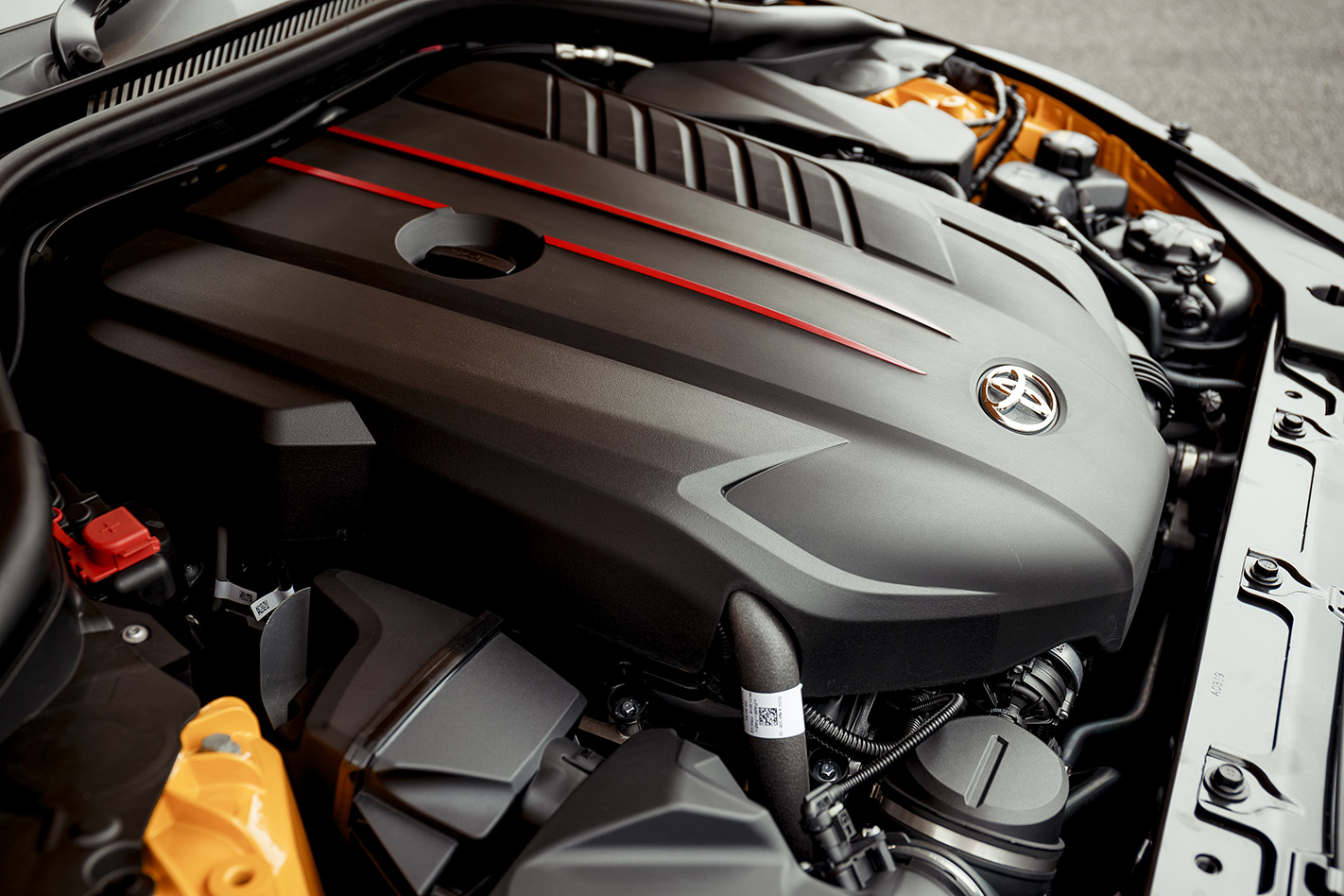
In its July 2020 issue, Best Car has reported that a 382kW/608Nm GRMN version of the Supra will be introduced in 2023, utilising the 3.0-litre twin-turbo S58 engine of the BMW M3/M4, mated to a seven-speed dual-clutch transmission.
In the interim, the Supra will migrate to a 285kW/500Nm GR (Gazoo Racing) version of the existing BMW B58 engine.
Best Car claims that a limited run of 200 GRMN Supras will be made, and reckons that father of the project Tetsuya Tada has claimed that BMW was initially reluctant to supply the powertrain to Toyota.
It also said that BMW had no plans to fit the engine to its Z4 roadster, which gels with the official line from Munich ruling out a Z4 M.
Given that the M3 and M4 will be offered with an all-wheel drive option, this gives BMW a level of performance superiority over any mooted GRMN Supra, even when fitted with the same powerplant.
You only have to look at the numbers achieved with that engine in the BMW X4M to realise quite how quick an all-wheel drive M3/M4 will be.
We achieved a 0-100km/h time of 3.7 seconds, when hauling 1970kg of SUV along the strip. That’s 0.3 seconds quicker than our colleagues across the aisle at MOTOR achieved in a 331kW M3 Pure. With the benefit of all-wheel drive, sub-3.5 seconds would easily be possible in an M3.
The report also alleges that the end of Supra production is slated for 2025 with no replacement in the works.
Our read? It’d be extremely unlikely were there not to be a GRMN edition of the Supra and Tada is a persuasive and determined man.
Nevertheless, it’s worth bearing in mind that Best Car reported in January that we’d have a 294kW Supra GRMN this year and they were wrong then.
Sounds like we’ll just have to wait and see.
Sign-up here to get the weekly Wheels highlights
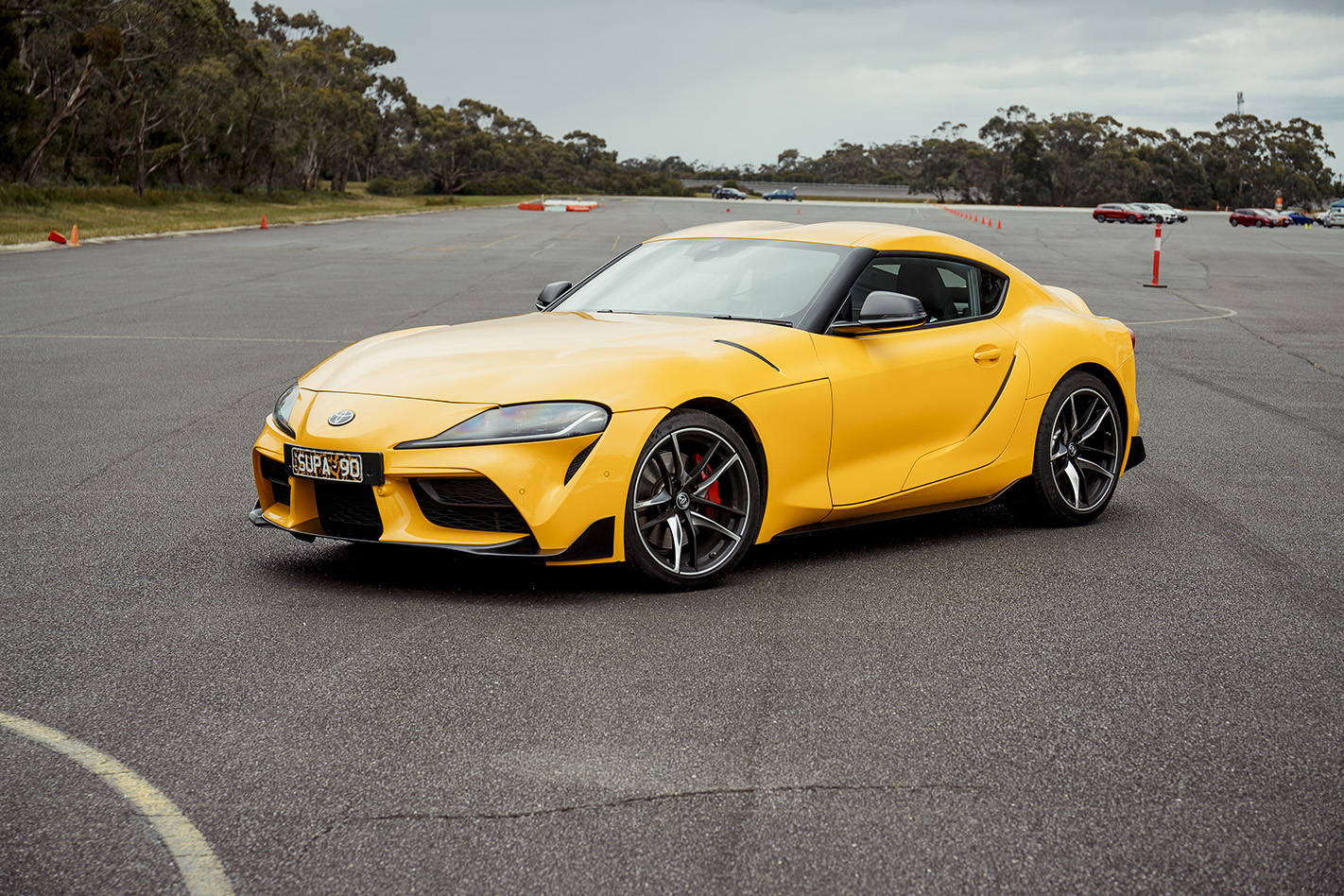
From relatively humble beginnings, the brains trust at Affalterbach quickly escalated things to establish Black Series as the ultimate from AMG.
Here are the five cars that have made it one of the most fearsome badges in the automotive world.
2006 SLK 55 AMG BLACK
Genesis. For the Black Series family, the first model is the tamest.
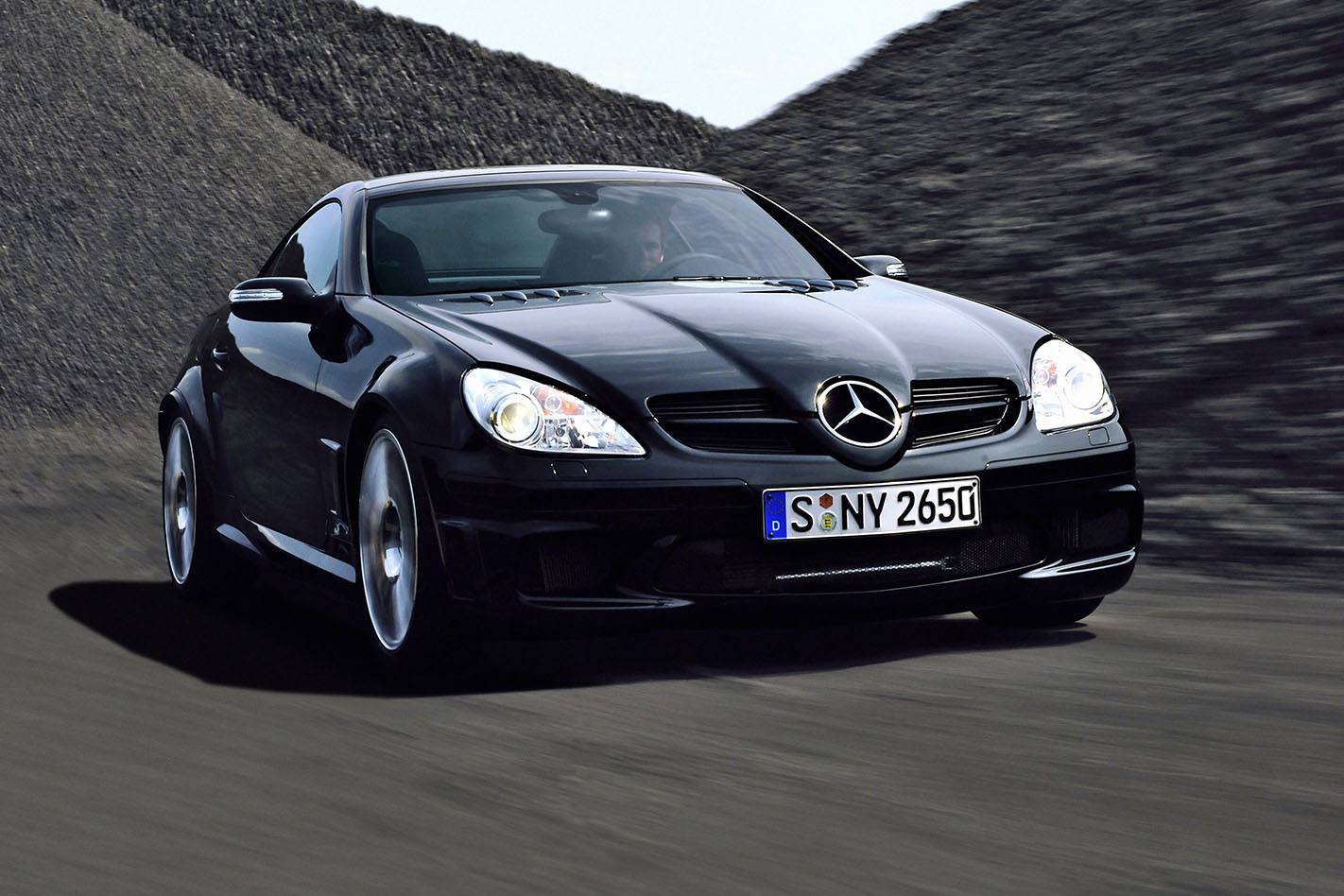
Based on the compact SLK roadster, AMG worked hard to improve the car through limited, but considered, changes.
The naturally aspirated M113 5.4-litre V8 was beefed up to 294kW/520Nm, and 45kg of weight culled. The extra power came largely thanks to long tube headers and a revised ECU tune.
Stylistically, the SLK 55 AMG Black can be identified through a restyled front apron with larger air intakes, and restyled side intakes.
AMG engineers fitted additional transmission cooling, along with a steering gear oil cooler, and aluminium front strut brace.
Wider carbonfibre reinforced plastic (CFRP) front fenders give the SLK a tougher stance, while a non-retractable roof made from the same material was fitted.
Knowing what the Black badge has become in the decade that followed, the SLK 55 was a toe in the water for AMG.
2007 CLK 63 AMG BLACK
Arriving just a year later than the SLK 55 AMG Black, the CLK 63 AMG Black is the first seriously focused model in the range.
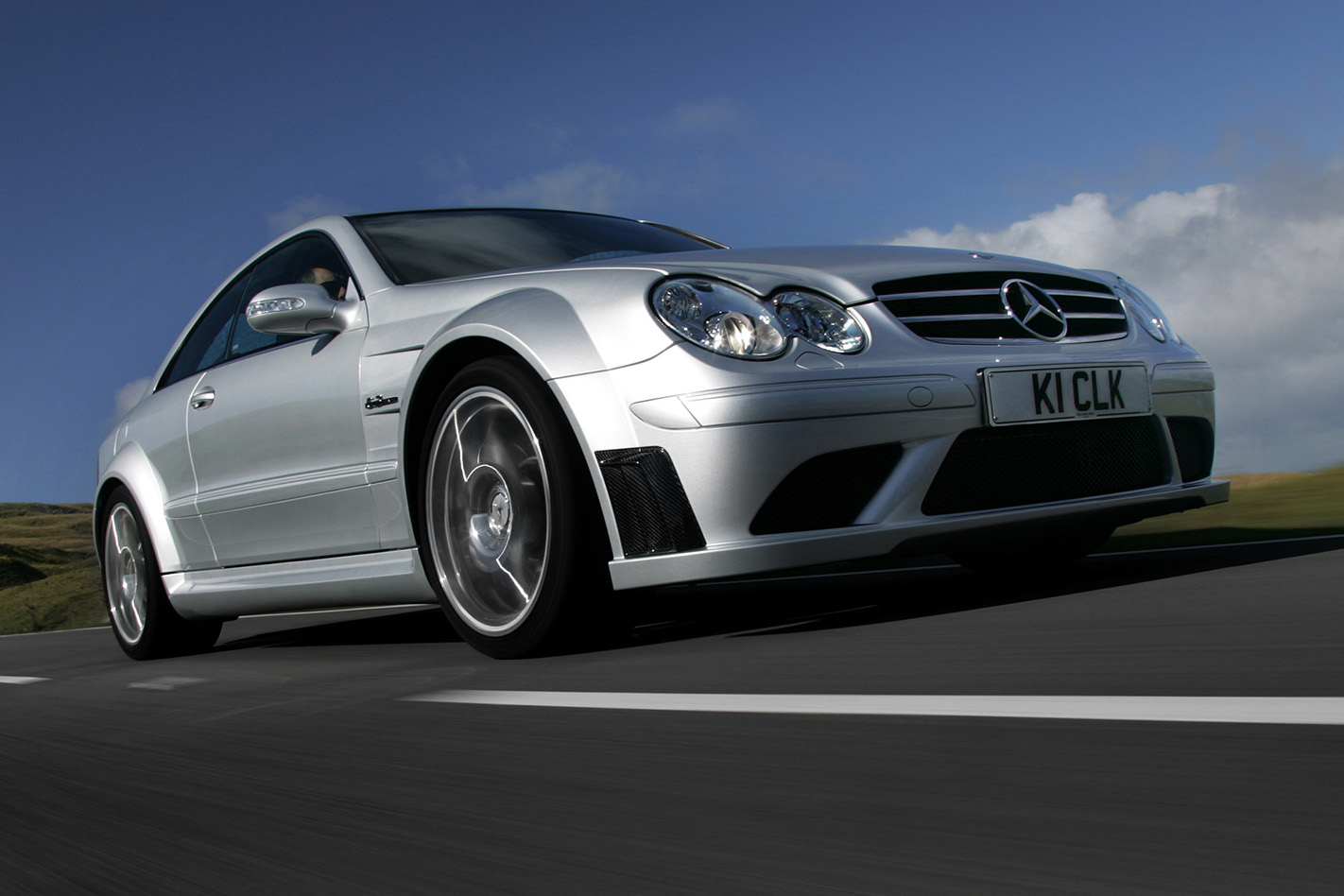
Only 500 examples were made, all powered by a tweaked version of the M156 6.2-litre V8 making 373kW/630Nm.
Power was transferred through a seven-speed automatic transmission, with Pirelli P-Zero Corsa rubber given the unenviable job of keeping things pointed in a straight line.
The suspension was manually adjustable if you wanted to get your nerd on, while AMG engineers also added a limited-slip diff, larger intakes, and wider carbonfibre fenders.
Completing the hardcore package was a rear seat delete, and increased top speed of 299km/h.
The Black Series was well and truly here, and the rest of the automotive world took a little while to come to terms.
2008 SL 65 AMG BLACK
Following up the CLK 63 AMG Black was a difficult task, but AMG did a damn fine job with the unhinged SL 65 AMG Black.
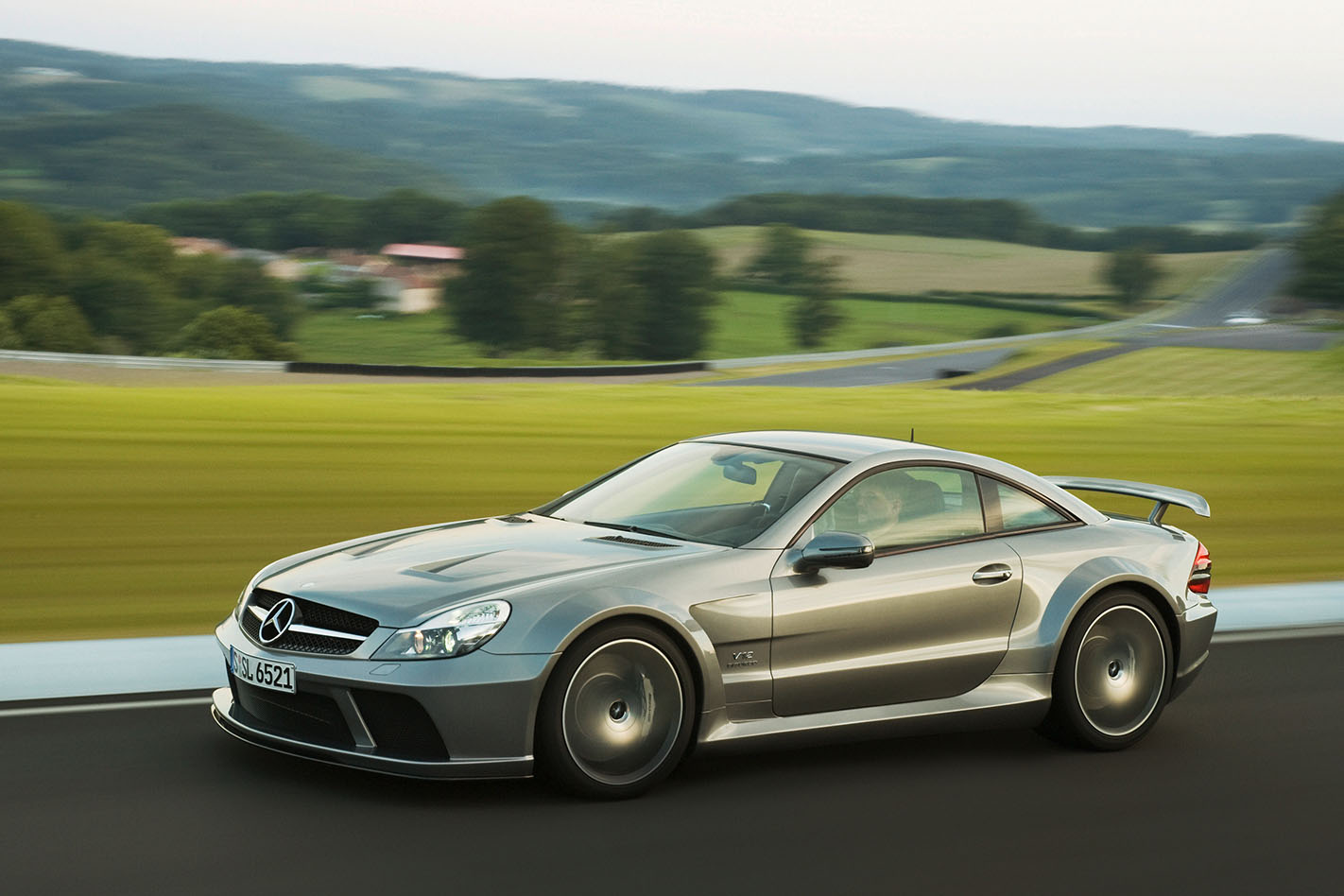
To date, this is the only Black Series car not powered by a V8. It is also the only turbocharged Black-badged car… for now.
With a 6.0-litre twin-turbo V12 M275 engine, claimed power outputs were a staggering 494kW/1000Nm and weight was cut by a whopping 250kg from the SL 65 AMG for the Black version.
Weight loss was attributed to excessive use of CFRP, and deleting the car’s foldable hardtop roof.
Bluff guards defined the SL 65 AMG Black’s brutal aesthetic, with a 97mm wider front track, and 85 mm wider rear track.
Boosting power were 12 percent larger turbos, with the top speed limited to 322km/h (bang on 200mph in old money making it the fastest Black Series yet). The claimed 0-100km/h time was an impressive 3.8 seconds.
2011 C 63 AMG BLACK
From the lofty 12-cylinder heights of the SL65 AMG Black came a (relative) return to the Black Series’ origins.
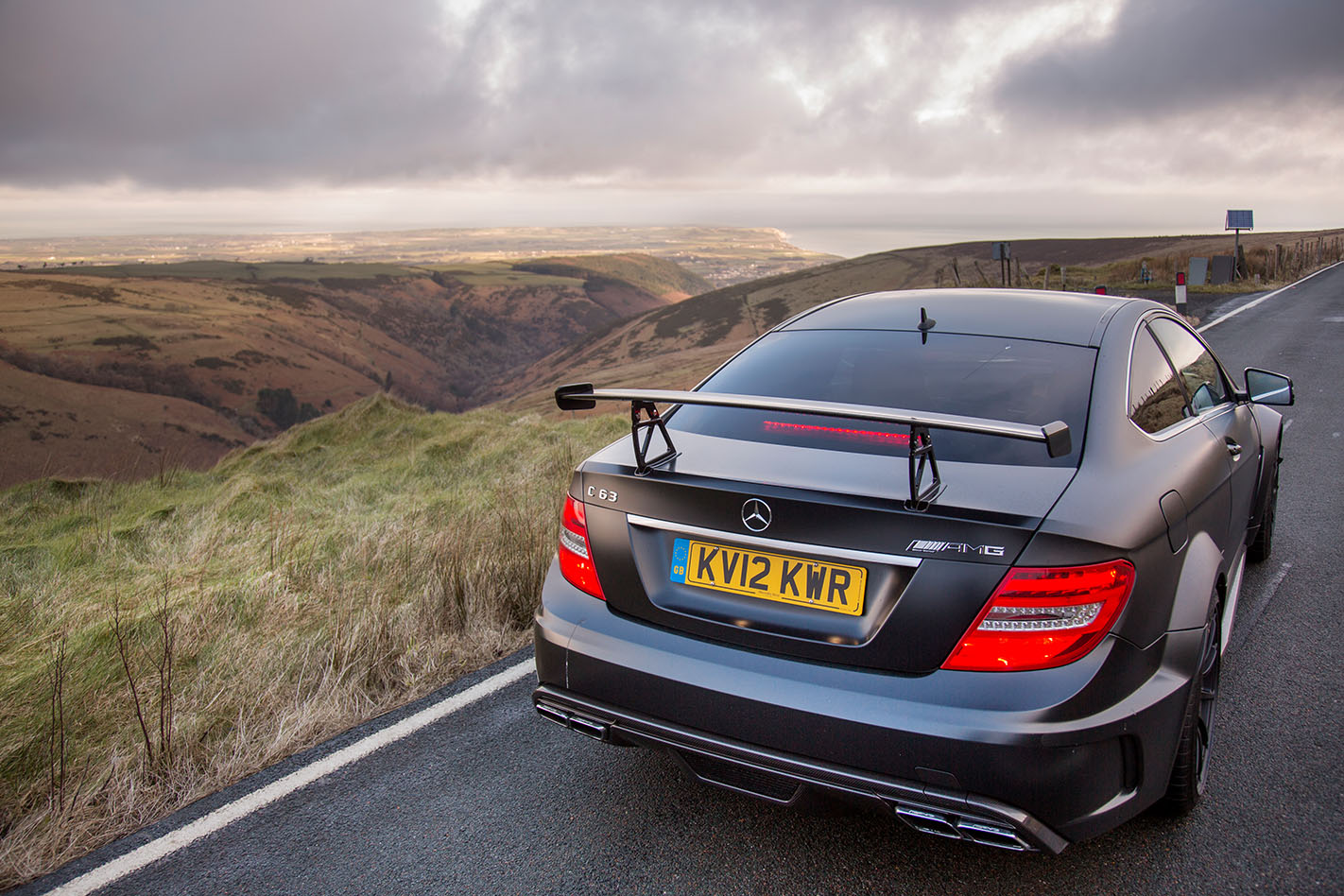
Based on the C-Class coupe, only 650 C 63 AMG Black were planned for production. However, it became a runaway success, and eventually 800 were released into the wild by the geniuses at Affalterbach.
Only available in two-door form, the C 63 AMG Black’s M156 V8 was tuned to produce 380kW/620Nm
AMG claimed the coupe could crack 0-100km/h in 4.2 seconds, on its way to a top speed of 300km/h.
Some of the changes of the standard C 63 AMG included a locking rear differential, three-stage ESP, and the distinct lack of rear seats.
An AMG Track Package was available, bringing stickier Dunlop rubber, and active rear-axle transmission cooling.
2013 SLS AMG BLACK
The SLS is former AMG boss Tobias Moer’s crowning glory, so it was only natural that the Black Series version of the gullwinged supercar would be appropriately unhinged.
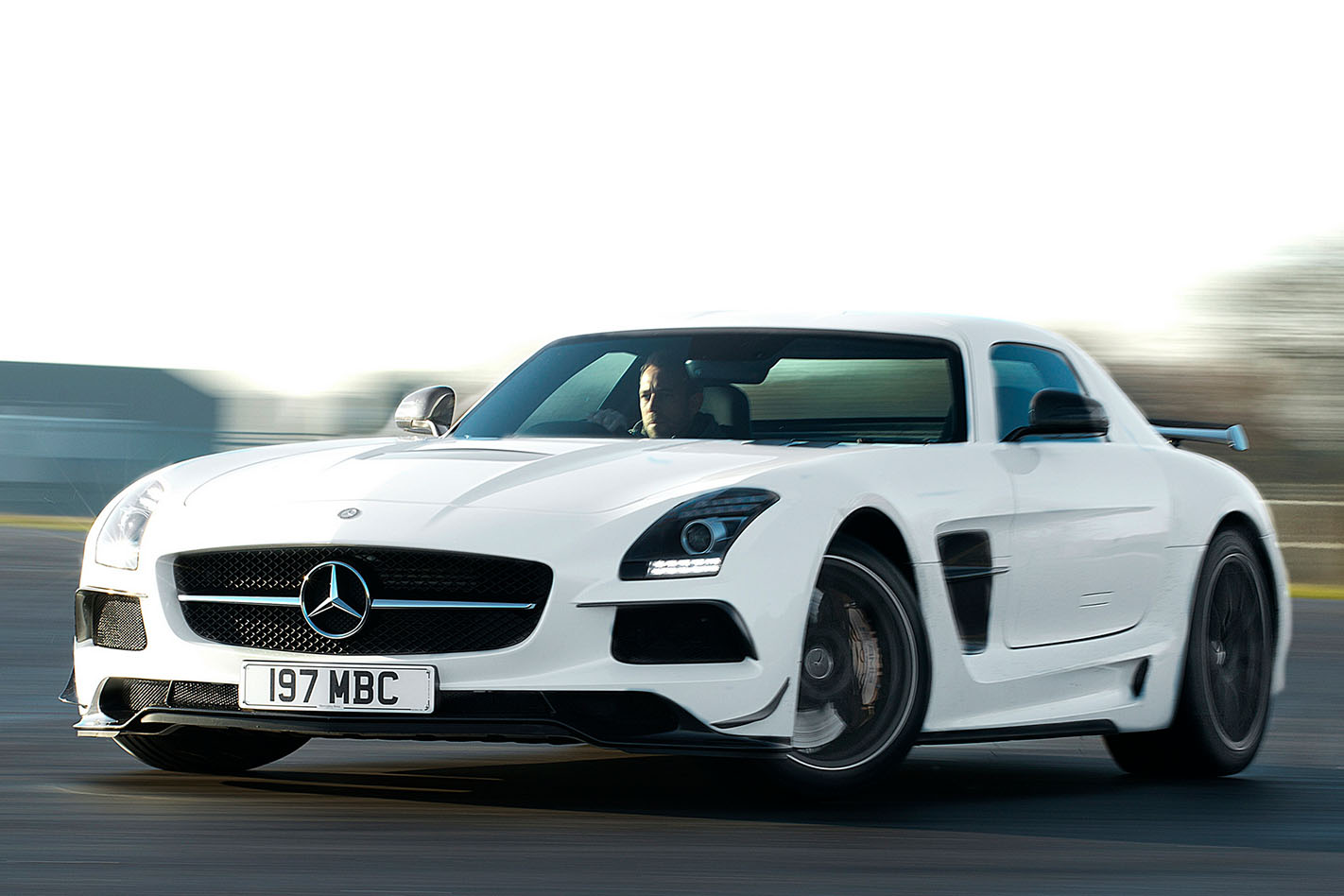
Being the most in-depth Black to date, the AMG engineers’ pursuit of performance was absolute, even lowering the gearbox 10mm for a better centre of gravity.
Power from the 6.2-litre naturally aspirated V8 engine was cranked to 464kW and 635Nm, while the redline was increased to 8000rpm.
This is largely thanks to a completely revised high-speed valvetrain, that included modified camshafts, and new bucket tappets that had a special coating AMG traditionally reserved for its race cars.
The SLS AMG Black was 70kg lighter than the standard SLS, with weight reduction aided by a new titanium exhaust system that cut 13kg compared to the original steel unit. A lithium-ion batter cut a further 8kg of heft.
The suspension came in for a closer look, with AMG engineers making the system 42 percent stiffer for the Black, while widening the front track 20mm and rear track by 24mm.
AMG claims the SLS Black was capable of reaching a limited top speed of 315km/h.
2020 AMG GT BLACK
Technical details have not yet been revealed for the AMG GT Black, but its existence has finally been confirmed.
Check back to Wheels early tomorrow morning to find out more.
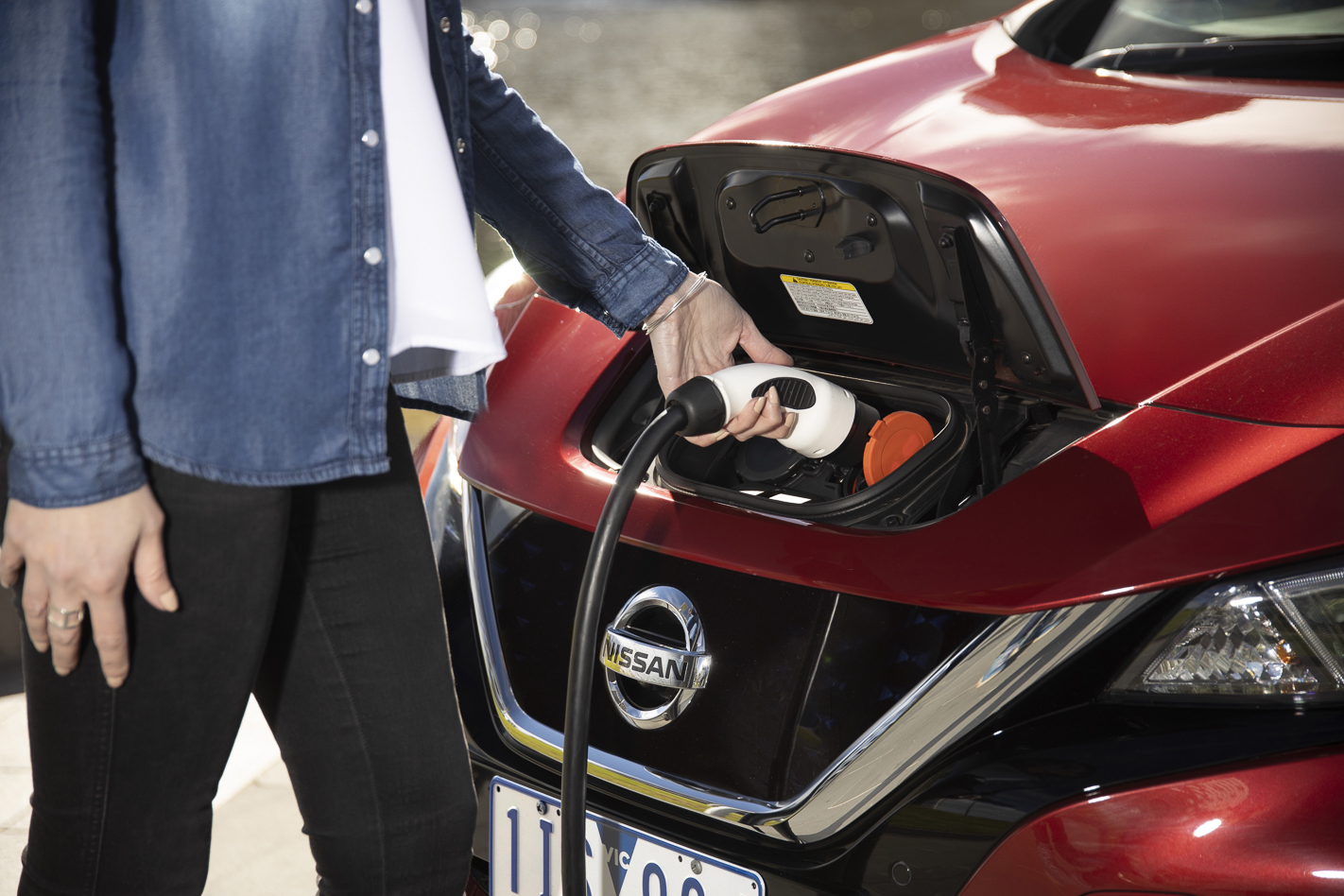
Where normal electric vehicles use the electricity grid to draw a charge, the Nissan Leaf is a unique EV that can work in the opposite way.
That’s because it’s the only car on the Australian market that’s equipped with two-way charging from the factory – meaning it can supply its reserve charge levels back to the national electricity grid in times of high demand in order to stabilise the power supply and combat against blackouts.
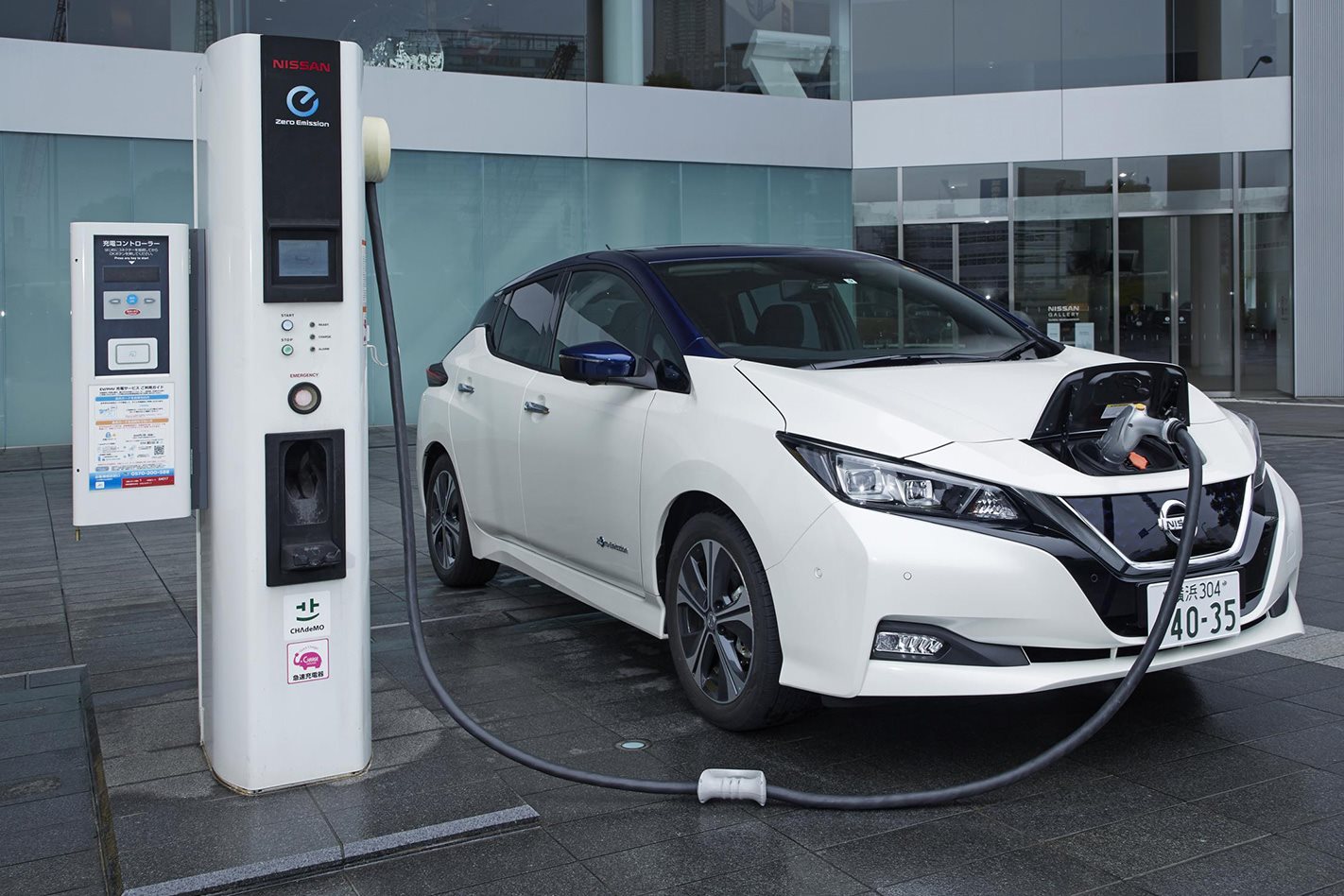
The government is looking to exploit that capability in a trial that will see 51 Nissan Leafs deployed across the ACT Government fleet to use the Vehicle-to-grid (V2G) charging system to stabilise energy loads during peak and off-peak periods.
Energy grid instability has become an increasingly-present problem over the past few years, most notably affecting the South Australian market in 2016 where storms destroyed powerlines and electricity towers causing state-wide blackouts.
The event prompted the South Australian government, with the help of Tesla, to build the world’s largest battery to support the network.
That’s kind of the idea behind this project, dubbed Realising Electric Vehicle Services (REVS) and overseen by the Australian Renewable Energy Agency, which will act as a precursor and test before the V2G tech is switched on for private owners of the Nissan Leaf later this year.
Frequency Control Ancillary Services (FCAS) is the system that describes the phenomenon of aiding the energy grid during high demand. Essentially it details the way in which energy is used to keep a power grid operating at optimum levels at peak times. The FCAS injection of energy from batteries lessens the load on the wider network that, in turn, leads to fewer blackouts.
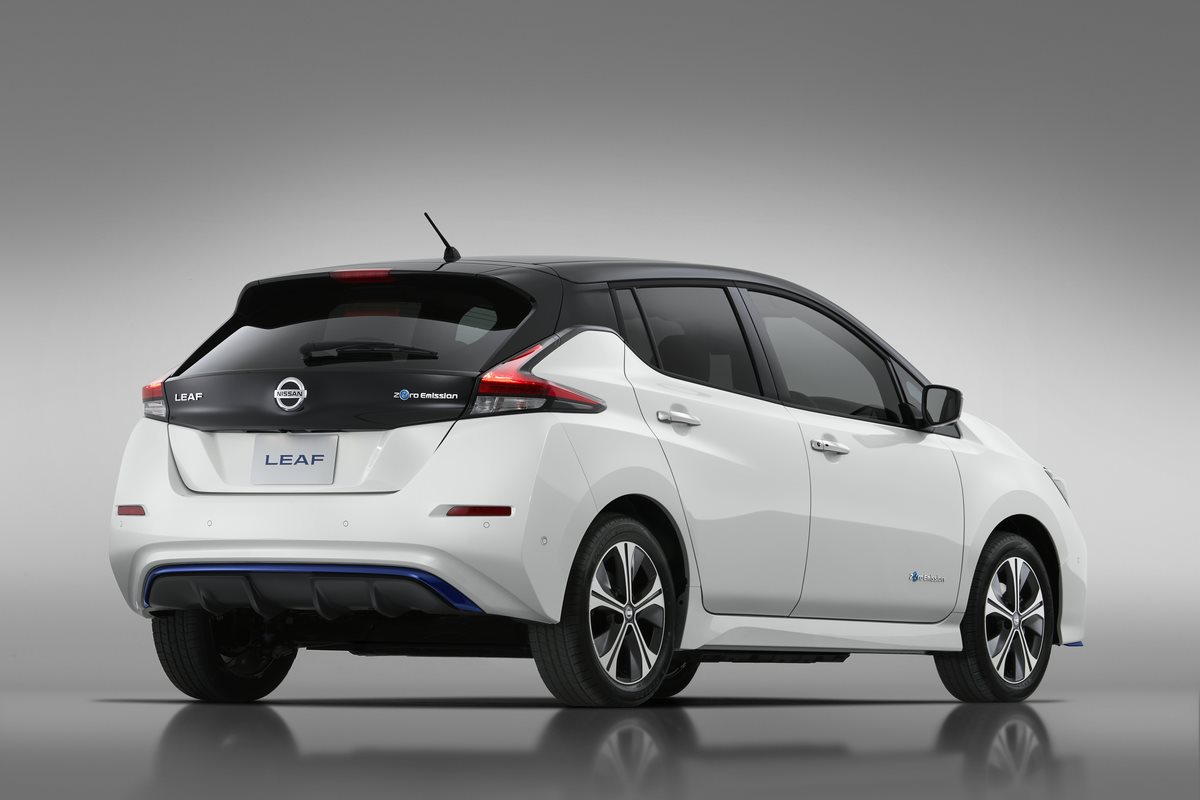
The REVS trial will focus on the Nissan LEAF’s ability to be that battery storage that provides energy to the grid to help the wider National Energy Market.
“As the brand with the only V2G-capable vehicle from factory on the Australian market today, we are exceptionally proud to support this project, and to introduce this technology to Australia,” said Nissan Australia managing director Stephen Lester.
“Nissan has been a global leader in this space, with several successful trials conducted in overseas markets, [but] realising it in Australia is an important milestone.”
Following the trial, Australian owners of the Nissan Leaf can not only look forward to helping the national power grid later this year, but also greater flexibility from the national grid itself which could mean grid independence and greatly reduced power bills (explained below.
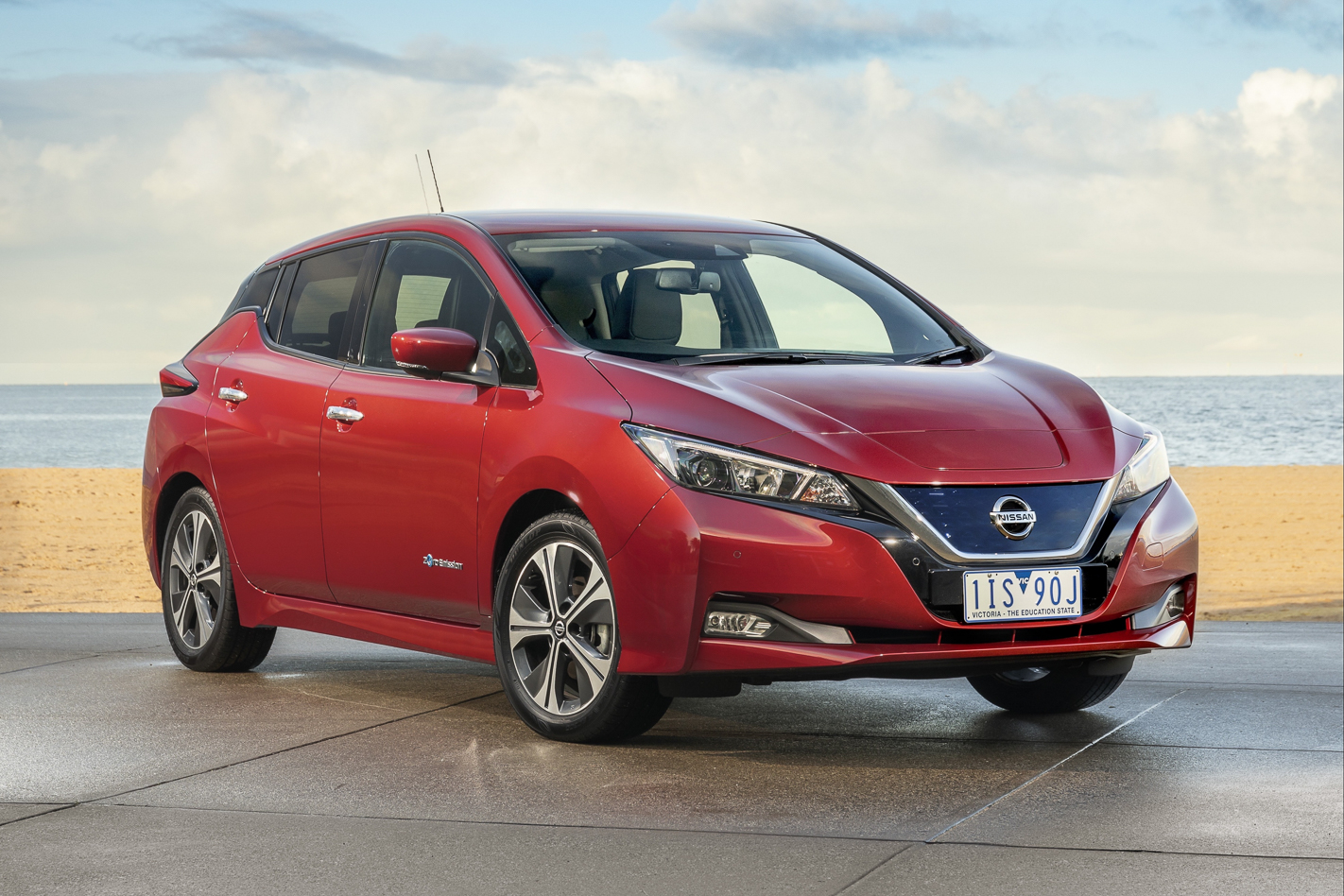
What is Vehicle-to-grid?
Roughly explained, Vehicle-to-grid (V2G) is a system in which a car’s reserve charge can be fed back into the national electricity grid.
This means that the bi-directional charging port connected to the home can either draw or supply power dependent on where it’s needed most. This technology has a number of applications, but importantly it puts the power in the hands of the consumer – a valuable proposition in times of uncertain energy prices.
Why is Vehicle-to-grid important?
While the thought of stabilising your nation’s energy grid sounds boringly altruistic, there are actually further benefits that the general public can take advantage of for themselves.
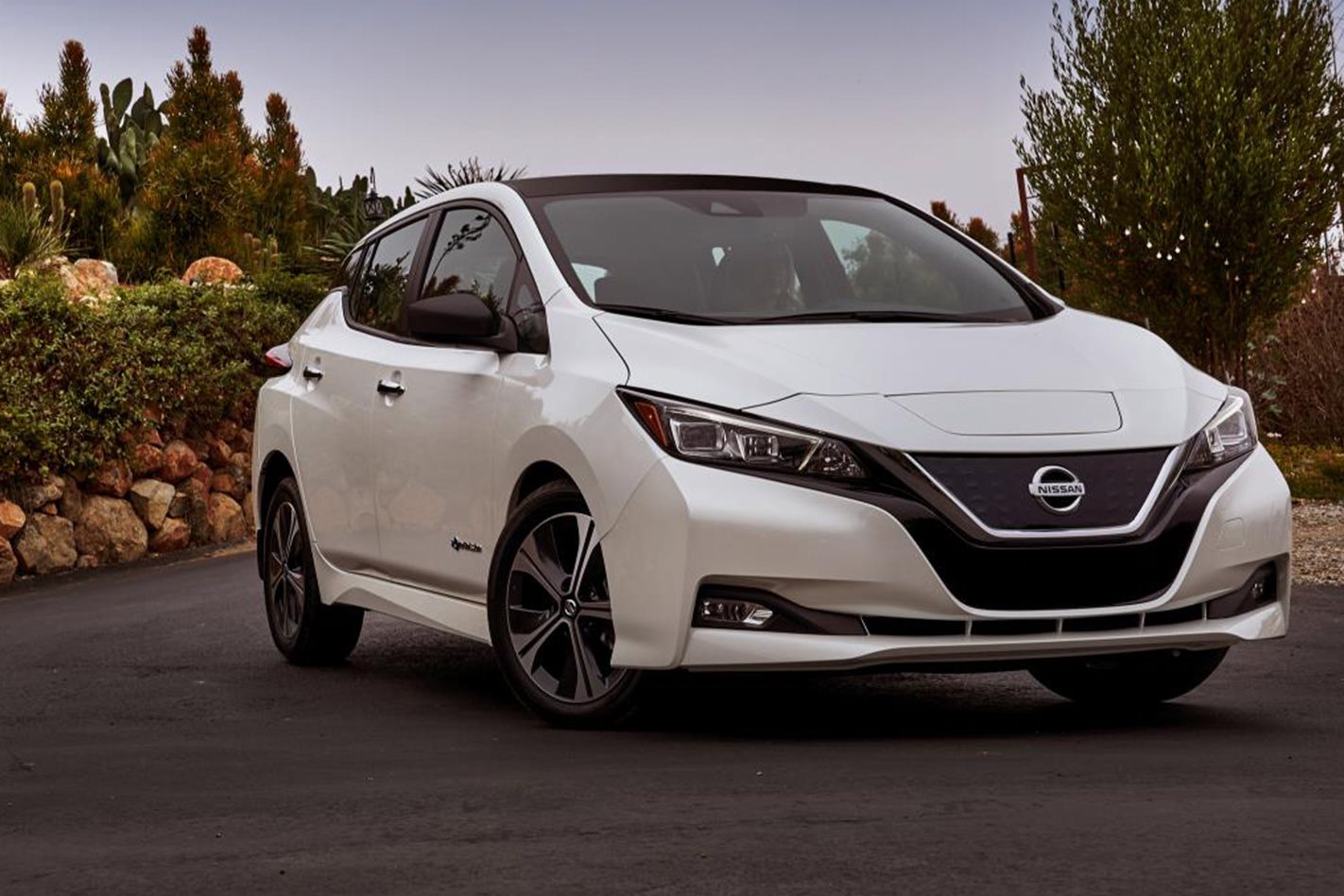
V2G could actually enable people to live off the grid, reduce energy prices, or draw power from an alternative source.
For those with solar panels, a car could be used to store the sun’s energy during the day and then redeploy it to power a house at night. In another scenario, you could charge your car at work, a shopping centre or a public site and then drive home and power your house for free.
In another circumstance, your car could reduce your power bill or even earn its keep by feeding excess power back into the energy grid.
Although it’s a small start, V2G could be one of the keys to a zero-cost energy supply, and Australians will only have to wait until later this year to see it for themselves.
Based on my previous grumblings, you could be forgiven for thinking I didn’t have much time for the oxy-moronically named SUV concept. Not so. In fact, having given some Covid-19 quiet-time to the subject, I now realise that the cult of the SUV is what will drive automotive excellence going forward. No, really – the advancement of automotive design, the very future of proper cars, relies on it.
How? Allow me to explain.
It’s been said many times that engineers and designers work best when somebody is firing live rounds at them. And on that basis, SUVs will need to get better. At some point, we’ll work out how to make these high-riding blockhouses work better than they do now, as a response to a couple of things.
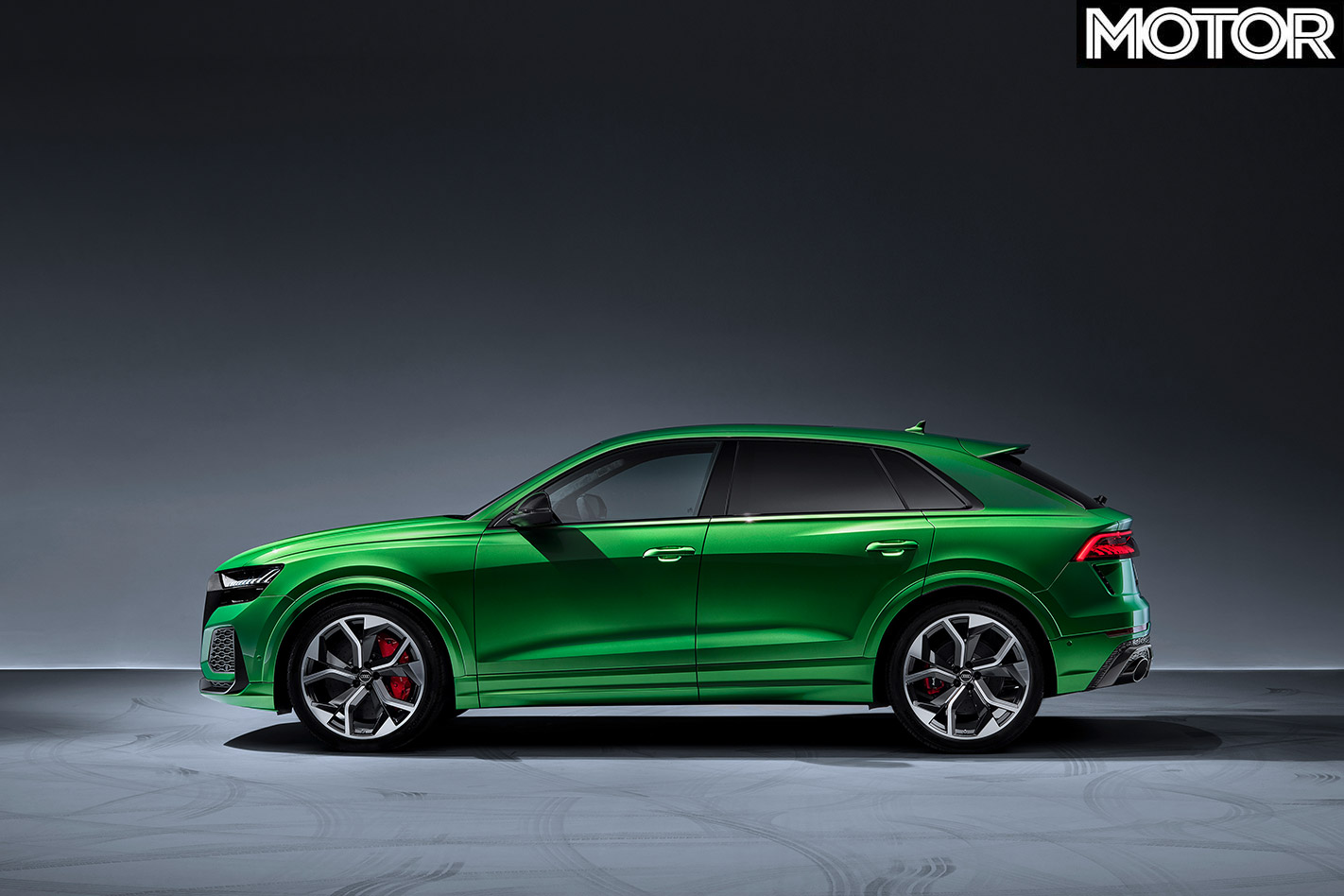
The first of those is that punters will eventually tire of a roly-poly (but still hard-riding) pogo-stick of a thing, just as they will tire of poorer-than-expected fuel economy and acceleration that suggests a car with a pack-a-day habit. Secondly, the authorities will also soon stop seeing the funny side of crash trauma, a natural by-product of replacing athletic passenger cars with lumbering, heavy, unnecessarily tall SUVs. At the point at which those two curves intersect, car-makers are going to have to come up with an SUV that works properly. And once one manufacturer does, the rest will secretly buy one, pull it apart and reverse engineer the bugger, using the principles of Chinese copyright law. Ref: We reserve the right to copy anything we like the look of.
Of course, just because it suddenly handles, stops and goes like a bought one, doesn’t mean I’ll be rushing out to buy a new-age SUV. They’ll still be ugly, for instance. So how does that help those of us who still yearn for V8 coupes, hot-hatches, utes that drive like cars and conventional station-wagons for the breeders out there?
Well, take a look at what’s happening with Ford’s Fiesta range. In Australia right now, the only Fiesta you can buy is the rather excellent ST. There are no mid-speccers, fleet models or My-First-Car versions. You want a little Ford for transport? You need to buy something from the small-SUV end of the showroom. This has led to a simple trend: As demand for SUVs increases, all the development dollars will be channelled that way. It’s the first sign of how the industry is morphing the chain of command in the way it develops new product. That’s not a new observation, but simply the car industry doing what it does best and following the money. But eventually it will work for people like us.
See, in the past, car-makers have spun SUVs off existing passenger-car platforms. But, as the SUV becomes dominant and begins to gobble up all the development pesos, the situation will flip. At which point you’ll find hatches and sedans and coupes and wagons being spun off SUV platforms. This is inevitable, but an important cultural shift.
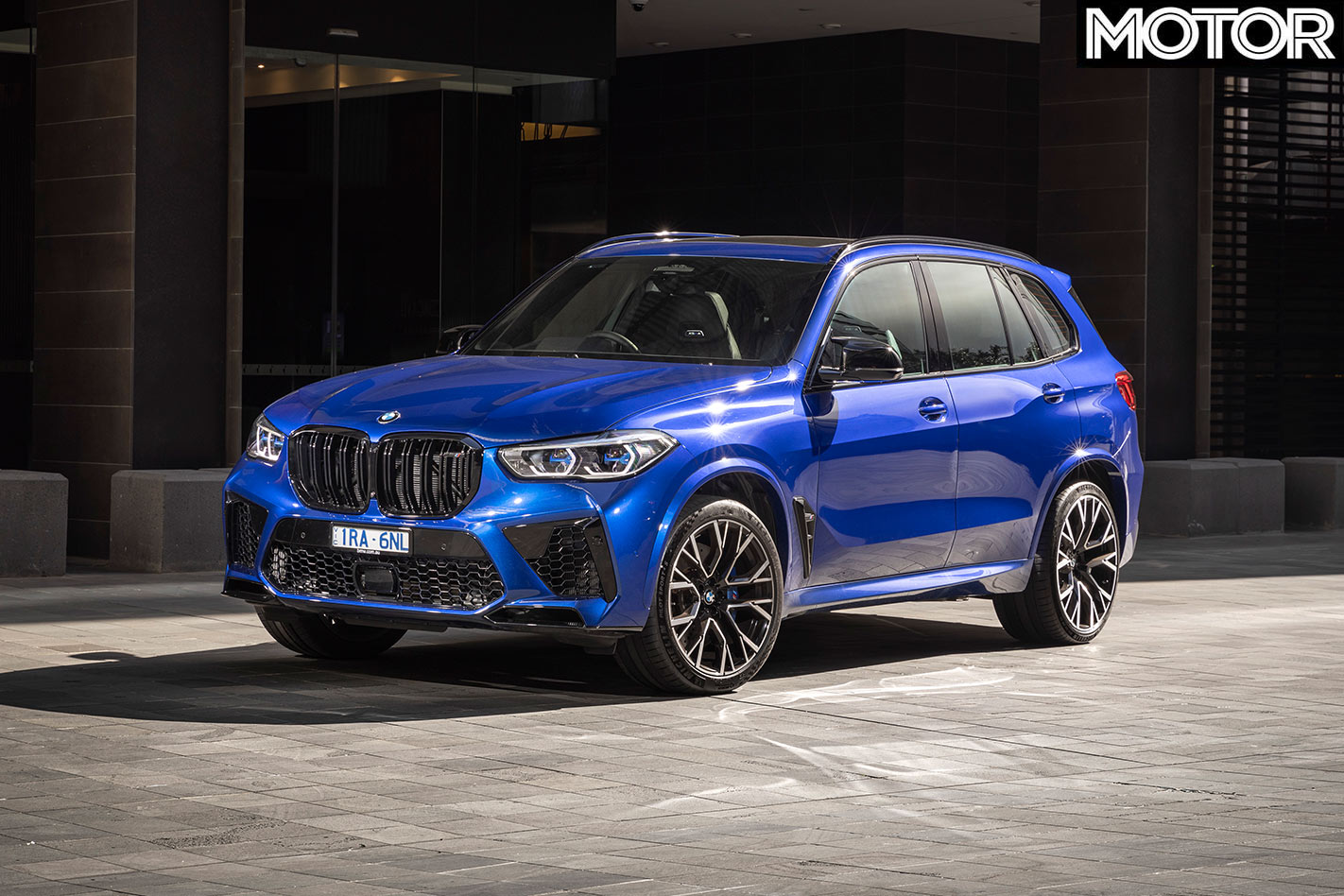
Thing is, once we have arrived at a decent driving SUV, we can start to spin proper cars off it. Imagine a platform (the new, not-so-shite SUV) that gives birth to, say, a hatch that is lighter, has less driveline drag and a lower centre of gravity. As a direct result it goes harder, handles and rides better and uses less fuel. Oh, and it’s cheaper to buy!
It is, of course, the exact opposite of what happens now when a sensibly-priced, worthy hatch or sedan gets the SUV treatment and emerges as the 10-grand-dearer Famo-turd 3000.
Who’d have thought the SUV would be saviour of proper cars?
The days are long gone when airbags and three-point seatbelts were considered high-end safety kit for cars.
The technology used to keep motorists safe has evolved rapidly over the past 20 years, which is fantastic news for car buyers, but what features should be non-negotiable these days and what features are merely icing on the safety cake?
In Australia some tech is legislated to be mandatory for passenger cars – such as electronic stability control and anti-lock brakes – but there are many helpful and potentially life-saving features that are not. So what should you be seeking out in your next new car when it comes to staying safe?
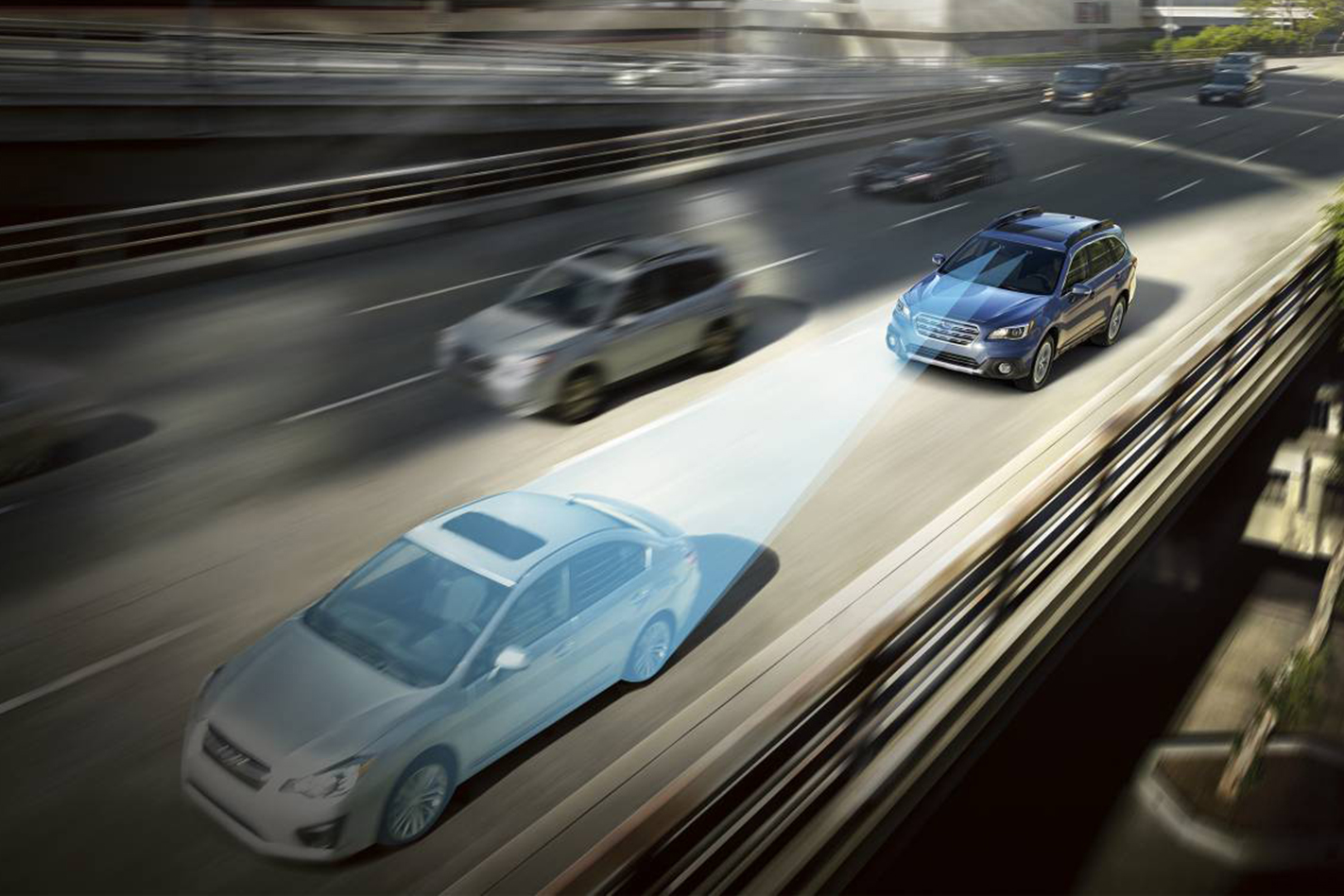
What is AEB: Also commonly referred to as emergency auto-brake or simply AEB, autonomous emergency braking uses forward-facing sensors (usually a laser or camera, sometimes a radar, and sometimes all three!) to monitor your distance from the traffic in front of you. If the car in front stops suddenly and the system detects that you haven’t braked sufficiently to avoid a collision, it takes over and slows the car down automatically. Some systems can even detect pedestrians, cyclists or animals at low speeds.
Why is AEB important: It’s always the responsibility of the driver to stay vigilant and monitor the road ahead, but sometimes it’s not possible to keep tabs on absolutely everything. Turning your head to check the lane beside you can sometimes be all it takes for danger to appear in front of you.
That’s where AEB comes in. It’s always scanning the road – and sometimes several cars in front of you – and checking how fast you’re closing in on obstacles ahead, whether that’s another car or something more solid. It’s not a substitute for an attentive driver, but it can make the difference between pulling up with space to spare or running into the rear of the car in front.
It’s worth noting that not all AEB systems are created equal. Many only work at lower speeds, while others function at highway speeds and have a longer detection distance. Be sure to read the brochure carefully to properly understand what your potential purchase is equipped with.
We’ve tested several AEB systems and found big differences between manufacturers.
Also known as: Pre Sense Plus, Active City Stop, Pre-safe, Eyesight, Pre-Collision Safety System

What are they: Airbags have been around for decades, having first being introduced in the 1970s. But while dual front airbags for the driver and front passenger have been common since the late 1990s, in recent years the number of airbags fitted to passenger cars has risen to at least six – two front ones, side airbags for the front seats and curtain airbags that extend across the front and rear seats (and often the third row, too, in some but not all larger cars).
But some cars come with even more than that, with side airbags for rear occupants, seatbelt-mounted airbags and knee-level airbags available.
Why are airbags important: Though your seatbelt remains the most important restraint in a crash, airbags work wonders by helping lessen the shock forces encountered in an impact. By cushioning more parts of your body, your chances of survival are not only dramatically increased, but you may even be able to walk away with barely a scratch.
Rear side airbags are a good idea if you regularly carry passengers, while head-protecting curtain airbags should be considered a must-have due to their ability to minimise the chances of brain injury in a side impact.
It’s worth noting that a higher airbag count than six doesn’t necessarily mean the car is safer. Sometimes extra ones need to be engineered in to provide an acceptable level of protection.
Electronic stability control – more features
What is it: Electronic stability control (ESC) is now mandatory for all new passenger cars and SUVs sold in Australia, but not all systems are as capable as each other.
Stability control is a blanket term that covers any kind of computer-controlled regulation of traction and vehicle slip, but can also cover other features that help rein in swaying trailers, promote cornering grip and also reduce the chance of a rollover in tall SUVs.
Why it’s important: If you’re buying a new passenger car in Australia you’re guaranteed some form of electronic stability control system, but when examining your shortlist be sure to delve deeper to see exactly what kind of capabilities are included.
All of them will help keep get the car pointing straight again if it starts to skid out of control, but some will prevent the car from ever getting into a dangerous situation like that in the first place.
Also known as: Electronic Stability Program, Vehicle Stability Control, Active Stability Control, Stability and Traction Control, Vehicle Stability Assist
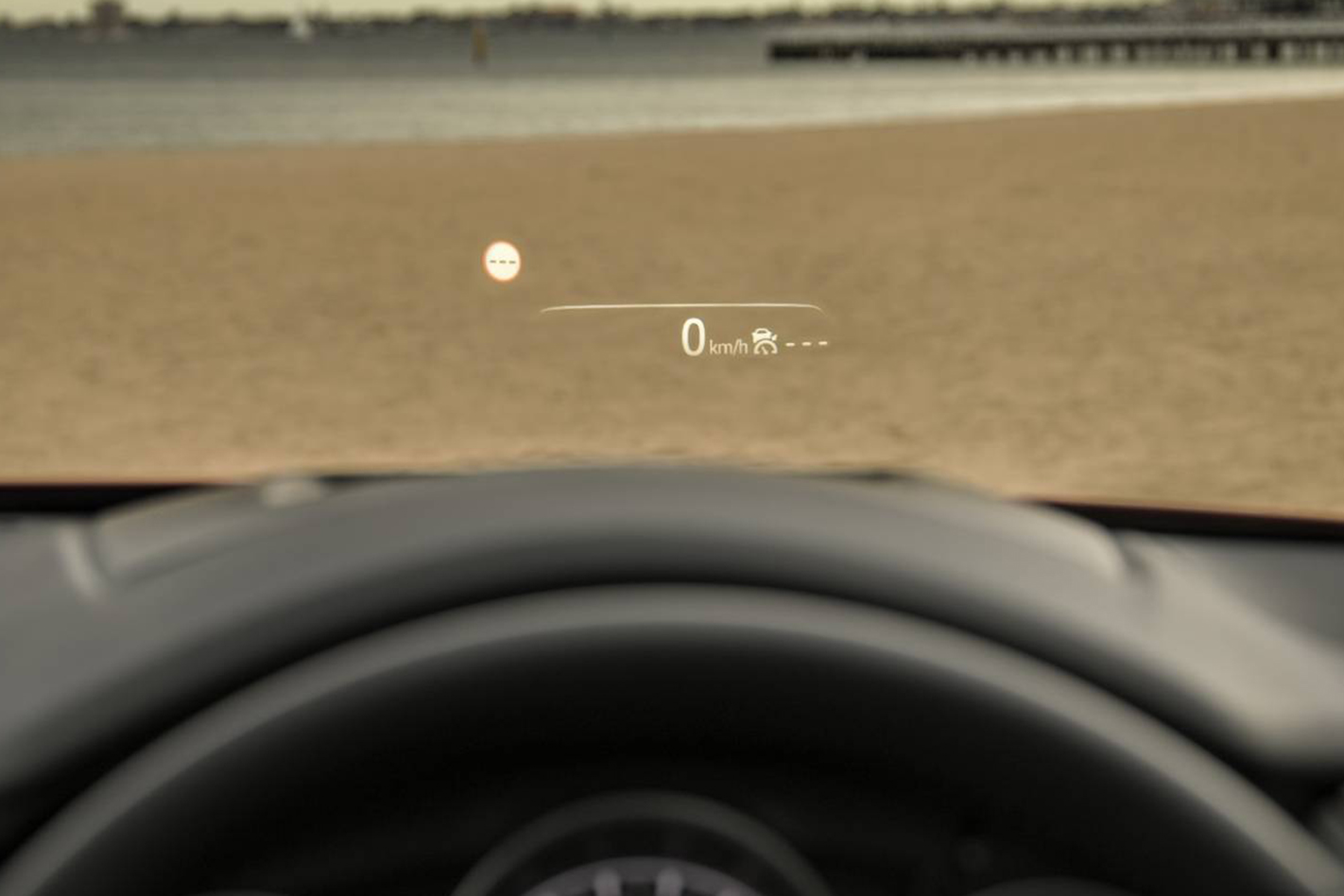
What is it: Head-up display (HUD) projects crucial driving data such as your car’s speed and upcoming sat-nav directions directly into your field of view, either by bouncing light off a small transparent panel or off a special part of the inside surface of the windscreen.
Why it’s important: Similar to displays used in military aircraft, a head-up display can be invaluable to drivers as it enables them to keep their eyes up and looking out of the car, rather than constantly flicking down to check on their speed.
Distracted drivers make mistakes, but this piece of tech removes one form of distraction and is far from a gimmick. Though still relatively rare in the more affordable vehicle classes, the presence of a head-up display should be an important factor when weighing up what car to buy next.
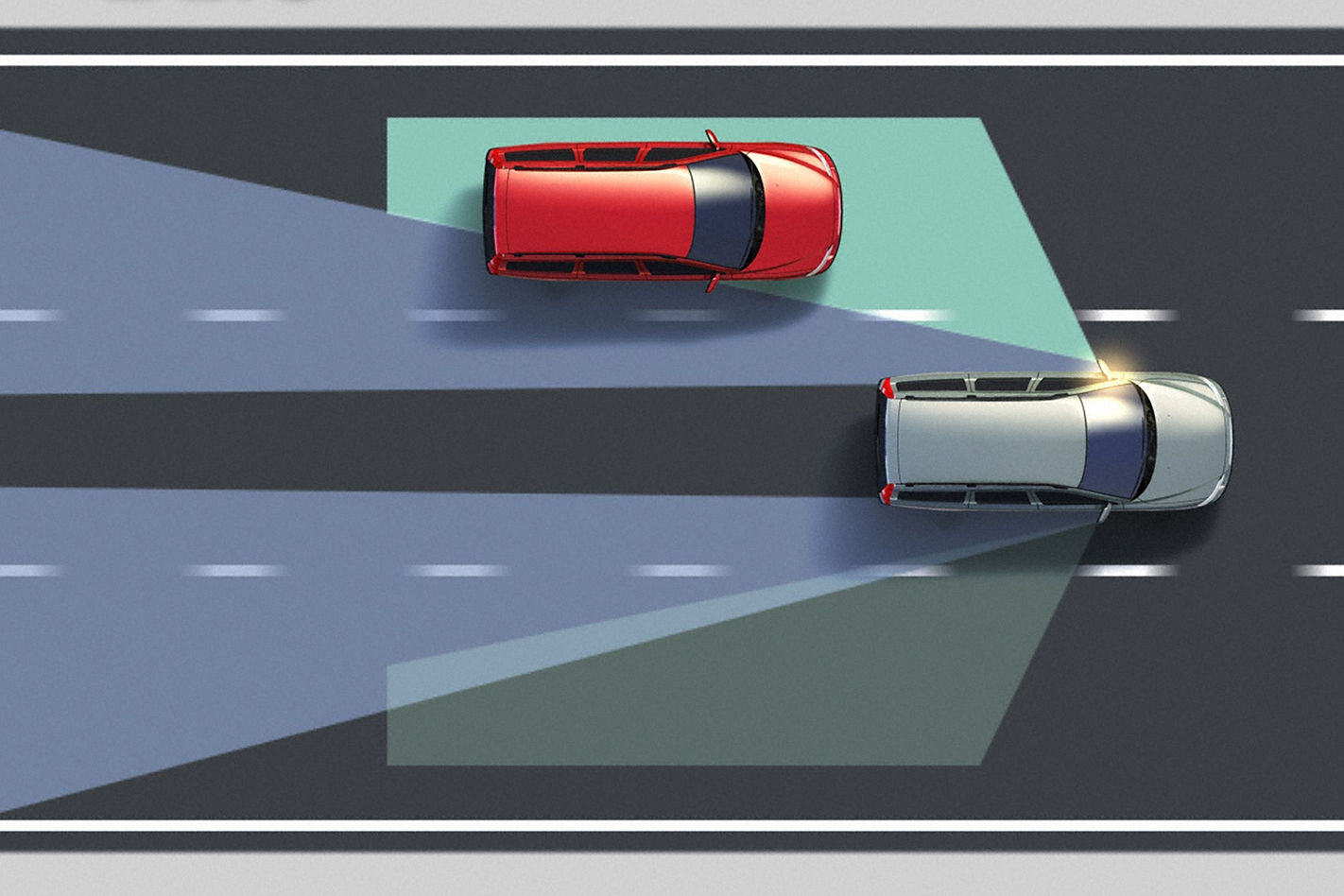
What is it: A piece of technology that keeps a virtual eye on traffic around your car that may be lurking in your blind spot – the areas to the rear and sides that are often invisible to wing mirrors yet big enough to hide a car, truck or motorcycle.
Why it’s important: By virtue of their design, some cars have large blind spots – and it’s often the biggest and heaviest SUVs with small rear windows that are the culprits. By using the short-range parking sensors embedded in the rear bumper (or sometimes a camera-based system), blind spot monitoring will sound an alarm if you put your indicator on to merge into an adjacent lane that’s already occupied by another car, truck or motorcyclist.
Also known as: Blind Spot Information System (BLIS)
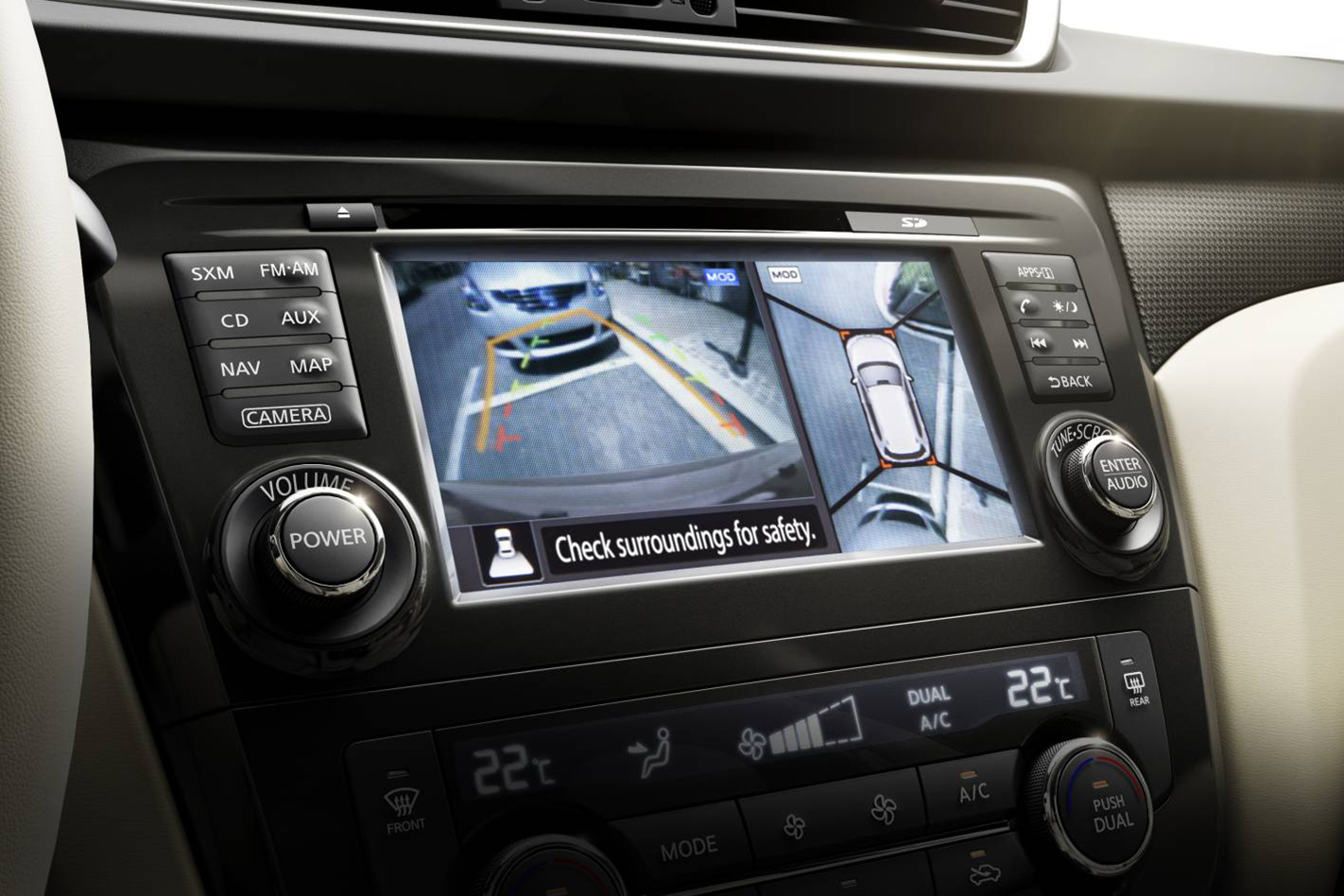
What is it: Technologically simple, a reversing camera is simply a rear-facing video camera mounted somewhere on the back of a car – often above the licence plate on the bootlid or tailgate, or housed within the rear bumper, or even behind the car maker’s logo.
Why it’s important: The statistics on the number of children killed by reversing vehicles in driveways alone are saddening, but those deaths could be easily prevented by having a camera to let the driver know when the area behind them is clear. Thankfully, reversing cameras are almost universal on many modern cars, even those in the smallest vehicle segments.
Lane departure warning
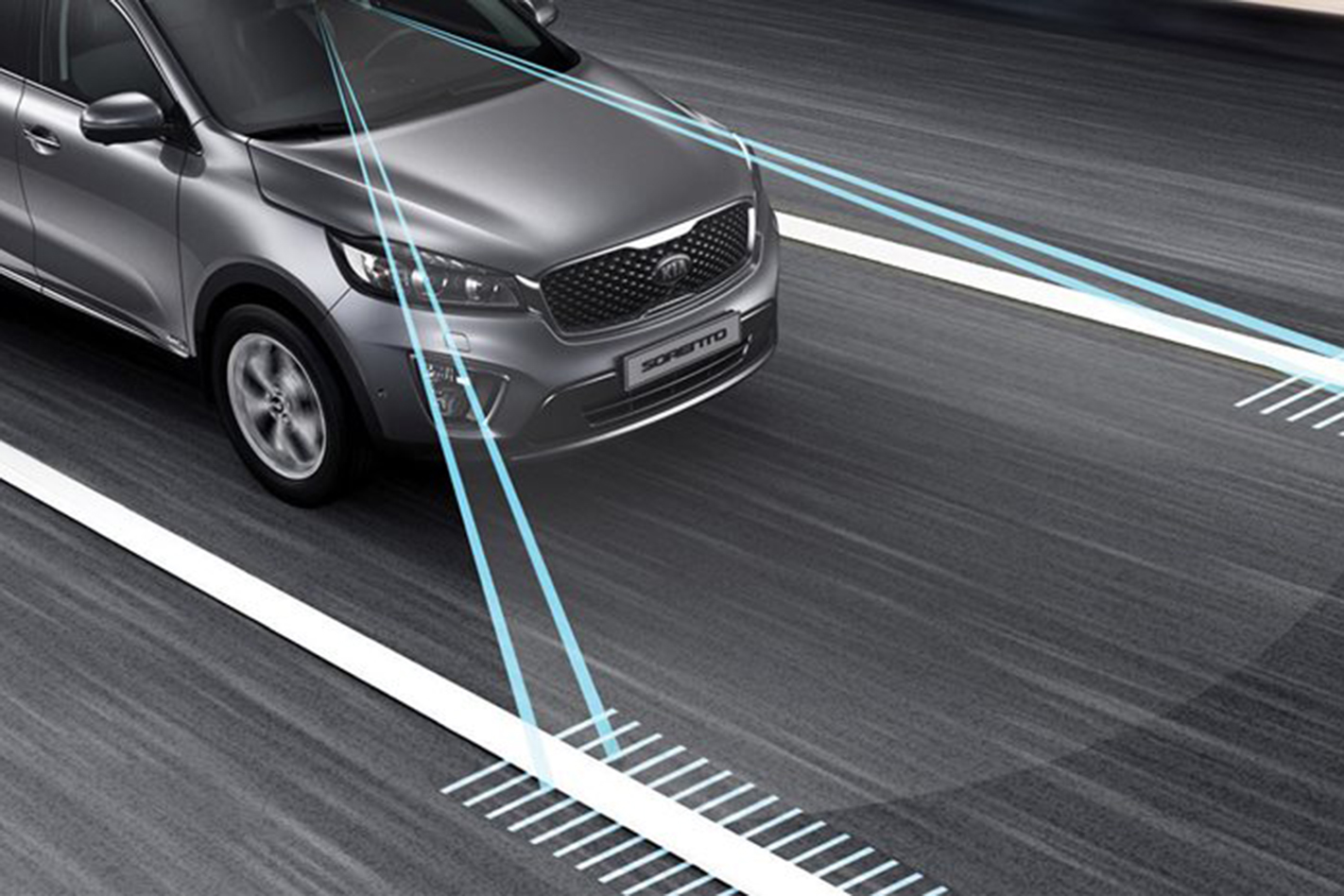
What is it: A camera-based system that monitors where your car is relative to painted road markings or – in more advanced systems – the road’s edge. If it determines that you’re straying from your lane and you haven’t signalled with your indicators, it lets you know.
Why it’s important: Driving outside of your lane is often a sign that you’re either distracted from the task of driving or you’re becoming drowsy – both of which are dangerous for obvious reasons. If the lane departure warning is being triggered frequently, it’s as good a signal as any that you need to pull over and rest so you can refocus.
Also known as: Lane Keeping Assist, Lane Keeping Support, Active Lane Keeping Assist, Lane Assist
What is it: Fatigue monitors vary in how they detect your state of consciousness, with some using a camera to scan your face and look for visual cues (like slowly narrowing eyelids or head jerks) while others monitor the position of the steering wheel to detect abrupt movements or other fatigue-related patterns.
Why it’s important: Because sometimes you don’t realise just how tired you might be getting. Fatigue is a big killer on Australia’s regional road network, and just like lane departure warning, a dedicated driver fatigue monitor can be an invaluable wake-up call to prompt you to pull over and either have a powernap, or change drivers.
Also known as: Driver Alert, Attention Assistant, Fatigue Detection System, Driver Alert Control
Rear cross traffic alert
What is it: A lesser-known feature but one that’s becoming reasonably widespread, rear traffic alert uses the car’s rear camera and its reverse parking sensors to scan the street behind and to the sides, issuing an alert if it detects vehicles approaching as you’re reversing.
Why it’s important: Reversing out of 90 degree or angle parking spots into a busy street can be a real challenge at the best of times, but rear traffic alert systems take a lot of the guesswork out of it. After all, the last thing you want to do is pull out into the path of another motorist who didn’t see you.
I HAVE seen the walls, and I can barely comprehend how the motorcycles average 213km/h for an entire lap, let alone nudge 300km/h through here.
This is a town, with hedgerows and houses lining the road. And the English build their houses very, very close to the road. It has telegraph poles and gutters and intersections, yet the bikes hit 300 on this downhill stretch, threading the needle through town at an astonishing 90 metres per second.
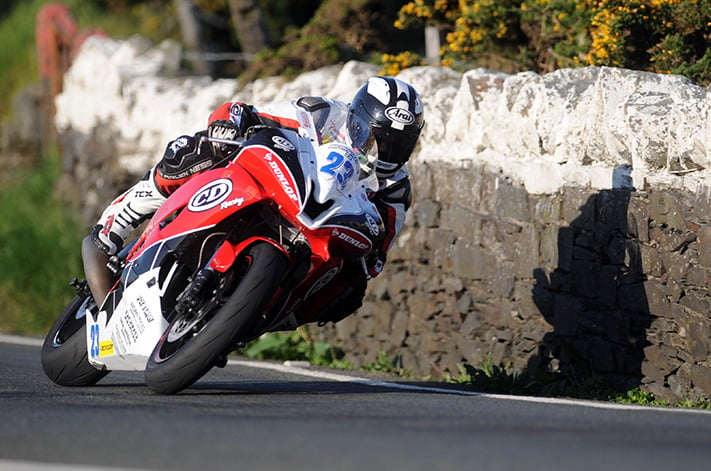
I have touched the walls, and they do not yield. They’re made of big bluestone rocks, piled one on top of the other, some jutting, some sharp. The riders come through here fully cranked, leaning hard into the bends, tearing their leathers as they brush the bluestone bricks with their knees. Apexing, it’s called.
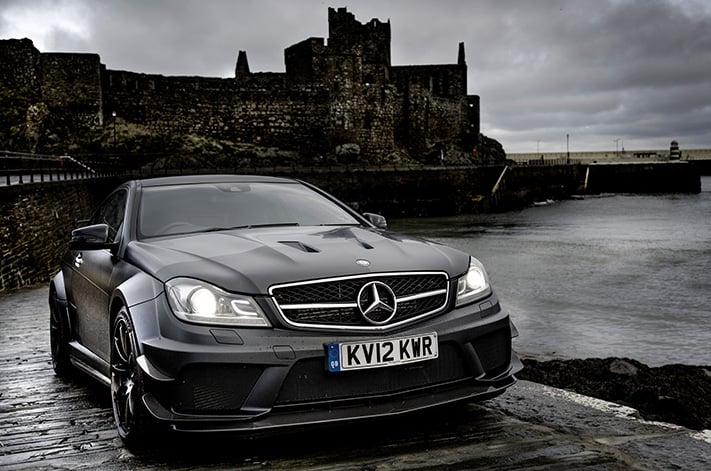
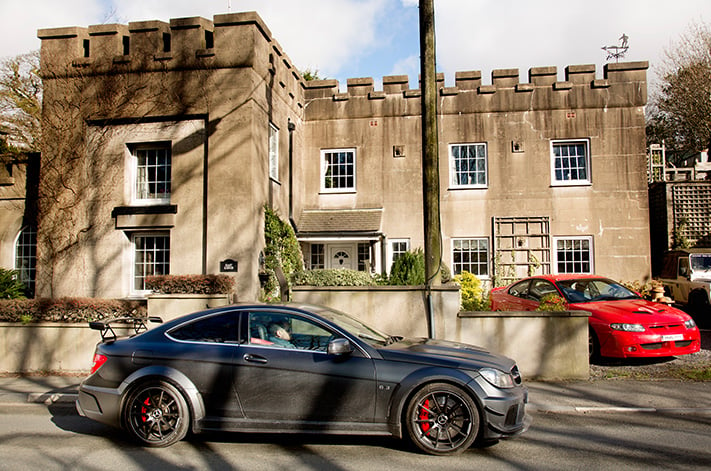
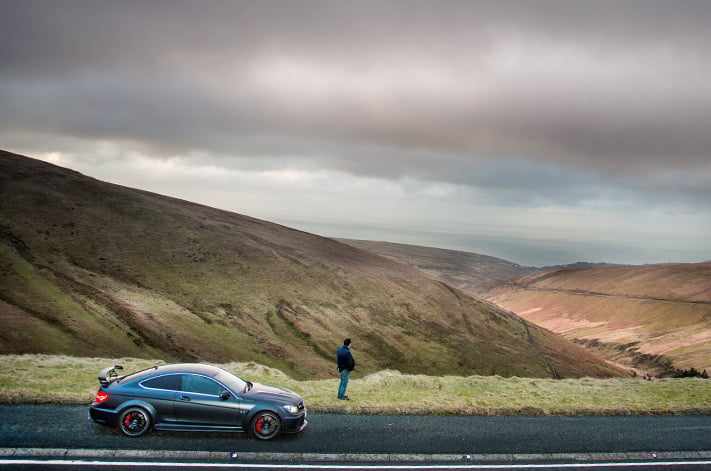
I’m sitting on the wall, an AMG C63 Black parked nearby, trying to imagine what it must feel like for the mad motorcyclists, these Isle of Man TT competitors.
The Isle of Man TT is the deadliest motorsport event in the world. It has claimed 245 competitors since it began in 1907. Not to mention the countless brave (and crazy) enthusiasts who have died on Mad Sunday, when the track is opened to the motorcycling public. Compare that to the Nurburgring’s death toll (68), Indianapolis (56) and even Dakar (45) and you begin to understand the courage it takes to compete here.
I set myself a challenge. I want to experience what these insane bikers do. I want to feel the rush and feed off the adrenalin as the world whips by at a frightening velocity. But it’s not June, so it’s not race week. There are speed limits through the towns dotted around the 60.7km Snaefell Mountain Course that pretty much laps the Isle of Man. Outside those towns, however, there are no speed limits. In the mountains between Ramsey and Douglas there are never any speed limits, and very few cars. God bless the Isle of Man.
But I’m not on a race bike, and the road is not closed, so it would be madness to chase 300. Instead, I set myself the challenge to hit – and sustain, at least for a while – 213km/h. That’s the lap record average set in 2014 by Kiwi Bruce Anstey. By comparison, Greg Murphy’s Bathurst lap record average is only 176. Heading out of town at 50km/h, the Black’s V8 barely off idle, I can’t stop thinking about two-wheeled rockets pounding down this concrete and bluestone chute at maximum attack, their riders protected by nothing more than a thin leather skin. For them, death waits behind a missed gear or a misjudged braking point. And, just in case they forget, there’s a cemetery right beside the startline.
“I see the TT as a numbers game. If you keep coming back, sooner or later it’s going to catch you out,” he says. But he wouldn’t have it any other way: “Everyone that races here knows the dangers and they accept them, and they ride accordingly. I think it’s sad that we’re all wrapped in cotton wool these days and there are so few opportunities to do anything dangerous.”
Bridget Dobbs knows the toll better than most. Her husband, New Zealander Paul Dobbs, died here in 2010. “You can’t possibly ban it,” Bridget said when interviewed for TT documentary Closer to the Edge. “It’s like a monster; it’s bigger than the rest of us. People have said you only really know you’re alive when you’re so close to death … We love those photos of riders’ heads so close to the stone walls. The reason we love them is because they’re so astonishing.”
On the approach to the Gooseneck section outside Ramsey, a bluestone wall bulges alarmingly, the weight of a mountain distending it like a huge, angry pimple. But instead of re-profiling the wall to ensure riders don’t have their heads ripped off, organisers just painted the bulge white.
Publican David Haigh was working the bar during the 2014 race when one rider’s brake disc exploded as he was slowing down from 260km/h. Instead of taking the dogleg at 80 or so with a crowd-pleasing jump, Bob Price launched off the bridge at close to 200 and straight into the side of the pub. Price’s bike hit the crash mats that cover the first floor of the pub’s wall, but he didn’t. His helmet impacted with the concrete above the protective mats. At that speed, the helmet couldn’t save him.
“It sounded like a bomb going off,” Haigh told Wheels. “He didn’t stand a chance. I’ve never sworn like I did when I come out from behind the bar. I looked right out this window to see what happened, and there’s this helmeted head staring back at me. And that was it. That was him. Gone.” After Ballaugh, the tree-lined road undulates through typical farming land across to Ramsey. Through here it’s all about maintaining speed and staying on the racing line. Get it slightly wrong in one sweeper and you’re off-line for the next. If you’re lucky, you’ll only get overtaken by the bloke behind. If not, you’ll get up close with nature, fast.
Up here, there’s a monument to the TT’s favourite son, 26-time winner Joey Dunlop. The Isle of Man TT didn’t kill Dunlop. A road race in Estonia did, in 2000. We stop to pay our respects, but don’t linger long because the wind is blowing harder. The temperature drops to zero. I jump back into the Black’s heavily bolstered racing seats and quickly realise we have a problem. We’re bogged. On grass.
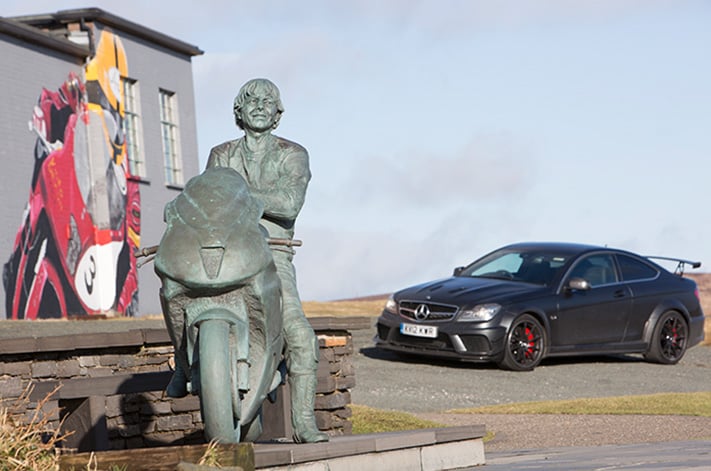
A headline plays in my mind: Museum machine plummets off mountain. Editor also plummets, moments later. Two long planks of wood are scrounged, the photographer and I push on the Black’s nose, and our camera car driver presses the throttle gently. The car inches back from oblivion, onto solid ground. The irony is not lost on me that my brush with mortality should come at little more than walking pace. But it doesn’t slow me once back on the road.
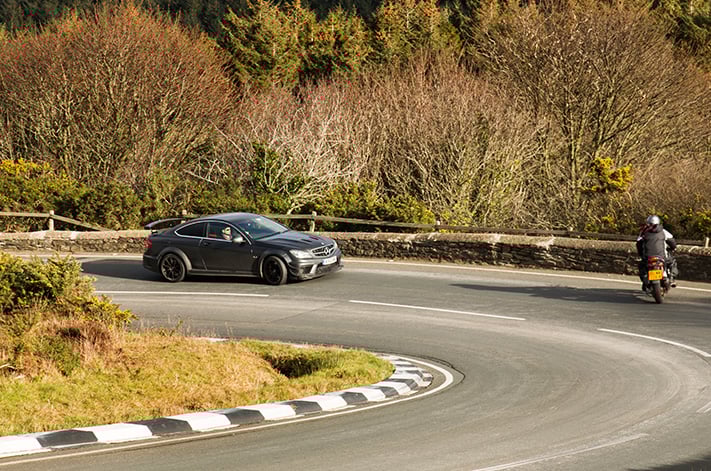
At 200km/h we’re only covering 60 metres every second. The C63 is bellowing as only a naturally aspirated V8 beast can, gulping great lungfuls of bitterly freezing air and screaming like an angry dragon. My attention should be solely on the road, but it’s not; I’m watching the speedo, too. I want to see 213. This road would be barely a country B-road in Australia; one lane each way, winding and climbing through a haunting and desolate green and brown patchwork. Nothing taller than tundra grass stands on the surrounding hills against this howling winter wind. There are no towns up here. The only sign of mankind is this cold and narrow strip of tarmac.
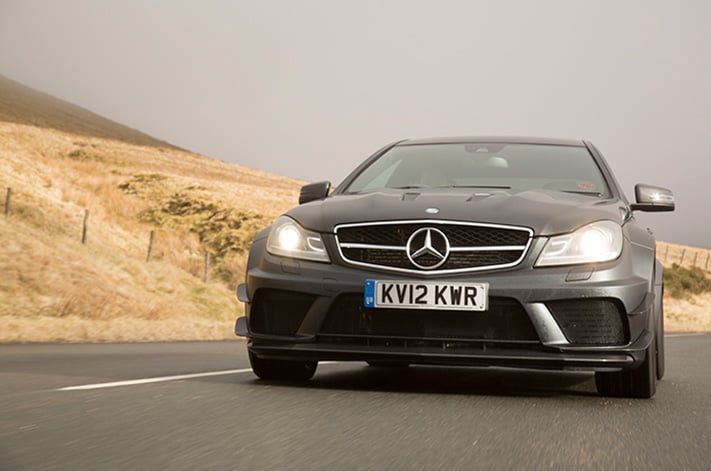
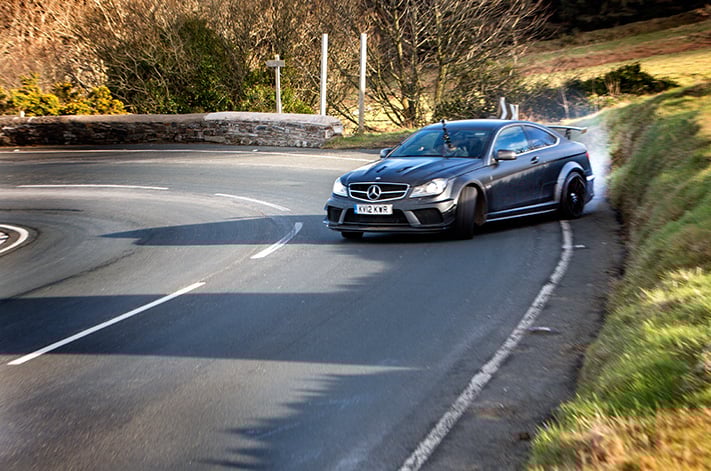
The Black’s doing the best it can, its wickedly enhanced aero and R-spec rubber keeping things planted. This hardcore C63 – a stripper super-coupe whose manners and good sense have been lobotomised to unleash the full maniac within – is tailor-made for this kind of driving. There’s no doubt it’s got the performance bandwidth to go harder on these roads. It’s the driver whose courage is on the limiter.
This pilgrimage to the Isle of Man was meant to be a fond farewell to one of the greatest examples of Benz’s brilliant 6.2-litre naturally aspirated V8 engine. You know, the demise of a legendary donk celebrated at a circuit synonymous with death.
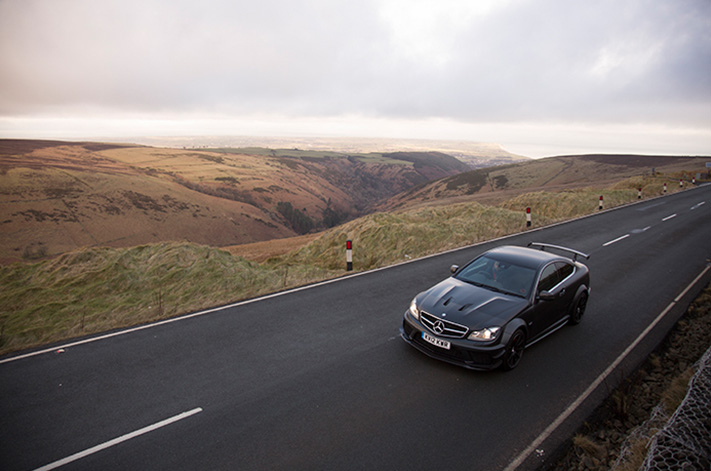
Right now, the Grim Reaper would struggle to keep up. I’m determined to sustain the magical 213km/h, but every time I get there a corner nears and I’m forced to lift. The racing riders have it easier. They use the whole road, and there’s no oncoming traffic. But a bike’s total rubber footprint wouldn’t equal one of the massive tyres on each of the C63 Black’s four corners.
And if those leather-clad lunatics come a-cropper, they’ll have plenty of time to regret as the valley floor rushes up and flattens them. Just ask local ace Conor Cummins, born just down the road in Douglas, who in 2010 lost control and flew 60 metres before bouncing another 20 metres over a wall. He didn’t hit the wall, otherwise his injuries – broken back in two places, fractured left arm and pelvis, dislocated knee – could have been serious.
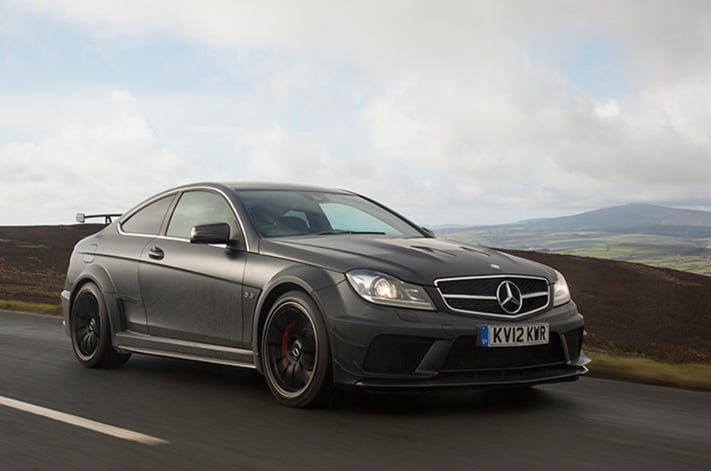
The descent into Douglas is the end of the lap, and the end of my time at the Isle of Man. It’s also the end of my time in a C63 Black, the last time I’ll get behind this brutal and bellicose V8 engine. The end must not come with a whimper. I’m still on a mission.
The C63 Black screams up through the gears again, then a bend approaches and I’m on the brakes. Full throttle again, engine roaring. 200. 210. 220. Brake. 160. 170. 180. Brake. It’s futile. I abandon this folly and focus instead on my last few kilometres in a C63 Black.
Few cars could do justice to a lap of the Isle of Man TT course, even fewer would pay visceral respect to the motorcycles that strafe this isle every June.
The C63 Black’s slightly unhinged abilities and unfettered exuberance do both, and brilliantly. It’s loud, it’s brash and it’s blindingly quick.
And now it’s gone forever.
This article was first published in the July 2015 edition of Wheels Magazine.
Sign-up here to get the weekly Wheels highlights
At a time when so many of us are longing for overseas adventures and the green light to start traveling outside Australia’s borders again, we thought it was the perfect time to revisit some of our favourite car stories that came from abroad.When we started putting this special episode together it was surprising just how many countries the WhichCar team had visited in the search for automotive tales, but the results are the highlights of many, many days traveling and shooting.
Mazda rotary festival Japan
What you did see:
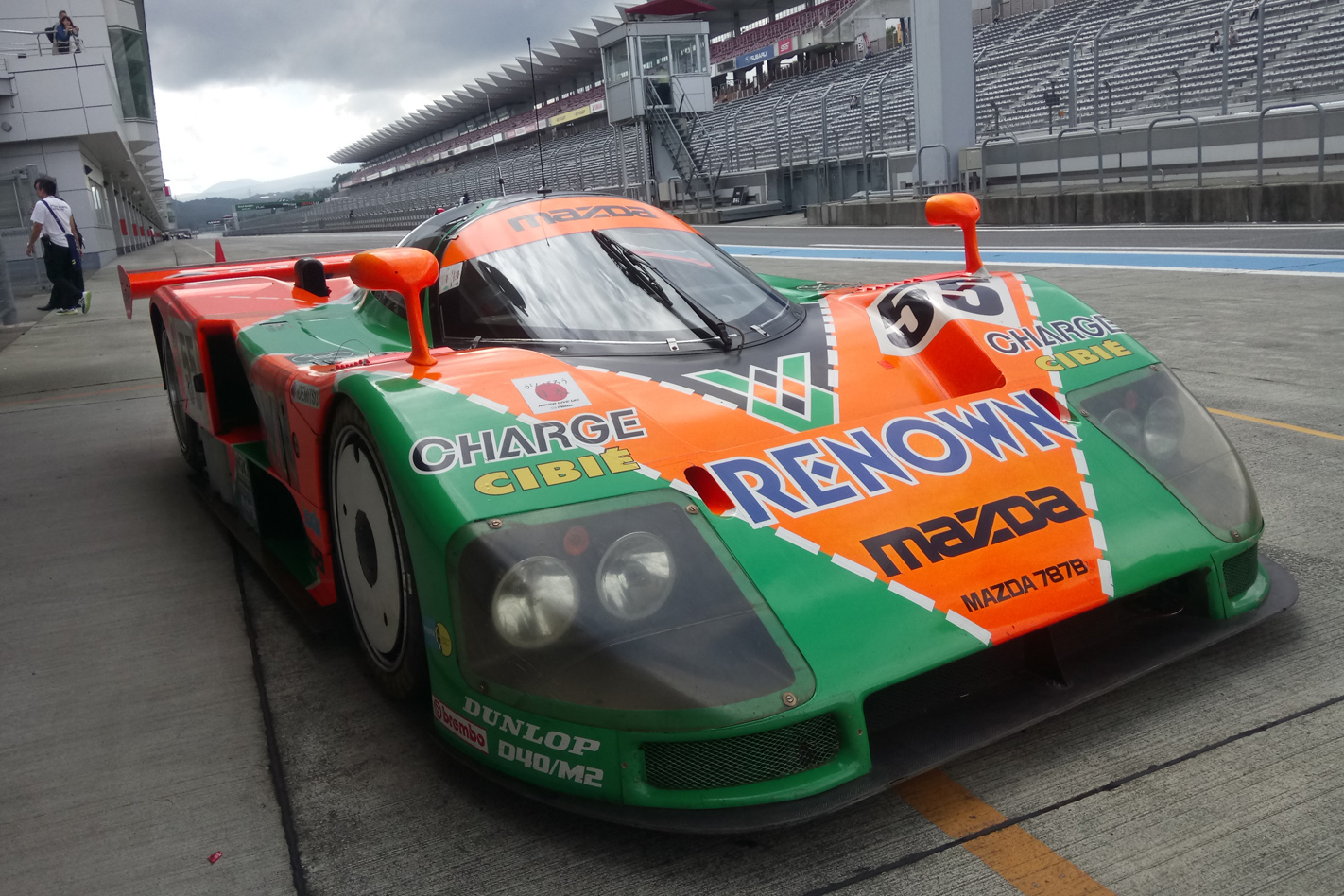
This incredible festival was a celebration of the cult-followed rotary, or Wankel engine, at the legendary Fuji Speedway. The track is situated in the shadow of Mt Fuji and, despite shooter Josh’s wonderful photography, nothing does the scenery justice.
There’s a quick shot of a three-rotor drag racer that the spectators suddenly retreat from because the driver decided to rev it to the limiter. The resulting noise was like an entire battalion of automatic rifles.
What you didn’t see:
Savage heat and humidity made it an exhausting shoot and Josh probably lost a good 5kg in perspiration. While meeting the 787B was an absolute honour, a team of minders was closely watching me to make sure I didn’t actually touch it – it’s that precious. But I did ‘accidentally’ brush it with the back of my hand.
Audi RS7 Germany
What you did see:
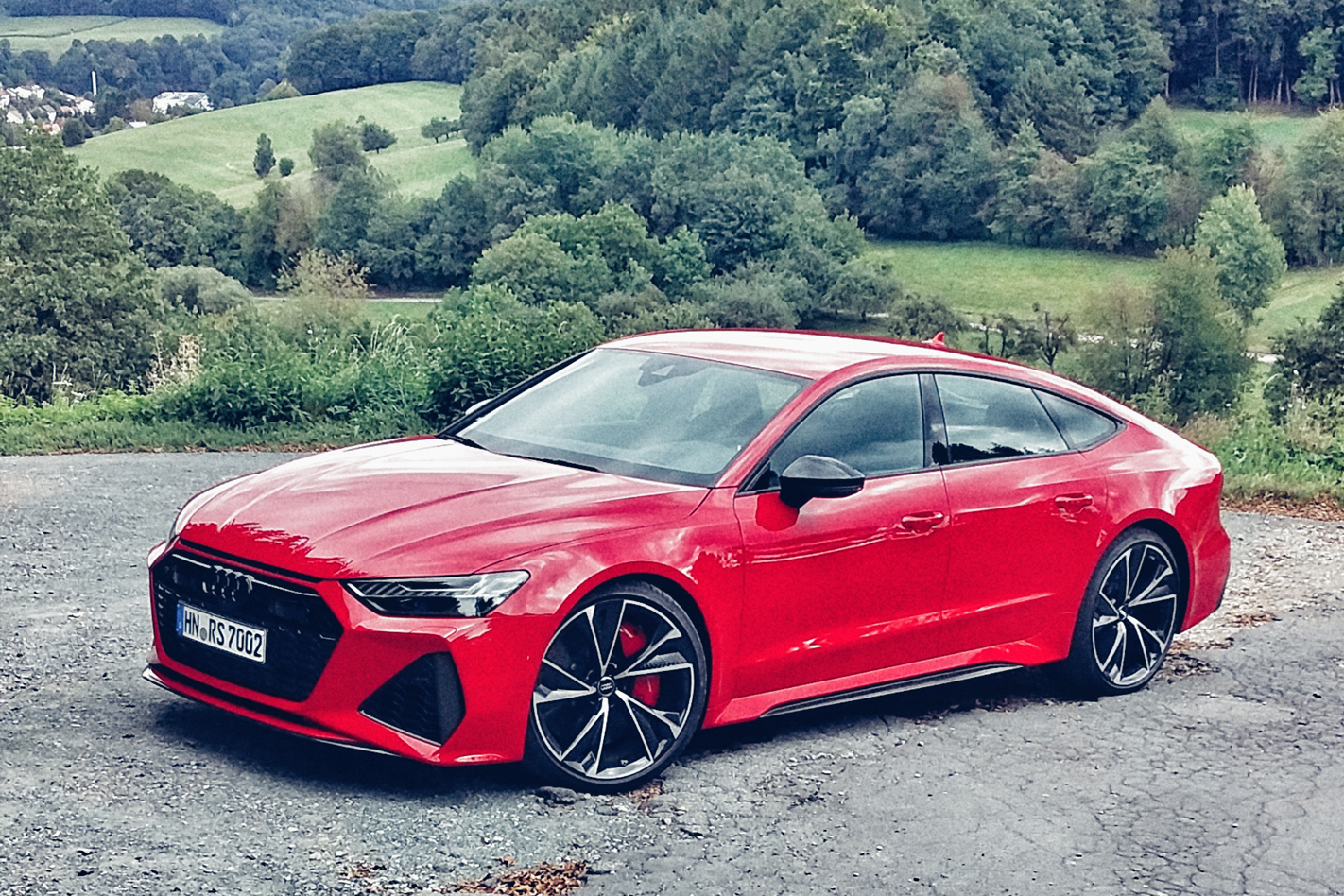
One of the fastest and most practical vehicles ever produced by Audi on its home ground just outside Frankfurt. The roads were as spectacular as they look and little wonder; this is the location of an amazing hill climb race each year.
The event was the global launch of the mighty sedan/coupe/hatchback in September 2019 and the model has only just arrived in Australia.
Earlier in the day and on the Autobahn drive to get to the launch location, I had unsuccessfully attempted to crack the milestone 300km/h. With a little too much traffic for a safe execution, we had to back off at a not-completely-disappointing 292km/h. Sadly there were no cameras on board.
I also got lost. But we don’t talk about that.
Lamborghini Huracan Evo Bahrain
What you did see:
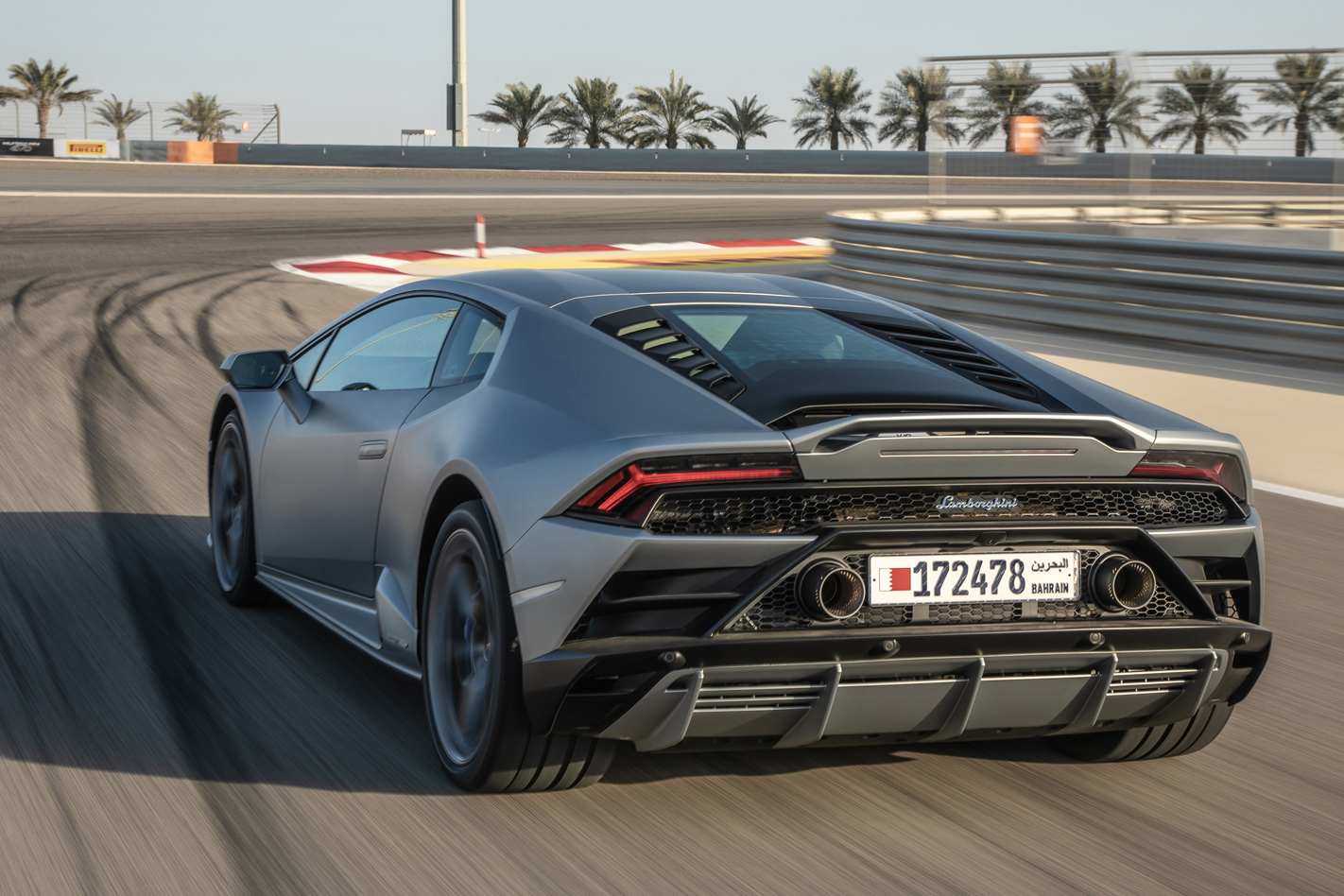
One of the greatest driver’s Lamborghinis ever made, unleashed one of the world’s most spectacular race tracks. This event was the global launch of the evolved Huracan mid-engined V10 supercar.
The weather was beautiful with hazy light and no wind, but it was surprisingly quite cool. I didn’t realise Bahrain actually gets quite cold in winter but it didn’t stop me going for a swim once we were done shooting.While every other attendee lunged for the keys of the lurid orange cars, we bided our time and quietly plucked a matte silver example. As we suspected, once the sun set, the gunmetal finish appeared wonderfully sinister and far more special than the gloss finishes.
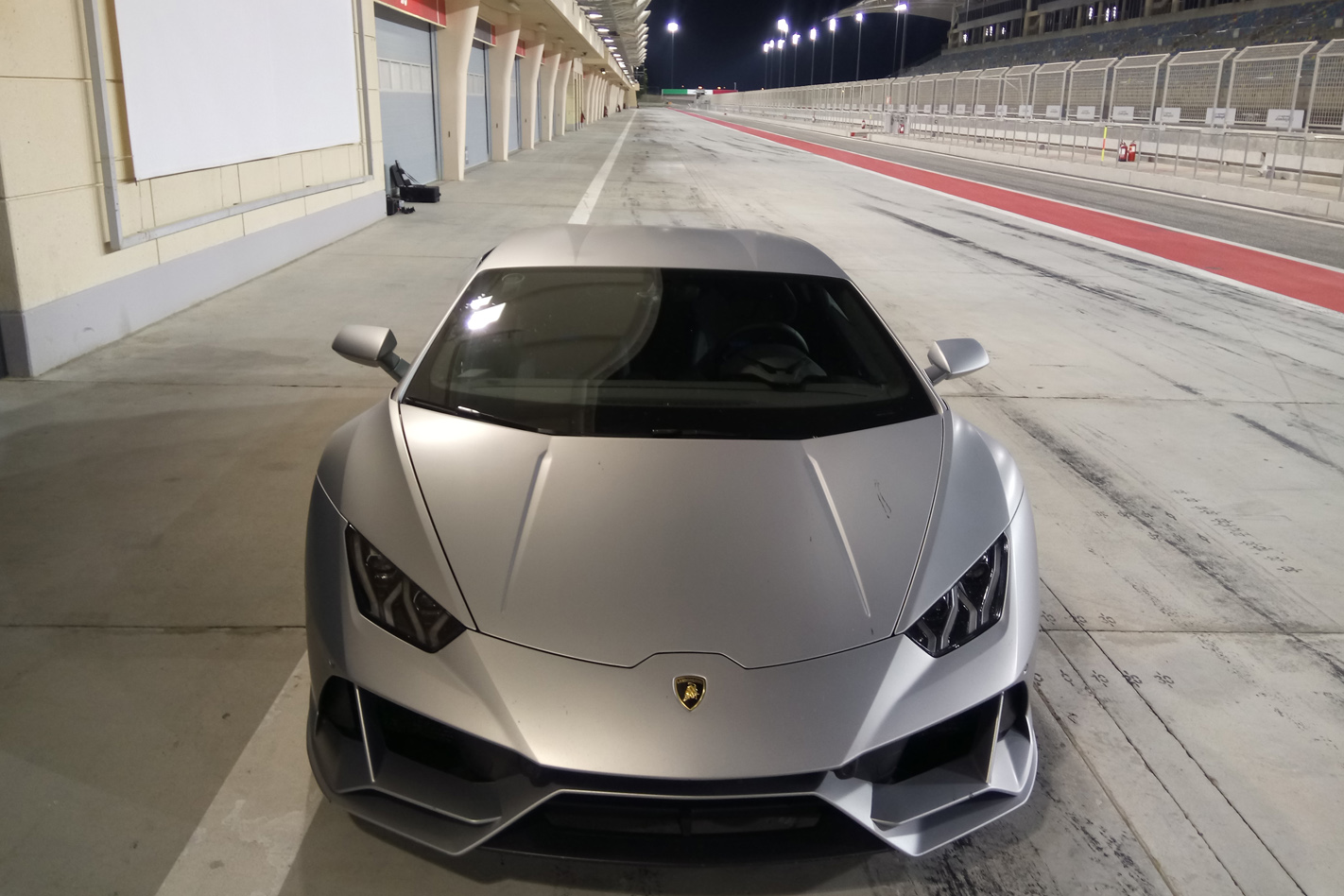
Okay, so I didn’t really break into the pit area once everyone had gone home. I was lucky enough to be given a little extra time to get the night shots but only just enough. As we got the final shot accelerating out of the pits, they literally threw the big switch and the track was plunged into darkness. It’s the only time I’ve ever reversed into a pit lane.
Building a Grand Prix circuit in the desert poses many difficult challenges. When it first opened the track was plagued by sand and dust blowing onto the asphalt so the patch of desert responsible was identified and a massive area of sand was sprayed with an adhesive to prevent it blowing away. We’re not kidding.
The WhichCar airport terminal
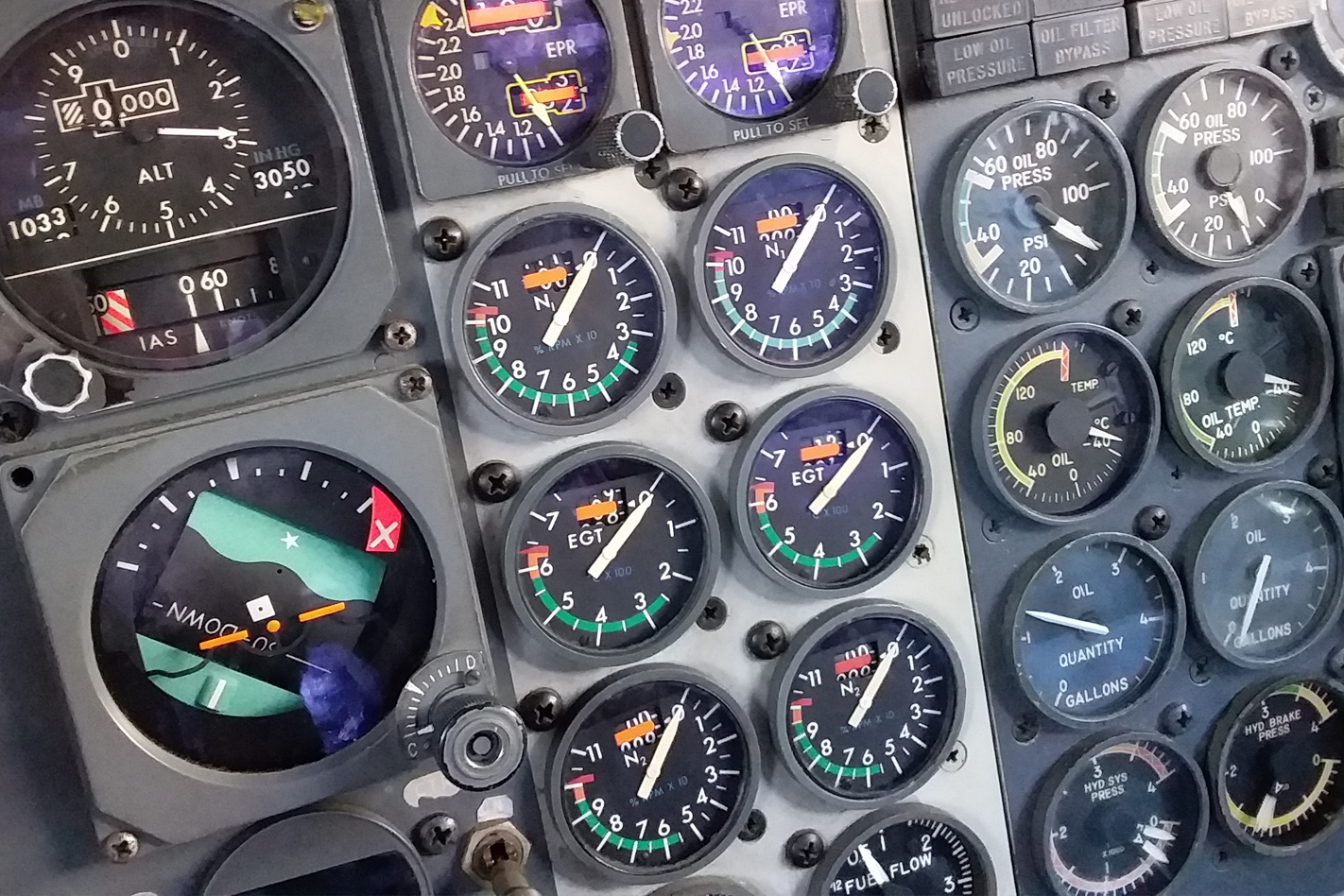
And if you were wondering, we filmed the segues at the Australian National Aviation Museum at Moorabbin Airport in Victoria. Well worth a visit.The intro pieces were shot in and around a 1958 TAA Vickers Viscount, which was commissioned by the Cuban national airline Cubana, and even occasionally transported dictator Fidel Castro.
You’d like Tim Rogers. As the 66-year old accumulated his first fortune, from buying in fuel and selling and distributing it to 7-Eleven stores around America, he and his wife, Twanna, dreamed big. Sitting in bed one morning, drinking the first coffee of the day and peering through the window at the perfectly manicured garden of their country club villa, they imagined a members club for those who found California’s existing country club scene rather pedestrian.
Just like the hundred-plus country clubs dotted around the desertscape of the Coachella Valley, at Tim and Twanna’s imagined club, members would be able to rub shoulders with like-minded, high-flying individuals or retire to their multi-million dollar luxury villa. However, the sound of a driver striking a ball would be replaced by the sound of drivers firing up V12s, twin-turbo V8s and flat-sixes, and the fairway would be swapped for the straightaway.
After selling a chunk of gas stations and convenience stores, team Rogers set to work on making their dream come true. They joined forces with an upmarket property developer and personally funded the creation of the Thermal Club, to the tune of US$175m.
And now here I am, lying in bed with my first coffee of the day, peering out of floor-to-ceiling glass doors, admiring the perfectly presented racing circuit directly below the private terrace. An app tells me who is on track, what they’re driving and how quick, or not, the lap times are. Downstairs, seen through a viewing window in the kitchen, sits a fleet of fifteen desirable sports cars waiting for me to climb aboard. All I have to do is pull on a race suit and within a minute or two I could be trading lap times with my neighbours.
I hop off the bed and slip my shoes back on, straighten the bed covers of the show home and slide shut the doors to the terrace. I’d gladly make myself at home but a prospective purchaser is coming to view the villa later in the day.
It’s surreal to think that before the Thermal Club sprung from the desert in 2012, this place was dust and palm trees as far as the eye could see. A dizzying 14,000 of the palms in the facility had to be relocated, before work could commence. Yet Tim Rogers tells me it has been profitable for the past six years, and doesn’t have a dime of debt.
Even so, it was a risk. Why take on such a project? “The main reason is we belonged to several country clubs,” says Rogers, “and they’re beautiful, with a golf course around you, nice homes, and a common interest with the people near you. But we have maybe 125 of those in the Coachella Valley, and not everyone golfs. We love cars, and thought there are many other people who do too.”
So like Ray Kinsella, in the 1989 movie Field of Dreams, they figured that if they built it, millionaire petrolheads would come. Sure enough, they did.
Rolling off the freeway, Thermal Raceway appears like a mirage in the California desert. The site covers around 160 hectares, walled off to the outside world. On the other side of the road is a private airport. The majority of the people that come to Thermal don’t travel by car – this is Fortune 500 territory, after all. They land their Boeing Business Jet, Learjet or helicopter.
You can’t be a member of Thermal Club without building a villa, or vice versa, so you have to either buy a building plot, starting from US$620,000, and build your villa within five years, or you can buy a completed spec villa, from about US$3.3m for a 669 square metre on-track house, or US$2.3m for a 418 square metre off-track property.
Two types of membership are available: family or corporate. The former is $85,000 and as the title suggests allows the member to have as many of the family as they please present. Alternatively, a $200,000 corporate membership can be divided among four unrelated individuals, a little like a timeshare. Both those include a 70 percent refundable deposit should you leave the Thermal Club. A monthly fee of $1200 applies to the family membership, and each individual that’s part of the corporate membership must pay $1200 a month.
It sounds complicated but don’t fret; Thermal Club can take care of everything, supplying an architect and contractors, and can even furnish properties so they are turn-key ready, with food in the fridge, coffee on the stove, and sun loungers and an integrated barbecue on the terrace. The only proviso is that your vision for the exterior of your bespoke property has to be approved by Thermal Club’s design committee.
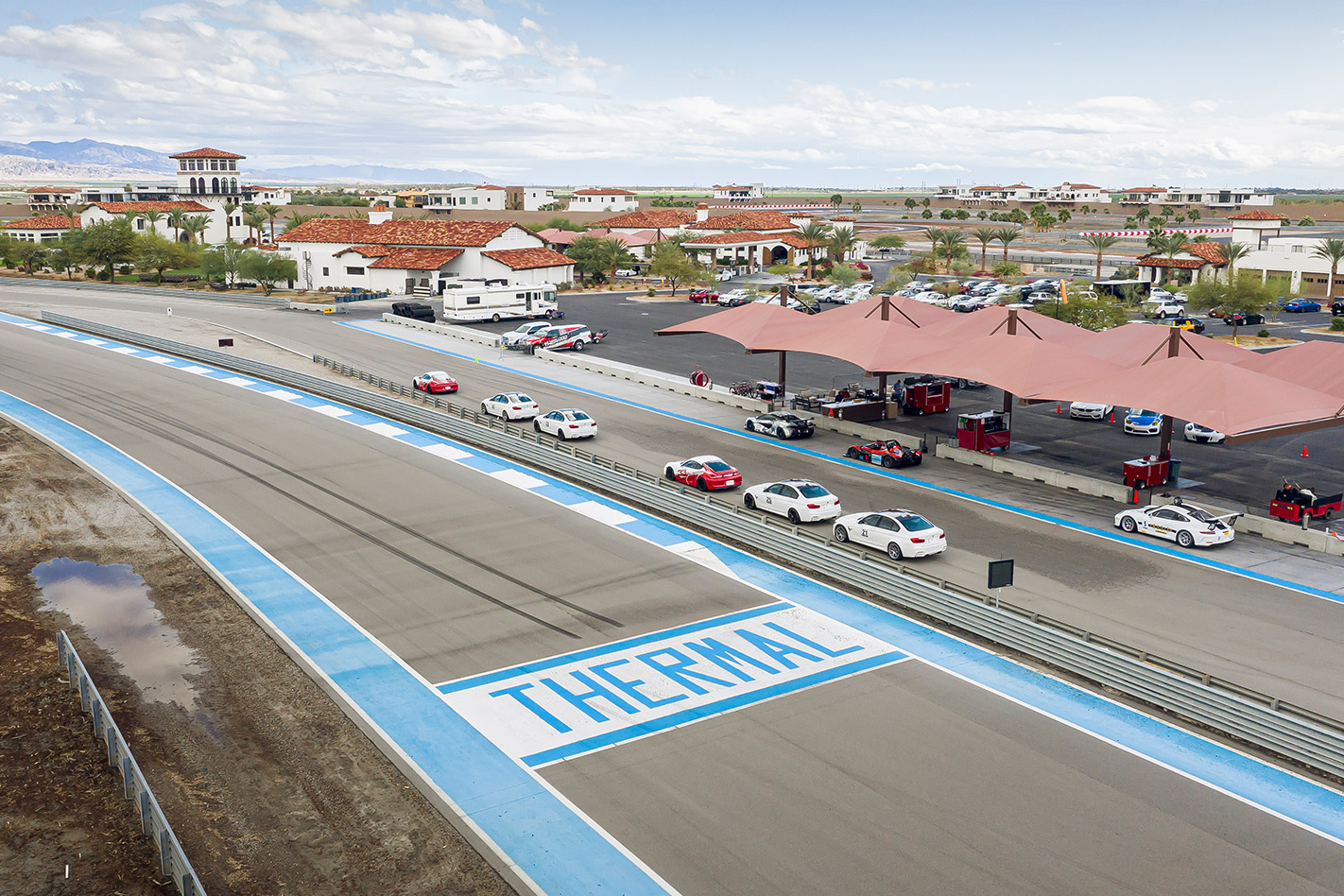
There are now three race tracks and 70 residential properties built (the maximum capacity is less than 300). BMW and Mini are permanent tenants with the West Coast Performance Centre, which is a driving experience venue that clinches thousands of sales for the brands every year (see sidebar p68). Additional land for a fourth track has been purchased, and Thermal’s track designer, Alan Wilson – husband of Desiré Wilson, the racing driver – is visiting when I spend the day there.
“The typical client here,” says Wilson, “is the GT3 Cup driver. I’ve seen more McLarens here than anywhere else in the world. So you’ve got to design it for those customers; to give the impression of speed without actual speed.”
Wilson says accidents will, inevitably, happen, so it’s better to manage the speed of the cars and make the track flow and feel faster than it actually is. “You want somebody like that to be able to play with their car, push it to their limits. It’s never the car’s limits, because the cars are way better than 90 percent of the drivers.”
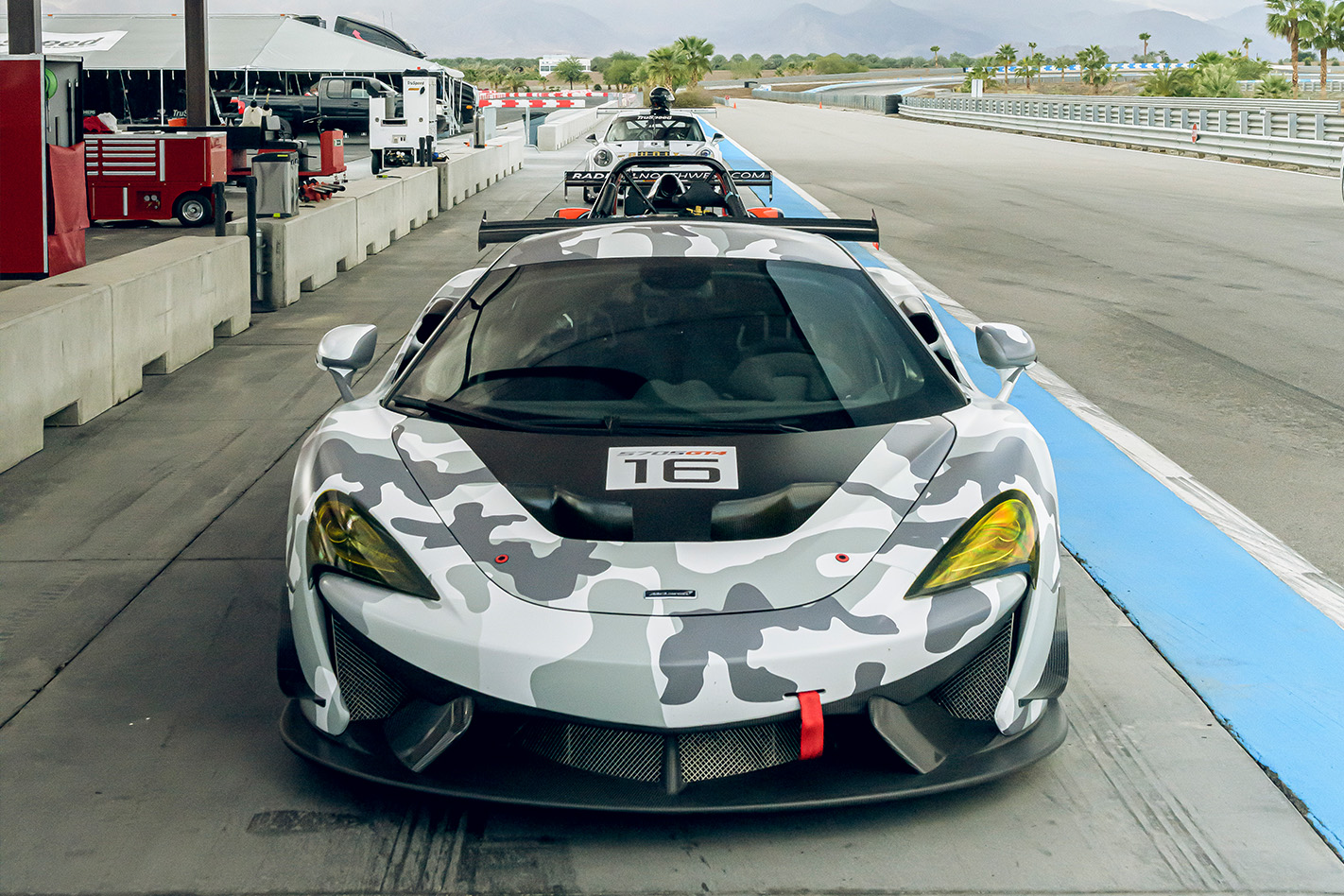
I put two of the circuits to the test, driving a Mini John Cooper Works as fast as I dare, following an instructor in a car ahead and listening to his instructions as I figure out where the braking and turn-in points begin and why the apexes are all later than I was expecting.
It feels exciting despite the fact that the corner speeds are nowhere near those of a modern grand prix track, and with good reason; that would bring everything but a race car to its knees. There are tight sequences, areas where you can run the kerbs, faster sweepers, technical sections that call for patience and even some undulation changes. The run-off areas are generous and smooth – so you shouldn’t damage your car if you make a hash of things – and every month all three circuits run as one to give a 8.0km lap.
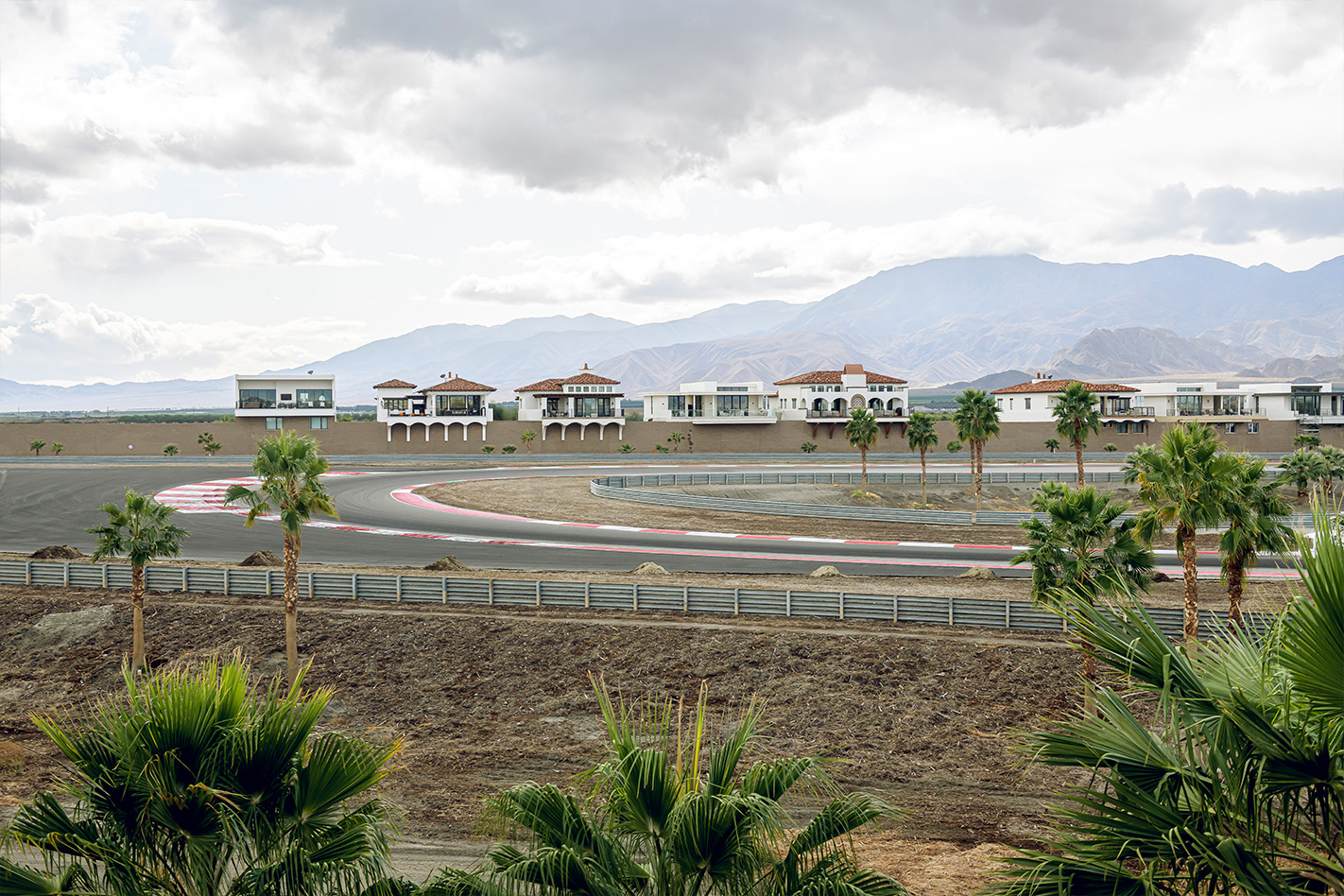
All the while, you could be being watched by any number of Thermal Club members who own a villa at the side of the race track. Those that are built trackside are integrated into the Great Wall of Thermal, a 5.5m high wall that contains noise and, perhaps, accidents. For that reason, the ground floors are configured around vast garages that house up to 20 cars, with the uninterrupted back wall facing the circuit.
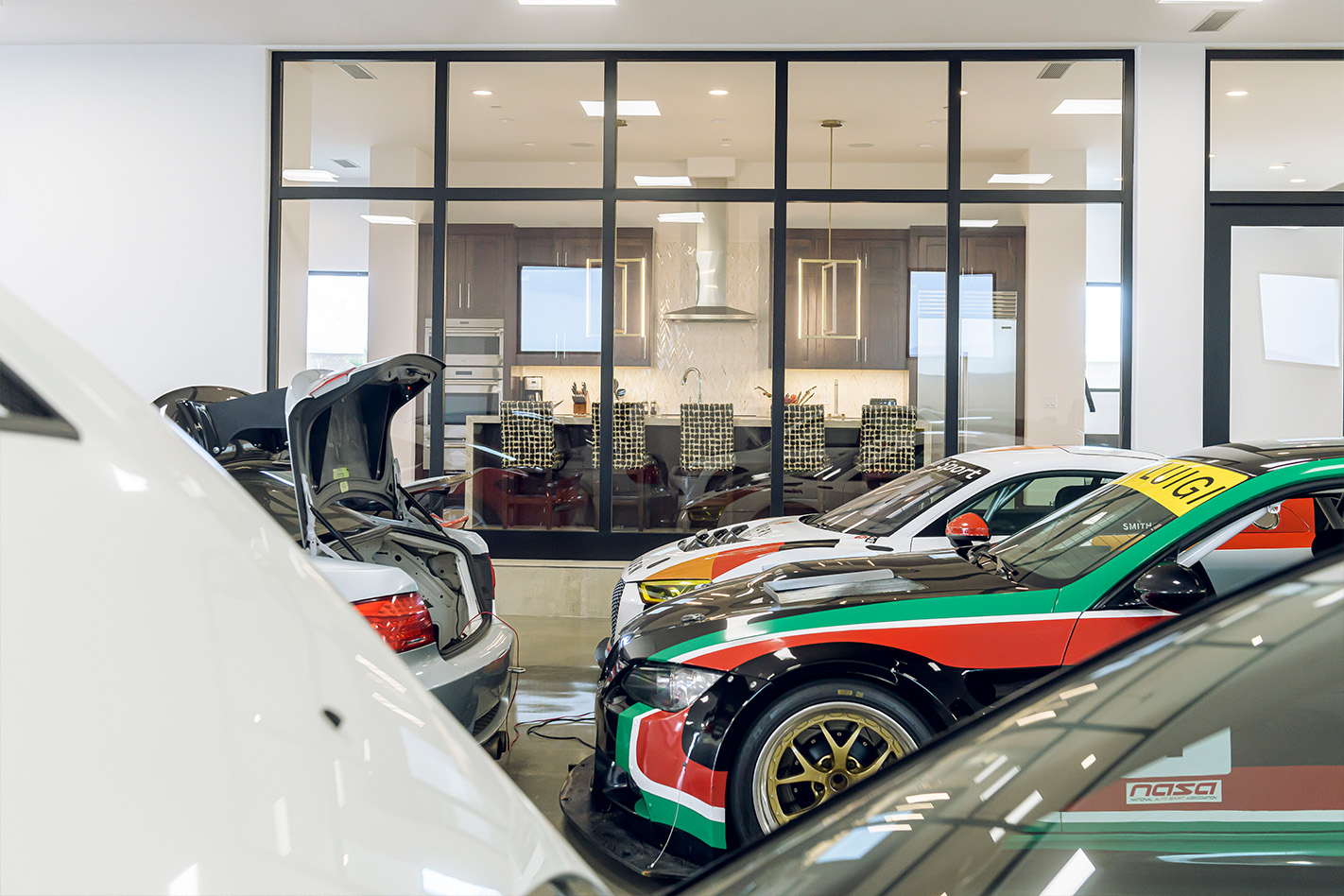
In the pits there are comfortable sofa sets, fridges filled with ice creams, cold drinks, snacks and even cold flannels to mop perspiring brows. And built into display cabinets is a bank of telemetry and in-car video feeds, ready for an instructor to review your performance through every braking point, turn-in-area, apex and exit around every track, should you be so inclined.
The circuits are wired to accept HD cameras. Tim Rogers says they’re in the process of choosing which cameras to install, so your laps can be filmed from the outside, too, and live-streamed to the pits or, if you like, to other Thermal Club members. It’s the digital age equivalent of throwing down the gauntlet.
For help designing the perfect track surface in an environment that can reach 50C, Roger Penske was asked for advice. The result was an 80-page specification sheet for the asphalt mix. It’s this attention to detail, combined with the track’s generous safety provisions, that make members comfortable with driving their cars around Thermal Raceway.
Paul – a member who asks for his surname not to be shared – tells me joining the club is more gratifying than buying the latest Ferrari or Lamborghini, which can’t be used to anywhere near their full performance on the road. “If I had to give up any of my memberships, Thermal is the last thing I would give up. It’s been fantastic.”
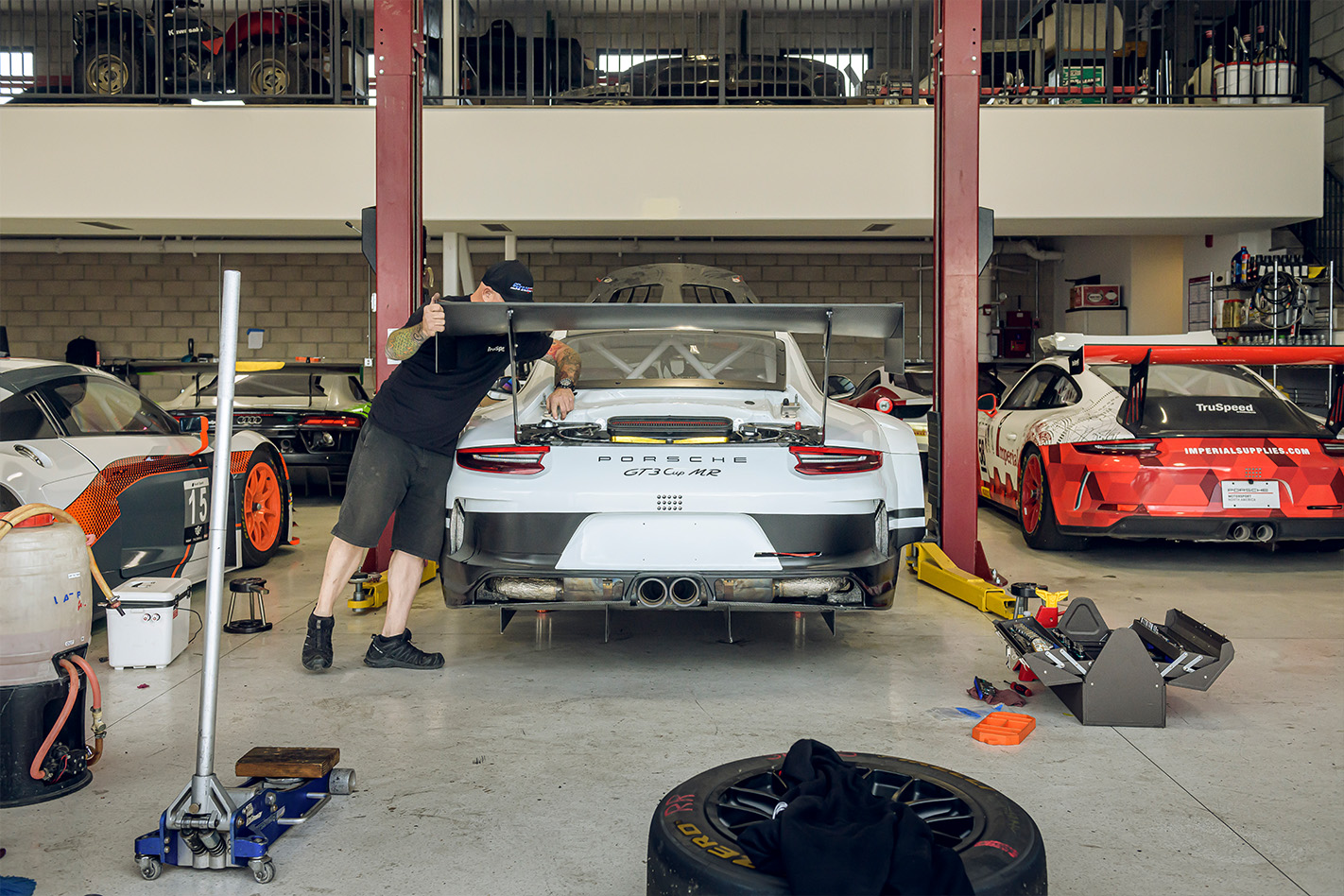
At Thermal, Paul essentially built a garage for his car collection, albeit one that “parties 60, dinners four and sleeps two.” That collection is vast; multiple M3s, an M1, old Alfa GTV, Ford RS200, Singer 911, Ariel Nomad, CLK 63 Black Series, and Gordon Murray’s new T50 is on its way. You get the idea: he’s got it bad.
Another member, Andy, bought one of pre-spec villas from Thermal Club, off-track. He tells me how he keeps four Ford Focus RS’s, uprated for track driving, at his villa and views them as a cost-effective way to get his kicks without burning – literally – through costly cars and parts. “One caught fire, and the bill for damages was only $10,000; if it had been a Porsche or Ferrari it would have been five times as much.”
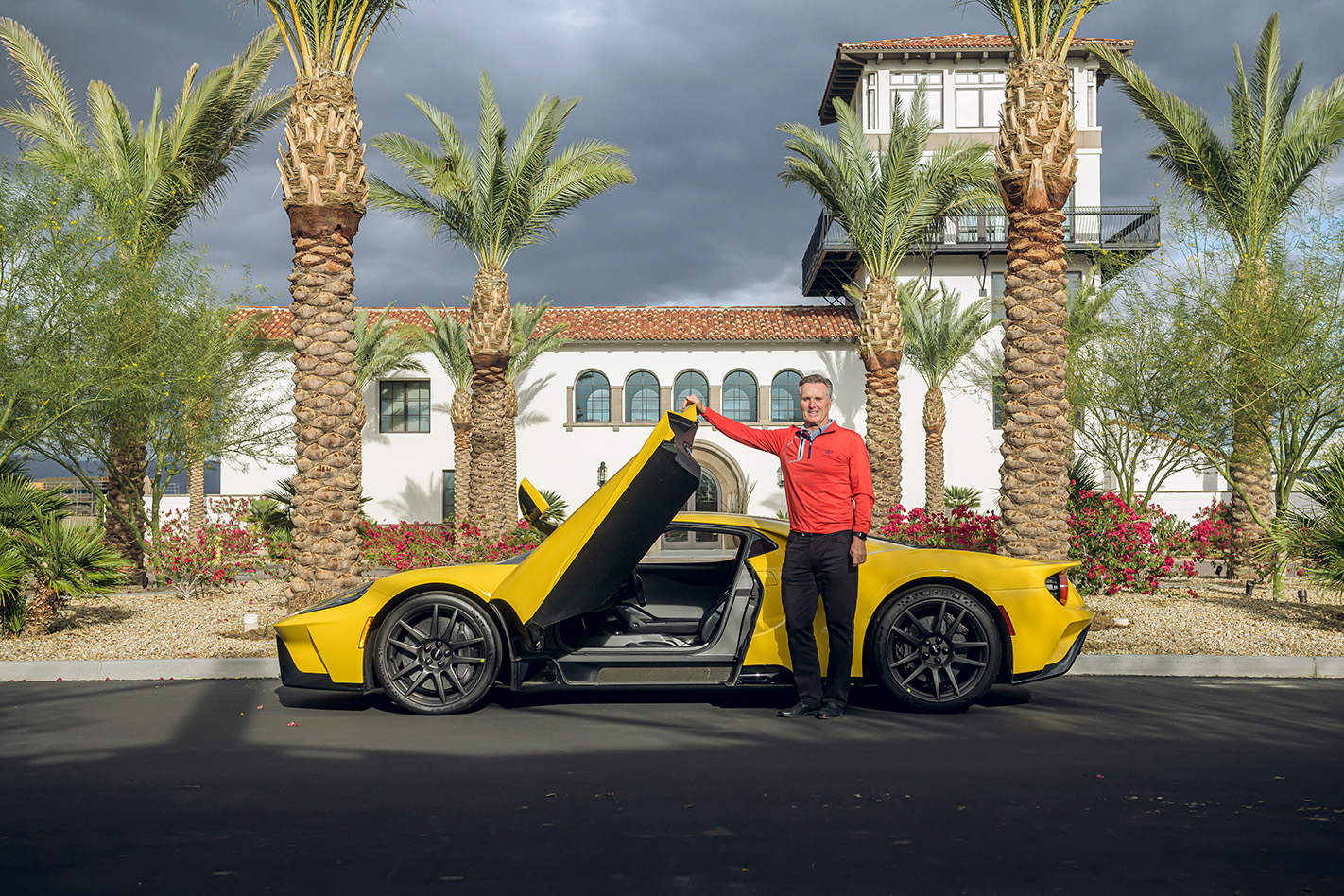
He says that being a member of Thermal is a release from his day job as a day trader, and the social side is appealing.
When you’re not in the mood for driving, there is a clubhouse with a restaurant and bar that are as grand as any five-star hotel. Early in the New Year, a second clubhouse will be completed, bringing with it two swimming pools, tennis courts, a gym and even a spa sanctuary. Next door the finishing touches are being put to 48 guest bungalows – proof that even though you own a house with an enormous garage, having houseguests doesn’t get any easier.
Tim Rogers suggests that the minimum net worth of a typical member is US$30m. Do they, I wonder, consider it to be good value? I put that question to Paul. “When I joined, a couple of buddies from the golf club who are car enthusiasts and have wonderful collections tried to talk me out of it, saying they didn’t feel it was a good investment. But I was doing it for quality of life. And now both those guys have joined and they’re as happy as pigs in sh_t!”
YOU DON’T NEED TO BE FILTHY-RICH TO HAVE FUN
Not a member of Thermal Club? No worries. The BMW Mini West Coast Performance Centre offers a wide range of driving experiences for adults and children alike. You can sample everything from BMW M cars to John Cooper Works Minis, or swing a leg over a BMW bike. A one-day driver’s school in BMWs costs from US$849, or you could live out your inner Michael Caine and enrol on the Mini Stunt Course for US$750. A two-day M Advanced course costs from US$4600.
Sign-up here to get the weekly Wheels highlights
Science says WE ARE wired to remember the beginning of something, and the end, but not so much the middle.
In terms of HSV and the used car market, early examples – along with all chrome-bumper Iron Lions – are booming, and we all lament the fact that we don’t own one of the last thumping Gen-F2 GTSRs. But the VXII-generation SV300 seems to exist in millennial limbo: not yet old enough to be ‘classic’, but not new enough to be front of mind.
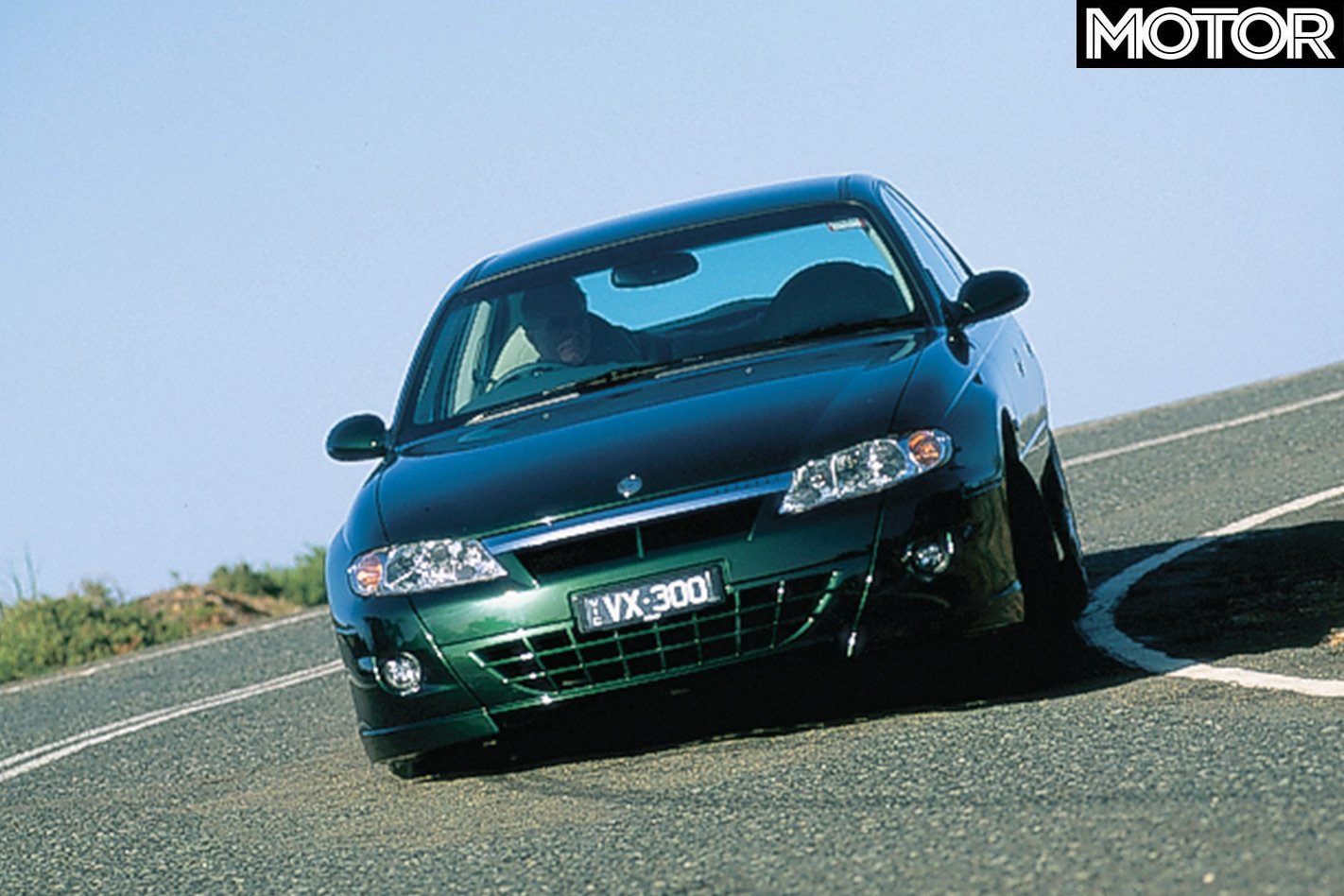
It had the makings of a great vehicle: limited production (100 units officially; 134 in actuality), a 300kW 5.7-litre V8, and a mandatory manual transmission (the six-speed T56). The SV300 was just the fourth HSV to wear the SV nomenclature, usually reserved for the brand’s most complete and significant performance packages.
The SV300 borrowed the then-absent GTS’s Calloway-developed LS1 (dubbed the C4B), an aluminium block variant with CNC-machined billet throttle body, steel roller rocker arms, titanium valve spring retainers, stainless steel valves, CNC-ported heads, high-flow exhaust and Hydratrak limited-slip differential. The SV300 also incorporated the new ‘Touring 2’ baseline suspension as part of the VXII range, which added extra toe control links at the rear to aid and improve handling.
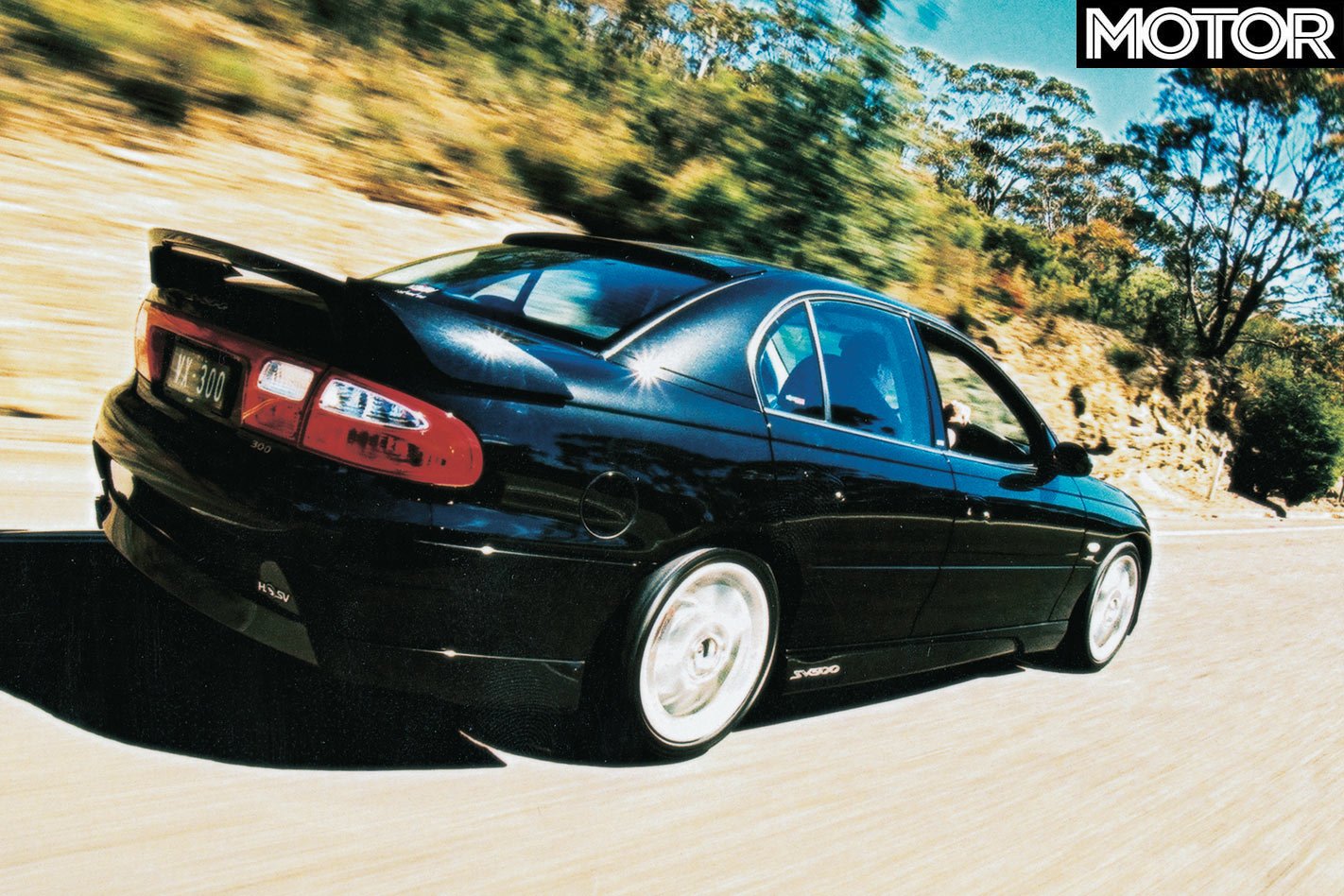
But while some thought of it as a mere GTS replacement, the SV300 was a more rounded and complete package, blending the mod-cons found in the Senator and VX Senator 300 – and loaded to the gills with luxury kit. This era, around the turn of the millennium, saw HSV make great strides as a company, reaching unprecedented production volume, and increasing comparisons with the European sedan was something the entire fraternity could get behind.
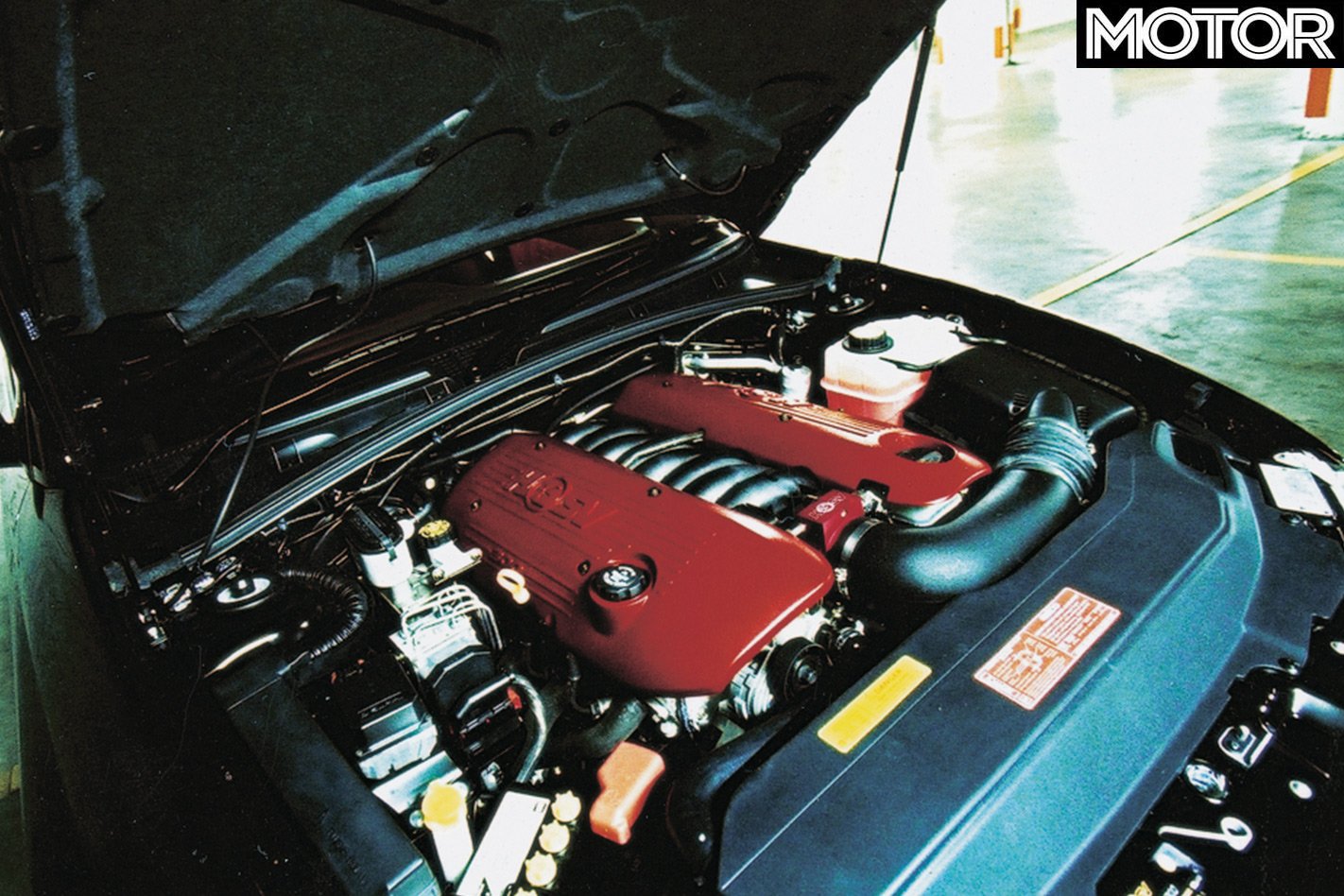
The SV300 is almost an archetype for this booming era of Holden Special Vehicles and – as a collectible – may yet have its day in the sun.

2001 HSV SV300 specs
Engine: 5665cc V8, pushrod OHV, 16v Power: 300kW @ 6000rpm Torque: 510Nm @ 4800rpm 0-100km/h: 5.3sec (claimed) Price new: $94,950 ($146K in 2020 money)
When is a promo video not a promo video? When it’s disguised (quite badly as it turns out) as a spy video. The clip in question captures the incoming Ford Mach E electric SUV ripping some serious skids at a US test facility – but while the action itself is worthy, the way it’s being shared is raising the ire of the internet.
The all-action clip has it all; bush camouflage, slightly ad-hoc filming quality, and a compelling main character in Ford’s contentious electric SUV, which has been stripped for war and primed to kill its tyres.
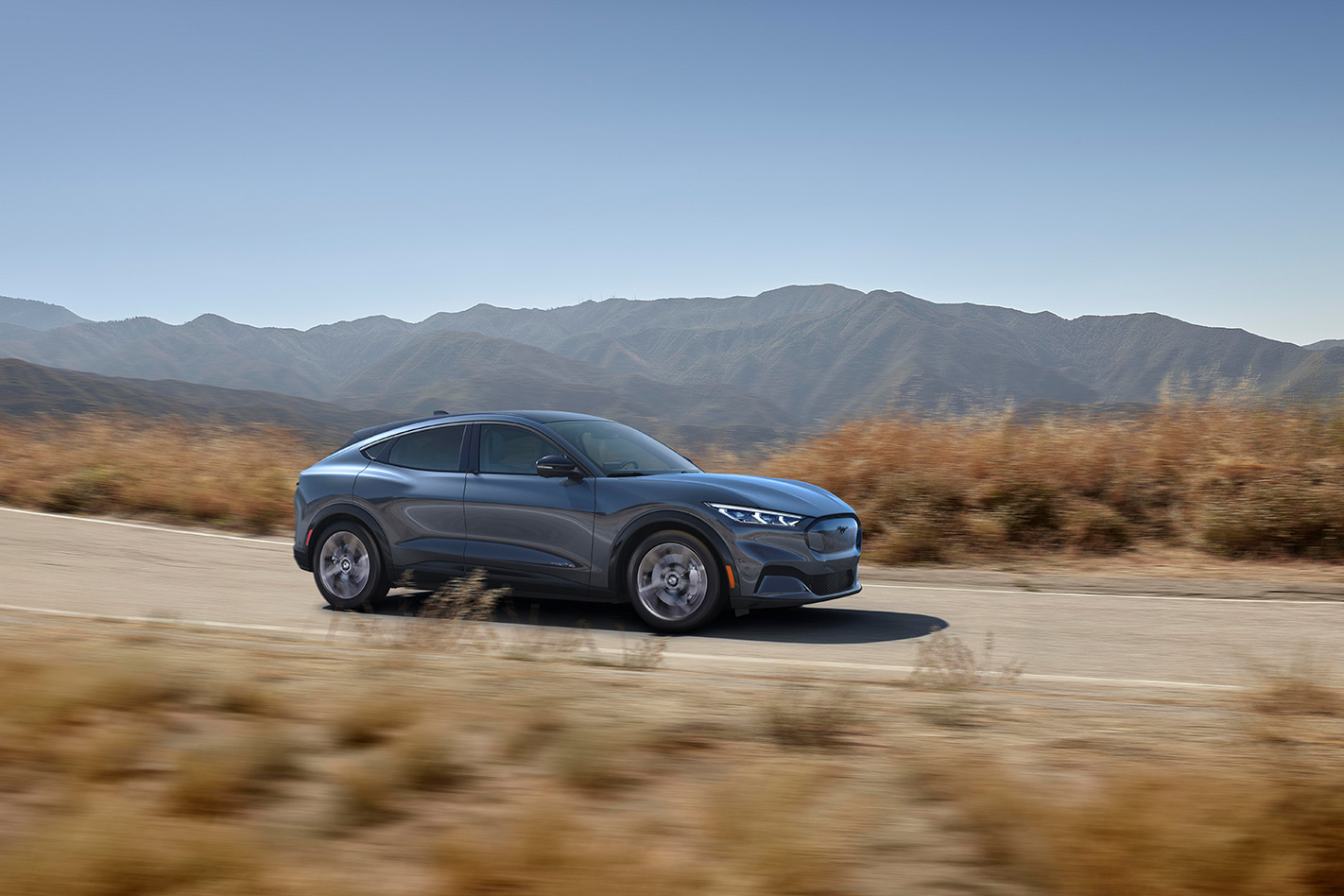
The Mach E is slated for release this year, COVID-19 notwithstanding, which raises the first question – why is Ford flogging around in a roughhouse version of a finalised family SUV (below) this late in the game?
The way the action unfolds, too, seems a little too convenient for our supposedly fearless photog, who is given numerous opportunities to film the stationary car before fleeing the scene… which raises another question.
The video is shot at the North Carolina Centre for Automotive Research (NCCAR), a privately owned facility which, according to Google Earth, looks pretty remote and offers little in the way of access for the videographer.
Unless our pap had access to the venue (pictured below), there’s little chance that he bush-bashed in to get this close to the skidpan – and even less chance that he could make a successful escape without being detained and his mobile phone footage deleted.
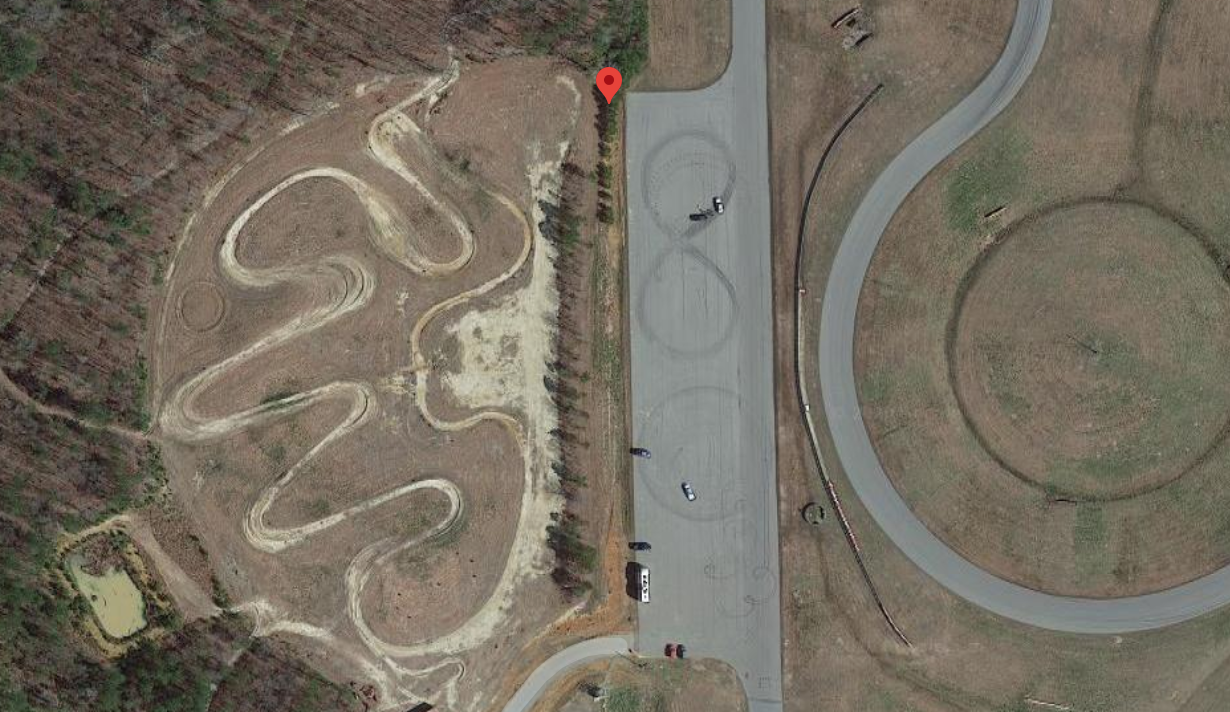
The red marker shows where the videographer was standing
Adding to the aroma of not-quite-right is the fact that the video channel in question is brand spanking new.
Our theory is that the machine in question actually belongs to Ford-sponsored driftmeister, Ken Block, who’s been associated with the Mach E as a spokesperson for about a year, and has been part of the Blue Oval family for a decade now.
Block also happens to run a successful media house, which has orchestrated his wildly popular Gymkhana videos.
The Mach E in the clip is not only missing its bumpers, but it appears to already be sporting modifications that might point to a future appearance in a Block video.
The deep-dish alloy rims indicate an effort to increase the track width of the stock car, while a brace of thermo-fans that are visible on the rear of the Mach E point to efforts to keep the rear-mounted electric motor cool during prolonged efforts.
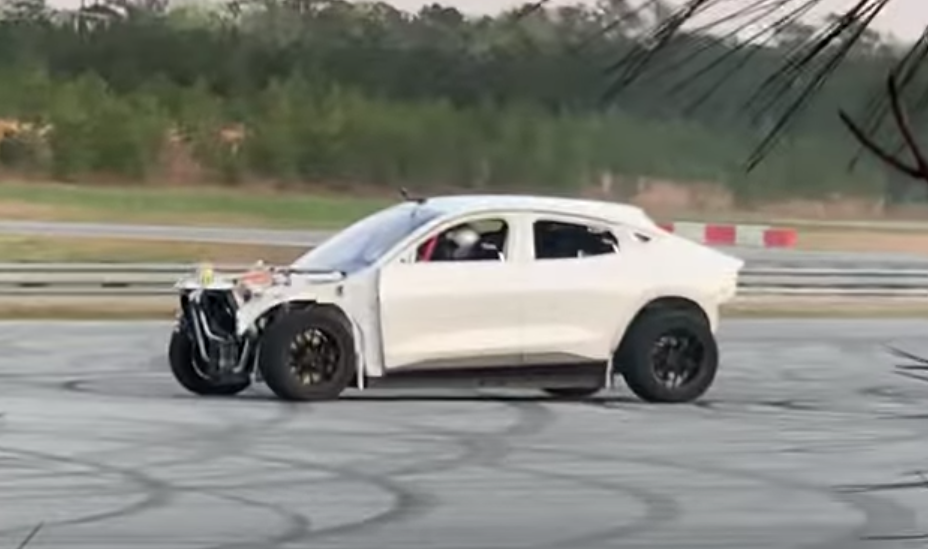
A full roll-cage has been installed, and all of the car’s trim panels and glass is missing, indicating that it’s being prepped for a repaint or vinyl wrap. And those missing body panels may be forming the basis of a more aggressive body kit that would more closely fit the Hoonigan motif.
Of course, the art of the automotive pap is a long and distinguished one. The crew at Wheels magazine had it down to a fine art, tormenting the likes of Holden for years with stories like this world-first scoop on the home-grown VE Commodore.
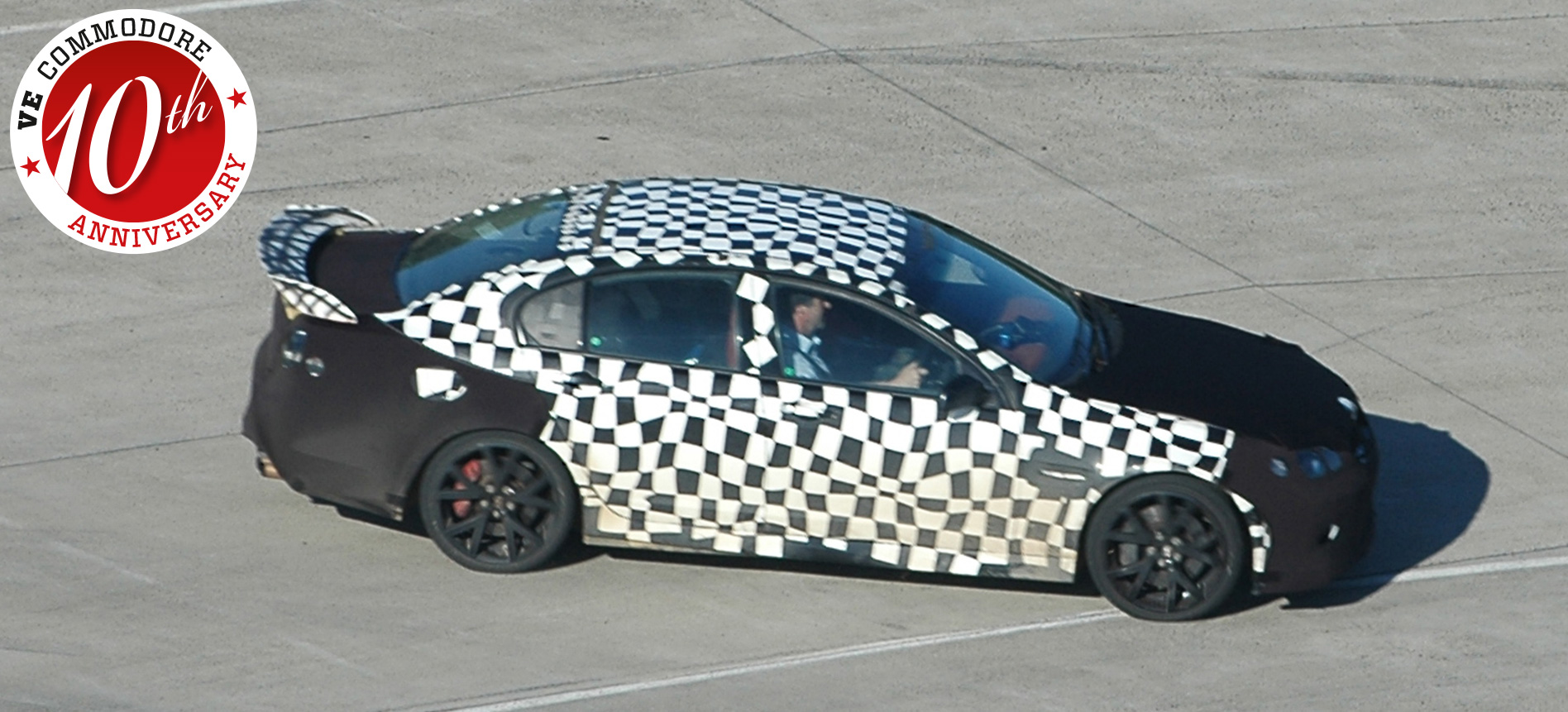
Car company PRs weren’t above planting the odd ‘spy’ shot, though; I once received a pic in the mail of a forthcoming Toyota Camry that was pin-sharp, shot from a road not far from Toyota’s head office and printed on suspiciously glossy paper!
So while the ‘spy video’ is pretty convincing, ultimately we’ll have to mark it down as an F… but then again, we’ve written a story about it. So who’s the sucker now?
