
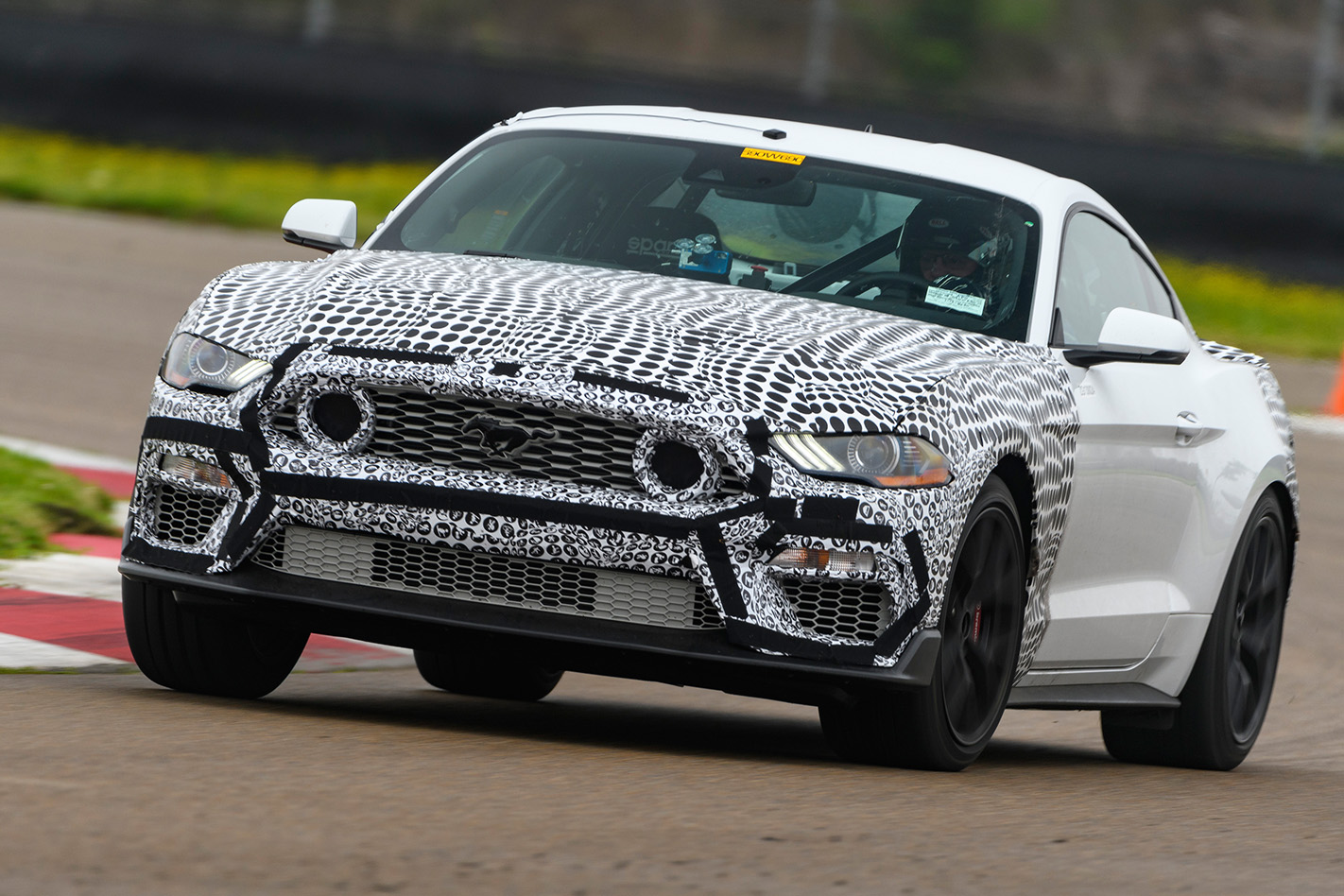
Ford is working on a new track-focused Mustang that will pack one hell of a naturally aspirated V8 punch.
Set to be badged as the Mach 1, the new variant was initially expected to just be a limited-edition replacement for the outgoing Bullitt.
However, it seems the new pony car will be more than just a sticker pack, and actually fill the shoes of Shelby’s atmo hero, the GT350R.
A report from Ford Authority that cites “sources familiar with product plans” claims engineers for the Mach 1 ’Stang are aiming for power figures in the region of 390kW and 610Nm.
As a frame of reference, the standard 5.0-litre GT Mustang has 339kW and 556Nm when sold in Australia. The Bullitt that the Mach 1 replaces had just an extra 6kW over the regular GT, and the exact same torque figure.
Despite commanding an almost $11,000 premium over regular GT models, the Bullitt was extremely popular in Australia with all available models selling out rapidly.
The most powerful naturally aspirated V8 Mustang currently sold by Ford is the Shelby GT350R, which utilises a flat-plane crank 5.2-litre V8 putting down 392kW and 582Nm – so a couple of extra kW compared to the rumoured Mach 1 figures, but 28 fewer Nm.
Unlike the Shelby, the new Mach 1 will utilise the standard Modular Family 5.0-litre Coyote engine. Asking that atmo engine to produce an extra 50-ish kW will be a significant challenge for Ford’s engineers.
It’s rumoured that new camshafts and heads will be recruited to get the Coyote making nearly 400kW reliably, without the aid of forced induction.
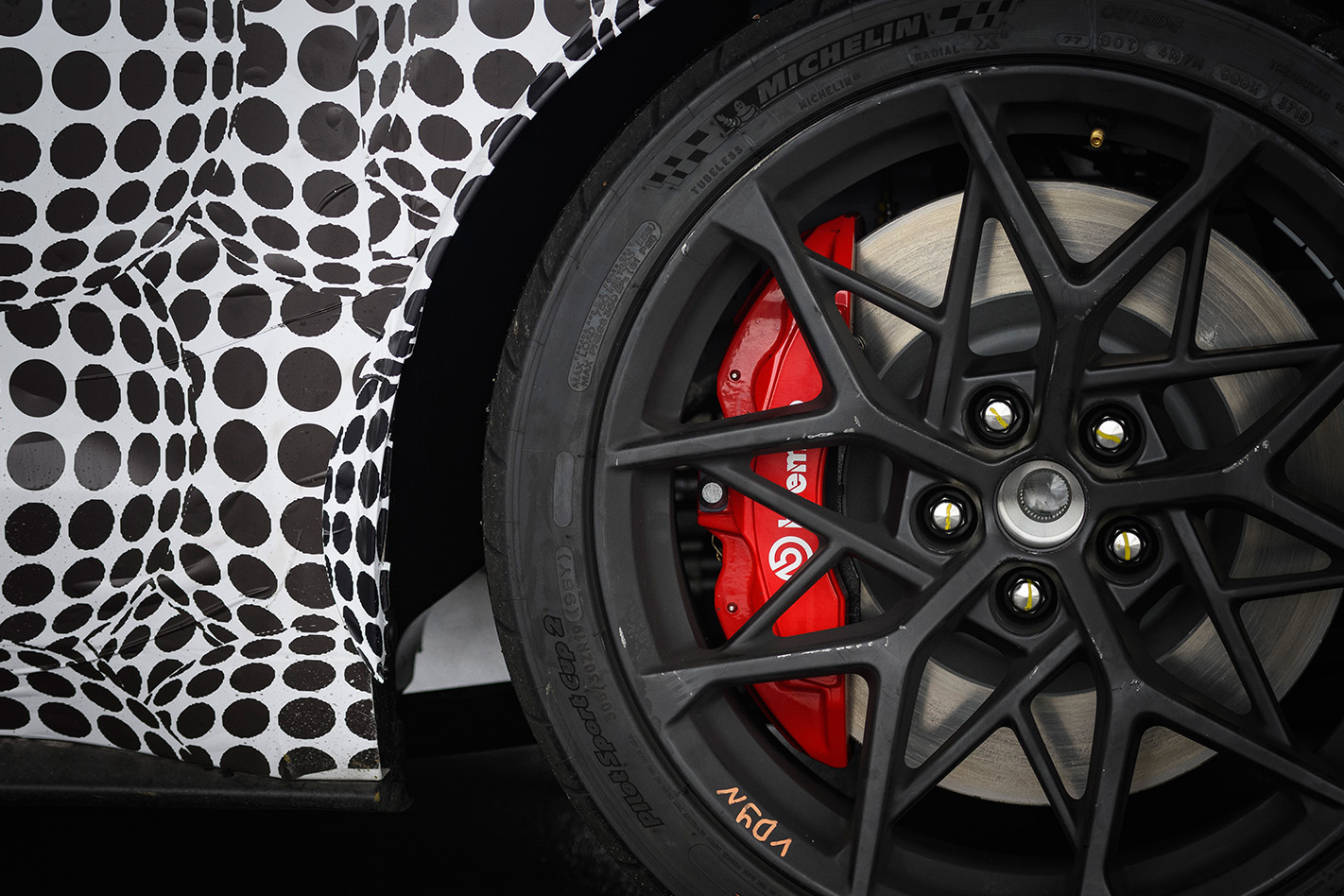
Being a track-focused variant, it’s not just the engine coming in for a refresh. The Mach 1 is expected to roll on sporty rubber (likely Michelin Pilot Sport Cup 2s), wrapped around 19-inch rims in meaty 305/30 specs.
Spy photos released by Ford confirm new aero additions, including a distinctive front bumper with twin circular air intakes, and a rear lip spoiler.
No suspension changes have been confirmed, though it’s likely stiffer, more track-focused springs and dampers will be utilised compared to the regular GT.
While there’s been no official word on whether the Mach 1 will arrive in Australia, Wheels understands the new model will head our way to appease our ravenous Mustang-hungry market.
If the rumoured outputs are accurate, the new Mach 1 will be an absolute riot.
Sign-up here to get the weekly Wheels highlights
Business new car buyers have been handed a lifeline in the form of an extension to the instant asset write-off scheme.
The deal now sees ABN buyers able to claim up to $150,000 in purchases off their taxable income, as long as the purchase is made before 2021.
The scheme was previously only available until June 30, but federal treasurer Josh Frydenberg announced overnight that it will be extended until the end of the year.
This now means that businesses which earn up to $500 million a year are now able to deduct purchases up to $150,000 from their tax in the year the asset was purchased, up from the old threshold of $30,000.
It’s a particularly important expansion of the scheme as some businesses may have found it difficult to make large purchases while also weathering poor income during coronavirus lockdowns.
As business starts to pick up with the easing of restrictions in the latter half of the year, more businesses are better placed to look again at significant investments such as the purchase of a trade vehicle, small business fleets and vehicle modifications.
It’s something that the industry has been calling out for in order to help along the particularly hard-hit new car sales market.
The Federal Chamber of Automotive Industries told WhichCar last month that it was hoping the instant asset write off would get buyers back into new car showrooms, but called for the scheme to be extended.

Reacting to the news today, FCAI chief executive Tony Weber welcomed the extension, saying “we need to kick start the new vehicle market by stimulating new vehicle purchases, and the instant asset write-off is an important tool in this process.
“We would like to see small businesses follow through on their pre-COVID investment strategies, and replace their older vehicles with new, safer, and more efficient models.”
It’s important to remember, though, you still do have to pay for your goods initially, so make sure you consult your accountant before stumping up a pile of cash on a car.
After that, it’s best to adhere to the old adage that honesty is the best policy when it comes to tax time, and make sure you place an accurate percentage value on each of your shiny new assets in regards to how much time they are used in a ‘work capacity’ and how much is leisure.
If you do it properly, there’s plenty of scope to make a decent saving – or at the least, a significant cut to your annual tax bill.
For those playing at home, you can see a wide-ranging round-up of vehicles that are currently discounted in the lead up to June 30 here, and even cars that are entering run-out make for good buying.

Things are looking up for dealerships throughout the remainder of the year, and the FCAI is showing “cautious optimism” of times ahead with the current stimulus provided by the government.
Add to the fact that some builders will be seeing the benefits of the $25,000 HomeBuilder package, and tradies are looking at some significant incentives to help them through a disastrous 2020.
“I’ve always loved something that has plenty of grunt,” Dick Johnson tells MOTOR over the phone, perhaps stating the obvious. This is the man who in his late 40s called a 500kW-plus Ford Sierra Cosworth his office and, thanks to a turbocharger that woke like an exploding bomb, constantly drove it on opposite lock around places like Bathurst.
But that was on track, the place where he crafted his legend in Australian touring cars – and in the hearts of Ford fans. Right now, though, we have him talking about things off the circuit and, in particular, a special edition road car known as the Ford Mustang Dick Johnson Limited Edition.
Although his CV is short in this arena, it’s well known. Not fully able to get a couple of factory Falcon projects off the ground, Dick Johnson Racing went out and built its own BA Falcon-based special edition back in 2004 known as the 320. Lauded for balance and refinement, it intended to lure the high-end HSV buyer, but in the end only 25 were made.
While hindsight might view that low production run as somewhat of a failure, today such exclusivity has been placed at the centre of the Mustang DJ LE (our abbreviation, not Johnson’s). “We thought initially we’d do 17,” Johnson says, referencing his famous race number, “but [we had] an opportunity to increase that to 30.” Buyers were signing up before they had so much as seen the car. Even at $180,000 each.
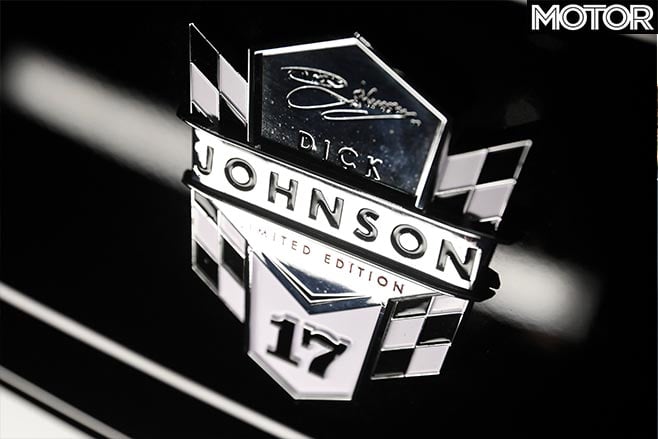
Why would anyone feel compelled to spend almost three times the price of a standard Mustang? Well, besides the rarity of road cars from the now 74-year-old Queensland racing legend, or his Supercars racing team’s recent domination with a Mustang, it might have something to do with the key players behind the project.
Dick Johnson and Herrod announced the Limited Edition Mustang in November 2019
On one hand there was Ryan Story. He’s the local head of DJR Team Penske and someone who Johnson personally credits with “putting the procedures and financial aspect together”, adding “it’s not just a matter of getting a Mustang and hotting it up, there’s a lot of other organisations that go into it, with putting all the bits and pieces together”.
But on the other hand, when you do need to hot up a Mustang, there’s Rob Herrod. Herrod Performance was the other architect behind the DJR 320’s package all those years ago. That, along with his work on the right-hand drive Mustang program and his close relationship with Ford and its performance parts suppliers, made him the only choice. But the gang wasn’t back together just yet.
Originally Herrod had to avoid the opportunity since he was occupied with another important one for Ford Australia. “I was working away confidentially with Ford on [Mustang] R-Spec,” Herrod tells us. “I couldn’t let anyone know I was working on R-Spec and had no time to work on a limited-edition Dick Johnson Mustang. So I had to keep diverting the question of ‘when are we going to do a road car?’”
It was only when the Mustang R-Spec project eased its demand on Herrod’s focus that he could begin envisioning what sort of car to build for Johnson. In a way, while the R-Spec originally hindered the project, its existence guided the concept. Both men knew the DJ LE could not compete with the R-Spec on price, and luckily Ford had no plans to build a right-hand drive Shelby Mustang GT500 anytime soon. The sky became the limit.
Herrod then dreamed up two options: a base car with a lower output and less aggressive exterior package, or a road-going monster with reworked engine internals, a feral supercharger, optional bolt-in roll-cage and what Herrod calls a “super dooper” wing. Obviously, Johnson was most keen on the latter.
It’s from here, though, that Herrod was left alone to develop the package, pouring the knowledge gained from years of Mustang technical development into one ultimate version. But to hit the power figure he had in his head, he needed to push as much air as possible into the Mustang’s Coyote 5.0-litre V8 and extract the remnants out the back.
On the former point, Herrod bolted on an intercooled Whipple supercharger measuring 3.0 litres in capacity, or 350cc larger than the Roush unit in an R-Spec, which he says is very efficient. It breathes through a monstrous 132mm throttle body; that’s 37 per cent larger than the standard GT’s 82mm unit, and it features a custom end-module.
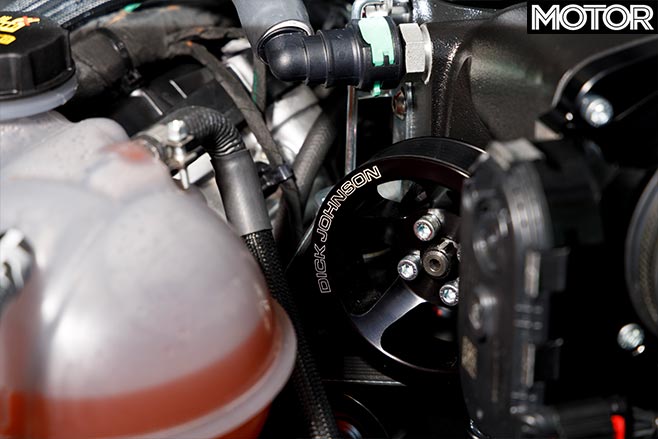
With the V8’s gullet widened, Herrod uprated the supercharger’s pulley to force in more boost (11psi). Then the primary injectors were upgraded to saturate the extra air with enough fuel, whereas the direct-injection injectors were left alone. Finally, a stronger fuel pump that Herrod developed over the years with TI Automotive, owners of Walbro, supplies enough juice from the tank.
However, TI Automotive wasn’t the only relationship Herrod leveraged for this project. To guarantee the engine’s internals could endure the huge forces they would face, Herrod asked JE Pistons in California to create a custom lighter forged piston with special skirt coatings to complement H-beam conrods.
While Herrod understandably keeps the piston specs a secret, he has gone further to stamp exclusivity into these parts. Literally. Every DJ LE’s unique VIN and build number are etched into each conrod and piston, as well as the billet oil-pump gears that, working with a Shelby Mustang GT350 sump baffle, keep everything oiled under hard use.
Then there was Ford Australia’s serendipitous involvement. Herrod informed CEO Kay Hart of the DJ LE project. And as a gesture of good faith Ford Oz was able to divert 30 Mustangs from the production line for the cause – meaning Herrod knew the VIN numbers he needed to give his suppliers when ordering batches of parts.
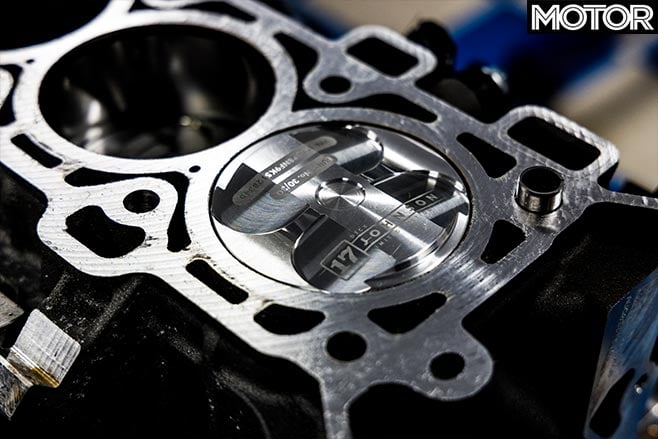
Even the Kooks headers bear the unique tags. As well as that, they are also tweaked to guide exhaust gases into a Borla three-inch exhaust system and what Herrod calls a ‘green cat’. He says the cat has “a special substrate that’s very expensive, but it will handle the power and keep the emissions right”. In fact, it will handle as much as 1000 horsepower.
And that’s just as well, because the upgraded rotating assemblies in the stock third-generation Coyote V8 let Herrod electronically bump its rpm limit to 7800rpm. This higher heart rate helps it grunt out 949Nm at 4850rpm and 635kW at 7800rpm. Or just over 850 horsepower. In a Mustang. Gulp.
Dick Johnson drives Mustang Supercar in Adelaide
Of course, while these figures are angry enough to make The Hulk seem well adjusted, Herrod had to ensure the DJ LE could keep its cool. To do this, he sourced a larger transmission oil cooler that’s 35 per cent more efficient than standard. And for good measure he also ordered a larger aluminium radiator and added the R-Spec’s thermostatically controlled rear diff cooler (as per a Shelby Mustang GT350).
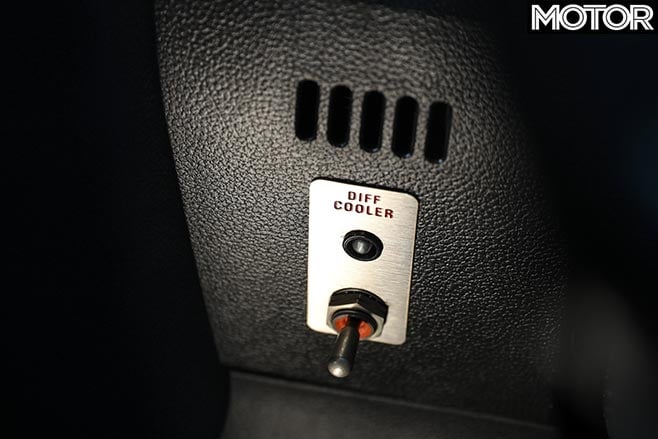
While you might think this much power would snap the car’s driveline like chopsticks, it’s surprising to hear Herrod only needed to replace the half-shafts, with beefier Ford-built items. A 4kg-lighter carbonfibre tailshaft was also installed to smooth out NVH, because if the DJR 320 proved anything, it’s that Johnson and Herrod believe a road car should be able to handle day-to-day duties with ease.
For that reason, Herrod tweaked out any vibration in the exhaust system, while installing the standard Mustang’s bi-modal flaps in the Borla rear exhaust canisters. Custom engine and transmission tunes also help, not only to optimise the engine’s power but to calm a 10-speed automatic grappling with almost twice the urge of a standard Mustang.
Dick Johnson’s Tru Blu Falcon to ride again
Herrod admits the grunt can magnify the transmission and stability control’s inherent problems, which is why he recommends driving with as little assistance as possible – in manual mode and with stability control switched off, if you’re brave enough.
Otherwise, buyers can opt for the six-speed manual, which scores a short-throw shifter.
Herrod’s philosophy extends to under the car as well, where lowered springs front and rear are stiffer but progressive, for more control. Adjustable swaybars are fitted at both ends, and Herrod secured a custom tune for the Vehicle Dynamics Module through Ford Performance. It’s programmed to ride “just like R-Spec”. Which is excellent.
No automatic sequel to R-Spec planned, says Herrod
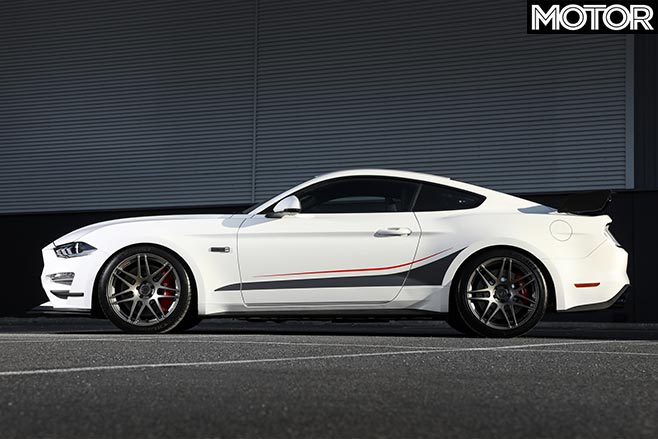
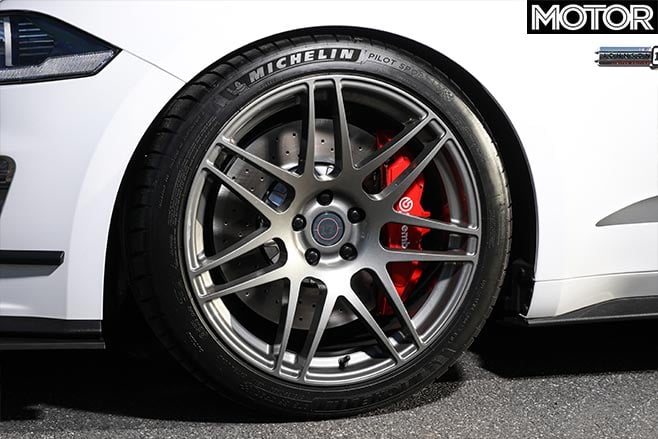
At all corners are Forgestar wheels that span 20 inches in diameter. They are 9.5 inches wide up front and 11 inches out back to fill out 275mm- and 305mm-wide Michelin Pilot Sport 4S tyres respectively.
Enormous brakes complement the new grip levels, with GT350-spec Brembo calipers front and rear dwarfing the original system’s components.
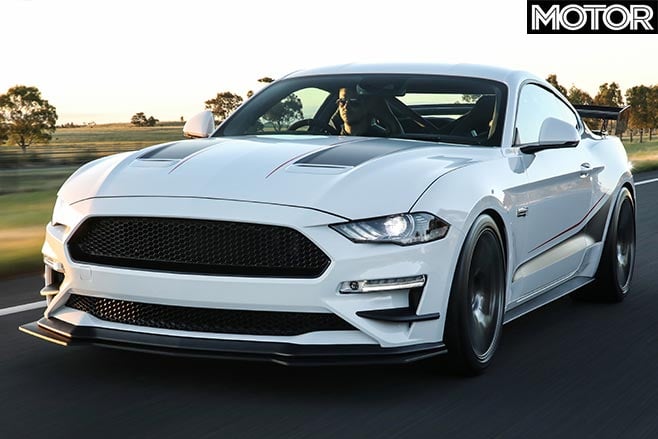
A lowered ride height broadens the DJ LE’s stance with the help of unique horizontal front winglets, as well as a new moulded front lip that matches the existing plastic grain. There’s also a custom sticker pack that, with the blanked-out front grilles, add a hint of menace.
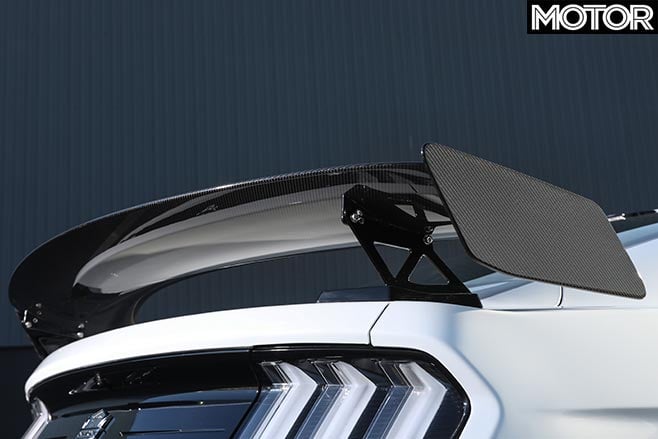
But it’s the wing and roll-cage that really set the whole thing off. The spoiler looks awfully like the Shelby Mustang GT500’s, but Herrod assures us it’s a unique Herrod Performance/Ford Performance product. Either way, it’s gorgeous and matches the optional bolt-in roll-cage nicely.
Yes, like a 911 GT3, the DJ LE offers a half-cage. Watson Racing, who make Ford’s Cobra Jet dragsters, built it to Herrod Performance’s custom right-hand drive specifications, and Herrod has invested thousands for CAMS approval. It even deletes the rear seats, replaced by a specialised cover.
A few final touches really ram home the DJ LE’s special nature. The factory Recaro seats are upholstered in new Italian leather and bear the rear exterior badge. And if you look closely, their stitching pattern matches the blower’s ribbed lid.
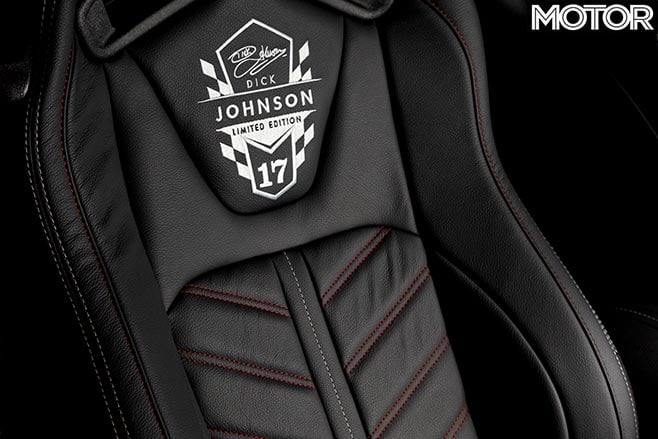
Then there are the puddle lamps that cast ‘Dick Johnson Limited Edition’ on the ground when you open the door (which reveal scuff plates bearing the same title). It’s like the red-carpet VIP treatment, which is the sort of level Herrod Performance has reached after earning tier-one supplier status through the work on R-Spec. That also opened the doors to other outfits just like it – something Herrod again leveraged for the finishing touches.
“When you look at the badging on the front fenders,” he says, “then the shield on the back panel, they’re all proper injection-moulded badges. It was over $10,000 just in tooling to make those badges for 30 cars. It’s no sticker pack car.”
And even though this car bears Dick Johnson’s name, it’s obvious it, in a way, will highlight two individuals’ careers. And Herrod knows that too. “We set out to make some money obviously, but it wasn’t about making a lot of money out of a car, it was about making a car that no one has ever built, so when DJ’s gone and I’m gone, people will still be talking about this crazy Dick Johnson car that Herrods built back in 2020.”
We have a feeling they will.
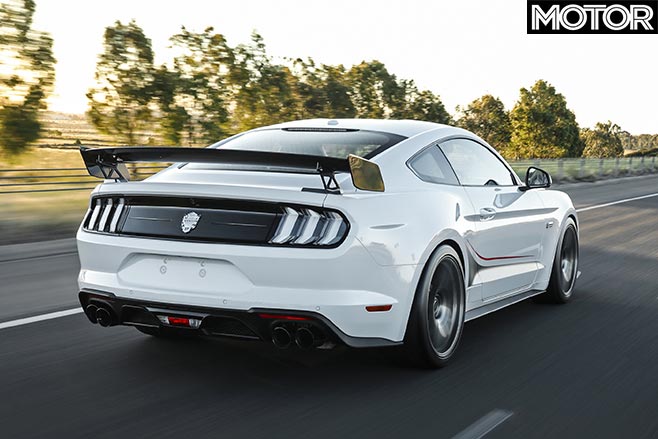
Ford Mustang Dick Johnson Limited Edition Specs
Body 2-door, 4-seat coupe Drive rear-wheel Engine 5035cc V8, DOHC, 32v, supercharger Power 635kW @ 7800rpm Torque 949Nm @ 4850rpm Power/weight 347kW/tonne Transmission 6-speed manual (optional 10-speed auto) Weight 1829kg Suspension struts, adaptive dampers, coil springs, anti-roll bar (f); multi-links, adaptive dampers, coil springs, anti-roll bar (r) L/w/h 4789/1916/1367mm Wheelbase 2720mm Tracks 1538/1534mm (f/r) Steering electrically assisted rack-and-pinion Brakes 394mm drilled/ventilated discs, six-piston Calipers (f); 378mm drilled/ventilated discs, four-piston calipers (r) Wheels 20.0 x 9.5-inch (f); 20.0 x 11.0-inch (r) Tyres 275/35 R20 (f); 305/30 R20 (r); Michelin Pilot Sport 4S Price $180,000
Four DJLE Engine Details
1. Fuel source
The engine features new timing chain guides to handle the heady rpm it can muster, while each car is ‘tuned exclusively to run on Shell 98 RON V-Power’ – a team sponsor of DJR Team Penske.
2. Pretty thing
The custom billet aluminium lid atop the Whipple is only outdone by the module Herrod specified on the end of it, complete with dash-12 fittings and a place for the car’s unique build number.
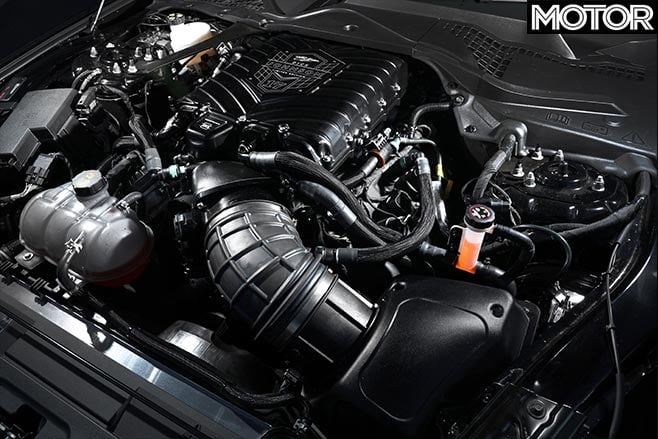
3. Open the taps
The primary injectors are upgraded using what Herrod calls “55-pound-an-hour” items, his instinct to speak in imperial revealing an immersion in the American auto industry.
4. Big mouth
Fore of the supercharger sits a 132mm throttle body, itself at the end of what Herrod calls a “monstrous” air intake. Obviously, with the DJ LE road legal and engineered, the filter is hidden away.
DJR 320: The hotted up Falcon
After a failed hotted-up six-cylinder EA Falcon followed Johnson’s aborted XE Falcon project in the ’80s, the DJR 320 was a fully sorted effort from the get-go.
Backing up its name was a 5.4-litre DOHC V8 for which tuning partner Rob Herrod developed unique cam profiles to bump power to 320kW at 5300rpm and torque to 540Nm at 4000rpm. And the story goes that there was more in it, if only Herrod could crack the ECU to raise the rpm.
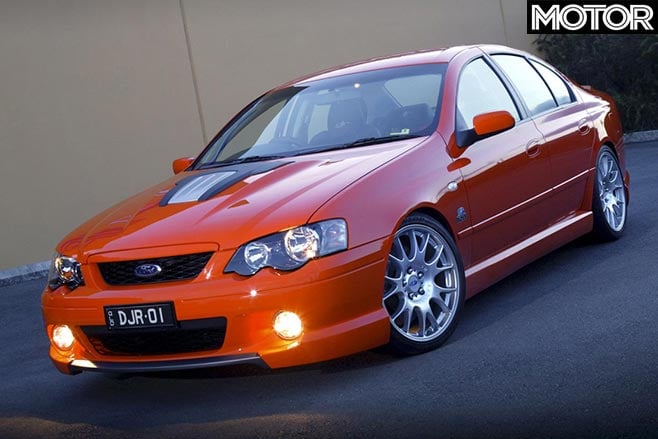
Transmission options were a five-speed manual and four-speed auto.
It also scored gorgeous Y-spoke 19s, special Dunlop rubber and suspension personally developed by Dick Johnson himself.
Priced handsomely at $90K to clear FPV’s own GT and F6 products, it scored a reworked interior and exterior to suit. But in the end that might have been why only 25 were made.
James Dyson had a dream of producing an electric car – and if anyone could do it, it would be genius Englishman who reinvented the vacuum industry.
It wasn’t too be, however, with the billionaire pulling the pin late in 2019.
Here he talks about the Battery Electric Car and what went wrong.
“In 1983, early in the development of my cyclonic technology which separates particulate from an air stream, I visited a spinout company from the University of Minnesota. They had developed an aerodynamic particle counter which I needed in order to measure the efficacy of my cyclones for particles as small as 0.01 of a micron.
“During the visit, they showed me a copy of a US Bureau of Mines report into the emission of diesel particulate in US mines.
“The report suggested that laboratory mice and rats were suffering heart attacks, cancer and other major health problems when exposed to diesel fumes. As engineers, we couldn’t ignore it, so we started developing various particulate catches, using cyclones and other novel technologies.
MORE The stillborn Dyson EV is the world’s most expensive EV
“I’ve always been horrified, even as a child, by the cloud of black smoke that would emerge from the back of vehicles. More recently petroleum and diesel engines have become less smoky, partly because they have made the particulate smaller; it may look better to the naked eye, but they are still not free of dangerous gases.
“Yet, problems with internal combustion engines, and diesel exhaust particulate, continued to be ignored by traditional automotive manufacturers and governments. Tesla started seriously exploring electric cars, but traditional ‘automotive’ had no interest what-so-ever.
“So, some years after the diesel exhaust project started, when we had other technologies of our own, like batteries and motors, we returned to the problem and started developing a car. We put together an exceptional team, built world-class facilities, and developed a radical car which was loaded with technology.
MORE Samsung to smash battery range wide open
“We solved lots of problems that are traditionally associated with electric vehicles and together the team made great progress and delivered a car which was ready for production.
“Dieselgate changed everything because all automotive manufacturers had no choice but to shift to electric – almost overnight. Electric cars are considerably more expensive to make and manufacturers are making big losses on the sale of each car.
“These losses matter less to them because the sales of electric cars allow them to offset against selling traditional vehicles on which they make a good profit.
MORE Government inaction won’t slow EV introduction: VW
“As a technology-based car – being developed by a non-automotive company – we realised that our car was suddenly no longer commercially viable.
It was a difficult decision to stop, because hundreds of engineers, scientists and designers, had poured everything into the project and it was a great engineering achievement. But I have no regrets about having started the programme.
“We learned a lot and Dyson has benefited from a huge influx of engineering talent from the automotive industry – it has quickly been applied in other areas of our research and development.”
The Car
“We developed our car from the ground-up, and didn’t borrow parts from other manufacturers. It was designed as a platform, so we could design other body styles to sit on it.
“The first model was an SUV; at speed, it would drop itself down to be more aerodynamic and then it could be raised up to give it even more ground clearance.
“When I first drove our car, I felt exactly the same as when I first used our hairdryer prototype, or the vacuum cleaner – I enjoyed it, but I was not surprised, in fact we immediately looked for improvements!
“When you’re involved in designing and developing every little detail of a product it takes away the surprise of seeing or using it for the first time.”
Wheels and Dimensions
“The car is exactly five metres long, with big wheels and huge ground clearance which is helped by the fact it has a completely flat bottom.
“The wheels are actually one of the most interesting aspects; because of their size, you get lower rolling resistance and you can ride bumps and potholes more easily – it’s exactly the opposite of a Mini.
MORE Triton SUV EV promises 1100kW and 1000km range
“The wheels are right in the corners and I don’t think you’ll find any other car with the rear wheels as far back as this. The placement and size of the wheels gave us some unexpected advantages in comfort and road holding.”
Motor and Battery
“Building on our years of experience with Dyson Digital Motor technology we developed a bespoke, integrated and highly efficient Electric Drive Unit (EDU) comprising Dyson digital electric motor, single-speed transmission and state of the art power inverter.
“These compact and lightweight units were mounted on subframes at the front and rear of the car.
“The high capacity battery pack assembly was designed as an integral part of the body structure to optimise both weight and the space available for occupants in the cabin as well as providing the necessary rigidity and impact protection.
MORE Australia is an EV laughing stock
“The aluminium battery pack casing was flexible in design to allow for a variety of possible sizes and types of battery cell solution to be fitted throughout the life of the vehicle platform without the need for any significant re-engineering.”
Trim and Interior
“The most striking effect when you get inside is the feeling of space. This is because the wheels are placed at the extremities of the four corners and combined with the absence of the car engine and exhaust pipes, you have the internal space of a long-wheelbase SUV without the disadvantage of the massive external body.
“I hate the 1930s armchair look that car seats typically have and I haven’t yet found a car seat that has proper lumbar support. We wanted a more elegant, structural seat, with well-considered posture support.
MORE Tesla has patented liquid-cooled and heated seats
“When you sit in this, it gives you that support in all the right areas. The car has three rows of seats, capable of seating seven adults in comfort.
“We also used our own air filtration technology in the car to control the environment, not just in terms of temperature but also to clean the air.
“I also never wanted anyone to have to take their eyes off the road, so that was my starting point – so we have a heads-up display and all the controls are on the steering wheel.”
The home of the Battery Electric Car – Hullavington Airfield
“We approached the British Government to buy the disused Ministry of Defence airfield at Hullavington.
“We learned quickly that buying an airfield from the government isn’t straightforward. Under the ‘Crichel Down Rules’, the airfield had to be offered back to its former owners at today’s market price.
“This meant we had to track them down and negotiate what is known as a ‘back-to-back deal’ with the families that owned the farmland before the war.
“They were very surprised, but pleased, to hear from us and Dyson had finally bought the various sections of the airfield on 27 February 2017. Then we set about painstakingly restoring it and turning the cavernous hangars into the light-filled, high-tech spaces they are today.
“Since the automotive project closed, the airfield became the home of Dyson’s COVID-19 ventilator project. Now it will become a new home to our Robotics, Environmental Care, Professional and Lighting teams – so that they can expand their work. I am confident that we will make many exciting discoveries there.”
How will the COVID-19 pandemic affect the value of your car? The answer, as in so many cases, is it depends. Demand has clearly slackened for new cars, but at a time when many are feeling the pinch, the used car market can often be relied upon to step up. While new car sales fell by 52.3 percent in April, the fleet used car sector in Australia was also hurting.
“We’ve seen a mass exit of trade buyers on the back of minimal enquiry levels; many buyers have been sent on leave,” said Brendon Green, General Manager of Motor Vehicles at Pickles auctions.
“Average sales price across every single brand/make are down between 10-20 percent. Surprisingly, units sold to private buyers have doubled during that period as they hunt down high-quality assets being offered in the public auction lanes by our government, financier, corporate and not-for-profit vendors with adjusted reserve levels,” he said, adding: “…the recovery of the used-car market will be a very slow and drawn-out process, most likely taking months and months.”
While fleet managers are clear about the challenge they face, the classic-car market is less so. Hagerty has reported increased traffic to online auctions, but in April its rating of the strength of the collector-car market dropped nearly two points to 60.6, its lowest rating in eight years.
Of Hagerty’s main indices, Affordable Classics was showing signs of growth, German Collectibles holding steady, and 1950s American and Muscle Cars showing the steepest decline. The erosion of the overall Market Rating is part of an industry correction since the highs of mid-2015.
Ed Callow from online auction site Collecting Cars has also seen traffic growth onto the platform. “Sales are faring very well indeed. March was previously our best ever month, and April has now surpassed that,” he said.
“In terms of the broader market view, people need to realise where we were before the word ‘coronavirus’ appeared on the news. There’s going to be a temptation for some people to blame every ‘no sale’ on this crisis, but the reality is that many sellers simply have an outdated perception of the market.”
Christophe Boribon of Shannons auctions concurs. “To date we have not seen a big change in the collector-car market here in Australia; there are still as many vehicles for sale through the classifieds and online at pre-COVID19 prices,” he says, noting interest in the company’s new Online Timed Auction system. “I think we will have a better indication and actual facts to report on the state of the market later in the year.”
Bring a Trailer, the US-based weekly auction site that specialises in modest-money classics, has reported that the first week in April saw its biggest traffic day ever, with four of its five busiest days ever also recorded that week. The virtual tyre kickers are out in force, and among them are people willing to part with their money.
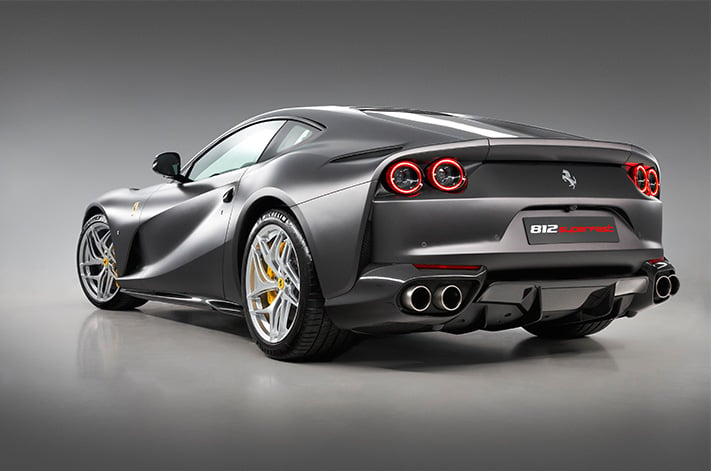
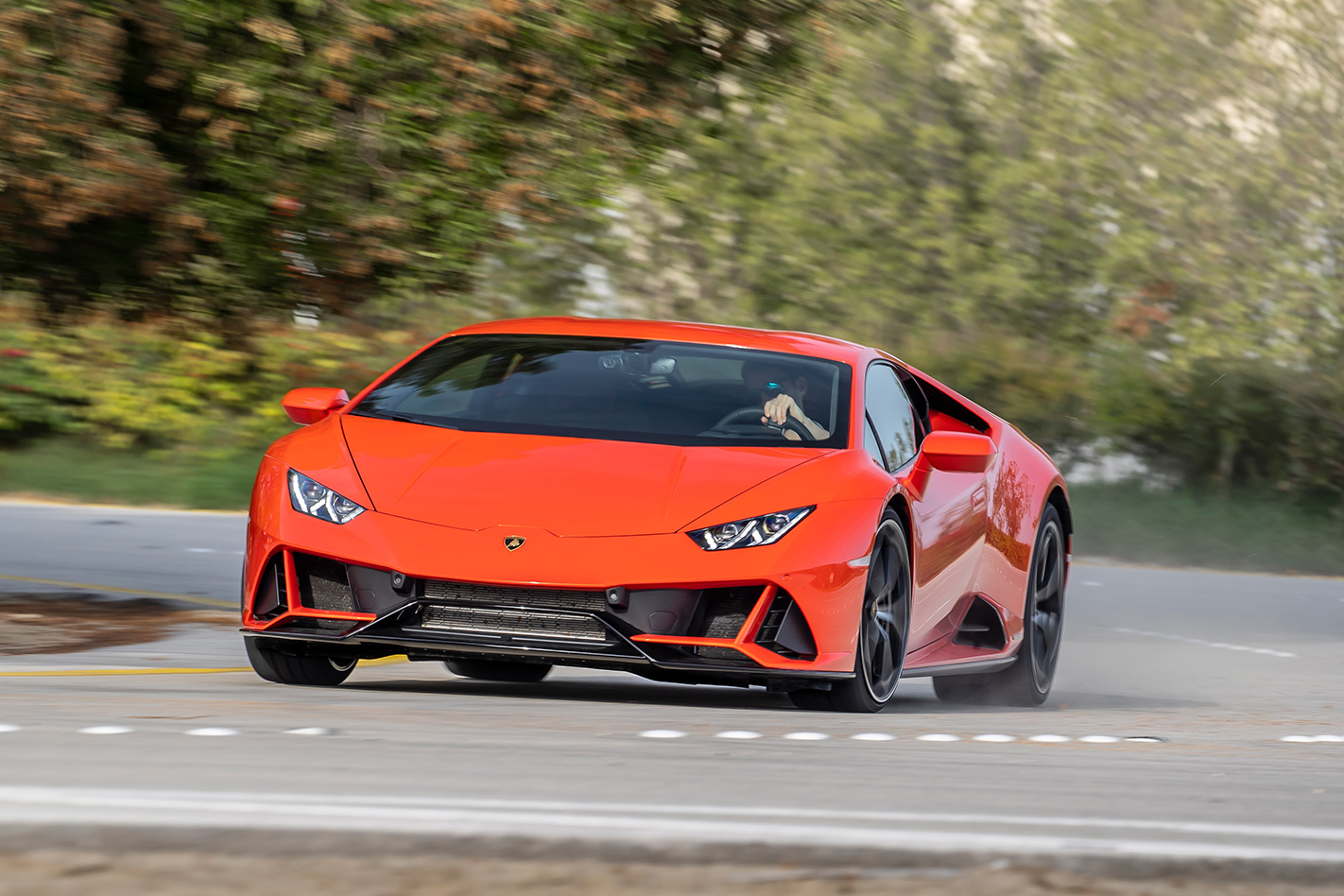
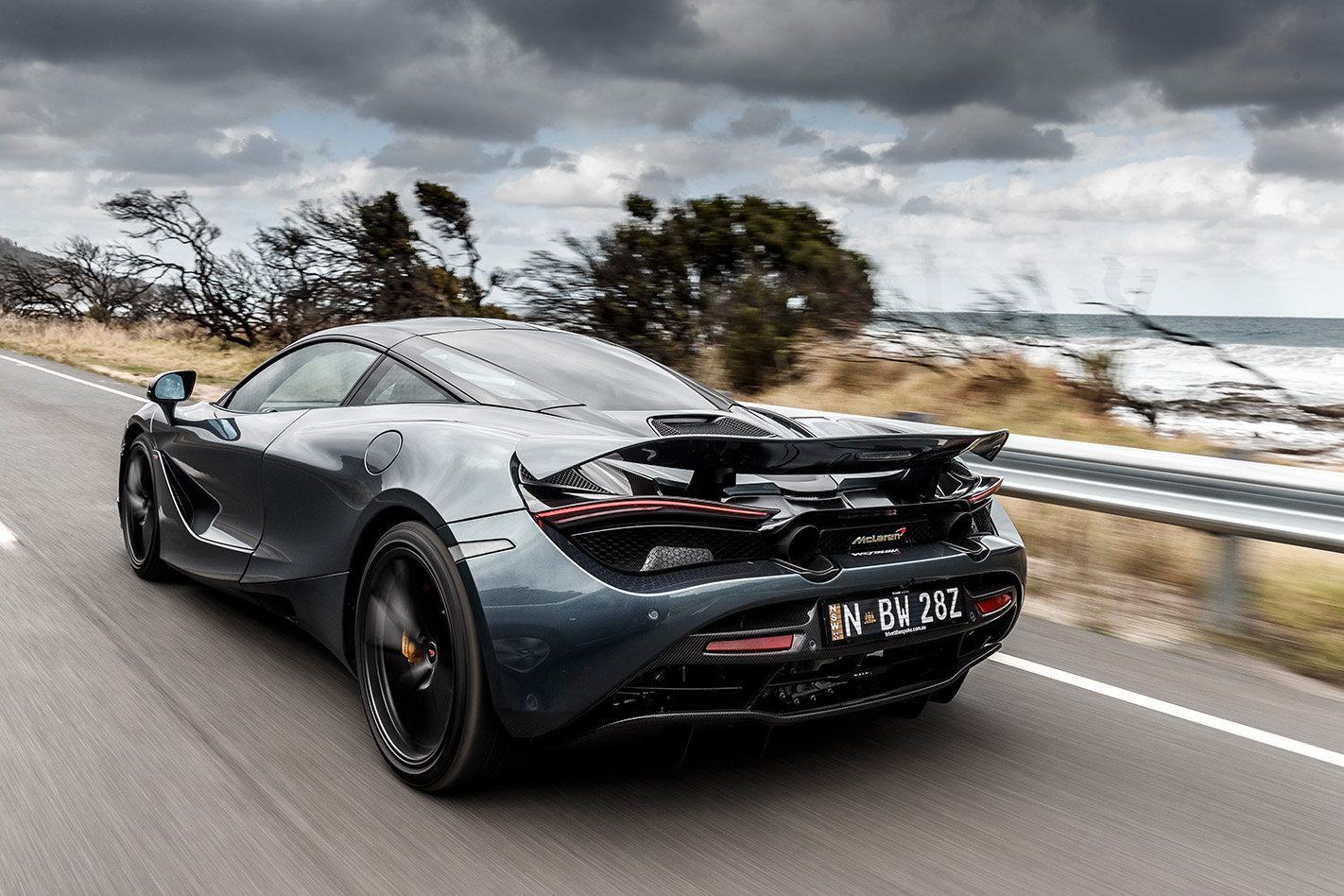
While the market for affordable classics is thriving, the near-new supercar market could prove to be more problematic. Asking prices haven’t changed markedly but demand is tapering. The net effect of this is that within the next 12 months, a glut of leased and financed supercars will likely arrive on the market. Supply will outstrip demand and, as a result, depreciation looks set to accelerate significantly, a situation exacerbated by oversupply in recent years from manufacturers such as Ferrari, Lamborghini and McLaren. Even the values of cars once thought of as gilt-edged purchases have suffered. Typical US auction values of the Ferrari 458 Speciale have softened by around 15 percent over the past two years.
At the top end of town, million dollar-plus blue-chip investment vehicles have seen prices frozen and, like gold buying, this represents a relatively safe haven for money in these volatile times.
Dave Gooding, founder of Gooding and Co auctions, talks of prices for high-dollar vehicles being “robust”. RM Sotheby’s 69 percent sell-through rate and US$13.7m (A$21.4m) take at its March 20-28 online auction is broadly in line with its live events.
A 1996 Porsche 993 GT2 sold at the auction for US$891,000 (A$1.39m). The last 993 GT2 to run through RMS, in October 2018, made US$643,000 (A$1m), showing that, for the right cars, the market is anything but tanking.
For the average Aussie motorist looking to trade up, the lack of equity in used stock is likely to be partially offset by dealer discounting on new cars. The cost to change isn’t going to be significantly different. But, right now, take comfort in the fact that a Tucson could be a better home for your money than a Tributo.
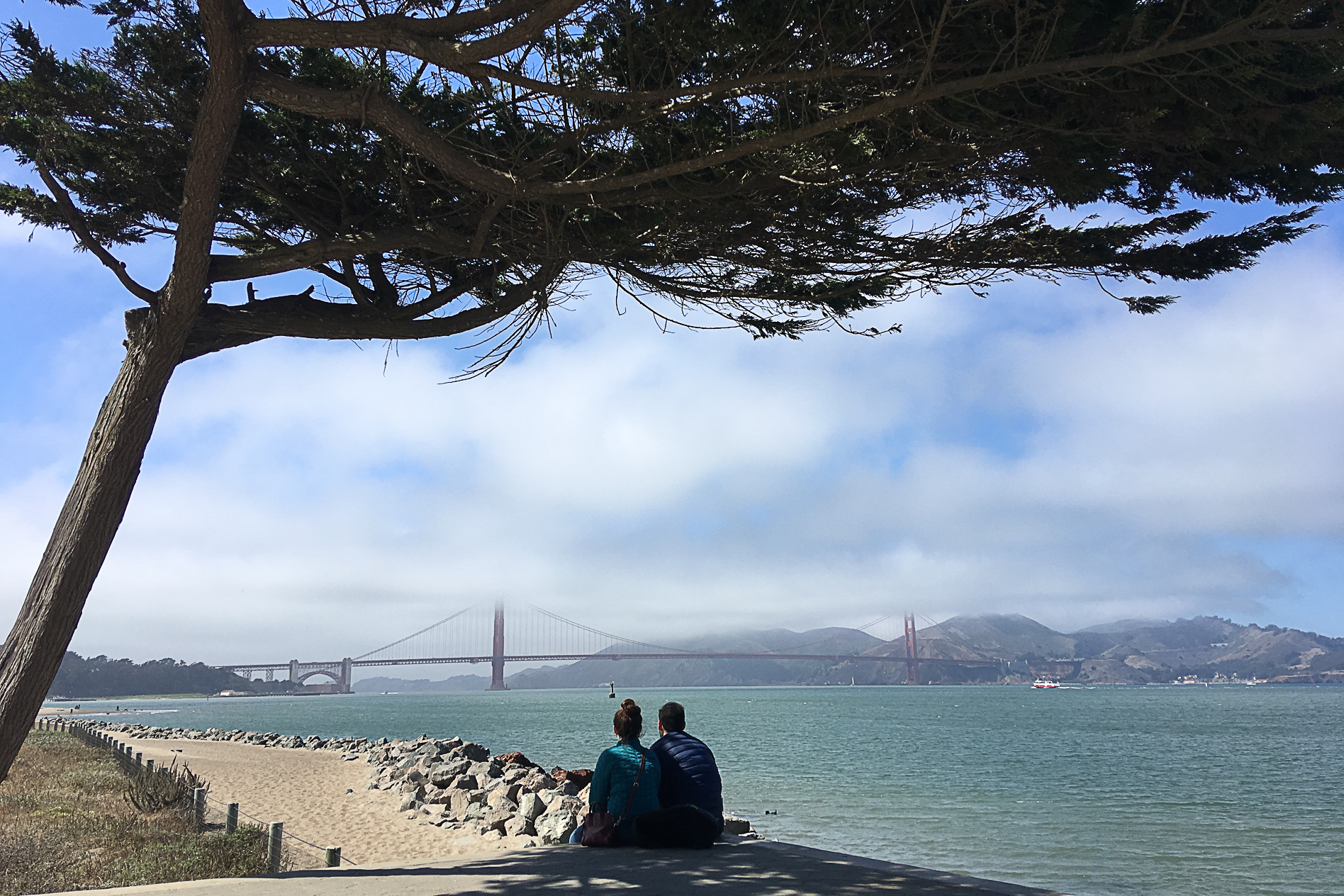
Amazing footage of San Francisco’s Golden Gate Bridge ‘singing’ has emerged after changes were made to the iconic structures handrails to make it less susceptible to strong winds.
Residents of the Bay Area have reported hearing a strange wailing sound emanating from the 83-year-old structure, which is still the third-longest span bridge in the world.
City engineers have replaced about three-quarters of the bridge’s railings with thinner versions on its western side in an effort to stabilise the bridge in high winds.
Somewhat ironically, it’s these high winds that are giving the old structure its own eerie voice.
“The new musical tones coming from the bridge are a known and inevitable phenomenon that stems from our wind retrofit project during very high winds,” Paolo Cosulich-Schwartz, a Golden Gate Bridge, Highway & Transportation District spokesperson, told The Guardian.
“The wind retrofit project is designed to make the bridge more aerodynamic under high wind conditions and is necessary to ensure the safety and structural integrity of the Bridge for generations to come.”
The sound, which has been described as ‘mournful wailing’ or a ‘huge kazoo’, was not unexpected.
“We knew going into the handrail replacement that the bridge would sing during exceptionally high winds from the west, as we saw yesterday,” he said.
“We are pleased to see the new railing is allowing wind to flow more smoothly across the bridge.”
While the noise will only emanate from the structure when the wind is strong, the bridge now apparently can be heard even at lower wind speeds, the result of thinner, rounded handrail poles that are spaced further apart.
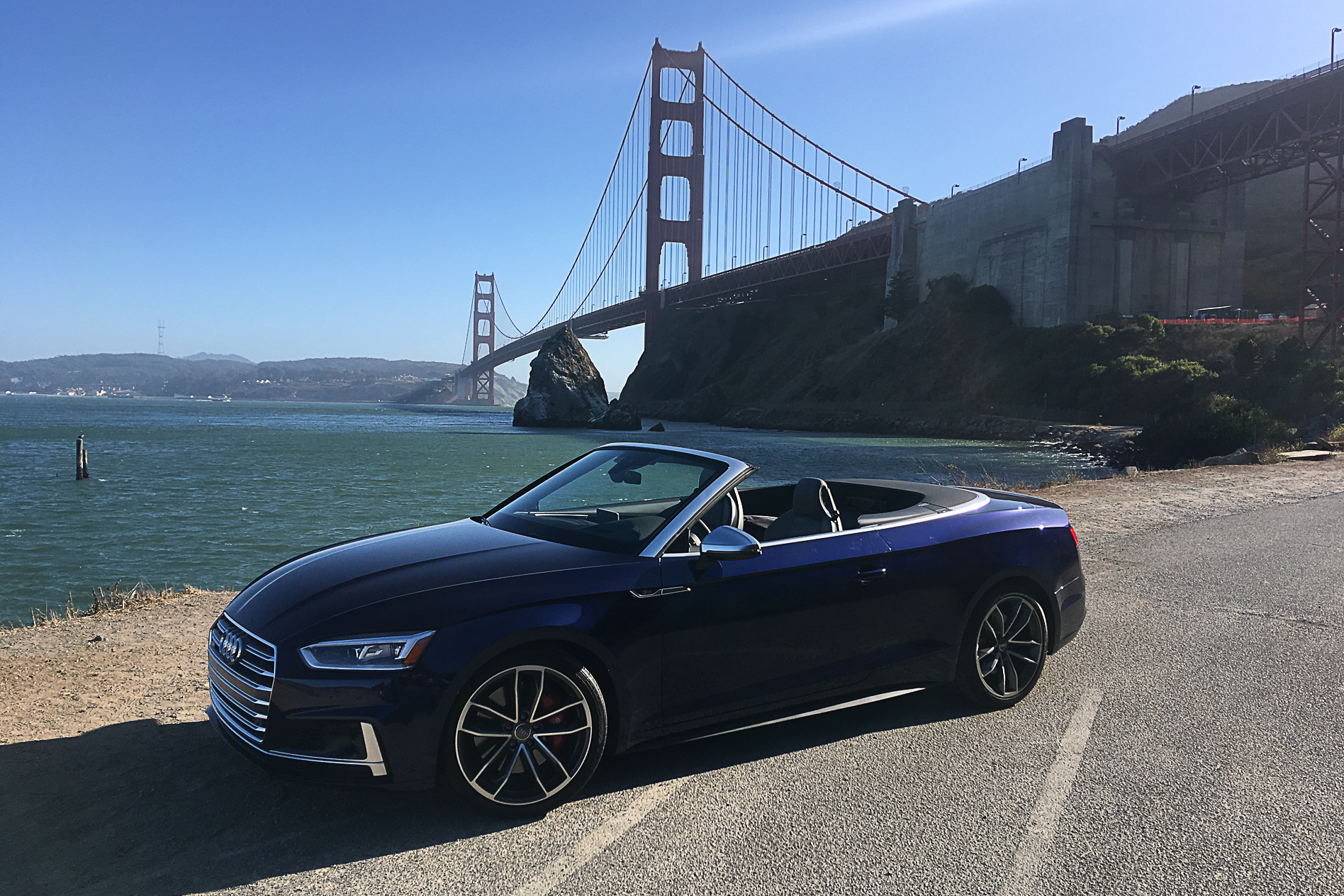
WhichCar visited the bridge in 2018 (Pic – Tim Robson)
Gale-force winds aren’t uncommon for the San Francisco Bay, so it looks like the old bridge will be singing its heart out for a while yet.
Project Cars 3 – the latest instalment of the popular sim racing game – is set to launch later this year, according to publishers Bandai Namco, and will arrive on the current-generation of consoles (Xbox One, Playstation 4) and PC (on Steam).
Building on the success and passionate following of the franchise to date; a swell of new features are on the horizon, and promise a new direction and wider scope for old and new players alike.
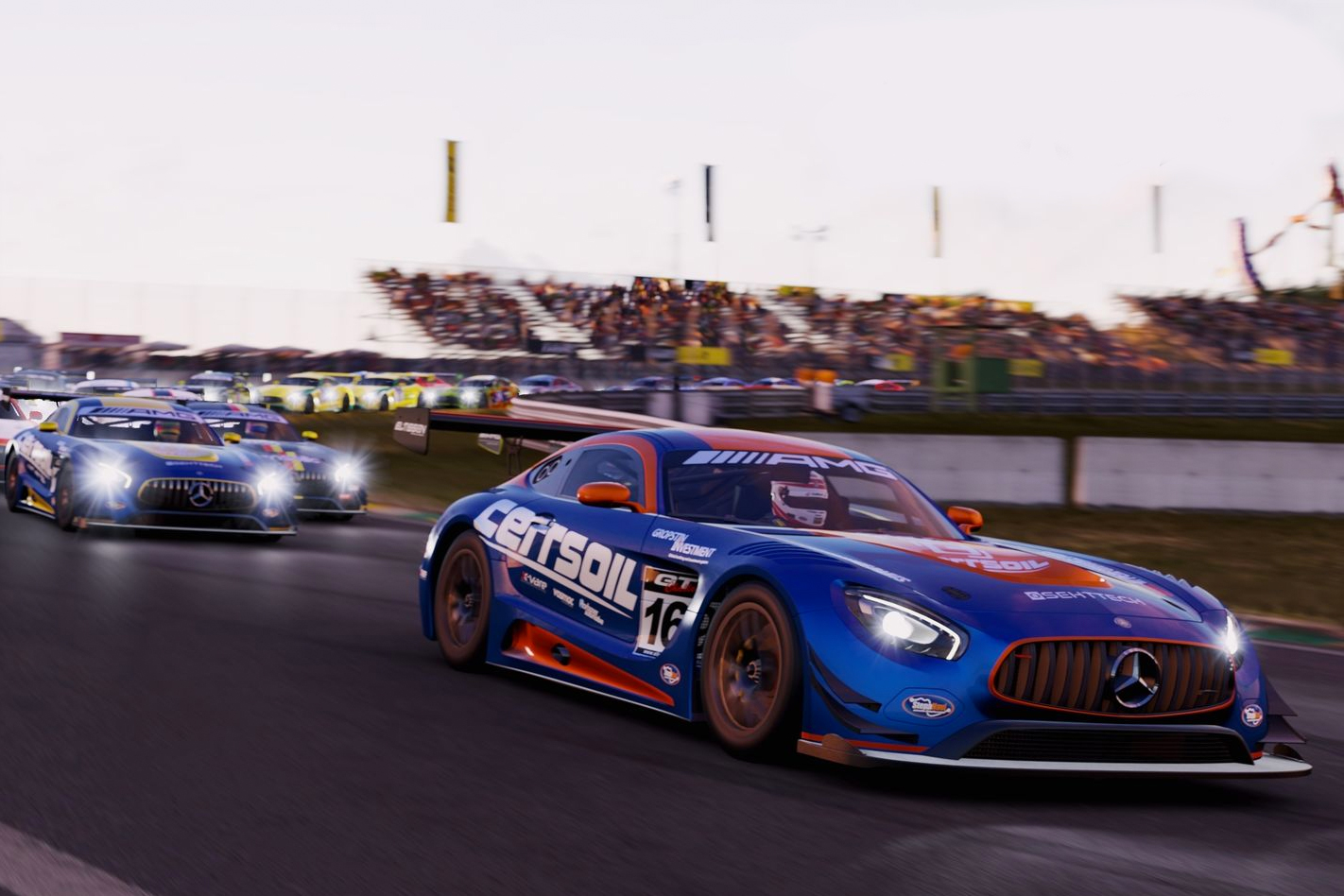
An overhauled career mode has been confirmed by developers, Slightly Mad Studios, which will take players on a journey through all ten car classes with dynamic rewards and objectives depending on player difficulty and driving assist settings.
PROJECT CARS 2 REVIEW: HARD AS HELL BUT WORTH THE SWEAT
On that note, developers have hinted at a pitching the game at a broader church, citing the perceived barrier to entry of simulator-focused racing games and more casual, curious, players seeking to enter the genre.
Speaking to EuroGamer, PC3 director of production Peter Morris reassured the diehards that the game remains “exactly as sim-focused as it was before”, but also spoke of how the team is making efforts to make the game more approachable.
In a welcome first for the franchise; car customisation – both visual and performance-based – also finds its way into the upcoming game; as well as a new online ‘Rivals’ mode similar to Forza’s asynchronous multiplayer time trial challenges.
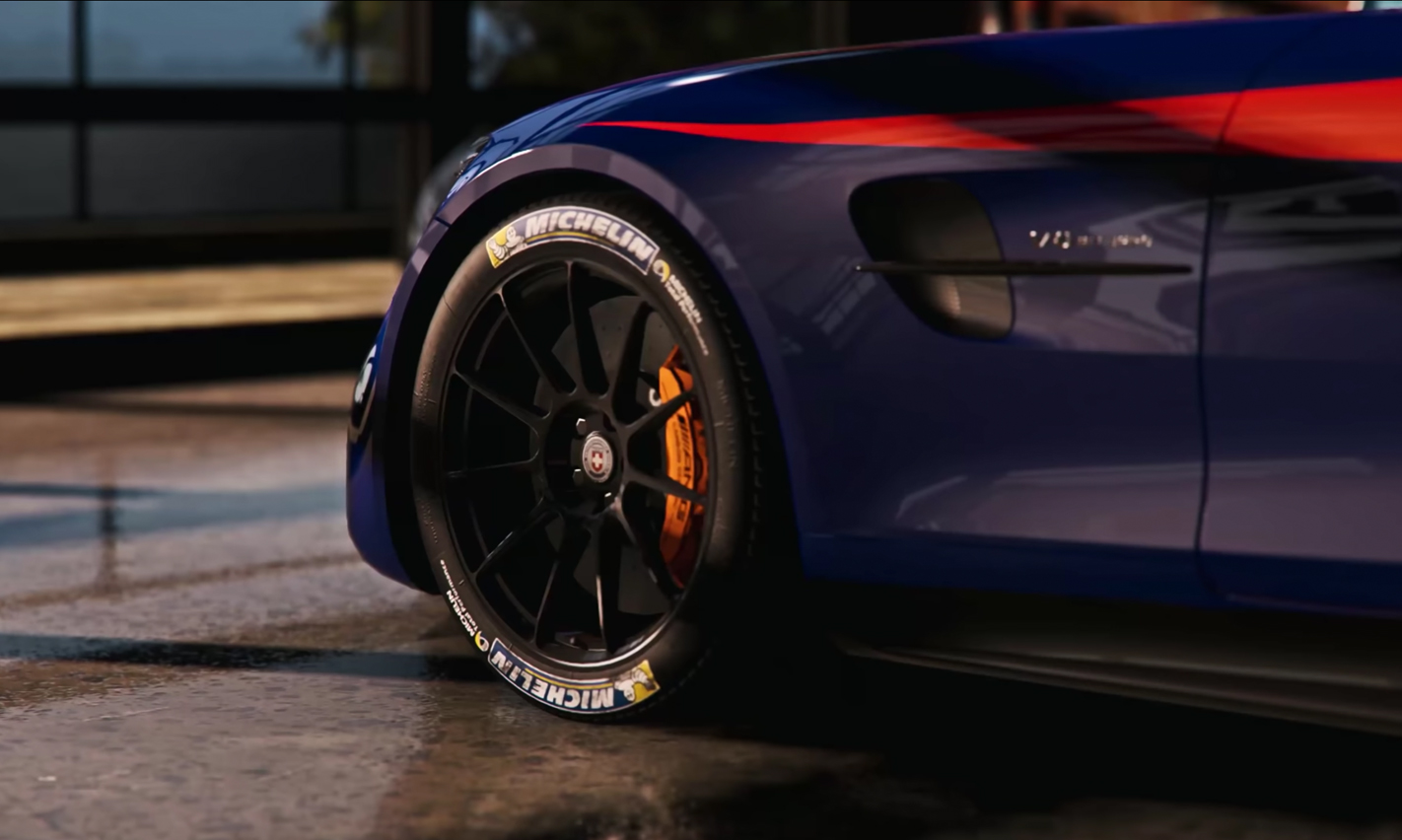
Two new track environments will also be added, including; the brightly lit streets of Shanghai and Sao Paulo’s Interlagos circuit.
Gameplay developments include improved post-processing effects, camera shake and motion blur, collision effects as well as new gamepad handling for those racing with a controller.
No exact release date has been announced, nor any word about a next-generation release but we can expect more details to follow in the coming months.
Stay tuned for more information, as we will update this page as more comes to light.
Hindsight is a wonderful thing. And yet I still can’t help thinking that Nissan missed an opportunity to disrupt the ancien régime with its launch of Infiniti – it could have been a disruptor in the mould of Tesla – a whole decade ahead of Polestar.
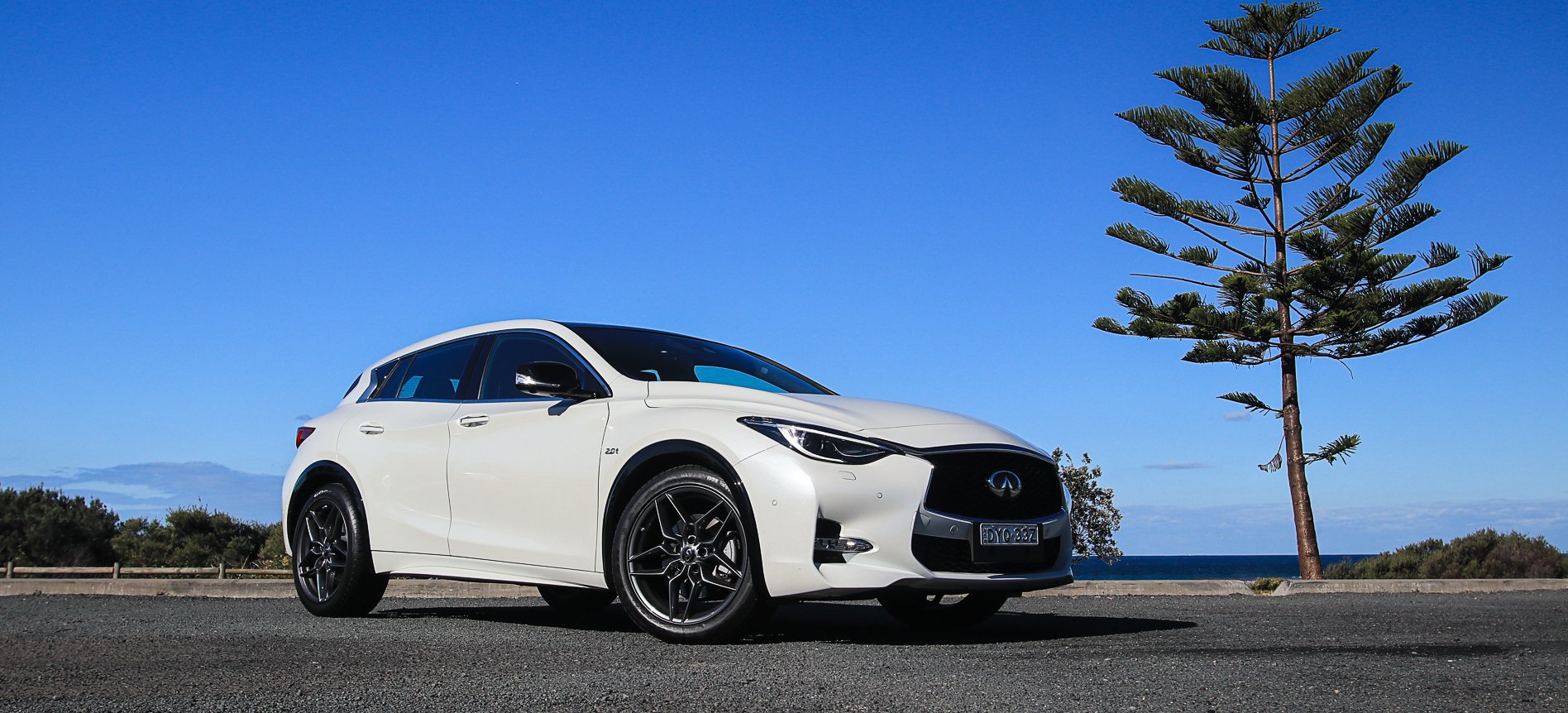
The ingredients were all there. King Carlos Ghosn was in his pomp, reimagining family hatchbacks with the innovative Qashqai crossover – an SUV lite for the masses – and launching the world’s first mass-market electric car with the Leaf. Nissan could do no wrong a decade ago, before civil war broke out.
That same technology, and vision, was sorely lacking in the decision to bring Infiniti to market. Of all the sectors to challenge, the premium marketplace in 2009 was (and remains in 2019) virtually locked-out by the luxury hegemony of Audi, BMW and Mercedes-Benz, with just enough space for smaller rivals such as Jaguar Land Rover and Lexus.
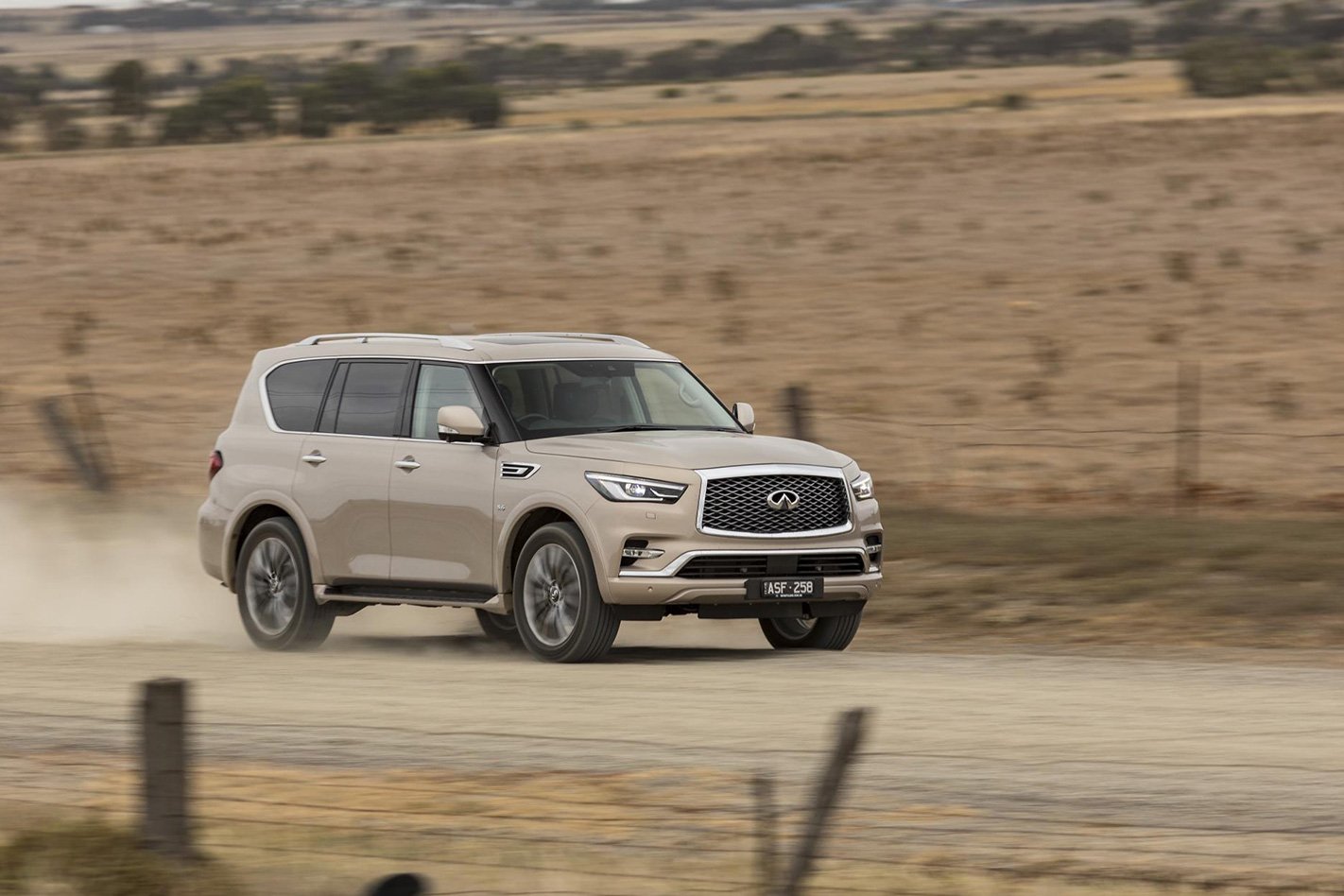
But was there room for a sixth player? History has judged not, Infiniti’s quirky, leftfield executive saloons, crossovers and coupes proving a niche too far. The brand itself is now all but gone from Australia, and shrinking across Europe as well. “It just wasn’t sustainable,” an exasperated Infiniti official told me yesterday.
Infiniti: imagine if it was an electric pioneer to challenge Tesla
Rewind to 2009. Imagine for a moment if Ghosn’s judgment had been as insightful as usual. If Infiniti had been repurposed as a standalone electric brand, the story could have been quite different. The Leaf platform could have begat some right-sized smaller all-electric smaller hatches, saloons and SUVs to make real inroads into the fledgling EV marketplace.
More
- Infiniti withdraws from Europe
- Depreciation heroes – deals on almost-new 2019 cars
- All of WhichCar’s Infiniti reviews
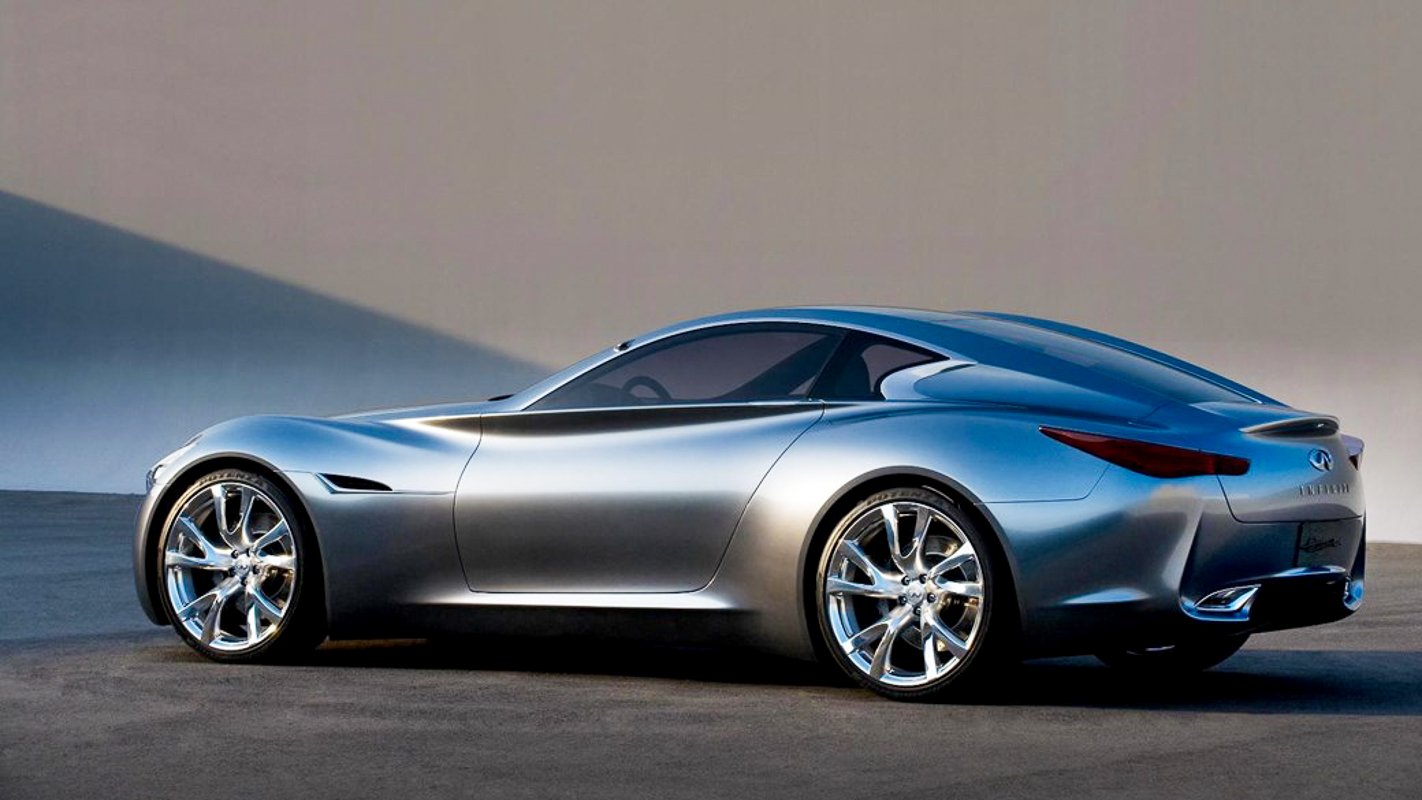
At the 2009 Geneva motor show a decade ago, it wowed us with the Infiniti Essence concept car (above), a 600bhp petrol-electric hybrid wonder-coupe which had us cooing over its svelte, think-different style and progressive take on modern luxury.
It could have outmanoeuvred all the German/British competition if the endless conveyor belt of clever concepts had made the leap from catwalk to showroom – and done a sportier take on Lexus, who had purposefully shunned diesel and focused on e-powertrains with a luxury bent.
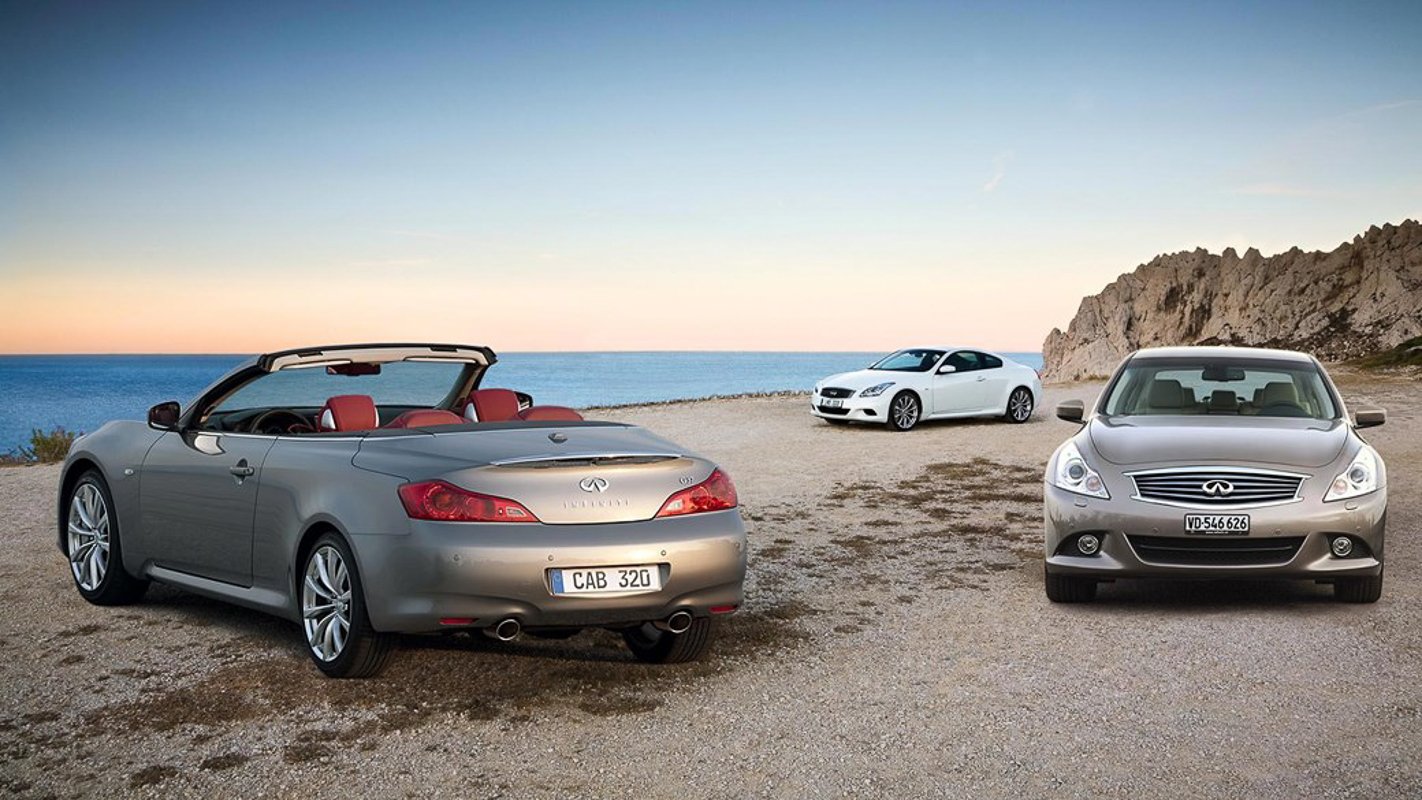
Sadly, Infiniti didn’t take the brave choice, preferring to launch with American-centric, high-CO2 3.7-litre V6s, wilfully oddball crossovers and a confused naming strategy that meant the brand never really got cut-through. The G37 range below was fun in a brawny, big-capacity 350Z kinda way, but that was going against the zeitgeist, wasn’t it?
CEO Ghosn admitted to me at launch that brand awareness was Infiniti’s biggest problem. It was why they moved into expensive F1 sponsorship, but the fact that the BBC headlined its story ‘Nissan cuts two models from UK plant’ says all you need to know about the public’s interest in the Japanese premium wannabe.
And yet it could have been so different. A Japanese Tesla? Beating Polestar to market by a decade with a range of cool, progressive, electrified cars. Now that could have been a different story…
This article originally appeared at carmagazine.co.uk
We wanted this somewhat unorthodox review to appear to be a road safety campaign at its outset and, in the introduction, I was trying to do my most serious face combined with a strict tone of voice, which is hard at the best of times.
The theory we were posing is that all driver distraction, no matter what form it takes, is dangerous and should be avoided.
As the camera pulls back, it reveals the stunning surrounds of Waitangi and Wairoa Bay – which, theoretically should be one of the most distracting and therefore hazardous places you could drive, right?
How we shot the story
There can be few places in the world that threaten to tear your attention away from the road more than New Zealand’s north island, with constantly changing (but consistently dazzling) views around every corner.
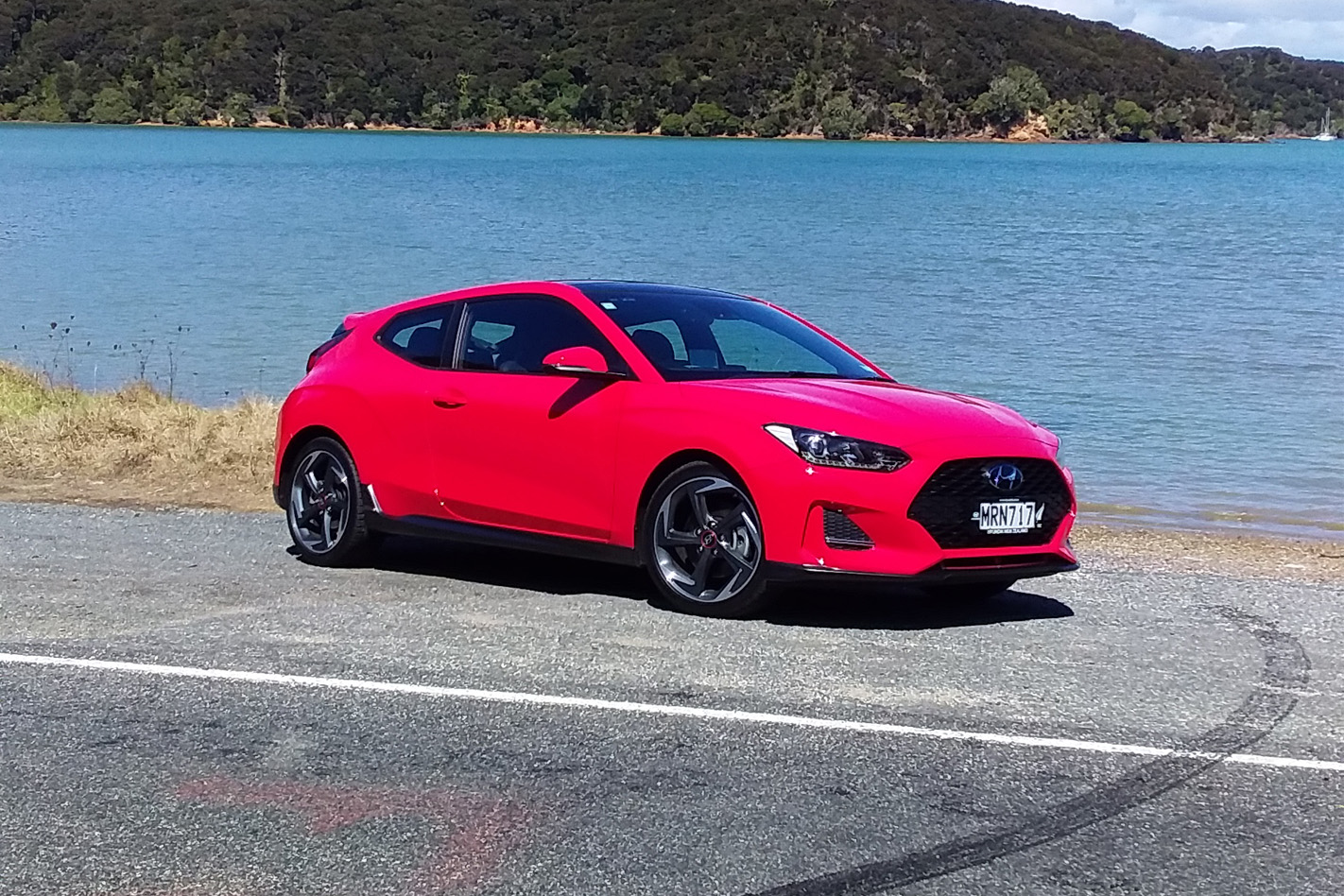
The car I would attempt to focus on was Hyundai’s new Veloster flagship in NZ-spec 1.6T, which is the performance halo for now and is dubbed simply the Turbo in Australia.
My plan was to construct and rig the little 3+1-door hatchback with ‘equipment’ fashioned from readily available consumables you’ll find at any auto store, thereby allowing me to see only the road ahead and concentrate on the fine art of car reviewing. Simple.
Except it wasn’t. The gear I hastily threw into the Hyundai was actually way more effective than I had expected and what was originally intended as a visual gag, turned into a very efficient method of blocking out way too much vision. Dangerous, in a word.
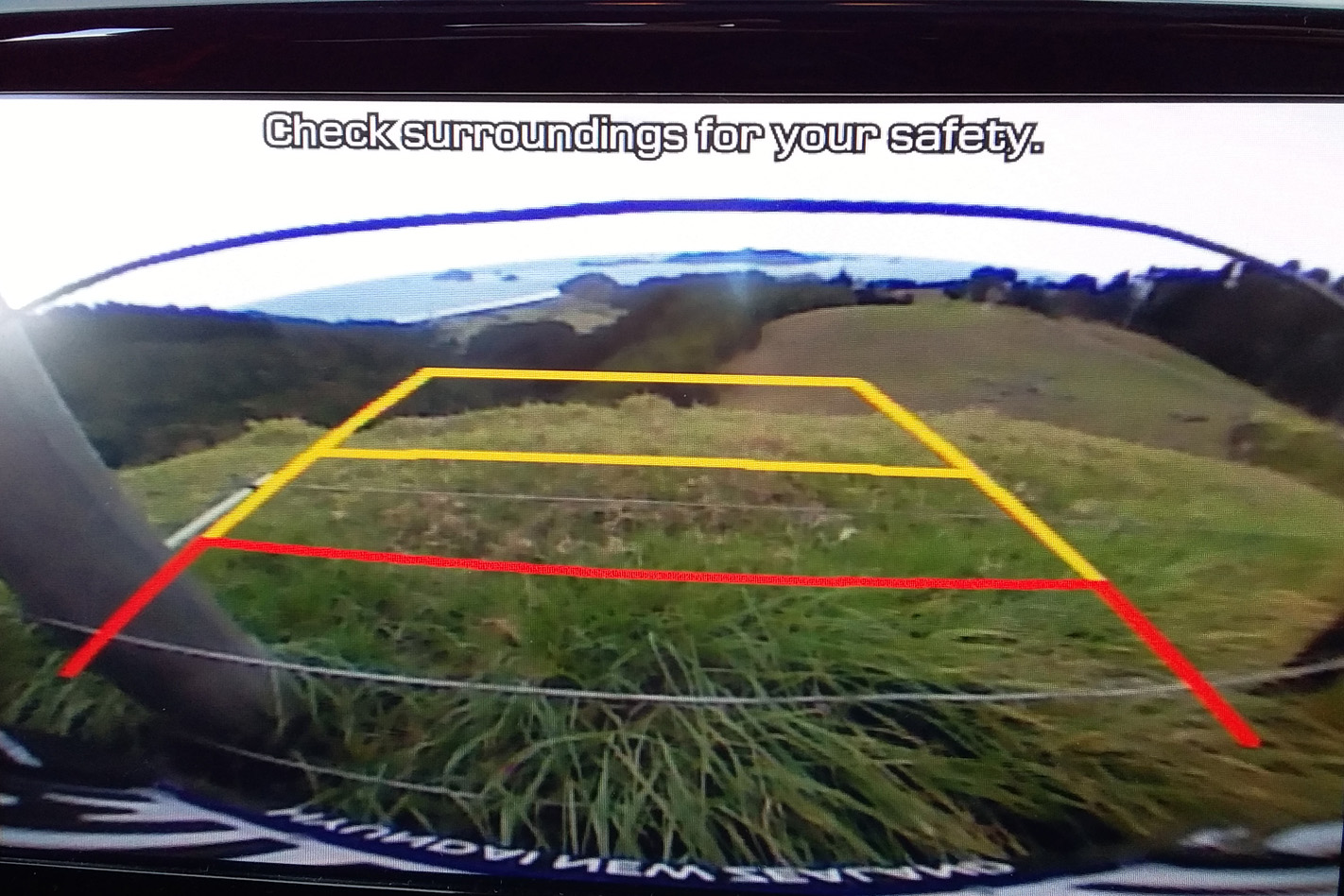
The vinyl wrap applied to the windscreen was about twice the depth of a sunshade and shortened the view of the sky down to just above the horizon.
The repurposed sunshades in the front windows – intended to protect children in the back seats – were largely irrelevant because my horse blinkers (manufactured from an old cardboard box taped to sunglasses) were 100-percent effective at cutting the view through each side window.
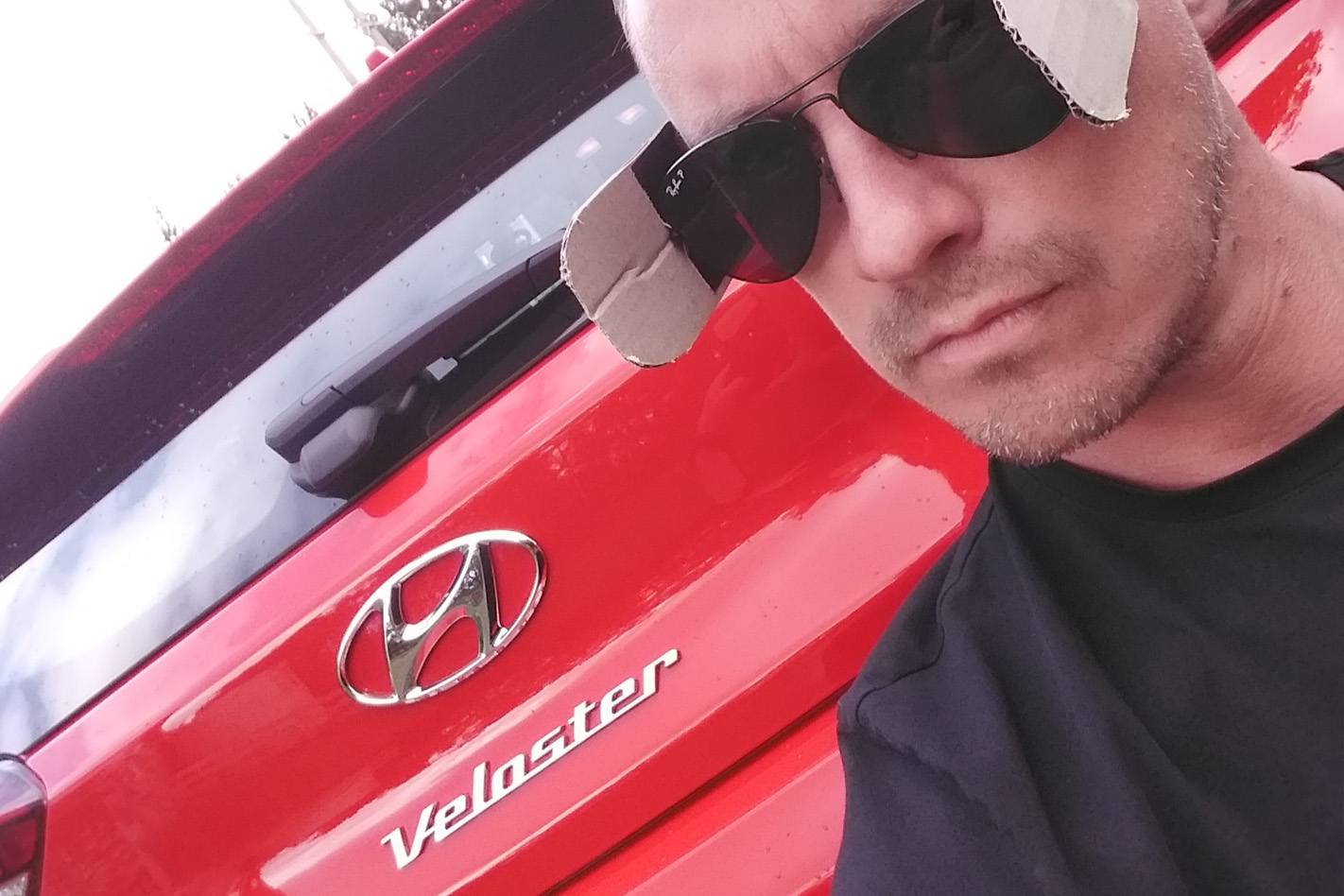
In short, my measures were ridiculously risky so out they came in favour of plan-B: self-discipline.
One of the few criticisms I could muster for the genuinely brilliant Veloster is that its driver assistance systems (particularly the lane-keep), are too intrusive on the freeway, but they probably had more relevance on the fantastic roads we found beyond Paihia when my neck uncontrollably craned to take in the views.
Ironically though, the solution for maintaining concentration on the road was Simple.
At speeds nearing the local limits, the Veloster was beautifully involving, alive and the only thing worthy of the driver’s attention.
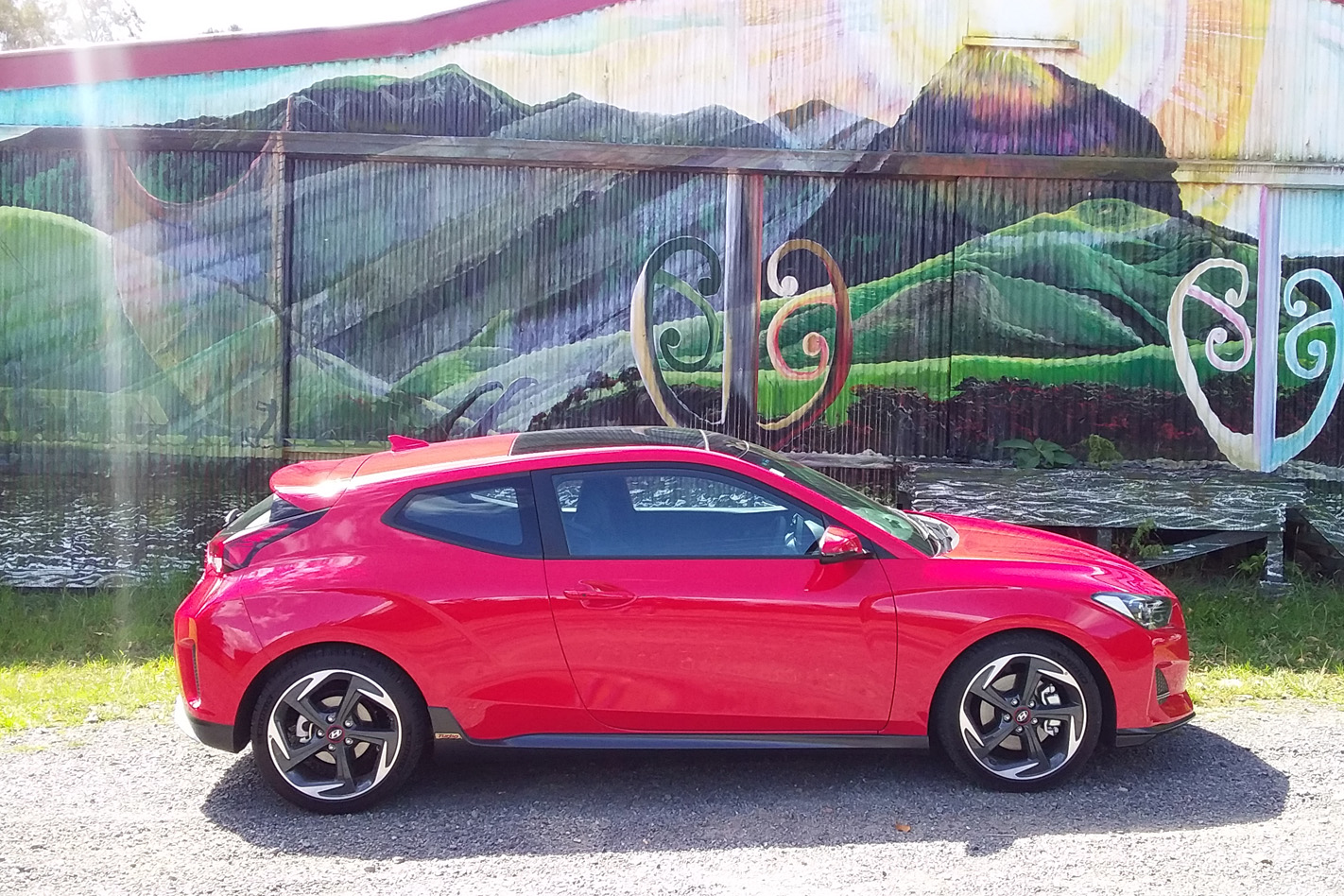
To really hammer home the impact of New Zealand’s incredible scenery, we needed a breathtaking destination for this story, and vid-wizards JP and Josh did not disappoint.
It was a bit of a race against time with clouds rolling over the land and threatening to obscure the sun’s rays from a world-class lookout.
But we made it to the lookout over Matauri Bay (where Greenpeace’s Rainbow Warrior was retired and repurposed as a reef) in the nick of time and, most importantly, got that stunning final shot.
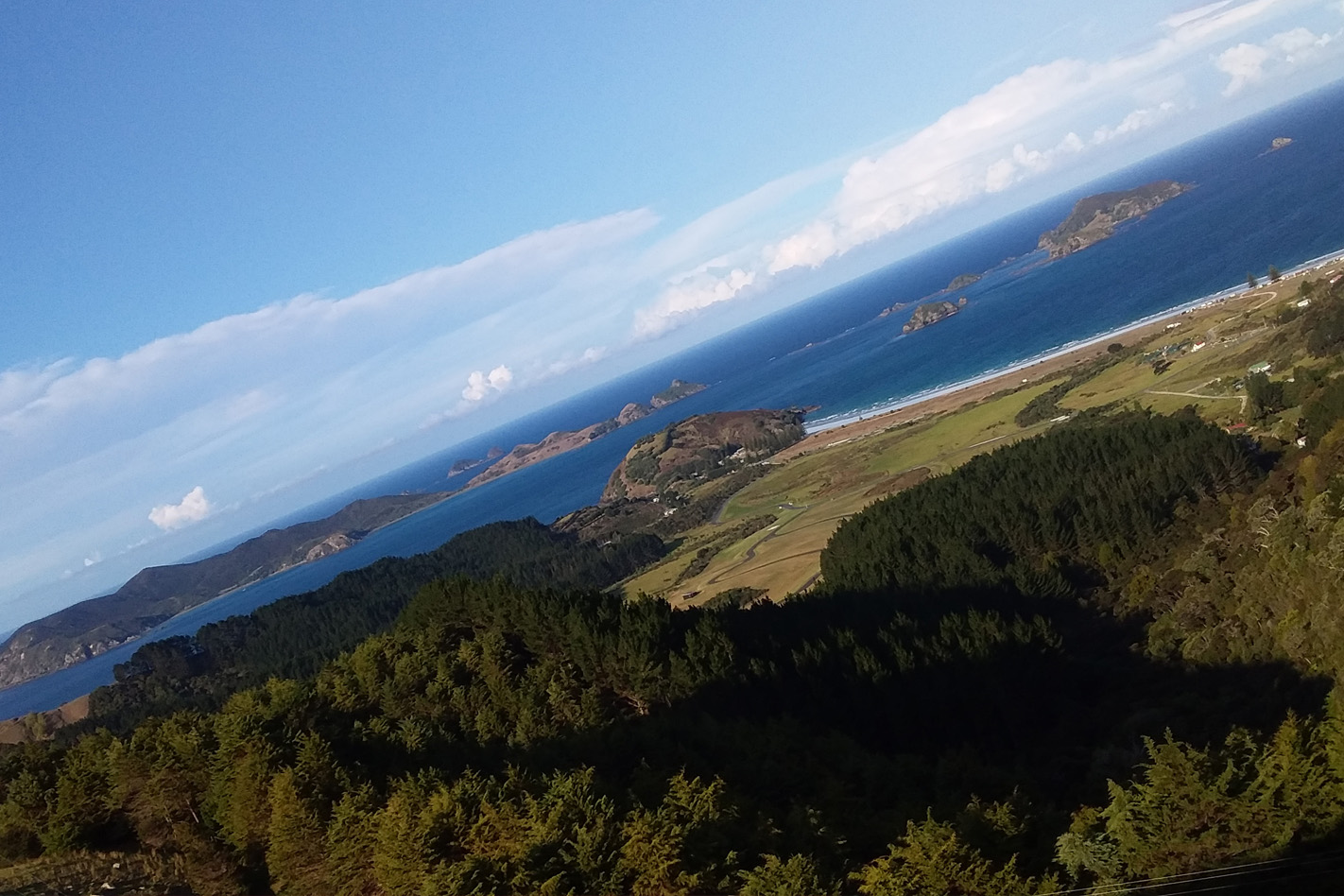
After all the silly homemade counterproductive attempts and trying to avert my eyes from New Zealand’s unforgettable scenery, all I needed was to go a bit faster.
Behind the scenes: Nissan GT-R double act
Keen to make a start in the world of simulated motorsport? The array of gear out there is mind-boggling at all ends of the price spectrum, but we’ve distilled it down to help you make an informed choice.
We have broken it down, so you can choose between an affordable entry-level kit, or for the really keen, a high-end system used by professionals.
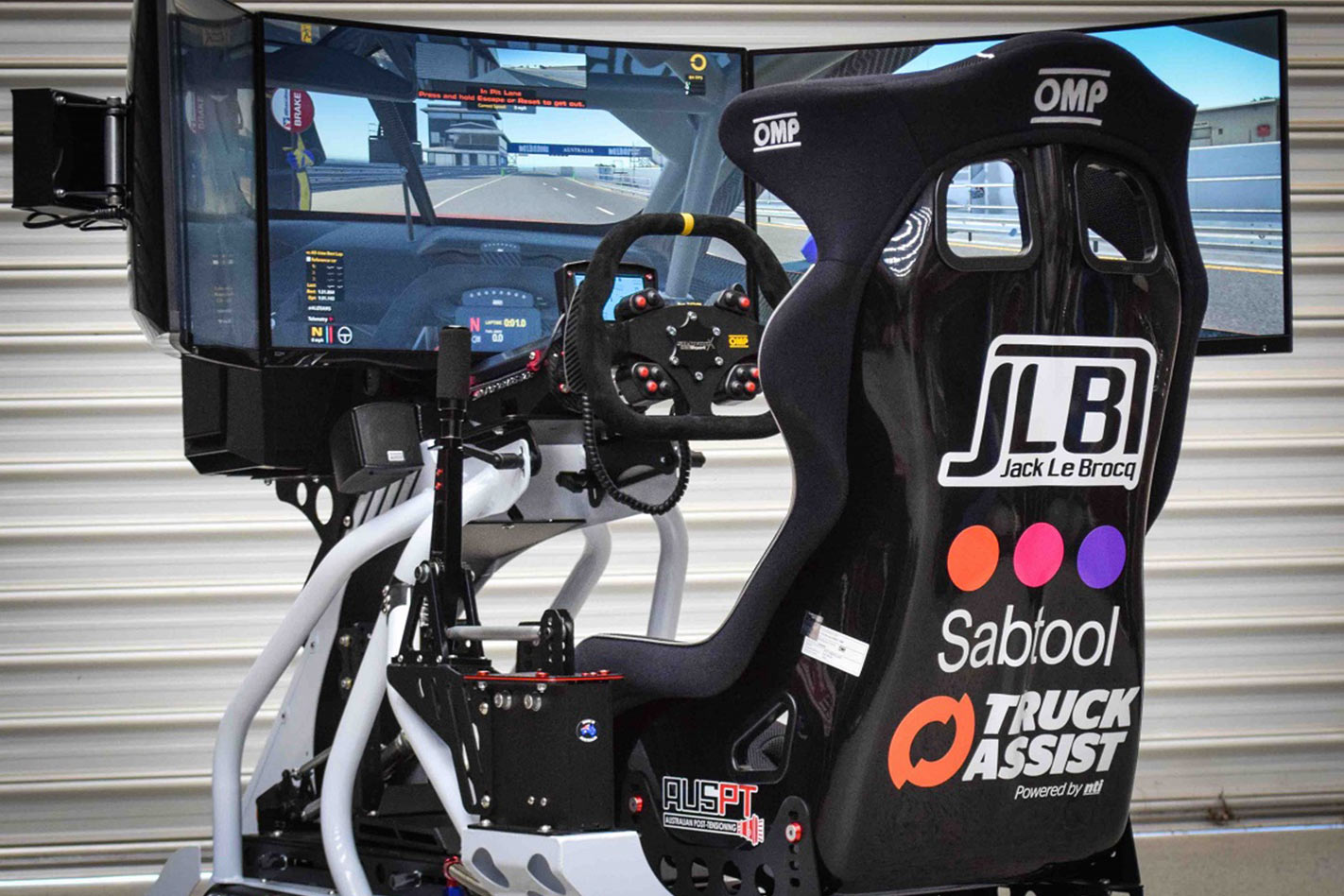
Oh, and we’ve got you covered for what games to get as well!
Regardless of whether your pockets are stuffed with cash or filled with lint, here’s the gear you’ll need to start smoking electronic rubber.
Affordable
Sticking to a gaming console eliminates much of the cost and complexity of a PC-based set-up, and the Xbox One S has a commendable spread of driving sims to choose from.
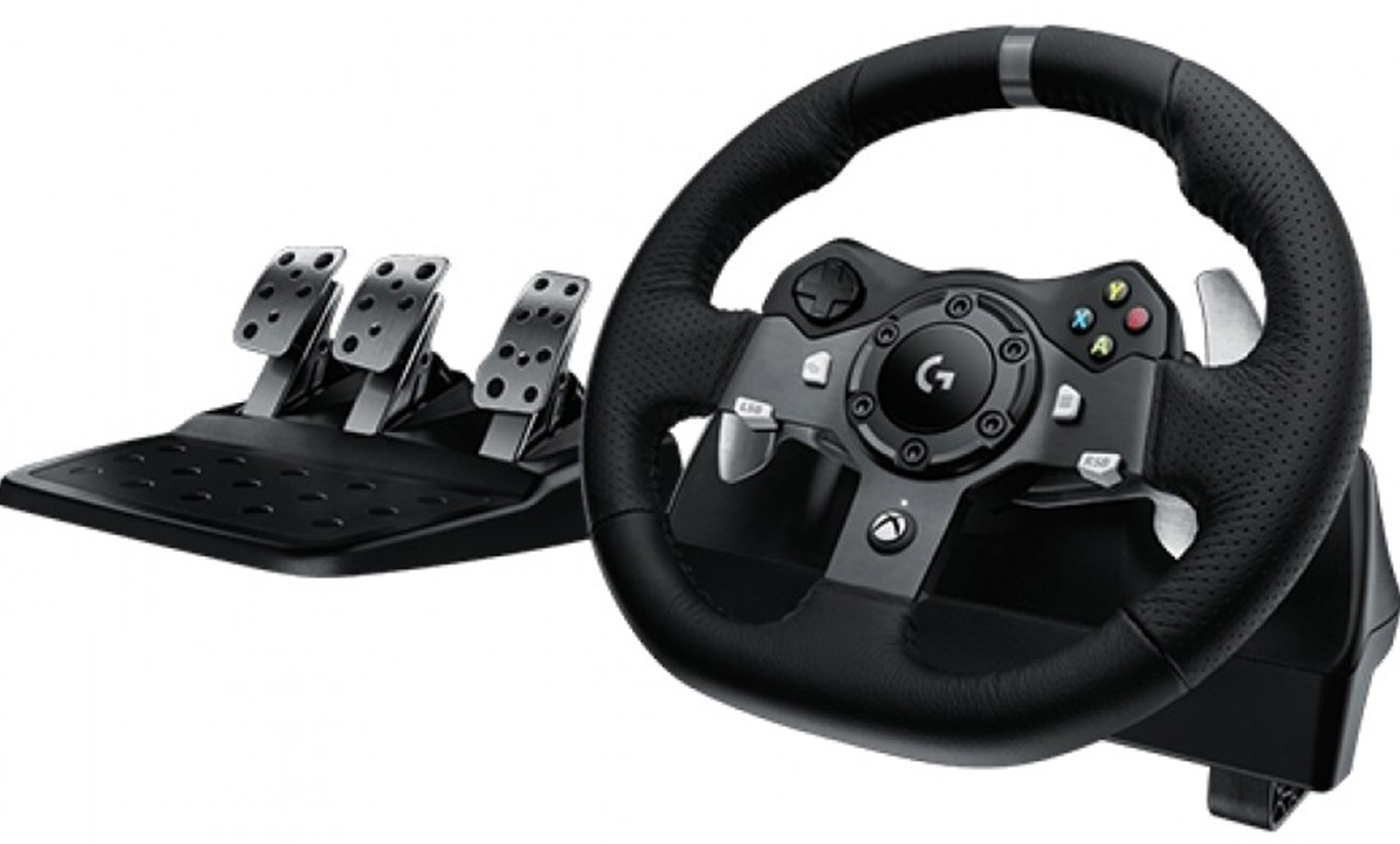
Pair it with a Logitech G920 force-feedback wheel and pedal set, and a wheel stand to bolt it to.
Sit on your couch, plug it all into your TV and presto – you’re sim racing for minimal dosh!
- Xbox One S $379
- Logitech G920 $499
- Next Level Racing Wheel Stand Lite $199.
- TOTAL: $1077
High-end
The more money you spend, the more realistic virtual racing becomes.
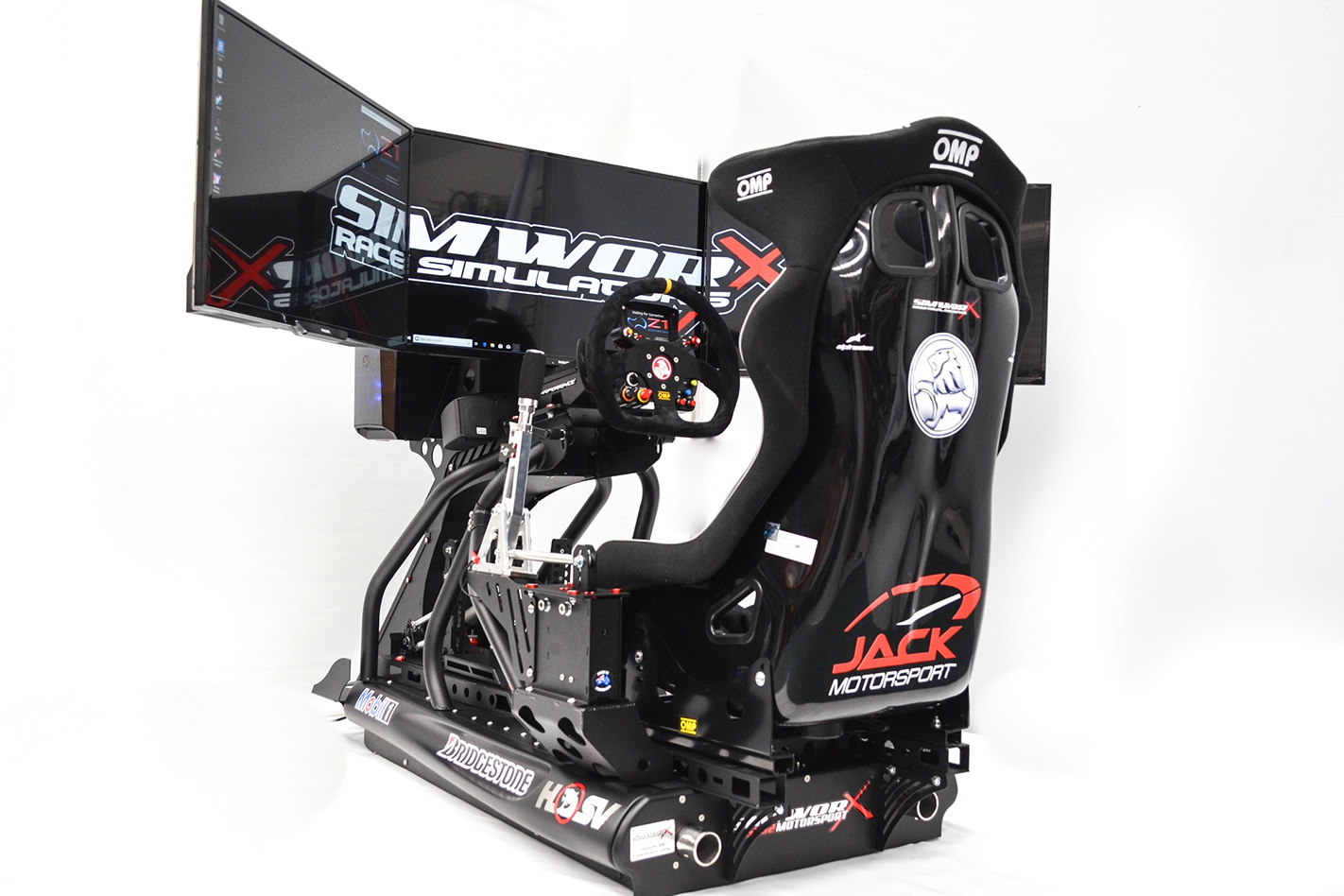
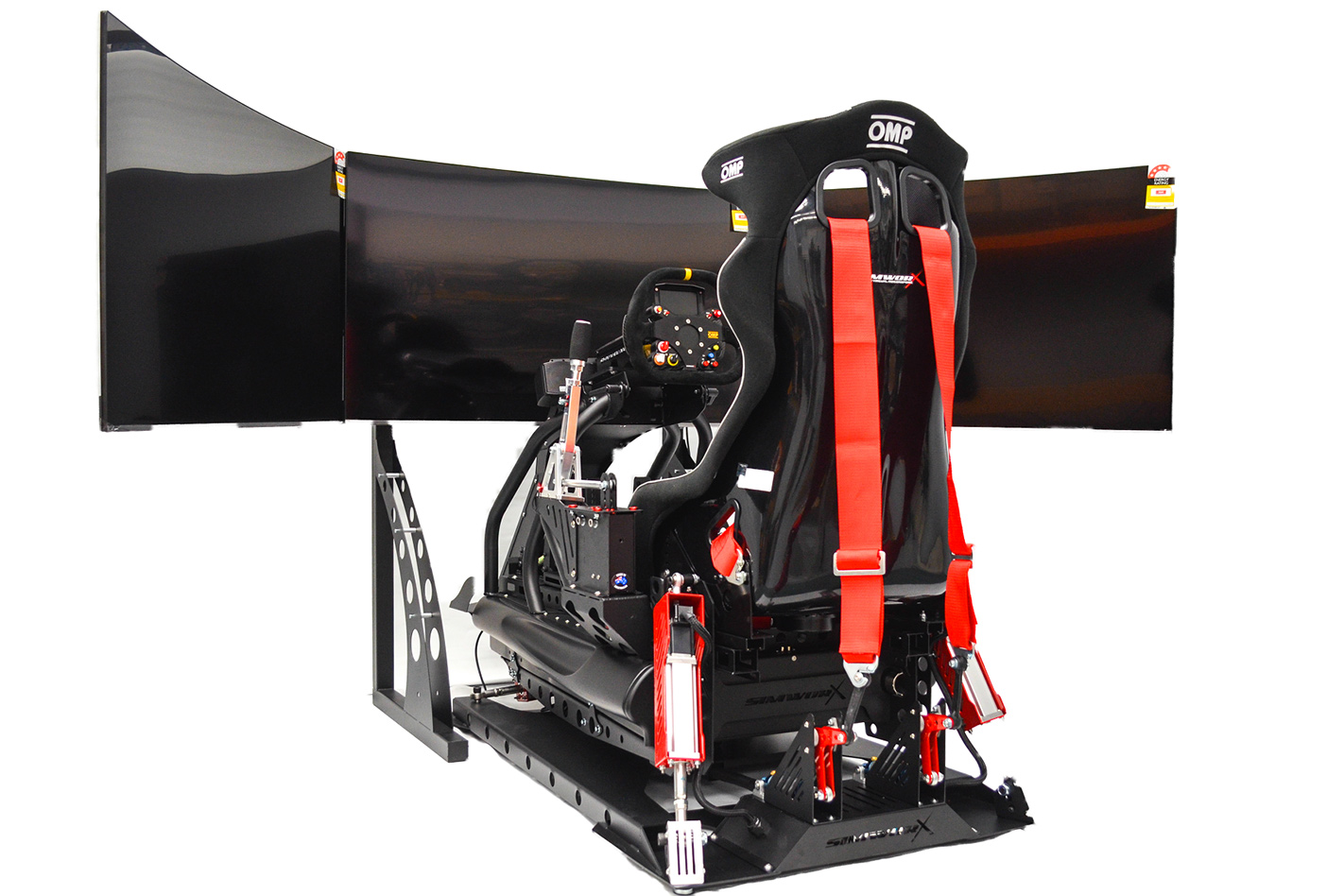
Case in point: the Simworx SX02Msport Predator. Sure, it costs as much as a Toyota Corolla, but it comes with everything you need to get sim racing – screens, a beast PC, wheel, seat… the lot.
With VR and motion platform options, the only way it could get more real is if you set up an incense burner nearby with Brembo fragrance.
In case you were wondering, this is exactly what the professionals use (the set-up; not the incense).
- Simworx SX02Msport Predator $25,900
What to play?
Supercars, TCR and NASCAR all run their virtual races on iRacing, a full-fidelity motorsport simulator with a Himalayan learning curve.
Not only is it coded to be as realistic as possible, it’s a regulated, subscription-based service, so you’ll only ever be playing against other die-hard racers.
For a solo experience, Project Cars 2 and Assetto Corsa Competizione are other high-def racing sims that are worth your time and money – and both crucially contain Mount Panorama in their track rosters.
