
It’s that time of year again when the nation bickers over what the upcoming public holiday should be called and what it needs to represent to be fair to all Australians, whether they are indigenous, settlers or more recently adopted.
So perhaps the day would be a little less divisive if we renamed it after something that unites all true Australians? On January 26 this year, raise a stubbie with us at WhichCar for V8 Day.
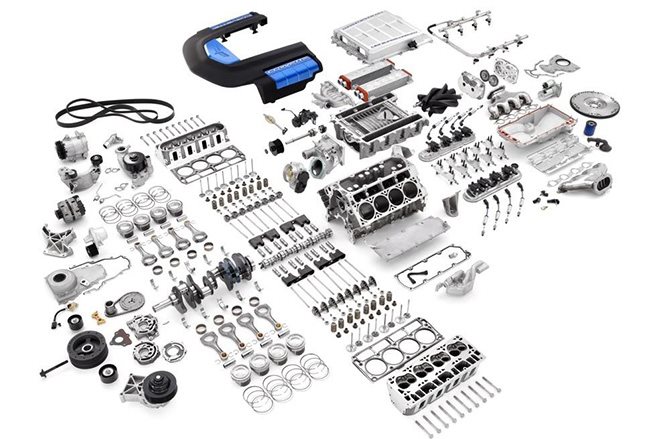
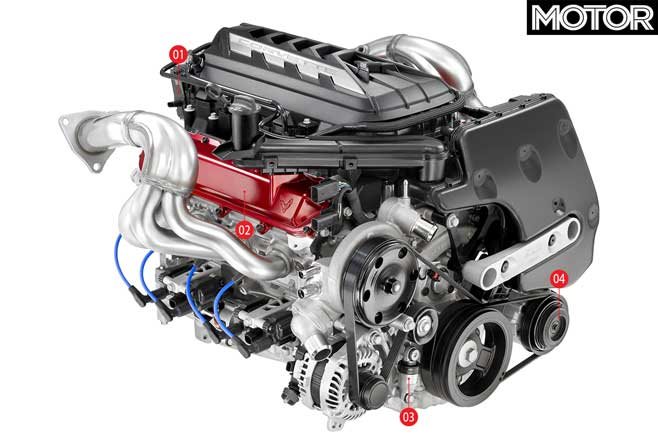
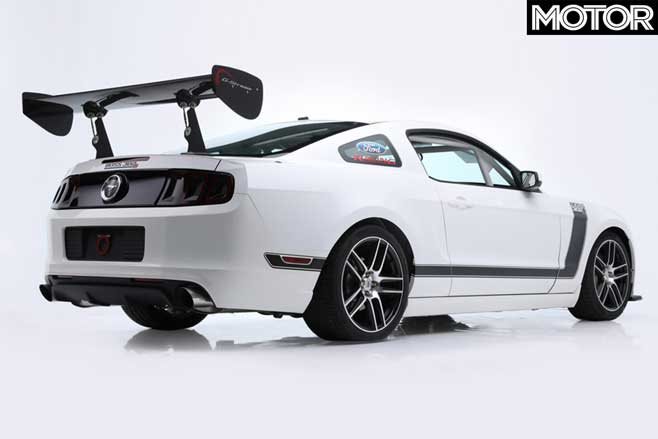
The last time we checked, V8s were not part of the Australian constitution but they absolutely should be and, if you agree, there was plenty of bent-eight news to absorb from the WhichCar pages this week.
Not only did we reveal just how many Australians are lining up to grab their example of a V8-powered Ford Ranger Raptor, we helpfully encouraged Toyota to join the potent one-tonner party with a V8 version of the Hilux.
And there was more good news to celebrate V8 Day with, this time coming from overseas and the imminent Chevrolet Corvette. While Australians won’t be paying as much as previously anticipated for the monstrous mid-engined ‘Vette, one well-heeled fan has already bagged the very first Stingray for an eye-watering price.
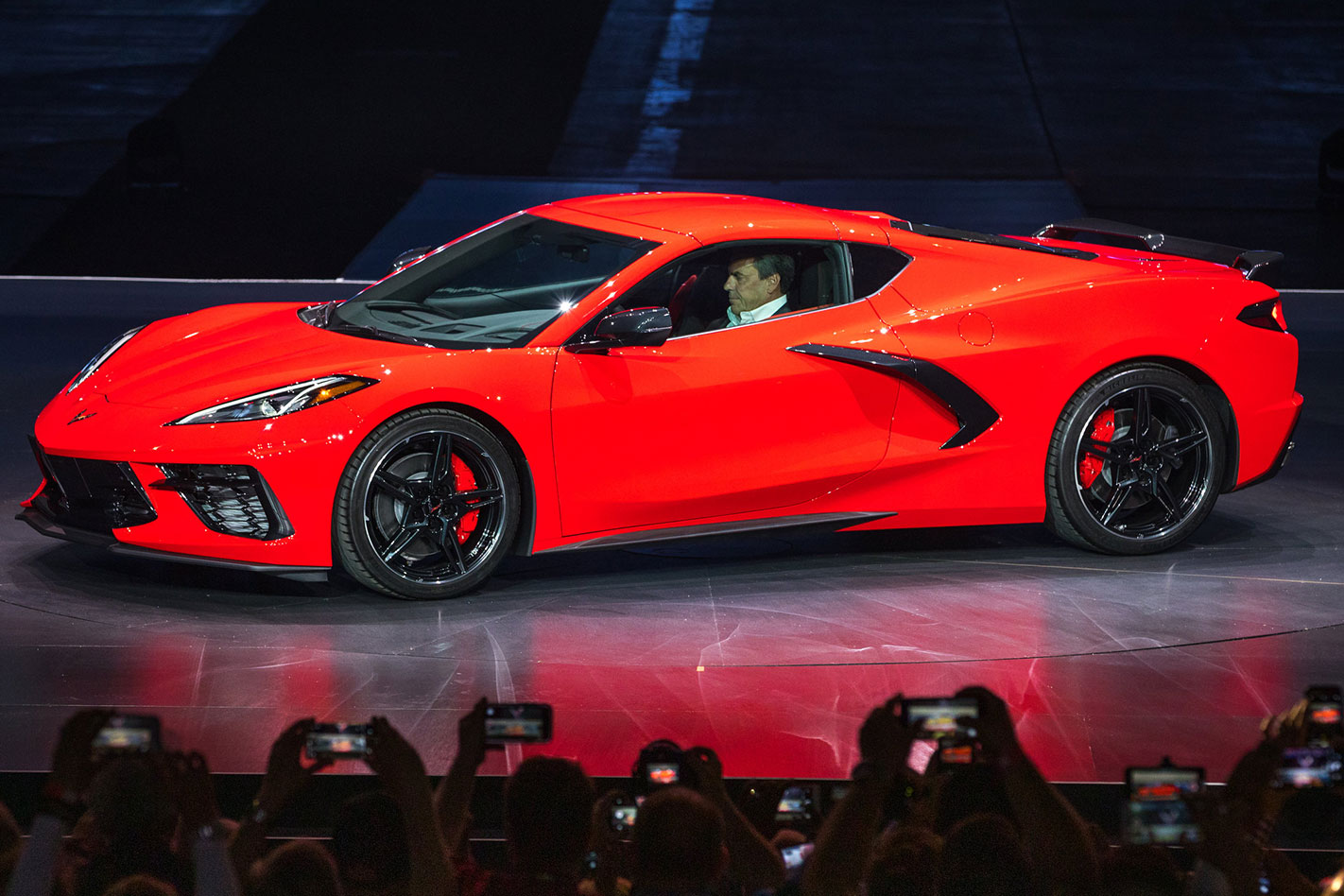
We also found out more fascinating Corvette news this week, learning that not only is the right-hand drive version of the car to be sold in Australia is a bit of a gamble for its maker, one particularly significant Australian will be snapping up the first example to roll off the line.
You can always rely on a massive dose of V8 joy from the Street Machine team throughout the whole year not just V8 Day, with this week bringing a look at the best hot rod movies, this manic LS1 Hilux, and a look back at the highlights of both the 33rd Summernats and the 34th Motorvation in Perth.
But don’t even get us started about this guy and his V8. He’s just plain un-Australian..
Not only does the start of the year mark V8 Day, it also means everyone at WhichCar will be getting ready for the biggest night on the Australian motoring calendar. In the run up to the Australian Motoring Awards, you can keep track of all the contenders in the running to take out Wheels Car of the Year, the WhichCar Style Award, Motor’s Performance Car of the Year and 4×4 Australia’s 4×4 of the Year.
Over the next week, you’ll see all the news emerging from the glitz and glamour of our awards night, and maybe a few typos as we try to get out circadian rhythms back in order.
It’s also been a great week for some seriously rare and fast hardware. Not only did we discover that a one-off version of the hugely exclusive Mercedes CLK GTR Roadster is now calling Melbourne home, but an incredibly unusual version of Porsche’s iconic 930 911 Turbo also surfaced for sale on home turf (both have engines with multiples of six, sorry).
It follows the news that the late Paul Walker’s extensive car collection went up for grabs netting more than $3m with the proceeds from five BMW M3 lightweights and a fleet of significant Japanese and American machines some of which have V8s.
And as if that wasn’t enough, WhichCar will be marking the inaugural V8 Day with the launch of WhichCar season two. Don’t miss the first episode that goes to air on Channel Ten at 4pm this Sunday and get ready for a massive 30-episode series packed full of even more action and entertainment.
Don’t forget to catch up with all the latest bits between the bits and the WhichCar Weekly podcast – perhaps you can pop it on as you expertly grill a snag on Sunday and, however you chose to celebrate, have a fantastic V8 Day.
Switching car can be a daunting prospect. For many, just the thought of researching, selling your existing car, shopping around for insurance and sorting out finance can be exhausting but, a new car is most likely the third biggest investment you’ll ever make, so it’s worth doing properly.
Staggeringly though, many people sign on the line for a new car without carrying out the most important part of the selection process – the test drive.

However, this crucial element needn’t be arduous or intimidating and there are a few simple steps you can take to minimise the stress and time it takes and, most importantly, ensure you drive home in exactly the right car.
Even if you don’t consider yourself particularly car-savvy, you can still navigate the new car buying process like an expert. Here are our top-five new car test-drive tips to help you avoid making some common mistakes and find the car that’s perfect for you.
Take your time. Drive lots of cars
One of the most common mistakes people make when upgrading their car is simply rolling up to the dealership of the brand they already own and stepping into the latest equivalent model. Of course, this might be exactly the right thing to do in some circumstances, but how can you expect to select the right car for you if you aren’t aware of all your options?
This is the scenario that plays out all over the country every day: The owner of a 2015 Toyota Corolla, for example, takes a test drive in the latest model and instantly concludes that it is the best car in the world because, in the vast majority of cases, the only reference the driver has is a five-year-old car from the same maker.
In the ensuing years, the Corolla has, of course, advanced in all the key areas of comfort, safety, driving dynamics and refinement. But (and this is the key point to remember) so has everything, including all the Corolla’s rivals.

That’s why, when it’s time to upgrade your car, you simply must drive the model you are considering and all (or a good share of) the models that it competes with. You might find the Corolla is indeed your perfect match, but you might also find that one of its rivals offers obvious advantages, advancements and features that you would have been completely unaware of had you test-driven just one car.
Put in the leg-work and be your own expert.
What Would WhichCar Do? Context is everything and to fully understand each new car that comes on the market in Australia, we don’t just drive one or two of its rivals, we drive everything in the segment. Obviously, that’s out of the question for one person looking to buy their next new car, but in any case, the more experience and information you can arm yourself with, the more objectively you can survey your options.
Drive for as long as you can
A quick blast around the block will not cut it but, once again, this is a mistake many people make on the test drive. The longer you can stay at the wheel, the more likely you are to pick up on the smaller things as well as the more obvious good and bad traits.
If you can convince the dealer to let you have the car overnight, you’ll be able to see how easily it fits in the garage, what the kids think of it, and how it compares with the car you are used to on the roads you are used to.
If the salesperson insists on coming with you, avoid small talk and save any negotiation or more important topics until you are back at the showroom so you can concentrate on driving and a deal separately if you choose.
What Would WhichCar Do? When we review a car, we take the keys for at least a week and during those seven days we try to throw as many different driving scenarios at it, focusing on the ones a prospective owner is most likely to encounter. Realistically, that’s still not enough to fully appraise a vehicle and all the attributes you’ll discover through actual ownership. Put simply, the longer you have in the hot-seat, the better.
Start the test before you climb aboard
Jumping into a new car can be a sensory overload. Rather than trying to absorb everything on the first meeting, read up on the car before you arrive for your test. If you already know many of the features to expect, you can focus on the parts that you can only obtain from the drive such as steering feel, braking confidence, cabin noise, acceleration, visibility, ergonomics and the pleasant surprises.

Also, take time to explore the car before you hit the road. It’s too late to sit in the back seat, throw a bag in the boot or investigate interior materials once you’re out.
What Would WhichCar Do? We are used to seeing new cars inside and out but there’s still a huge amount to take in when we meet a new model for the first time. Taking notes is not just for journalists and it can be really helpful building up a list of things you liked and disliked to refer back to later. Add to your valuable database with pictures too.
Consider the other stuff
Always bear in mind the other important elements of car shopping and ownership while you are evaluating the product. You may have stumbled upon the perfect car, but if the finance deal is mean, the warranty is short or insurance costs high, for example, you might choose to keep looking.

On the flip side, if your current brand has demonstrated excellent customer service and aftersales care it’s understandable that you might want to stay loyal to the brand.
What Would WhichCar Do? Even if you are over the moon with your car and the company that sold it to you, keep your options open and consider the alternatives. Even if you decided to give the same brand another run, educating yourself with a little extra knowledge can empower you with more confidence and bargaining power.
Trust your instinct and preferences
Just because a sales assistant says a particular feature is desirable, it doesn’t mean you have to like it. Even if your most trusted magazine, friends and social media say a particular car is the finest machine to ever grace Australian roads, it’s meaningless unless you agree. Remember, it’s you that has to live with it.

Take time to make up your own mind about a car including cabin comfort, performance levels, build quality, design, ergonomics, value and safety. Every driver has their own unique preferences and elements about a car that they prioritise. Make sure you decide what is most important to you before you hit the showrooms.
You don’t need to be an expert to know what works for you so don’t be swayed on your deal breakers, sweeteners and must-haves.
What Would WhichCar Do? A second opinion is always a good idea, which is why we get a third and a fourth. During a tenure at WhichCar, each car will be driven by several journalists and discussed. We would never take another opinion as gospel before establishing our own, and neither should you. Above all, a WhichCar review should be the start of your research, not the end.
It can be tempting to leapfrog all the steps above and take the most convenient trade-in option. If you’re time-poor or just daunted by the whole prospect, going the easiest route is what many people choose. But putting in the time and effort to test a broad range of options will ensure you have the right car on your driveway and complete peace of mind in your purchase.
MOTOR prototype drive
By: Matt Prior
Do you worry that electrification will make all cars the same? Then the Polestar 1 is a reassuring thing: a 450kW plug-in hybrid with a 2.0-litre supercharged, turbocharged petrol engine with starter/generator, two other electric motors, a part-steel part-carbonfibre monocoque, a carbonfibre bonnet the size of a mainsail, and a single transverse rear leaf spring.
It’s so techy you have to open the bonnet and delve behind the rear wheels, having jacked up the car, or perhaps while lying on the floor, to tweak its 22-stage adjustable Ohlins dampers. Welcome, then, to the intensely baffling Polestar 1.
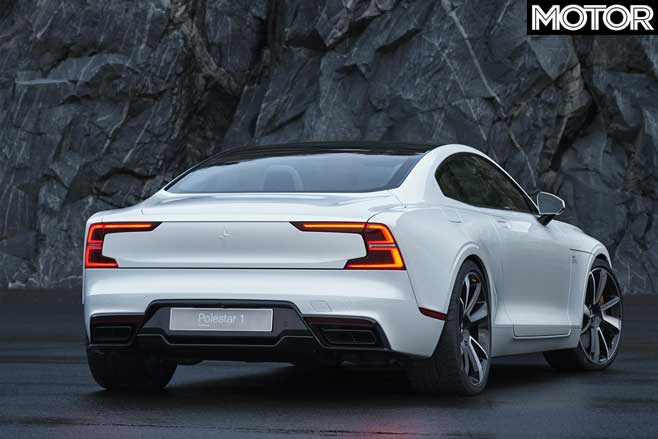
Polestar is now a stand-alone electric performance brand, owned by Geely and Volvo, and gets its own R&D spend, so it can do things like open a satellite engineering centre in the UK. And its engineers can go to the bosses and present a car as wacky as this and get the answer: “Hey, sure, go for it.”
The 1 began life as 2013’s Volvo Concept Coupe, designed by Thomas Ingenlath, now CEO of Polestar.
They will build just 1500 1s, all in China and all left-hand drive. Although it’s a plug-in hybrid, all following Polestars will be purely battery electric – as well as more widely available and, presumably, cheaper and less complex.
The 1 is an extremely complicated car, with ravenous performance and luxury, a car of extravagance but the ability to cover 130km on pure-electric power. At €150,000 (AUD$240K) it’s a four-wheeled champagne socialist.
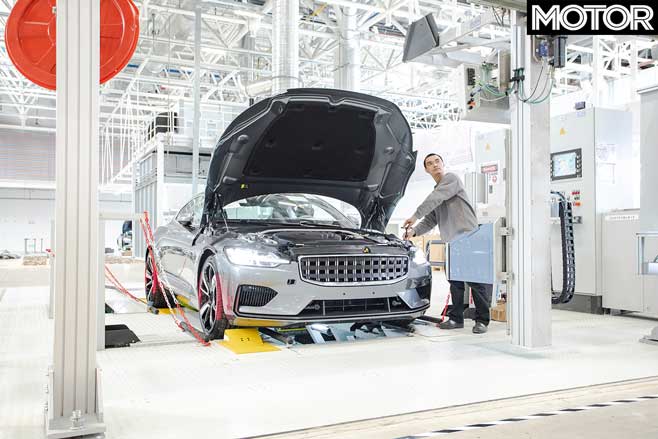
Based on Volvo’s SPA platform that underpins the 60-Series, but with a chunk taken out of the wheelbase and floor, the 1 is just 4.5 metres long. There is structural carbonfibre in the floor, roof and pillars, plus all of the body panels bar the bumpers. The composite is costly but allows tight radii on those rather dashing rear guards, reminiscent of the P1800’s.
More significant, the composite gives greater structural rigidity and lightness. The 1’s body is 40 percent stiffer than if the whole caboodle were steel, and it weighs less. To a point. The twin rear-mounted electric motors, the twin-charged and electrically assisted combustion engine, and 34kWh of batteries located down the spine of the car and behind the rear seats mean that this 2.07m-wide coupe with tiny rear seats and not much boot still weighs 2350kg.
Still, the 450kW and 1000Nm help things move along.
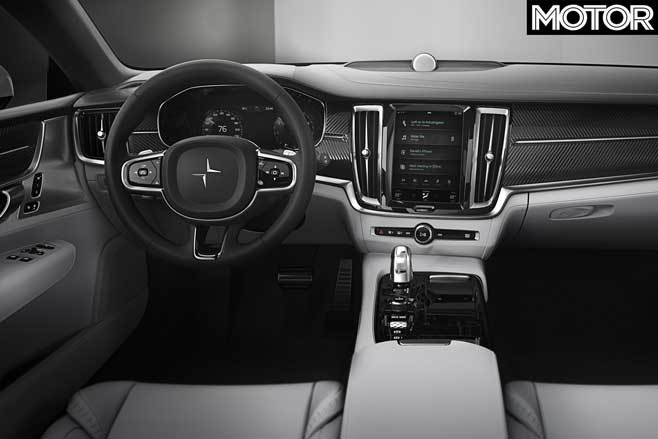
The interior architecture is pure Volvo, and none the worse for it, with carbonfibre trim inserts and better-trimmed leather than usual.
It’s necessary to note that what you see here is a validation prototype car, with unfinished tooling and fit. There’s at least one more build phase before production proper, and yet it’s already better inside than some finished cars.
The ambience, then, is a posher version of something familiar.
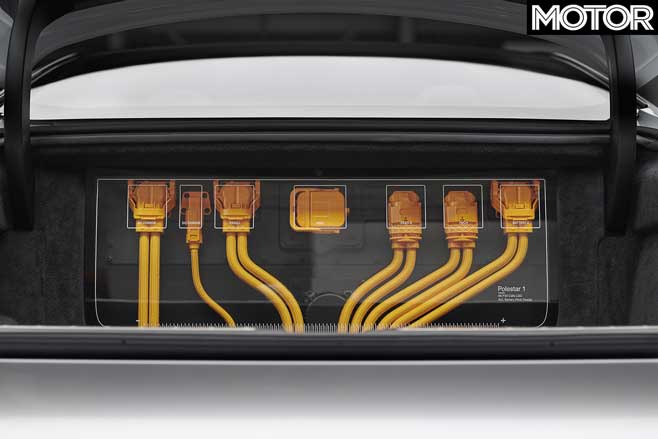
The front seats are big, the driving position comfortable and the plus-two rear seats very small. There’s a sedan-style boot with some connectors made visible behind a panel, looking a bit ‘flux capacitor’, and the rear seats don’t fold. Therefore, it’s not the most practical of coupes, but such is the will of its personality that I don’t think that matters much.
You spin the start button and the dials spring to action, and you can scroll through various modes of propulsion, from full EV to four-wheel drive (everything always on). In zero-tailpipe-emission mode, it’s still brisk enough to keep pace with motorway traffic. In many-emissions mode, it feels Continental GT levels of quick.
The ride and handling give you fewer options. From the factory, those Ohlins dual-flow-valve dampers are set to positions 9 (front) and 10 (rear) of 22, and I suspect that’s where most of them will stay. They give the car an acceptably pliant ride, despite 30-profile, 21-inch, bespoke Pirellis.
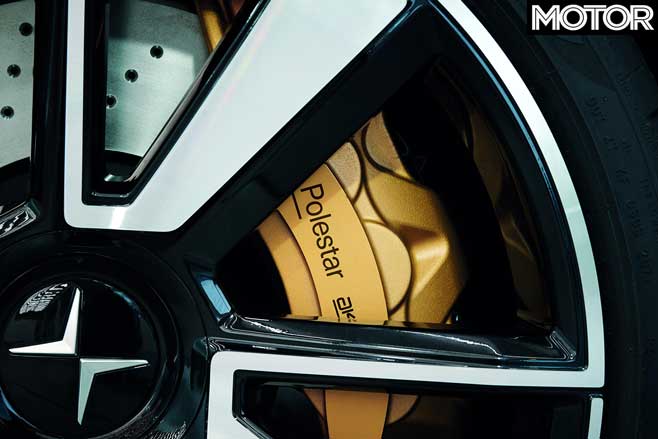
It has tremendous consistency, with a good ability to smother small bumps without the ‘sproing’ and echo of air springs, but just as key is a restrained roll rate, and particularly deft body control for a car of this weight. It might just be the best EV/PHEV driver’s car to date.
Choosing those gold Ohlins shocks over adaptive dampers is a little weird, nerdy, expensive – all Polestar’s words, incidentally – but there is only one steering setting, moderate of weight and speed, with a nice build-up of torque away from a very stable centre.
The whole set-up is very much focused on the way the engineers like it. It’s keyed to the road surface, with torque vectoring at the rear axle, which puts in effort even during mild cornering, overdriving the outside rear wheel. Few cars of this mass feel this agile. It’s decidedly well integrated and curiously rewarding.
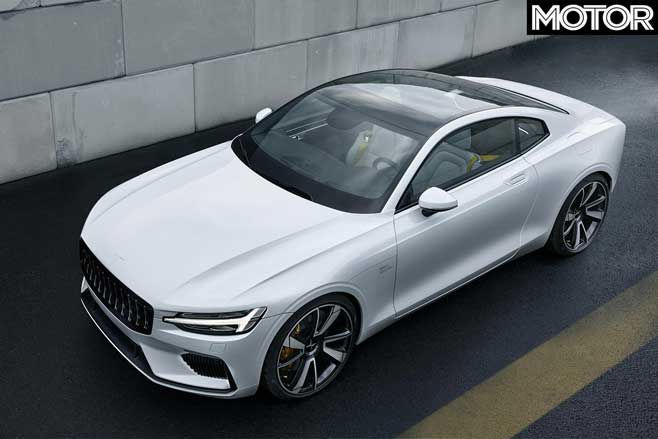
Given the 1 is not yet finished, I won’t give it a star rating. In a way, it doesn’t really suit one. This is a car with loads of alternatives, but none of them is a natural rival to a coupe that’s slightly bewildering, has a great sense of fun, and is thoroughly well finished inside.
You might not ‘get’ the 1, but I must admit I really do.
POLESTAR 1 SPECS Engine: 1969cc inline-4, DOHC, 16v, twin-charge; three electric motors Power: 450kW Torque: 1000Nm Weight: 2350kg 0-100km/h: 3.6sec (est) Price: $300,000 (est)
Like: Potent performance; luxurious interior fit-out; structural rigidity; adjustable Ohlins shocks, surprising agility Dislike: Very small rear seat and boot; unlikely to be sold here
MOTOR first drive review
Volvo-based plug-in electric hybrid bristles and baffles By: James Disdale
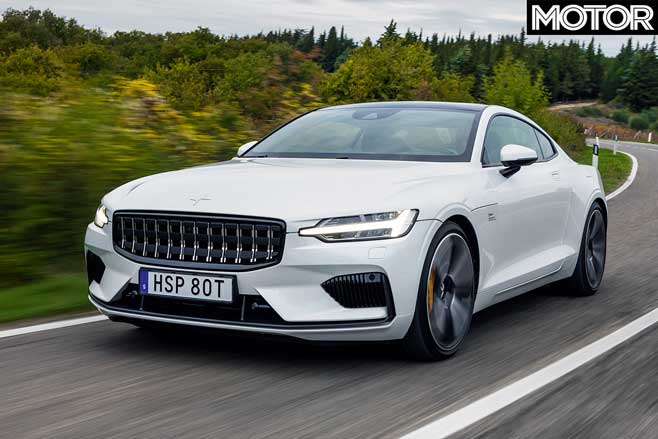
It’s the first model to emerge from Volvo’s fledgling Polestar premium electrified car brand. A limited run and hand-built, it’s both a four-wheeled shop window for what the company can achieve and a taster for what its future models will be like.
At a glance, it would be easy to dismiss the Polestar 1 as simply a two-door Volvo S90. But there’s more to it than that. Much more. It’s packed with advanced technology and, apart from the elements of its scalable platform architecture (SPA) and interior, has little in common with Volvo’s more mundane models.
For starters, the eye-catching bodywork (this car really does look good) is made up of hand-layered carbonfibre-reinforced polymer (CFRP). Even so, the kerb weight is still 2350kg, which makes sense when you realise what’s under those lightweight panels.
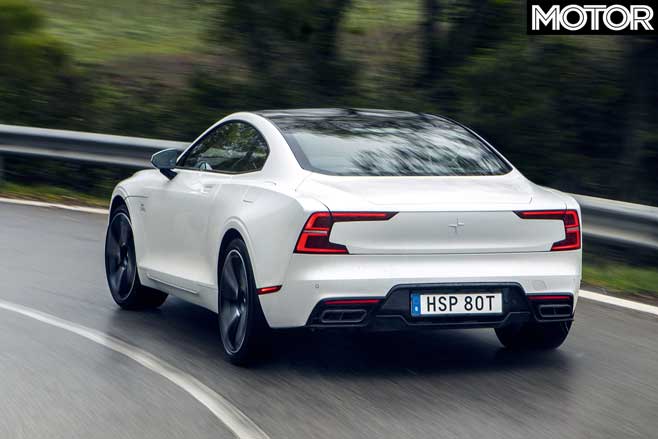
Driving the front wheels through an eight-speed auto is a turbocharged and supercharged 2.0-litre petrol four, while at the rear is a pair of electric motors, one for each wheel, and another motor between the engine and gearbox that acts as a powerful starter/generator. Powering these are two large batteries, one in the transmission tunnel and another over the rear axle. So you can see why the car is a bit lardy. Still, there should be enough power to overcome this.
Inside, the Polestar borrows heavily from Volvo, with the dashboard essentially carried over wholesale. However, special leathers and bespoke trims help lift the ambience, allowing the car to hit its luxury GT brief. While it’s billed as a 2+2, the rear seats really are cramped – as is the boot, which is largely full of battery.
In Pure mode the Polestar uses the combined 171kW from its twin rear motors to travel in near silence for about 130km on a charge. Acceleration is instant and it feels T5-quick, which is more than fast enough for the daily cut and thrust. Better still, such is the range that you would rarely need to bother its internal combustion engine. To do so, however, would be missing a trick.
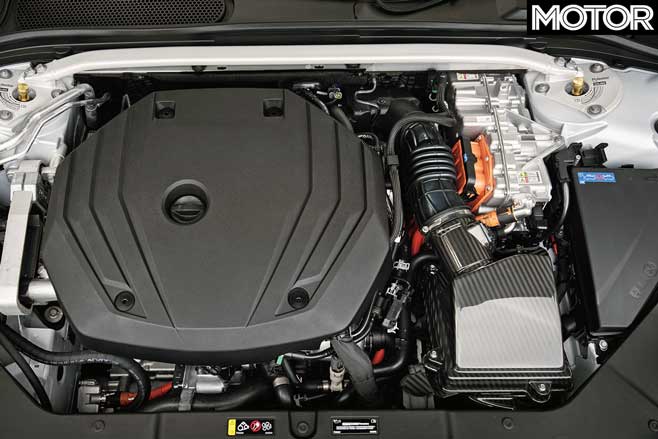
Engage Power mode and the performance gets serious. It’s perhaps not quite as rapid as you’d expect a 448kW car to be (that’s the effect of nearly two and a half tonnes for you), but the combination of immediate electric torque and the power of that twin-charged engine mean, in a straight line, the Polestar easily has the measure of, say, a Mercedes-AMG A45. There’s also terrific traction, with only the odd squirm of torque-steer reminding you that the front and rear axles have no physical connection.
It sounds good too, the mix of supercharger and turbo chatter, gravelly induction (the intake plenum is carbonfibre) and the whine of the electric motors creating a unique aural backdrop that’s not necessarily better than a standard car, just appealingly different.
However, the Polestar’s real party trick is the way it deals with corners. The trick torque-vectoring motors do their bit here, rotating the car into and out of the bends, but so does the suspension. There are double wishbones at the front and a multi-link set-up at the rear, but in place of Volvo’s adaptive dampers are eye-wateringly expensive Ohlins dual-flow manually adjustable dampers, which as an engineering choice is both strange – who wants to get grubby adding a few clicks of bump and rebound to their luxurious sports GT? – and brilliant, because they work so well.
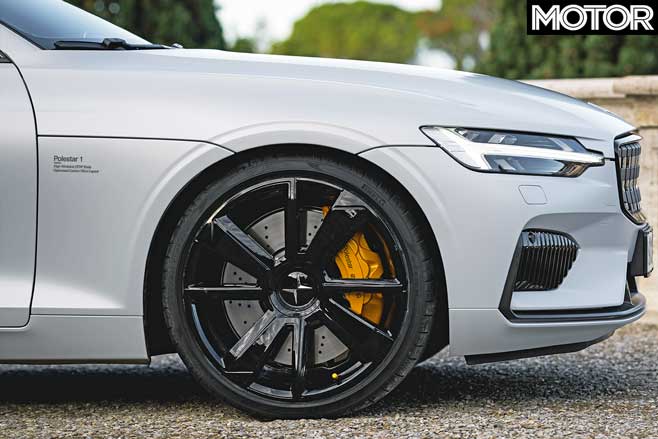
There’s not much feel through the steering, but it’s meaty and has a cracking rate of response, which further helps the Polestar scythe towards the apex with real agility, and you can sense that the outside rear wheel is subtly oversped on exit. It doesn’t generate oversteer as such, but helps kill understeer to deliver a deliciously neutral stance. Rapid direction changes reveal a deft dexterity, while those special dampers deliver cast-iron control.
The brakes are up to the challenge too, a degree of low-speed snatchiness giving way to both prodigious power and a progressive pedal that has you second-guessing where regenerative retardation ends and friction braking begins.
Take things easier and the Polestar does the whole GT thing well. Ride is on the firm side, but you can always soften the dampers a touch. It feels special inside too, the use of bespoke leathers, premium trim inserts and details such as a translucent gear selector helping to enhance the already stylish interior and justify the price.
This thing isn’t cheap and has some quirks, but as a showcase for what Polestar can achieve in the future, the handsome 1 hits the spot. Despite its fiendishly complex underpinnings, the quick and composed coupe also has genuine charm and personality.
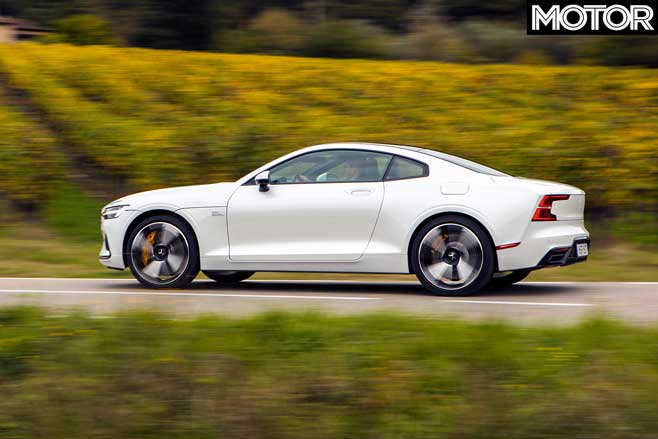
POLESTAR 1 SPECS Engine: 1969cc inline-4, DOHC, 16v, twin-charge; three electric motors Power: 448kW Torque: 1000Nm Weight: 2350kg 0-100km/h: 4.2sec (claimed) Price: $270,000 (est)
Like: Advanced technology; styling; interior fit-out; instant acceleration; economy; handling Dislike: High weight despite lightweight body; small boot; not coming to Oz (LHD only)
Rating: 4 out of 5 stars
I’LL concede it’s entirely possible the new fifth-gen Subaru Forester is no great fan of my exterior styling. So yes, our feelings toward each other may be completely mutual.
In fact, I wouldn’t be at all surprised if the Forester’s Eyesight camera recognition system scanned my face for the first time, and the software basically translated this to: “You’re kidding! I’ve got to look at this every day for the next six months?”
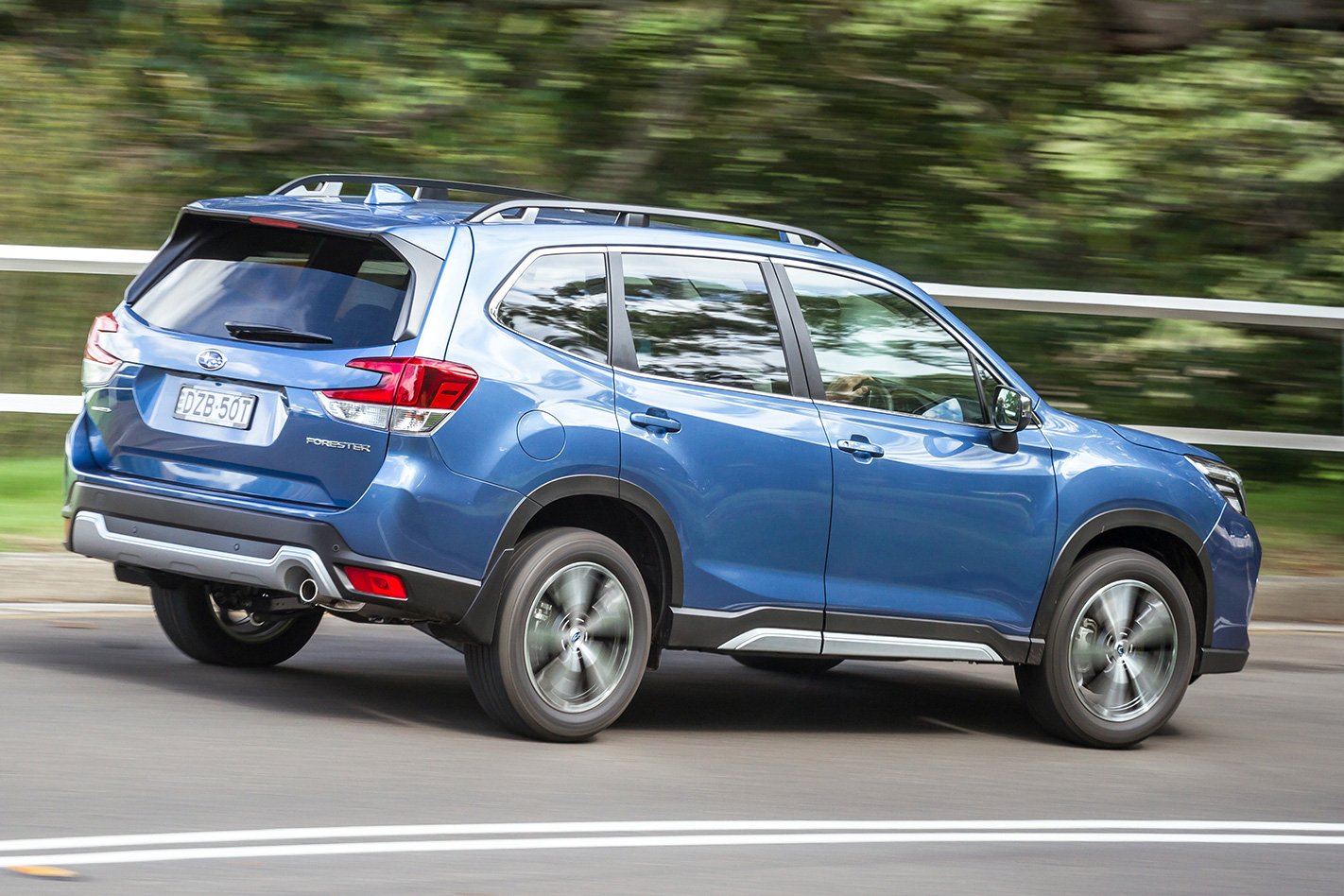
Sorry, pal, but arranged marriages often don’t ignite with a passionate flame. It’s said that women fall in love via their ears and men fall in love via their eyes. So maybe it’s not pathetically shallow of me to admit that the biggest hurdle from the outset for me bonding with the Forester is the look of it. Maybe I’m genetically programmed to feel this way.
The tall-boy roofline, those contrived sliced-segment tail-lights … it just looks a bit ungainly to my eye, so my first mission is to attempt to get past this and seek out the virtues that took it to the pointy end of COTY late last year.
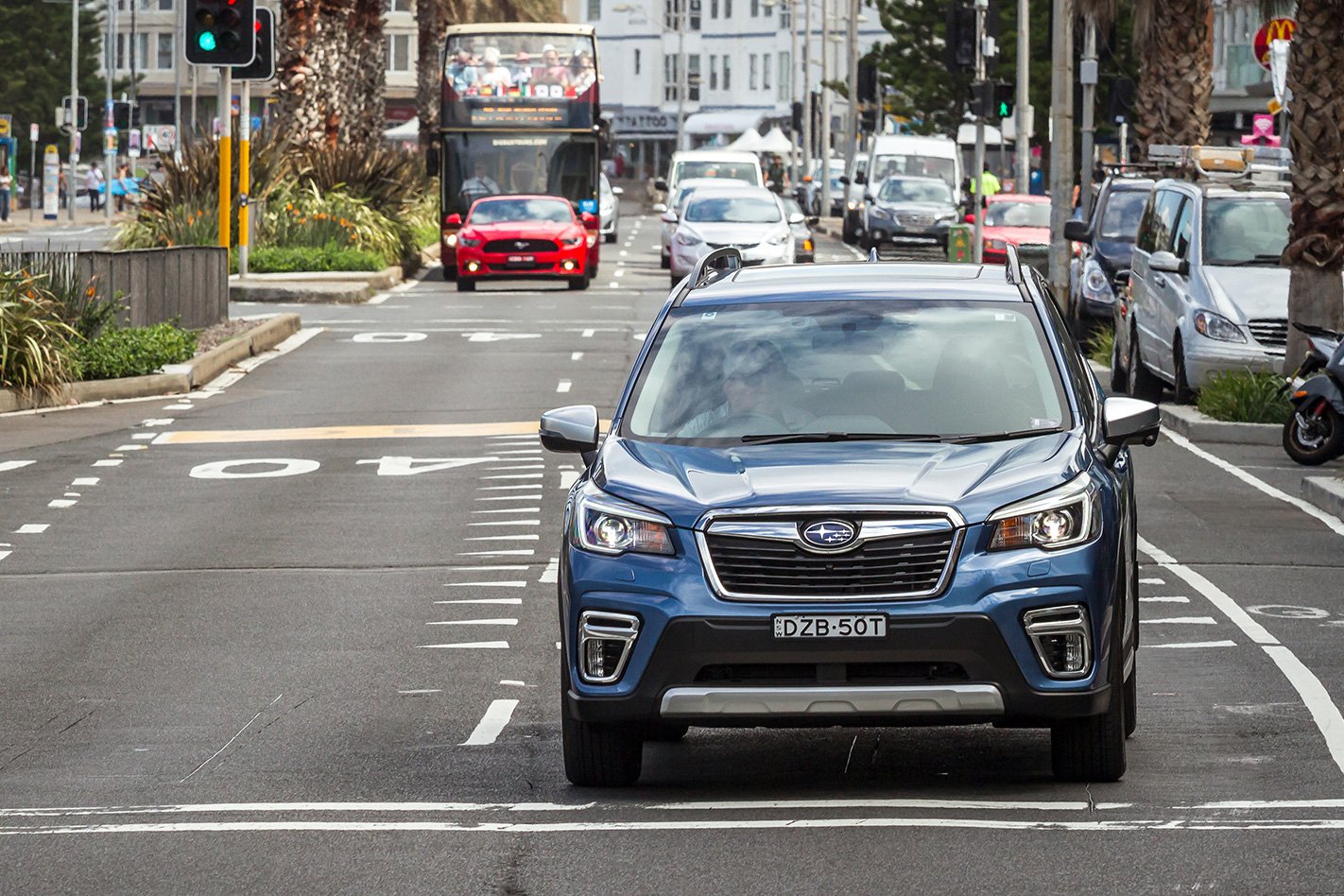
Because what would I know? The sales success of the Forester would indicate I’m solidly outnumbered here. It’s unequivocally more popular than I am. I’ve amassed a few thousand views for my online content published this year, while the Forester has netted approximately $64m worth of retail sales in the first two months of 2019 alone. It’s currently Australia’s top-selling AWD soft-roader, and regular readers may remember that it triumphed over three rivals (Ford Escape, Mazda CX-5 and VW Tiguan) in our November 2018 comparison.
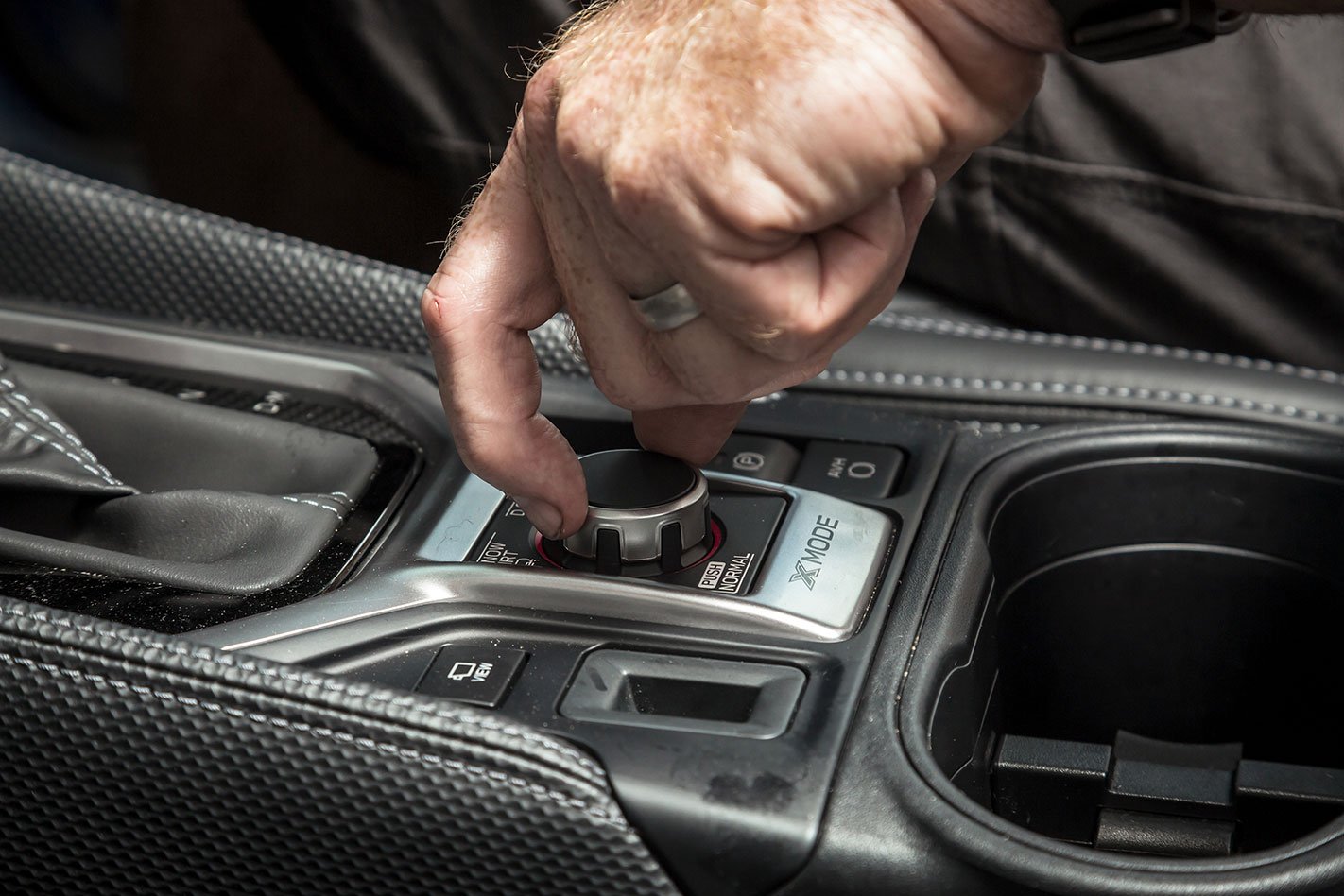
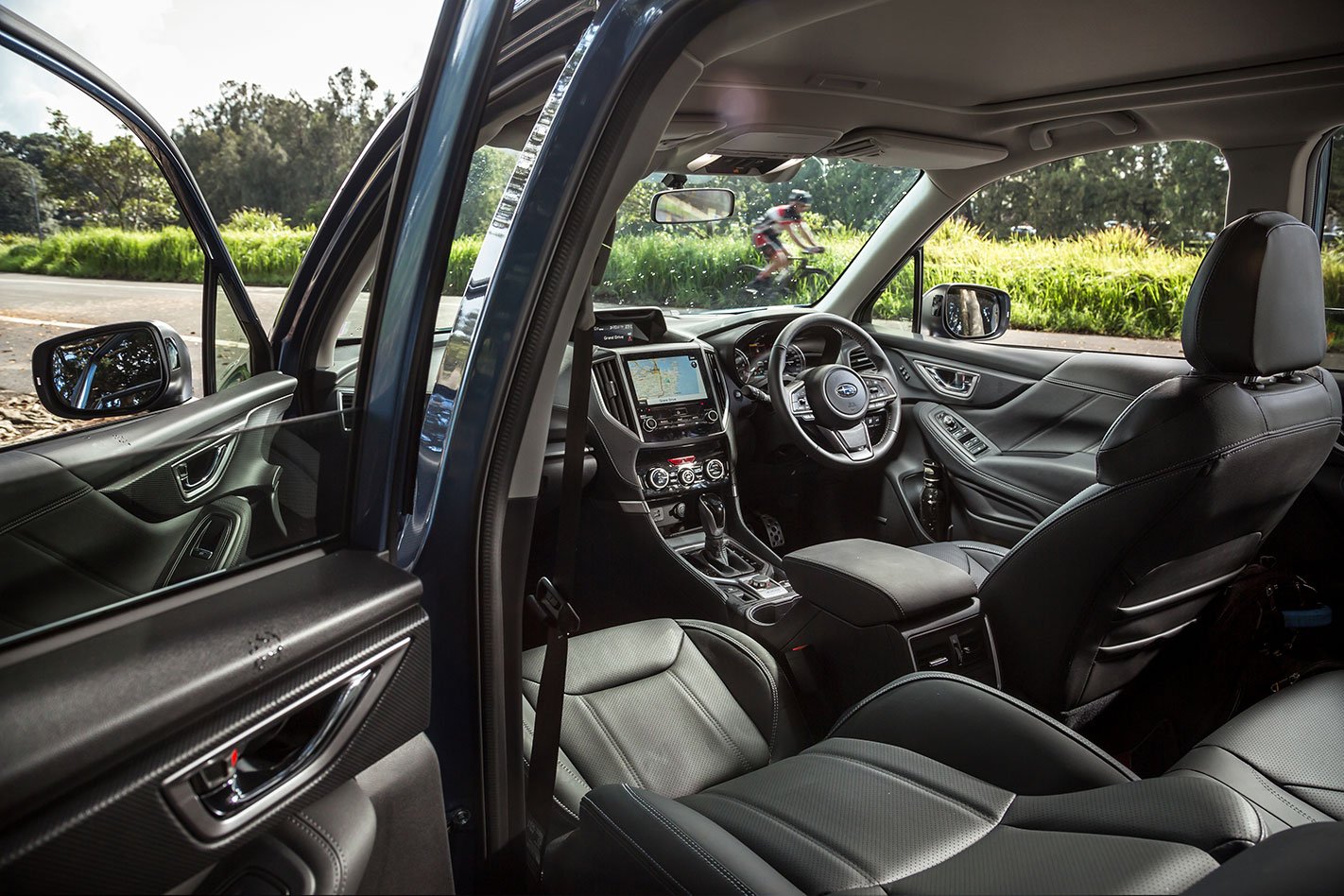
I sure can’t moan that I’ve been short-changed in terms of spec. Mine is the range-topping 2.5i-S, which, over the Premium model below it, adds leather seats, a panoramic sunroof, eight-speaker Harman Kardon audio with subwoofer, and additional mud/snow modes for the X-Mode off-road-drive program. It will be a challenge to get down and dirty to evaluate the true benefit of these latter two, but I’ll try.
What should be easier is making a call on whether the extra $3000 my S model charges over the Premium is money well spent. (Never mind the fact that I reckon the naming convention for these two is about-face. Shouldn’t Premium be the range-topper?)
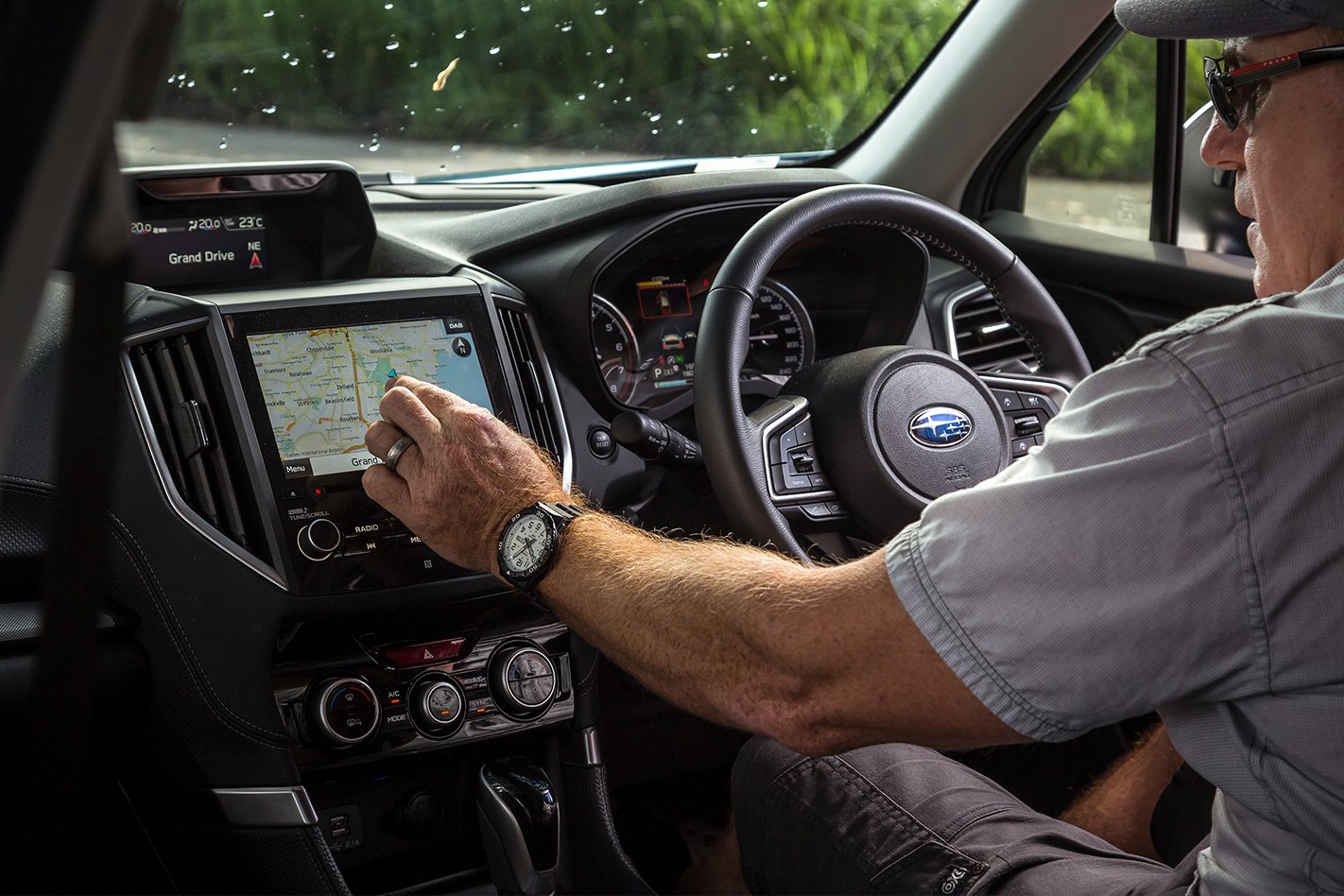
Anyway, early niggles are minor. I’d appreciate more under-thigh support from the driver’s seat, and the steering has a tiny dead spot either side of centre. Countering this is the visibility, cabin space, absorbent ride and useful driver aids. As for the engine, that’s like the old footy adage – a game of two halves, which we’ll kick off next month.
Update #2
PLENTY of us with a taste for fast and nasty motorcycles would argue there’s never a bad day to buy one. My partner, on the other hand, has no such affiliation, so she did mount a case that this particular day wasn’t exactly ideal to be throwing a leg over an unfamiliar 125kW crotch rocket for a 50km ride home.
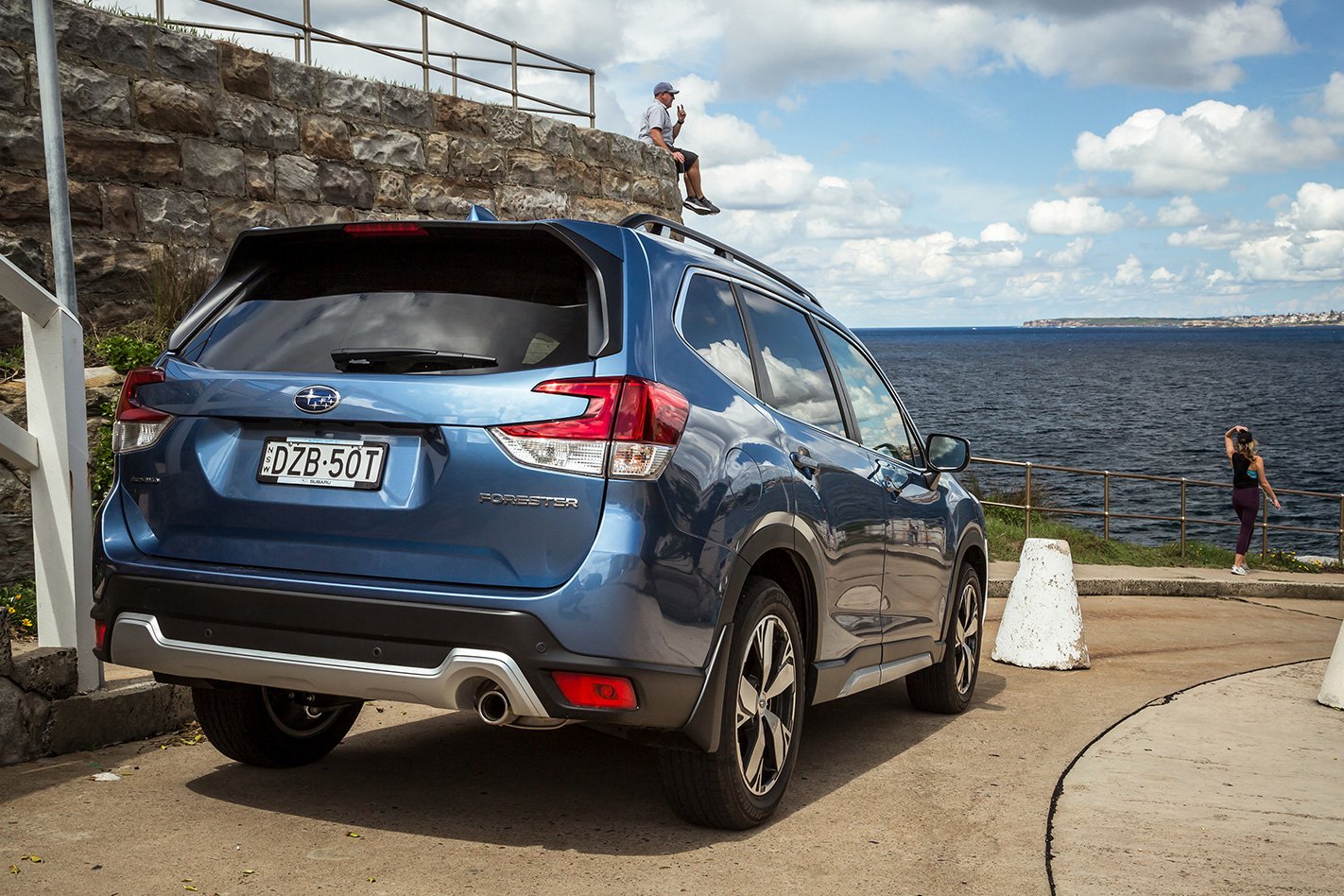
Sydney skies were chucking it down, and the barometer in our neighbourhood – a vast storm water drain we can see from our back balcony (“water views!” claimed the agent) – was a brimming torrent, clearly at max capacity. My partner was mouthing words that I would later learn were to do with road closures and dangerous standing water and leaving it for another day, but all I could hear was, “blah blah blah … Italian V4 … Sachs suspension … every carbonfibre option … won’t last at this price …”
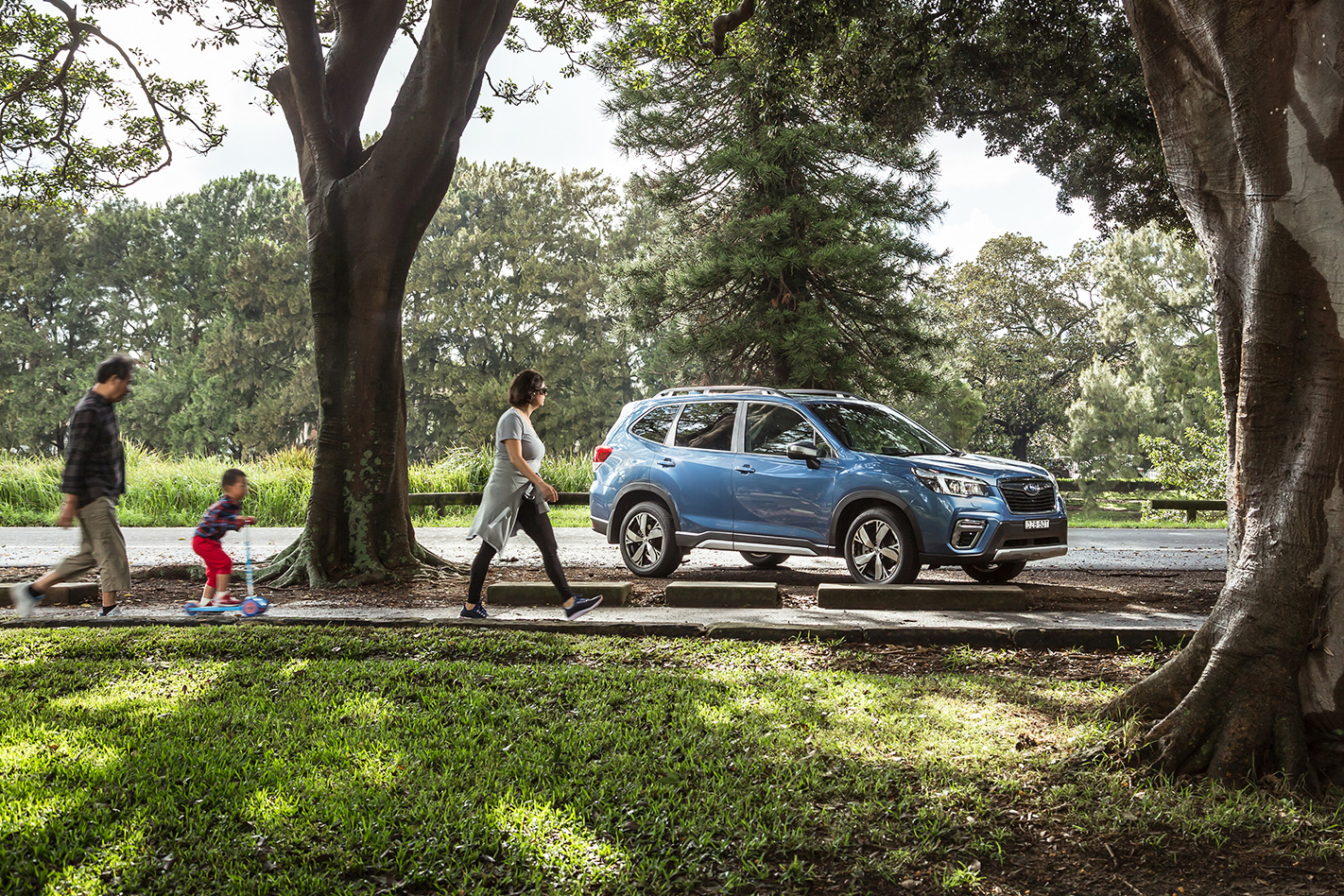
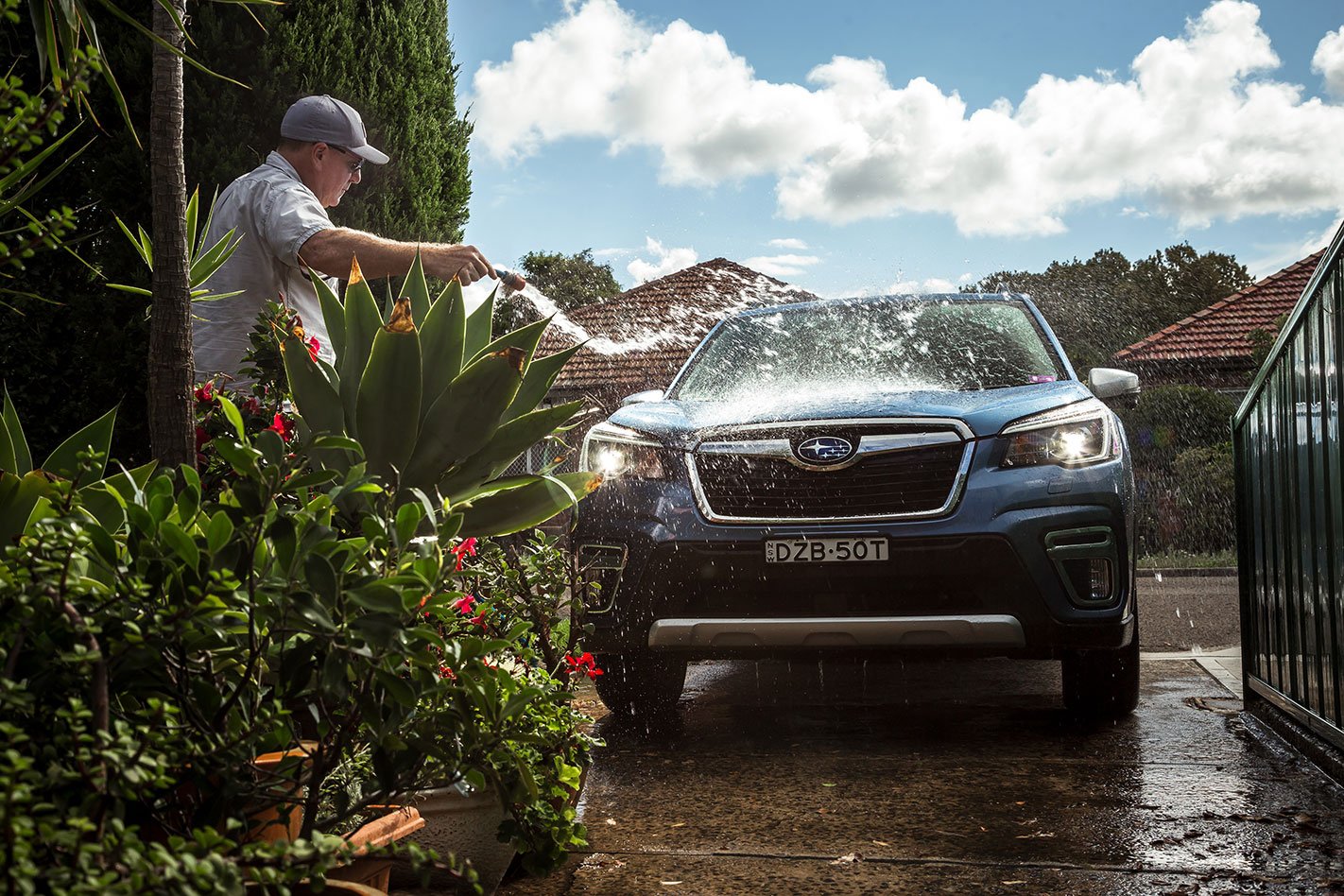
So Ana just rolled her eyes and settled into the Subie’s passenger seat, agreeing to drive it home after I’d sealed the deal on the bike. The seller was on a tight time frame, so I hustled as quickly as I dared as cats and dogs and even the odd sodden pigeon tumbled from the skies. As the wipers tried their best to clear the deluge, I took a moment to grudgingly acknowledge that yes, all-wheel drive can occasionally be genuinely beneficial.
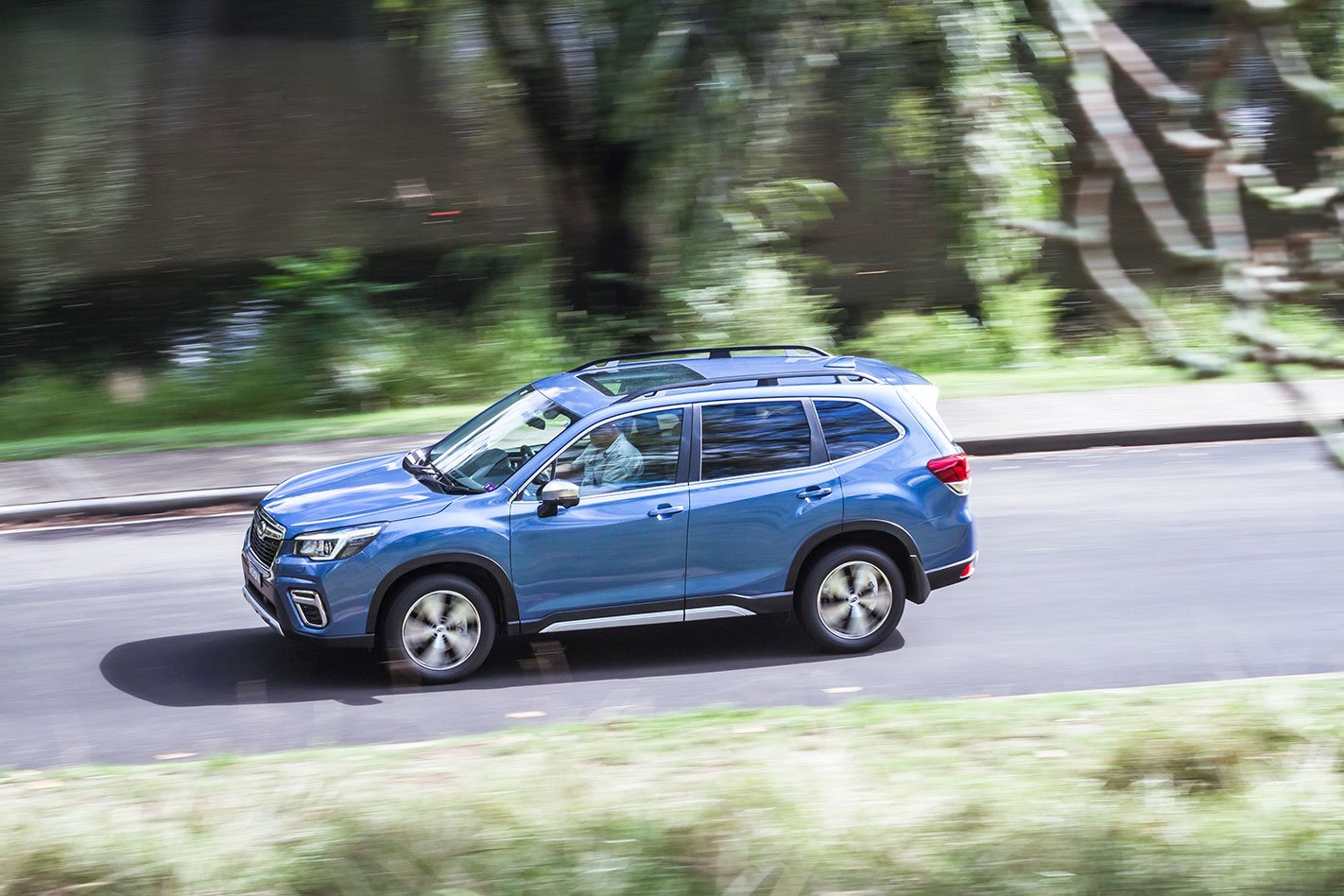
The Forester’s 18-inch Bridgestone Duelers are not exactly limpet impersonators in the wet, but they do telegraph their modest limits with a decent degree of clarity. It’s the AWD system that really took most of my attention, though. Subaru is a bit unusual in insisting on a set-up that delivers a near-constant 50-50 front-to-rear torque split in normal driving, rather than an on-demand system favoured by many manufacturers. The theoretical downside of constantly driving both ends of the car is fuel consumption, but clearly Subaru says bollocks to that, and obviously believes that the consumption penalty is worth it for not having to wait that millisecond for slip to be recognised and for drive to be apportioned to the end in need.
The Forester’s traction is outstanding. You can monster the throttle and it just gets the torque down to the road with barely a flicker of the ESC light.
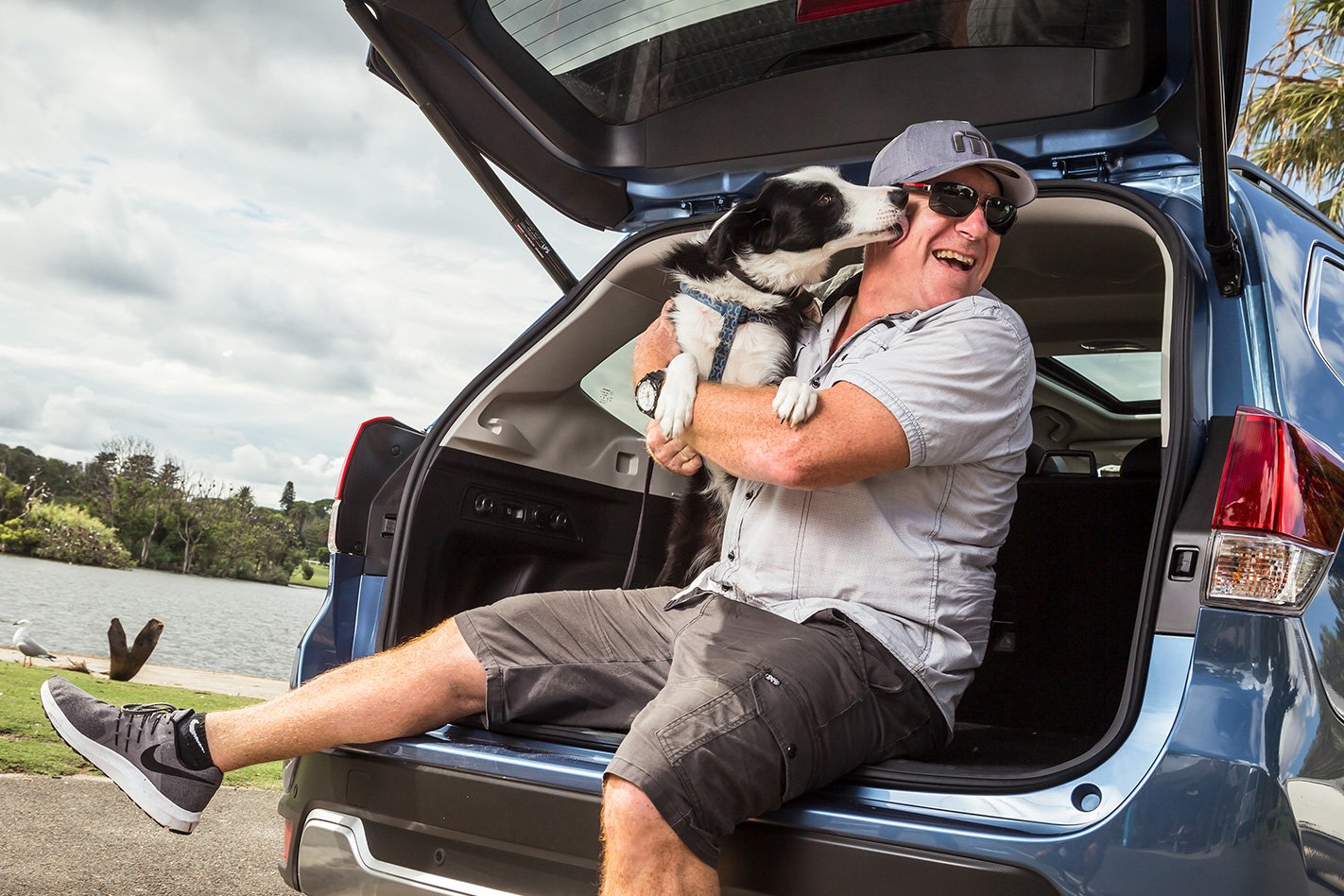
It was still belting down after doing the deal on the bike, so as my partner slipped behind the wheel for the drive home, I took some solace in the fact she was driving an SUV with such accomplished wet-weather performance. She grew up in the São Paulo suburb right next to where Ayrton Senna was raised, but sadly doesn’t quite have his mastery in the rain.
Update #3
Release the hounds
This Subie’s gone to the dogs, and everyone’s happy about it.
Please go ahead and award yourself one RocKwiz bonus point if you’ve even heard of the Fauves, an Aussie four-piece formed in Victoria in the late ’80s. The Fauves are still together, but yet to top the modest success of their minor radio hit of 1996; a track I still believe to be something of a definitive social commentary regarding the messed-up realities of the modern world. Its title? ‘Dogs are the Best People’.
Okay, it’s not a song of huge lyrical depth; it’s really more of a catchy rock ditty set to crunching guitars and a propulsive bass hook, but certain lines really resonate with me: “His love comes free and unconditionally / …he never lied to me once / he never flaunted my trust…”
Dogs have been a big part of my life since childhood, but these days, apartment living and work travel don’t make dog ownership possible, so there tends to be a canine-sized void in my existence. To help fill it, I often spend time with dogs belonging to other people, but mostly with dogs who belong to no-one.
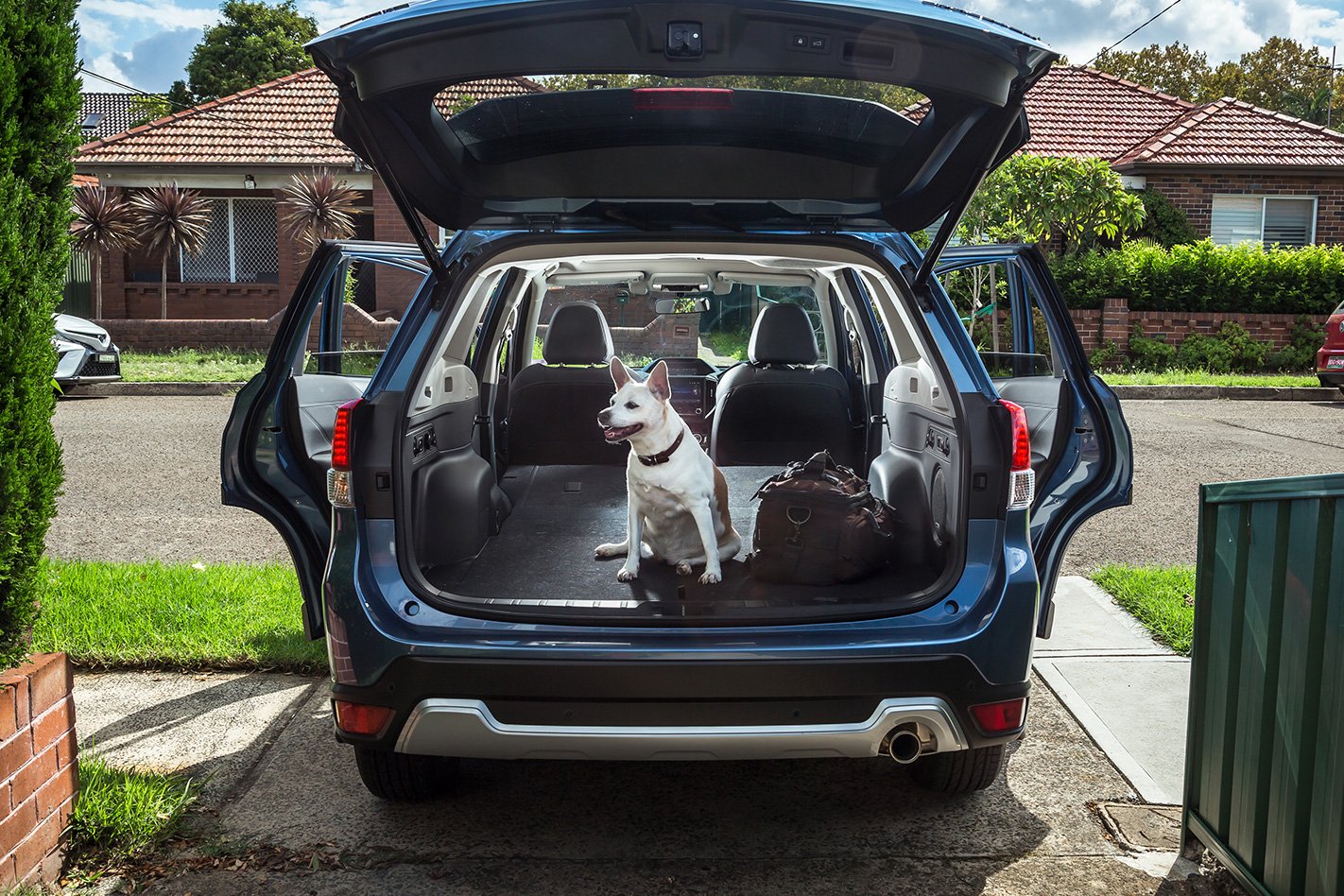
Each Saturday, my partner and I drive to our local dog rescue shelter (doggierescue.com, if you’d like to make a donation) and walk a couple of the 70 or so hopeful souls there. This is mostly satisfying and enjoyable, although occasionally heart-wrenching when one decides he ain’t going back, so locks the parking brake on the hind legs and fixes you with those “adopt me NOW!” eyes.
Anyway, dogs at the shelter often need transporting to various events, so no long-termer can truly be considered to have fully slotted into our family unless it passes the doggo-Uber test.
Now, we all know dogs tend not to be too picky about these things – I’m pretty sure I could turn up in a Panzer tank and I’d still be swamped by panting, wagging mutts pirouetting hot laps of excitement at the prospect of an outing – but the Forester does ace two important criteria.
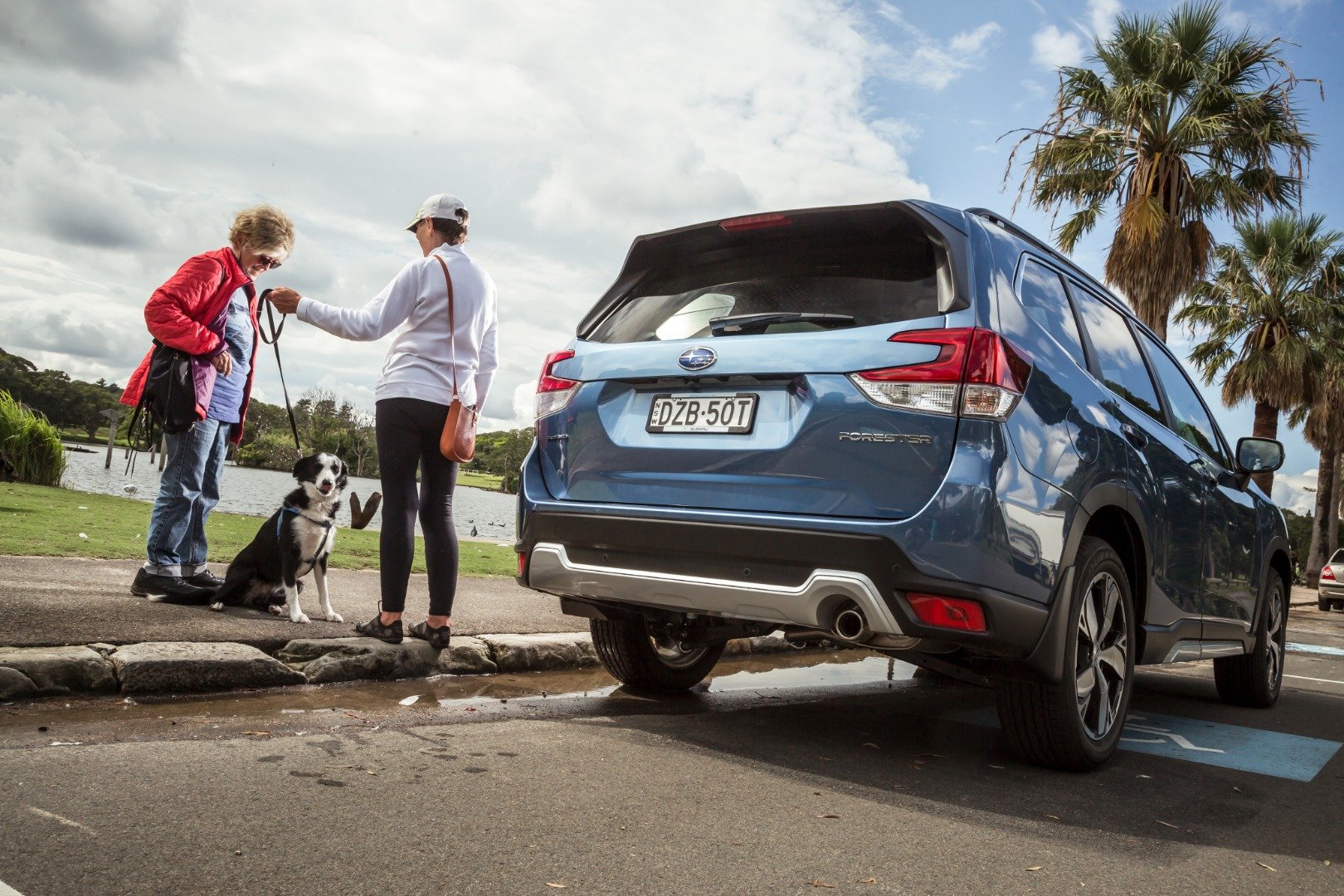
Firstly, the chassis tune delivers real ride comfort. Whether the doggos want to do a bit of open-window surfing, or just take a nap in the footwell, I reckon all of them appreciate an SUV that breathes with the road and blots up the bumps. The Subie is the master of this; a fact brought into even sharper focus recently in our five-SUV comparo (Wheels, June.) The new Toyota RAV4 may have gotten the nod overall, but the Forester is even better when it comes to easy-riding, unstressed passage over bumpy bitumen.
Second criterion – and stay with me on this one – is a quality sound system. Occasionally we’ll have a dog on board who’s over-excited, or stressed, so one sure-fire way to chill them out is to crank up a bit of late-’90s deep house, with some soothing female vocals and a rich, velvety rhythm section.
The Forester’s Harman/Kardon system, with its 10-inch subwoofer mounted in the cargo compartment, fills the cabin with the aural equivalent of canine Valium. The Fauves may consider me an Oz-rock sell-out, but it does give peace a chance.
Update #4
MAY BE ON my own here, but I always find it both curious and pointless when the pilot of a commercial aircraft insists on sharing the flight plan with the passengers over the PA: “Folks, we’re going to take off in a southerly direction from the eastern runway, before hooking starboard over Wollongong, and making our way down the coast…”
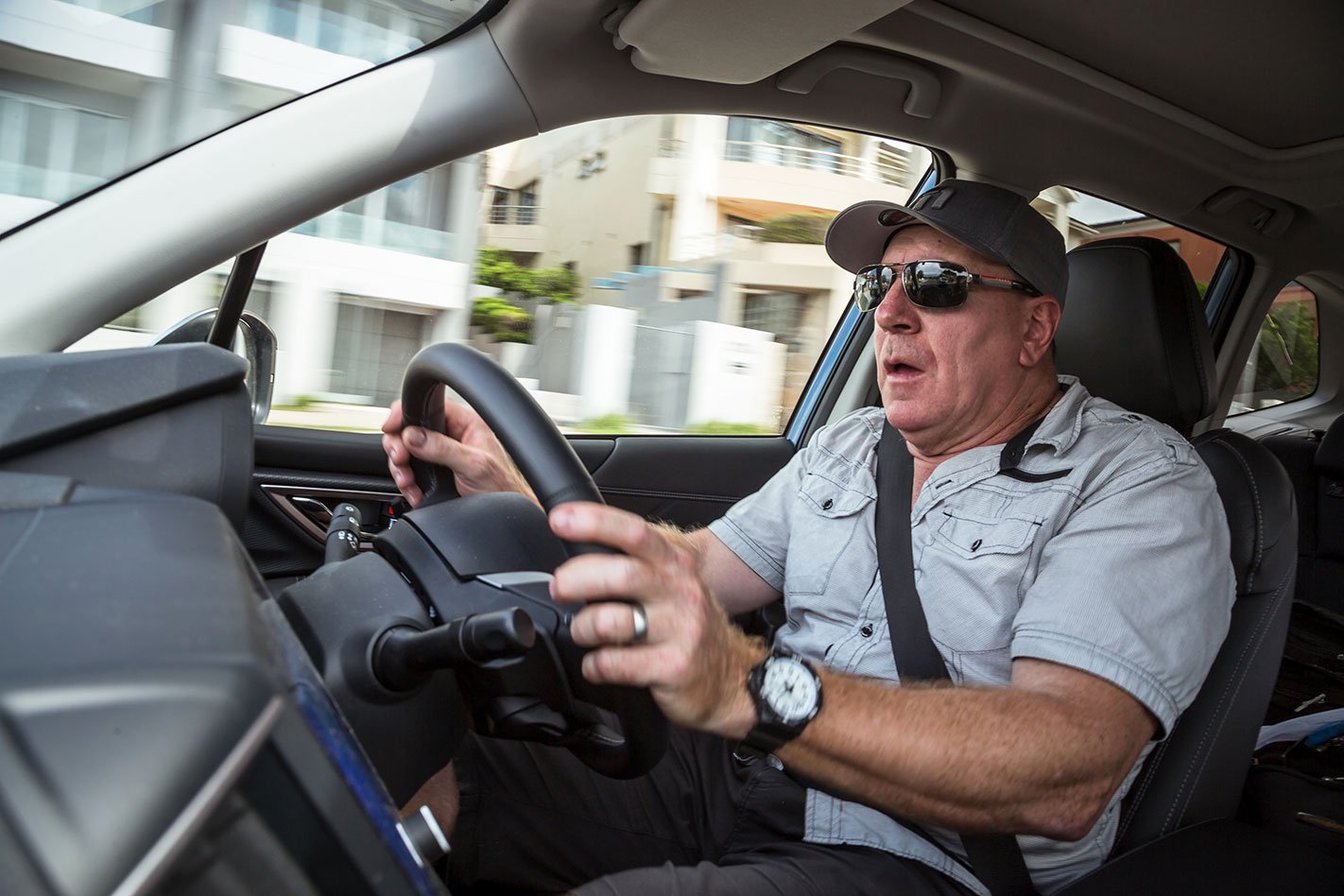
Is this really useful to anyone? Has anyone ever piped up and said, “What? Over Wollongong? That’s the long way, you muppet, terrible choice…”
We all know where we’re supposed to be landing, so surely that’s all that matters? As well as interrupting the in-flight entertainment, it’s really just more extraneous information in an age that seems to thrive on over-sharing.
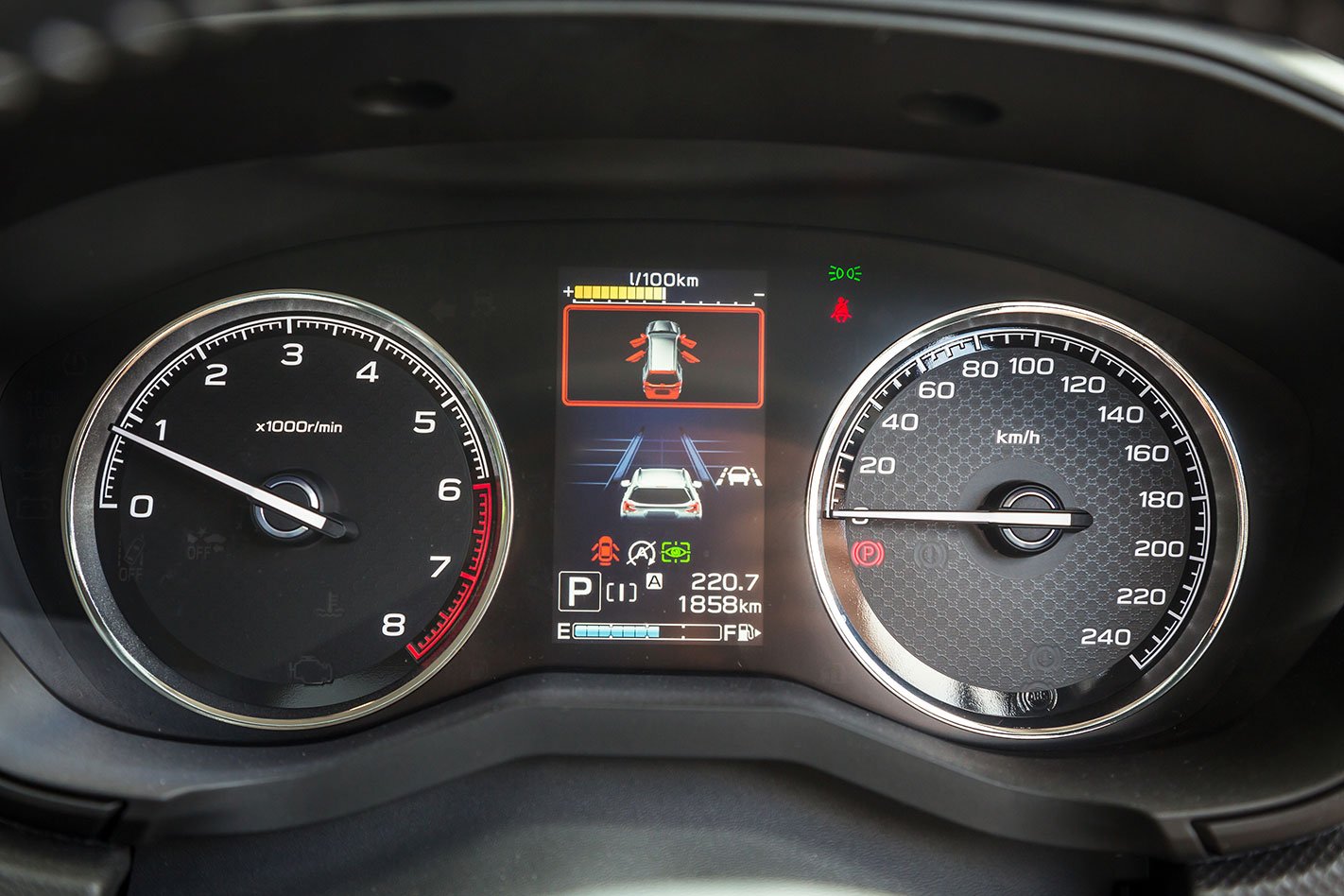
I’m reminded of this each time I jump in the Forester. This may soundtrivial, but I reckon the info section between the gauges and the separate info display on the centre of the dashtop could benefit from a serious simplification overhaul. It’s a case of excessive-info syndrome: too many little icons, many displayed in a crowded, unintuitive layout.
Meanwhile, the upper-centre display provides no fewer than seven possible pages of info, several of which have me asking, “why?”. The ‘time and date’ page is just one example of duplication. The time is already displayed in the top left corner, so why would I want to call up a digital rendering of an analogue clock? Further, the 6.5-inch colour touchscreen is bright, clear and responsive, and does a fine job of showing what radio band and station I’m tuned to, so why do I need the option to duplicate this info in the display above?
It all feels a bit gimmicky, which is out of step with the rest of the design ethos that otherwise permeates the Forester. This car feels refreshingly unfashionable; a rejection of aesthetic trends that compromise practicality.
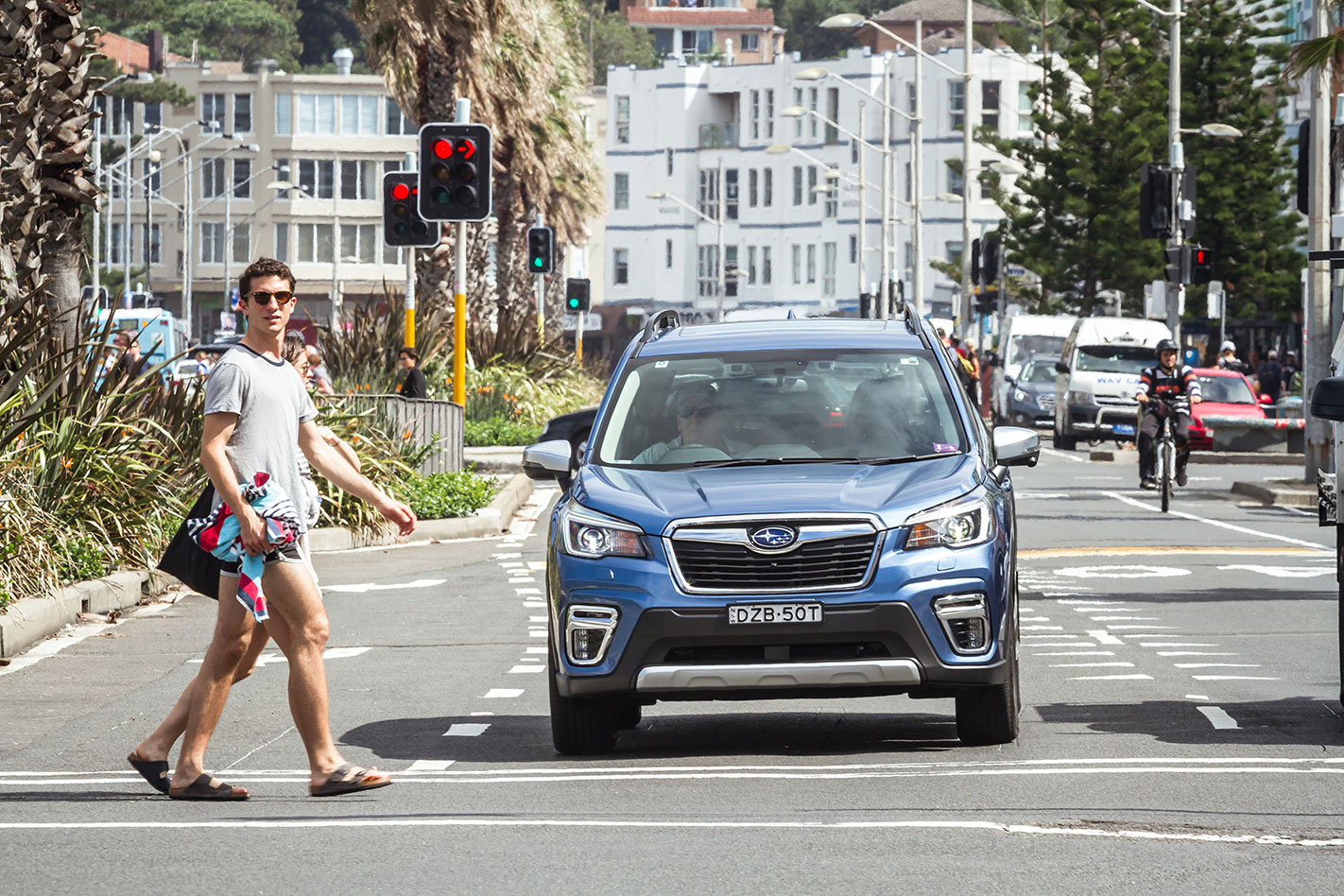
It’s boxy because that’s the best way to provide rear occupants with adequate headroom. There are no thick, swooping C-pillars because that would impede rear-three-quarter vision. Likewise at the front: the A-pillars are comparatively narrow and the small, fixed front-quarter windows reduce your chances of snotting a pedestrian who may otherwise be obscured by the Harbour Bridge pylons used by other manufacturers.
So what about the EyeSight and Driver Focus systems? Via dual forward-facing cameras either side of the rear-view mirror, along with a dash-mounted infra-red camera pointed at the driver, the combined system claims to deliver both user-convenience and driver-monitoring safety benefits.
I’m not sold on the convenience thing, as the ‘benefits’ amount to it displaying “Hello Ash!” as it adjusts the seat and mirrors to my driving position. There’s already a two-position seat-memory button, so I’m calling this one out as bloatware. But monitoring the driver’s eyes, and giving a little cricket-chirp alert if they stray from the road, is genuinely useful. And useful info in this over-info’d age is to be applauded. Now, please return your seat to its upright position; we’re about to land … somewhere.
Update #5
Avoiding flat chat: Silence-keep assis: unofficial app of dependable Subie
- Price as tested: $41,940
- This month: 476km @ 10.3L/100km
Then I remembered the two small red LED lights on the Forester’s centre stack, there to highlight the CD slot – yet another music source! I’d been remiss in not bothering to assess this quaint laser-based relic that dates back to the ’80s, so to redress this, I’d stashed a handful of ’90s banger discs in the glovebox.
As my partner and I headed south for a weekend away on the coast, I felt comfortable that the music situation was well in hand, and there’d be no awkward silences, or protracted chats about our ‘future as a couple’.
As we settled into a hushed highway cruise, I unclipped a gleaming disc from its case, only to be met with a surprised look from my partner, as if I’d just put on a trilby hat. “Gosh – feeling a bit retro, are we?” she asked.
Fact is, the Forester’s CD player sounds fantastic – it destroys DAB radio and Spotify for fidelity – but it did make me wonder: if yesterday’s state-of the-art digital music storage format is today’s shiny, acrylic-disc landfill, how future-proofed is the fifth-gen Forester?
In terms of safety systems, I’d say brilliantly. I always kept the lane-keep assist switched off, but otherwise the driver aids worked well, with the blindspot warning both bright and intelligent in its judgement. The cross-traffic alert has been continually useful, and having AEB for reverse did actually save me from contact with a low post one night while squeezing into a tight spot.
But it was the powertrain’s slight lack of sparkle that was the one core element that stops me short of full effusiveness for the Forester, and it’s this that will be addressed with the e-Boxer powertrain set to become available early next year.
This hybrid set-up pairs a 110kW/188Nm 2.0-litre flat-four with a rear-mounted 10kW/65Nm motor powered by a 13.5kWh lithium-ion battery pack. It’s a conventional hybrid, like the RAV4, not a plug-in, but according to overseas reports, it makes a significant difference to three key areas: low-speed responsiveness, quietness, and reduced consumption.
They’re the Forester’s three slight Achilles, so good work, Subie. On the latter, particularly, I’d have to say my experience was acceptable, rather than brilliant. Our average consumption, very heavily urban biased, was 10.3L/100km, which is 28 percent above the 7.4L/100km ADR combined-cycle figure. The car’s comfortable urban range was around 480km per tank, but we easily added another 100km on the highway, which was plenty.
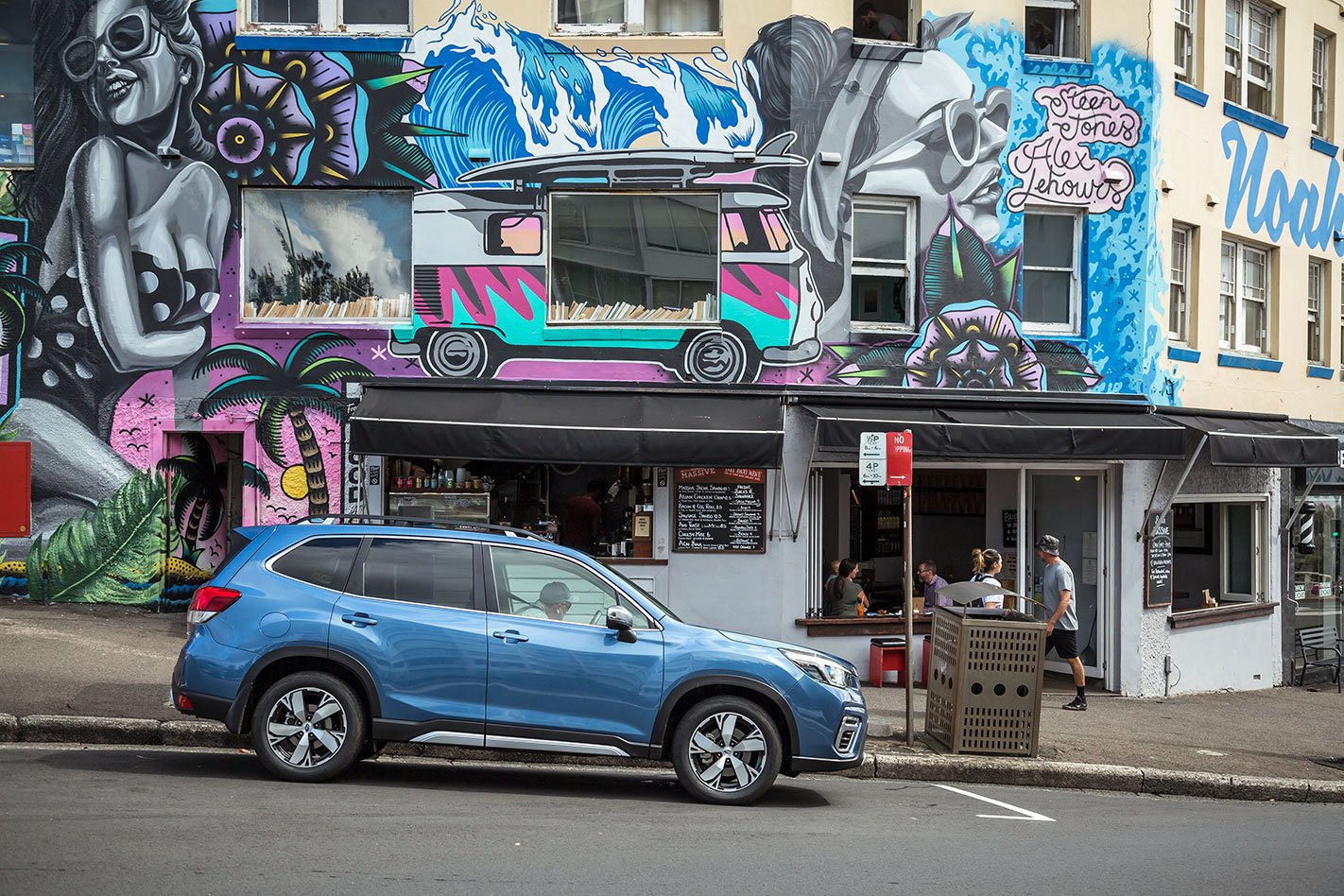
The bigger ownership cost, of course, is depreciation, but it’s here that the Forester is a strong performer. Now, this info differs depending on the source, and is far from watertight, but financial services group Canstar rates the Subie one of its top five depreciation beaters, losing between 24 and 31 percent in the first three years. So if we were to assume I owned the car for that period, and we took 30 percent as our number, and assumed depreciation was on a linear scale (which we know it’s not, but never mind) it would lose $13,500 of its (haggled) driveaway price of around $45,000. That averages out to $4500 per year, which puts Forester owner comfortably ahead of those with less robust depreciators that carry a similar driveaway price.
So as the Forester rolls out of the Wheels garage for the last time, it will go down as probably the greatest slow-burn long-termer I’ve run, wedging its way into our affections via its mostly thoughtful design, brilliant visibility, pliant ride, and generally versatile, super-likeable nature. And a quality audio system that makes conversation highly overrated.
Liberty Walk is clearly in the business of making hype-worthy show cars, and their efforts at the recent Tokyo Auto Salon.
Let’s take a quick dive into the two models the brand rocked up with – both Nissan Skyline/GT-Rs of different vintages – which both have their ups and downs.
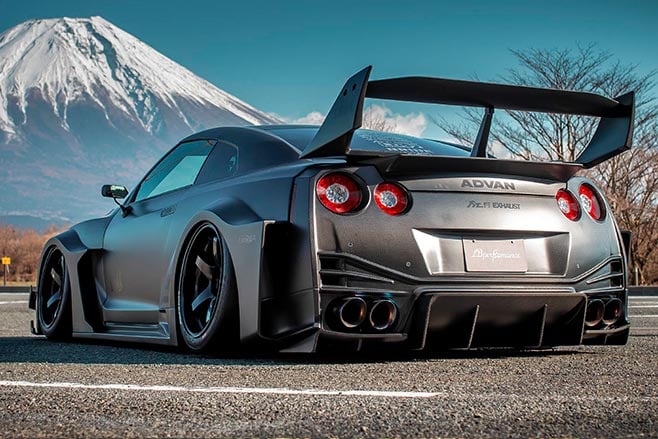
The first is the dry carbon kit for the R35 GT-R is developed, which is actually something you’re able to buy.
And when we say ‘you’ we actually mean you, not just anyone within a reasonable distance from Liberty Walk’s workshop. With an Australian distributor, Vogue Industries, Liberty Walk can bring its kits and parts to Oz.
Throwback: Tokyo Auto Salon 2016 was WILD
This one in particular is rather pricey, with several various levels of customisation. Starting at USD$34,020 (or about AUD$49,690 here depending on any fees from Vogue), which includes the entire ‘Version 1’ body kit in fibre reinforced plastic (FRP), the price can balloon to around AUD$79,660 for the full V1 set in FRP and dry carbon. There’s also a similarly priced second version, with a different wing design.
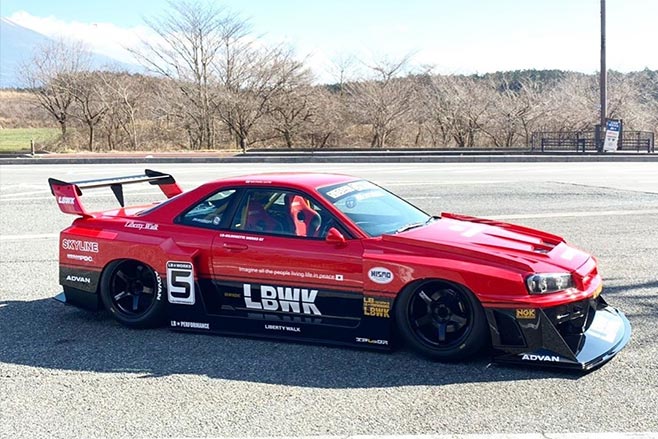
The second car is perhaps more outlandish, but likely because it’s a one-off and LW won’t need to replicate it for commercial purposes.
Mad Mike Whiddett’s Liberty Walk drift Lambo
The ‘LB-ER34 Super Silhouette Skyline’ is an R43 built to pay homage to the 1983 Skyline Super Silhouette, a 419kW+ racer based on an R30 Skyline with a LZ20B turbo 2.0-litre 4-cylinder engine.
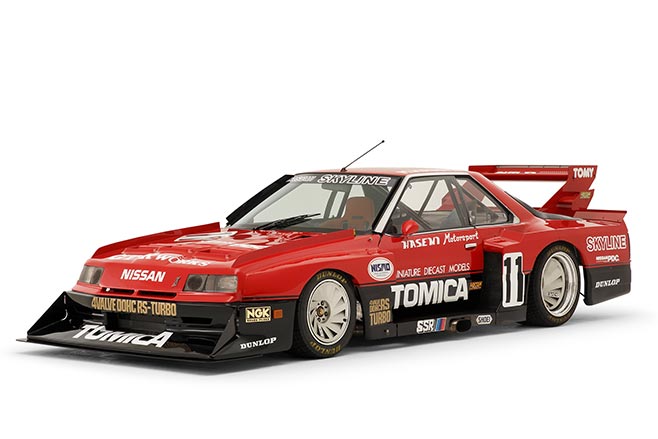
This car, however, has a six-cylinder L28, bored out to 3.1-litres. The L28 used to power cars like the Nissan Cedric in the 1970s. But this one’s had some work done, judging by this video posted to Instagram by Wataru Kato (Liberty Walk’s founder).
https://www.instagram.com/p/B62pFxSFJ9u/?utm_source=ig_embed&utm_campaign=loading
What do you think of Liberty Walk’s efforts? If you’ve got a favourite, let us know in the comments below!
Fifty of the fastest Gran Turismo players in the world are set to descend upon Sydney’s Luna Park next month for the first round of the 2020 Gran Turismo Championship, one of the biggest e-motorsport competitions in the world and one that has the official blessing of the FIA, the world’s motorsport governing body.

Those virtual racers will compete in two different series’: the Manufacturer Series that groups competitors into 12 teams of three drivers, each representing a single manufacturer; and the Nations Cup which features 24 drivers each battling for personal – and national – glory.
Curious about whether virtual racing can offer the same tension and drama of real-life motorsport? The good news is checking out the Gran Turismo Championship’s opening round on February 15 and 16 is free, with tickets for the Sydney race weekend on offer for precisely zero dollars right here.
Get ‘em while they last.
Now entering its third season of global competition, the Gran Turismo Championship will see three Aussies strap themselves into the Playstation 4 powered racing simulators at Luna Park: Cody Nikola Latkovski, Adam Wilk and former GT Academy winner Matt Simmons. Can’t make it to Luna Park in person? The event will also be livestreamed via Youtube and Facebook.
Most improved awards are always a little backhanded, implying that while things are swell now, you’ve come from a low base.
Hiroshima’s all-new Mazda 3 would well be deserving of such an award, but we don’t mean that as an insult.
The Mazda 3 was already a good car, worthy of its admirable sales success, but this latest model moves the game forward significantly, bringing new levels of luxury, and depth of engineering, into a highly competitive segment.
A comparison test at the start of 2019 proved that the Mazda 3 had vaulted itself to best-in-class, but that’s no guarantee of success at COTY.
Mazda needn’t have been worried though, with judges clearly impressed by the small hatch and sedan.
Praise was heaped upon the design inside an out, with particular attention paid to the quality of materials used.
Our independent testing of interior decibel levels proved, with hard data, that talk of improved cabin quality and refinement was genuine, with the Mazda 3 rivalling several premium offerings.
Mazda’s engineers were also given kudos by our judges for the 3’s dynamic ability.
For a full run down of how the Mazda 3 fared, make sure to pick up a copy of our COTY magazine, on sale February 3.
Click through our gallery above to see how the 3 went during testing.
Standing in the way of Mazda claiming Wheels Car of the Year 2020 are four other strong contenders. The winner will be announced January 30 at the Australian Motoring Awards.
For the first time in Wheels Car of the Year testing history, each contender vying for the crown in 2020 underwent independent performance testing.
This means 0-100km/h times, along with 100-0km/h in wet and dry. We’ve already broken down the braking data, and now it’s time to dig into acceleration times.
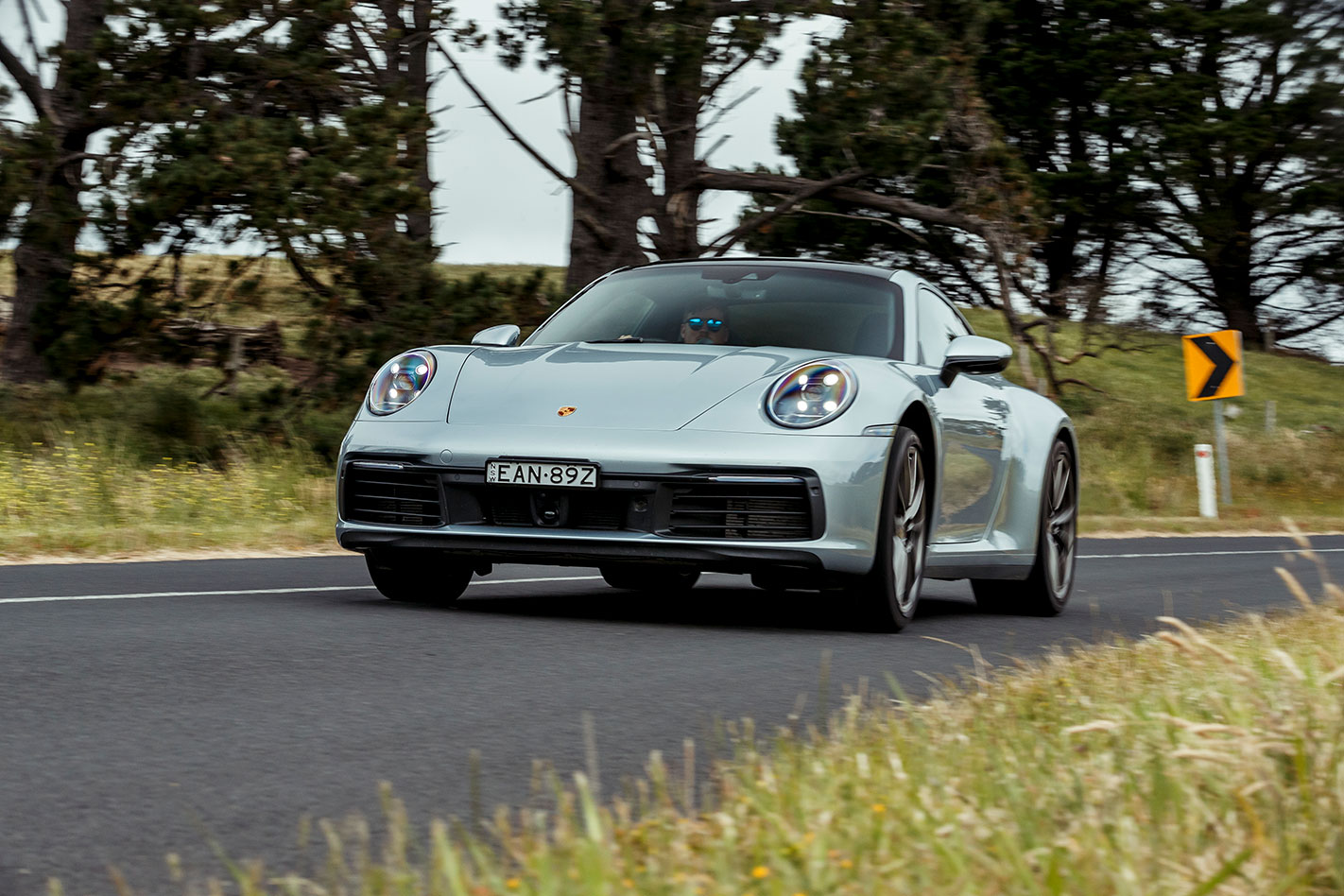
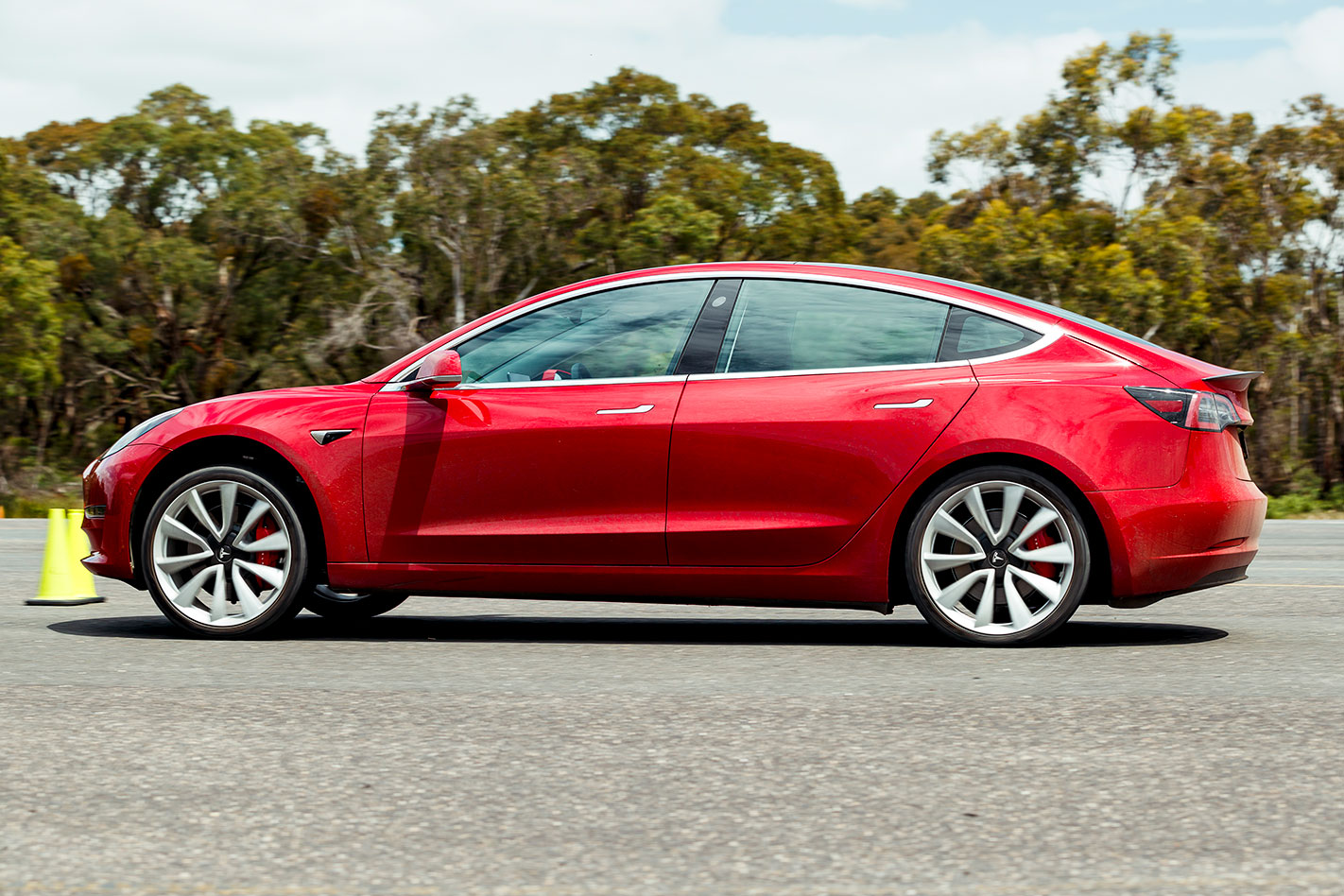
Only two cars managed to sneak in under the 4.0 second barrier, with the Porsche 992 911 Carrera S and Tesla Model 3 Performance both performing mid-3.0 second 0-100km/h sprints
The combustion-powered Porsche is the quicker of the pair, notching a 3.4 second time (3.37 to be exact), while the electric sedan is just a tenth slower.
Rounding out the podium is Toyota’s reborn Supra, with the GTS variant sprinting to 100km/h from a standstill in 4.4 seconds.
While mechanically identical to the BMW Z4 M40i, Toyota’s Supra was treated to its own bespoke electronic tune, going some way to explain how it was two tenths quicker to 100km/h than the convertible.
Side note: if you are using the Supra’s launch control, and bury the throttle, it serves up an ultra-smoky powerskid-style performance.
Splitting the Supra and Z4 is the current BMW 3 Series halo, the M340i, which uses all-wheel drive to crack 100km/h in 4.5 seconds.
In sixth on the leader board is the first SUV, the Mercedes-Benz EQC. Two EQCs were present for testing, with their 20- and 21-inch rims respectively the only difference.
With 20-inch rims fitted, the EQC (silently) sprinted to 100km/h in 4.7 seconds, adding an extra tenth for the 21-inch rollers.
The next three quickest cars were covered by a solitary tenth. In seventh is the Genesis G70 3.3T Ultimate Sport, with a 5.2 second 0-100km/h time, just beating out the Tesla Model 3 Standard Range Plus and Volvo S60 T8 R-Design, which both recorded a time of 5.3 seconds.
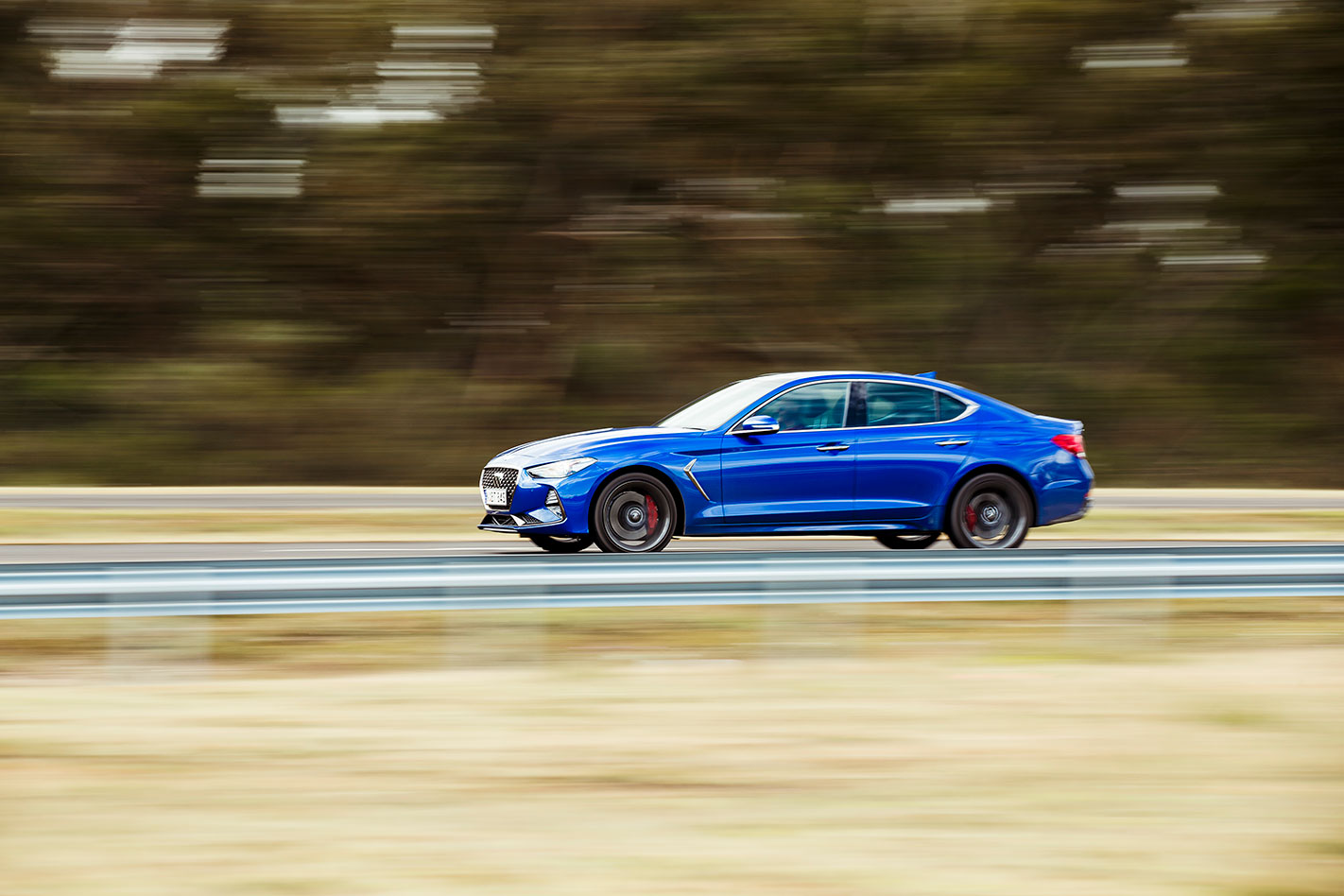
Finally, in tenth, was the BMW X5 40i, which hauled its two-tonne masse to 100km/h in 5.8 seconds.
All cars were performance tested by veteran COTY judge Byron Mathioudakis at Holden’s Lang Lang proving ground.
To find out how each COTY 2020 contender fared in our independent testing, pick up a copy of the COTY edition of Wheels magazine from February 3.
The 10 quickest cars at Wheels Car of the Year 2020

| Rank | Vehicle | 0-100km/h (sec) |
| 1 | Porsche 992 911 Carrera S | 3.4 seconds |
| 2 | Tesla Model 3 Performance | 3.5 seconds |
| 3 | Toyota Supra GTS | 4.4 seconds |
| 4 | BMW 3 Series M340i | 4.5 seconds |
| 5 | BMW Z4 M40i | 4.6 seconds |
| 6 | Mercedes-Benz EQC (20-inch) | 4.7 seconds |
| 7 | Genesis G70 3.3T Ultimate Sport | 5.2 seconds |
| 8 | Tesla Model 3 Standard Range Plus | 5.3 seconds |
| 9 | Volvo S60 T8 R-Design | 5.3 seconds |
| 10 | BMW X5 40i | 5.8 seconds |
The all-new Toyota Yaris will arrive Down Under in May with a petrol-electric version that’s expected to be the cheapest hybrid on sale in Australia.
Featuring a 1.5-litre three-cylinder engine matched to a lithium-ion battery, Toyota says the Yaris hybrid will also be the most fuel efficient car in Australia without the ability to run on batteries alone, with an official combined consumption of 3.3L/100km.
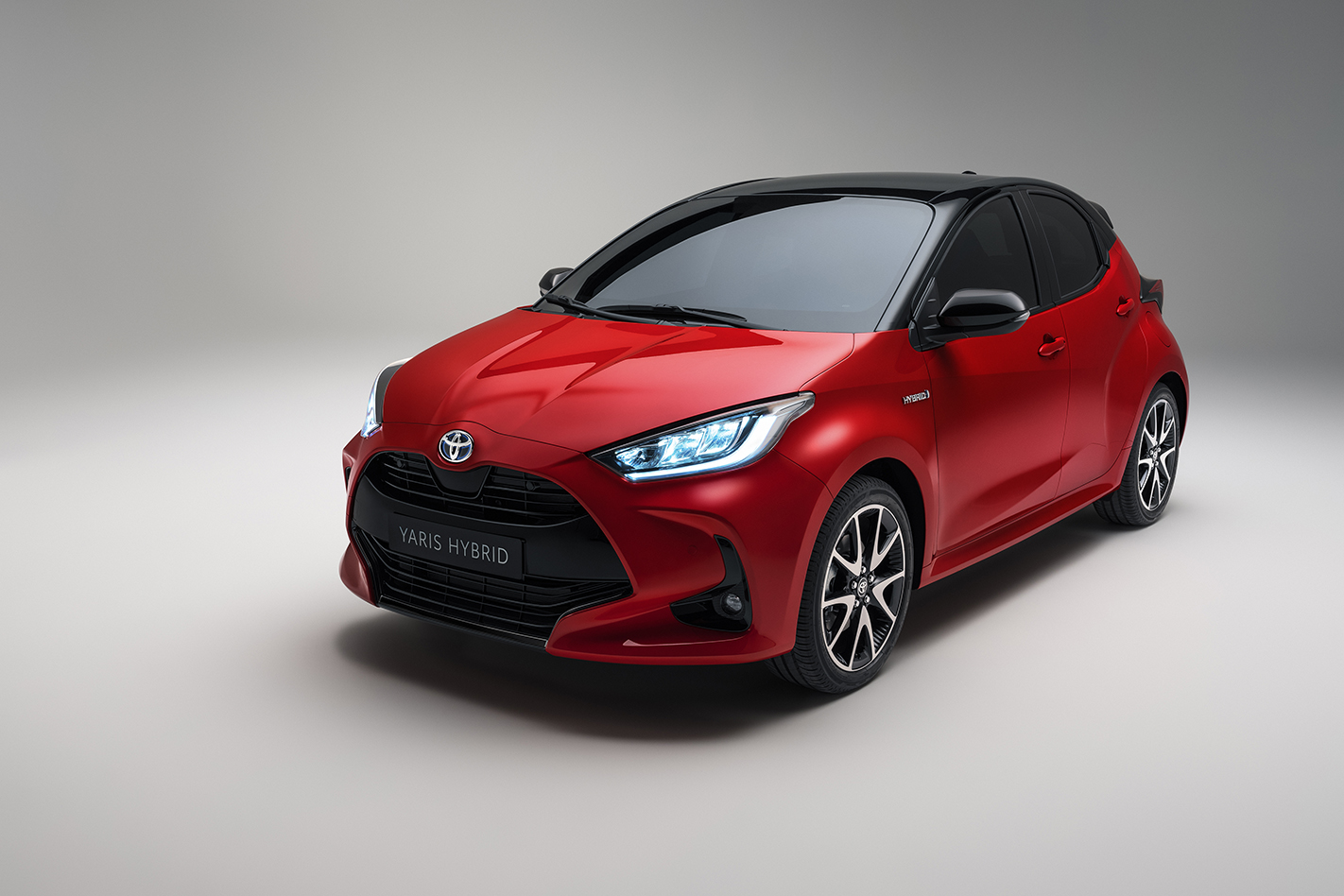
While that figure is something for Toyota to boast about, it’s only a fraction less than its Prius stablemate and the Hyundai Ioniq Hybrid’s 3.4L/100km, with the difference becoming somewhat theoretical in real-world conditions.
The arrival of the Yaris hybrid will also mean the end for the Prius C light hatch, which will bow out after having been part of the local line-up since 2012.
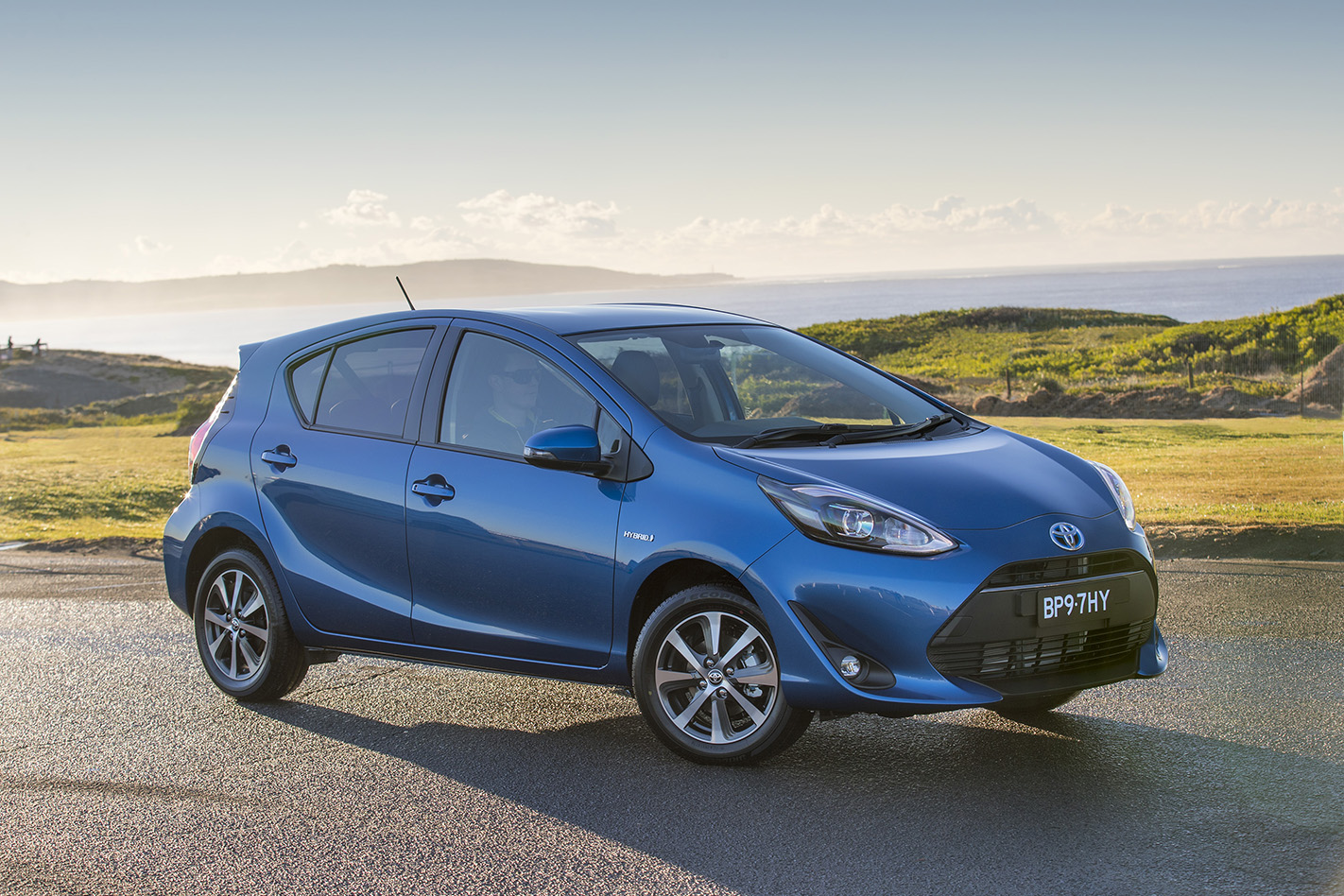
A smaller version of the Prius, the Prius C is currently Australia’s most affordable hybrid with a starting price of $24,040. The Yaris hybrid is expected to be even cheaper, with a starting price of about $21,000 assuming it will be available as a base spec variant.
The Yaris is also significantly more advanced the the Prius C, not to mention the current third-generation Yaris that first launched in 2011.
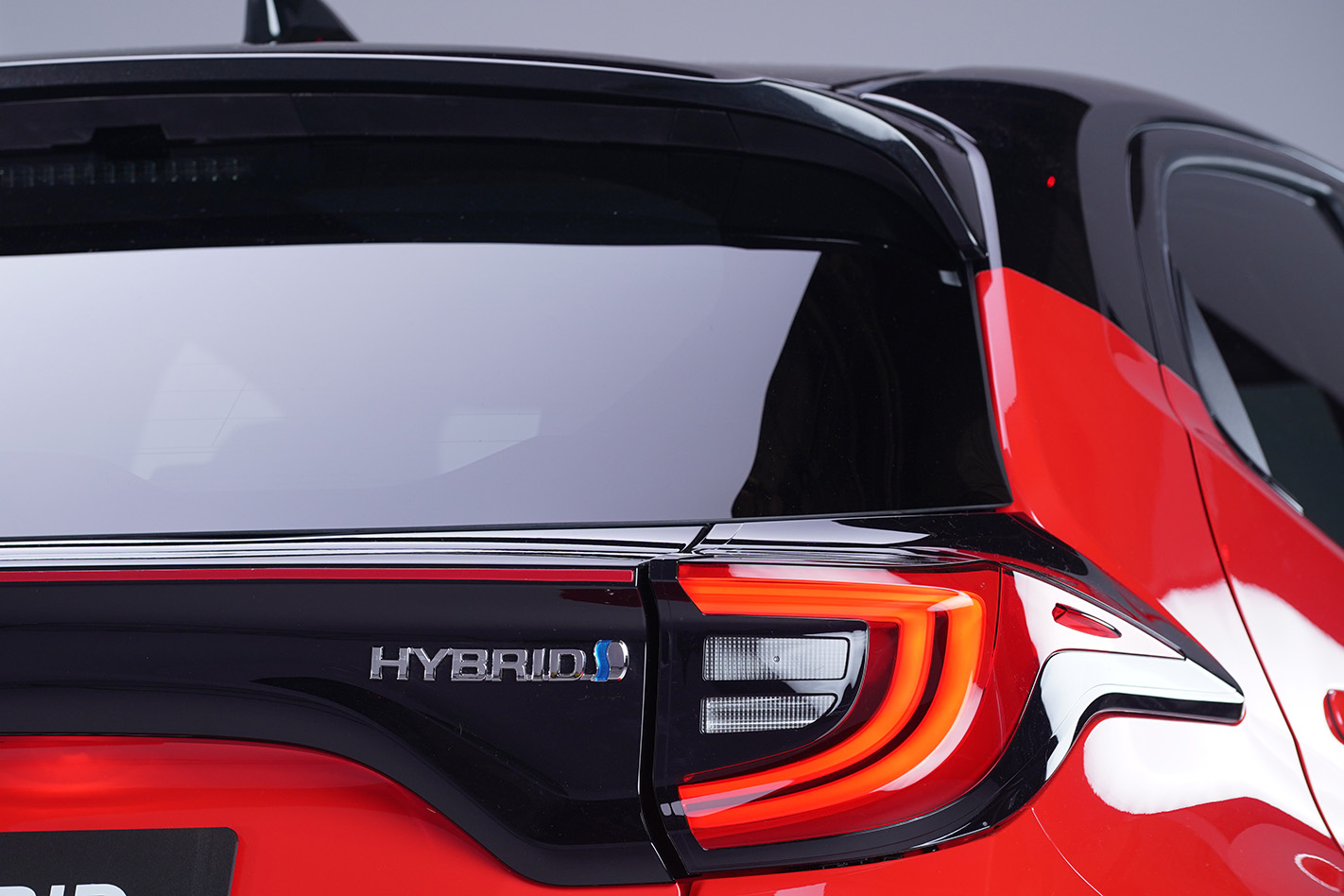
Built on the all-new Toyota New Global Architecture (TNGA) platform, it features one of the most advanced active safety suites in its class and active cruise control as standard.
Additional features, as well as local specifications, variants and pricing will be revealed closer to its May launch.
A company CEO who can jump into one of his brand’s race cars and have a crack is always worthy of applause. Akio Toyoda is one of these CEOs, never afraid to ‘take one for the team’ and have some fun in the name of publicity.
At Tokyo Auto Salon 2020, he popped himself into the driver’s seat of a Toyota Yaris WRC car, and began immediately finding the quickest way to wear down a set of Michelin rally tyres.
Okay, so he’s no Sebastian Ogier, and it shows. But we’ve seen Toyoda-san show off his driving skills before in the Toyota GR86X rally concept.
So, while there’s a fair bit of understeer and even a knocked cone in his WRC Yaris demonstration, plus the awkward engine stall, we reckon it’s likely because Akio Toyoda isn’t spending massive amounts of time in rally Yarises as the CEO of the world’s largest car company.
Toyota’s GR Yaris details revealed
Aside from his motorsport dabbling, Toyoda is a road-car enthusiast too, reportedly owning a GRMN-modified Toyota Century as his company car.
Not a bad way to get around in executive style with a bit of fun added.
