
THIS might upset some people and could, quite rightly perhaps, see my ‘Aussie card’ revoked, yet I have reached the unshakable conclusion that in the bitter rivalry of Australia vs New Zealand, the land of the long flat vowel currently has us beat.
Rugby union fans will need no reminding of this soul-crushing power shift, yet even accounting for the fact that Kiwis are nicer, more relaxed, are the true creators of pavlova, the egg beater, Russell Crowe, and can, apparently, lay claim to inventing the humble pair of thongs (who knew we should have been calling them Jandals all along?), they also seem to have us licked in another area: automotive ingenuity.
Motorcycle fans will already be familiar with the likes of Burt Munro and John Britten, and now there’s a new, cutting-edge auto start-up that makes anything being built in Australia right now seem prehistoric.
The company is called Rodin – don’t worry, I hadn’t heard of it either – and its immediate mission is as simple as it is ambitious: to build the world’s fastest and most exciting track car.
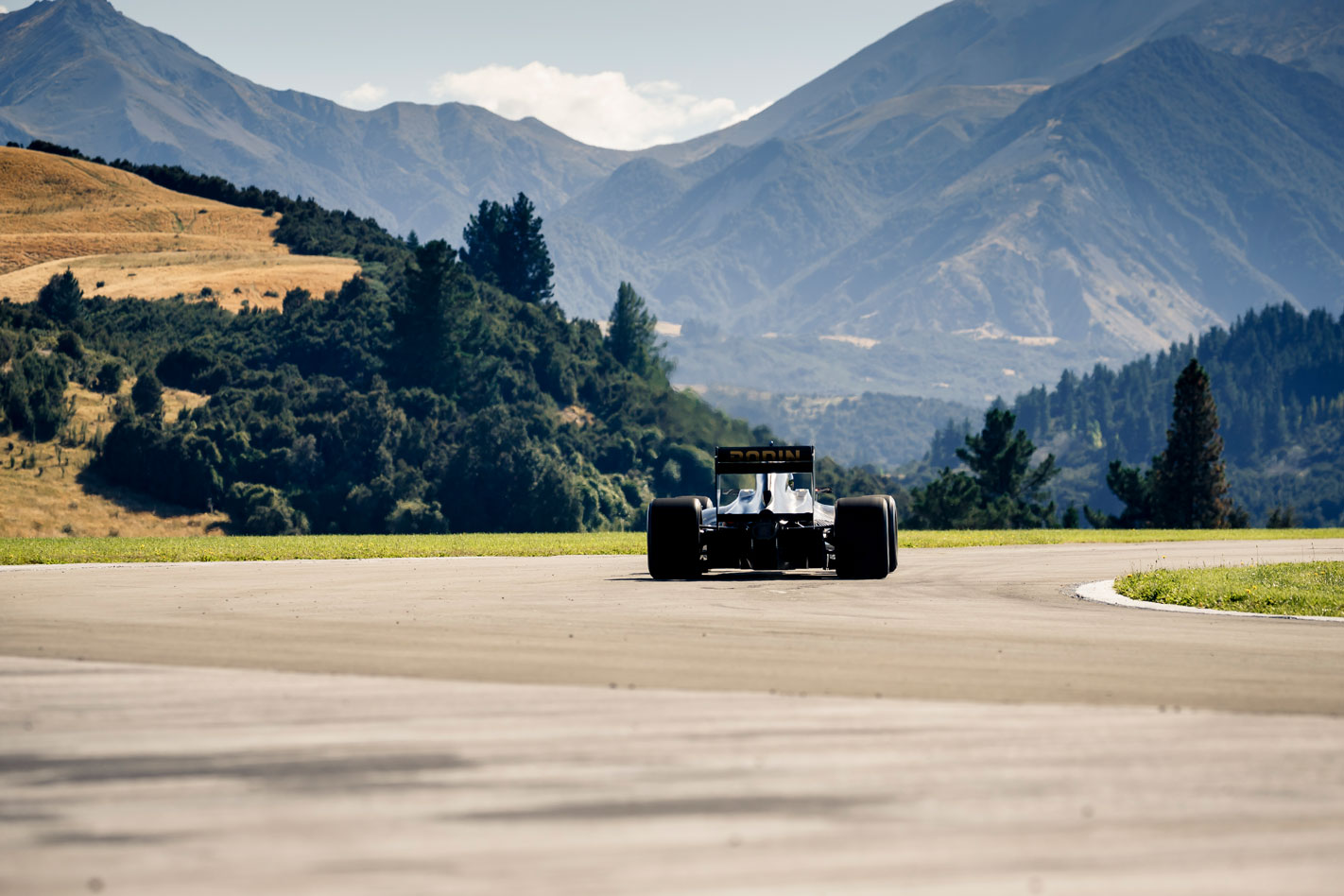
The result is, to the untrained eye, a Formula One car. Resplendent in black with an exposed carbonfibre finish and gold detailing, the brooding behemoth – dubbed the Rodin FZed – has all of the calling cues to make Daniel Ricciardo feel right at home: enormous wings, oversized slick tyres, shrink-wrapped bodywork and a removable steering wheel festooned with dials and buttons.
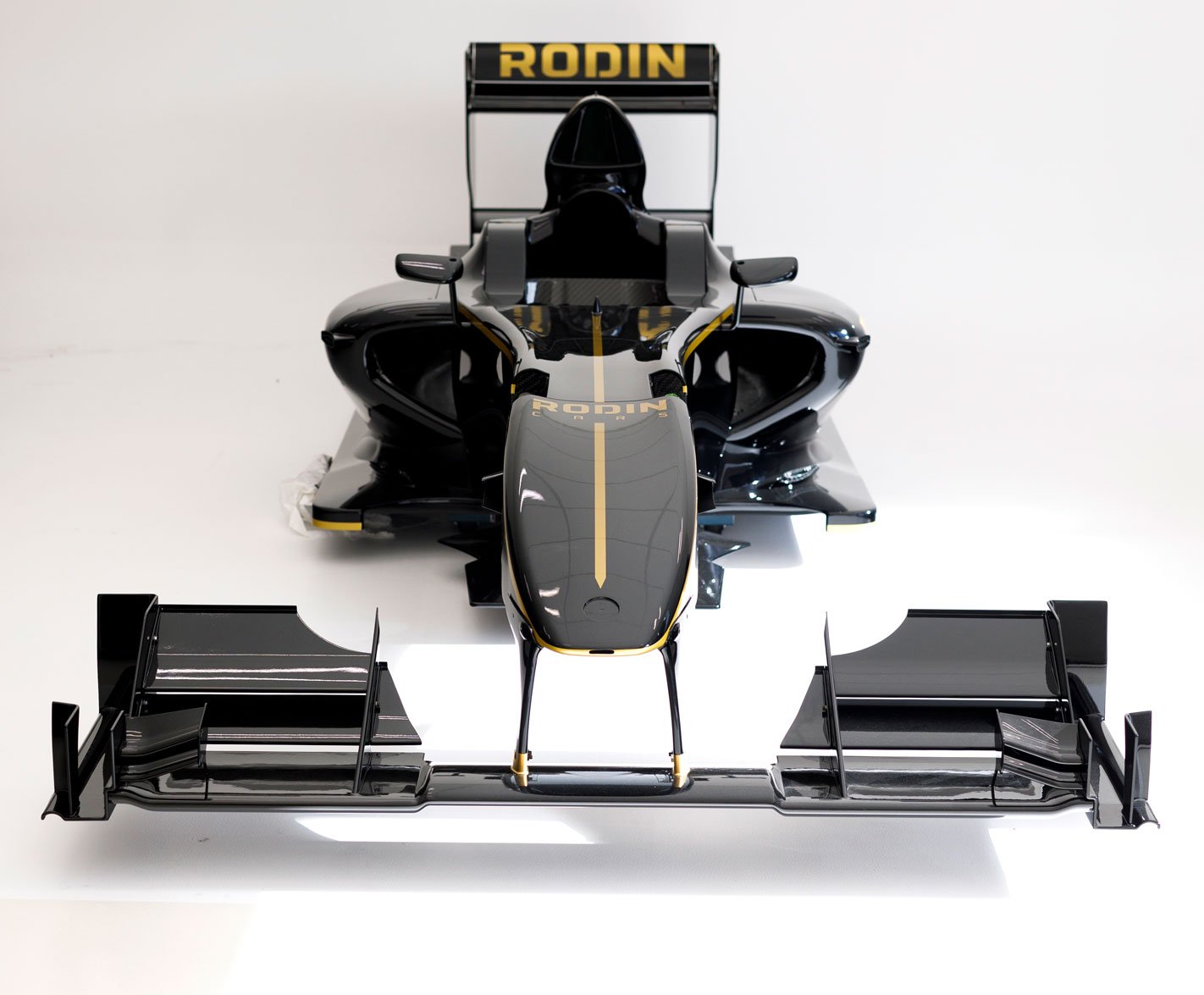
It’s the closest thing to a Formula One car that money can buy (we’re driving it next month, so stay tuned), but what really boggles the mind is that the FZed isn’t the fastest car Rodin is building. That creation, which looks like a fighter jet canopy with wheels and is powered by Rodin’s own V10, is called the FZero.
“But hang on!” I can hear you posturing, “Australia has the Brabham BT62, which is capable of lapping Mount Panorama faster than any tin-top racer before it!”
Well, dear reader, in the game of top trumps, the FZero’s claim is that it will be “quicker than a current Formula One car”.
Rodin’s aim, then, is to exist on another level altogether. One that doesn’t only make it the equivalent of established players like Pagani, Koenigsegg and even Ferrari and McLaren, but should see it rival hypercars like the Aston Martin Valkyrie and Mercedes-AMG One. Sound a little unrealistic for a start-up from New Zealand? I thought so too, until I visited Rodin’s facility and met the company’s creator.
David Dicker fits the description of a millionaire recluse almost perfectly. Tall, bespectacled and in his mid-60s, Dicker’s defining features are his flowing white hair, his quiet, thoughtful demeanour, and a razor-sharp mind. He’s a self-made man, having built his fortune the hard way by creating an IT business, Dicker Data, from scratch.
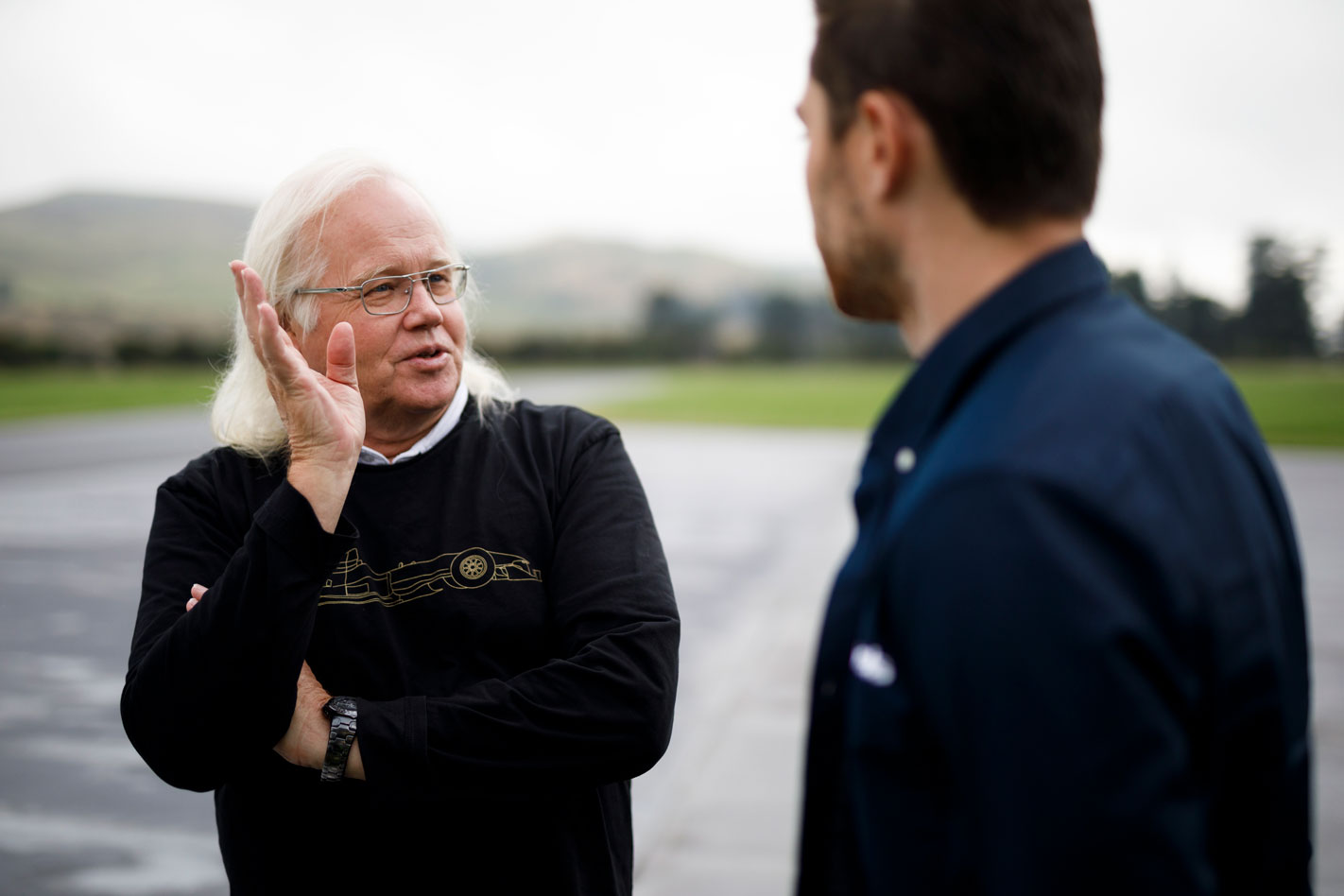
“I never went to university, but I think if I sat the computer science exam I’d have been able to pass it because I had all the same textbooks,” says Dicker. “But yeah, I’m basically self-taught.”
Dicker’s business success is well documented. Last year Dicker Data turned over $1 billion and had 400 employees, which, you might think, would be enough for most people. But in 2004, Dicker decided to turn his hand to a new passion project. Rodin Cars is the result. “I’ve always liked cars and I’ve always wanted to build my own,” Dicker says. “I had a kit car when I was a kid, a Bolwell MK7. I enjoyed the engineering and design side as well as the driving.”
Offering some consolation to us Aussies is that Dicker was actually born in Sydney, but he chose New Zealand as the base for Rodin because “Australia is killing the car”.
“The car culture in Australia has just been destroyed by the government,” Dicker says, shaking his head sadly. “I’ve read Wheels since the ’70s and probably drove the Bolwell too quickly, but you used to be able to. Now the police are just so aggressive. Here in NZ it’s very different. It’s like it used to be.”
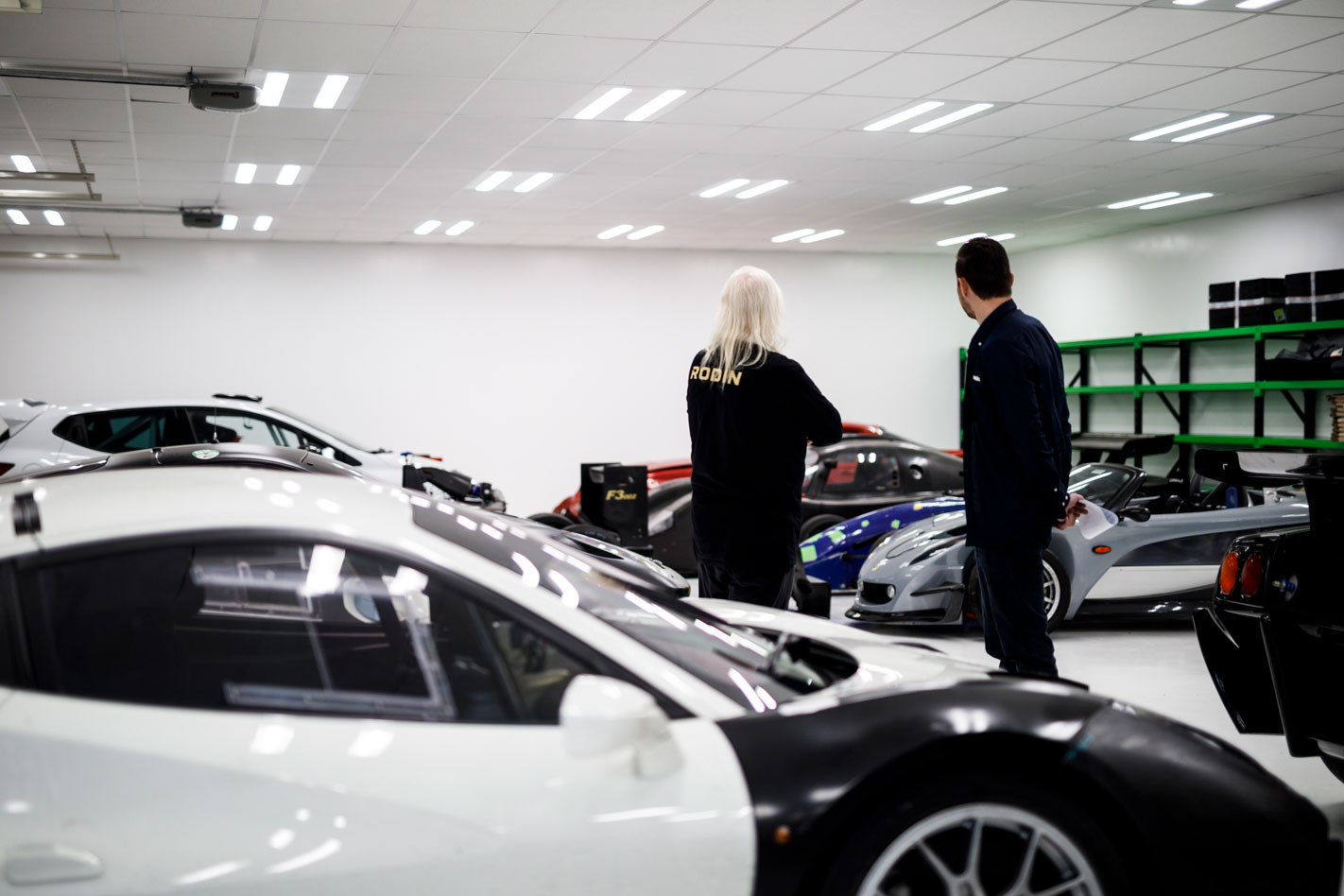
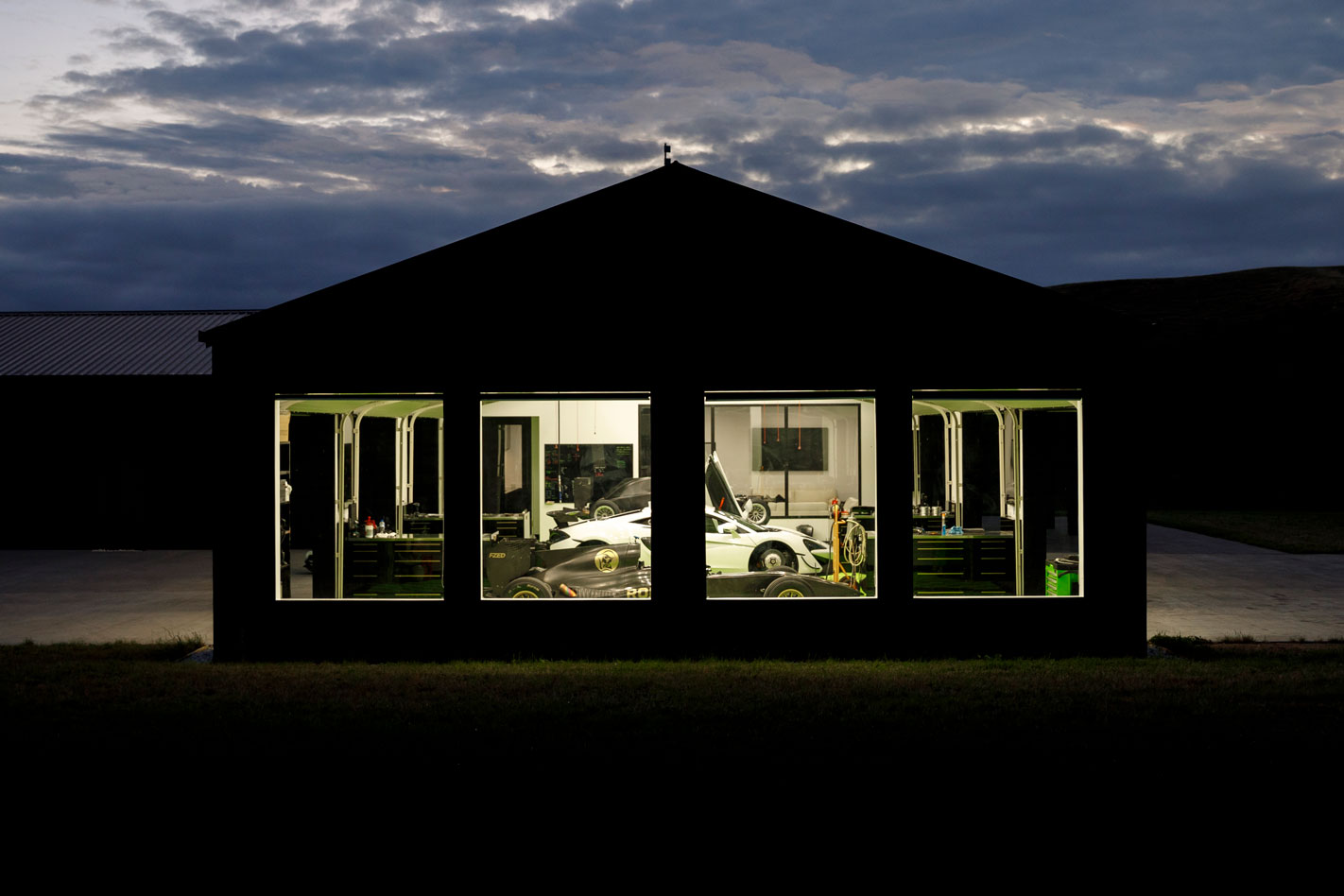
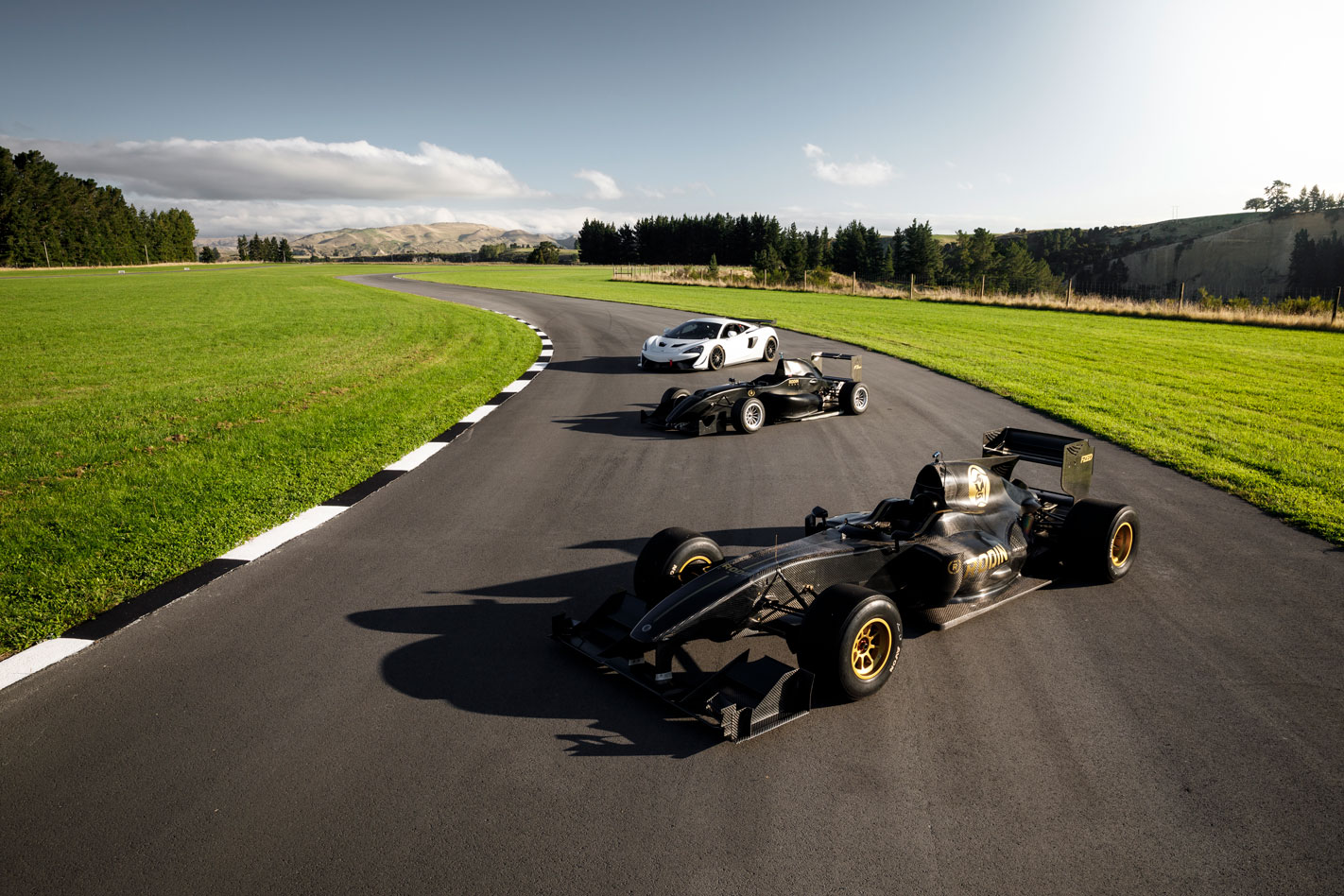
My Rodin initiation starts with a tour of the primary pit complex, nestled on a ridge overlooking Dicker’s 570-hectare property, two hours north of Christchurch. The central building backs onto a multi-car pit bay currently filled by three racing cars – a McLaren 570S GT4, a Formula 3 racer, and the FZed. Buy an FZed, for the princely sum of US$615,000 (A$866,000) before delivery charges and taxes, and you’ll get to drive all three. It’s part of the ownership experience, which also includes one-on-one coaching from Rodin’s chief driving instructor, Mark Williamson, and the chance to stay in one of the yet-to-be-built luxury villas that will overlook the circuits.
Ah yes, the circuits. Plural. Ringed as it is by snow-capped mountains, Rodin’s facility meanders across undulating terrain and includes three tracks.
‘Stage one’ was built first and is like a glorified go-kart circuit. ‘Stage two’ is much more serious: a 2.4km ribbon of tarmac with enormous elevation changes, blind crests and vindictive turns.
“It’s hair-raising,” says Dicker. “It’s intimidating, actually, that’s why I don’t drive it much. I’ve spun in every corner.”
‘Stage 3’ will be the domain of most Rodin owners. A flat piece of tarmac with seven turns and a 900m straight, it’s deceptively challenging and fast. “You’ll hit 260km/h in the FZed,” says Dicker.
He’d know, too, given he designed the tracks. This desire to create everything from scratch is a recurring theme for Dicker. Throughout his career he’s built his own supercomputers, written code, and designed and constructed his own sails for superyachts.
“It’s actually a real problem,” says Dicker of his need to begin with a clean sheet. “When I was young I didn’t want to do a project unless it was so difficult it was almost impossible.”
Demonstrating just how committed Dicker is to the whole DIY thing is the fact that instead of hiring contractors to build his tracks, he bought the excavators and bulldozers.
“It took longer but the end result is better,” he says sheepishly.
This desire to be the master of his own destiny is perhaps at its most fastidious in the three manufacturing sheds.
Here, Rodin’s 12 staff members design, create and test the components required to build their cars at a level that’d please most Formula One teams. This includes everything from wiring looms to composites and 3D-printed titanium parts.
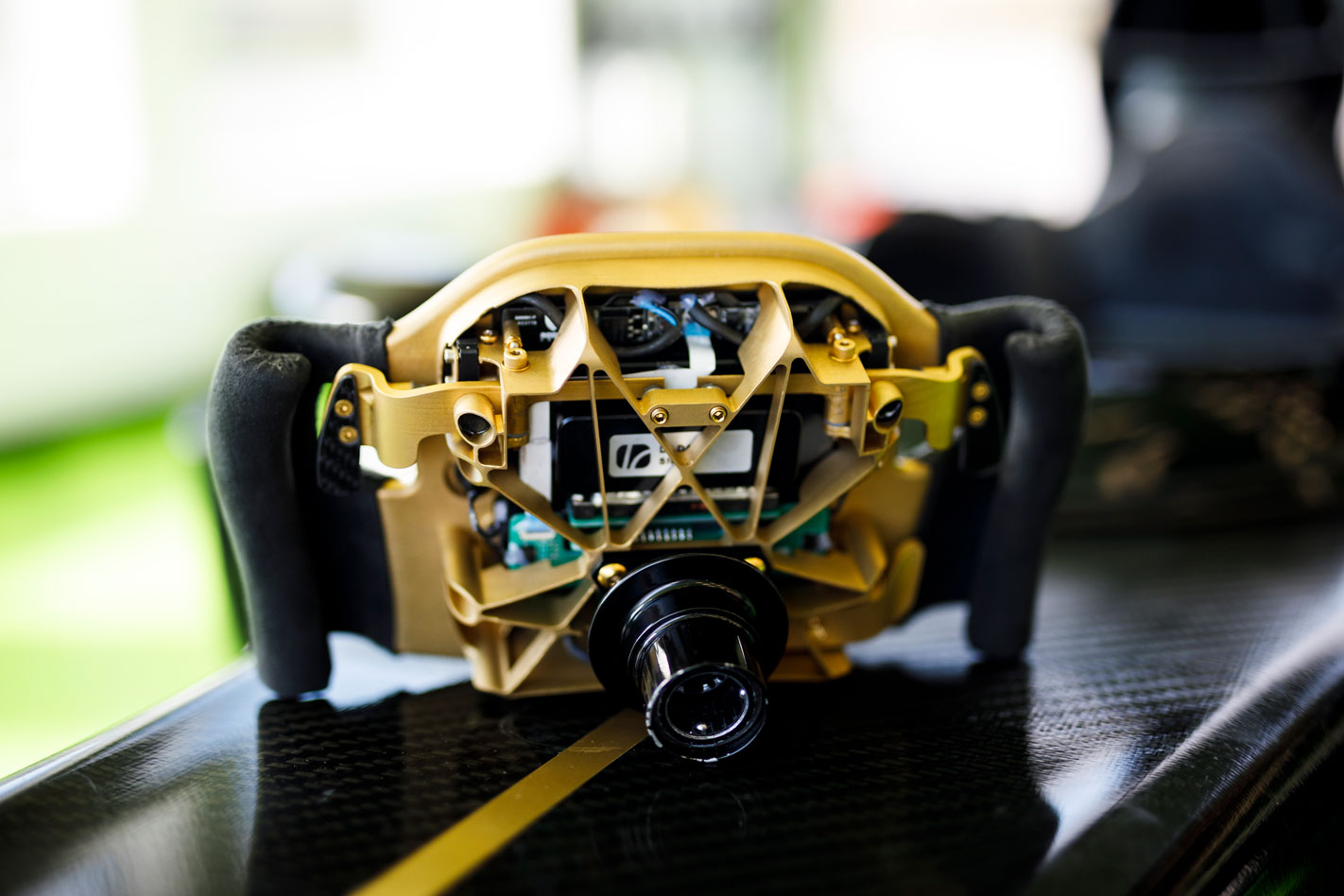
“You need to make your own stuff,” says Dicker. “At the production level it’s not so much of a big deal, you can use contractors, but when you’re doing R&D, you’re just totally screwed if you can’t make your own stuff.”
I’m handed a Rodin bolt, 3D printed from titanium and finished with a unique gold coating. Then I’m given another, the same length but silver and heavier, and with a coarse finish. “That’s a Ferrari bolt,” says Dicker. “If you look at the Ferraris and the McLarens, they’re pretty awful really. They’re agricultural. I like Ferrari; don’t get me wrong, but the hardware is … you know … not great. It’s low-end, let’s put it that way.”
I was expecting Rodin to be something of a ‘man and a shed’ project. The reality, however, is that it’s more like a mini McLaren Technology Centre. The scale, ambition and attention to detail is astonishing. So too is the investment.
Dicker says he’s given up counting how much he’s spent at Rodin, but he does admit the last number his accountant shared “some years ago” was $17 million.
“And that’s chickenfeed to what the big guys spend,” Dicker says.
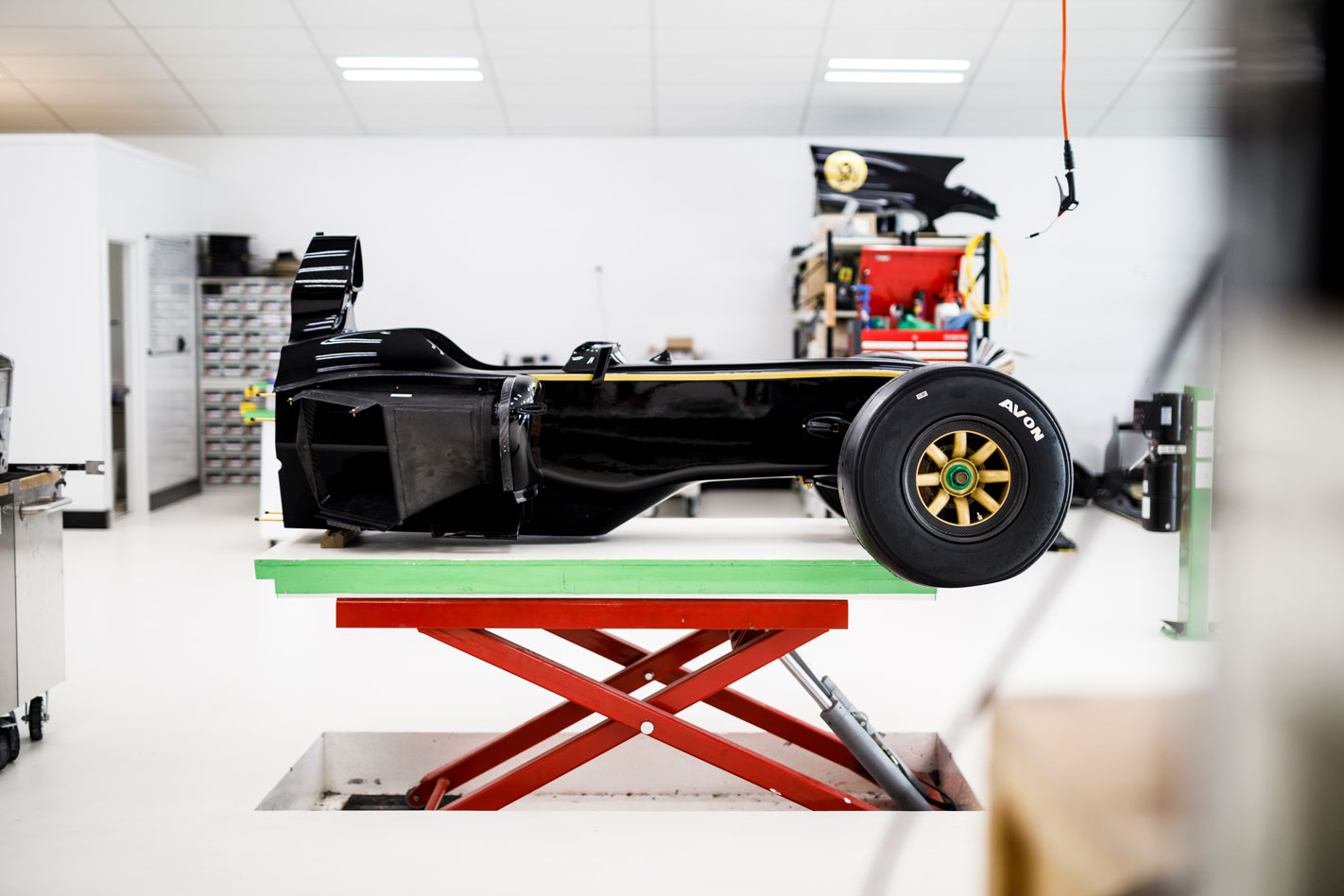
Incredibly, despite having no formal training or an engineering degree, Dicker designs every component himself using CAD, from bolts and brackets to carbonfibre wheels with 3D-printed titanium centres. Lurking under a sheet in the final manufacturing shed is an early prototype of the FZero, complete with a full-scale plastic model of its V10 and an empty space for the eight-speed gearbox housing, both of which are being made to Dicker’s design. This, more than anything at Rodin, has me perplexed. Why build your own V10? Even Pagani and Koenigsegg don’t bother, or simply recognise the expense is too great. Dicker’s answer is simple.
“From a marketing standpoint, if you have your own engine, you’ve put yourself in a certain position. If you build a car with a crate motor or an engine you buy from someone else, you put yourself in a lower position. Look at the Brabham. The Brabham guys are going to be screwed because it’s a Mustang crate motor.”
Spend too long at Rodin and it’s easy to suspend reality for a moment as you marvel at the craftsmanship and the sheer scale of the ambition, yet at some point reality needs to creep back in. That moment arrives when Dicker reveals how many cars Rodin is expecting to sell.
“If I could make a deal right now to sell 50 cars a year, I’d take it,” he says. “If everything was working we might think about building 100 cars a year but that’d be the absolute maximum.”
Slightly cynical, I ask Dicker if he’s run the business case on whether there are actually 50 people out there willing to buy a car like this.
“Well, no, not really,” is the reply. “There’s nothing like the FZed available, so we’re building that market from scratch. Obviously that’s risky, because most people would say there’s no market. But if you want to be successful, you have to be the market leader in whatever category you’re in. That’s our opportunity.”
Sceptics will no doubt scoff, and it’s true that outside of the Rodin bubble, some of it sounds fantastical. Yet as I’m strapped into the FZed and I flinch as the big Cosworth V8 fires, the entire car erupting into a cacophony of noise and vibration as I try the throttle for the first time, it’s difficult to muster much doubt that Rodin will make it work some way or another. After all, New Zealand has form at taking on the big boys. And winning.
THERE ARE some pure driver’s cars that manufacturers just always get right. I’m particularly thinking GT Porsches, mid-engined Ferrari specials and extreme Renault Meganes.
This is the latest of the Renaults, which is these days called the Renault Megane RS Trophy-R. And I’m happy to report the same standard applies. Sigh. Time for another rejig of the ‘top 10 best front-wheel drive cars of all time’ list.
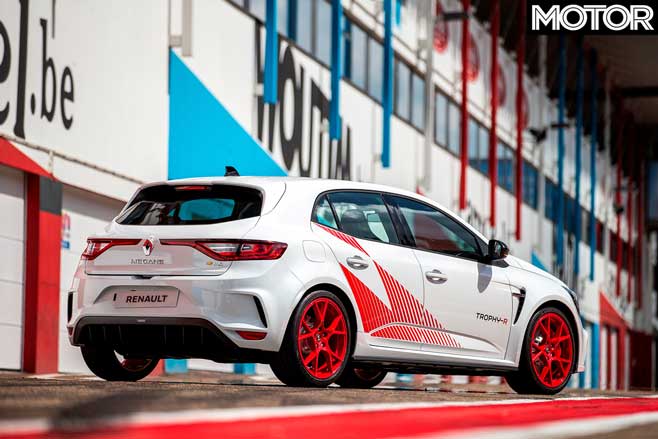
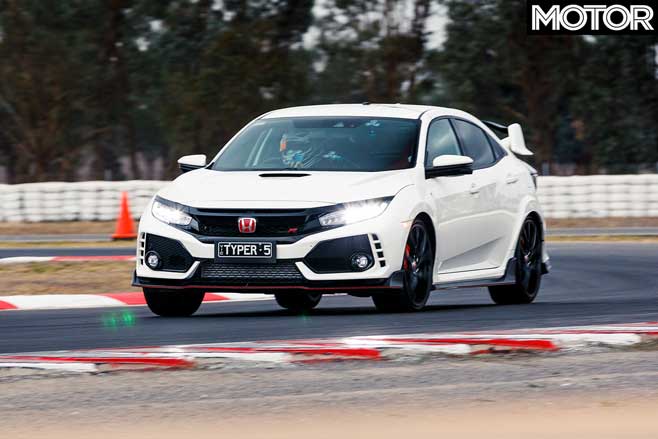
This is a great car. As usual, Renault has chased a particular German lap time and, as usual, found it with a 7min40.1sec – making it 3.7sec faster than the more powerful Civic Type R, so it’s the fastest front-drive production car on the Nordschleife. But it’s the way the Trophy-R delivers its speed rather than the speed itself that makes this car so compelling.
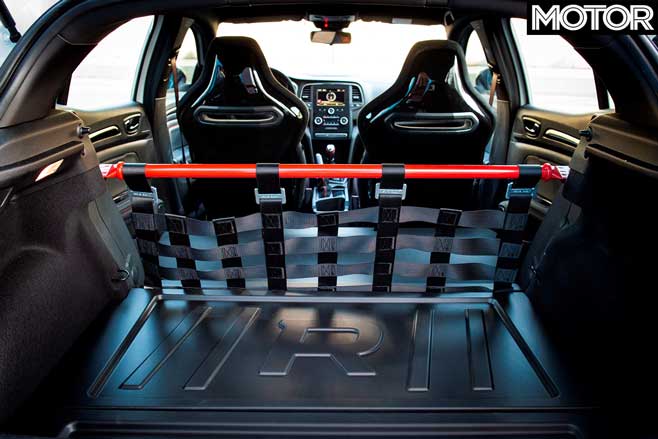
There is less weight, to the tune of some 130kg compared with the regular RS Trophy, thanks to thinning the rear door glass (-1kg), removing rear seats (-25kg), changing the front seats (-14kg), fitting a carbonfibre bonnet (-8kg), titanium exhaust (-7kg), smaller touchscreen (-250g) and omitting the rear wiper (-3kg).
But the biggest ‘leave’, which makes the biggest difference both to the car’s power-to-weight ratio and the way the car handles is the absence of the active rear-steer system you’ll find on lesser RS Meganes and which has troubled the confidence of some testers.
Combined with a lighter rear torsion beam, it saves almost 40kg, so the kerb weight is 1306kg (87kg less than the current Oz-spec Type R). No rear-steer means less high-speed stability than the regular RS Megane, but way more chuckability and, crucially, consistency of response.
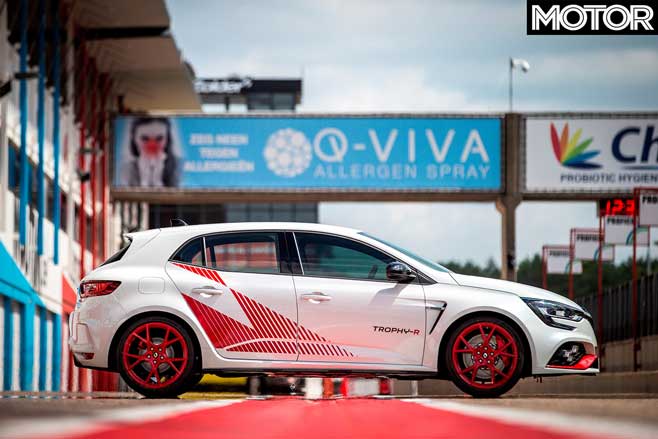
The rest of the intoxication is provided by the weight reduction, adjustable Ohlins dual-flow valve dampers and lightweight springs, increased front camber, virtually no aerodynamic lift via a bigger diffuser and a tiny front splitter, and a ride height the customer can lower by up to 16mm front and rear.
The result is a car that on a circuit, with height lowered and dampers set to medium-rare, feels every inch as good and connected as a Porsche 911 GT3 RS, just front-wheel drive and less accelerative. There’s equivalent feel, finesse, grip and loads of traction.
The 390mm carbon-ceramic brakes used to set the Nurburgring lap time are fitted to the 30 ‘Trophy-R Record’ versions being produced, but Australia will get just one of those, to be auctioned off. That car will also get a six-point harness and carbonfibre wheels – developed in Australia by Geelong-based Carbon Revolution – that save 2kg per corner. Renault places the carbon wheels in the back (where there’s now no seat) and straps them down, so they can’t get damaged in transit. As a result, Record owners also have a spare set of track-day wheels and tyres.
Australia has been allocated 20 of the 500 Trophy-Rs being produced, and they lob here in early 2020 – all painted pearl white with red highlights – with the Ohlins shocks and 19-inch wheels, and 355mm discs clasped by four-piston calipers up front.
Suitably stripped and lightened, the Trophy-R is raw and noisy, and completely involving. An Alcantara steering wheel – I’m a sucker for those – telegraphs everything the tyres are up to, via medium-light weighting. A small tug of torque-steer here and a shimmy under braking there, and you’ll know which tyres are giving up – and where, and how.
Not that they do often. If this car had twice its power, I’m sure its grip levels would see it return a lap time as fast as the purest supercars. Laterally, and under deceleration, it is no less capable, while it looks after its Bridgestone Potenza S007 tyres (same as on the Trophy) remarkably well, even after a day on the track.
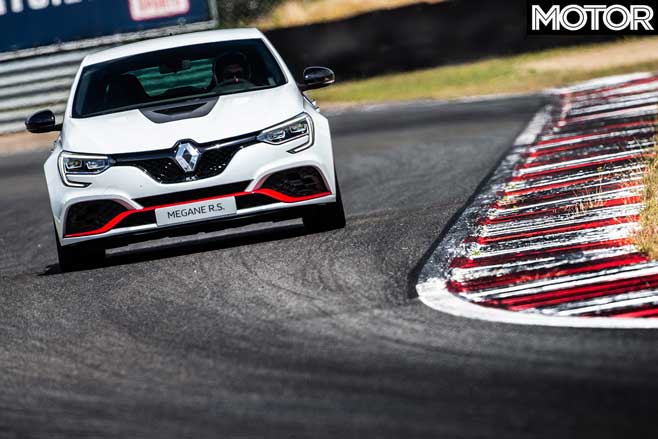
You can make the Trophy-R understeer on power, but turn in without throttle or trail the brakes and it rotates wonderfully and predictably. Most of the time it’s fantastically neutral.
Body control, in the set-up we tried, is superb. Kerbs rattle through it, mind. With dampers slackened and the height up, I think it would make an engaging road car, though Renault’s chief test driver, Laurent Hurgon, still reckons the grip levels are “completely crazy” for the road. I believe him.
You’ll note I haven’t mentioned the engine and gearbox (six-speed manual only, because it’s lighter than the dual-clutch auto). They’re fine, responsive and slick enough, but power is the same 220kW as the Trophy, because it would have been too expensive to re-homologate for just 500 cars.
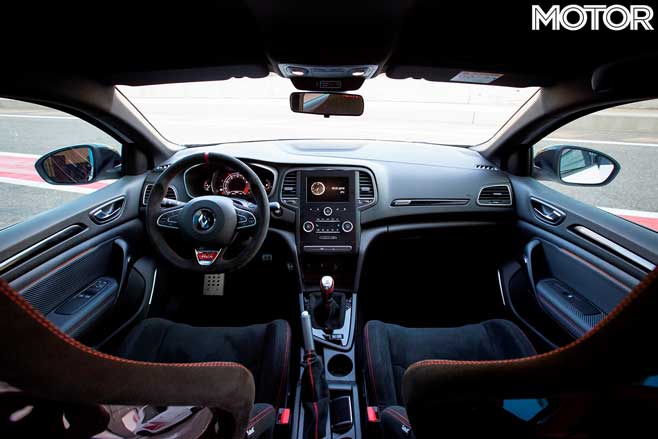
Besides, Renault likes the idea of finding speed through subtraction rather than addition, with the exception of the price – about $70K in Australia. This, it will not have escaped your notice, is loads of money for a hot hatch with a lap time not all that dissimilar to a Civic Type R, which is priced at $52K.
This is a quandary. The feeling you get on a circuit is way more important to me than the number that comes out at the end. But this car largely exists because of the number that comes out at the end. Perhaps best not to think about it too much. Just remember that it’s every inch as thrilling as plenty of supercars costing four times as much.
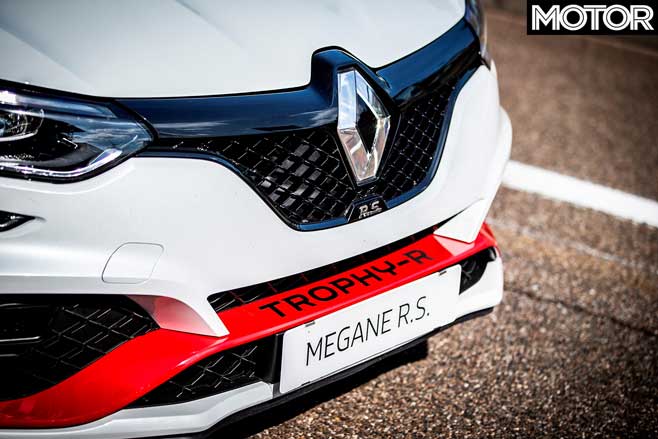
2020 RENAULT MEGANE RS TROPHY-R SPECS Engine: 1798cc inline-4, DOHC, 16v, turbo Power: 220kW @ 6000rpm Torque: 400Nm @ 3200rpm Weight: 1306kg 0-100km/h: 5.4sec (claimed) Price: $70,000 (est)
Like: Improved suspension, with no rear-steer; huge weight reduction; chuckability and response; enormous grip Dislike: No increase in power; limited availability; price
Rating: 4.5 out of 5 stars
The Nemesis
Honda Civic Type R 2.0-litre four, FWD, 228kW/400Nm, 0-100km/h 5.7sec 1393kg, $51,990
Monterey Car Week, for those that don’t know, is the ultimate congregation of special cars the world over.
Car Week includes events like the Rolex Monterey Motorsports Reunion, Quail Motorsports Gathering, Pebble Beach Tour d’Elegance and the penultimate event, the Pebble Beach Concours d’Elegance – the fanciest of all car shows that’s held on the famous 18th hole of Pebble Beach golf course.
It’s an event that’s held my interest for several years, so I’ve recently made it my mission to attend every year as the diversity of cars and events is not to be missed.
More than Car Week, though, I’ve made an enduring group of friends who also attend, so that was also a drawcard for heading to California in August this year.
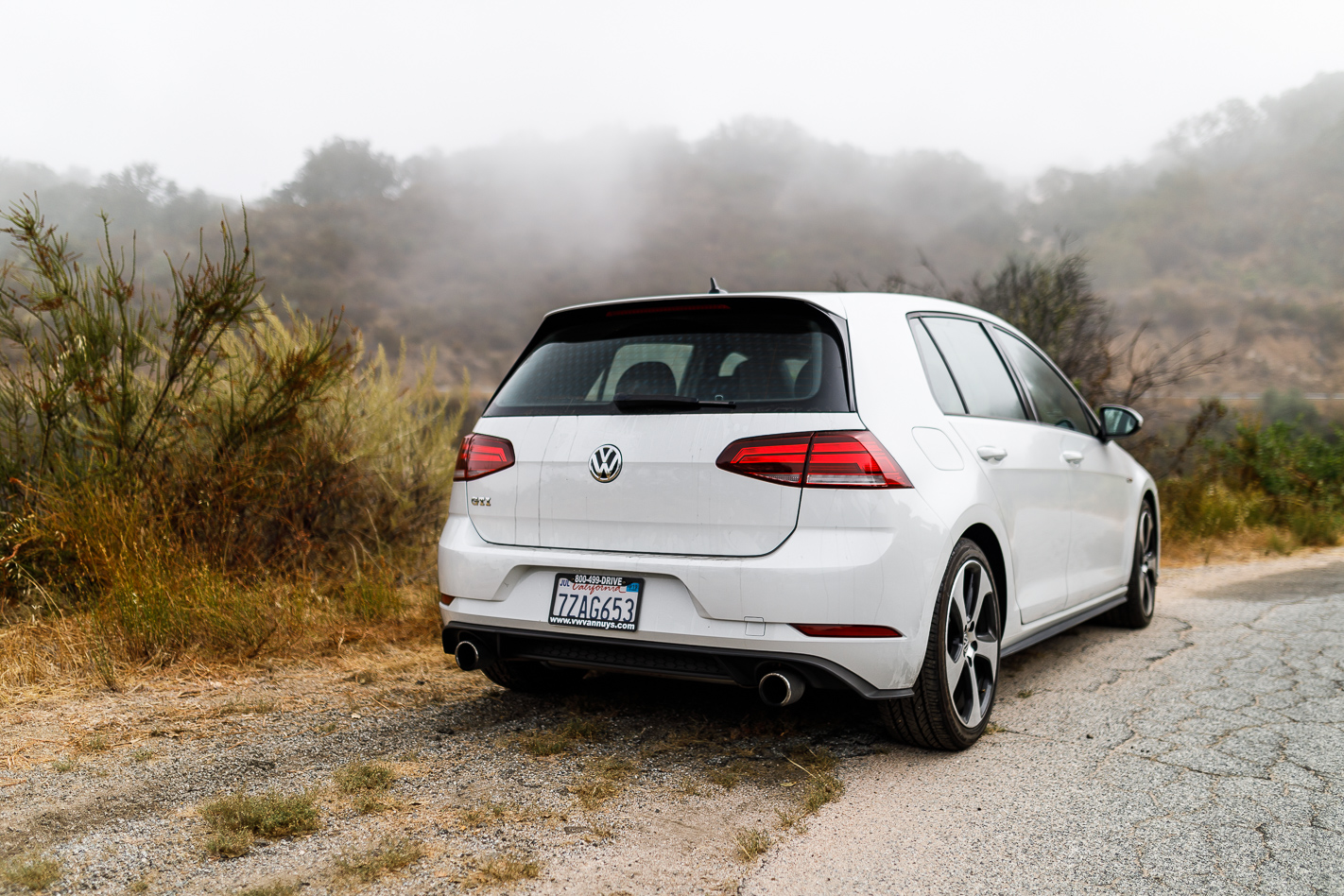
After flicking a message to fellow photographer and colleague Alastair Brook gauging his interest in tagging along, we plan our adventure, eventually deciding to hire a Volkswagen Golf GTI from Turo in California for our Monterey mission.
For those unacquainted, Turo is similar to the house-sharing app Airbnb, in that you can hire privately-owned cars from locals. You’re afforded a whole lot more choice in the cars you can rent, and it can often be more affordable than traditional rental agencies.
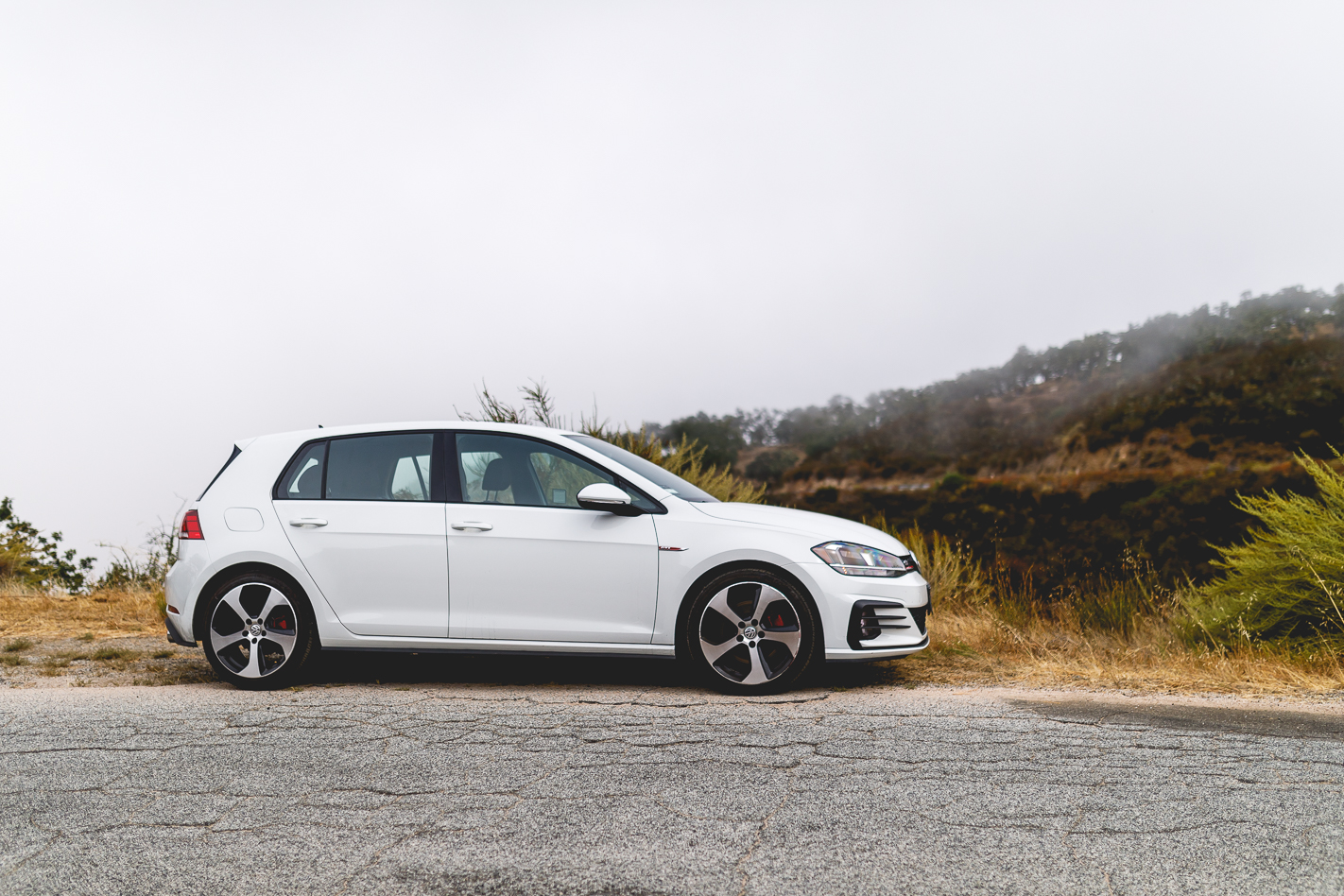
While you can rent anything from a beat-up 10-year-old Honda Civic to a brand-new 2019 Rolls-Royce Wraith, our decision to settle for the happy medium of a Golf GTI was driven by cost and the desire to have something fun to drive around California’s notorious canyon roads.
After coordinating with the owner of our GTI, Kameron, we meet up and take delivery of the car in Beverly Hills a day before we head north towards Monterey.
Initial impressions immediately highlight the fact that the Golf GTI we’re offered in Australia is not like the one offered in the United States.
Plenty of creature comforts we’re used to are missing like climate control, keyless start, navigation, Active Info Display in the instrument cluster… and heaven forbid we secure the car with a manual handbrake…
While we may pay extra for our cars over in Australia on the whole, at least we have a little extra to show for it.
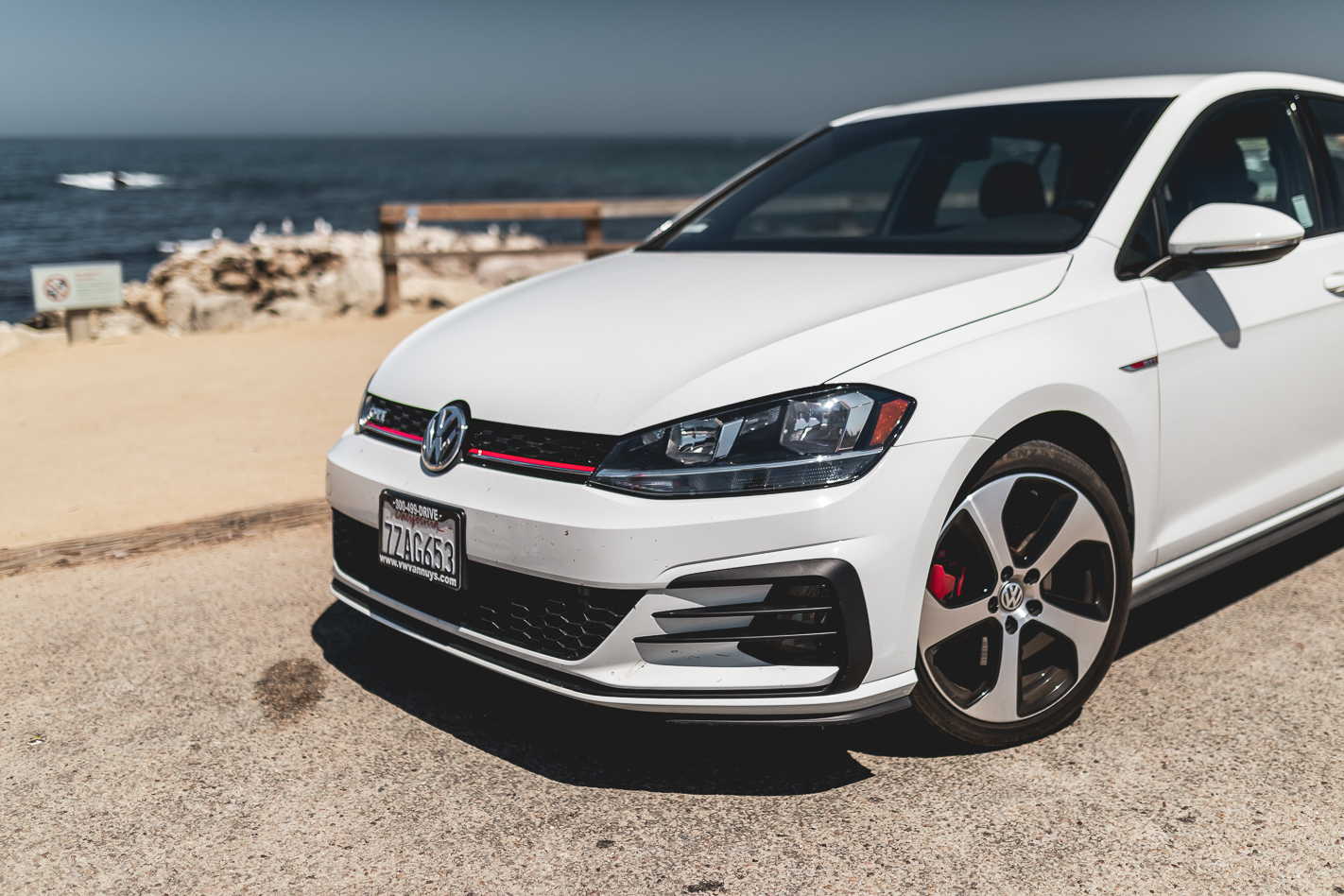
That said, we’re pretty impressed with our specific car as it was clean, had new-ish tyres on all four corners and had minimal damage.
Renting from Turo can be a bit of a mixed bag when it comes to damage and maintenance as the cars aren’t regulated by the company.
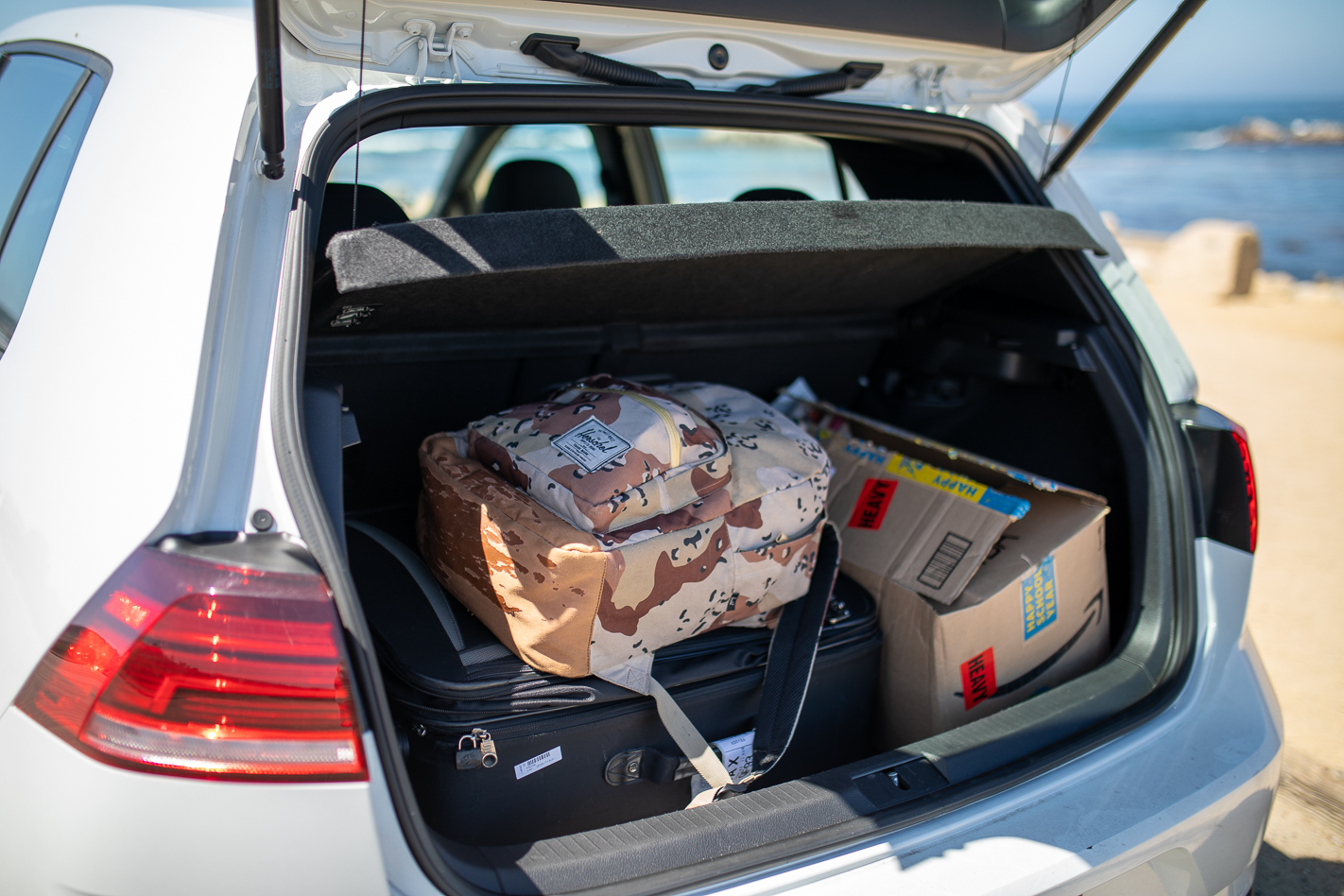
Ahead of an early start for our six-hour journey north, Alastair and I snugly fit in all our luggage and camera gear within the Golf the night before.
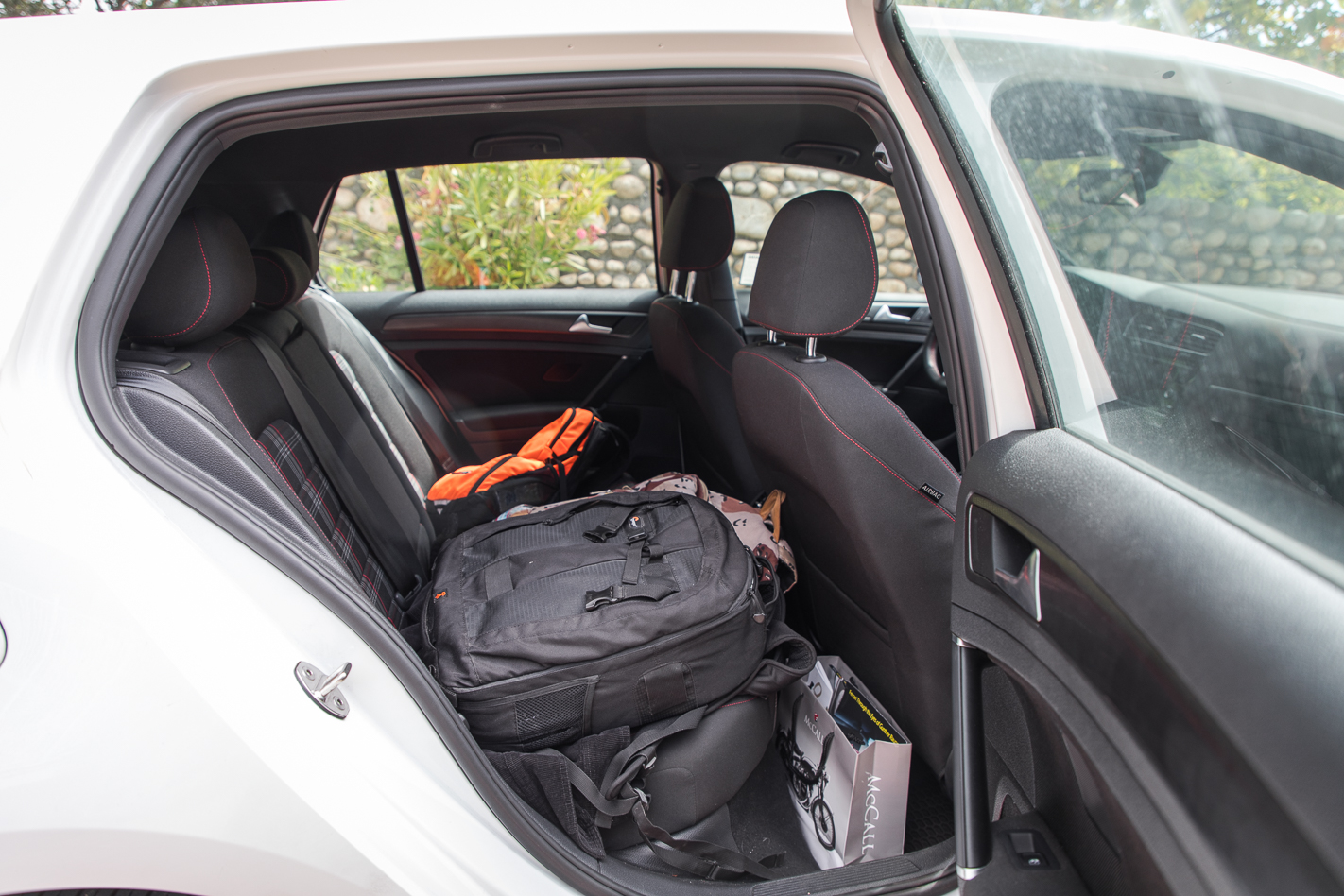
Despite only having to cater to the two of us, we manage to fill the boot (or trunk, y’all) quickly and ended up shoving excess gear into the rear seats.
In an ideal world, we would have travelled along the iconic Highway 1 which snakes around the coast against the Pacific Ocean all the way north to Monterey.
But having experienced the jaw-dropping views, deathly-scary drops and frustrating caravan traffic in years prior, we elect to head straight north on the interstate highway and join the action in Monterey.
Besides, we have plans to head down to Big Sur national park which Highway 1 cuts through later in the week.
There are plenty of nice driving roads throughout Monterey to unleash the GTI on too, so we aren’t devastated about missing the coastal route.
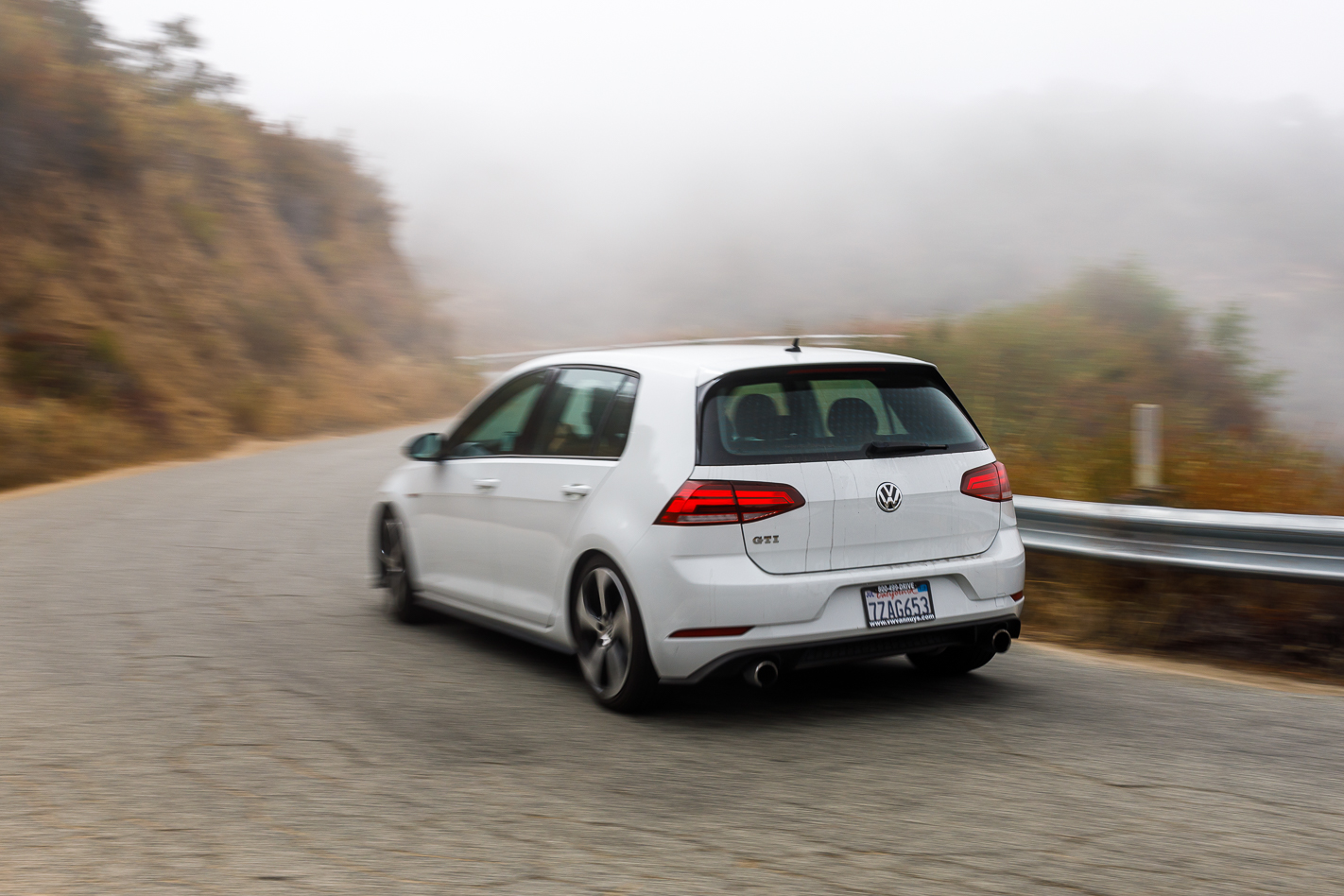
Although the GTI was always going to be upstaged – in our eyes as well as onlookers – by the cars of Monterey Car Week, we needed something that was fast, economical and fun, so that we didn’t miss out on enjoying the week of driving too.
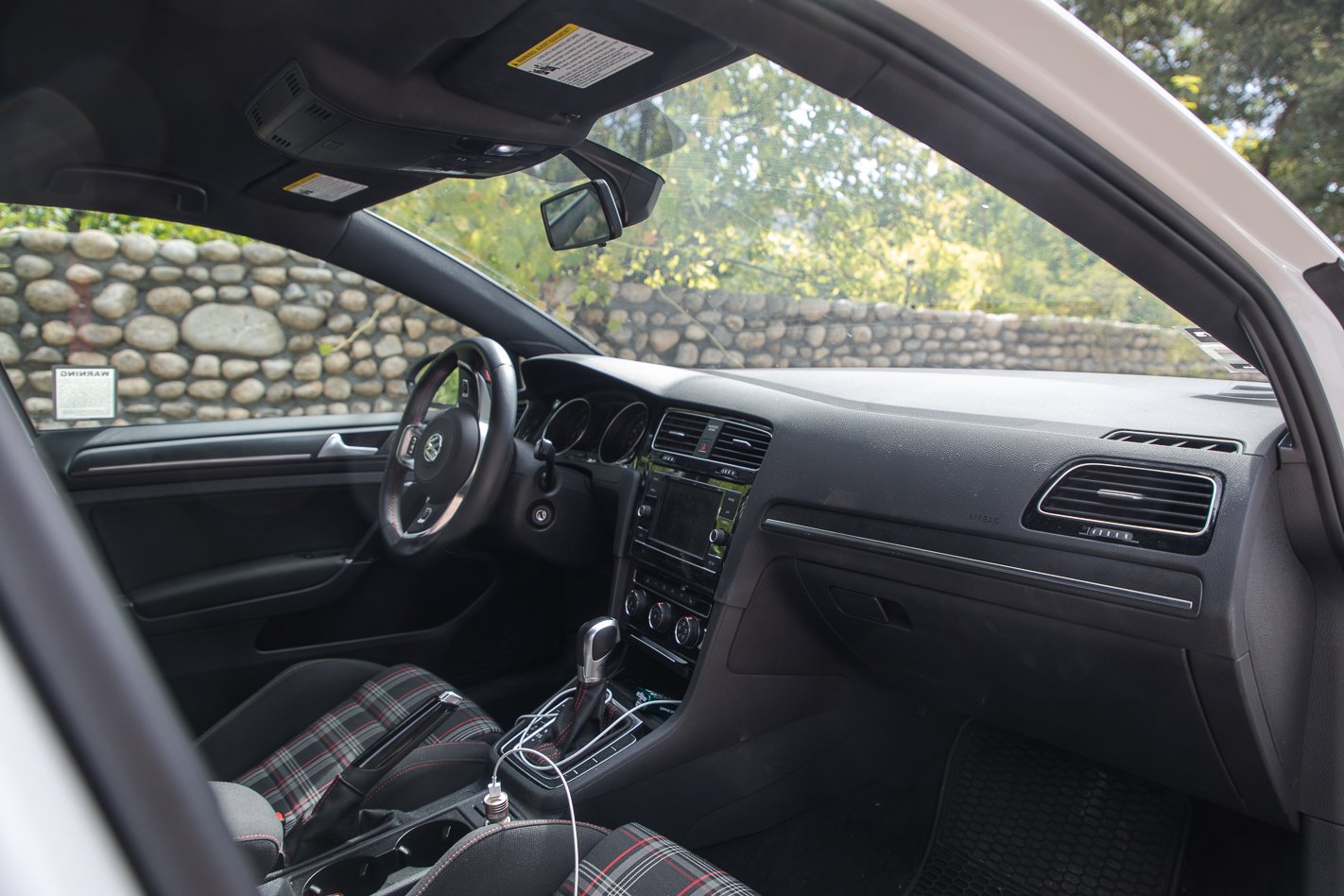
It’s hard not to be in awe of the vast topography as you leave Los Angeles, with the massive freeway meandering its way through huge hills which almost turn to mountains. It’s a world away from a fairly flat Melbourne.
A lot of it is dry and even more of it was still burnt black thanks to the 2018 wildfire season that managed to be the deadliest and most destructive in California’s history.
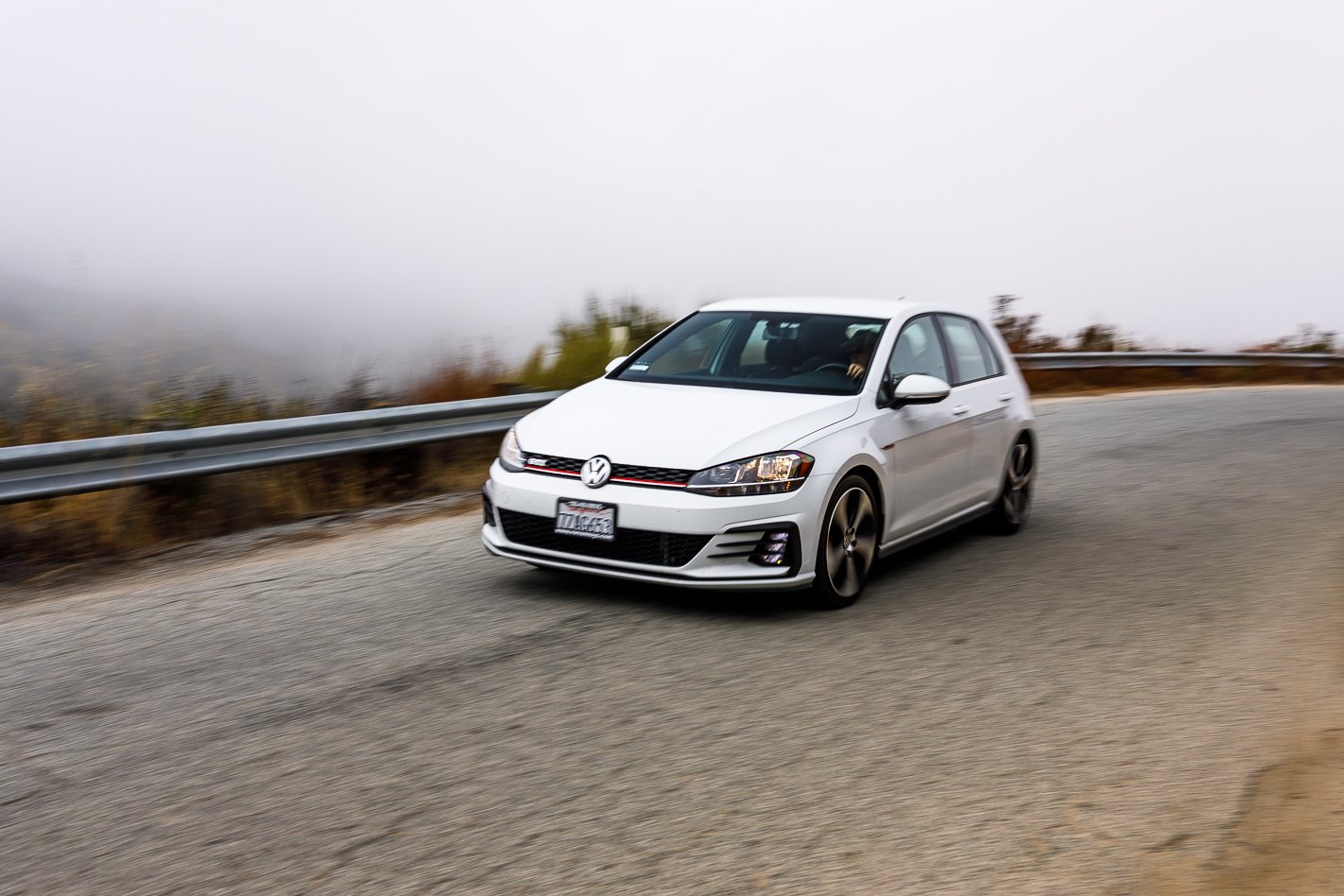
Despite the state being notoriously bad for traffic (and pollution), we quickly grow fond of driving on the highway, as the locals tend to follow the flow of traffic in terms of speed, rather than be watching their speedometers like a hawk.
It comes down to more lenient police who, in our experience, are fairly laid back unless you behave stupidly on their roads. Locals are also more forgiving if you need to change lanes.
The best way to describe their traffic flow is that the effort is a whole lot more ‘active’ than the traffic we endure in Australia, which is categorically ‘passive’.
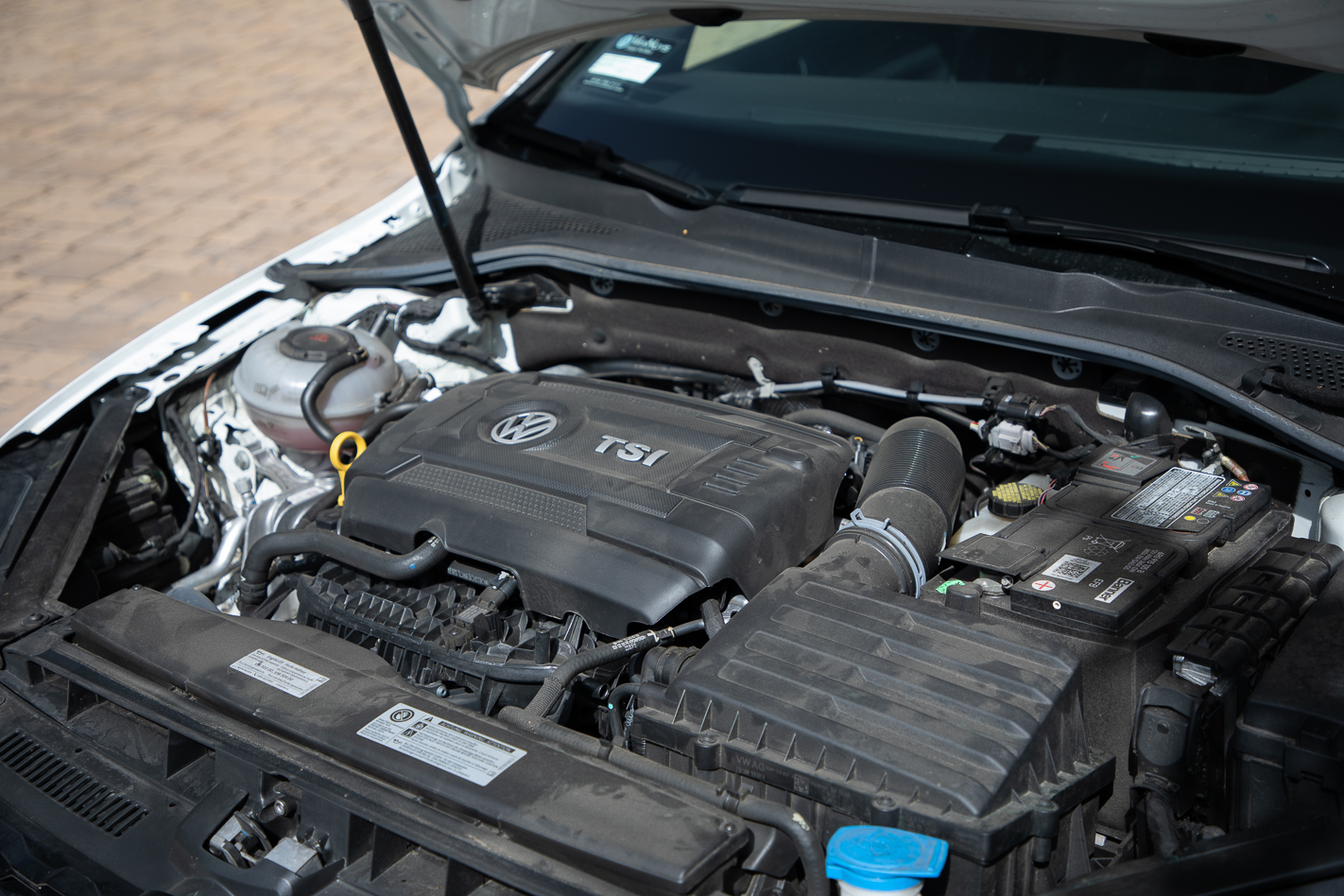
As we continue north, the traffic thins, allowing us to settle down and experience the Golf. Powering through the interstate is easy, with overtaking easily dispatched by the GTI’s tractable power delivery from its two-litre turbocharged engine.
First port of call is to head towards the Pebble Beach Golf Course to get the lie of the land. We pick up tickets and make a bee-line to a hotel where two Bugatti EB110s are sitting idly out front next to a Koenigsegg Agera and Lamborghini Miura. Not a bad welcome at all.
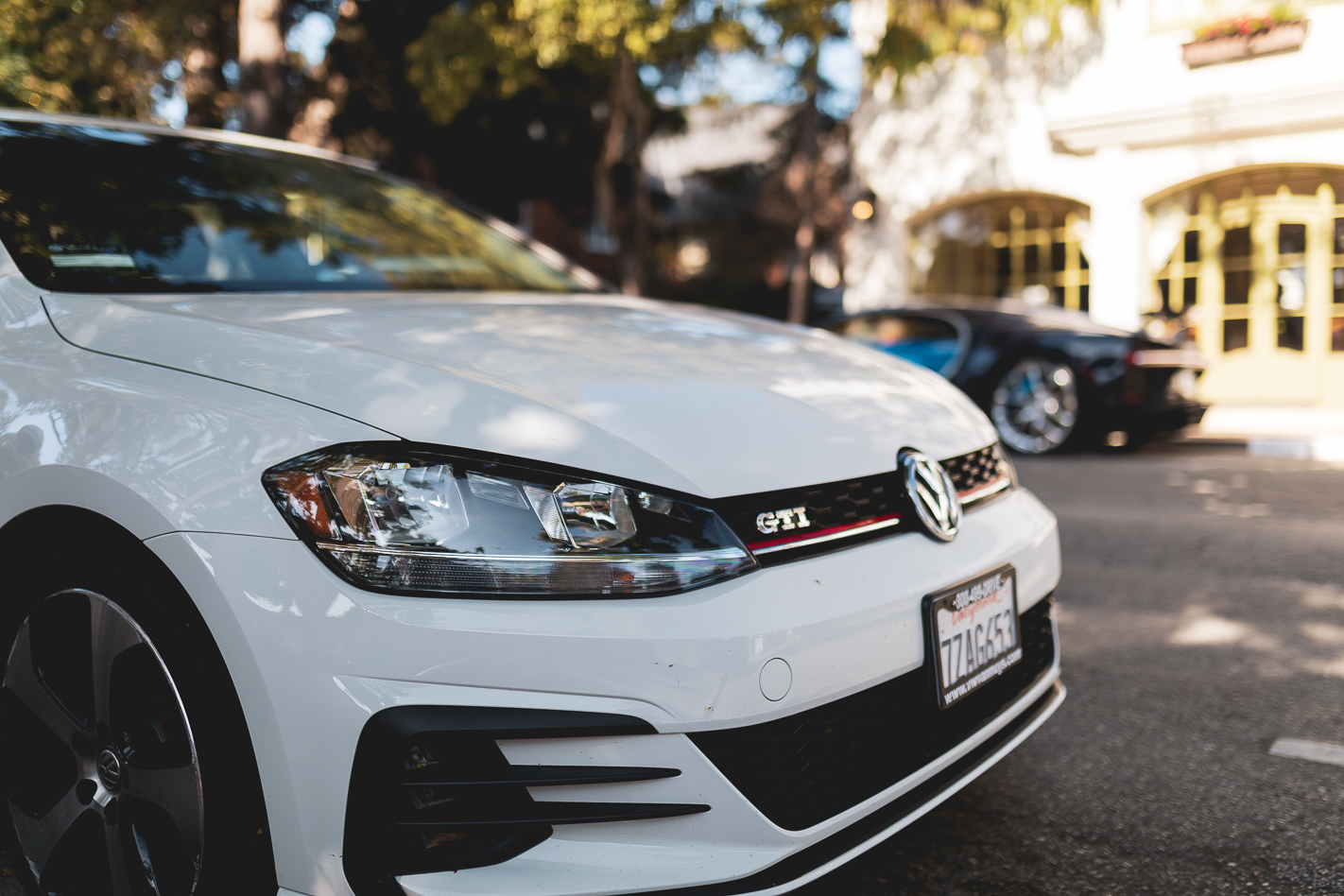
From there, we catch wind of whispers of a McLaren P1 being photographed on the iconic 17 Mile Drive waterfront. No need to tell us twice! We jump in the Golf and thread our way down to the shoot, just in time to catch a sunset shot.
Not that any particular car is difficult to just jump in and go, but we would learn to love the Golf’s proportions, visibility and rear-view camera set-up – super helpful for those quick U-turns and three-point turns.
The following days are spent exploring Monterey, taking photos and making friends. While Volkswagens are often praised for their jack-of-all-trades abilities, they invariably also get called out for being the ‘safe’ choice and sometimes devoid of character.
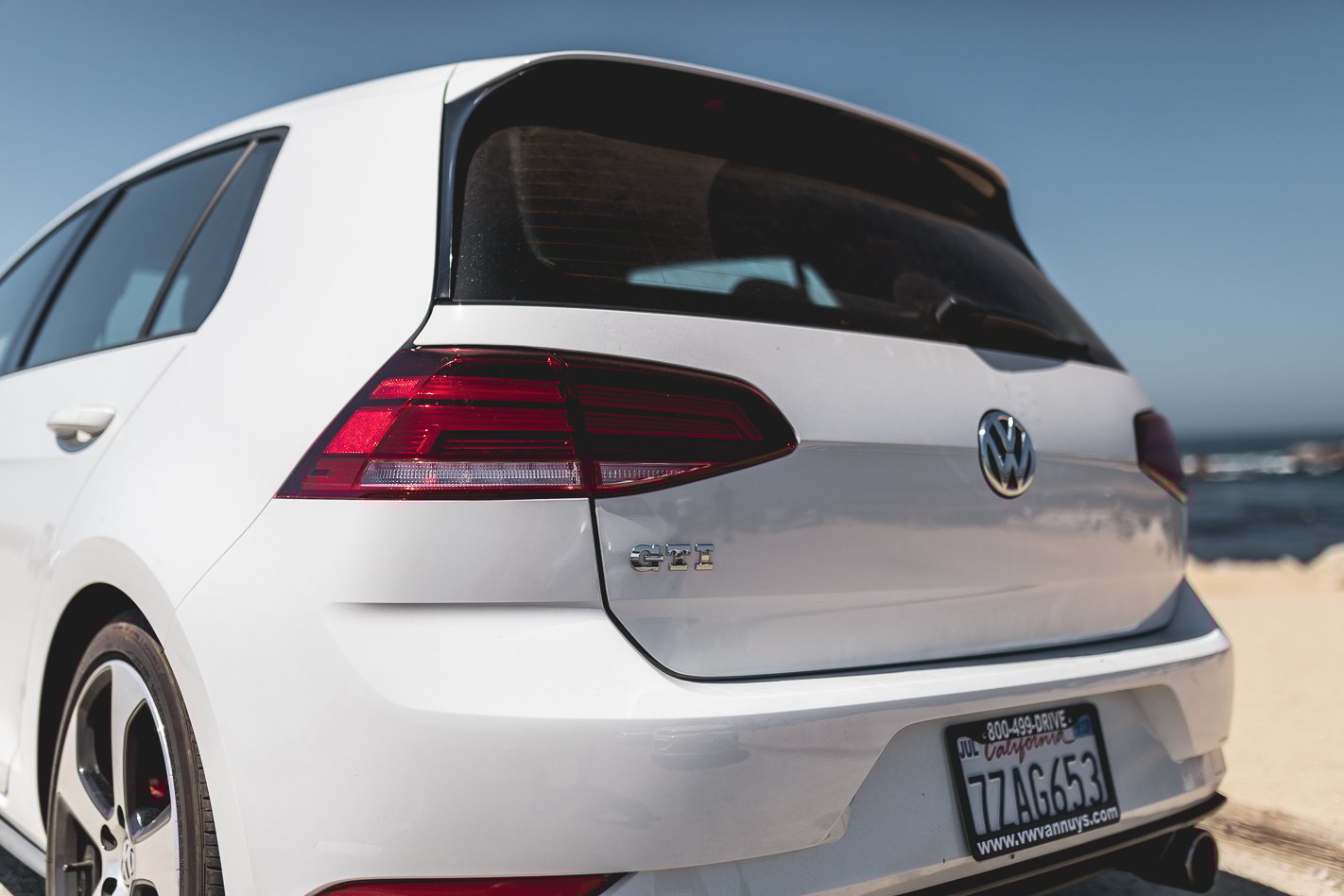
Talking specifically about the Golf GTI, we’d argue that its character is exactly that: it is the jack-of-all-trades car that can you can rely on.
The more and more we drive the thing, both Alastair and I continually remark that we’d picked the perfect car for the road trip.
Despite finding itself in Monterey along with classic car royalty, it keeps up with anything we were following, it returned an economical 7.5 litres per 100km and was accommodatingly utilitarian, too.
As handy as it was around town though, we couldn’t fault the driving experience along the twists and turns through the forests of Monterey.
Hearing the turbo spool up through open windows, the exhaust popping as your shift up through the gears… it all just adds to the accomplished drive.
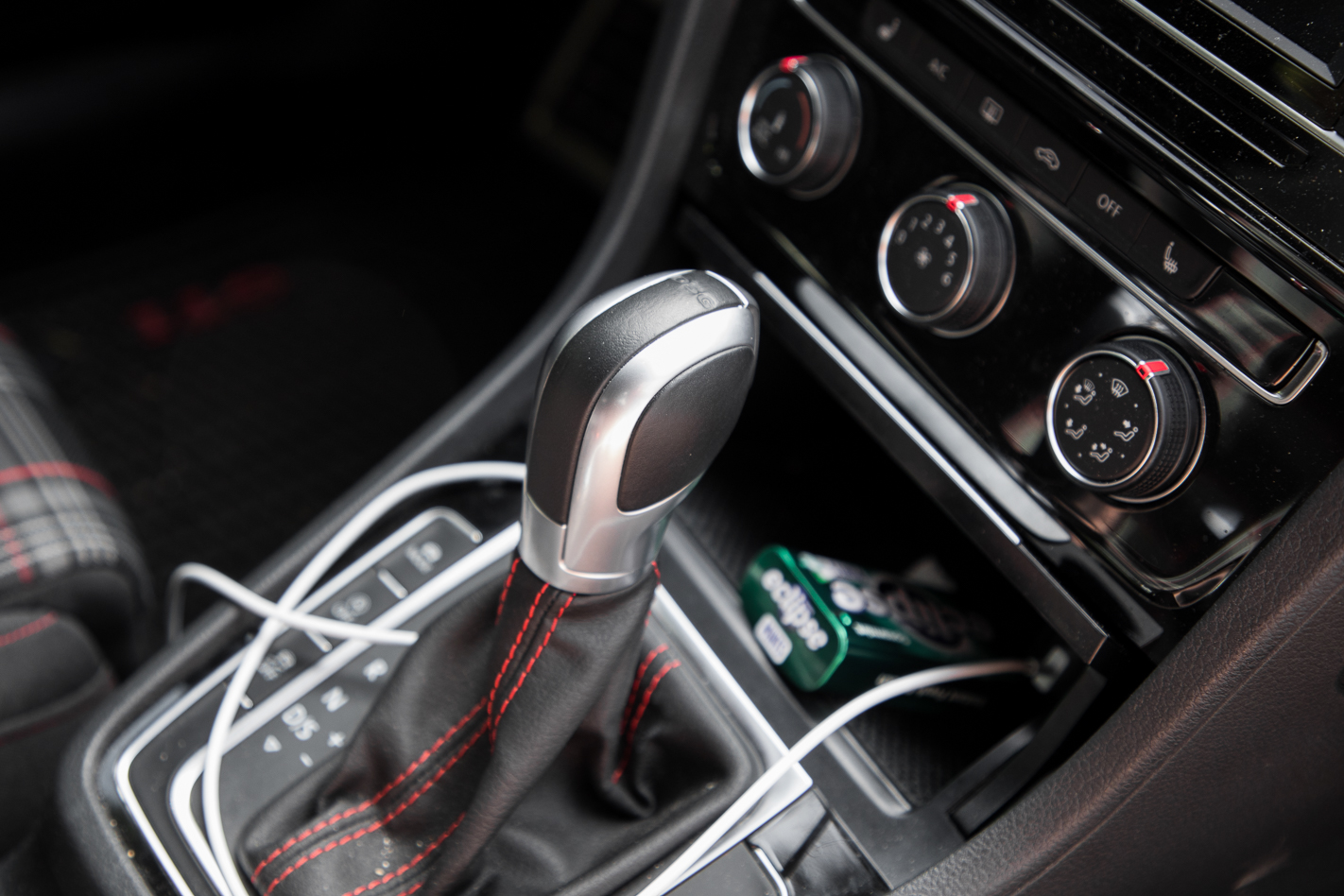
If there’s one criticism we can level at the Golf GTI it would relate to its gearbox. While definitely one of the better dual-clutch transmissions available, it can still behave like a manual at times, occasionally rolling backwards after taking off, for example.
You just have to be wary of the issue and drive the car accordingly.
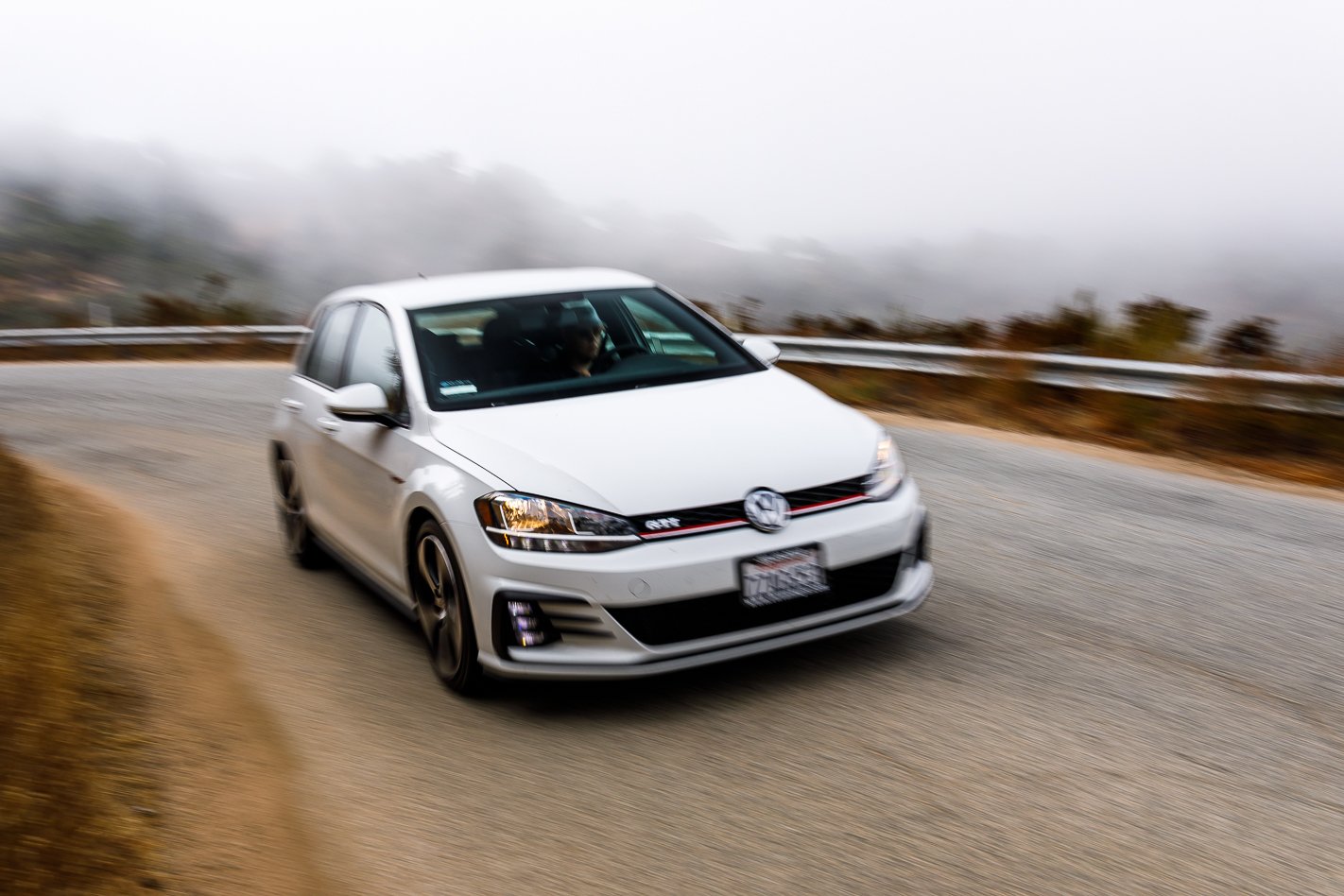
The quality of the car is top-notch as well. This example we rented through Turo had been through nearly 40,000km of driving – rental kilometres, no less – and was still in great shape.
It could have done with another set of tyres, but that’s not the car’s fault.
After spending a week driving the Monterey peninsula and photographing the world’s most expensive cars, we high-tail it back to LA for our return journey home.
It wasn’t a direct route home thanks to a navigation error, but the road we stumble upon out of Monterey through Carmel Valley is a twisty one, so there are no complaints.
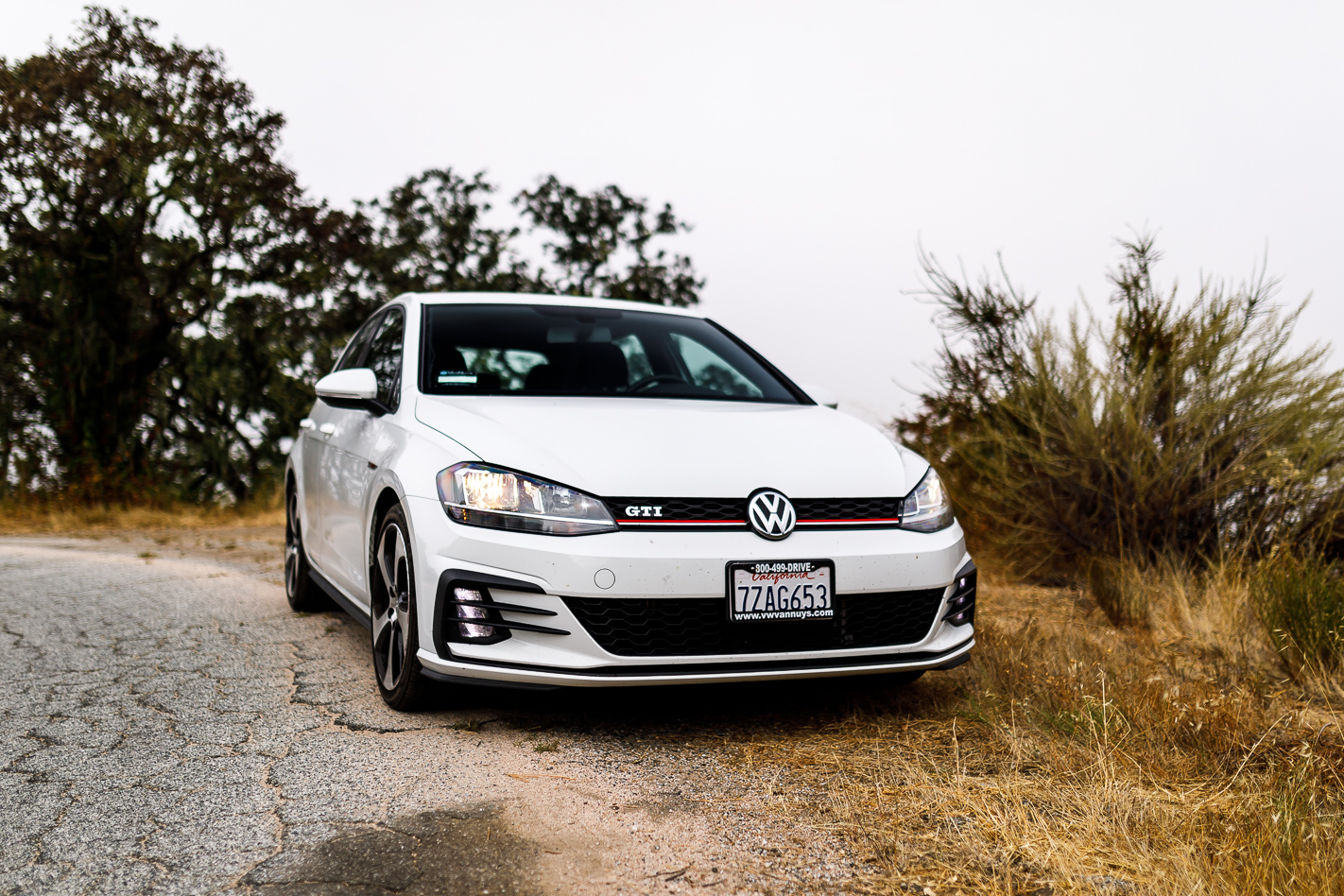
Once back in LA, we wash and refuel the Golf GTI before settling into the harsh reality that is Los Angeles traffic. After returning the Golf to its rightful owner we expressed our gratitude and parted ways.
Although there are some horror stories of rental hosts trying to pin damage of their car on you without cause, our Turo host is friendly and professional. He’s just happy to get his car back and equally stoked that we’d enjoyed it.
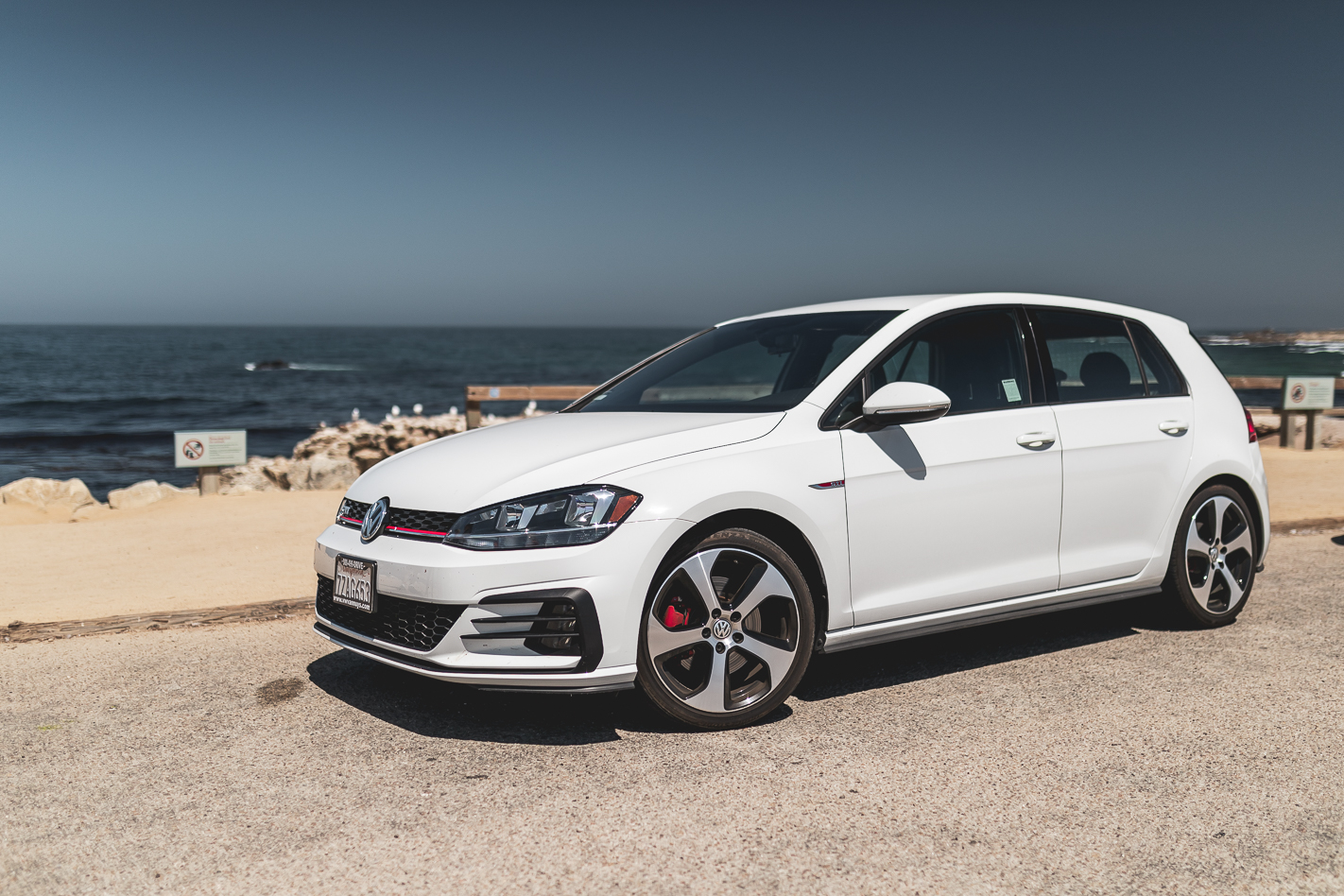
In Los Angeles, it’s easy to get caught up in the glitz and glamour of the supercar culture. But really, you never need much more than a Golf GTI. It’s the perfect car for the perfect week spent chasing down some of the automotive world’s finest
We can’t recommend this trip enough if you’re keen on cars. Nothing we did was unachievable for the average Joe, so mark it in your calendar for 2020 and we’ll see you there!
Where do we begin?!
Off the back of Frankfurt, the WhichCar team tested a couple of crackers from Audi, including the nifty SQ2 (not confirmed for Oz yet) and the Q3 Sportback (which certainly is).
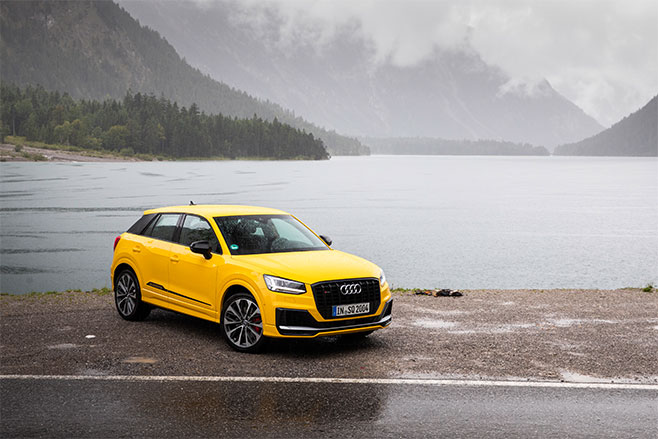
The news, then, that every Audi SUV will spawn its own stylish sportback version came as little surprise. The news that fellow VW Group brand Bugatti is planning its own mega-SUV, though, did catch a few people off-guard. If you think the Bentley Bentayga and Lamborghini Urus are ostentatious…
Across the grounds, Volkswagen Australia announced that it’s agreed to a settlement with local owners who had taken part in a class action over Dieselgate, while the NSW government conceded that the road rule requiring drivers to slow to 40km/h past emergency workers actually needed a bit of fettling. In a rare moment of clarity over bureaucracy, it’s a better outcome across the board.

On the international front, we examined whether the recent Saudi oilfield attacks would affect local petrol prices, and whether 46,000 striking workers at GM’s US plants will have a knock-on affect on Holden’s product plans.
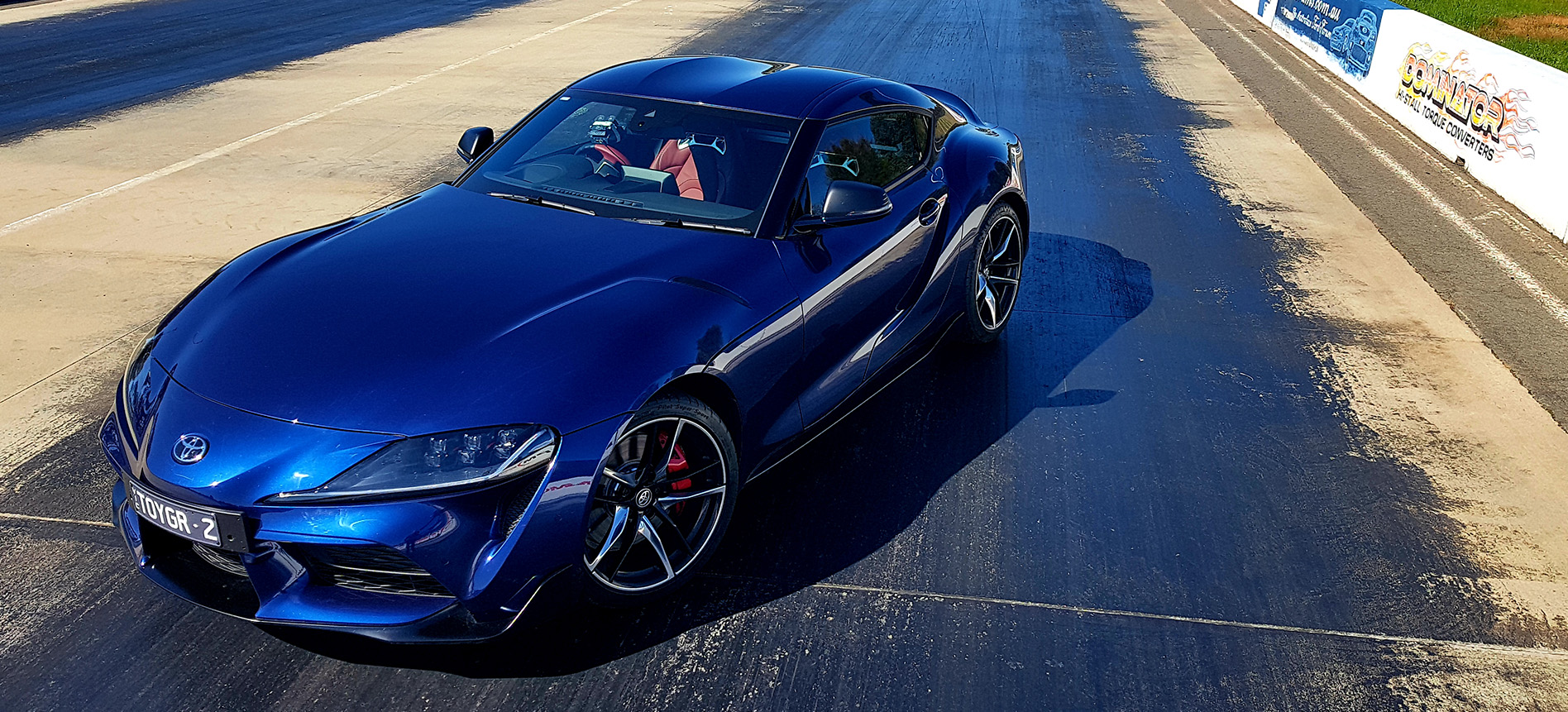
We’ve also been busy behind the wheel, too! We’ve done a deep dive on the stove-hot Tesla Model 3 Performance, taken the new Toyota Supra for a (not) leisurely drive on the drag strip (oh, and we’re a bit sick of people banging on about how much BMW is in the Supra), and bid the Aston Martin Rapide a fond farewell.
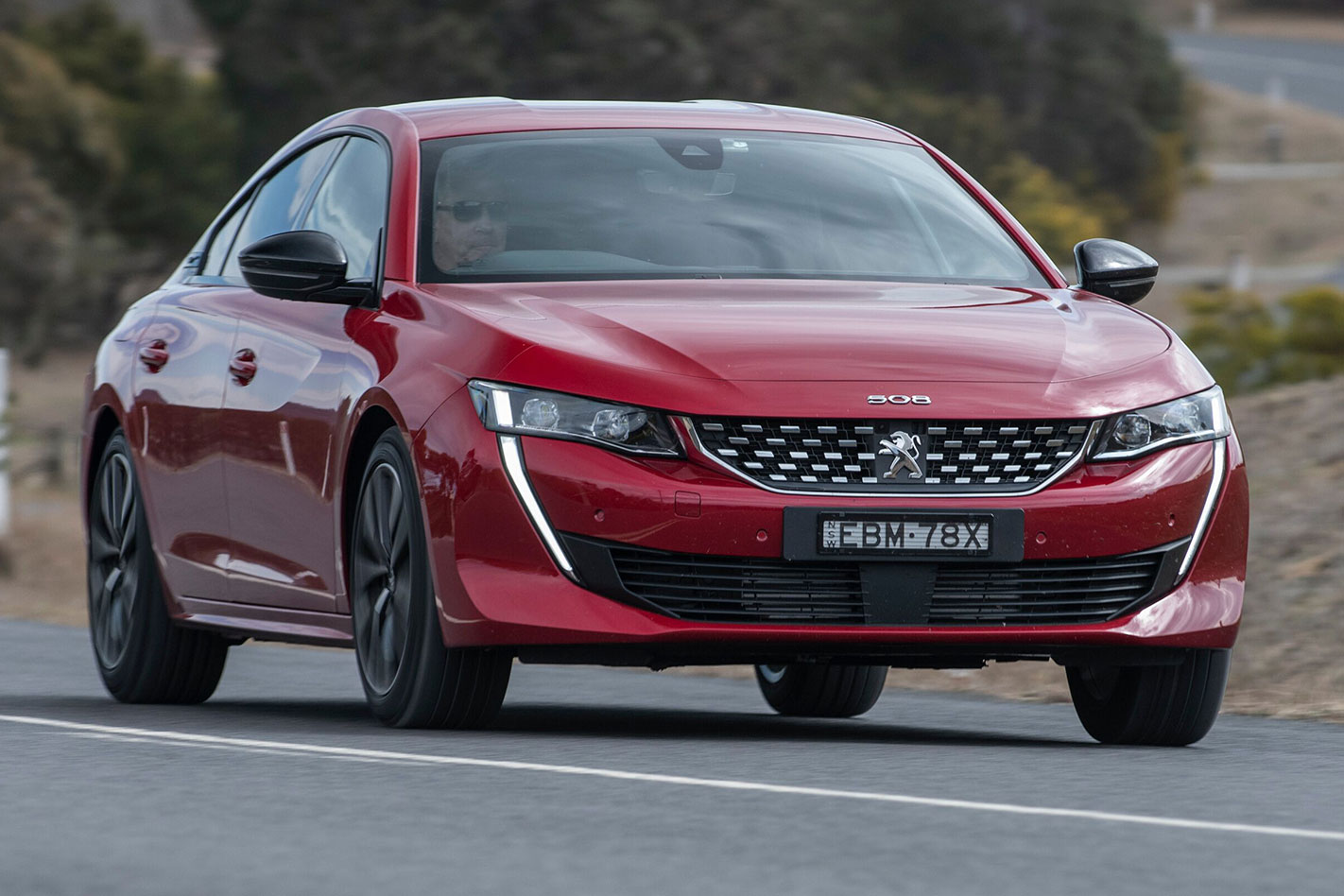
We don’t overlook the real-world stuff, though, with a first-drive review of the brand new Hyundai Venue SUV and the Peugeot 508 GT, a stint in the Holden Colorado and the new Volvo S60. Our range reviews, too, are a huge part of our commitment to bringing Aussie car buyers the most up-to-date info on the cars that they want to buy.
And as we look ahead towards the end of the footy season, we covered off just why everyone was so cranky after the recent Supercars race in New Zealand, revealed amazing photos of snow-covered race tracks in NSW (in September!) and met the most unusual tribute to the Holden Racing Team you’ve ever seen.
On top of all this great stuff, our social channels have been running red-hot as well. Make sure you head over to WhichCar’s or 4×4 Australia’s Facebook page, the Wheels and Motor insta accounts and Street Machine’s amazing YouTube channel.
And if you’re really keen to test your automotive knowledge, check out our new weekly automotive quiz. Competition is already fierce amongst our teams here at WhichCar HQ!
Have a great weekend!
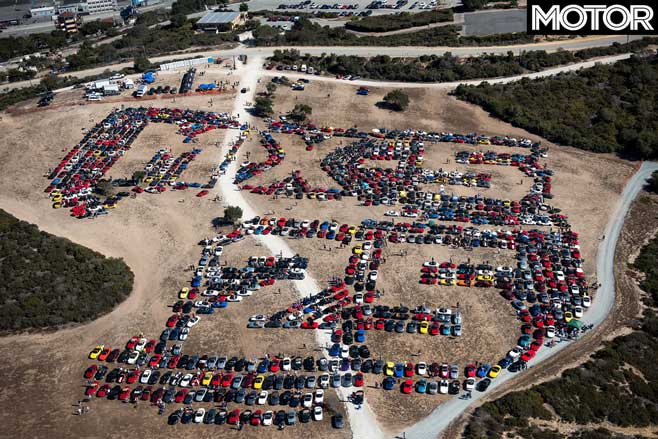
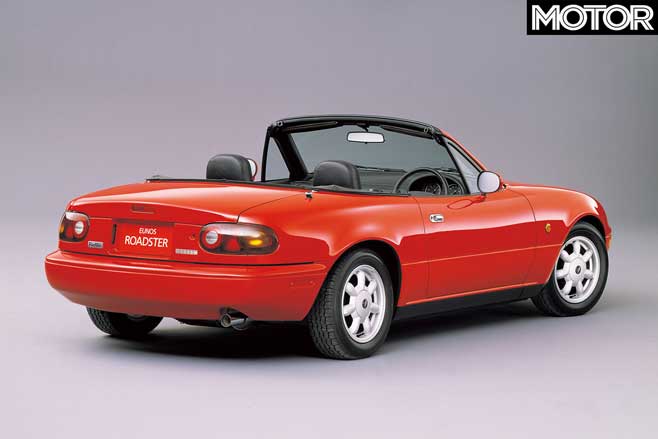
IN MAY, 1989, a compact, lightweight, affordable sports car hit the road, one the world had not seen before. It was called the Mazda MX-5 and as you read this, it will have been on continuous sale for almost exactly 30 years.
To mark this momentous occasion, we sat down with Bob Hall, the man credited with dreaming up the original MX-5 concept – although he is quick to clarify that conceptualising the car is not the same task as that of turning it into a reality. As Hall himself is a former motoring journalist, at none other than Wheels Magazine, there’s no better person to tell the fascinating story of the MX-5’s conception.
In Hall’s own words:
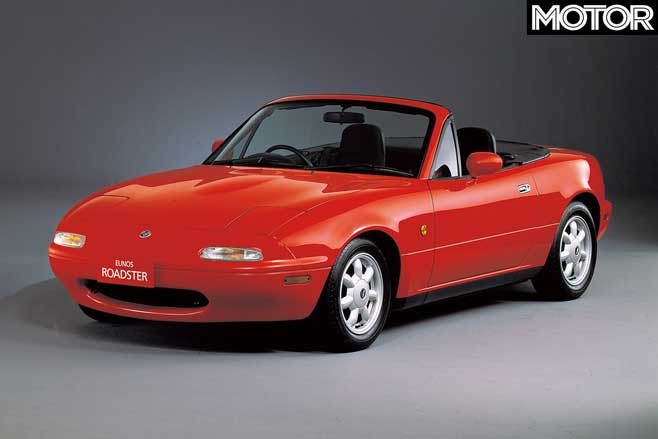
I joined Mazda North America on October 21, 1981. But it all began a few years earlier, rooted in a conversation I had with Kenichi Yamamoto, then Mazda’s chief engineer. Of course, it was all made easier by the fact I spoke Japanese.
I just assumed I was going to be in Public Relations, because when you’re a journalist and you go to work for a big carmaker, you go into PR. But they put me in design. I doubled the non-managerial staff count of the design department in California – meaning it went from one to two. When they expanded product development they put me in there, which has chased me around my whole career. I really rankle at the ‘father of the Miata’ title I’m too often given, because today there really are no single fathers of any car; it takes a team and a village to develop a vehicle from scratch.
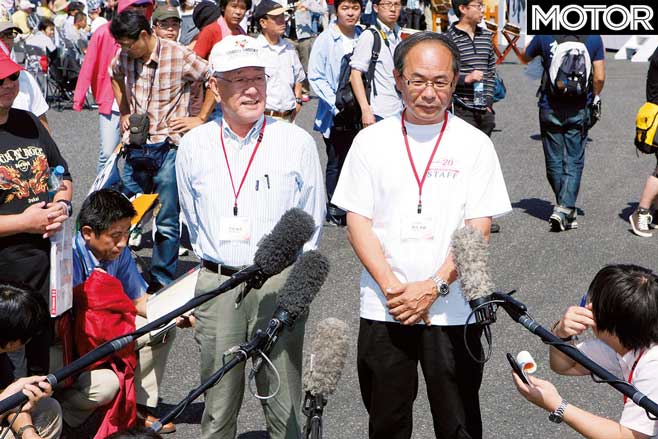
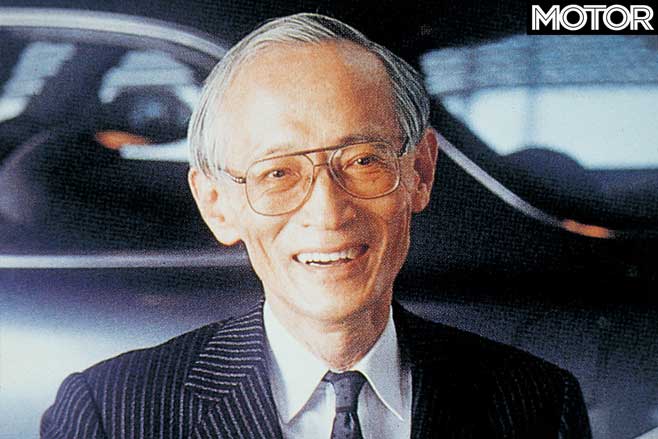
[In the foreword for Thomas L. Bryant’s excellent book, Mazda MX-5 Miata: Twenty Five Years, Hall begins with Toshihiko Hirai.] Remember that name. When something is successful everyone wants to find the creator. I guess that’s just part of the fixation people have with stuff. And now that the Mazda MX-5 has had its [30th] birthday, and [more than] one million have been built, lots of well-meaning individuals are either calling it Tom Matano’s car or are praising me as the father of it. It is not Tom Matano’s car, nor am I the father of the MX-5. The father of the car is the aforementioned gentleman, Toshihiko Hirai. It is his car if ownership must be attributed to a single individual.
Think of a film; there is a director, and there are producers, plus countless designers, writers, cinematographers, editors, sound and lighting techs, and others, not to mention the cast. All too often, history gets rewritten, and the guys who put in the hours and years and really crack their arses hard, giving up anything like a normal life, get left out or forgotten.
I’ll take full credit for coming up with the concept, or at least the idea that the concept of the classic British roadster still had some legs. My dad had this endless run of British open sports cars. I remember us driving together in his Austin-Healey to the Vista Del Mar concours in Los Angeles, and we were driving down Olympic Boulevard in LA and the car just stopped dead in tracks due to a failed SU fuel pump.
Once I got my driver’s licence, I drove my mother’s Volvo, my dad’s later Healey, then Datsun 510s and all kinds of things, and I remember thinking how solid and reliable and neat the Japanese cars were, but why didn’t they have cool, fun sports roadsters like my dad’s Healey?
That stuck with me forever and, a few years later, a day figured prominently regarding my first meeting with Yamamoto and Mazda’s PR chief Bunzo Suzuki. I always felt that there was something left in that idea. I continued to run into Mr Yamamoto once or twice a year, and we’d meet and talk cars, baseball, whatever. We met shortly after the launch of the first Mazda RX-7 and he asked me what Mazda should do next after that car.
So I did this horrible chalkboard scribble, suggesting that Mazda should build an affordable, open, rear-drive sports car. He asked “why?” and I replied “because there aren’t any more left.” Austin-Healey was gone, as was the MGB. The Alfa Spyder was something a little different.
He seemed to understand, but I didn’t think anything would come of it. He excused himself for a moment, and I was about to erase the chalkboard before Suzuki said “let’s take a photo of that” which he did and then I erased it. Something like two years later, I got a call from Kishimoto-san, Mazda’s main PR guy in North America, asking me to come down for a meeting, which turned into the design job offer.
One day I was in the studio working on the B2000 pickup truck and felt a tap on my shoulder. It was Yamamoto, who asked what I was doing. I told him “I’m working on the pickup truck” and he said, “not important right now, you should be working on your lightweight, two-seat sports car”. I’d completely forgotten about it, but he had not. He said he’d talk to my boss, also Mr Yamamoto, but no relation.
They agreed that I should pursue the idea of the lightweight two-seat roadster sports car. However, because the pickup truck is so important to the American market, it must continue.
“You can work on the sports car as much as you like prior to 8:30am in the morning, between 12:00pm and 1:00pm, and after 5:30pm in the evening.” So I began starting my day at 6:00am, having lunch at my desk, and then usually working on the sports car for a little extra time before going home.
I had heard that this is how Yamamoto tested people, to see how much they really believed in their ideas that they would work on them in the beginning on their own time. I guess I passed the test! I spent more time trying to get the idea floated and approved than it took to actually develop the car.
This was about 1982. A lot of people just felt it didn’t make any sense. Mazda had no notion of slipping something so entirely new into the product plan, as Mazda was somewhat reactive to the marketplace at the time.
For example the first kernel of the original RX-7 was originally a redevelopment of the RX-3. Ready for this – if you bought an RX-7 in Japan it had rear seats! The RX-7 made the product mix because it was replacing something that already existed in the market. Bringing something entirely new and previously undeveloped into the product plan was difficult.
They set up a group called the Technical Research Division, and it was designed to look at things that were out there; technologies, studies of human factors, not necessarily to design a specific product, but to study tech solutions, powertrains, and other things that might apply to one or many of the things in the product pipeline. Concurrently the studios in Japan had an idea to come up with a sports car, and we in California had our little sports roadster.
Several ideas got knocked around. A mid-engine car; a front-engine, front-wheel drive car; and our car, which was always front-engine, rear-wheel drive and never deviated from that. Then someone had the idea to have a competition among these ideas, and that’s when our project became a bit more real and legit; we had no certainty that our car would ultimately make it into the model mix. But at least we could formally present it to top management as a possibly official product development program.
Three full-sized clay models were built; we had some challenges with our car because we didn’t have any official engineering support to help with hard points and so forth. Our car ended up being modelled around an RX-7 rear axle. That gave us one dimension – track width – and knowing the various relationships needed for a sports car, we could extrapolate from that and come up with a wheelbase, then other dimensions, so we had some numbers and dimensions to fool with.
Mark Jordan, who was hired in late 1982 and another designer, did this “Gen zero” car, which actually looked a fair amount like what became the first-gen MX-5. Except, since its dimensions were extrapolated around a too-wide rear axle, it was way too big for what we envisioned. The original idea for the car was that it would be done primarily out of the parts bin with hand-me-down items; obviously the less stuff that had to be scratch-designed and developed just for the sports car program, the cheaper it would be to produce the car, and we thought an easier business case to sell.
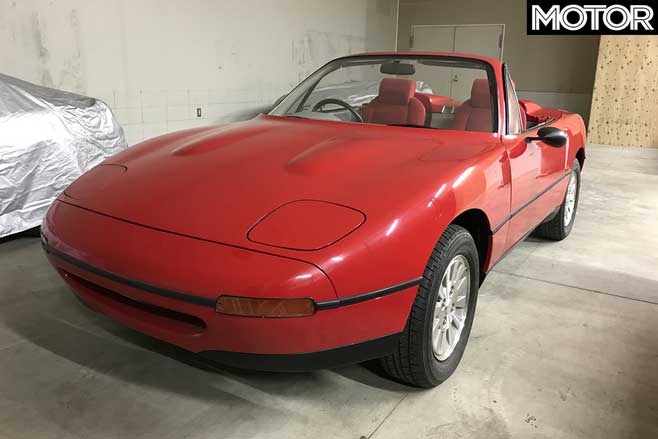
There was a time during the “competition” between the two Japanese studios and us in California after initial sketch presentations, that we would build clay models. Then there would be a cut down to two and then finally to one, which would get built.
Mark came back from presentations and we were going to build a clay model for management review, but there were some inside political machinations going on and it was possible they weren’t even going to consider our car.
We made our model of clay up to the belt line with a see-through fibreglass removable roof that could be taken off to show what the car looked like topless. What they thought looked only pretty good in sketch form now looked really good in full scale model form.
Ours was the last of the three concepts shown to management. The cut lines where the top met the body were concealed with tape, and after all the presentations were done we removed the tape and pulled the top off, and Sato stood up and said “build that one!”
It is interesting that one of the Japan studio’s concepts was for a mid-engine car, and shortly after the whole management review process was over, everyone attended the Tokyo auto show where Toyota revealed the mid-engine MR2.
Everyone at Mazda couldn’t help but think how lucky it was that we had decided to go with a front-engine, rear-drive sports car instead of a mid-engine design. The overhangs and some proportions of our mid-engine proposal were different, but the overall concept would have been much the same.
As our car was scheduled to come out a few years later (late 1989 vs 1985 for the MR2) it would have looked like we copied them. This was all great for me, as my idea now had front-row visibility with Mazda’s board of management.
Luckily there was a bit of a race to see which of three internal development projects would come in line first. The roadster, an MPV mini-van, or a tiny little 550cc mid-rear engine domestic market city car that was designed, and also a brilliant example of vehicle packaging. This car never made it to market, and thank goodness the MPV got the nod ahead of our sports car, which delayed us a bit.
Ultimately this helped as an airbag was developed for the MPV, which we then had time to package into the MX-5 instead of motormouse belts or some of the other passive restraint concepts circulating at the time. It costs a lot of money, and takes an enormous amount of time to engineer airbags into a car that wasn’t originally designed to have them; so thank goodness our project came a half step behind the MPV, so our car could be engineered from the ground up with airbag systems in mind.
One car that got caught up in this mess was the Australian-built Mercury Capri. It wasn’t an identical competitor to our car, but it would have come out before us if not for the snafu on passive restraints. By the time the Capri was re-engineered for airbags, it came out after us.
The launch of the car was dubbed “Miatamania,” since the production car was revealed in the States at the Chicago Auto show in the spring of 1989, and there were some in the company who wanted to hold the sale date for July 4. Even though ours wasn’t an American car, the first hues you could get were red, white and blue.
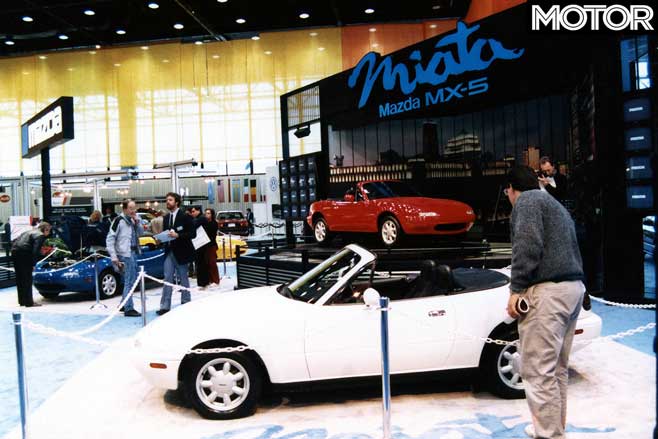
Luckily the marketing director, Duane, said “no, put ’em out there as soon as the dealers get them.” So we didn’t have to deal with excuses of scandal by trying to over manage the supply and demand. Demand was far more than many in the company hoped for. Dealers were getting $5K-$6K over sticker for them at the very beginning.
I get a lot of questions about what the car was and wasn’t. Did we leave anything on the table? No, not really, it was the car we all wanted, and it proved right in the market.
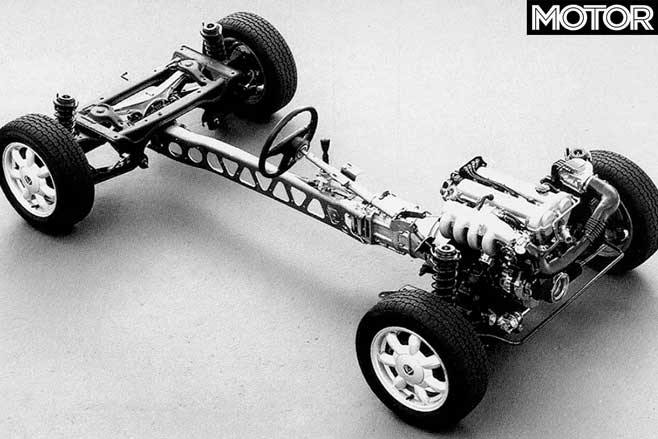
Did we ever intend to build it with anything other than an inline-four for power? No. Like the Nissan 1600 and 2000 roadster, the Lotus, the MGB, and so many other of the British roadsters, they all were most right and most successful as a sports car with a four-cylinder engine. Did we plan to race it? Not specifically, we always felt that was best left to the customers and racing teams. We did, however, discuss that you only really get great racecars from great sports cars, but we didn’t set out to build a racecar.
I fought really tough and dirty to make sure that the convertible top was super light and simple. That’s why it’s not buried beneath a hard tonneau cover. I wanted it to be easy to unlatch at a stop light when you wanted to go topless, all you had to do was “throw it over your shoulder” to put it down. It also had to be just as easy to fold up at a stoplight if it began to rain. You didn’t have to get out of the car, you didn’t have to mess with a folding hard cover, and you just grabbed it and pulled it up and latched it down. Simple, easy and light.
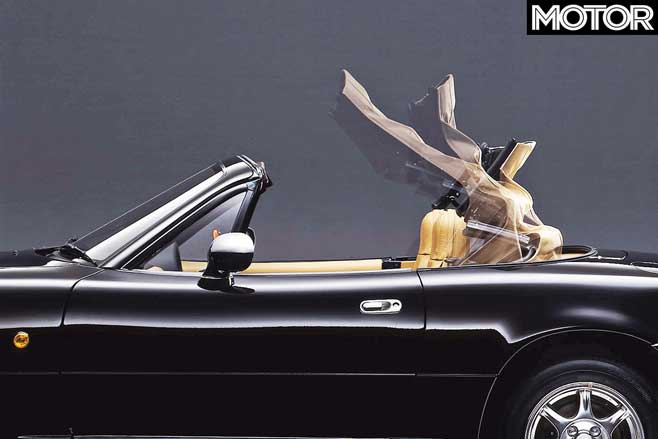
What about the ND? I like it. I like the styling, the quality built into it, and the idea of keeping the weight down as much as possible; building in the lightness, in other words.
Working on the MX-5 has, in a way, become an albatross around my neck which, for better and worse, continues to impact my career today. When I joined Geely, we had to stipulate that I would not develop, in any way, a front engine, rear drive roadster sports car for them – no matter how badly they wanted it or wanted me to do it.
I still have some ideas left in my head, and even though the industry has matured, I believe the car business will change more in the next 50 years than it did in its first hundred, so there’s lots of change and innovation, and new products and product types yet to come.
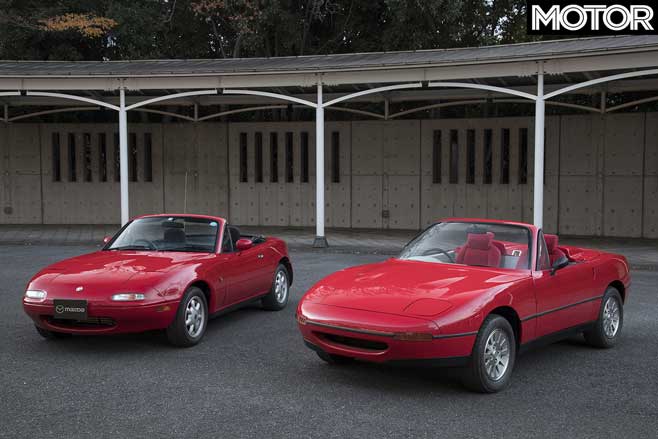
But with MX-5 did we imagine a more than [30] year model run with more than a million built to date? It really wouldn’t have been smart to think that way, but we did believe with some solid updating along the way, and a successful second generation car, we didn’t see any reason it couldn’t live 10 years in the marketplace. Which it has now done so – three times in a row.
30 years and 4 generations of the MX-5
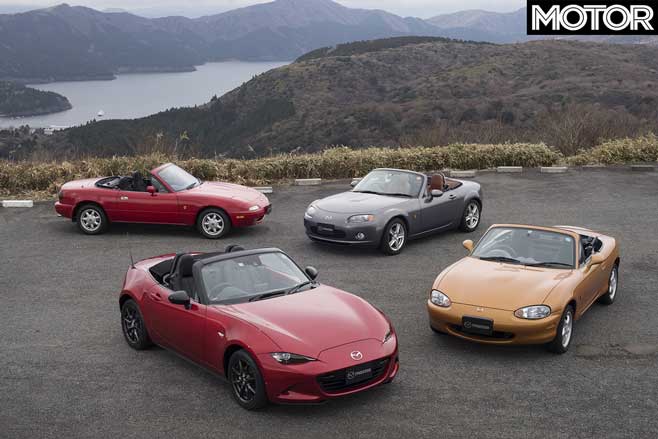
First-generation (NA) – 1989
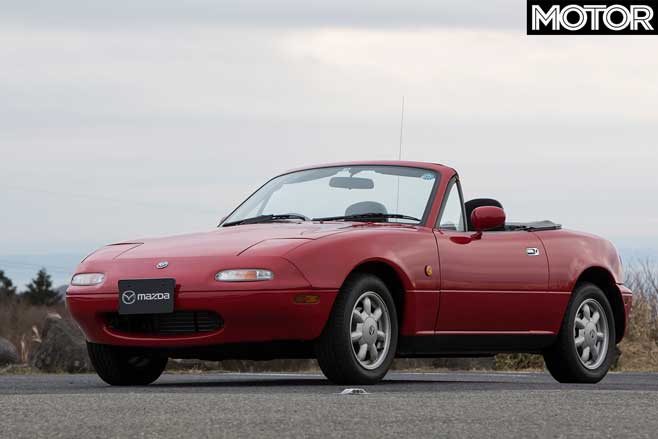
The one that started it all. Pop-up headlights, lightweight 980kg body and a revvy 1.6-litre atmo four. It really did revolutionise the market.
Second-generation (NB) – 1998
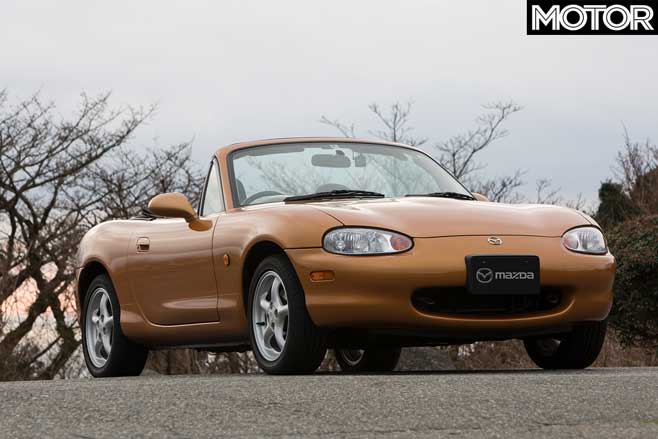
Power upped to 106kW and it ‘races’ to 100km/h in 8.6sec. It’s the only MX-5 to come with a factory turbo variant (and Oz-made SP).
Third-generation (NC) – 2005
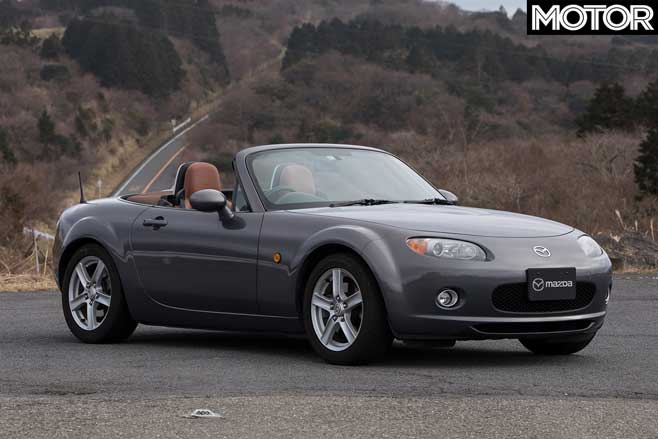
Bigger, heavier (1129kg) and with a 118kW 2.0-litre four-cylinder engine. It’s also the first generation to offer a retractable hard top.
Fourth-generation (ND) – 2015
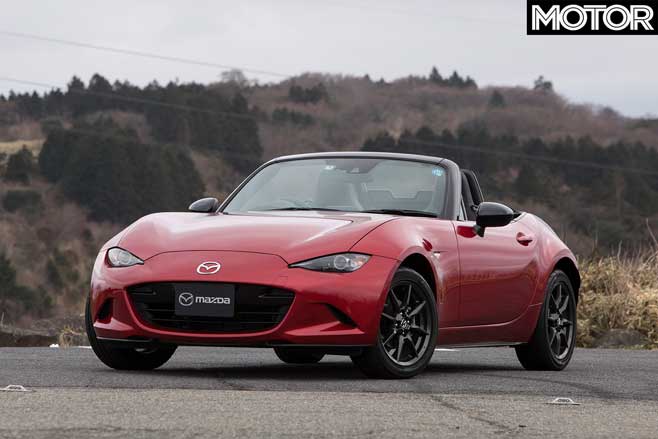
With the introduction of the 1.5-litre option, the fourth-gen MX-5 is the second lightest. Latest 135kW/205Nm 2.0-litre option is the pick for many.
Audiu00a0has vowed to bring the funk back to itsu00a0A6 line-up, introducing new tech to its mid-size sedan staple.The three-model line will include the A6 45 TFSI and A6 45 TFSI S-Line, which will use a 185kW/370Nm 2.0-litre turbocharged four-cylinder engine.
The 55 TFSI S-Line will use Audi’s three-litre 250kW/500Nm V6 petrol engine, and will lead the charge when it arrives in showrooms later this month. Both engines feature mild-hybrid electric help via a 12-volt system for the 45 TFSI and a 48-volt system for the 55 TFSI.
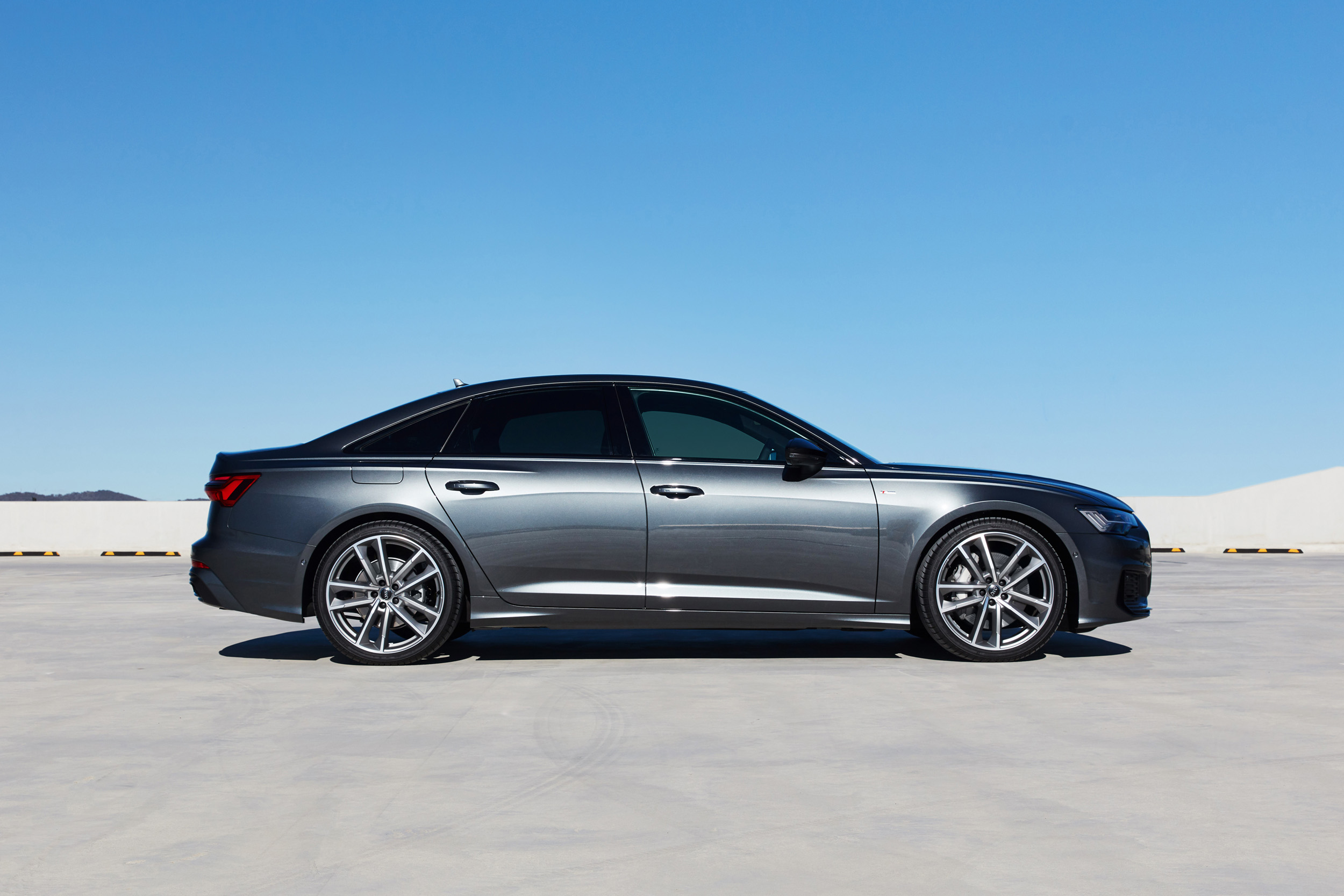
Pricing kicks off at $95,500 for the 45 TFSI, rising to $105,200 for the 45 S-Line and $116,000 for the 3.0-litre car.
All models will be equipped with Audi’s all-wheel-drive quattro system, while heated front seats, Apple CarPlay/Android Auto, wireless charging, loose wheel detection, Active Display digital dash, illuminated seat belt buckles and LED headlights will be standard across the range.
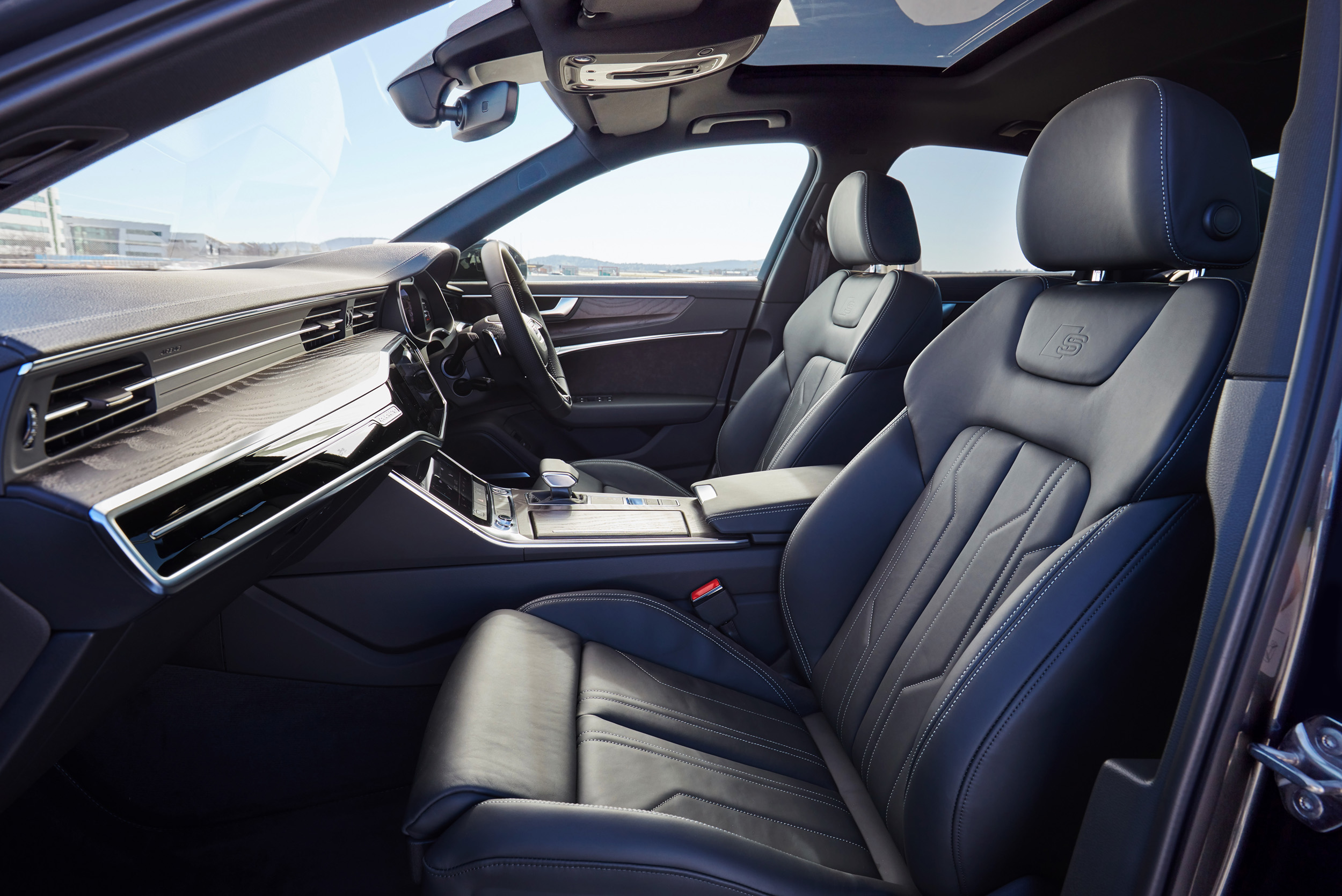
All three variants come with autonomous emergency braking (AEB) with pedestrian detection, adaptive cruise control with traffic jam assist, front and rear parking sensors, lane assist, rear cross-traffic alert and a 360-degree camera.
A Premium Plus package is available on S-Line variants for an additional $9800, which brings higher-spec HD Matrix LED headlights, tinted windows, panoramic sunroof, a Bang and Olufsen audio system, electrically adjustable steering column, electrically operated boot and an interior lighting package.
The A6 comes standard with 21-inch rims – the largest in the segment, according to Audi – as well as complex LED lighting structures front and rear.
On the inside, the A6 uses a new three-screen layout that eschews the old-school methods of jog wheels and hand-writing pads, instead relying on capacitive touchscreens as part of its new Connect Plus system, which also includes an emergency call button built into the car’s roof lining.
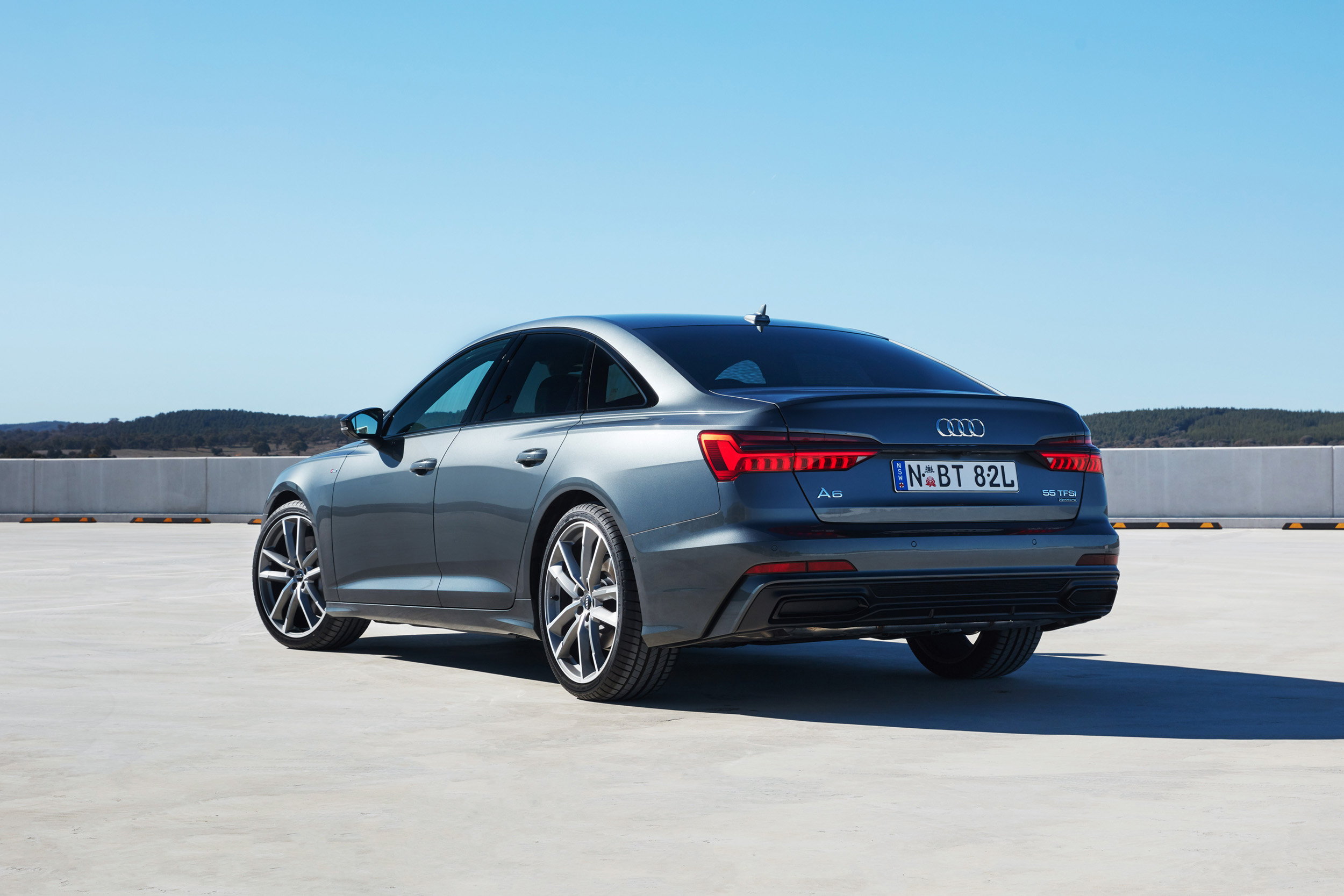
The A6’s MLB Evo platform has been tweaked to improve and stiffen suspension mounting points to improve its handling, and the A6 uses multilink suspension front and rear in conjunction with adaptive shocks as standard issue.
Size-wise, the A6 is 6mm longer than the old car but has an extra 17mm rear legroom in the rear seat.
Quick review – Audi A6 2019
Updated, upstyled and teched-up… the new-generation A6 shows Audi’s brave new face
What is it?
It’s no secret that Australia has fallen out of love with the sedan over the last decade. Fortunately, the move to SUVs and dual-cabs has not yet meant the death of the bodystyle known as the notchback, and the A6 is Audi’s second-largest after the A8.
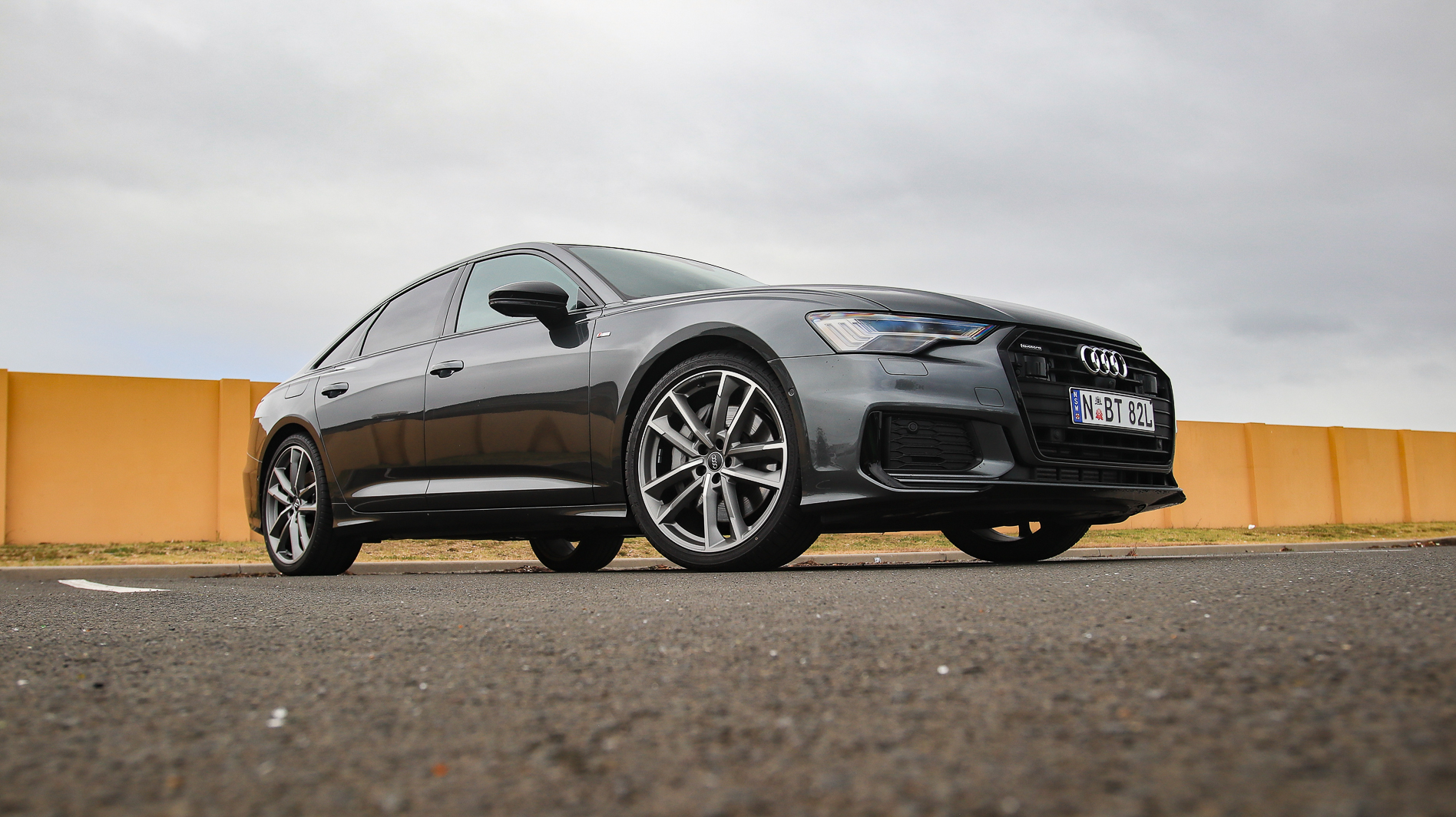
The A6 comes with all-wheel-drive, proper eight-speed automatic transmissions, decently powerful petrol engines and a host of high-spec safety tech, all encapsulated in a handsome, artfully styled car with attitude to spare.
What’s it like to drive?
We only spent two days with the top spec A6 55 TFSI with its 3.0-litre V6 petrol engine, and it’s a great reminder that bigger displacement engines are still a very good thing.
It delivers its 250kW and – more importantly – 500Nm like blended double cream, effortlessly piling on tractive effort with barely any inputs needed underfoot.
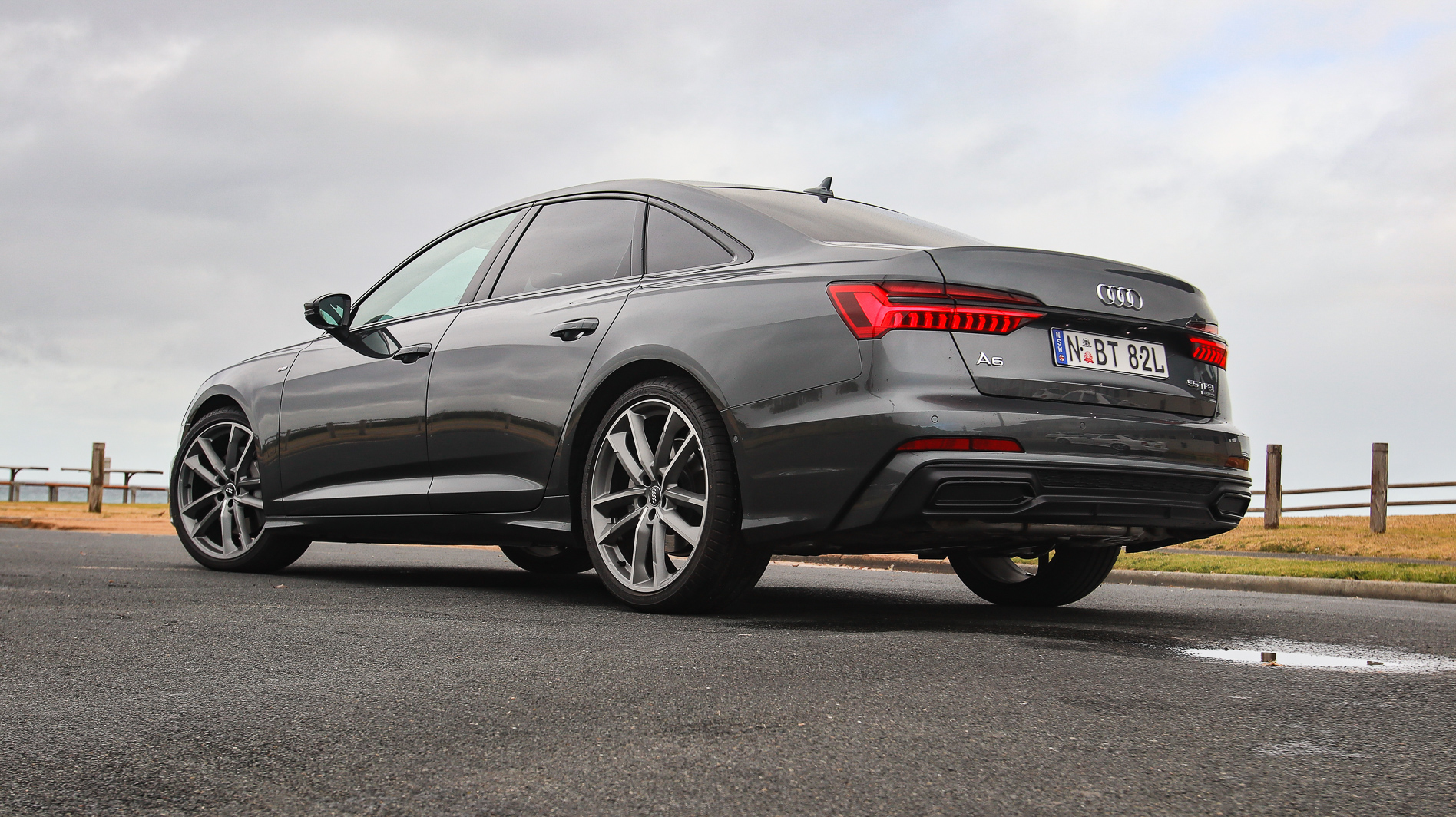
Its low centre of gravity and broad footprint give the A6 great purchase, and the quattro’s power delivery between its two axles is undetectable. The only downer is an overly conservative gearbox tune that feels out of step with the engine’s innate abilities.
Noise suppression, steering and braking are excellent, too, confirming the A6’s luxury schtick with well-weighted and thoughtfully considered calibrations. In short, it drives every bit as good as it looks.
What’s it like to live with?
The sedan was the car of choice for many for a long time, but the gradual shift away to space-compromised SUV bodystyles means that people overlook the mission statement of a good four-door – it’s a singularly terrific way to carry four people in absolute comfort, and the A6 proves the rule.
It’s not just the well-profiled seating throughout, or all of the niceties like rear climate control and USB points, LED lighting and loads of toe and knee room. It’s the big door apertures, too, and the headroom afforded by the low-slung seat bases.
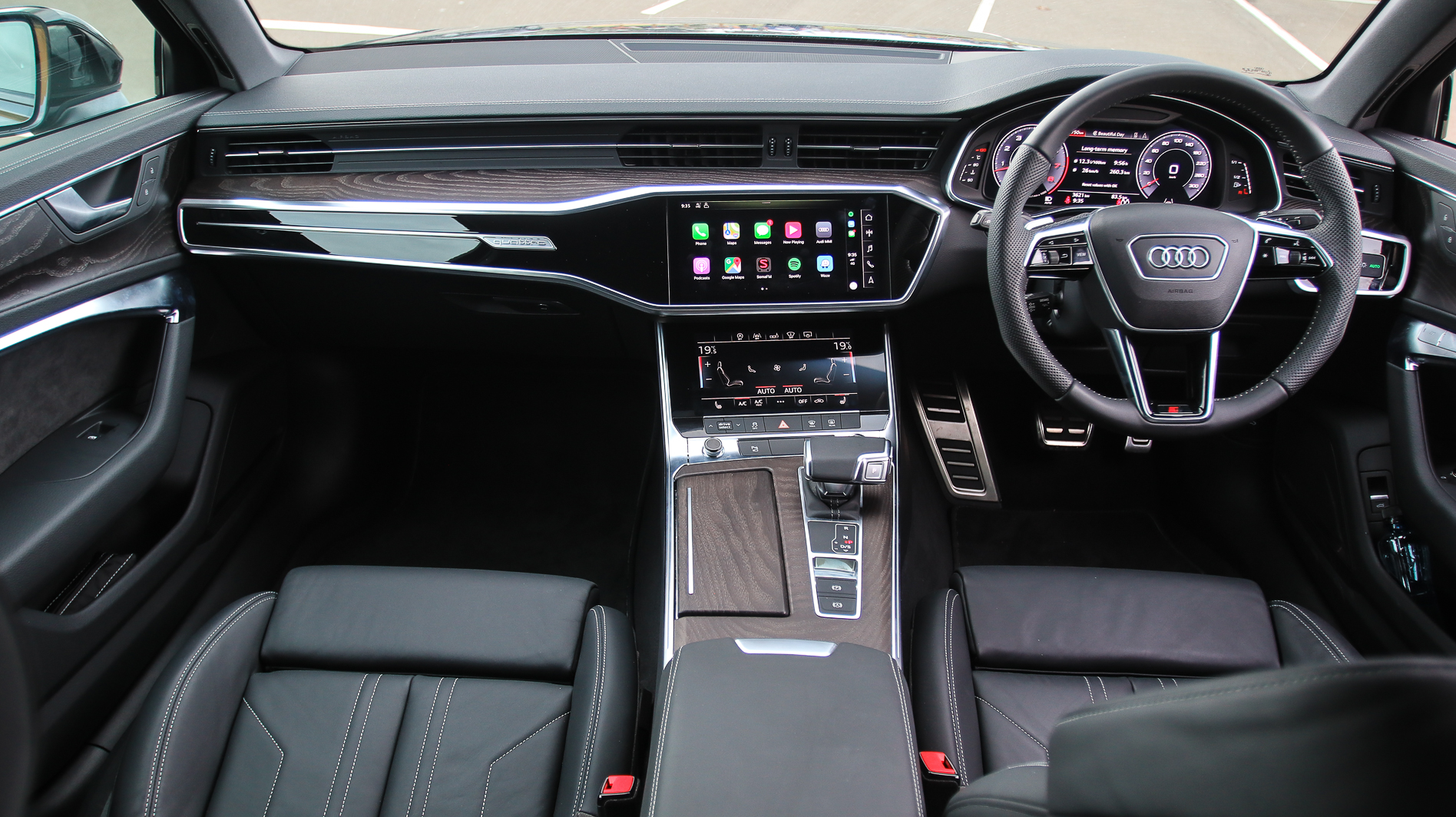
And what a lovely place to be in, as well. Simple, strong design language is augmented by genuinely high quality materials, and the overall effect is like living in a luxurious home that you can’t quite believe you live in.
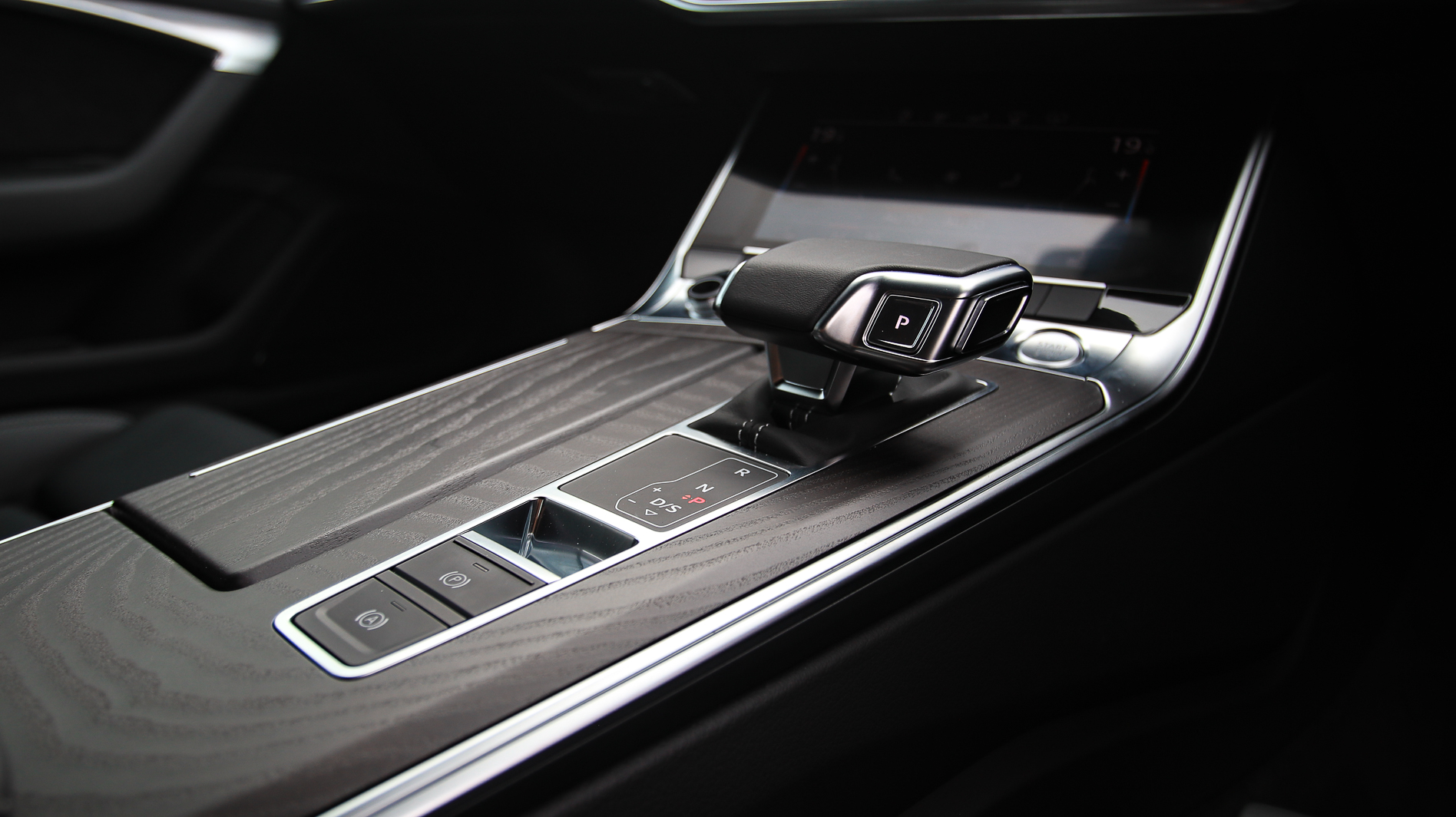
The A6’s big selling point, though, is the switch to a touchscreen multimedia interface… and it’s a great example of how sticking with something for a long time – to wit, the centre console shuttle wheel – can be a bad idea.
With its truly massive screen real estate, the system is pretty confronting at first blush, and there are a LOT of menus under menus to scroll through to do even basic things like screen dimming at night. What used to take a nudge of a wheel and a click of a button can now take far longer.
With time and education, though, it will become more natural, and kudos to whoever developed the screen coating that resists fingerprints so well!
Is it worth the money?
This is the top spec A6, and it sells for $116,000 before on-roads. Sounds like a lot on paper, but doesn’t feel like that behind the wheel.
Of course, the decrease in luggage space over an SUV is notable (the A6 has 530 litres of decently usable space, though, which isn’t bad), but I’d argue the A6 cuts a far more impressive figure in the driveway or office carpark than just another box on wheels.
Pros: What a stunning looking car; great interior; wonderful to drive
Cons: auto gearbox can be tardy; mass of multimedia screen can be daunting
Rating: 4/5
It looks super cool – no questions there. The hot-rod-style Benz concept, branded Vision Mercedes Simplex, pays homage to the first Mercedes while being a window into the future. Its forward-thinking nature is found in both the end product and the build process.
That’s because this is, according to chief design officer for Daimler AG, Gorden Wagener, the first concept from Mercedes to be signed off with an entirely digital and computerised build process, one sans traditional clay modelling.
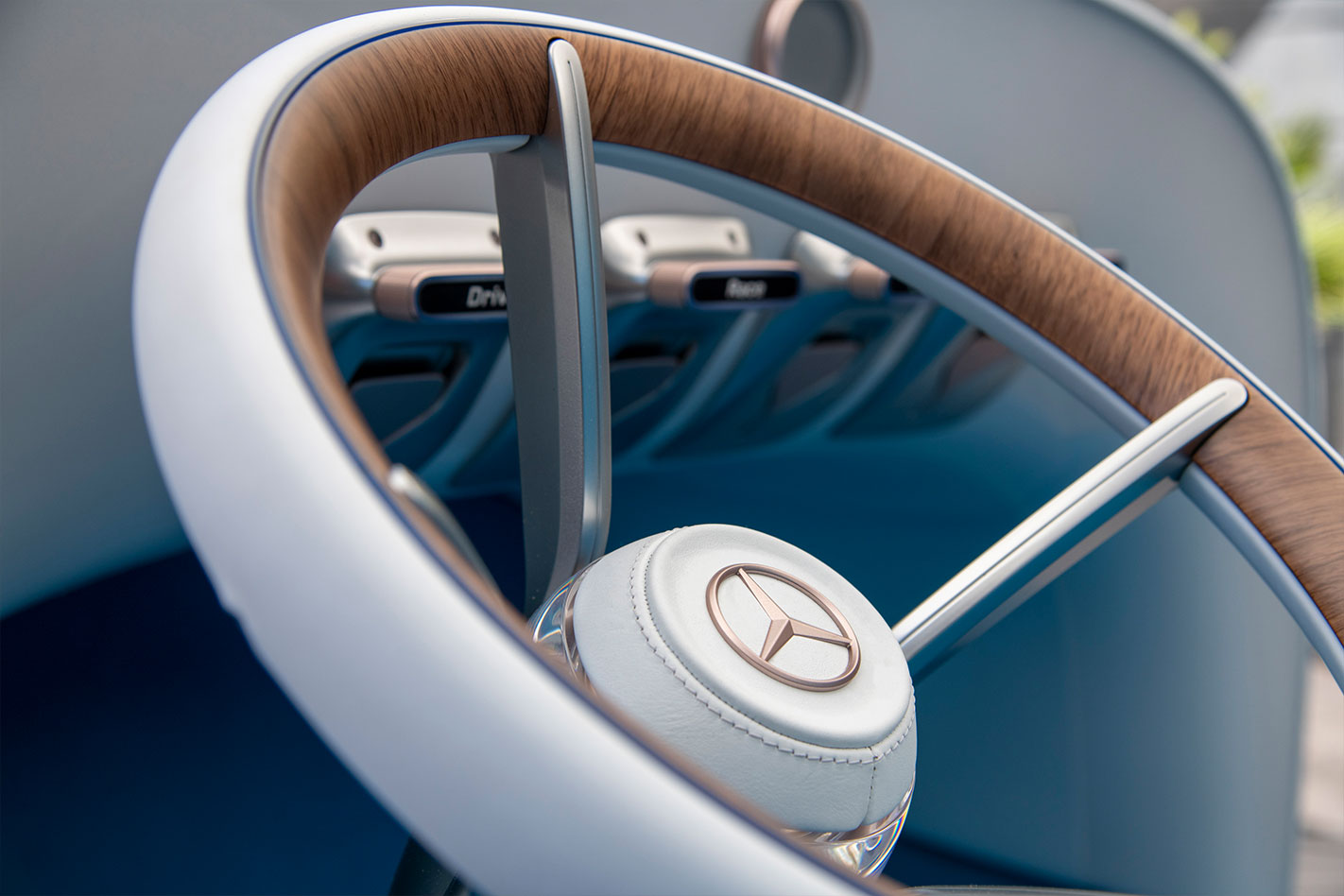
Instead, Wagener and his team decided to delve into the world of virtual reality at the marque’s all-new design studio located in the achingly beautiful Côte d’Azur in Nice, France. If the designers can’t find inspiration here, they’re unlikely to anywhere else.
According to Wagener, a special building deserves a special reveal. And the Simplex certainly delivers with its unique path from first sketch through to the final concept.
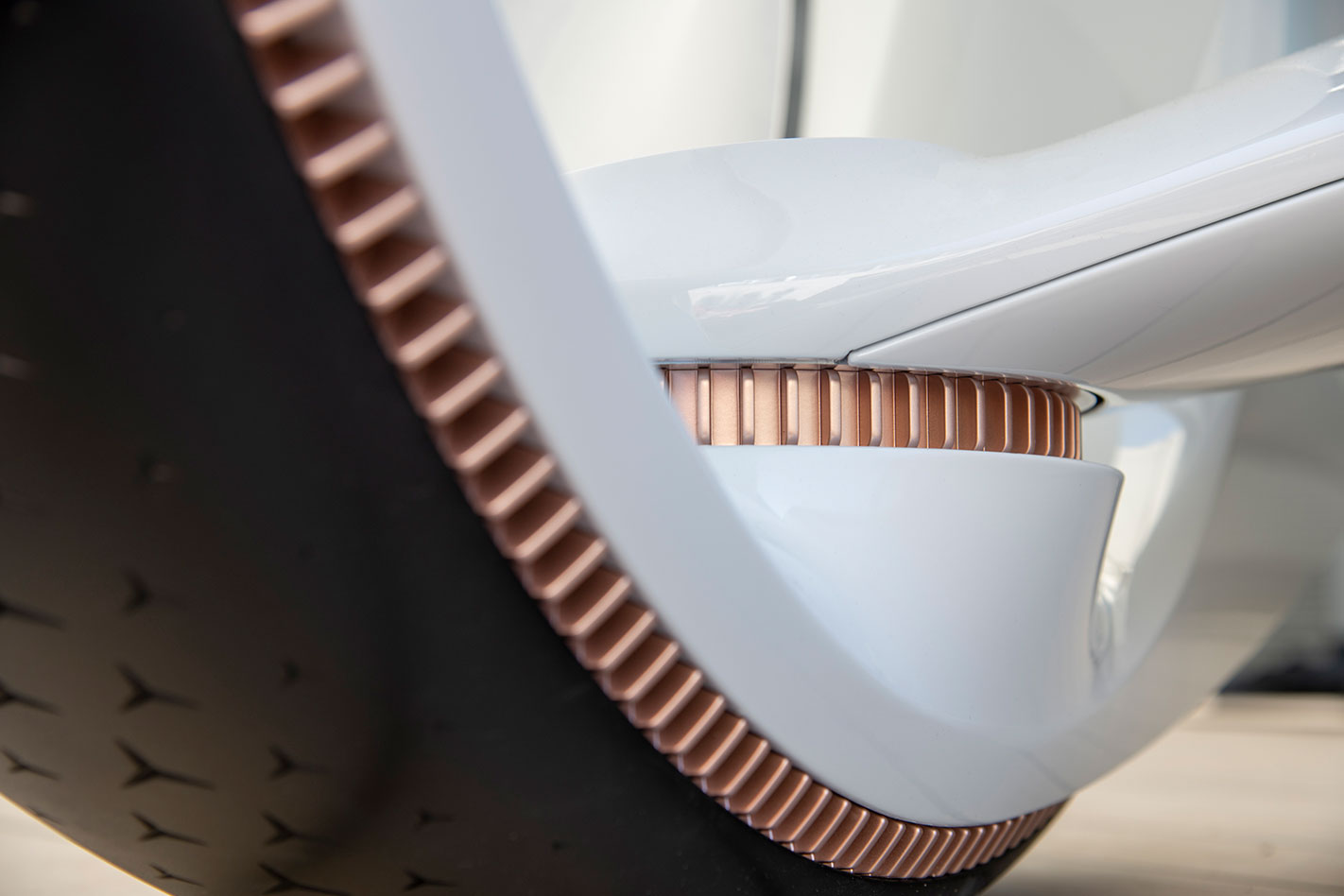
“Typically we’d do a clay model at a certain point. We’ve done virtual before, but then we’d always refine with a clay model to gain that final sophistication,” Wagener said.
However, in this case they didn’t, deciding to take on digitisation from go to whoa. “We just did it all on data … and then I signed it off. It’s actually the first time we’ve done that,” Wagener said.
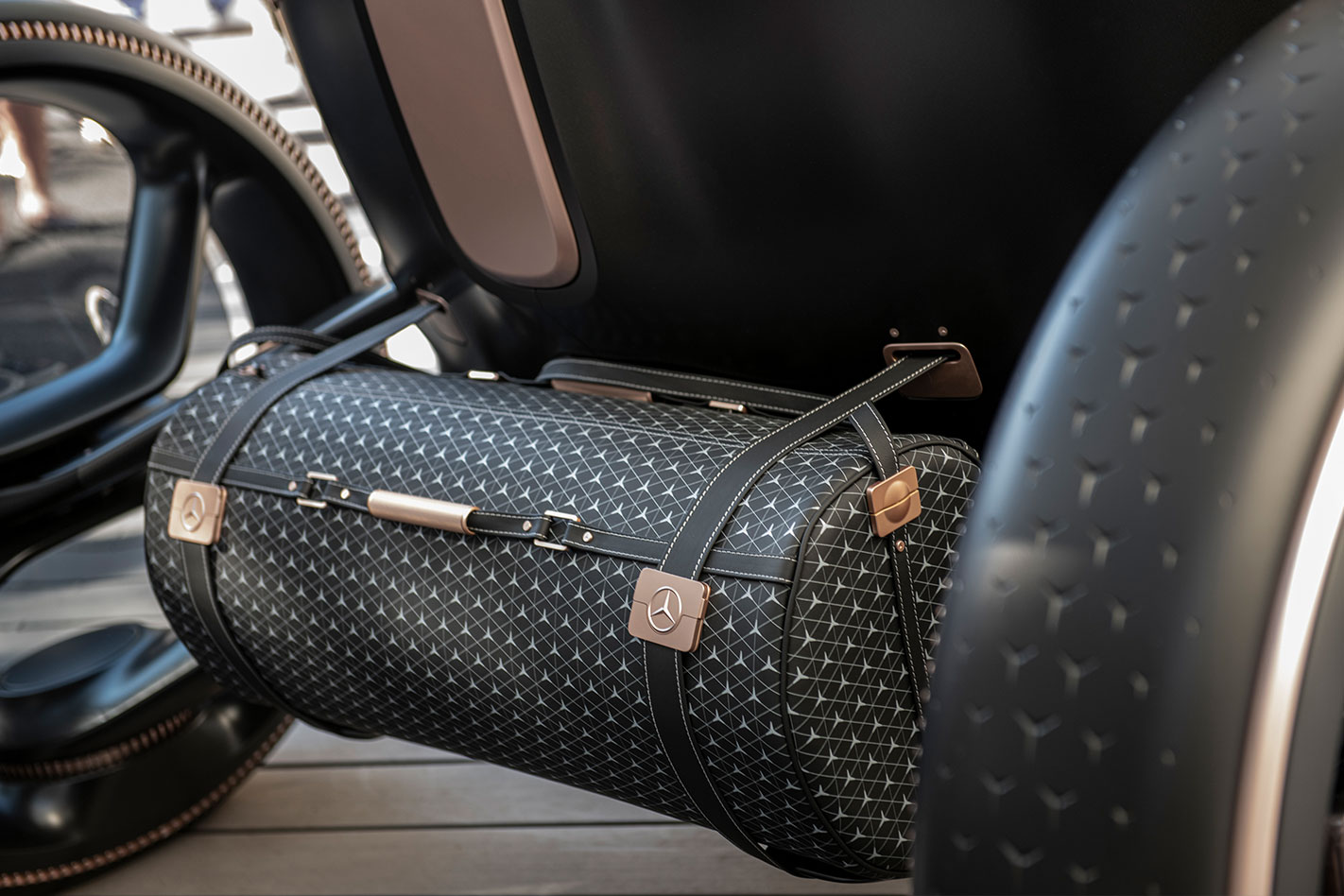
An ultra-futuristic version of the original – genesis for the modern car layout we have today – the Simplex was created as a celebration and to mark the return of Mercedes-Benz to the region. As Wagener aptly put it, “It’s not a design studio without a surprise.”
In design and final product, 118 years later the Simplex is far removed from the Mercedes 35 PS. That car dominated Race Week in Nice in 1901. It paved the way for the motor vehicle and the brand itself, with the 35 PS being the first car to be labelled a Mercedes. The origins of the title can be found with the car’s creator, Emil Jellinek, who used his daughter’s name for the car.
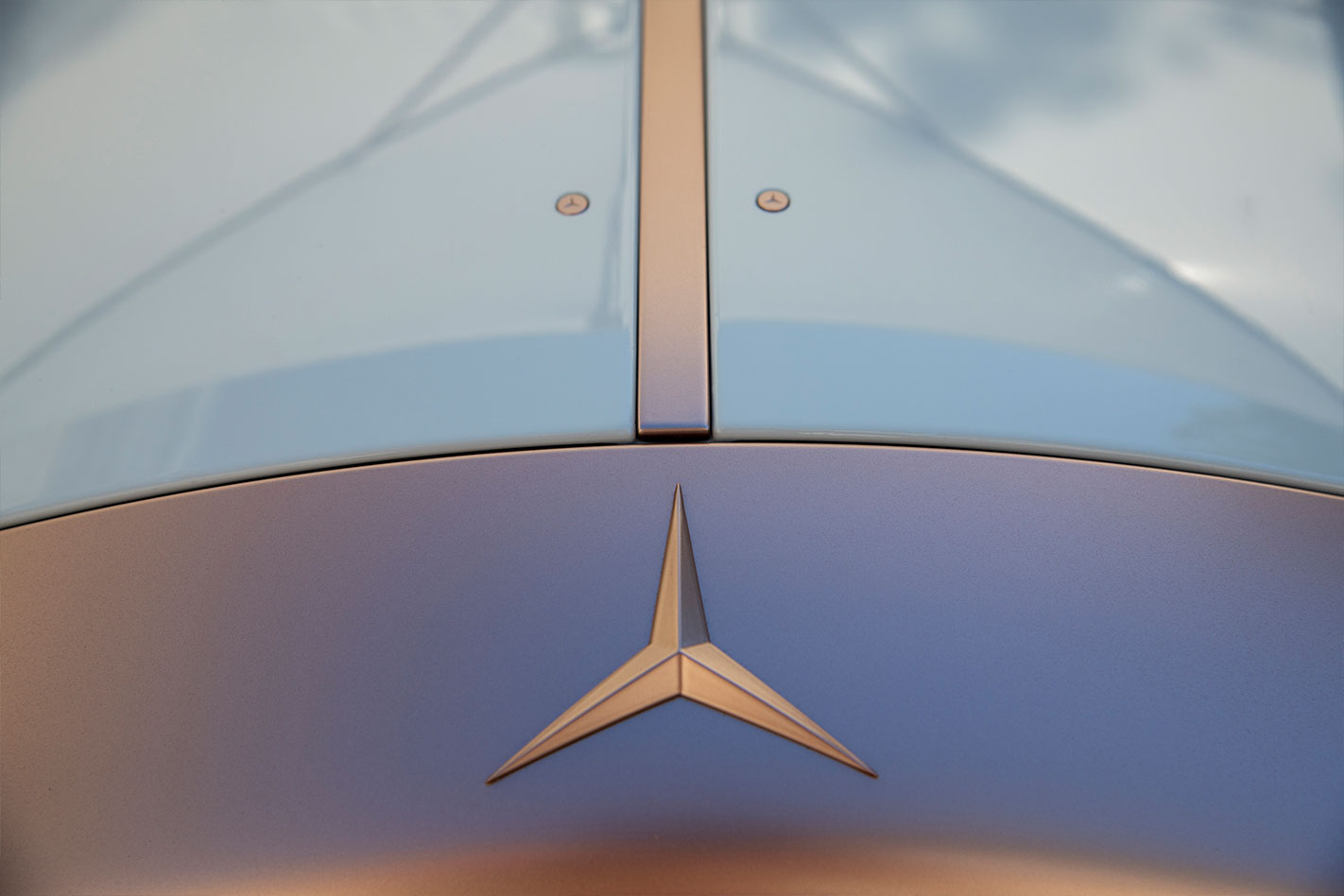
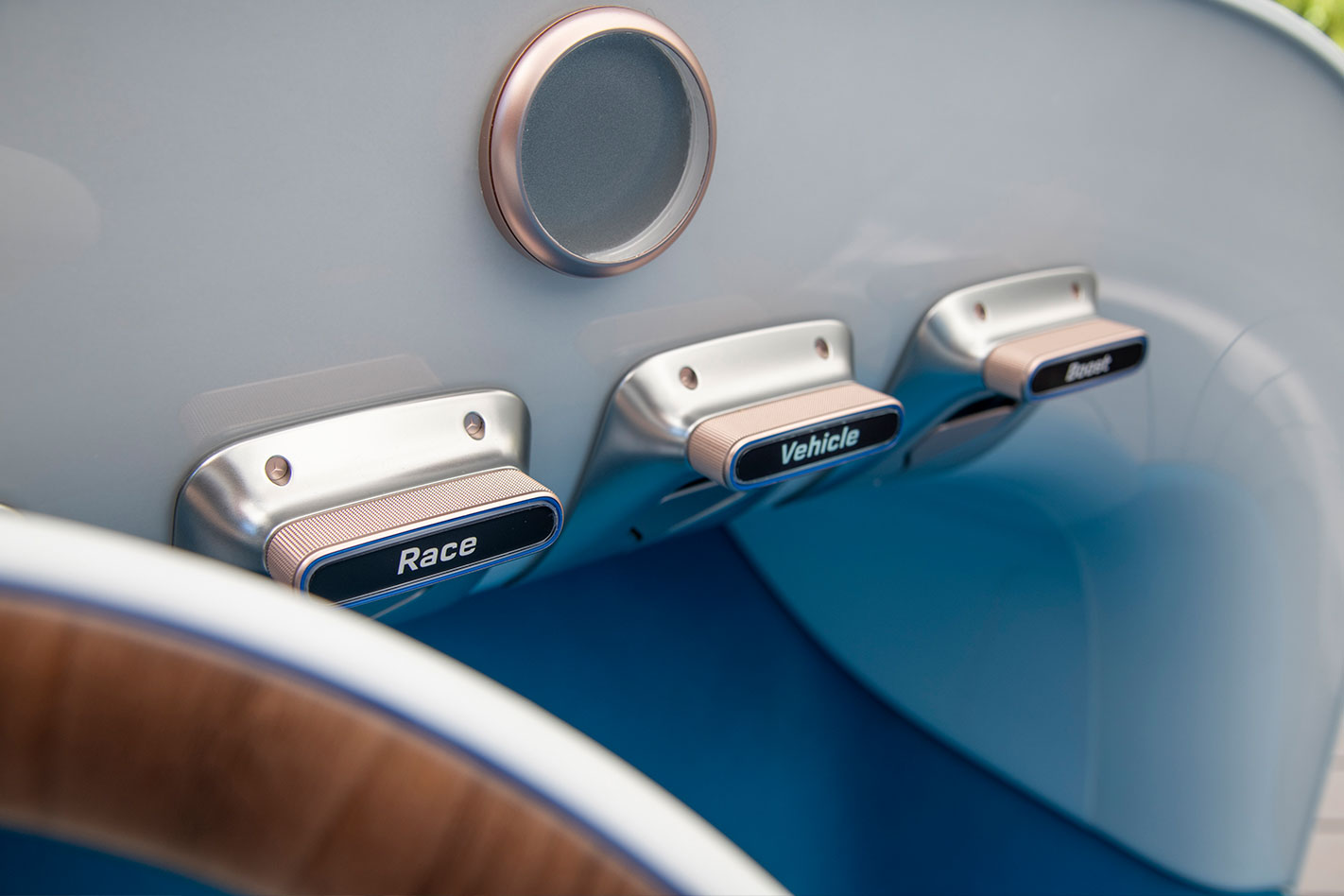
Of course, there are absolutely zero plans to produce the Simplex. Its driving, with an “alternative” drivetrain, will be limited to being pushed onto motor show stands. However, we’re very glad Mercedes created it. Just look at it. Enough said.
Ever hear about Fords with Holden engines (or vice versa) and think it’s blasphemy? Well, this might make you reconsider.
Gardner Mods has built a Ford Ranger into a properly wild drift car, and the crew is taking it to World Time Attack Challenge 2019.
The running gear? A GM supercharged LSA V8.
With about 435kW and a lazy 1220Nm, according to Gardner Mods, the truck has been under construction for a good part of 2019, with the engine having only been turned over for the first time inside the engine bay in early June.
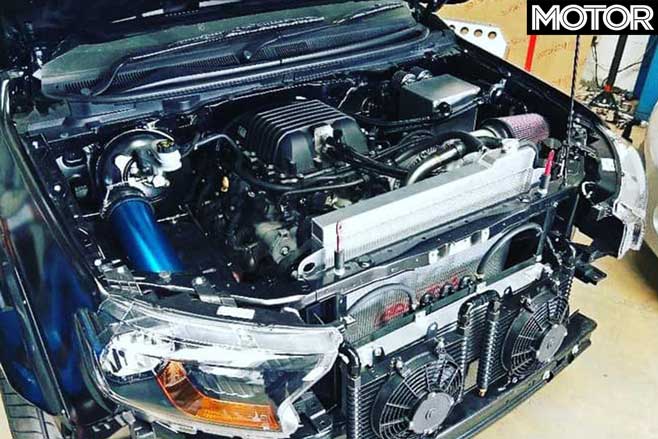
At WTAC, it’ll be seen alongside plenty of more traditional drift machines, but in the video above it was steered by Levi Clarke (who has his own S15 set to run at WTAC) during a drift morning session at Queensland Raceway.
This year’s World Time Attack Challenge takes place over the 18-19 October weekend at the usual venue of Sydney Motorsport Park.
It’s taken a while, but drifting has finally begun to enter the mainstream consciousness.
For so long seen as ‘car gymnastics’ and looked down upon by traditional motor racing enthusiasts, slowly but surely, the likes of the Fast and the Furious films, Ken Block and the emergence of international championships have legitimised the sport.

Even by motorsport standards, though, it’s not the easiest activity to get involved in. Starting out on a regular track is not advisable, as effectively you’re throwing your car out of control – initially at least – and concrete walls are very unforgiving.
Thankfully, the crew at Drift Cadet can help. Louis sampled its Level 1 course and yours truly did likewise when assessing the drifting capabilities of my Subaru BRZ long-termer. Now it’s time to take it one step further and sign up for Level 2.
Both courses cost $599 and Drift Cadet usually run two courses per day at Winton Raceway’s Skid Pan. We drove up from Melbourne in the morning, did the course in the afternoon and were home again by mid-evening.
The idea is that once Level 1 has been mastered, which takes place on a wet surface with mildly modified Subaru BRZ/Toyota 86 road cars, students move on to the more advanced Level 2 to further develop their skills.
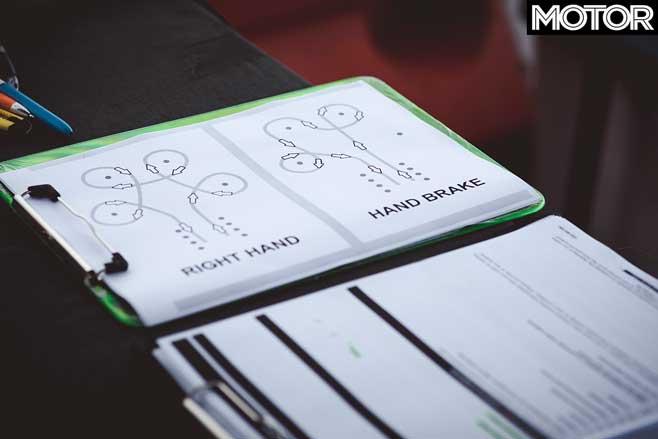
For Level 2 the course is dry (though it was raining intermittently during our sessions), the exercises are more complex and the cars are much more serious, featuring supercharged engines, stiffer coilover suspension, heaps of steering lock and stripped interiors.
An instructor rides with you in the car and places are limited to ensure plenty of track time. We had eight sessions of five minutes each, which keen mathematics students will deduce is 40mins of wheel time.
A quartet of cones is arranged in a square which form the basis a trio of courses which weave in and out of them. Each tests the techniques learned in Level 1, including initiating a drift with the handbrake, tight donuts, slowing the car while remaining sideways and transitioning from one lock to the other.
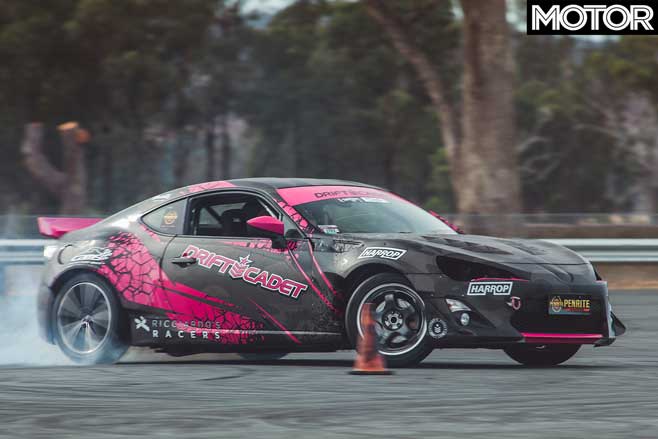
It goes without saying that it’s massive amounts of fun: I challenge anyone not to get out of powerful, rear-wheel drive sports car on a slippery surface without a big smile on their face.
However, it’s also valuable. Having slid a few cars around over the years I was sceptical about the slow-speed nature of the course – you never go beyond first gear – but by keeping it basic it allows the instructors to focus on your technique and everything you’re doing wrong.
And trust me; you’ll be doing plenty wrong. Like most things, if you can’t get the basics right at slow speed then there isn’t any point trying to go faster, as you’ll be just be making the same mistakes at higher speeds.
Like any good instructor, the Drift Cadet guys aren’t there to flatter your ego, either. They are supportive and encouraging, but founder Peter Pham refused to let me move on to the third exercise until he was happy with my progress on the second.

I was getting around the course ok, but he wanted more sudden transitions, more speed and more angle; he believed I was capable of more and pushed me to go harder, an approach I really like.
If you’re interested in dipping a toe into the sport of drifting, want to work on your car control or just want to have fun skidding someone else’s car around, the Drift Cadet courses are definitely worth a look. Especially as if you think the course isn’t for you after a couple of sessions, your money will be refunded.
No, they aren’t cheap, but after seeing what goes into them it’s tough to argue they aren’t good value, either. They might even give you a greater appreciation of an oft-misunderstood sport. We’ll be back for a refresher, that’s for sure.
The long-rumoured Mazda RX-9 seems another step closer to reality with the publication of a new front-end assembly patent.
First discovered and covered by a Japanese publication called WebMotorMagazine(wait a second…), the technical drawing shows a double-wishbone front-end construction which looks to be somewhat space-restrictive.
Given previous whisperings that the Mazda rotary would make a return in a sports car, this design has some footing in reality. A very small engine could fit in the space available, sending power rearwards.
In addition Mazda’s technical development executive, Mitsuo Hitomi, told MOTOR’s sister publication Wheels in late 2017 that his team was, “continuing development of the next generation rotary engine,” and that range extension tech was also intended for use in a sports car.
So where does this leave the new patent? It’s possible that the rotary will return in a new sports car as a range-extender, but given the difficulties surrounding efficiency and reliability of rotary engines, it’s unlikely we’ll see a direct successor to the RX-7.
Thus, the RX-9 nomenclature would allow Mazda some room to play with the formula of its RX family. After all, the RX-8 wasn’t named RX-7 since it didn’t follow the two-seat, two-door layout of the three generations of its rotary predecessor.
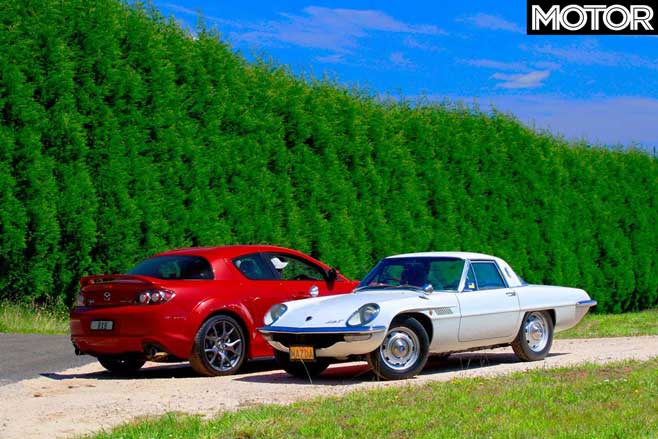
The report published by WebMotorMagazine suggests the RX-9 will be a roughly-300kW turbocharged rotary-powered, rear-drive sports car, but the aforementioned difficulties with emissions standards could prevent Mazda from achieving this.
Is a rotary-hybrid sports car on the way from Mazda? It’d certainly be a step away from the brand’s focus on relatively affordable atmo-engined (and widely-marketable) cars, but the RX-Vision is prime real estate for a low-volume production car.
More to come.
