
Audi’s Sportback interpretation of the coupe-profiled SUV will proliferate its entire high-rider range, with a version arriving over the next few years for each SUV model that appears within the German car maker’s ranks.
Not only will each of the current models get its own ‘coupe’ equivalent (if not already), but future vehicles that surface in the emerging e-tron line-up will also be accompanied by the more style-driven options.
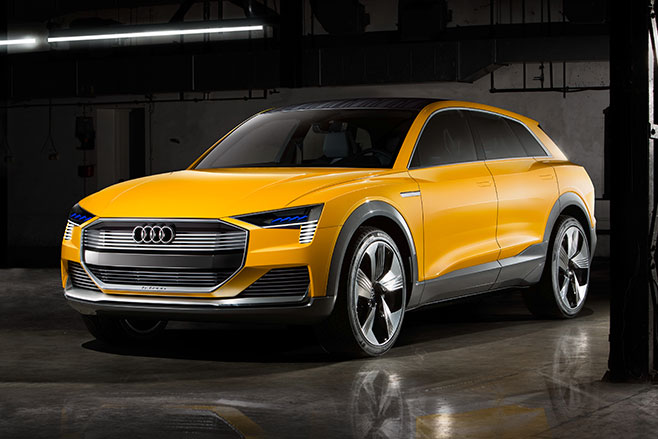
2016 Audi h-tron quattro concept
Speaking at the 2019 IAA Frankfurt motor show, Audi design head Marc Lichte revealed that the Sportback bloodline would flow into every SUV line over the coming years.
“For all the SUVs that will go into the market in the next few years, we will have a derivative that’s something between coupe and SUV,” he said.
“For me, it’s the next step – to combine coupe, station wagon and SUV.”
This opens the door for a Q6 model or perhaps a Q5 Sportback to fill out the mid-part of Audi’s SUV portfolio, a Q4 will appear in the e-tron range as an electric model, while even a Q1 might eventuate rolling on the company’s shared MEB electric platform.
It’s just part of Audi’s design revolution that will see the family evolve away from more traditional car aesthetics, enabled by the advent of electric cars. According to Lichte, designing electric cars is a “dream” with far fewer constraints than traditional combustion-powered cars.
“Step by step, with all the new cars we take a bigger step and, in a minimum of five years, our cars will look a lot different,” he said. “The overhangs will get shorter and the wheels bigger. On the interior, there’s lots more space.”
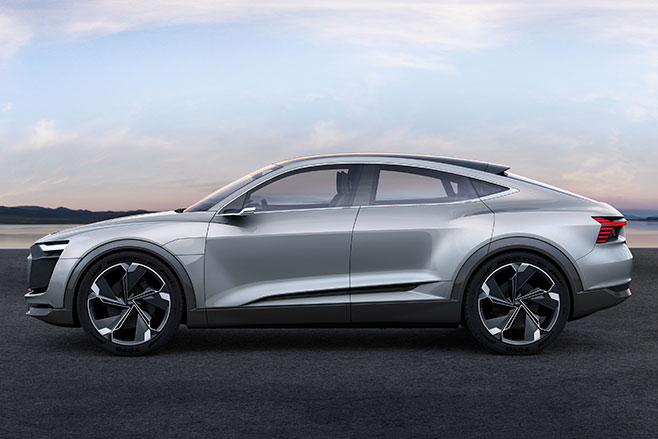
2017 Audi e-tron concept
While other relative newcomer EV brands such as Tesla do not have a longstanding customer base to consider, Lichte said the company had a strategy that would introduce a new look without alienating its customers and fans.
“I can promise you that there is a strategy behind it,” he said. “I have a lot of respect for Tesla, but if you look at the Model S it’s not a crazy car. It looks like a conventional car – very aesthetic and nice proportions.
“For the first generation we have to do it like this because we come from a history of more than 100 years so we have a history, Tesla does not, so we have to bring our current customers into EVs.”
While its growing range of electric models evolves, so too will its SUV styling – and Lichte suggested that the tide for conventional SUVs as we know them may turn.
“I’m sure this will change,” he said. “The next step is high seating position but lower roofline, better aerodynamics, better range.”
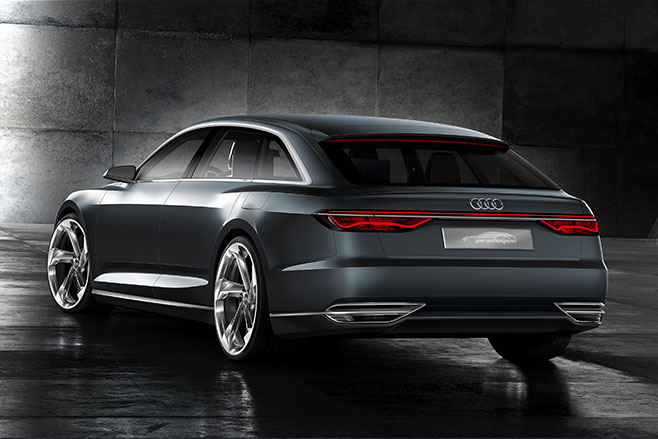
2015 Audi Prologue Avant concept
When asked if the rise and fall of SUVs was part of a cyclical shift for the segment, Lichte said “It’s my feeling, yes,” but added that Audi was ready for the change if customers gravitate back to more conventional low-profile cars. “If this will happen, we are prepared,” he said.
According to Lichte, Germany’s relatively environmentally considerate culture is prompting many drivers to question the ethical dilemma of large SUVs and their impact on climate change.
“I don’t know about your country but in Germany, you can see the discussion already – is it right to have all these SUVs, is it right that each brand is coming up with more SUVs?”
With its shifting design direction and an evolving line-up of vehicles, Audi is moving with customer demand and the responsibility that large manufacturers are increasingly feeling to reduce environmental impact.
Volkswagen Australia has agreed to settle a large class action brought against it by owners of cars affected by the company’s diesel emissions scandal, which broke back in 2015.
The settlement, which is yet to be approved at a federal court level, will equate to between $87 and $127 million across the VW, Audi and Skoda brands.
It means that 100,000 owners of cars that use VW’s EA189 diesel engine are in line to receive a payment that Volkswagen says will average $1400 per car.
More Dieselgate news
- VW confirms huge diesel recall
- Forgiven and forgotten – is Dieselgate done?
- Audi chief jailed over Dieselgate scandal
However, the local settlement is predicated on a no-admission basis from Volkswagen Australia.
“This is a significant step towards fully resolving the diesel lawsuits in Australia, subject to approval by the Federal Court of Australia,” said VW in a statement. “Volkswagen views the in-principle settlements as a further step towards overcoming the diesel issue.”
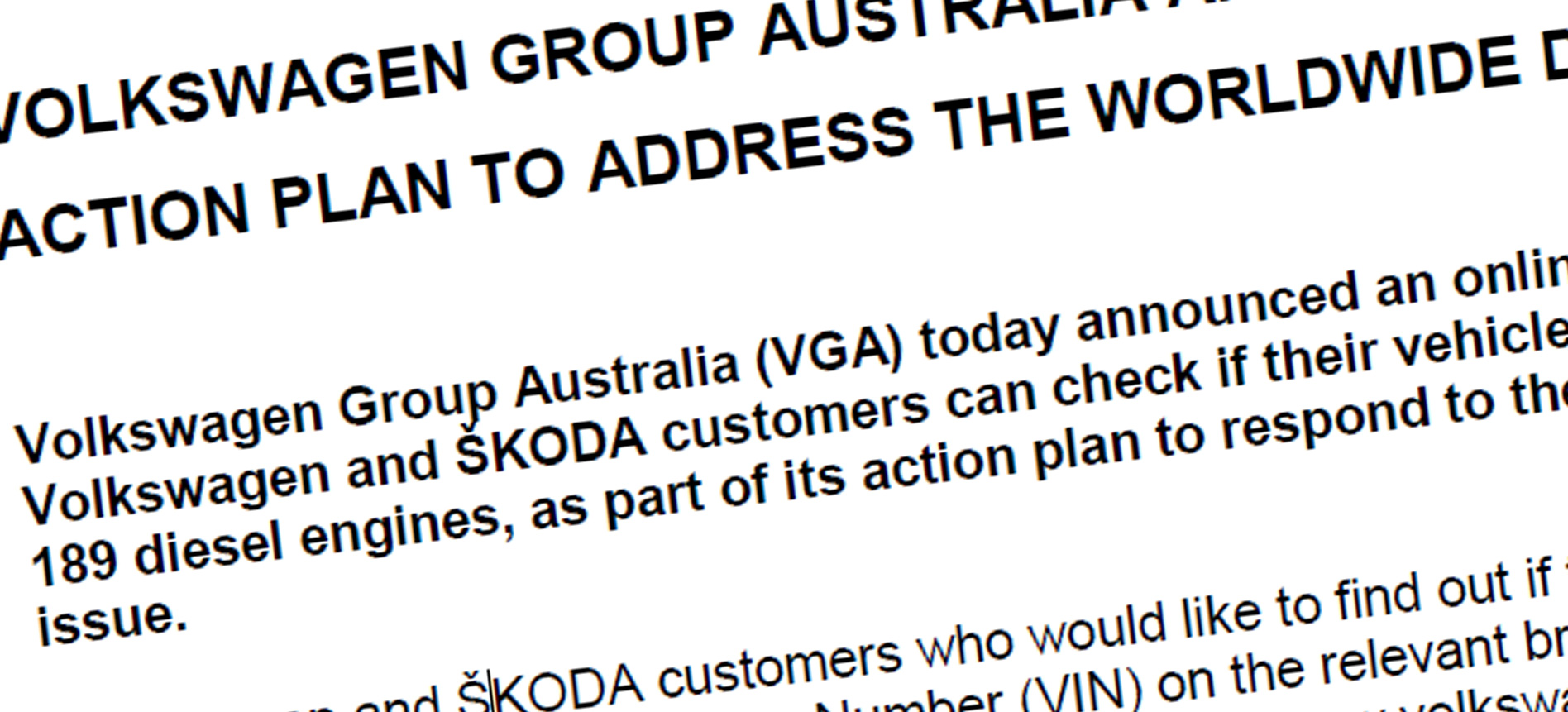
A copy of the original diesel emissions notice from VW Australia in 2015
A spokesperson from Volkswagen told WhichCar it was unable to comment further, as the matter is still technically before the court.
Five class actions were pending against VW, with the first from Sydney firm Bannister lodged in 2015.
“We are pleased to have achieved an outcome for Australian consumers, we would encourage those affected to come forward after the settlement has been approved by the court,” said Bannister Law in a statement.
Cars affected include the Golf, Polo, Jetta, Passat, Passat CC, Eos, Tiguan and Jetta, as well as the Skoda Octavia, Superb and Yeti, as well as the Audi A1, A3, A4, A5, A6, Q3, Q5 and TT.
More than 70,000 cars were recalled, with new software and, in some cases, minor mechanical updates installed.
In the US, the company agreed to buy back more than half a million affected cars, as well as agreeing to pay fines and claims totalling more than A$40 billion.
Meanwhile, VW says that discussions regarding an in-principle settlement of a civil suit brought by the Australian Competition and Consumer Commission (ACCC) against the company are “close to finalisation and a resolution between the parties is expected shortly,” it said in a statement.
Diesel-powered VW vehicles covered by the ACCC proceedings:
- Amarok 2.0 litre – 2011 to 2012
- Caddy 1.6 and 2.0 litre – 2010 to 2015
- Eos 2.0 litre – 2009 to 2014
- Golf 1.6 and 2.0 litre – 2009 to 2013
- Jetta 1.6 and 2.0 litre – 2009 to 2015
- Passat 2.0 litre – 2008 to 2015
- Passat CC 2.0 litre – 2008 to 2012
- Polo 1.6 litre – 2009 to 2014
- Tiguan 2.0 litre – 2008 to 2015
- CC 2.0 litre – 2011 to 2015
HOW GOOD IS A BMW M2 Competition? Don’t worry, ScoMo hasn’t been offered a road-testing job here at Wheels, we’re just curious to see how Garching’s little monster fits into the hierarchy of all-time great M cars. That list would have to include the likes of the E39 M5, the seminal E30 M3 and the exotic mid-engined M1. In there with a podium shot would also be the fantastic E46 M3 CSL and, given that these change hands from around $110,000, it looks a direct rival for the M2 Competition if that’s your budget and you want a charismatic and rewarding rear-drive coupe.
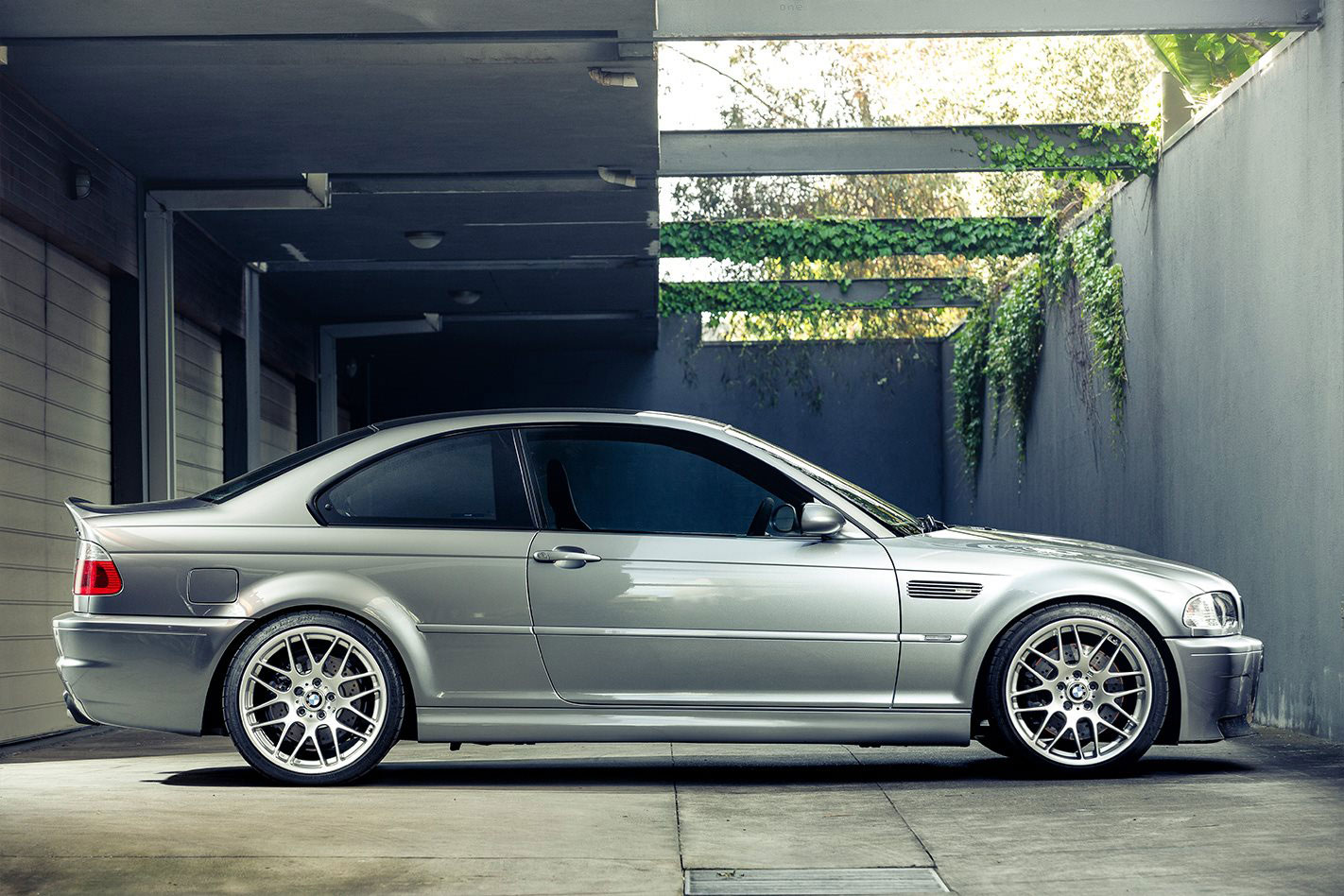
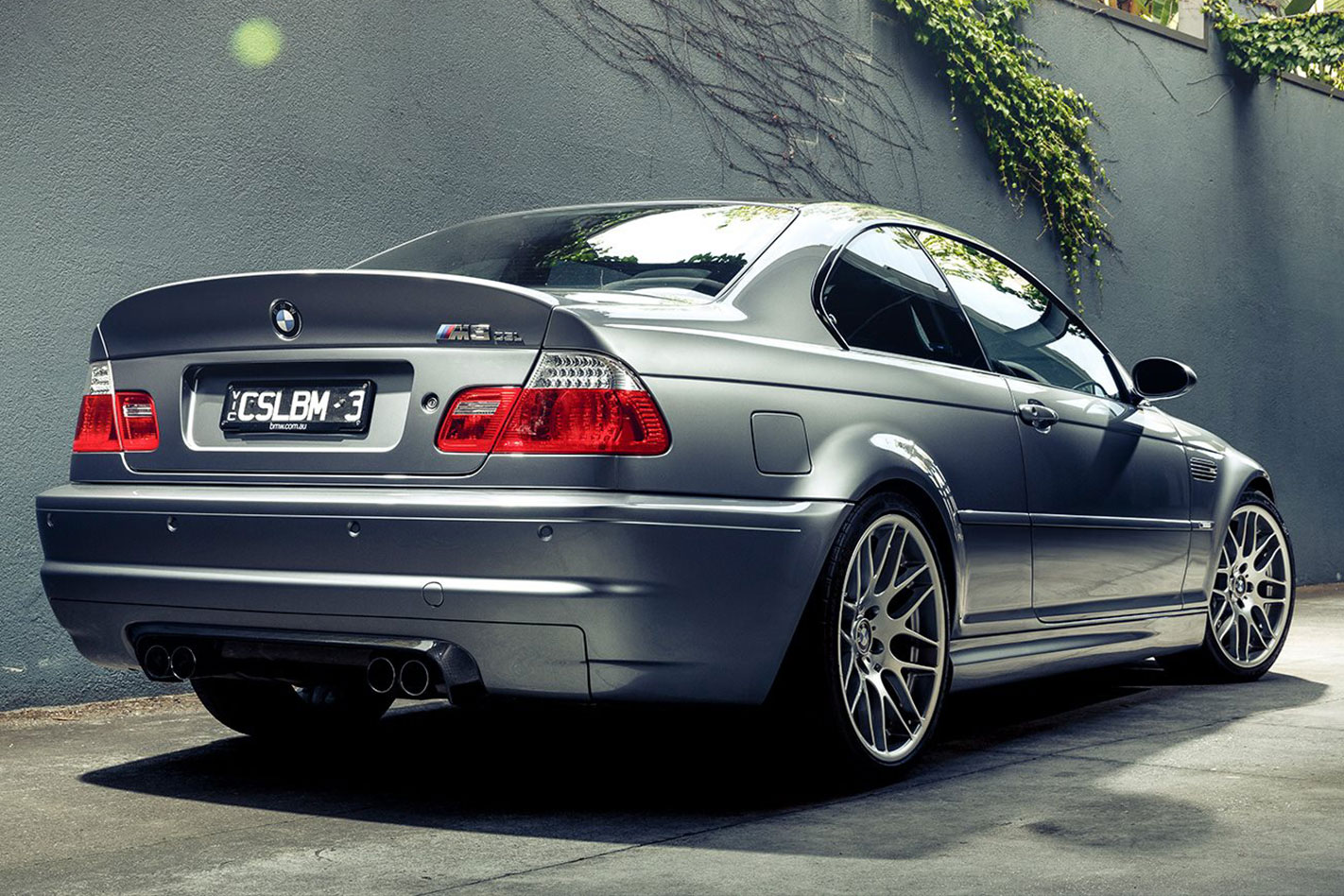
Just listen to the thing! The E46 M3 CSL delivers one of the greatest straight-six soundtracks at any price, helped by a carbonfibre airbox for a truly distinctive sound. Its remit was clear: lap the Nurburgring in under eight minutes. To achieve this, head of body Hans-Bruno Starke and chassis development engineer Peter Schmidt had four key areas to work on: weight, aerodynamics, suspension and tyres. Power was a secondary concern, although changes to the engine management, cams, headers, intakes, valves and exhaust handily lifted peak power from the regulation M3’s 252 to a healthy 265kW.
This was the first M car to pioneer the carbonfibre roof, saving 7kg and lowering the centre gravity. Around 50kg came out of the interior, with lightweight seats, centre console, glass and door panels. A couple of kilos came off each wheel, with aluminium lower control arms further reducing unsprung weight. The carbonfibre front bumper shell is a pure racing part, helping to subtly shift weight distribution rearwards. Final distribution was 51:49 front to rear, still not quite Munich’s much-vaunted 50:50.
Based on a hoary old Clarksonism, many believe that the boot floor of the CSL is made of cardboard and can’t hold any weight. Not so. The underside of the boot is metal, the same as any M3 but it does have a lightweight cardboard boot liner. It’s a CSL-specific BMW part numbered 51477895990; removable honeycomb-paper composite panel.
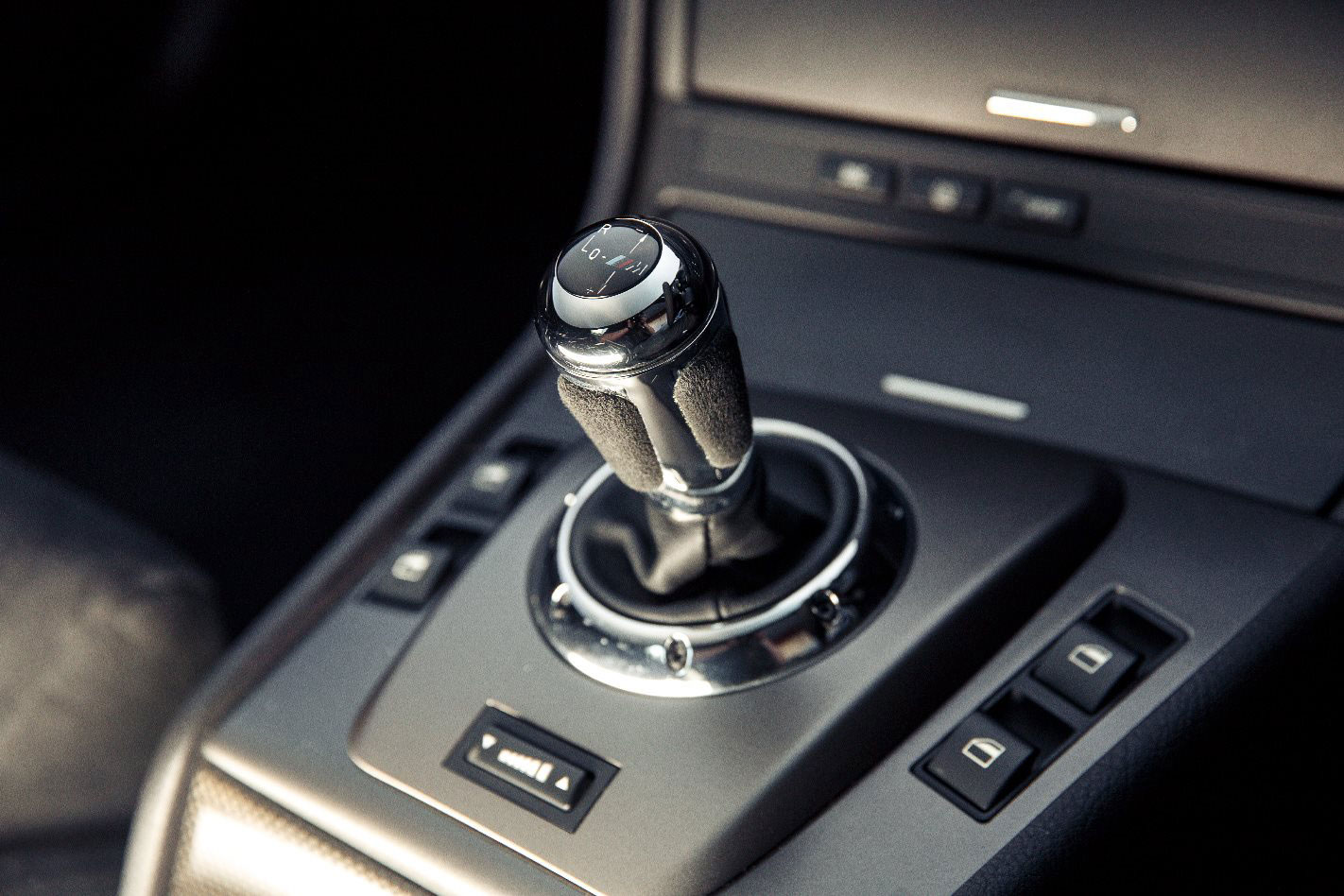
A plastic composite bootlid with built-in spoiler was developed as much for aerodynamic benefit as weight saving, but a huge gain came from the gumball semi-slick Michelin Pilot Sport Cup tyres. Later Cup+ tyres offered a little more wet weather versatility. The CSL rides 10mm lower than a stock E46 M3 and the suspension has been seriously gym-toned. Springs, dampers, anti-roll bars, bump stops, king pins; all were upspecced. A quicker steering rack and bigger front brake discs were also fitted. Somewhat controversially for the time, the CSL foresaw a trend: no clutch pedal for the flagship sports model. It took Porsche more than a decade to catch on to that particular trick. The SMG II ’box (in effect a robotised manual) seems a little quaint now, but it’s still a riot to crack up through the ratios.
As a used purchase, an M3 CSL makes a lot of sense. Prices are highly variable. We’ve seen cars start at $110k, stepping up to $150k for the very best examples, but all are collectable and, even in this current wavering classics market, have scope for serious value gains.
BMW M2 COMPETITION
While the E46 M3 CSL might sound fantastic and offer a bulletproof financial proposition, it also faces an inconvenient truth. The old stager packs 265kW and gets to 100km/h in 4.8 seconds. Buy new and you get 302kW and 100km/h coming and going in 4.2 seconds. Or, if you prefer, 12.5 percent quicker. It also features launch control, a far superior transmission, niceties like sat-nav, Bluetooth, Apple CarPlay and Android Auto, and the not inconsiderable bonus of having a steering wheel that’s not ingrained with a decade and change of some other person’s DNA.
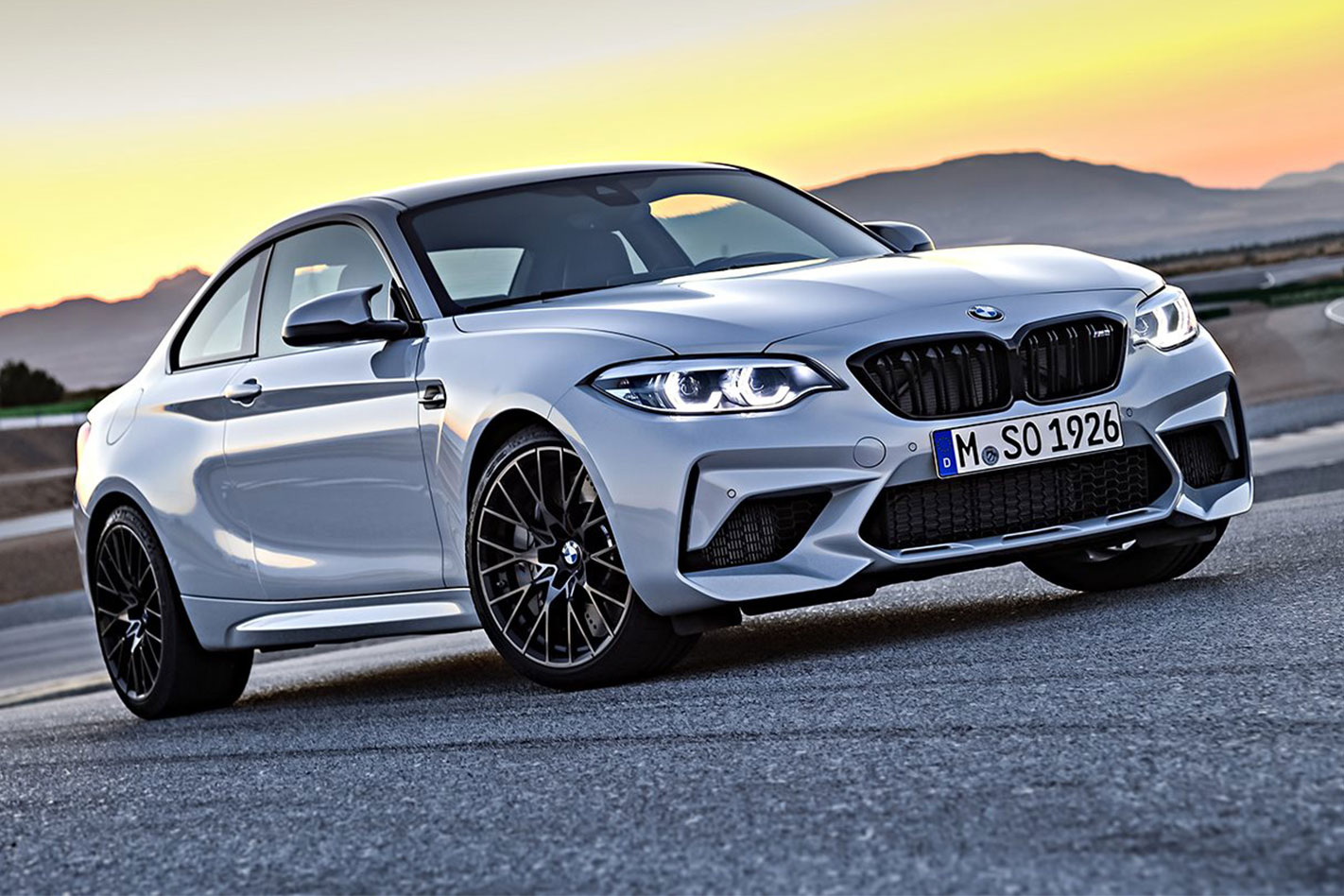
We’ve put the M2 Competition up against the best of its new rivals and it’s come out on top each and every time. We thought the brilliant Alpine A110 would finally have the M2’s measure, but as beguiled as we were by the French lightweight, when it came to the question of handing over the cash, every last one of us said we’d be heading to a BMW dealer.
To contextualise the M2 Competition, consider this. The brand-new Porsche 992 Carrera is more than double the price, delivers less power, less torque, less space and isn’t any quicker. You want a 300kW+ Mercedes-AMG coupe? You’ll have to wait until next year for the new CLA 45 and you’ll only get four cylinders for your money. While all-wheel drive will ensure the AMG gets the drop off the line, we’d be extremely surprised if this layout results in a chassis as rewarding as that of the M2 Competition.
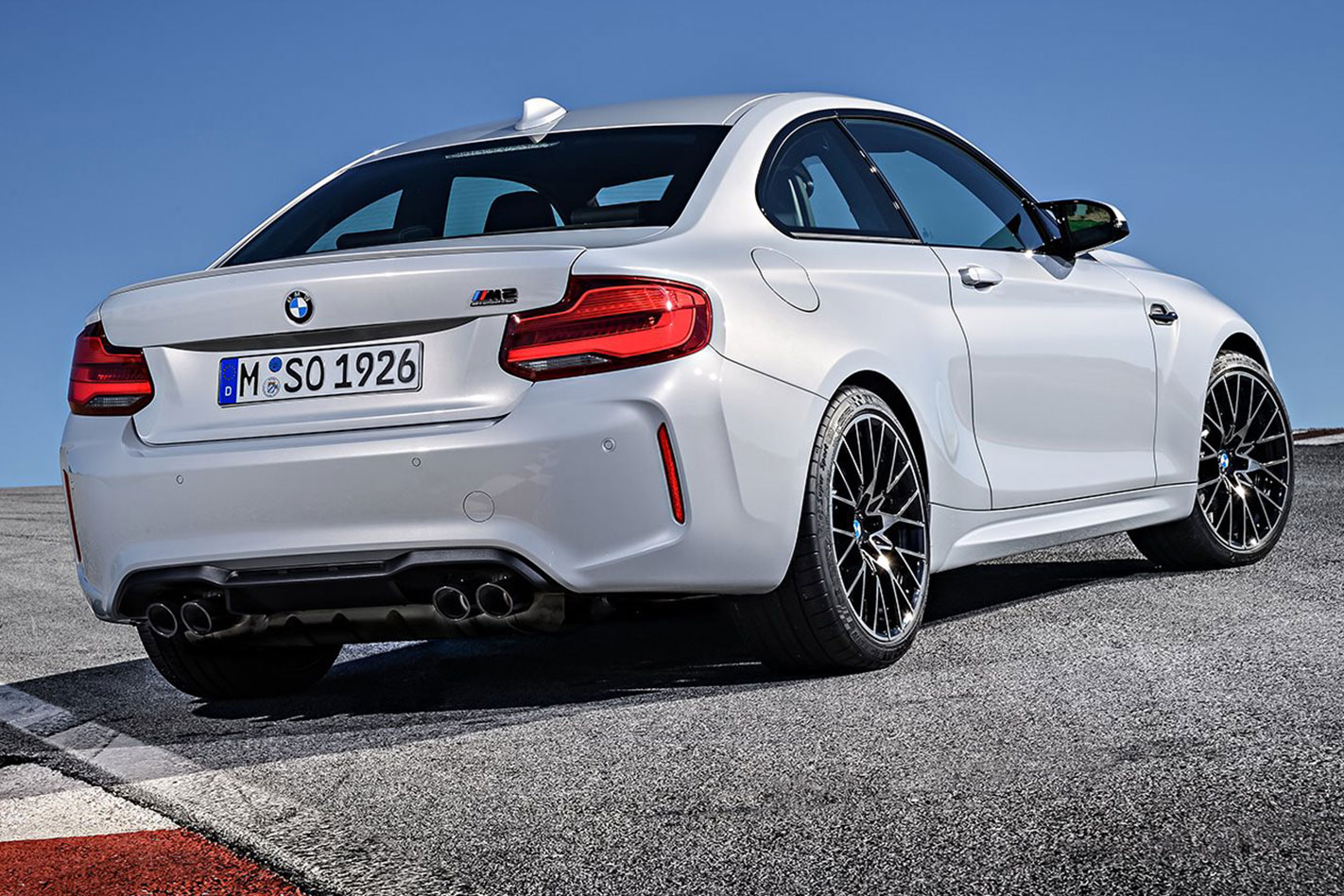
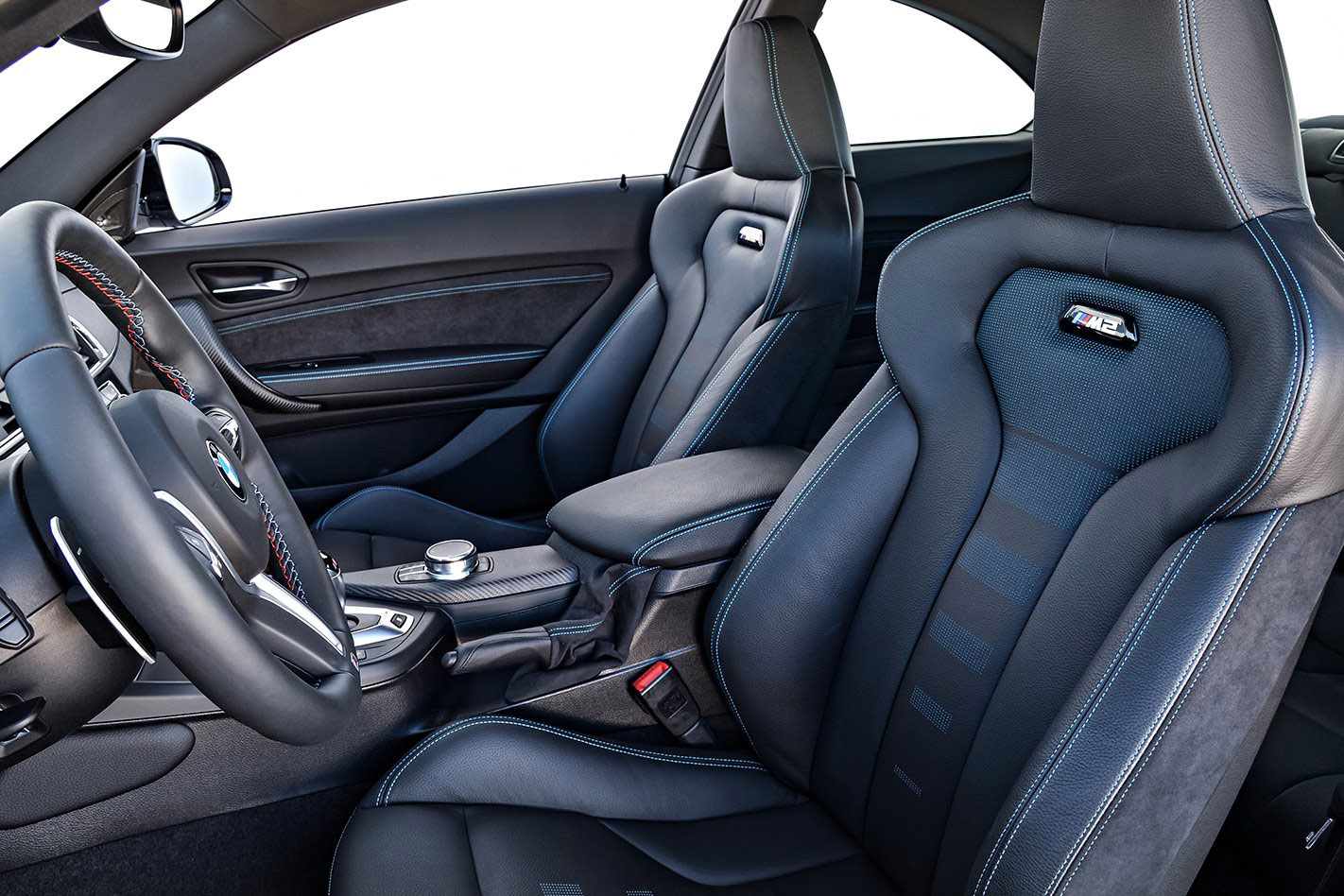
Drive an M2 Competition against rivals and you appreciate the expertise that has gone into this vehicle. We love the way that BMW has had the cojones to pick a spring and damper setting and then just stick to it rather than offering multitudes of modes. BMW backed itself with this car and it’s very, very good.
Specs comparison
| u00a0 | BMW E46 M3 CSLu00a0 | BMW M2 COMPETITIONu00a0 |
| Price now | From $110,000 | $104,900 |
| Engine | 3246cc 6cyl, dohc, 24v | 2979 6cyl, dohc, 24v, twin-turbo |
| Output | 265kW/370Nm | 302kW/550Nm |
| Transmission | 6-speed automatic | 7-speed dual-clutchu00a0 |
| 0-100km/h | 4.8sec | 4.2sec |
| 0-200km/h | 17.3sec | 14.4sec |
| Drivetrain | RWD | RWD |
| Doors | 2 | 2 |
| Weight | 1385kg | 1575kg |
| Country of origin | Germany | Germany |
Wheels staff pick

Alex Inwood
Editor
If ever there was a head v heart decision, this is it. The head says the M2 Competition is the obvious choice. Its performance destroys the CSL’s, it should be unfalteringly reliable (unlike the 15-year-old CSL), it’s tech infused and connected, plus it happens to be one of the most exciting and capable performance coupes getting about. But who buys this kind of car with their head? This kind of purchase is all about how the car makes you feel and by that measure, the CSL has the M2 licked. Beautifully proportioned and firmly entrenched as a modern classic, the CSL is also likely to go up in value. The fact it has an evocative and raspy straight-six soundtrack, beautifully balanced dynamics and is fast enough to be exciting but not so fast so you’ll lose your licence, is just a bonus.

Cameron Kirby
Staff Journalist
I’m at risk of getting myself in a lot of trouble here, but I just don’t get the E46 M3 CSL. That’s not to say it is a bad thing, or those that it does appeal to are wrong; I was just never bitten by that particular bug. So it’s an easy win for the M2 Comp. What a ripper daily driver it would make! I don’t think I’d ever arrive at work with a frown in that thing. It has so much character and is a real performance bargain. If I ever got a little bored (unlikely), a new exhaust and ECU tune would spice things back up.

Andy Enright
Deputy Editor
As much as I love the M3 CSL, I think its clunky transmission would be a deal-breaker for me. I’ve seen CSL manual conversions, but have reservations about the effect on residuals. If I wanted an E46 M3 coupe, I’d be tempted to buy a stock manual model and fit the CS wheels and an aftermarket carbon airbox for the CSL sound. That’d be fifty grand well spent. Doubling the budget – for me at least – runs into slightly diminishing E46 returns, so my $110K would go on a new M2 Competition. In black. And I’m not a fan of the fussy alloy wheels, so I’d be tracking down a set of those dished five-spokes from the ‘old’ M2 for it. And maybe an Akrapovic titanium exhaust to give the CSL a run for its money on acoustics.
We’ve asked a variant of this question in the past when we compared BMW’s M4 with the M3 CSL.
It’s worth watching this one just for the CSL gloriously sideways and at maximum noise. If I watch it again, I know I’ll probably start second guessing my choice of the M2 Competition, so it’s over to you.
Reckon we’ve got it right? Or are we way off the money (literally)? Find your best and let us know in the comments what you’d buy.
This is it, then. A once bold new era for Aston Martin, heralded by the introduction of a vehicle platform called VH that allowed the launch of about a dozen (similar) cars on the same architecture, draws to a close. It was the Bez of times, it was far from the worst of times.
But the new Aston Martin revolution is underway. And this Rapide, as outlandish as VH cars became, what with having four doors and four seats, is the last of the old line of cars to disappear. It’s going out in limited-run Rapide AMR specification.
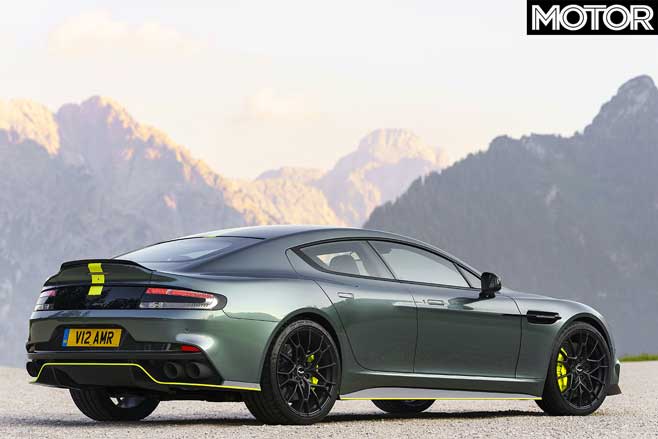
What sets the AMR apart from the standard Rapide?
These Rapides are the last VH cars you can order. Production and some deliveries have already started, and you don’t have to have the racing-inspired day-glo highlights of the one photographed here.
What you will get are carbon-ceramic brakes behind 21-inch wheels and AMR-specific tuning, turning what was Aston’s most laid-back GT car/four-door coupe/fastback sedan/family hatch/call it what you will into something more raucous.
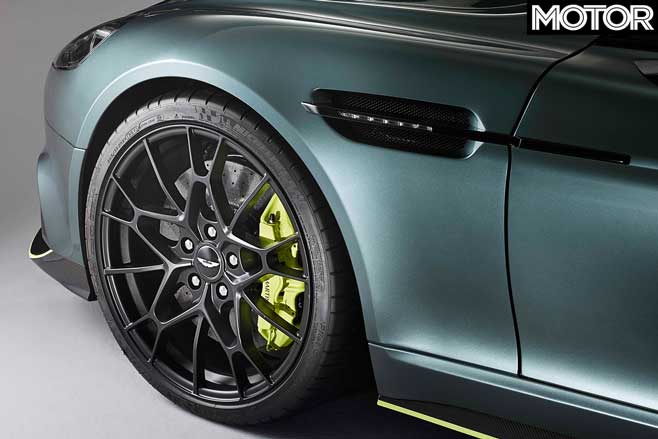
You’ll also get, if you overlook the bespoke Valkyrie, the last of Aston Martin’s naturally aspirated V12s, the 6.0-litre-badged (actually 5935cc) stalwart that has provided sterling work, in various iterations, since its introduction in the DB7 Vantage of 1999. That was the first production Aston with a V12. Now, after two decades, you can’t imagine the Aston range without one.
As ever, the V12 drives the rear wheels, these days through an eight-speed automatic gearbox mounted at the rear, and a limited-slip differential.
Those traits and a lengthy 2989mm wheelbase are what have lent the Rapide one of the nicest inherent chassis balances among super sedans, or even some big GT cars, over which the Rapide was – and remains – more agile and deftly balanced.
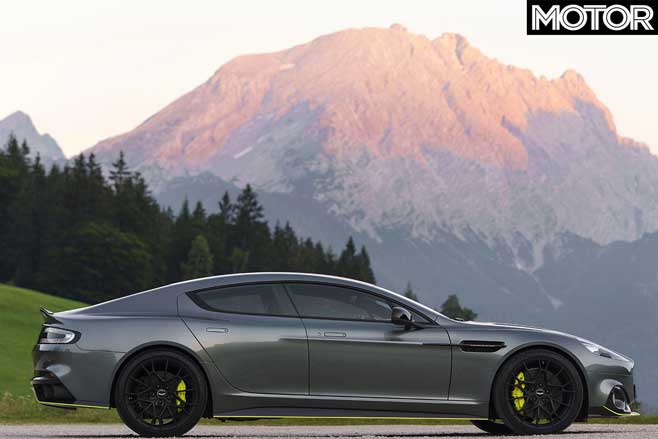
The Rapide’s kerb weight is 1995kg, which seems like a lot until you realise a Bentley Continental GT, despite having two fewer doors, weighs another quarter of a tonne.
And even now, nine years after the Rapide’s introduction, there aren’t many cars of this weight and size that are more engaging or more agile to drive, or that hide their mass so well.
The AMR alterations to the chassis are pretty subtle. They add a firmness to the ride and a bit of extra body control. I might have preferred it as it was – this is a big sedan, after all – but it has been a while since I drove a standard one. The ride quality is still actually quite good – a touch fidgety over small ripples, but never close to frighteningly harsh. Still very much evident is a lovely balance.
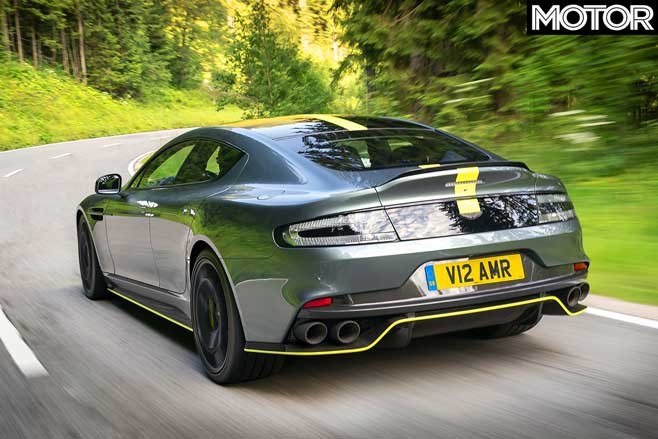
The steering is smooth, pleasingly weighted and gains weight and road feel as you turn. At three turns between locks, it has anything from half to a full turn over some big cars, as they try fitting sharper steering to make them feel more agile. Not here. No hyperactivity, no active roll bars, air springs or rear steer. It is what it is – straightforward, honest, with the smoothest of V12s and a clean gearshift – and frankly all the better for it.
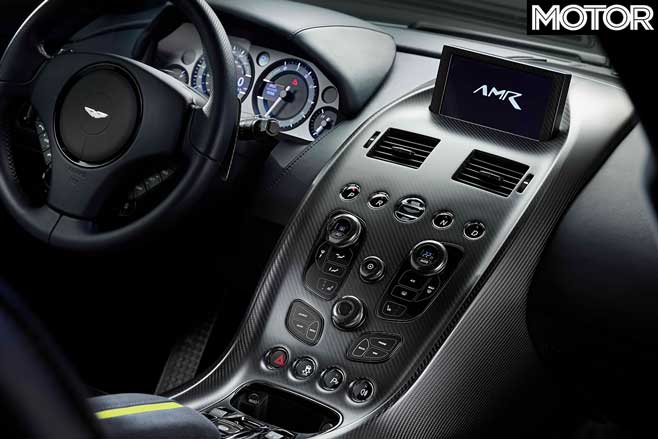
If rivals have anything over the Rapide, it is interiors that are roomier, and stuffed with lavish materials and world-class electronics systems – hence their weight. The old Aston navigation and entertainment systems are as baffling as they ever were, and the analogue dials are not as clear as they should be, but there’s a digital speedo and phone mirroring. I’d get along just fine with those.
There’s not a direct Rapide replacement – the DBX will, effectively, be it. It’s a shame that the last of the VH cars wasn’t a fire-breathing version of one of the more glamorous coupes, rather than this lower-key run-out. But the Rapide, being the longest Aston, with a hefty aluminium structure down its middle, has the biggest backbone of them all. So, in a way, fitting. I know, new dawn, but I’ll miss it.
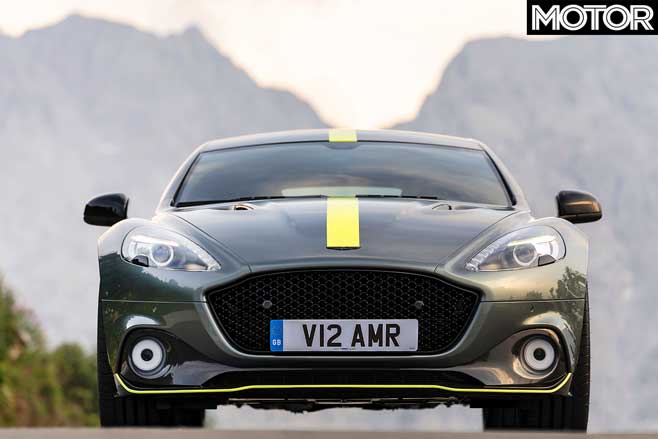
2019 ASTON MARTIN RAPIDE AMR SPECS Engine: 5935cc V12, DOHC, 48v Power: 444kW @ 7000rpm Torque: 630Nm @ 5500rpm Weight: 1990kg 0-100km/h: 4.4sec (claimed) Price: $459,950
Like: Muscular normally aspirated V12; agility for its size; smooth steering and gearshifts Dislike: Firmer suspension tune; baffling multimedia system; instrumentation clarity
Rating: 3 out of 5 stars
Hi WhichCar, I’m looking for a new car to replace my 2008 Honda Accord Euro, which I really love. I find the Honda to be really simple and easy to use, but I am struggling to find anything similar in today’s market.
I’m not as young as I used to be, so I want to buy a car that’s easy to use and to live with, in every aspect. No bells and whistles, easy to park and easy to look after, please – I just want a plain old car!
I would like to stay with a similar shape car, but I can see that the SUV has taken over the world since I bought my Honda. I’m not married to the Honda brand, either. My budget is under $35,000.
With thanks, Carol, Edgeware, NSW
Hi Carol, The Accord Euro was a terrific little car, and quite ahead of its time. I hear what you’re saying around simplicity and ease of use, and there are still a few cars around that fit that bill.
I know you don’t want extra tech, but most cars on the market now will feature a great deal more active safety on board – and that can come with its own set of ‘bells and whistles’ that may take a little getting used to.
Let’s look at a few cars in your price bracket that hopefully fit the bill.
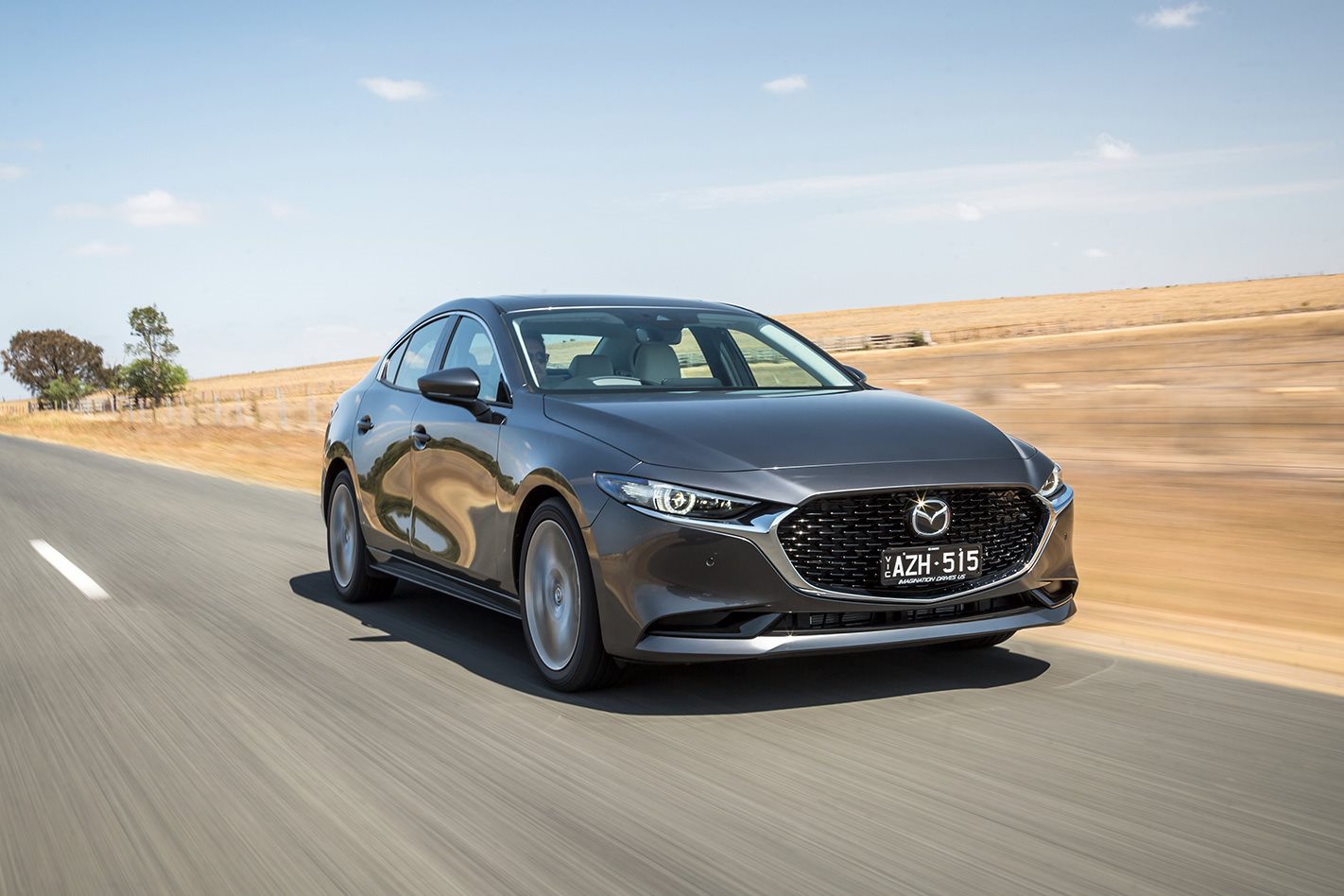
Mazda 3 G25 Evolve sedan ($29,490)
It’s not that far away in size from your old Accord, and it has a similar four-door, five-seat layout. The Mazda 3’s engine is about the same size, but it has more grunt and will use a bit less fuel.
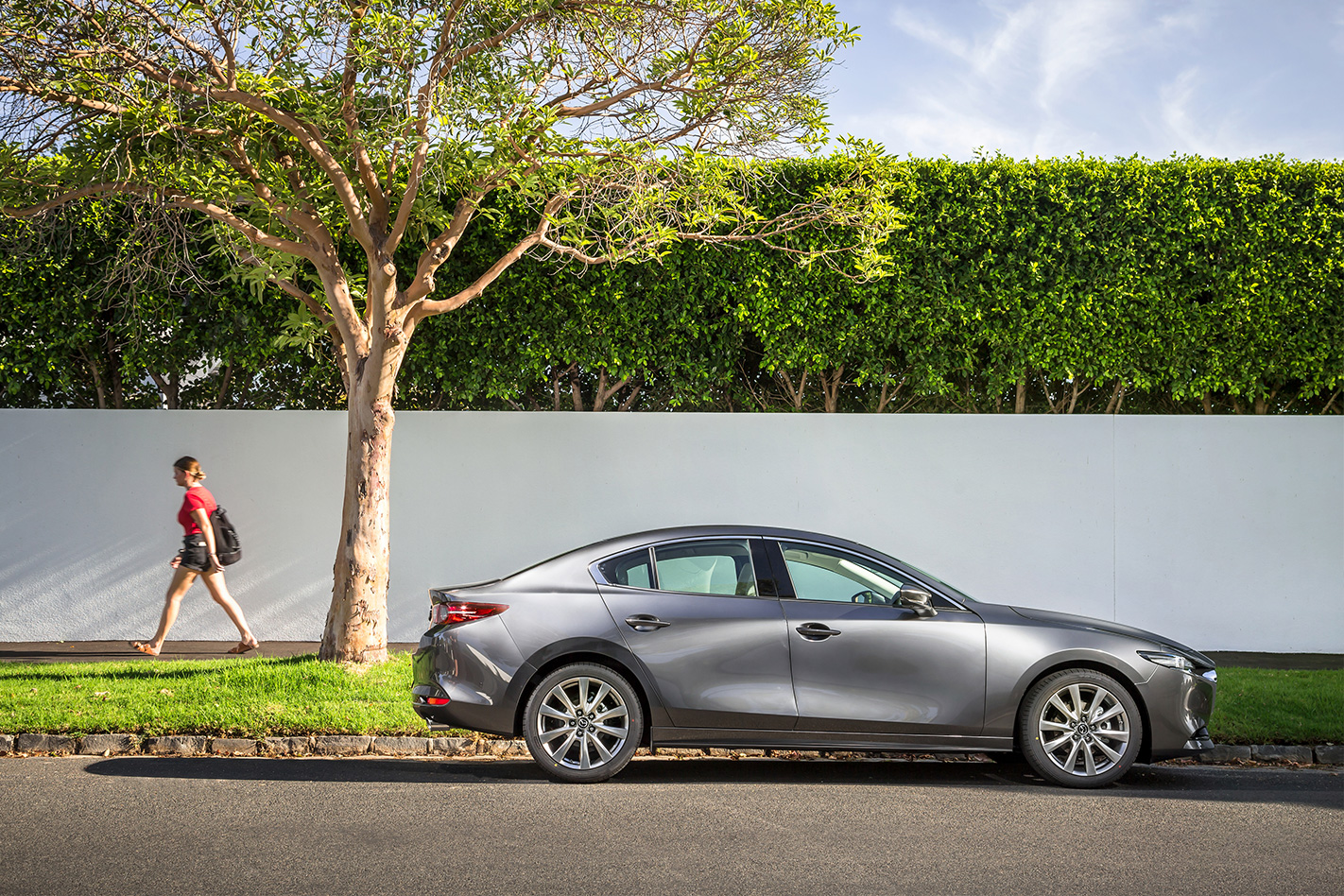
In terms of ease of use, the Mazda has it in spades; it’s one of the main reasons that the brand is a best-seller here in Australia. The dash is simple and easy to read, the wiper stalk is on the same side as your Honda, the headlights and wipers are automatic, and you can leave the key in your pocket or bag to get in and out.
It does have a dial to operate its multimedia system, where a touchscreen may have been a more accessible way to use it, and it’s a bit hard to climb into the (surprisingly spacious) rear. Big tick for its big boot, too.
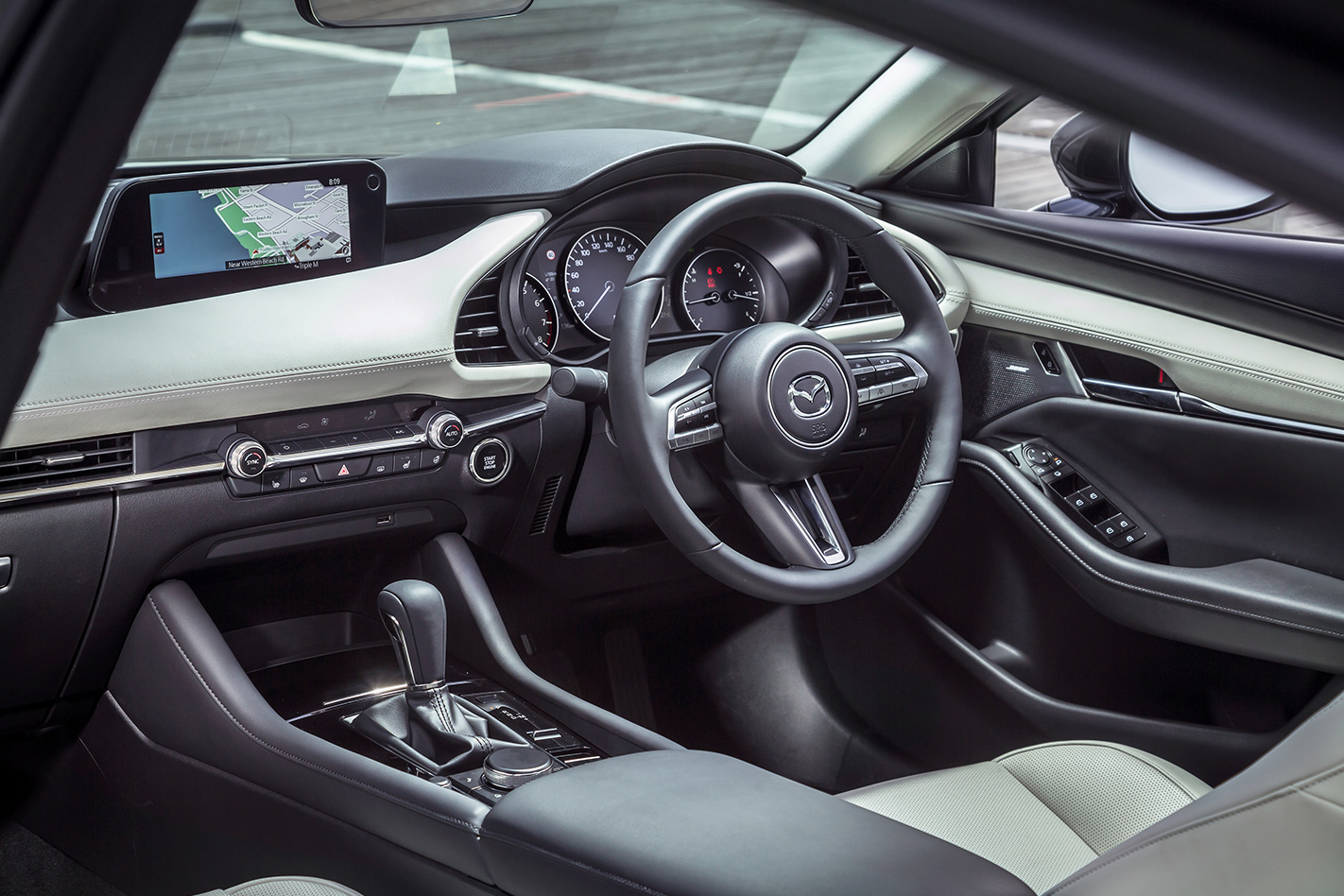
It’s also refreshingly free of things that go ‘bing!’ but it will have door chimes and the like that aren’t dissimilar from your Accord.
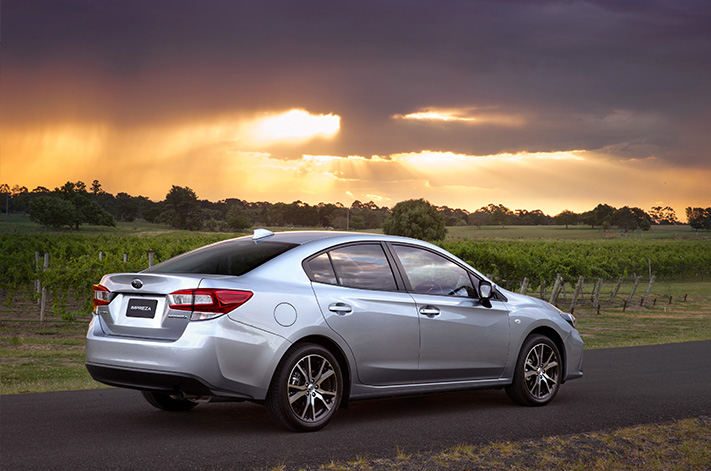
Subaru Impreza 2.0i-S sedan ($29,760)
It’s not quite as new as the Mazda, but the Subaru Impreza is an honest, simple and easy-to-drive little car.
It has a two-litre petrol engine that might not feel as spritely as your Honda – it weighs a bit more, and it also has all-wheel-drive – but it’s excellent around town and in adverse conditions.
The continuously variable transmission (CVT) will take getting used to; it does the same job as a regular auto, but it just goes about the job in a different way.
Again, the Impreza’s simple interior layout and minimum of buttons plays into its favour, as does its simple multimedia system. And while it might go against your ‘simple is best’ mantra, the Impreza’s EyeSight safety system is amongst the best on the market.
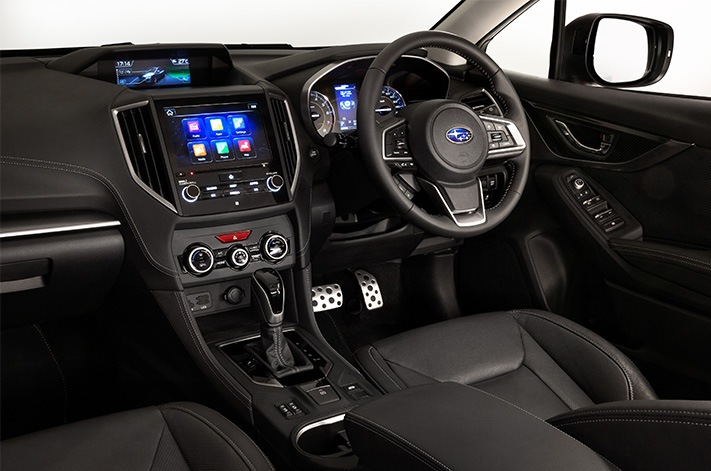
It has plenty of room for four people and five at a pinch, and the boot is well sized.
Nissan Qashqai ST-L ($33,290)
I’ll throw you an SUV as well, Carol, just so you’ve got a snapshot of what’s out there at the moment. This is the ‘oldest’ of the group – it dates back to 2014 – but if it’s simplicity of function you want, then you can’t go far wrong here.
The Nissan Qashqai (pronounced ‘Cash-Kye’) a front-wheel-drive like your Honda, and it has the advantage of having a bit more height – this can make it easier to slide in and out of, and it gives you an elevated driving position, as well.
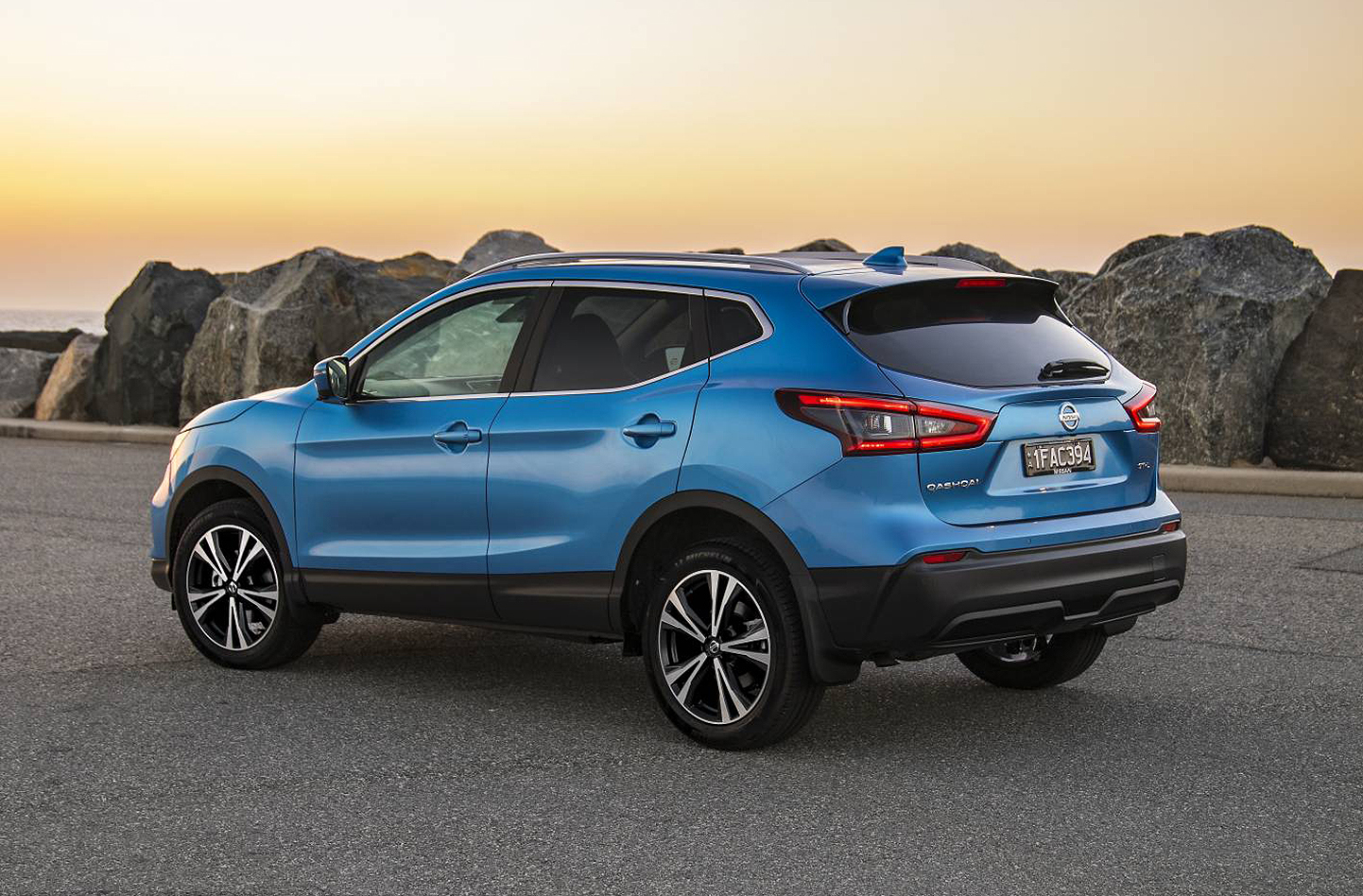
The trade-off is minimal if you’re only tackling the cut-n-thrust of Sydney’s inner west, but SUVs are inherently less stable than a sedan, thanks to their higher centre of gravity.
Like the others, the Qashqai is simple and straightforward to use from behind the wheel. It has niceties like reversing beepers and cameras, as well as heated seats.
Its SUV body style also gives you a tailgate and more room in the back, but it’s not so big as to be cumbersome. It’s actually about 4cm shorter than your Accord Euro, and only 1.5cm higher.
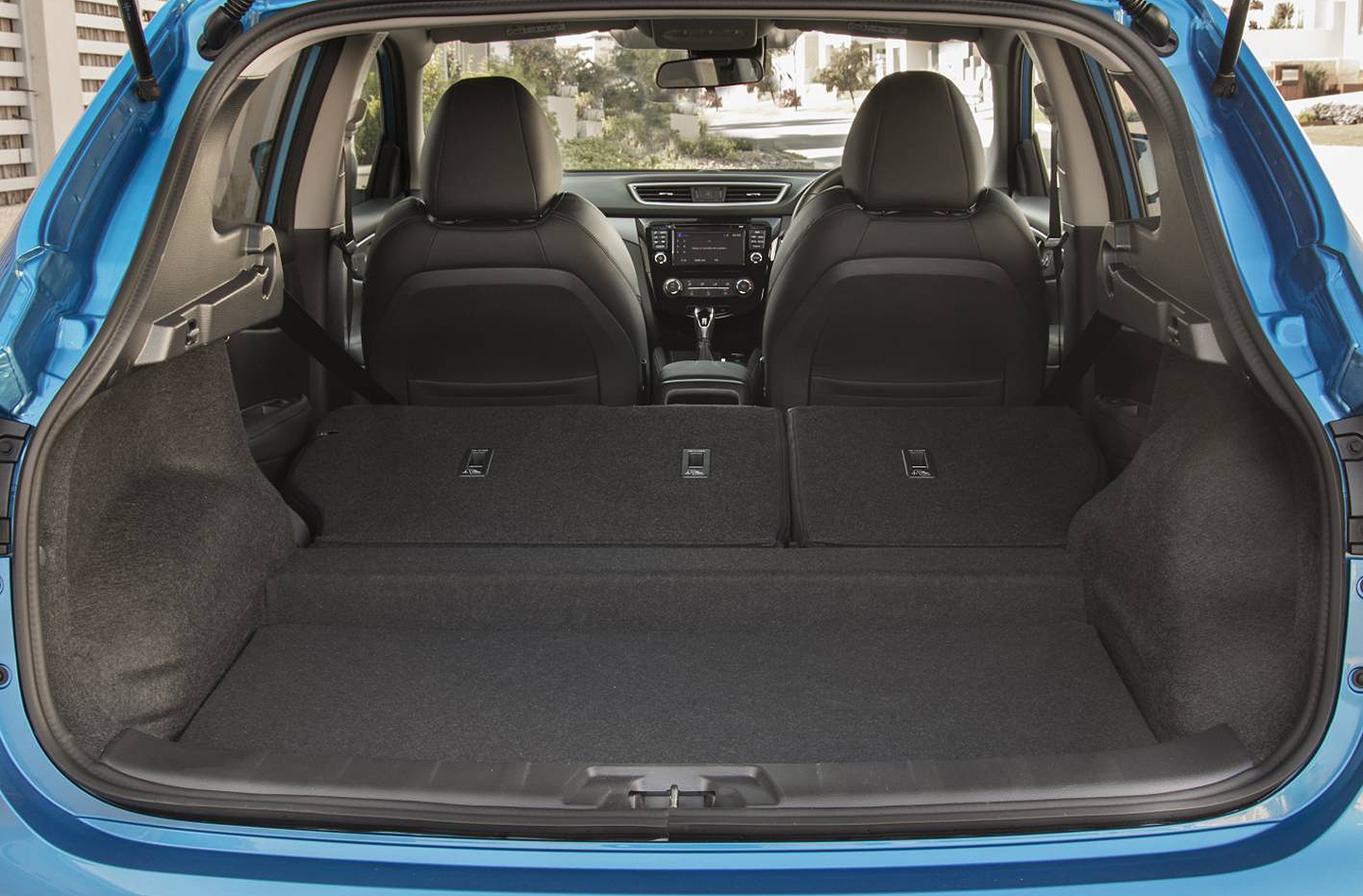
It has a few things that beep and whistle, like lane departure warning and autonomous emergency braking, but unless you’re about to get involved in an accident, these systems will operate happily in the background.
WhichCar recommends…
Mazda 3 G25 Evolve sedan ($29,490)
On balance, though, the Mazda3 will surprise and delight you. It’s so easy to drive, lovely to look at and a doddle to care for, and it’ll also offer excellent resale or trade-in value.
Compared to many cars, these are a mechanic’s dream,” says Pani Tsouris as we both peer past the dazzling gold heat protection and highly polished titanium exhausts to the vast V12 nestling deep in the engine bay.
“Everything has been properly thought through. The fuses are easy to access, all the fluid reservoirs are bundled together in the nose, and there’s space – you can get to all 12 spark plugs and the air and oil filters.”
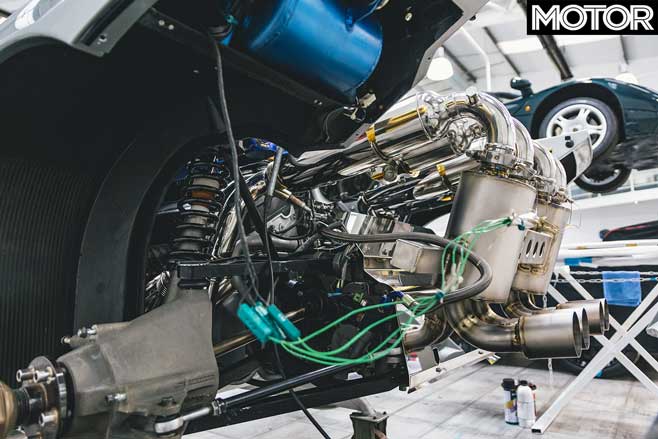
This was not what I was expecting to hear. I was prepared instead for tales of the McLaren F1 being a proper prima donna, requiring a tortuous service schedule, and a technician with double-jointed wrists and an ability to see through steel. However, if anyone can set me straight, it’s Tsouris.
He’s lead F1 technician at the McLaren Special Operations (MSO) Heritage division, and he’s been working on the iconic supercars for more than 15 years, here at a large, nondescript warehouse on an industrial estate in Woking, Surrey, UK.
This is where most owners bring their cars to be worked on. There is a ‘flying spanners’ service that will send a mechanic to a car anywhere in the world, but increasingly those who run the cars want them to go ‘home’ for a check-up, or even a full restoration. And it’s not hard to see why when you step inside.
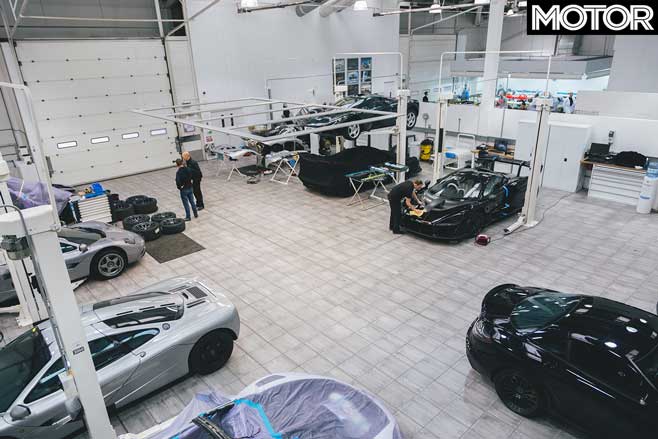
On the day we visit the immaculately kept workshop, there are five F1s on the ramps, including a road-registered 1996 F1 GTR in Fina colours with period factory racing driver Steve Soper’s name on the door.
So just what does it take to keep an F1 running? Over to Heritage manager Thomas Reinhold, a man with a head so full of McLaren facts it’s surprising there’s room left for much else.
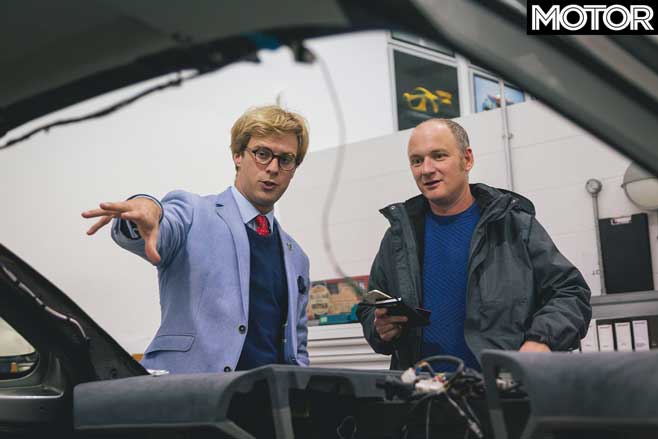
“When it was new, the normal service intervals were nine and 18 months,” he explains. “But these days we tend to see a car once a year or so.”
Before any spanners are laid on the car, Tsouris or one of his team give every F1 a thorough safety check and lengthy test drive, including a run at the Millbrook proving ground, from which is generated a detailed report, some of it downloaded from an archaic 1990s Compaq laptop that plugs into one of the F1’s three electronic brains, which are fairly simple by today’s standards.
In terms of routine maintenance, the F1 is in many respects fairly straightforward. As you’d expect, every car gets its fluids and filters changed as a matter of course, while there are some ‘lifed’ items that need replacing at set intervals: the fuel cell is renewed every five years, while dampers are swapped out after 10.
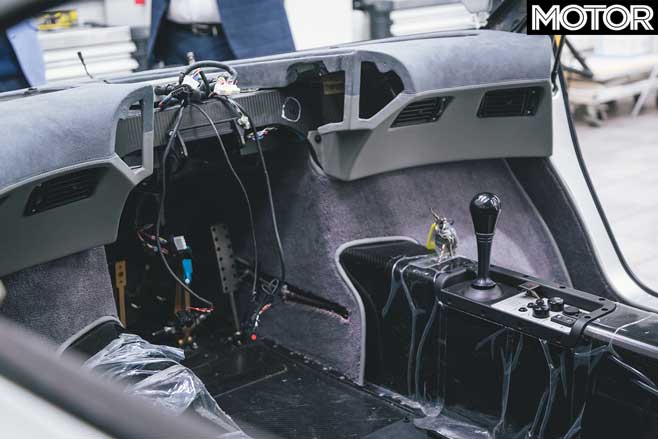
Some items such as the spark plugs and their coil packs give virtually no trouble, needing little more than an inspection. Pads and discs are also checked, but wear rates are good and most cars don’t do enough miles to demand frequent replacements. The car’s carbonfibre structure is also checked but, apart from accident damage, there have so far been no reported issues.
Some tasks are trickier than others, though, as Tsouris reveals: “Replacing the gold heat shield is fiddly and time-consuming. To do a whole car takes around two weeks.”
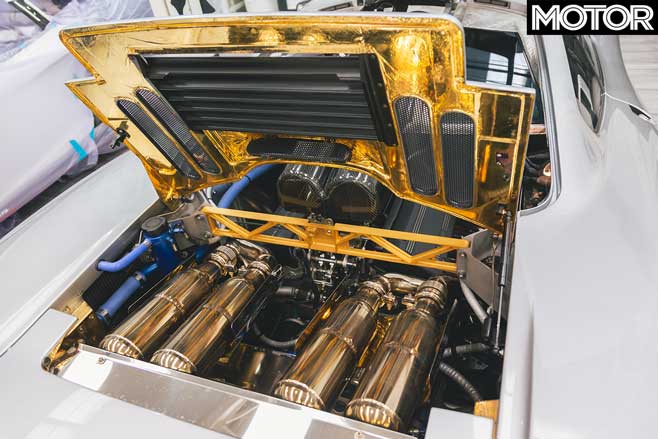
And the best job? “The phone call or email from the owner when they get the car back and want to tell you how well it’s going after the service. That’s the buzz.” Then he pauses and smiles, before adding: “And the driving.”
Of all the service procedures on a McLaren F1, arguably the most involved is replacement of the fuel cell, which is required every five years. Opposite is a full rundown of the process, including the hours required for each job. As you can see, while the car is ostensibly in for the cell change, McLaren’s technicians do a lot more to the car to ensure it leaves the workshop as the factory intended.
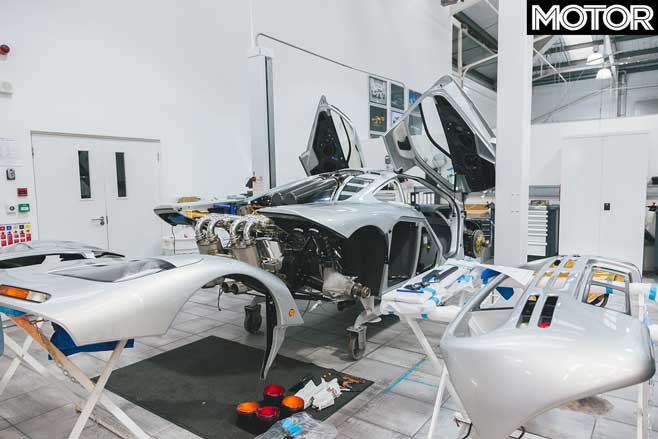
Of course, while the engine’s out it’s sometimes also worth replacing the gold foil heat shield, which can take anything between 16 and 18 hours. It all adds up, but as Tsouris explains, you can’t rush an F1: “It’s a car you engage with. Nothing is too difficult, but you can’t do things quickly. Cutting corners is a no-no. The set hours for each job are built up over 25 years of experience and need to be stuck to.”
What happens in McLaren F1’s 84 hour service?
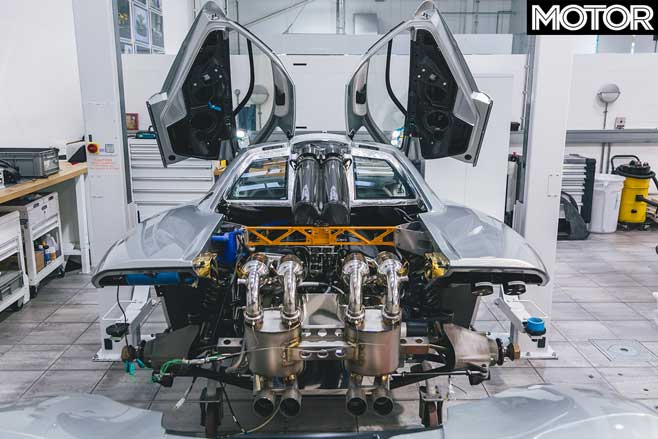
7.5 hours – Carry out initial road test (including commute to Millbrook and back) 28.5 hours – Remove and refit engine 8 hours – Prep fuel cell aperture with tank tape and replace fuel tank 8 hours – Replace all breather and fuel hoses and carbon canisters 8 hours – Rebuild fuel tower and carry out pressure test to fuel tank 3 hours – Replace anti-corrosion tape to engine mounts 6 hours – Detail engine, gearbox and ancillaries 8 hours – Carry out full suspension set-up 7 hours – Carry out final sign-off road test
What stands out?
The Subaru BRZ is an affordable rear-wheel-drive sports coupe, with stylish looks and superb steering and handling. Subaru developed the BRZ with Toyota, which sells a very similar car as the 86.
What might bug me?
How bumpy roads have got since you bought your BRZ. Its ride is sports-car firm, and if you are used to a more utilitarian hatchback or sedan you will notice that.That the floor of the small boot is not flat – a shallow spare wheel compartment means the standard full-sized spare wheel protrudes uncovered into the boot space.(That said, having a full-sized spare will be very handy if you get a flat tyre on a country trip. Many other sporty cars carry only a space-saver spare, which typically are speed and distance restricted, or in some cases merely a tyre repair kit.)Paying more for fuel: The BRZ requires expensive premium 98 petrol.
What body styles are there?
Two-door coupe. (It’s a two-plus-two, which means there are two very cramped rear seats.)The Subaru BRZ drives its rear wheels, and it is classed as a sports car, lower priced.
What features does every Subaru BRZ have?
Cruise control, and keyless entry and start (which allows you to unlock and start the car with your key kept safely in a pocket or bag). Dual-zone climate control, which lets you set different temperatures for each side of the cabin, and cloth seat trim.Apple CarPlay and Android Auto smartphone pairing, AM/FM radio and CD sound system with USB and auxiliary inputs, Bluetooth audio streaming and phone calls with voice control, and six speakers, controllable from a 7.0-inch colour touchscreen.Satellite navigation and a reversing camera.An information display that presents data such as average fuel consumption, and two trip meters.Height and reach adjustment for the leather-clad steering wheel, which carries buttons for operating the sound system, the information display and your phone (via Bluetooth). Height adjustment for the driver’s seat.Bright and extremely long-lived LED headlights which are self-levelling and switch on automatically when it’s dark, and LED daytime running lights (which make the car more visible).Seventeen-inch wheels made from an alloy of aluminium, and a full-sized spare wheel and tyre.A limited-slip differential, which inhibits wheelspin, improving handling and acceleration on low-grip road surfaces (and enhancing control when you’re drifting the car – on a racetrack, for example).Hill-start assist. This helps you take off on uphill slopes, by controlling the brakes automatically.Electronic stability control, which can help you avoid or control a slide. From November 2016, the BRZ’s stability control has offered an effective and subtle Track mode, which lets very good drivers enjoy some oversteer while retaining a safety net.Seven airbags. (For the placement of airbags, and more on BRZ safety systems, please open the Safety section below.)Seven exterior colours are available, and they all come without extra cost.Every Subaru BRZ carries a three-year, unlimited kilometre warranty.
Which engine uses least fuel, and why wouldn’t I choose it?
The BRZ is powered by 2.0-litre horizontally-opposed petrol four-cylinder engine, with a choice of six-speed manual and six-speed automatic transmissions.On the official test, auto BRZs use a lot less fuel than the manuals, consuming 7.1 litres/100km (city and country combined).The main reason you would not choose a BRZ auto is that you want to control this very engaging car as precisely as possible, taking absolute command of gear selection with a manual shift.Manual BRZs use 8.4 litres/100km on the official test. In practice they don’t use much more, however.A BRZ manual averaged 9.0 litres/100km in a real-world comparison conducted for the May 2017 issue of Wheels magazine. (An accompanying Mazda MX-5 RF used 7.9 litres/100km.)One reason the manual BRZ uses more fuel than the auto is that it has more closely spaced gear ratios and shorter overall gearing – giving you easier access to the engine’s best power, but spinning it a bit harder.The BRZ’s engine differs from most four-cylinder engines in that it lies flat across the engine bay rather than standing up vertically. This places the weight of the engine lower in the car, which is one reason why it steers so responsively. The design also helps the engine run very smoothly. (Porsche four-cylinders use a similar layout.)Auto and manual BRZs each have six ratios.
What key features do I get if I spend more?
The BRZ is offered in three trim levels, with either a manual gearbox or (at extra cost) an auto. You can enhance either with options.The standard BRZ Coupe comes with the features that all BRZs have. For around $1600 you can upgrade to the BRZ Premium which swaps the cloth seat trim for part-leather and part Alcantara and adds seat heaters. In December 2017, Subaru added a tS model featuring a host of extras that were previously only available as optional extras.These include enhanced suspension and high-performance Brembo brakes with red painted calipers.Black finish 18-inch alloy wheels, revised front bumper and black rear spoiler, side mirrors and shark fin antenna.The tS also features interior enhancements include red highlights and tS logo added to the Alcantara seat trim, black steering wheel with red accents and red seat belts.Optional equipment for all models includes front and rear parking sensors – which indicate your distance from near objects – are available as accessories.You can also make the standard and Premium BRZ look and feel more like a race car, by adding Accessory packs. A Styling Pack adds skirts to the base of the body and a spoiler to the boot lid; a Driver’s Pack lowers and stiffens the car for more stability in track use; and an S Pack gets you black Enkei branded wheels and a red engine-start button.
Does any upgrade have a down side?
Fitting anything that lowers the car will mean you need to take more care on steep driveways and the like, to avoid scratching base of the body.Paying more for an auto BRZ gets you a bit less peak power, and more sedate acceleration from the taller gearing.
How comfortable is the BRZ?
In keeping with its positioning as a sporty car, the Subaru BRZ has quite firm suspension – notably, it rides much more firmly than the small rear-drive sports car from Mazda, the MX-5.Inside the car you may feel shaken around a bit over lumpy surfaces, but overall comfort is good – bumps are cushioned in part by great seats.Getting into the BRZ is not quite as easy as it would be for a similar sized non-sporty car, because the seating position is a bit lower.The front seats offer excellent side-support for cornering, and the major and minor controls are well sited. The steering column adjusts for tilt and reach, and the driver’s seat for height, which lets you get the driving position just right.“Like the Porsche, the BRZ’s work station is textbook brilliance, with perfectly aligned pedals, and the best steering wheel and driver’s seat here,” senior reviewer Nathan Ponchard told readers of Wheels, reporting on a BRZ road trip with a Porsche Cayman S and Mazda MX-5.The BRZ’s interior is well built, if not especially luxurious. Some of the plastics are hard, but the quality of the seat trim is good and the steering wheel and gear lever are nicely designed and finished. The instruments and centre touchscreen are attractively presented. Mobile device connectivity was enhanced with the upgrade of November 2016. Apple CarPlay and Android Auto were added a year later.The Subaru BRZ is reasonably quiet inside, with low levels of noise and vibration from the suspension and engine. It shares its 17-inch wheel size with the Toyota 86 GTS, which makes it slightly less comfortable than the smaller-wheeled 86 GT – but there’s not much in it.Because of the low seating position, forward vision isn’t as commanding as it is in a small car. As well, vision over the driver’s shoulders and to the rear is restricted due to the small side-rear and rear windows. That makes it more difficult to park than many cars of a similar size. The reversing camera helps here.
What about safety in a Subaru BRZ?
The Subaru BRZ has anti-lock brakes, a sophisticated stability control system, seven airbags, auto-on LED headlamps, daytime running lamps, and a reversing camera. Its safety package emphasises your control of the car, your visibility to other drivers, and your protection in a crash.Two airbags are placed directly in front of the driver and front passenger; airbags alongside each front occupant protect at pelvis and chest level from side impacts; curtain airbags on each side protect front and rear occupants at head level from side impacts; and a seventh airbag protects the driver’s knees.You don’t see as far ahead in the BRZ as you would in a normal passenger car, and vision to the rear is restricted, both of which present a small impediment to both occupant and pedestrian safety.The reversing camera made standard in November 2016 improves safety for bystanders, however, while also making it easier to park the car.The BRZ does not offer autonomous emergency braking, or other sensory active safety aids.The Australasian New Car Assessment Program (ANCAP) awarded the Subaru BRZ its maximum five stars for safety, in July 2012.
I like driving – will I enjoy this car?
Whether you’re a serious car enthusiast, or are simply attracted to the stylish look and appealing price of the Subaru BRZ, you will enjoy driving it very much.The sense of precision and agility the steering imparts, and the level of feedback it gives the driver, is the greatest strength in the BRZ. Anyone can enjoy this, whether they’re driving to the shops or on a twisting country road.The BRZ feels about as good to steer as sports coupes that are far more expensive (even the Porsche Cayman).The rear-wheel drive BRZ handles corners brilliantly. It turns in enthusiastically and responds to small changes in accelerator and brake pedal inputs, which makes for an involving driving experience. This kind of responsiveness is rare in a modern car.Skilled drivers will love how controllably you can slide the rear tyres of the BRZ, which is great fun (on a racing circuit, of course).The high level of handling ability in the BRZ may make it feel a bit underpowered for particularly keen drivers, even though the 2.0-litre engine, which produces about 150kW, is quite powerful for the weight of the car. The mildly revised flat-four in BRZ manuals feels much the same as the previous engine, which endures in BRZ autos. It is at its most responsive at high engine speeds, where it also sounds much sportier. The noise it makes at low speeds isn’t inspiring.Many enthusiasts will prefer the manual transmission in this car. But for buyers inclined to choose an automatic, the auto in the BRZ is a good one. And you can control it from paddles on the steering wheel.
How is life in the rear seats?
Head and leg room are very limited for rear passengers in a BRZ. The back seat is intended only for short trips, or small children.Nonetheless, many other sports cars – for example, the Mazda MX-5 and Nissan 370Z – do not have a back seat at all.Child-seat anchor points are fitted to the BRZ, and Subaru offers a compatible child seat as an accessory.
How is it for carrying stuff?
The Subaru BRZ has a small boot with quite a small opening. Subaru quotes luggage capacity as 218 litres. That is nearly as much as a light hatchback, but without its ease of loading or ability to expand the cargo area into a van-like space by folding the rear seat flat.The BRZ’s rear seatback folds in one piece, rather than the split/fold arrangement of most cars. With the seatback folded, you can fit four spare wheels with tyres in the back. That could be handy for the kind of BRZ buyer who might take their car to the racing circuit on the weekend.
Where does Subaru make the BRZ?
The Subaru BRZ is manufactured in Japan.
What might I miss that similar cars have?
Perhaps a folding roof, so that you can enjoy top-down motoring in your sports car. The Mazda MX-5 offers this, for example – in both soft-top and hard-top versions. The MX-5 shares the BRZ’s rear-wheel-drive layout, and offers a similar level of driver involvement.Perhaps some extra mid-range grunt from a turbocharged engine, which is available in the Fiat Abarth 124 Spider. The Spider, a soft-top convertible, is based on the MX-5. It is built at the same factory by Mazda, but uses a Fiat-supplied 1.4 turbo four-cylinder.Rear-facing sensory safety aids, which help you keep track of other vehicles behind. A blind-spot monitor and a rear cross-traffic alert are available on the Mazda MX-5 and the 124 Spider.You might also consider a sporty front-drive coupe, such as the Hyundai Veloster.
Are there plans to update the BRZ soon?
The Subaru BRZ went on sale in 2012 and was updated in 2014. A more significant mid-life restyle arrived in November 2016, which brought a little more power to manual versions, revised suspension tuning, LED headlights, and a better touchscreen and device connectivity.In December 2017 Subaru introduced a new tS model to the top of the range, with a host of extras including enhanced suspension and brakes and sportier exterior and interior trim. It also increased the size of the infotainment screen in all three models to 7.0-inches and added satellite navigation as standard along with Apple CarPlay and Androind Auto connectivity.A second-generation BRZ is believed to be under development, and might arrive about 2020.
I like this car, but I can’t choose which version. Can you help?
The standard BRZ provides all the driving pleasure and equipment you need. For a car enthusiast, a manual gearbox version is the pick over the automatic.
It’s an all-new BMW M car, and as such something to get pretty excited about, since it’s not every year we get one. But it’s also a mid-size performance SUV – and in that sense one of an increasing number of cars that seem to arrive every few weeks.
Nonetheless, this is M’s first full-fat X3, and appears at the same time as its ‘coupe’ X4 M Competition sister car.
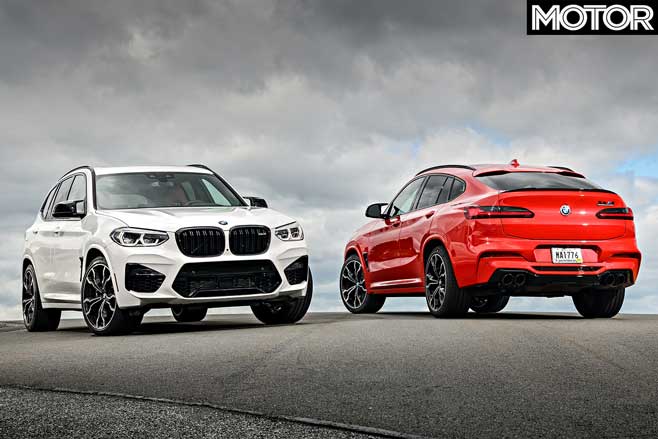
As the X5 M and X6 M have already proven, M Division doesn’t make hot SUVs quite like other car companies. It took a while to get used to the idea of an outfit like M making hot SUVs at all, but BMW’s in-house tuner will finish 2019 with as many jacked-up ‘utility vehicles’ in its range as sedans, coupes and convertibles combined.
And, while many will surely snipe at the firm for cashing in even further on its credibility, the X3 M Competition is true to 40 years of M history. With a powerful straight-six petrol engine, fully retuned steel coil suspension, uprated braking and steering, and an actively locking rear differential, it has plenty in common with the sedans and coupes with which BMW M built its reputation.
Most fast four-by-fours are champions of multiplicity of role and versatility of functional flavour, but the BMW X3 M Competition isn’t quite like that. It doesn’t have the Porsche Macan’s transformative air suspension system or the loping stride of a Jaguar F-Pace SVR – and that may very well make it a true driver’s car.
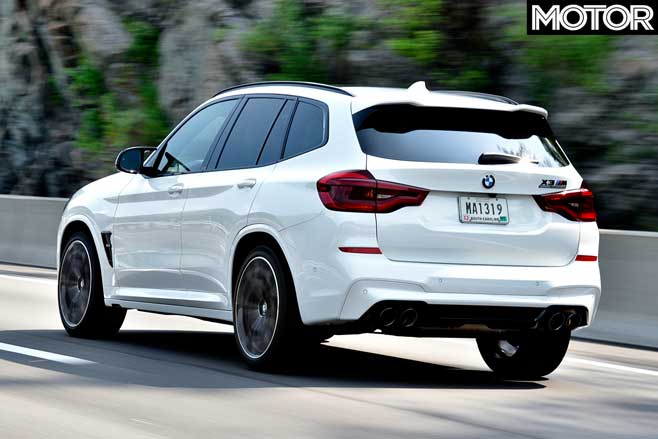
Aside from what we’ve already mentioned, the car’s powertrain has two notable ingredients to catch the eye – the highly configurable four-wheel drive from the current M5 super sedan, and BMW M’s brand-new ‘S58’ high-performance straight-six.
The new engine isn’t a redeveloped version of the outgoing M3’s S55, but rather M Division’s overhaul of the B58 that came into the firm’s mainstream model range in 2015. Even so, it only shares 10 per cent of its componentry with that mainstream motor.
Developing more power and torque than any other six-cylinder petrol engine BMW has produced (a peak 375kW, and 600Nm of torque across a much broader band of revs than the old S55), it’s bound for the next M3 and M4 in 2020, and quite possibly other compact M cars after that.
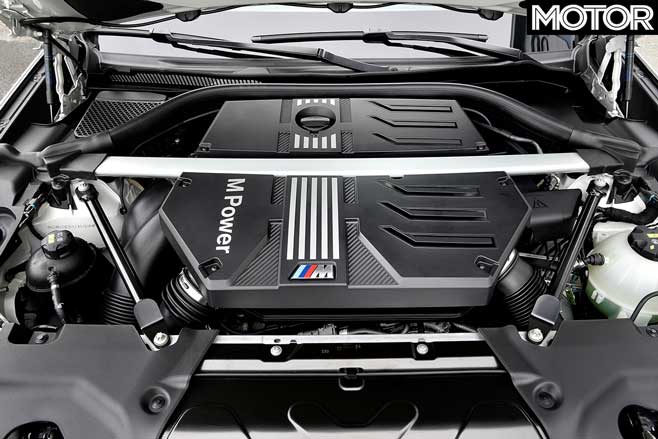
Using a forged crankshaft, forged pistons, lightweight cylinder head with 3D-printed parts, indirect intercooler and twin monoscroll turbochargers boosting at up to 2.3bar, the engine has the potential for even more power and torque – and without the need for technologies such as water injection.
Even in a two-tonne SUV and as it is, the engine feels stronger than either its cylinder count or its on-paper torque output leads you to expect. There’s a bit more raw, straight-six combustion noise about its audible character than the old S55.
Nothing about it is more impressive, though, than the balanced linearity of power delivery from below 3000rpm and right the way up beyond 7000rpm. Some rival turbocharged performance engines give a bigger hit of mid-range thrust, others a more dramatic, characterful climax to the rev range, but none have such predictable pedal response and remarkable drivability.
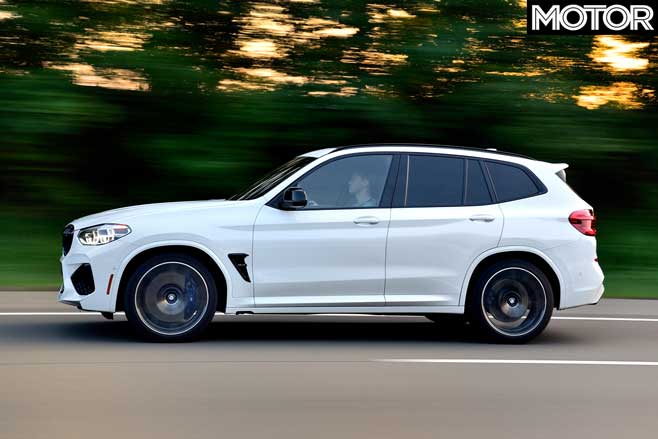
X3 M Competition owners are in for handling that’s only likely to be beaten for sporting agility, balance and adjustability by the very best cars in the fast SUV niche. It has the same confidence-inspiring grip, body control and precision that serve as the main dynamic calling card for so many current M cars.
That comes at the cost of ride isolation and refinement. The adaptively damped suspension, 21-inch forged alloy wheels and low-profile tyres aren’t too compatible with rough or broken asphalt. While they make for a clearer and more immersive sense of connection with the road on smoother stretches than most fast SUVs have, they also give the car a slightly coarse, tetchy and highly strung temperament on less-than-smooth surfaces.
This isn’t the only car in its niche to stretch the limits of acceptability on hardcore temperament, and it doesn’t do so quite as far as either an Alfa Stelvio Quadrifoglio or a Mercedes-AMG GLC63 S.
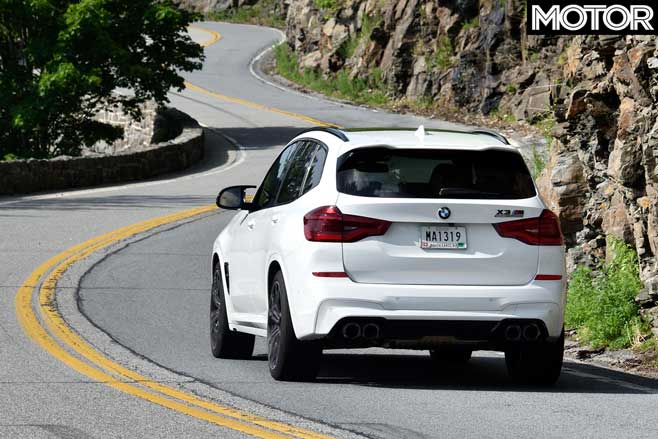
But because it prizes handling precision and drivability over more lurid, dramatic and accessible performance appeal, the X3 M Competition ends up feeling short of a really outstanding selling point: like a car that isn’t as versatile, as broad-batted or as usable as some, or as downright rapid or exciting at everyday speeds as others.
It’s a predictably serious driver’s car, in other words. Which is what we should expect of M Division – even if that makes it feel unusual, and perhaps a bit misplaced, in a class of performance cars that some remain singularly unwilling to take at all seriously.
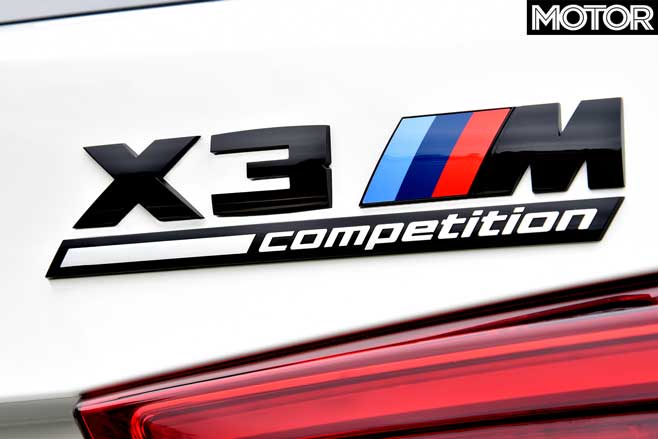
2019 BMW X3 M COMPETITION SPECS Engine: 2998cc inline-6, DOHC, 24v, twin-turbo Power: 375kW @ 6250rpm Torque: 600Nm @ 2600-5950rpm Weight: 1970kg 0-100km/h: 4.1sec (claimed) Price: $157,900
Like: Smooth and potent turbo straight-six; mid-range performance; all-wheel drive system; confident handling Dislike: Ride isolation and refinement on rough roads
Rating: 4 out of 5 stars
It’s been a huge week for the automotive industry; capped off by the Frankfurt Motor Show that provided us a clear glimpse into our motoring future.
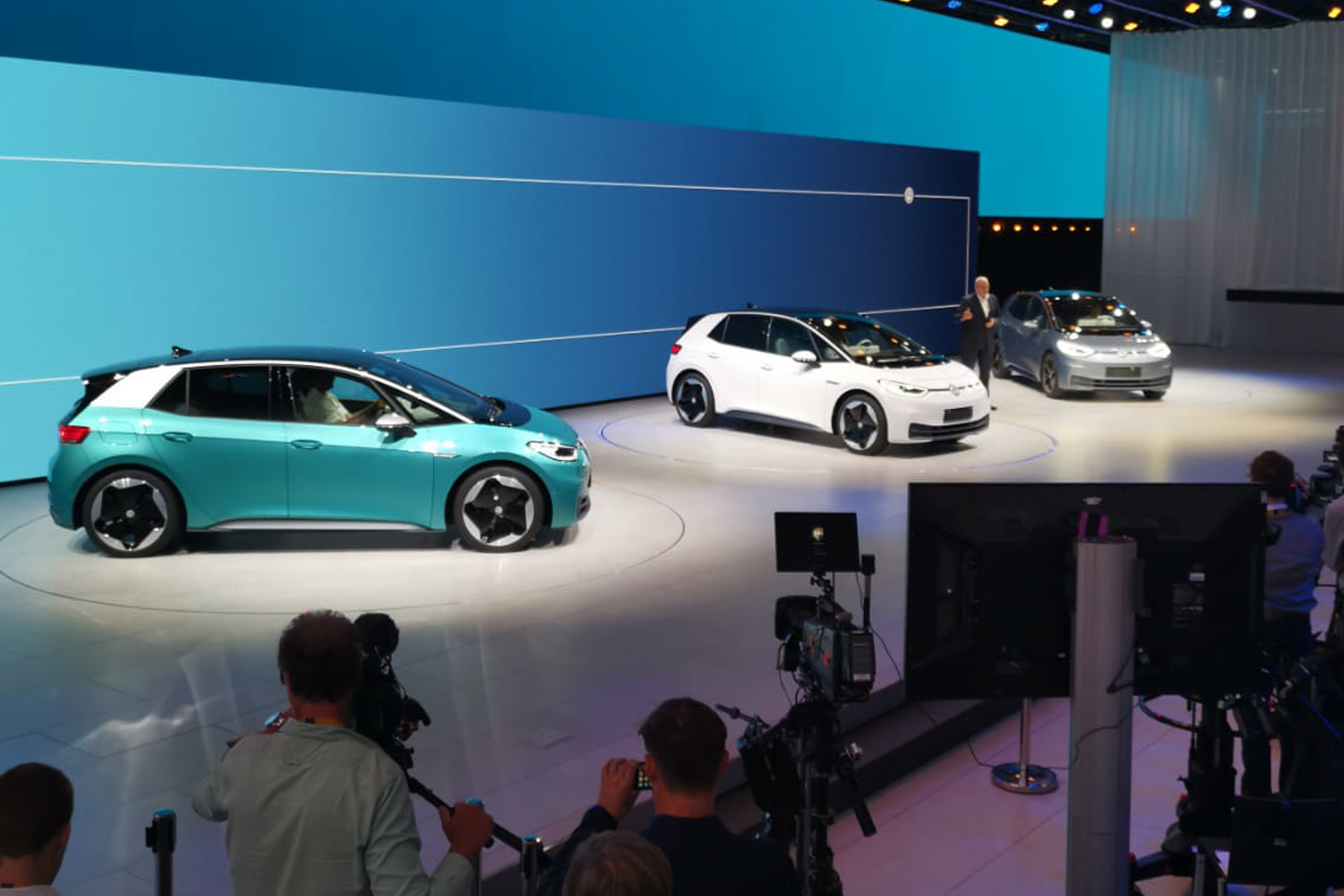
WhichCar was on the ground in Germany to witness some of the huge reveals ranging from the all-new second-generation Land Rover Defender to the Volkswagen’s ID3 electric hatchback (above) that the German carmaker says is every bit as significant as the Beetle and Golf.
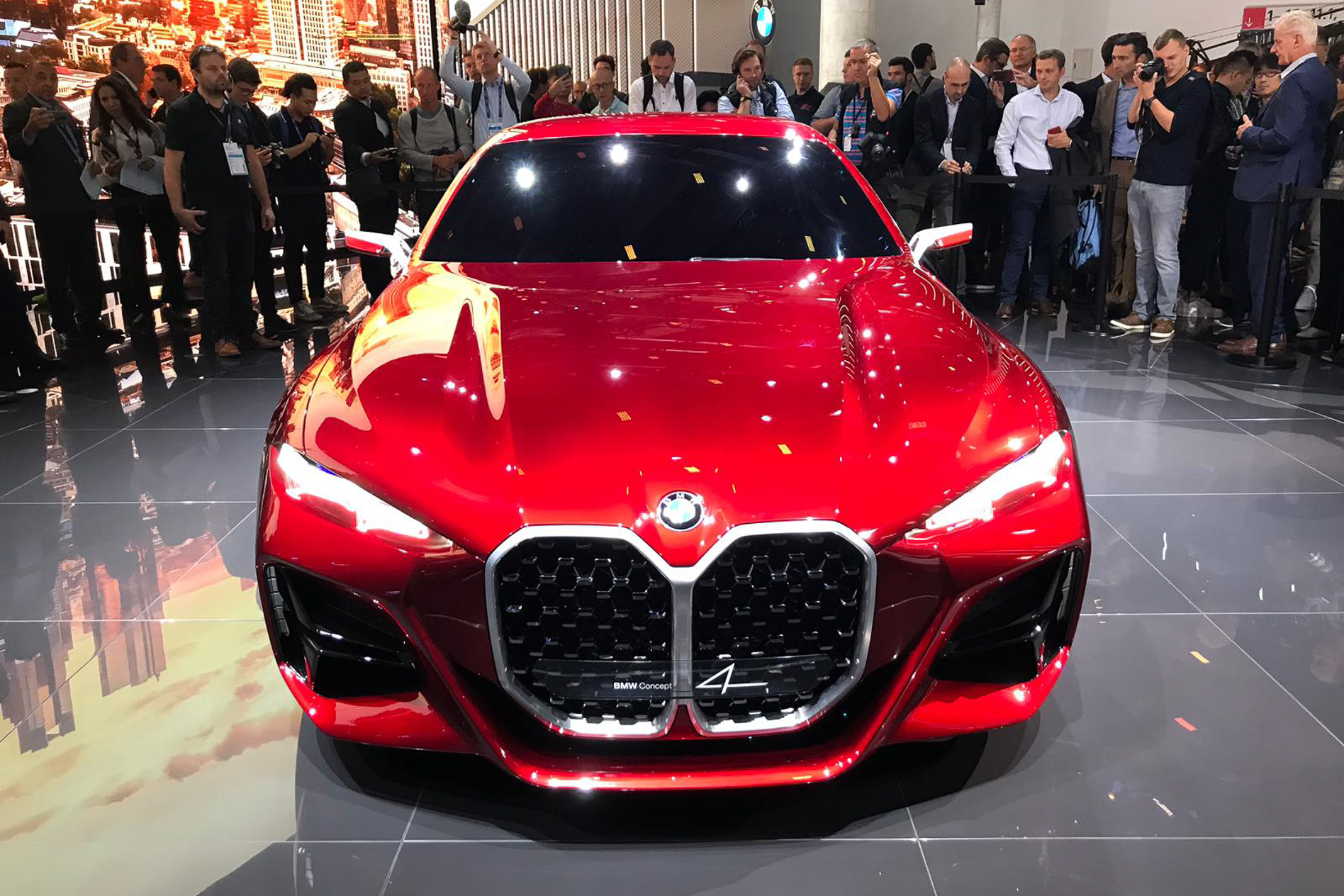
Our full IAA 2019 coverage is available at our big Frankfurt mini site, where you can catch up with all the new models, and exciting concepts including Mercedes-Benz Vision EQS, Hyundai Concept 45, Audi AI-Trail and the BMW Concept 4 (let us know what you think of that grille).
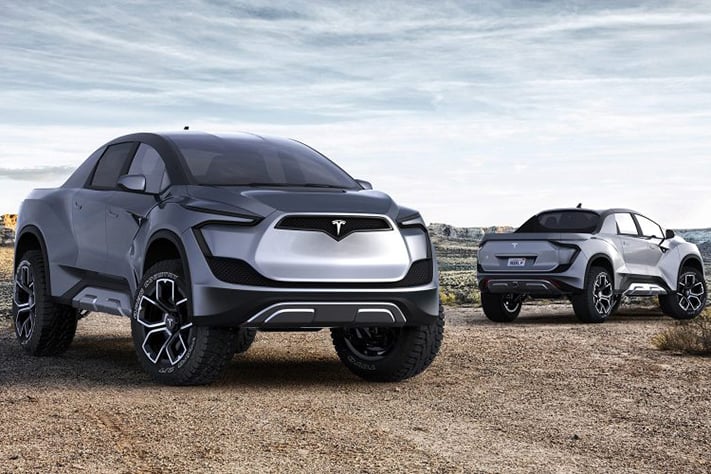
Speaking of electric cars, Elon Musk casually took to Twitter to confirm he’ll finally reveal his “really futuristic-like cyberpunk, Blade Runner” Tesla pickup truck. He also used the social-medium to spark a bromance with Formula 1 ace Nico Rosberg, who offered to break a Nurburgring lap record in a Model S.
Closer to home Ford officially revealed Aussie specs and pricing for its new Focus ST hot hatch, and revealed it was developing a new car-based ute right here in Australia, where of course the concept was invented.
Toyota Australia, meanwhile, revealed it’s keen to add the big Tundra pickup to the local line-up, and that the venerable Toyota LandCruiser is set to receive a hybrid powertrain.
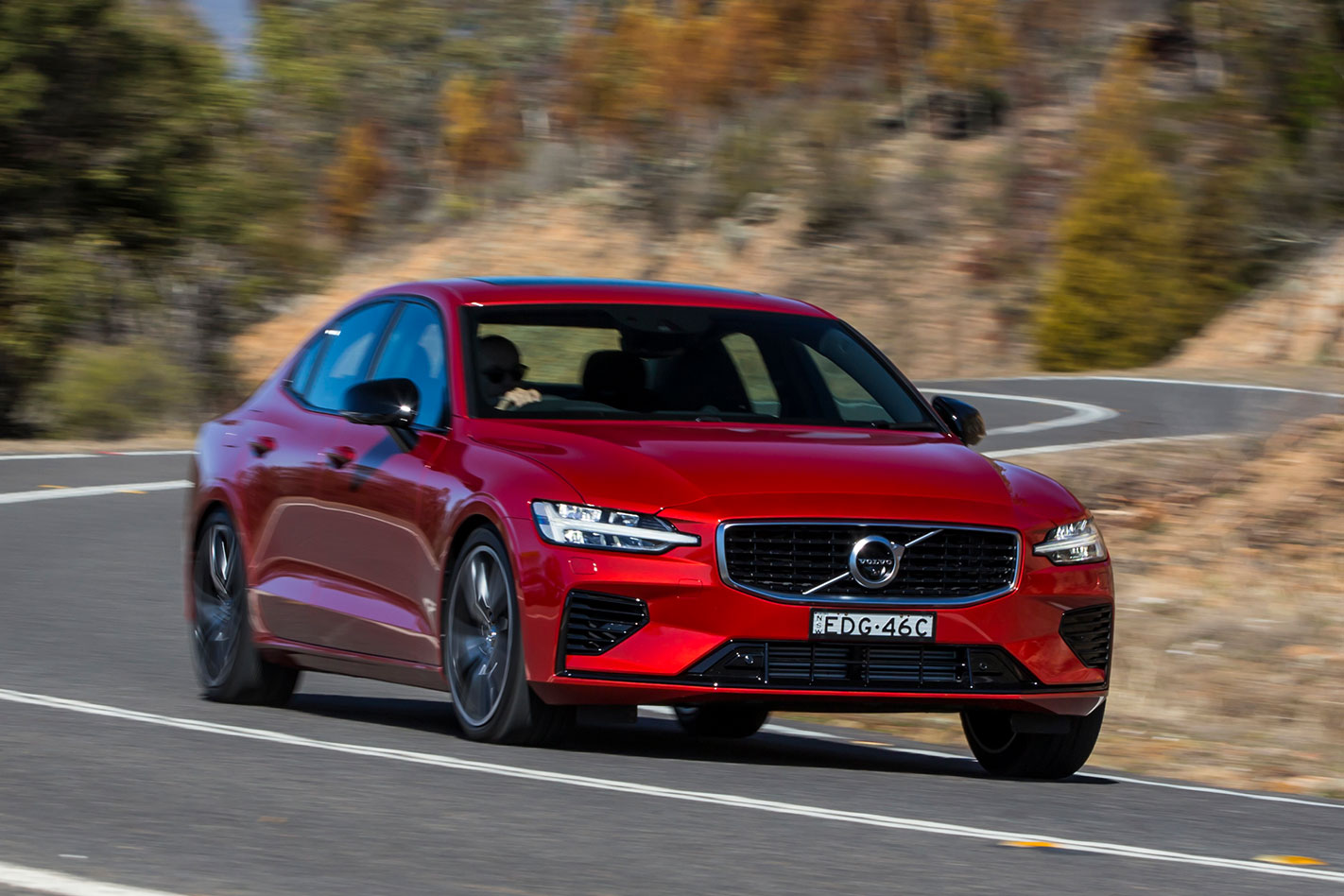
Through all this, we also managed to review the new Volvo S60, Rolls Royce Cullinan, and Honda Civic VTi-LX sedan, with plenty more drive impressions to come including some box fresh models driven during our time at Frankfurt.
On top of all this great stuff, our social channels have been running red-hot as well. Make sure you head over to WhichCar’s or 4×4 Australia’s Facebook page, the Wheels and Motor insta accounts and Street Machine’s amazing YouTube channel.
And if you’re really keen to test your automotive knowledge, check out our new weekly automotive quiz. It’s great for office bragging rights!
Drive safe and may your preferred footy team blitz the finals.
Chapeau, Stefano Bucci. In a world where some Ferrari owners put more miles on their ride-on mowers than their cars, Bucci sped off in the opposite direction.
For two seasons he raced his F40 in the Italian GT series – he even drove it to and from some races – and over the next 10 years clocked-up 90,000km before totally rebuilding it to look more like a racecar, eventually taking the mileage past 120,000km.
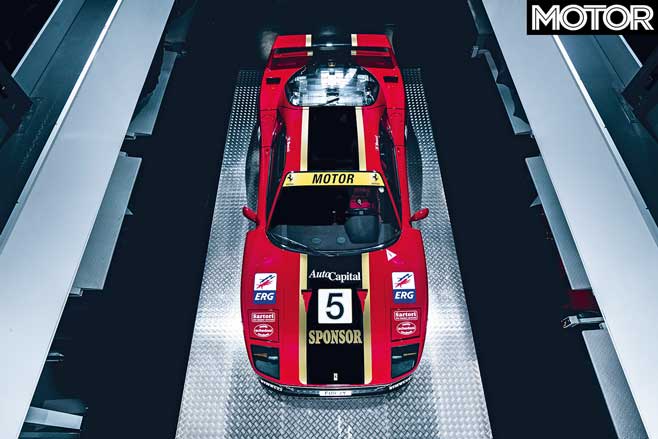
It was then sold, apparently to the brother of a German F1 driver, before being acquired in 2017 by DK Engineering who restored it to its original race specification, complete with distinctive period livery. Has any Ferrari F40 led a more action-packed, high-mileage life? We think not.
The story begins in January 1992 when one Christiano Guasti takes delivery of a standard F40, chassis number 91078, and, with the ink barely dry on the logbook, ‘flips it’, selling it to the hero of our story, Stefano Bucci, for 455,000,000 lire (about AUD$395K).
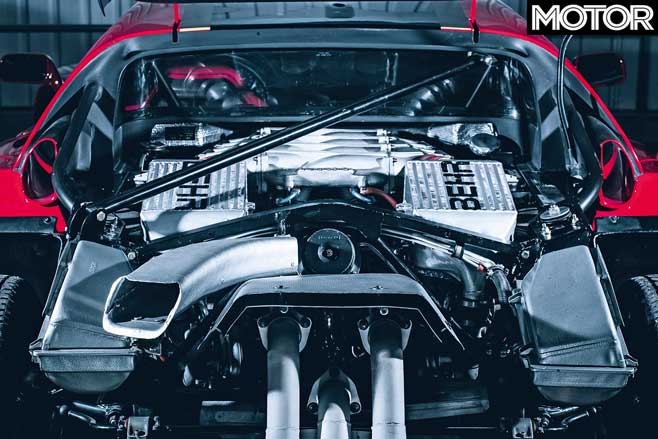
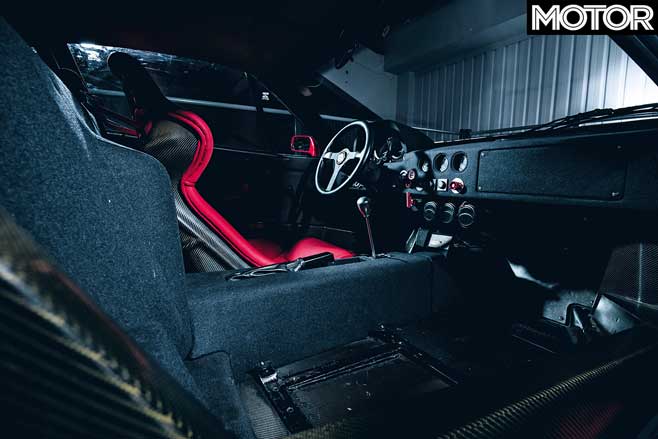
Bucci already has a plan for it and sends it to the Modena dealer Motor to be converted to Michelotto F40 GT spec: 402kW engine, lighter body, magnesium OZ wheels, bigger brakes, lower ride height and so forth. In early July it earns its Group N papers and is ready to race in what remains of that year’s Italian GT Championship, officially titled the Gran Criterium Supercar GT.
The F40 was a sizeable step up from Bucci’s previous competition cars, but from his first race he was in the mix with the other F40s at the head of the grid. It must have been quite a sight seeing five F40s squeezing into the first corner at Misano, Mugello and Imola, trailed by a swarm of 911 Carrera RSs and a couple of Esprits.
Impressively, Bucci stood on all three steps of the podium that year, scoring a third, a second and a win at Mugello. Group N was the mildest form of conversion for competition, which is why he was able to drive the car to and from races and helps explain how the car racked up 20,000km in the couple of years it was contesting the domestic GT championship.
All across Europe, the popularity of GT racing using road-based supercars was growing, and the following year the Italian GT series saw the arrival of more supercars, including a couple of TWR Jaguar XJ220s and a works 911 Turbo.
In ’92, blocks of colour were applied to the red-and-yellow F40s to make them look more racey; black on Bucci’s red car, white on red for the title-winning car of Rosario Parasiliti and so on, but for ’93 there were bold new liveries on the grid.
Not to be left out, Bucci had created his own design with a black and gold lower section and central band, inspired by the John Player Special colours. Bucci’s successful business included an arm that worked with exotic materials and he didn’t need a sponsor, hence the car cheekily running with the word ‘Sponsor’ on the nose.
Again, Bucci ran a limited campaign and was pretty successful given that the Jaguars were challenging the F40s for outright wins; he came away with a second place from Misano and fourth from Monza, while Marco Brand dominated the championship, the Monte-Shell car going on to become the most successful F40 in competition.
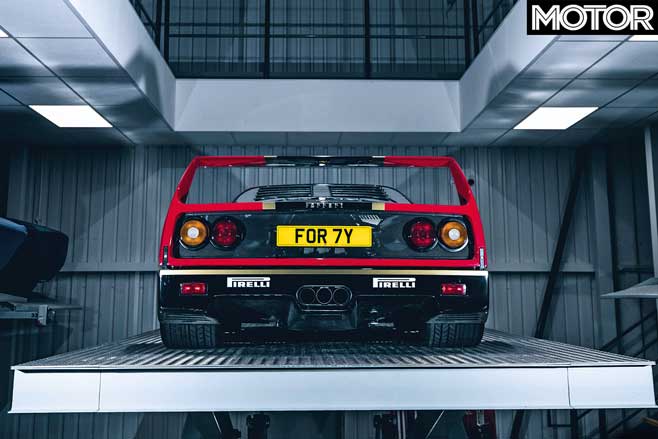
Bucci continued to pile on the road miles, driving across to the Monaco GP that year, and although he retired the F40 from racing at the end of ’93, Bucci himself carried on competing in long-distance racing at the wheel of a variety of machinery.
He tackled the Daytona 24 Hours multiple times, along with Le Mans and lots of shorter endurance races in Europe, so although the F40 was excused the heat of competition it didn’t get much of a rest, clocking up another 70,000km over the next 10 years.
In 2003, with the odometer at 90,000km, Bucci decided it was time the F40 was given a new lease of life. He instructed Gianni Sala’s well-respected SG Racing outfit to embark on a nut-and-bolt restoration. But he didn’t want a standard rebuild, and the car emerged with an LM-style nose with fixed headlamps and a splitter, a roof snorkel and an LM-style carbon fibre rear spoiler.
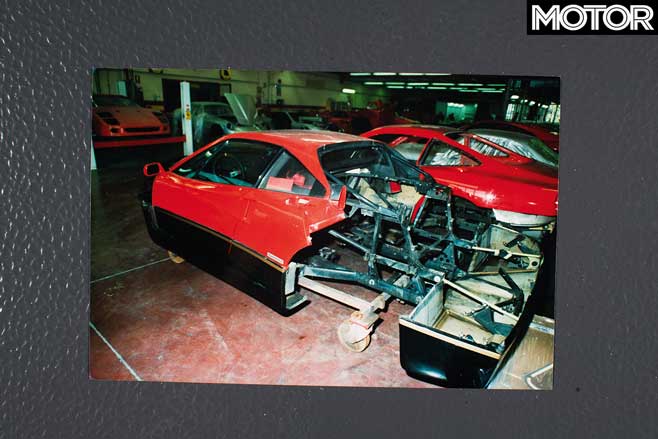
Bucci retired from racing, travelling Europe less in the F40 and consequently its annual mileage dropped off. Even so, by 2015 it had accumulated another 30,000km, taking Bucci’s wheel-time to an impressive 120,000km in 23 years.
And then the car was put up for sale, and purchased in Germany, the associated paperwork showing that it had been bought by and registered to Daniel Sutil, brother of German F1 driver Adrian.
Little seems to have happened to the car over the next couple of years until DK Engineering became aware of it and acquired it. It arrived at their workshops in Chorleywood in Spring 2017 and was treated to a further restoration back to original F40 GT specification and repainted in its distinctive ‘Sponsor’ livery, complete with Bucci’s name on the roof. The bottom line is that it is beautifully executed and the car looks simply sensational.
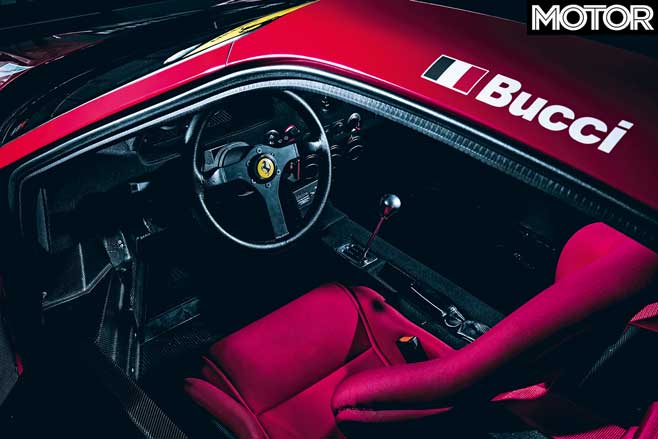
It was shown at Salon Privé at Blenheim Palace in September 2017 and on Ferrari-only Saturday won the Outstanding Eight-Cylinder Trophy and was shortlisted for People’s Choice. In May 2018 it returned to the racetrack, fast lapping as part of a demonstration of Ferrari Challenge and GT cars at the Red Bull Ring in Austria. The occasion was the first time it had been shoulder-to-shoulder on track with the Monte-Shell car since 1993 and it brought the story of this remarkable F40 full circle.
