
If you were worried that self-racing cars would become the future of motorsport, worry not. They already exist, but they’re not very exciting.
At Thunderhill Raceway, a couple of hours away from San Francisco, event aptly called Self Racing Cars have been held over the past couple of years.
If the fact that a Toyota Prius and a Ford Mondeo (or Fusion, in the US) are the most prominent cars shown in the above clip doesn’t already have you underwhelmed, there’s more.
AutonomousTuff, a company which develops tech for autonomous cars, has posted an onboard video for a lap of the track in what appears to be a somewhat uninspiring Lincoln MKZ.
A few seconds before the two minute mark, one of the occupants points out an upcoming blind corner, and says that the advantage of a self-racing car is that it already knows how to exit the corner.
While this is true compared to someone who’s never seen the track before, anyone trying for a quick lap time is likely to already know each of the track’s corners, regardless of its visibility.
Another lap which seems to have everyone excited – for some reason- is that posted by an Acura ILX (essentially Acura’s version of the Honda Civic) belonging to Swerve AI.
It ran the west circuit – which some research suggests isn’t one of the main configurations of Thunderhill – in 2.05. Research also revealed some punters out there reckon an MX-5 could tackle it in under 1.30.
We understand that this all has a purpose – to make driving AI better so that when it finally hits the roads en masse, it doesn’t also cause havoc. What better environment to cultivate progress than one of competition?
But should we be worried about it taking jobs away from people like our mate Warren Luff, Supercars racer and MOTOR’s lap-time prodigy?
Probably not.
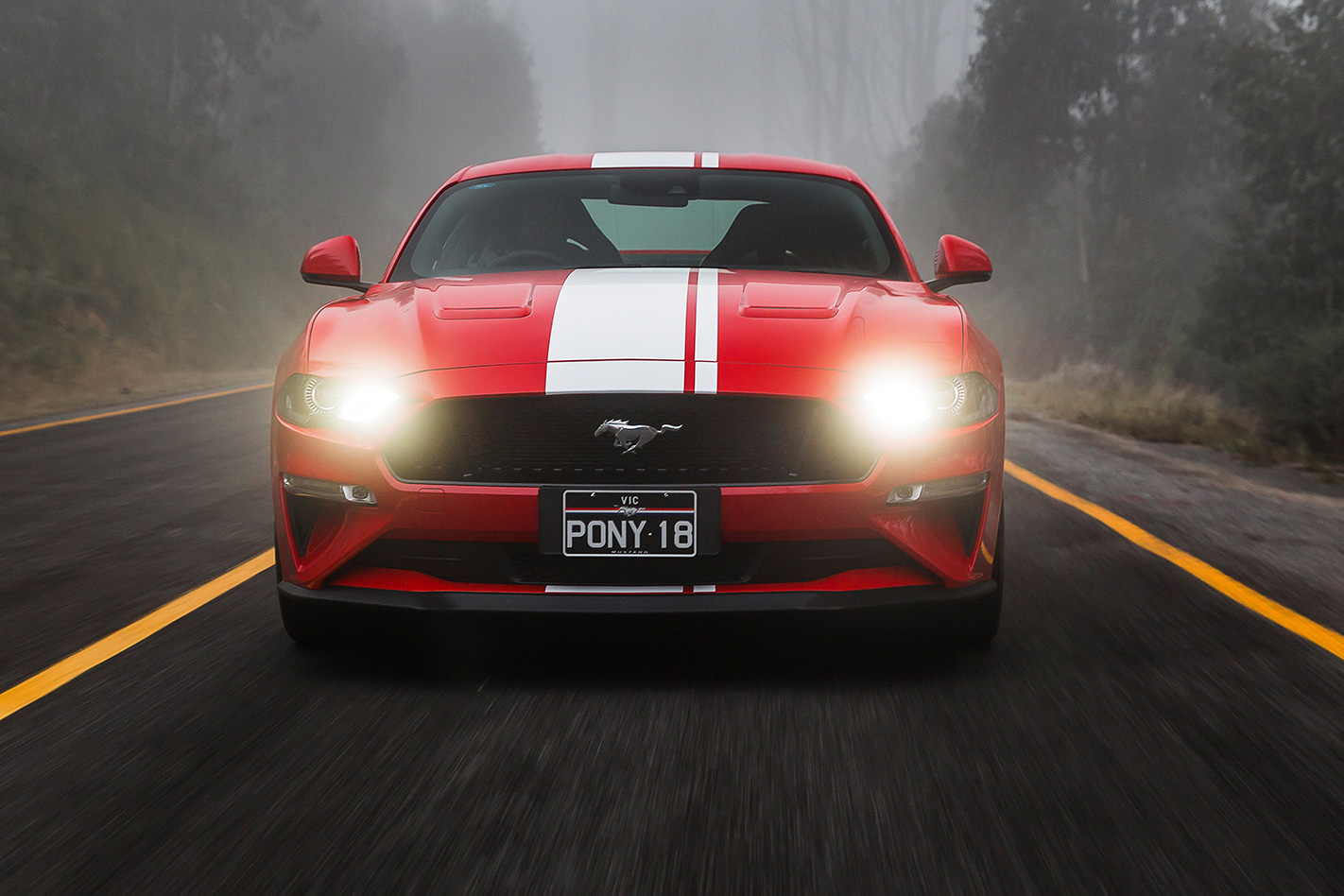
The 2018 Ford Mustang GT sounds better, goes harder and is smarter than its predecessor with some properly cool tech, even if the interior fit and finish continues to lag behind the rest of the car.
But Ford on the whole has targeted the areas the Mustang needed improvement the most, and in doing so has turned its V8 ponycar from a good one to a great one.
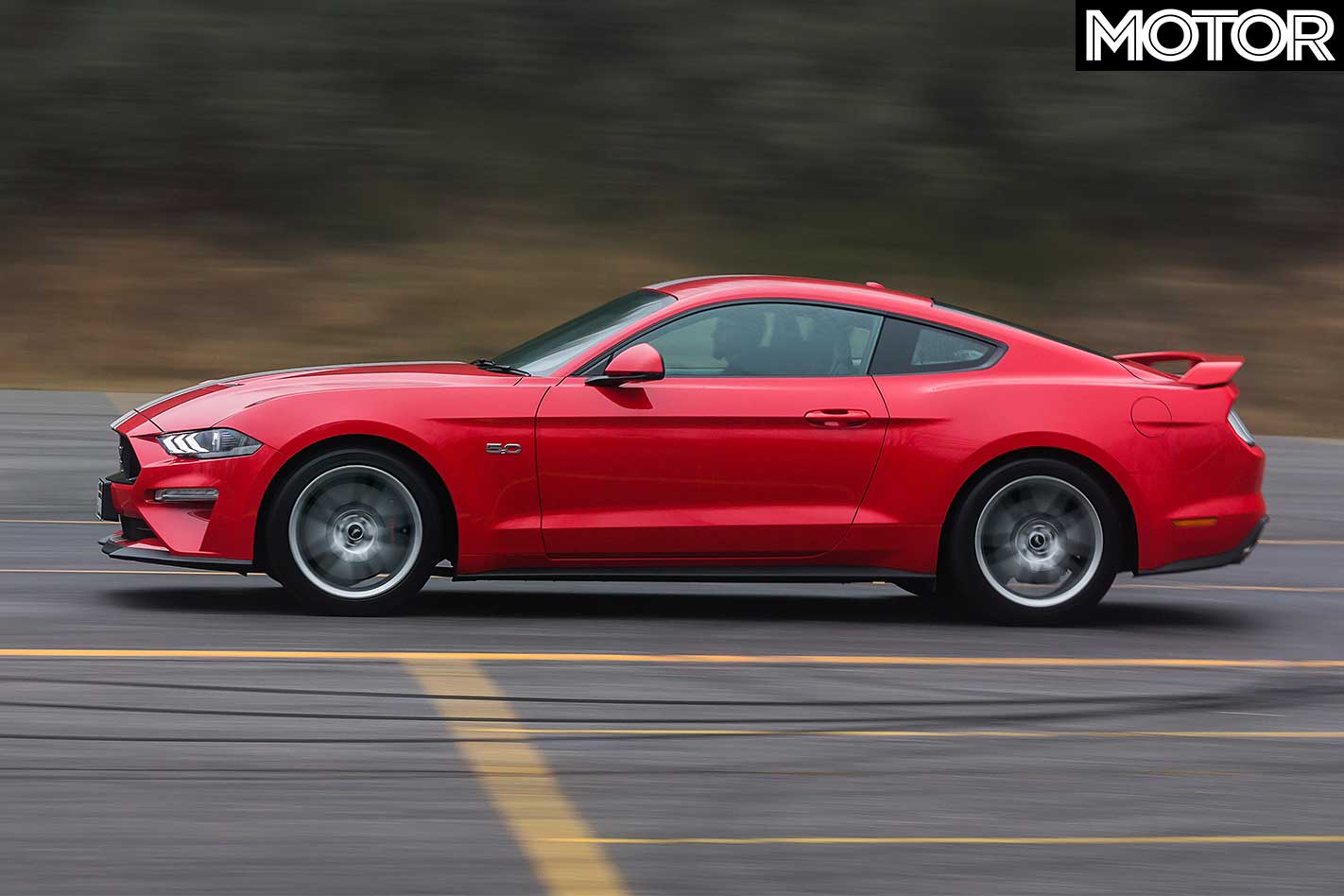
The changes to the refreshed Mustang are far more than the brand new front styling, too, which includes new headlights, front bar, front guards and bonnet.
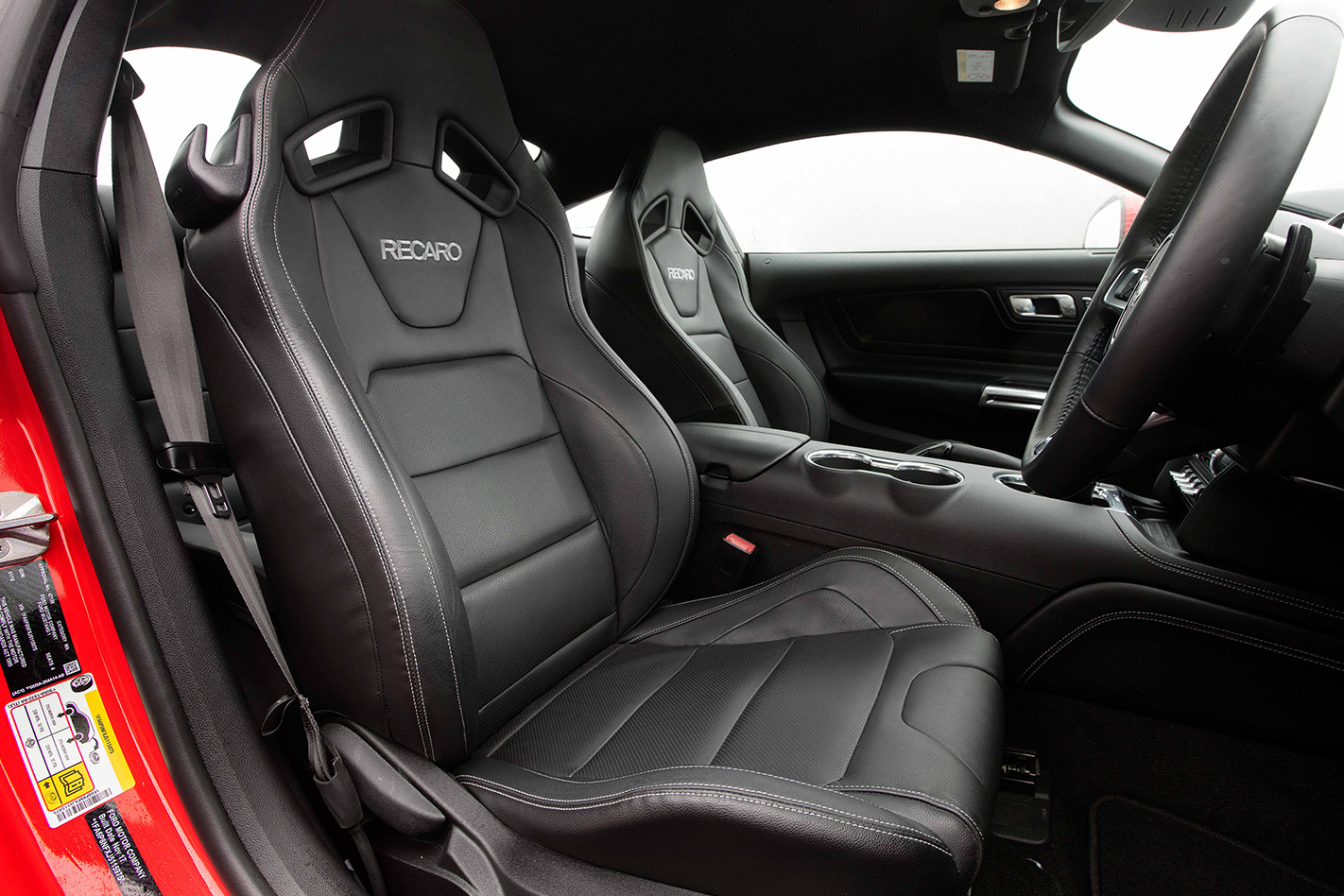
There’s an all-new 10-speed auto and all-new six-speed manual. There are now MagneRide adaptive dampers. There’s a new, proper bimodal exhaust and the Mustang now comes on stickier Michelin Pilot Sport 4S tyres. There are svelte new Recaro seats, a new 12-inch TFT cluster and revised interior materials.
Power from the 5.0-litre third-generation ‘Coyote’ DOHC V8 is up 33kW/26Nm thanks to new direct injection, a higher compression ratio and more revs, outputs now 339kW and 556Nm.

The price is also up. A base manual GT used to cost $57,490, it’s now $62,990. A lot of the Mustang’s fancy new gear is optional. Get an auto GT Fastback ($66,259) with MagneRide ($2750), the forged 19-inch wheels ($2500) and the Recaros ($3000), and you’re looking at a $74,509 car, before on-road costs. Still good value in the grand scheme of things, but it’s enough to cause some acute pain in the hip-pocket.
Ford would counter that you’re getting a much improved car over the previous model and truth be told, they’re right. The 2018 Mustang is a cracking jigger.
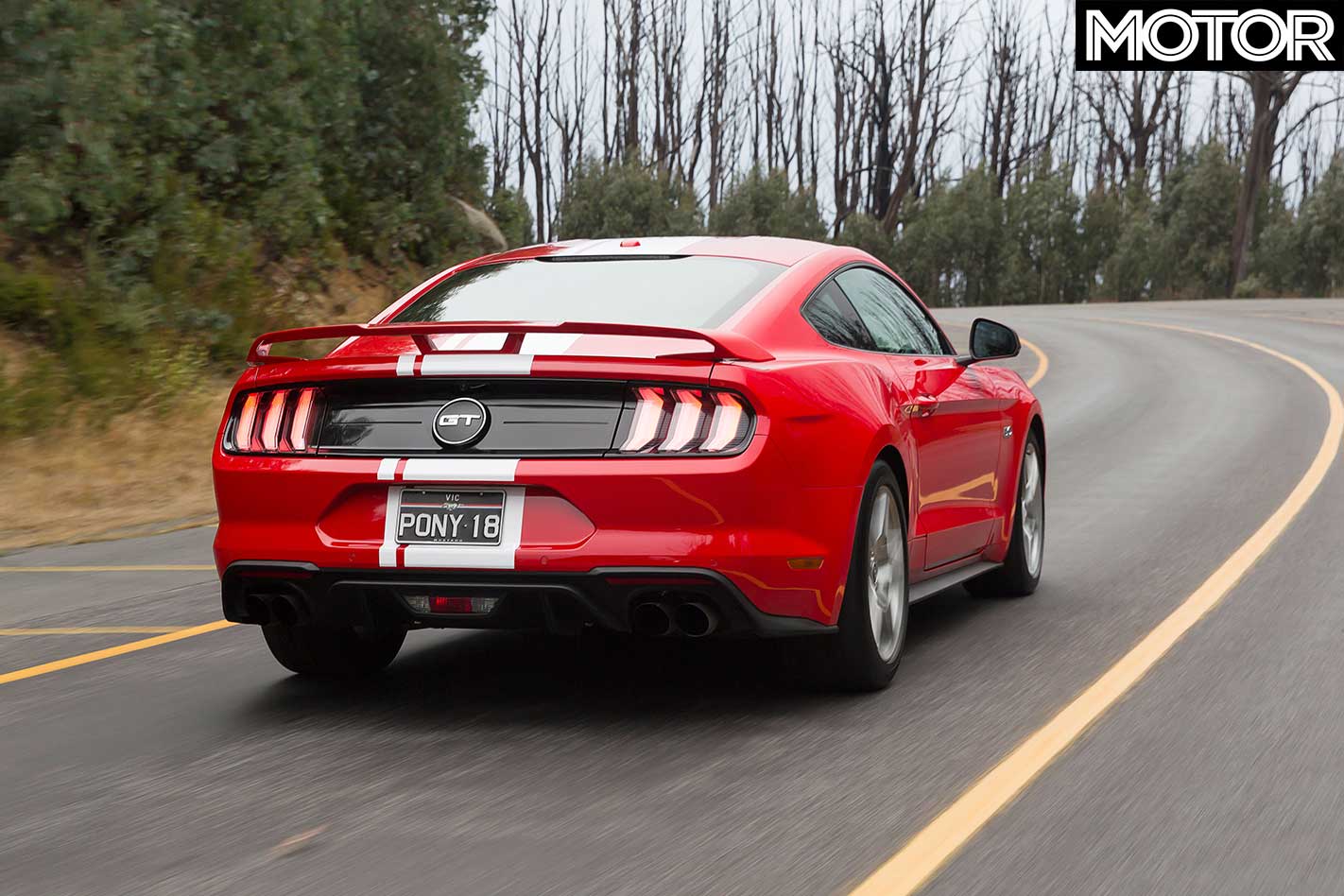
The exhaust has made a huge difference to the sound and if we were running an aftermarket tuning business, specialising in ’Stangs, we’d be stocking up on fewer exhausts. The 2018 Mustang GT, with its bimodal set-up, makes us grateful you can still buy a big, naturally aspirated V8. For a factory system, it sounds great.
With multiple exhaust modes available, in its loudest setting and at low speeds, it almost sounds heavily modified as it burbles around, making a noise like it has twice the power and a slippy torque converter.
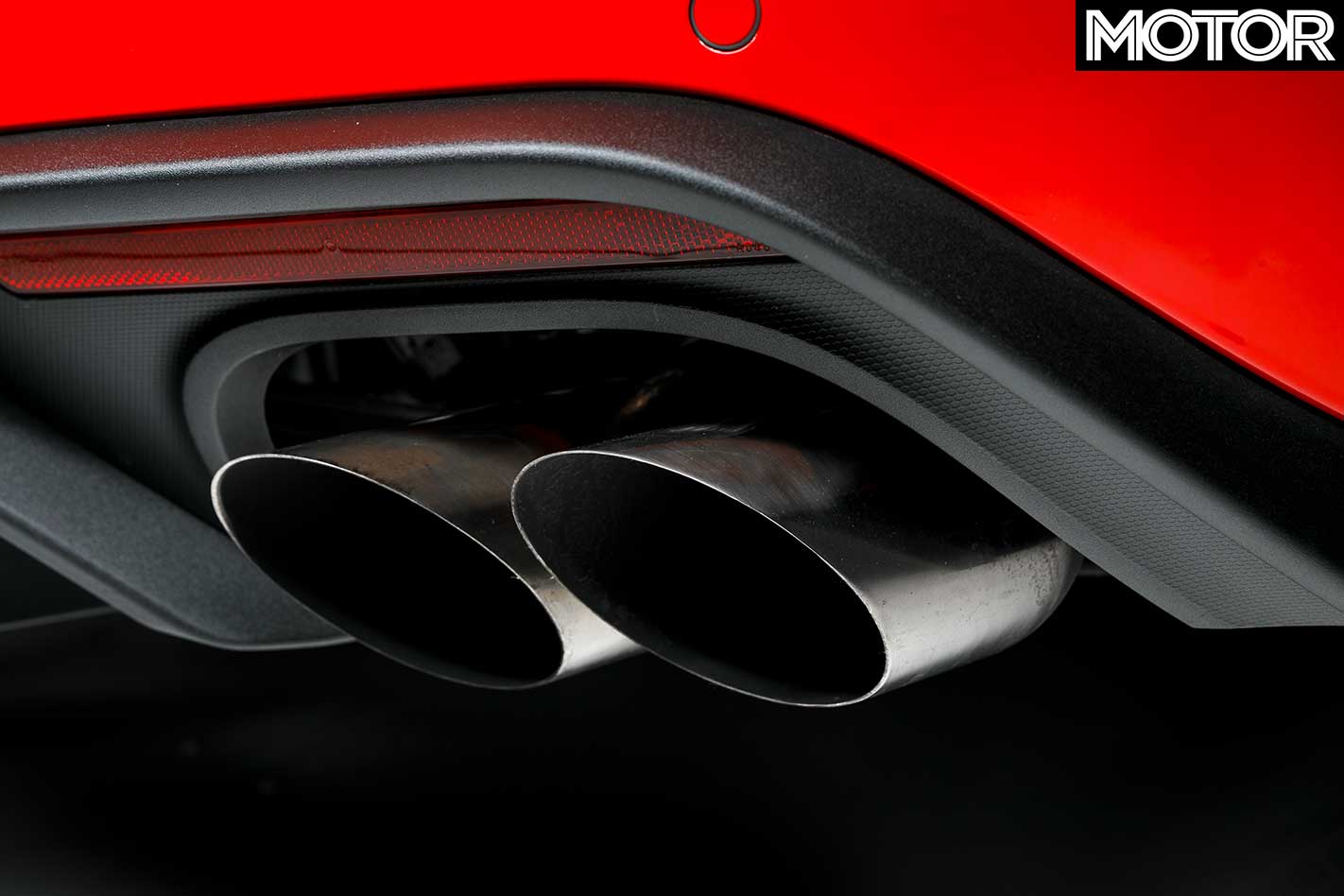
It sounds raw in the upper revs, too, a proper nasal snarl. In fact, it sounds good at any engine speed, in and out the car, a strangely distinctive ‘Mustang’ V8 note. You won’t be confusing this car with any C63 or VF II SS.
Of course, there’ll still be people out there who crave more decibels or something else altogether, and for them, the aftermarket is only too willing to assist. But we suspect for a majority of people, the awesome new bimodal exhaust will be all the V8 growl and roar they want.
The new 10-speed auto is a bit of a game-changer for this car as well. With so many gears, it’s easy to get lost in ratios; it’s fortunate that this new ’box is so fantastically intuitive in full auto mode, as manual mode, with the paddles, was not very enjoyable during our brief experimentation. Left in auto, full-throttle upchanges are seamless with no interruption to the galloping acceleration, only an audible reference that you’ve gone up a gear.
And even then, some of the ratios are so close, with such a small drop in revs between gears, there’s an odd NASCAR-vibe to the way this thing sounds as it rips through its tightly packed cogs at full noise.
It’s also a surprise how many revs it has. Judging by noise alone, you often look down at the tacho to see you’ve still got 1000rpm to go. By big, fat, lazy American V8 engine standards, this engine serves up a lot of revs — 7400rpm all up, 400rpm more than before. Although you won’t be counting down every last scintillating rpm to redline in this car, as for engine performance, by 7000rpm the Mustang has more or less given everything it’s got.
The MagneRide dampers also much improve the urban usability of the Mustang and are a must for anyone intending to daily drive their car, bringing a new and delightful suppleness to the lower speed ride, even if past 100km/h you’ll still be very aware that you’re on a bumpy back road as by this point the dampers have shown you all their talent.
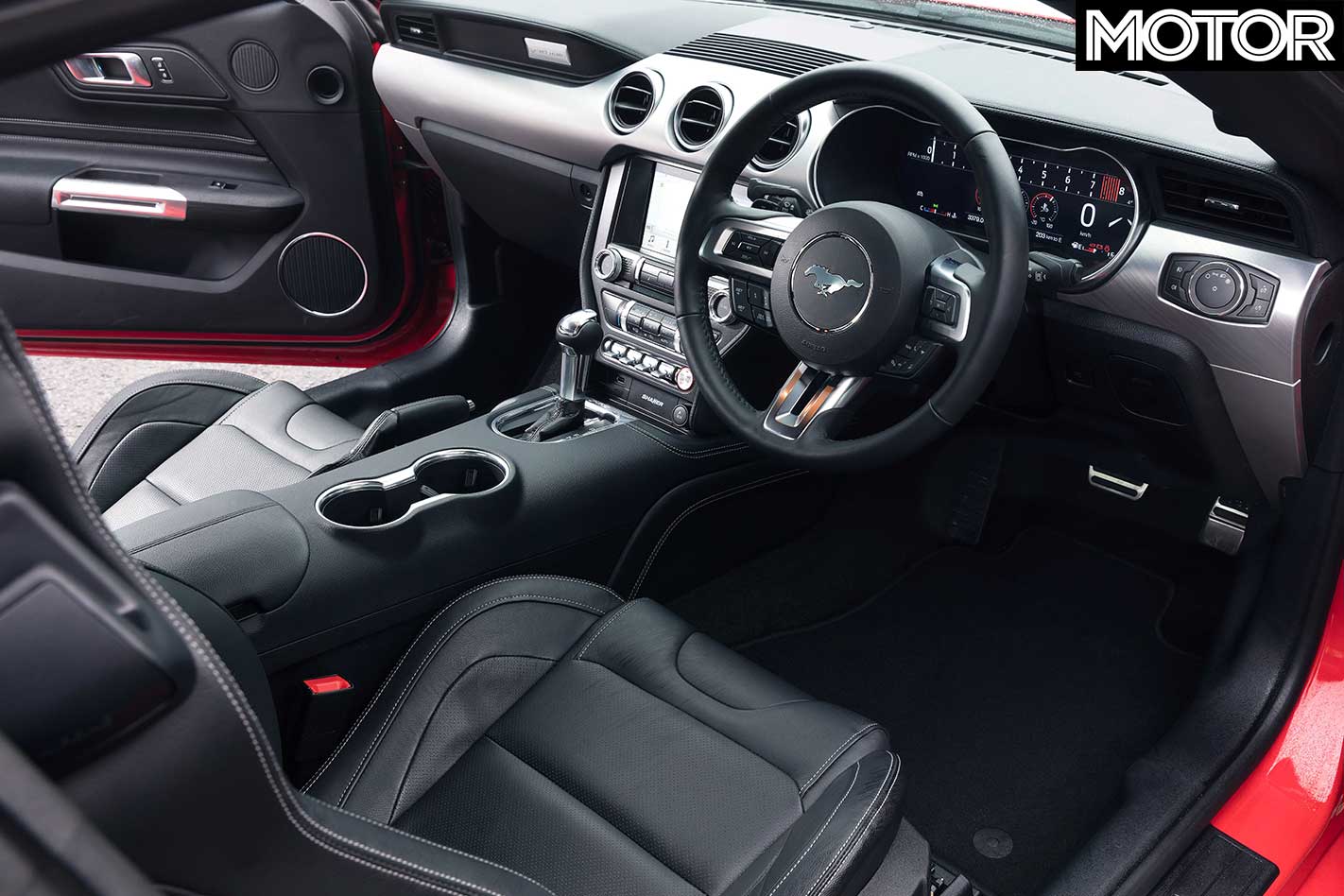
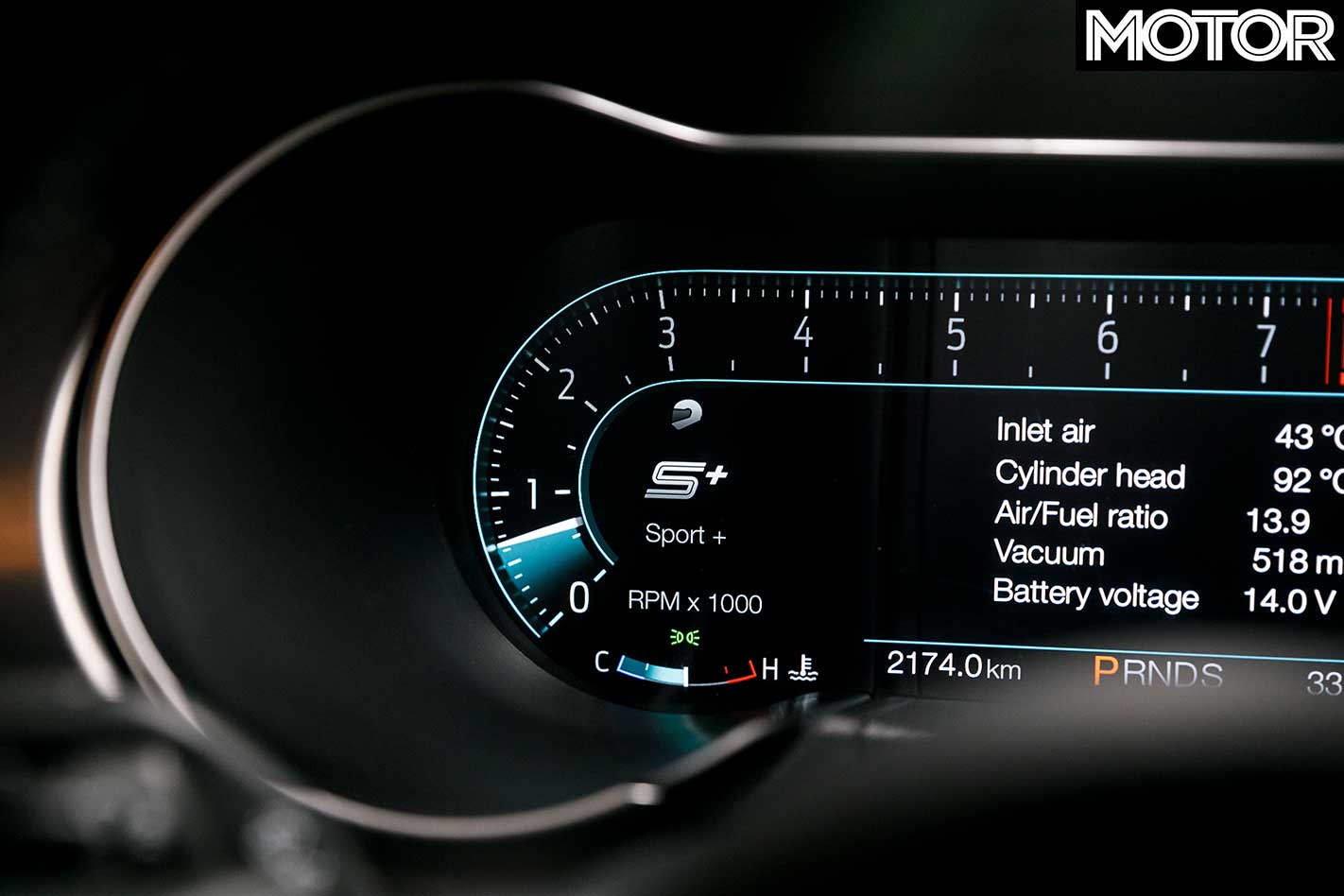
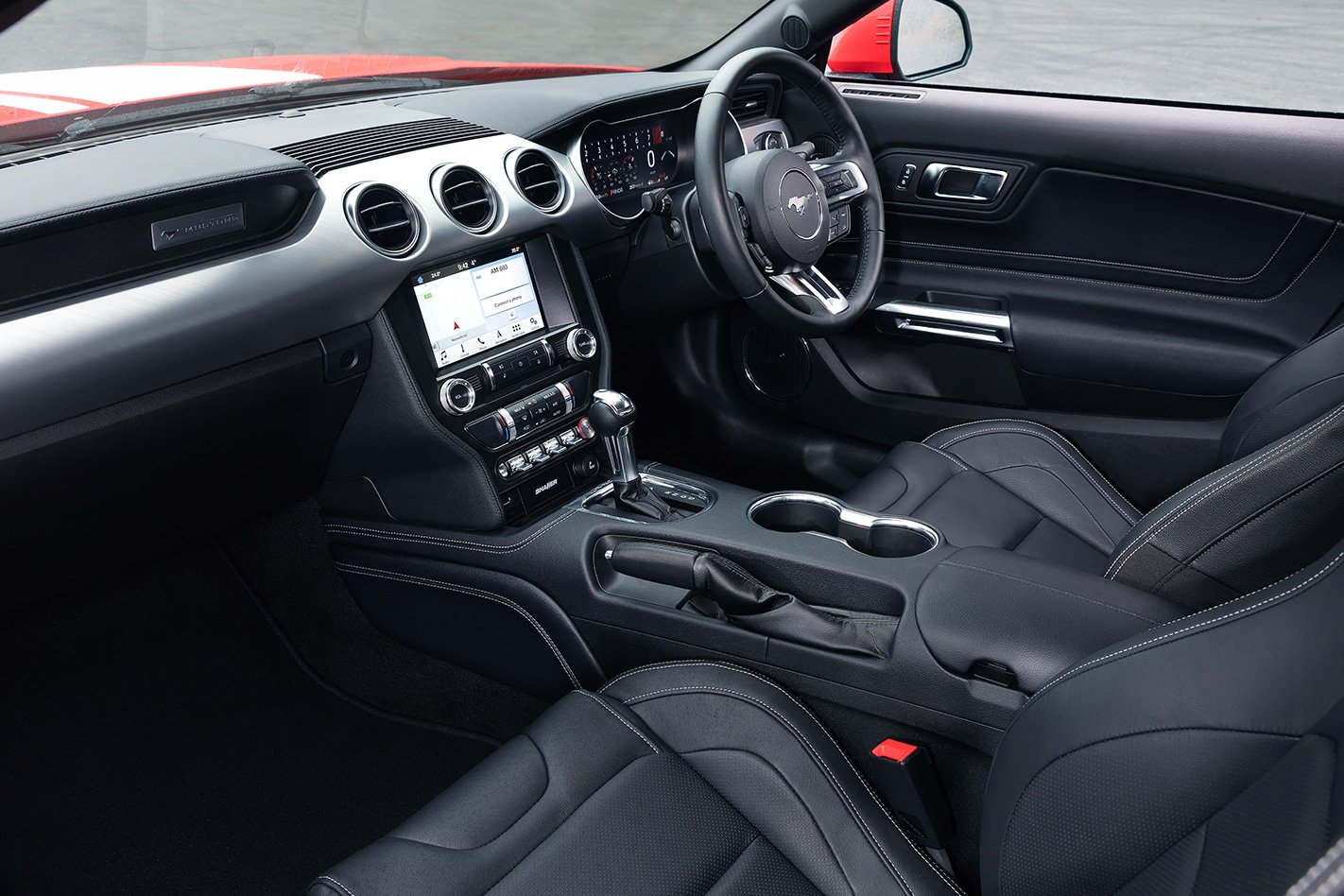
In the cabin, the new 12-inch all-TFT instrument cluster is the new centrepiece and basically a new toy, with multiple interfaces indicating revs, gears and speed to match most tastes. The new powered Recaros, if you’ve got them, also help lift the interior, as do the new wrapped centre console and ‘door toppers’, no longer hard scratchy plastics.
Although it must be said, the Mustang’s interior, while contributing to the old school good times in terms of styling, continues to serve mostly a functional role in the broader Mustang experience by way of its general material mix and build quality.
Neither are anything special. To the point that the fancy new TFT screen and Recaros create an interesting contrast. If you’re coming from a European car, you’ll know. And to think there are even cheaper interiors in the base US cars…
In some respects, who cares, but at $75K, many will.
Of course, thanks to the extra ponies under the bonnet and the shorter initial gears, the Mustang charges even harder to 100km/h and beyond, and is a bit of a drag strip superstar, we found recently.
We’ve recorded some pretty impressive times during a big pre-launch drive. We’ve driven the new Mustang at length on Aussie roads for our upcoming July 2018 issue, which is where I would point you for an in-depth review on the car — including its handling — as the opportunities to get to know the chassis character of the new 2018 Mustang, at the launch, were limited.
It seems to handle much the same as the old one, and no comment can be made on the effect of the grippier – on-paper – new Michelin tyres as we skated about a slightly slippery Bend Motorsport Park track.
But what we can feel is that Ford has made a better Mustang with its changes for the 2018 car, which run so much further than skin deep. They’ve made improvements in the areas that needed improving.
In fact, they’ve made a great muscle car, one that goes hard, sounds awesome, is terrific fun and now comfortable with some proper tech. Not only have they made a better Mustang, but they’ve made a better car.
Keep your eyes peeled for our upcoming July 2018 issue for the definitive 2018 Mustang verdict. It’s on-sale later this month (June 28).
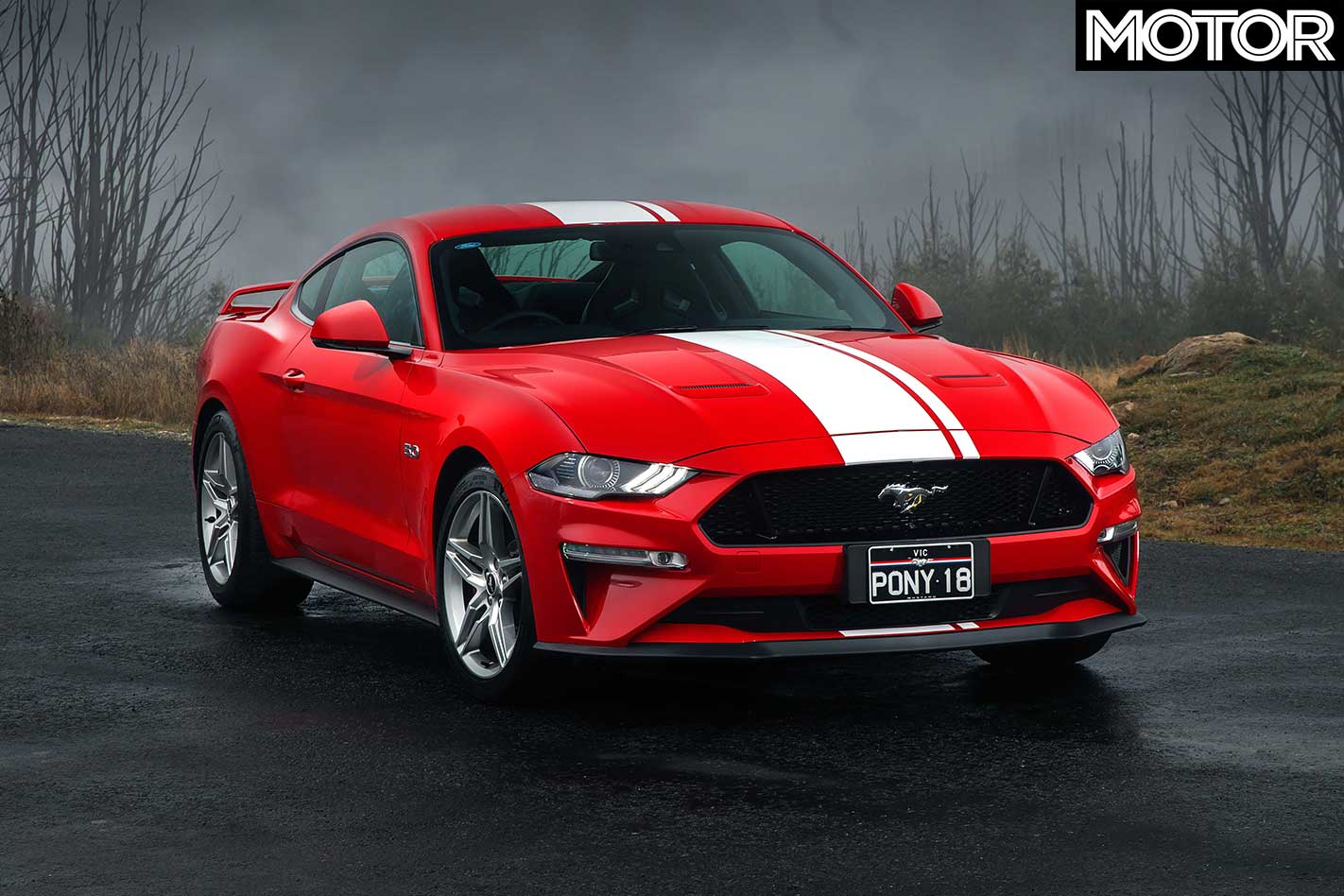
2018 FORD MUSTANG GT SPECS: Engine: 5035cc V8, DOHC, 32v Drivetrain: 6-speed manual/10-speed automatic Power: 339kW @ 7000rpm Torque: 556Nm @ 4600rpm Weight: 1681kg 0-100km/h: 4.3sec claimed (auto) Price: $62,990 (manual)/$66,259 (auto)
Rating: 4 out of 5 stars
More on the 2018 Ford Mustang GT – Gallery: 2018 Mustang GT up-close – 2018 Ford Mustang GT dyno test – 2018 Ford Mustang GT drag test
WHAT IS IT?
The first update of 2015’s sixth-generation Mustang, incorporating improvements to its NCAP safety rating (now a not-quite-as-crap three stars in Oz due to its not-so-special head protection for children travelling in the back on booster seats, but improved due to standard AEB and collision alert across the board), and a concerted effort to make it sportier, fruitier, more efficient and less Yank-tastic inside its slightly contrived cabin.
WHY WE’RE TESTING IT?
Endowing Australia’s favourite sports car with larger balls, while letting us loose on the new Tailem Bend race circuit 100km south-east of Adelaide, says the Blue Oval is confident the MY18 Mustang has the stamina to fulfil the brief. There’s also a new 10-speed automatic ’box that Ford claims is the duck’s guts, and an active-valve exhaust system pinched from the US Shelby model for proper ear-shattering V8 acoustics. We hope.
MAIN RIVALS
At top-end GT level with every option thrown at it (approaching $10K’s worth), the Mustang’s sole coupe rivals are the BMW M240i ($78K) and HSV’s forthcoming Chevrolet Camaro SS, which the Clayton outfit will be performing the right-hand conversion on. But at $50K, the Mustang Ecoboost (due September) is more of a BMW 220i coupe rival, as well as a larger alternative to a range-topping Toyota 86/Subaru BRZ.
THE WHEELS VERDICT
It might look only vaguely different to its three-year-old predecessor, but the MY18 Mustang is a transformed car. It’s faster, better finished, more precise to drive, with steering that actually feels connected to the front wheels, and an exhaust note packed with meat. Ford’s new 10-speed auto is also a cracker, if not entirely without flaws. Yet for all its improvements, the slicker MY18 Mustang is somehow less endearing than its rough-and-ready predecessor. It doesn’t look as tough, and the lack of a visual bonnet bulge from inside the car means it doesn’t feel as tough – or as intimidating – as it used to. Can’t stop progress!
PLUS: Louder V8 acoustics; classier interior; effective and interesting new technology; (mostly) excellent 10-speed auto; steering and body control both transformed MINUS: Sleek new front has lost some of the previous model’s snouty menace; cabin embellishment still overdone; optional Recaro buckets lose seat heating/cooling
THE WHEELS REVIEW
YOU KNOW there’s something in the air when the Ford Mustang sells nearly 10,000 cars in a full year, reinforcing what we’ve always known – Aussies love muscle cars. So if that’s the case with the existing car – one that prompted a waiting list that stretched for months when it launched back in December 2015 – then how is this fresher, classier, better-equipped and sharper-driving 2018 version going to fare?
Gone is the almost unbelievable entry price of the previous car. Instead, today’s Mustang Ecoboost six-speed manual (due here in September) with a slightly torquier 224kW/441Nm 2.3-litre turbo-petrol four and new-design 19s will set you back $49,990 before on-road costs, while the meaty 339kW/556Nm V8-engined Mustang GT (on sale now) kicks off at $62,990. Both MY18 engines offer the option of a brand-spanking 10-speed automatic (jointly developed with GM, but with hardware and calibration unique to Ford) for three-grand extra.
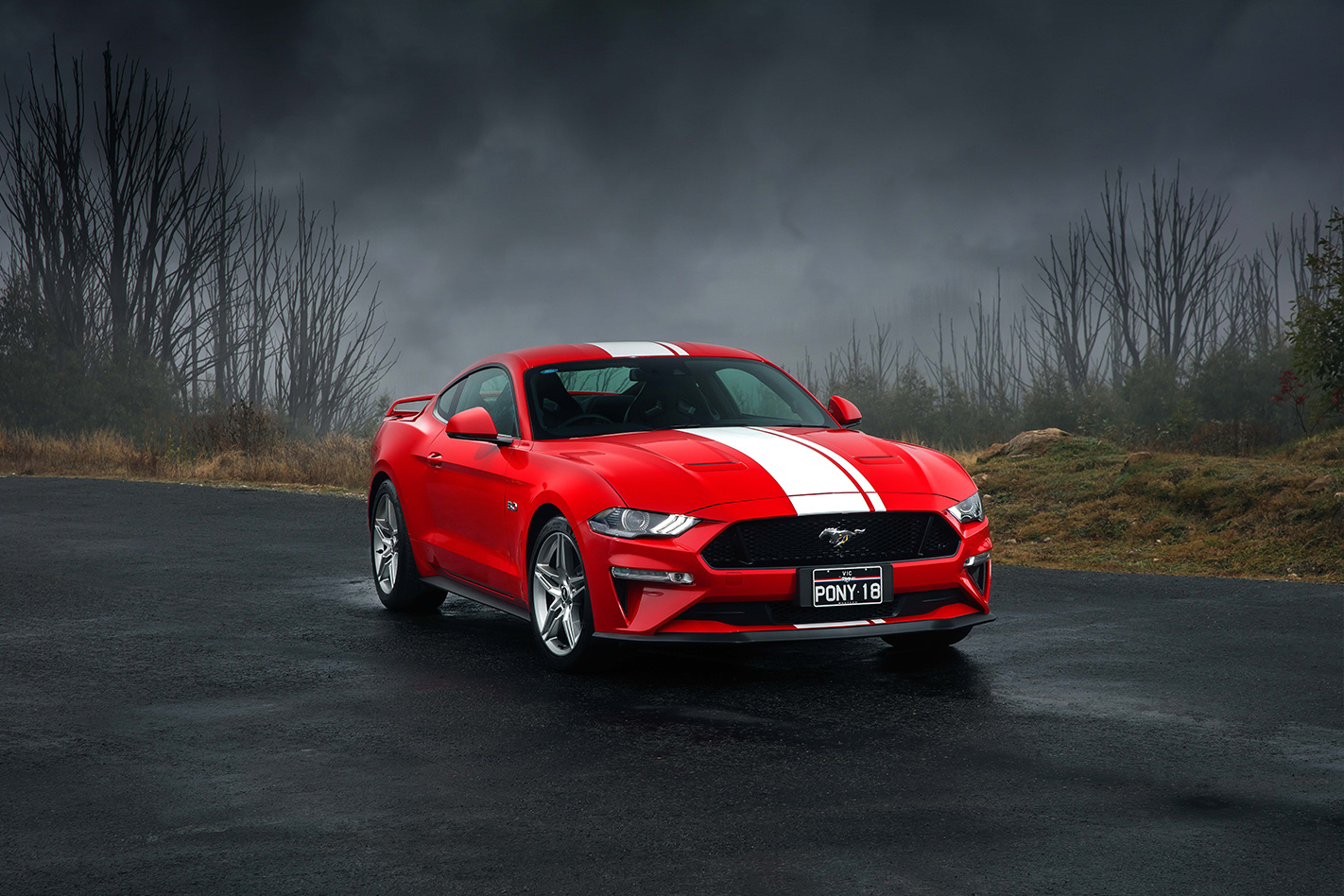
For those slightly elevated stickers you get a truckload of sparkly new features, starting with the proper full-LED headlight arrangement of the US car (with tri-strip DRLs), styled to mimic the intricacy of an actual eagle’s eye, and a full-digital 12.4-inch instrument pack that turfs the daggy old analogue set-up into a dumpster somewhere in the backlots of Detroit.
Yet for all its newfangled glamour, there’s a tangible dose of heritage in the three types of instrument styles on offer in the digital screen – the ‘Racetrack’ version featuring a strip-like tacho that curls up from the left and across the upper dial section, like a speedo from a ’60s T-Bird – and you can change the ambient cabin lighting too, all via the Mustang symbol on the right-hand wheel spoke. It’s both dead-simple and totally on-trend, while leaving sat-nav map duties (if not directions) solely to the SYNC3 screen in the dash centre.
Soft-touch plastics now garnish the door trims, while new stitched trim coats the entire centre console. In fact, everything you touch, either via fingers or elbows, has been given the ‘soft-touch’ treatment, including a cushier centre armrest, plusher door armrests with tactile stitched-leather trim, and higher-grade, more supple leather on Mustang’s carry-over three-spoke steering wheel.
Apparently that’s what Europe and Australia demanded, so the best interior on offer in the US is what we get. The previous model shared its interior plastics supplier with the F-Series truck and, well, we know how that turned out.
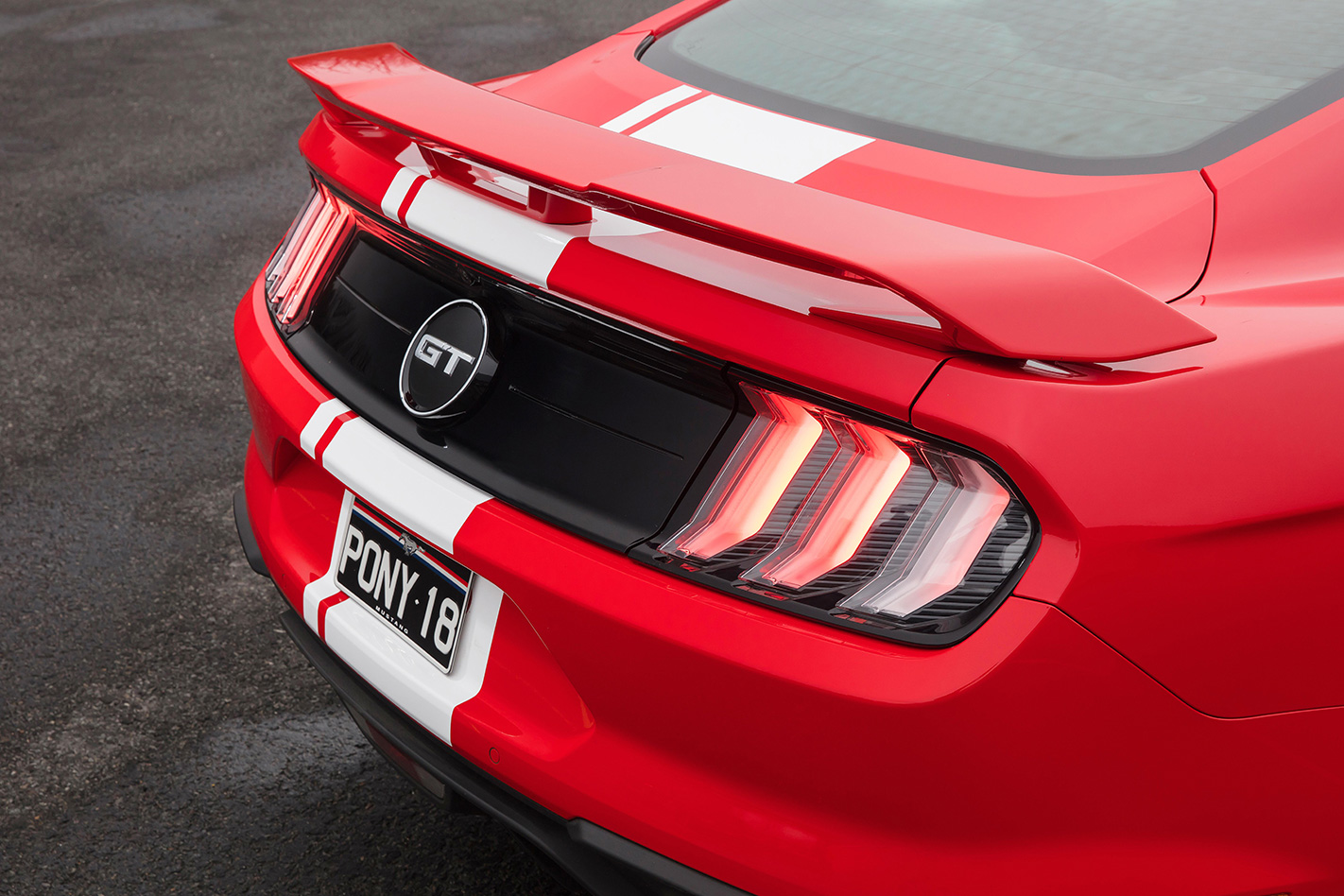
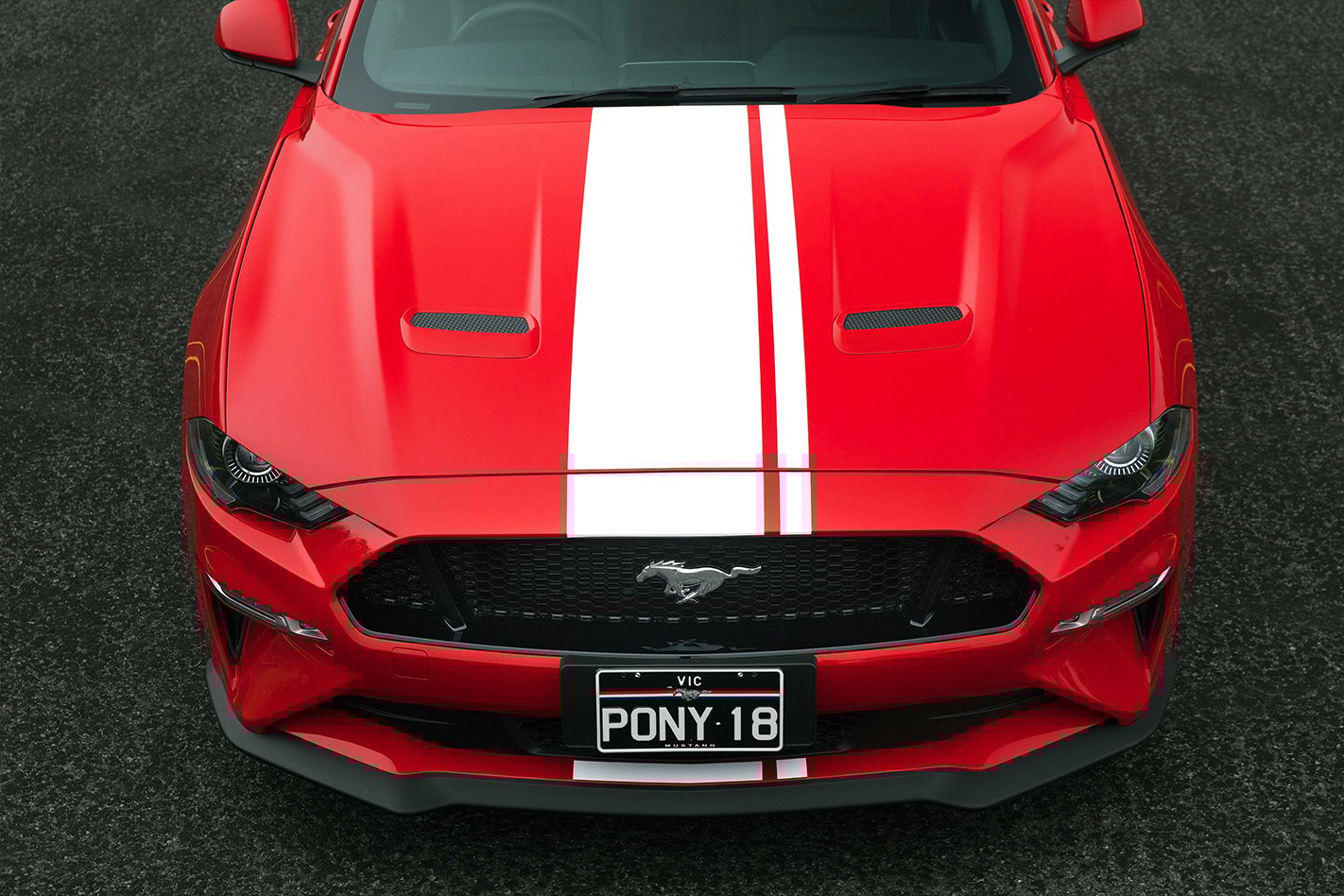
Approaching the MY18 Mustang, it isn’t immediately obvious that much has changed. Yet there’s actually been quite a lot of visual surgery at the front end. Those aforementioned headlights combine with horizontal fog lights, a 65mm-wider grille (with just one V8 design for export) and a 25mm-lower bonnet line to make it look much sleeker (and marginally more aerodynamic), if slightly less intimidating. At the rear, funky new taillights with jagged edges, a new lower appliqué, and quad exhaust pipes give the MY18 Pony Car a fresh look to match its super-fruity new sound.
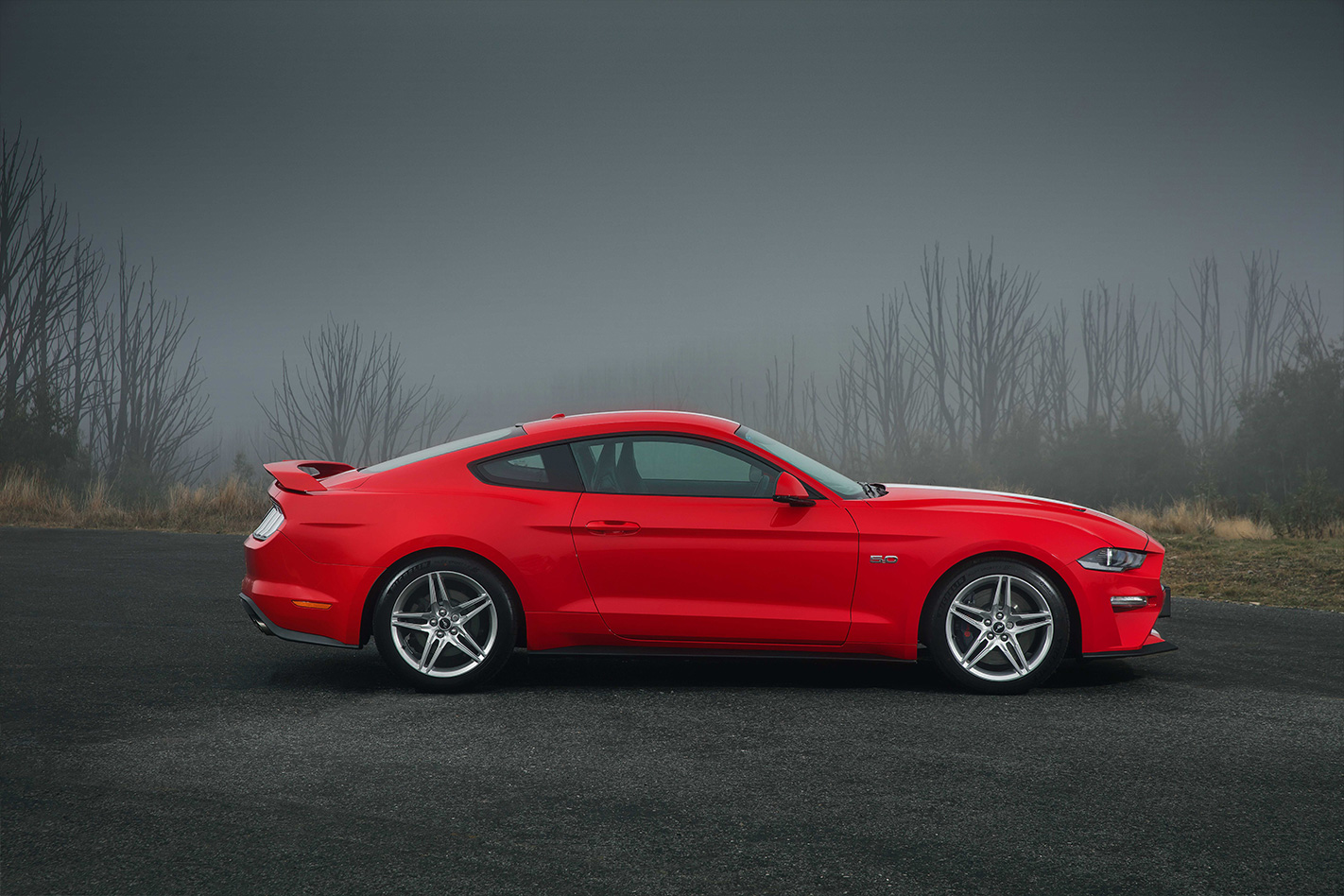
And what a sound. Even fitted with an optional Ford Performance exhaust system, the previous 5.0 simply didn’t have the audible muscle, or the bottom-end shove, that muscle-car buyers wanted. But Ford’s obedient Yank engineers have more than made up for that lack of bent-eight burble by filtering down the Shelby GT350’s active-valve exhaust system (which opens the pipes at 1750rpm) for a comparatively ear-shattering experience.
On the upper two of four exhaust settings (Sport and Racetrack, not the demure Normal or insipid Quiet modes, all easily accessible via the Mustang steering wheel button), the MY18 V8 is a riot of exhaust bark. Indeed, the Racetrack version is arguably a bit too brutal for consistent 120km/h freeway running when under load, though we really shouldn’t be complaining. And while there’s little of the overrun crackle and pop that characterised Holden’s much-loved and much-missed VFII SS-V Redline, the MY18 V8’s thunder is exactly what us petrolheads were begging for.
Even the Ecoboost will get the active-valve exhaust – introducing a “snarl”, according to Global Chief Program Engineer, Carl Widmann – so there won’t be an MY18 Mustang in the stable that doesn’t deliver a good dose of aural sex.
Mechanically, it’s the volume-selling V8 that cops all the engineering enhancements. Direct and port fuel injection, a higher compression ratio (up from 11.1 to 12.1:1), revised heads with larger intake and exhaust valves (improving flow by four percent) and even a larger 93.0mm bore diameter from the Shelby GT350 that lifts capacity to 5038cc (was 4951cc) and outputs to a far more palatable 339kW at 7000rpm (up 33kW) and 556Nm at 4600rpm (up 26Nm), makes the MY18 car feel much spritelier.
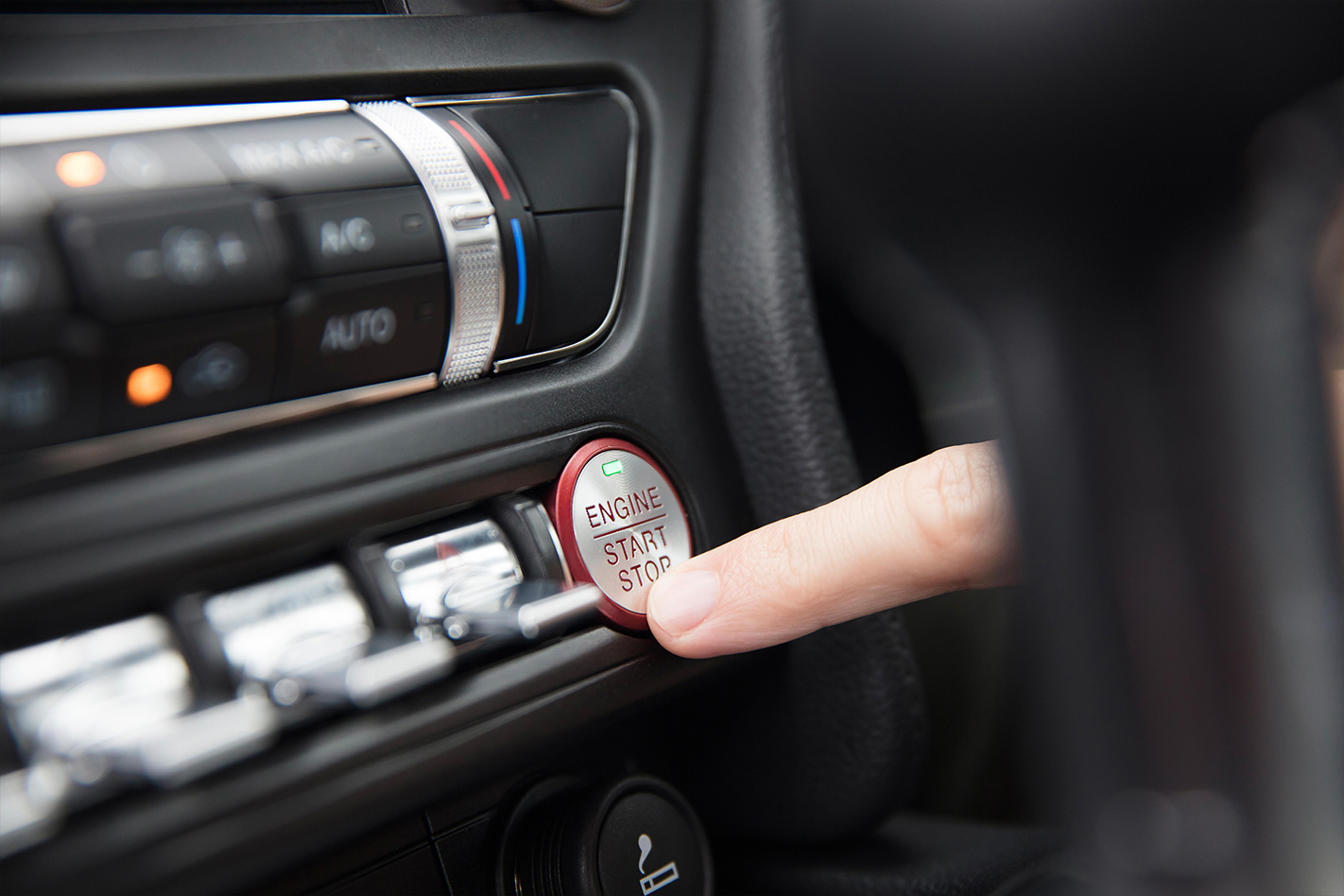
She’ll now rev to beyond 7000rpm (redline is seven-four; cut-out seven-five), but there’s still little point going right to the absolute top-end. The Mustang GT definitely feels stronger though, with a preliminary claim of 4.3sec to 100km/h for the new 10-speed auto with launch control. And what a great auto. Ticking along at just under 2000rpm at 120km/h in top, it’s arguably the only mega-ratio self-shifter that’s able to use its entire ratio set in a country like ours. And besides the odd fluffed shift or dithered kickdown in moderate-pace driving, it’s just about flawless.
At South Australia’s new Tailem Bend racetrack, a simple nudge of the transmission lever into ‘S’ allowed the auto to choose its ratios with absolute perfection, lap after lap. And if you start fiddling with the shift paddles when in Sport mode, it’ll even hold gears at redline without shifting up.
The six-speed manual has also been put through a workout program. A dual-mass flywheel with a twin-disc clutch makes for much lighter shift action, and every ratio has altered (in a taller direction), with sixth being the closest to the old car’s gearing. Having spent many months in the previous GT manual, I kinda miss the oiled meatiness of the former shift, though the MY18 manual is near foolproof in its operation and much less reliant on perfect clutch technique.
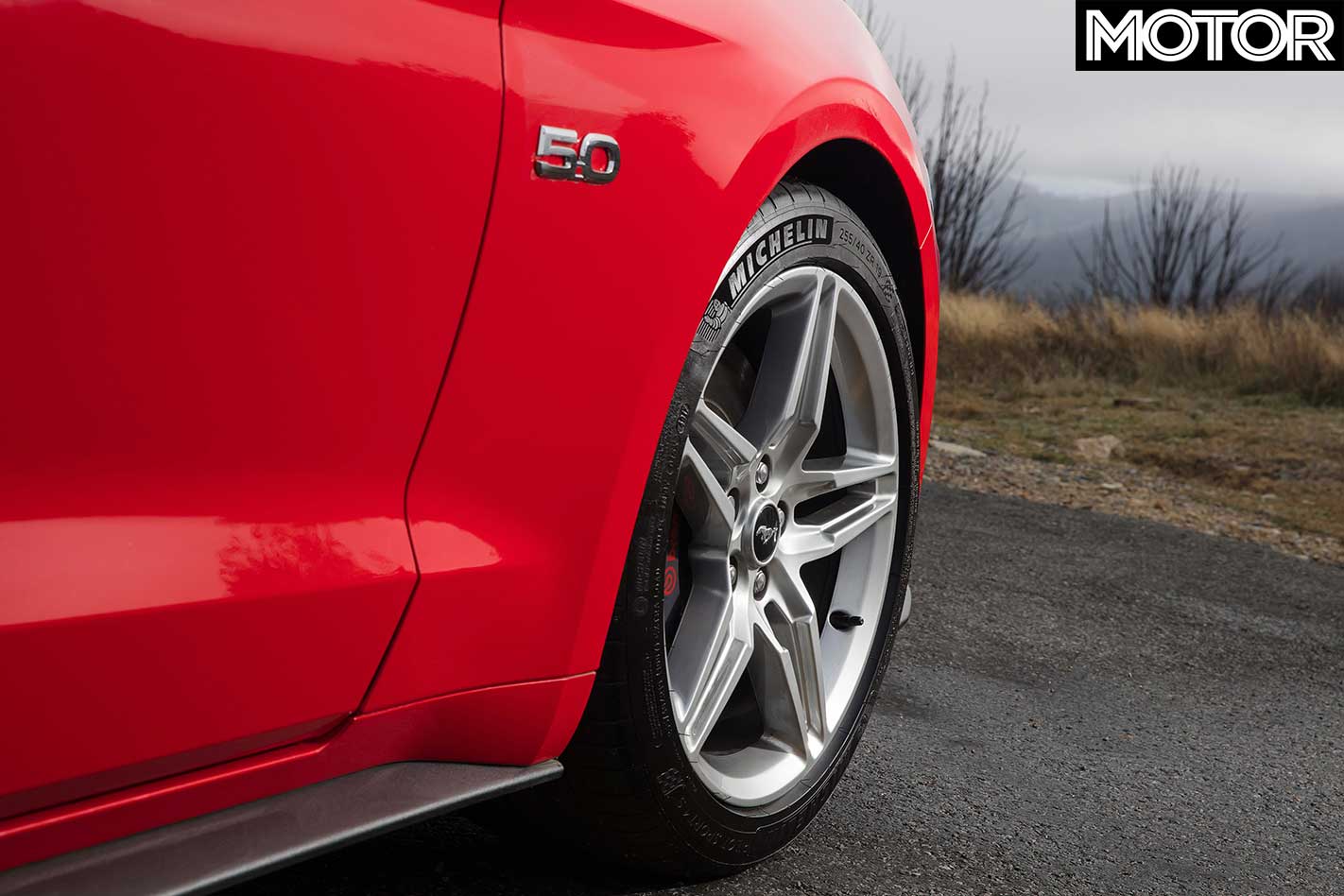
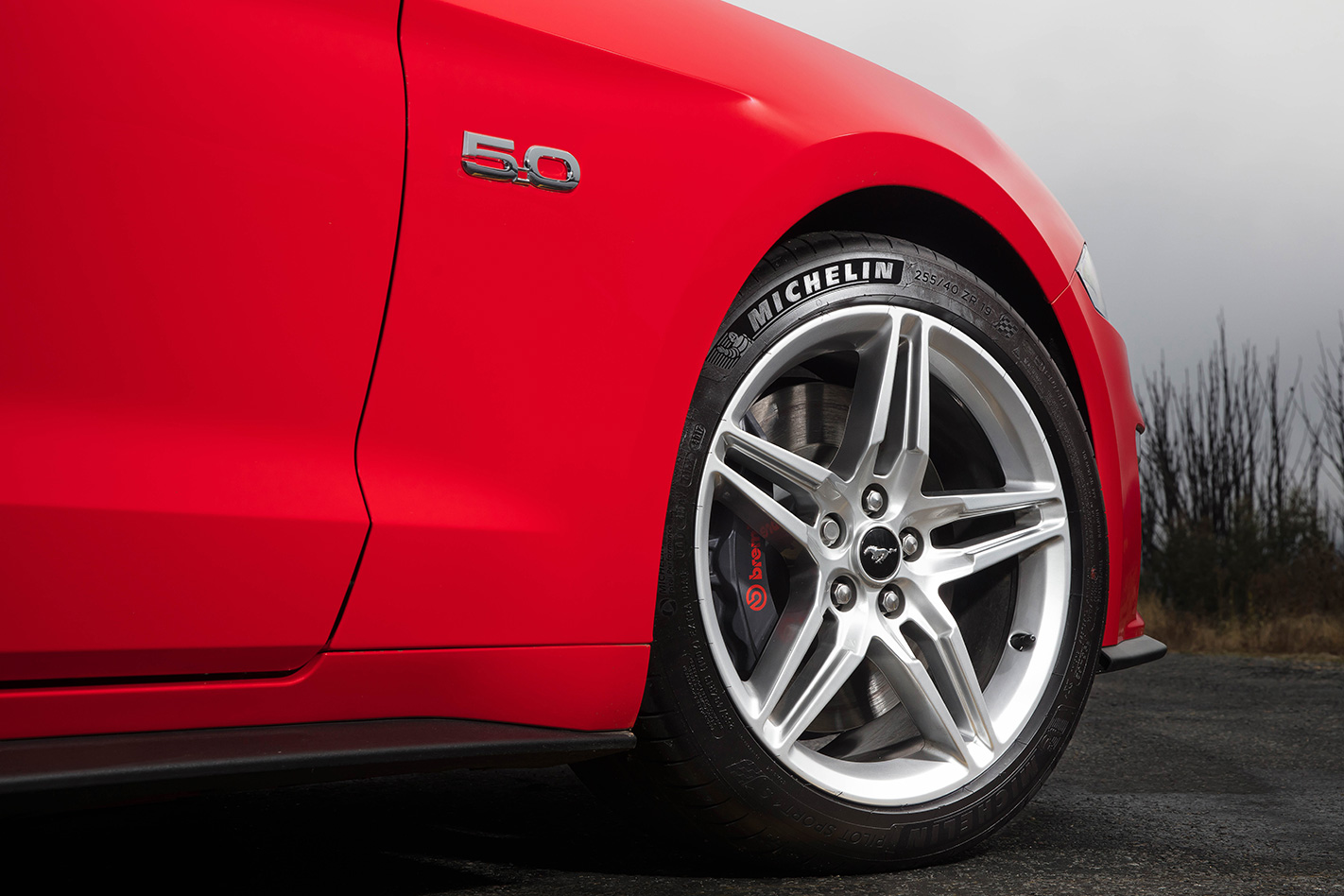
Yet for all its newfound tactility and aural quality, it’s the MY18 Mustang’s vast dynamic improvement that makes it feel half a generation newer than the previous beast. The only cars we drove on the road were fitted with optional ‘MagneRide’ adaptive magnetic dampers ($2750), and while even Normal mode delivers a firm ride, with some knobbliness over certain surfaces and noticeable tyre noise, there’s been a huge improvement in wheel and body control. And the MY18’s new Michelin Pilot Sport 4 Ss – 255/40ZR19 front and 275/40ZR19 rear, on optional five-spoke forged 19s in this instance ($2500) –are excellent. They feel grippier than the previous Pirelli P Zeros and are designed to be more effective across a broader temperature range, as well as in wet conditions.
Up front, the strut arrangement and forged-aluminium lower control arms from the Shelby GT350 have significantly strengthened the entire set-up, making the Mustang feel much tauter, with far superior steering response. In conjunction with retuned electric steering assistance, the annoying vagueness and on-centre mush of the old car has given way to far more accurate and confident direction control. It’s as if Ford of Europe (or Australia) waved a magic wand over the beast and ‘hey presto’, Ford’s global dynamic DNA is suddenly front and centre. The clippety-clop wheel patter and vertical suspension movement of the 2015 car is now a distant, if slightly rose-tinted, memory.
The MY18 Mustang is still a sports coupe, though, so what feels firm in Normal damping mode becomes very firm in Sports mode (with better front-to-rear balance and sharper turn-in) and frigging firm in Racetrack. That said, this is a car that can cop some consistent pounding around a circuit, carry-over Brembo brakes included, so it’s entirely in keeping with what buyers want. And if it’s the auto-only convertible you’re after, then a slightly softer-feeling ride is probably a reasonable trade-off for the bodystyle’s slightly flexy, open-top experience … at which point the V8’s newfound exhaust burble sounds addictively delicious.
About the only contentious alteration in the new car is the eradication of the previous Mustang’s bonnet bulge. That prominent visual signature was such a large part of the character of the old car that looking over a rather flat bonnet (with kinda tacked-on bonnet vents) makes the MY18 car feel like it has a lower cowl. Or that you’re sitting higher. Neither of those things are true, though given the facelifted car’s vast improvements in so many areas, it’s an acceptable trade-off if this is the driving experience that goes with it.
The 2018 Mustang GT may not be quite as tough looking as before – especially wearing the lighter, stronger, yet rather plain-looking silver forged alloys of our test cars, not the carry-over black mesh 19s that will be standard – yet it has been transformed in so many areas. It’s no longer an endearingly flawed, huggable beast of a thing that you need to make excuses for. Instead, it’s a seriously focused, much more European-flavoured (though thankfully still American-hearted) muscle car worthy of rear-drive, bent-eight adoration.
FORD MUSTANG GT SPECS
Model: Ford Mustang GT Fastback Engine: 5038cc V8 (90°), dohc, 32v Max power: 339kW @ 7000rpm Max torque: 556Nm @ 4600rpm Transmission: 10-speed automatic L/W/H/WB: 4789/1916/1382/2720mm Weight: 1681kg 0-100km/h: 4.3sec (claimed) Economy: 12.7L/100km Price: $65,990 On sale: Now
BRITISH sports car maker McLaren has teased an even more hardcore version of its 570S that’s believed to be the latest addition to its Sports Series – packing what’s believed to be a 447kW punch.
The single image released on social media overnight, carrying the tagline “The Edge is coming” and also featured in a short video, shows a cropped image of a heavily aerodynamic rear end missing one element – exhaust pipes. While the internet was abuzz with thoughts this could hint at the first battery-electric model from McLaren, instead it’s believed the Sports Series-based 570LT will use a Porsche 918-style top-exit exhaust system.
The image shows a vertical plane built off the edge of a deep, aggressive diffuser, and what appears to be a vent that could be dedicated to active aerodynamics if it contains a flap next to the tail-lamp. We can also see that the wheel arch behind what looks like a wider tyre is open, hinting at plenty of development in the air tunnel after criticisms levelled at the carmaker that the 570S might have lacked sufficient roadholding downforce.
McLaren is believed to be working towards a late 2018 release for the 570LT, meaning we could see it revealed in full at October’s Paris Motor Show.
Engine choices are still up in the air, but McLaren is believed to be considering either the AMG-sourced twin-turbo 4.0-litre V8 – that in the right state of tune could bump the badge the as-yet unidentified model could wear to either a “595LT” or even the long-rumoured “600LT” – or it will wedge in the existing 3.8-litre twin-turbo V8 in what may be the engine’s swansong.
McLaren has teased that it would release “the most extreme, track-concentrated road car McLaren has yet designed” sometime in 2018; dubbed the BP23, it will become the third model released under the Ultimate Series name.
“Daily usability is being sacrificed to give the most intensive driver experience around a circuit,” McLaren said last year while confirming rumours it had started work on a new member of the series. “Its design, described as brutal, will be the purest expression yet of the company’s ‘form follows function’ philosophy.”
Whatever this car will eventually evolve into as part of the Super Series, it already appears to be following the BP23’s philosophy to the letter.
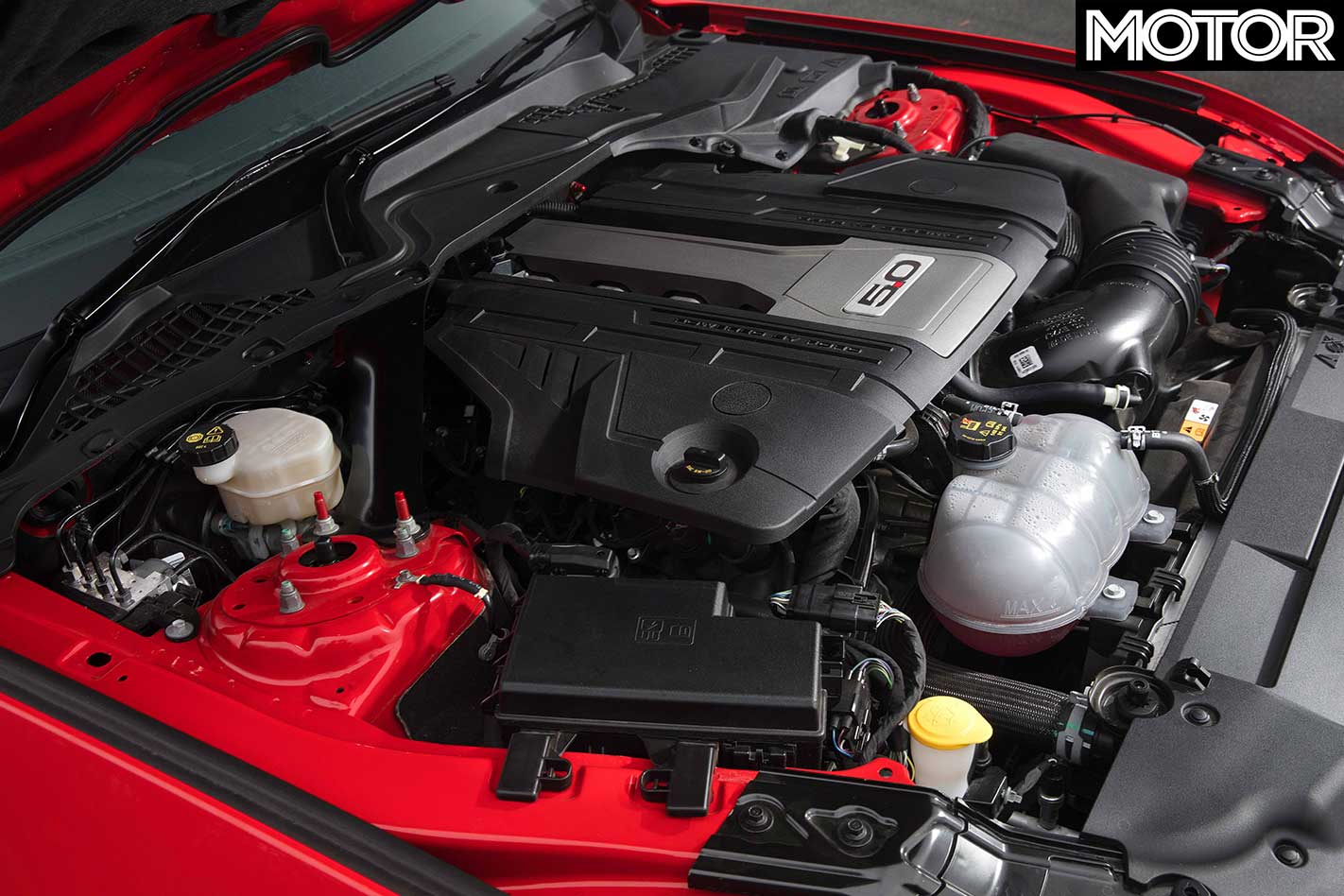
At a casual glance there’s little to separate the V8 in the new 2018 Ford Mustang from that in its predecessor.
Oh, sure, outputs increase from 306kW at 6500rpm and 530Nm at 4250rpm to 339kW at 7000rpm and 556Nm at 4600rpm, suggesting some fiddling has gone on, but on paper it looks as though you’re sampling the same old 5.0-litre Coyote.
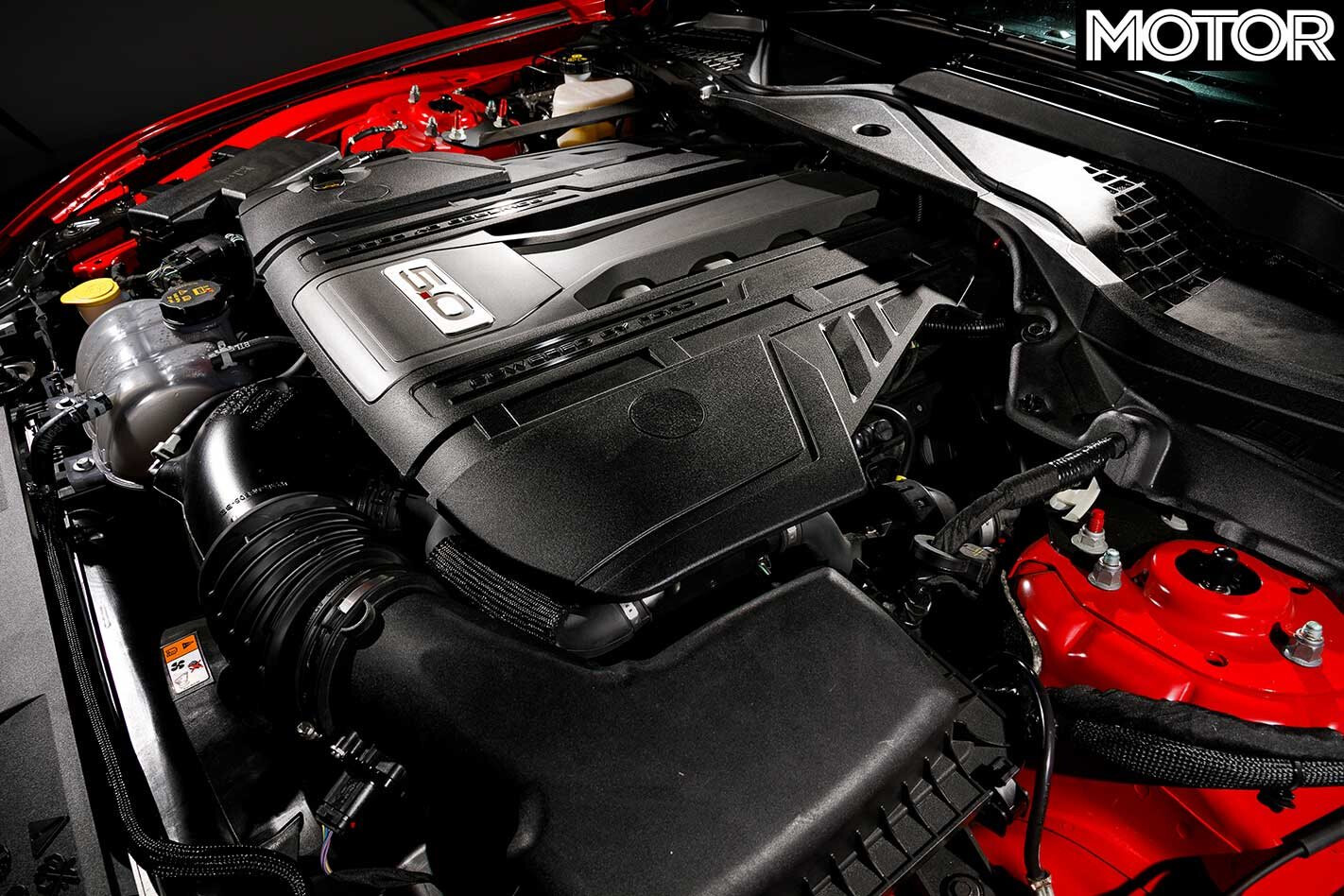
Not quite. Switching to plasma-coated bores from traditional cylinder liners increased displacement from 4951 to 5038cc, which in turn allowed the fitment of larger intake and exhaust manifolds, larger valves and redesigned cylinder heads.
The rev limit was lifted to 7400rpm, compression ratio increased to 12.0:1 and there are 16 fuel injectors instead of eight to support the new dual fuel-injection system, which uses a combination of high-pressure direct injection and low-pressure port injection.
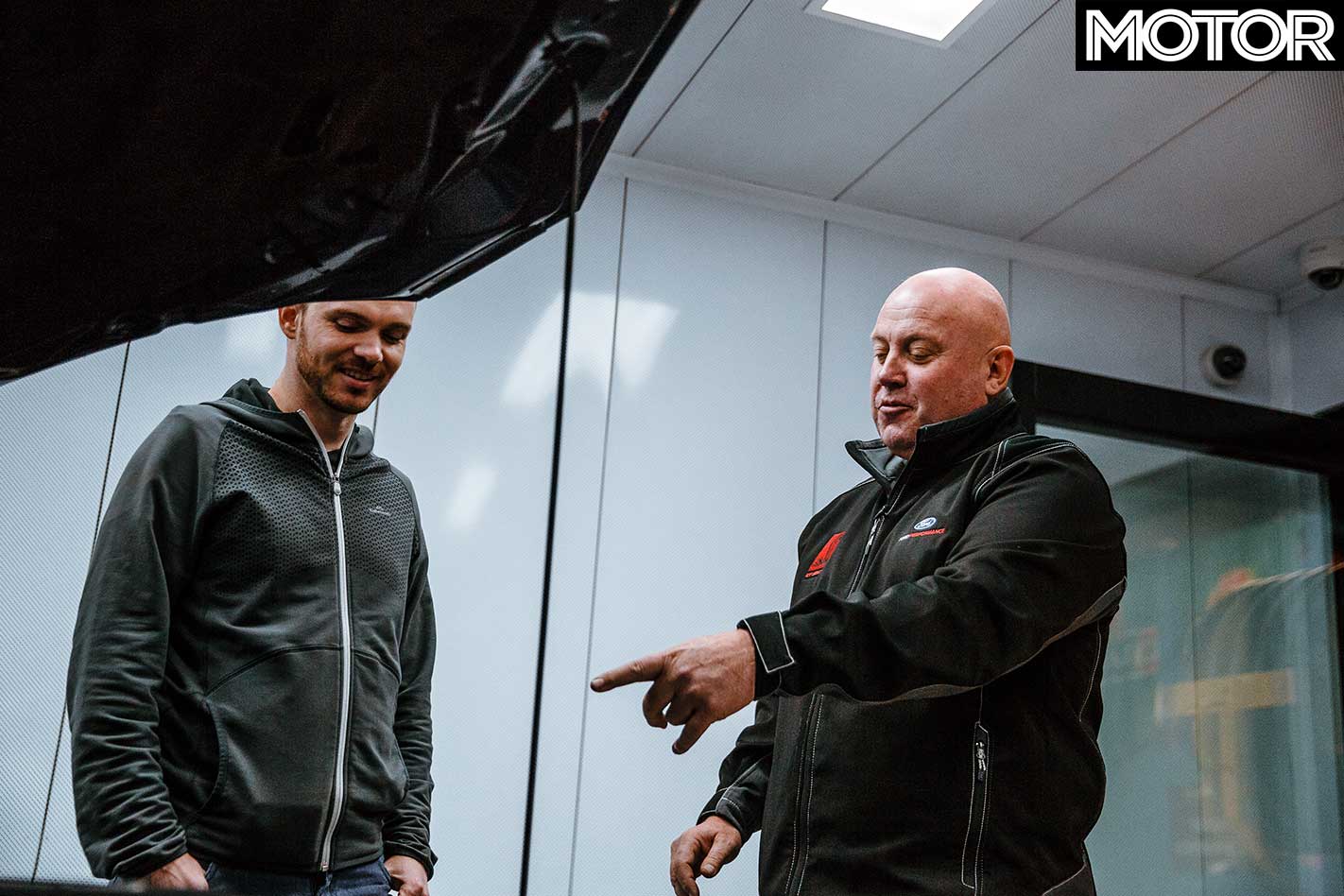
To find out what effect all these changes have had we visited our friends at Herrod Performance. Thanks to their close ties with Ford Performance, Herrod and his team have been at the forefront of local Coyote development so who better to assess the differences between engines old and new?
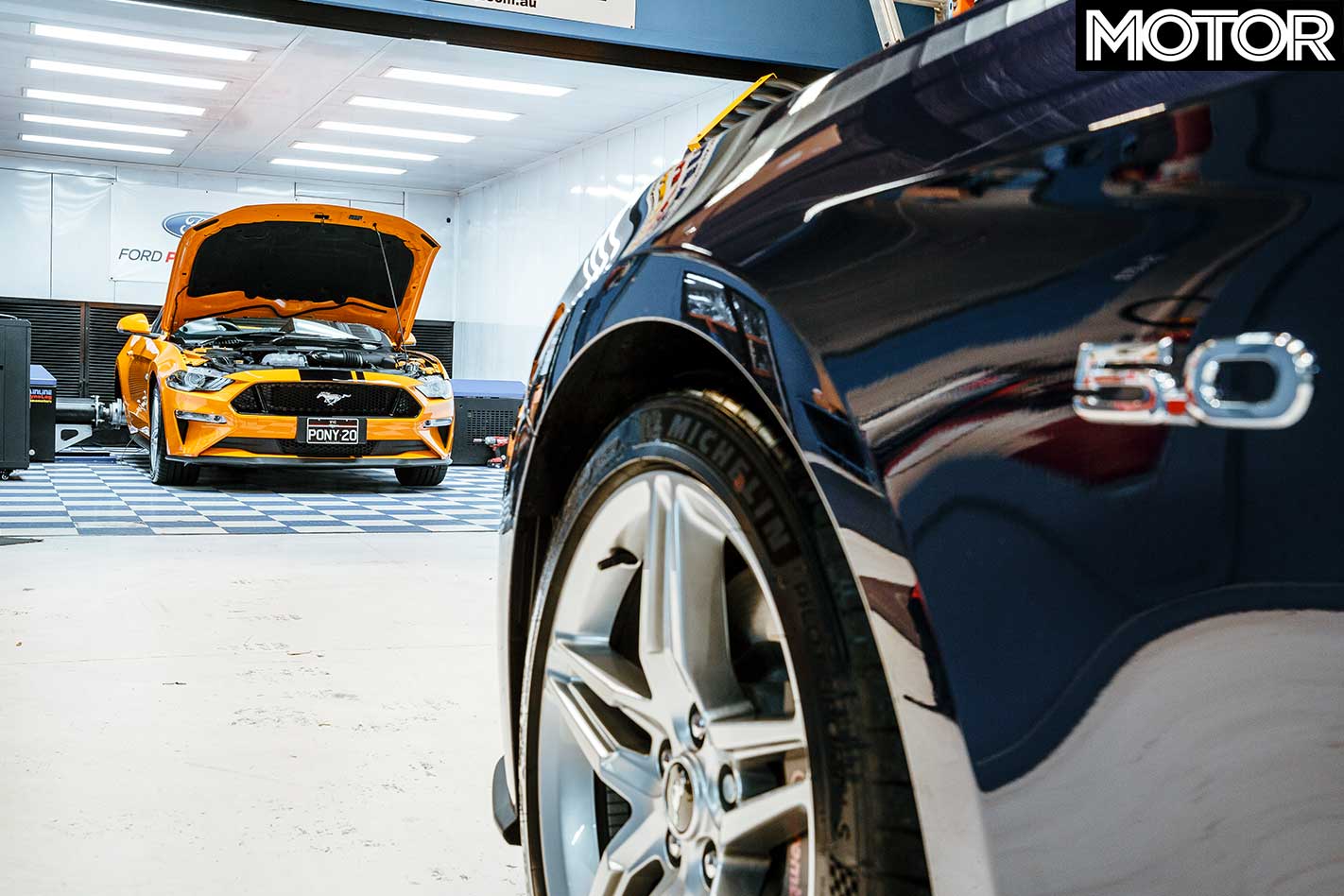
Herrod uses a Mainline hub dyno, removing variables such as tyre type, tyre pressure and strap tightness that can affect traditional roller dynos. In addition, a pair of giant fans keeps inlet air and cylinder head temperatures as consistent as possible.
We ran an auto and a manual, both in their 1:1 gear ratios (seventh in the 10-speed auto, fourth in the six-speed manual) with inlet air temperatures at 18 degrees Celsius and cylinder head temperatures at 90 degrees Celsius. Each car had three runs and the results, frankly, are remarkable.
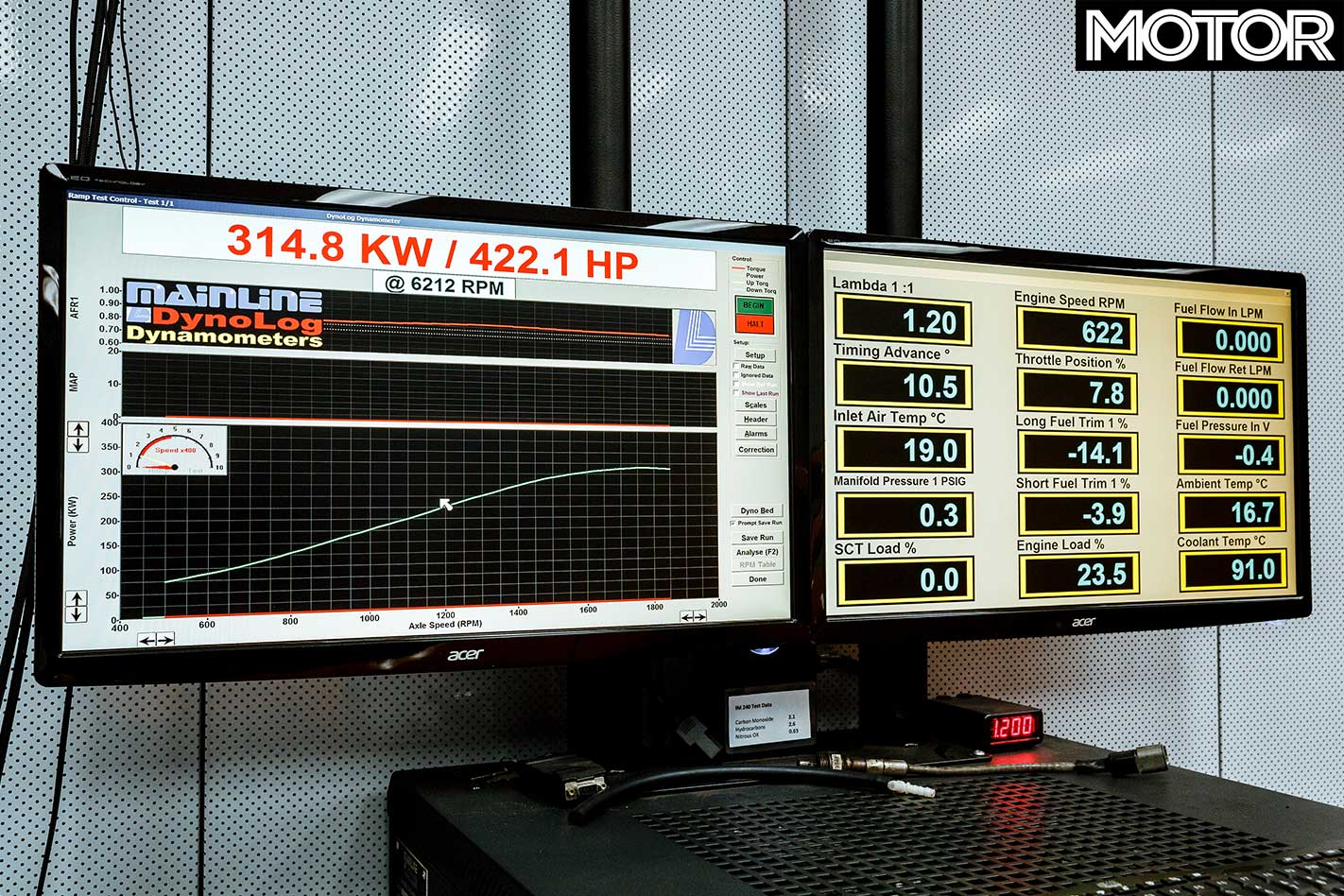
According to Chris Herrod, standard previous-generation Mustangs would make between 250-260kW at the rear hubs, suggesting a driveline loss of roughly 50kW. Imagine our surprise then, when the 2018 Mustang manual delivers 314.8kW at the rear hubs!
The auto backs this up with a best figure of 306.4kW, suggesting either Ford has built incredibly efficient transmissions, or its engine claim of 339kW might be a little conservative. It’s worth noting that these figures were recorded with 95RON fuel in the tank supplied by Ford, so on 98RON you could expect the numbers to be a little higher, possibly around five kilowatts.
What’s just as significant is that the whole power curve has shifted. The new engine actually makes a little less torque at in the low-midrange rev band, but revs much harder and produces far more power at high rpm than the previous engine.
More on the 2018 Ford Mustang GT: – Up-close gallery – The Drag Test – The Road Test
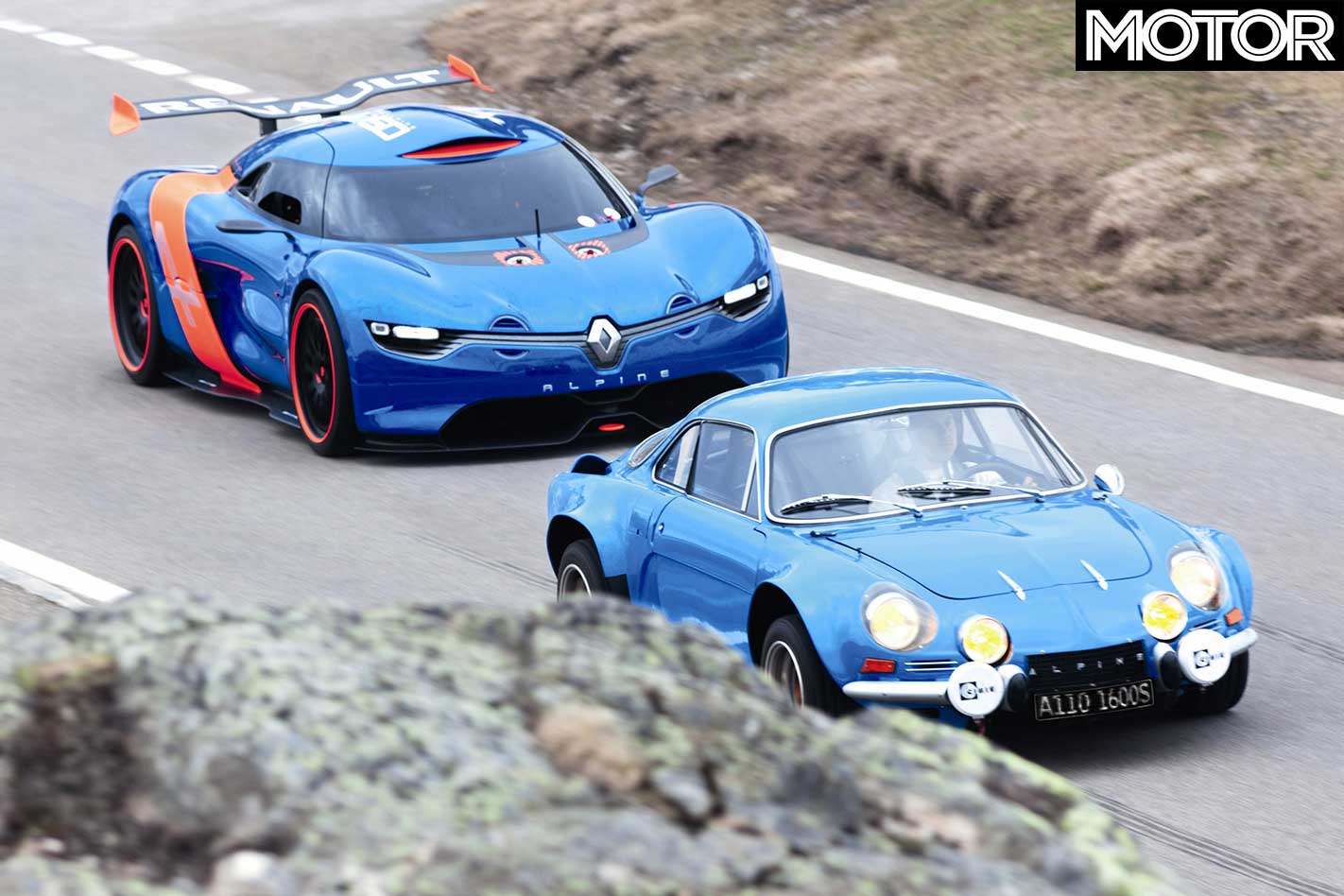
If you’re wondering why the 2018 Alpine A110 looks so unusual, you might not know where its heritage lies.
And if you do know where the A110 badge comes from, it doesn’t hurt to brush up on the details.
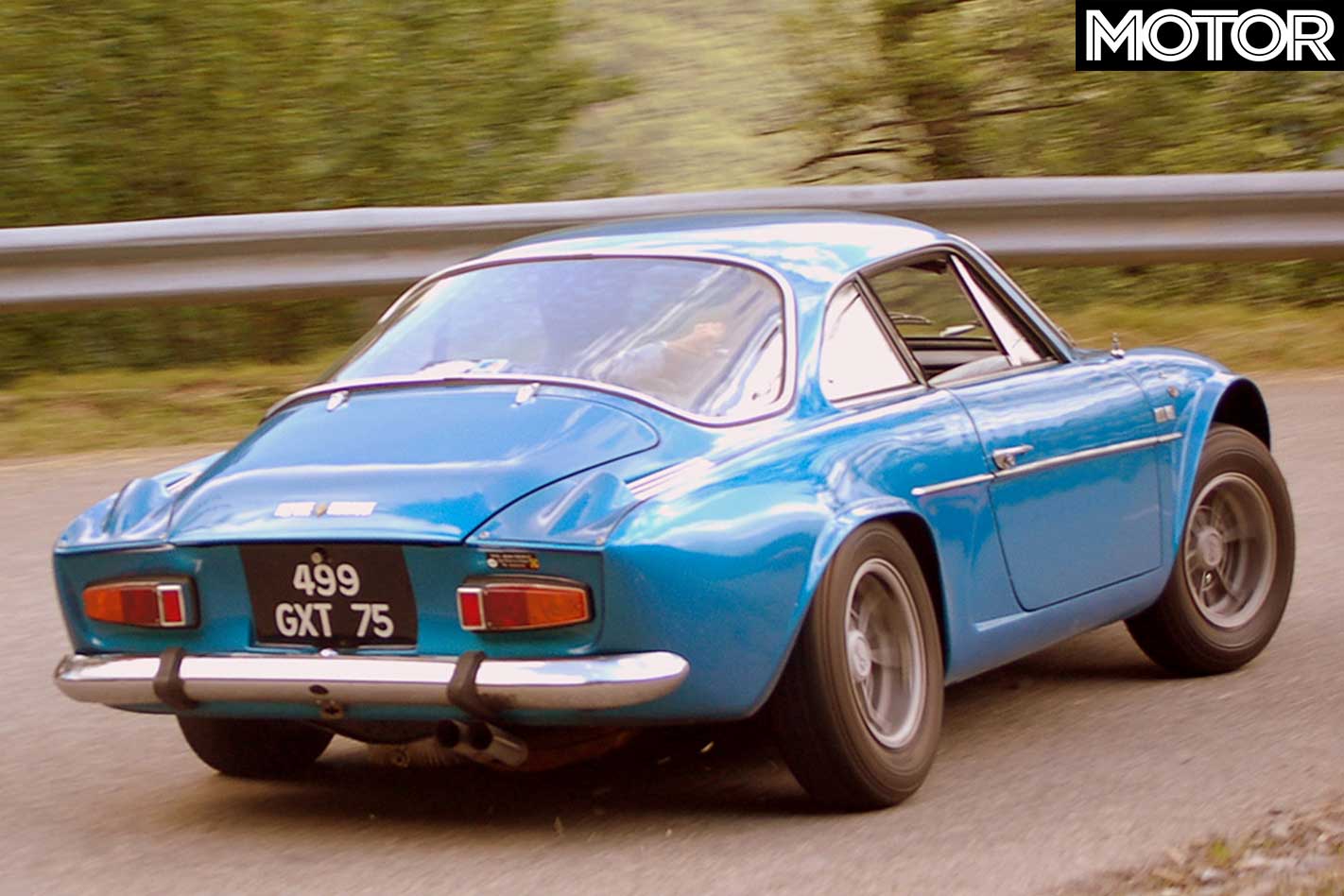
In 1961, the A110 debuted as a car that looks somewhat similar to its modern equivalent.
It followed the principle of a light kerb weight rather than a massive power figure, and even had a series of Renault engines, located at the car’s rear. This proved to be a winning formula.
The man behind the car – and the Alpine brand – was Jean Rédélé, a French Renault dealer and workshop owner. His passion for motorsport is one reason why the Alpine A110 became so prominent as a racer. But we’ll get to that.
With 1.6-litre naturally aspirated Renault engines being the pinnacle of performance for the A110, it managed outputs or about 103kW, and weighed around 635kg depending on specification.
It’s no surprise the A110’s looks still hold up today – it was designed by the prolific Giovanni Michelotti, who also penned cars such as the Ferrari 250, the BMW 2002 and Alfa Romeo’s 2000 & 2600.
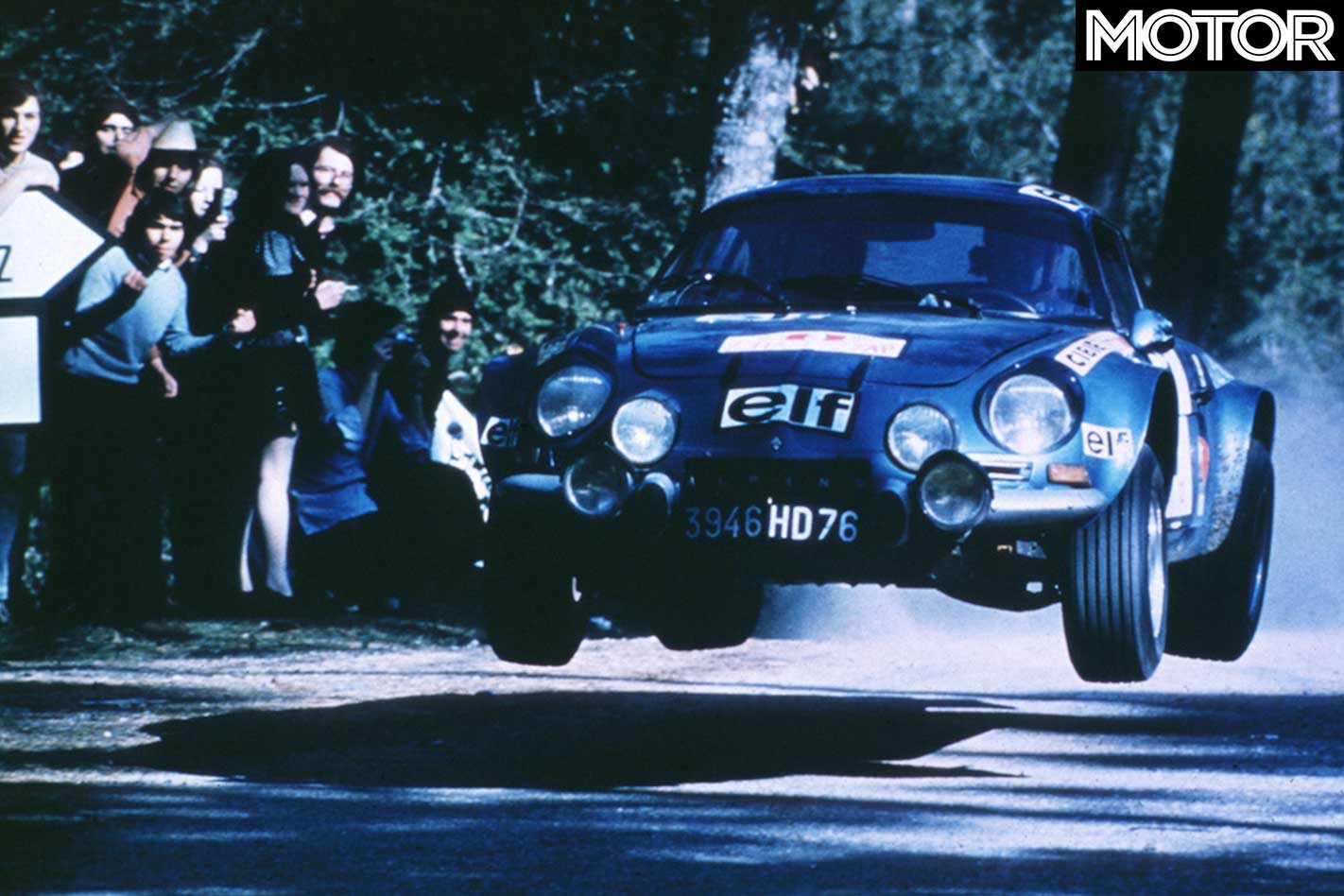
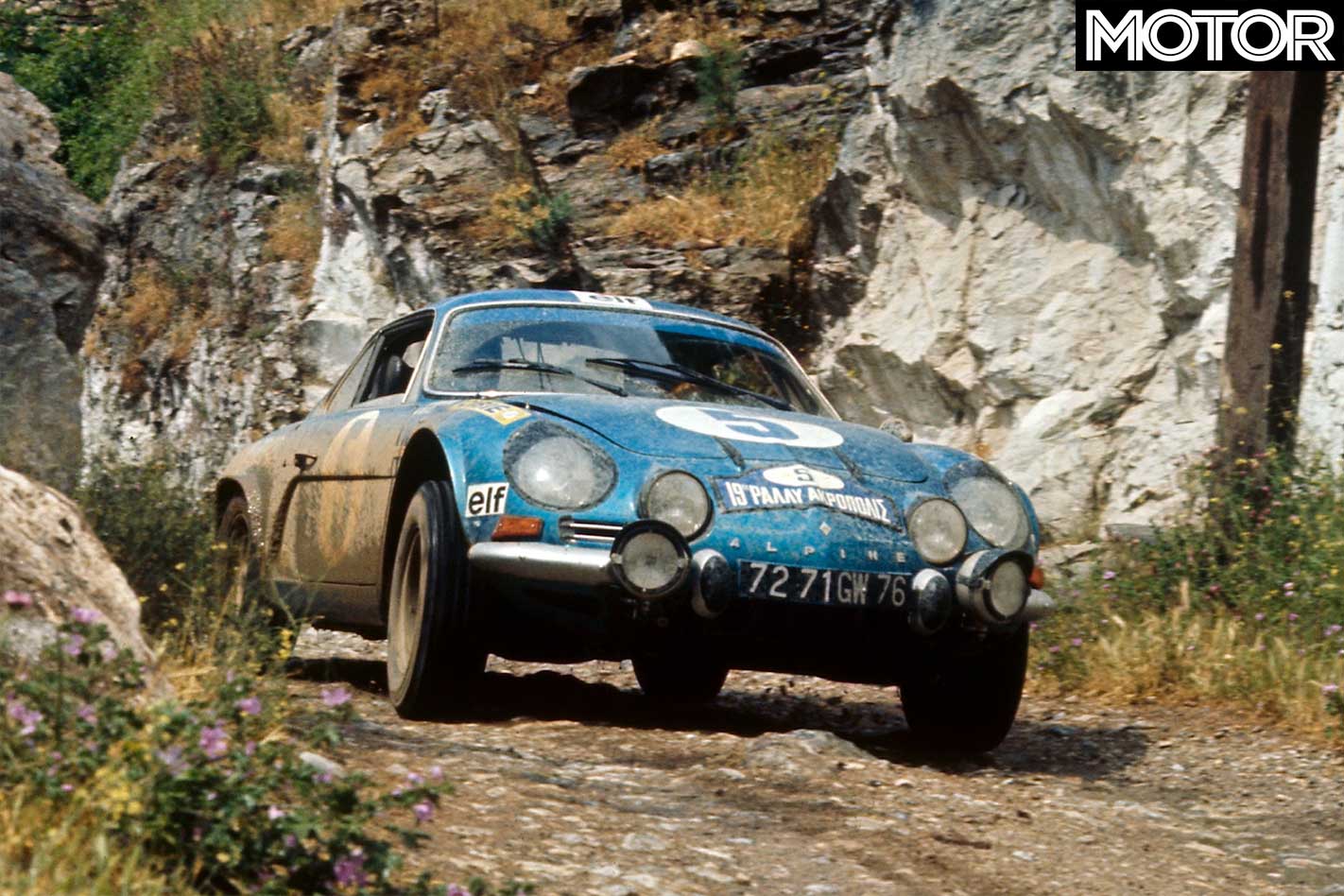
It became a rally legend, finding itself competing in the WRC among other rally series, and even has a string of victories during the 1971 Championship to its name – including one at the prestigious Rallye Monte Carlo.
That same year, while Renault (and therefore Alpine) wouldn’t compete in the mega Nürburgring 96 Hours, one Jean-Luc Thérier borrowed an A110 to make his own privateer entry.
While no one reportedly took the Alpine very seriously at first, expecting a BMW 2800 CS to take the win, Thérier, Jacques Henry, and Maurice Nusbaumer took victory by a margin of about 8 laps.
By the end of its production in 1977, the A110 had already overlapped the production run of its ‘replacement’, the A310, by six years.
More recently, the A110 was honoured with a concept car to honour the 50th anniversary of its release. The A110-50, or Renault Alpine ZAR, features a 3.5-litre V6 and, upon its debut at the Monaco GP circuit, was driven for four laps by then Renault COO and now PSA CEO Carlos Tavares.
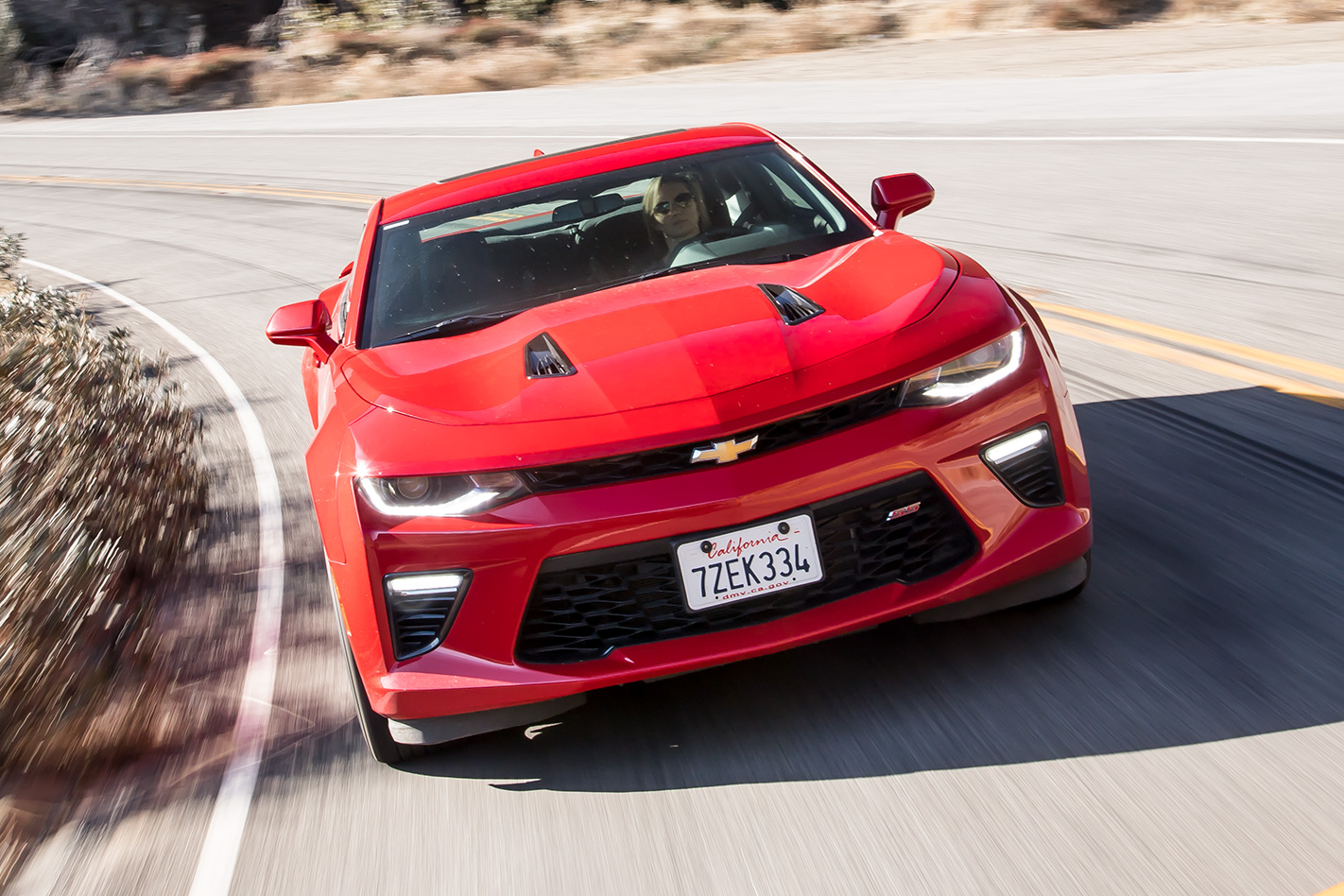
AFTER disappointing three-pedal fans last month with news that Australia’s first right hand-drive Camaro will be offered as an automatic only, HSV has now revealed a manual version is indeed in the pipeline.

When HSV confirmed it would be converting Euro spec Camaros to right-hand drive for Aussie customers, the initial intel was that both manual and autos would be the focus, but the Clayton-based company dropped the bombshell in May that only autos were on the way.
Now it seems that message has been rescinded and a three-pedal version will be on the way late next year.
“It will be late 2019,” said marketing general manager Damon Paull. “That’s the potential.”
“We believe that auto will take the lion’s share of demand but we’re aware that there’s a customer base that wants that manual model.”
Manuals were initially scratched following the decision to convert higher-grade Euro specification cars – variants only available with the eight-speed auto, but Paull revealed the company was gearing up to apply its deft conversion hand to make manuals an Aussie reality, rather than taking lower-spec American cars with manual gearboxes.
“It would require unique engineering and development. It would be an investment to be had there.”
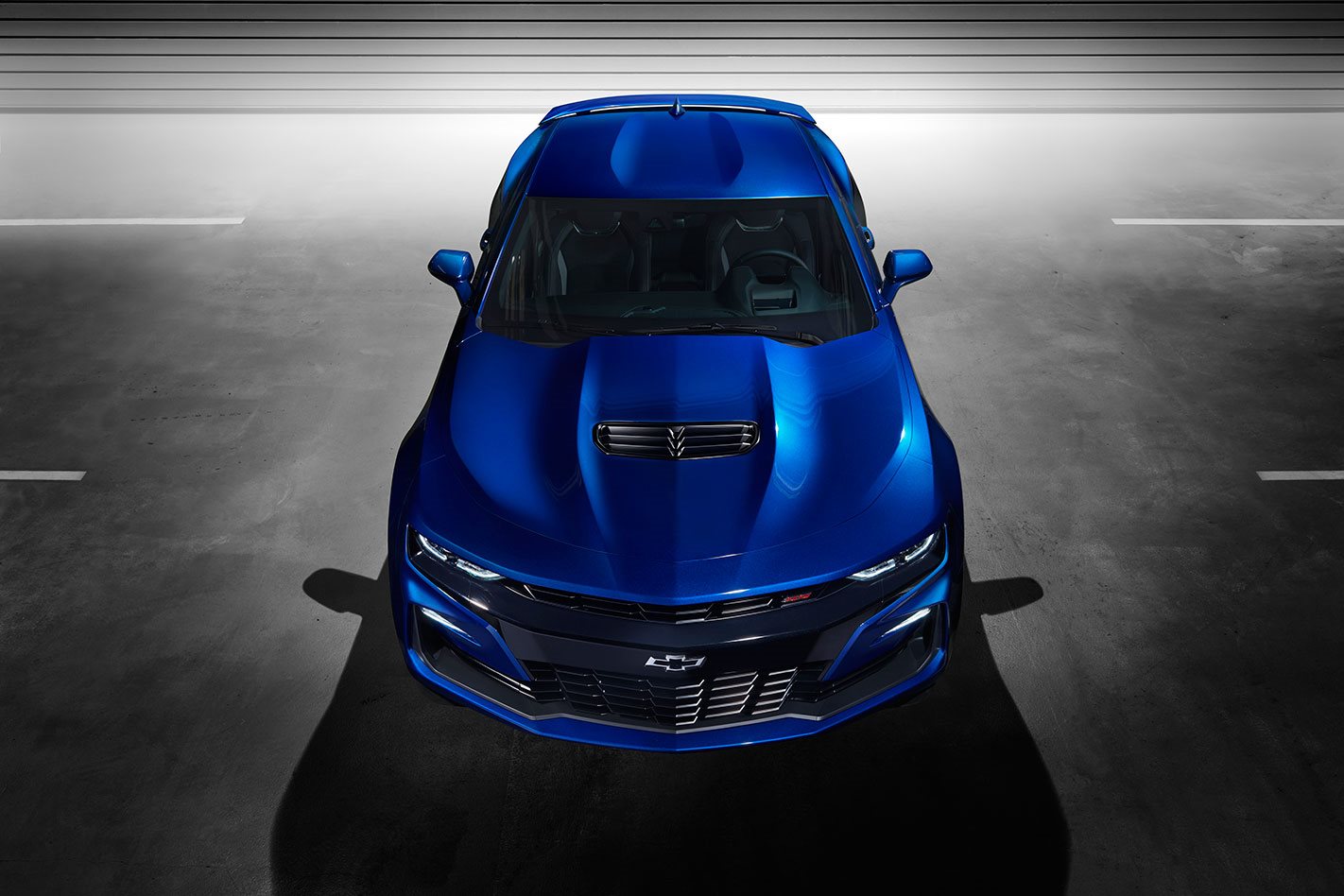
If the manual’s arrival sticks to that rough timeline, it’s most likely the first examples will roll in wearing the 2019 facelift that was revealed in April, while the first auto versions due later this year will be the pre-update version we drove in the US in January.
Manual availability is another string to the Camaro’s bow in the battle against its Ford Mustang arch rival, which has been available in both auto and manual since its Australian debut in 2015 and launches in updated 2018 guise today.

While autos are expected to make up a majority of Camaro sales – following the trend of the Mustang – HSV cannot afford to lose a single sale in the V8 rear-drive muscle car battle, the likes of which has not waged on local soil sincethe early ’70s when the Monaro butted heads with the Falcon Hardtop.
Paull confirmed that the proportion of manual-to-auto sales could be similar to the final VF Commodore-based model split, providing a healthy boost to Aussie Camaro uptake.
“If it’s any guide, the mix of auto to manual was at least two thirds auto in the prior HSV Zeta-based platform range.”
The news that a six-speed manual will slot into Australian cars will not harm the Camaro’s cause but it’s unlikely to overtake Ford’s muscle car sales with pricing a key point of difference.
With a 2018 starting price of $49,990 for the manual four-cylinder and $62,990 for the V8 GT, it’s likely Ford’s Mustang will continue the sales sensation it continues to enjoy.

Conversely, if HSV’s manual conversion process is extensive, the local price could be inflated further to recoup the costs incurred – although the lower acquisition cost of a manual could cancel that out. As for whether manuals would be made a no-cost-option when it hits showrooms, Paull confirmed it was “too far out to make that call”.
DEMAND for Kia’s fastest car yet, the Stinger sports sedan, has revealed one interesting fact – the vast majority of people (78 percent of buyers, in fact) who bought a new Kia Stinger this year opted for the most expensive variant.
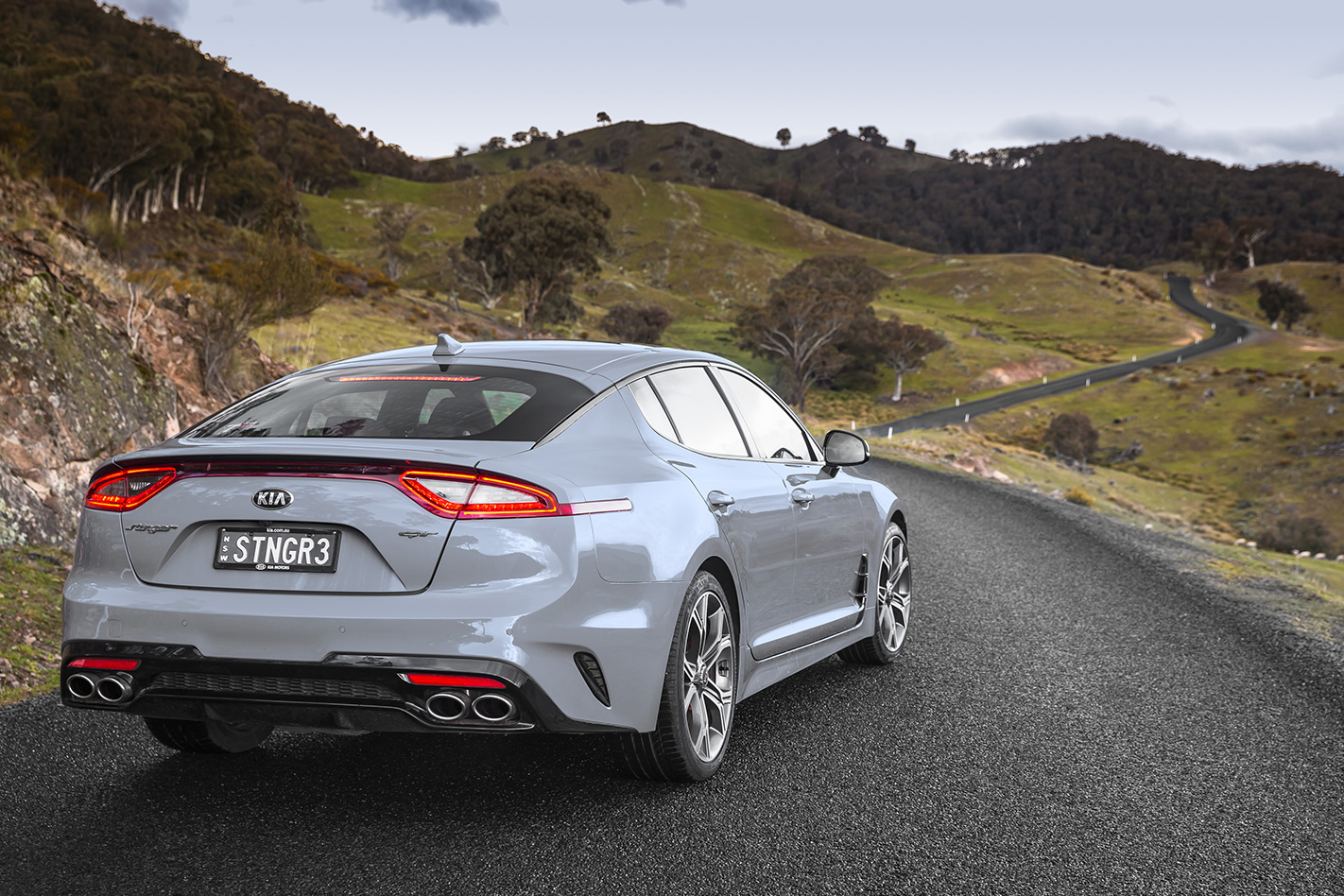
But it’s not just the range-topping $59,990 Stinger GT that’s the darling of the range right now. It is twin-turbo V6 variants in general that dominate the Stinger sales chart, with more than 82 percent of volume so far being accounted for by the V6-engined Stinger 330S, 330Si or GT. The allure of the Stinger’s 272kW/510Nm 3.3-litre twin-turbo V6 is clearly much greater than that of the 182kW/353Nm 2.0-litre turbo four that it sells alongside.
This situation isn’t exactly new – after its local launch in September 2017, around nine out of 10 Stinger sales made in the post-launch period were V6 models.
The fact this top-heavy skew has been sustained so long after the initial burst of enthusiast-driven orders goes against the grain. Kia Australia’s prediction was for the opposite to occur once initial demand for the headline Stinger GT was satisfied, with the four-cylinder Stinger 200S, 200Si and GT-Line to take over as the volume players. Yet, it appears that nearly every Stinger shopper wants the most powerful engine on offer, meaning four-pot dominance still seems awfully distant.
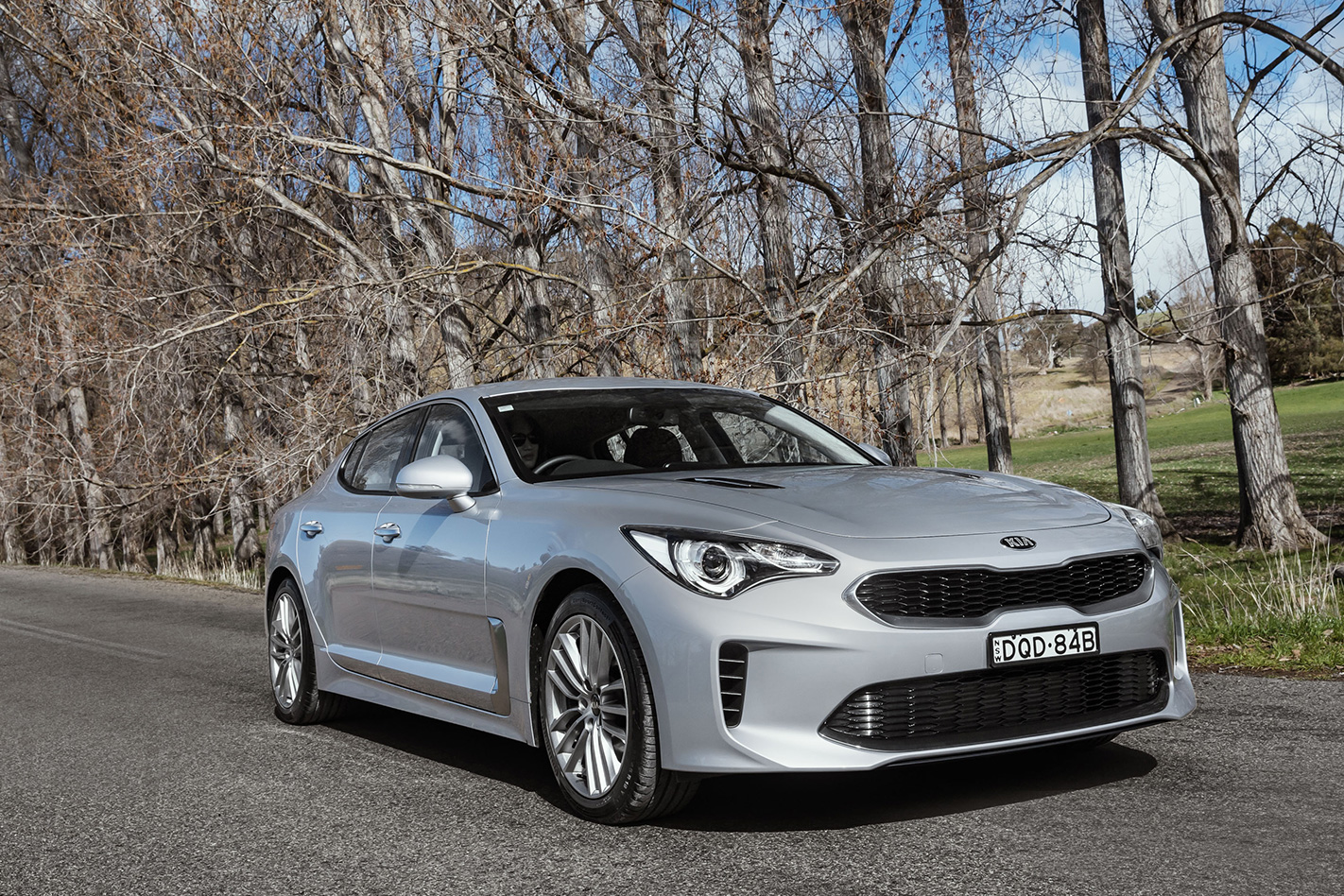
What’s more, 35 percent of all V6 Stinger buyers are now opting for the dealer-fit bimodal sports exhaust, which adds an extra $2659.99 to the retail cost and a more decibel-dense exhaust note, but no performance increase. Slapping one on a top-shelf Stinger GT turns it into a $60K-plus car – before on-roads.
Intriguingly, looking at the sales of four-cylinder Stinger models also reveals a preference for a high-end offering. The most popular four-pot Stinger is the GT-Line grade with 8.9 percent of year-to-date sales, despite having the second-highest retail price in the range at $55,990. The value-added Rafa Edition is the next highest-selling four-cylinder Stinger with a 6.3 percent share of sales, while the most affordable model, the $45,990 Stinger 200S, accounts for just 0.9 percent of the Stinger’s 896 year-to-date sales.
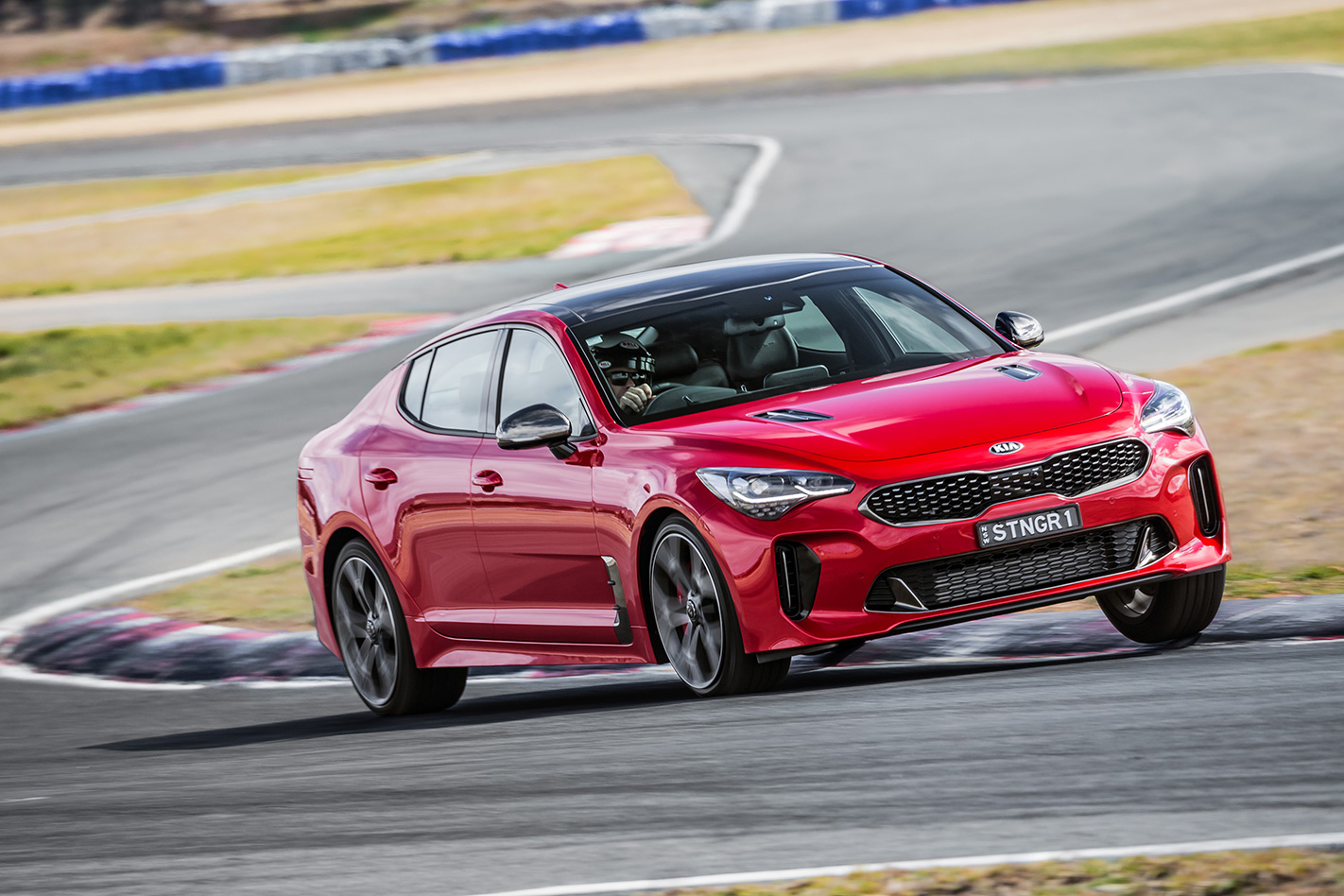
So who’s dropping premium-car money on a four-door Kia? According to Kia Australia, it’s a diverse group. Roughly a third are existing Kia customers, either upgrading from another model or adding another Kia to their garage. The remaining two-thirds are conquest customers – newcomers to the brand – with half of them coming from traditional Aussie-built large cars (Ford Falcon and Holden Commodore), and the other half coming from entry-level luxury sedans like the Mercedes-Benz C-Class, BMW 3 Series, Lexus IS and Audi A4.
A source within Kia told Wheels that though there has been some cannibalisation of Optima sales, there’s no intent to either tweak the four-cylinder option in the Stinger lineup or adjust the Optima offering to separate those products in the showroom. As it stands, just $1500 separates the top-grade Optima GT and the entry-spec Stinger 200S, with both cars being powered by a 2.0-litre turbo four with near-identical power outputs.
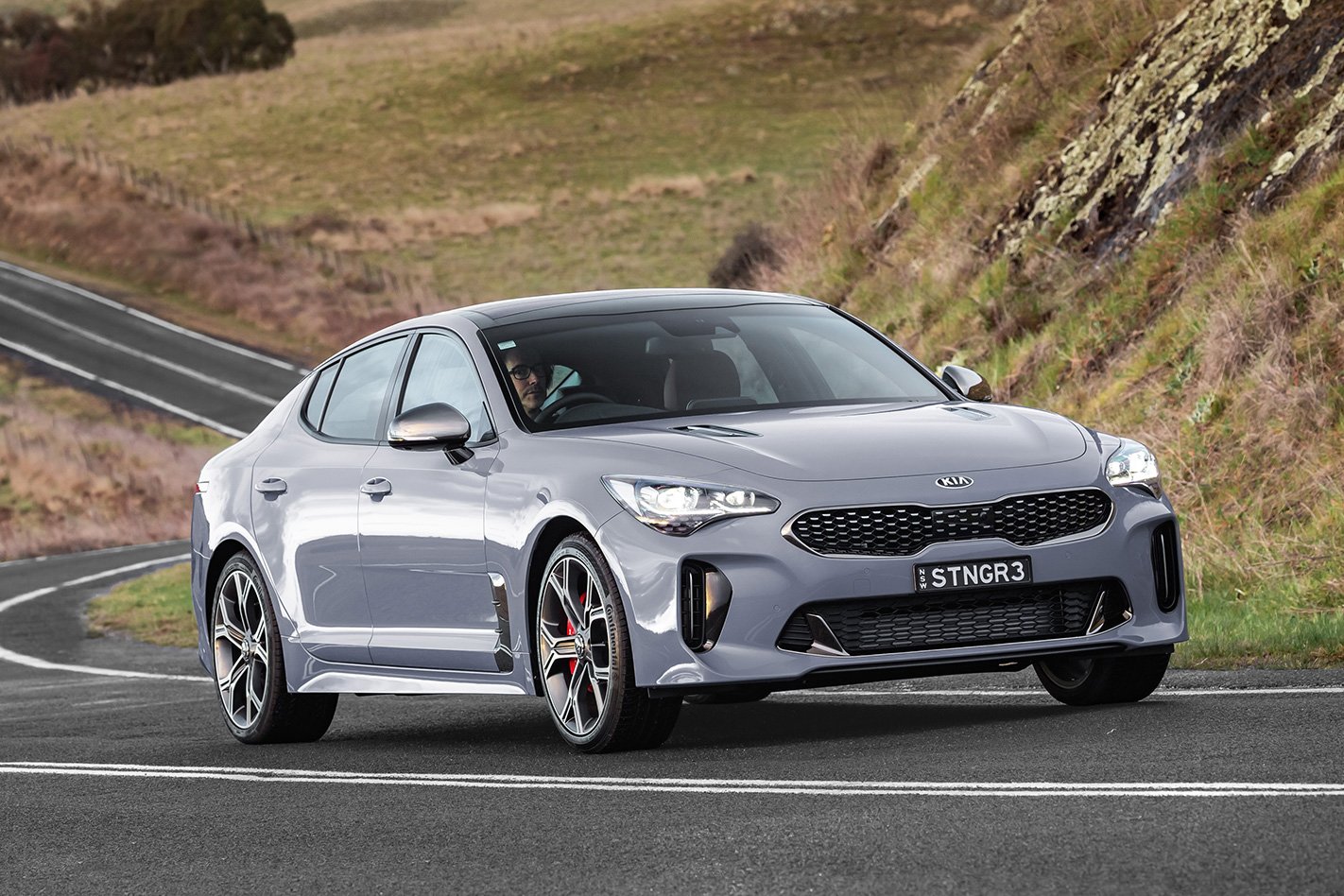
So far this year, the Stinger has outsold the Optima by a factor of 3.7 times.
THE Audi Q8 will become the flagship of the German luxury carmaker’s growing SUV range when it launches globally later this year.
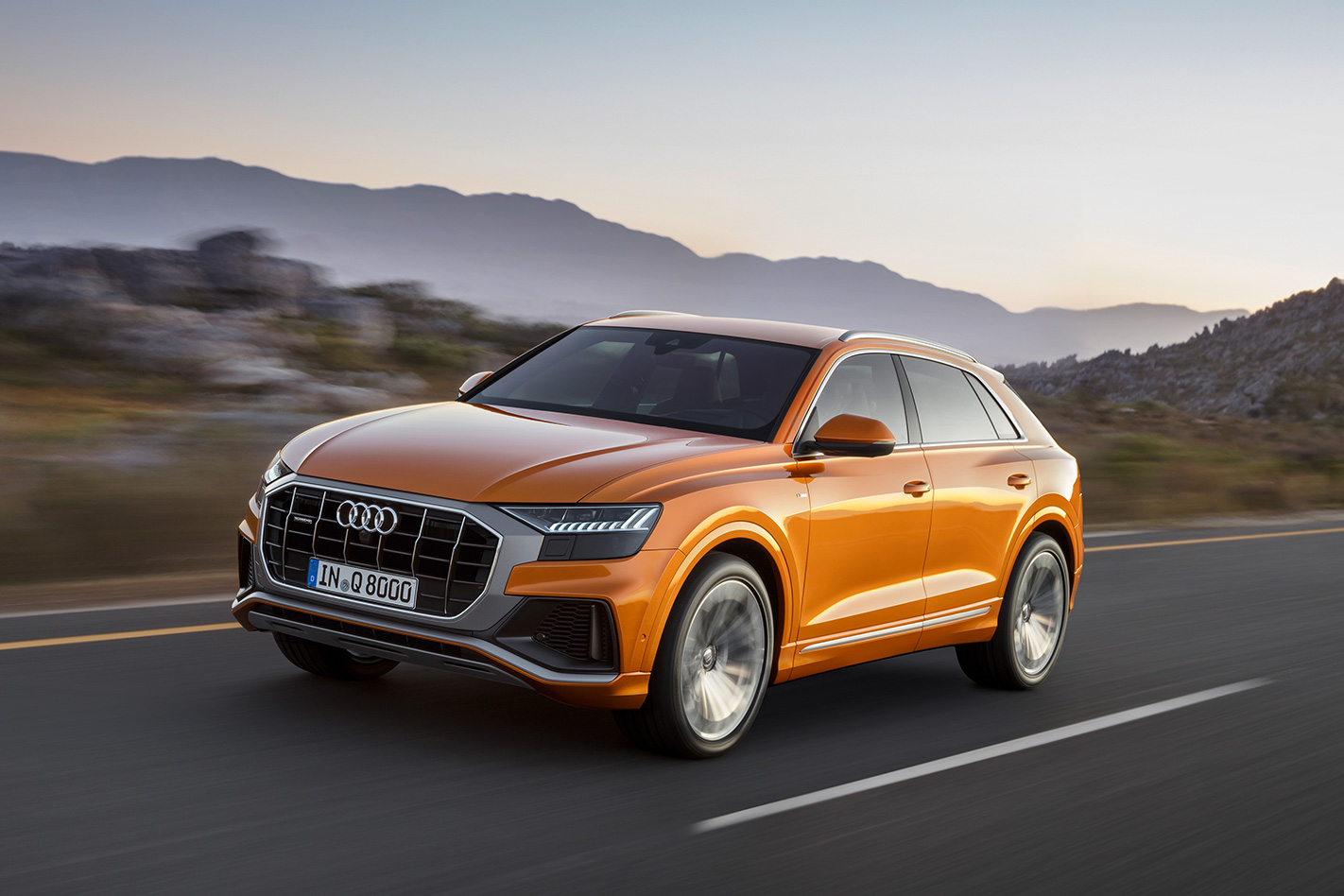
When it lobs, the fastback SUV will bump fists with the BMW X6, the Mercedes-Benz GLE-Class Coupe and the Range Rover Sport for the hearts, minds and heavily stuffed wallets of style-conscious customers.
Closely following the design cues teased in the Audi Q8 Sport Concept unveiled at Geneva early last year, the Q8 also introduces the new look that will sweep across the carmaker’s SUV range. Whether that’s a good thing or not, you be the judge.
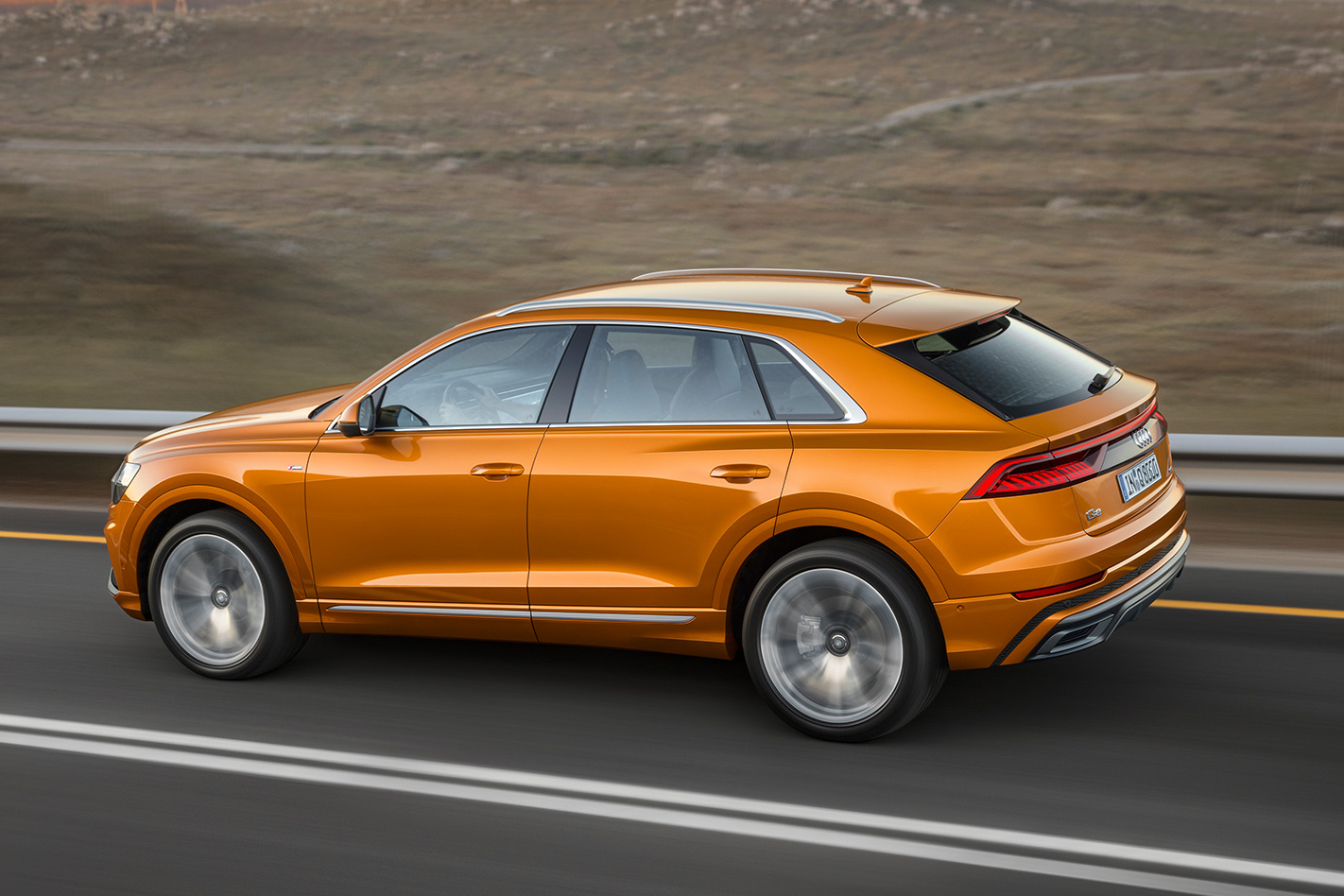
At 4990mm long, 2000mm wide and sitting 1710mm tall, the Q8 is 62mm shorter, 32mm wider and 31mm closer to the ground than the Q7. Audi says the Q8’s wheelbase is “almost” 3000mm, suggesting it is pretty close to the Q7’s 2994mm stretch.
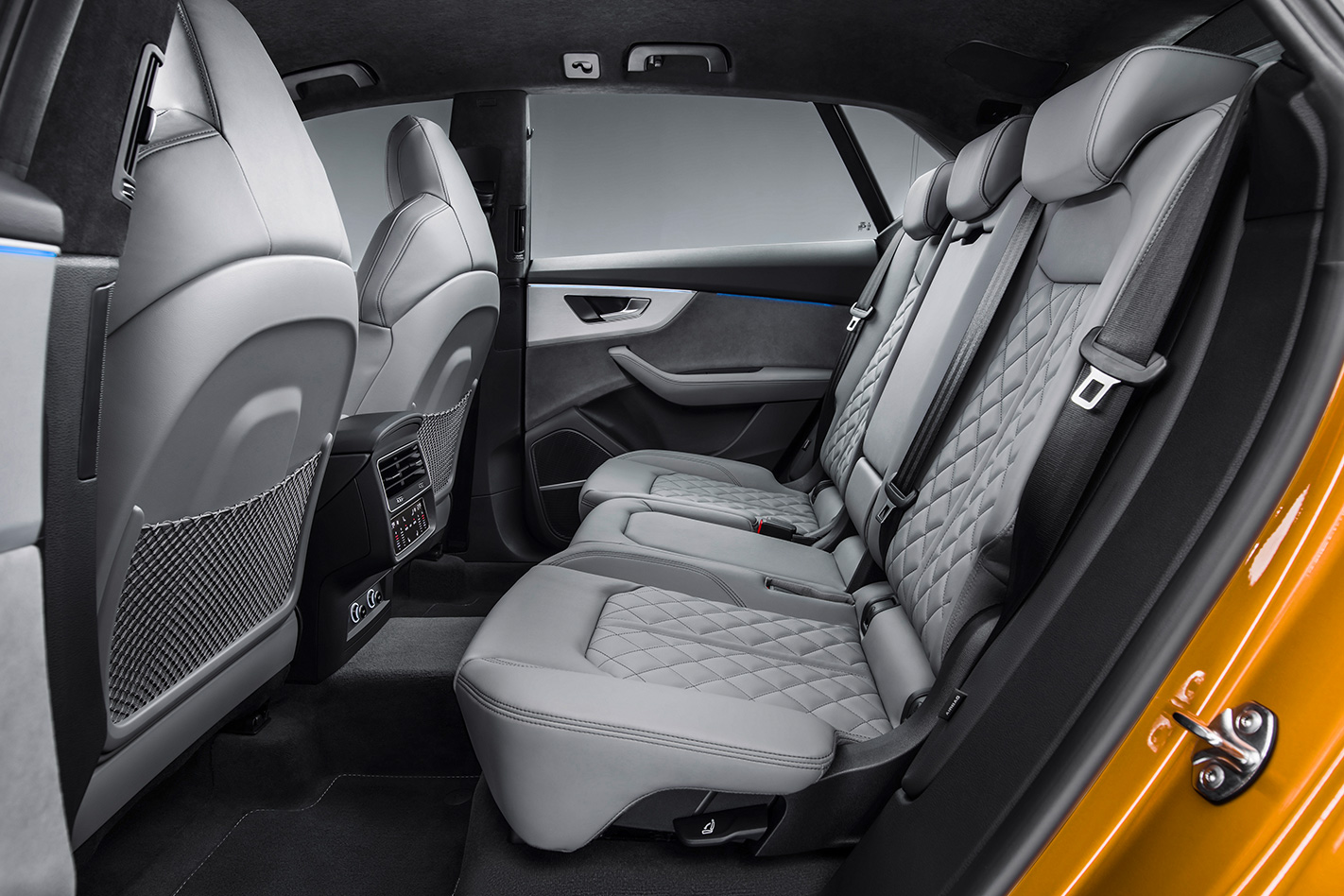
Like the Q7, the Q8 contains up to three rows of seats, with third-row visibility benefitting from narrow D-pillars. Fold down the two rows of rear seats, lift open the electrically operated tailgate, and you can cram 1755 litres of luggage into the void it creates.
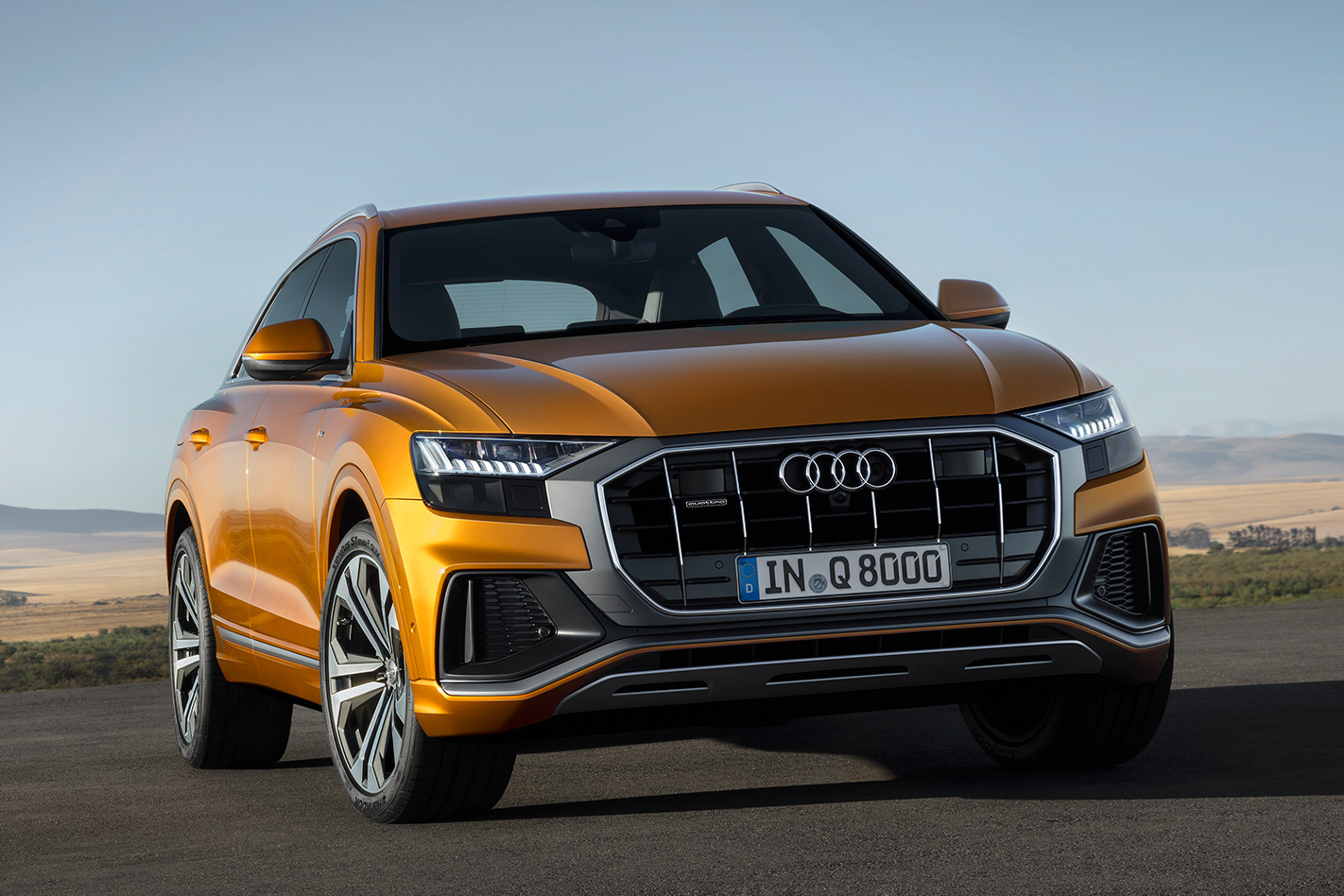
There’s a few stand-out differences between the concept and the production car, the least of which is the large, now octagonal “Singleframe” grille rather than pentagonal one, that’s framed in a sluice gate rather than the honeycomb form of the show car.
The front also loses some of the muscular aerodynamic form of the concept, which adds a bit of maturity.
Down the back, it’s almost as though Audi ran out of budget, and decided to just adopt the looks of the SUV that shares some of the Q8’s DNA – the Lamborghini Urus – right down to the stripped-in tail-lamp that runs the full width of the rear profile.
Inside, the Q8 resurrects something from the past; a more modern-look version of the “yacht shifter” gear selector that made its debut in the 2011-era A8 limousine.
The driver’s seat in the S-Line spec Q8 featured in the official images shows a full digital dash linked to a head-up display, but no tombstone-style multimedia interface growing out of the top of the console.
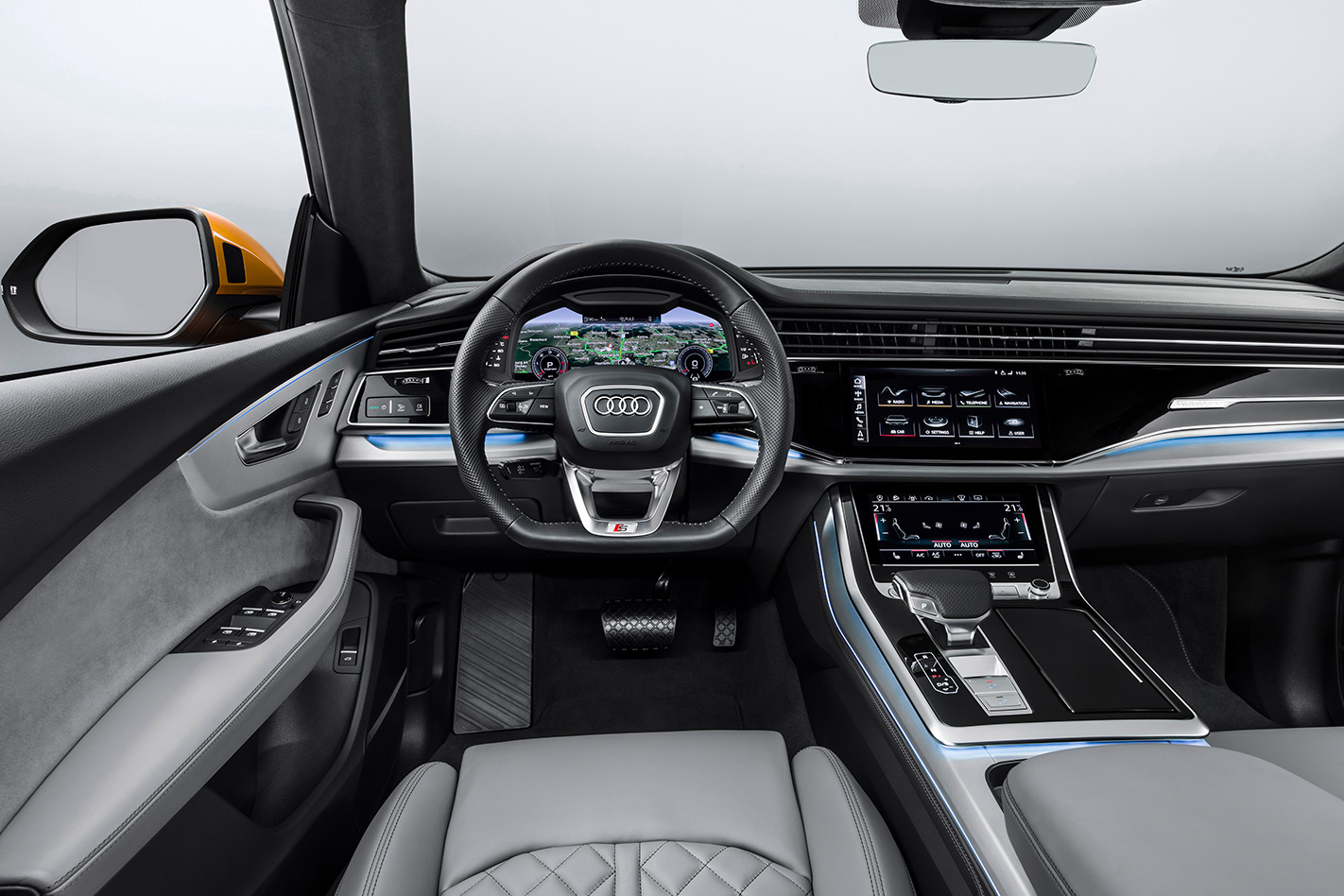
Instead, there’s a 10.1-inch multimedia screen underneath the venetian blind-styled dash feature, and a smaller 8.6-inch display beneath it that forms an array of touch-sensitive controls for numerous air-conditioning functions, and also for tracing out letters that the car’s electronics can turn into commands. This replaces the large dial usually located on the centre console – the more traditional method Audi uses to connect the driver with the multimedia interface.
As befitting of a flagship, the Q8 will come standard with LED headlights. Owners can also download an app and create what Audi calls “various lighting functions” that they can experience from outside the SUV.
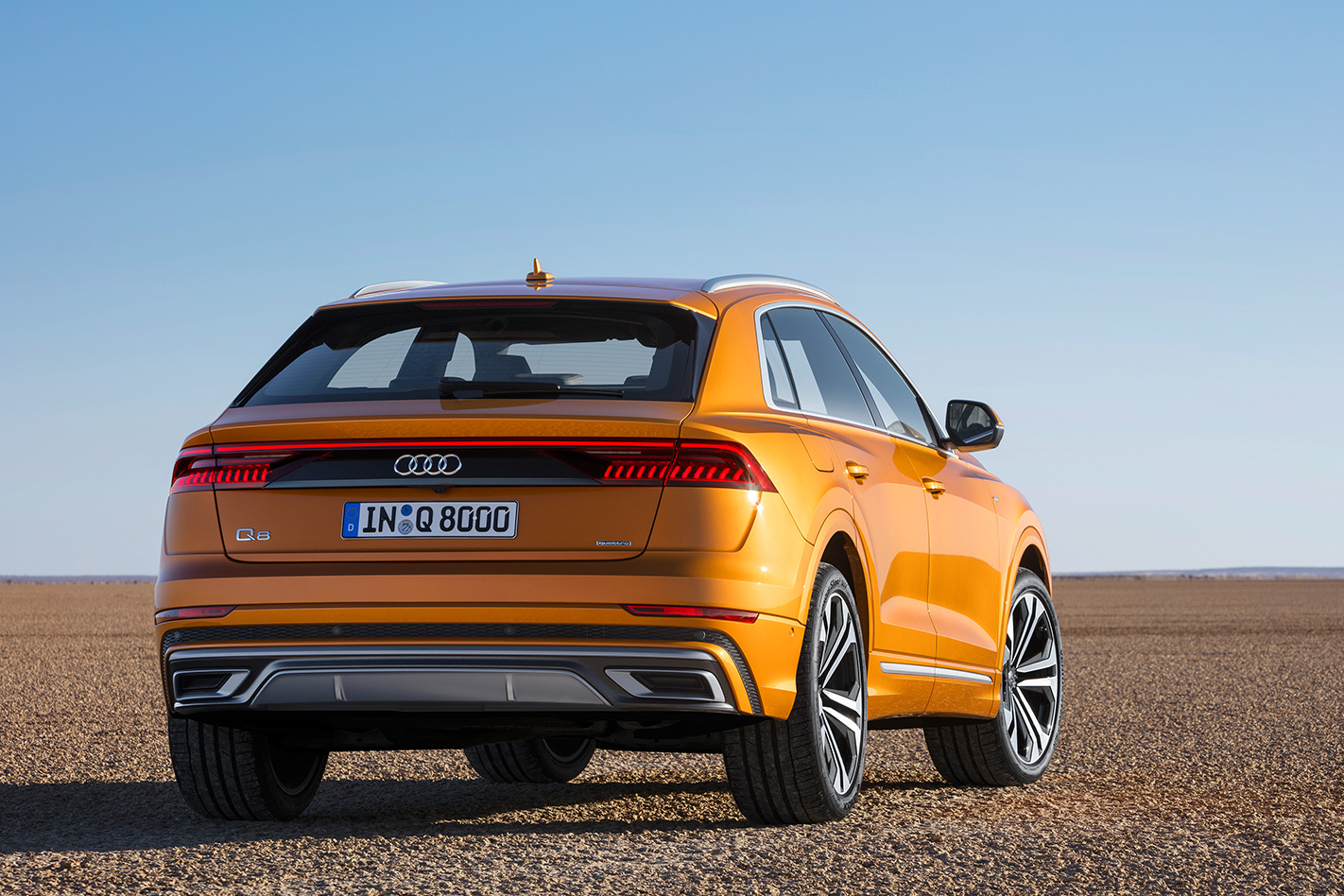
Dynamic ability comes via optional all-wheel steering, a mechanical diff that splits drive between the front and rear wheels, and some off-road ability including up to 254mm of ground clearance.
A 48-volt battery system that can allow the Q8 to coast without the engine engaged will also allow the 3.0-litre V6 diesel’s stop-start system to kick in from about 22km/h
This Audi also chucks away the car key for some functions, with the optional Audi connect key allowing the driver to lock or unlock the vehicle, and start the engine using an Android smartphone. Of note, Audi is future-proofing the Q8 for the days when we will share, rather than own cars; it will store up to 400 driver profiles, activated via a smartphone app.
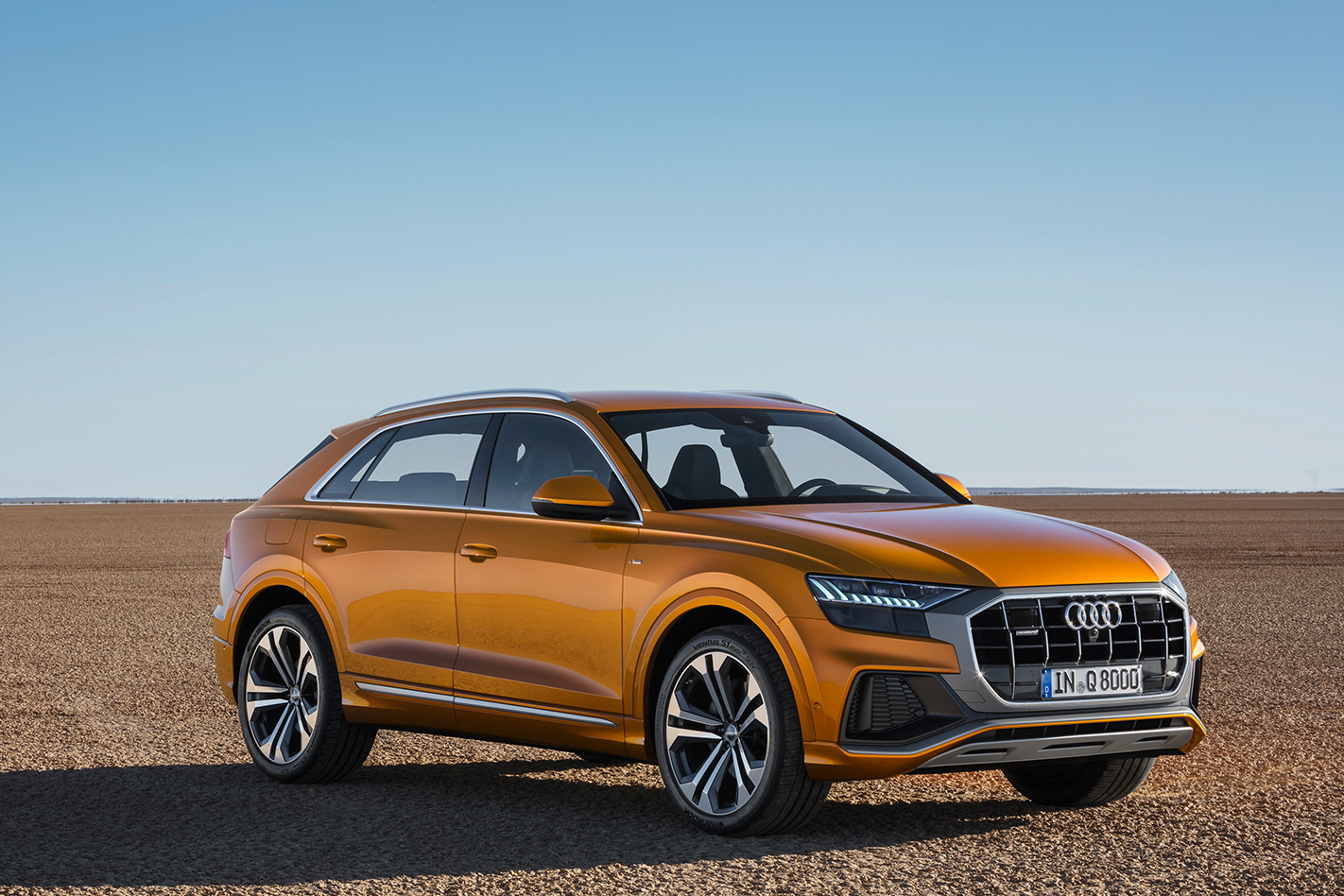
Best of all, the Q8 owner of the future will never have to nose the big SUV into a garage or tight parking spot ever again. Audi will tap the Q8’s five radar sensors, six cameras, 12 ultrasound sensors and a laser scanner to map out a car park, and automatically shuffle it in and out of the spot while the driver waits outside.
THE 2019 BMW X5 has been revealed in full, months ahead of its debut at the 2018 Paris Motor Show.
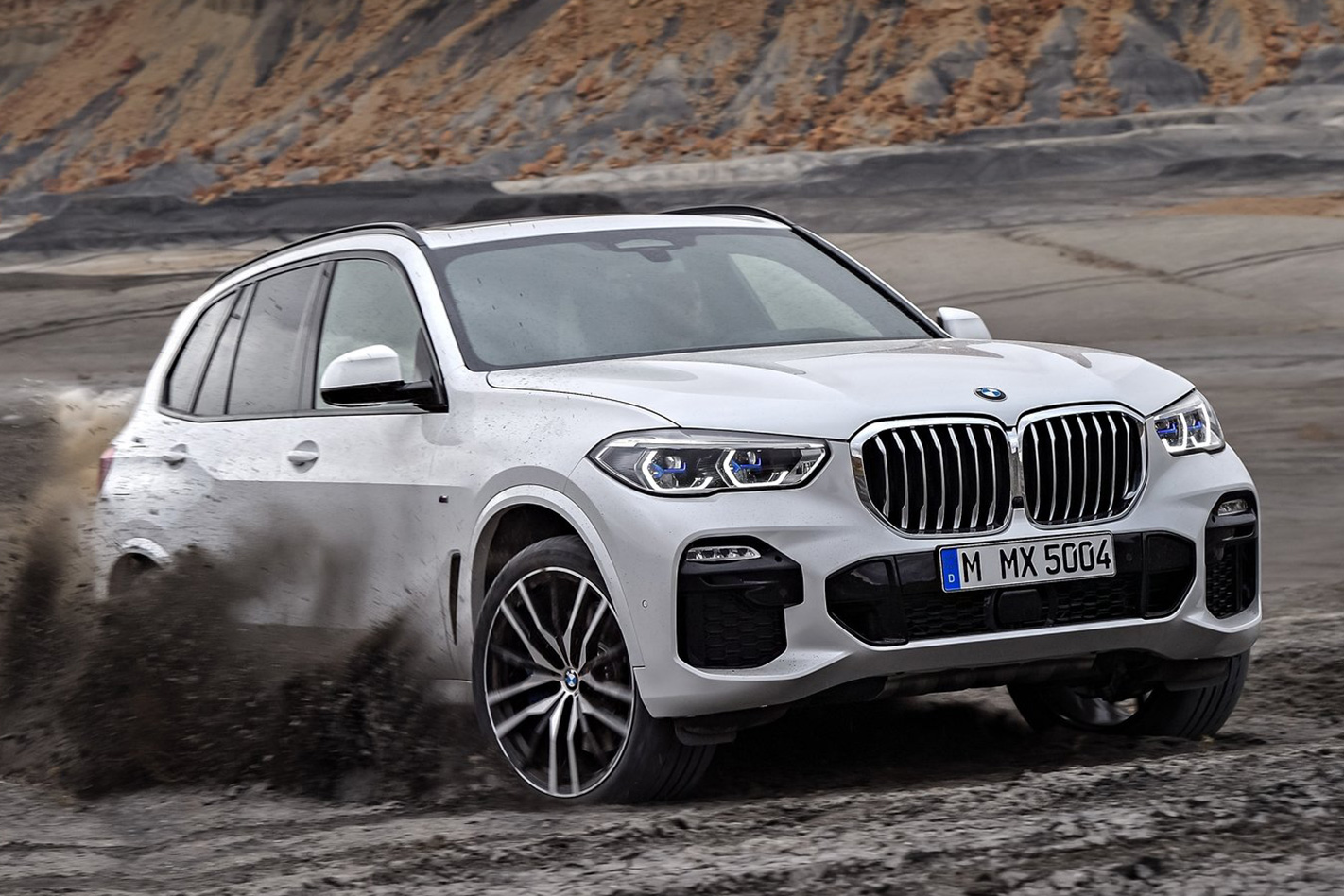
The X5 is one of BMW’s key models – it’s Australia’s biggest-selling premium large SUV – and the German carmaker appears to be striking a balance between its proven formula and enhanced technology and performance.
Design changes are evolutionary, with tweaks to suit the brand’s maturing design language such as the bolder double kidney grille, hexagonal lighting signature, sculpted bonnet, kinked shoulder line and longer tail-lamps.
The interior gains its 5 Series sibling’s digital instrument display and 12.3-inch infotainment screen, which will feature BMW’s latest iDrive 7.0 infotainment technology, wireless Apple CarPlay and BMW ConnectedDrive services.
Optional creature comforts include a sunroof that that uses LED lights to project a virtual starlit sky on the glass surface after dark, and an Ambient Air package with eight selectable scents. The ears benefit from a 20-speaker, 1500-watt Bowers and Wilkins Diamond audio system.
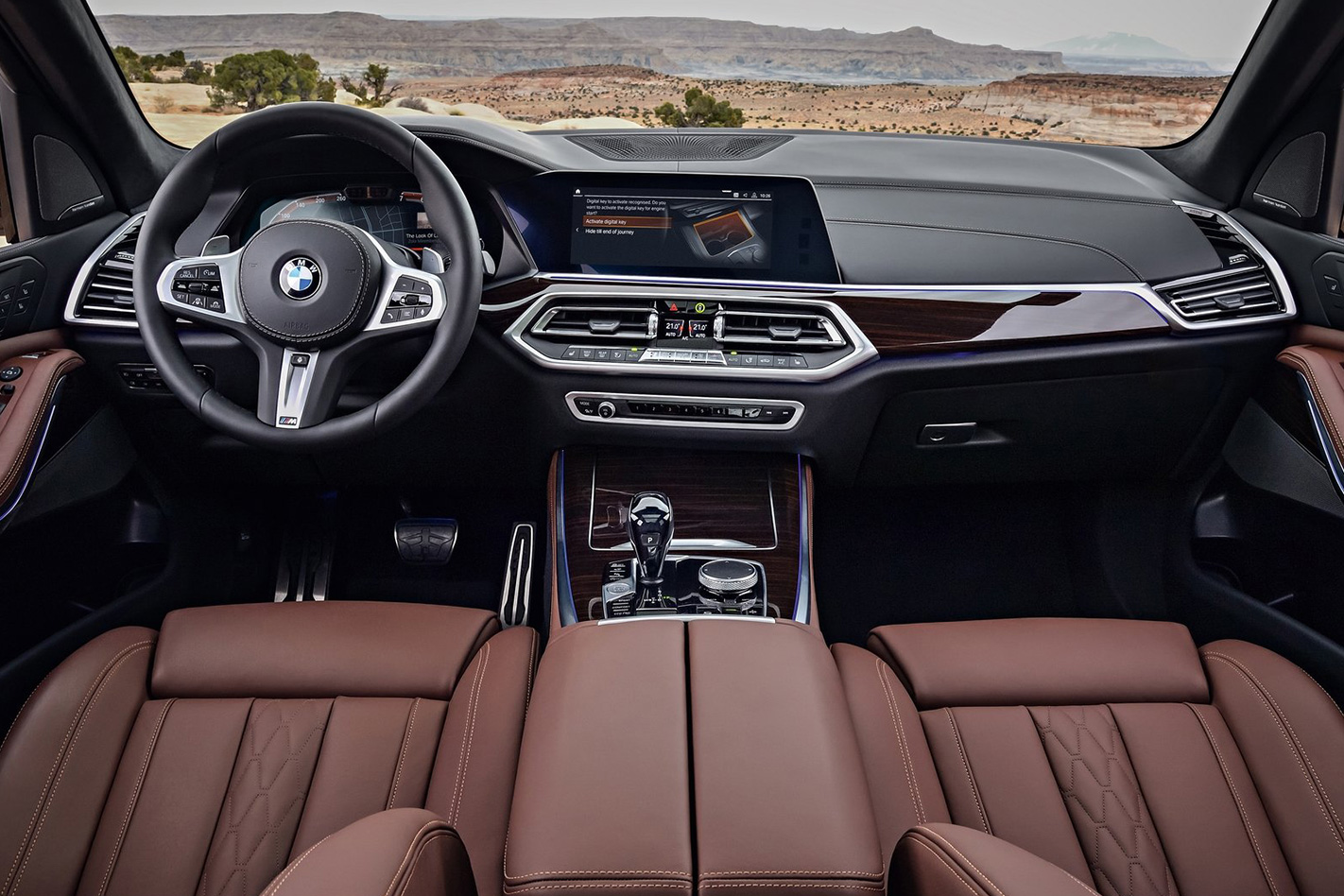
Thermo-cupholders in the centre console that can keep containers cool or warm can also be specified.
The X5 will introduce the brand’s “Digital Key”, which uses a smartphone to lock and unlock the doors, removing the need for a conventional key. All the driver has to do is hold the phone to the door handle, and once inside place it on a wireless charging tray to allow them to start the engine.
Advanced driver assistance will also be enhanced with city-speed automatic emergency braking, with pedestrian warning that also detects cyclists, and Emergency Stop Assistant, which will automatically bring the X5 to safe stop – switching lanes if necessary – and alert emergency services should the driver become incapacitated.
The biggest changes to X5 will be underneath. It’s built on the 5 Series’ CLAR (Cluster Architecture) which allows for a sportier drive while offering genuine off-road performance, with a double wishbone front axle and multi-link rear setup with electronically controlled adaptive dampers as standard.
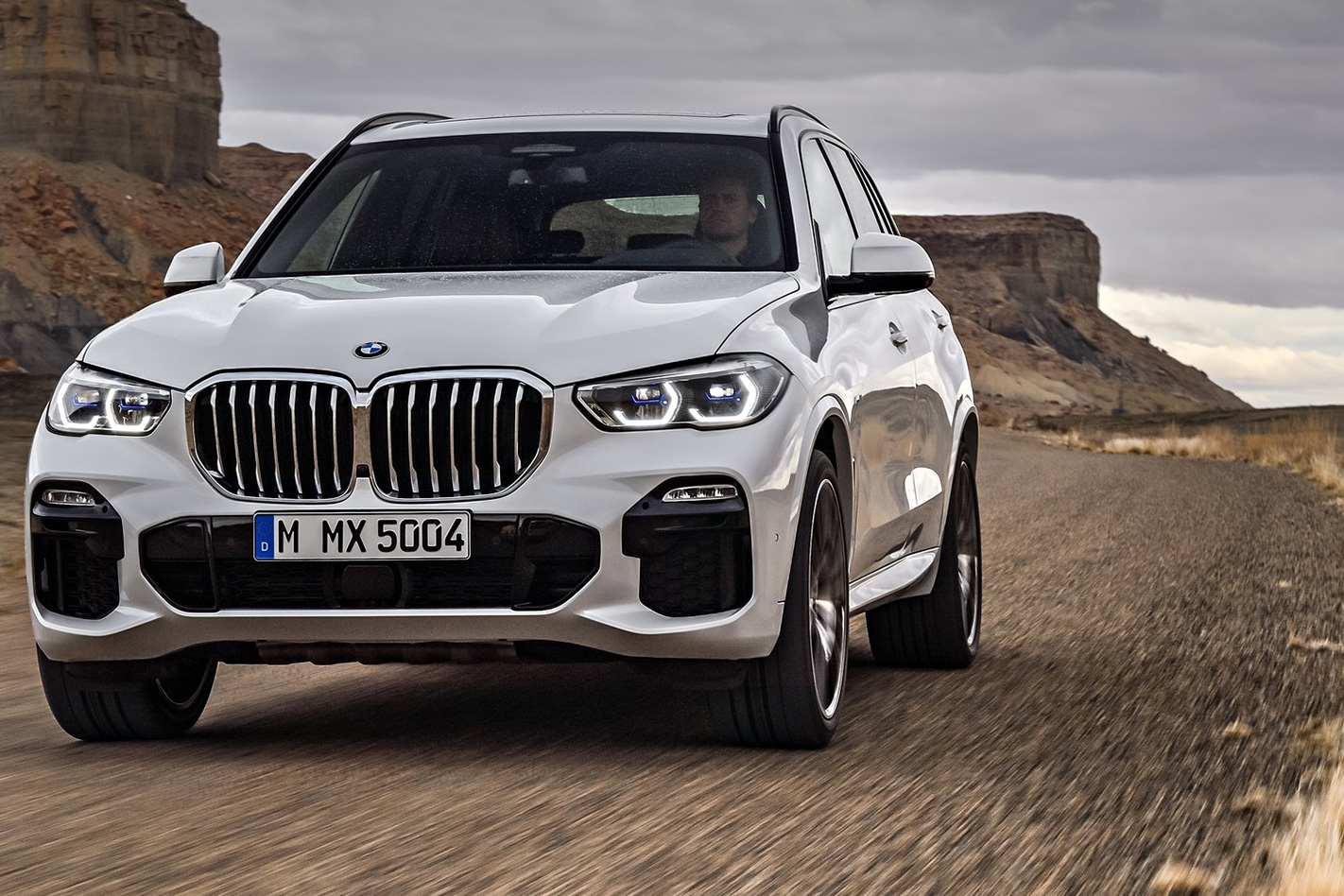
The new underpinnings also accommodate a bigger frame. The 2975mm wheelbase is 42mm longer than the current model, with overall length now 4922mm, up 36mm despite the shorter front overhang. Width and height are stretched by 36mm, 66mm and 19mm respectively. This results in extra second- and (optional) third-row legroom, while increasing see cargo space from 645 litres to a voluminous 1860 litres, with a two-section tailgate assisting loading.
Despite its growth spurt the next X5 will be lighter, which will improve ride and handling, and enhance performance and fuel economy. Engines are expected to range from turbocharged 2.0-litre four- and 3.0-litre six-cylinder engines shared with the 5-Series, along with a 340kW/650Nm twin-turbo V8 for the xDrive50i that scores a 10kW performance boost over the current model.
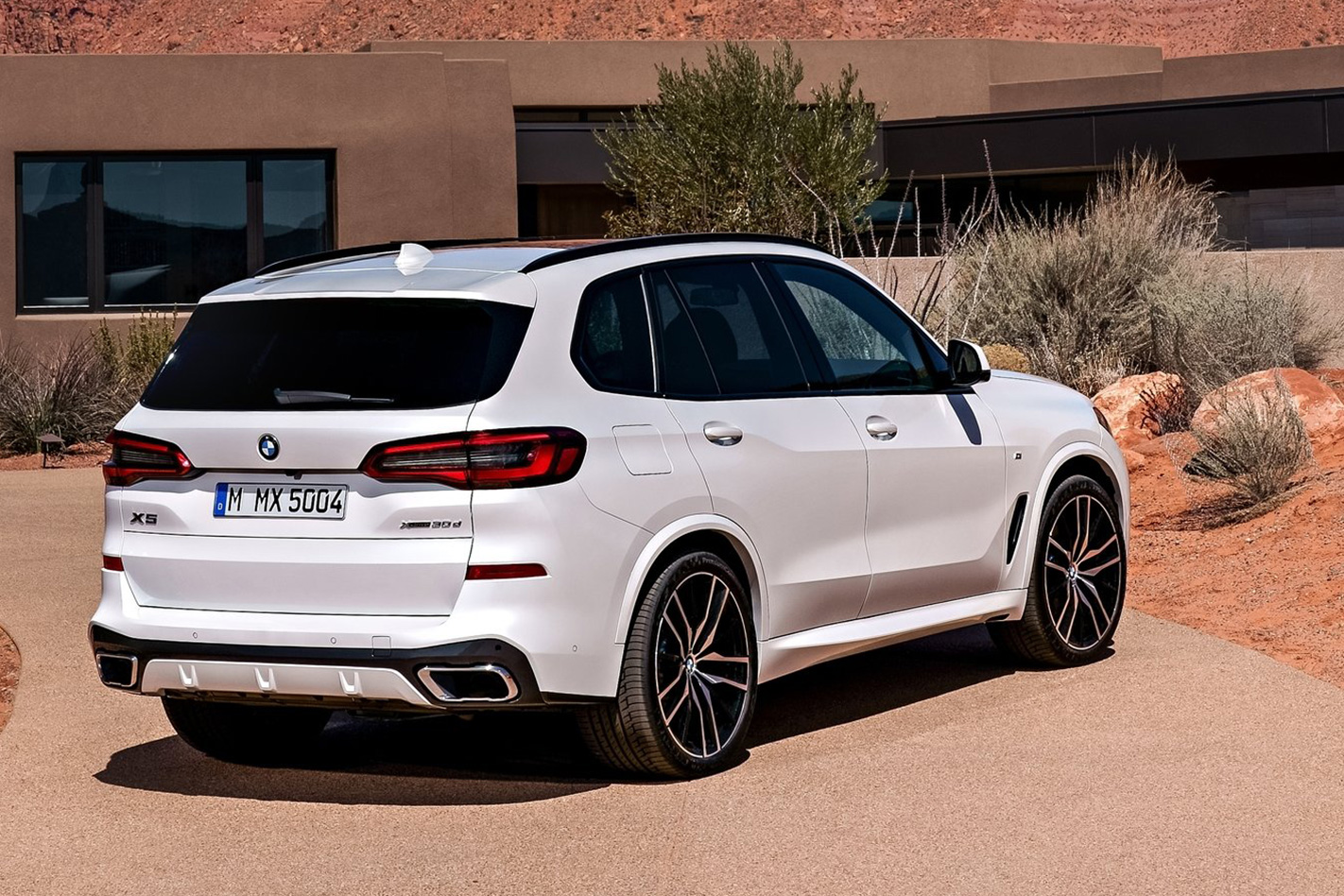
The range will be confined to familiar xDrive and range-topping M Sport variants, with no talk of electrified powertrains or rear-drive models.
The US-built, fourth-generation X5 will be the fourth BMW SUV release this year, after the X2, X3, and the all-new fastback X4. Expect it to arrive in Australia during the first half of 2019.
