
In order to breathe fresh life into the GLC-Class midsize SUV line-up and tempt more customers into the fold, Mercedes-Benz has announced a more affordable entry level model, the GLC200.
Priced at $61,990, the 135kW/300Nm variant sends drive to the rear wheels only – other GLCs are all-wheel drive – via a nine-speed automatic gearbox.
It replaces the $67,500 GLC220d diesel at the base of the range, responding to buyer behaviour that signals a gradual shift away from diesel engines. It looks good value as well, the price pitched at just $90 above the C-Class sedan with the same engine and gearbox combo.
It’s unlikely that you’ll feel shortchanged when it comes to standard equipment either, the GLC200 netting kit like 19-inch alloy wheels, a 360-degree parking camera, LED headlights, a powered tailgate, keyless ignition, integrated sat nav on the 7.0-inch display, touchpad control, black ash fascia inserts and MB-Tex fabric upholstery.
This being Benz, there’s also a long list of standard safety equipment including forward collision warning, autonomous emergency braking, Attention Assist, nine airbags and blind spot monitoring. That’s on top of Pre-Safe, Mercedes’ system for predicting and reducing the effects of vehicle accidents.
Supply of the old GLC220d dries up next month, which will leave a short hiatus before the GLC200 arrives in September.
With a debut at the Goodwood Festival of Speed in 2015, the Lotus 3-Eleven has been with us for less than three years.
Now, with the 311-car production run coming to an end, Lotus has saved what should be the very best until last: the 3-Eleven 430.
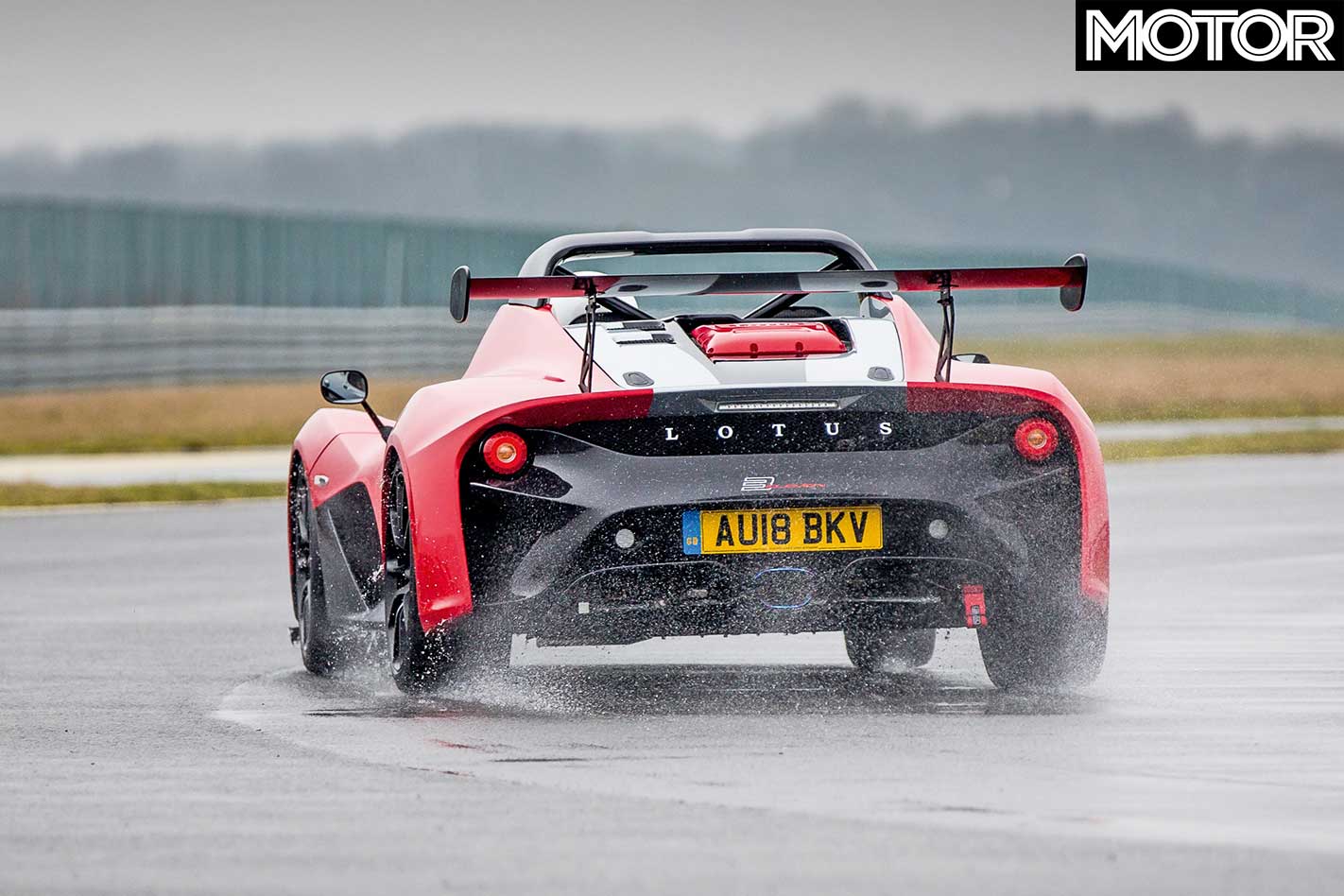
If you’re familiar with Lotus nomenclature then you will recognise the ‘430’ tag and know it denotes a maximum power output of 430bhp (321kW), making all three models with this version of the supercharged 3.5-litre Toyota V6 the fastest of their respective ranges. For the 3-Eleven, it makes for the quickest Lotus ever produced.
That power gain – plus a torque increase to 440Nm – tells only part of the story, though. The weight reduction for this 430 is just a bit-part player, too, because it’s 5kg (thanks to new brakes and wheels).
The key advantage that this 3-Eleven holds, over both the ‘standard’ car and many others, is in aerodynamics. With the rear wing now mounted 50mm higher than before and including re-profiled end plates, plus the addition of a more aggressive front splitter, maximum downforce at the 290km/h top speed is up 44kg to 265kg.
So there would be no better place to test Lotus’s claims, including a peak cornering force of 1.5g, than its own Hethel test track. Cold, wet and with a bitter breeze, it offered no opportunity to test the 430’s dry handling limits. Frankly, it felt more like a survival course than a test drive and was about as far from ideal 3-Eleven conditions as it’s possible to find.
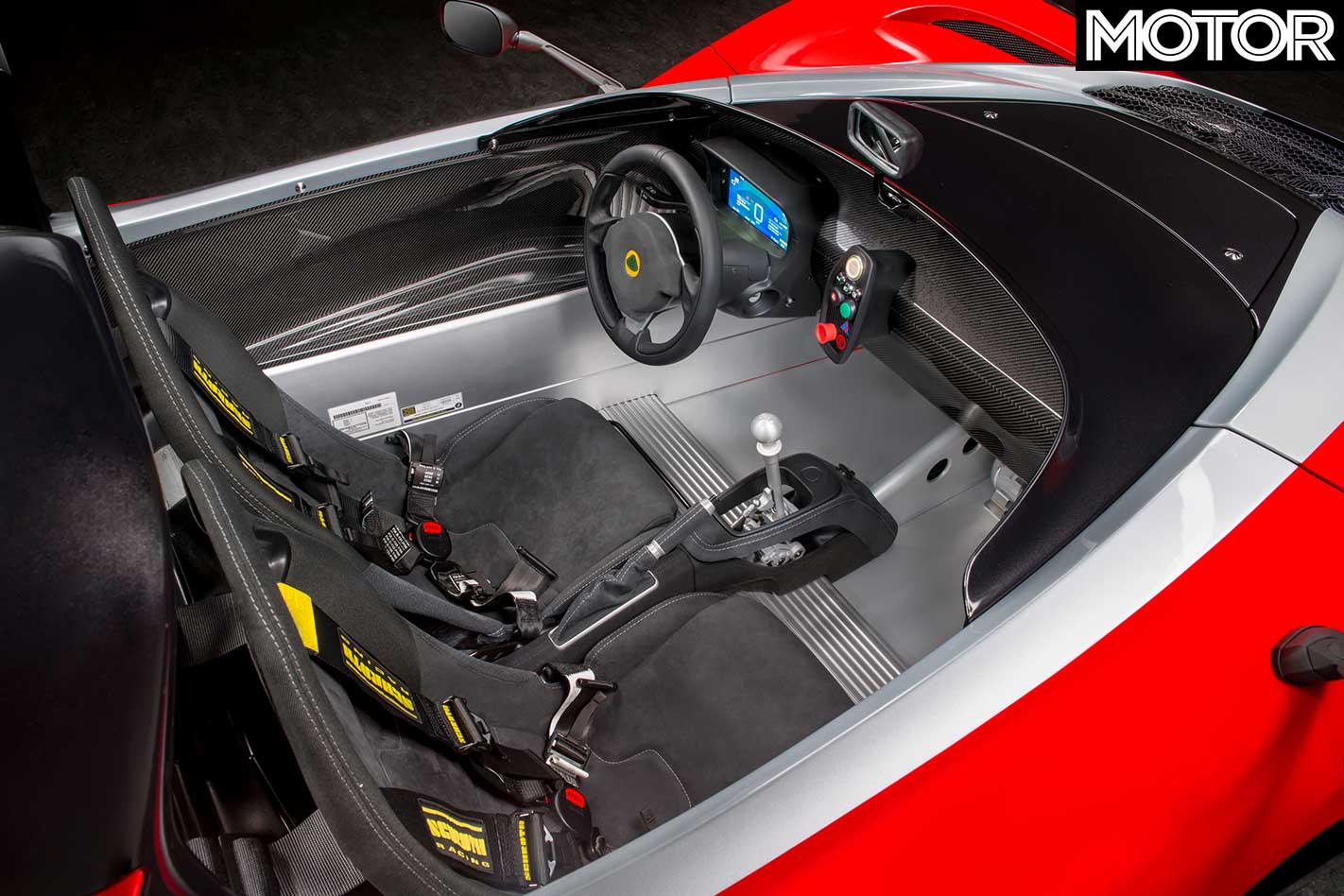
The first hurdle is just getting in. Because the 3-Eleven lacks doors, you need to vault over the front guards to gain entry, get your feet on the treacherously slippery floor and drop yourself in without standing on the seat because, well, it’s someone else’s car and it’s worth $182,000.
The sense of space within the cabin is eerie, mostly from the obvious lack of roof, but also because of the entirely barren interior. All that features inside is there purely for the process of driving: switches, sticks, a screen and, well, very little else.
No chance of getting distracted, at least… Because, let’s face it, with a good chunk of more than 348kW per tonne, semi-slick Michelin Pilot Sport Cup 2 tyres, no stability control and a manual gearbox, you’ll want to be concentrating.
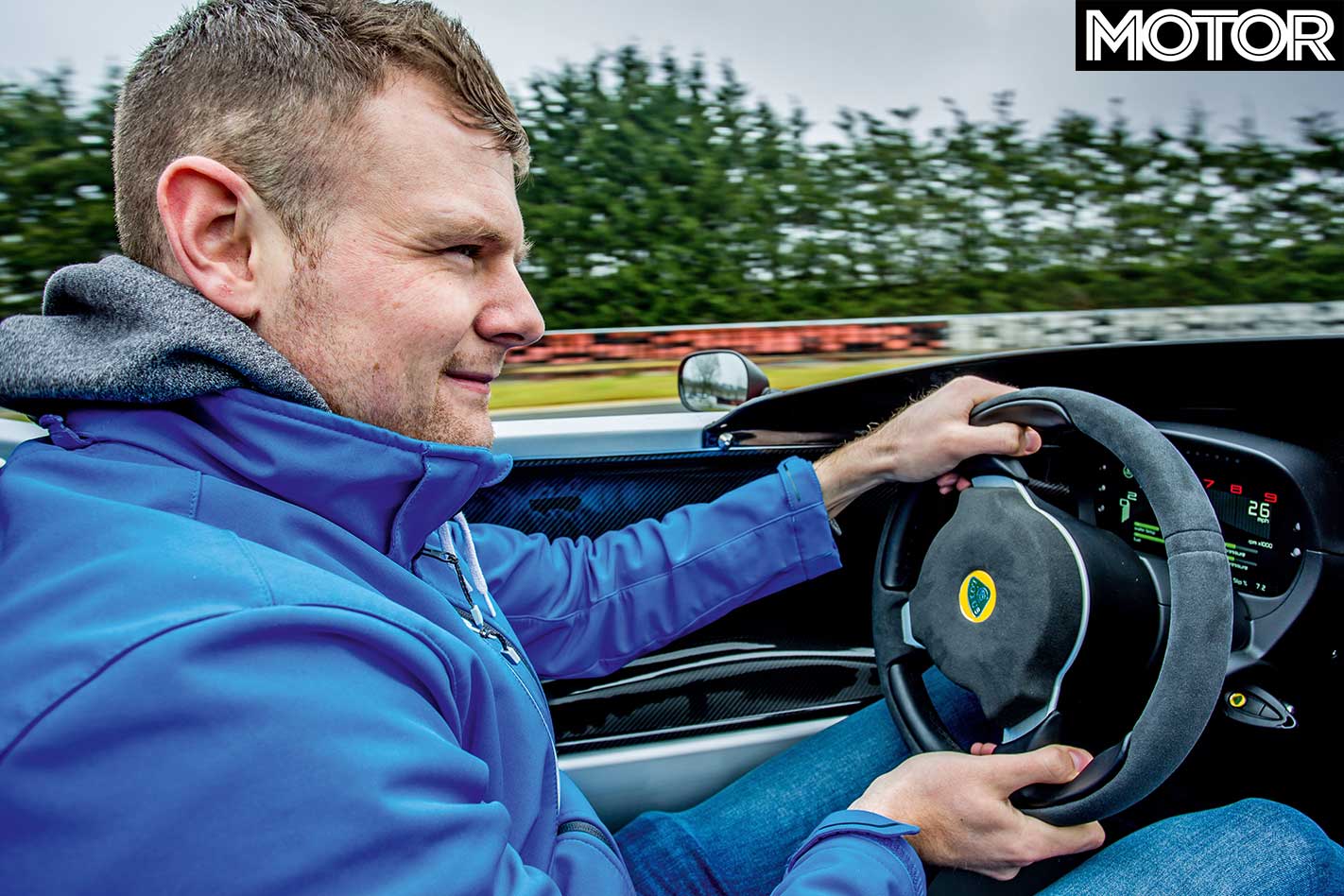
It’s the ferocious, unrelenting, slightly terrifying speed that takes your breath away. With a supercharger and decent swept capacity, the 3-Eleven 430 lacks the peakiness typically associated with these track lightweights, pulling tremendously hard from pretty much idle. Yet it loves revs too, the power building to a thrilling climax at 7000rpm – you have the best of both worlds.
But the speed… It pulls at middling revs in fifth gear like quick cars do at their peak in third. It really is supremely rapid. Even though the conditions suited the Lotus like Barbados suits a penguin, it proved surprisingly adept, approachable and fun.
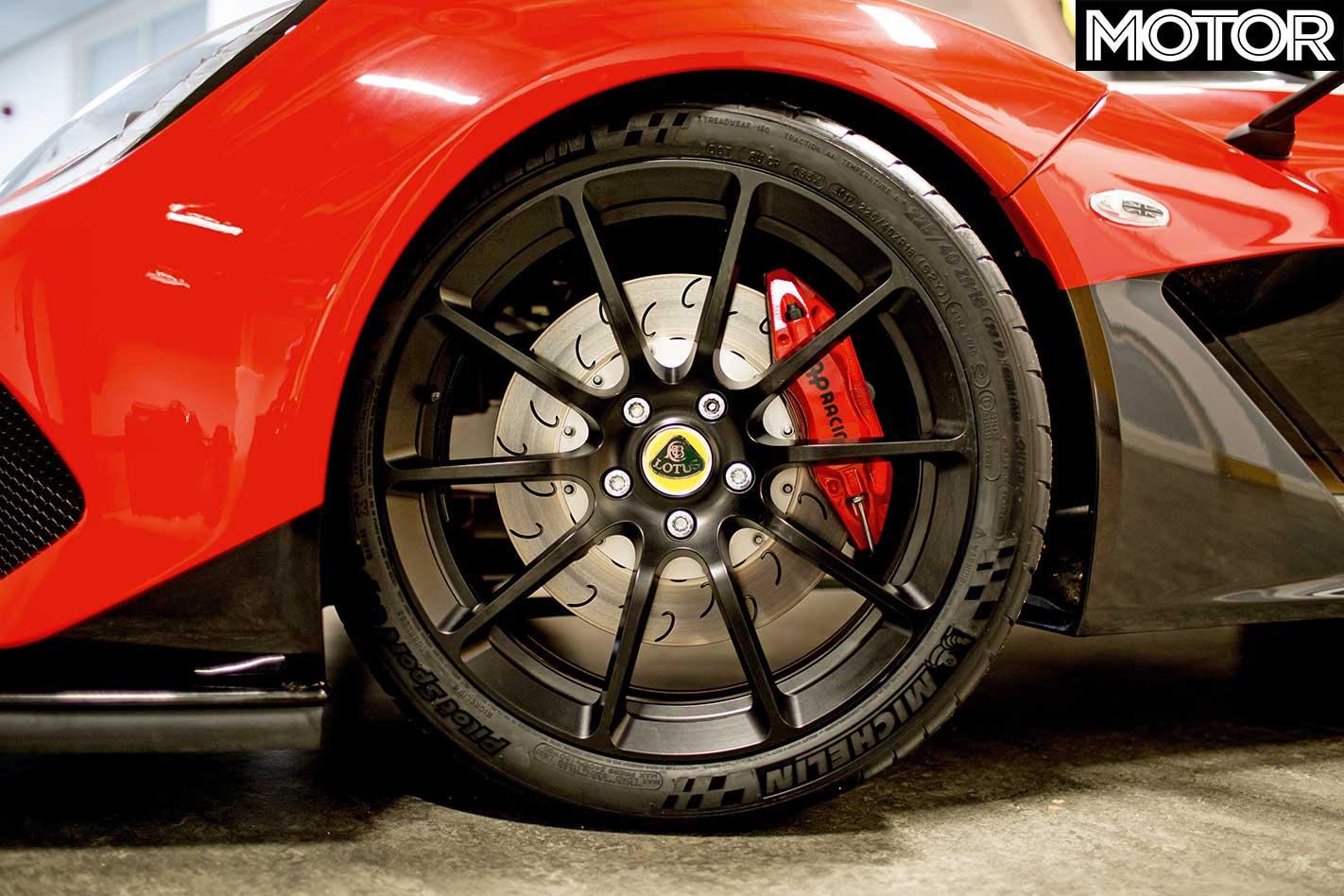
As with the performance, the 3-Eleven feels dynamically similar to other Lotuses, only taken to another plane of intensity, immersion and enjoyment. So because the steering relays so much information, you feel confident to push the levels of front-end grip. Because the masses are so fantastically controlled by the Ohlins dampers, you take a bit more kerb and work the car harder safe in the knowledge of the positive feel from the AP Racing brakes.
The 3-Eleven also benefits from a limited-slip differential. Traction is excellent if not unimpeachable, yet because the driver is so keyed in – and the diff so effective – dealing with oversteer becomes instinctive.
As a track-day toy, the 3-Eleven is sensational. It’s totally exhilarating, challenging and huge fun.
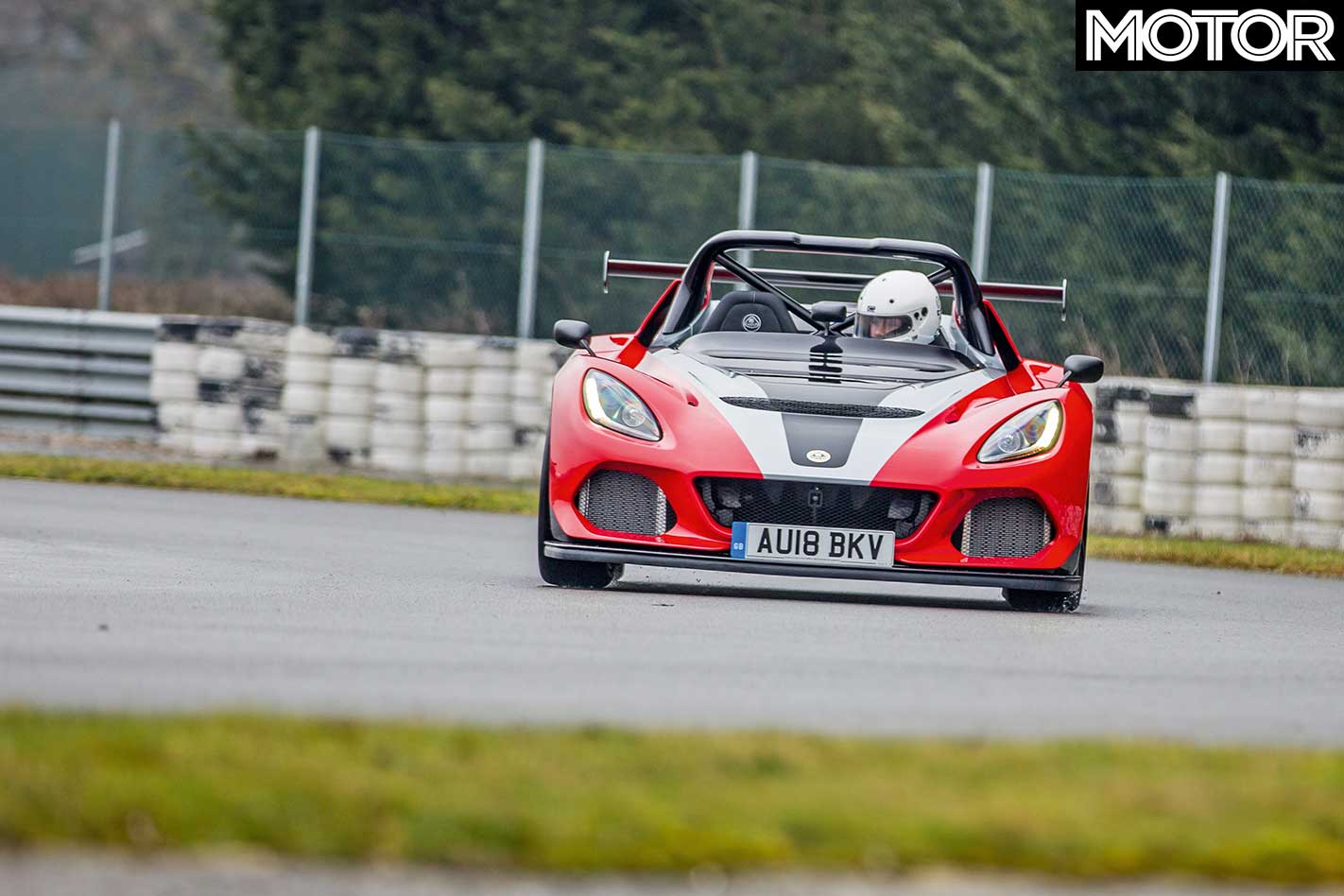
Sure, it works on the road: it’s small, forward visibility is obviously good and the torque means it’s easy to pootle along at a few thousand revs. The dampers’ adjustability means they can be softened to your liking too. But there’s no escaping the battering impact of the wind, the noise from all around you and the cold.
There’s something exciting about the 3-Eleven’s focus and rawness. There will be times when you curse it, but there will also be times when you won’t want to be driving any other road car than a 3-Eleven 430.
It really is that good.
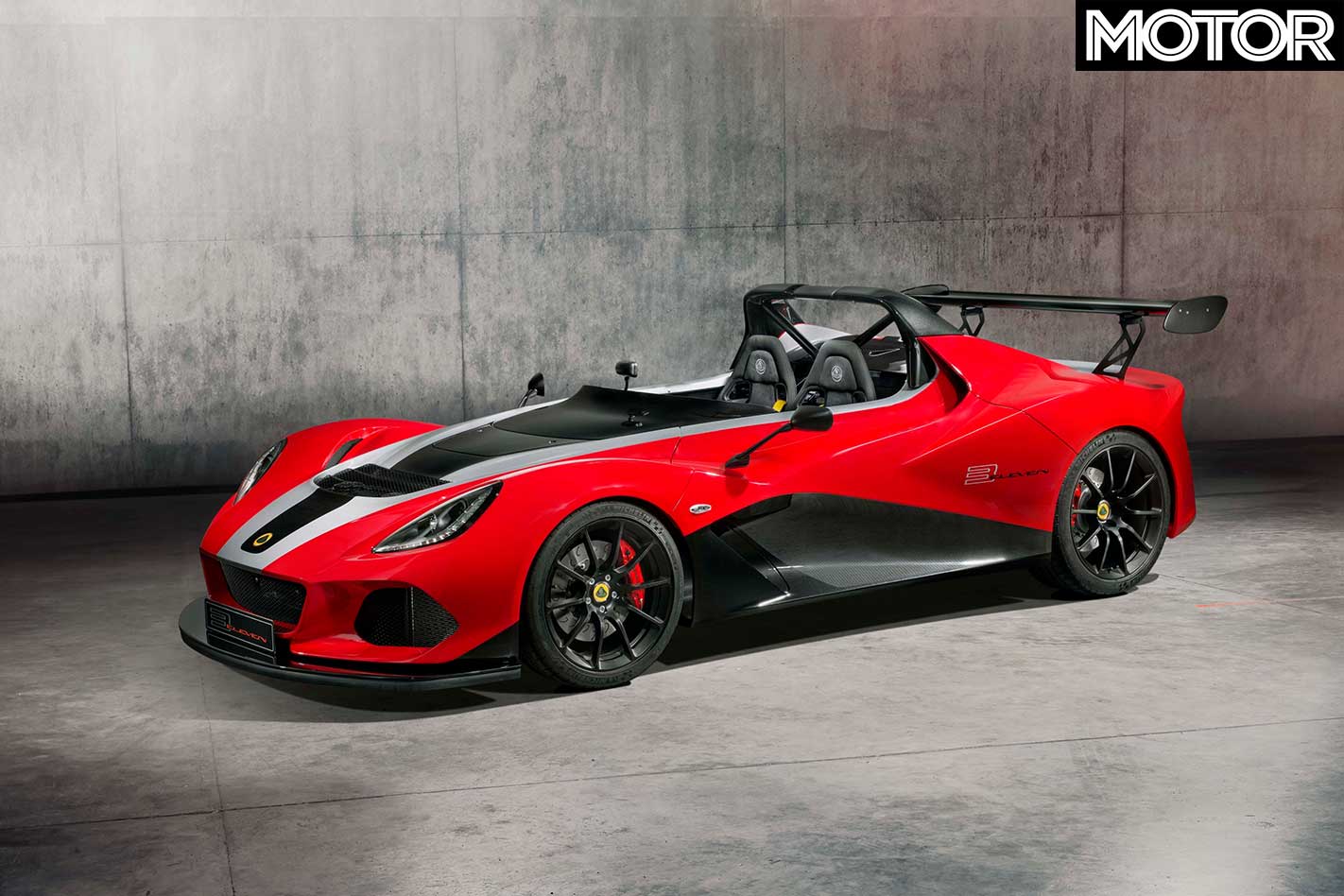
2018 LOTUS 3-ELEVEN 430 SPECS: Engine: 3456cc V6, DOHC, 24v, supercharged Power: 321kW @ 7000rpm Torque: 440Nm @ 4500rpm 0-100km/h: 3.2sec (claimed) Weight: 920kg Price: $182,000 (est)
Rating: 4.5 out of 5 stars Like: Excellent handling; strong performance; it’s a road-registered race car Dislike: Getting battered around in the elements; limited supply; not exactly a bargain
THERE are only a few names that are inextricably linked with automotive excess, and Brabus is beyond any shadow of doubt one of them.
Unfortunately the 41 year-old tuning house suffered the loss of its founder and CEO Bodo Buschmann last week, who died after a short battle with illness. In his memory we’ve gathered a shortlist of his company’s more madcap creations – a shortlist that was hard to whittle down, given there’s really no such thing as a ‘mild’ Brabus.
1984 Brabus 190EV8
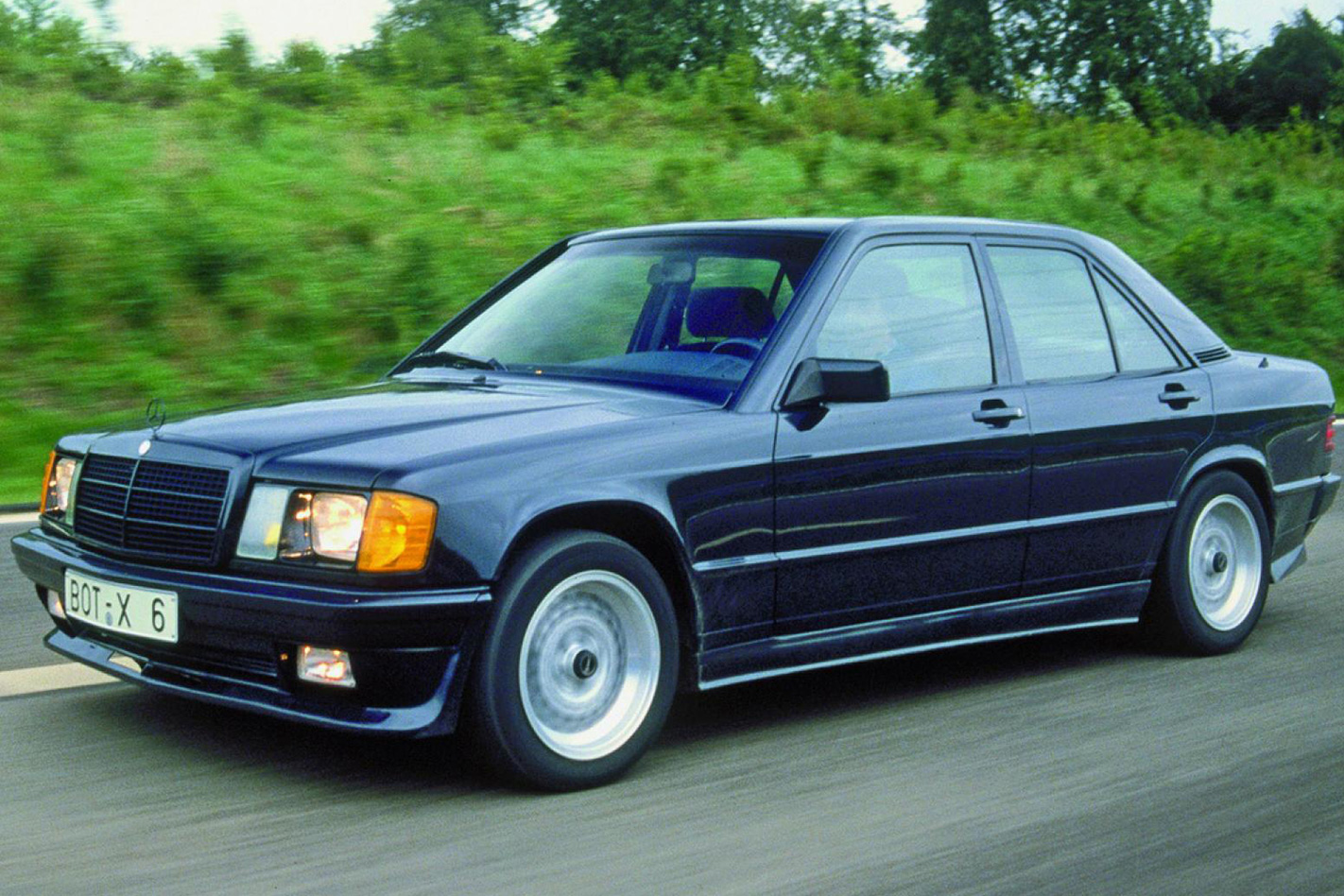
Long before Mercedes-Benz saw fit to squeeze a bent-eight between the front wheels of a C-Class, Brabus was already busy bolting big V8s into compact Benzes.
With mid-’80s excess in full swing, Bodo Buschmann slipped a 5.0-litre V8 from the S-Class into the W201 190E, thereby gaining a sizable lead over Mercedes-AMG, which waited until 1997 to debut its first V8-engined midsizer, the C43 AMG.
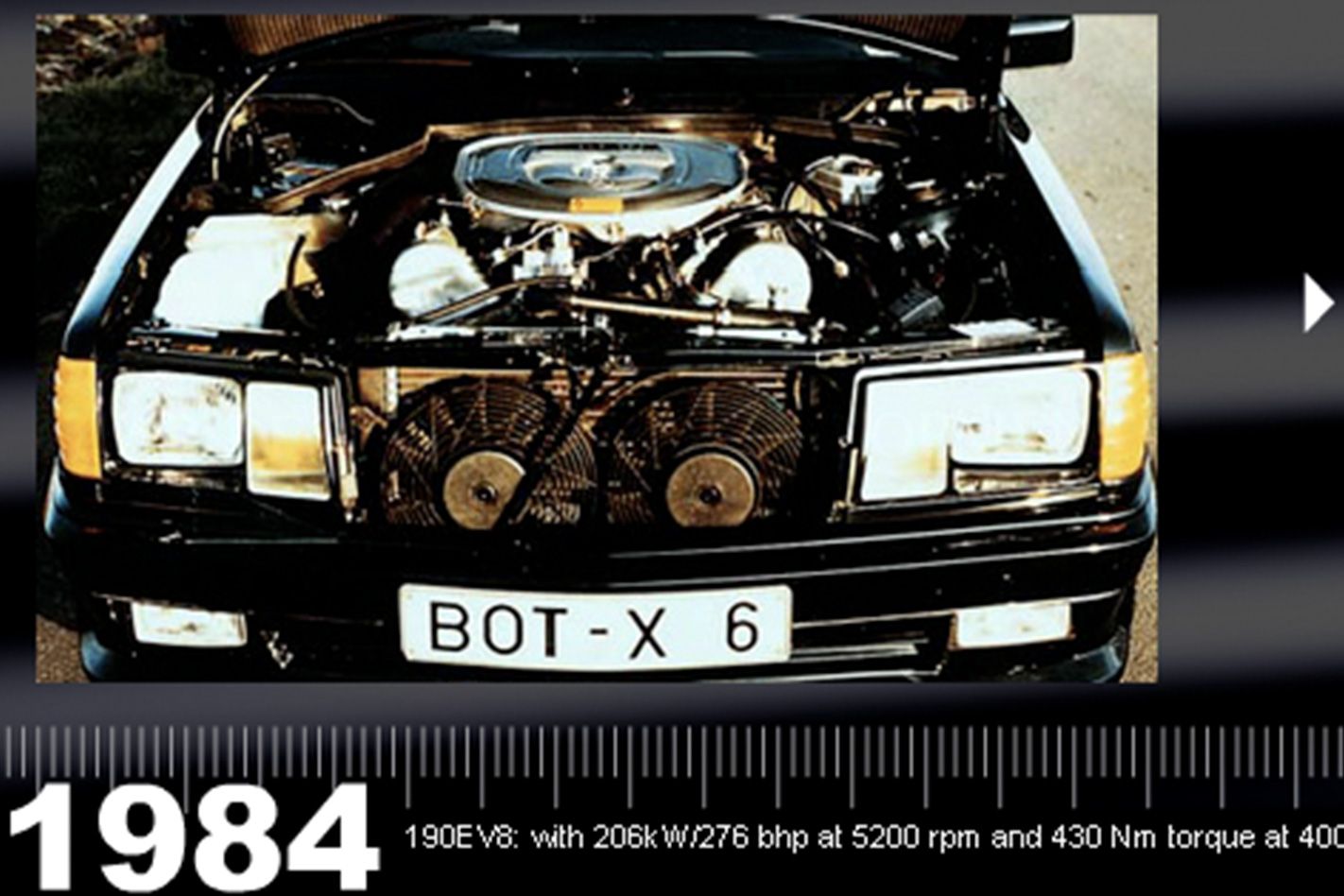
The result was a fast four-door boasting 206kW and 430Nm, considerably more than the 138kW and 236Nm of the 190 E 2.3 Cosworth that was the fastest ‘factory’ W201 at the time.
1993 Bugatti EB110 SS Brabus
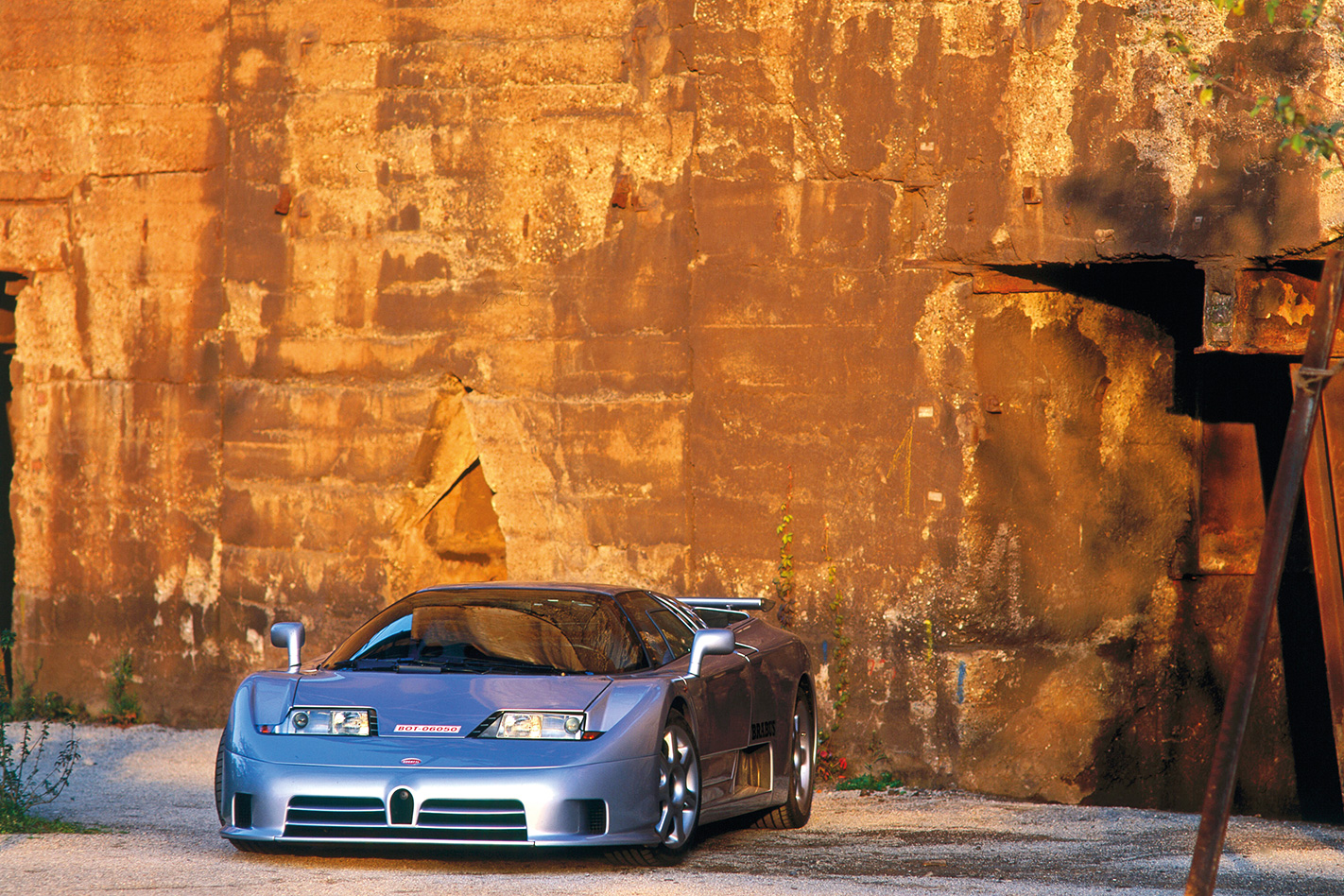
That’s right: there was once a time when Brabus swung spanners on Bugattis. Granted, the company only modified two EB110s during the brief period in the 1990s when it was Bugatti’s “official works tuner”, but one of those cars was the ultra-swift EB110 Super Sport, which could zip to 100km/h in 3.2 seconds without Brabus’ help.
Sadly, information on what Brabus actually did to the EB110 SS is scarce, beyond the obvious visual differences like a quad exhaust and black-over-blue interior.
2004 Smart Roadster Coupe Brabus V6 Bi-Turbo
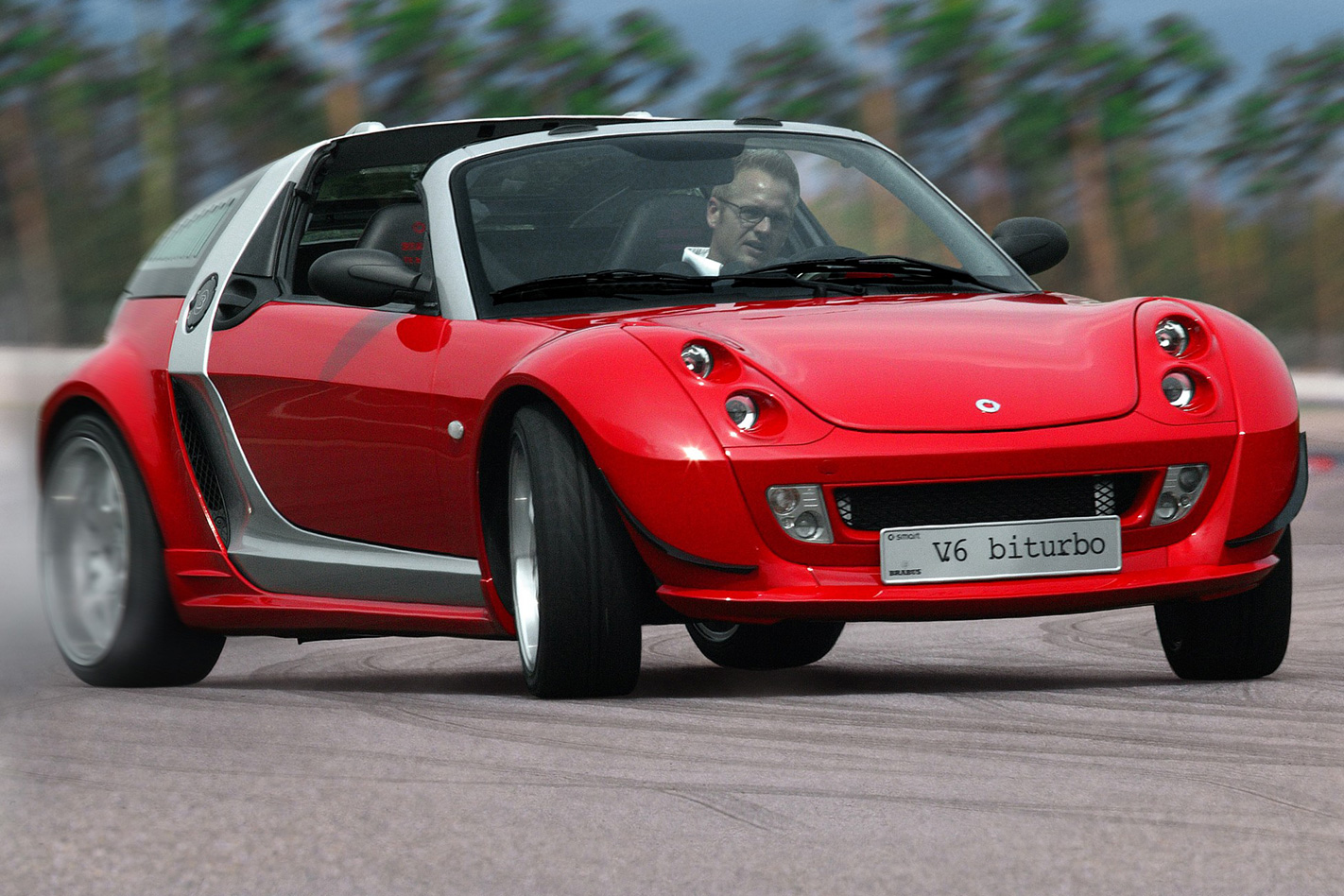
Yes, that’s its name. No, Brabus shouldn’t be at the front – and we have no idea why this one is called both a roadster AND a coupe. But despite the clunky moniker, Brabus’ riff on the Smart Roadster had a significant serving of charm that was inversely proportional to its size.
However it was the ultra-special V6 Bi-Turbo variant that heaped a proper serving of ‘Brabus’ onto the tiny Smart. Ultra-rare and not intended to be sold to the public, the V6 Bi-Turbo Roadster Coupe featured an entirely new rear suspension and a bespoke twin-turbo six cylinder powerplant made by merging two regular Smart 3-cylinder engines together.
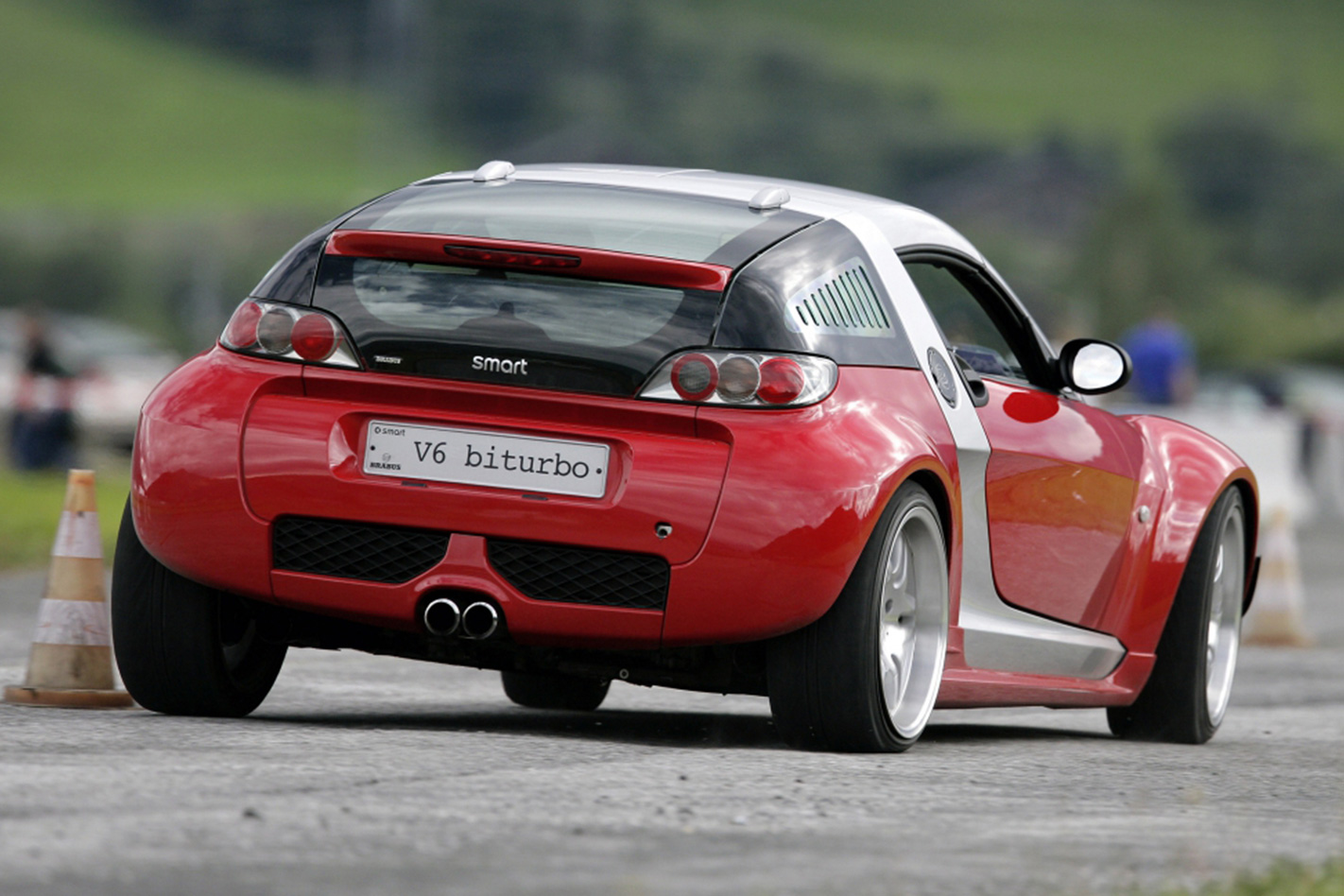
It more than doubled the regular Brabus Roadster Coupe’s 74kW output, flexing a far more impressive 160kW while tipping the scales at a featherweight 840kg. It’s a shame only 10 were built.
2006 Brabus Rocket
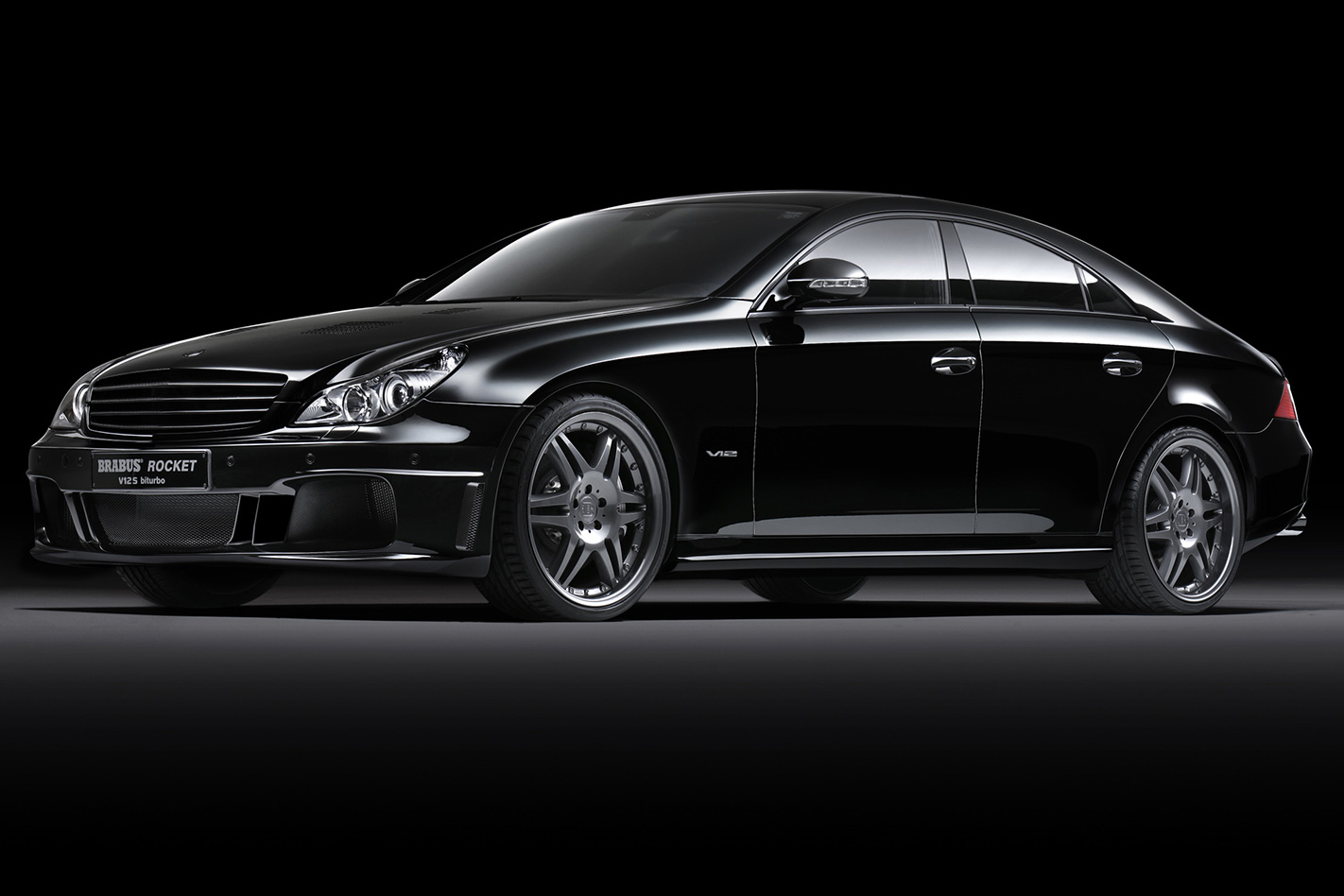
The utterly ballistic Rocket put the Brabus name up in lights when it claimed the title of ‘world’s fastest street-legal sedan’ in 2006, racking up a 365.7km/h v-max at Italy’s Nardo test ring. Based off the big-yet-slippery first-gen Mercedes CLS, the Rocket was propelled by the 5.5-litre twin-turbo M275 V12 of the SL65 AMG – albeit bored out to 6.2 litres and with the boost wound up to deliver peaks of 540kW and 1320Nm.
That maximum torque figure was also claimed to arrive at just 2100rpm, but was essentially unverifiable – Brabus electronically limited torque to a slightly less insane 1100Nm in order to protect the driveline. Even so, it still generated 100Nm more than a standard -65 AMG motor, as well as 90kW more power.
2008 Brabus Unimog U500 Black Edition
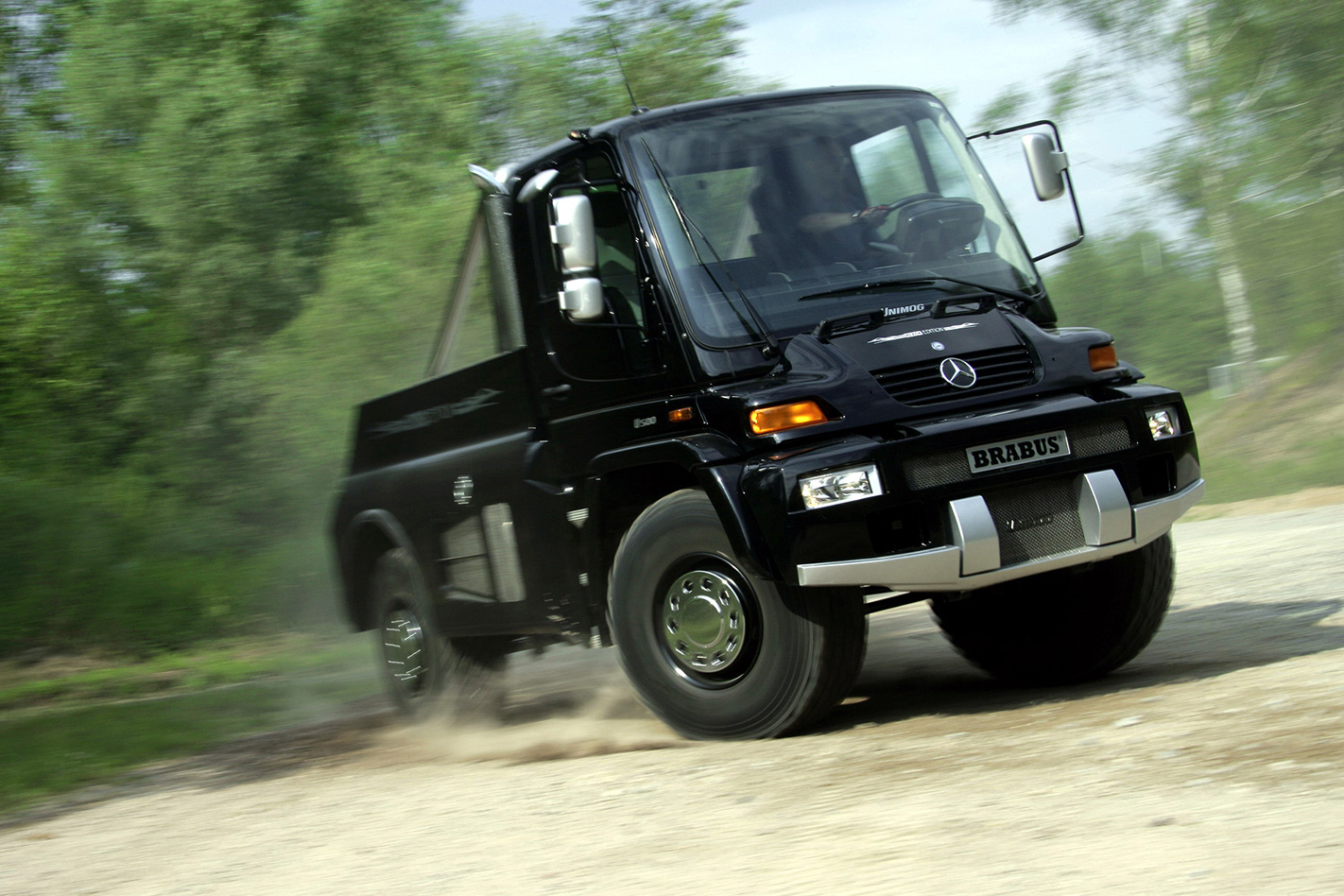
Okay, this one doesn’t exactly fit the Brabus template of a V-engined, fire-spitting cruise missile, but the U500 Black Edition is nevertheless entirely in keeping with Brabus’ ethos of winding the wick up on Benzes beyond what would be considered sensible … or sane.
Creating a performance variant of the Unimog – a vehicle more commonly known for its use by local councils for keeping roadside furniture squeaky-clean, or as a military-grade workhorse – was already pretty bananas, but with 1120Nm of rock-busting torque, half a metre of ground clearance and a fording depth of 1.2 metres, the Brabus Unimog was certainly extreme.
Sadly Brabus deemed the buyer pool of people with both a fetish for dangerously fast tractors AND the net worth needed to splash over US$330K on a vehicle was pretty shallow. The company only made five of these monsters.
BRABHAM Automotive will soon start building the $1.8 million BT62 in a 15,000-square-metre factory in Adelaide’s Edinburgh Parks industrial estate ahead of the supercar’s first deliveries, expected late this year.
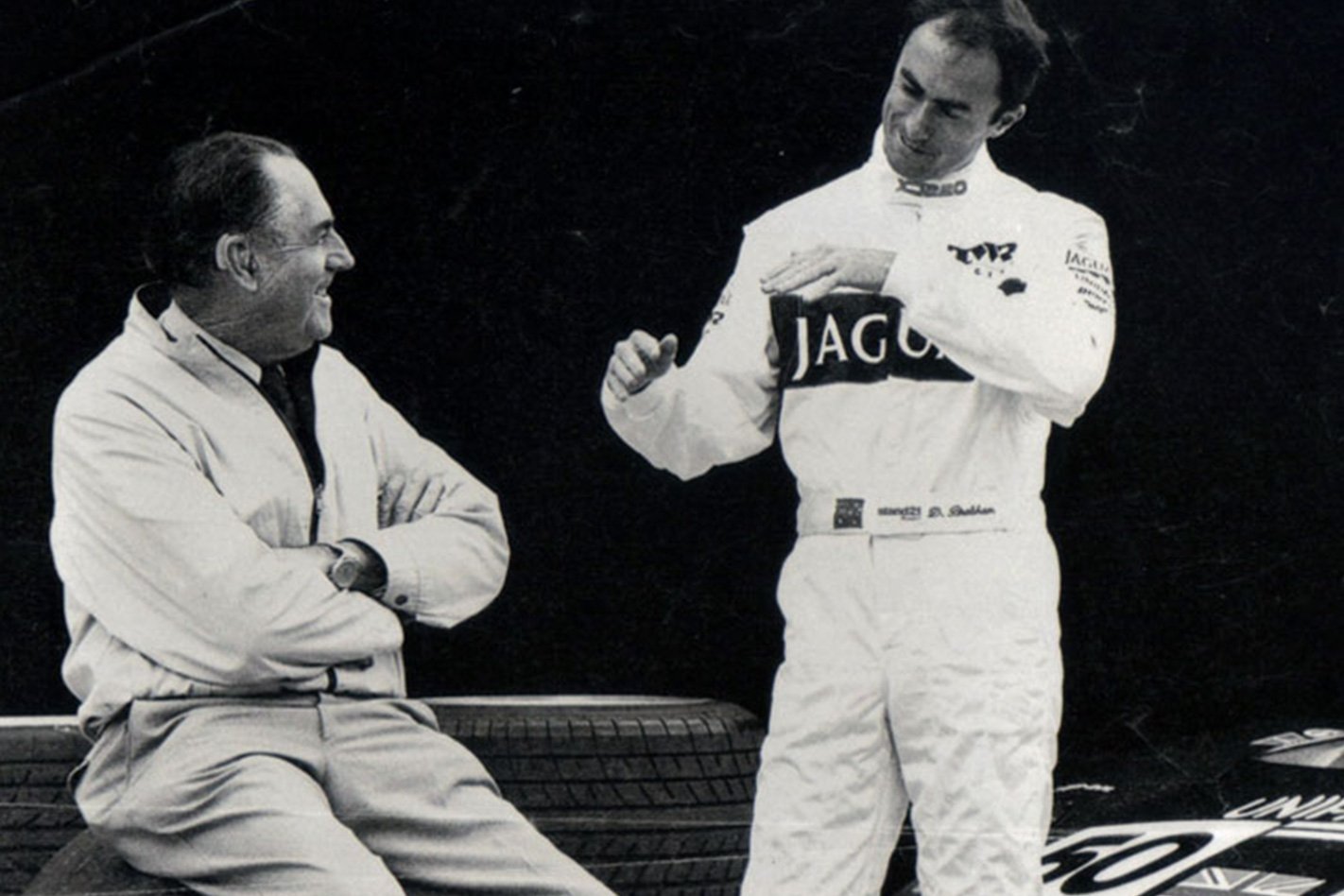
The Brabham BT62’s genesis has come from an unusual path, with investors approaching Brabham Automotive managing director David Brabham, the youngest son of three-times F1 Drivers’ Championship winner Sir Jack Brabham and himself an accomplished racing driver, about giving him the means to realise his dream of once more stamping the Brabham name on a race car.
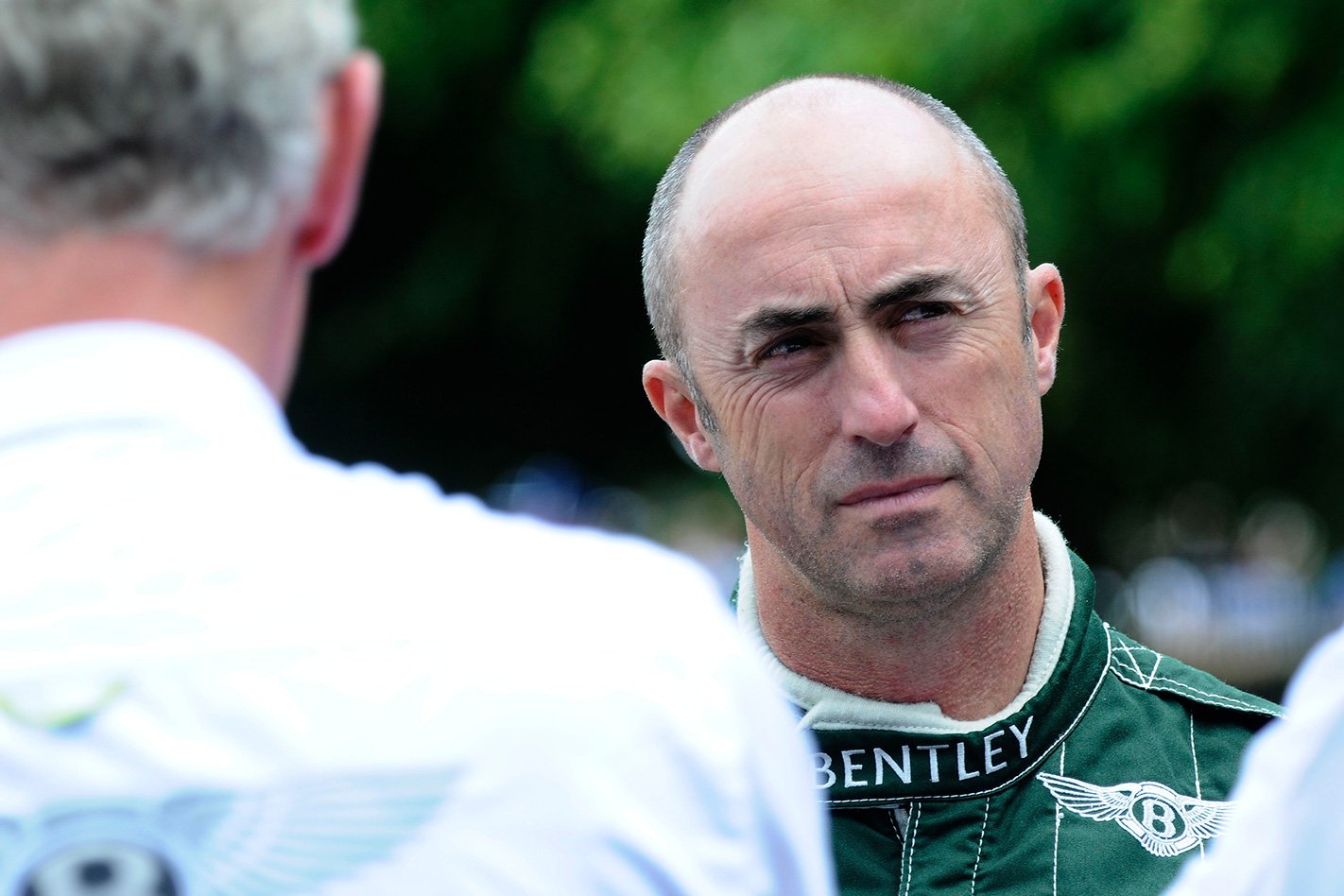
Helping Brabham Automotive achieve that dream is Fusion Capital, an investment fund with a base in Adelaide. Christian Reynolds, a representative of Fusion Capital, is a skilled engineer who has previously worked for the likes of MG Rover, BMW, Lotus, and electric vehicle disruptor Tesla where he helped to establish the Californian carmaker’s production process.
Before this, his most recent role was heading up the Australian offshoot of global automotive parts supplier ZF making vehicle components in Adelaide for Holden. Reynolds takes on a hands-on role with Brabham; he will head up the BT62’s manufacturing process.
Funds derived from the BT62 are expected to help drive Brabham’s tilt at another 24 Hours of Le Mans line honours. The race driver’s ambition to make a return to endurance racing was flagged by Project Brabham, an ambitious project sparked in 2014 to build a team via a global crowdfunding effort. The bid eventually closed with around 3000 backers pledging more than $500,000 to design, build and campaign a Le Mans entry, with anyone able to make input to the project’s design and engineering. But it was not enough, and the project stalled. From the ashes of that effort, though, the BT62 was born.
Wheels talked with Brabham about where the idea for the BT62 came from, and where he eventually wants to take it.
WHEELS: How did the BT62 project all start? BRABHAM: How far back do you want to go? From my personal journey, 12 or 13 years ago I was 40 years of age and I thought ‘what am I going to do when I return’? Which I thought was going to be around 50. And I thought there’s something we can do with this iconic racing name that we have, I didn’t know what or how.
So the dream of bringing Brabham back to market actually started back then. I was still racing and of course then I got involved in a legal battle over the Brabham name, which has been well publicised, [and] which took about seven years to sort out. And since then it’s been slowly building up to the point where we’ve been ready to have robust conversations with people who are willing to have our involvement as such. So we got ourselves to that point when the guys in Australia and I got together, which was in early 2016, and that’s where it all started.
W: Is there any Aussie connection? B: The Australian connection is really deep. My father was born there [David Brabham currently lives in the UK], you’ve got the Repco connection in the ’60s when they won the world championship, and Brabham has always been in two places. It’s an Anglo-Australian brand. We’ve got roots in Australia and gone out into the rest of the world and done our business. So that concept of what we’re doing with this program is very much aligned with what we’re doing now. What happened in the ’60s is happening … now.
Why Australia? I think it’s a fantastic opportunity with manufacturing having left those great shores and has left a bit of a void with a lot of well-trained, talented engineers and people. A project like this can tap into that as and when it needs. And the link back to Australia for us as a family. The capabilities you have down there particularly with the [Fusion] Group with their manufacturing capabilities.
I’m a common sense type of person. If it makes sense to me, I’m in. If it doesn’t make sense to me, I’m out. It’s that simple. And to me, everything that this group is about, what we’ve done and how we’ve done it up to the launch has made all good very common sense.
W: How involved are you? What’s your title? B: When we first met, and obviously there was a period of due diligence to find out who the [Fusion] Group is, what they’re about, what their capabilities are, we started to talk about visions and I said “look, I’m either involved or I’m not”. So for me this was all hands on deck.
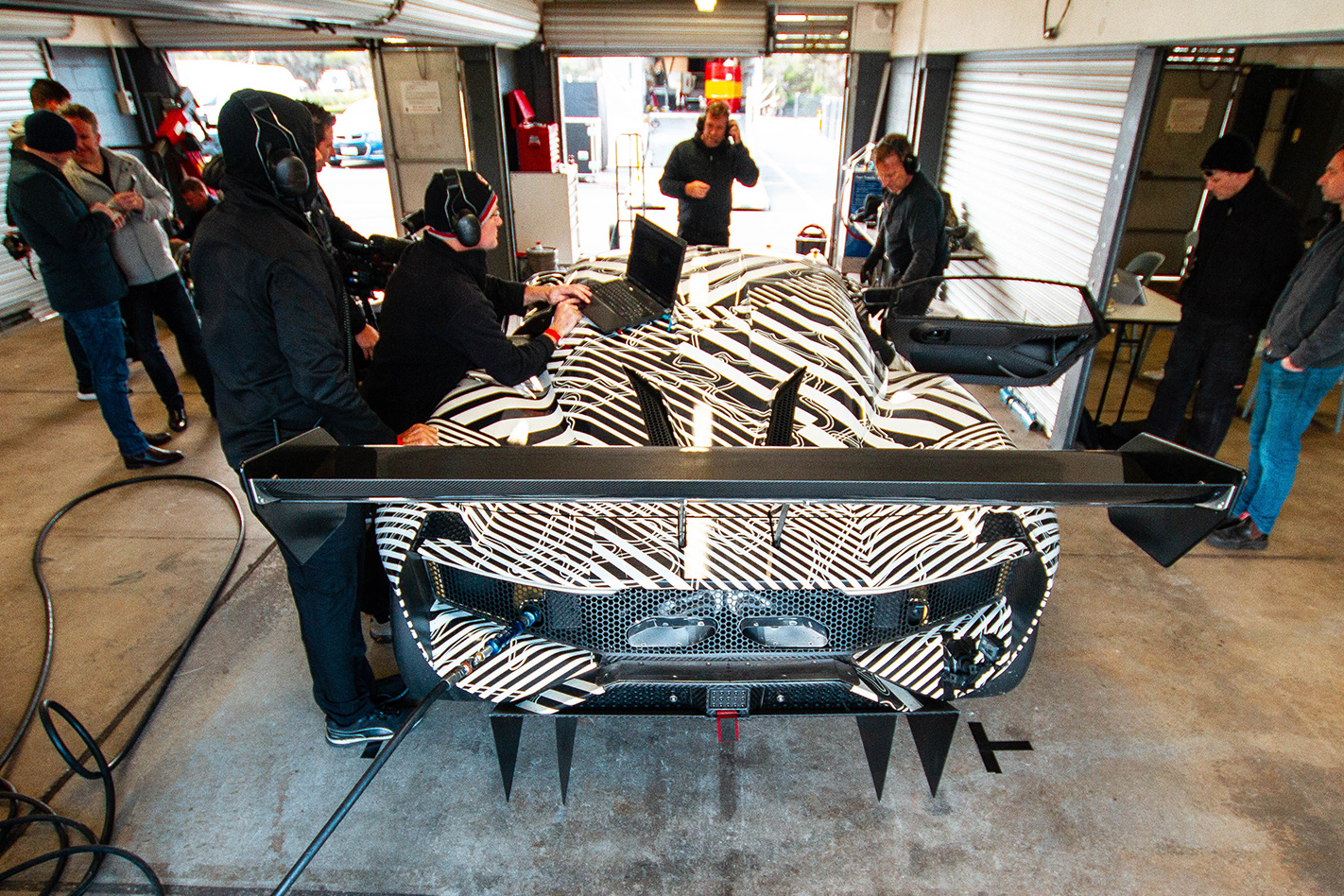
We’re going to be producing a high-performance vehicle – it’s got to have Brabham, and David Brabham’s DNA in it. I’ve driven a lot of vehicles over 35 years, I know what I want from a car and this is what we’ve produced. So I’ve been very much involved in it.
My title is managing director, and I’m helping bring the team, all the people and the resources, together. And we’re not just thinking about what we’re doing today, but what we want to do tomorrow. And I’ve got a really good core group of people beneath me and I’m sure you’ve had some good conversations with Christian about their capabilities and experience and for me that’s really, really important.
I have the responsibility of bringing the Brabham name back, I had to make sure that every box was ticked so it’s going to last. This is a long-term plan, this isn’t a “let’s build something and see how we get on”. We’ve got a long-term vision and I needed to make sure we had the resources, and the finances, to back that up. And we do have that.
W: Where has the financial backing come from? B: That’s within the Fusion Group. They’ve got the money, the resources to be able to do this project, and they have to date as we’ve shown. We didn’t want to say, “oh look this is what we want to do in the future, here’s a rendering”, we needed to be demonstrable straight away and go bang, here were are, this is who we are, this is what we’re doing. No one has known about this for two years I think it’s taken everyone by absolute surprise. That was deliberate. To make a real impact in today’s world we had to come out looking really strong.
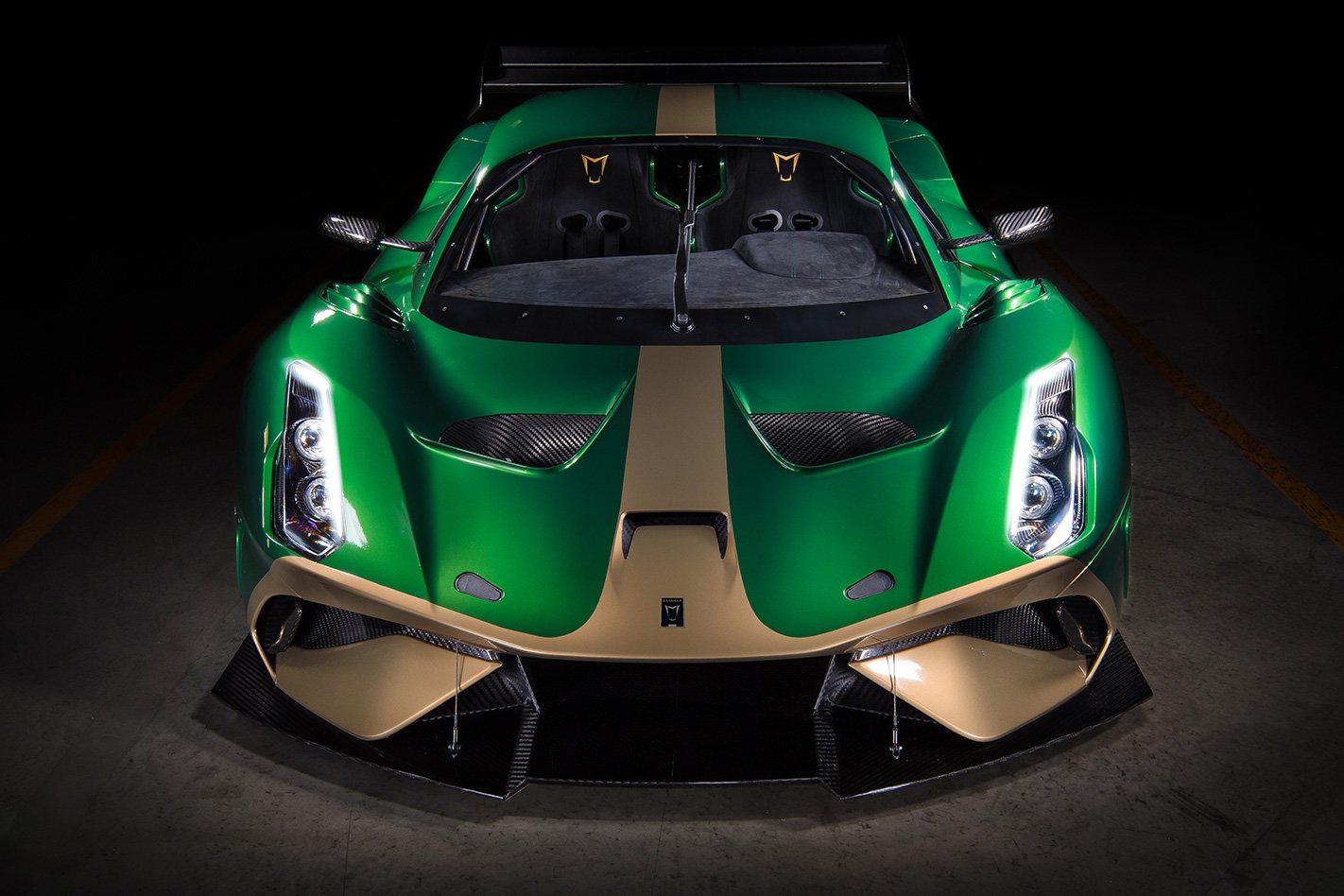
We’ve got a product, we can go to market and normally that doesn’t happen. So we’re doing things in a Brabham way, we’re doing things a bit differently, we’re being bold, we’ve backed ourselves, we’ve gone a direction with the car purely because that’s what we want out of the vehicle and it’s bloody exciting. Everyone is sitting there saying “where the hell has this come from!?” It’s drawn a tremendous amount of interest globally. I’ve shocked everybody, we’ve kept it water tight.
W: So what is the Brabham BT62 like to drive? B: I’ve driven the car on quite a few circuits. It’s what I wanted. I’ve been driving for 35 years. I’ve done single seaters, I’ve done sportscars, I’ve done touring cars. If you look at sportscars I’ve done GT2, GT1, GT3, LMP2, LMP1, so I’ve got a very broad spectrum of vehicles. I know what I want out of the vehicle. I want something that’s a going to challenge me, so it’s got to be fast. It’s got to be stable, it can’t be too edgy or too difficult to drive, it’s got to have a reasonable window that gives the driver confidence.
So in terms of a potential customer, we want someone to think “I want to challenge myself, I want to take myself to a new limit and this is the car to do it in”. And it’s such a great car to drive because it just does what you want, how you want it, and yet it challenges you at the same time. And you get the feeling of the rawness of a racecar as well, which was really important.
W: Why use an atmo V8? Why not hybrid or electric? B: It’s not because we just plucked an engine out; there’s a strategy behind it. We’ve got racing in our sights. A lot of the architecture we’ve done around the car and the engine is based around where we want to go with that. We don’t want to be reinventing the wheel at this stage.
A lot of people like V8s. It sounds bloody awesome and from a packaging point of view and regulation of where we want to go from a racing point of view, it just fits. It works.
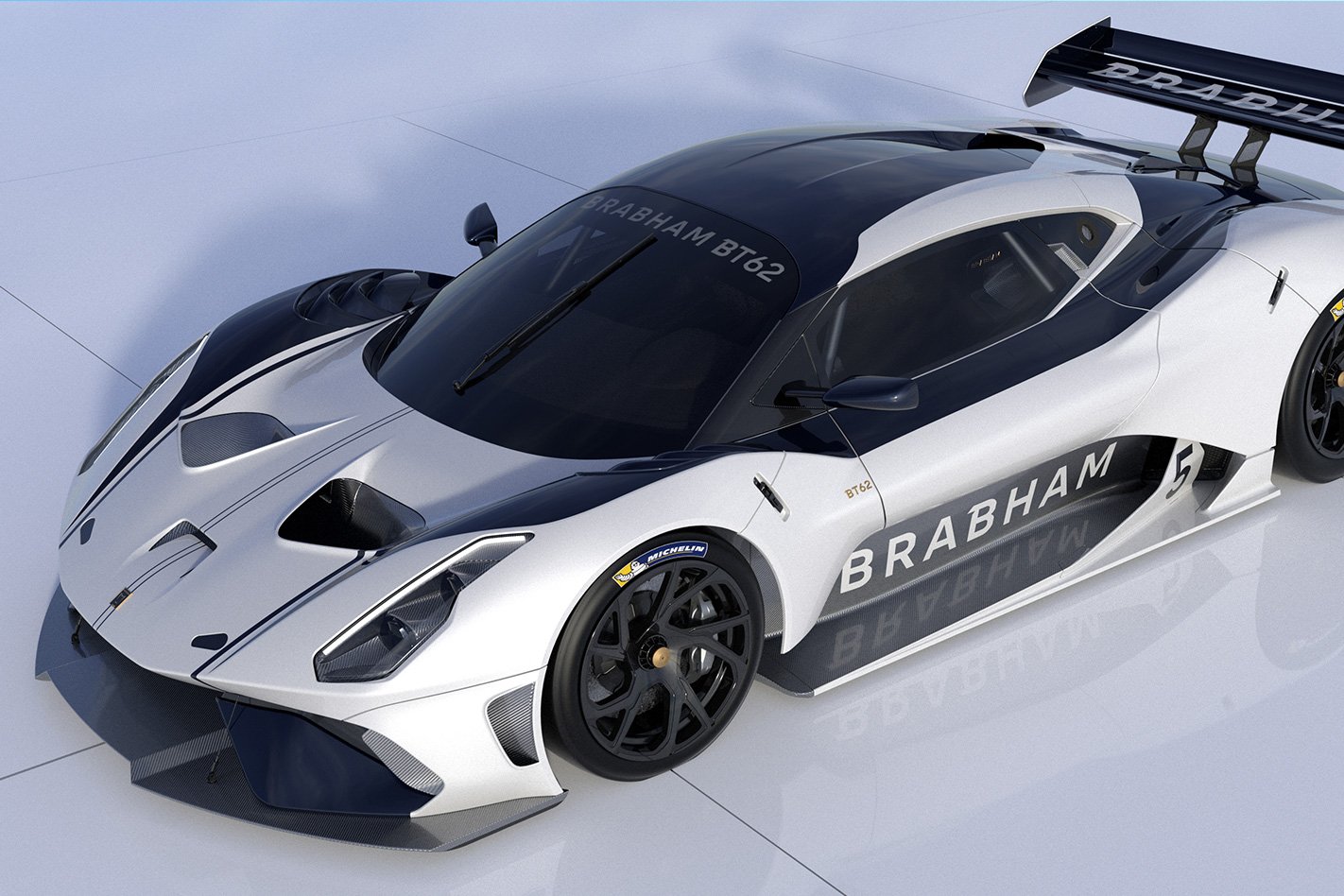
W: Will you be entering the BT62 in any racing categories? B: The car’s not been designed for someone to go and race, this is just a pure track car. But because of the way the architecture has been put together it allows us to move quickly into the next variant which will help us to achieve what we want to achieve…
W: Who heads up your engine development? B: We have a group of engineers.
W: So it’s done internally? B: There’s been a lot of work put on it. We’ve got a team that’s helped shaped that and we’ve obviously used external resources.
W: The car looks great. Did you have involvement into how it looks? B: When I got there I saw some ideas and rendering of what this landscape would look like, and as we’ve developed we’ve fine-tuned and tweaked accordingly. I actually think it has an identity of its own, which is really important, and those design cues will flow through the next variant of cars so you’ve got that common thread; so it becomes “that’s a Brabham”
W: The Brabham will be built in Australia, so how much Aussie engineering is in the BT62, and how much of the workforce will be sourced from here? B: We’ve already got the people we need right now and obviously as the business grows we’ll need to expand. Like I said earlier there’s a lot of great resources in Australia and in South Australia because of the manufacturing that’s been there for so long and the other businesses that tie into those manufacturers have reached a very good level. And I’ve worked with lots of Australians in racing, and in America, and they’re just really good, practical engineers. They’re just perfect for what we need.
W: Was Fusion Group already planning a car, and then approached you? B: They approached me, I didn’t approach them. We were introduced by a mutual friend so they knew that I was trying to do something to get Brabham out there, and they obviously had a vision and it just made sense for us to come together. And that’s what happened. We ticked a lot of each other’s boxes. You go for years talking to lots of different people and we’ve been approached loads of times in the past and mostly they’re time wasters.
So when we got this approach the first thing I had to do was fly down to Adelaide and really get a good sense. It sounded good on the phone, but you’ve got to get down there and get a sense of what the capability is like, [what’s] the experience like? And I left there going “I think there’s an opportunity here”, and it evolved from there.
W: Are there plans to build a road car? B: We have aspirations. We have a long way to go before we get to that point.
W: Does a GT3 version of the BT62 make the most sense for racing, given where that category is? B: What are we saying on this? SPOKESMAN: Um… Le Mans is certainly in our sights… B: Yes S: …and given our background that makes a lot of sense.
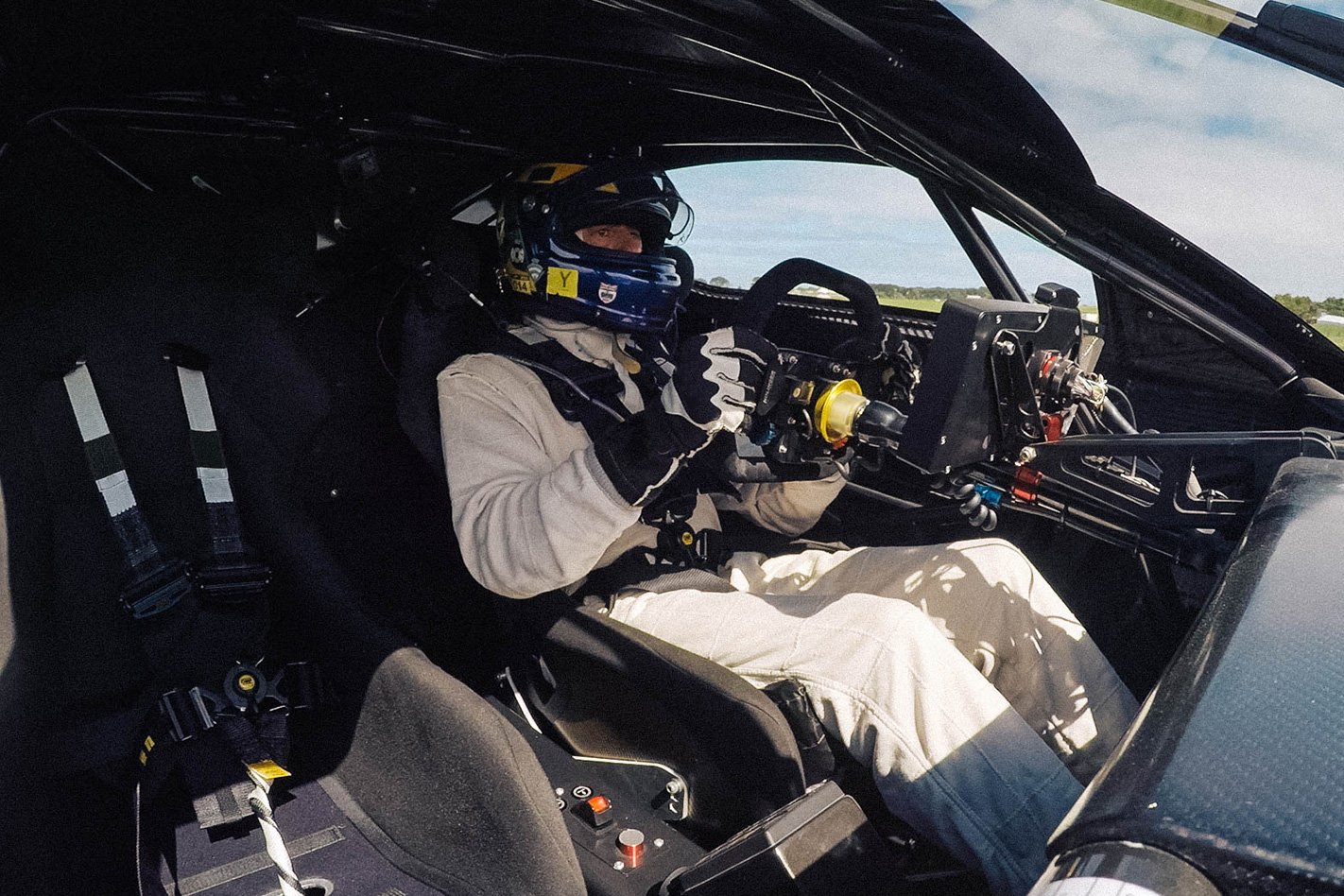
W: Would you race the BT62 yourself, David? B: I have been driving it, but in terms of where we take the team? Let’s say hypothetically we do WEC, and do Le Mans, it’s too early to say if I’d be driving it. There’s part of me that would love to, having raced there 18 times and to go there driving a Brabham would be pretty cool, but it’s too early to make that call.
W: The car is named the BT62. Why not name it the BT61? B: The fortunate thing I have is a list that was drawn up by every designer that graced the Brabham Formula 1 team where they all wrote, on the same piece of paper, they wrote what car model, what year and the specs and how many were built, etcetera. So every year I’ve got a list and it goes all the way to a BT61, but the BT61 was drawn but it was never built. So that’s why, to continue that lineage and honour Jack and Ron (Tauranac, Sir Jack’s former team owner) with the BT, it made sense to make this, journey and chapter, a 62.
UPDATE – Porsche has just announced that the 919 Evo will be returning to the Nordschleife earlier than anticipated, but this Saturday’s appearance won’t be the record setting lap. It’ll be piloted by Timo Bernhard for a parade lap just before the start of the annual Nurburgring 24h race, flanked by a 956 C driven by Hans Stuck. While not the exact 956 in which Bellof set his legendary lap, this chassis was raced by Jacky Ickx and Jochen Mass a year later. The pace will be a little more leisurely this time round, but if you ever needed an excuse to head to the N24, consider this it.
IN THE wake of Neel Jani’s demolition of the outright lap record at Spa, the team behind the freakishly fast Porsche 919 Evo are planning the next round of conquests, with a three-pronged project that looks set to culminate in the fastest ever lap of the Nurburgring Nordschleife.
Prior to that, it has been confirmed by a Porsche source that the 919 Evo will attempt to set new marks at Brands Hatch and Laguna Seca. The former’s lap record of 1:09.593 has been held since 1986 by Nigel Mansell in a Williams-Honda FW11.
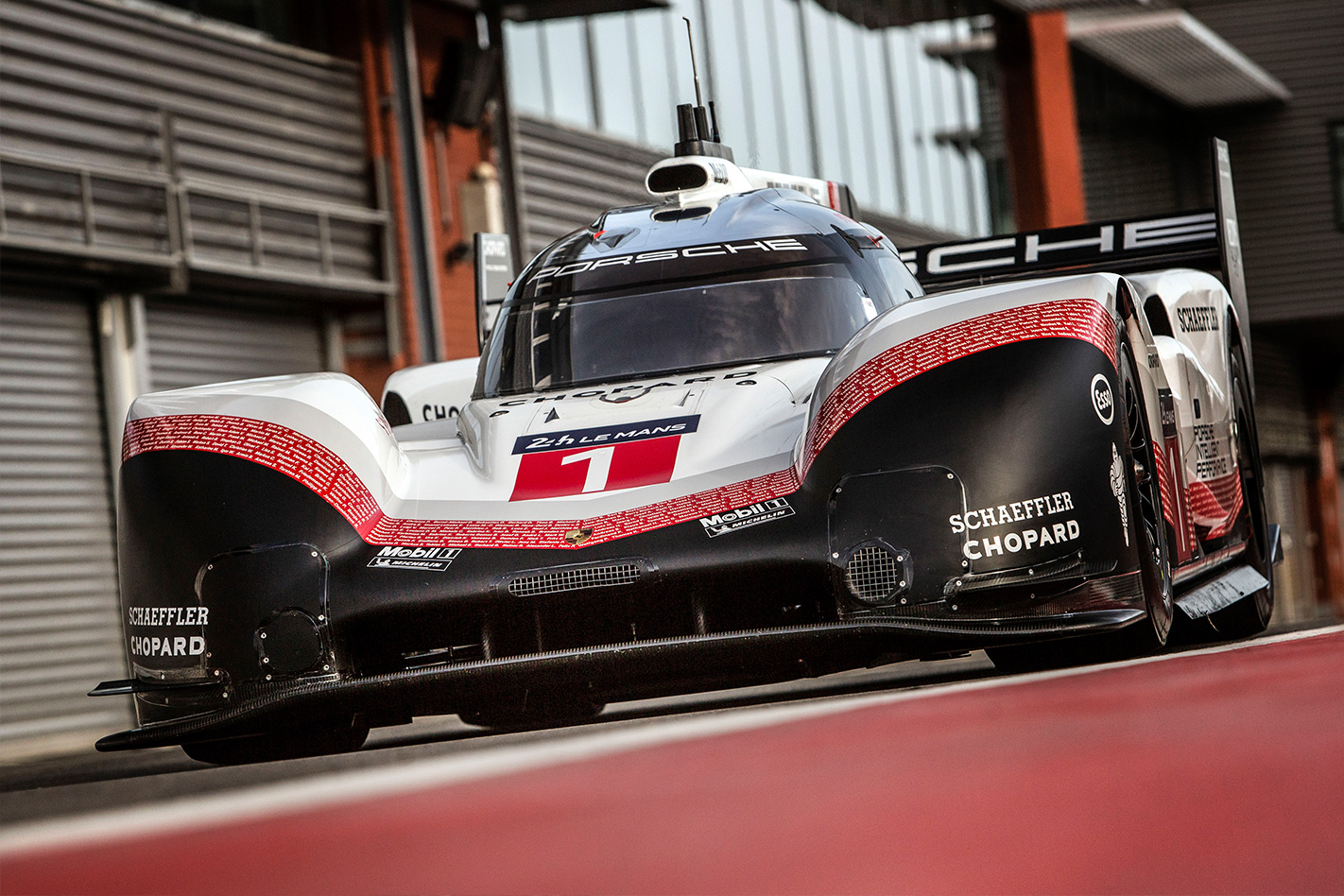
The best mark at Laguna Seca is an unofficial 1:05.786s by Marc Gene in a Ferrari F2003-GA F1 car, using modern rubber at a 2012 Ferrari Racing Days event.
Like many circuits, Laguna Seca reserves its ‘official’ lap records to practice, qualifying or during a race, which would appear to preclude Porsche’s attempt the final rubber stamp of authenticity.

The fastest official time is 1:07.722 set by Helio Castroneves in a Penske Champ Car during qualifying for the 2000 Grand Prix of Monterey.
It’s the 6:11.13 lap of the ‘Ring by Stefan Bellof that’s most controversial, however, and it’s one that Porsche knows the heritage of better than any other company. That mark was set in a Porsche 956 at an average speed of 202km/h, and after the tragic death of Bellof in 1985 it was deemed almost sacrilegious to better it.

Road cars are now edging down towards that mark, with the Porsche 911 GT2 RS’ 6:47.25s time being not far off then-F1 world champ Keke Rosberg’s qualifying time in 1983, a time he thought was fairly respectable until he saw Bellof’s unhinged lap on the timing sheets.
Since then, Nick Heidfeld could have claimed the crown back in 2007 when he took a BMW Sauber F1.06 around the track. Despite slowing for photo duties, he ran flat out through certain sections of track, and that pace was extrapolated to a theoretical 5:57s lap of the circuit.
BMW later claimed that without the restrictions on the vehicle (it was fitted with harder demo tyres, extra ride height and a 275km/h speed limited transmission), their simulations claimed that the F1.06 was capable of a 5:15.8s time, at an average of 237km/h.
It’s been reported that Mercedes-AMG also has designs on Bellof’s “unbeatable” lap. It wants to take its $3.4 million, 735kW Project One hypercar, in all its 1.6-litre turbocharged V6 hybrid F1-powertrained glory, to the Nordschleife to have a crack at the German’s record.
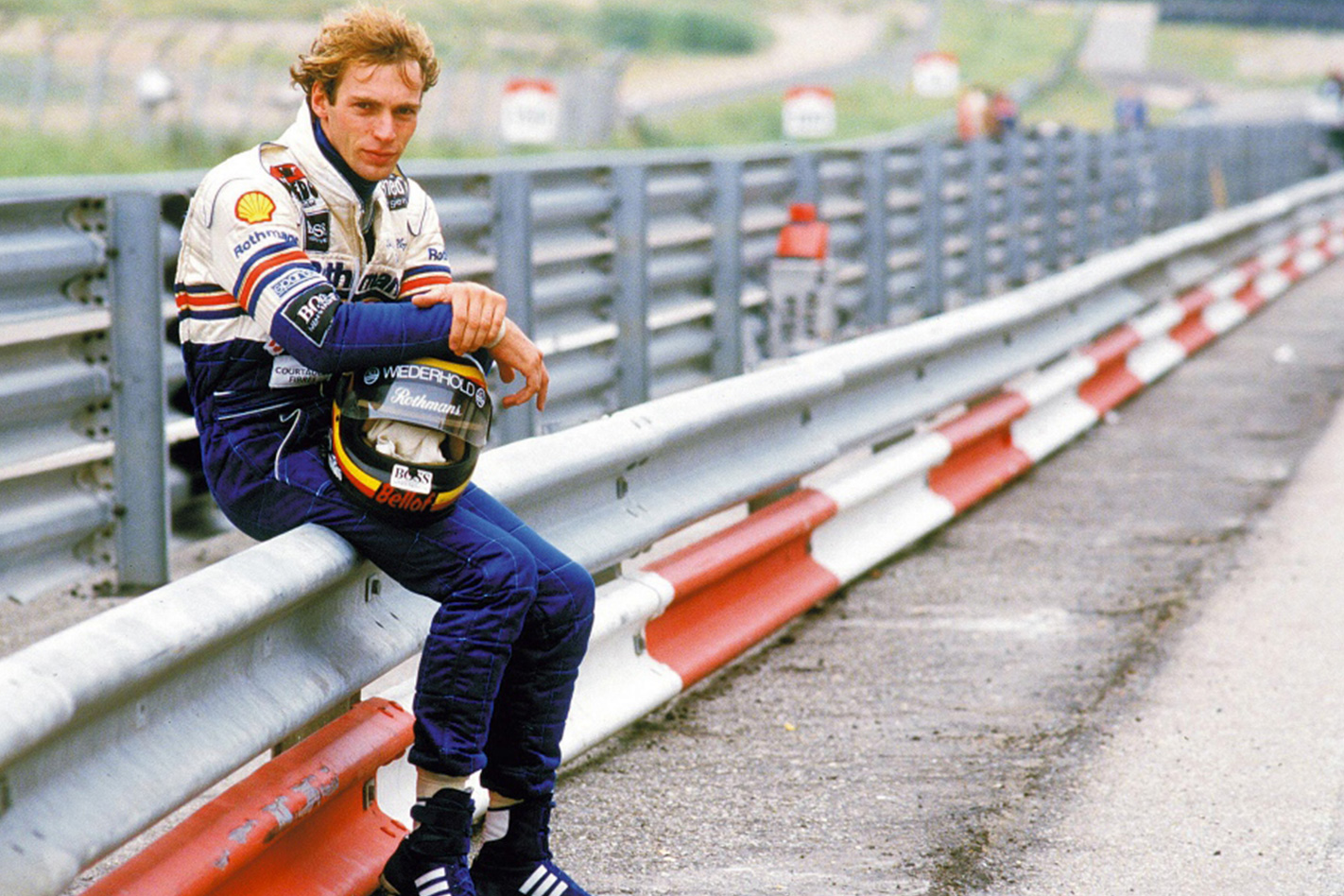
Naturally, Porsche is keen to spike the guns of its bitter rival and the 919 Evo is the perfect weapon for the task.
Our source has claimed that Weissach’s data modelling has demonstrated that the car will obliterate Bellof’s mark. It’s been 35 years since the howling 2.6-turbo six had its ‘Bob Beamon moment’. It’s time for the baton to pass.
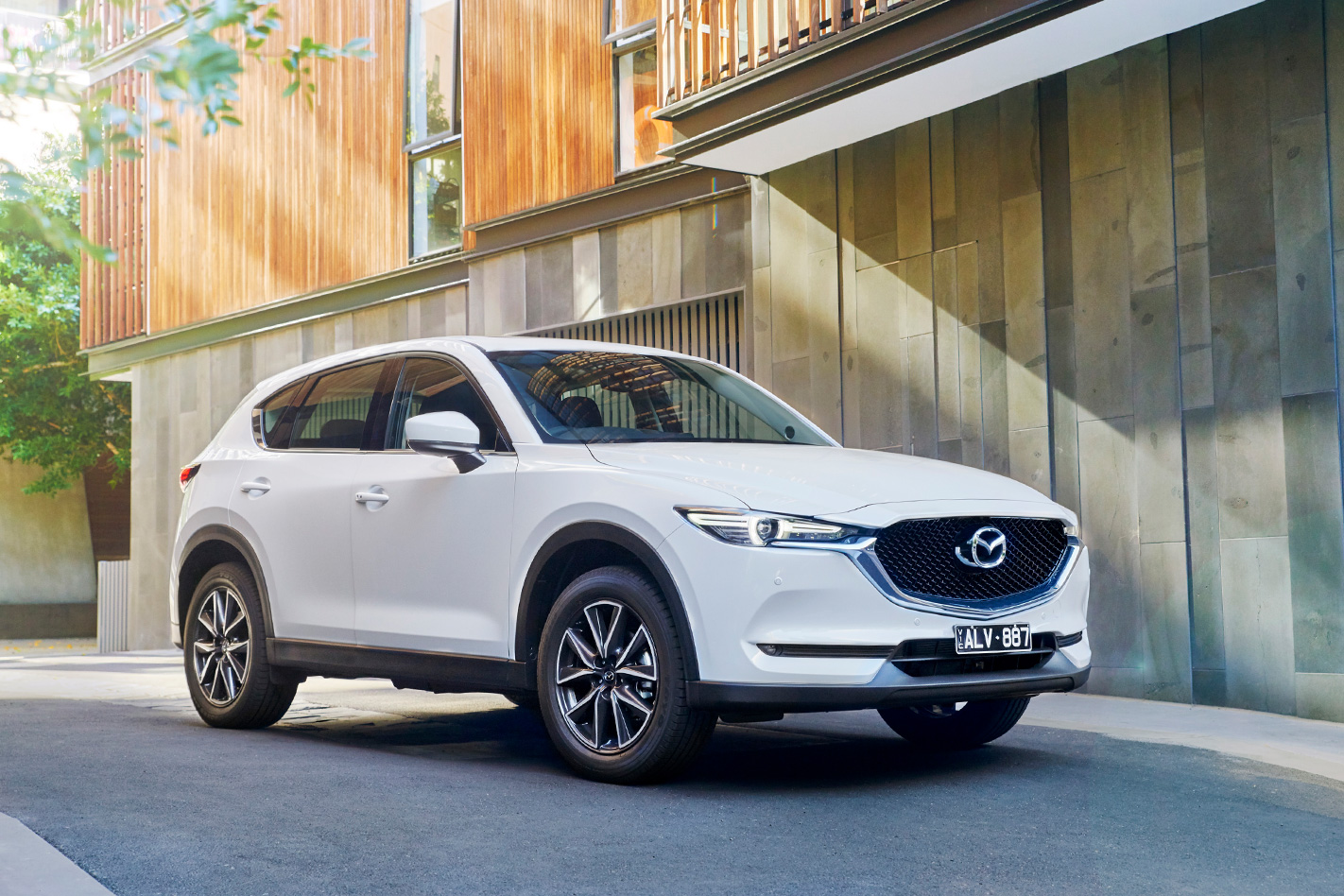
Mazda’s CX-5 is the best-selling SUV in the country, and for 2018 the Japanese manufacturer has tweaked the engine line-up.
WHAT IS IT?
The same car that fought its way to the final six in Car of the Year 2018, but with updates applied beneath the bonnet.
WHY WE’RE TESTING IT
Mazda’s mid-size SUV is the most popular in the country, with buyers flocking to add one to their driveways. Just 12 months since it was launched in Australia, Mazda has updated the second-generation CX-5. We got behind the wheel to see how the changes will affect drivers.
MAIN RIVALS
Hyundai Tucson, Toyota RAV 4, Nissan X-Trail, Volkswagen Tiguan, Kia Sportage, Subaru Forester, Ford Escape, Honda CR-V, Mitsubishi Outlander
THE WHEELS VERDICT
Mazda isn’t making life easy for its rivals, with the small updates keeping the CX-5 fresh against a competitor set that’s constantly being updated. The diesel engine is now the most compelling in the range, with sticker prices falling across the range.
PLUS: Price drop; improved fuel efficiency across the engine range; power boost for diesel MINUS: Petrol engine feels overworked; extensive range could overwhelm some
THE WHEELS REVIEW
THE MAZDA CX-5 is Australia’s most popular SUV, and for good reason.
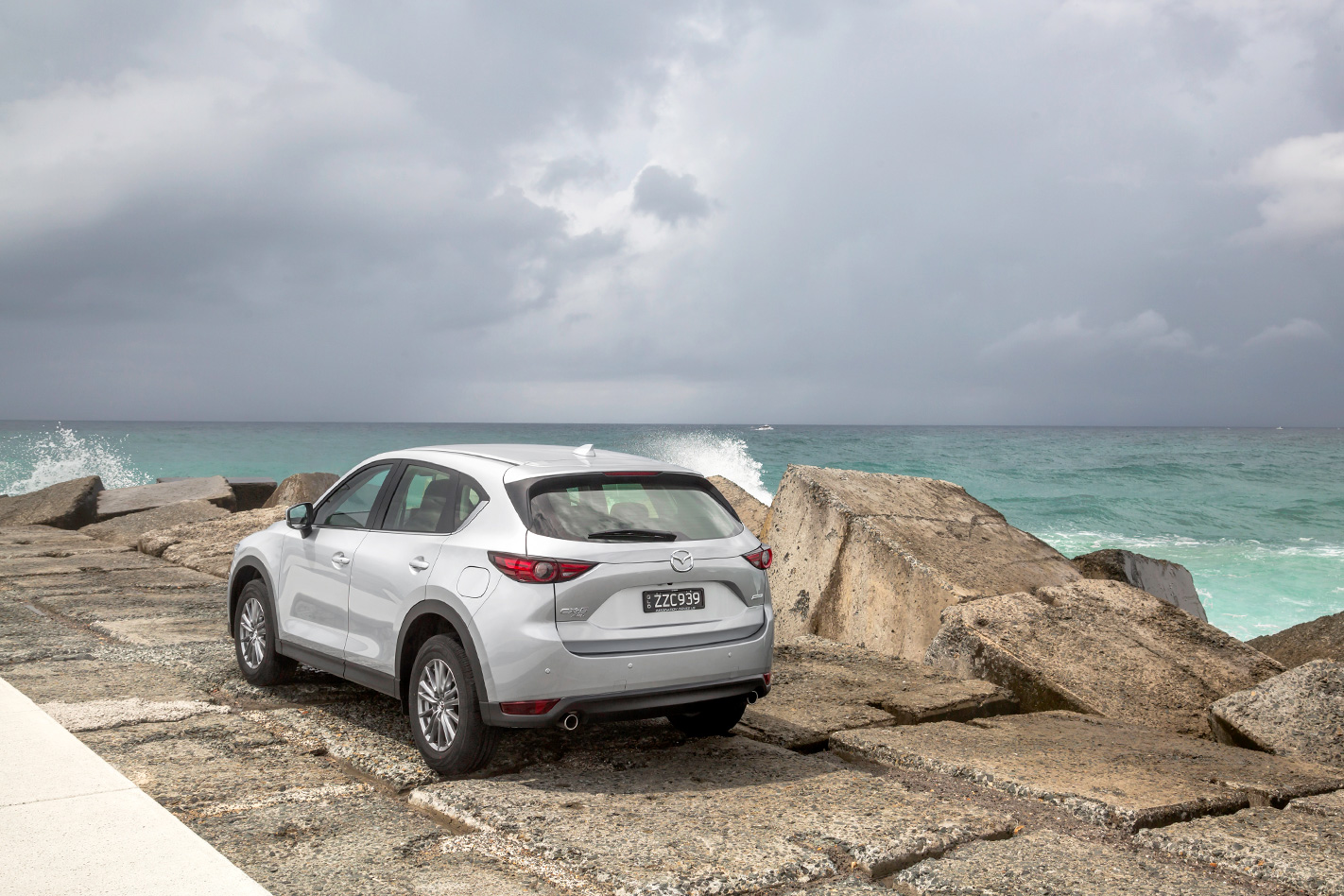
A finalist in Wheels’ 2018 Car of the Year, the second-generation mid-size SUV became a smash sales success in its first year on sale locally – with 24,200 finding new homes between April ’17 and March ’18.
But, instead of resting on its laurels, Mazda has updated the CX-5 with some subtle but important changes.
The major difference happens under the bonnet, with upgrades to all three available engines.
The base 2.0-litre four-cylinder receives the mildest working over, with Mazda improving the thermal management system and knock resistance. The Japanese manufacturer claims the result is improved torque throughout the rev range, a 1kW boost in peak power, and cleaner emissions.
The 2.5-litre four-cylinder petrol engine gets cylinder deactivation for 2018, with the car capable of switching off two of its cylinder’s valves during highway cruising – essentially transforming the engine into a 1.25-litre two-cylinder under light loads.
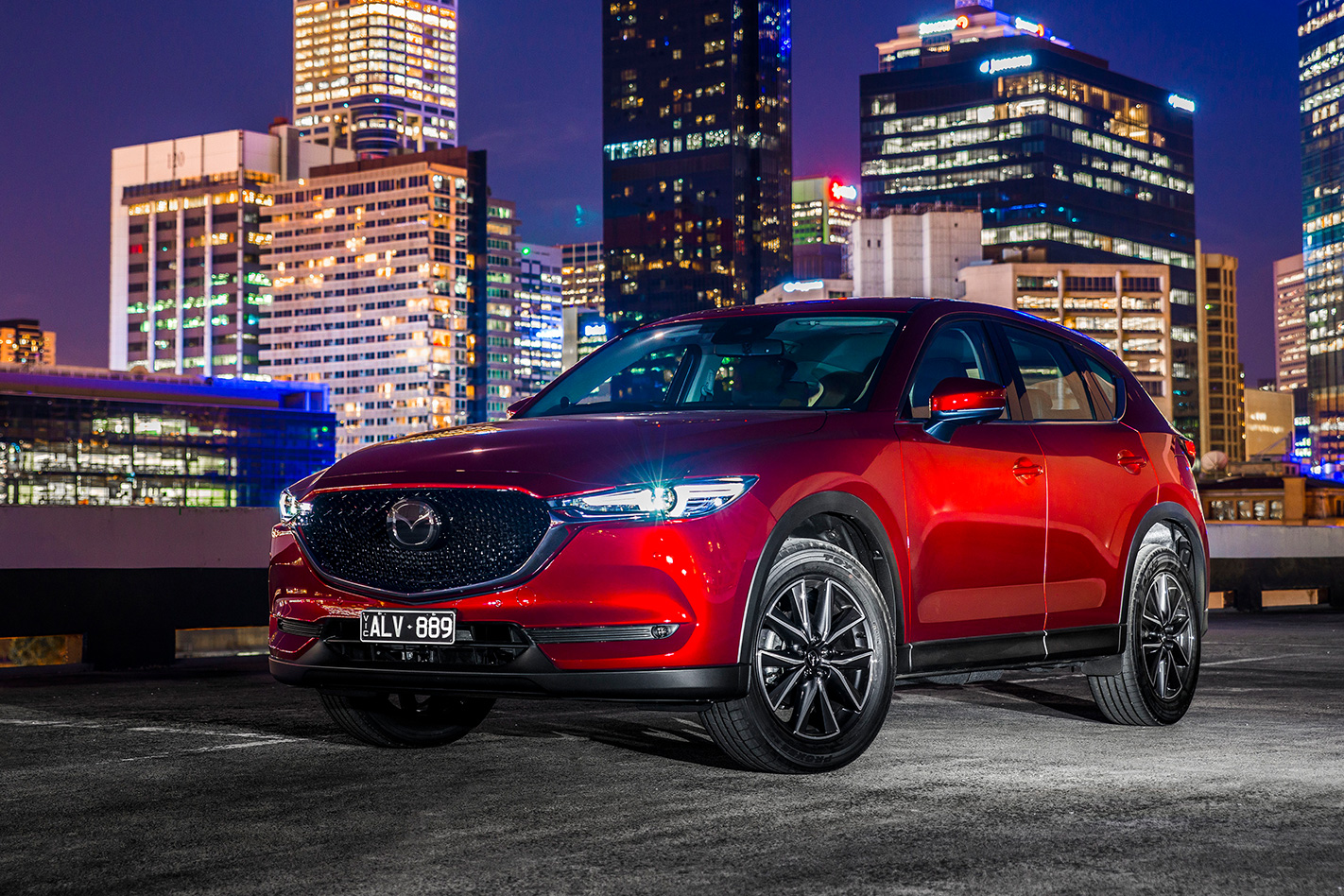
Meanwhile, the 2.2-litre turbo-diesel unit has received a new multi-stage combustion system, a larger twin-scroll turbo, and reshaped combustion chamber. The net result is more power and torque (140kW/450Nm, up 11kW and 30Nm), while increasing fuel efficiency to 5.7L/100km.
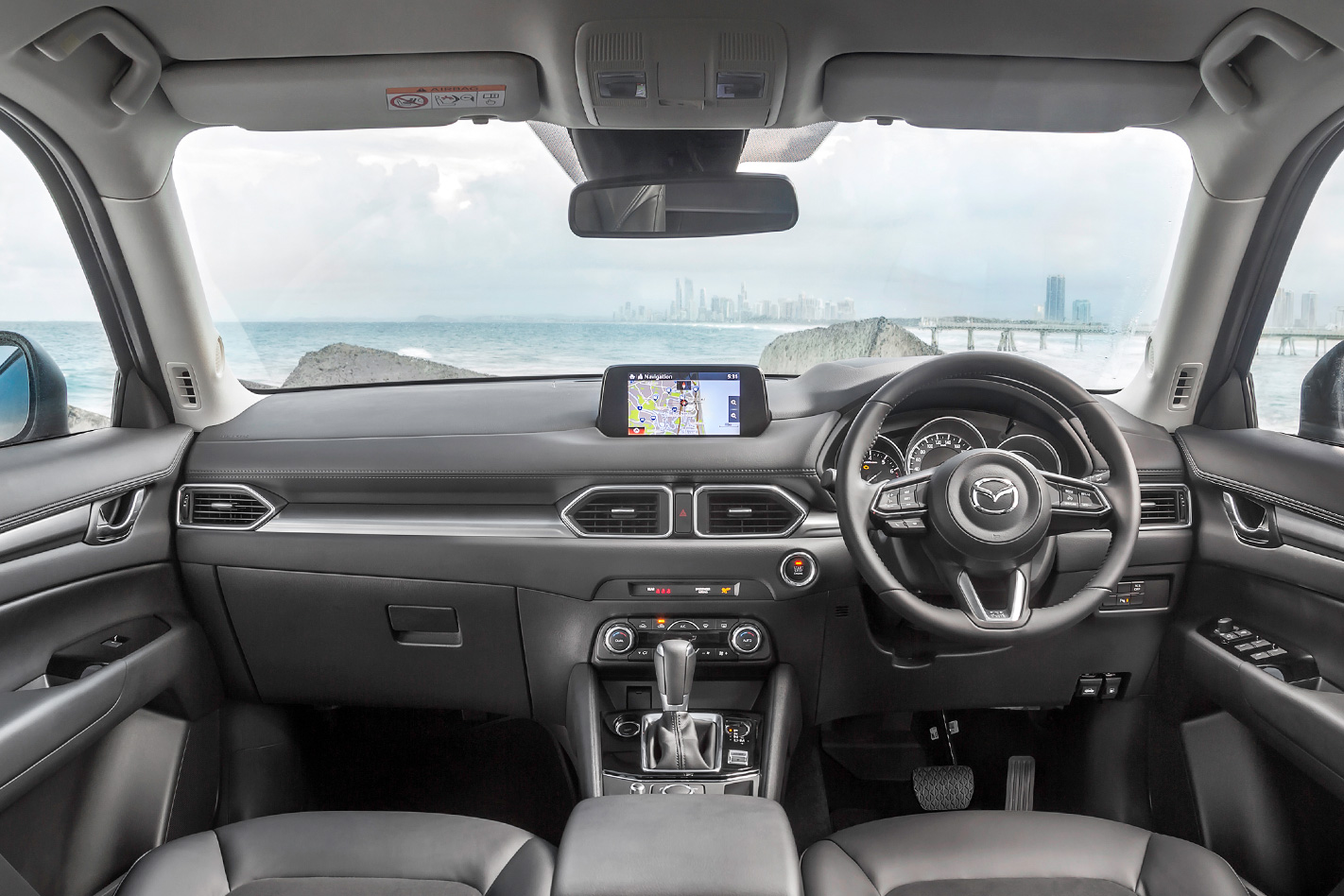
Inside the cabin there have been two very minor additions, with the head-up active driving display now projected onto the windscreen instead of a flip-up piece of polycarbonate, and a 360-degree parking monitor added to the flagship Akera model grade.
Mazda’s changes will probably have car anoraks pulling their hair out, with not a single exterior change, or interior visual change aside from the new head-up display.
With the extra power, the diesel engine has been reinforced as the sweet spot of the CX-5 engine range.
Despite being an oil-burner, the 2.2-litre unit is remarkably refined, and it’s difficult to tell you’re driving a diesel unless idling.
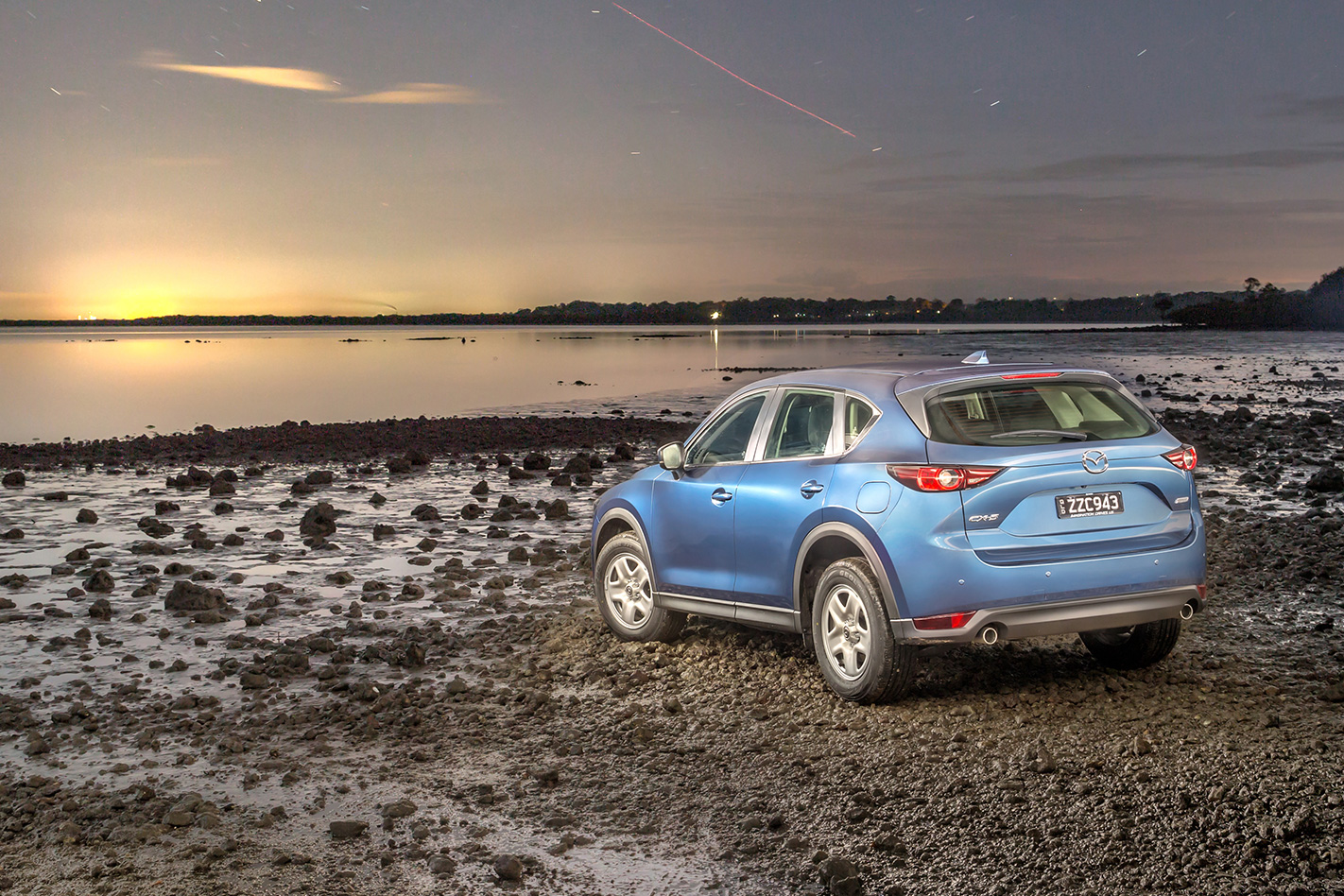
The 2.0-litre petrol engine is mainly for the cash-strapped buyer in this trio, with the smallest available unit feeling stressed under acceleration.
Around town with a gentle right foot the smaller 115kW/200Nm petrol engine would likely be liveable, but it struggles to perform overtaking manoeuvres or highway merges that the other two engine options would execute cleanly and safely.
If you have a particular aversion to diesel, the 2.5-litre petrol engine is a sweet thing, with 140kW and 252Nm. Our test loop lacked enough consistent highway driving to truly see the effects of cylinder deactivation, but the system was unobtrusive and the transition between two-and four-cylinders firing smoothly.
The diesel offers the same power figures as the petrol, with near-enough 200Nm more torque, improving the day-to-day liveability of the CX-5 greatly. However, the oil-burner does attract a $3000 premium over the 2.5-litre petrol.
So, what does this mean for the popular family-hauler? Well with $400-$800 slashed from the sticker price across the range, it’s sure to keep the CX-5 at the top of SUV buyers’ ‘must-try’ lists – and deservedly so.
Entry into the CX-5 family now starts at $28,690 for the 2.0-litre, front-drive Maxx with a manual six-speed transmission. It’s the only three-pedal car offered in the range, with all other models fitted with a six-speed automatic. A top of the range Akera diesel AWD will cost $49,190.
The same Maxx, Maxx Sport, Touring, GT and Akera model grades from 2017 are carried over for MY18 models.
The mid-size SUV retains the car-like dynamics, supple yet athletic ride and easy ergonomics that were praised by Wheels at its launch, but with a slightly more compelling price point and improved engines. An already strong package just became slightly better again.
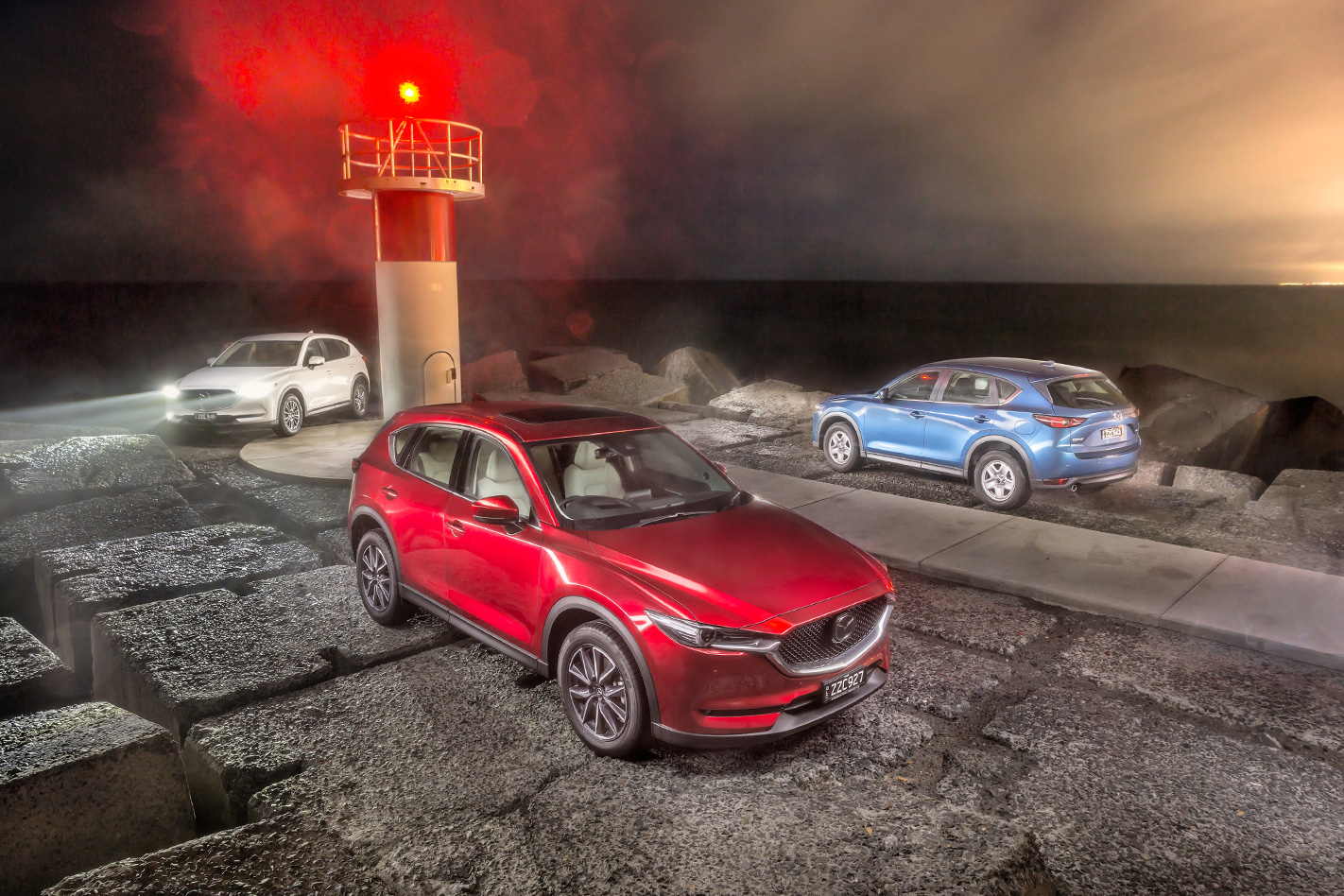
SPECS
Model: 2018 Mazda CX-5 Akera Engine: 2191cc inline four-cylinder, dohc, 16v, turbo-diesel Max power: 140kW @4500rpm Max torque: 450Nm @2000rpm Transmission: six-speed automatic Weight: 1751kg 0-100km/h: N/A Economy: 5.7L/100km Price: $49,190 On sale: Now
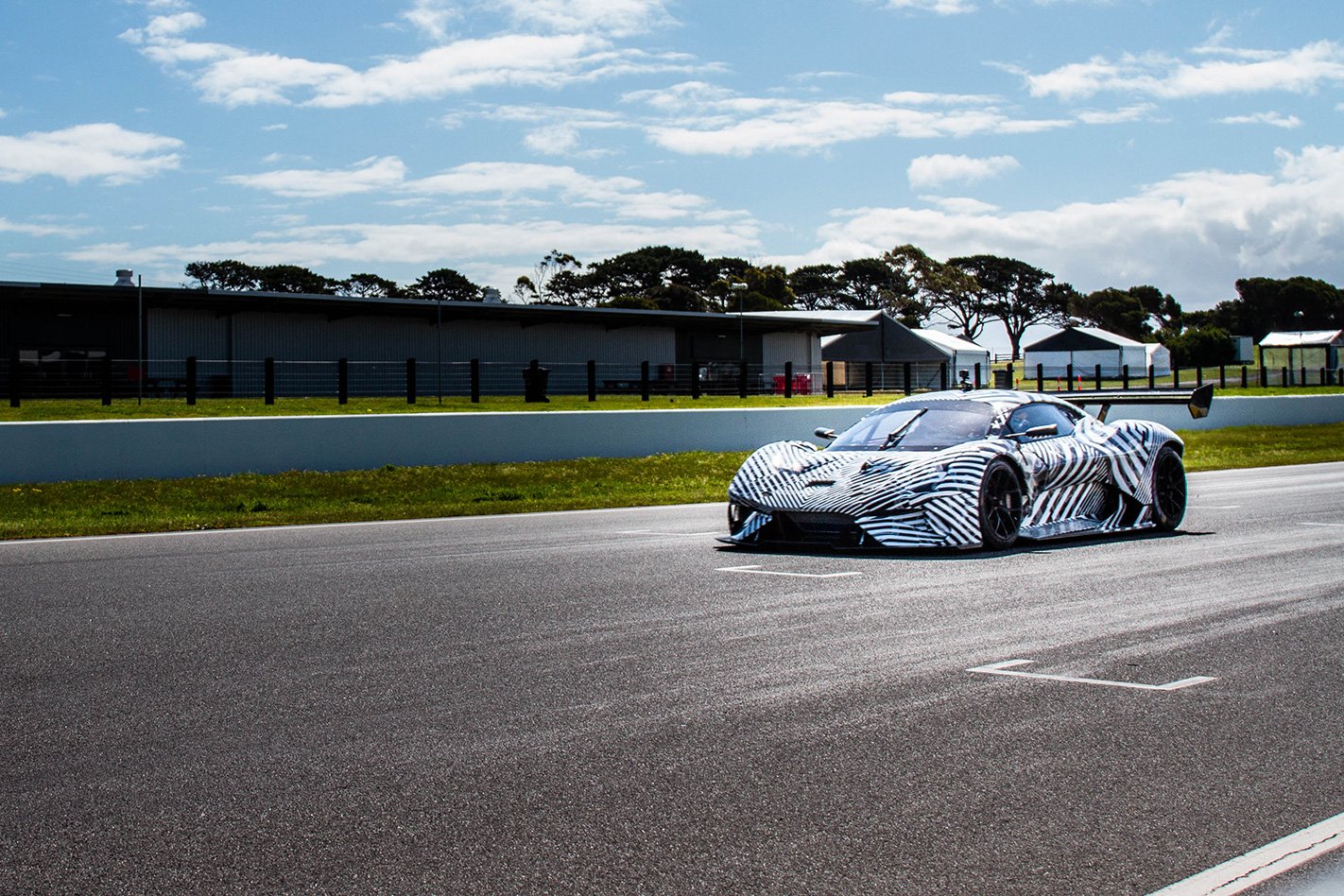
Brabham Automotive has finally lifted the veil on its first track-going hypercar, the Brabham BT62.
With a naturally aspirated 522kW/667Nm 5.4-litre V8 engine – built by Brabham – and a dry weight of just 972kg, the BT62 is set to take the fight to those at the top of the food chain.
And, even better, it’ll be built right here in Australia. Brabham’s overnight announcement included confirmation that the company will manufacture its hypercar in Adelaide.
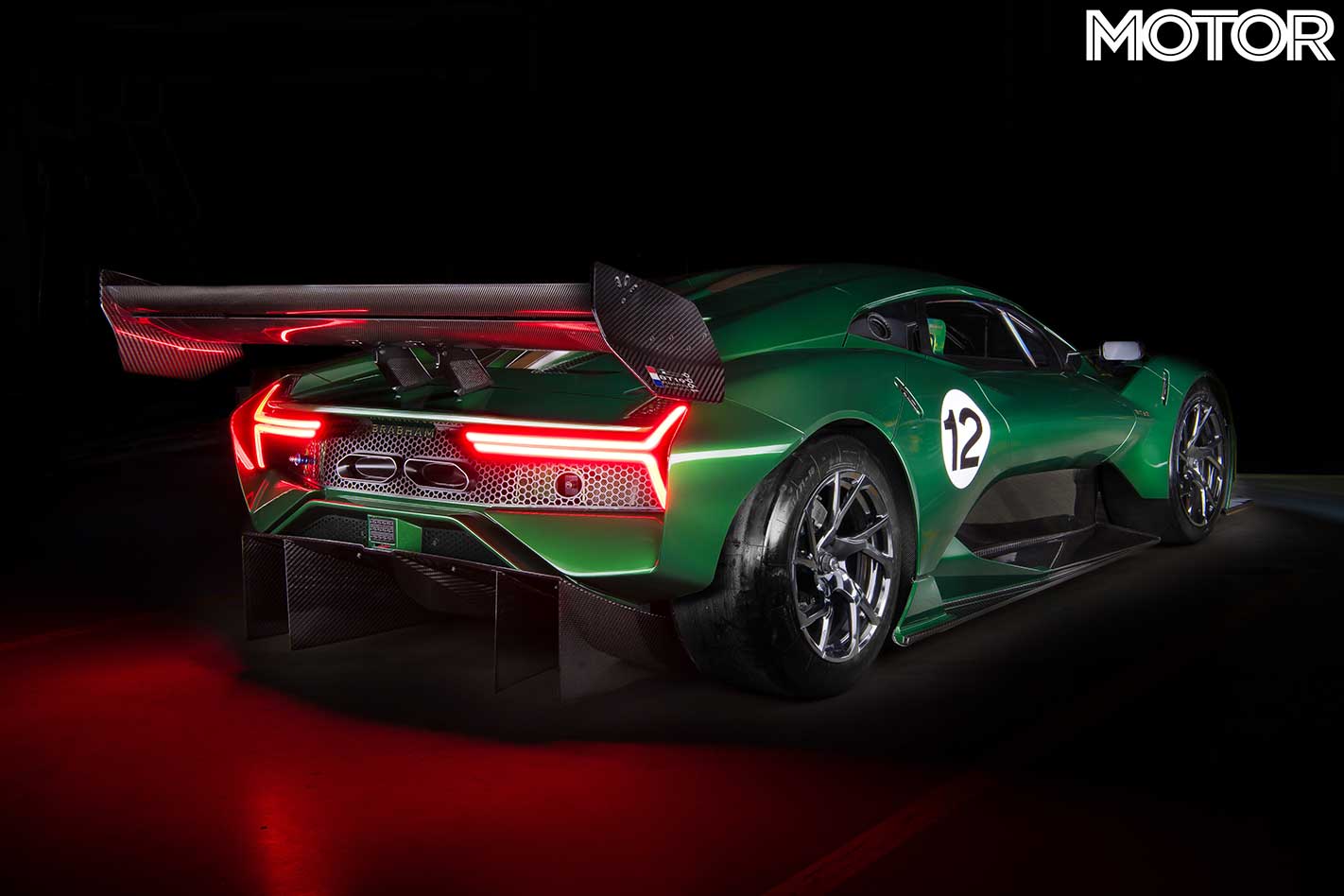
Utilising racing tech, the BT62 will have a dry-sump engine and a 6-speed Holinger sequential gearbox, and brakes will be carbon on carbon 6-pots, front and rear.
Keeping the weight to a minimum will be more carbon, the material of choice for the body.
Brabham Automotive technology and engineering boss Paul Birch says the BT62 is an entirely new undertaking for the new brand – even though the Brabham name carried decades of racing and motoring history.
“Created from a blank sheet of paper, our first car takes Brabham into an exciting new era, whilst honouring and upholding the marque’s glorious past,” says Birch.
“Using contemporary materials, processes and technologies, and following a rigorous two-year engineering and development programme, the resulting BT62 is a car that demands total engagement and commitment from its driver, delivering immense reward and satisfaction.”
Speaking at the reveal, Brabham Automotive managing director David Brabham said the responsibility of carrying on the Brabham name is one he’s happy to bear.
“It’s with great pride that I honour and continue my father’s legacy in revealing the next chapter in the evolving Brabham story.
“The team we have in place, and the vision it shares, provides a solid platform for Brabham Automotive to execute its long-term business strategy.
“Our first step to deliver on that strategy is the Brabham BT62, a car truly worthy of carrying the iconic Brabham name.”
The first deliveries of the Brabham B62 are due later this year, with a base price of £1m plus local taxes.
The car’s default layout is LHD, though Brabham says it can built it in right-hook on request.
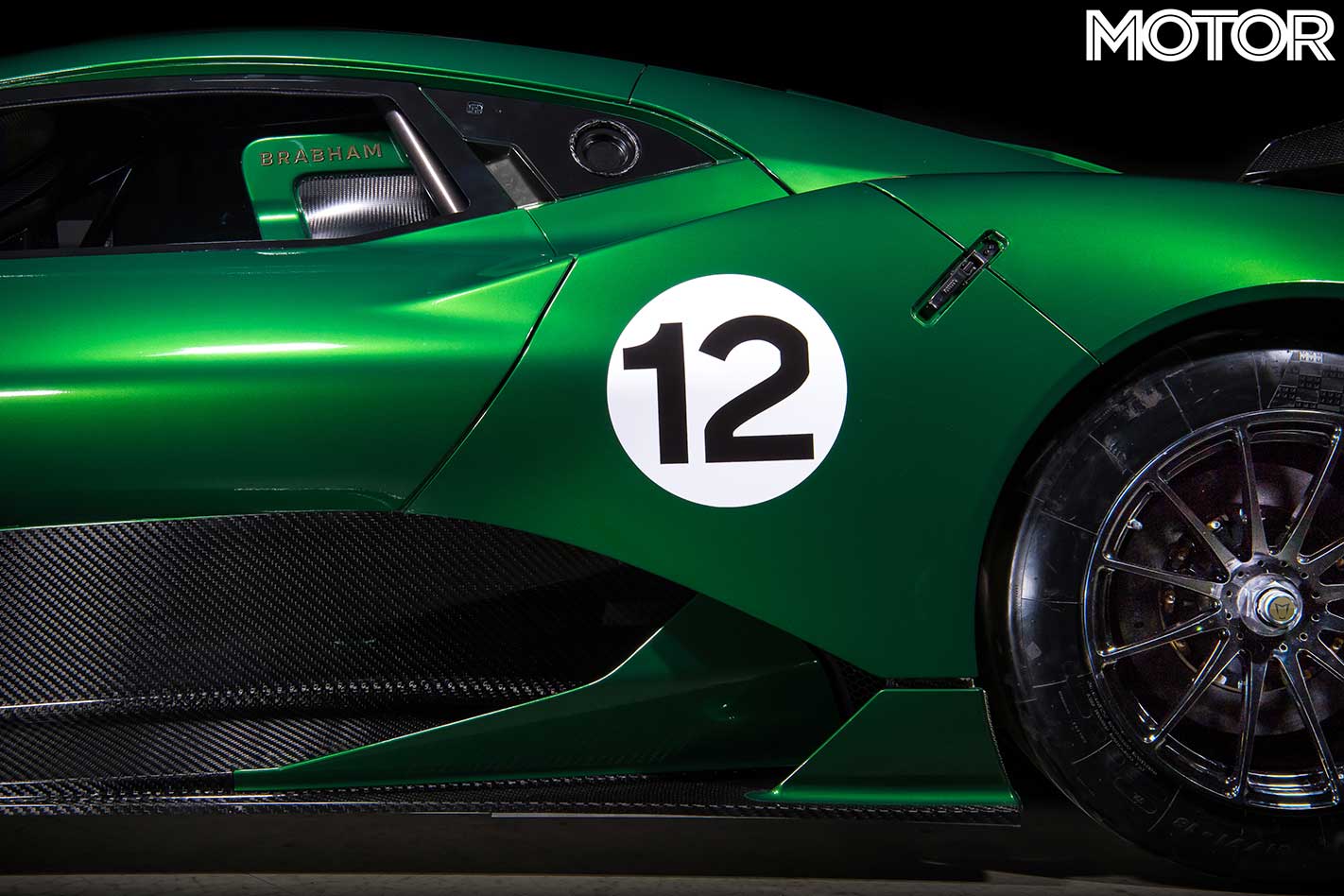
THE Brabham BT62, a radical 522kW mid-engined supercar that will attempt to ensnare the hearts, minds – and bank accounts – of the world’s gentlemen drivers, will be crafted right here in Adelaide.
Yep, you read that right. An all-new supercar with two solid years of engineering built into it, honed at Phillip Island and paying tribute to one of our motorsport greats, overnight has placed Australia right inside the high-end realm of supercar makers.
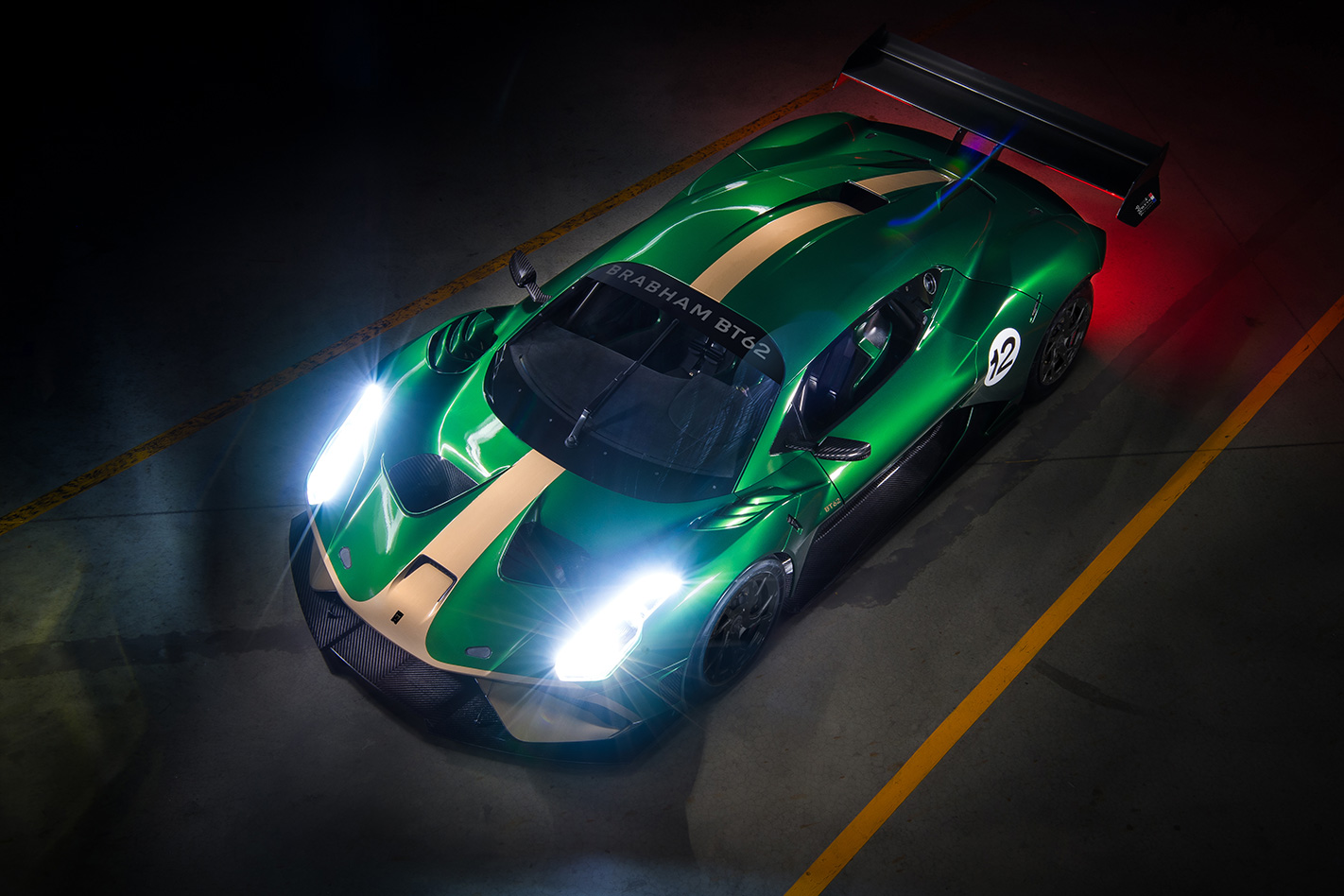
What you see in these pictures is not a concept car with limited production potential, it is the real deal that customers will begin taking delivery of before the end of this year.
At the BT62’s heart is a Brabham-badged 5387cc free-breathing, dry-sumped, quad cam V8, mounted longitudinally and producing its peak power at 7400rpm. Maximum torque – all 667Nm of it – arrives a little earlier at 6200rpm.
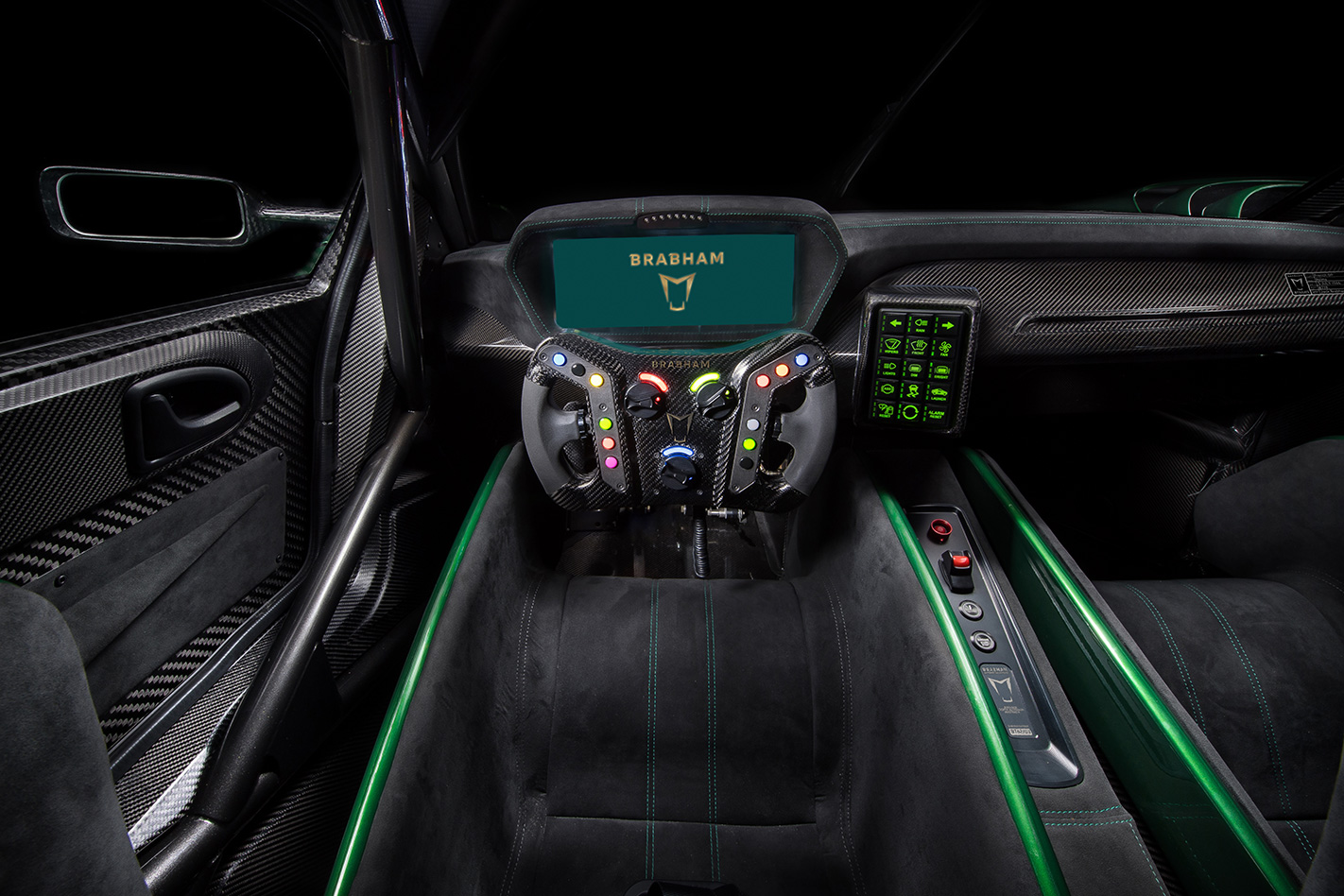
All of this atomic missile’s performance is directed straight at the rear wheels via a six-speed Holinger motorsport-spec sequential gearbox controlled via pneumatically activated paddle shifters (the engine will automatically blip to match its revs) mounted to the removable carbonfibre steering wheel – it’s not round, so the use of the word “wheel” is only a poorly fitting descriptor – equipped with control switches and engine, traction control and brake map settings.
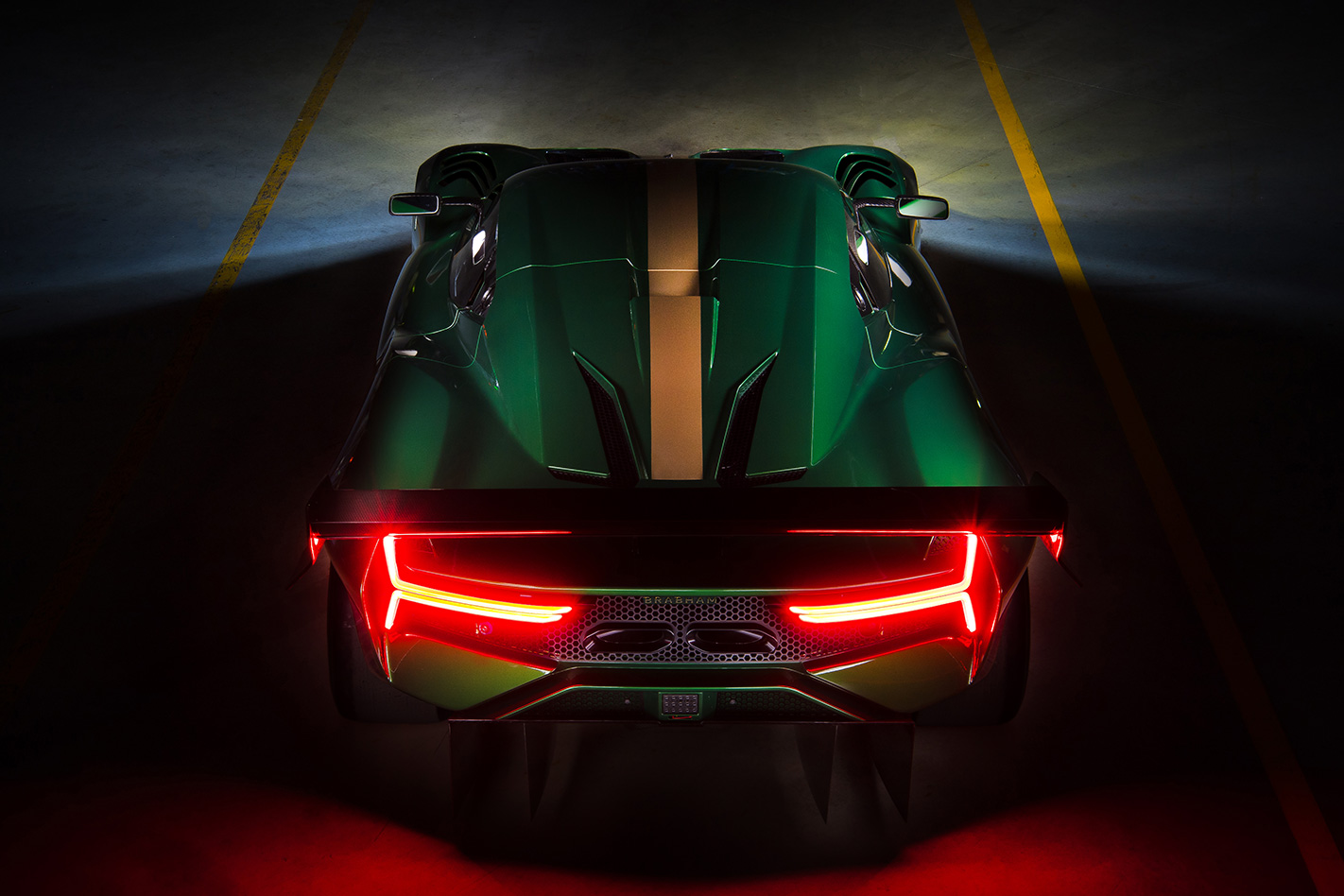
This is a performance car crafted specially for track days. Ask, and London-based Brabham Automotive, its creator, can even craft it in right-hand drive for you.
Once it is on sale late this year, wearing its lofty $1.8 million price tag, that V8’s free-breathing performance will easily outgun a Supercar, and at just 972kg dry, it will sit at the featherweight end of the spectrum. Full performance figures, the true benchmark of its standing in the racing realm, are still a closely guarded secret, expected to be drip-fed over coming weeks in similarly calculated style to the BT62’s reveal thus far.
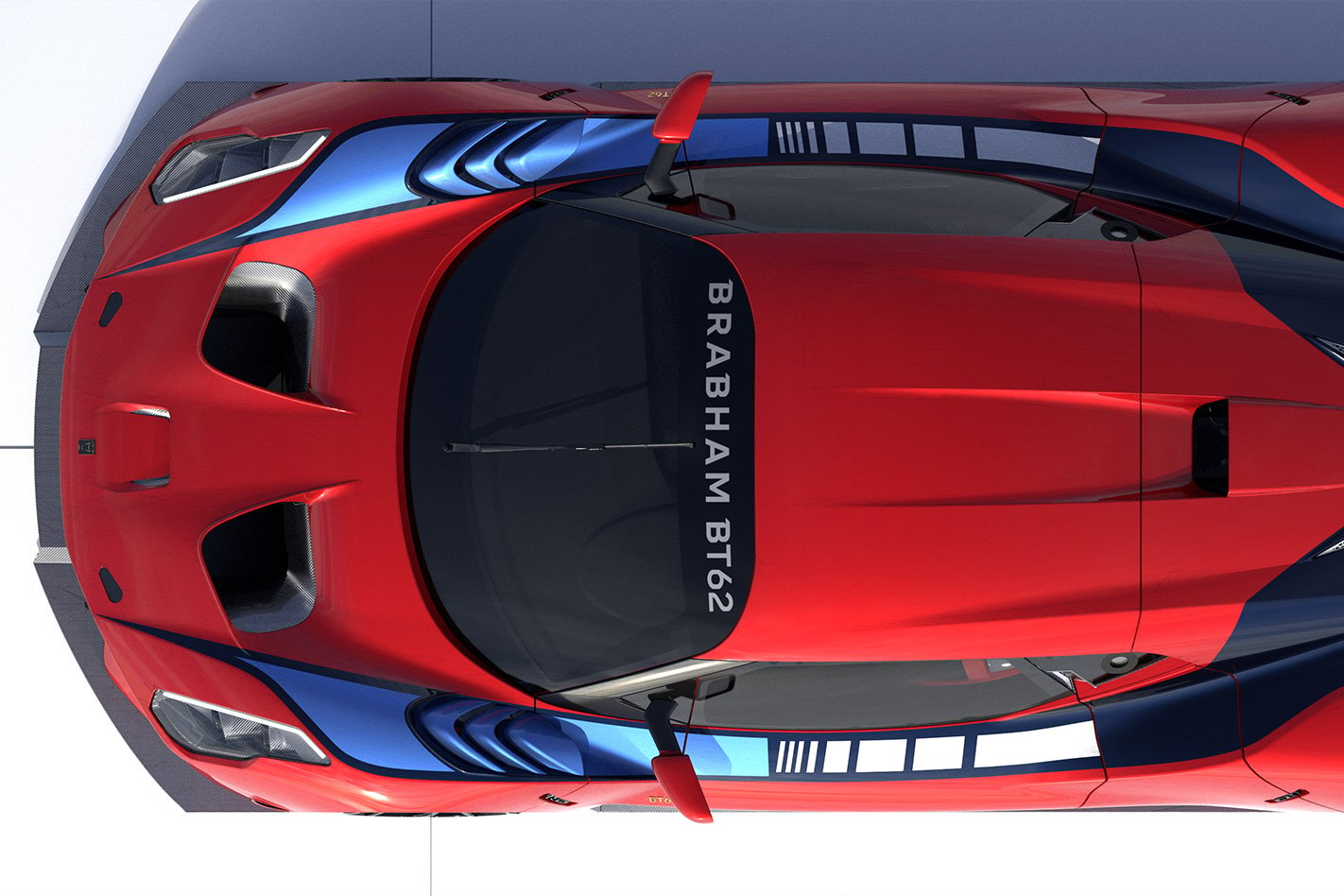
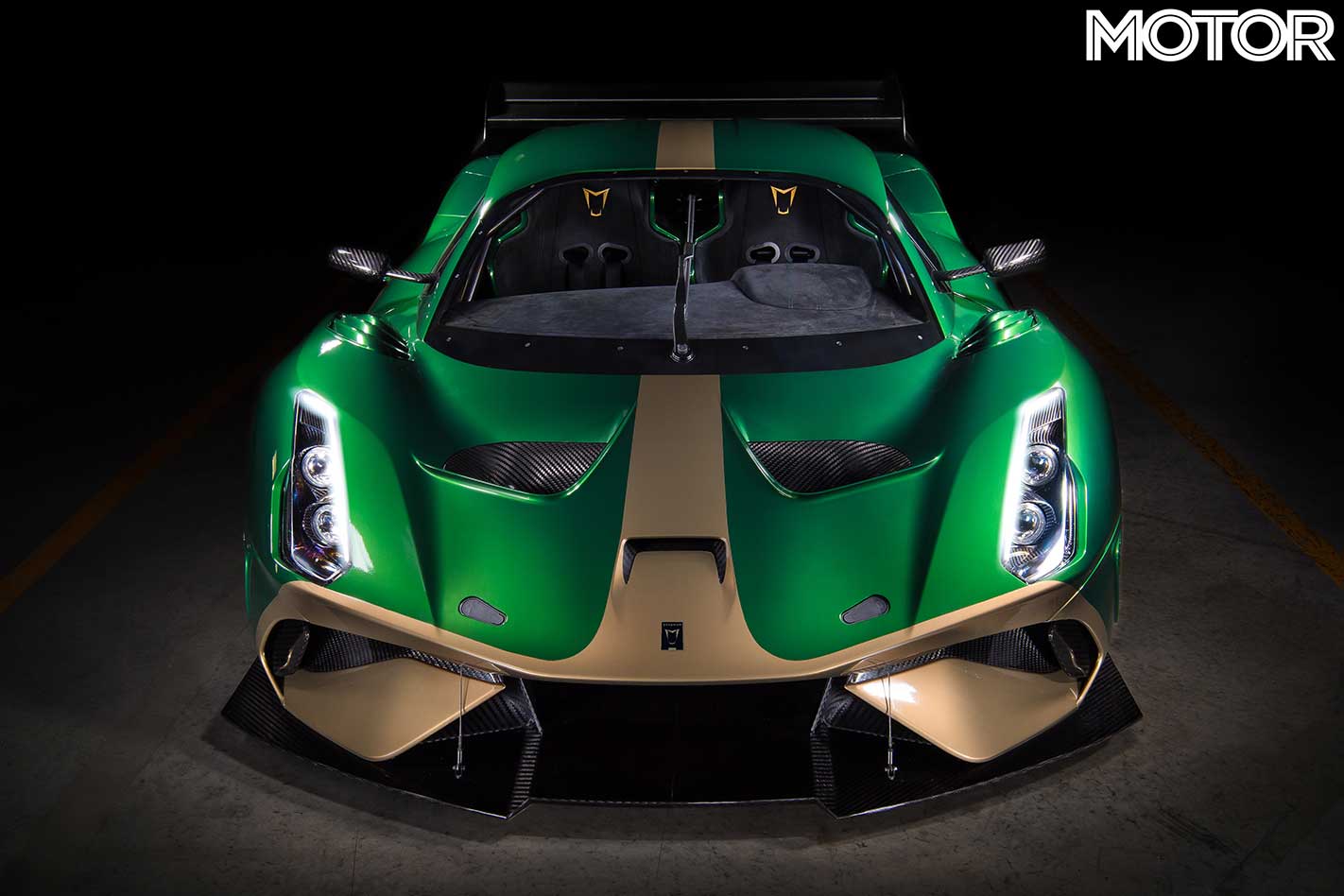
Let’s do a walkaround. That body, swept and tortured into its highly aerodynamic form, is wrapped around a bespoke, lightweight chassis with integrated rollover protection. Carbonfibre body panels hide a carbonfibre floor and carbon-Kevlar wheel housings. Gaping, air-hungry chasms scattered around the body also serve to feed the high demands of the BT62’s brake, engine and transmission cooling systems.
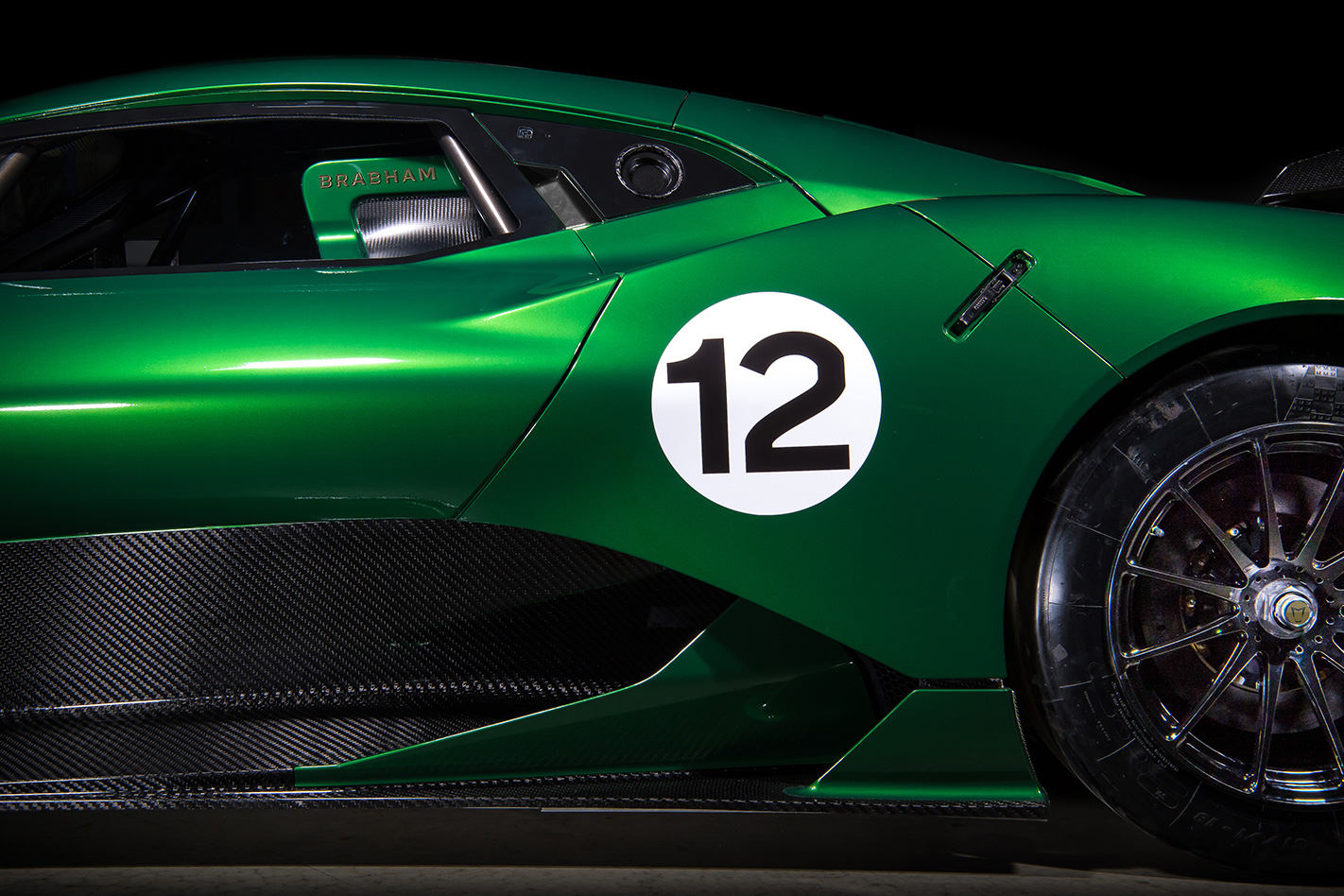
Around the front, if you look carefully, are hints of the exposed components that make up the inboard suspension system, which features track-proven, pushrod-actuated four-way adjustable Ohlins TTX dampers with coilover springs linked to the double wishbone suspension system at each corner of the car. You can even adjust the anti-roll bars linked to them.
The massive carbonfibre, adjustable dual-element wing with its Brabham-stamped end plates joins a full carbon splitter, a deep diffuser, aeroblades, canards and barge boards to help create a form that drips with race-honed cred. The centrelock wheels, clad in either Michelin slick or wet weather rubber depending on the day, are staggered front (11Jx18) to rear (13Jx18). They mask huge 380mm carbon discs up front, and 355mm ones down the rear, both using six-piston calipers and carbon brake pads.
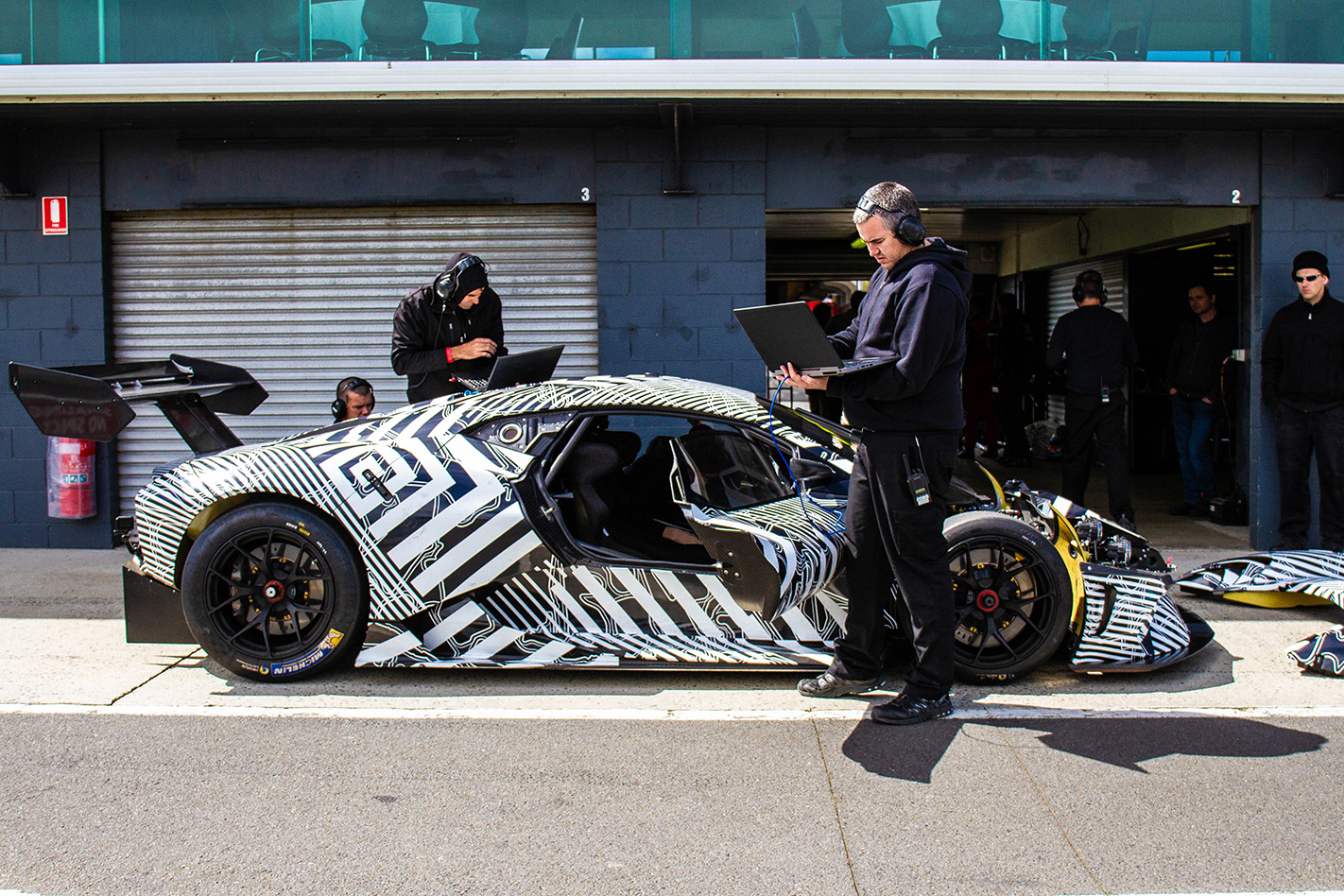
A pair of rakish, angular ports hint at the motorsport-spec exhaust system feeding off the bent eight. Interestingly, Brabham Automotive gives its drive-by noise rating at 98dB, a single decibel below that of the rating for the swansong HSV GTSR W1. You can get some appreciation, then, of what it should sound like at full noise.
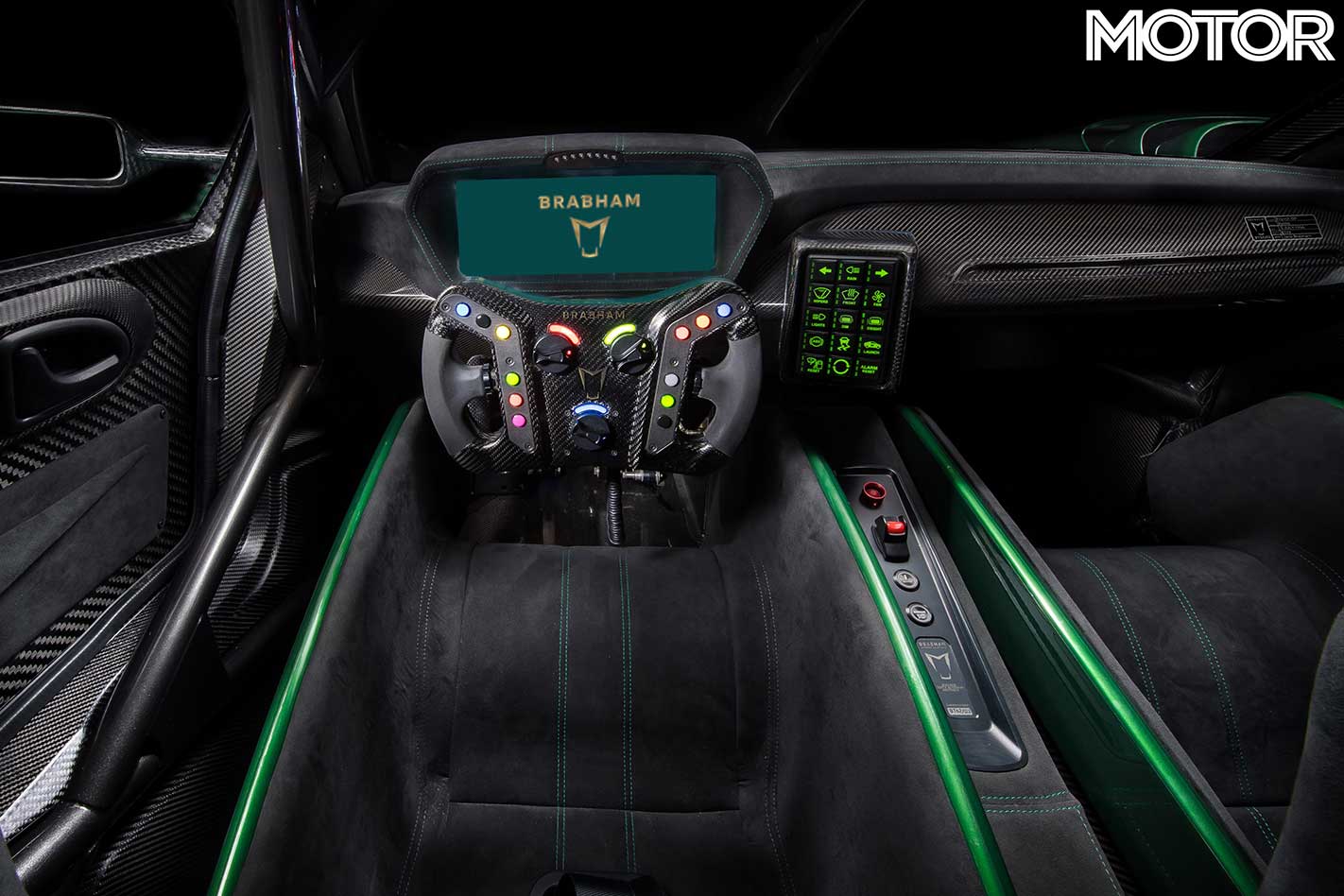
Crack a door, and the cockpit is ready for business. A 12-inch digital cluster sits in front of the driver, who gazes out on raw carbonfibre and Alcantara-clad surrounds. A FIA-spec kill switch features prominently on the high-waisted transmission tunnel in line with suspension controls, an engine starter button, and a plaque proudly stating the BT62 is built in Adelaide, South Australia, Australia.
Apart from the steering wheel, the interior is almost button-free; a monochrome touchscreen becomes the main interface for the BT62’s more pedestrian functions including, we note, the indicators, but even more remarkable, it includes a launch control setting. The driver’s body, meanwhile, is sucked into an FIA-rated carbonfibre-shelled, Alcantara-topped seat equipped with a six-point harness. There’s also a fire extinguisher plumbed in, and leather door pulls instead of handles. A passenger seat is optional, cost to be advised.
A full data log will be available, as is a full onboard air jack system and ambidextrous, rear quarter-window-mounted race fuel fillers. That’ll be handy right from day one of ownership, because each new owner will be invited to a Brabham-led track event to show them how to explore the BT62’s full ground effect potential.
Just 70 of the cars will be made, celebrating the 70th anniversary of the launch of Sir Jack Brabham’s motorsport career. Owners can choose from 61 liveries that mimic the livery of the historic racecars that have preceded their modern-day tribute, and that have helped to elevate the Brabham name to three Formula 1 drivers’ championships – and even one as a constructor.
And maybe, just maybe, some of them will stay right here in Australia.
SPECS
Model: Brabham BT62 Length: 4460mm Width: 1950mm Height: 1200mm Wheelbase: 2695mm Track: 1649mm (f); 1597mm (r) Weight: 972kg dry Weight distribution: 41/59 (wet, with driver) Fuel: 98RON (E85 capable), 125L
ENGINE
Type: Mid-mounted longitudinal 5387cc V8, dohc, 32v Max power: 522kW @ 7400rpm Max torque: 667Nm @ 6200 rpm Bore x stroke: 94 x 97mm Compression ratio: 10.5:1 Transmission: 6sp sequential
WHAT IS IT?
The first car to utilise Volvo’s new CMA (Compact Modular Architecture) platform co-developed with the brand’s Chinese owners, Geely. Asia provided the funding but Sweden was responsible for the core engineering for a platform destined to underpin the next-gen V40 hatchback, as well as any spin-offs that freshly flush Volvo deems commercially viable (think C30 coupe-hatch and V50 wagon replacements, if they get a green light)
WHY WE’RE TESTING IT
Initial overseas reports suggest the XC40 builds upon the larger XC60’s all-round excellence, while pushing styling boundaries towards the left of centre. And its available colour palette elevates it beyond the monochromatic boredom we’re increasingly being subjected to.
MAIN RIVALS
The dated (and soon-to-be-replaced) Audi Q3 and its slightly smaller, much funkier Q2 sibling; the patchy BMW X1 and its sexier X2 derivative; the happy-faced Jaguar E-Pace; and the oddly sized, recently updated Mercedes-Benz GLA.
THE WHEELS VERDICT
Bringing some much-needed Scandinavian styling flair to the premium small SUV sector, the XC40 excels at both utility and sensuality (for an SUV, at least). It’s almost perfectly sized for an urban family – comfortably capable of seating four, with a usefully well-configured boot and plenty of clever storage ideas. That it’s also entertaining to drive, interesting to look at and solid value for money pretty much seals the XC40’s fate. It’s bloody good.
PLUS: Unmistakeably a Volvo; excellent packaging; strong turbo-petrol powertrain; keen handling and steering; striking appearance; absence of cost-cutting MINUS: The odd build-quality hiccup; fixed-damper ride needs finessing; three-cylinder engines some way off; no plug-in hybrid; Lava Orange carpet shouldn’t be the only vibrant offering
THE WHEELS REVIEW
YOU know the zeitgeist has shifted when an SUV debuts an all-new platform, well ahead of its traditional hatch and sedan relatives. And so it proves with the Volvo XC40 – Sweden’s more compact follow-up to the COTY-winning, strong-selling XC60.
Freshly minted in almost every area, while carrying over Volvo’s finest assets (namely powertrain and multimedia systems, among other winning elements), this immensely likeable SUV should be making the Germans second-guess their priorities.
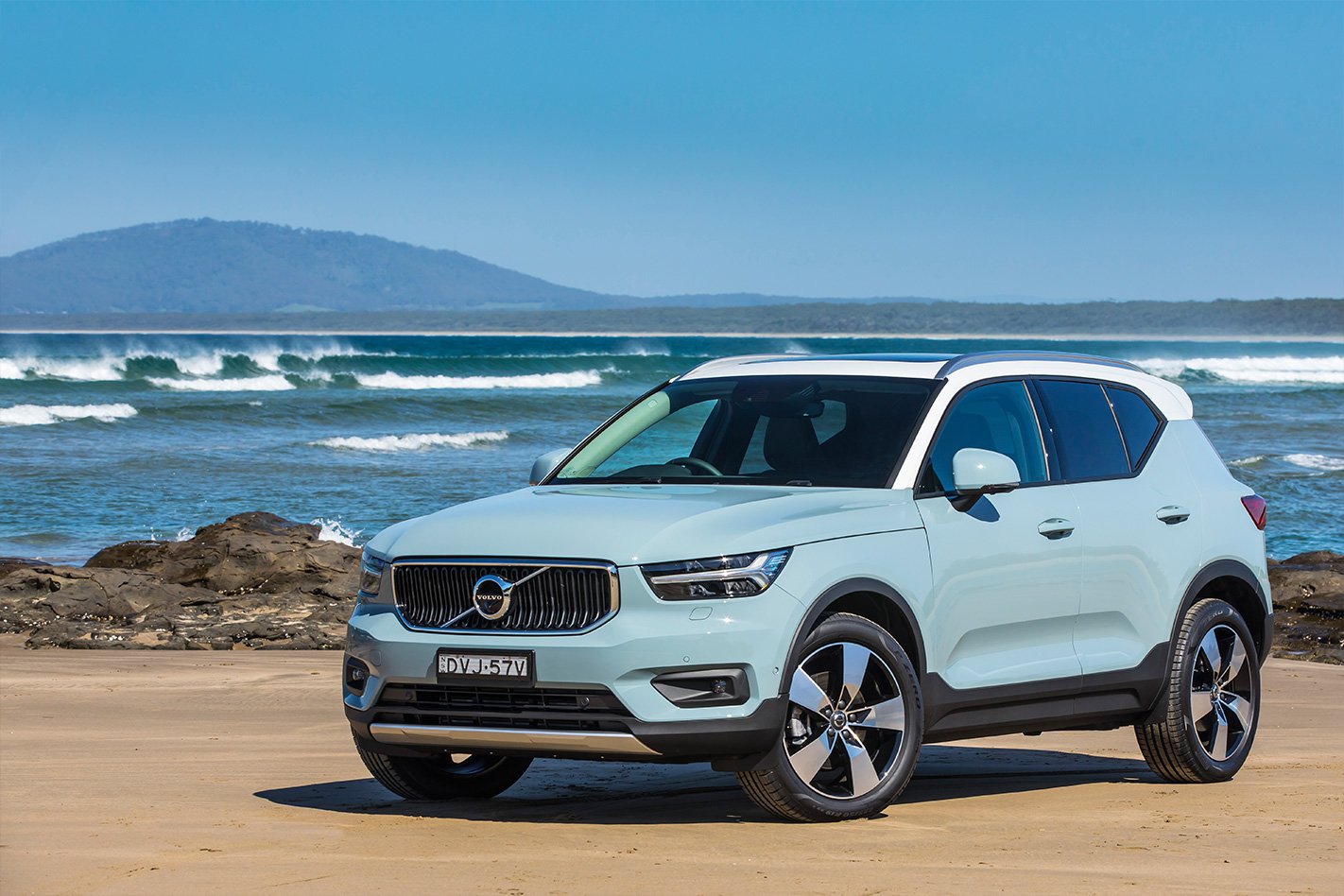
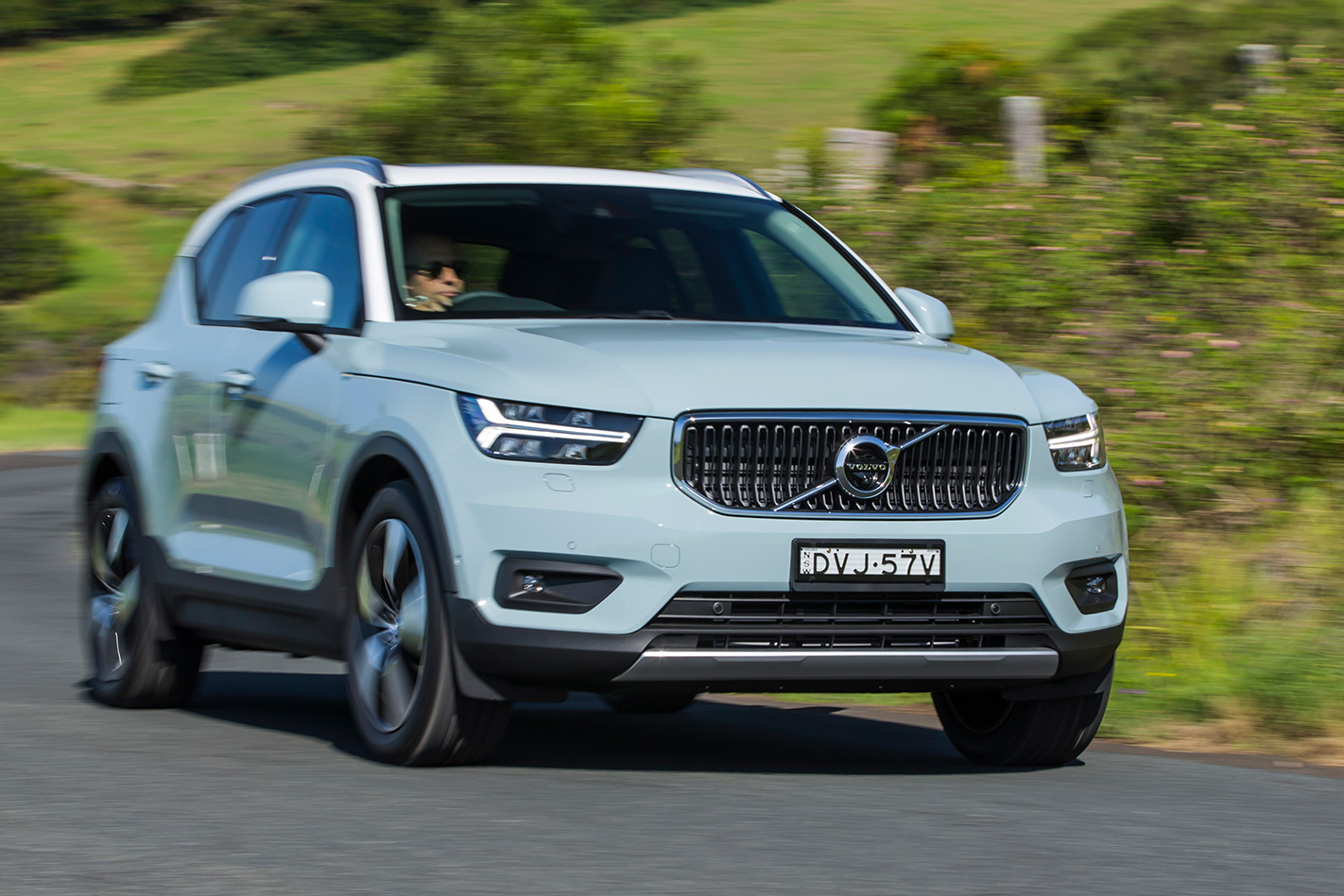
Consciously differentiated from other Volvos stylistically, while retaining the brand’s trademark grille shape and ‘Thor’s hammer’ headlight signature, the XC40 is a chunky, fun-looking thing. Measuring just 4425mm long yet riding on a leggy 2702mm wheelbase, with a body 40mm wider at the rear than the front to give it a buff stance, Volvo’s Senior Vice President of Design, Robin Page, likened the XC40 to a Prada trainer – “expensive, modern, and more playful in character [than its larger siblings]” – which, if your T5 Momentum is painted Amazon Blue with a white roof like our test car, doesn’t sound like too much of an airy-fairy spiel.
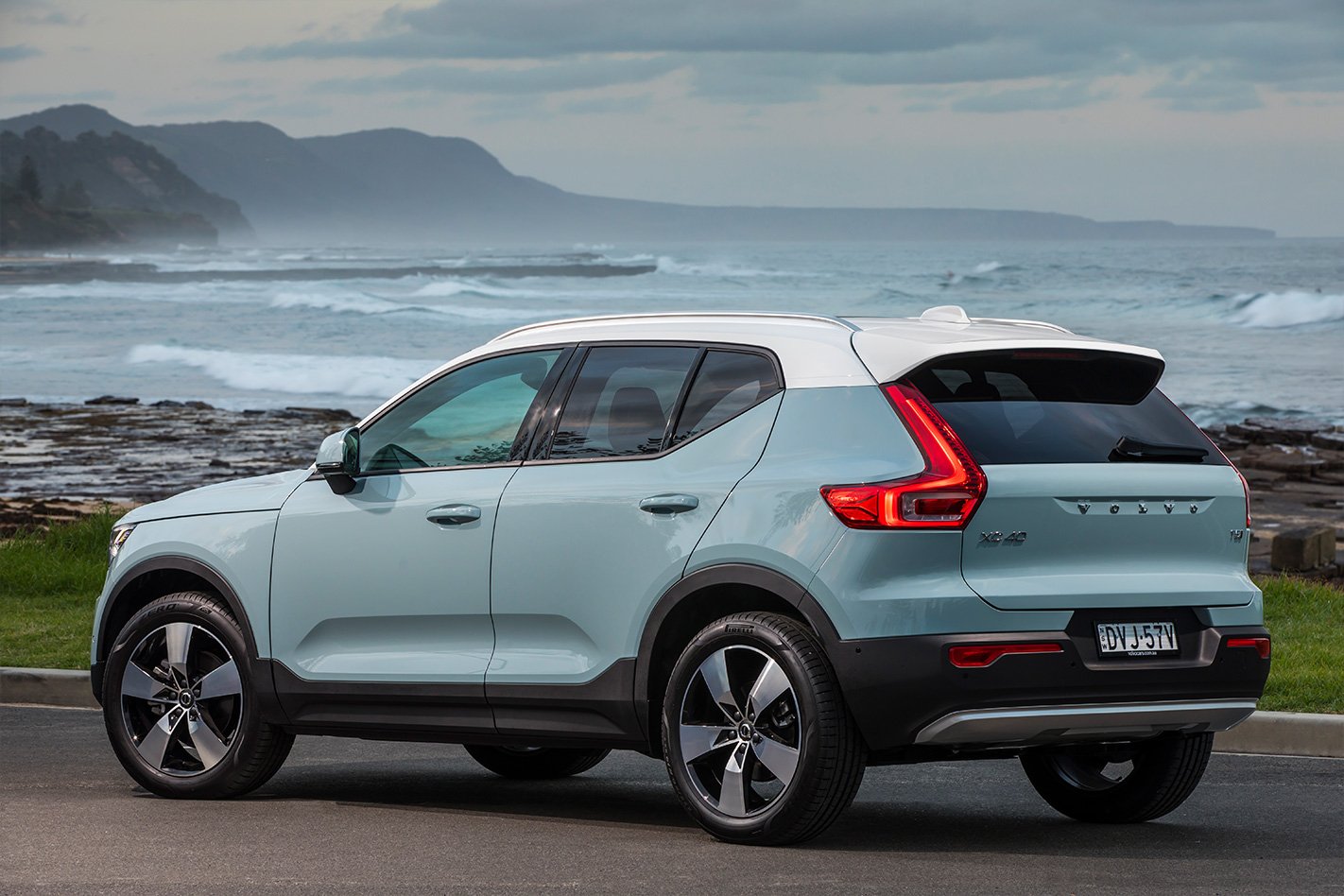
Deliberately packaging the XC40 broad and tall has reaped substantial reward inside. Front seat comfort rivals larger Volvos for excellence of support, yet slender backrest depth delivers ample rear foot- and leg-room, even for six-plus footers. It’s like a baby Tardis. And the rear seat itself is decent, too, with good vision and surprising under-thigh support, despite a relatively short cushion.
The rear-seat backrests fold dead flat almost instantly (either via latches at the top or power-operated buttons in the boot) and the cargo hold measures 460 litres (if you count the underfloor storage) with a configurable floor that concertinas mid-way to prevent your shopping from up-ending, exposing three ‘takeaway’ hooks along its upper edge. Along with stuff like a removable centre bin backed by meshed netting, a fold-out takeaway hook from the glovebox, a rubber-lined storage drawer under the driver’s seat, and the lower front door speakers relocated to inside the instrument panel for greater door-bin room, the XC40 gets a great big tick for utility.
Two models grace Aussie showrooms – Momentum and R-Design (not the up-spec Inscription), in either T5 petrol or D4 diesel guises, with value-focused Launch Editions offered for each – though only the sports-flavoured R-Design offers optional Lava Orange carpet (made from 97 percent recycled plastic) for a touch of ’70s supercar chic. And only the Momentum can be had in ’60s-retro Amazon Blue paint with a white roof (pictured).
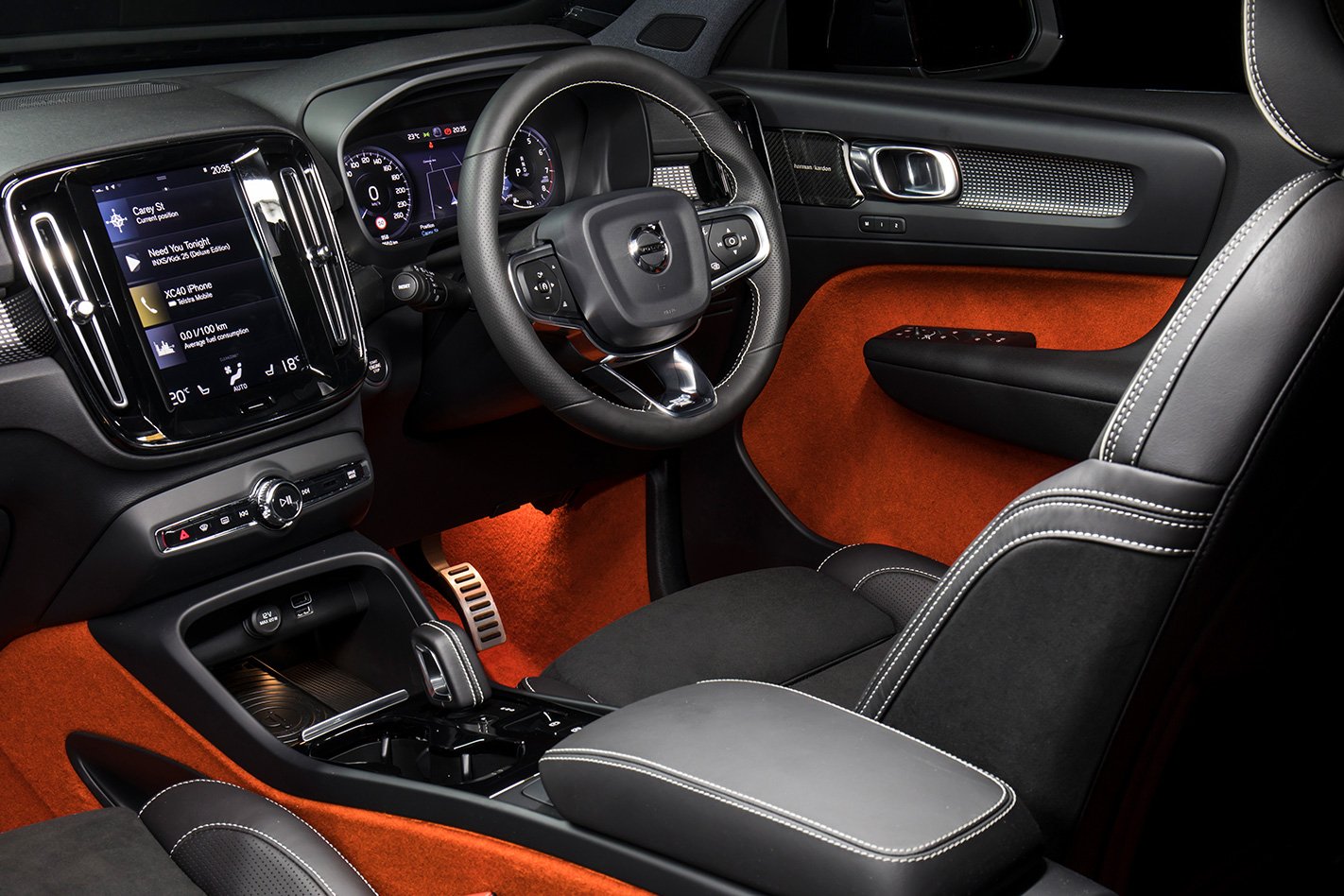
Indeed, the XC40 cuts a dash colour and trim wise. All R-Designs get contrasting black roof sections and lush leather/microfibre trim with acres of white stitching, while the carpet extends the entire length of the centre console (as per XC60) and right up into the upper door sections. In orange, it’s a striking counterpoint to the drab conservatism of all-charcoal. Likewise the leather colour choices for the Momentum (amber, blonde and oxide red, as well as charcoal), match with five exterior hues featuring white-painted lids or seven single colours.
There isn’t a whole lot of choice in the drivetrain department, though that’s hardly an issue. Both the 182kW/350Nm turbo-petrol and 140kW/400Nm turbo-diesel 2.0-litre fours, matched to slick Aisin eight-speed automatics and all-wheel drive, head the class for output and performance. Only T5 petrols were at the Aussie launch, with the union between engine and chassis proving a sweeter combination than in the XC60 (which is better-suited to the torquier, lazier diesel).
The XC40 T5 offers genuine grunt – 0-100km/h in a claimed 6.5sec is hot-hatch (or BMW X1 xDrive25i) territory – and yet it manages to combine that urge with silky refinement. The R-Design gets steering-wheel paddles (with chintzy shiny-plastic facings undermining the feel of the rubberised backs), while the Momentum relies on the pert little shift knob’s intuitive left-right pulsing for up/down manual shifts (as per old Mercedes-Benz autos). Curiously, bumping the lever from Park into Drive is a slightly frustrating two-stage process – it selects neutral first, then D – though I imagine owners would get used to it. Everyone else will simply feel like a numpty.
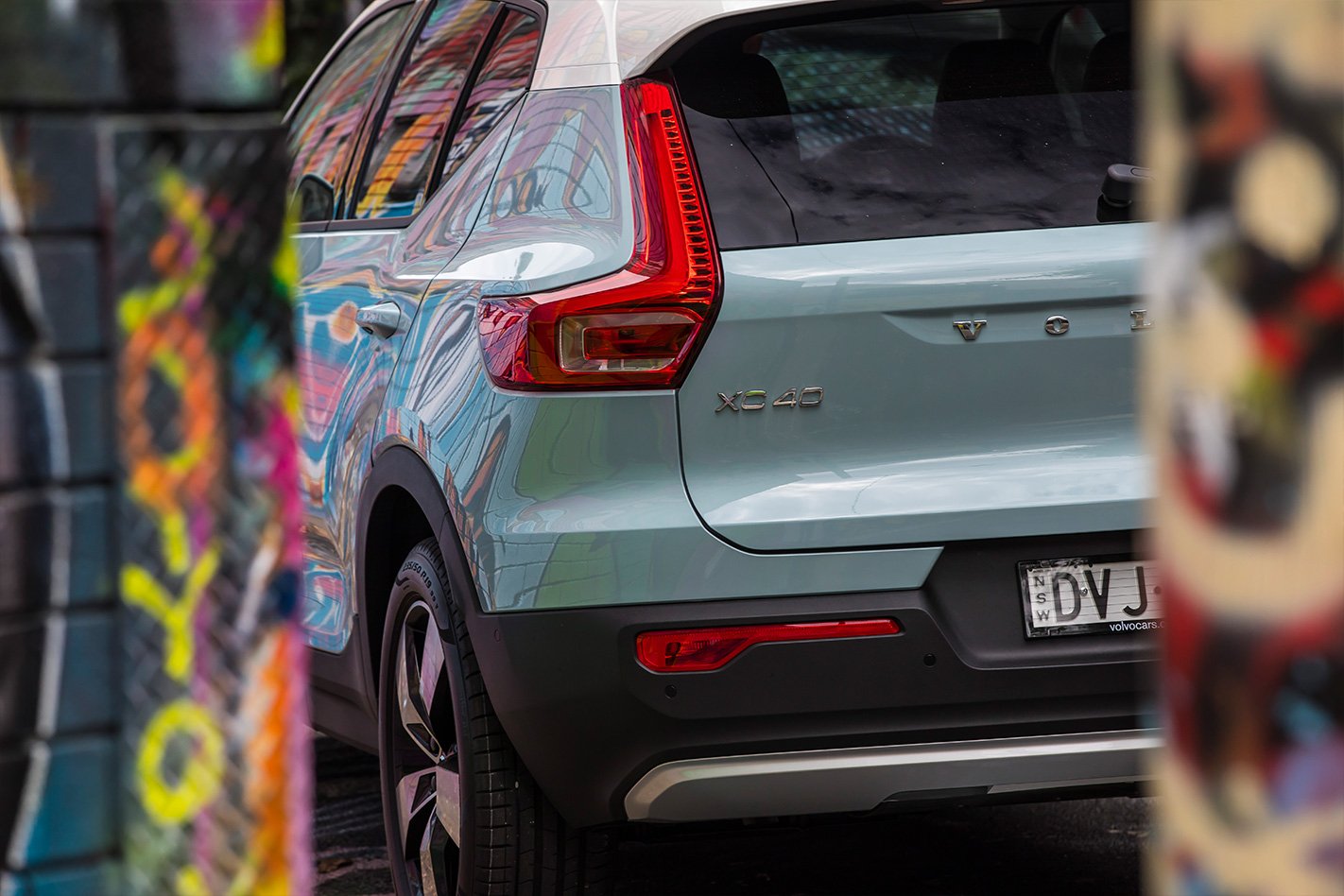
It’s the XC40’s dynamic performance, however, that elevates this delightfully designed bundle of goodness to serious-contender status. While there’s a lack of compression damping in the XC40’s standard suspension set-up (no launch cars were fitted with the optional ‘Four-C’ adaptive dampers), making it more familiar with its front bump stops over larger hits than it should be, its poised confidence in corners is terrific.
Wearing 235/50R19 Pirelli P Zeros on our test Momentum Launch Edition, its keenness to change direction, its ability to involve its multi-link rear end when turning in, and the newfound feel in this Volvos steering mark it as a cut above the already-impressive XC60. And there’s a noticeable calibration improvement here too, with greater finesse in the XC40’s throttle response in Dynamic mode, and its overall steering weighting. Even in Comfort, the XC40 Momentum is an amusing car to hustle, belying its 1684kg-plus kerb weight, with the 245/45R20-tyred R-Design version raising the grip threshold even further. It’s also quiet, with an admirable lack of sensitivity to road-surface changes.
If I had to play devil’s advocate, I’d point out that the Belgian-built XC40 can’t match the precision of a Lexus SUV’s panel fit, and that the trim gap between dashboard’s left-side trim insert and centre stack on our test Momentum was an isolated case. I’d also mention that unless the 13-speaker Harman Kardon stereo is set to driver-focus and its surround-sound effect cranked right up, you can tell the audio staging is completely dash-centric (no lower door speakers, remember, only upper tweeters). But there’s plenty of distortion-free bass on offer.
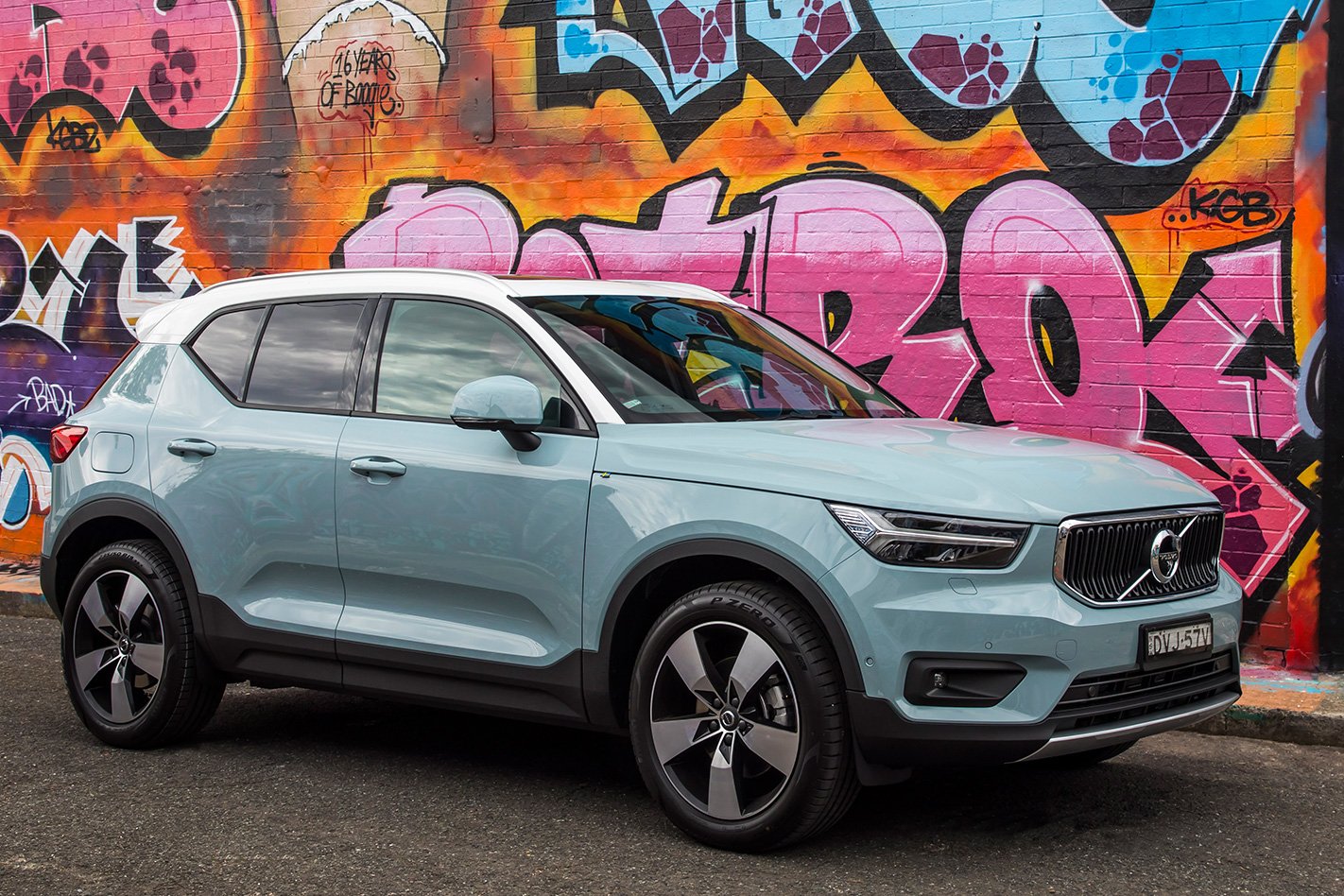
And plenty of value here too. At $52,990, the T5 Momentum Launch Edition ($3K more for the D4 diesel, with the R-Design Launch Edition starting at $56,740) mightn’t be cheap, but its kit list is seriously premium. A big glass sunroof, adaptive LED headlights, adaptive cruise with (effective) Pilot Assist, Harman Kardon audio, heated front seats, power rear backrests, diamond-cut 19s, 360-degree camera, keyless entry that includes the tailgate, full ambient cabin lighting, an electric front passenger seat and leather trim puts it dead-level (or better) than the top-spec Japanese medium SUVs at a similar price.
So, as we quietly hoped, this CMA-platformed Volvo SUV has taken all the talent and Scando suaveness of its larger XC60 sibling and run with it. Cool and quirky, yet also clever and capable, the XC40’s packaging is so comprehensively kick-arse that it’s not just a mega-strong challenger to the Audi Q2s and BMW X1s of this world, but also a genuine alternative to a flagship Mazda CX-5. And that buys it a ticket to potential greatness.
SPECS Model: Volvo XC40 T5 Momentum Engine: 1969cc 4cyl, dohc, 16v, turbo Max power: 182kW @ 5500rpm Max torque: 350Nm @ 1800-4800rpm Transmission: 8-speed automatic Weight: 1684kg 0-100km/h: 6.5sec (claimed) Economy: 7.7L/100km Price: $52,990 (Launch Edition) On sale: Now
This is the question that gets car enthusiasts all hot and bothered – SUVs versus wagons.
In the past most petrolheads would have told you that wagons are far superior machines to lumbering SUVs and crossovers, offering better handling and fuel economy, while still being just as practical.
That may have been true at one point, but times have changed – SUVs have evolved massively over the past 20 years, with huge improvements across the board. No wonder they now outsell traditional passenger cars in this country. Self-professed “driving enthusiasts” may bitch and moan, but the majority of the driving population has voted in favour of the SUV.
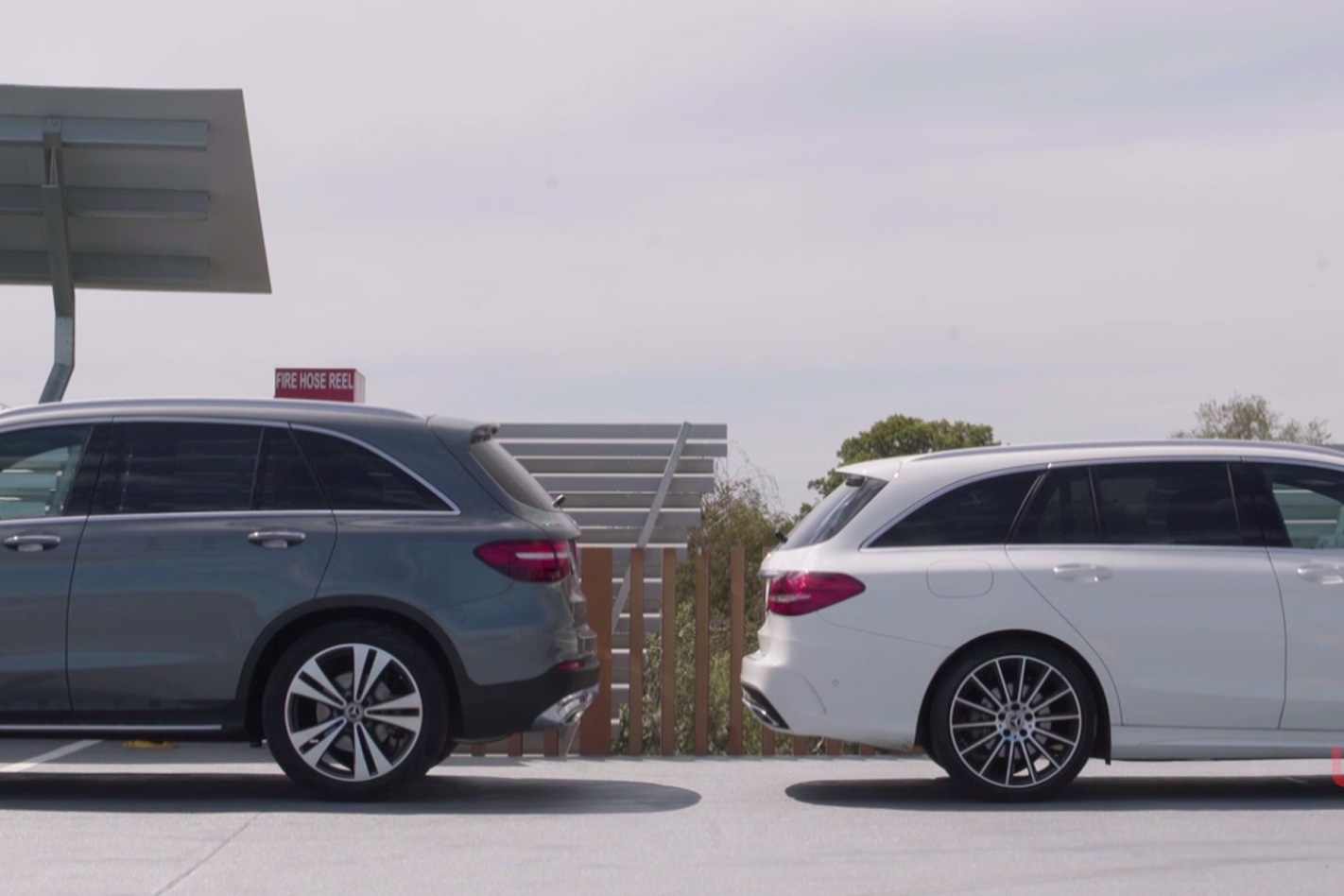
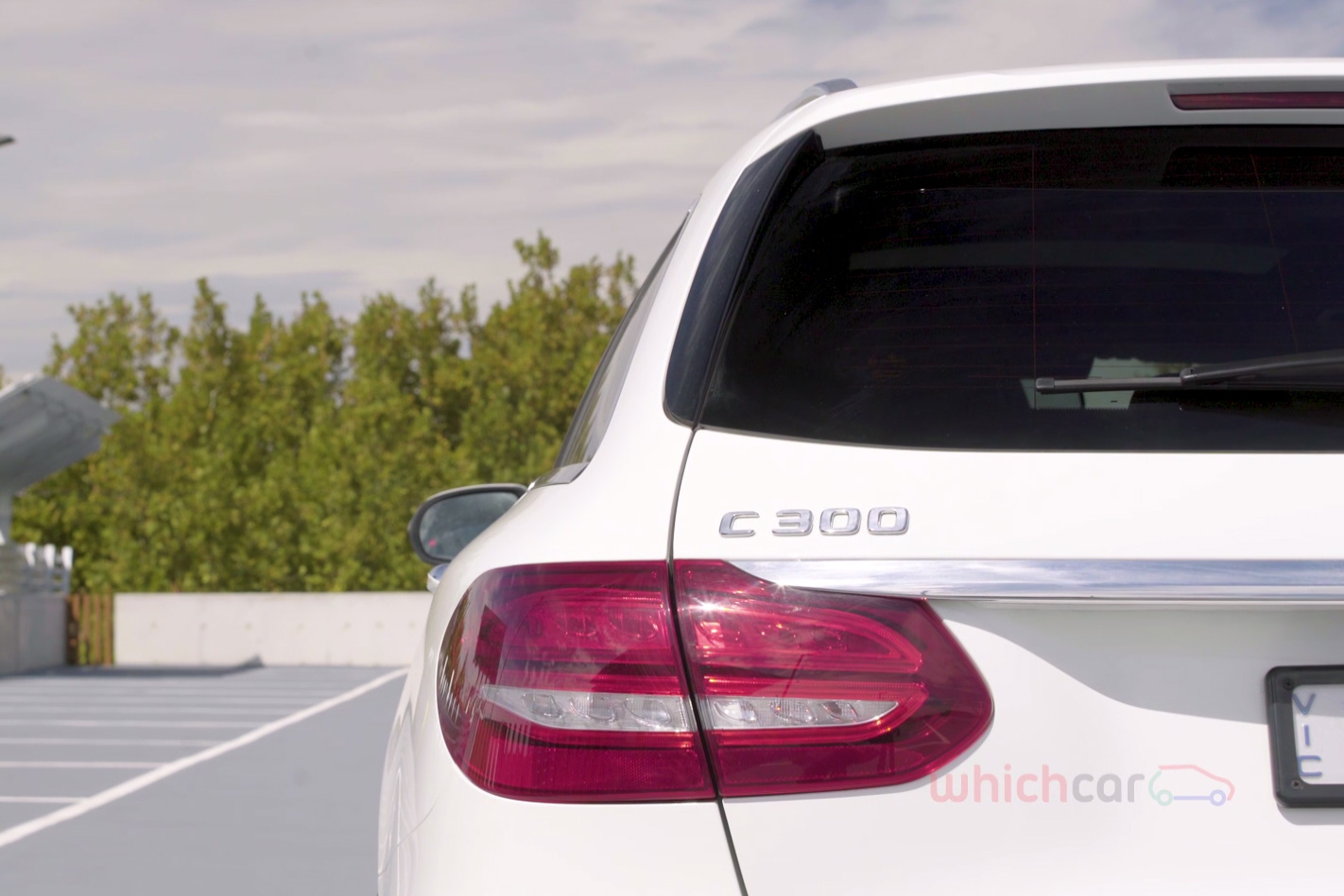
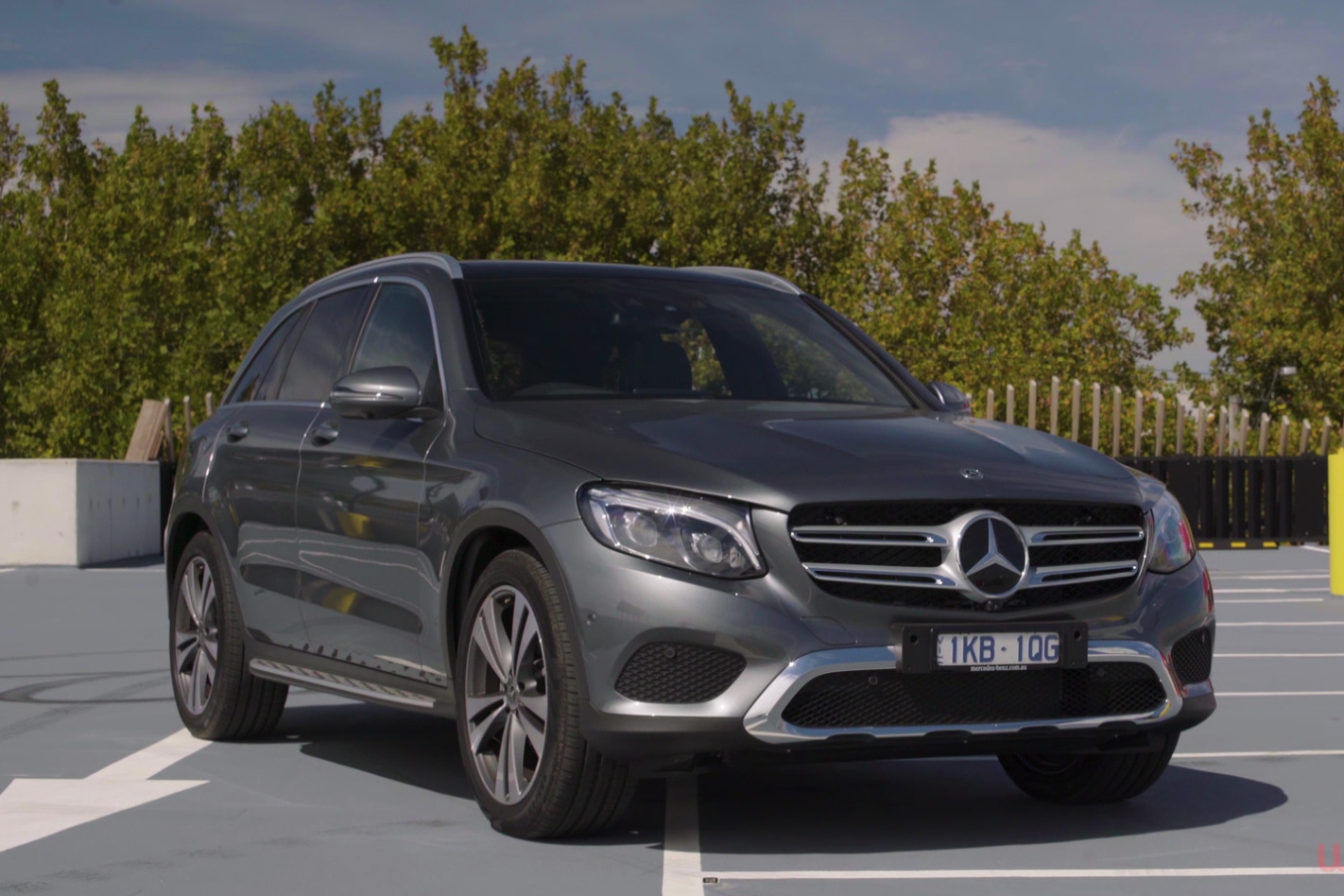
Even so, each bodystyle has its advantages and compromises. To step you through exactly what these are, we’ve borrowed a Mercedes-Benz C-Class estate and its SUV counterpart, the GLC. Both of these cars are based on the same platform, with similar engines and gearboxes. With so much in common under the skin, we can focus on the bodystyle differences alone.
Let’s start with the C-Class. Low slung and long-bodied, the C-Class Estate cuts a classier silhouette than its SUV stablemate, though the obvious tradeoff is that you miss out on an elevated seating position to help see over other traffic – something that’s frequently cited as a primary reason for purchase by SUV owners.
Another factor that drives SUV sales is the ease of strapping kids into the rear seats – on the C-Class Estate, you need to stoop down to lower your offspring into baby capsules and the like. With the taller seats of the GLC, there are fewer challenges to your lower back.
On the flipside, lifting and loading heavy or bulky gear into the back of the C-Class wagon is easier thanks to its lower boot lip, and while the C-Class has slightly less cargo capacity with 510 litres of seats-up storage versus the GLC’s 550 litres, in real-world terms most would struggle to find one car to be a better load-lugger than the other – the dimensional differences are actually pretty minute, at least with the retractable cargo cover in place.
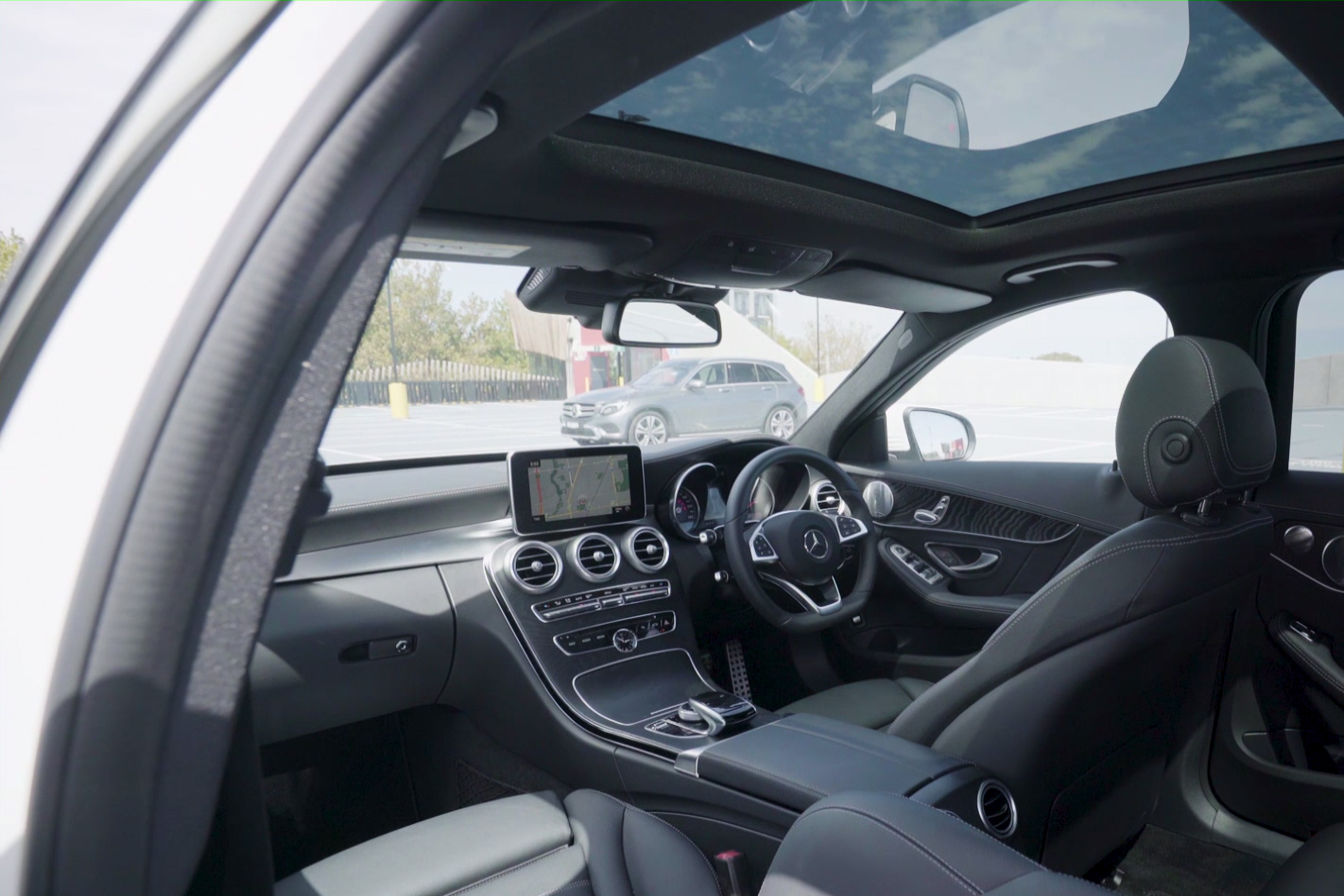
The GLC sits on a slightly longer wheelbase than the C-Class wagon, which brings with it slightly more rear seat legroom. However, the GLC’s biggest advantage as far as interior metrics are concerned is in cabin height. For the rear bench the GLC has 60mm more space between the seat base and the ceiling, and with more air between your noggin and the roof lining the GLC simply feels more spacious and accommodating. The GLC also has a fractionally wider cabin, which buys those with child seats to carry a little more wriggle room.
The C-Class feels a lot cosier by comparison, especially in the back if you’re tall. Not necessarily claustrophobic, but sit in the back of both and it’s clear that the GLC is the more commodious of the pair.
But what about that old trope of SUVs being ungainly and horrible to drive, with high centres of gravity and a propensity to tip over? That point of view may apply to larger, heavier four-wheel drives built on heavy-duty ladder frame underpinnings (like the Toyota LandCruiser, Prado and Nissan Patrol), but the average SUV these days has a lighter, more carlike construction that provides much better handling that those barges.
In the case of the GLC we have here, yes, it does feel a lot heavier in its responses – after all, at 1.7 tonne this GLC250 is over 100kg heavier than the C300 Estate we’re comparing it with, and it has the extra mechanical heft of all-wheel drive as well. But it’s no boat. Far from it in fact.
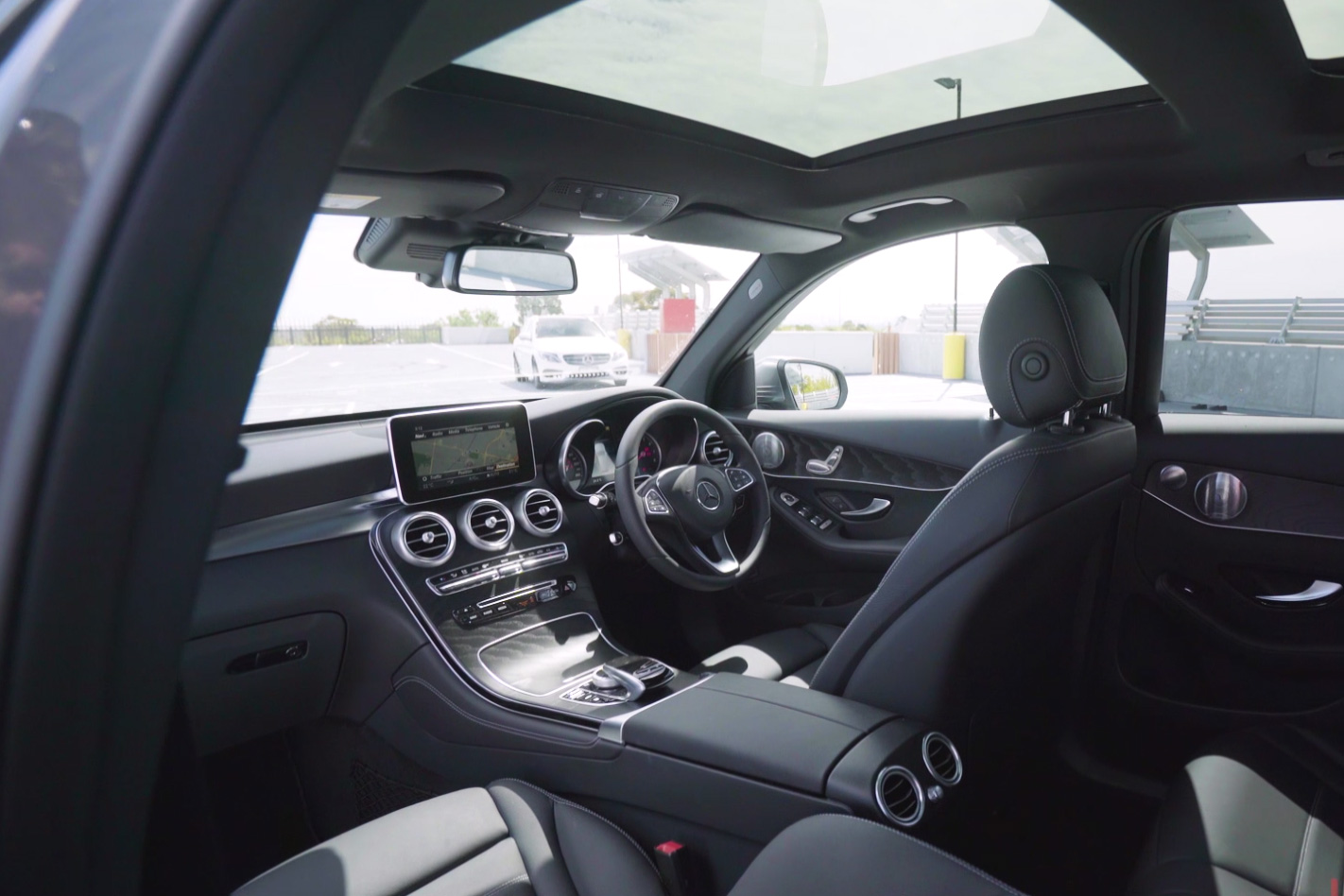
Keen drivers will still find more to love in the lighter and lower C-Class estate, however. It’s simply lighter on its feet and more fun to steer, even if it misses out on the wet-weather grip of AWD.
Those drivers will also enjoy better fuel economy – the biggest and most relevant downside to SUVs. Thanks to larger frontal areas that generate more drag, combined with higher kerb weight and extra mechanical drag from AWD, SUVs will always burn more fuel than a comparably-engined station wagon. It’s simple physics.
These two cars illustrate this difference perfectly. The C300 Estate makes 25kW more power and 20Nm more torque than the GLC 250, yet it consumes just 6.7L/100km on the combined cycle. The bigger and heavier GLC, on the other hand, drinks 7.2L/100km. Fuel isn’t going to get any cheaper in the long term, so on-going impact on your hip pocket is definitely a factor that’s worth considering.
Our take on the SUV versus wagon debate is this: SUVs make great sense for family buyers, especially families with young children – especially outdoorsy families.
Everyone else might be better served by a wagon, especially if fuel costs are a concern, but arguably it’s no longer a black-and-white decision. SUVs are no longer the compromised beasts they once were, and really, and if your personal preference sees you looking in the direction of a tall-bodied crossover or so-called ‘softroader’, there’s absolutely no shame in that.
