
Holden has revealed images and details of the next generation Commodore Supercar’s first shakedown, which took place over 60km at Norwell Motorplex in South-East Queensland.
Triple Eight Race Engineering, in conjunction with Holden, completed the testing after a 10-month computer-aided design, development, and build program.
Though the car has Shane Van Gisbergen’s name on the window, it was Jamie Whincup in the driver’s seat for the duration of the shakedown.
He said the lightly test-camouflaged car performed well enough that he feels it’s almost ready.
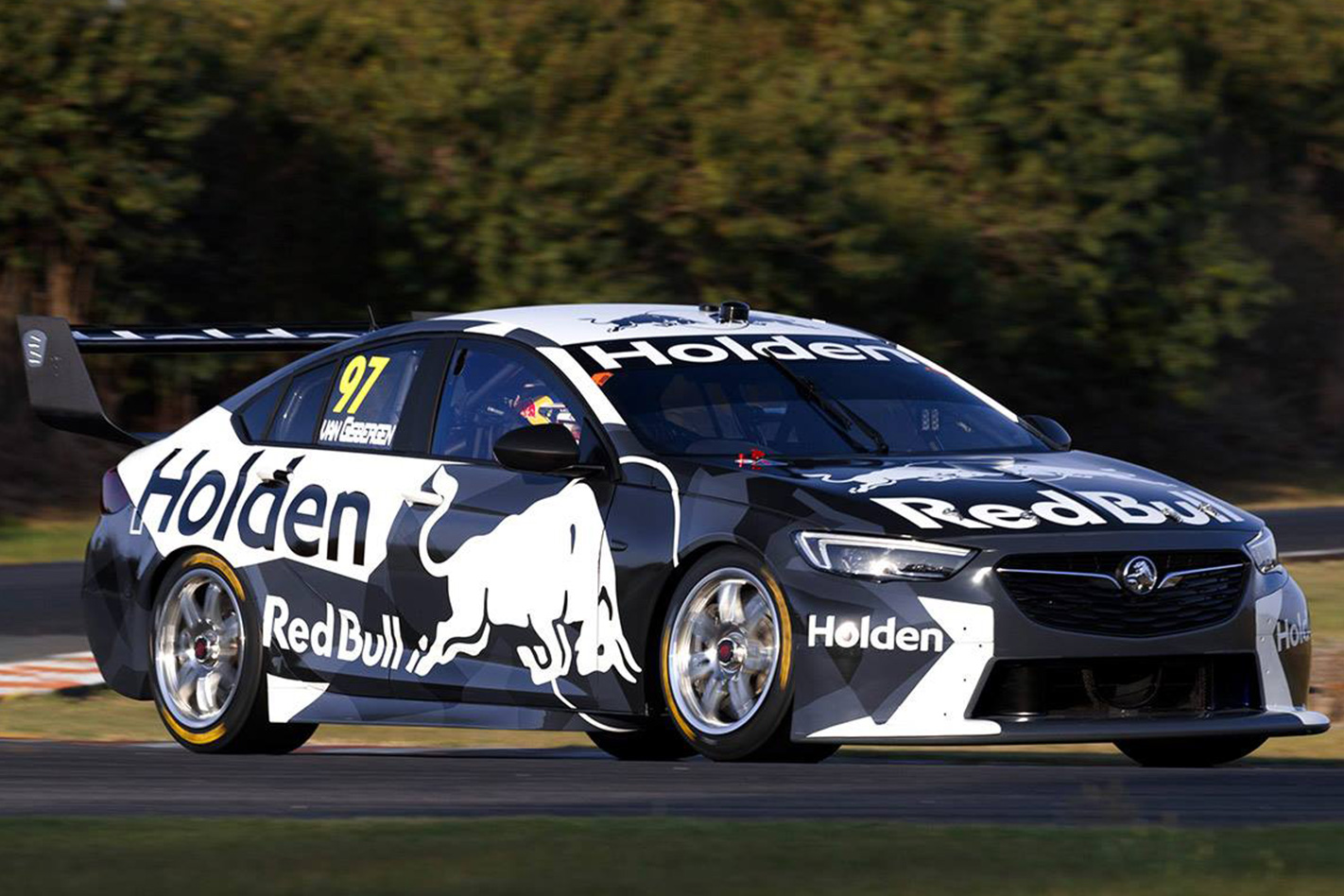
“So far it feels fantastic. The work that they’ve done behind the scenes to this point, in my opinion we’re 99 per cent there.
“There’s just some fine-tuning that’s got to go on in the next few weeks and the next few months until we unleash the full version in 2018.”
Triple Eight head-honcho Roland Dane was also present, as the man who’s overseen a large portion of the car’s development.
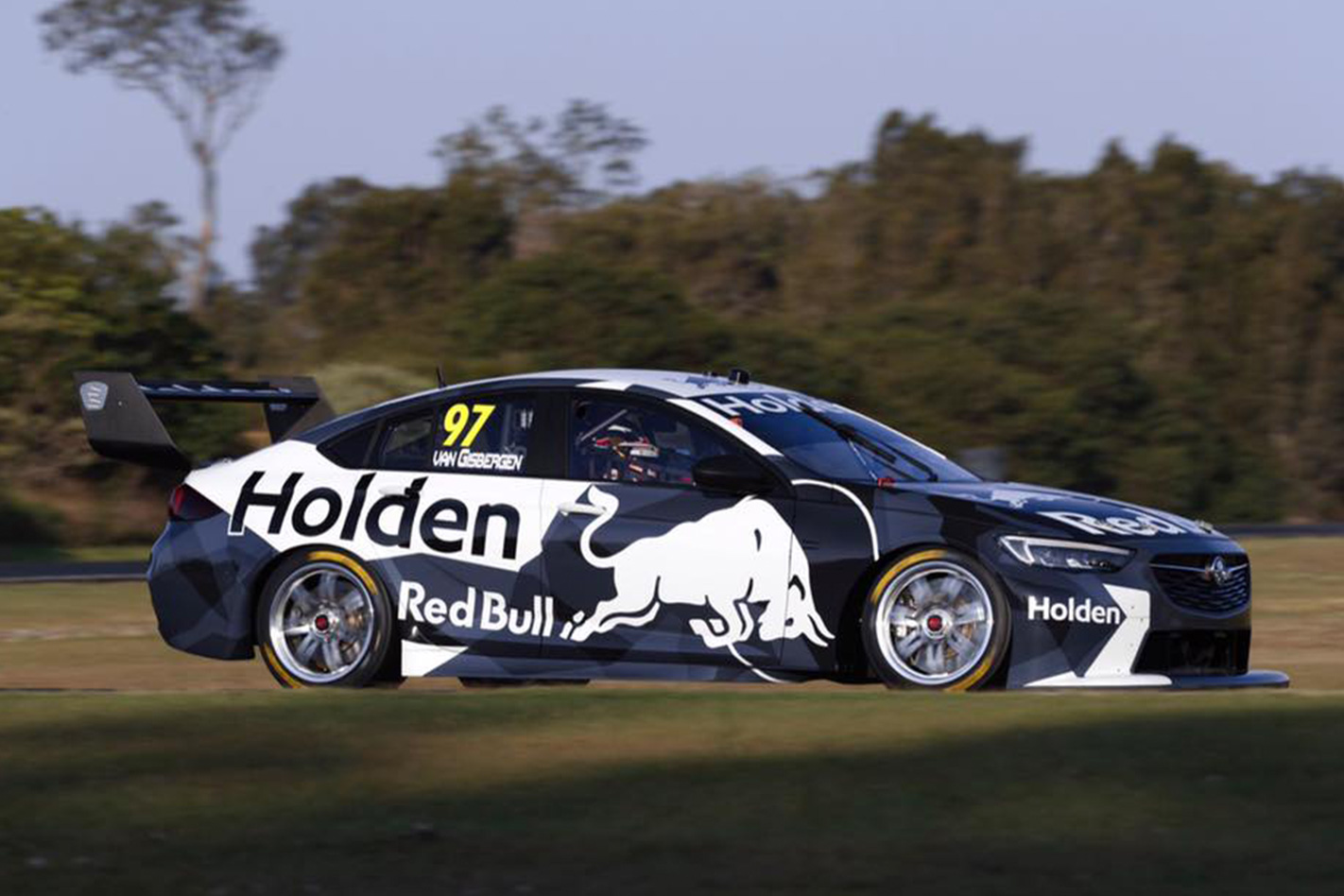
“The team’s had to work incredibly hard this year in order to compete on track with the current VF Commodore, but also work flat out on the new car.
“By the time we get to the end of this year, the development process will have taken up about 20,000 hours.”
Dane has also said he’d like to run the car with the next-gen V6 engine during the 2018 round, as a wildcard entry and a comparison to the V8s.
The ZB Commodore-based Supercar will debut at the Adelaide 500 in March 2018, around the same time as the road car is released.
If you’ve got an HSV Gen-F2 GTSR in the driveway or on order, you are one very lucky boy. Or girl.
That’s because we’ve just had this Spitfire Green example through the MOTOR office and it made us wonder, do you really need a W1? But since nobody on MOTOR staff has driven a W1 yet – long story – we can’t be conclusive. And we weren’t about to lend it to Morley (who has driven a W1). All we know is, if we never got to drive a W1 and were left with a GTSR, it wouldn’t be all so bad.
This is an excellent muscle car. Perhaps it’s not the ‘greatest’ car HSV has ever made, but it could be the sweetest. The ‘best’, even.
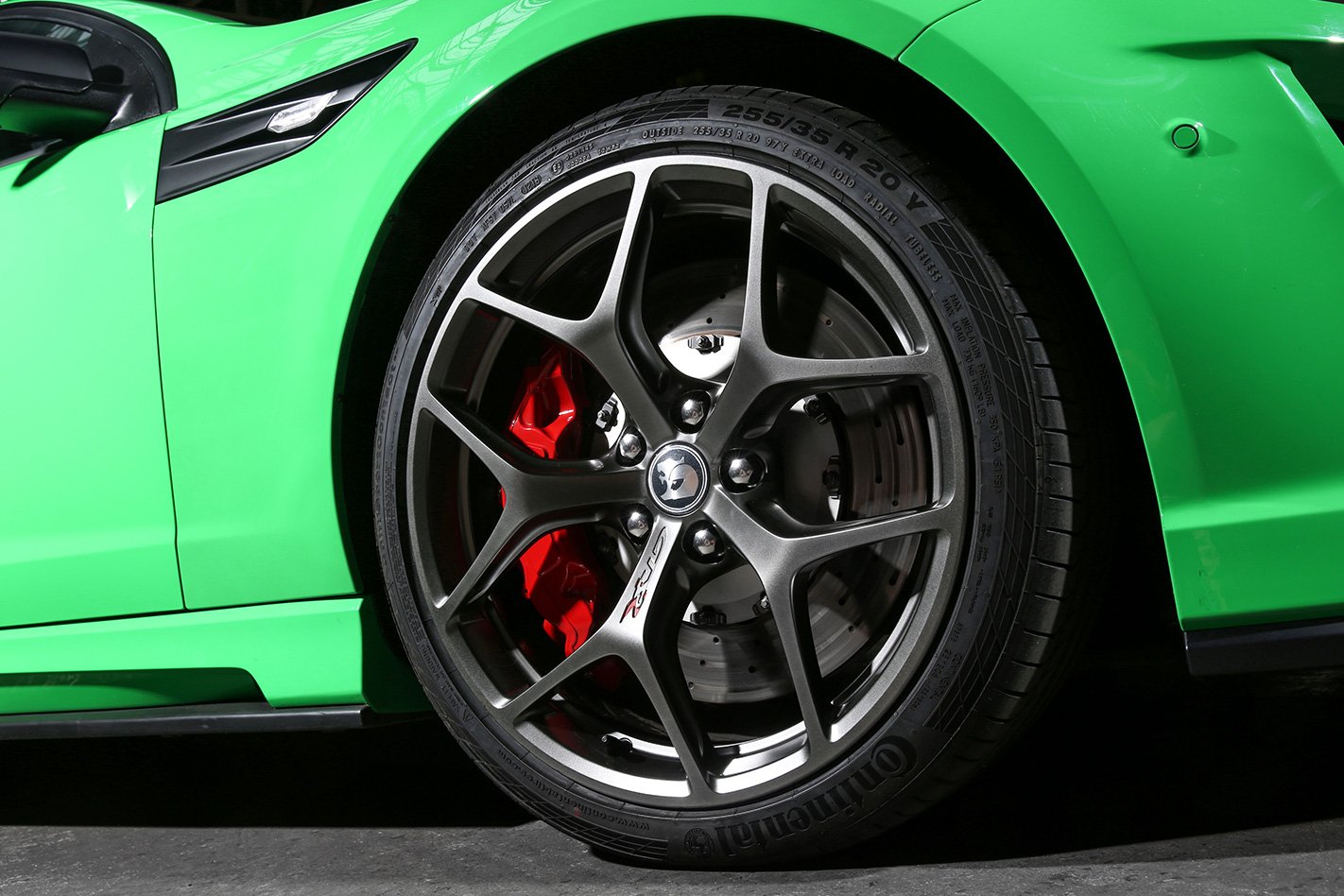
These are, perhaps no surprise, the best brakes we’ve ever experienced on an HSV and are genuinely from supercar land, with outstanding feel and power, matched well to the slightly wider (than Clubsport, by 0.5-inch) 9.0-inch front wheels with 255/35 Continental ContiSportContact 5Ps.
With warm tyres in the dry, these are brakes that you keep pressing, pressing, pressing, waiting for some ABS, but then bailing out because it feels wrong that such a heavy car should be standing so hard on its nose. But it does, and happily.
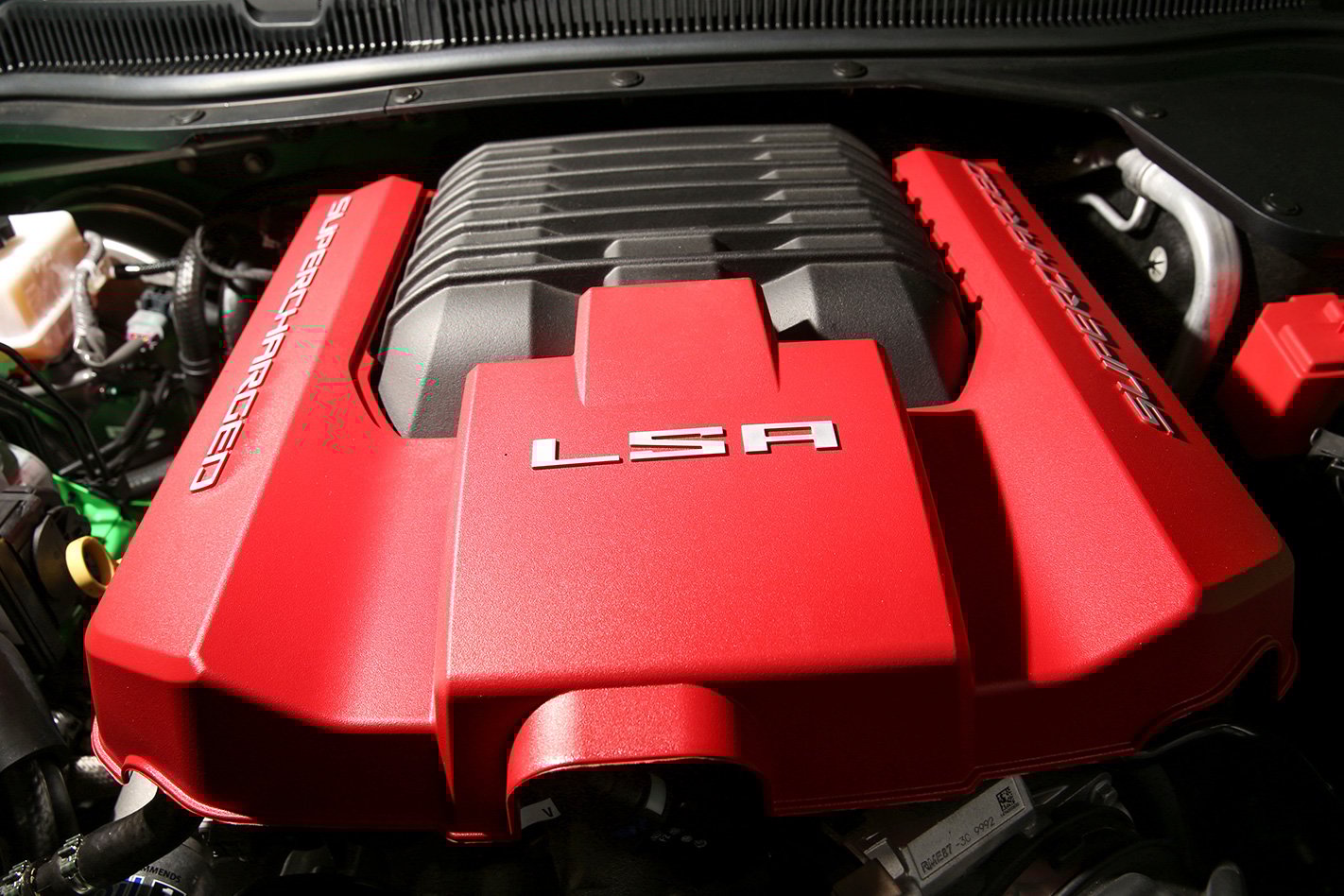
Traction from the rear 275s is equally impressive. You can feed the rear tyres far more of the 6.2-litre LSA V8’s 435kW/740Nm than you should be able to. While we didn’t performance-test this manual example this time around, it feels strong and it feels quick.
A lot of that has to do with the manual ‘box, and while we normally caution against the three-pedal model in HSVs, in the GTSR’s case it’s the one we’d get.
Our test car, while fitted with a spec of the almost ubiquitous muscle car manual ‘box, the Tremec TR6060, slotted gears with a sweetness we’ve not felt from it before, making it a pleasure around town and on a twisty road. Still a slight workout to use, but you also save $2500.
The GTSR’s ride, with Magnetic Ride Control, is spookily good, too, in Sport mode (RIP Tour mode), with a lovely long-stroke waft along the highway and compliance on bumpy city roads. (Why can HSV get the ride right but AMG can’t with its C63 et al? Bizarre.) And it makes the GTSR an easy companion for the daily drive.
It’s fun, it’s satisfying, it’s exciting/terrifying depending on your experience level, still able to throttle-steer out of tight corners with help from a world-class ESP system. Yet it’s possible to nit-pick the GTSR a little bit.
An LS3 SS Commodore sounds better, HSV creating a meaty and satisfying tailpipe burble at idle and roar at full throttle, but still hasn’t done anything about the unpleasant coarse induction noise that’s dogged (to our ears) LSA HSVs since day dot. That’s not to say this car sounds bad; it sounds good, but could be better.
This is as good as steering has ever been on a VF Commodore but that’s still not saying a huge amount; a C63’s steering will still shade it, as will that of many other cars. It’s hardly a deal breaker.
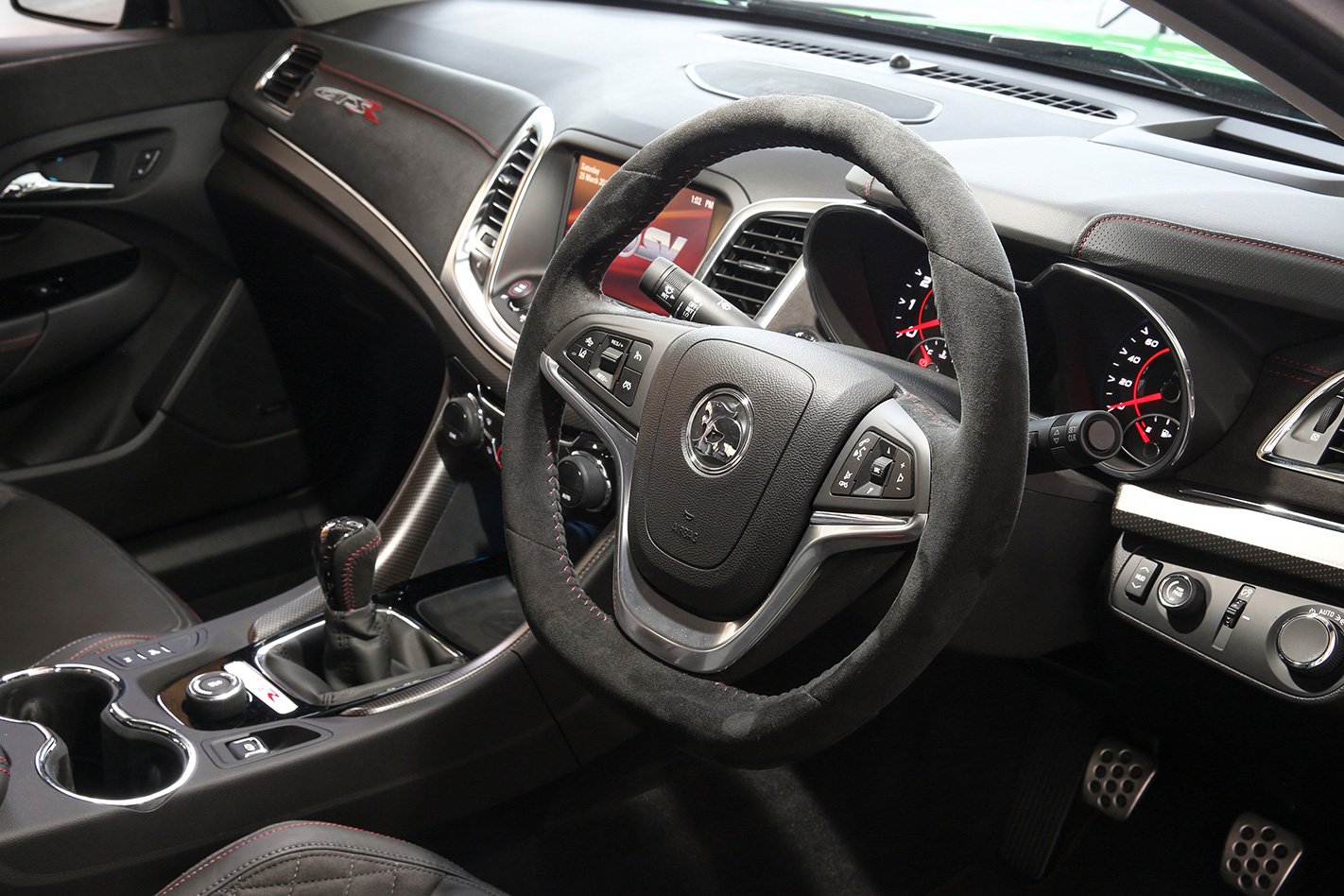
One could also argue $109K for a Commodore is also stretching the friendship. That’s twice (!) the MSRP of a manual 304kW SS-V Redline, itself a plentifully fast car.
Yet it’s still somehow justifiable for us. Maybe it’s the 12mm wider (per side) pumped front guards. Or the way it looks. But mostly, it’s just how it makes us feel.
4.5 stars out of 5 Likes: Grunt, grip, ride, looks, brakes Dislikes: Tyre and fuel bills, feels huge, still haven’t nailed the noise
2017 HSV Gen F2 GTSR specs Engine: 6162cc V8, OHV, 16v, supercharged Power: 435kW @ 6150rpm Torque: 740Nm @ 3850rpm Weight: 1886kg Price: $109,490 (manual)
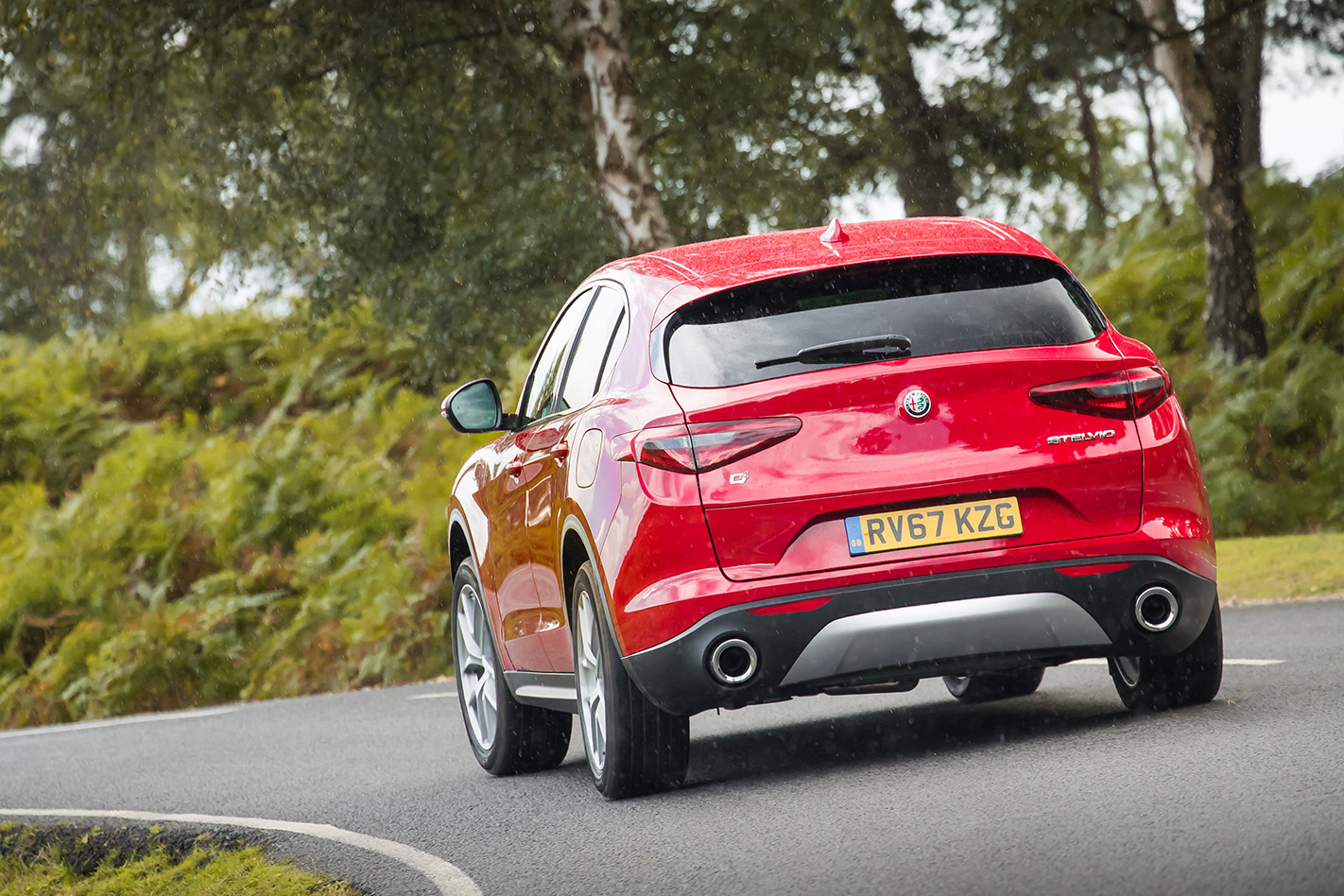
Alfa Romeo Australia has announced that it will bring the Stelvio SUV to market in the first quarter of next year, with a two-powertrain, AWD-only lineup available from launch and a hard-hitting Stelvio Quadrifoglio performance flagship arriving later in the year.
It’s the opposite strategy to that employed by the brand when it launched the Giulia medium sedan earlier this year. That car arrived in twin-turbo V6 Quadrifoglio guise first, before more prosaic four-cylinder variants joined it in the following months.
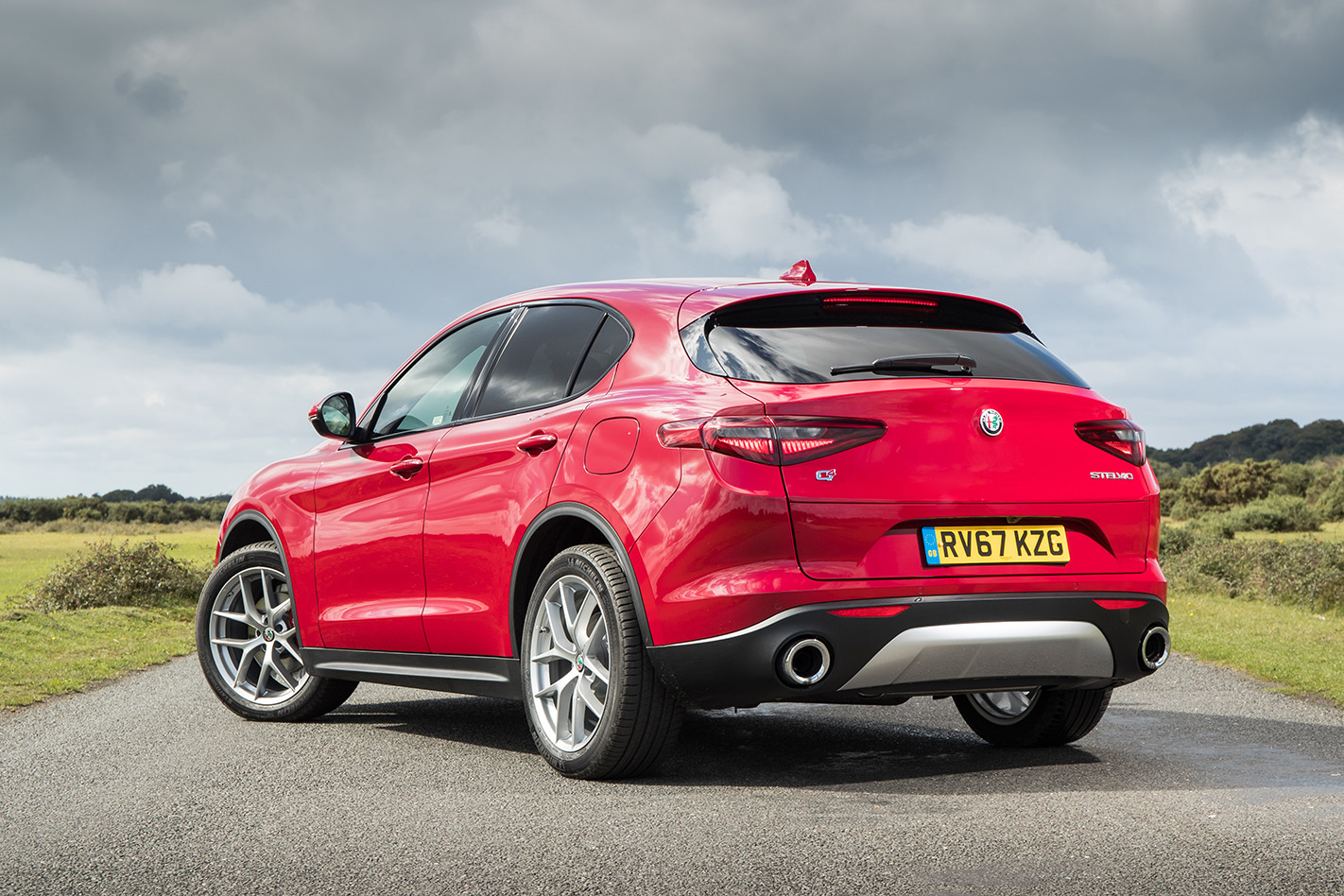
The range will open with a 2.0-litre turbocharged petrol inline four, developing 149kW and 330Nm and achieving 100km/h in 7.2 seconds. Augmented by Alfa’s MultiAir electro-hydraulic valvetrain and direct injection, Alfa Romeo claims sharp throttle response for its base model SUV.
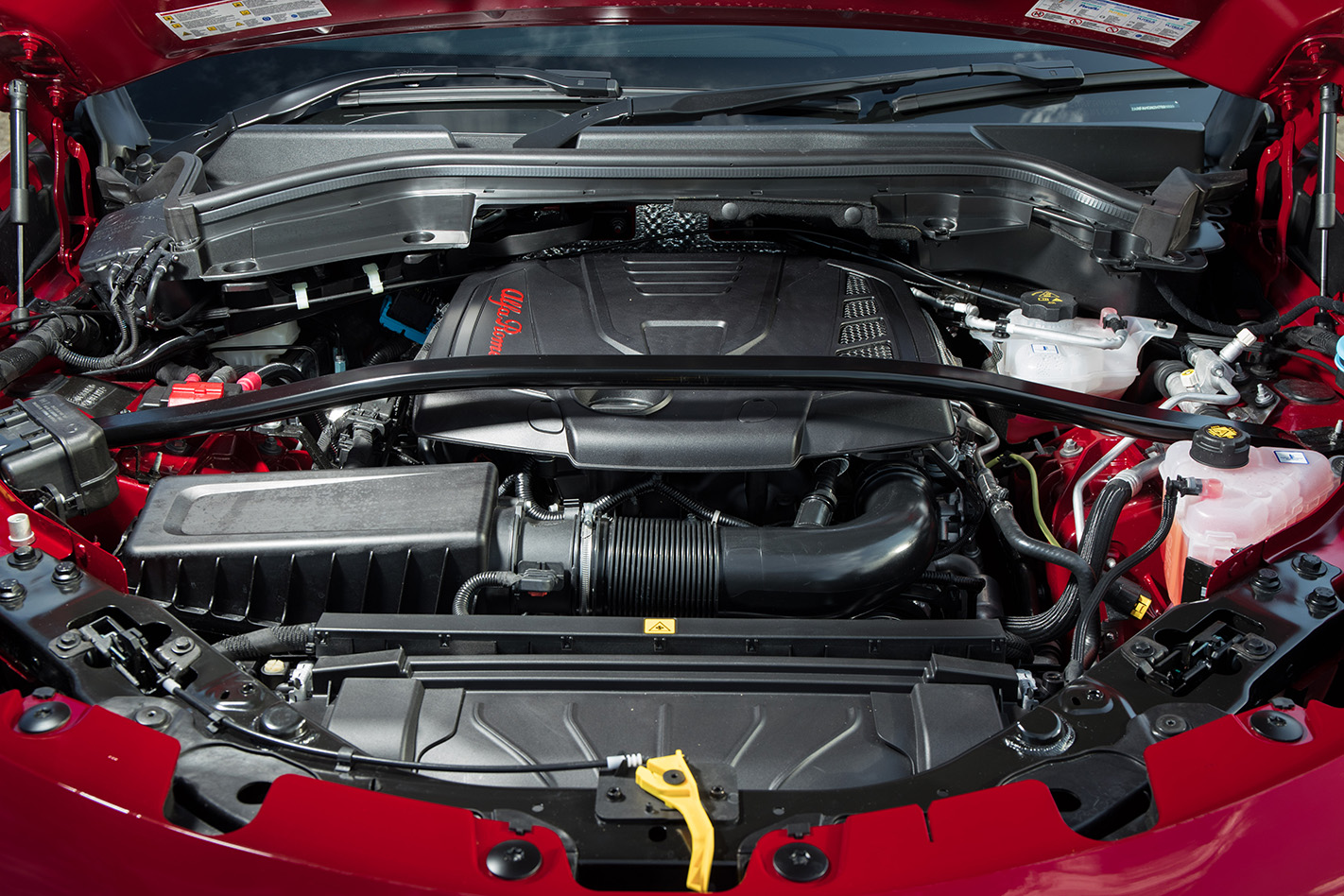
Both the 149kW petrol and 156kW diesel will be paired with an eight-speed automatic and all-wheel drive as standard, with the rear-wheel drive and manual options available in Europe deemed unsuitable for our market.
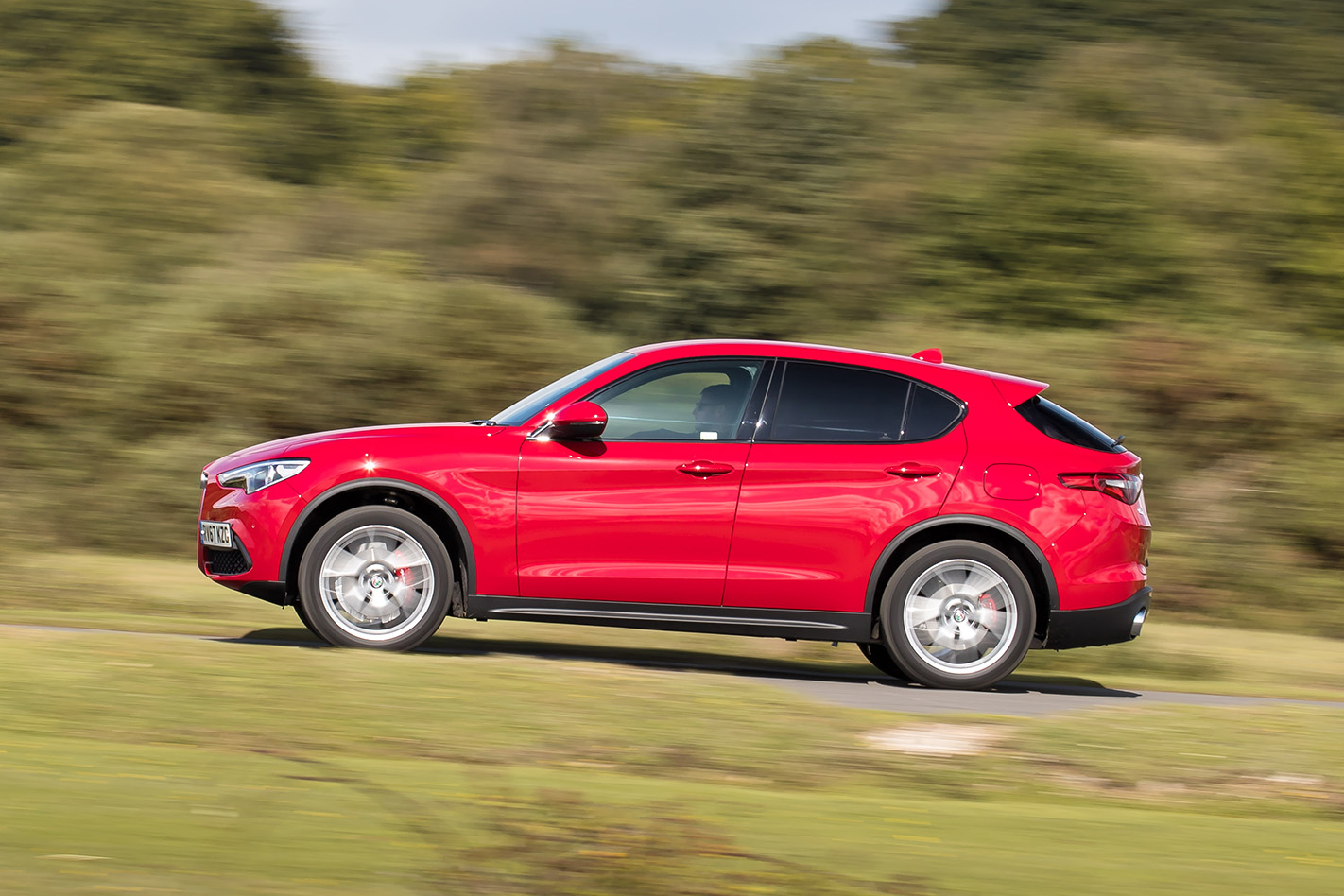
Drive is progressively taken to the front wheels as slippage is encountered, up to a maximum of 50 percent, while the Stelvio features a sportscar-like 50:50 front-to-rear weight distribution.
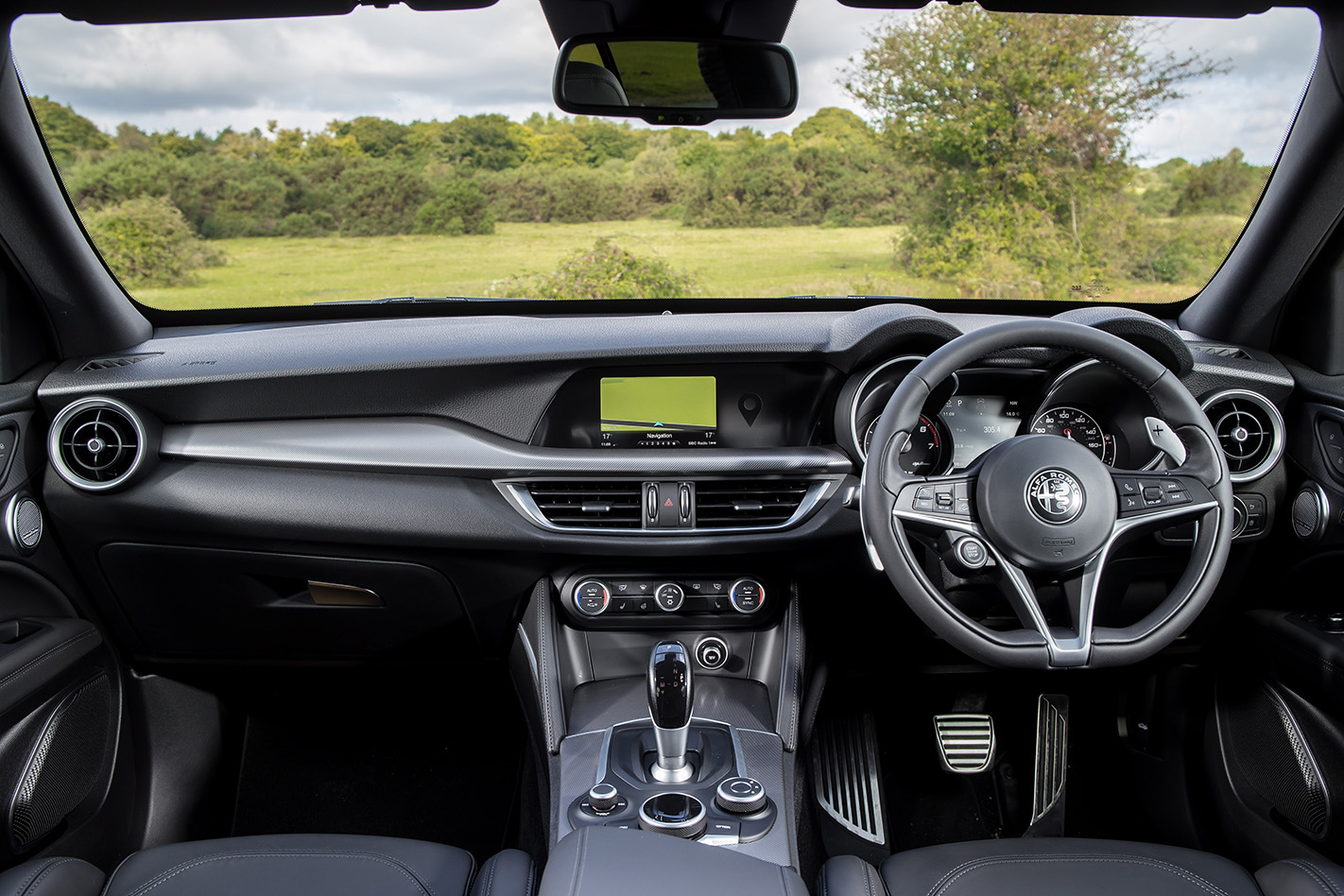
Power steering is electrically-assisted and a fast-ratio steering rack promises agile handling, however true performance fiends will need to wait a while for the properly hot 375kW Stelvio Quadrifoglio flagship to arrive on our shores.

Standard equipment on all variants will include autonomous emergency braking, forward collision warning, blind spot monitoring and lane departure warning, while two option packages – luxury-oriented ‘Lusso’ or sports-flavoured ‘Veloce’ allow owners to up-spec their Stelvios.
The former package adds high-grade leather, a heated steering wheel and walnut wood trim, while the latter brings deeply-bolstered sports seats, a sports steering wheel, aluminium cabin trim and alloy pedals.
Pricing has yet to be announced for Australia, however expect a $6000-7500 premium over the equivalent-specification Giulia. Full specifications and pricing will be announced closer to launch in the first quarter of 2018.
THE NEXT generation of Holden’s Supercar has officially broken cover last night with photos of the 2018 Holden ZB Commodore racecar revealed following a 60km shakedown test.
It’s the 16th Commodore to race in the Supercars championship, replacing the VF Commodore from next year, which is the most successful racing Holden in history, with 104 championship race wins to its name.
Designed by Triple Eight Race Engineering in conjunction with GM, the racing version of the next-gen Commodore doesn’t share much with the road-going version, apart from perhaps the lights and grille. Supercars rules dictate cars are built atop a common chassis, with control suspension and transmission parts.
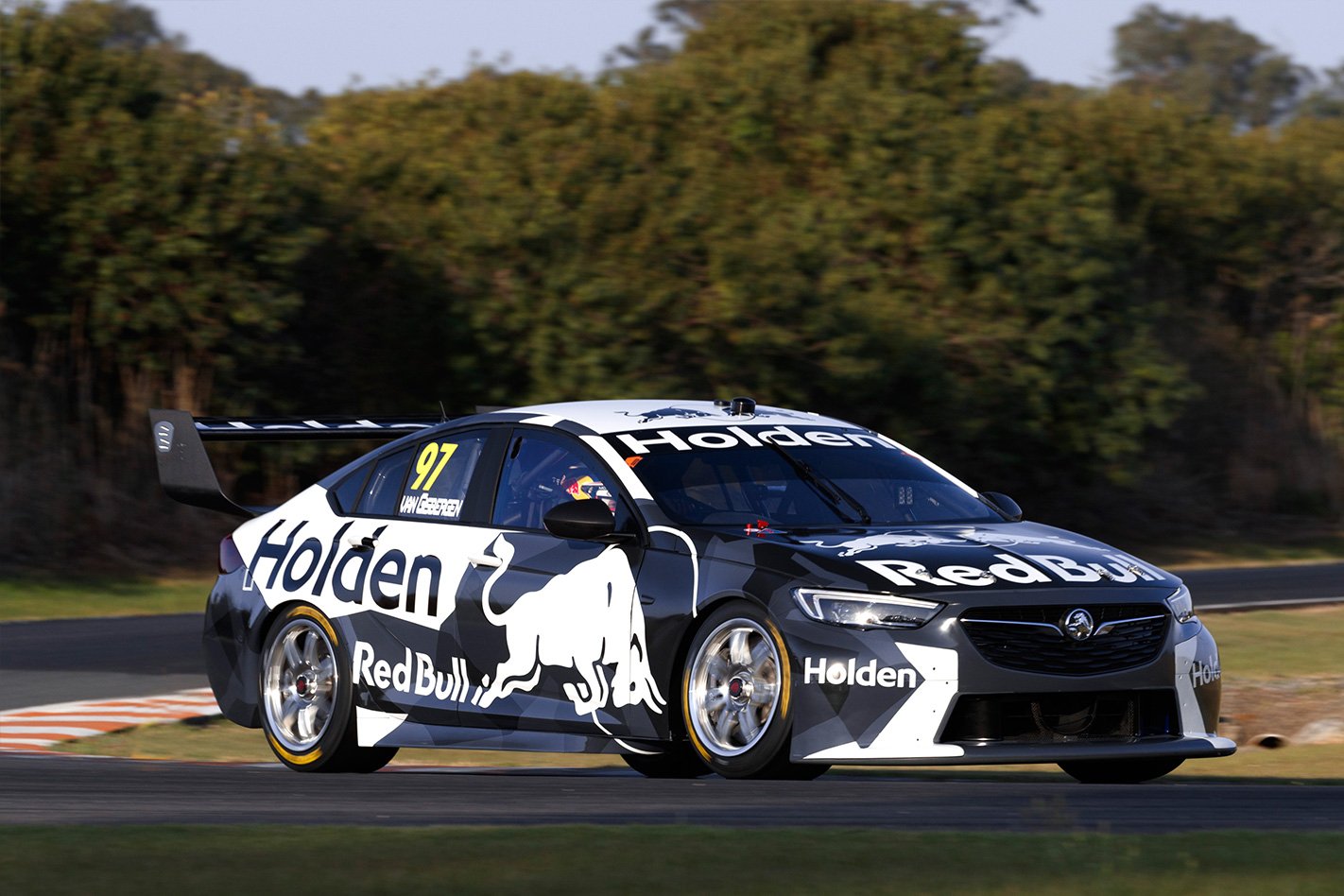
When it takes to the track next year, the new Commodore body will race with a 5.0-litre naturally-aspirated V8 under the bonnet, with a twin-turbo 3.6-litre V6 version racing at select wildcard rounds. The turbocharged V6 engine will be put into the factory-backed Red Bull cars for a full season starting in 2019. Power will be sent to the rear wheels per Supercars regulations
Roland Dane, Managing Director of Triple Eight, the team responsible for fielding the factory-backed Red Bull Holden Racing Team VF Commodores in the Supercars championship, says it was a lengthy process to get the ZB body to suit the GenII rules and Car Of The Future chassis.
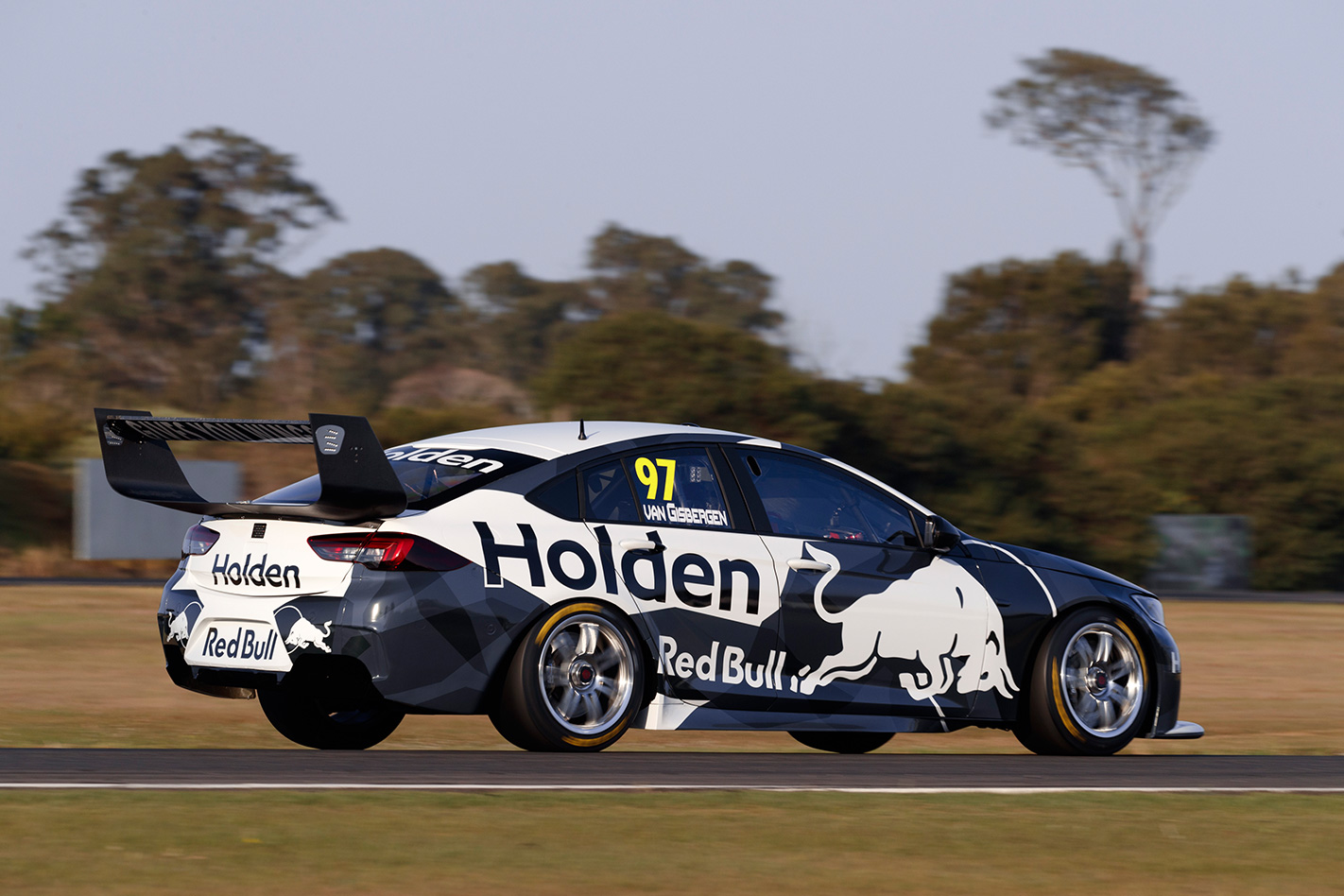
“The team’s had to work incredibly hard this year in order to compete on track with the current VF Commodore, but also work flat out on the new car. By the time we get to the end of this year, the development process will have taken up about 20,000 hours.
“We are very privileged to have been given the responsibility for developing and producing the new Commodore as a race car. We’re excited to see the results of the work that we’ve been carrying out.”
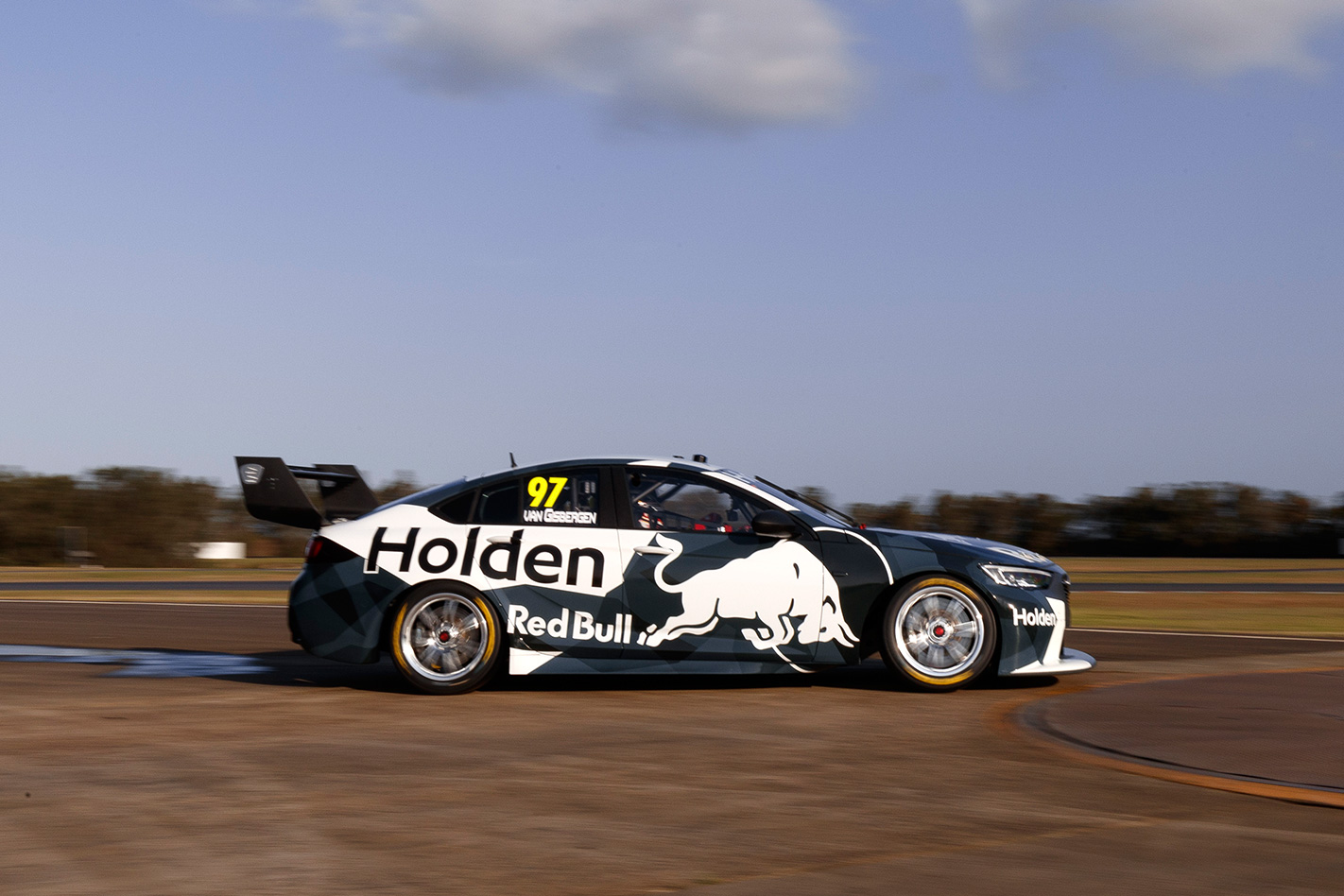
“The team’s been burning the midnight oil behind the scenes for this moment when we finally get to bring the brand new Commodore to the track and test it for the first time,” Whincup said following the test.
“So far it feels fantastic. The work that they’ve done behind the scenes to this point, in my opinion we’re 99 percent there. There’s just some fine-tuning that’s got to go on in the next few weeks and the next few months until we unleash the full version in 2018.”
It’s anybody’s guess how the BMW 3 Series has prospered as long as it has while hauling a target that can be seen from space.
From Jaguar’s XE to generations of assailants from Infiniti and Lexus, they’ve all tried to hit the 3 Series bullseye and failed. Its only consistently successful foes have been the fellow Germans, the Audi A4 and the booming Mercedes-Benz C-Class.
But there’s about to be a new player in the mid-sized premium sports sedan market and it feels a lot more Bavarian in its engineering than other pretenders to the throne, delivering a level of interior quality and comfort that is at least on a par with the C-Class.
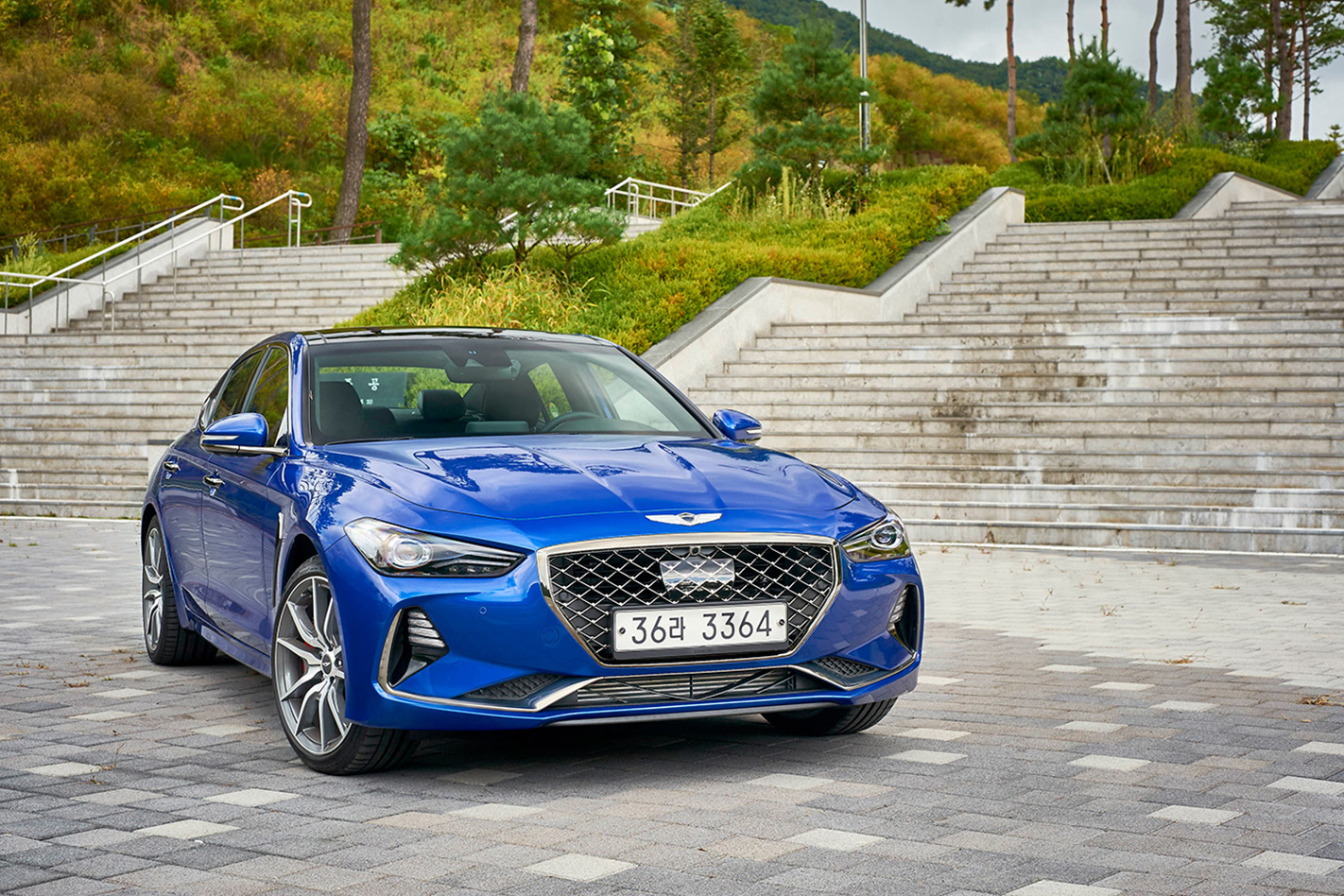
It’s fast enough, with a 4.7-second sprint to 100km/h and a 270km/h top end, and it handles well. Even with its softer Korean-spec suspension settings, the G70 showed off its rear-drive chassis balance, accurate and fast steering and remarkable stability in direction changes.
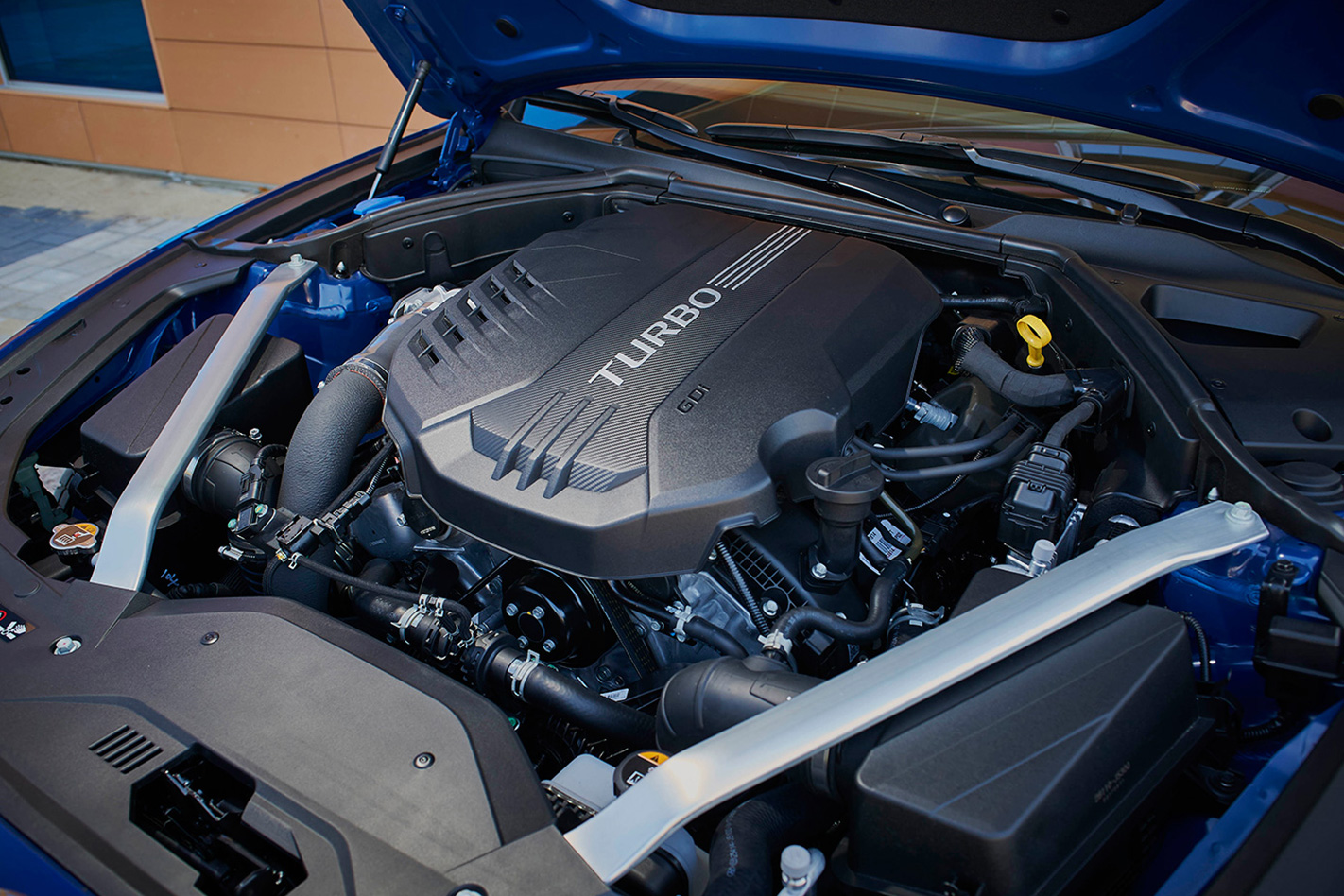
With 272kW of power and 510Nm of torque, the V6 is happy to live deep in its torque curve or to bellow out a meaty, aggressive roar at higher revs. It’s no BMW in-line six, but it’s right up there for smoothness with any six-pot inside a Benz or Audi engine bay.
It’s backed up with an in-house Hyundai Motor Group eight-speed transmission, with standard paddle shifts, a mechanical limited-slip differential and five driving modes (topping out with the all important Sport setting).
Australia’s cars won’t be all-wheel drive (it’s not engineered for right-hand drive) and they’ll carry a suspension tune developed on local roads, so Genesis expects it will be firmer and crisper than the Korean versions.
That’s going to be good enough to bring it somewhere near the Dynamic Edition package Genesis will give the rest of the world, and that thing is a cracker.
It’s a strong drive in Korean spec, but it’s a cracking thing with the five-link rear end, the steering and the constantly adjusting dampers tuned to something more like what we’ll get when it lands.
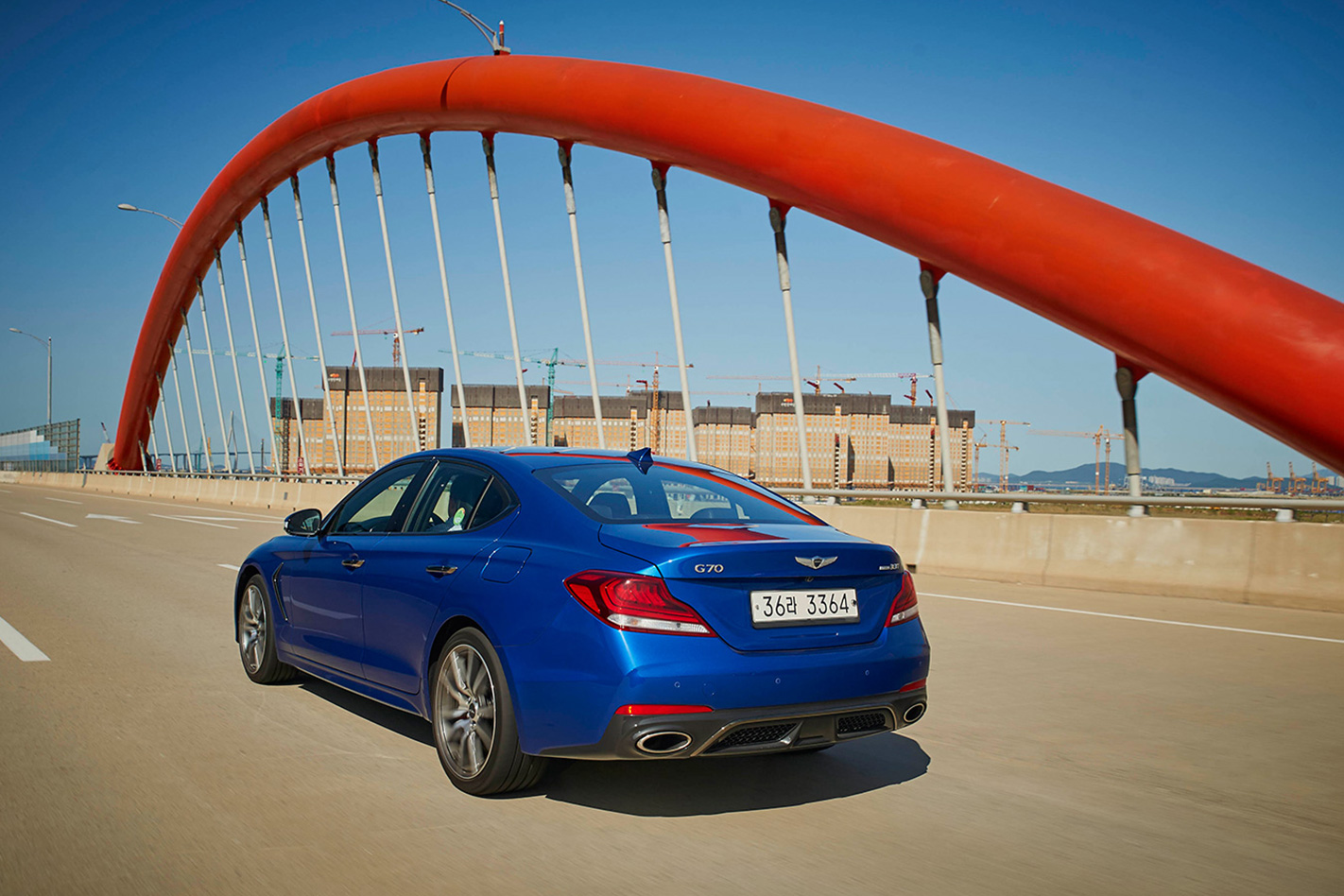
Unlike the Germans, the Genesis G70 really is more than happy to stay in transition for a long time, rather than racing to get the spring back to a static state, and that makes it just as pleasant and balanced in corners as it is in a straight line.
You can make it slide happily all day and it will hold drifts cheerfully or correct them reassuringly, with the influence of ex-BMW M engineering boss Albert Biermann fairly easy to see down below decks.
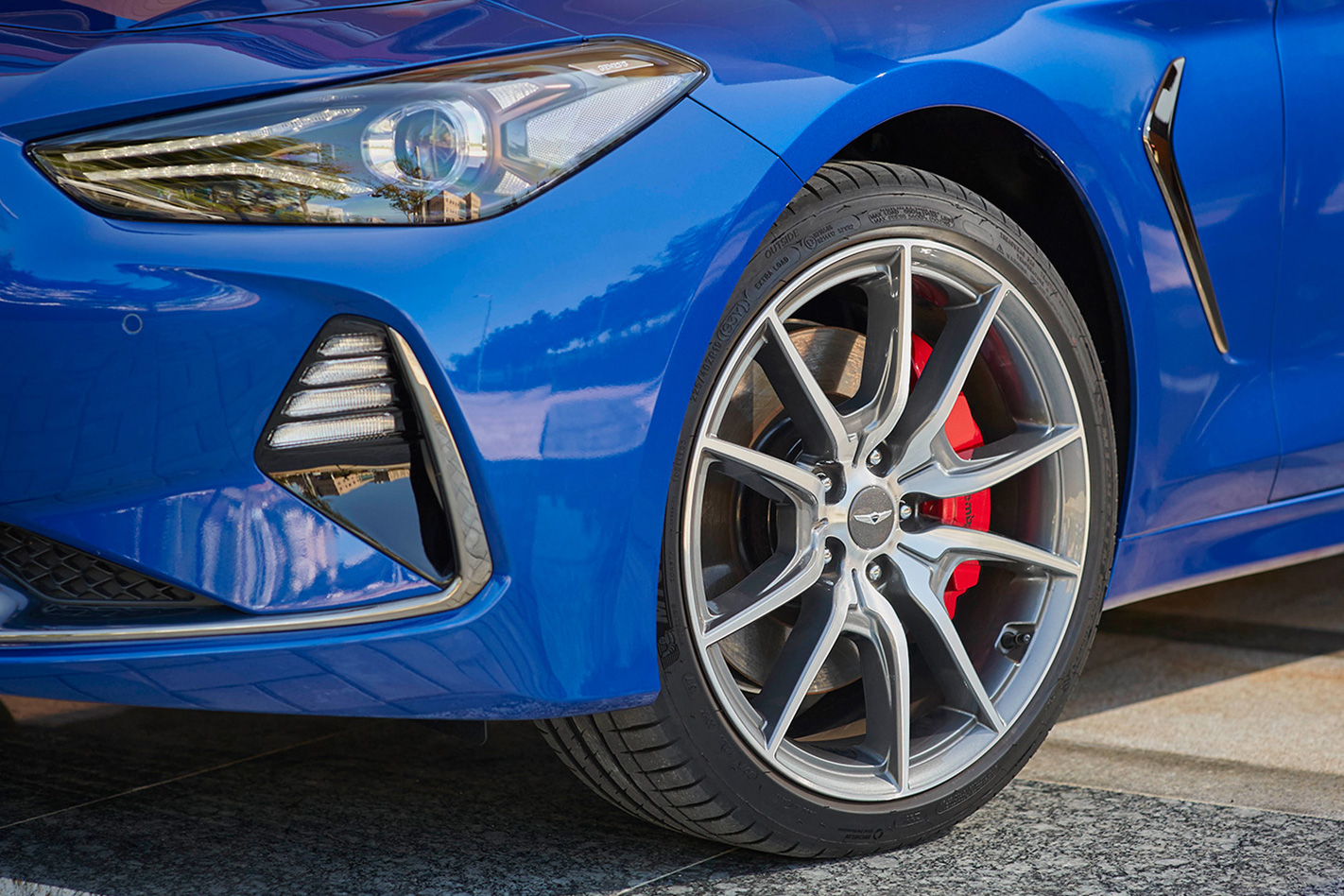
It’s also comfortable around town, with enough driver assistance stuff to make it easy in town, including active cruise control, autonomous braking and an interior that makes a 340i seem a bit sparse and underdone.
It’s also astonishingly quiet when you want it to be, with the quietest electric seats in the business, though it can be made plenty loud via an optional 15-speaker sound system if you see fit.
It’s a combination of the best of BMW handling with the comfort levels now attained by the C-Class and the A4. All it really needs now is the brand cachet.
4.5 stars out of 5 Like: Chassis composure; refinement; classy interior; grunt Dislike: Incoherent “face”, shallow front footwell
2018 Hyundai Genesis G70 specs Engine: 2995cc V6, DOHC, 24v, twin-turbo Power: 272kW @ 6000rpm Torque: 510Nm @ 1300rpm Weight: 1750kg (est.) 0-100km/h: 4.7sec (claimed) Price: $60,000 (est.)
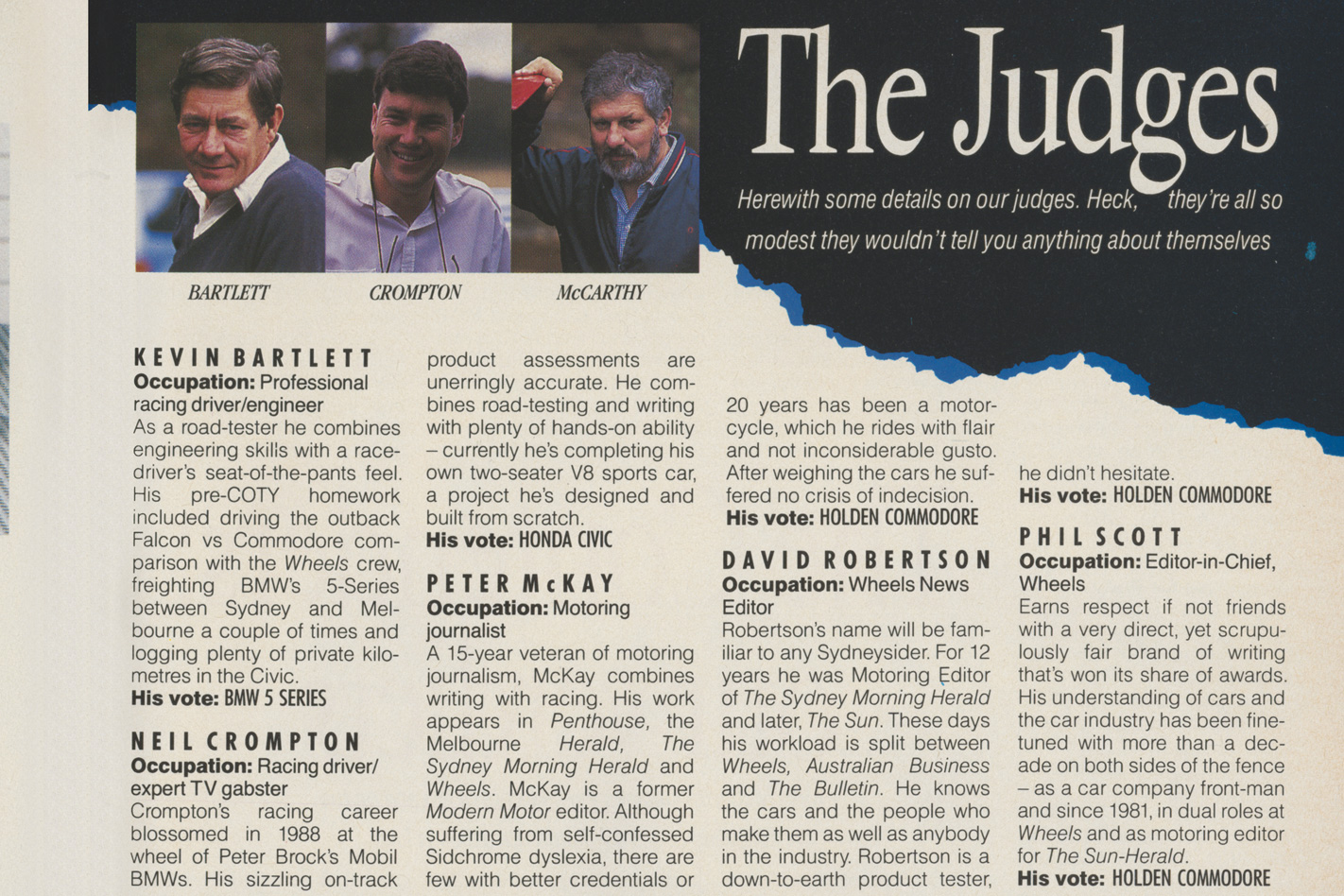
THE HOLDEN Commodore is Wheels’ Car Of The Year for 1988.
The General Motors six cylinder lifts the affordable family car class to a new plane of performance and economy. Quite simply, it offers a combination of attributes never previously available in the bread-and-butter big car segment.
And it offers them at an affordable price. The VN-series Commodore won the award in a split vote against two outstanding imported models – Honda’s Civic and the BMW 5-Series – both of which were highly commended by the judges. Ford’s Falcon rounded out the final four.
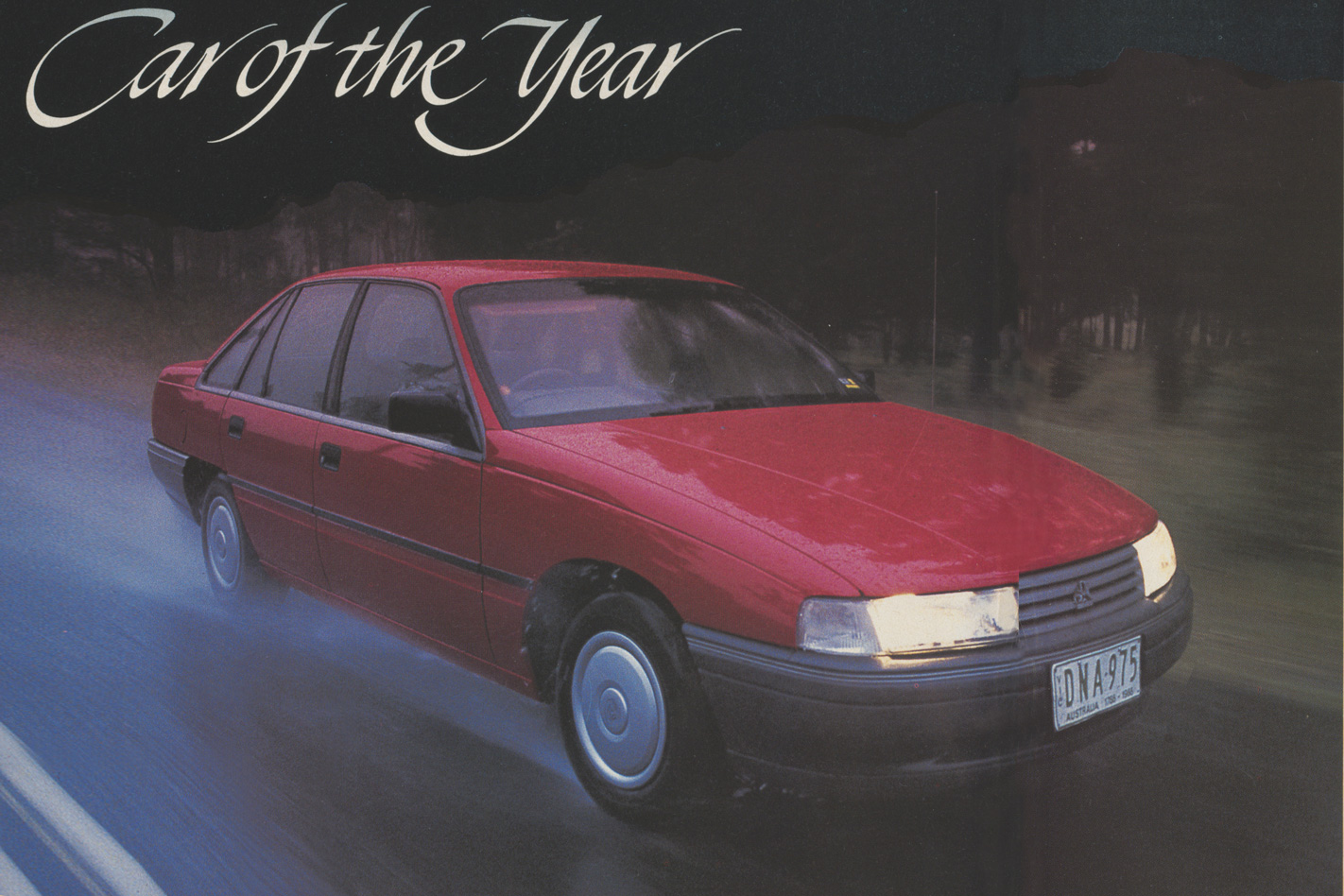
But at the end of a long, complex evaluation, the Commodore emerged a narrow but deserving winner.
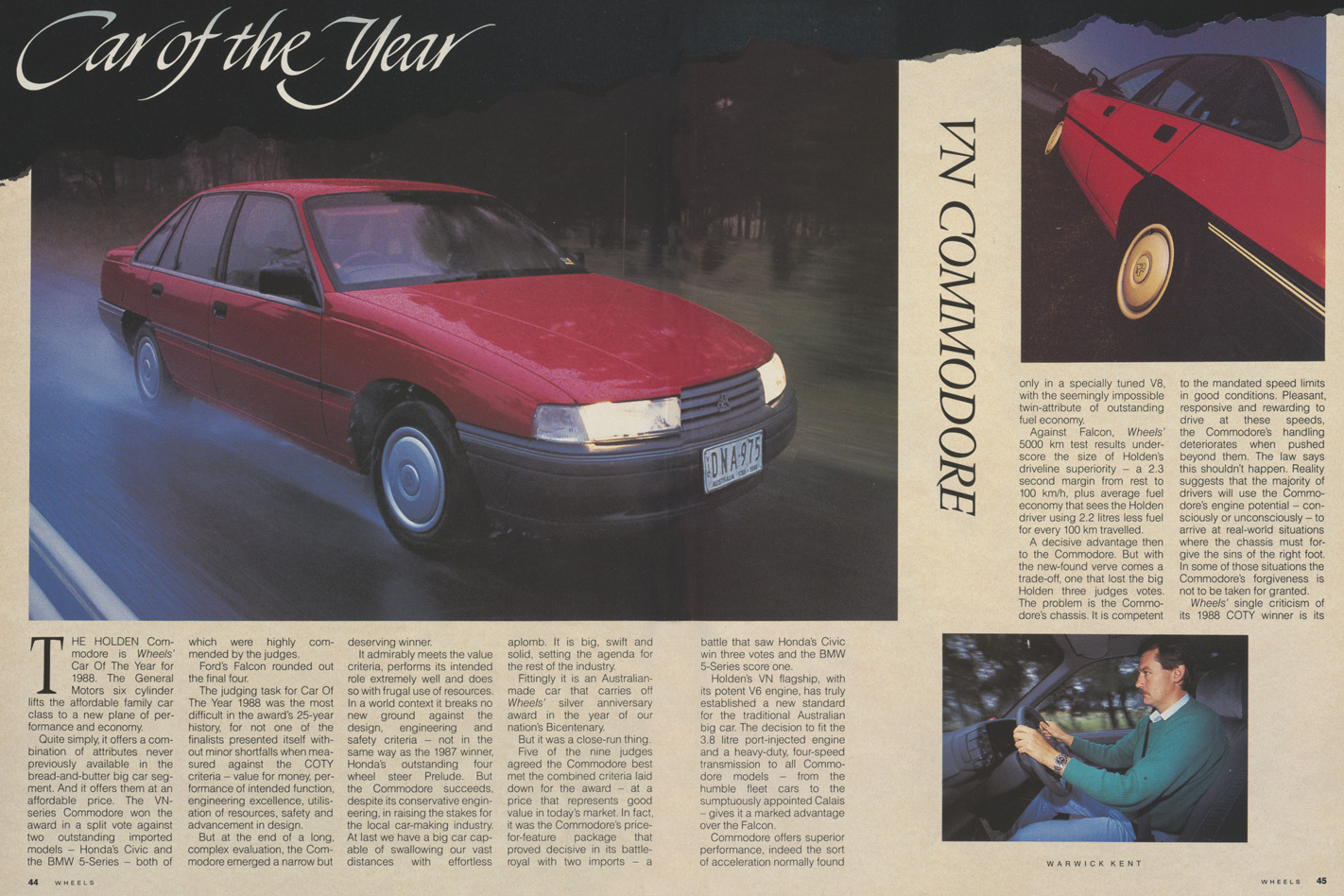
At last we have a big car capable of swallowing our vast distances with effortless aplomb. It is big, swift and solid, setting the agenda for the rest of the industry. Fittingly it is an Australian-made car that carries off Wheels’ silver anniversary award in the year of our nation’s Bicentenary. But it was a close-run thing.
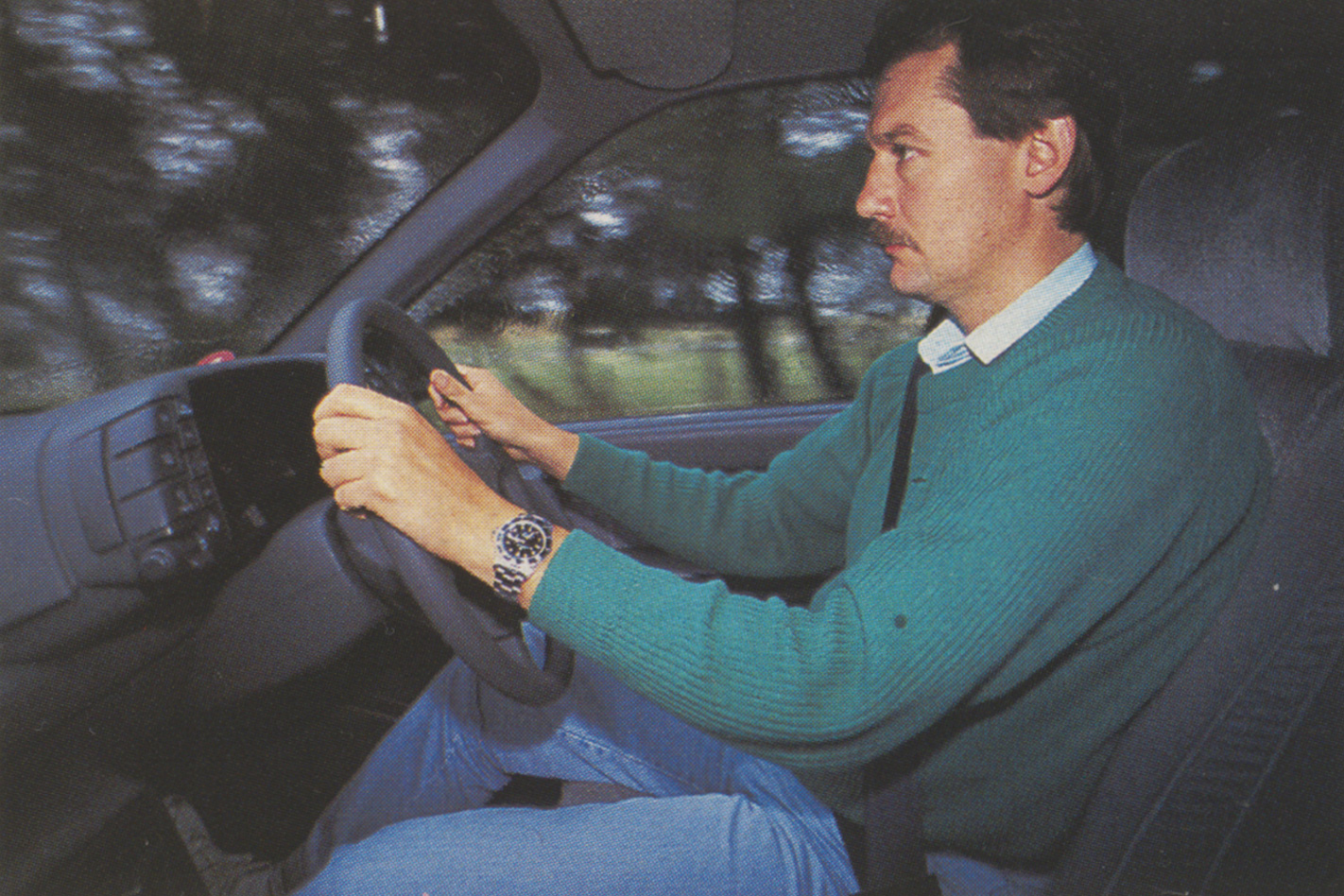
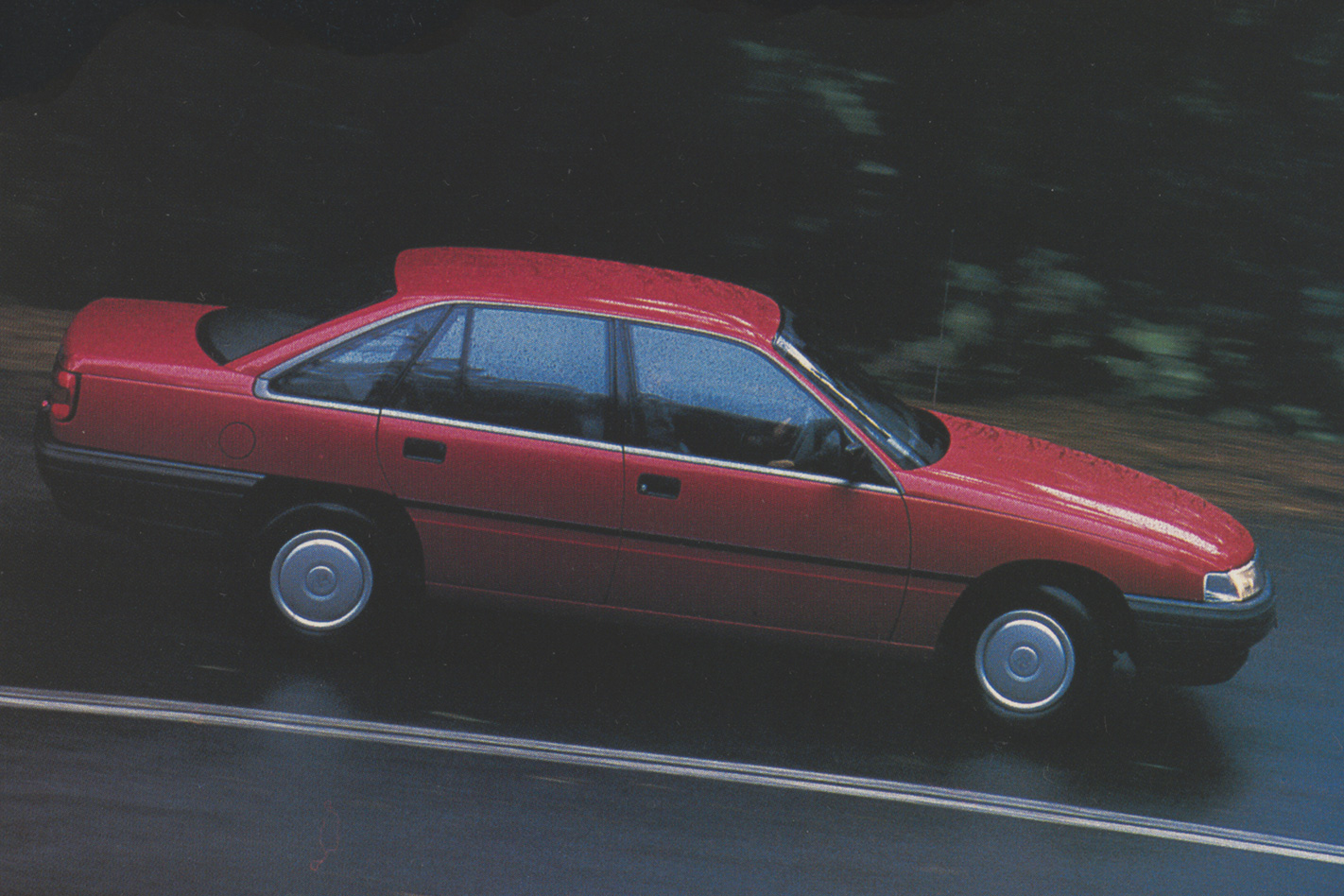
Holden’s VN flagship, with its potent V6 engine, has truly established a new standard for the traditional Australian big car. The decision to fit the 3.8 litre port-injected engine and a heavy-duty, four-speed transmission to all Commodore models – from the humble fleet cars to the sumptuously appointed Calais -gives it a marked advantage over the Falcon.
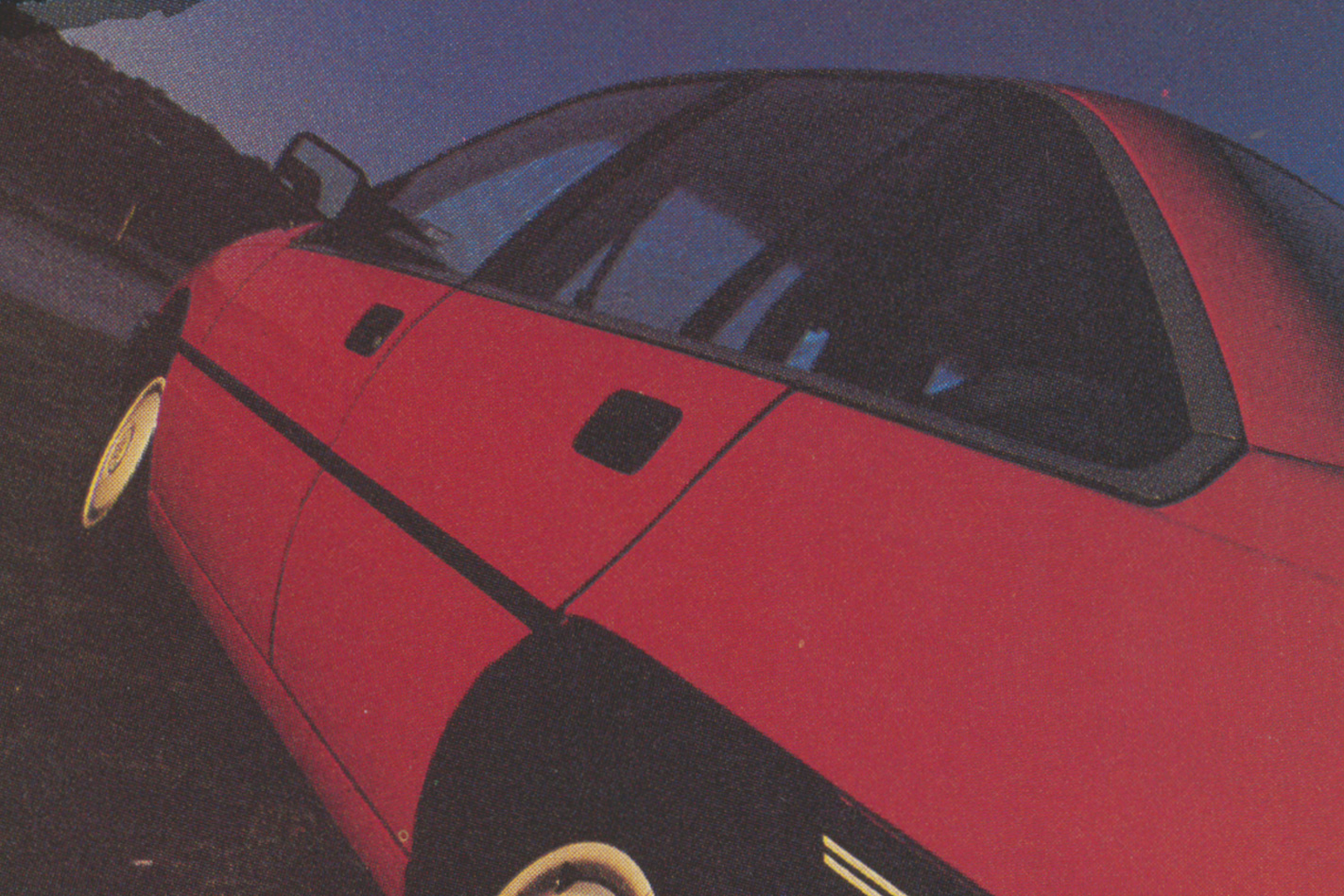
Against Falcon, Wheels’ 5000 km test results underscore the size of Holden’s driveline superiority – a 2.3 second margin from rest to 100 km/h, plus average fuel economy that sees the Holden driver using 2.2 litres less fuel for every 100 km travelled.
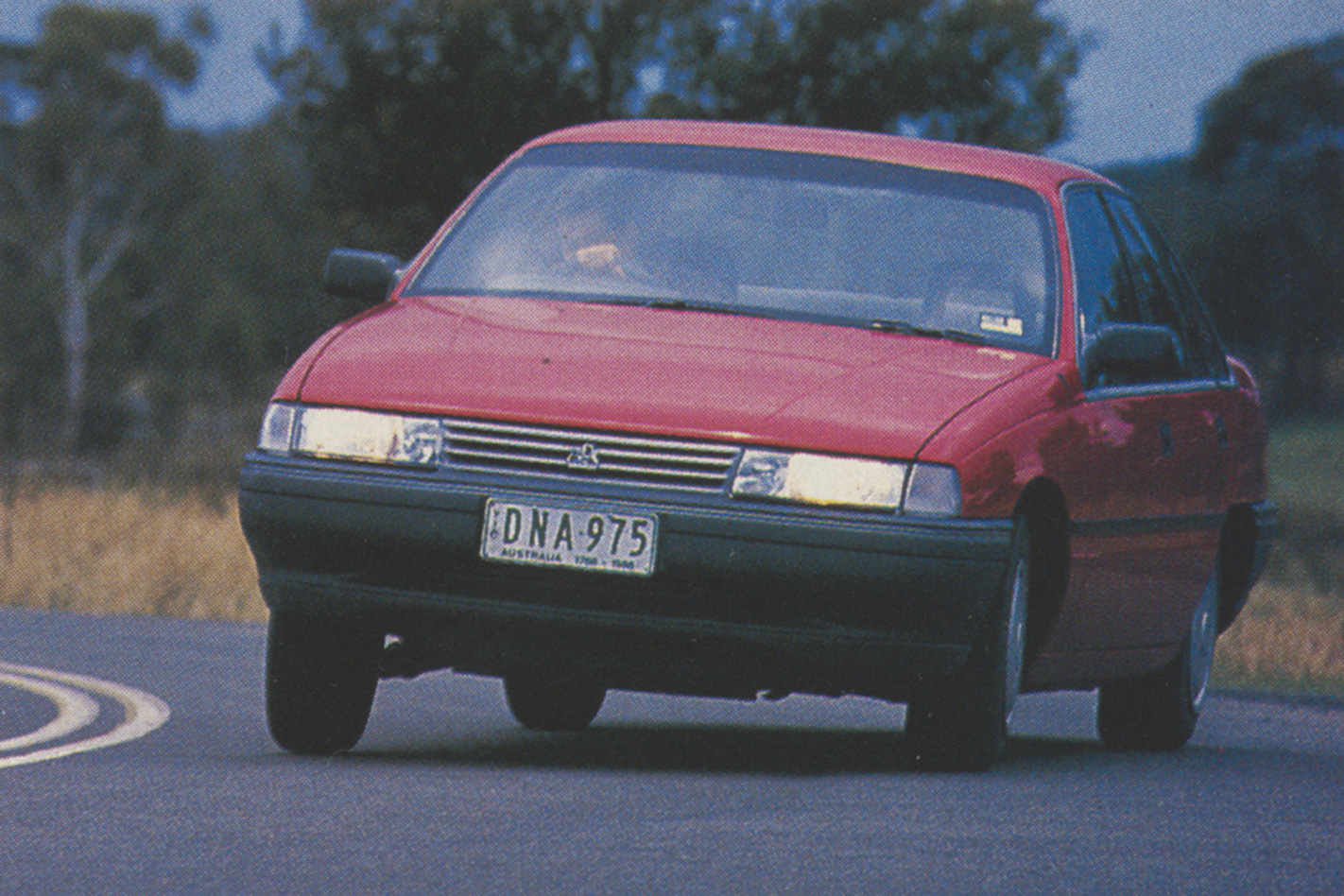
In some of those situations the Commodore’s forgiveness is not to be taken for granted. Wheels’ single criticism of its 1988 COTY winner is its lack of an independent rear suspension to adequately cope with the engine’s prodigious output. A Commodore with IRS would be a much-improved Commodore.
The other two finalists represent the sort of world class refinement that neither the Commodore nor the Falcon can match. But they do so at premium prices. The BMW is what every rear-drive, four-door saloon should be- sure-footed, quiet, beautifully built and ergonomically close to perfection. Its only shortfall is value for money when measured against the COTY criteria.
All of which begs a question for the local producers. The closeness of this victory, in a year many saw as a lay-down misere for either Falcon or Commodore, serves as a sign of things to come. The days when Ford and Holden held a mortgage on the pocketbooks of Australian car buyers are running out. The high walls of protection that have sheltered them from an increasingly competitive, fast-moving world car industry are being dismantled.
Within three years the imports will enjoy unprecedented price competitiveness and freedom of access. How then will Commodore and Falcon, with their two-valve engines and live rear axles, fare against the world’s best? That is the real message to emerge from Car Of The Year in 1988.
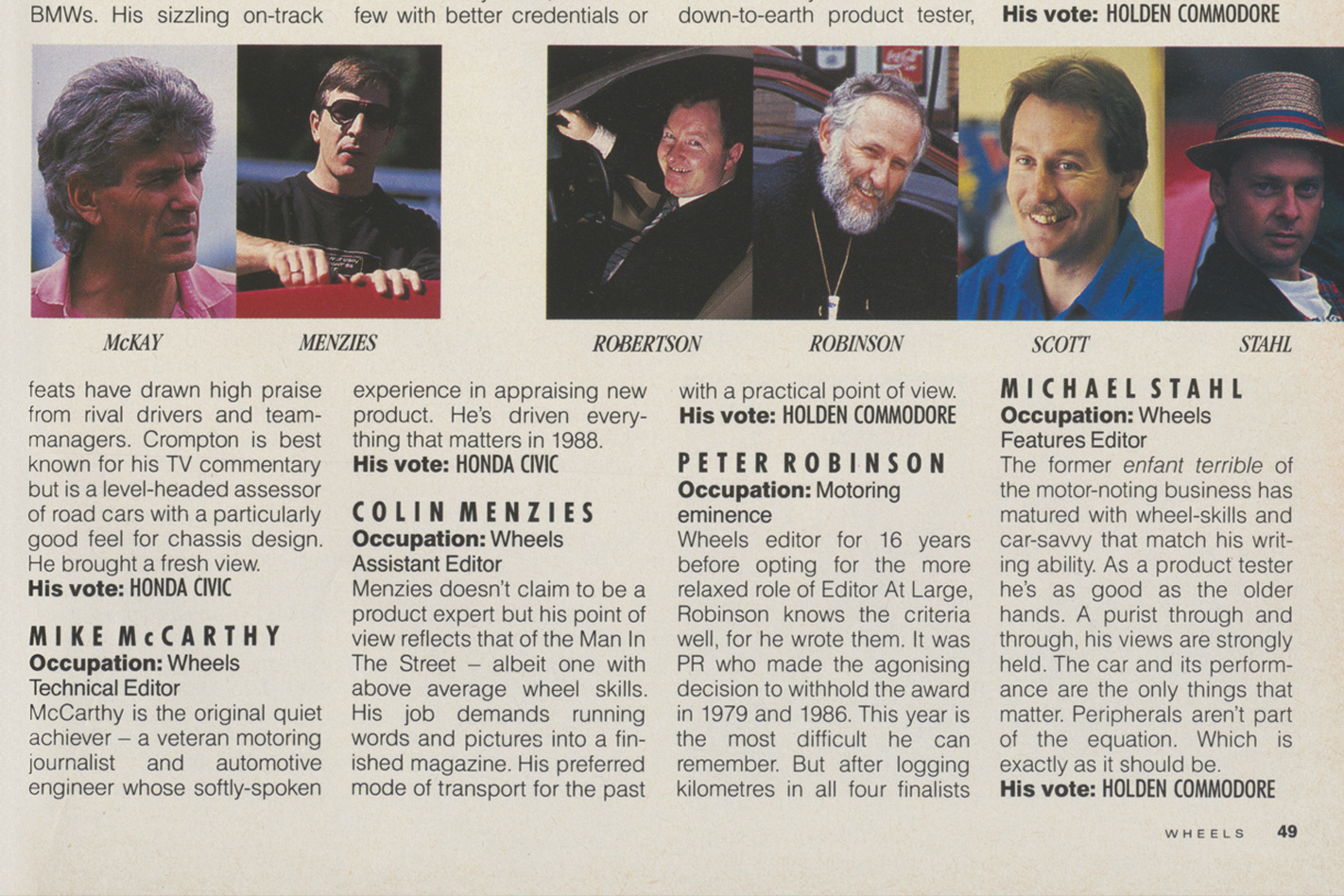
THE range-topping Kia Stinger packs 272kW of twin-turbo power, a limited-slip diff and adaptive dampers, but also plenty of headroom for additional grunt in aftermarket land.
WHAT IS IT?
The hero version of Kia’s six-model Stinger range, powered by a strong 272kW 3.3-litre twin-turbo V6 and absolutely chocked with standard equipment.
WHY WE’RE TESTING IT
Yes, Wheels has already had a deep dive on the Stinger that you can read about here, but that was with pre-production cars that lacked proper build quality, and in the case of the V6 GT, production Brembo brakes. This is our first chance to see how the showroom version of the Stinger hangs on – both at the racetrack and on the road.
MAIN RIVALS
Holden Commodore SS-V Redline, Skoda Superb 206 Sportline
THE WHEELS VERDICT
The Kia Stinger GT is an impressive, fun package. But it’s still a little rough around the edges, and no doubt a series of running improvements will hone that even further.
PLUS: Big engine power; tail-happy ESC setting; sharp handling and styling MINUS: Feels a bit nose-heavy; no acoustic excitement
THE WHEELS REVIEW
THE last corner at Wakefield Park is a real mongrel. Hug the left side of the track, make as late a entry into it as you can as the pit lane wall closes in, and slowly roll on the throttle.
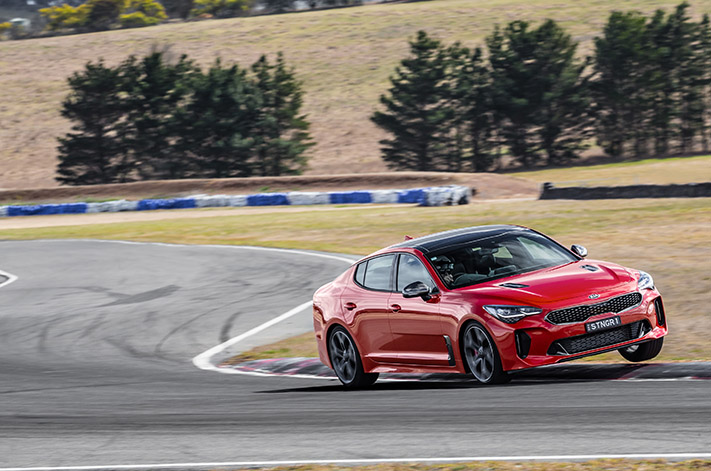
My exit is a little offline as the Kia Stinger GT I’m driving understeers slightly onto the edge of the ripple strip, when suddenly there’s a wag from the rear as it slides into oversteer, the low-slung five-door’s stability control letting the rear of the Stinger run wide slightly offline to make me look like a drifting pro.
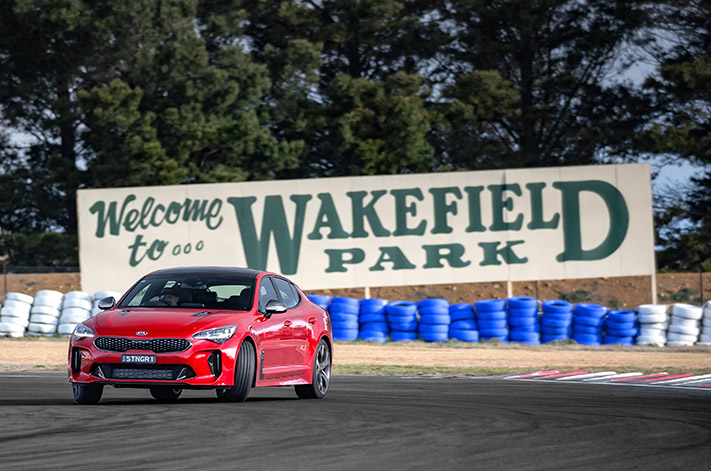
A heartbeat later, the rear is reigned in, the throttle is buried to the firewall, and a lumpy turn one is approaching fast.
That right there is my first exciting experience of what will become, in a few weeks, Kia’s halo car, and the most powerful it has ever produced. Performance honed, with a long 2905mm wheelbase and rear-drive, it turns the Korean car maker’s former mantra of only serving practical, conservative front-drive products right on its head.
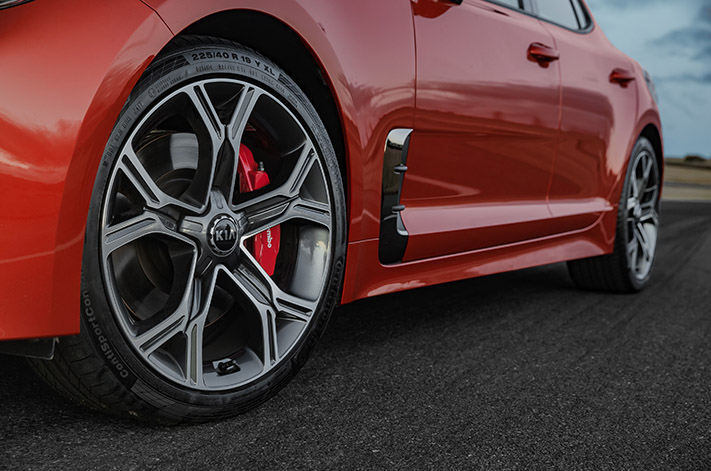
Kia wanted to show the performance strength of the Stinger GT, and Wakefield Park certainly did that. Even if a lap before, coming out of the pits and into turn one, the brake pedal feeding the four-pot Brembos wrapped around the 350mm vented front discs, and the 340mm ones down the rear wrapped in two-pot calipers, felt a bit long and spongy after dozens of earlier runs.
As Kia’s hero, the Stinger GT comes well-equipped. A 3.3-litre twin-turbo V6 producing 272kW and 510Nm powers the staggered rear wheels (the fronts are wrapped in 19-inch 255/40 profile Continentals and the rears 255/35s) via an eight-speed automatic gearbox featuring a special balancer in its torque converter to smooth out any rough edges.
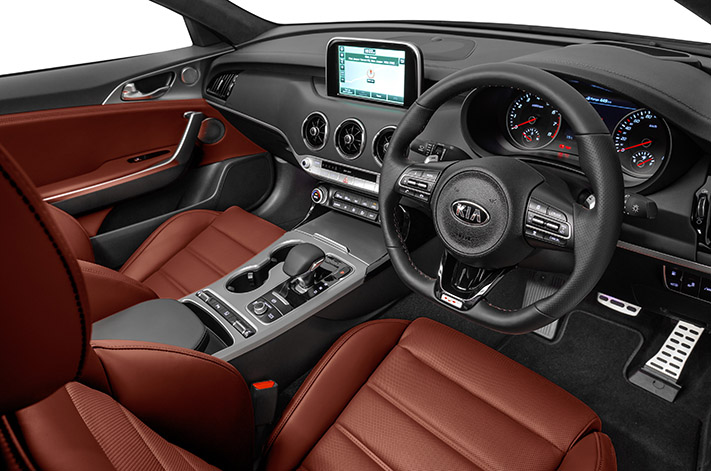
Inside, apart from slightly more headroom for taller front-seat passengers, it lacks little: standard kit includes an electrically adjustable square-bottomed steering wheel, Nappa trimmed electric adjust front seats wearing a stylised “GT” logo, sat-nav, push-button start, auto-dimming rear-view mirror – in fact, the list of added gear reads more like you’ve ticked the box on a heap of options on a Mercedes-Benz A-Class than a Kia.
Fifteen-speaker Harman Kardon audio system, anyone? Open the driver’s door, and there it is. Electric liftback? Here it is. Head-up display and headlights that shine around corners? They’re right there.
But the big two in the GT’s bag of tricks are an adaptive sports suspension system – here it is called Dynamic Stability Damping Control – and a mechanical limited-slip differential. Both give the $59,990 Stinger GT an on-the-limit edge over its lesser siblings.
Put the selectable damping system in Comfort mode and the Stinger GT floats over imperfections in the road, even absorbing potholes and road joins without fuss. It does a better job of it than its conventionally sprung cousins, the $48,990 330S and the $55,990 330Si.
Pricing is almost like Kia doesn’t want you to buy the more pedestrian versions of the Stinger, featuring a 182kW/353Nm turbocharged 2.0-litre engine. Stepping up from the Kia GT-Line, as the top-spec four-pot with adaptive suspension but no LSD is known, to the more plainly monikered but more capable GT is just $4000. By comparison, the jump from a Commodore SV6 to a V8-engined SS will see you stretching an extra $7000.
The steering, meanwhile, is unKia-like in its feel. Yes, there’s still that sponginess on centre, but the front wheels communicate what they’re doing in a way that’s easy to read. It’s the benefit of mounting the electric assist motor down on the rack rather than on the steering column, and something that will soon be rolling out to the Kia Optima.
On the road, the adaptive suspension’s sport setting does have a hard edge and presents itself as somewhat unforgiving, but it does hold the already very rigid Stinger flat through corners. There is a Dynamic setting on the selectable drive mode’s menu, better suited to cruising flat roads and then turning up the wick when a series of corners call for attention.
The one criticism, though, of the V6 is its throttle pedal. It’s sensitive, with even a gentle press tapping the twin-turbo engine’s full potential and making a precise throttle application something of an art. Use the paddle shifters (which time out and automatically select “D” if you take too long changing gears – there’s no manual mode to lock it into) and the engine will rev out to 6000rpm before changing itself up. To tap the 6500rpm redline, you have to switch off the stability control.
You may want to try that anyway. Hold down the stability control button for three seconds and you discover the Stinger GT – just like the other five models in the range – has come to Australia with a launch control function. Hold a foot on the brake, let the engine build its revs as the driveline loads up and rear squats slightly in anticipation, dump the brake pedal within four seconds and the Stinger GT will launch itself down the road without a hint of wheelspin. The rear will take on some attitude, so you still need to control it via the steering wheel.
It’s just a shame the V6 version of the Stinger doesn’t have the acoustics to back up the official 4.9-second 0-100km/h time. There’s some induction noise, and a muted soundtrack of flat exhaust, but that’s it.
Kia is working on a “hotdog” bypass system for the twin rear mufflers that on the only car fitted with them introduced a low growl on acceleration and a little bit of a pop and crackle on a trailing throttle – one of the track cars had the system fitted – but that will be a dealer-fit option at a price that is yet to be determined.
Kia says it will have the system approved by the Stinger’s October 1 on-sale date, and is even working on one for the 2.0-litre engine.
Underneath the Stinger GT is a package that will have purists smacking their lips in anticipation, and one that will also reward them. It’s a shame, then, that it lacks a little of the emotion needed to match the swagger.
But the Holden Commodore SS-V Redline also comes with its flaws, and we’ve loved it. Could we one day feel the same way for the Stinger?
Vote for the Kia Stinger to win the 2018 Wheels Car of the Year Readers’ Choice competition
SPECS Model: Kia Stinger GT Engine: 3342cc V6 (60⁰), dohc, 24v, twin-turbo Power: 272kW @ 6000rpm Torque: 510Nm @ 1300-4500rpm Transmission: 8-speed automatic Weight: 1740kg 0-100km/h: 4.9sec (claimed) Economy: 10.2L/100km Price: $59,900 On sale: October
The Kia Stinger and Genesis G70 are Korea’s latest additions which are likely to be popular with Australian customers, making a two-pronged attack on our crowded new-car market.
Both are rear-drive sedans, with the engine up front, with some mechanical similarities underneath the skin. But there are also many key differences between the two, both in terms of design, and their intended markets.
Genesis is the luxury arm of Hyundai, which has a majority stake in Kia. While it’s only natural the two share componentry, the Stinger is aimed at performance-orientated customers, while the G70 hopes to appeal to a customer shopping for a mid-size luxury car.
Think of the Stinger as a rival to the outgoing V8 Holden Commodore, while the G70 is taking on the dominant Mercedes-Benz C-Class as well as BMW’s 3 Series and hoping to convert buyers also looking at Lexus IS and Infiniti Q50.
Unlike cars that share the same architecture, like the Nissan Navara and upcoming Mercedes X-Class, the G70 and the Stinger have some core differences under the skin.
So here we’ll go through what separates the pair, and what is the same across both offerings.
Engine:
Both cars are available with a near-identical pair of engine options. A 3.3-litre twin-turbo V6 is the flagship, producing 272kW and 510Nm.
A 2.0-litre four-cylinder turbo-petrol engine will also be available in both, making 190kW/353Nm in the G70. The Stinger’s 2.0-litre turbo makes slightly less power at 180kW.
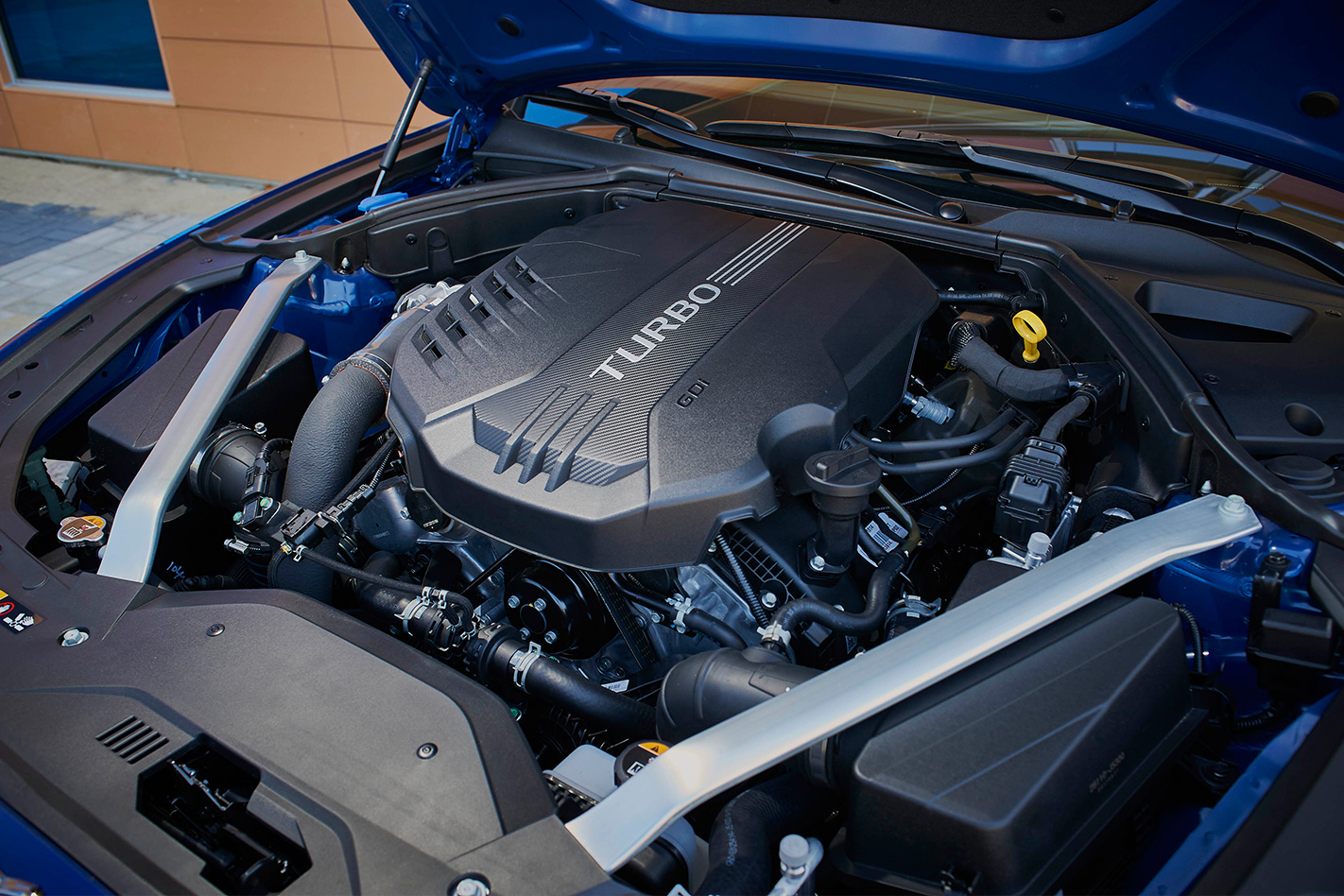
The G70’s engines will be mated to Hyundai’s own in-house eight-speed automatic transmission, which sends power to the rear wheels.
Kia’s Stinger uses a ZF-supplied eight-speed automatic transmission, which also sends power exclusively to the rear wheels.
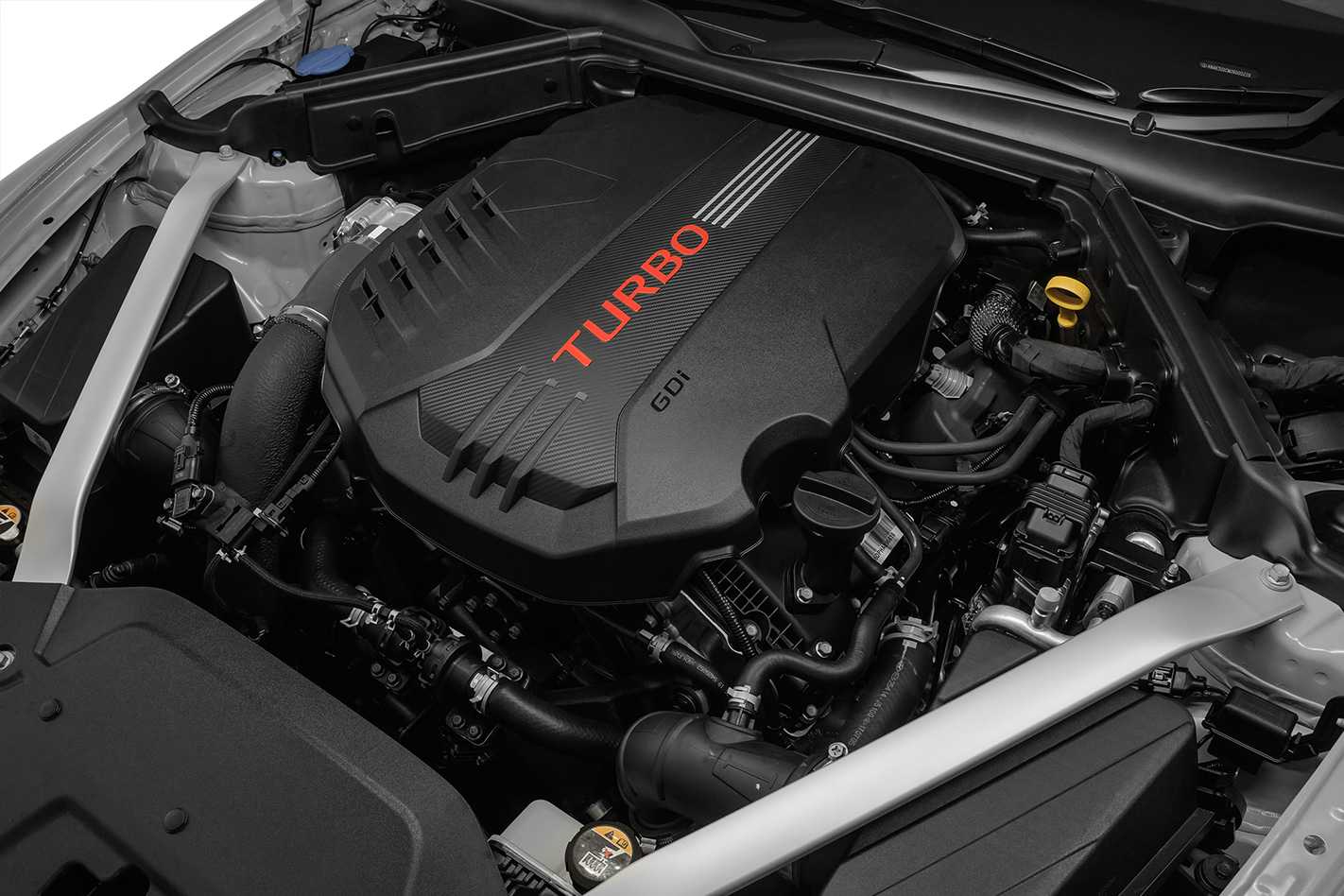
In overseas markets, the G70 will have the option of a 2.2-litre diesel engine – this will not be available in Australia. Both cars are offered with all-wheel-drive overseas, but Australian customers will only be able to purchase rear-drive variants.
Chassis:
While both the G70 and Stinger have four-door body styles, there are some important differences.
The Stinger is the larger of the pair, with a longer overall length and wheelbase than the G70, and arguably a more practical liftback boot.
Meanwhile, the smaller G70 opts for a traditional sedan styling, with boot and folding rear seats. There is slightly less room in the rear of the G70 than the Stinger.
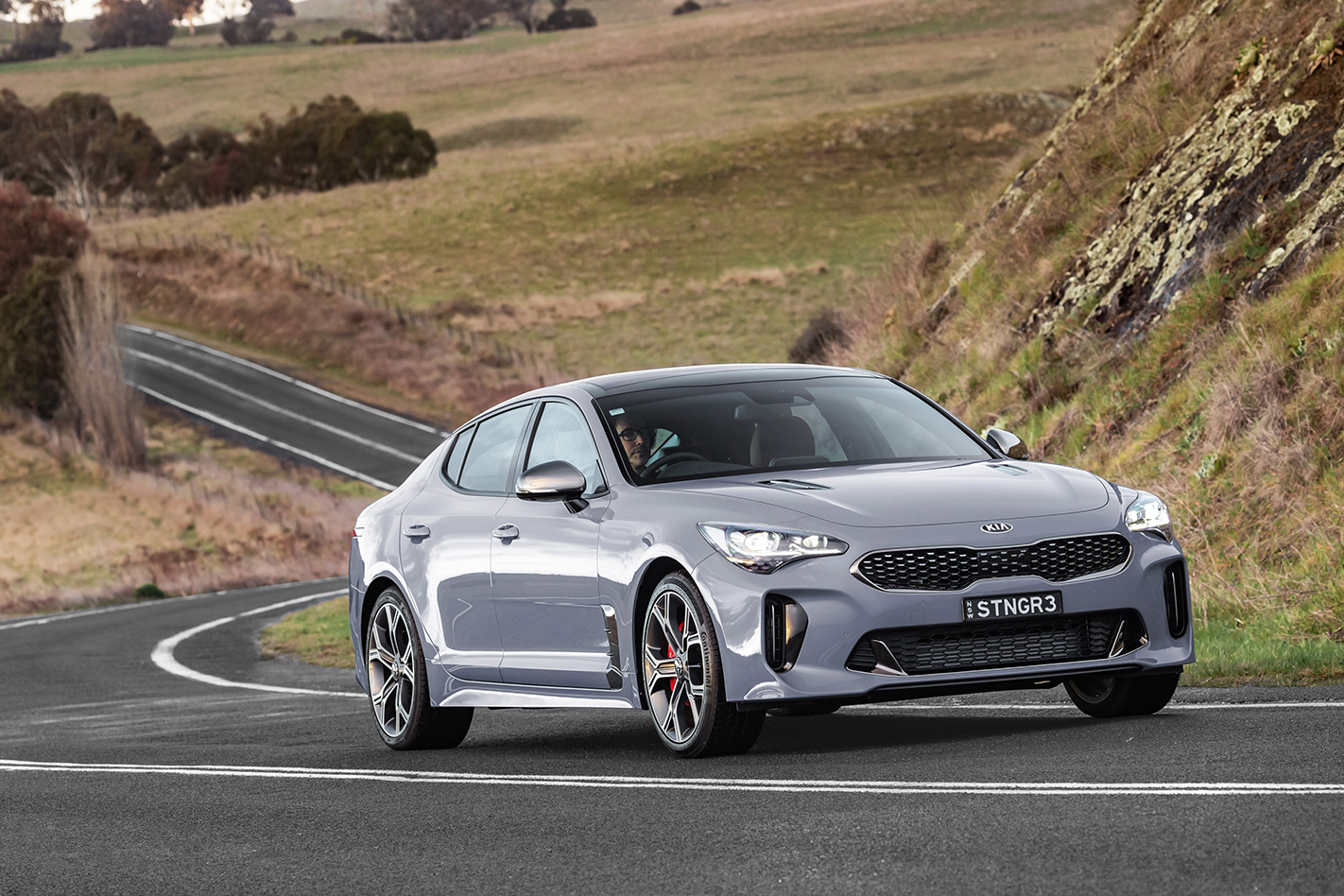
While the suspension underneath the G70 and Stinger models are remarkably similar, there are some subtle but important differences, which extend beyond the tuneable components of springs, dampers and anti-roll bars.
The 2.0-litre G70 will have passive dampers, while the V6 will have adaptive dampers.
The S and Si variants for both the four-cylinder and V6 Stingers will have passive dampers, while only the GT variants have adaptive dampers.
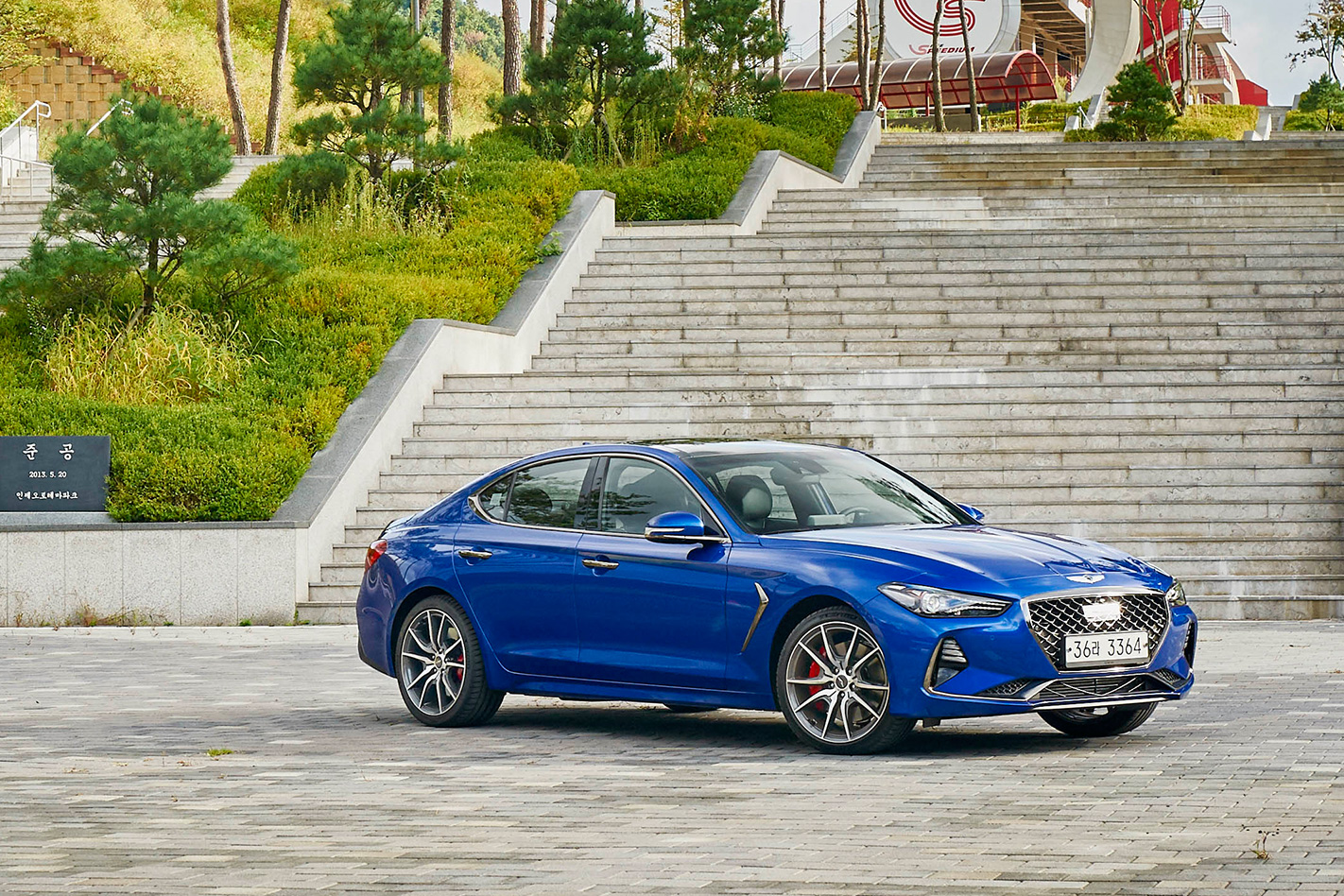
Both Korean cars have undergone local suspension tuning to make their ride and handling characteristics better suited to Australian roads and tastes of Aussie buyers. However, both cars will have a different tune to each other. The Stinger will have more of a sporting focus, while the G70 will lean towards a more sports/luxury driving experience.
Specs:
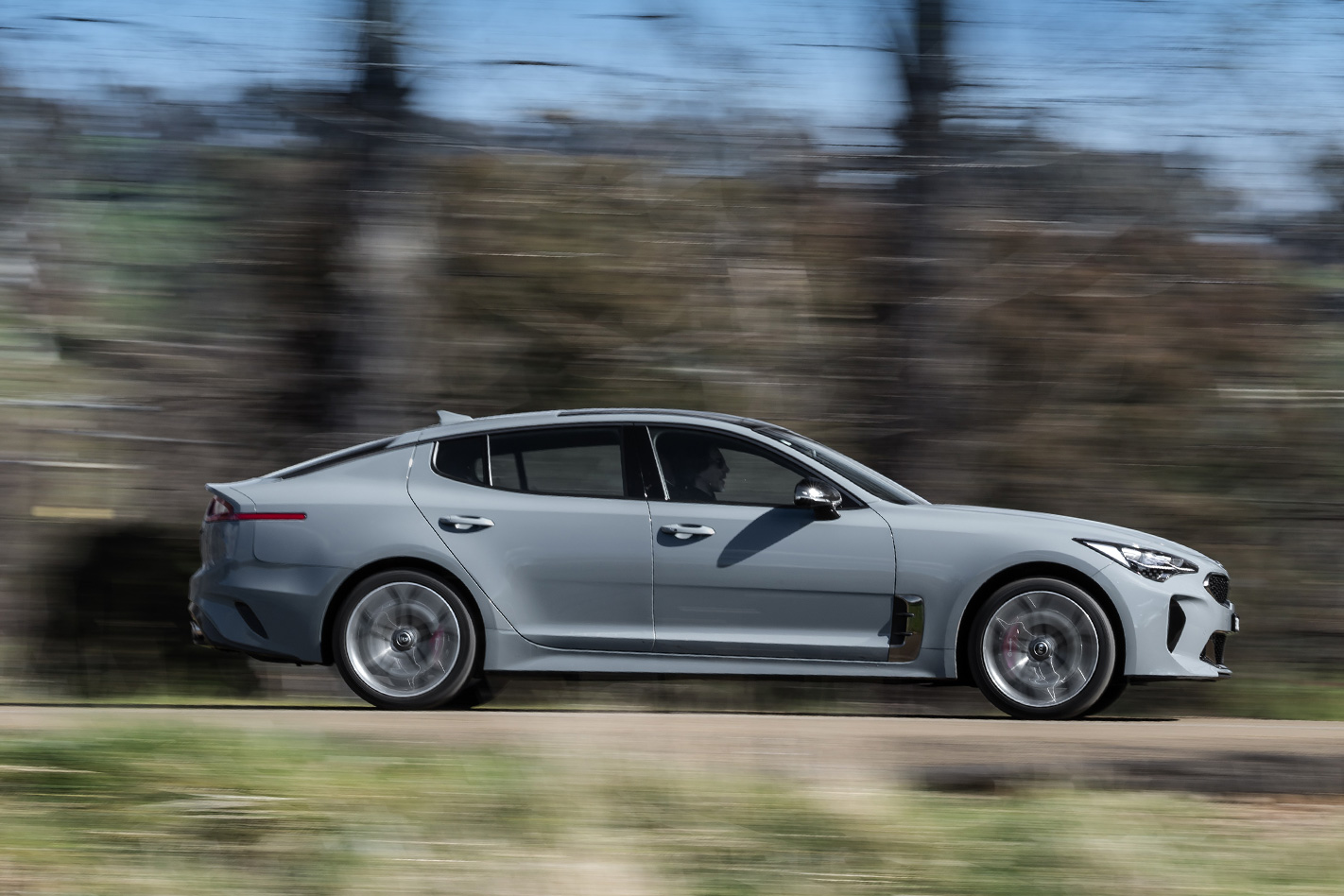
The V6-powered G70 claims a 0-100km/h time of 4.7 secs, before reaching a top speed of 270km/h.
Kia claims the Stinger will sprint to 100km/h in 4.9 secs. However, when testing a pre-production car without a fully functioning launch control, our sister site Wheels recorded a 0-100km/h time of 5.1 secs.
Market placement:
The differences between the two are most striking with their intended target market.
Prices for the Kia start at $48,990 for the entry-level V6, and top out at $59,990 for the flagship GT. The 2.0-litre four cylinder starts at $45,990 for the S, and stretches to $55,990 for the GT.
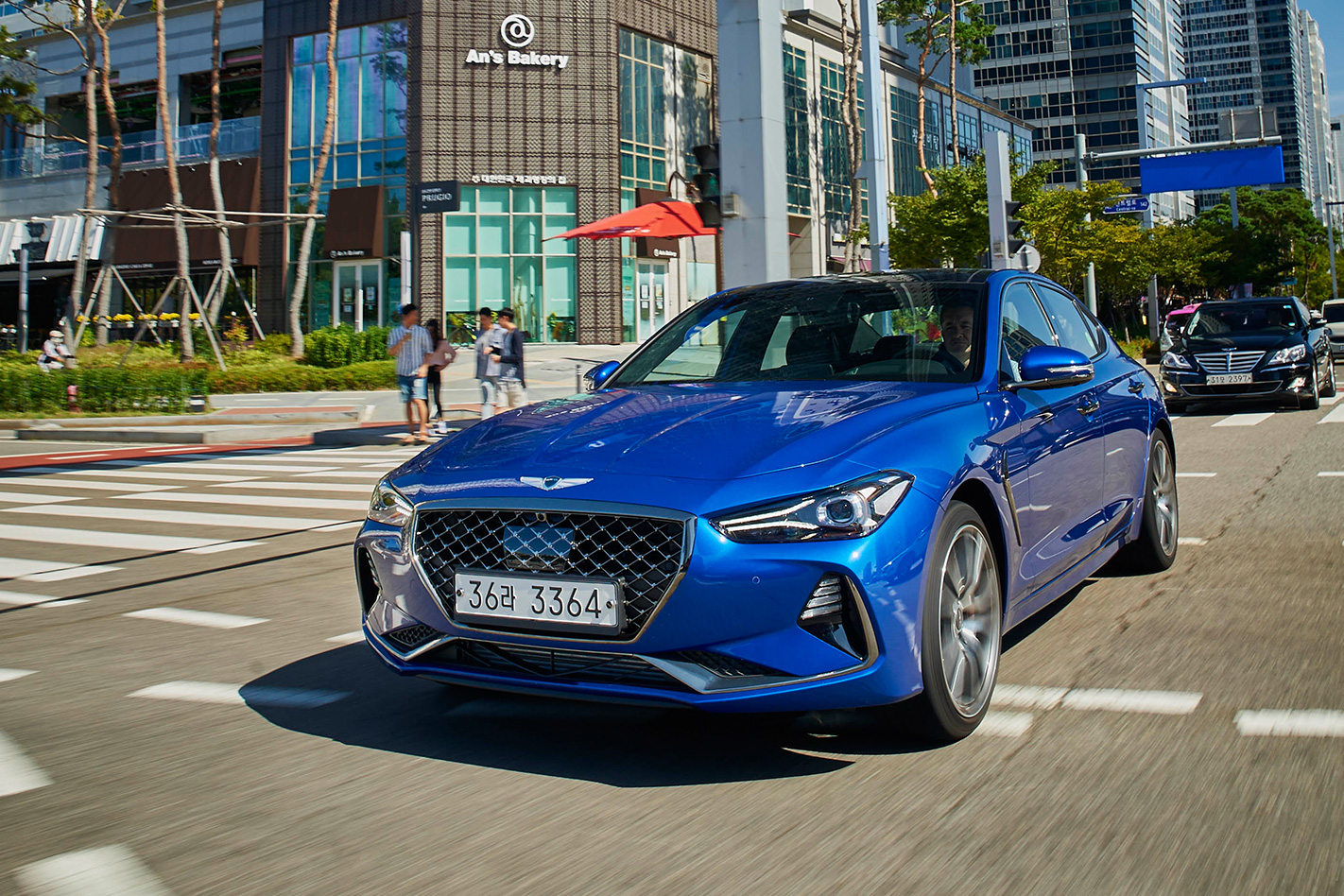
Official pricing for the G70 in Australia is yet to be released. However, it’s likely the entry-level model will be in the low $50,000 zone, undercutting many of its luxury European rivals. The top -spec V6 variant is expected to cost in the region of $75,000. This flagship model is likely to include features as standard which are often only available as options on European models of a similar or higher price.
On sale:
The Kia Stinger’s local launch took place this year, with cars available to purchase from October 1. Meanwhile the G70’s international launch recently took place in Korea, with Hyundai Australia estimating the car to be on sale during the first quarter of next year.
CANBERRA’S an ironic place to launch the Kia Stinger. It will occupy a segment left vacant by the end of local manufacturing, an outcome some argue the nation’s capital could have helped avoid.
The upside to this is we’ve driven Kia’s new five-door just as you lot would. We’ve trundled through road works, cruised down the highway to Wakefield Park and cut a couple of laps in anger, cycling through the line-up as we went.
Engine capacity splits the six variants into two groups, with a 182kW/353Nm 2.0-litre turbo four kicking things off before a 272kW/510Nm 3.3-litre twin-turbo V6 fills out the premium spots. Both are married to an eight-speed auto.
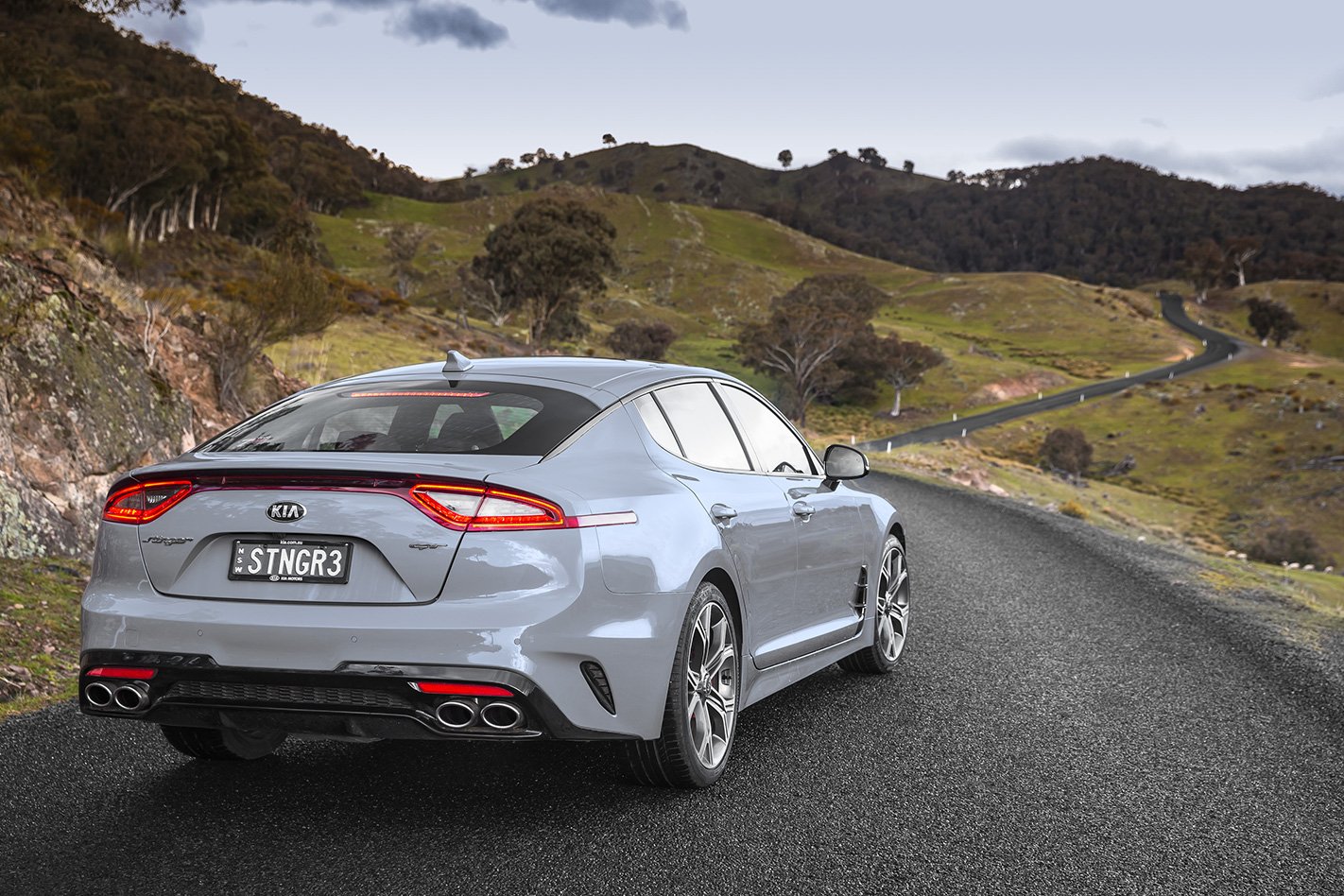
Four cylinders or six, though, Aussies will find the Stinger’s dimensions familiar. Its 2.9m wheelbase matches a Commodore’s, while its lift-back body is 85mm shorter (4830mm) and 28mm narrower (1870mm).
Settling into the front pews – Nappa leather in our top-shelf GT variant – suggests the raked turret and sloped silhouette have penalised interior space a tad. Inside feels snug for a 178cm bloke, and headroom would seem cramped for anyone over six-foot.
There’s little else to fault inside. Besides some buttons hinting at the maker’s cheap and cheerful origins, the cabin is a classy affair with tech that feels worth the GT’s $59,990 ask.
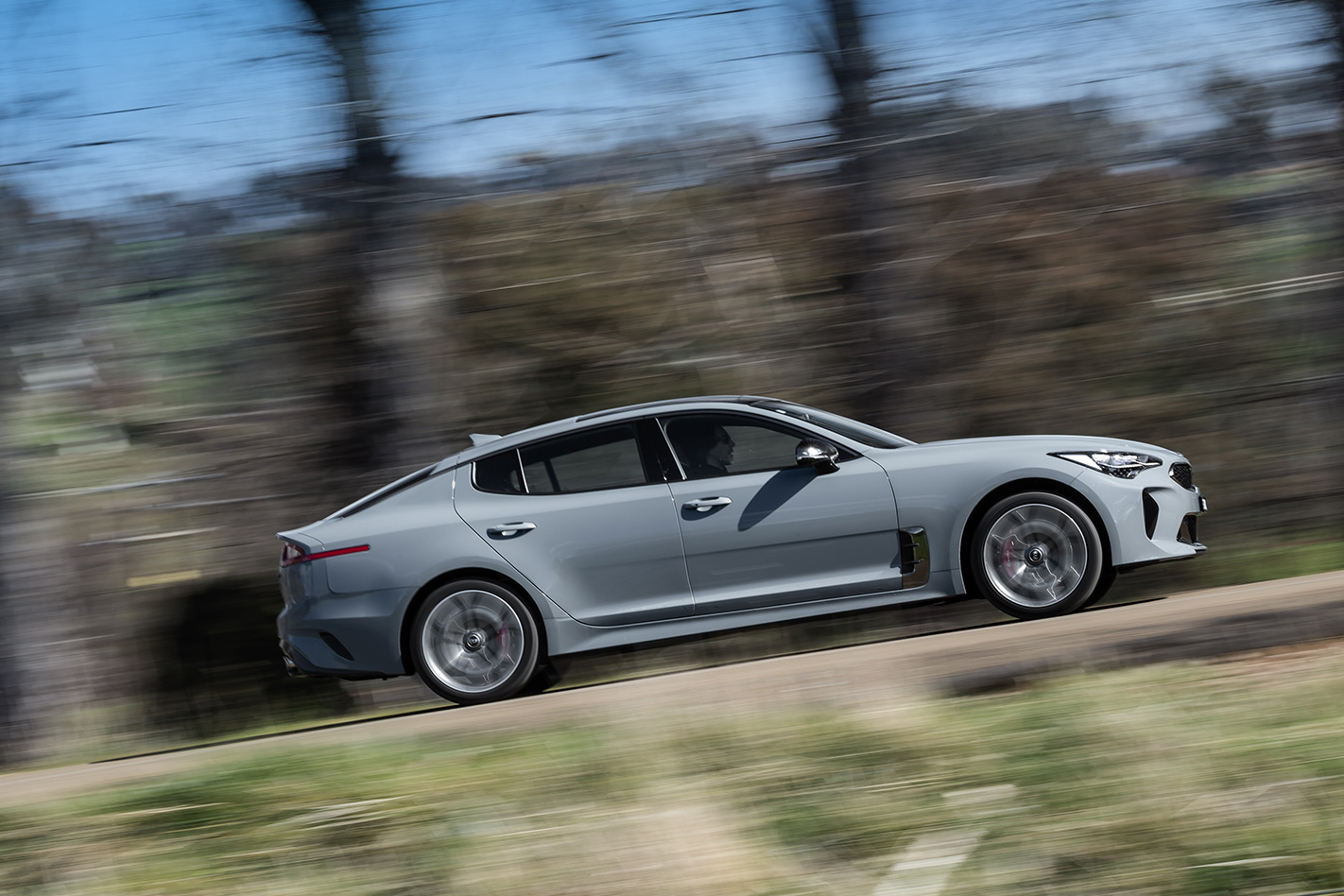
Power is easily accessed due to the throttle pedal’s short-travel and sharp mapping. The V6 might lack an LS3’s pipes, but the good news is it’ll punch the Stinger sideways and lay fat elevens, furiously piling on the pace whether on the move or from a standing start.
Memory suggests its every bit as fast as the late Falcon XR6 Turbo. Where its drivetrain differs is delivery. Its punch doesn’t need a wind-up, feeling creamy and linear until about 6000rpm, 500rpm short of its redline.
It’s at this point the automatic plucks the next gear, at least with stability control on, as the engine starts to run out of puff. We’re told it will let you run the V6 to redline if ESP’s off.
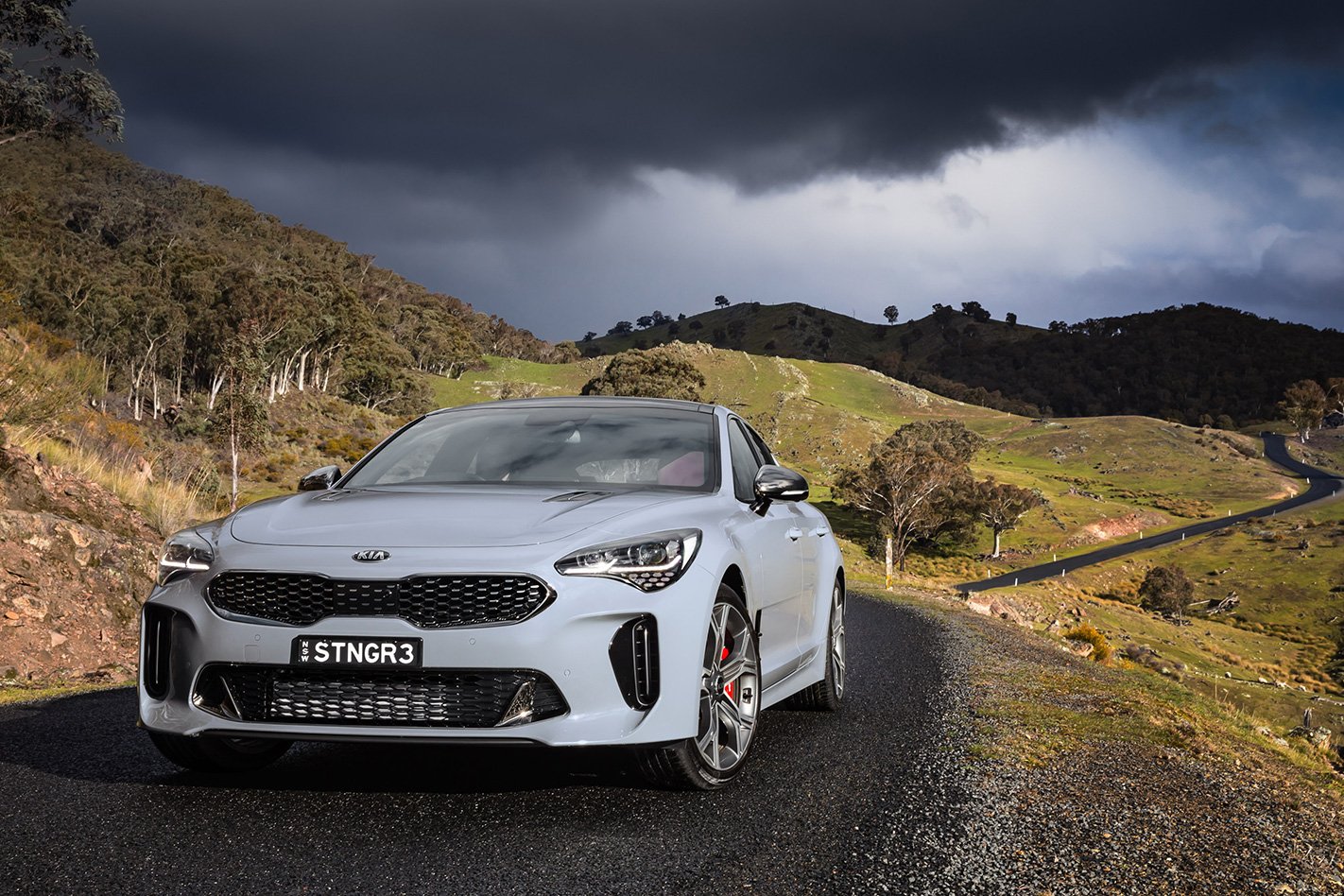
Meanwhile, Kia’s eight-speed auto upshifts smoothly, kicks down quickly, and obeys paddle commands, but sadly doesn’t have a true manual mode and can get a little flustered when downshifting.
Spilling out on to Wakefield Park reveals the Stinger is no track car. Hard braking unsettles the nose-heavy chassis (it’s balanced 57:43 front-to-rear) while the front-end lacks communication. Its ContiSportContact 5s can’t cope with a day’s work, either. Track examples were fitted with Michelin Pilot Super Sport 4 rubber instead.
Its brakes, on the other hand, can take the punishment. The fixed Brembo calipers will sponge after a while, but they’ll last long enough with a little mechanical sympathy.
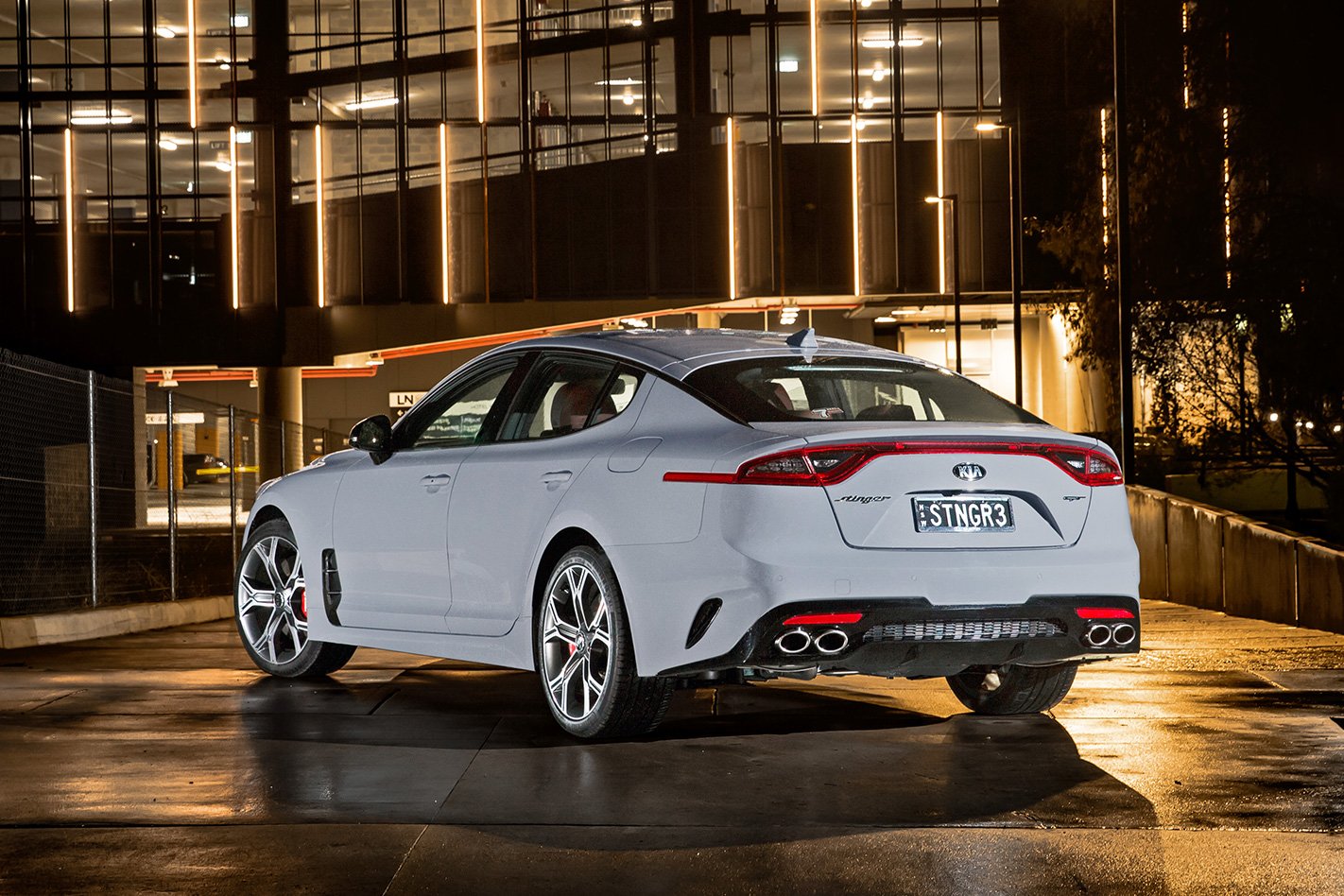
What’s promising is how much lighter the Stinger feels than its 1780kg from the tiller. The initial roll reminds you it’s no featherweight, and it’ll need trail-brake to tuck the nose in, but at eight-tenths you can adjust its angle with either pedal.
The GT’s stiffer front suspension and adaptive dampers sharpen its changes of tack, at times approaching the poise and balance of Holden’s hallowed SS-V Redline. Overall though both the GT and non GT’s feel soft in setup, like a Holden Commodore SS.
Out on the highway the Stinger’s lesser siblings gain the upper hand. The GT’s damper modes, selected via a dial on the centre console, range between too soft in Comfort and too stiff in Sport, whereas the regular S ($48,990) or SI’s ($55,990) passive setup is suppler, yet controlled – an excellent compromise ready for any interstate haul.
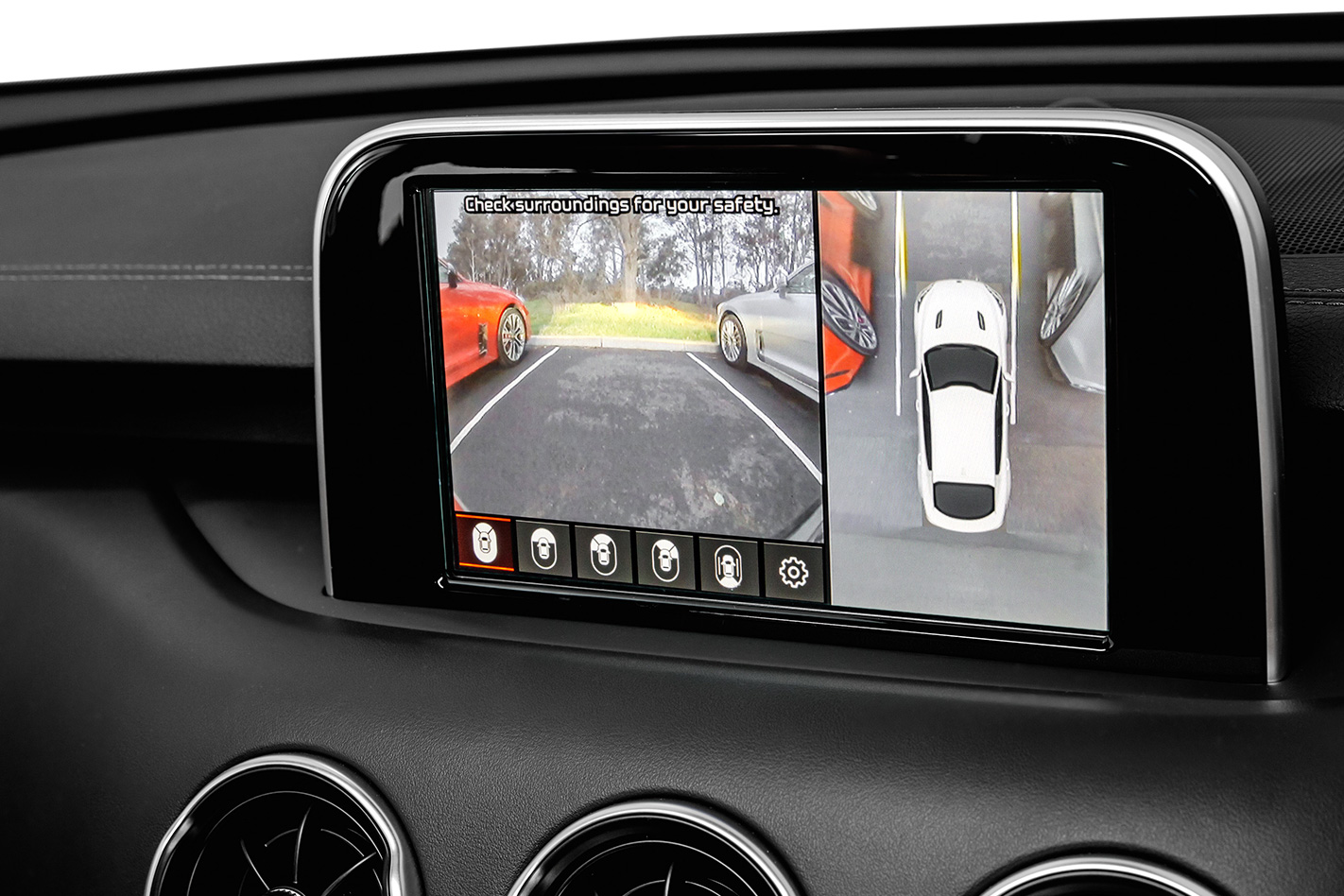
The GT stacks up as great value. In a perfect world, we’d paint it Micro Blue (pearl hues cost another $695), trade in the adaptive dampers, and tick the optional exhaust box when it becomes available.
The Stinger GT isn’t quite a Commodore SS-V Redline slayer, yet, but it’s managed to roll speed, comfort, refinement, and value into one. Kia’s first stab at a large rear-drive sedan is a solid one. Even the four-cylinder car is an entertaining steer.
With only a short drive, we’re salivating to spend more time in the Stinger. And if lugging four people across country in a fast, well-appointed sedan for less than $60K sounds like your bag, you should be too.
4.0 out of 5.0 stars Likes: Proper grunt, decent chassis, loads of kit Dislikes: Front-end point quiet exhaust note, no manual-mode
2018 Kia Stinger GT specs Engine: 3342cc V6, DOHC, 24v, twin-turbo Max power: 272kW @ 6000rpm (6500rpm redline) Max torque: 510Nm @ 1300-4500rpm Transmission: 8-speed automatic Weight: 1780kg 0-100km/h: 4.9sec (claimed)
A newly minted Volkswagen T-Roc has been spotted in Germany, sporting a few tell-tale clues that suggest it’s a high-performance R version.
While it has no R-badging, the camouflage-free car reportedly emitted a similar engine note to the Golf R’s turbocharged 2.0-litre petrol engine through a quad-tipped exhaust system that mimics the pipes of VW’s fastest hot hatch.
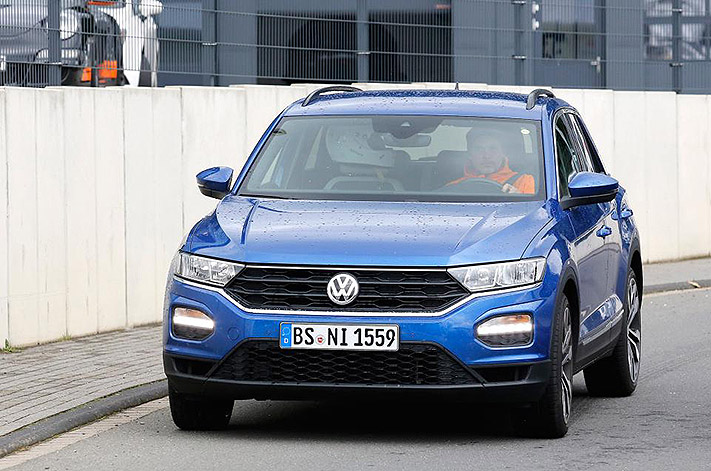
It also featured 20-inch alloys, as fitted to the Tiguan R-Line trim, and differently shaped LED daytime running lights to those fitted on the T-Roc models revealed at the Frankfurt Motor Show last week.
The bodywork doesn’t seem too different to the regular models, though any changes on the production version will probably be subtle as they are with Golf R.
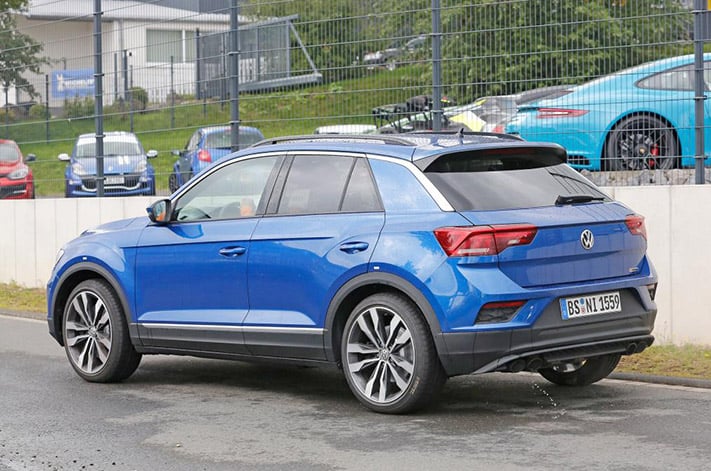
Speculation the pictured car is an R model is also supported by the fact that VW head of research and development Frank Welsche was last week reported as saying the company has already developed a prototype T-Roc R for testing.
Volkswagen had previously revealed it was considering a T-Roc R on a couple of occasions. In May company boss Herbert Deiss told UK motoring site Auto Express that the R sub-brand would be a good fit for high-performance SUVs of which there was “definitely customer demand”.
Also making a T-Roc R highly plausible is the fact it’s built on the same MQB modular platform as the Golf, allowing it to share the Golf R’s all-wheel drive undercarriage as well as its 213kW/370Nm 2.0-litre four-cylinder turbo petrol engine.
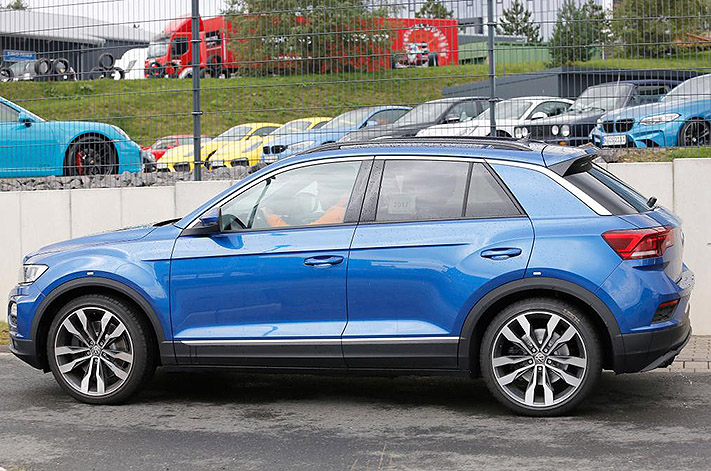
Volkswagen has so far confirmed three T-Roc variants; an eponymous base model and upper-spec
‘Style’ and ‘Sport’ variants which will be similarly equipped, but presented differently.
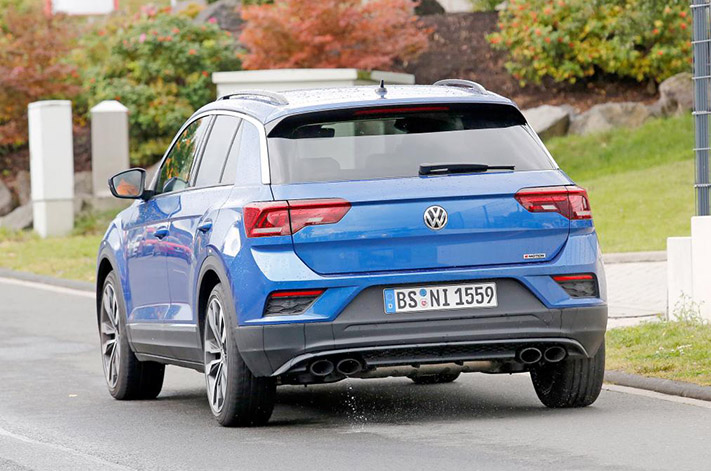
They are expected to arrive in Australia sometime next year, with Volkswagen Australia working hard to secure allocation in the wake of unexpectedly strong global demand.
While it’s too early for Volkswagen Australia to confirm if a T-Roc R will head Down Under with the rest of the range, a spokesman told WhichCar it’s an attractive prospect with strong demand for sporty SUVs which led to the recent introduction of the Tiguan Sportline, which has the gutsy 162kW 2.0-litre turbo petrol engine which was previously only available in the range-topping Highline variant.
