
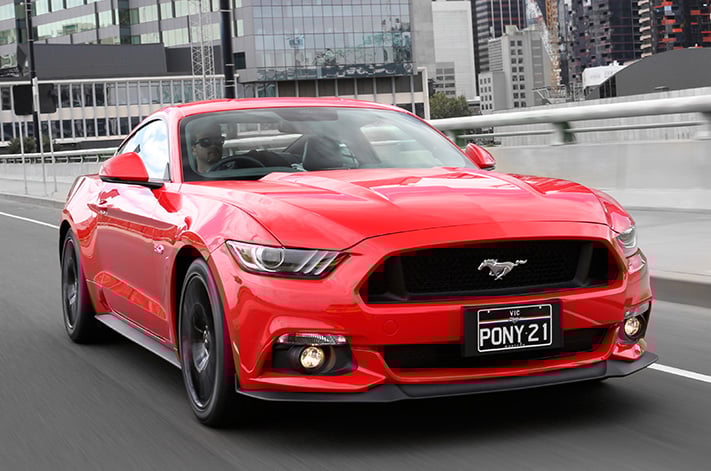
The Ford Mustang doesn’t need too much introduction though some people are surprised to learn that there’s a four-cylinder turbocharged version alongside the 5.0-litre V8 version. The iconic American muscle car comes in coupe and convertible styles plus all the gear needed to make it a viable daily driver.
Variants
All Mustangs essentially have the same equipment levels so the variants are best distinguished by their engine types and the convertible and fastback body styles. The latter is offered with a choice of six-speed manual or six-speed automatic transmissions, whereas if you opt for the drop top, you’ll have to make do without a clutch pedal.
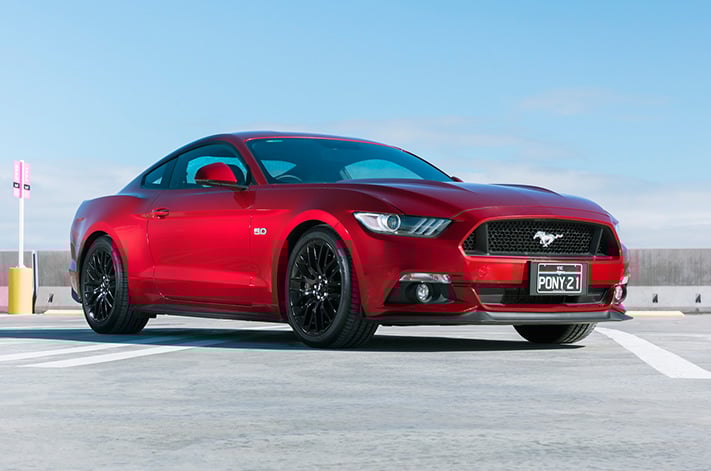
The four-cylinder Mustang EcoBoost is powered by a punchy 233kW/432Nm 2.3-litre turbo engine and includes the entry level Fastback manual priced from $44,990. The EcoBoost auto is $47,490 and you’ll have to pay $5500 more for less bodywork if you want the EcoBoost Convertible.
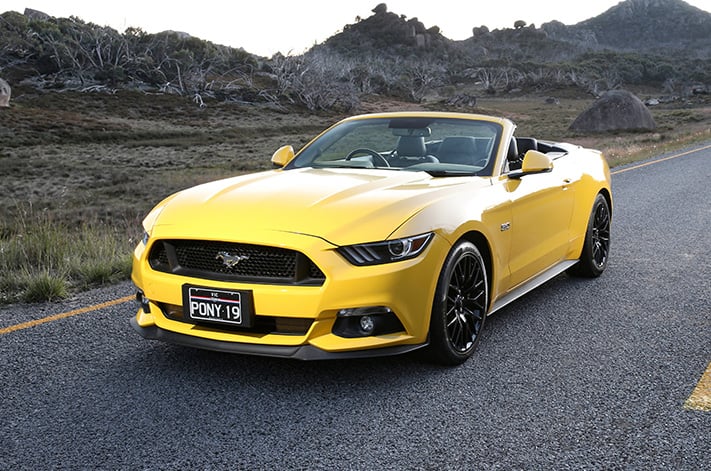
Likewise, the Mustang GT also comes with a manual and auto Fastback and auto convertible with prices ranging from $54,990 to $66,205. It’s powered by a brutish 5.0-litre V8 engine that produces 306kW and 520Nmn.
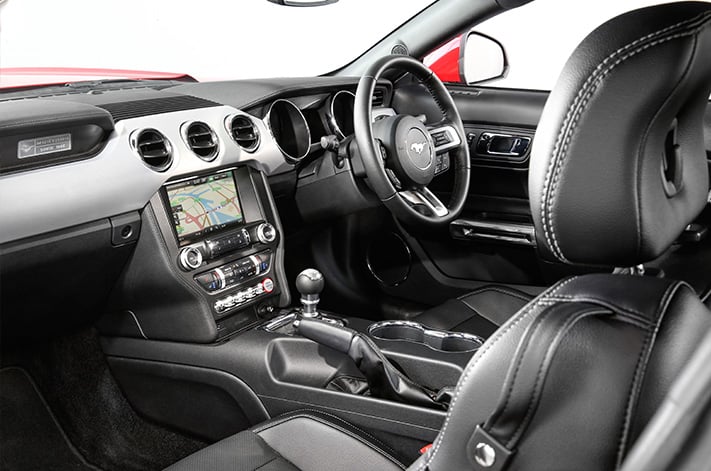
All Mustangs are fitted with an 8.0-inch touch screen with Ford’s excellent SYNC 3 infotainment system with Apple Carplay/Android Auto, satellite navigation, reversing camera, cruise control, leather trim, dual zone climate control, keyless entry, push button start, auto windscreen wipers, auto headlights, tyre pressure monitoring and selectable driving modes.
They also all come with emergency assistance feature, where the car automatically contacts emergency services immediately if you’re unlucky enough to get involved in a crash severe enough to deploy the airbags.
That said, you do get bigger brakes on the V8-powered GT models, and slightly wider rear wheels and tyres to deal with the extra power.
- Mustang EcoBoost Fastback manual – $44,990
- Mustang EcoBoost Fastback auto – $47,490
- Mustang EcoBoost Convertible auto – $53,990
- Mustang GT Fastback manual – $54,990
- Mustang GT Fastback auto – $57,490
- Mustang GT Convertible auto – $66,205
Our pick
It has to be the GT Fastback with the manual transmission, for its combination of V8 performance, street cred, classic lines, driver involvement and resale value.
The EcoBoost engine is a great little performer and offers considerable fuel savings but it’s a mismatch for a car like this. Besides, you’ll always have to justify your selection to people. With the V8 you’ll never have to.
TELL ME ABOUT THIS CAR
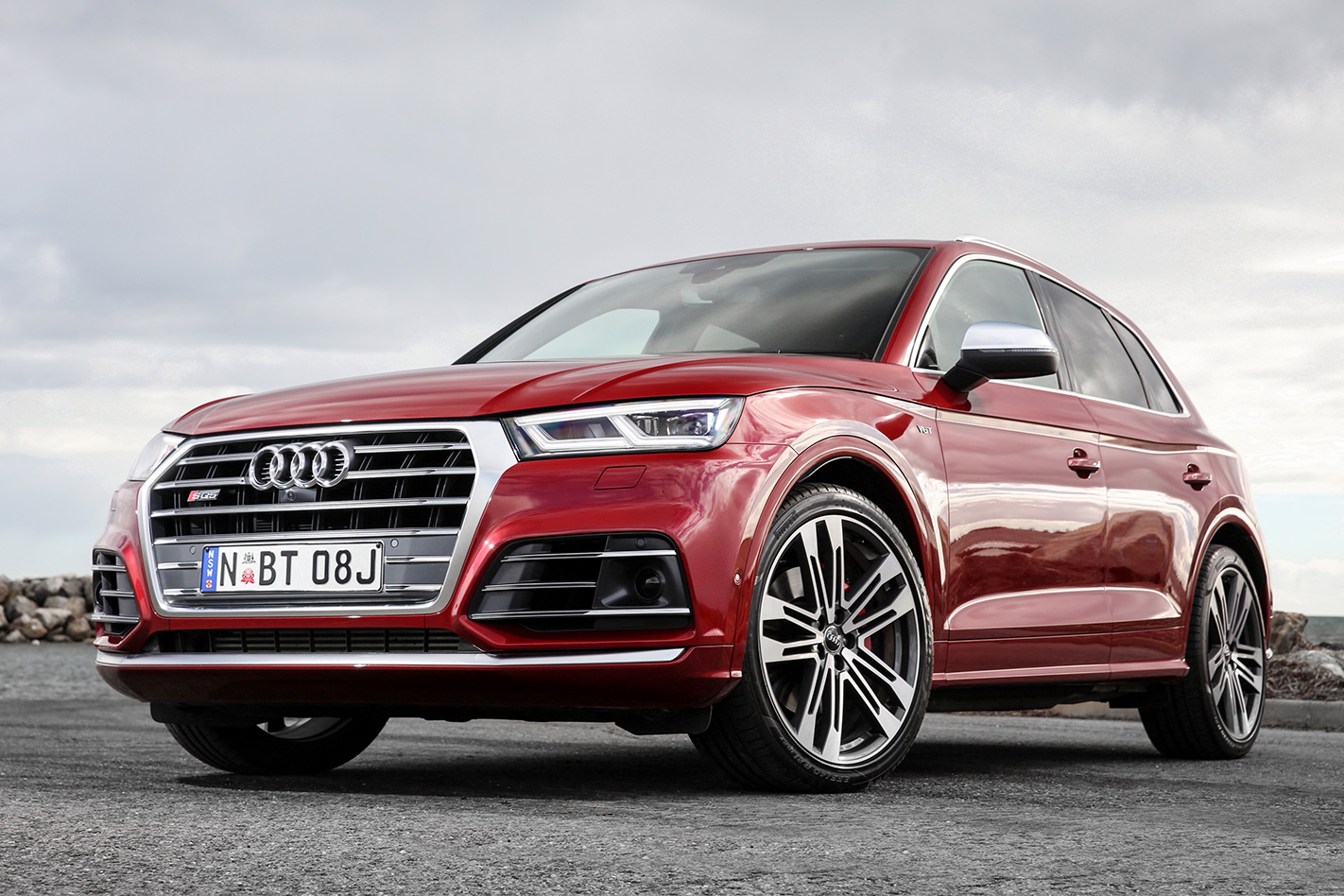
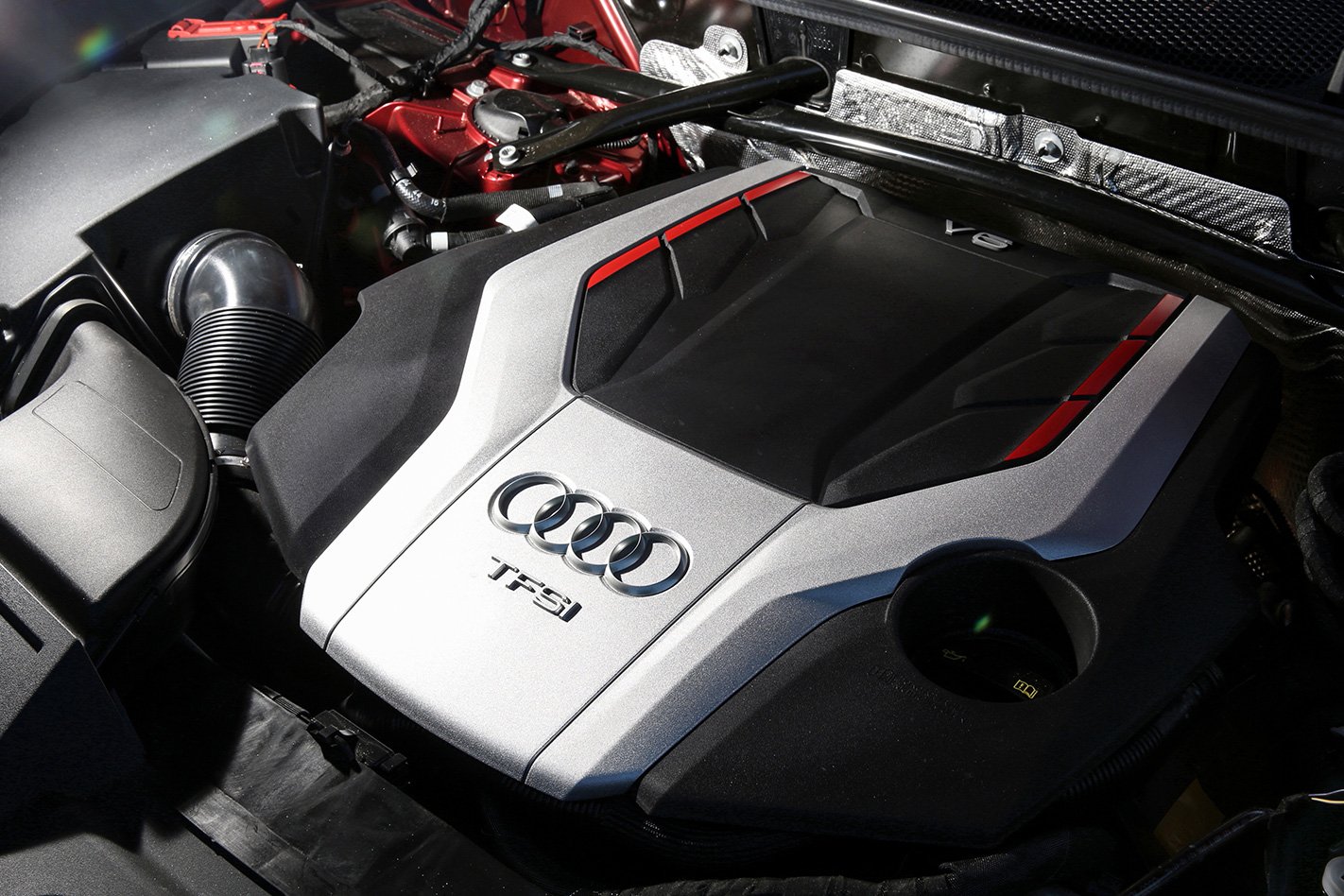
Until now, the Audi SQ5 was a hot SUV with a powerful diesel engine under the bonnet, but that changes for this all-new second-generation version. Instead it purloins the three-litre V6 petrol engine we’ve seen in the S4 sedan and the S5 coupe.
Your first thought is that it probably quaffs a lot of fuel as a result. Most petrol-engined sports SUV need a bankroll like Gina Rinehart’s to keep fuelled up, but the SQ5 gets a whole suite of efficiency measures to keep things sensible at the bowsers.
If you want a car that covers ground quickly and discreetly, with an elevated seating position and all of the latest safety gear, the SQ5 is well worth your attention. Prices start at $99,611, but can quickly go north if you’re a bit enthusiastic with the options list.
STRENGTHS
- The three-litre engine is turbine smooth and delivers a real shove in the back at virtually anywhere in the rev range.
- At 8.7 litres per 100km, fuel economy isn’t disastrous.
- There’s enough ground clearance to make the SQ5 capable of light off-road work.
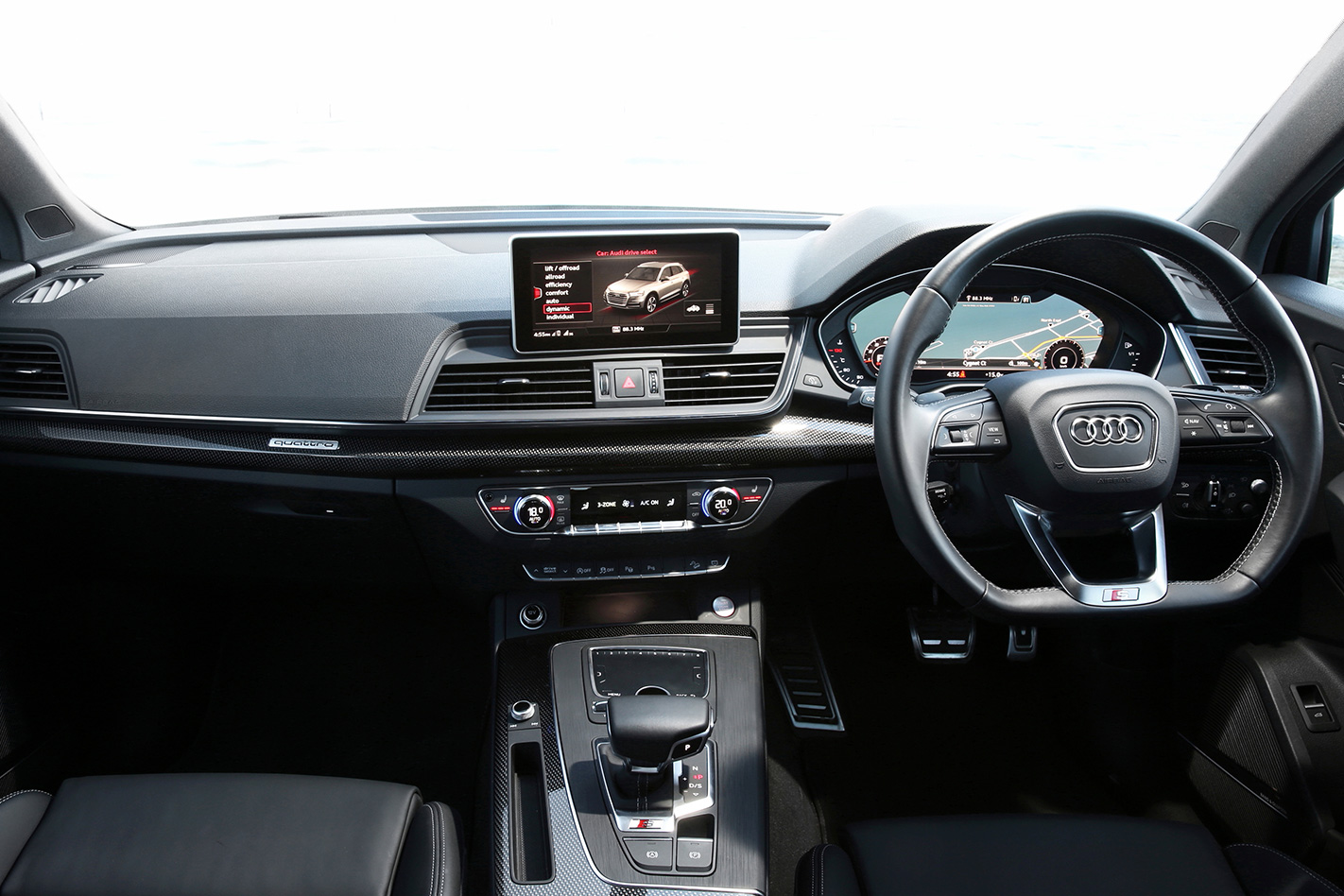
- You get the usual beautiful Audi interior, with an S-specific flat-bottomed steering wheel, diamond stitched Nappa leather seats and brushed aluminium dashboard inlays.
- Handling is neat and tidy and there’s masses of grip from the full-time quattro all-wheel drive system.
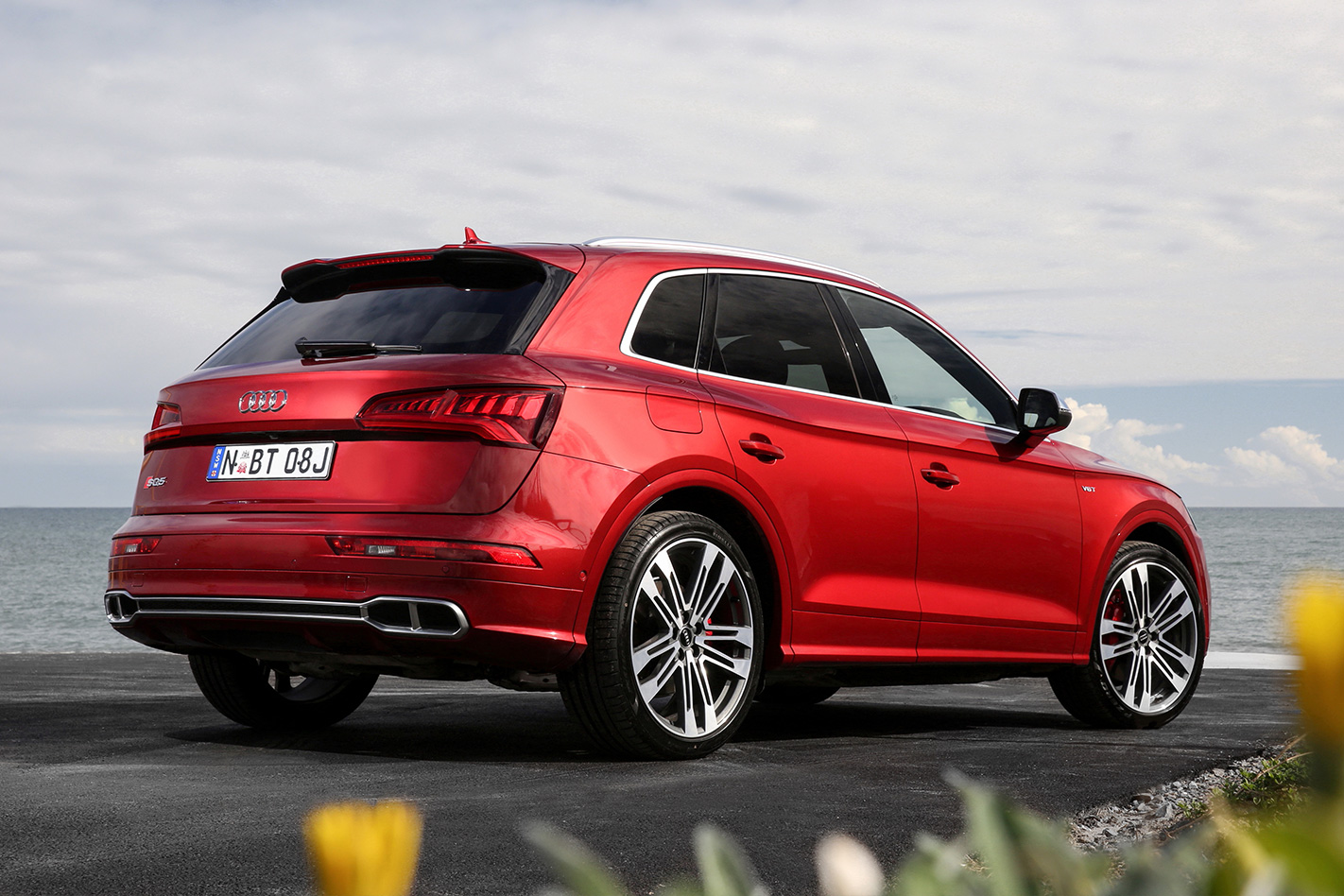
- The styling moves on from its blobbier predecessor, with sharply cut lights and grille, and a distinctive ‘tornado line’ shoulder running down the flanks.
- It’s 130kg lighter than its predecessor, which pays dividends not only at the pumps, but in the way the car accelerates, brakes and negotiates a corner.
- The 34mm longer wheelbase gives rear seat passengers a bit more room to stretch out than the old version.
- You get a ‘gesture control’ tailgate as standard, so you can wave your foot under the bumper to open it if you’re laden down with gear.
- Audi’s ‘Virtual Cockpit’ dial set is fitted as standard, so you can configure the clocks how you want them, even displaying a massive 12.3-inch wide map in the instrument cluster if you’re paranoid about getting lost.
- Switching the car into ‘Dynamic’ mode adds a bit more volume to the engine and exhaust.
- There’s a huge amount of safety and convenience kit fitted as standard, with gear like eight airbags, automatic emergency braking, adaptive cruise control, and even warnings that prevent you reversing out of a space into crossing traffic or opening a door into approaching cars or bicycles.
- The stability control is so clever it can even tell if you’re carrying something on the roof bars.
- A 360-degree camera projects a live birds-eye view of the car to help with parking.
- Interior space is bigger than before, with 550 litres of space in the back (up 10 litres on the old car). Specify the sliding rear bench and that can expand to 610 litres.
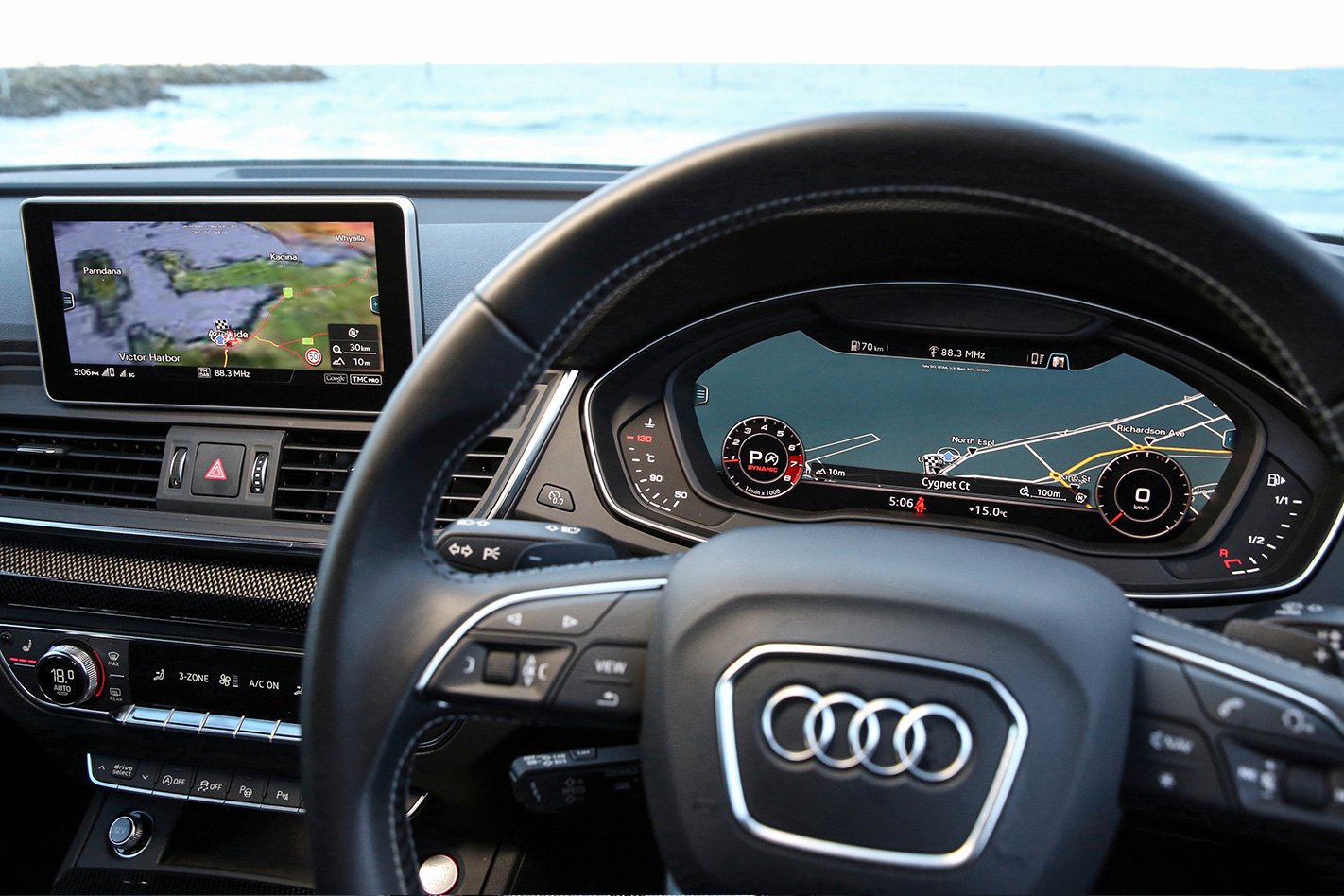
- The interior is beautifully finished and the ergonomics work well too.
- There’s an inductive charger that can wirelessly charge Android phones.
- The SQ5 is seriously rapid, getting to 100km/h in just 5.4 seconds.
- The eight-speed tiptronic automatic box is smoother than the soles of James Brown’s shoes.
WEAKNESSES
- The ride quality is firmer than it needs to be. Fortunately, Audi has priced the optional air suspension very reasonably at just $2150. It’s the best investment you can make for the SQ5.
- Options are otherwise very expensive. Once you’ve tried the amazing Audi Matrix LED headlights you’ll definitely want them on the SQ5. Unfortunately, you can’t do that without going the whole hog on the $5600 Technik package. The plus side? You also get a head up display and a delicious 755-watt, 19 speaker Bang and Olufsen stereo system.
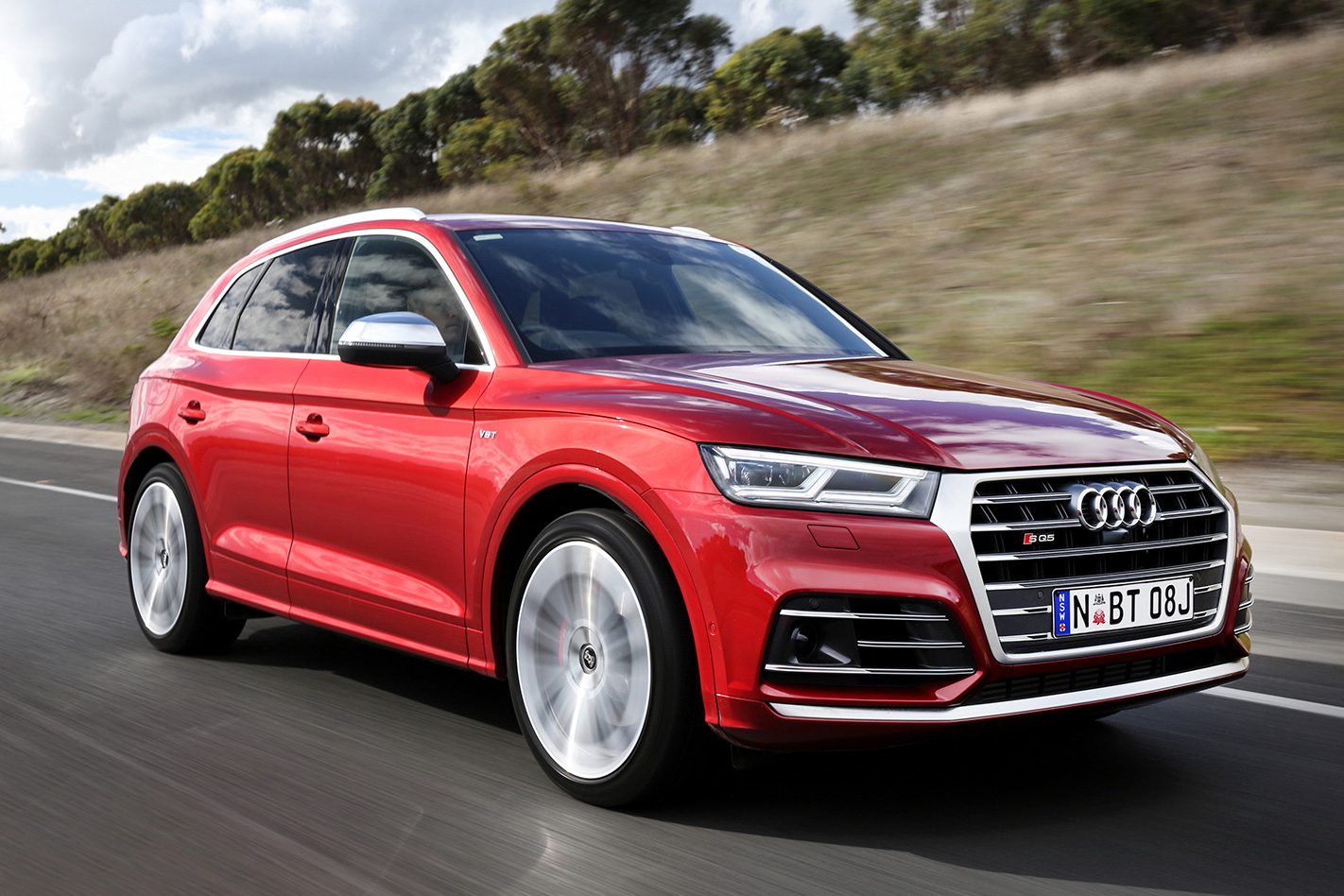
- Then only two standard paint colours are black and white. If you want any other hue, $1846 is just the starting price.
- The 21-inch alloy wheels that are fitted as standard give the car a slightly cartoonish stance and look very vulnerable to damage if you plan to travel on unmetalled roads.
- The engine and exhaust are a bit muted. If you’re looking for a real fire-breathing SUV, the SQ5 might come across as a bit mannered.
- Audi is going to launch a diesel version of the SQ5, but won’t say when. We have a suspicion that that model might well be the go.
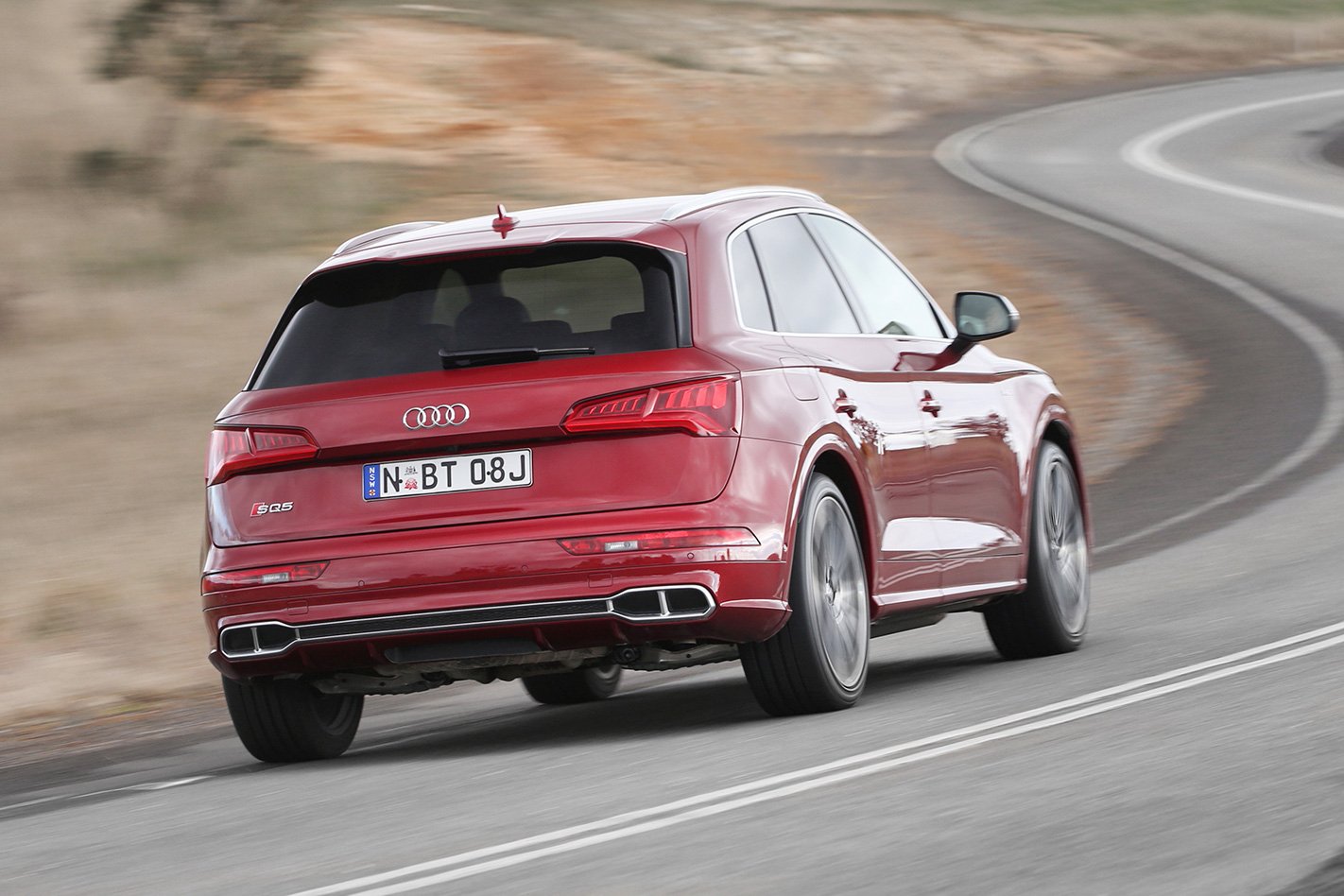
- Fake exhaust vents look a tad gauche.
ANY RIVALS I SHOULD CONSIDER?
The Audi SQ5 competitors in the mid-sized premium sports SUV market include the likes of the Alfa Romeo Stelvio, the BMW X4 xDrive 35d, the Jaguar F-Pace V6 S, the Mercedes GLC 43 AMG, the Porsche Macan S and the Volvo XC60 T8.
Undeterred by hobbling legislation and ongoing regulatory battles, Audi is persevering with the next-generation of self-driving technology that will follow in the footsteps of its new A8 flagship.
Until an agreement can be struck regarding exactly how autonomous cars should be regulated, the freshly unveiled large luxury sedan’s so-called ‘level three’ self-driving ability will remain switched off – but the German car maker is pressing on with the next chapter in driverless tech regardless.
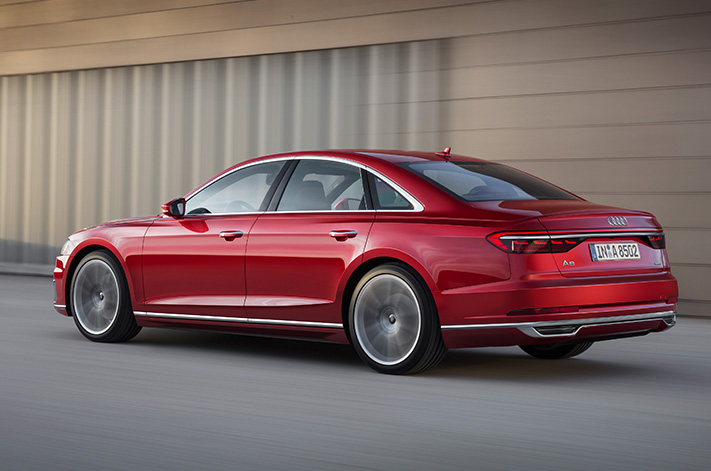
Under the widely accepted five-tier autonomy system, level three is a significant step beyond level two and marked by a vehicle that can proceed without any driver intervention under certain specific circumstances – something the A8 has been developed to do when the time is right.
Achieving level-four is more of a leap than a step and will require even greater advances in driverless technology than the German car maker has already made, it says.
Speaking at the Audi Summit in Barcelona, the engineer Audi describes as ‘Mr Piloted Driving’ Alejandro Vukotich said that when looking to the next step in autonomy, it is important to recognise that there are two distinct applications for level-four autonomous capability.
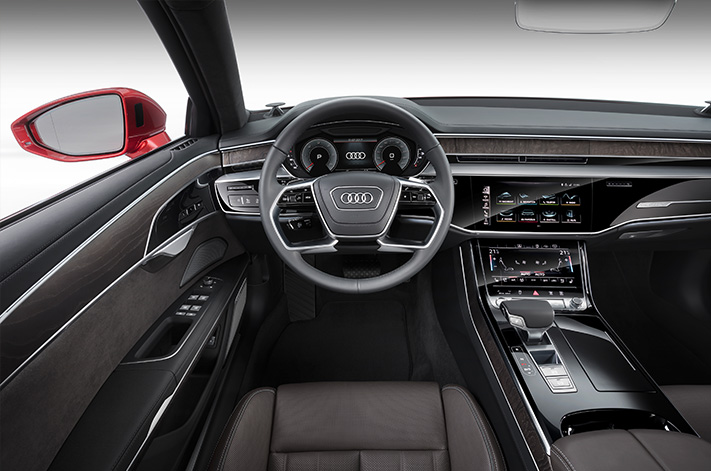
According to the Audi engineer, an ongoing project with German technology partner EID will spawn the next significant milestone in driverless vehicles.
“My wish is to make it more clear that there are two different use cases,” he said. “You have a mobility service or an ownership car. I think that the transport ‘robo-taxi’ mobility will happen first.
“We are working on that. We found a company in Munich called EID and they are developing the technology for a robo-taxi. So we are committed to that and developing it.”
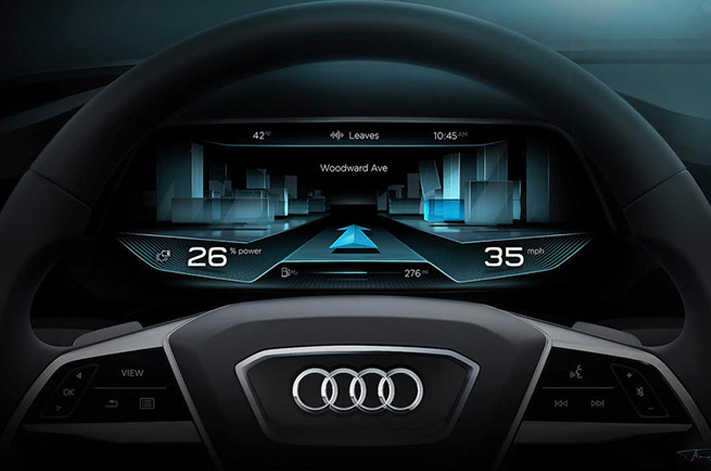
Vukotich explained that the task of creating a business case for an autonomous taxi was easier than that of privately owned cars.
“Robo-taxi doesn’t have to look perfectly designed. You can put other sensors on the roof or somewhere else than on an ownership car, put those things on an ownership car and no one will buy your car.
“You are also replacing a driver and a driver has a cost factor so the business case financially will make sense. With ownership – it’s just the value that you give to it.”
Vukotich made a rough prediction that the next significant step could be seen early in the next decade and although the two applications would differ to begin with, the technologies involved would gradually align.
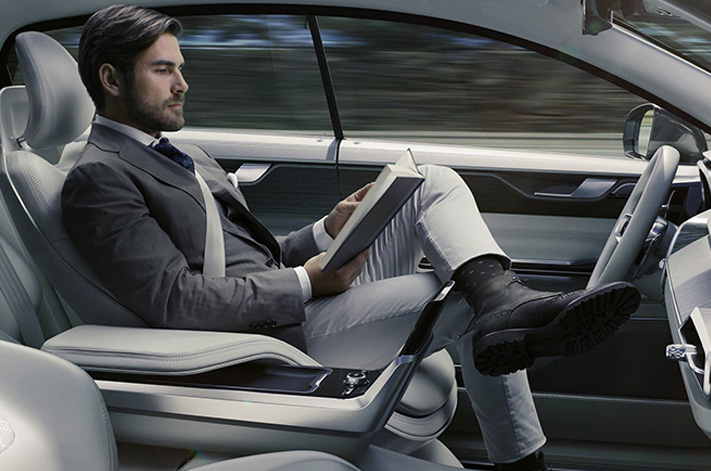
“I think that the next steps of bringing more level three systems and maybe level four for ownership cars will be around 2021 or 2022,” he said.
“The technology will share some components but it will still be very use-case focused over the next years, but after a certain time we will start to share more.”
Unlike some manufacturers who have remained coy when it comes to the tenuous subject of liability, Vukotich was clear where Audi stands with its technology and the risk involved with self-driving cars.
“The one who is responsible is the one who is driving the car,” he said. “If it’s the machine, it’s the car and the factory. If it’s the driver, it’s the driver.
“Liability in Germany, for example, is solved that the car owner is always liable for his car but the insurance then can investigate what happened. They can make the car manufacturer responsible if it can be proven that it was a technical failure.
“We have a black box in the car so we can always read the data and find out who was driving the car when something happened.”
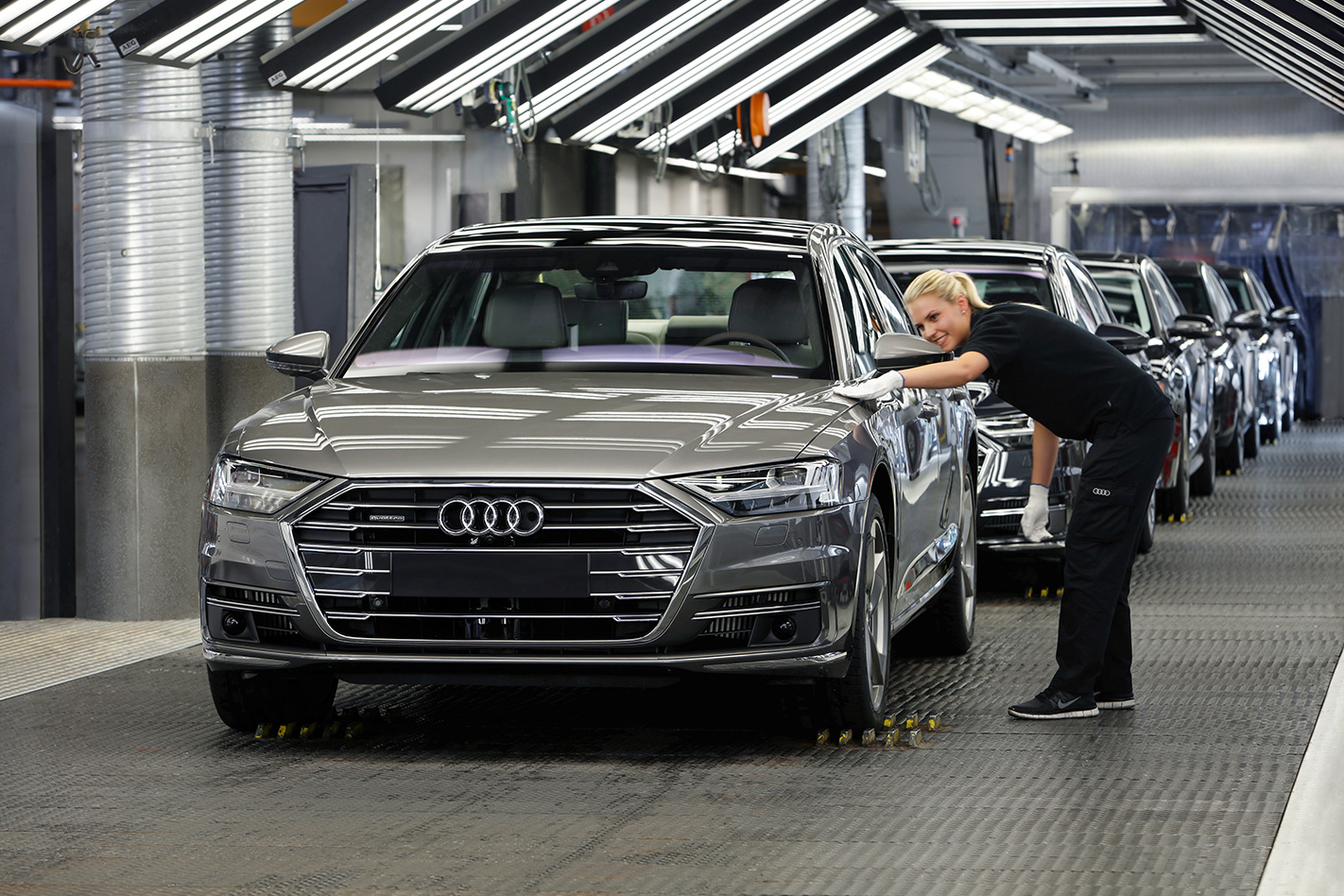
In terms of the level-three technology that is currently hamstrung by legal hurdles, Vukotich said he expected the legislation to be resolved soon and the A8 features can be gradually introduced before being followed by other Audi models.
“We will launch the parking pilots by the middle of next year and then step-by-step bring additional piloted functions in all our cars.
“We believe that Germany will be the first. Because we have a legal fabric that gives us a certain frame where it can go through homologation. I think it’s also easier to start in a country where the environment is most structured.
“We’re starting it on our top-line model and we will give it to our other models.”
AUDI has put the TT and R8 on a high-fibre diet. What kind of fibre? Carbonfibre – and lots of it.
Available under the Audi Sport Performance Parts moniker, a range of go-faster upgrades for both cars will be available through Audi dealers, and can be retrofitted to already purchased cars. It’s not just carbon bolt-ons either – there are some genuine track-spec mechanical bits to enjoy as well.
Among the carbonfibre options are two- and three-way adjustable coilover suspension packages, as well as uprated brake pads for both the standard fit steel brakes and optional carbon-ceramics.
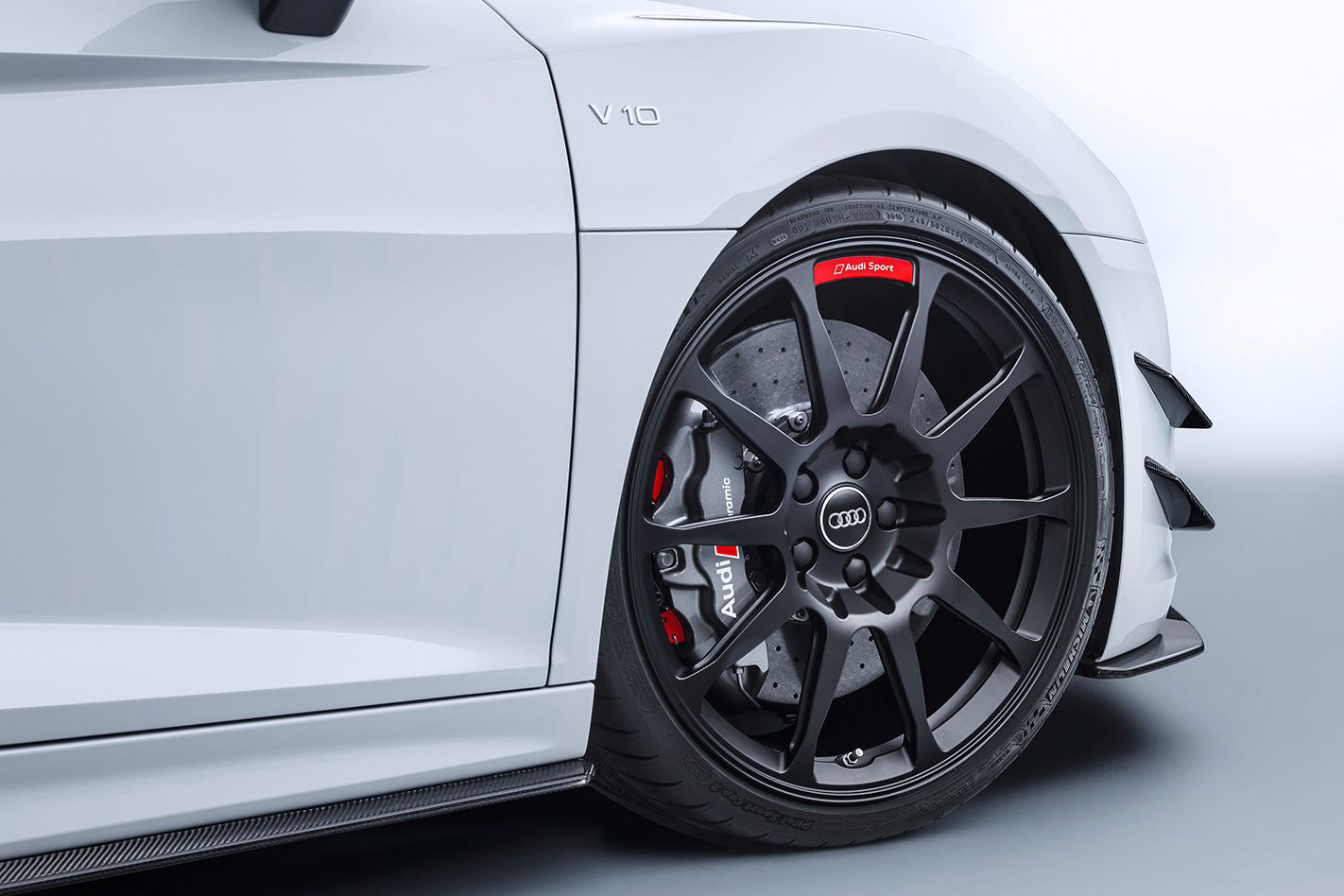
Also on Audi Sport’s tuning menu are upgraded steel front brake discs for the TT RS, as well as various brake cooling kits for all TT models. CNC-machined 20-inch wheels are available for both the TT and R8, and reduce overall mass by up to 7.2kg on the TT and up to 8kg on the R8. For the TT they wear 255/30-section tyres all around, while the R8 is shod with 245/30 rubber up front, and 305/30 tyres at the rear.
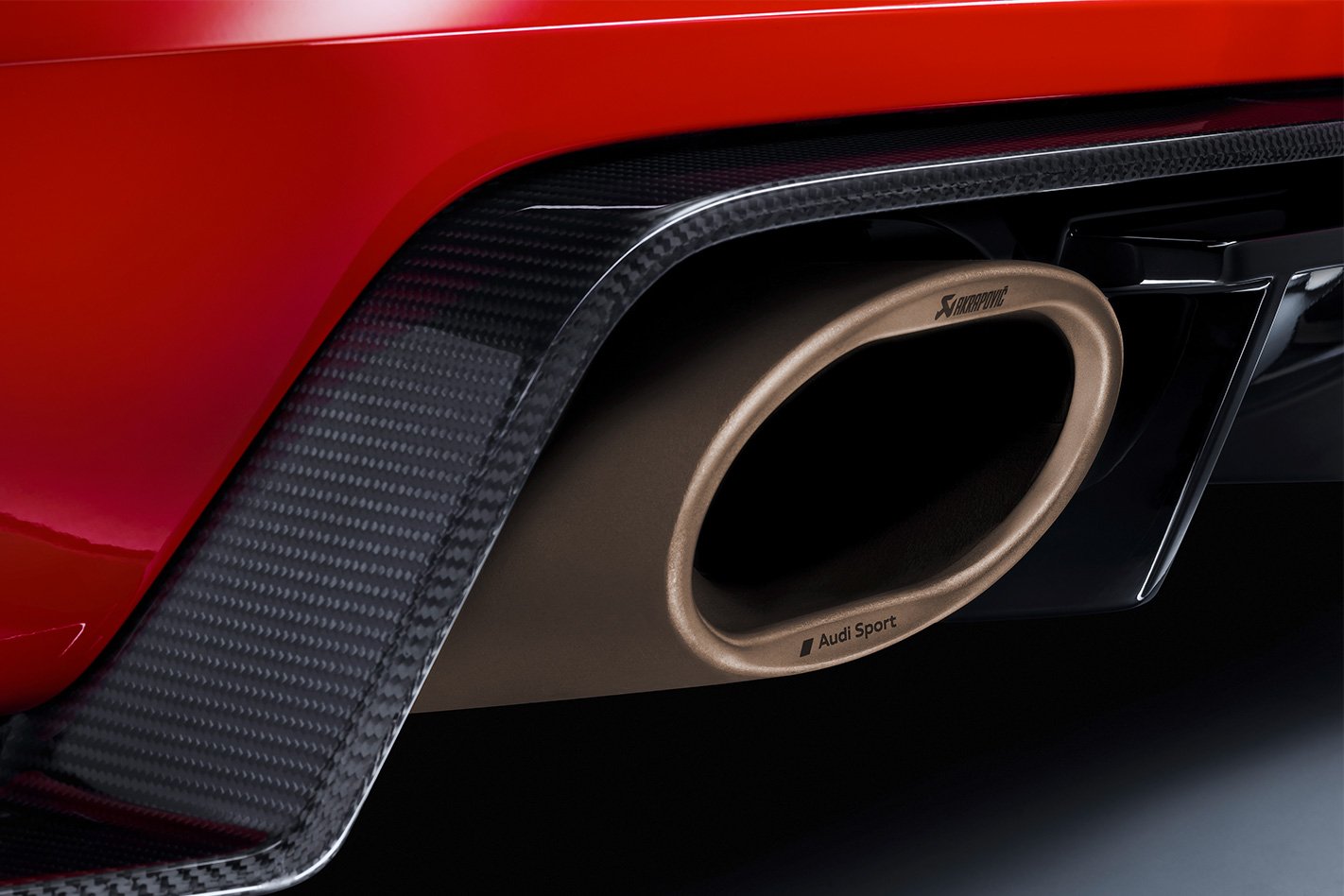
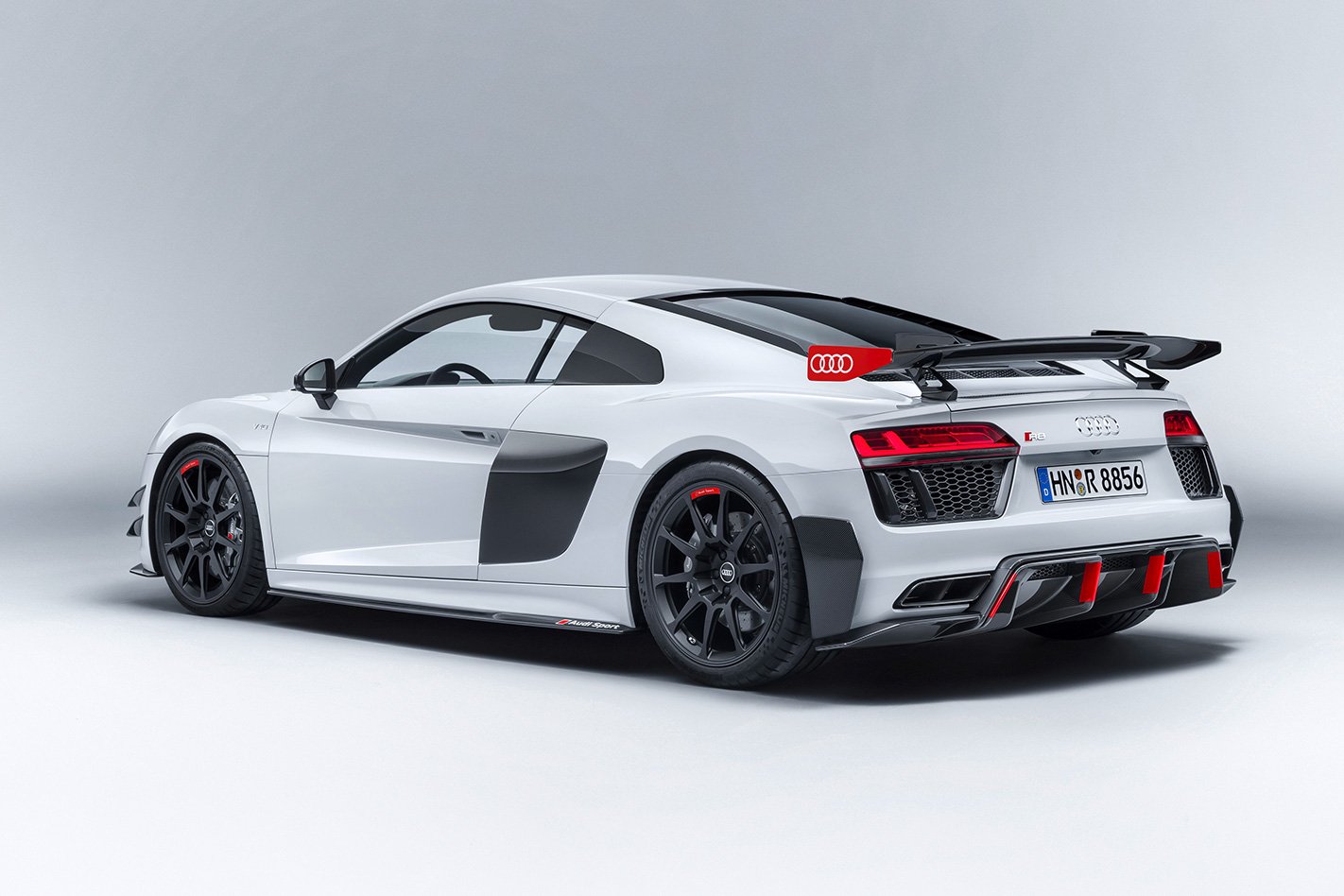
The headline act though is the carbon-centric aero kits, which were wind-tunnel developed in-house and bring some track-style flavour to Audi’s sports coupes.
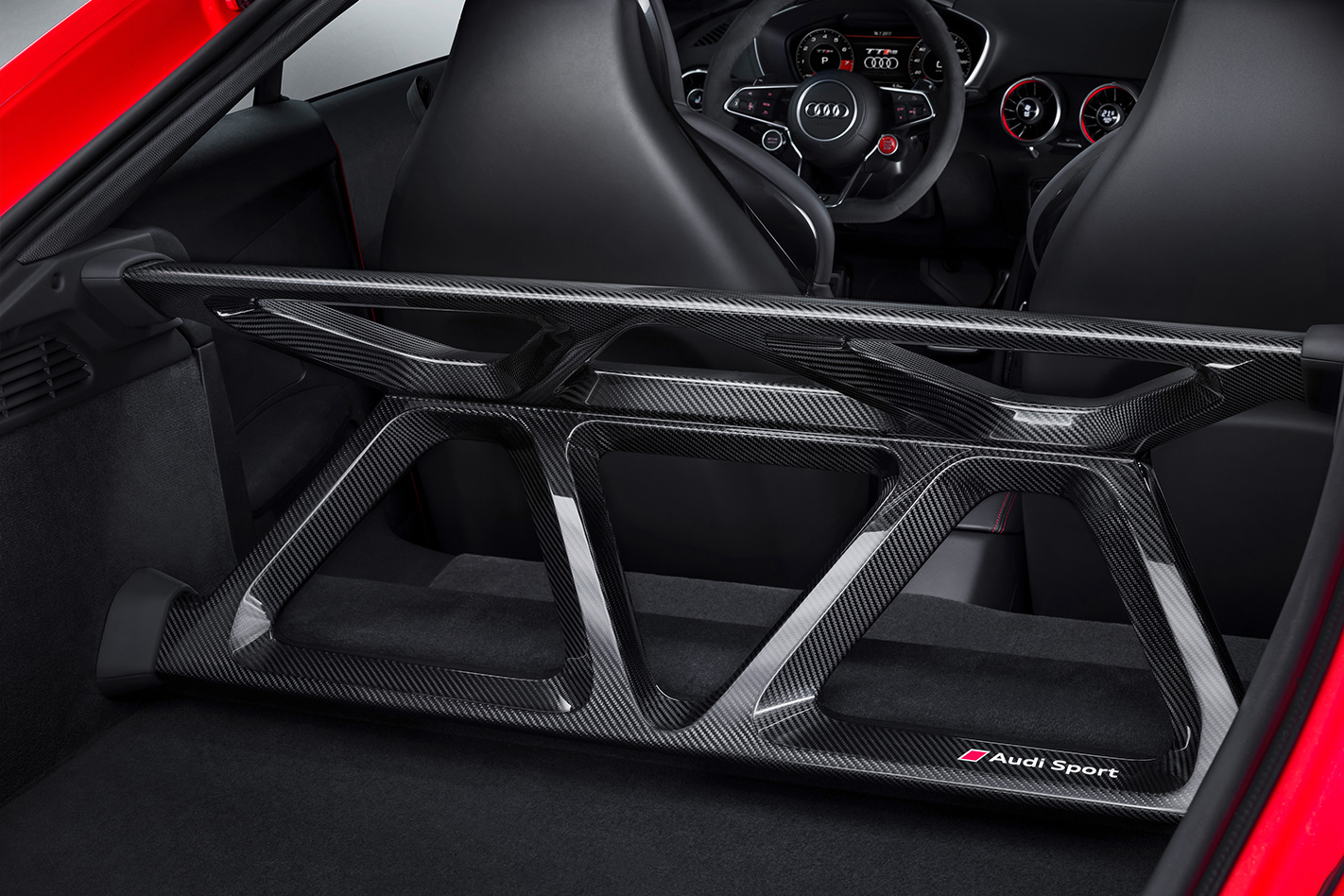
On the inside, Alcantara-clad steering wheels with a red strip at the 12-o’clock position strengthen the racecar theme for both TT and R8, and can be paired with carbonfibre shift paddles. The wildest – and most visible – feature by far, however, is the monstrous carbon rear strut brace for the TT, which replaces the rear seats entirely (saving 20kg in the process) and ties the rear suspension towers together to improve torsional rigidity. If you’ve unsuccessfully tried to use the TT’s rear seats, you’ll know that you’re better off turfing them for this slick piece of carbon architecture.
“Our wealth of experience garnered over many years of building sports cars is incorporated into every component we offer. Along with our expertise from motor racing, which is still the best testbed for volume production.”
While currently only available for the TT and R8, other Audi models will soon be added to Audi Sport’s performance parts catalogue.
Audi’s next-gen A8 limo – and it’s top-end A8 L brother – is set to receive tech that will allow it to drive itself in a traffic jam.
It’s so tech-packed that Audi decided to reveal the car to the world using a giant robot arm, which held the car aloft and moved around at the official launch.
From the list of features Audi says the A8 will arrive with, however, the robot arm doesn’t seem out of place at all.
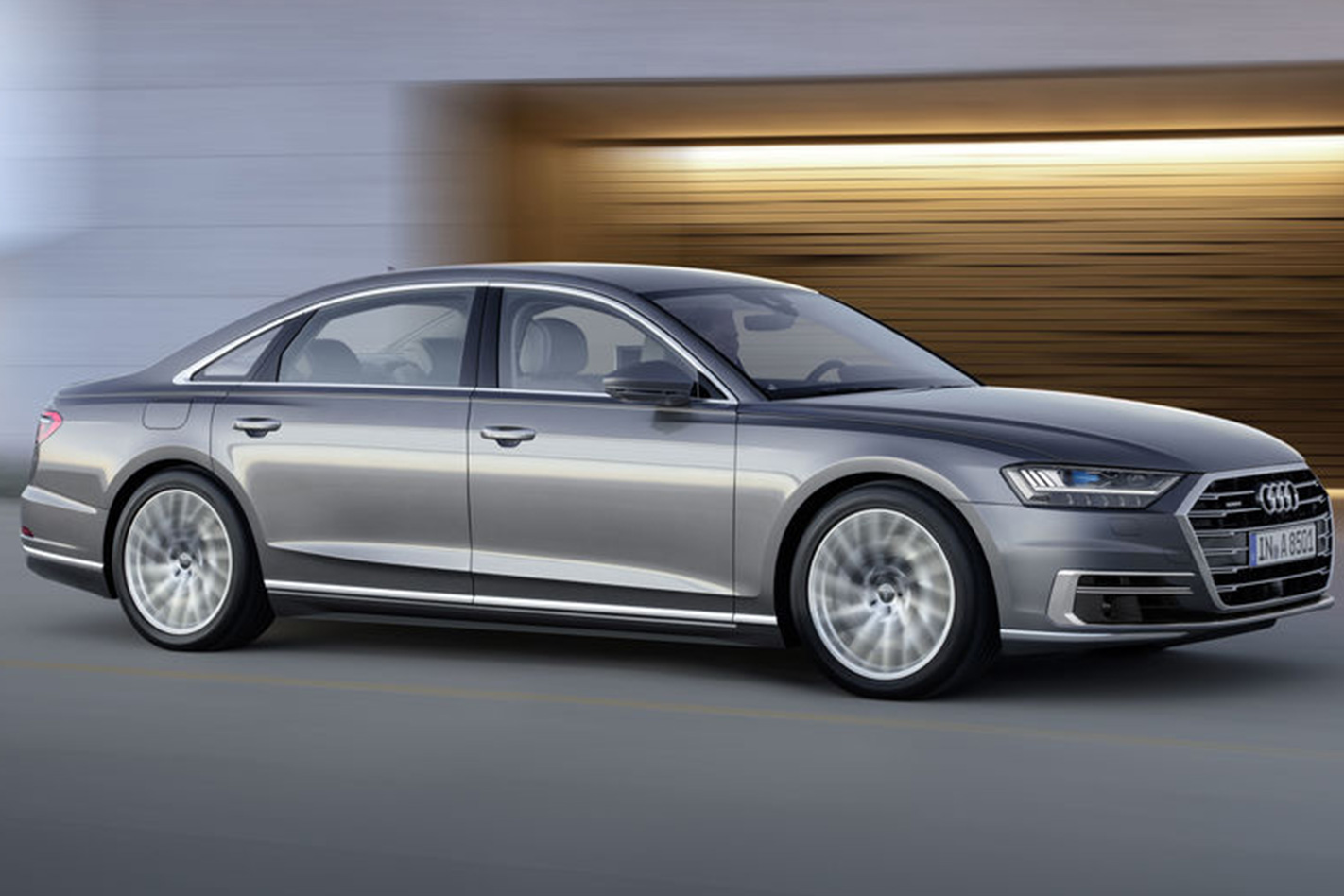
Drivers can completely take their hand of the wheel (if the law allows, of course), though Audi says the car will alert the driver when it can no longer do the job itself.
The A8 will also have the ability to self-park, and the driver doesn’t even need to be in the car.
“To monitor the parking maneuver, they hold the Audi AI button pressed to watch a live display from the car’s 360 degree cameras on their device.”
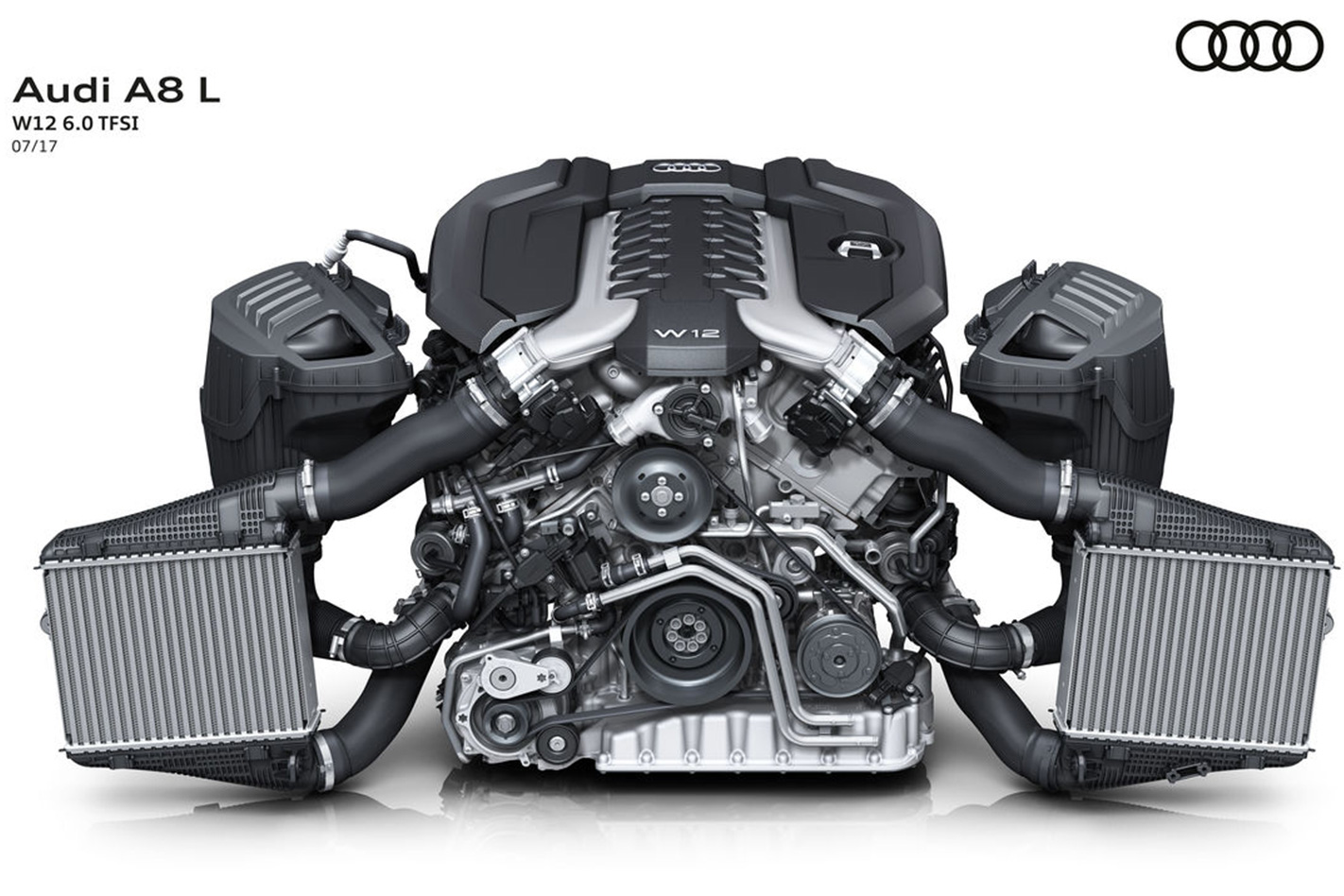
Power outputs for V6 and V8 engines are quoted by Audi as follows, though the W12’s figures are yet to be confirmed:
- 3.0 V6 TDI – 210kW
- 3.0 V6 TFSI – 250kW
- 4.0 V8 TDI – 320kW
- 4.0 V8 TFSI – 338kW
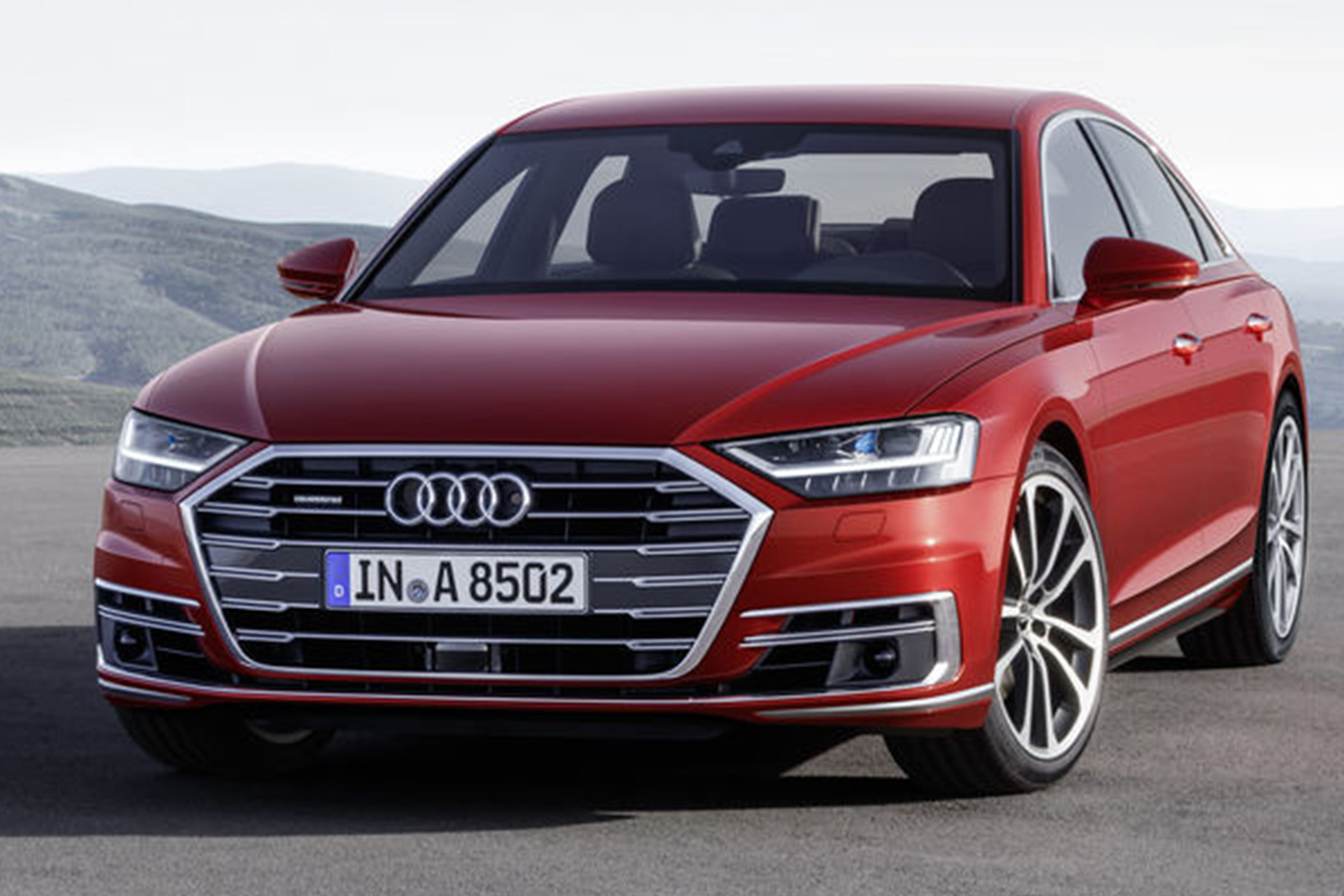
In turn the car can vary its ride style from that of a luxury cruiser to something Audi says has “dynamism of a sports car”.
Australians buying more sports cars for over $80K
Additionally, the A8 gets all-wheel steering, which turns the rear wheels slightly to assist precision or smoother turns, depending on speed.
“The steering ratio for the front wheels varies as a function of speed; the rear wheels are turned in or against the direction of steering depending on the speed range.”
Even the previous 2.8-litre TDI had a whopping $250K price tag attached.
TELL ME ABOUT THIS CAR
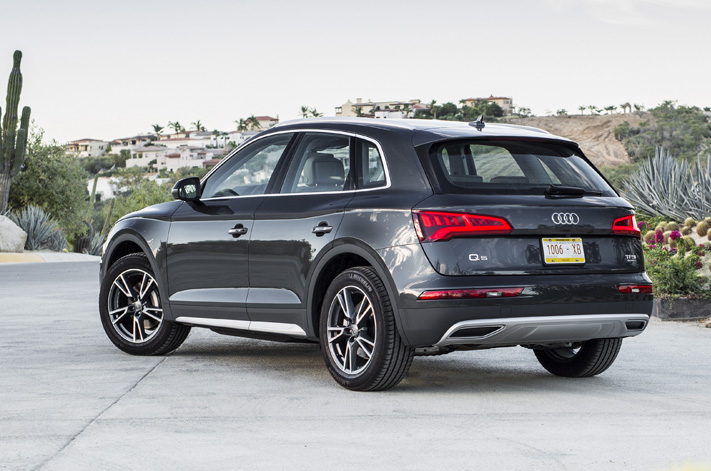
All-new for 2017, the Audi Q5 replaces a car that lasted in this market for eight years and which continued to sell well. That’s some testament to its appeal, but with new versions of rivals like the BMW X3 and Volvo XC60 winging in, Audi needed to bring something fresh to maintain the Q5’s sales numbers.
This latest model is offered with a choice of either a 2.0-litre diesel engine or this preferable 2.0-litre petrol engine. It slots into Audi’s range between the huge Q7 and the dinky Q3, and it’s this mid-sized five-seater formula that has proven such a hit for family buyers looking for quality and a suitably upmarket image.
It’s not cheap at $73,211 before you start adding options, and is only offered with a seven-speed dual-clutch automatic gearbox.
STRENGTHS
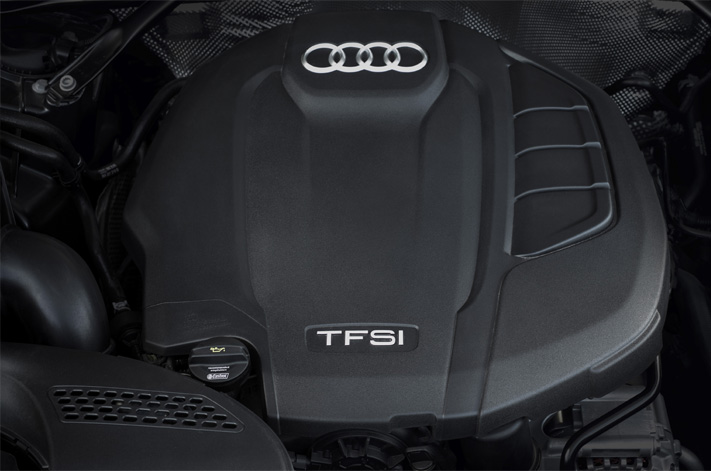
- The TSFI petrol engine is smooth and punchy, yet at 7.3 litres per 100km isn’t going to be too punishing to run.
- The handling is composed and assured with none of the roly-poly feel that some high-riding cars in this class exhibit.
- To help save fuel, the Q5 runs in front-wheel-drive mode most of the time. Only when the clever ‘quattro ultra’ drive software predicts that the front wheels may start to struggle for grip does it send a percentage of drive rearwards, offering all-wheel drive when you really need it and efficient front-wheel drive when you don’t.
- Refinement is a major plus, with the 2.0-litre engine being impressively hushed at speed. Audi has also spent a lot of money on making the car aerodynamically quiet too.
- The steering is particularly good for an electrically-assisted setup. Switching to sport mode adds a little more weight to the wheel, if you’re in the mood.
- There’s a huge amount of safety and convenience kit fitted as standard, with gear like eight airbags, automatic emergency braking, adaptive cruise control, and even warnings that prevent you reversing out of a space into crossing traffic or opening a door into approaching cars or bicycles. The stability control is so clever it can even tell if you’re carrying something on the roof bars.
- Interior space is bigger than before, with 550 litres of space in the back (up 10 litres on the old car). Specify the sliding rear bench and that can expand to 610 litres.
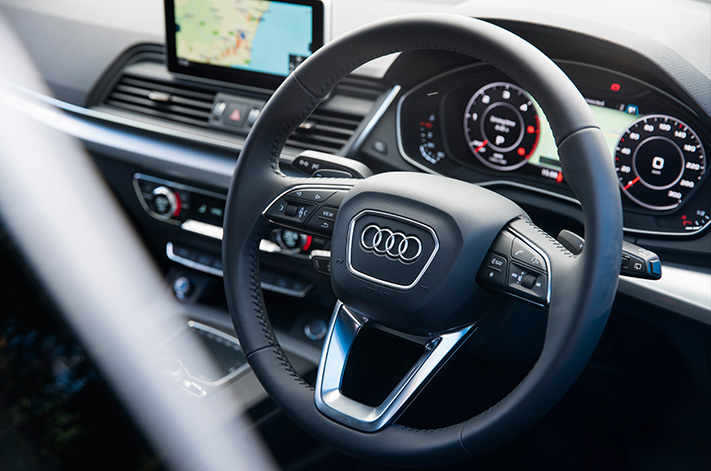
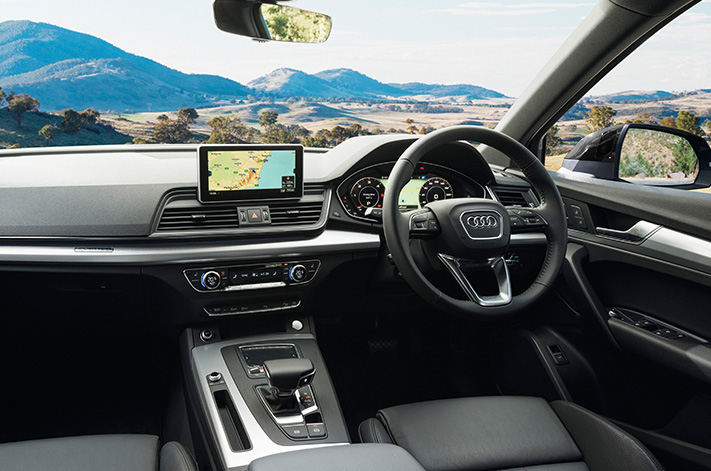
- The interior is beautifully finished and the ergonomics work well too.
- There’s an inductive charger that can wirelessly charge Android phones.
WEAKNESSES
- The ride quality is decidedly firm. On country roads this can get annoying. The solution is a costly $3990 in the shape of the optional air suspension.
- Options rapidly get expensive. Add the comfort package ($2470), the parking assistance package ($1235), the Technik package ($5600) and the S line style package ($4290) on top of the must-have air suspension and you’re looking at $90k+. Then you discover that the only two standard paint colours are black and white.
- Many buyers will fork out extra for bigger alloy wheels, but these will further deteriorate ride quality and tend to make the car look a bit squat.
- Heated front seats are a $780 option. Given that some Hyundai Tucson models come with heated and cooled seats as standard, Audi looks a bit mean here.
- It’s a big $26k step up in price to the next model in the range, the racy SQ5
ANY RIVALS I SHOULD CONSIDER?
The Audi Q5 pitches into a busy sector, with the Mercedes GLC, the BMW X3, the Jaguar F-Pace, the Volvo XC60, the Range Rover Evoque, the Porsche Macan and the Lexus NX all vying for your custom.
In this job us MOTORists are lucky enough to drive all sorts of fast, exotic cars, so the realisation that the most powerful car I’ve ever driven is a relatively humble Commodore raises a wry smile.
With 557kW/930Nm, the Walkinshaw W557 is more powerful than a Ferrari F12 (545kW/690Nm), Lamborghini Aventador (515kW/690Nm) or Rolls-Royce Wraith (465kW/800Nm); in fact, it’s Walkinshaw’s most powerful package ever, pipping the 550kW/980Nm Racing Edition, which come to think of it occupies spot two on my personal power list.
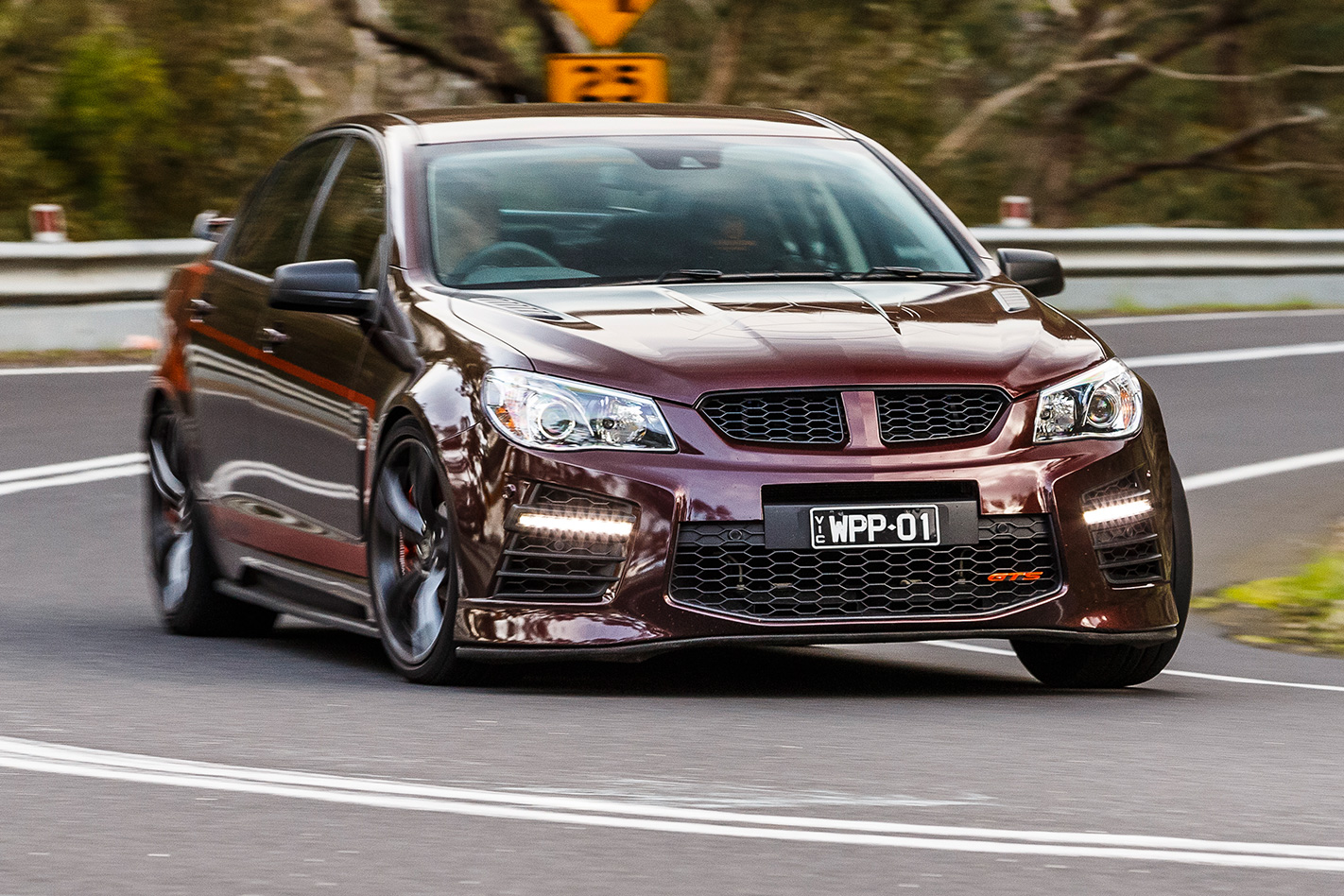
The scale of the modifications is surprisingly modest given the earth-spinning power on offer, beginning with a new intake and cat-back exhaust, ceramic-coated headers, 1000cc injectors and a cam upgrade, while a solid isolator coupling, beehive-style valve springs and new bolts for the cam and crank add some peace of mind.
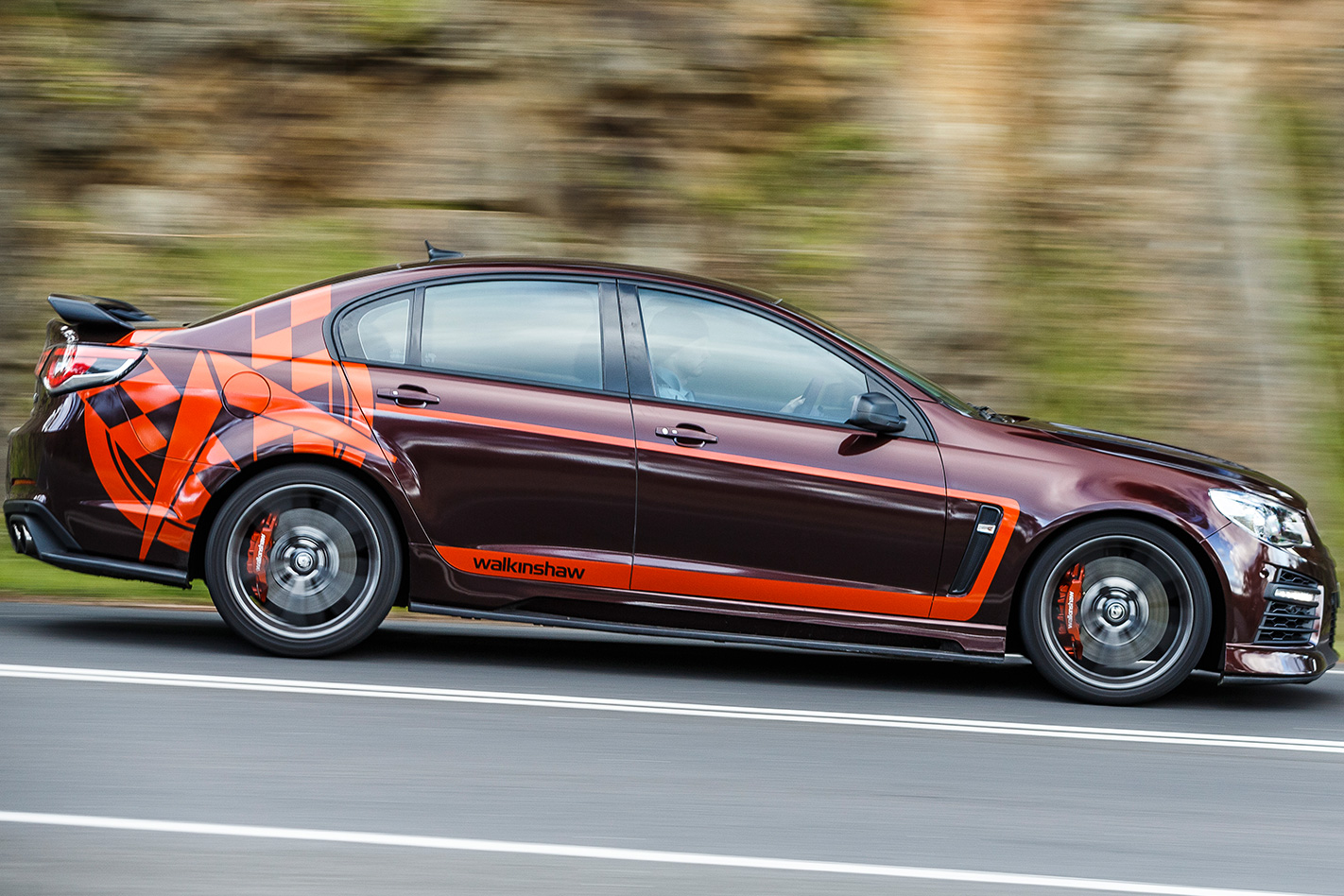
For new vehicles the package costs $12,990 with used vehicles adding $1000, while existing Walkinshaw W507 owners can upgrade for $4990 (new) or $5990 (used). All prices include GST and fitting. If you’re extra keen, Walkinshaw’s, erm, eye-catching decals and VH SL/E-style burgundy trim (with contrasting orange stitching no less) are available at extra cost.
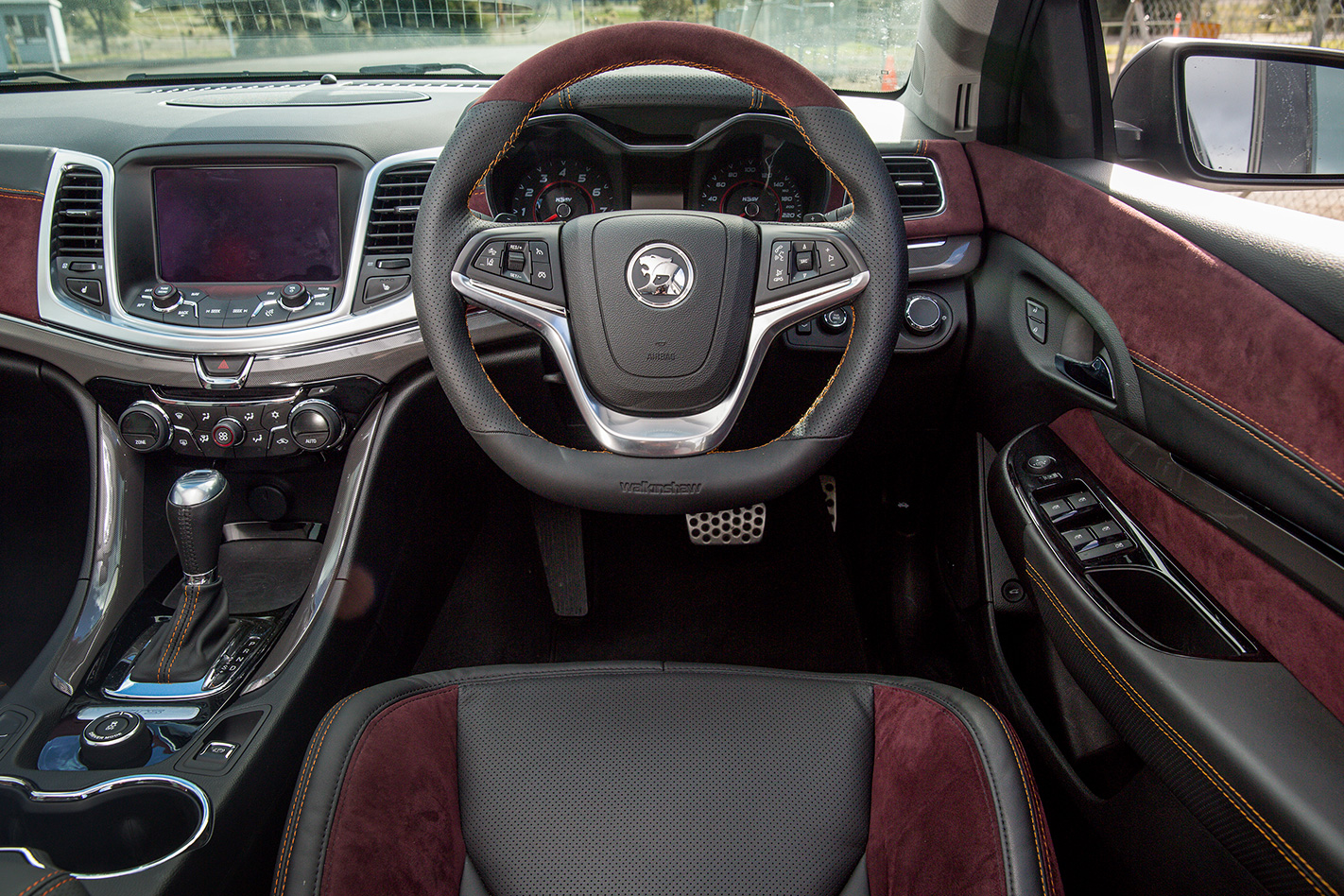
It’s amazing how right the GTS feels with this level of power; while the standard car’s attributes all feel nicely in harmony, the W557 swings the pendulum firmly back in favour of power. We’ve never had an issue with the quality of Walkinshaw’s work, however its cars haven’t always felt as fast as the headline numbers suggest – this is not the case with the W557.
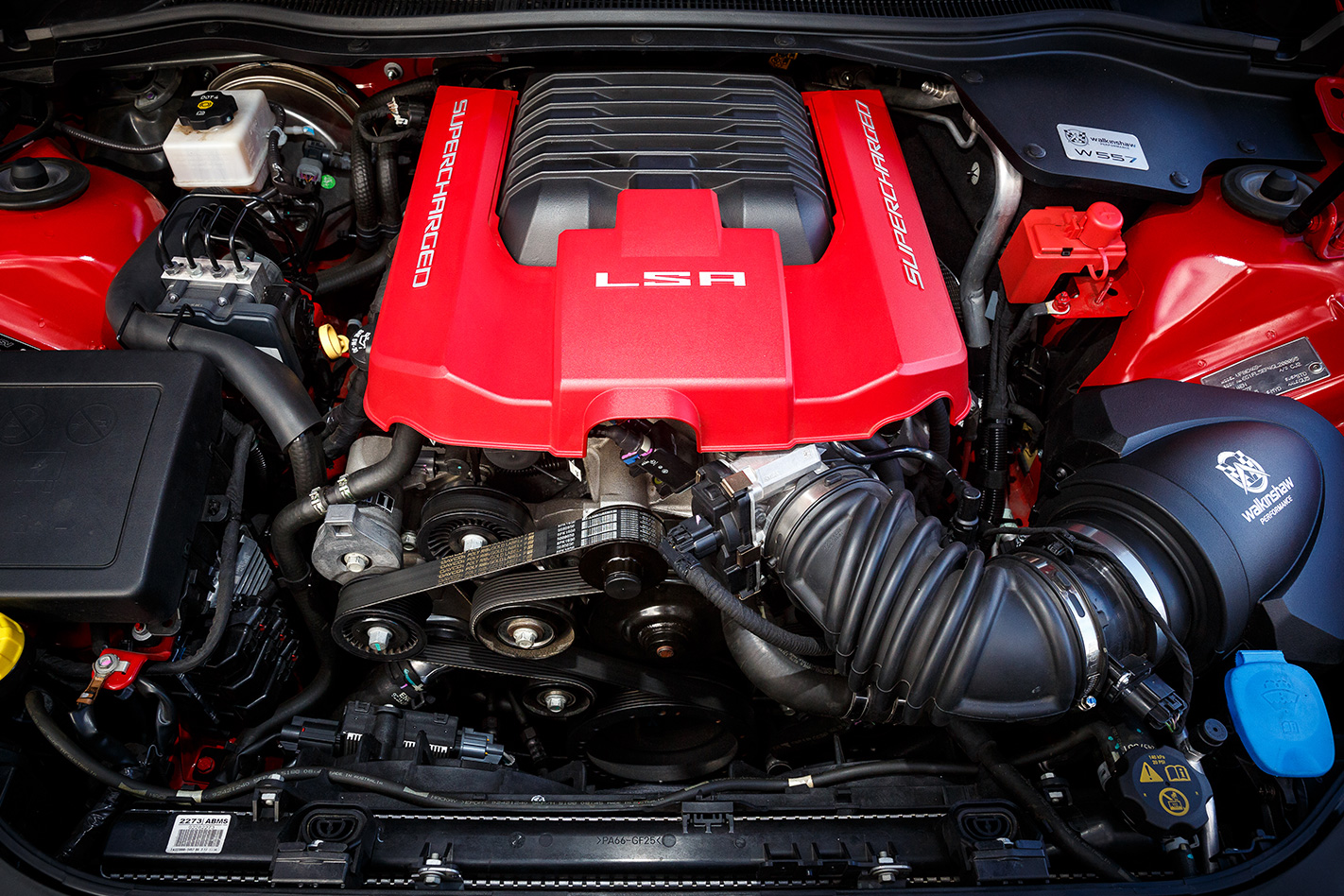
It doesn’t have the sudden mid-range punch of the latest turbocharged V8s; instead it just builds linearly with a never-ending push. Accelerate for even the briefest moment out of a corner and large numbers appear on the head-up display very quickly.
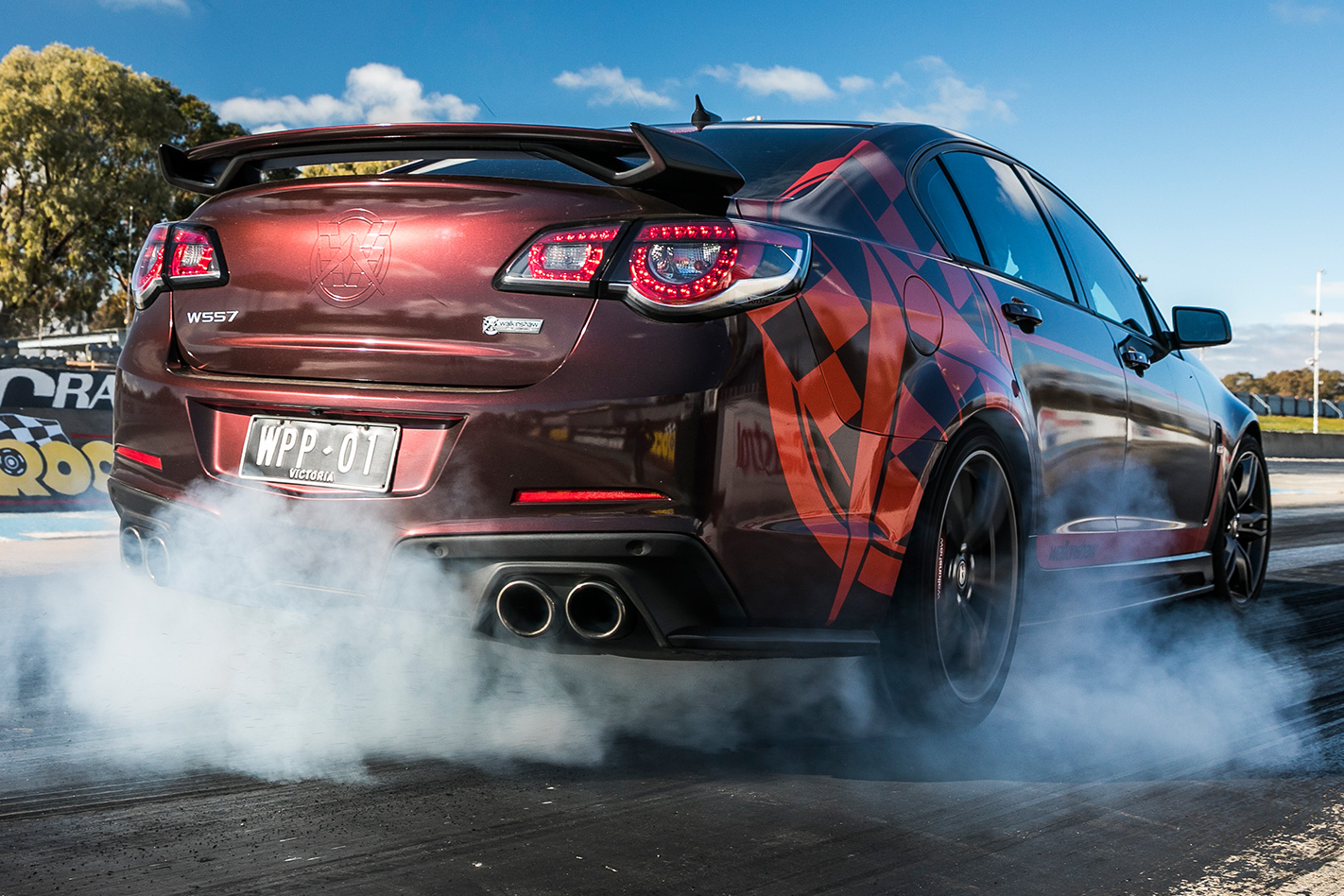
More than useable, in fact. The W557 is tractable in traffic with no coughs or hesitations and the only time its higher state of tune makes itself known is on a cold start, where it needs a couple of seconds to compose itself. Hop straight in and select drive and it’ll stall.
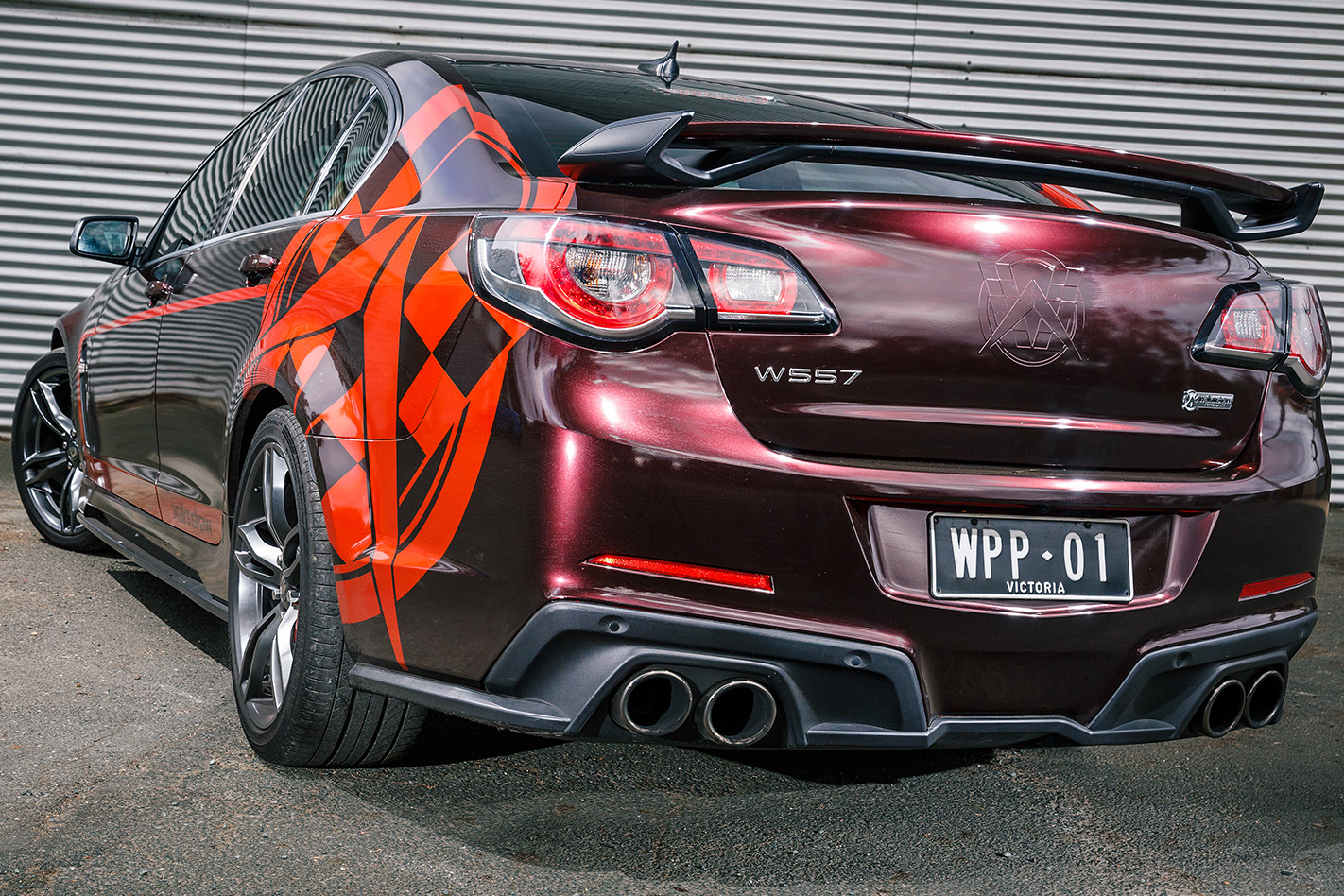
But what’s a little fuel between friends? Walkinshaw’s W557 package turns the HSV GTS from a weapon into a monster and a GTSR would be even better again. Almost $130,000 might be a lot of money for a Commodore, but it’s practical, comfortable, useable and capable of giving a $250,000 Mercedes-AMG E63 a fright in a straight line.
Have we mentioned how much we’ll miss cars like this?
4.5 out of 5Specs Engine: 6162cc V8, OHV, 16v, supercharger Power: 557kW @ 6200rpm Torque: 930Nm @ 4000rpm Weight: 1903kg 0-100km/h: 3.8sec (tested) Price: $114,480 (based on new automatic GTS)
Ford originally planned to return to Le Mans last year with a Mustang.
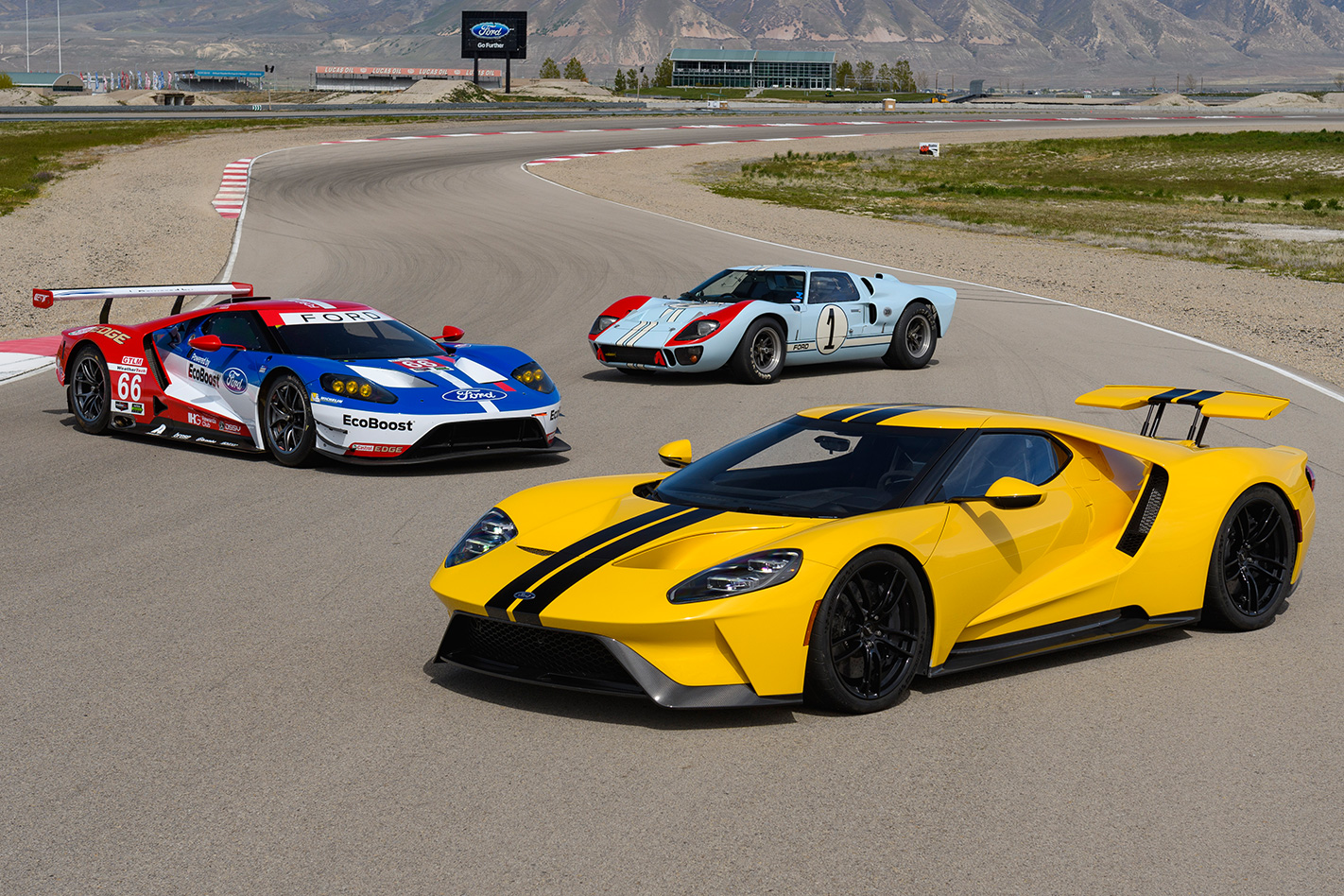
To mark 50 years since the GT40 placed 1-2-3, avenging Enzo Ferrari’s refusal to sell to the Blue Oval, it wanted to beat the Ferrari 488 GTB and others in the top-tier, production-based LM GTE class. With a muscle car.
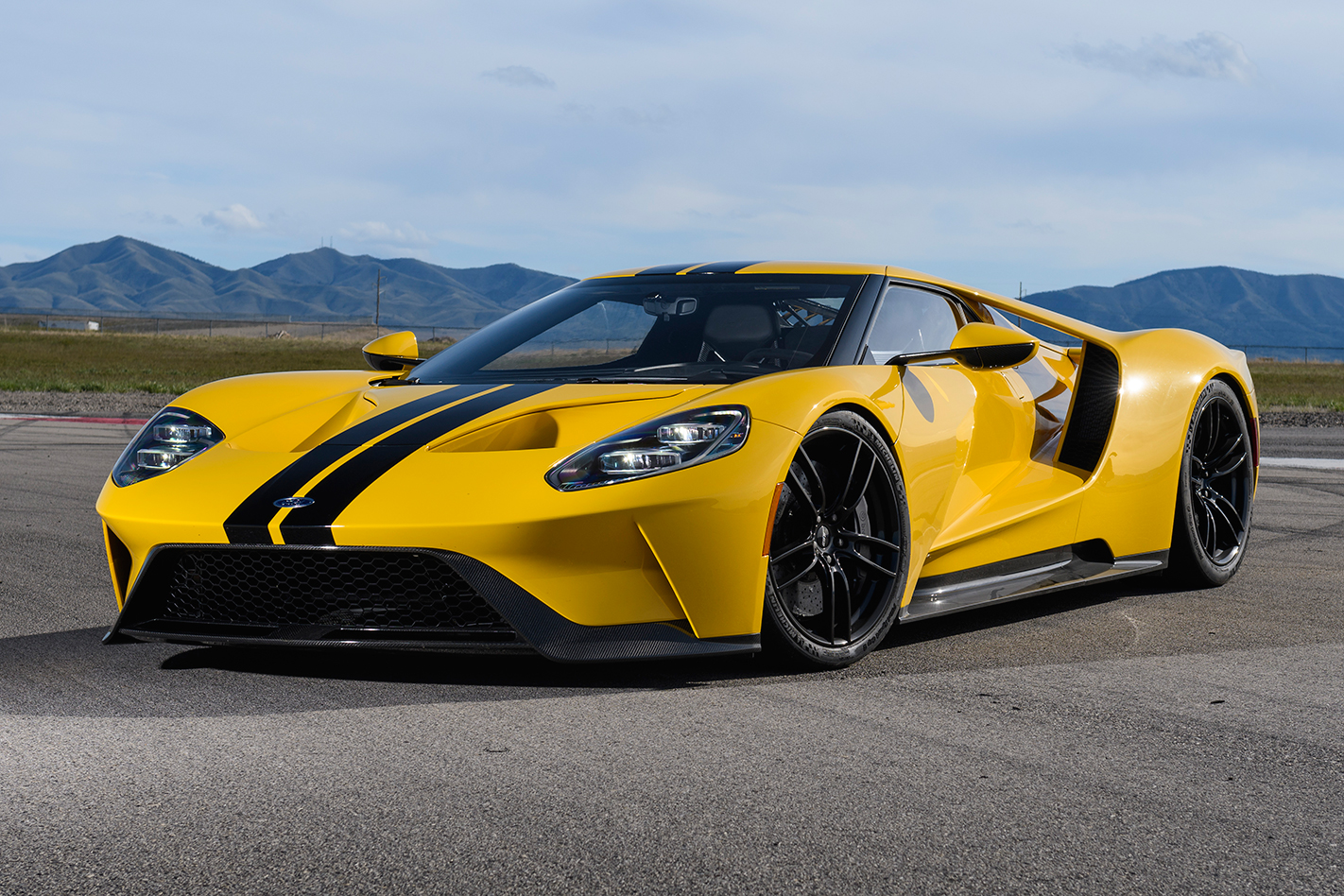
Then, as Pericak tells it, a ‘skunkworks’ team was set up without the knowledge of top brass; a team of 20 or so working in secrecy in the basement after-hours and during weekends – this all sounds too perfect to be true, but it’s a nice story – working on an actual modern-day GT40 to win LM GTE, and both showcase and develop technology with wider applications for Ford’s range.
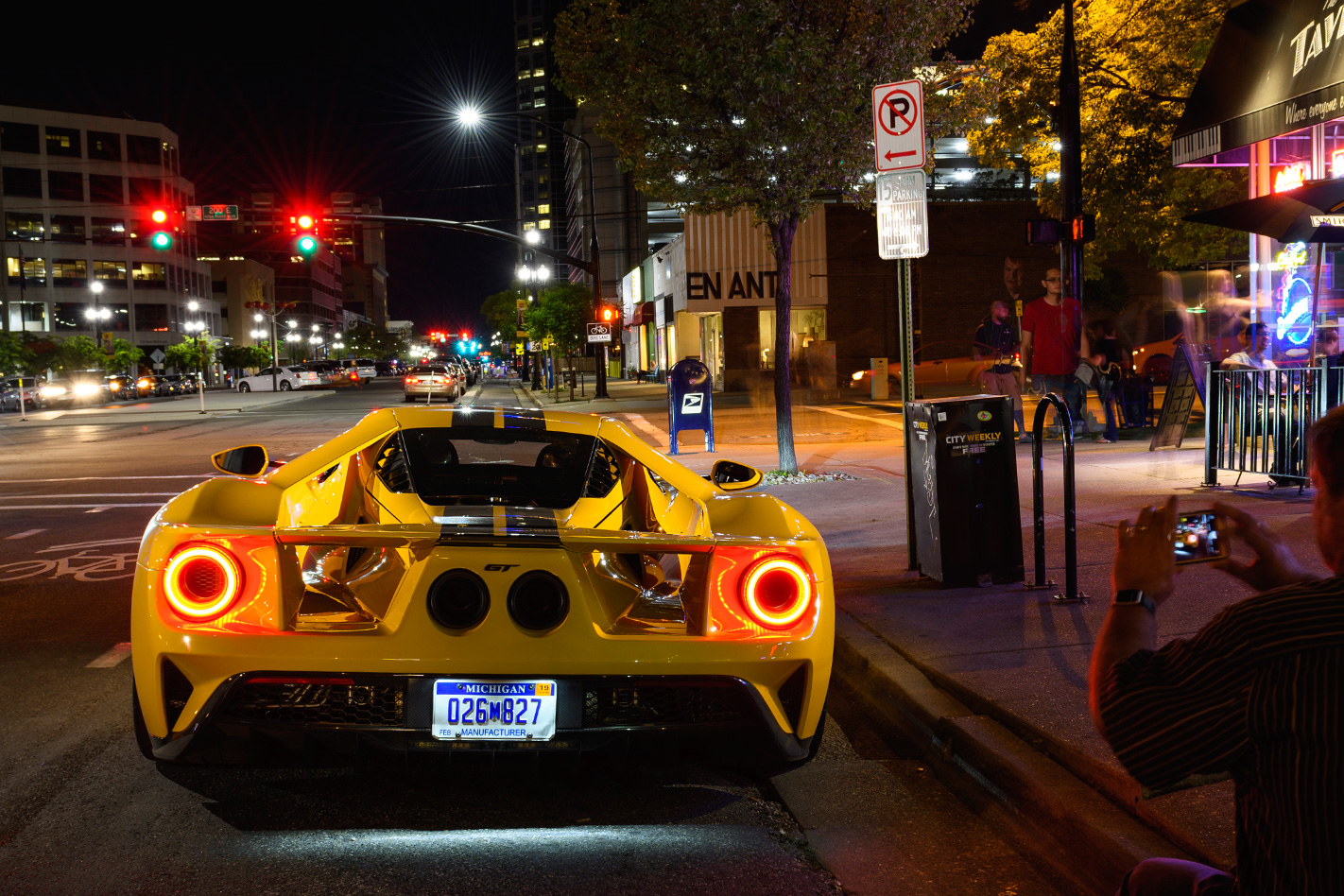
Led by design director Craig Metros, the team eventually settled on all three, and the result is a carbonfibre-bodied design that’s both highly evocative of the original GT40 but adds a modern, technical twist, including those ‘floating’ buttresses that channel air down the car’s pinched body sides – and channel air inside them, from the intercoolers to the engine intake. Gorgeous.
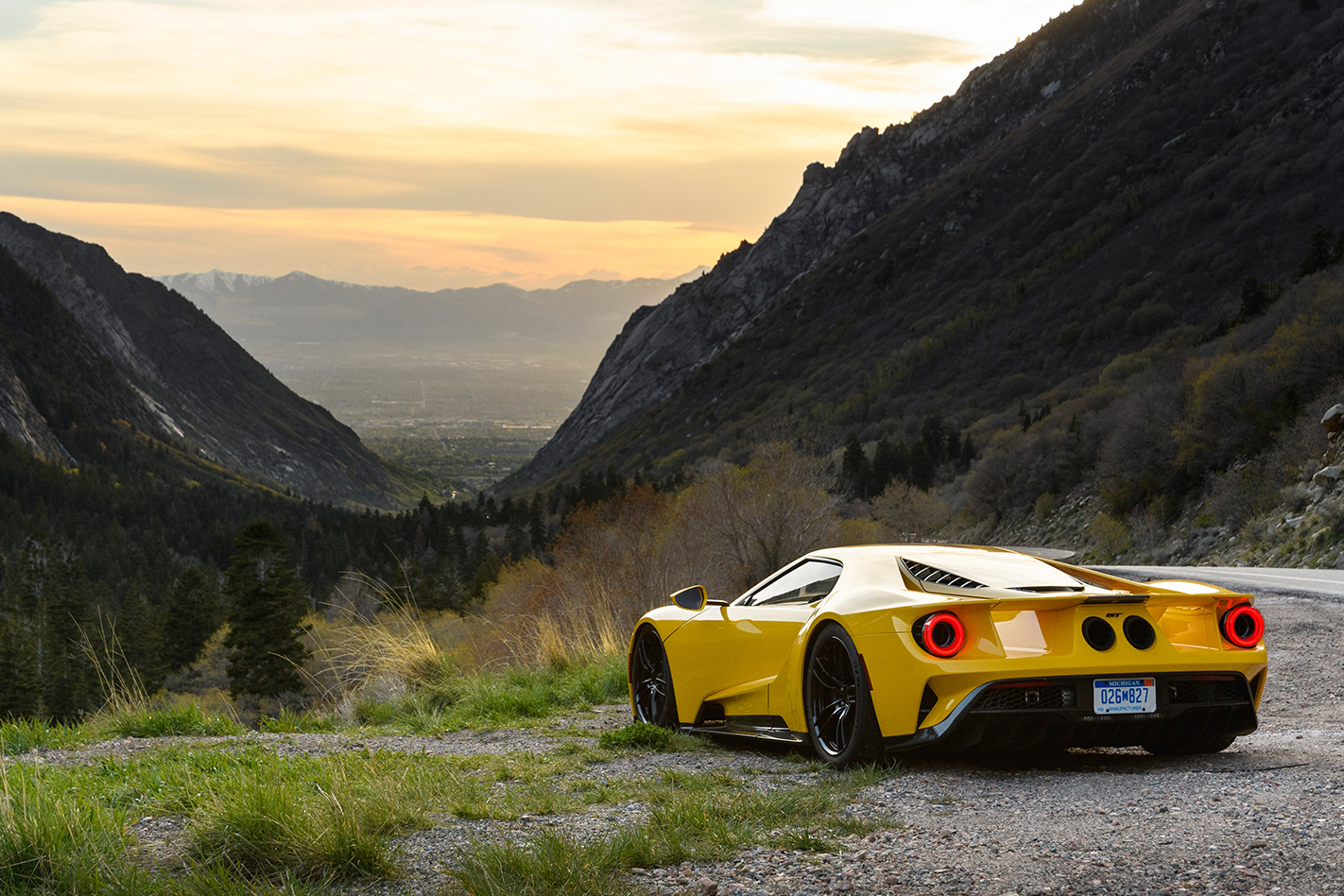
That Ford started fresh with a clean-sheet design is crucial: while its rivals converted road cars into racecars, with all the compromises that involves, Ford was busy crafting the perfect race car that they’d turn into a road car later, with all the compromises that involves.
All this means the GT’s ingredients are far more exotic than a Porsche 911, Ferrari 488 GTB or Aston Martin Vantage. In fact, the Ford GT is redolent of a ‘budget’ LaFerrari, as far as you can call it budget at around A$500,000 before taxes, or about the price of a Lamborghini Aventador S in the US. Even so, a vetting process and requirements not to sell the car for a couple of years – and to give Ford first refusal when owners do – hasn’t stymied demand.
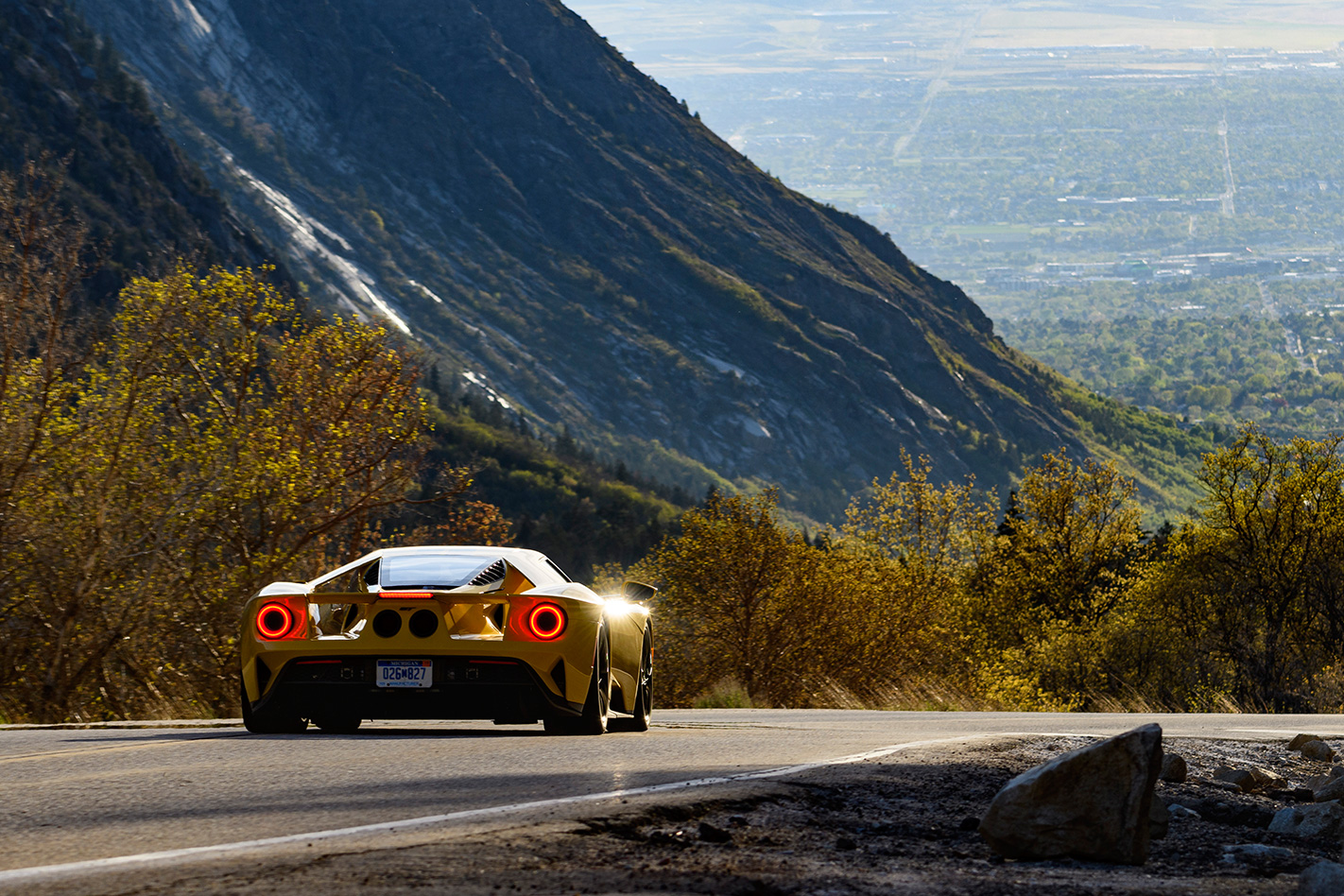
The instrument panel forms an integral part of the structure, and the rollcage is built directly into the monocoque, its bones disguised by trim in the road car but requiring only bolt-on components to transform into the racecar’s full cage.
Double wishbone suspension reaches deep into the centre line of the chassis, cleaning up the airflow beneath the car to create a ‘keel’-style front end. It’s also why the GT has a turning circle to shame a Focus RS.
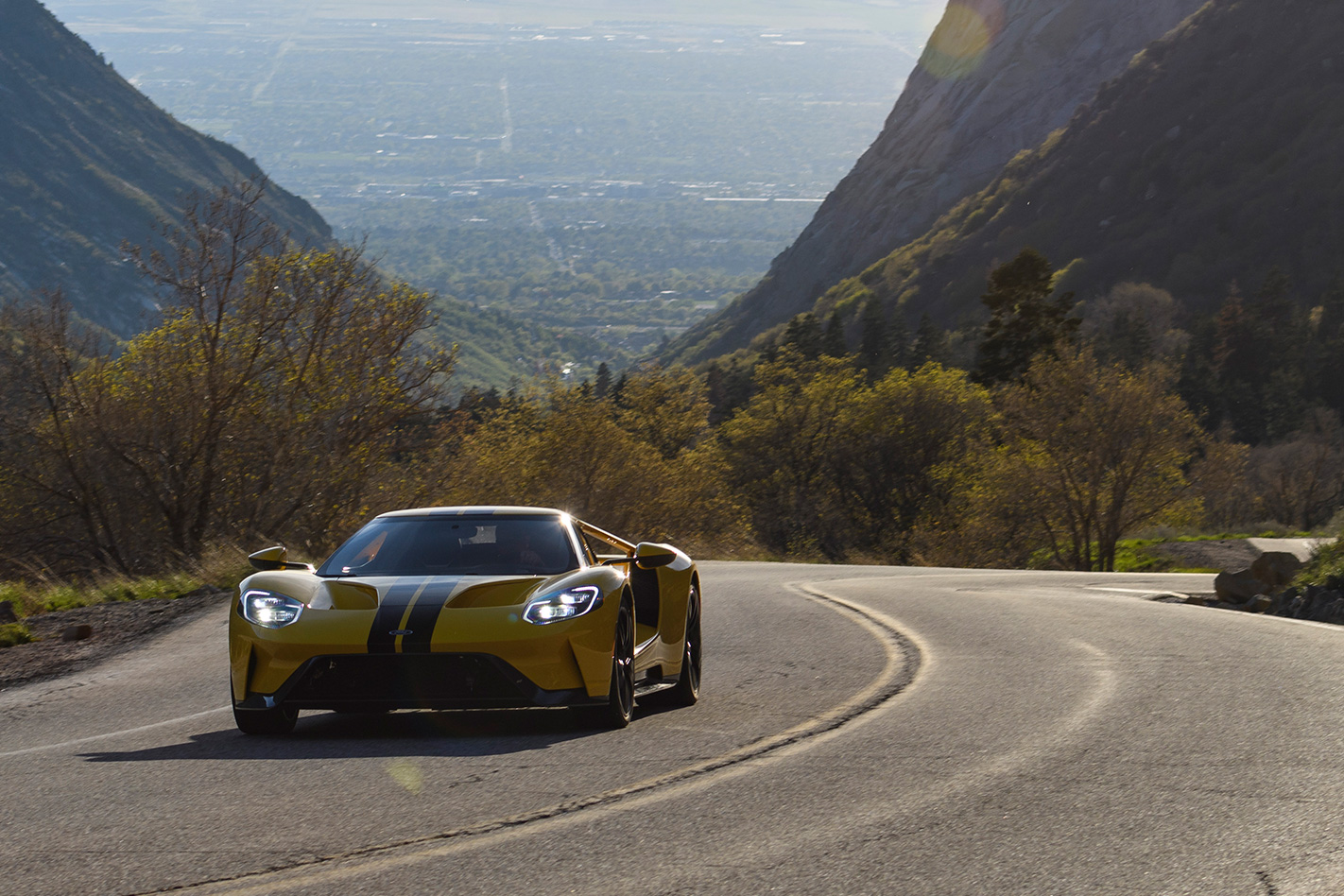
A 3.5-litre twin-turbocharged V6 Ecoboost engine is mounted behind the driver, connected to a seven-speed dual-clutch gearbox, 482kW and 746Nm going to the rear wheels alone.
Press the starter and there’s a raucous, race car whirr of fuel pump, and the GT fires with a gruff, deep idle. It’s a V6 so it isn’t as tuneful as a Lamborghini or Ferrari, but it is compact and that’s also key to the GT’s tapered, slippery bodywork. Sixty percent of the dry-sumped unit is shared with the Ford Raptor and when you blip the long-travel throttle the revs respond hungrily, with none of the turbo-induced sogginess you feel in – niche but relevant reference, here – the Radical RXC Turbo, another road car that looks like a Le Mans car and uses an Ecoboosted V6.
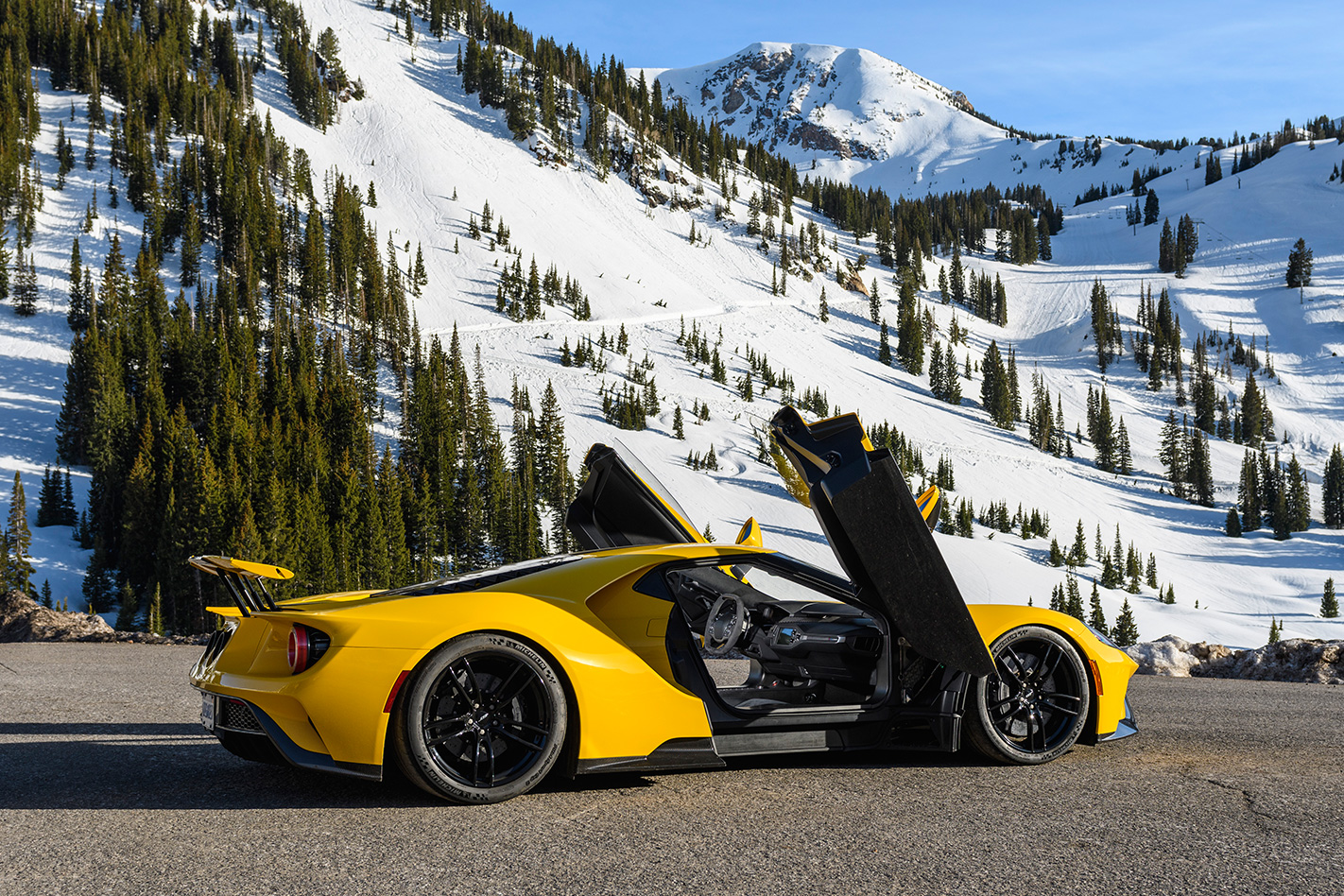
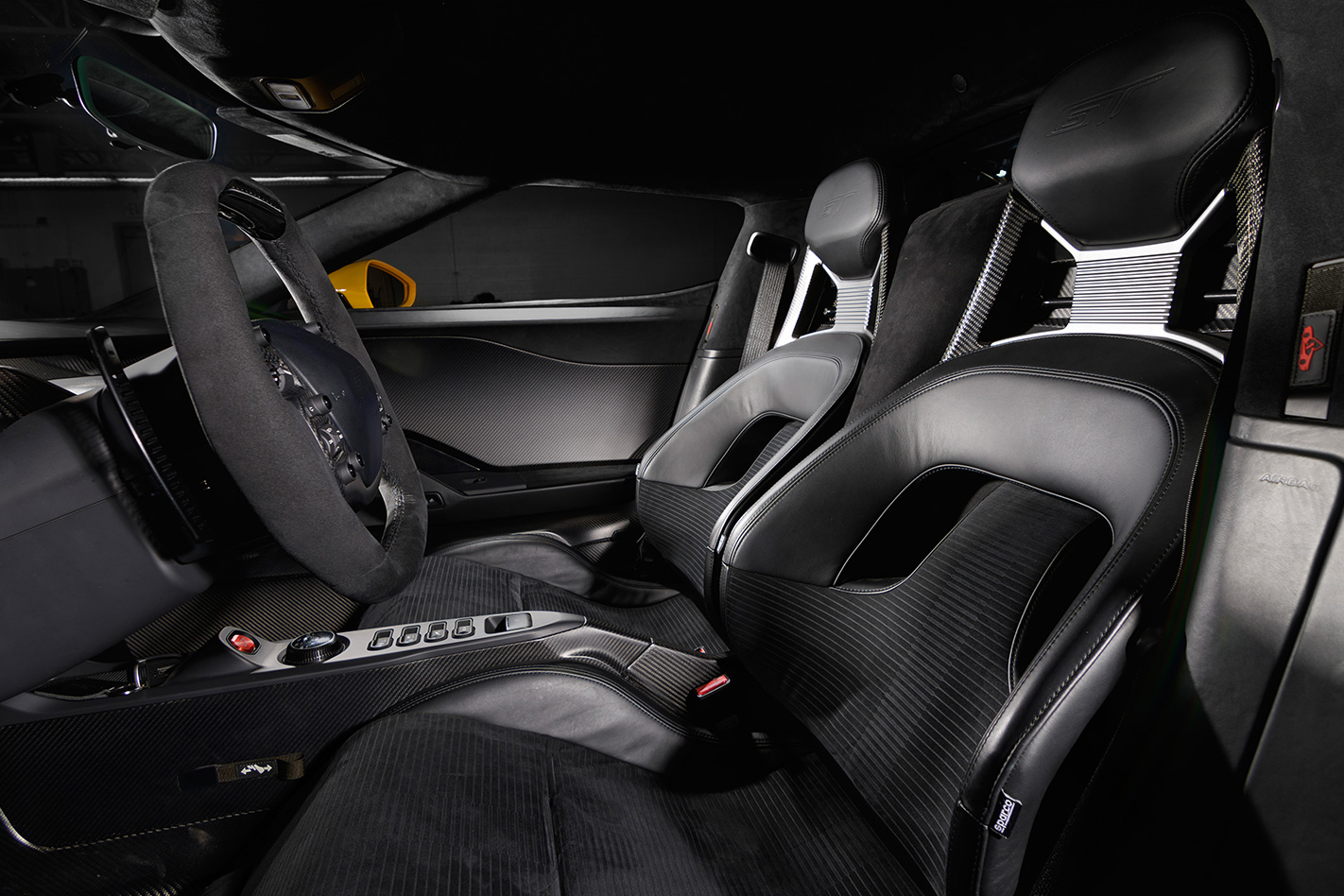
When you do, you slot into low-slung seats fixed directly to the floor (though they do recline), allowing the chassis to taper aggressively ahead of you and provide that small frontal area; the seat bolsters squash right up against the chassis.
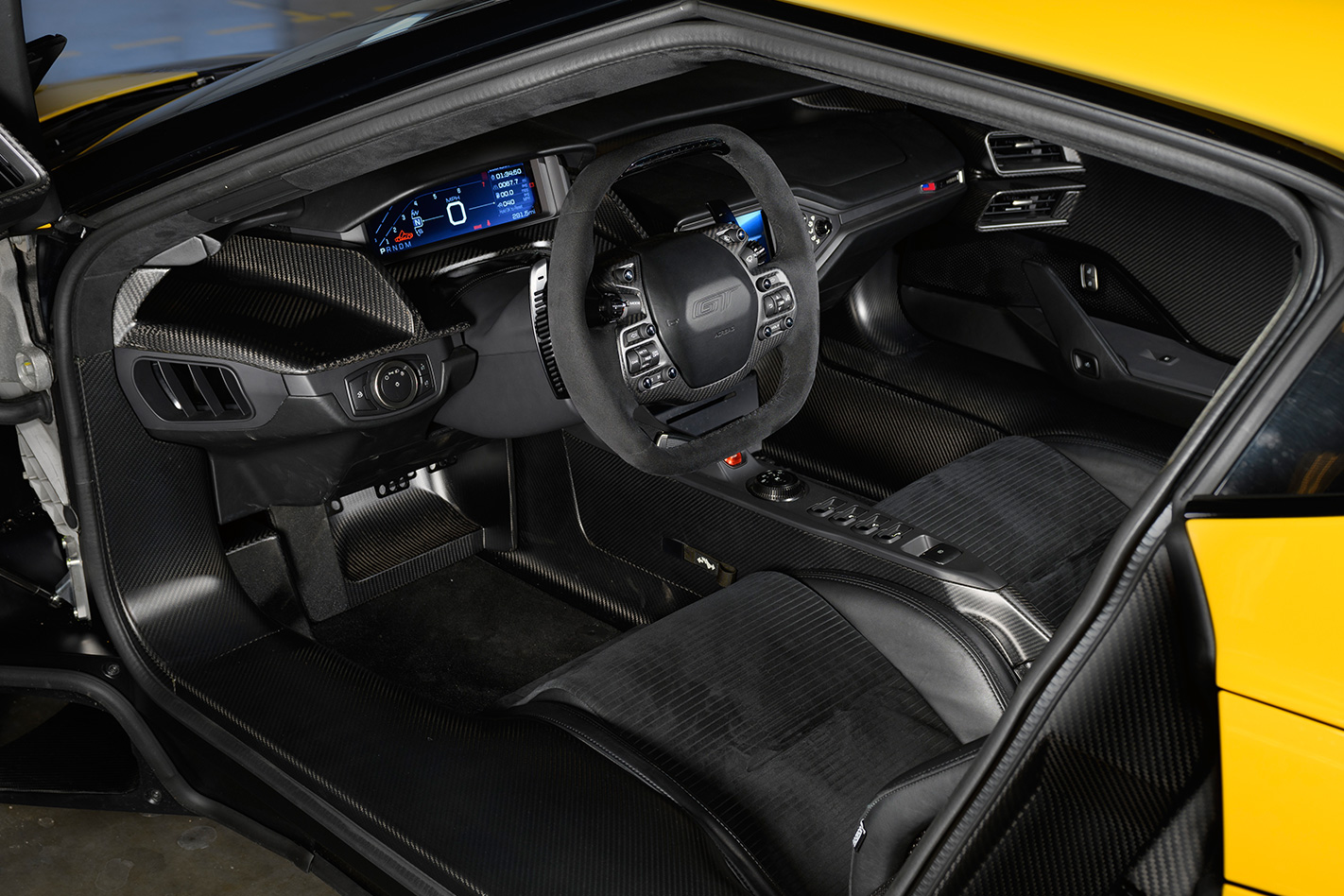
Before the launch, Ford asked if we were taller than 185cm, because we might need a special helmet if we were. I’m 185.5cm, guessed I’d be okay, but it’s pretty marginal in here, a few centimetres spare without the helmet; lid on, I have to lean the seat back a little to cheat the space. An instructor sits alongside, and we brush shoulders it’s so narrow in here. With unlacquered carbonfibre everywhere, it’s a dark, functional, weapons-grade kind of interior, one that raises excitement and trepidation in equal measure.
But in Track, the pushrod compresses, the car drops and the coil spring is locked out by a hydraulic actuator, becoming squashed and solid, not long and – technical term – springy, leaving the torsion bar to absorb bumps. The pushrod also acts on DSSV (Dynamic Suspensions Spool Valve) dampers, but they’re hidden away at the front of the cockpit and feature three settings. Unusually, this means that both spring and damper rates adapt on the fly to suit each other, where normally a fixed-spring rate must work with multiple damper rates, a compromise.
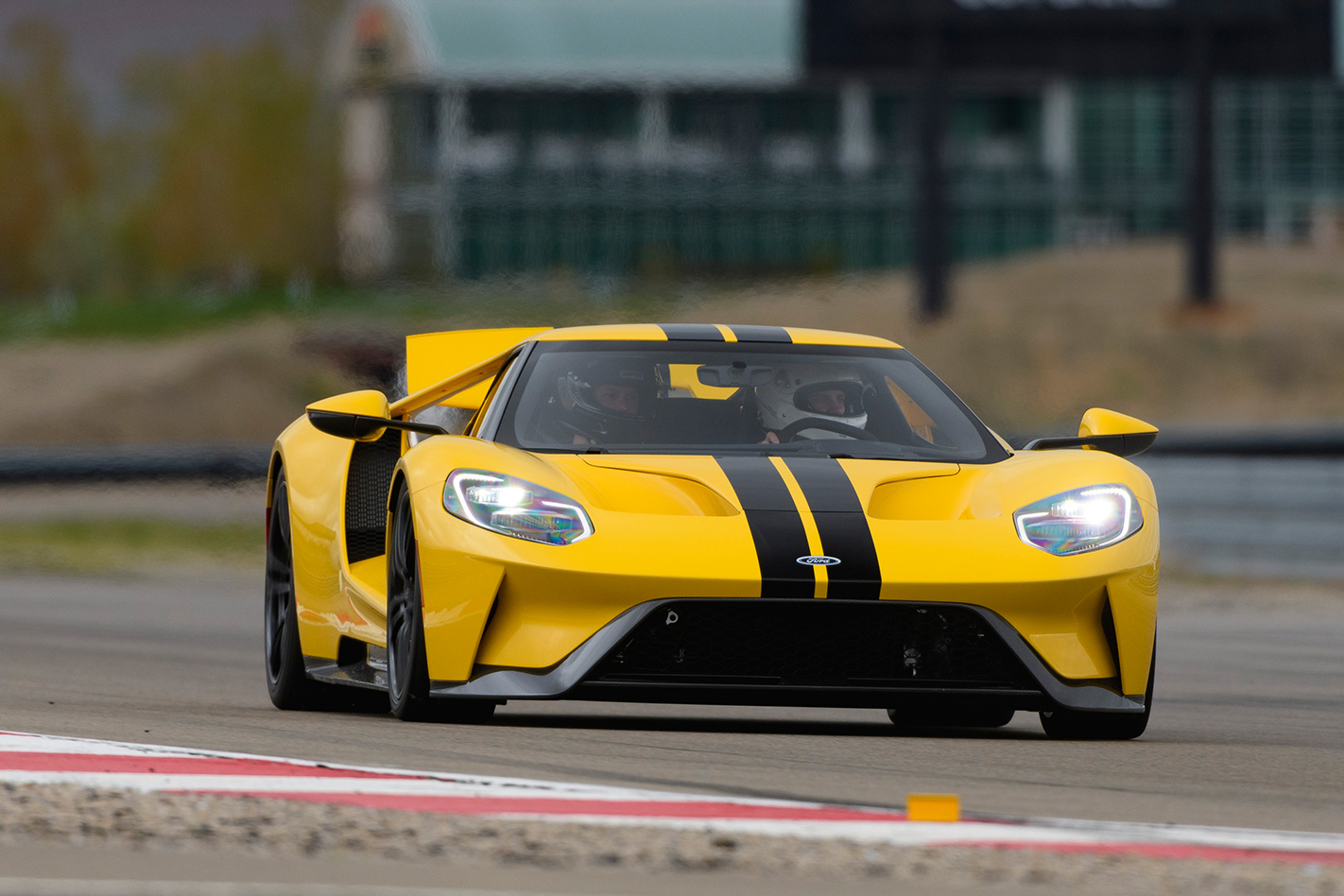
It hauls robustly from low revs, feels eyes-on-stalks alert at the front, and steers with a hydraulically assisted rack that’s swift without nervousness, physically meaty without excessive weight. With the spring rate doubled, there’s very little bodyroll, yet still a high degree of compliance to soak up kerbs. You notice the slight fuzz to the brake pedal just before you clamp pads to huge 394mm carbon-ceramic front discs, and that the gearshifts are quick but lack the mechanical snap you get with a Ferrari or a Porsche. But you’re comfortable, ready to attack.
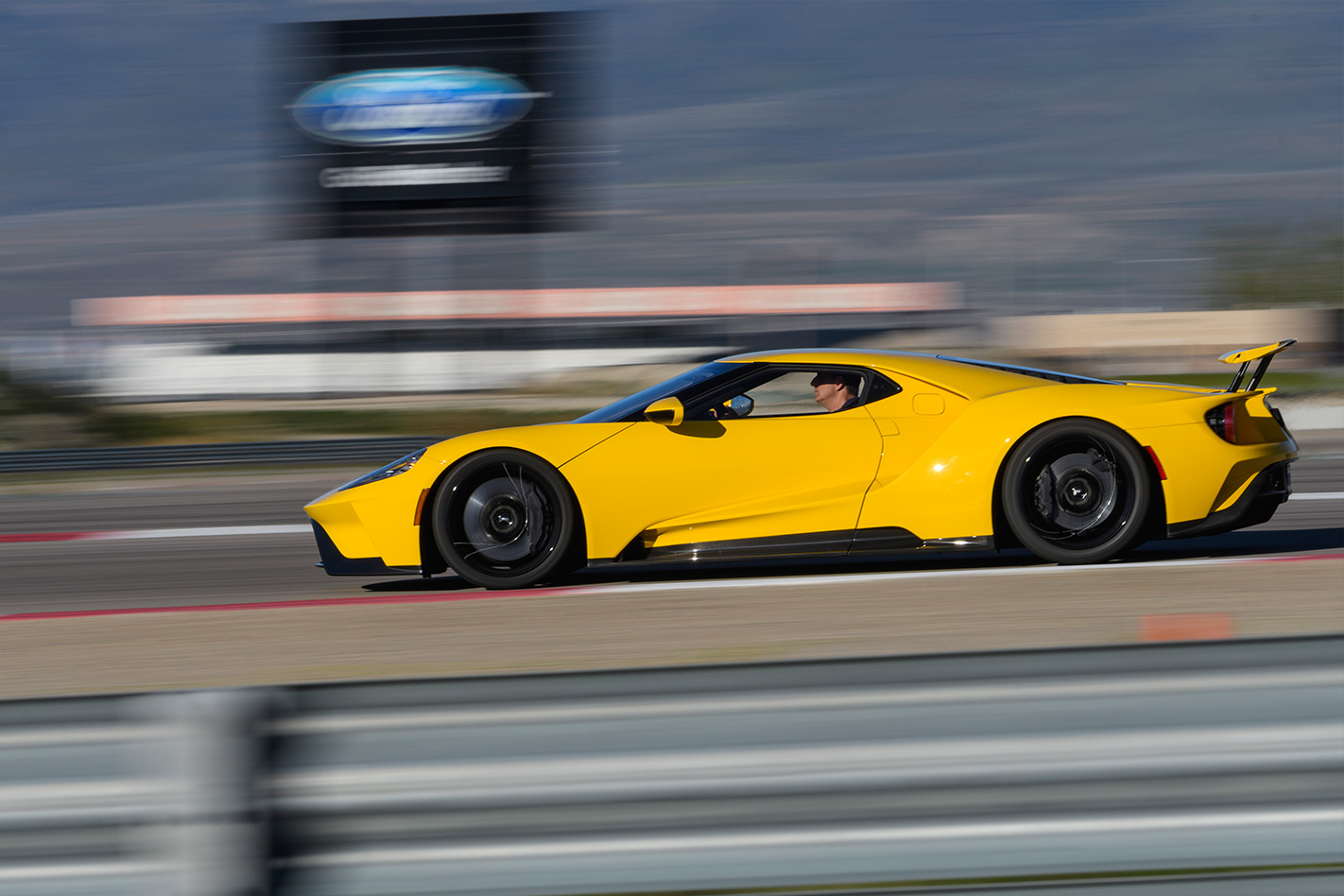
Figures be damned, because on track the GT feels mighty quick, and Ford claims it beat the McLaren 675LT it benchmarked on every track it tested on. Despite peak torque listed at a heady 5900rpm, the torque curve is flat from 4000rpm, and the GT pulls hard from under 3000rpm, kicking again at 5500rpm for a firework-like warp to the 6500rpm redline on a long, energetic spike of boost.
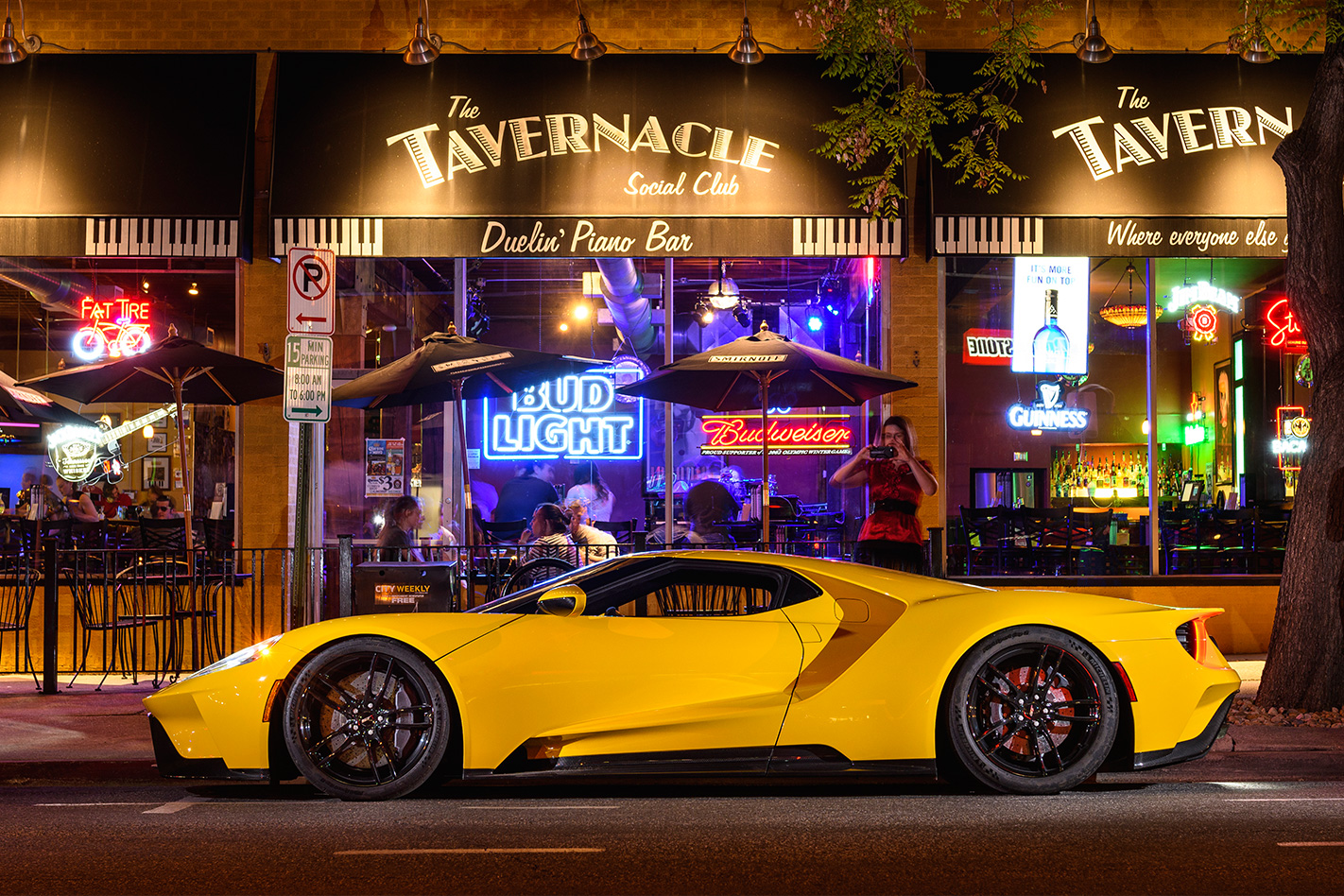
Soon you build the confidence to push harder, and start to get a handle on how high the grip limits of the Michelin Pilot Sport Cup 2 tyres are, that you can lean on them hard, tip-toeing on the finely defined limits as the fronts eventually start to bleed into slight understeer. It feels very rear-biased, so you have to be progressive with the throttle out of corners, but there’s still a lot of traction. And when you stand on the brakes, it’s your nerve that wimps out before they do. Get it wrong and the stability control is perfectly calibrated.
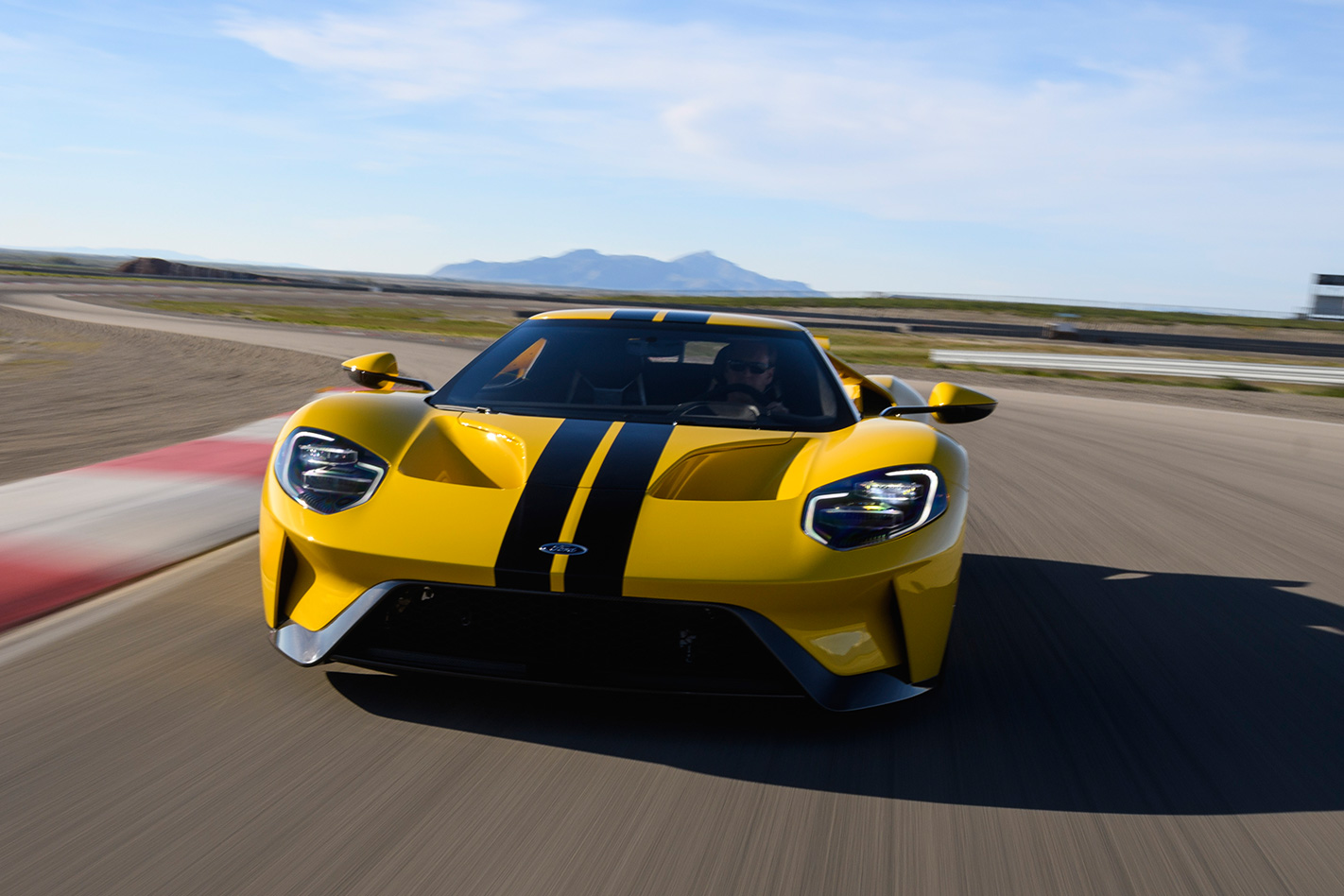
No, where the Ford GT falters is on the road, as you might expect given the racecar origins. It’s still exciting, its suspension is still wonderfully compliant, and it still flows down a tricky Utah mountain road with speed, poise and huge competence. People also whoop involuntarily when they see you. But you do notice that, while it’s very quick, the GT’s not quite got the straight-line legs of the fastest supercars.
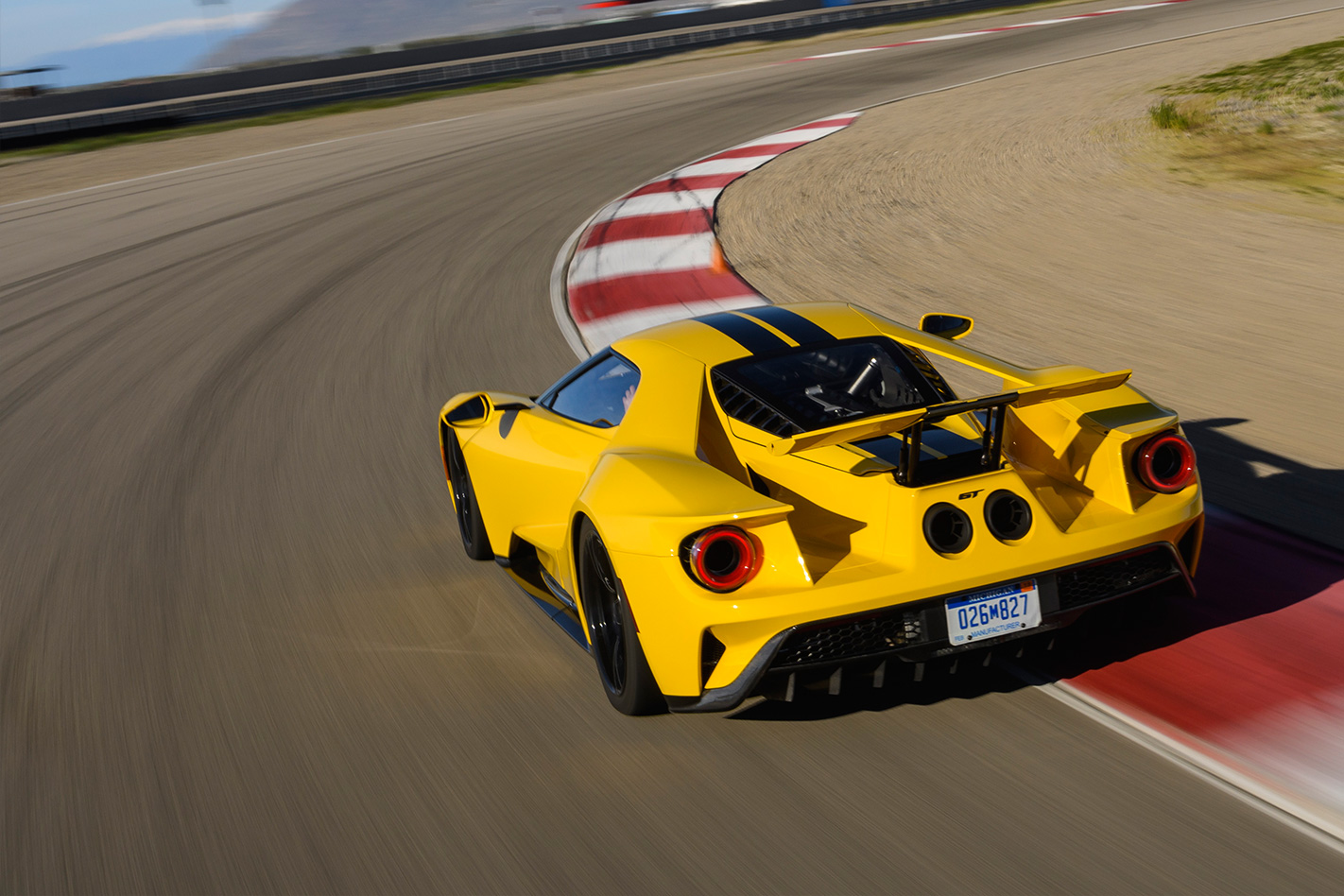
Part of the GT’s racecar-with-numberplates appeal? Maybe, but I’d say it’s part of the compromise that comes from engineering the racecar first, and I bet you could round off all the rough edges and create a car that’s even more enjoyable to drive on the road. I go back to the track, slightly disappointed, then pull more laps and fall in love all over again.
The GT’s a brilliant track car, no doubt about it, and its engineering is so innovative, it’s no wonder the racecar was so dominant it had to be restrained. But half a century on, Ferrari and its rivals still do it better on the road. Ironically given Ford’s blue-collar heritage, they do it for less cash, too.
More tech! More tech! It’s the catch-cry of both the iPhone generation looking for the next techno-jolly and the world’s governments, hell bent on seeing cars hug dolphins.
Fair enough, provided there’s a tangible benefit. Not to mention a resulting product that doesn’t abandon the essence of the heritage upon which it inevitably trades. Which is, of course, a thinly veiled attempt at casting into philosophical doubt AMG’s decision to equip the latest E63 S with a host of new technology.
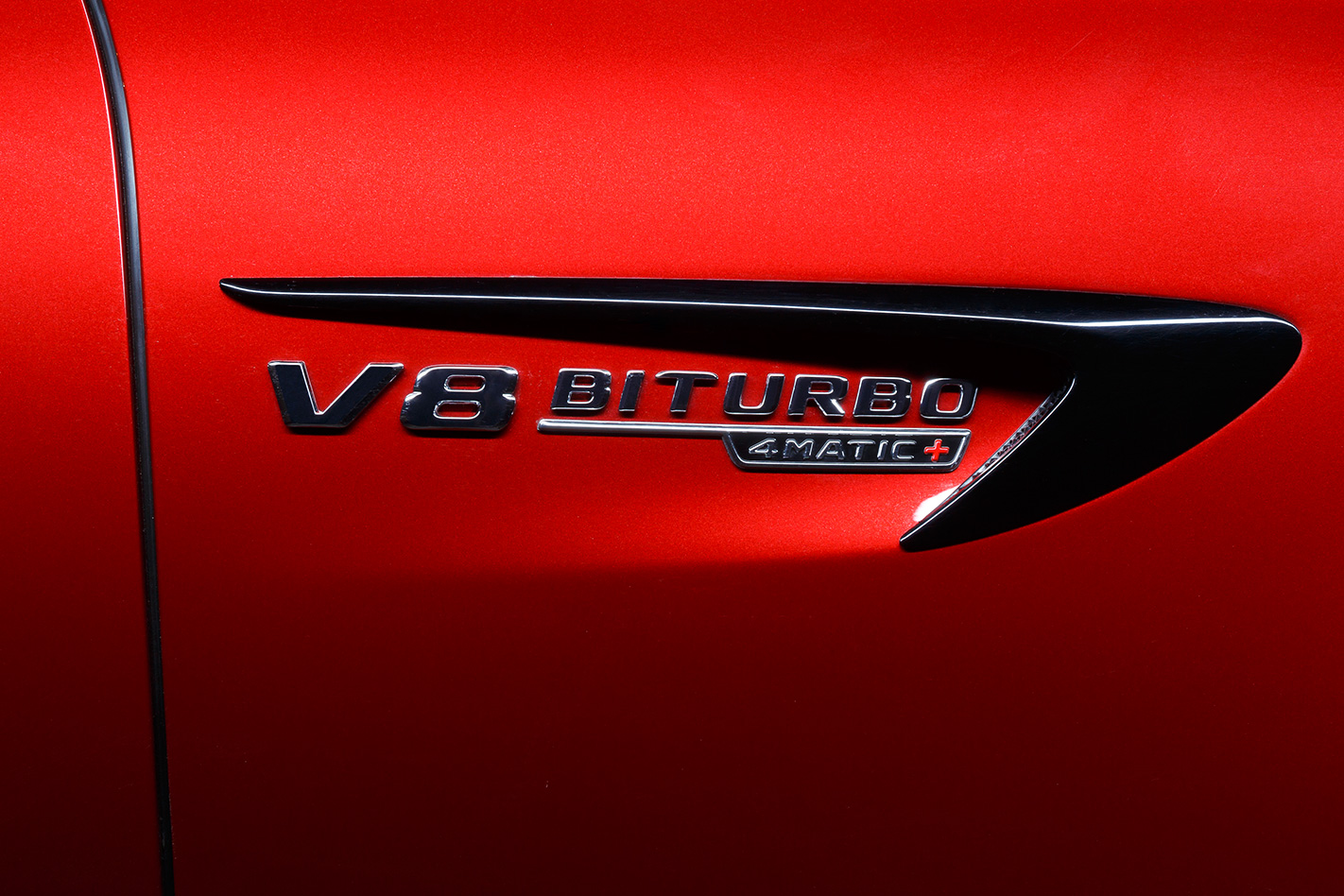
And doubts there are aplenty. For a start, the new E63 S is all-wheel-drive, traditionally the wooden stake through the heart of, er, flamboyant driving. The knock-on effect is more weight; now just a couple of fat puppies shy of two tonnes.
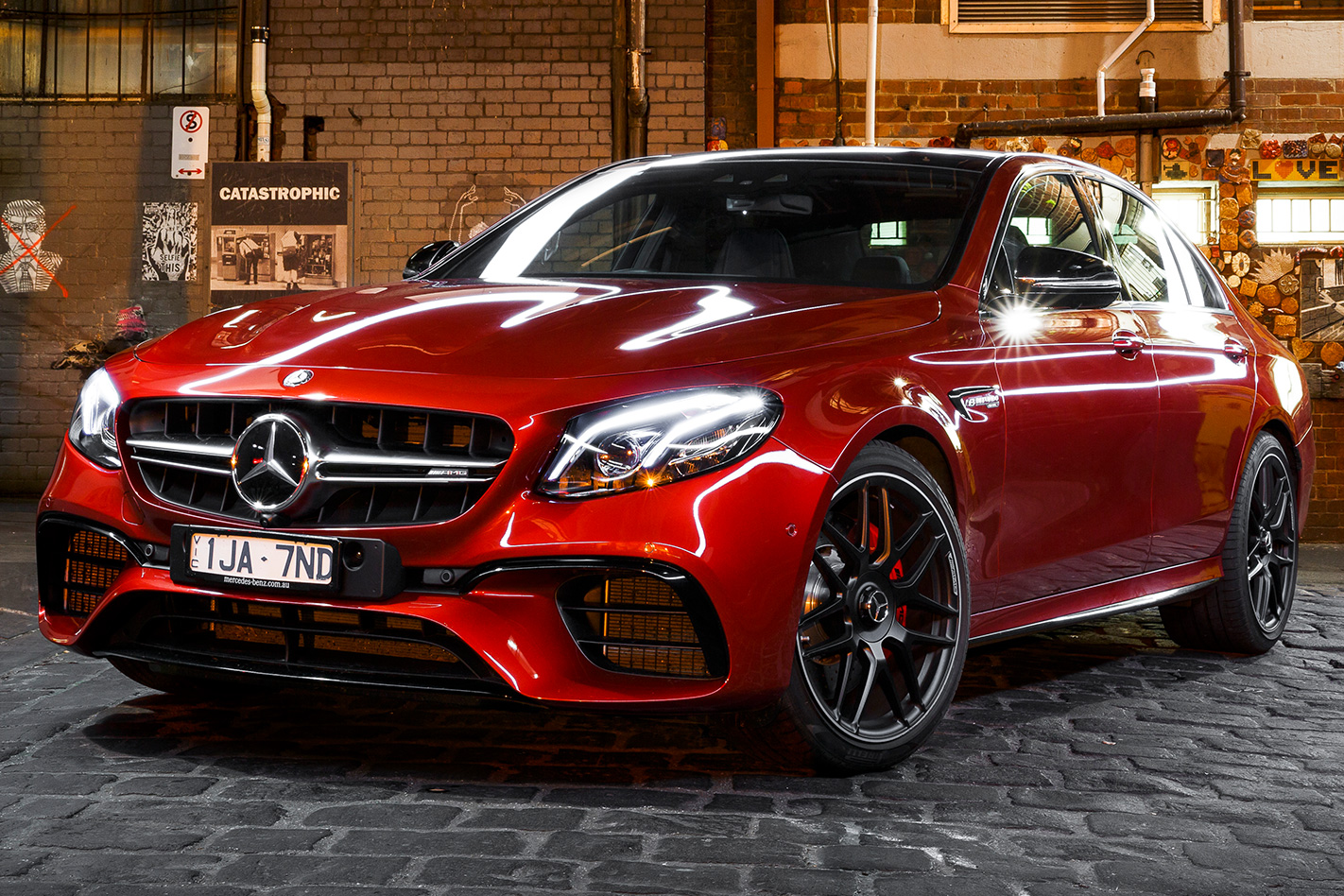
Doesn’t look good, does it? I mean, weren’t AMG sedans always all about Newton-metres triumphing over grip? Wasn’t the hooligan element in an otherwise red-carpet sophisticate like an AMG kind of the thing we loved most about them?
And can the E63 be made all-paw without turning it into a safe-for-children, nanny-state-approved understeerer? The answer to the first of those question is easy – yes, yes it was always thus. But the third is a bit harder to quantify.
Until you drive it. Then the answer is simple. And also yes: This is still very much an AMG E-Class. Hallelujah.
The point is that the move to an all-wheel-drive platform for Aussie E63s has made a fundamental change to the way the car behaves. But it’s change in a good way. Okay, it won’t inadvertently smoke the rear bags leaving Red Rooster any longer, but should you wish to paste chalkies all over the road, a switch to ‘Drift’ mode will sort that out for you.
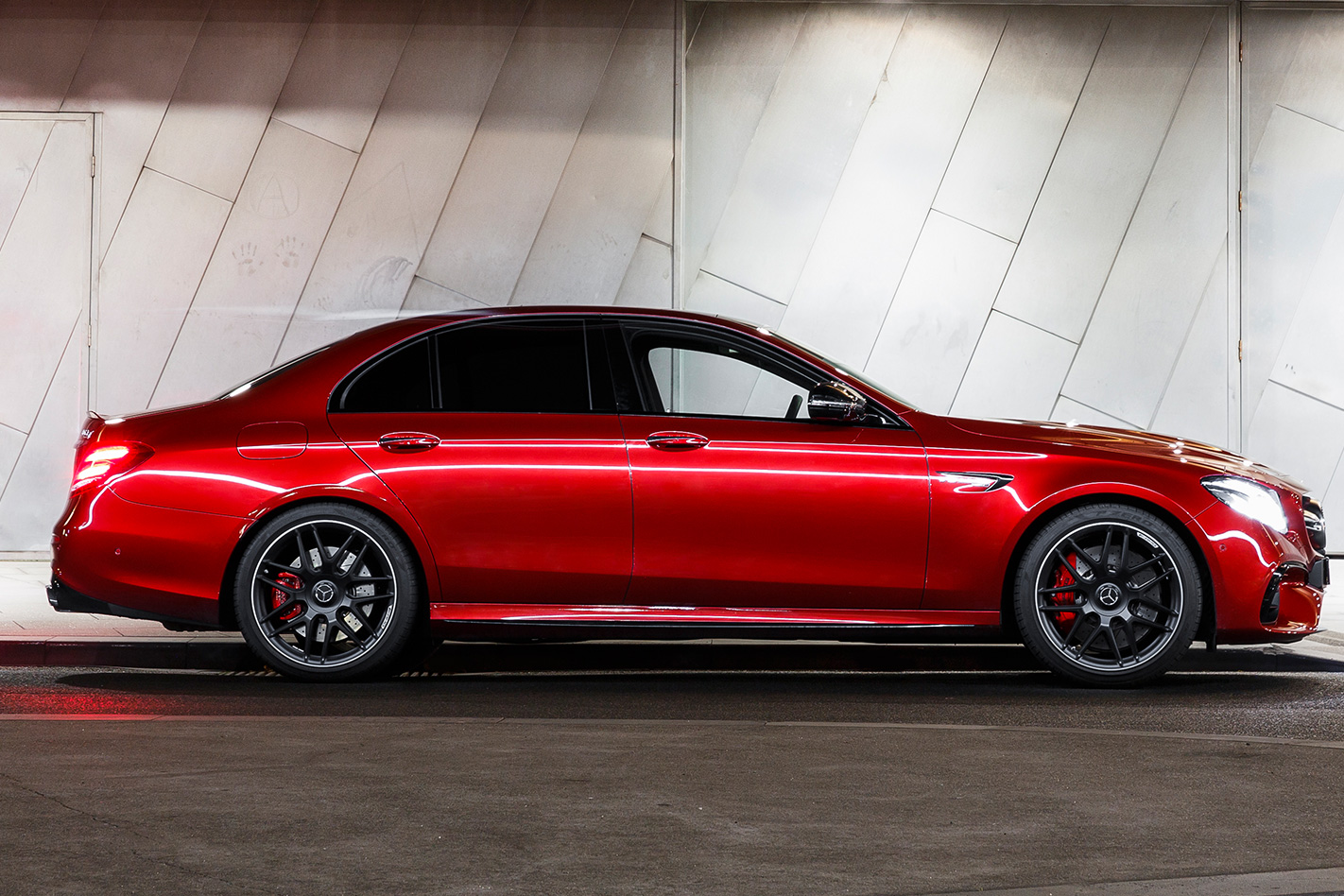
The other big change has been the move to the new nine-speed automatic. And, like some previous AMG gearboxes, this one uses planetary gear-sets like any other conventional auto, but ditches the torque converter in favour of a computer-controlled clutch-pack like a DSG or DCT tranny.
It kind of sounds like having two-bob each way, but the multi-plate clutch eliminates the slip of a torque converter and, provided the software and the actuators are sophisticated enough (and they are in this case) the clutch can engage ultra-smoothly (and it is flawless in this regard) to the point where you’d swear it was a torque converter.
Meanwhile, having nine gears has meant the car can still have a low first for getting that bulk moving as well as an ultra-tall top gear (ninth sees 1400rpm at 100km/h) while still retaining the perfect gears for any other speed or throttle position. And let’s not forget, with 850Nm, a two-speed auto would also probably work okay.
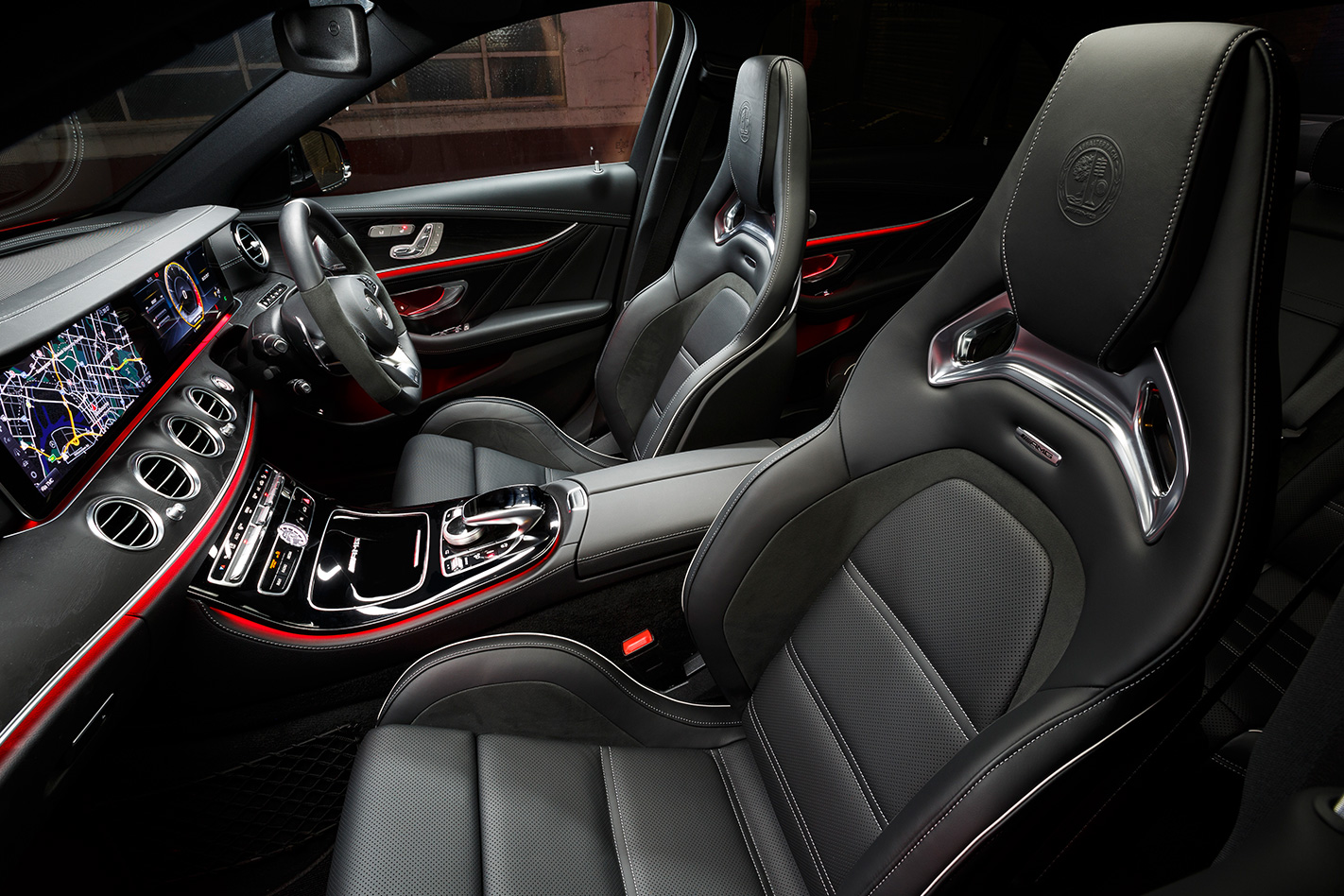
The front chairs are equally gorgeous; heavily sculpted buckets that manage to look classy and sporty at the same time and though firm, prove to be super-comfy for long stints in the saddle. AMG offers a more conventional, barge-ass front perch as a no-cost option, and they might yet be the way to go (we’ll get to that in a minute).
The E-Class dashboard is carried over to the E63 S, which means a giant screen spread out before you, rather than actual gauges or gizmos of any sort. It allows for a huge range of views and options as well as conveying the eye-watering amount of info and interface that is part of a car like this.
Our only gripe is that the display itself is a bit two-dimensional and obviously a virtual creation when some other brands do it with a bit more finesse. The other thing that grates a bit in such a sporty machine is the column-mounted gearshift wand which just seems a bit pedestrian. That said, once you’ve got used to it, it allows for super simple (and fast) moves through P, R, N and D.
One-upmanship at the pub has never been easier. And while that sort of stuff could cloud the issue on the move, once you are up and running, you tend to rely on the head-up display for the vital stats anyway.
Certainly, if you’re a-wailing on the gas pedal at the time, you won’t want to be looking at anything but the horizon which, as a result of 600 horsepower, is a fair chance to be rushing up to greet you.
Not that there’s any fuss or hysterics at the time; the engine remains calm and smooth (even with the active exhaust flaps open) and just creates more urge the further you push the graph on that head-up tach readout. The other useful piece of new tech this time around is a launch-control system that actually works.
Previous AMGs have offered such software, but it usually only seemed to help fry the bags, not the other way round.
Now, with the super-slinky action of the tranny’s clutch packs, walking the car off the line (which was the fast way previously) is no longer the way to go. Nope, what you do now is select either Race or Sport Plus from the drive mode selection, stand on the brakes, hop on the noise with your other foot and, when you’re ready to enter orbit, let the brake pedal loose.
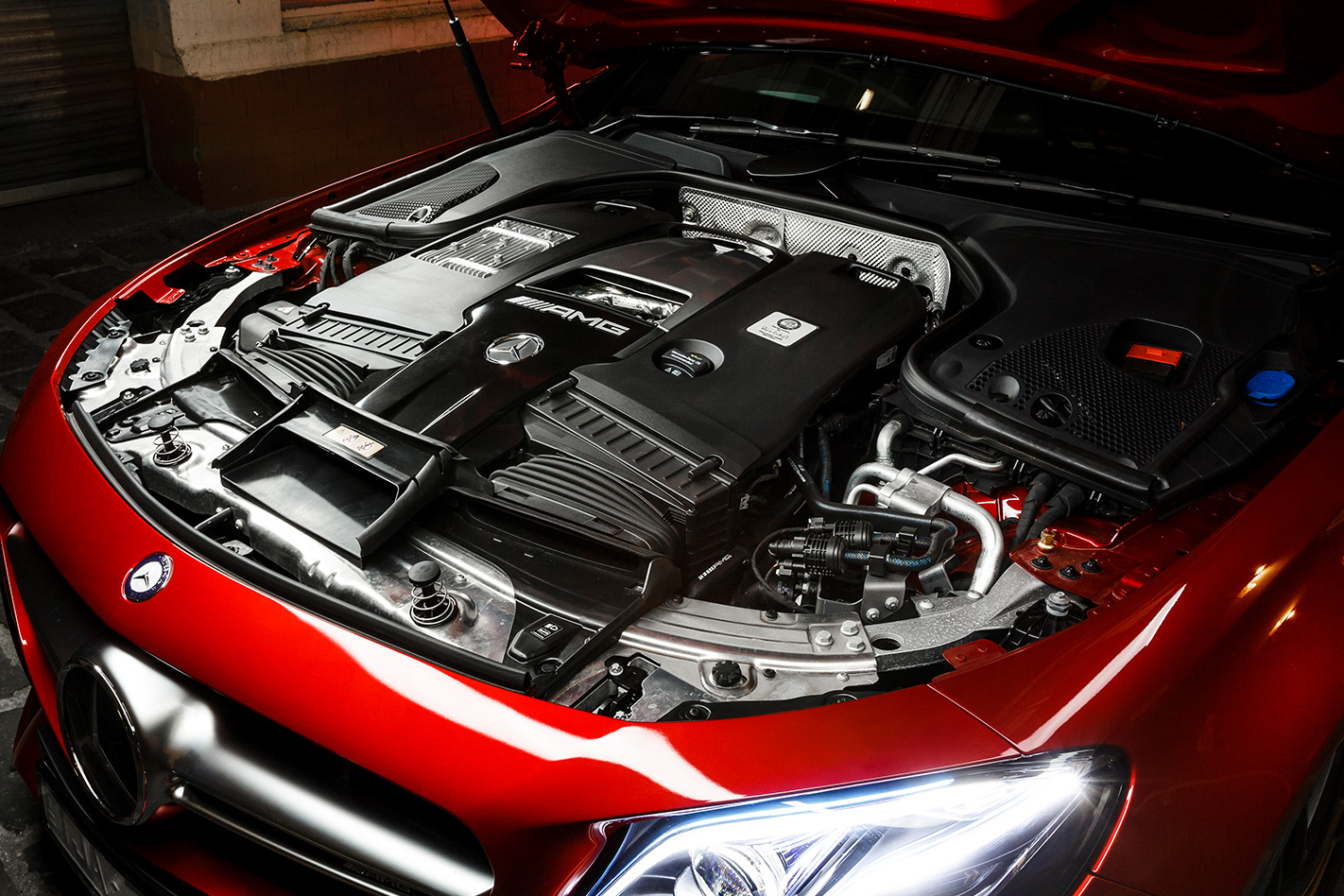
We couldn’t match AMG’s claim of 0-100 in 3.4, but we got close at 3.7, while the first 400m were covered in 11.6 seconds with a terminal velocity of better than 200km/h.
The only catch is the Race Start function was a bit elusive in our test car, with the on-board diagnostics determining that the oil level was first too low, and then too high (once we’d topped it up) for us to be trusted with Race Start. So we got but one run with it. Regardless, the results speak for themselves, and the system doesn’t feel like you’re murdering the car in the process.
Mercedes-AMG GT-R vs Porsche 911 GT3
Experience of another E63 S says the low-oil warning is a theme, but also that the factory 0-100 claim is absolutely fair dinkum and maybe even a tad pessimistic.
In the real world, that sort of shunt translates to a car that is ridiculously easy to punt fast. In fact, too easy in Speed-Camera Land, and that damn head-up speedo is of the creepin’ Jesus variety. In fact, even with the gearbox in Park, the handbrake on and the car locked in a concrete bunker, the E63 could still be doing 20 or 30km/h. Which brings us to our major gripe with the E63 S.
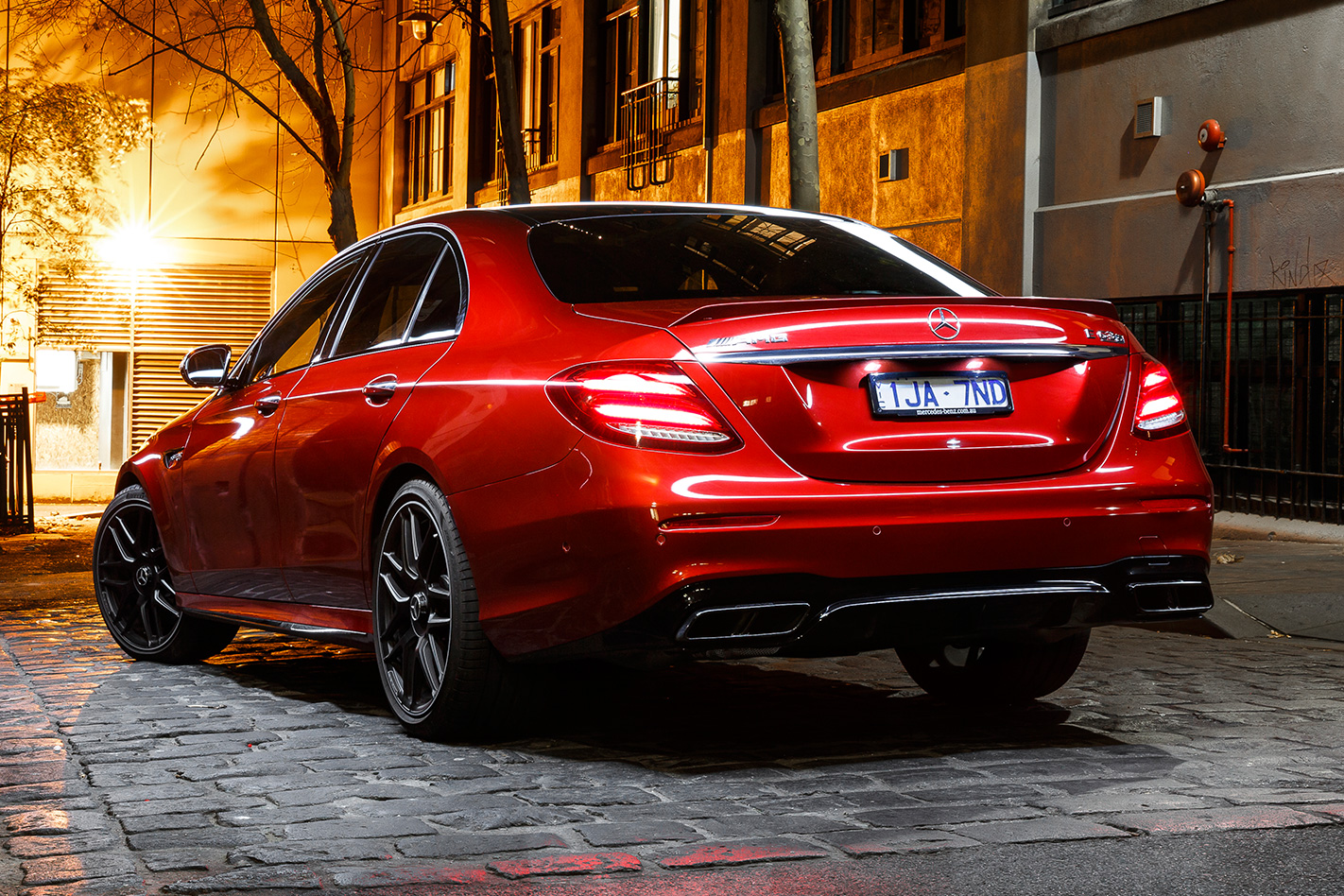
The diff is tight to the point of being cranky in car parks, the ride is too firm regardless of what setting the air suspension has been set to. The gearbox is overly eager to interpret a shove of the throttle as a bank-job getaway and the whole thing just needs to take a chill-pill and wind itself back a notch or two.
The Comfort setting is a misnomer in this case, and we can’t help but think most E63s will be used for the school run or to transport business clients at some point, and that’s when the non-existent Comfort Plus (or even Comfort Plus Plus) setting would be most appreciated.
It’s a noisy bugger, too. Most surprising is a small amount of dump-valve action that you weren’t expecting, although it’s never more than a politely muffled sneeze. But those tyres on any sort of coarse-chip surface will have you yelling at each other inside the car.
I can appreciate that this is an AMG after all, and you should, by now, know what you’re buying into. And I also recognise that AMG needed to differentiate the E63 S from the new E43. I’m also aware that Mercedes’ market research is vastly more likely to pan out than my based-on-not-much observations.
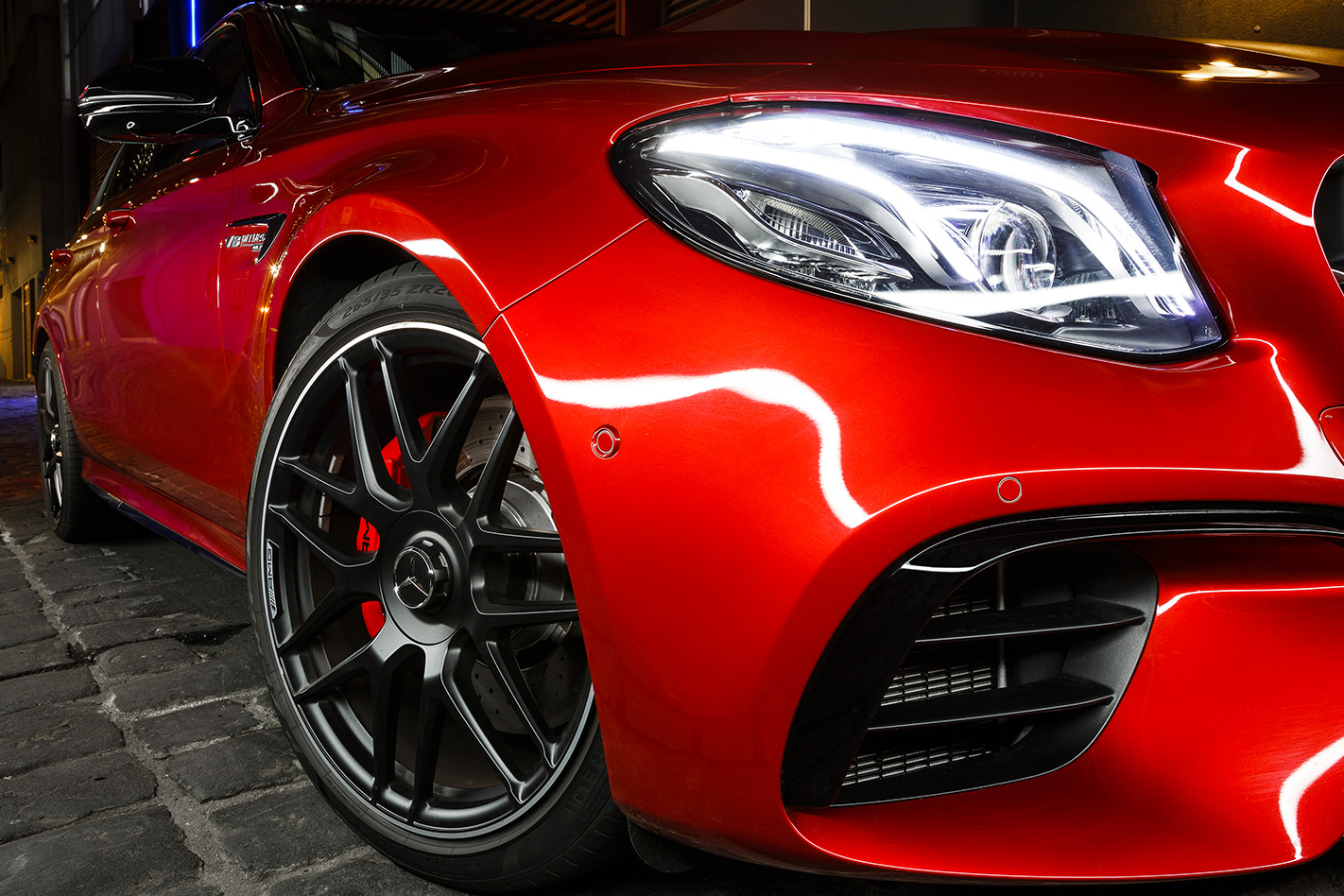
It’s also where those Beyonce-spec front chairs might come into their own. Let us also not forget that AMG cars have been criticised for their ride quality – or lack of it – pretty much from day one, so I’m hardly starting a new thread here.
It’s also true that the faster you drive the AMG, the better it gets. Up the ante to 140 or so and the dampers and springs suddenly start to communicate. The already-sharp steering gets better and the gearbox calibration starts to make sense.
Trouble is, in Australia, those are hand-in-your-licence velocities. So while you can’t, in normal circumstances, ignore the sheer brutality of the E63 S, neither can you sidestep the fact that this is a four-door, five-seat sedan with performance that will hold its own against bona fide supercars.
And like I said, provided you know what you’re getting into, you won’t be disappointed.
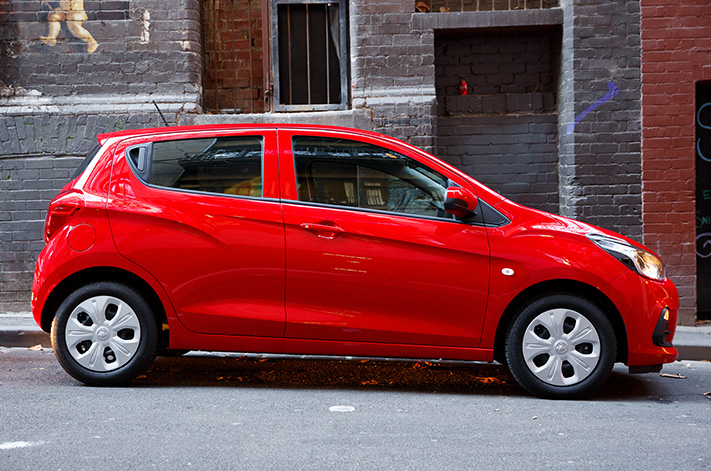
The Holden Spark is pocket-sized five-door hatchback that fulfils its ‘city car’ brief by being easy to park and fun to steer around town. It’s composed and engaged on the open road too thanks to its perky 73kW 1.4-litre four-cylinder engine.
Variants
There are two Spark variants, LS and LT with the LS available with a five-speed manual or CVT gearbox.
The LS manual kicks off pricing at $13,990 making it one of the cheapest cars available in Australia at the moment, while the auto is a still affordable $15,690.
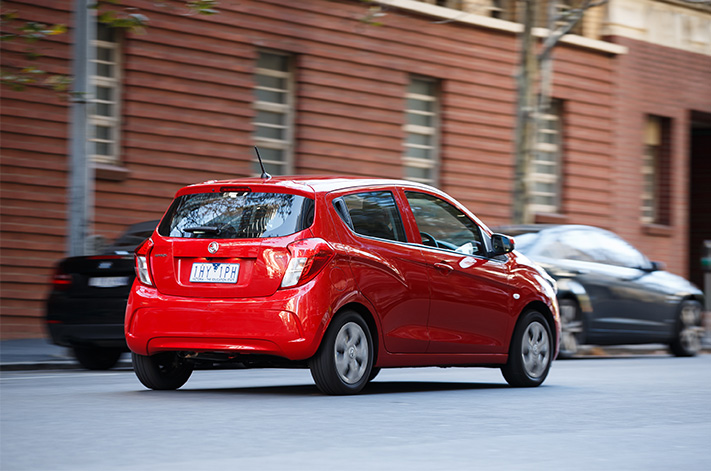
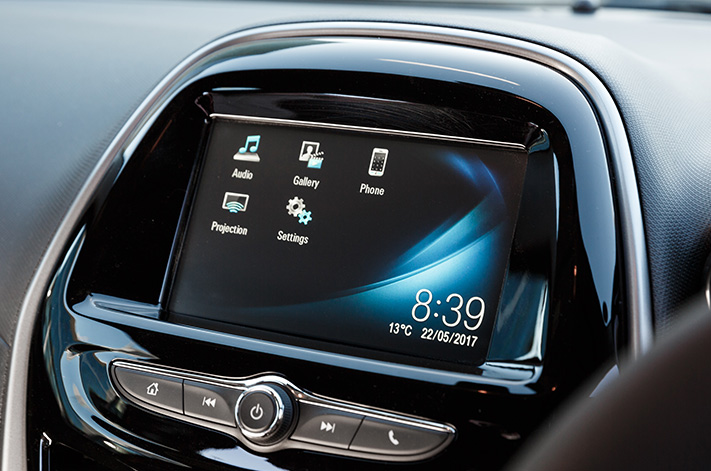
Both come equipped with a 7.0-inch touchscreen with the Holden MyLink infotainment system with Apple CarPlay and Android Auto, cruise control, daytime running lights, hill-start assist and 14-inch steel wheels. Reversing camera and rear parking sensors are optional as part of a $550 driver assist pack.
The CVT-only LT retails at $18,990 and brings reversing camera and rear park assist as standard, leather wrapped steering wheel, keyless entry, push button start, rear power windows,15-inch alloy wheels and Sportec (fake leather) trim.
- Spark LS manual – $13,990
- Spark LS CVT – $15,690
- Spark LT CVT – $18,990
Our pick
Performance is the same across the range so best go the value pick with the LS automatic, which still comes in considerably cheaper than the LT even if you add the driver assist pack.
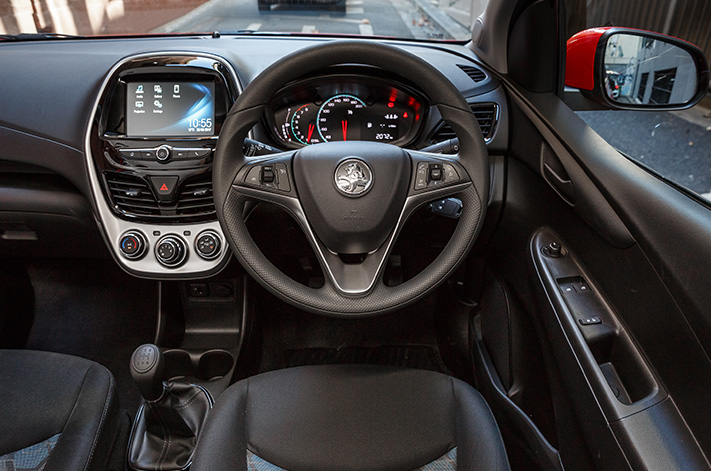
That said there’s nothing wrong with the LS manual if you enjoy using a clutch.
Available options
- Driver assist pack (reversing camera, rear parking sensors – LS only) – $550
- Premium paint – $550
