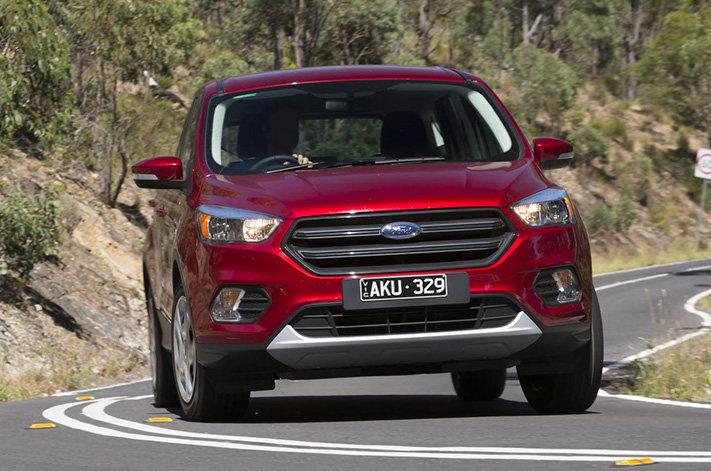
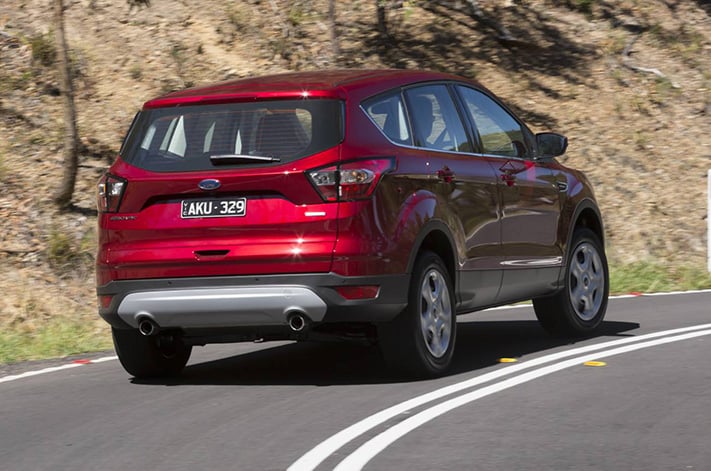
The base model Ford Escape is the only one with the option of a manual gearbox, and it’s a handy steerer, too.
TELL ME ABOUT THIS CAR
Formerly known as the Ford Kuga, the Escape received a facelift with its name change earlier this year to bolster its fortunes within the highly competitive medium-SUV segment. Despite the new badge, extra kit and interior/exterior makeover it’s one of the oldest models in its segment yet still one of the best in terms of driveability.
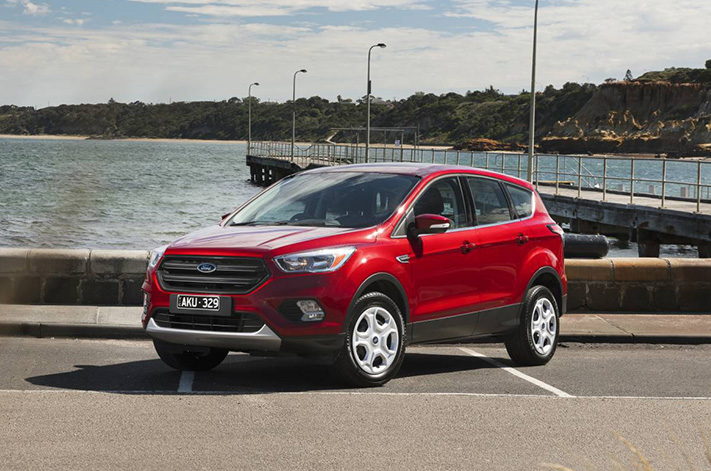
The entry-level Ambiente with a six-speed manual is the only Escape variant with a clutch pedal and at $28,990 it’s $1500 cheaper than the six-speed automatic version.
STRENGTHS
- People who like SUVs because of their high and commanding seating position will like how the Escape feels.
- It has car-like handling thanks to its dynamic steering that’s among the best of any mid-size SUV.
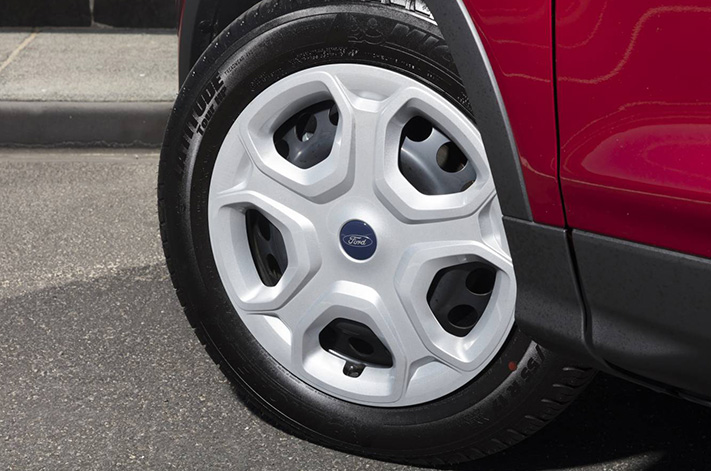
- The 17-inch steel wheels with taller tyres provide a smoother ride than the flashier 18- and 19-inch diameter alloys with low-profile tyres on upper-spec models.
- Standard equipment is reasonably generous for an entry-level SUV in this price range, and includes Ford’s Sync 3 infotainment system with satellite navigation, Apple CarPlay/Android Auto connectivity, digital radio, reversing camera, cruise control, speed limiter, fog lights, power mirrors, automatic stop start and electric park brake.
- The Sync 3 infotainment system is easy to use and syncs to your device quickly. Its sat-nav system shows traffic jams ahead and suggests common sense alternative routes when in navigation mode. The voice-activation does need improving though.
- The sound system is surprisingly good.
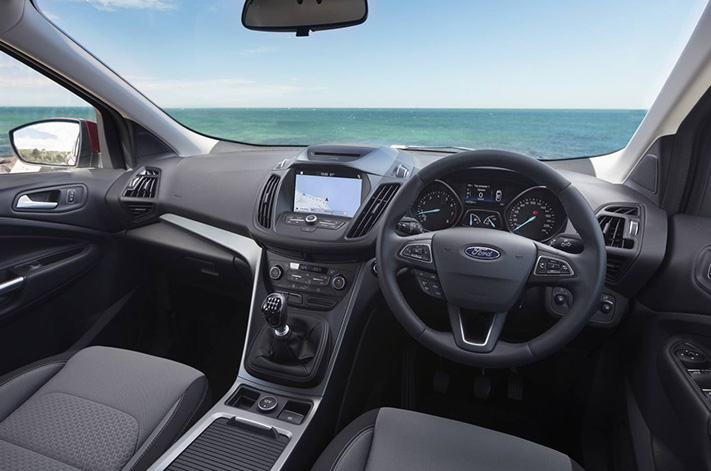
- The six-speed manual gearbox is smooth and easy to shift, though second gear isn’t as forgiving at very low speeds as most gearboxes.
- The manual makes the 110kW/240Nm 1.5-litre turbo engine feel gutsier than its numbers suggest.
- The centre console has two USB sockets so rear seat passengers can charge devices too.
- An electric parking brake frees up space in the centre console, and activates automatically when the engine is turned off so the car doesn’t roll away if left out of gear.
- The automatic stop-start system is barely noticeable and restarts the engine when you press the clutch to engage first gear.
WEAKNESSES
- The dashboard looks dated, especially the central area around the touchscreen that looks like something from Battlestar GalacticaI, but not in a good way.
- The 406-litre cargo capacity is one of the lowest in its class, but fold the rear seats down and it extends to a respectable 1603-litres.
- Road noise is particularly high on coarse surfaces.
- The $1500 saving when buying a manual rather than the six-speed auto isn’t that much when you consider the auto is mated to a more powerful version of the 1.5-litre turbo engine and comes with paddle shifters for driver involvement.
ANY RIVALS I SHOULD CONSIDER?
Similarly priced and equipped medium SUVs with manual gearboxes include the Mazda CX-5 Maxx, and Hyundai Tucson Active, Nissan X-Trail ST and Toyota RAV4 GX.
Let’s imagine you own a Lamborghini Miura SV. It’s nice, isn’t it?
But do you drive it much? Probably not, unfortunately. You’d like to, but it’s a very expensive thing to own, let alone maintain, and you’d never forgive yourself if something bad happened to it.
Supercars rendered as wagons and utes
Or you could say “stuff that” and take it off-roading through narrow, muddy tracks in a forest with all of your friends who also happen to own supercars.
It seems like this group of people took the second option, and didn’t mind getting their million-dollar motors muddy for the camera.
A Lamborghini Countach, a Miura SV, a Bugatti EB110, a Veyron (of course), and a LaFerrari trounce through a muddy forest in search of sideways action, with no regard for the wellbeing of their undercarriages or paint jobs.
It’s terrifying, but also fascinating to watch people rip through the mud in cars that cost more than most Sydney houses.
It’s only a 40-second video, but watching a Bugatti slide within metres of a tree from a muddy track would be enough to get most petrol-heads agitated no matter how long they watched it.
Speaking of which…
It’s not a supercar, but watching the TaxTheRich Phantom splash, slide, and smoke its way around the property is another good reminder that if you’re not actually enjoying the car you’ve spent up to a million dollars on, what’s the point of even owning it?
There’s something that seems therapeutic in tearing up some lawn, or flinging mud everywhere using some of the world’s most expensive machines.
“Jeremy Clarkson is a massive dick,”
says Elon Musk, unprompted, as he sits down, “and you can quote me on that.”
First published in the April 2013 edition of Wheels Magazine, Australia’s most experienced and most trusted car magazine since 1953.
Elon Musk is not, as you might have guessed, your typical car boss.
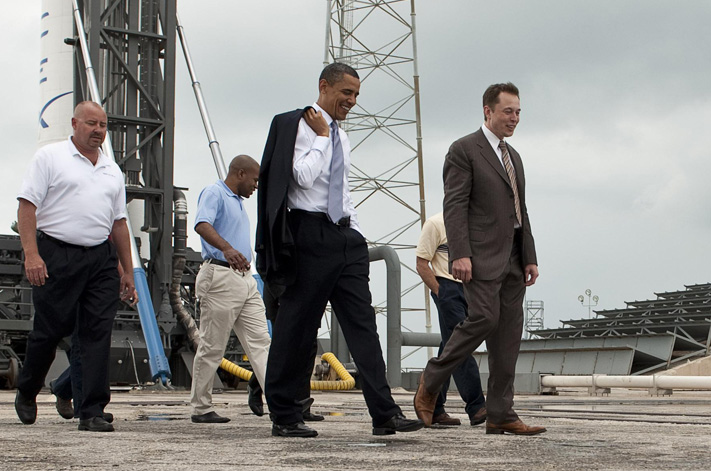
And none sues the world’s most influential car show when they feel they’ve been stitched up: any other carmaker would have taken it on the chin, but when Top Gear implied that the electric Tesla Roadster might have run out of juice by filming it being pushed, Elon took them to the British High Court, and ultimately lost. It obviously still rankles, and in February he got into another blog and Twitter fight with the New York Times, which claimed that its Model S test car had also sputtered out.
If all this suggests that Elon Musk is a fighty, litigious, sweary douchebag, reconsider.
In fact, he is so modest and charming in person that you could almost forget about the two multi-million- dollar dot-com fortunes he made by the time he was 31, including selling PayPal to Ebay in 2002 in a $1.5bn deal, the Bel Air mansion, the Dassault Falcon 900 intercontinental private jet and the skinny English actress girlfriend. Almost. But you shouldn’t be jealous, and for three good reasons.
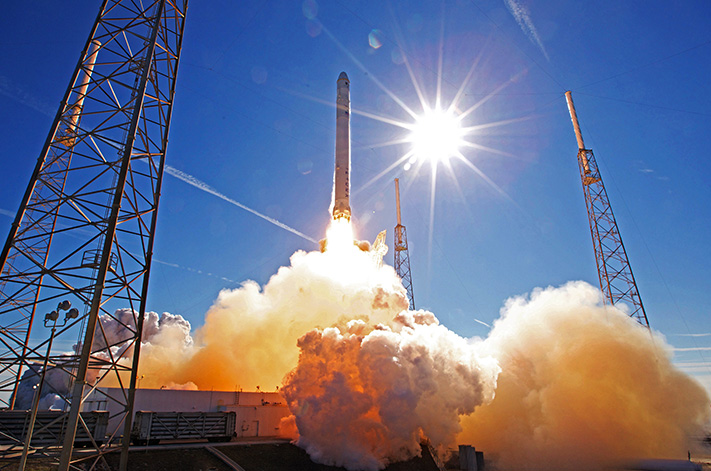
The first is that Elon is doing you a favour. He founded Tesla and Solar City, which develops high-efficiency solar panels, primarily to break our dependence on fossil fuels. Should our pillaging of the environment prove terminal, Musk plans, in all seriousness, to establish a human colony on Mars, and he founded SpaceX to develop the reusable rockets that will make interplanetary travel affordable. He’s like a benign Bond villain; Elon simply thinks on a bigger scale than mere mortals.
The second reason you shouldn’t be jealous is that you don’t cash out of the dot-com bubble twice and start three new businesses in wildly disparate fields without incandescent intelligence and the ability to fit more into a day than a time-lord. He’s not just a walking wallet; he is actively involved in the engineering of both his cars and his rockets. Stuff like this doesn’t happen to people like you and me because we’re simply not as smart as Elon. You prepare well for an interview with him but you’re still aware that if you wired him to a brain activity monitor, even your best questions would barely cause a flicker on the trace.
And lastly, doing all this isn’t easy. In October, his Dragon spacecraft docked with the International Space Station, the first mission in his $1.6b resupply contract with NASA. Solar City went public in December at a value of nearly $500m, and its value has since more than doubled. Tesla made its IPO in 2010 and is now trading at around twice its initial offer price, with a value of over $4bn. Tesla’s factory in San Francisco – closed by Toyota in the financial crisis – is now producing its target of 400 cars each week and will make 20,000 in a full year.
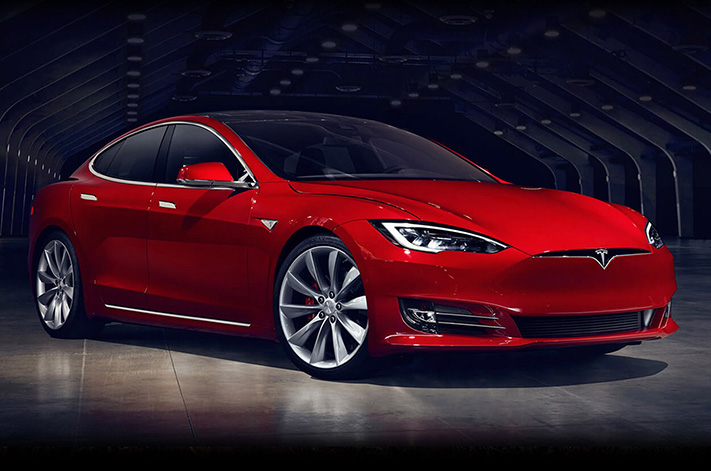
But these past few months are not typical of the 12 years since Musk cashed out of PayPal. I first met him in 2007, when Tesla had yet to build a car and Space X had endured two abortive test launches. Both businesses would later almost die: Tesla suffered cost overruns and design reboots that delayed production, and Space X a third launch flame-out that left everything hanging on the final attempt. And the economy tanked. Just how bad was it?
“It was like being in the stockade while people hurl shit at you,” Musk says (this, and the Clarkson quote, not reflecting his more typical gentlemanliness.) “We struggled very badly for many years just to keep the company alive. I had nothing left. I had to borrow money for rent. I sold everything I could, including my McLaren F1, and I would have sold the plane, too, except that in 2008 you literally could not sell a plane.”
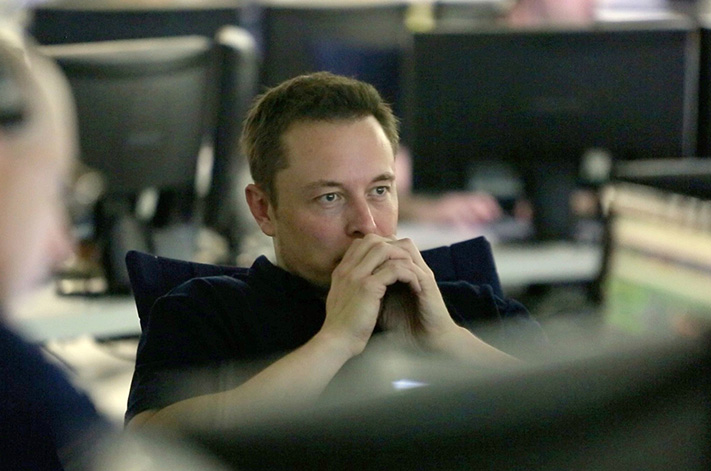
For Musk, this is a simple statement of fact and not an invitation to be grateful for his selflessness. In America, not everyone is: Musk and his businesses are far from universally popular. It’s not so much Elon himself, although he has had some very public spats with former associates. It’s more to do with the nature of the businesses and the circumstances in which they operate.
In Tesla’s case, Republicans objected to the $468m low-cost Federal loan it received from a fund designed to reanimate the US car industry after the financial crisis. Mitt Romney referred to Tesla as a ‘loser’ company in the Presidential election debates – “it was hurtful, he just didn’t know what he was talking about,” says Musk – and there is an antipathy towards electric cars from a noisy minority who question their price, practicality and true environmental benefit.
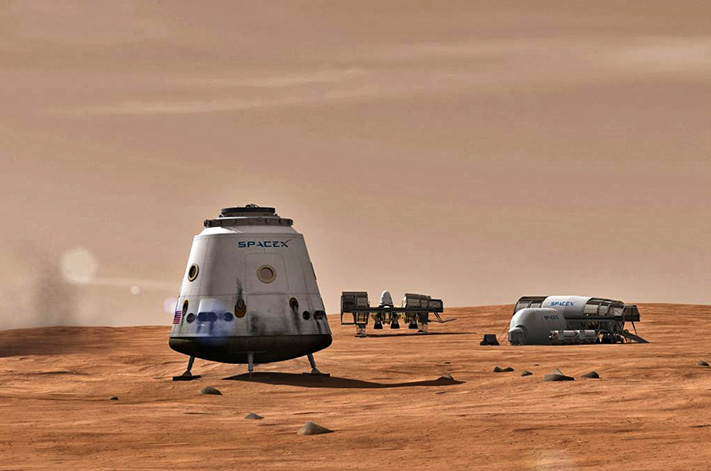
Difficult times will come again, and soon. Musk will have to put people on his rockets – ‘that will be a very nervous day’ – and two new models for Tesla will increase its volumes tenfold. He says that he plans to ‘take it down a tiny bit’ this year, spending more time with his five sons – triplets and twins, with typical efficiency – “doing more fun stuff in the interests of maintaining sanity. But when I’m with them I can also do email as they only sporadically require my attention.”
Sorry, kids. Your Dad’s time is better spent working on his next ideas than throwing a ball for you in the backyard. Those ideas include an electric, supersonic, vertical take-off and landing private jet, and a supersonic underground transport system that could link LA and San Francisco – where Elon lives and where his factory is – in half an hour.
It’s called the Hyperloop, and he’s not giving much away about how it might work. He was going to publish a paper on it late last year, “but I just didn’t have a spare neuron. All existing neurons were redlined.” So we’ll just have to wait for the details. It might sound unfeasible.
But when you look at what Elon Musk has made work so far, would you really bet against him making this work too?
In Musk’s garage
The bloke who finally seems to be making electric cars work is – or was – a proper petrolhead.
“I’ve had a McLaren F1, a Porsche 911 Turbo and a Series 1 E-Type. They all got some degree of negative reaction, except maybe the E-Type. If you drive a sports car now some people think you’re a jerk or you’re doing something bad for the environment, or both, but everybody likes a Tesla.
They realise it’s better for the environment than a Prius or a diesel Golf but that it’s also a cool, fast car. The McLaren is a great car. It’s a work of art, a really beautiful piece of engineering, but I didn’t want people always writing that I have a high-performance gasoline sports car so I decided to sell it.
I made a profit on it, even though I crashed it. I do have a jet, and my justification for having it is that I am so incredibly time-constrained that if I didn’t have it I wouldn’t be able to get a lot of things done at Tesla and Solar City, two companies which are really doing things on carbon.”
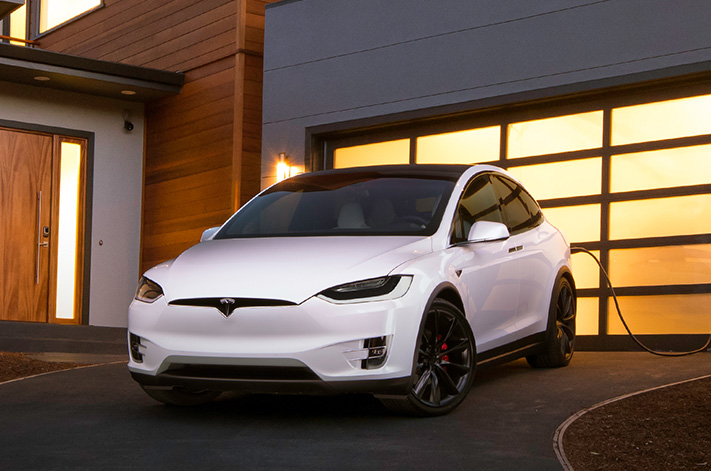
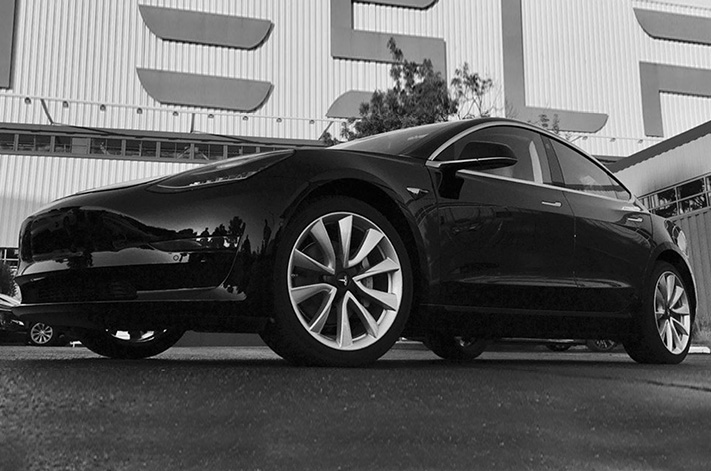
SOUTH Australia’s man of the moment, Elon Musk, has revealed the first images of a production Model 3 on Twitter.
The Tesla co-founder revealed the image of the first Model 3 to roll off the production line at the company’s plant in Fremont, California.
Prior to revealing the car, Musk tweeted: “Production unit 1 of Model 3 is now built and going through final checkout. Pics soon.”
The black Model 3 will be the first of many, with more 400,000 pre-orders for the vehicle having already been placed globally before the end of 2016, including here in Australia where the company is still accepting deposits of $1500 despite a minimum 12-month waiting period.
Musk had earlier revealed that 100 Model 3 cars would be produced in August with production gradually stepped up to 1500 units in September and more than 20,000 per month by the end of the year.
More precise specifications are still to be announced.
It’s expected to retail from around $65,000 in Australia – about half the price of the entry-level Model S 75 – with premium D-segment models such as the Mercedes-Benz C-Class and BMW 3 Series in its sights.
Musk had earlier turned the tech world’s gaze on to South Australia when it was announced last week that Tesla would be contracted by the SA Government to build a 100-megawatt energy storage facility near a windfarm 250km north of Adelaide. The facility, which will be the largest lithium-ion battery array on the planet, will help ‘smooth’ the state’s power supply in high-demand periods as well as store excess energy from the nearby wind farm.
Despite being one of the biggest projects of its kind so far, he promised it would be completed within 100 days of contracts being signed – or it will be free of cost.
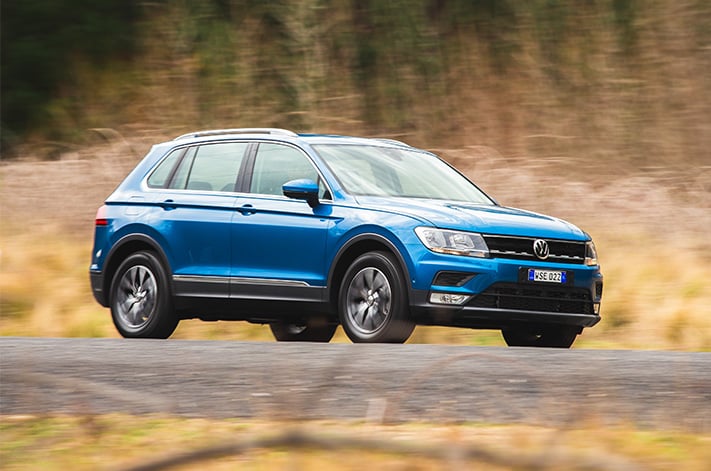
The latest-generation Tiguan offers more space and practicality than the previous model and offers the option of reassuring all-wheel-drive grip in and a choice of five fuel-efficient turbocharged engines.
Excellent smartphone integration, 4MOTION Active Control driving modes and an active safety suite that includes auto braking are standard across the range.
Variants
There are three Tiguan spec levels – Trendline, Comfortline and Highline.
The range starts with the 110TSI Trendline which is powered by a 100kW/250Nm turbo petrol engine coupled to either a six-speed manual or six-speed dual clutch automatic transmission.
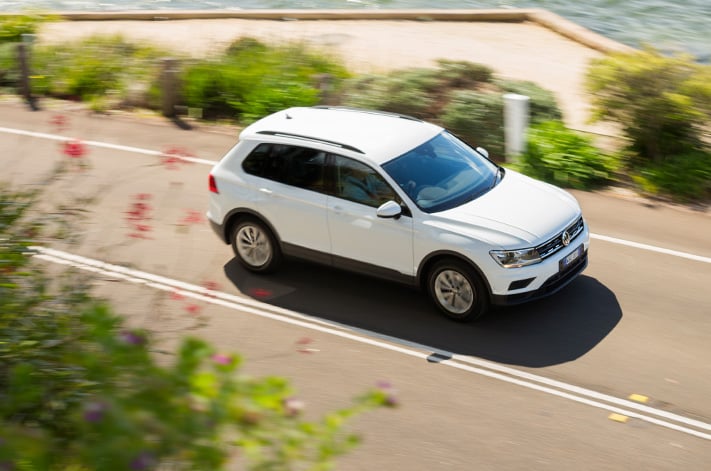
The manual is priced at $31,990 with the auto costing an extra $2500, with both featuring standard equipment that includes an 8.0-inch colour touchscreen, reversing camera with front and rear parking sensors, Apple Carplay/Android Auto connectivity, cruise control, automatic windscreen wipers, auto headlights, 17-inch alloy wheels, tyre pressure monitoring, autonomous emergency braking and lane keeping assist.
The 110TSI Comfortline has the same automatic powertrain but adds extra features including satellite navigation, three-zone air-conditioning and fold-down tray tables behind the front seats.
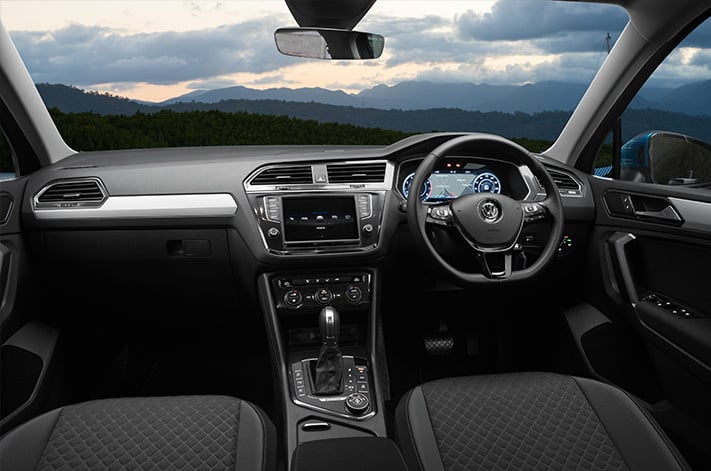
The 132TSI Comfortline comes with the same equipment but a more powerful 132kW/320Nm turbo petrol engine while the 110TDI Comfortline features a more fuel efficient 110kW/340kW turbo diesel.
Comfortline models can be further upgraded with a $5000 Luxury Package that includes leather seats, heated front seats, power-adjusted driver’s seat with three memory settings, keyless entry and a hands-free powered tailgate. An extra $250 will get you auto folding wing mirrors.
There’s also a $2000 Driver Assistance Package that brings an all-electronic ‘active info display’ that replaces the instrument cluster with a 12.3-inch customisable colour screen.The top-spec 162TSI Highline and 140TDI Highline are powered by 162kW/350Nm petrol turbo and 140kW/400Nm turbo diesel engines respectively, with a seven-speed dual clutch auto and all-wheel drive as standard.
The Highline variants come with the Comfortline Luxury Package as standard plus auto-levelling LED headlights, LED tail lights, voice control infotainment and 18-inch alloys.
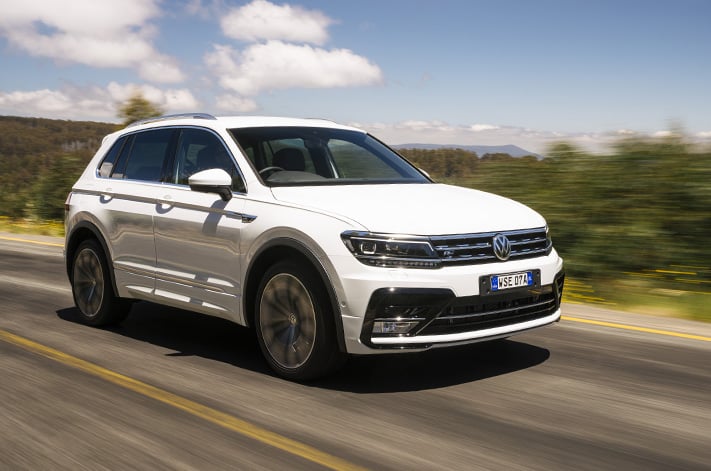
You can option a Highline with the Driver Assistance Package and a $4000 R-Line Package featuring body kit, 20-inch alloys, interior trim changes and adaptive chassis control.
- 110TSI Trendline manual – $31,990
- 110TSI Trendline – $34,990
- 110TSI Comfortline – $36,990
- 132TSI Comfortline – $41,490
- 110TDI Comfortline – $42,990
- 162TSI Highline – $48,490
- 140TDI Highline – $49,990
Our pick
The Tiguan 132TSI Comfortline has plenty of features without sending prices north and the more powerful petrol engine is great around town and for country touring. The Driver Assistance Package featuring the active info display would be a worthwhile addition for those that love technology.
Available options
- Driver Assistance Package (Comfortline and Highline) – $2000
- Luxury Package (Comfortline) – $5000
- Mirror Package (Comfortline) – $250
- R-Line Package (Highline) – $4000
- Panoramic sunroof (Highline) – $2000
- Metallic or pearl premium paint $700
The ever-daunting options list is often a source of financial woe for new car buyers.
Spending around a tenth of the cars original value on extra bits and pieces doesn’t sound like a good idea most of the time, but what if you knew exactly what it’d look like before you spent anything?
Like a few other companies, Porsche has taken this idea and run with it, creating the Porsche Car Configurator, which lets you kit-out any Porsche model you like.
We had a look at it, and made our own 911 GT2 RS, but with a driveaway price of $687,945 before options, it’s a dangerous game.
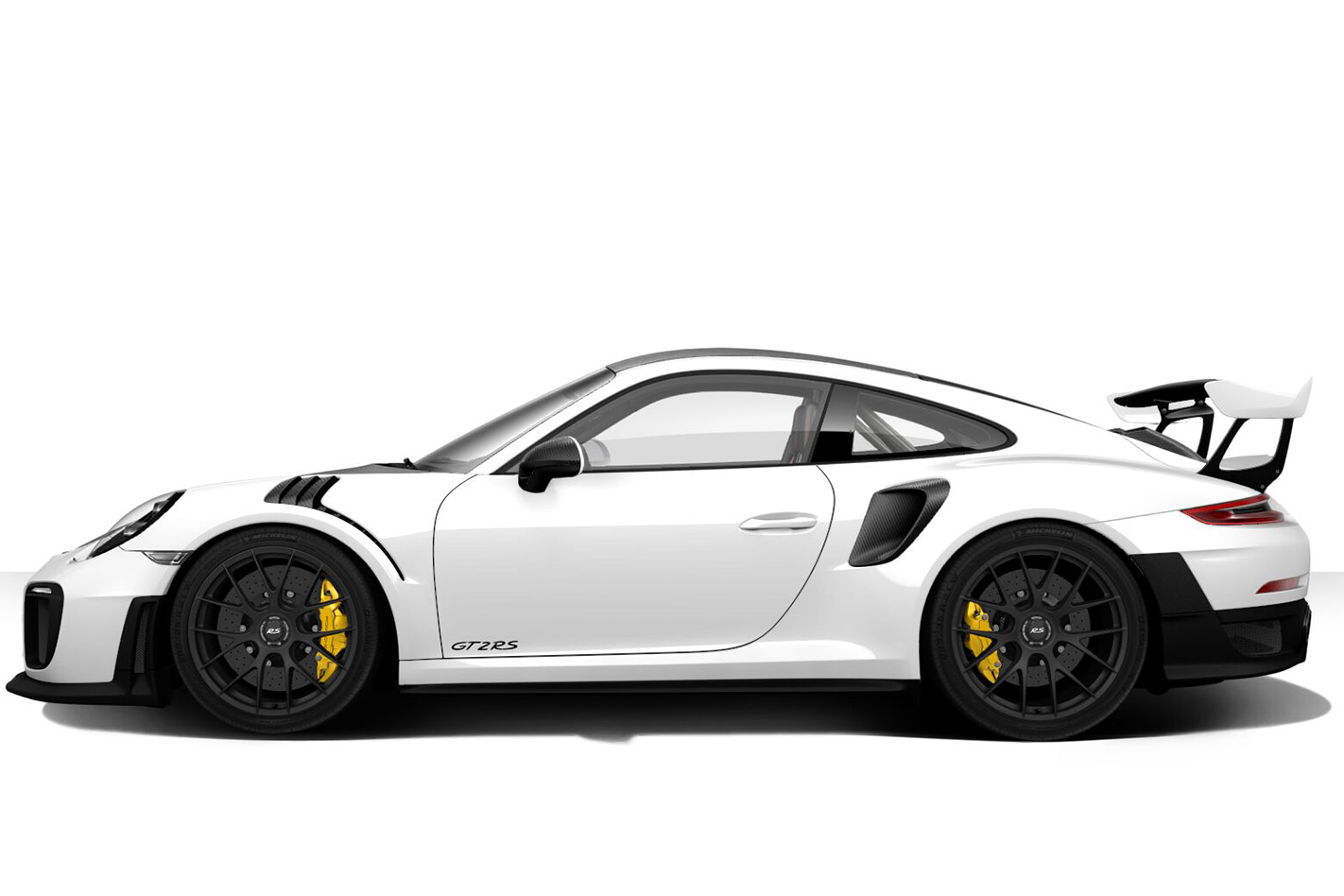
We’ve just started, and we’re already $62,390 poorer.
Porsche unveils 911 Carrera 4S Safety Car
Paint the wheels black, and you’re spending another $1390, though it looks good against our white GT2.
However, if you want the headlights in black LED, that’s free. Having the headlight sprayer painted the same colour as the car? That’s $490.
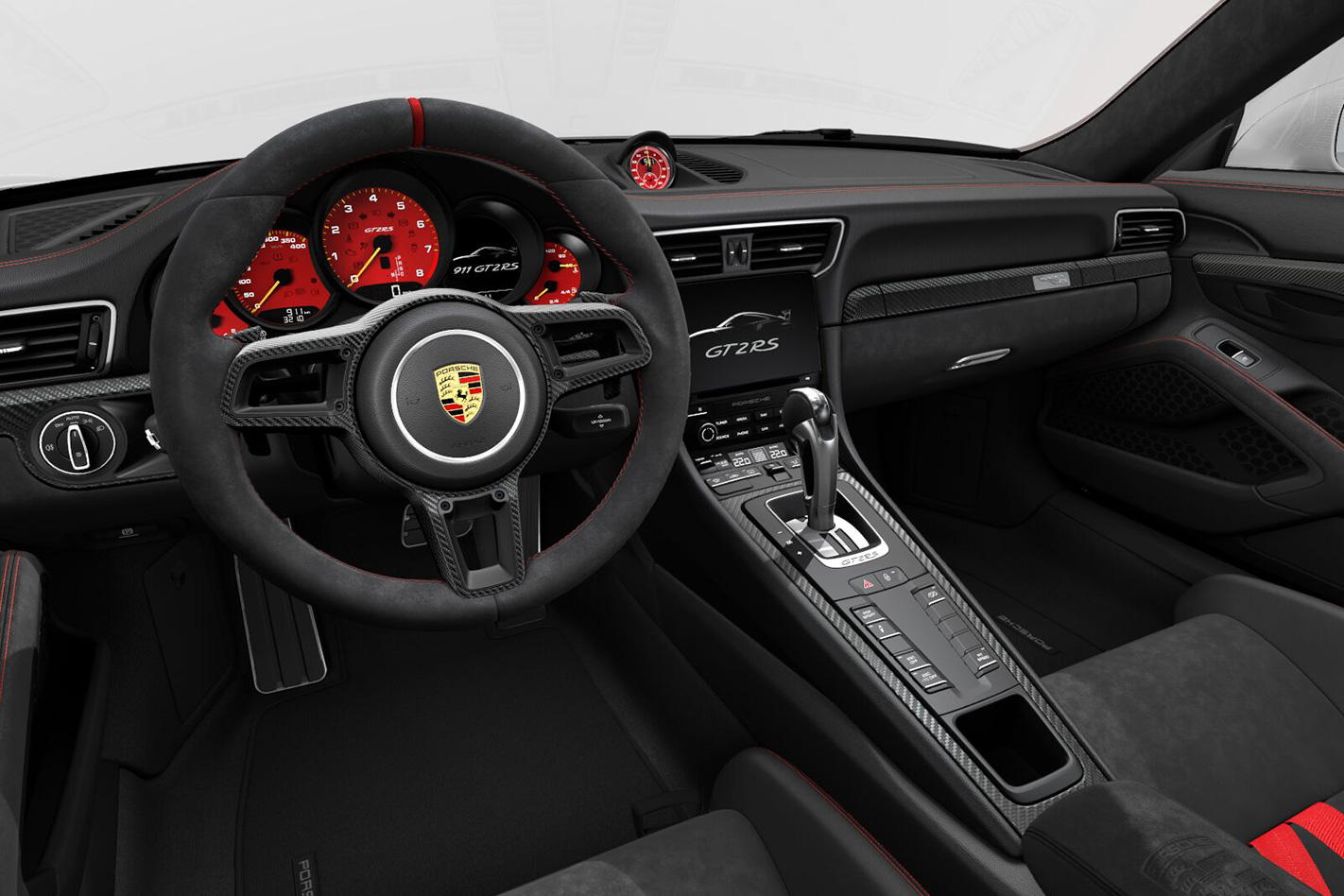
After fitting out the interior in customised leather, Alcantara, and changing the stitching colour to silver to match the exterior, we’ve racked up a total options costing of $117,110.
We’ve added 17 per cent to the cost of an already very expensive car, to bring the price up to a quoted $798,055 driveway.
Thankfully it looks like Porsche have given us a $7K discount. Bargain!
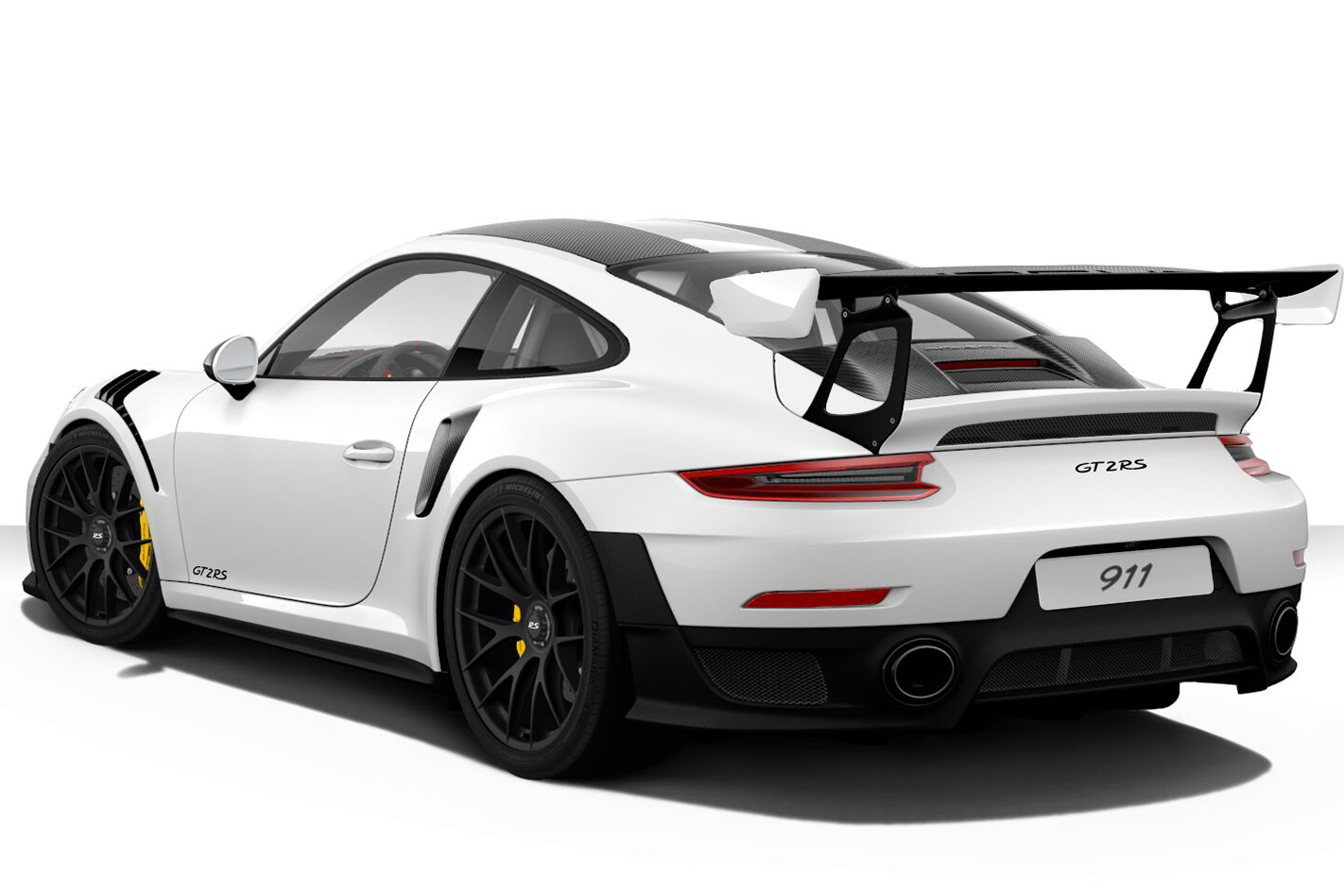
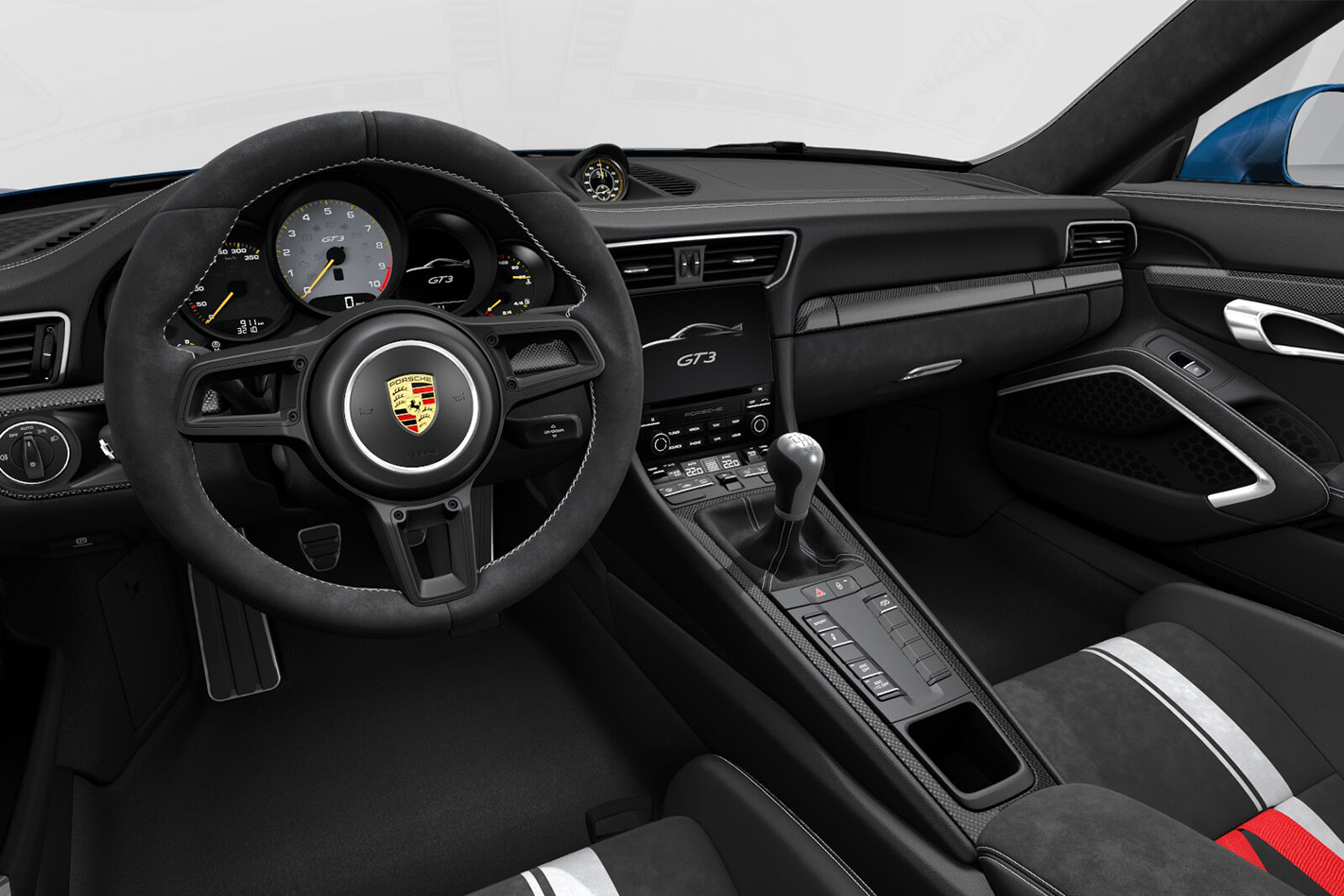
Give it a try here, if you feel like upsetting your accountant.
ON FIRST inspection, the Tesla Model S, Mercedes-AMG E-Class and HSV GTS might seem as similar as chalk, cheese and chicken pox, but a head-to-head battle between the most potent versions of each marque’s line-up makes more sense than you may think.
The P100D, AMG E63 S and GTS-R are all large luxury sedans, with room for five on board plus luggage, offer similar dyno-destroying power, and pack autobahn-munching pace.
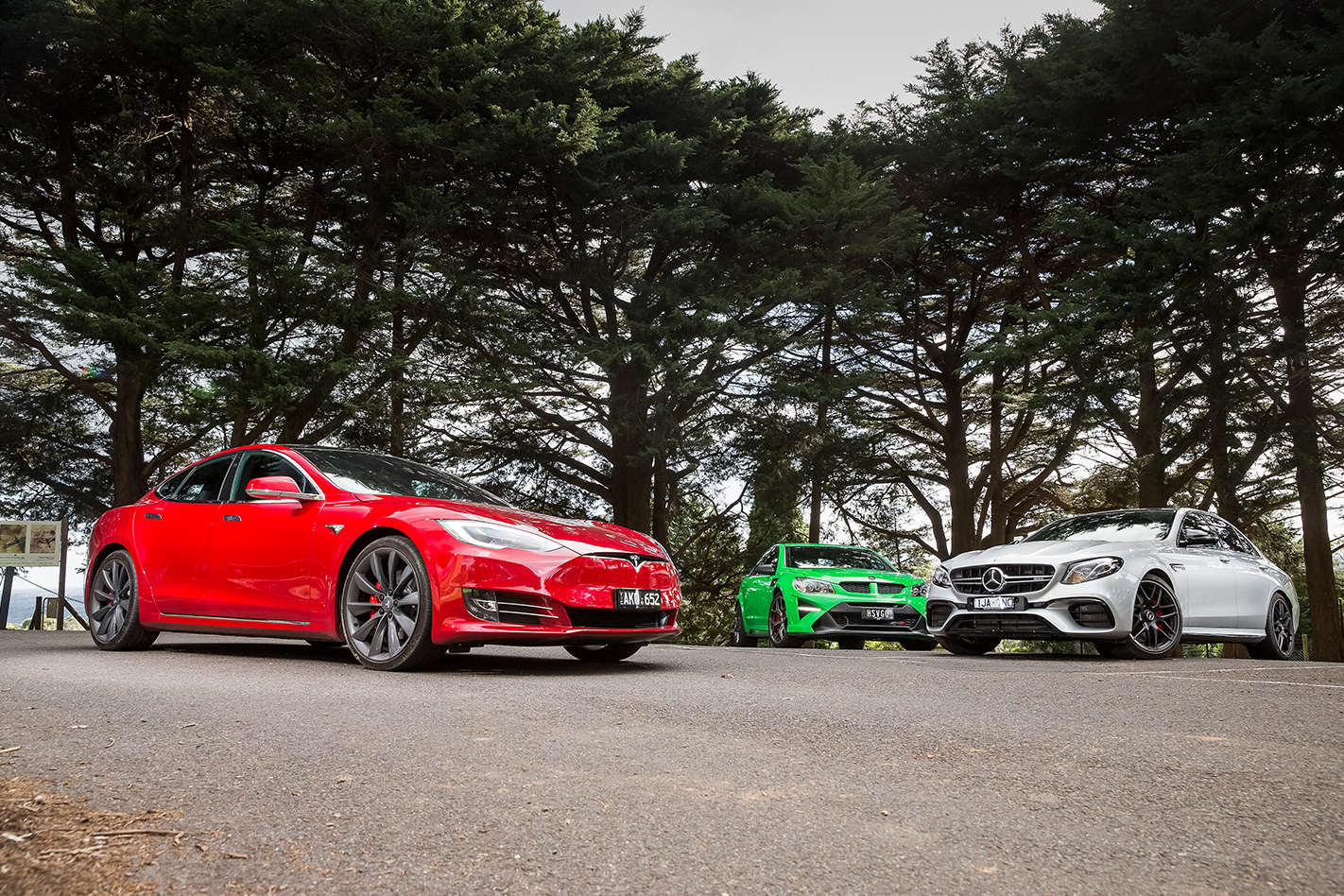
In each case, the method of generating startling figures and performance that used to be the preserve of vicious, compromised supercars is radically different in each case.
While the Merc and the HSV opt for good old fashioned internal combustion and forced induction, the Tesla shines a light into the future with a mammoth lithium-ion battery and a pair of electric motors.
The AMG and Tesla have automatic transmissions coupled to four wheel drive while the Aussie is a rear-drive manual. Both petrols use eight cylinders to generate more than 400kW, but one uses a supercharger and the other has a brace of turbochargers boosting a capacity that’s 2.2-litres smaller than its supercharged adversary.
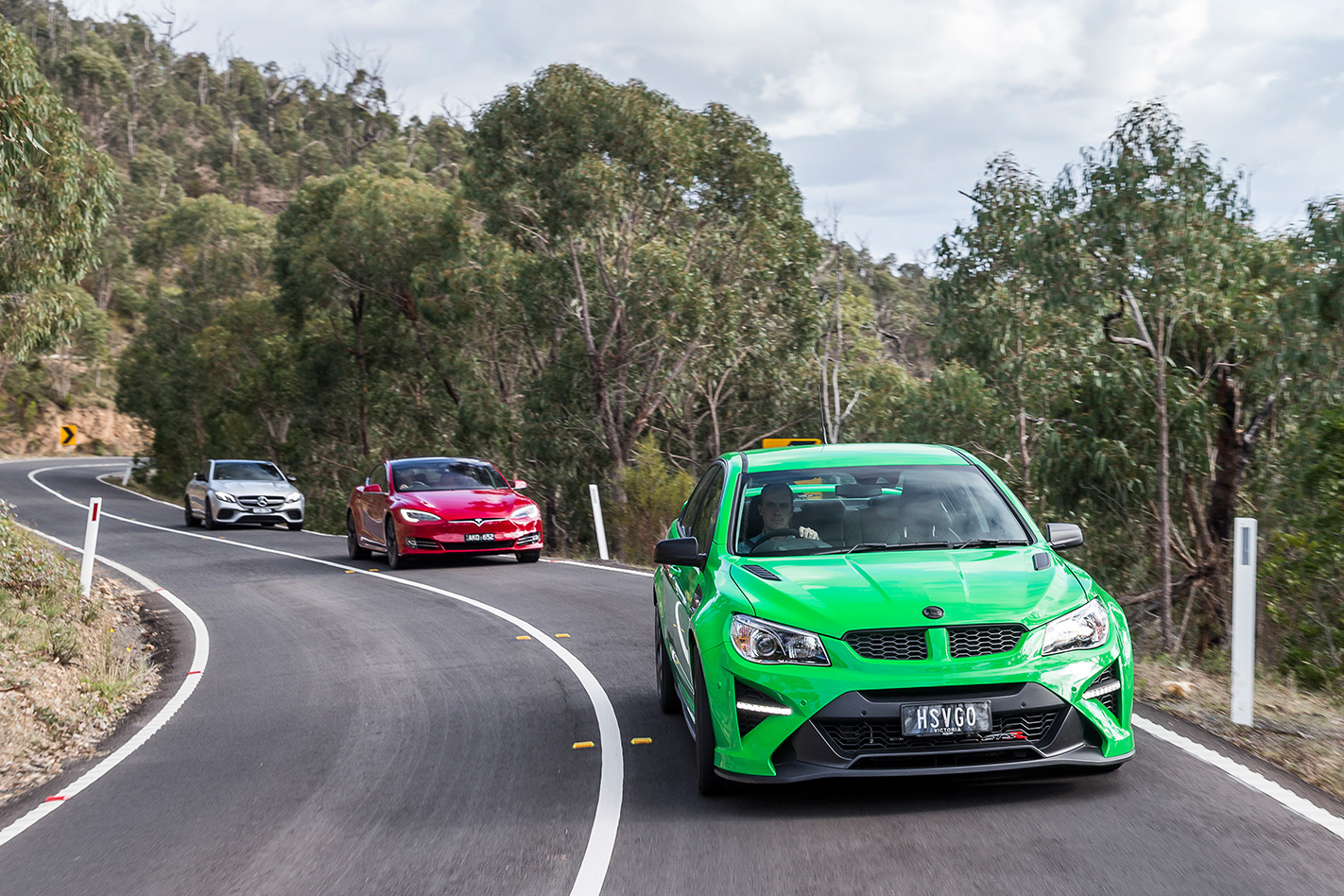
And let’s not even get started on the differences in patriotic pride and company culture.
Can three such wildly different, and yet so surprisingly similar cars be compared side-by side?
We pitched the trio of performance flagships against one another in an unapologetic and unprecedented festival of 1.3 megawatts and more than $650,000 of white hot metal.
Ricciardo holds off Hamilton for podium
Valtteri Bottas is proving to be more than a mere stopgap driver at Mercedes, the quiet Finn converting pole position into his second career win – and the Finn’s second win of the Formula 1 season – at the stunning Red Bull Ring.
After a perfect start which came under investigation by stewards, Bottas looked to be cruising to a comfortable victory in a somewhat uneventful Austrian Grand Prix when championship leader Sebastian Vettel’s Ferrari closed dramatically in the concluding laps, with the Mercedes struggling more on the blistering tyres affecting all the front runners.
Bottas won by a tight 0.6sec, thrusting himself into contention for the world championship.
“It’s been my best weekend yet with the pole and the win and I hope we can continue from here,” said Bottas. “The start was absolutely perfect – definitely my best start ever. I got a massive blister on the rear-left in the second stint after just five laps, which made the car tricky to drive.”
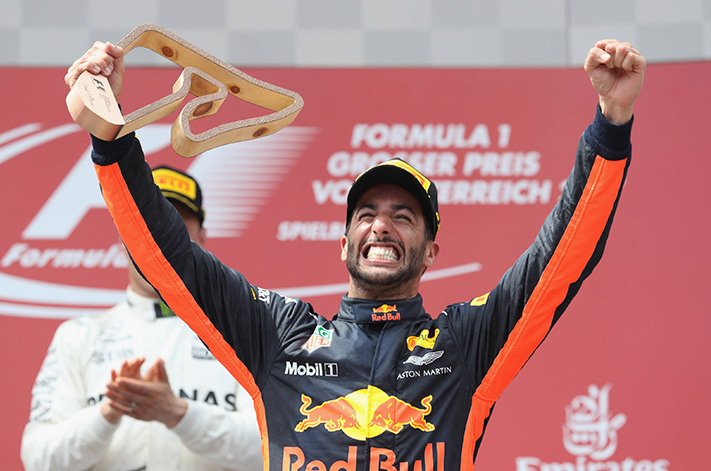
The Briton, who started eighth after a five-place grid penalty for a gearbox change, had revealed no great speed throughout but saved his best until last, drawing alongside the Aussie as the laps ran out.
Ricciardo was up for the challenge though and defended rigorously, as he reported later: “I do love a fight and Lewis came out of nowhere in the last few laps.”
“It felt like the gap was stable and then within a handful of laps he was catching me pretty rapidly. I then had two laps to go and had to defend which made it a pretty exciting race for me.”
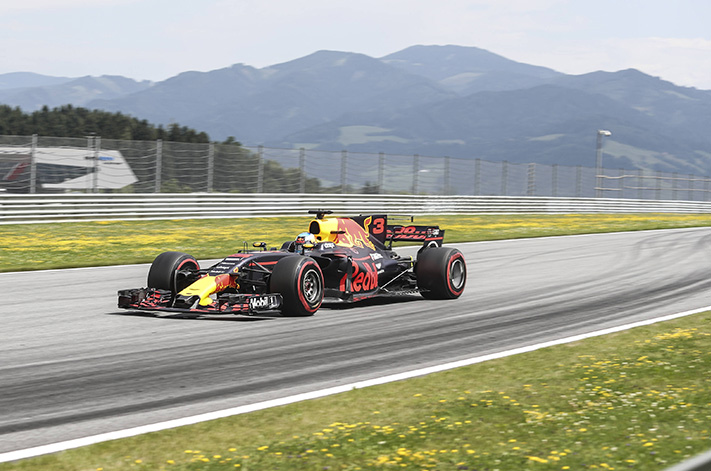
Ricciardo, who started fourth, set himself up for his fifth consecutive podium of 2017 with a strong start that left him in third after the first couple of corners behind Bottas and Vettel, but ahead of Ferrari’s Kimi Raikkonen and the jack rabbit Romain Grosjean’s Haas.
Red Bull teammate Max Verstappen had another miserable race after his car went into anti-stall mode on the grid which caused a slow getaway. This left him back with the muggers and brawlers where Daniil Kvyat’s ambitions exceeded ability and he slammed into Fernando Alonso who bounced into the Dutchman. He retired with what was believed to be a clutch problem, the fifth time in the last seven races Verstappen has failed to finish.
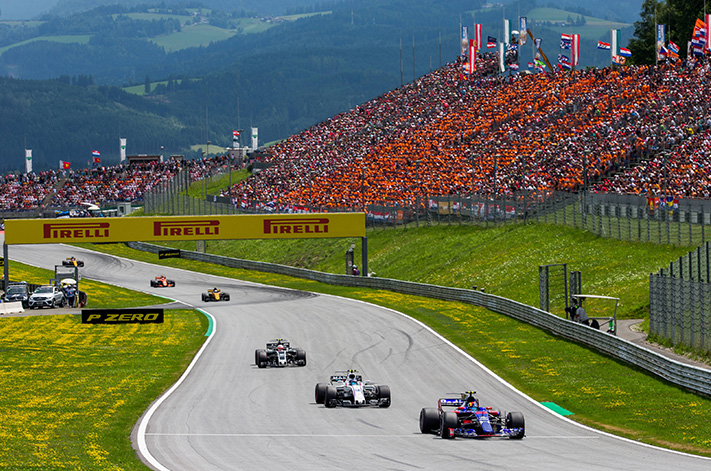
Raikkonen, who appeared to be sacrificed by Ferrari for strategic reasons to keep Mercedes second guessing, ultimately took fifth place. He was left out on old tyres to perhaps hold up the flying Bottas after the Finn switched to fresh rubber a few laps earlier.
Haas’s Grosjean also had a solid race to finish sixth ahead of the Force Indias of Sergio Perez and Esteban Ocon, who managed not to crash into each other.
Williams drivers Felipe Massa and Lance Stroll made excellent starts from way back in 17th and 18th on the grid, avoiding the first-lap carnage to round out the top 10.
The drivers’ championship is in an interesting stage now with Vettel’s second place stretching his lead over Hamilton to 20 points, with Bottas just 15 points further back from his teammate. Ricciardo is fourth but not really in contention.
Supercars: McLaughlin and Whincup take wins in Townsville
Now at half way in the series, they’re separated by a mere six points.
It was throwback, hard and intense Holden versus Ford racing at the sun-drenched Townsville 400 with the two brand adversaries sharing the spoils with a win apiece in the twin 200km contests at the weekend.
Shell DJR-Team Penske’s Scott McLaughlin continued his stunning form to take pole for both races, before hitting the championship lead for the first time in his young career after winning Saturday’s race 13 of the series held on the hybrid part street/part permanent circuit.
“It’s cool – I wish it was November but at the end of the day it’s one of those things,” McLaughlin said following his Saturday romp to the top of the title table.
“I have never led it in my life so it’s a pretty cool moment I guess, but there’s a long way to go.”
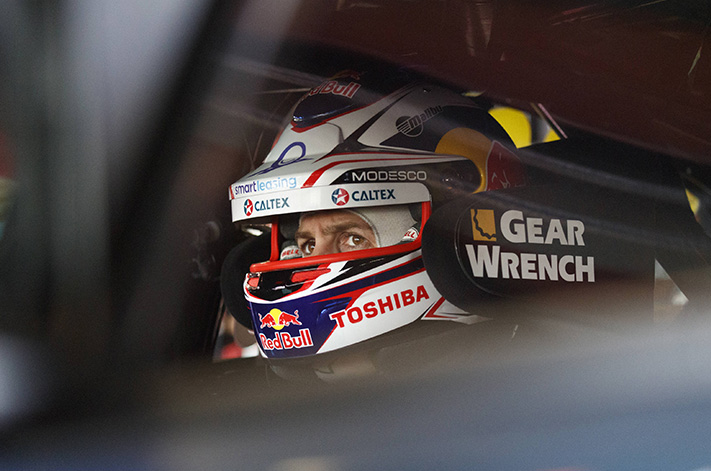
Sunday was memorable for six-times champ Whincup winning his first championship race of the year after coming out on top of McLaughlin in a tight, pressure-filled duel that ended at the flag with the two rivals separated by just 1.6secs. McLaughin had to deal with a malfunctioning cool suit which left him feeling the full-effects of searing in-car temperatures. In the circumstances the youngster seemed content to finish second and hang on to the championship points lead.
Shane van Gisbergen overcame a sluggish start to power home in third, ahead of Winterbottom and Prodrive teammate, Chaz Mostert, and the forceful GRM Holden pair Garth Tander and James Moffat.
SuperUtes race series to hit the track in 2018
It was just the second time this year that Advance Australia fair was given an airing in a Supercars championship season in which the kiwi goers McLaughlin, Fabian Coulthard and Shane van Gisbergen have upstaged the Aussie drivers with a lopsided 12-2 scoreline.
It’s game on with McLaughlin holding a slender six-points advantage over the persistent, consistent Whincup with the Queensland Raceway round up next.
“I definitely feel like we’ve made gains,” said the delighted Whincup responding to a question about comparing the race pace of his Holden with the DJR Penske Fords. “Though they busted us in qualifying, I definitely think we’ve bridged the gap,” was his judgement.
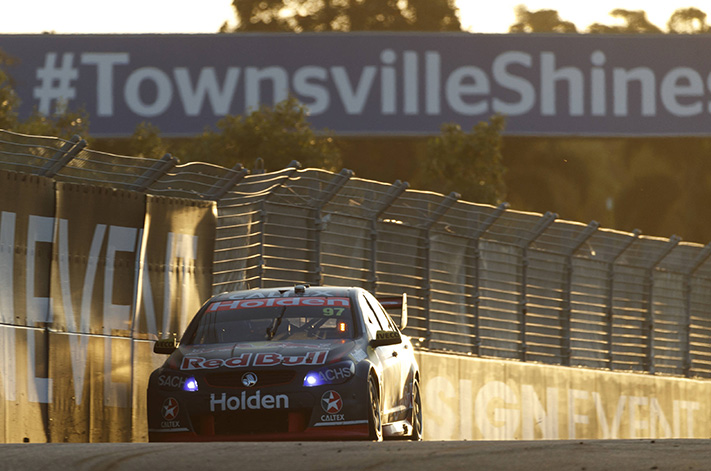
“It’s going to be a long old grind for the next six months ’til Newcastle but we’re up for the challenge and will keep our heads down,” Whincup added. Not that we ever doubted the resolve of he and the Triple Eight clan.
The weekend’s unlucky big loser was DJR-Team Penske’s Coulthard who arrived in Townsville with a 10-points lead and departed third in the standings, 158 points in arrears.
He can point the finger at his poor qualifying pace, starting back in a world of trouble both days – ninth on Saturday and 12th Sunday. He went backwards on both days too, with a little help from adversaries in the first race, finishing 11th, and an own goal on Sunday when he turned around Tim Slade and was crucified with a 15-sec penalty, ultimately placing 21st.
Though he has slipped back in the points, Coulthard can remind himself that the championship is only at the half-way mark.
Kubica to test for Renault Sport again
It may hint at a F1 return for the talented Pole. Or not.
It’s hard to judge whether this is a sympathy move by Renault Sport or else a real indicator that Robert Kubica is ready for a full-time return to Formula 1…
Renault Sport has confirmed that Kubica, whose F1 career was cruelly cut short when he badly injured his right arm in a rally crash five years ago, will have a second test with the team soon – in the same Lotus E20 in which he looked good at Valencia a few weeks ago.
Renault Sport’s recent announcement of a second test and Kubica’s comments at the recent Goodwood Festival of Speed (that he figured his chances of an F1 comeback at “80 to 90 percent”) have ramped up speculation that a return to grand prix racing is more than a dream.
Renault team principal Cyril Abiteboul said in a statement that the coming test, this one at Paul Ricard, is to assess Kubica’s capabilities to return to the highest level of competition.
“There are still many hurdles for him to overcome, and he knows better than anyone else that only his performance will determine if he can one day return to being a professional driver,” Abiteboul added. One such obstacle is Kubica’s ability to pass the obligatory cockpit evacuation test within the specified five seconds, a challenge given the weakness and limited movement of his right arm.
After his Valencia test, Kubica spent time with Renault’s nominated sports performance centre having his physical and mental capabilities thoroughly tested and compared to the database of current drivers.
If the second test is positive, Kubica will then likely drive a current F1 Renault R17 hybrid.
By then, Kubica and the world should know if the comeback is really on.
Watching Kubica eating breakfast during Rally Australia two years ago, Wheels was surprised at how compromised the Pole was using the cutlery. If he makes it back to F1, it will be a Herculean achievement.
One-make racing: Aussie Matt Campbell wins Supercup in Austria
Hill clean-sweeps Toyota 86 Series in Townsville where speccy flip makes the news
Australia’s rising star Matt Campbell, so impressive in earlier outings in Europe, has confirmed his status as a driver to watch, taking out the Porsche Supercup race at the Red Bull Ring.
The race, on the support card of the Austrian Grand Prix, was Campbell’s first win in the series.
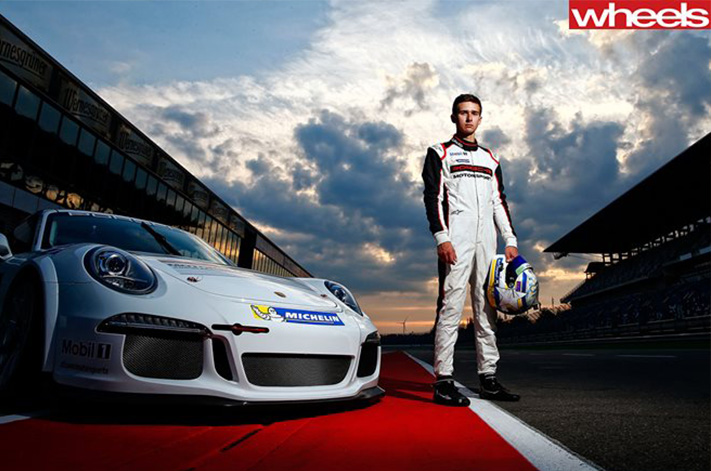
Campbell controlled the race from pole, making an excellent start.
His was the first win by an Australian driver in the Supercup since Alex Davison triumphed in the US round in 2002.
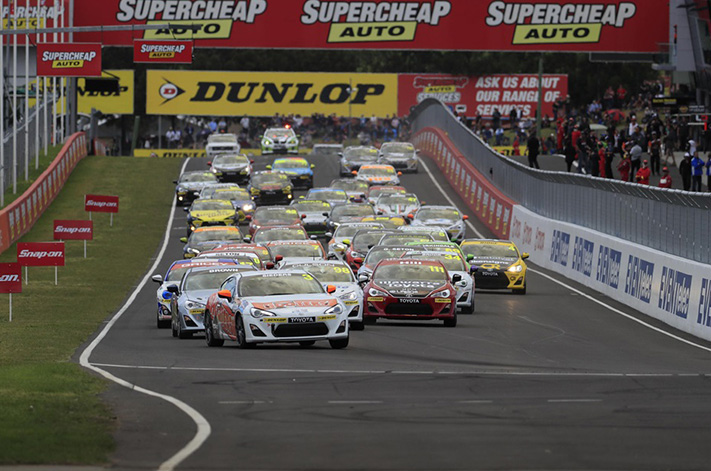
Three races were scheduled but the second one was red-flagged and declared a no-race after a multi-car shunt on turn two on the first lap blocked the track.
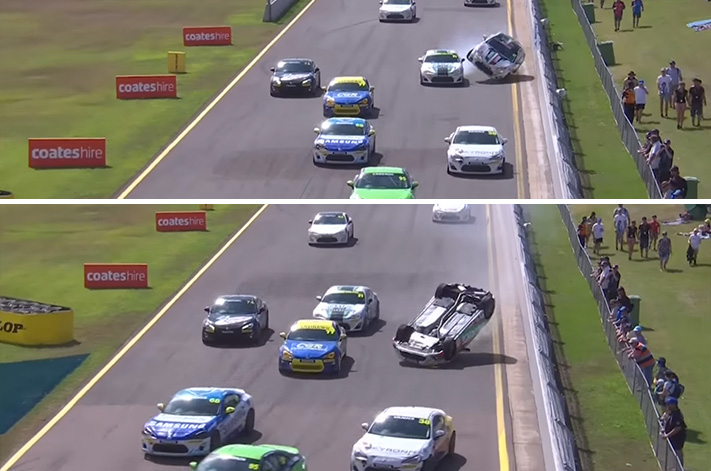
When the lights went out in race three, Hill, championship leader Jimmy Vernon, Tim Brook, and Ben Grice began to extend a lead over the chasing pack. Then came a lurid incident on lap four when Callum Jones’ car flipped, sliding spectacularly along the track on its roof, triggering a safety car and earning him 10 seconds of fame on the six o’clock news.
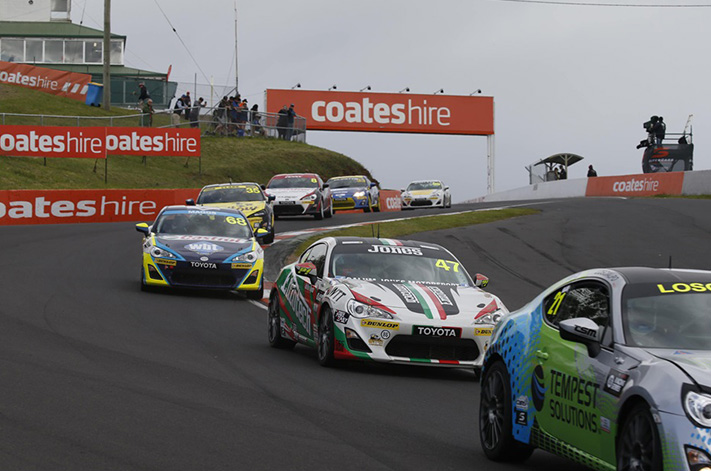
Vernon continues to lead the series.
What’s in a name?
McLaren is fairly adamant its 570S is not a supercar. As a member of McLaren’s ‘entry level’ Sports Series range, the 570S is instead a sports car, the supercar label reserved for Woking’s Super Series models like the new 720S.
The key differentiator between the two is the 570S, along with its 540C and 570GT siblings, was developed with driver involvement rather than sheer pace as the highest priority.
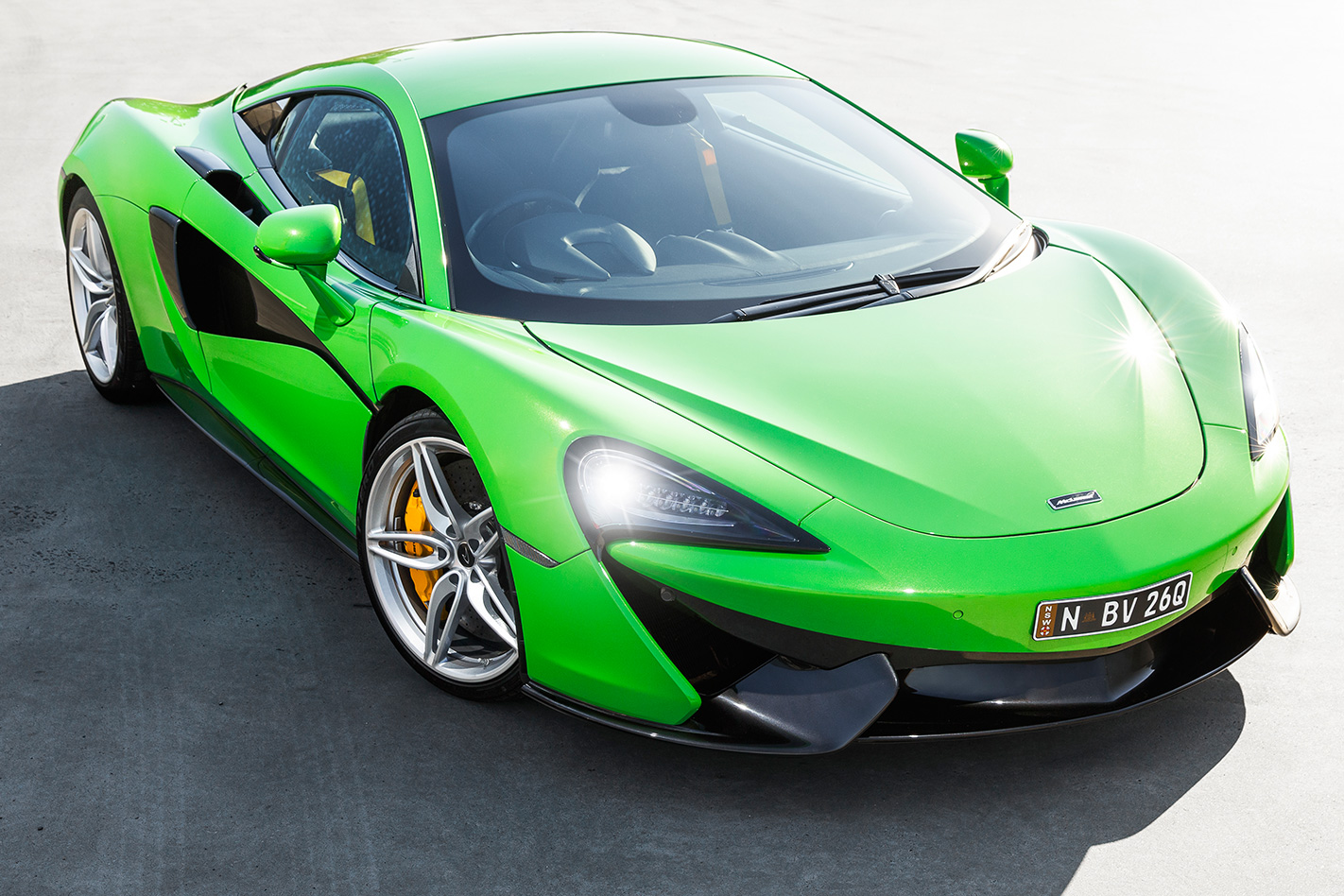
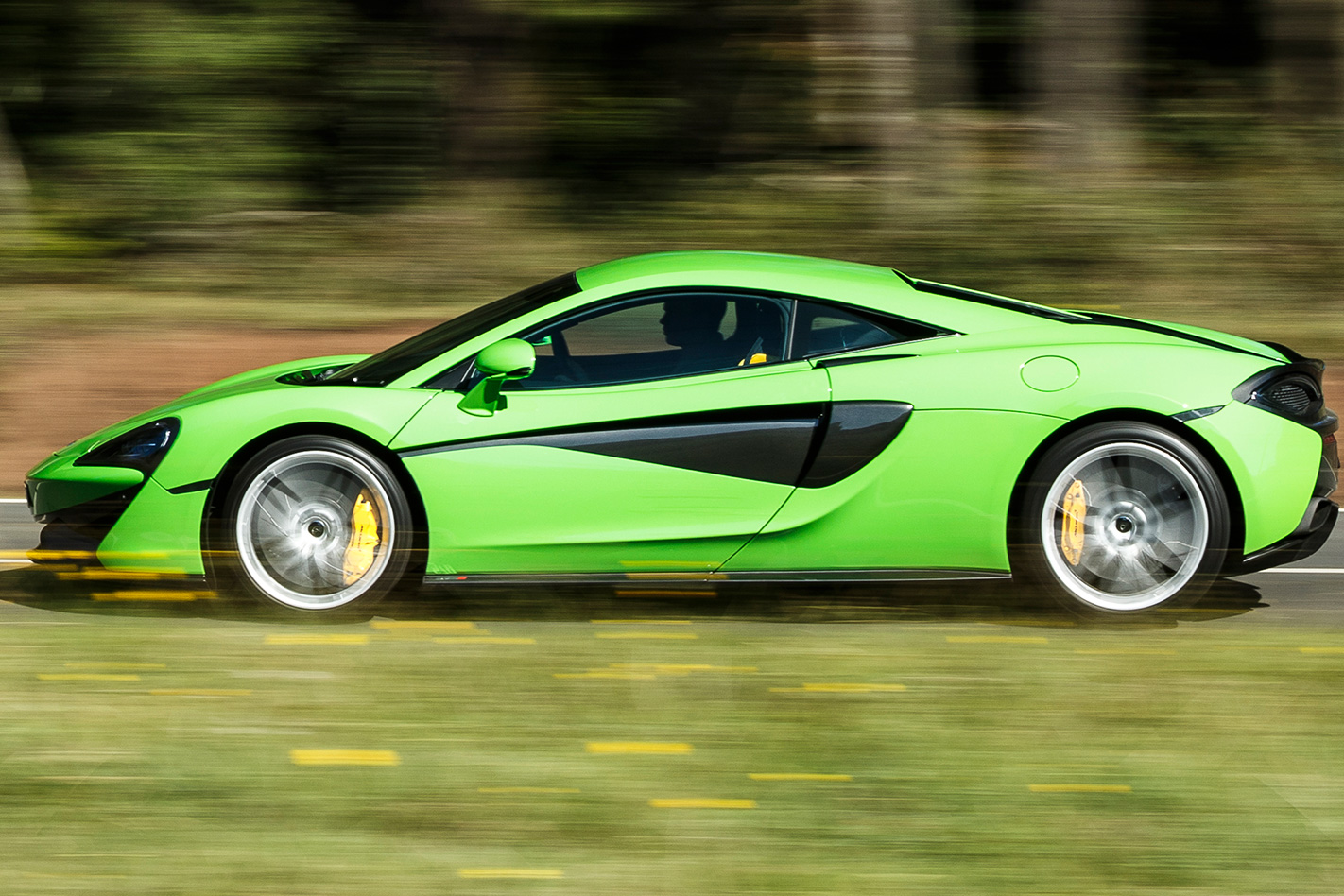
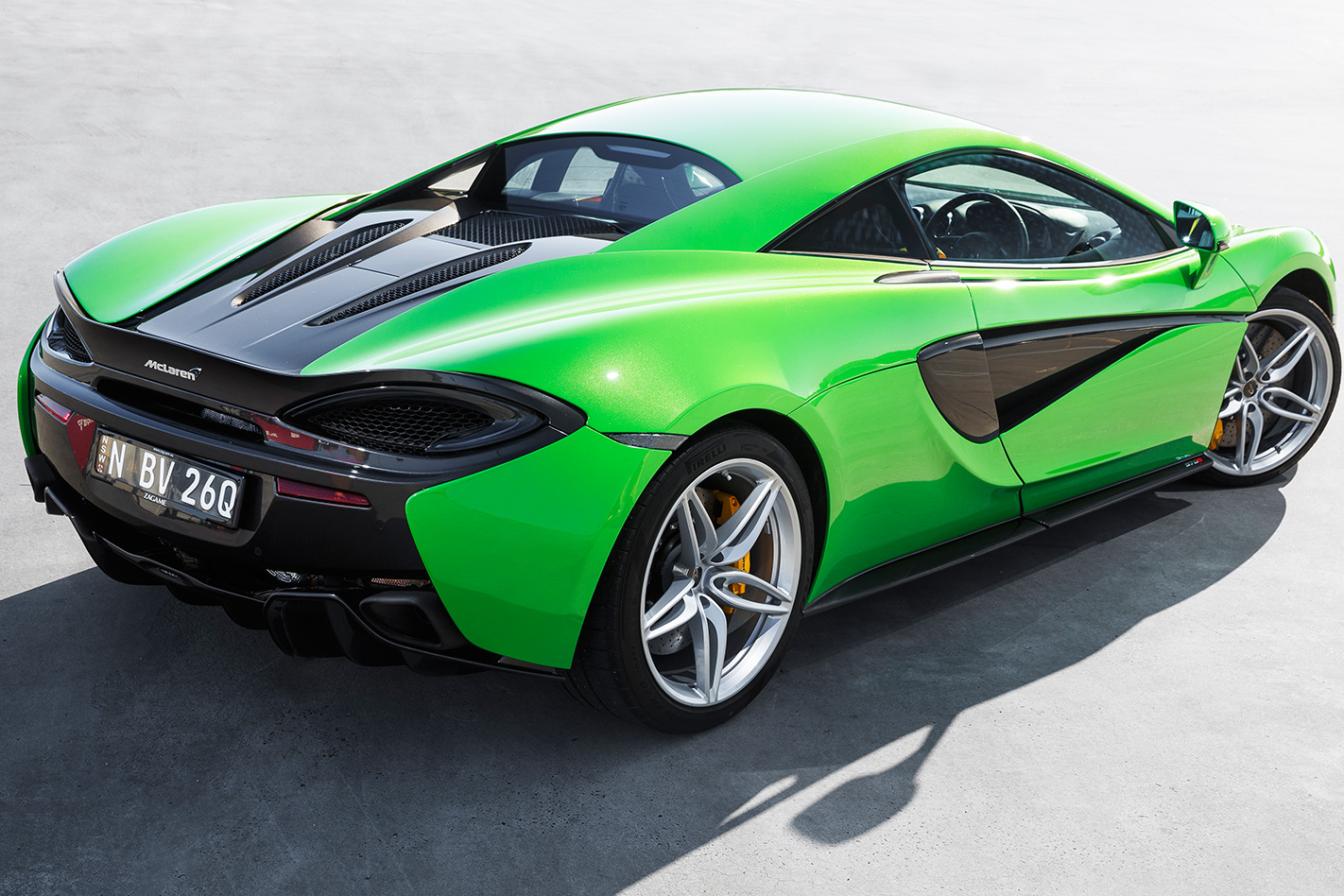
The 570S certainly looks exotic enough, the prototypical mid-engined layout resulting in a low, wide wedge-shaped body.
Its presence is helped by the Mantis Green elite paint job, however, even in a more sombre shade the upward-opening dihedral doors guarantee heads will turn.
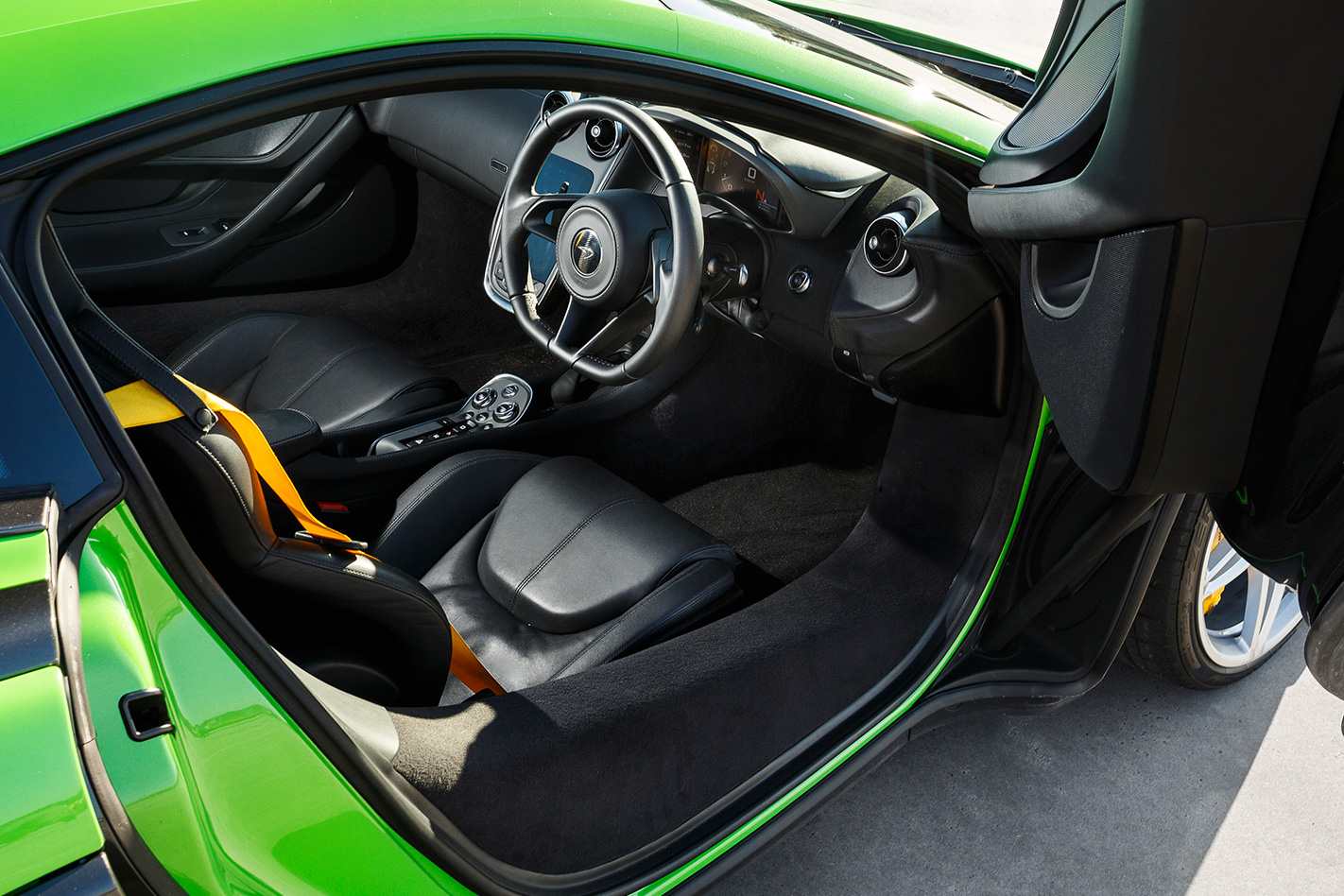
Unusually, given the typically loaded specification of test cars, our 570S had a virtually standard interior.
McLaren boss Zak Brown’s amazing car collection
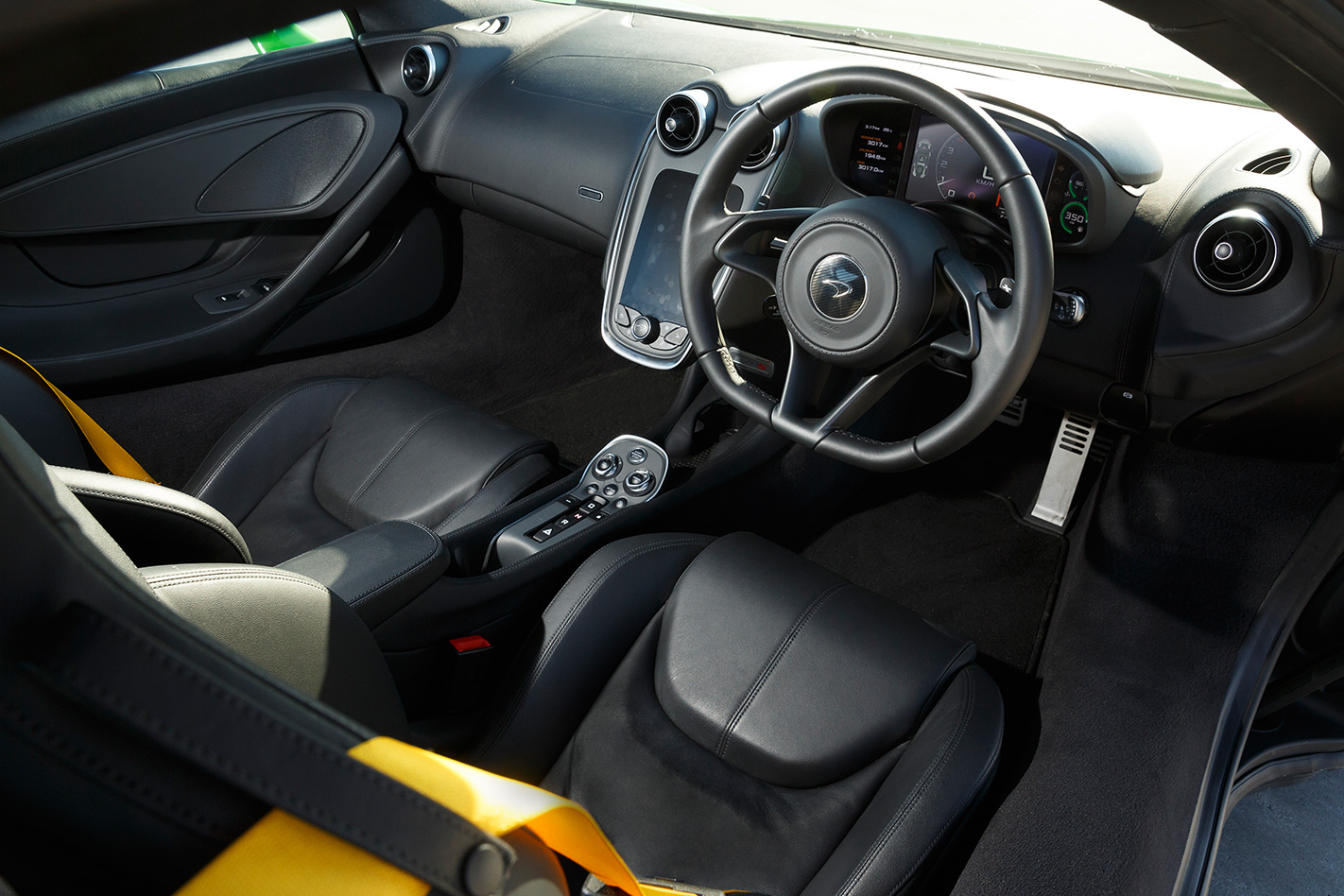
Almost uniform in its blackness, the unkind would call it dull, though some contrast stitching and selective use of carbon fibre would improve it no end, something easily achieved via McLaren’s extensive options list.
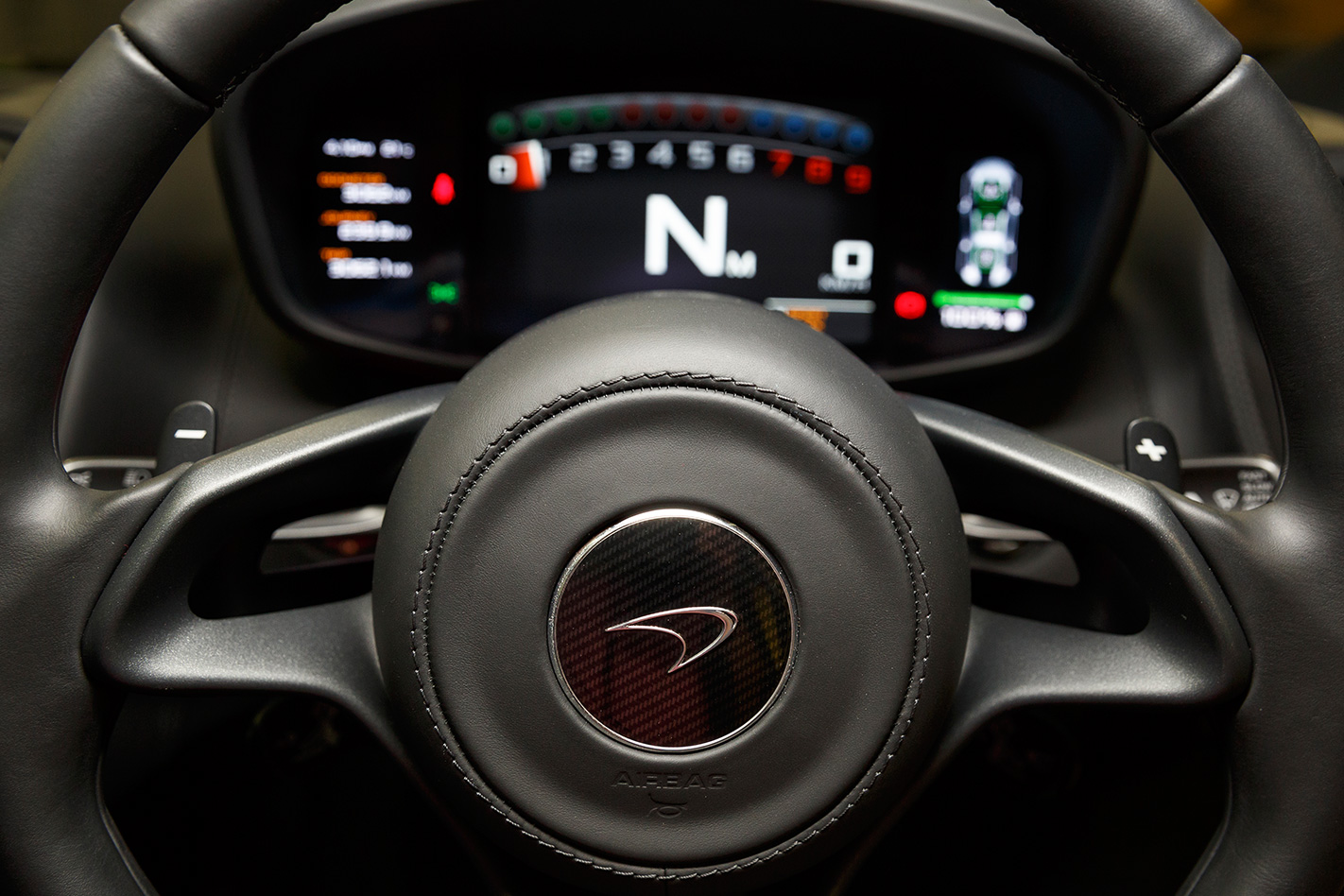
The graphics for the IRIS infotainment system may not be cutting edge, but it works reasonably intuitively and there are a number of small details that hint at both McLaren’s racing heritage and its impressive attention to detail.
The figure displayed on the HVAC screen is wearing a helmet, for instance, and the ‘ESP off’ light is a tiny McLaren rather than a generic car.
A press of the centre console-mounted starter button fires the 3.8-litre twin-turbo V8 into life. It wakes with a bark before settling into the raucous buzz typical of a flat-plane bent-eight.
Quite a lot of throttle is needed for the seven-speed ‘seamless shift’ dual-clutch gearbox to engage and take-offs can be juddery unless you’re decisive with the accelerator, but once up to speed the shifts slip through unobtrusively.

Oddly, flicking the switches does nothing until you press the ‘Active’ button between them. On the one hand it makes switching between calm and crazy a breeze, but the ease with which settings can be adjusted does make it seem rather redundant.
In its quietest settings the 570S is an undemanding everyday accomplice.

The steering is light and throttle response dulled almost to the point of stupor – the days of poor-mannered exotics are definitely behind us.
McLaren: F1 woes won’t affect road car sales
It doesn’t take long for curiosity to initiate switching the powertrain to Sport and the right foot to meet the floor.
Even the very best turbo engines need a moment to literally take a breath, but the resulting acceleration is intimidating in its intensity.
At full noise its pace verges on uncomfortable; on paper it’s the fastest car in its segment and it puts a physical strain on your neck under acceleration.
9 weird and wonderful interiors
Built by British engineering specialists Ricardo, the engine isn’t evocative in the same manner as a Lamborghini V10, but it sounds and feels like a race engine, with a hard-edged growl as revs build and a massively broad spread of power, right to the 8500rpm redline. The gearbox feels similarly focused.
Its programming in auto mode is top-notch, instantly grabbing lower gears as soon as substantial brake pressure is applied, while manual shifts are instant.
Given the 570S feeds its enormous power through just the rear wheels, thankfully the chassis is also up to task.
It’s inherently friendly, especially with heat in the Pirelli P Zero Corsa rubber, though a spike of boost at the wrong time can catch you out.
Thankfully the Track ESP setting is brilliantly calibrated, allowing the car to slide under power – there’s no limited-slip diff, however, McLaren’s Brake Steer system is every bit as effective – while still keeping a watchful eye on proceedings.
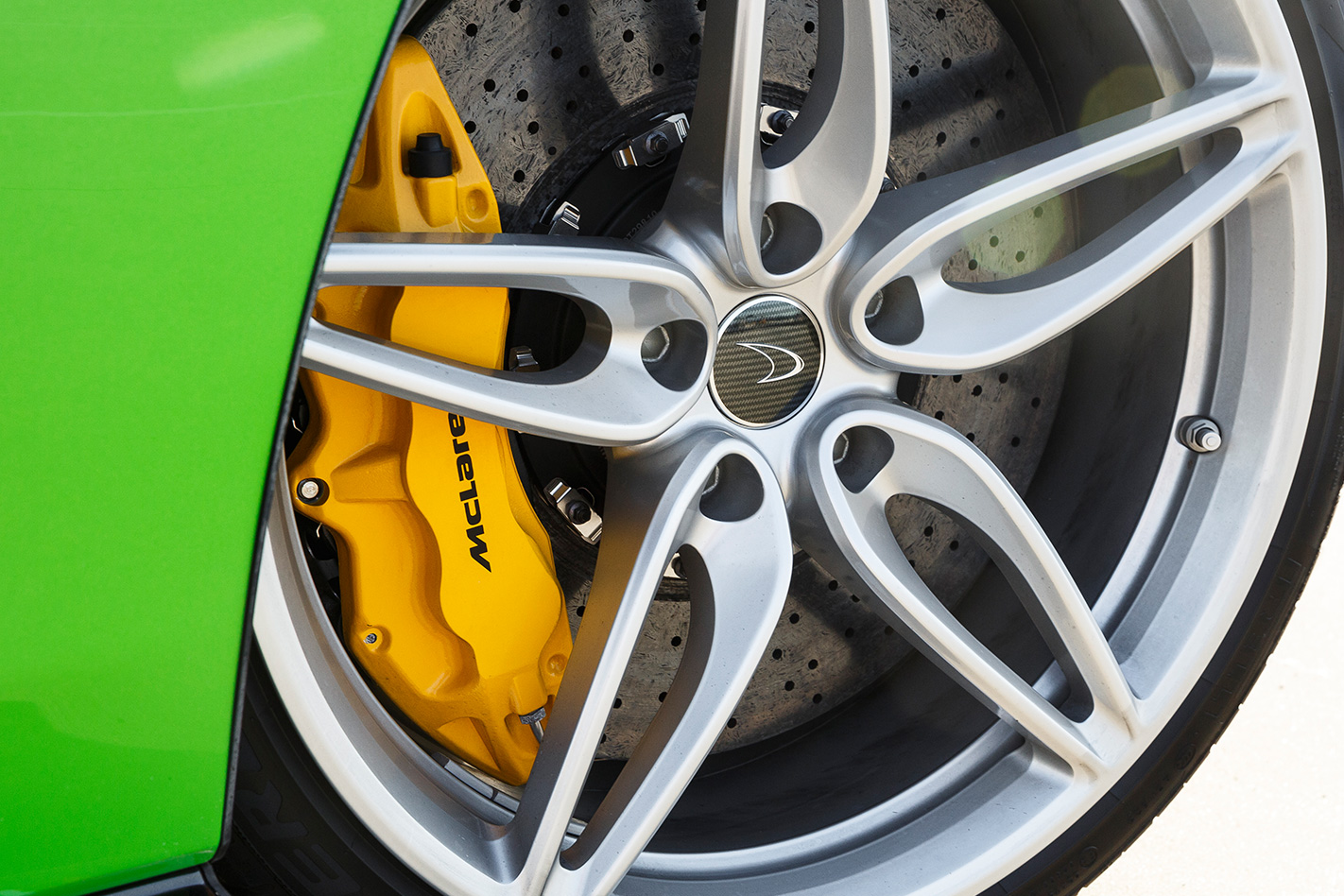
The brakes are sublime; there’s little assistance so they need a firm push to give their best, yet they are so progressive it’s like applying your foot directly to the carbon-ceramic disc.
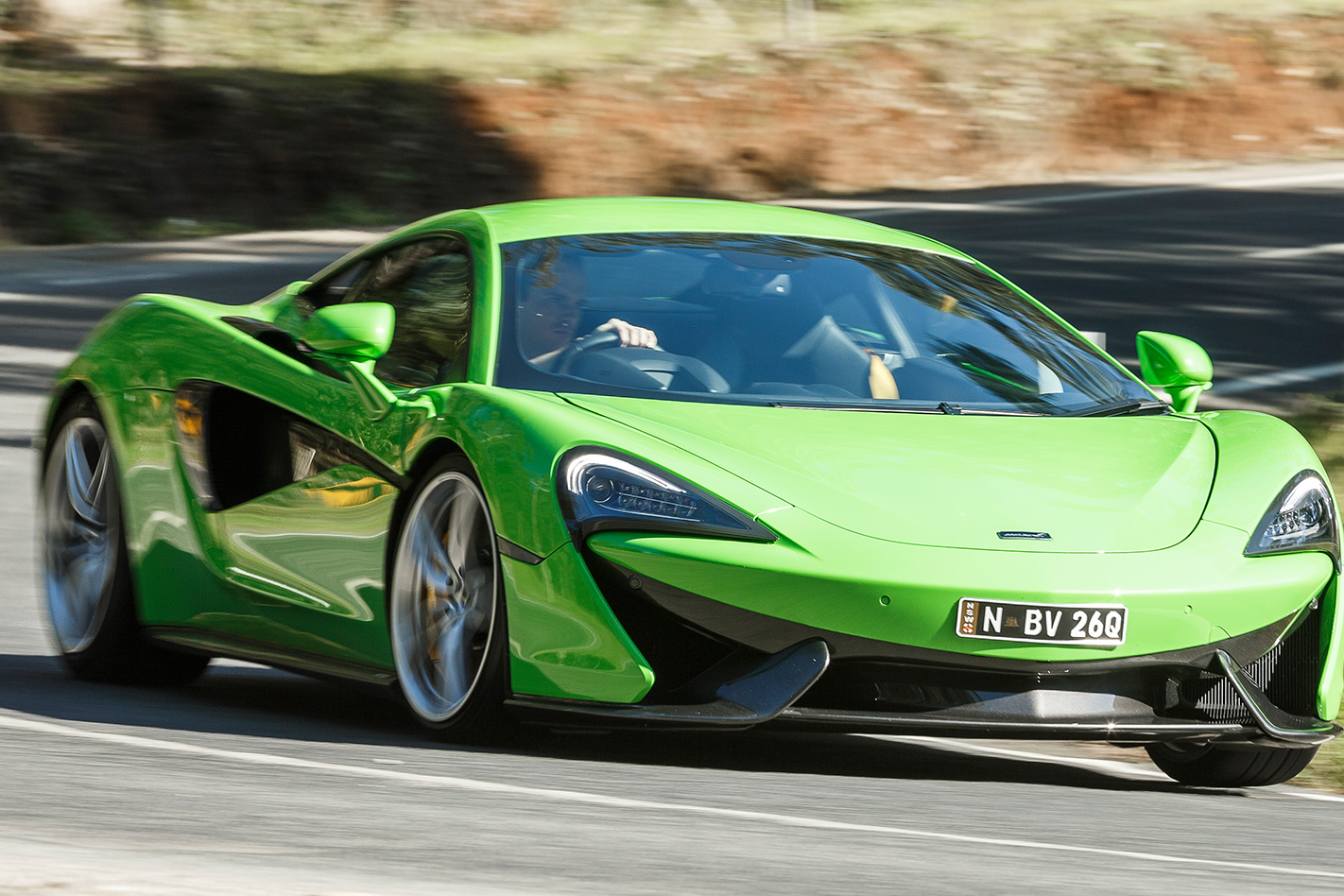
Outright pace is staggering, but your typical bumpy Aussie back road does trip the 570S up somewhat.
McLaren P1 LM sets new Nurburgring lap record
In order to relax the ESP the chassis needs to be in Sport, which stiffens the dampers and has the car skipping over bumps and sending kickback through the steering wheel.
Initially there doesn’t seem to be much front-end communication either, though relaxing your grip and just guiding the car with your fingertips improves matters.
Some of this may seem like nitpicking, but this is an incredibly competitive segment packed with amazing cars. The McLaren 570S is right up there while occupying its own niche.
It’s rawer and more exciting than a 911 Turbo without being as flamboyantly theatrical as a Lamborghini Huracan. There are a couple of ergonomic quirks that need ironing out, but its performance and dynamics are generally top-notch and you can feel McLaren’s motorsport heritage in its DNA.
The 570S may not be a supercar, but it is a super car.
4.5 out of 5 Likes: Crazy speed; entertaining handling Dislikes: Lacks a little compliance; ergonomic quirksSpecs: Engine: 3799cc V8, DOHV, 32v, twin-turbo Power: 419kW @ 7500rpm Torque: 600Nm @ 3500rpm Weight: 1440kg 0-100km/h: 3.2sec (claimed) Price: $379,000
What is it?
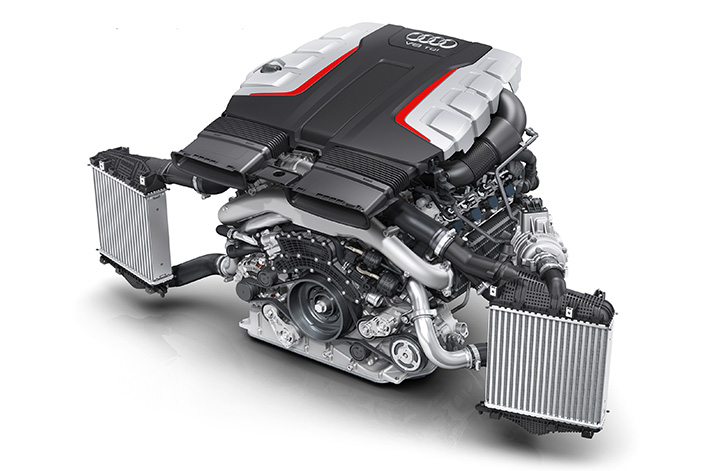
A forced-induction device that generates boost with a centrifugal compressor, like a turbocharger, but whereas the turbo uses a turbine in the exhaust to drive the compressor’s impeller, the electric-powered compressor (EPC), as Audi calls it, uses a sophisticated high-power electric motor.
Audi and Bentley already have the device in service under the bonnets of the SQ7 and Bentayga V8 diesel SUVs, while Mercedes-Benz will be next to incorporate this new tech, applied to a six-cylinder petrol, so expect to see more of the electric snail.
Just don’t call it an electric turbo. The absence of a turbine at the opposite end of the centrifugal impeller makes the ‘turbo’ name inaccurate.
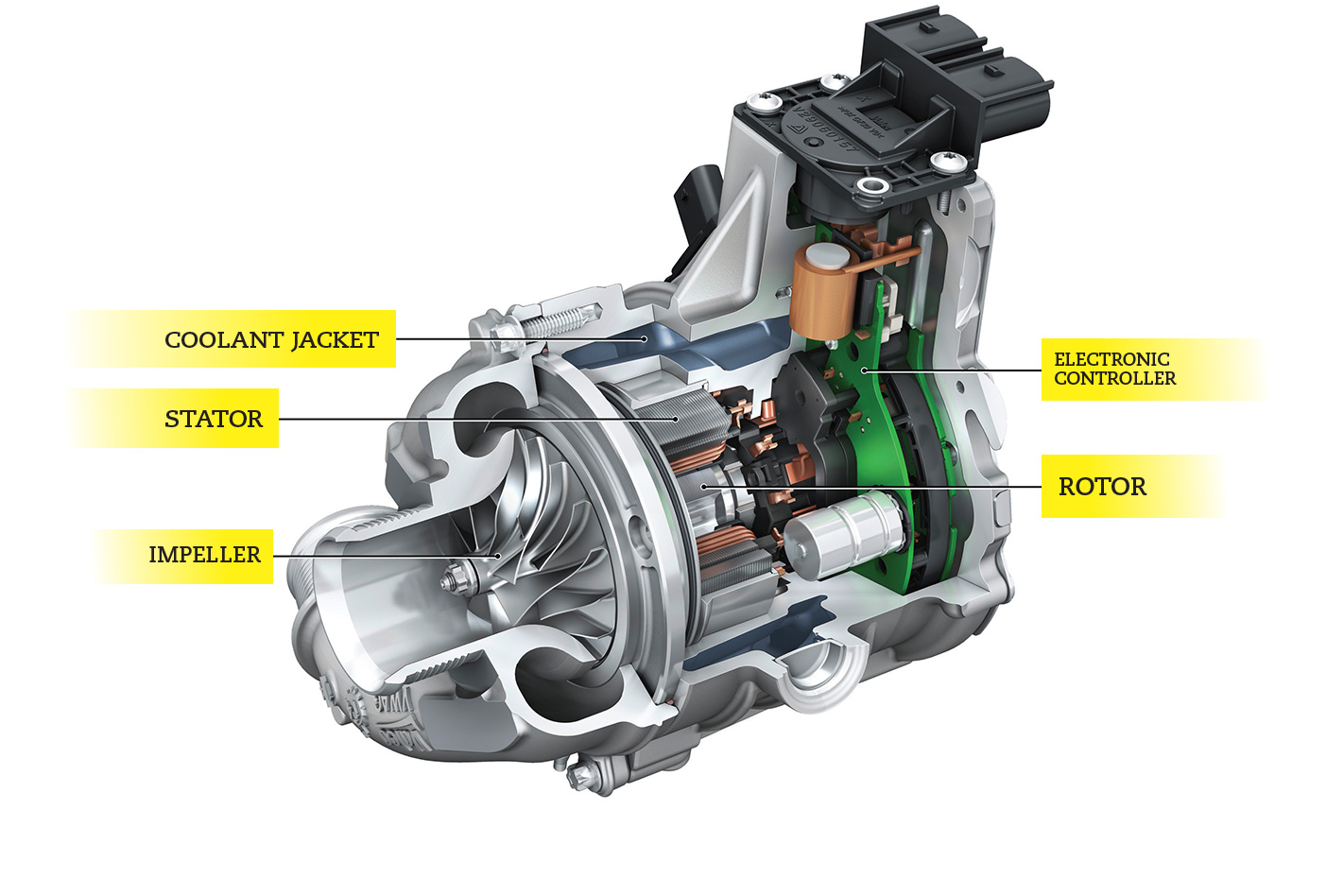
How does 900Nm at just 1000rpm sound? In the Audi and Bentley applications, the electric-powered compressor works in partnership with two conventional turbochargers.
Before the engine reaches the threshold revs needed for the exhaust-driven turbos to generate boost, the compressor is busy applying pressure thanks to its near-instant responsiveness.
Once the turbos are operating in their peak efficiency zone, the electric compressor reverts to standby, allowing its 48-volt battery to recharge.
Without a dependence on exhaust gases to drive the compressor, the electric compressor can be located just about anywhere under the bonnet.
Downsides? Under the current arrangement, the EPC cannot run continuously or it will quickly drain the 48-volt battery pack, so the set-up relies on a partnership with good old turbos for now.
How does it work?
At peak boost a typical turbocharger is capable of pumping around 170 litres of air per second, which requires a serious amount of energy.
For turbochargers, the waste energy in a combustion engine’s exhaust is the perfect source; however the electric motor’s appetite for an equivalent amount of power would easily overwhelm a conventional 12-volt system.
To meet the electrical demand, a special 48-volt sub-system is employed. The separate battery is topped up gradually from the 12-volt system via a converter and, just like an electric vehicle’s battery, the higher voltage unit can dispense energy faster than a regular car battery.
The 48V system has the grunt to spin the electric powered compressor to maximum boost in just 250 milliseconds.
First Seen?
Audi’s initial reveal of this technology came with the 2012 A7 iHEV protoype. In 2014, the RS5 TDI concept and the R18 e-tron quattro racer further refined the electric compressor tech.