
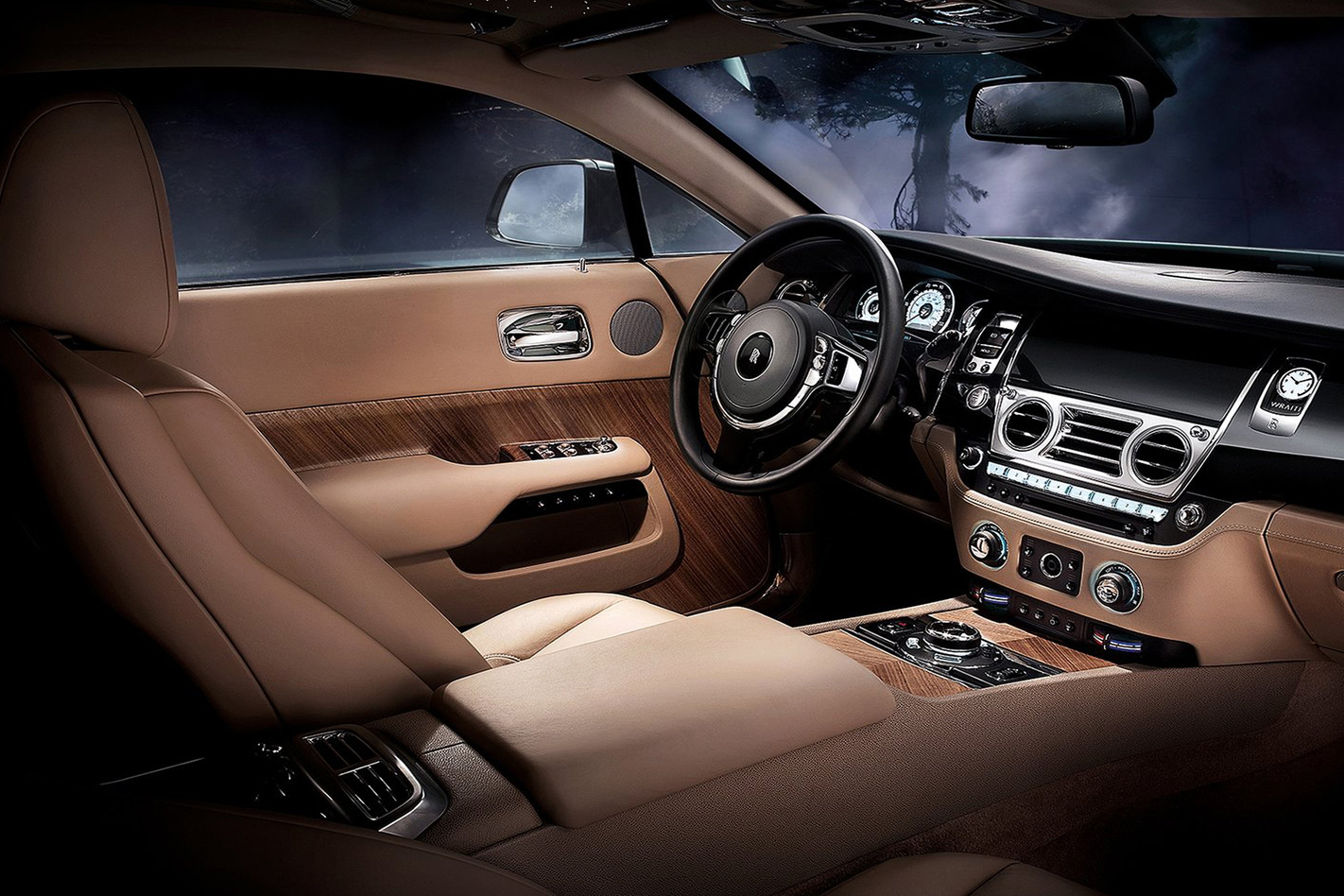
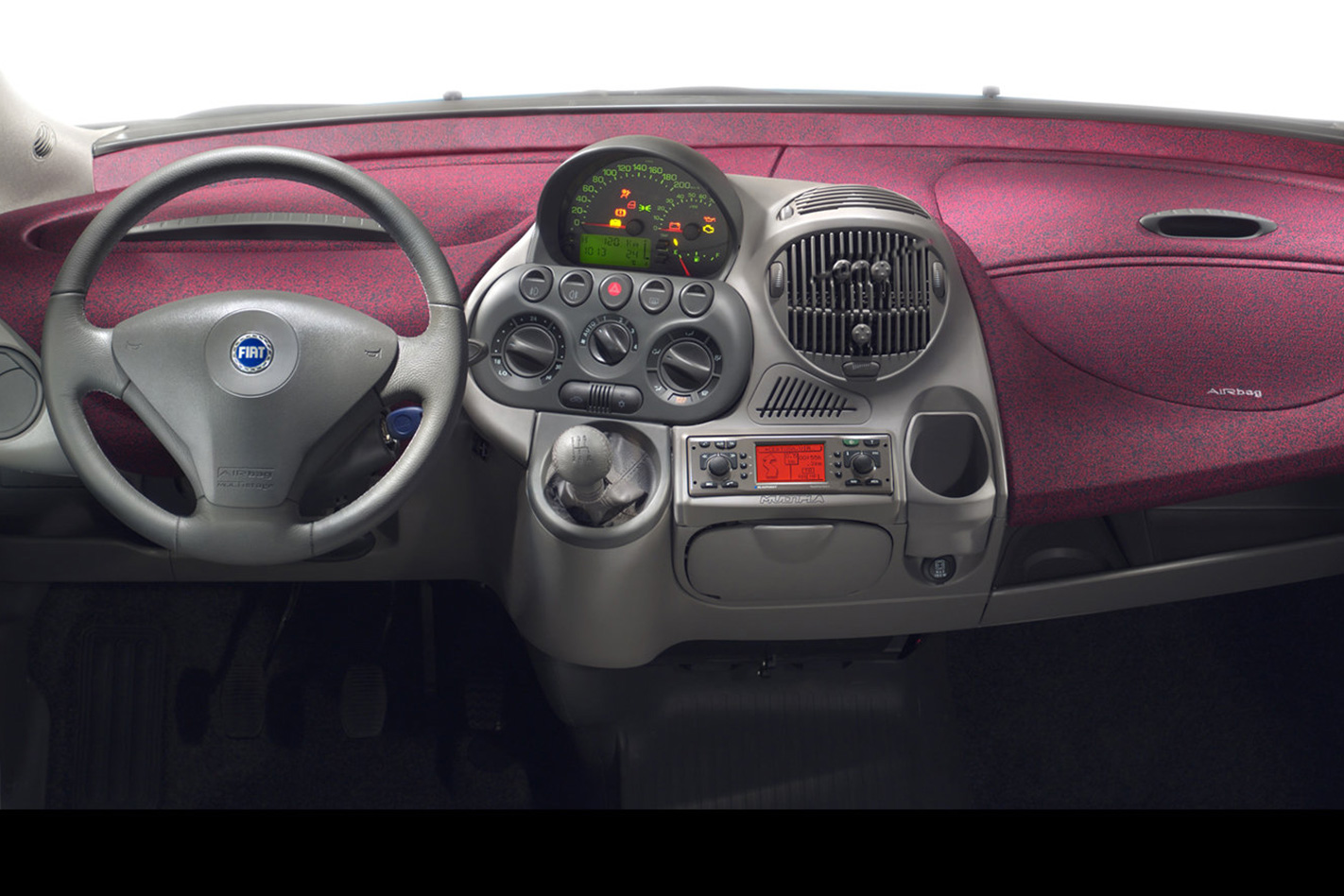
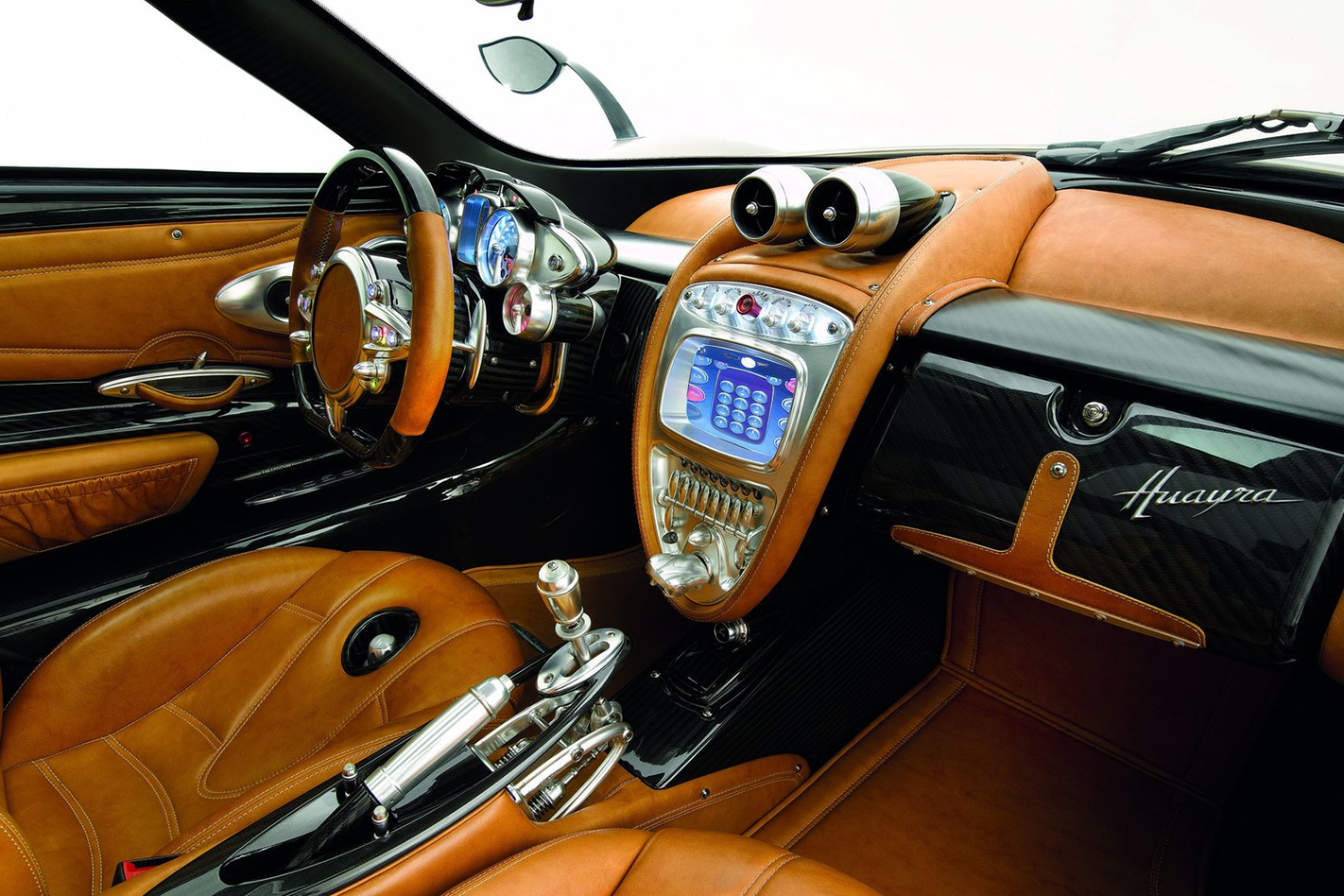
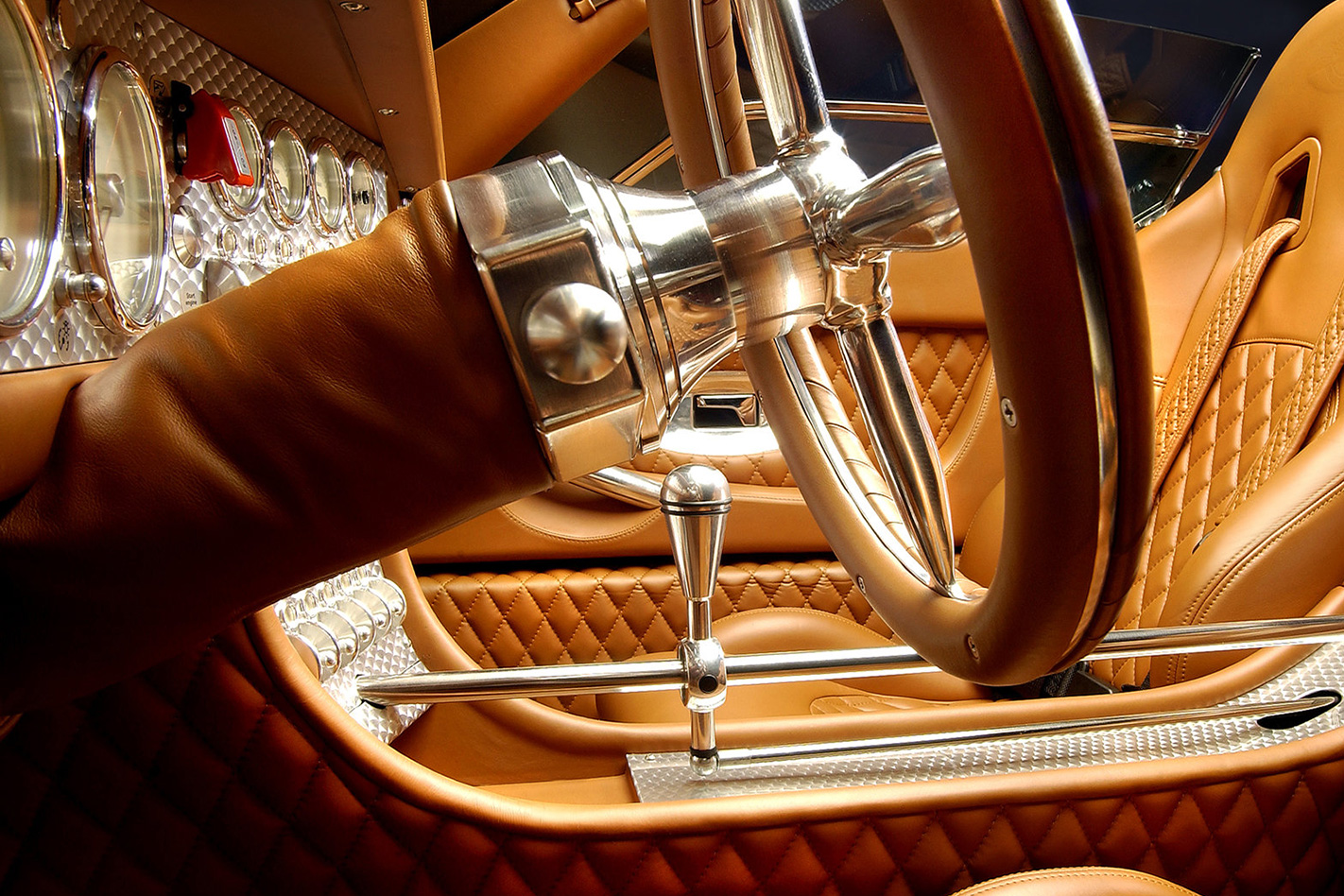
The cabin space of a car is where you’ll spend a fair chunk of time, so here are some of the best and worst, or most memorable interiors we’ve seen:
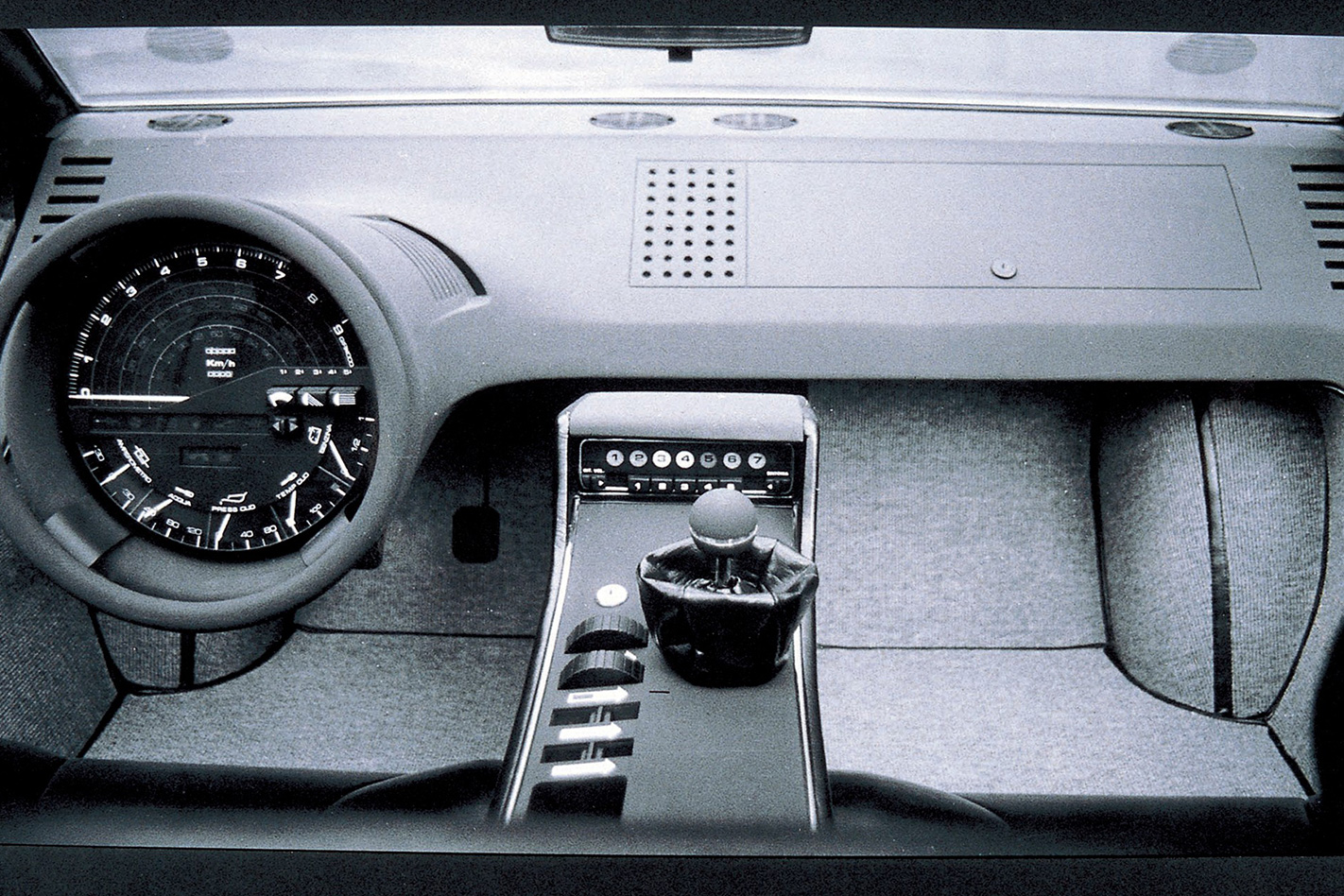
1. Maserati Boomerang Concept Surprisingly this 1971 Turin motor show concept that smattered gauges and headlight switches inside an enormous wheel rim didn’t make it to Maserati’s Bora production car. The jet-engine-style metal pod behind it may not have scored highly with ANCAP either.
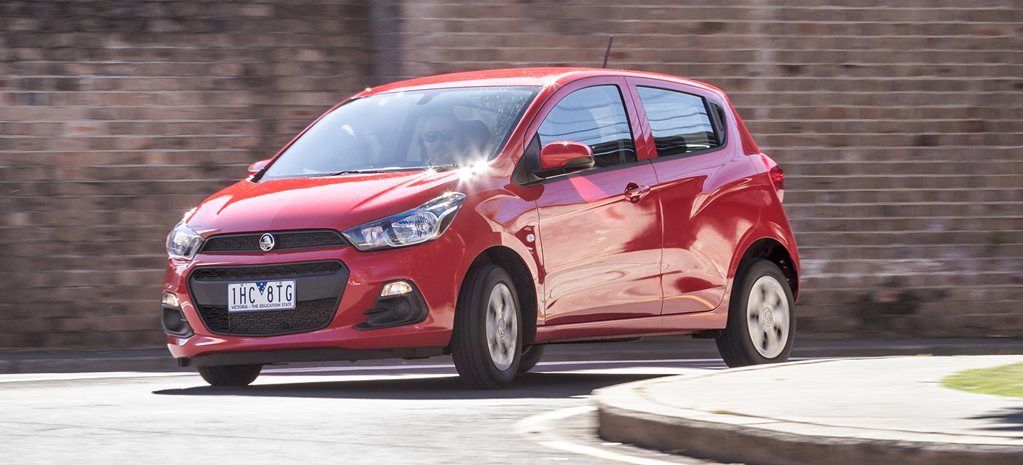
Having been slightly underwhelmed by the CVT-equipped Spark LT wearing 16-inch alloys in our three-car comparison, I thought I’d take a punt on the simple pleasures of a base LS with 14-inch wheels, a five-speed manual and an RRP of just $13,990.
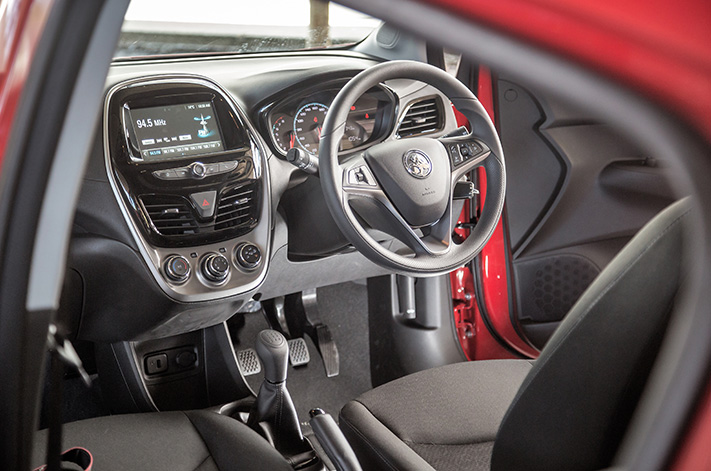
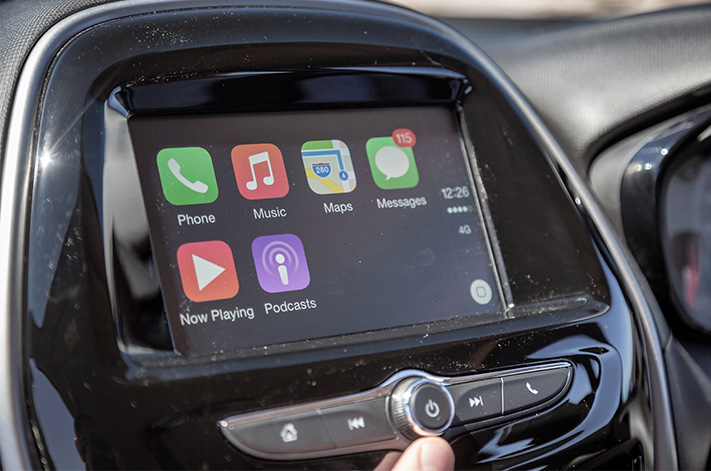
But the LS is no poverty pack. You get air-con, power front windows, remote central locking, a height-adjustable driver’s seat, a trip computer, daytime running lights (halogen, not LED), a six-speaker stereo with 7.0-inch colour touchscreen and Apple CarPlay (or Android Auto if you’re an Apple-hater), Bluetooth phone connection and, on MY17 models, standard cruise control. Indeed, the only option is a ‘driver assistance pack’ that adds a reversing camera and rear parking sensors for $550.
Thing is, the base Spark is much more than the sum of its parts. Even on the journey home from Suttons Arncliffe to Newtown, the Spark instantly impressed with its ride, refinement and grown-up feel. There’s a strength and solidity that transcends its small, inexpensive origins, yet with all the benefits of minimal weight and compact size to enhance its agility.
The biggest surprise, however, is the Spark’s manual gearbox. Fearing the rubbery, notchy shift feel that typified GM manuals for many years, the Spark’s neat little five-speeder is a revelation. Slick, positive and a breeze to use, the manual allows the tractability of the Spark’s new-gen, all-aluminium 1399cc naturally aspirated four to truly shine. It pulls cleanly, if casually, from just 800rpm in third gear and would make even the laziest driver seem smooth and proficient.
In conjunction with sharp steering, keen handling and grippy little 165/65R14 Continentals, the eager drivetrain makes it a bundle of fun around the suburbs. You don’t need to be doing illegal speeds to enjoy motoring in the Spark, and there are the added benefits of a tight 9.6m turning circle, excellent forward vision and unexpectedly good seat support.
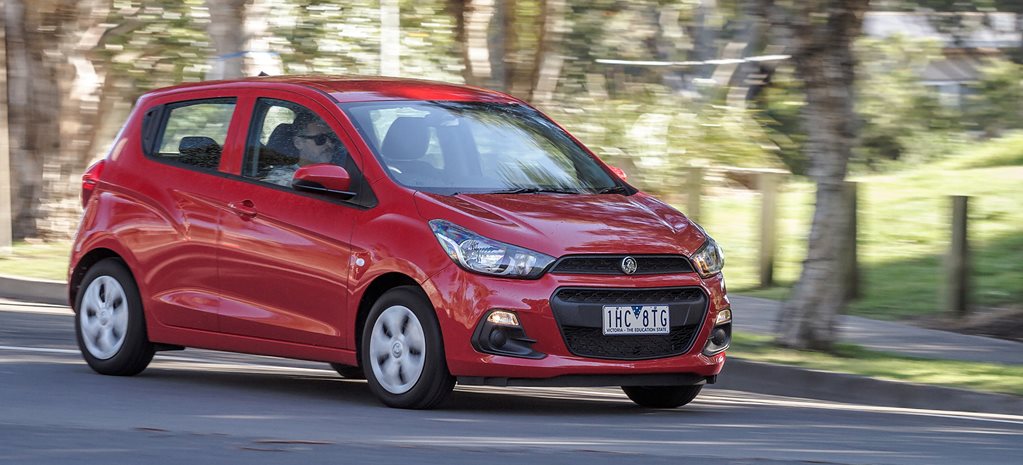
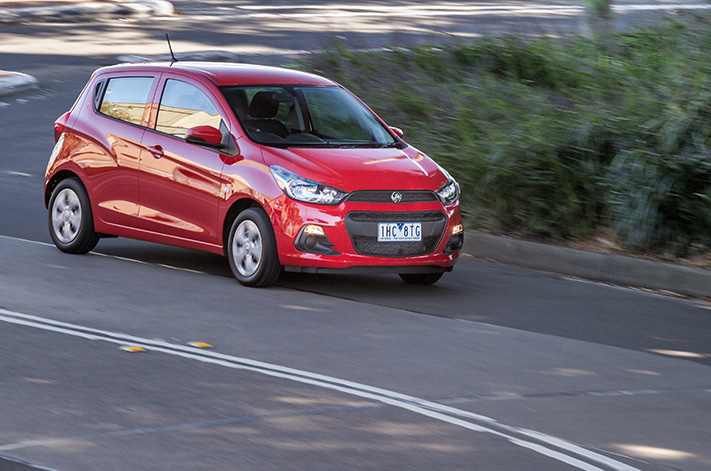
I even like the Spark’s looks, despite the overbearing brightness of its ‘Straya Post’ red paint (which Holden prefers to call Absolute Red) and the cheapness of its five-spoke plastic wheelcovers. A bit more effort in this department could’ve really lifted the Spark LS’s visuals, so I’ve been led to ‘rally spec’ it (which is to say I’ve taken them off).
The Spark does have one obvious flaw. While its five-door body and neatly shaped 185-litre boot make it a peach for shopping and general urban duties, the rear-seat folding procedure is a pain in the arse. Holden claims you can either fold the backrests forward or flip up the 60/40 split cushion, then dump the backrests for a fully flat floor, but the reality isn’t that simple. The backrests will barely tip forward if you don’t flip the cushions, and when you do, you need to remove all three headrests and slide both front seats forward to get the back seat flat.
Three stitched-in pockets to house each headrest makes the process neater, but it’s a far from simple procedure, and I can’t maintain my normal seating position when the rear seat is down. Thankfully, that’s a rare compromise; otherwise, the manual Spark is proving a genuine delight.
Update #1
By Nathan Ponchard
IT’S really easy to bag technology for bombarding us with crap. Near-constant phone and email access, and an inability to remain calm for any longer than a few moments without fingering a smartphone says that ‘switching off’ should be a matter of sanity, not laziness.
If you’re an audiophile, however, and your life requires a constant backing track, then right now is a damn fine time to be alive.
Not only has the youth of today rediscovered the texture and warmth of the vinyl LP, but we have unprecedented access to more music than we know what to do with. And, even in something as basic as our Holden Spark, the facility to enjoy said mountains of music in crisp, clear quality.
I remember thinking the digital-tune, four-speaker tape deck in Mum’s 1990 Mazda 121 was a pretty neat unit for a budget hatch, but here we are more than 25 years later in a micro hatch wearing exactly the same sticker price as the 121 did all those years ago, boasting what would have seemed like the greatest system in the world back then.
In terms of box-ticking audio appeal, the Spark LS is bang up to date.
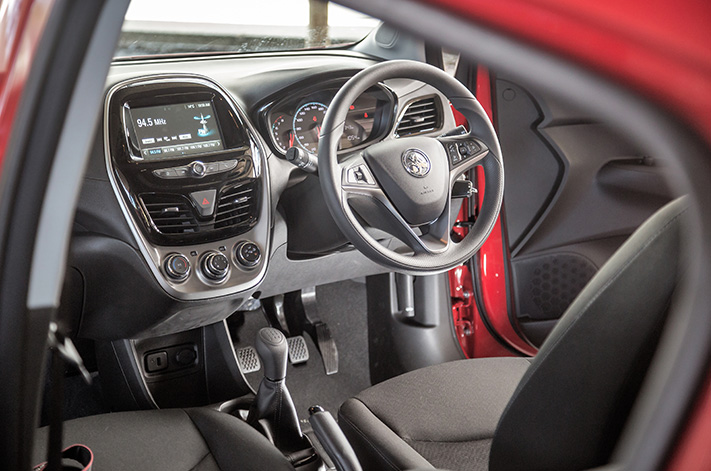
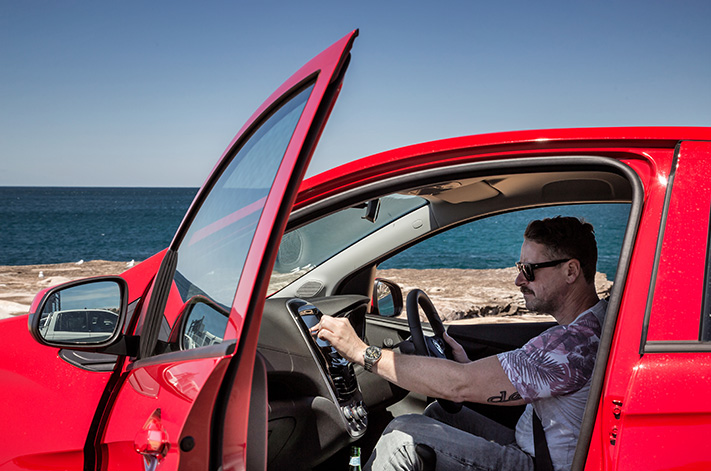
Apple CarPlay, a decently sized colour touchscreen (most people would be reasonably happy with seven inches, I’d imagine) and six unexpectedly gutsy speakers (one each in the lower doors, plus a tweeter at the base of each A-pillar) gives the Spark the multimedia firepower it needs to win over the under-25s.
And I still get a kick out of hearing Siri read out scandalous texts, enunciating swear words in her proper accent with utter professionalism.
As for the Spark’s driving experience, it remains a doddle in inner-city Sydney, despite the 1399cc engine’s lack of bottom-end muscle. Keen, balanced handling, a pin-sharp turning circle and a robust feel continue to defy the Spark’s demure proportions.
When parking the car and walking away, I’m constantly surprised by just how small it is relative to its grown-up ability. The humble Spark is definitely greater than the sum of its parts.
But it’s crying out for more torque. Tractable the atmo 1.4 may be, but there’s precious little urge below 4000rpm, meaning your right foot spends plenty of time attempting to bury the accelerator deep into the floor, to the detriment of economy.
Admittedly, we’ve been commuting in some of the heaviest traffic Sydney can serve up, but – much as I hate to admit this – the five-speed manual doesn’t have the ratio spread of the CVT to plug the engine’s torque holes. And while the 14-inch-wheeled LS rides better than the LT on 15s, its eco-biased 165/65R14 tyres fail to flatter the Spark’s handling and steering the way the sportier 185/55R15 Continentals do.
With a Blue Mountains weekend away looming, as well as a motorway jaunt to Newcastle and back, maybe it’s the breather the Spark needs to deliver fuel economy worthy of a micro car.
Update #2
By Nathan Ponchard
NOTHING beats back-to-back testing for delivering a definitive verdict on all topics related to dynamics, as Car of the Year proved.
It finally gave me the opportunity to directly compare opposing Sparkvariants – LS manual on 14s and LT auto on 15s – to see which is the sweeter package (compare specs here).
With its chassis honed at Holden’s Lang Lang proving ground and on the challenging roads around Victoria’s Gippsland region, no Spark is a dynamic duffer. But away from the lower-speed demands of urban warfare, it becomes clear that the Spark’s handling and steering shine brightest when taking advantage of the far superior grip of the up-spec LT’s 185/55R15 Continental Premium Contact tyres.
Gone is the smaller-tyred LS’s propensity to lose adhesion as lateral forces build, resulting in a lack of true commitment from both its front and rear ends in tight cornering.
The LT, on the other hand, has greater handling reserves, more consistent road-holding and much crisper response. It also steers better, thanks not only to a leather-bound steering wheel but also firmer and more linear steering weighting, courtesy of its broader footprint.
The LT may not ride like the supple LS in town, but everywhere else, its sharper, more adjustable nature enhances the Spark’s driver appeal. And the CVT is really quite good. It steps off the mark well and seems to extract the best from the Spark’s torque-light atmo 1.4.
Ideally, GM’s base 1.0-litre turbo-petrol three-pot with 170Nm from 1800-3700rpm (as per the three-door Opel Adam in Europe) would be a thrummy delight under the Spark’s bonnet, but at this price-sensitive end of the market, it’s pointless speculation (though, in future, an inevitability).
Packing three adults into our Spark manual is no challenge for its packaging efficiency, but you definitely notice the detrimental effect on its performance.
Again, its somewhat thirsty all-aluminium engine is an amazingly tractable little unit, but it demands plenty of revs if you’re in a hurry. And with pre-Christmas deadline stress looming large, that was always.
Sydney’s warm weather has also demanded liberal applications of soothing air-con, which the Spark achieves effortlessly.
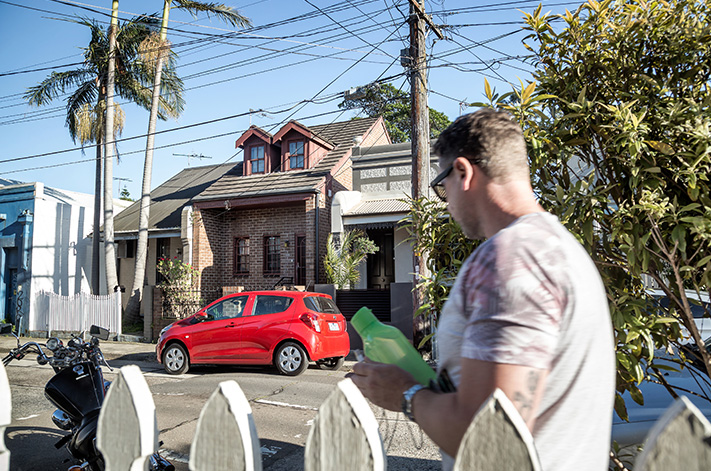
But with the chiller off, there seems to be a disparity between the outside temp and what’s coming through the dashboard vents, as if heat-soak from the engine bay is infecting the ventilation.
What hasn’t happened, though, is a cooling of affection for this redder-than-Santa Spark. Sure, I desperately miss the grunt and grumble of the twin-turbo AMG that this baby Holden replaced, but every time I’m faced with a tiny parking space or gap in traffic, there’s a winning smugness to accompany this $13,990 special.
Update #3
By Nathan Ponchard
WHOEVER said small cars couldn’t (or shouldn’t) do big distances was talking out of their clacker. Remember the original Volkswagen Beetle?
That air-cooled marvel could once be found in just about every corner of the country, able to drive for hours at its claimed “maximum and cruising speed” of 115-120km/h and renowned for being able to withstand the torture Australia threw at it.
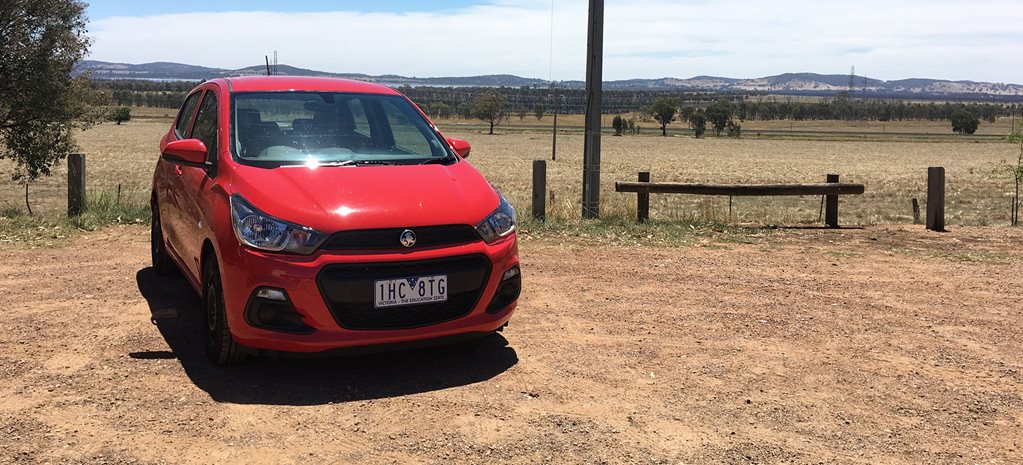
Those goat tracks of the past would be far too rough for a Holden Spark, but a modern-day challenge of Sydney to Melbourne and back in searing summer heat is as good a test as any for a city-biased microcar.
Two weeks prior, the Spark tackled a weekend blat to Newcastle and impressed with its highway grunt and overall maturity. Solid in crosswinds, supportive of seat and absorbent of suspension, it’s a baby hatch that comfortably feels at home on the M1.
As a slower car moved to the left on the Mooney Bridge hill, I dropped the Spark back to third and flattened it. Its rev-happy 1.4 effortlessly wound out towards the tacho’s 6500rpm redline, leaving lazier cars fading in its wake. As expected, revs and open road are clearly this engine’s erogenous zone.
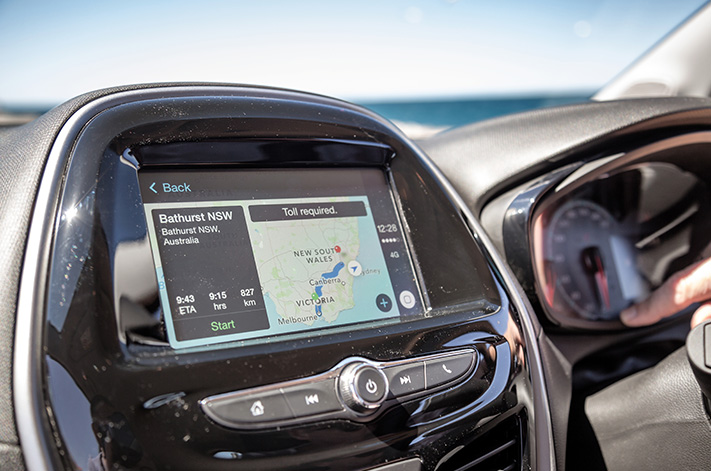
The trip to Melbourne was slightly different. On a dual-carriageway road that bypasses every town for 850km, less traffic and longer hills meant ample opportunity for testing the Spark’s cross-country calm. And not once did I have to disengage cruise control by dropping it down to fourth.
Just under 120km/h on the speedo sees the engine humming pleasantly at just over 3000rpm, though given the Spark’s favoured working environment resides beyond three-five, a 130km/h gallop would’ve been even more effortless. And appropriate. And safe!
On a few steep climbs, the Spark slowed to just above 110km/h as its efficient air-con transformed furnace-like heat into fresh air, though turning A/C off gave it the required shot in the arm.
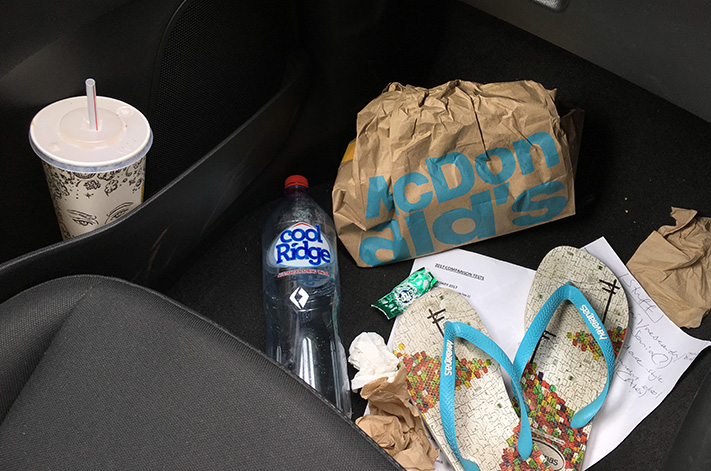
No Judgement! Ultra-rare Maccas depravity on the Hume: post-mix Coke, quarter pounder (jammed with fries) and a serving of shame
This stuff, however, I already knew. What I wasn’t so sure of was the Spark’s eight-hour toleration index.
Turns out a day’s worth of driving isn’t something to be feared. Besides some moderate wind rush at freeway speeds and a fair amount of tyre roar on coarse-chip surfaces, the Spark is remarkably polished.
Admirable front seat comfort (despite widely spaced positions on its lever-adjust backrest), plenty of space to put your feet, terrific vision and an impressively well-damped ride give this little Korean-built, Aussie-tuned Holden the fatigue-reducing capability to tackle any (sealed) road you can throw at it.
It’s no Golf VII when it comes to ride plushness, but given the size of its wheelbase (shorter than an original Beetle’s) and the cost efficiencies that a boggo hatch demands, the Spark is a fine all-rounder whose abilities extend far beyond its lowly station in life.
Update #4
By Nathan Ponchard
DESPITE feeling like an Australia Post employee for much of the last five months, hammering about town at delivery-boy speeds in my red hubcap-free Spark LS, it’s been something of a revelation learning to live with one of the cheapest cars on sale in Australia.
And that’s because it doesn’t feel cheap.
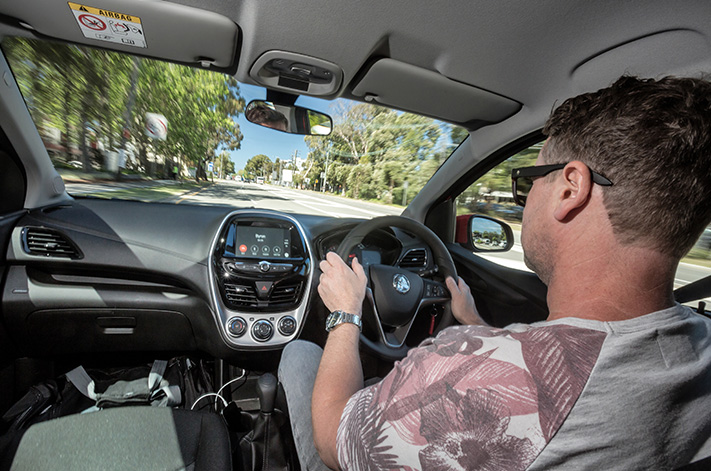
There’s a grown-up maturity to the Spark that defies its diminutive size, though admittedly it’s no Volkswagen Up. From the expansive feel seated behind its perfectly sized plastic steering wheel to its surprisingly comfortable seats and well-sorted ergonomics, the Spark has been welcomed into our family like a fluffy new puppy.
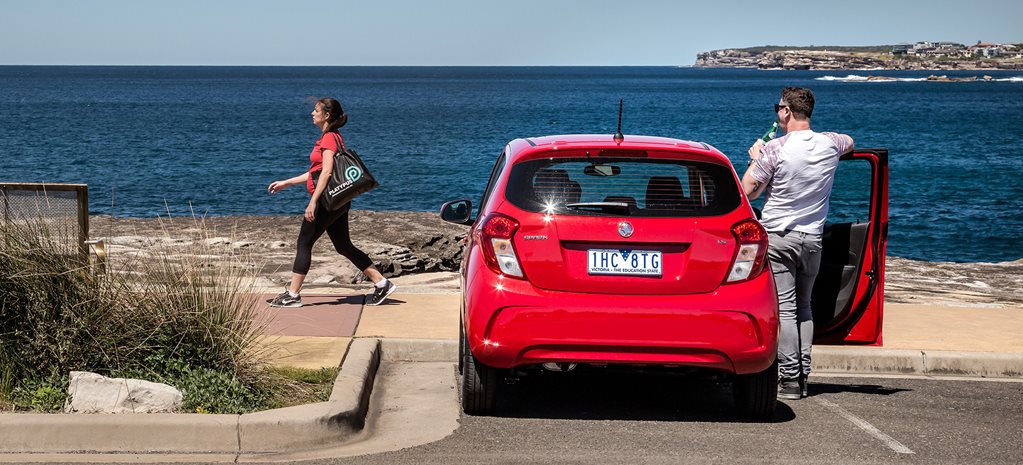
I even like the way it looks, and get defensive if anyone starts to take the mickey, as any doting parent should. But it’s time to move on, and I’m looking forward to re-discovering the joys of something with torque.
Off the back of the burbling, boisterous twin-turbo AMG V8 that preceded the Spark, probably the hardest thing to live with has been the all-aluminium 1.4’s absence of bottom-end. And its lack of sporting noise. Even when driving the C63 S at walking pace, its wonderfully antisocial exhaust rumble was enough to take the stress out of almost any traffic snarl.
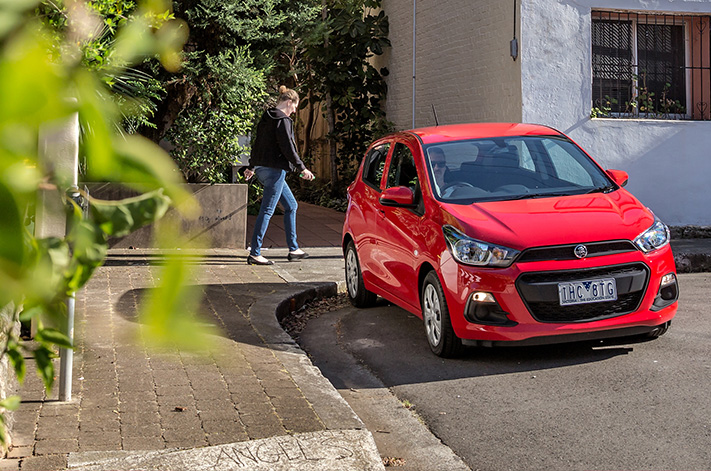
The Spark’s encouraging personality and wieldy size has seen my patience disappear faster than my dignity after a skin-full, forcing a conscious effort to not drive the Spark flat out everywhere. This is reflected in its improved fuel consumption and a newfound respect for its tractability (on flat roads, at least).
The Spark will pull in any gear from around 1200rpm, which is deeply admirable for a microcar. And yet it’s equally as effortless covering ground at 130km/h (where permitting), the tacho settling neatly in its 3500rpm-plus power band.
While this new-gen Spark leaves its repellent Barina Spark predecessor for dead in absolutely everything it does, it isn’t quite a straight-A student. GM’s Korean cabin plastics continue to be scratch-prone, and after 50,000km of abuse, I reckon the Spark’s door trims, ignition-key surround and boot edges would look pretty shabby.
My hatred of inadequate lever backrest adjustment was compounded by the compromised position I had to accept in the Spark (though at least it has a proper seat-height crank mechanism), and the base LS’s eco-biased Continental tyres weren’t much chop in the wet. They also lacked the outright grip to properly flatter the Spark’s fine chassis and pointy steering.
I don’t understand the anti-democratic decision by Holden to offer 16-inch alloy wheels as an option only on the $19K LT auto, when a manual LS in a funky colour (like the French racing-esque Splash Blue) with grey 16s could look really cool. And the overly shiny wheelcovers clipped to the LS’s steel 14s are among the most unfortunate pieces of tat I’ve ever seen.
The Spark really does deserve better. Perhaps a deliberate decision was made to keep the larger (and likely more profitable) Barina relevant, seeing the Spark offers superior seat comfort, an engine that doesn’t grumble like an industrial fan, better open-road performance, a more attractive dashboard, and a more sophisticated feel than its ageing sibling.
Unfortunately, the ultimate Spark spec doesn’t really exist – LS model (so you get hard-wearing, well-stitched cloth seats, not the LT’s putrid vinyl), a leather steering-wheel rim (sadly, LT only) and Continental Premium Contact tyres (again, sadly, exclusive to LT) – but there’s a chance that planets may align in the future, finally realising the Spark’s true potential as a pint-sized ball of unexpected goodness.
Aston Martin has set out to make its already bonkers Vulcan even more lethal.
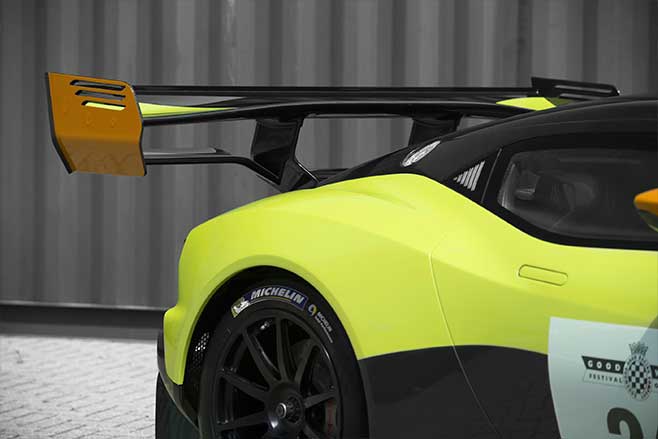
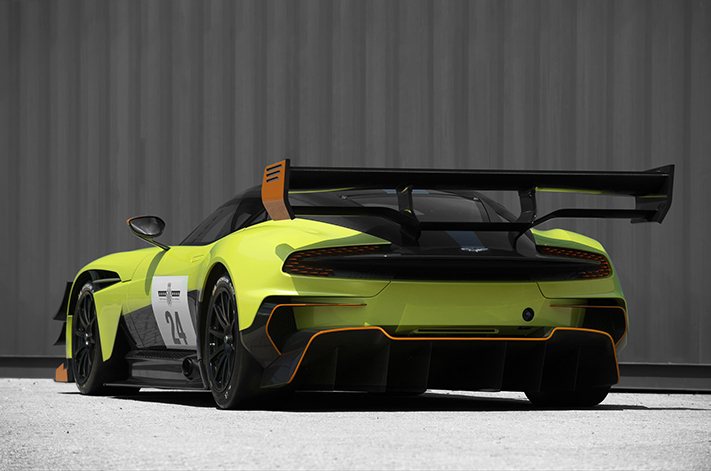
Ready to debut at the Goodwood Festival of Speed, the Vulcan AMR Pro gets louvred panels added above the front wheel arches and dive planes to keep its nose down at high speeds, while the front splitter has turning vanes underneath to “improve steering response”.
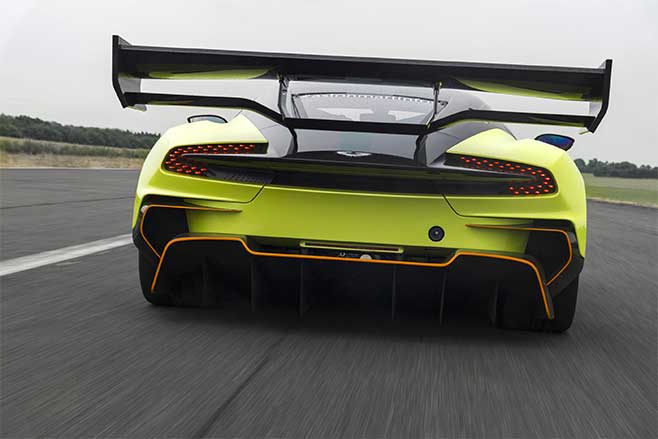
Aston Martin says the downforce improvements bring total downforce on the car up from an already huge 3150Nm, to 4000Nm. AM points out that its 2017 Vantage GTE Le Mans car only generates 3104Nm.
Australians buying more sports cars for over $80K
The car also gets a gearbox tune, with gear ratios being shortened for “intensified acceleration” and, with the downforce changes, reduced lap times.
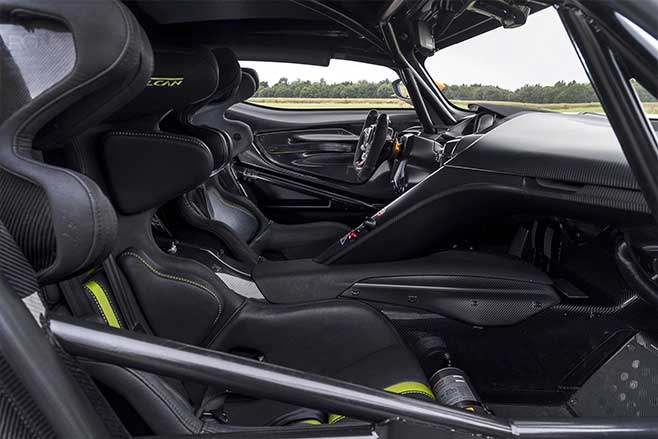
“With the shortened gearing, which makes it even more punchy when you accelerate through the gears, the Aston Martin Vulcan AMR Pro feels more agile and responsive to steering inputs.
2018 Aston Martin DB11 to get V8 option
“When you get the aero working through a fast corner it really is an unbelievable feeling.”
The first work on customer cars is already being undertaken, with the first fully upgraded Vulcan to be complete in the northern Autumn.
LAND ROVER will add the most powerful version of its 2.0-litre Ingenium petrol engine to the brand new Range Rover Velar, which goes on sale here in October.
The newly-minted mid-sized luxury SUV bridges the gap between the Range Rover Evoque and Sport. Pricing will range from the entry-level variant at $70,950 to $136,050, with a special First Edition model available for $168,050.
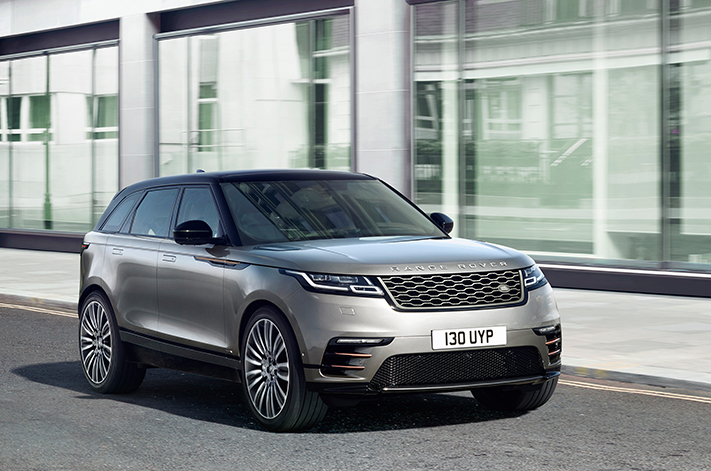
The First Edition will only be available for the first model year. It has extra features accounting for its $32,000 premium over the range-topping HSE R-Dynamic, including extended leather interior trim to complement the perforated Windsor leather seats, a 1600W Meridian Signature Sound System, Matrix-Laser LED headlights and 22-inch wheels.
The list of regular variants will be similar to other Range Rover models with Velar and Velar R-Dynamic in standard, S, SE and HSE specifications along with Black and Luxury Exterior Packs for a more distinguished appearance.
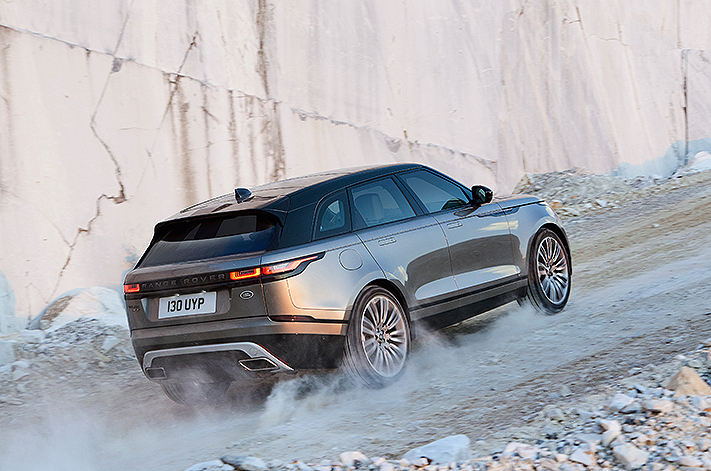
The range will be further divided by a choice of six powertrains highlighted by the new 2.0-litre Jaguar Land Rover (JLR) P300, which produces 221kW and 400Nm and is the most powerful four-pot to sit under the hood of Land Rover vehicle. It’s capable of pushing the mid-sized luxury SUV from 0-100km/h in 6.0 seconds, but is also miserly with a claimed combined fuel economy rating of 7.7L/100km.
The P300 won’t be available in Australia until December, but there are three other Ingenium choices ranging from the less powerful 184kW/365Nm P250 to economical but torquey D180 and D240 2.0-litre diesels producing 132kW/430Nm and 177kW/400Nm and sub-6.0L/100km fuel economy figures.
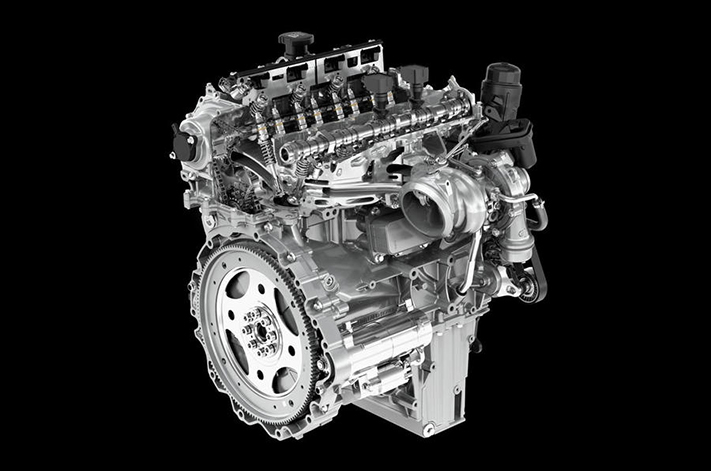
The Velar doesn’t miss out on bigger grunt with a choice of 3.0-litre V6s including the 221kW/700Nm D300 oil burner and the 280kW/450Nm supercharged V6 petrol P380.
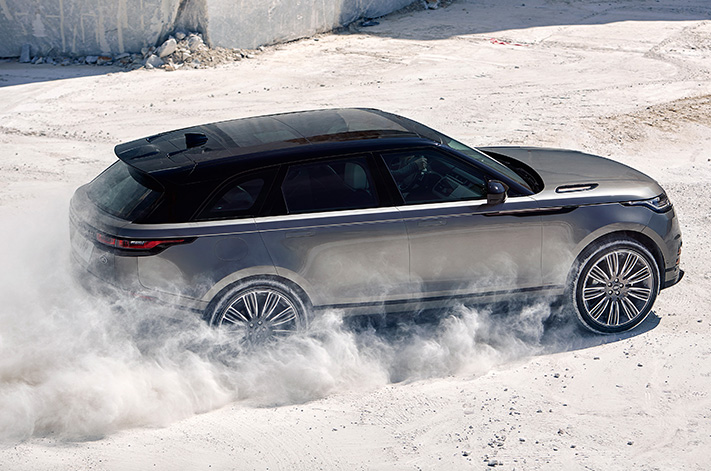
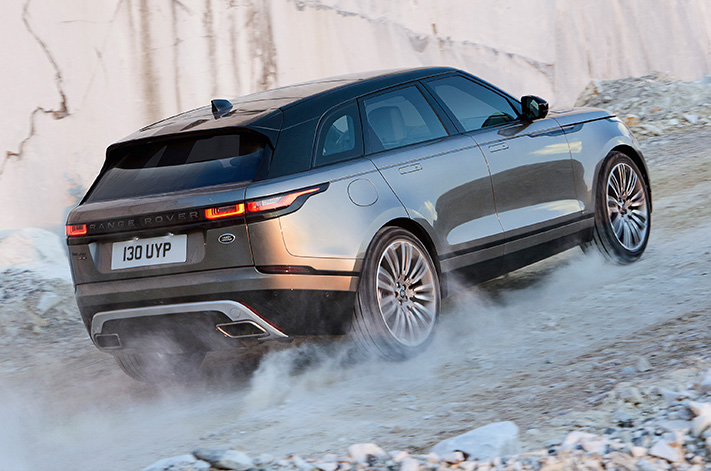
Built on JLR’s iQ aluminium platform that also underpins the Jaguar F-Pace and Range Rover Sport, the Velar has a slippery silhouette that Land Rover says is its most aerodynamic yet – though this is the company that built the Defender.
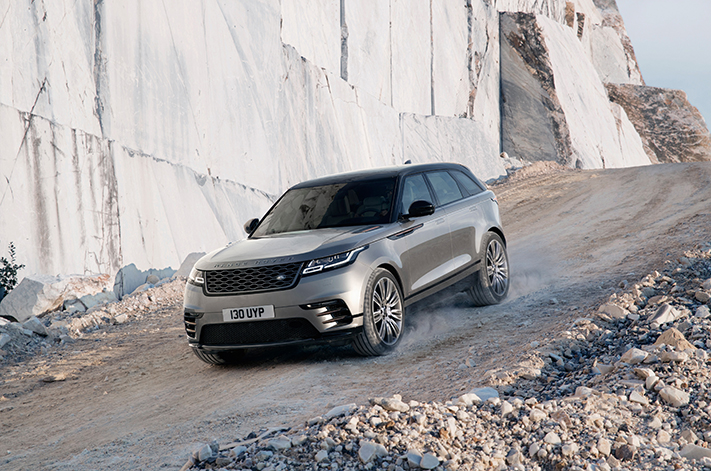
While the ‘avant garde’ Velar is designed with glamour, modernity and elegance in mind, Land Rover insists it has all-terrain capabilities expected from the brand. That includes all-wheel drive, an Intelligent Driveline Dynamics system, active locking rear differential and state-of-the-art traction-control technology.
Ground clearance is 213mm with standard coil springs and up to 251mm with the optional air suspension that standard in all six-cylinder models – wading depth is a relatively 600mm and 650mm respectively.
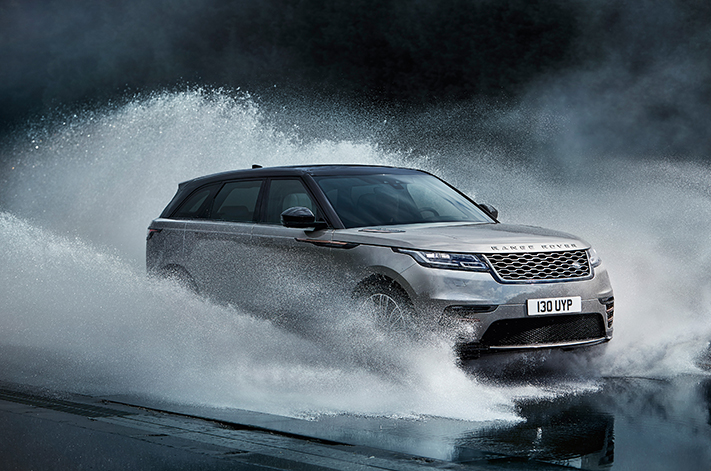
All variants will have Adaptive Dynamics damping technology regardless of suspension type.
The practicality extends to a 2500kg towing capacity (with advanced tow assist) and 558-litre boot space that’s comparable with the Nissan X-Trail.
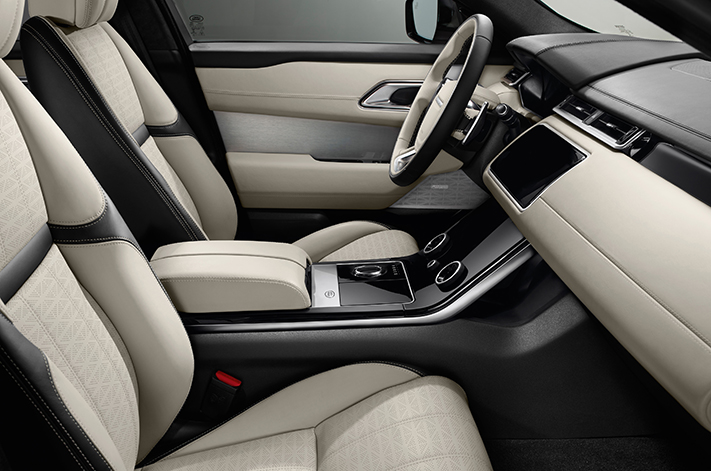
As expected the interior oozes luxury and if you tick all the options boxes you’ll end up with front seats will have up to 20-way power adjustments plus heating, cooling and massage functions while the 40:20:40 split rear seats will have heating and power adjusted reclining. Optional four-zone climate control and cabin air ionisation system will add to the all-round comfort for those long summer trips to the polo.
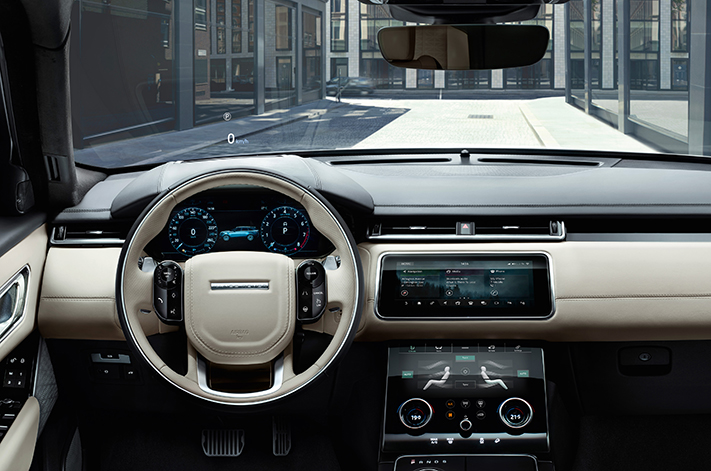
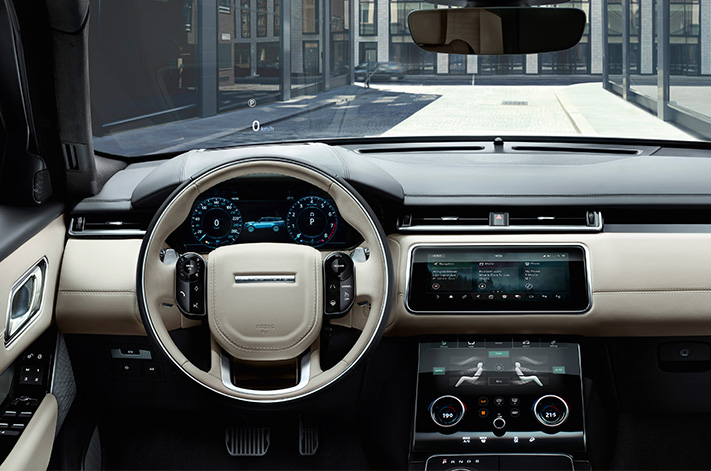
The Velar will debut Land Rover’s state-of-the-art Touch Pro Duo infotainment system, featuring two high-definition 10-inch touchscreens. The system includes clever functions such as Commute Mode that learns your daily drive so that, using both historical and real-time traffic information, can suggest alternative routes and help you to reach your destination on time. If you’re running late it can send your location and ETA to chosen contacts via email or text message.
Advanced driver assistance technology autonomous emergency braking with pedestrian detection and adaptive cruise control with queue assist which stops and moves the car forward automatically in heavy traffic up to 30km/h.
HOW would you enjoy living like Jon Olsson for a day? Swanning around Monaco and Europe’s best ski resorts, hanging out with models and rock stars, and building and driving some of the most ridiculous cars you can imagine…
That’s the reality of a day in Olsson’s life. For those not down with the kids and unaware of the fun-loving pro-skier, he has become a bit of an internet and Instagram celeb, and his camo-wrapped cars are stars in their own right.
Olsson is a Swedish-born Monaco resident who makes a living as a professional freestyle snow skier. His aspirational day job helps fund a passion for outlandishly modified supercars, and he films his antics for the web to enjoy.
The latest addition to Olsson’s arsenal is a heavily-customised Rolls-Royce Wraith, dubbed George, which is adorned with rally-style spotlights, a snow camo wrap, and tuned to produce 600kW at the wheels.
To give you more of an insight into the mind of Mr Olsson, here’s an overview of his car ownership history.
Audi RS6 DTM
This Audi RS6 Avant is the car most would associate with Olsson. As with his other vehicles, this one received a snow-themed camo wrap, but the stand out modifications are a 671kW engine tune, and racing-inspired DTM-inspired body kit.
When it was revealed, this brutally fast wagon set the internet alight, which turned out to be a fateful premonition. Olsson eventually sold the car, but it was stolen shortly after and burnt to the ground.
Lamborghini Huracan
Next in Olsson’s back catalogue is this modified (of course) Lamborghini Huracan. Olsson used the car during trips to European ski resorts. The car’s 5.2-litre V10 was supercharged, boosting power to 600kW. Oh, and it had a ski box attached the roof, because there’s no point having a Lambo if you can’t use it to transport the gear you need to be one of the world’s best.
Rebellion R2K
Looking more at home on the Mulsanne straight at Le Mans than a regular public road, this is one of Olsson’s most over the top vehicles.
It’s also one of the least powerful, relatively speaking. The R2K is based on an Ultima GTR, with a 447kW Lamborghini V10 mated to a 6-speed ‘e-gear’ semi-automatic transmission sending power to all four wheels. The LMP-style bodywork makes it almost unmistakable.
Despite the race car visuals, Olsson used the car in a pair of Gumball 3000 ‘rallies’ and belted it up a ski slope. This guy knows how to party.
The cars above are but a small sample of Olsson’s motoring indulgences. Other vehicles he owns or has owned include a BMW M3 CSL, which he claims turned in more than 3000 laps at race tracks, plus a Lamborghini Murcielago LP 670 SV, Lamborghini Murcielago LP640, Nissan GT-R, Lamborghini Gallardo, and Audi R8.
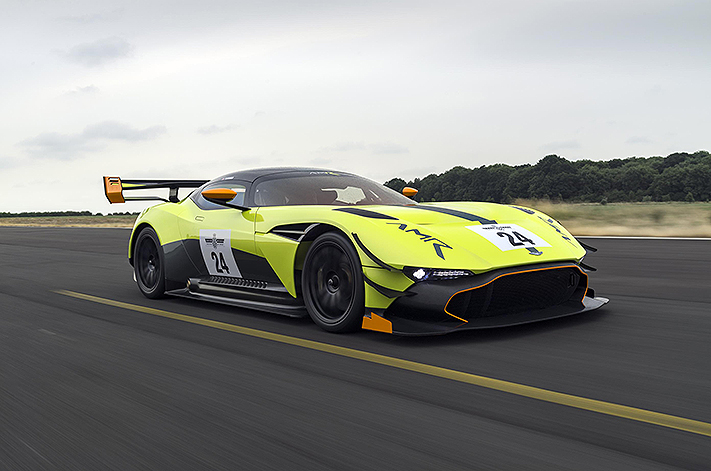
ASTON MARTIN RACING has developed a go-faster kit for the already ballistic Vulcan hypercar with the aim of shaving its laptime courtesy of some aerodynamic enhancements and shorter gearing.
With just 24 Vulcans sold around the world (and only one in Australasia), the market for this AMR Pro upgrade is clearly limited, and a track pack for a track-only car might at first seem a bit of a headscratcher, but the Vulcan’s raison d’etre is a hot lap, so a hotter lap is an entirely reasonable aspiration.
The company unveiled the previous AMR models in March. The Vantage AMR Pro got an uprated engine and, being a model in current build, Aston Martin could open the books to a full production run. Which it did, claiming it would build seven cars.
The four-door Rapide looked a slightly incongruous target for the AMR treatment, but it nevertheless got the full treatment, the engine upgrades making it the fastest four-door production car in the world at 338km/h, and the Gaydon firm promised to build 210 examples of the hopped-up Rapide.
At the AMR launch event at the 2017 Geneva show, CEO Andy Palmer said “They are the start of something very exciting—a program that will eventually see an AMR version of every model in the Aston Martin range.”
Therefore, perhaps we shouldn’t be too surprised that the Vulcan has come in for some AMR scrutiny. To be revealed at the Goodwood Festival of Speed, the AMR Pro version promises increased downforce, greater responsiveness and reduced lap times.
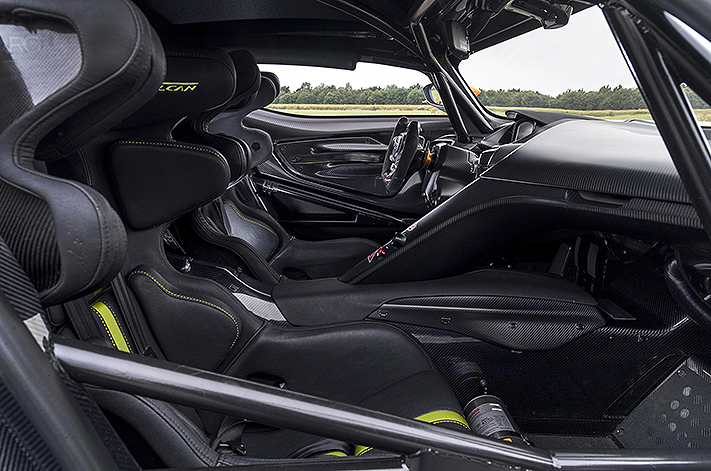
The changes, including an extra rear wing and front canards will also help plug the gulf in performance between the $3m, 600kW Vulcan – itself no sluggard – and the forthcoming 843kW Valkyrie, which looks frankly mind-boggling. The eventual AMR Pro version of that one doesn’t bear thinking about.
For the time being at least, if you’re one of the 24 Vulcan owners and you’ve been embarrassed on track by a Civic Type R with the boost wound up, well, you know what to do.
The freshly minted Range Rover Velar will arrive in Australia in October to bridge the gap between the Evoque and Range Rover Sport, with prices starting from $70,950.
Land Rover Australia is yet to announce full specifications and costs. However, prices will range from the entry-level $70,950 up to $136,050, with a special “First Edition” model available for $168,050.
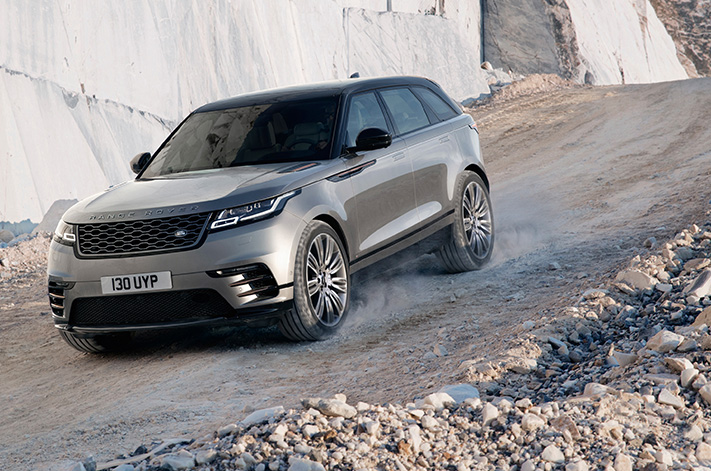
The list of variants will be similar to other Range Rover models with Velar and Velar R-Dynamic in standard, S, SE and HSE specifications, along with “Black” and “Luxury” exterior packs that provide a more distinguished appearance.
The First Edition will only be available for the first model year with a wealth of extra features over the range-topping HSE R-Dynamic. That includes full extended leather interior trim to complement the perforated Windsor leather seats, a 1600-watt Meridian Signature audio System, LED headlights and 22-inch split-spoke wheels with a diamond-turned finish.
A 221kW/400Nm 2.0-litre four-cylinder Ingenium petrol engine, available from December, will complete the Velar’s six-powertrain range that includes a 2.0-litre four-cylinder Ingenium diesel generating either 132kW/500Nm or 177kW/500Nm, and a brutish 221kW/700Nm 3.0-litre V6 diesel. A supercharged 3.0-litre petrol V6, meanwhile, will produce 280kW/450Nm.
All engines sit in front of an eight-speed ZF automatic transmission that can be controlled using paddle shifters.
Inside, the Velar is designed to provide sanctuary with the typical Range Rover detail and refinement. Front seats will have up to 20-way power adjustment, and heating, cooling and massage functions, while the 40:20:40 split rear seats will have heating and power-adjusted recline options. Optional four-zone climate control and a cabin air ionisation system will add to all-round comfort.
The Velar will introduce Land Rover’s state-of-the-art Touch Pro Duo infotainment system, featuring two high-definition 10-inch touchscreens. The system includes clever functions such as a Commute Mode that learns your daily drive so that, using both historical and real-time traffic information, it can suggest alternative routes and help you to reach your destination on time. If you’re running late it can send your location and estimated arrival time to chosen contacts via email or text message.
While the ‘avant garde’ Velar is designed with glamour, modernity and elegance in mind, it will still have the all-terrain capabilities we’ve come to expect from the brand. It gains all-wheel drive with Intelligent Driveline Dynamics, an active locking rear differential, and state-of-the-art traction-control technology.
Ground clearance is 213mm with standard coil springs and up to 251mm with the optional air suspension that standard in all six-cylinder models – wading depths re 600mm and 650mm respectively.All variants will have Adaptive Dynamics on-the-fly suspension damping technology regardless of suspension type.
It will happily tow a boat, too, with a 2500kg towing capacity. The velar will come with an Advanced Tow Assist function that makes you look good at the ramp by automatically steering the trailer while reversing.
The Velar’s 558-litre boot space is comparable with the Nissan X-Trail.
Advanced driver assistance technology will include automatic emergency braking with pedestrian detection, and adaptive cruise control with queue assist – it will automatically stop and move the car forward in heavy traffic at speeds below 30km/h.
The Velar shares its aluminium iQ platform with the Jaguar F-Pace and Range Rover Sport, but has a smoother, sleeker design that makes it the most aerodynamic car Land Rover has produced to date.
2017 Range Rover Velar pricing*
Velar D180 – $71,550 Velar D180 R-Dynamic – $77,550 Velar D180 S – $82,650 Velar D180 R-Dynamic S – $88,650 Velar D180 SE – $91,550 Velar D180 R-Dynamic SE – $97,550 Velar D180 HSE – $107,850 Velar D180 R-Dynamic HSE – $113,850
Velar D240 – $80,950 Velar D240 R-Dynamic – $86,950 Velar D240 S – $92,050 Velar D240 R-Dynamic S – $98,050 Velar D240 SE – $100,950 Velar D240 R-Dynamic SE – $106,950 Velar D240 HSE – $117,250 Velar D240 R-Dynamic HSE – $123,250
Velar D300 – $92,850 Velar D300 R-Dynamic – $98,850 Velar D300 S – $103,950 Velar D300 R-Dynamic S – $109,950 Velar D300 SE – $112,850 Velar D300 R-Dynamic SE – $118,850 Velar D300 HSE – $129,150 Velar D300 R-Dynamic HSE – $135,150 Velar D300 First Edition – $168,250
Velar P250 – $70,950 Velar P250 R-Dynamic – $76,950 Velar P250 S – $82,050 Velar P250 R-Dynamic S – $88,050 Velar P250 SE – $90,950 Velar P250 R-Dynamic SE – $96,950 Velar P250 HSE – $107,250 Velar P250 R-Dynamic HSE – $113,250
Velar P380 – $93,750 Velar P380 R-Dynamic – $99,750 Velar P380 S – $104,850 Velar P380 R-Dynamic S – $110,850 Velar P380 SE – $113,750 Velar P380 R-Dynamic SE – $119,750 Velar P380 HSE – $130,050 Velar P380 R-Dynamic HSE – $136,050 Velar P380 First Edition – $169,150
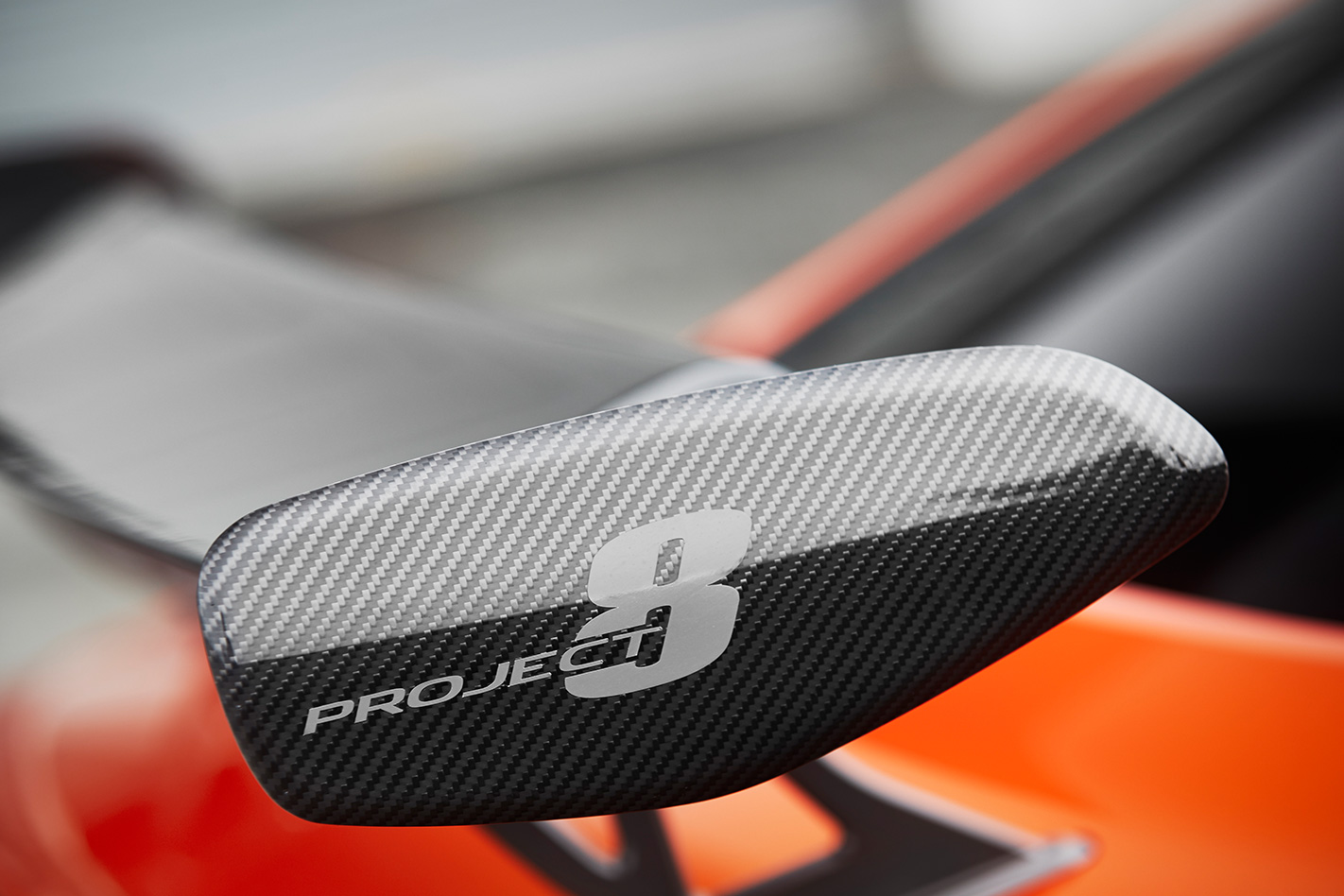
With the engine from Jag’s tyre-munching F-Type, the XE SV Project 8 is a 322km/h track-killing four-door.
But, in an effort to “ensure exclusivity”, a maximum 300 units of the high-powered sedan will be produced from SVO’s Coventry Technical Centre.
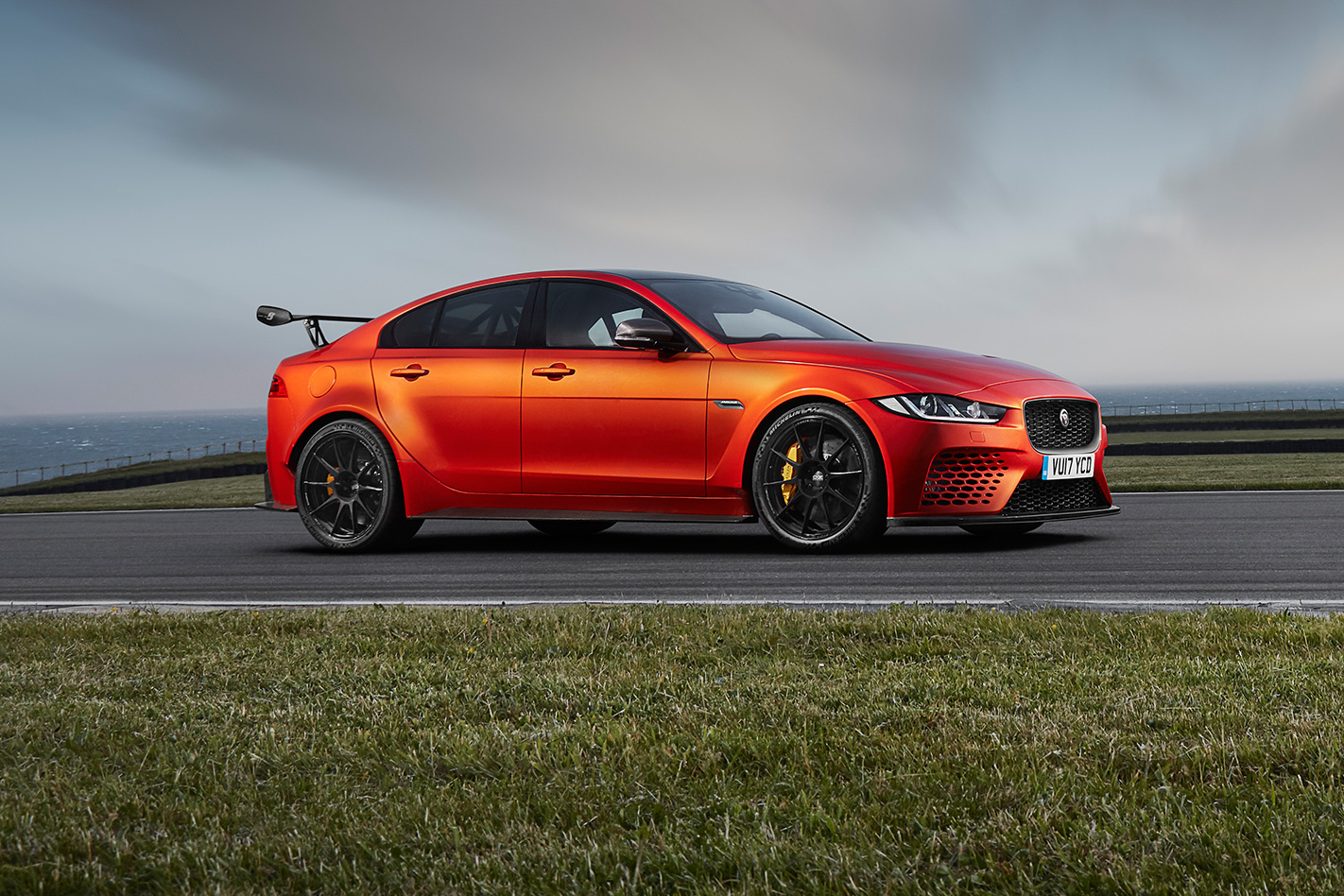
The 5.0-litre supercharged V8 produces a bit more power than it does in the F-Type SVR Coupe, with 441kW at the driver’s disposal allowing a run to 60mph (97km/h) in a claimed 3.3 seconds.
It’s also an all-paw setup, meaning more traction via its Michelin Pilot Sport Cup 2s, which are wrapped around 20-inch forged aluminium alloy wheels.
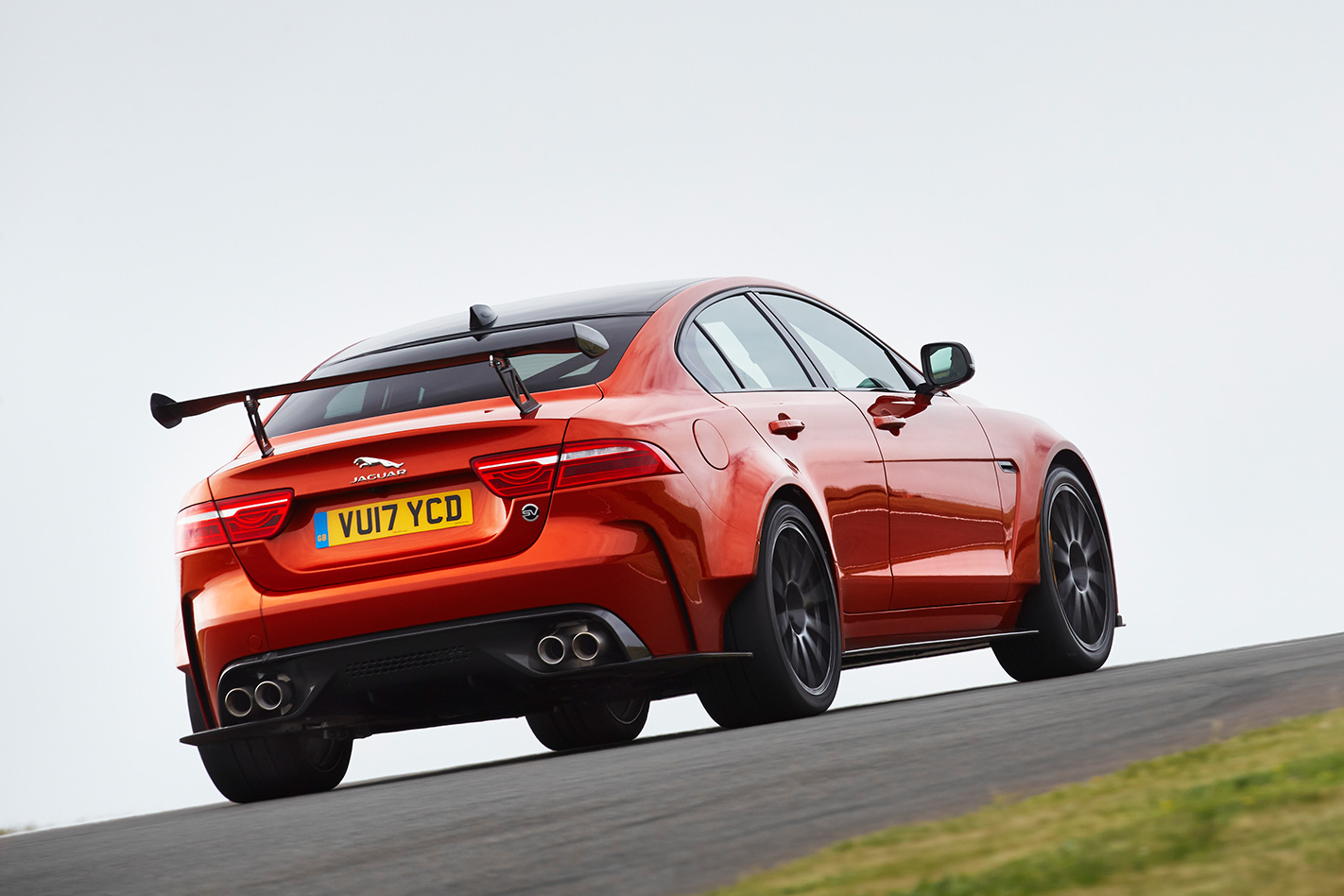
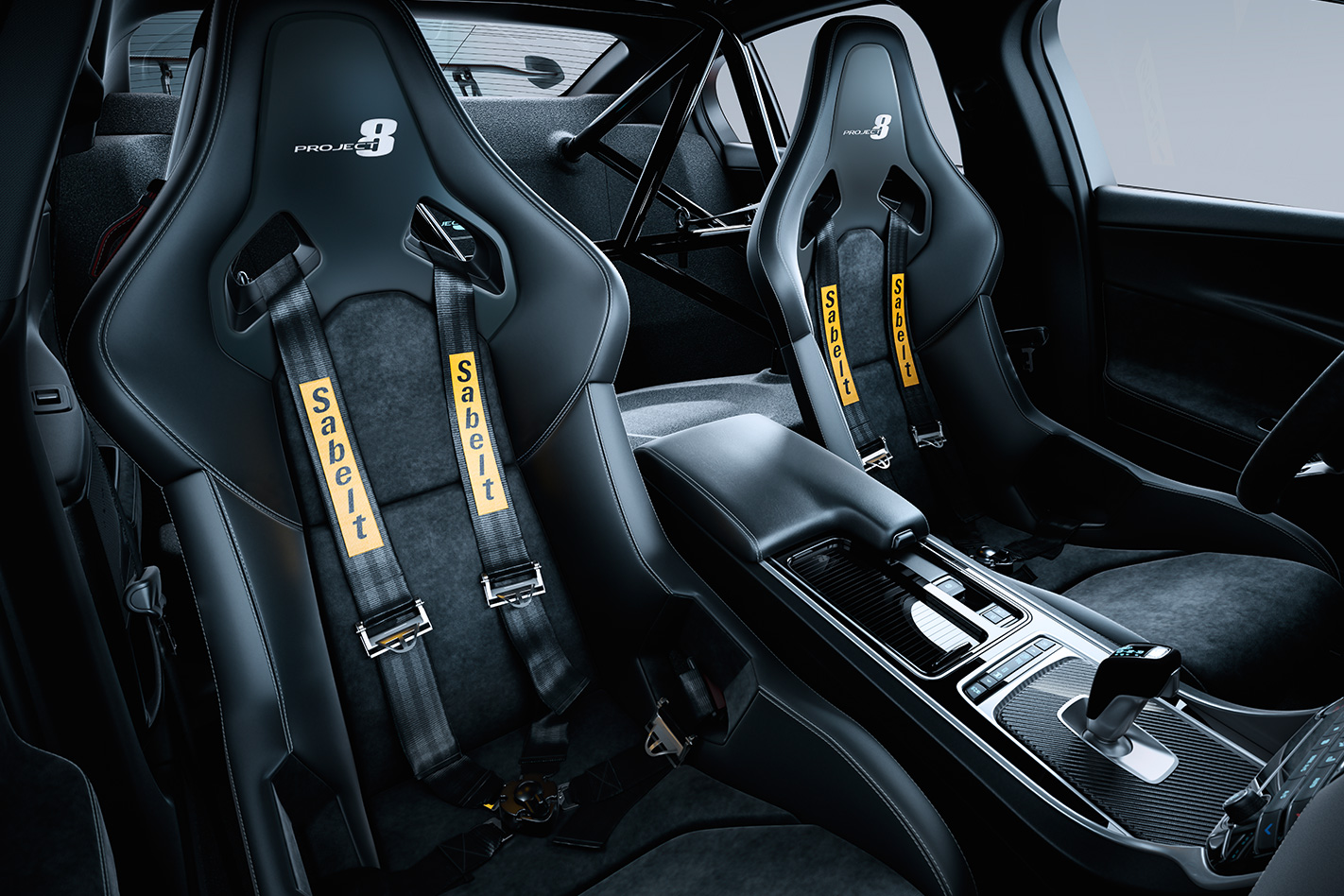
Through extensive use of carbon fibre, Jaguar says the Project 8 will be the “lightest V8 sedan” in its range, not that there are many in the first place.
Underneath, the XE’s front double wishbones and integral link rear suspension get stiffer springs and manually adjustable continuously variable dampers, with new carbon ceramic brakes and “an industry-first use of Formula 1-style silicon nitride ceramic wheel bearings” nearby.
Jaguar F-Type four-cylinder revealed
The Project 8 isn’t electronically limited to 300km/h like the Project 7, making it the fastest production Jag so far (according to Jaguar, though we recall the XJ220 being a tad quicker), but that won’t matter to Aussie hopefuls, as the XE Project 8 won’t be sold here)
Austria, Bahrain, Belgium, Brunei, Canada, Chile, Cyprus, Denmark, Egypt, Finland, France, Germany, Gibraltar, Greece, Hungary, Israel, Italy, Ireland, Japan, Jordan, Kuwait, Malta, Mauritius, Netherlands, Norway, Oman, Poland, Portugal, Qatar, Saudi Arabia, Singapore, Slovakia, Slovenia, Sweden, Taiwan, Thailand, Turkey, UK, UAE and USA.
If you want a Project 8, you’d have a better chance getting one if you lived off the coast of Madagascar than you do in Australia.
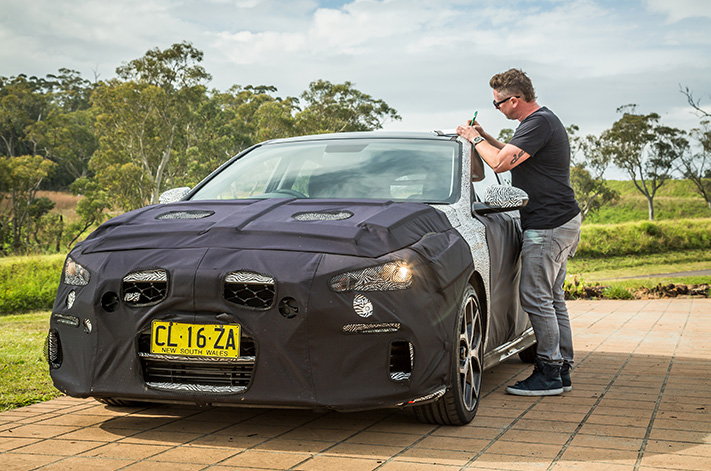
HOTTEST HYUNDAI EVER?
- Skoda Kodiaq sticks its claws into the seven-seat SUV segment
- Carey on crap cars; Corby on mid-life crisis!
- Volvo’s second-generation XC60 improves the Swedish breed
- Road tripping to the restaurant at the end of the universe
- The driving force behind Hyundai’s N skunkworks
- Porsche Panamera hybrid goes with the (green) flow
- Designer babies: Audi Q2, Mini Countryman spit the dummy
- This is Spartan! Supercar wannabe edges even closer
TELL ME ABOUT THIS CAR
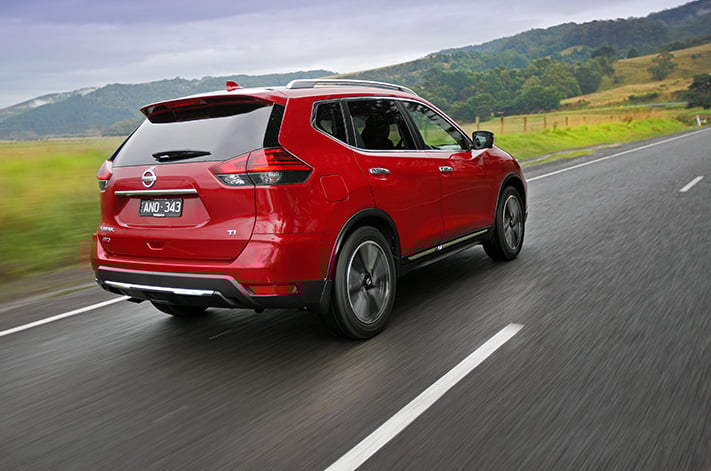
The Nissan X-Trail is the Japanese manufacturer’s most popular model in Australia thanks to its family-friendly practicality and solid record for reliability. It’s one of the few popular medium SUVs to feature genuine go-anywhere four-wheel-drive and a recent update has enhanced its safety credentials with advanced driver assist features such as automatic emergency braking.
Priced at $44,290, the top-spec Ti variant has extra active safety including active cruise control and auto braking with pedestrian detection, and a revised and more elegant interior featuring leather-accented trim, Bose premium audio system, heated steering wheel, heated front and rear seats and panoramic sunroof.
STRENGTHS
- It’s an appealing car to drive on highways and around town with a smooth, comfortable ride.
- The recent facelift was subtle but provided enough changes to stand out from the previous model including new wheel designs, bolder bumper plastics and sleeker LED headlights.
- The refreshed interior is well put together and features double-stitched leather-accented seats, piano black fascia inserts and metallic trim.
- The new flat-bottom steering wheel features a more intuitive button arrangement, and makes driver entry and egress that little bit easier.
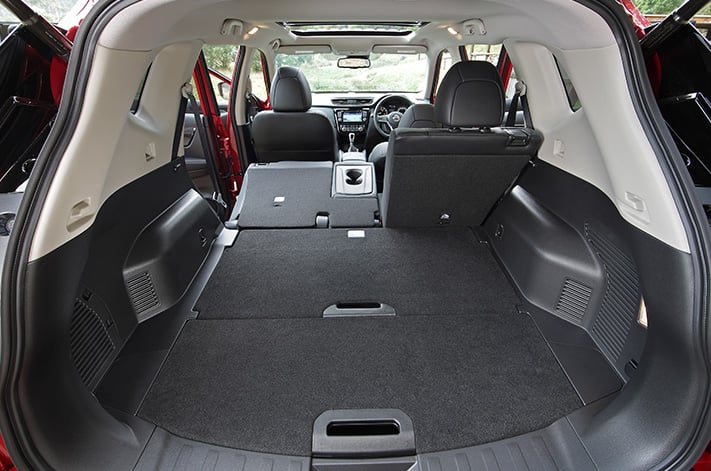
- The rear cargo area holds a hefty 565 litres which expands to 945 with the 60-40 split rear seats folded down. The boot floor lifts up and splits in two to reveal two separate compartments.
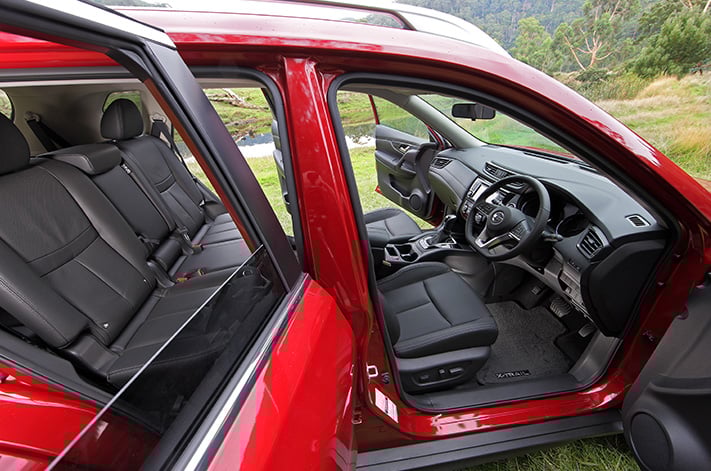
- It’s roomy and comfortably seats five adults. There’s heaps of legroom in the back helped by back seats that slide back and forth.
- As well as great legroom the rear passengers benefit from heated seats and their own air vents and raised ‘theatre-style’ seating for excellent front and side vision that’s further enhanced by the panoramic sunroof.
- The reversing camera with all-round view makes parking even easier.
WEAKNESSES
- The interior refresh didn’t address cabin storage space which seems insufficient for such a roomy cabin.
- The 2.5-litre petrol engine provides adequate power but is let down a little by the sometimes erratic CVT auto.
- The CVT’s delayed response to inputs also makes it difficult to to maintain a constant speed while in cruise control.
- The Ti model as tested here isn’t available with seven seats.
- The infotainment seems dated compared to other systems in terms of the map display and a lack of connectivity options such as Apple CarPlay and Android Auto.
- The 2.5-litre petrol engine is a little thirsty and averaging around 10.5L/100km during our time with us. From September you’ll be able to get the X-TRAIL TD which has most of the Ti’s features but with a new 2.0-litre turbo diesel engine that more powerful and fuel efficient.
- The panoramic sunroof creates additional wind noise.
ANY RIVALS I SHOULD CONSIDER?
The Nissan Pathfinder compares well with high-spec and comparatively priced variants of other popular mid-sized SUVs including the Ford Escape Titanium, Hyundai Tucson Highlander, Jeep Cherokee Longitude, Mazda CX-5 GT, Mitsubishi Outlander Exceed, Subaru Forester XT, Toyota RAV4 Cruiser and Volkswagen Tiguan 162TSI.
