
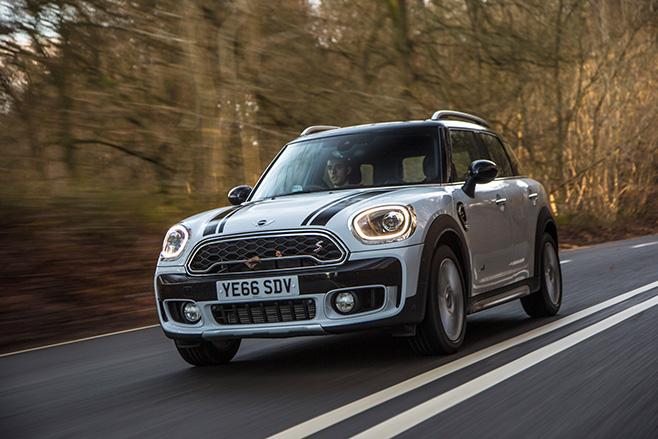
Mini Australia has released pricing and features for the all-new Mini Countryman range expected in Australia next month.
The range of four, which adds the Mini Cooper Countryman to the Cooper D, Cooper S and Cooper SD All4, will include a range of petrol and diesel engines in all-wheel and two-wheel drive.
The second-gen Mini SUV will feature an updated design outside and in, with a new grille and front apertures and redesigned tailgate. Inside, however, the Countrymen undergoes a growth spurt with an extra 59mm of elbow room, 50mm of shoulder room, 9mm of headroom and 50mm of rear legroom.
The second row benefits from adjustable seat angles (from -1.5 degrees to 28.5 degree) and a 40:20:40 split-fold.
Even the boot gets an enlargement of 100-litres, making it 450-litre capacity with the seats up.
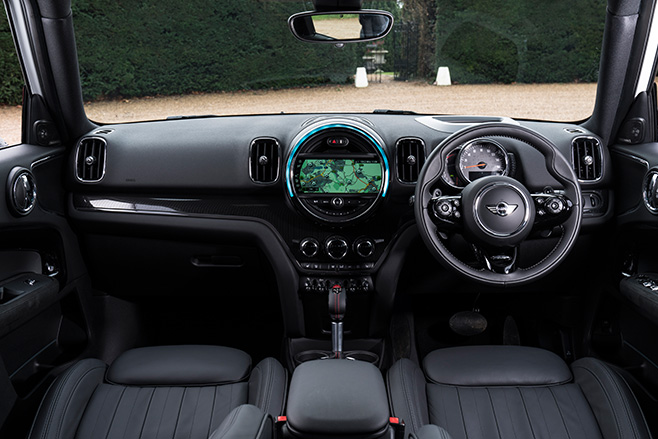
Mini also announced the interior redesign gets a “mix of high-quality materials and horizontal design segments” and a “wide array of personalisation” through the existing Mini Yours program.
The all new entry level Mini Cooper Countryman, priced at $39,000, is powered by a 1.5-litre three-cylinder turbocharged petrol engine that produces 100kW and 220Nm.
The Cooper D, at $43,000 gets a 2.0-litre four-cylinder turbocharged diesel engine generating 110kW and 330Nm.
For $46,500, buyers can opt for the Cooper S, powered by a sportier 2.0-litre turbocharged four-cylinder petrol engine (141kW, 280Nm) and with 18-inch light alloys.
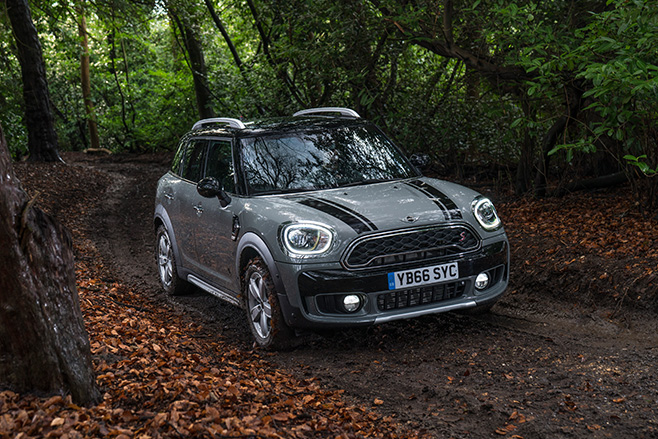
The top-spec Cooper SD All4 is priced at $51,500 and gets the all-wheel drive system powered by the 2.0-litre turbo diesel engine (410kW, 400Nm).
An array of cost-optional extras will also be offered to further enhance the personalisation of the Countryman.
A $1500 Chili package for the Cooper and Cooper D will include LED headlights with LED daytime running lights, LED foglights, adaptive cornering lights and driving modes.
For $4900 on the Cooper and Cooper D, or $3600 for the Cooper S and Cooper SD All4, buyers can opt for the John Cooper Works Chili package. Including everything from the Chili package, it adds modified front and rear aprons and spoiler, roof rails, 18-inch JCW light-alloys, Mini driving modes and performance control, Dynamic Damper Control or Sports Suspension, leather cross punch upholstery in carbon black, a leather steering wheel and gear shift, sill finishers and anthracite roof lining.
There’s also a Road Trip package ($750 for Cooper and Cooper D or $500 for Cooper S and Cooper SD), a Multimedia Pro package ($2400), a Convenience package ($2150) and a climate control package ($2400).
Key features over predecessors:
Mini Cooper Countryman ‑ $39,000
- Six-speed Steptronic automatic transmission
- Reversing camera
- Front park distance control
- Park assist
- Comfort access
- Active cruise control with ‘Stop & Go’ function, operable between 0-140km/h
- Driver Assistant Package (includes Forward Collision Warning, City Collision Mitigation (AEB), High Beam Assistant and Speed Limit Info)
- DAB+ digital radio
- 18-inch light alloy wheels with run-flat tyres
- Automatic tailgate operation
- Mini logo projection
- Eight-speed Steptronic automatic transmission
- Reversing Camera
- Front park distance control
- Park assist
- Comfort access
- Active cruise control with ‘Stop & Go’ function, operable between 0-140km/h
- Driver Assistant Package (includes Forward Collision Warning, City Collision Mitigation
- (AEB), High Beam Assistant and Speed Limit Info)
- DAB+ digital radio
- 18-inch light alloy wheels with run-flat tyres
- Automatic tailgate operation
- Mini logo projection
- Eight-speed Steptronic sports automatic transmission
- Mini Driving Modes
- Reversing camera
- Front park distance control
- Park assist
- Comfort Access
- Active cruise control with ‘Stop & Go’ function, operable between 0-140km/h
- Driver Assistant Package (includes Forward Collision Warning, City Collision Mitigation (AEB), High Beam Assistant and Speed Limit Info) DAB+ digital radio
- Rear armrest with cupholders
- LED headlights with cornering function
- Automatic tailgate operation
- MINI logo projection
- Eight-speed Steptronic sports automatic transmission
- MINI Driving Modes
- Reversing camera
- Front park distance control
- Park assist
- Comfort Access
- Active cruise control with ‘Stop & Go’ function, operable between 0-140km/h
- Driver Assistant Package (includes Forward Collision Warning, City Collision Mitigation (AEB), High Beam Assistant and Speed Limit Info)
- DAB+ digital radio
- Rear armrest with cup holders
- LED headlights with cornering function
- Automatic tailgate operation
- Mini logo projection
1. The second generation Porsche Panamera will originally be offered in six guises, from the rear-drive V6 to the all-wheel drive twin-turbo V8. Prices range from $210,000 to almost double that.
2. The new Panamera is 34mm longer than the one it replaces and has an extra 30mm between the front and rear wheels, for more leg room in the rear. It’s also fractionally wider (by 6mm) and higher (by 5mm).
3. At 5049mm long the Panamera is 55mm longer than a Holden Commodore and 99mm longer than a Toyota LandCruiser. It’s also the longest Porsche by some margin, stretching 203mm longer than a Cayenne.
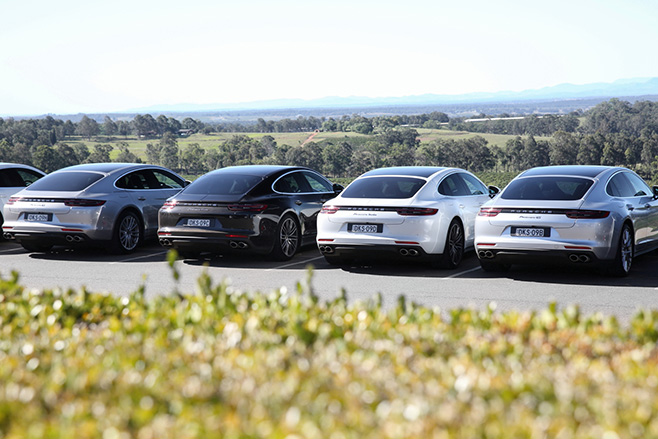
4. Porsche has revealed the E-Hybrid that will slot between the Panamera 4 and Panamera 4S, bringing big fuel saving benefits around town and the ability to recharge it from a household powerpoint and drive up to 50km just on electricity.
5. Porsche will also begin selling a V8-powered hybrid model, which will use the 404kW twin-turbo V8 from the Panamera Turbo and the 100kW electric motor from the E-Hybrid.
6. V8 models will get cylinder deactivation technology, which can temporarily shut down four of the eight cylinders when the car is driving and doesn’t need full power.
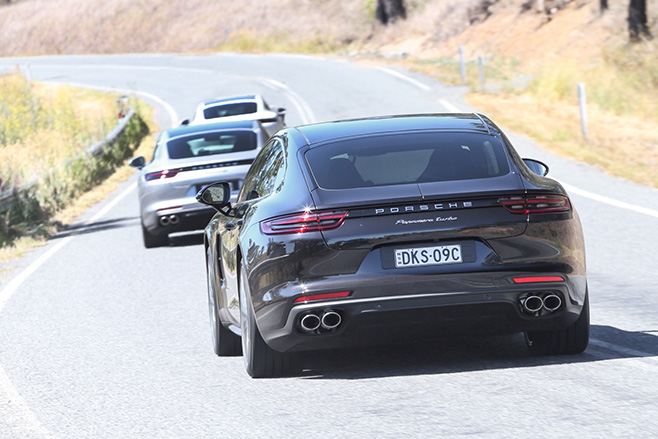
7. The Panamera gets an optional rear-wheel steering system. Below about 50km/h the rear wheels turn in the opposite direction as those up front, making for easier manoeuvring and tighter turns. Above 50km/h the rear wheels turn in the same direction as the fronts (up to a maximum of 2.8 degrees from straight ahead) to improve high speed stability.
8. The Panamera rides exclusively on air suspension rather than more traditional steel coil suspension. Each corner of the car now has a new three-chamber setup, whereby there are three chambers that can have varying levels of air (up from two in the old car).
9. In Sport Plus mode the suspension on the Panamera lowers to reduce the centre of gravity and improve stabilisation. However the nose lowers by slightly more than the rear (28mm versus 20mm) to further improve aerodynamics and high speed stability.
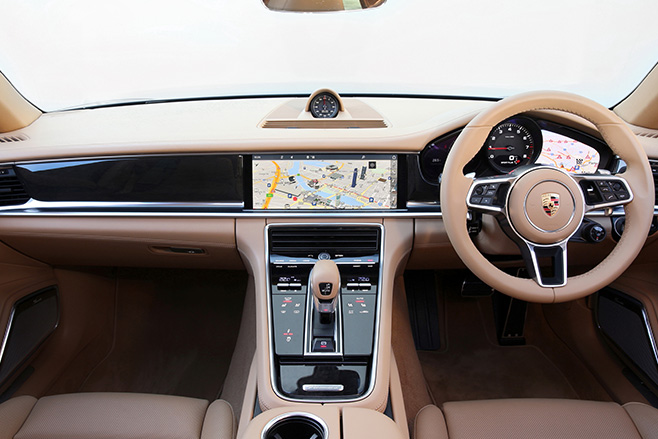
10. The central air vents in the Panamera can’t be adjusted manually. Instead you have to dive into the Climate menu of the 12.3-inch touchscreen and use a virtual slider to tell the air where to go. It’s vastly more complex than a manual setup and inferior when it comes to functionality.
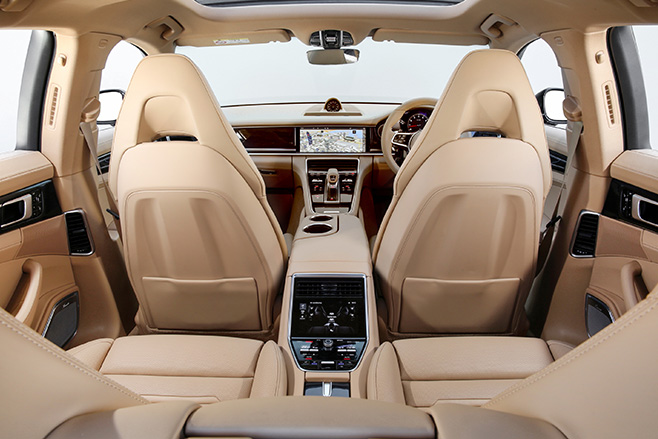
11. All four occupants of the Panamera (there’s no five-seat version available yet) get a colour touchscreen to adjust their own personal air flow. The 7.0-inch rear touchscreen can also be used to operate other optional functions (such as the rear blinds or TV screens).
12. There are four colour displays in the Panamera; two 7.0-inch displays as part of the instrument cluster (the tacho is the only analogue gauge), a 12.3-inch main touchscreen up front and a 7.0-inch display for those in the rear.
13. Porsche will again offer a long wheelbase version of the Panamera – but not in Australia. The so-called Executive models are 150mm longer (all of which is added to the wheelbase for an extra 150mm of back seat space) for a more limousine feel. They’re aimed at the Chinese market, where wealthy owners like to be chauffeured around.
14. Porsche has changed the functionality of one of the roller selectors on the steering wheel. The left-hand roller previously adjusted the volume for the audio system (it still does on 911s, among other Porsches) but on the new Panamera it scrolls through various screens for the left-hand digital instrument display. Expect that change to flow through to future Porsches.
15. The new Panamera is the first Porsche to get Night Vision Assist. It uses a forward facing thermal camera to detect large animals, including humans, and display them in the digital display in the instrument cluster before they would normally be illuminated by the headlights. Night Vision Assist is an extra $5890 and is only available when the matrix LED headlights are also fitted.
16. In other parts of the world the Panamera gets an advanced fuel saving system linked to the satellite-navigation. The Panamera’s active cruise control system uses data from the satellite-navigation system to look 3 kms down the road and adjust the speed and acceleration accordingly with the aim of reducing fuel use. Called InnoDrive, it will automatically brake for bends and pre-empt hills. The system is not currently available in Panameras sold in Australia.
17. The upcoming Panamera 4S Diesel is claimed to be the world’s fastest diesel sedan, capable of accelerating to 100km/h in as little as 4.3 seconds. With claimed fuel use of 6.8 litres per 100km it means the Panamera should theoretically be able to travel more than 1300km between refills.
It only seems like last year when we were driving the brand new BMW M2 … hang on, it was. Well, it seems the update is already in the pipeline for 2017.
Some current BMW M2 owners might not be long running their car in after the model’s initial long waiting list, though the good news is that the changes are expected to be minor.
There’s no mistaking the wide, squat stance and quad exhaust system of the flagship BMW 2 Series spotted by our spy photographer.
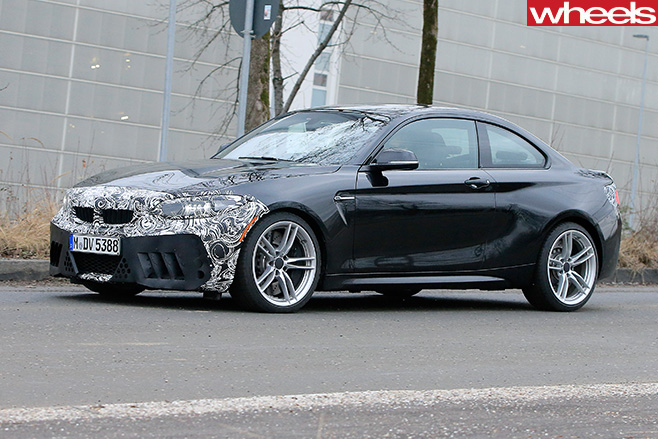
Hexagonal LED projector headlights first seen on the new-generation BMW 5 Series are also noteworthy.
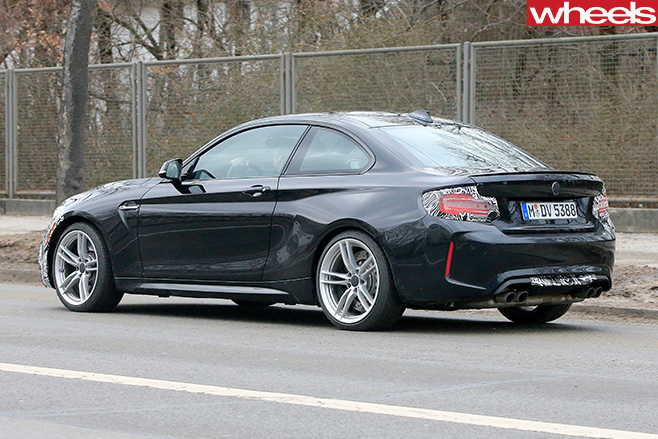
Bigger brakes – if the M2 really needs them – and a revised exhaust system could also form part of the upgraded package, though we’re not expecting any major changes to the N55 turbocharged six-cylinder up front.
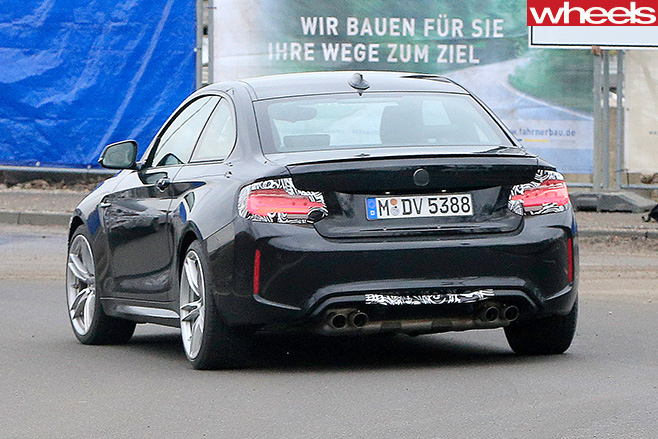
BMW’s entire 2 Series range will get the LCI treatment, anticipated for the second half of 2017.
Tell me about this car
The Porsche Panamera is the most luxurious car Porsche produces. It is aimed at people who want the space of a limousine but the drive of a sports car. This new model is the second generation of a car that first arrived in 2009. While the philosophy is the same as that original car it is all new from the ground up; the body, interior, engines and gearbox are all box-fresh.
Any rivals I should also consider?
The Panamera straddles two segments, in some ways competing with large limousines such as the Mercedes-Benz S-Class, BMW 7-Series and Audi A8. It also lines up against sportier four-doors such as the Aston Martin Rapide and Maserati Quattroporte. Some people may even shop it against the likes of the BMW M5, Mercedes-AMG E63 and Audi RS6/RS7.
Strengths
- Styling. Inside and out the new Panamera is a big step up on the previous model. Porsche has tried to integrate many Porsche 911 styling cues – the headlights, tail lights and rear wheel arches, for example – while also giving it the dimensions required for decent interior space.
- Performance. The Panamera 4S uses a new 324kW/550Nm 2.9-litre twin-turbo V6 engine, which teams beautifully with the new eight-speed automatic transmission for great acceleration. With the optional Sport Chrono package there is a launch control function which makes for very fast take-offs. The V6 is also very flexible across its rev range, making for effortless performance at any speed. Those wanting more punch can step up to the V8-powered Turbo, which ups power another 25 per cent for 404kW/770Nm.
- Cornering. The Panamera gets large car tyres with lots of grip, something that translates to very competent cornering. Riding on air suspension the body is also very well controlled over bumps, helping build driver confidence.
- Going green. The Hybrid Panamera is more affordable than ever, now priced from $242,600. It also brings decent performance thanks to a new hybrid system and a willing V6 twin-turbocharged engine. It makes the Panamera E-Hybrid, as it is called, more appealing than ever.
Weaknesses
- Start saving. The Panamera is priced from $210,000 for the base model V6. If you want the maximum performance from the V8-powered Turbo it’s a decent step up to $376,900 – a fair stack of cash for most.
- Glare and sun reflection from the centre console. The shiny black plastic touch pad that surrounds the gear selector looks the business but it’s prone to sun glare depending on the time of day.
- It’s not as slick or sporty as a Porsche 911, despite its sleek looks. Blame it on the weight (the Panamera weighs almost two tonnes).
- Adjusting the interior air flow. The central air vents that blow air on occupants cannot be adjusted manually. Instead you have to go into a menu within the 12.3-inch touchscreen and slide two pointers to the area you think you want the air. It’s far more complex than a traditional manual selector.
The Tesla Model S is the internet star of the car industry, an automotive PewDiePie.
While we’ll leave actually collating the figures to someone else, surely the electric sensation must rank near the very top for the number of articles produced/video views.
There’s just something about it that has captured the imagination of the general public; even non-car enthusiasts all want to know about Elon Musk’s bold creation.
Most videos understandably focus on the car’s prodigious straight-line speed, lining up drag races against seemingly every possible foe, with the rocket-like Tesla usually coming out on top. We’ve even done so ourselves (see below).
The video above shows a different side to its personality. Helpfully, while Tesla’s self-driving ability has created plenty of headlines, as enthusiasts we’re more excited about the ability to deactive the ESP system.
With a Model S and an empty, snowy carpark, you’re guaranteed plenty of amusement, at least until you inevitably become too confident, meet a stationary object and require a tow truck.
The Model S might be powered by electricity instead of fossil fuels, however like most all-wheel drive vehicles it still has the unique ability to almost donut in its own length. Porsches are particularly good at this, or so we hear…
While that’s a neat party trick, for our money the rear-drive Model S is still the more entertaining car, not least because with a Japanese drift champion all that electric torque turns it into a mean drift car.
Unfortunately, this videos all too often overshadow the fact that the Tesla Model S is actually an extremely accomplished car.
The 2017 Mini John Cooper Works Clubman is the latest model from the Mini stable to receive the high-performance JCW treatment, and the first of its ilk to boast an all-wheel drive configuration. While its predecessor took power to the front wheels exclusively, the all-new JCW Clubman benefits from all-paw traction and more power – meaning more performance.
The Mini JCW Clubman All4, to use its full name, is now priced at $53,900 and is powered by a 170kW/350Nm 2.0-litre turbo four-cylinder, boasting 30Nm more torque than the already-released JCW Hatch and Convertible variants. It is also the highest torque output ever from a petrol-powered Mini.
That oomph is delivered through an eight-speed automatic transmission, with a six-speed manual transmission a no-cost option for those that like to select their own gears.
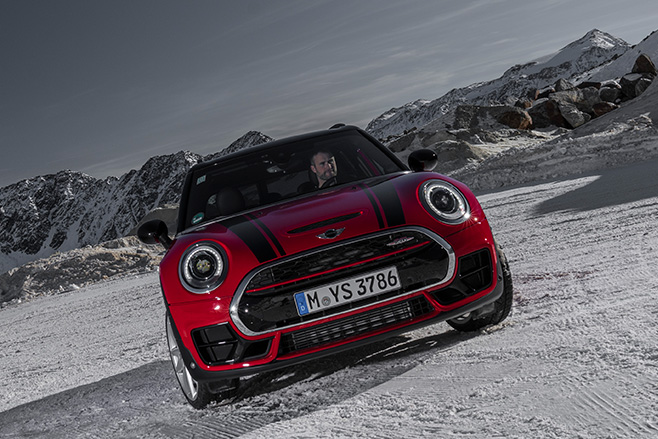
The new powertrain/drivetrain package means the JCW Clubman accelerates to 100km/h in a brisk 6.3-seconds when equipped with the automatic. Fuel economy is a claimed 7.2L/100km on the combined cycle.
On the outside, 19-inch alloy wheels and run-flat tyres are standard, along with a 17-inch performance braking package with beefy four-piston fixed front calipers.
An 18-inch JCW-styled alloy wheel is available as a no-cost option, shod with non run-flat Michelin Pilot Super Sport tyres. Ticking that particular box also nets you dynamic damper control.
JCW suspension is standard, but a sports suspension is another no-cost option which drops the ride height by 10mm and deletes the electronic damper adjustment of the standard hardware.
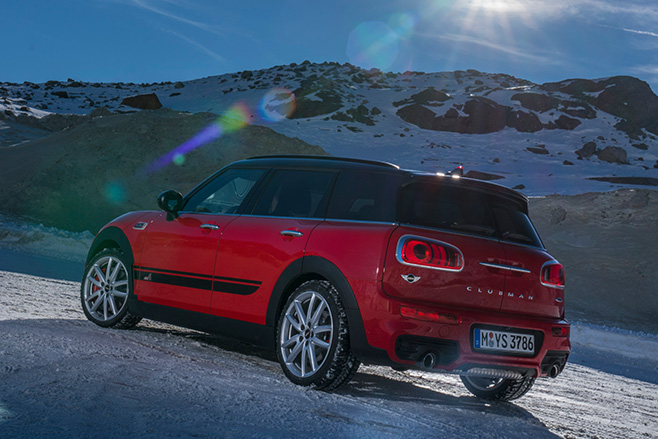
Safety equipment is extensive, with active cruise control, city crash mitigation (AEB) and pedestrian detection, front and rear park distance control and parking assistance, front and side airbags for driver and passenger plus front and rear curtain airbags being standard.
Infotainment is controlled through an 8.8-inch touchscreen with standard sat-nav, 12-speaker audio, and digital radio tuner. Customisable LED interior lighting and seating upholstered in black leather cross punch trimming lift the interior ambience
A $2,200 convenience package adds electric front seats, 40:20:40 rear seat split, plus an interior and exterior mirror package.
The climate package costs $2,400, and adds a panoramic glass sunroof, sun protection glazing, and heated seats for the driver and front passenger.
Finally, a control package costs $650 and adds adaptive LED headlights and tyre pressure monitoring.
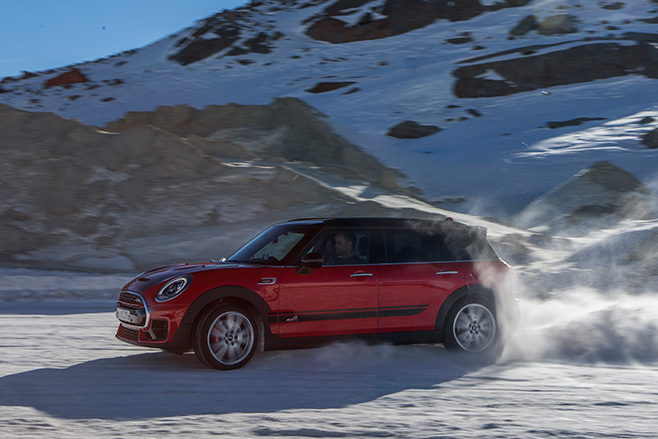
“Since its 2015 introduction, the latest-generation Mini Clubman has been very well received in Australia,” said MINI Australia General Manager, Tony Sesto.
“Now with the John Cooper Works variant, we offer a high-specification, high-performance flagship for the Clubman range.
“The latest ‘All4’all-wheel drive system offers incredible traction over a wide range of surfaces, and of course there’s an impressive level of personalisation options available. It’s an incredibly versatile package.”
Pricing
Mini John Cooper Works Clubman ALL4 – $53,900 Convenience Package – $2200 Climate Package – $2100 Control Package – $650
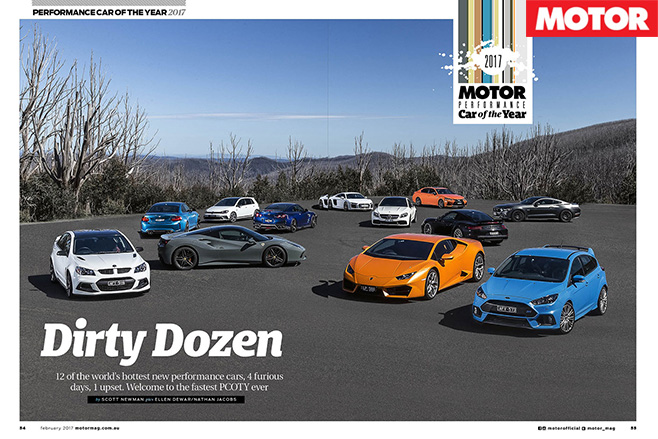
The February 2017 issue of MOTOR magazine is on-sale now and it’s our annual Performance Car of the Year issue!
We’ve got 60 pages of coverage dedicated to dissecting the 12 fastest and impressive performance machines of the last 12 months. All are great cars, but only one is our Performance Car of the Year.
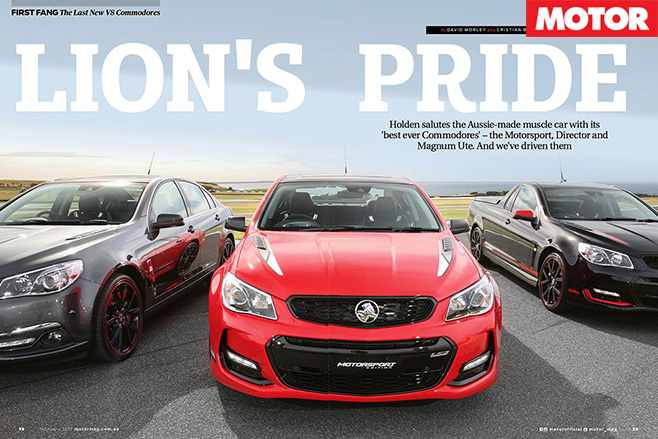
We also drive Holden’s final Special Edition Commodores, the Motorsport Edition, the Director and the Magnum.
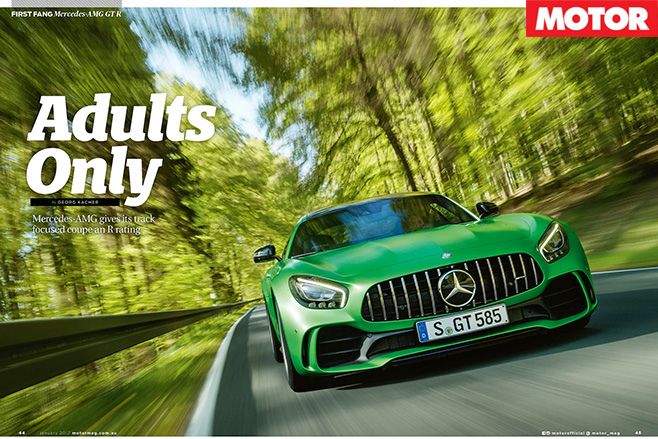
Mercedes-AMG has its eyes on knocking off the Porsche 911 GT3 RS as the ultimate road racer with its Nurburgring-smashing GT R.
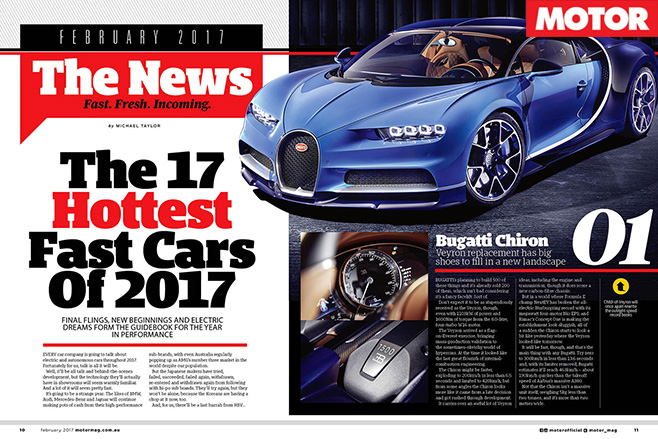
The next 12 months are going to be chock full of amazing performance car releases and we’ve got all the information on the 17 that have us most excited.
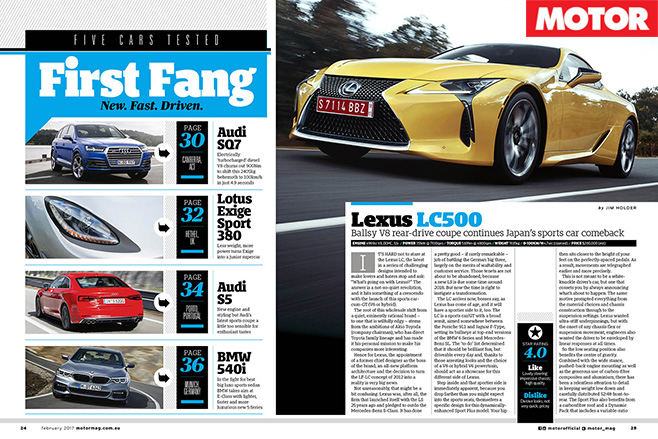
In our first drive section we steer the Lexus LC 500, Audi SQ7 and S5, Lotus Exige Sport 380 and BMW 540i.
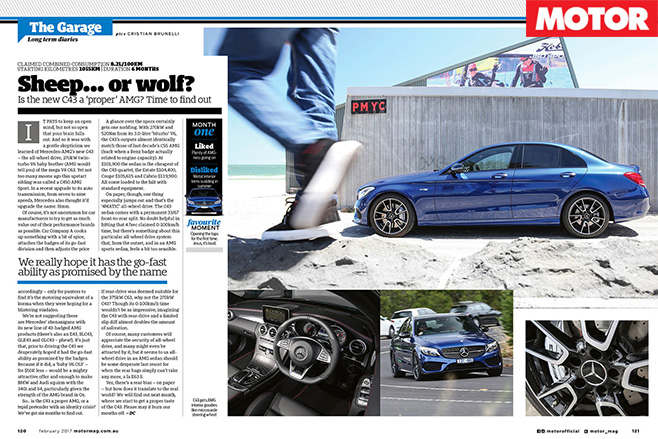
The Mercedes-AMG C43 joins the MOTOR garage and our Mazda MX-5 scores some new clothes.
Could we see a return of a McLaren powered by a BMW engine, as in the spectacular F1 from 25 years ago? Perhaps not with an aspirated V12, however the British and German companies have entered a partnership to save the internal combustion engine (ICE).
According to the announcement McLaren will in conjunction with BMW develop “new combustion technology that will deliver a higher output per capacity than currently possible” for its next-generation supercars and hypercars.
“It also aims to further facilitate CO2 reductions while simultaneously increasing engine output [and] is destined for application in future McLaren engines,” the brand added in a statement.
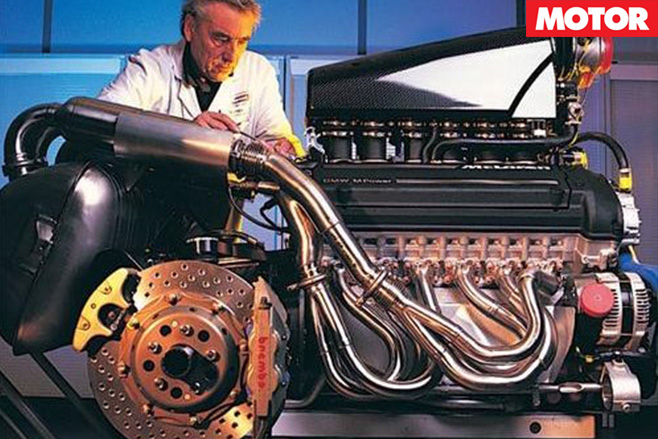
BMW has not yet made an official statement about the venture, although it will sell its engine technology to McLaren rather than co-produce an engine to be shared across different model lines.
“We will continue to independently design and build our own engines,” confirmed McLaren Automotive CEO Mike Flewitt.
“This is an exciting project that plays to the strengths of all partners … and the benefits of this project will help us accelerate the development of our next-generation powertrain, as confirmed in our recently-announced Track22 business plan.”
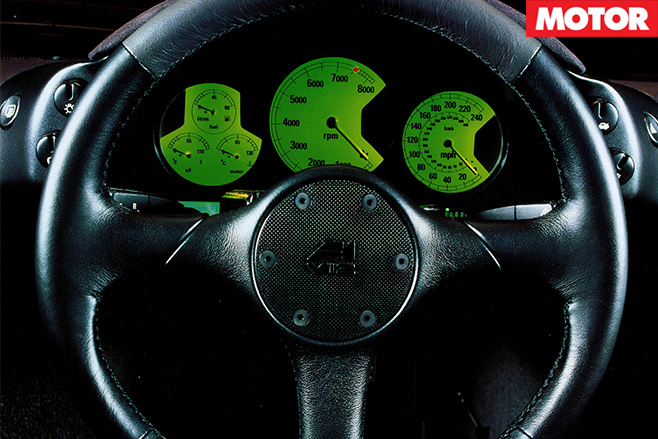
It is unclear when the new technology will arrive, but given the early-2017 announcement it could be a number of years before the new drivetrains are set for production.
The Track22 plan will begin at the Geneva motor show on March 7 when the McLaren P14 (or 720S) makes its debut as the next-generation flagship supercar. Another 15 new cars are set to arrive before 2022 – many of which will no doubt feature BMW technology.
BMW Australia CEO Marc Werner has slammed the Turnbull Government for failing to provide a framework for electric vehicle consumption in Australia.
Calling out the lack of incentives for EV ownership, including financial incentives and infrastructure, Werner said the “time for talking” was over.
“It’s time for some action. We need to break Australia’s embarrassing silence on … environmental topics and start doing something,” he told a group of motoring journalists.
“No more discussions. I call on Mr Malcolm Turnbull and the Federal Government to finally action robust policy to support the introduction of low emission vehicles to the Australian market. We all know how it could be done and we all know that it’s possible and the time has certainly come.
“It’s not just BMW that is saying this. The large majority of automotive brands are engaged in this pursuit and it’s time for the Australian government to act.”
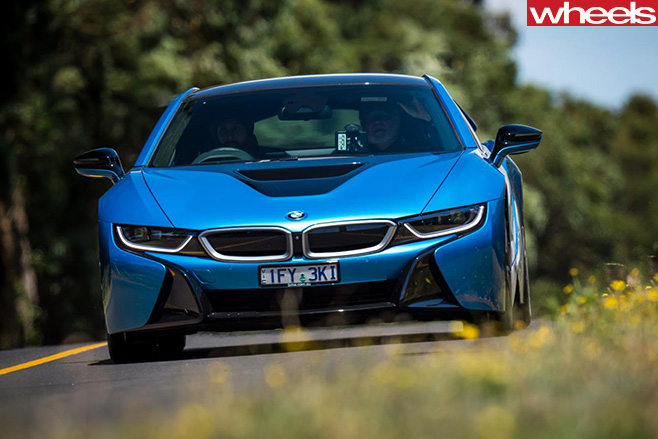
“But that needs to go hand in hand with some substantial investment on the infrastructure side which can only be provided through some government action”.
He pointed out countries such as Norway and New Zealand where EV uptake has improved since their introduced necessary financial incentives, such as tax and fee reductions for low emissions cars.
“We can look at New Zealand as a role model as far as electric mobility is concerned but I would love it to be the other way around to be honest.”
A spokesperson for the Department of the Environment and Energy told Wheels that the Government’s Ministerial Forum on Vehicle Emissions is exploring ways to address vehicle emissions and reduce vehicle running costs, such as the type of information provided to consumers when buying a car and support for emerging technologies.
“Currently, electric vehicles receive a concession on the Luxury Car Tax (LCT) through a higher threshold that applies to fuel efficient vehicles. The 2016-17 threshold for fuel efficient vehicles of $75,526 is $11,394 higher than for other vehicles. At an LCT rate of 33 per cent, this effectively translates to a tax saving of more than $3700.”
However, Werner said the LCT was now redundant because of the end of local car production and added that now was the time to overhaul vehicle taxes to provide further incentives.
“We would love to see a more intelligent way of incentivising low emissions vehicles.
“But it’s not only incentives that play a major role in order to really lift electric mobility, it’s also about the necessary infrastructure that needs to come with it.”
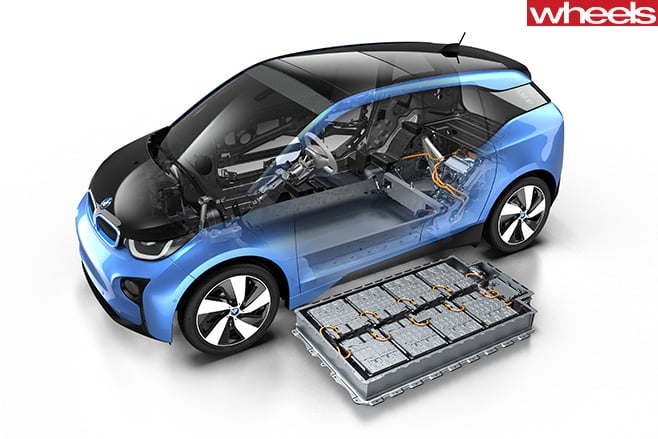
“We need to join forces with the other manufacturers and that needs to go hand-in-hand with some substantial investment on the infrastructure side which can only be provided through some government action.”
Werner said despite the lack of government action, BMW isn’t holding back with sales of its hybrid and electric vehicles, but won’t set targets in line with the company’s ambitious international forecasts until there is the necessary government framework.
“We have a really substantial model lineup as far as BMW i and BMW iPerformance vehicles are concerned so that we can take the next step.”
Wheels has contacted Environment Minister Josh Frydenberg’s office for a response.
BMW has released an Australia-only limited edition version of the M140i hot hatch with driving purists in mind, complete with a spare set of wheels for track days.
The BMW M140i Performance Edition will be limited to just 60 units split between 45 eight-speed automatics and 15 six-speed manuals, with latter coming with a limited slip differential.
The limited-slip diff was added to the manual to capitalise on the purity of driving, says BMW Australia’s head of product marketing and planning Shawn Ticehurst.
“It’s manual with a limited slip, rear wheel drive, six cylinder. It’s in some ways a little bit old school, but it’s an old school drivetrain interpreted in a modern way with all the new tech and all the rest of it.”
While you can custom fit limited slip diffs to M140s, this is the only version that comes with it off the production line.
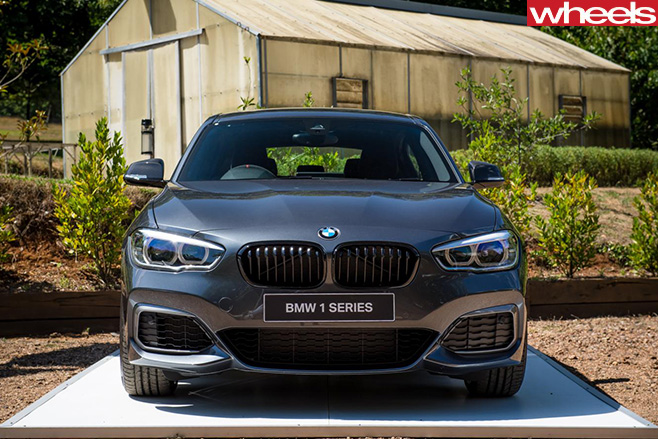
“We talked about doing more [manuals] but once we spoke with our dealer group and we faced the realities of the Australian market now that is so automatic driven,” he told Wheels.
“But we said we knew there were the enthusiasts out there who like me said ‘I love the feel of a manual gearshift’ and thought 15 out of 60 is the right number … which is 12-15 percent of the total. In a lot of our cars, like the M3 and so on, we’re seeing manual being around the five to 10 percent of sales.
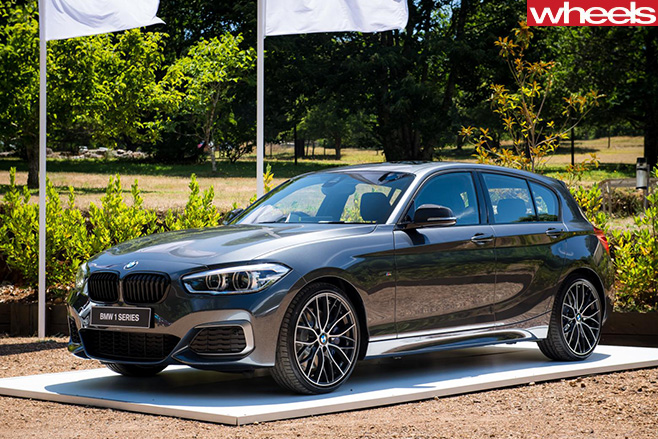
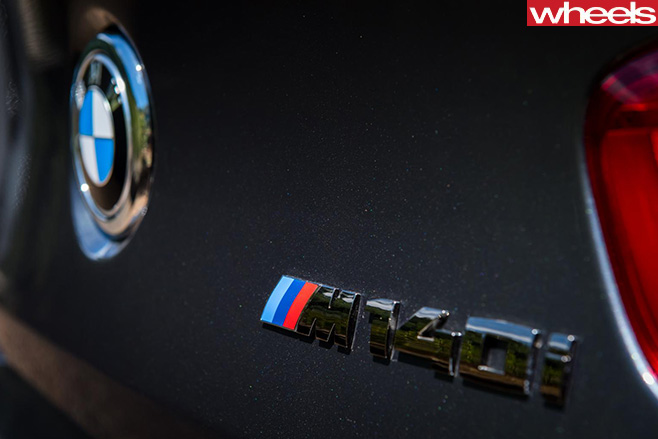
The rear is accentuated by black rear fins and roof-mounted spoiler finished in black bright chrome twin tailpipes at the end of the ladder exhaust providing a better engine note.
It also comes with BMW M performance 19-inch light alloy wheels finished in bi-colour ‘orbit grey’, along with a spare set if 18-inch wheels from the standard M140i to use for track days.
“We recognise that a lot of people that will buy this car probably do get an opportunity to put it on a track and we all know that once you do get on the track you end to eat up your tyres.
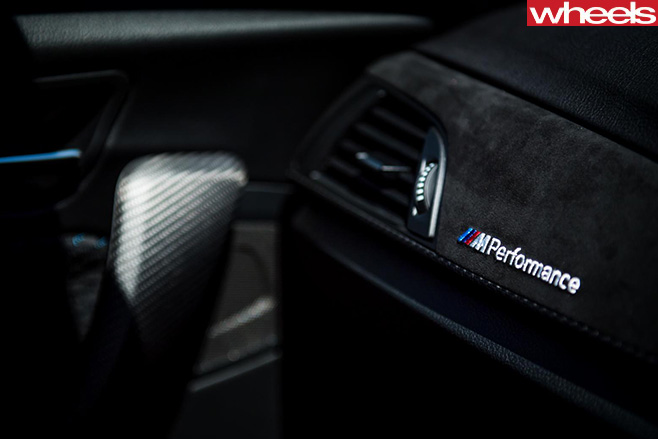
The interior is a tribute to Alacantra, with the synthetic, suede-like material applied liberally on the seats, trims and steering wheel, along with carbon-fibre trim.
Ticehurst says all unique features and parts were added to complete production M140i cars after they arrived here, a first for BMW Australia.
“The parts are all fitted before the car goes to the dealer but developing that process and the quality control around it that’s all new and a big learning curve but now we’re all ready to go.”
Other key features include:
- Adaptive M Suspension
- Variable sport steering
- M Sport brakes (4-piston front callipers, 2-piston rear)
- Adaptive LED headlights with BMW Selective Beam
- ConnectedDrive infotainment including iDrive5 with Navigation System Professional
- 12-speaker Harman/Kardon audio system with DAB+ capability
It will be available in showrooms during the second quarter of the year.
