2023 Best Small SUV series
Looking to get into a brand-new small SUV? Our stories below will guide you to the model that best suits your needs!

Despite the fact that Australia has its foot firmly on the accelerator when it comes to electric cars – sales have tripled over the first four months of 2023 and EVs now account for eight percent of the market – there are only two electric small SUVs currently available under $50,000: the MG ZS EV and the BYD Atto 3. It’s a surprise, especially given our love of small SUVs, but the good news is that there are some fresh contenders on the horizon.
Perhaps the most eagerly anticipated is the new-gen Hyundai Kona EV, which is due to arrive later this year. Bigger and more luxurious than the model it replaces – the EV variant was the priority during development, says Hyundai – it won’t only be better to drive and have more range but it should boast many of the features first shown in Hyundai’s EV flagship, the Ioniq 5.
The caveat to both of those contenders, however, is price. The EX30 will start at $59,990 when it arrives late in the year and the new-gen Kona is likely to cost around $60K, perhaps a touch more, meaning both are above our self-imposed $50K cutoff.
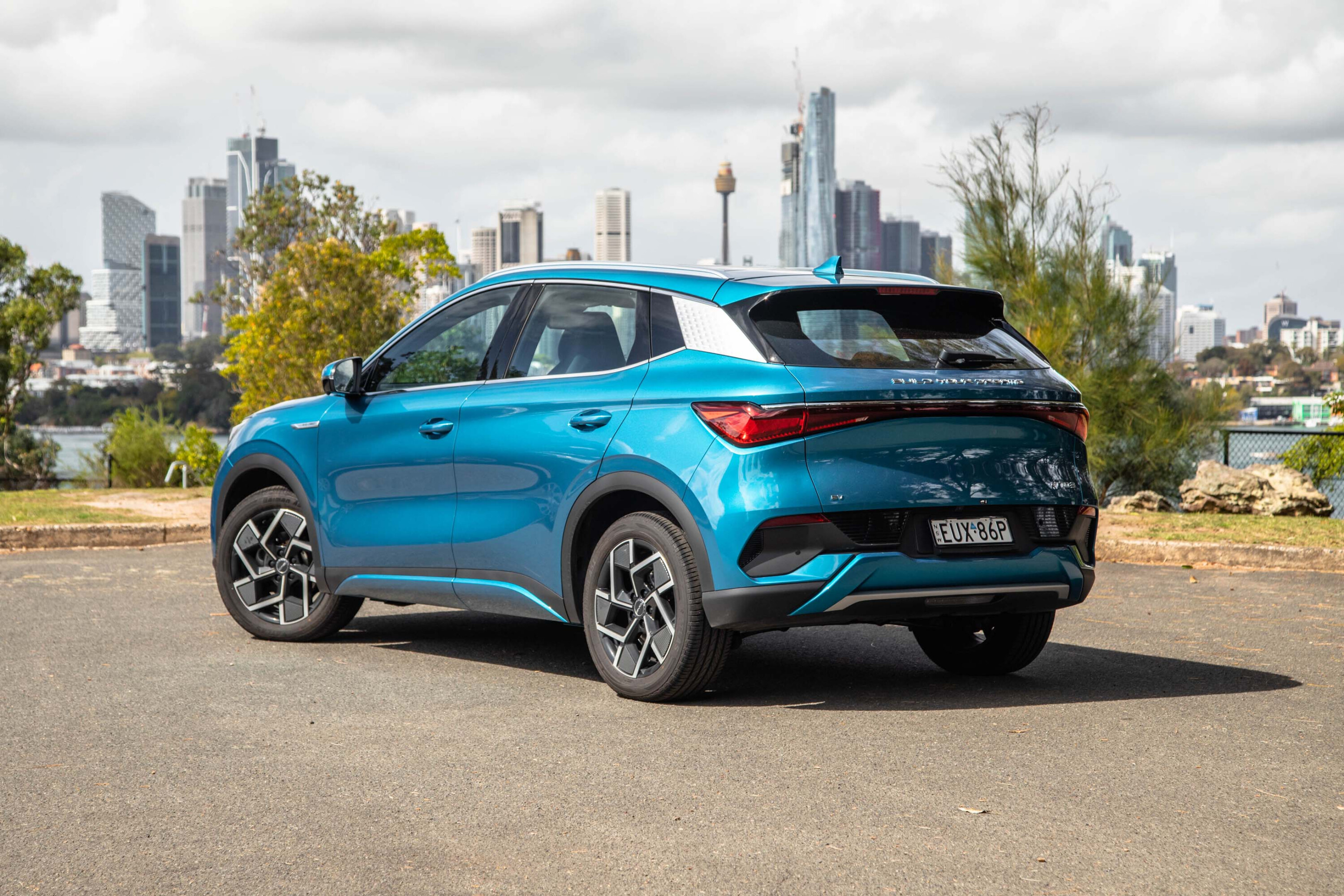
So for now, this segment is a class of two. And between the MG ZS EV and BYD Atto 3, it’s the BYD that’s the clear winner. The first model from Chinese brand BYD to hit Aussie roads (BYD is rapidly expanding Down Under with the Atto 2 hatchback and Seal sedan both imminent) the Atto 3 has made waves from the get-go.
Both models are front-wheel drive, produce an identical 150kW/310Nm and carry the same high level of standard equipment
Value has long been its biggest drawcard. For a moment the Atto 3 was Australia’s cheapest EV – you could nab one for $45K drive-away in certain states – and while a recent price hike has tempered that equation a touch, you’re still getting a lot of SUV for your money.
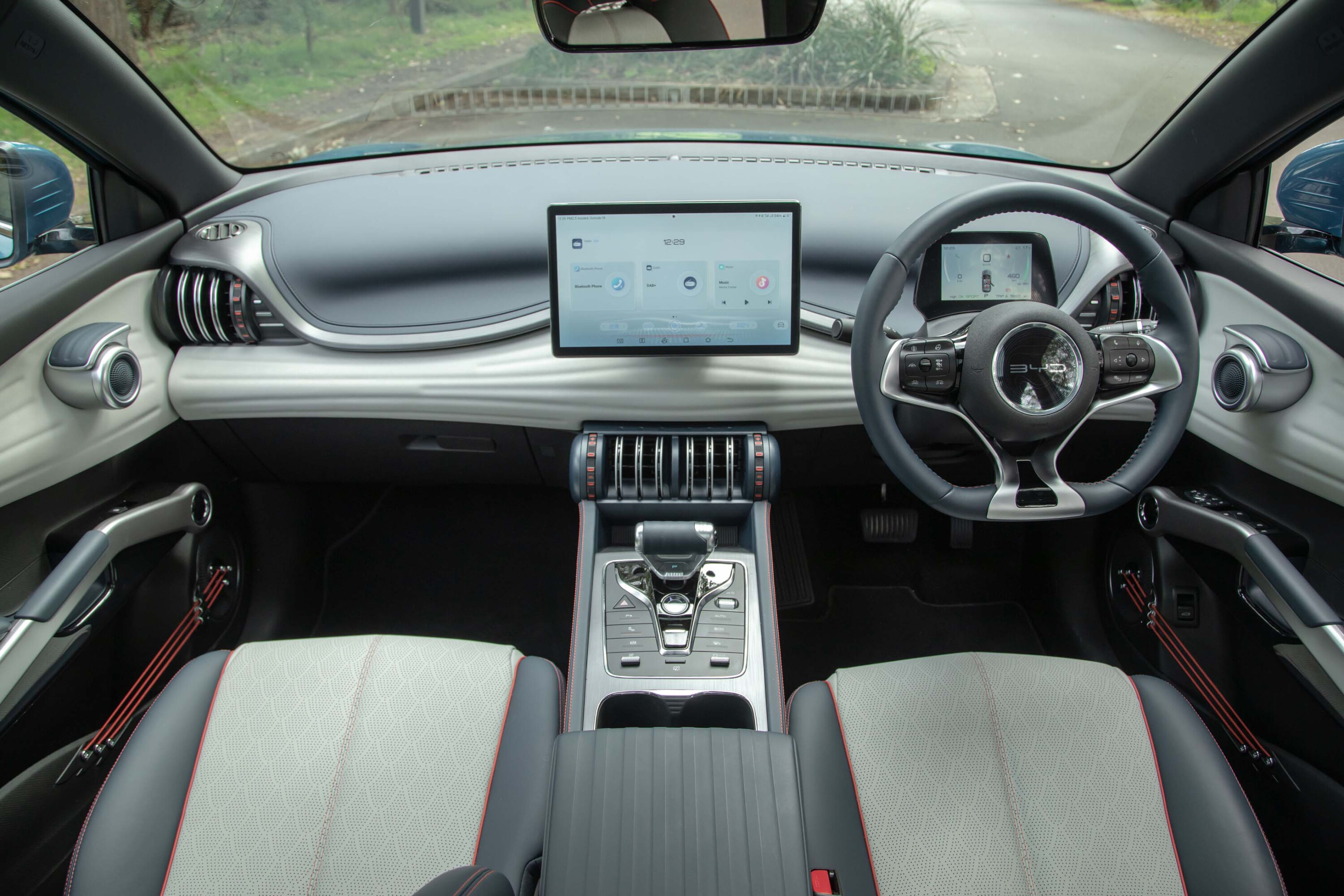
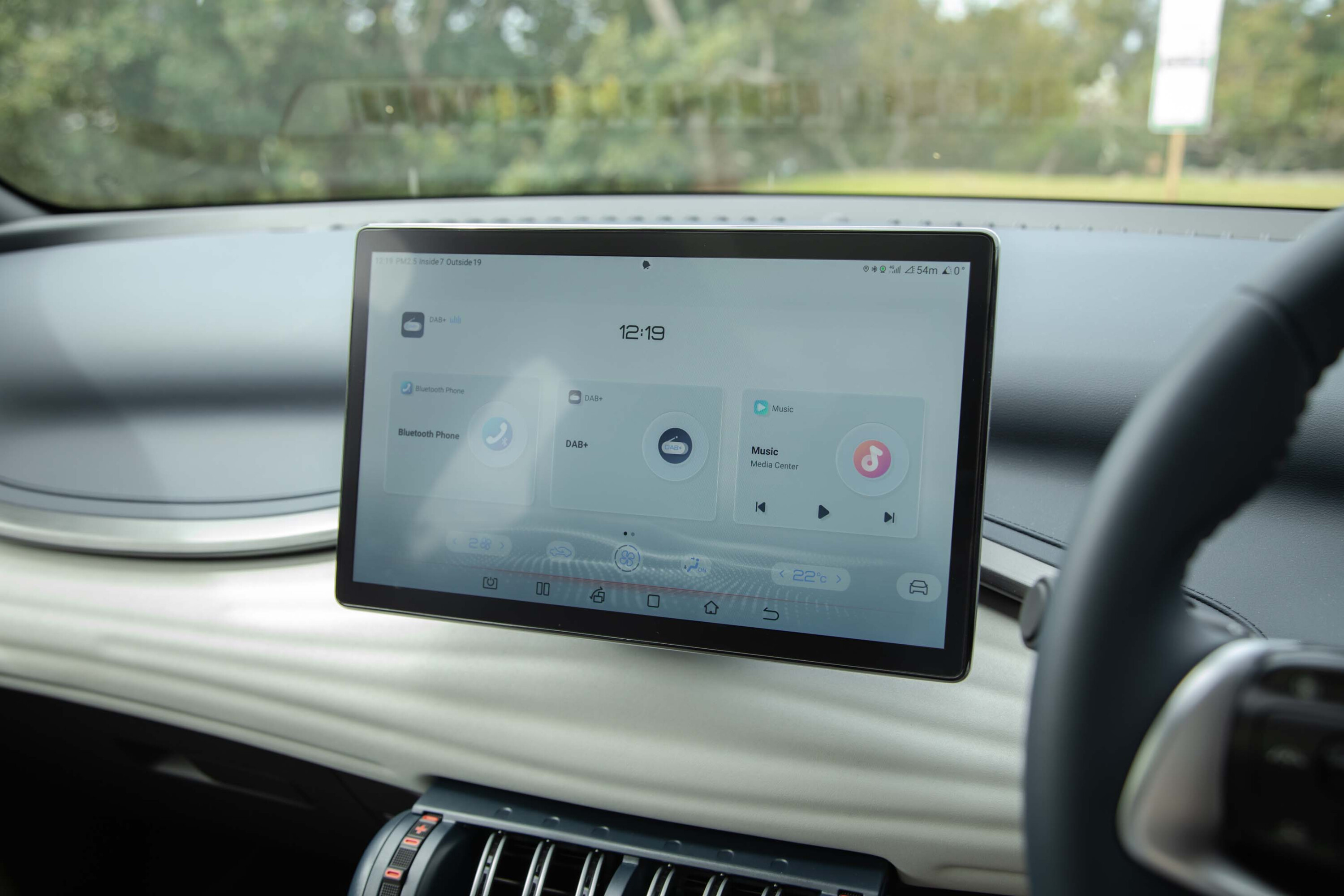
Both models are front-wheel drive, produce an identical 150kW/310Nm and carry the same high level of standard equipment: 18-inch alloys, LED headlights, a panoramic sunroof, a healthy list of standard safety gear and a funkily styled cabin that features a rotating 12.8-inch central touchscreen are all included.
There’s also loads of room. At 4.46m long, the Atto 3 is almost a mid-size SUV and the result is cabin that’s impressively spacious and comfortable in both rows. The boot is also generous at 440 litres and the Atto 3 has a flat floor, meaning no intrusive transmission tunnel for middle seat passengers, plus dedicated rear air vents.
Even better is the sense of quality. Everything feels tightly screwed together, the mix of materials is superior to an MG ZS EV and the functionality and connectivity offered by the large centre touchscreen is impressive.
Your milage may vary on the success of the cabin design – BYD says it was inspired by ‘fitness culture’ and the bulging centre section of the dash is meant to resemble a muscle – but the functionality is sound.
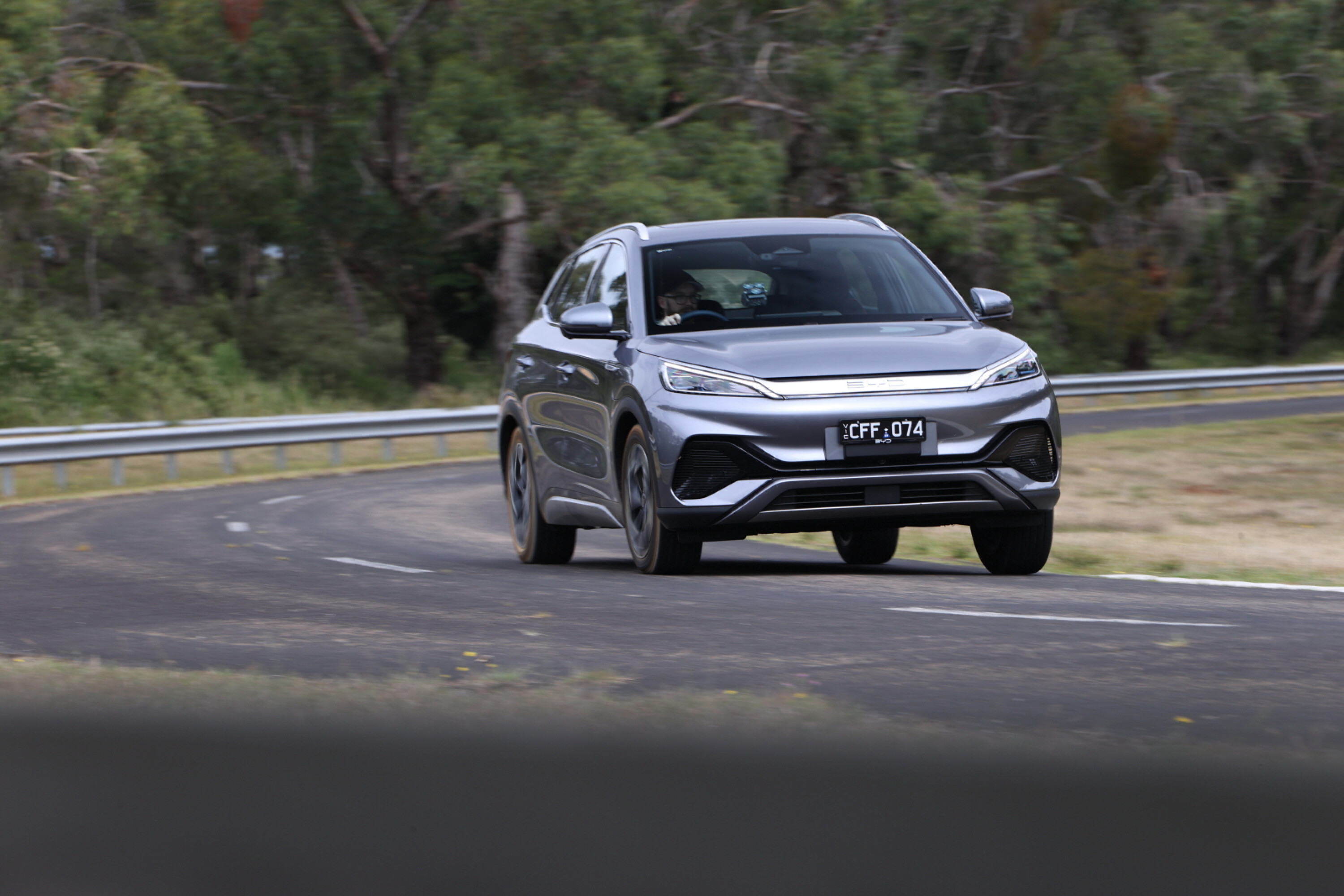
The Atto 3 is built on BYD’s fresh EV-dedicated platform and while the ride and handling isn’t going to tickle to fancy of keen drivers, it won’t disappoint.
A supple ride, light steering and sharpish acceleration are the key dynamic traits, with the Atto 3 feeling most comfortable up to about 7/10s. Push hard on a twisty road and things can get a little uncouth but as a daily driver in the city, the ride and handling compromise is nicely judged.
Negatives? As with any new brand, BYD has an unproven track record for reliability and customer care but BYD’s local importer is working hard to establish a far-reaching support network.
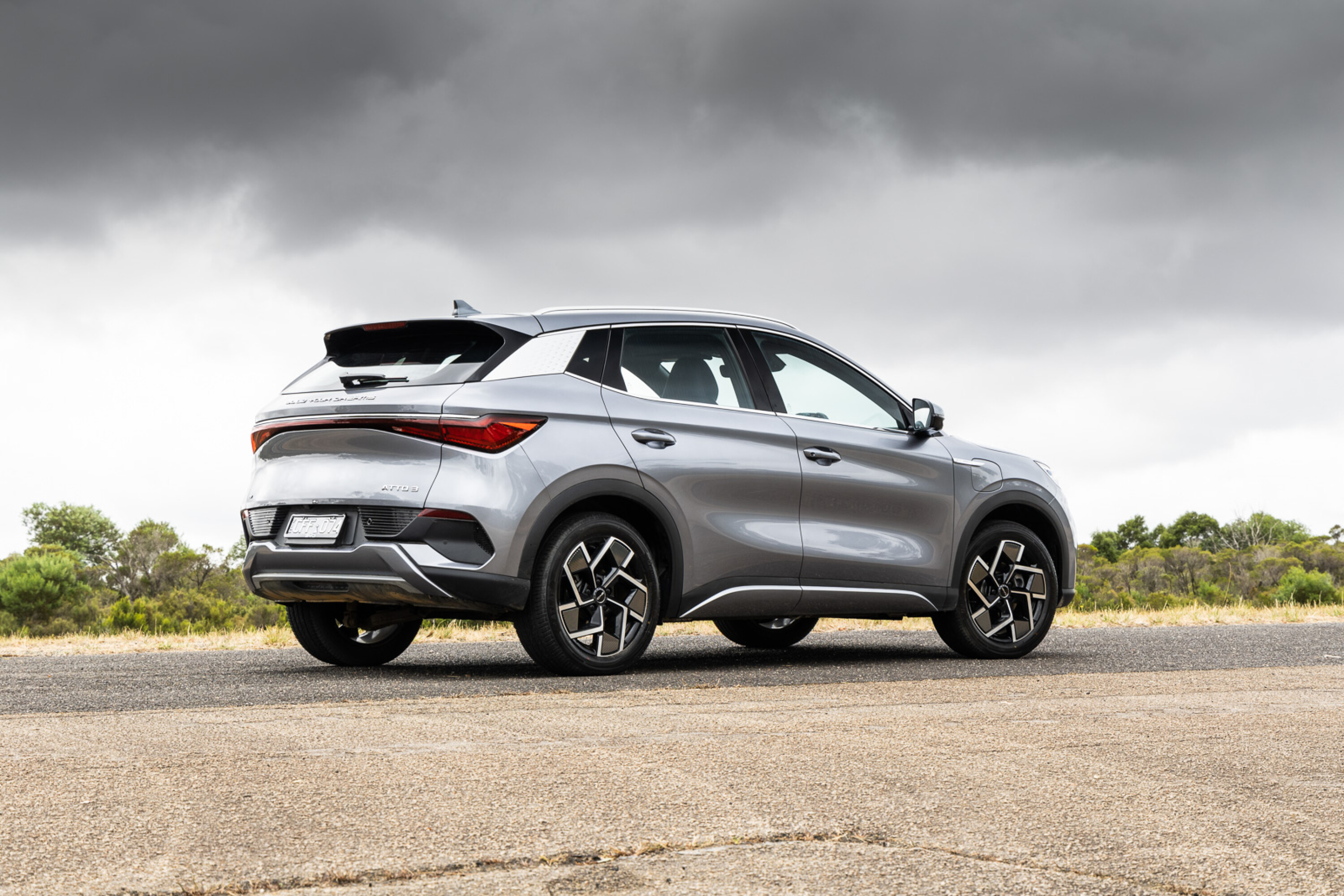
New ‘BYD Megastores’ will soon launch in Brisbane and Sydney and BYD is following Tesla’ lead by building dedicated service and fulfilment centres to meet an expected upswing in demand as it adds new models.
BYD is right to plan for bigger volumes. Thanks to its convincing blend of value, space, personality and decent dynamics – as well as a lack of rivals – the Atto 3 has rocketed up the sales charts and is easily the country’s third best-selling EV behind the Tesla Model 3 and Model Y.
Looking to get into a brand-new small SUV? Our stories below will guide you to the model that best suits your needs!
More EV stories to help you choose the best car for your needs
Our quest for the best budget SUV focuses not just on price. While that’s a good place to start, a quick delve into the entry-level models of these ranges reveals a very skinny safety checklist, or too much penny-pinching when you compare it to the next model up. In some cases that ejected the brand altogether (Suzuki, we’re looking at you).
We also had to skip the Mazda CX-3. While you can get the Neo Sport for under $25,000, it’s not an auto – and, given the sheer number of autos bought, a manual just wouldn’t be true to the spirit of this comparison.
That left us with a just a trio of models to realistically consider.
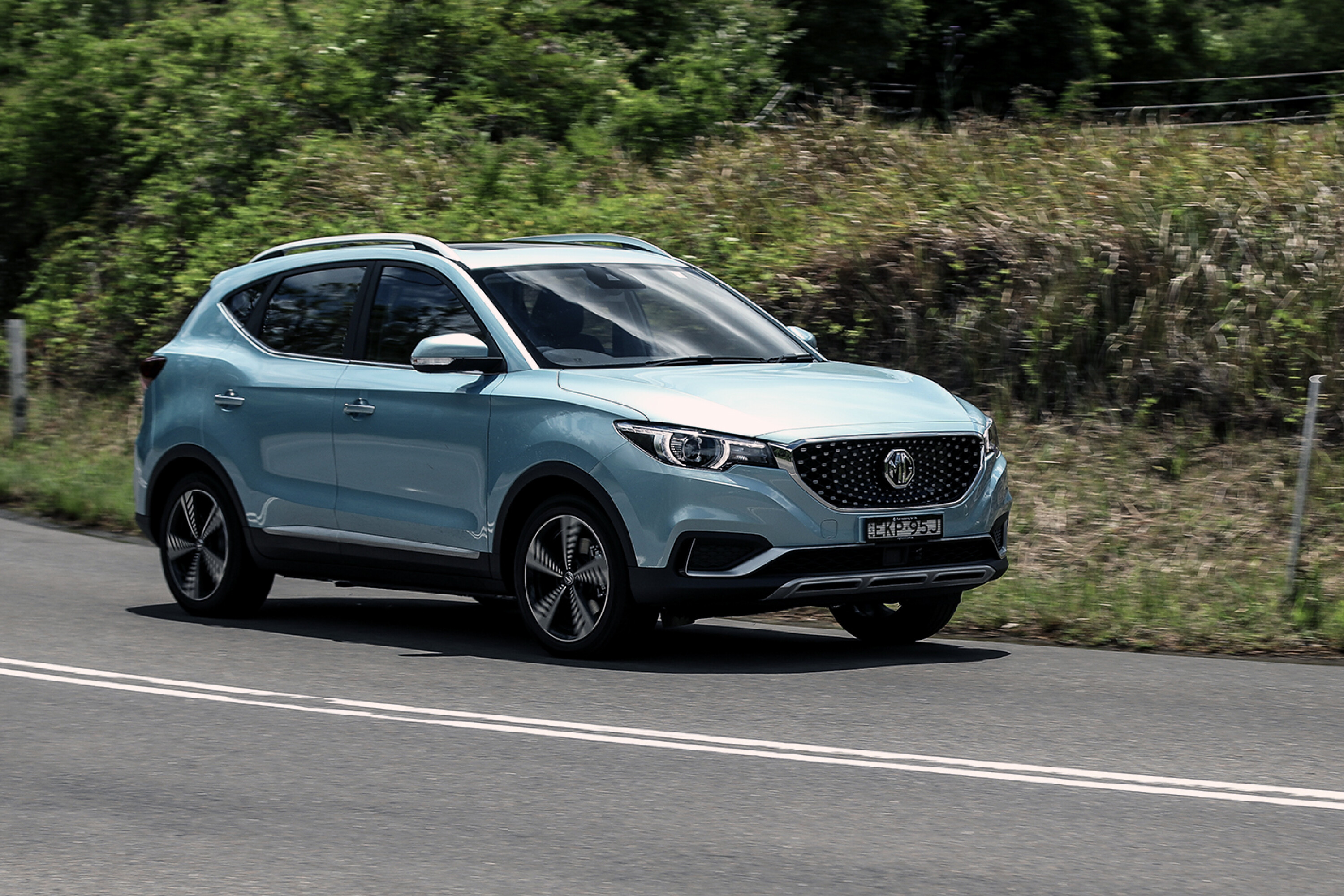
It costs from $24,000 in auto form before on-roads (or save a bit of cash by opting for a manual gearbox).
There are a couple of nice touches here, such as matching wireless smartphone integration with wireless charging (the latter new for 2023), but it’s an otherwise fairly basic specification, right down to the small wheels and less-than-grippy tyres. It looks alright, though, and the small wheels don’t look as silly as you might expect on an upright vehicle like the Venue.
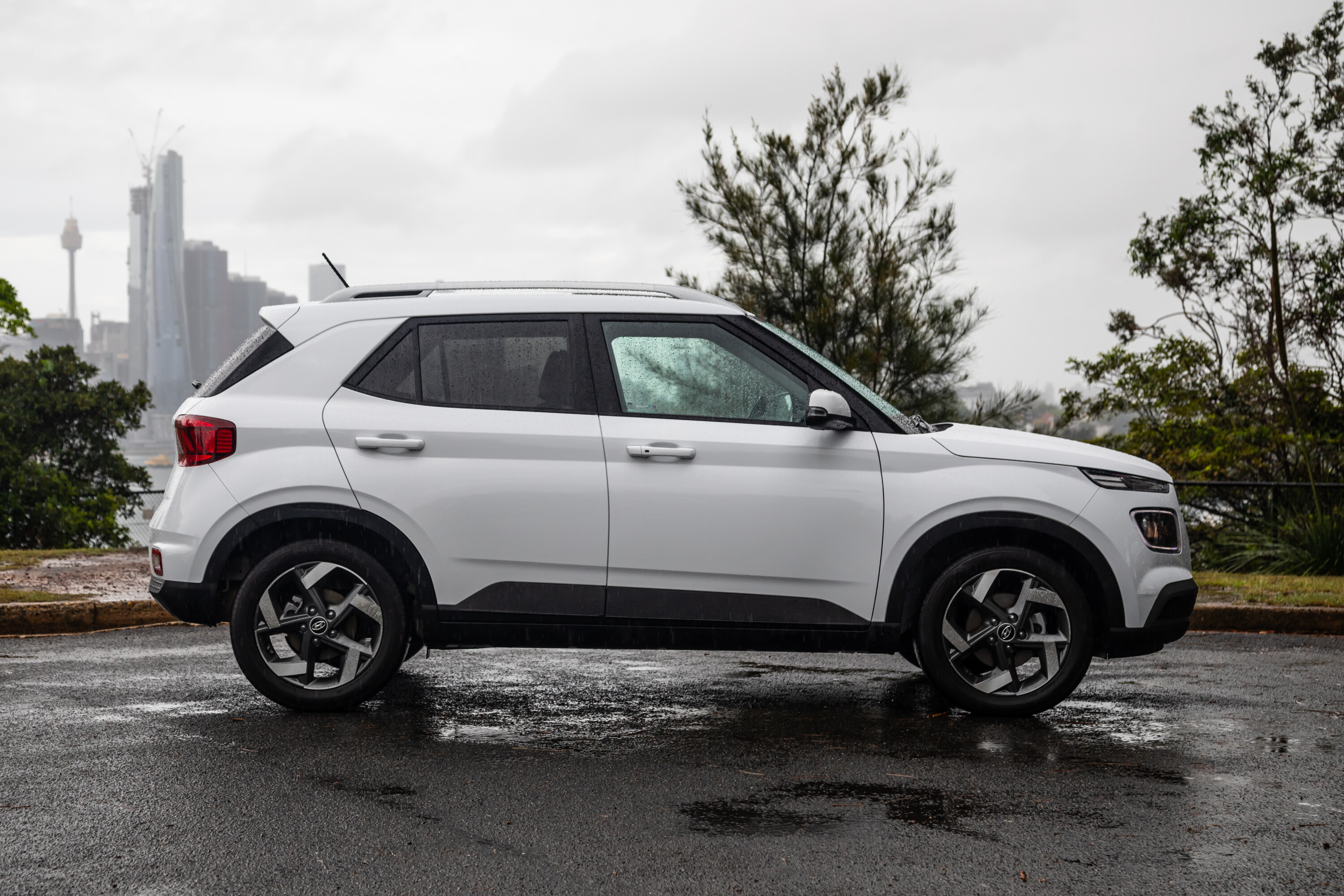
With 90kW and 151Nm to move less than 1200kg of car, it’s sprightly off the mark but fairly slow beyond that. The last time we drove a Venue, we registered an average 7.9L/100km against an official 7.2L/100km result, which is a touch high for such a small car.
Handling is tidy and the ride for front seat passengers more than acceptable while the rear is fine until the road gets a bit messy.
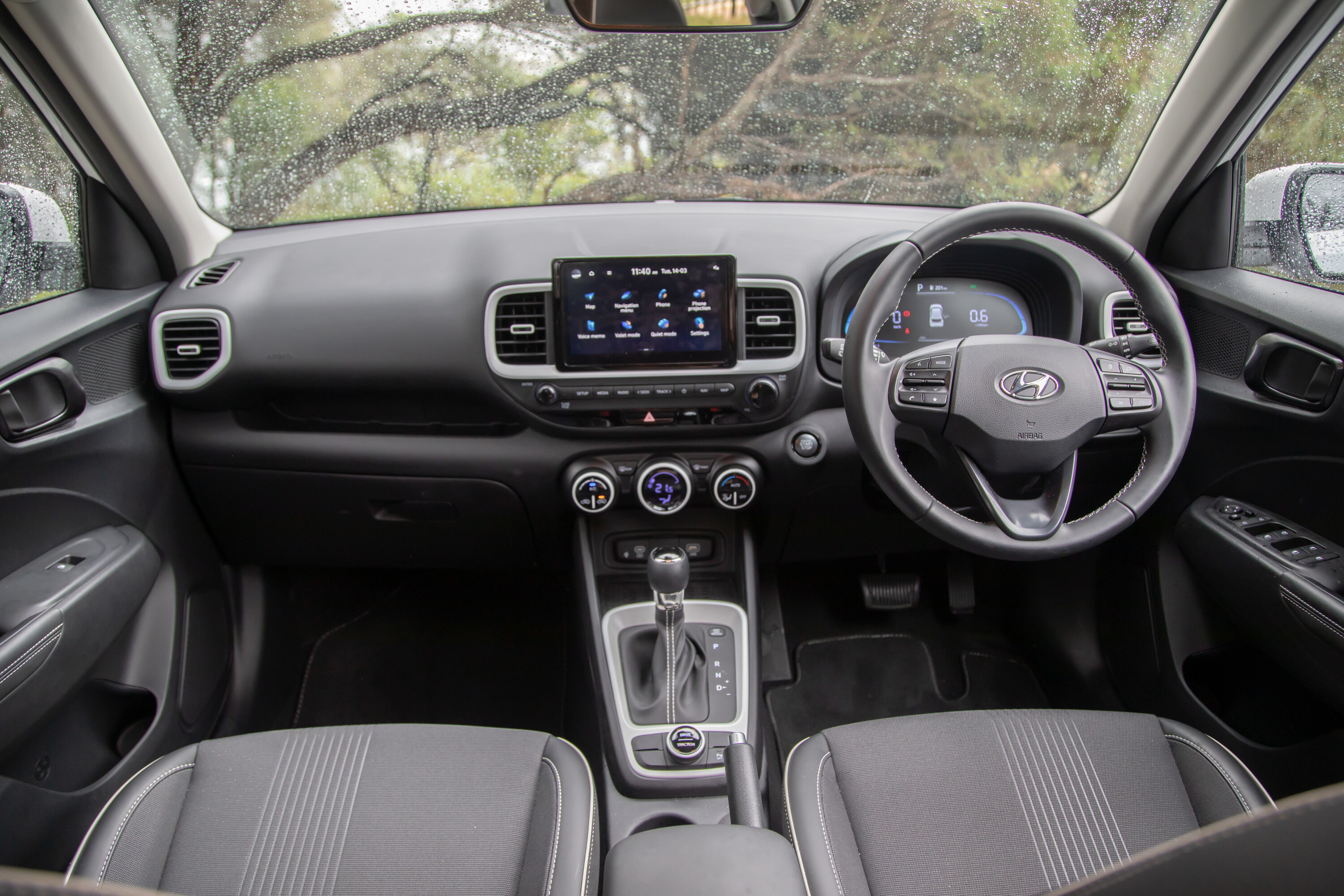
An 180cm adult can fit comfortably behind their own driving position, and there are two USB-C ports to keep a couple of devices charged. Nothing else, though.
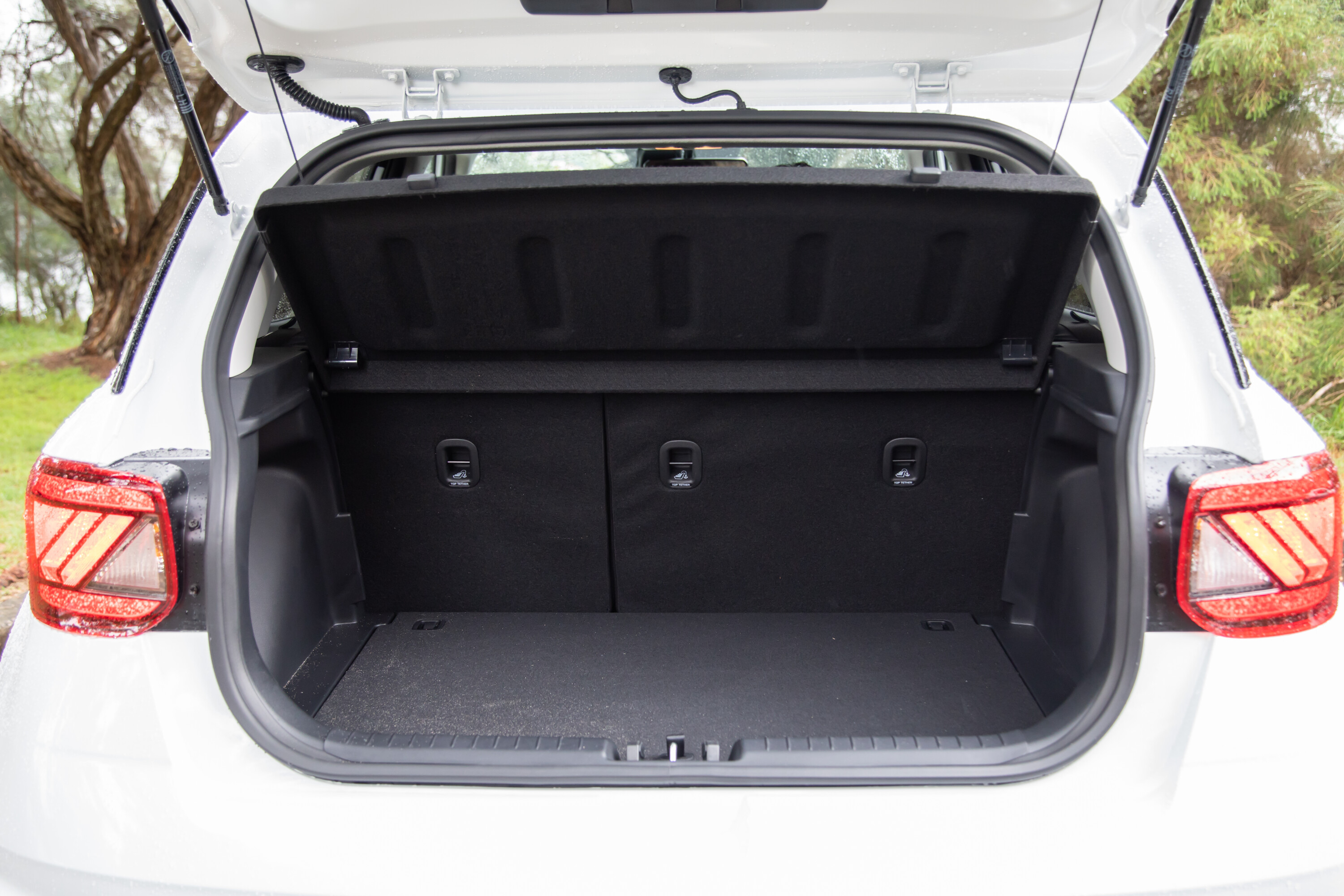
The boot is also more useful than expected. It will swallow 355 litres of cargo and has tie-down points, a cargo cover, a single bag hook, and a decent loading aperture. It also has a movable floor so you can either hide things under it or lower it for taller loads.
You can purchase servicing for the Venue up front for three years ($857), four years ($1316) or five years ($1575). It’s not the cheapest but it’s not terribly expensive, either.
| 2023 Hyundai Venue features | ||
|---|---|---|
| 15-inch alloys | Cruise control | Wireless Apple CarPlay |
| Wireless Android Auto | 8.0-inch touchscreen | Four speaker stereo |
| Cloth interior | Wireless charging | USB-A and USB-C ports |
| Air-conditioning | Reversing camera | |
| Hyundai Venue Safety – 4 star (ANCAP, 2019) | ||
|---|---|---|
| Six airbags | ABS | Stability & traction controls |
| Forward AEB | Lane keep assist | Auto high beam |
| Hyundai Venue Ownership | |
|---|---|
| Warranty | Five years/unlimited km |
| Servicing interval | 12 months/15,000km |
| 5 years servicing cost | $1575 ($315 per year) |
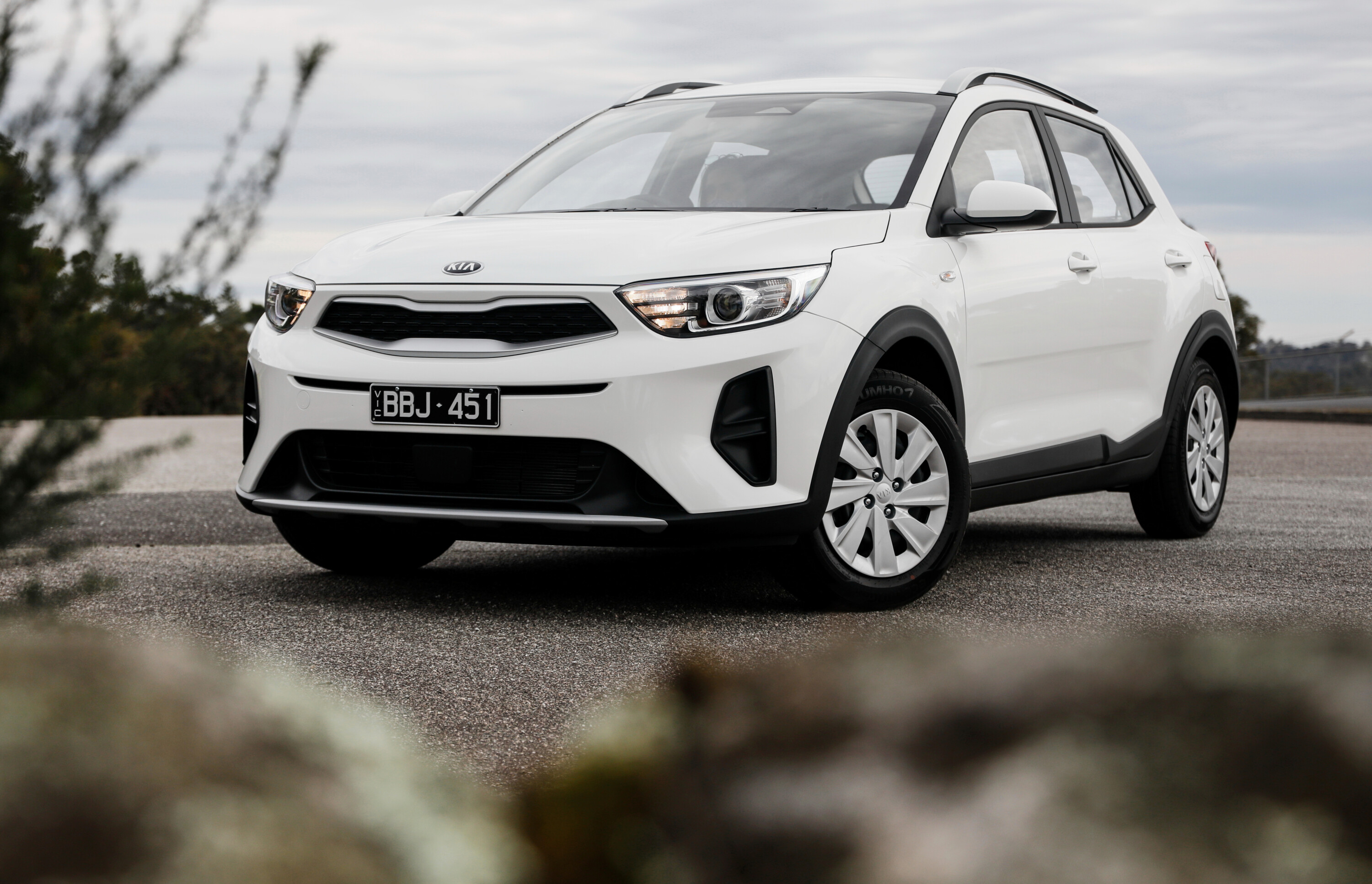
As with the Venue, you can buy a manual to save the most money but here we’re focused on the S auto that costs $23,790 before on-road charges are added.
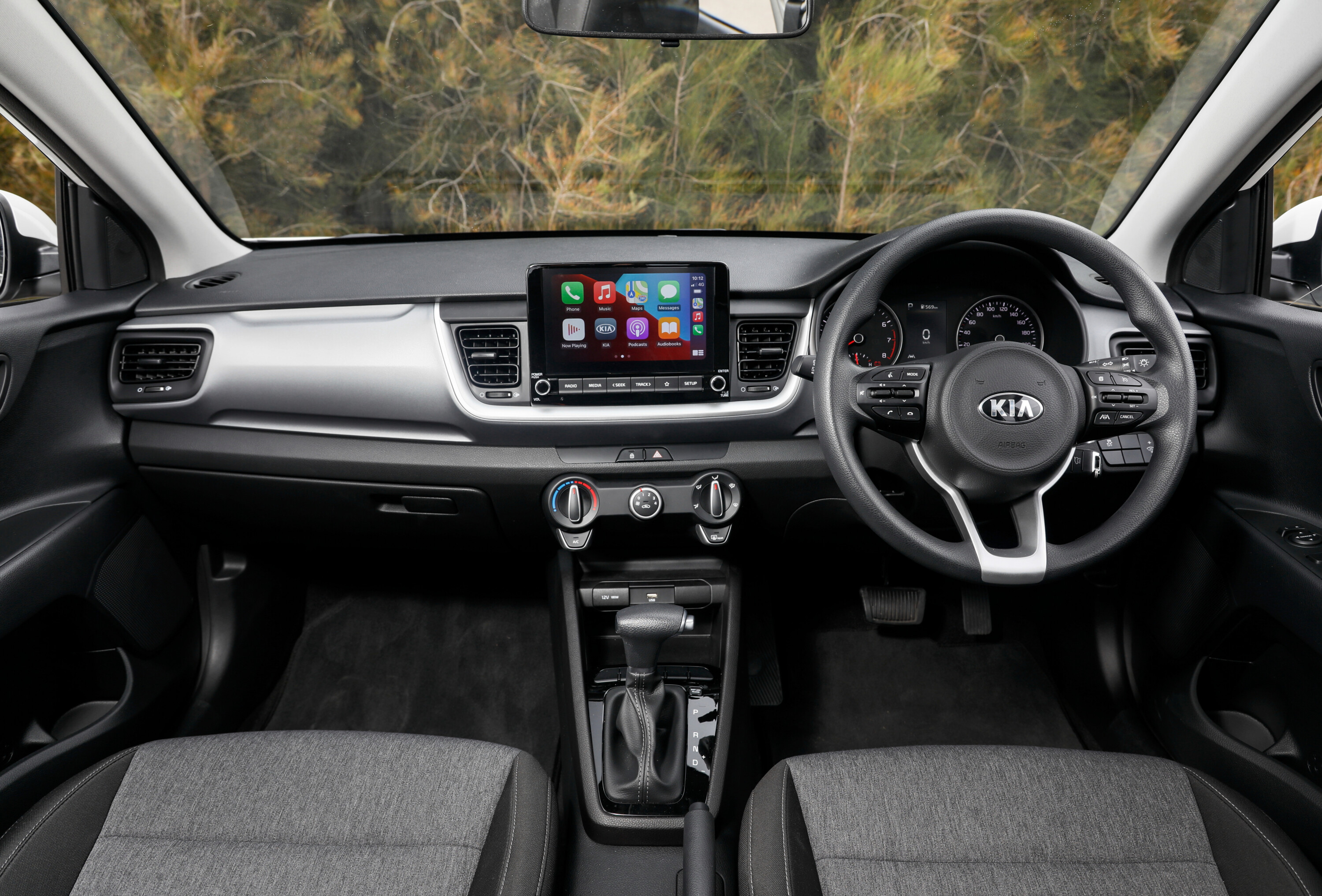
Steel wheels with dodgy-looking hubcaps aren’t a terrific start, but the Stonic is a bit more than that. The specification is a partial cut and paste of the Venue, which speaks to the two companies’ very close relationship, though the Kia runs with a slightly smaller, 1.4-litre engine – with performance politely described as adequate.
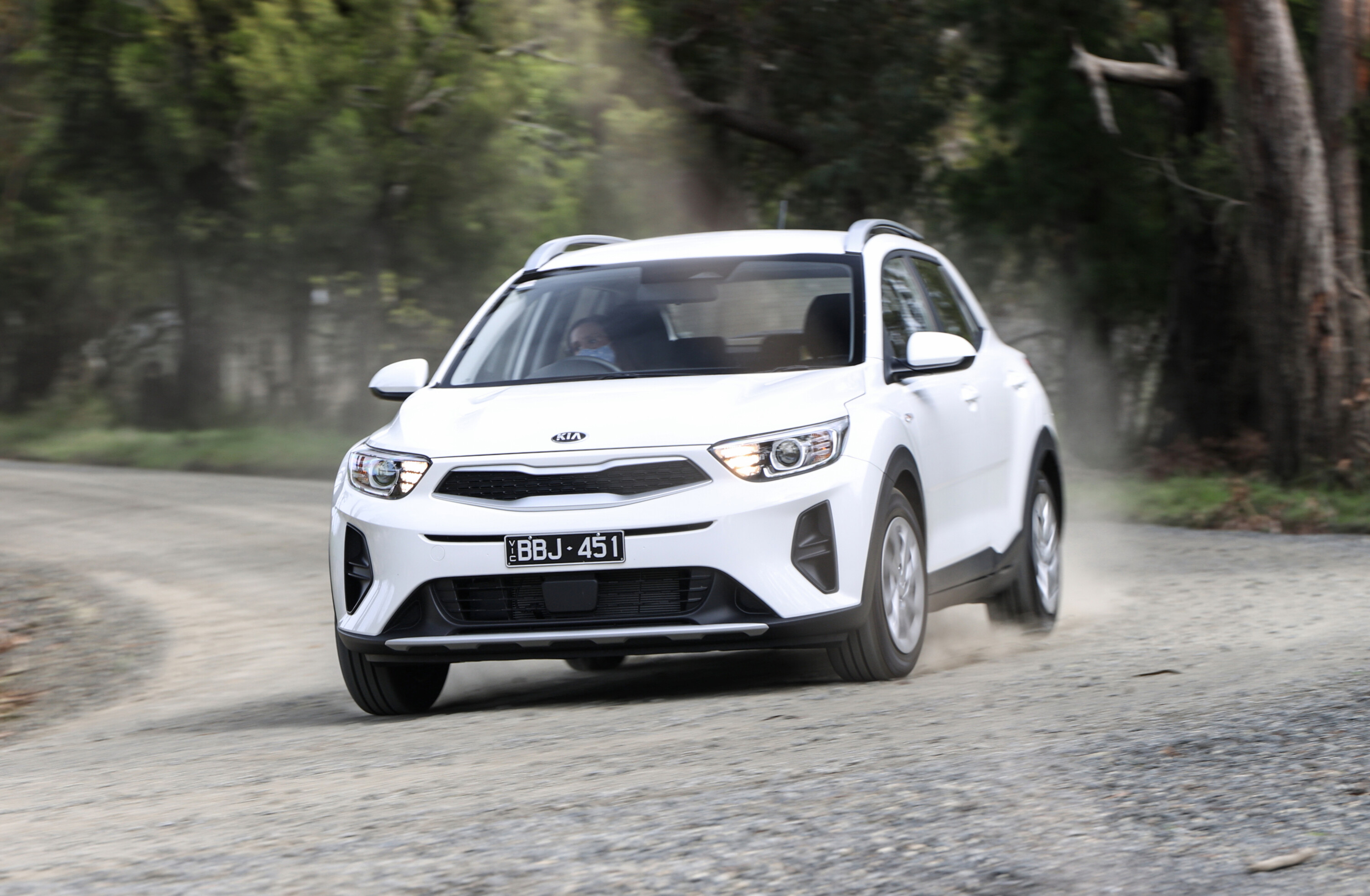
Occupant space is pretty good for a car just over four metres long. Front-seat passengers have plenty of storage and two cupholders, while the rear seat passengers have to fight over a USB-A port and perhaps bring a box as an armrest because there isn’t one.
The boot is also tiddly at 332 litres. While not the smallest in its class or on this page, there’s not much space in there for anything more than a weekly shop.
Servicing averages out at $413 per year, which is not at all cheap for a car like this when Toyota does it for not much over half for just about anything it sells. The seven-year warranty is a winner, though.
| 2023 Kia Stonic S features | ||
|---|---|---|
| 15-inch steel wheels | Cruise control | Wireless Apple CarPlay |
| Wireless Android Auto | 8.0-inch touchscreen | Four speaker stereo |
| Cloth interior | Air-conditioning | Reversing camera |
| 2023 Kia Stonic S Safety – 5 star (ANCAP, 2017) | ||
|---|---|---|
| Six airbags | ABS | Stability & traction controls |
| Forward AEB | Lane keep assist | Auto high beam |
| 2023 Kia Stonic S Ownership | |
|---|---|
| Warranty | 7 year/unlimited km warranty |
| Service interval | 12 months/15,000km |
| 7-year servicing cost | $2895 ($413 per year) |
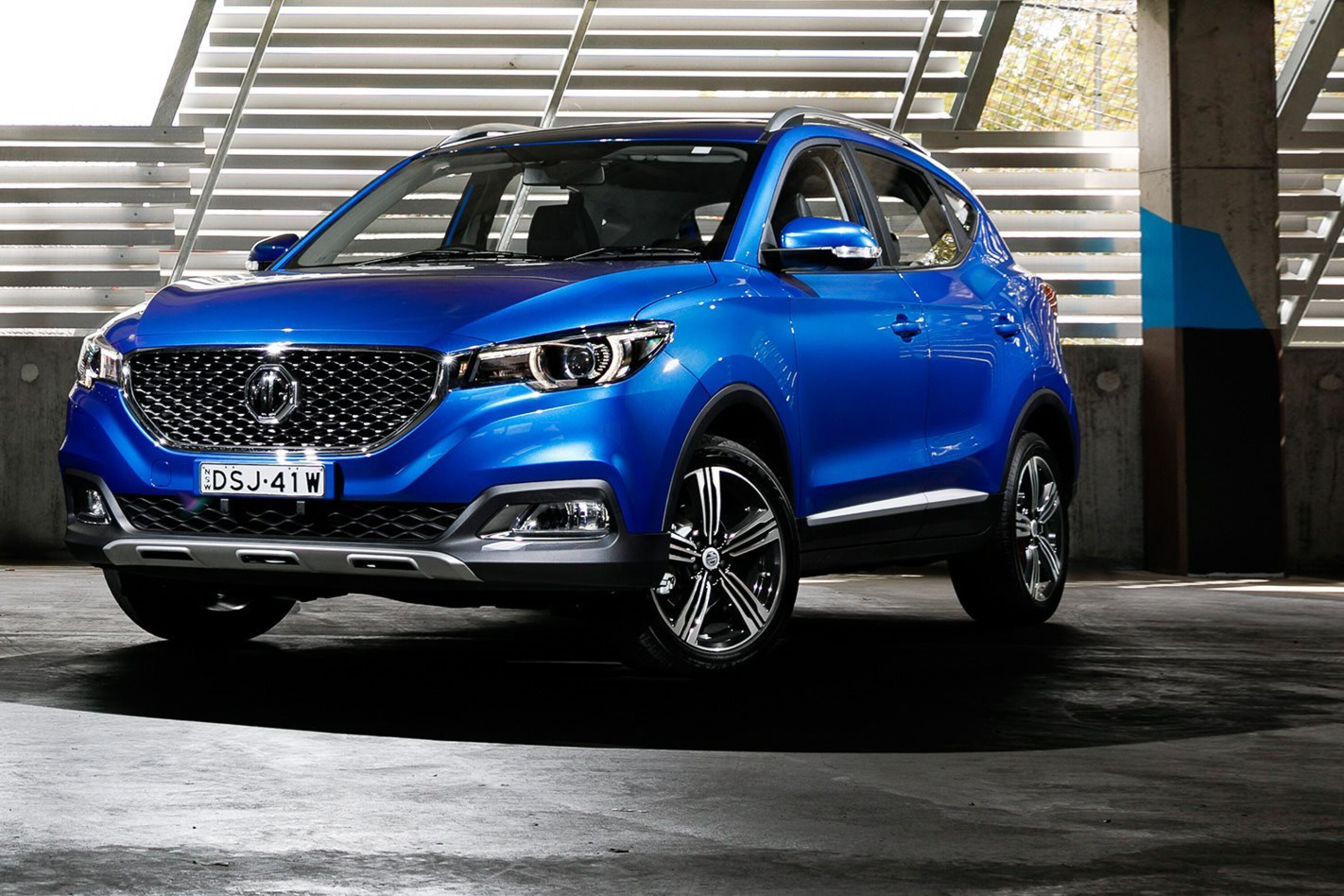
What you’re getting for your $23,990 drive-away spend is space – enough to comfortably fit four adults. The interior design is derivative but quite classy.
We’d recommend seat covers during the hotter months because the synthetic leather is basically vinyl, and you’ll need patience with the media screen that is some way short of amazing and lacks Android Auto. This is another SUV that has less boot space than a Volkswagen Golf, even if the ZS’s 359 litres can claim highest luggage capacity among our trio of contenders.
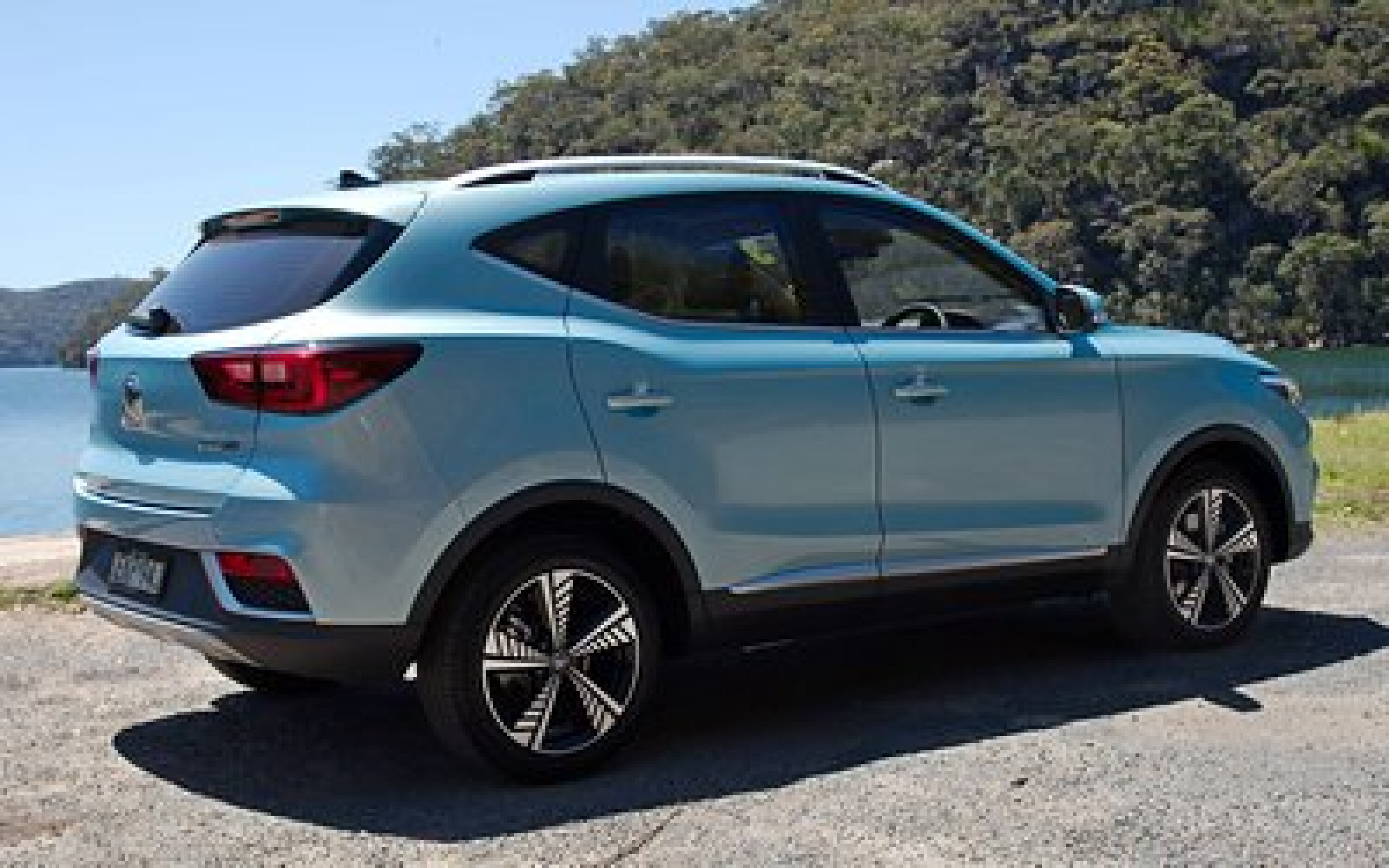
The driving experience is spoilt mostly by poor damping and springing, which upsets ride comfort and brings lots of body roll in cornering.
But from an ownership point of view, the ZS is cheap to buy, reasonably cheap to run (7.1L/100km on the combined cycle), and it has a long seven-year/unlimited kilometre warranty.
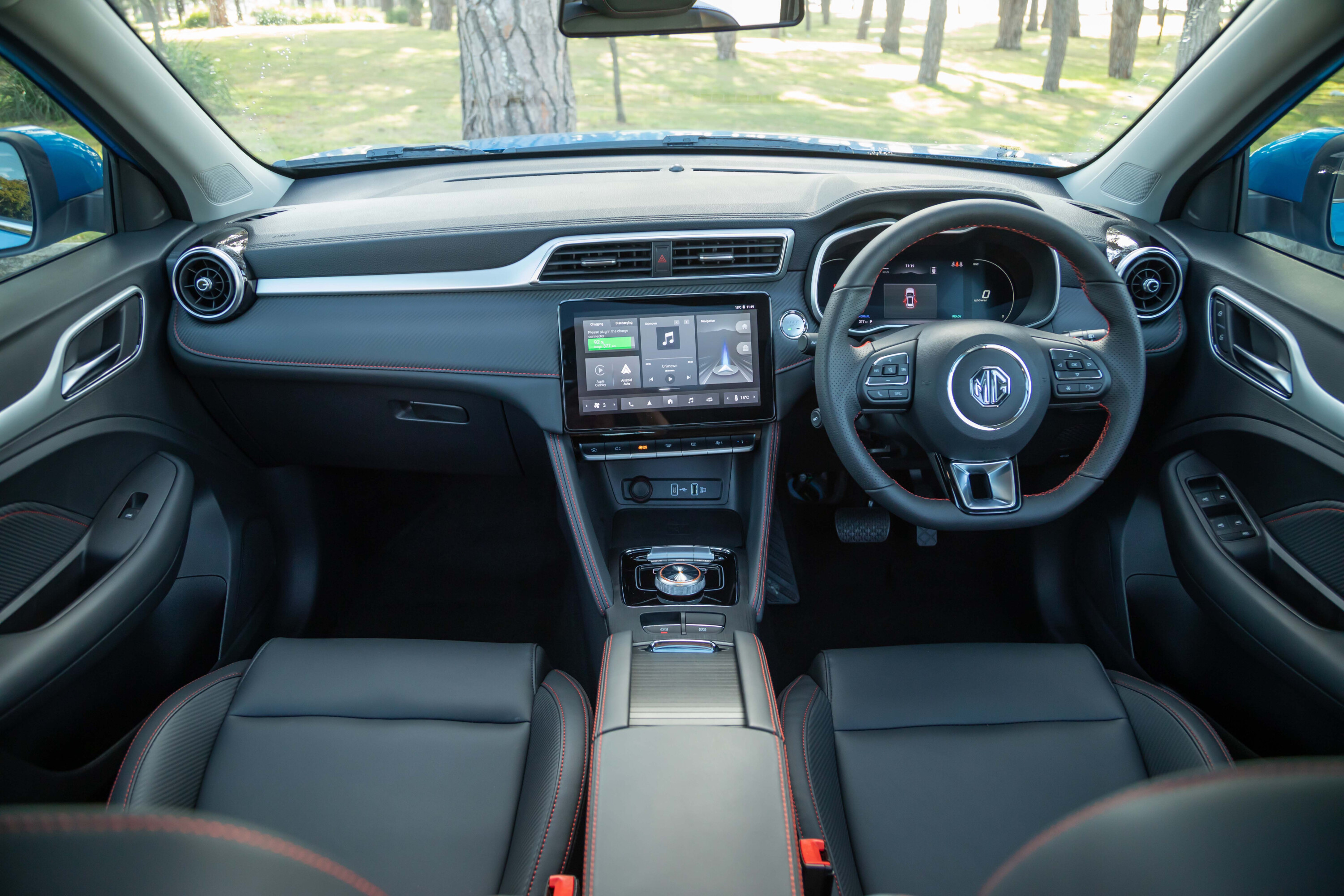
An ageing ANCAP rating is one star below the maximum, and ZS buyers also have to forsake any advanced safety gear.
| 2023 MG ZS Excite features | ||
|---|---|---|
| 17-inch alloys | Cruise control | Apple CarPlay |
| Synthetic leather trim | 8.0-inch touchscreen | Six speaker stereo |
| Rear parking sensors | Wireless charging | USB-A and USB-C ports |
| Air-conditioning | Reversing camera | |
| 2023 MG ZS Excite Safety – 4 stars (ANCAP, 2017) | ||
|---|---|---|
| Six airbags | ABS | Stability & traction controls |
| 2023 MG ZS Excite Ownership | |
|---|---|
| Warranty | 7 year/unlimited km warranty |
| Service interval | 12 months/10,000km |
| 7-year servicing cost | $2082 ($297 average) |
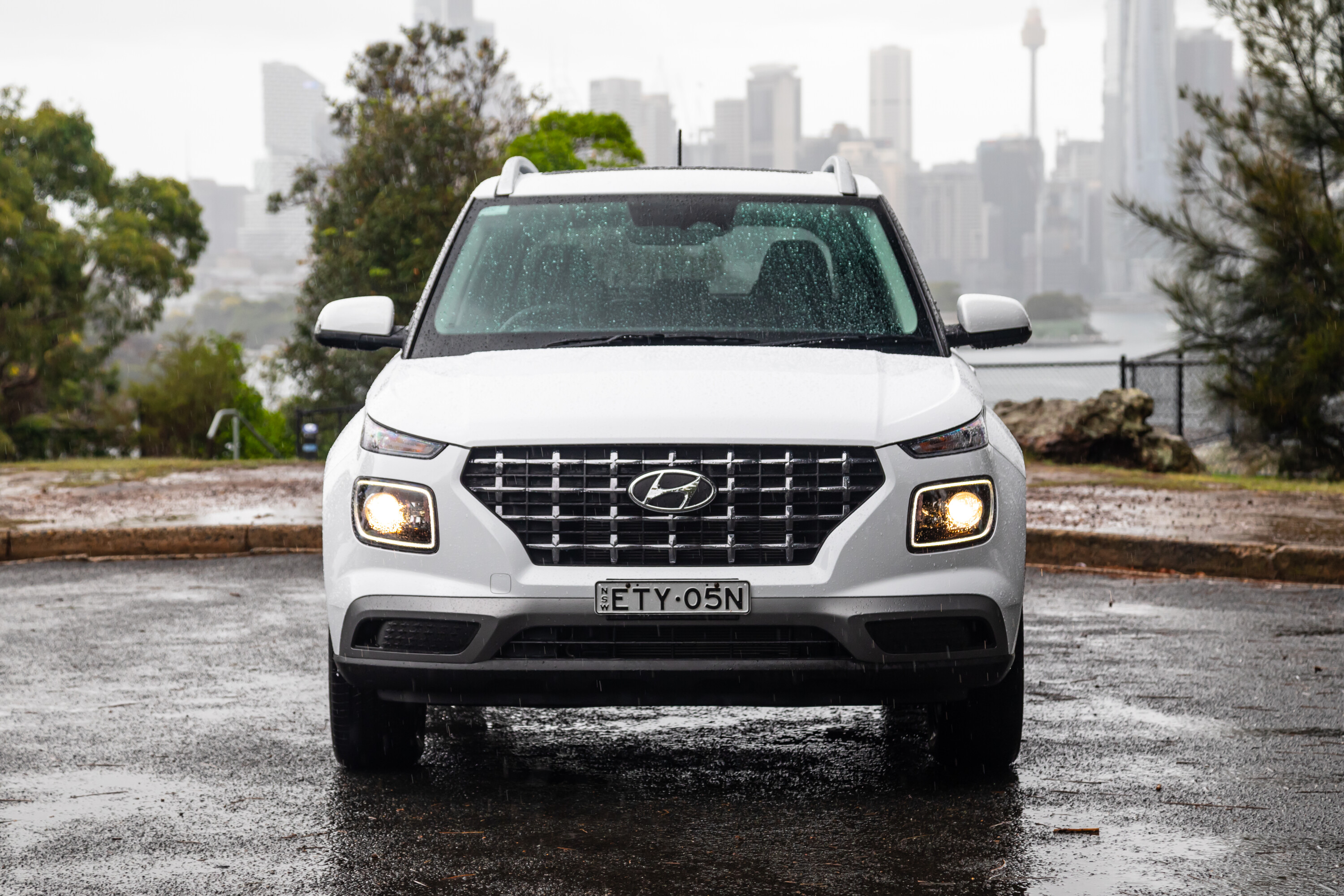
There’s better value-for-money to be found above $25,000, but if you have no more to spend and are fixed on getting a brand new SUV, then our pick is the Hyundai Venue – just ahead of the Stonic.
The Stonic has the longer warranty, but the Venue edges it with lower servicing costs, extra spec including a slightly bigger engine, and more interior space.
The MG is out of the running for victory here through a combination of disappointing dynamics and a shortage of safety features.
If the Chinese small SUV appeals visually, then see if you can stretch your budget to the higher-spec ZST.
Looking to get into a brand-new small SUV? Our stories below will guide you to the model that best suits your needs!
From the spec sheet to behind the wheel, the modest mid-spec Kona Premium has core advantages that put it to the front of the pack from a family car perspective.
The arrival of the new-gen K3 platform brings substantial dimensional growth, with a 60mm stretch in wheelbase and 145mm more overall length translating into 77mm more rear seat legroom (delivering plenty of space for an average-sized adult) and 33 litres more seats-up luggage capacity.
Width is up too, so there’s top-tether anchorages for three child seats and the rear sear backrest is reclinable, which is rare in this segment.
There are dedicated air vents for rear passengers and even seat heaters for the outboard rear seats, which compliment the seats in the front which are heated/ventilated.
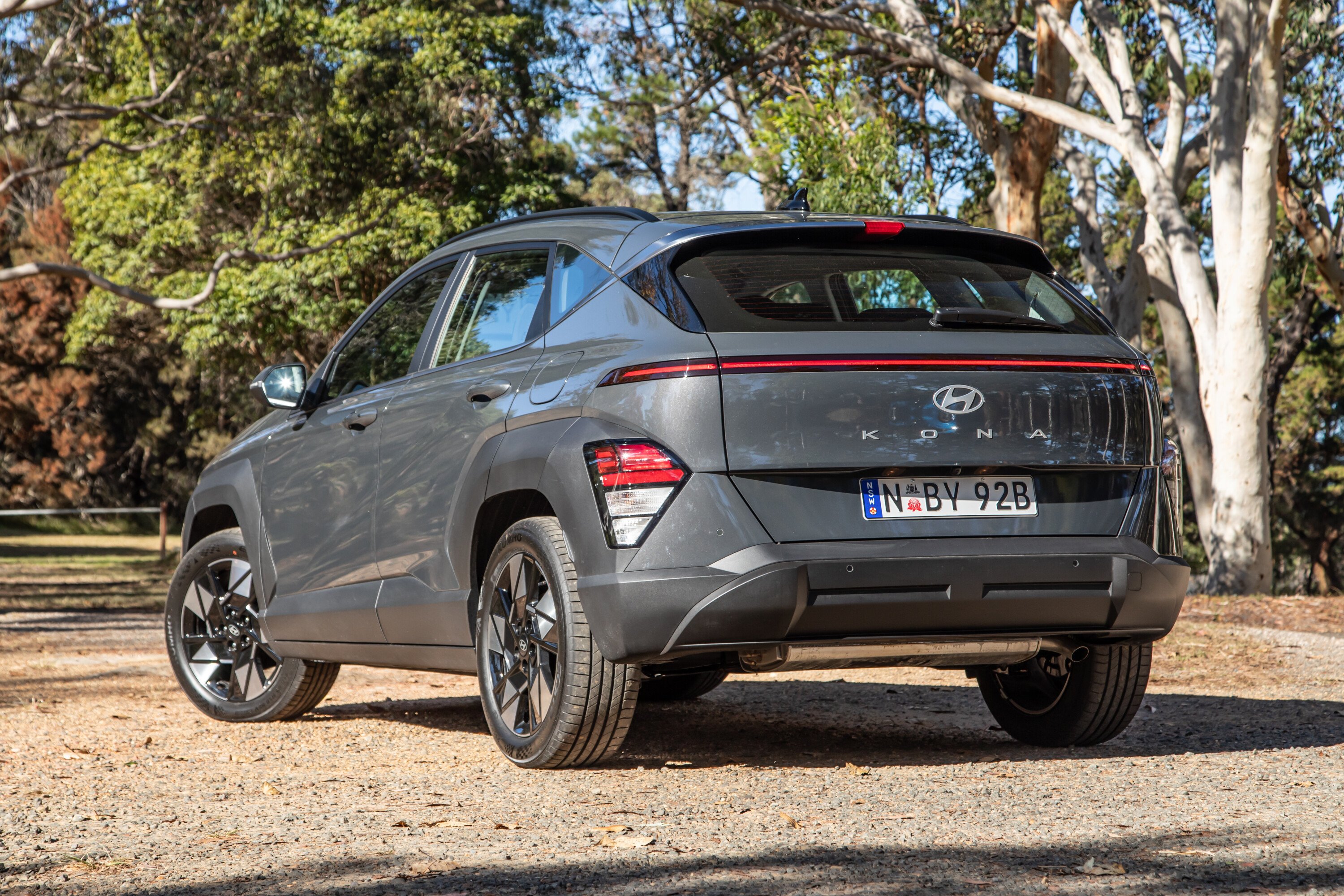
The Kona Premium features an enormous open-topped centre console tray that stretches from the centre stack all the way to the rear air vents, with retractable cupholders and removable partitions to help manage smaller cargo.
It’s a generous storage area freed up by moving the gear selector from the centre console to a rotary shifter on the steering column and it doesn’t only help to make the front cabin feel impressively roomy, but it puts the Kona firmly ahead of its rivals for cabin storage.
There’s also a mid-dash shelf ahead of the passenger that’s perfect for stashing snacks, phones and other oddments, and a sizeable wireless phone charging tray too.
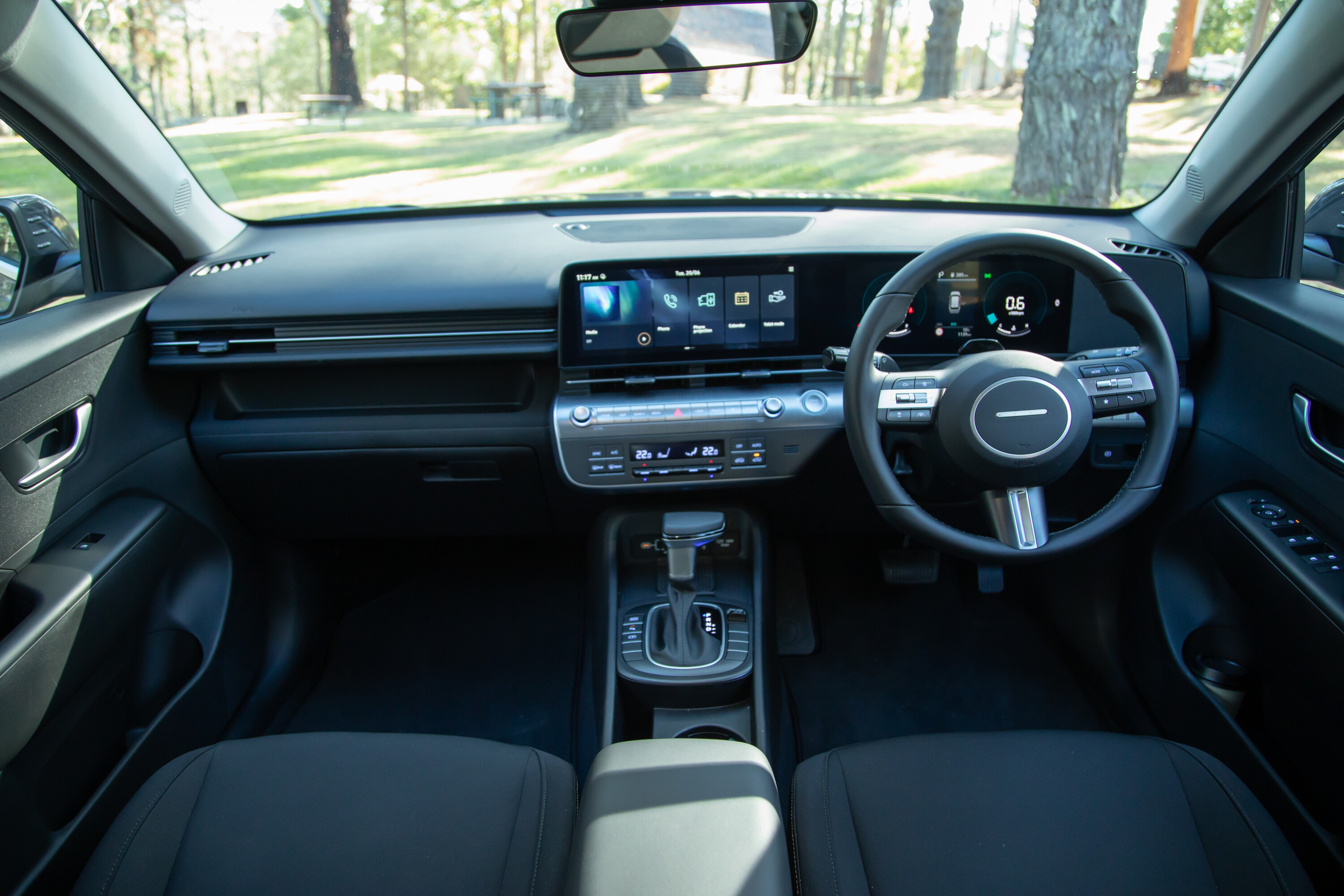
The Kona’s infotainment also includes a number of family friendly features like Quiet Mode which mutes the audio volume in the rear so kids can sleep but front passengers can still to listen to the radio/music. And Premium models score Hyundai’s useful blind spot camera which shows a live video feed in the instrument cluster when indicating.
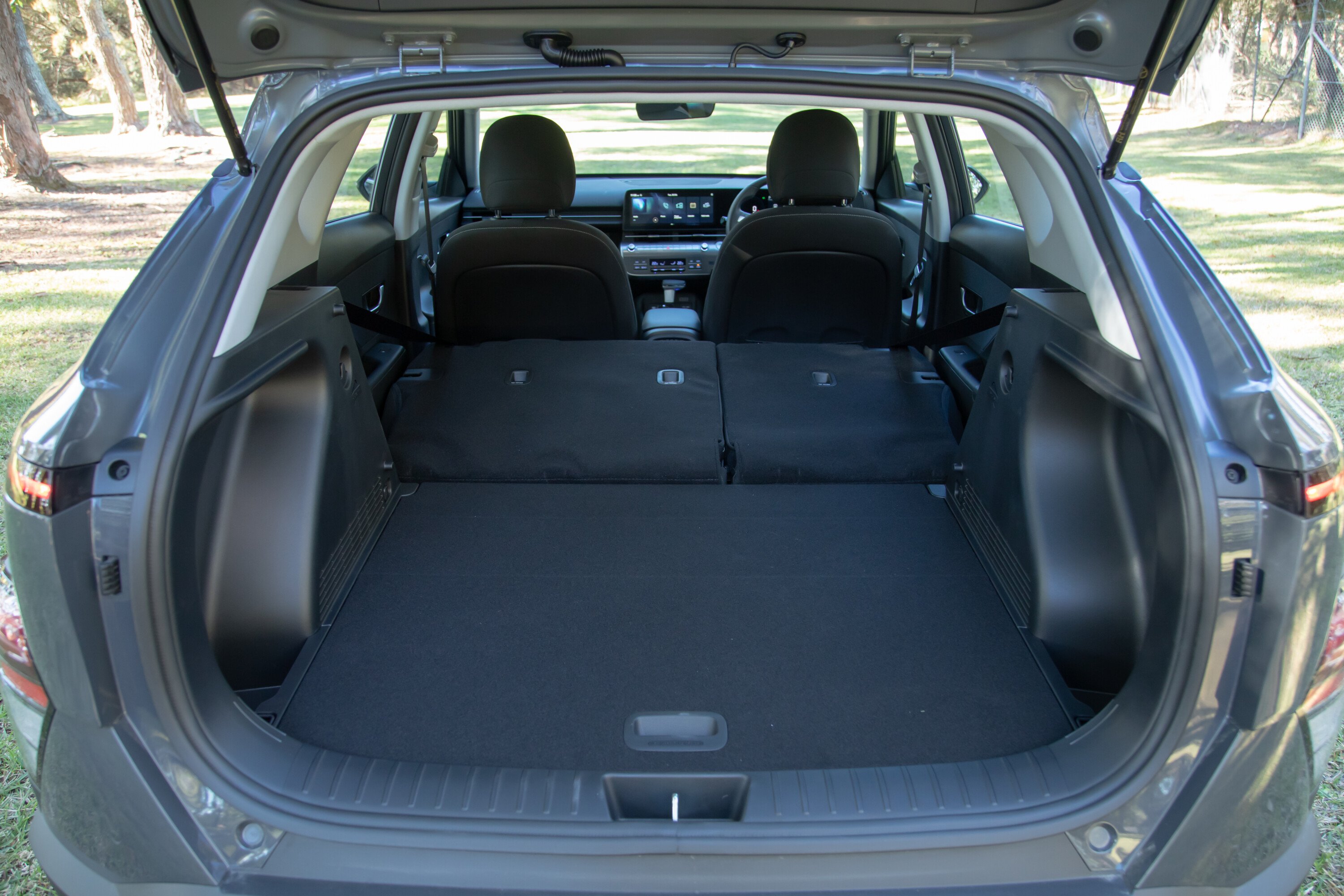
A roomy boot is a crucial feature for a family SUV and the Kona now has one of the largest and most feature-rich luggage bays in its segment. Measuring 407L, the Kona’s boot is 33L larger than before and has a wider and lower loading lip. There’s also a two-stage boot floor, three bag hooks and an ingenious design for storing the parcel shelf against the back of the rear seats for when you want to carry larger items.
To drive, the Kona’s 110kW/180Nm 2.0-litre Atkinson-cycle petrol four-pot works well with its CVT, with quiet, vibration-free operation and intelligent transmission mapping that easily tugs the Kona along at urban speeds.
There might only be a simple torsion beam at the rear end, but delivers a smooth ride with supple damping that’s geared toward comfort – yet avoids becoming floaty and unpleasant. Top marks.
Ultra-low thirst from a dependable hybrid powertrain puts the Corolla Cross in good stead, as does great ride/handling balance and a spacious-feeling cabin. Can’t match the Kona for family-practical features, however, and that infotainment setup still feels well behind the rest of the pack.
One for the power-hungry, the Seltos provides a thrusty 146kW/265Nm turbo engine and the security of all-wheel drive at a sub-$40K price point. The tradeoff is soggy handling and cabin quality that lags behind its newer Hyundai cousin, and a high fuel burn in real-world driving.
Looking to get into a brand-new small SUV? Our stories below will guide you to the model that best suits your needs!
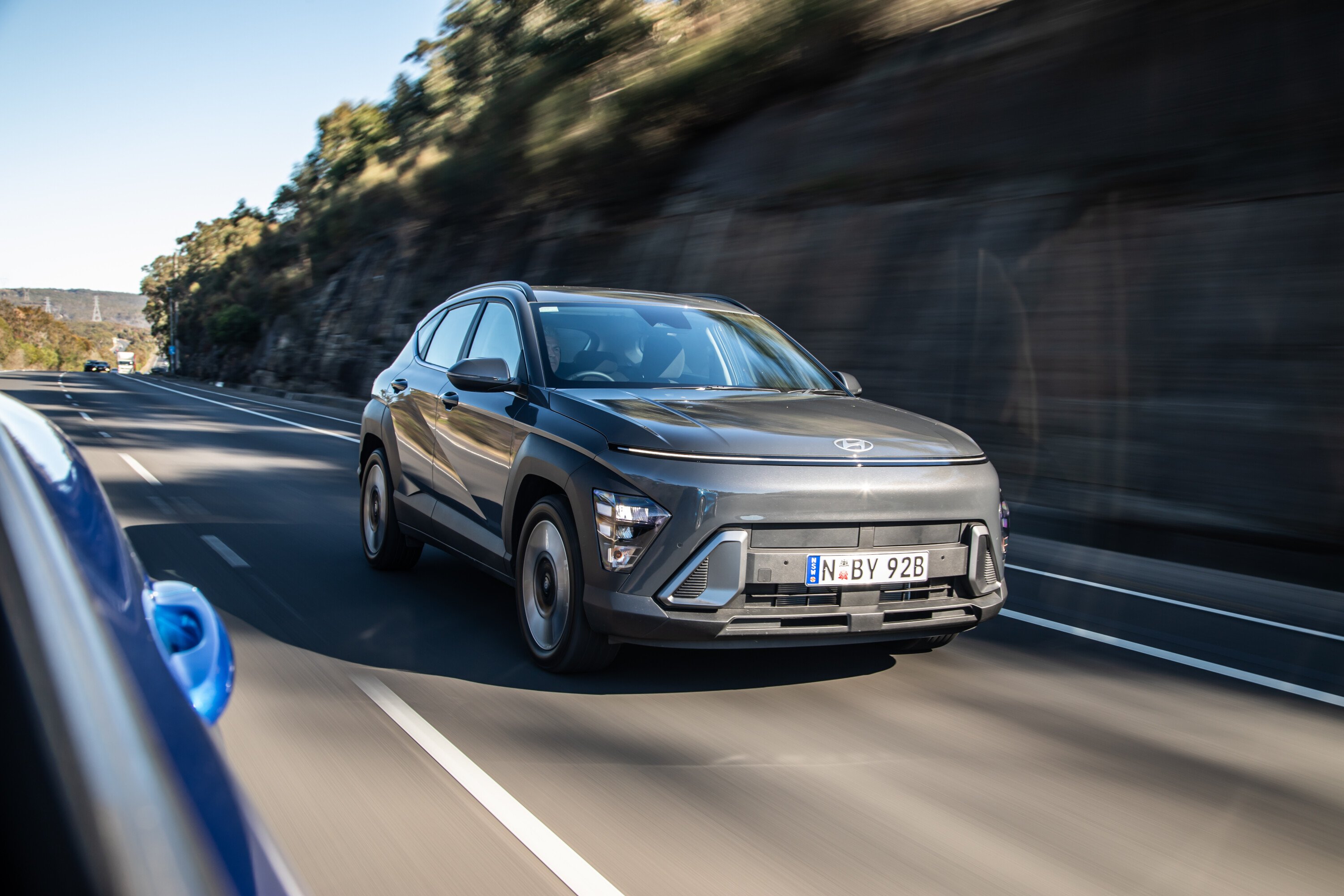
So, if factors such as design, performance and driving manners were relegated to afterthoughts in such as case, which small SUV delivers the best bang for your buck?
We’ve selected five contenders by focusing on just four areas: price, equipment, space, and ownership costs.
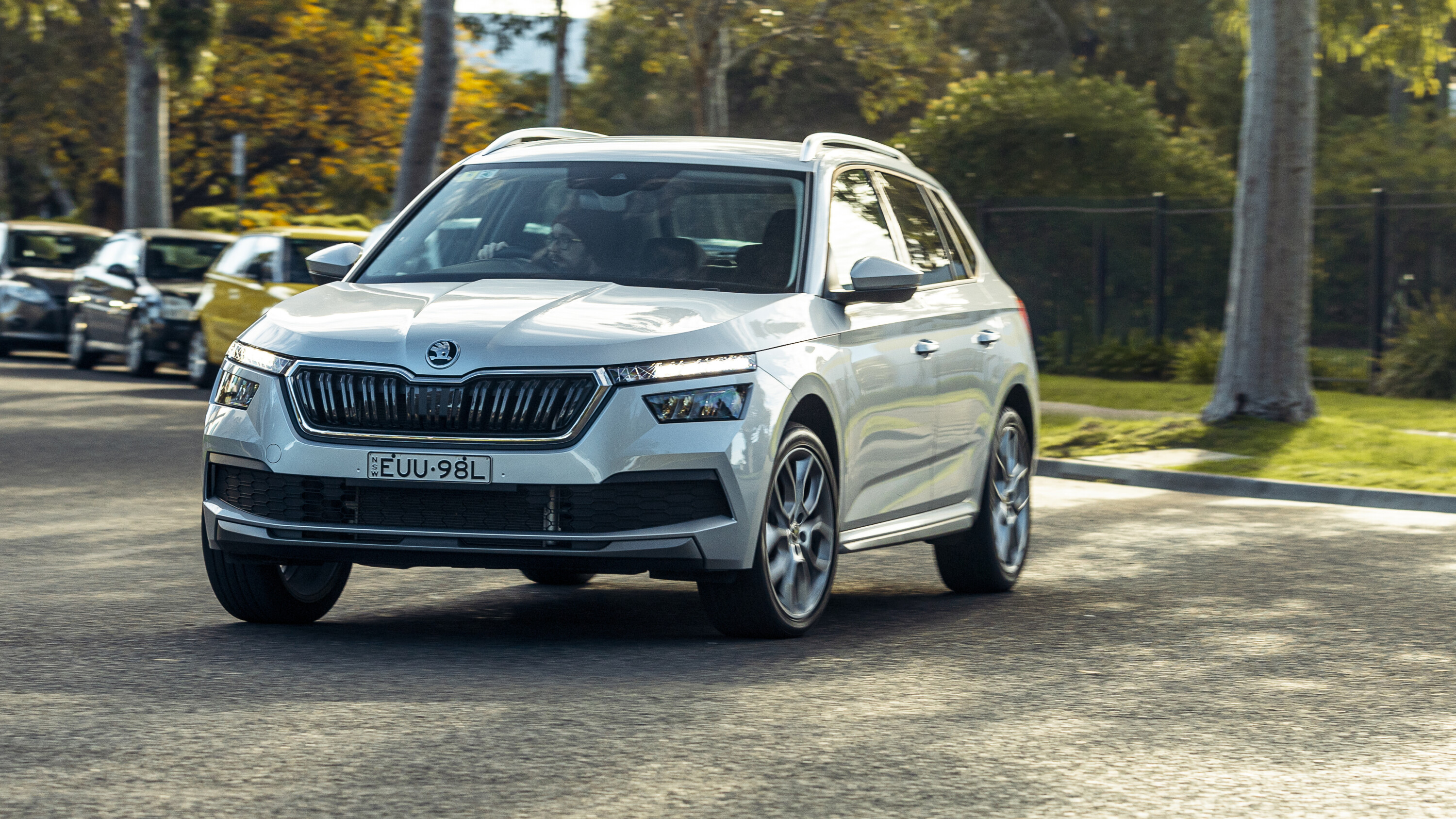
Built on VW Group fundamentals, it’s a very roomy car with plenty of technology to keep you amused, entertained and comfortable. It’s also full of Skoda’s famous thoughtful touches, such as a system of nets and belts in the 400-litre boot and an umbrella in the driver’s door.
It’s also got plenty of safety gear, thoughblind spot monitoring and reverse-cross traffic alert cost an extra $1250 (July 2023) where they are standard on many models of a similar price.
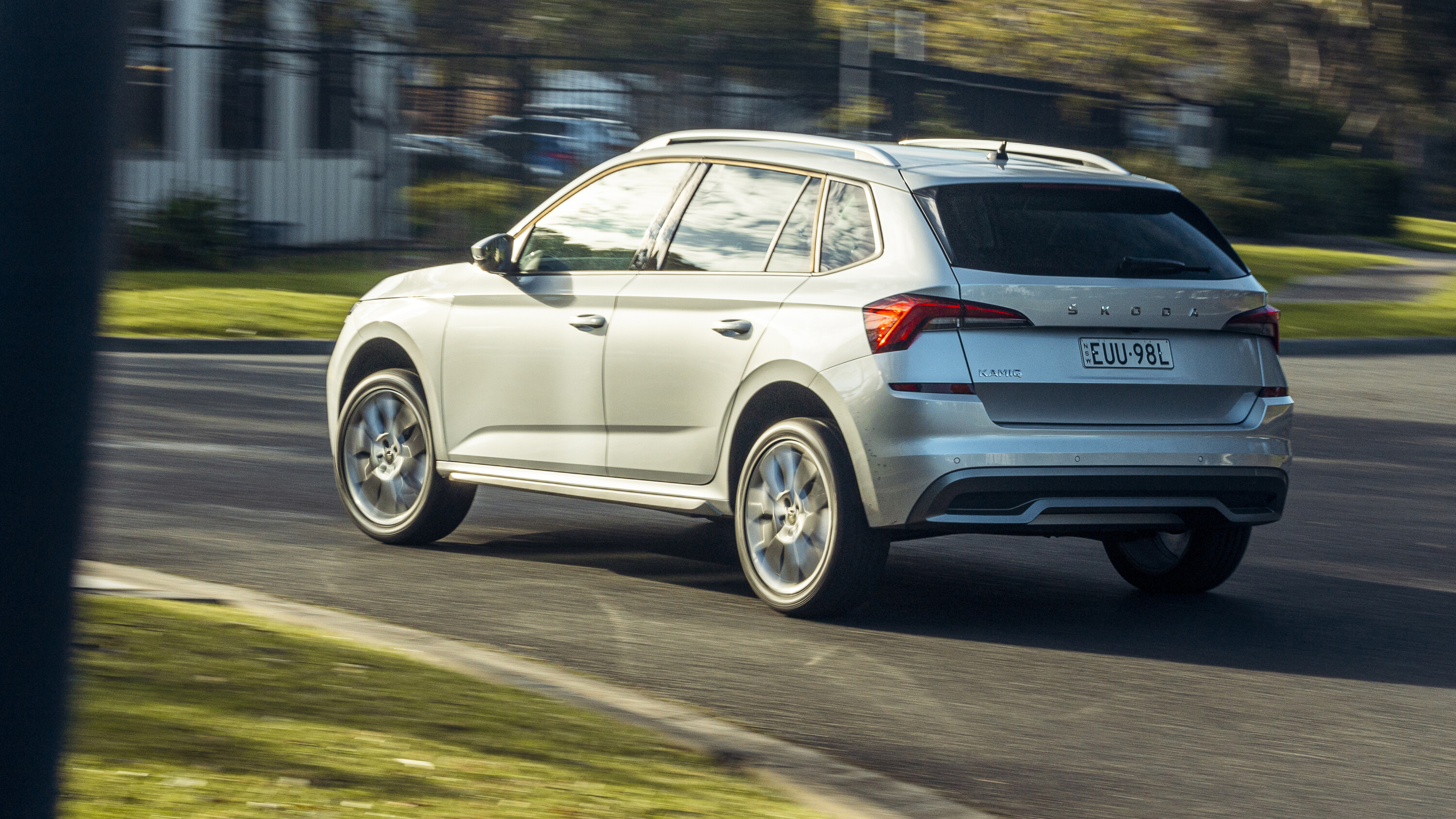
A four-year pre-paid service pack will cost you $1600, which averages out to a neat – if not especially cheap – $400 per service.
A seven-year unlimited kilometre warranty that includes roadside assistance is one of the best offered by a manufacturer.
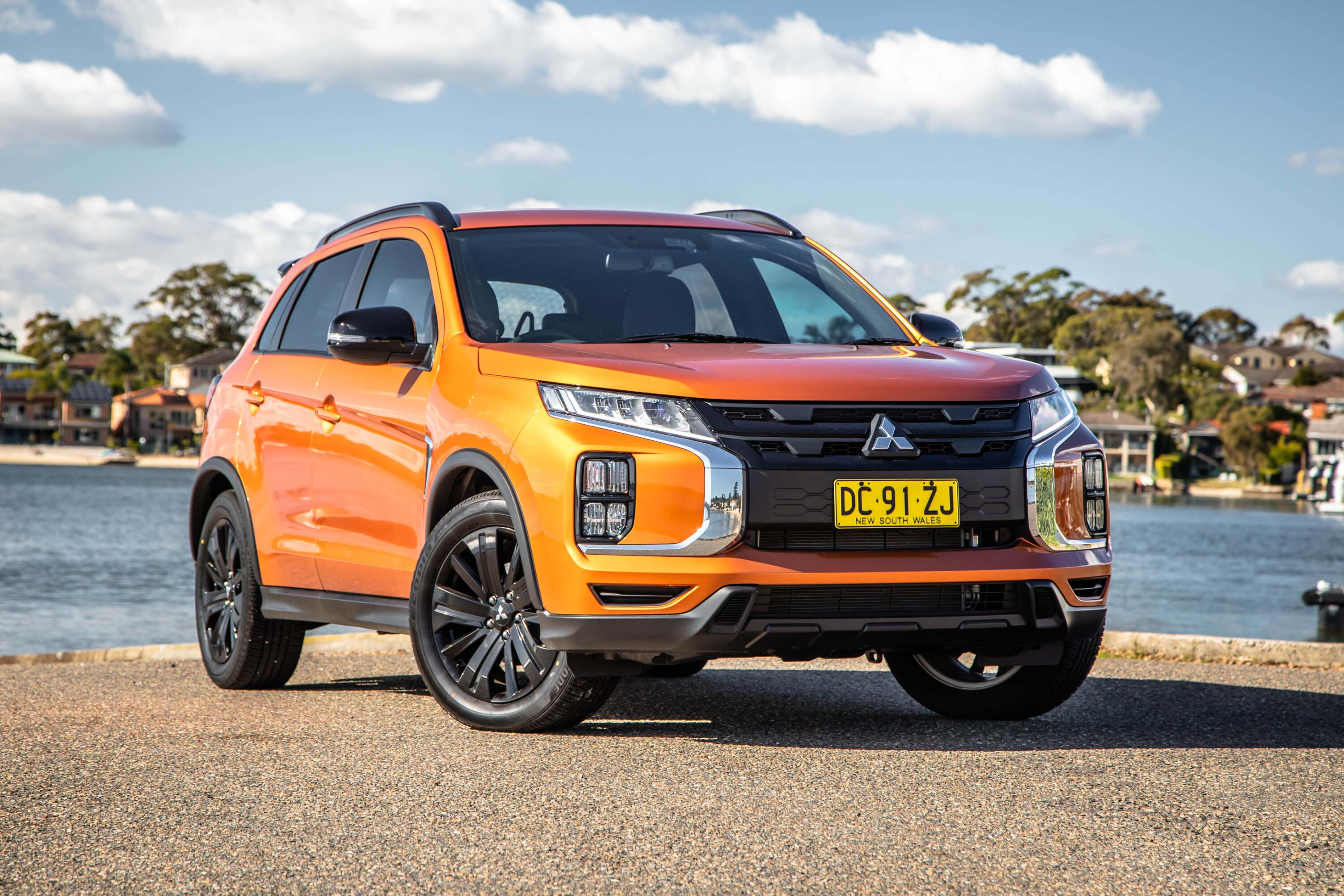
But that hasn’t deterred buyers who keep lapping up Mitsubishi’s evergreen soldier. This car has a long and complicated life but in 2023 the slimmed-down, yet still popular, range includes the GSR.
Priced from $32,240 before on-roads, the main thing the ASX has going for it is space – and lots of it. Its most recent overhaul brought with it some extra safety features, as well as the corporate Dynamic Shield face bringing the styling bang up to date. The GSR looks pretty good with its black pack and dark alloys, although most exterior colours cost an extra $740.
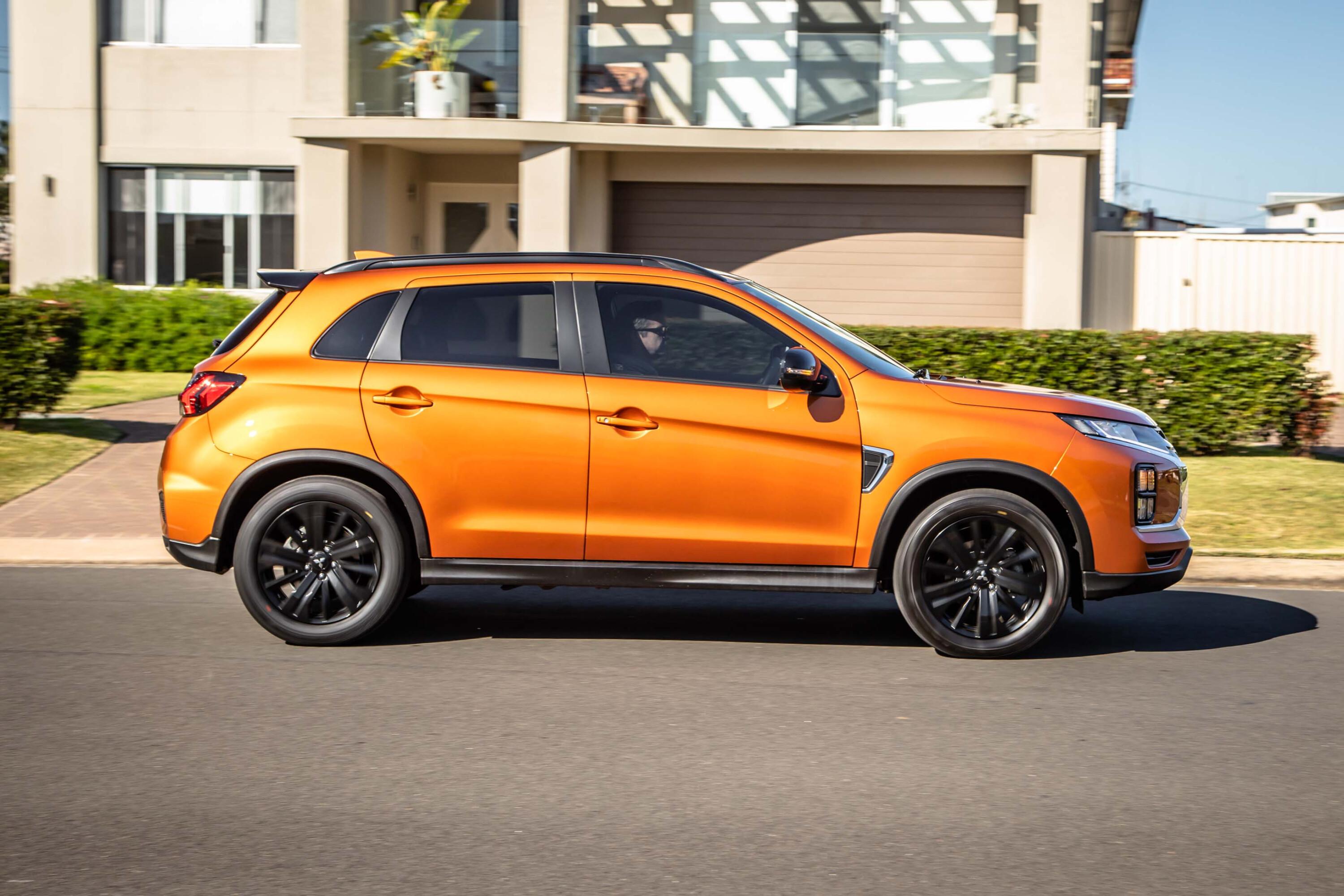
Despite that, there is not yet an ANCAP safety rating for the MY23 as the earlier five-star rating expired. Without a front centre airbag, it would be unlikely to regain that rating.
The cabin is feeling its age but has been tidied up over time. The GSR’s front seats are comfortable and covered in a patterned microfibre that feels more expensive than the price tag suggests. Rear seat passengers have tons of room, too, including surprisingly generous cabin width.
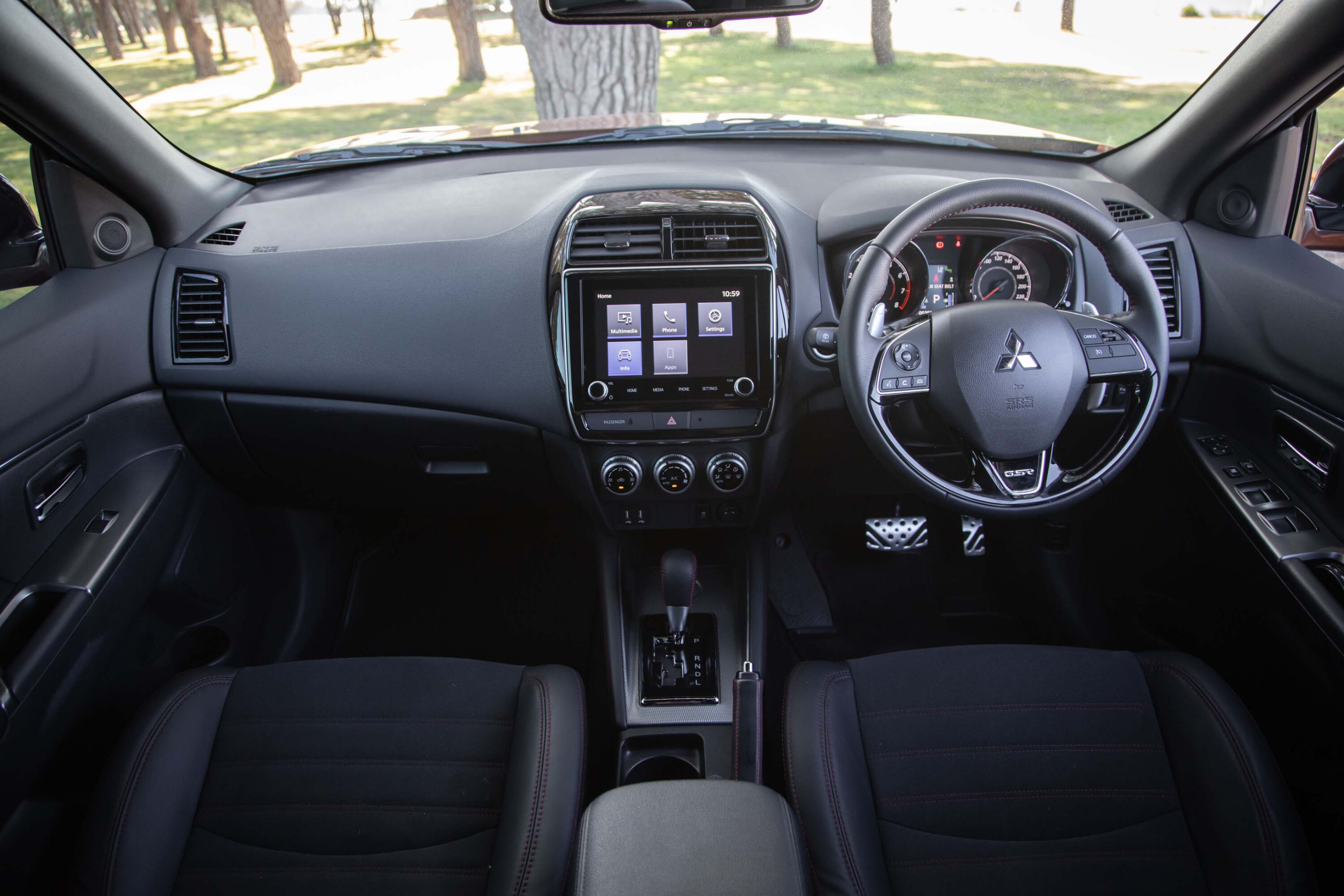
For the duration of that warranty period you also get capped price servicing, with most services costing $399 along with jumps to $699 later in the decade.
If you breach the kilometre limit by a fair margin or skip dealer servicing, the warranty is the industry average five years/unlimited.
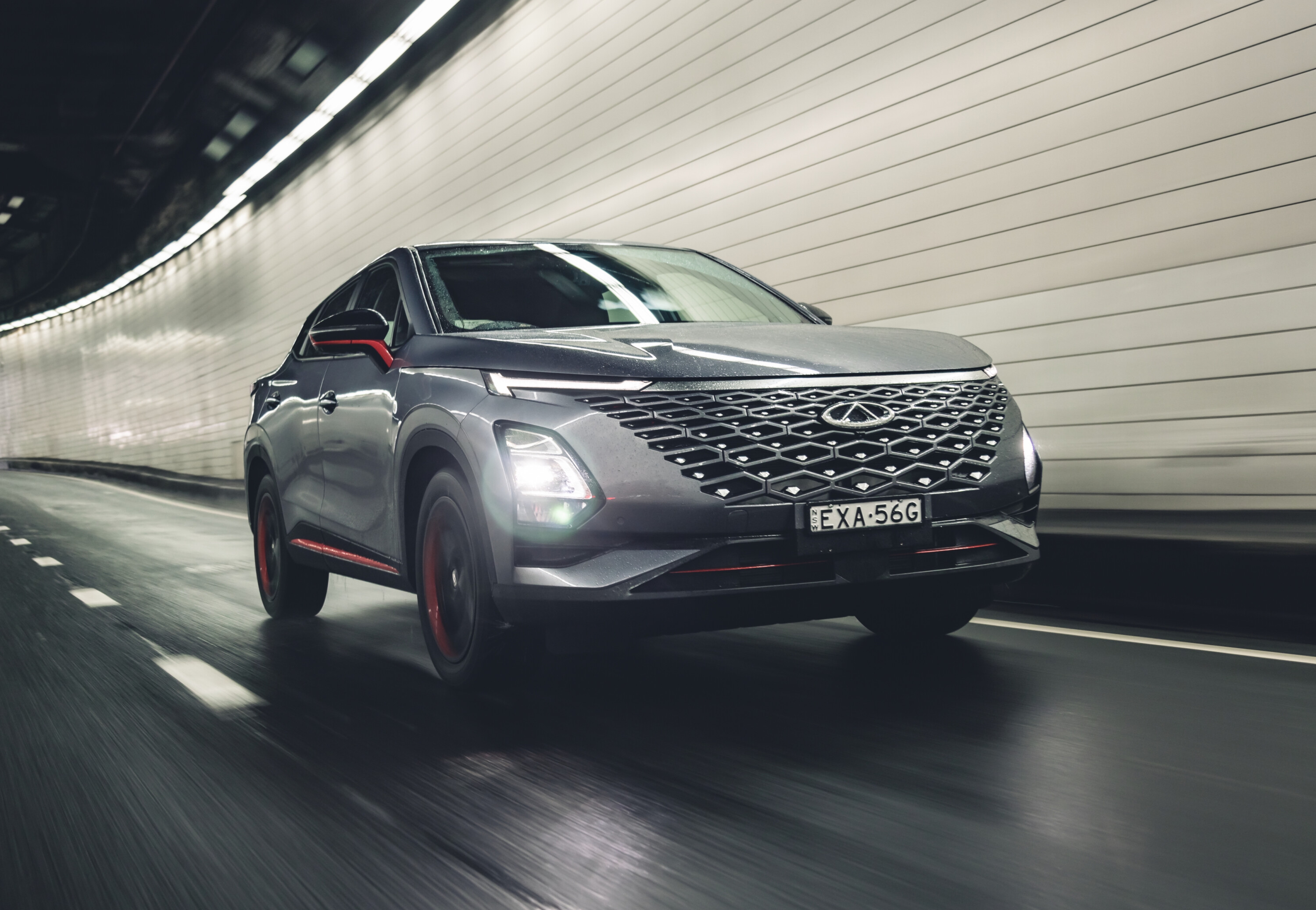
Its return is underwritten by its striking-looking small SUV, the Omoda 5. Despite its $29,990 RRP, it’s absolutely stacked with gear, including 18-inch alloys, a big touchscreen, wireless charging, an eight-speaker stereo, LED headlights, dual-zone climate control and even voice control.
While the tech looks good, we’ve found the screen to be a bit laggy to use and it feels cheap.
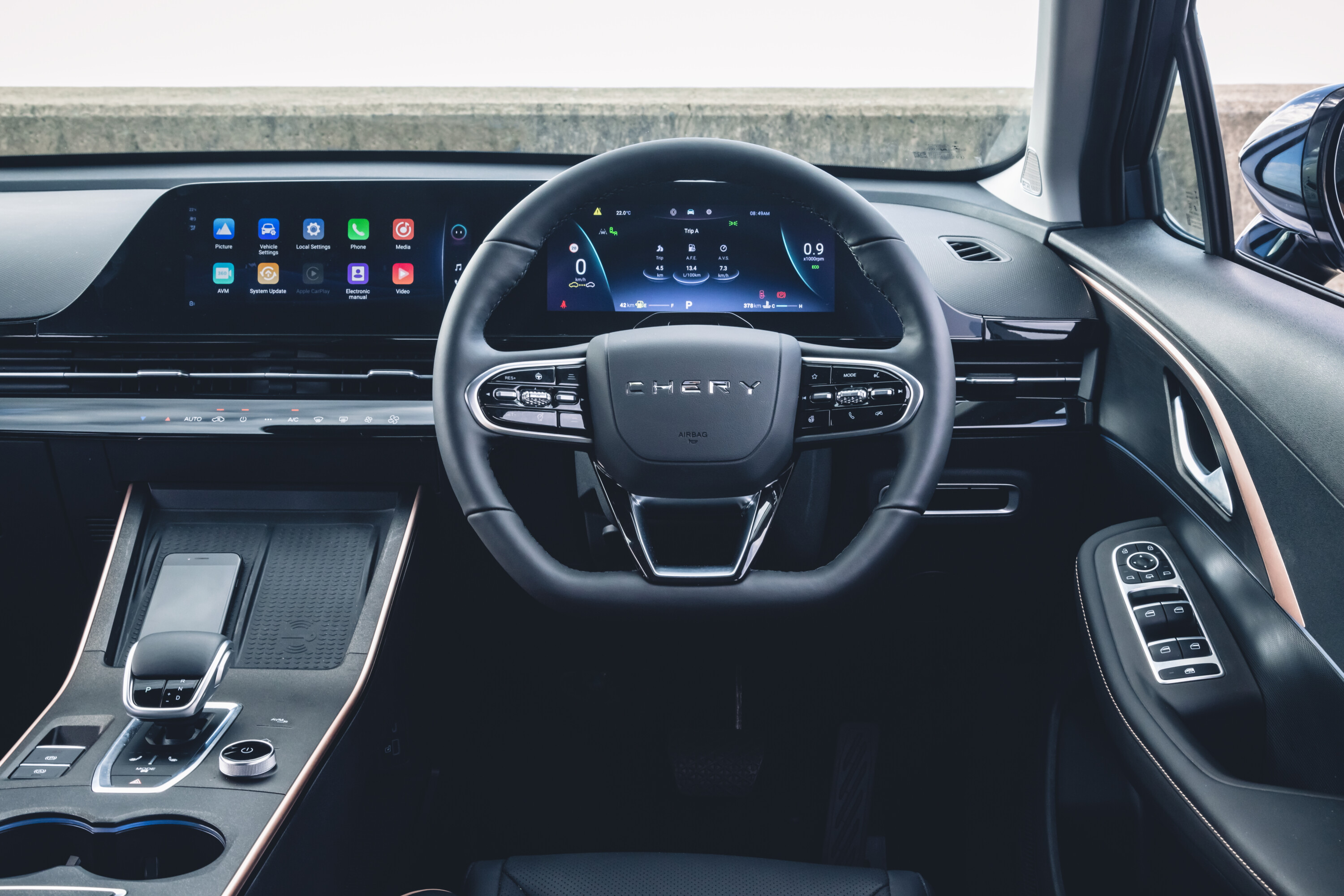
The materials and quality are a mixed bag inside and out and a weird own-goal in the front means the seats are too fat for the cooled console bin to fully open. The boot is a small-ish but well-shaped 360 litres.
Safety features are comprehensive, though poorly calibrated active safety aids are either annoying or heavy-handed. If the company can get that sorted out, the Omoda 5 will be a much friendlier car to drive.
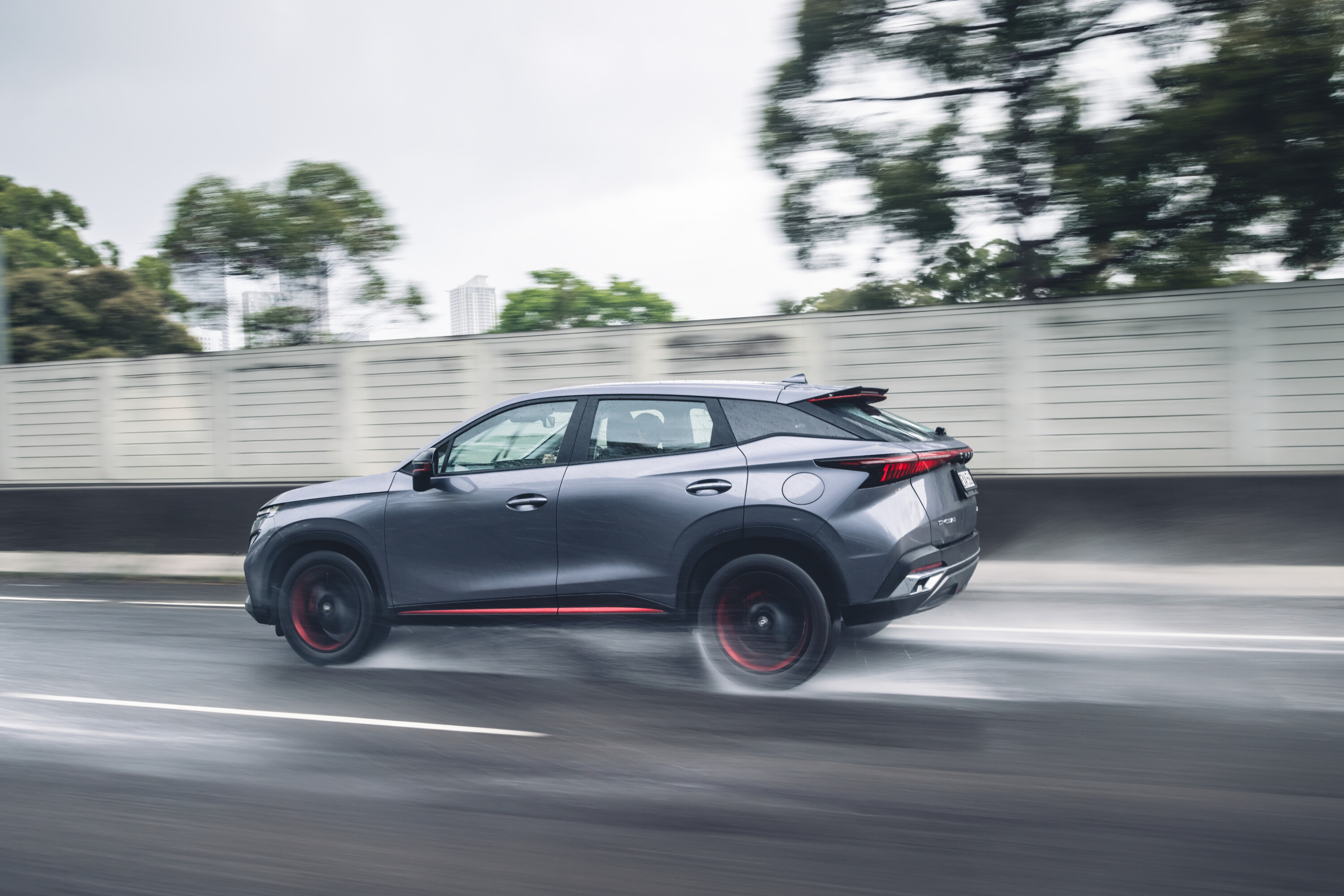
Servicing is every 12 months, with shorter-than-average 10,000km intervals owing to the Omoda 5’s relatively complex 1.5L turbo engine.
Pricing for the services is capped over seven years, with the first five going for $280 each before jumping to $390 and then falling back to $295. The program is matched with a seven-year warranty and roadside assistance.
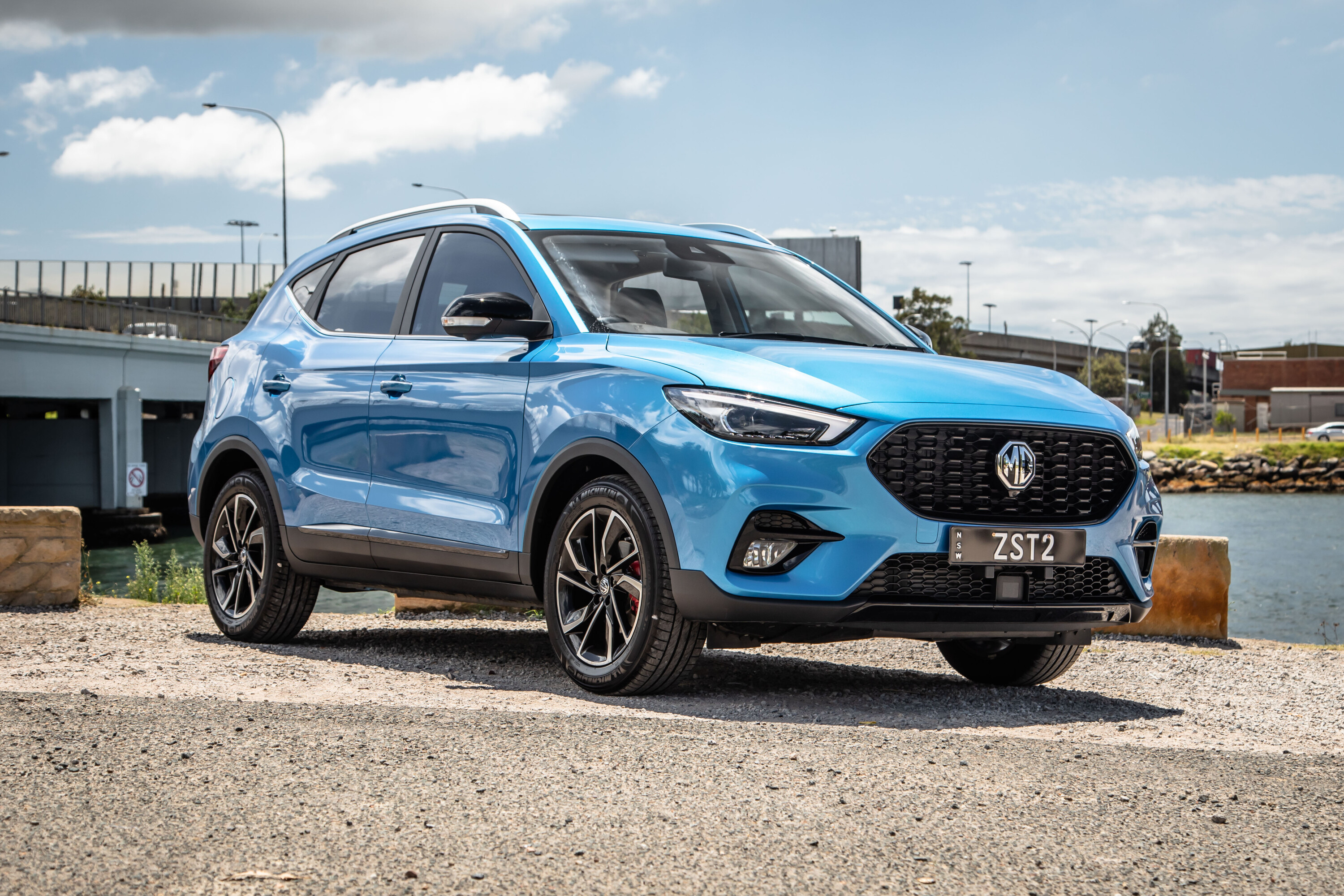
At $26,990 drive-away, It’s one of the cheapest small SUVs on the market but still has a reasonable list of features like alloy wheels, 10-inch touchscreen, LED headlights, and a 360-degree camera.
The touchscreen is not the last word in excellence but does have Apple CarPlay and Android Auto. The fake leather trim gets very hot in summer and the cameras are a bit murky, but could be bearable given the price.
The standard safety package – called MG Pilot – includes lane keep assist, reverse cross-traffic alert, forward AEB and adaptive cruise control, which is a lot at this price point.
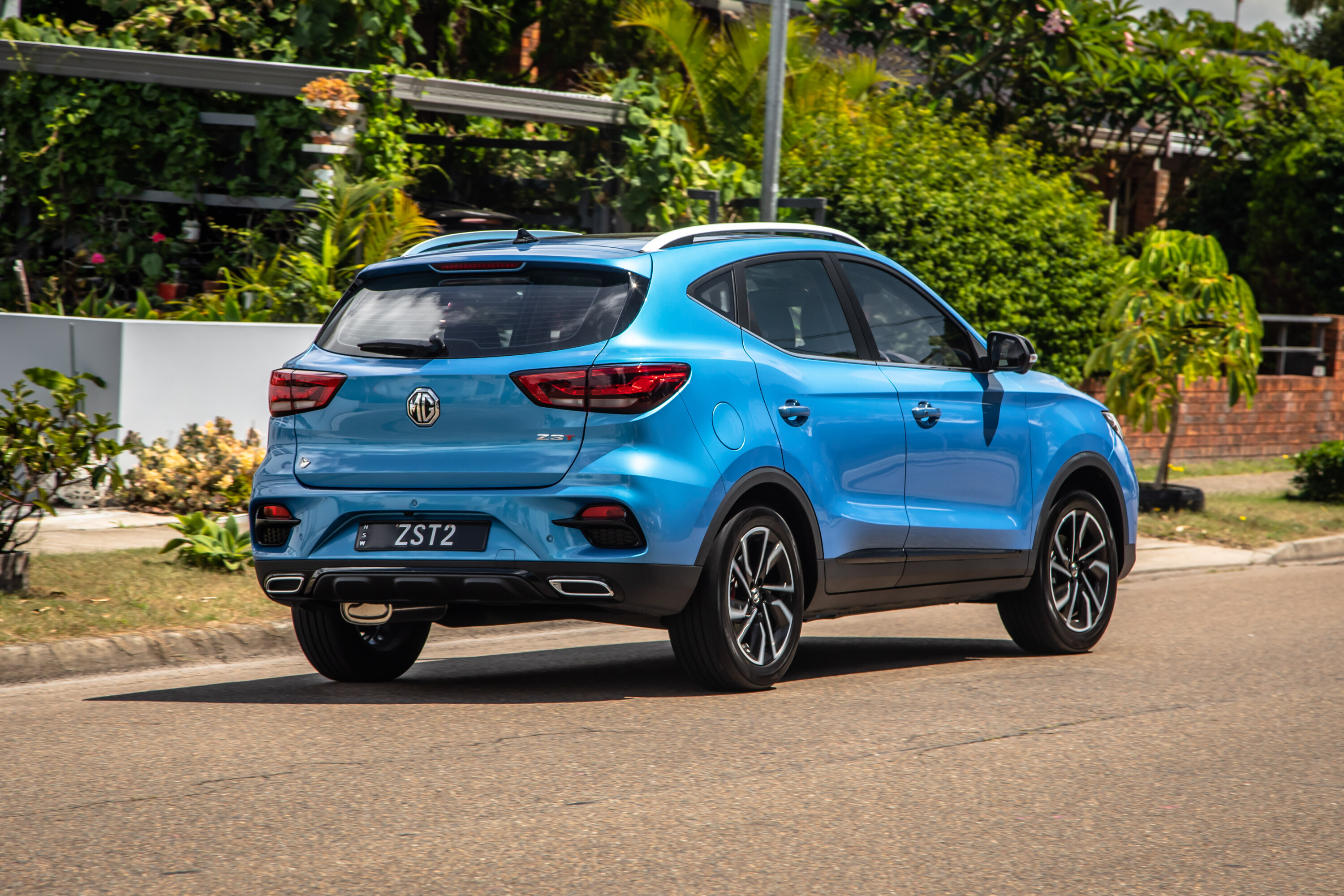
Interior space is towards the bottom of this list, but you can get squeeze in four adults and the boot will take 359 litres of cargo. Cabin plastics and materials aren’t top-notch but seem hardy enough.
The MG comes with a seven-year/unlimited kilometre warranty and seven years of capped-price servicing. The service intervals are short at 10,000km (or 12 months if you’re a low-miler, which is average) and each visit is either reasonably priced ($261) or not (up to $438).
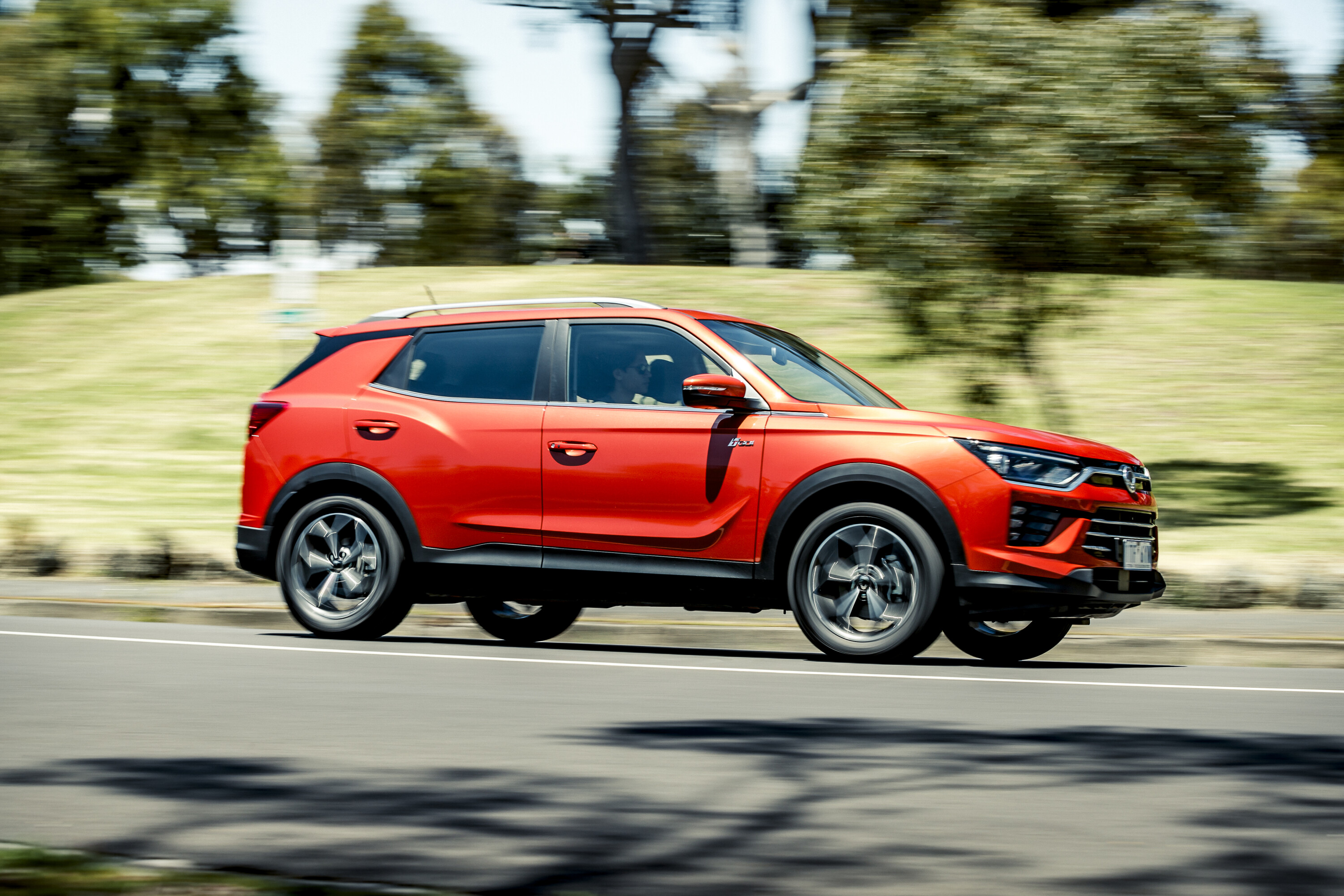
The second tier of a three-car range, the $32,990 drive-away ELX scores 18-inch alloys, cruise control, an 8.0-inch touchscreen, heated frot seats, front and rear parking sensors and a reversing camera. The media screen also hosts Apple CarPlay and Android Auto.
Inside you get a mixture of cloth and fake leather on the seats while the steering wheel is leather wrapped. It’s a big car for the class, just a handful of centimetres shorter than the Toyota RAV4, which is technically the next size up. Fuel economy isn’t amazing but not far off its 7.7L/100km official test result.
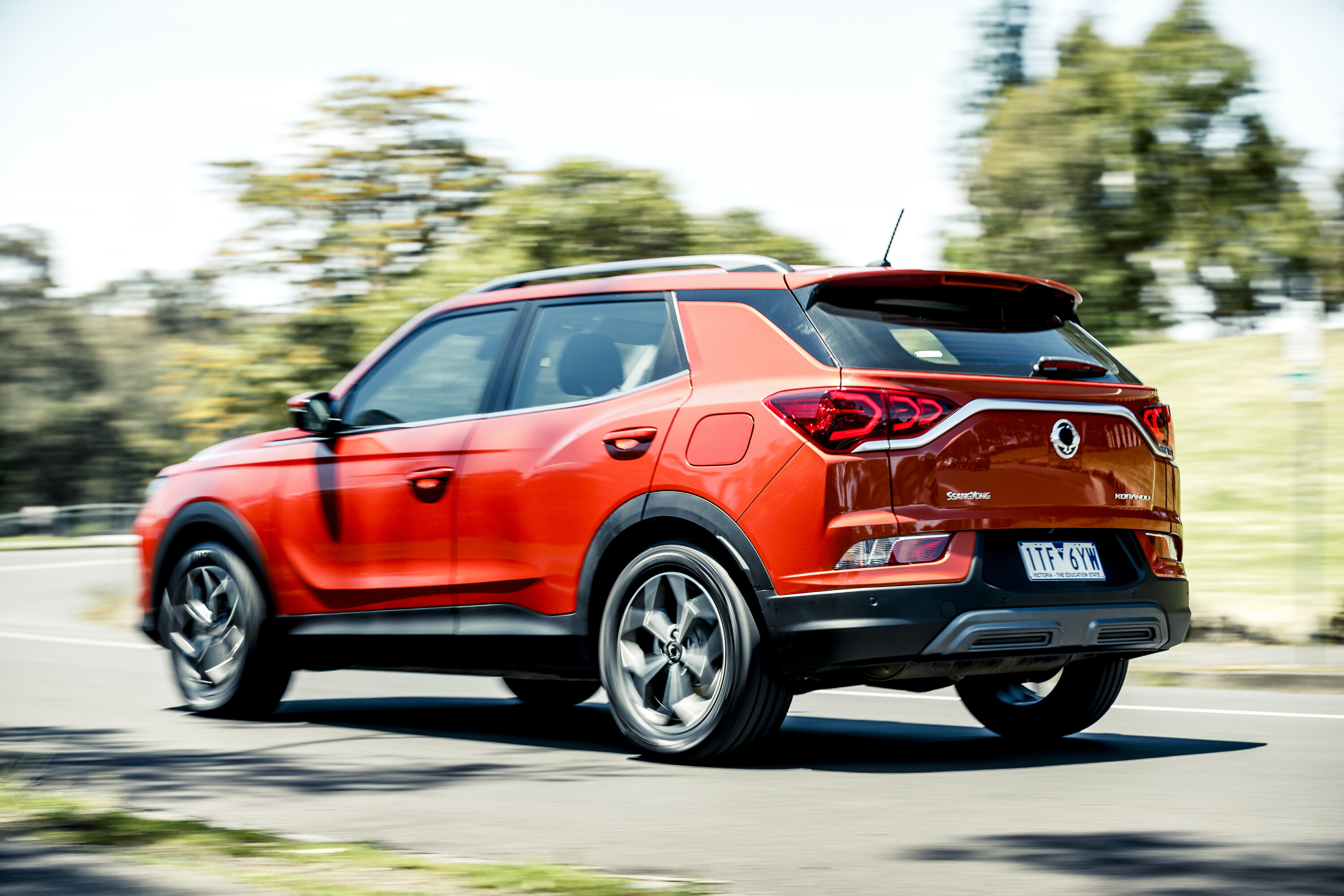
Rear seat space matches the ASX and Kona while the front seat passengers might want a bit more support and comfort found in other cars here.
The cabin itself is well-made, with decent quality materials. The touchscreen swims in a fair bit of plastic and isn’t much good unless you have a phone plugged in, but few of us won’t have that available to us.
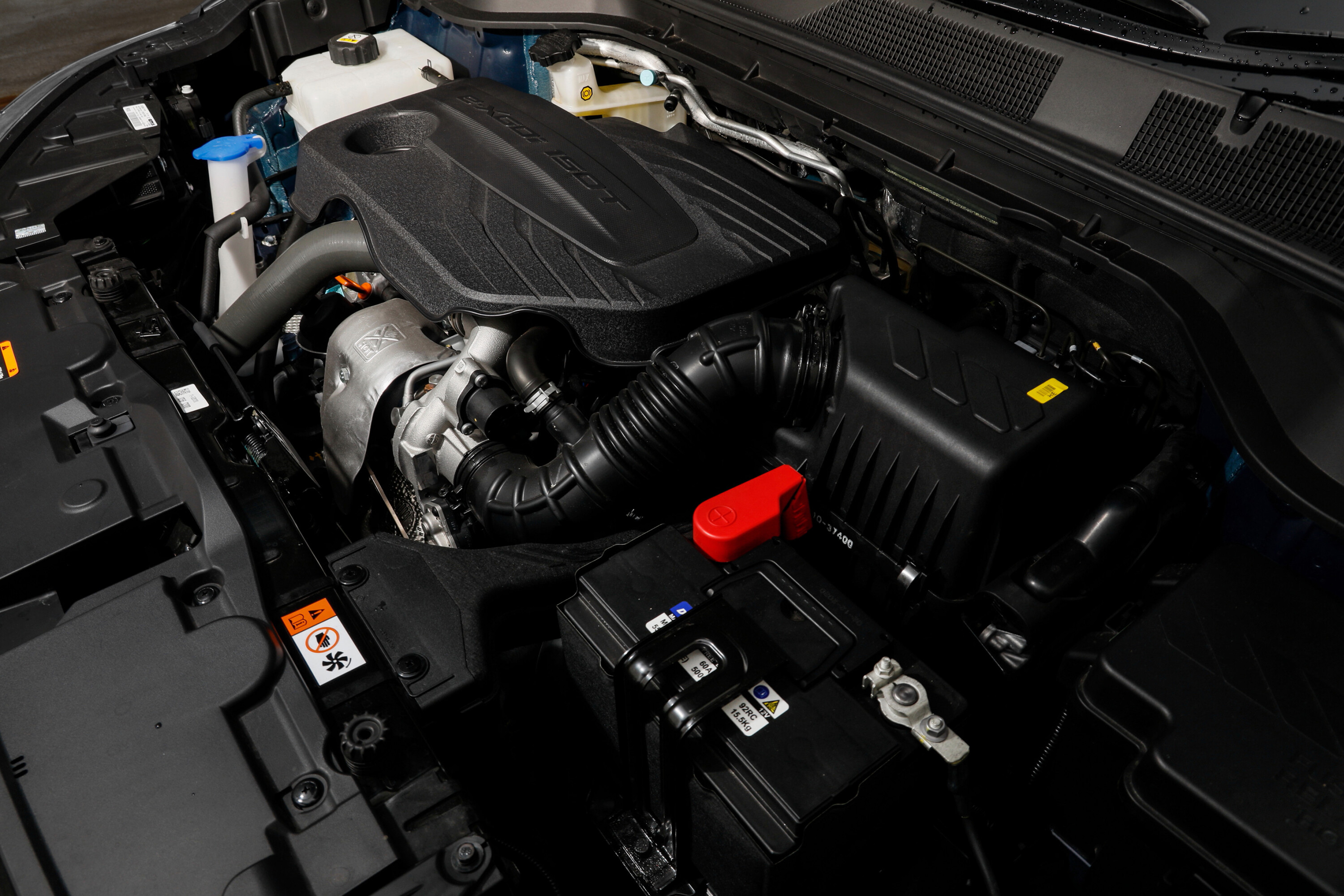
Ride and handling are a mixed bag, with a firm setup that doesn’t really deliver much sportiness. Less eager drivers won’t mind but, again, the Kamiq is way more fun.
It has a pretty decent safety setup, with forward AEB, lane-keep assist, blind spot detection with lane change assist, rear cross-traffic alert and exit assist, a useful upgrade from the cheaper base model.
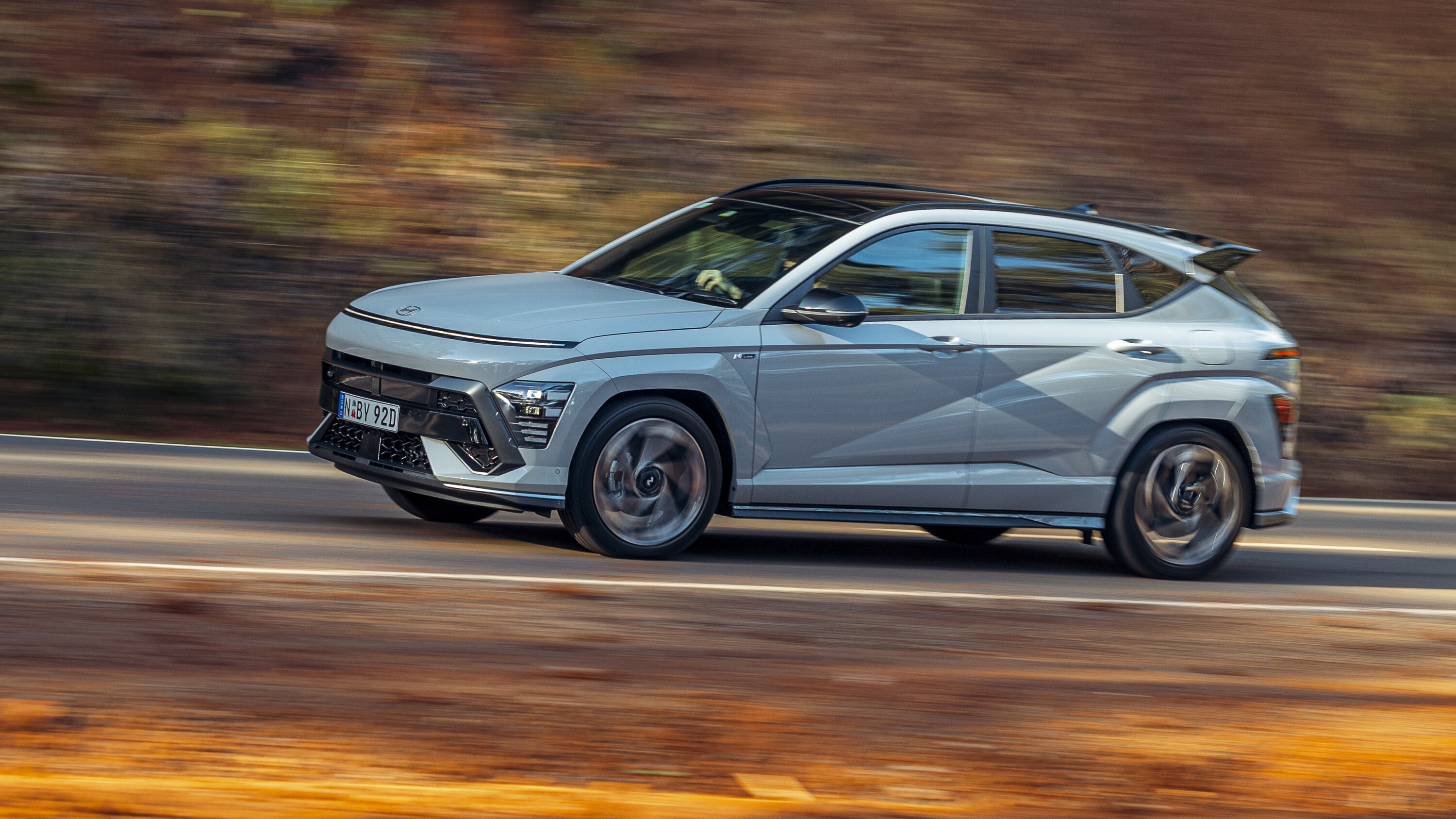
Its bigger interior features two digital screens – split between infotainment and driver instruments – and features include a nice cloth trim, dual-zone climate control, keyless entry and start, wireless charging, LED lighting, and digital radio. You also get LED headlights and daytime running lights.
The main thoughtful touch is the huge jump in rear occupant space. The old car was based on the i30 hatch which isn’t famous for a luxurious rear seat. This new car, based this time on the i30 sedan, is much better. You also get air vents in the rear, which is a rarity in this class.
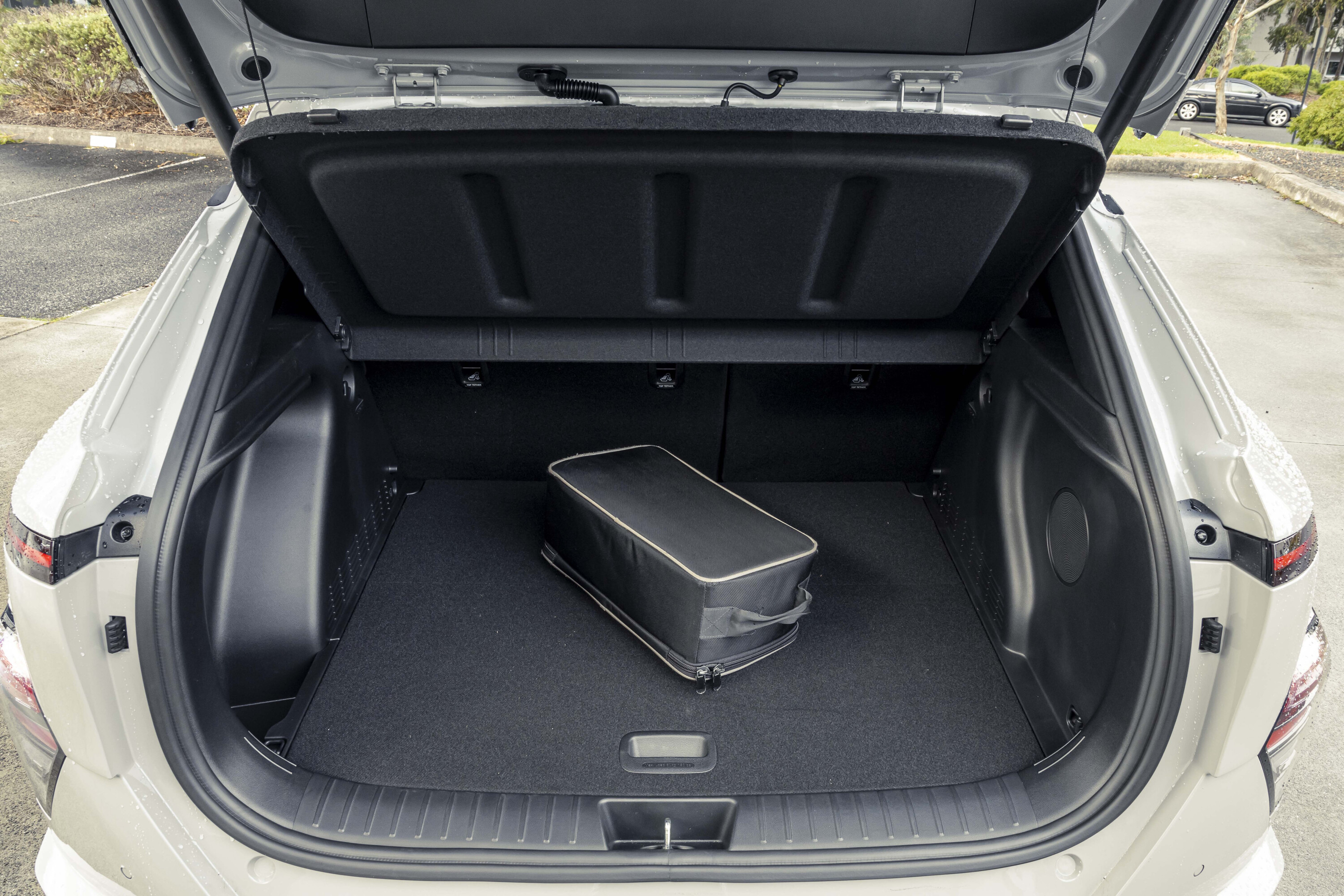
And a bigger safety package includes forward AEB, reverse cross-traffic alert, car-exit warning, blind-spot, lane keep assist, high-beam assist, and front/rear parking sensors. There’s also a reversing camera and driver attention detection (which panics a bit if can’t see your eyes).
Servicing costs for the 2.0L petrol Kona are pegged at $399 a visit, over-the-air software updates are possible, while the factory warranty is five years (unlimited kilometres).
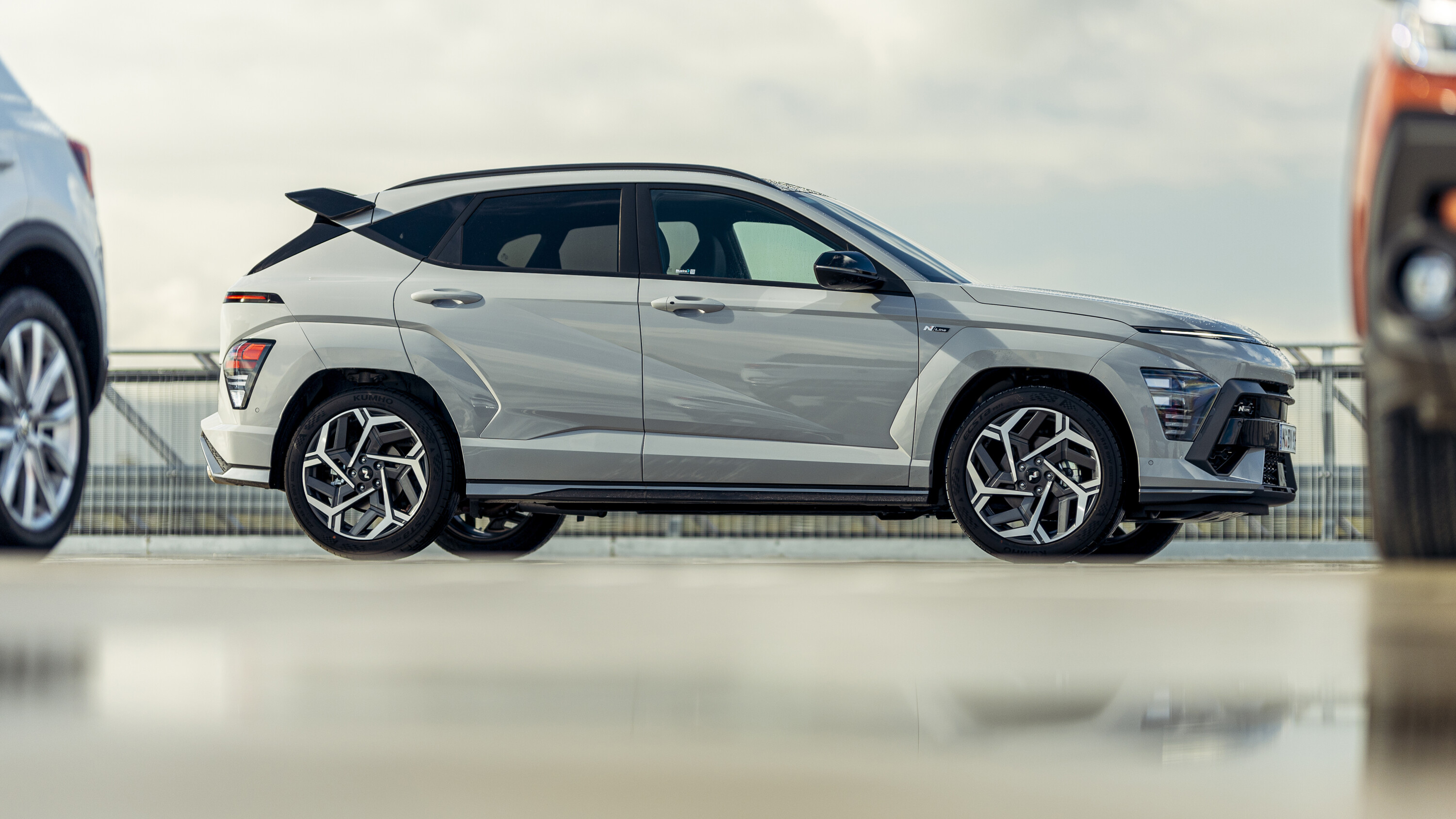
The new Hyundai Kona is a big leap forward – it’s a lot of car for the money in more ways than one.
Skoda’s Kamiq is head and shoulders above the Chinese brands for quality, style and execution, though its price is just too far away from the rest to win the value equation – especially when you need to pay extra for some safety features.
The Korando puts up a good fight but doesn’t quite match either the Mitsubishi or Hyundai.
So, it comes down to the oldest and newest cars here.
Mitsubishi’s ASX is a lot of car for the money, with an incredible warranty, plenty of gear and a competitive price, but it’s so very old and feels it.
The new Hyundai Kona is a big leap forward, though. Although the entry price has increased by about $5000, the new model offers significantly more features, tech, and interior space than its predecessor. Few rivals can match the Hyundai’s safety gear at this price point, too.
It’s a lot of car for the money in more ways than one.
Looking to get into a brand-new small SUV? Our stories below will guide you to the model that best suits your needs!
A look at the scorecard reveals as much. In seven international-level soccer matches including the World Cup, Spain has Germany beat with three wins, one loss and three draws. This is Germany, a nation that’s surely considered putting a soccer ball on its national flag.
It’s the same on four wheels. Remember when a baby-faced F. Alonso put an early end to the retirement trophy collecting hobby of a certain M. Schumacher?
Spain is now attempting to do the same in the world of road cars with its Spanish-made Cupra – a division of national car-maker SEAT – newly arrived in Australia. Vehicles such as its intriguing crossover-wagon Formentor are hoping to disrupt the affordable performance SUV space.
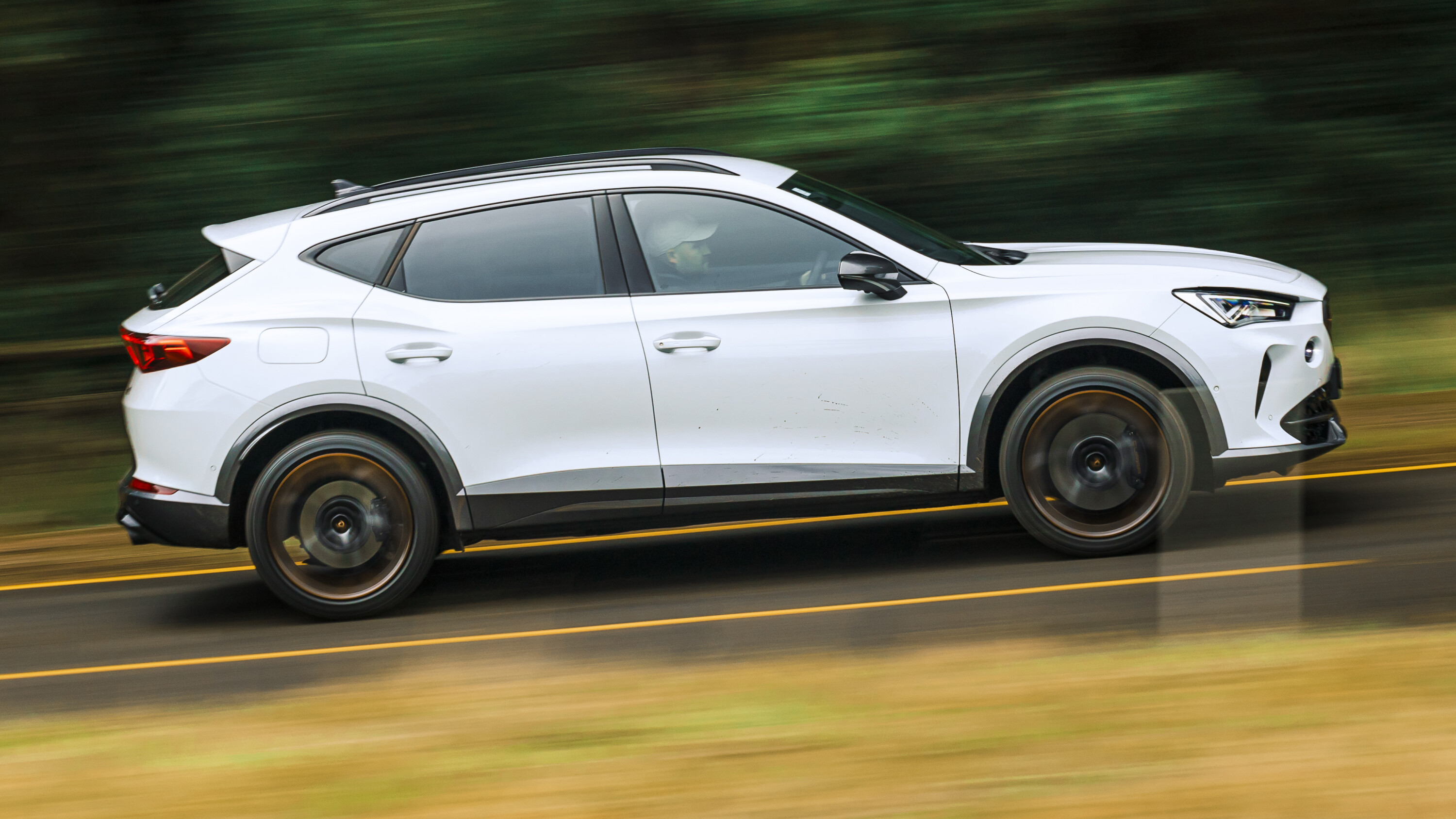
Made by a subsidiary of the mighty Volkswagen Group, the Formentor (which means “trainer” in Spanish – or wheat, depending on your local dialect) – bristles with Volkswagen DNA.
The nomenclature of its thoughtful range marries neatly with that of the Golf, too – the VZ is like a Golf GTI (both use the same front-drive 180kW engine) while the all-wheel drive, range-topping VZx (which we have today) is like a Golf R. All use Volkswagen’s tried-and-true EA888 2.0-litre turbo-petrol inline four-cylinder.
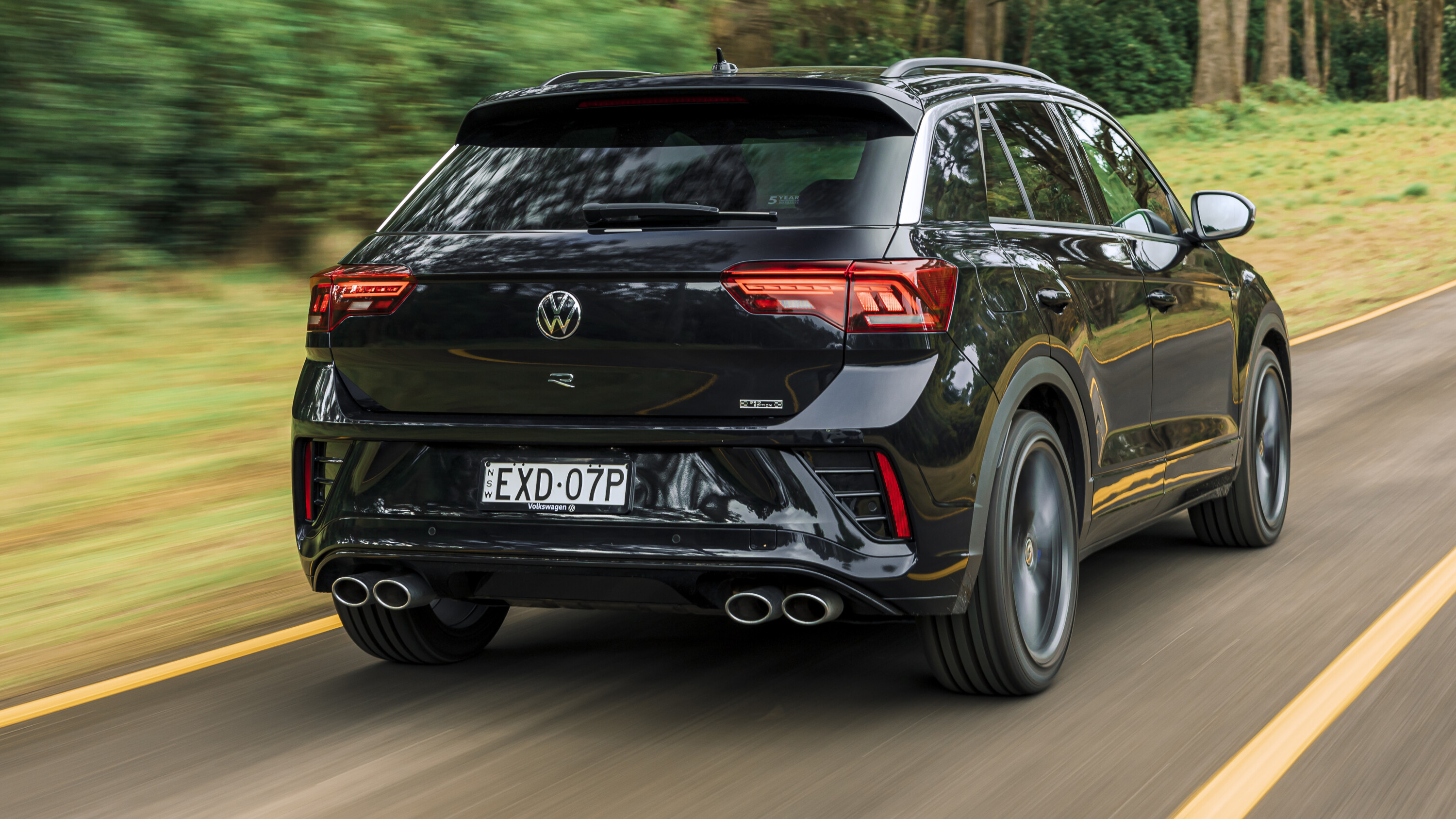
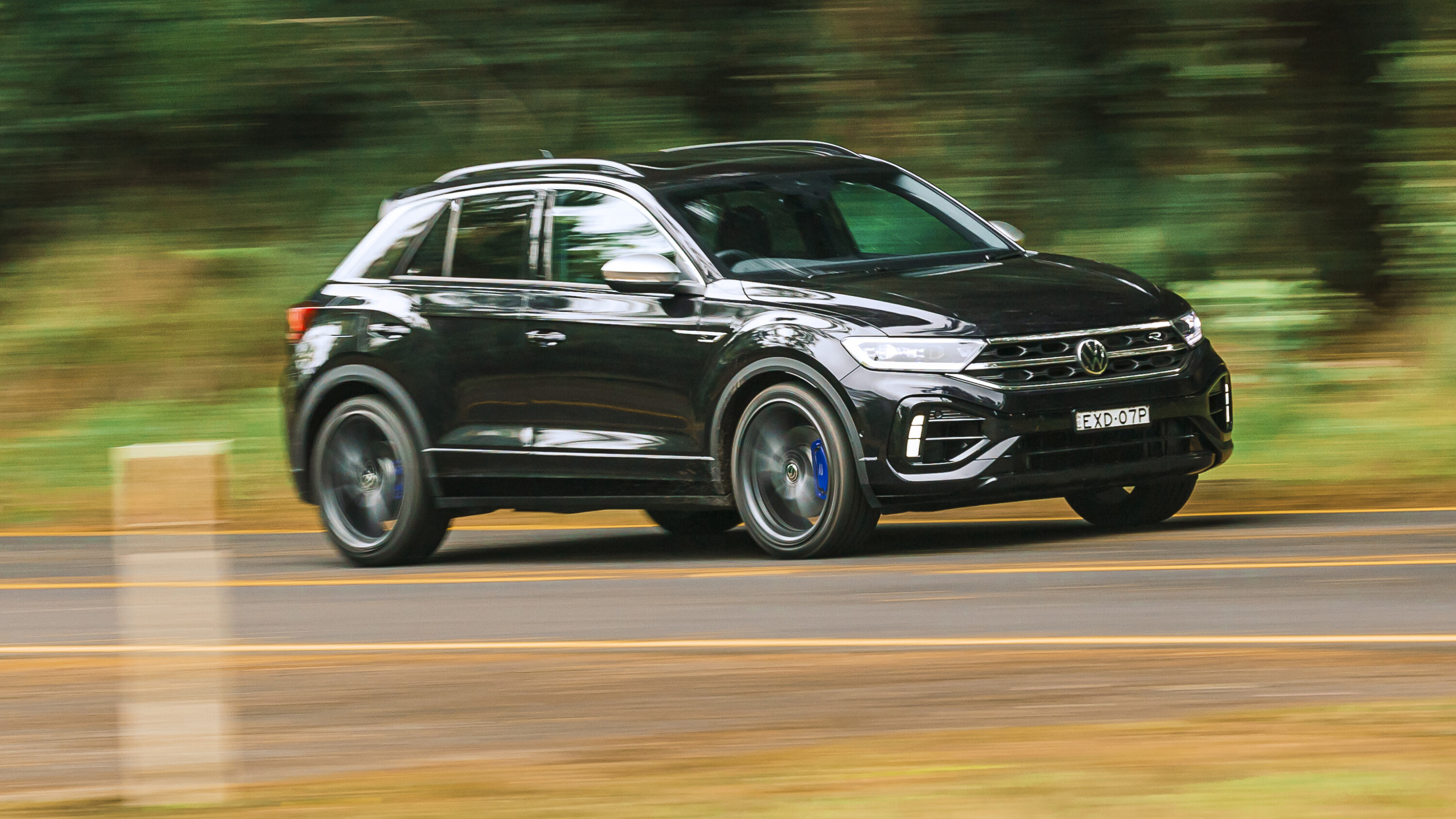
Volkswagen, however, has a secret penalty shot against its in-house foe in the form of the T-Roc R, using the same engine and all-wheel drive. Taking this advantage further is the Grid variant, which spurns supposedly superfluous accoutrements for cloth, manually adjusted seats to offer maximum performance for a no-frills price – $53,400 (before on-road costs), a sizeable $8590 less than the already cut-price Cupra.
For some that would be decisive enough, but we’ll be the judge of that today.
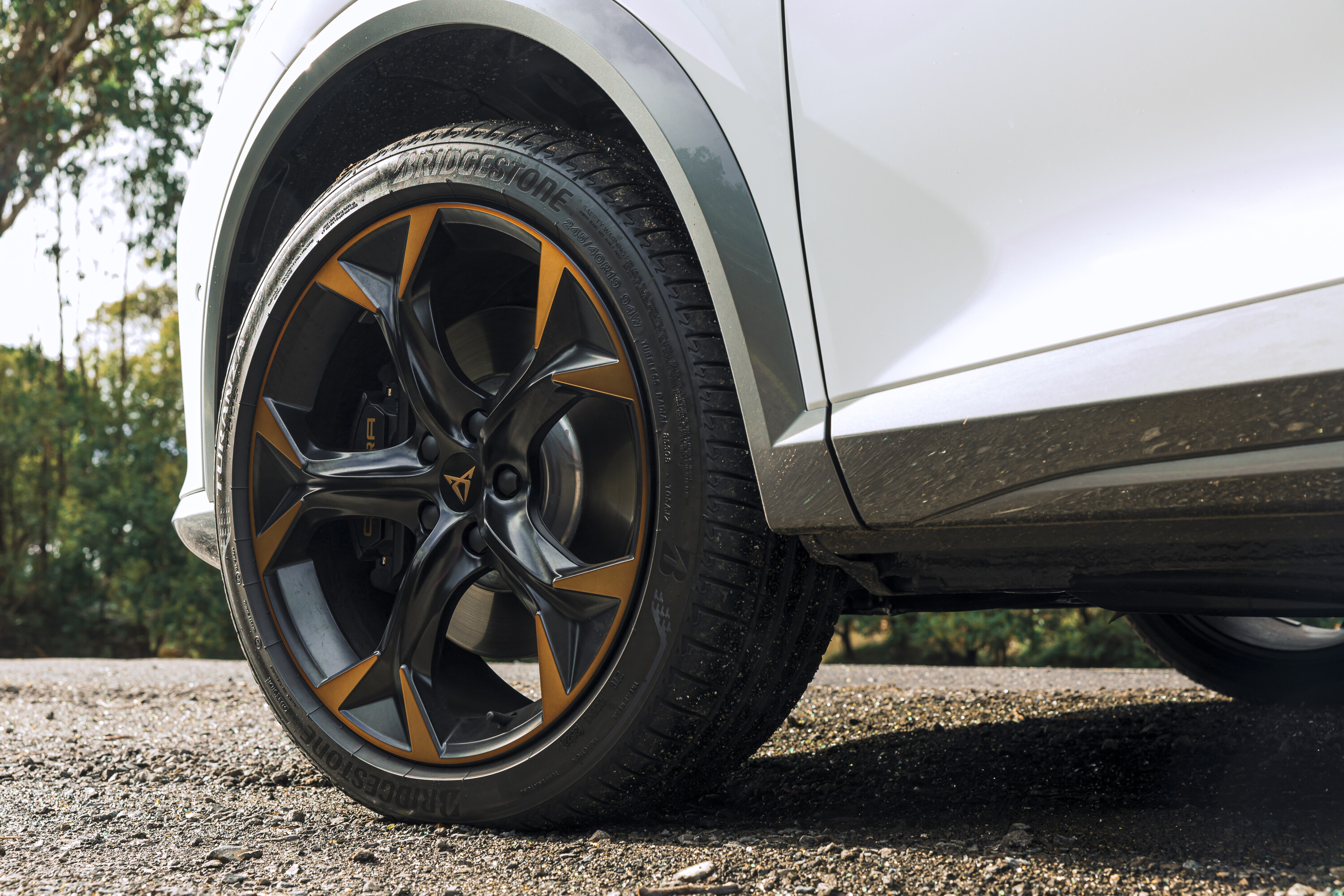
In the metal at Melbourne’s Mount Macedon, exterior styling is ever-subjective; both cars wear 19-inch wheels and flex statement-making quad exhausts. The Cupra is the larger, sleeker car, its long-roof wagon-esque body making the more upright T-Roc look a bit blunter and pugnacious by comparison.
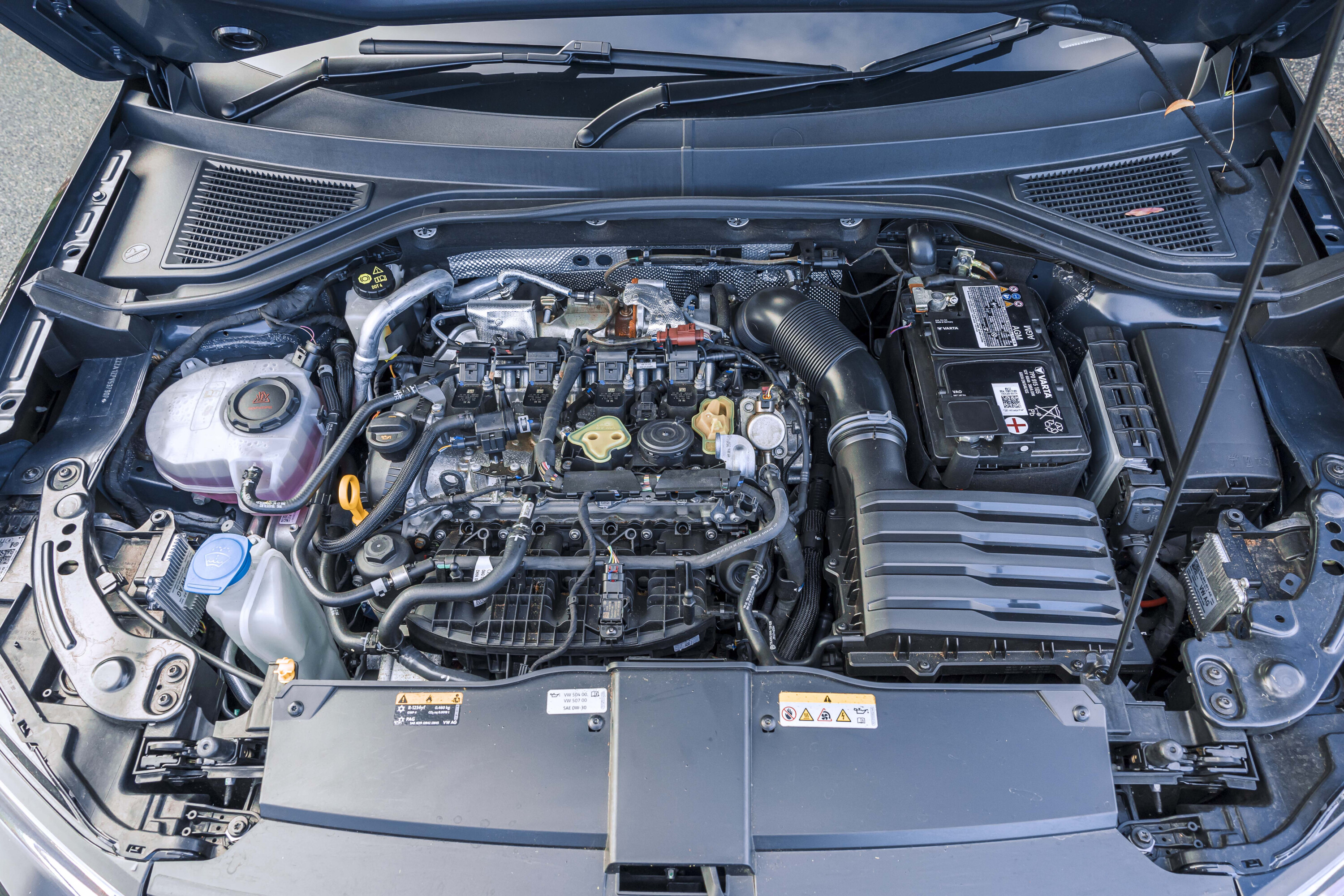
Popping the bonnet is also interesting – while they share the same engine, it sits visibly lower in the Formentor, raising expectations of handing to come.
Inside, they diverge further again. Both cars splash the nicer trim only where your hands might go, the rest of their interiors a sea of cost-conscious materials keeping a lid on MSRPs. With interior leather so common in vehicles around this price these days, the Volkswagen’s cloth seats are almost a charming novelty. In isolation you’d be perfectly happy with the T-Roc’s interior – just don’t sit in the Cupra.
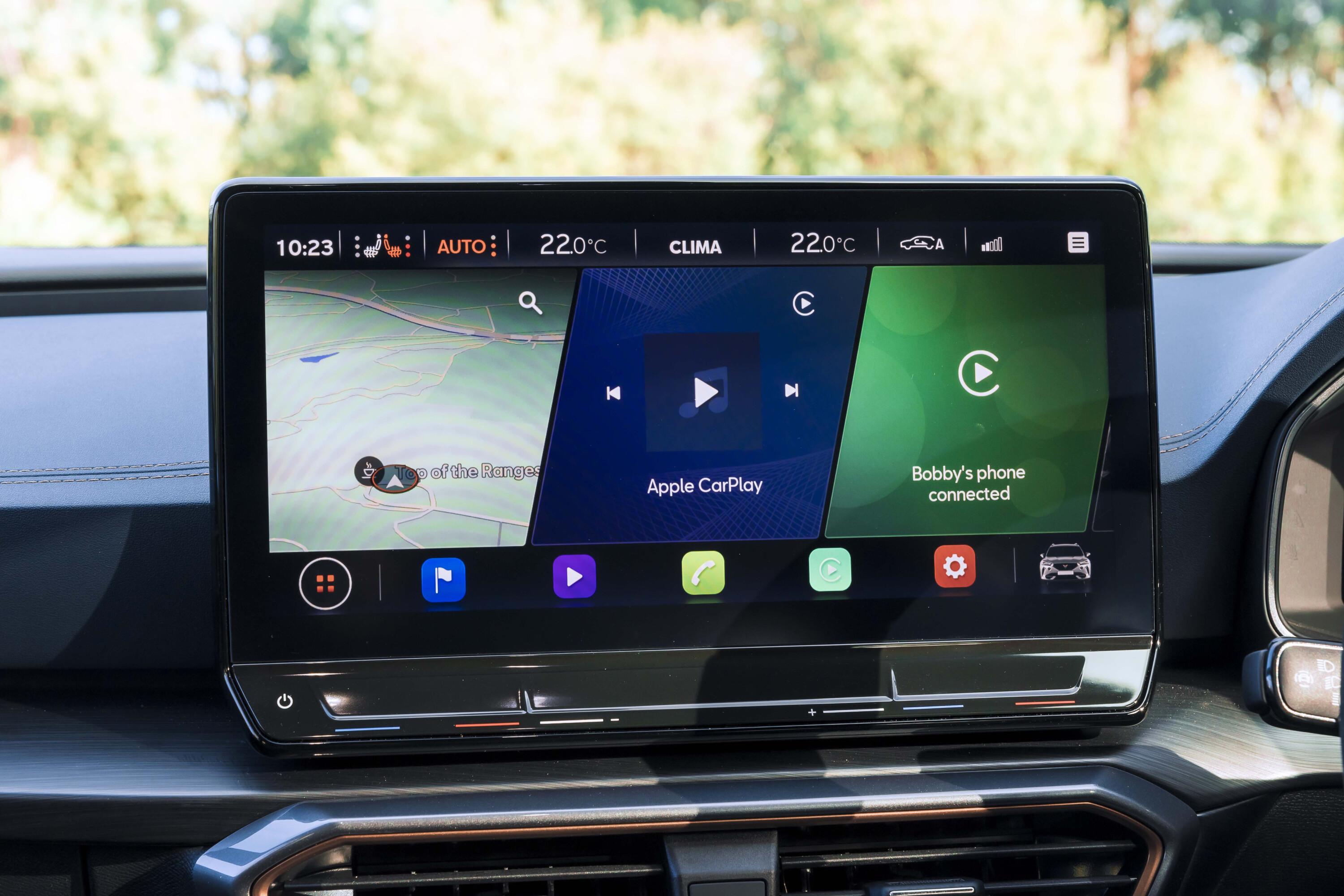
Every other manufacturer take note: this is how you do digital instruments.
It’s an entirely different proposition, a newer, more dynamic and fresher place to be. The infotainment screen is significantly larger (12.0-inch versus 9.2) and somehow crisper; and so is the digital instrument display (10.25-inch versus 8.0).
The Cupra’s digital instruments are so good in fact – with smart-looking, almost endlessly customisable graphics and menus – that they deserve special mention. Every other manufacturer take note: this is how you do digital instruments.
It’s a pity, then, that Cupra has joined the cost-saving trend of ditching HVAC hard buttons and dials in favour of on-screen controls. That the system’s external temperature controls aren’t illuminated at night is a well-documented and almost humorous oversight. Voice control to adjust the temperature is not an option, either.
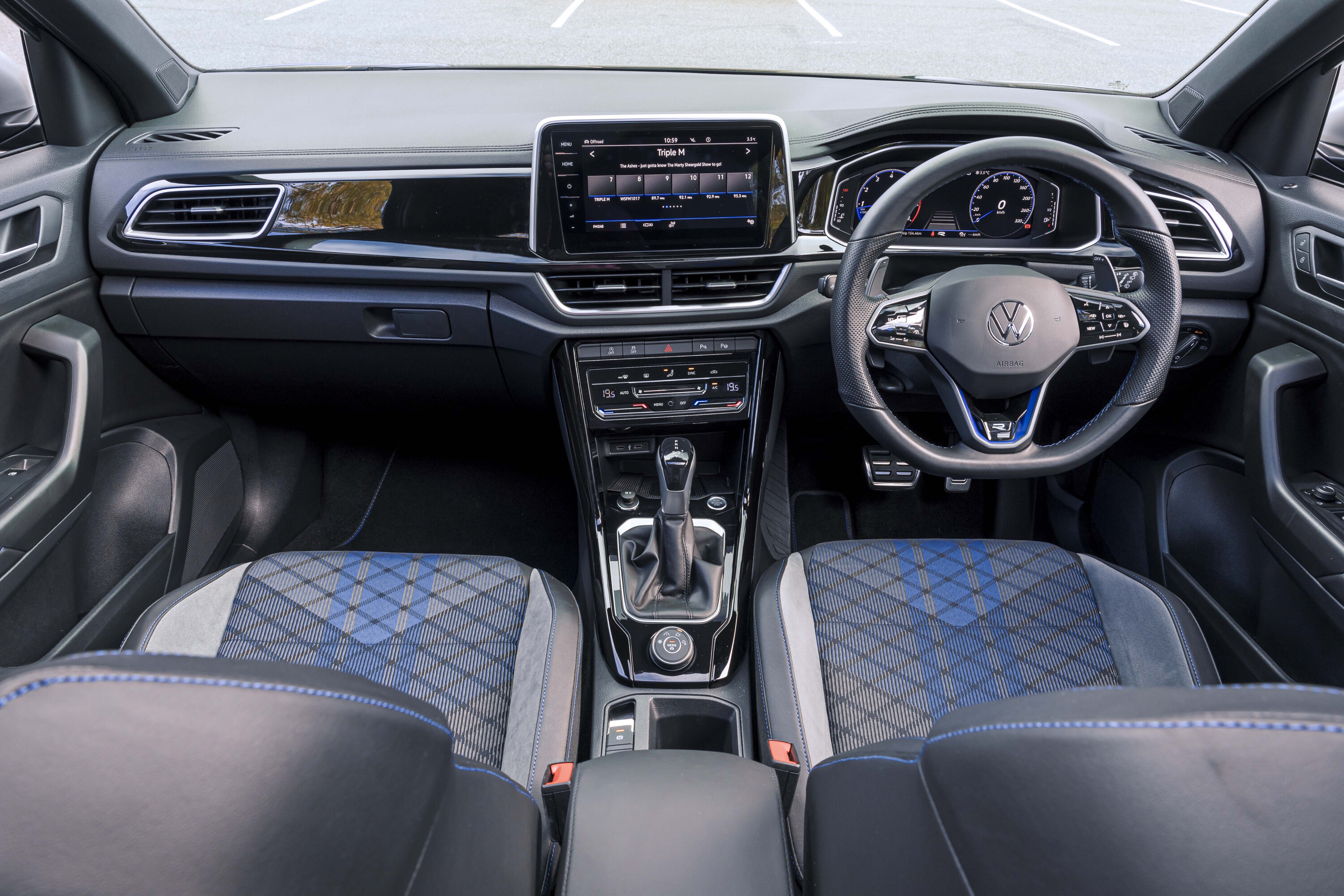
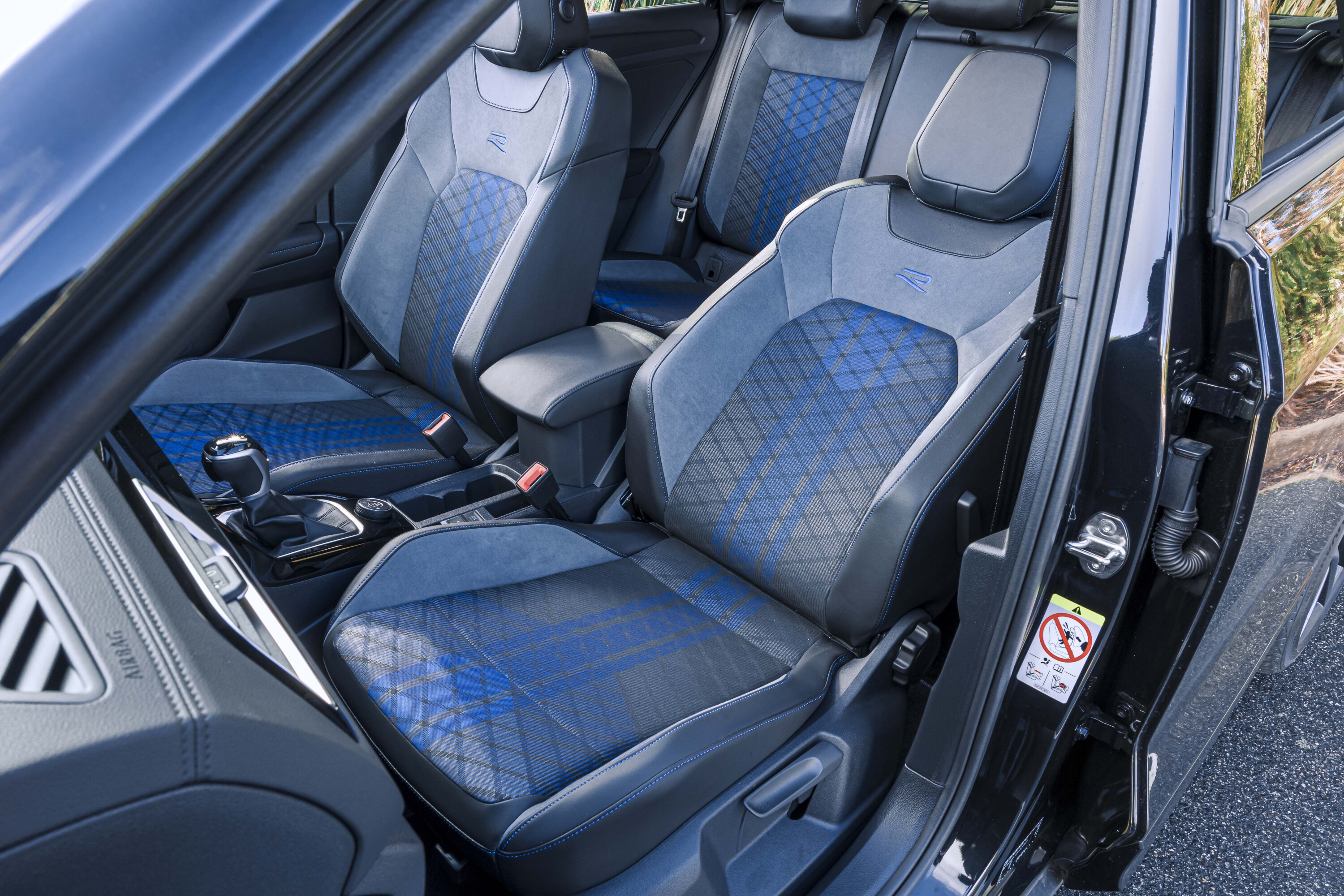
The petrol-blue-upholstered Cupra, however, has better front seats – they’re superb – and the nicer, more sophisticated ride quality (both use 40-profile tyres).
Its seating position is also more sporting, sitting you low and very much ‘in’ the car with the bonnet rising up at almost eye level – exactly like a car, and not very SUV at all (although you do sense that you’re riding higher, like you’re in a car with a lift kit).
The Cupra’s boot is also bigger – 450L versus 392L – although both are pretty compact compared to larger vehicles like a Tiguan. Both use space-saver spares and have 60:40 split-fold rear seats with ski ports.
Cupra also claims marginally lower fuel consumption at 7.7L/100km on the combined ADR cycle (to the T-Roc’s 8.0L/100km) and can take 95 RON, whereas a large sticker with very capitalised red letters informs that the T-Roc must take pricier 98 RON only. Both have 55-litre fuel tanks.
Around town, they’re as easy to drive as each other, but again the Cupra scores points for its slightly tighter turning circle, standard top-down parking camera view and brilliant, effortless shift-by-wire gear selector.
While the 221kW T-Roc has less power, its lighter kerb weight gives it a better power-to-weight ratio at 139kW/tonne to the 228kW Formentor’s 138kW. Cutely, and almost petulantly, the T-Roc speedo tops out at 320km/h speedo to trump the Cupra’s 300km/h dial.
Both claim 4.9 seconds from zero to 100km/h with visceral, idiot-proof launch control systems that mercifully slightly slip the clutches rather than brutally dump them.
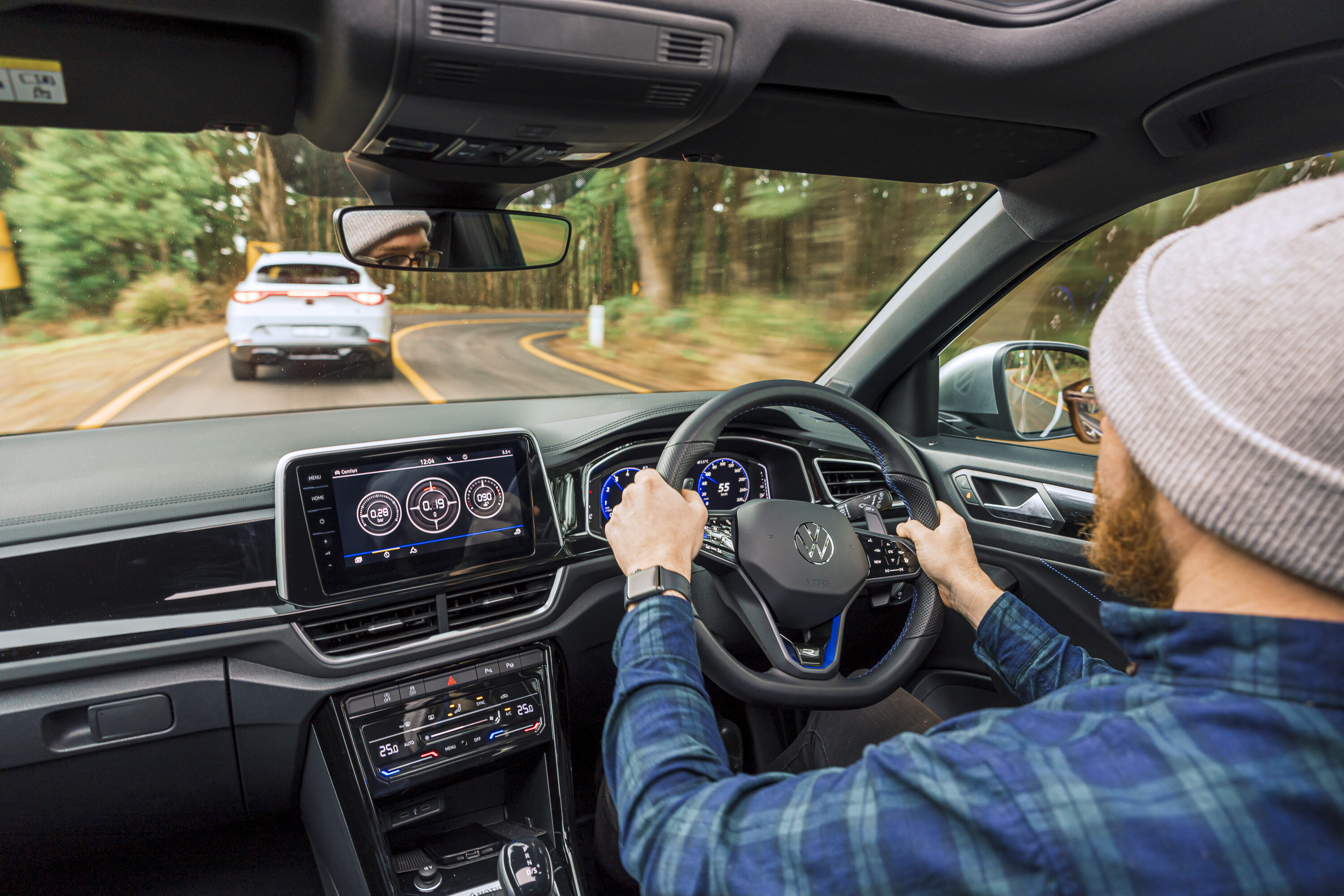
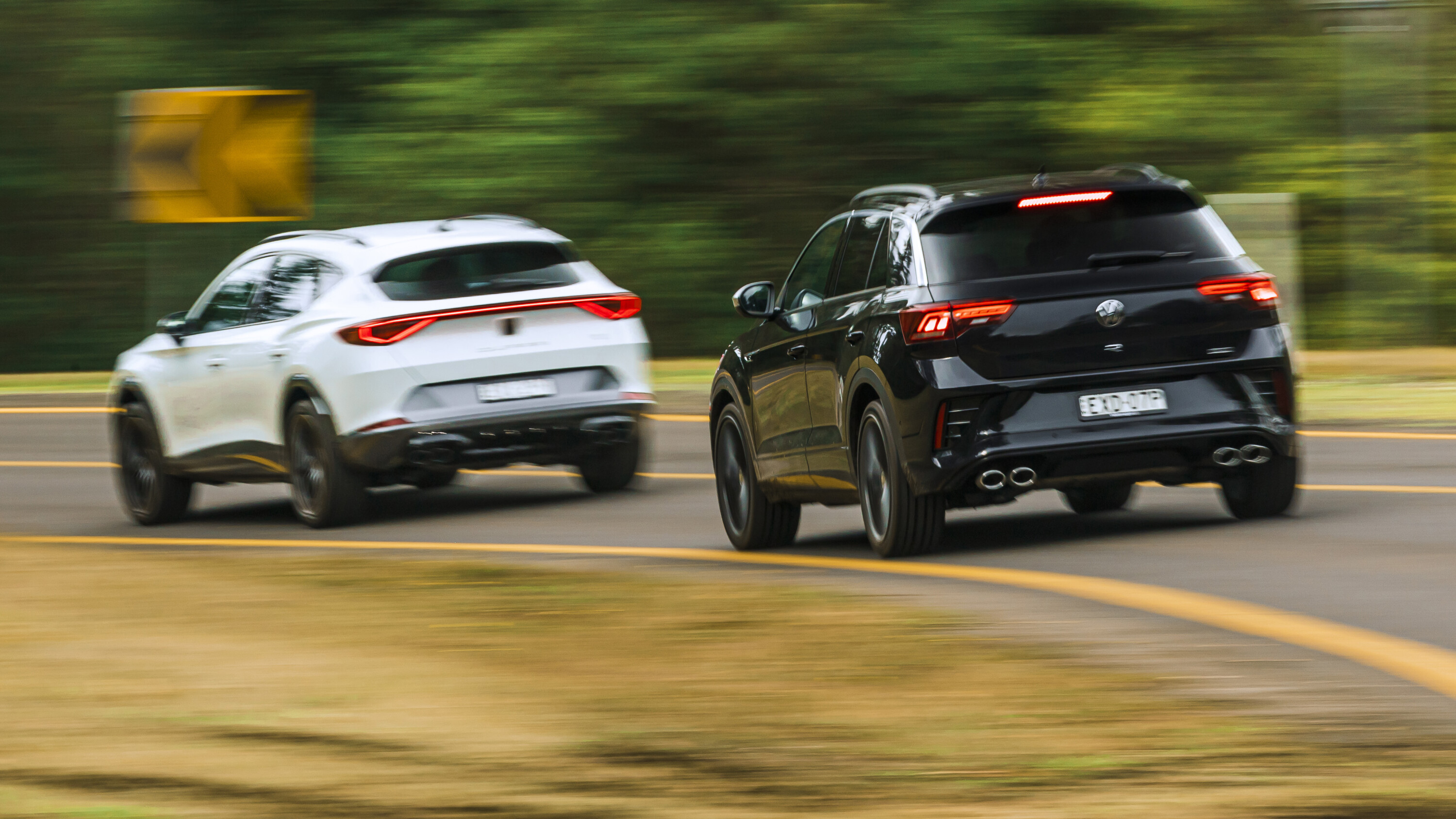
It was a cacophony of DSG dual-clutch blurts as our T-Roc and Formentor, in their manual modes, chased each other up Mount Macedon. Both cars boast great levels of power, all-wheel drive traction and mid-corner grip – and feel about as fast up a twisty road as each other.
The T-Roc scores points for its cool R-spec steering wheel with tall, slim, scythe-like paddles (versus cheaper, more forgettable plastic items in the Cupra). But while the T-Roc is great fun – its narrower body granting more space in the lane for carving racing lines – the Cupra has a notably different personality.
Activate Cupra driving mode using the steering wheel button and an unusual, obviously synthetic, almost five-cylinder engine noise burbles through the speakers at ambling speeds. If you ask me, it’s better turned off as the EA888 with its delightful, natural turbo hiss provides all the acoustics you need.
Where the T-Roc is a more natural understeerer, reminiscent of Golf Rs of old, the Cupra channels a newer, livelier handling personality that will stimulate more experienced drivers. It makes the T-Roc feel a bit one-dimensional.
The Cupra also has many more modes and adjustability to play with. Unlike the T-Roc, there are multiple Sport and Comfort settings for things like the all-wheel drive, and there is a greater range of artificial engine sounds. The damper control, delightfully, offers 15 levels of incremental adjustment using a touchscreen slider, versus the usual “Comfort”, “Sport” and “Sport Plus”.
Off the winding road and back on a spreadsheet, the Cupra eats further into the T-Roc’s $8590 price advantage. Both come with the same five-year warranty and 15,000km/12-month servicing intervals, but the Cupra can be had with a $1990 five-year pre-paid servicing plan versus $2990 for the exact same thing from VW.
Getting to know the Cupra, there’s almost something Lamborghini about it. Hexagons litter the interior and exterior styling, exactly as they do modern cars from Sant’Agata. The Cupra’s edgy software fonts are also Lambo-esque, and the interior even smells weirdly like that of a Lamborghini.
Somewhere along the line, a raging bull clearly broke into the Cupra paddock overnight – when the matador was having a siesta. No bad thing at all.
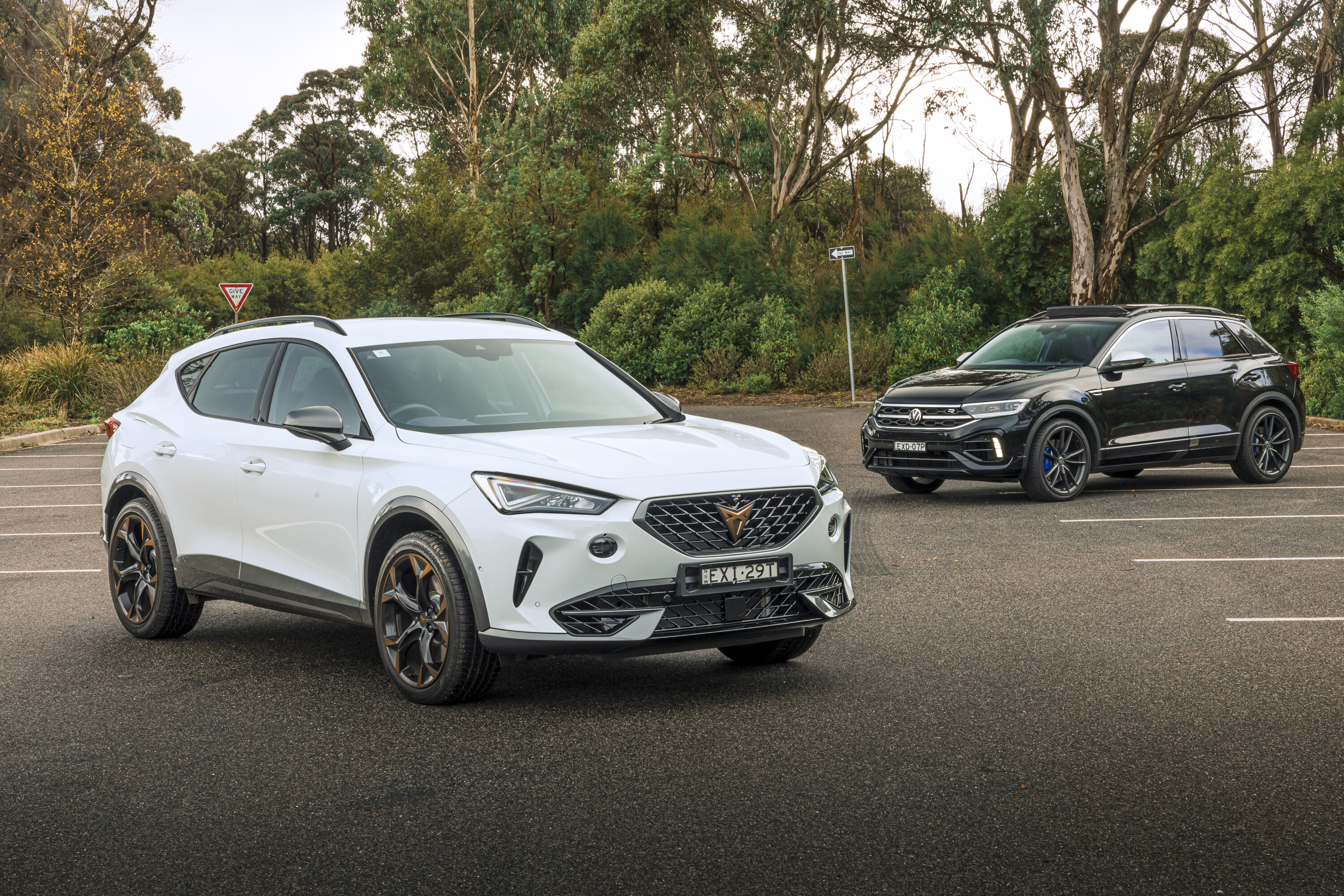
In the final reckoning, though, we say check under the couch or twist your bank manager’s arm for an extra $8K…
This whole shebang may have been a different story if we could include a Hyundai Kona N, which offers 206kW, an eight-speed dual-clutch ’box and T-Roc R performance with more equipment for even less coin ($52,200 before on-road costs in Premium guise). Luckily for both T-Roc and Formentor, we couldn’t get our hands on one in time.
In the final reckoning, though, we say check under the couch or twist your bank manager’s arm for an extra $8K and not just because the Formentor feels a generation newer than the T-Roc and has the lengthier standard equipment list. As its debut podium finish at Wheels Car of the Year attests, it’s one of the best new arrivals of the last few years.
Call it Spain one – Germany nil.
| Cupra Formentor VZx | VW T-Roc R Grid | |
|---|---|---|
| Safety, value and features | 8.5 | 8 |
| Comfort and space | 8.5 | 8 |
| Drivetrain | 8 | 8 |
| Ride and handling | 9 | 8 |
| Technology | 8.5 | 7.5 |
| OVERALL | 8.5 | 8 |
Looking to get into a brand-new small SUV? Our stories below will guide you to the model that best suits your needs!
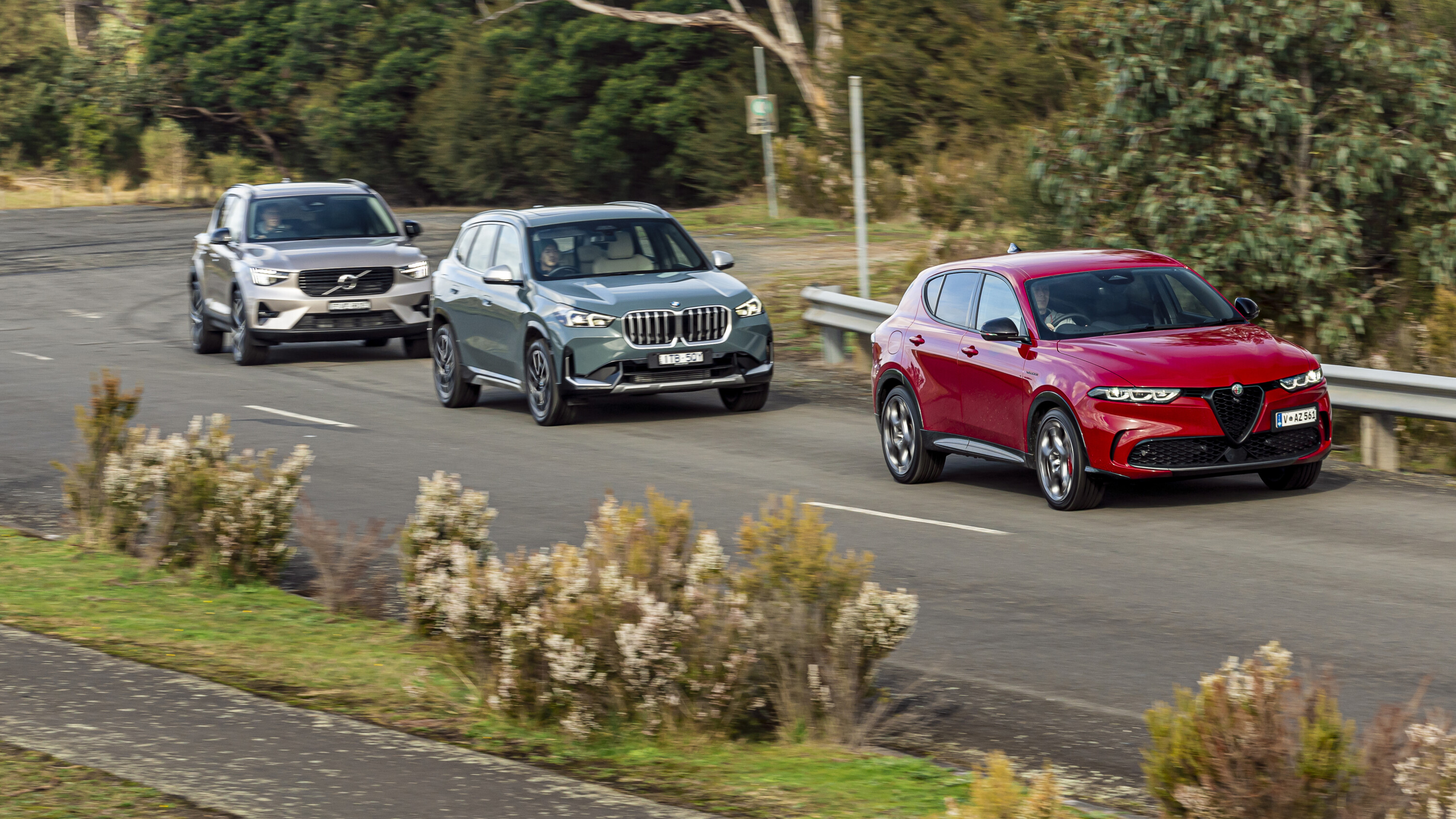
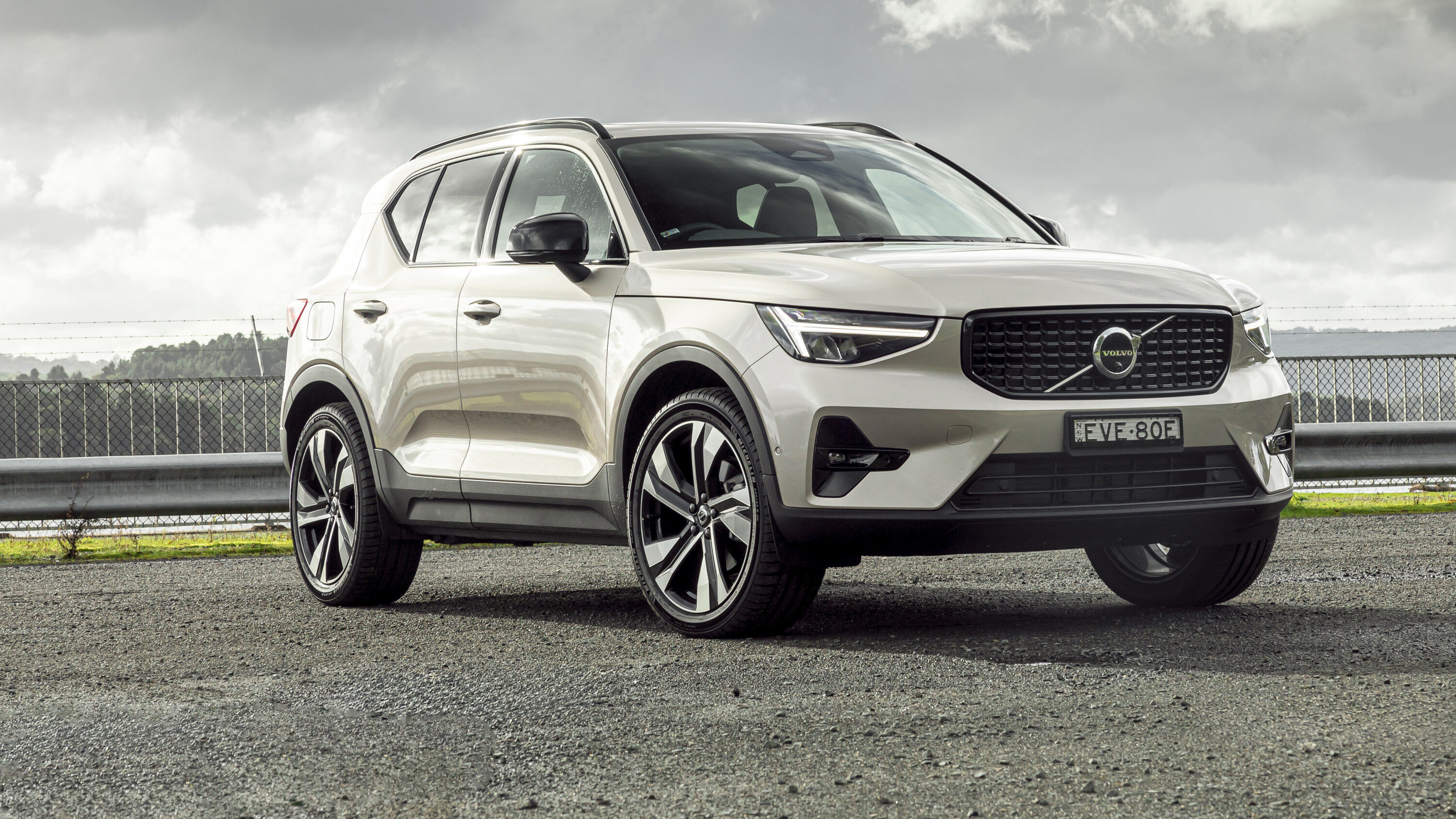
Despite the time, the smallest Volvo is still holding up well. The range is yet to get a significant update for the original variants, but a few interesting electrified versions have joined as Volvo promised at the start, and the model remains a strong contender in the field. But is it strong enough?
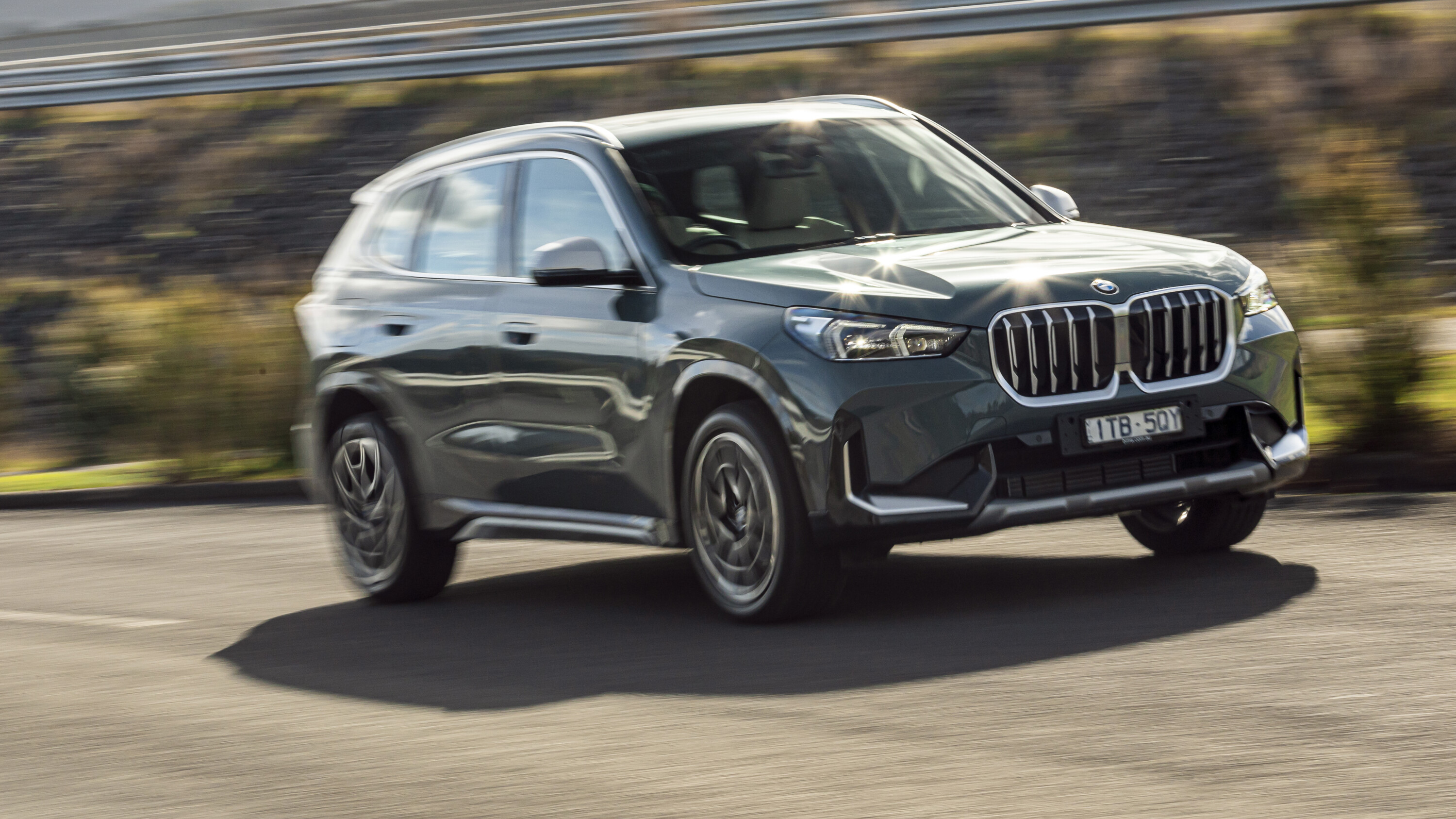
Last year, the third generation of BMW’s X1 arrived with some serious technology to contend with, along with proportions that have grown up but engines that have downsized. The new version is quite a different proposition to previous generations and a better fit for today’s landscape, says BMW.
What you won’t find in any of our trio, however, are all-wheel-drive systems, big-banger six-cylinder engines, or torque-rich diesels
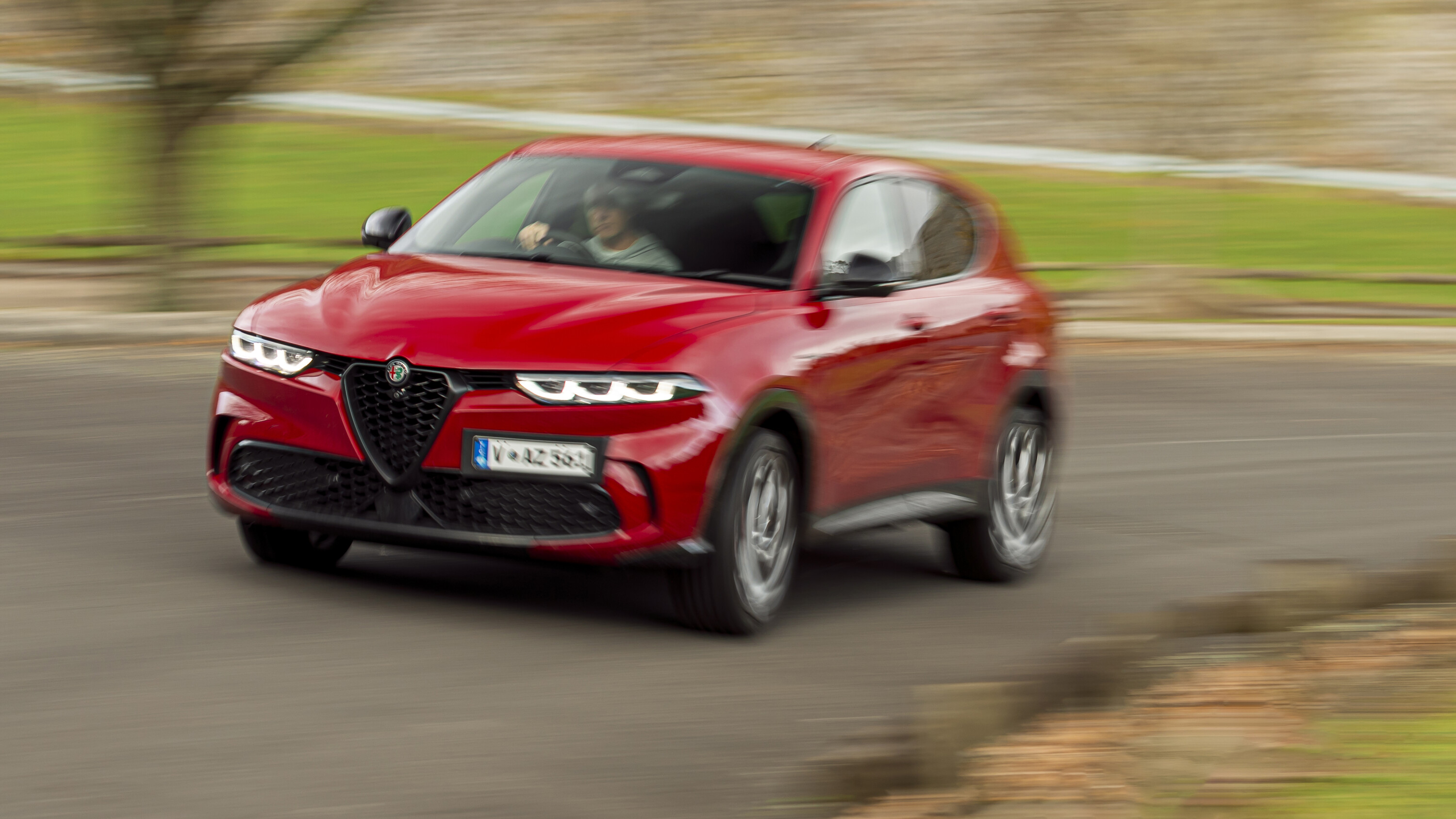
Our third hopeful for premium small-SUV superiority comes from the storied Alfa Romeo stable. This is Alfa’s first foray into the small SUV realm, but if it’s to have a chance against some established heavy hitters it needs to play catch-up fast.
Not everyone has a budget of $50,000 to $60,000 to drop on a small SUV, but if you do, you’ll find the little end of the spectrum packing some of the features that, until recently, were exclusively the preserve of the medium and large segments.
What you won’t find in any of our trio, however, are all-wheel-drive systems, big-banger six-cylinder engines, or torque-rich diesels. This comparison is all about 48-volt mild-hybrid efficiency and making small, luxurious SUVs go further.
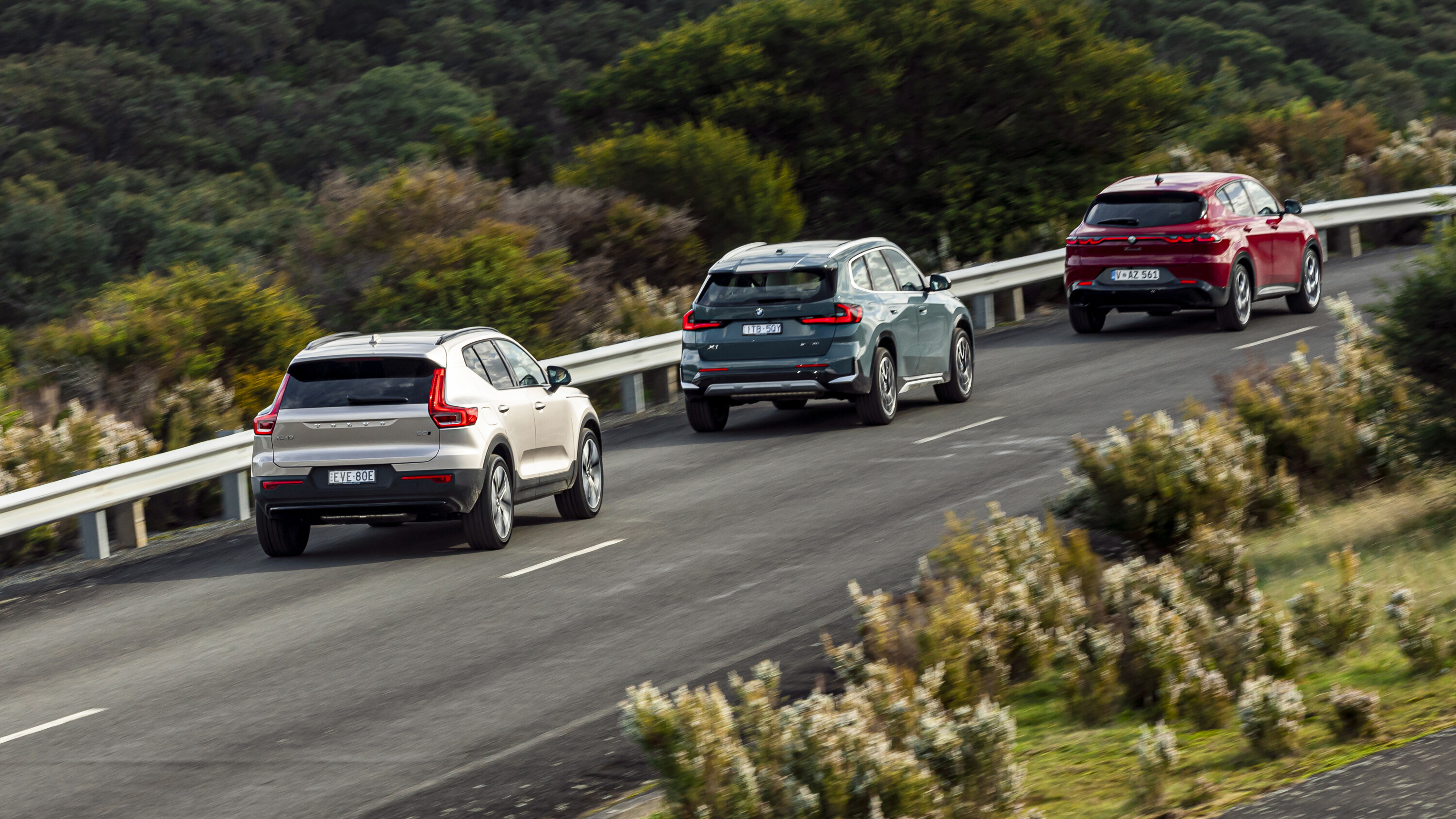
At the entry point you’ll find the Plus B4 priced from $53,490. It’s powered a 2.0-litre turbocharged petrol four-cylinder driving the front wheels via an eight-speed automatic transmission. Equipment highlights include the excellent Google co-developed information and entertainment system with internet access and four years of Play Store access included.
Like the Volvo, the BMW X1 sDrive18i represents the most affordable point of the range, priced from $53,900 and is also very competitively specced, with heaps of technology and sharp interior finishes which belies its entry-level status.
This variant powers the front wheels by a 1.5-litre three-cylinder turbo-petrol engine hooked to a seven-speed dual-clutch automatic.
Alfa’s Tonale is the Italian brand’s second SUV after the larger Stelvio. Of the two-model line-up, the most affordable is the Ti which sneaks in under $50,000, but we’re focusing the up-spec Veloce which costs $56,400. Ours has also been upgraded with the $4500 Lusso pack which adds a generous list of comfort and luxury features and 20-inch alloy wheels.
It also gets a 1.5-litre turbocharged engine albeit with an extra cylinder compared with the BMW.
The Volvo offers a pleasantly familiar recipe of understated Swedish style with excellent quality. There are none of the daring bright colours available in this particular cabin as an option and the design is looking a little plain compared with the other fresher contenders.
That said, the Orrefors crystal gear selector is an acceptably blingy touch, while the portrait central screen and digital instrument cluster still looks contemporary.
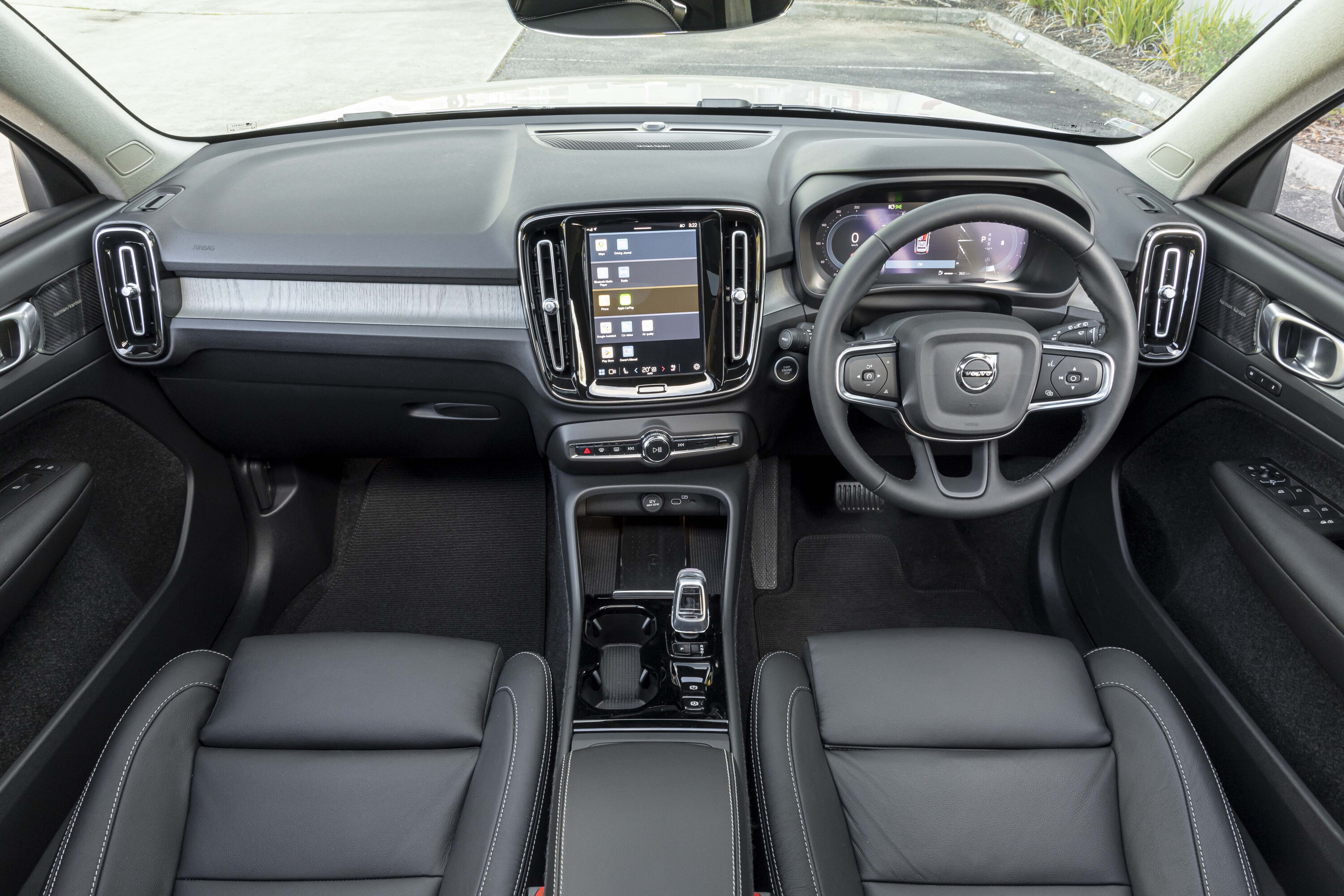
In the Alfa’s cabin, first impressions are good with sharp styling touches such as big gear shift paddles
There’s plenty of space and visibility in the front row but not such good news in the back where knee room is limited, a very short bench doesn’t offer great lower leg support and 30mm of headroom is just about adequate for our 186cm reviewer.
At the back, the XC40 has a generous 452-litre boot with a slim but handy space under its floor, while electric seat folding release offers a large flat area of volume-boosted cargo area.
In the Alfa’s cabin, first impressions are good with sharp styling touches such as big gear shift paddles, enveloping black leather upholstery and generous screens for the instruments and central display. Sporty front seats are supportive and firm but tall drivers will feel seated a bit high with the seatbelt top mount too low.
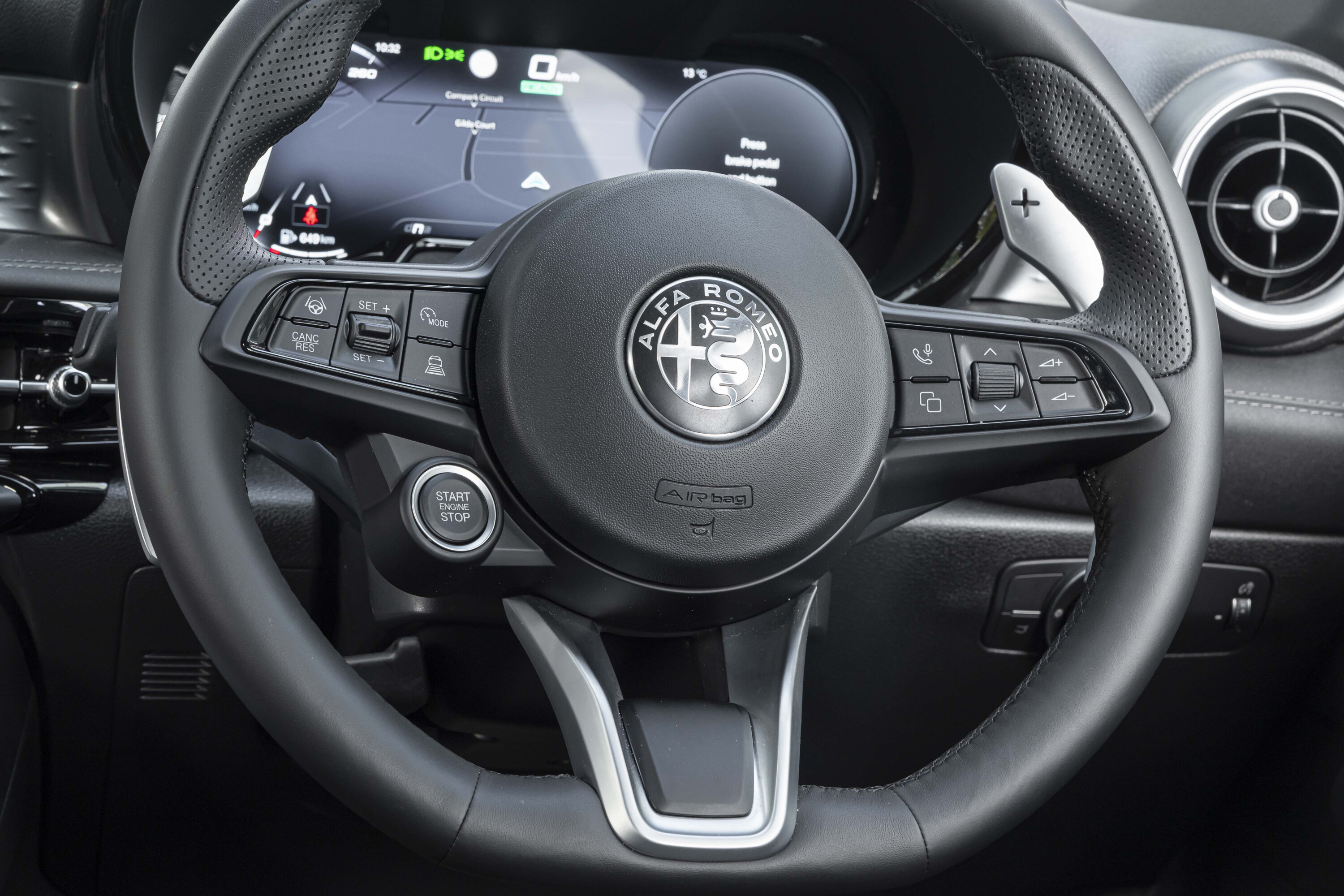
In fact, the high seating means taller passengers’ eyes are level if not higher than the top of the rear window. Kids might complain less.
Plenty of toe and knee room can’t fully redeem the lack of headroom or poor lower leg support, and compared with the other pair, door pockets are tiny.
Boot space is good with a 500 litre capacity although the space between wheel arch intrusions is the narrowest at 96cm and the rear seats don’t fold fully flat.
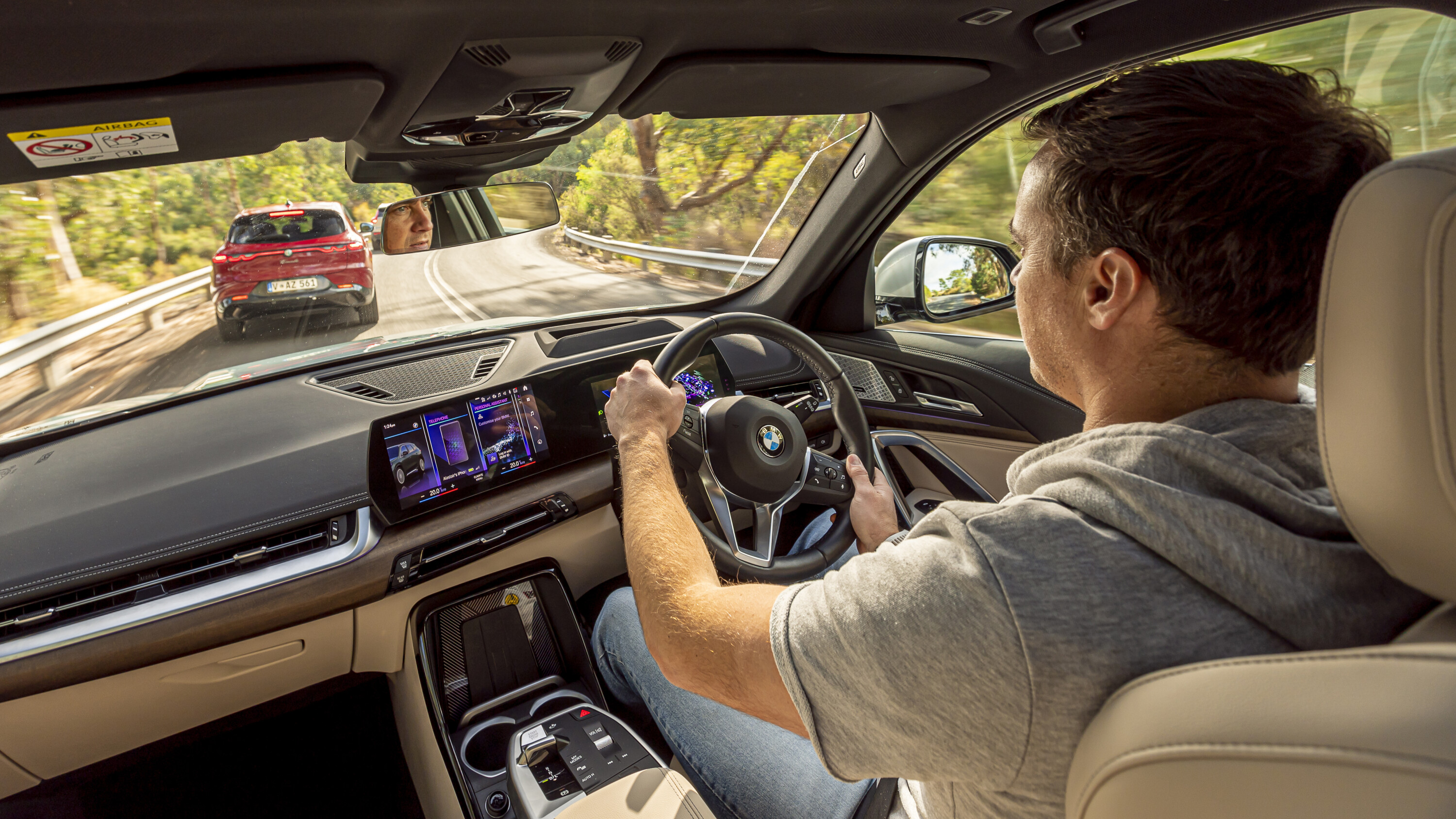
By comparison, the BMW is generous in all areas. It has the most premium-feeling interior with cool, light and sustainable materials, generous space in the front row, extra storage cubbies everywhere including the clever space under the centre arm rest. It’s also the only car here to offer a head-up display; a very impressive execution with a large, sharp full-colour display.
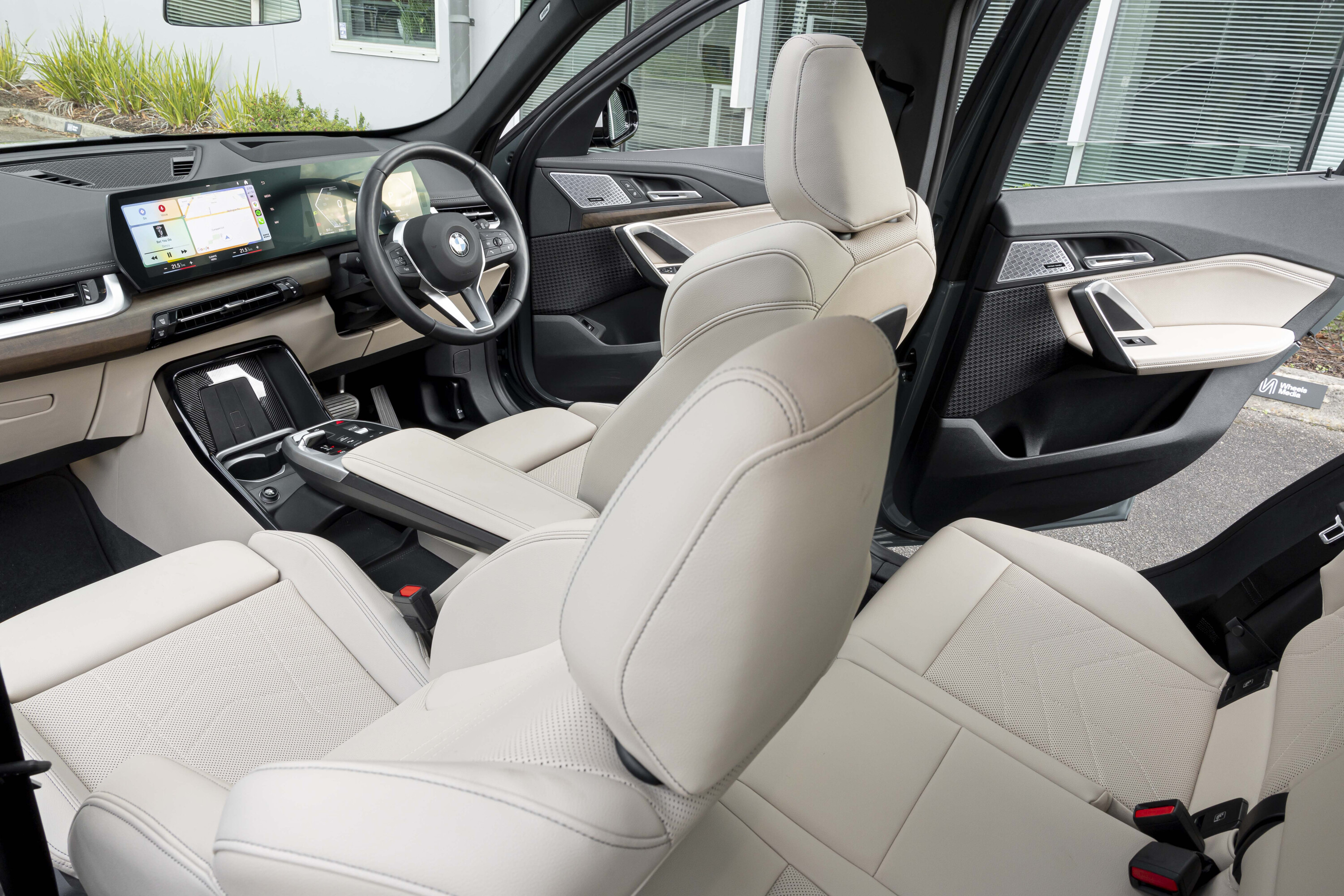
Perhaps the only blot on the X1’s scorecard is the lack of a space-saver spare like the other pair, but its 540-litre boot with the widest 1030mm gap between wheelarches is redemption for a car that probably won’t see the unbeaten trail too much.
It’s also worth mentioning that our BMW was dressed up in a few tasty options including the nicer 19-inch wheels, Enhancement Pack and gorgeous Cape York Green paint adding about $7000 to the bottom line, but all the key kit, including the class-leading curved information display and digital driver display, are standard.
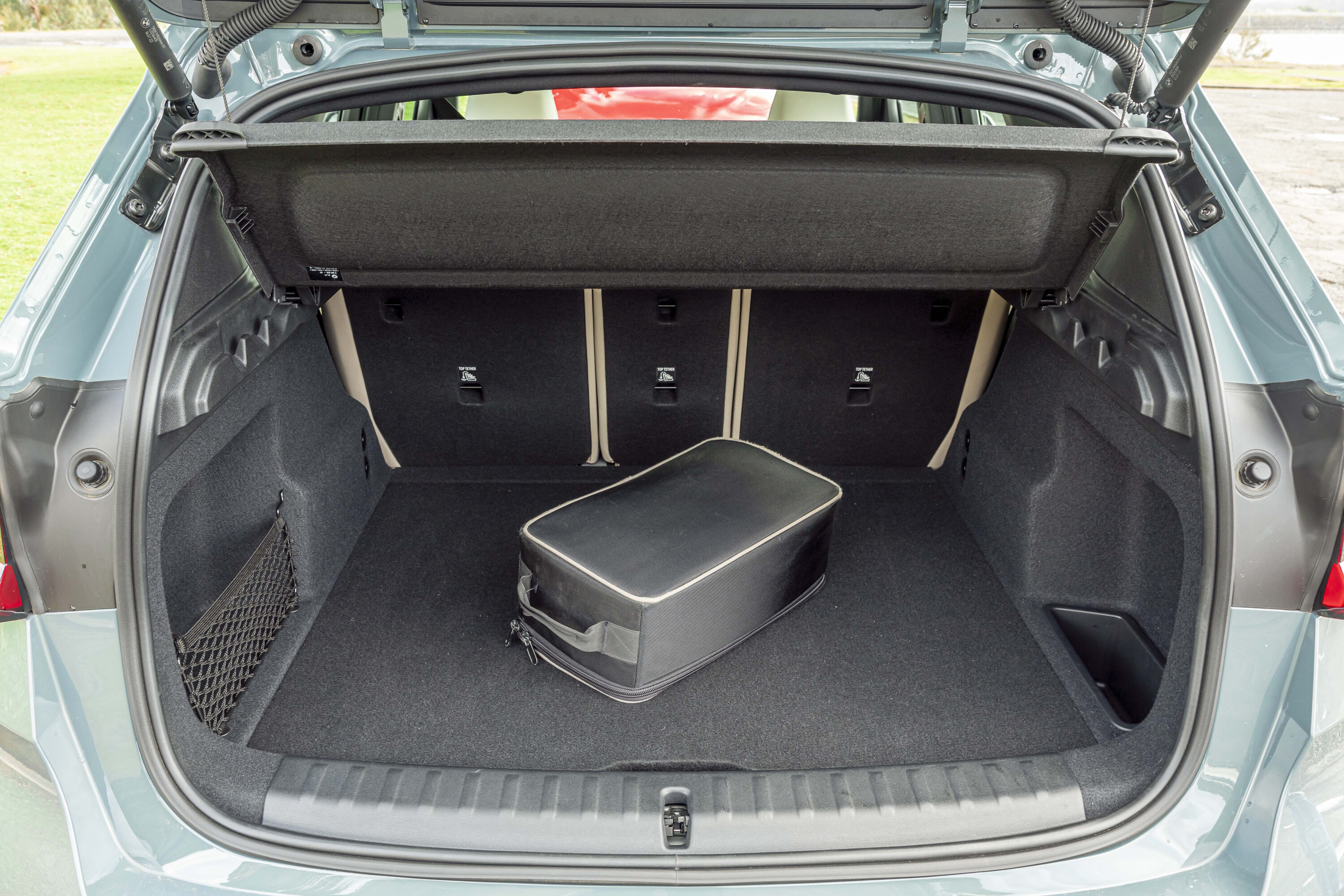
Bump absorption and overall ride quality remains the best out of these three, but there’s a new athlete in town.
With a kerb weight that comes in about 200kg lighter than the XC40, BMW’s X1 is more fun and responsive. Its drivetrain is also the more charismatic. Volvo’s combination of conventional turbo four and torque convertor auto feel the most normal – whether that be a compliment or not – but less fresh compared with the sprightly nature of the BMW’s three-pot and DCT combo.
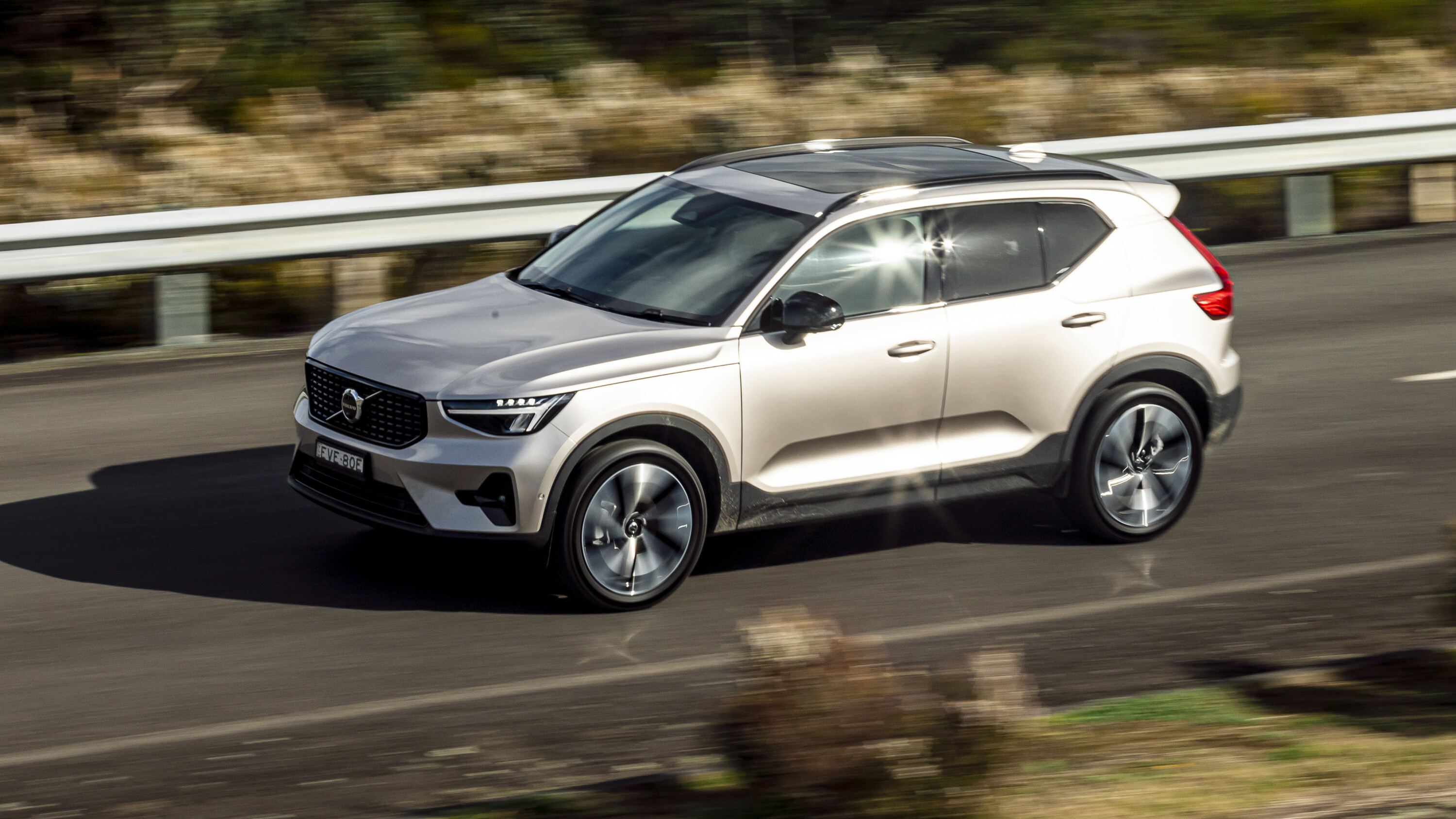
Furthermore, the X1 delivers a likeable balance of light steering weight and decent feedback.
None of the trio are fast, with 0-100km/h performance ranging from 9.0sec for the BMW to 8.8sec for the Alfa and 8.4sec for the Volvo. In the real world, there’s very little in it.
Unfortunately, we expected more from the Tonale’s driving proposition with the brand’s reputation for verve and dynamics justifiably deserved from recent models such as the Giulia and Stelvio. Unfortunately the Tonale rides not on the excellent Giorgio platform but a version of the one under the Jeep Compass.
Points must be awarded to a hybrid system that manages to stay in pure electric mode longer than the Volvo or BMW and provides a good electric boost from standstill, but can be frustratingly unresponsive when the petrol engine fires up in normal mode.
The throttle pedal requires a protractedly long push for any meaningful performance and refuses to coax the petrol into life even when on steep hill starts, while the brake is equally odd with an over-assisted feel early in the travel but requires more pressure than expected under harder braking. That’s suurprising, given the Alfa’s lovely four-piston front Brembo calipers.
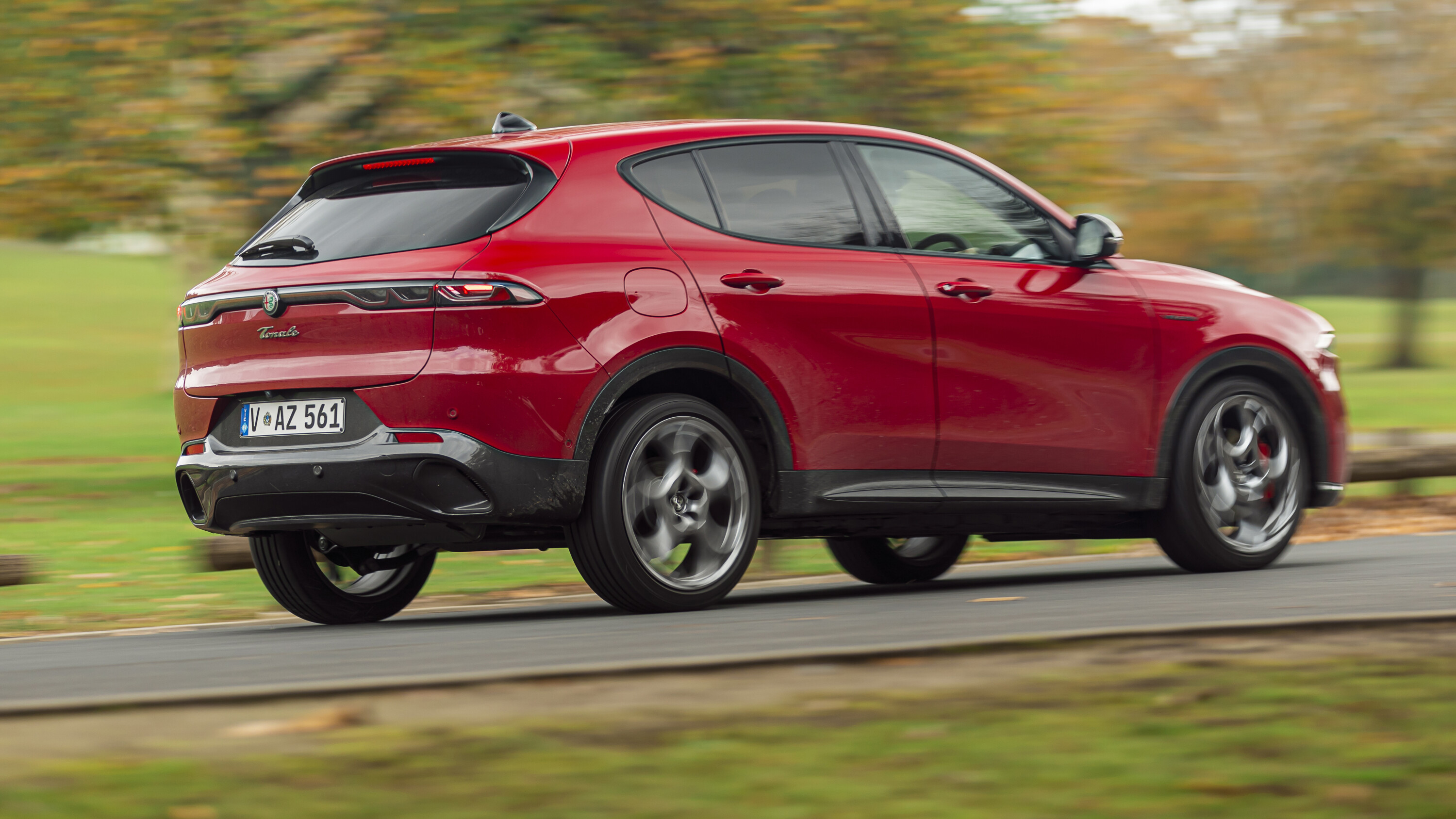
The Alfa manages to exhibit both excessively heavy and light steering and neither in a pleasant way.
The ratio is also too fast. With a little more feedback it might be easier to live with and allow you to enjoy the responsive front end much like the (also strange) Tesla Model Y steering, but with little feel, the steering is at best fidgety and at worst neurotic.
As far as fuel claims go, the XC40 is the thirstiest using 6.9L/100km on the combined cycle, followed by the BMW which consumes 6.5L/100km, while the Alfa is most frugal using 5.6L/100km, according to the ADR test.
As for safety, all three vehicles have been awarded the full five-start safety rating by the Australian New Car Assessment Program
In practice, those rankings are unshuffled albeit with bigger numbers. During our testing, the Volvo used 8.5L/100km during a combination of freeway, suburban and country motoring, the BMW got through 7.6L/100km while the Alfa put in an impressive performance with just 6.8L/100km used on average.
As for safety, all three vehicles have been awarded the full five-start safety rating by the Australian New Car Assessment Program (ANCAP). The Volvo retains its award from assessment in 2018, while the other two were tested in 2022.
While all share the same star rating, the Volvo stands out for adult occupant protection with a 97 percent rating, the X1 excelled in safety assistance features and vulnerable road-user protection (94 and 76 percent respectively), while the Alfa ranked well for child occupant protection with an 87 percent score.
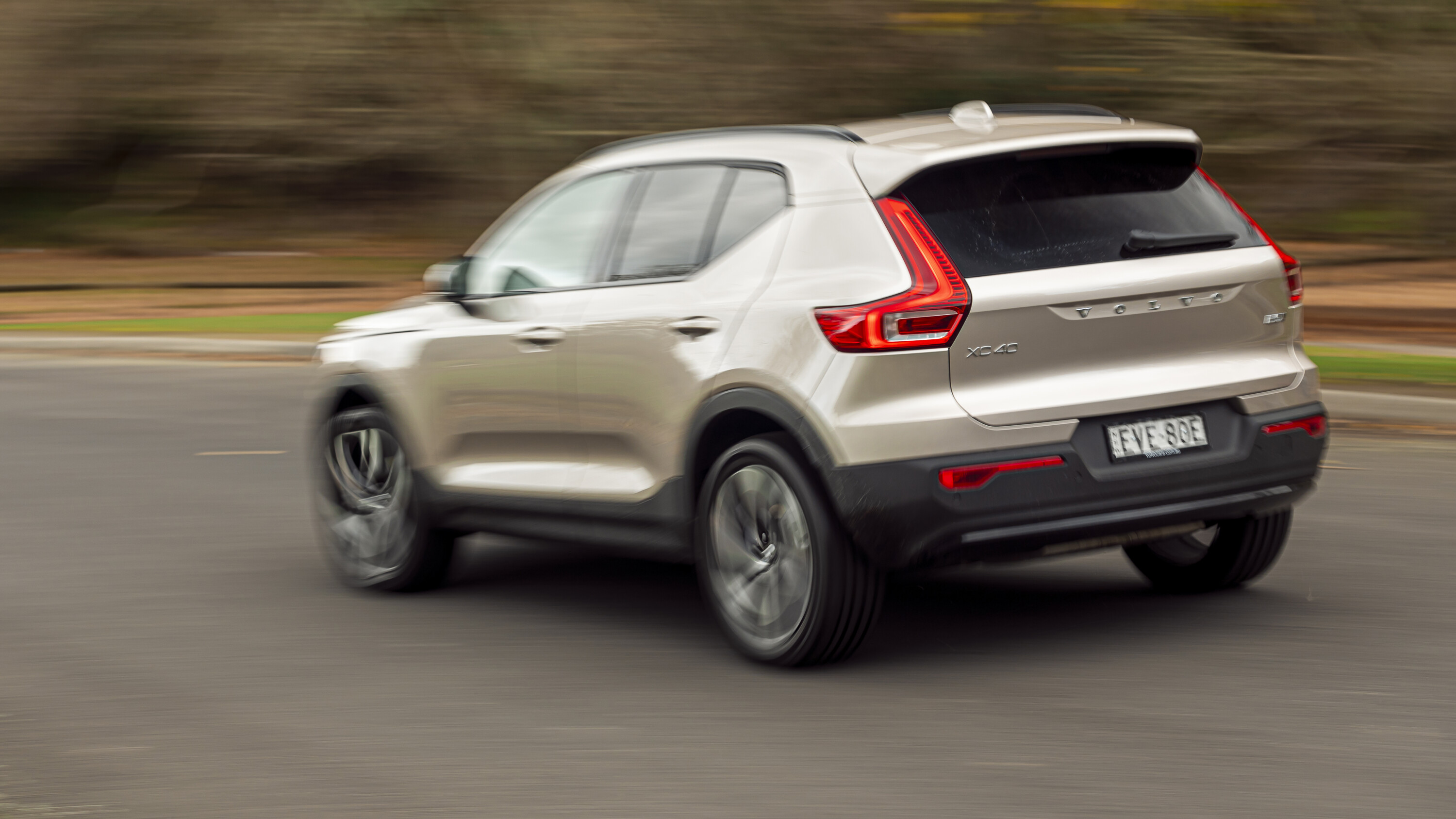
Alfa also offers a five-year capped price deal but it’s costlier and will set the Tonale owner back $3675 over the course of the first five years or $1735 over three years.
Volvo servicing costs are mid-range costing $3000 over the same five-year period and are also offered as part of a capped price deal, or $1750 for the first three years.
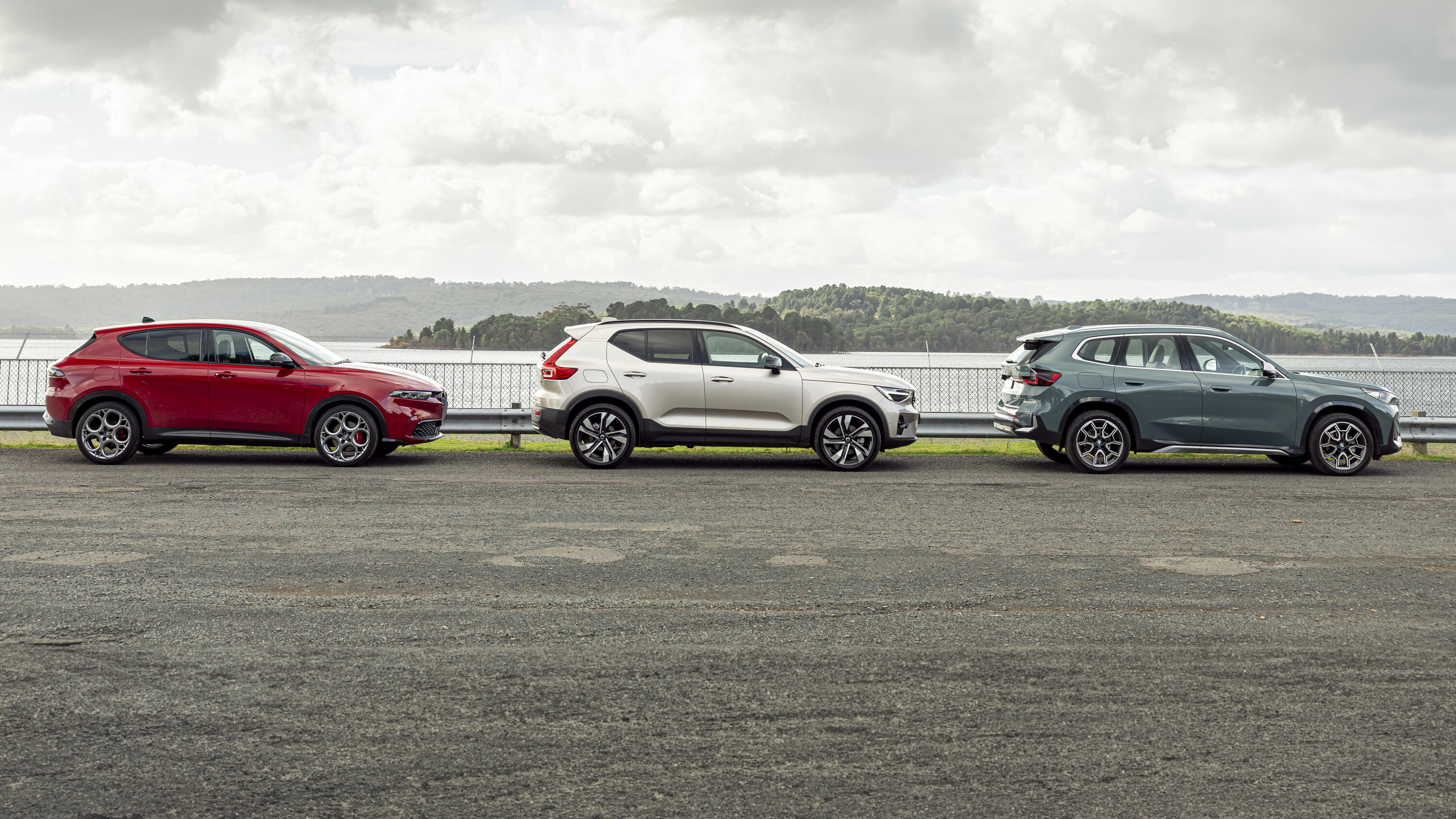
The stylish entry-level XC40 still makes sense amongst a family that’s filling up with electrified alternatives and at a sharp price.
Even after five years slogging against newcomers, the Volvo is a very easy premium small SUV to recommend. It offers driving enjoyment, safety, ride comfort and clever features in equal measures, and even though its conventional drivetrain and hefty kerb weight is starting to show its age, the stylish entry-level XC40 still makes sense amongst a family that’s filling up with electrified alternatives and at a sharp price.
By comparison, Alfa Romeo’s new and exciting offering teeters on excellence in so many ways but squanders much of it with unresolved execution.
Its hybrid drivetrain is efficient and refined but lacks the performance that a true Veloce-badged Alfa needs, the steering setup mars what could have been a sublime chassis, while too many practical oversights detract from the purpose of a small SUV in any category. Its premium price only exacerbates the conundrum.
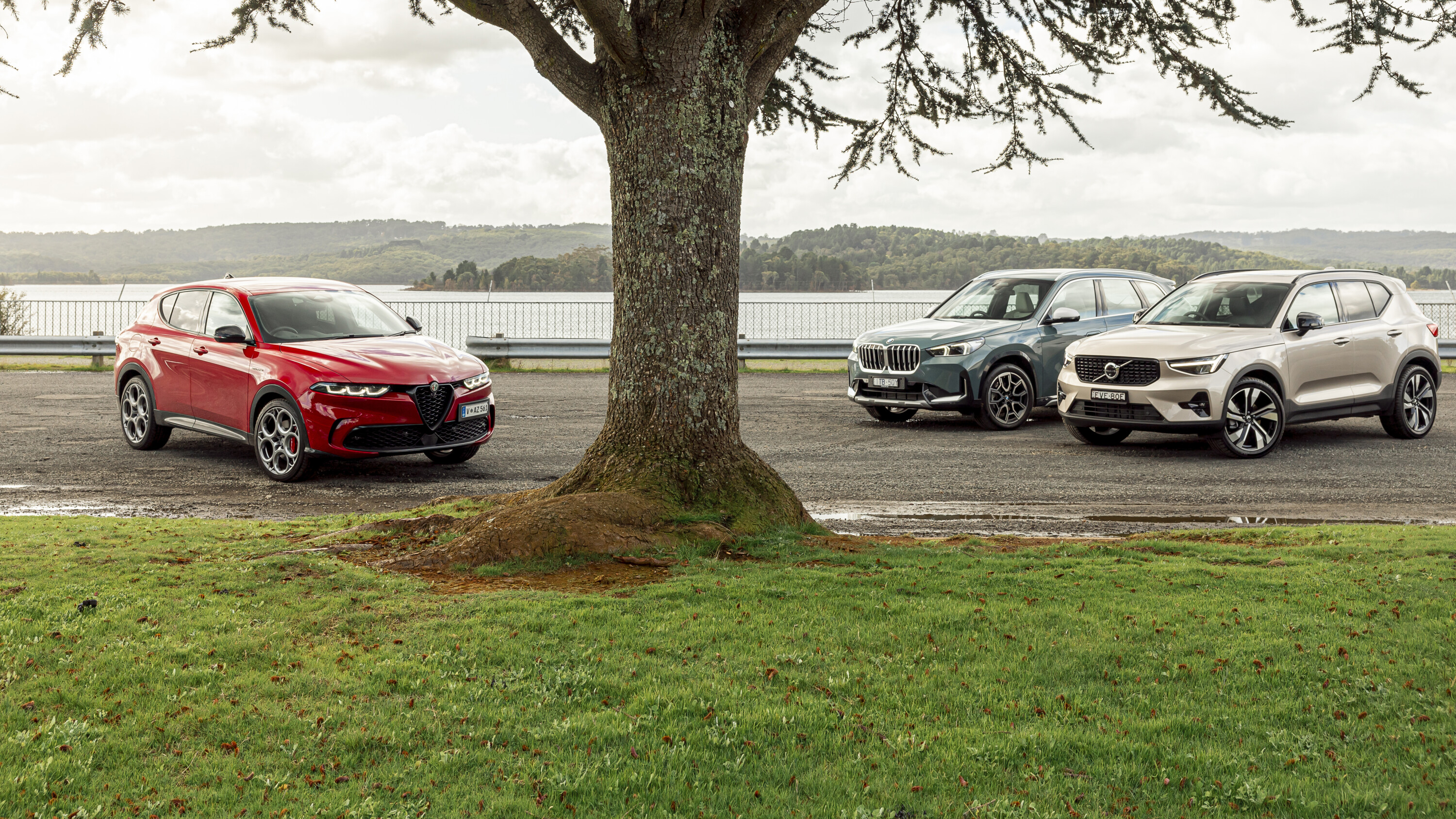
Enlarged exterior dimensions enhance practicality but not to the detriment of versatility, while a lively drivetrain that manages to be efficient and torquey is the icing on the cake.
BMW could have got away with an incremental step up for the new X1 but instead it delivers a comprehensively rethought and improved model that pulls big BMW features all the way down from the top and bundles them into a luxurious package that transcends its price. It’s enough to claim the win here and by some margin.
Looking to get into a brand-new small SUV? Our stories below will guide you to the model that best suits your needs!
| Model | BMW X1 sDrive18i | Volvo XC40 Plus B4 | Alfa Romeo Tonale Veloce |
|---|---|---|---|
| Engine | 1499cc 3cyl, dohc, 12v, turbo | 1969cc 4cyl, dohc, 16v, turbo | 1469cc 4cyl, dohc, 16v, turbo |
| Max power | 115kW | 145kW @ 6000rpm | 118kW @ 5750rpm |
| Max torque | 230Nm | 300Nm @ 1900-2500rpm | 240Nm @ 1500rpm |
| Transmission | 7-speed dual-clutch | 8-speed automatic | 7-speed dual-clutch |
| Weight | 1505kg | 1705kg | 1553kg |
| Economy | 6.5L/100km (ADR combined) | 6.9L/100km (ADR combined) | 5.6L/100km (ADR combined) |
| 0-100km/h | 9.0sec (claimed) | 8.4sec (claimed) | 8.8sec (claimed) |
| Price | $53,900 | $53,490 | $56,400 |
| On sale | Now | Now | Now |
These days that sword looks more like the LED price board outside a petrol station, its glowing numerals forever threatening to slice through household budgets with little warning.
The solution is obvious – the less fuel burned, the less exposed you are to fuel price volatility. EVs can eliminate that stress entirely, but at the cost of a new kind of stress: potential range anxiety. A regular hybrid, then, is a neat compromise, but while the mid-size SUV segment is flush with hybrid options these days, what of the size class below?
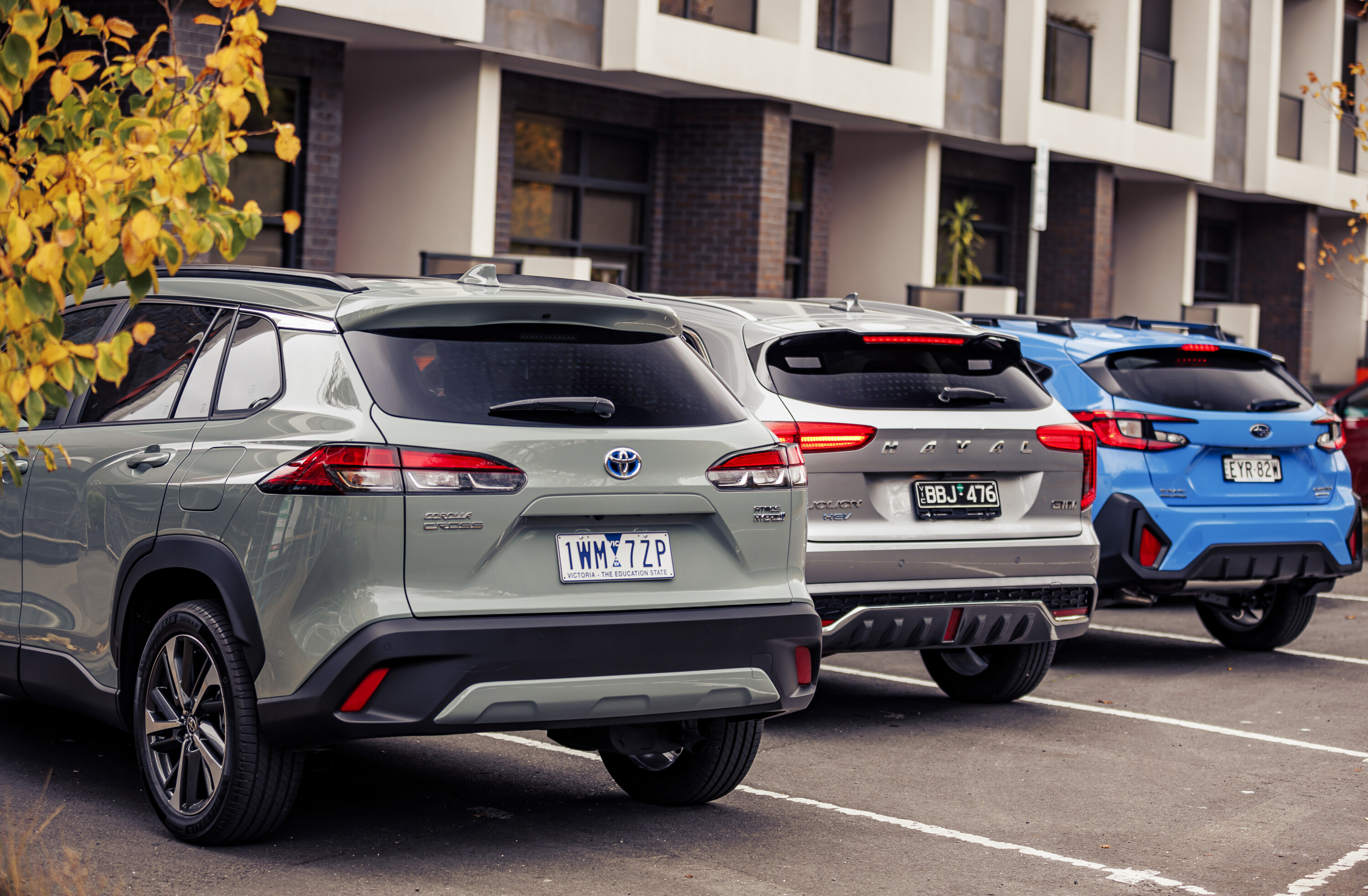
The Corolla Cross Hybrid is a natural inclusion, with Toyota’s dominance of the hybrid realm extending into the small-SUV segment via the sub-RAV4 Corolla Cross.
The Subaru Crosstrek (nee, XV) hybrid is a “new” arrival that promises to improve upon Subaru’s lacklustre hybrid efforts of the recent past, while the Haval Jolion hybrid is a high-selling, low-priced offering from China that might actually give its Japanese rivals something to think about.
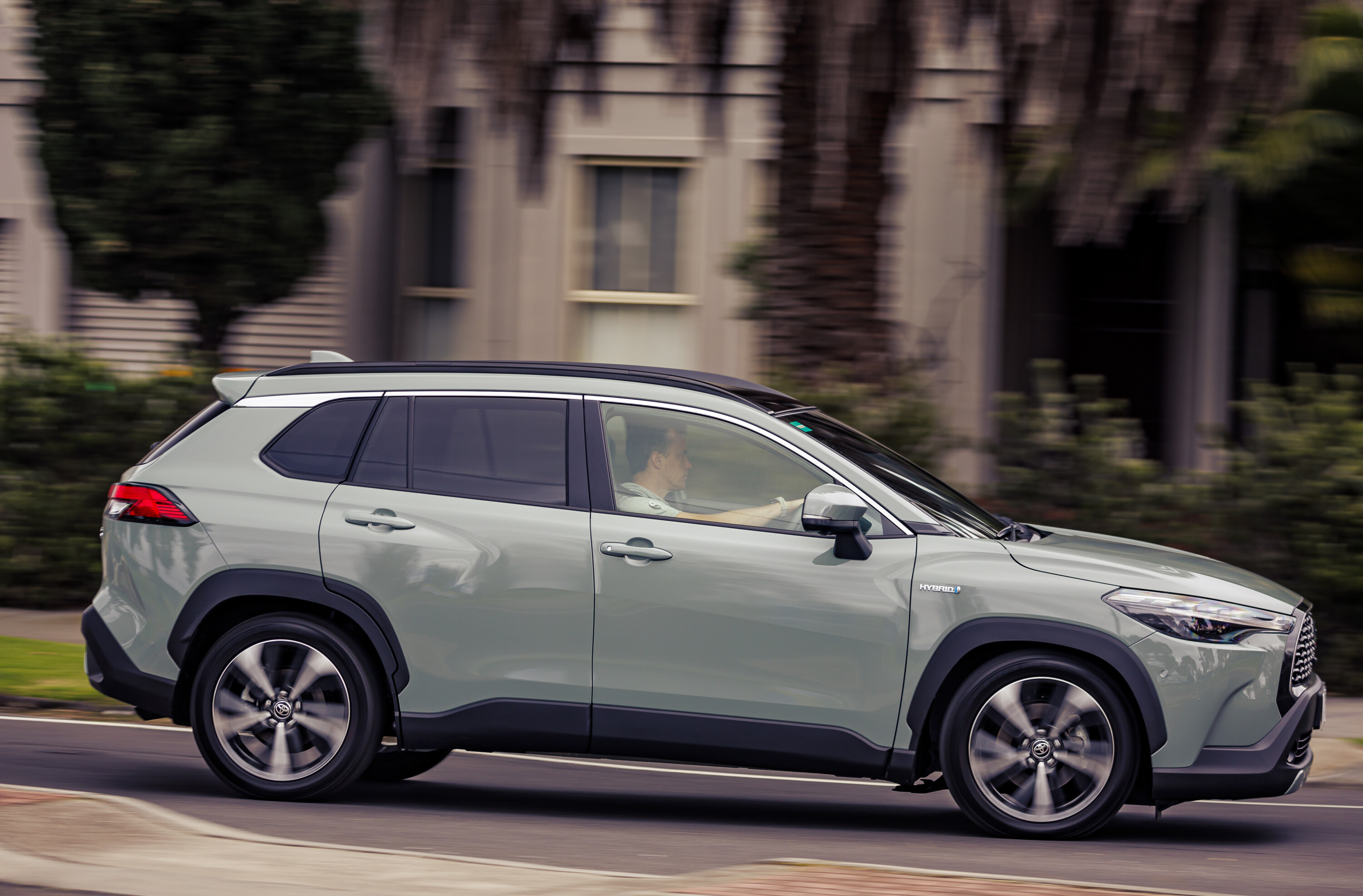
First up, pricing and features. The Corolla Cross Atmos 2WD is a $46,050 proposition before on-roads, carrying a $2500 premium over its non-hybrid sibling.
It’s the most expensive vehicle here, but the spec levels are healthy: you’ll find niceties like a panoramic glass sunroof, a power-operated tailgate, powered driver’s seat, digital instrument panel, air purifier, built-in sat-nav and a thumping nine-speaker JBL sound system.
Not only is the Jolion Ultra Hybrid the cheapest of the bunch at $40,990 drive-away, but it also manages to pack plenty of nice-to-haves like a panoramic glass sunroof, digi-dash a head-up display, heated front seats and wireless charging.
It’s not all perfect, however, as there’s no baked-in satellite navigation for the 12.3-inch infotainment touchscreen, the interface of said screen is far from intuitive, and we found that maintaining a stable connection via Android Auto was rocky at times.
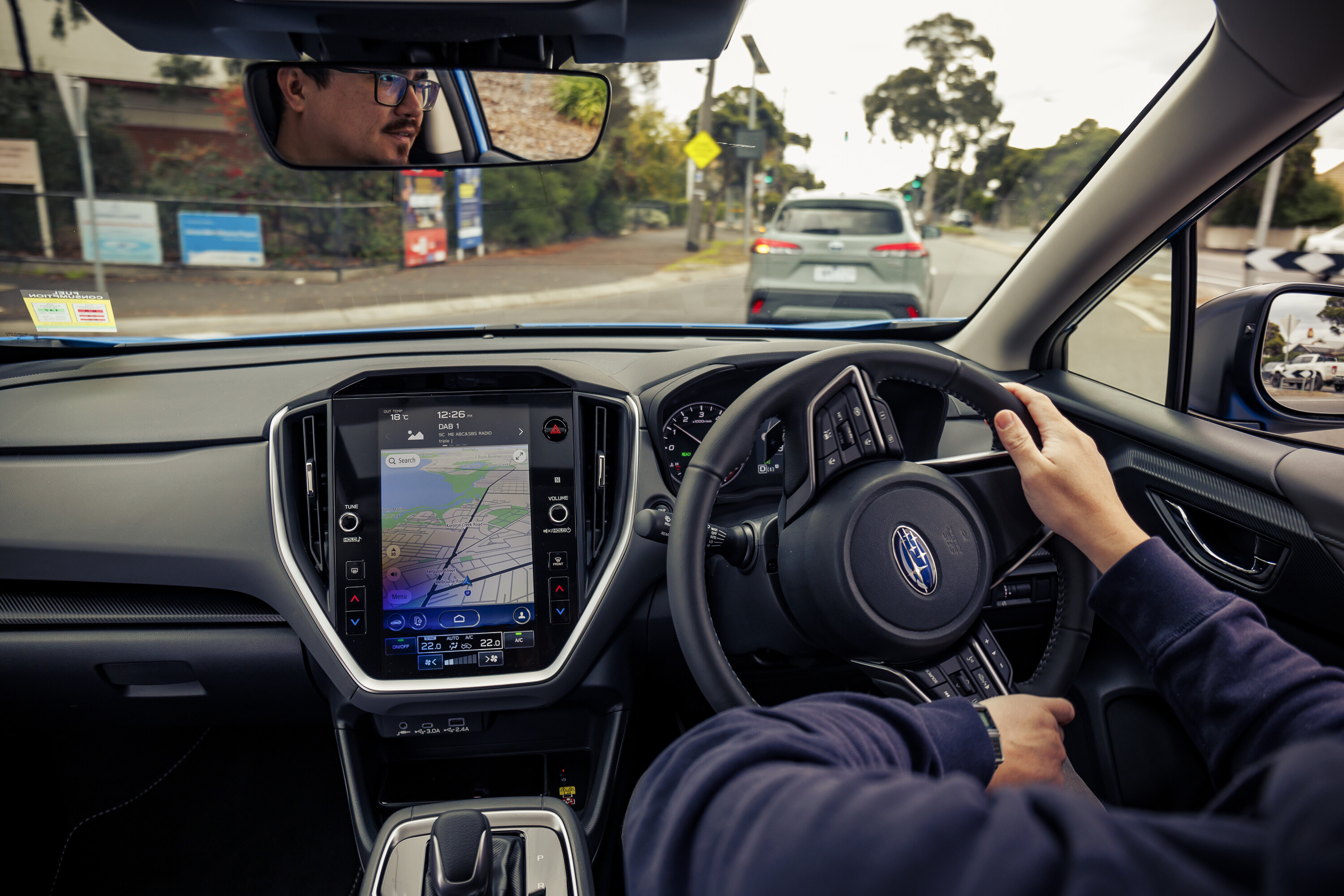
Subaru’s top-spec Crosstrek Hybrid lies in-between with a $45,090 pre-on-roads price tag. It’s worth noting that it packs a critical bit of gear as standard – all-wheel drive – something which the Jolion Hybrid doesn’t have, and a $3000 option on the Corolla Cross. Other highlights include a 10-speaker Harman Kardon audio, sunroof, sat-nav and power driver’s seat.
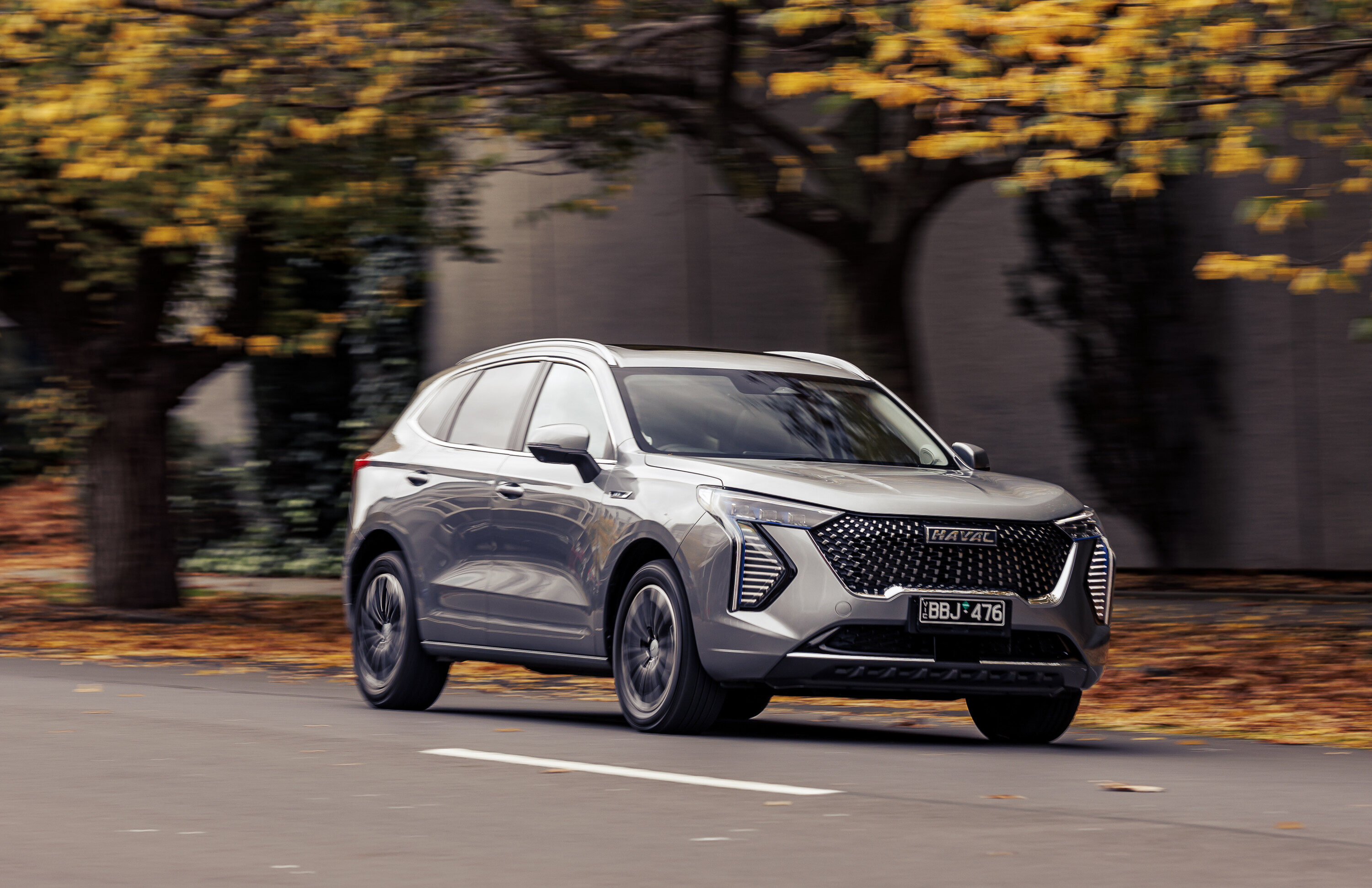
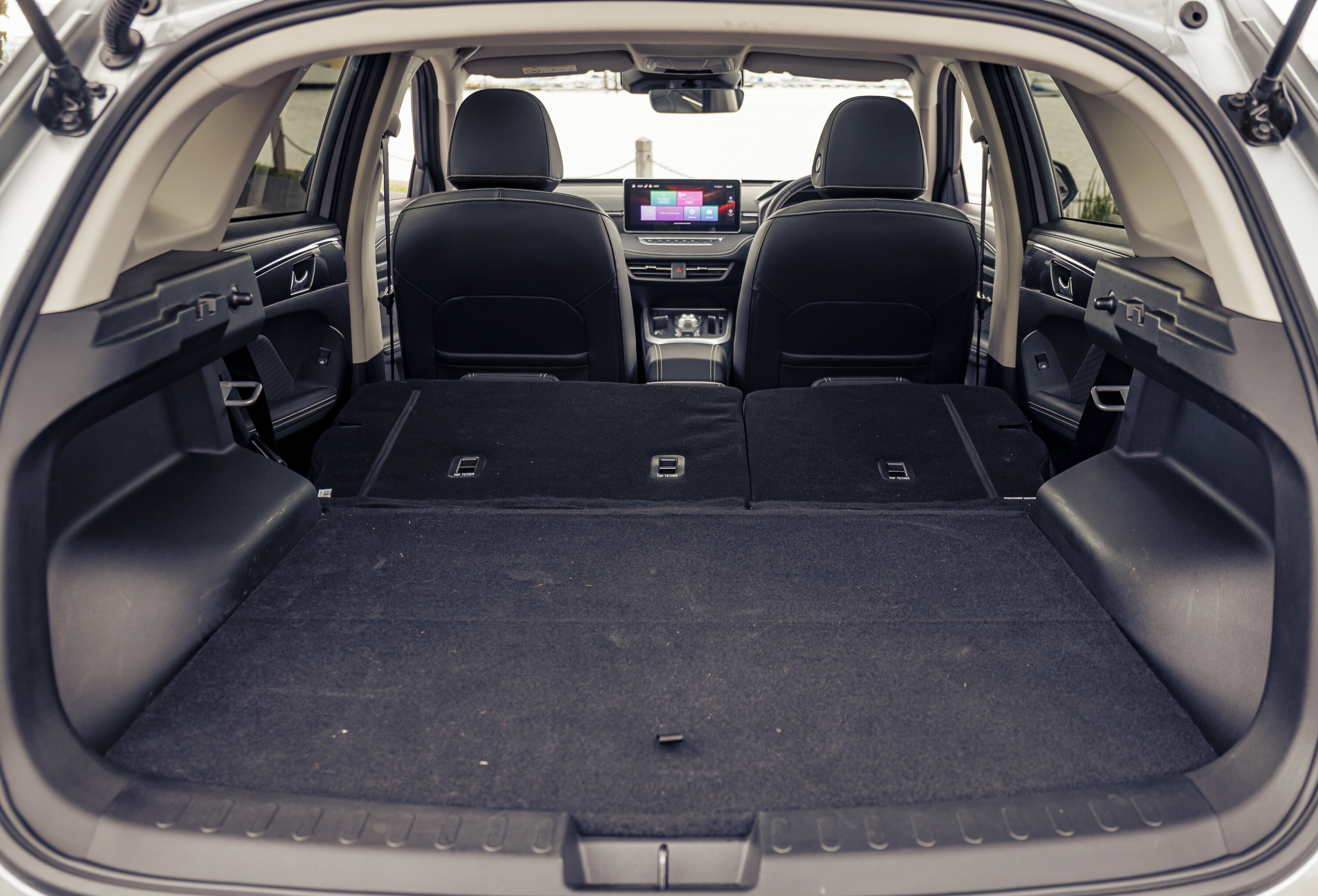
The Jolion gets nods for its capacious rear seat and fully-flat rear floor, which makes scooching from the left seat to the right an easy task. If you’re looking for an inexpensive chariot for your rideshare side-hustle, it’s probably the pick for this attribute alone.
Balancing that out, however, is an atrocious driving position courtesy of a too-short seat squab with no angle adjust (just height), and a steering column that only adjusts for rake, not reach.
Hard scratchy plastics abound in the Jolion’s interior, though its under-console storage shelf is a useful feature that the others can’t match. At 390 litres, the Jolion Hybrid’s boot space isn’t especially huge, but it nevertheless soundly beats the 315 litres offered by the Subaru.
Faux carbon adjacent to grey vinyl and fake leathergrain? Not great, but build quality is hard to fault and there’s lots of in-car storage on hand, not to mention two full-sized cupholders up front rather than the Jolion’s weird one-and-a-half cupholder arrangement.
Seat comfort is superb in the Crosstrek, whether in the front or rear. Ample adjustment to seat and steering make the driver’s chair accommodating to a broad spectrum of body shapes and sizes, while the seat cushioning brings plenty of support to the lumbar and under-thigh regions.
From the front seats, the Corolla Cross feels a little more hemmed-in than the other two. You sit more upright, with a hip point that’s further from the floor and a substantially slimmer centre console separating the front seats, however the Corolla Cross actually measures a smidge wider than the Crosstrek. Weird.
It’s a similar story in the back seat. The Corolla Cross has the shortest wheelbase in this group, and that manifests in the shorter seat pitch between the first and second rows. Legroom isn’t as abundant as it is in the other two, but headroom is plentiful despite the presence of a panoramic sunroof. Boot space comes in at 414 litres, making the Toyota the most capacious.
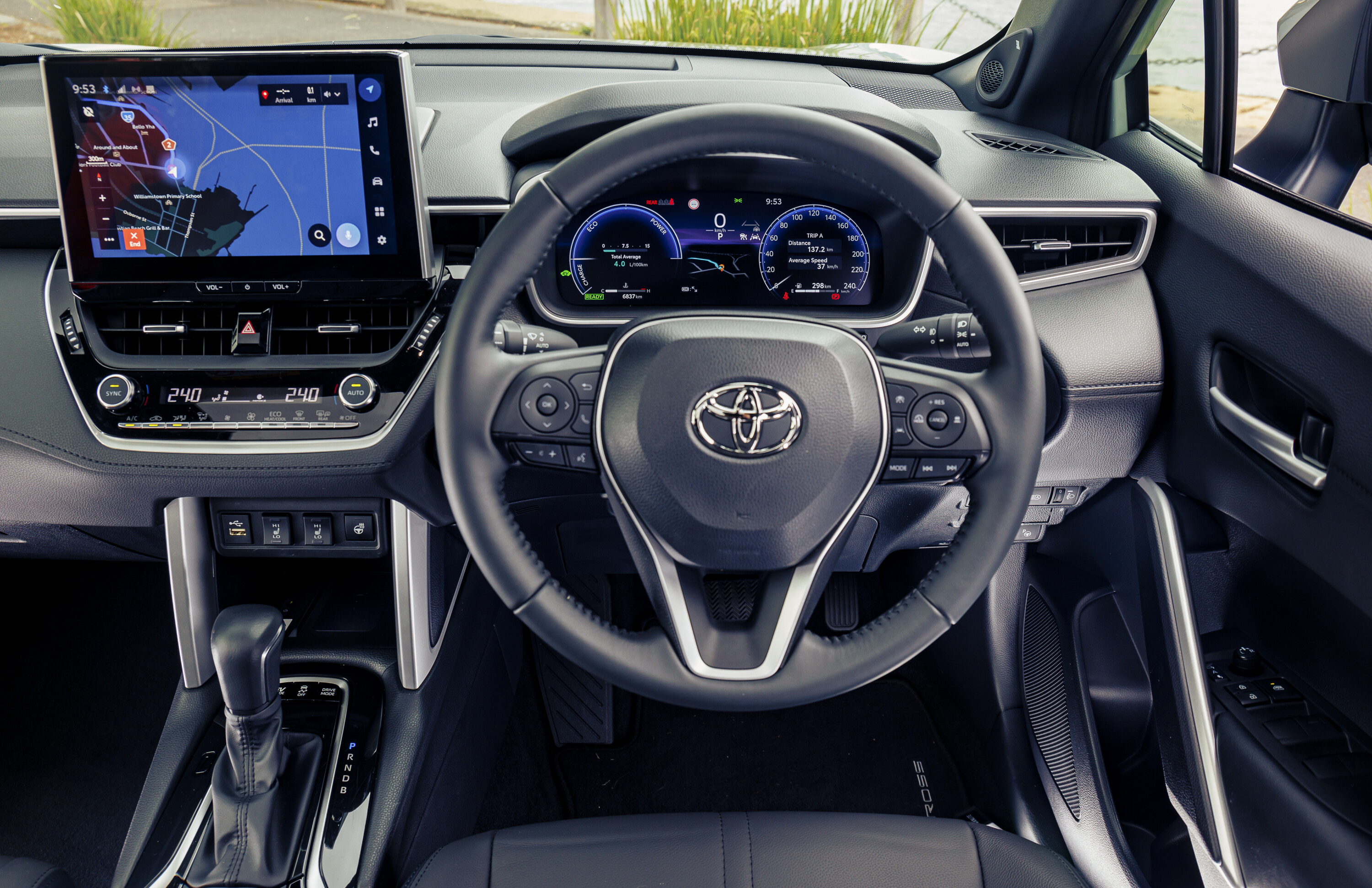
Its 2.0-litre petrol and electric motor combo provides respectable thrust and response, and the CVT adeptly shuffles its gear ratio to suit.
In stop-start traffic it’s a star, resisting the need to fire up the petrol engine until you head above 30km/h, and quickly reverting back to electric power as soon as acceleration is no longer required. Its suspension is also a good pairing to the rest of the car, with solid comfort and roadholding without feeling too squishy.
Meanwhile, the Jolion impresses with its torque. 375Nm is a handy figure for a small SUV, and that translates into rather perky straight-line performance. It’s just a shame that wiggly lines are the Jolion’s enemy, as its spongy suspension fails to deliver a settled or comfortable ride.
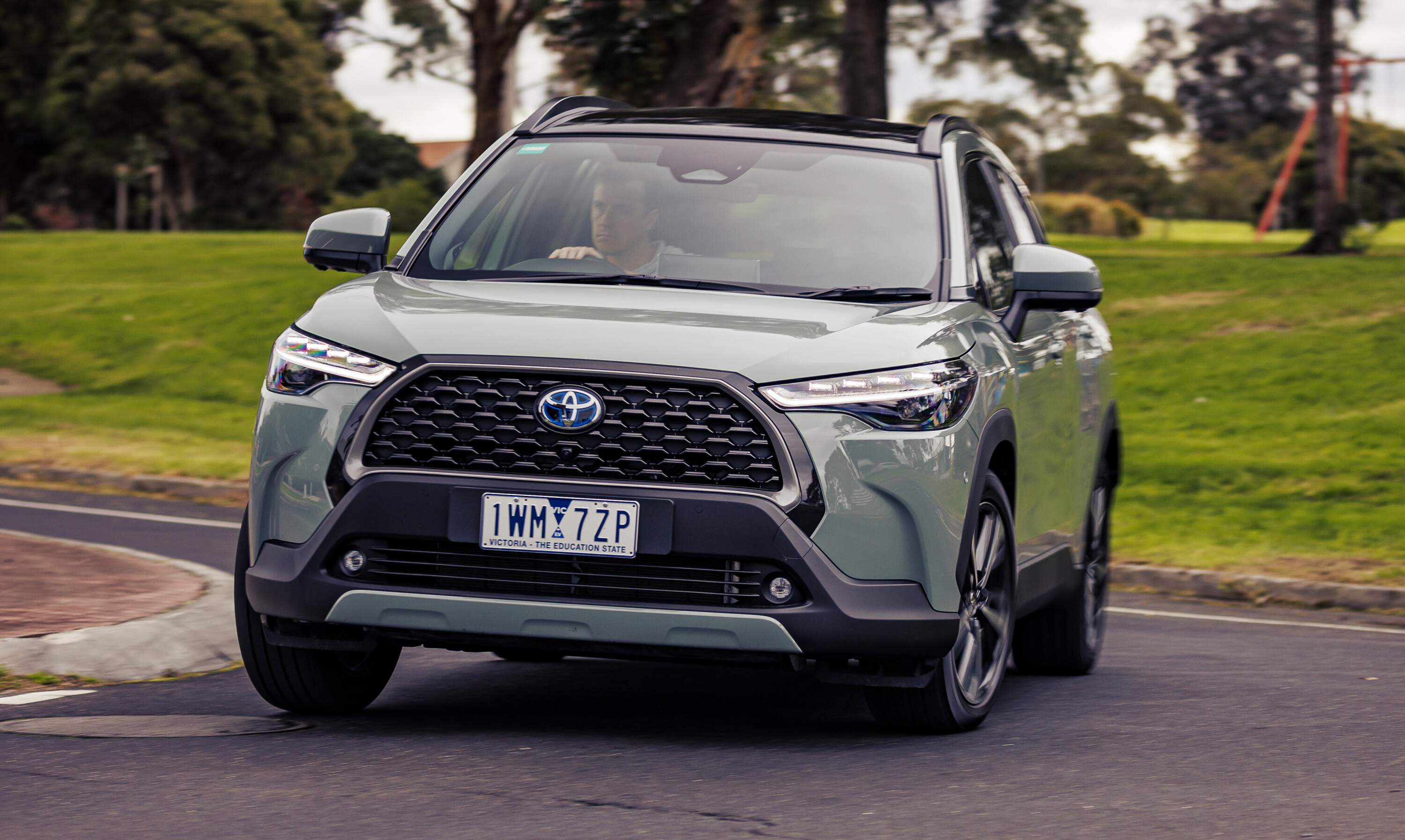
On the other hand, the Crosstrek has a superb chassis. It actually supplies enough dynamic verve to engage keener drivers on a fun (preferably gravel) road, however that talent comes undone from the wimpy performance. The engine generates 110kW and 196Nm, with the electric motor contributing only 12.3kW and 66Nm. Next to the other two, the Crosstrek feels sluggish.
They’re hybrids, so how efficient are they? Efficiency isn’t just mission-critical to any hybrid, it’s the very reason for their being, and while a car may fall a little flat in areas like fit and finish, infotainment or driving dynamics, buyers who are simply looking to lessen their fuel spend will overlook all of this if the efficiency numbers are right.
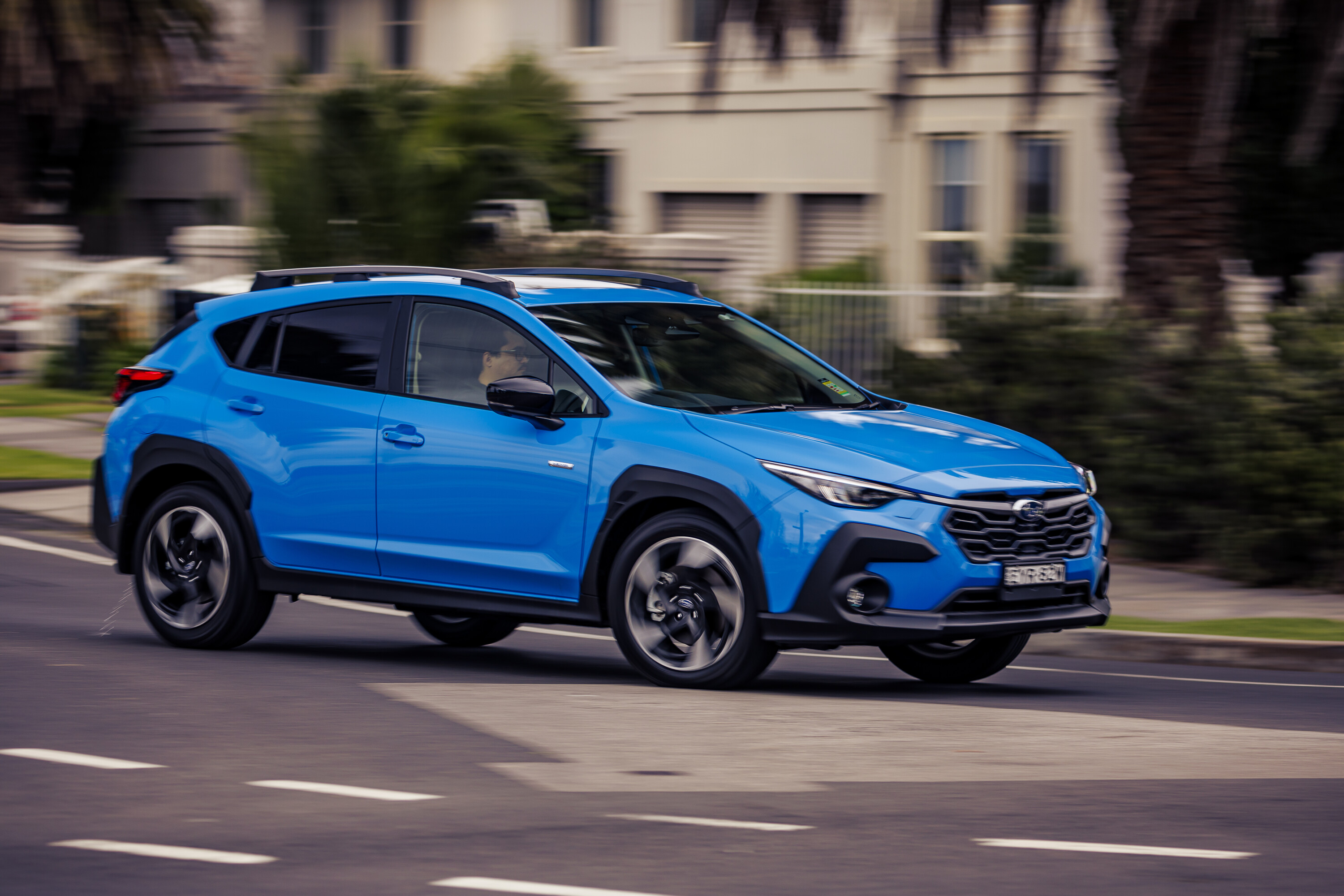
Let’s get the winner out of the way first: the Corolla Cross Hybrid isn’t just efficient, it’s borderline miraculous how little it burns.
The factory claim is 4.3L/100km, but on our 100km fuel economy test loop, which is split between 70 percent urban and 30 percent highway, it returned an average of 3.9L/100km. Not only that, but it’ll happily get by on regular unleaded. We’ll make this simple: if saving fuel is your priority, get the Toyota.
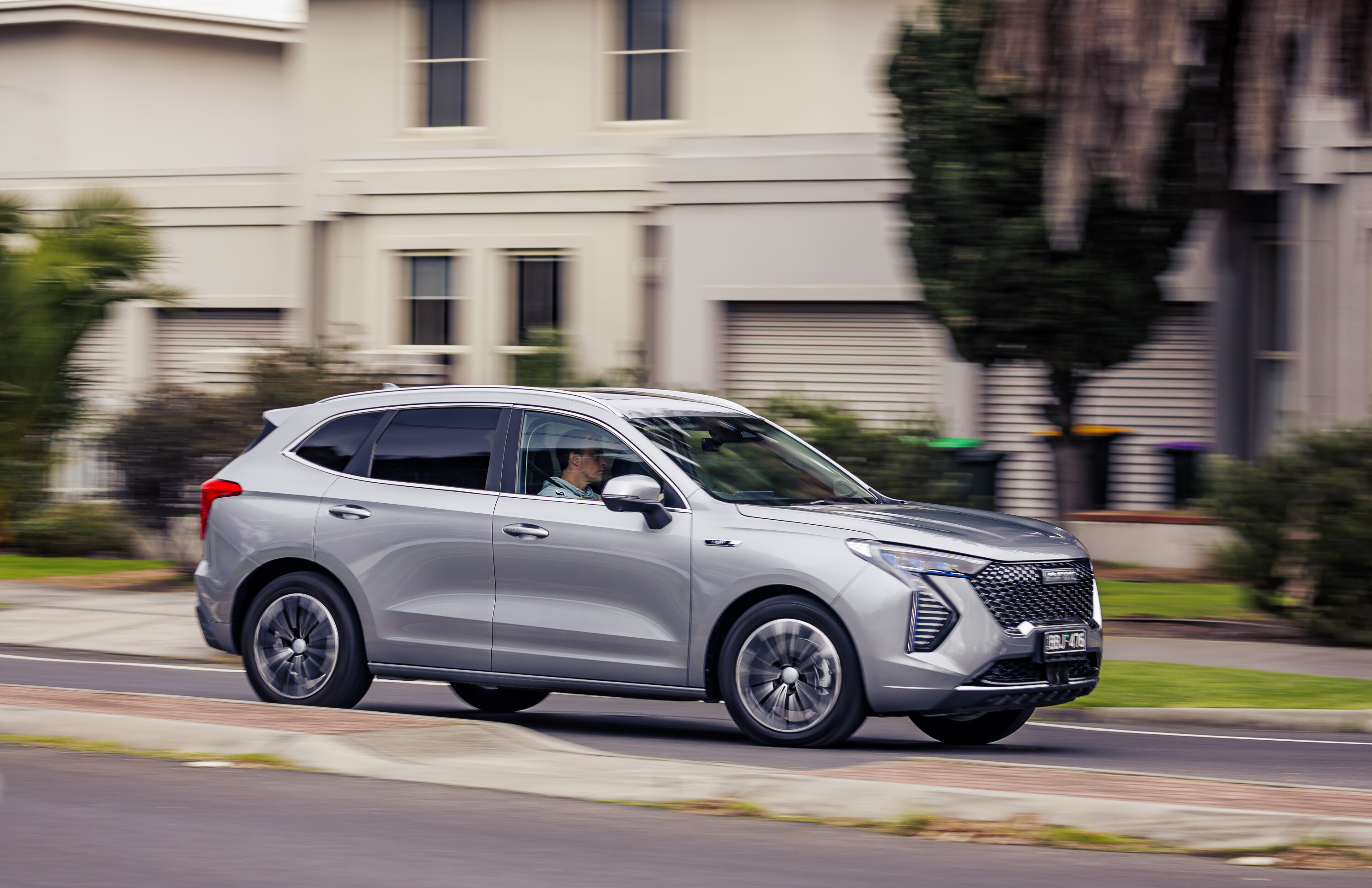
The Jolion lodged a 5.1L/100km average on the test loop, a result that shows Haval’s factory claim of 5.0L/100km is certainly achievable out in the real world. A decent result, but it can’t come close to touching the Corolla Cross.
As for the Crosstrek Hybrid, it delivered 5.8L/100km on the same test as the other two. That’s a 0.7L/100km improvement over the official claimed average of 6.5L/100km, but bear in mind that’s not exactly an impressive number in the world of hybrids.
Blame a hybrid system that is bewilderingly reluctant to hand over duty to the electric motor for this result – the electrical energy generated during braking is woefully under-utilised, and that translates into underwhelming fuel-burn figures.
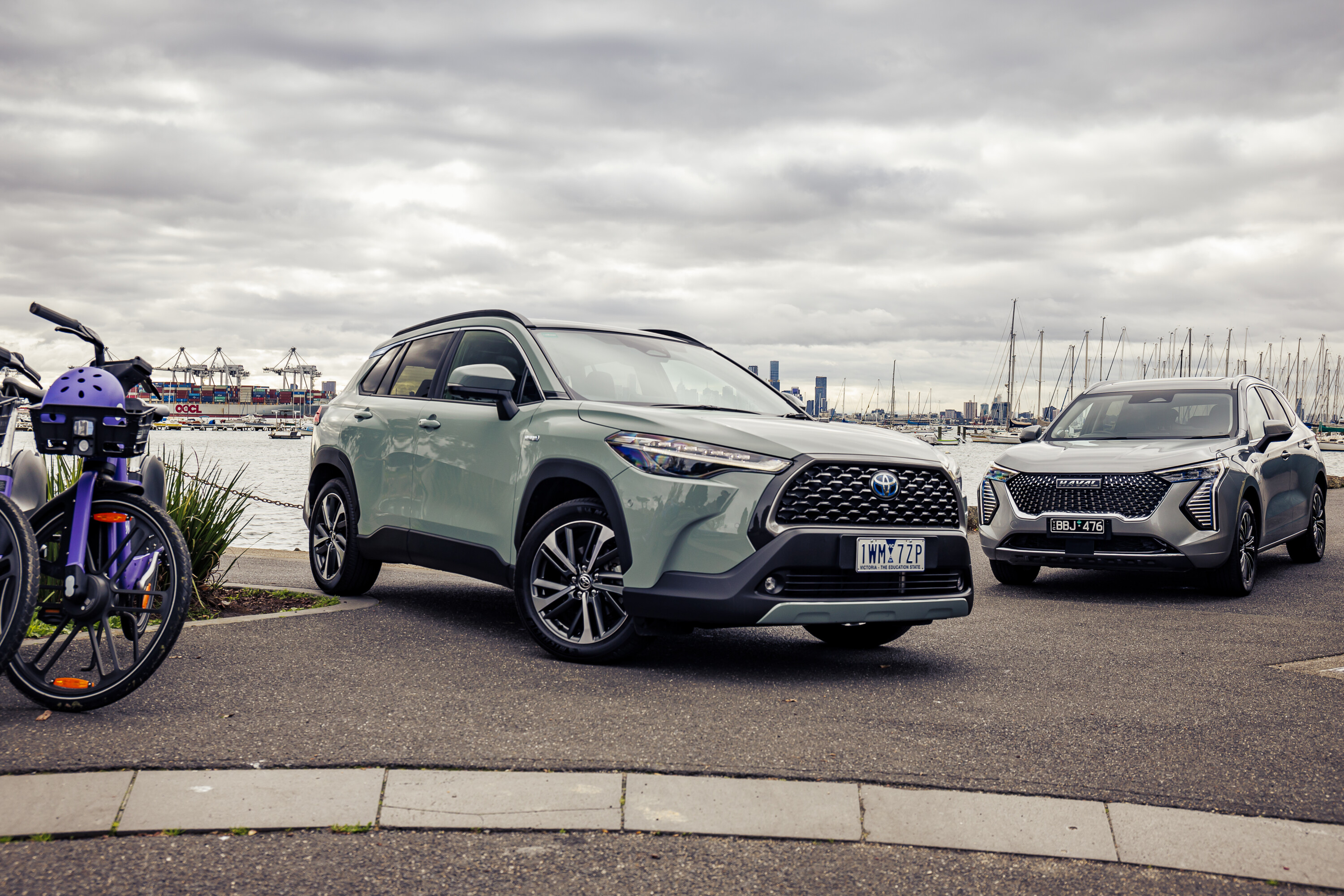
Even if you subtract the gear that the Atmos brings and instead look at the more price-conscious $39,250 GXL grade – a model that can fight on a more even keel with the Jolion Ultra – the same fundamental attributes remain.
The Atmos’s glitter is nice to have, but it’s not really what makes the Corolla Cross sparkle in this test.
The Haval has merits beyond just its price. It’s got the roomiest back seat, decent real-world fuel economy and an enticing feature set.
If you can get around its clunky infotainment system, poor driver ergonomics, sub-par chassis dynamics and build quality, it’s a respectable urban conveyance.
The Crosstrek Hybrid would have probably finished further up had we tested the mid-spec L grade, as its $38,590 sticker would have eroded the Haval’s price advantage and allowed the Subaru’s excellent chassis and suspension to play a bigger part in the outcome.
However in a test where saving fuel is the imperative, the Subaru’s advantages were simply not enough to overcome the fact that it was the thirstiest car in the group.
Looking to get into a brand-new small SUV? Our stories below will guide you to the model that best suits your needs!
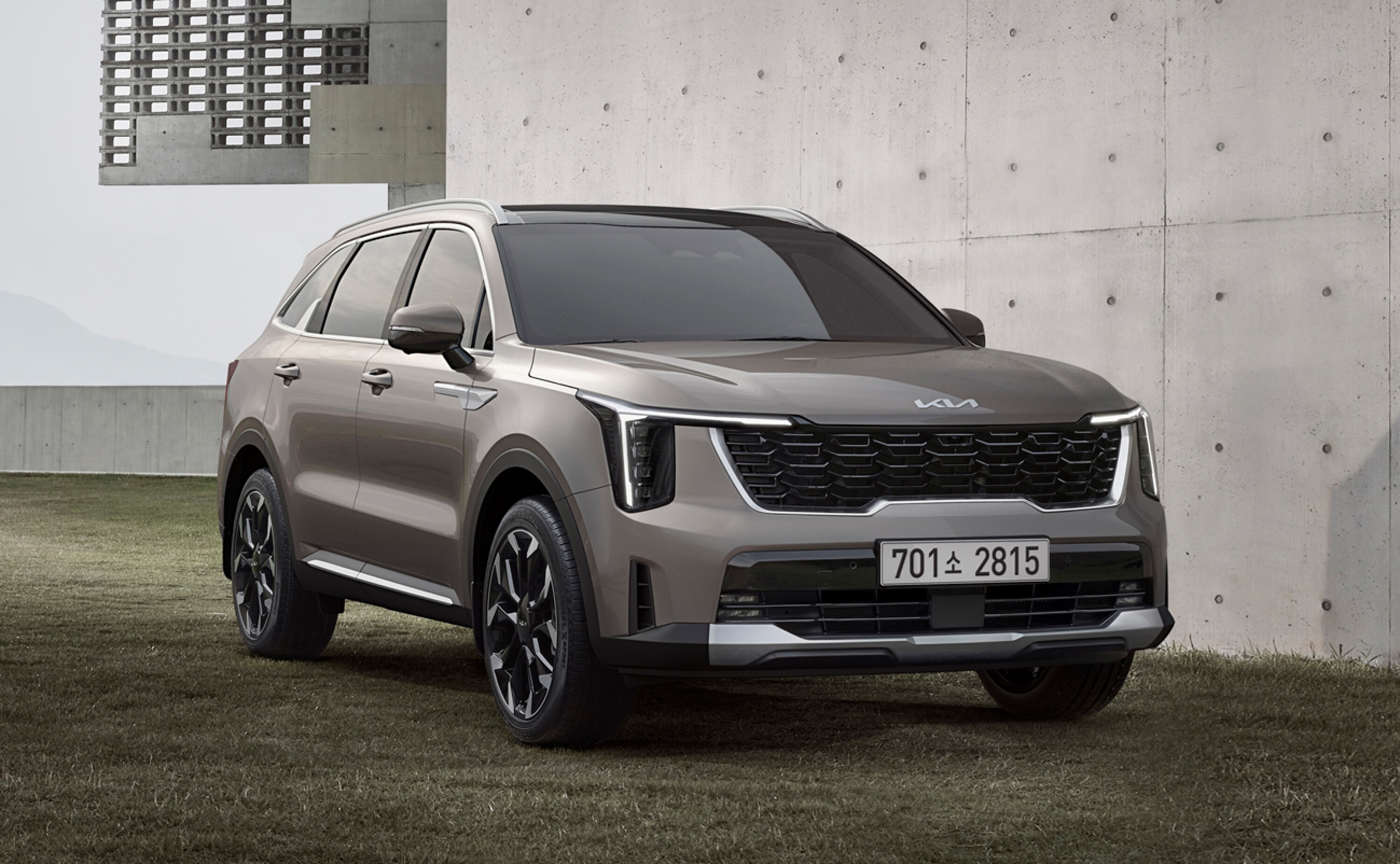
As expected, the updated Sorento features a new front design inspired by the larger EV9 and Telluride, with redesigned vertical headlights, ‘signature star map’ daytime running lamps, and a broader front grille.
It also features a new lower front bumper, while the latest Kia badge – added to the current Sorento in 2021 – has shifted from the grille to the bonnet.
Other design revisions are limited to a new lower rear bumper and alloy wheels, and updated tail-lights now connected at each end – but with no full-width light strip, as seen on recent Kia SUVs.
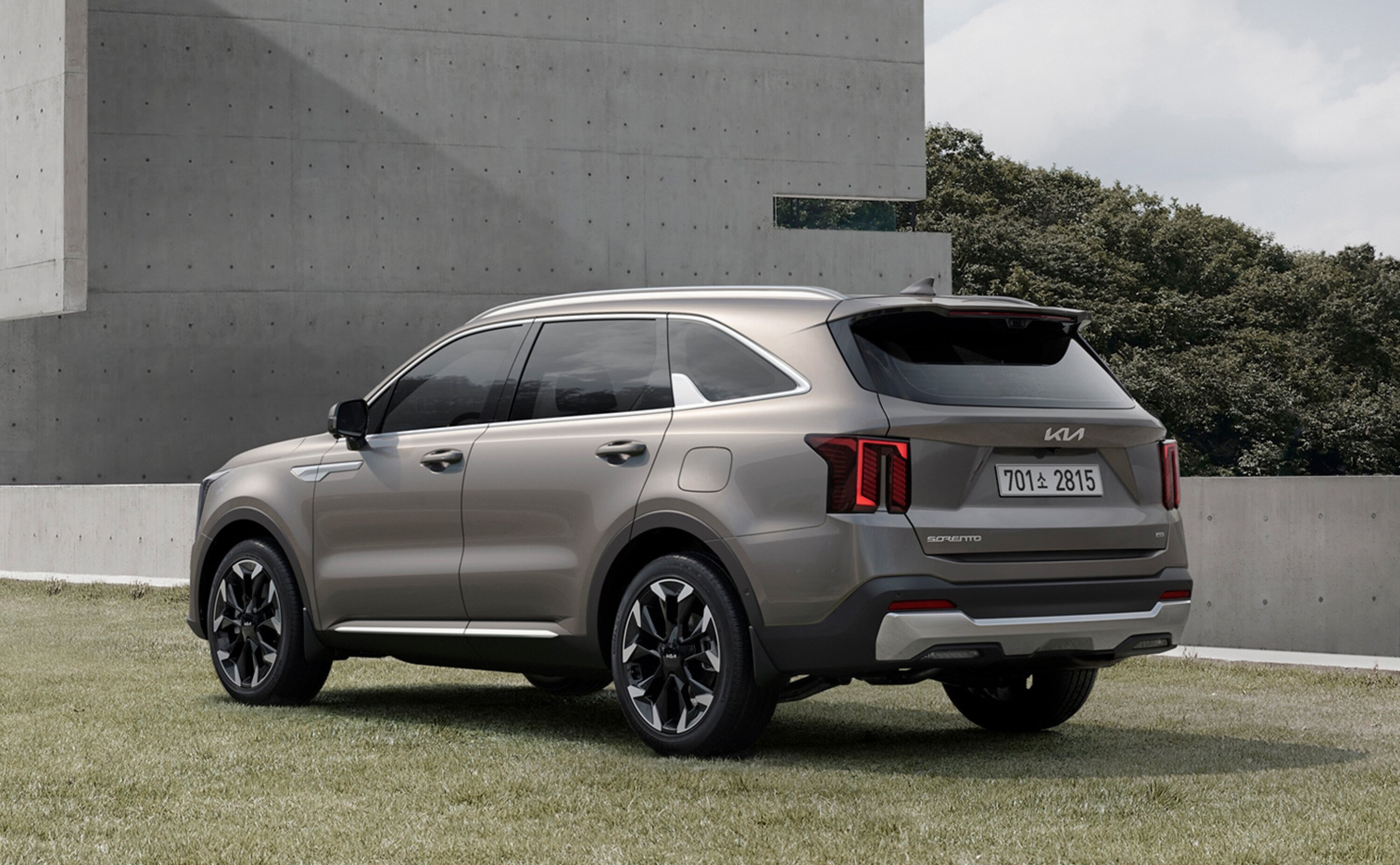
Three new exterior colours – interstellar grey, cityscape grey and volcanic sand brown – are available for the updated Sorento overseas.
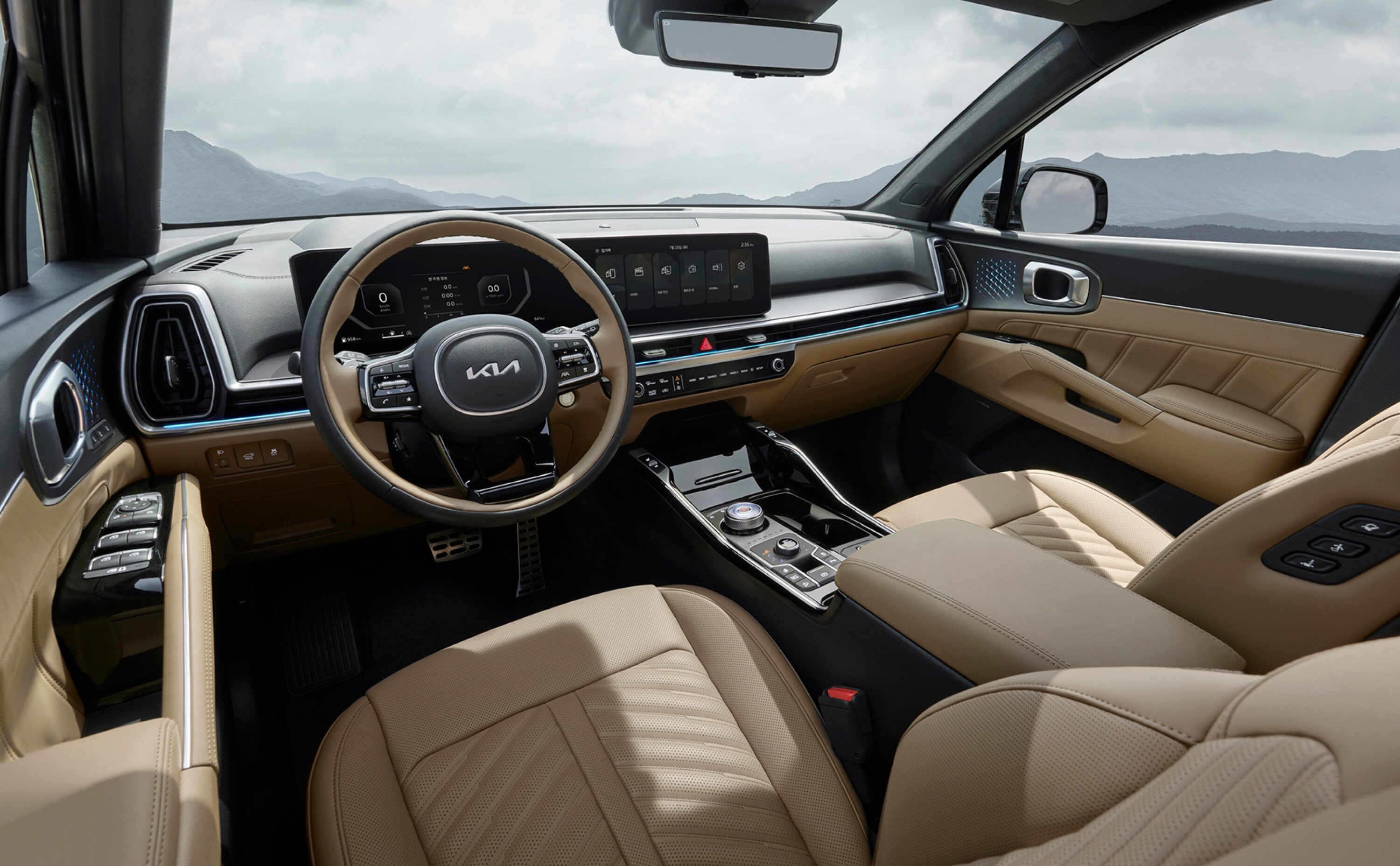
Inside, the changes are more extensive, with a curved, single-piece ‘panoramic’ display for the infotainment system and digital instrument cluster – as seen on Sportage and EV6 – replacing the current hooded cluster.
The larger 12.3-inch infotainment system, up from 10.25 inches, runs the Hyundai-Kia Group’s latest ccNC infotainment system, with wireless Apple CarPlay and Android Auto connectivity for variants with sat-nav, and over-the-air software updates, likely.
Kia Australia has confirmed the updated Sorento is the brand’s next model to feature its connected-car technology – dubbed Kia Connect – joining the updated Picanto and all-electric EV9 also due later this year.
As detailed here, the system will continue to be progressively rolled out in Australia with all-new models and mid-life facelifts, rather than general model-year updates – despite the addition of Hyundai’s Bluelink to minor MY23 spec bumps for the Tucson and Venue.
It is also limited to vehicles fitted with satellite navigation, suggesting the entry-level Sorento S will miss out on the technology, based on the current specification list.
Kia has redesigned the Sorento’s dashboard to accommodate the curved display unit, with slimmer, horizontal air-conditioning vents and a touch panel for the climate and audio controls borrowed from Sportage and EV6.
In South Korea, the Sorento will be fitted with a fingerprint sensor to authenticate the driver at start-up, authorise in-vehicle payments and disable valet mode, while a new black and olive brown interior finish will be offered. Neither feature is confirmed for Australia.
An updated blacked-out ‘gravity’ trim will also be available in its Korean home market.
There appear to be no updates to the Sorento’s powertrains, with a 3.5-litre petrol V6 FWD and 2.2-litre turbo-diesel AWD currently in Australia, plus the supply-restricted 1.6-litre conventional hybrid in FWD or AWD or AWD-only plug-in hybrid.
VFACTS new-car sales data reveals 5311 examples of the Kia Sorento have been registered in Australia year-to-date, placing it ahead of the Toyota Kluger (4658), soon-to-be-discontinued Mazda CX-9 (3382), and soon-to-be-replaced Hyundai Santa Fe (3036).
It is understood to retain its current N3 platform shared with the Kia but with a radically new, boxier exterior and a redesigned cabin focused on space.
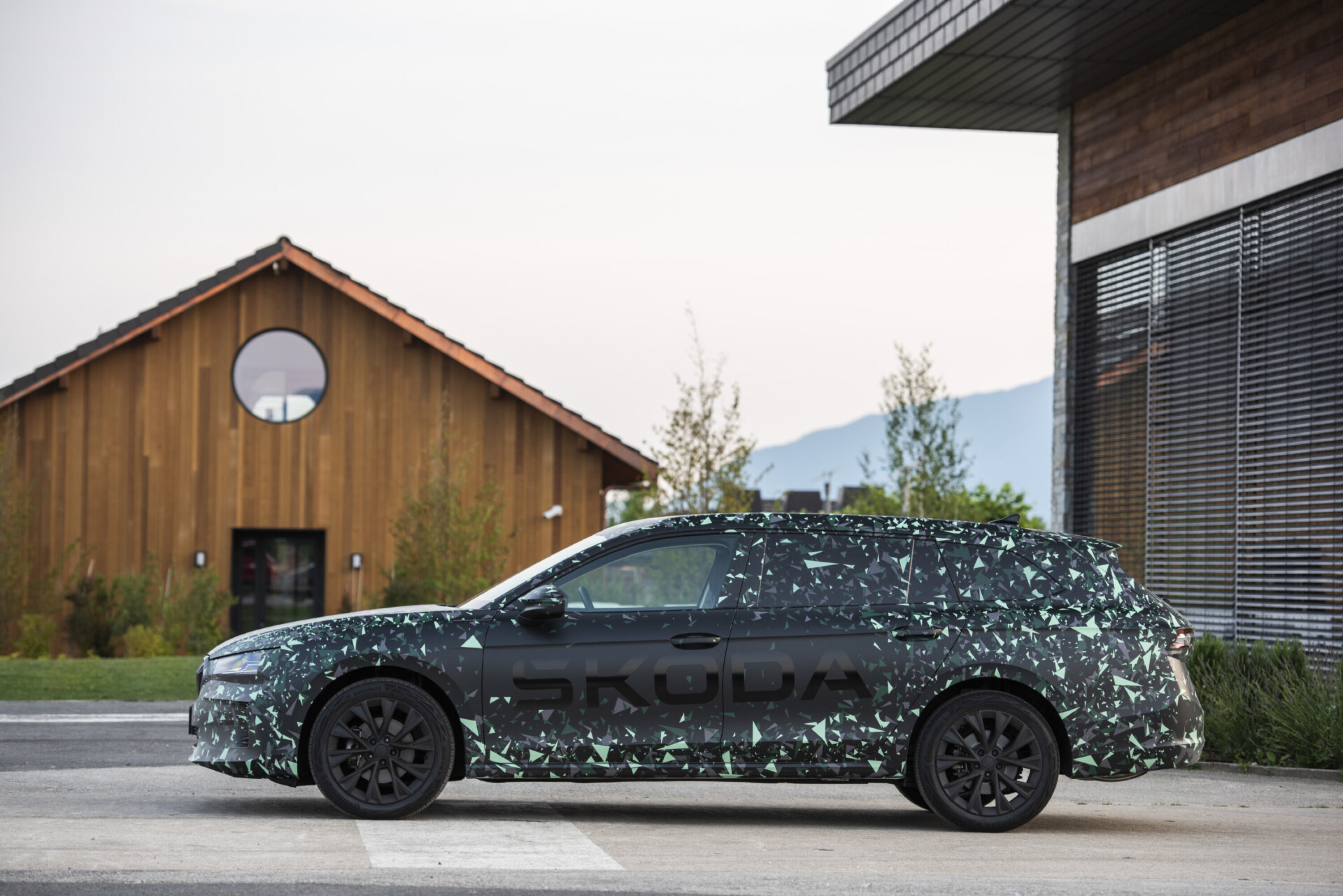
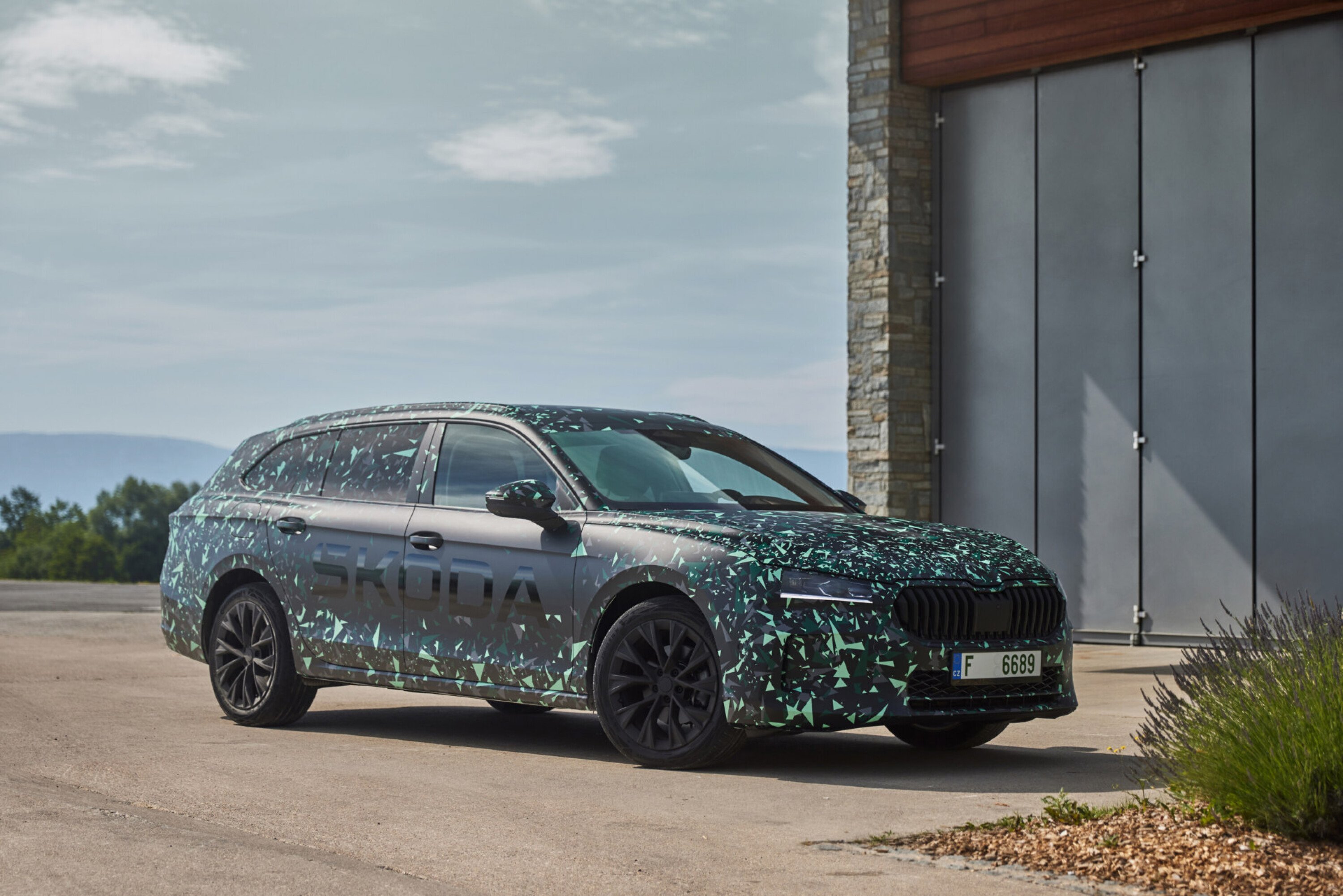
The 2024 Skoda Superb is still tightly wrapped in camouflage, though the Czech carmaker has revealed a host of details about its flagship large car including engines and updated cabin contents.
Twinned in development with Volkswagen’s new Passat, Skoda’s indicated a local Superb release is likely in early 2024, following the arrival of the Kodiaq. Globally, the Superb is available with seven powertrains; three petrol, two diesel, and two hybrids. Only one is likely to hit Australia after brand director Michael Irmer told Wheels earlier this year that the Superb will be marketed as a premium car, with ‘the top-spec engine’ and “no base models”.
It’s fair to expect that a 195kW tune of the Superb’s 2.0-litre turbo-petrol four-cylinder – an 11kW drop compared to the third-gen six-speed DSG Superb 206TSI sold in Australia, and a 5kW drop on its 200kW European counterpart – will be the choice for us.
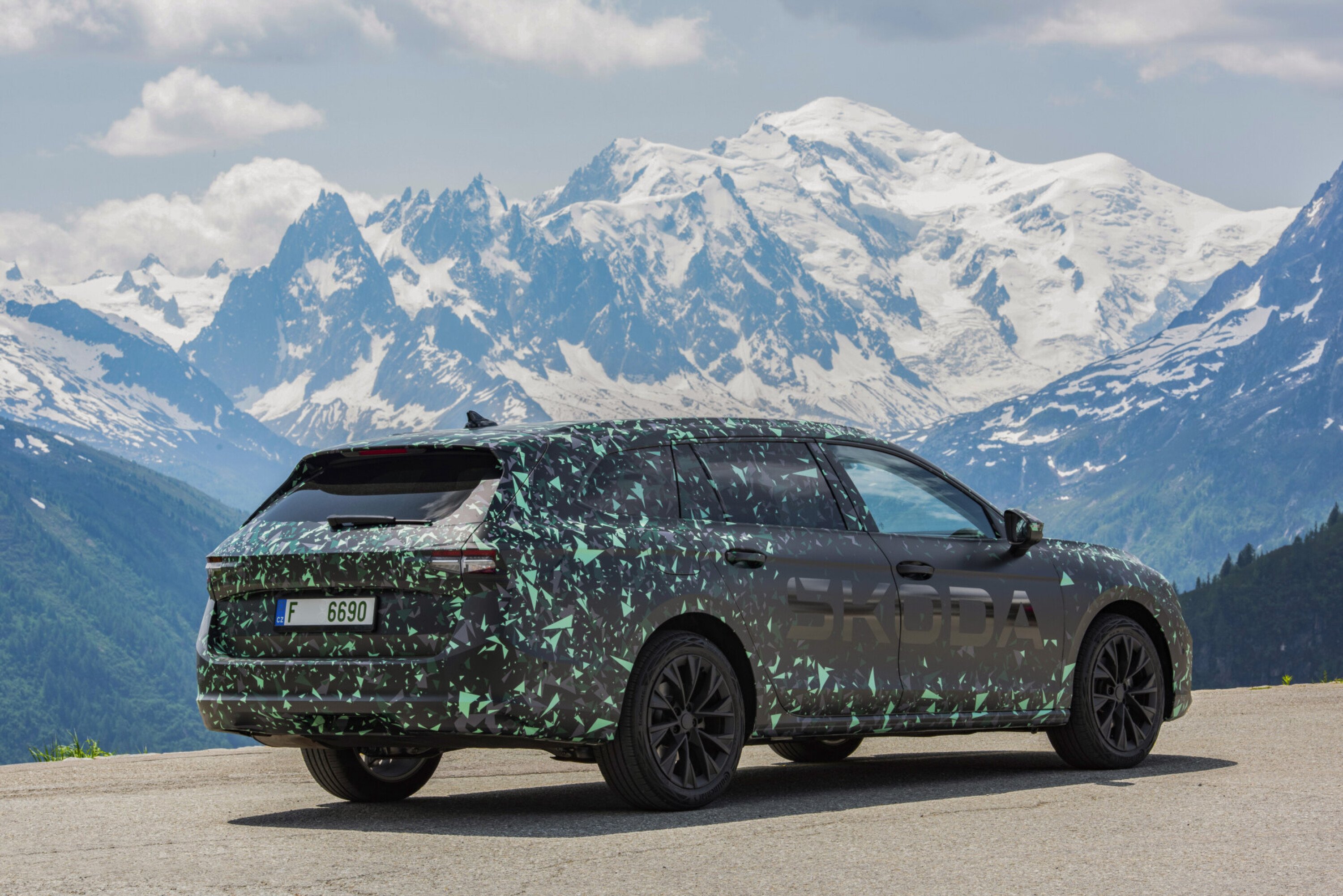
Blame emissions regulations for the power drop, with the new Superb featuring a petrol particulate filter and cleaner tune than the previous-gen car. The new Superb’s most powerful engine will be teamed with an AWD system and a seven-speed dual-clutch automatic.
As for other engines, there are two tunes of the same 2.0-litre diesel, a 110kW mild-hybrid four-cylinder, and a lower tune 2.0-litre petrol with 150kW.
There’s also the plug-in hybrid. Developing 150kW, it’s based around the 110TSI Evo engine with an electric motor and generous 25.7kWh lithium-ion battery boosting power and guaranteeing 100km of electric-only driving range.
Backed up with 11kW AC wall-charging and up to 50kW DC fast charging, the plug-in hybrid could be a frugal alternative to the 195kW petrol down the track, though is unlikely to be offered at launch in Oz.
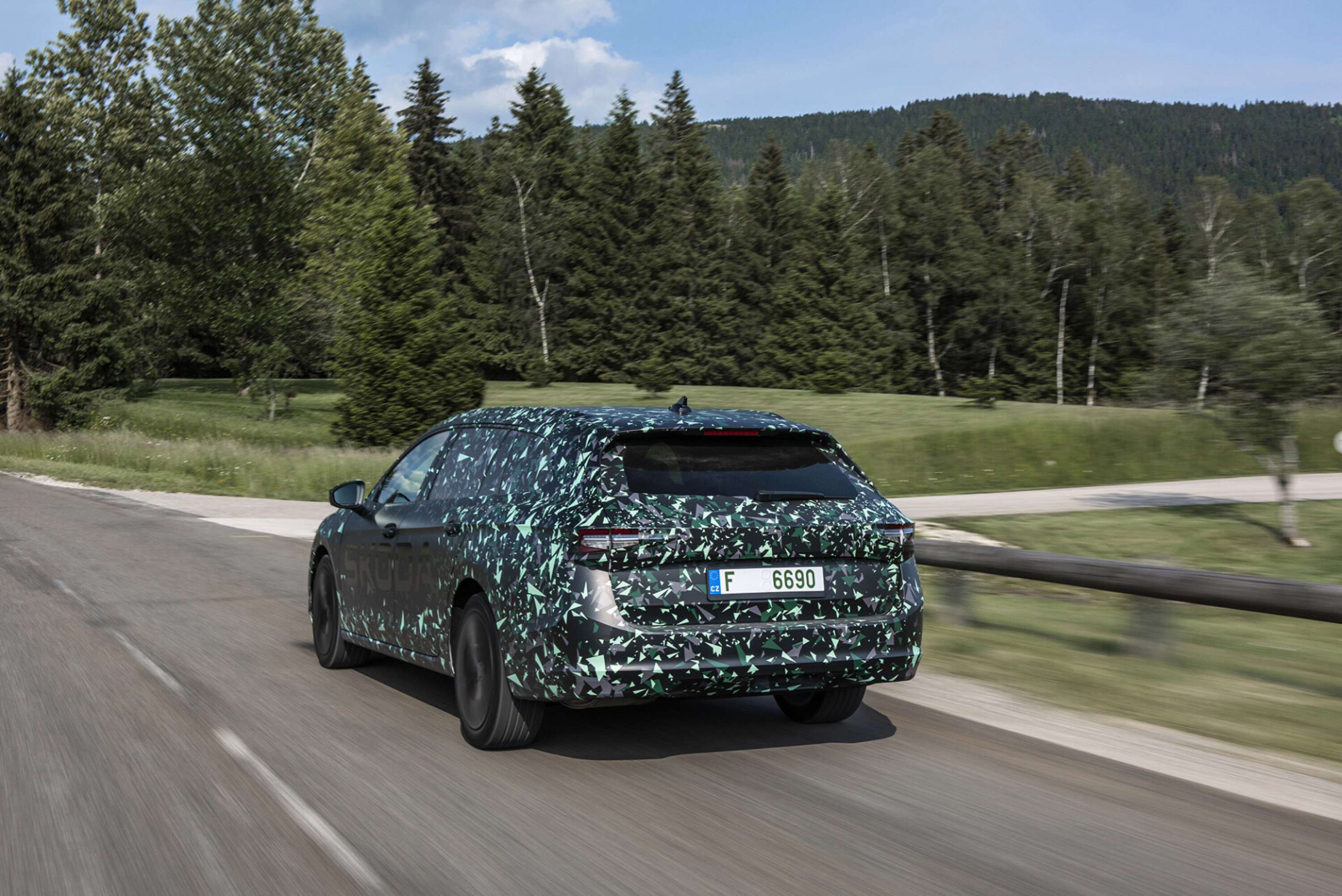
Although not fully unveiled, Skoda’s crisp pictures give a pretty good indication of the Superb’s new design direction with its ‘crystalline’ headlights and broader grille resembling the Fabia small car.
Viewed in profile, the doors look suspiciously similar to the ninth-gen Volkswagen Passat – because they’re the same items. The Passat wears different front and rear clips but is nearly identical to the Skoda down the flanks.
Underneath the skin is the MQB Evo platform and the Superb, although 40-43mm longer than before (liftback/wagon), is 15mm narrower in the body and rides on an identical 2841mm wheelbase to the car it replaces.
It means the Passat – with which it now shares a wheelbase – will be much larger in ninth-generation form
The Passat will also be sold as a wagon exclusively. Intriguingly, despite the general recession of wagon sales, the Superb’s long-roofed variant accounts for 56 per cent of current Superb sales.
| Dimensions | Skoda Superb liftback (vs previous model) | Skoda Superb wagon (vs previous model) |
|---|---|---|
| Length (mm) | 4912 (+43) | 4902 (+40) |
| Width (mm) | 1849 (u201315) | 1849 (u201315) |
| Height (mm) | 1481 (+12) | 1482 (+5) |
| Wheelbase (mm) | 2841 (+0) | 2841 (+0) |
| Headroom in front seats (mm) | 1049 (+11) | 1049 (+7) |
| Headroom in rear seats (mm) | 986 (+6) | 1008 (+8) |
| Luggage capacity (litres) | 645 (+20) | 690 (+30) |
With all Superbs using automatic dual-clutch transmissions, Skoda’s been able to reimagine the cabin. Moving the gear selector to a stalk behind the steering wheel (like Mercedes-Benz and VW’s electric ID range) frees up the centre console for more storage.
Though Skoda hasn’t released pictures of the new cabin yet, we’ve seen glimpses of the Passat’s cabin. Given how close these two cars are this time around, it’s likely to be rather similar inside the Czech car.
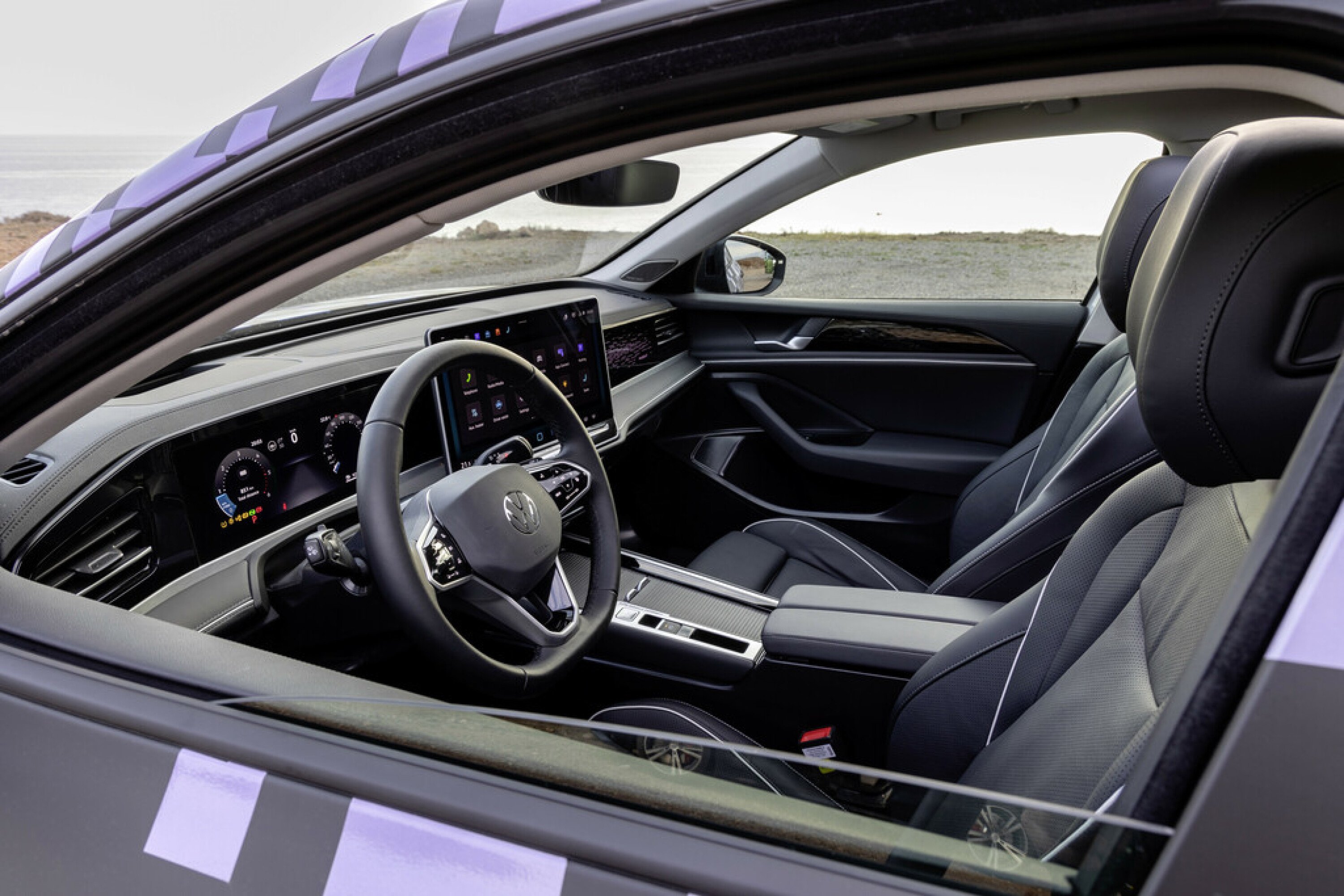
Skoda has added more ‘Simply Clever’ features to the new Superb, bringing the total to 28. An electronic cargo cover, tablet holder integrated into the rear armrest, dual seatback storage pockets, and integrated funnel for the windscreen washer reservoir join the typical door umbrellas and garbage bins that snap into the door pockets.
Also new is a 12.9-inch touchscreen with Skoda touting a mix of digital and physical controls for various functions – addressing criticisms of the current z cabin – and presumably our high-spec Australian cars will get digital driver’s displays and wireless smartphone mirroring.
Skoda has yet to finalise Euro NCAP or ANCAP testing, but the new Superb is packed with safety features, including the usual driver assistance features and 10 airbags, as well as junction assist for the improved AEB system.
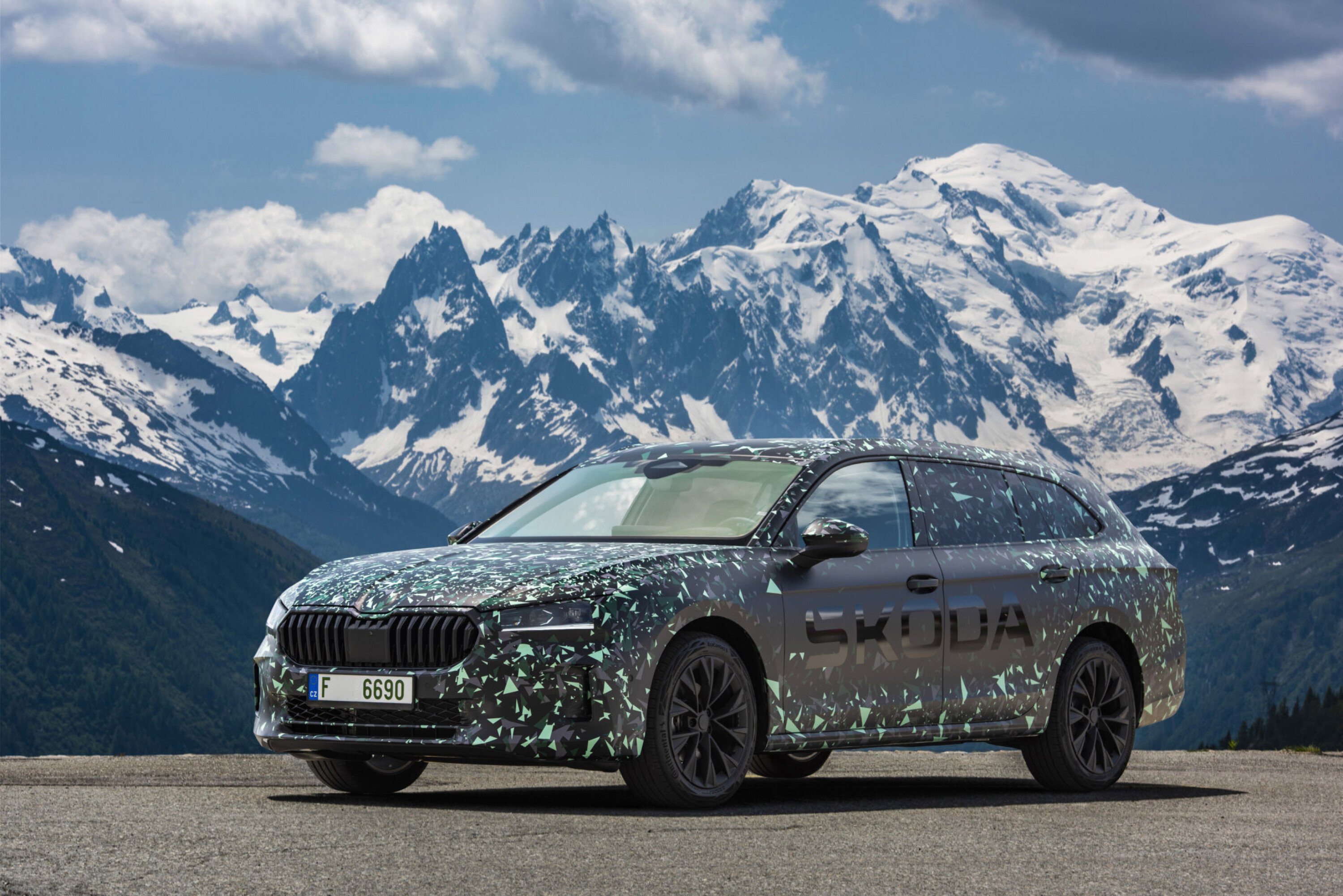
Skoda hasn’t confirmed the Superb’s Australian arrival timing yet, but it’s expected to land later in 2024 once variants with the 195kW head into production.
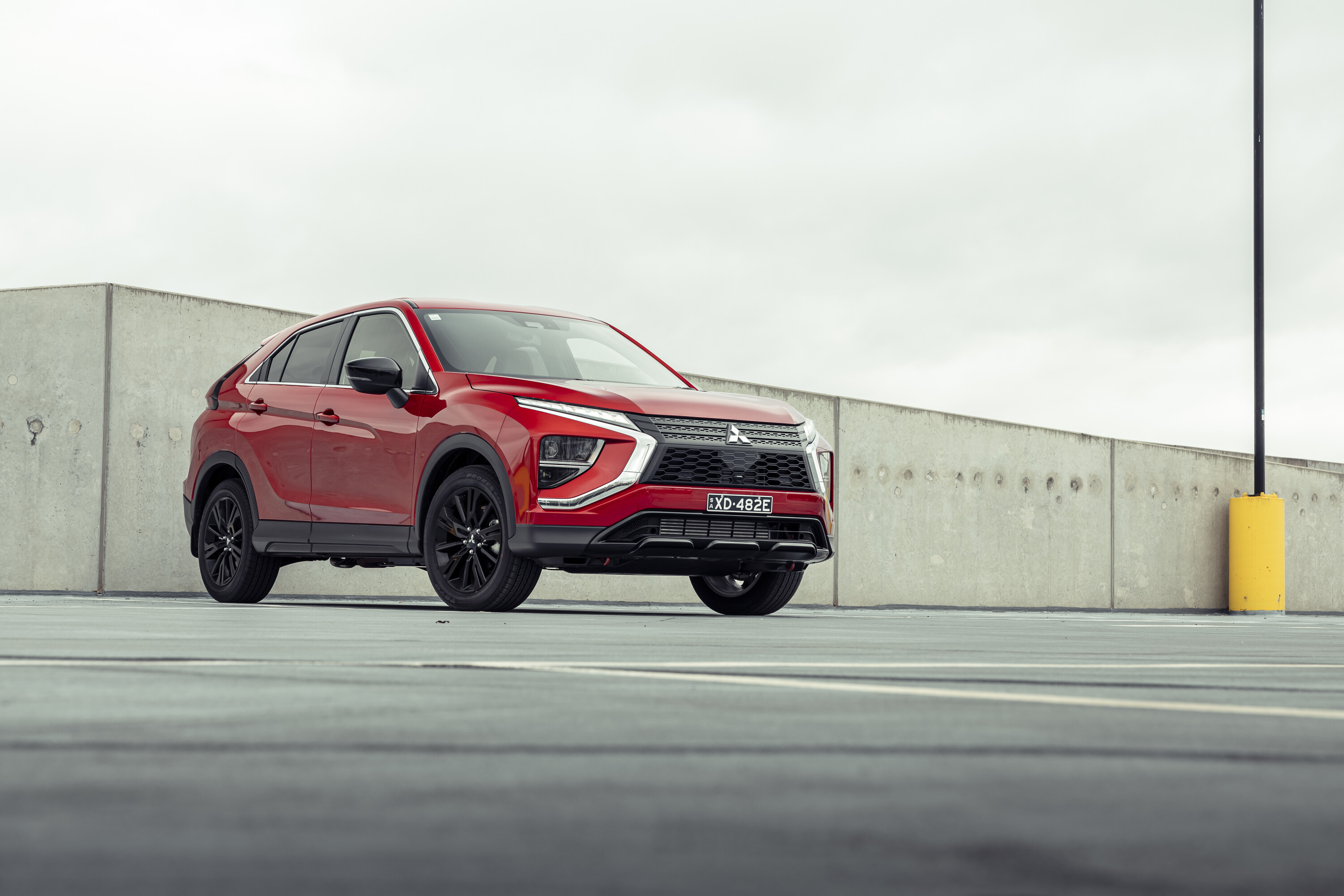
The 2023 Mitsubishi Eclipse Cross LS Black Edition is pitched as a keenly-priced, stylish, urban runabout with a comprehensive late-2020 facelift keeping things fresh with a longer wheelbase and suspension tuning including uprated rear shocks to go with the usual exterior styling tweaks and interior nip-and-tuck.
For 2023, a mildly revised Eclipse Cross range introduces the Black Edition variant tested here, based on the mid-spec LS and gaining a number of features previously limited to the higher-grade Eclipse Cross Aspire.
On paper, it’s a compelling package with a welcome standard feature set, but do ageing bones and a driving experience that doesn’t quite excel take the shine off the rest of the package?
Let’s dig in and find out.
Swinging in at an attractive $35,490 (all prices here are before on-road costs), the Eclipse Cross LS Black Edition channels trendy blacked-out design elements, dialling up the style factor, and bundling with it a rather generous equipment list and pragmatic city-friendly packaging.
You can buy into largely the same package, sans stylish black trim, with the $1070 more-affordable Eclipse Cross LS. For the slight extra spend, you net black exterior trim, black 18-inch alloy wheels, leather- and suede-accented upholstery, and heated front seats with four-way power adjustment for the driver.
That’s on top of the standard LS equipment set, among which are keyless entry and start, rain-sensing auto wipers, high-beam assist, six-speaker audio, leather-wrapped steering wheel, LED fog lamps and power-folding side mirrors.
New features included on the 2023 Eclipse Cross LS include an auto-dimming rearview mirror, second-row USB ports, lane-keep assist, blind-spot monitoring and rear cross-traffic alert.
| 2023 Mitsubishi Eclipse Cross LS Black Edition standard features | |
|---|---|
| 18-inch alloy wheels (black) | Leather- and suede-accented upholstery |
| Rear parking sensors | Halogen headlights |
| 8-inch infotainment system | LED daytime running lamps |
| Wired Apple CarPlay and Android Auto | Climate control air-conditioning |
| 6-speaker audio system | Manual cruise control |
| Auto-dimming rear-view mirror (new) | High-beam assist |
| Second-row USB ports (new) | Electronic parking brake with auto hold |
| Lane-keep assist (new) | Rear privacy glass |
| Blind-spot monitoring (new) | Leather-wrapped steering wheel |
| Rear cross-traffic alert (new) | LED fog lamps |
| Heated, power-folding side mirrors | Heated front seats |
| Keyless entry and push-button start | Black exterior trim |
| Illuminated front door trim | Rain-sensing wipers |
| Four-way power-adjustable driver’s seat | Removed: Roof rails |
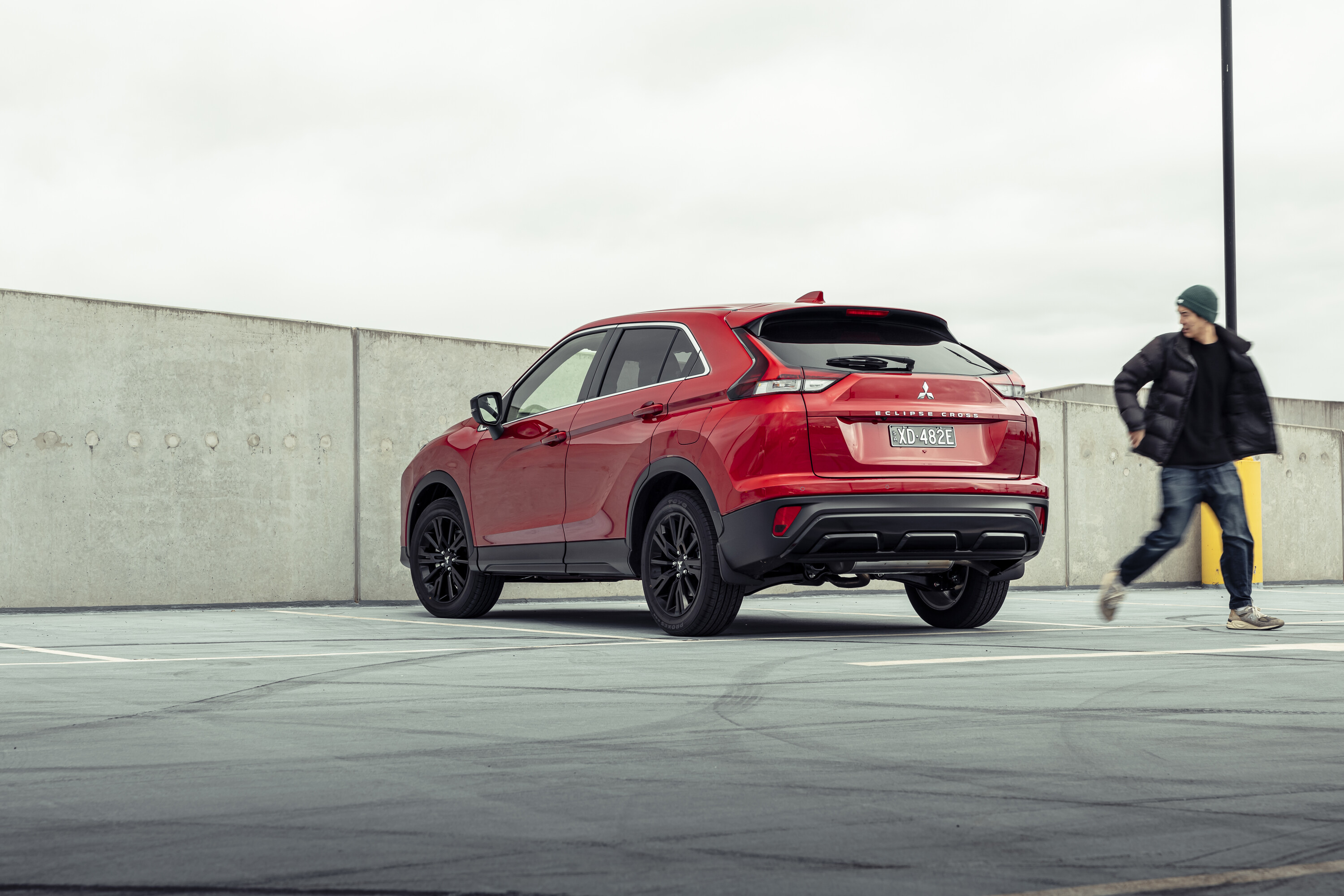
There is no shortage of fresh-faced rivals angling for this Mitsubishi’s small SUV turf, even if the Eclipse Cross rivals some medium SUVs for length.
Nissan’s new Qashqai has made big strides and virtually nails urban driving fundamentals, with the nicely equipped ST+ bundling 18-inch alloys, LED foglights, 12.3-inch infotainment system with wireless Apple CarPlay and wired Android Auto, satellite navigation and more for a slightly dearer (but arguably worthy) $37,890.
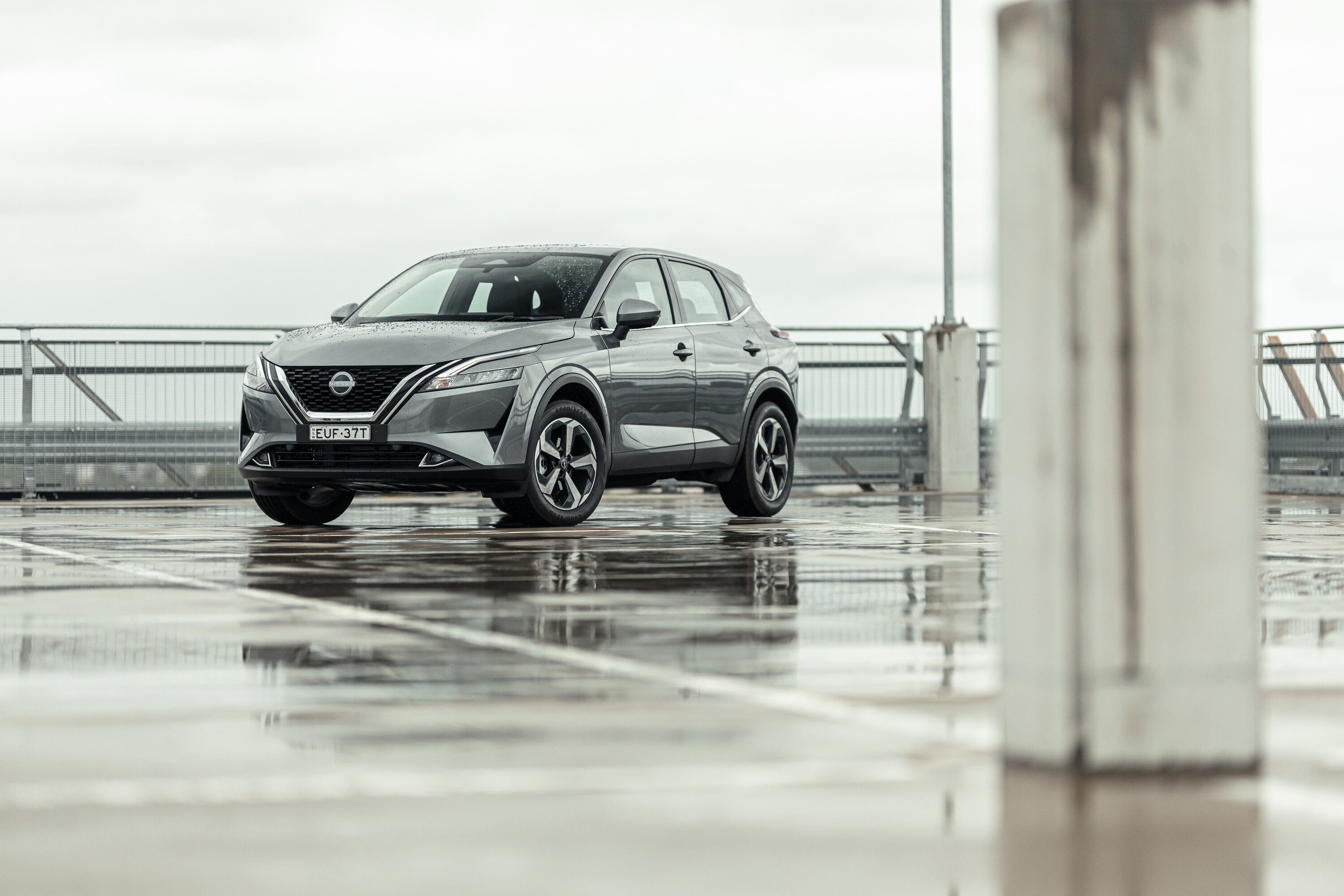
The $36,750 Toyota Corolla Cross GXL is another meritorious in-demand inner-city crossover. It doesn’t strike as the most stylish in the sector, but it also is a fundamentally wonderful-driving motor car, equipped with a large 10.5-inch infotainment screen, wireless Apple CarPlay and wired Android Auto, and LEDs for the daytime running lights, headlights and sequential front indicators.
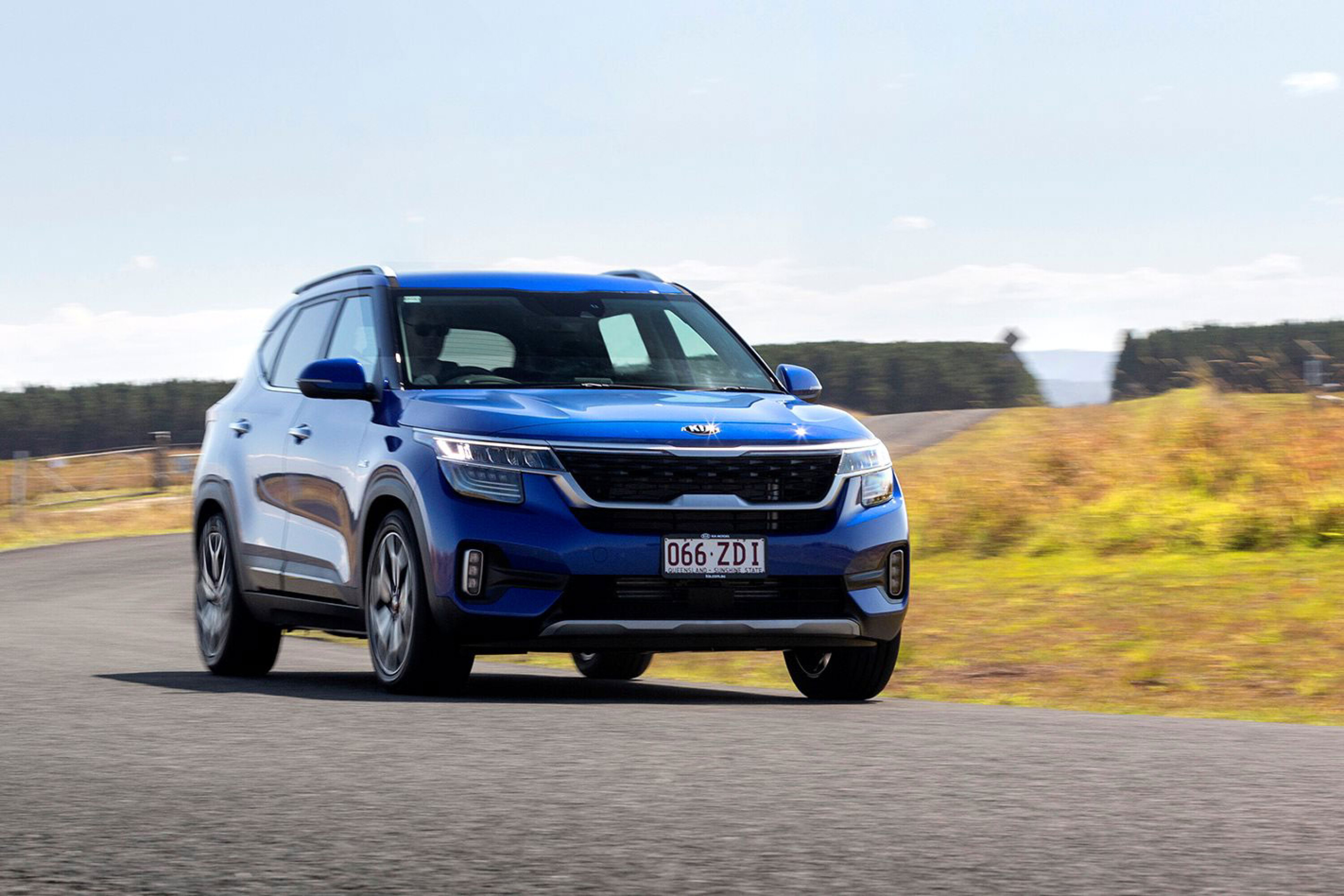
Also worth a look at $35,800 is the Kia Seltos Sport+ 2.0 FWD, with easy urban dynamics, a stylish visual design and headline features that include dual 10.25-inch infotainment and digital driver screens, DAB+ radio, wired Apple CarPlay and Android Auto, keyless entry and adaptive cruise control.
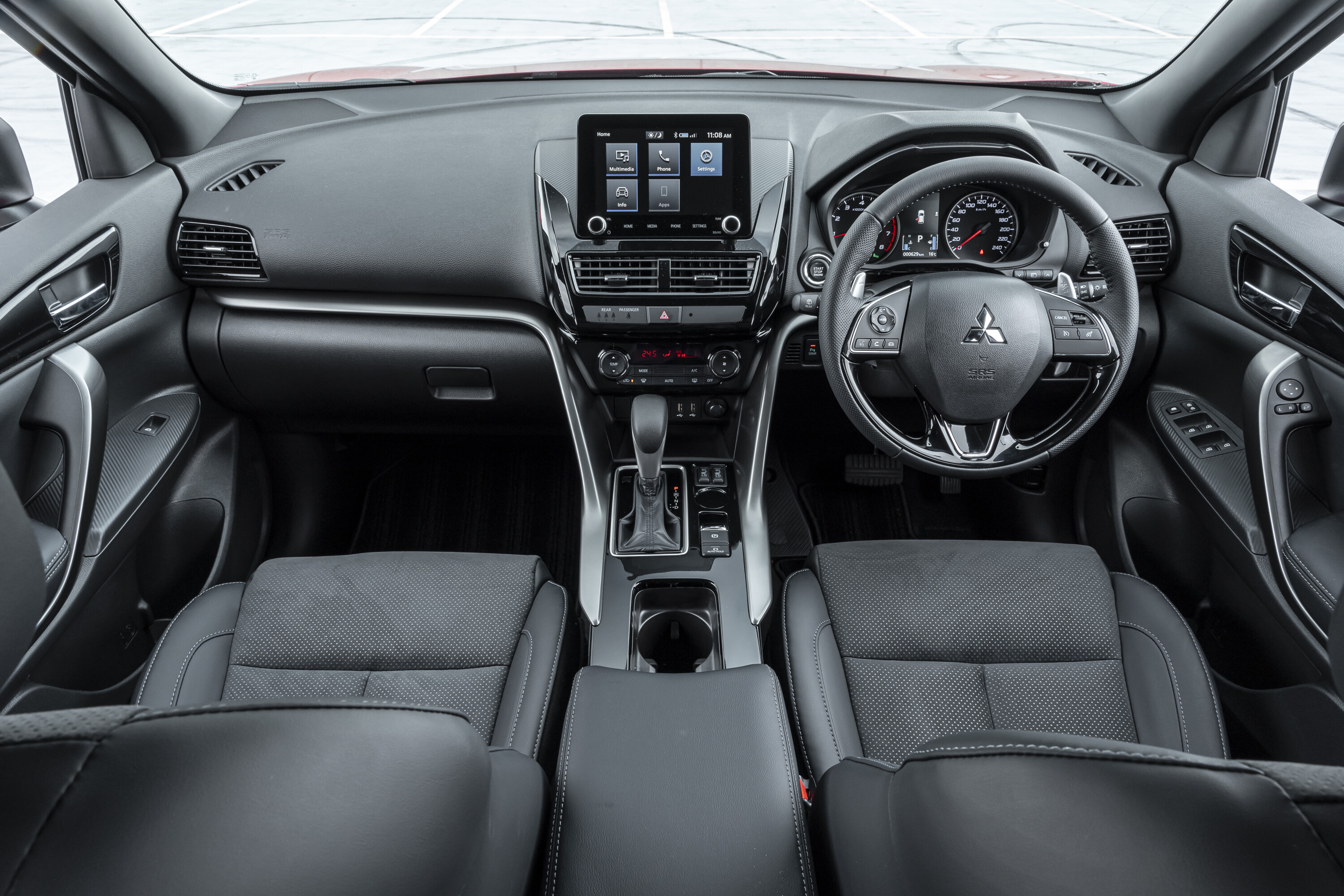
While facelifts have kept the exterior fresh, the interior of the Mitsubishi Eclipse Cross feels notably dated compared with rivals. The basic architecture and fascias are virtually unchanged since launch, with updates mainly distinguished by new seat fabric and the larger infotainment screen.
Design aside, which is subjective and not important to everyone, the material quality itself is quite decent with a good mix of soft and hard touchpoints, with a plastic grade that, while not luxurious, at least feels somewhat long-lasting and durable.
Everything here is functional, with easy-to-operate switchgear for the climate control, and a basic infotainment interface that even your grandmother could use.
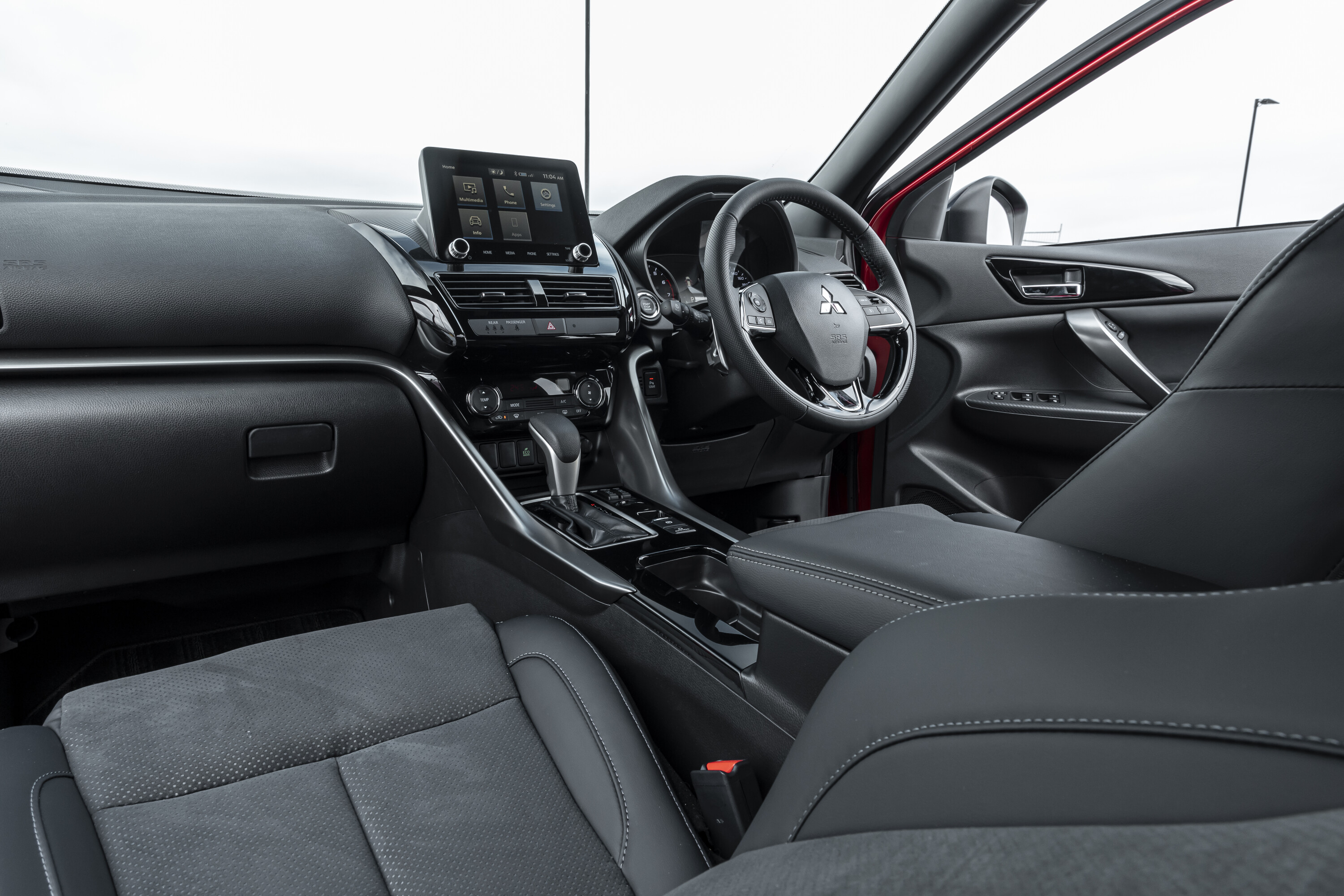
The front seats are comfortable and supportive on long drives, and, despite the vehicle’s small footprint, it delivers a surprisingly airy interior atmosphere.
Large door bins and a decent compartment below the front armrest provide ample storage and a shallow pocket with two USB ports and a 12-volt outlet is located below the centre stack.
Rear-seat room, it must be said, is quite generous with the outboard seats easily catering for a tall adult.
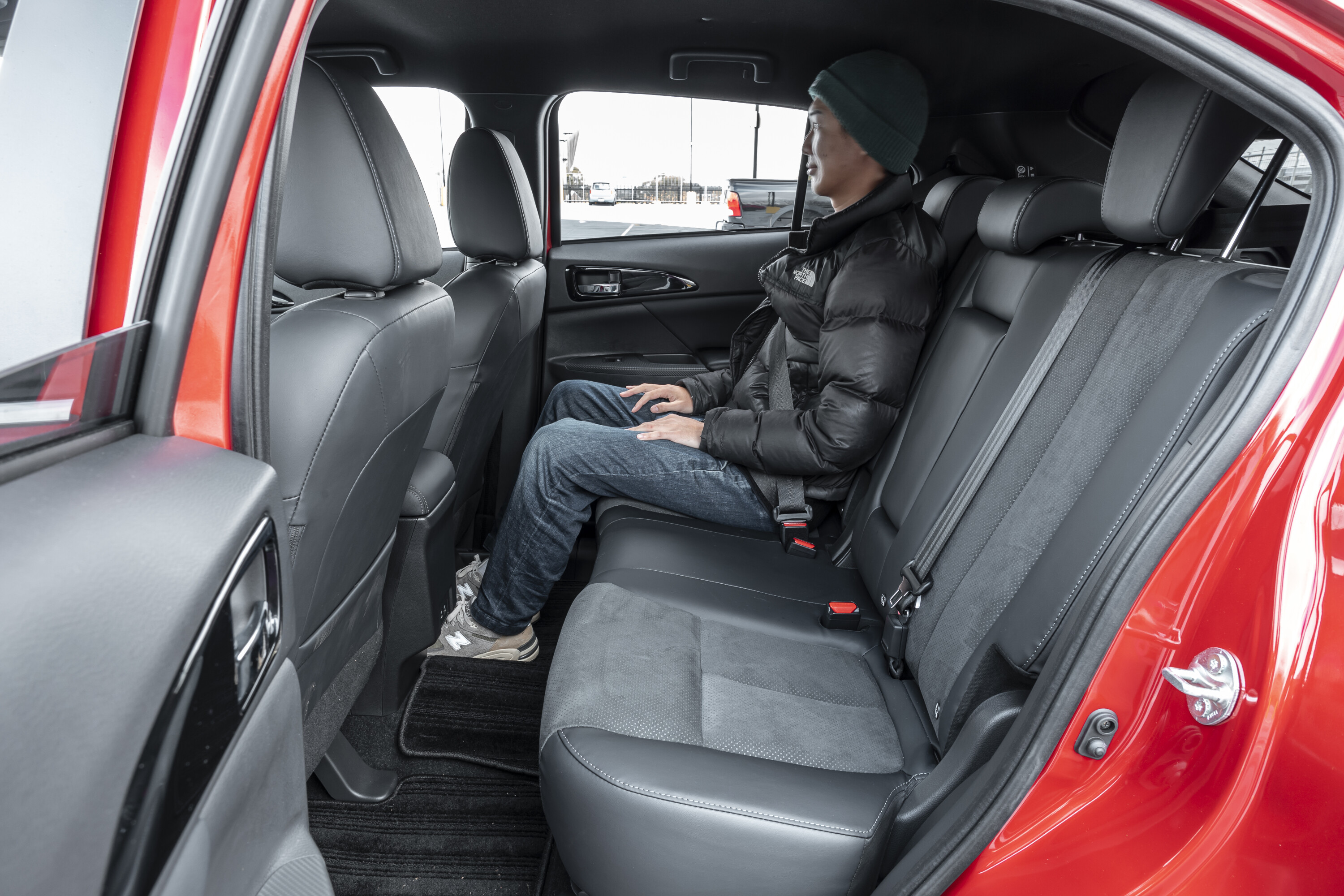
Large windows provide plenty of light and further contribute to the sense of space. The 2023 LS specifically adds a welcome USB-A port behind the centre console, but, increasingly in line with the segment, we would still like to see the addition of rear air vents.
The boot measures 405L in capacity, swelling to 1149L with the 60:40 second row folded.
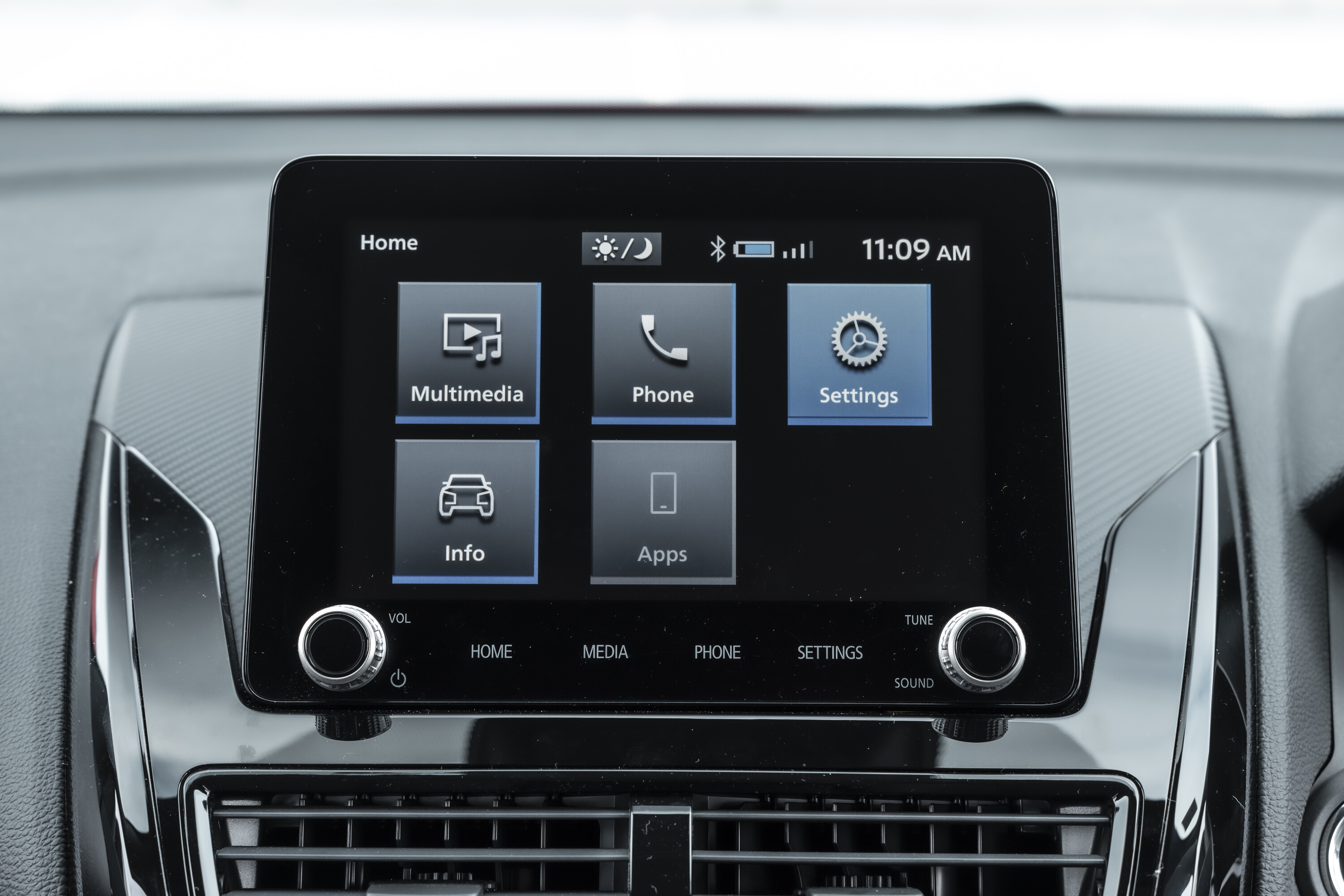
Like the vibe of the cabin itself, the technology in here isn’t the latest and greatest, but everything about the Eclipse Cross screams no-fuss and function. The infotainment system is tremendously easy to use (read: basic), with large unmistakable buttons on the home screen.
A lack of a digital speedometer is an increasingly glaring omission in this day and age, but not world-ending. Elsewhere, there are two USB ports up front and one behind for charging needs.
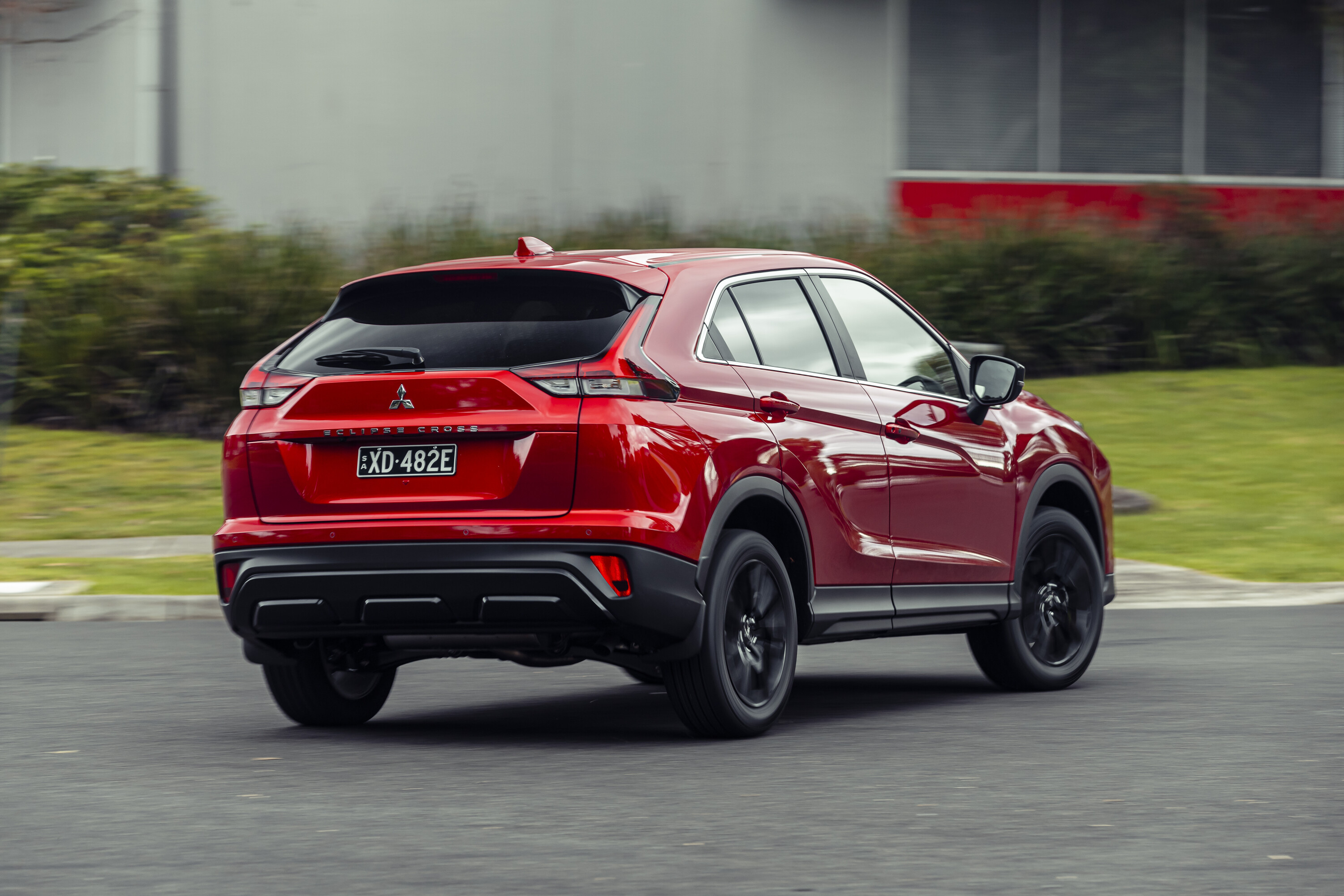
There’s little untoward about how the Eclipse Cross drives. It’s easy and intuitive, if not engaging or inspiring.
But if the name of the game is carrying people from A to B in comfort, the ageing Eclipse Cross will still do the job with a smile.
Modest outputs of 110kW and 205Nm from the 1.5-litre turbo-petrol engine, paired with a continuously variable transmission (CVT), does an admirable job of accelerating the second-smallest Mitsubishi SUV to speed without much fuss, doing so in a surprisingly sprightly and smooth fashion.
A slight hesitation is apparent when calling upon sudden throttle inputs, as the CVT takes a moment to get itself in order, and you do get the notorious CVT drone at times (usually up a hill or on highway overtakes) but again, the Eclipse Cross and its powertrain just gets the job done.
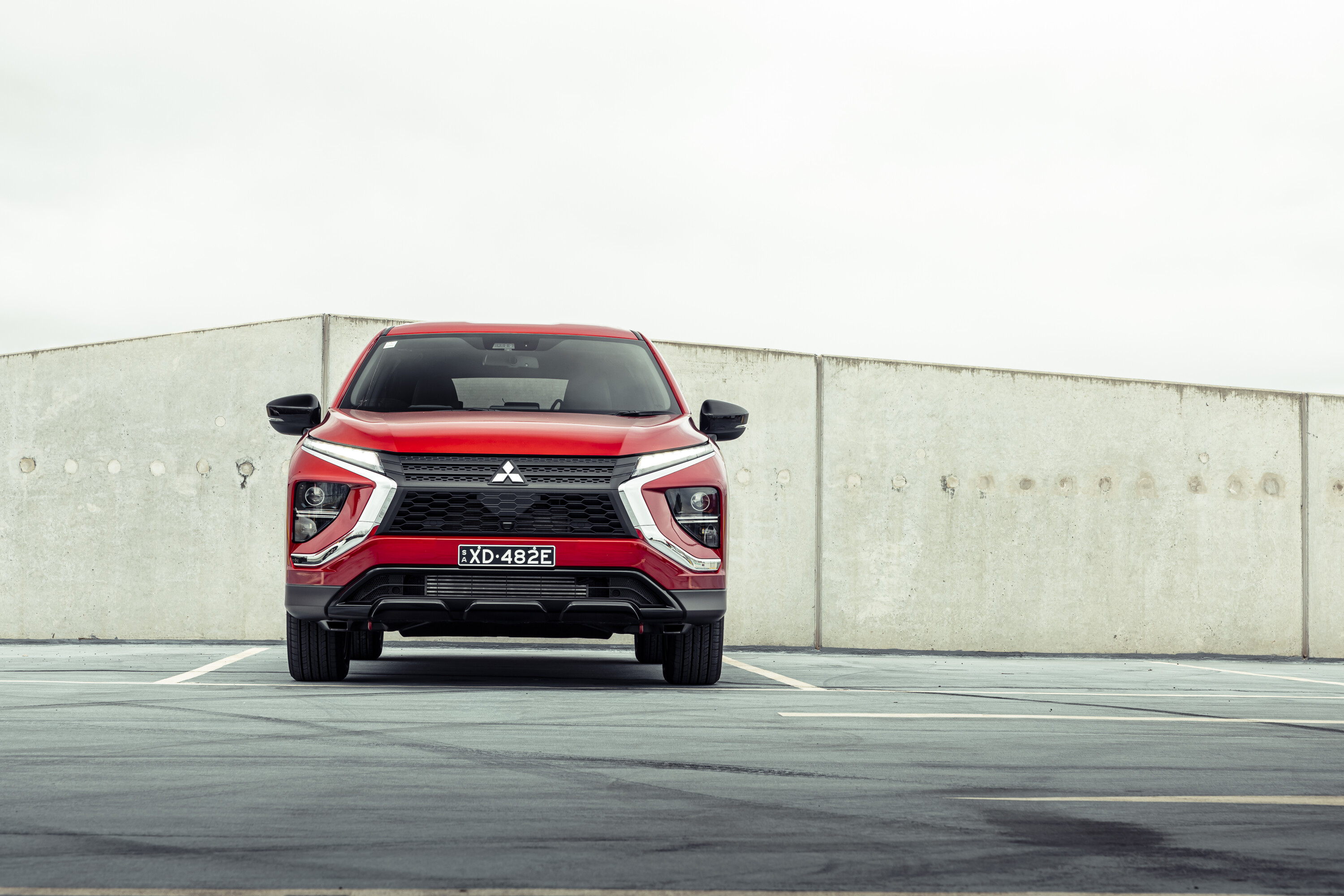
The steering has a slight measure of weight to it, linear and predictable, but doesn’t feel engaging. The driving position is rather tall, but it feels appropriate for the vehicle.
Body control is decent around potted metropolitan roads, but the sizeable C-pillar is noticeable within a quick lane-change head check.
After living with the car for a few days, we did miss a reverse auto-dipping function for the passenger side mirror, but it’s a minor gripe and the Eclipse Cross is an overall breeze to reverse park thanks to its legible reverse camera and large rear-view mirrors.
The new-for-2023 additions of lane-keep assist, blind-spot monitoring and rear cross-traffic alert are particularly welcome as they were notably absent in the pre-update Eclipse Cross LS.
Our week of testing returned a real-world figure of 9.5L/100km.
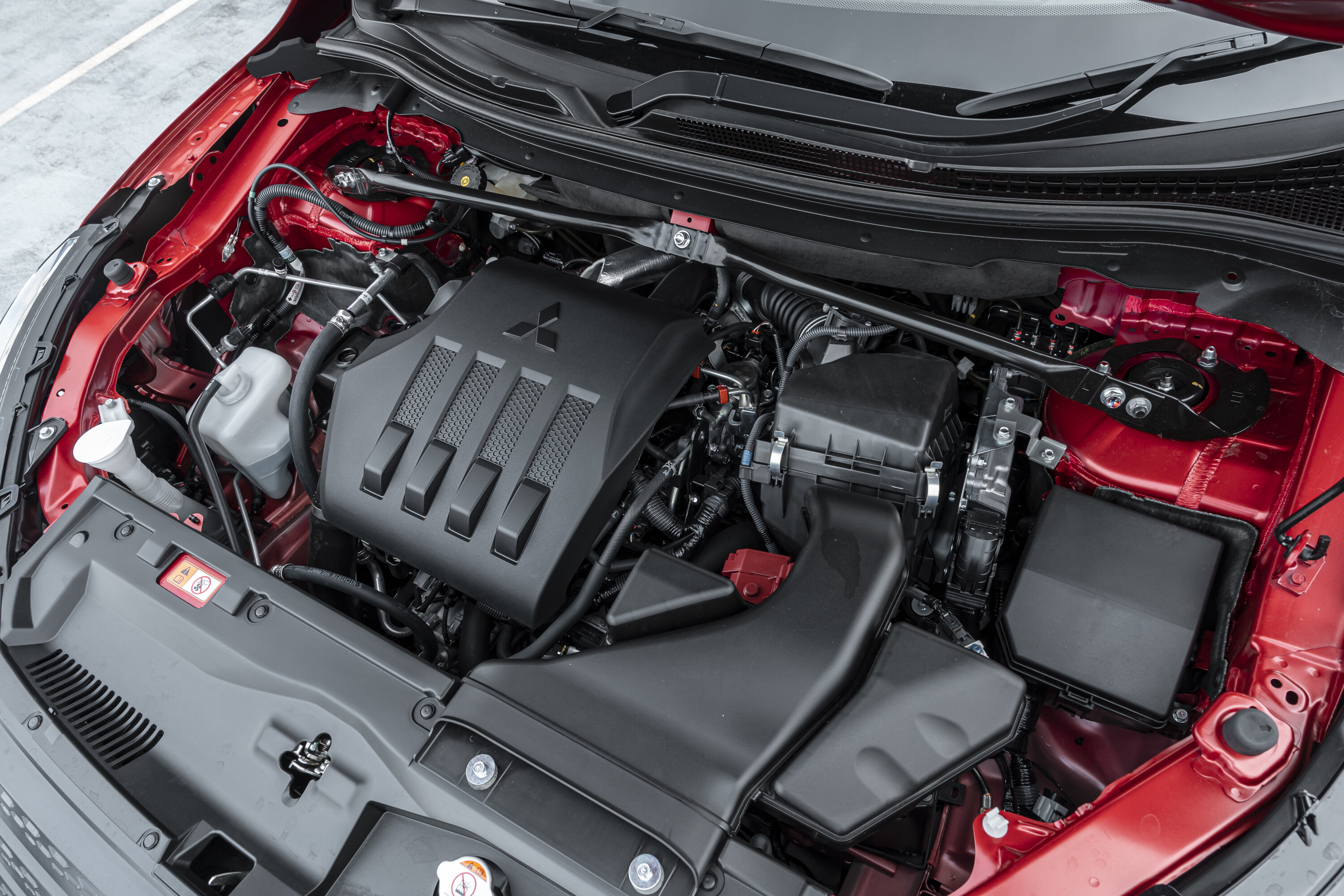
However, this safety rating is set to expire at the end of 2023 as a result of ANCAP’s six-year rating expiration policy.
There are seven airbags fitted as standard across the range, comprising dual front, dual side, dual curtain and driver’s knee bags.
Sadly, the ageing bones of the Eclipse Cross see many advanced driver systems, which are increasingly fitted as standard elsewhere in the segment, relegated to the higher-end variants.
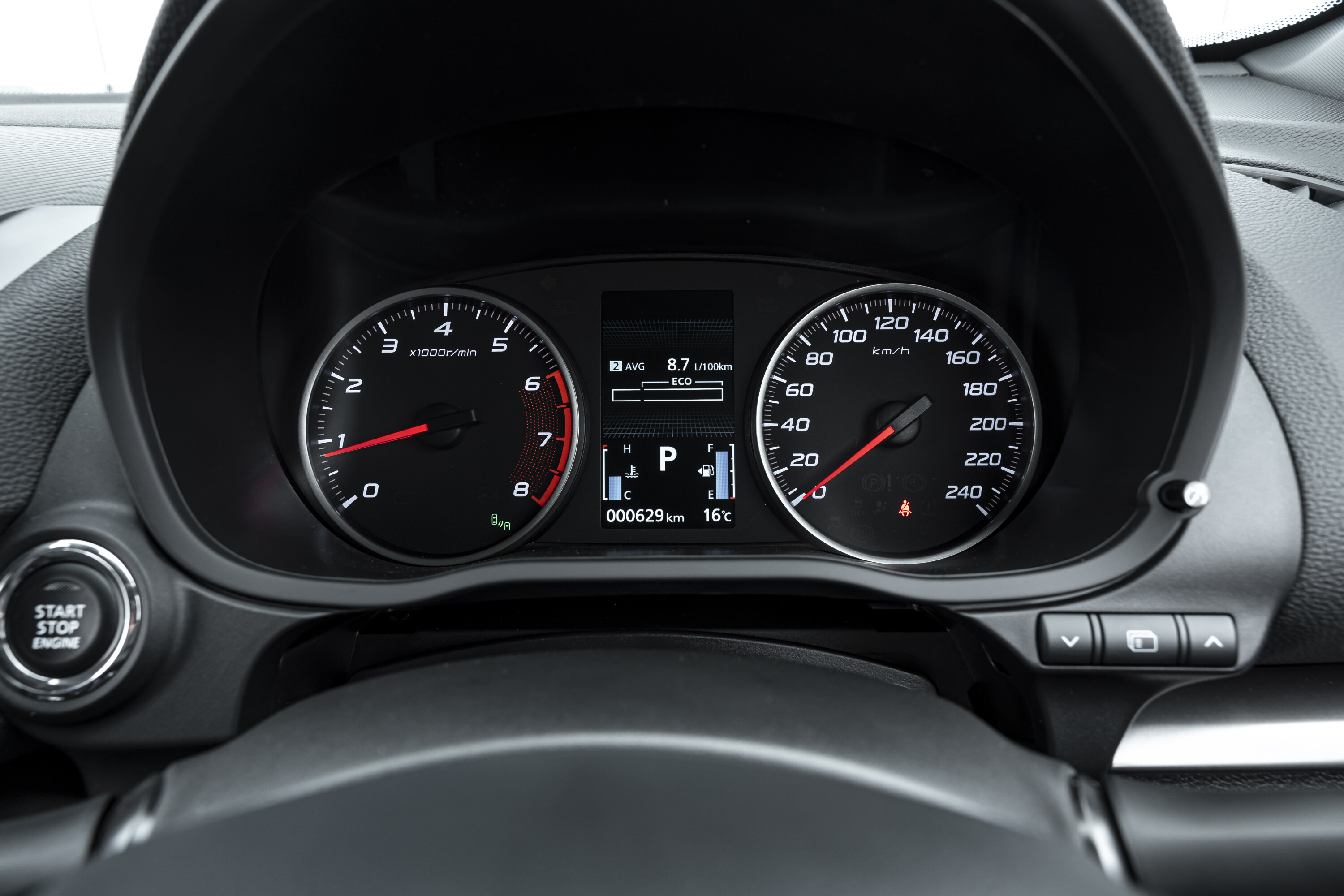
The LS update of 2023 rectifies this somewhat by gaining features such as lane-keep assist, blind-spot monitoring and rear cross-traffic alert that had previously been restricted to the higher-spec Eclipse Cross Aspire.
Buyers, however, may still be left wanting for features like adaptive cruise control, front and rear parking sensors, 360-degree camera system and head-up display, all of which are available in more expensive Eclipse Cross variants.
Safety systems fitted as standard on the 2023 Mitsubishi Eclipse Cross LS Black Edition include:
| 2023 Mitsubishi Eclipse Cross safety features | |
|---|---|
| Autonomous emergency braking (vehicle & pedestrian detection) | Rear parking sensors |
| Reversing camera | High-beam assist |
| Lane-keep assist | Blind-spot monitoring |
| Rear cross-traffic alert | |
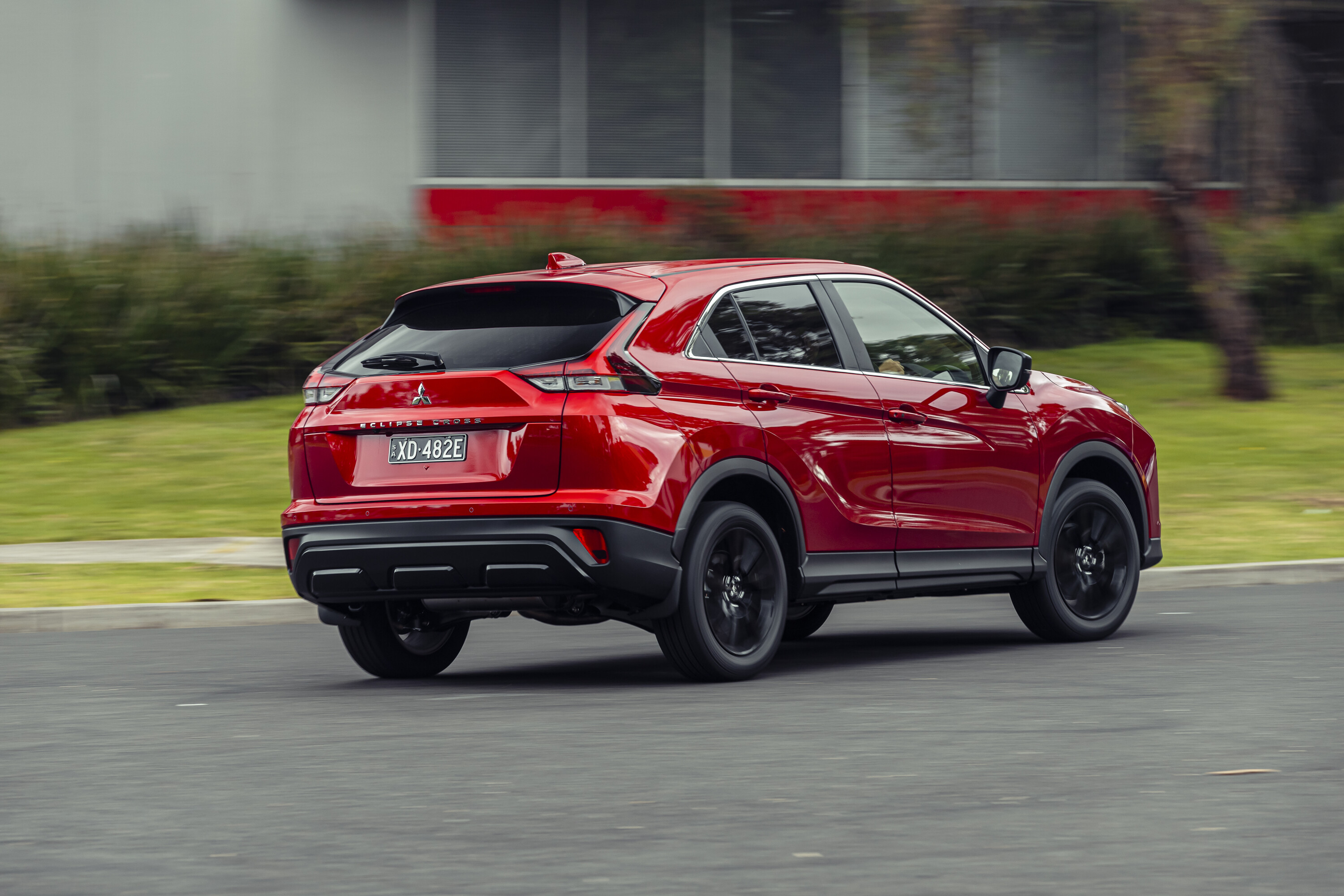
Eligible Mitsubishis are covered by up to a ten-year warranty, but there are some caveats to bear in mind.
The 10-year/200,000km warranty should provide worry-free years of service for those driving average urban distances daily, although a condition of this decade of coverage is that the vehicle must be serviced at an authorised Mitsubishi dealership.
Otherwise, the vehicle warranty reverts to Mitsubishi’s standard five-year/100,000km warranty.
A capped-price servicing package conveniently parallels the maximum ten-year conditional warranty period, although it is limited to 150,000km.
Six of these scheduled services cost $299 and two cost $399 while the two major services cost $599.
Total ten-year servicing costs are $3790, or an average of $379 per year.
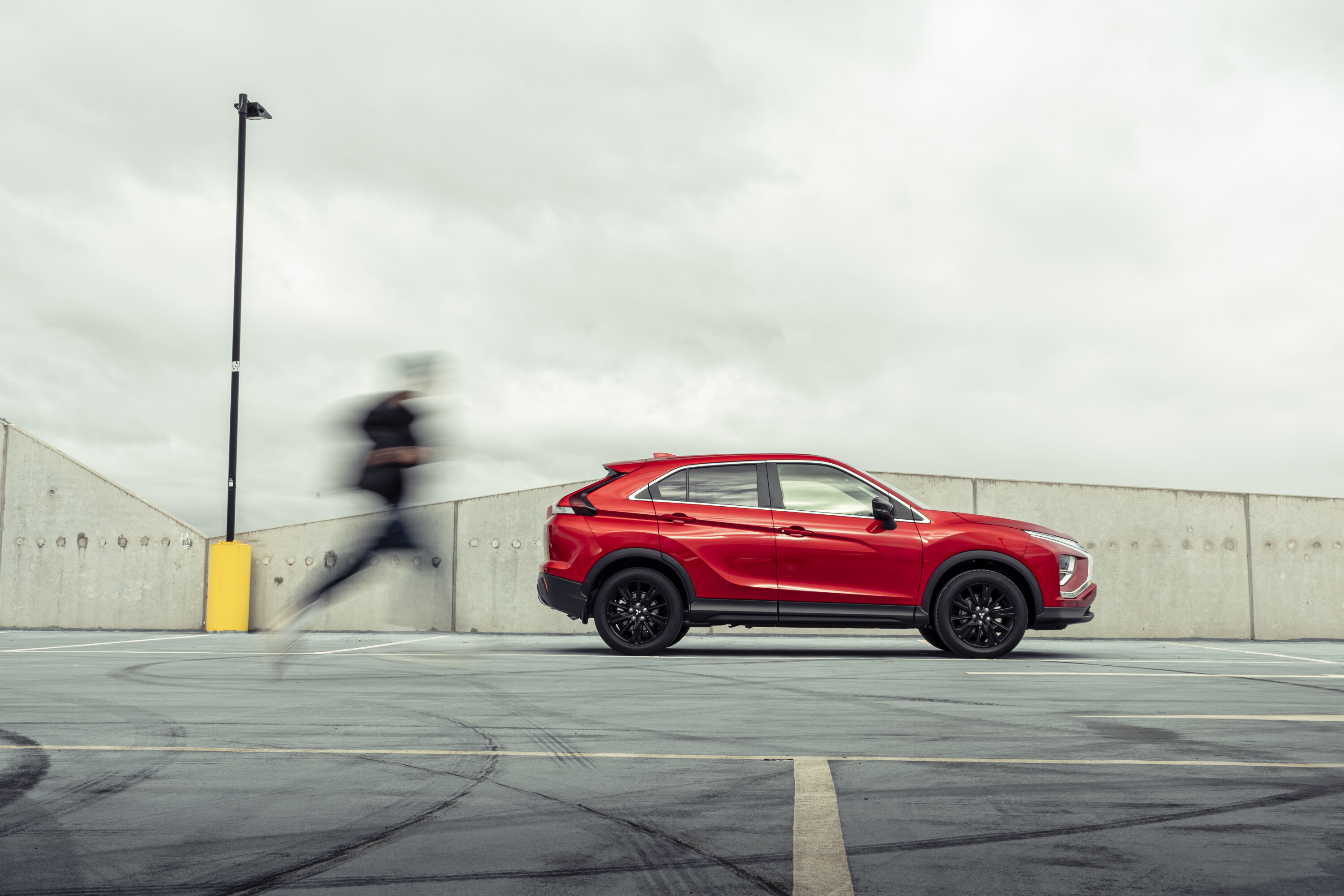
Despite its age, the Eclipse Cross still emerges as a meritorious city family crossover, with a roomy cabin that defies its nimble footprint, a decent equipment set for its price, and a striking exterior to look back at.
While the larger, more expensive Outlander represents what feels like true generational strides for the brand, there’s still something endearing to the simplicity that the Eclipse Cross affords.
There is no shortage of choice within the mid-$30K small SUV segment, though. Compared to younger, fresher rivals that tempt buyers with large digital screens and a shotgun approach to all the latest technology, the Eclipse Cross may not dazzle or inspire.
But it will do the job for most in an honest, no-fuss, manner. Indeed, its frequent segment-leading sales position suggests there’s merit to a simple car that simply gets the job done, and still very much a place for the Eclipse Cross in the market.
| 2023 Mitsubishi Eclipse Cross specifications | |
|---|---|
| Body | 5-door, 5-seat small SUV |
| Boot | 405L/1172L |
| Drive | front-wheel |
| Engine | 1.5-litre four-cylinder turbo-petrol |
| Max power | 110kW @ 5500rpm |
| Max torque | 250Nm @ 2000-3500rpm |
| Transmission | continuously variable |
| Weight | 1531kg |
| L/W/H/W-B (mm) | 4545/1805/1685/2670 |
| 0-100km/h | 10.8sec (claimed) |
| Tyres | 255/55 R 18 (f/r) Toyot Proxes R44 |
| Wheels | 18 x 7.0J alloy |
| Price | $35,490 + on-road costs |
| On sale | now |
