
Australian motorsport fans can watch the 100th running of the 24 Hours of Le Mans on the Stan Sport streaming service [↗], which is broadcasting practice and qualifying sessions.
Snapshot
- Stan’s Le Mans 2023 coverage starts at 11pm on Saturday 10 June.
- You can also pay about $20 to watch it on fiawec.tv
- Australian racing commentator Richard Craill is on the Radio Le Mans broadcast team
When does Le Mans 2023 start for Australian audiences?
Stan’s race coverage starts at 11pm on Saturday 10 June.
How to keep up with Le Mans 2023 without a streaming subscription
If you’ve never been a Stan subscriber, try signing up for a trial period – or catch up with the numerous team streams that will populate YouTube over the course of the event.
Or…
You can also buy a round pass from fiawec.tv [↗] to watch the entirety of the event, which will cost you a tad over $20.
The Le Mans 2023 commentary team
Noted Australian racing commentator Richard Craill will form part of the Radio Le Mans broadcast team, while former Supercars caller Leigh Diffey will anchor the US coverage.
MORE
Motorsport
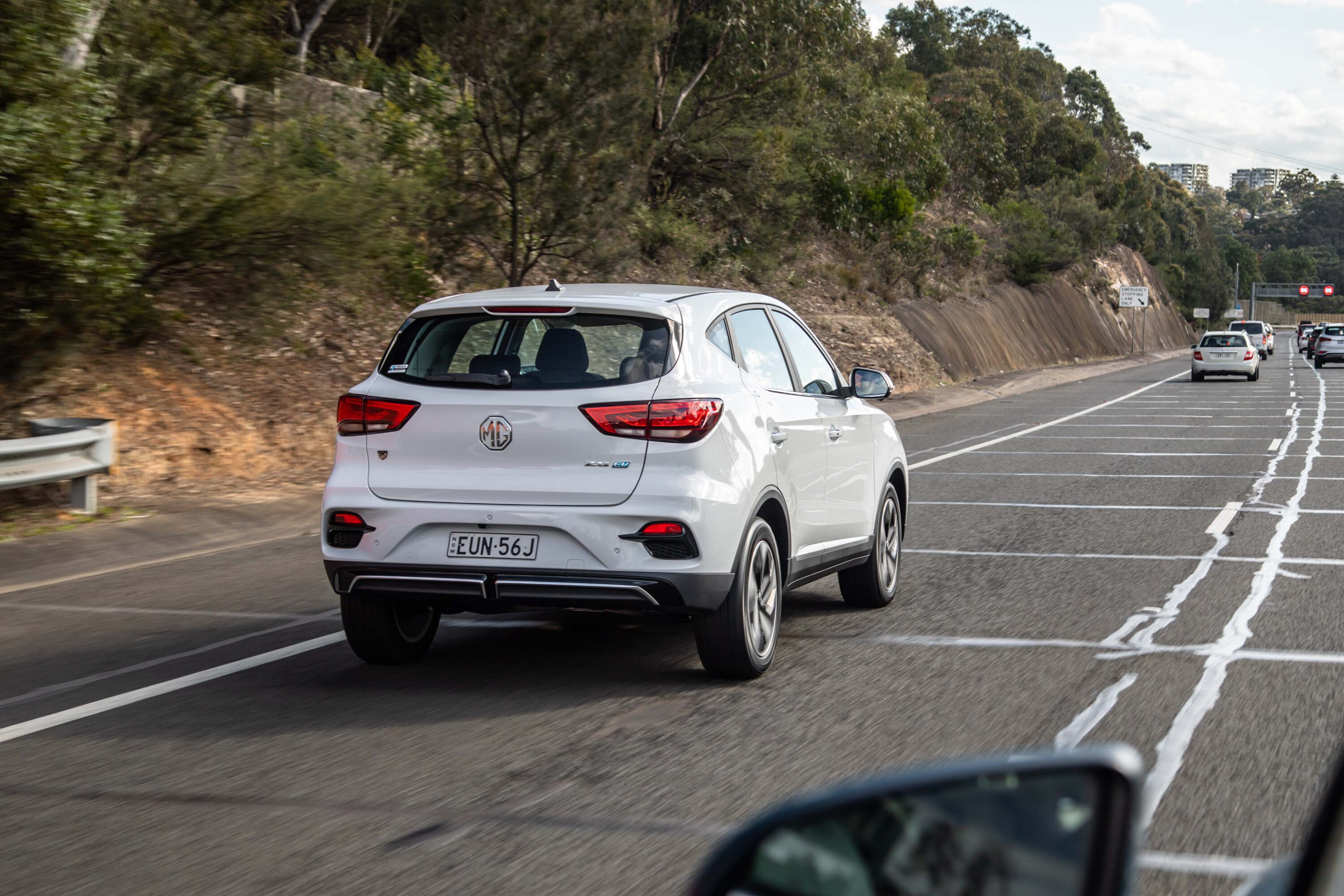
The MG ZS and ZST range covers a broad spread, from the cheapest small SUV you can buy that’ll fit a family, all the way up to the $56K flagship ZS electric with 440km of driving range (WLTP).
Designed and engineered in Britain is what the ZS says on the tin; the magic happens within the Birmingham-based outpost of MG’s parent company, Chinese automotive giant SAIC. The brand’sAustralian range kicks off with the cheap-as-chips MG 3, but the ZS, ZST and HS SUVs are its best-selling products.
Effectively, the ZST is a facelifted version of the ZS using the same underpinnings but is fitted with a better safety suite, technology package, and sharper exterior treatment. Only one standard ZS trim is offered as a price leader, so most will be looking at the more richly specified and fresher ZST trims.
1
JUMP AHEAD
- Pricing
- What body styles are available for the MG ZS/ZST?
- What features are standard in every MG ZS?
- What key features do I get if I spend more?
- How safe is the MG ZS?
- How comfortable and practical is the MG ZS/ZST?
- How much boot space does the MG ZS/ZST offer?
- I like driving – will I enjoy this car?
- Which MG ZS/ZST engine uses the least fuel?
- What is the MG ZS/ZST’s towing capacity?
- How long is the warranty and what are the MG ZS/ZST’s servicing costs?
- Which version of the MG ZS/ZST does Wheels recommend?
- What are the MG ZS/ZST’s key rivals?
- What might annoy me?
- What might I miss that similar cars have?
- What’s the infotainment system like?
- Where does MG make the ZS/ZST?
- Are there plans to update the ZS or ZST soon?
Pricing
| 2023 MG ZS pricing | |
|---|---|
| MG ZS FWD | $23,990 |
| MG ZST Core | $26,990 |
| MG ZST Vibe | $28,990 |
| MG ZST Excite | $32,990 |
| MG ZST Essence | $34,990 |
| MG ZS EV Excite | $43,990* |
| MG ZS EV Essence | $47,990* |
| MG ZS EV Essence Long Range | $55,990* |
| * price excludes on-road costs | |
1
What body styles are available for the MG ZS/ZST?
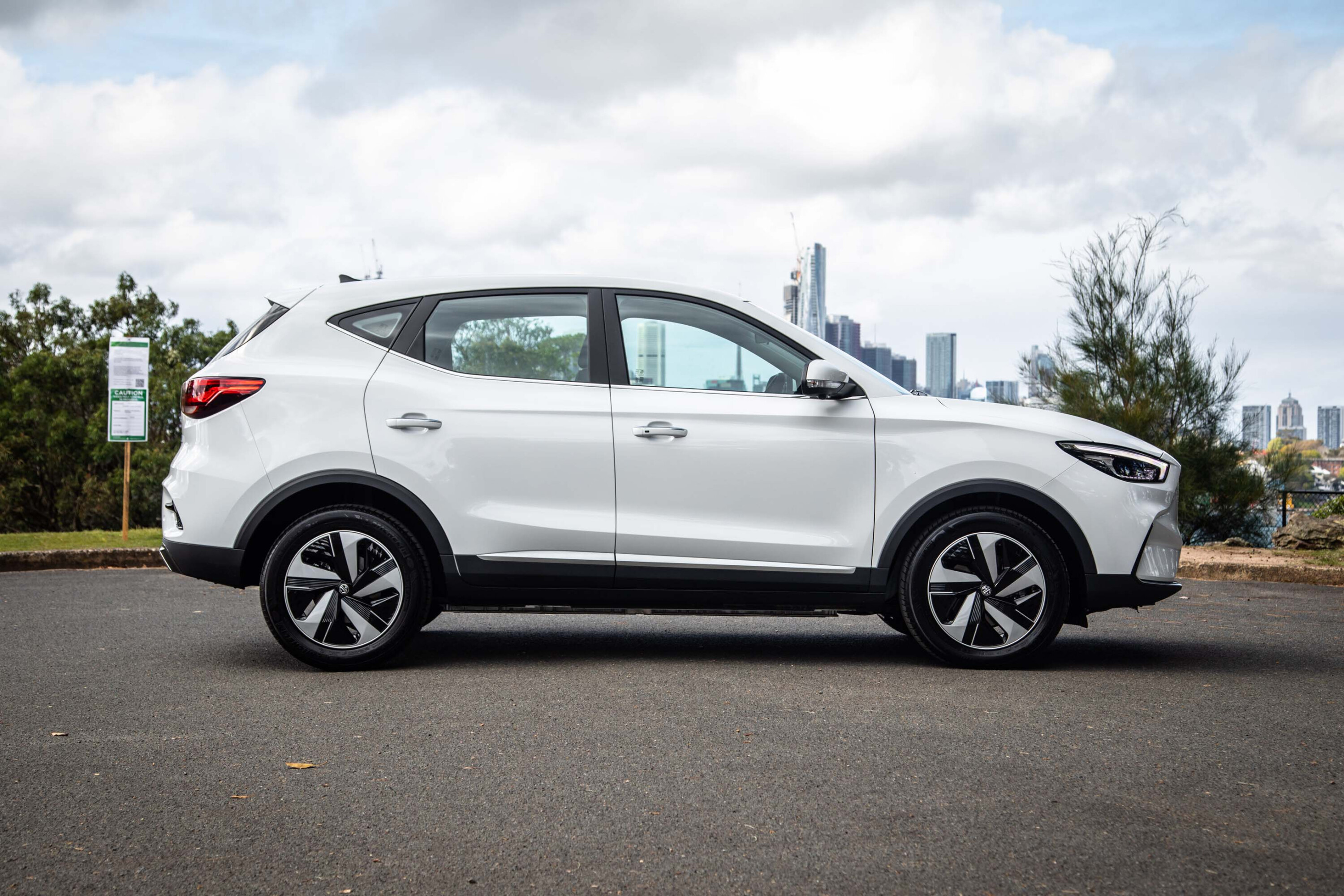
The MG ZS and ZST are five-door small SUVs with seating for five.
What features are standard in every MG ZS?
The features listed below are standard in the entry-level model and will appear in higher-grade models, unless replaced by more premium equivalent features.
| 2023 MG ZS standard features | |
|---|---|
| 17-inch alloy wheels | Leather-appointed steering wheel |
| 2x cup holders | LED daytime running lights |
| 6-speaker sound system | Manual front seat adjustment |
| 8.0-inch touchscreen | Power door mirrors |
| Air-conditioning | Rear parking sensors |
| Fog lights | Vinyl upholstery with contrast stitching |
| Halogen projector headlights | Wired Apple CarPlay |
1
What key features do I get if I spend more?
Above the bargain-basement ZS sits the ZST Core with a much sportier visage, as well as a bigger touchscreen, more USB ports, leather-appointed controls, and more.
The MG ZST Core adds:
| 2023 MG ZST Core features | |
|---|---|
| 17-inch alloy wheels | 10.1-inch touchscreen |
| 4-speaker sound system | 6-way manual adjust driveru2019s seat |
| 5x USB ports (2x front, 1x hidden for dashcam, 2x in back seat) | MG Pilot driver assistance suite |
| Fabric upholstery | LED head and tail lights |
| Keyless entry and push-button start | Leather-appointed steering wheelu00a0 |
1
With a few more features and its eyes on those early in their buying career, the ZST Vibe gets:
| 2023 MG ZST Vibe adds | |
|---|---|
| 17-inch two-tone alloy wheels | 6-speaker sound system |
| Auto wipersu00a0 | Front fog lights |
| Satellite navigation | Vinyl upholstery |
Exciting buying a new car, isn’t it? The turbocharged ZST Excite adds:
| 2023 MG ZST Excite | |
|---|---|
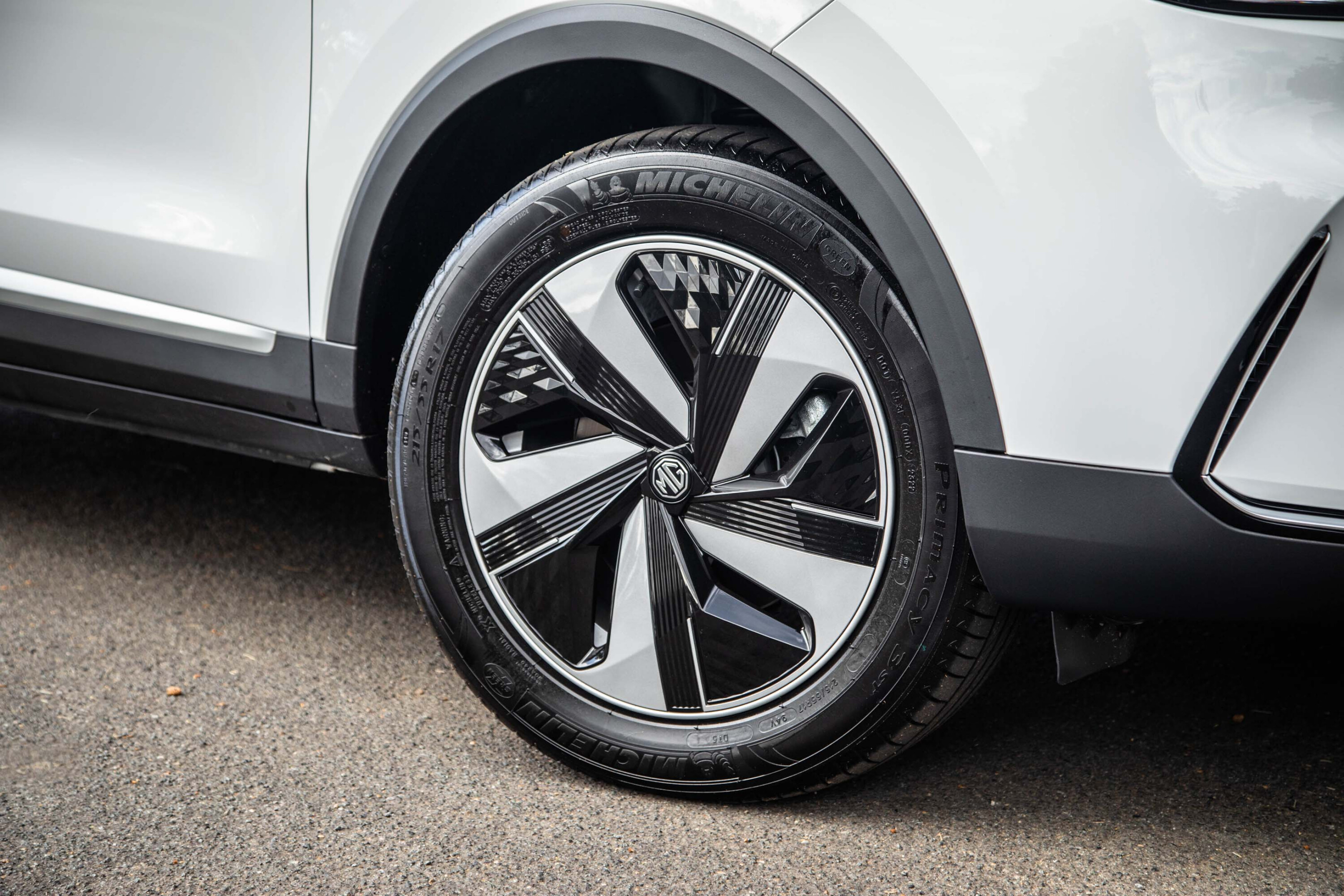
| Sportier 17-inch two-tone alloy wheels and Michelin tyres | Gloss black exterior trim |
| Gloss black grille | Red brake calipers |
1
As the range’s flagship, the ZST Essence adds further niceties such as:
| 2023 MG ZST Essence petrol specifications | |
|---|---|
| 6-way power driveru2019s seat adjustment | Front seat heating |
| MG logo embossed into front seat | 12.3-inch digital instrument cluster |
| u2018Stargazeru2019 panoramic sunroof | |
Meanwhile, the ZS EV Excite – based on the above regular Excite trim – brings electric power, as well as a few changes:
| 2023 MG ZS EV Excite features | |
|---|---|
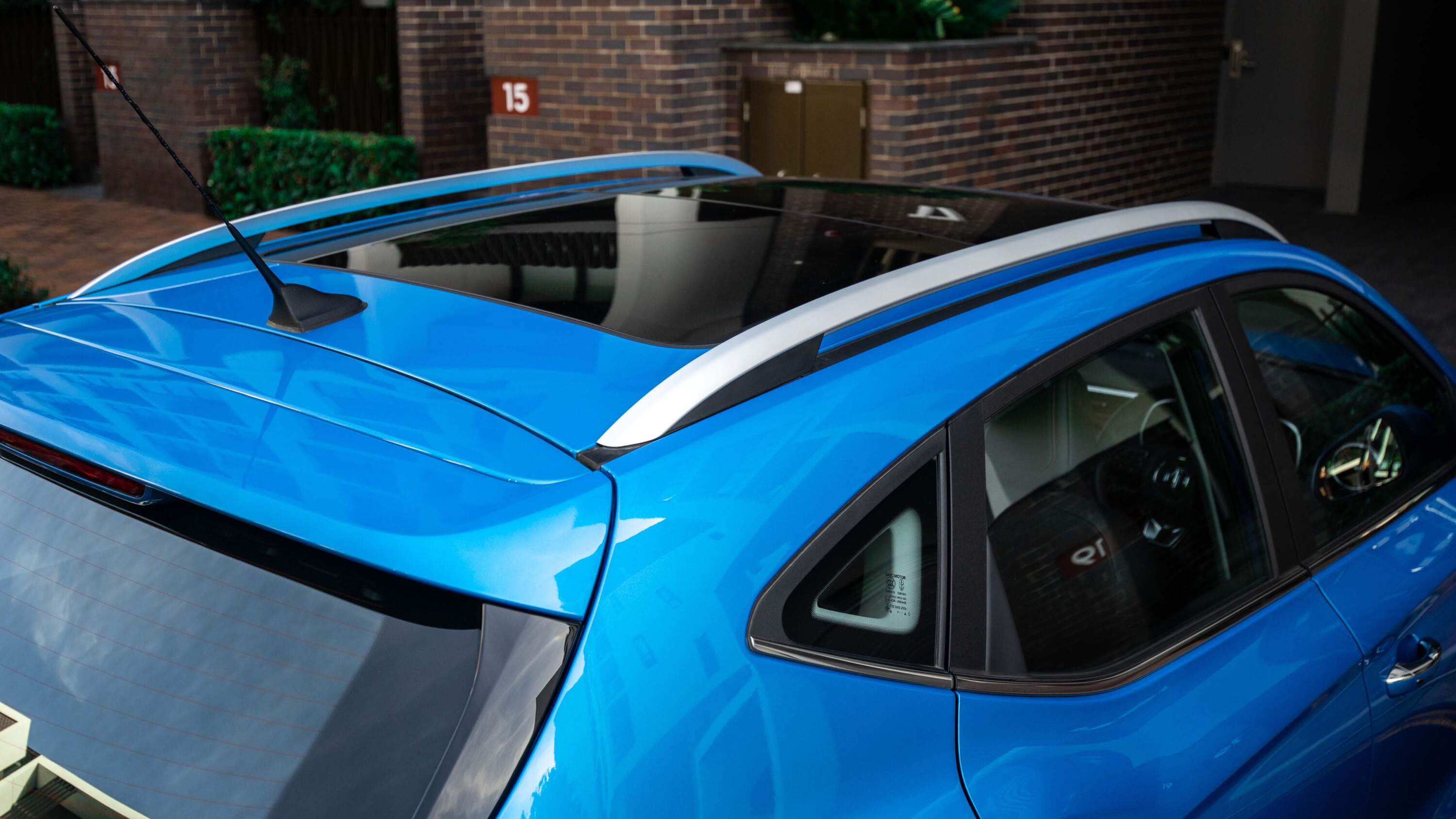
| 17-inch alloy wheels with u2018propelloru2019 aero covers | Eco, normal, sport drive modes |
| i-Smart telematics with smartphone connectivity | Vehicle-to-load functionality |
| Houndstooth-patterned cloth upholstery | |
1
As a true headliner, the ZS EV Essence is kitted out with:
| 2023 MG ZS EV Essence features | |
|---|---|
| Vinyl upholstery | Front seat heating |
| Auto wipers | Wireless phone chargeru00a0 |
| Rear cross-traffic alert | Blind-spot monitoring |
How safe is the MG ZS?
The safety ratings for the MG ZS and ZST can be confusing. The existing ZS was rated four stars in 2017, and the ZST maintains this rating despite having much-improved driver assistance and active safety technologies.
As for the EV, the pre-facelift model scored five stars in 2020, but that is no longer recognised. It is therefore unrated, despite having a very similar Pilot active safety suite to the flagship ZST Essence.
1
| 2023 MG ZS standard safety features | |
|---|---|
| Six airbags | ABS with brake force distribution |
| Electronic stability program (ESP) | Rear view camers |
| Rear parking sensors | Cruise control |
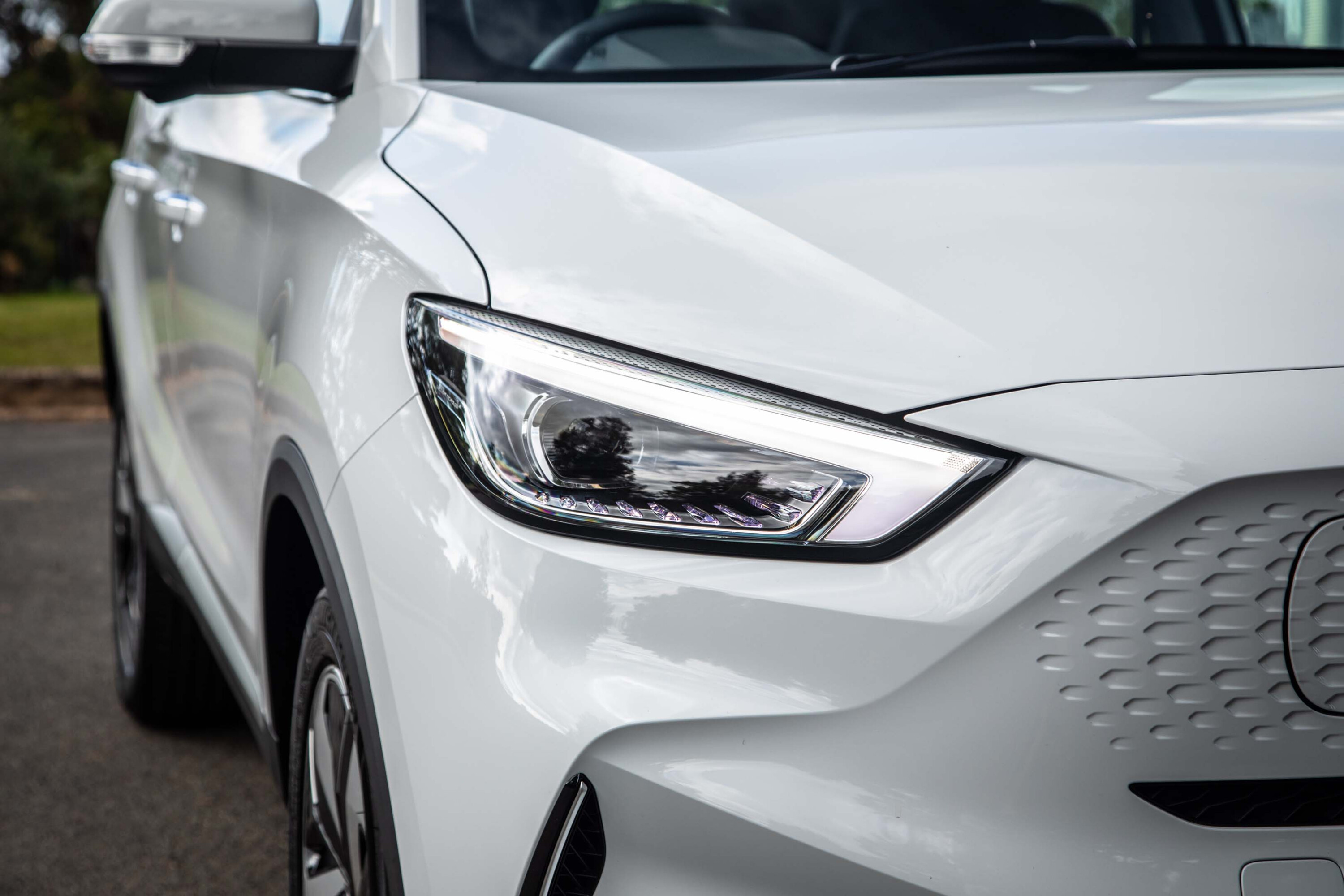
From the base ZST Core, MG’s Pilot active safety suite is standard; you’ll be able to tell which has the gear in the dealership thanks to the large ‘Pilot’ badge on the tailgate. In addition to the standard ZS kit, Pilot adds:
| MG Pilot active safety suiteu00a0 | |
|---|---|
| Adaptive cruise control with stop and go | AEB with forward collision warning |
| Lane-keep assist | Lane-departure warning |
| Rear cross-traffic alert | Auto headlights |
| Blind-spot monitoring | 360-degree camera |
1
Curiously, although all petrol ZSTs are equipped with rear cross-traffic alert and blind-spot monitoring, the electric Excite trim does without these safety features and only the top-spec Essence EV gets them.
How comfortable and practical is the MG ZS/ZST?
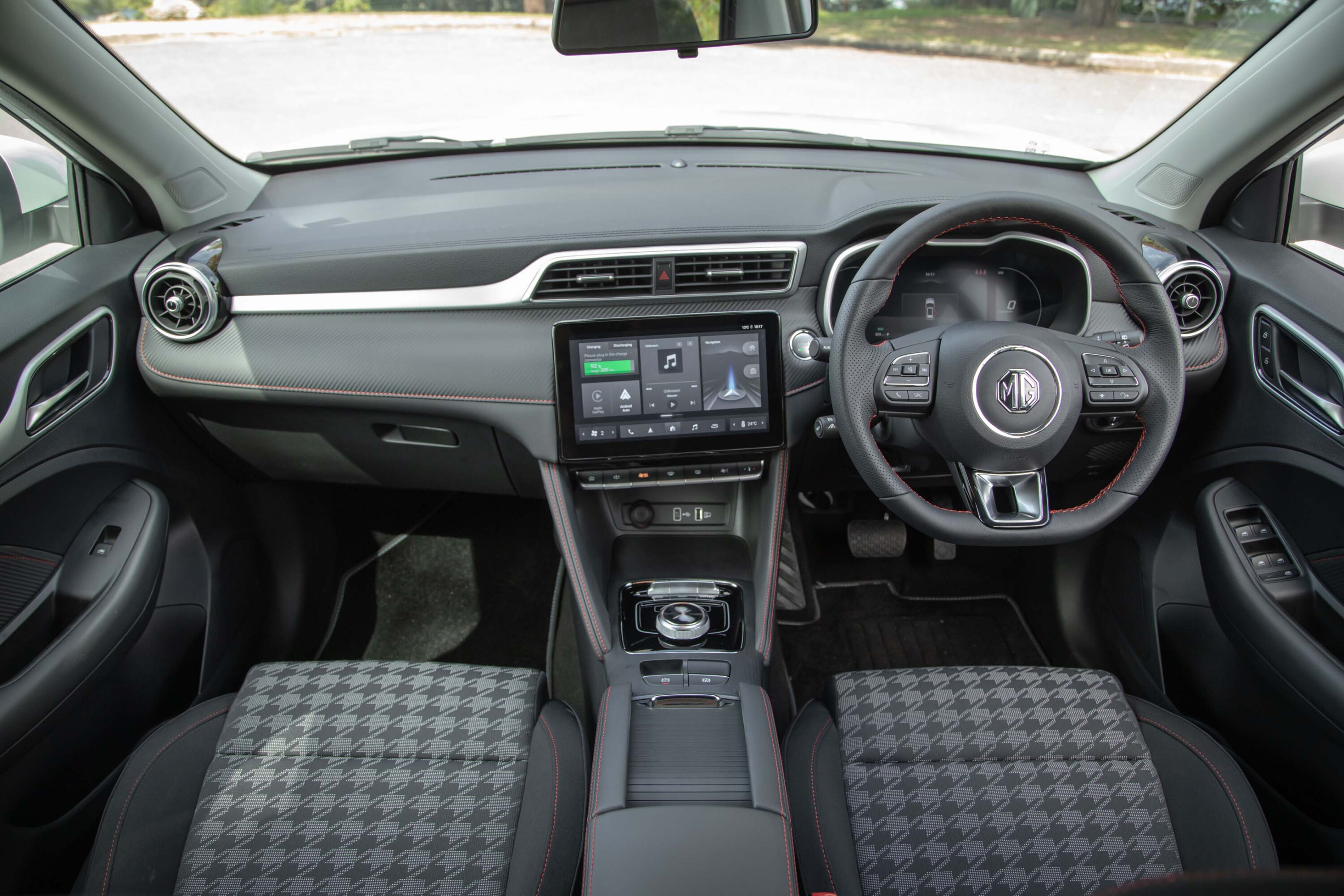
As with safety equipment, the ZS FWD is an outlier in cabin terms. It holds onto an older 8.0-inch touchscreen with hardier materials, narrow seats, a cramped pedal box, and analogue instruments with a small 4.2-inch information display.
The design language (flat-bottom wheel, vent shape, and other trim details) is reminiscent of last-gen VW/Audi products. It’s not ideal in the ZS, but with the ZST’s more upmarket materials on board, the cabin improves.
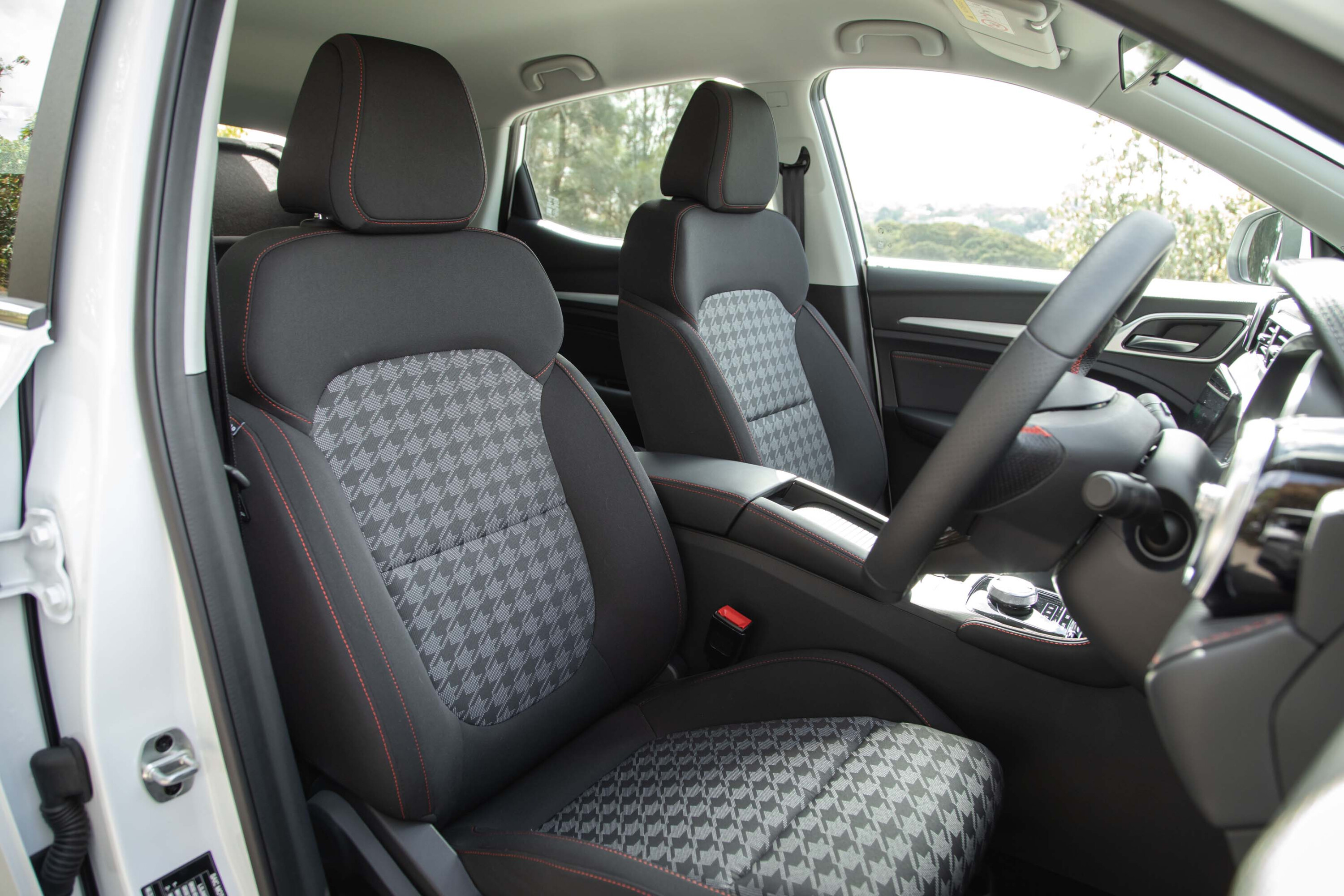
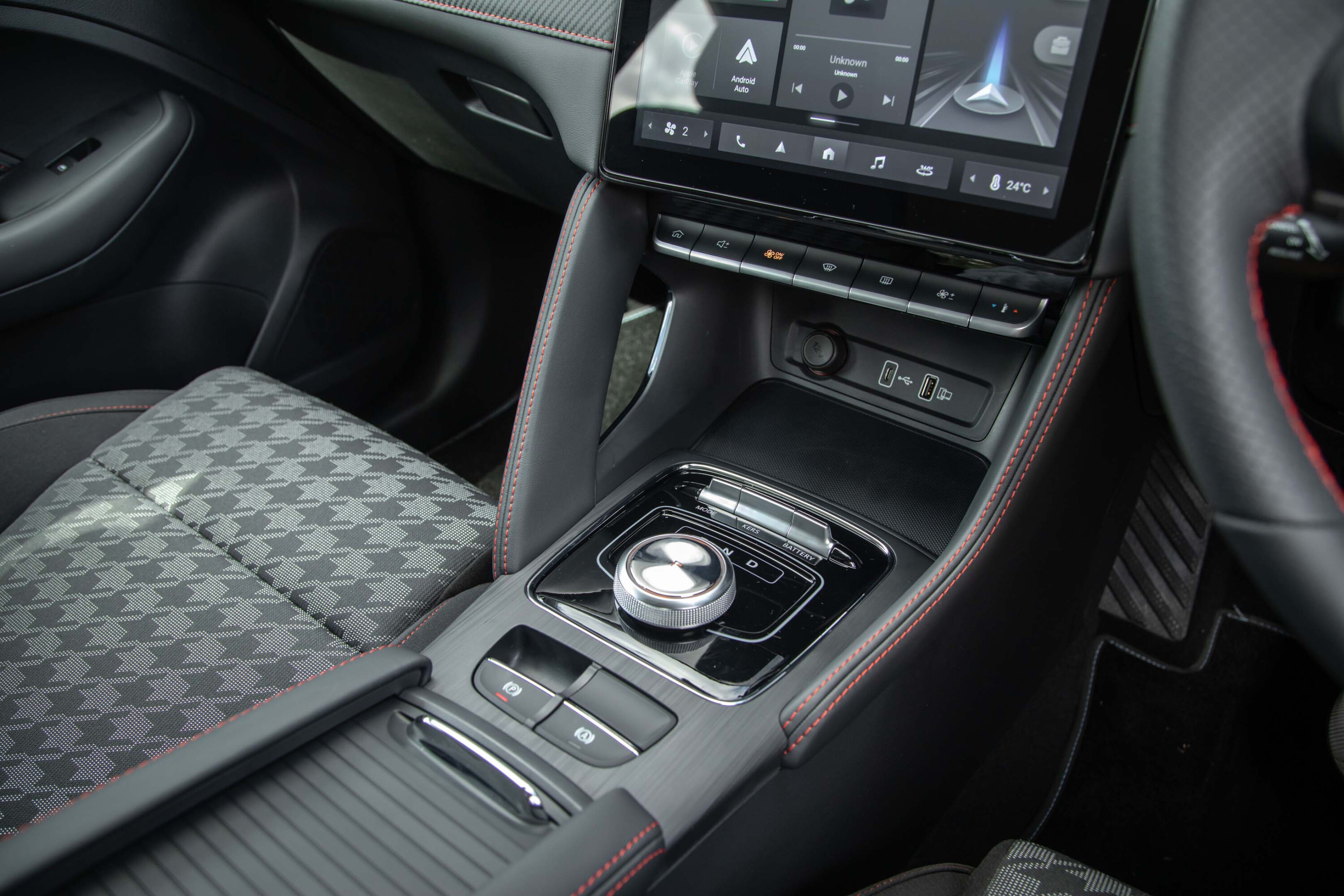
Incidental storage is OK in the ZS with decent pockets but no covers to keep valuables hidden from prying eyes, save for a small glovebox. Luckily, the redesigned ZST cabin gets a roller lid for the centre storage bin, and door bins that fit 1.5-litre bottles.
1
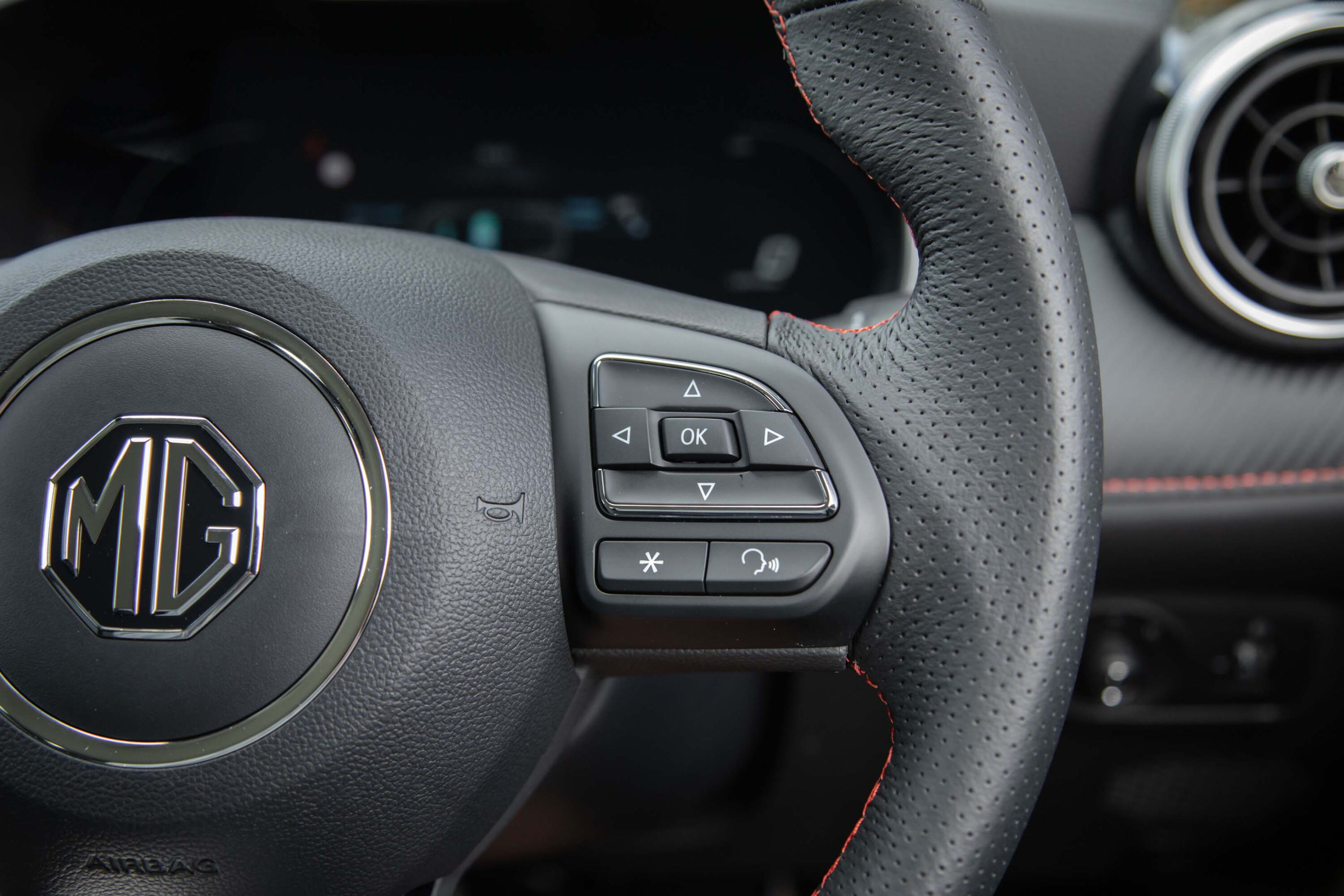
Broadly unacceptable, though, is the lack of steering wheel reach adjustment, something that will prevent drivers on either side of average height from finding a comfy position. Although leather-wrapped, the ZST’s steering wheel feels hard in the hands, too.
The Core gets fabric upholstery for the manual seats, with the Vibe kicking off the vinyl upholstery for its seats, as well as two extra speakers for the stereo.
In petrol guise, the Excite gets the same vinyl upholstery but the Excite EV scores lovely houndstooth fabric that doesn’t turn to magma in the sun. Hot seats are amplified by the top-spec Essence’s sheer-stocking sunroof cover that does little to keep heat out of the cabin.
The Essence has the most supportive and adjustable seats though, with six-way power adjustment for the driver and heating for both front occupants. They’re broader than the original ZS’s chairs, too.
1
Perhaps a surprise, the ZS and ZST are solid in construction; doors shut with a thunk and panel gaps are snugly uniform. Even the paint is a standout on the ZST with nary a hint of orange peel and glossy clear coat both in the engine bay and behind shut-lines.
As you walk up the ZST range, you get an interior that’s well presented without being pretentious and, crucially, doesn’t reek of the cost-cutting you might expect at this price.
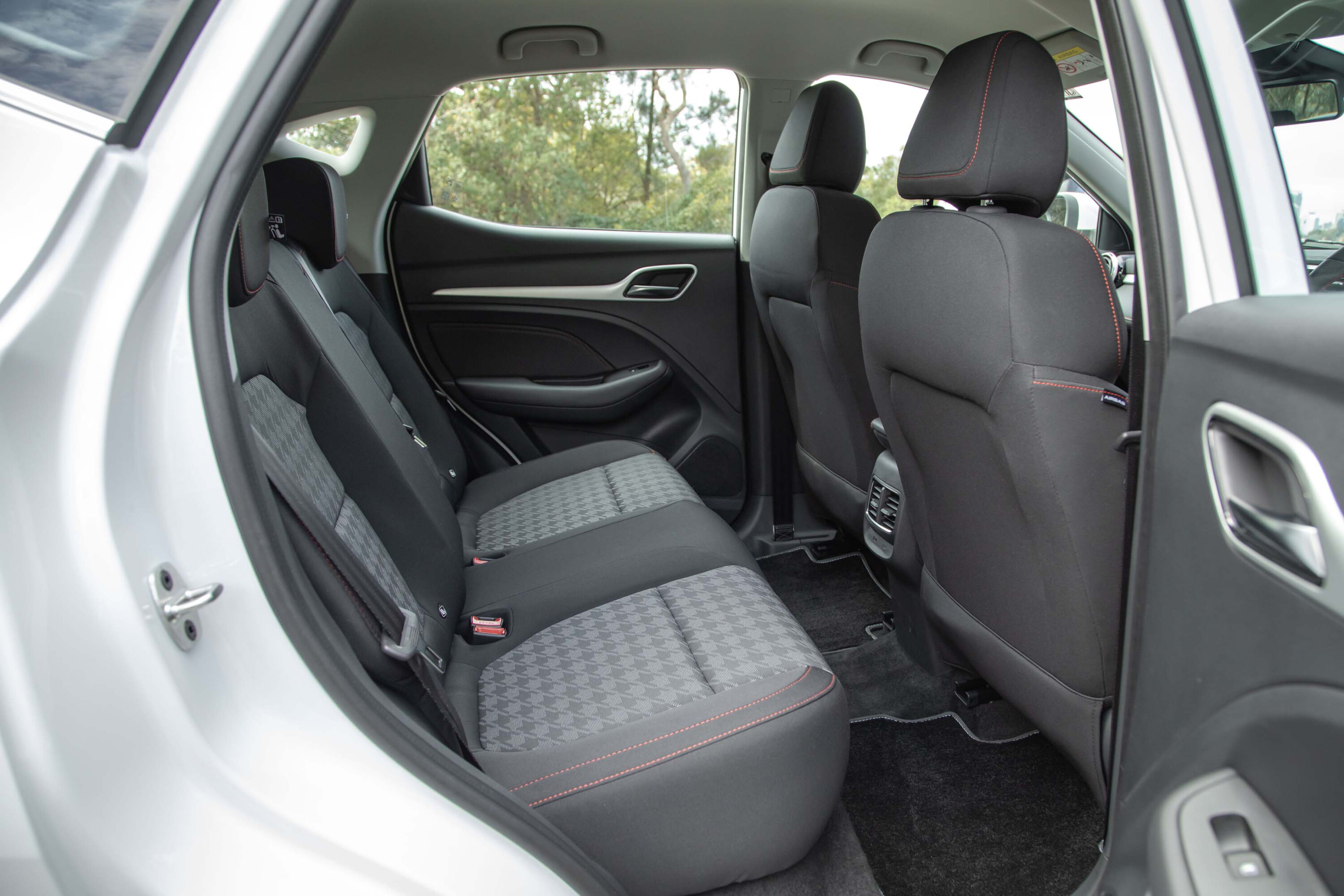
The back seats are better than you get in a Mazda CX-3, but not as smart as a Volkswagen T-Cross. Leg and knee room is generous for a small SUV and you can just sit three slender passengers across the back. The seats are soft but not over-squidgy and there’s adequate under-thigh support. The backrests don’t adjust but are raked back enough to be comfy.
A fold-down armrest is a conspicuous omission for rear passengers, but there are two USB ports for charging. If you need to use child car seats the ZST has ISOFIX anchors for the outboard seats and three top tether points.
1
How much boot space does the MG ZS/ZST offer?
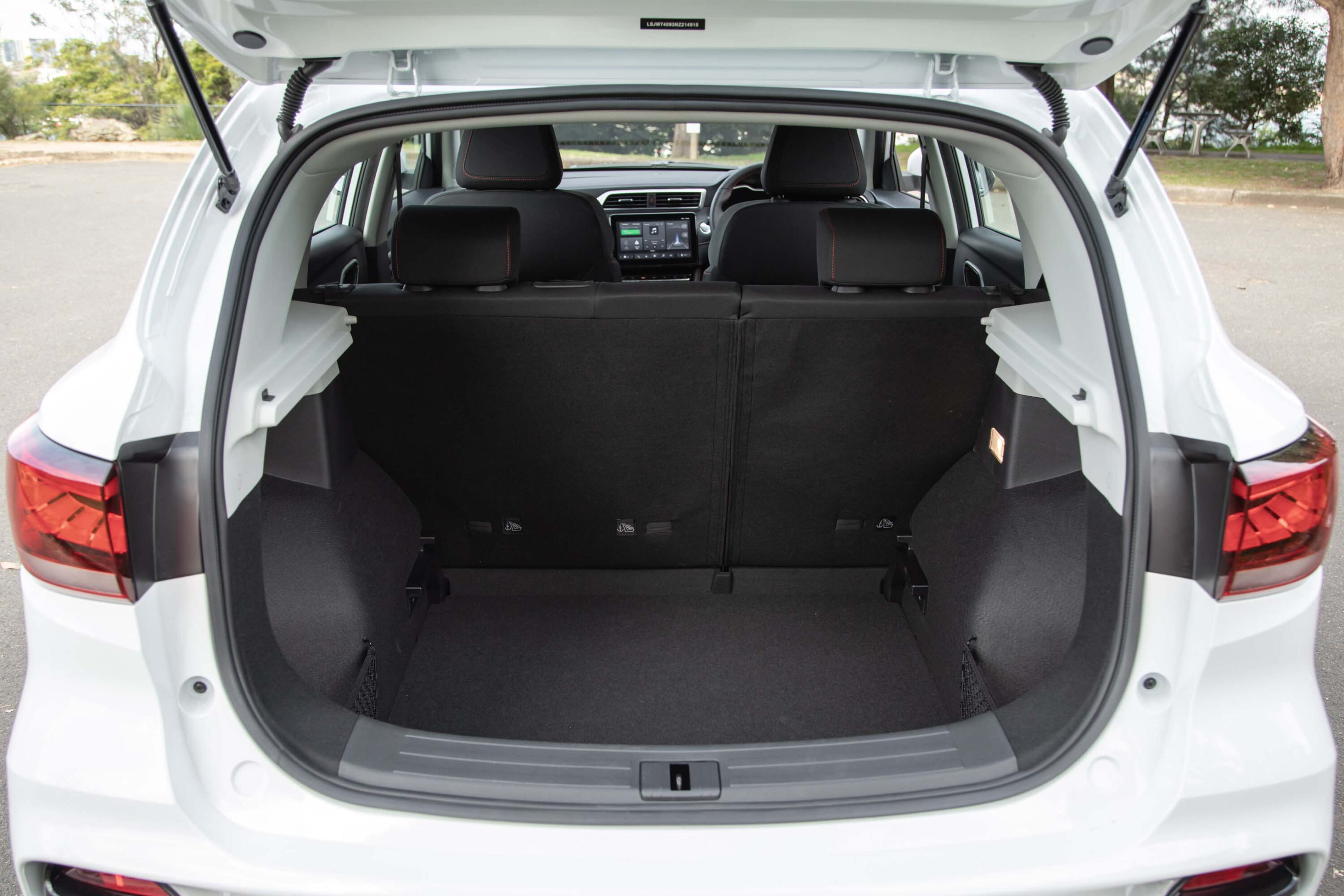
On the smaller side of the now-quite-practical small SUV class, the MG ZS and ZST’s boot is rated at 359 litres in capacity. A space-saver spare is hidden beneath the two-level boot floor, and the 60:40 split rear bench can be folded to liberate 1187L.
The ZS EV models also have a vehicle-to-load function, enabling owners to plug in appliances or recharge other bits of equipment via a three-pin socket.
1
I like driving – will I enjoy this car?
The MG ZS and ZST don’t target the keen driver, instead, this affordable SUV is pitched more towards those looking for no-frills transport.
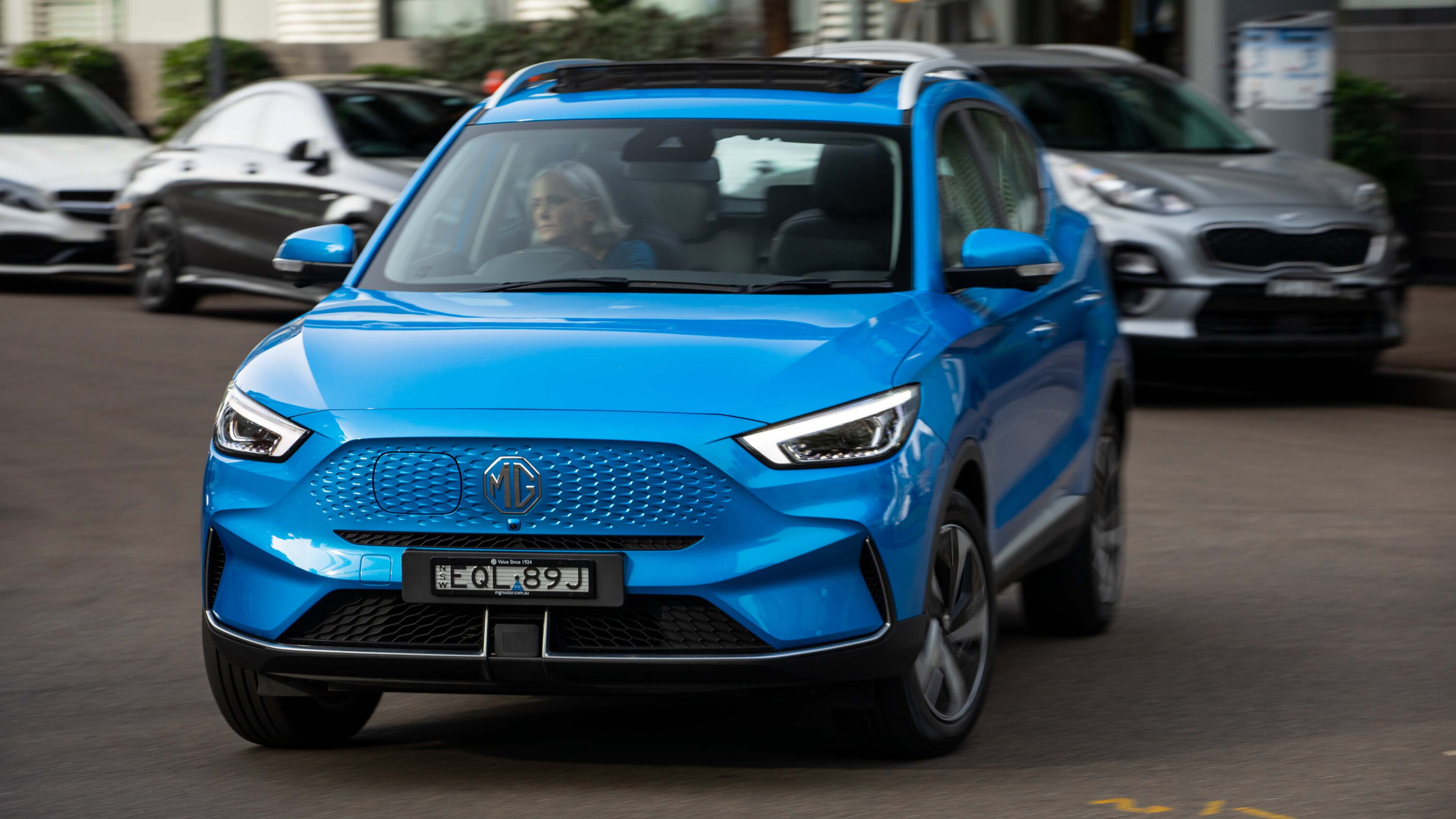
Especially in ZS trim which, although engineered and designed in the UK, fails to feel like a complete package. Its front struts and rear torsion-beam suspension lack pliancy – speedbumps, manhole covers and expansion joints induce more jolting and thumping than they should.
The trade-off is a relatively dynamic drive, but not one that’s especially polished or suited to the target buyer. Under the bonnet is a vocal 84kW/150Nm 1.5-litre petrol four-cylinder petrol engine hooked up to the front wheels via a four-speed automatic. The latter is an improvement on the old six-speed dual-clutch auto in usability, if not technology.
1
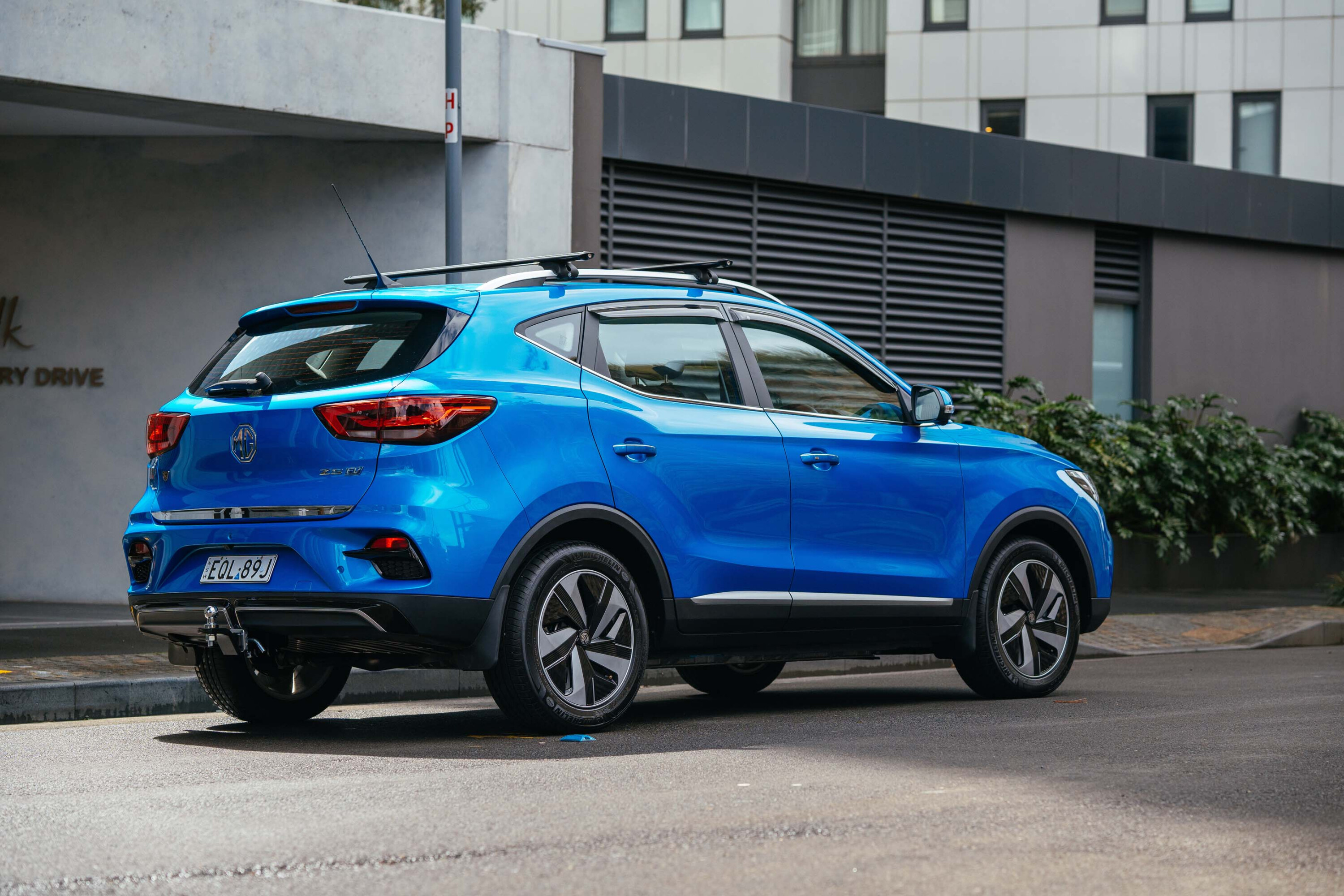
By comparison, the ZST almost feels like a completely different car. It’s been softened off in nearly every aspect so, although a little more soggy in corners, the newer car is more pleasant around town. The top-spec Essence gets quality Michelin Primacy 3 rubber in a 215/55R17 size, which adds peace of mind in the wet.
In lower trims, the ZST retains the same engine as the ZS (a 1.5-litre four-banger) but this time sends drive to the front wheels via an automatic continuously variable transmission (CVT). It’s adequate, but really nothing special.
1
Developed alongside General Motors, the Excite and Essence’s 1.3-litre turbo-petrol develops 115kW from 5200-6200rpm and 230Nm between 1800-4400rpm for a broad power band that’s harnessed by a well-calibrated six-speed Aisin torque converter auto. It’s quieter and far more tractable than the base engine.
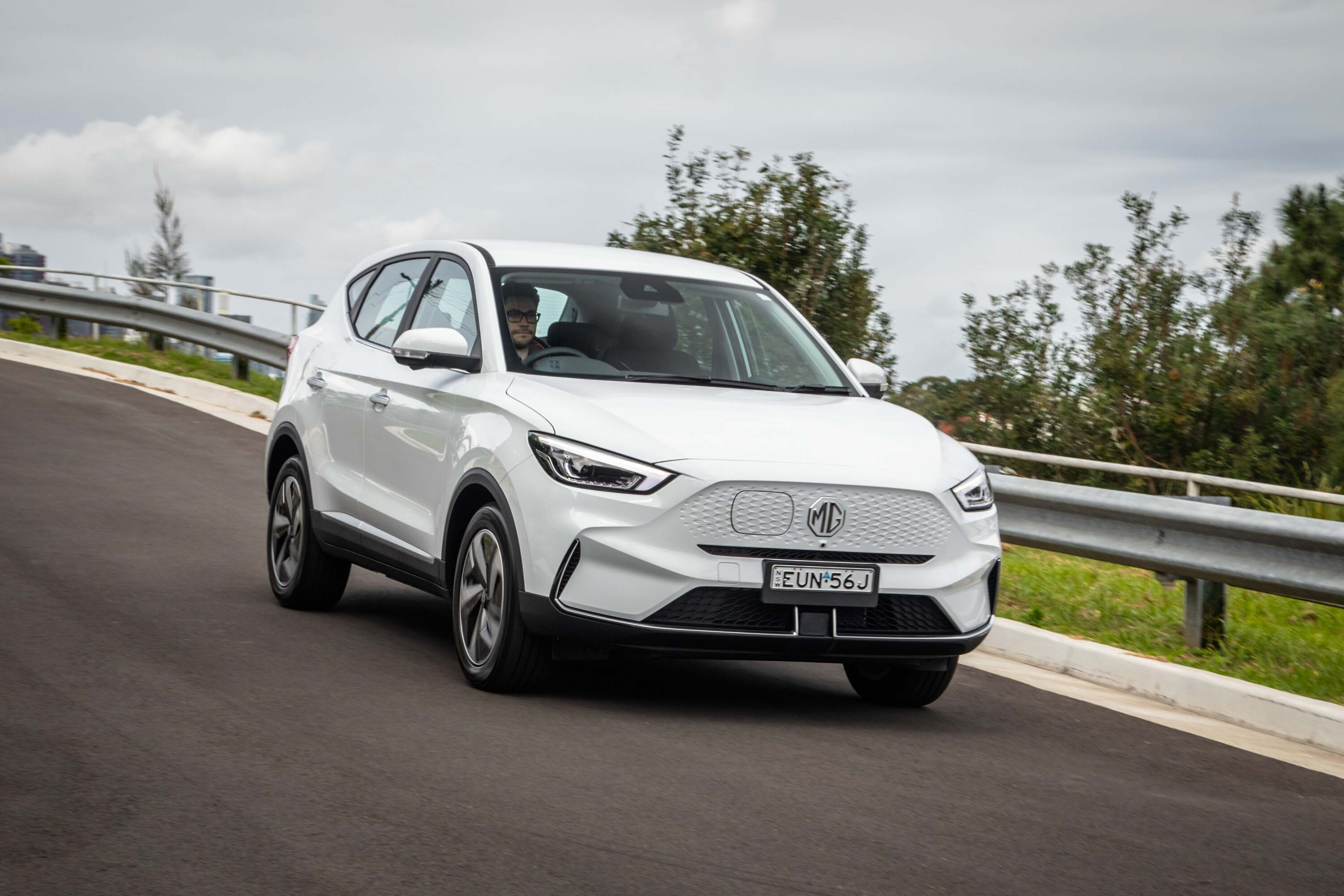
And then there are the electric versions, both of which utilise a single electric motor. Oddly, the standard range version oddly gets 130kW/280Nm outputs, while the Long Range makes do with a little less (115kW/280Nm).
The standard range EV gets from 0-100km/h in 8.2 seconds and rolling acceleration is brisk. It’s quiet, too, with more sound deadening than the petrol ZST. The suspension is a little softer and feels reasonably cohesive in the suburbs. All up, this small SUV just gets on with the job of moving you to your destination. In petrol guise, it’s an inoffensive counterpart, with electric models being pleasingly swift, seamless and quiet.
1
- What is a Powertrain or Drivetrain?
- Power vs torque
- Car suspension explained
- Automatic transmissions (‘gearboxes’) explained
- Chassis control systems explained
- Car vs Ute vs SUV: How the vehicle you buy should guide the way you drive
Unsurprisingly, it’s the electric models that use the least fuel – but they still use some energy to get around. Compared to a base Tesla Model 3 (11.6kWh/100km), the less aerodynamic ZS EV Long Range uses 17.7kWh/100km, giving it 420km of range from quite a large 72.6kWh battery.
Of the petrol versions, it’s the ZST’s 1.5-litre engine with the best results, scoring an official combined fuel consumption of 6.9L/100km, while the turbo sips a little more at 7.1L/100km on the ADR 81/02 cycle.
2
What is the MG ZS/ZST’s towing capacity?
The MG ZS and ZST are rated to tow 500kg maximum (braked or unbraked).
How long is the warranty and what are the MG ZS/ZST’s servicing costs?
Undeniably one of MG’s biggest drawcards is its long warranty in Australia. At seven years/unlimited kilometres with complimentary roadside assistance, the guarantee matches Kia’s on paper. Mitsubishi’s Diamond Advantage covers cars for 10 years/200,000km, though is dependent on maintaining the car at a Mitsubishi dealer exclusively.
Service intervals for the ZS range vary. For the combustion cars, it’s 10,000km or 12 months – whichever comes first. MG caps pricing for seven services under its ‘Precise Service Pricing’ scheme.
1
For the ZST turbo, the first seven services cost a total of $2164 averaging $309 each. There are a couple of scary jumps – the fourth and fifth, for example – but overall pricing is close to a Ford Puma, but dearer than a Toyota Corolla Cross.
The ZS EV needs less regular servicing, so a trip to the mechanic every 24 months or 20,000km will suffice. The first three intervals are capped at $268 each.
Which version of the MG ZS/ZST does Wheels recommend?
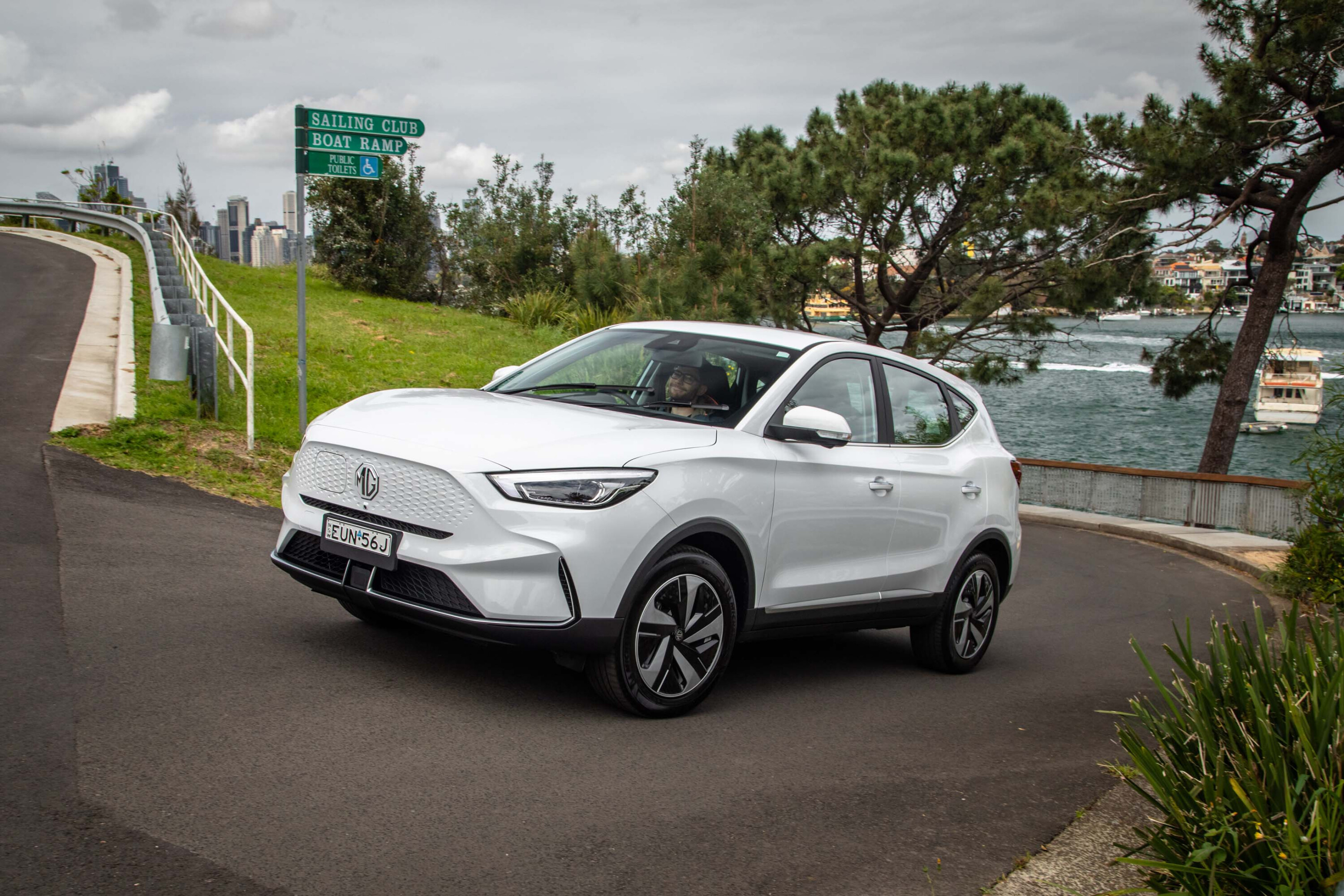
First up, skip the base ZS. It’s unfortunate that the car shares a name with the otherwise much-improved ZST and ZS EV models. Our pick is one of the ZST trims fitted with the 1.3-litre turbo-petrol, but you don’t need to go up to the Essence, Excite is probably the best spec.
1
As for the electric models, at the elevated price of the Long Range, a more efficient and tech-filled Tesla Model 3 RWD is a better vehicle for 10 per cent more. That means the low price of the standard range ZS – especially in Excite trim – makes it a better electric pick, especially for a frugal city runabout.
What are the MG ZS/ZST’s key rivals?
- Mazda CX-30
- Kia Seltos
- Mazda CX-3
- Hyundai Kona
- Toyota Corolla Cross
- Toyota C-HR
- Mitsubishi ASX
- BYD Atto 3
- Kia Niro
What might annoy me?
The ZST range specifically, is pretty complete, but there are some things to watch for. A hot cabin in summer has been a comment gripe from testers of the top-spec Essence models owing to an insufficient sunroof blind.
No reach adjustment for the steering wheel means drivers outside the average height zone may struggle to get comfortable.
1
What might I miss that similar cars have?
Although the ZST and ZS EV are available with Apple CarPlay and Android Auto smartphone mirroring, the ZS omits Android Auto with only Apple CarPlay compatibility.
1
There isn’t much in the way of dynamic sparkle, but that isn’t in the wheelhouse of most rivals. Packaging could be smarter, too, with adjustable backrests, boot nets and other clever tricks employed by the likes of Skoda’s Kamiq to make the most of space.
What’s the infotainment system like?
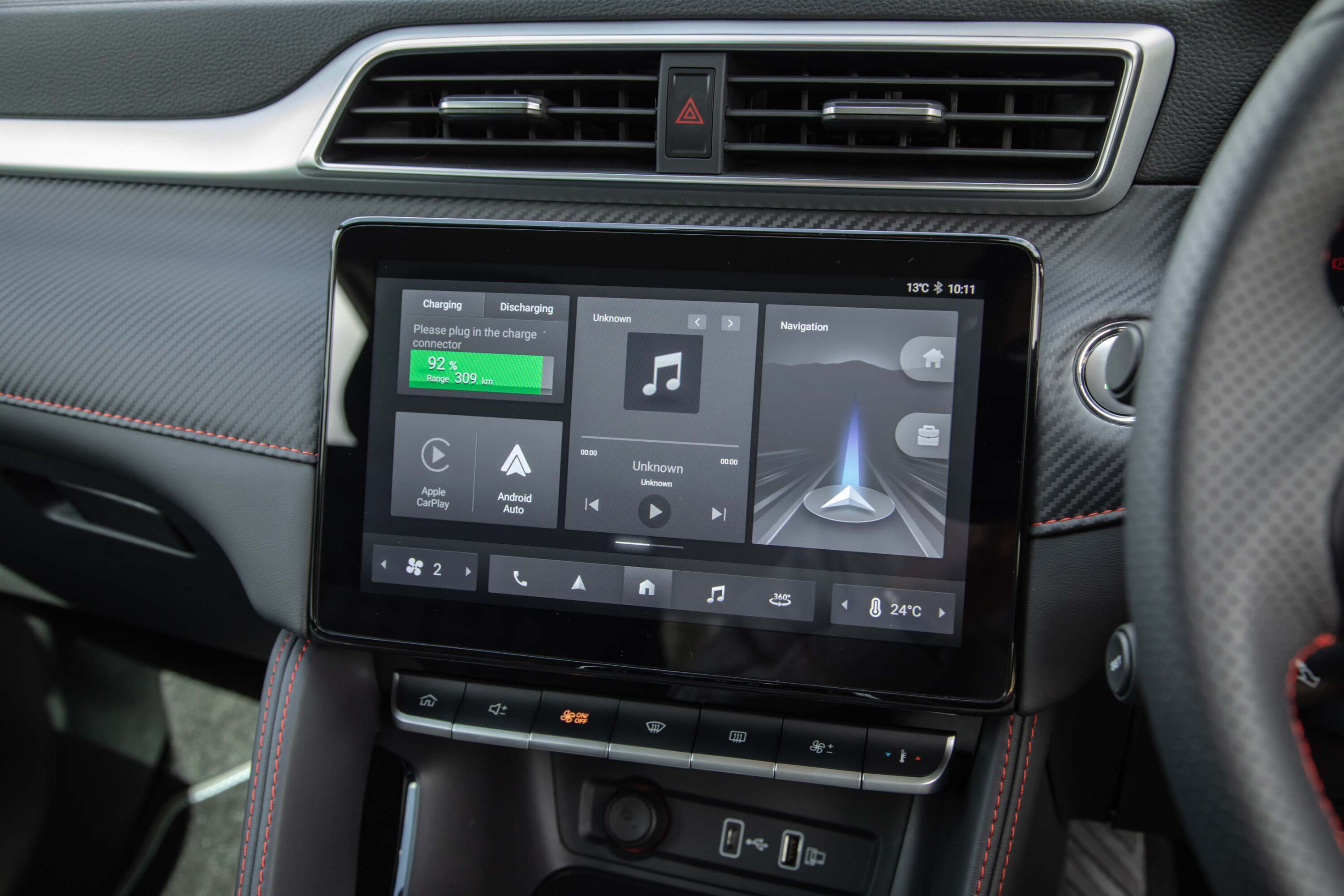
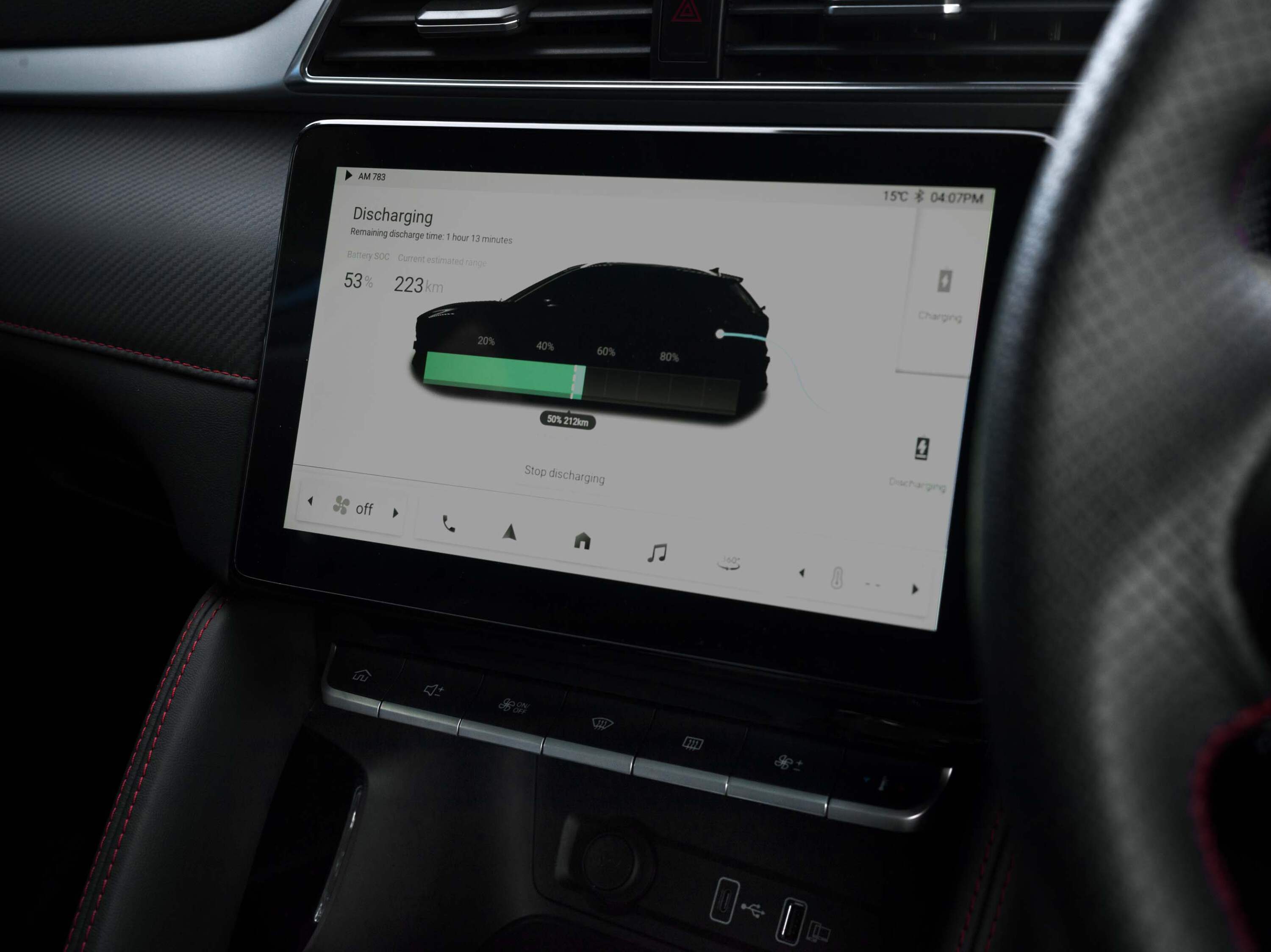
The ZS’s 8.0-inch touchscreen is decent in size but mounted low on the dashboard, forcing the driver to look down and away from the road to operate the software – which is low-contrast and not particularly attractive.
Going for the ZST or ZS EV gets you a larger 10.1-inch touchscreen that has better contrast and resolution. It houses wired Apple CarPlay and Android Auto compatibility, navigation and more intricate climate control settings.
1
However, the processor isn’t especially powerful and the system is often laggy. Patience is the name of the game, and testers have found some selections needed a few stabs at the screen owing to its slouchy response.
Where does MG make the ZS/ZST?
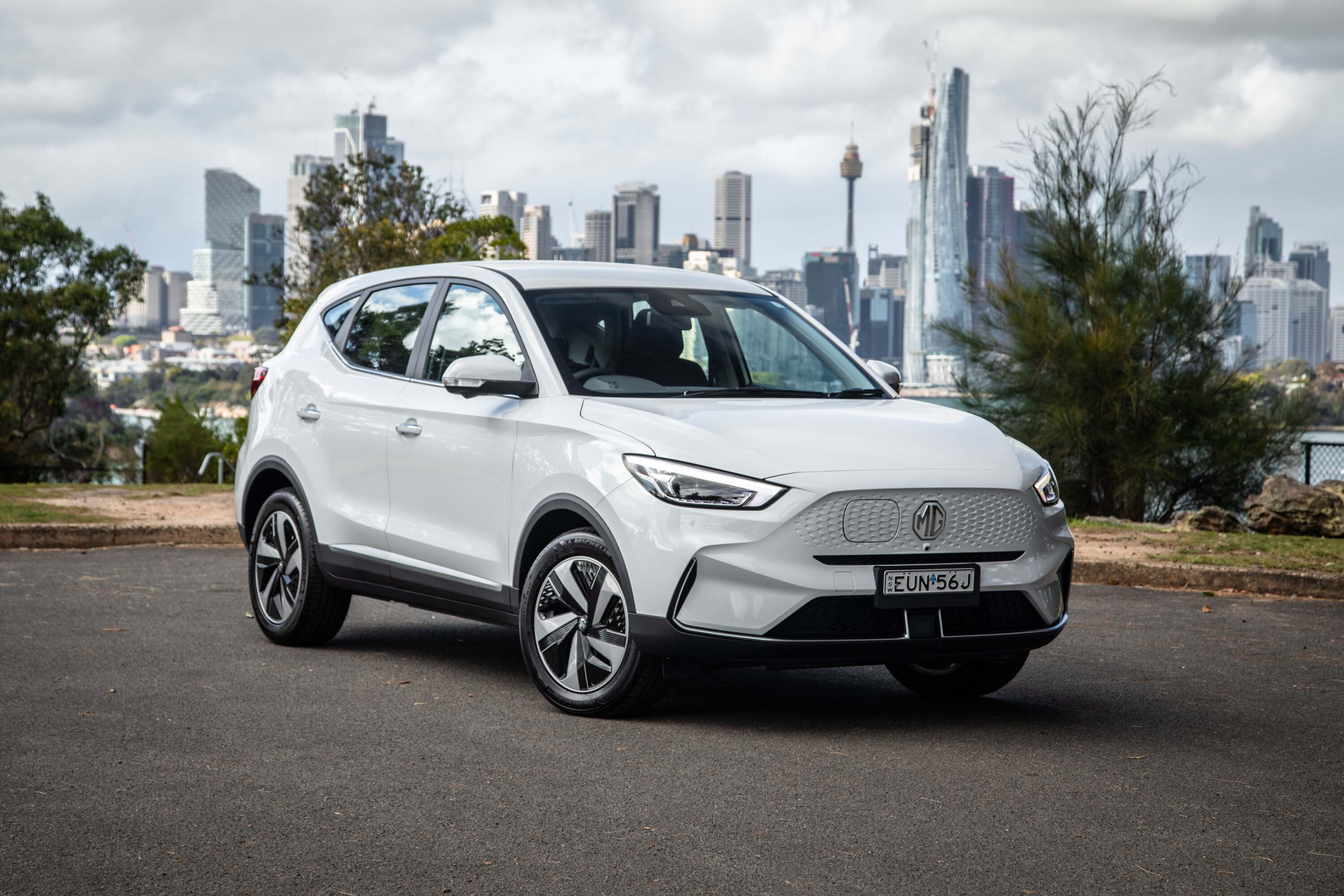
The ZS, ZST and ZS EV are all manufactured in China.
1
Are there plans to update the ZS or ZST soon?
Unlike established manufacturers, Chinese car-makers tend to have shorter product lifecycles. The MG ZS to ZST update was a deep facelift so we expect at least another two or three years from the vehicle as we know it.
Following its run-out, the ZS will likely be replaced by a ground-up EV or plug-in hybrid sharing parts with the MG 4 small car.
More EV stories to help you choose the best car for your needs
- ? EV news, reviews, advice & guides
- ❓ Short & sweet: Your EV questions answered
- ⚡ New EVs: Everything coming to Australia
- ? Australia’s EVs with the longest driving range
- ⚖️ Best-value EVs by driving range
- ? How much do EVs cost in Australia?
- ? How much more expensive are EVs?
- ⚖️ Number crunching: Is it time to switch to an EV?
- ♻ Should you buy a used EV?
- ?️ Are EVs more expensive to insure?
- ? Costs compared: Charging an EV vs fueling a car
- ? EV charging guide
- ?? EV servicing explained
- ? EV battery types explained
- ? When do EV batteries need replacing?
- ? Hydrogen v EVs: What’s best for Oz?
- ? How sustainable are EVs, really?
MORE advice stories to help you with buying and owning a car
? July 2023: The CX-60 is now on sale in Australia, and we’ve driven it
It’s a Mazda unlike any other, but is the CX-60 worthy of the brand’s ambitious upmarket foray? See our review at the link below.
▶ Story continues: CX-60 price and features
As the premium new Mazda CX-60 nears its local launch, the popular Japanese carmaker has announced full pricing and details.
Snapshot
- Full Aussie pricing and range details
- Prices start at $59K and stretch to just below $90K making it Mazdau2019s most expensive model
- CX-60 brings a new platform
- Fresh six-cylinder engines and Mazdau2019s first plug-in hybrid
- Australian launch set for June 2023
Set to arrive in June 2023, the CX-60 is the first model built on Mazda’s all-new modular Large Architecture platform and it ushers in a pair of fresh 3.3-litre six-cylinder engines and Mazda’s first plug-in hybrid.
Prices start at $59,800 for the petrol-powered G40e Evolve and stretch to $85,500 for the flagship P50e plug-in hybrid.
That makes the CX-60 easily the most expensive model in Mazda’s current line-up, and if you add one or two option packs (more detail on these further down), it also means a top-of-the-line CX-60 will be approaching $100,000 once you factor in on-road costs.
2023 Mazda CX-60 pricing
| Evolve | GT | Azami | |
|---|---|---|---|
| 3.3L petrol | $59,800 | $67,800 | $73,000 |
| 3.3L diesel | $61,800 | $69,800 | $75,000 |
| 2.5L PHEV | $72,300 | $80,300 | $85,500 |
Powertrains
The Aussie model range spans three model grades – Evolve, GT and Azami – and each is available with the choice of three new powertrains.
Expected to be the most popular engine is a new 3.3-litre straight-six turbo petrol, which Mazda predicts will account for 45 per cent of total sales. Dubbed G40e, the inline petrol produces 209kW/450Nm, is paired with a 48-volt mild hybrid system and propels the circa-2000 kilogram CX-60 from 0-100km/h in 6.9 seconds.
Also utilising 3.3 litres of swept capacity is a six-cylinder turbo-diesel, known as D50e. It, too, is paired with a mild-hybrid system, though it produces 187kW/550Nm and is slightly slower to 100km/h at 7.3 seconds.
1
The diesel should be more efficient, however, thanks to an impressive combined fuel consumption rating of 4.7L/100km.
Mazda has confirmed the 3.3-litre turbo-petrol will drink 7.4L/100km on the combined cycle, identical to the 2.5-litre naturally-aspirated four-cylinder engine in the all-wheel-drive CX-5.
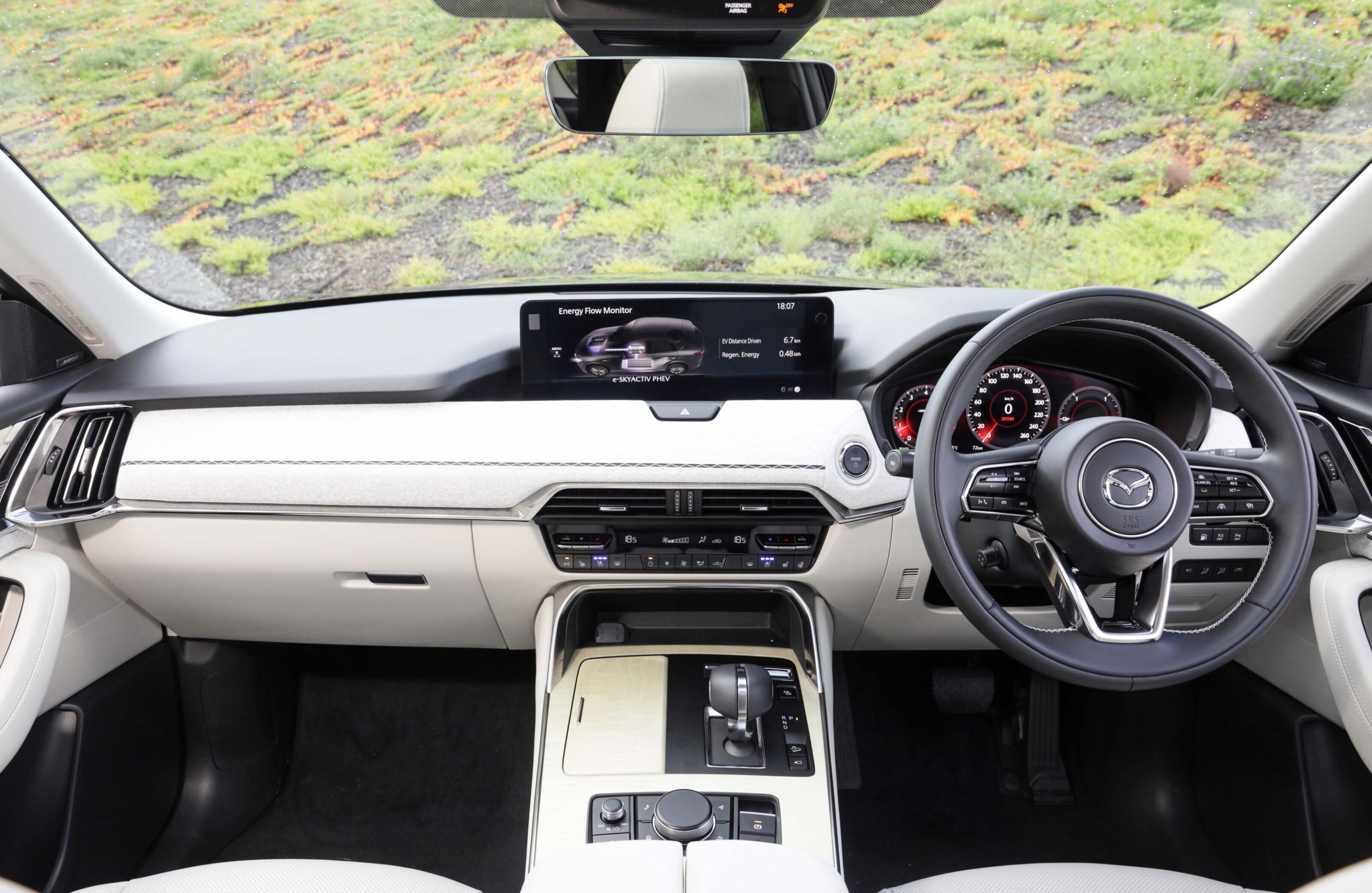
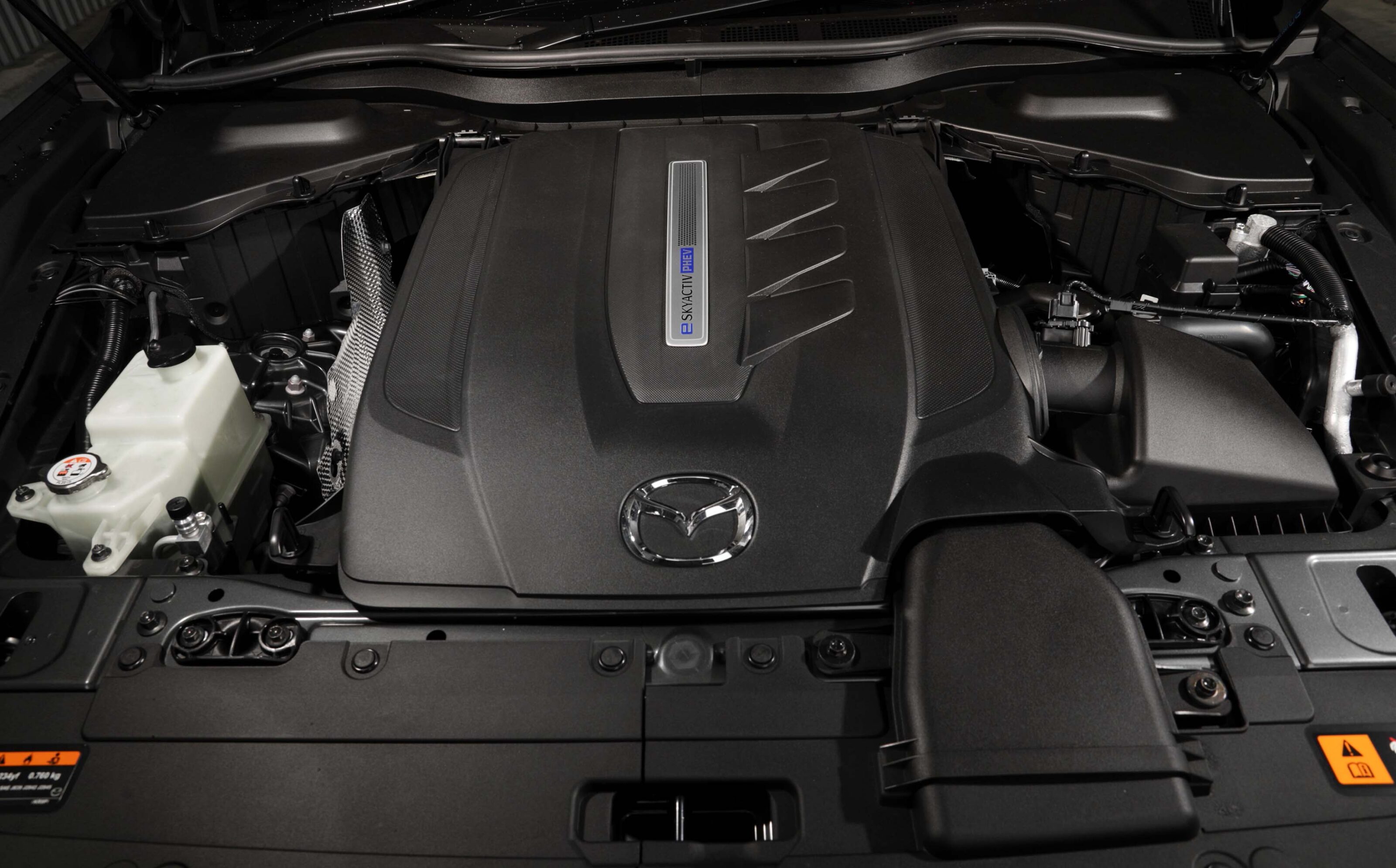
If it’s fuel efficiency you’re chasing, though, it’s the new plug-in hybrid that claims top trumps. It combines Mazda’s existing 2.5-litre four-cylinder petrol engine with a 17.8kWh battery pack and a 129kW electric motor. Total system output is rated at 241kW/500Nm, while the 0-100km/h claim is cut to 5.9 seconds.
Plug-in models have a claimed EV-only driving range of 76 kilometres and drink just 2.1L/100km on the combined cycle. Recharging the battery from empty to full on a 7.2kW wallbox takes 2.5 hours, according to Mazda.
All three engines are paired with a new eight-speed automatic and every CX-60 is all-wheel-drive, though Mazda says each has a rear-driven bias. Braked towing capacity is rated at 2500kg for the six-cylinder petrol and plug-in hybrid models, while the diesel also has a braked tow rating of 2500kg.
1
How big is it?
Size wise, the CX-60 sits between the existing CX-5 mid-size SUV and the longer seven-seat CX-8.
The CX-60 is strictly a five seater, though it does feel noticeably roomier in both rows compared with a CX-5. Dimensionally the CX-60 is 165 millimetres longer and 45mm wider than a CX-5. Both cars are the same height, though the CX-60 rolls on a longer 2870mm wheelbase.
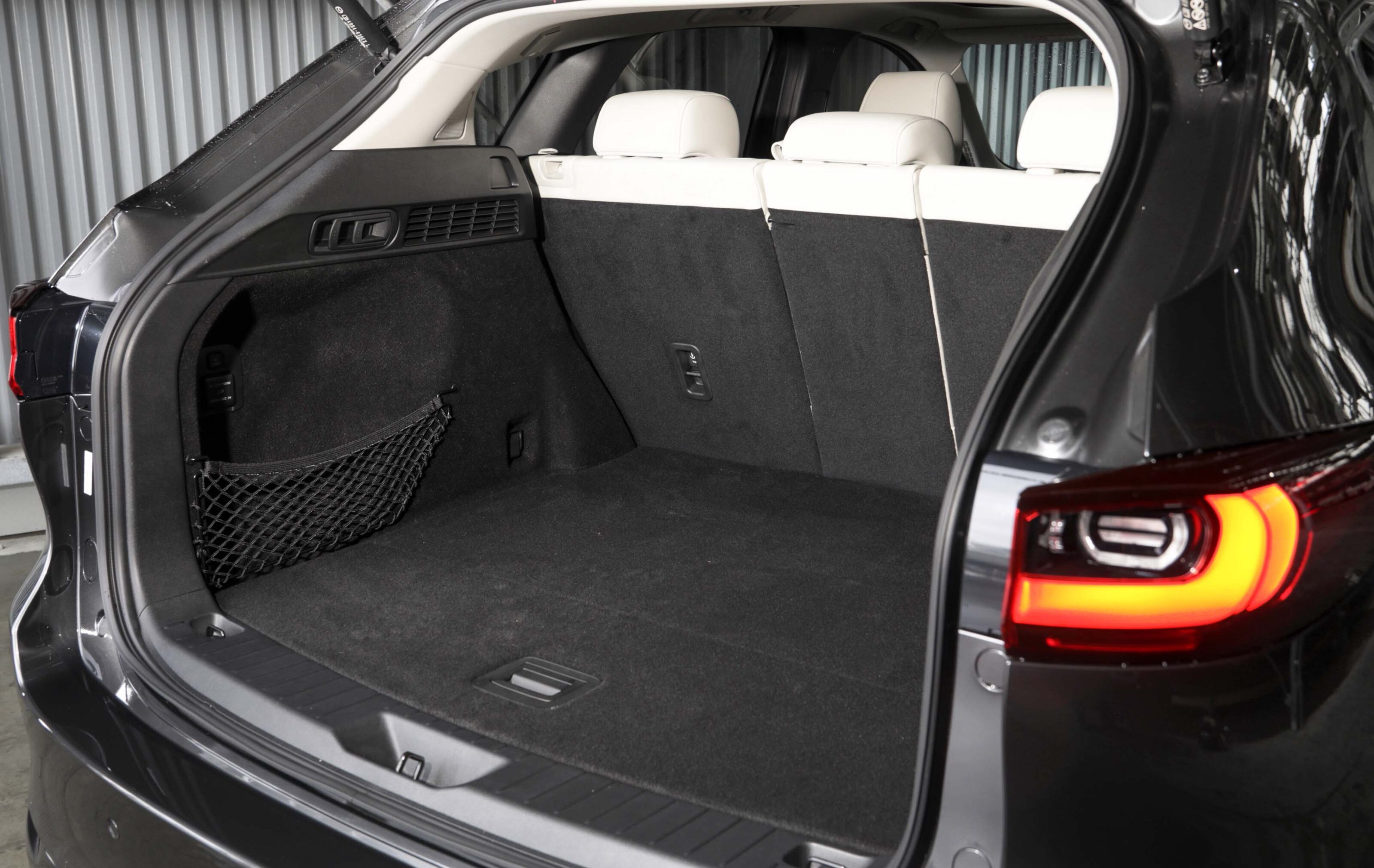
The CX-60 boot offers 477L of luggage capacity, which is decent for a mid-size SUV, though falls short of rivals like a Toyota RAV4 Hybrid – which has a 580L boot. The second row has a 40/20/40 split fold and with the second row laid flat the boot capacity grows to 1148L.
Six-cylinder versions of the CX-60 are fitted with a space-saver spare tyre, while the plug-in hybrid only offers a puncture repair kit.
As for sales expectations, Mazda isn’t expecting the CX-60 to achieve similar volumes to the existing and hugely popular CX-5 mid-sizer. The two SUVs will be sold side-by-side, but the CX-60’s more premium positioning and the CX-5’s stronger resonance in the Aussie market means the smaller SUV is likely to be more popular on the sales charts.
2
Design and equipment
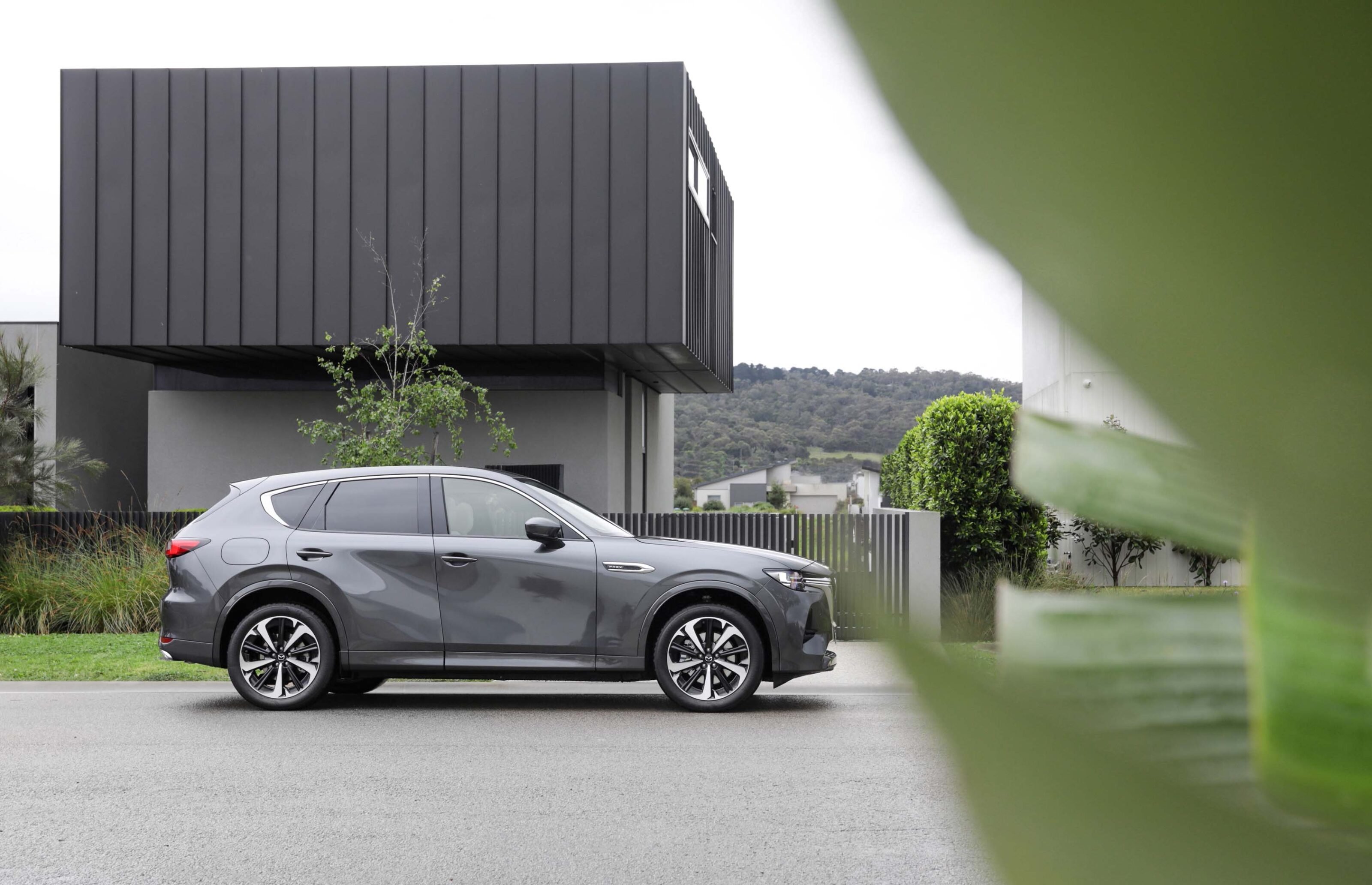
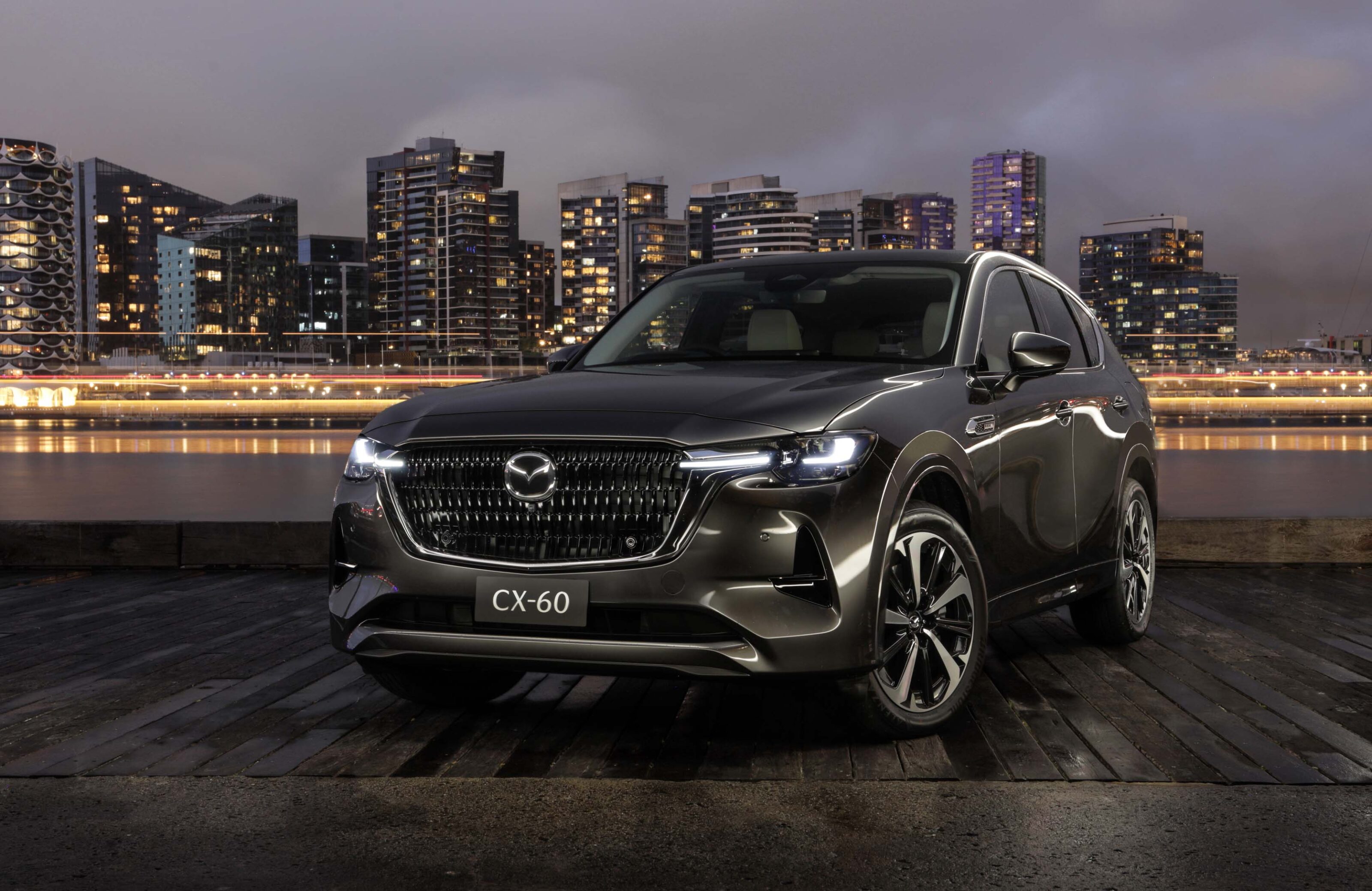
The CX-60 debuts the latest iteration of Mazda’s Kodo design language and its silhouette features a longer bonnet and a more rearward glasshouse.
LED headlights are standard across the range and GT model grades and above score a black honeycomb front grille.
GT models and above also score wheel arch surrounds in body colour and larger 20-inch inch wheels. The wheel arches on Evolve models are black plastic while the wheel size drops to 18-inches.
There are seven exterior colours available across the range and Mazda has also added a new signature colour for the CX-60 to join the existing hero hues of soul red crystal and machine grey. The new colour is dubbed rhodium white premium metallic and it utilises Mazda’s Takuminuri paint technology to achieve a deep and glossy finish.
1
Standard equipment levels are generous across the range.
Entry-level Evolve variants score; rain-sensing wipers, manually adjustable seats finished in leatherette, an eight-speaker sound system, leather steering wheel/shift knob, automatic tailgate and dual-zone climate control.
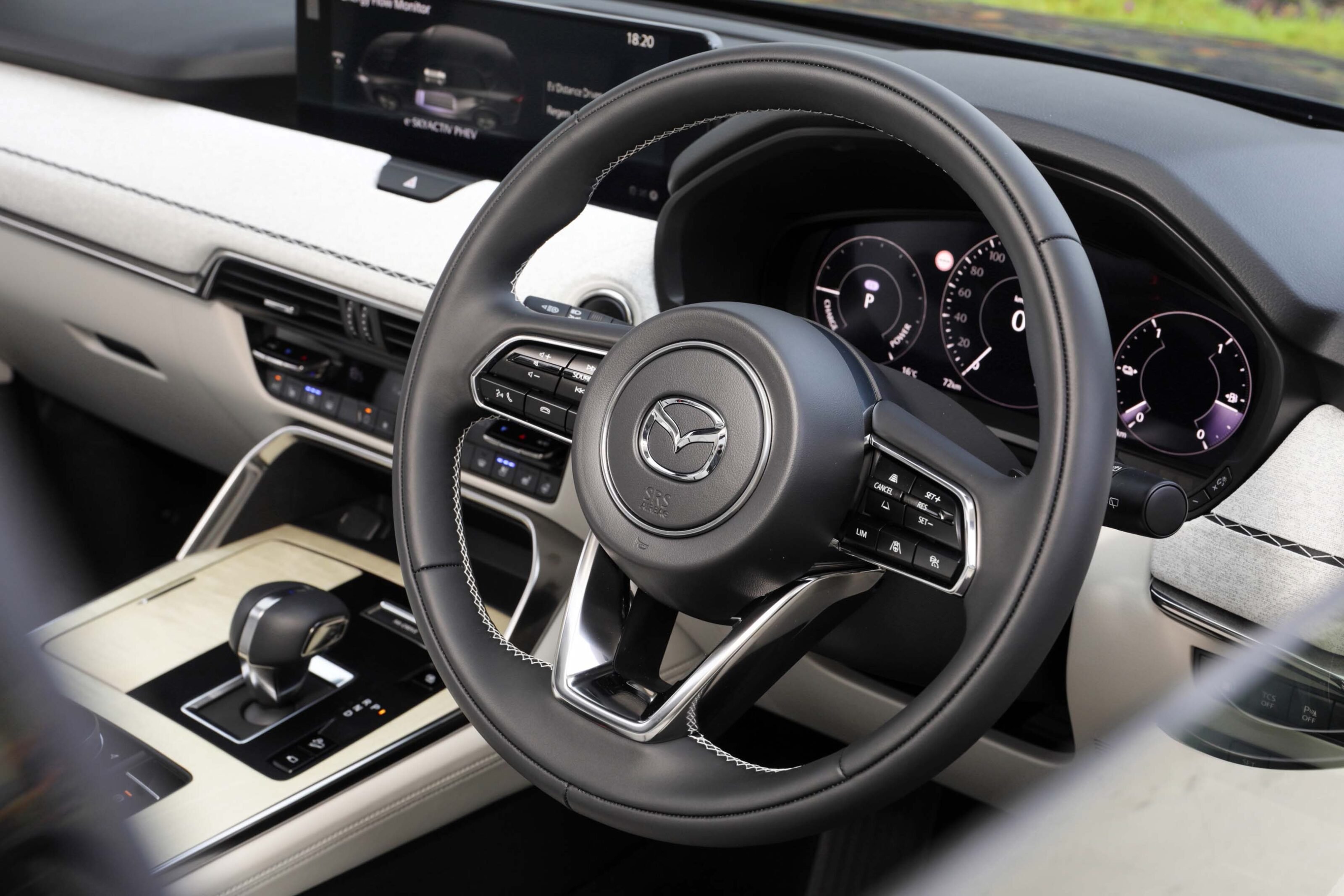
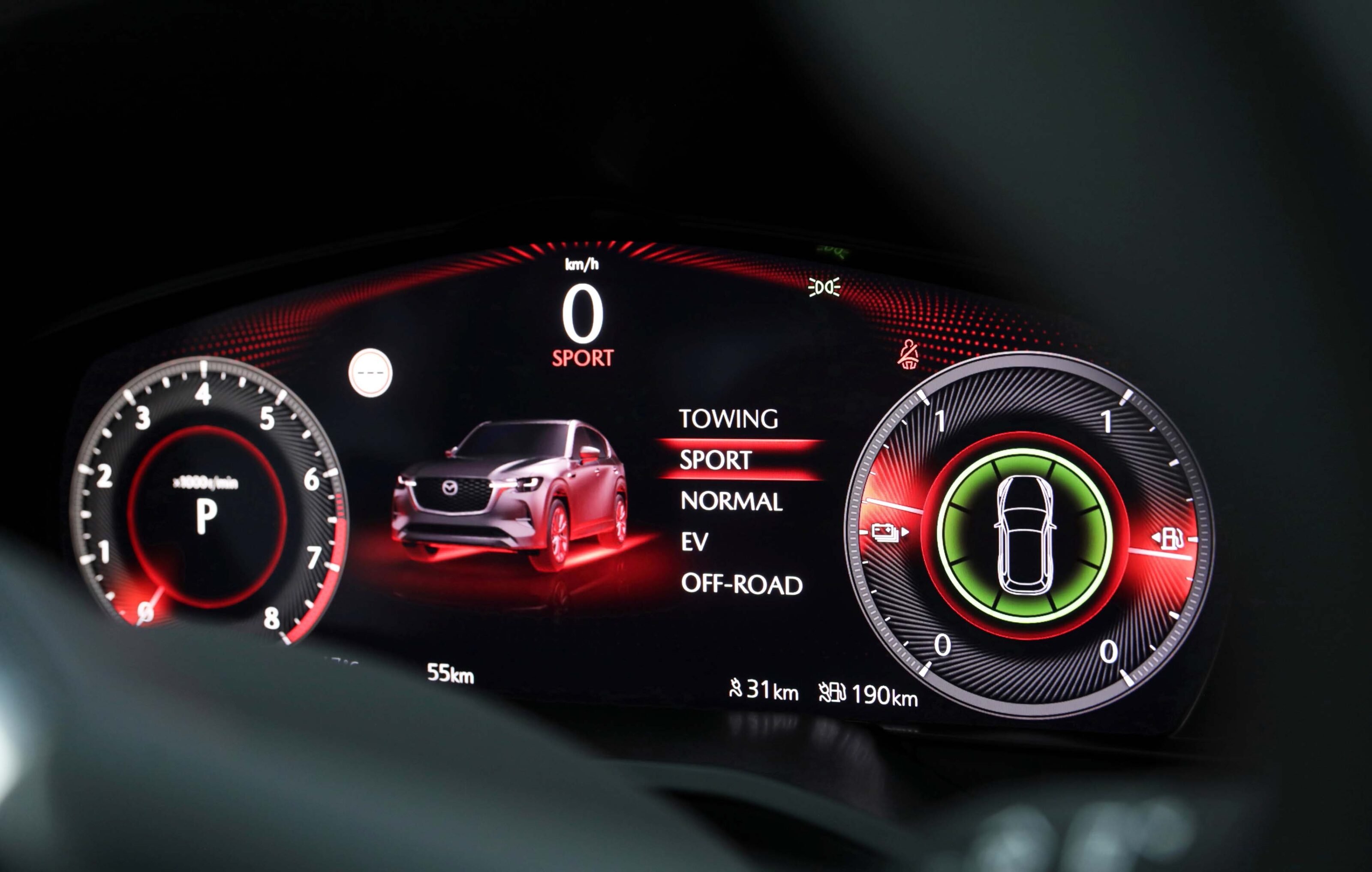
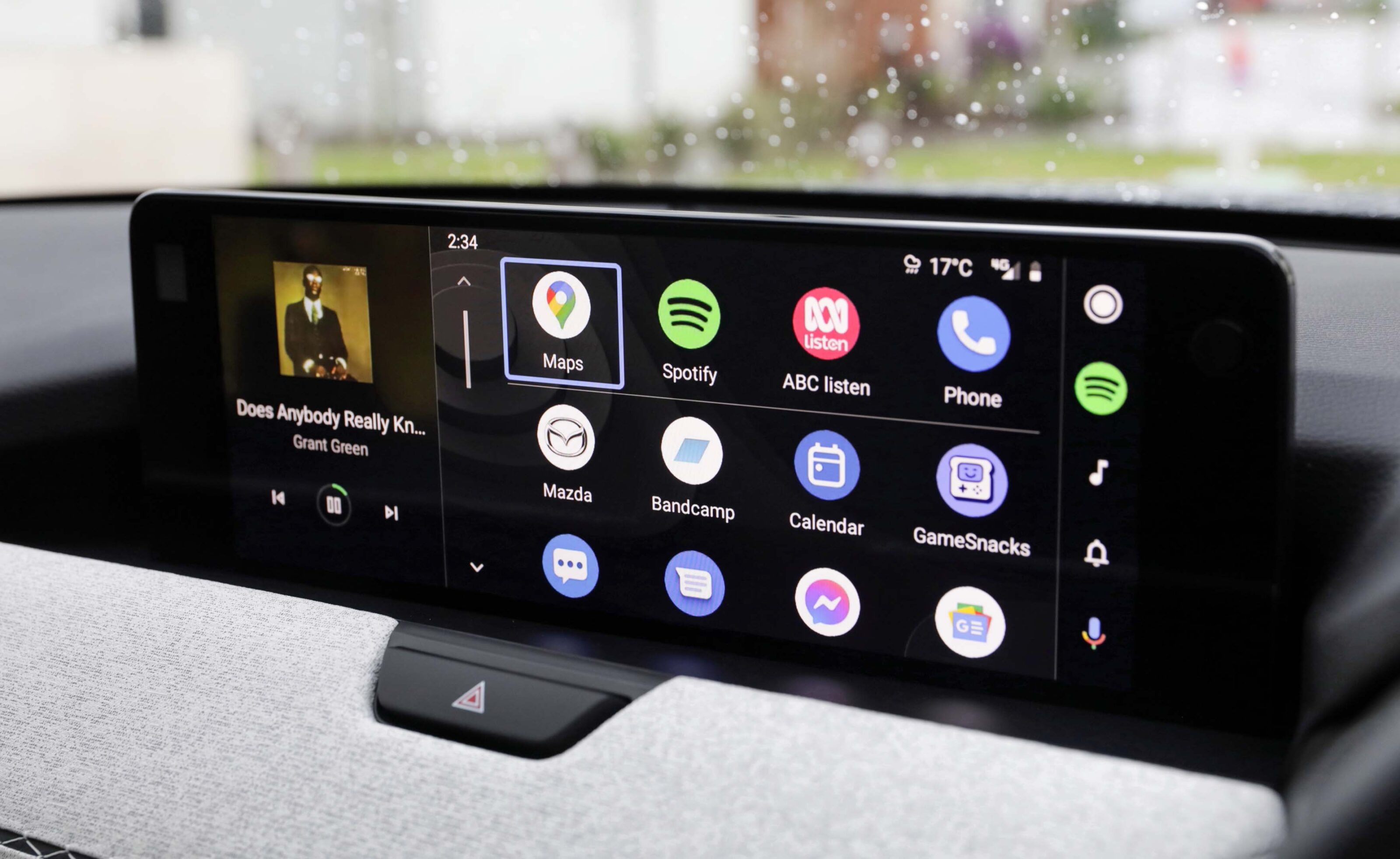
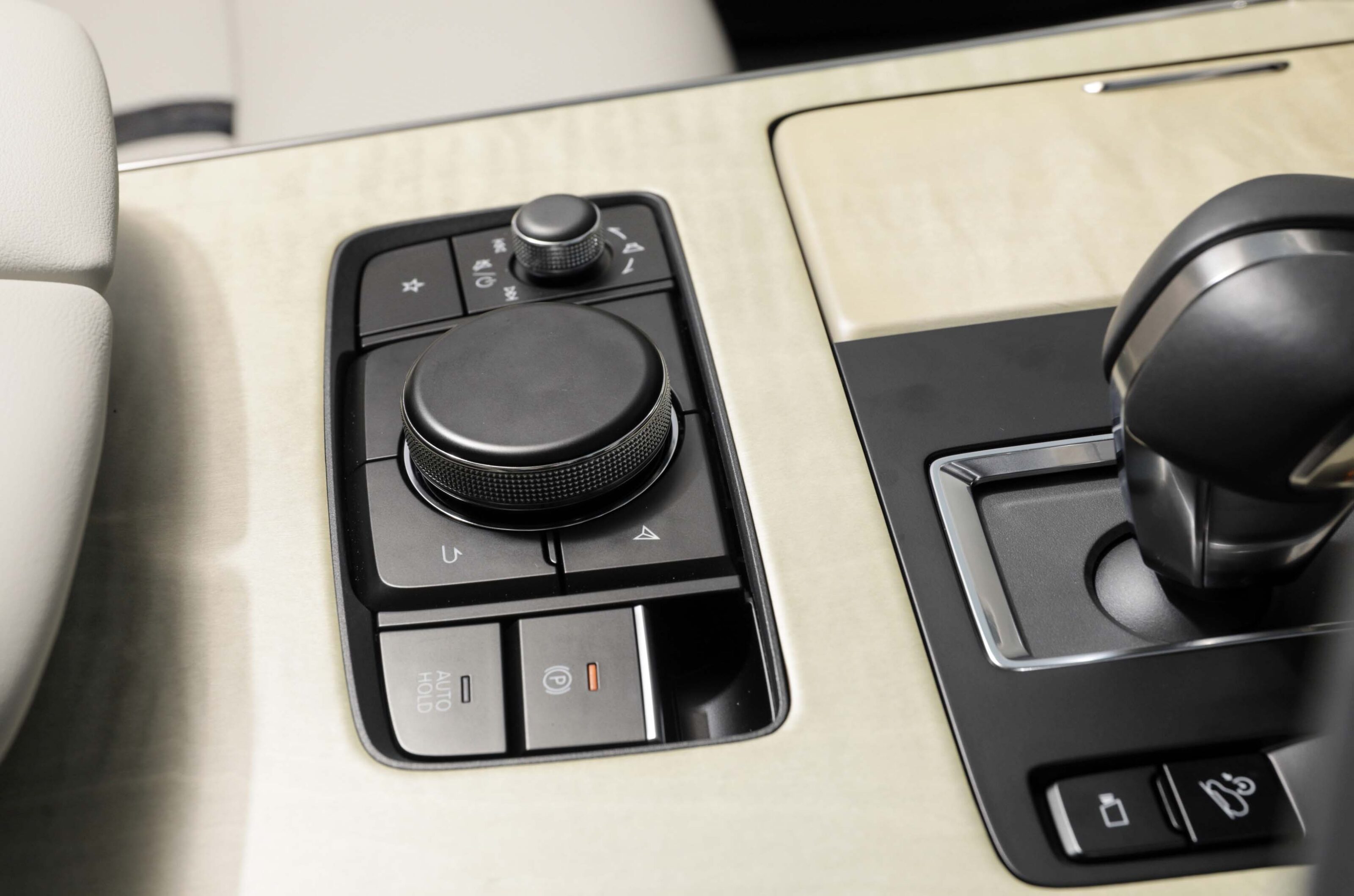
Connectivity wise, the Evolve features a 10.25-inch central infotainment display and a large 12.3-inch digital dial cluster. Apple CarPlay and Android Auto are wireless and included as standard, though Mazda’s central display isn’t a touchscreen. Instead you enter commands through a rotary dial on the centre console, which can be a little finicky and laborious.
Stepping up to the mid-spec GT adds; a larger 12.3-inch central screen, leather seats that are electrically adjustable and heated in both rows, a 12-speaker Bose sound system, a heated steering wheel, Mazda’s largest ever panoramic sunroof and, in a Mazda first, a steering column that’s electrically adjustable.
1
GT models and above also get a new ‘Driver Personalisation System’ that uses facial recognition tech to automatically adjust the SUV’s seating position, mirrors and other controls to your saved settings.
A head-up display that’s three times the size of that fitted to a Mazda CX-30 is also included on GT and Azami variants.
The flagship Azami model grade adds; softer black Nappa leather upholstery, ventilated front seats, adaptive LED headlights, ambient LED lighting, a frameless rear-view mirror and a unique design for the 20-inch alloy wheels with a silver machined finish.
Every CX-60 scores a 360 surround-view camera as standard, but in the Azami it also offers a ‘see through function’ – which Mazda says allows the driver to see through the front and rear corners of the car usually obscured by the bodywork.
Mazda is predicting the mid-spec GT will make up half of all CX-60 sales, with the Evolve and Azami set to account for 30 and 20 per cent of sales respectively.
1
How safe is it?
Every Mazda CX-60 is fitted with an impressive list of passive and active safety systems which include:
| Eight airbags |
| Autonomous Emergency Braking (forward and reverse) with pedestrian and cyclist detection |
| Blind-spot monitor |
| Lane departure warning |
| Lane keep assist with steering support |
| Radar cruise control with Stop/Go function |
| Traffic sign recognition |
| Driver fatigue detection |
| Rear cross-traffic alert |
| Reversing camera |
| Tyre pressure monitoring system |
Mazda also claims the CX-60 is designed to absorb twice as much energy in a rear-end collision as an existing CX-5 – courtesy of changes to the rear crash structure.
Two other safety systems also make their debut on the CX-60. A vehicle exit warning function has been added to the blind-spot monitoring system and will alert passengers if a car or cyclist is approaching if you try and exit the vehicle.
Front cross-traffic alert has also been added for the first time, and is included as standard on top-spec Azami models. It’s also available throughout the rest of the range as part of the optional $2000 Vision Technology Package.
As for a crash rating, the CX-60 recently achieved a five-star score from Euro NCAP. Mazda Australia expects to announce a five-star ANCAP rating soon.
1
Options
There are four option packs available across the CX-60 model range with prices spanning between $2000-$4000.
The Vision Technology pack costs $2000 and is optional on Evolve and GT (standard on Azami). It brings:
| Vision Technology pack – $2000 | |
|---|---|
| 360-view monitor with u2018see through viewu2019 | Driver monitoring |
| 12.3-inch infotainment screen | Front cross-traffic alert |
| Adaptive LED headlights | |
The Luxury pack is $4000 and can only be had on the entry level Evolve (standard on GT and Azami). It adds:
| Luxury pack – $4000 |
|---|
| Heated leather seats |
| Power adjustable seats (10-way driver; 6-way passenger) |
| Exterior mirror memory |
Flagship Azami variants can be optioned with the choice of two packs that cost $2000 each.
1
| Takumi pack – $2000 |
|---|
| Cloth dashboard panel with u2018Kakenuiu2019 sticking |
| White maple wood inserts on the doors, dash and console |
| White Nappa leather seats |
| SP pack – $2000 | |
|---|---|
| 20-inch black alloy wheels (rather than black with silver finish) | Two-tone steering wheel |
| Gloss black grille and mirrors | Suede dashboard panel |
| Tan Nappa leather seats | |
June 8, 2023: Mazda Genuine Accessories announced
In addition to the above packs, Mazda has now announced a wider range of individual accessories that can be added to the CX-60, depending on the model.
1
Aussie testing
Australia is one of Mazda’s largest and most important markets, and the brand conducted six months of intensive local testing for the CX-60.
Two pre-production CX-60s have already racked up 22,000km of testing in Victoria with the data collected from urban and country driving sent back to Mazda HQ every fortnight.
It’s still unclear if Australian cars will feature a bespoke suspension tune for our roads or whether the data will be used to fine-tune one global set-up.
MORE
Everything Mazda
Five years ago hardly anyone knew what GR was or what it stood for, both alphabetically and philosophically.
But the GR Supra‘s arrival started getting the word out and then the utterly hilarious GR Yaris hot hatch made absolutely sure of it. Gazoo Racing quickly became well-known among car people – renaming the 86 coupe GR86 helped that process – and now Toyota wants to push on with warmed-over GR Sport variants, kicking that off with the slightly perplexing C-HR GR Sport and chunky LandCruiser 300 GR Sport.
This year we’ve had two new GRs – the bigger hot hatch Corolla GR and now this curious Yaris Cross GR Sport, which will be followed in a few months by a HiLux GR Sport.
1
JUMP AHEAD
- How much is it, and what do you get?
- How do rivals compare on value?
- Interior comfort, space and storage
- What is it like to drive?
- How much fuel does it use?
- How safe is it?
- Warranty and running costs
- VERDICT
- Specifications
How much is it, and what do you get?
The Yaris Cross GR Sport is part of Toyota’s SUV family, the second SUV to hijack a well-known nameplate and the tenth variant in a range that starts at $26,990 before on-road costs.
The GR Sport is based on the mid-spec GXL, slotting in above the all-wheel drive hybrid ($34,990) at $35,840 (both before on-road costs). When I say it’s based on the GXL, it is based – and here’s one of the curious bits – on the front-wheel drive hybrid.
1
| 2023 Toyota Yaris Cross GR Sport standard features | |
|---|---|
| 18-inch alloy wheels | GR Sport fake suede/leather seats |
| 360-degree cameras | Keyless entry and start |
| 6-speaker stereo | Leather steering wheel |
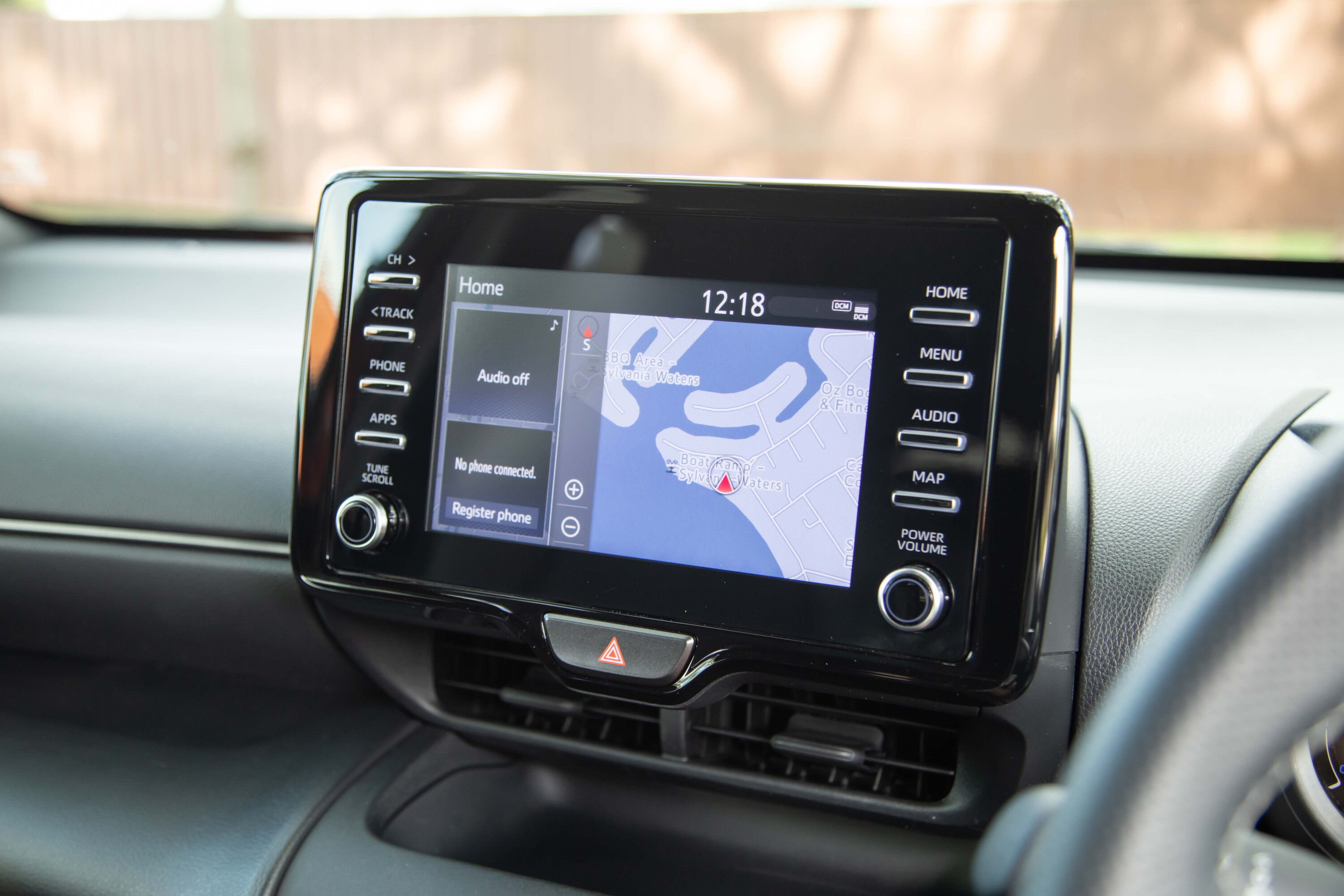
| 7.0-inch touchscreen | LED headlights |
| Adaptive cruise control | Reversing camera |
| Climate control | Satellite navigation |
| DAB+ digital radio | Space-saver spare |
| Front and rear parking sensors | Wired Android Auto & Apple CarPlay |
1
Interior comfort, space and storage
Like any other Yaris Cross, the cabin is pretty tight.
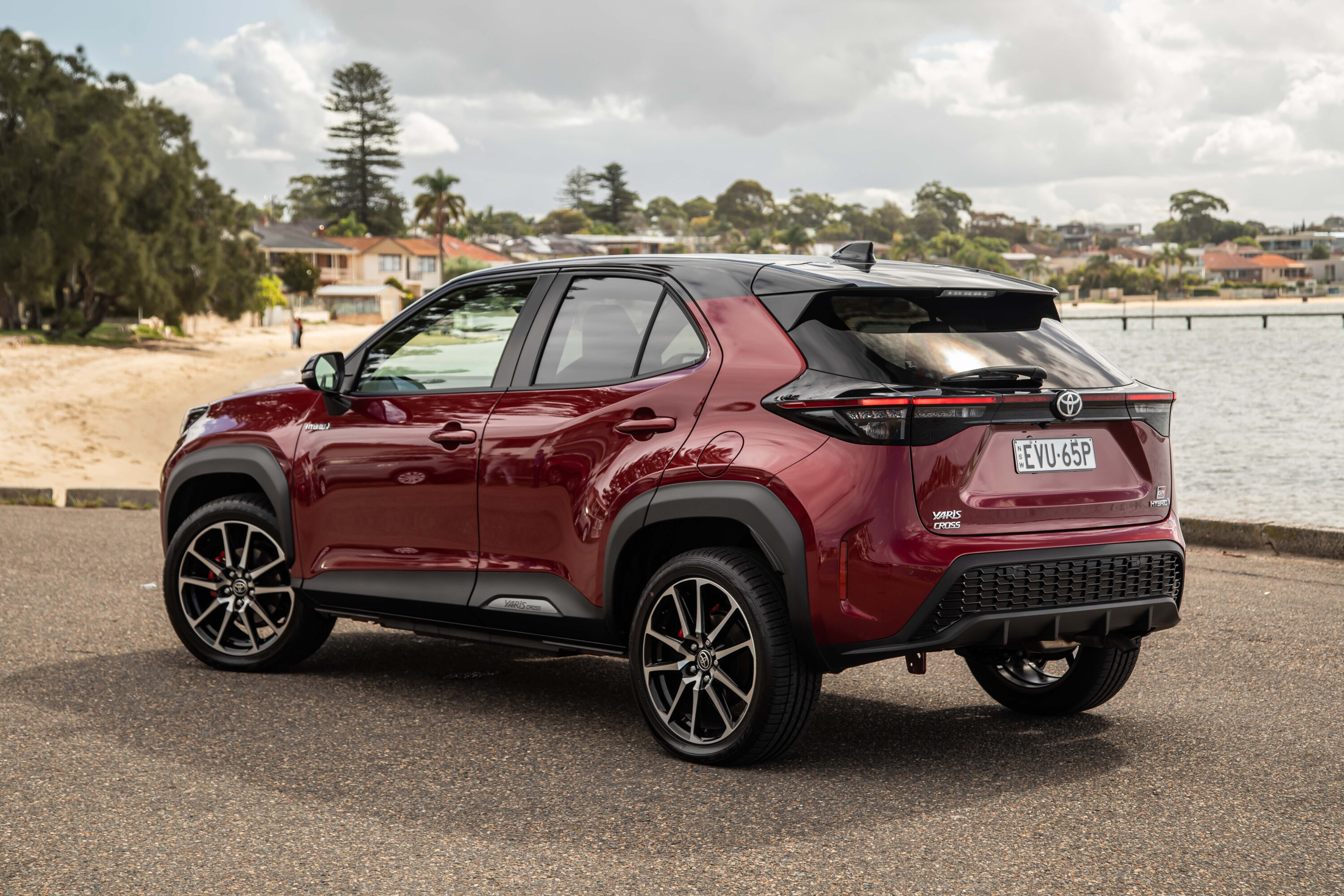
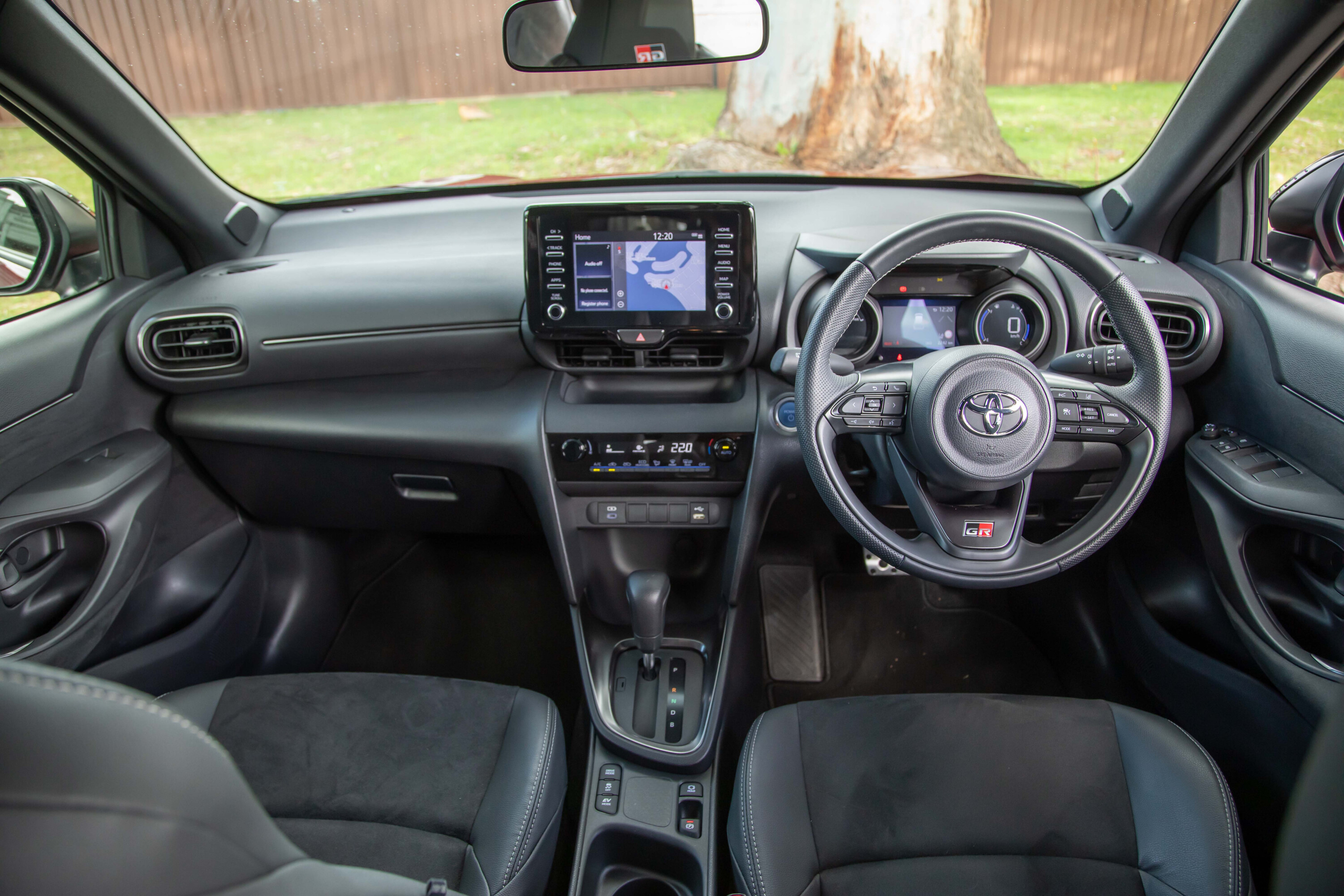
Changes wrought by the GR Sport uplift aren’t startling, but enough to remind you and any passengers you have spent a few extra bucks for the sporty one.
The seats – already excellent in the GXL – have been reupholstered in a rather fetching fake suede and leather combination for that sporty hold-you-in-place vibe.

2
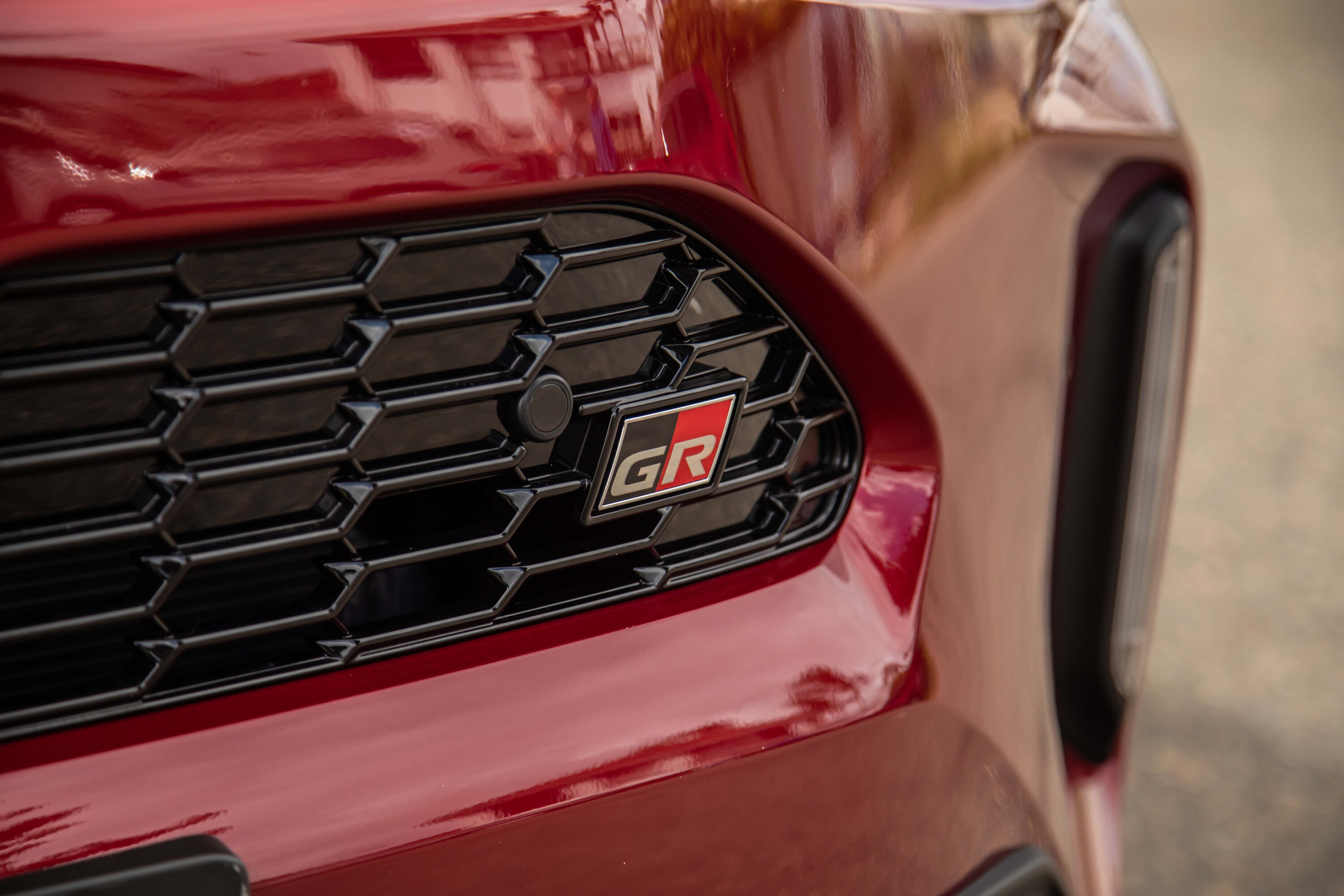
GR Sport badges dot the cabin but not gratuitously so.
The rear seats score the vinyl/suede treatment as well, but that’s your lot. Obviously, it’s no bigger or roomier, but if you’re my height (180cm), it’s good enough for a short trip. There isn’t an armrest, although the 20 part of the 40:20:40 split-fold rear seat does flip forward to reveal a pair of cup holders.
Boot capacity is the usual extremely generous 390 litres, with a simple shape and wide load aperture. There’s also a clever 60:40 split false floor for you to hide things under or remove completely for access to the whole space.

1
What is it like to drive?
Those of us who have driven the Yaris Cross don’t mind it in two-wheel drive hybrid form and it is, in fact, the best way to have this particular car.
| 2023 Toyota Yaris Cross GR Sport drivetrain | |
|---|---|
| Engine | 1.5-litre 3-cylinder hybrid |
| Bore x stroke (mm) | 80.5 u00d7 97.6 |
| Electric motor | 59kW/131Nm |
| Battery | 4.3Ah lithium-ion |
| Power | 67kW @ 5500rpm |
| Torque | 120Nm @ 3800rpm |
| Electric power and torque | 59kW front |
| Combined power | 85kW |
| Combined torque | not specified |
I say that because the Urban AWD I’ve driven is very expensive and didn’t seem to take much advantage of its more capable multi-link rear suspension or all-paw capability.
The GR Sport’s selling points are, of course, the big alloys with slightly sporty Azenis FK510s tyres (never heard of them either) and a 10mm drop in suspension height. Along with that are some unseen changes, such as additional underfloor bracing to improve rigidity (why isn’t that on all of them?) and other tweaked suspension components.

1
It results in a noticeably firmer and racketier drive than the other Yaris Crosses. The ride can be outright bumpy on some surfaces and while the stiffer body should yield more poise, it doesn’t deliver a lot. Sure, it’s fun, but so is the GXL 2WD, so it’s hardly pushing the boat out.
The steering gets better on more interesting roads and the improved body control is more noticeable on those same roads.
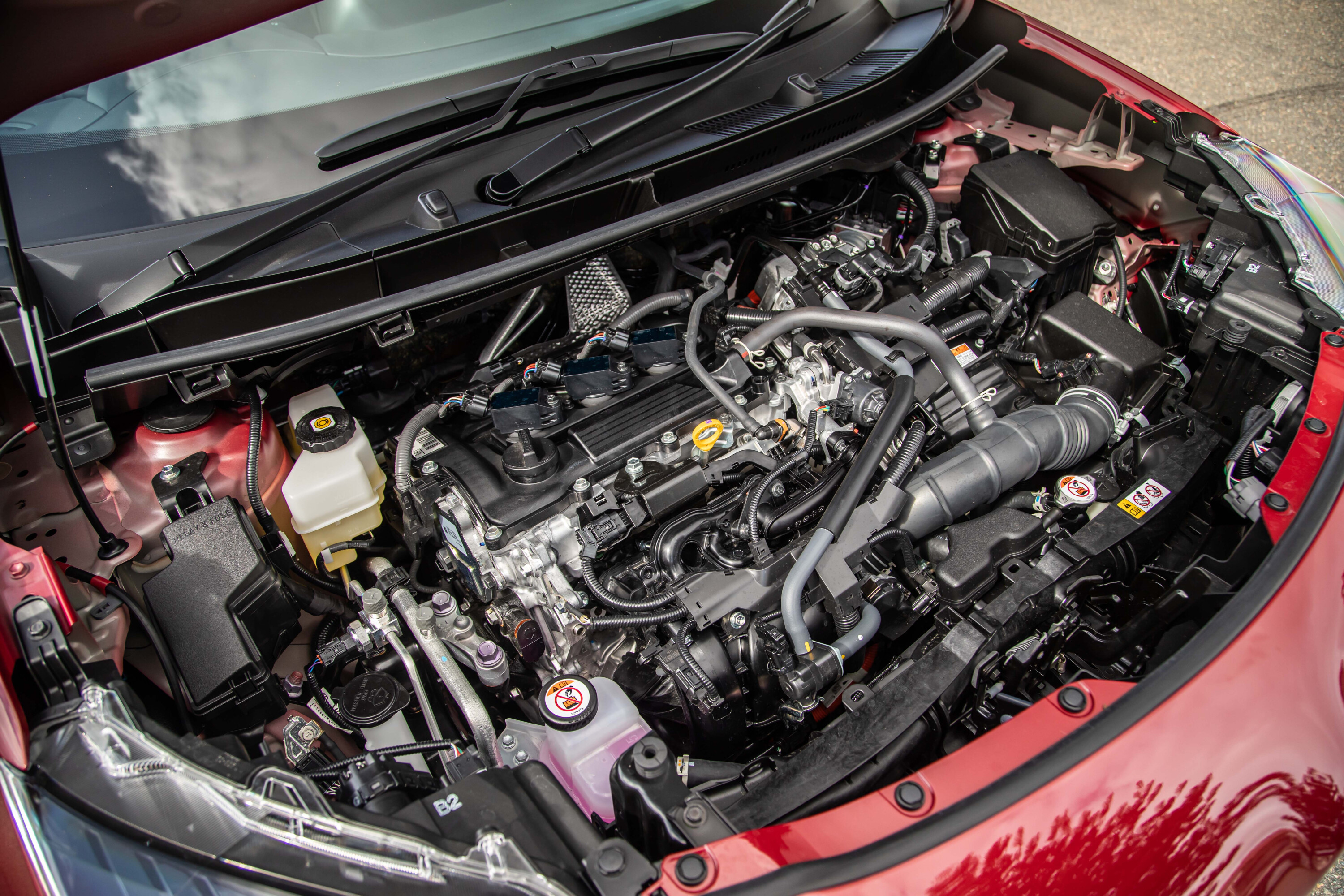
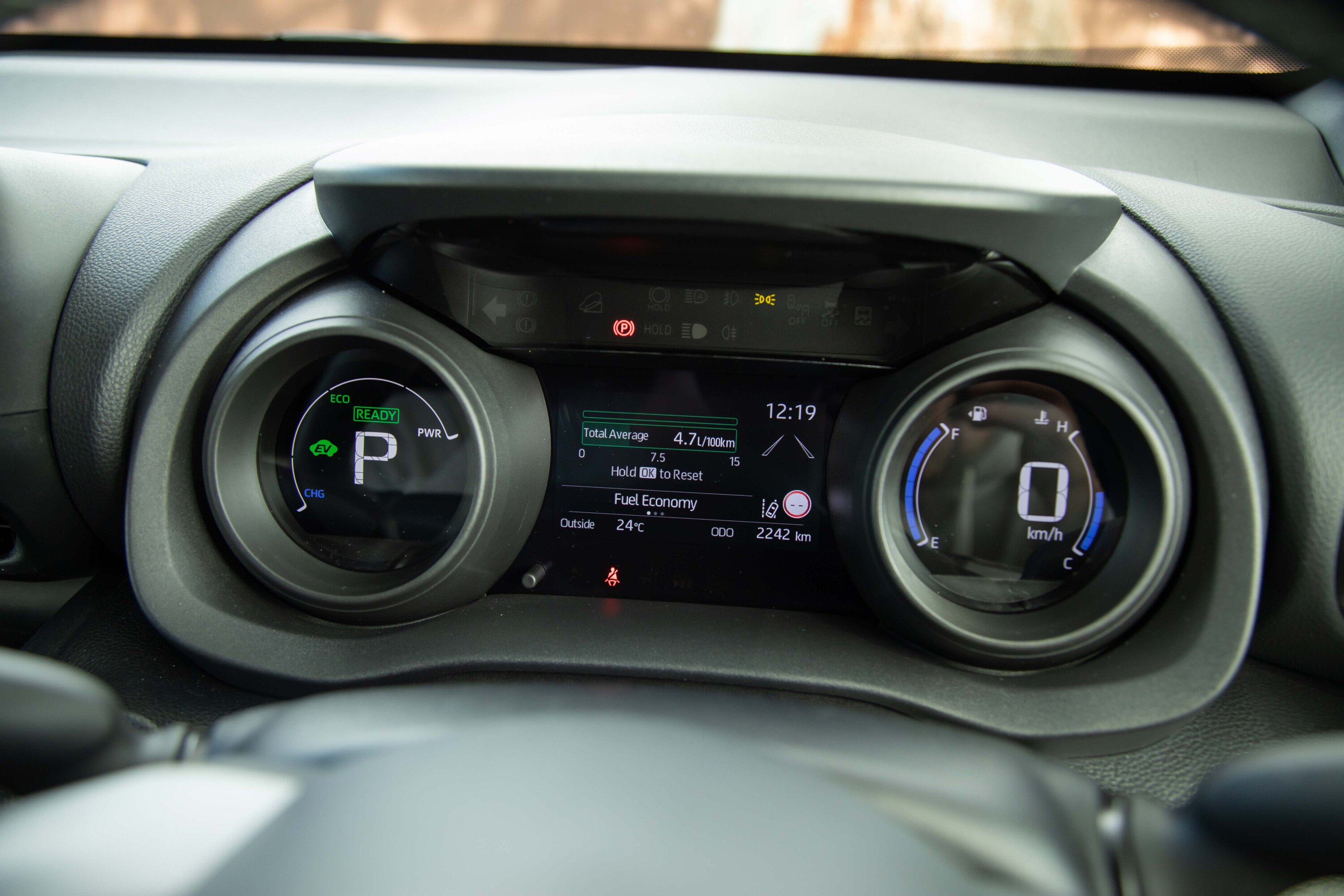
It’s all backed by an unchanged 85kW of hybrid power, which is excellent if a bit grumbly.

1
How is it on fuel?
We recently tested the Yaris Cross against two of its larger brothers and it didn’t deliver the starkly lower consumption we were expecting.
| 2023 Toyota Yaris Cross GR Sport fuel economy | |
|---|---|
| Fuel consumption (claimed) | 3.8L/100km |
| Fuel consumption on test (at the pump) | 4.7L/100km |
| Fuel consumption (indicated) | 4.7L/100km |
| Fuel type | 91 RON |
| Fuel tank | 36 litres |
| Projected real-world range | 765km |
It’s still pretty good though, with 4.7L/100km during a week of enthusiastic driving.
1
How safe is it?
When it first arrived here, the Yaris Cross scored five ANCAP stars with its centre front airbag and a whole host of goodies.
For some reason, though, ANCAP hasn’t given the GR Sport variant a score.
| 2023 Toyota Yaris Cross GR Sport safety features | |
|---|---|
| 8 airbags | Lane-keep assist |
| ABS | Parking support brake |
| Blind-spot monitoring | Rear cross-traffic alert |
| Forward auto emergency braking | Speed sign recognition |
| Forward collision alert (low-speed) | Stability control |
| Lane departure warning | Traction control |
1
Warranty and running costs
Toyota’s five-year, unlimited-kilometre warranty comes with a further two years of cover for the drivetrain if you service at a Toyota dealer. On top of that is an eight-year battery warranty.
Servicing comes around every 12 months or 15,000km and, as is the Toyota way, very good value. The capped-price servicing program lasts for the first five intervals at $250 per visit.
1
VERDICT
The problem with the GR Sport isn’t that it’s a bad car – it most certainly is not – but it’s not the best Yaris Cross.
You can spend a bit less and get the GXL AWD which has everything but the sporty bits and a better ride to go with it, owing to the smaller wheels and regular suspension. You can spend less again on the GXL 2WD, which is basically what the GR Sport is without, again, the sporty bits.

1
I’m not interested in the argument over whether the GR Sport badge devalues the GR brand (because I really don’t care) but you have to wonder who it’s for. Like the C-HR GR Sport, I’m not sure.
The best thing is, though, if you like it, and even though it’s not the best Yaris Cross, it’s still a pretty good small crossover. If a rather expensive one.
MORE
Everything Toyota
MORE
Small SUVs
| 2023 Toyota Yaris Cross GR Hybrid specifications | |
|---|---|
| Body | 5-door, 5-seat light SUV |
| Drive | front-wheel |
| Engine | 1.5-litre 3-cylinder hybrid |
| Bore x stroke (mm) | 80.5 u00d7 97.6 |
| Electric motor | 59kW/131Nm |
| Battery | 4.3Ah lithium-ion |
| Power | 67kW @ 5500rpm |
| Torque | 120Nm @ 3800rpm |
| Electric power and torque | 59kW front |
| Combined power | 85kW |
| Combined torque | not specified |
| Transmission | continuously variable |
| 0-100km/h | 10 sec (estimated) |
| Fuel consumption | 3.8L/100km |
| Weight | 1235kg |
| Suspension | MacPherson struts front/torsion beams rear |
| L/W/H | 4185/1765/1580 |
| Wheelbase | 2560mm |
| Brakes | ventilated disc front/solid disc rear |
| Tyres | 215/50 R18 Azenis FK510 |
| Wheels | 17-inch alloy (space-saver spare) |
| Price | $35,840 + on-road costs |
JUNE 8: EX30 pricing announced for Australia
Just hours after the EX30’s global unveiling, Volvo has revealed Australian pricing and features.
Get all the details in our story linked below.
STORY CONTINUES: 2024 Volvo EX30 revealed!
“We know that price and cost of ownership is still one of the biggest challenges when people consider switching to an electric car.”
1
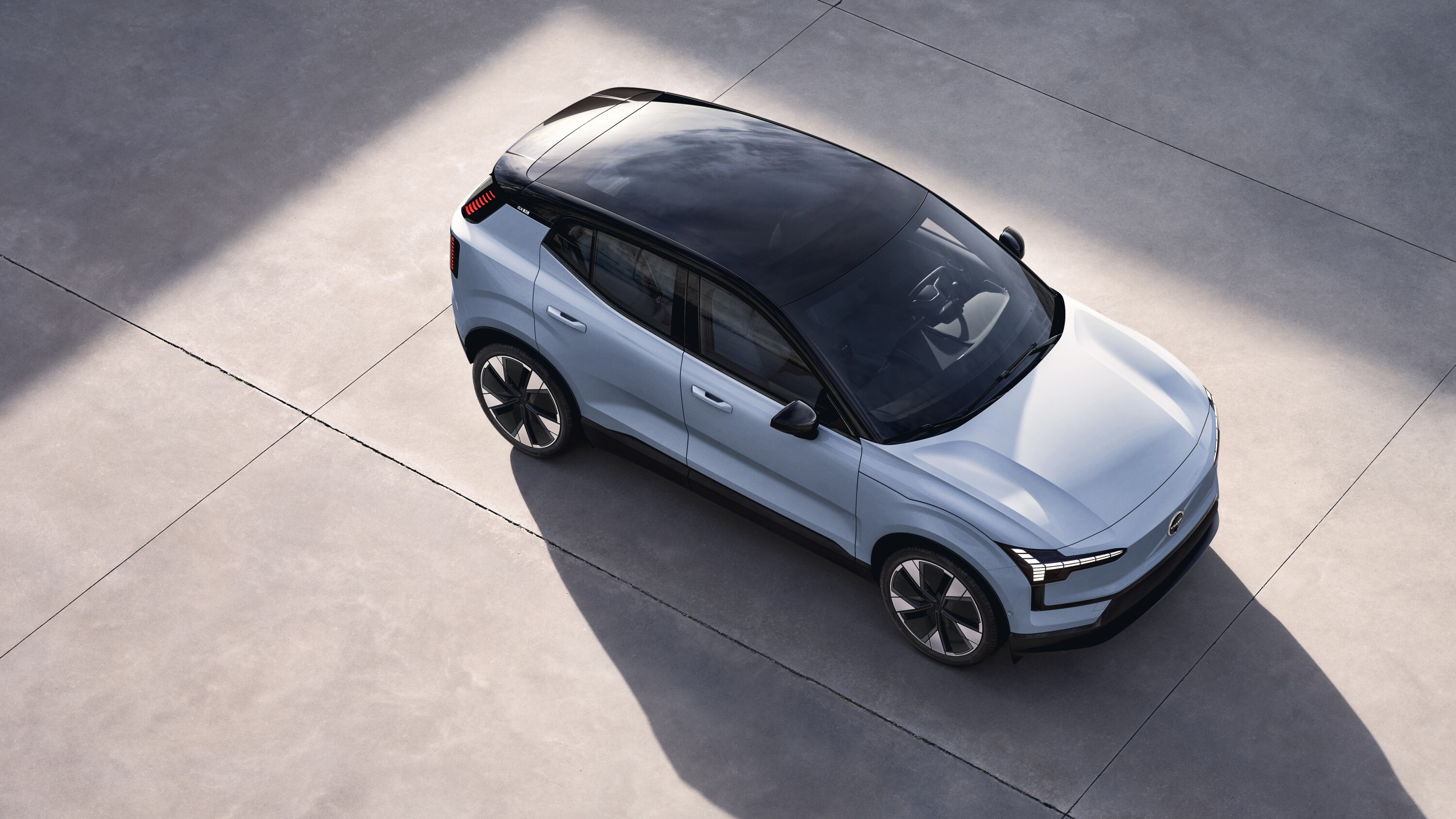
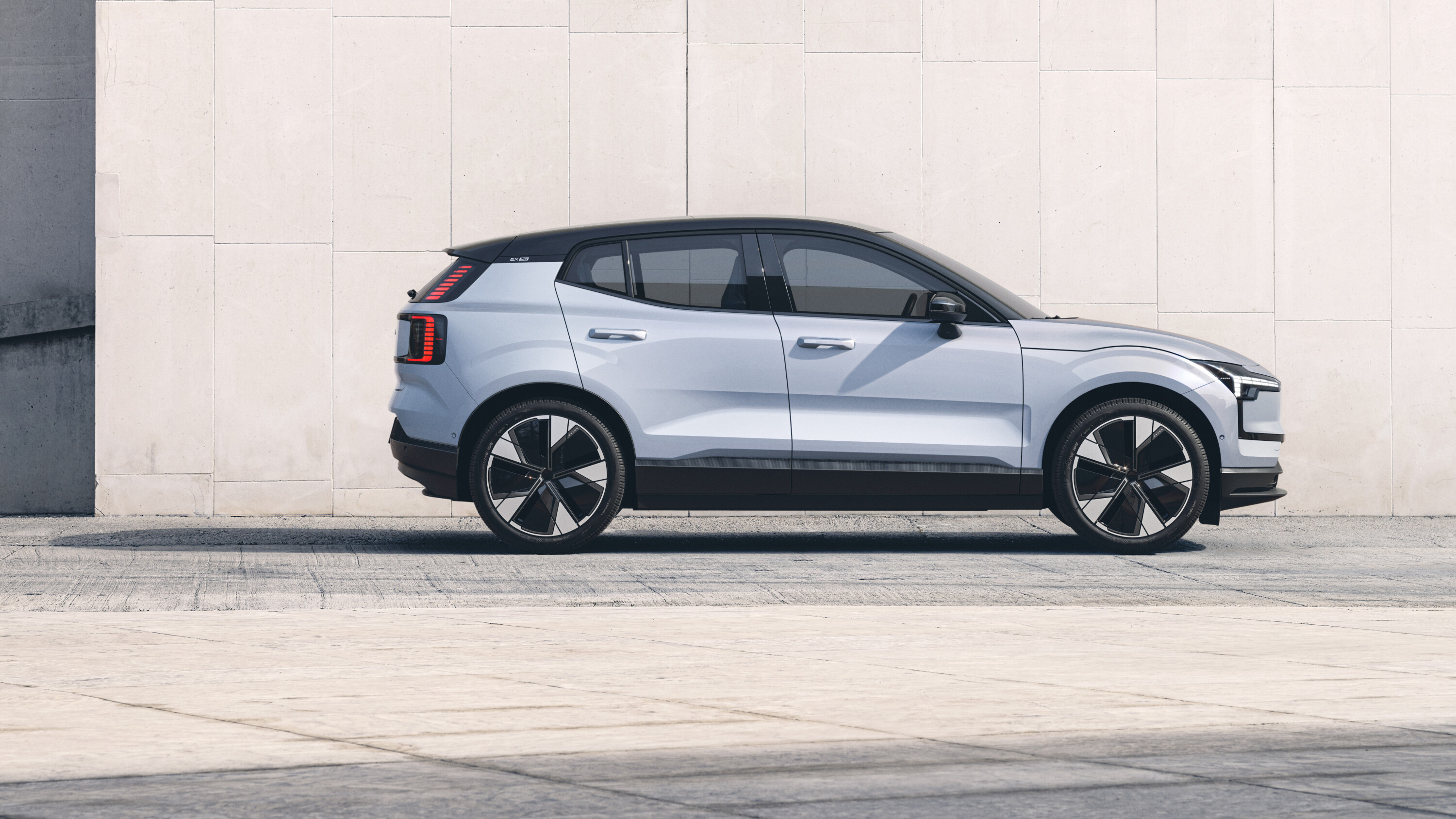
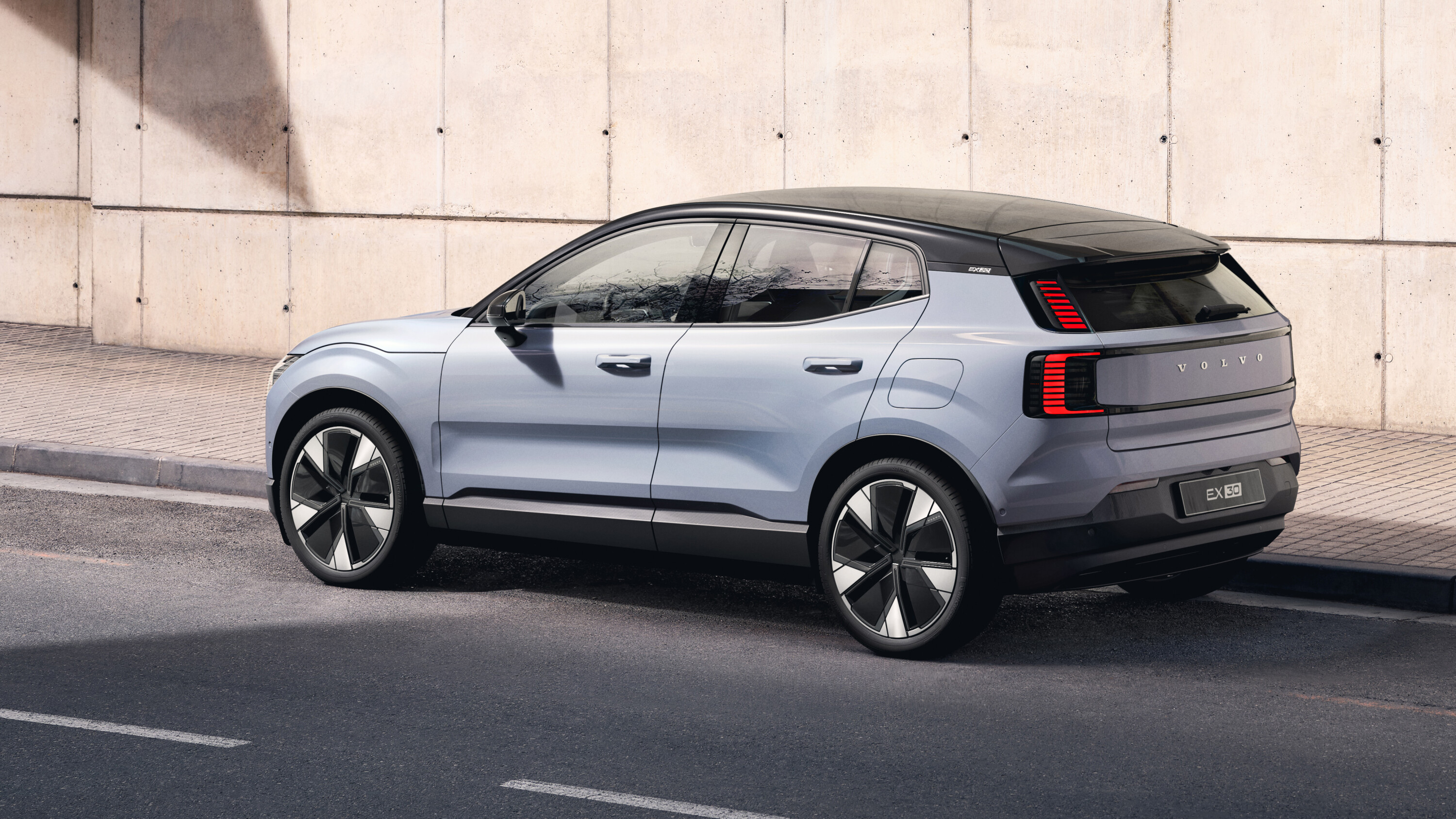
This is the Volvo EX30. One of the company’s smallest-ever cars – yet, in its own words, one of its biggest opportunities.
Volvo’s aiming for half its global sales volumes to be EVs by 2025. Just one year later, its entire Australian offering will take power purely from a plug. The EX30 will be a major player in both stories.
At 4.2m long, it’s not much much bigger than a Nissan Juke, while pricing is set to be extremely competitive in the electric SUV sector – its UK figures converting to an entry point below $60,000 on our shores. Volvo says prices sit as close to an internal combustion equivalent as possible.
“We know that price and cost of ownership is still one of the biggest challenges when people consider switching to an electric car,” says chief exec Jim Rowan, adding that the EX30 takes electric mobility to “a much broader audience”.
Volvo EX30 battery, driving range, power and performance
Its size and pricing may be as slim as possible, but the EX30’s performance is anything but.
Things kick off with the 200kW/343Nm, rear-driven EX30 Single Motor. This comes in standard (51kWh battery, 344km range) and Extended Range (69kWh, 480km) versions, with a peak 0-100km/h time of 5.3sec.
The 69kWh cell is your only option should you opt for the EX30 Twin Motor Performance. It’s all-wheel drive and boasts 315kW/543Nm outputs for 460km of range and a startling 3.6sec 0-100km/h figure – Volvo’s quickest ever. Yep, this really is no baby.
2
The smaller battery offers up to 134kW charging, the larger claiming 153kW, and each can zip from 10 to 80 per cent in under 30 minutes.
You can charge right up to 100 per cent on AC power in under 12 hours.
Preliminary consumption figures are quoted between 6.0 and 6.4km per kWh depending on powertrain – the Single Motor Extended Range is most efficient.
1
It’s the EX30’s overall efficiency performance that Volvo is especially proud of.
It claims the Swedes’ smallest CO2 footprint yet – as you might rightly expect – and contains 25% recycled aluminium, among other boasts.
Its four interior design options include a dashboard using denim from upcycled jeans. Let’s hope they’ve been washed…
1
EX30 design and features
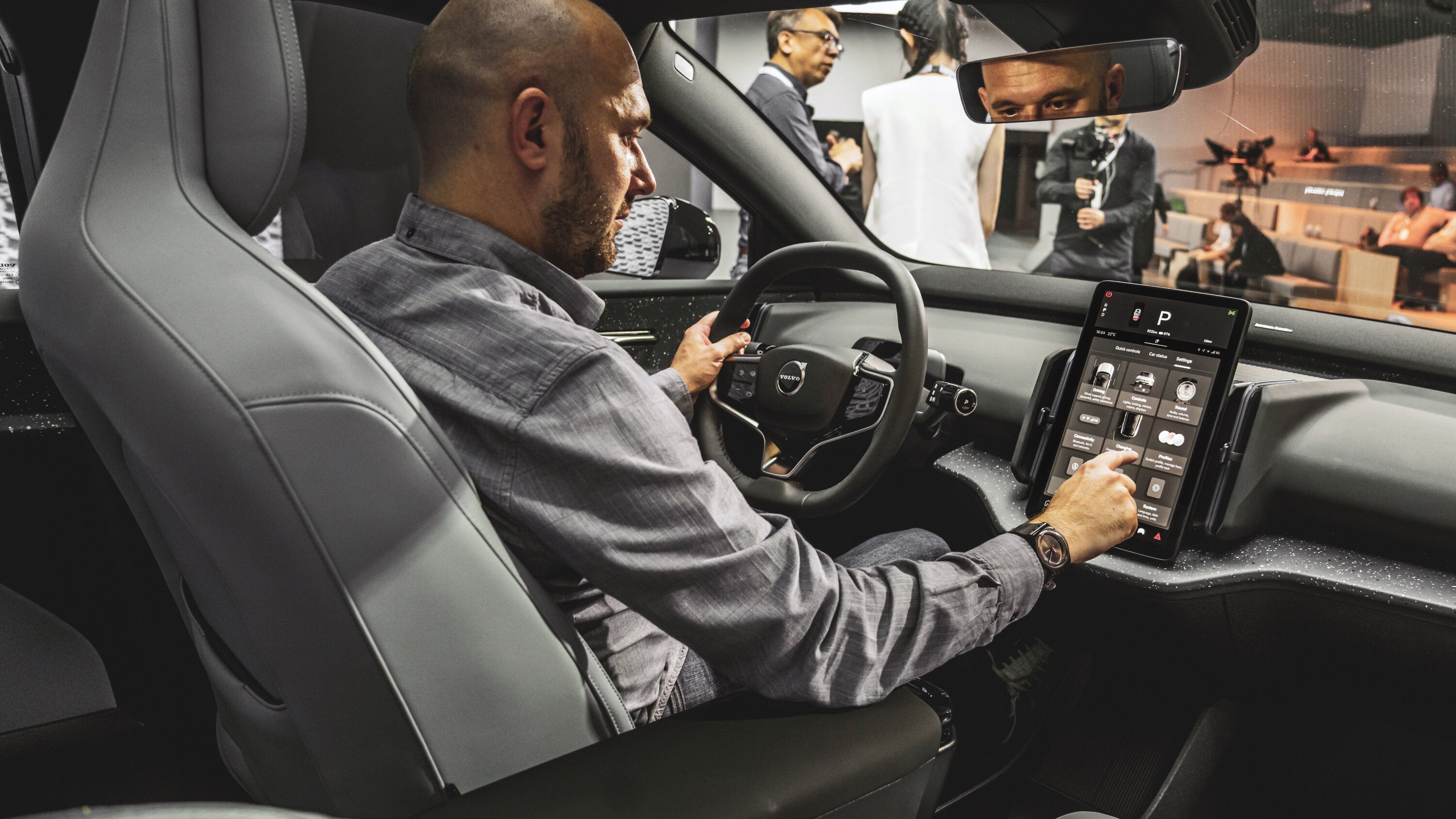
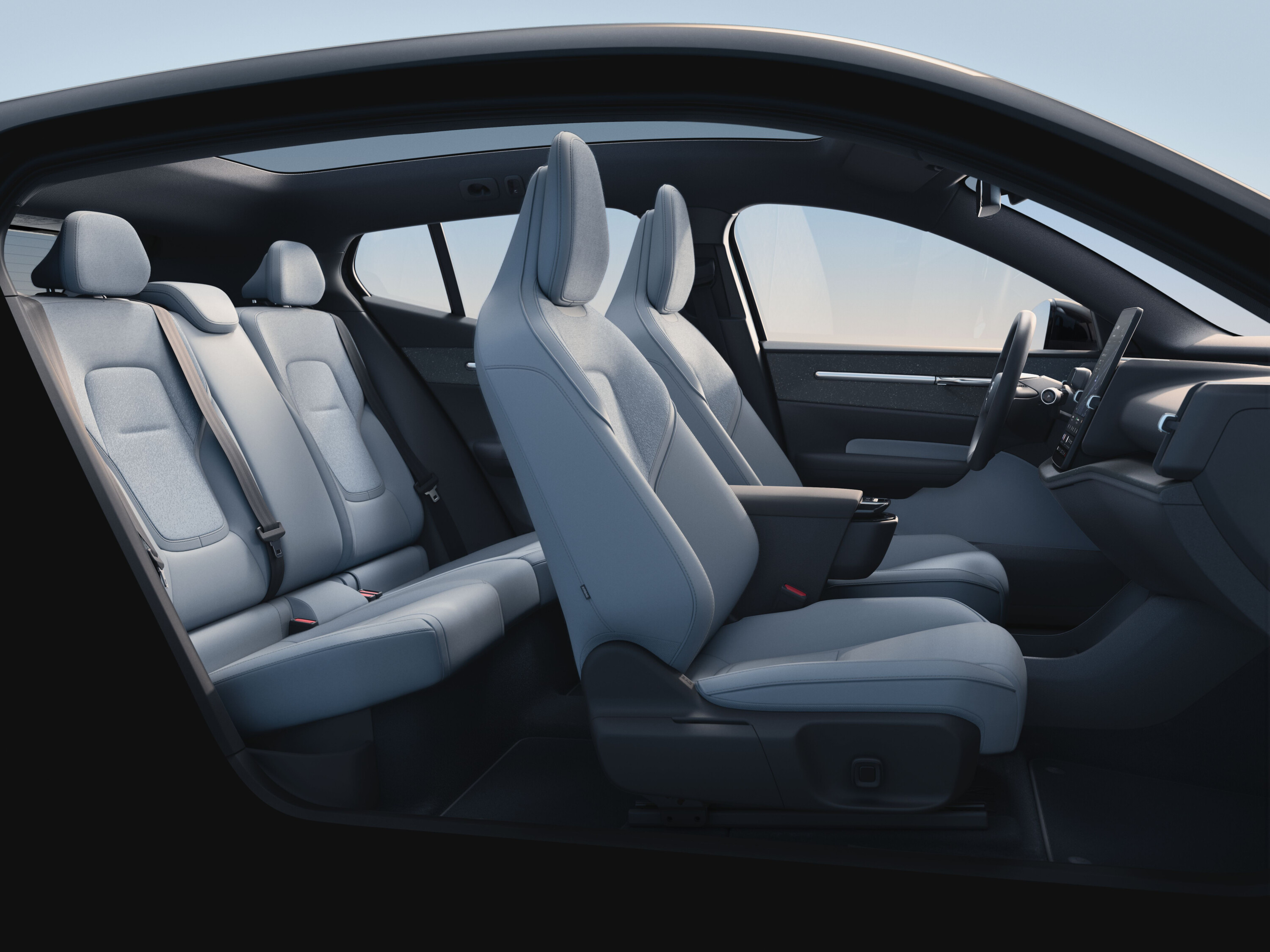
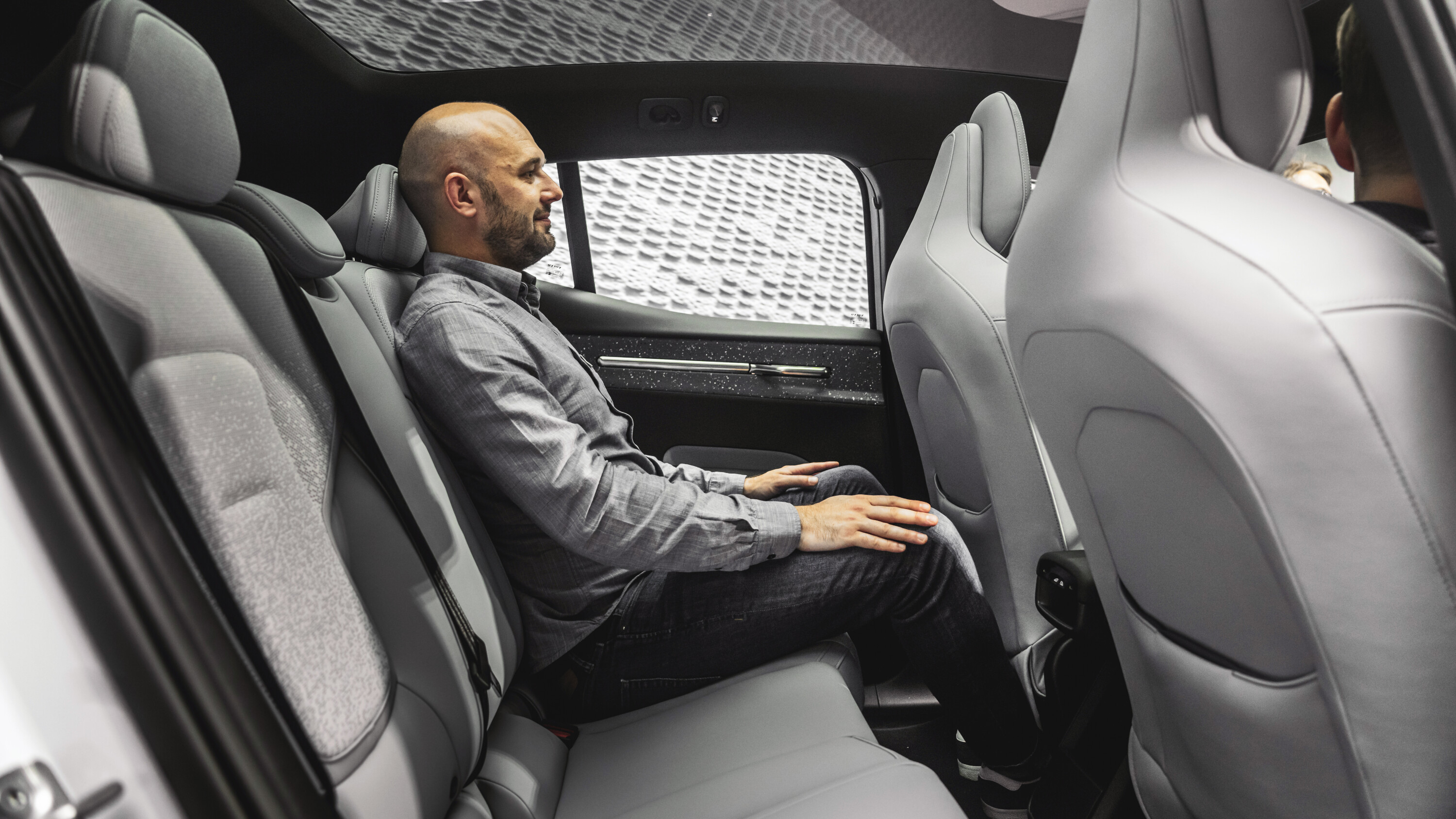
A 12.3-inch portrait touchscreen dominates inside, but there are lots of cool design flourishes to lap up around it.
The cabin aims to maximise the EX30’s dinky footprint by using a centralised soundbar rather than door speakers, while the traditional glovebox has been moved to the middle, too.
More space for the front passenger’s legs, easier access for the driver. Why has no one thought of that sooner?
7
2
It’s a neat thing to look at on the outside, too, Volvo’s design team staying mindful of the company’s more notable cars.
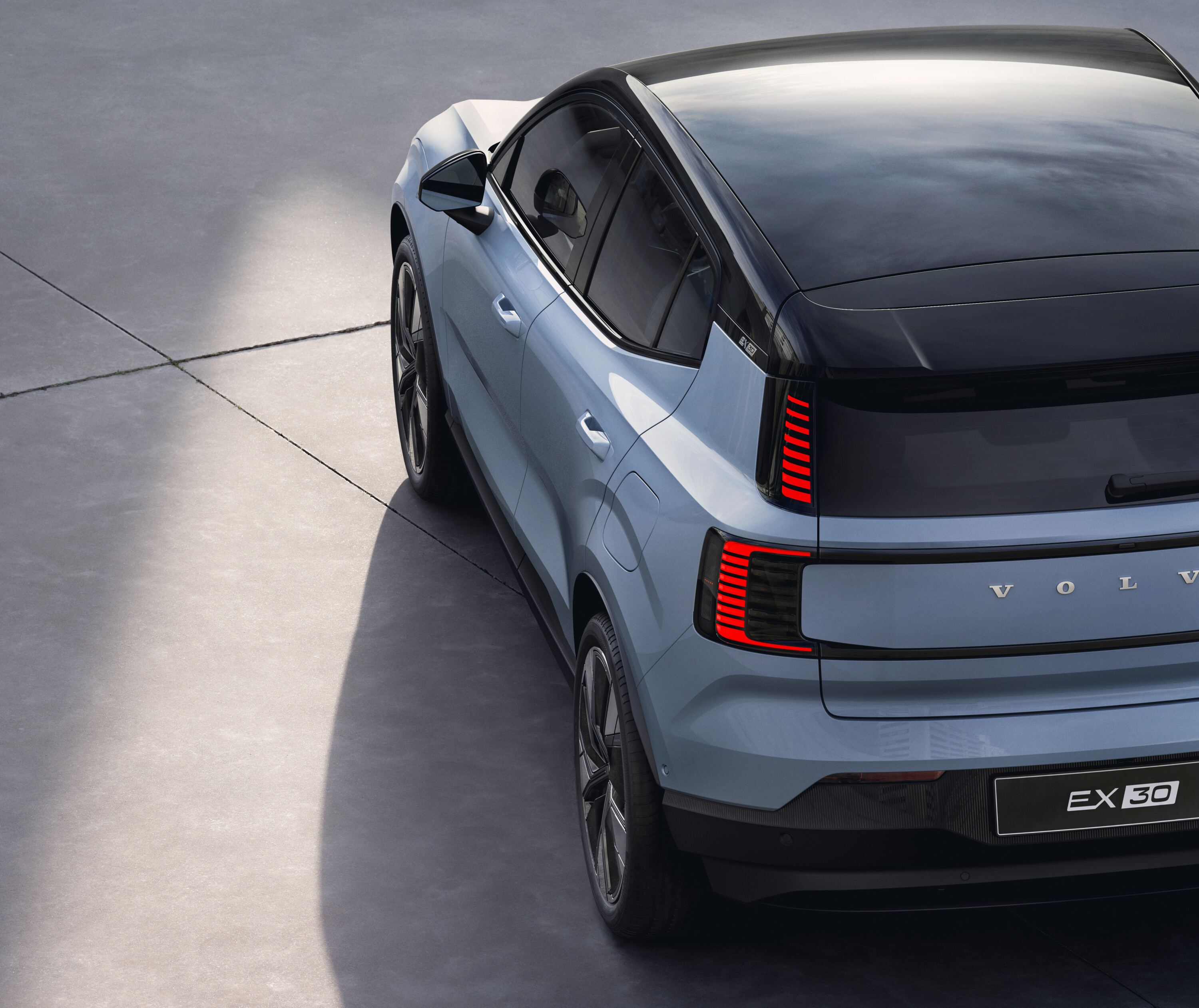
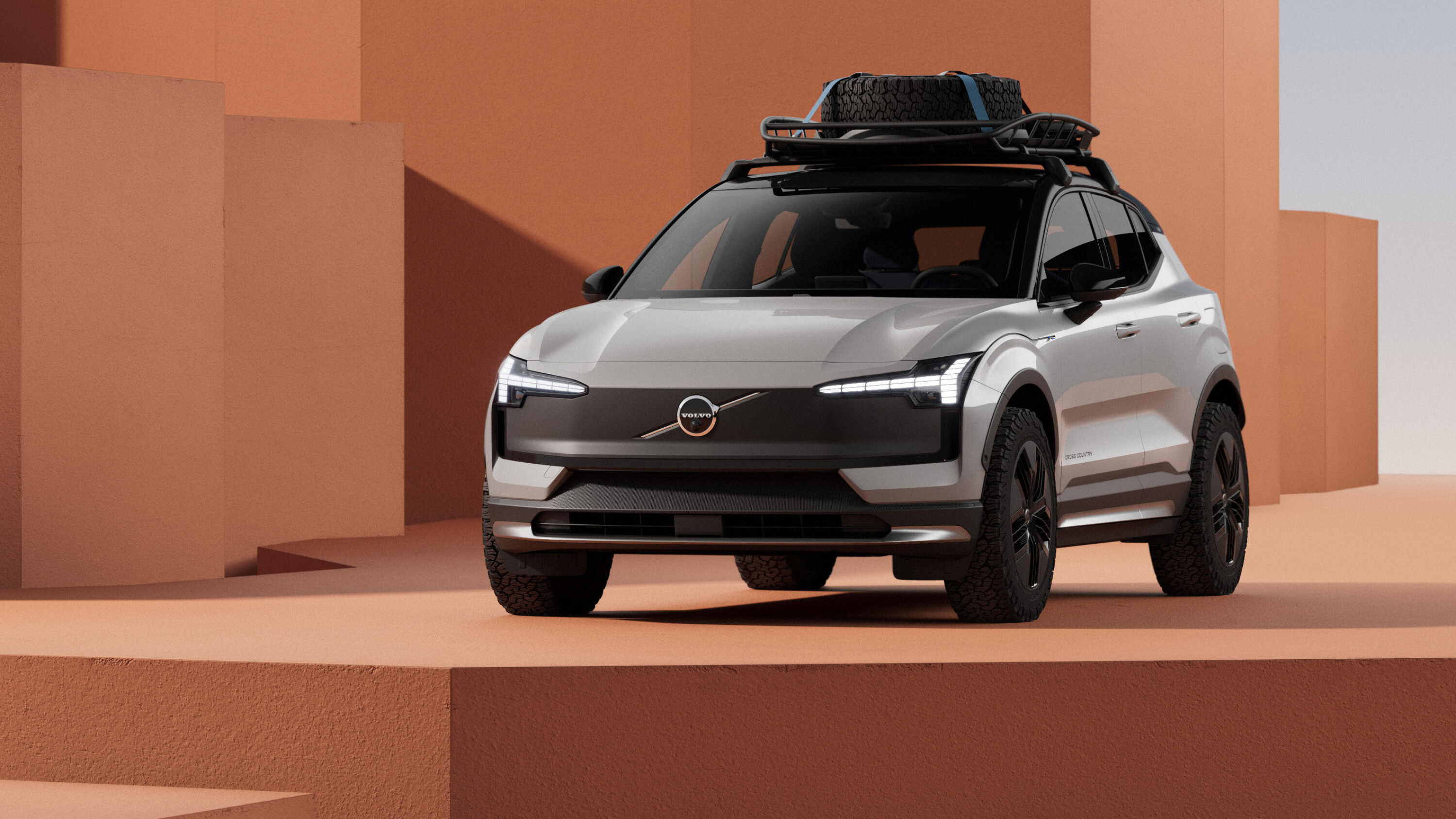
Echoing the EX90, there are slim, vertical rear lights to nod back to 850s and V70s of old. Worried it’s all too sleek? There’ll be an EX30 Cross Country, too, offering a more rugged aesthetic.
It sits atop Geely’s ‘Sustainable Experience Architecture’ platform, which you’ll find beneath a bunch of other cars, the Smart #1 (one of the EX30’s main rivals overseas) included. Perhaps we’ll see a small Polestar spun from it, too. (Probably not called Polestar 1, though…)
We’re told 70 per cent of EX30 customers will be new to Volvo, and for many of them it’ll be a second car that does comfortably under 50km a day. They’re also likely to be home charging.
Its lower entry point might just bring younger buyers into the Volvo fold, of course – that’ll certainly be the hope.
7
Above: The EX30 Cross Country
The Cross County doesn’t add much in the way of capability, but Volvo says it’ll come with more ground clearance (no numbers offered), 19-inch black wheels and the option of 18-inch wheels with bespoke tyres.
The range will open in Core trim, the spec of which is yet to be announced, followed by the Plus (Harman Kardon audio, heated seats and wheel, Pilot Assist safety tech) and Ultra (360-degree camera, auto parking, pano roof, 20in alloys and a more powerful 22kW on-board charger) sitting above.
In a move similar to other EV brands, Volvo will only offer the mid- and top-spec models at launch – hoping to capitalise on keen early adopters willing to spend more – with the Core model to join the range later.
One interesting safety function is a feature that helps to prevent ‘dooring’ accidents, alerting you if the system detects that you’re about to open your door into the path of a cyclist, scooter rider or runner.
12
What about the XC40 EV?
If you’re wondering whether the EX30 replaces the XC40 Recharge Pure Electric, it does not.
While the latter rides on an older, petrol-based architecture, it is still plainly larger than the EX30 (apart from width) and still has a place in the line-up. See how the two compare below.
| Dimensions | Volvo EX30 | Volvo XC40 EV |
|---|---|---|
| Length | 4233mm | 4425mm |
| Width | 1940mm | 1863mm |
| Height | 1555mm | 1652mm |
| Wheelbase | 2650mm | 2702mm |
| Boot space | 318L rear seats up, 904L rear seats down | 418L rear seats up, 1373L rear seats down |
ud83dudcdd Dobie’s field notes from the reveal event
Volvo defines itself as an SUV brand now, but it will still make wagons. SEA platform cost scaling ensures it can continue with this critical ‘heritage’ design.
This scale also allows the EX30 to be so affordable.
Volvo says it’s exclusively a family car brand now, rather than a performance car brand. Yep, 3.6sec to 100km/h is for ‘safety’. Polestar does performance cars.
The EX30 is 15% recycled material. The target is 25% by 2025, and ‘near 100’ is theoretically possible.
A shareable smartphone digital key is part of the sustainability push. The car is used more of the time if it’s shareable – thus it better justifies its production. Interesting!
The infotainment UX is based around everything being ‘glanceable’ and they’ve no qualms about shoving the climate control and speedometer in the central screen. Their tests show customers adjust fine. (As Tesla can no doubt attest.)
Australia is pioneering a bit by going all-EV first, but the global strategy boss is delighted when markets volunteer to do that. Every market will go sooner than 2030 if they can and the market is right.
What will the EX30 cost in Australia?
Here’s the good news: Australian details have been revealed already. The line-up will start from $59,990 when it arrives in the last quarter of 2023.
Get all the details at our story linked below.
MORE
Electric SUVs
More EV stories to help you choose the best car for your needs
- ? EV news, reviews, advice & guides
- ❓ Short & sweet: Your EV questions answered
- ⚡ New EVs: Everything coming to Australia
- ? Australia’s EVs with the longest driving range
- ⚖️ Best-value EVs by driving range
- ? How much do EVs cost in Australia?
- ? How much more expensive are EVs?
- ⚖️ Number crunching: Is it time to switch to an EV?
- ♻ Should you buy a used EV?
- ?️ Are EVs more expensive to insure?
- ? Costs compared: Charging an EV vs fueling a car
- ? EV charging guide
- ?? EV servicing explained
- ? EV battery types explained
- ? When do EV batteries need replacing?
- ? Hydrogen v EVs: What’s best for Oz?
- ? How sustainable are EVs, really?
MORE advice stories to help you with buying and owning a car
A wealthy businessman speeding to the finish line has been handed a €121,000 fine (A$200,000) for travelling 30km/h over the speed limit in Finland.
The Finns, some might say smartly, calculate speeding fines with a “progressive punishment” approach based not only on the severity of the infringement – but also on the offender’s income.
The driver, 76-year-old multimillionaire Anders Wiklöf, told Nya Åland [↗] he “really regrets the matter”. The fine amounts to half his disposable income over 14 days.
“I had just started slowing down, but I guess that didn’t happen fast enough. It’s how it goes.”
Yep, that’s how it goes when you’re the chairman and founder of a A$550m-a-year holding company…
https://www.instagram.com/p/B2I66bODIyh/
Wiklöf (above, in the stadium that bears the name of his company) has been fined twice previously for speeding, which factored into the fine he was given, along with a 10-day licence suspension.
Those earlier offences netted him fines of €63,680 (~A$100,557 ) in 2018 and €95,000 (~A$150,075) in 2013.
He said he hoped the fine would be spent usefully. “I have heard the government wants to save €1.5bn on healthcare in Finland, so I hope that my money can fill a gap there,” he said.
Generous fella.
How does Finland’s system work?
In Finland, a unique “day fine” system is in place, which adjusts speeding fines according to a motorist’s salary. Essentially, the fine is calculated using an offender’s daily disposable income, typically considered to be around half of their daily salary.
The size of the fine also increases with the severity of the speed limit violation. In other words, the higher the speed above the limit, the more “day fines” the driver incurs.
This progressive approach to speeding fines has led to some significant penalties for high-income drivers.
In 2002, Anssi Vanjoki, a former director of Nokia, was handed a fine of 116,000 euros (~A$183,250) for travelling at a speed of 75km/h in a 50km/h zone while on his motorbike.
In 2015, Reima Kuisla, a businessman from Finland, was penalised with a 54,000 euro fine (~A$85,366) for driving 22km/h over the 50km/h speed limit.
Speaking with Euronews, a Finnish police officer said: “The minimum is a six euros per day fine, so it is always at least that, but it can go all the way to tens of thousands.”
And the record goes to…
Switzerland employs a similar system, and it currently holds the record for the highest speeding ticket ever issued worldwide: In 2010, a Swedish driver was detected travelling at a staggering 290km/h.
The driver was penalised with a fine of 3600 Swiss francs per day, applied over a 300-day period. This resulted in a cumulative fine amounting to approximately 1,080,000 Swiss francs, or roughly A$1,091,340.
In Australia, using Victoria as an example, exceeding the speed limit by 30km/h would get you a $600 fine regardless of your income, and an automatic three-month suspension of your licence.
In 2017, the UK implemented stricter speeding penalties. Based on the severity of the offence, drivers can now be fined up to 175% of their weekly income. However, fines are capped at £2,500, equivalent to around A$4150.
MG’s UK division has hinted at an overhauled line-up coming next year, including an affordable MG 3 successor and all-new MG ZS EV and HS SUVs.
Snapshot
- MG 3 replacement finally coming next year to UK
- Next-gen MG HS, ZS EV on the horizon
- Hot electric MG 4 X-Power expected
Speaking to Auto Express [↗], MG UK executives teased a range of new products coming from the Chinese automaker, as it prepares to sell only electric cars in select European countries from 2027.
1
MG 3 successor
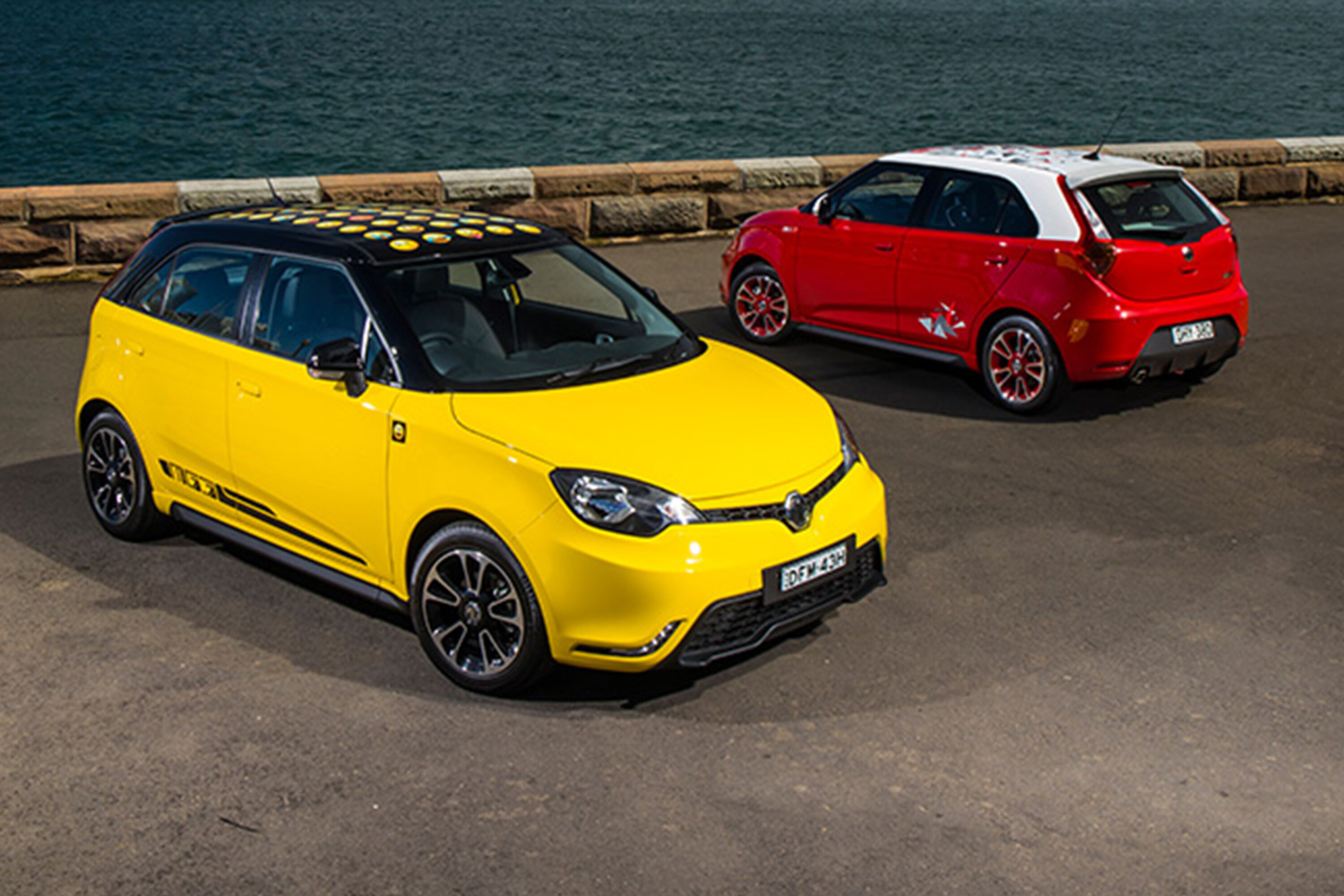
According to MG UK’s head of product and planning David Allison, first up will be replacing the budget-friendly MG 3 light hatch with a yet-to-be named entry-level model – confirming previous rumours.
“MG 3 will effectively be the first. That’s long overdue a replacement, that will happen springtime [autumn for Australia] next year,” Allison told Auto Express [↗].
“MG 3 will continue for another 12 to 18 months, before it’s replaced. But we won’t call it MG 3.”
To keep it affordable, the new model is unlikely to feature any form of electrification.
Despite some price rises in the past years, the current MG 3 remains Australia’s cheapest new car – currently from $19,490 drive-away. It dates back to 2011 and received a facelift in 2018.
1
Next-gen MG HS
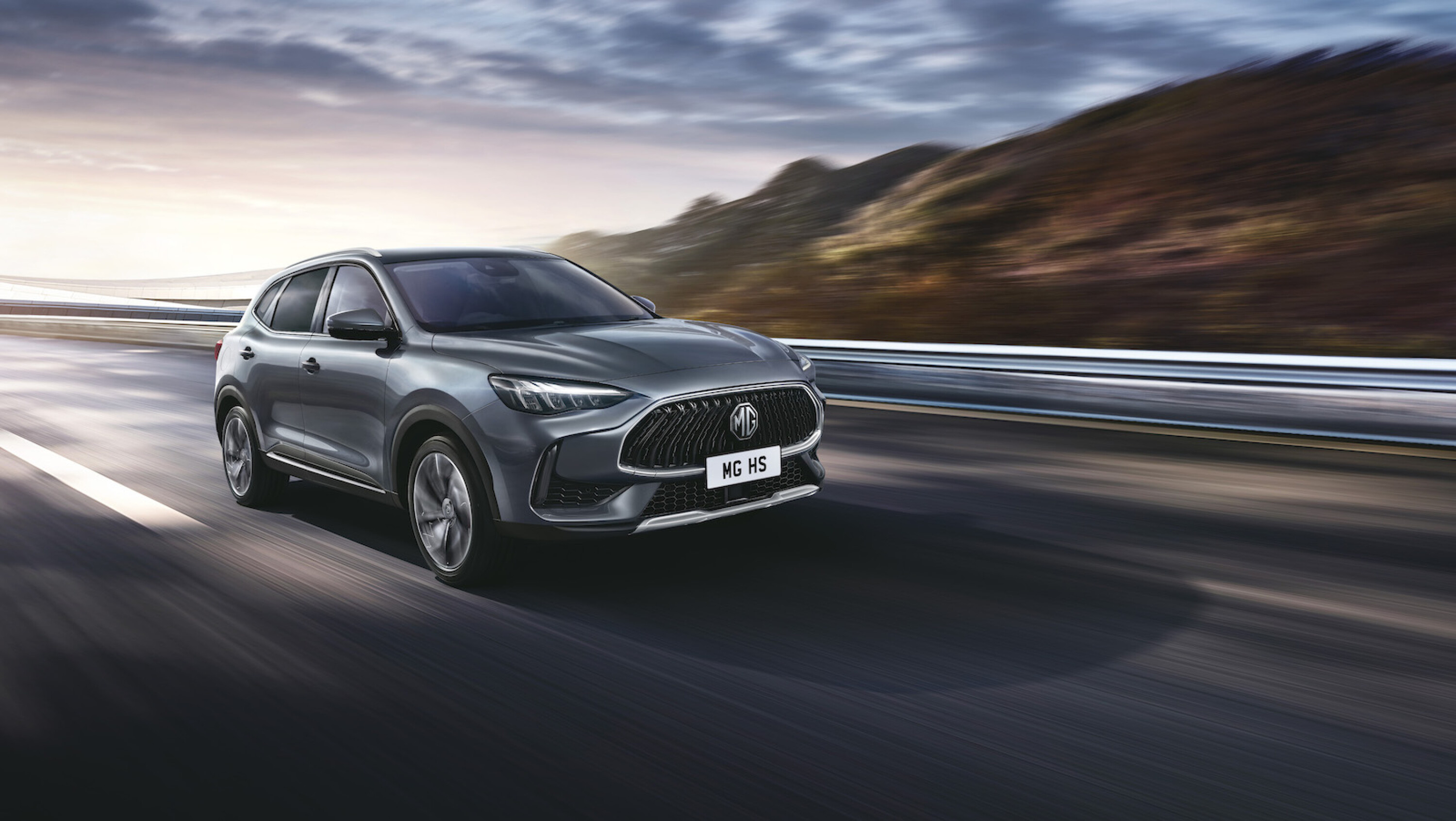
Despite the MG HS medium SUV recently gaining a facelift, Allison said it just keeps it fresh for the “last kind of 12 months until ultimately it gets fully replaced.”
The HS launched locally in 2020, but dates back to 2018 overseas.
It trails behind the Toyota RAV4, Mazda CX-5, and Kia Sportage in the sales race, but the HS Plus EV variant is currently the best-selling plug-in hybrid model in Australia.
Hybrid or full-electric propulsion for the next-generation MG HS has been speculated.
1
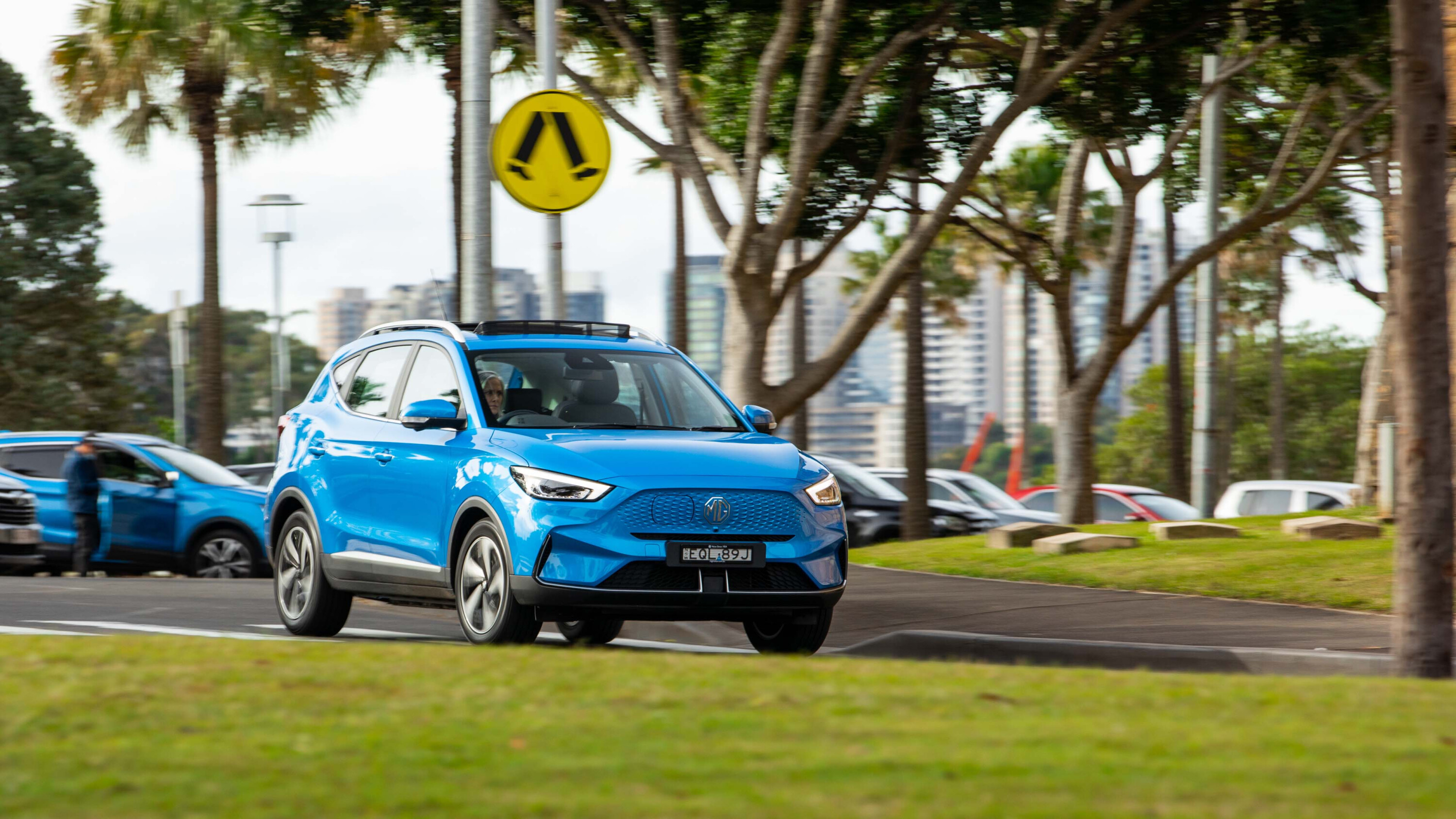
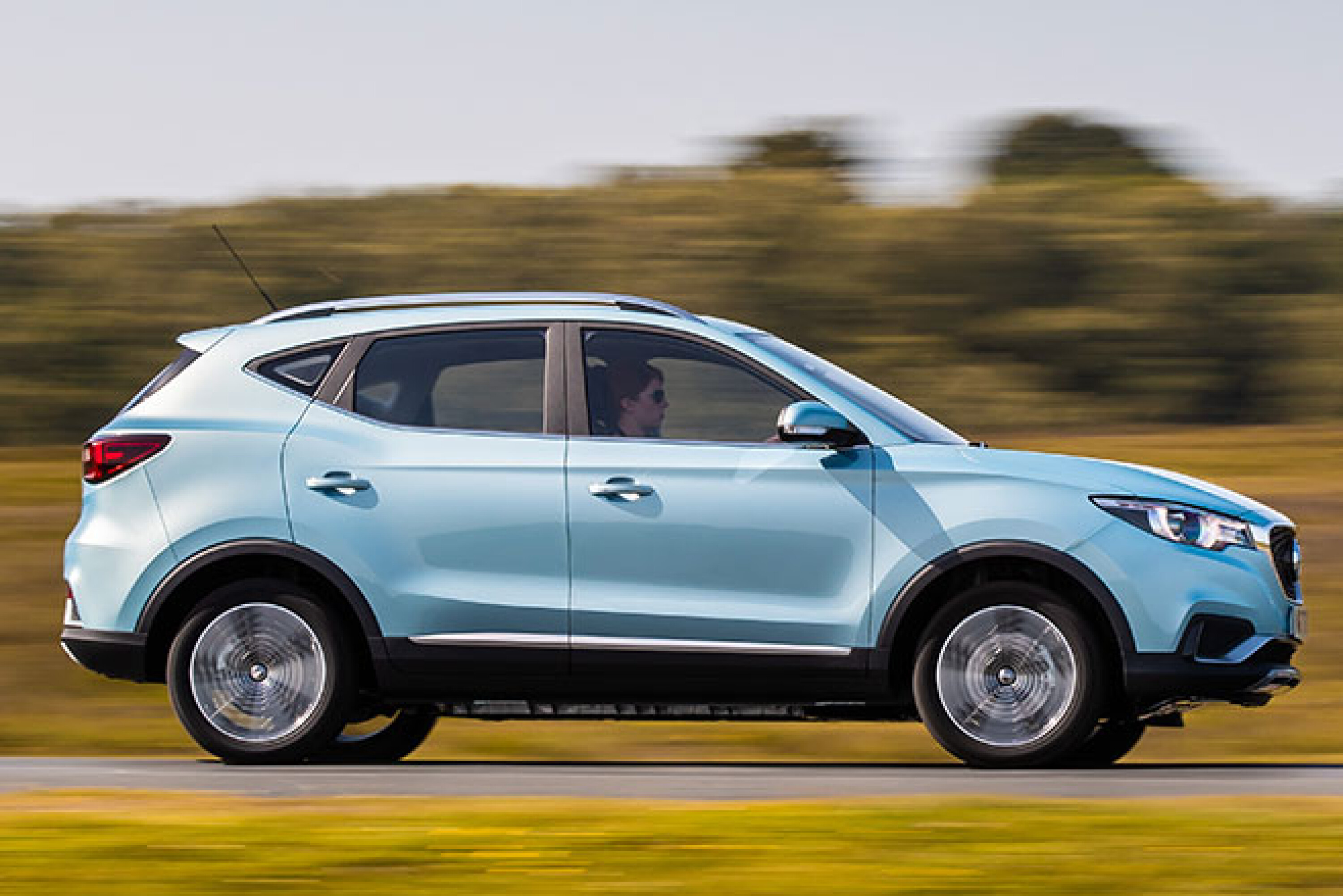
Next-gen MG ZS EV
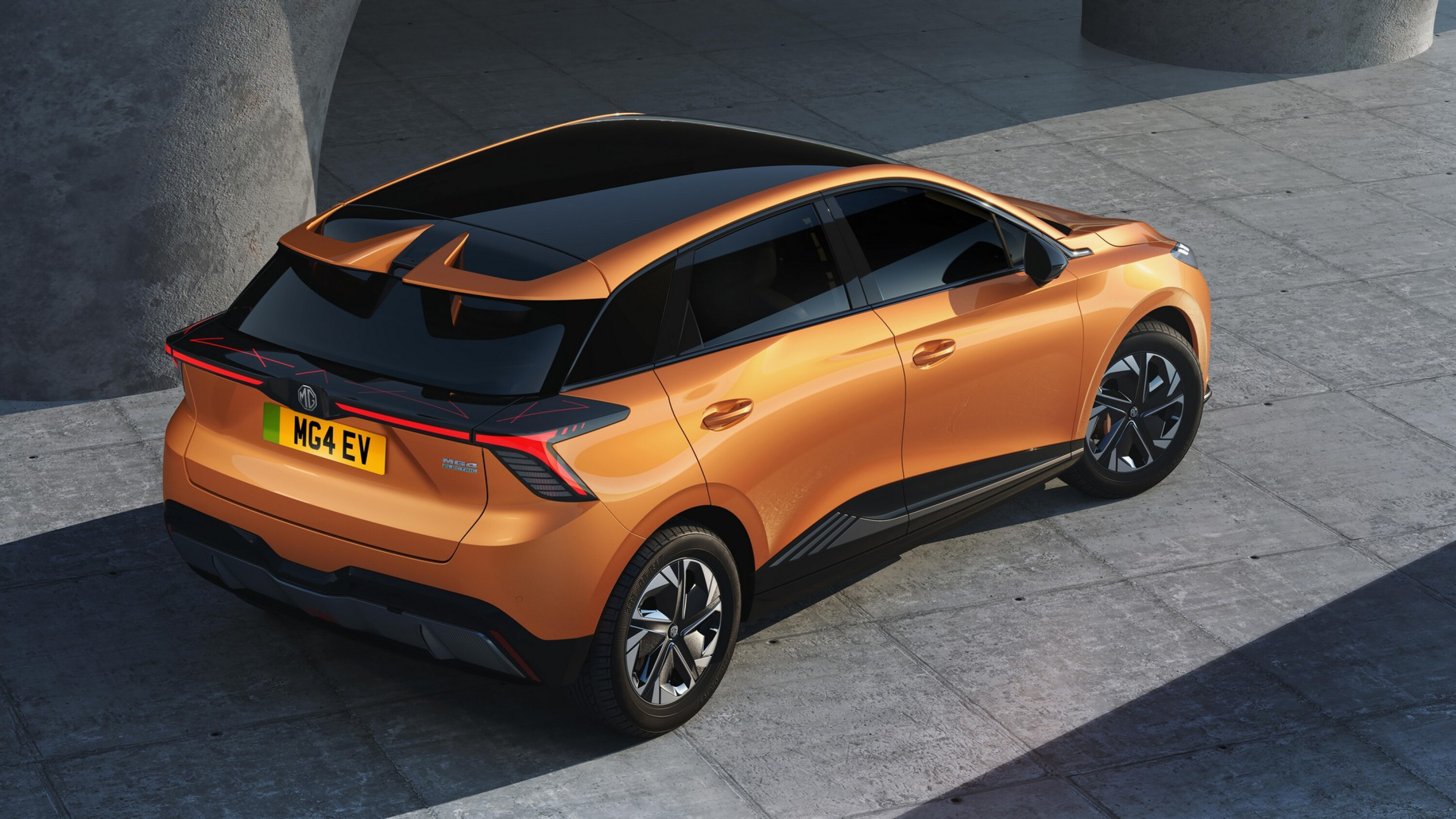
The next MG ZS small SUV will get a “substantial overhaul” by taking design traits from the MG 4 electric hatch.
It could also adopt the 4’s dedicated Modular Scalable Platform (MSP), signalling an all-new model instead of another update.
The ZS EV was just refreshed in Australia last year, following the petrol-powered ZST in 2020. The small SUV originally launched in China in 2017.
1
MG 4 X-Power electric hot hatch
A high-performance version will join the line-up of the forthcoming MG 4 electric hatch.
Dubbed the ‘X-Power’, it adopts a 51kWh gross battery, and a dual-motor all-wheel drive powertrain producing 330kW of power and 600Nm of torque. Acceleration from 0-100km/h takes 3.8 seconds.
Those performance figures would oust the Cupra Born and Abarth 500e – slotting between the pricier Tesla Model 3 Long Range and Performance sedan.
Wheels expects the MG 4 X-Power will come to Australia and is under consideration to launch later this year.
1
Other MG models
As the Chinese carmaker faces tough competition, notably from Build Your Dreams (BYD) globally, it will launch its sleek flagship Cyberster electric convertible in the UK next year.
The European-exclusive MG 5 electric wagon will also be replaced by an all-new model with a similar design to the MG 4.
MORE
Everything MG
More EV stories to help you choose the best car for your needs
- ? EV news, reviews, advice & guides
- ❓ Short & sweet: Your EV questions answered
- ⚡ New EVs: Everything coming to Australia
- ? Australia’s EVs with the longest driving range
- ⚖️ Best-value EVs by driving range
- ? How much do EVs cost in Australia?
- ? How much more expensive are EVs?
- ⚖️ Number crunching: Is it time to switch to an EV?
- ♻ Should you buy a used EV?
- ?️ Are EVs more expensive to insure?
- ? Costs compared: Charging an EV vs fueling a car
- ? EV charging guide
- ?? EV servicing explained
- ? EV battery types explained
- ? When do EV batteries need replacing?
- ? Hydrogen v EVs: What’s best for Oz?
- ? How sustainable are EVs, really?
MORE advice stories to help you with buying and owning a car
The ute race is basically a three-way battle: Toyota, Ford and Isuzu. All of them are big and bluff and seem to be in a competition to slap names on them like Baby Eater or Necksnapper or Destroyer of Worlds.
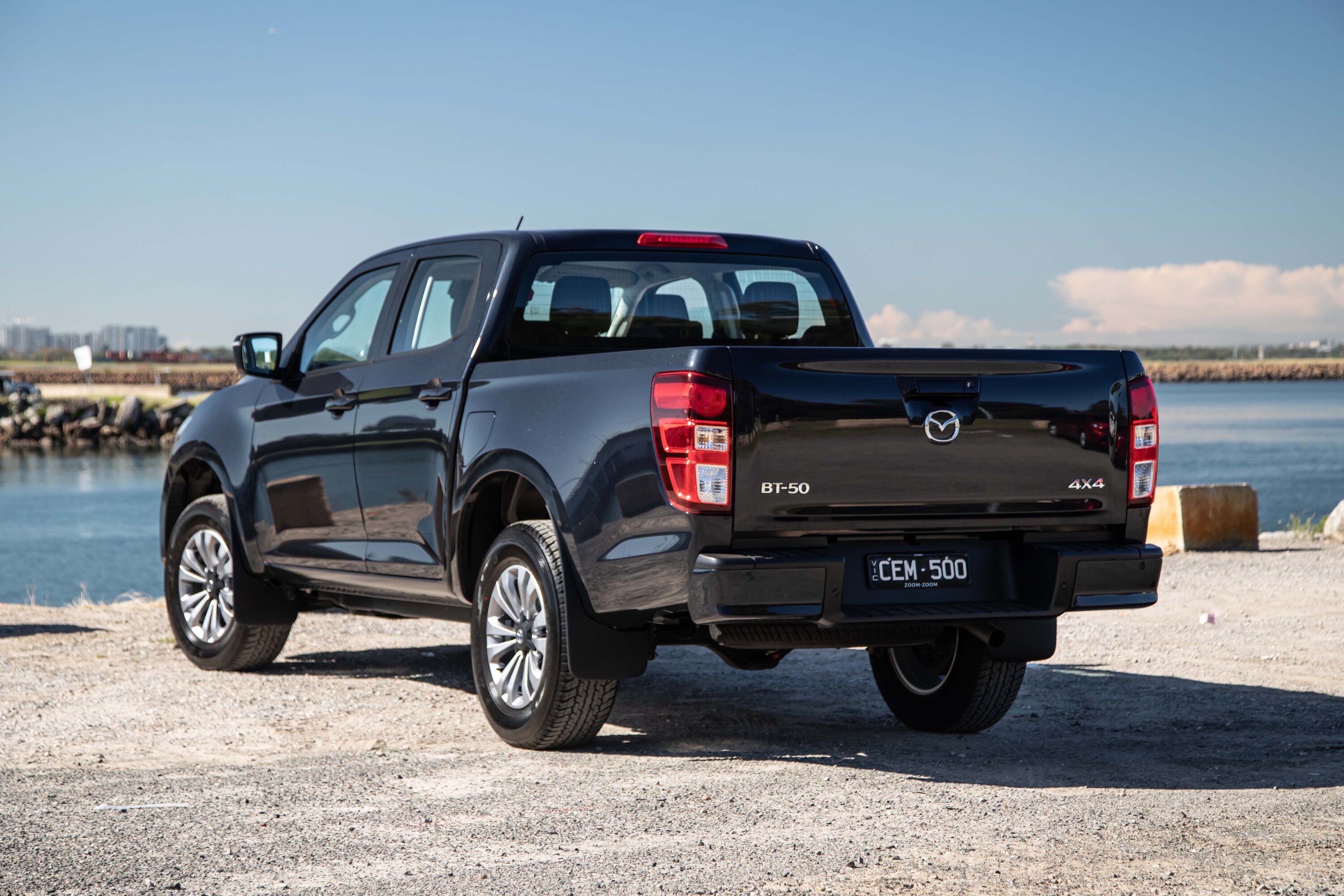
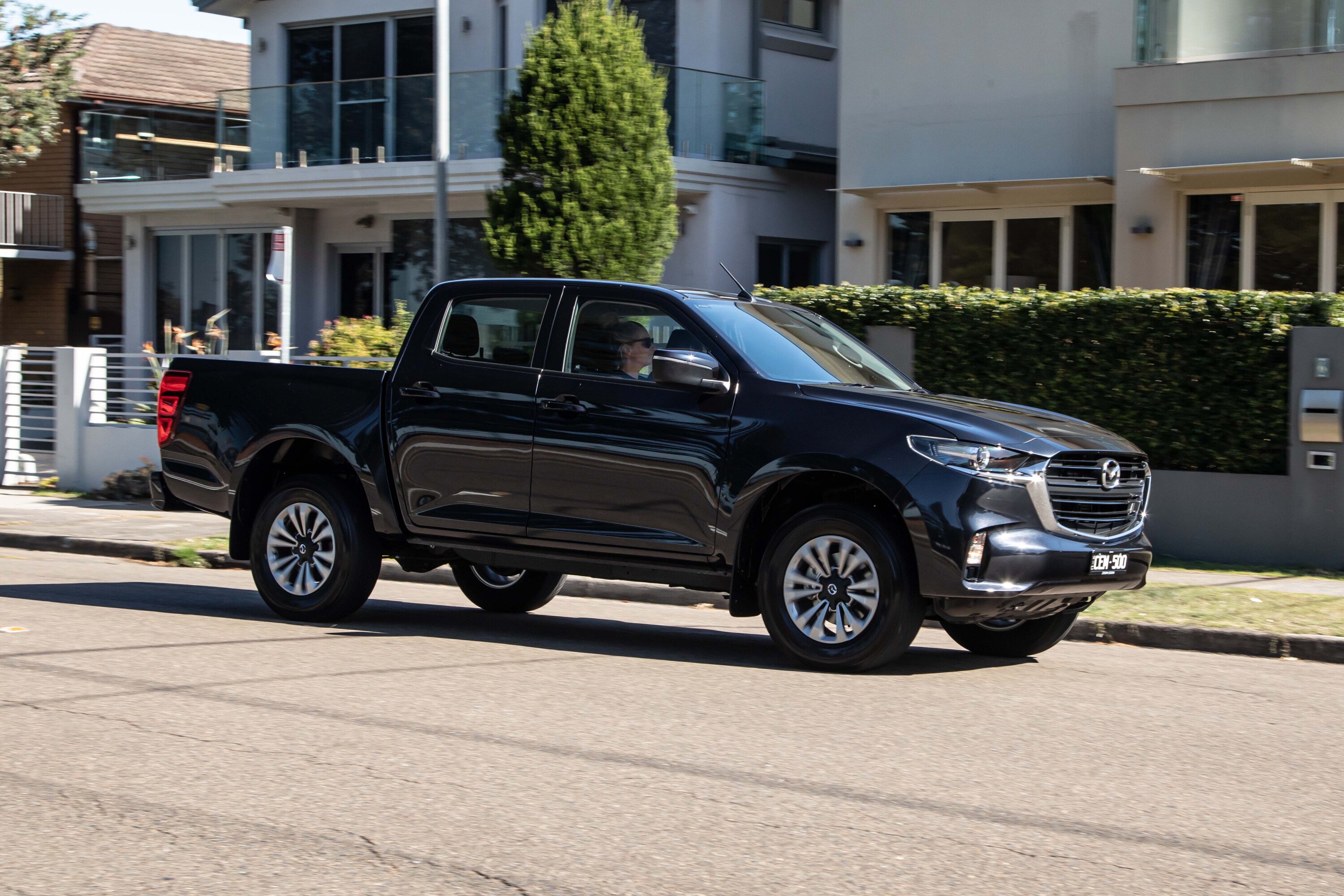
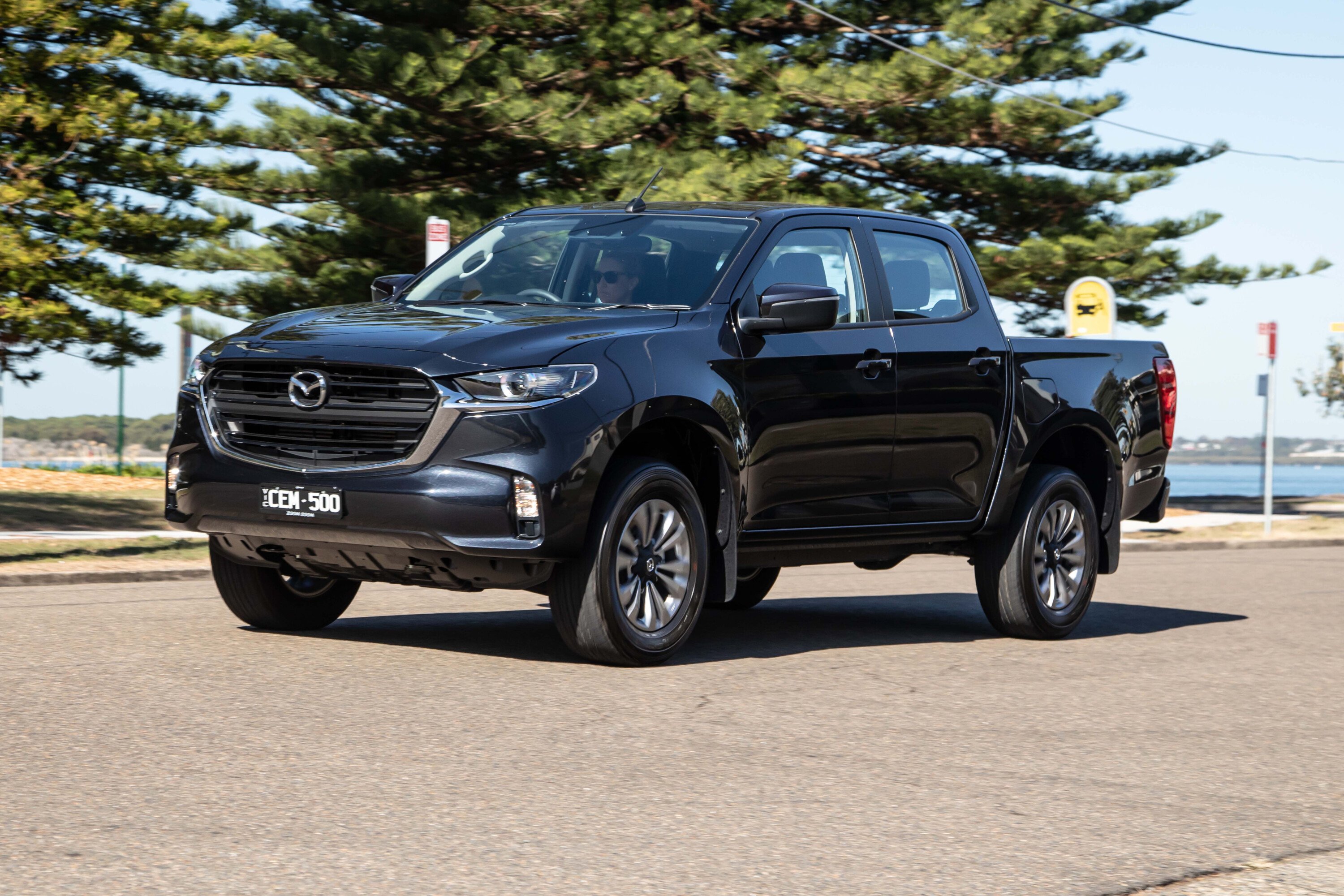
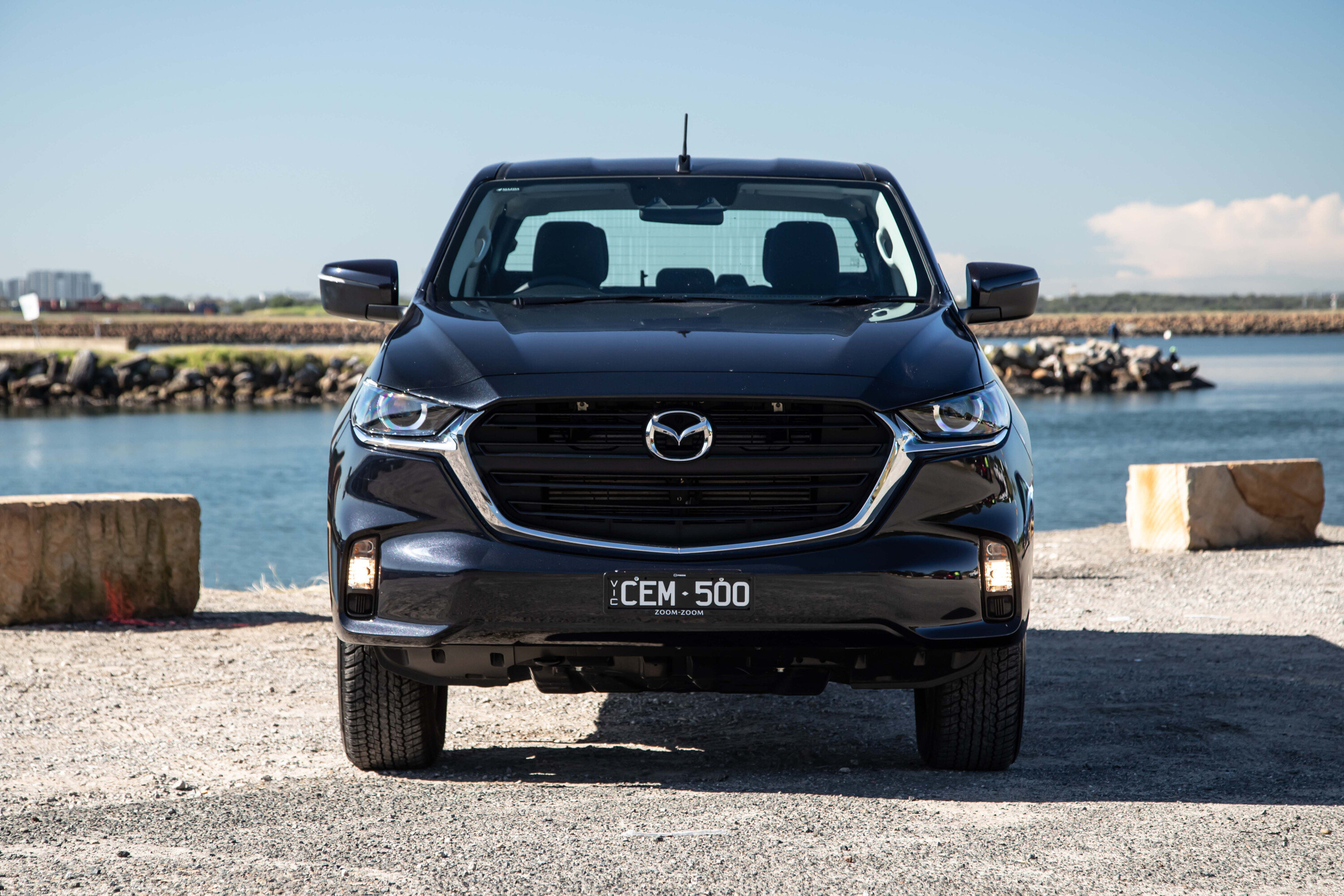
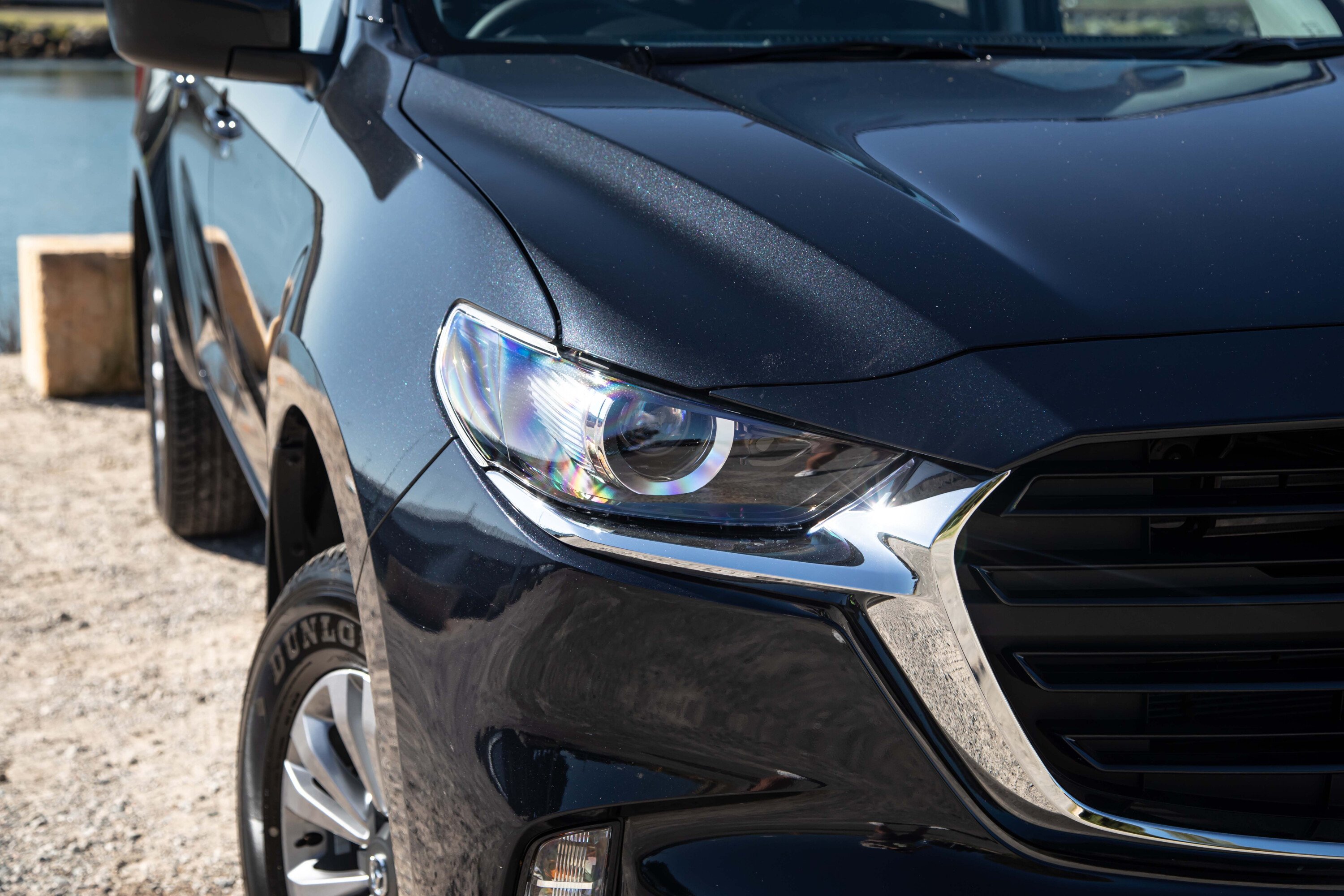
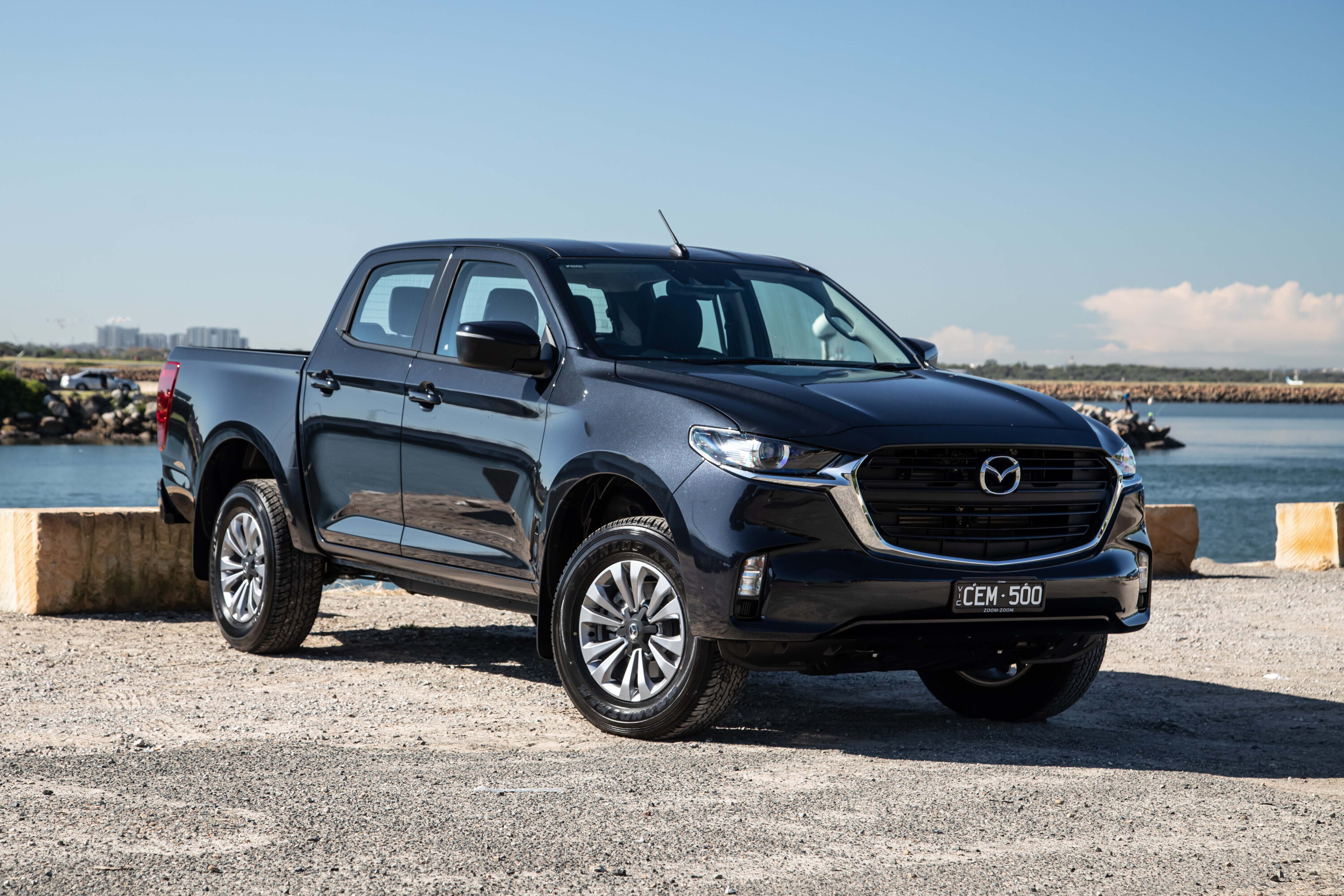
Mazda’s BT-50 has taken a different approach, at least in the styling. Mazda’s attractive slim headlights and multi-point grille work very nicely to deliver a sleek-looking ute, if such a thing were possible.
Is Mazda’s heart in it, though? Because this isn’t a Mazda, it’s an Isuzu with the aforementioned grille and lights treatment.
1
JUMP AHEAD
- How much is it, and what do you get?
- How do rivals compare on value?
- Interior comfort, space and storage
- What is it like to drive?
- How is it on fuel?
- How safe is it?
- Warranty and running costs
- VERDICT
- Specifications
How much is it, and what do you get?
The XT sits one step up from the bottom of the expansive BT-50 range and comes in various combinations of tub, cab chassis, 4×2, 4×4, manual and automatic.
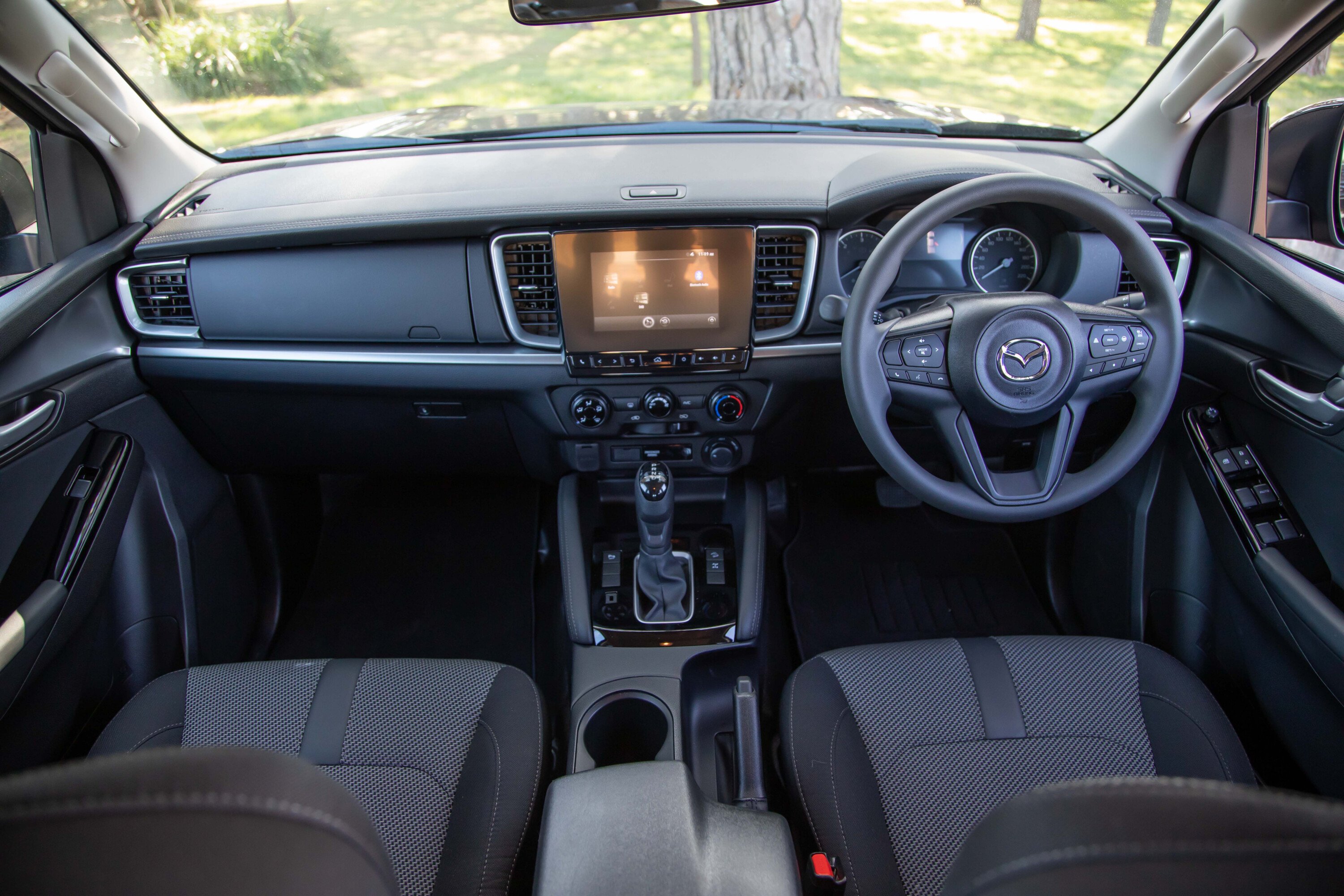
Most ship with the 3.0-litre four-cylinder turbo-diesel, but you can also get a 1.9-litre turbo-diesel four if you don’t mind going even slower. My ute for the week was towards the upper end of the XT list, the 4×4 dual-cab auto for $55,080 before on-road costs.
1
| 2023 Mazda BT-50 XT standard features | |
|---|---|
| 17-inch alloys | Auto LED headlights |
| Cloth trim | Power windows and mirrors |
| Air-conditioning | Adaptive cruise control |
| Reversing camera | Wireless Apple CarPlay |
| Wired Android Auto | Six speaker stereo |
| DAB digital radio | 7.0-inch screen |
| Auto wipers | Cloth trim |
| Full-size steel spare | |
How do rivals compare on value?
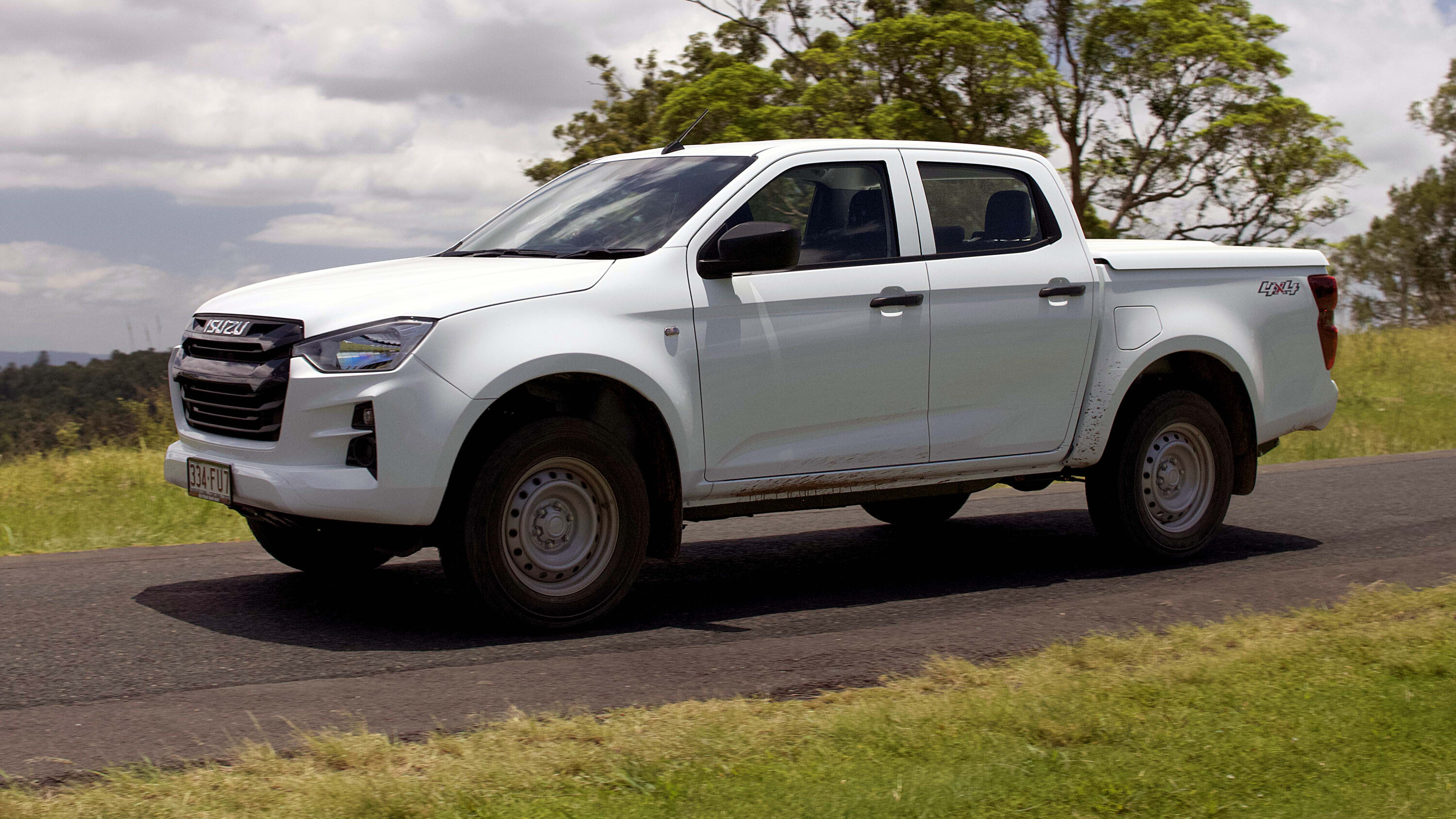
Where do you start? Well, I guess you start with its mechanical twin, the Isuzu D-Max.
The D-Max LS-M auto 4×4 is very close to the Mazda’s pricing and is mechanically extraordinarily similar (some would say identical). Obviously, it looks quite different at least from the doors forward but you’ll be hard-pressed to tell the interiors apart with the exception of the steering wheel.
Ford’s Ranger is a classic of the breed and like the Mazda has a dizzying array of trim options that grow by the day. For a snip under the BT-50’s price, you can get a Ranger XLS auto 4×4 with a huge number of gears in the transmission and a smaller but more powerful 2.0-litre turbo-diesel.
1
The evergreen Toyota HiLux – if you have the patience to wait – is available in SR Auto 4×4 spec with a 2.8-litre turbo-diesel and a six-speed auto. It’s probably the most basic-looking in this list and, weirdly, competes with the Mazda and Isuzu for having the worst media screen software.
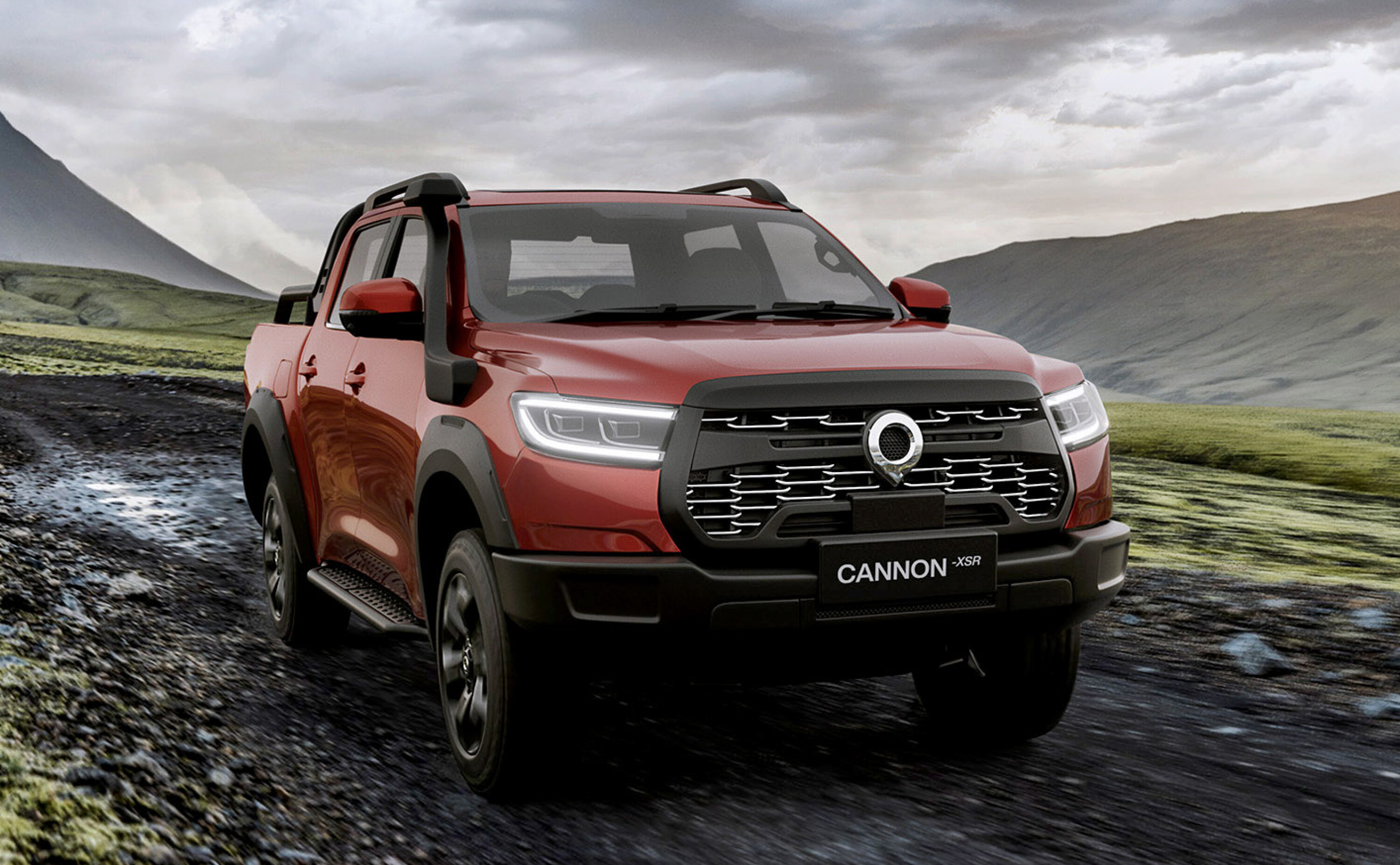
While all these machines come from Thailand, China’s GWM offers the Cannon Ute. You basically can’t spend more than $52,990 on the Cannon, which nets you a specced-up XSR. It looks a bit like the old HiLux and has some charming and clever features as well as a fully-loaded interior.
1
Interior comfort, space and storage
Despite the slimline nose making the BT-50 look smaller and less imposing than most of its competition, it’s still a huge unit.
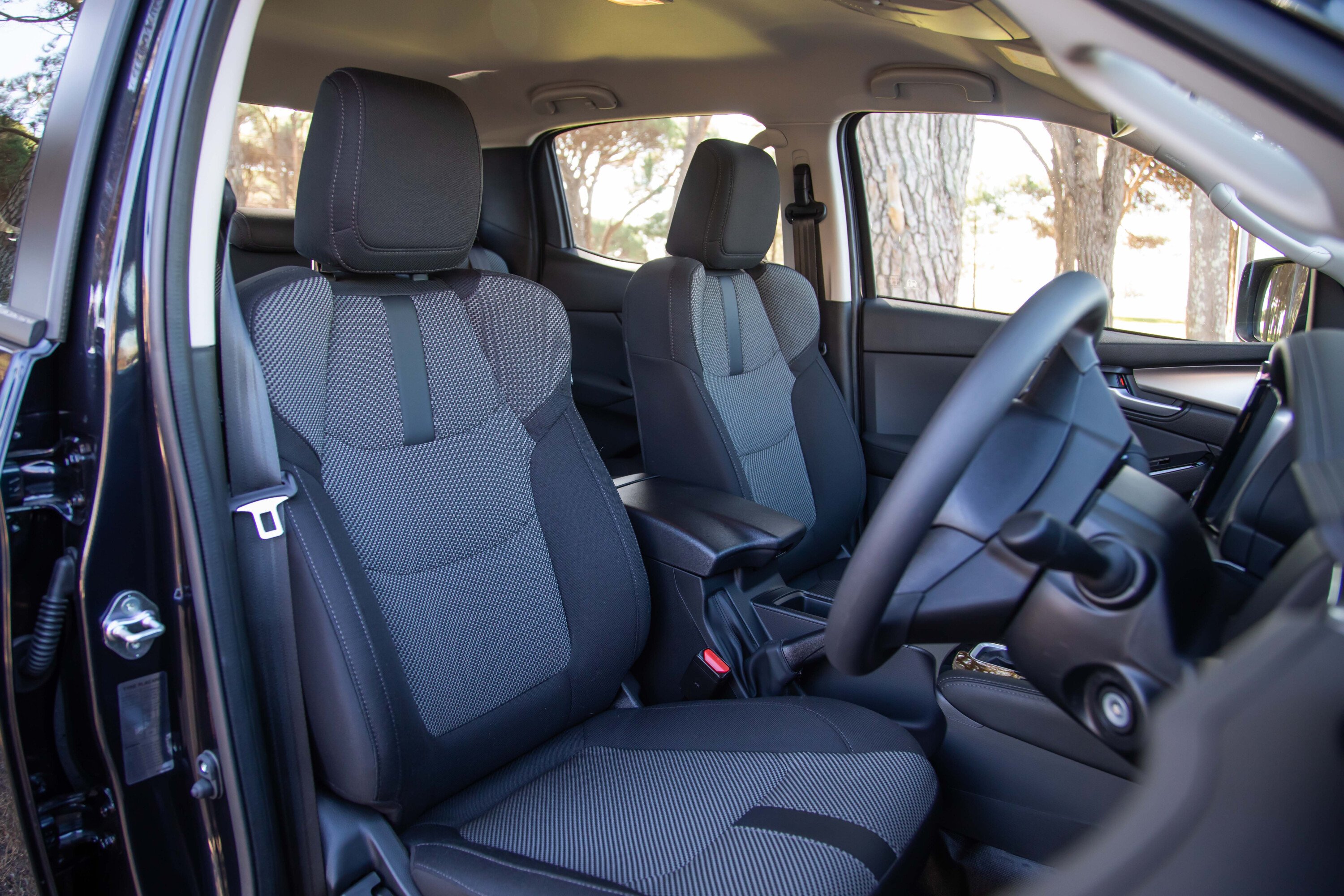
Inside the cabin, you get two cup holders up front, a bottle holder in each door, a large glovebox that is overwhelmed by the instruction manual and a smaller box above with a lid. There’s a space under the centre stack for your phone that sadly does not also feature wireless charging.
The front seats feel like actual Mazda seats to me rather than carryovers from the donor Isuzu D-Max and they even look good in a combination of two-tone cloth.
1
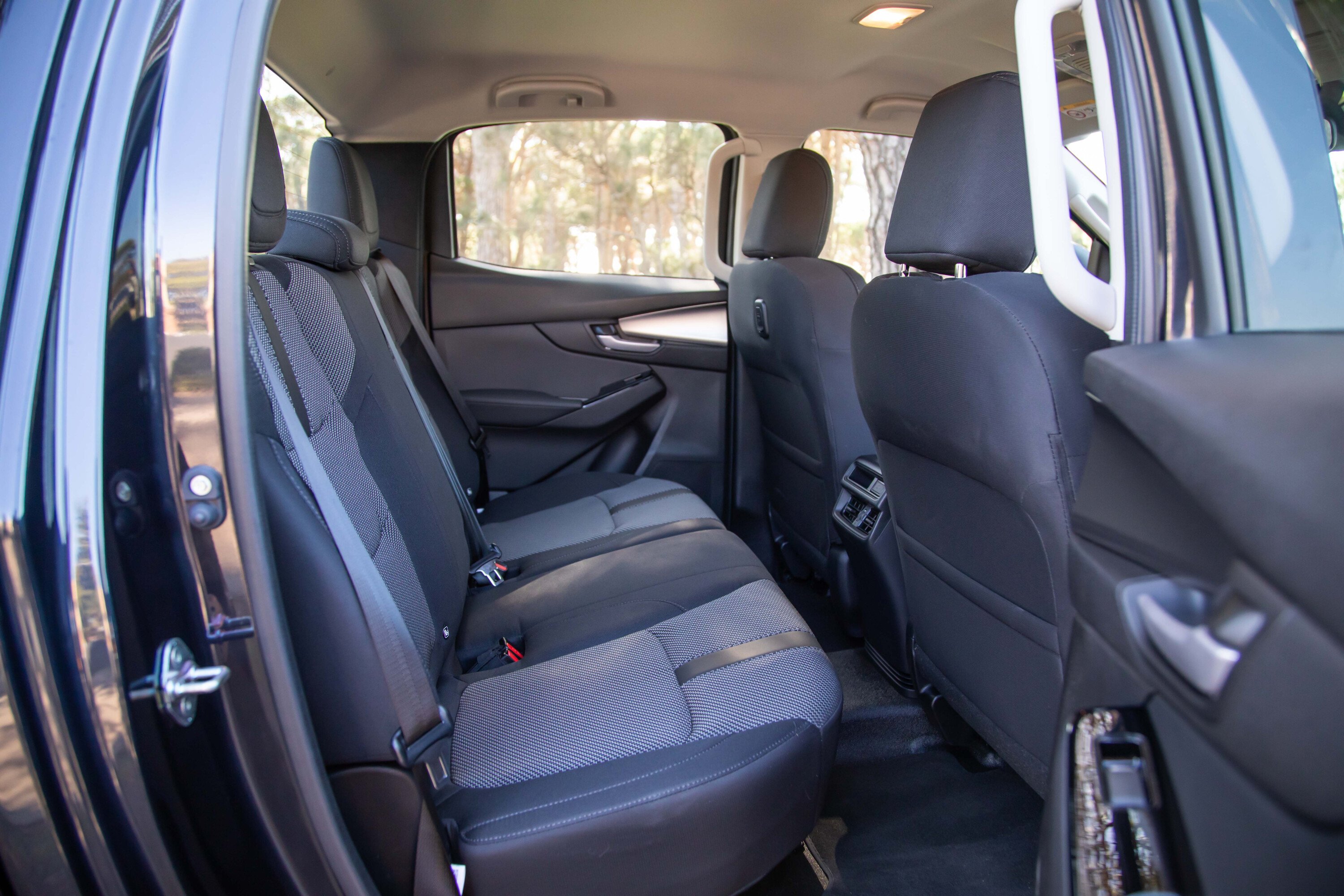
It’s a bit quiet in the back, with just a couple of seatback pockets and no armrest, although the day is partially saved by the presence of air vents. Like the front seats, they’re pretty comfortable, although legroom isn’t amazing and your head feels close to the glass behind you. Mostly because it is. Having said that, the outboard seats feature generous headrests, so you don’t feel too exposed.
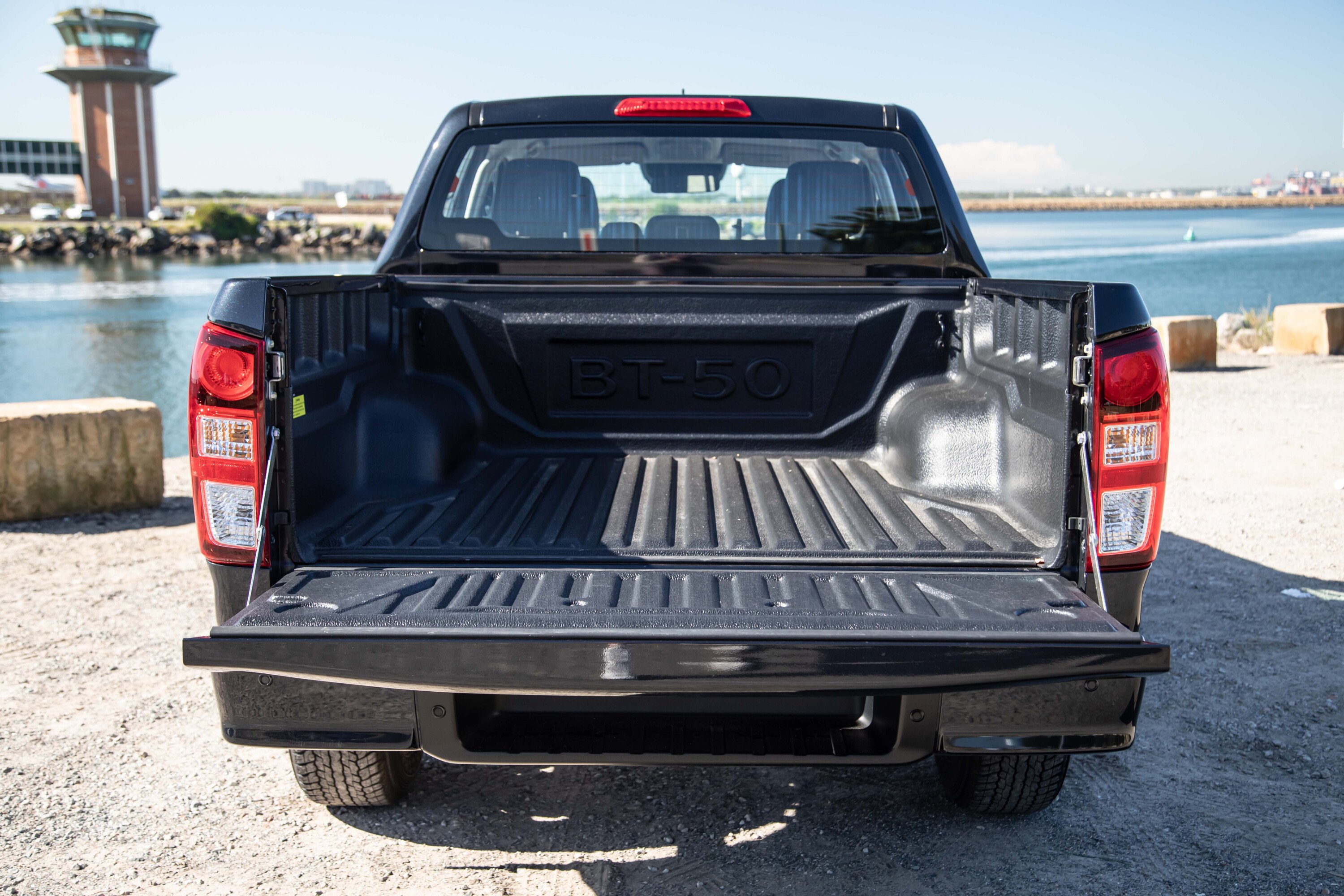
Like most utes, you can’t fit a standard pallet between the wheelarches but the tray will take between 1055kg and 1081kg depending on the chassis and transmission combination. The cargo area is 1572mm long and 1120mm between the wheelarches. The cargo box’s height is 490mm and the maximum width is 1540mm.
1
Maximum payload is 1090kg. Front axle capacity comes out at 1450kg and the rear’s 1910kg. The GCM ranges from 5850kg to 5950kg and the GVM 3000kg to 3100kg, both from kerb weights of between 1805kg and 2035kg.
This BT-50 has a GVM of 3100kg so also has a higher GCM of 5950kg and Goldilocks kerb weight of 2010kg. Towing capacity is rated at 3500kg.
1
What is it like to drive?
Like all utes, there are swings and roundabouts to the driving experience.
Mazda hasn’t made its own ute from the ground up for a long time, so this is not a machine that necessarily imbues all that is Mazda in the way it drives or sounds. Or, let’s be honest, the interior.
Now, I don’t think most folks who buy BT-50s are going to be too worried about Mazda’s jinba ittai (horse and rider) philosophy or will be asking the dealer if it has G-Vectoring. But a lot of CX-5 owners might be eyeing up their next purchase thinking, “I like the cut of this thing’s jib, maybe the ute will be like that.”
In short, no.
1
| 2023 Mazda BT-50 XT drivetrain | |
|---|---|
| Drive | part-time four-wheel |
| Engine | 3.0-litre four-cylinder turbo-diesel |
| Transmission | 6-speed automatic |
| Power | 140kW @ 3600rpm |
| Torque | 450Nm @ 1600-2600rpm |
And that’s not an insult, either to Mazda or partner Isuzu. Utes just can’t feel like cars or even SUVs that are built with an eye on dynamics. A dual-cab load carrier has other things to do, and expectations on its shoulders. In some cases three-and-a-half tonnes of expectation, for those eyeing up towing capacity specs.
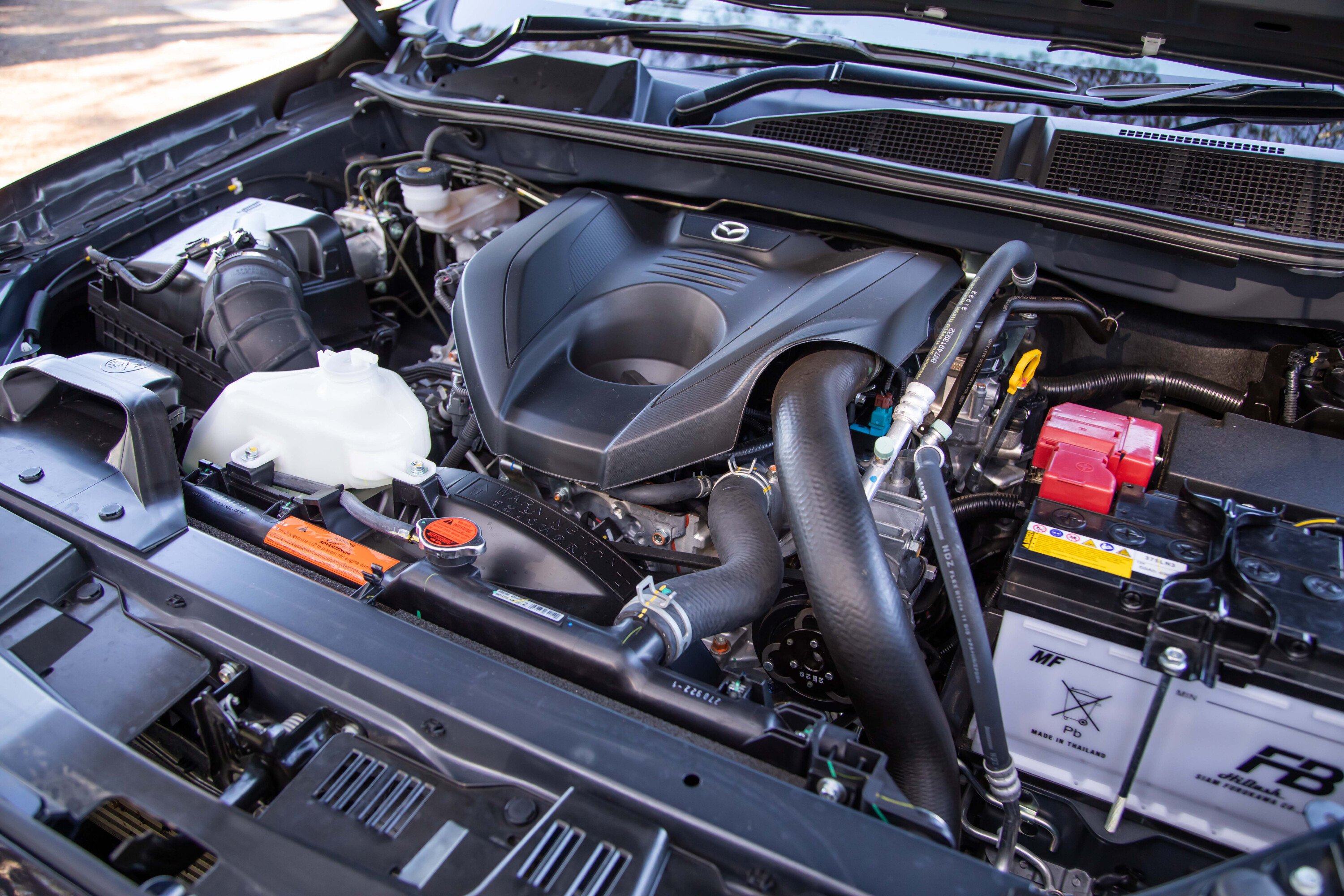
The diesel engine is a strong unit and while it doesn’t match all its rivals for power – or refinement in some cases – it certainly is enthusiastic. Its six-speed partner in crime is smooth and easygoing and only occasionally gets confused on light throttle. It’s pretty noisy, though, and doesn’t fade into the background.
1
Given it’s a 3.0L four-cylinder, it’s not as gruff as it could be, so there are some points to be awarded there.
Steering is necessarily slow to ensure easy maneuverability in the rough stuff and can become a little tiring in town. It’s reasonably light, though, but direct it isn’t, although I’ve driven much worse.
Despite fairly high-profile tyres, the BT-50 will hop about at the rear. A live axle with leaf springs is never going to be plush but one would expect it to be a little less bouncy with a load packed in.
Vision out the front is great but parking this thing in a dark car park is not much fun. The reversing camera is fine but with more than five metres of vehicle to squeeze into a parking space, it can be a challenge. And you have to be mindful of its height. Trying to gauge where the tailgate is fuels my nightmares, so the rear parking sensors are also very helpful.
1
If any of the terms in this section have left you scratching your head, these articles will help bring you up to speed!
- What is a Powertrain or Drivetrain?
- Power vs torque
- Car suspension explained
- Automatic transmissions (‘gearboxes’) explained
- Chassis control systems explained
- Car vs Ute vs SUV: How the vehicle you buy should guide the way you drive
Mazda’s ADR testing delivered a combined cycle result of 8.0L/100km.
That’s not bad for a big unit like this and I would expect the engine to lean out quite a bit at a cruise.
| 2023 Mazda BT-50 XT fuel economy | |
|---|---|
| Claimed fuel consumption (combined) | 8.0L/100km |
| On-test fuel consumption (indicated) | 10.2L/100km |
| Fuel tank capacity | 76 litres |
| Projected real-world range | 745km |
| Fuel type | diesel |
You’ll probably get 1000km of tank range on a highway run as long as it wasn’t loaded to the gunnels with gear and a giant boat on the back.
1
How safe is it?
The BT-50 scored a five-star rating in 2022 based on the performance of the Isuzu D-Max, as well as the addition of a new driver’s knee airbag and instrument panel.
| 2023 Mazda BT-50 XT safety features | |
|---|---|
| Eight airbags | ABS |
| Stability and traction controls | Driver attention detection |
| Blind-spot monitoring | Lane-keep assist |
| Forward collision warning | Lane departure warning |
| Emergency lane-keeping | Reverse cross-traffic alert |
| Forward auto emergency braking | Turn assist |
| Rollover protection | Secondary collision reduction |
The BT-50 has a front-centre airbag to help prevent head clashes in side impacts. The forward auto emergency braking also detects pedestrians and cyclists. Reverse cross-traffic alert is welcome in any car but a huge thing like this renders that feature essential.
1
Warranty and running costs
Mazda offers a five-year/unlimited-kilometre warranty with roadside assist for the duration.
Servicing intervals for the BT-50 are every 12 months/15,000km and the first five visits are covered by a fixed-price program. The prices ping around a bit, as low as $334 (the fifth service) and as high as $713 (the third).
All up you’ll pay $2443 over the five years and despite price rises since this generation of BT-50 debuted in 2020, it’s still cheaper to service than the old one by a few hundred bucks.
1
VERDICT
I began by asking if Mazda’s heart is in the BT-50. Technically, it isn’t and you have to wonder what the point of it is.
But there is a point to it – people love the brand and want a ute and if you want a ute with a Mazda badge, all power to you. The fact it’s built on a smash-hit best-seller from Isuzu is a good thing (even though the old one was based on the Ranger which is even more of a smash hit) because you know it’s tough and dependable but, in Mazda guise, doesn’t look over-wrought.
1
If you’re looking for jinba ittai, you’ve probably come to the wrong Mazda. But if you’re a horse rider needing to get your horses to the right place, this will do the trick.
MORE
Everything Mazda
| 2023 Mazda BT-50 XT specifications | |
|---|---|
| Body | 4-door, 5-seat dual-cab ute |
| Drive | part-time four-wheel |
| Engine | 3.0-litre four-cylinder turbo-diesel |
| Transmission | 6-speed automatic |
| Power | 140kW @ 3600rpm |
| Torque | 450Nm @ 1600-2600rpm |
| Bore stroke (mm) | 95.4 x 104.9 |
| Compression ratio | 16.3 : 1.0 |
| 0-100km/h | 12 sec (estimate) |
| Fuel consumption | 8.0L/100km (combined) |
| Weight | 2010kg |
| Suspension | Independent double wishbone with coil springs (f)/Rigid (live) axle with leaf springs (r) |
| L/W/H | 5280mm/2160mm/1785mm |
| Wheelbase | 3125mm |
| Front overhang | 905mm |
| Rear overhang | 1250mm |
| Wading depth | 800mm |
| Ground clearance (unladen) | 235mm |
| Approach/Departure/Ramp breakover | 30/23.9/23.3 |
| Brakes | 320mm ventilated disc front / 295mm drum rear |
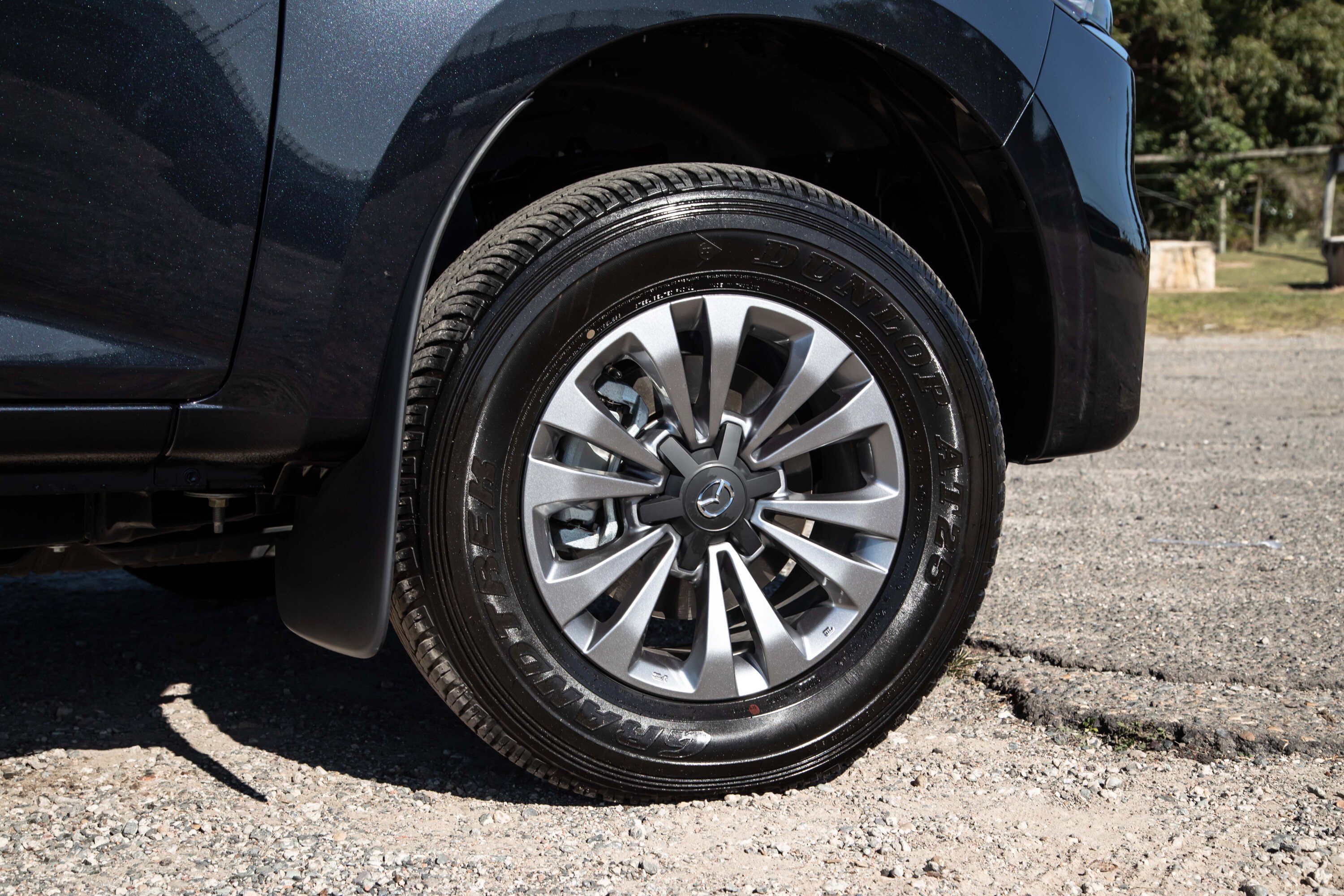
| Tyres | 255/65 R17 Dunlop Grandtrek |
| Wheels | 17-inch alloy wheels (full size steel spare) |
| Price | $55,080 + on-road costs |
What is the MG ZS EV?
An MG ZS small SUV with all the oily bits taken out and replaced with an electric motor and battery pack.
It’s the first electric car sold by MG in Australia.
As part of the enormous SAIC group, MG makes plenty of electric cars for its home country of China, but it’s only just kicked off a planned electric revolution for Australia.
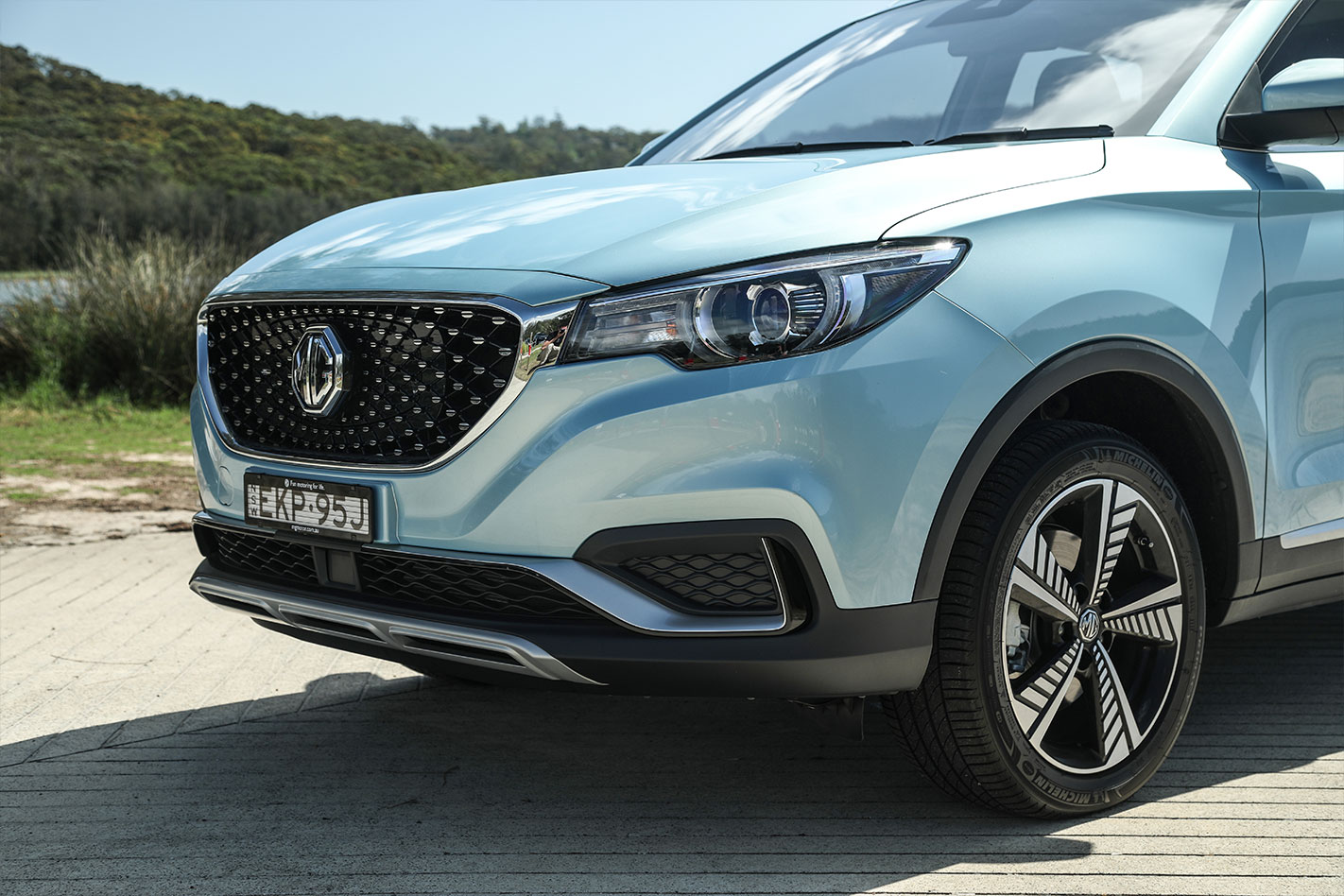
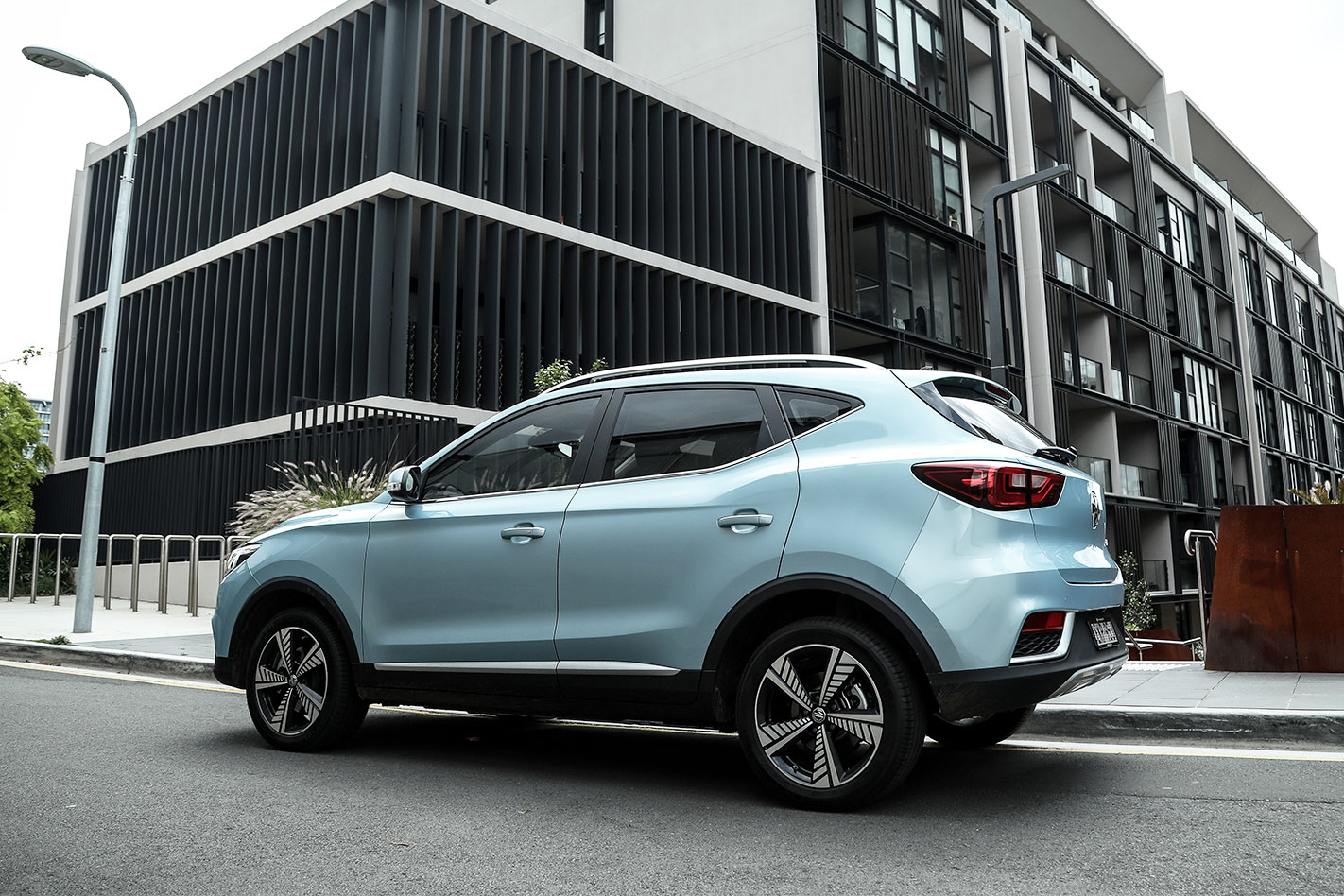
To look at, the EV is almost identical to the ZS, right down to identical panels and windows.
1
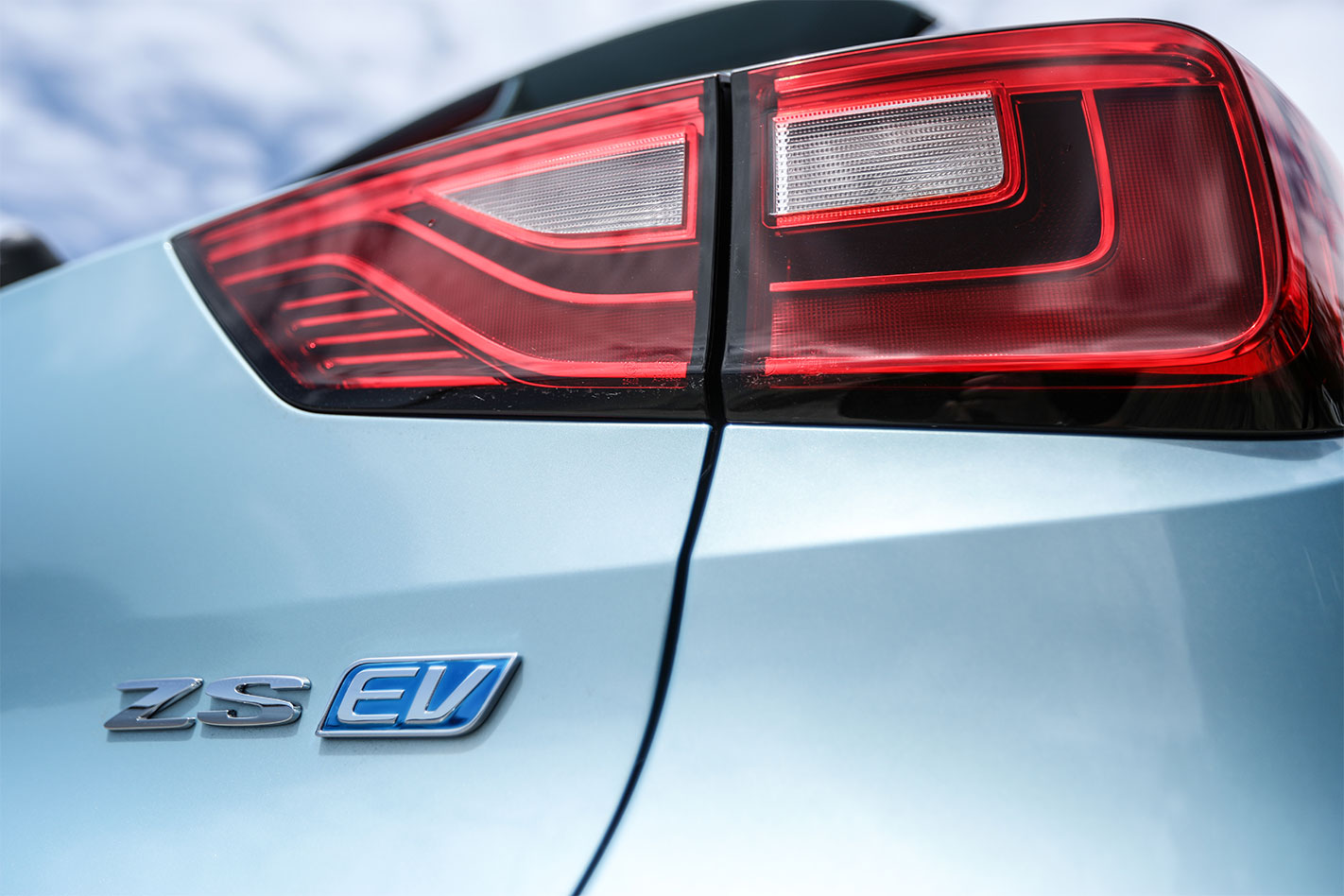
Trainspotters may notice the subtly different grille that has a fold-up door to access the charging point, or the unique alloy wheels that distinguish the electric version.
The EV badge on the boot is the final giveaway that this is different to others in the ZS family.
Price and value
The headlines scream that the MG ZS EV is the most affordable battery electric vehicle on the market – and it is, for now (the pace of change in the growing EV segment suggests that may not be the case for too long).
But it also costs a lot more than the MG ZS it’s based on.
Those petrol-powered models sell for between $21,990 and $26,990 drive-away.
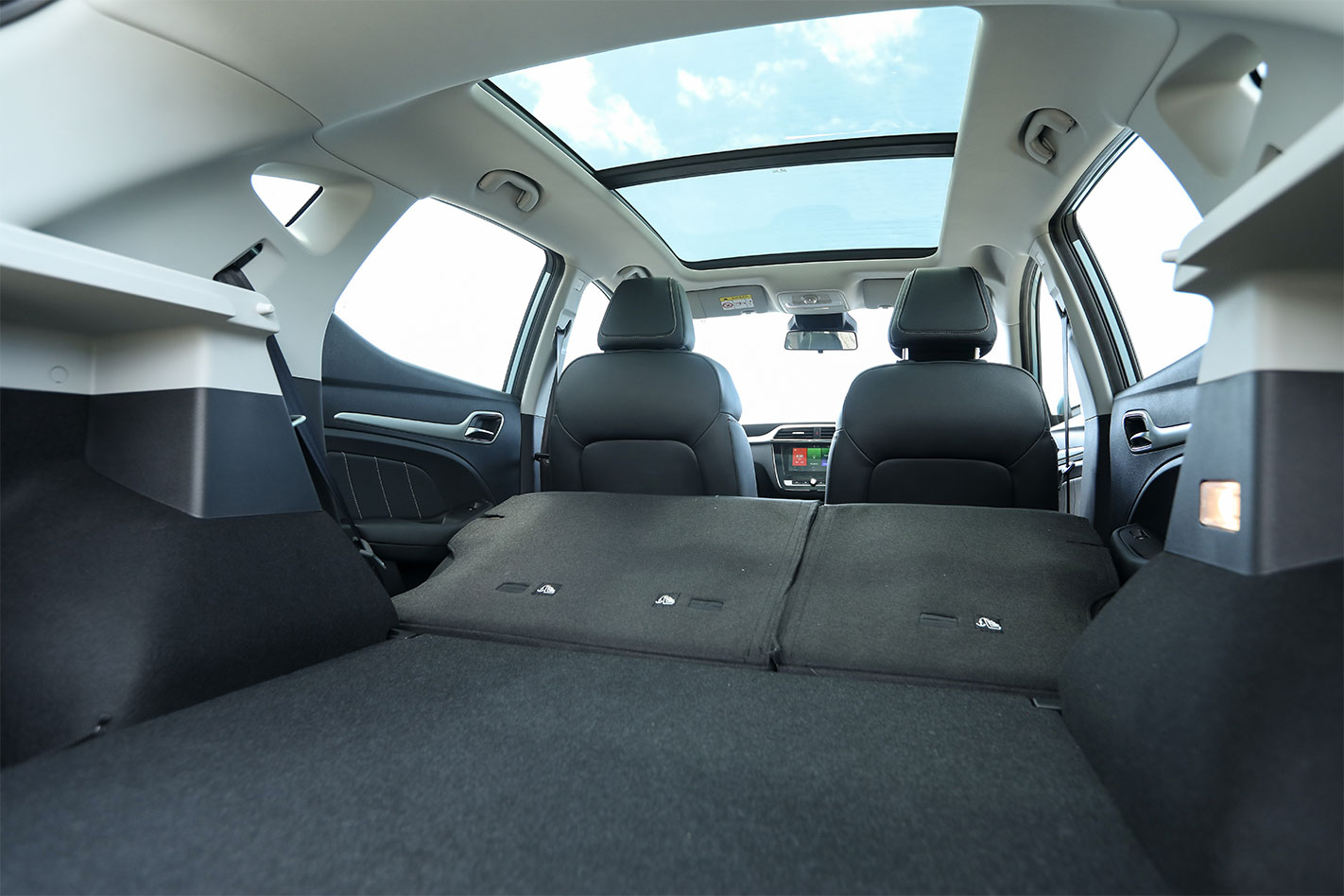
The EV is closer in equipment levels to the more expensive versions, picking up leather-look trim, a panoramic sunroof, smart key entry and an 8.0-inch touchscreen with sat-nav, Apple CarPlay and Android Auto.
1
Plus it also comes with some additional safety gear, such as autonomous emergency braking (standard on the ZST, but not the regular ZS), blind spot warning and active cruise control.
Collectively they might cost a few grand.
Still, there’s a $12,000-plus premium for going electric.
1
Living with the MG ZS EV
The ZS EV doesn’t rewrite the rules inside but it does show decent attention to detail with some of the finishes and materials.
The stuff that looks like leather (it’s fake) isn’t remotely supple, but some stitching lifts it visually.
1
The boot has a false floor that transforms it into a deeper 359-litre cavity.
Engine, transmission and drivetrain
There’s a single electric motor driving the front wheels in the MG ZS EV.
Pop the bonnet and there’s a surprising amount of space by modern car standards, all because that engine bay is usually home to a petrol engine and its associated hardware.
The e-motor power peaks at just 105kW, but there’s a more meaningful 353Nm of torque, providing the pull required to shove the car along.
Initial acceleration is perky, even more so if you dial up Sport mode, which sharpens the throttle responses.
Like all EVs, there’s near-instant response when you squeeze the throttle, something that adds to its around-town liveliness.
Approaching 100km/h the enthusiasm wanes slightly, although it has no problems holding its speed and cruising up hills.
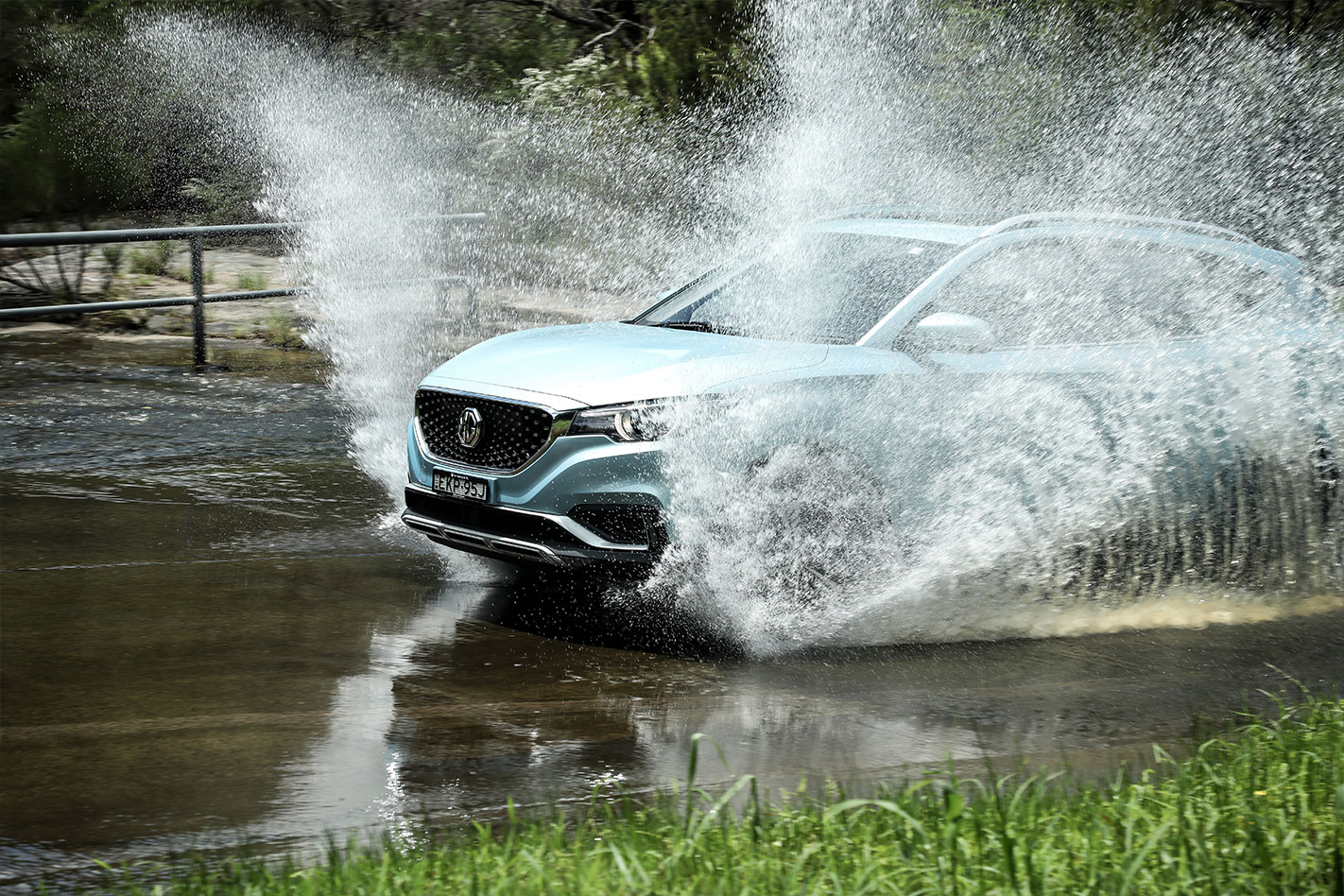
Our circa-100km drive suggested that 240km is easily achieved, even when driven hard.
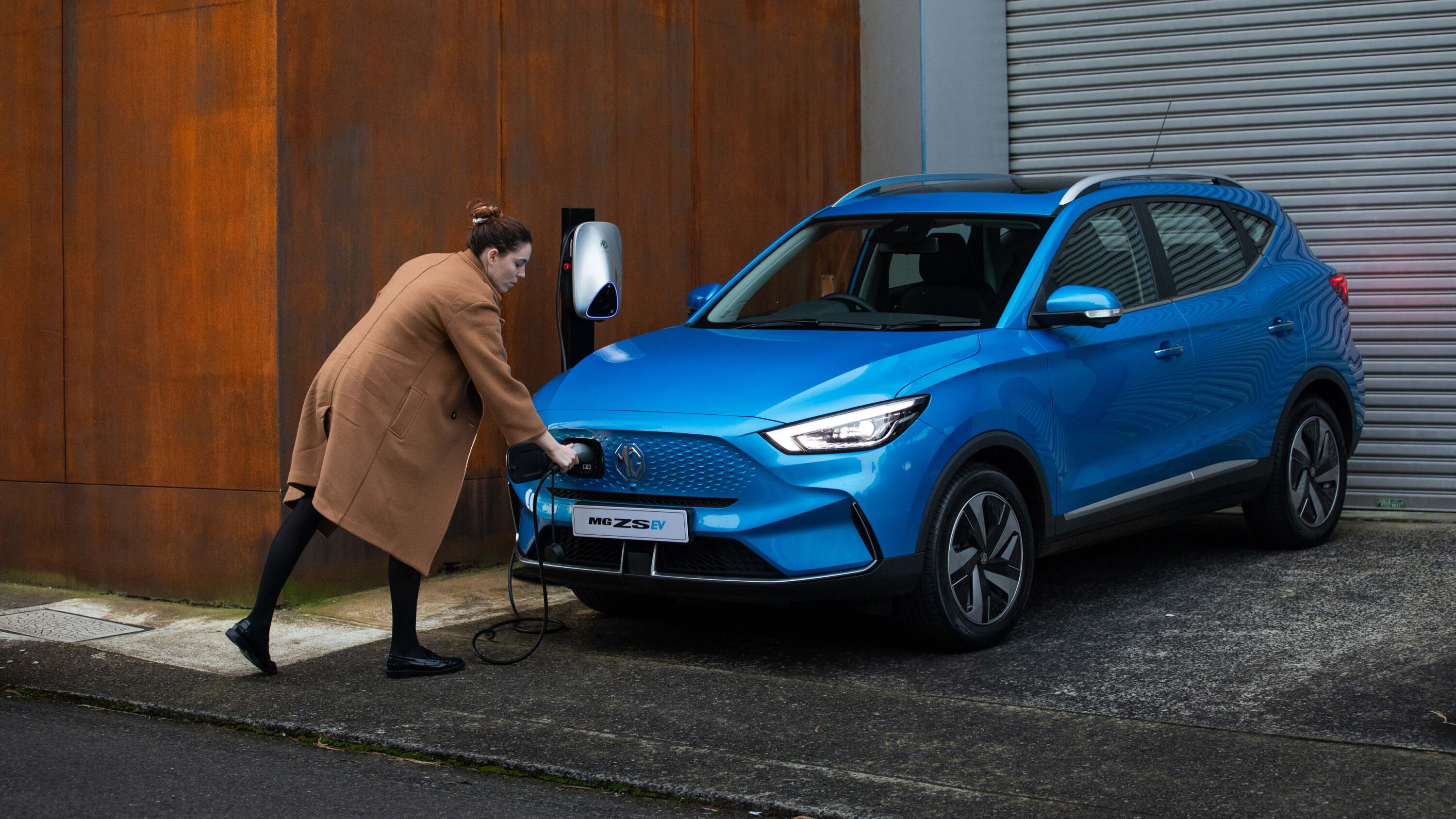
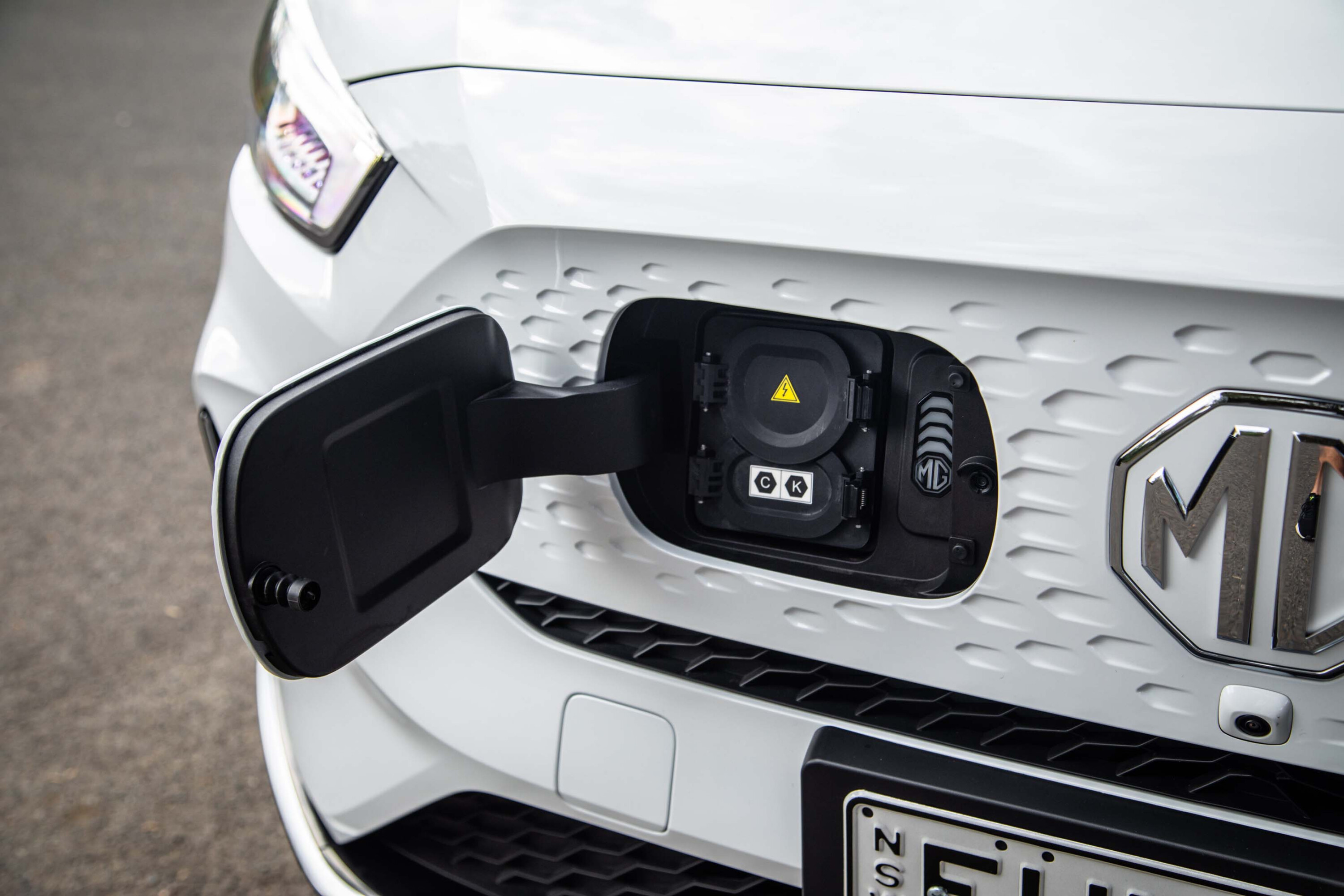
As for charging, the central part of the grille pops out to expose both a Type 2 and a CCS fast-charge charging plug.
A regular 10-amp home socket can be used in an emergency, and will take around 25 hours to charge the battery to 100 per cent.
Single-phase 32-amp power will reduce that time to seven hours, while a 50kW DC fast charger will reduce than again to 40 minutes up to 80 per cent charge.
MG ships the car with a basic 5m long Type 2 cable, which won’t facilitate any kind of fast charging from a home socket. An aftermarket wallbox would be a sound investment if you want to get the most out of charging your MG ZS EV at home.
Driving the MG ZS EV
The MG ZS EV weighs only 50kg more than the petrol versions of the same car. That’s not much by electric car standards, in part because the battery pack isn’t as big as some.
But having some of that weight down low helps reduce the top-heavy feeling, albeit only slightly.
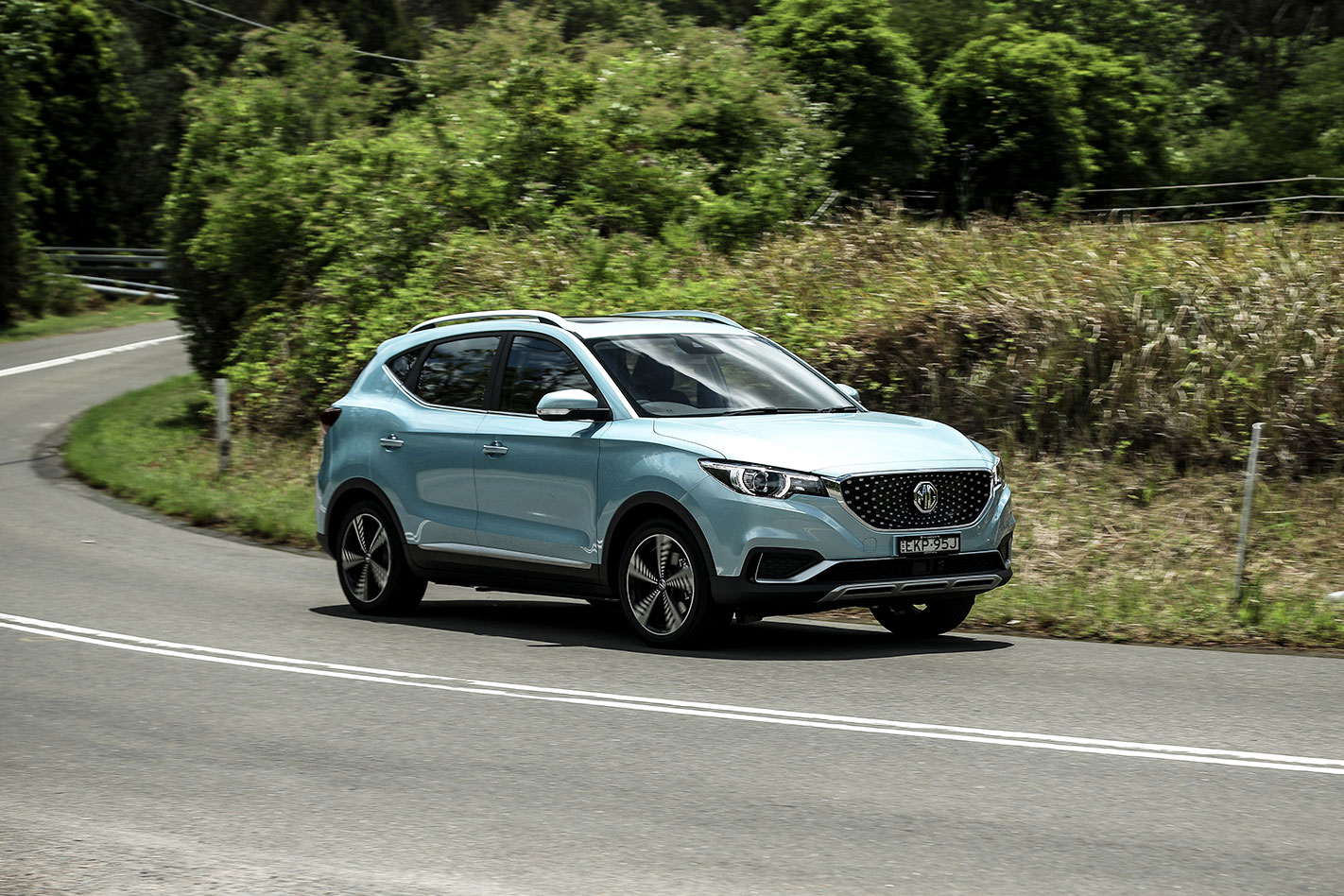
1
It does sometimes feel bulky, though, especially when called upon to wash off speed quickly. The brake pedal needs a firm application.
Michelin Primacy tyres ensure decent cornering grip, so the ZS EV hangs on nicely, albeit occasionally flickering the stability control light into action if you’re pushing on.
It’s a shame the steering is thoroughly wooden, because it makes for a car you end up muscling around a corner rather than guiding it.
It also adds to a nose-heavy sensation that detracts from its athleticism. Recovering from bumps can also take longer than it should, detracting from an otherwise good ride.
All of which is less of an issue in the suburbs, where the ZS EV does a good job in a zippy way.
There are hints of torque steer (or steering wheel tugging) when accelerating out of intersections, but elsewhere it’s obedient.
How safe is the MG ZS EV?
There’s no ANCAP rating for the ZS EV, but the car it’s based on scored four stars in 2017.
It’s not a fair comparison, though: the ANCAP testing is tougher in 2020 and the ZS EV has more active safety gear than the regular ZS.
1
Looking purely at equipment, there’s a full complement of airbags (six) covering those up front in a frontal crash and all outboard occupants in a side impact.
Active safety systems come under the MG Pilot banner and include autonomous emergency braking (AEB), adaptive cruise control, rear cross-traffic alert, speed limit recognition and blind spot warning.
MG also appears to have better calibrated some of those systems compared with early MG Pilot efforts, so there’s less beeping and fewer unwarranted warnings.
How much does it cost to run the MG ZS EV?
It’s time to recalibrate away from petrol costs to the cost of electricity to get an idea of how much the ZS EV costs to keep moving.
Claimed consumption is 18.6kWh per 100km and that’s very close to what we achieved during a 100km taste test.
Most people will pay something like 25-30 cents per kilowatt-hour of electricity, so the electric MG should cost something like $5.50 in energy costs per 100km.
Of course, there’s always the option of using free public chargers or home solar, which can potentially bring that cost to zero.
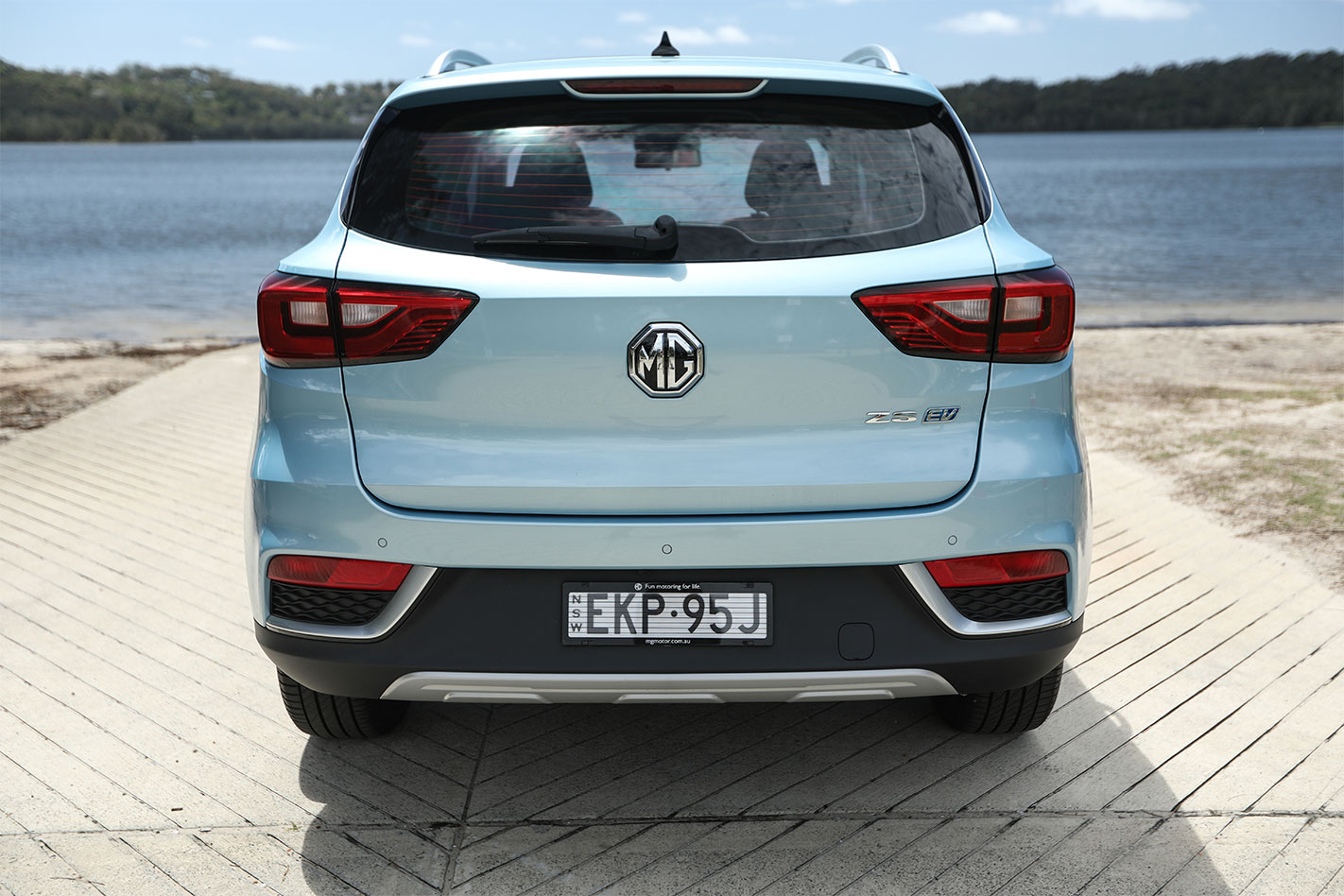
1
Either way, it’s a lot less than you’d be spending on petrol.
Servicing is required every 12 months or 10,000km and the first five services (covering five years and 100,000km) total $1602.
All good news so far.
Less good is that the seven-year warranty that applies to other MGs does not apply to the ZS EV, dropping to a five-year, unlimited-kilometre warranty as well as a separate eight-year, 160,000km for the high-voltage battery.
Verdict – MG ZS EV
The cost-conscious buyers who have gravitated to the born-again MG may not be swayed by what is a sharp price for an electric vehicle (in 2020, at least).
But those intent on going electric will find the ZS EV a relatively affordable way to switch off petrol.
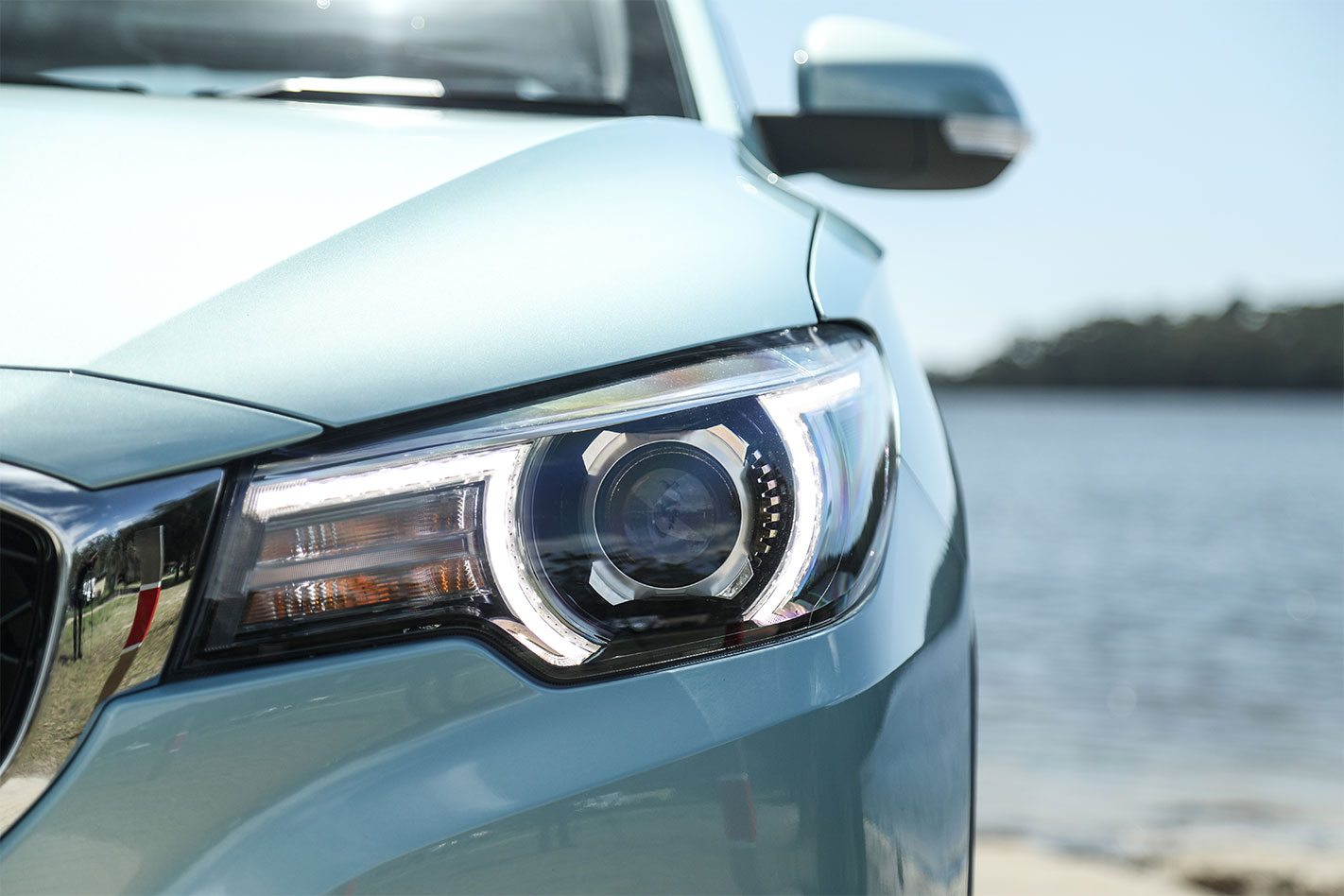
1
It doesn’t break any ground on the driving front, but then again neither do any of its electric rivals.
But it does deliver with a zippy electric drivetrain and decent selection of equipment.
NEXT: When MG arose from the dead
MG ZS EV Specifications
Price From $43,990
Drivetrain Single electric motor, FWD, single-speed direct drive transmission
Energy use/CO2/battery capacity 18.6kWh/100km, 44.5kWh
Safety Not rated
Seats 5
Warranty / Service Interval 5 years/unlimited km, 20,000km/12 months
Spare Wheel (type) repair kit
Weight 1532kg
“I wonder if the story should just have one line, set in bold italics: ‘No. Don’t be an idiot.’” – the discussion in our office this morning…
That could be your response to anyone asking if it is legal to drive while wearing virtual reality (VR) or augmented reality (AR) glasses – but the answer might be more complicated than you think, and it’s a surprisingly common question online.
The introduction of Apple’s new Vision Pro augmented reality headset at its annual WorldWide Developers Conference (WWDC) [↗] likely has many thinking it’d be possible to use this technology behind the wheel. (Possible? Probably. Smart? ?)

1
It is not explicitly illegal to drive with AR glasses in the eight Australian states and territories. However, it would be an offence if the device obstructs a driver’s vision or causes distractions.
It’s also worth noting that the absence of a specific rule on this one is probably due to the tiny presence of portable VR devices in the market right now – and a lack of example cases.
It’s no surprise people haven’t tried, of course. Until today’s reveal of the Vision Pro, there haven’t been any truly portable VR/AR systems offering a clear enough video pass-through camera resolution and refresh rate [↗] to really have any potential for this sort of application.

Even still – and unlike smart glasses like the Ray-Ban Stories, Snap Spectacles and the now-discontinued Google Glass – VR goggles with video pass-through capability are only connected to the outside world through cameras, meaning the driver’s view would be obstructed the moment anything went wrong with the device.
And, like the fad of external door-mounted cameras in place of conventional mirrors, the view even through the high-end Vision Pro would likely still be too distorted and blinkered to be safe in the high-risk act of driving a vehicle.
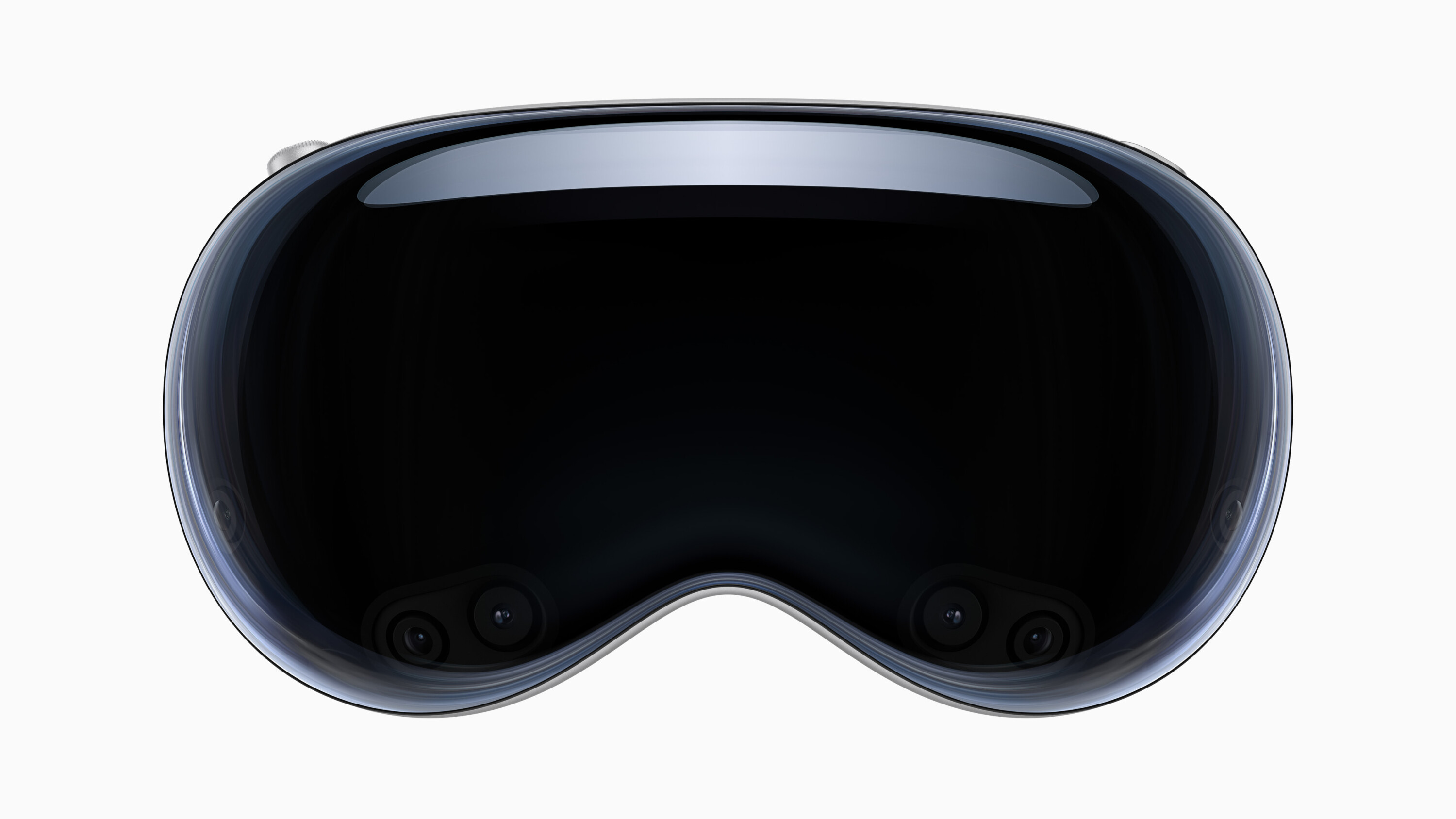
2
Apple’s Vision Pro supports both real-world and ‘fully immersed’ experiences, with the latter function transitioning from augmented reality to a mixed environment in a virtual world using an external dial.
In March, the Victorian Government introduced updated road rules for distracted driving, with new laws surrounding the use of wearable devices – including smartwatches, smart glasses (such as wearable heads-up displays), and motorbike helmet devices – while driving.
We’ve contacted VicRoads to confirm if augmented reality glasses, such as Apple’s Vision Pro, would be defined as wearable devices like smart glasses.

1
Why would anybody even want to wear these while driving?
There are bound to be some fans out there thinking that AR smart glasses could provide valuable real-time information in the driver’s field of view – such as turn-by-turn navigation, speed limits, and upcoming hazards reducing the need to look at external devices.
A solution already exists with built-in head-up displays that project vital information, such as speed and navigation, onto the windscreen to reduce the need to look away. Those feature are only available in modern cars, but if an owner of an older vehicle wants those capabilities, there are dash-mounted alternatives that would be far safer than wearing these goggles.
Newer vehicles, such as the Kia EV6, offer an augmented reality head-up display, while German car maker BMW has previewed a system that can display information – including virtual reality – on the whole windscreen, replacing a vehicle’s conventional instrument cluster and infotainment system.
Note: This article is intended for informational purposes only. It is advised to consult local traffic regulations and seek legal advice for specific guidance on driving with AR smart glasses.
MORE
Technology stories
