
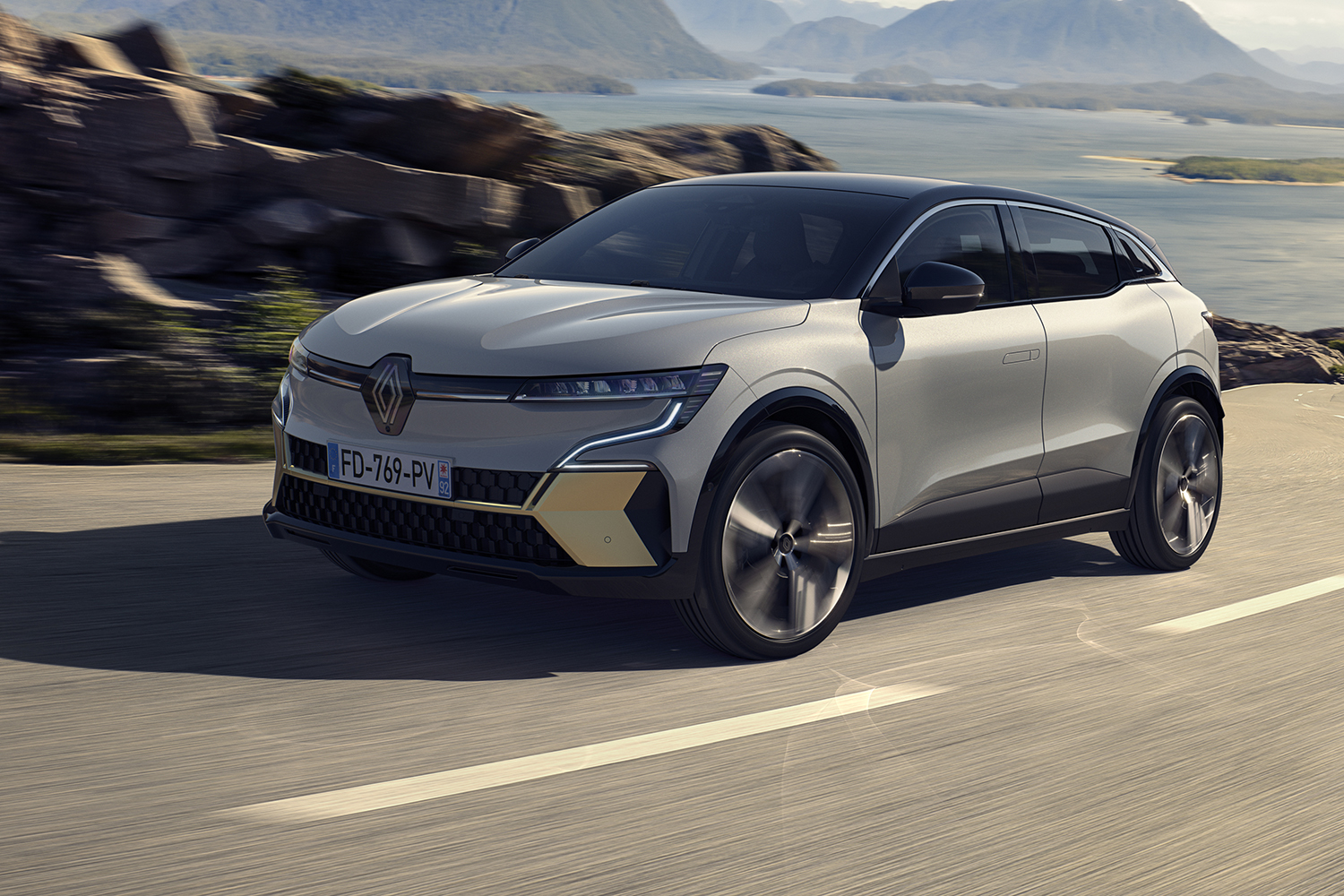
UPDATE, February, 2022: It’s confirmed, the new Renault Megane E-Tech electric SUV will come to Australia in 2023 – although exact timing and pricing is still to be locked in.
UPDATE, December 20, 2021: Renault has announced pricing of the new Megane E-Tech Electric in its native France, going directly up against its European rivals.
The entry-level Megane E-Tech, which is powered by a single 100kW motor and a 40kWh battery pack, will go on sale for €35,200 (AU$55,575), while the range-topping 160kW motor, 60kWh variant can be specced up to €51,400 (AU$81,150) in its most expensive guise.
Acccording to Automotive News, the Megane E-Tech’s price puts it up against the Volkswagen ID.3, listed for sale in France for €39,900 (AU$63,000) before on-road costs and subsidies, as Tesla’s popular Model 3 starts at €43,800 (AU$69,150).
Read below to find out what we know so far about the new all-electric Renault.
The story to here
September 6, 2021: The electric 2022 Renault Megane E-Tech Electric has been unveiled at the Munich motor show today, just hours after a number of official photos surfaced online in a media leak. This story has been updated to reflect the now official details.
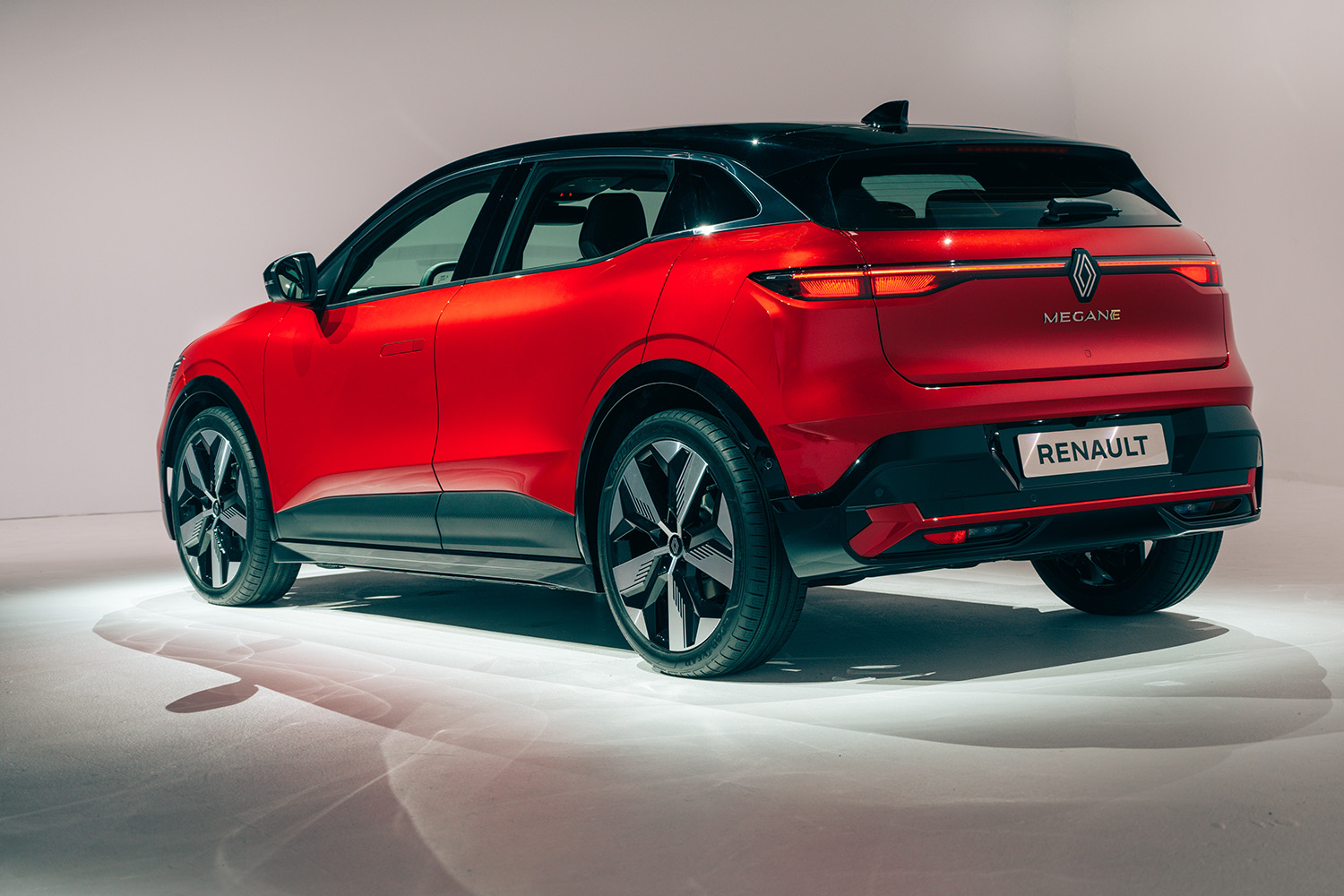
As expected – thanks to official camouflaged photos released in July – the Megane E-Tech wears a look that stays fairly loyal to its eVision concept progenitor.
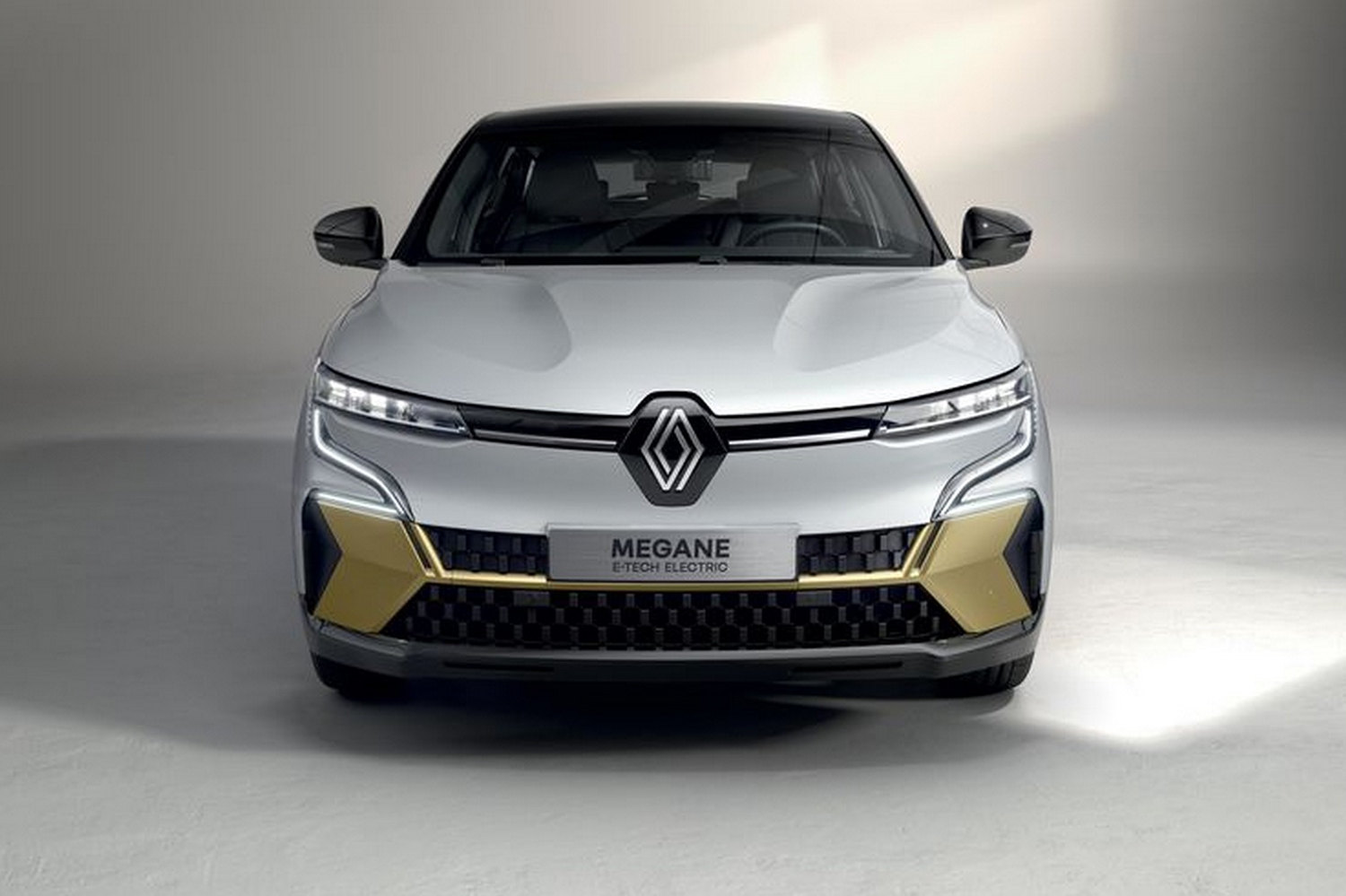
Renault’s retro-inspired new logo features at both ends, with a flowing LED lighting signature standing out as a key styling element up front.
Readers not pleased with the extensive spread of EVs that wear a faux-grille design at the front will also be pleased to see the Megane E-Tech limits that affectation to a fake grille behind the number plate and a genuine cooling intake and air dam in the lower bumper.
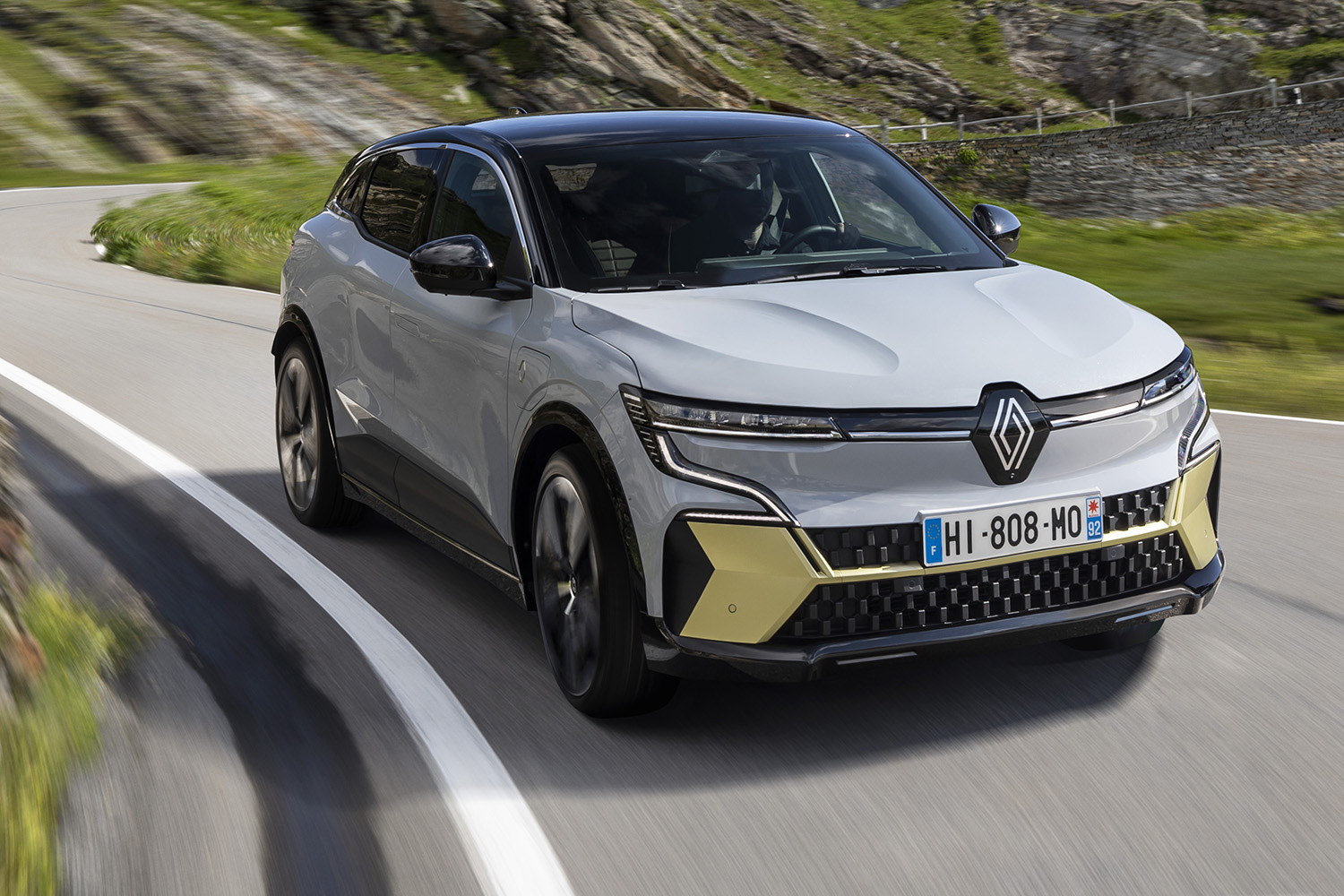
The Megane E-Tech is otherwise unremarkable in its styling, with a conventional look through the profile that bears common traits like muscular haunches, an upswept glasshouse and a chrome garnish running the length of the tapered roofline.
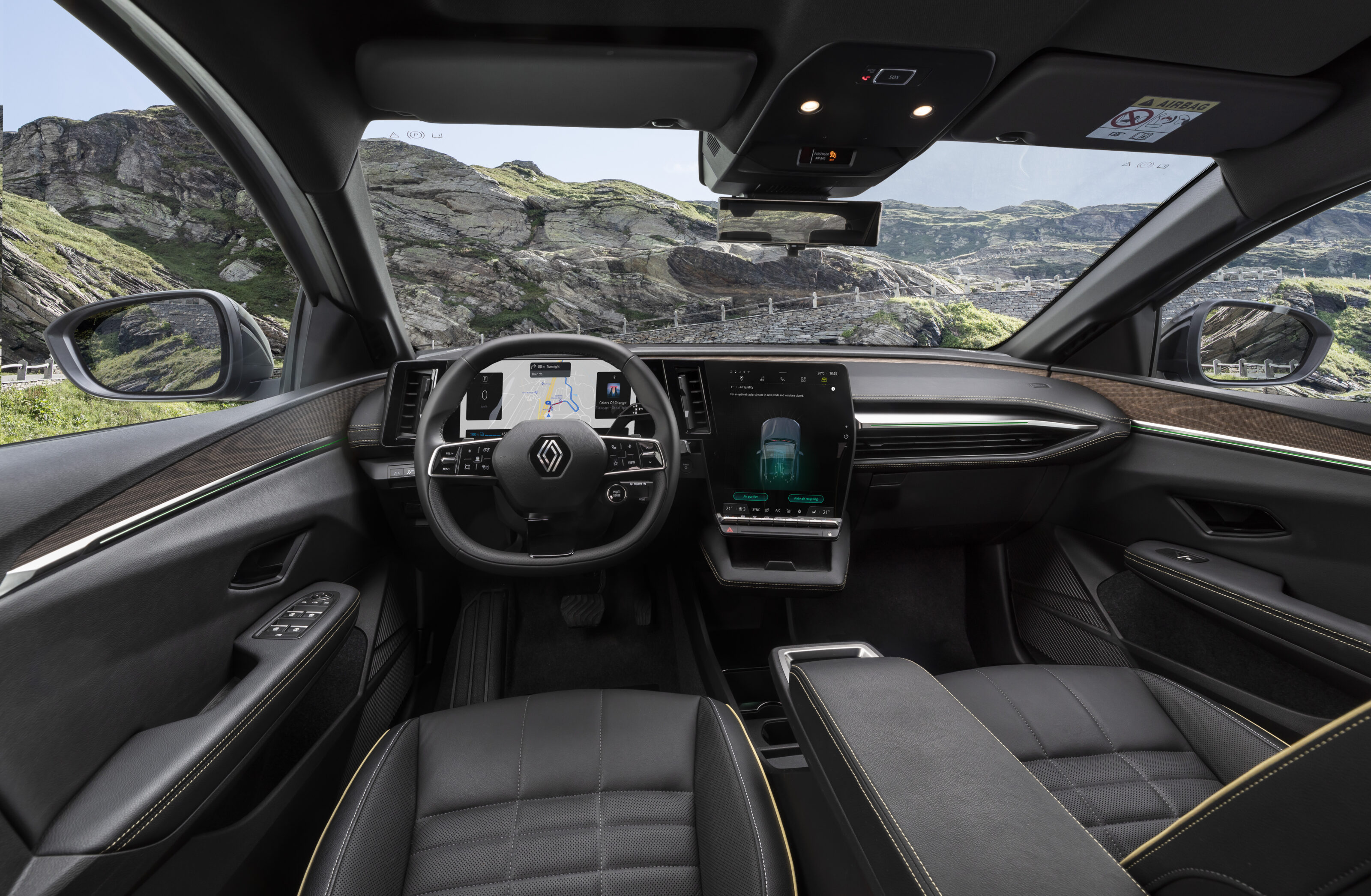
A full interior view is still to be revealed, but an earlier official release showed a tall main display paired with a wide instrument display behind the steering wheel. A sporty new steering wheel design is also featured.
Measuring 4210mm long, 1800mm wide and 1505mm tall in its earlier eVision concept form, the electric SUV is closer in size to the compact Captur SUV than the small Megane hatch from which it takes its name, so a proper family-sized electric Renault could still be some time away.
The compact Megane E-Tech Electric will be offered with 40kWh and 60kWh battery packs, with the bigger of those two claiming a WLTP-tested driving range of 470 kilometres.
In single-motor form, Renault has previously said buyers can expect 160kW and 300Nm, with a 0-100km/h time just below eight seconds – unsurprising given the EV tips the scales at 1624kg.
Sports models are expected – potentially wearing the Alpine badge and with up to 290kW and 600Nm on offer – borrowed from the hero e-4ORCE variant of the bigger (but related) Nissan Ariya electric SUV. In the Nissan, those numbers are claimed to result in a 0-100km/h time of 5.1 seconds.
Compatible with AC and DC charging infrastructure, the Megane can be recharged gain as much as 300km range from a 30 minute charge with the DC 130kW charger, while the top-level, 32A/22kW triple-phase AC charging can provide a 160km boost over an hour.
Available in three levels of trim – Equilibre, Techno and Iconic – the Megane’s range of standard equipment includes 18-inch wheels and a massive 24-inch OpenR screen, combining the 12.3-inch digital dash with its 12-inch infotainment display as one large panel.
A set of 20-inch wheels feature in the highest trim package while every variant can be ordered in any one of six colours – Rafale Grey, Schist Grey, Midnight Blue, Flame Red, Diamond Black, and Glacier White – or in a two-tone finish, recolouring the roof, pillars and side mirrors in either Schist Grey, Diamond Black or Glacier White.
Will the Renault Megane E-Tech Electric come to Australia?
An Australia debut for the Megane E-Tech Electric has not been confirmed, but the brand’s representation has previously said it is excited to see the new model.
A local debut would seem likely, however, and we should see the brand offer clearer insight in the near future.
Snapshot
- Taylor and Kristoffersson win first Extreme E title after a countback
- The pair won the championship for Nico Rosberg’s team
- Lewis Hamilton’s X44 team came second
Australian rally ace Molly Taylor has won her first major title in five years after becoming the inaugural Extreme E champion overnight.
Driving for 2016 Formula One champion Nico Rosberg’s Rosberg X Racing with Swedish team-mate Johan Kristoffersson, the crew won the first season of Extreme E on a countback, finishing on the same number of points as second-placed Sebastian Loeb and Cristina Gutierrez, but getting the edge on account of three round wins from five events this year.
While the Lewis Hamilton-owned X44 car of Loeb and Gutierrez won the final race of the year, fourth place was enough for Taylor and Kristoffersson despite being late to the grid, having to change the car’s front inverter in a last-minute swap.
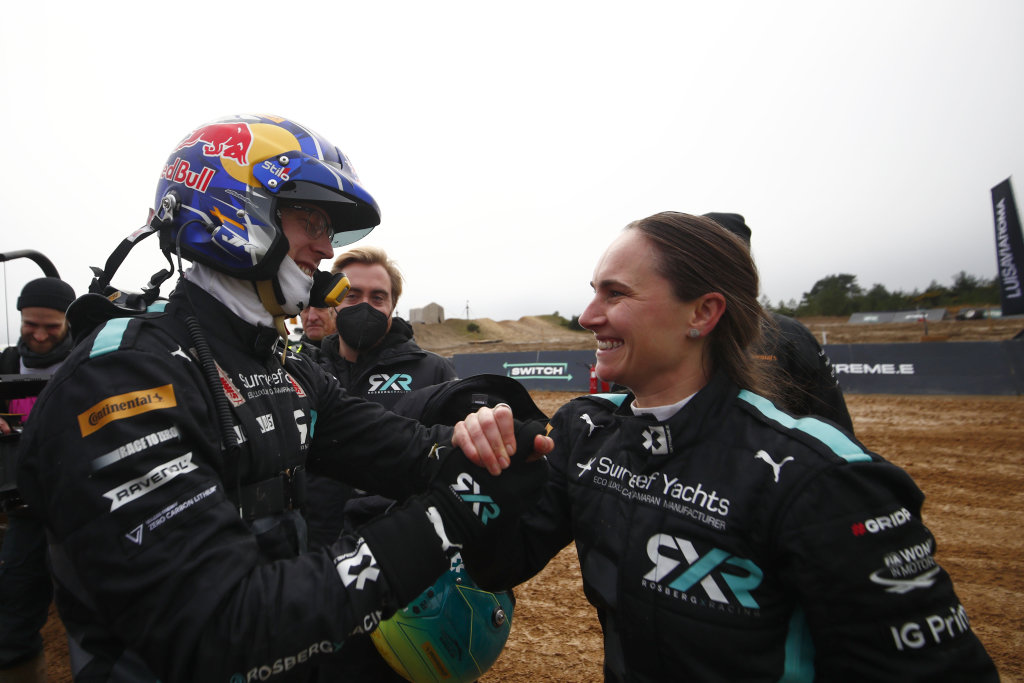
Speaking after the Jurassic X-Prix event in Dorset, Taylor was ecstatic, having become a champion for the first time since her 2016 Australian Rally Championship title.
“It feels amazing to be the first ever championship winners of Extreme E,” said Taylor.
“This season has been brutal, racing in some of the most remote parts of the world in truly extreme conditions but we’ve worked together as a team and we’re delighted with this result.
“The nerves were definitely there today but Johan and I kept our eyes on the final prize, and the whole team effort across many months has brought us to this point today.”
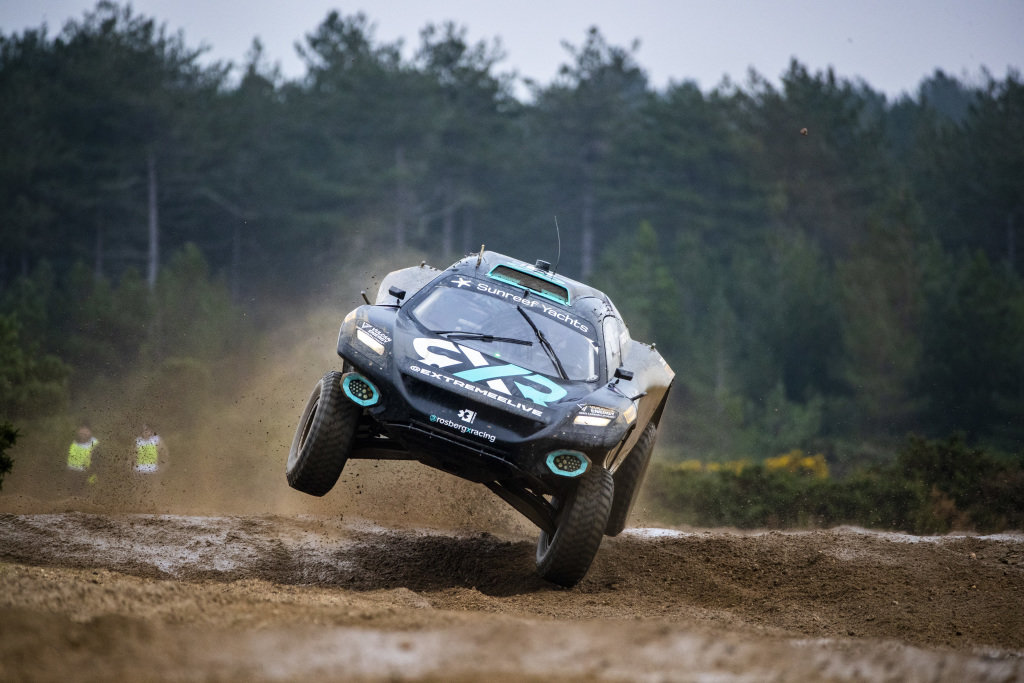
It’s been a big couple of years for Taylor, from starring on reality show SAS Australia in 2020 to now clinching the Extreme E title, however the Sydney-born driver is showing no signs of slowing down, having announced her intentions to take on the Dakar Rally in 2022.
Watch below to see the Australian win the first Extreme X championship.
WHAT. A. TITLE. DECIDER.
— Extreme E (@ExtremeELive) December 19, 2021
Relive the incredible championship finale now!#ExtremeE #JurassicXPrix pic.twitter.com/XCkfKdeUmh
Driving an electric Porsche up a fire trail at the foot of Queensland’s Glass House Mountains is one of those unexpected bucket list moments, where the list simultaneously gains a new entry and a freshly ticked box.
In this environment, the 2021 Porsche Taycan 4S Cross Turismo is dispatching its duties with an almost smug nonchalance, revealing a spectrum of abilities as broad as the early morning shadow of nearby Mount Tibrogargan.
The situation has been engineered by snapper Matt Williams, whose tripod is regularly sunk into Cape York mud or Simpson Desert sand for shooting off-road vehicles with build costs approaching or even exceeding the $205,300 – before on-roads and options – showroom sticker of this Porsche (the drive-away price in most states is another $20K on top of that).
Water – or rather dust – off a duck’s back for Williams, then, but likewise the Cross Turismo on this terrain. With Gravel mode selected and the air suspension set to full grasshopper, it’s as surefooted as a Subaru but several orders of magnitude more responsive and luxurious.

By the time several laps of the trail are completed to Williams’ satisfaction and without the dreaded graunching of bodywork over crests and divots, I’ve stopped clenching and started enjoying.
All the Taycan’s impressive on-road dynamics and that point-and-squirt electric drivetrain translate to a lively and entertaining loose-surface experience, but also surprising comfort and ability, as well as a level of battery-powered serenity that feels appropriate out here in the bush.
Plus, to these eyes, it’s a wonderful looking thing. Sleek, voluptuous proportions make it seem tiny in the metal despite its footprint on the road – 2144mm mirror to mirror and 4974mm bumper to bumper – approaching that of a 300 Series LandCruiser.
Beyond a few off-roady accoutrements I’ll come to later, the Cross Turismo closely resembles the sedan – ahead of the B-Pillar, that is. Then that longroof form takes over, featuring the most extravagant haunches ever applied to a wagon (unless you reckon the Ferrari GTC4Lusso qualifies).

It’s hard not to love the three-quarter view, which especially pops in this car’s $5000 Neptune Blue paint finish.
Then again, it’s now dulled by a coating of dust from this unexpected off-road detour. And, as much as it’s nice to know the dirt track ability is there, neither Porsche, nor most Taycan Cross Turismo owners would seriously expect this type of driving to be a regular occurrence.
So what’s the latest electric Porsche – which promises to cement the Taycan’s position as Stuttgart’s third most-popular model in Australia – really like to live with?
Price and Features

Three Taycan Cross Turismo variants are offered, starting with the ‘4’ variant at $176,600 before on-road costs and options, and topped by the $279,000 Turbo.
Not quite splitting the difference is the 4S tested here, at $205,300.
Nothing directly competes with the longroof Taycan – who seriously thought anyone, let alone Porsche, would come up with a blisteringly quick jacked-up electric station wagon – though for reference a Tesla Model S Plaid and Audi RS6 Avant are both around the $220,000 mark after Luxury Car Tax but before on-road costs.
All Cross Turismos also have all-wheel drive via dual motors as standard, as well as the big 93.4kWh ‘Performance Battery Plus’ that is a hefty $11,590 cost option on the sedan. Given there’s a $10,600 price difference between the Taycan 4S sedan and 4S Cross Turismo, you’re a grand ahead by going for the wagon.
That ‘Turismo’ badging, in Porsche parlance, signifies the station wagon form factor. ‘Cross’ refers to the likely reaction of Porsche’s press office when it sees how filthy the car is in these photos and accompanying video.

Joking aside, ‘Cross’ indicates mild off-road ability, complete with black plastic wheelarch cladding, metal-look faux skid plates front and rear and, in the case of this car, the $3450 Off-road Design Package that raises the standard ride height by 10mm – 30mm loftier than the Taycan sedan – while adding extra black trim before and aft the wheelarches that looks more like additional aero than anything helpful in the dirt.
Perhaps at odds with the off-road package are our car’s optional inch-bigger 21-inch rims ($6770), finished in Vesuvius Grey (another $2500).
Considering Porsche put $42,670 of options on this 4S (and $41,690 worth on the Turbo I tried), the standard equipment list is pretty comprehensive.
Nothing directly competes with the longroof Taycan – who seriously thought anyone, let alone Porsche, would come up with a blisteringly quick jacked-up electric station wagon?

There are cooled (and heated) front seats in the 4S, and the steering wheel is also heated. The theory is that directly applying temperature to the human body is more energy-efficient than trying to battle cabin temperatures using the air-conditioning, heater or even the $1630 heat pump that promises better battery range in places that get properly cold during winter.
Dual-zone climate control with active carbon cabin air filtration is standard, or upgrading a 4S to the Turbo’s quad-zone setup with rear touchscreen controls costs $1720. Helping with air-con efficiency is thermally insulated window glass all round, with rear privacy tints.
A 14-speaker Bose stereo is standard on the 4S but a bit disappointing for quality at higher volumes (and it’s more than $10K to option the audiophile-spec Burmester).

Nearly everything is controlled via a trio of crisp digital screens; a gorgeous 16.8-inch curved unit for the instrument panel with touch-sensitive lighting and chassis controls at its outer edges, a 10.9-inch horizontal central touchscreen that controls most functions and a portrait centre console display for handwriting inputs, air-con settings, battery status and operating the two charging port covers (electric operation being a $1310 option).
Other highlights include height-adjustable air suspension – varying ground clearance from 146mm to 176mm with automatic GPS-based lift memory for those locations that never fail to cause the dreaded undercarriage crunch – and 14-way powered front seat adjustment with position memory and partial leather upholstery.
There’s also embedded internet access with Porsche Connect services, plenty of USB-C ports, powered tailgate and LED lighting throughout including the adaptive headlights.
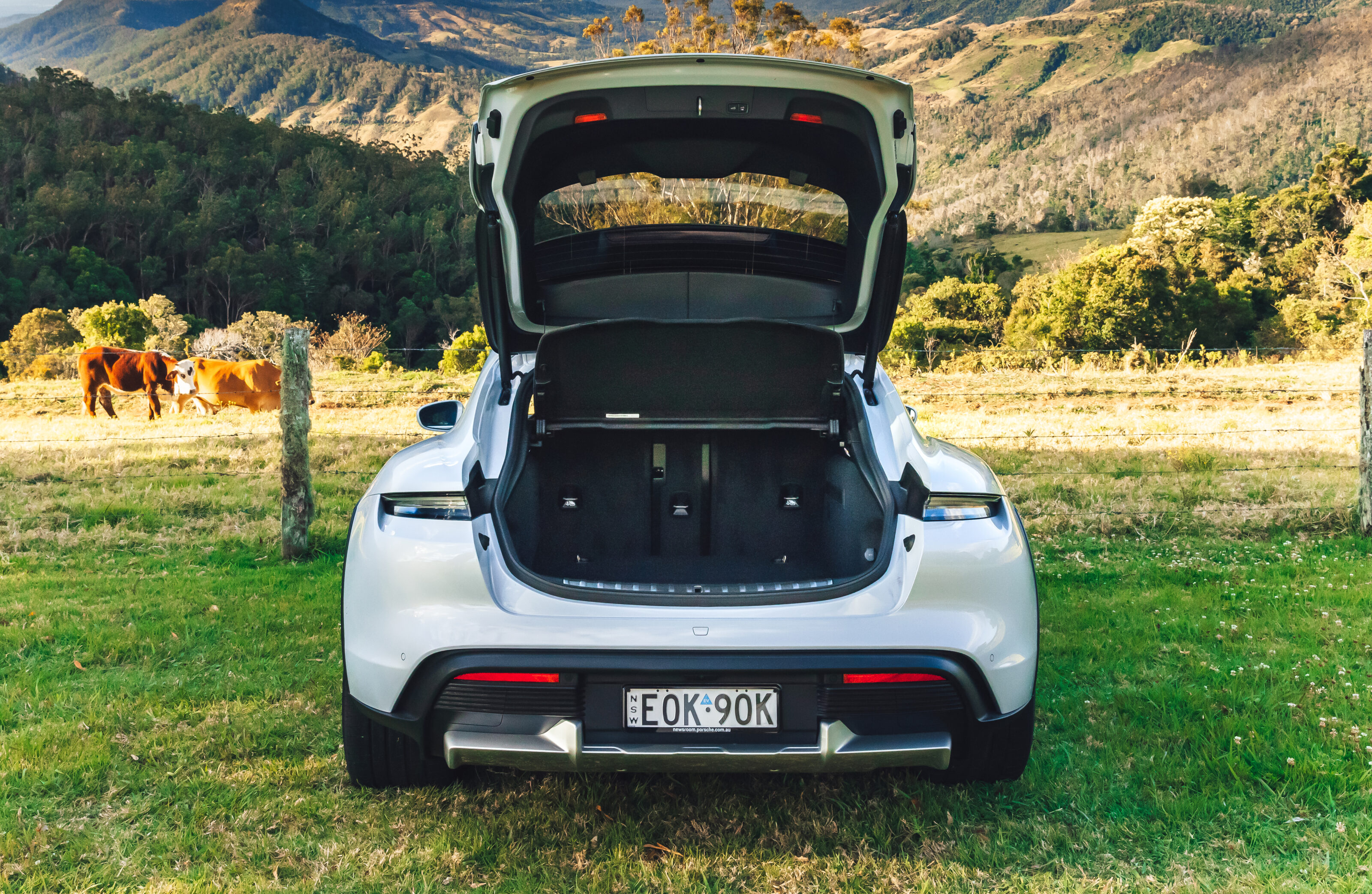
When said lights are on, a slim full-width illumination strip accentuates the Cross Turismo’s wide hips. Between them, our car bears translucent Glacier Iceblue Porsche lettering that is as cool as it sounds, matches the finish of the adaptive LED matrix headlights (a $4610 option) and is a relative snip at $1500.
Rounding out the cosmetic options on our tester are black aluminium roof rails ($1220), blacked in window trims ($720) and Porsche logo courtesy light projectors on all four doors ($600).
Of all the option boxes I’d tick on the 4S, the first two would be suede-like RaceTex pillar and ceiling treatment ($3970) plus extended stitched leather ($7540) that covers everything above waist height. Standard on the Turbo, they make the Cross Turismo feel truly special inside and their absence in the 4S made each journey feel like less of an occasion by comparison.
But I’d skip the Porsche crests on the headrests ($950), ambient lighting ($890) and Porsche logo LED courtesy lights ($600) fitted to this particular 4S. Oh, and I’d bin the $1050 Porsche Electric Sport Sound that costs more than a Dyson to make your car sound annoyingly like one.
Ownership Costs

Porsche claims a 436km driving range for the 4S (a kilometre less than the 4 and 11km more than the Turbo). The range estimate of our 4S got close to 400km on a full charge – much closer than the Turbo – but around 390km was realistic for everyday driving.
Compared with Porsche’s official 28.1kWh/100km combined energy consumption figure for the 4 and 4S, I averaged 26.4kWh/100km in mixed driving (the Turbo is rated at 28.7kWh/100km).
Fang it, though, and you’ll chew through electrons at an alarming rate. Applying the Range driving mode caps top speed to 90km/h or 130km/h (depending on how much battery is left) and runs the aircon a little less hard, increasing the distance-to-empty estimate by a tiny fraction but perhaps enough to reach that slightly too-distant charging station.
Good job, then, that this is one of the fastest-charging EVs on the market. With an 800V architecture and the ability to accept up to 270kW of DC juice from compatible hardware, zapping the battery from five per cent to 80 per cent takes less than 23 minutes.

Two such mega-chargers were conveniently located during our test. Achieving the full 270kW requires an ideal set of circumstances but the 4S pulled more than 260kW for a brief time, hovering around the 200-250kW mark and gaining around 150km of range every 10 minutes before slowing down as the battery reached the 80 per cent mark.
When not hanging around the car during charging for content purposes, in the 20 minutes it took for a quick toilet and snack stop on the way home from shooting the photos you see here, the 4S soaked up 63kWh of energy – more than two-thirds of total battery capacity – from the Chargefox network that provides new Taycan owners with three years of free charging.
Porsche claims a 436km battery range for the 4S. The range estimate of our 4S got close to 400km on a full charge – much closer than the Turbo.

No, it’s not as fast as pumping petrol or diesel but you are free to get other stuff done, meaning total stop time is around the same, provided one of these 800V chargers is available. More of them are popping up along major road-trip routes, most made by Brisbane-based manufacturer Tritium.
Outside of Chargefox, costs per kWh for public rapid charging vary from around 40 cents to 60 cents, the latter equivalent to about 10 cents per kilometre of range. It’s less than half that when charging at home, especially if you can use rooftop solar during the day.
For 400V charging stations, the Taycan tops out at 150kW – still at the high end – and the regular AC onboard charger can cope with up to 11kW for a nine-hour overnight charge from empty to 100 per cent. Our 4S was upgraded to the Turbo’s 22kW AC charger ($3500) that speeds things up if you have the compatible equipment at home or work.

Porsche also supplies a comprehensive set of charging cables, adapters and a huge, sophisticated portable transformer unit – with an in-built touchscreen!
Official servicing intervals for the Taycan are two years or 30,000km, whichever comes first. A prepaid three-year maintenance plan costs $2995 including two annual/15,000km check-ups and the full inspection (brakes, tyre sealant, fresh brake fluid and wiper blades, air-con treatment and wheel alignment).
A four-year plan is $4495 and five years costs $5495, with the full inspection happening at four years or 60,000km.
The warranty lasts just three years – including paint – while the battery is covered for eight years or 160,000km and Porsche guarantees against rust for 12 years.
Comfort & Convenience

The interior of both cars we drove were all black and had the $3370 panoramic glass roof, which comes with no blind and an inability to resist late-October sunshine here in South East Queensland that had me borrowing my kids’ stick-on window shades to place above my head.
On the upside, by the time the car has detected and welcomed your approach by unfolding the mirrors and popping out the flush-fitting doorhandles, it has already started altering the cabin temperature to the most recent setting.
The standard 14-way electrically adjusted ‘Comfort’ seats with three position memories provide an almost limitless combination of settings and they’re fundamentally comfy for long hauls.
A typically Porsche – as in excellent – driving position with an almost vertical steering wheel angle delivers a real sportscar feel, although at 188cm in height I’m still peering under the windscreen rail slightly even with the chair bottomed out.

The vertical dash fascia echoes Porsche’s heritage while being bang up-to-date with its wall-to-wall screens, especially if you have the optional passenger touchscreen. It might seem like a tech-fest but it’s beautifully integrated and straightforward to use; Porsche has clearly thought hard about how to pack in a lot of functionality without bewildering the driver with endless menus.
Unlike a Tesla, for instance, you don’t need to go on a course to figure out how it all works. Also unlike products of that Californian, sorry, Texan brand, the sense of quality and solidity inside the Taycan Cross Turismo is profound, as you’d hope and expect from this brand, at this price.
Unlike a Tesla, you don’t need to go on a course to figure out how it all works. Also … the sense of quality and solidity inside the Taycan Cross Turismo is profound.

All the screens are responsive and easy to navigate, the native software working so well that I found myself using Apple CarPlay less and less. And that speaks volumes. However, I failed to find a wireless phone charger in the car or on the options list. But at least CarPlay is wireless, and, to Porsche’s credit this was one of few cars in which it works properly.
Configurability of the driver’s display is immense and intuitive. You just scroll through each section using a button and roller on the steering wheel and click to open a submenu of info to display. Even better, configuring the excellent head-up display is achieved using exactly the same method.
I was wary about relying on a centre console screen for operating the air-con but needn’t have been. It also contains shortcut buttons for regularly used functions on the main screen, which itself has these sidebars providing quick access to stuff you’re likely to access often.

The aircon itself is really impressive as the airflow is unobtrusive, and though adjusting vent angles via the touchscreen is a gimmick, there’s a sense of luxury about being surrounded by air of a comfortable temperature, rather than being blasted by a stream of hot or cold.
Storage in the front of the Cross Turismo is adequate. The door bins will hold my big water bottle but the glovebox is skinny and the bin in the centre console is small, though more space is available on its lower deck and the cup holders are a good size.
The 4S I tested had the $2340 Sport Chrono package with compass – how adventure-oriented – that in addition to the dash-top display pod and lap timer puts a rotary drive mode selector dial on the steering wheel and the Sport Plus setting that turns this car into a bit of an animal.

Addressing criticism of the Taycan sedan, the Cross Turismo has 30mm more headroom in the back, according to Porsche, and it’s plenty for six-foot-something me.
Behind my own driving position, I have sufficient knee-room as well and the outboard seats are comfy. This car’s $1000 optional middle seat is temporary at best, token at worst, and a big lump in the floor forces manspreading, especially if the USB-C sockets directly beneath the occupant’s crotch are in use. But despite its taller cushion, there’s still just enough headroom for me here.
Storage is a bit on the slim side at the back, with no map pockets and thin door bins that’ll only hold little bottles plus a phone tray and a tiny shelf that might accommodate a box of matches, while the fold-down armrest houses a couple of cup-holders.
At 405L, it’s tiny for a wagon and provides less space than a Honda Civic hatch … If you fold the back seats down, boot space expands to 1171 litres.

Finally, the boot, which opens and closes automatically with a kick gesture, a button on the bumper or via the key fob. At 405L, it’s tiny for a wagon and provides less space than a Honda Civic hatch, although there is a handy underfloor compartment, a pair of deep troughs for shoes or other small items a phone-sized net pocket, a couple of elasticated securing straps, a 12V power outlet and decent tie-down points.
If you fold the back seats down, boot space expands to 1171 litres and another 84 litres is available under the bonnet, along with the puncture repair kit. The Taycan Cross Turismo doesn’t come with a spare tyre.
Safety

Unlike many Porsches, adaptive cruise control is standard on the Taycan. It also has lane-keep assist and most of the other driver-assist tech that’s standard on a $20K hatchback these days but long seen as non-essential in the eyes of Zuffenhausen.
The cruise and lane systems combine to provide traffic jam assist – the car does much of the work in slow, stop-start conditions – as well as warnings for when you’re tailgating or about to have an avoidable collision (including with pedestrians or cyclists) then automatically brakes to avoid or mitigate the crash.
Front and rear parking sensors are also included, along with a 360-degree camera system – but I’d recommend optioning the $1890 automated parking tech as manoeuvring visibility is hampered by the low-slung seating position that is well inboard of the curvy bodywork’s extremities, slim windows and the fishbowl rear camera that makes judging distances difficult.

On the move, however, forward visibility is fine, the Cross Turismo is easy to place and the standard blind-spot monitoring comes in handy as over-the-shoulder checks can be hit-and-miss.
But if you’re expecting a Tesla-like semi-autonomous experience, it’s absent from the Taycan. The car requires much more engagement than that, which could be Porsche brand values at work. An Audi e-Tron, for example, takes far more of the strain out of a long motorway journey.
If this is going to be your family wagon, there are child seat anchorages and ISOFIX mountings on the outboard seats. There’s room enough if the kids are old enough to be forward-facing or in boosters but the bulk of our youngest’s infant seat forced the front occupant to sit all the way forwards. Not great for taller parents.
There’s no ANCAP rating but Euro NCAP gave the Taycan five stars, applicable to all variants.
Performance

So long as the key is with you, the Taycan is ready to go as soon as your body hits the seat. Just select a gear and go.
And go it does. This 4S develops 360kW and 650Nm, the former boosted to 420Nm if you engage launch control to chase Porsche’s 4.1-second 0-100km/h or 12.2sec quarter-mile claims.
For context, the 4S is a full second quicker to the ton than the entry-level ‘4’ variant (280kW/400Nm, 350kW for launch control) and eight tenths behind the Turbo (460kW/850Nm, 500kW for launch control).
The 4 takes nine-tenths longer to cover the quarter while the Turbo demolishes it in 11.1sec, having passed 200km/h in just 10.7sec. But just 30km/h separates the top speeds of all three, the 4 topping out at 220km/h, the 4S 20km/h more than that and the Turbo mustering another 10km/h at the top end.
All well and good on paper, but how does it feel?

Neither the 4S or Turbo versions I drove produced that neck-snapping violence of a high-spec Tesla. The sensation of rapidly accumulating speed is all in your guts, which feel like they’re trying to exit via your mouth, and the feeling takes hours to leave you.
One of the more significant differences between the 4S and Turbo are the latter’s Porsche Surface Coated Brake setup, the distinctive mirror finish of its rotors promising – and delivering – monstrous stopping power.
The caveat is that they work better with a bit of temperature in them and, given Porsche’s philosophy regarding regenerative deceleration, you might end up entering a corner hot but with cold brakes.

It’ll only happen once and, suffice to say, the Taycan’s incredible agility and grip will likely reveal themselves in that moment.
This doesn’t seem to affect the 4S, but even after more than a fortnight, the jury is out on the Taycan’s regen.
On the one hand its default setting of no regen unless you use the brake pedal results in an enjoyable throttle-off sense of coasting with zero friction. On the other, brake pedal feel is more predictable and natural with the regen turned on – it’s still ever so slight – via a steering wheel button or selecting one of the Sport modes.

Under acceleration, the rear motor’s two-speed transmission can occasionally be felt doing its thing and it can be a bit shunty, particularly if it gets confused on looser surfaces or in heavy motorway traffic when you might vary speed in ways its logic is not expecting.
Apart from that, the Cross Turismo is wonderfully refined. Electric cars being quiet and smooth is a given but the almost complete lack of wind noise is remarkable. The only sounds that make their way through are road rumble from the big tyres and an occasional thump from the suspension.
How does it drive?

Once the novelty of that straight-line speed wears off and you’ve run out of mates to impress with it, I reckon the 4S is a more rewarding drive than the Turbo.
Despite both models wearing the same optional 21-inch alloys with 265/35 (front) and 305/30 (rear) Goodyear Eagle F1 Asymmetric 3 rubber, the 4S felt more nimble, alive, interactive and connected than the slightly aloof and overly capable-feeling Turbo when I drove the pair back-to-back on the same public roads.
The Turbo’s standard Porsche Torque Vectoring Plus and Porsche Dynamic Chassis Control Sport promise to make it more fun to drive, so perhaps it was their combination with the Turbo test car’s $4300 rear-axle steering option that seemed to dull the experience somewhat.
Or maybe, like its 911 counterpart, the Turbo is set up to deliver that ultimate grand tourer feel. In which case it nails the brief.

The primary ride was a bit busy on both the Cross Turismos I drove – due, I suspect, to the optional 21s – but there was also plenty of wheel travel, impressive compliance over larger impacts and a long-legged, settled gait on motorway journeys.
Yet the Cross Turismo is rock-solid in terms of body control, which remains true as speeds rise on a twisty bit of road, where body roll is contained with aplomb.
Of course, grip and traction are immense but for all the road feel in terms of surface texture that you constantly receive through the steering, what’s actually going on in terms of adhesion levels is less than telepathic.
But other than that, the steering is so sweet, it’s super smooth, accurate as you like and makes you feel at one with the car. The best EV steering, hands down.

For weighing more than 2.2 tonnes, this is a ridiculously athletic car, although the laws of physics will give you a bit of understeer – predictable and easily recoverable – when you start to overcook it on corner entry speed.
Then again, adopt a slow in, fast out approach and it digs in and flies. Unless the surface is wet and loose, in which case the more potent of the Taycan’s dual motors delivers some delightfully progressive power oversteer. Even with the stability and traction controls on.
So it’s a proper Porsche, then. Hats off to all those drivetrain and chassis calibration boffins who somehow made this car translate the terabytes of digital information that pass between driver, road and back again, into a car that feels so natural, so analogue.
But other than that, the steering is so sweet, it’s super smooth, accurate as you like and makes you feel at one with the car. The best EV steering, hands down.

For me, the single real dynamic fly in the ointment is that the only interaction you have with the Taycan Cross Turismo’s drivetrain is through the two pedals. Because it doesn’t even have paddleshifters to control the amount of regen for a sensation of engine braking as you come into a corner, it feels as though something is missing from the overall experience.
Porsche, rarely a brand to disappoint with product updates, is no doubt already working on a way of addressing this!
VERDICT

Everyone knows station wagons are versatile. Especially ones with a bit of extra ground clearance and all-wheel-drive, given only around 40 per cent of Australia’s public road network is sealed.
Combining all this with an excellent electric drivetrain and the level of luxury, performance and dynamic prowess we’ve come to expect from Porsche and the Taycan Cross Turismo succeeds in ticking as many boxes as it attempts to.
It has a few forgivable foibles, none of which are deal-breakers, and considering it combines all that Porsche-ness with a next-generation electric drivetrain and architecture, a $200K-plus price tag for the 4S starts to look like a lot of car for money.
Not only that, but if the Taycan Cross Turismo is within your budget, it could be all the car you need.
2022 Porsche Taycan 4S Cross Turismo specification
Snapshot
- A total of 32 units have been recalled
- Compliance label incorrectly states the car has five seats
- Fiat dealers offering to rectify the issue
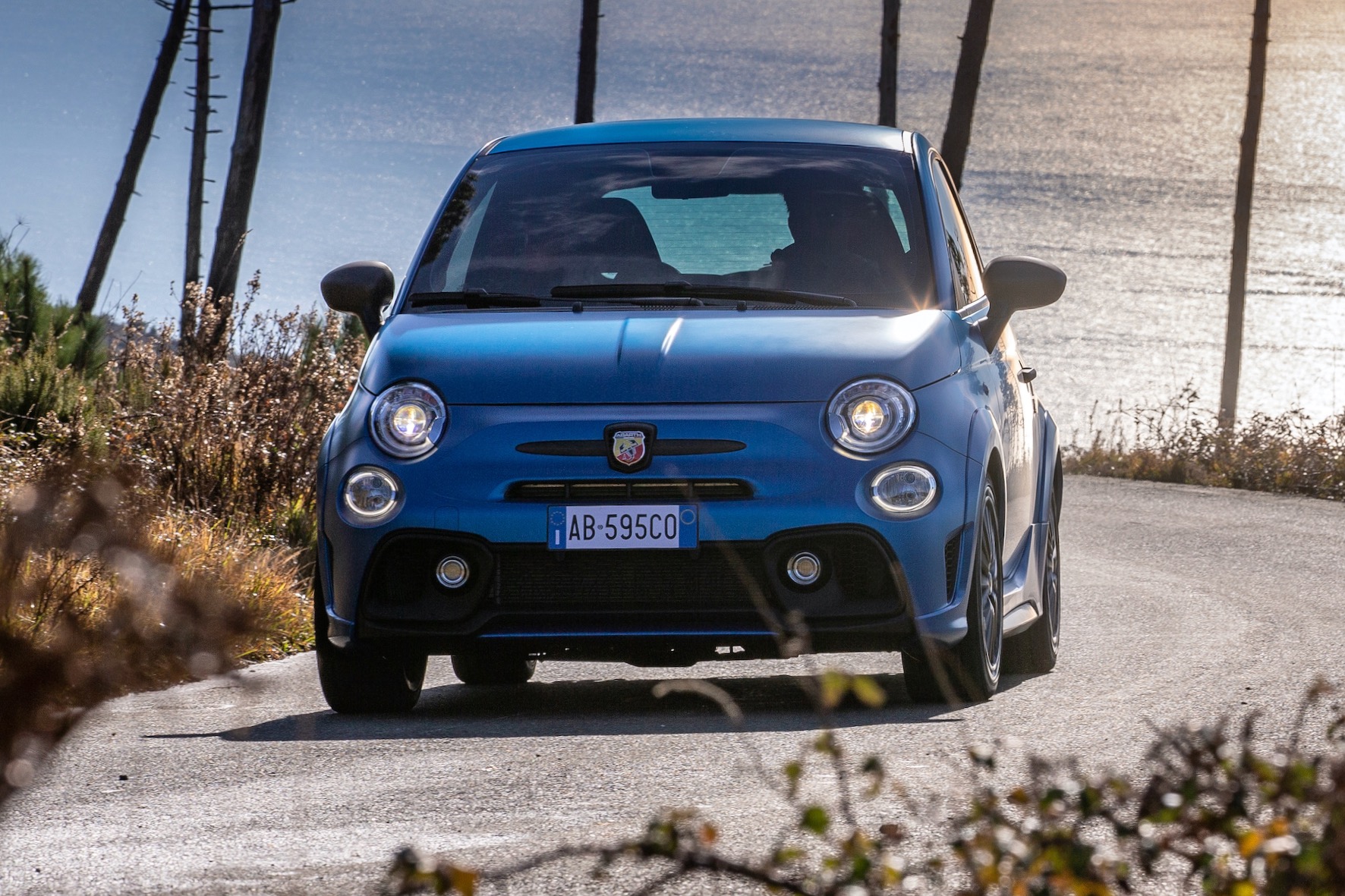
The Australian arm of Fiat has recalled its 2021-built Abarth 595s after an issue with the vehicle’s compliance label was discovered.
Affecting just 32 units, some examples of the model have been found to be fitted with a compliance label which incorrectly states a five-person seating capacity, rather than the car’s actual four-person layout.
Incorrect labels are therefore not compliant with Australian Design Rule 61/02, meaning Fiat must rectify the problem to legally prevent anyone trying to fit five people in the hot hatch.
Fiat has offered to fix the issue free of charge, with owners of the affected vehicles encouraged to contact their nearest dealer to arrange a consultation.
Alternatively, if anyone is unsure of whether their car is affected, they can contact Fiat Chrysler Australia on 1800 870 720 or via email at [email protected].
A list of VINs for affected units can be found here.
UPDATE: New, comprehensive guide published
Since this story went live, we have published a more comprehensive guide to both home and public charging, along with an explainer on the different plug types seen in Australia. Get the full story at the link below.
Story continues
So you want to buy an EV? Okay, we are going to guess you’ve got a garage or driveway, you park on the street, or you live in an apartment complex. One of the three, anyway.
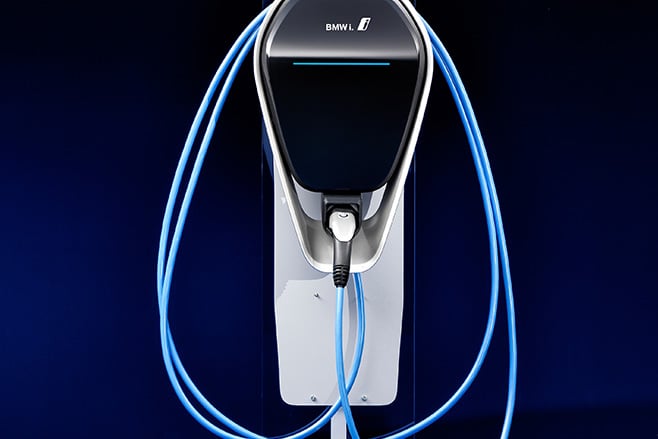
If you have a garage or driveway, you can plug the car into a conventional 240v wall socket using the supplied charging cable. However, these cables are more intended for emergency recharging and are the slowest by a considerable margin. The typical maximum current from a wall socket (2.4kW) is about half as powerful as a dedicated ‘wall charger’.
One of these is really mandatory if you want your car fully charged at the start of each day. Wall chargers cost between $1000 and $2500 with installation by a licensed electrician an additional $1000 or so. A 7.2kW wall charger will give about 30-50km of range per hour depending on the car, so you may not even need to plug the car in every day, depending on use.
But if you’re planning a long drive, or you park on the street, you’ll be reliant on public charging infrastructure which is still way off the pace in Australia compared to other Western nations. But that’s only to say a long drive, or owning a street-parked electric vehicle, will take some additional planning.
Tesla owners enjoy their own charging network, but for all other EV drivers, websites like plugshare.com show the public chargers in your area, their outputs and what plug types they cater for.
Sadly in Australia, supply is waiting for demand, meaning our network is far from world-leading, however more chargers are being added all the time. (In Europe, it’s been not uncommon to find all public charge points in densely populated cities already occupied by EVs getting juiced up, and their public recharging network is much larger than ours.)
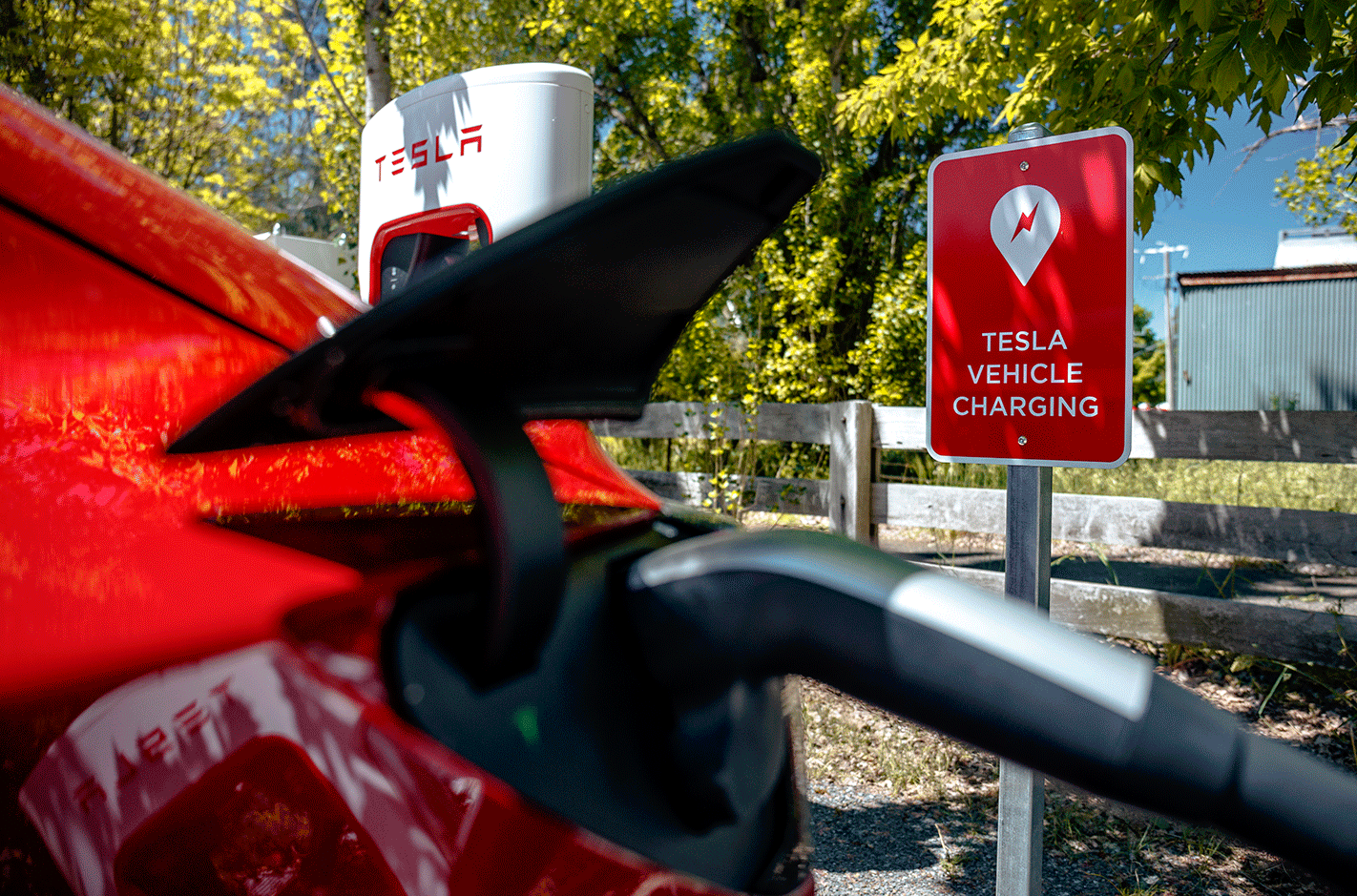
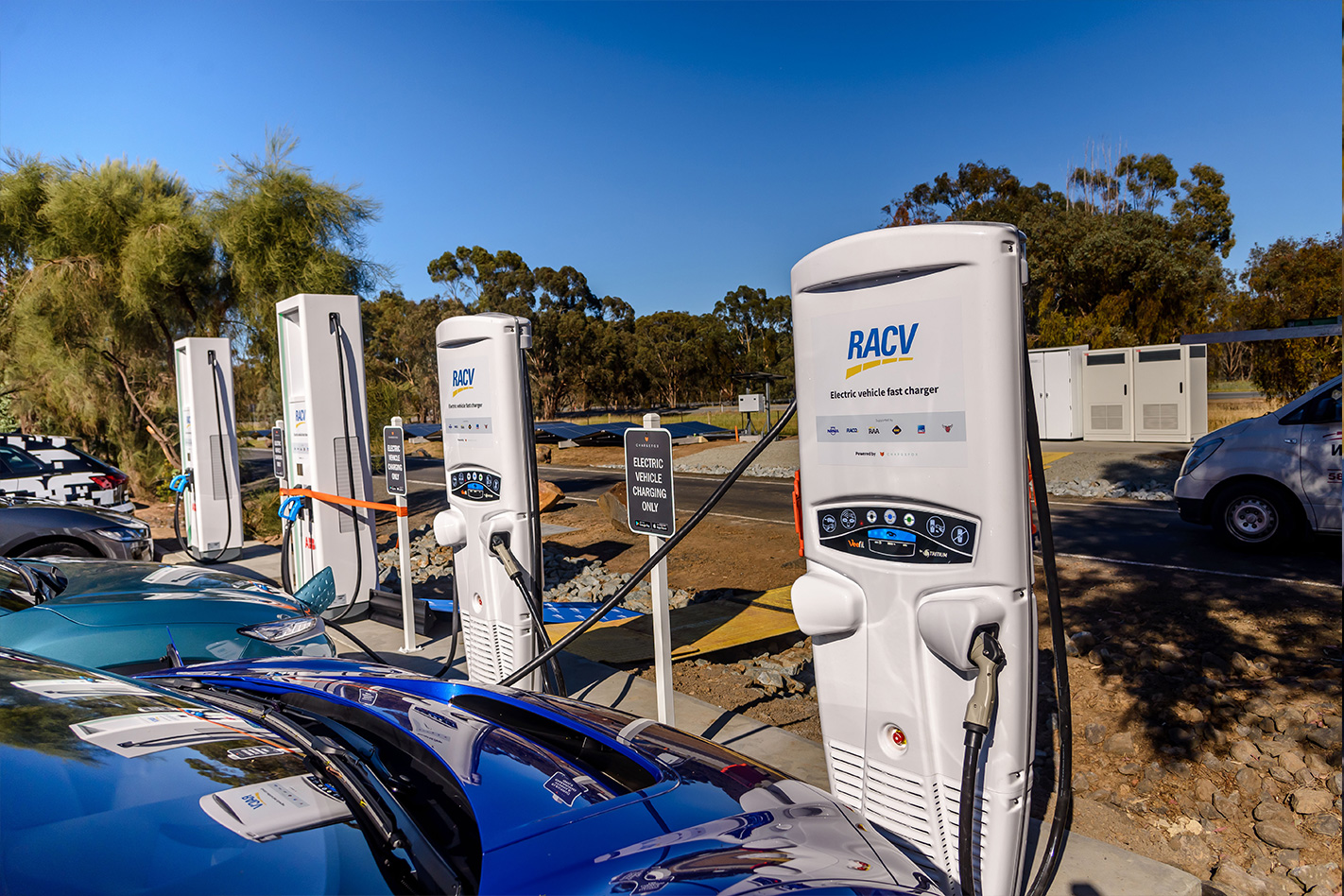
With outputs ranging from 25kW to a beefy 350kW, public recharging – despite being less convenient than just plugging in at home – can be a lot faster than home recharging.
To use some public chargers you’ll need to sign up with a provider like Chargefox, which is as simple as downloading an app. Chargefox then charges a per kWh rate. Many public recharge sites are currently free. Some manufacturers offer free or discounted charging via Chargefox – for example, buy an Audi e-tron and any public recharging is free for six years.
Lastly, if you live in an apartment complex, well, you’ll have to come to an agreement with your owners’ corporation if wall chargers aren’t already in the carpark. Same if you wish to recharge at your place of work, which could make a lot of sense if your car is plugged in all day while you’re at your desk, with the company taking care of the bill.
Is battery swapping the future?
No time to wait for your EV to recharge? In China, Tesla rival Nio is trialling battery-swap stations where you drive into what looks like an automatic car wash, and a machine swaps your depleted battery pack under the floor with a fresh one in less than five minutes while you sit in the car.
Nio already has 301 ‘Power Swap’ stations in China and has plans to operate 4000 by 2025, 1000 outside China, in what is shaping up as a philosophical challenge to Tesla’s Supercharger network.
UPDATE: New, comprehensive guide published
Since this story went live, we have published a more comprehensive guide to both home and public charging, along with an explainer on the different plug types seen in Australia. Get the full story at the link below.
NEED MORE?
VISIT OUR EV LANDING PAGE
Welcome to the MOTOR Awards 2021, where our team offer a tip of the hat to those that displayed automotive excellence in the last 12 months.
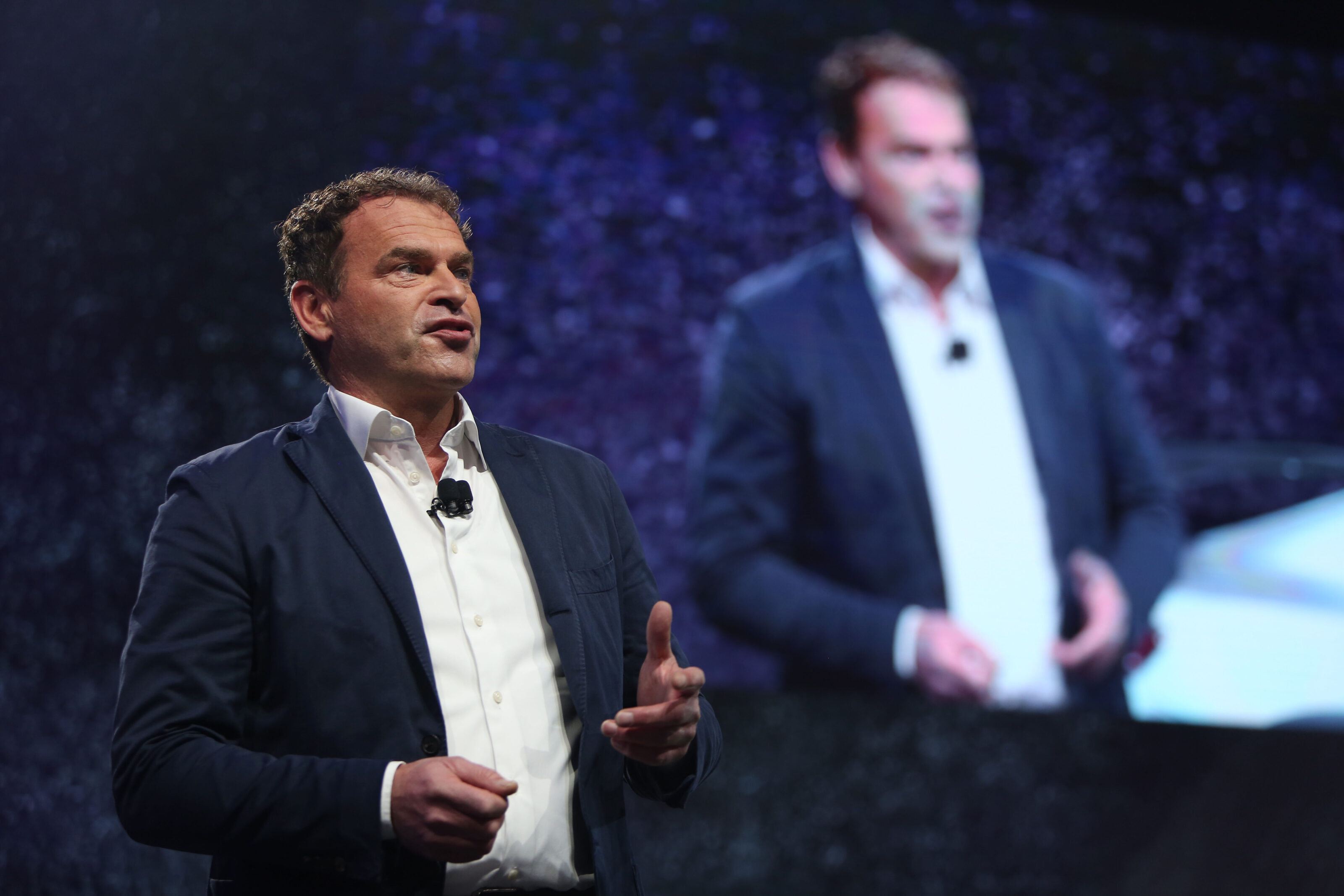
Biggest Personality Winner: Tobias Moers
In the overall scheme of things, Aston Martin is a bit-part player. It’s a company that has lurched from one financial crisis to another. In 2018, its IPO bombed, shares dropping 6.5 per cent on the day of issue and tanked by 75 per cent not long after. That was enough to see its then-CEO, Andy Palmer, ushered out of the door at Gaydon with the cardboard box and pot plant.
In 2020, Aston Martin sold 4150 vehicles worldwide, a drop of 32 per cent from 2019. The company was in dire straits, coming from a base of chronic overpromising and underdelivering. Cue one Lawrence Sheldon Strulovich, better known as Lawrence Stroll, who led a consortium that acquired 16.7 per cent of the company in January 2020. There was one man on their radar to lead the company into a new future: AMG’s Tobias Moers.
Moers is a hard taskmaster with a phenomenal work rate. He prizes attention to detail and engineering excellence. Whereas most CEOs would take some time to acclimatise to the culture of a business, Moers arrived on day one like a wrecking ball.
Since landing the role in August 2020, he’s redrawn the product map, shuttered the Gaydon paint shop in favour of sweating the business’s superior assets in the new Welsh factory, mollified an angry workforce, put the red pen through plans for a new engine, ordered the Valhalla supercar to be restyled and has put his imprimatur on the Valkyrie hypercar, a project that seems to have suffered a lack of design freeze.
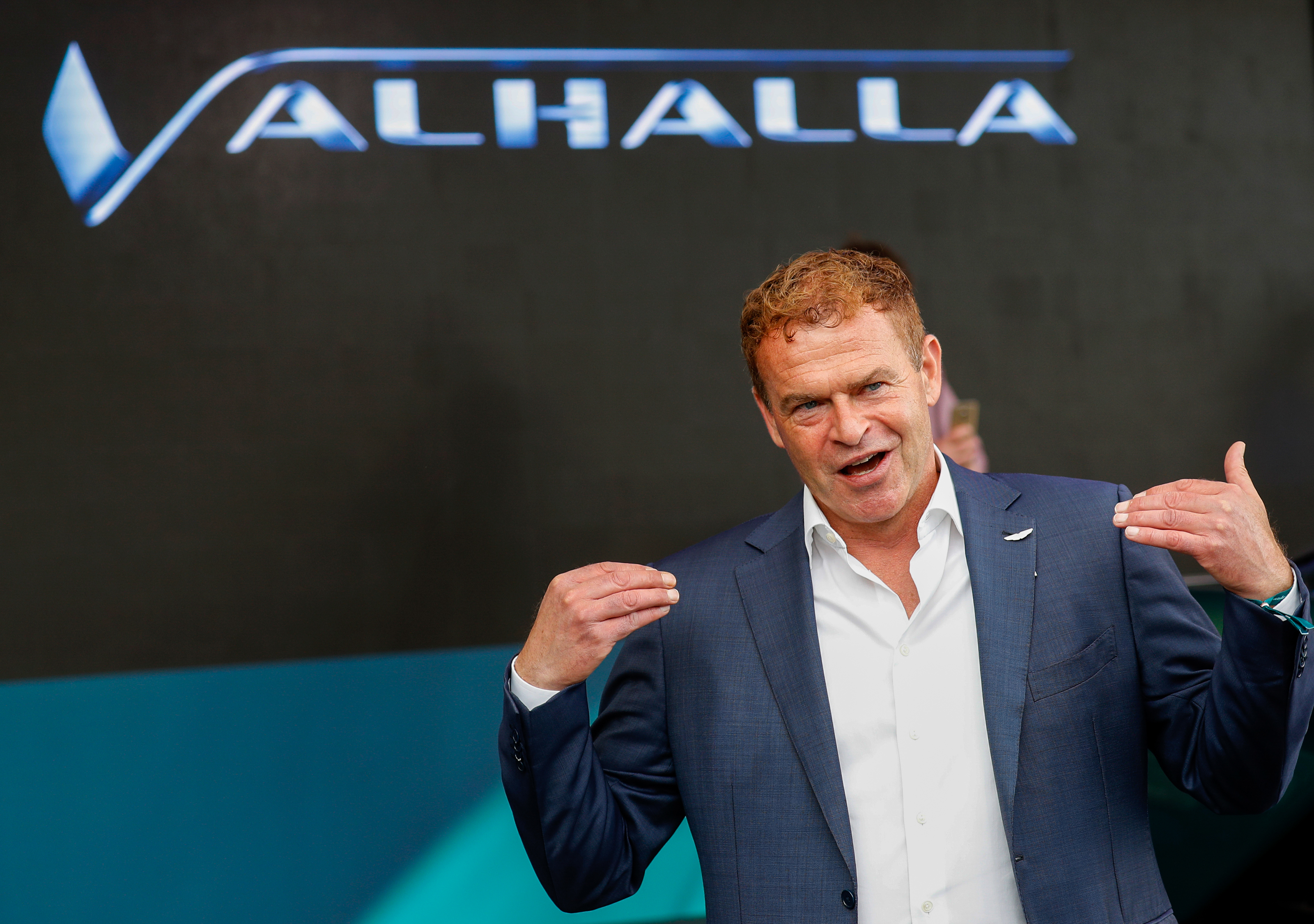
Moers oversaw a plan to run down old inventory and shift to a forensically demand-driven model. The effects will take a couple of years to materialise, with the company due to be free-cashflow positive by 2023. Already products like the Vantage F1 Edition are attracting a slew of younger buyers, Moers noting an increase in performance-oriented buyers.
The rebranding of the Racing Point F1 team to Aston Martin colours in 2021 is something that Moers sees as a cultural touchpoint within the road car business, bringing F1’s performance culture to the company.
This January, Citigroup’s head of European automotive research upgraded Aston Martin from Neutral to Buy. Deutsche Bank noted “Aston Martin ticking the boxes on what’s needed to build a track record and taking it one step at a time to deliver on the full-year targets.”
We’ll have to wait and see if those targets are met, but the first six months of 2021 netted a 224 per cent sales increase, with more than half of them accounted for by the DBX SUV.If you want a pithy soundbite, Moers is not your man. If you need a prestige car company that’s in a bit of a mess turned around quick smart, it’s hard to think of anyone better.
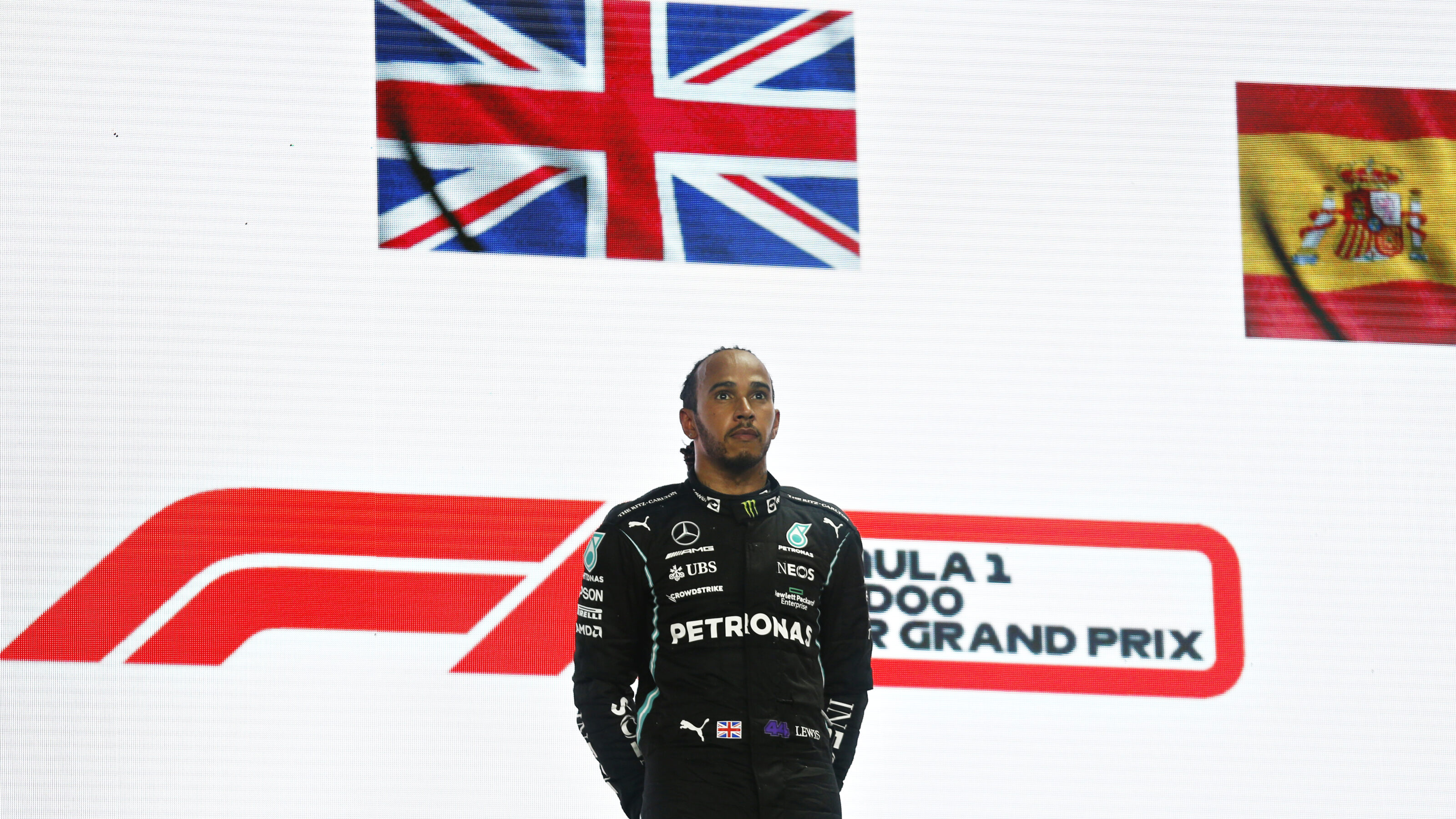
Honourable mention: Lewis Hamilton
Whether he wins a historic eighth driver’s championship or not, Hamilton has etched his place in F1 history, his jaw-dropping achievement of over 100 wins and 100 poles being more than Prost and Senna combined on both measures. Love him or hate him, you can’t argue with that record.
Honourable mention: Akio Toyoda
Toyoda guided Toyota through a tough 2020, retaining profitability despite the burdens of Covid-19. He has put in place a template for success in bringing cars that are fun to drive back to Toyota all while participating in motorsports himself. If you want to look for a CEO that lives the value, Toyoda’s your man.
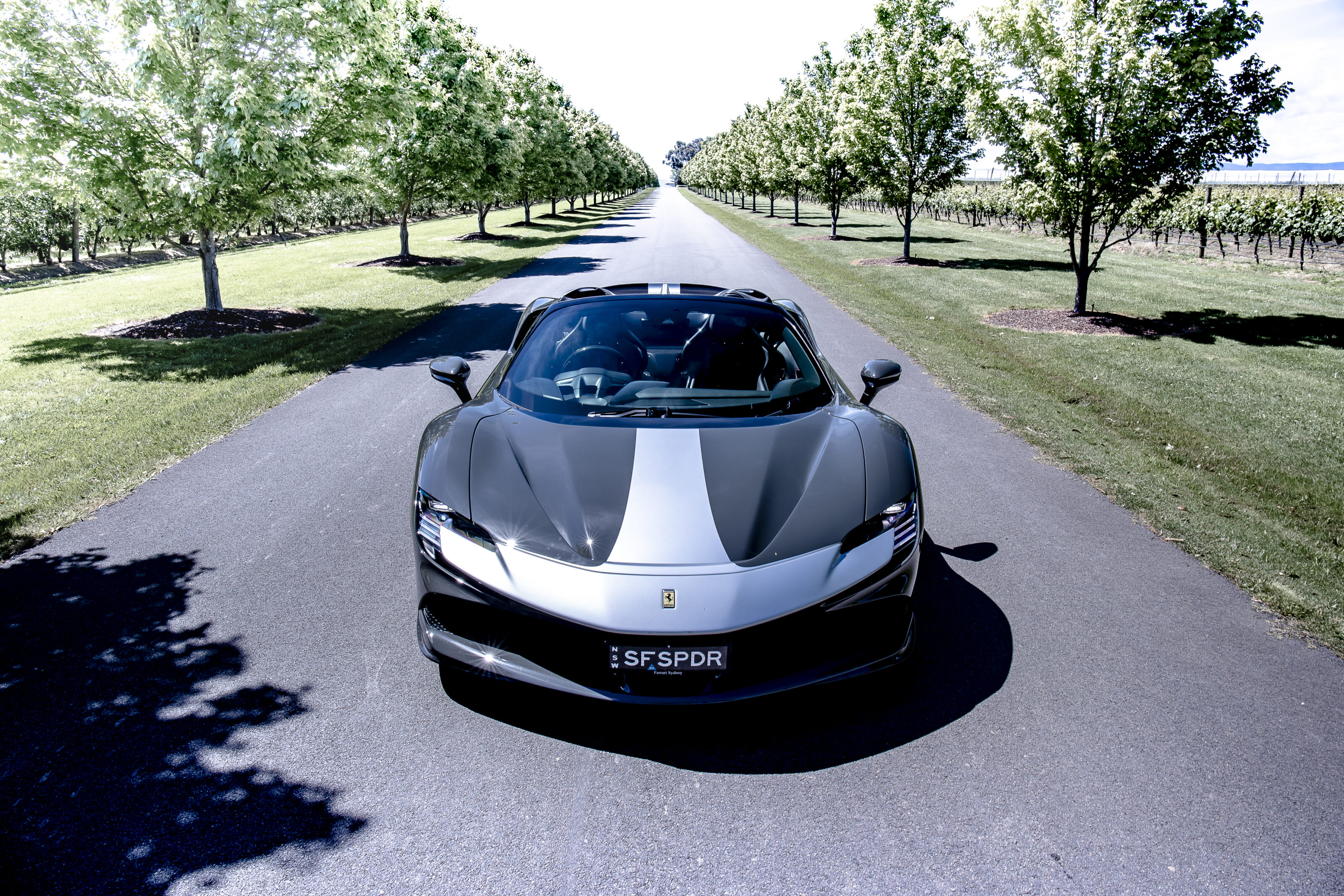
Everything about the Ferrari SF90 Spider is overwhelming. In part, it’s the numbers associated with it, whether it be the extraordinary price (Ferrari couldn’t supply an exact figure but apparently $1.385m as-tested) or the equally extraordinary performance (0-100km/h in 2.5sec, 340km/h top speed), but mostly it’s the incredibly complex engineering contained within.
I’ve never been asked to road test the Space Shuttle or an F-22 Raptor, but being tasked with the SF90 Stradale Spider Assetto Fiorano, to give our heavily optioned tester its full title, is somewhat similar. In no way do I intend this to sound like a hardship, but there’s a lot to get your head around even before you actually drive the thing.
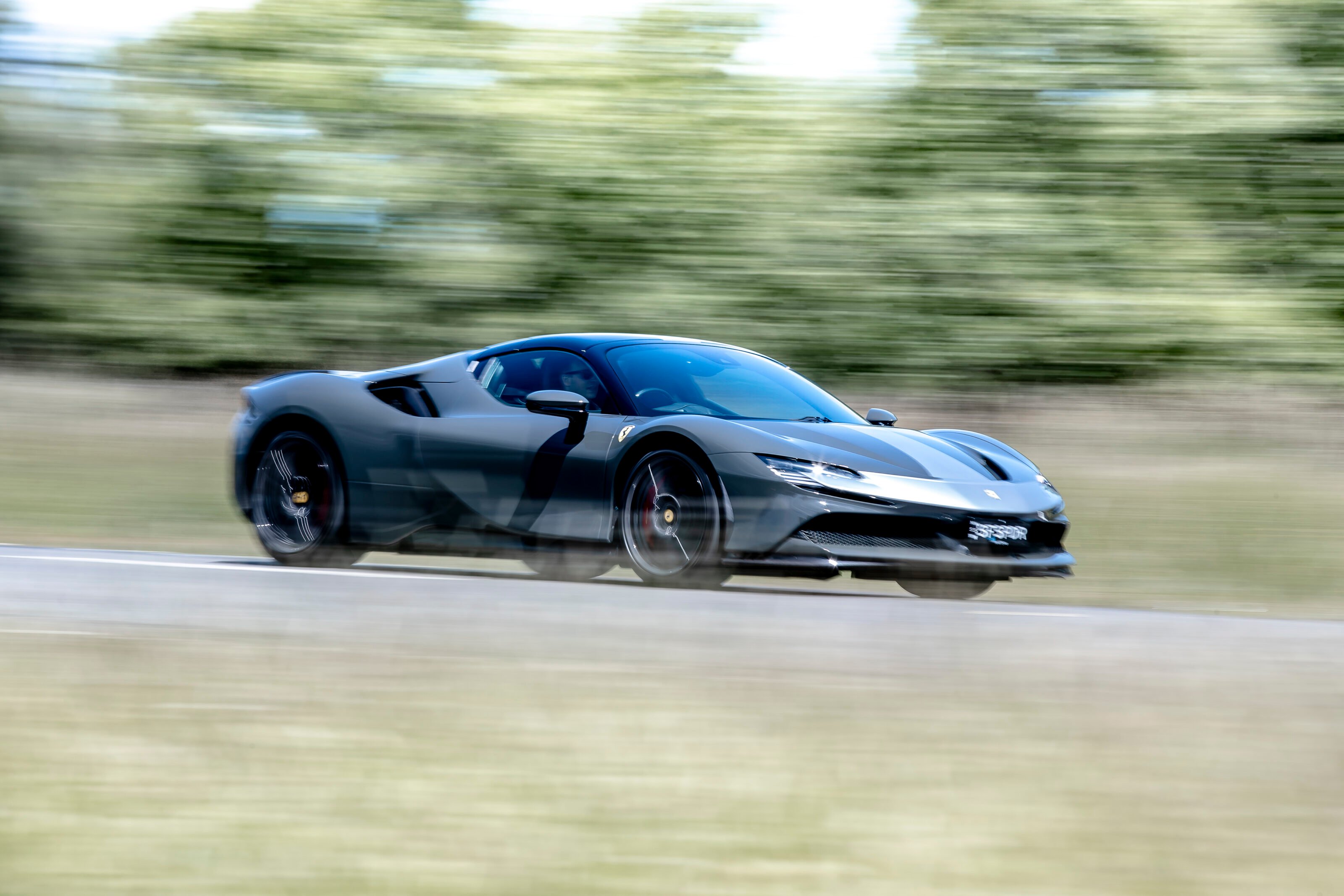
If you’re struggling to keep up with Ferrari’s model line-up these days – and Maranello has been on a tear – then the SF90 sits atop its regular production range (i.e. not a limited-run special) in terms of price, prestige and performance. In regards to the latter, it’s actually the fastest and most powerful road-going Ferrari ever.
The Spider starts at $929,888RRP and the folding metal hard-top adds 100kg over the coupe, which dulls the SF90’s performance punch fractionally, rendering it merely ludicrous instead of outright absurd.
The SF90 sits atop its regular production range in terms of prestige and performance. In regards to the latter, it’s the fastest and most powerful road-going Ferrari ever
Acceleration from 0-100km/h is identical at just 2.5sec, while 200km/h arrives in a ridiculous 7.0sec (+0.3sec). Top speed is north of 340km/h and the Fiorano lap time is a mere 0.5sec slower than the coupe at 1:19.5sec, which still makes it 0.5sec quicker than the mighty LaFerrari.
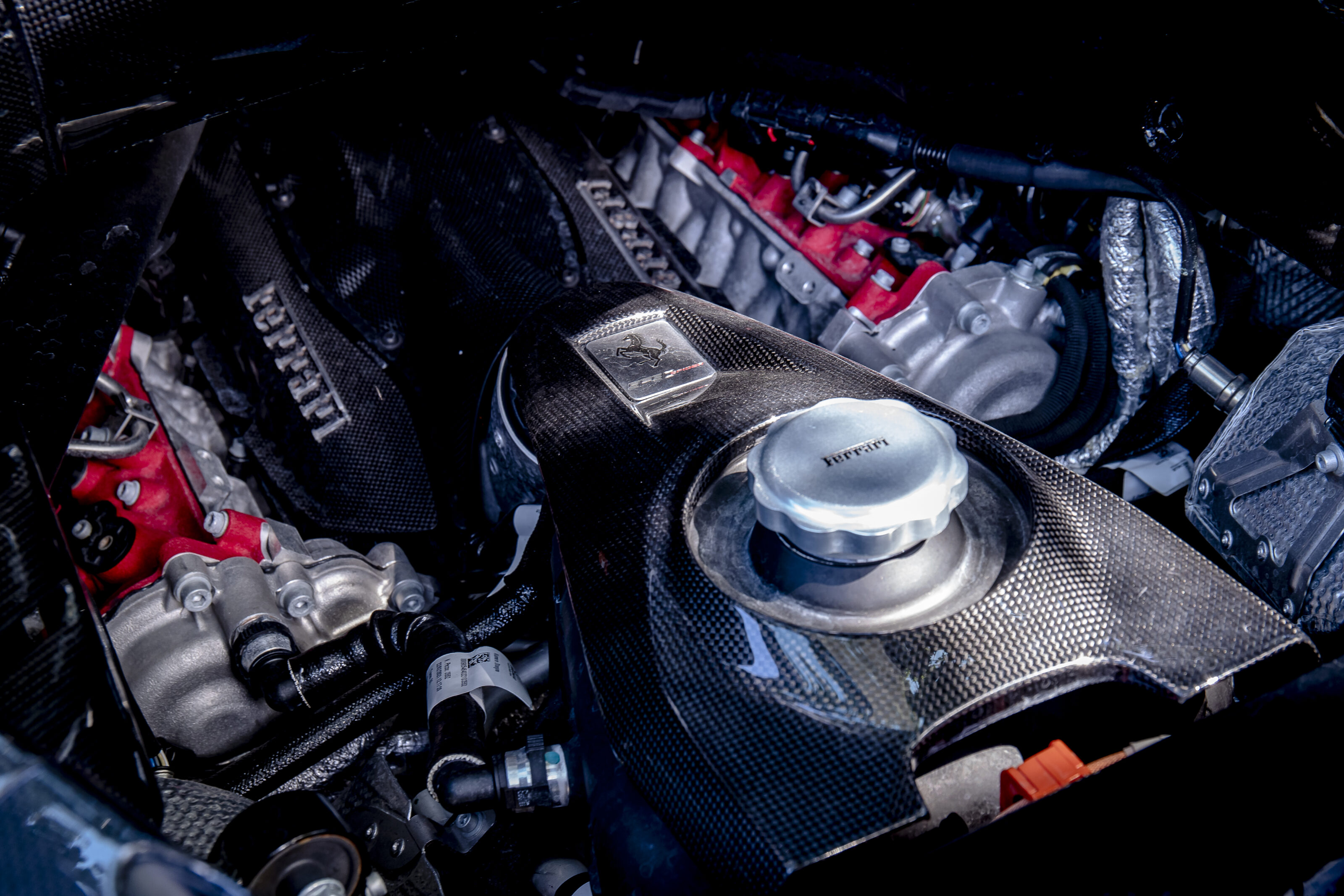
Primarily responsible for this Veyron-busting performance is an uprated version of Ferrari’s F154 V8. A bore increase from 86.5 to 88mm expands capacity to 4.0 litres, a new injector system, tweaks to the turbochargers and higher combustion pressures all help raise outputs to 574kW and 800Nm, increases of 44kW/30Nm over the F8 Tributo.
Not only is the engine more powerful but it’s also 25kg lighter, as well as more compact. It’s effectively been squashed, becoming wider but shorter in both length and height, which drops the centre of the crank by 15mm and lowers the centre of gravity. It allows the engine to be packaged deep, deep within the chassis.
Aiding the internal combustion engine is a trio of electric motors. A thin axial flux motor producing 150kW/266Nm is sandwiched between the engine and new eight-speed dual-clutch transmission while a 99kW/85Nm motor on each front wheel enables all-wheel drive capability. Total system output is 736kW or a neat 1000 metric horsepower (987bhp).
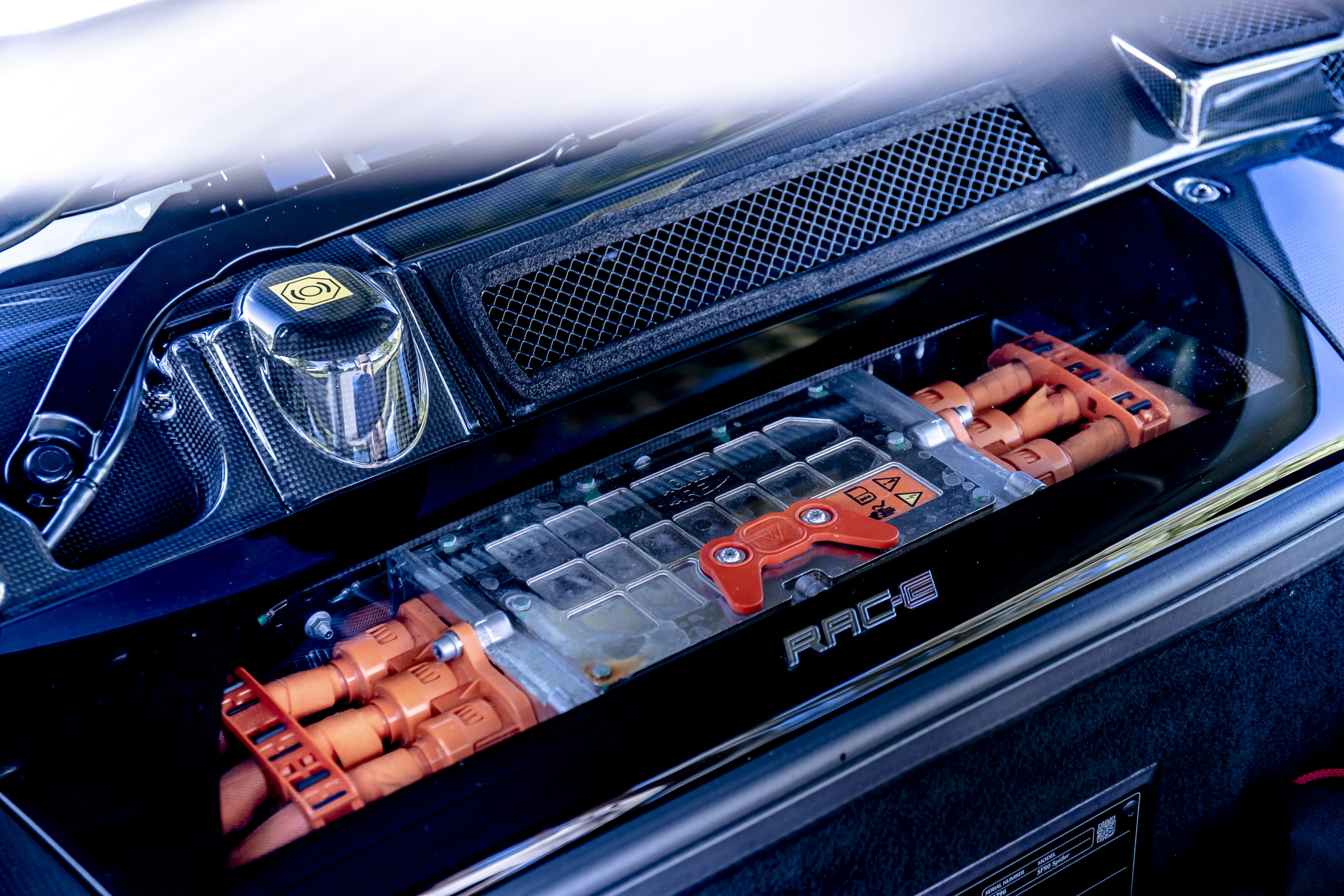
Feeding those motors is a 7.9kWh battery pack mounted behind the seats, which enables the SF90’s real party trick. Crazy performance is expected of a Ferrari, but what is a first is the ability to drive on electricity alone.
The Fiorano lap time is a mere 0.5sec slower than the coupe at 1:19.5sec, which still makes it 0.5sec quicker than the mighty LaFerrari
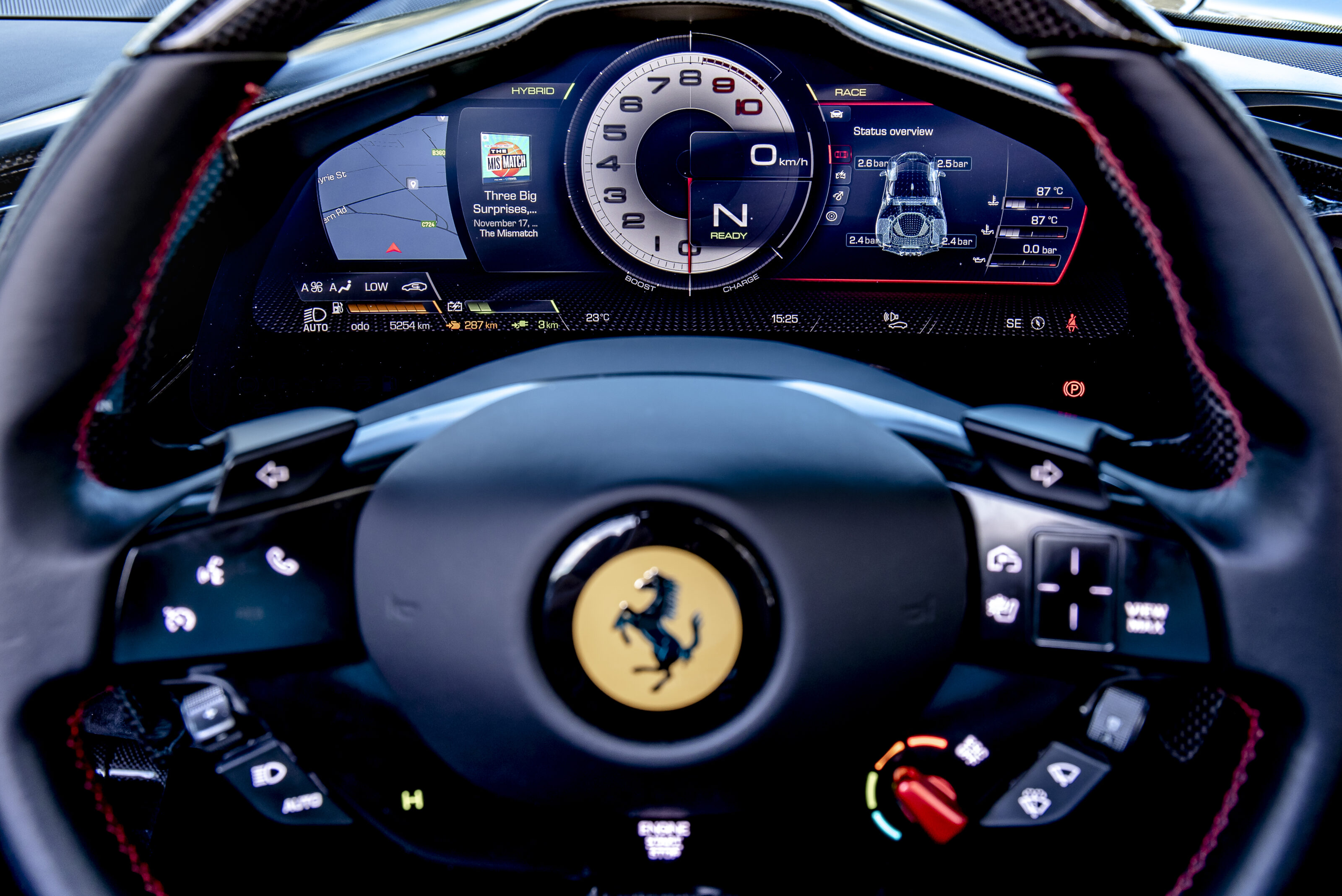
In addition to Ferrari’s traditional steering-wheel-mounted Manettino, there is now another set of powertrain controls opposite it. In the default Hybrid mode, pressing the engine start button now results in merely a whirr as the engine remains dormant, a far cry from the usual theatrics.
One tap below engages eDrive, which means the SF90 is pulled along purely by its front electric motors. In this mode, its range is limited to a maximum of 25km but there’s a certain serenity in cruising along the highway with the roof down and the engine off, almost like gliding. And if you think a Ferrari turns heads with its engine blaring, try sailing past a crowd in near silence, a Jetsons-like whirr the only clue it’s powered at all.
In Hybrid mode the car will revert to EV whenever speed, throttle and battery charge allows, the engine cutting in seamlessly – if vocally – as needed. The batteries are continually topped up whenever the car slows, though somewhat paradoxically, if you want to top them up quickly then switch to the sportier Performance or Quali modes as the regeneration is maximised. Alternatively, the SF90 can be plugged in but it’s an overnight job.
As with other similar hybrids like the Honda NSX or Porsche 918, the braking complexity of the SF90 is enough to make your head spin. It debuts brake-by-wire on a Ferrari, removing any physical connection between the pedal and the brakes; instead relying on electronic signals.
Ferrari says this allows for a more harmonious relationship between pedal pressure and braking force, as well as being able to use the electric motors’ regenerative abilities to slow the car during light braking events. The cost is a slightly unnatural feeling to the brakes at lower speeds, though it must be said that when you really lean on them the pedal is reassuringly firm.
Inside, the SF90 continues to break the Ferrari mould by, again, embracing high technology. The large central tachometer is still present, but it’s a digital recreation housed within a giant 16-inch curved instrument display. It’s controlled by a capacitive touchpad on the right-hand steering wheel spoke in a smartphone-esque tap-and-swipe manner.
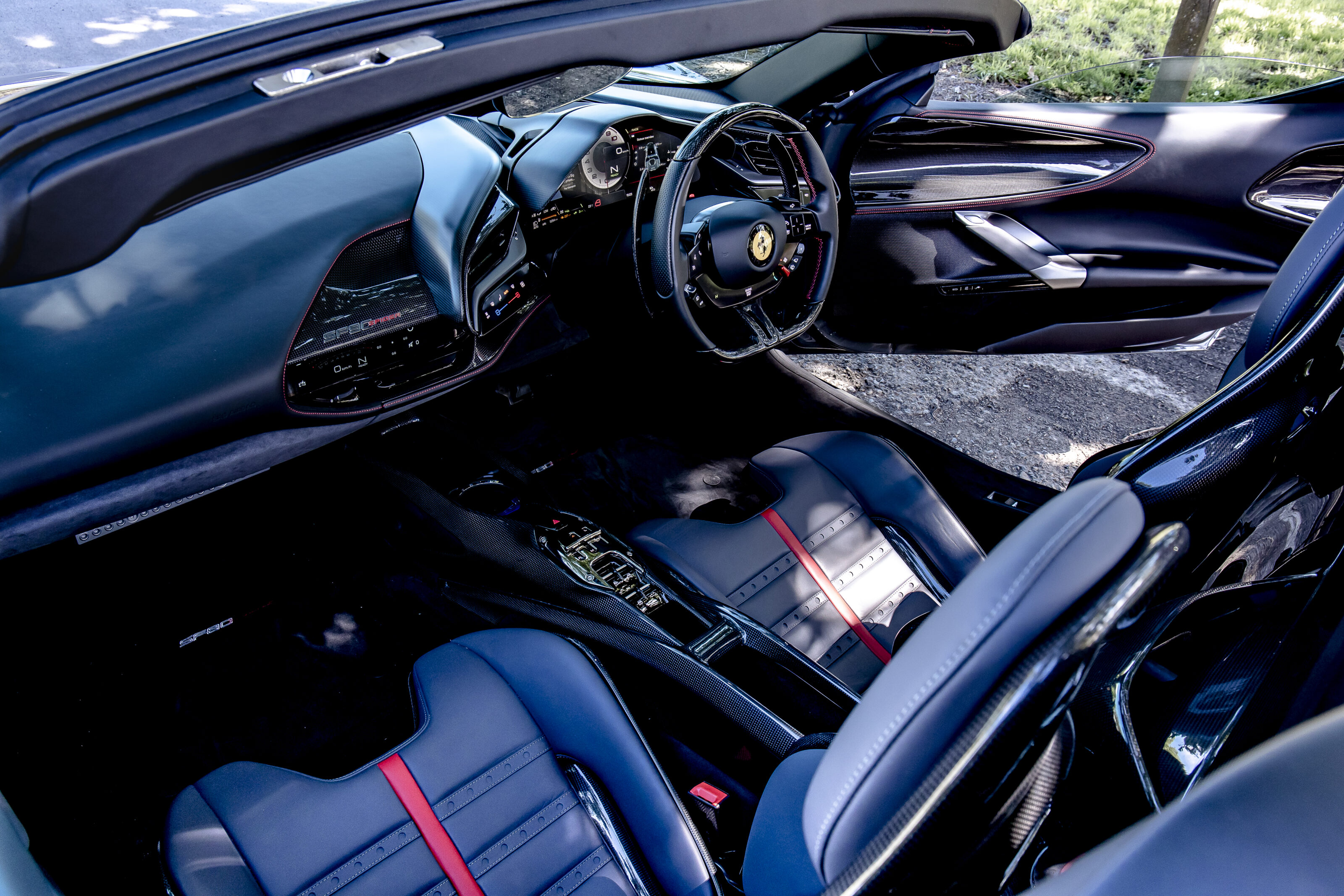
Another similar touchpad sits on the left spoke for controlling the voice and drive assistance controls, while the driving position is flanked by another pair, the HVAC controls on the left and lights and mirrors on the right.
Every other control is mounted on the steering wheel, which is beginning to almost mirror Charles Leclerc’s F1 car in the amount of buttons, tabs and switches on the front and back. It’s not necessarily intuitive, but fairly easily understood once someone’s explained it, the biggest learning curve being how to navigate that massive instrument display.
When driving a car like the SF90, there’s inevitably an element of delayed gratification. You yearn to know what the 1000hp hit feels like, but traffic and inner-city speed limits require patience, like having to wait until after lunch to open your Christmas presents.
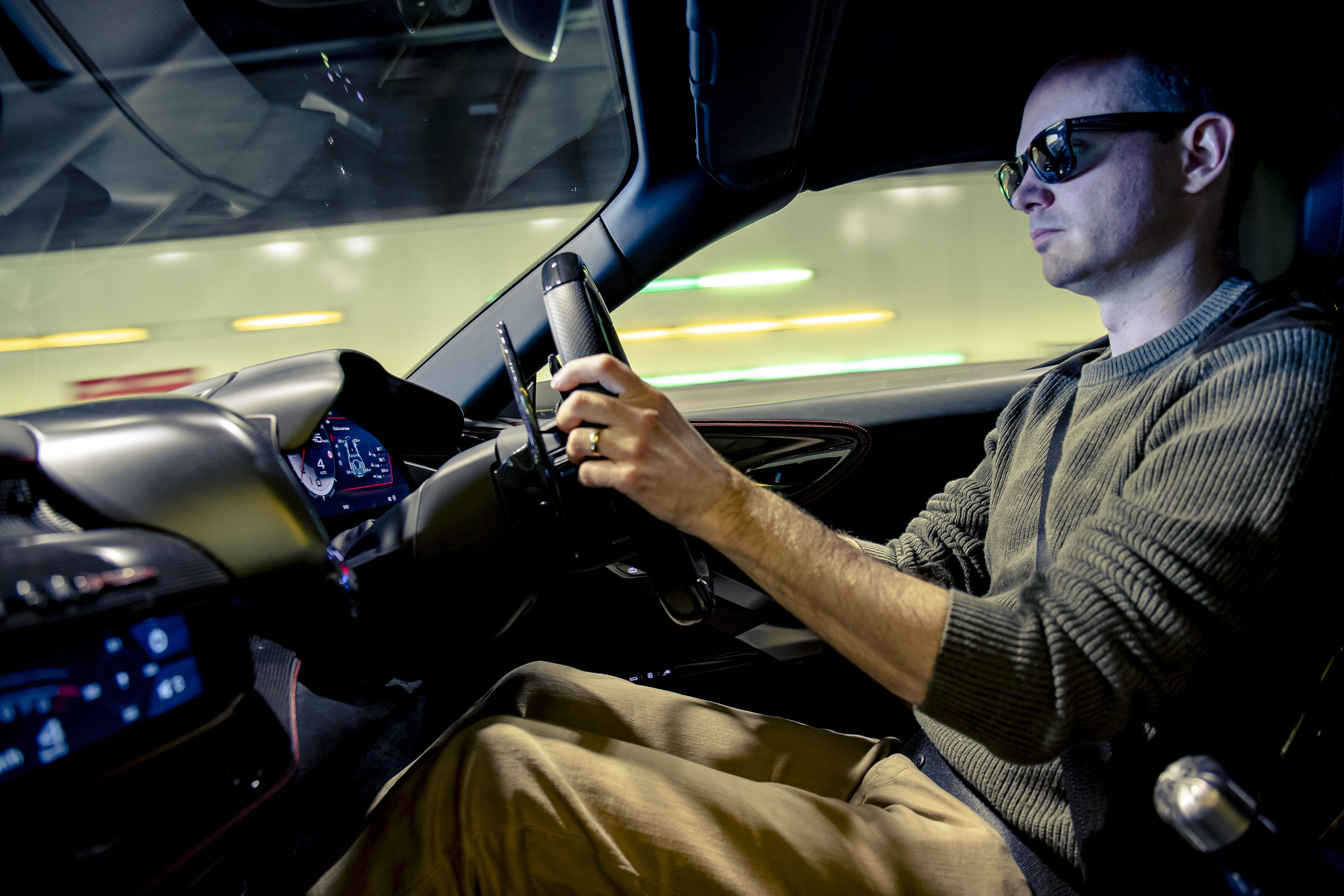
In the meantime, there is still plenty to assess. In typical Ferrari fashion the steering is light and very quick, less than two turns lock-to-lock, and the turning circle is massive. That might seem inconsequential, but it’ll matter if you need to park in an underground or multi-storey car park.
If that’s the case, we’d also caution against the track-based Assetto Fiorano pack fitted to this test car. A $100,000-plus option, it replaces the standard adaptive magnetorheological dampers with passive aluminium DSSV (Dynamic Suspension Spool Valve) units from motorsport specialists Multimatic.
In doing so it eliminates the nose lift function, but the AF pack also sheds 40kg thanks to those dampers, titanium springs, carbon wheels produced by Geelong’s Carbon Revolution and a higher carbon rear wing that increases downforce to 390kg at 250km/h.
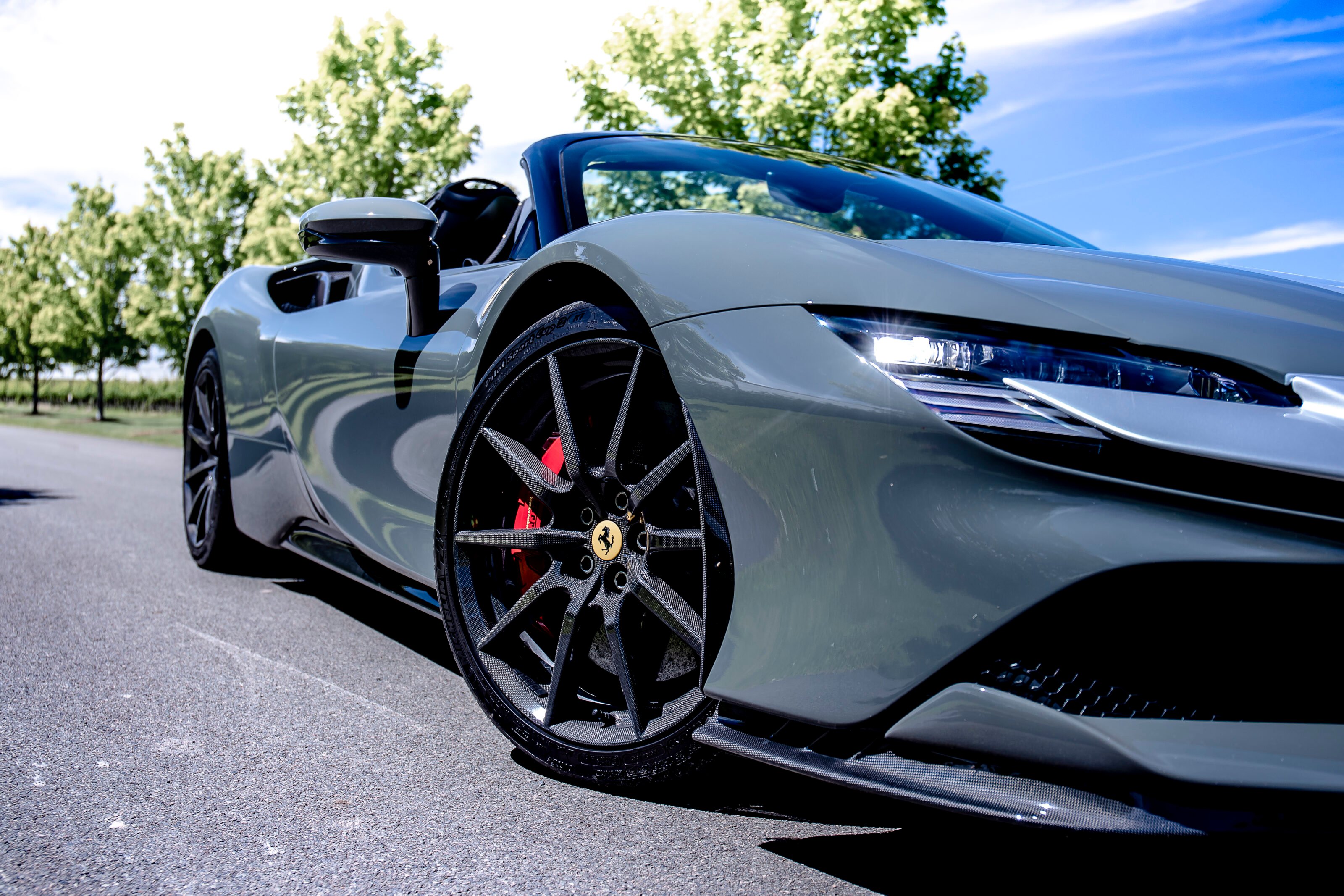
Despite these measures, the 270kg hybrid system makes the SF90 Spider heavy by Ferrari standards, the 1670kg dry claim equating to around 1800kg ready to drive (fuel and fluids). But consider this: even that kerb weight endows the SF90 Spider with a power-to-weight ratio of 409kW/tonne. A Porsche 911 Turbo S manages 292kW/tonne.
Engaging Performance mode ensures the engine is on permanently and primes the whole powertrain for attack. Press the throttle and those electric motors fulfil their true destiny, providing instant acceleration while the turbos spool up and filling any gaps in the torque curve.
The initial response is surprising: the rear wheels spin up in first, and in second, and again in third – isn’t this thing meant to be all-wheel drive?
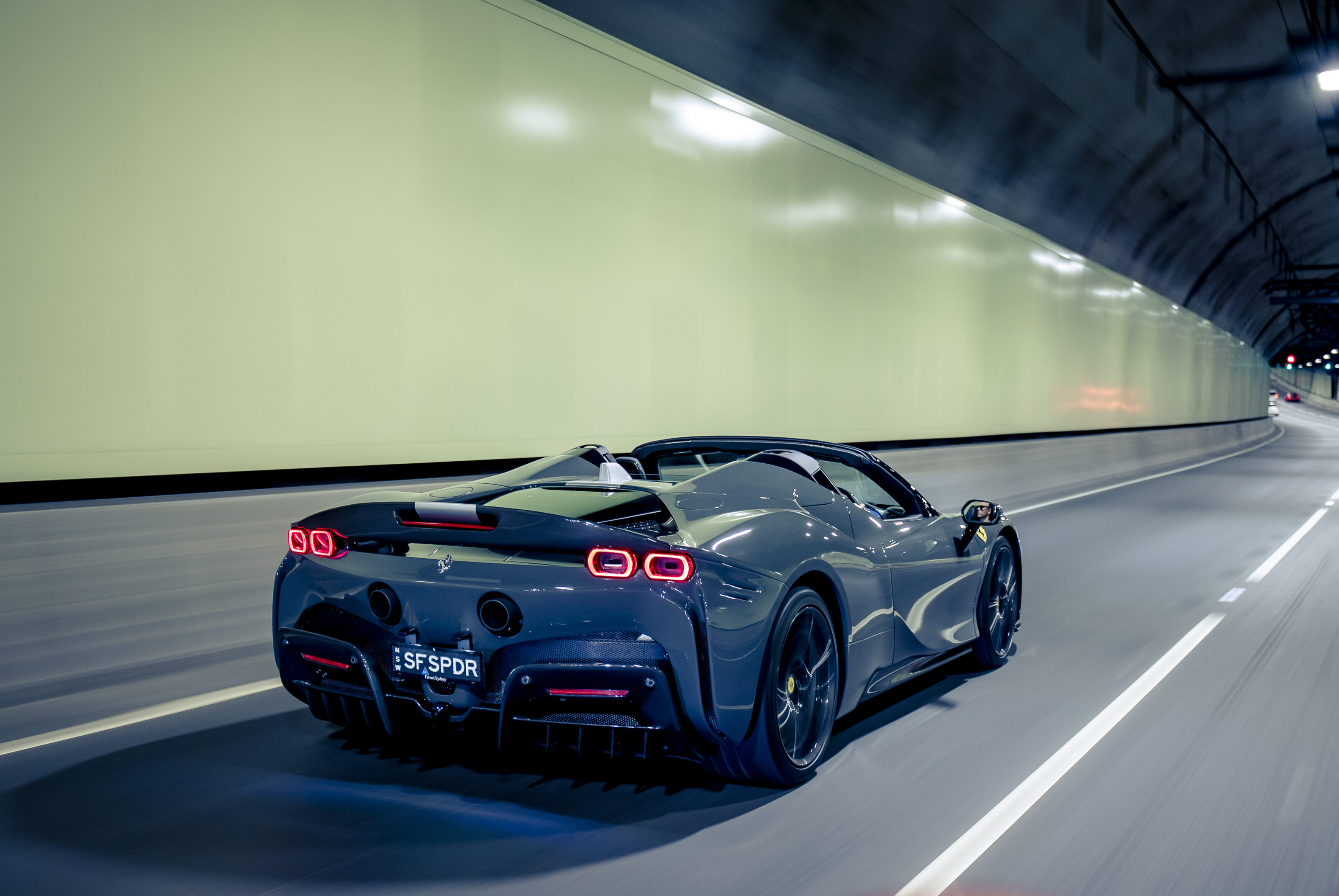
The initial response is surprising: the rear wheels spin up in first, and in second, and again in third – isn’t this thing meant to be all-wheel drive? Nevertheless, because the front motors are simultaneously pulling the car along, the resultant sensation isn’t so much acceleration as a feeling of simply being thrown from one end of a road to the other.
It’s a violent assault on every sense, from the physical sensation of longitudinal g-force to the demonic soundtrack, the roar of the engine overlaid with whine from the electrical system and huge inhalations and exhalations from the turbochargers.
And this is just in a straight line. Insert some corners into the equation and the sensory overload is only enhanced. To be frank, there is no way you can do any more than occasionally probe the SF90’s limits on the public road; the rest of the time – most of the time, really – you’re merely hanging on.
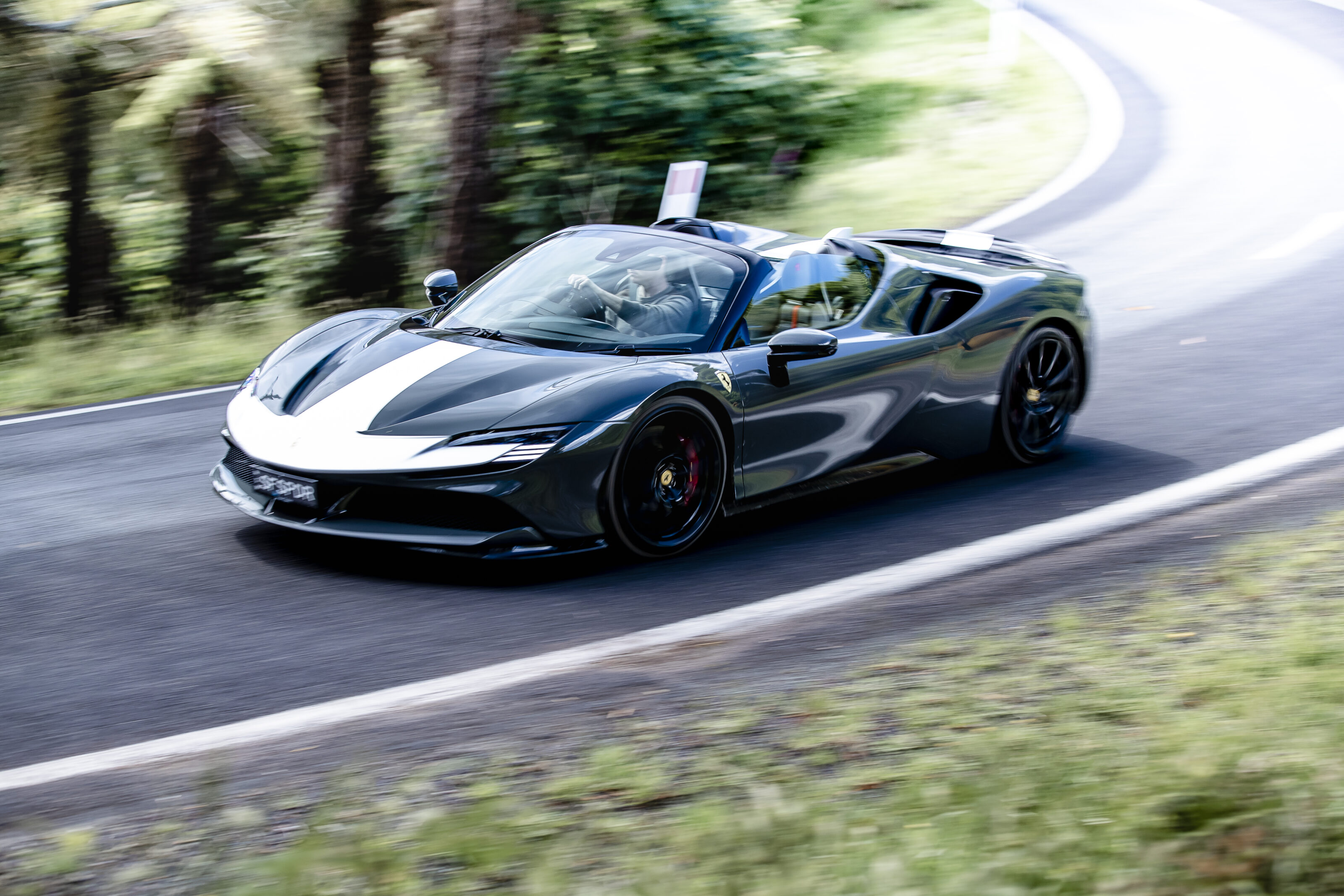
There is little in the way of feel through the steering, but the accuracy of the rack and the ridiculous levels of grip – the Assetto Fiorano also comes with Michelin Cup 2 tyres measuring 255/35 front and 315/30 rear – means there’s never really any doubt as to whether the front end will stick.
This is just as well, as at 1973mm the SF90 is as almost as wide as a Nissan Patrol and takes up virtually the whole lane on a typical country road. It thus requires a lot of precision, which isn’t easy given the speeds it’s capable of.
Its agility is remarkable for such a heavy car, especially in the way it can adjust its line mid-corner, and the Multimatic dampers come into their own when the going gets tough. They have that spooky motorsport quality of being uncompromisingly firm at slower speeds yet softly cushioning the chassis over larger bumps and never, ever becoming flustered.
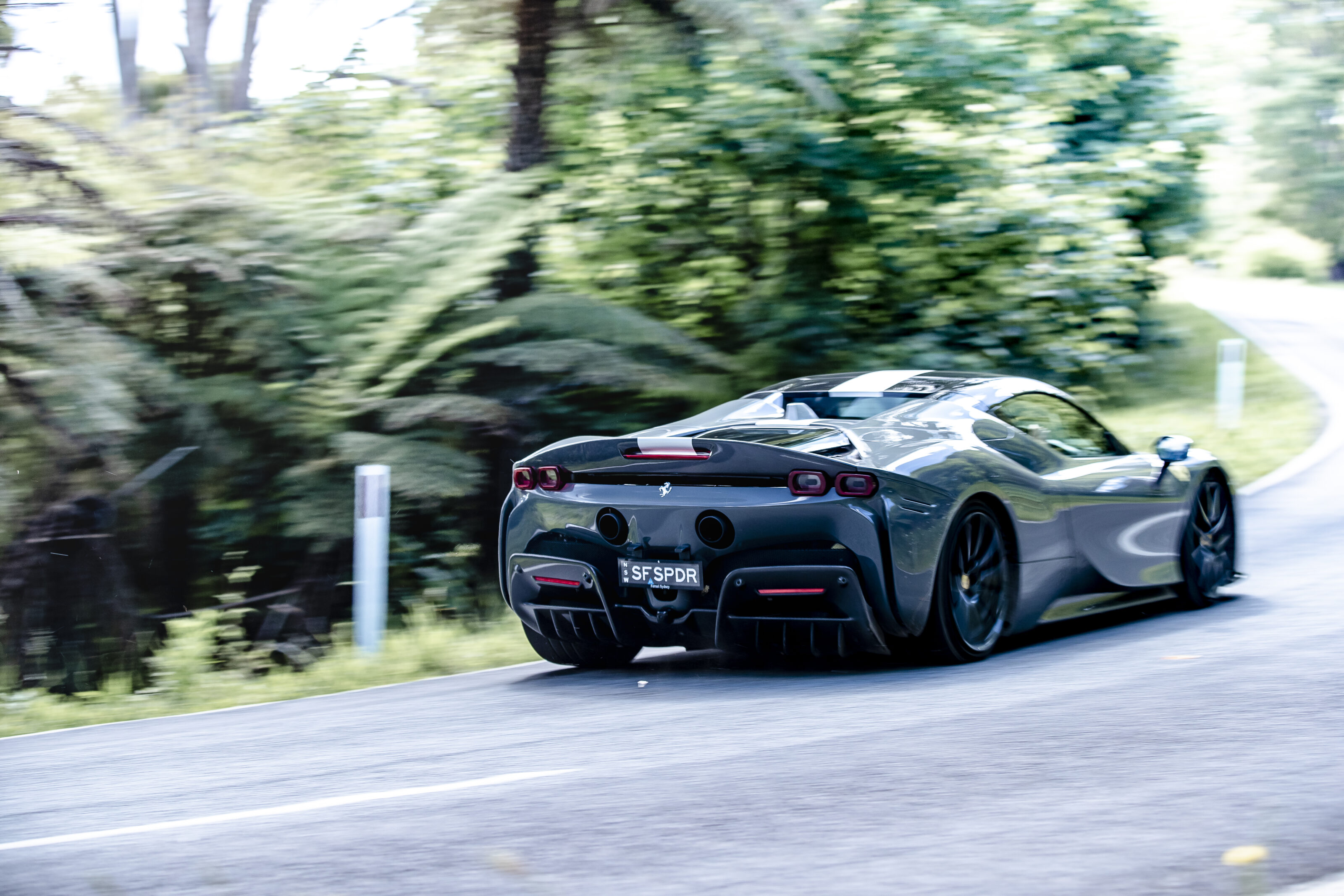
Unlike the driver. What surprises most about the SF90 is just what an animal it is. Obviously it would be fast, but any thought that all-wheel drive would sanitise the experience is quickly dispensed with by the need for constant steering correction.
With the Manettino set to CT Off, activating Ferrari’s clever Side Slip Control system, plenty of driver input is needed. It’s quite easy to over-rotate the car with ham-fisted inputs, but slow the process down – which isn’t easy – and there’s simply extraordinary grip.
Even 315mm Cup 2 tyres can only do so much when faced with such an onslaught, though. Full throttle is a challenge – by the time you’ve fed the power in to give the rear tyres a chance the rate of acceleration is such that you’ve invariably reached another corner.
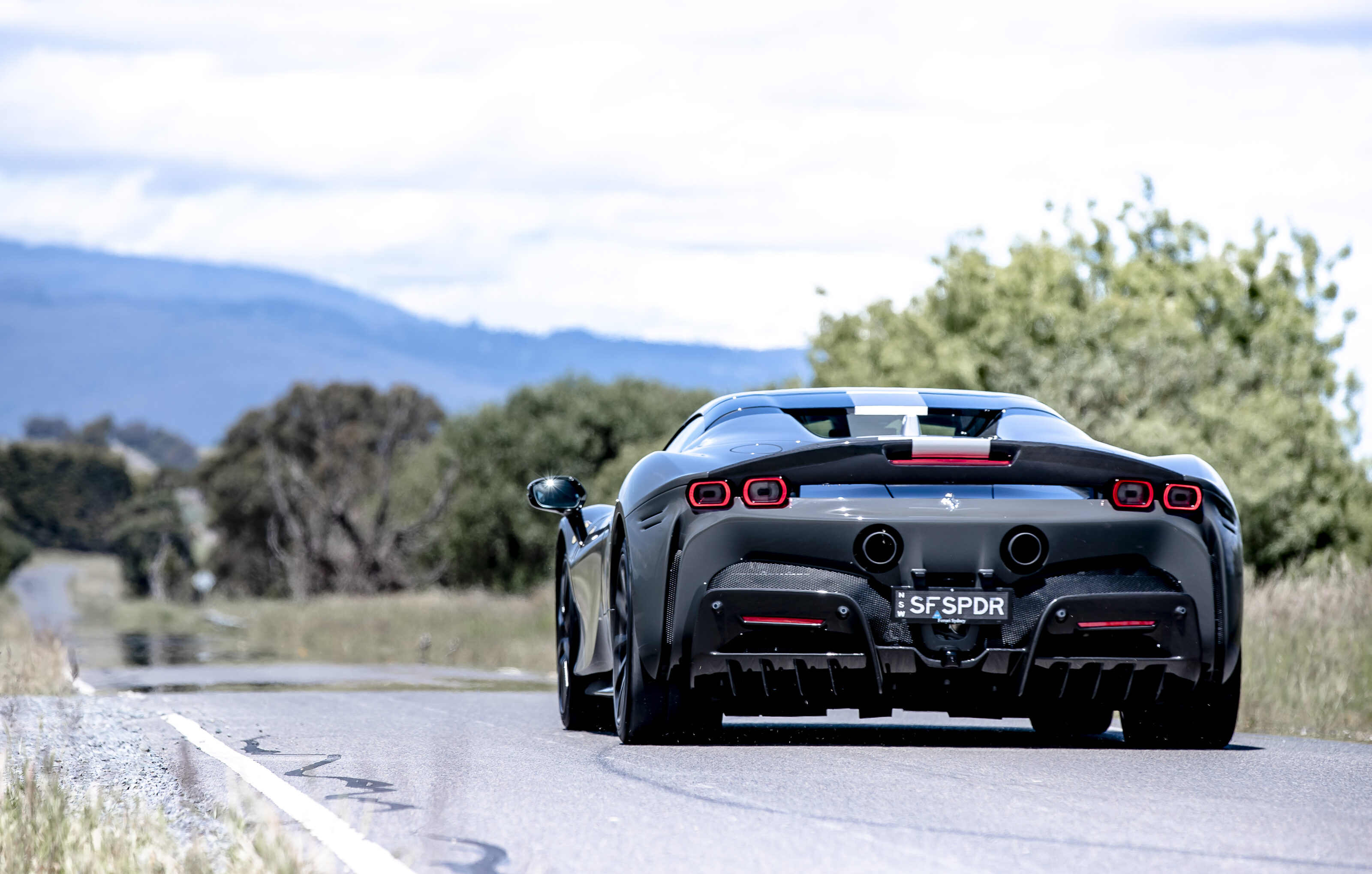
It’s an awe-inspiring display of technology, but is it enjoyable? That’s a trickier question. The SF90’s level of performance is simply incompatible with public roads – Australian ones, at least. While owners will certainly have the means to indulge on track – they probably own the track – how many will have the requisite skill to exploit the car is another question.
Like the Space Shuttle and F-22 mentioned earlier, there’s the impression that driving the SF90 to its full potential isn’t really possible without electronic assistance. To some that won’t matter at all and they’ll revel in the sheer speed, but personally, the likes of the 488/F8 or 812 offer a purer, more transparent driving experience while still being quick enough to tear your head off.
It’s an awe-inspiring display of technology, but is it enjoyable? That’s a trickier question. The SF90’s level of performance is simply incompatible with public roads
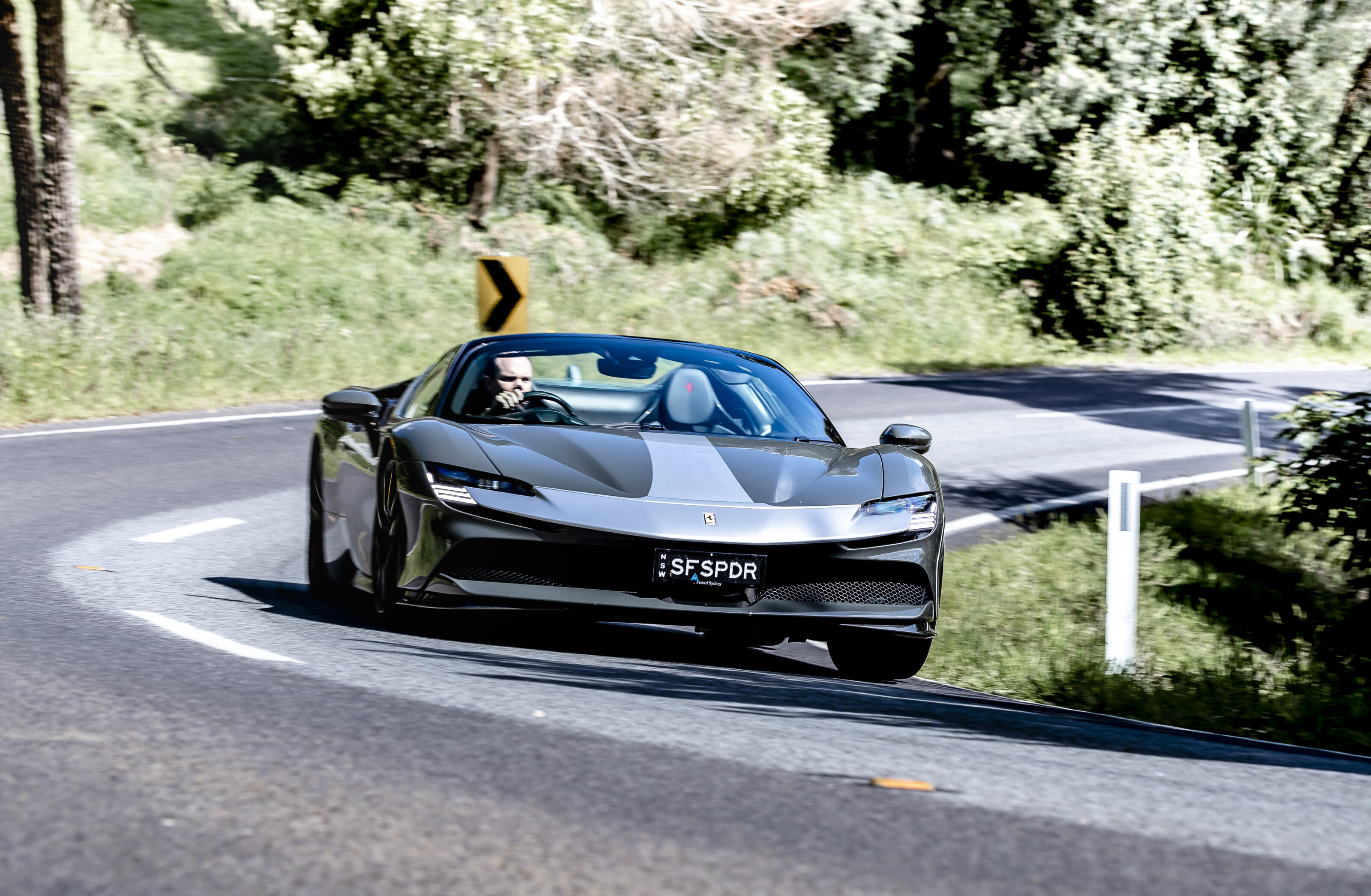
Another more prosaic concern is an almost complete lack of storage space. Whereas traditional mid-engined Ferraris come with plenty of room in the nose, the SF90’s front electric motors limit this space to just 74 litres. If you wished to use the car for a weekend away, you’d have to pack very, very lightly indeed. Though you’d probably take the Range Rover/Bentayga/Urus instead.
The fixed dampers of the Assetto Fiorano pack are also pretty uncompromising at slower speeds and with the roof down there is still a slight shimmy to the body and steering due to the lessened rigidity. This suggests that unless you’re a sun-loving track junkie, the ‘regular’ coupe might be the better bet.
Summing up the SF90 itself is difficult, primarily because that feeling of being overwhelmed never really abates. It’s an extraordinary technical achievement, not just because of its speed but in the way Ferrari has managed to incorporate electrical assistance to improve both performance and efficiency.

Trouble is, it feels a bit like the engineering targets were the end, rather than being the means to the end of driving enjoyment. The caveat to this is a couple of hours on the public road isn’t the ideal environment to test a 1000hp supercar and a day on track may very well peel back layers of the SF90’s personality.
However, on first acquaintance it’s a car that provokes awe and admiration rather than affection. It’s a little like listening to complex jazz: you can appreciate the skill and virtuosity involved, but those who can truly appreciate and understand it are few in number.
2021 Ferrari SF90 Spider Assetto Fiorano specifications
| Body: | 2-door, 2-seat convertible |
| Drive: | all-wheel |
| Engine: | 3990cc V8, DOHC, 32v, twin-turbo |
| Bore/stroke: | 88.0 x 82.0mm |
| Compression: | 9.4:1 |
| Power: | 574kW @ 7500rpm |
| Torque: | 800Nm @ 6000rpm |
| Battery: | 7.9kWh |
| e-Power: | 162kW (total) |
| Combined output: | 736kW |
| Transmission: | 8-speed dual-clutch |
| Weight:u00a0 | 1670kg (dry) |
| Power/weight: | 441kW/tonne (dry) |
| L/W/H: | 4704/1973/1191mm |
| Wheelbase: | 2649mm |
| Tracks: | 1679/1670mm |
| Suspension: | Double wishbones, DSSV dampers, coil springs, anti-roll bar (f); multi-links, DSSV dampers, coil springs, anti-roll bar (r) |
| Steering: | Electrically-assisted rack-and-pinion |
| Brakes: | 398mm ventilated/drilled carbon-ceramic discs, six-piston calipers (f); 360mm ventilated/drilled carbon-ceramic discs, 4-piston calipers (r) |
| Wheels: | 20 x 9.5-inch (f); 20 x 11.5-inch (r) |
| Tyres: | 255/35 ZR20 (f); 315/30 ZR20 (r) Michelin Pilot Sport Cup 2u00a0 |
| Price:u00a0 | $929,888RRP ($1,385,000 as-tested) |
NOTE: There’s a newer version of this story
In the time since this story was first published, we have built a newer and more regularly updated calendar of EVs coming to Australia. You can continue reading this story, but for all the latest news on electric vehicles bound for Australia, hit the link below.
Story continues…
1. Mercedes-Benz EQE
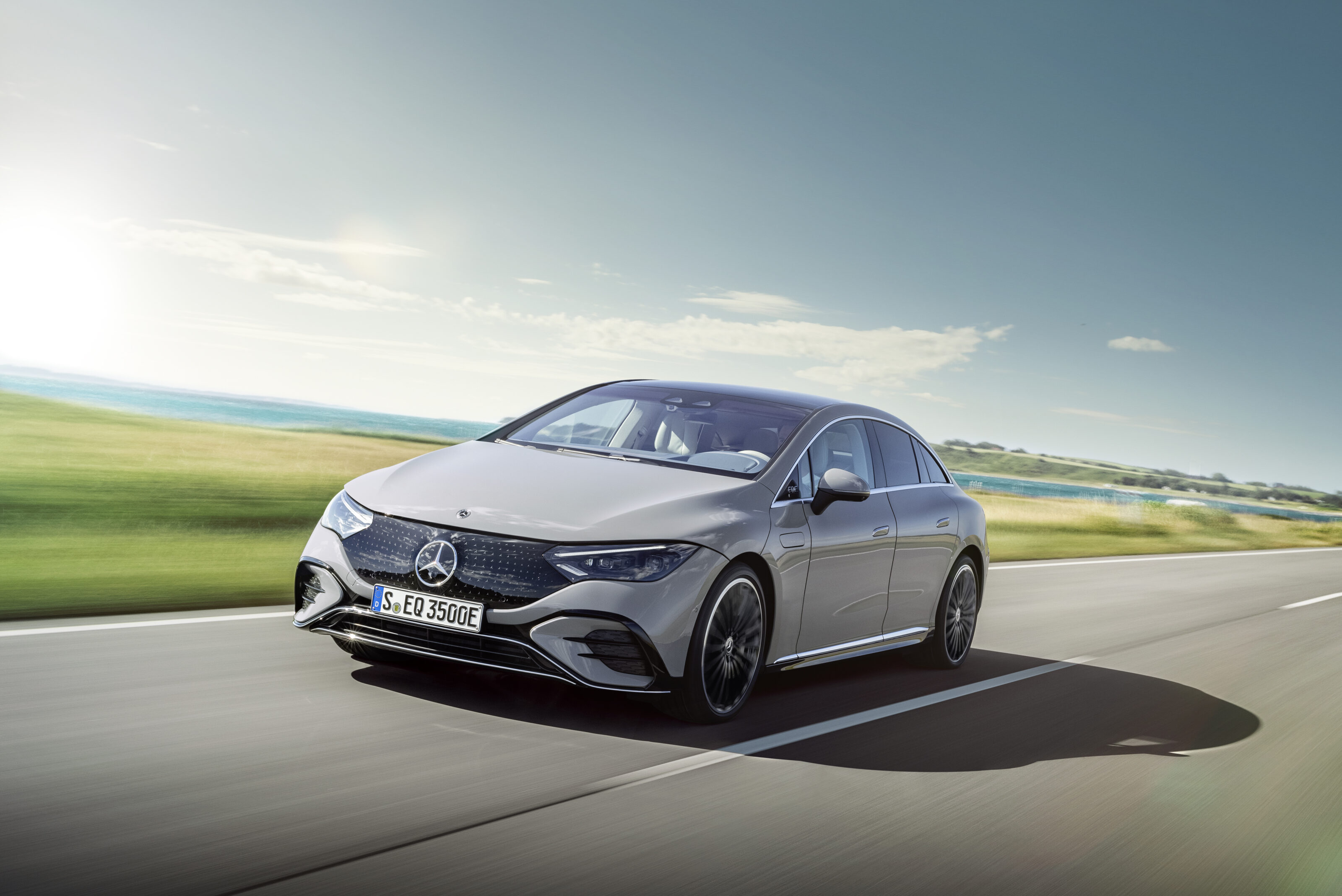
Mercedes’ own crack at the Tesla Model S. Shaping up as a range warrior for the German brand’s growing EQ range, the initial E-Class-sized EQE 350 will be rear-drive, powered by a 215kW/530Nm single electric motor with up to 660km of range. The EQE also boasts a super-slippery 0.20Cd drag coefficient to be the most aerodynamic new car ever made. Inside, the enormous Hyperscreen is the stuff of fingerprint nightmares but does look cool. More potent dual-motor, AWD versions will follow.
| WHENu2019S IT DUE? | H2 2022 |
|---|---|
| HOW MUCH? | $200,000 (estimated) |
2. VW ID4
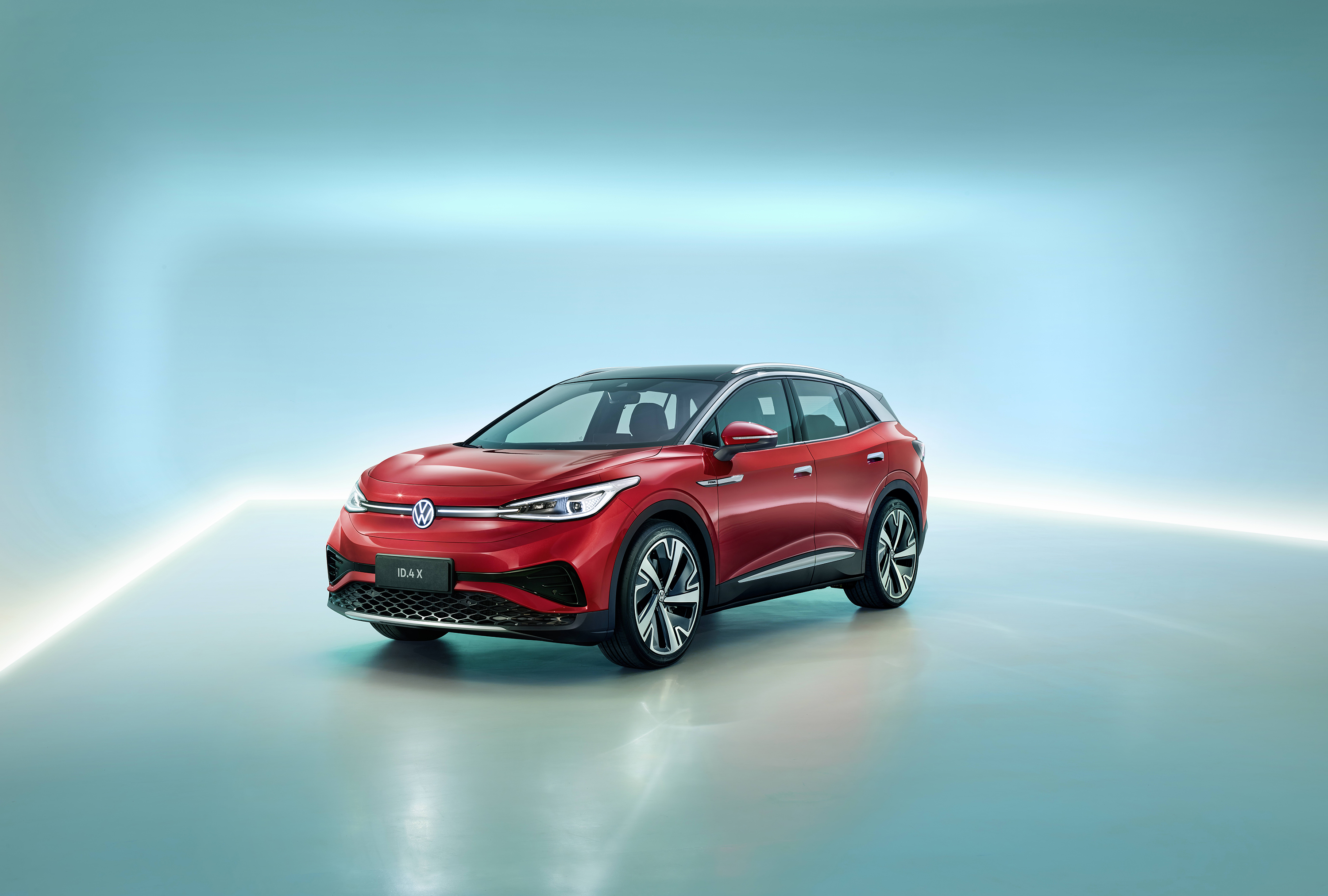
The mid-size SUV ID4 is on track to be VW Australia’s first model on the new, electric MEB platform (with the ID3 hatch set to follow shortly after), although unfortunately not until 2023 with demand intensifying abroad but still lagging in little coal-loving Australia.
When it does arrive, the ID4 is likely to be initially offered in a single-motor, rear-drive specification. Overseas, power outputs are 109kW to 150kW, with claimed ranges from 346km to 522km. The ID4 is just one of 75 new electric vehicles VW says it has in the pipeline globally between now and 2029.
| WHENu2019S IT DUE? | 2023 |
|---|---|
| HOW MUCH? | $55,000 (estimated) |
3. BMW i4

Munich’s crack at the Tesla Model 3. Two versions are confirmed for Australia at this stage; the $100K eDrive40 with a single electric motor supplying the rear wheels with 250kW/420Nm. Think 0-100km/h in 5.7sec and a claimed range of 590km.
But the one you might want is the M50 with dual motors, all-wheel drive, 400kW/795Nm and a 0-100km/h sprint of 3.9sec, as well as 510km of range. All yours for $125K, or you could wait for the more potent and pricey M versions surely in the works.
| WHENu2019S IT DUE? | Q1 2022 |
|---|---|
| HOW MUCH? | $99,900 to $124,900 |
4. Kia EV6
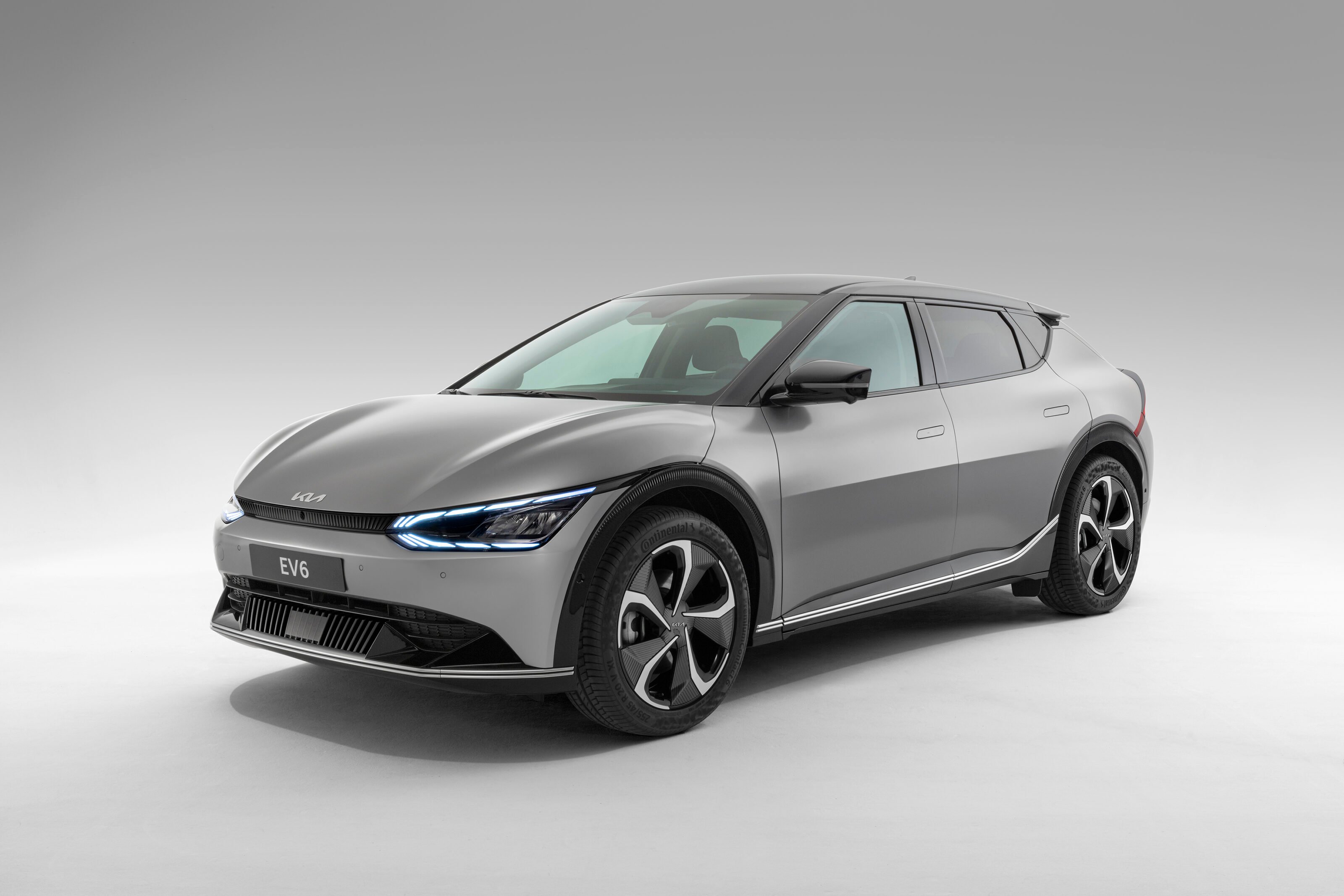
A high-riding Kia crossover body on the same high-tech 800v E-GMP electric platform underpinning the new Hyundai Ioniq 5. The EV6 will initially be offered in single- and dual-motor versions, with a choice of either 58kWh battery pack or longer-range 77.5kWh with up to 510km claimed range.
The one that’s got us positively foaming at the gills is the 2023 GT with 430kW/740Nm and 3.5sec 0-100km/h potential. While it’s all-wheel drive, it comes up a limited slip rear differential hinting that it could be a hidden driver’s delight. The price for that one is too hard to guess.
| WHENu2019S IT DUE? | H1 2022 |
|---|---|
| HOW MUCH? | $70,000 to $80,000 (estimated) |
5. Tesla Model Y
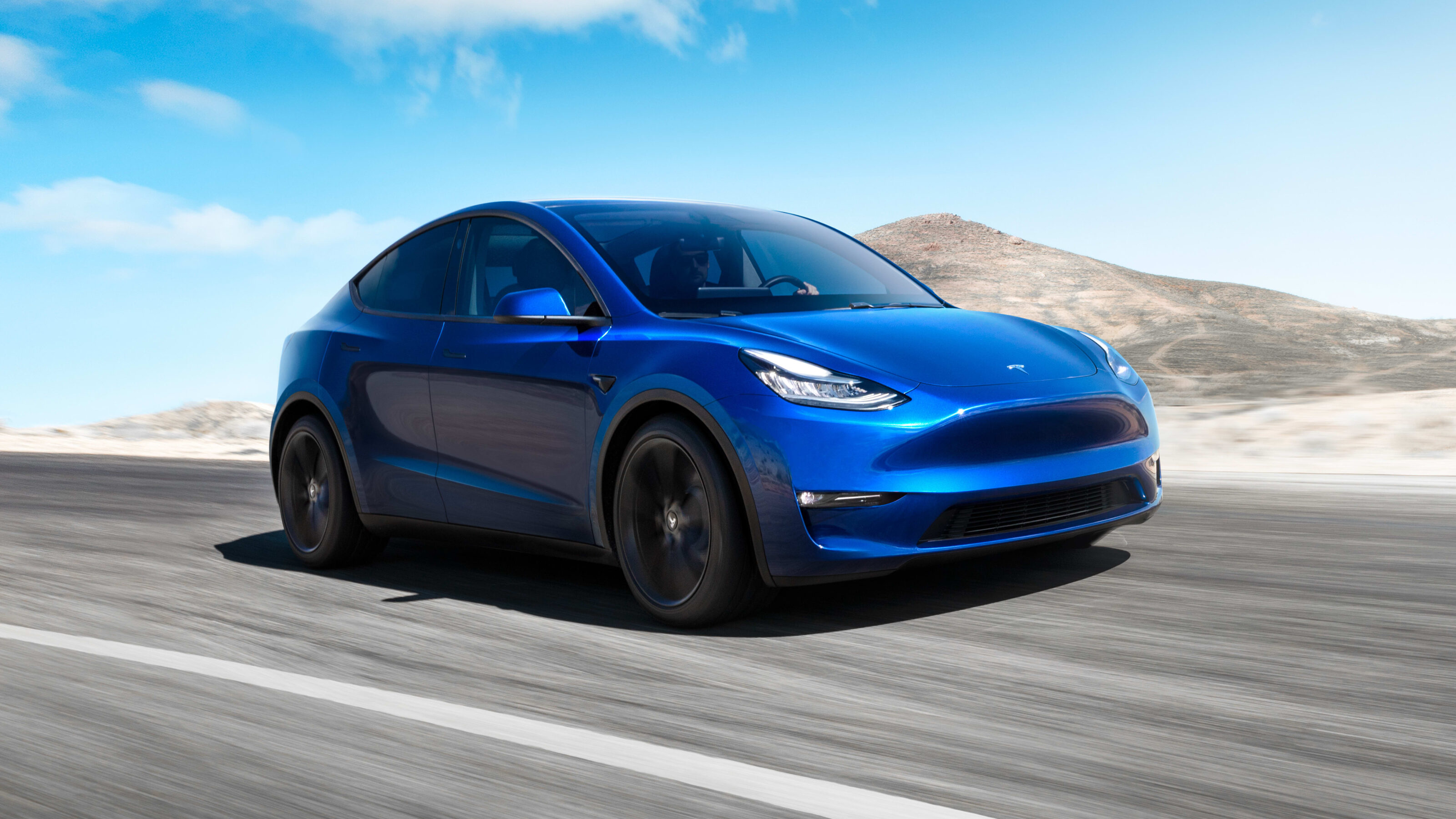
Given our continued obsession with the SUV, the crossover version of the Model 3 – the Model Y – could be a boon to Tesla’s Australian sales, which were 3430 last year. Three variants are expected, kicking off with a 255kW rear-drive, single-motor model. Then a Long Range AWD with dual motors, 373kW and about 505km range. And for the power junkies, another dual-motor Performance model with 393kW, 480km claimed range, capable of 0-100km/h in under 4.0sec. Those wanting the seven-seat version, however, might have to wait a little longer.
| WHENu2019S IT DUE? | H1 2022 |
|---|---|
| HOW MUCH? | $70,000-$100,000 (estimated) |
6. Nissan Ariya

For its new Ariya electric SUV, Nissan touts generous ‘lounge-like’ cabin space thanks to the flatly-laid battery pack and compact motors. The Ariya will come in front- and all-wheel drive; the single-motor model with as much as 178kW/300Nm. That’s good enough to haul its two tonnes to 100km/h in a lazy 7.6sec, but it can do it for at least 610km…
The dual-motor comes with 290kW/600Nm for 0-100km/h in 5.1sec and similar range. The Ariya is not confirmed for Australia; Nissan Oz “definitely wants it” but we might be waiting a while.
| WHENu2019S IT DUE? | TBC |
|---|---|
| HOW MUCH? | $85,000 (estimated) |
7. Cupra Born hatch
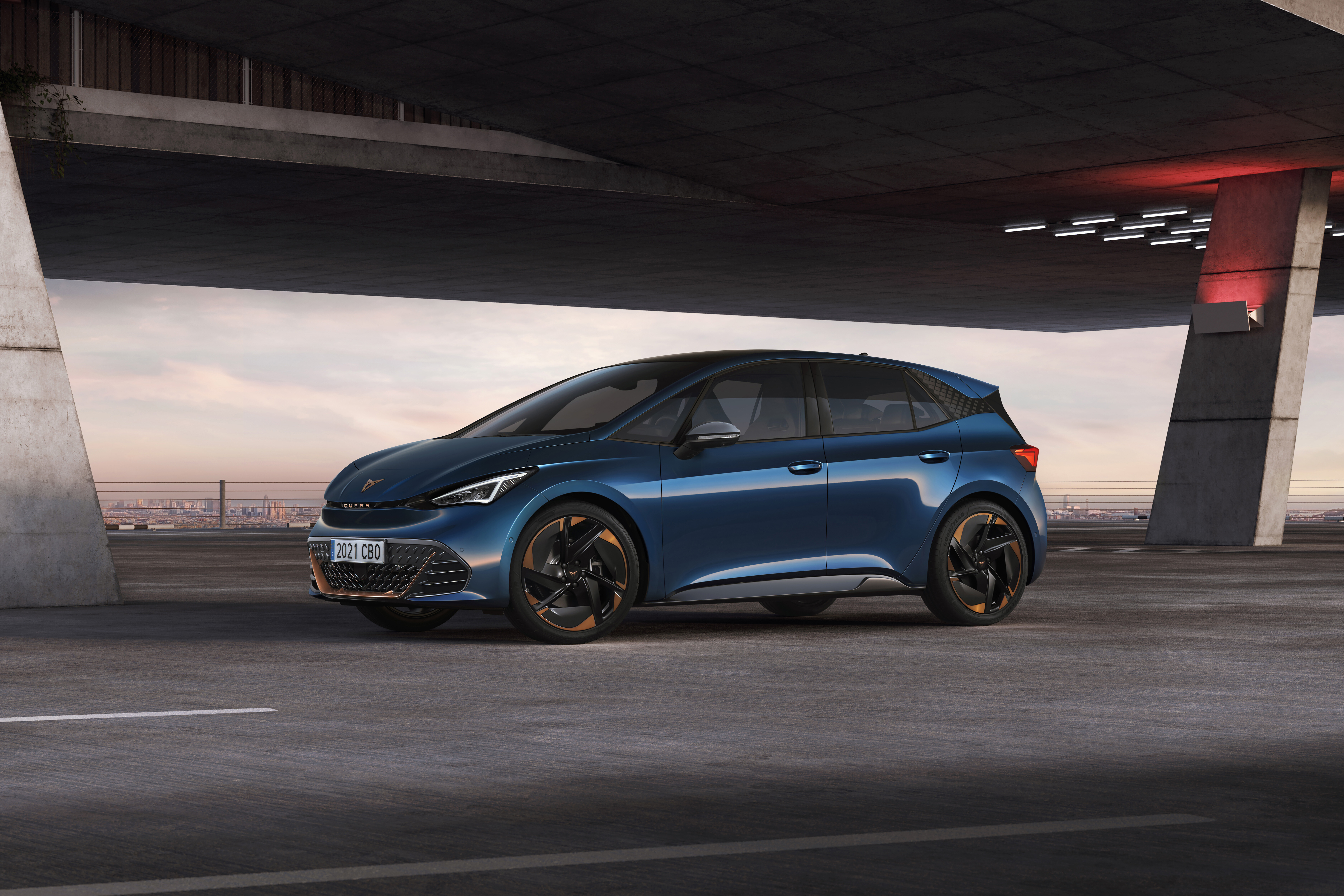
Want a 150kW/310Nm rear-drive hot hatch with instant response? If yes, allow us to introduce the edgy Born hatch from SEAT sub-brand Cupra. Yes, it does weigh 1811kg, but at least all those battery kegs are equally distributed front-to-rear which should make for joyous handling indeed.
Zero to 100km/h takes 7.3sec while range is a claimed 427km. Most significantly, it’s shaping up as the first vehicle built on VW’s important new MEB electric architecture to be sold in Australia. Set expectations duly high. And pray we also get the even spritelier 170kW ‘e-Boost’ version.
| WHENu2019S IT DUE? | Late 2022/early 2023 |
|---|---|
| HOW MUCH? | $55,000 (estimated) |
8. Mercedes-Benz EQS
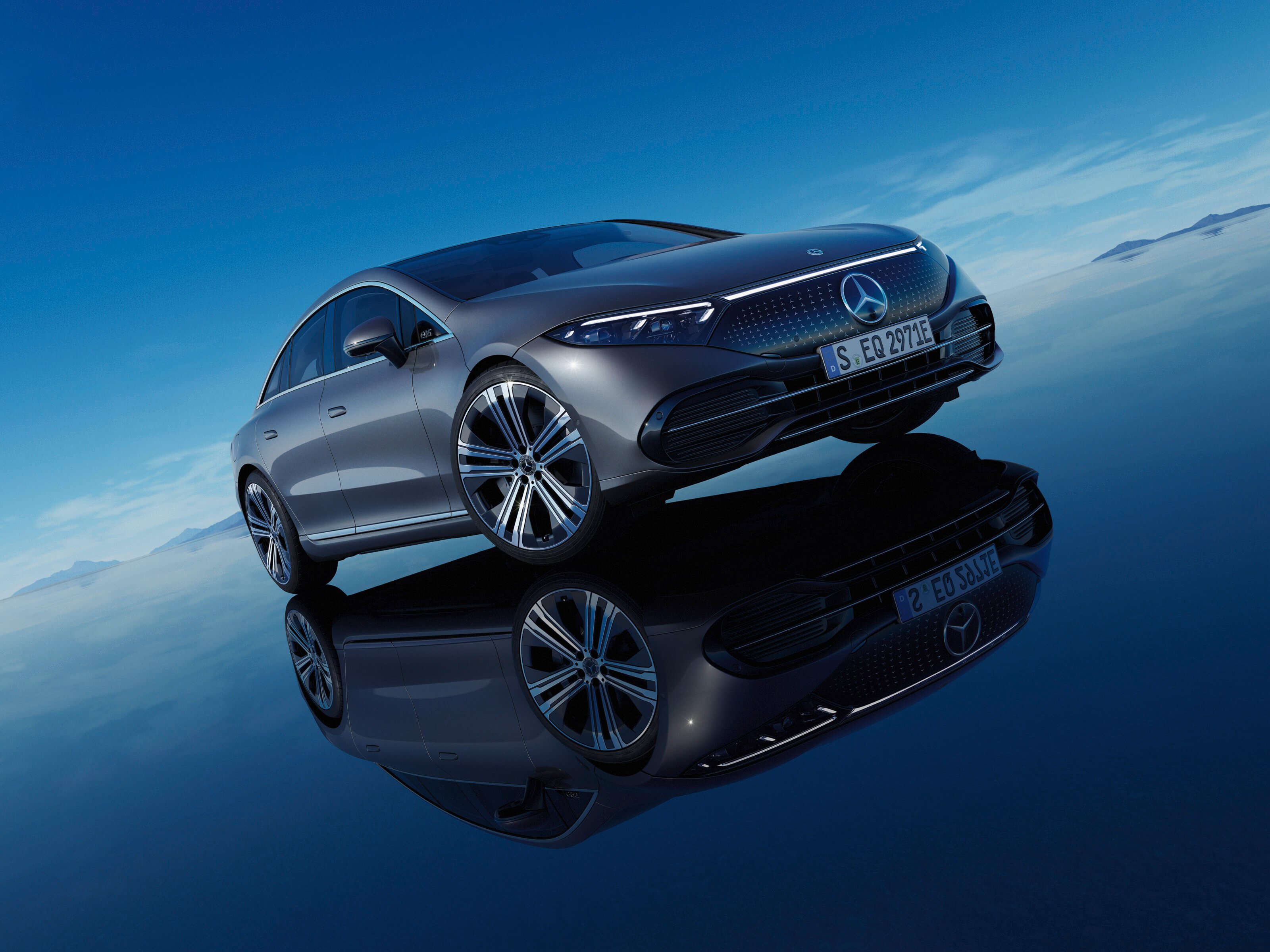
Basically an electric S-Class (hence the S), but one that debuts a new electric architecture destined to underpin an entire generation of electric Mercedes-Benz models. A Cd of just 0.20 makes the EQS the most aerodynamic production car ever released (along with the EQE), with single-motor EQS450+ and dual-motor EQS580 models initially to be offered.
Think 245kW/568Nm and 385kW/855Nm respectively, with claimed ranges of 780km and 676km – even if kerb weights of 2.5 tonnes do blunt acceleration somewhat. AMG’s EQS53 fixes that with a walloping 560kW/949Nm for 0-100km/h in 3.4sec.
| WHENu2019S IT DUE? | H1 2022 |
|---|---|
| HOW MUCH? | $250,000 to $350,000 (estimated) |
9. Genesis GV60
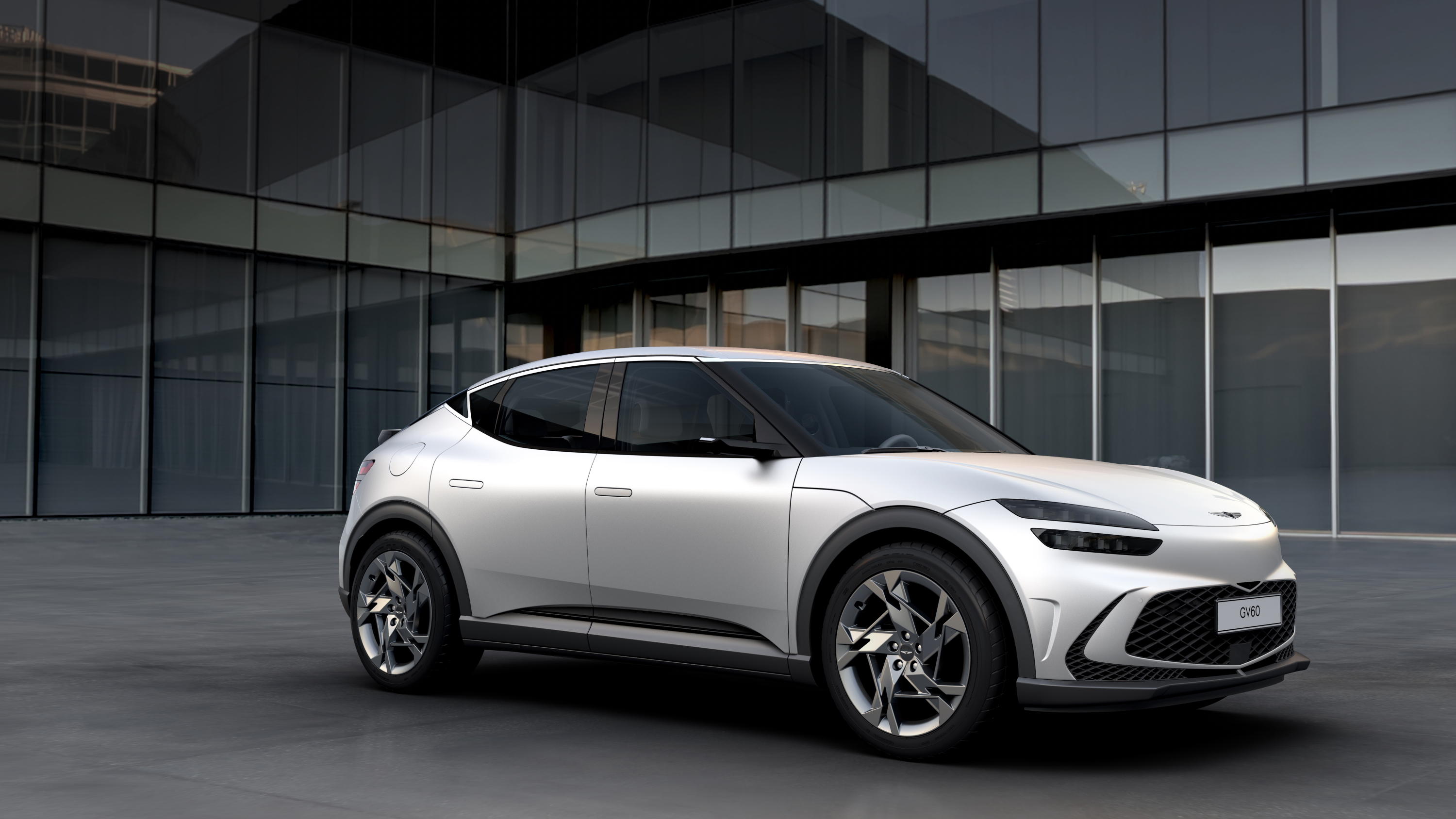
Genesis’s take on the luxury electric SUV, built on the same E-GMP architecture as the Kia EV6 and Hyundai Ioniq 5. There’s a single-motor, rear-drive model with 168kW/350Nm, as well as a dual-motor, all-wheel drive version with 360kW/700Nm (with ‘Boost mode’). Both will come with at least a 77.4kWh battery good for an estimated 450km range. Like the Ioniq 5 and EV6, it supports 800v recharging meaning on a 350kW charger the battery can jump from 10 to 80 percent capacity in just 18 minutes.
| WHENu2019S IT DUE? | H1 2022 |
|---|---|
| HOW MUCH? | $90,000 to $110,000 (estimated) |
10. Audi RS e-Tron GT
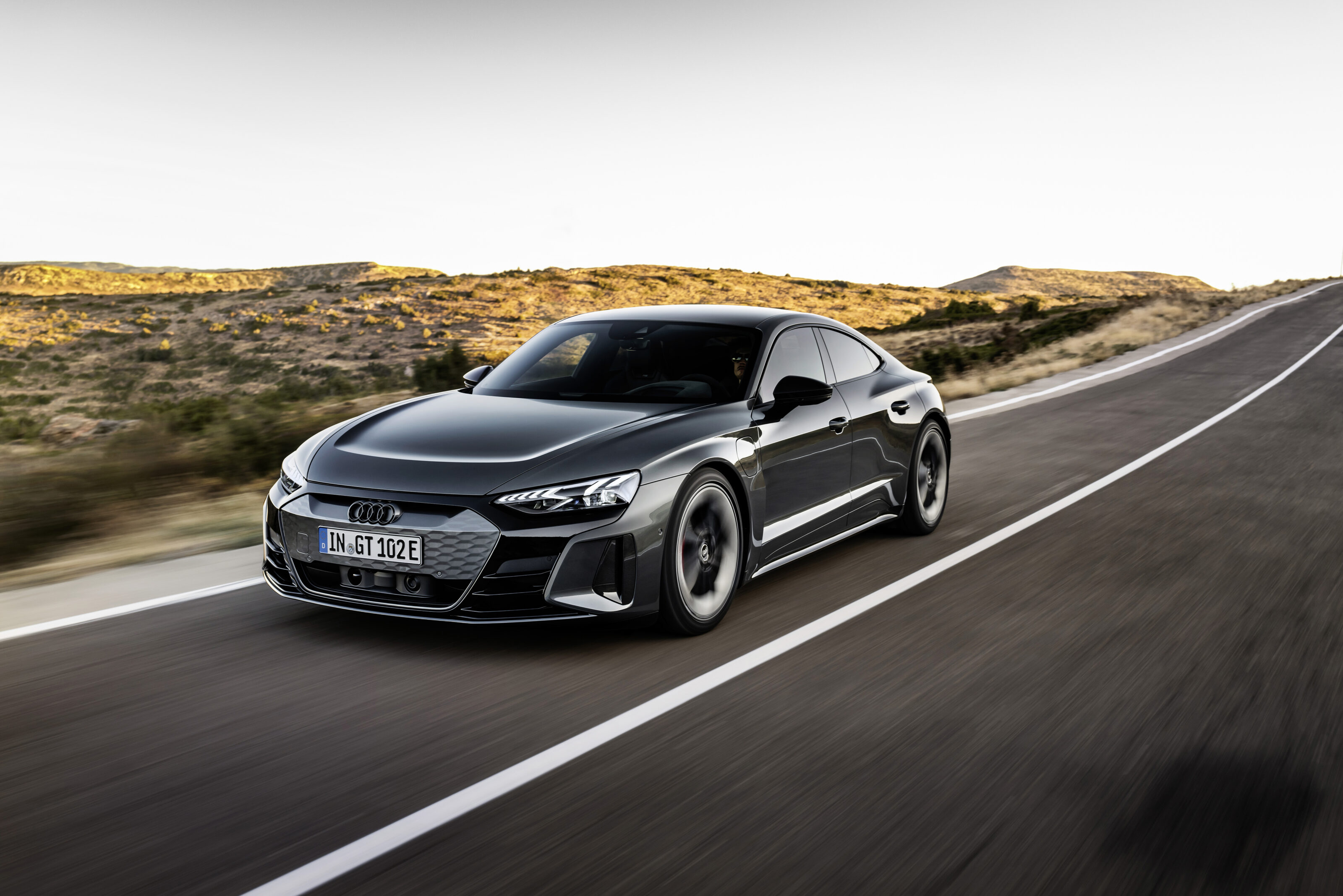
Audi’s interpretation of the J1 electric vehicle architecture that first underpinned the Porsche Taycan, and is destined for many other electric models in the Volkswagen Audi Group.
The RS e-Tron will come in two dual-motor versions when it lands in Australia: an entry-level 350kW/630Nm and a big daddy 440kW/830Nm good for 0-100km/h in a mostly silent 3.3 seconds. Overseas reviews report a distinctly different handling character to the Taycan. Plus, if this is not one of the better-looking new cars of the last five years, well, we’ll just whisk ourselves off to an optometrist.
| WHENu2019S IT DUE? | H1 2022 |
|---|---|
| HOW MUCH? | $200,000 to $300,000 (estimated) |
Three EVs We’re Not Getting Yet – And Why
Honda e
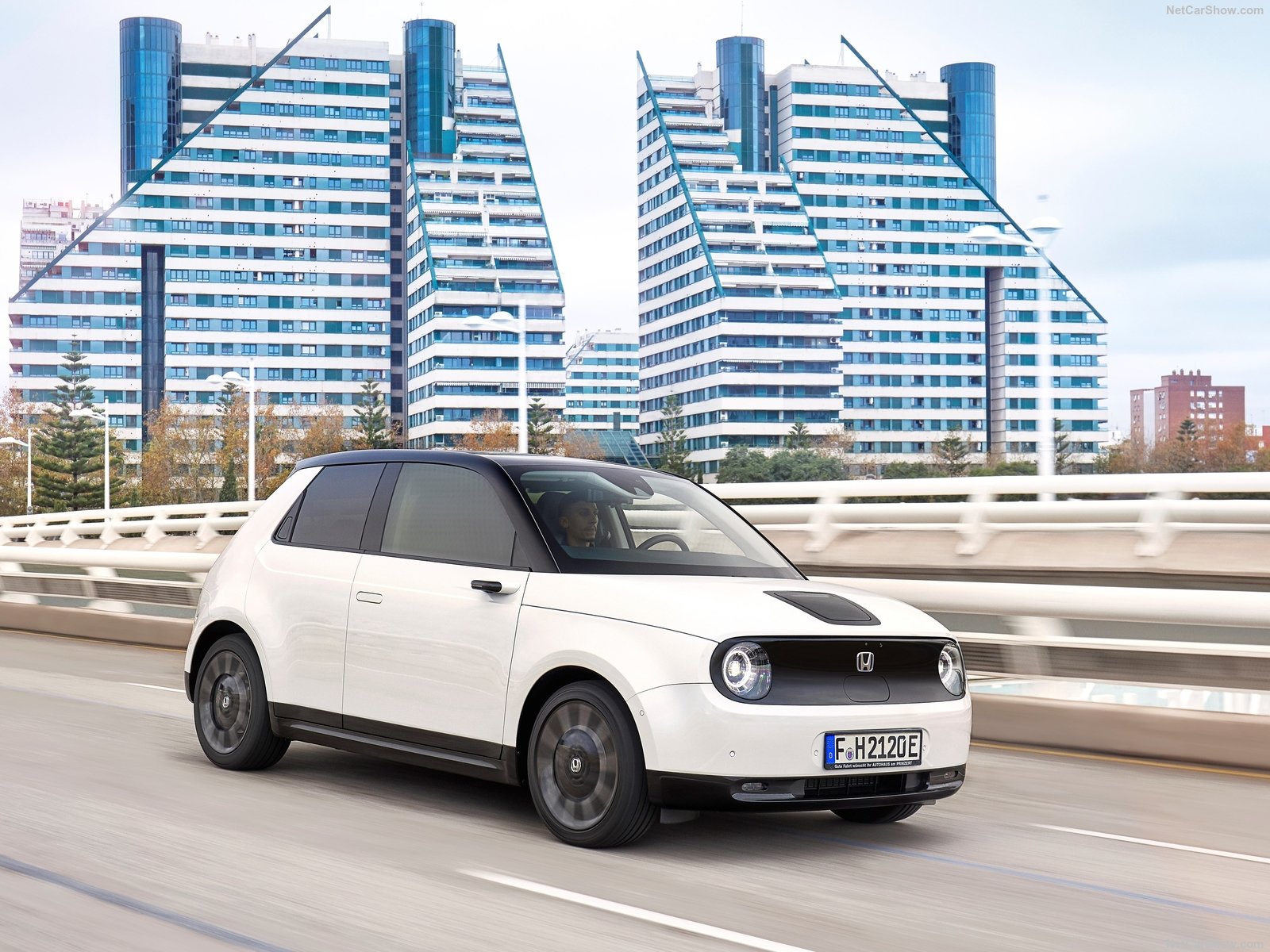
The 113kW/315Nm single-motor rear-drive Honda e hatch is like a concept car that went into production, but unfortunately the business case has not stacked up for Australia. It hasn’t helped us either the fact they’re selling as many as they can make.
Ford Mustang Mach-E
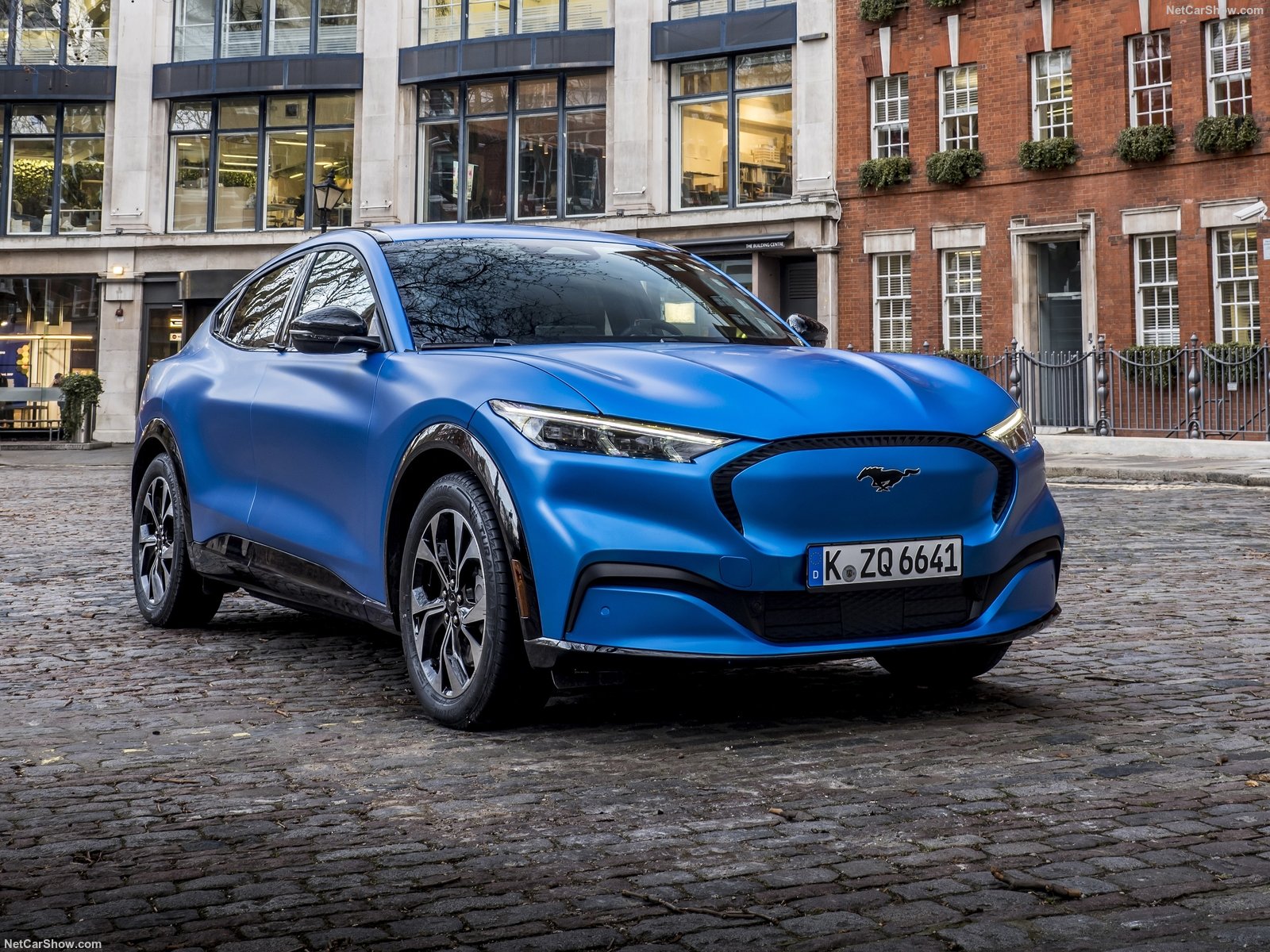
If you can stomach an electric SUV being called a Mustang, you’d want the range-topping GT Performance with dual motors, 358kW/860Nm, 378km range and 0-100km/h in 3.5sec. Sadly, they can’t make enough of them for the Land of the Free, let alone little ol’ Australia.
Rivian
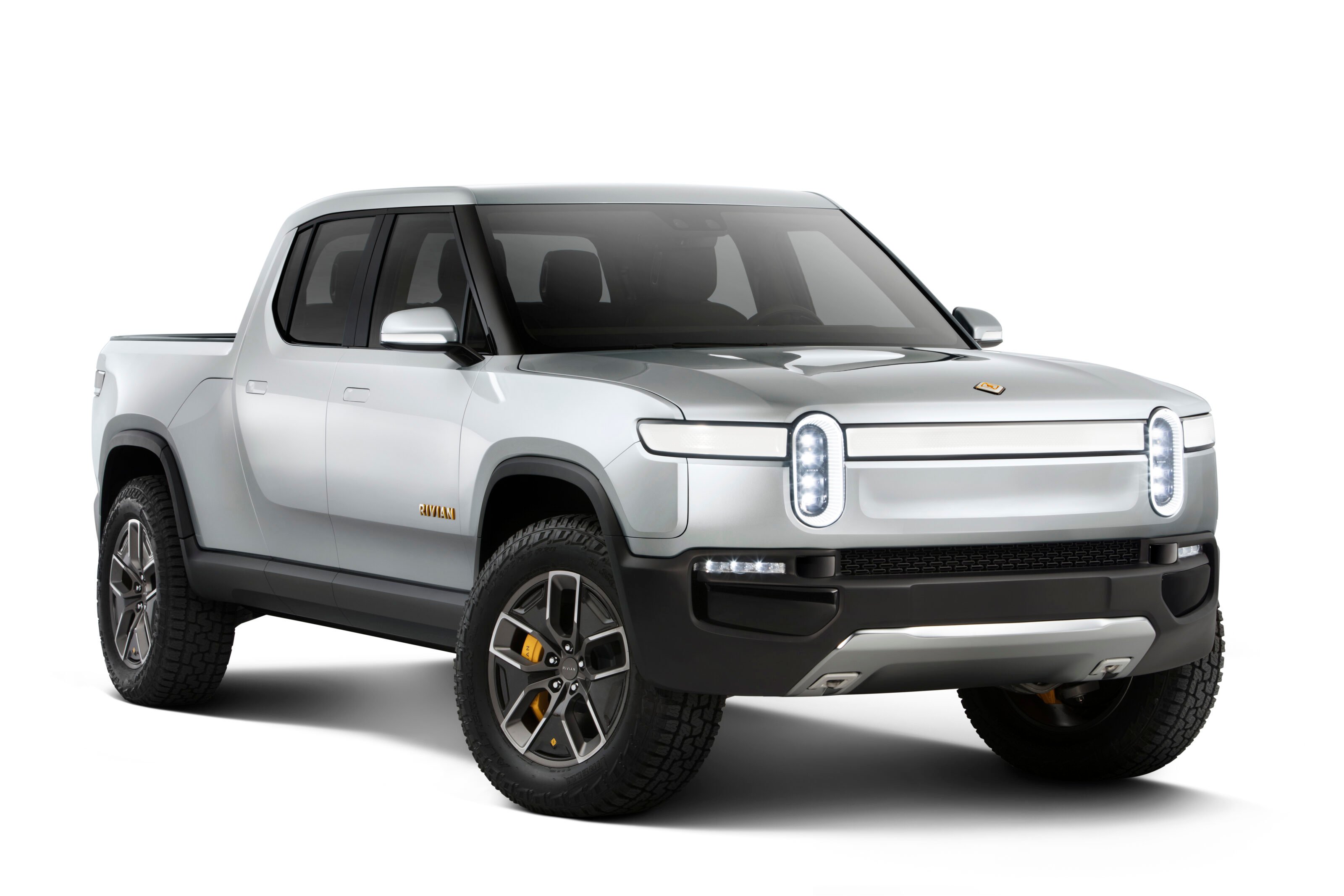
Don’t tell the high-vis fleecie gang this electric dual-cab ute is marginal for Australia. Rivian wants to, and hopefully it does happen one day as we wouldn’t be able to conceal our giddiness for a 588kW/1400Nm, quad-electric-motor marauder with a five-tonne towing capacity.
Other EVs Just Over The Horizon
Audi e-tron S
Facelifted e-tron will pack triple (!) electric motors, 370kW/973Nm and 0-100km/h potential in 4.5sec. Quicker than a fired-up rhino.
Genesis G80 EV
South Korean Statesman cops 272kW/700Nm from dual motors, about 450km range and 800v rapid recharging capability.
Genesis GV70 EV
Same mid-size SUV body, but packing the twin-motors and 800v-ready battery pack as the G80 above. Crack those knuckles, BMW iX3.
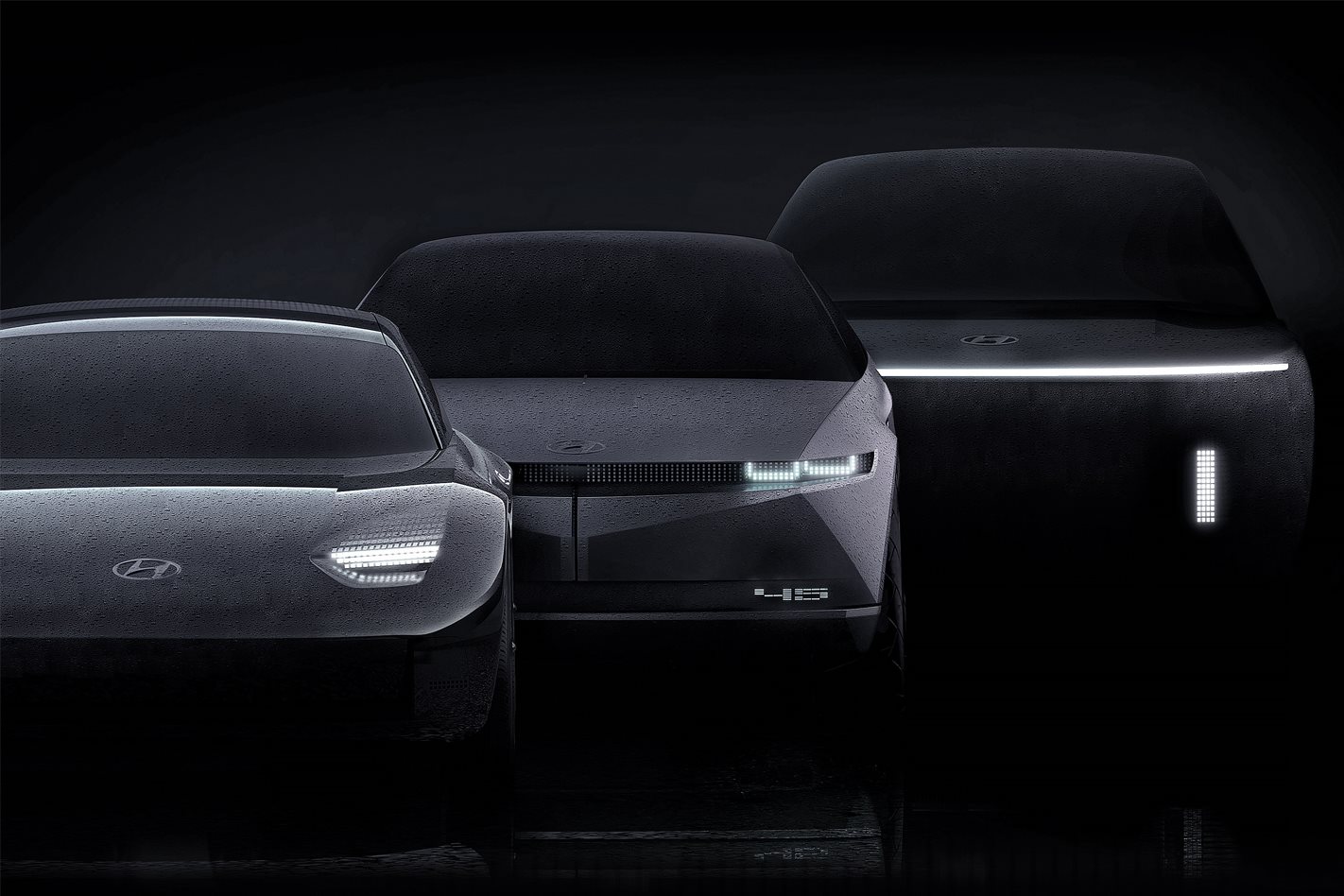
Hyundai Ioniq 6
Super sexy sedan to come in rear-drive, and blistering AWD versions; we’re guessing under $100K. Very highly anticipated.
Lexus UX300e
Arriving as we closed for press, the UX gets a single 150kW electric motor, front-drive and 360km of claimed range. About $75K.
Mercedes-Benz EQB
Funky, boxy styling and seven seats. Single and dual-motor versions expected in Oz with up to 215kW and 478km range.
Peugeot e-2008
Little front-drive SUV whips up 100kW from a single electric motor with up to 310km range. All-electric 208 GTi hot hatch also on the cards.
Porsche Macan Electric
Details are thinner than Prince William’s last scalp vestiges, but think Taycan-inspired styling, rear and all-wheel drive versions and here in 2023.
Tesla Model S
Facelift of Tesla’s ageing sedan topped by triple-motor 760kW Plaid claiming 0-100km/h in 2.1sec. Could be 2023.
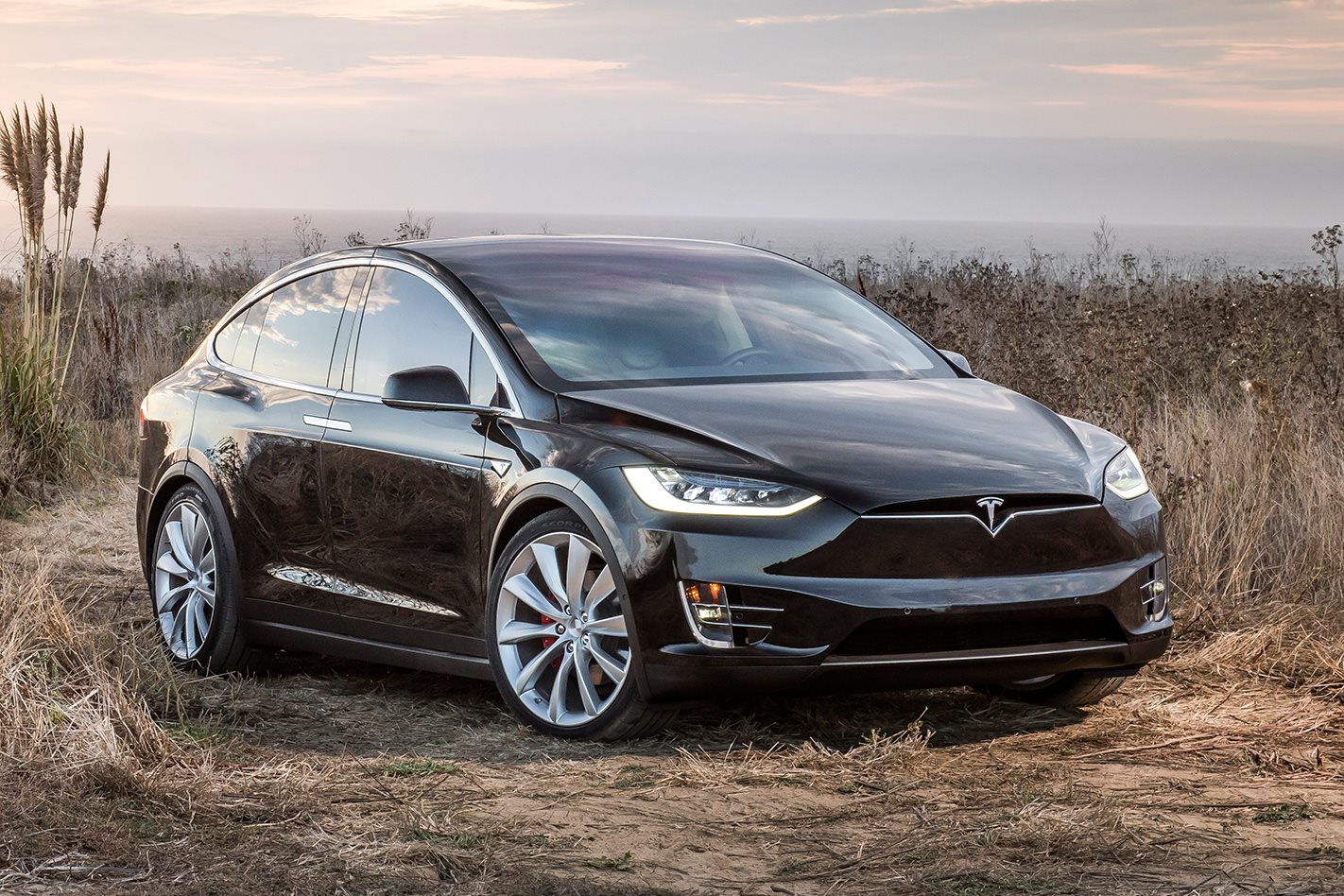
Tesla Model X
Another facelift, also topped by a Plaid variant with the same tri-motor set-up and weird F1-style rectangular steering wheel.
Welcome to the MOTOR Awards 2021, where our team offer a tip of the hat to those that displayed automotive excellence in the last 12 months.
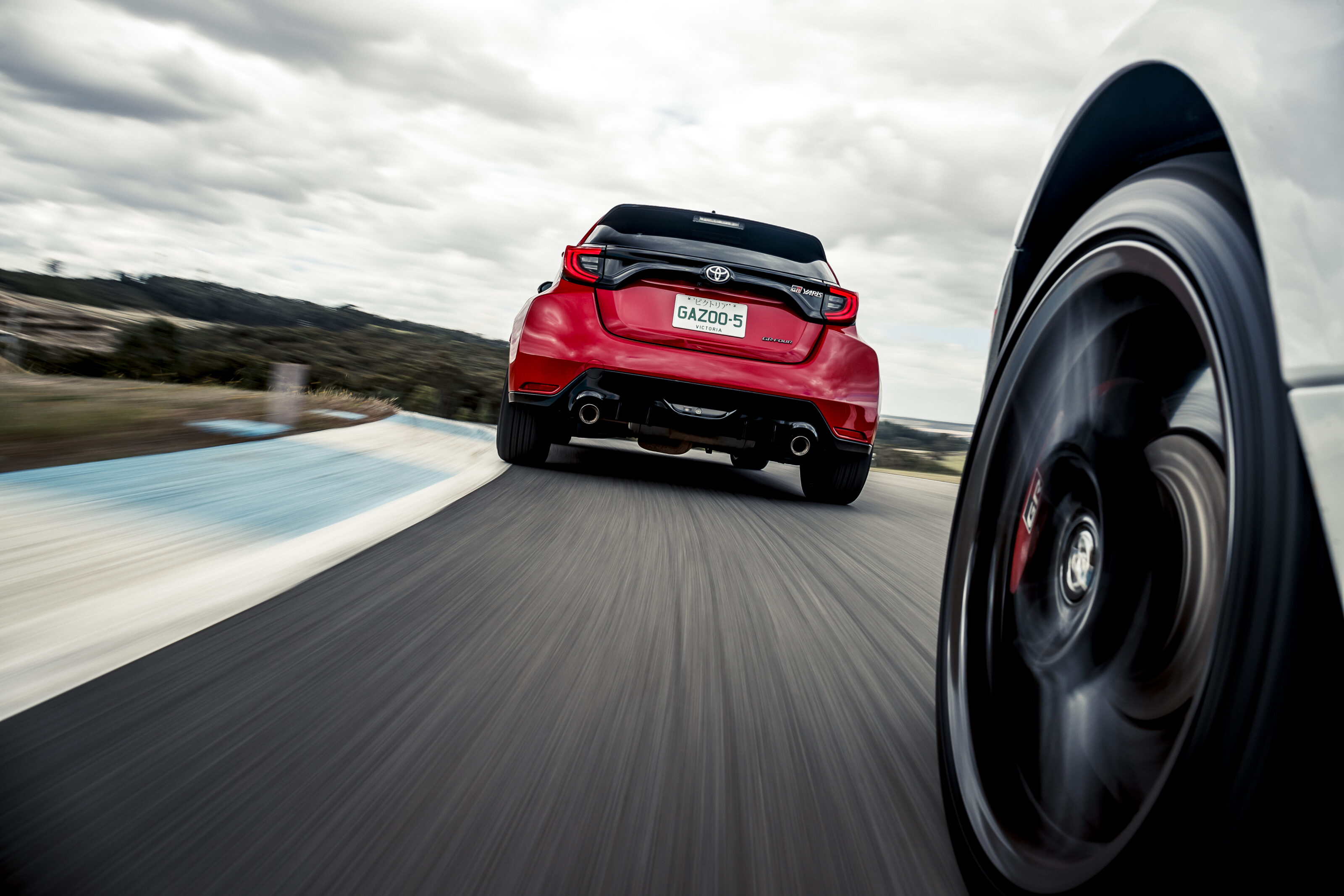
Most Dynamic Manufacturer Winner: Toyota
Is Toyota the most exciting manufacturer in the world right now? For a company that seemed to have disappeared down a route of white-goods Camrys and Corollas not so long ago, the question would have once seemed ridiculous.
The introduction of the 86 coupe showed that there was still soul within Toyota, championed by Akio Toyoda himself. Since the introduction of that car, we’ve been treated to the GR Supra, the GRMN Yaris, the all-wheel drive GR Yaris and the new (and greatly improved) 2.4-litre GR 86.
What’s more, there’s a GR Corolla in the works and, if industry reports are to be believed, a possible reincarnation of the MR2 and Celica. That could be six concurrent sports models on the roster for a mainstream manufacturer, which is quite an achievement. Factor Lexus in as well and you have one heck of a portfolio.
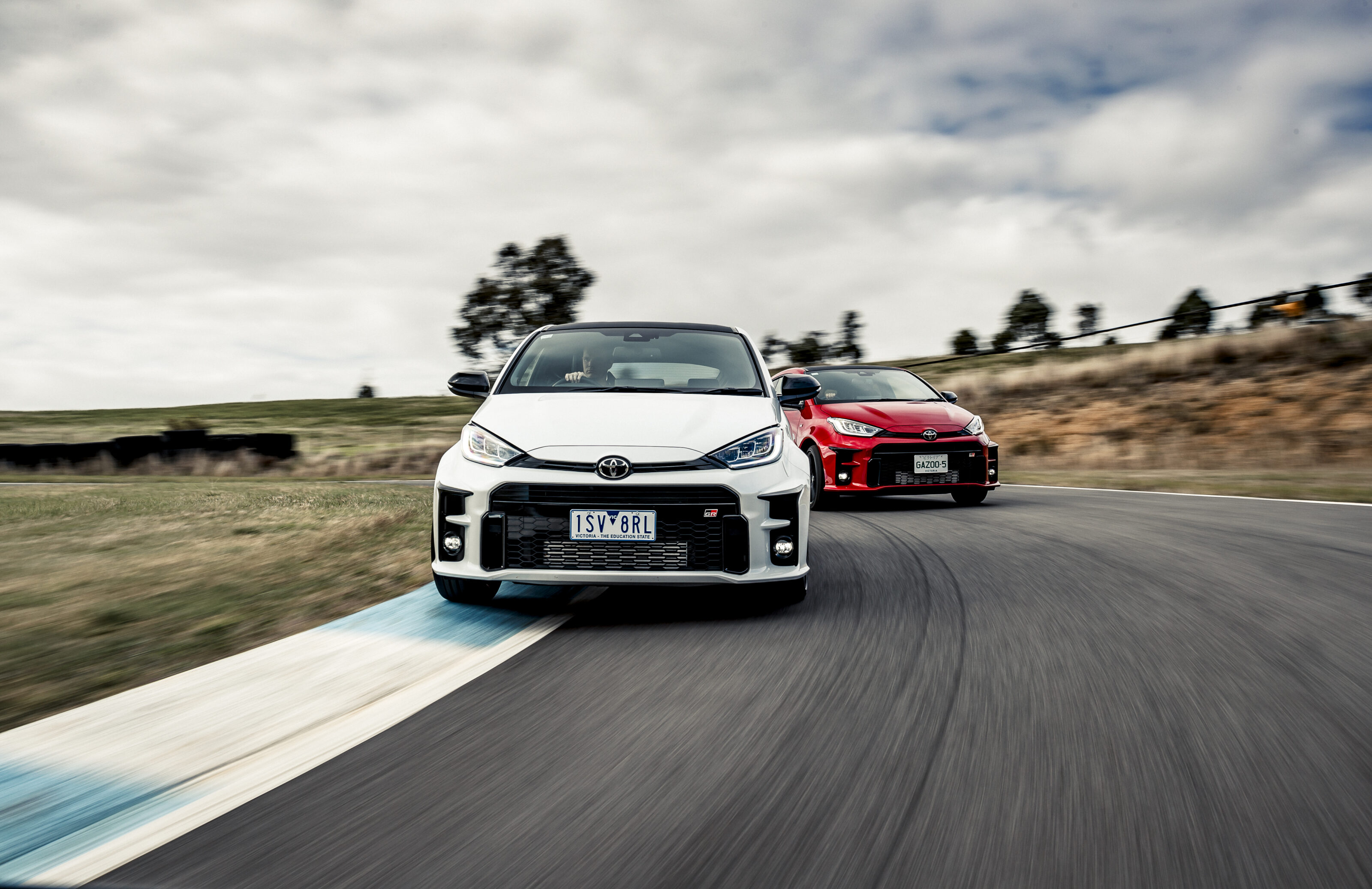
Only Volkswagen comes close to offering such a breadth of sporting models at these price points, and an onslaught of new R-badged models is due to make landfall in the next 12 months, which ought to give Toyota pause for concern. Where Toyota scores is in sheer breadth of engineering and appeal, from a WRC-refugee hatch to a boxer-engined coupe right up to fierce straight-six coupe.
Of course, Toyota has leant on Subaru and BMW along the way, but that is norm rather than exception these days. You only have to look at Mazda Toyota Manufacturing, a joint venture factory in the US that will be employing 4000 people by next year for evidence of that.
Toyota remains the last manufacturer standing at La Sarthe, having claimed the last four Le Mans titles, it snagged the WRC Constructors’ crown in 2018, and, at the time of going to press, its drivers stood at 1-2 in the 2021 WRC standings, requiring a disaster in the final round in Monza for Toyota not to wrap up another title.
What’s more, Sebastien Ogier has made no secret of his desire to drive for Toyota in the 2022 FIA World Endurance Championship. Who’d bet against him? – AE– AE
Honourable mention: Porsche
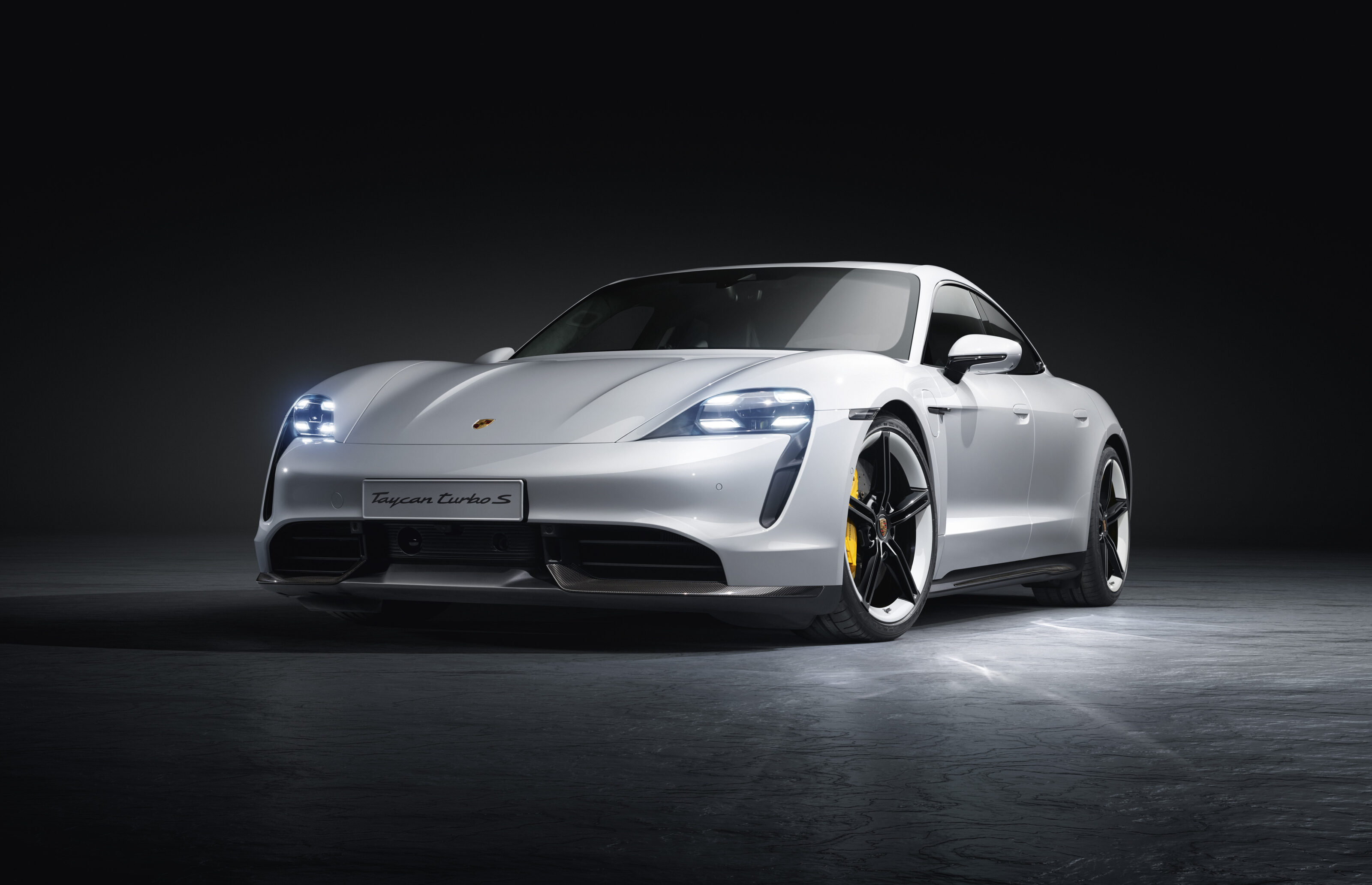
Porsche’s bona fides need little in the way of burnishing, but it’s how the company is transitioning to new technologies that earns our undimmed admiration.
With the Taycan EV selling like hot schnitzels and electric Macans, Caymans and Boxsters incoming, Porsche will also sell plug-in hybrids and is even at the forefront of synthetic fuel development. At Zuffenhausen, the customer remains king.
Honourable mention: Hyundai
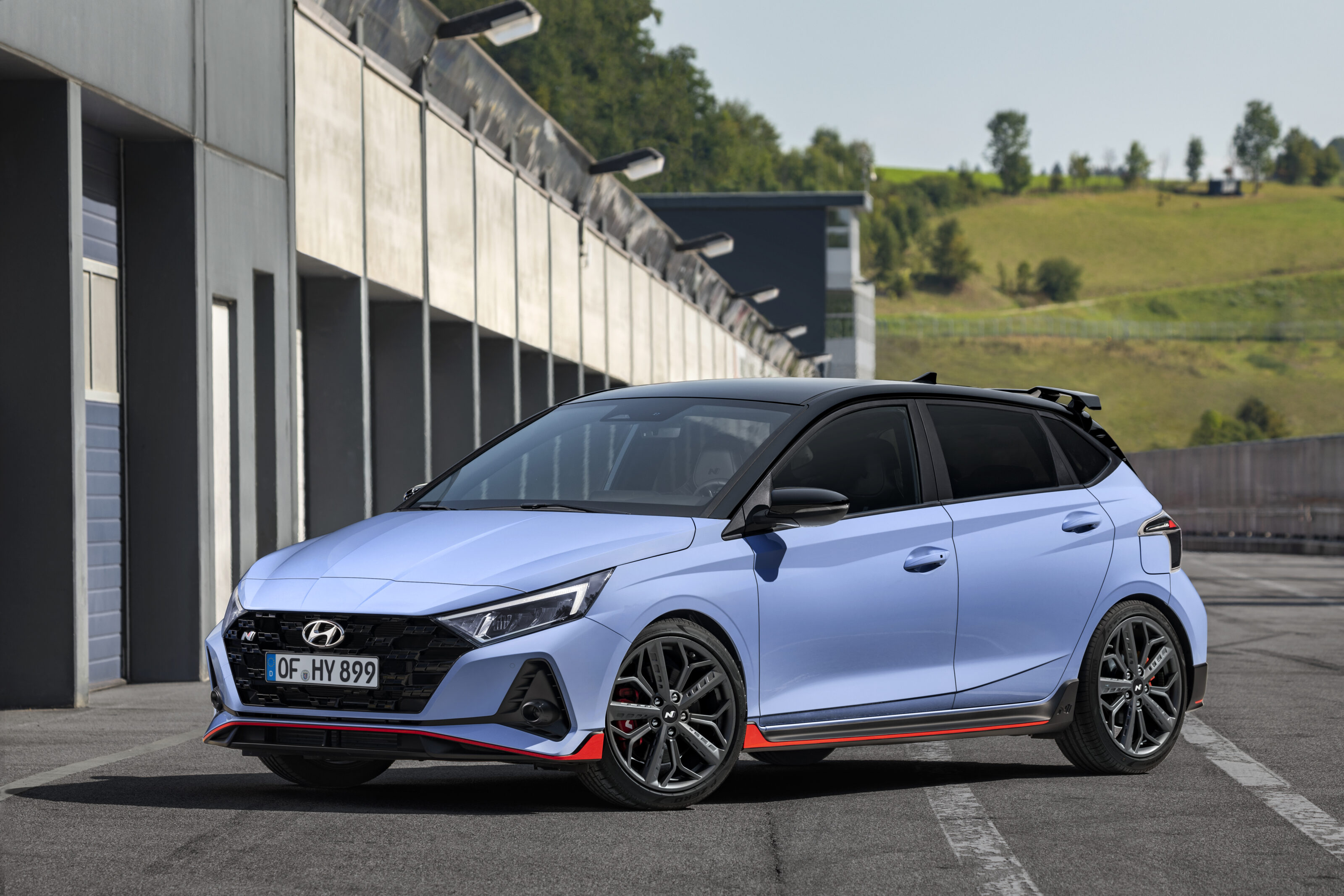
From zeroes to heroes in the space of 48 months. Yes, really. That’s what Hyundai’s N Division has achieved. Prior to the launch of the i30 N, Hyundai Motor Company had laboured for half a century and never built a convincing sporting car. Since then it has released a string of hits and they keep coming. Whatever Albert Biermann is being paid, give him a raise.
Celebrating Nissan’s 35 years of production in the UK where it once built the Bluebird, the carmaker has blended the old model with the future, creating an electric restomod concept car.
The reason for choosing the Bluebird from the Japanese maker’s back catalogue? It was the first model to come down the line at its Sunderland production site in 1986.
To create a heritage electric car, Nissan used the 40kWh battery pack and electric motor from the Sunderland-built Nissan Leaf, fitting the drivetrain into a used Bluebird.
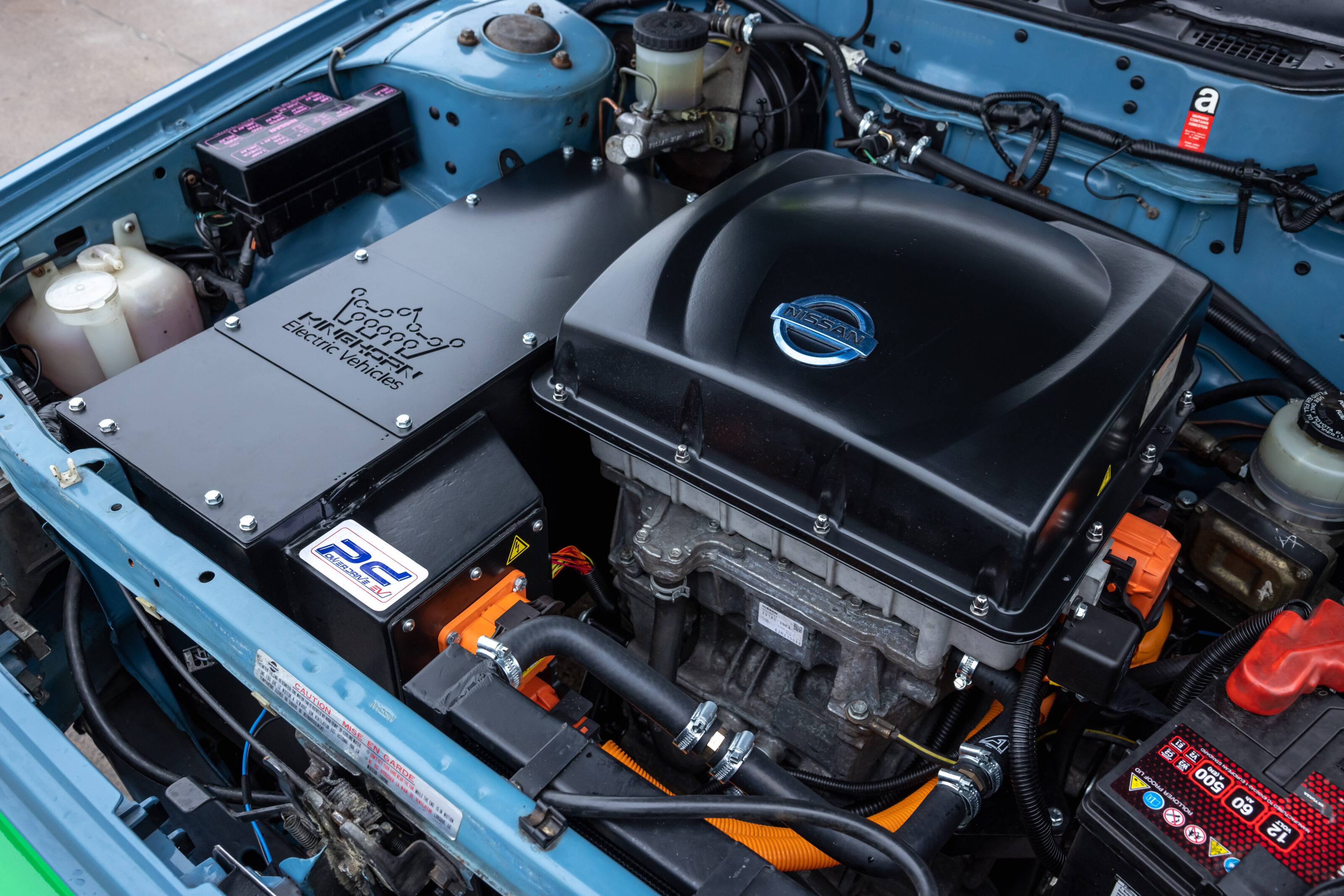
Given the unique nature of the build – completed by Kinghorn Electric Vehicles nearby – the battery pack had to be split into two parts and mounted in the engine bay (where the engine was removed) and boot. This gives better weight distribution than having all of the batteries in one location.
The charging socket is tucked away behind the car’s fuel filler door and has a maximum charging rate of 6.6kWh, with the charge shown on a small screen where the original fuel gauge was.
Despite the new powertrain, performance isn’t lightning quick. Nissan says the Leaf’s electric motor gives the Newbird a 0-100km/h time of 15 seconds, although the driving range of 210 kilometres is reasonable.
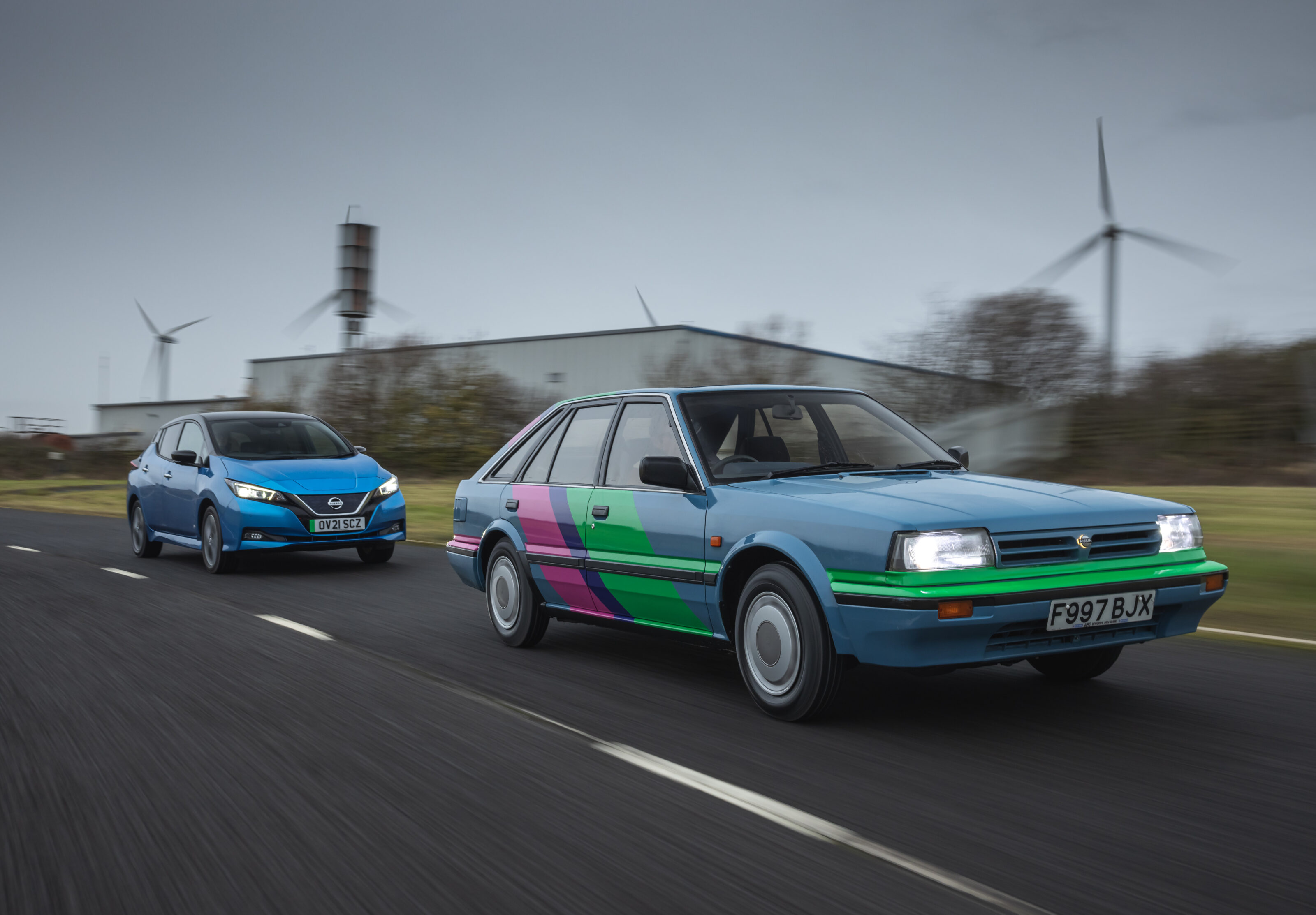
Nissan also made a few cosmetic tweaks, including the bright eighties-themed graphics inspired by the design cues of 1980s consumer technology. A nice touch is the backlighting to the car’s front badge, which is rather contemporary.
While region-specific in its celebration, the Newbird helps the greater brand highlight Ambition 2030, which sees Nissan launch 15 new electric vehicles by 2030.
The first four of those concepts includes a lifestyle adventure SUV (Hang-Out), electric ute (Surf-Out), a single seater sports car (Max-Out) and the Chill-Out crossover.
Since 1986, Nissan’s Sunderland plant has produced more than 10.5 million cars. Staff numbers have grown from just 430 to over 6000, with 19 current team members remaining from when the original Bluebird rolled down the line.
