
Snapshot
- Sky Sphere to make public debut at Pebble Beach
- Design came from Audi’s team in Malibu
- Grand and Urban Spheres next to be unveiled
Audi has officially taken the covers off its Sky Sphere concept vehicle ahead of its public debut at Pebble Beach Concours d’Elegance this weekend.
The first of three ‘Sphere’ concepts to be revealed, the Sky Sphere is an insight into Audi’s future design language and a preview of the technology the German manufacturer will utilise moving into a world without internal combustion engines.
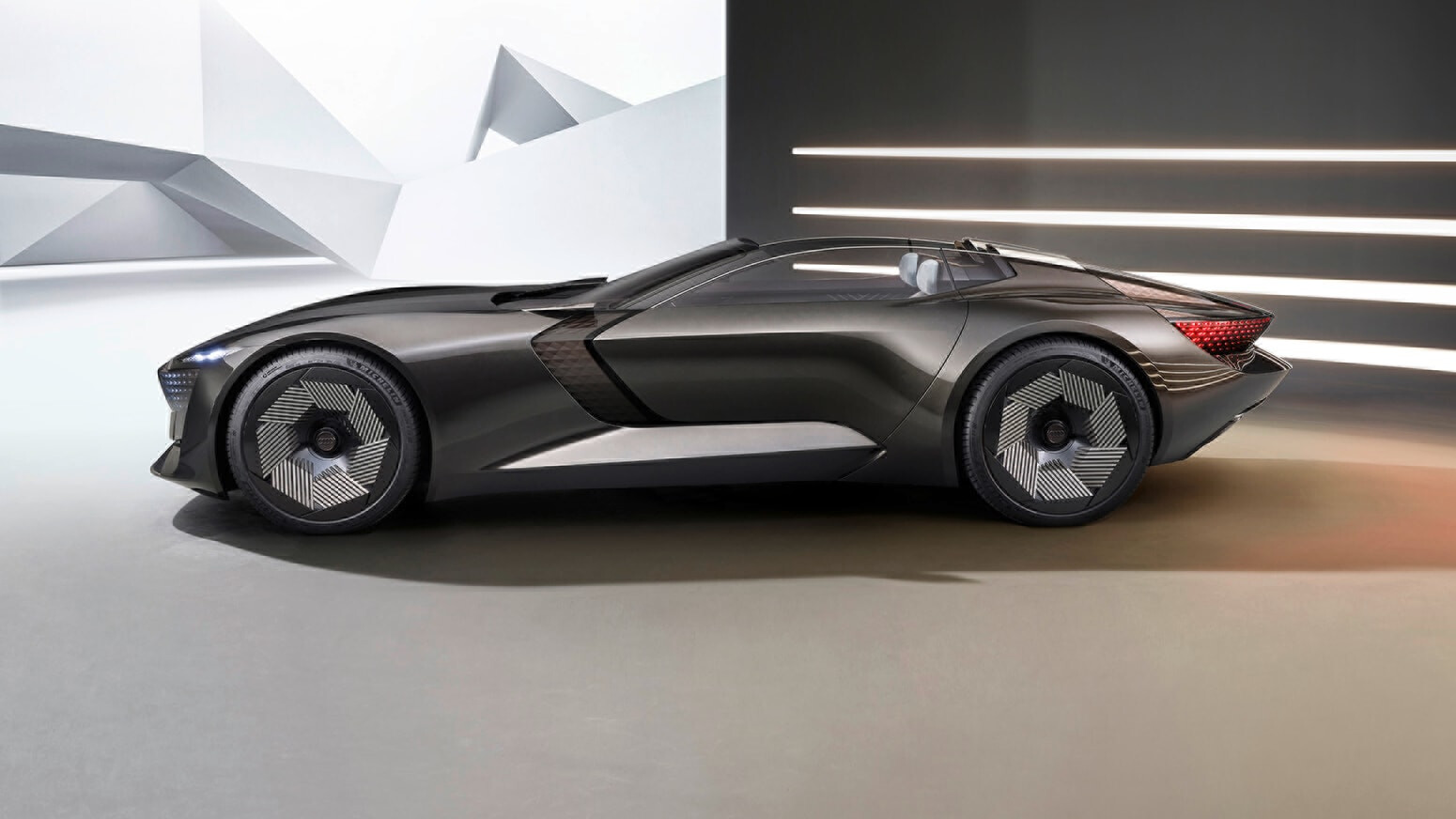
A sporting two-door cabriolet which stands out with its unusually long bonnet and low-slung side profile, the Sky Sphere’s design has largely been influenced by the Horch 853A, the German marque’s final vehicle before it was taken over by Audi following the Second World War.
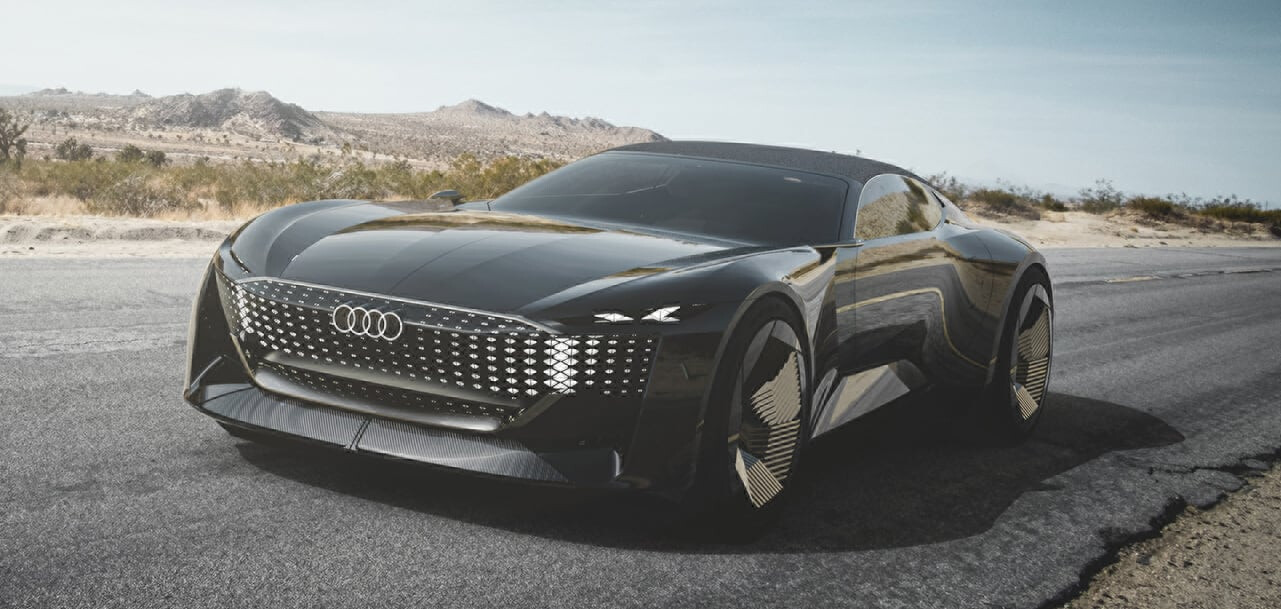
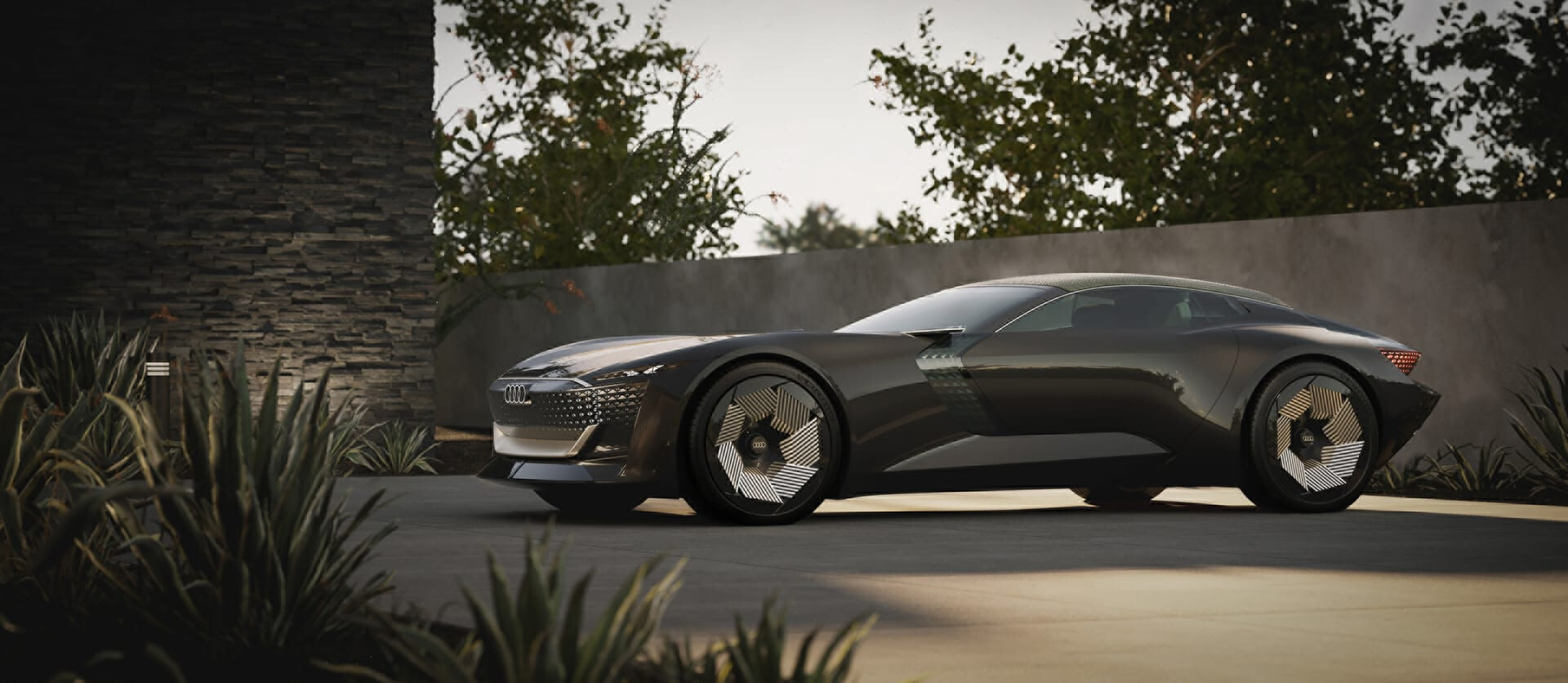
Its appearance is the brainchild of Gael Buzyn and his team of designers working from Audi’s studio in Malibu, California, with their finished product adopting unique glass panels in place of the trademark single-frame grille, side vents and rear lights.
Behind the glass panels are clusters of LEDs which reflect the two states of being for the Sky Sphere. The first is its autonomous mode, ‘a time of relaxation’ where the vehicle’s controls are retracted from the driver and the interior drenched in a warm, calming glow.
However, when the driver is in control, the lights become aggressive and angular – reflecting the sporty nature of the roadster. Audi’s Head of Design, Marc Lichte, says the Sky Sphere will be “on one hand, a real sports car…[but]…can transform in only a few seconds into an autonomous lounge”.
There’s another quite easy way to tell who is in control of the Sky Sphere – by looking at its length. It compresses by 250mm when the driver is given the reins, resulting in a more dynamic ride, while the side glass slides behind the front quarter panel, demonstrating a more aggressive stance on the road.
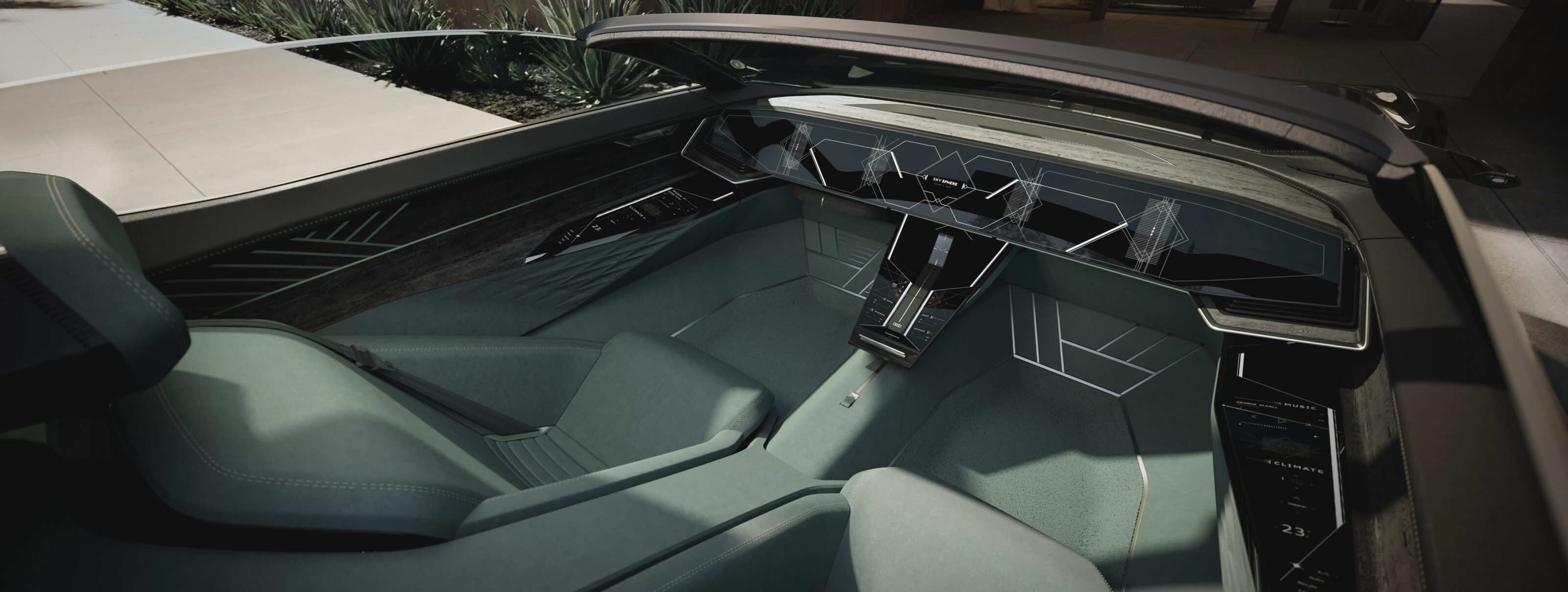
Keeping with the eco-friendly theme, it’s unsurprising the interior materials are comprised of vegan leather and sustainably sourced eucalyptus wood, adorning the surfaces which surround the dashboard-width touch-screen.
It also, of course, utilises the extra space afforded by ditching an internal combustion engine and replacing it with an electric motor. Audi claims the front storage compartment is big enough for two golf bags – this comes to balance out a lack of rear space in the traditional location of the boot.
While Audi hasn’t yet provided specific technical details for the Sky Sphere – it has teased us with the figures of approximately 300kW and 750Nm, more than enough to waft along the Autobahn with ease.
Now the covers are off the Sky Sphere, Audi plans to roll out its next offering – the Grand Sphere. The second in its concept line-up, the Grand Sphere, Audi’s flagship grand tourer will be unveiled at the IAA Motor Show in Munich this September. Following that, the SUV-styled Urban Sphere will be revealed at an as yet undetermined date.
While almost nothing is yet known about the Urban Sphere SUV, Audi’s designers have given away a few clues about what the Grand Sphere has in store. It’ll be bigger on the inside and offer even more luxury than the marque’s current top-of-the-line ICE-powered A8 – particularly in the first row which will have reclining seats combined with Level 4 autonomous capabilities.
With Audi aiming to exclusively release EVs from 2026, and hitting carbon neutral production targets by 2050, Audi seems to know where it wants and needs to be.
June 2023: EVs could be free from LCT under EU trade deal
The price of some European-made electric vehicles could dramatically reduce as the Australian Government considers cutting or abolishing the Luxury Car Tax (LCT).
Story continues: Could the LCT be on the way out?
Twenty years after it was first introduced, the first signs are starting to appear that the Luxury Car Tax (LCT) is reaching the end of the road.
Snapshot
- FTA made between the two countries in June
- Still needs to be signed in principle
- Carmakers don’t yet know impact on pricing
As part of trade negotiations with the UK post-Brexit for both nations to phase out taxes on imports, it’s thought Australia’s whopping 33 per cent tax levied on cars over a certain cost threshold could steadily disappear over the next 15 years.
In recent months, the UK put an offer on the table to Australia’s Minister for Trade, Tourism and Investment, Dan Tehan, with a Free Trade Agreement (FTA) locked in mid-June.
While the Department of Foreign Affairs and Trade (DFAT) remains tight-lipped, insisting trade talks are strictly under wraps, it did not rule out any changes to the LCT would be possible in the near future.
A DFAT spokesman told Wheels: “Domestic taxation measures such as the Luxury Car Tax are generally outside of the scope of FTAs.
“The Government has been consistent throughout this process that it doesn’t comment on the details of the negotiations.”
But given cars are one of Australia’s main imports from the UK, alongside medicines and alcohol, to the tune of $36.7billion in 2019/20, critics of the tax claim now is the time for it to be axed.
Since Holden ceased production in 2017, the last manufacturer to build cars on Australian soil, there have been growing calls from industry bodies to axe the LCT as it was designed to protect a local industry which no longer exists.
Peter Griffin from the Federal Chamber of Automotive Industries (FCAI), said the LCT puts a tax on safety, holds back improvements in environmental outcomes through emissions and prices consumers out of a majority of the electric car market.
“The industry has never supported it, it’s discriminating and inefficient. Every time there is tax reform we hope for it to be set aside. It’s early days, but FCAI understands it may form part of Australia’s discussions with the UK over the Free Trade Agreement and hopes the Government will use it as an opportunity to do away with it.

“It’s not a sound approach to apply a tax to vehicles which have the most advanced safety technology. From a consumer perspective, they’re being prevented from accessing the best tech, and it’s also not helping to encourage the uptake of electric vehicles. The latest and greatest should be available to consumers and FCAI would be very pleased to see it go.”
Mercedes-Benz has also struck out at what it calls an “unfair tax” hitting its customers.
“If the LCT were to be scrapped it would enable consumers to access the more advanced safety technology which comes as standard on models such as the EQC, which previously might have been just a bit out of their price range,” a spokesman said.
“Ultimately it is an unfair tax on consumers and doesn’t help with their buying decisions.”
The automaker added if the LCT were to be phased out rather than scrapped immediately, it might see some changes to sales numbers but there were a number of other factors involved, such as other taxes being imposed on electric vehicles.
George Demirov, an osteopath from Melbourne who runs his own business, said the LCT prices him out of buying a Range Rover Velar as it now costs in excess of $80,000 before on-road costs.

“Buying new, the tax hit would be too much, but buying used it does make a bit of a difference. I’d feel the impact more if I were buying from a dealer but even someone selling it second-hand won’t want to cop the full amount so I’d end up wearing some of it.
“It doesn’t make any sense to have [the LCT] anymore now production has ceased because no-one here is seeing any benefit.”
But despite growing pressure to ditch the tax, Treasurer Josh Frydenberg said last year the LCT wouldn’t be scrapped until the budget could afford it.
“When it comes to the Luxury Car Tax, we have no plans to remove that, but I would never say never,” he said.
“We’ve always got to maintain a strong budgetary position. We’ve got a series of taxes we’d like to remove, but we’re committed to keeping the nation’s balance sheet strong.”
Though this year’s Federal Budget was stronger than expected thanks to the country’s response to the Covid-19 pandemic, an abolishment of the LCT may still be some time off given its large contribution to the economy. At present, the tax nets the Federal Government around $700 million per year.
If it were to be removed or phased out as part of the up-coming Free Trade Agreement, it would mean UK importers such as Jaguar, Land Rover and Mini could become exempt while their German, French and Japanese competitors would continue to be taxed at 33 per cent above the threshold.
History of the LCT
| 2001 | Introduced by the Howard Government, the LCT was designed to protect the local motoring industry by placing a 25 per cent tax on imported cars worth up to $55,134 |
| 2008 | It was increased in 2008 to 33 per cent and has steadily risen based on the Consumer Price Index (CPI) to $69,152 (from July 1, 2021) for cars which use more than 7L/100km of fuel, and $79,659 for u2018fuel |
| 2017 | Holden ceased production in Australia with the last Commodore rolling off the line at its Elizabeth plant in South Australia |
| 2020 | The Federal Government introduced a refund scheme for primary producers, offering up to $10,000 back on the purchase of any vehicle above the LCT threshold purchased before July 1, 2019. |
Snapshot
- Built on Lotus Evora platform
- Three spec levels to be produced
- Limited to 62 cars
British coachbuilder Radford has revealed its first modern-day car — a reincarnation of a classic Lotus racer.
Known as the Lotus Type 62-2 coachbuilt by Radford, the ultra low-production two-seater pays homage to the original Lotus Type 62 from 1969.
The car is underpinned by Lotus’s Evora GT chassis, with custom carbon fibre-composite panels and several mechanical alterations. The wet weight of the car is yet to be revealed, though the production examples are claimed to weigh less than 1000kg dry.
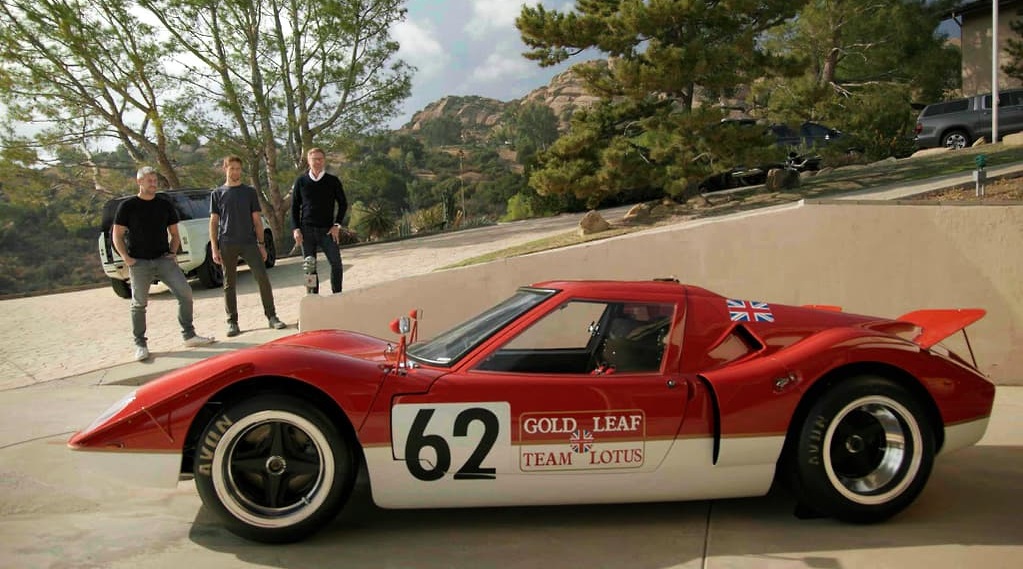
Radford began coachbuilding operations in Kensington in 1948. Originally, the company assembled bespoke cars such as an Aston Martin DB5 shooting brake, the Bentley ‘Countryman’, and even custom Minis for The Beatles.
Today it is run by designer Mark Stubbs, broadcaster and car expert Ant Anstead, business adviser and lawyer Roger Behle, and former F1 champion Jenson Button. Radford describes itself as a “global company with British heart and soul”. The Type 62-2 represents the brand’s first self-built car in its 73-year history.
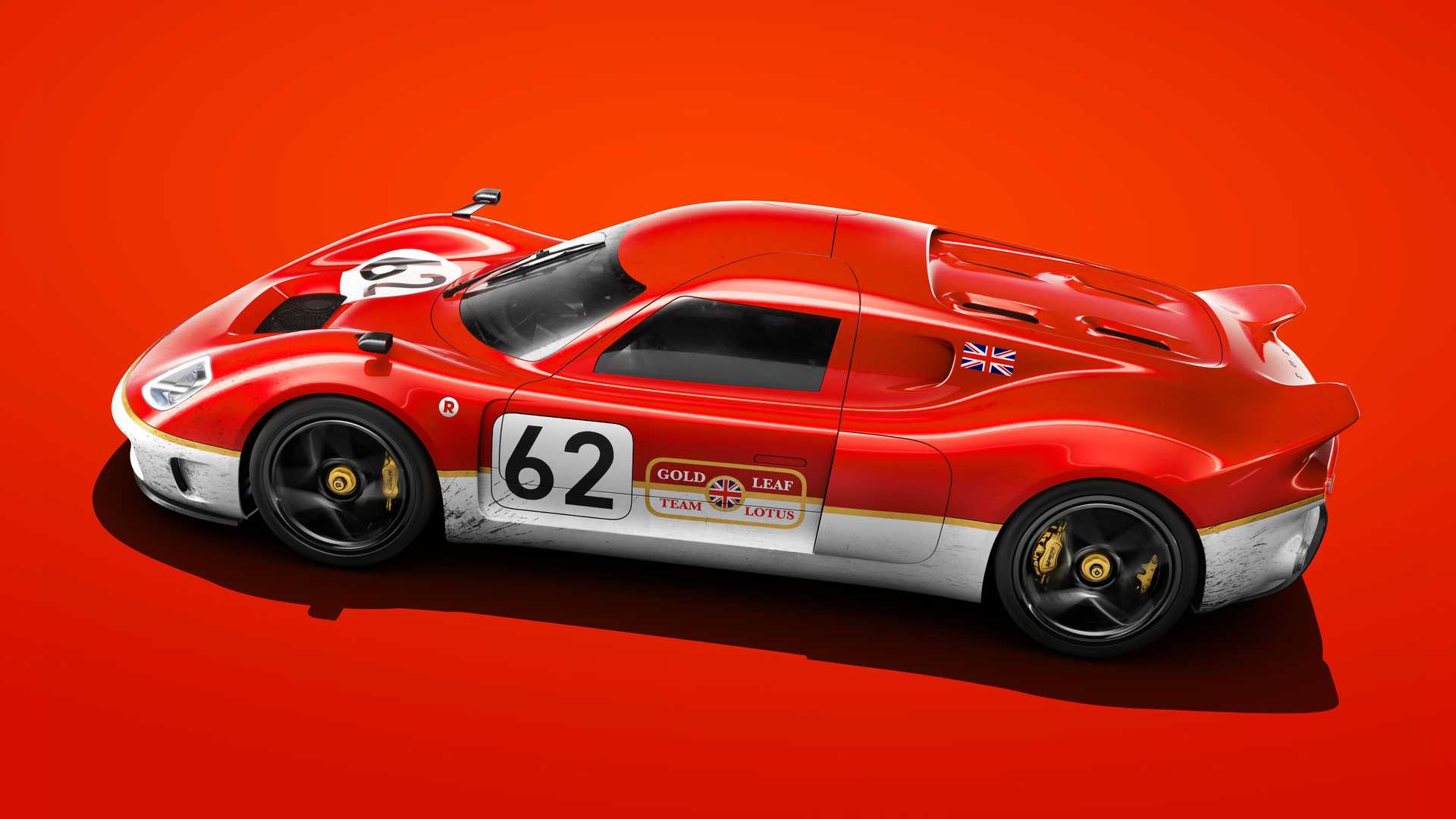
The Type 62-2’s bodywork is the most striking change from the Evora base car.
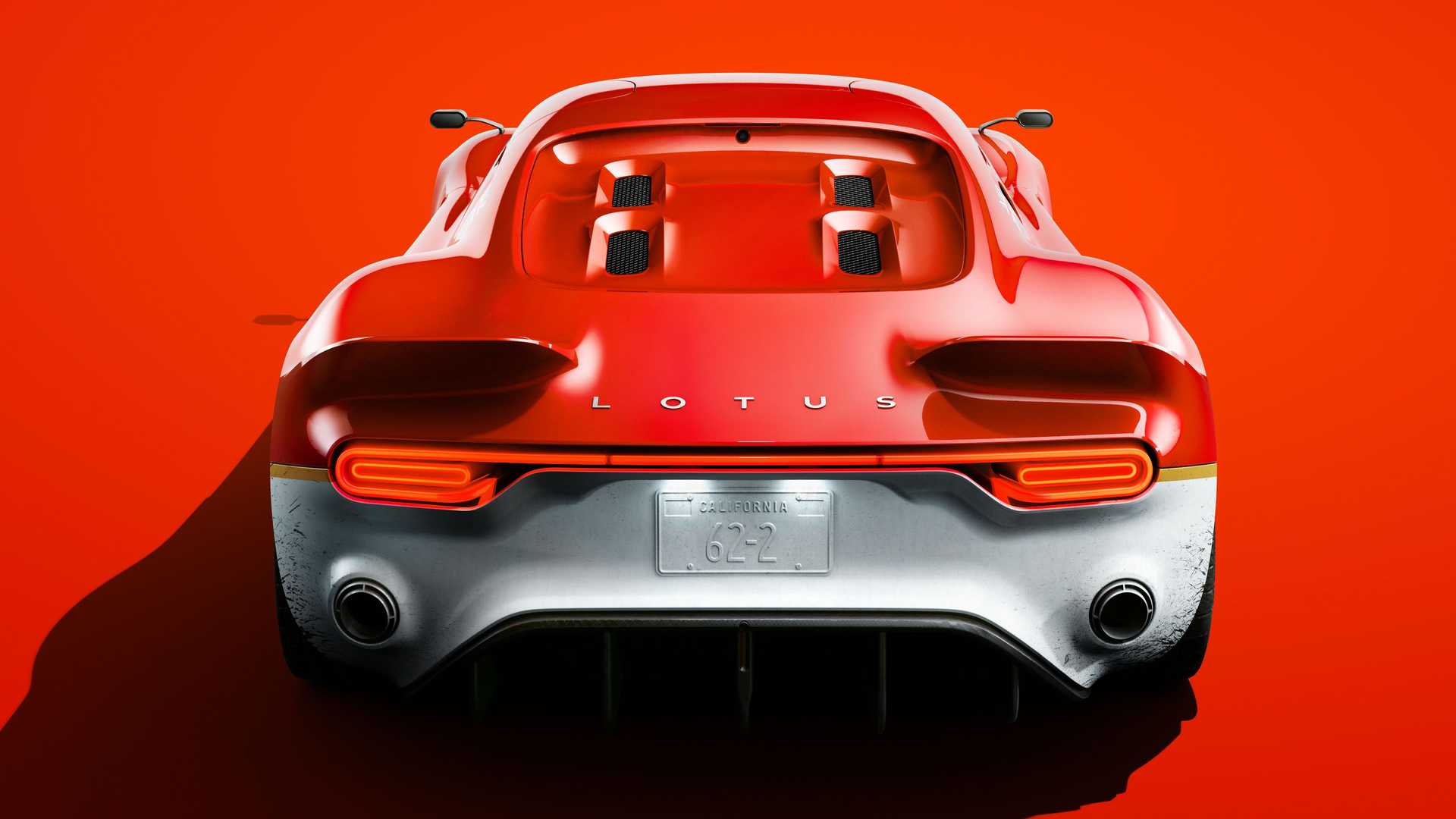
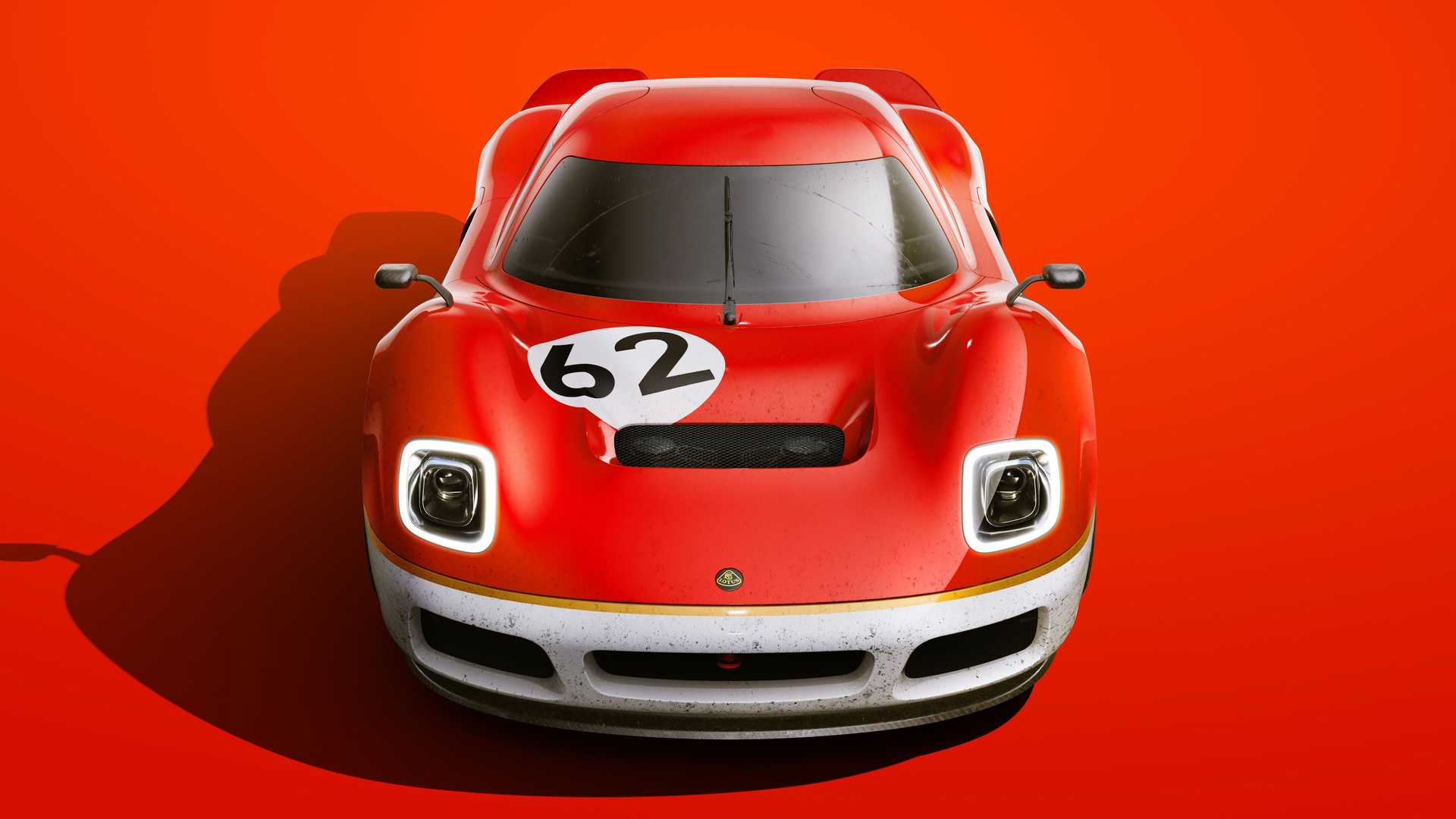
With tall arches, a lower bonnet and a flattened rear, it cuts a profile remarkably similar to the original Type 62. The doors reference classic endurance racers including Ford’s GT40, which featured body components designed partially by Radford.
At 1133mm, the Type 62-2 rests almost 10 centimetres lower than an Evora GT. “When you see the design, it looks just like a ’70s Le Mans car,” says co-owner Jenson Button.
“And when you sit behind the steering wheel and look through the curved windscreen, you can see the front wheel arches — something you just don’t experience on road cars today.”
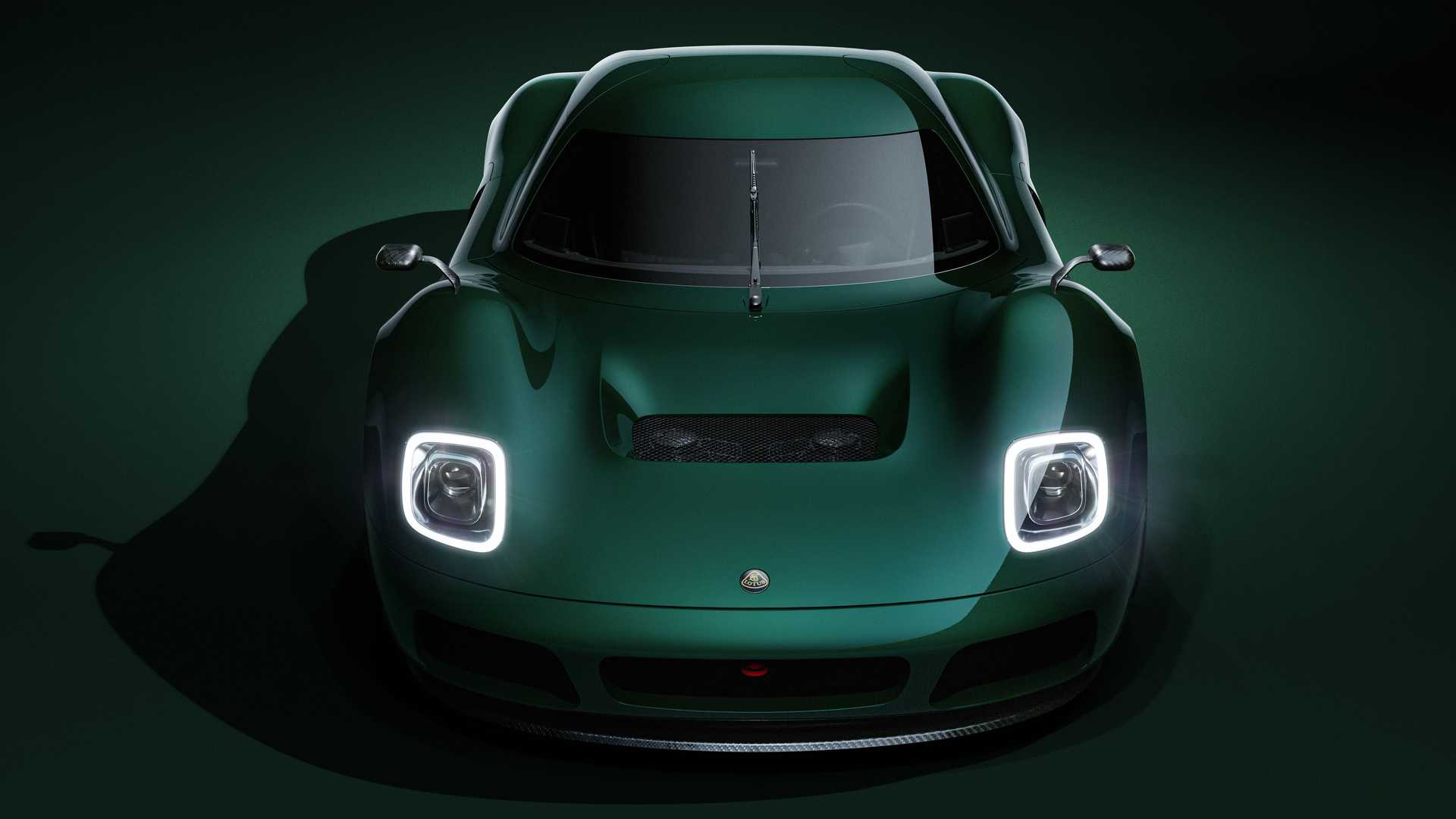
Details of two trim levels have so far been revealed. The Classic is powered by the Evora’s Toyota-sourced supercharged 3.5-litre V6, producing 320kW — on par with the Evora GT430 Sport. It’s backed by a six-speed manual transmission and electronic diff lock. A seven-speed dual-clutch automatic available.
Radford’s 373kW version of the engine is also optional, which is specced the same as the Gold Leaf model. The Classic has no rear wing, referencing the original Type 62’s earliest form. Wheels are 17-inch up front, with 18-inch rears.
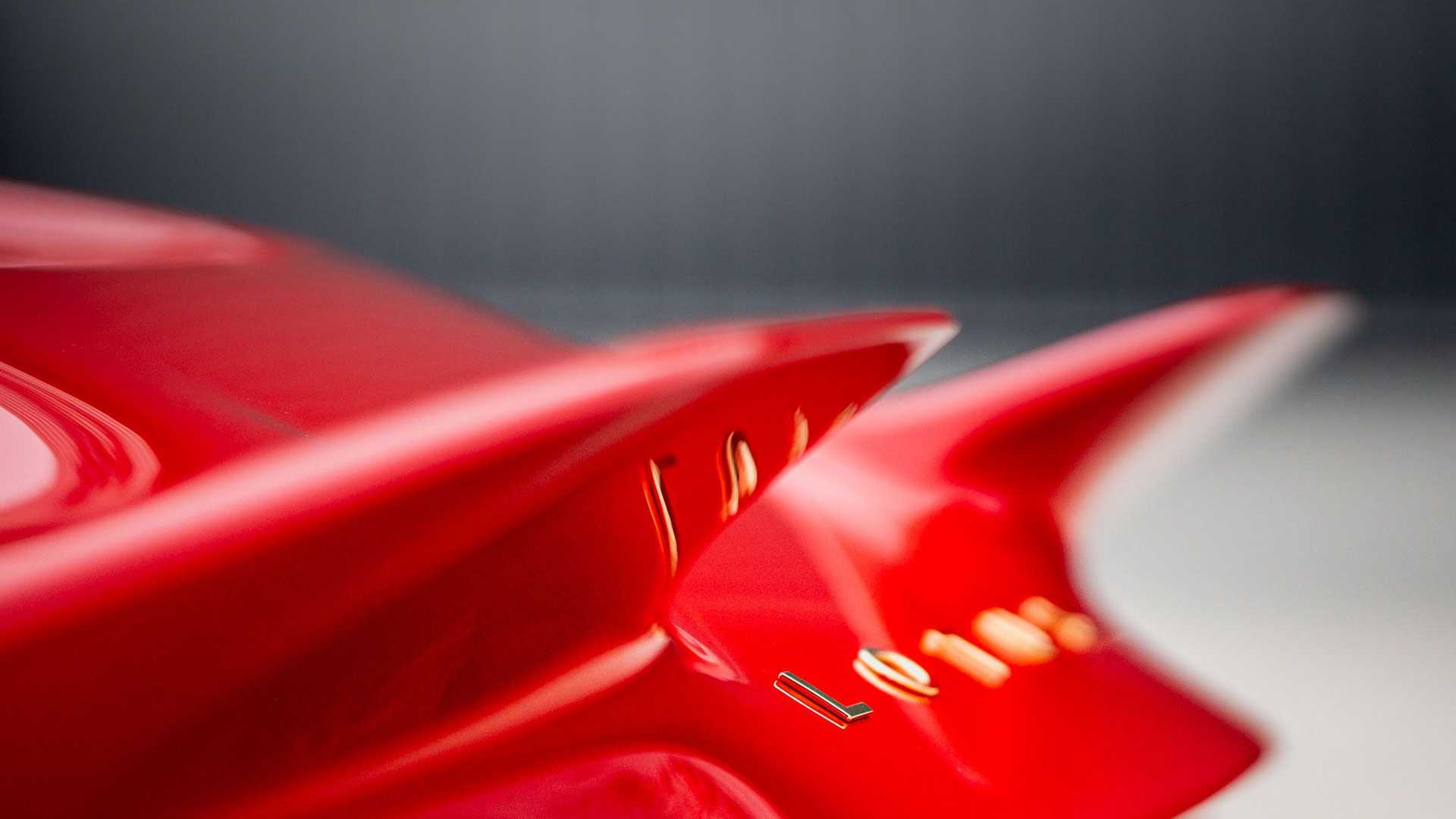
The Gold Leaf features a 373kW version of the V6 with upgraded pistons, conrods and cams, mated to a seven-speed DCT with limited-slip diff. It wears split ducktail spoiler and red-on-white paintwork, reflecting the motorsport version of the Type 62.
Wheels are stepped up to two-piece 18 and 19-inch units, with a centre-lock design optional. Both cars use a bespoke titanium exhaust system.
A top-spec version of the Type 62-2, dubbed the JPS, is also on the way – though Radford has so far revealed few details. The car is said to feature a bigger supercharger – boosting output to 447kW.
It’s expected to feature the iconic black-and-gold JPS livery, the rights to which Radford acquired last year. Throughout the 1970s, Lotus F1 cars famously wore the tobacco branding.
Both Type 62-2s revealed so far use four-pot AP Racing brake calipers and iron rotors, with coil-over suspension “lowered beyond traditional Lotus geometry.” A hydraulic front lift system is optional, designed to raise the Type 62-2’s nose over speed bumps and uneven roads. Steering is an unassisted rack-and-pinion arrangement to maximise driver feedback.
The Radford’s interior is yet to be shown, though it will use cameras in lieu of traditional side and rear-view mirrors. The dash will be a six-inch TFT display with customisable options for public driving or track use.
The Radford Type 62-2 will make its debut public appearance this weekend at the Monterey Car Week, alongside the Lotus Emira and Evija.
Pricing has not been made public, but Radford is now accepting build slot applications through its website. Just 62 cars will be made, with Radford encouraging buyers to have a hand in the creation process.
“Moving closer to the car’s start of production date, owners will be invited to ‘co-create’ their vehicle to their exacting vision,” the company says. Production is slated to begin late this year, before the first cars are delivered in the first quarter of 2022.
It plays a crucial role in informing new car buyers. It can tarnish a new nameplate or cause an uptick in sales. It has also been embroiled in controversy and publicly criticised by automotive bodies and has seen manufacturers skip crash tests due to its high costs.
Yet what does the future hold for the Australasian New Car Assessment Program (ANCAP)? It’s a question many are asking because, right now, it feels as though the partially tax-payer funded, not-for-profit organisation is at a crossroads.
Constantly evolving safety technology is moving the regulatory goal posts, ANCAP’s critics are growing louder than ever, and the organisation has a brand-new CEO in Carla Hoorweg who is determined to provide clarity in the complex world of vehicle safety.
To better understand ANCAP’s relevance, its challenges, and how it can better serve the consumer, this Wheels investigation spoke to all of the vital players: key bodies, the manufacturers, ANCAP itself, and of course, you, our readers via an online survey. So if safety is important to you – and given our survey’s results, we know it is – read on.
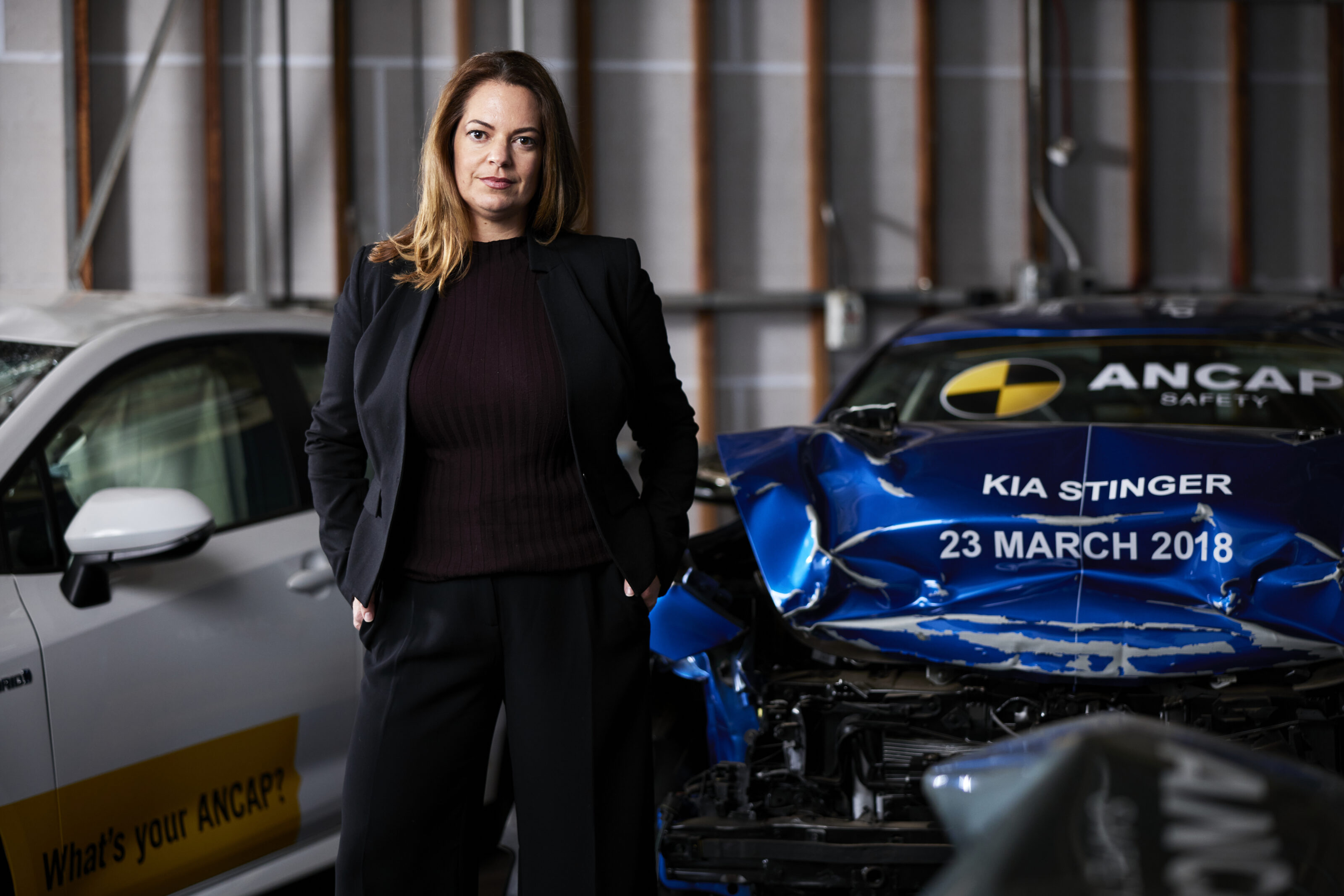
ANCAP: Do we even need it?
ANCAP’s raison d’etre was apparent in its first crash tests back in 1993, which included locally made models such as Holden’s best-selling VP Commodore alongside imports from Mazda, Subaru and Volvo. The results found Australia was lagging badly behind, placing us at the same safety standards as US models had been 13 years earlier.
“The ultimate goal of the program is to make safety as important to car buyers as engine size, styling and comfort,” reads the April 1993 report.
Now, though, there are no locally made cars to test. And if we buy all of our cars from other markets, and they’re tested there, why bother testing here?
The answer, according to Hoorweg, surrounds local specification. Since 1999, ANCAP has taken data sets from Euro NCAP in cases where specification matches what’s sold here.
“It’s about which vehicles are sold here regardless of where they’re manufactured,” Hoorweg explains. The use of Euro NCAP ratings covered 35 percent of vehicles sold in Australia in 2020, with 57 percent of all models sold covered by local ANCAP testing (aiming for 100 percent market coverage is a law of diminishing returns, Hoorweg tells Wheels).
Differences in specification as well as models not available in Europe – from China, Thailand etc, and therefore not tested to the same protocols, if at all – demand ANCAP’s attention.
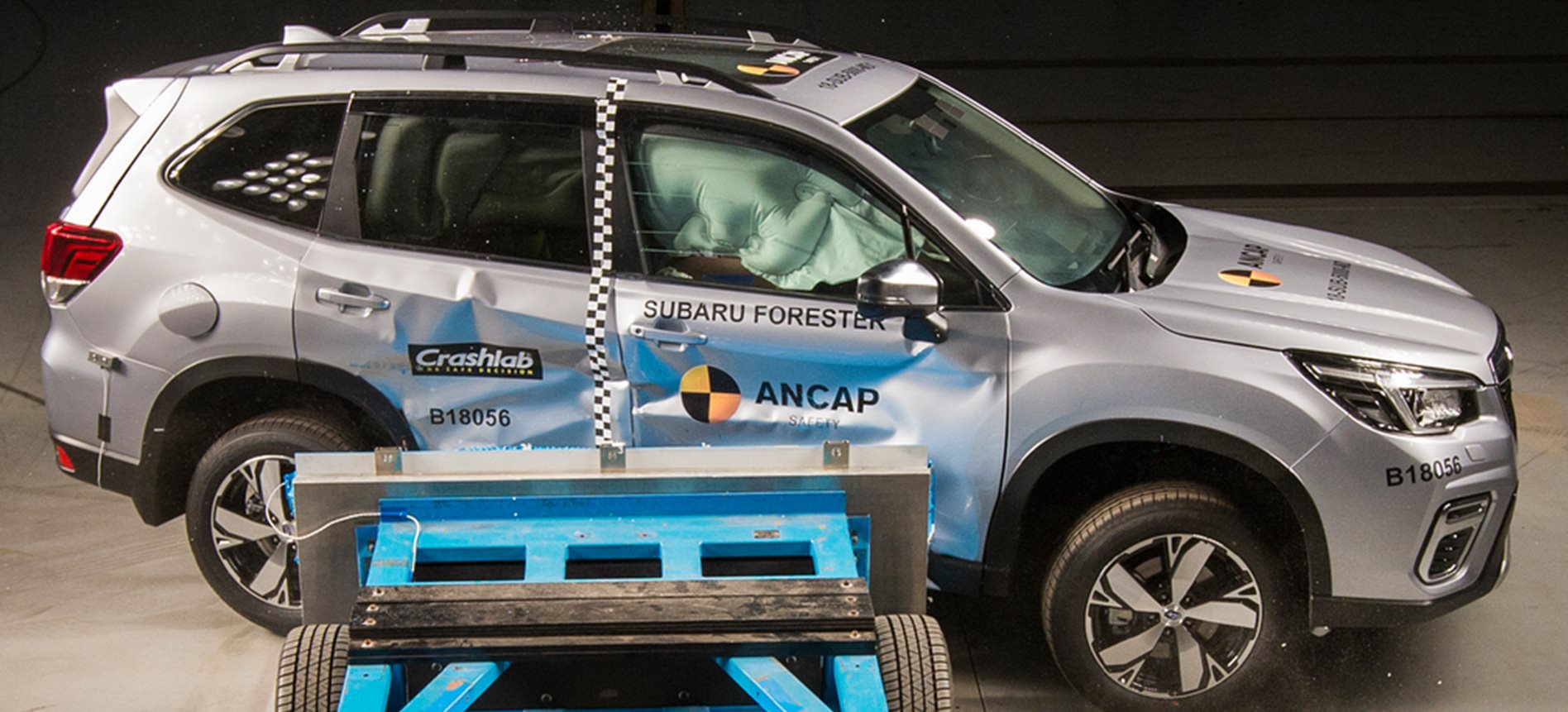
“Around Euro NCAP, yes, we take their results. We don’t do any rehash of any of the tests, there’s no retesting, which is to address one of the criticisms made – that we [needlessly] retest cars – we don’t,” Hoorweg says.
“What we check is whether the vehicle being delivered into the Australasian market is actually consistent with the vehicle that was crash-tested, as what we often see with manufacturers who are distributing across multiple markets is they’re not delivering the same product.
“ANCAP’s primary objective is to influence automotive safety and deliver better outcomes for Australian and New Zealand consumers,” Hoorweg explains. “We are there to essentially set a level for manufacturers to meet.”
ANCAP’s important work isn’t in dispute, even from some of its biggest critics, as you’ll read further on.
“ANCAP has a role to play in actually enhancing the lives of Australians through road safety. That’s an incredibly important part of raising living standards,” says Tony Weber, Chief Executive of the Federal Chamber of Automotive Industries (FCAI).
“You take a person who is not involved in a car accident, they don’t take a hospital bed from a sick person. We don’t get people who are [otherwise] being killed, or who are seriously injured. The productivity of the economy, the social benefit from that is enormous.”
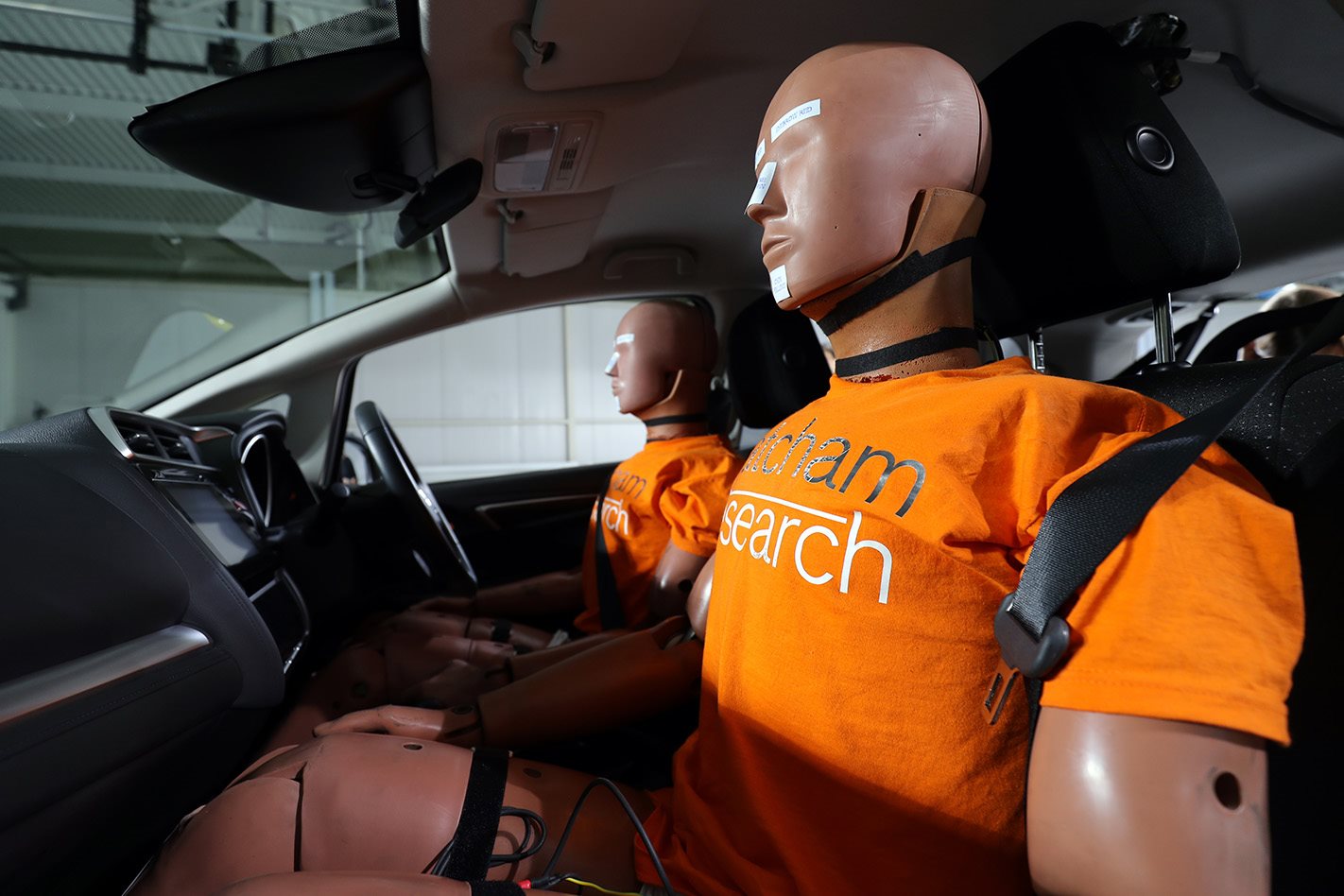
Carmakers, too, may have viewed ANCAP – and similar organisations around the world – as adversarial in the 1990s, when new standards proved difficult to meet.
That’s not the case decades on, where the benefit has been proven, customers continue to place safety high on their list of priorities, and OEMs have been able to factor ANCAP protocols into long-term engineering and product development.
Kia Australia’s general manager of product planning, Roland Rivero, says it’s customers who most value ANCAP.
“For the average punter, safety in totality is a big consideration. Our research came back that it was number two in reasons for purchase,” Rivero tells Wheels.
“We can all have our own opinion about ANCAP, but the customer voice, the market voice is probably the most important of the lot … it’s the market that’s dictating the terms, and as OEMs our job is to sell cars to the greater market, so it’s their voice we’re listening to. It does bring an influential aspect to the purchasing decision.”
It seems you, our readers, agree. Our online survey showed safety is a top priority, with 84 per cent of you saying ANCAP ratings play a factor during purchase.
Readers’ comments on ANCAP ratings included: “I think they’re great. It’s important to have something independent you can refer to” while others were tempered: “A good guide, but not the ‘be-all and end-all’ of car criteria choices.”
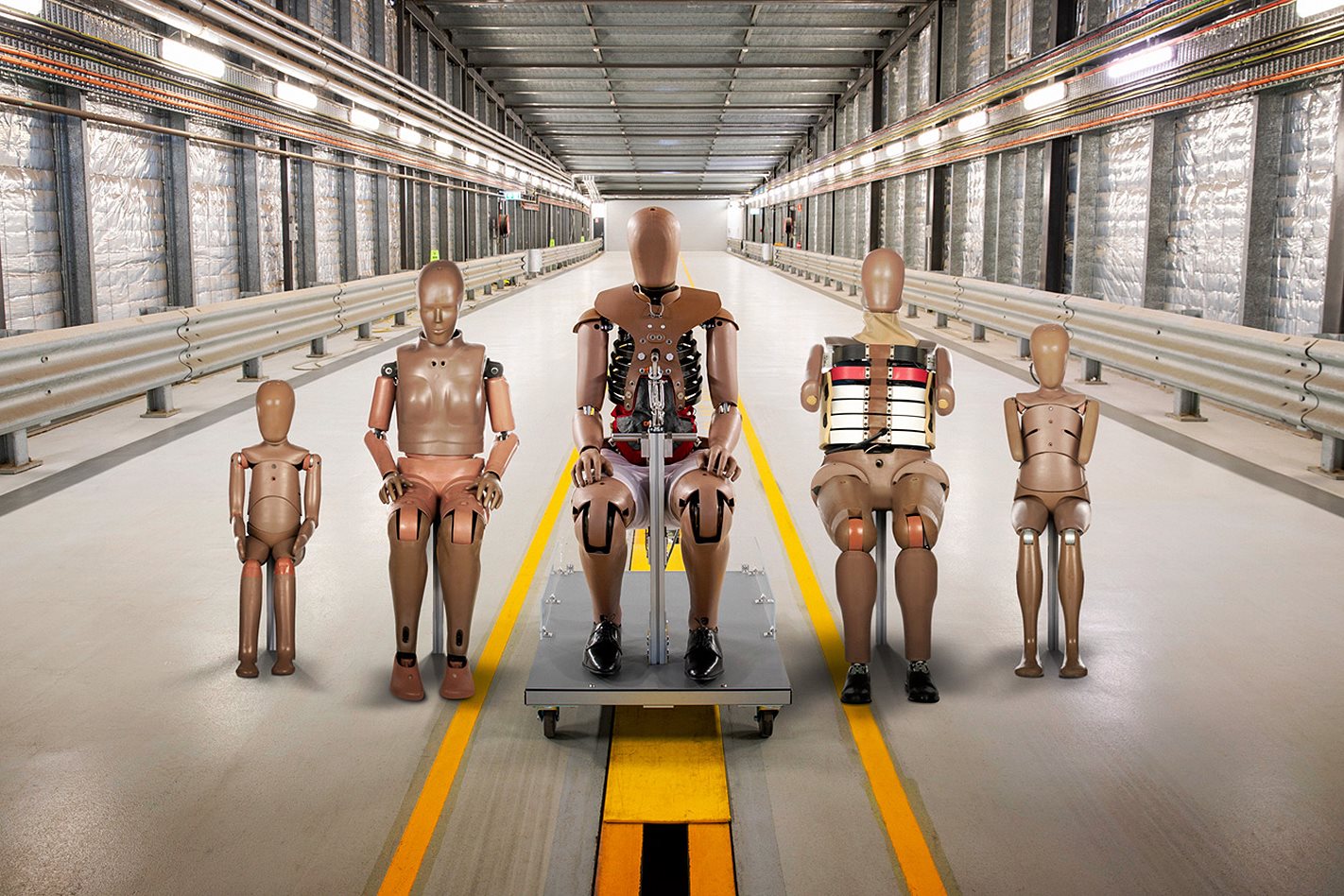
While it sells cars, it’s more about the societal benefits than sales targets for ANCAP.
“The ultimate goal is reducing the number of fatalities and serious injuries,” Hoorweg says. “We’re still seeing significant numbers of people dying on our roads; in Australia last year it was 1125 – that is a lot of people, and then the serious injuries are many more times that. We have a large road network; we have a lot of people driving and I think that’s why ANCAP exists – to try and reduce those numbers.”
Mitsubishi Motors Australia Limited (MMAL) – the subject of the latest controversy surrounding a zero-star rating – also speaks highly of ANCAP’s purpose.
“We see ANCAP playing a valuable role and have full confidence in its testing ability and expertise,” says James Tol, MMAL’s national regulation and certification manager.
“Safety is a priority for our customers, and it’s critical for Mitsubishi to ensure that we continue to provide the safest products and services that we can to Australian buyers … We share and support ANCAP’s vision that Australians should be in the safest vehicles possible.”
How the organisation does that is the subject of debate…
Who are the critics?
New vehicles are safer than ever, yet ANCAP has been the subject of criticism.
Questions around ANCAP’s value have arisen from VW Australia, which has publicly stated that ANCAP isn’t needed for its models, as Euro NCAP covers its local line-up.
Hyundai Australia chose to have its Sonata unrated due to the cost for a relatively small volume model, again raising questions on ANCAP’s importance.
Wheels readers, too, commonly pushed for use of Euro NCAP and question the focus on driver assistance systems, such as AEB, which are mandatory to achieve five stars. “It allows less safe cars to boost ratings by throwing some cheap electronics into a car,” one Wheels respondent said.
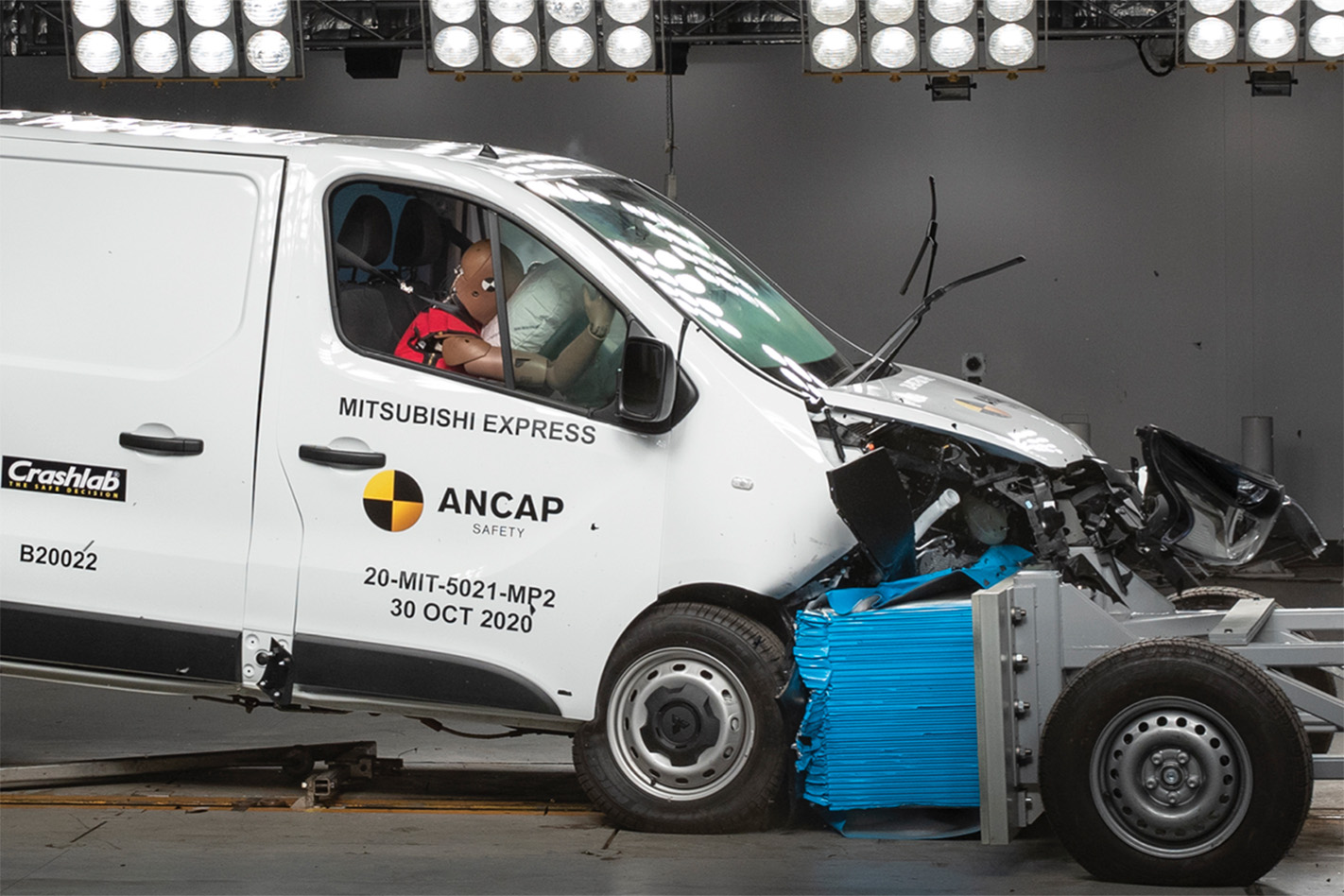
Some of the strongest criticism has come not from carmakers or the public, but from the FCAI. In March 2021, it published a scathing media release headed ‘Consistency Should Be ANCAP Priority’ in response to ANCAP’s zero-star result, the first in its history, for the Mitsubishi Express, effectively a badge-engineered Renault Trafic.
“We have a lot of dialogue with ANCAP, but for ANCAP to waste three-quarters-of-a-million dollars on testing when you knew beforehand what the outcome was; a vehicle that sells in relatively small volumes, a vehicle that’s already on the roads but badged by another brand; that’s not the best use of taxpayers’ money,” Weber said.
Yet ANCAP is a non-commercial, non-regulatory organisation and its standards aren’t binding – it is merely advisory. It’s not lacking funding or fighting for survival, and has no commercial benefit in ‘punishing’ brands or preferring one over the another.
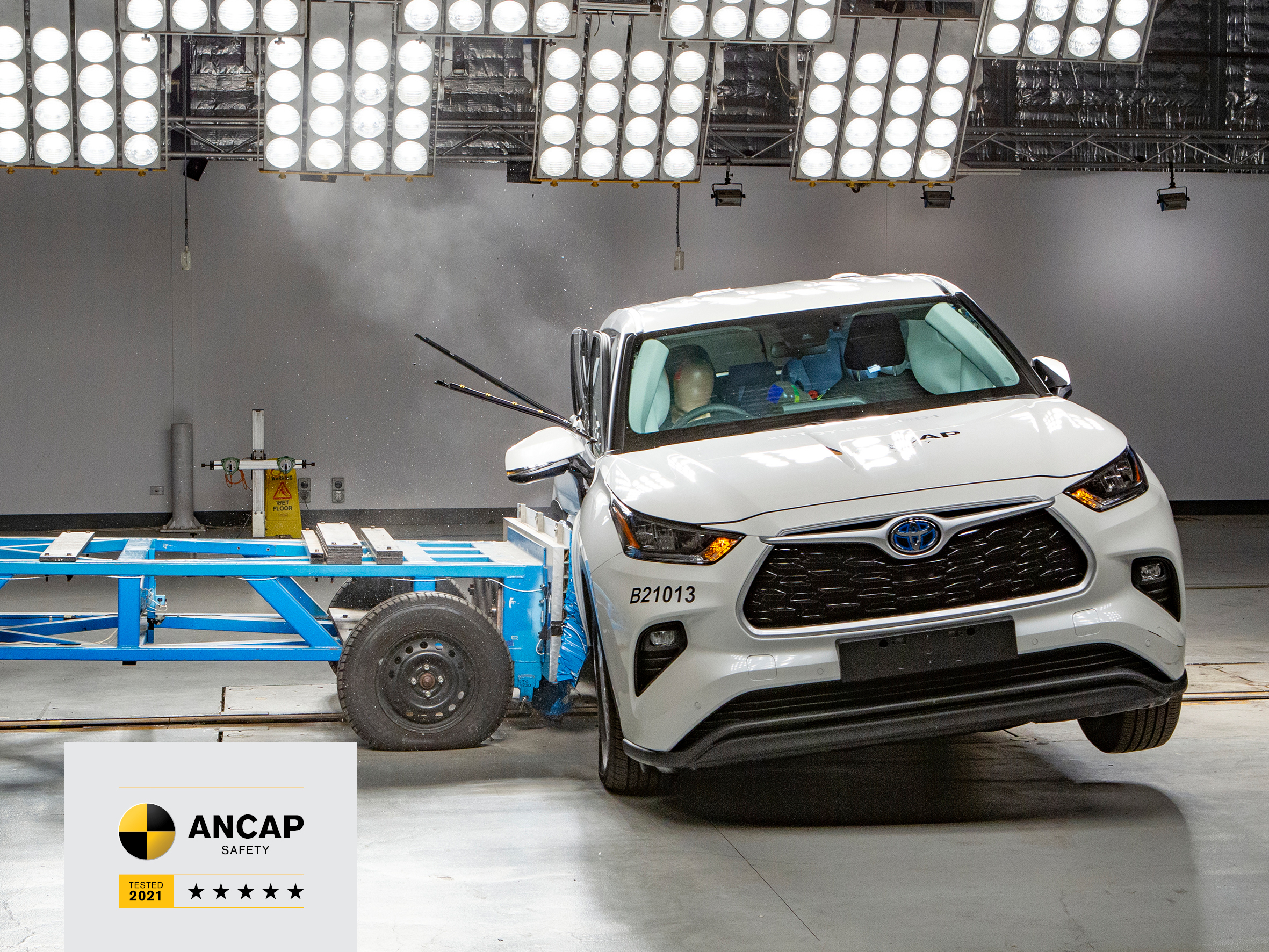
Questions have been raised about the approach taken with the Express compared to models such as the Kia Stonic, which took the Kia Rio’s ANCAP rating as they share the same platform and regulatory certification.
The difference here is that Kia applied within the two-year submission window ANCAP allows for manufacturers to share ratings of similar models, a time frame missed by Mitsubishi – which is a tad harsh, as the brand didn’t become part of the Renault-Nissan alliance until late 2016.
There’s also an issue around the language of models which ‘fail’ to make five stars: a five-star model is not necessarily the ‘safest’ alongside a newer model which may be rated at four stars, for instance.
This approach impacts many fleet buyers, and comes despite tougher protocols and an increase in crash worthiness that may ultimately make the new model safer. In such cases, the ‘safer’ car doesn’t end up on our roads, in contradiction to ANCAP’s broader mission.
Put to Hoorweg, her response points again to the maximum five-star ratings. “What we would encourage is that you buy a newer five-star rated car … I think it’s pretty clear fleets are demanding five-star rated vehicles, so again it comes back to the manufacturers’ decision commercially around what segment they target.”
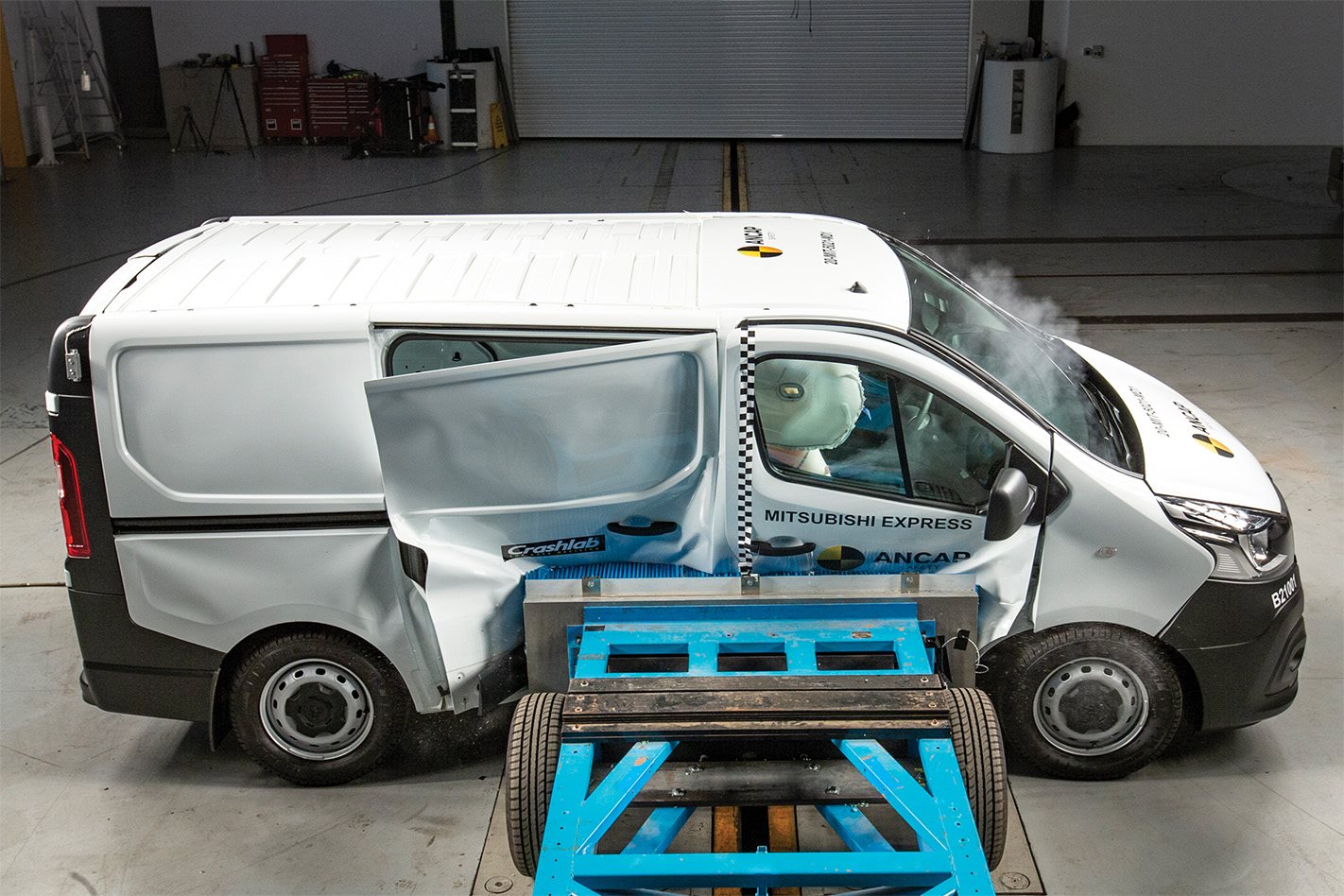
MMAL is supportive of ANCAP with which it says it has a positive relationship. While not commenting on the Express result specifically, it does openly challenge the organisation’s approach.
“With the ever increasing complexity of ANCAP protocols, particularly in Advanced Driving Assistance Systems (ADAS), it is important to ensure consumers are better informed regarding both the occupant safety performance along with the vehicle’s ratings in those areas related to ADAS systems. Something that the single star rating does not do,” says MMAL’s James Tol.
Tol’s comments may reference the Express has, in fact, superior driver protection than the four-star rated Hyundai iLoad and five-star rated Ford Transit, for example, which is lost in the zero-star headline.
“As such, consumers rely on the commentary around the rating in order to be correctly informed regarding both the occupant protection characteristics and the advanced safety performance of a vehicle,” he adds.
Weber sees the rating as a ‘gotcha’ moment. However, Hoorweg defends the test as ANCAP fulfilling its role and says that taking the 2015 rating from Europe was not an option.
“This is a fact that has been missed: the Renault Trafic rated in Europe was a people mover. We can’t assume that the people mover tested in Europe is the same thing and has the same crash performance as the van that came into Australia,” Hoorweg says.
Timing was everything for the Trafic and Express. When a vehicle is tested is as important as the star rating, as testing regimes become ever more complex.
Star gazing
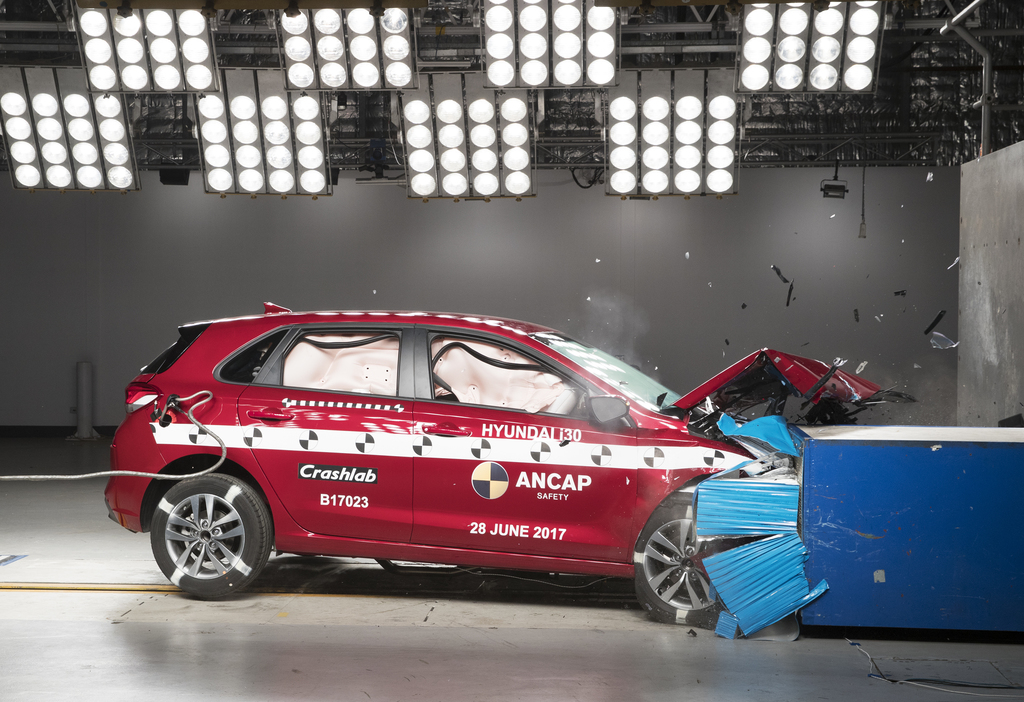
ANCAP’s star ratings are simple: the more, the better. Yet, for the average consumer, it isn’t that straightforward. A five-star model may sit alongside another five-star model tested years ago to different protocols, which means that not all five-star ratings are the same – there are often caveats to each rating.
In 2014, ANCAP introduced date-stamps to counter long-standing ratings for ageing vehicles which would fall well short of the latest testing protocols.
“Consumers should look for the highest number of stars they can find with the most recent date-stamp,” Hoorweg explains. “The date-stamp is the indicator of how recent the rating is and to what standard that vehicle has been tested. The more recent the rating, the higher the standard.”
Hoorweg says the date-stamp and star rating go ‘hand in glove’. The priority, then, is to look at the newest model in your shortlist and take the highest star rating. The push for new vehicles is two-pronged: firstly, more advanced safety features filtering down vehicle segments, and the advancing age of Australia’s fleet.
“Last year, almost 70 per cent of fatalities on our roads occurred in vehicles that were 10 years old or older,” Hoorweg explains.
“We have an average fleet age of just over 10 years [10.4], but the average age of a vehicle involved in a fatality is just over 13 years – there’s a very strong correlation between vehicle age and safety. Reducing the age of the fleet is a really significant way you can reduce fatalities and serious injuries.”
Yet timing is everything: star ratings with date stamps still sit with older ratings, where ‘grandfathering’ enabled a car to carry its rating indefinitely. “This is one of the areas where we are going to be making changes,” Hoorweg admits. “At the moment, I think part of that confusion is coming because there are some old ratings still floating around that are still valid.”

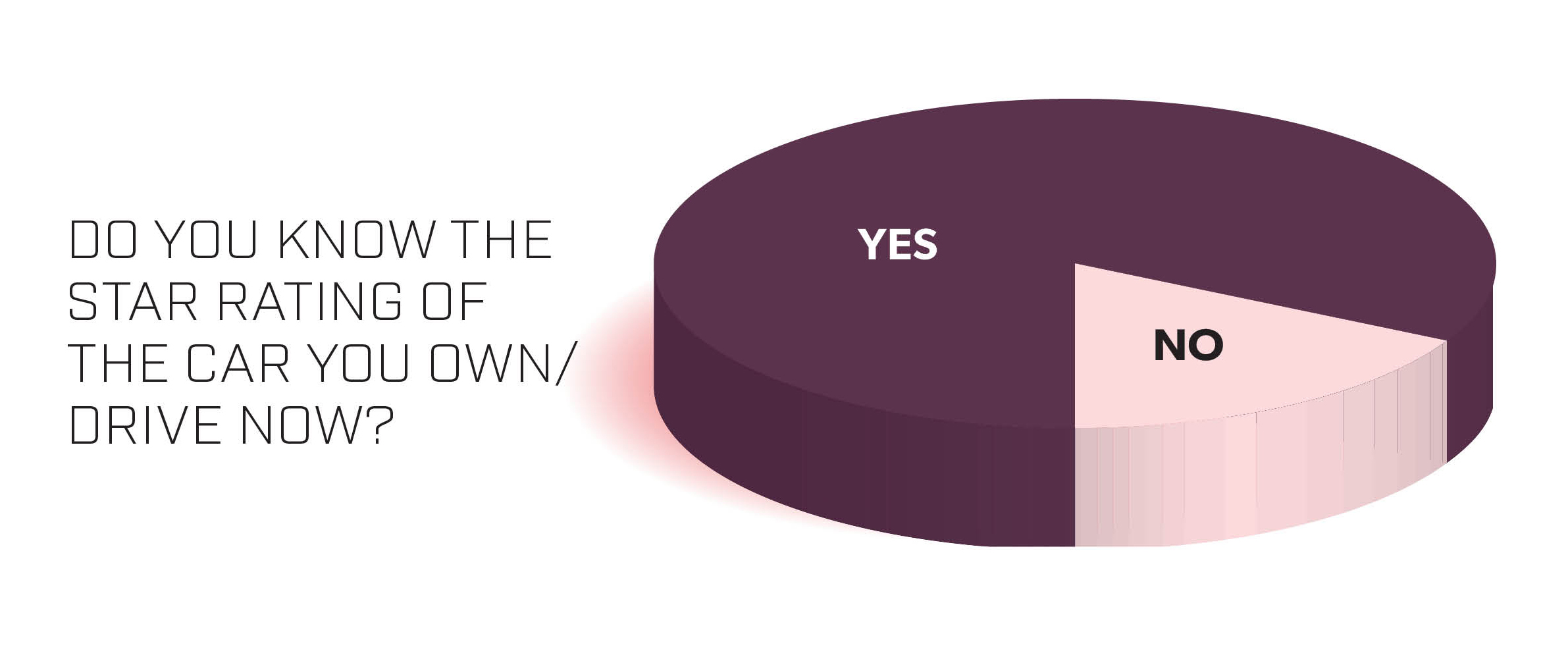
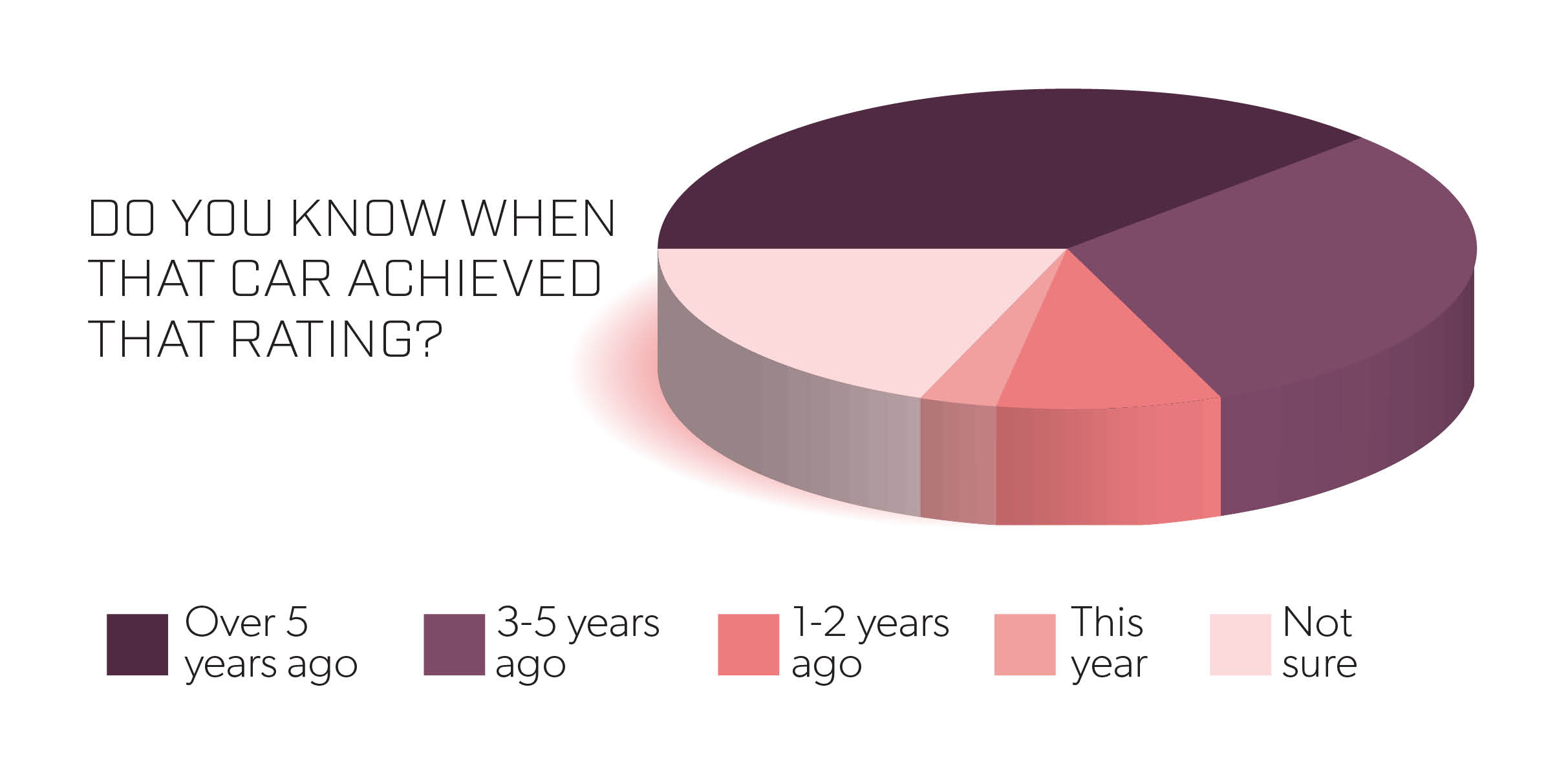
That’s backed up by surveyed readers. The majority of you (82 per cent) know the star rating of the vehicle you drive, and importantly, when it was achieved – a sore point for some.
“ANCAP ratings are excellent, although the star rating when the test is done is misleading,” came one respondent, echoed with comments such as: “it’s difficult to compare old ratings with newer ones.”
ANCAP knows this and is taking steps to remedy it. “The older ratings that don’t have an expiry at the moment, we’ve been working with the industry around how these will be retired in the future,” says Hoorweg.
“What we will end up with is that all ratings will have a six-year validity, so then you’ll be able to see very clearly whether or not the rating is valid or expired.”
Valid or otherwise, there’s still potential confusion on which is safer – a vehicle with a three-year-old five-star rating, or a four-star 2021 test rating?
The Kia Picanto is one such nameplate where the latest model, introduced in 2017, achieved a four-star result against the previous model’s five-star 2013 rating, despite superior crash performance and additional equipment including AEB. No one disagrees that the goalposts should move as safety improves, yet it does make misinterpretation by consumers rife.
The Insurance Institute for Highway Safety (IIHS) in North America doesn’t use a star rating system, but requires vehicles to perform well in all its tests to earn a Top Safety Pick award. “That encourages manufacturers to make sure they cover everything,” David Aylor, Head of Active Safety Testing, says.
“Even below the five-star level, some of the confusion in star ratings is how all of it is added up. Can you get a three-star without even having AEB, or get just a little bit of credit, which I think can sometimes be a little confusing for the customer.”
It was simpler when there was only a single crash test to evaluate. Today, ANCAP has six main tests, which effectively destroy four cars and significantly damage a further two, delivering greater data collection.
Translating results into star ratings will continue, says Hoorweg. “I liken it to Uber: you order an Uber; you have an expectation you’re going to be rating the Uber five stars at the end, right? If you give a four-star rating, it’s not quite what you expected it to be.”
Five stars or bust
Brands which have five-star ratings range-wide include premium makes – Mercedes, BMW, Audi, Volvo – yet there are several mainstream carmakers including Mazda and Toyota which have achieved this. In fact, vehicles that have less than five stars are rare, with only 12 per cent (28 of 235) of vehicles tested since 2015 scoring lower.
Yet the focus on five stars has brought criticism from multiple corners. The FCAI’s Tony Weber fears that the cost of achieving a five-star rating may price some buyers out of new vehicles in future and keep older, less safe models on our roads.
“It’s not safety at all costs; that’s counterproductive,” he says. “If you tell the public that the ambition is five stars, but the cost of it is so high that people can’t afford to buy it, so therefore they keep their five-year-old five-star car, it’s counterproductive to safety.”
Weber also calls for ANCAP to communicate that four-star cars still offer resounding levels of safety, for instance.
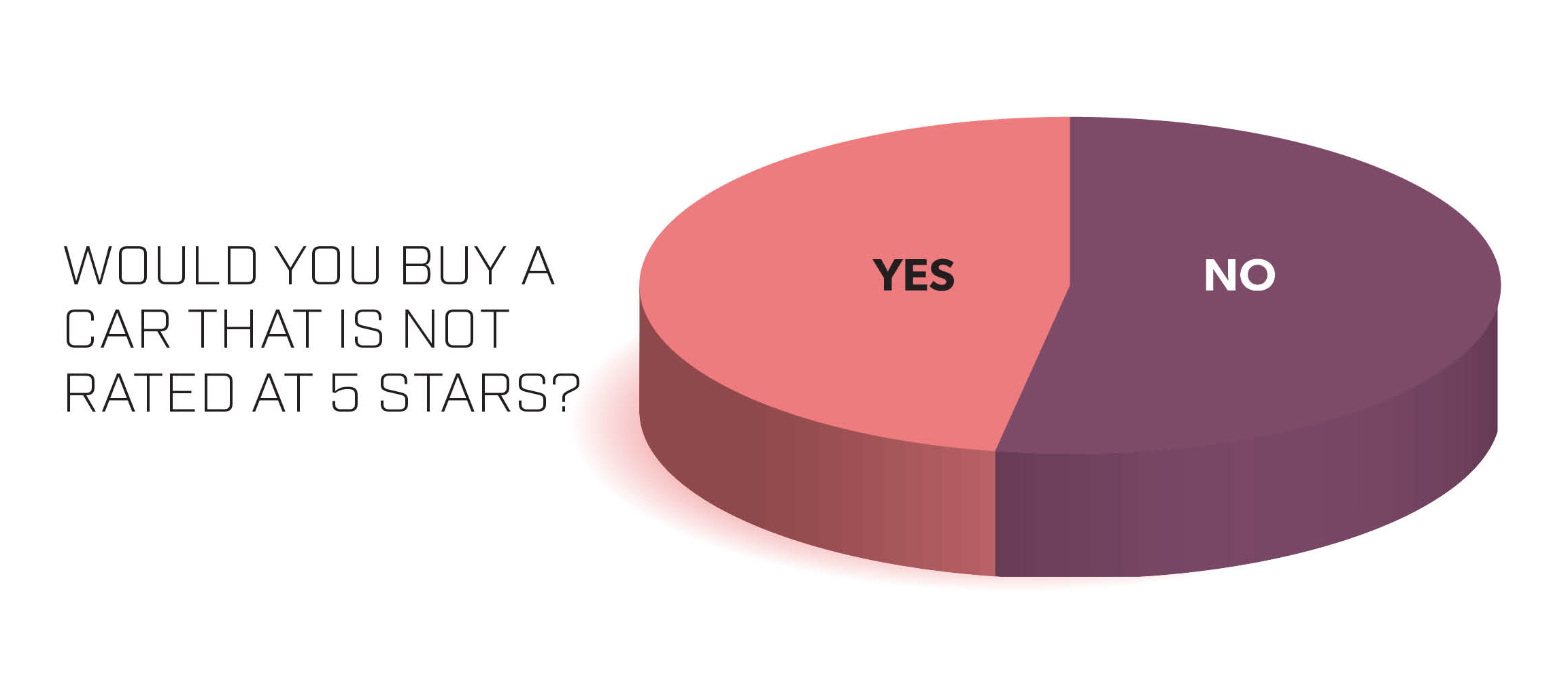
That’s apparent with Wheels readers. A significant 53 per cent of you would avoid a new model not rated at five stars when considering your next vehicle purchase. That eliminates models such as the Ford Mustang, Jeep Wrangler and Gladiator from shopping lists – as well as unrated models such as the Toyota Yaris GR, Hyundai Sonata and quintessential Porsche 911.
In contrast, carmakers know the upcoming protocols, and it’s up to them how they equip their vehicles, says Hoorweg. “It’s a commercial decision for manufacturers which markets they’re going to target … consumers expect, consistently, that their new car is going to be the safest vehicle that they can possibly get.”
Safety sells, and automotive marketing and PRs know it.
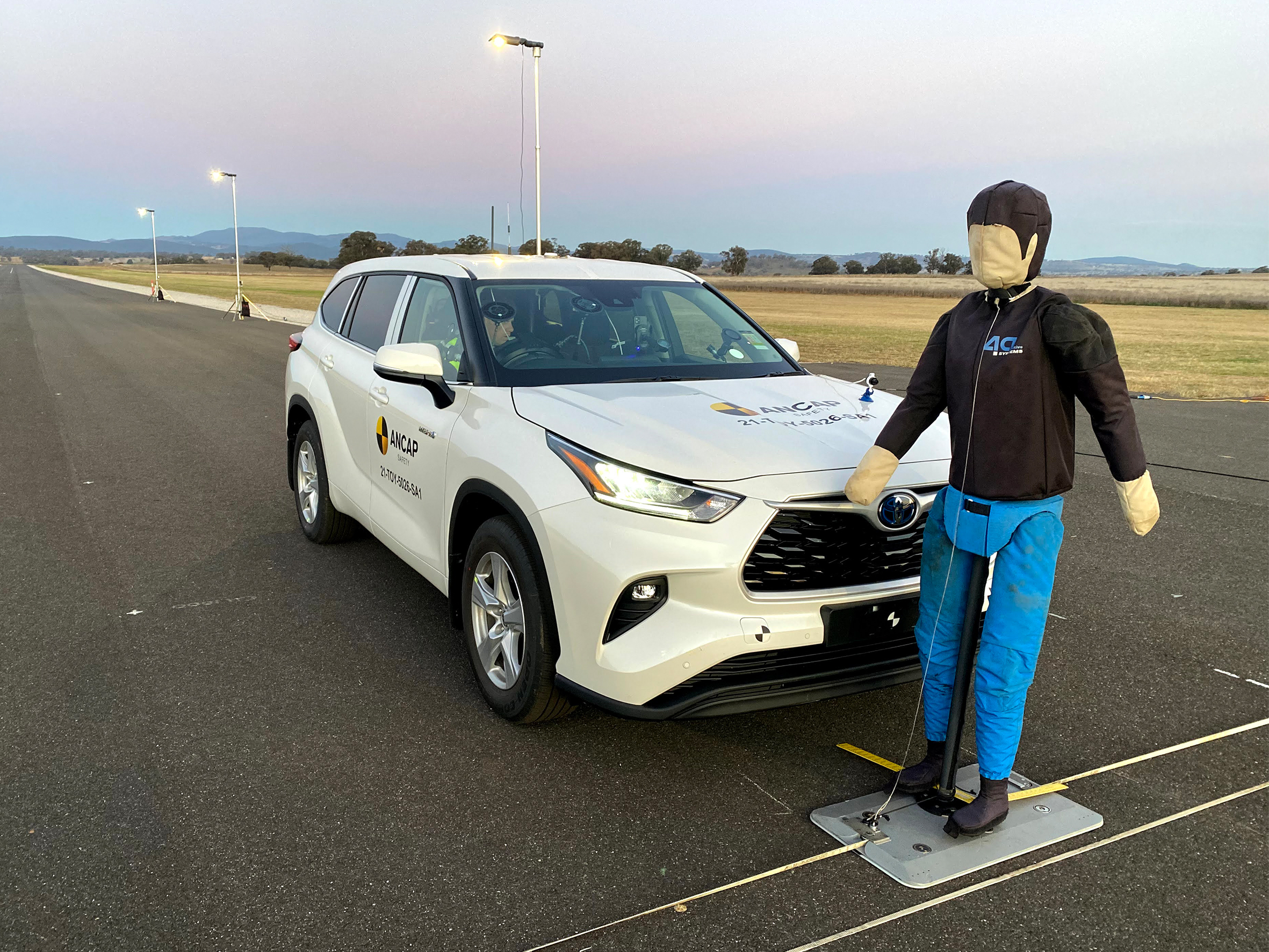
Yet Weber and the FCAI suggest the language around vehicles that don’t achieve five stars – especially those rated at four stars – needs to change.
“We address that by working as a society together, so bringing the road safety people and the car industry together to agree about what technologies need to go into making a five-star car in the future, rather than having an approach that’s authoritarian and the regulator says ‘if you can’t jump this bar then it’s not five star’,” he says, adding that the Euro NCAP language is far more supportive of OEMs and less combative than what he calls ANCAP’s ‘headline seeking’ approach.
That’s something echoed, in part, by Mitsubishi.
“Continuing to deride any vehicle that achieves a sub five-star result will begin to undermine ANCAP’s future relevance,” says Tol. “A very safe vehicle may not necessarily achieve a five-star rating in the future on the basis of ratings related to the provision of advanced systems.
“A five-star vehicle today may be a three or four-star vehicle based on 2023 protocols. Such a vehicle will remain a very safe vehicle, and may be an affordable and safe choice for a consumer in 2023.”
Hoorweg rejects the notion that ANCAP is ‘five stars or nothing’ and that its language is anti-OEM. Moreover, ANCAP is non-regulatory so, by definition, it cannot be authoritarian.
“I don’t think we attack vehicles. I think even when you look at the Mitsubishi Express language, I think that was quite tempered, it was quite factual,” she says candidly. “It’s about providing facts and information to people, not coloured judgements.”
What does the future hold?
There’s no argument that safer roads and safer vehicles for the common good benefit society as a whole. ANCAP’s role is clear and distinct in plugging the gaps for models not sold in Europe – or where specification on those tested in Europe differs.
Global harmonisation, ideal in theory, ignores local sensitivities such as crash types, journey distances and road conditions that serve up unique scenarios – think Holden’s kangaroo dummy in the 1990s or Chinese customer’s rear-seat preference.
ANCAP plays a crucial role in keeping local issues in check, and although it sparks debate around how the message is communicated, there’s no argument against the benefits it brings to consumers.
It has delivered improvements in technology, and manufacturers clearly see value in these – car makers rarely fit items that they think customers don’t want.
ANCAP’s requirements have also seen carmakers reject models which may score poorly here. While advancing vehicle safety, the challenge for Hoorweg and ANCAP is distilling the complexities of increasingly advanced vehicles to the consumer. That’s the ultimate test.
Snapshot
- 2021’s Munich motor show preview
- A list of all the cars expected
- Plus, some practical details on the show
The IAA Mobility 2021 expo, which we’re calling the 2021 Munich motor show, is a few weeks away. It’s the first major European motor show since the 2020 Geneva show back in March of that year was cancelled.
It’s also the start of a new location for the biennial motor show which happens in Germany – its former location was the enormous expo centre in Frankfurt.
So, carmakers have a lot of pent-up need to get back out there showing its new products. And, while the exhibitor list of the 2021 Munich motor show isn’t quite as long as shows have been in the past, there are still some crucial new models making worldwide and public launches.
Keep reading for all the cars expected to make their debuts at the 2021 Munich motor show.
Audi
GrandSphere concept – A concept car previewing Level 4 autonomy and a future luxury car from Ingolstadt
SkySphere concept – Elusive concept car which will first debut at the 2021 Pebble Beach Concours could be here too
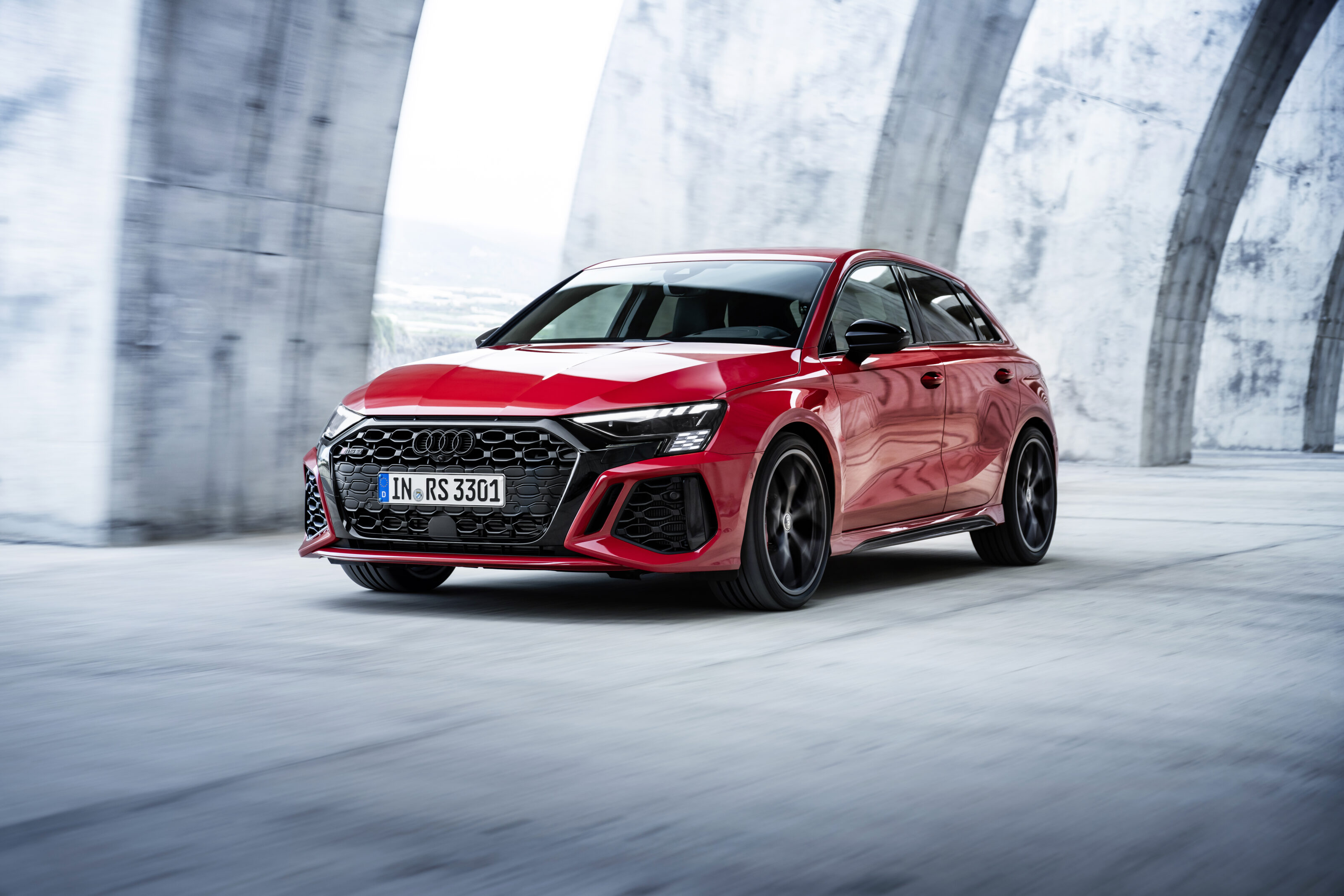
RS3 – Aggressive and drifty new hyper-hatch should make a public appearance. The good news is it’s expected in Australia sometime in 2022, but with prices in Europe beginning at €60,000 (AU$95,940), expect to have to fork out beyond six figures.
A6 e-Tron concept – The 90 per cent production-ready version of the 2023 electric sedan to sit alongside the A6 was revealed in Shanghai in April 2021 and will make it’s home-country debut in Munich.
BMW
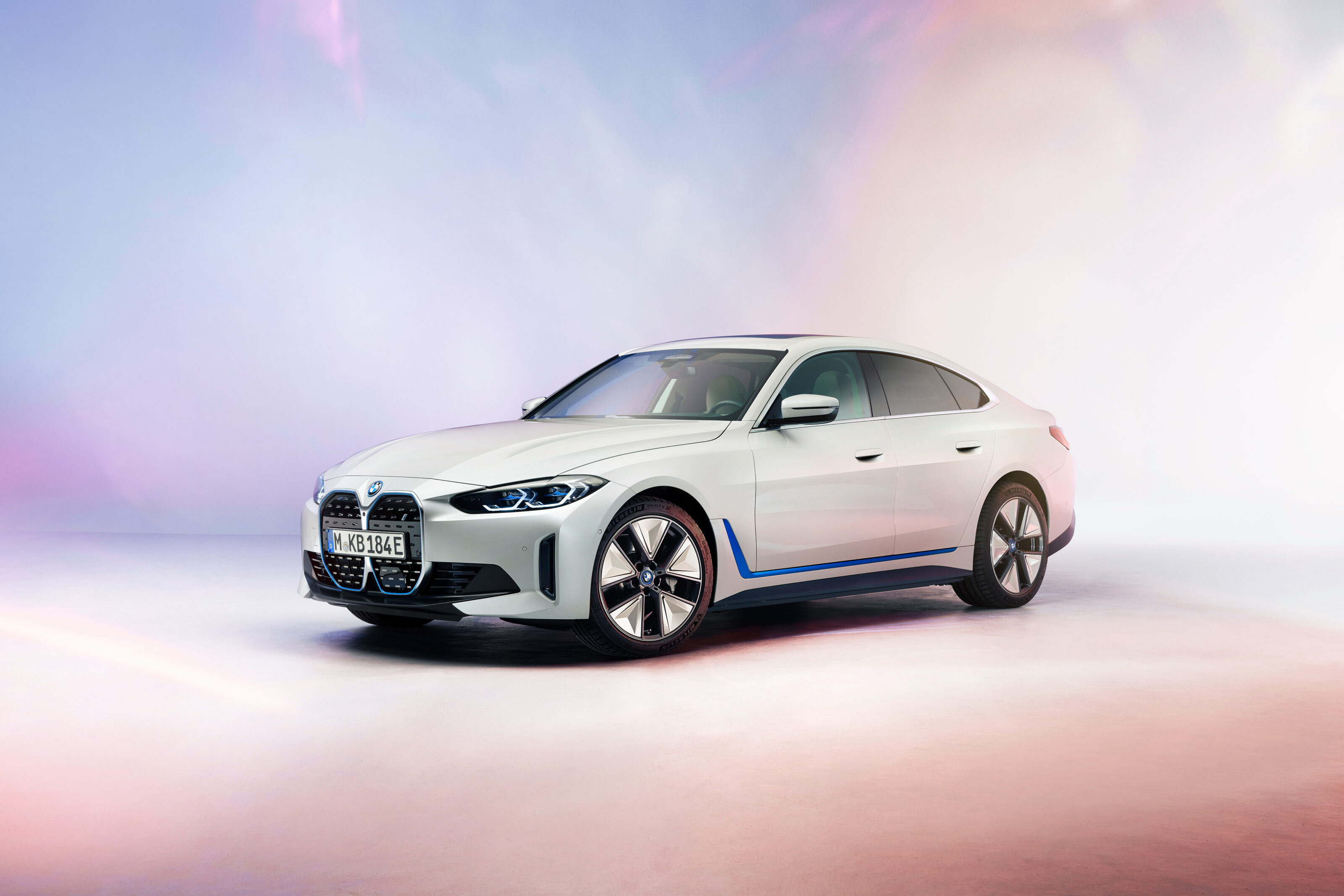
i4 – Appearance of the new all-electric Gran Coupe, which is slated to arrive here early in 2022 with two variants: the i4 eDrive40 and i4 M50 priced from $99,900 and $124,900 respectively.
Cupra
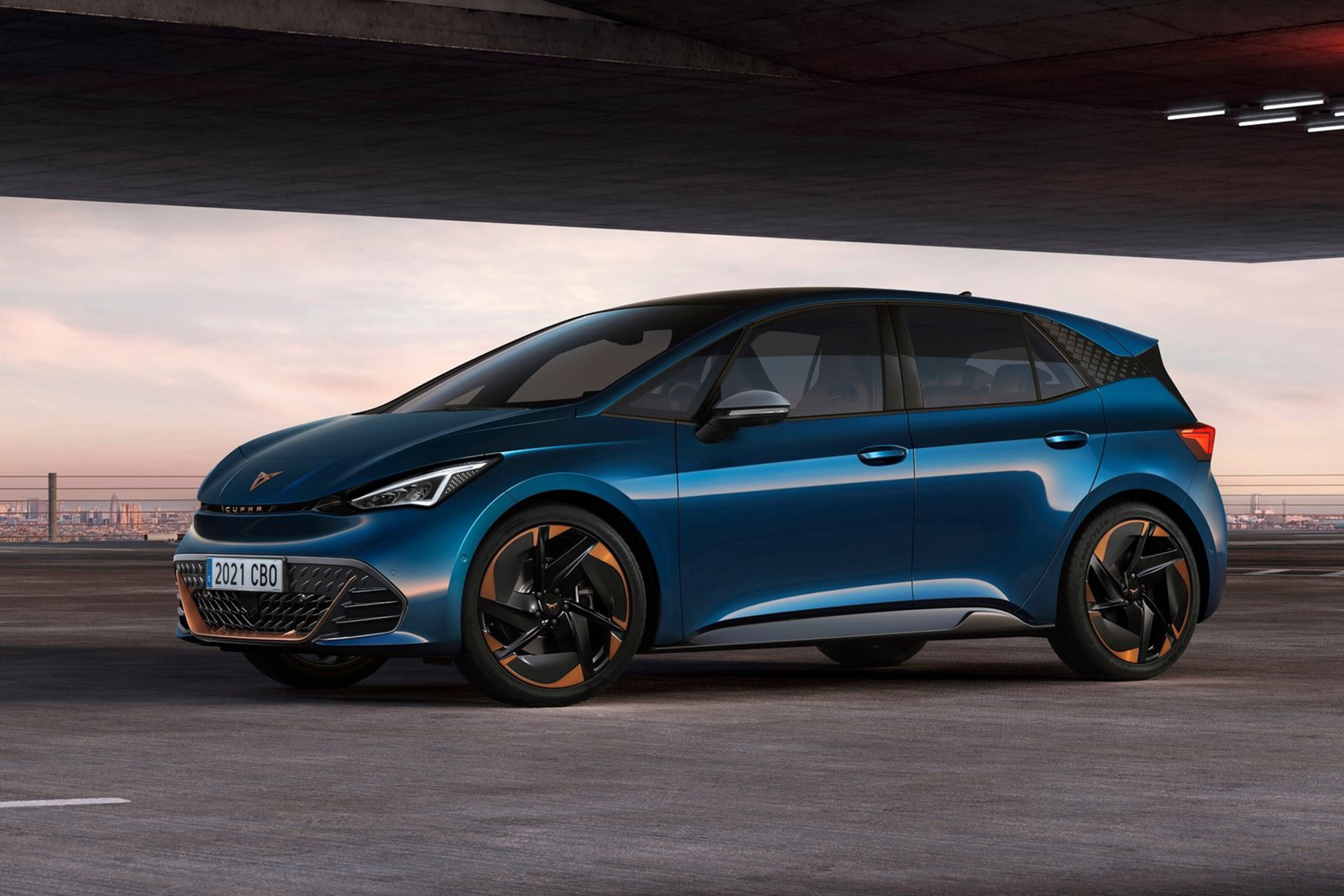
Born – First public debut of Cupra’s new all-electric Volkswagen ID.3 clone. Cupra is entering the Australian market in mid-2022 with three models, the Leon hatchback, Ateca compact SUV and Formentor coupe-style crossover.
However, the Volkswagen Group’s reluctance to introduce all-electric models in Australia means we’ll probably have to wait longer for the Born.
Dacia
Seven-seater – There’s a new three-row Dacia model incoming, possibly based on the Bigster concept.
Normally this would have zero interest for Australia, but Renault’s Romanian budget sub-brand could become a fixture in the Australian market from 2022.
Hyundai
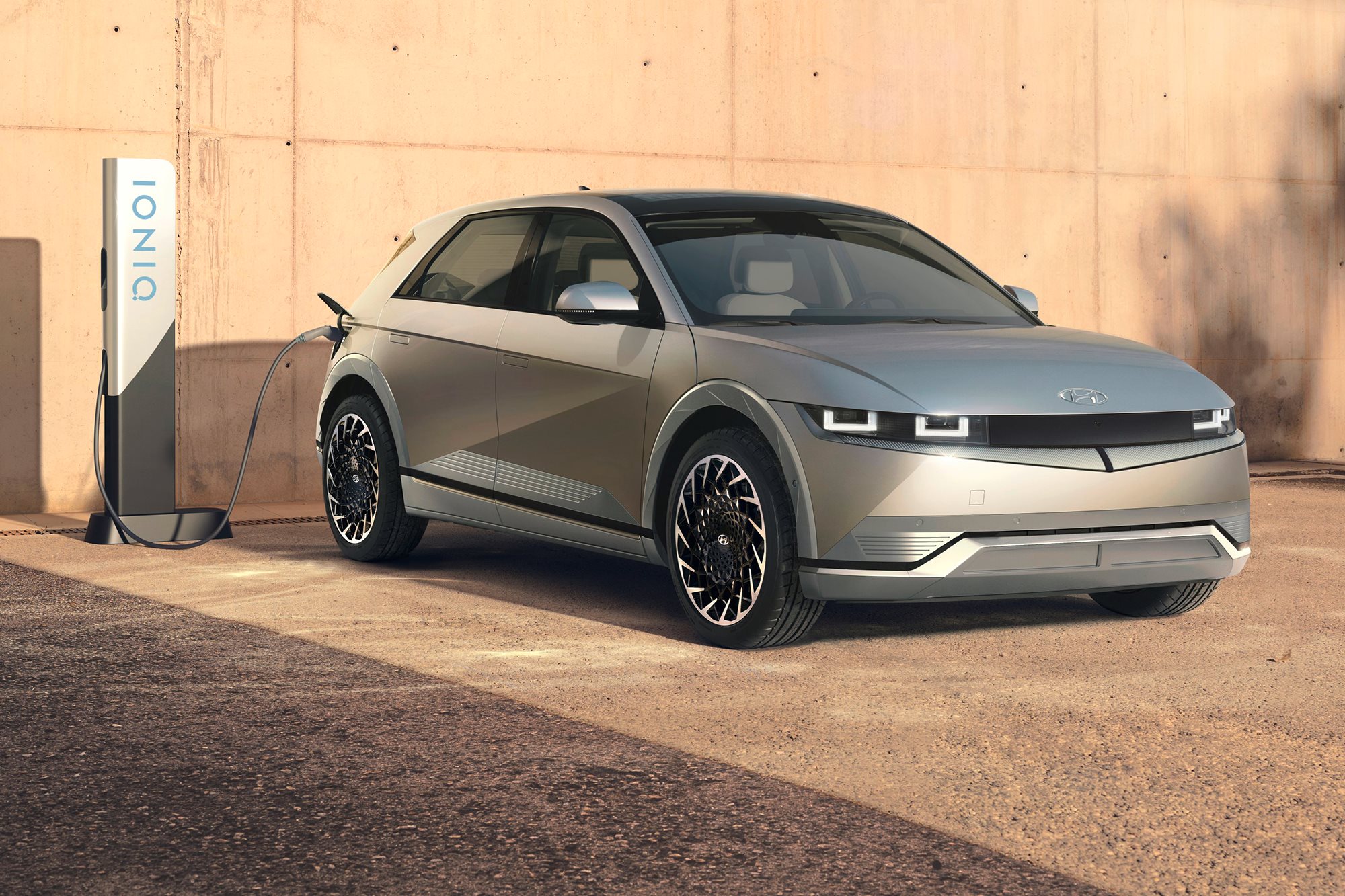
Ioniq 5 – Hyundai’s German outfit to attend; implies a hands-on debut of its current range, rather than the basis of a worldwide debut.
The Korean carmaker’s highly anticipated EV is undergoing testing in Australia and should be on sale here by Christmas.
Mercedes-Benz
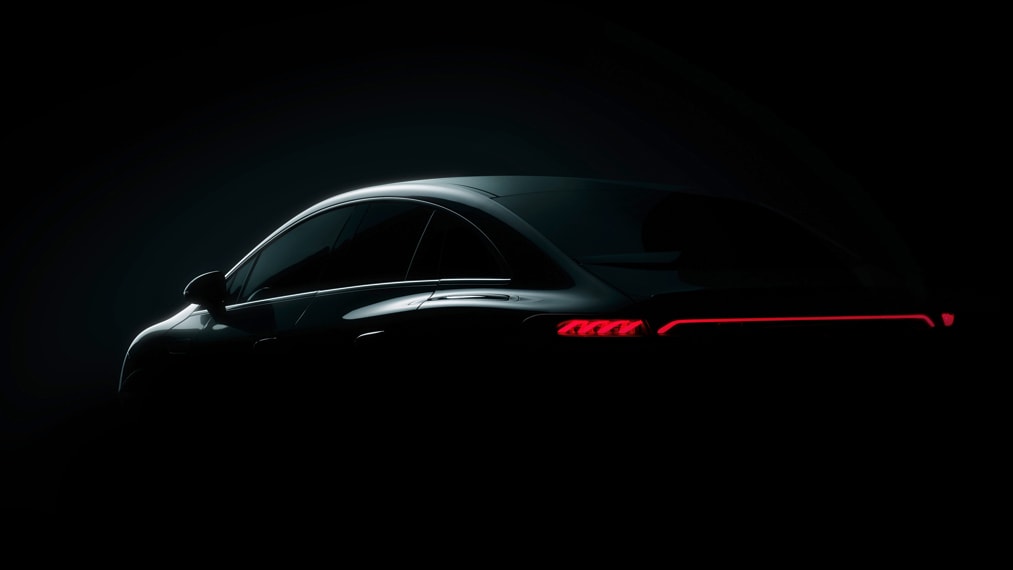
EQE – New electric E-Class-size saloon (above) to make its official debut at Munich.
EQG – A little more speculative, but an EV of Merc’s G could debut here.
AMG EQS – Hot version of luxury EV expected to have 560kW.
AMG GT 73 – New range-topping PHEV version of four-door GT to debut E-Performance sub-brand.
Maybach SUV – Merc teased a new Maybach in July; could be an EQS SUV wearing a Maybach dress.
EQXX – Secretive concept teased on Instagram is a test-bed for future EVs from the brand; could make its debut here.
AMG One – Production version of long-awaited hypercar expected to be shown.
Porsche
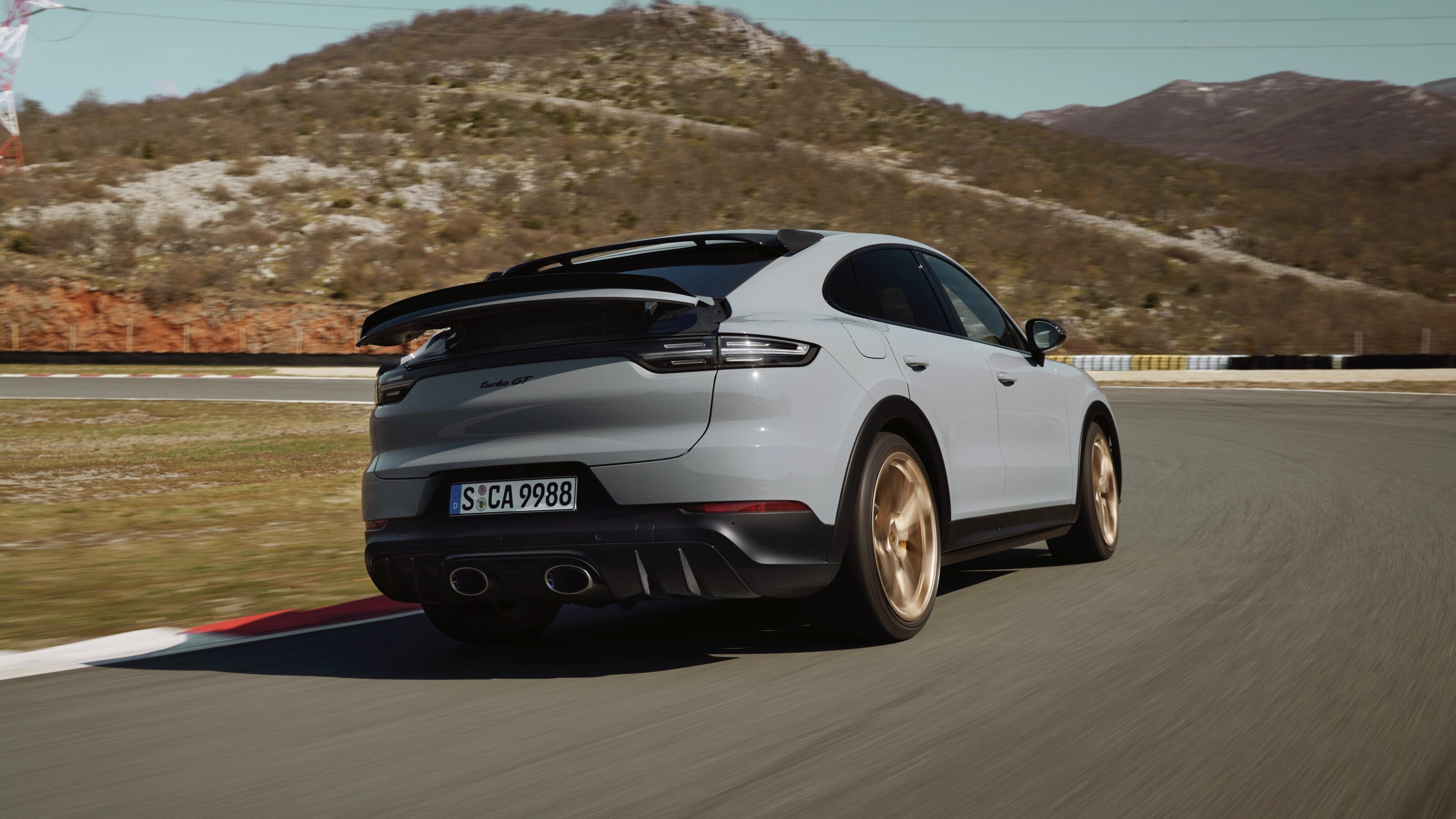
Cayenne Turbo GT – All-out 471kW/850Nm version of Porsche’s SUV to make an appearance in Munich ahead of its Australian debut later in the year with a starting price of $336,100.
Macan – Updated Macan arrives with new engines and more tech.
Smart
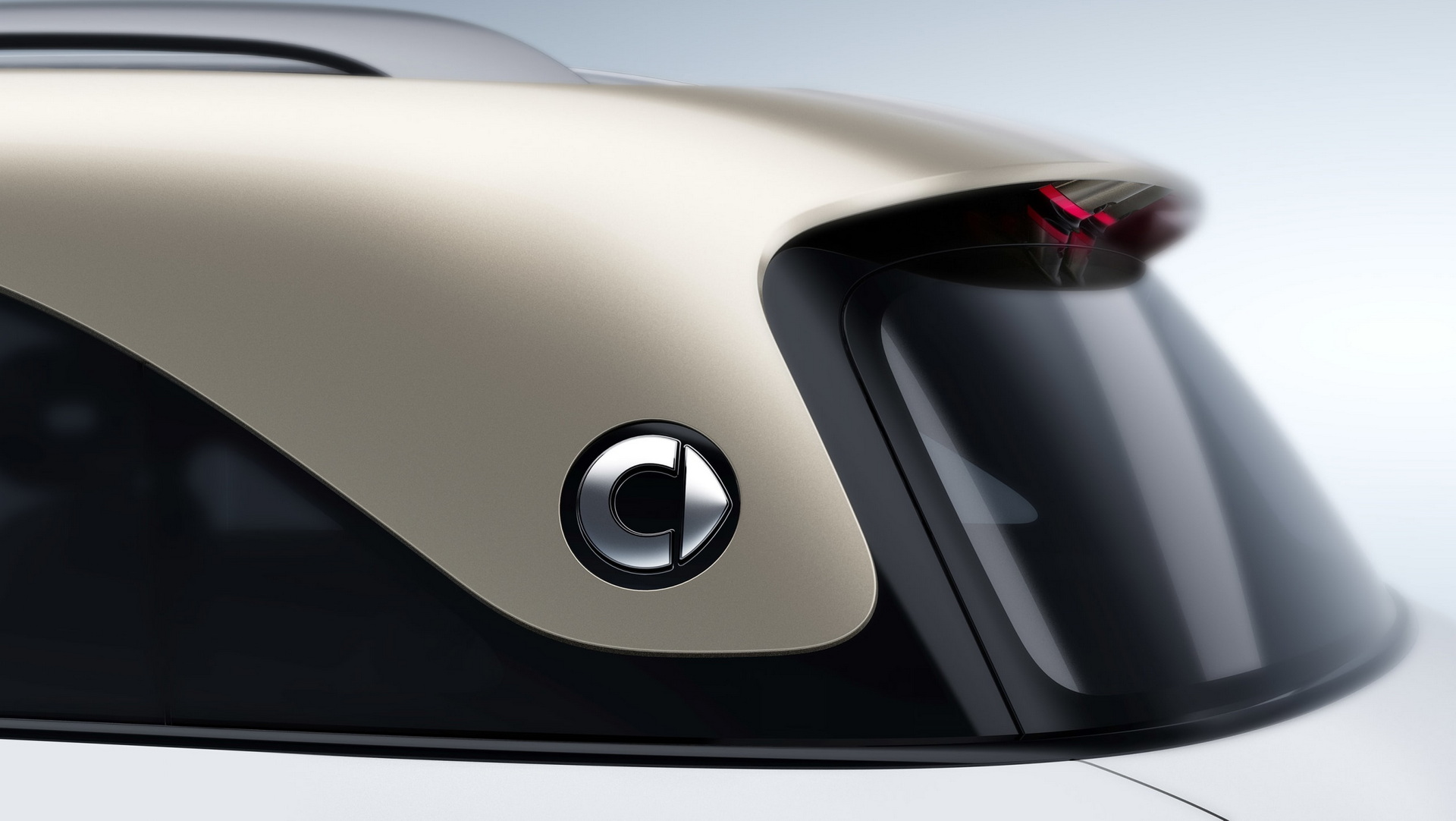
eSUV – A new era for Geely-operated Smart starts with a small electric crossover that’s due to enter production in 2023 but is unlikely to make its way Down Under.
Renault
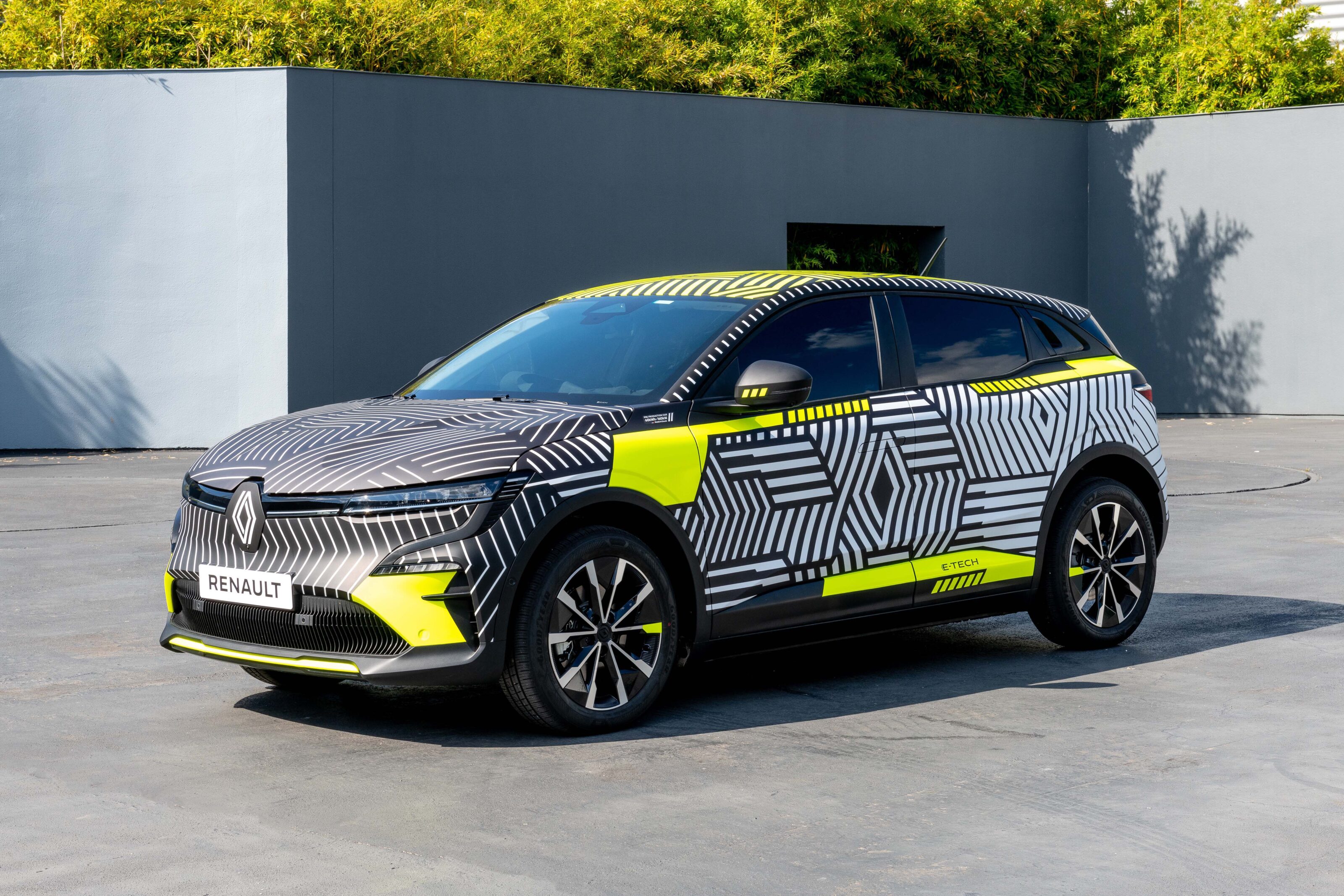
MeganE – Based on the Megane E-Vision concept, this is the first Renault model to use the CMF-EV platform which also underpins the Nissan Ariya.
The production version is expected to go on sale in 2022, with the French carmaker’s Australian distributor very keen to bring it here.
Volkswagen
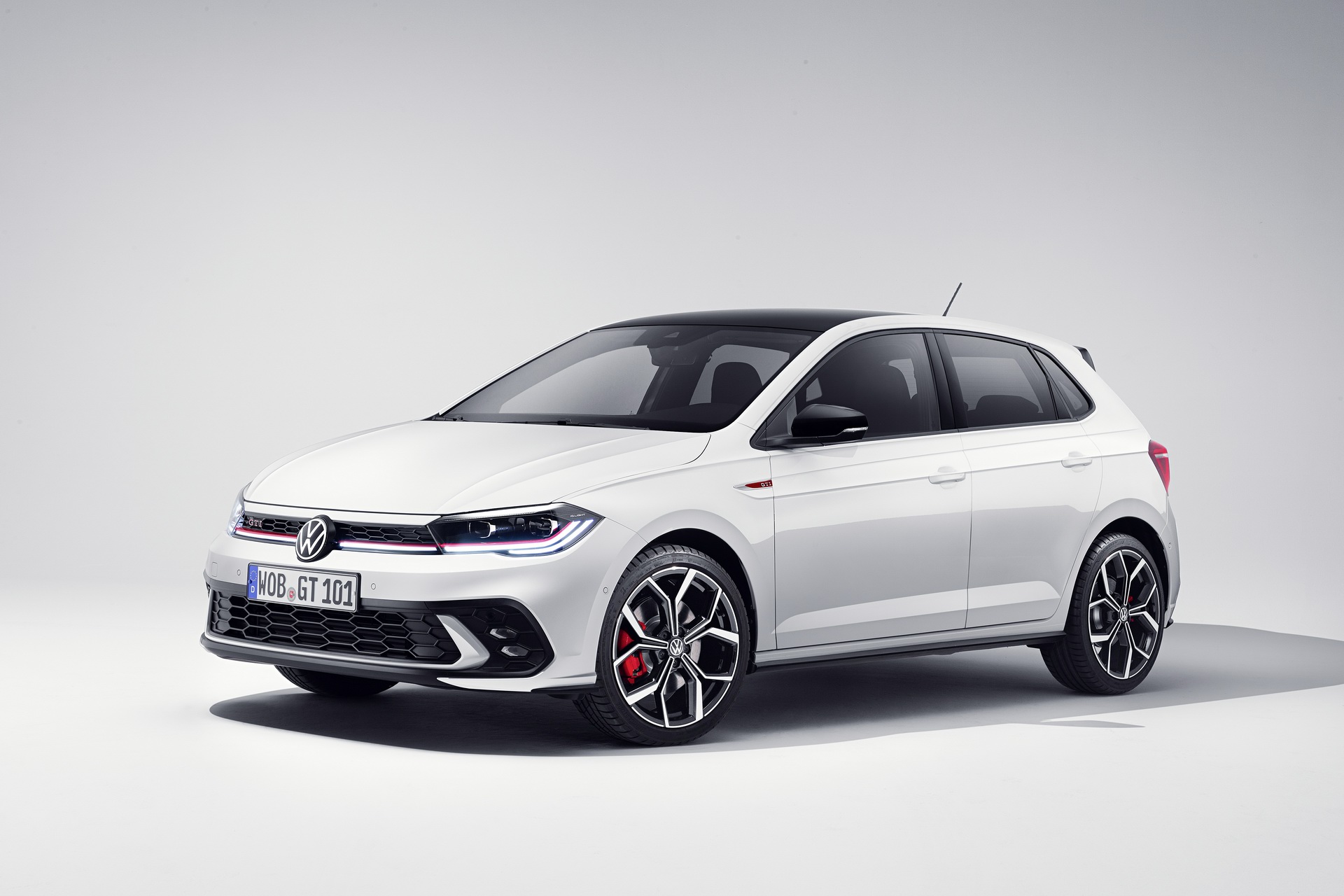
Polo – Mildly updated supermini, plus GTI, to make their public appearance ahead of being shipped to Australia from the second quarter of 2022.
Taigo – First hands-on look of new coupe-SUV, twinned with South America’s Nivus.
This article was first published at Carmagazine.co.uk and has been updated for the Australian market.
IAA Mobility Munich 2021 event details
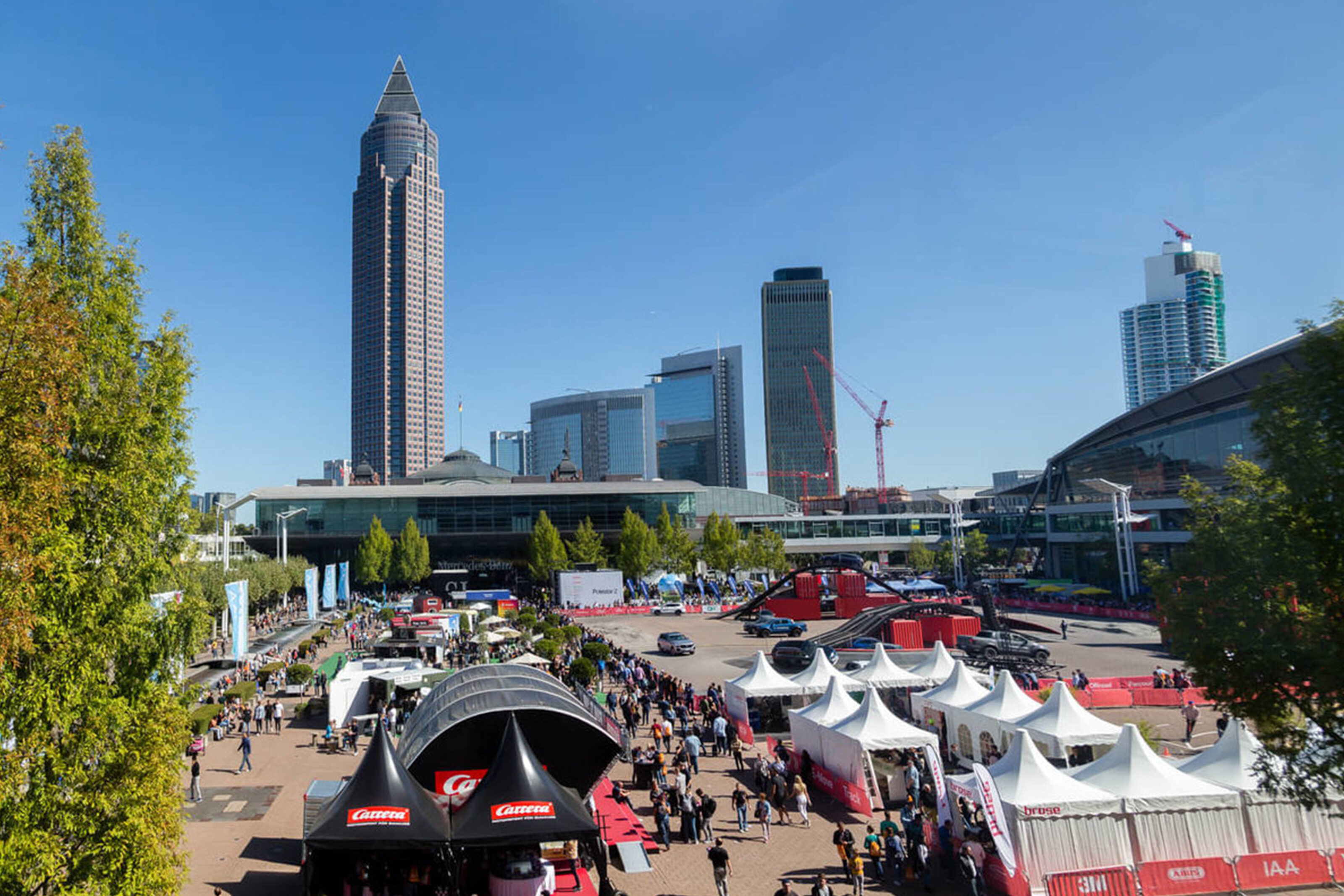
Where is the IAA Mobility 2021 Munich motor show held? In various locations around Munich city centre
Munich motor show 2021 dates: September 7-12
Opening times: 9am to 6pm
How much are IAA Mobility 2021 Munich motor show tickets? Adult public experience day tickets are €20 (AU$32)
Munich motor show website: https://www.iaa.de/en/mobility
Snapshot
- New Emira offers 3.5-litre V6 or 2.0-litre four
- Will be joined by electric hypercar and Type 62 tribute
- Monterey Car Week runs until Sunday
Lotus has announced it will debut its Emira sportscar alongside the Evija and Radford 62-2 at California’s Monterey Car Week.
The company will hold its flagship event ‘The Quail: A Motorsports Gathering’ at The Quail Lodge and Golf Club on August 13.
In a statement, Lotus has also revealed the Emira will take to the nearby Laguna Seca raceway before its Monterey debut, for “a very special celebrity track day”. Further details are expected in the coming days.
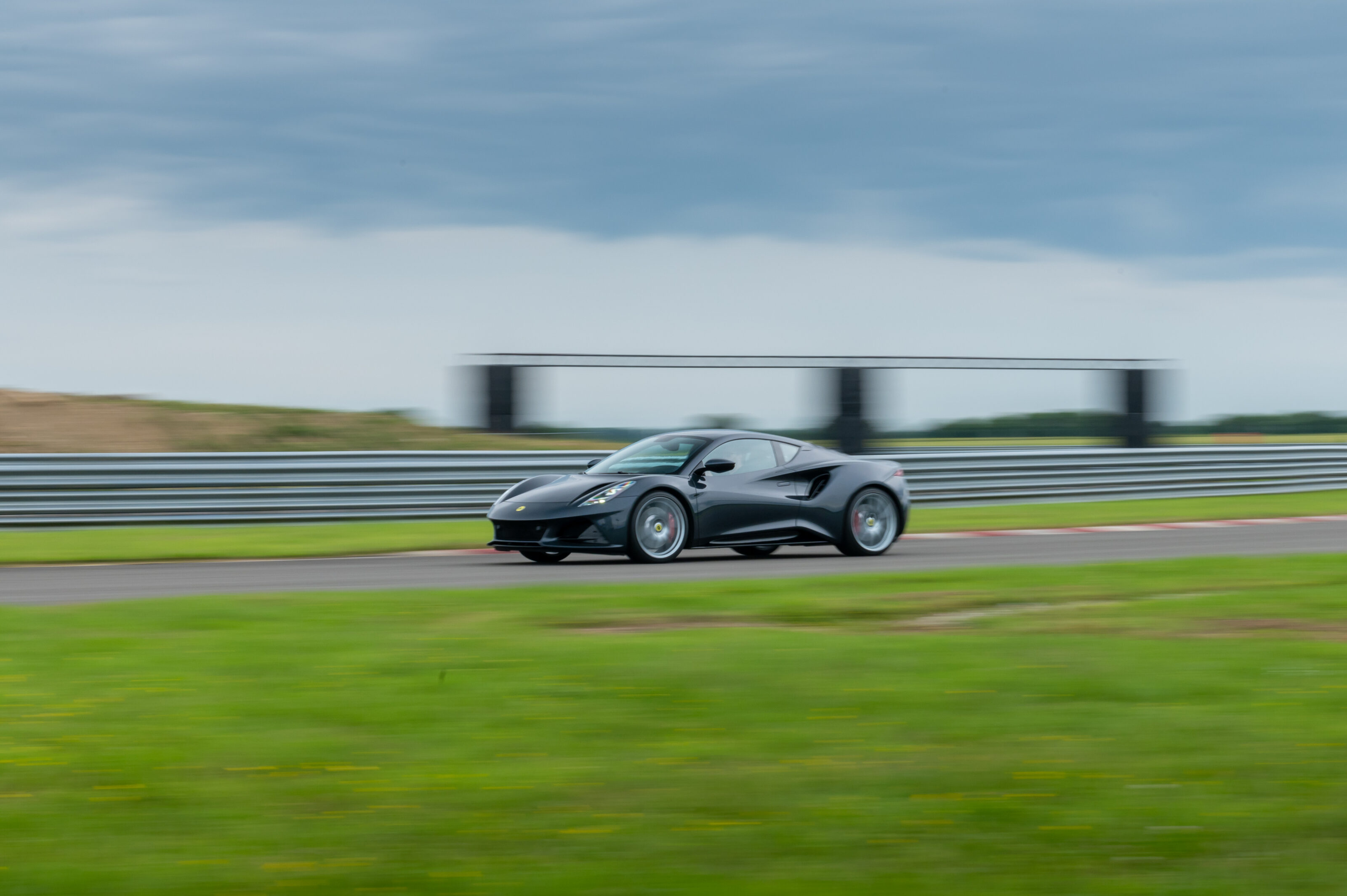
The Emira was unveiled last month as an all-new Lotus to replace the Elise, Exige and Evora models. It’s powered by either Toyota’s supercharged, 3.5-litre V6 (as appeared in the Exige and Evora), or a new-to-Lotus, AMG-sourced 2.0 turbo four.
V6 buyers can choose between a six-speed manual or automatic, while the four-pot is backed exclusively by an eight-speed dual-clutch auto. The launch V6 pumps out 298kW, sitting above the AMG engine’s 268kW. The model represents the last hurrah for internal combustion Lotuses as the marque ventures into battery power. It’s expected to reach Australian shores in September 2022.
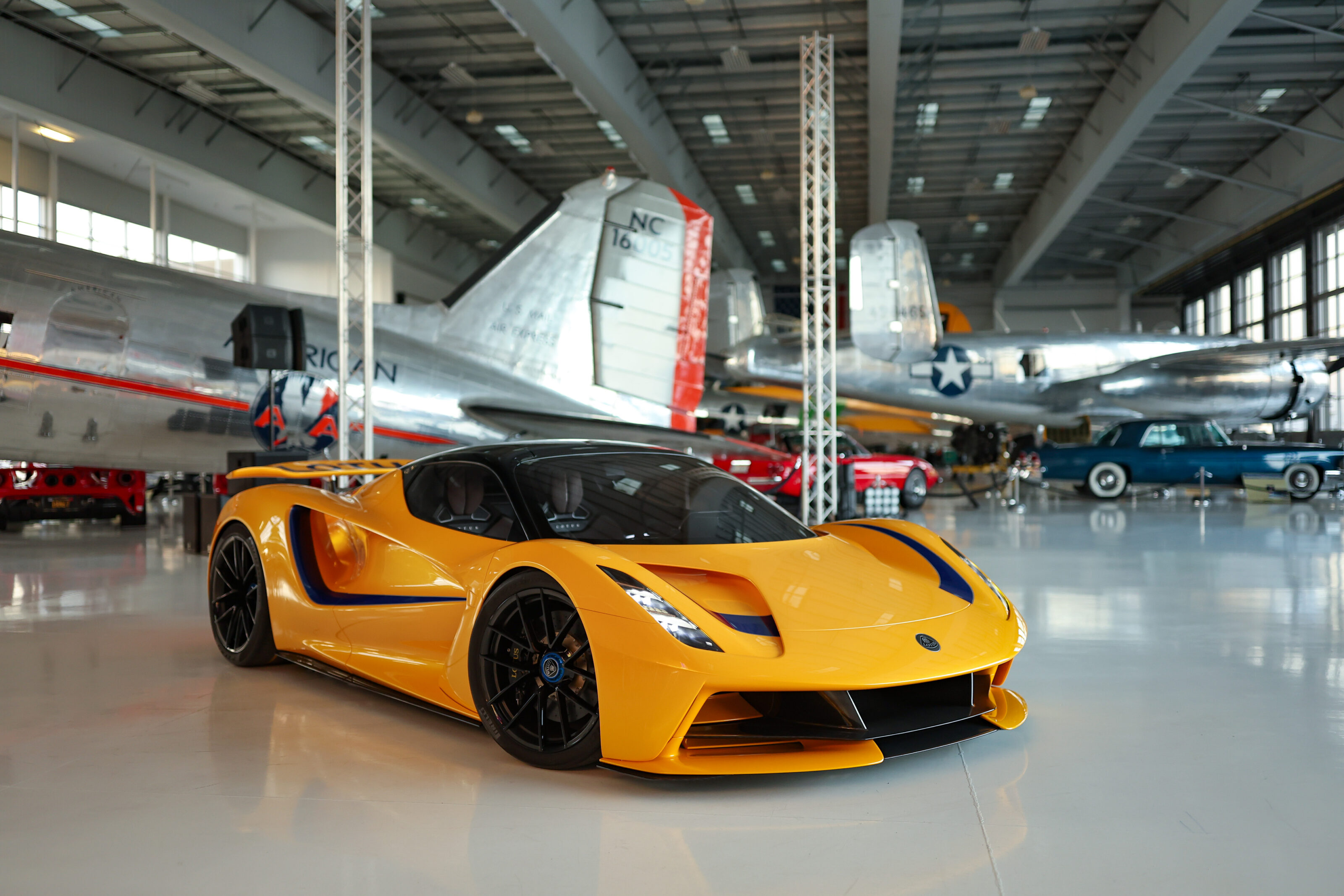
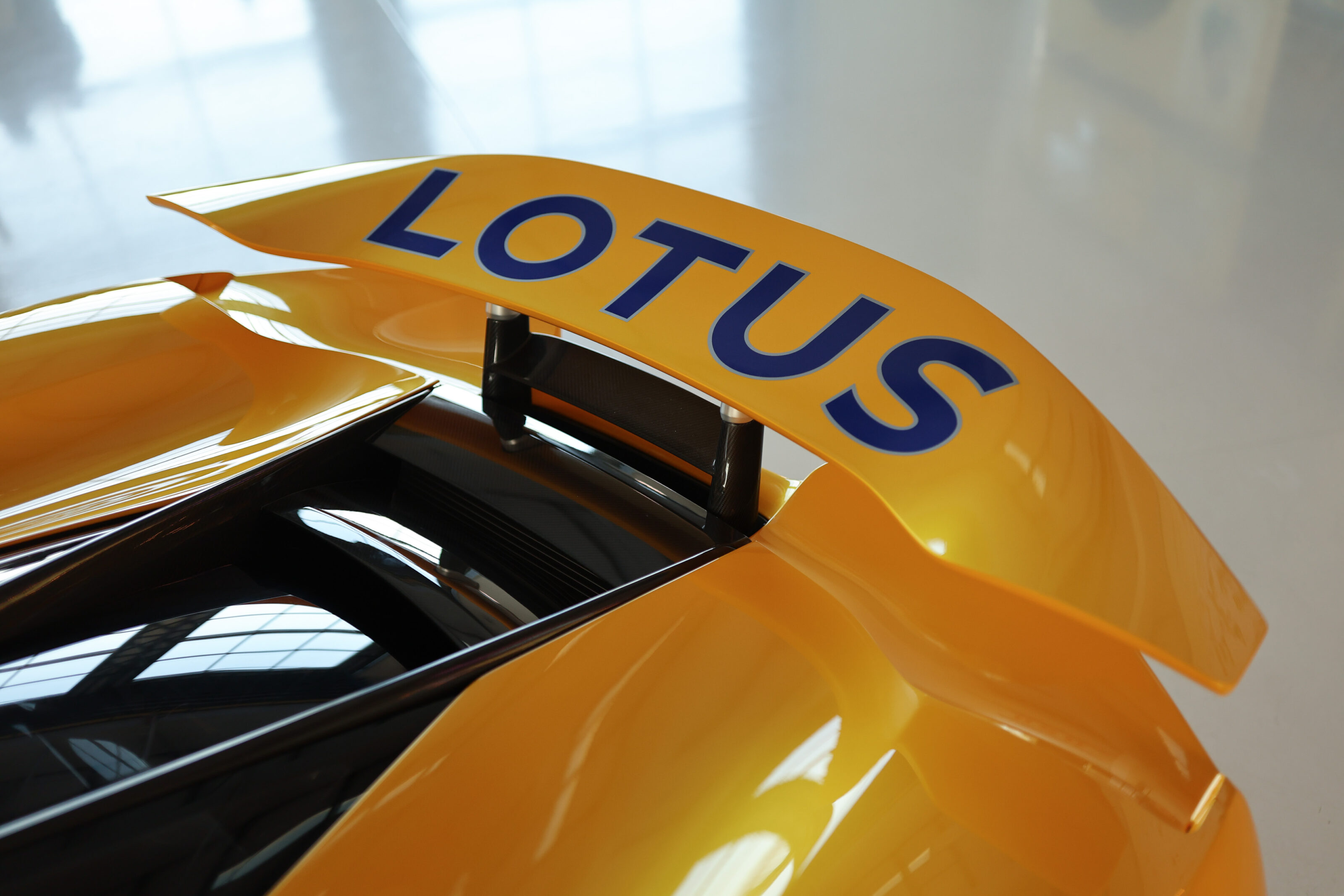
Joining the Emira at The Quail will be the quad-motor, electric Evija hypercar. It will wear a new yellow and blue livery inspired by Formula 1 hero Ayrton Senna’s Lotus Type 99T, which he drove to victory at the 1987 Detroit Grand Prix. The win was Senna’s last in a Lotus.
The Evija appeared at Monterey in 2019, just days after its debut. Limited to 130 units, it’s capable of laying down 1471kW and 1700Nm of torque.
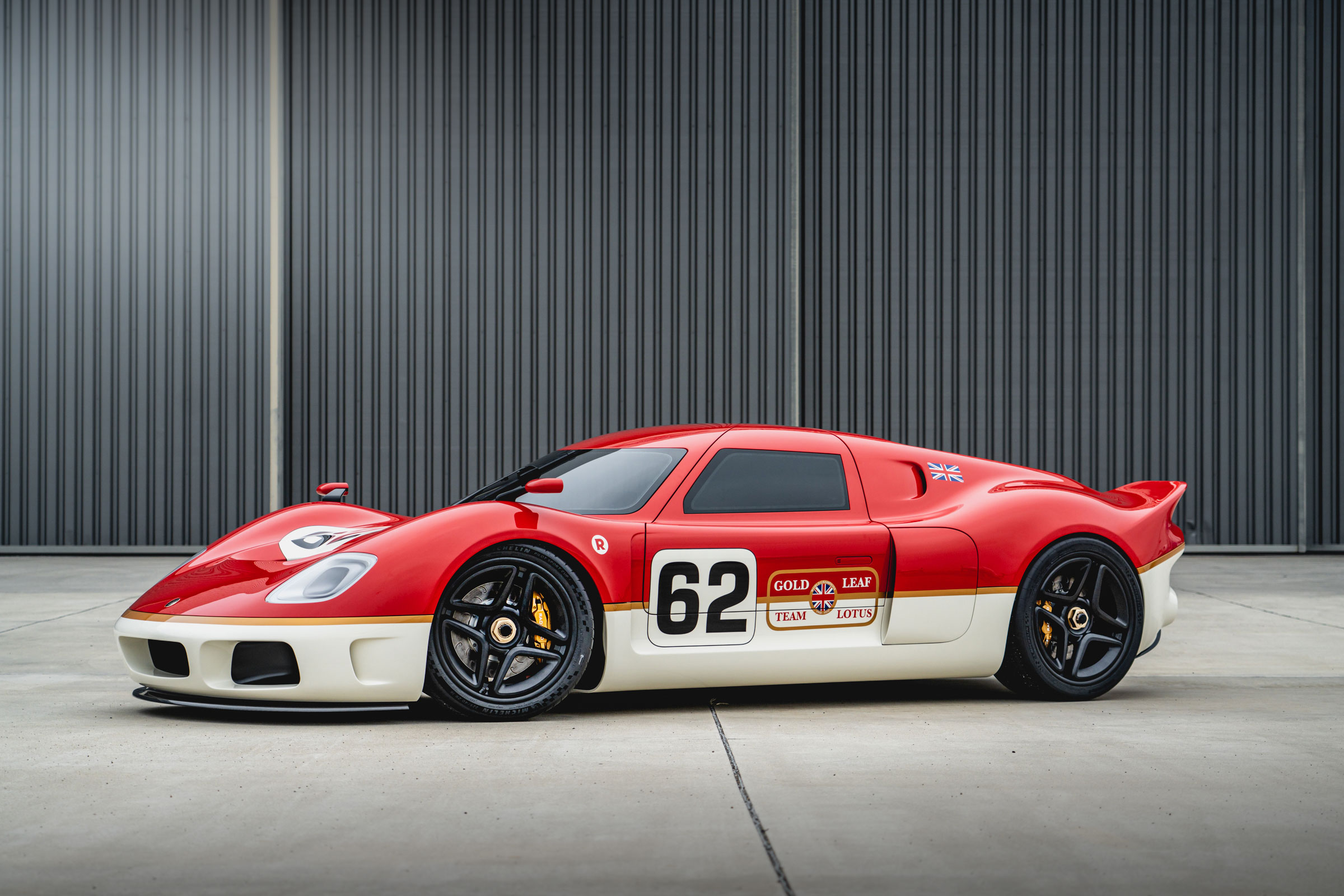
Rarer again is the freshly-revealed Radford 62-2, which will round out Lotus’s showing at 2021’s Monterey event. These coachbuilt machines are based on the Evora GT, and draw many visual cues from the 1969 Lotus Type 62 racer.
Fittingly, just 62 are to be made. Three trim levels will be available: Classic, Gold Leaf, and JPS. Details on the top-spec JPS are scarce, though it’s claimed to produce 447kW – a sharp increase on the standard Evora GT’s 310kW.
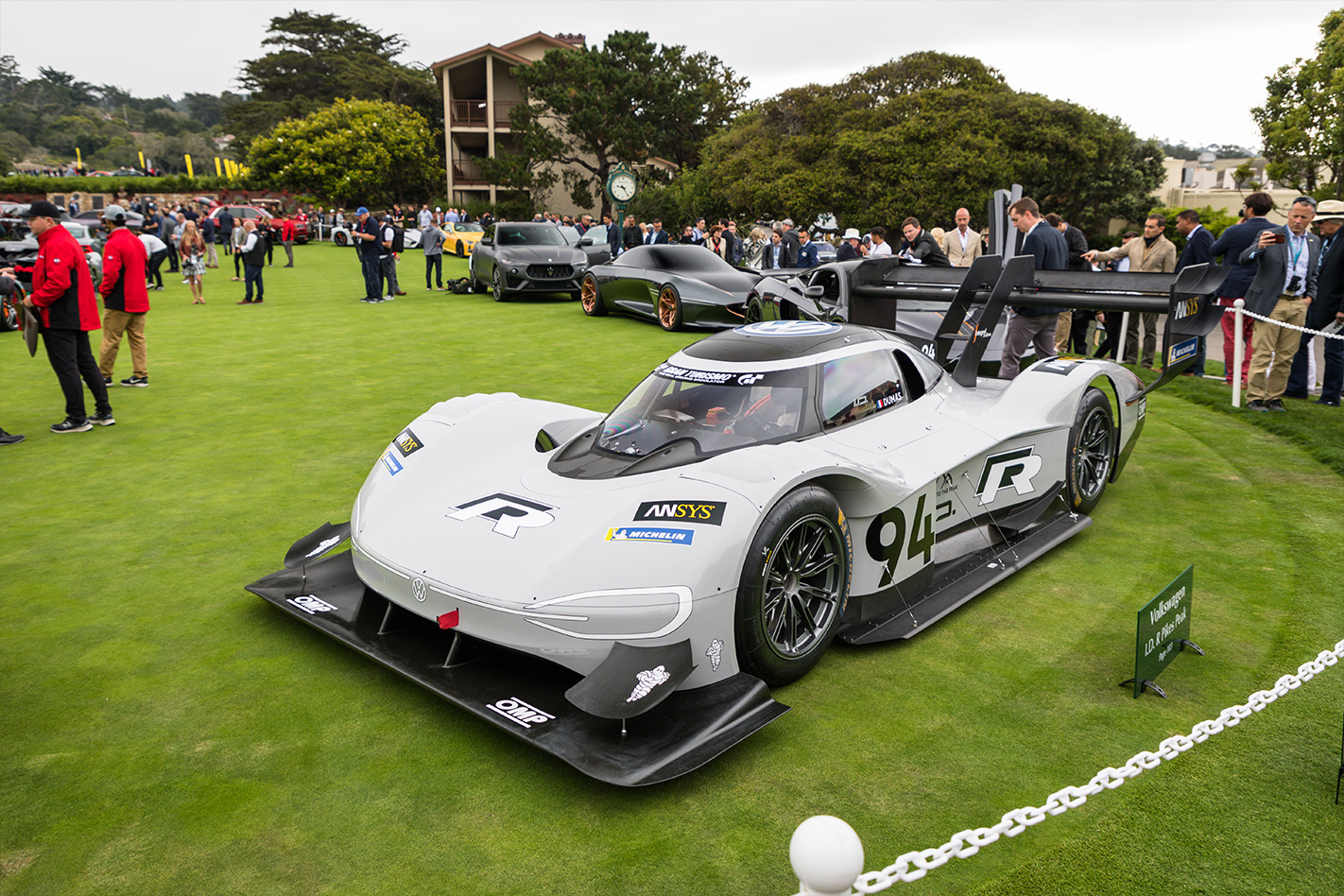
Monterey Car Week began on Monday, and will wrap up on Sunday, August 15. Highlights include auctions, car cruises, concours displays, and exhibitions from dozens of clubs and automakers.
The hot hatch segment is a crowded one. You have Japanese icons, Korean upstarts, and a brand-new Golf GTI all competing for your attention. If you want to stand out from the crowd you will need quite the party piece – which puts the Renault Megane RS in a tricky situation.
Revealed at the 2017 Frankfurt Motor Show, the model has been updated for ’21 and the local Australian range whittled down to just a single variant. Almost four years since its release, the French hot hatch’s four-wheel steer system remains unique in the segment, but you’d be stretching to call its MY21 tweaks anything more than mild.
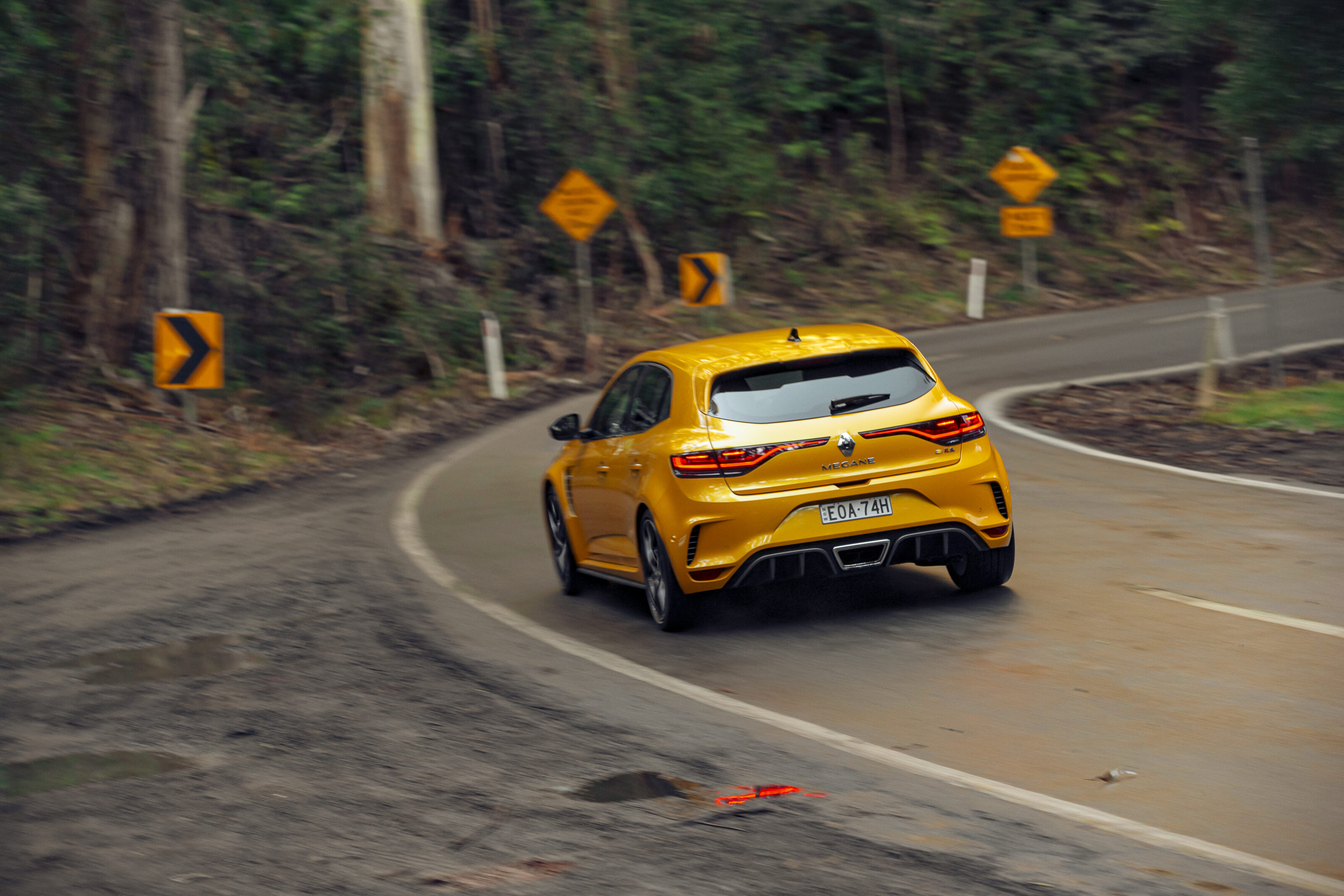
New for 2021 is a larger 9.3-inch central infotainment screen, 10-inch digital instrument cluster, shark-fin roof antenna, and low-speed emergency braking. As a result, prices have jumped by just $500. Not a bad deal considering the boost in equipment, but with a near-enough $57K sticker price the self-shifting Megane RS300 will cost you a premium compared to mainstream rivals like the Hyundai i30 N. Both new screens are clear and responsive, and the increase in size for the central unit is a boost.
Inside the cabin of the Megane are plenty of slick materials, with leather and Alcantara on the steering wheel, as well as on the wonderfully supportive and comfortable bucket seats. But while there are positives, there are also some downsides – the biggest of which is the hard plastics that can still be found in plenty of places around the dash area.
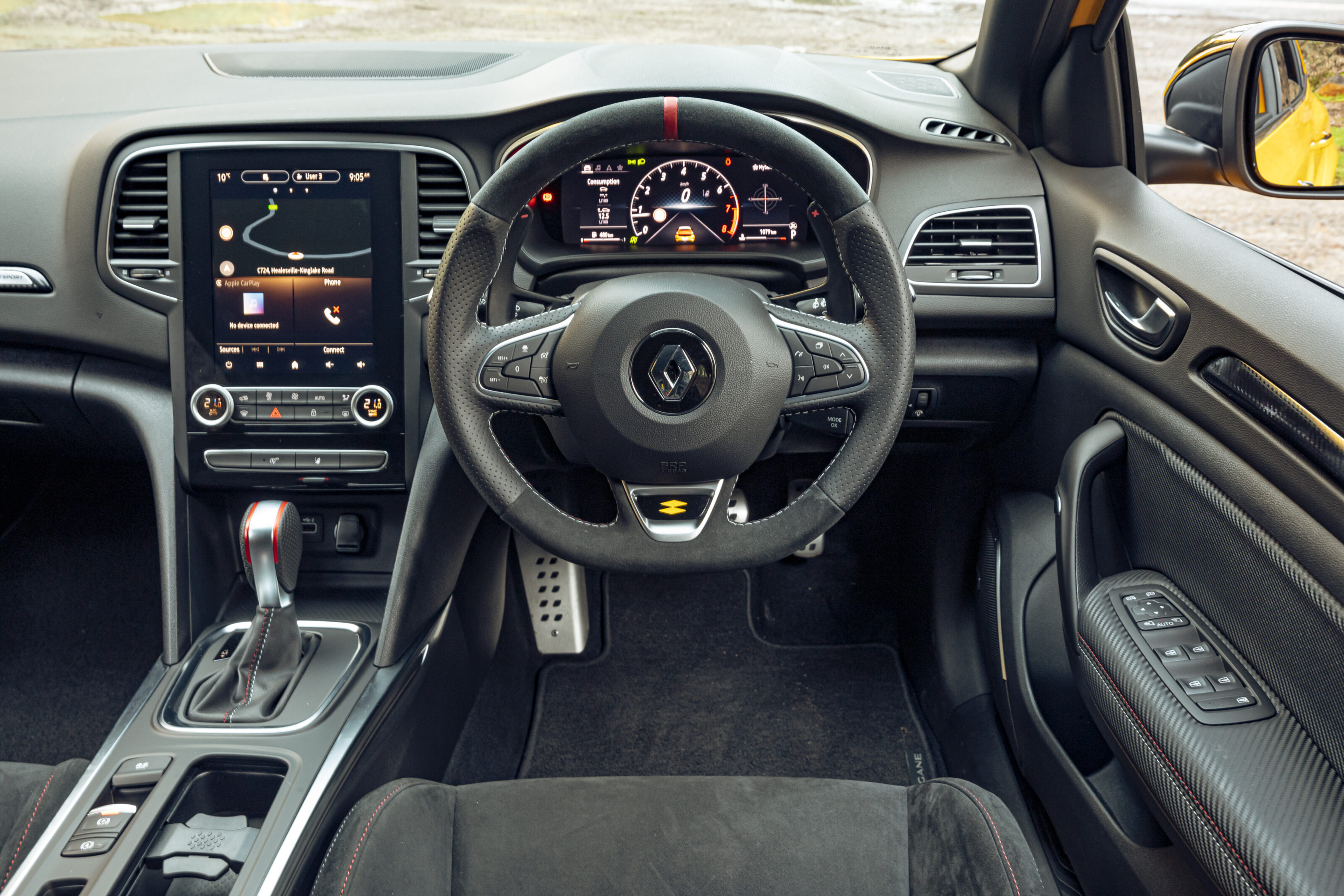
The Megane is ultra-responsive and when the Bridgestone rubber heats up you have plenty of grip to take full advantage of
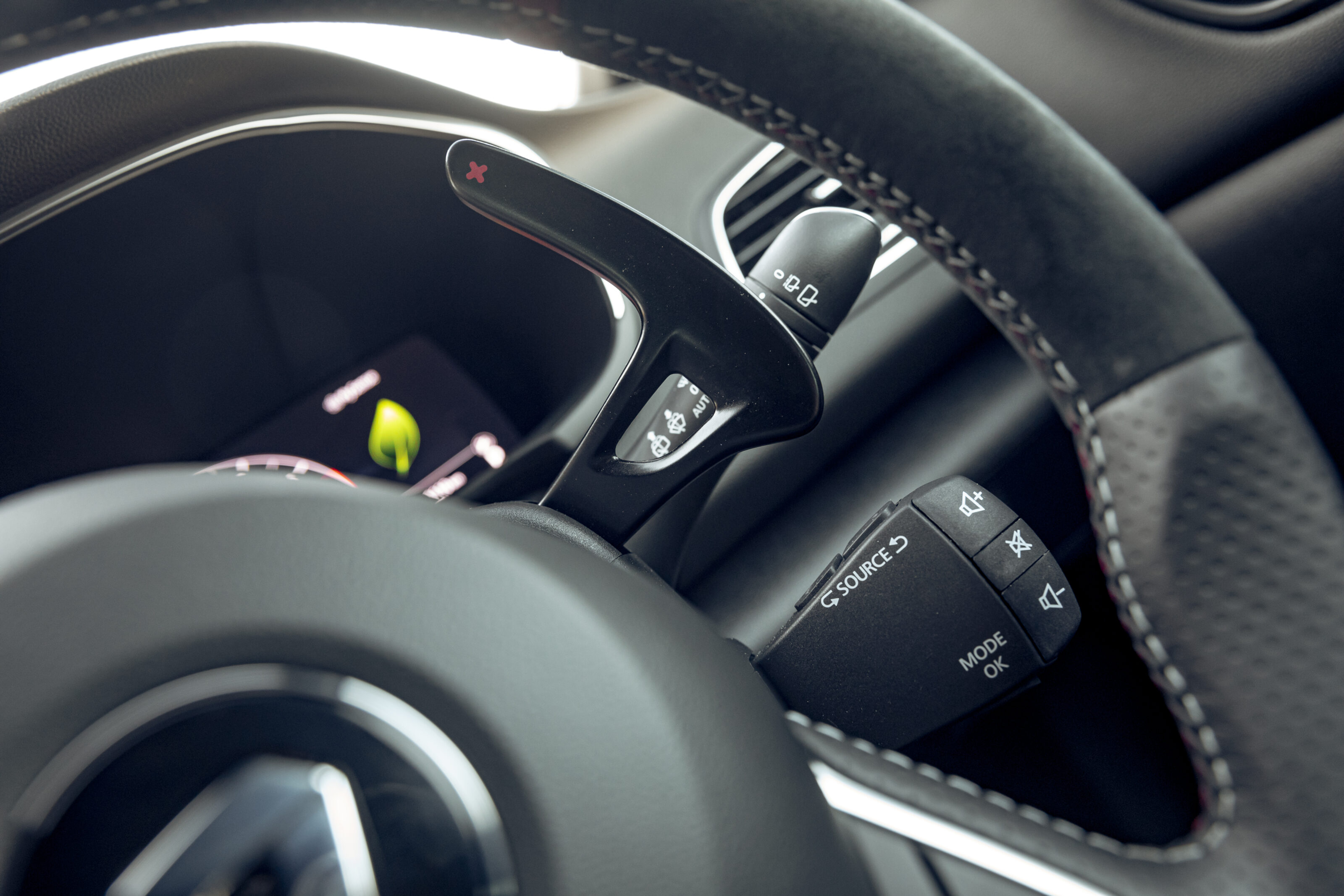
Among the stranger ergonomic quirks are the paddle shifters, which are column-mounted. Traditionally this wouldn’t be too bad, but Renault seems to have only fitted half a paddle to accommodate the media controls that are hidden behind the wheel. This means that when applying even small amounts of lock your hands move frustratingly out of reach from one of the two paddles.
Renault’s engineers have left the performance credentials of the Megane RS unchanged, leaving the more focused variant as the only one available to buy in Australia. No longer can Aussies opt for the ‘Sport’ chassis, with the Megane RS300 Trophy having a stiffer ‘Cup’ setup.
That means the only RS offered locally has stiffer springs, dampers and anti-roll bars as standard, more performance-focused rubber at all four corners, and the driver’s seat has been lowered by 20mm. There is also an active sports exhaust system and new-look alloy wheels, which sit in front of upgraded slotted brake discs that shed 1.8kg of weight from each side of the front axle.
Less choice is never a good thing, and in the ever-developing hot hatch segment, is it enough to stay competitive?
Positively, by leaving the mechanicals the same, it means you get the same hearty 1.8-litre turbocharged four-cylinder engine, which in this ‘RS300’ guise produces 221kW and 420Nm. The extra kilowatts are thanks to a ceramic ball-bearing turbo lifted from the more hardcore Trophy-R, while opting for the six-speed dual-clutch automatic transmission means you are afforded 20Nm over the three-pedal set-up.
Those outputs are bang on in terms of what is useable in the real world, particularly with two driven wheels. There’s plenty of power on tap, and there are few instances in the RS300 where you are left wanting for more forward thrust.
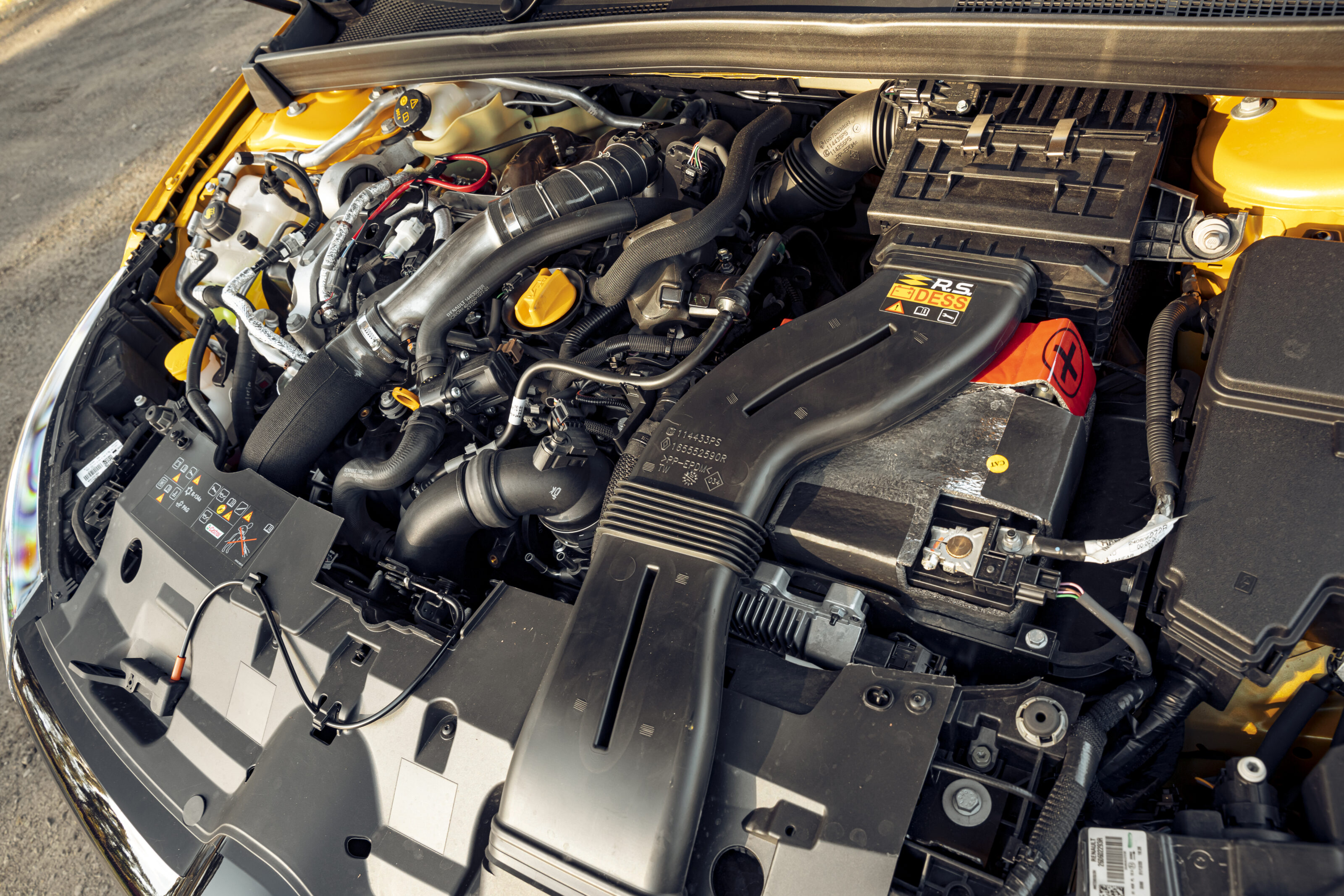
You also get a Torsen limited-slip differential on the front axle as standard. By using a pair of proper mechanical gears to shift torque between the front wheels instead of relying on electronics, the Megane RS generally deploys power cleanly on corner exit.
This is aided by the dual-axis front hubs, which separate the steering and suspension systems within the front knuckle design to reduce torque steer. A torsion beam rear suspension system remains for the rear axle.
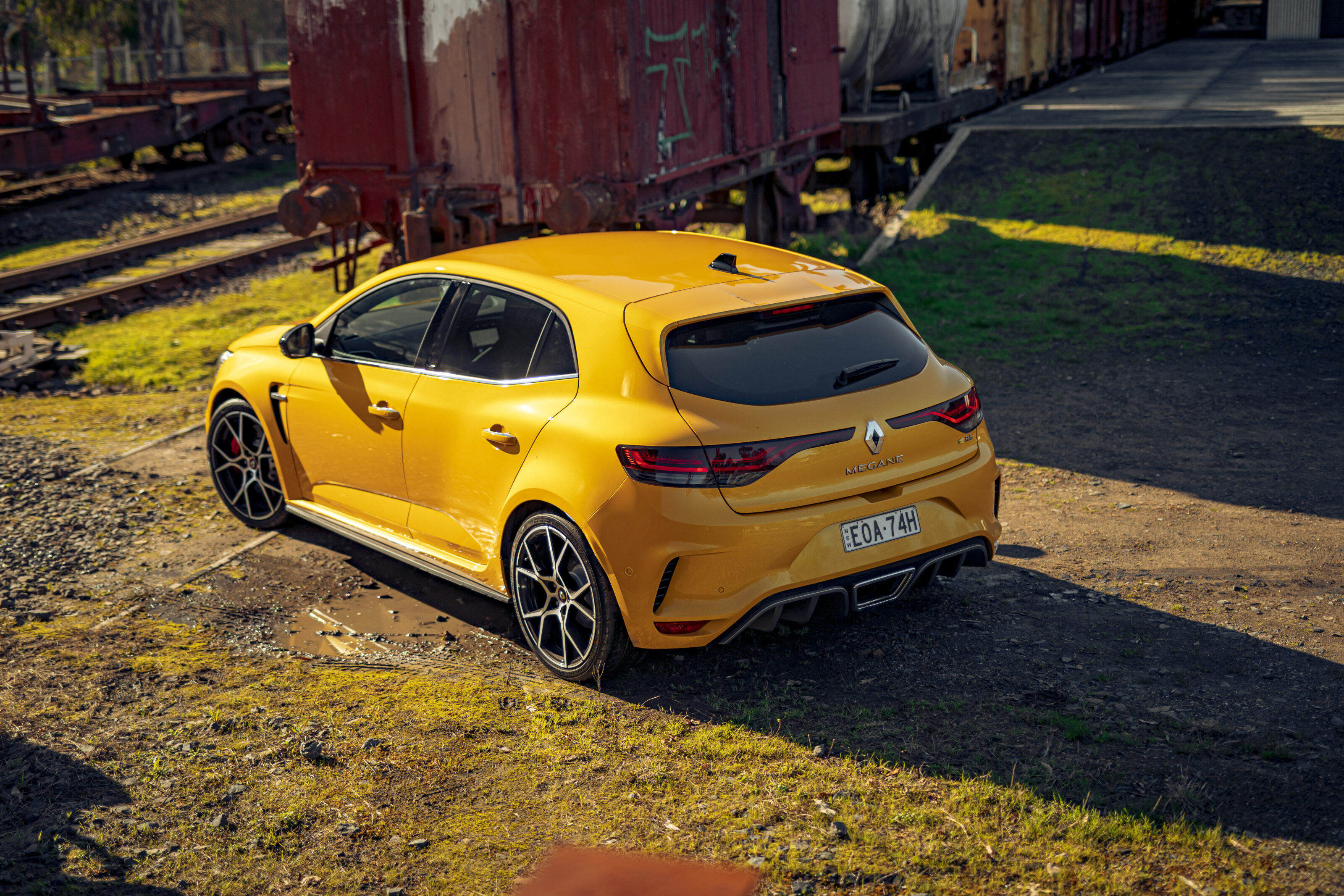
As a result of dual-axis hubs, you get plenty of confidence from the front end of the Megane as you apply power at corner exit. That’s not to say torque steer is completely eliminated. If you’re particularly hard on the tools or the surface is damp, you’ll still encounter it, much like you would in any other car. But it’s been largely vanquished from the everyday driving experience.
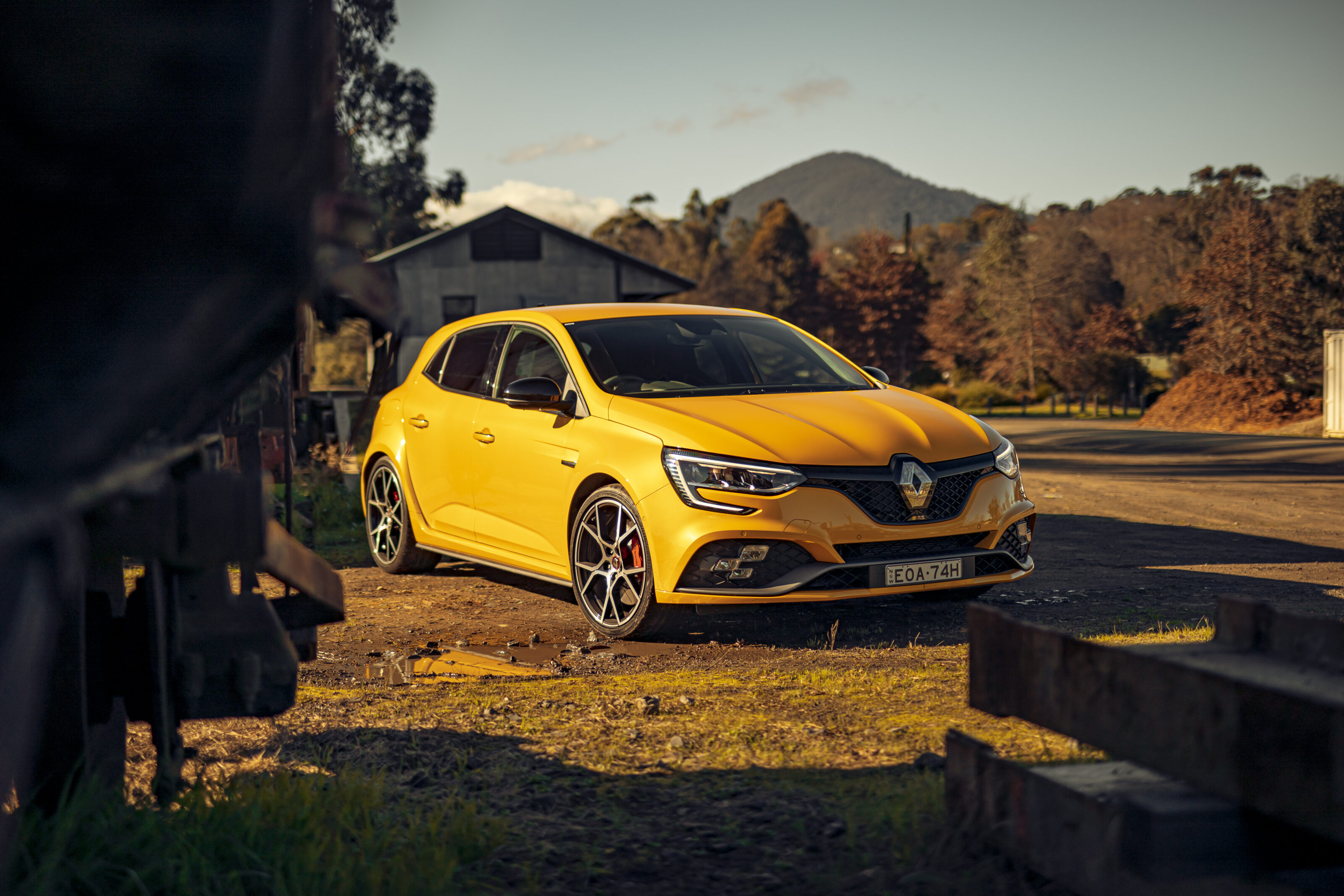
The steering remains pin-sharp and the off-centre accuracy is sublime. Combined with its firm damping, the Megane is ultra-responsive and when the Bridgestone rubber heats up you have plenty of grip to take full advantage of.
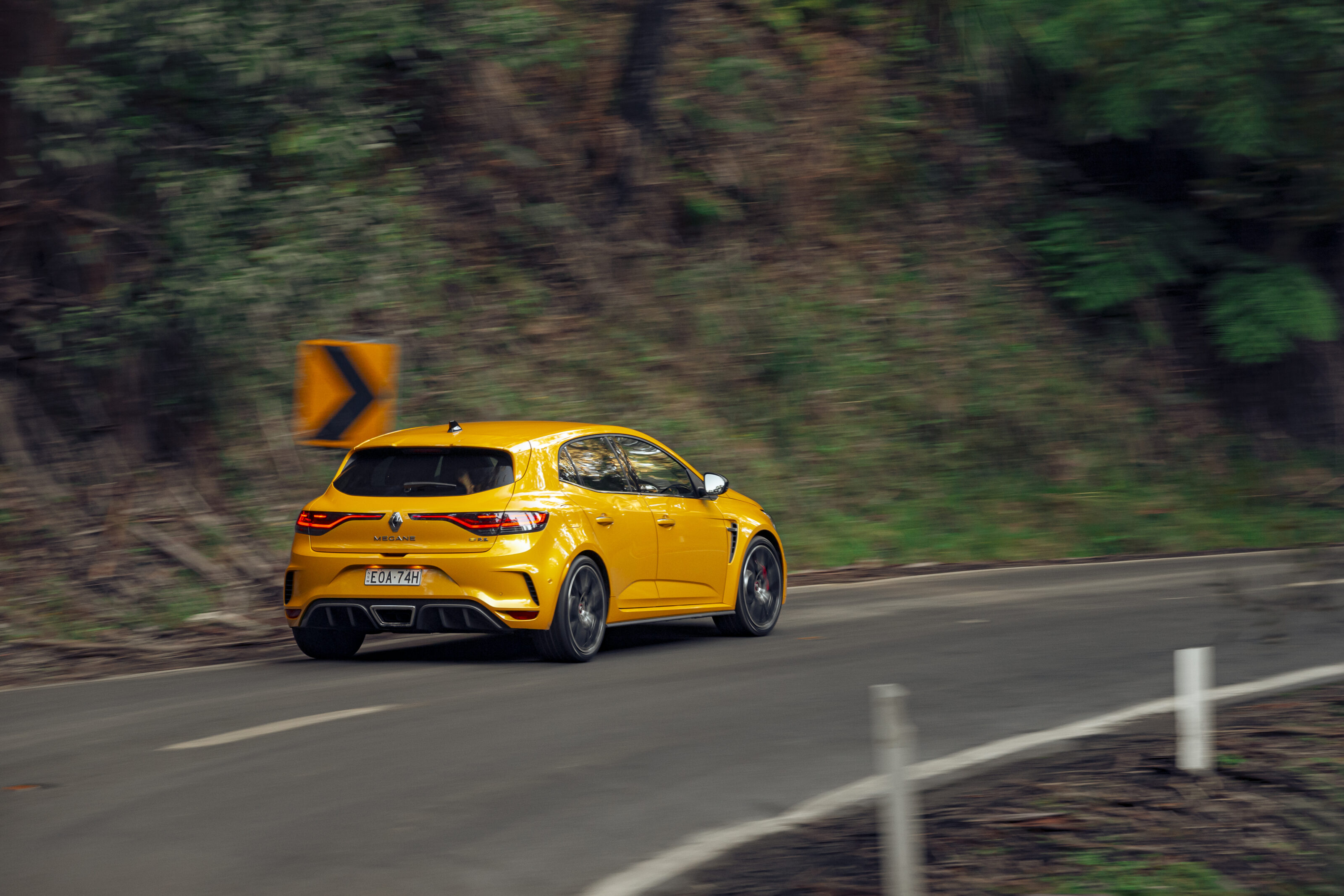
It’s not just the Megane’s front end doing all the heavy lifting, with the four-wheel steering system assisting from the rear – though at times without a net benefit.
For the uninitiated, the rear wheels turn in the opposite direction to the fronts through slow bends, helping increase agility. When you go faster the system then switches so it turns the rear wheels in the same direction as the fronts to boost stability.
There is a distinct swap-over point where the rear wheels transition between the two settings, ranging between 60km/h and 100km/h depending on the driving mode.
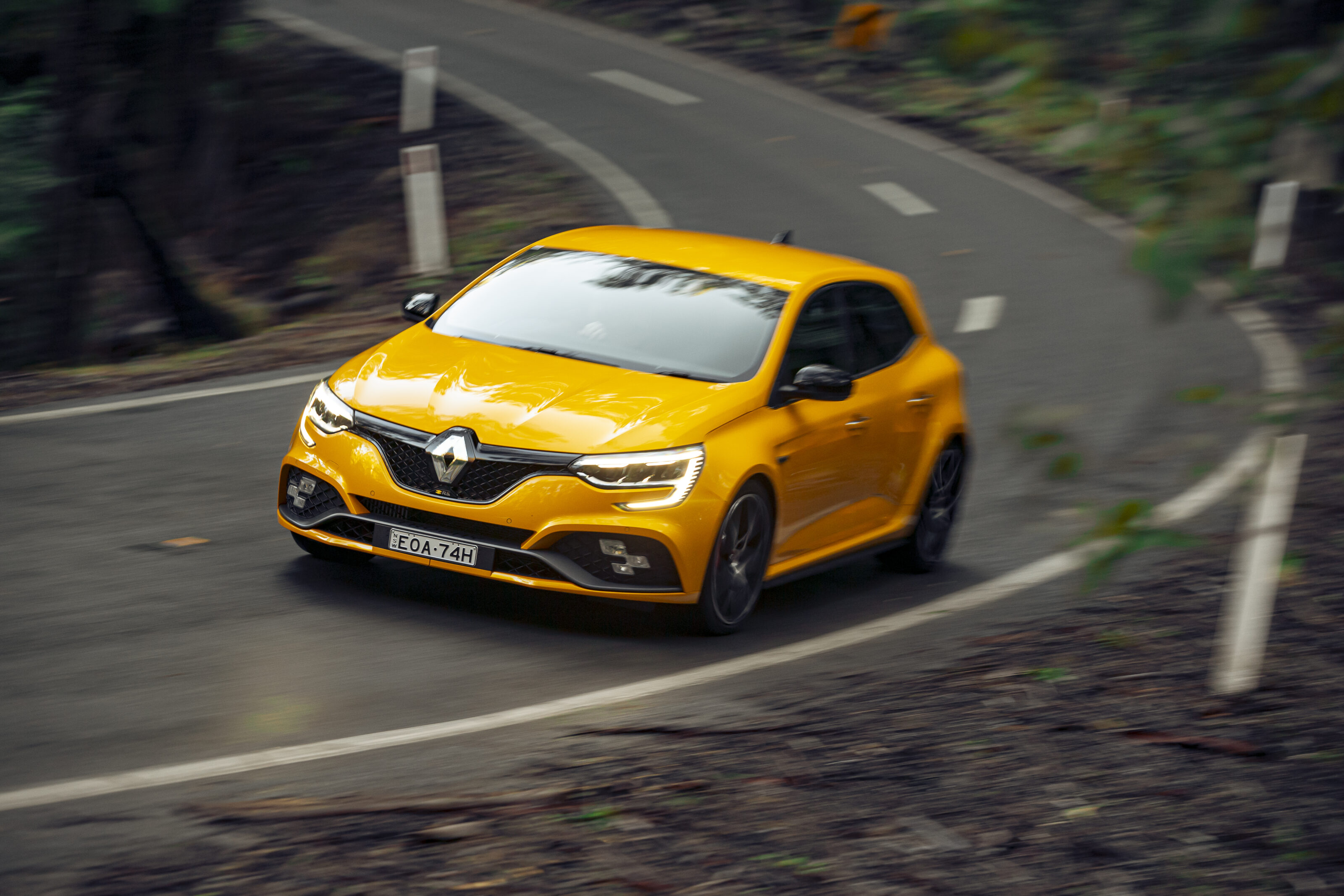
However, the four-wheel steering, while a unique factor, gets in the way of the fun somewhat. We know what it’s meant to do, and we can feel it working, but the transition between boosting agility and stability is hard to predict unless you have a third eye focused on the speedo.
It becomes a bit of a guessing game on corner entry, where you need to apply a very small initial input, understand which rear steering setting you have, and then apply the rest of your lock accordingly.
Despite its good intentions, the rear-steer system spoils any chance of finding a true, meaningful connection with the Megane. When the rear wheels steer the opposite way to the front, the back end is eager to help rotate the car and if you aren’t prepared it could catch you by surprise.
The Trophy can either suddenly turn in too fast, or delay its rotation, requiring you to either slow or hurry steering inputs to compensate.
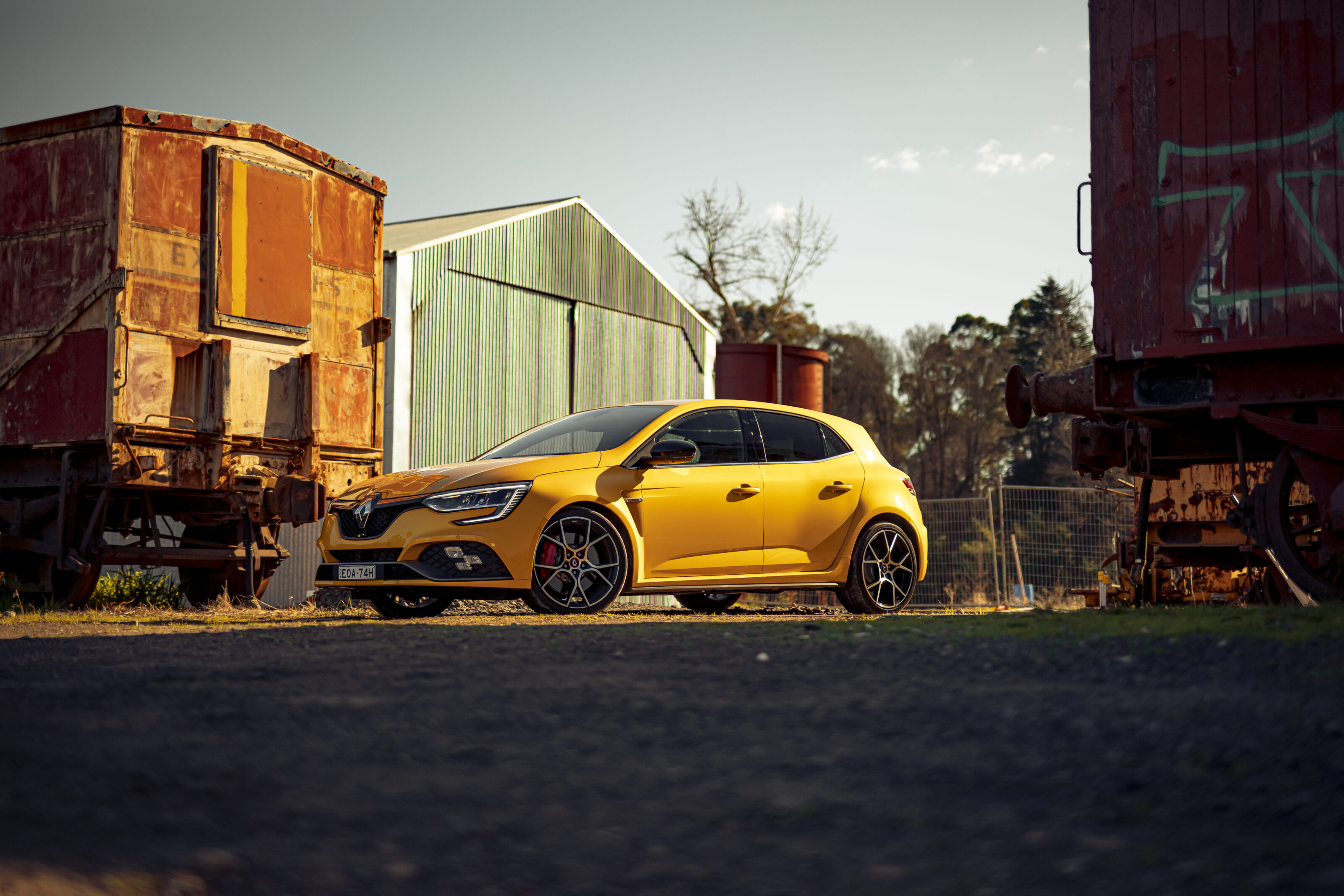
The Cup chassis remains firm. Its ride is brittle, with the Megane skipping over bumps in the road – a daily driver this is not. However, the primary body control is welcomed in the bends, with the taut chassis cornering flat when hustled hard.
Renault has fitted the Megane RS with hydraulic bump stops, which it says are like dampers within dampers.
The system is meant to slow down fast compressions but, from our experience they aren’t a like-for-like replacement for adaptive dampers, which are disappointingly lacking from the spec sheet. Their omission means the RS300 Trophy has a one-size-fits-all suspension tune with a narrow window of operation.
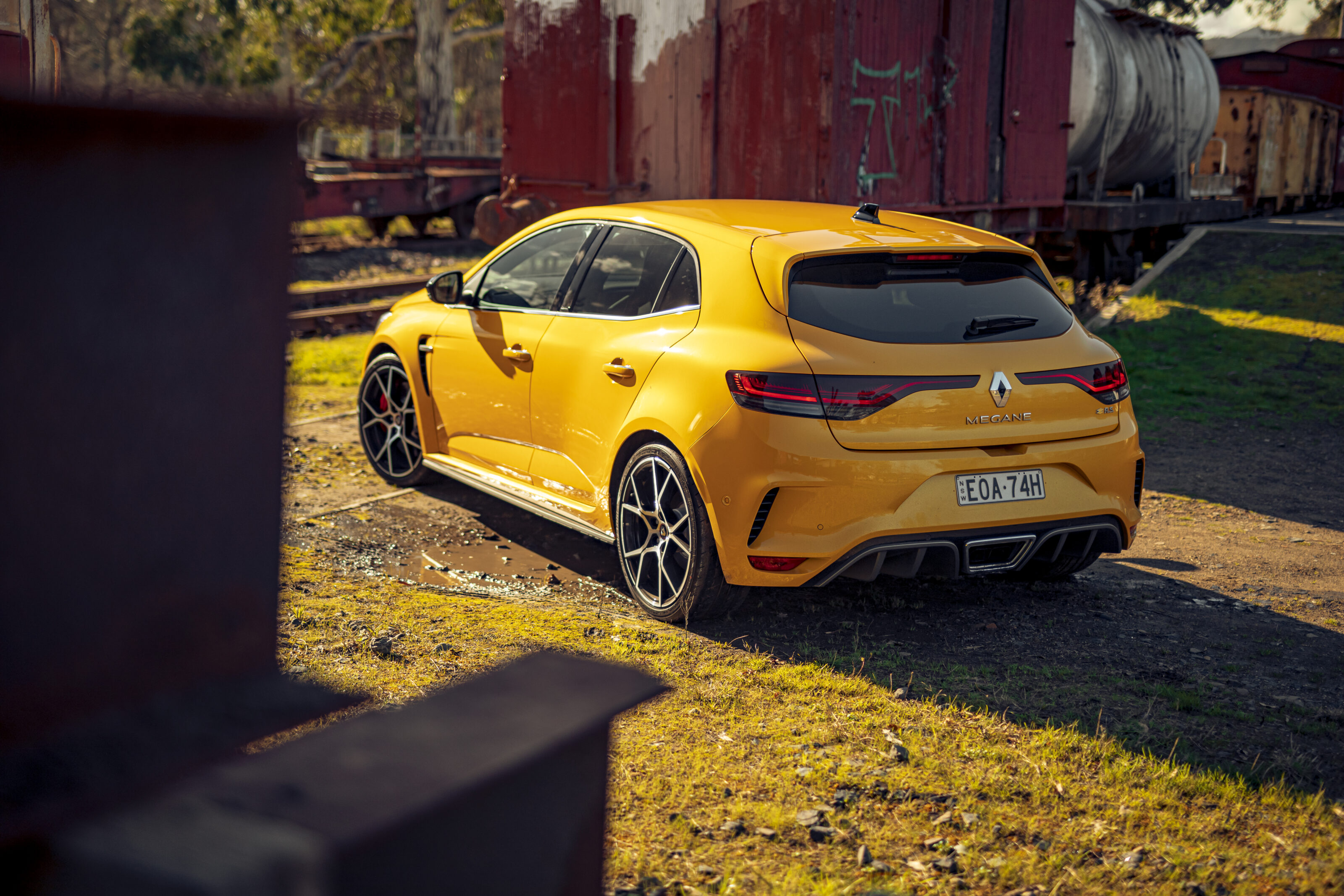
In terms of exterior design, Renault has found and maintained a sweet spot with the Megane RS. You get pumped arches and a slightly aggro rear diffuser but without the flashy large addenda and wings of some competitors. Choose a more sober colour and this is a hot hatch you can drive to a business meeting without being entirely embarrassed.
It’s no exaggeration to say Australians are spoiled for choice when it comes to hot hatches. While the Honda Civic Type R still reigns supreme, there are several convincing models depending on your preferences.
In its attempt to stand out from the crowd, Renault has introduced a dynamic variable that makes its first impression a touch harder to gel with – and that could be all it takes for a customer choose a rival.
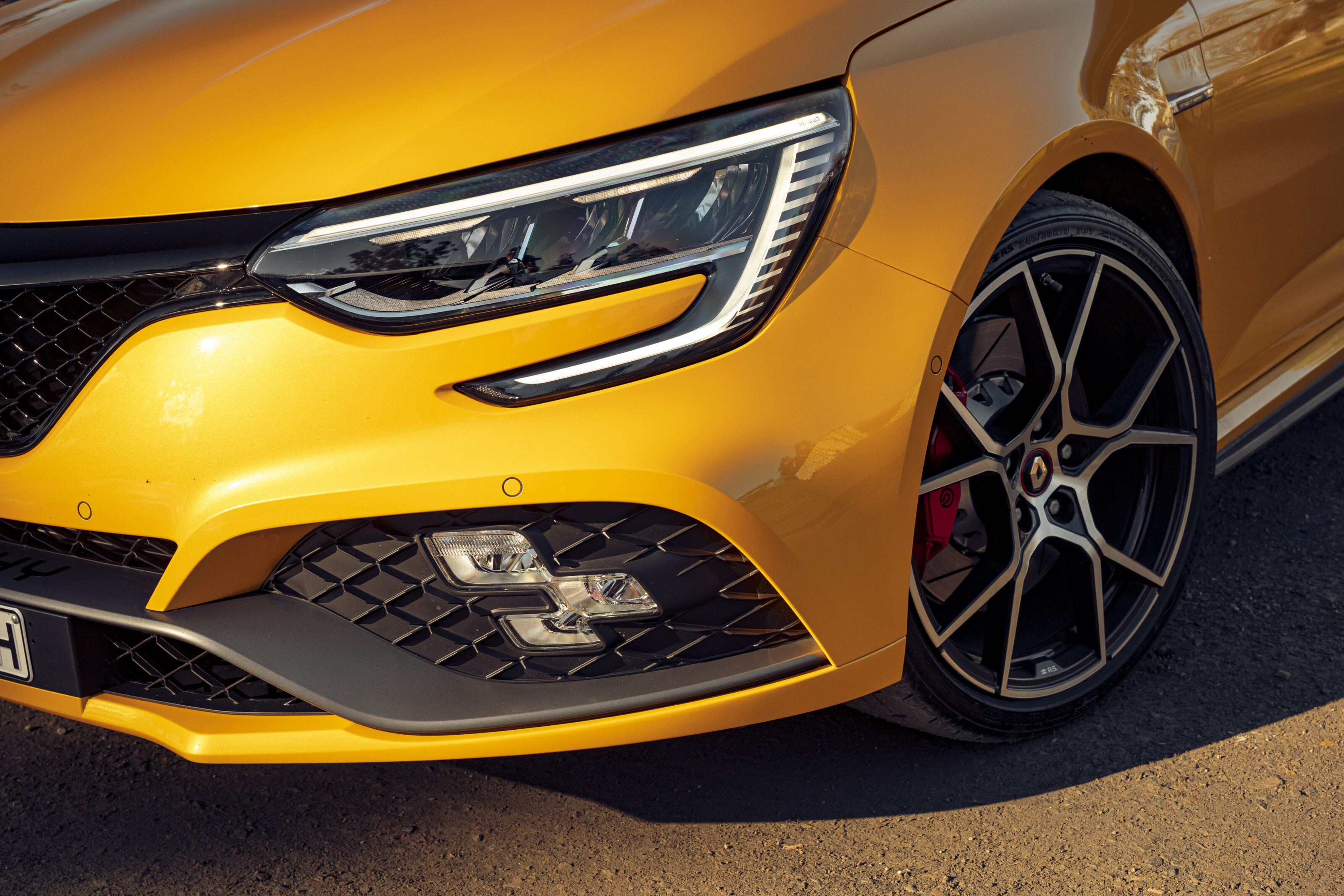
If you want to add a hot hatch to your garage, while we wouldn’t rank the Megane RS as best-in-class, it is worth your time to consider. The engine feels racy, and the sports exhaust makes all the right noises, while the front end is an excellent example of what is possible with modern differentials and suspension design.
However, the Cup chassis is seriously firm, and while that might be great on a smooth circuit, in the real world it can be a tad tiring. Additionally, the four-wheel steering makes a better case for itself in the showroom than it does in the real world.
We are glad the Renault Megane RS exists, even in this form. In many ways, it is a compelling example of modern front-drive performance, and its mature styling makes it a refined visual alternative to more youthful rivals.
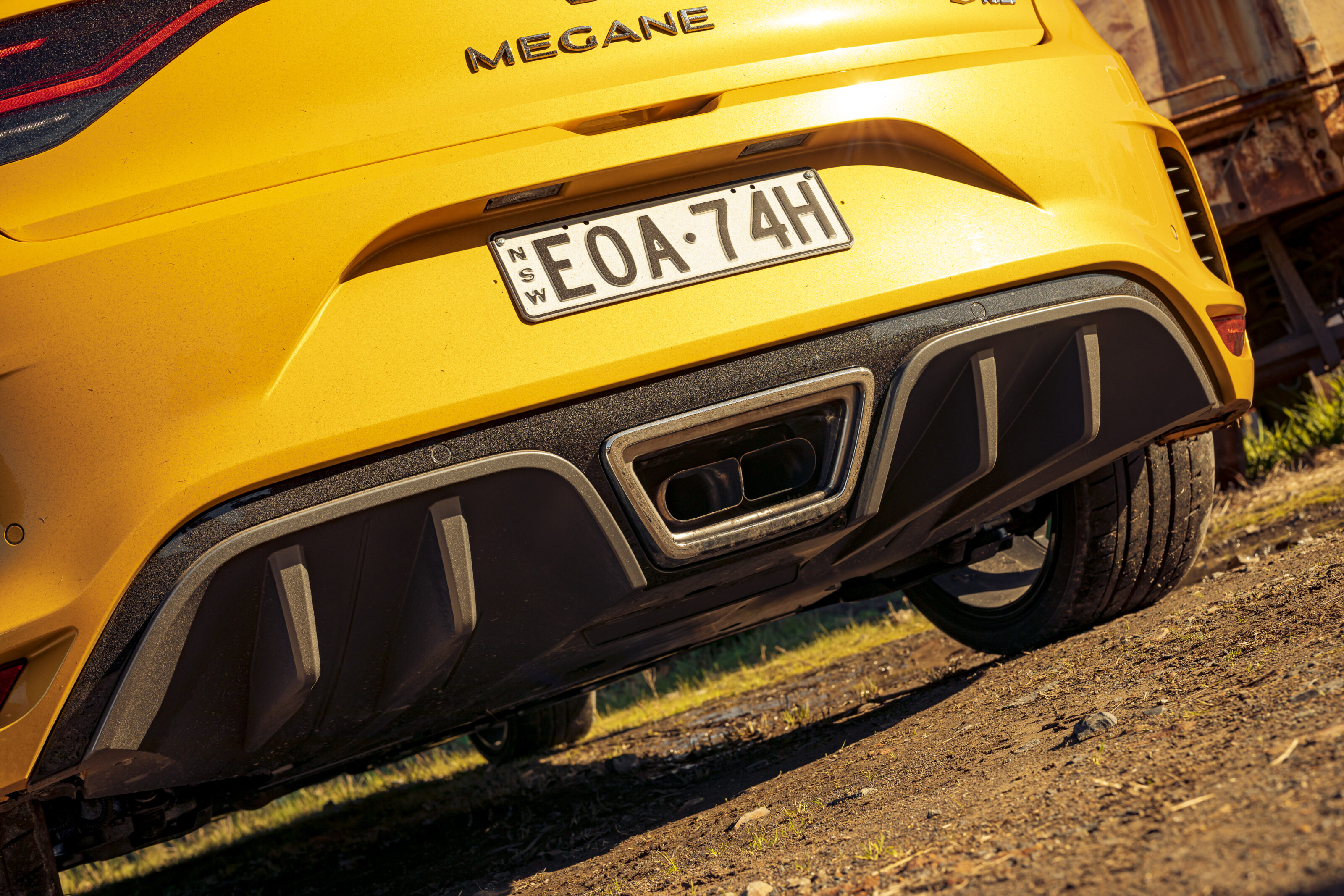
Renault Megane RS300 Trophy specifications
| Body: | 5-door, 5-seat hatch |
|---|---|
| Drive: | front-wheel |
| Engine: | 1798cc inline-4, DOHC, 16v, turbo |
| Bore/Stroke: | 79.7 x 90.1mm |
| Compression: | 9.9:1 |
| Power: | 221kW @ 6000rpm |
| Torque: | 420Nm @ 2400rpm |
| Weight: | 1450kg |
| Transmission: | 6-speed dual-clutch |
| kW-per-tonne: | 152kW/tonne |
| Suspension: | struts, coil springs, anti-roll bar (f);torsion beam, coil springs,rear-wheel steer (r) |
| L/W/H: | 4364/1875/1428mm |
| Wheelbase: | 2669mm |
| Tracks: | 1599/1593mm (f/r) |
| Steering: | electrically assisted rack-and-pinion |
| Brakes: | 355mm ventilated discs, 4-piston calipers (f); 290mm solid discs, single-piston calipers (r) |
| Wheels: | 19.0 x 9.0-inch (f/r) |
| Tyres: | 245/35 R19 (f/r); Bridgestone S001 |
| Price: | $56,990 |
You may not know Gregor Piech. Born in 1994, he’s the youngest of Ferdinand Piech’s eight children. Yes, the late Ferdinand Piech who used to run used to run Volkswagen. Gregor’s great grandfather was Ferdinand Porsche so he’s a Porsche blue-blood.
Blue is a bit of a theme within Porsche. Ferdinand Piech’s 1967 development version of the 911 R was finished in Scarab Blue and he professed that blue was his favourite colour for cars. For Gregor’s 19th birthday, his father bought him a Breitling Le Mans anniversary edition wristwatch, with a silver-blue dial and a blue leather strap.
The next birthday gift was even more special. Realising that it was 50 years since Ferdinand Piech had worked on the original 911 R, Gregor’s mother Ursula decided that her son’s Skoda Citigo wasn’t really up to snuff and bought him a Porsche 911 R. That’s right, the 991 version that is worth more than the GDP of some African nations. Gregor’s specification for this car was exacting.

Finished in metallic Sapphire Blue, the car was decorated with British Racing Green stripe details, a subtle hat tip to Ferdinand’s acquisition of Bentley for the Volkswagen Group. The interior was finished in a special Black Watch Tartan, framed with royal blue leather and Noto green accents, continued across the dash and door panels. Finally, Gregor insisted that because this was a truly special vehicle, it would have ‘One of One’ illuminated sill finishers to greet when you opened the door.
There’s no doubt the car is utterly beautiful. Young Gregor must have been beguiled by the effect because he then did something slightly berserk, but in a good way. He decided he wanted every one of the most desirable versions of the 991-generation 911 finished in exactly this specification.
So, aside from the 2017 911 R that got the whole thing started, Gregor also took delivery of a 2018 911 GT3 Touring, a 2018 911 GT3 RS, a 2018 911 GT2 RS, a 2018 911 Targa 4 GTS, a 2019 911 Turbo S Exclusive Series, a 2019 911 Turbo S Exclusive Series Cabriolet and a 2020 911 Speedster. This would have made one heck of a garage, if a little lacking in bandwidth. To rectify that, Gregor added a couple more Sapphire Blue beauties.
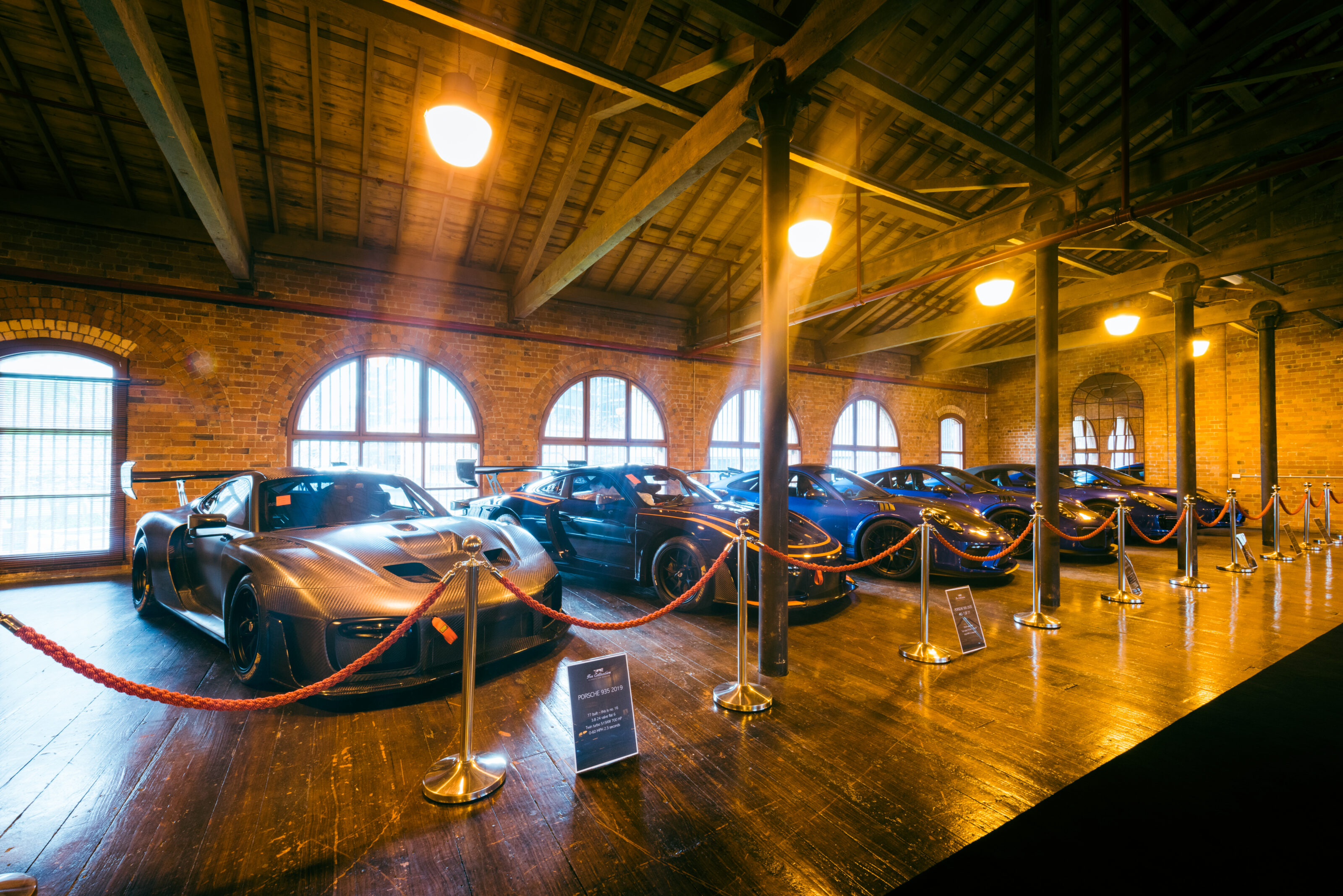
First up was a 2020 935 Flatnose. These are rare at the best of times, with only 77 being built. Four have come to Australia, with three of them housed at Fox. The naked carbon car is quite something, but the highlight is the Sapphire Blue one-of-one. That was followed by a 918 Spyder hypercar.
Despite wearing issue number 135 of 918 vehicles, the Spyder was the last vehicle to be delivered, leaving the factory in 2020. We’re still not quite sure how this happened, but if you’re a Porsche/Piech, it’s reasonable to assume you can pull some strings. This car features Sapphire Blue laser cut rims spokes with matching blue brake calipers.
All of these cars now live in Melbourne. Lindsay Fox has acquired the collection, lock, stock and barrel from the Porsche family and they’re the highlight of the newly-renovated Fox Classic Car Collection in Docklands.
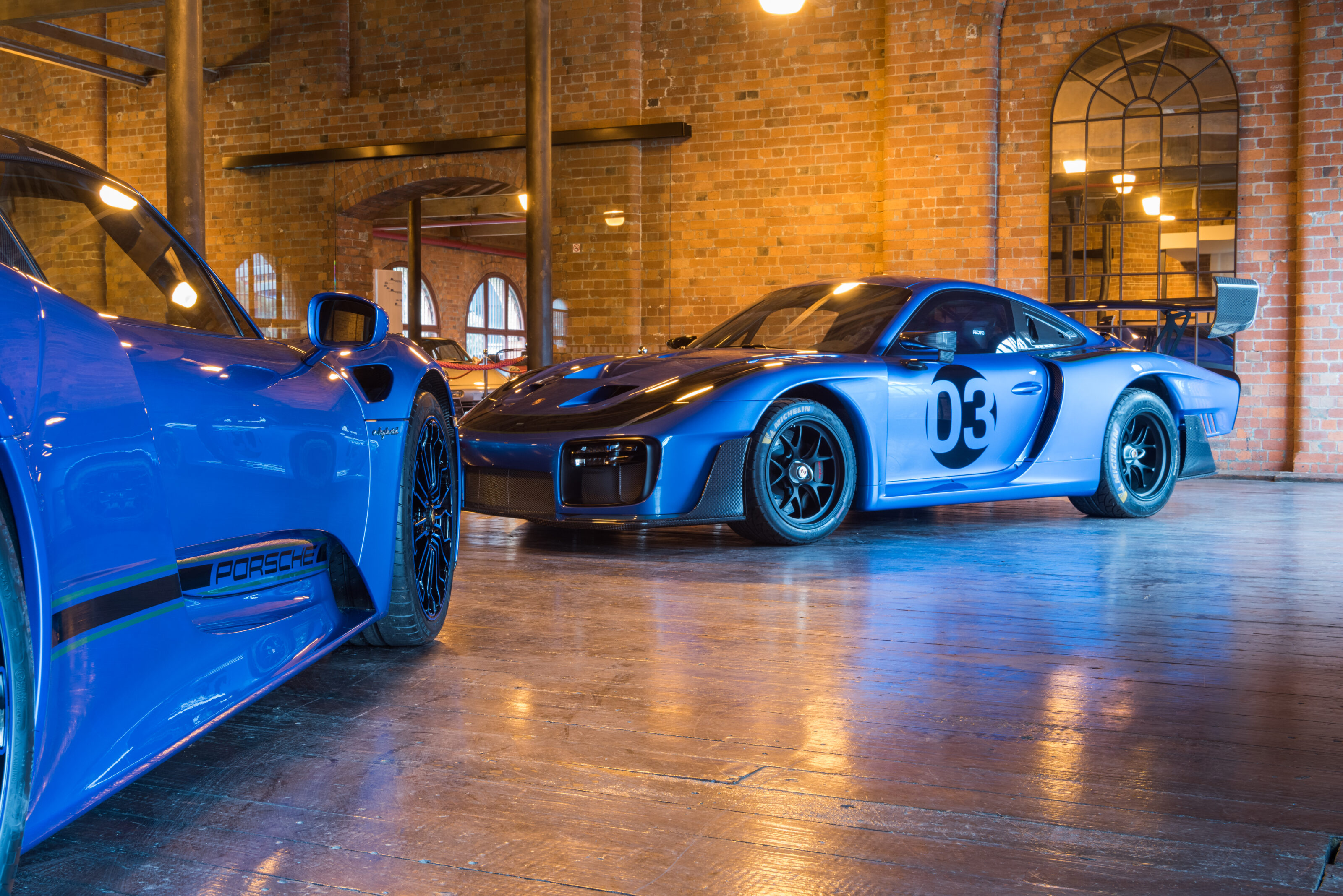
We’re not sure if Gregor had been naughty and had the cars taken away from him or whether he now wants to rebuild the collection with 992 generation models, but his loss is your gain. Having been closed since 2019 due to plans for adjacent site works, the Fox Classic Car Collection is open from Thursday 5th June and the entire upper floor is devoted to Porsche, with pride of place going to the Sapphire Blue collection.
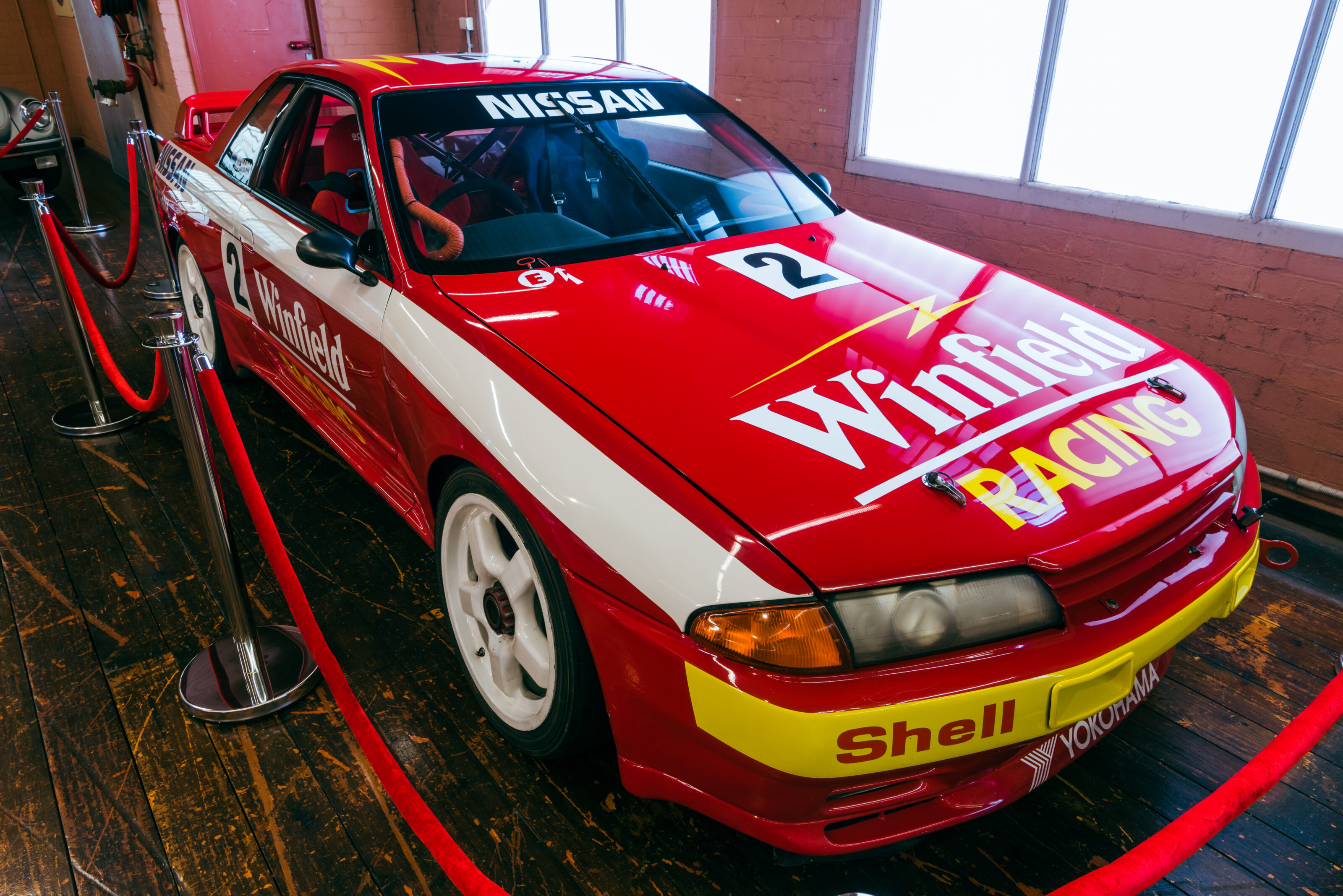
Of course, they’re not the only exhibits that’ll catch your eye. Whether it’s a Skaife/Richards Skyline R32 GT-R, a brace of Mercedes 300SLs (one roadster, the other a gullwing coupe), a Jaguar XJR-15 or XJR220, the delivery mileage Lexus LFA, the stunning Porsche GT, the unicorn twin-engined Mercedes-Benz A38 AMG or any of the other surprises that I won’t spoil here, there’s a lot to take in.
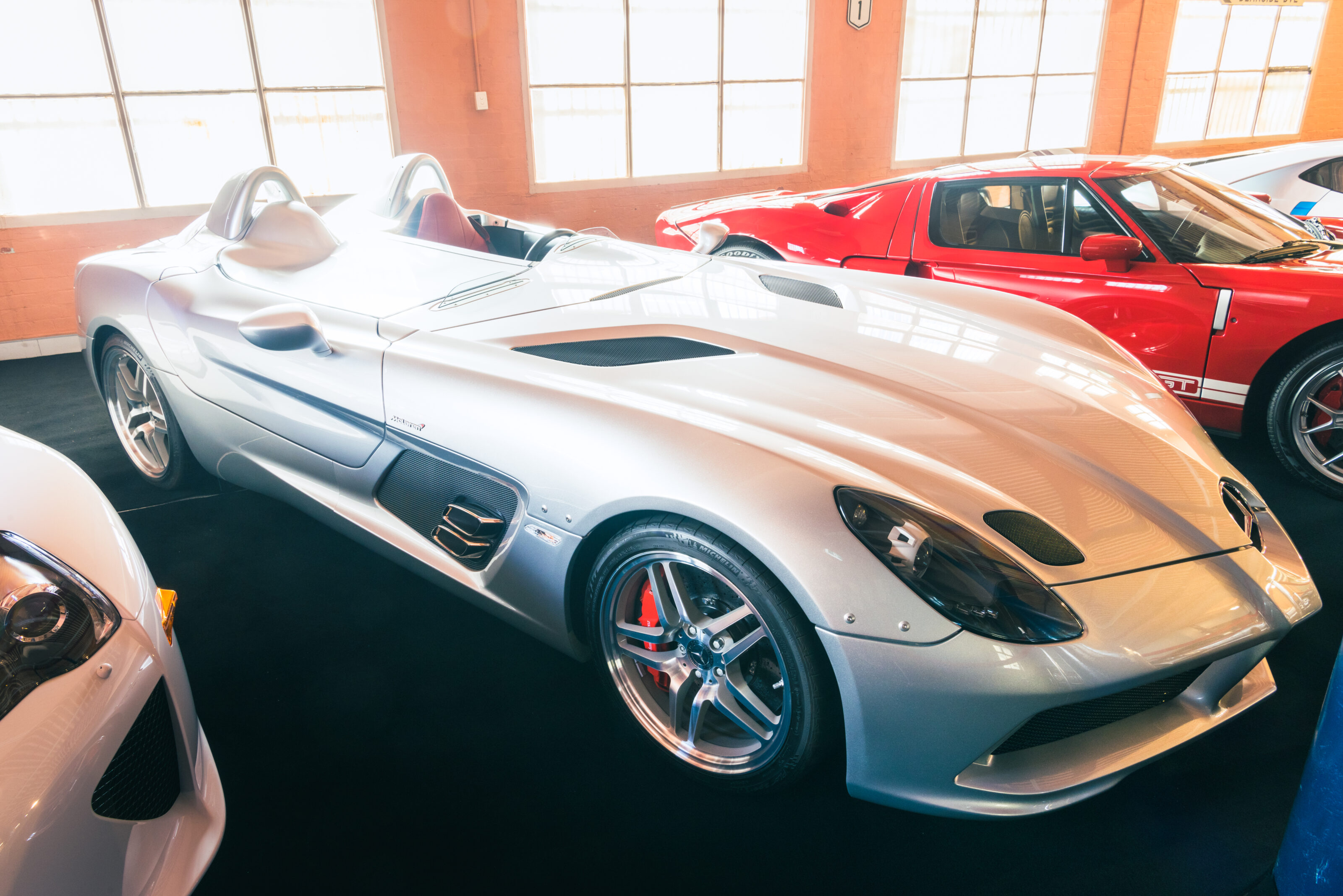
The boss himself dropped in during our visit to tour the new facilities and re-acquaint himself with some of the cars on display. Pausing by a Mercedes-Benz SLR McLaren Stirling Moss, he chuckled as he recalled how much he’d bought the vehicle for when new, claiming that it was now worth ten times the price. Back in the day, to even be considered for one of the 75-unit SLR McLaren Stirling Moss allocation you had to be a loyal SLR purchaser and have already bought a standard coupe, a convertible and the special 722 edition. Perhaps the entry criteria were a little strict as Mercedes reportedly struggled to sell the cars. Cue Fox’s eye for a deal.
I asked what would be the car Lindsay would save if the building was ablaze and I was told it was his first work truck from 1956, which was perhaps a little more of an emotional response than I was expecting.
If you’d previously tried to visit the Fox collection and found the opening hours to be a bit idiosyncratic, you’ll be pleased to learn that the hours are being extended, the building open Tuesdays, Thursdays and Saturdays. As part of the 99-year lease that allows Fox to use the Queen’s Warehouse for a peppercorn rent, the car collection must be open to the public and the building maintained. The old customs house and mint has had a good wash and brush up, with more updates planned that will extend the floorspace for exhibits.
Because exhibits are rotated in and out to keep the museum display fresh, it’s fair to assume the Sapphire Blue collection won’t be on display for ever. It’s worth getting along, if only to marvel at one man’s temporary bout of monomania. Just try picking a favourite. It’s surprisingly hard.
The Fox Classic Car Collection is at 749-755 Collins St, Docklands VIC 3008, and tickets can be purchased online at http://www.foxcollection.org.au/

Snapshot
- Standalone code being considered
- Mandatory binding arbitration also on the cards
- FCAI says consumers have been left out
New proposed franchising reforms affecting car dealerships, which could see a separate automotive code of conduct and dispute resolution system introduced, have divided the industry.
On Tuesday, the Federal Government released a new discussion paper outlining its plans to introduce a standalone code and mandatory binding arbitration.
While the changes have been welcomed by the Australian Automotive Dealer Association (AADA) for protecting dealerships, the Federal Chamber for Automotive Industries (FCAI) says the reforms don’t focus enough on consumers.
“The release of this discussion paper marks another significant step in reforming the imbalances that exist between dealers and some manufacturers,” said AADA CEO James Voortman.
“We believe this provides an opportunity for our industry to come together and build on the progress that has been made towards a fair and reasonable set of rules that govern relations.”
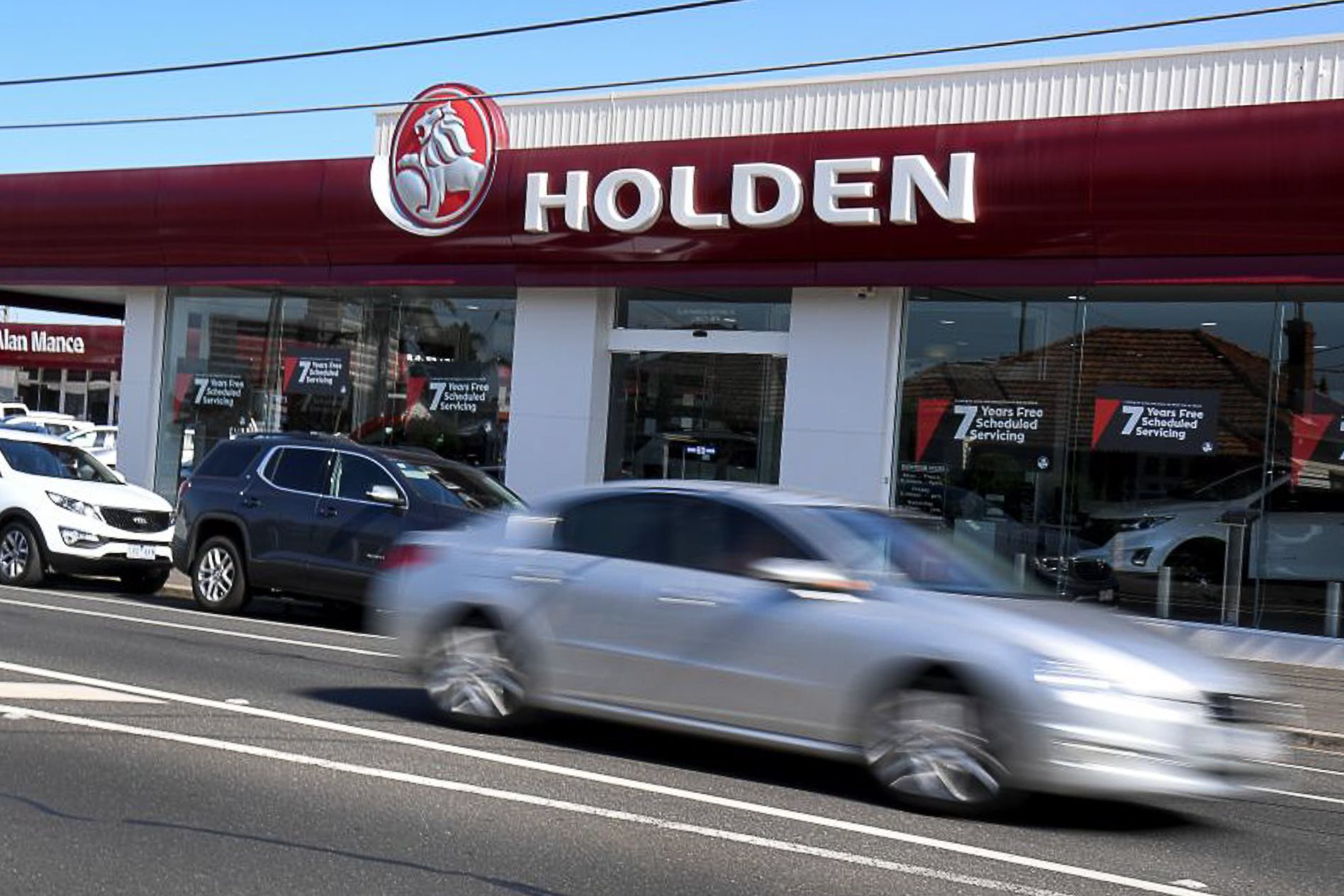
The fresh franchising reforms revealed today follow other revisions to regulations which came into effect on July 1 and June this year aimed at protecting dealers with their investments if a manufacturer decides to leave the local market – such as in the case of Holden’s departure from Australia.
Reforms to the current regulations were first floated when General Motors pulled Holden from the Australian market in February 2020, leaving dealers with next to no support.
Though an offer to over 184 Holden dealers of $1500-per-car was accepted by 120 franchises, the Australian Holden Dealer Council and AADA believed it was inadequate compensation to those who had been loyal to the iconic brand.
“The consideration of options for compulsory binding arbitration is such an important element of this process given the experience of Holden dealers in their dispute with General Motors. The prospect of a drawn out and costly legal battle resulted in most Holden dealers accepting inadequate compensation packages,” Voortman added.
“Even the request by the then Minister Michaelia Cash for General Motors to attend arbitration was flat out refused by the Detroit-based Manufacturer.
“You need only look at the Holden and Honda dealers who are currently involved in protracted court battles with their franchisors to understand why the current system favours larger multinational corporations over Australian businesses,” Mr Voortman said.
The recent reforms also come at the same time as some carmakers are making the switch to a fixed-price model for new car sales – with Honda doing so as of July 1 this year and Mercedes-Benz due to follow suit from January 2022.
Asked if the court proceedings referred to by the AADA involved the change to fixed-price sales, Honda said it was unable to comment on any legal action.
“Honda Australia is supportive of the role of the Federal Government in ensuring fairness for consumers and participants in the automotive industry,” a spokesperson added.
But the FCAI contends one very important consideration is missing from the discussion paper outlined today – the consumer. The industry body said that in its present state, the proposal risks putting the interests of one component of the supply chain over Australian families by over-regulating the market.
“The ink is not yet dry far reaching industry regulations introduced last month. Their impact needs to be seen before more regulations are contemplated,” said FCAI Chief Executive Tony Weber.

“The Government describes its franchising reforms as having already delivered ‘big wins’ to dealers, but where there’s a winner there’s also a loser – and in this case it’s the Australian consumer.
“Automotive franchising is a consumer issue, not an industry protection issue. It should focus on providing consumer choice – not dealer protection at the expense of all others. Regulation should encourage innovation and flexibility for business, not leave it anchored in the last century.”
Weber said Australia already has extensive competition and franchising regulations and any further regulation would stifle the industry’s capacity to innovate to meet the changing needs of the Australian consumer.
“Over-regulation will not protect the industry but what will is a choice of sales models, better service and competitive pricing.”
The new paper also flags extending the automotive franchising regulations which have been put in place over the past year to cover other categories of vehicle dealers – such as trucks and motorcycles.
According to the document, a post-implementation review of the most recent amendments must be completed by mid-2023, and a review of the wider Franchising Code must happen before April 2025 – following which it will consider if the reforms have been effective and if further changes are needed.
Mazda’s big seven-seater was a bit of a trailblazer when it arrived in its original form in 2006.
Packing a thirsty but powerful V6 wrapped in sleek looks that set it apart from the rest of the still-nascent segment, the Mazda CX-9 provided access to Euro-style SUV aesthetics without the prices.
With the emergence of its second generation in 2016, the V6 went and the four-cylinder 2.5-litre turbo arrived. But what really impressed me was just how pretty it was and how it still packed a lot of utility into fashionable threads.
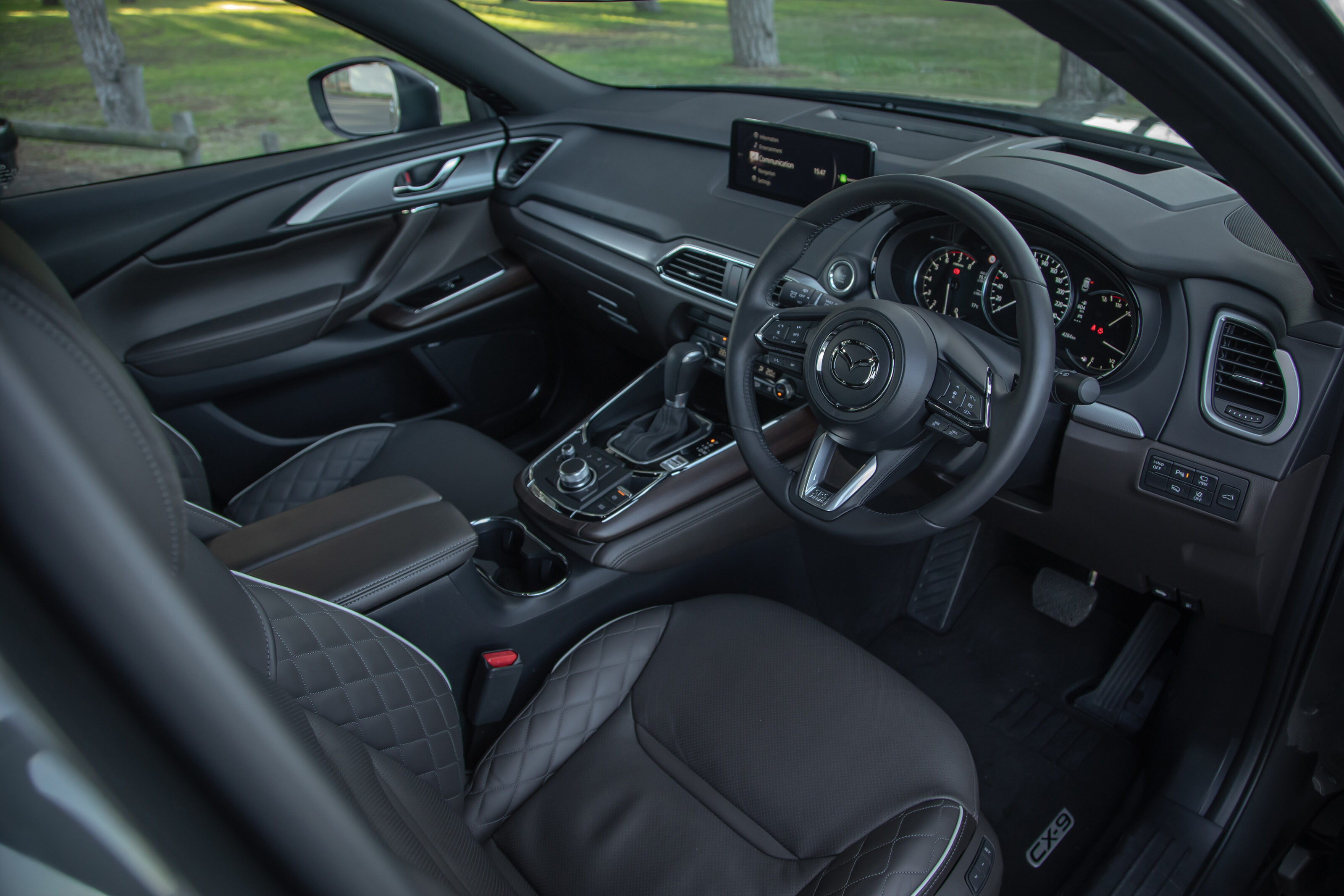
A mid-life update delivered worthy technology improvements to the (still-dark) cabin as well as the LE option pack to the high-end Azami, pushing prices into the seventies while adding an initially curious but clever new configuration to the interior.
Pricing and Features
There is a bit of a journey on the top-tier Azami, so we’ll start without any boxes ticked.
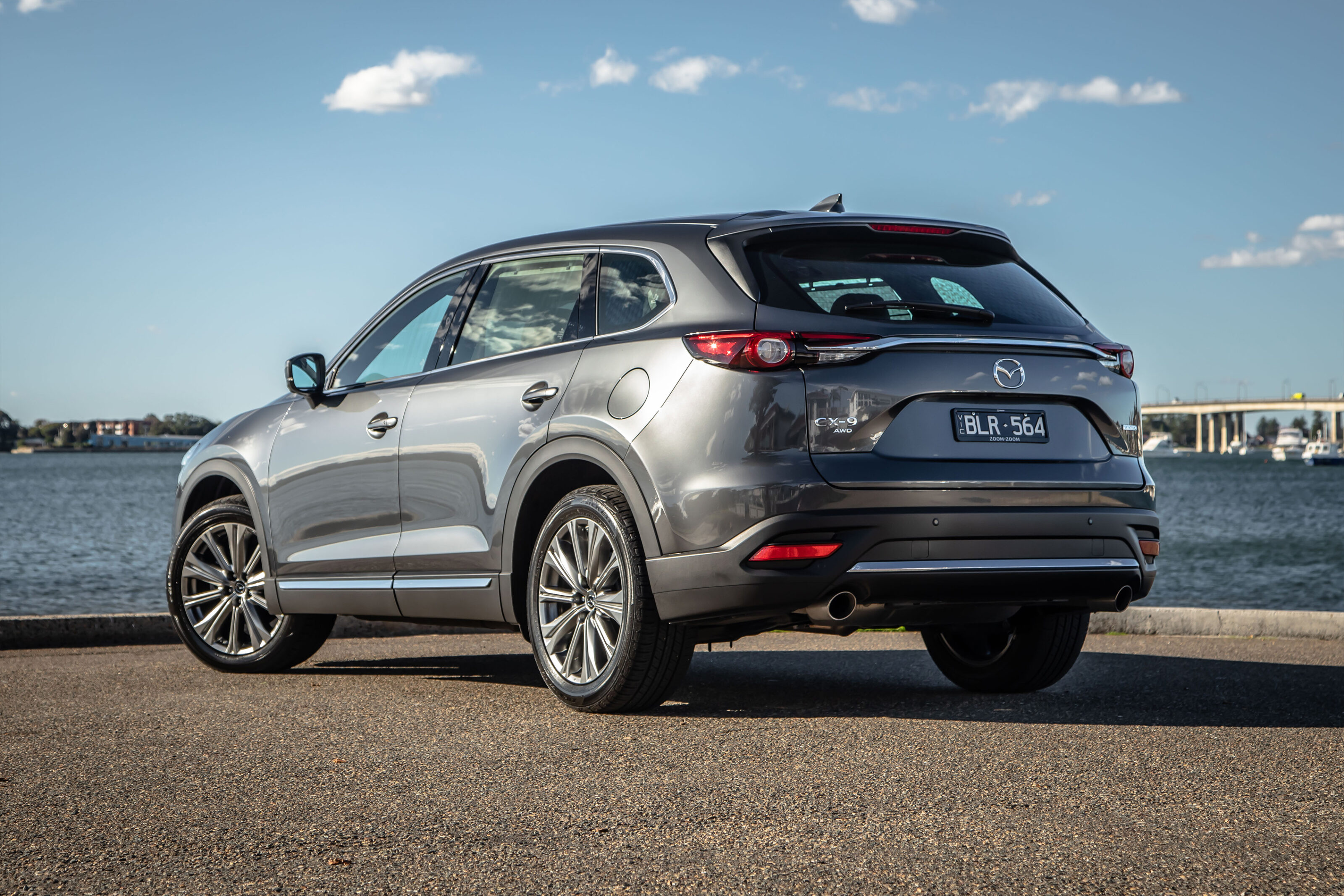
Standard specification for the $66,190 (before on-roads) Azami gets you 20-inch alloys, multi-zone climate control, front, side and reversing cameras, keyless entry and start, powered tailgate, front and rear parking sensors, active cruise control, powered seats in the first two rows, head-up display, auto LED headlights, auto wipers, Nappa leather trim and wireless charging.
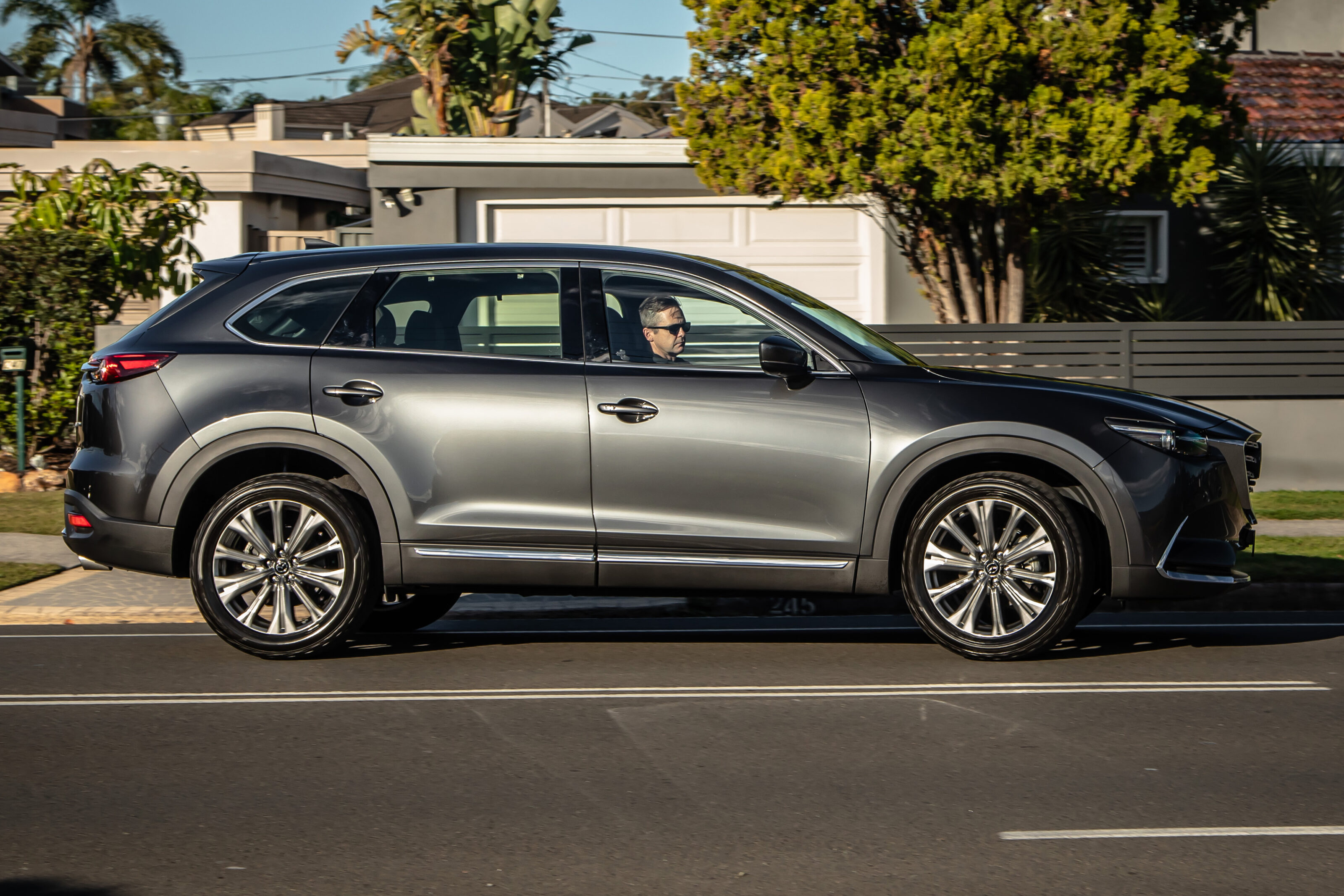
The three premium colours are all well worth the $495 extra but there is a wide choice of paint if you don’t want to pay the money, which is unusually generous. The darker ones look the best – Mazda’s Kodo design language is oddly colour-sensitive here in the five-metre club.
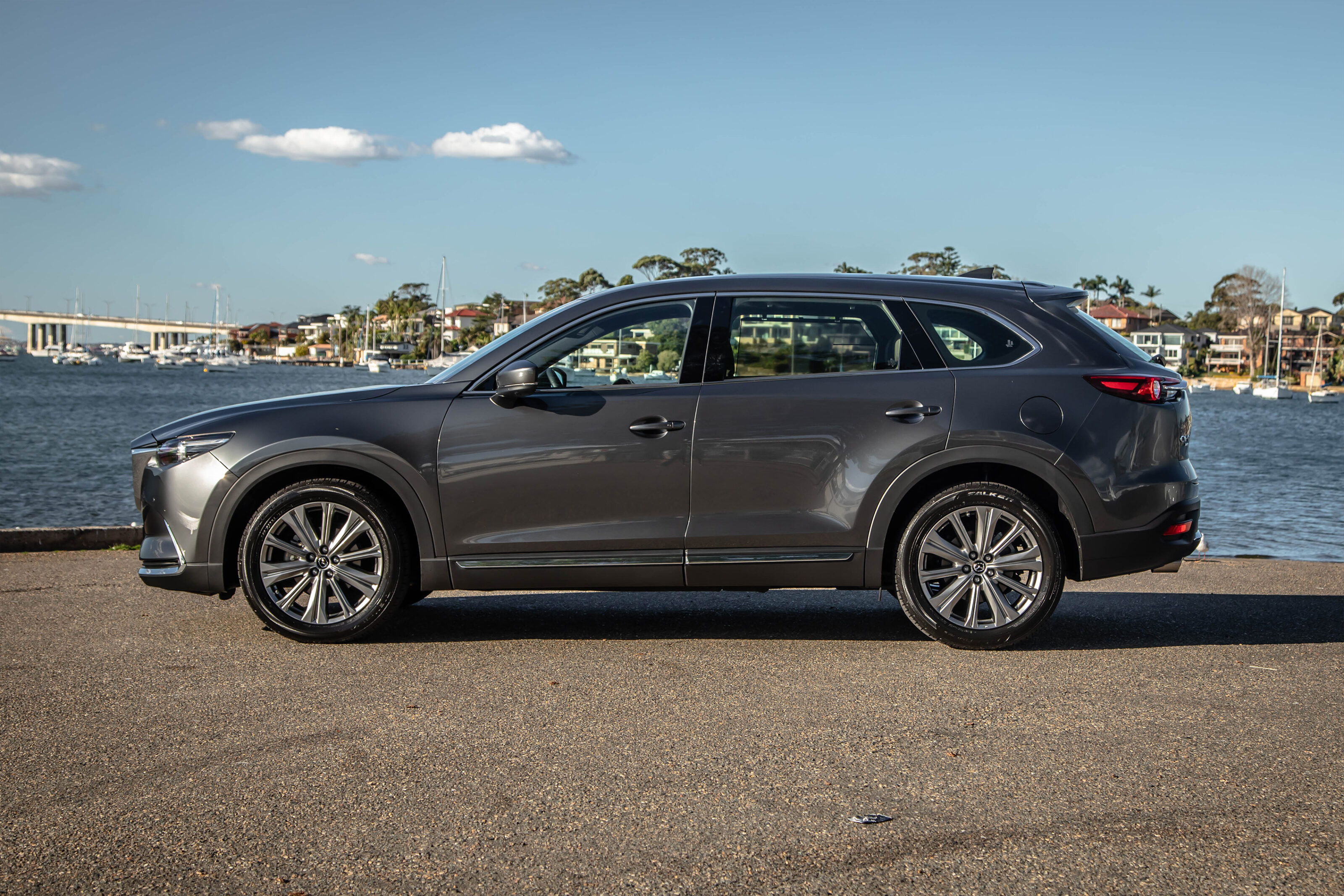
When you add all-wheel drive – a must for the CX-9, in my humble opinion – the price moves to $70,625. The LE option adds another $3250 but, heavens to Murgatroyd, removes a seat. When did Mazda go all Porsche on us?
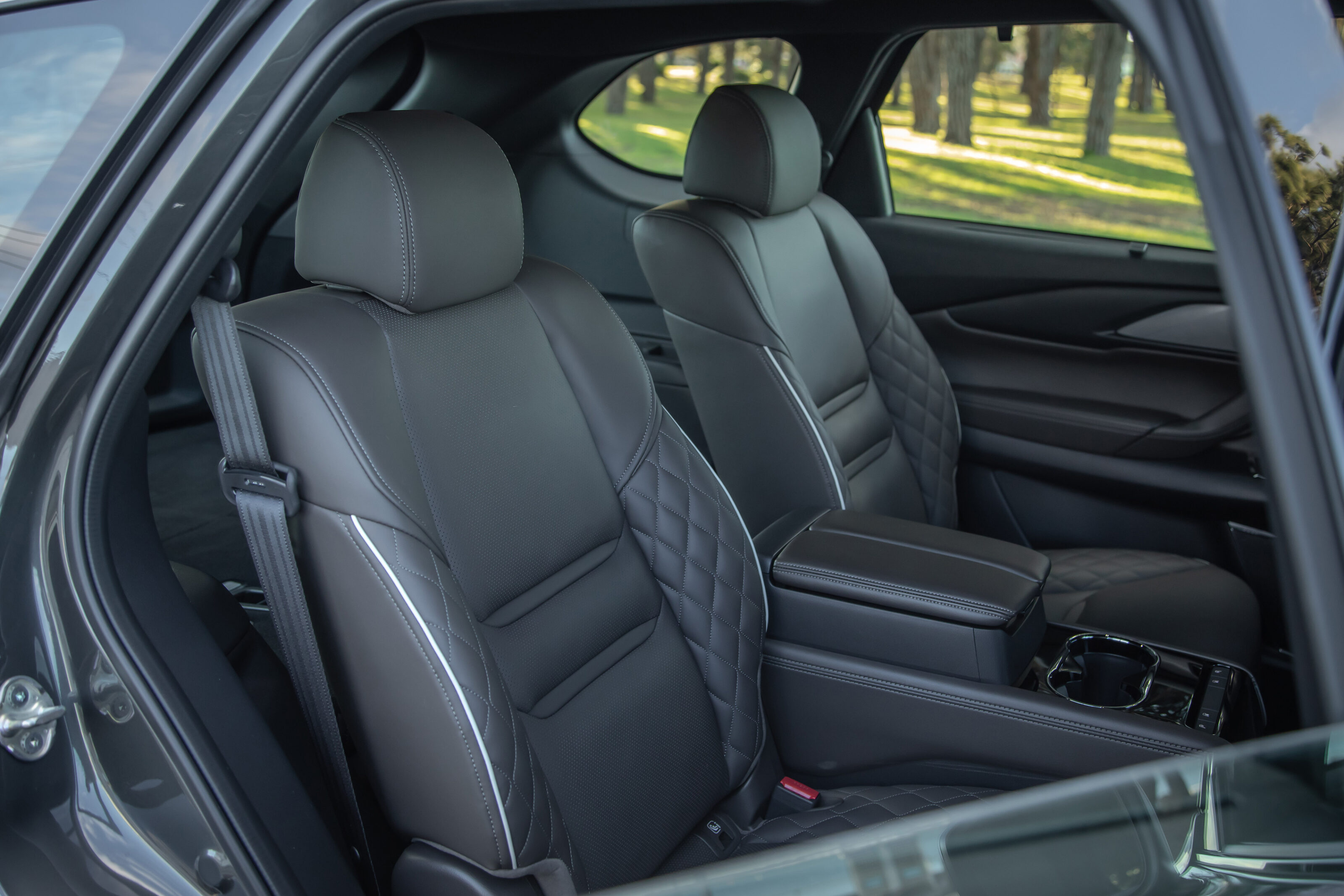
But it’s not all bad. The fact is, the entire regular middle row goes out of the big, wide-opening rear doors and is replaced with two extremely comfortable captain’s chairs with heating and ventilation as well as a cut and paste of the front console with its armrest, storage bin and two cupholders.
The console doesn’t fold or flip – the seats move forward to allow access to the rear and unlike, say, the Palisade, the big Mazda does not have walkthrough access between the chairs because of the console arrangement.
The darker paint options look the best – Mazda’s Kodo design language is oddly colour-sensitive here in the five-metre club
To help keep you safe, the CX-9 also has six airbags, ABS, stability and traction controls, front and rear AEB, lane-keep assist, blind-spot monitoring, rear cross-traffic alert, traffic sign recognition and a 360-degree around-view camera.
The forward AEB works between 4km/h and 80km/h and will recognise pedestrians at least during the day and in well-lit areas. And unlike its two main Korean rivals, the airbags reach all the way to the third row.
The LE scores four top-tether mounts (both rear rows) and two sets of ISOFIX points (second row). The CX-9 was awarded a five-star ANCAP safety rating in 2016, which is obviously some time ago now.
Comfort and Space
For the six-seater option, you lose the middle seat in the middle row. Normally that’s the worst seat in the house in a five-seater, but you also have the third row’s two seats which, as ever, are for occasional use.
The LE option means the two in the middle row can stretch out in heated and ventilated comfort, with a big armrest that includes cupholders. Elbow, head and legroom are palatial, especially if there’s nobody behind and you wind the seats all the way back.
An electrically operated dance gets the captain’s chairs out of the way, a process slower than a week in lockdown with your in-laws staying (no matter how nice they are). It does make climbing into the third row – with two more seats and cupholders – reasonably easy but it’s still tight back there.
Second-row occupants get their own set of air vents and third-row passengers get two USB-A ports, a shrewd move to keep devices charged and attention diverted from the claustrophobia.
One sacrifice in the LE is that in exchange for the captain’s chairs, you can’t get that ute-with-a-roof-and-carpet feeling you get in the standard car.
With the middle row fixed in place, you’re left with a maximum of “only” 810 litres. With the third row in place, you have access to 230 litres via the powered tailgate, which is about the same as a Mazda2, believe it or not.
On the Road
In the dry, the difference between driving a CX-9 with front-wheel drive and one with all-wheel drive is negligible. After all, the all-wheel drive is mostly disconnected in the dry because it’s not required unless you go a bit bananas. And there’s much to like about it, from the well-weighted steering to the very well-judged suspension setup.
The big difference between the two comes when things get a bit slippery. For plenty of drivers, it won’t matter.
When it’s wet or a bit loose, the right foot will be tempered by the various traction and stability systems. But for folks who care, the sound and feel of the fronts spinning up on mild throttle on corner exits or from a standstill will rapidly tire, especially during extended periods of rainy weather. Although I imagine almost nobody in a snow-prone area would want the hassle of fitting chains, especially to 20-inch wheels.
So I’m a big fan of the all-wheel-drive CX-9 because of the traction improvement in less than ideal conditions and an overall feeling of security.
The weight and fuel penalty aren’t much either because the system keeps the rear wheels out of the picture until they’re needed.
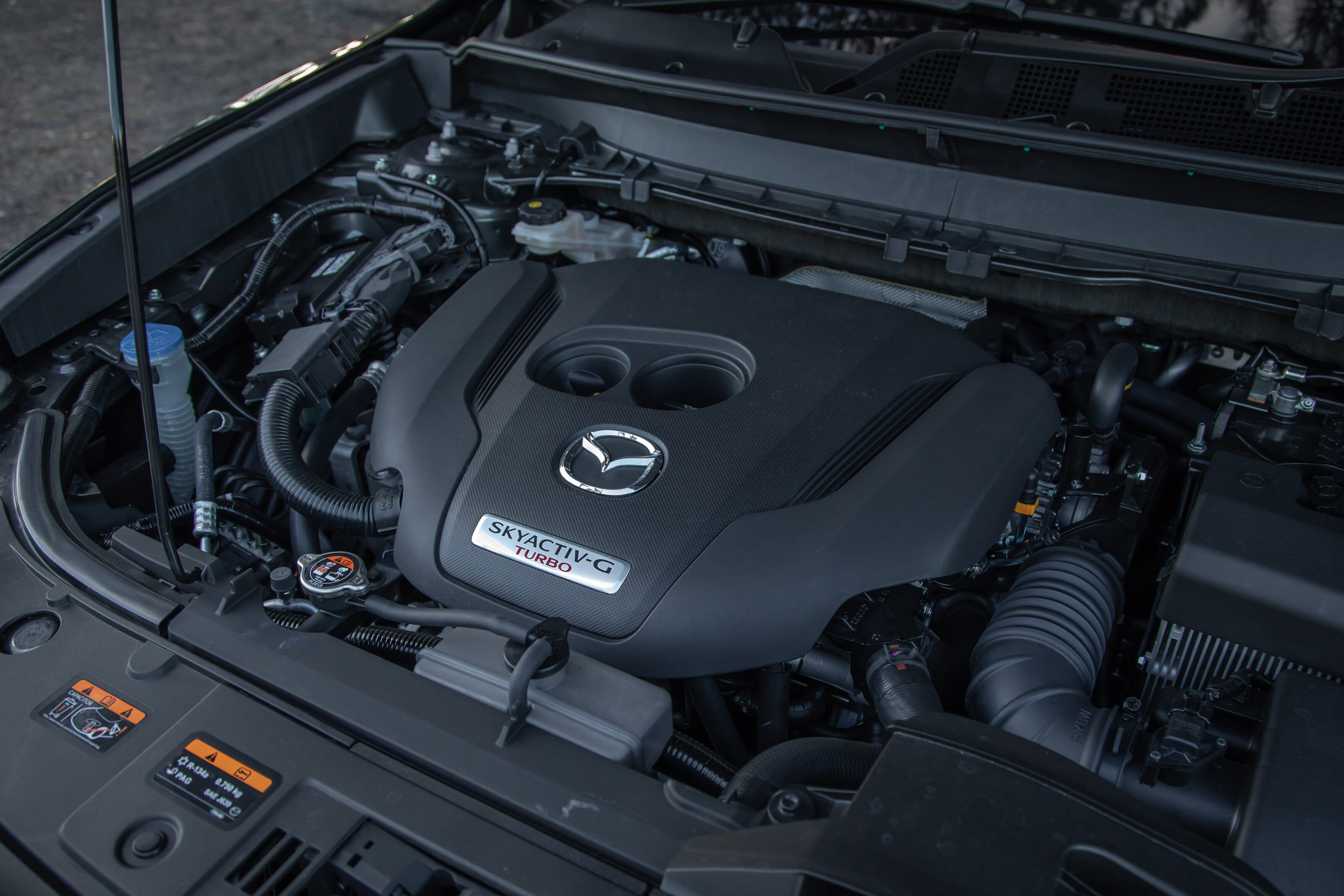
One of the reasons the front wheels scrabble is the demands placed upon them by the 2.5-litre turbo four under the bonnet. With 170kW and 420Nm (the latter at just 2000rpm), they’re diesel figures from a petrol engine.
The six-speed auto is looking short a gear or two, but works well with the engine and the CX-9’s two-tonne weight, with smooth shifts and a half-okay sport mode you’ll try once and never bother with again because there’s little point.
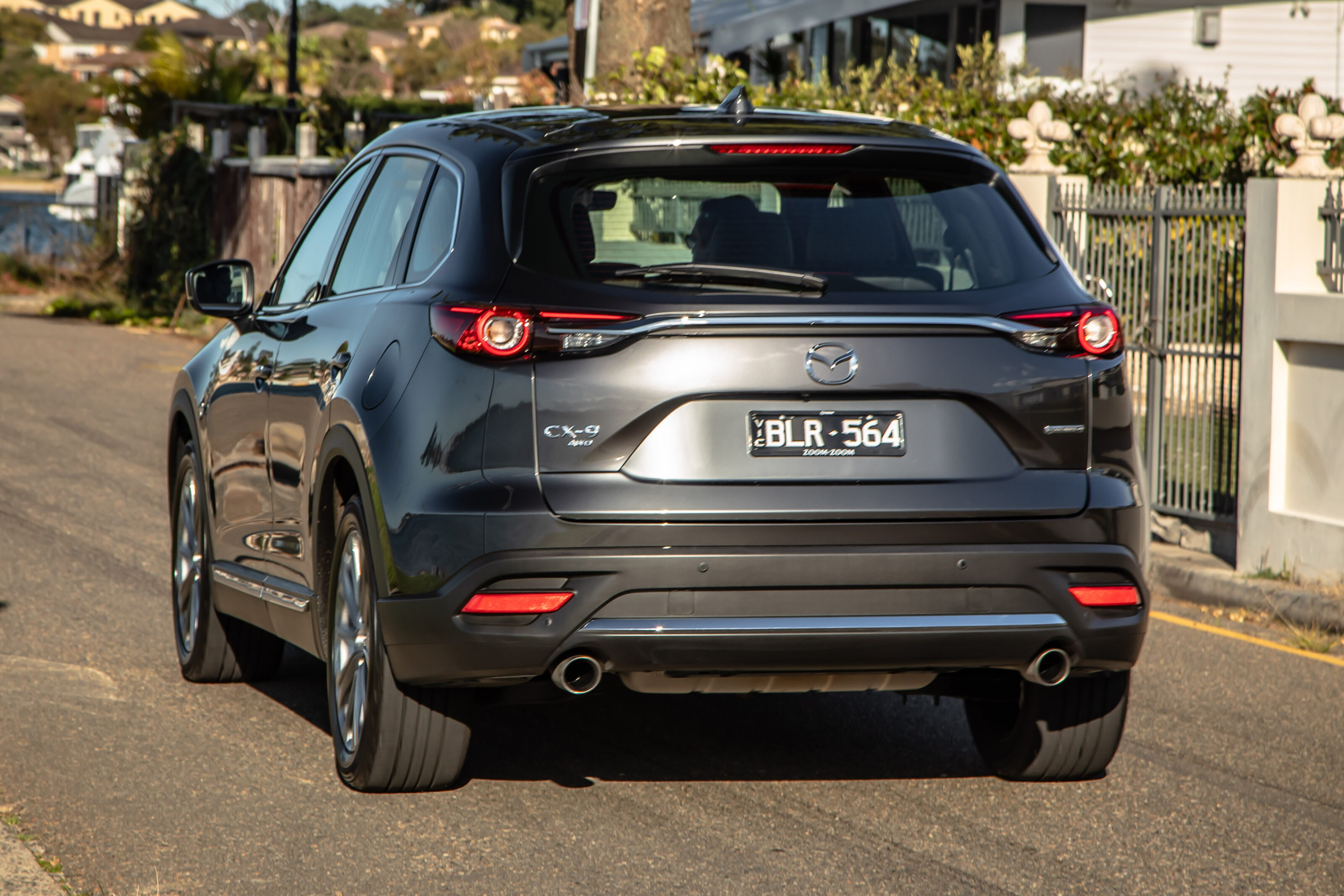
The CX-9’s overall agility is pretty impressive for such a big unit. At over five metres, it’s hardly a doddle to park or even find a parking space that fits it, but the quick steering means you’ll be in without too much arm-waving and twirling while the various cameras and endless beeping seem to work against each other until you’re used to what all the different noises mean.
It’s a fantastic long-distance cruiser. Comfortable, very quiet, it’s beautifully composed on the fast motorway – and the fuel consumption dives while you’re out there.
I spent a week behind the wheel, which included a run along various motorways to a top-secret destination for lunch (okay, Katoomba) and averaged 10.3L/100km, which is among the best figures I’ve seen in a CX-9 over the past four or five years. It’s certainly better than the infamous V6, which routinely sucked down twice that.
It’s a fantastic long-distance cruiser. Comfortable, very quiet, it’s beautifully composed on the fast motorway – and the fuel consumption dives while you’re out there.
Ownership
Mazda offers a five-year/unlimited kilometre warranty and roadside assist for the same period.
Service intervals come every 12 months or 10,000km. The short distance between services comes courtesy of the 2.5-litre turbo and is perhaps the least endearing thing about the ownership experience.
The first five services are capped at just over the $2000 mark, meaning you’ll pay about $400 per service. The Mazda website outlines what you’ll pay for extras like brake fluid that aren’t included in the cap, so at least you can tell what you’ll be up for.
As servicing goes, the pricing is fine and matches up well to its main rivals.
VERDICT
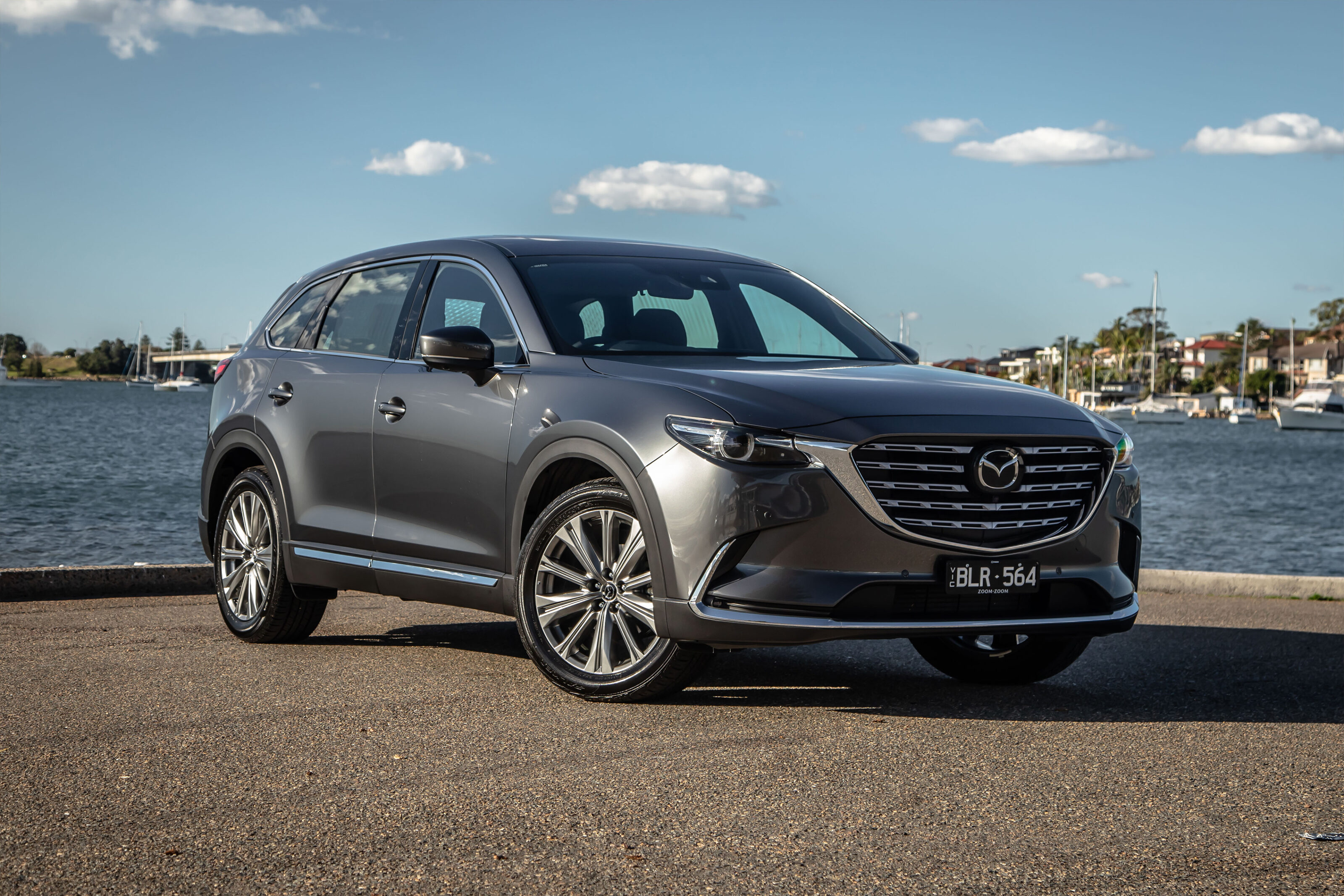
The CX-9 is weathering the storm rather well. It certainly helps that it still looks box-fresh nearly six years after its debut at the LA Motor Show.
Mazda’s quiet, careful and considered approach to yearly improvements – both gazetted and silent – has worked all up and down the range.
The addition of the LE version, with its luxury-focused middle row, is a bit of a masterstroke because it not only sets it apart from the Santa Fe and Sorento with which it is supposed to punch on with but also throws in the mix with the larger Hyundai Palisade with which it shares a $70k-plus price tag. That’s pretty clever when you think about it.
2021 Mazda CX-9 Azami LE specifications
| Body: | Five-door large SUV |
|---|---|
| Drive: | All-wheel drive |
| Engine: | 2.5-litre four-cylinder turbo petrol |
| Transmission: | six-speed automatic |
| Power: | 170kW @ 5000rpm |
| Torque: | 420Nm @ 2000rpm |
| Bore stroke: | 89mm x 100mm |
| Compression ratio: | 10.5 : 1.0 |
| 0-100km/h: | 7.9 sec (estimate) |
| Fuel consumption: | 9.0L/100km (combined) |
| Weight: | 2010kg |
| Suspension: | MacPherson strut (front); multi-link (rear) |
| L/W/H: | 5075/1969/1747mm |
| Wheelbase: | 2930mm |
| Brakes: | 320mm ventilated disc (front); 325mm solid disc (rear) |
| Tyres: | 255/50 R20 |
| Wheels: | 20-inch alloy wheels (17-inch space-saver spare) |
| Price: | $73,875+ ORC |
