
Between stringent lockdowns and one of the most challenging school years of their lives, a group of grade three students from St Francis primary school in Adelaide has found the time to design a futuristic drift car for British supercar manufacturer McLaren.
Over the past 10 weeks, the nine-year-old students researched, designed and engineered the project from sketches to an impressive two-metre-long model with the help of real McLaren designers.

The kids crowned the concept ‘Tiger Stripe’ and it’s based on the track-going McLaren Senna GTR racer, which features a 607kW 4.0-litre twin-turbo V8, though the kids’ version goes slideways rather than seeking outright lap times.
Design features include a large rear wing, bonnet vents and tailfin, which were added to reduce lift and assist the supercar in its ultimate goal of becoming a tyre-shredding drift car.
Inside, a teddy bear fabric was chosen by students for the luxury and comfort befitting of a McLaren car.
Tiger Stripe was unveiled with the support of McLaren director of design Rob Melville, who provided practical input to the students’ build process from the other side of the world.

“The ‘Tiger Stripe’ project embodies the spirit of McLaren. It’s cool, fast and utilises technology to create a vehicle that is striving for technological perfection,” said Melville.
“I was very impressed with the students’ attention to detail, from the concept and research stage, to the final execution.
“Projects like this are so important because design is a tangible expression of how art and science combine to produce innovative ideas of the future.
“It was a privilege to see the hard work that the St Francis students put into designing a future McLaren.”

According to the teachers, the idea to create ‘Tiger Stripe’ spawned after the class spotted a local McLaren being driven nearby.
“Kids love cars and one day we were in the classroom and a number of students told me about a gorgeous white McLaren supercar that they had seen driving around the local area,” said St Francis school teacher Tim Dennis.

“We chose to harness this enthusiasm and created our own learning programme that saw students working in teams to research the industry, decide on key features, develop the design and then finally engineer the final complete model.
“This included outlining the drift car’s specification and even learning about aerodynamics. It has been fantastic to get McLaren Automotive’s support to help bring this to life for the students.”

According to the students, the ‘Tiger Stripe’ is a limited-edition car and will be priced at $2 million.
However, it’s unclear when order books will open.
Porsche has developed a colour specific to Australia to kick off its 70th anniversary of selling sports cars here.
The new Fish Silver Grey metallic is a “modern interpretation” of fish silver grey, which was the colour of the 356 Cabriolet imported to Australia way back in 1951.
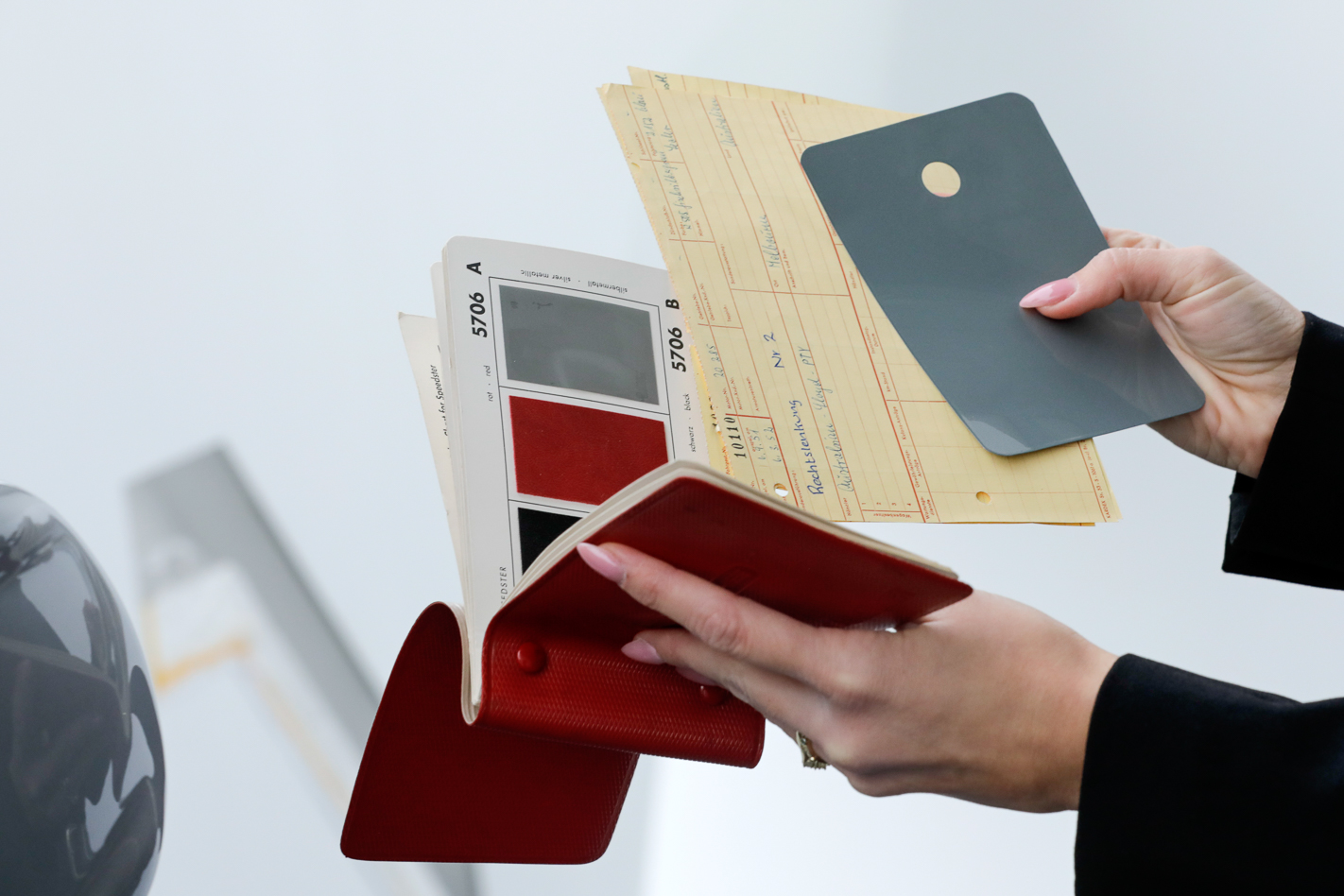
Ahead of its 70 years in Australia celebrations, which will be marked in a number of ways, Porsche hinted at a special edition car to commemorate the occasion.
Just 25 limited edition models will be sold exclusively Down Under in the Fish Silver Grey metallic, though Porsche is staying quiet on exactly which model will receive the celebratory treatment.
“Australia holds a special place in the history of Porsche,” said Porsche Australia CEO and managing director Sam Curtis.
“2021 will be a special year for Porsche enthusiasts. It is fitting that we will celebrate 70 years in Australia just as we launch the Taycan, our first all-electric Porsche sportscar and a signal of the future of the brand.”
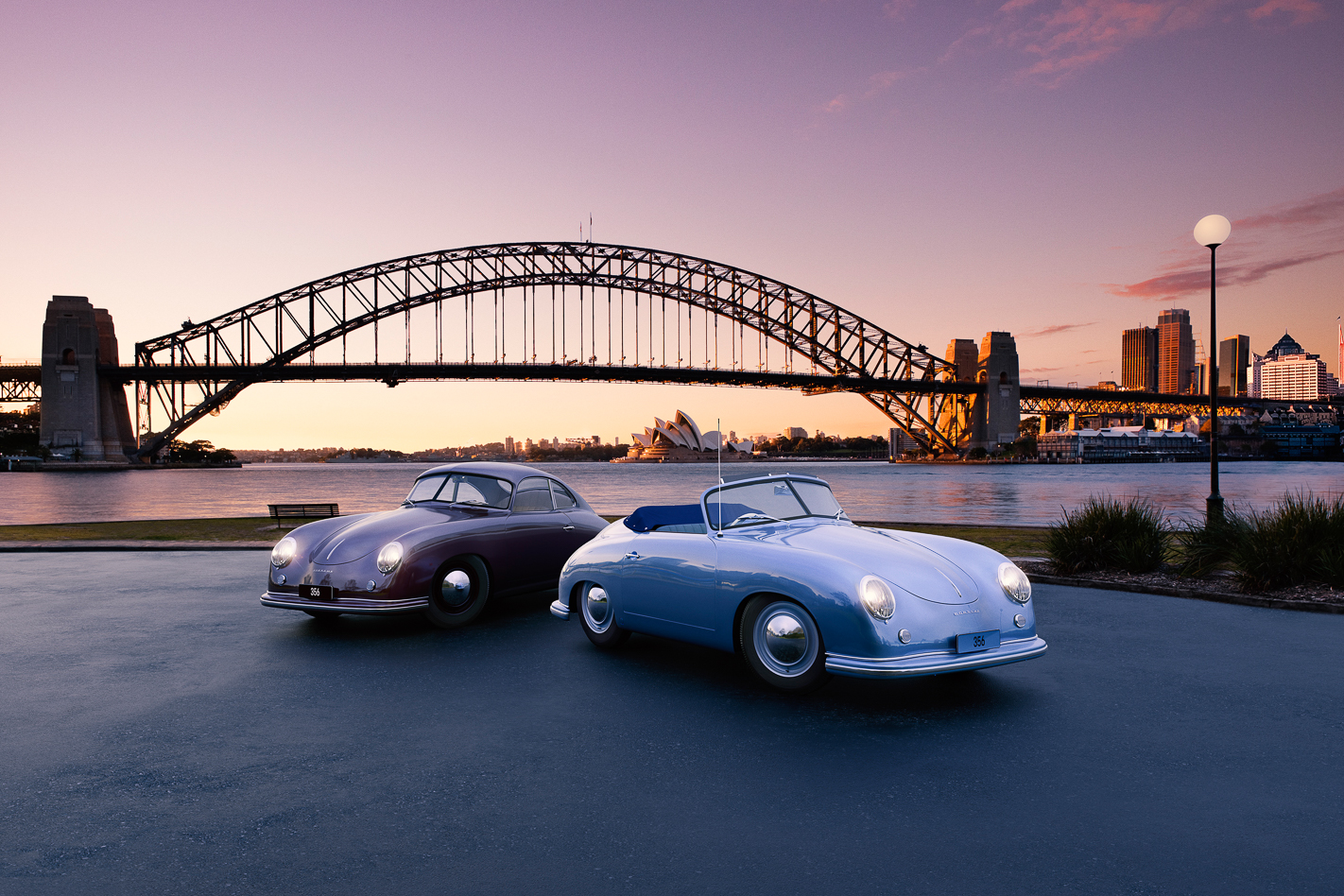
As the precursor to the 911 that in many ways defines the Porsche brand, the 356 is still loved by enthusiasts and collectors – and it was the car that started it all when the original Porsche importer, Norman Hamilton struck up a deal to bring the cars to Australia.
That deal came about partly thanks to the Snowy Mountains Hydro-Electric Scheme that is one of Australia’s biggest engineering feats.
Hamilton travelled to Austria seeking new pump technology for the Hydro Scheme but was quickly impressed with a sports car blasting past him on the Grossglockner Pass.
He later followed what turned out to be a Porsche back to the factory where he met then Porsche chief Ferry Porsche – son of founder Ferdinand Porsche – and later shook hands on a deal to import Porsches to Australia and New Zealand.
The United States was the only other market outside Europe at that time selling Porsches and Australia became the first right-hand drive market for Porsche.
That silver 356 Cabriolet and a maroon Coupe were collected by Hamilton and a friend in August before being driven to Italy and shipped to Melbourne.
Hamilton began selling them, but the early years were slow going, with just 22 sold between 1952 and 1955.
As part of the occasionally innovative marketing efforts, in 1953 he even completed 10,460km in a 356 on the gruelling Redex Round Australiaendurance trial.
That a sports car completed the wild and variable course impressed many, Hamilton finishing 99th of 186 starters.
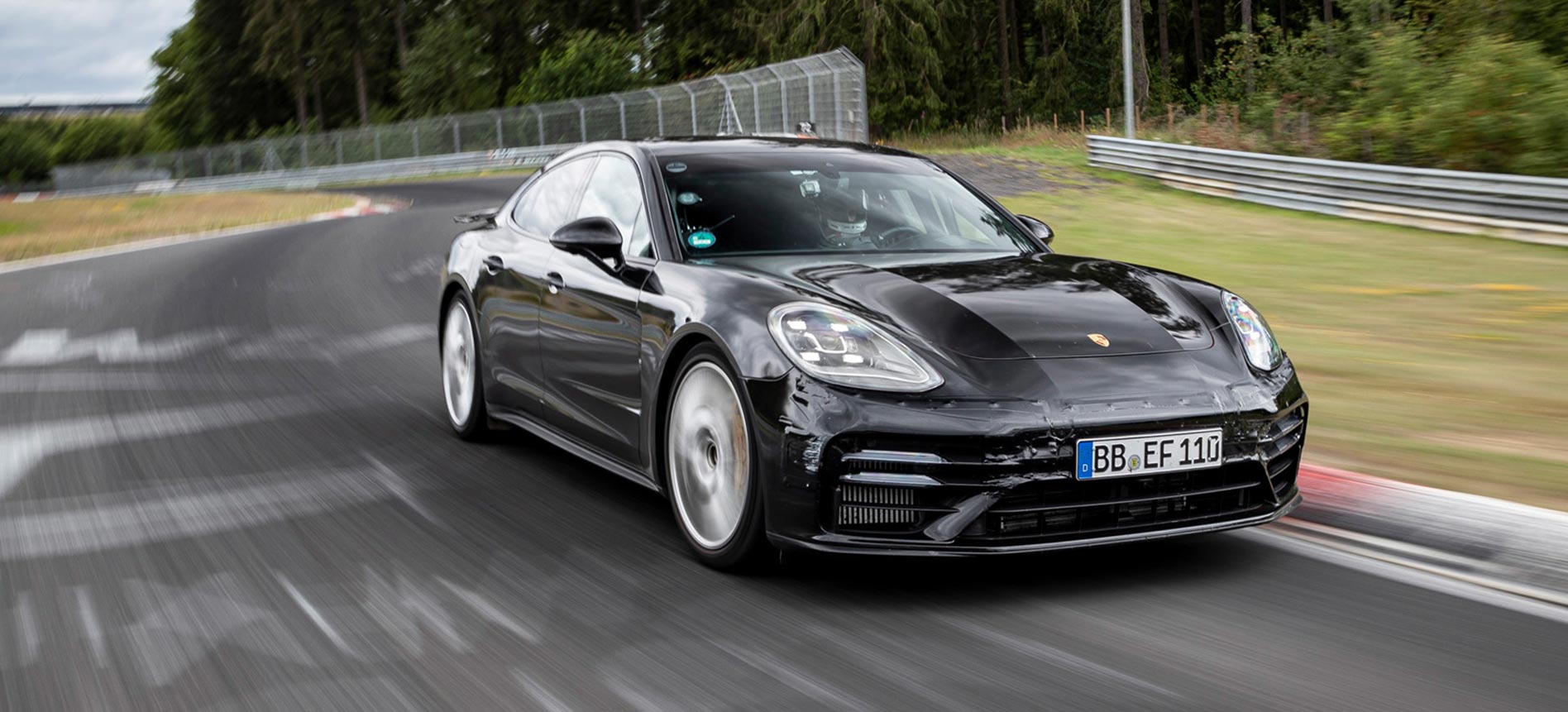
Performance testing the Porsche 992 911
Hamilton’s son Alan – who successfully raced Porsches for years – later took over the business and oversaw the addition of front-engined sports cars such as the 924, 944 and 928… not all of which were welcomed by fans of the 911 who loved its rear-engine character.
By the mid-1980s Porsche was selling more than 600 cars a year in Australia; a remarkable achievement, given the relatively small size of the market.
But sales dived with the late ’80s recession, and in 1992 Porsche took control of the Australian operations, in turn forming Porsche Cars Australia.
Plenty has changed since then. The company that has always worked closely with Volkswagen – the original Volkswagen Beetle was designed by Ferdinand Porsche – and is now owned by it.
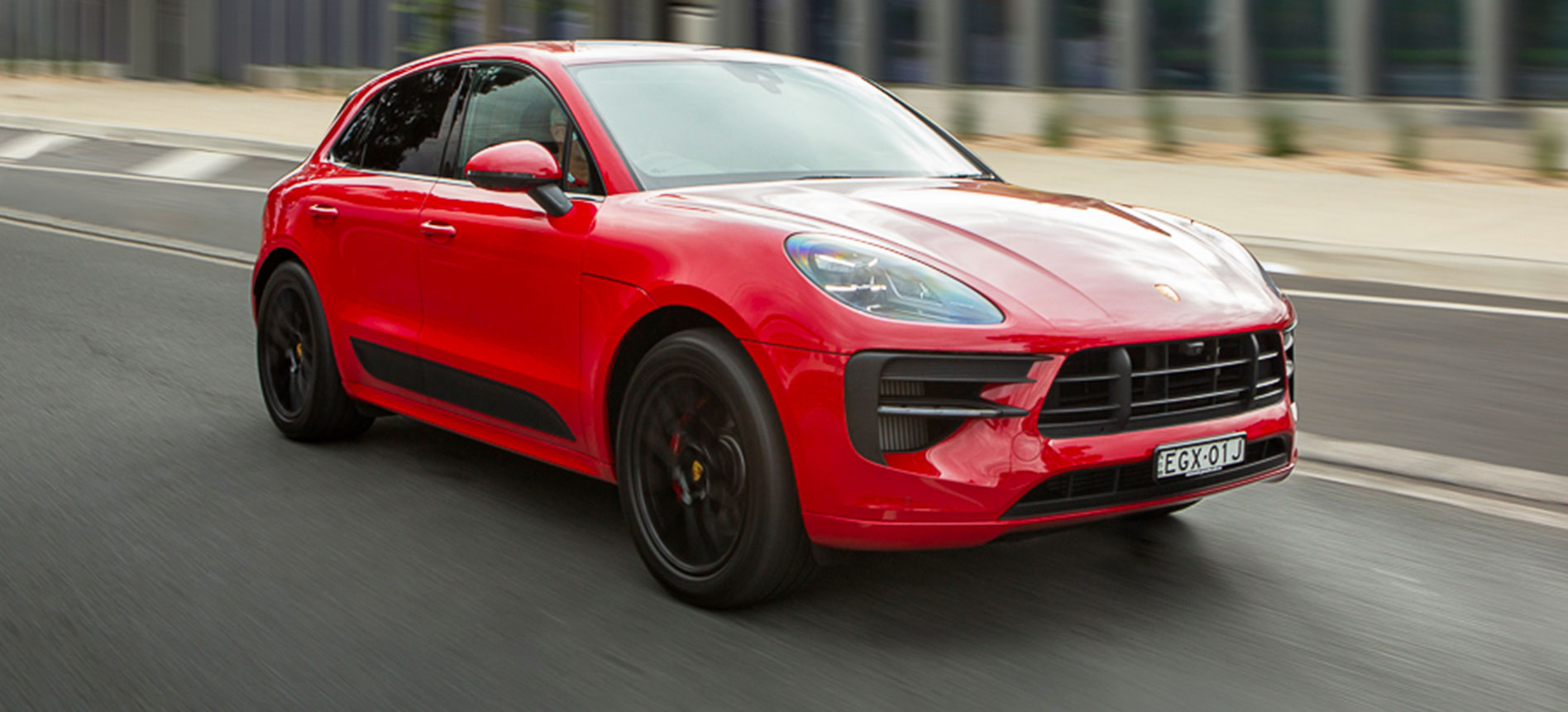
Once known only for sports cars, these days Porsche sells far more SUVs – the Cayenne and Macan – taking advantage of a boom in high-riding soft-roaders.
In 2019 some 81 per cent of Porsches sold here were SUVs and in the first 11 months of 2020 that increased to 83 per cent.
Many Porsche SUVs were powered by diesel engines, which have since been chopped from the lineup.
And Porsche has pushed into plug-in hybrid electric vehicles, using electric motors to supplement the petrol engines that deliver so much performance and character.
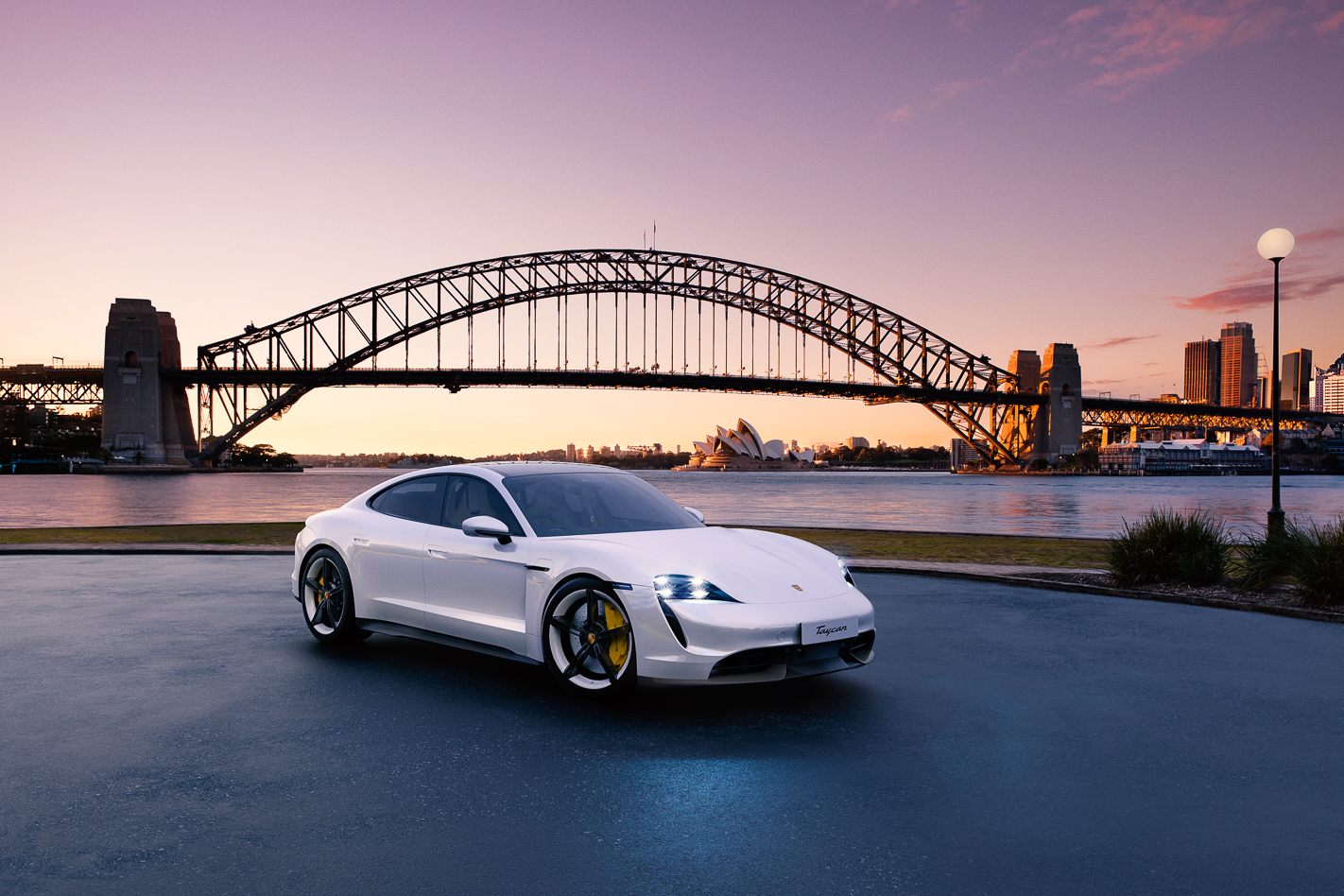
In 2021 Porsche will launch its first pure electric car, the Taycan; it was originally planned for 2020 but COVID has pushed it into the 70th anniversary year.
The 911 makes up a little over one in 10 Porsches sold here, although it still pulses the heartbeat of the company.
While Porsche has not announced which of its models will get the 70th anniversary limited edition treatment, it’s difficult to imagine it won’t be applied to the 911.
The closest the brand came to confirming that is by saying that “the new special edition model for Australia will be based on an iconic, modern Porsche sports car, but with a nod to the very first car we shipped to Australia all those years ago”.
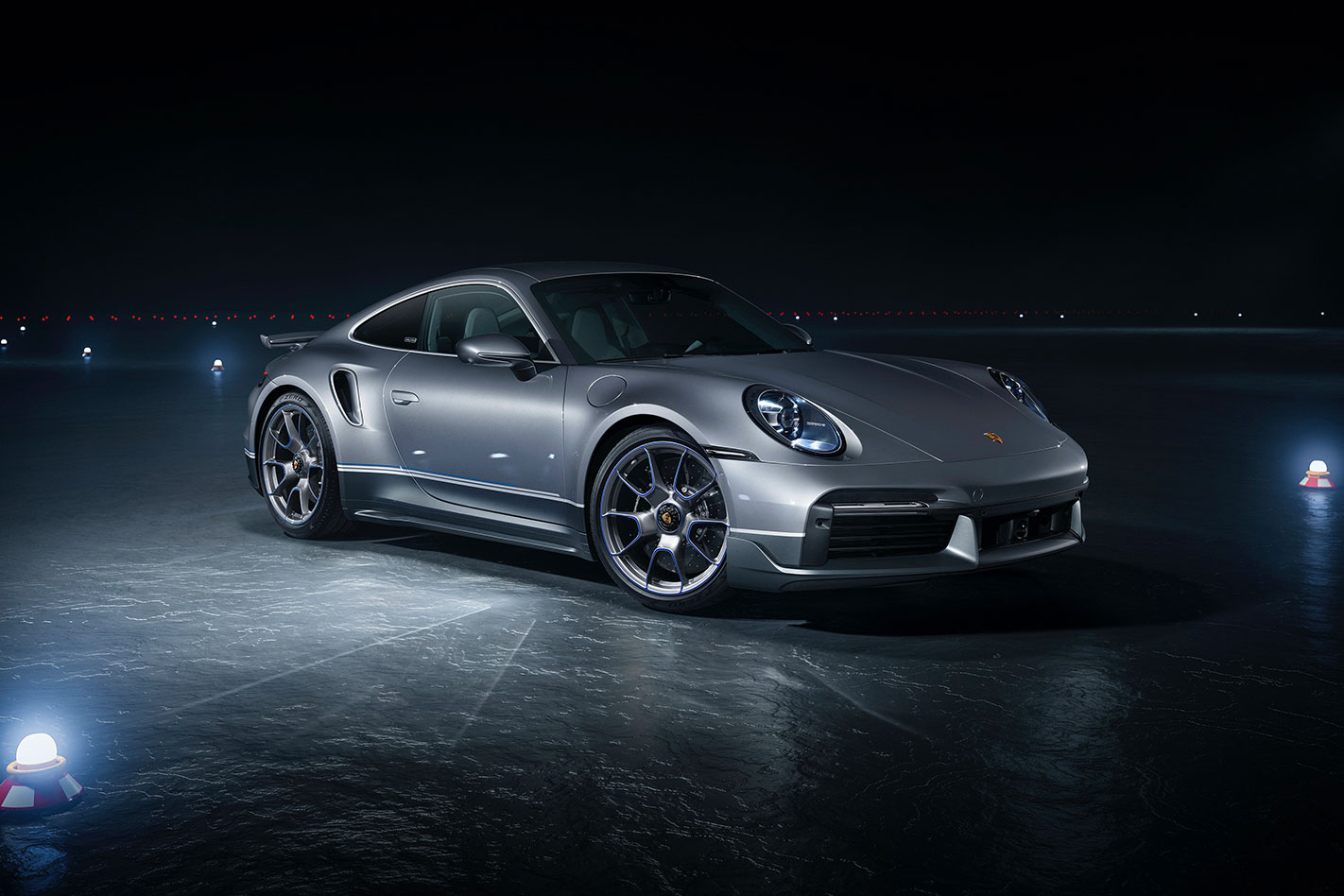
“Porsche and Australia have a close bond and tradition and Australians love our sports cars, especially the iconic Porsche 911,” said Detlev von Platen, member of the executive board for sales and marketing at Porsche head office.
Changes are on the way for the 2021 Lexus UX, including price adjustments, mechanical tweaks and equipment updates for the small luxury SUV.
The range is now $2000 more affordable than before for the five-seat, five-door Lexus SUV.
The $44,445 2021 UX200 Luxury kicks off the line-up, extending to $64,100 for the Lexus UX250h AWD F Sport.
The reason for a substantial price discount, though, is down to a reduction in standard equipment, with items such as LED fog lamps, roof rails, blind-spot monitor, rear cross-traffic alert, smart entry and digital radio all deleted.
These items will now be incorporated into a $1980 Enhancement pack.
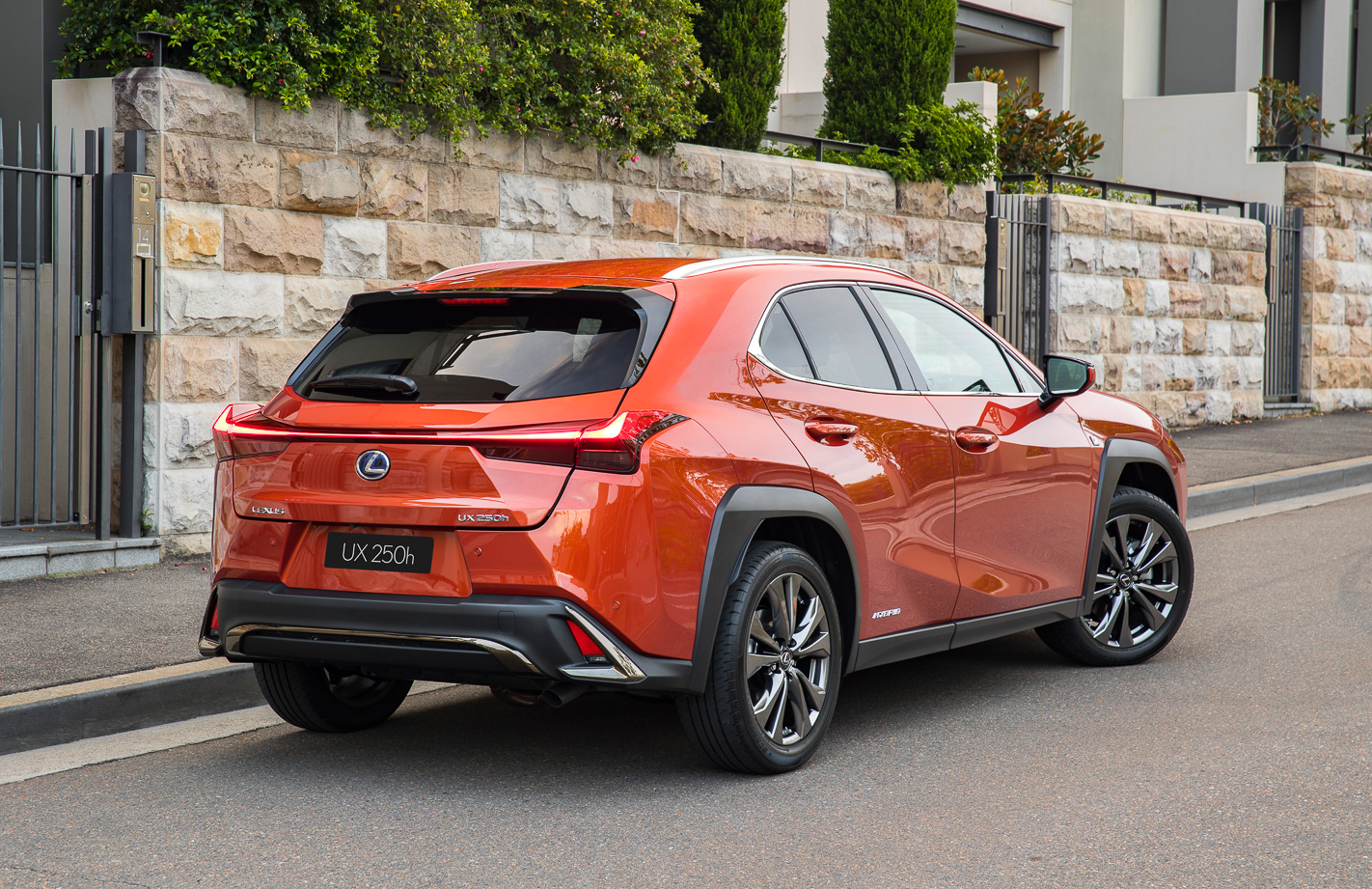
Elsewhere in the range, petrol UX variants have had price reductions of between $75 and $325 compared with their equivalent predecessors.
Certain aspects of the model have also been improved for 2021, including a revised continuously variable transmission that’s said to be more comfortable and smoother when setting off and coming to a halt.
Lexus boosts Encore customer care
Lexus says the UX’s acceleration is now more refined and responsive due to an ECU recalibration, as well.
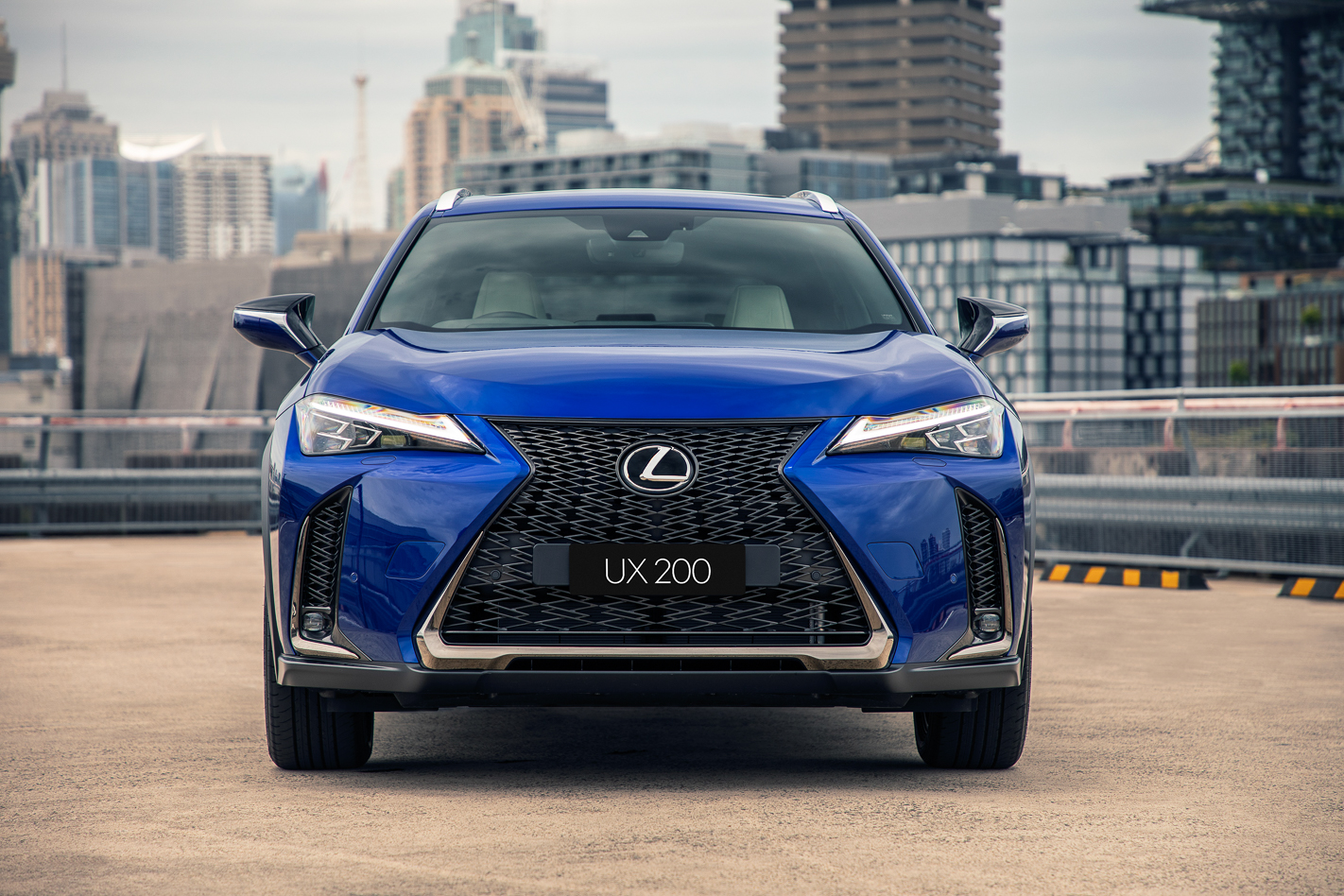
Power still comes from a 2.0-litre four-cylinder petrol engine which outputs 126kW/205Nm in the UX200, while the hybrid UX250h is propelled by a 131kW 2.0-litre petrol-electric powertrain taking power to the front or to all four wheels.
Boot size has also increased thanks to a lower floor, with petrol models now capable of carrying a minimum of 419 litres (dependent on wheel size) of luggage, and hybrid variants able to fit a lesser 368-litre capacity because of its additional battery.
Lexus says the cabin is quieter than before, with additional sound-absorbing materials added in key areas like the boot.
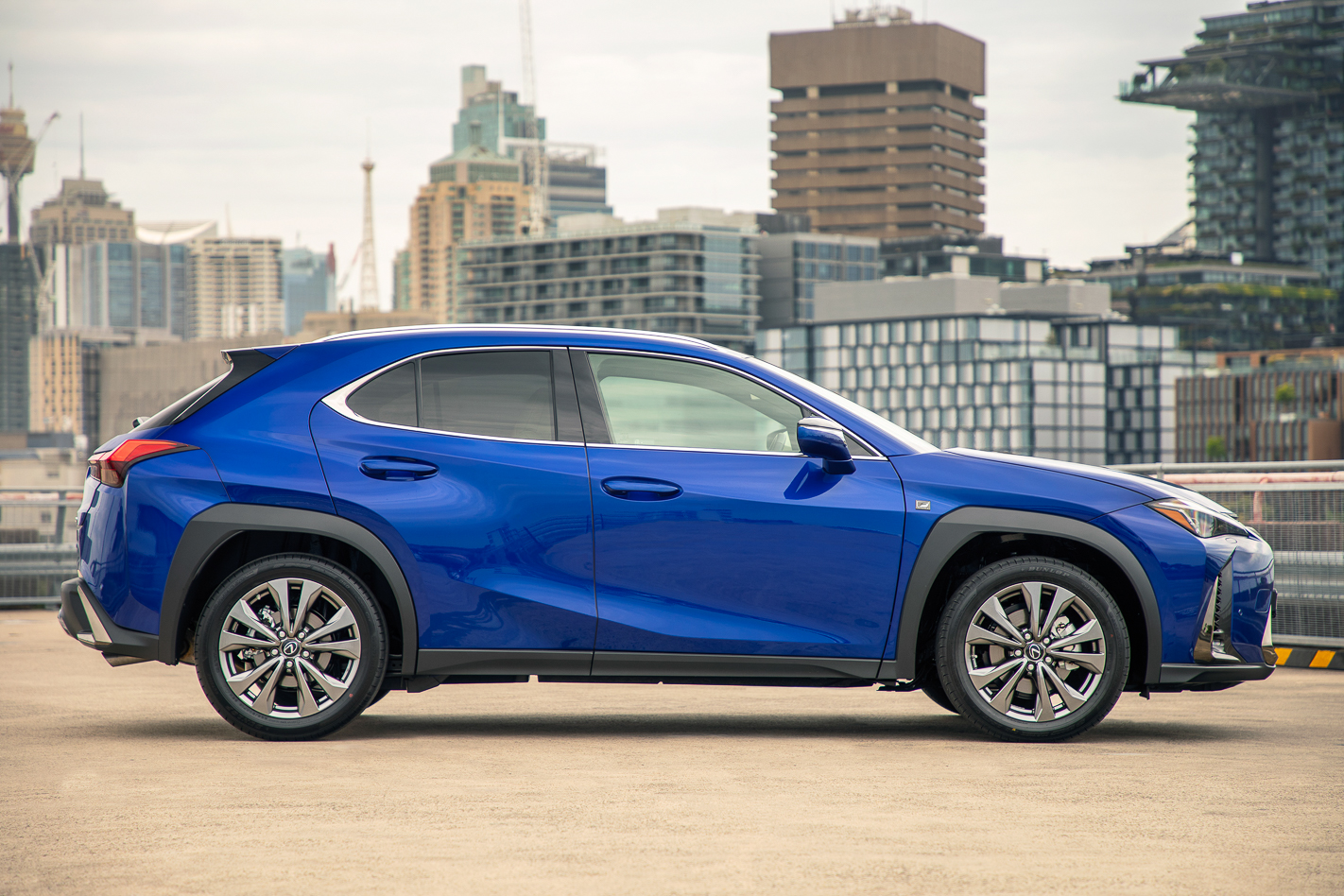
Lexus’ Road Sign Assist detection system has been upgraded to now detect school zone speed changes, and adds to the wider Lexus Safety System+ suite which includes autonomous emergency braking with pedestrian and cyclist detection and adaptive cruise control.
Rounding out the changes is the subbing-in of USB-C ports for outdated USB-A ports for rear passengers.
According to Lexus, one-third of UXs sold are the hybrid variants, with the range growing to incorporate the electric UX300e in 2021.
The 2021 Lexus UX range is in dealerships and on sale now.
2021 Lexus UX Australian pricing
- UX 200 Luxury – $44,445
- UX 200 Sports Luxury – $55,250
- UX 200 F Sport – $55,750
- UX 250h (FWD) Luxury – $52,025
- UX 250h (FWD) Sports Luxury – $59,100
- UX 250h (FWD) F Sport – $59,600
- UX 250h (AWD) Sports Luxury – $63,600
- UX 250h (AWD) F Sport – $64,100
- Called the iR-01
- Available in December
- V10 power, just 600kg, limited DF
Called the Dallara iR-01, iRacing’s latest car is a joint project between Dallara and iRacing, and it aims to blend all the best characteristics of your favourite racing cars.
What is it?
The iR-01 is a fictional car with very real development behind it; although it exists only in virtual form for now, the Dallara expertise behind it means it’s very much ready to race in the real world.
The decision to create the virtual car was partly motivated by Coronavirus; iRacing content teams couldn’t visit factories to capture new content, so they wanted to give members something else.
Factor in Dallara’s need to stay active during the pandemic and the iR-01 was born. Worked started in May of this year.
The iR-01 is only the latest collaboration between iRacing and Dallara – but it’s the first ‘virtual-only’ one. The two have worked together on bringing a range of cars to the simulator, including the Dallara P217 LMP2.
“Our partnership with Dallara to bring the Dallara iR-01 to iRacing has been unlike any other project we’ve ever undertaken,” said iRacing executive producer Steve Myers.
“With a clean sheet in front of us, we challenged ourselves to build the ultimate open-wheel racecar to bring to our users. The result is an exciting blend of the past, present, and future of grand prix racing that is thrilling to drive and produces incredible on-track battles.”
So what is the ultimate racing car like?
At 600kg the iR-01 is light, and it uses a naturally-aspirated 3.0-litre V10 with 650kW – just like a 1990s F1 car.
However, there are limited driver aids on board, and downforce has been limited to reduce issues when following other cars.
That means it should move around during corners, and rely on mechanical grip just as much as aero.
iRacing says the new car will ‘prove easy for new drivers to pick up and fun to race, but difficult to master.’
We’ll see later this month.
From the outside, my favourite Chinese place is – how can I put this – a sketchy proposition at best. Its facade hasn’t seen a lick of paint since the Dulux sheepdog was a weaning pup, and the tatty menus speak of times when coconut oil was still considered a viable alternative to sunscreen.
But to sample its kung-po pork or its chicken and chive dumplings, served with a smile, piping hot and overflowing with an innate richness, speaks of more than just foodstuffs thrown together for profit. That’s why we return again and again.
The fact that it remains incredibly affordable is an undeniable part of its latent charms.
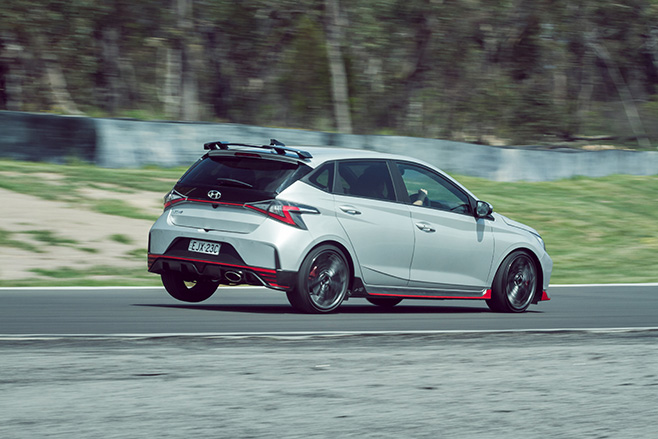
Now, rolling back into the pitlane of Wakefield Park after just a tantalising taste of Hyundai’s newest N, I’m feeling an undeniably similar affection for the little Hyundai i20 N. It’s nicely spiced, just hot enough, keenly priced, and hits the spot in exactly the right way.
I didn’t even know I’d be driving it, either, which made this brief but sweet treat even more delicious. Officially, I’m here to try the i30 N DCT, but luck and happenstance have made 2020 just a little bit less sucky today.
The i20 N sitting in the pit lane is a (very) recent arrival, having rolled out of the belly of a cargo jet just days before our drive, and sourced from Hyundai’s quality engineering team based at the company’s enormous testing facility in Namyang, about two hours from Seoul.
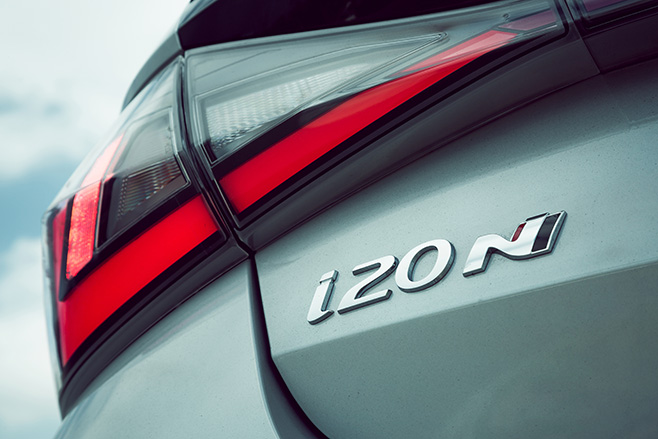
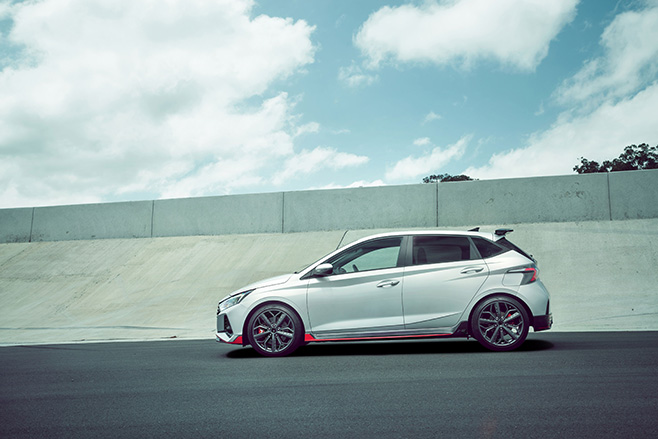
Hyundai calls it a ‘P stage’ prototype car, which is very close to the finished product – though local engineers will continue to beat it senseless and emails will continue to fly back and forth right up until the moment the lever for full production is pulled in early 2021.
“It was sent to Australia for what is called ‘total vehicle evaluation’,” we’re told. “It’s a series of road and track sessions to check areas like NVH, on-road characteristics, engine response, ergonomics, driveability, and track performance with a professional driver.” Sounds like a pretty cool gig…
To understand the i20 N is to know its older, bigger brother. When it dropped in 2017, the i30 N made waves. Instantly.
Here was a hot hatch that took the civility of a hot hatch, shook it around like a Rottweiler with a chew toy and threw it bodily over a precipice.
The i30 N was – and still is – a bloody hilarious thing, with a genuine edge and depth of talent I hadn’t experienced in a hot hatch since the front-drive Ford Focus RS of the early 2000s.
Its deliberately obnoxious exhaust, its sheer pace and its mischievous disdain for convention have brought Hyundai a legion of fans for its fledgling performance brand, let by the gruff but twinkling Albert Biermann, famed for his helmsmanship of the most famous single-letter performance brand of them all, BMW’s M.
“Every time I see an i30 N, I see someone who’s chosen a manual,” remarked my 18-year-old son recently, right before he forgot to empty the damn dishwasher again. “I see an enthusiast.”
And he’s right. Hyundai is selling about 1000 i30 Ns a year, and without an auto on offer. There are already N clubs and N days, and Hyundai’s working on numerous N accessories and N upgrades.
At $41,000 and change, the i30 N isn’t exactly dear…but it isn’t cheap, either, and the incoming dual-clutch-equipped car will only push it further up the tree.
That is, ladies and gentleman, where the i20 N comes in.
What is the Hyundai i20 N?
Based on the Europe-only i20 five-seat, five-door hatch, the i20 N follows the i30 N playbook to the letter… but it offers a unique spin that not only makes the car more affordable – no prices yet, but let’s guess around $32,500 – but gives it a distinctly different character to its bigger, older brother.
“We really wanted to follow our three pillars; it’s an everyday sports car, it’s race-track capable, and it’s a corner rascal,” Klaus Koster tells Wheels over a video call.
Koster is head of Hyundai’s high-performance vehicle development, on site in Russelsheim, Germany, at the COVID-delayed launch of the civilian-spec i20. “Mr Beirmann keeps on telling us, ‘Guys, it’s all about the customer having fun.’
“This is important, and, for an engineer, sometimes maybe very challenging, because ‘fun’ is not so easy to measure. How do you measure? With the grin? How high is the blood pressure?”
To read the ingredients on the tin, though, you’d be forgiven for stifling a yawn and rifling over a few more pages.
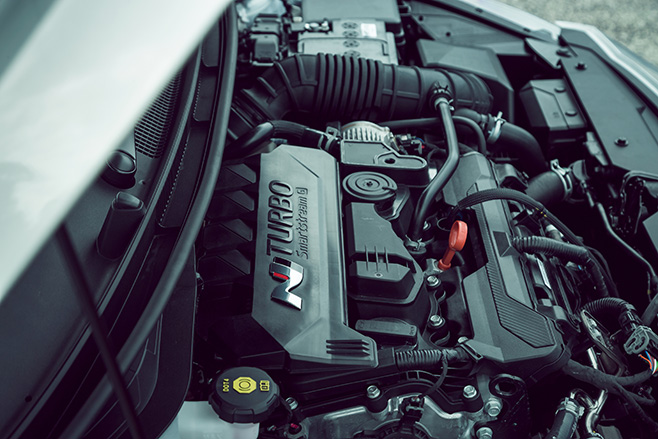
A strut front end with a torsion beam out back. The same 1.6-litre turbocharged four-cylinder you’d find in a Kona or Tucson. Sliding brake calipers. Not exactly WRC-aping, tarmac-shredding specs.
It’s the parts you don’t see listed on the spec sheet, though, that provide the secret sauce, that extra punch to the i20 N’s delivery.
Take the body-in-white, for example. Plucking bodyshells off the production line of a mass-market B-segment hatch is not conducive to affordability, but Koster says he’s happy with the changes he’s managed to work into the regulation-issue platform, pointing out Hyundai actually makes its own steel.
“The base i20 is already a very good starting point for it, with a very solid body-in-white stiffness, but there’s nothing that cannot be improved,” he says.
“The body-in-white got some additional welding points similar to the i30 N and some reinforcement parts in the area behind the front wheels and towards the front sub-frame. So, there are some reinforcement parts inside that help to improve the initial steering response on the car but, yes, it was a very good basis.”
Sachs dampers are used at all four corners, tuned to a fixed rate after thousands of kilometres at Germany’s famed Nurburgring Nordschleife circuit.
A mechanical limited slip diff nestles between the front wheels. While the dampers are tuned particularly to suit the i20 N, it’s not been a matter of throwing mega-dollars at each corner, reckons Koster.
Eighteen models in 18 months as Hyundai overhauls its fleet
“What we were trying to is with Sachs, in this case, or with the supplier, is to have a very good damper tuning,” he explains, “but it’s a conventional damper. It’s not that we said ‘oh, this is the very special conventional damper’.”
And while the COVID situation has put a… damper on things (here all week!), there’s still a bit of Down Under down under the i20 N.
“We always involve the colleagues from Australia,” says Koster. “We had Andrew [Tuatahi, Hyundai Australia’s product manager] at the Nurburgring a few times. Unfortunately now, with all the situation of COVID-19, it’s not possible in this way, but I think we got a good alignment.”
Its 18-inch rims are shod in N-spec 215/40 R18 Pirelli P-Zero tyres, and those humble sliding calipers come from a car half a size larger again that the i20 N, clamping down on 320mm brake rotors that will have the under-braked Ford Fiesta ST surreptitiously tugging its tee shirt down in front of its jeans.
The i20 N comes with a six-speed manual gearbox and no other, while it still offers an N mode paddle, it eschews many of the complexities of the i30 N.
There’s a simple screen that acts as the dash, a larger multimedia set-up sitting proud of the dash and a handful of climate controls below it. The seat is slung low, the wheel feels slightly smaller than that in the i30 N and the three pedals are well placed should you wish to turn off the rev-matching function and keep old traditions alive.
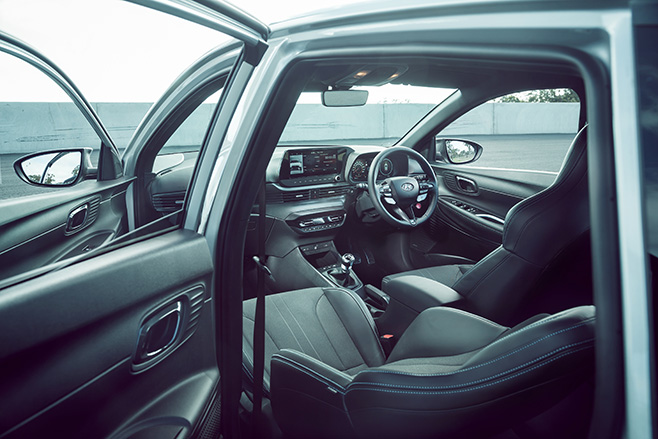
In terms of eyeing rivals, Koster says Hyundai “looked at competitor cars, but then took our own way. We are not trying to copy a car which is on the market.
“Take the i30 N; we don’t want to make a second Golf GTI. We want to make a different car and position it in a different way to follow our philosophy. I think [we were] successful.
“The first feedback [on i20 N], listening to your evaluation, is showing that this direction is working and we keep on pushing in this direction.”
Driving the Hyundai i20 N
Finally, it’s my turn. The i20 N pulls away on a typically small car-feeling light clutch, its low-speed ride not noticeably wound down for the kind of car it’s deigning to be.
The 1.6-litre engine is a new version of the Gamma II, too. It’s making 150kW and 275Nm, and it’s pushing along about 1190kg of car (and 110kg of driver!).
Was there consideration given to fit the i30 N’s 2.0-litre turbo four to the i20?
“It wouldn’t fit,” comes the quick reply. “I think also, looking at the segment itself, with the 1.6 turbo, we are quite [satisfied] with the level of horsepower. If you installed something like 280hp or 270hp, this would not be matching the segment anymore.”
The N paddle on the steering wheel – plucked from the i30 N playbook – tweaks throttle map, steering feel, stability control and exhaust note… and it would be rude not to, right?
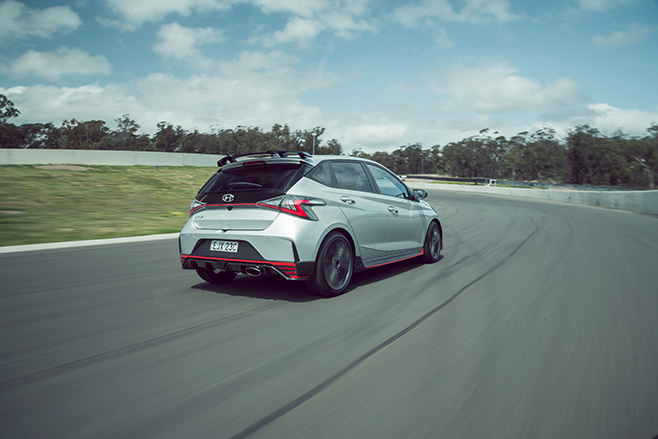
A sighting lap of the 2.2km confines of the undulating 20-year-old Wakefield track is instantly illuminating – the i20 N is a fun little thing.
The steering isn’t quite as quick in rack as we were expecting – so, the dynamic opposite of the lightning front end in the Fiesta ST, then – but the reward is tactility, support and presence in equal measure, with linear weighting right through the motion.
The rear follows faithfully, too, imparting stability of something one size larger (a nod to its 2580mm wheelbase; some 90mm longer than a Fiesta). Its grippy tyre spec helps here, too.
The 1.6-litre engine is linear and strong-ish, too; while it feels as if the i20 N could handle more, the amount it has to work with is part of the reason it all feels so nice out of the box.
It’s far from sonorous in the engine note department, but the orchestrated overrun crackles – while not as overt as the i30 N’s – are still a delight.
After just one lap, it’s fair to say I’m pretty smitten. Every element of the i20 N imparts a sense of joy I just wasn’t expecting.
There’s character, ability, grip, turn, squirt… all working together in a seamless, resolved way that belies the car’s size and specs.
It’s not all choirs and balloons, of course. My main criticism is a third gear that is ssssoooo loooong that it allows the engine to fall out of its torque band unless you’re pretty abusive with your shift pattern, while the shifter itself feels a bit short.
Koster said second gear was deliberately geared to 100km/h, resulting in a taller third gear as well.
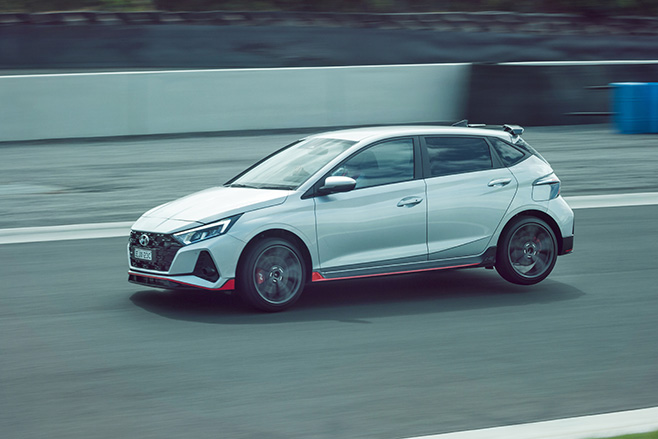
That long third gear also exposes a bit of a hole at the bottom of the rev range that I wondered could ever be filled with hybrid assistance.
“Big question,” Koster says, his grin filling the video chat window. “Overall, I think electrification in some way, you will never get it wrong. So, there is a need to do something this direction.
“How and when I cannot tell you because I don’t have my Men in Black memory ray with me, and I cannot kill you because you’re in Australia!”
My laps are limited, so I wind up the wick on the second tour. This poor prototype has been leant on all day but, as I’ve found previously with the i30 N, these cars are built to take this kind of abuse.
There’s a suppleness and a forgiving nature to the i20 N that flatters the rookie but entertains the more experienced, and it’s all I can do to wind out of it for a lap at pedestrian pace.
I’m glad I did – the damper tune is, to my butt at least, right on the money for everyday work.
It’s with a sense of regret that I peel into the pit lane to hand back the i20 N. I could have lapped that thing until the tyres fell off, I reckon. For this car to make such an impression in just 10 kilometres speaks volumes to me.
“It’s not about being the fastest one (which doesn’t mean that we aren’t trying to be fast!),” Koster muses. “But it’s not about being a tenth of a second faster from zero to 100 or whatever. It’s about having fun.”
I’m very keen to get back in the i20 N for a proper lean on it, but even after this briefest of dalliances, its cheap and cheerful nature has me already excited about a revisit – ideally for the full meal, rather than just a tasty appetiser.
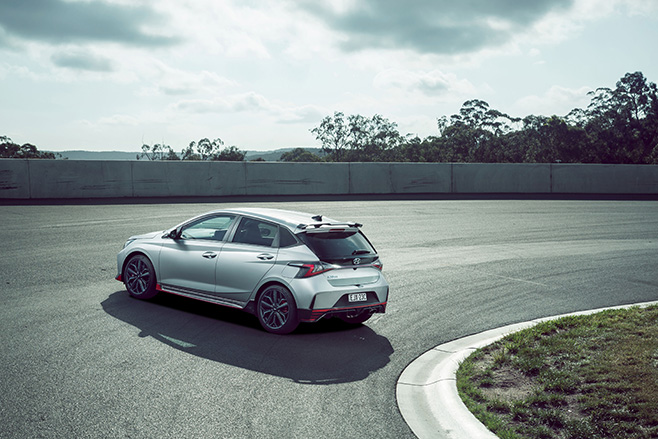
Gamma Raise: The i20 N’s 1.6-litre turbo engine
Popular across the Hyundai universe, the i20 N’s inline-4 – known as the TGDI Gamma II – scores extra weaponry you won’t see in, say, an i30 N-Line, like a high-performance water pump for its intercooler circuit.
“At least in Europe, this is the first time this engine has been introduced,” says Koster. “This is really a state-of-the-art engine.” Compare the 1190kg i20 N’s 150kW/275Nm with the two cars it’ll compete with, too – Ford’s Fiesta ST (147kW/290Nm, 1262kg) and the VW Polo GTI (147kW/320Nm, 1285kg) – and it’ll be an interesting fight.
Three Hyundai i20 N things you should know
1. Brakes and tyres
Not for the i20 N are fancy one-piece Brembos; instead, it uses sliding calipers from a larger Hyundai (we’re guessing Tucson) and rotors a full 42mm bigger in diameter than those on Fiesta ST.
The P-Zeros, too, are coded by Pirelli so they can be easily sourced once they wear out.
2. Chassis kinematics
This is no shopping trolley chassis any more, says head engineer Koster. “We changed the front axle kinematics with a new [hub] knuckle to match the high performance requirements. We did a new rear CTBA [couple torsion beam axle], too, and that was no small investment…”
3. No auto
“There will be no dual-clutch version,” confirms Koster. “In the B-segment, the manual is just the way to go. For those customers who think they need a dual clutch, we have the right product in the C-segment.”
That would be i30 N which just scored an eight-speed wet DCT.
Hyundai i20 N specs
Engine 1591cc 4cyl, DOHC, 16v, turbo Max Power 150kW @ 5500-6000rpm Max Torque 275Nm @ 1750-4500rpm Dimensions (L/W/H) 4075/1750/1440mm Wheelbase 2580mm Transmission 6-speed manual Weight 1190kg 0-100km/h6.7sec (claimed) Economy9.0L/100km (estimate) Price $32,500 (estimate) On sale H1/2021
Well, 2020 certainly has been a year. We’re glad to see the end of it, not least because it means our Yearbook 2020 issue has hit the shelves, and your mailbox if you’re one of our subscribers!
If that’s you, you can pretty much stop reading here and go read the magazine, but if you’re tossing up whether or not to buy this issue, let us give you a cheeky little peek between the pages.
Get a subscription to Wheels Magazine right here!
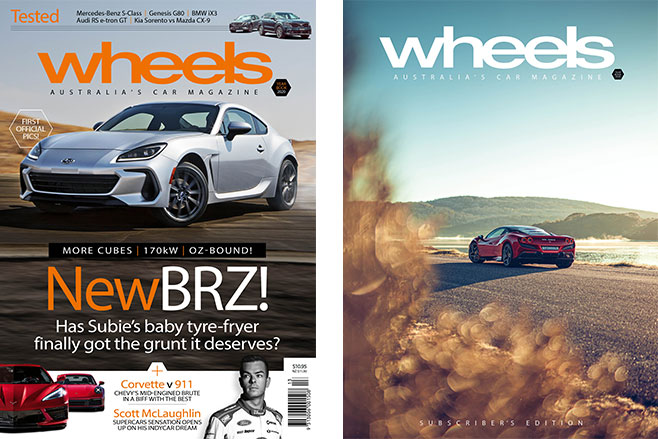
First, as our retail cover may have given away, the new Subaru BRZ is revealed to the world, so we’ve taken a dive into it and brought you all the first official photos.
If you’re a subscriber, your cover will instead have a stunning shot (by Alastair Brook) of the Ferrari F8 Tributo exploring Victoria the day after Stage 4 COVID restrictions eased to allow us to undertake such a drive.
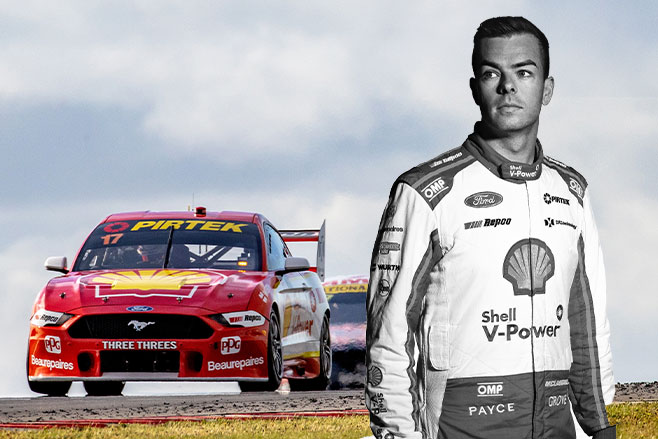
Also this issue, we speak rather frankly to former Supercars driver (and champion) Scott McLaughlin about his next step into the world of Indy. “I hope you’re quoting me on this, because it needs to be said…”
The new Mercedes-Benz S-Class is also present between the pages of our new issue, as we sample the car that so often heralds what the future of motoring will be like.
In the USA, our correspondents take charge of a new Chevrolet C8 Corvette and one Porsche 911 Carrera to see if the former has any chance at being a challenger to the latter.
Closer to home, and most of our wallets, we set the new Kia Sorento against an SUV benchmark in the form of the Mazda CX-9.
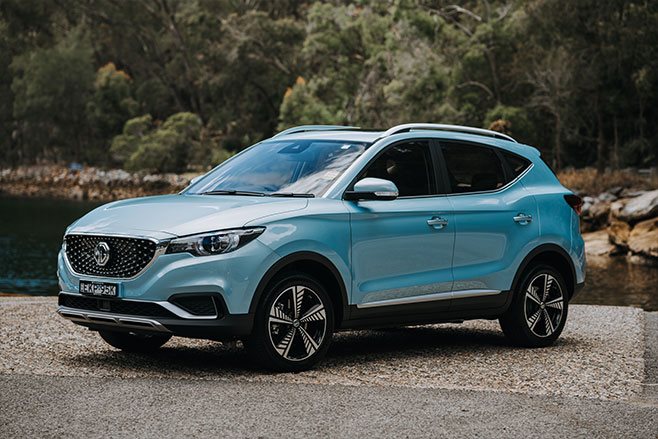
Reckon MG can make a good EV SUV? We wanted to find out too, so we drove one.
There’s plenty more in this issue, too. The new Golf R, our columnists, tech dives, the features and data you expect from Wheels, and the industry insight you won’t find elsewhere.
As the curtain draws in, Holden is embarking on one final farewell tour, with more than 80 of its production and concept cars to hit museums around Australia to tell the story of the Holden name from beginning to end.
It’s not just cars making their way to nationwide exhibits, either; memorabilia, parts, photos and engines will also feature in motoring museums throughout the country, with the first display set to open in mid-December at the National Motor Museum in Birdwood, South Australia.
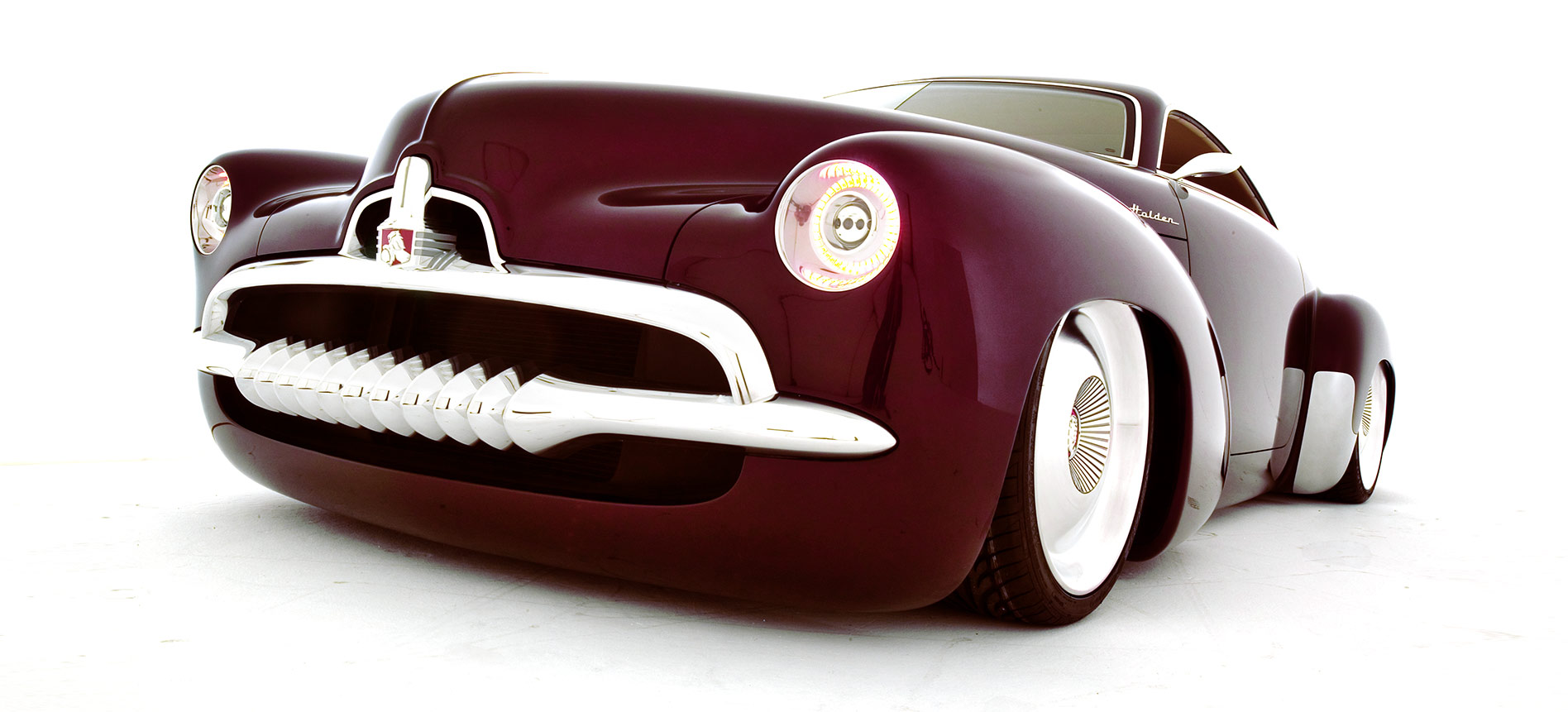
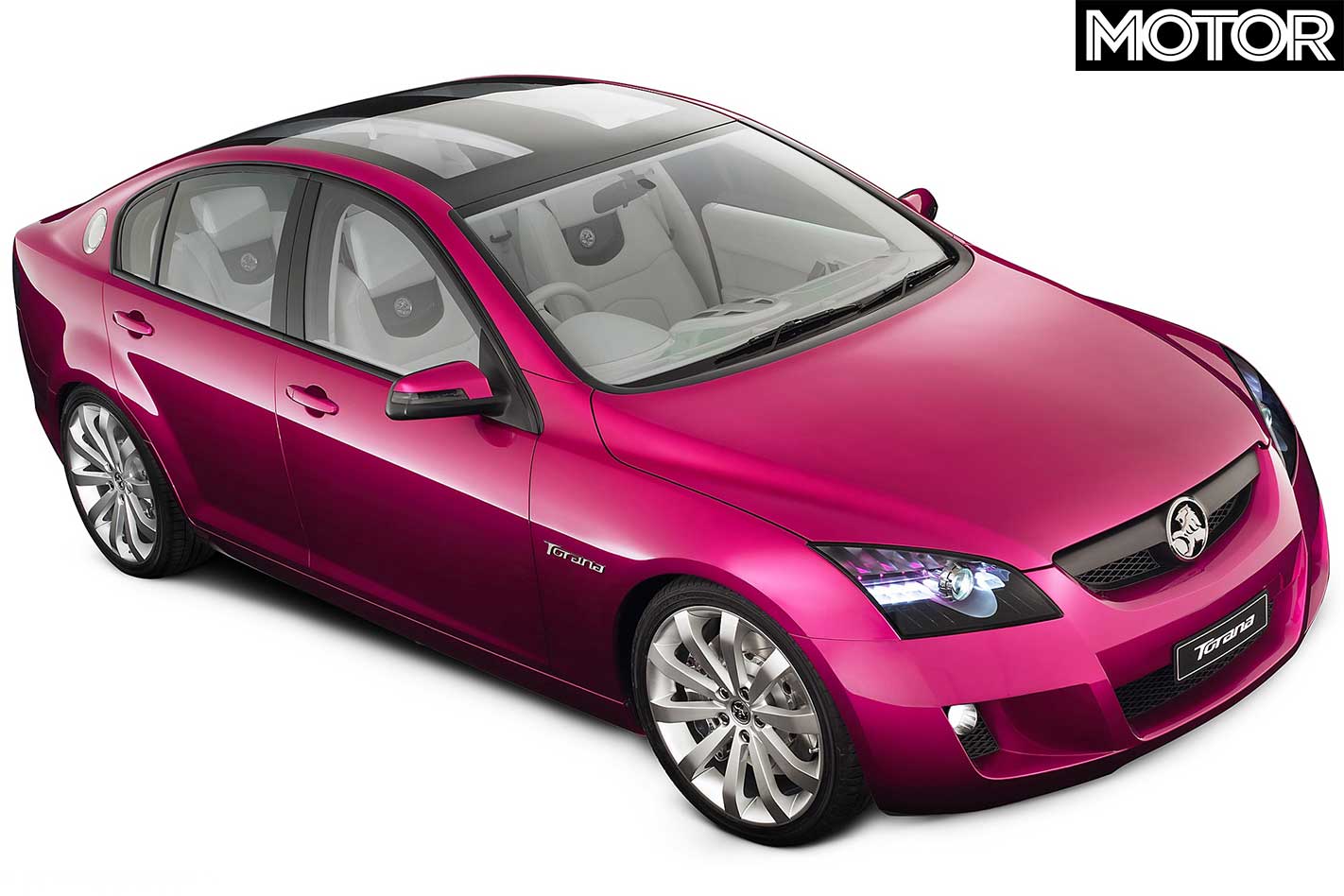
That will feature a select few iconic cars including the first-ever Holden 48-215 presented by former prime minister Ben Chifley in 1948, the 1969 Holden Hurricane concept, the one-millionth EJ Holden, the 2008 Holden Coupe 60 concept and the Efijy design concept.
Holden has been working hard over the past half-decade to bolster its heritage collection with the help of retired employees from Victoria and South Australia.
More Holden news
- Vale: Bathurst 1000 winner John Harvey
- Signs of the times as former Holden dealers shed the Lion
- The Holden website has no cars on it any more
- Why manufacturing (and Holden) failed in Australia
It thinned the heritage herd a little in late 2019, auctioning off a brace of duplicate copies of collected cars, along with a few pieces of interesting Holden history.
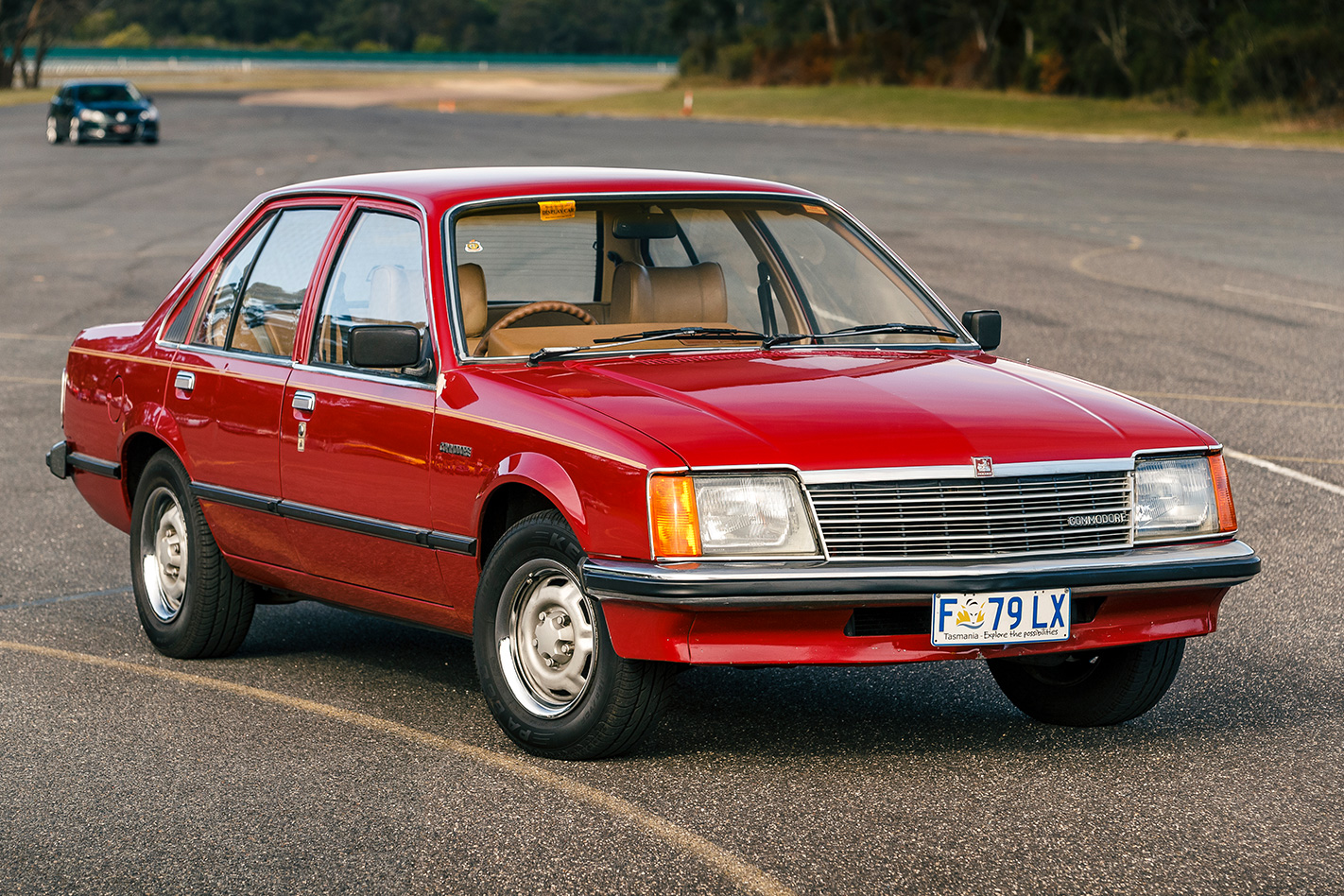
“GM is sincerely grateful for the work our Holden Heritage Group of retiree volunteers has done to sort, digitise and safely store many thousands of items relating to Holden’s rich manufacturing and iconic brand history,” said managing director for GM Australia and New Zealand Mark Ebolo.
“We are planning to launch a Holden Heritage Collection website next year which will provide enthusiasts with information about the collection, as well as details of where to view the vehicles.”
Beyond these exhibitions, Holden has engaged with the National Museum of Australia and the Commonwealth Office for the Arts to develop long-term plans for the preservation of the collection, with a view to make as much of it as possible available to the public.
“We more than anybody recognise how important this collection is to Australia and particularly to the people who have worked at Holden and owned Holden cars,” said Ebolo.
“We hope that with the opening of state borders and as Australians go on holidays, they will visit the various museums where these wonderful Holden cars will be displayed.”
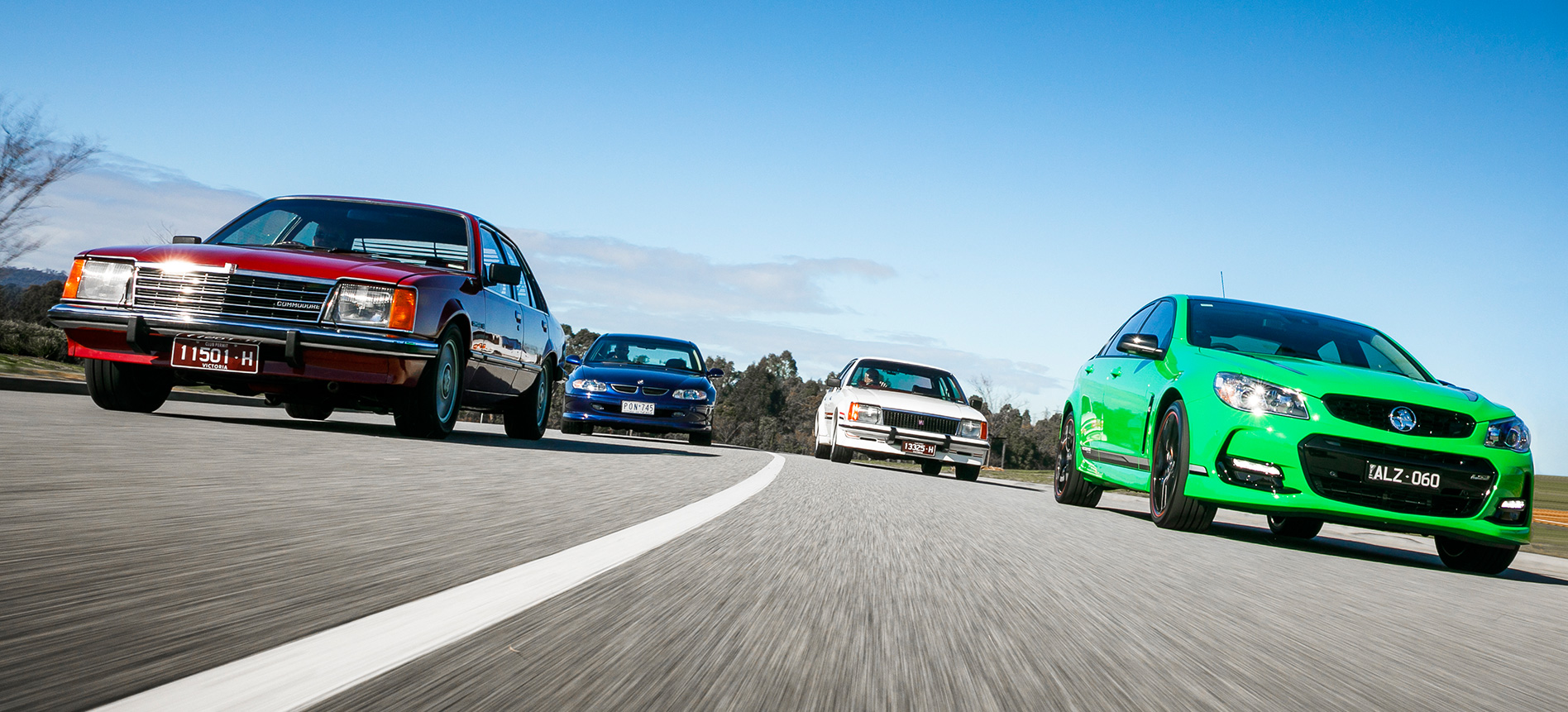
It will be the first time Holden has allowed its entire collection to be released simultaneously for viewing.
For a full list of museum locations and what you can expect to find there, click here.
Mercedes AMG Formula 1 team boss Toto Wolff didn’t mince words after his team bungled a golden opportunity to create a fairy tale finish for super-sub driver George Russell, who stood in for a COVID-afflicted Lewis Hamilton at the Sakhir Grand Prix.
“It was a colossal fuck-up,” he said bluntly to Sky Television. “I know I’m not allowed to say that, but it was.”
It was a pretty damning assessment of a team that has claimed every piece of silverware in the sport of F1 over the last eight years, but it was accurate, and it was an insight into the winning mentality of F1’s greatest team of the current generation.
Plucked from the struggling Williams F1 team only two days before the race after Hamilton was diagnosed with COVID-19, Russell barely put a foot wrong the entire weekend, topping two practice sessions and qualifying second, an agonising 0.026sec behind his teammate Valtteri Bottas.
Russell drove a simply brilliant race, easing into a comfortable lead before a pt stop bungle cost him track position.
A spirited drive put him back into second place with less than ten laps to go, but fate would intervene again.
The intense young Brit was not awestruck by his sudden promotion to the big leagues; far from it, in fact.
F1 is as much a game of chance as it is a test of skill and talent, and Russell – who’s acquitted himself as well as possible in one of the grid’s slowest cars – knew it after climbing from the cockpit of the #64 Merc, wrung out and despondent after a win was plucked away from him not once, but twice.
He had led the field away with the poise of a bloke who’d been doing it for years, with carnage behind him taking front-runners Max Verstappen and Charles Leclerc off the chessboard early.
He eased out to a comfortable gap over his teammate, asking the team to tell him when he should actually start pushing the car faster.
The fairy tale was half-written.
Ironically, it was the driver who filled his spot at Williams for the weekend, Jack Aitkin, who kicked off a chain reaction that would see Russell lose the lead through no fault of his own.
A spin coming onto the main straight knocked Aitkin’s front wing off, which deposited itself in an awkward spot on the racing line and forcing Australian-born race director Michael Masi to slow the field under what’s known as a virtual safety car.
The virtual safety car requires every car to drop about 40 per cent of its race pace immediately, with indiscretions by drivers punished harshly.
It’s also a golden opportunity to change tyres without losing as much track position, and Mercedes decided to roll the dice.
On the sub-one minute bullring of the Sakhir circuit, it was pot luck as to where the safety car lap would place a driver in relation to the pits, and Russell, more than eight seconds up the road in first place, looked to have hit the jackpot, easing into the pits to grab a new set of tyres.
Unfortunately, it was all about to unravel in the most bizarre way.
“One of the tyre crews didn’t hear the call – there must have been a radio failure in their garage – so when [Russell] came in, they didn’t know that had to change the tyres, so this is why we exited with the wrong set of tyres,” explained Wolff.
The result was that Russell’s car ended up with one of Bottas’s tyres on it – a big no-no in F1.
The pain was compounded because Bottas’s race was also compromised after the usually faultless team fitted a mismatched set of tyres to the Finn’s car, forcing him back to the pits.
The result of the kerfuffle dropped Russell outside the top ten – but he put his head down and charged back up into second spot with about ten laps to go. Was the fairy tale back on track?
Sadly, no. A rear-tyre puncture – possibly caused after running over carbon fibre shards from the Williams he usually drives – put paid to a determined fightback from the young Brit.
His opportunity was blown, but it was firmly grasped by Racing Point’s Sergio Perez, who claimed his first-ever win in F1 after 190 starts in what is potentially the Mexican’s last season in the sport.
It put a fine point on the chance that slipped through Russell’s fingers through no fault of his own.
As a parade of Red Bull drivers could tell you, driving a top-flight F1 car is a tricky business, and there was no guarantee that Russell would adapt to Hamilton’s car at all.
But adapt he did, and for three-quarters of the Sakhir Grand Prix, Russell was on-track to claim that elusive first win.
He’s a star in the making, however – along with drivers like Estaban Ocon, who finished second for Renault – and he’ll no doubt be in a similar position again.
“I dunno what to say. It was taken away from us twice. Honestly, I’m absolutely gutted. I hope I get this opportunity again,” he said over the radio after finishing in ninth (ironically his first ever F1 world championship point).
There’s little doubt, though, that George Russell’s time will come.
Update #1
Date: September 1, 2020 ODO: 3165km Km driven: N/A Fuel consumption: 16kWh/100km
Make no mistake: electric cars will dominate Australian roads in years to come. But they sure are taking their time to become commonplace.
It’s not the manufacturers’ fault that take-up has been so slow – they’re pumping out more electric-powered cars than ever.
But the snail’s pace at which Australia has been willing to dip its toe into the technology has had knock-on effects for an industry that is ready and willing to come Down Under.
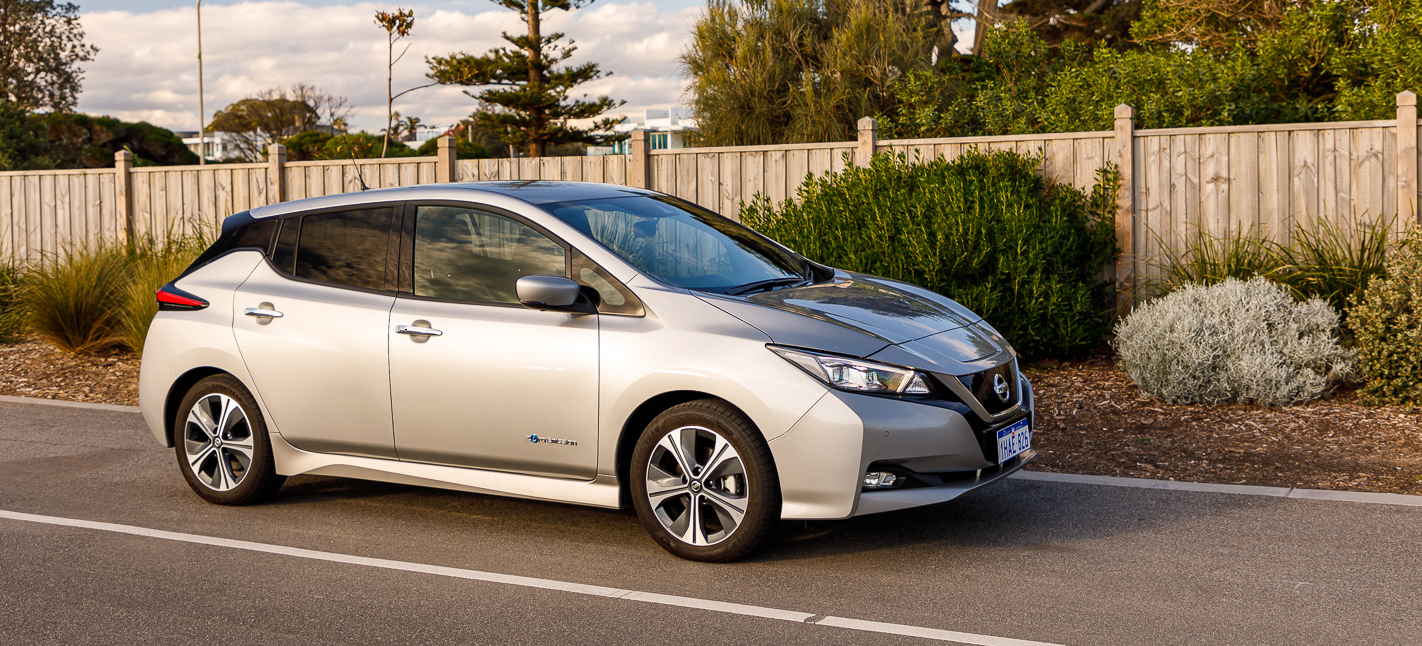
Plenty of people know about electric cars now, but the hands-on experience for the general public hasn’t come as easily it has in other markets overseas.
You’d think as automotive writers we’d be all over the latest tech, but even I have only had brief jaunts in electric vehicles. A couple of runs here and there in some Teslas, a comparison or two of some of the front-runners is about the extent of my hands-on experience with electric power.
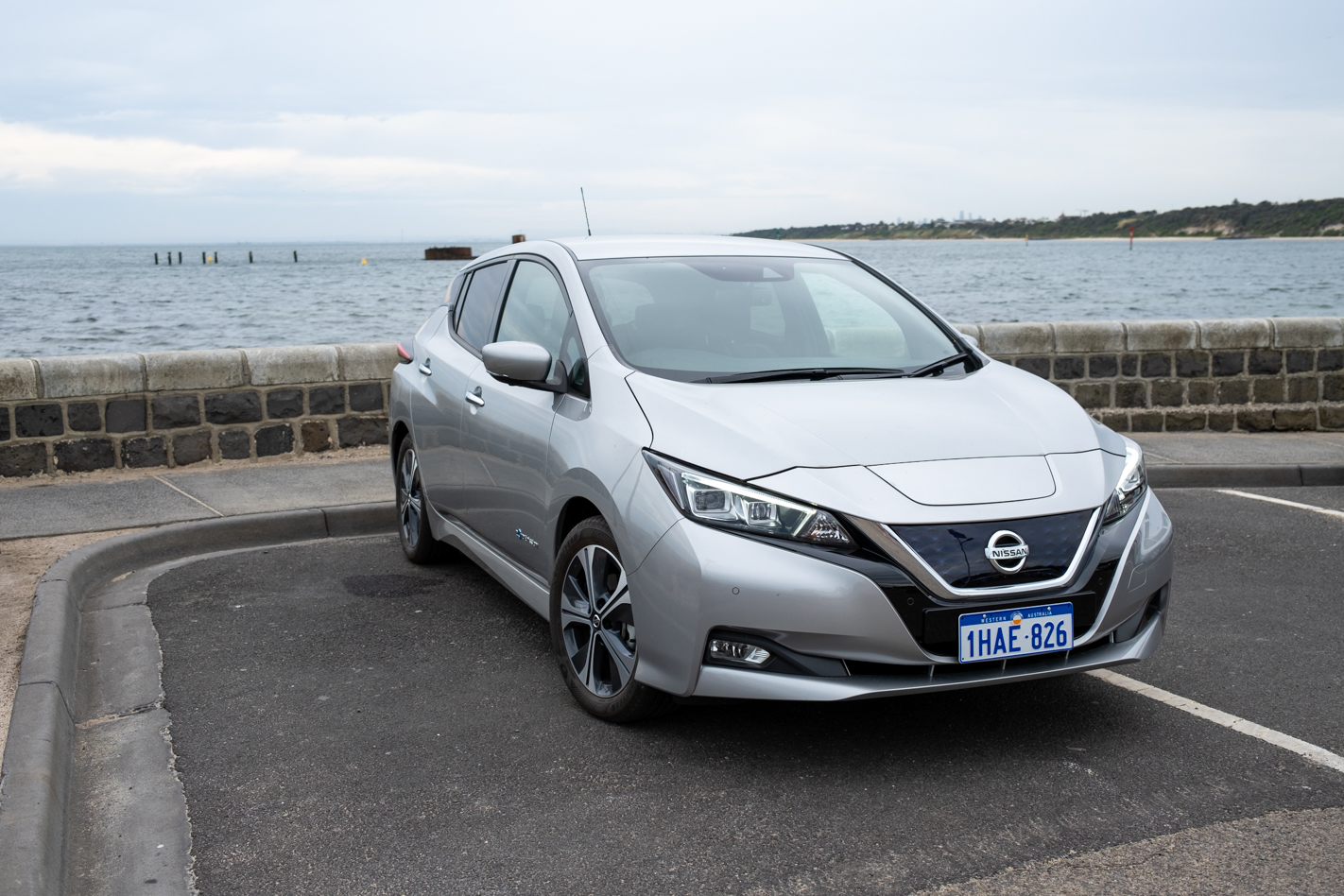
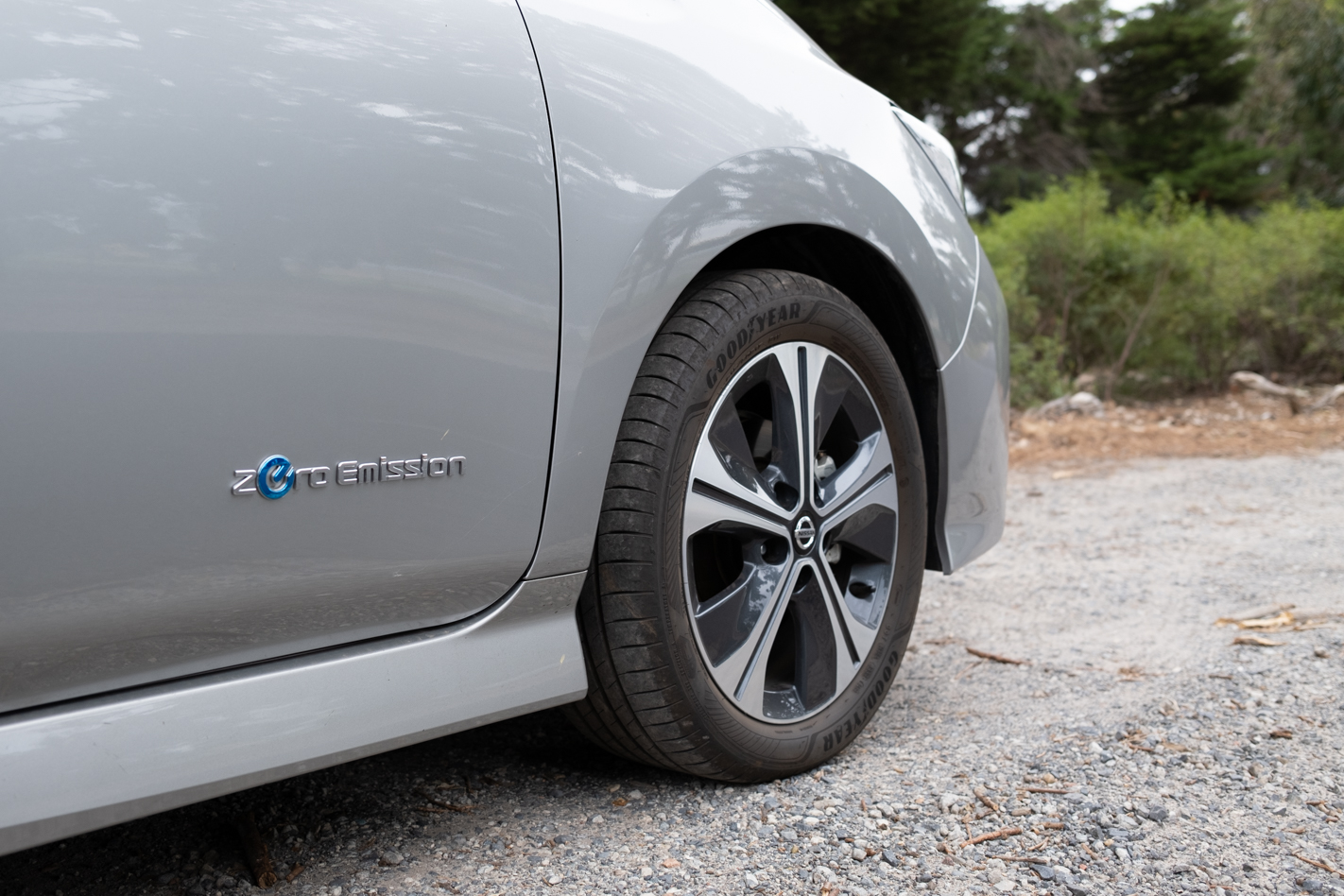
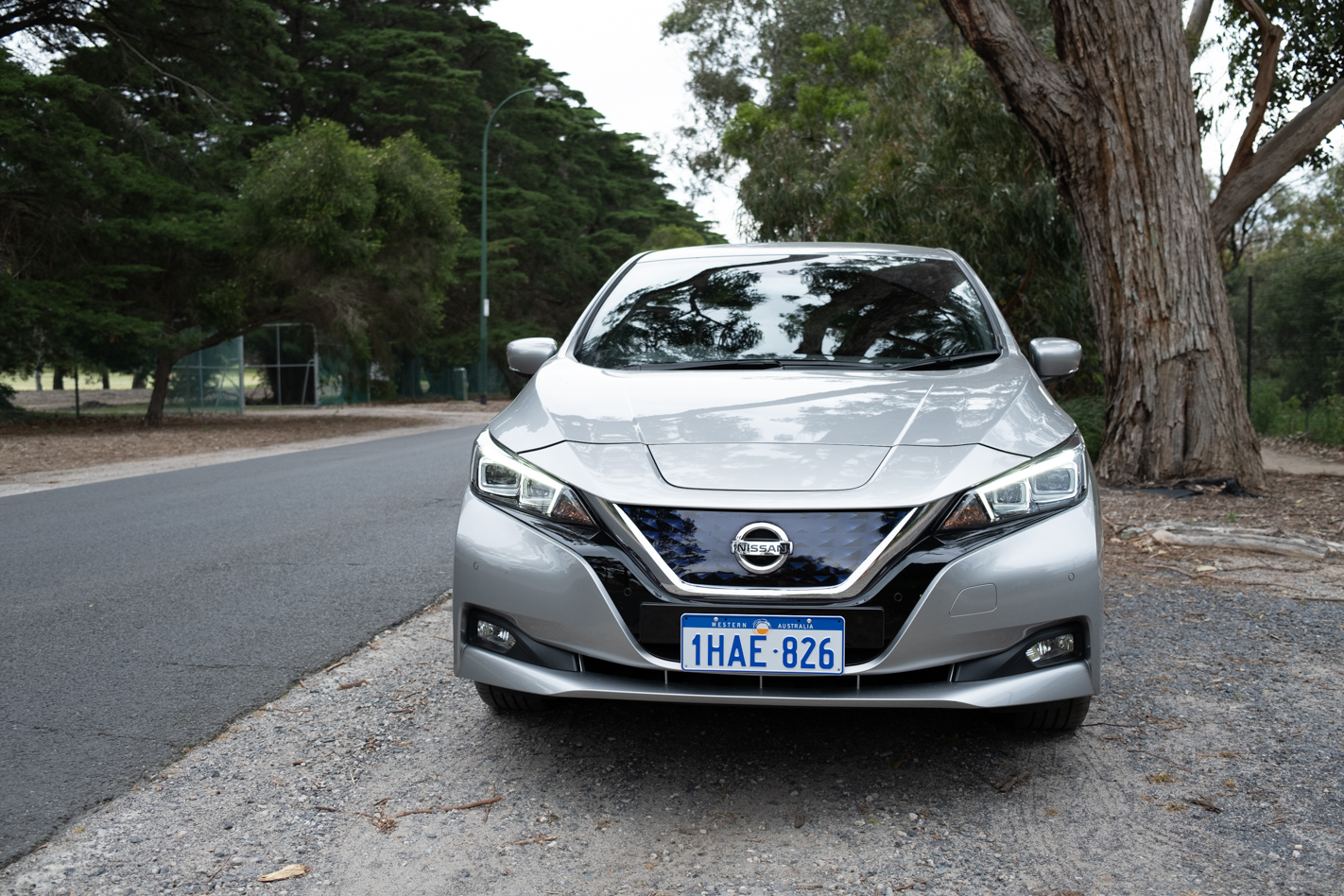
So it’s about time you and I both learned what it’s like to live with an electric car. I’ve picked up a Nissan Leaf that’ll grace the driveway – or maybe even the office carpark if Covid ever lets us return – until the end of 2020.
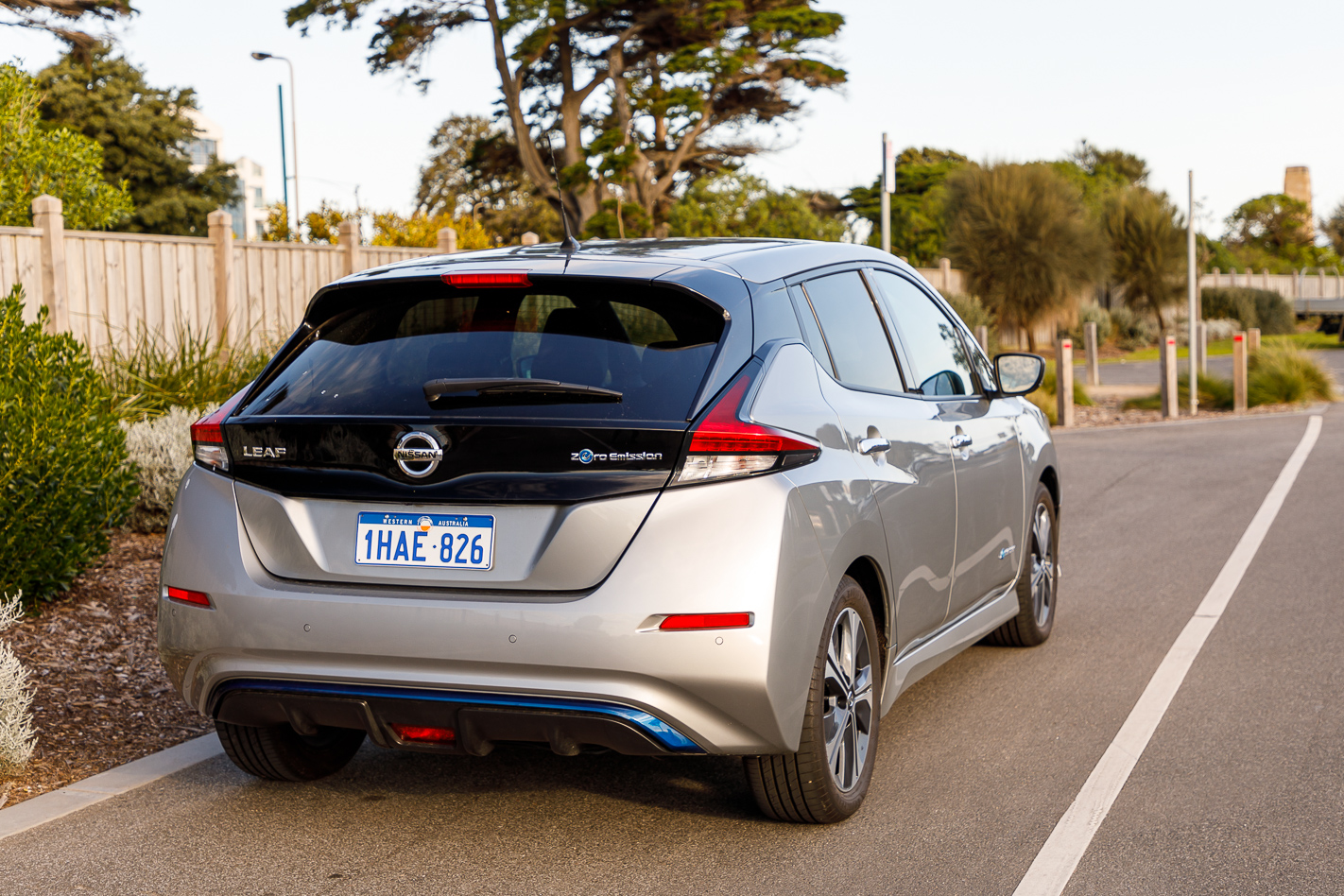
It’s the second-generation Leaf which was launched mid-2019 and is priced at $49,990 before on-road costs.
It’s a big ask for a small Nissan hatch, but let’s not forget it is an electric car, and Nissan has thrown in some add-ons to help ease the pain.
The Leaf only comes in the one specification which is simply called the Leaf 40kWh. Its electric motor sends 110kW/320Nm to the front wheels courtesy of the charge drawn from the 40kWh battery and Nissan says it provides a 270km range.
That range puts it ahead of rivals like the Hyundai Ioniq Electric and Mini Cooper SE which both run roughly 230km on a charge, but I’m really keen to see if Nissan’s figure holds true.
I have the ability to charge it at home, though a quick Google search has revealed a type 2 charger is only a kilometre from my place.
That will mean a shorter 7.5-hour charge to full capacity, rather than a 24-hour one as drawn from a standard 240V home power outlet.
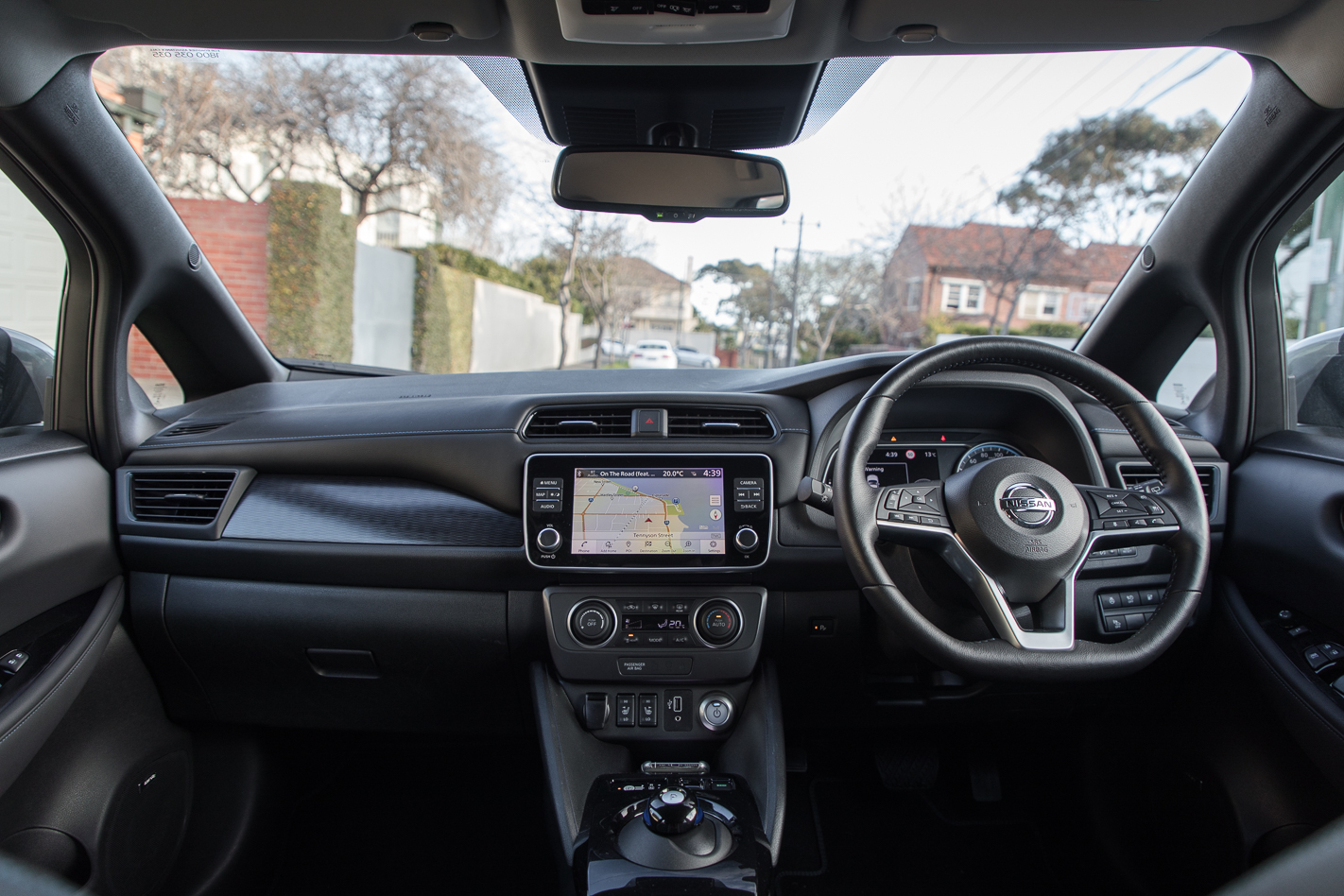
Standard equipment includes LED headlights, heated front and rear seats, privacy glass, power folding mirrors, Android Auto and Apple CarPlay connectivity, satellite navigation, heated steering wheel, adaptive cruise control and a 360-degree parking camera.
The Leaf battery gets an eight-year/160,000km warranty, while the rest of the car gets a five-year unlimited kilometre warranty.
Nissan has thrown its suite of Propilot semi-autonomous safety tech at the Leaf which includes autonomous emergency braking, lane-keep assist, blind-spot monitoring, rear cross-traffic alert and as mentioned, a 360-degree camera and active cruise control.
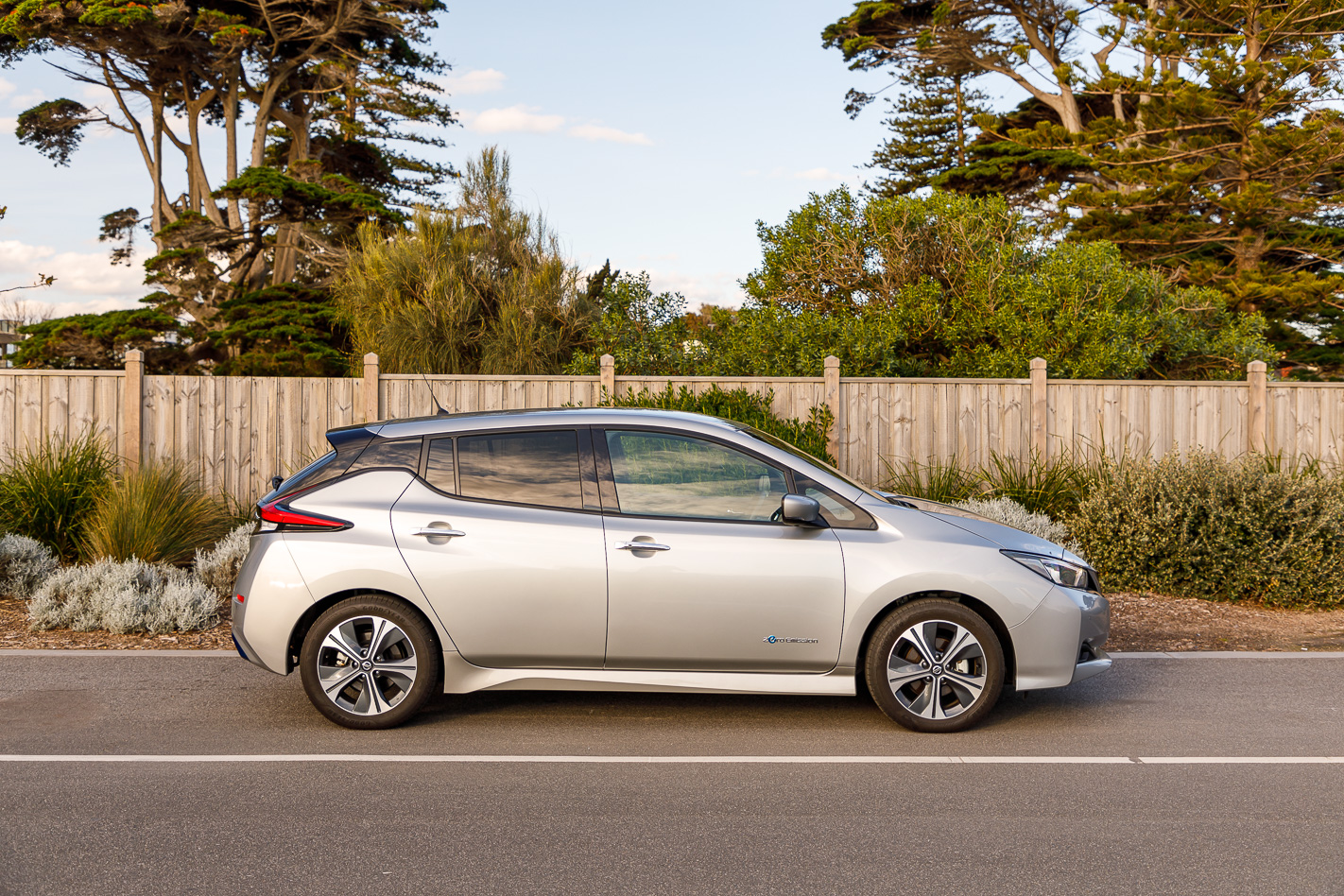
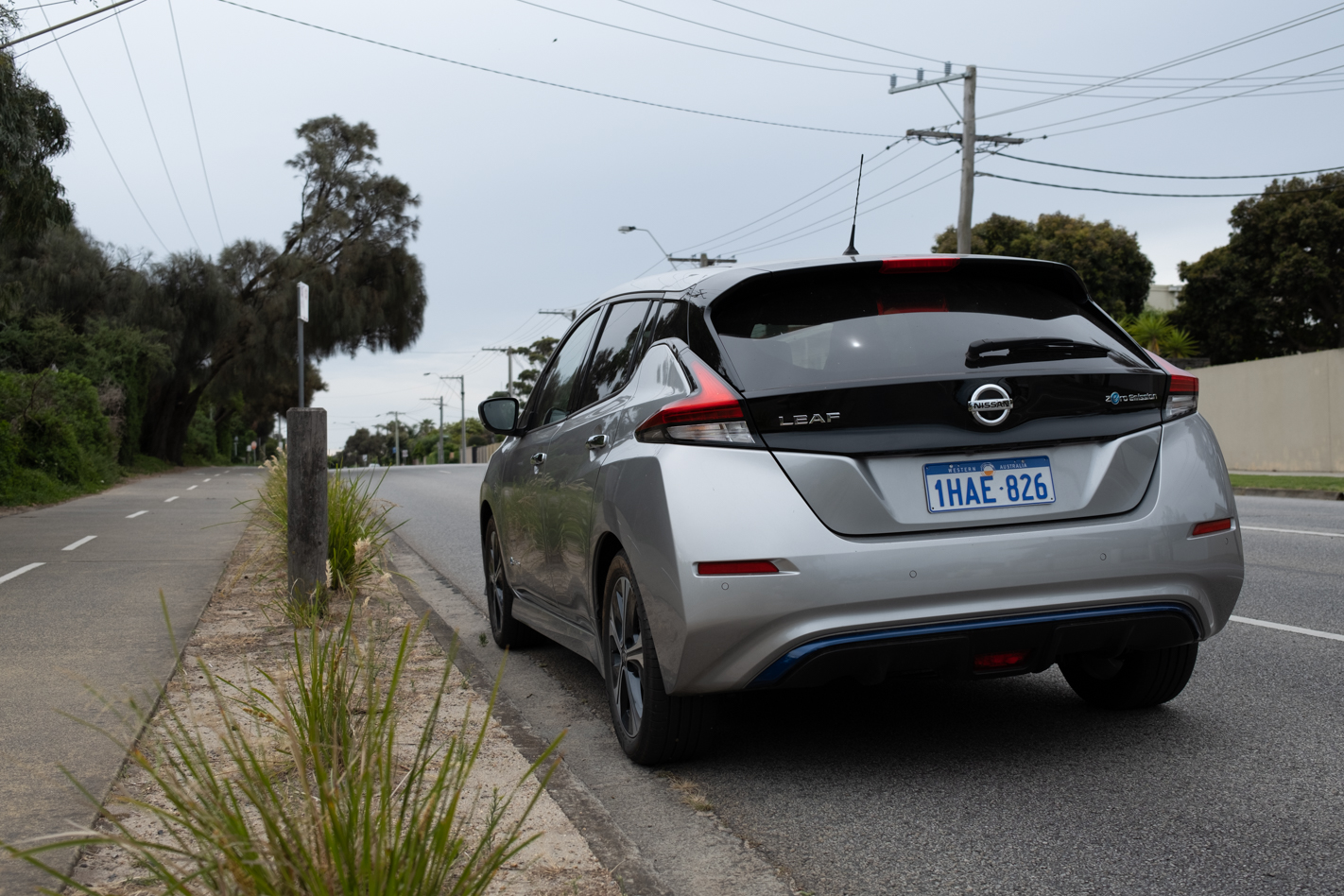
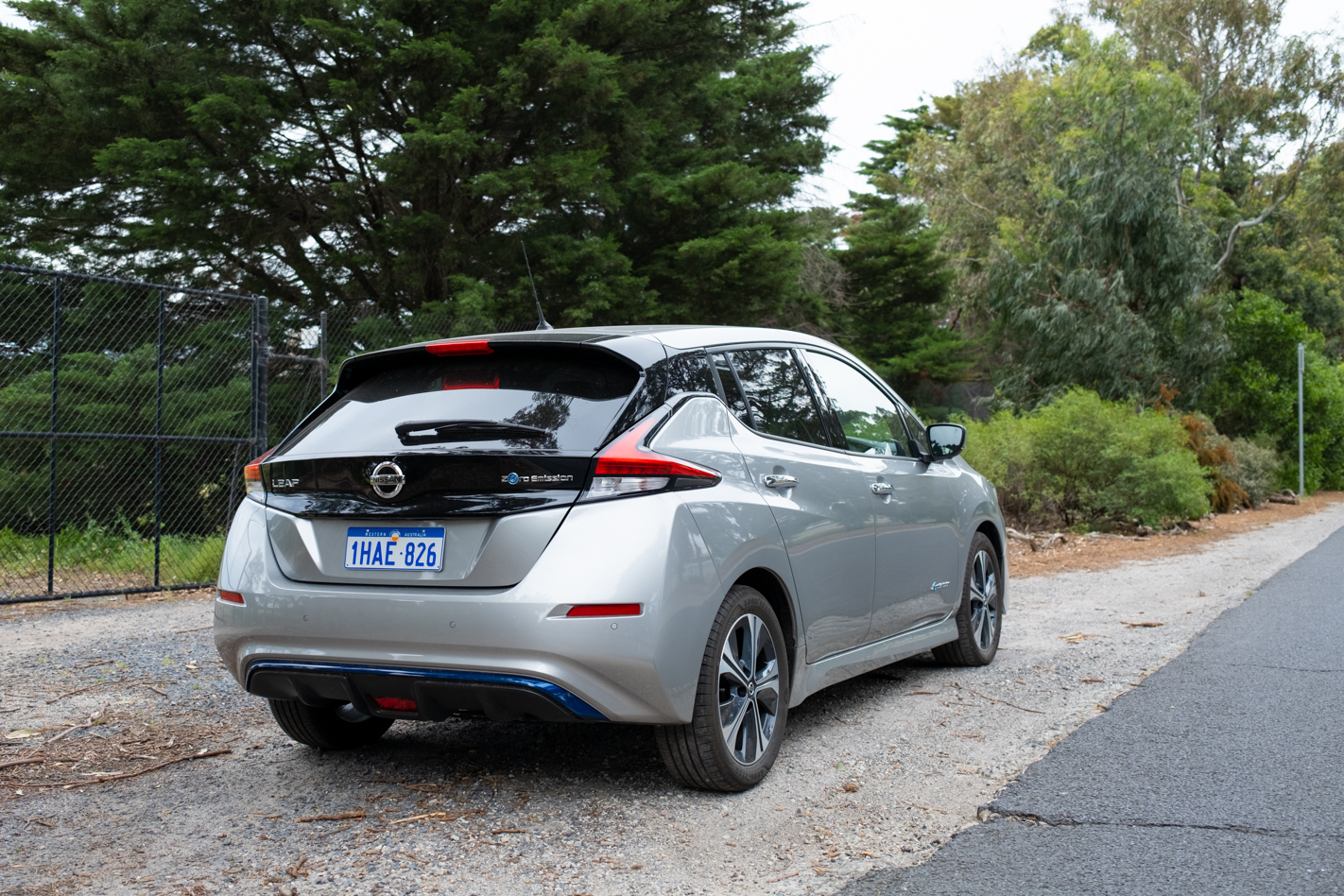
Our car is finished in platinum metallic ($950) and sadly misses out on the cool two-tone black roof which costs an extra $990.
There remains an elephant in the room – I’ve only just taken delivery of the Leaf and I’m in lockdown-stricken Melbourne. For the time being, trips are only going to be local and uneventful, but hopefully, as Melbourne pulls itself out of a rut, I’ll be able to venture further.
That said, I’m pretty excited to give it a go over the next few months. I’m particularly interested in learning more about charging infrastructure and whether the Leaf can supplant an internal combustion-engined car in my life.
Update #2
Date: October 1, 2020 ODO: 3513km Driven: 348km Fuel consumption: 16.1kWh/100km
I’ve only just tallied it up now but it seems as though our Nissan Leaf long-termer has only travelled a measly 350km since we took delivery. An unfortunate reality and byproduct of living in Melbourne under our second lockdown.
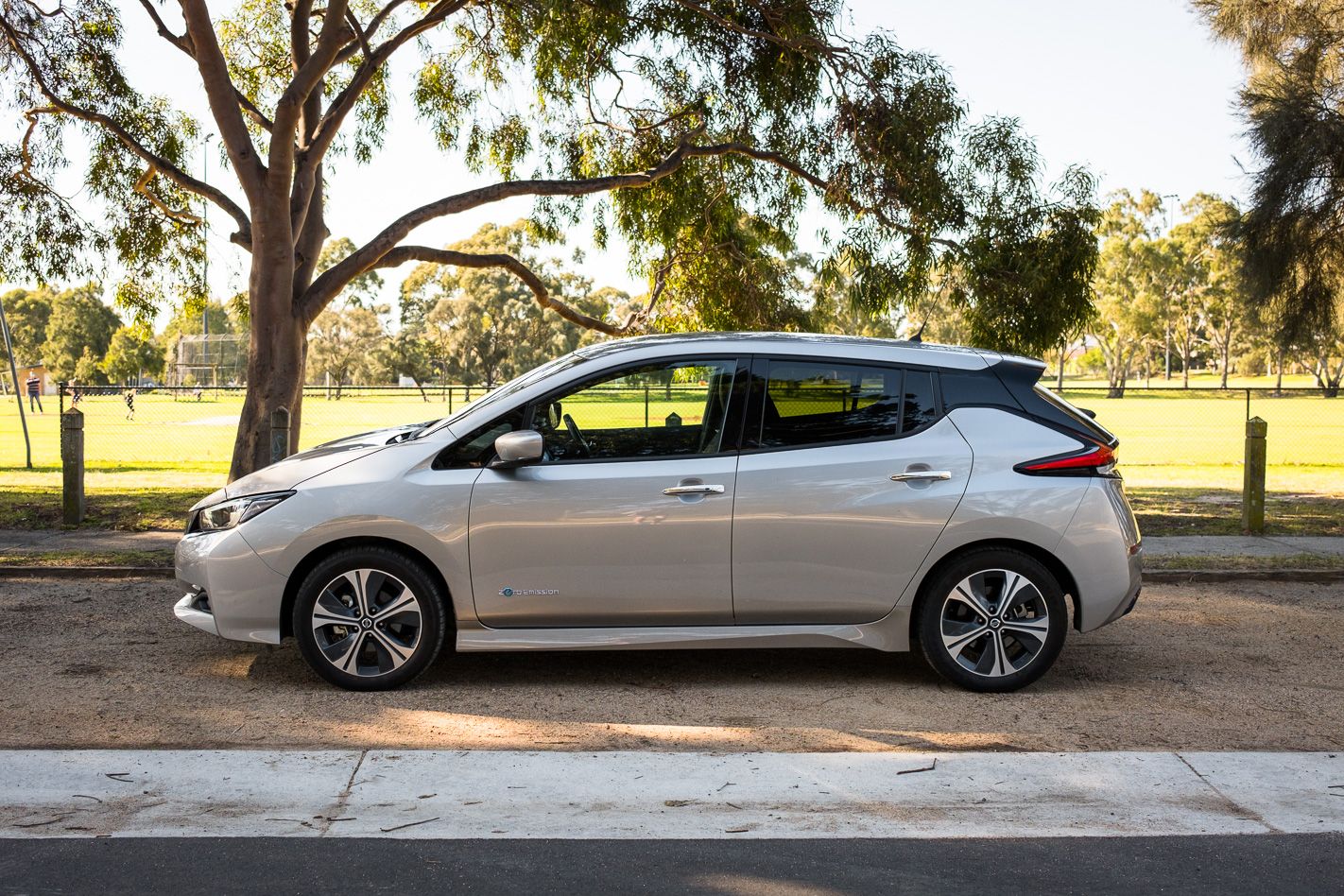
That said, I’ve at least enjoyed a little bit of time running errands in the Leaf so far.
The prospect of owning an EV was and still is exciting, but I’d be lying if I didn’t mention the fact that once you get over the initial electric hype, it really does just feel like any other car.
Apart from the fact that you have to charge it rather than fill it with petrol, the Leaf is blending in nicely as a daily driver. That’s a good thing, and will bode well for the sceptics out there still afraid of embracing electric power.
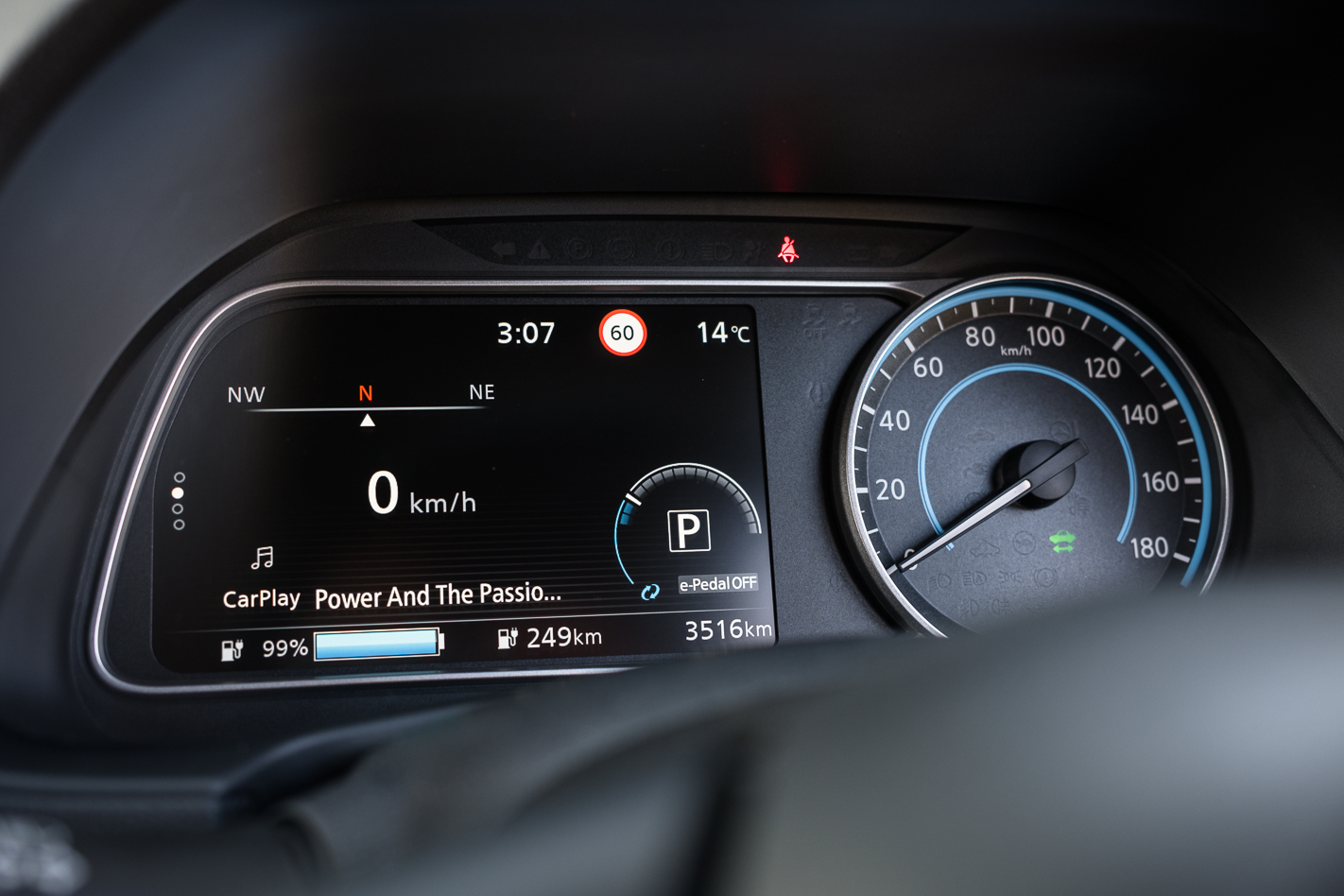
Speaking of electric power, I’ve charged it twice this month and it’s taken less time than prescribed. The Leaf has only been plugged into a 240V home outlet so far and each time has taken roughly 17 hours rather than the quoted 24 hours.
On each occasion, I’ve made it about 180km between charges before it got to around 10 percent remaining. That’s a little less than the projected 270km range, though I’ve been running it with air conditioning and without regenerative braking.
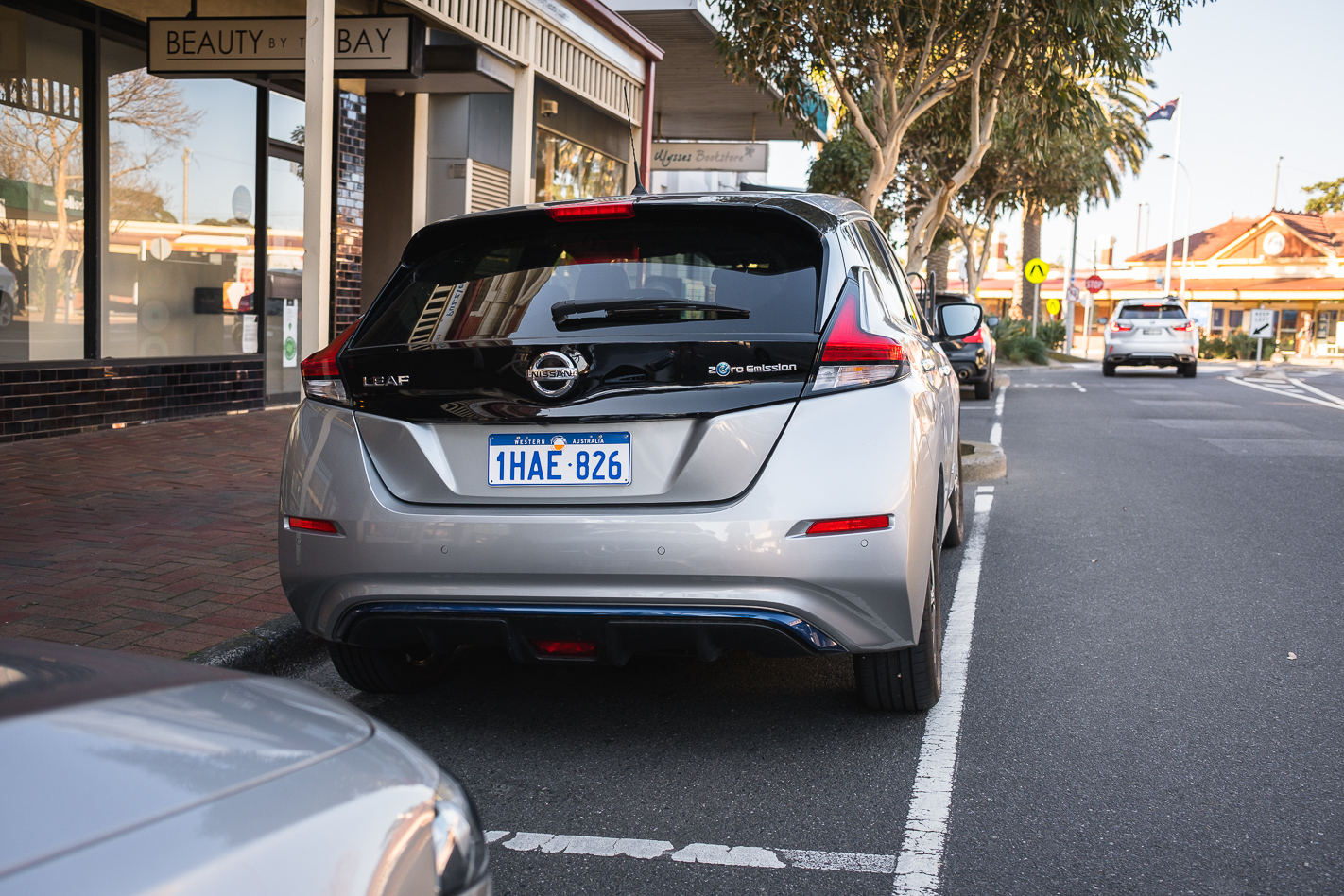
I’m planning on venturing further this month to plug it into a type 2 charger, which is said to bring the charging time down to around six hours.
One novel factor of the Leaf is the ease with which you can just jump in and go. It’s handy not having to be gentle or warm up an engine – all you need is a quick toggle to put the car into D and you’re away. The zippy power delivery is enjoyable around the suburbs and does an impressive job of hiding the Leaf’s 1594kg weight, but that does come into focus when rounding corners.
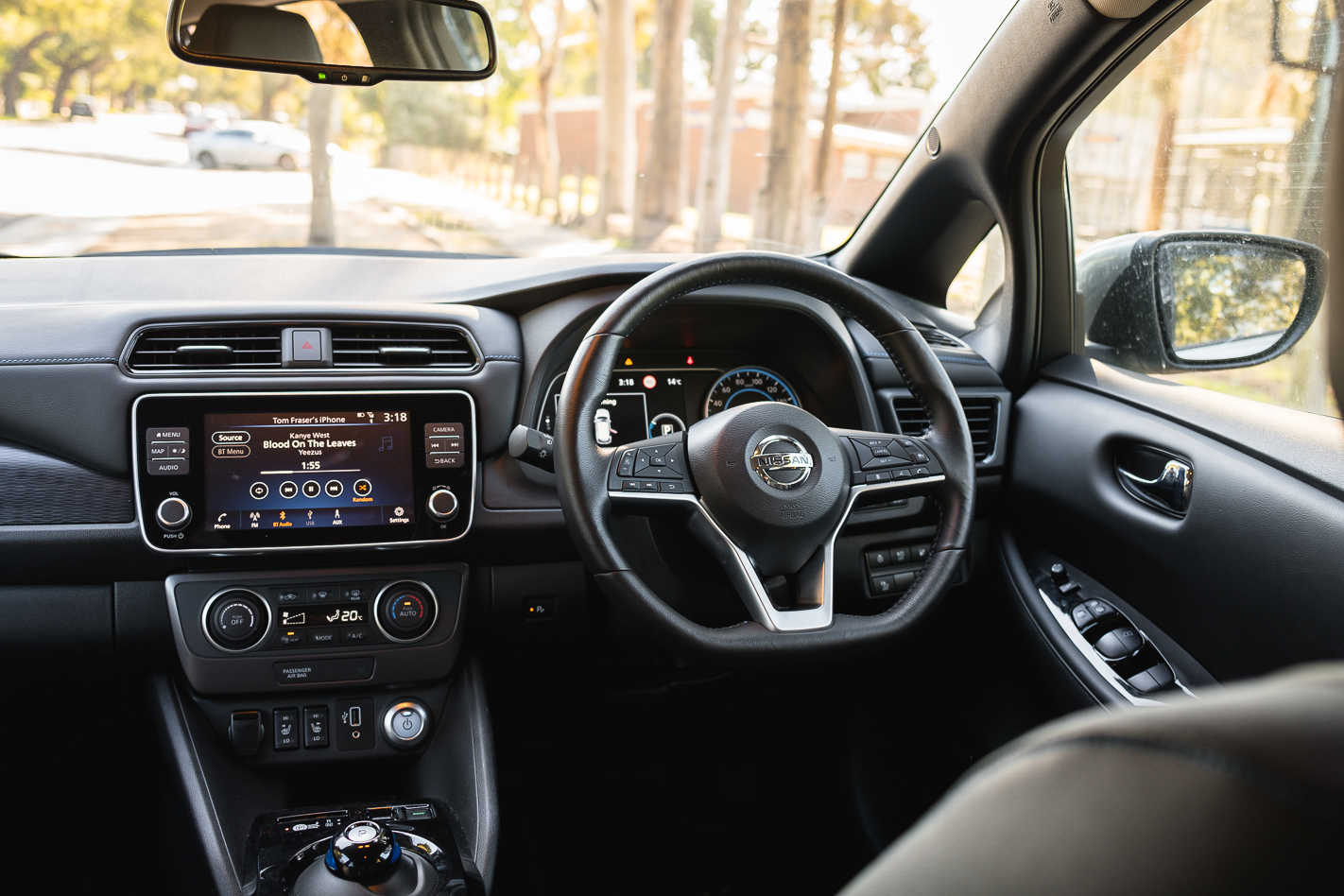
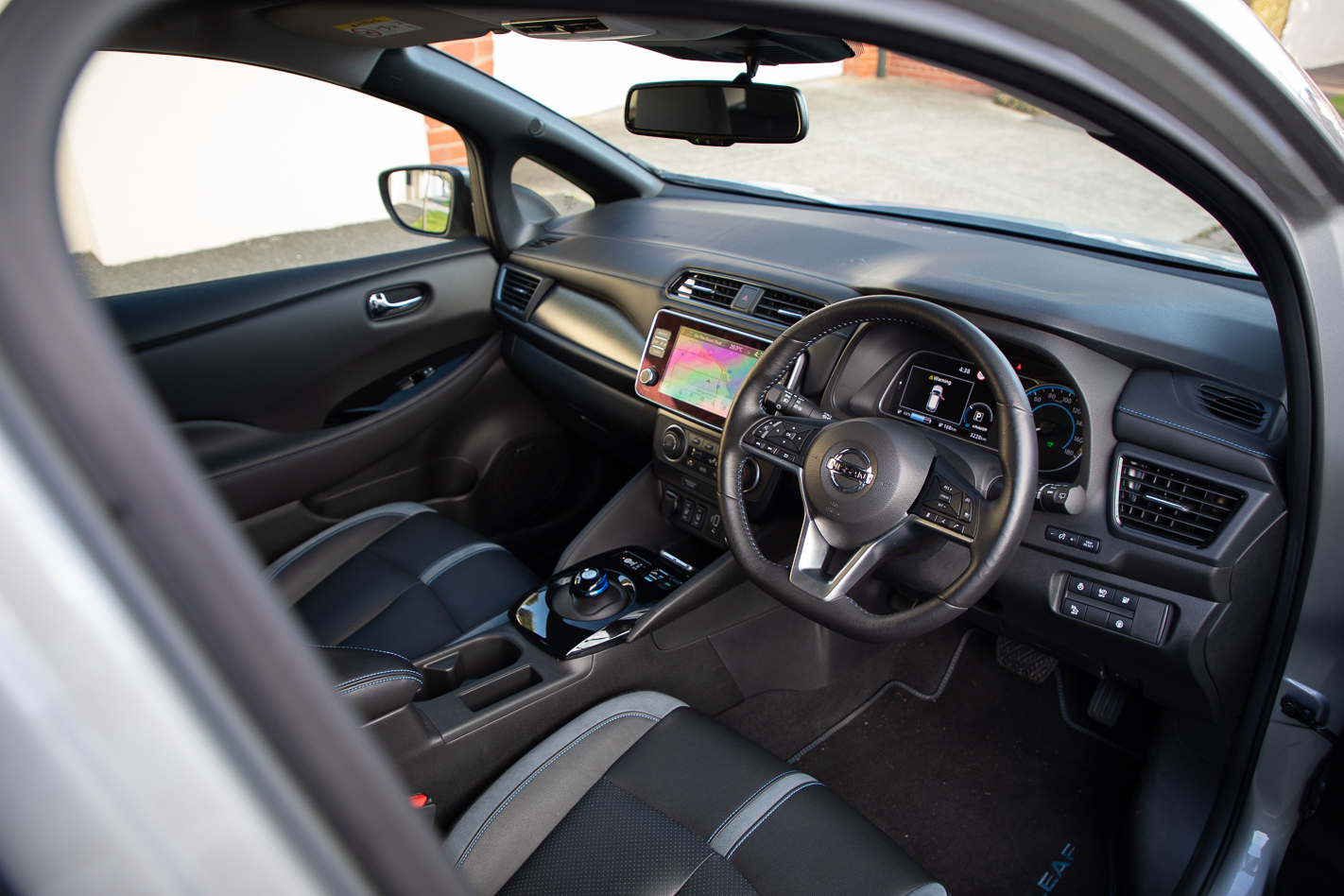
The interior is a perfectly functional and nice place to be, but is slightly dulled by the use of hard plastics in certain areas. In my mind, you’re already paying a premium price for an electric vehicle so the manufacturer should make it a slightly more premium product inside.
My six-foot-four-inch frame is well catered for in the front row in terms of roominess, but there are some ergonomic issues caused by a high seating position and lack of reach adjustability for the steering wheel.
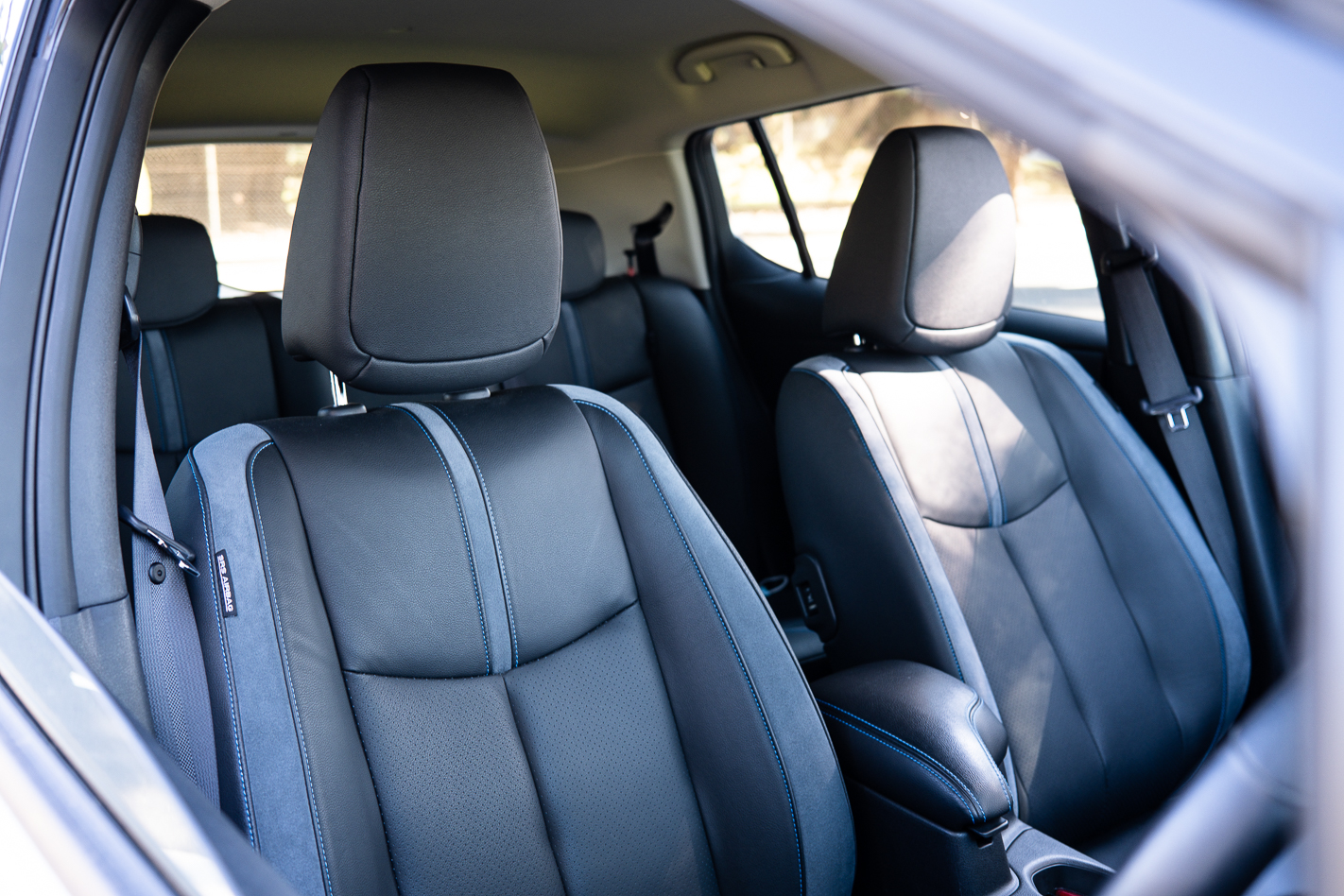
Seating is really comfortable – plush like an armchair – and there’s a good amount of knee and foot room in the second row. Nissan has come a long way with its latest infotainment system, in comparison to the primitive old non-touch affair. The maps are clear, the screens are attractive and the connectivity is intuitive. The Bose surround sound system is a good one too.
Next month I’m hoping to get out for a more substantial drive. Wish us Melburnians luck as we meander our way out of lockdown 2.0.
Update #3
Date: November 10, 2020 ODO: 4069km Km driven: 556km Fuel consumption: 16kWh/100km
Hey, we finally did it – we can now travel further than 25km from home and for reasons other than popping down to the shops for milk and bread.
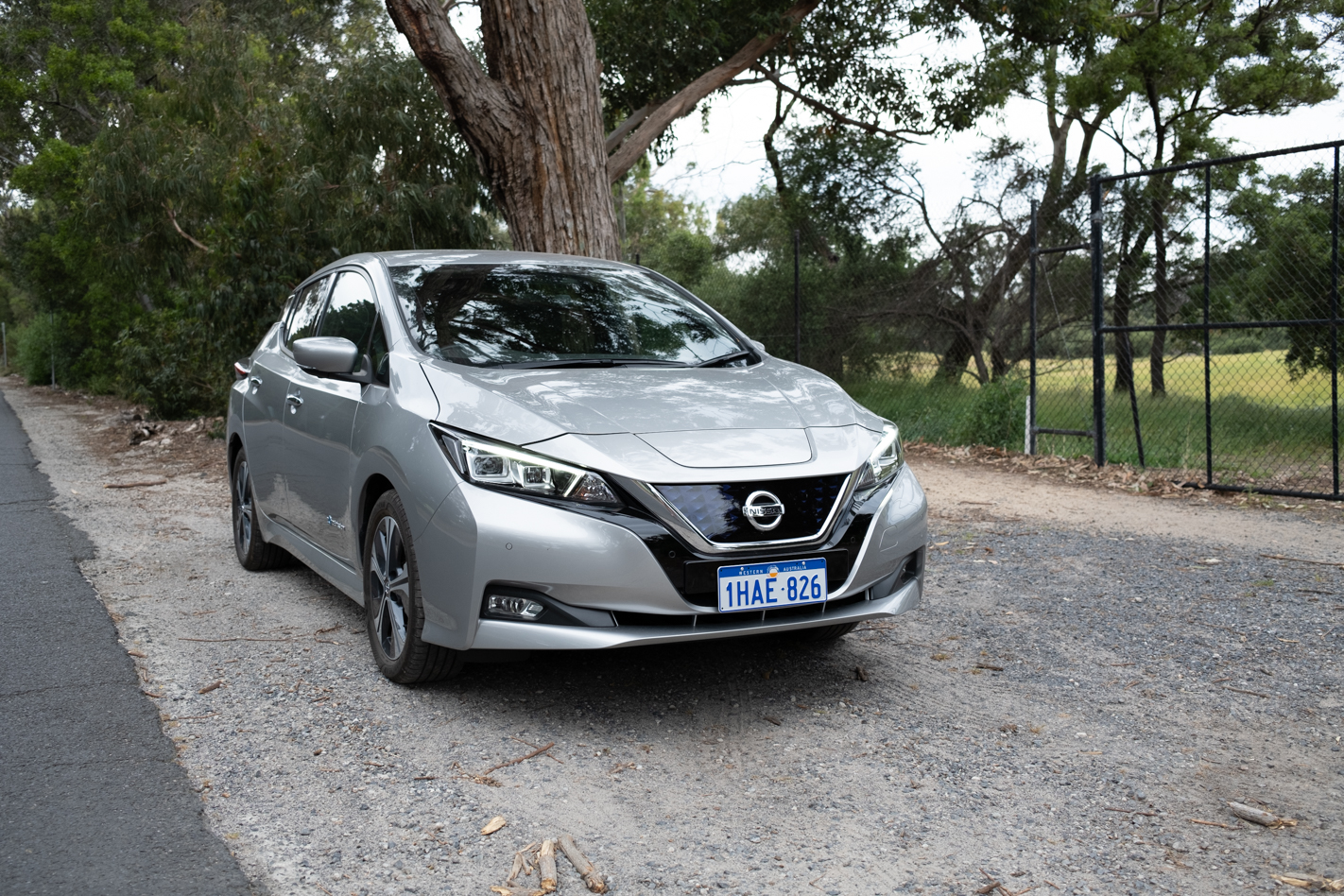
I’ve wasted no time in getting behind the wheel of the long-term Leaf, both the car and I needed to escape for a proper drive.
Now, normally, a Nissan Leaf wouldn’t be my first choice to take for a nice drive. But since I’ve enjoyed it around town as a runabout, I have wondered what it would be like to take further afield.
issan expects energy companies will pay EV owners for electricity
You wouldn’t go as far as calling the Leaf a hot hatch, but the acceleration and immediacy of torque is fun to deploy on a worthy road. The pace at which it accelerates is unlike any other regular hatchback, given there’s a respectable 320Nm of torque on offer, and a surprising sight to onlookers and passengers alike.
That said, you do have to be careful when leaning on the throttle as the tendency to torque steer is pronounced; and it loves cheeky wheelspin too.
Its 1594kg weight was fairly well hidden around suburbia thanks to the eager motor, but further away from town on faster corners body roll becomes apparent.
I’ve got no real complaints to level at the Leaf’s ride, which is comfortable around town and smooths out most road surfaces. It can get tripped-up on some sharper road joins that can jolt the cabin.
In the absence of an engine’s noise, I expected there to be more road and wind noise to upset the ambience. However, the interior is well insulated from noise intrusions. For example, the Leaf beeps while it’s in reverse to alert pedestrians around you, but even that sound can be hard to hear from inside.
This month I had the chance to hook it up to a 7kW single-phase AC type 2 charger which did exactly as prescribed and charged the car to full in roughly six hours. One of these chargers costs between $1000-2000 depending on brand, and I’d definitely invest in one if I owned the Leaf.
There was one instance of range anxiety that caught me off-guard this month, albeit completely my fault. Because I’ve just been running it to empty before putting it on charge, it was low on battery when I wanted to spontaneously go out which rendered it useless. Lucky I have my own car. It was a reminder to be better prepared in the future, but not all people can arrive home and immediately put their car on charge.
Next month, we’re going to keep working our way up the hierarchy of charging types and plug it into a 50kW fast charger. I’ll also look into whether vehicle-to-grid (V2G) charging has been switched on, something which was slated for late 2020 according to reports a few months back.
Update #4
Date: December 7, 2020 ODO: 4961km Km driven: 892km Fuel consumption: 15.8kWh/100km
It wasn’t planned, but this month, the time came to finally put ‘range anxiety’ to the test.
I received the call-up to attend this year’s Wheels’ Car of the Year event and it meant a long drive down the surf coast towards Anglesea, roughly 150km from home.
With the long-term Nissan Leaf’s theoretical 270km range, it shouldn’t have been a problem. But the thing with electric cars is that there’s no Plan B once you run out of power.
With that in mind, the night before the early start was a bit stressful, but I was determined to see it through and find out what it’s like to take a properly rural drive with the Leaf – the furthest it’s been from its city comfort zone.
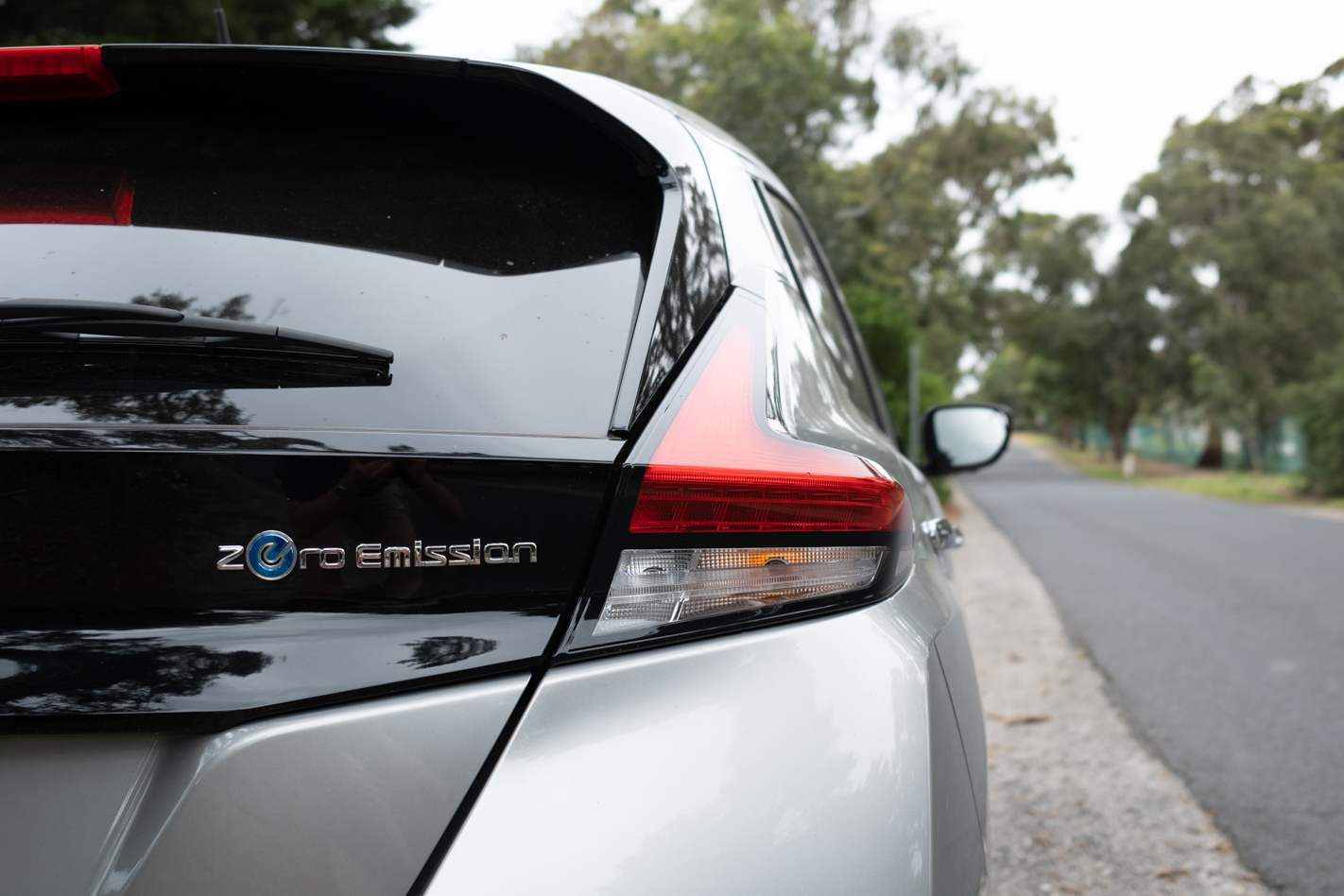
Giving myself the best possible chance, I did what Nissan suggests for longer drives and switched ECO mode on (which dulls the throttle response for more economical use of power) and engaged B mode, intended to deliver more regenerative braking. There’s also an e-Pedal function, which uses heavy regenerative braking and is designed so the driver can use just the one (accelerator) pedal to drive the car.
The e-Pedal does take some getting used to – as soon as you let off the accelerator the car starts braking. But it does help range anxiety by banking extra kilometres through regenerative braking.
For good measure, I restrained myself on the climate control front giving myself an extra few kilometres of range.
You can see the estimated range change up and down in real time as you make these amendments. I managed to get the Leaf’s figure just above 300km, which is 30km beyond the claimed range.
Freeways are a kilometre killer in terms of range, as there’s less chance to recoup charge through regenerative braking. A detour out towards the airport to collect equipment – and the obligatory Macca’s pitstop – didn’t help my cause either, but soon enough the range started dropping faster than I was travelling.
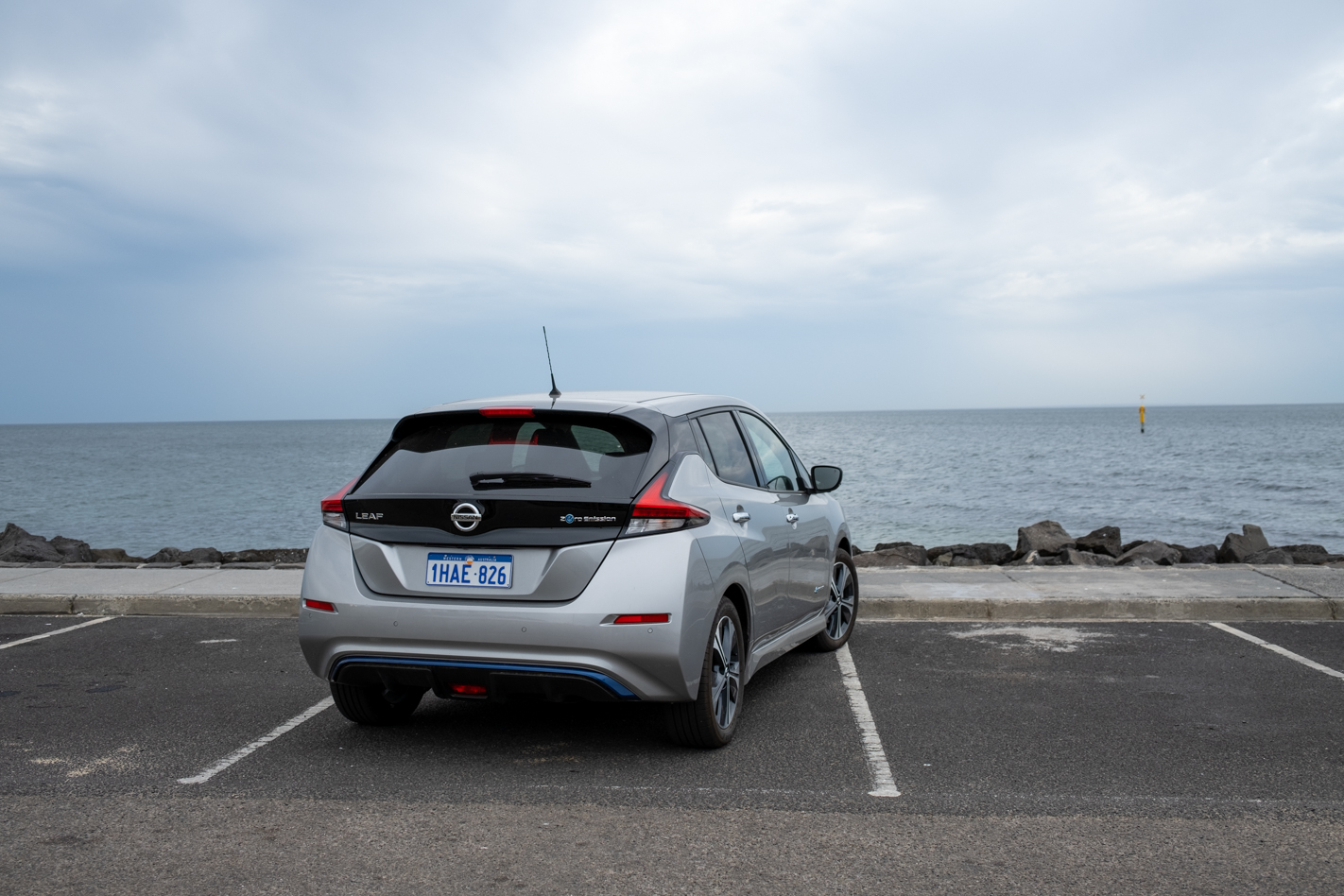
By my calculations, I should have arrived with an estimated 120km left in the battery, but after succumbing to turning on the air conditioning I wound up arriving with 50km left on the clock.
It’s normal to lose more range than you expect with an EV, especially if you’ve got a heavy foot and aren’t getting the benefit of regenerative braking. But a real-world journey of 170km is about as far as I’d want to travel in the Leaf.
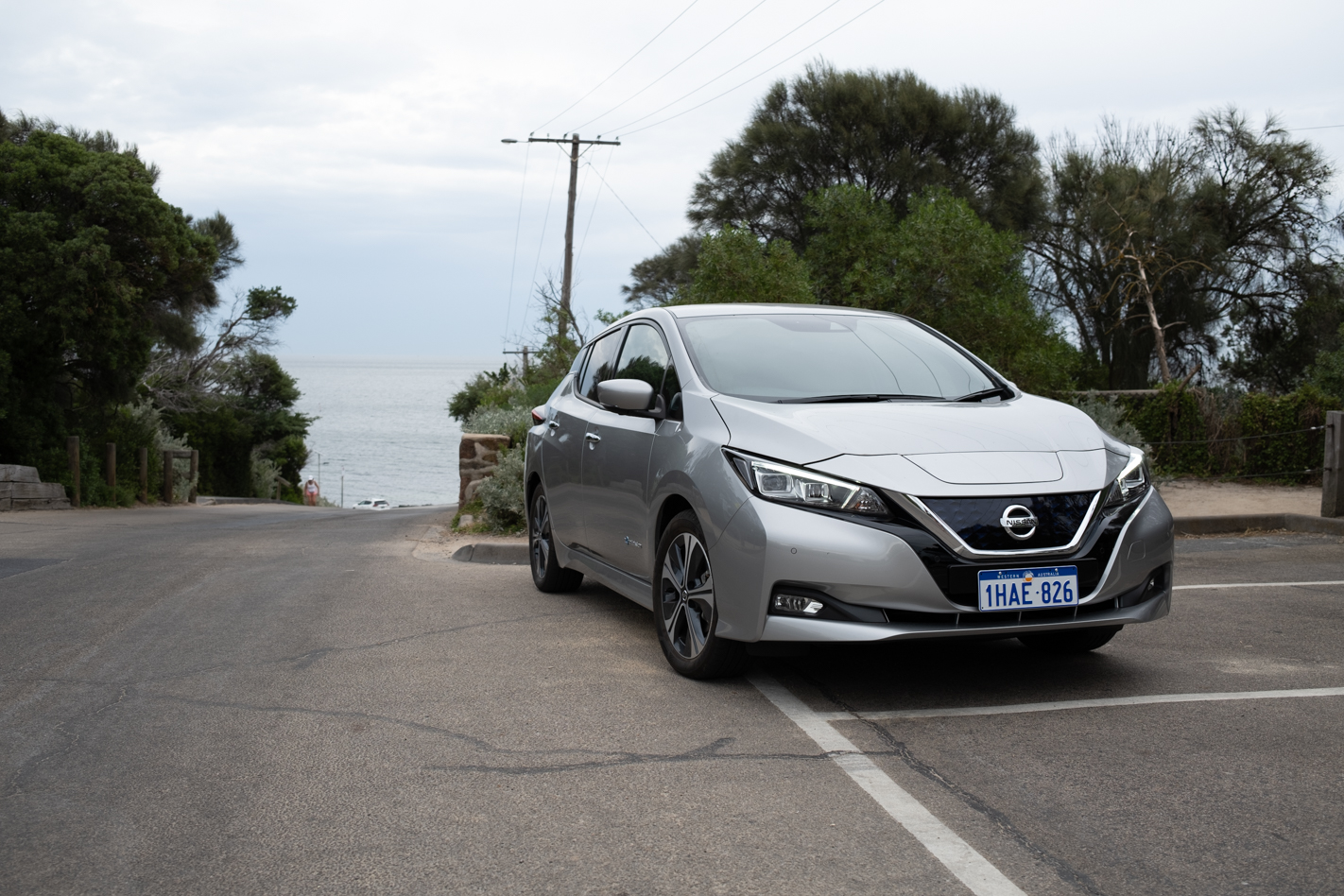
On arrival, the Leaf went straight onto a type 2 charger and got back up to 100 percent capacity in about six hours, before sitting idle for the week that we were at Car of the Year.
The drive down was pleasant. It was quiet, the Bose sound system got a great workout and the Leaf took care of me just like any car would.
Adaptive cruise control took charge most of the way, and only tripped up once where I wasn’t certain it was going to stop in time behind traffic, leading me to take over. It was a minor hiccup for an otherwise competent system.
Its instantaneous acceleration definitely feels more impressive around town than out on the open road, though. It does have enough get up and go to overtake swiftly, but it does have to be timed correctly.
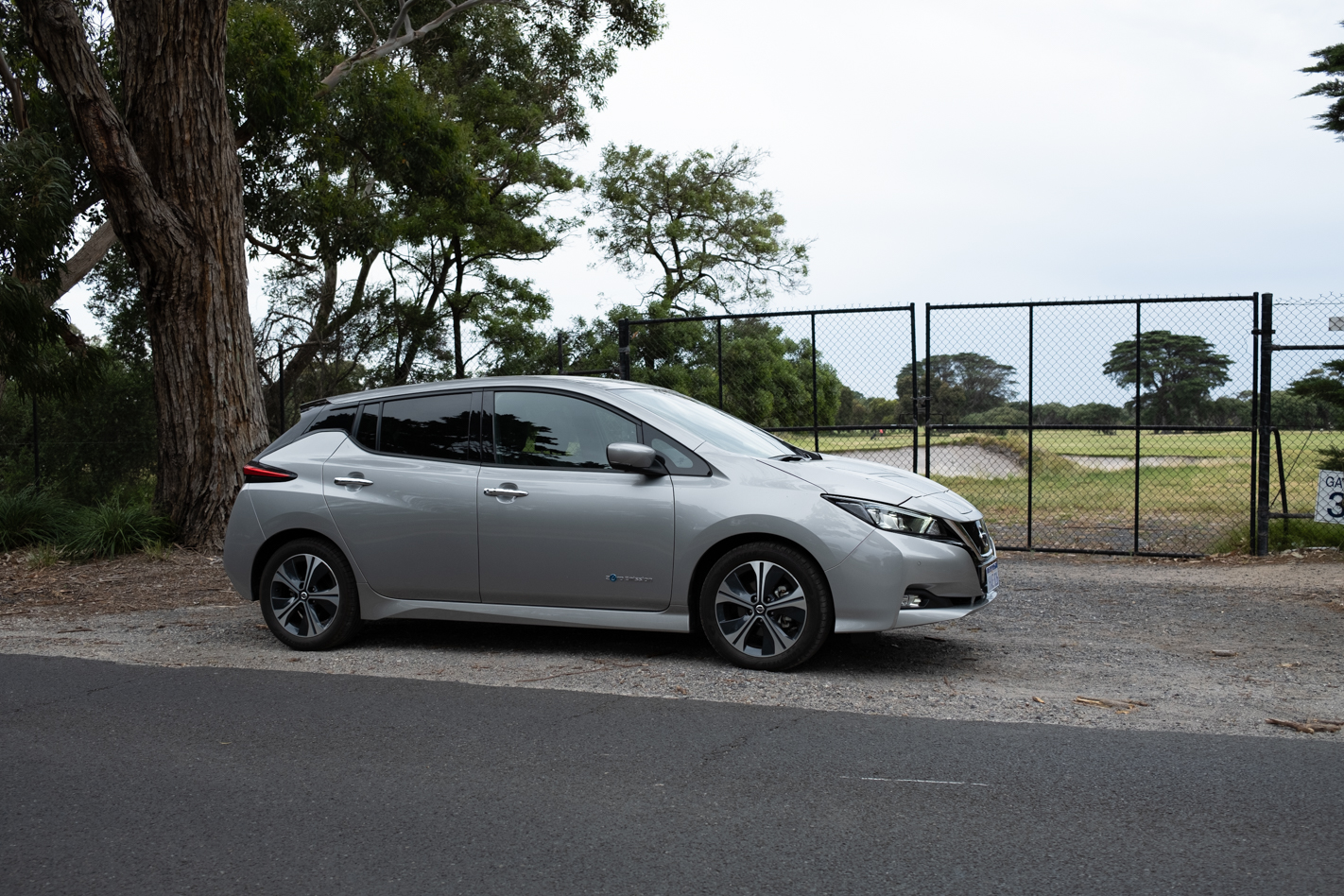
The ride was as comfortable as I’ve come to expect after living with the Nissan Leaf over the past few months. Bump absorption and rebound control were very impressive on the freeway and it even managed a gravel road stint decently.
Returning home was much less of a worry, with the benefit of hindsight and experience going a long way to allay range anxiety fears.
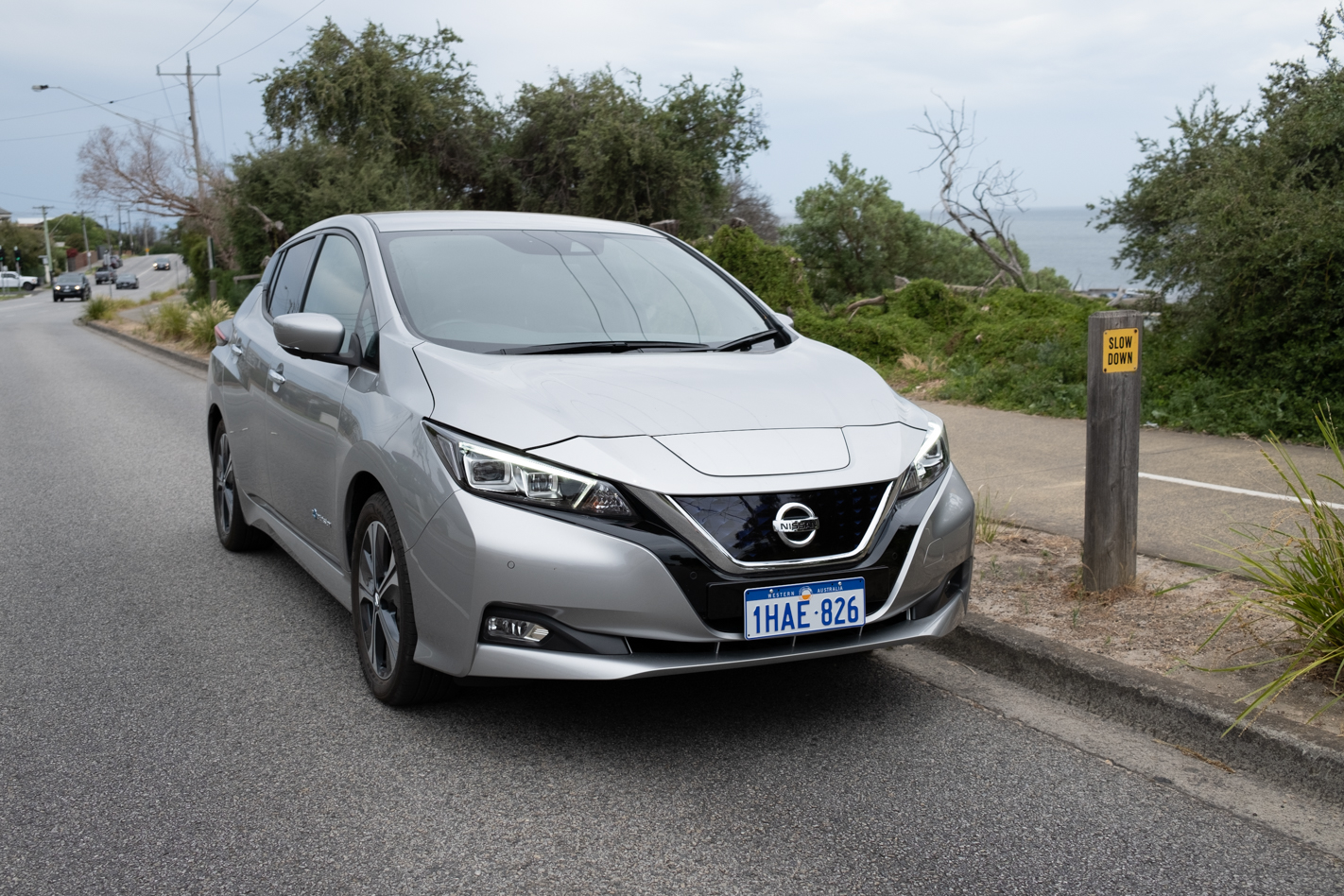
Our time with the Nissan Leaf is nearing its end, with it due to return to Nissan HQ just before the end of the year.
That said, I’ve got a few missions still to level at the Nissan Leaf before it leaves our custodianship.
Update #5
Date: January 14, 2021 ODO: 5190km Km driven: 229km Fuel consumption: 15.8kWh/100km
After spending near-on four months with the Nissan Leaf, where does that leave me on electric vehicle ownership?
It’s a debate I’ve been having with myself ever since handing it back to Nissan at the end of December.
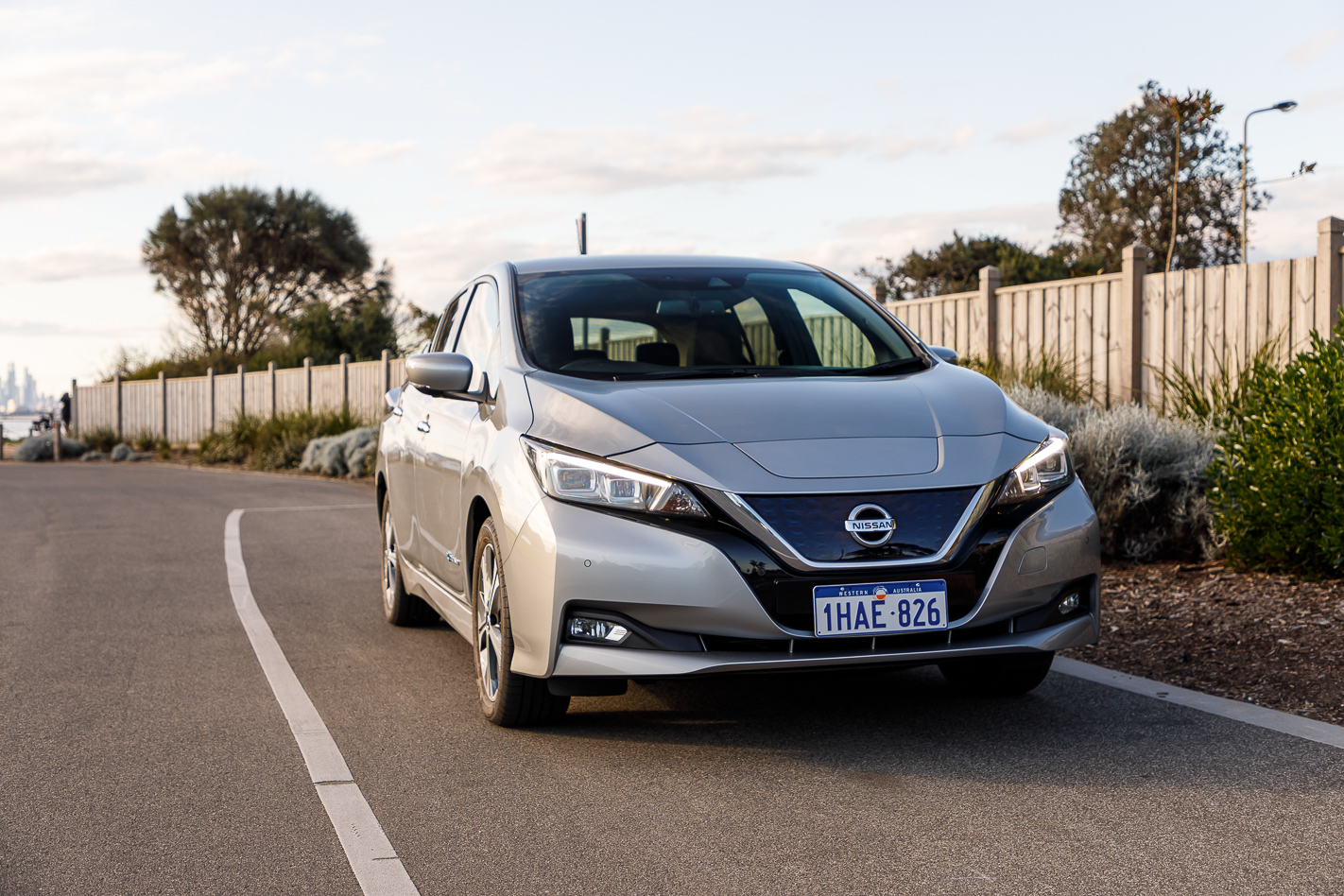
If they weren’t as expensive, proper charging infrastructure could be relied upon and they had longer ranges – electric vehicle ownership could be more of a reality in the near future for many of us. But those are some pretty significant barriers to entry, some of which will take government intervention before they’re overcome.
A massive perception problem still remains in Australia, too. I was poked-fun at by mates for driving around in the Leaf and we often get negative comments on our Facebook page when posting about EVs. While it’s mostly in jest, it shows that we’ve got a way to go before more people jump onboard – and it feels like other countries have got there quicker than us.
But, at the moment, early adopters aren’t buying electric vehicles because they’re cheap, are convenient or to go long distances. They buy them with climate change in mind, or because of how they drive, or even how they look.
This subset of the general public accept the price premium and pitfalls of the burgeoning tech and with that in mind, and judged against other electric cars like the Hyundai Ioniq Electric and Mini Cooper SE, the Nissan Leaf is a fantastic representation of what electric vehicle ownership can be like.
We tested the Nissan Leaf against its $48,990 Hyundai Ioniq Electric rival at the start of last year and although the Leaf is more expensive at the outset, it features a more useable range (270km vs Ioniq’s 230km), sports a more powerful drivetrain for that trademark EV pace and feels like a more purposeful electric car than the Ioniq. It won that comparison and it’s an assessment that I can back up after running the car over a longer period.
It’s $49,990 price point makes it one of the more affordable electric cars, which is already a plus for anyone looking to make the jump, but it was also comfortable, packed with amenities, featured a good infotainment/sound system and remained perfectly dependable throughout our loan.
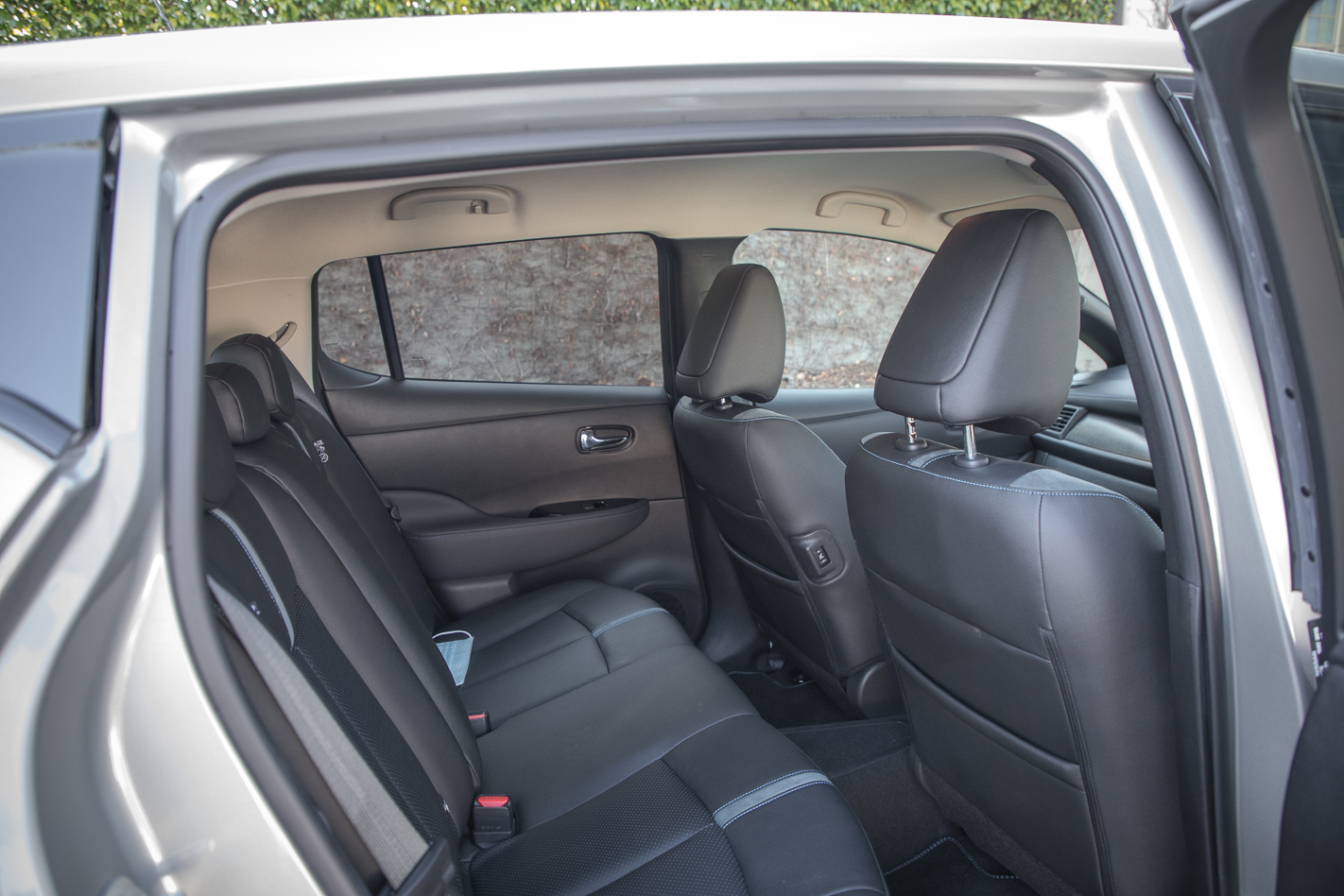
Drilling down further, there’s space enough for a young family with good room up front and an acceptable space behind for shorter adults and kids, a number of handy storage ports for water bottles, a neat phone slot in the centre console (though the omission of wireless charging is a miss) and other nooks and crannies for loose items too.
There’s less space for bits and pieces in the second row. A map pocket in the back of the seats is about the only storage space and there’s no rear air vent either. The hump where the driveline tunnel would normally be is an unwelcome intrusion for second row dwellers.
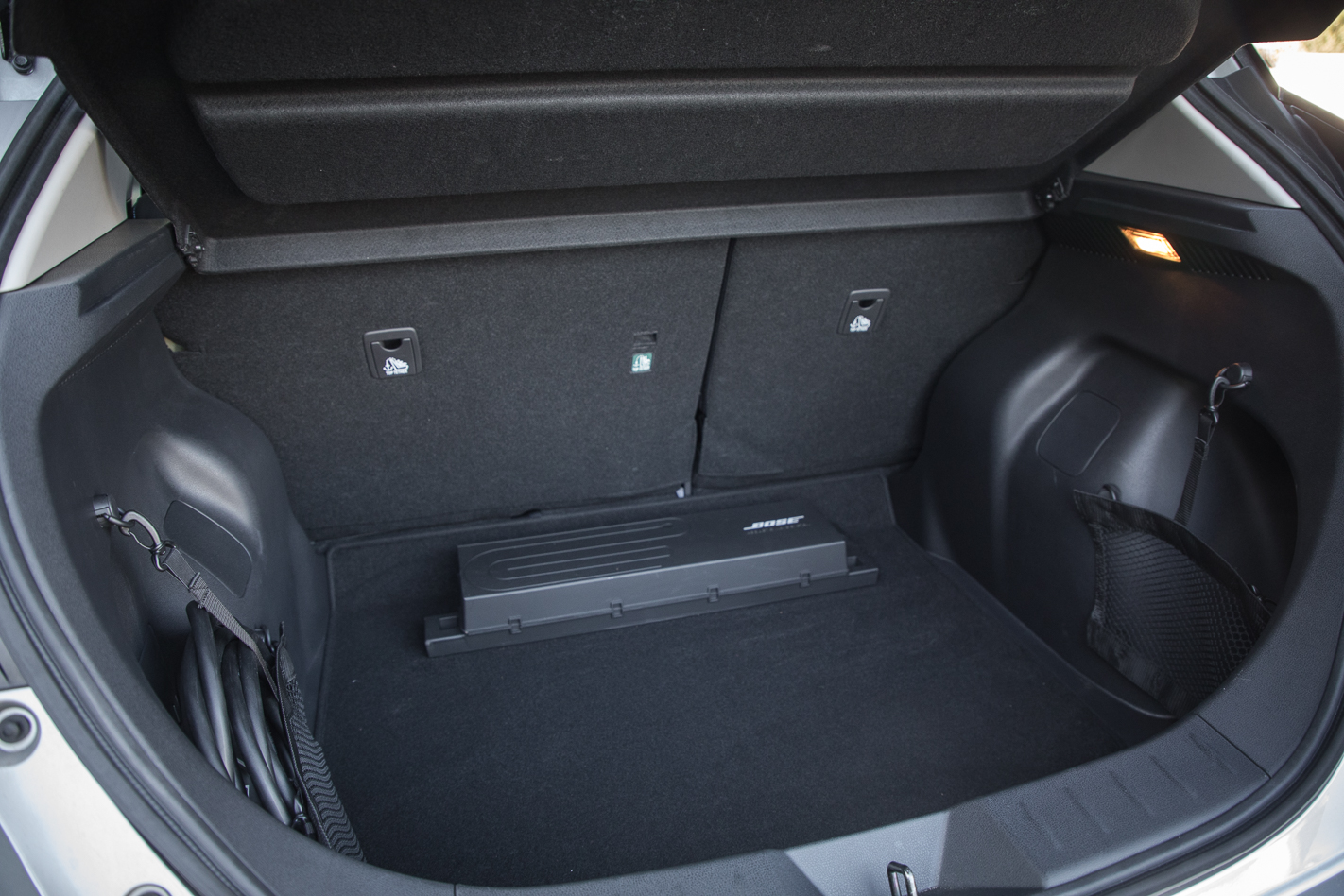
While storage is fairly well catered for in the front cabin, fitting items in the boot is a bit of a chore – especially if they’re large. It sounds large enough on paper – 405 litres. But not only is there a great big subwoofer unit placed annoyingly in the middle of the space, the boot opening aperture is small and the second row of seats don’t fold flat making it difficult to slide in big items.
Even so, I managed to make it as comfortable a space as possible after having reversed it up to the big screen at Coburg drive-in cinema. The Bose sound system deserves a special mention for its theatre on that test, too.
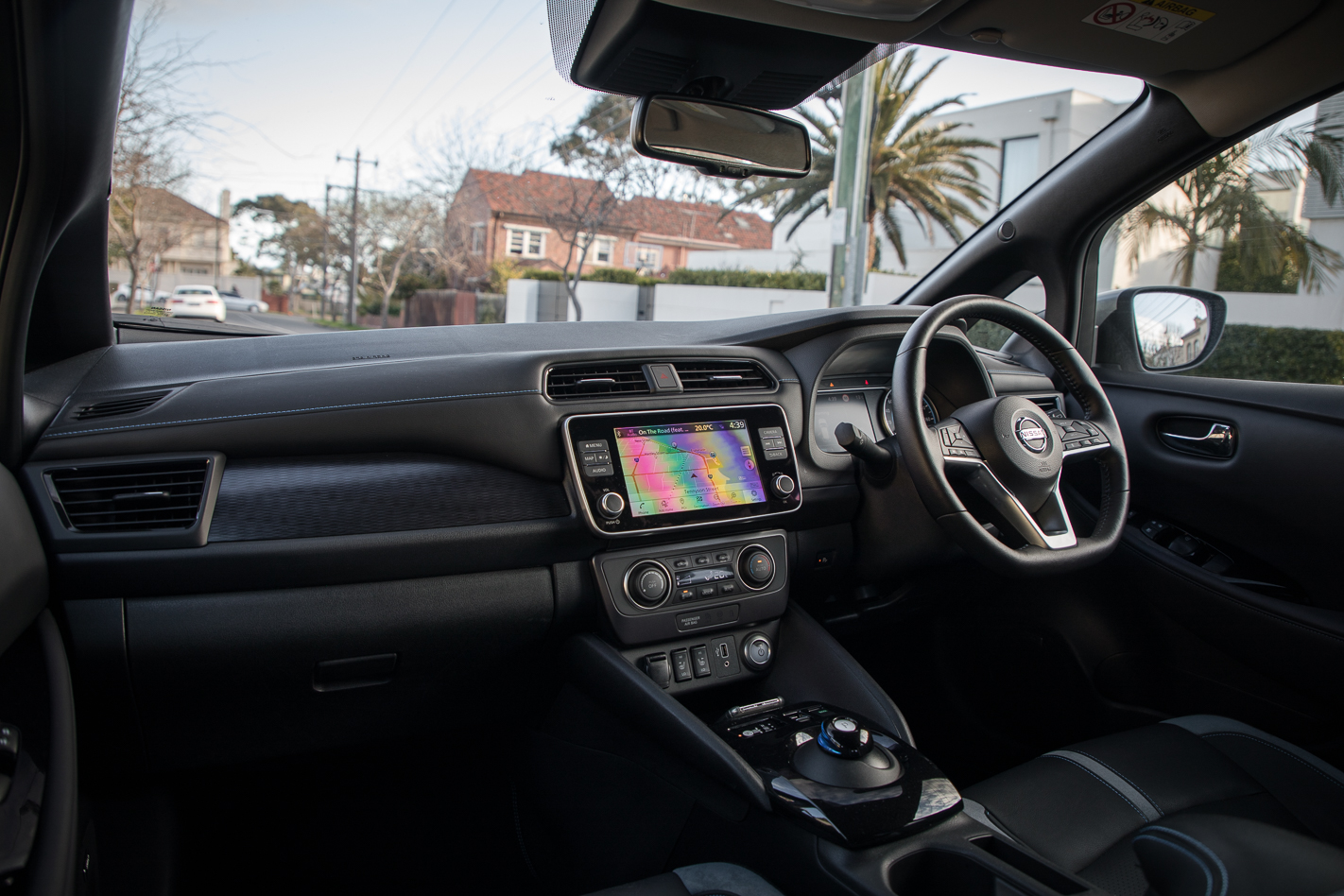
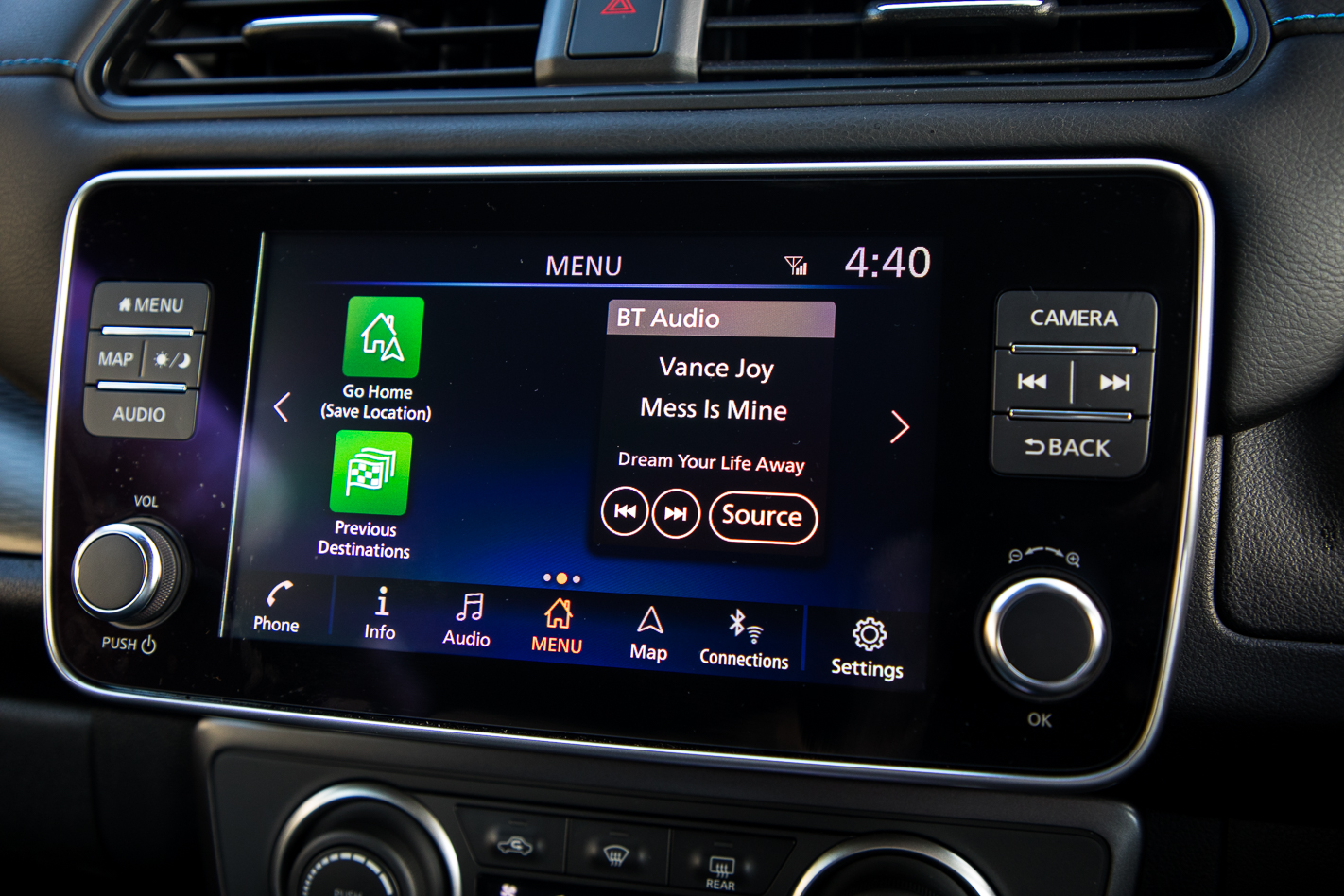
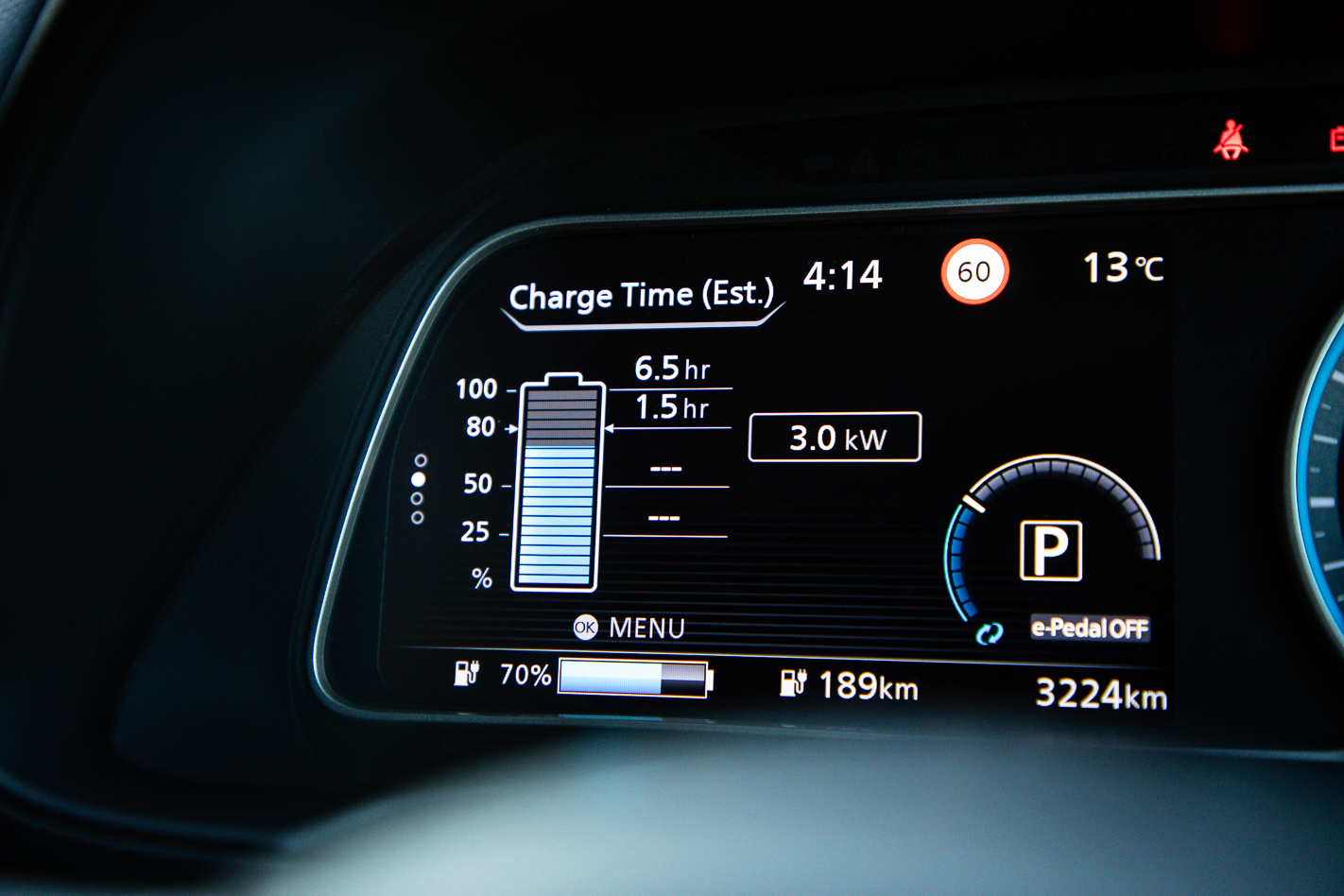
Tech-wise, as mentioned in previous reports, Nissan has come a long way in this department. Navigating the menu systems is simple and there’s a good amount of customisation you can do to get your home page setting just right. It also tells you how fuel-efficient you’re being, includes a number of vital readings like battery temp, remaining charge time and it’ll even direct you to the closest charging station.
The fast-connecting Bluetooth set-up and digital radio was a go-to for daily errands, though wired Apple CarPlay is always on-hand for a plug-and-play solution.
Nissan Intelligent Mobility describes the Japanese car maker’s roadmap towards the future of driving. In practice, the broad term encompasses a number of driver assistance safety measures including autonomous emergency braking, active cruise control, lane-departure warning and rear-cross traffic alert.
I’ve already spoken about the active cruise control which, apart from excluding a stop and go function for traffic lights and won’t steer you within your lane like some other systems, is a competent and assisted way to travel on freeways.
In my experience, the other technologies like rear-cross traffic alert and autonomous emergency braking were all helpful in alerting me to potential mishaps.
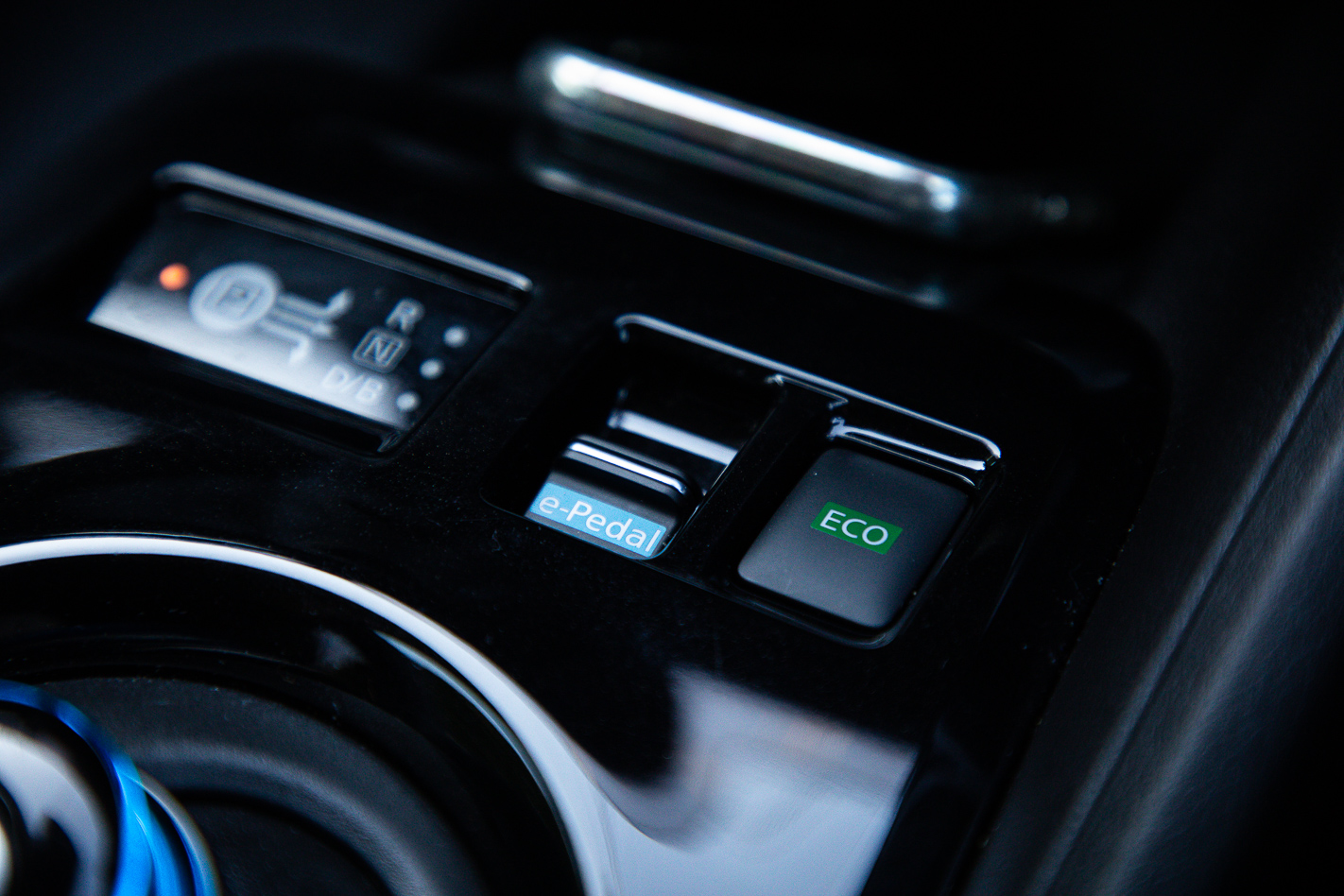
The Leaf’s e-Pedal is another Intelligent Mobility setting which turns on heavy regenerative braking, negating the need for a brake pedal. It works really well and genuinely adds kilometres onto the car’s range figure, though it is a matter of personal preference whether you like the feeling or not. I opted to go without it for much of my driving, unless I wanted to be conservative with the Leaf’s range.
A further enhancement of Nissan Intelligent Mobility for Australia would see the introduction of ProPILOT PARK, which can autonomously park the vehicle and is available on Leafs in other markets like Japan.
At odds with the futuristic mindset of the Nissan Leaf is a foot-operated parking brake.
Another thing that could make life easier is a phone app that could tell you key vehicle stats and levels. For example, the amount of battery charge remaining. A few other manufacturers incorporate this technology and it looks as though Nissan has attempted it in other markets, but there’s nothing of the sort for Australians with a Leaf.
More charging stations are always welcome. In my time with the car, I only ever came across one 50kW DC charger and that’s because I specifically set out to charge there.
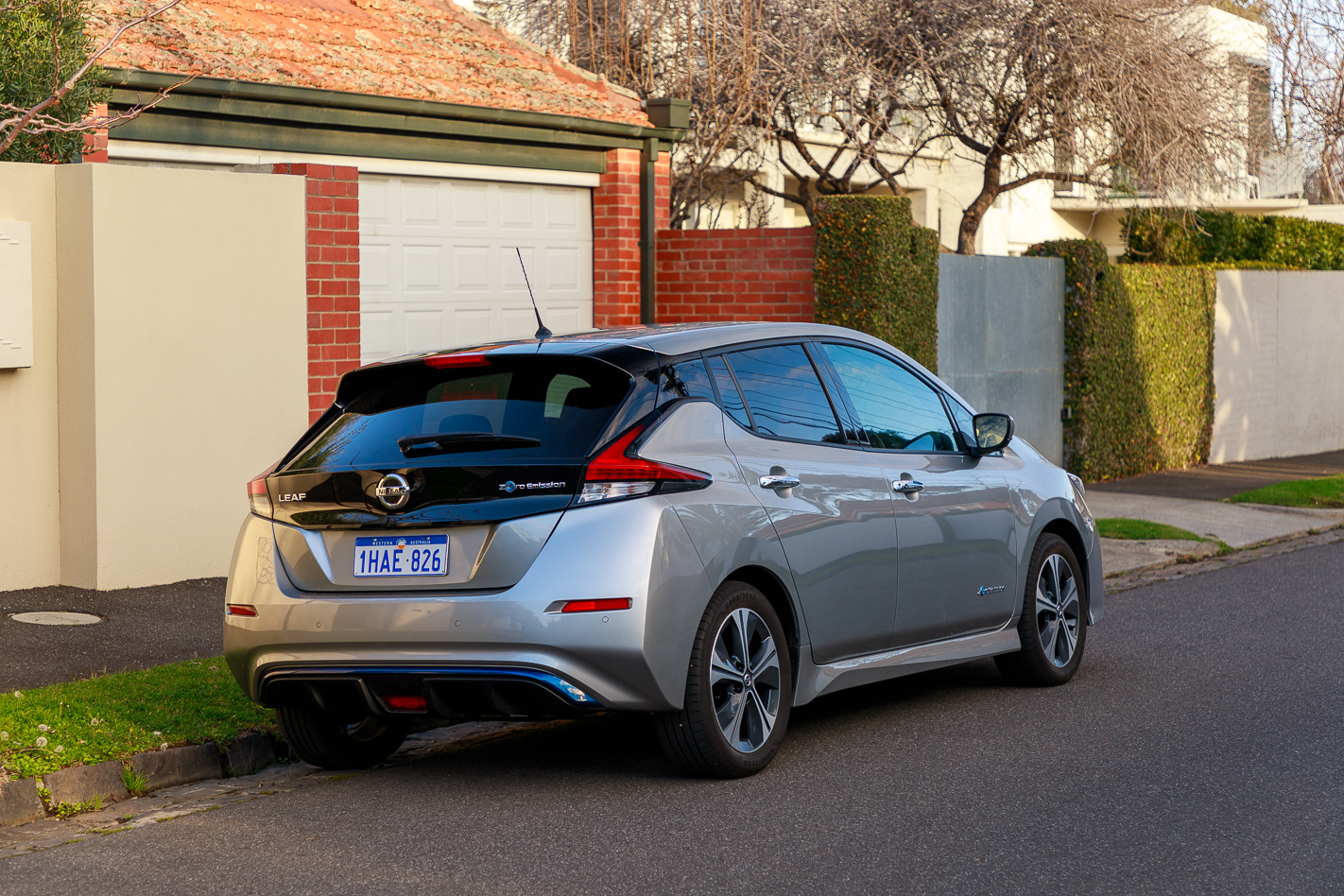
Running an electric car does force you to think in advance about where your next charge is going to be, which doesn’t bode well for spontaneous trips. That only stung me a few times but does prompt you to ensure it’s always on charge when at home.
Luckily there’s a long-range Leaf e+ touching down in Australia (expected to add $10,000 to the Leaf 40kWh’s $49,990 price) in just a few short months which is offers 100km extra range from a bigger 62kWh battery.
It’s refreshing to see Nissan doubling-down on its EV efforts when rivals like Renault are pulling the Zoe out and, not to mention, a lack of investment from Federal government.
While I wouldn’t be swapping petrol power for electrons exclusively just yet, having a backup internal combustion engine car to an EV daily driver is the happy medium for me right now.
For one thing, the technology excites me and while electric vehicles might not be the answer for every person right now, we are on the right track.
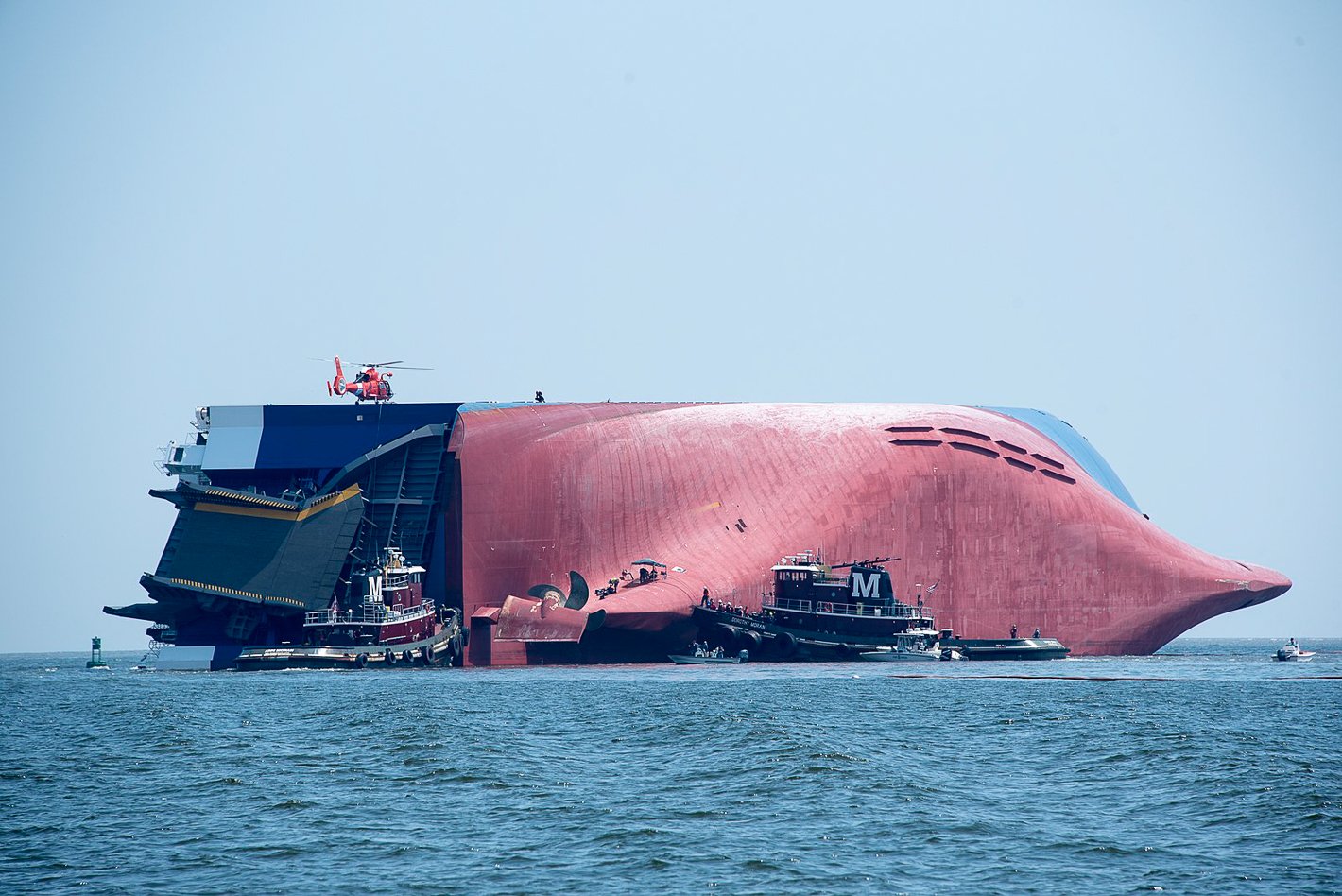
A literal boatload of brand-new Hyundais is finally being salvaged, months after it capsized in the US.
In what has to be the one of the coolest cross sections ever, a giant chain has been employed to dissect the MV Golden Ray, cutting the car carrier into manageable pieces in order to ship it away for processing and recycling.

It’s an epic undertaking to behold, and incredibly complex in detail, but essentially the recovery effort involves a gigantic crane positioned over the capsized ship, which is used to slip a cutting chain underneath the hull of the ship.
The chain is then drawn back and forth, chopping right through the ship and its unfortunate automotive occupants.
It’s a heck of a chain; it measures 120m in length, and its 36kg links are half a metre long each.
It’s dragged through the hull at a rate of four metres a minute, and the noise is like the coming of the four horsemen of the Apocolypse.

From there, the individual pieces are lifted up by the crane and dropped onto special barges that deliver the pieces to a recycling facility in Louisiana.
The MV Golden Ray has been a persistent stain on Georgia’s horizon since September 2019, when it toppled en route to Maryland carrying a staggering 4200 Hyundai and Kia cars.
A fire is reportedly to blame for the freighter running aground and an uneven centre of gravity was ultimately the cause for the ship to roll onto its side.
While authorities continue to try and rescue what’s left of the boat and its cargo, progress has been consistently hampered by both storms and the coronavirus pandemic.
The giant crane taking care of the salvage operation is named the VB-10000, and is a twin-gantry, dual-barge heavy-lift vessel designed to repair damaged oil rigs.
Each of the twin gantries is able to lift 5000 tonnes, though the entire vessel is limited to 7500 tonnes due to buoyancy limits.
That said, each section weighs between 2000 and 4000 tonnes – well within the VB-10000’s limits.
As if the sheer engineering feat of dissecting a mammoth ship and moving in massive chunks wasn’t challenging enough, it’s currently lying in a hurricane hot-spot… and many of the salvage crew have contracted Covid-19.
As for the fate of the cars, they will all be written off, with the manufacturers able to claim the loss – estimated at a conservative $150 million – on insurance.
The ship itself, and its contents, will be able to be sold for scrap value.
While the Golden Ray‘s fuel was pumped off soon after it first capsized, thousands of litres of fuel remains in the tanks of the vehicles trapped in its hold, which is causing ongoing environmental concerns.
Fortunately, the capsized car carrier is under constant surveillance to sound the alarm if any spillage is detected and a containment and clean-up plan is in place should a significant leak occur.
While it’s not ideal for the ship’s owners and Hyundai, the salvage of the MV Golden Ray is certainly an awe-inspiring operation to behold.
