
Equipment and value
The $39,990 Forester Hybrid L is the cheaper of this pair of hybrid offerings (S is $45,990). Subaru’s EyeSight safety tech is standard and includes items like AEB and radar-based systems (also in the RAV4). The Forester also gets facial recognition, which monitors alertness and can set a seating position. Servicing is every 12 months/12,500km, while it’s covered by a five-year/unlimited-kilometre warranty. The battery pack gains an eight-year warranty. 21/25
At $41,490, the Toyota RAV4 GXL Hybrid is the more expensive option. However, like the Forester it comes with a full suite of safety systems as well as key tech items like Apple CarPlay and Android Auto. The main difference is the addition of wireless phone charging. Servicing is every 12 months/15,000km and the warranty mirrors the Subie. However, the 10-year battery warranty is two years longer than the Forester’s. 20/25
Space and comfort
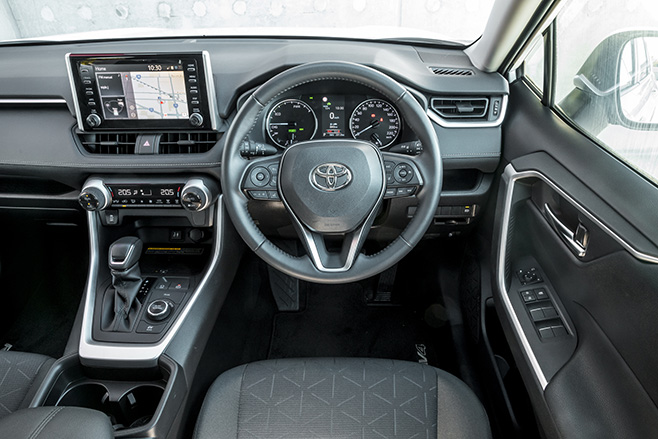
Build quality and high-grade materials mask a rather chaotic design – there are screens and angles aplenty. Sadly, the L has to make do with the smaller 6.5-inch infotainment screen, although it is more intuitive than the RAV’s. The seats are firm, but there’s ample space for heads and legs in both front and rear with air vents and USB charging ports in the back, too. Boot capacity is 509L, but there’s no spare wheel, due to the lithium-ion battery pack. 19/25
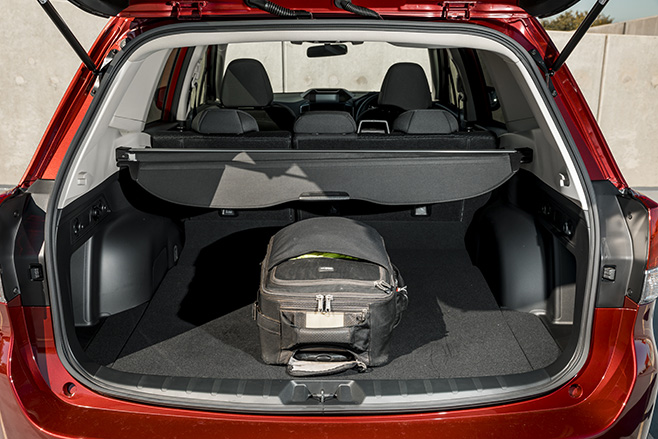
Like the Forester, the RAV4’s exterior and interior design is … distinctive. Ergonomics and functionality are better resolved in the Toyota, with the big climate controls and 8.0-inch infotainment system easy to use – although the graphics are antiquated. The seats are flatter and less supportive, but overall head- and legroom is generous and there are rear air vents and USB charging ports. The RAV4’s boot is 33L bigger and there is a space-saver spare. 20/25
Ride and handling
The 1730mm tall body (RAV4 1685mm) affords great vision with little roll through corners. Cornering levels are modest but reassuring and the ESC intervenes early. The ride quality is well judged, the steering is light, and NVH levels are low. If you venture off-road (it’s still a Subaru), there is 220mm of ground clearance (30mm more than RAV4) and AWD. However, the brake regeneration makes the pedal feel grabby and disconcerting. 18/25
Sitting on the TNGA platform, the RAV4 feels more substantial on the road (it’s 50mm wider at 1865mm). Body control isn’t as good, with the RAV4 prone to bobbing through significant mid-corner undulations. It doesn’t recover as well as the Forester on rebound, but the overall suspension tune and ride quality is a little more forgiving on most surfaces. The cabin is quieter, too. The left pedal feels much more natural, even with a regenerative-braking system. 19/25
Performance and economy
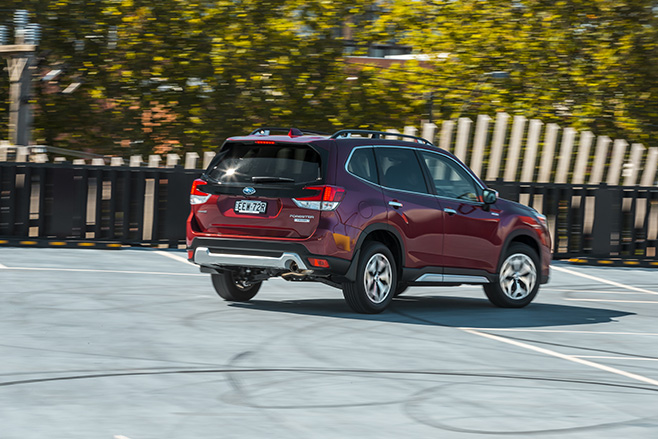
The mild-hybrid application is disappointing. It’s not as refined as the Toyota system, and the 12.3kW electric motor is far too dormant, while the 2.0-litre boxer kicks into life crudely. The CVT also perches revs high under load, with progress slow and vocal. Our Forester had scarce kays on the clock, but the tested 8.6L/100km fuel-consumption figure isn’t night-and-day better than a regular 2.5L petrol Forester. Ultimately, what’s the point? 13/25
Aussie acceptance of Toyota’s hybrid system has come a long way since the Prius landed in 2001. Now, it’s the go-to powertrain. In AWD applications, a nickel-metal hydride battery powers an 88kW electric motor on the front axle with a 40kW unit for the rear, supplementing the Atkinson-cycle 2.5-litre four. The combined system output of 163kW outstrips the Forester’s total, and you feel it on the road. It’s also far more frugal at a tested 6.5L/100km. 22/25
Scores
Forester 71/100
RAV4 81/100
Winner: Toyota RAV4 GXL AWD
The Subaru Forester is a great SUV – it’s a Wheels comparison winner and a COTY finalist for a reason. However, the hybrid application is thoroughly outclassed by the master of the genre, Toyota. And while everyone is going crazy for the Hybrid Cruiser variant, the GXL offers all the fruit you need without the extra spend or wait time. The RAV4 GXL Hybrid is one of those rare occurrences where it surpasses the PR fluff to deliver more than you expect. It’s an SUV that’s easy to live with – and one you’ll find yourself wanting to. A clear win to the established leader.
Price and specs
| Model | Subaru Forester Hybrid L | Toyota RAV4 GXL AWD |
| Engine | 1995cc flat 4cyl, dohc, 16v + electric motor | 2487cc in-line 4cyl, dohc, 16v + electric motors |
| Max power | 110kW @ 6000rpm | 163kW (combined) |
| Max torque | 196Nm @ 4000rpm | 221Nm @ 3600-5200rpm |
| Transmission | CVT | CVT |
| Weight | 1603kg | 1730kg |
| 0-100km/h | 10.0sec (estimated) | 8.0sec (claimed) |
| Economy | 8.6L/100km (tested) | 6.5L/100km (tested) |
| Price | $39,990 | $41,490 |
| On sale | Now | Now |
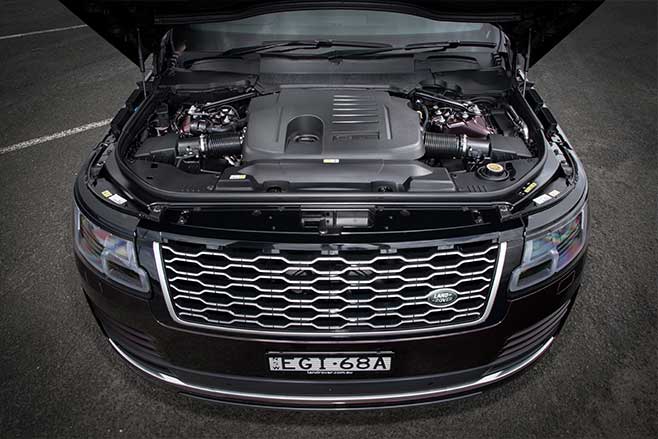
Engine choice used to be quite simple in a Range Rover. If you owned an oil refinery or had a strange fetish for petrol stations you bought the supercharged petrol V8, otherwise the twin-turbo diesel V8 was the pick.These days it’s a bit trickier. Those two options remain, as well as the ‘base’ six-cylinder diesel, but there are a couple of intriguing new choices.
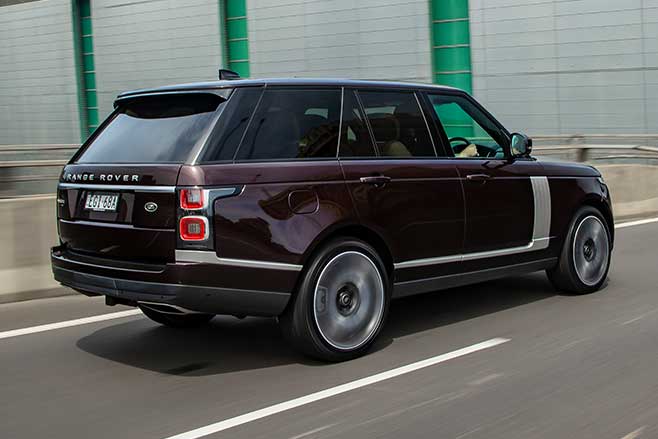
It works, the Rangie charging forward in response to a floored throttle, the slight hesitation as much a function of needing to get 2342kg moving as any engine delay. It’s a mark of the straight-six’s potency that this Vogue still feels rapid, its 294kW/550Nm enough for a 0-100km/h claim of 6.3sec.
The official claim of 9.1L/100km is optimistic, though would be achievable on the highway, but our mixed average of 11.3L/100km isn’t shabby in something this size.
Another positive is the upfront purchase price. Granted, not a huge consideration at this end of the market but choosing the inline-six rather than the blown V8 saves you almost $75,000. Or rather, gives you another $75K to spend on options, of which there are plenty.
Rating
4/5What you will like Nails the luxury off-road brief; impressive straight-six engine reduces fuel bills
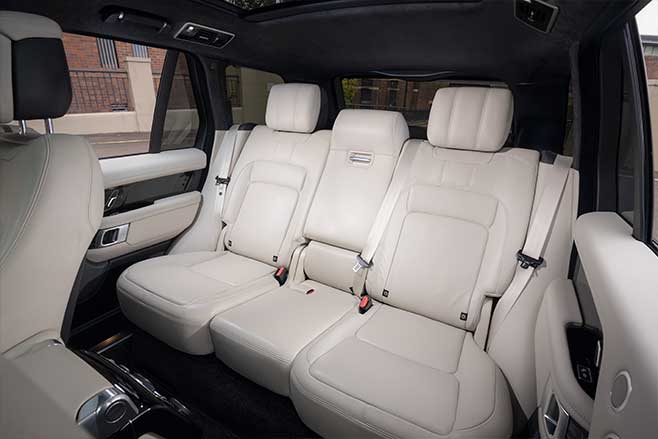
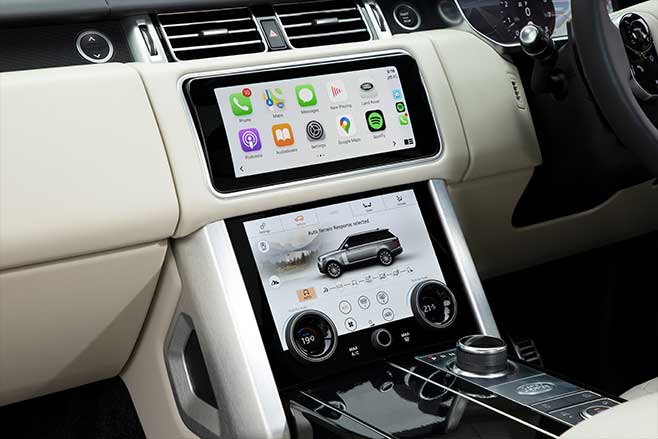
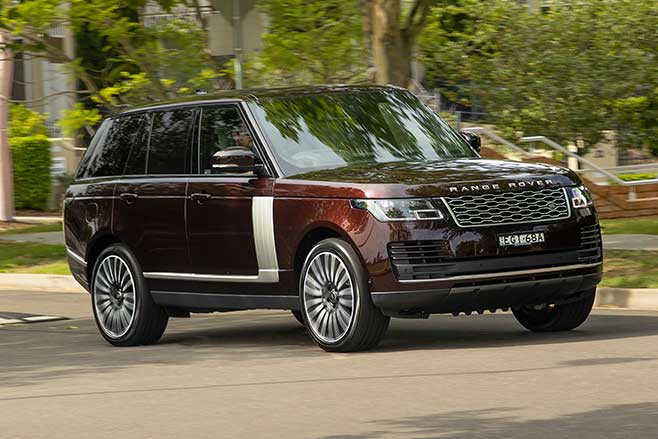
What you won’t Size occasionally creates problems; supercharged V8 more evocativeSpecifications Engine: 2996cc inline-6cyl, DOHC, 24v, twin-turbo, e-supercharger Power: 294kW @ 5500-6500rpm Torque: 550Nm @ 2000-5000rpm Weight: 2342kg 0-100km/h: 6.3sec (claimed) Economy: 9.1L/100km (combined/claimed) Price: $201,031 ($239,956 as-tested)
It’s a remarkable story: the child of London dentist Alfred Moss becomes smitten with cars and goes on to be a world-beating driver. No, not Stirling – though he did all right – but his sister Pat, many of whose international rally successes were achieved in an apparently unlikely vehicle, the Austin-Healey 3000.
The ‘big Healey’, launched in 1959, was an evolution of the four-cylinder Austin-Healey 100/4 of 1952. Far from a purpose-designed competition car, the roadster was developed for export to the booming, post-war US market.
In 1951 British engineer, rally driver and car maker Donald Healey had created the Anglo-American hybrid Nash-Healey roadster for just this purpose. But it was pricey, costing even more than Jaguar’s XK120, and Healey set new sights on the niche between the Jag and MG’s antiquated T series.
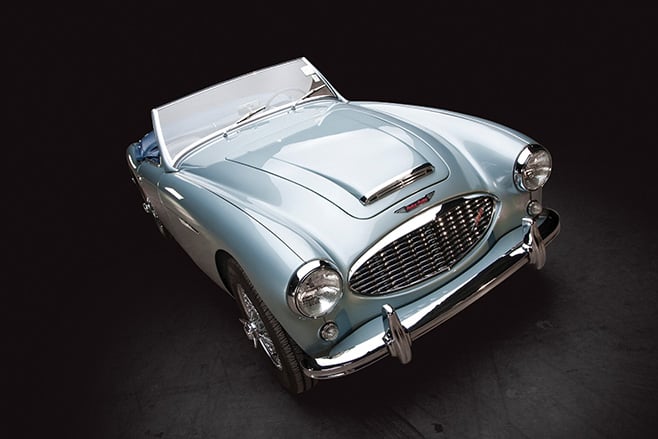
Clothing Austin mechanicals in a sexy, all-steel body, the Austin-Healey 100/4 was such a hit at the 1952 Earls Court show that Austin took on full production, under licence to Healey. The 20-year agreement would also later produce the Sprite.
The new Austin-Healey 100/4 was an immediate success, and in 1956 – in response to the Chevrolet Corvette and Ford Thunderbird – it gave way to the 100/6, with a 25mm longer wheelbase and a 2.6-litre, six-cylinder engine. In 1959, a capacity increase, further engine tuning and Girling front disc brakes produced the burly 3000. Stylish, powerful and fast, it was still unsophisticated, being built on a simple ladder chassis with coil/wishbone front and leaf-sprung rear suspension damped by 1930s-tech lever-arm units.
Though famously hairy to drive near the limit, the 3000 was very popular as a club-level racer, and in 1960 an alloy-bodied GT version was homologated for races like the Sebring 12-Hour.
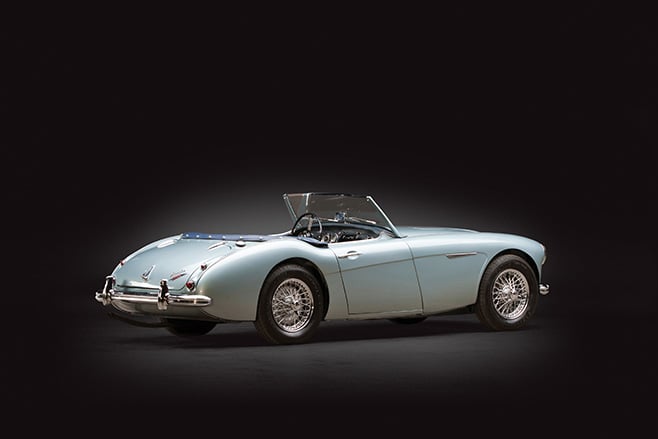
Surprisingly, the low-slung roadster (and nominal 2+2 version) found its greatest success in rallying, with Pat Moss’s second on the 1959 German Rally and 1960 Alpine Rally and victory in the 1960 Liège-Rome-Liège being highlights among many class wins.
Power and comfort increases attended the 3000’s evolution through Mk1, 2 and 3 guises, though the car retained its 2337mm wheelbase. From 1962, midway through the Mk2 run, a subtly revised ‘convertible’ body created a more useable 2+2 cockpit, which would continue for the Mk3.
When production ceased at the end of 1967, about 43,000 examples of the 3000 had been built, from a total of about 72,000 100-series cars. Reportedly, 90 percent were exported to the US.
Twinning ways
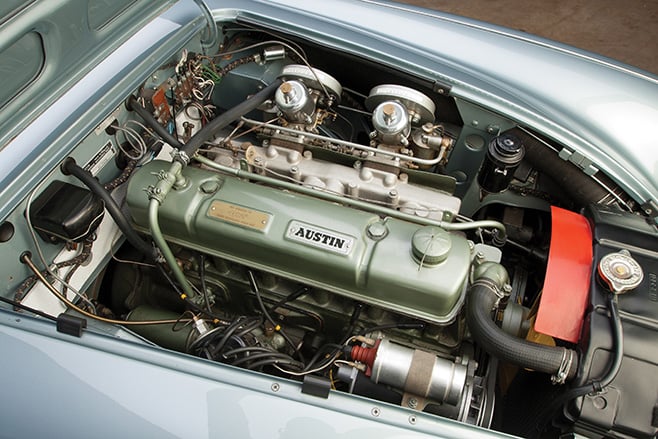
BMC’s C-series in-line six featured a cast-iron block and head, with pushrod ohv. Bored to 2913cc, the twin-carb 3000 Mk1 made 92kW; the Mk2 98kW, before Mk3’s bigger, twin SUs, dual exhausts and hot cam brought 112kW at 4750rpm and 224Nm at 3000rpm. A Mk3 did 0-100km/h in 10sec and a top of 190km/h via a four-speed manual with overdrive.
Cushy convertible
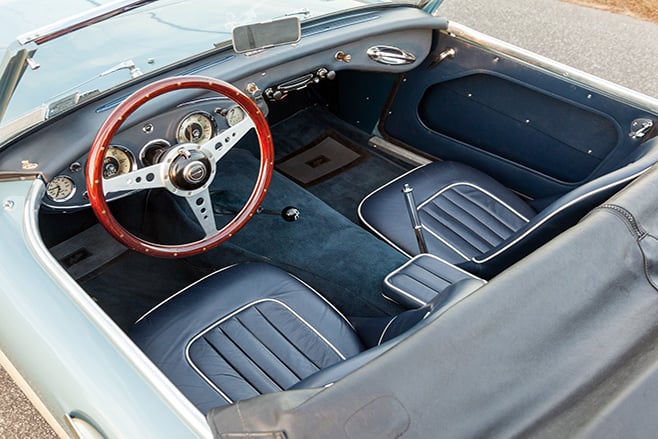
The 3000 Mk1 (pictured) and Mk2 came as a BN7 two-seater and BT7 2+2. They were superseded by a redesigned 2+2 (BJ7) ‘convertible’, with wrap-around windscreen, wind-up windows and vertical-slat grille. Cockpits grew cushier, with final Mk3 (BJ8) boasting wood veneer dash and leather trim. Weight was contained to 1180kg.
The 1959 Austin Healey 3000 by the numbers
- 190km/h top speed
- 1931: Donald Healey wins the Monte Carlo Rally in an Invicta
- 17,712: total Mk3 (BJ8) produced, most popular 3000 variant
- 1971: Austin-Healey marque retired by BMC after 20-year agreement expires
Nissan has revealed a slew of details on how it hopes the next generation Qashqai will reclaim the small SUV segment when it arrives late next year.
Not wanting to squander the Qashqai’s sales success since its debut in 2007, Nissan has promised significant progress for its third-gen with a heavily revised platform, a new powertrain line-up and advanced active safety systems.
Its CMF-C platform, as it will be called, has been re-engineered to weigh less, increase stiffness and crumple more effectively in crashes.
Nissan claims the new Qashqai will be 41 per cent stiffer than before and drop 60kg from a body-in-white – or the fully panelled monocoque – thanks to heavy aluminium use, a composite rear hatch and advanced stamping techniques.
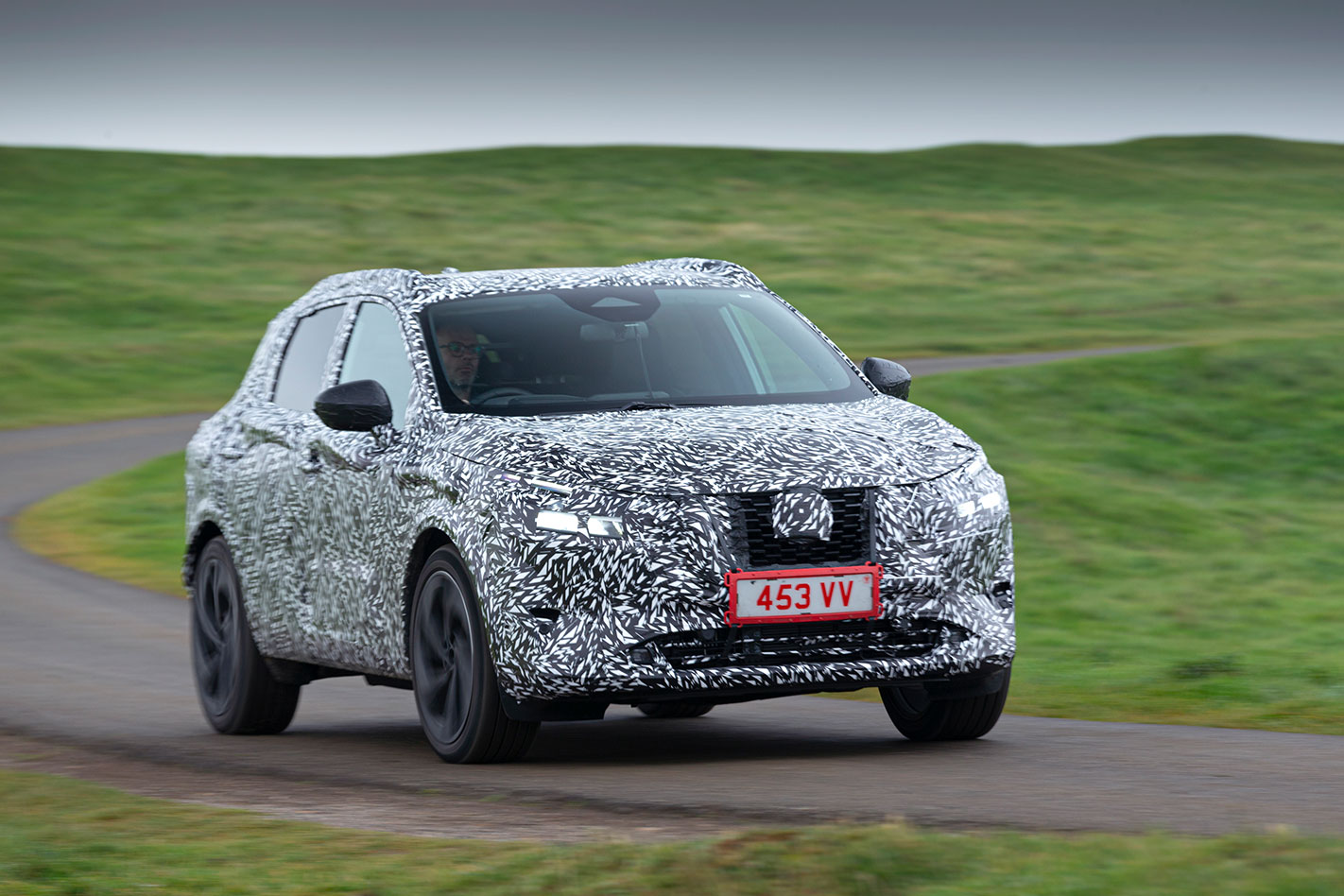
Structural bonding has also allowed Nissan to employ higher-grade steels, promising to increase crumple effectiveness, while the structure’s more homogeneous “backbone” shape aids this.
As for what sits inside the chassis, Nissan’s outlined the new Qashqai will be available with both two-wheel and all-wheel drive, outlining that the former will sport MacPherson strut front suspension and a torsion beam rear.
All-wheel drive cars score a more advanced multi-link setup in the rear suspension that promises a premium ride, a challenge for the 20-inch wheels set for higher grades.
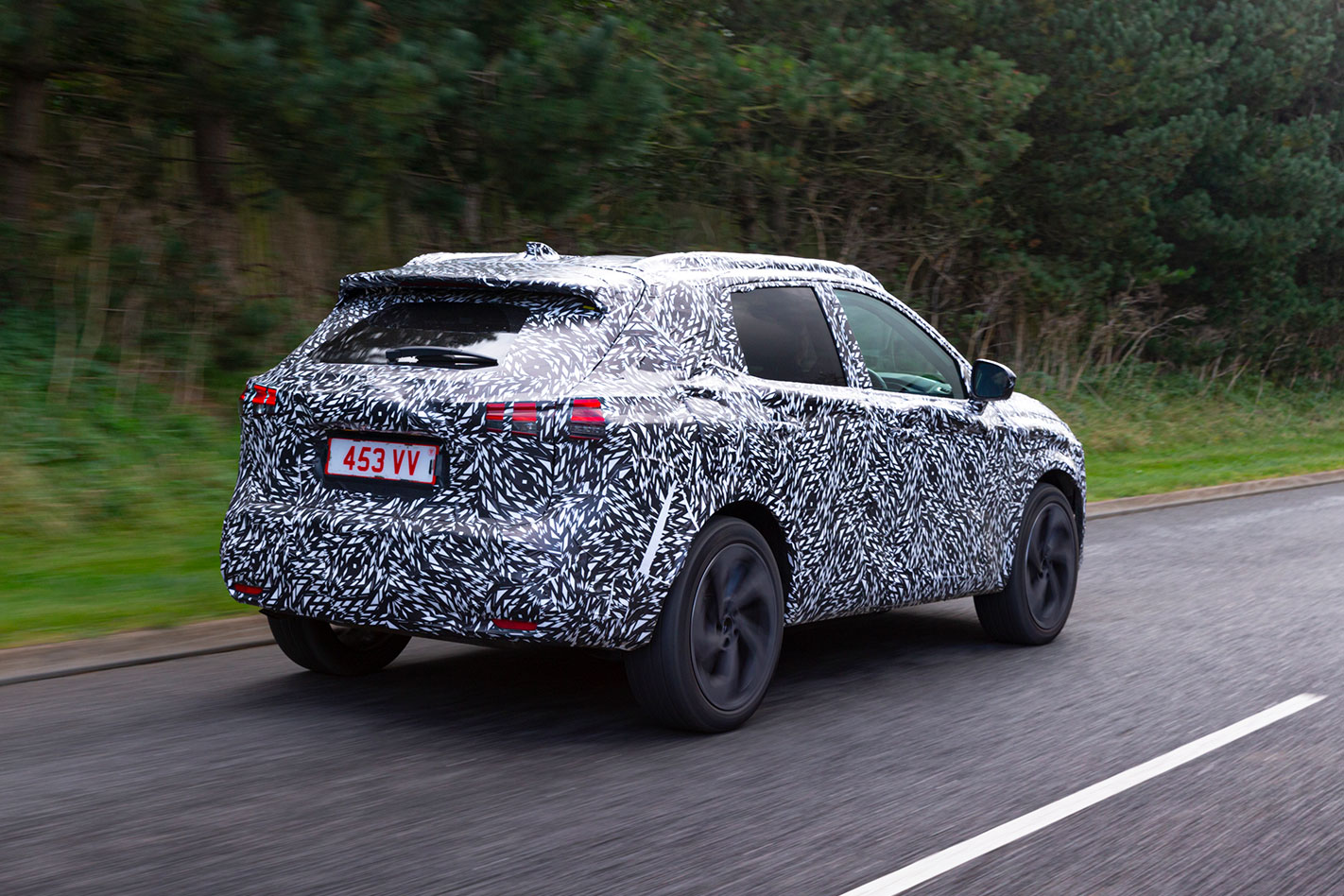
Nissan’s used the news to confirm powertrains that should help the brand meet ambitious electrification targets.
As expected, it’s outlined a 1.3-litre petrol engine with 12-volt mild hybrid technology will replace the current 2.0-litre atmo unit.
The new petrol engine will harvest braking energy to power its systems and be offered with two outputs. There’s no mention of transmissions or plug-in hybrid technology.
A new range-extender powertrain, called e-POWER, will also debut and includes a petrol engine that can either charge a battery or directly power an EV-grade motor.
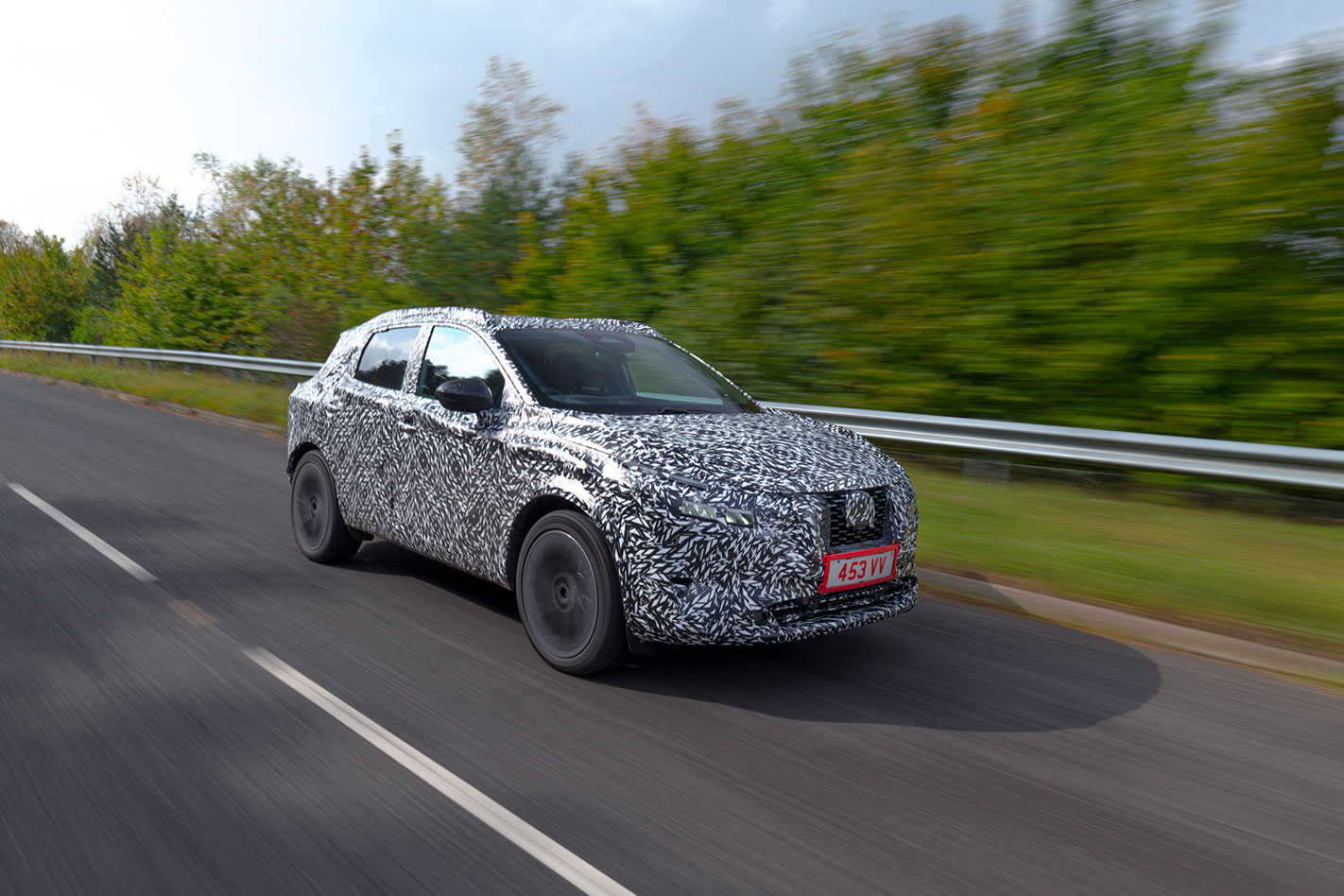
Keeping on the efficiency theme, the new Qashqai will feature a flat underbody that works with an active flap in the radiator grille to smooth airflow around the car.
Meanwhile, rounding out the big headline changes is Nissan’s ProPilot active safety tech.
The system, working with the navigation, should be able to slow the Qashqai down to a stop in traffic and resume acceleration after the vehicle in front has driven away.
But it’ll also be able to monitor road signs and adjust cruising speeds to suit.
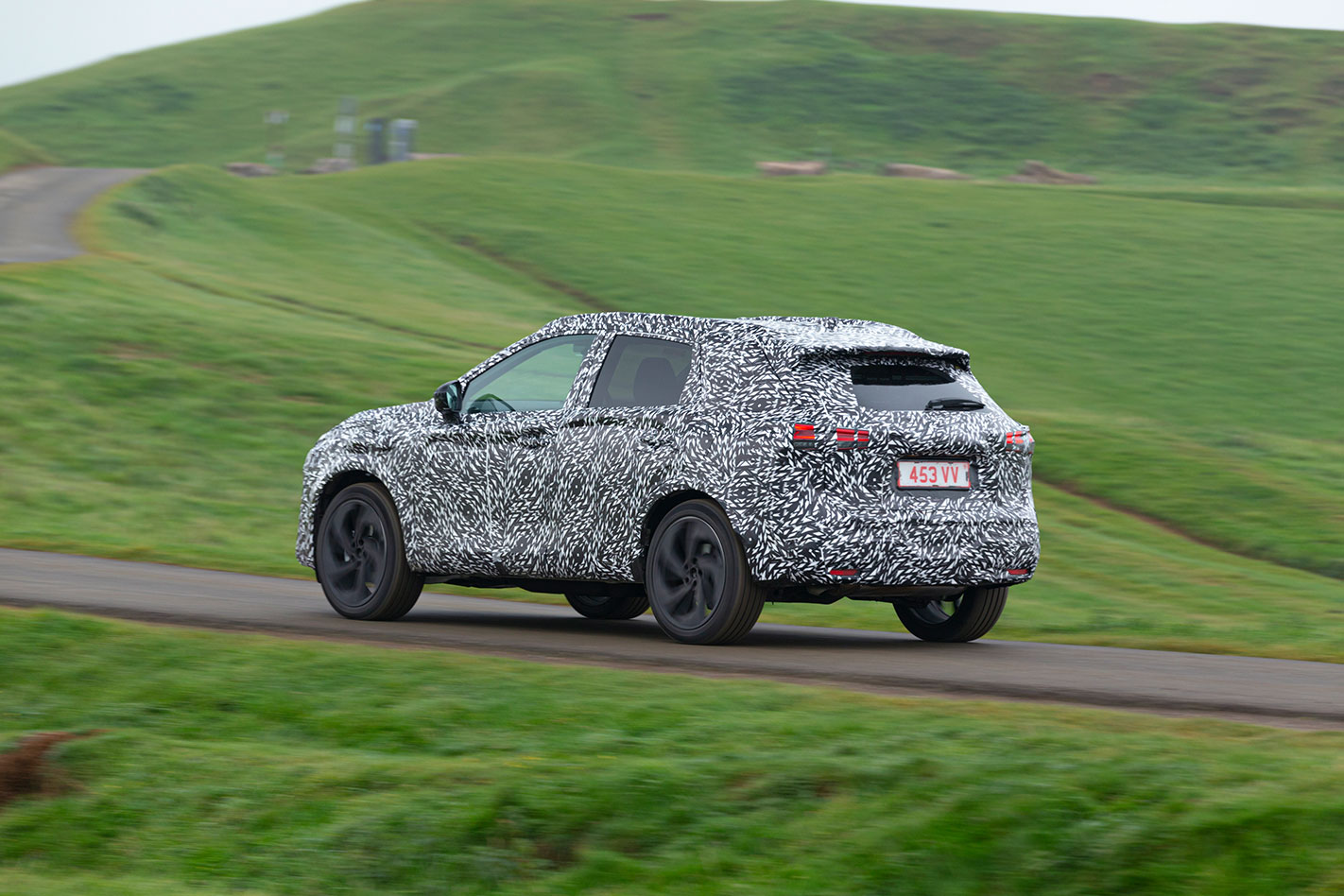
Nissan says it’ll be available on the mid-range N-Connecta variants, but grade levels have not been finalised for every region, with more details promised in the coming weeks.
The iconic Ford Transit van now has a battery-powered version that offers up to 200km between charges and uses technology to offer businesses and tradies more than just its carrying capacity.
Priced from US$45,000 (A$62,000) across the Pacific, the Ford E-Transit is powered by a 67kWh battery feeding a punchy 198kW/430Nm electric motor that should have no issues lugging furniture, pallet loads or tools.
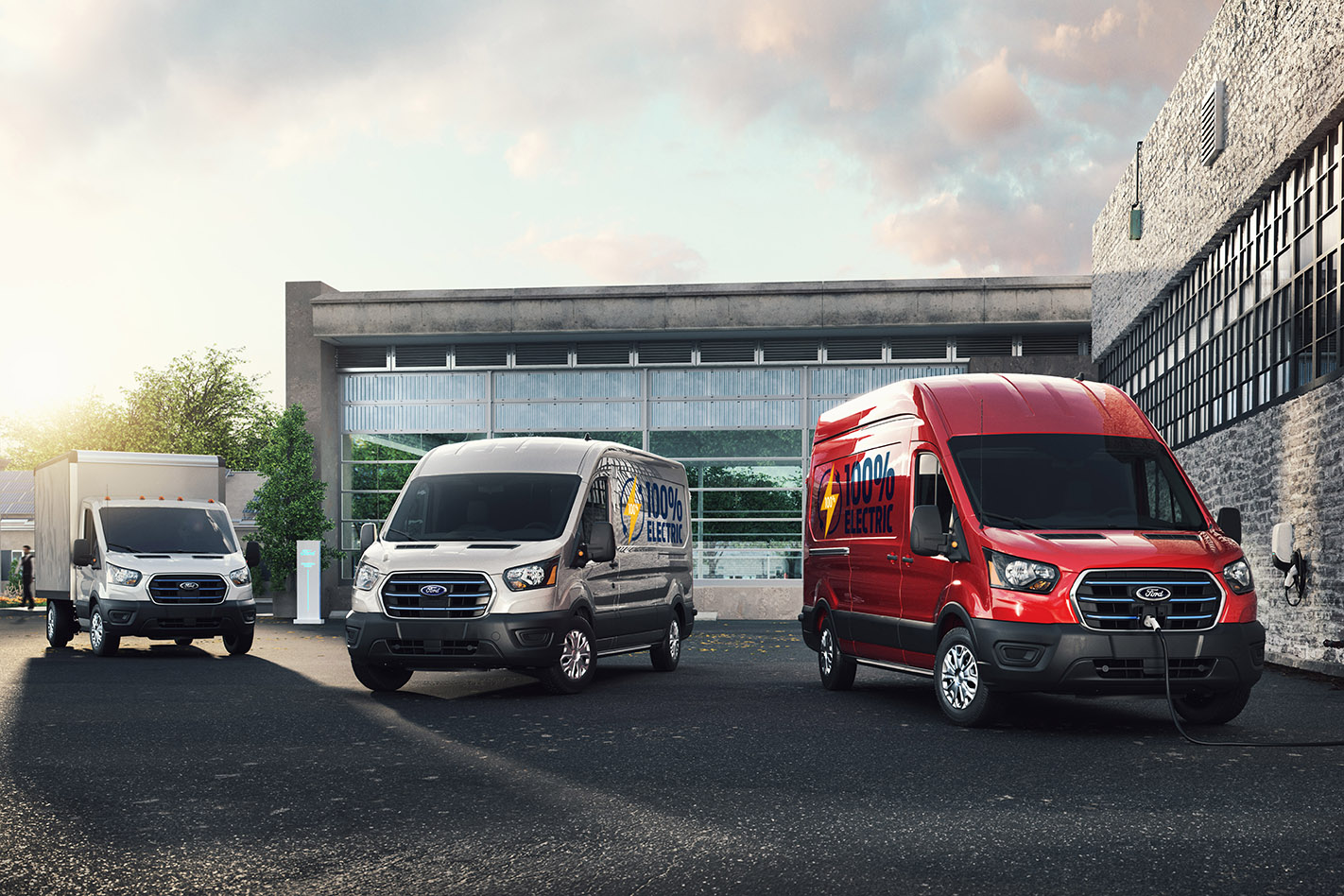
The battery is positioned under the floor, which reduces load capacity a little compared with the standard Transit, however, the maximum payload is a few hundred kilograms higher – the short roof, low wheelbase version has a 1723kg payload compared with the diesel version’s 1339kg.
Range varies depending on version and starts with about 200km for the low-roof versions, 189km for the medium-height roof version and 174km for the high-roof versions.
The ranges compare well with the E-Transit’s rivals including the Peugeot Partner Electric (170km), LDV EV80 (190km) and the Mercedes-Benz eVito (150km).
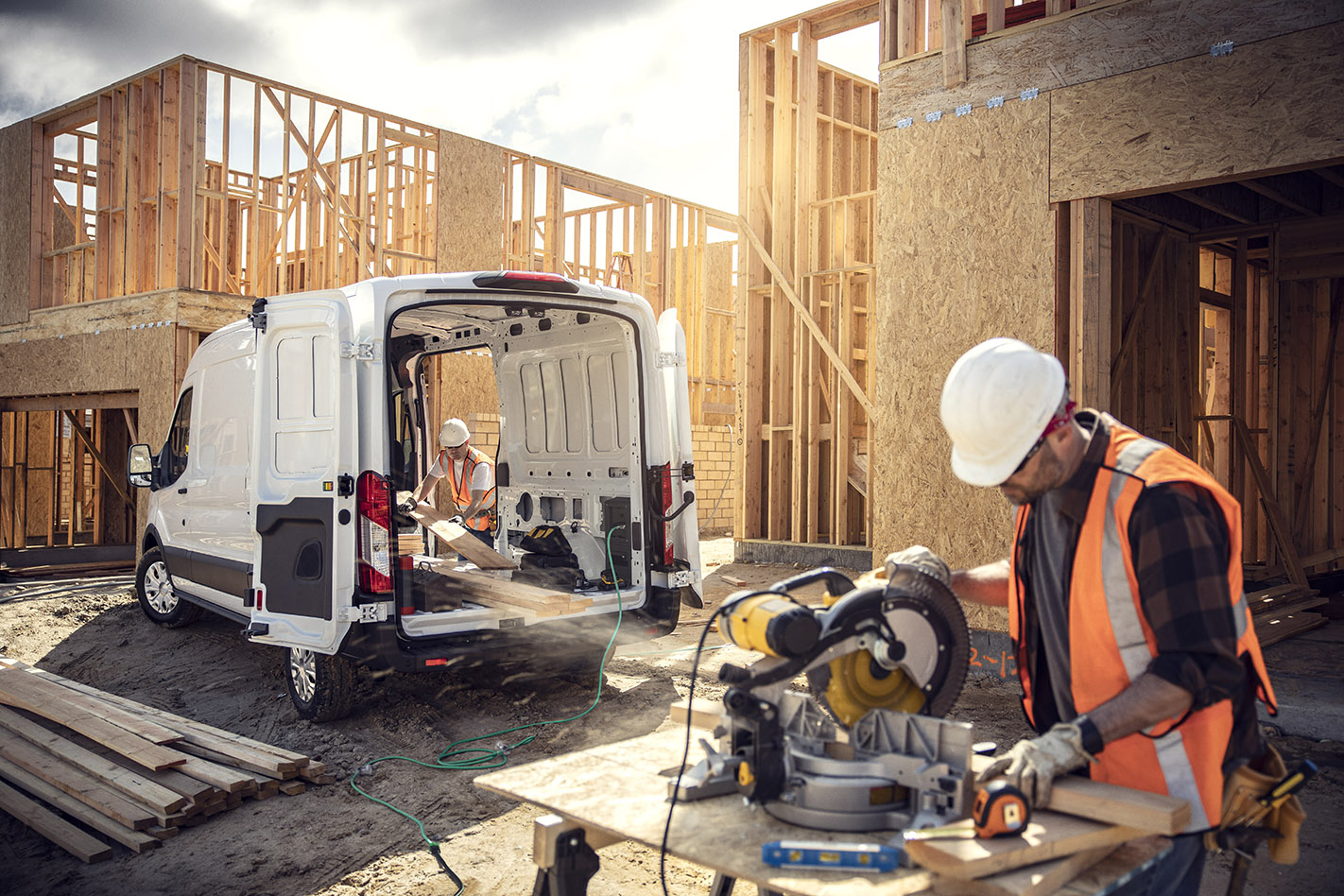
It also features Ford’s SYNC 4 that can connect to the internet to unlock software subscriptions that help fleets manage charging transactions, telematics services and more.
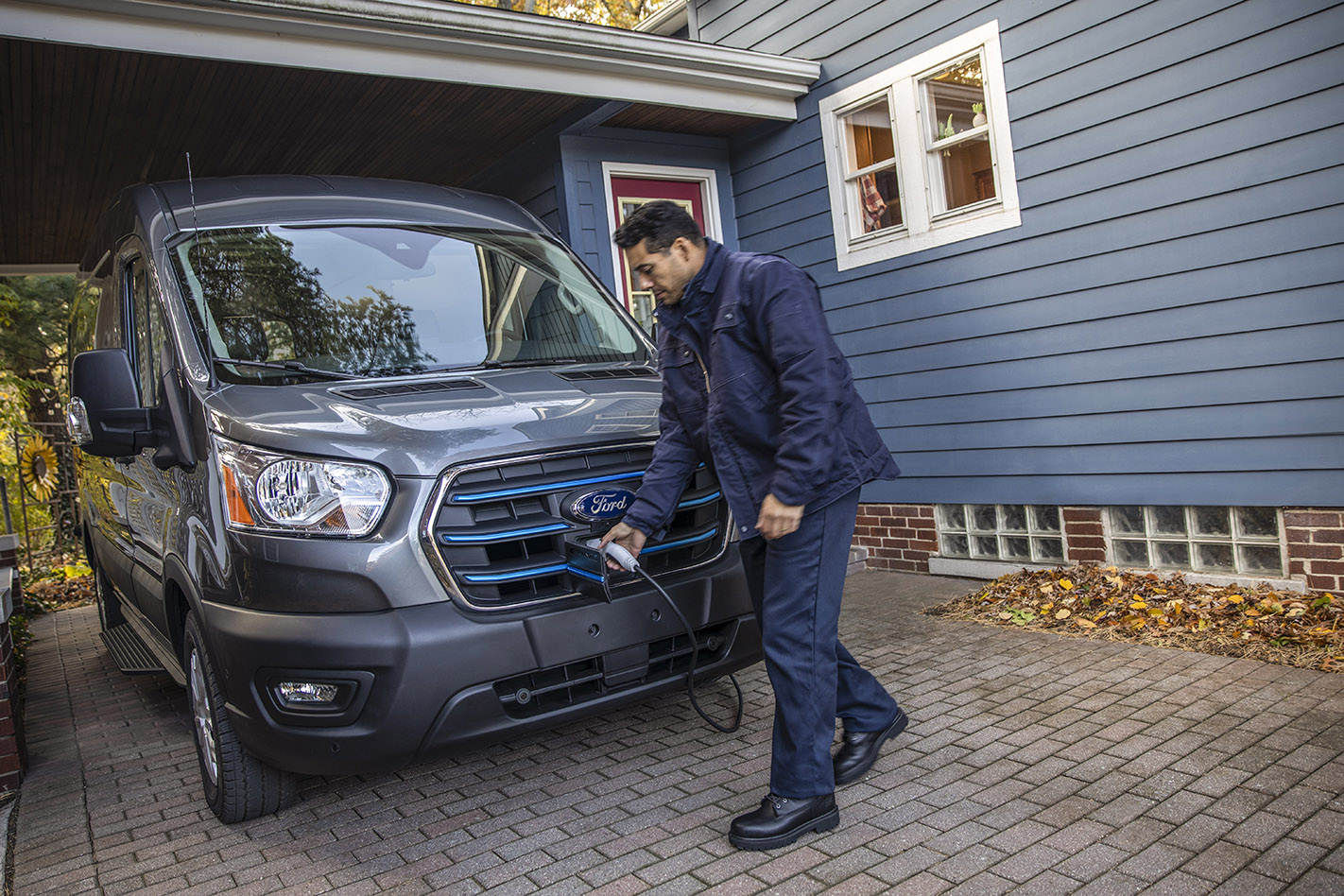
The E-Transit features AC and DC-fast charging and comes standard with a Ford Mobile Charger that can plug into a normal household socket. A full charge from a 240v socket will take just under 12 hours, while using a 115kW fast charger will top the battery up from 15 percent to 80 percent in 34 minutes. The more common 50kW chargers will to that in 65 minutes.
While the Ford E-Transit will be available internationally in 2022, it’s unclear if it will make its way Down Under with a Ford Australia spokesperson telling WhichCar: “While we have no local plans for the vehicle to share today, we always look to the best of our global portfolio for vehicles that suit the emerging needs of Australian customers.”
- Spider joins SF90 Stradale
- Hybrid, AWD and 735kW
- Plus new interior technologies
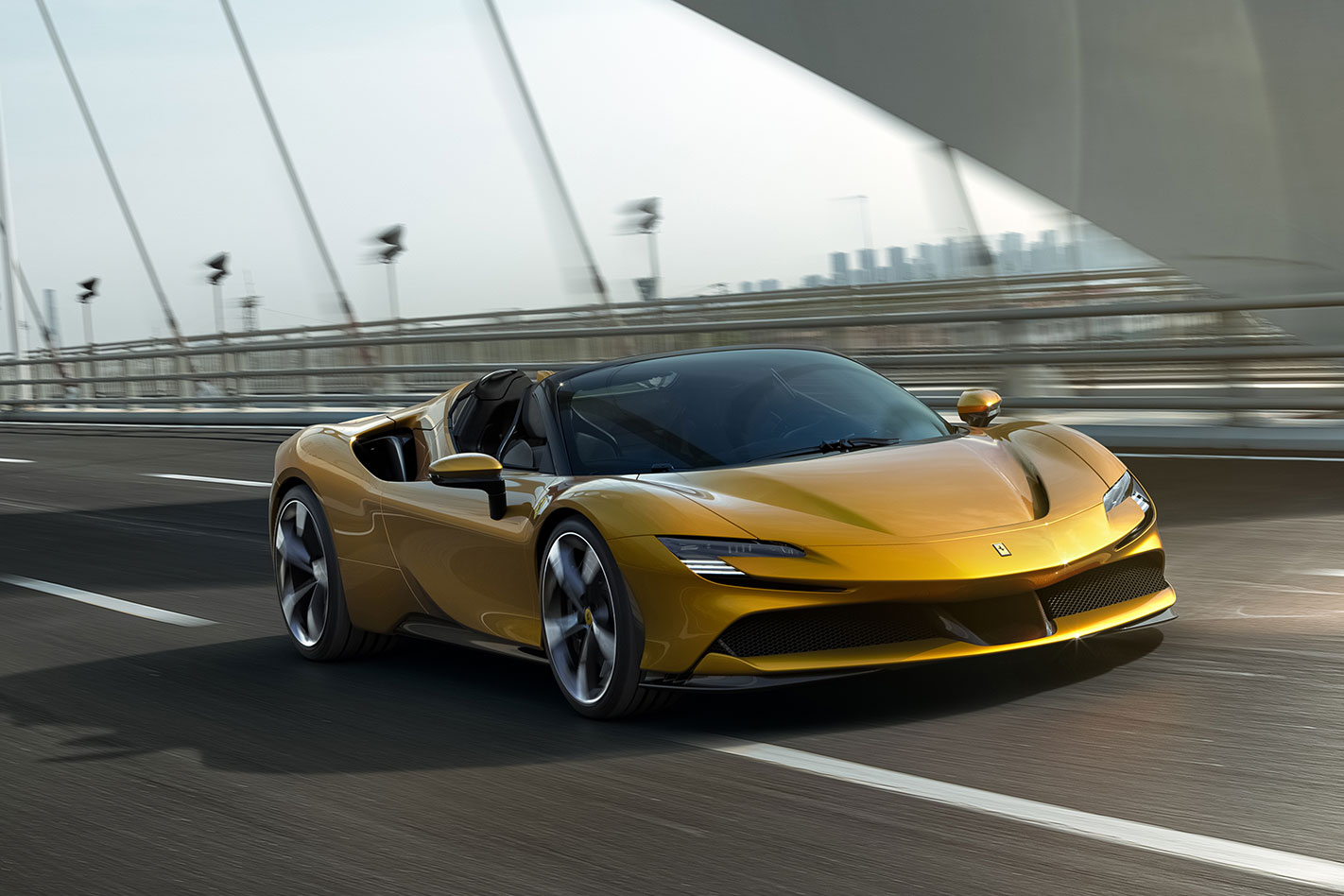
Ferrari’s extreme new halo car introduced a wealth of firsts for Ferrari, not least as it was the brand’s first plug-in hybrid car, along with ushering in new chassis construction techniques.
What’s different about the Spider version?
The roof is a retractable hard top, as Ferrari believes this gives the best noise and weather insulation, and it can be opened or closed in 14 seconds. Along with the roof, a small electric rear window can be used as an air vent and give you extra exposure to the SF90’s V8 when the roof is up, or a wind deflector when the roof is down.
Did you say PHEV? Give me performance specs!
I did. But it is a Ferrari after all. The 4.0-litre V8 from the F8 Tributo has been completely redesigned, according to Chief Technical Officer Michael Leiters at the SF90 Stradale’s original debut; ‘we had to go beyond the best V8 ever’, alluding to Ferrari’s V8 being an International Engine of the Year winner. In the SF90, it alone produces 574kW and 800Nm and revs to 8,000rpm.
That is then mated to a 7.9kWh battery and three electric motors – one for each of the front wheels and one between the combustion engine and the gearbox. That means the SF90 is capable of up to 26km on electric power alone. The electric drivetrain produces 162kW.
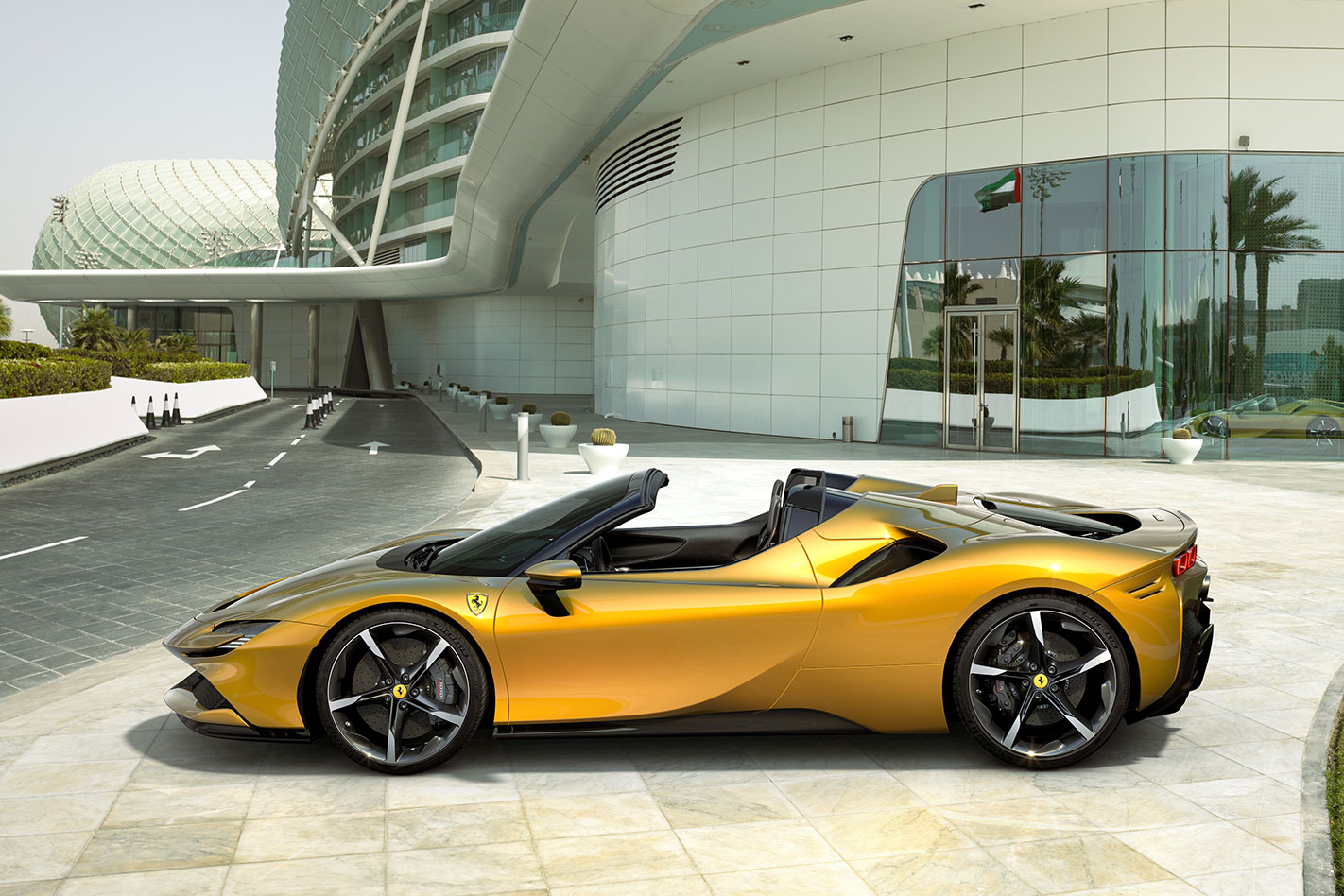
So, a total of 735kW, then. That means the new ultimate Ferrari can sprint to 100km/h in 2.5 seconds (the same for both the coupe and Spider), making it the fastest-ever production Ferrari, and a launch to 200km/h is possible in just 6.7 seconds for the coupe and 7.0 seconds for the Spider. Top speed is logged at 340km/h, again for both the Stradale and Spider.
Ferrari says the SF90 can lap the Fiorano track in 1m 19s, with the Spider clocking in just half a second slower.
The multi-material approach for the chassis, according to Leiters, offsets the extra weight hybrid powertrain burdens a car with. It’s a space frame – as always with Ferrari – but uses aluminium and carbonfibre in its construction. A new eight-speed dual-clutch auto has been developed, too.
Electronic torque vectoring (known as RAC-e in Ferrari speak) and electronic Side Slip Control are just some of the handling aids incorporated into the SF90. Brake-by-wire tech blends the physical brakes with e-motor regen, too.
It’s certainly a looker
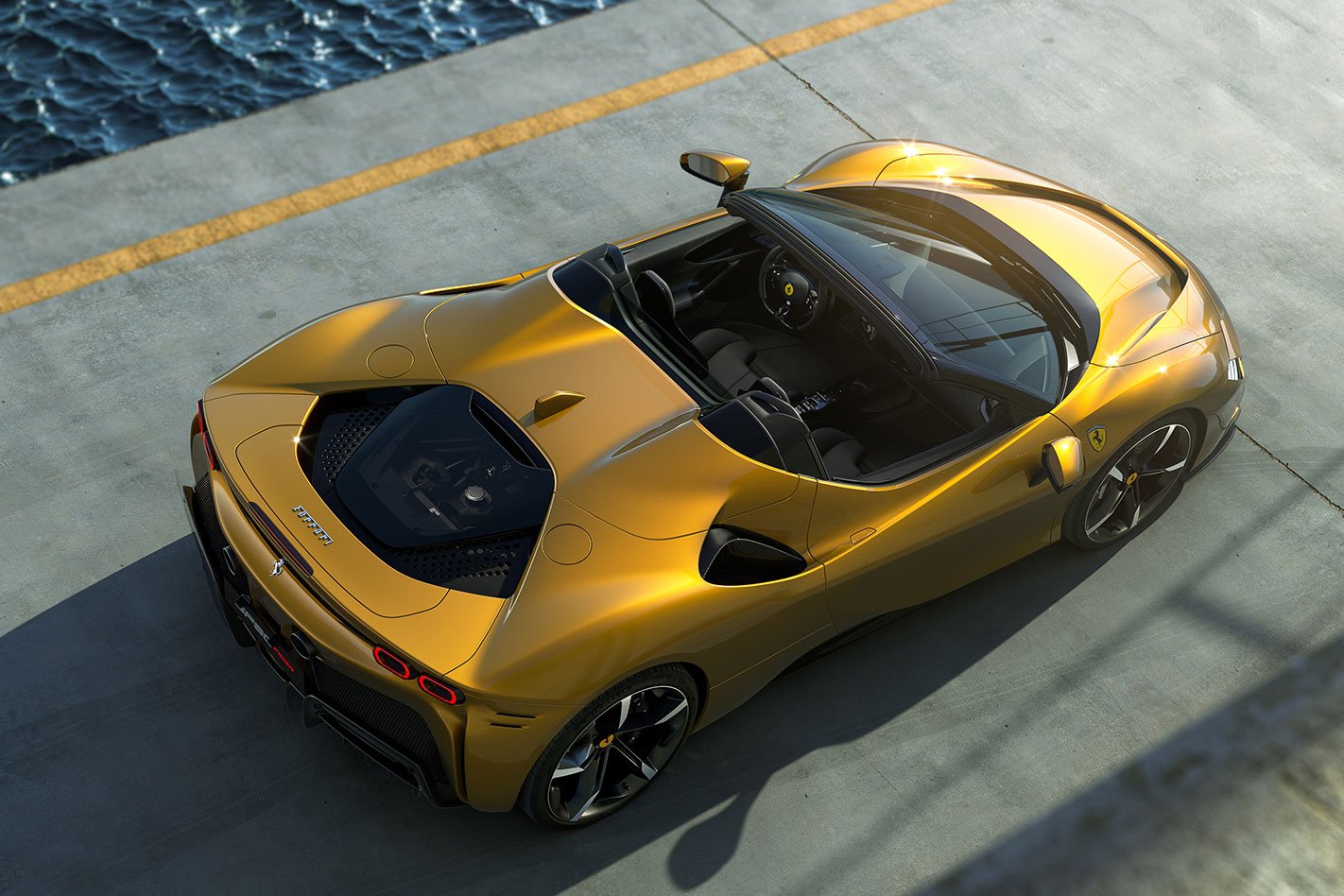
As quite literally illustrated by Ferrari design boss, Flavio Manzoni, during the Stradale’s reveal event. Before we saw the car in the metal, he sketched out the front, rear and profile live. The SF90 is 8mm longer, 20mm slimmer and 70mm taller than a LaFerrari.
There are blended elements of the F8 Tributo that replaces the 488 but also the J50 Roadster and the SP38. After we poked around up close, we noticed – through the F40-like slatted rear window – that the engine and drivetrain are mounted incredibly low. You can also see some of the orange electrical piping underneath the vents that flank said window.
Tell me about the interior…
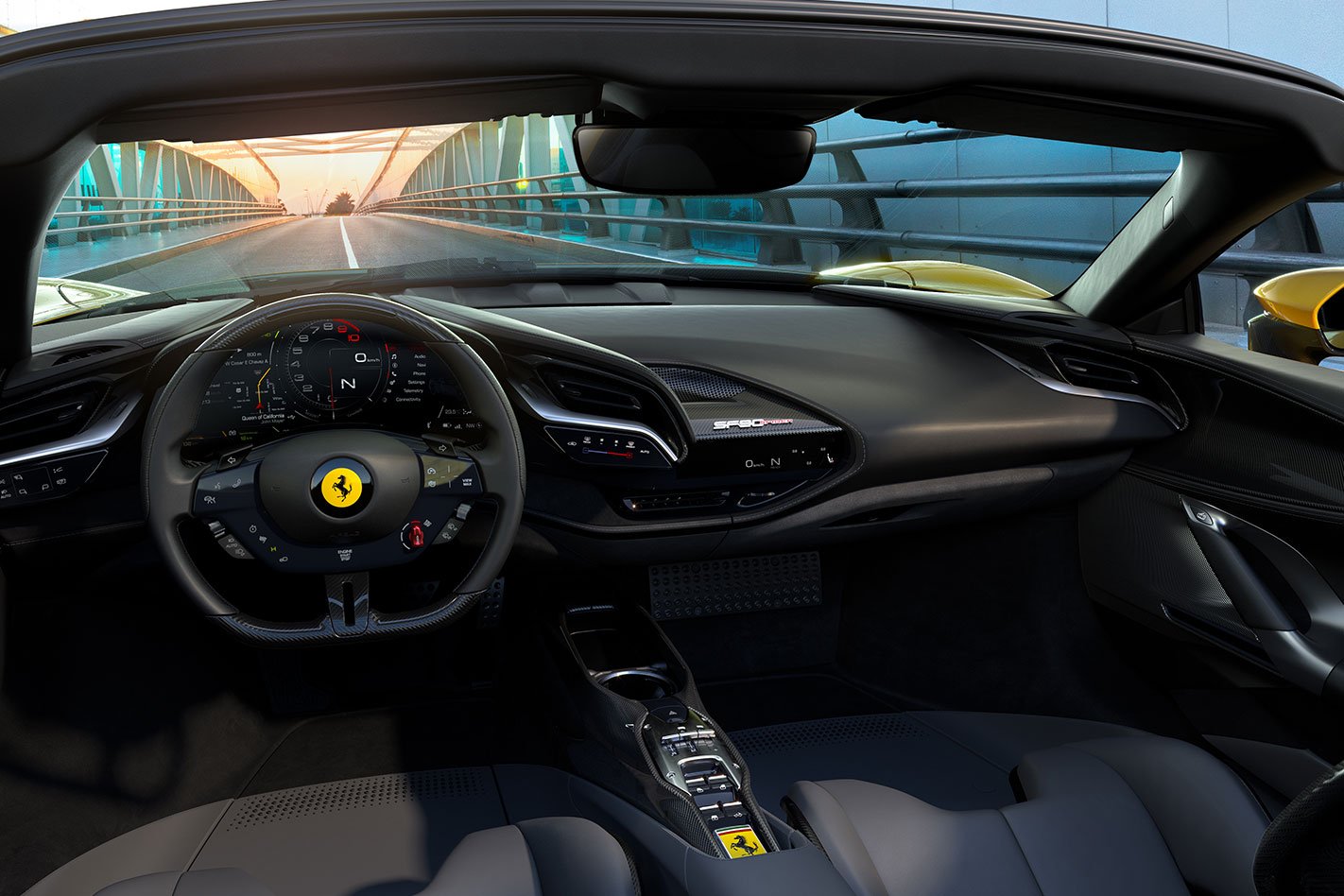
Even when the late Sergio Marchionne was still CEO, Ferrari knew its interior layout wasn’t especially known for its ease-of-use. Leiters points it out himself during the car’s reveal event, too; ‘we know it is sometimes difficult to navigate in our cars.’ With the SF90, the team think they’ve cracked it with a brand-new HMI (human-machine interface).
An all-new steering wheel and user interface has been introduced with the brand’s new ultimate supercar.
The wheel has illuminated touch pads, with Leiters pointing out that ‘around 80 per cent of all of the car’s functions’ can be controlled through it. The Manettino dial (thankfully) remains analogue, but the starter button has been replaced with another touch-sensitive spot in the lower centre of the wheel.
Another first for Ferrari is an all-digital instrument display. It’s a 16-inch curved screen, that allows for a central (admittedly digital) rev counter in the centre and three ‘wings’ of information to slide from side-to-side behind it. If you like there are other view options, with a full map view available or a pared-back, more discrete view. A HUD is also included for the first time.
Performance mode keeps the combustion engine on at all times, with the e-motors assisting power flow and the brilliantly-named Qualifying mode that has the electric motors work at maximum attack and prioritises performance over battery charging.
The Manettino dial still has Wet, Sport, Race, CT off and ESC off via backlit colours on the wheel, and there is still an LED rev display on the top edge of the steering wheel.
Anything else?
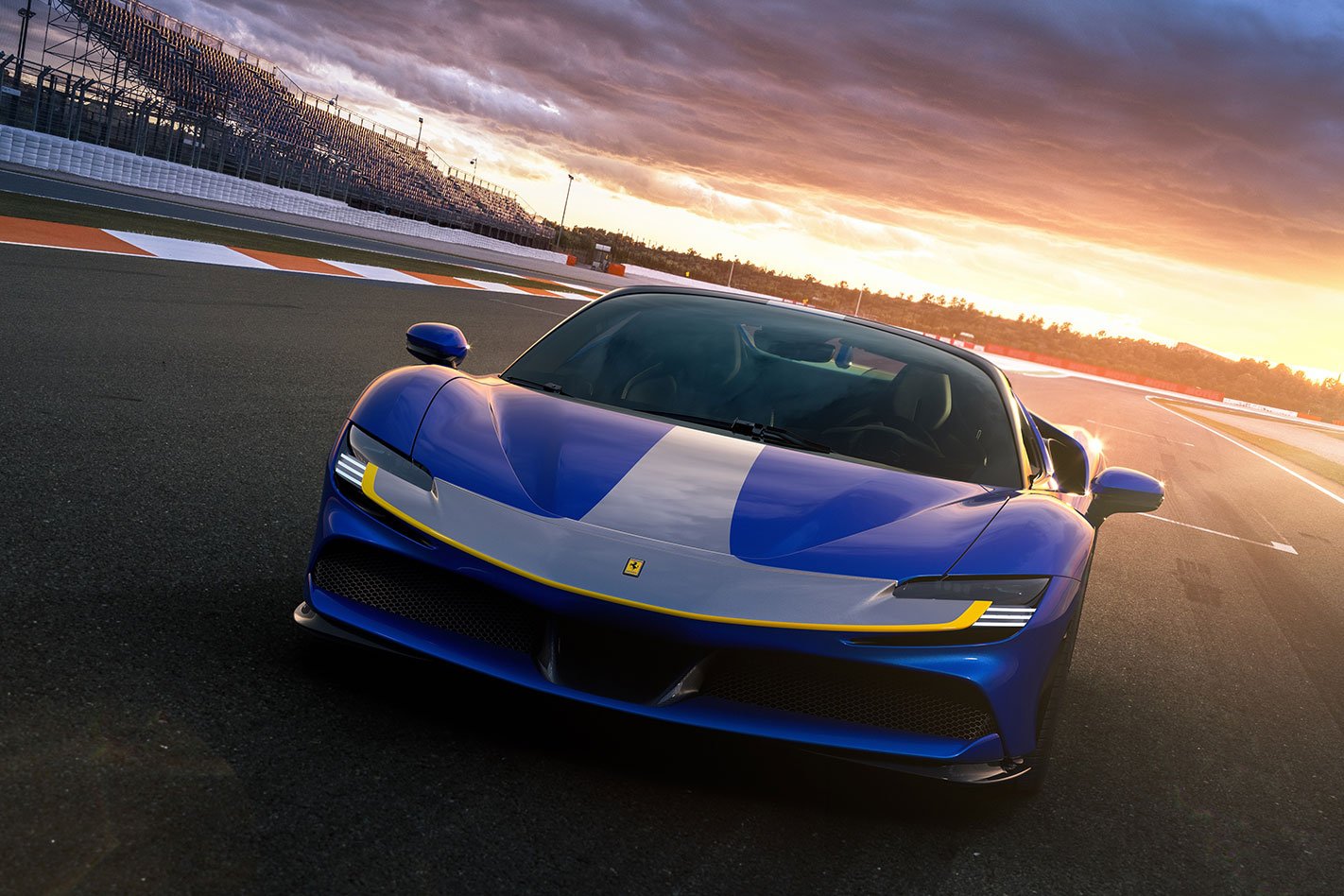
It makes even better use of carbonfibre in the doors and undertray and a carbonfibre fixed rear wing with a steep angle that generates up to 290kg at speeds of 250km/h, has titanium springs and exhaust and Michelin Pilot Sport Cup 2 tyres.
When and how much?
The SF90 Stradale is already on sale, priced from $846,888 before any of Ferrari’s countless (and sometimes pricey) options. As for the Spider, commercial boss Enrico Galleria says that the convertible will go on sale in the second quarter of 2021 with an expected price tag above that.
This article was originally published at carmagazine.co.uk
- Audi celebrates 40 years of quattro
- This RS6 pays homage to the Audi 90
- A project from 12 apprentices in Nerckarsulm
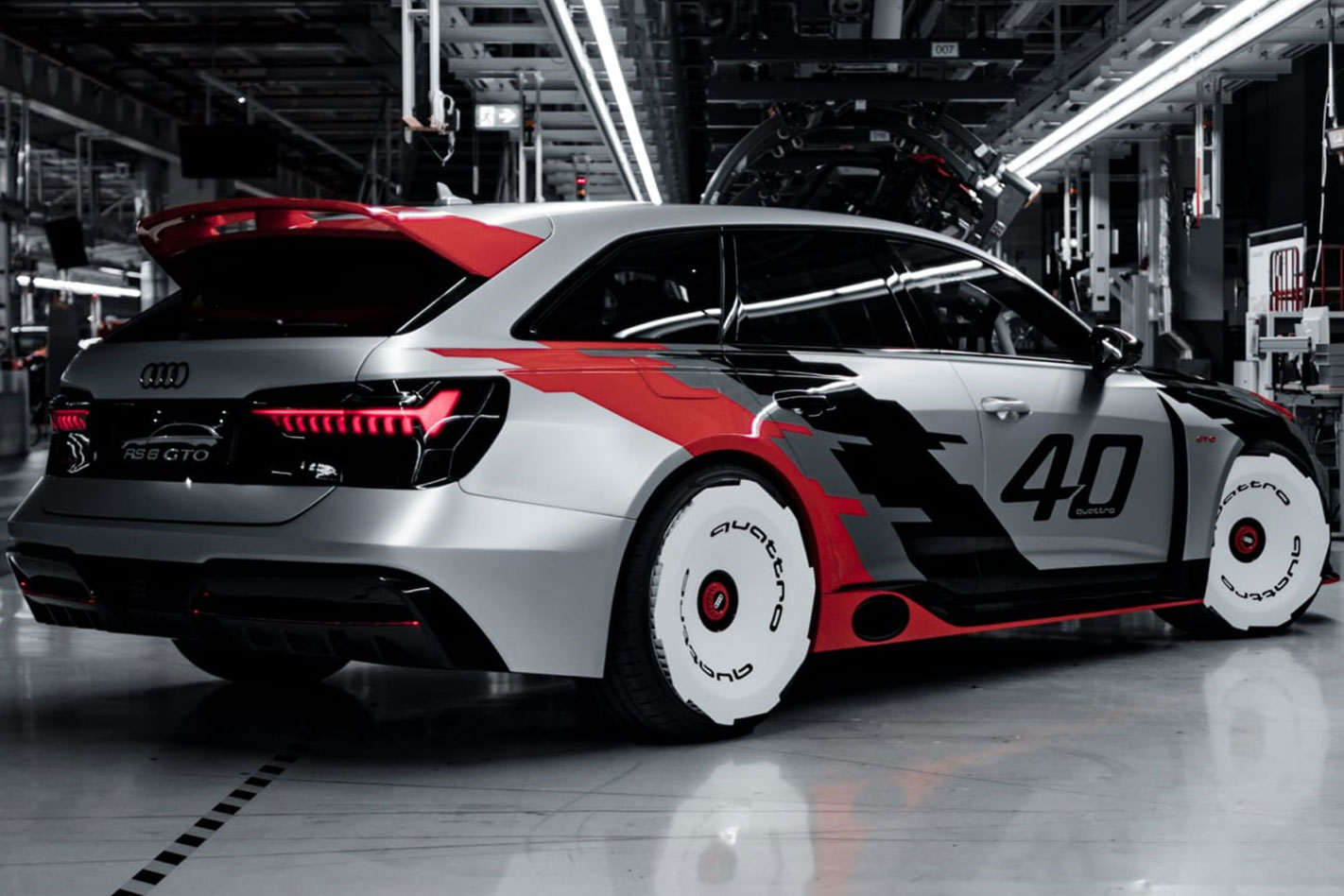
Feast your eyes on the RS6 GTO Concept, a meeting of minds between Ingolstadt’s hugely successful 90 Quattro GTO IMSA racecar, and it’s practical – but insanely quick – RS6 super wagon.
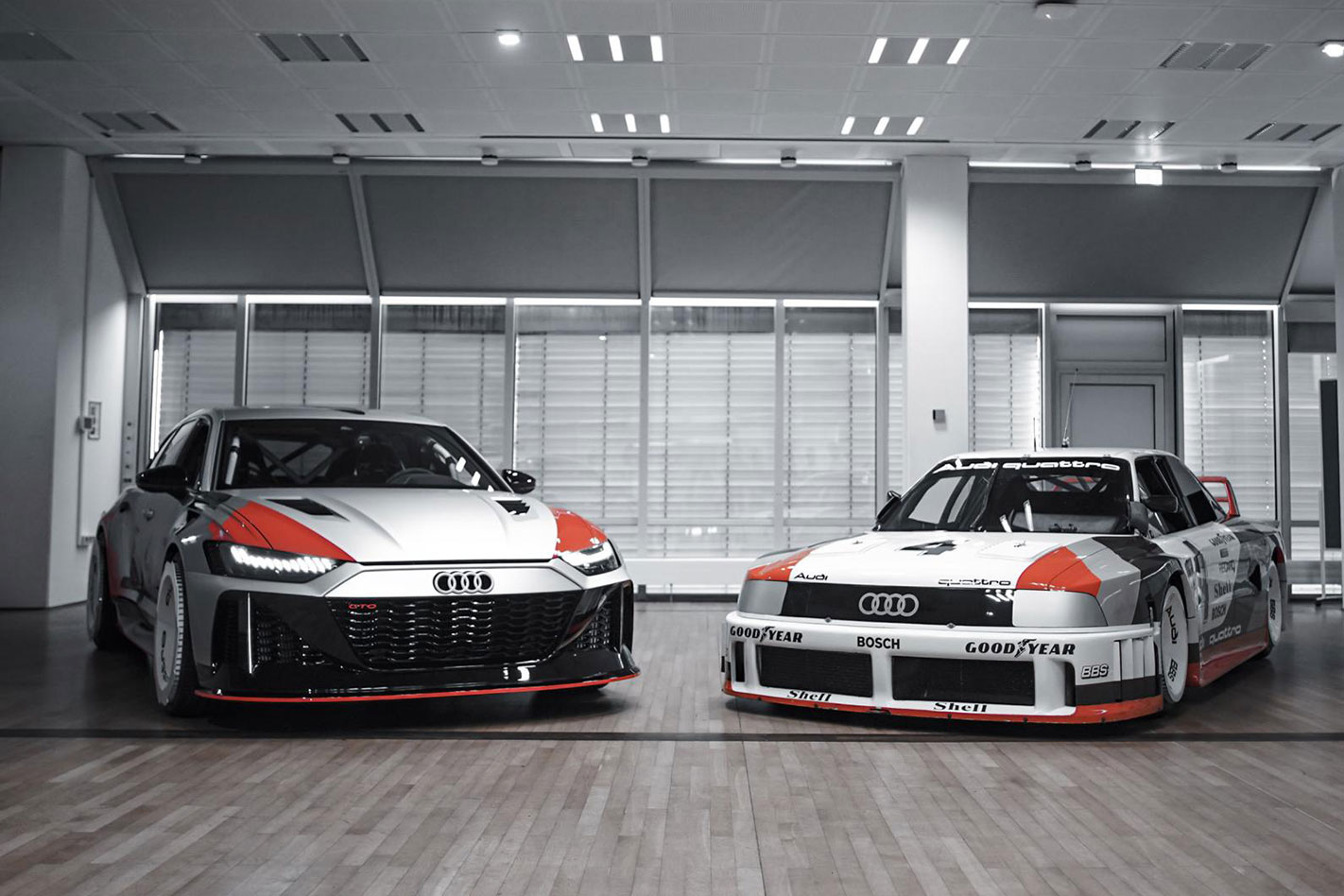
The Neckarsulm plant is the home of the R8’s production, the brand’s V10-powered supercar, and is gearing up for the incoming E-Tron GT, so these upstarts are already living and breathing high-performance.
Under the Audi Sport paintjob, much of the RS6 has been modified with 3D-printed body. Of particular interest are the RS6’s new, turbo fan-esque white wheels – again paying homage to the Audi 90 raced by legends such as Hans-Joachim Stuck and Walter Röhrl.
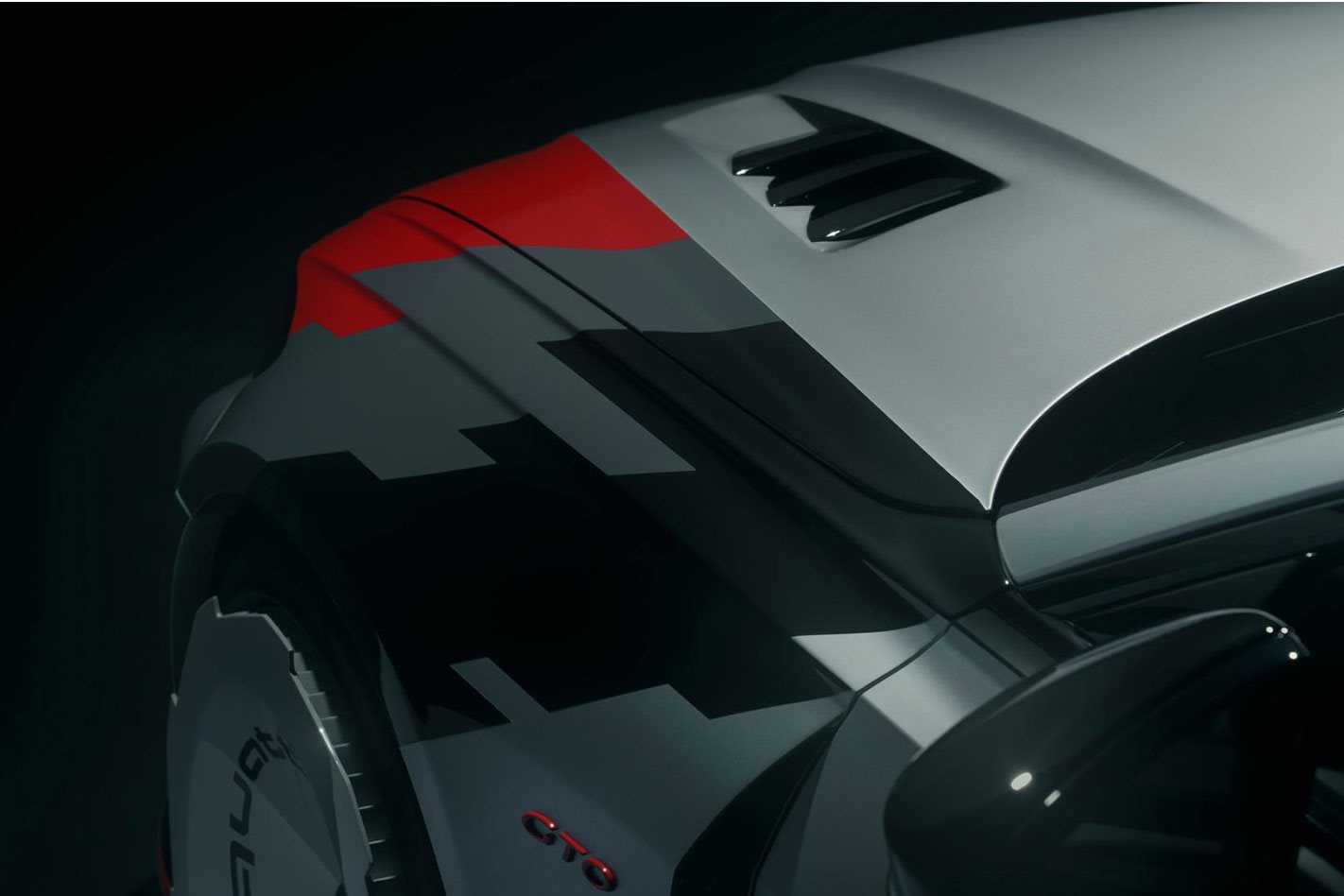
‘The RS6 GTO concept of our apprentices has turned out to be an incredibly great car. I am very proud of our Neckarsulm apprentices and the results of their work,’ said Helmut Stettner, Neckarsulm plant manager and project backer.
‘It was important to the apprentices to build a vehicle with a location reference and to revive the quattro history,’ said Timo Engler, the project manager. ‘The early 80s mark the beginning of Audi motorsport history.’
This article was originally published at carmagazine.co.uk
HE SEEMED the most unlikely of fans, but our friend – hanging half in and half out of the passenger window of his pal’s BA Falcon as we cruised at 80km/h – was more than enamoured with our steel grey Genesis GV80, gesticulating wildly, giving us the thumbs-up and grinning broadly.
It’s an interesting start to our time in what will likely be quite a crucial car for this upstart luxury brand, which hopes to take ground off the Germans where others have failed.
What is the Genesis GV80?
It’s a luxurious large SUV that’s going straight after the big guys from Audi, BMW and Mercedes-Benz – and it just might surprise a few people along the way.

It also brings Genesis into the fold a bit more; until now, its lineup has focused solely on a sector of the market which is heading in one direction, and that’s not up.
Built on top of parent company Hyundai’s M3 platform, the GV80’s role is simple; create enough noise and distraction to shake potential customers out of their Euro – or Japanese, for the matter – loyalties and give them enough reasons to switch their allegiances for now and forever.
“We think it will tempt buyers of large prestige SUVs to our brand,” says Chris Saltapidis, product planner for the Genesis brand in Australia.
Living with the Genesis GV80
On pure presence alone, the large GV80 has the runs on the board. It’s big, and manages to stay juuust this side of brash.
At the front its all about the light signature – the headlights are divided yet still connected with the bodywork, sitting astride an enormous grille that will make BMW feel a little better about itself.

Those vertical lighting structures stride down the side of the GV80, with faux vents on the front guards and a deep crease along the rocker panel tying into the GV80’s horizontal taillights.
Huge rims – up to 22 inches on the top-spec variants – work well with minimal overhangs, while a speccy $2000 matte paint finish sets the GV80 apart. Just be careful how you wash it, we’re told.
Specifications
Mechanically, the GV80 can be had in rear- or all-wheel-drive, and with the choice of 2.5-litre four-cylinder petrol (five-seat rear-drive and seven-seat all-wheel-drive), 3.0-litre turbocharged diesel and 3.5-litre twin-turbocharged V6 (both with seven seats and all-wheel-drive) engines.
The only gearbox choice is an eight-speed torque-sensing auto, the diesel gets an electronically controlled rear limited-slip diff and the V6 gets bigger front brakes, while the chassis itself gets a bespoke set-up over the closely related G80 sedan to give it more ground clearance and extra strength.
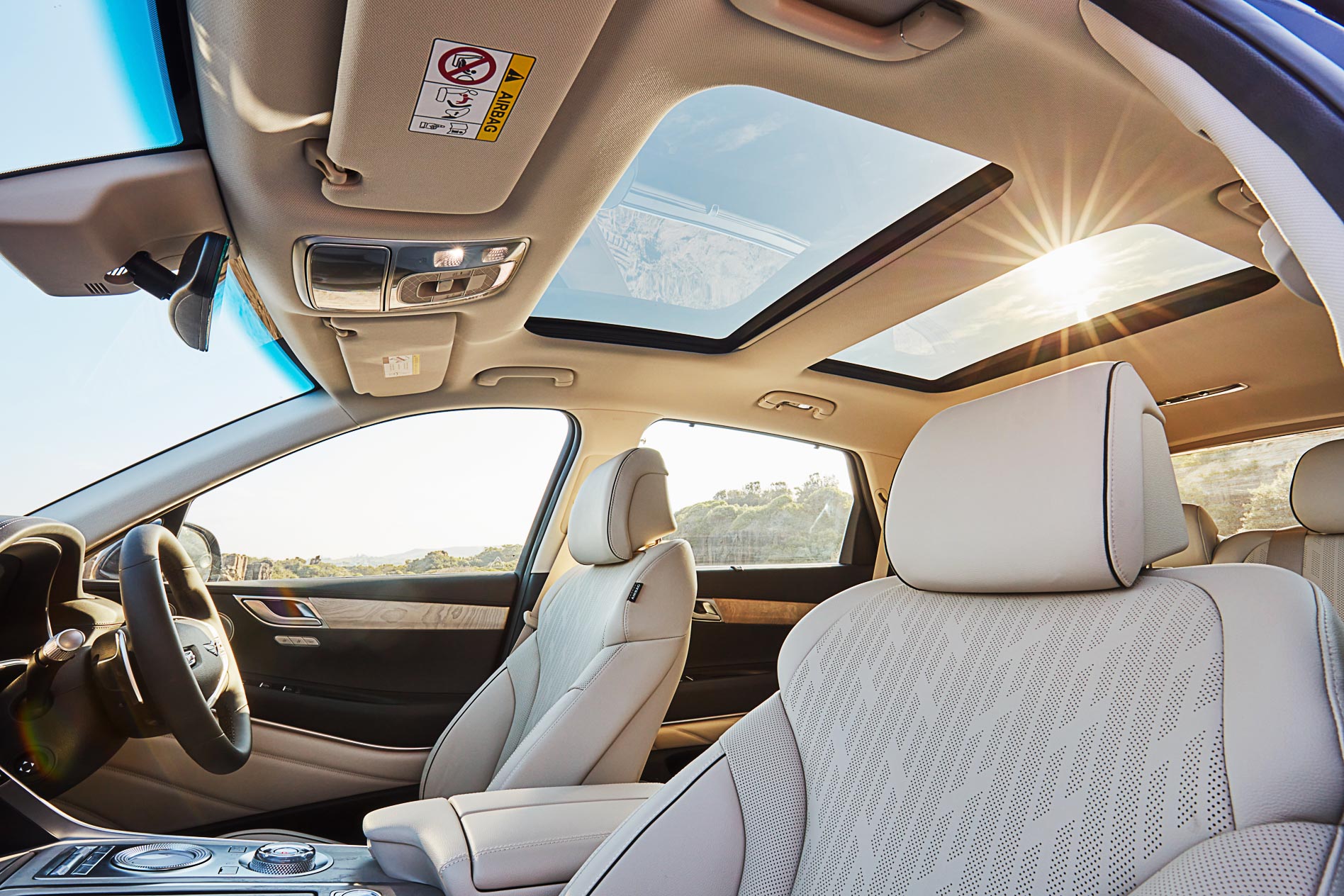
Spec-wise, you want for little with the GV80, even with the $90,600 entry-level five-seat rear-drive 2.5T. Open-pore wood trim and leather abound in the spacious, airy cabin, while knurled metal details on crucial controls lift the GV80 from pleasant to special.
The two-spoke steering wheel won’t be to everyone’s tastes, but the driver’s position is pretty spot on in most respects.
The seats are heated, vented and adjustable every which way, there’s inductive charging for your phone, a huge 14.5-inch multimedia screen, digital dash, a panoramic sunroof, automatic headlights and wipers, 20-inch rims, a powered tailgate and loads more as standard.
There’s plenty of standard safety kit including ten airbags and clever adaptive cruise control, but you need to add a $10,000.
What’s the GV80 like to live with?
Stepping into the car that Genesis expects to sell most of, the $103,600 3.0D, and you’ll get 22-inch wheels and the aforementioned LSD, as well as a refined, quiet and punchy powerplant that feels so un-diesel like that it’s worth checking the fuel cap twice before reaching for the 98RON nozzle at the petrol station.
A brief blast of the 3.5-litre twin-turbo petrol-powered variant also impresses – though for me, the diesel does the bulk of the same work for a not-inconsiderable $5000 less.

What’s it like to drive?
The almost five-metre-long SUV has a locally tweaked handling package that favours ride over roll support, albeit only ever so slightly.
It steers with impressive accuracy, tames broken surfaces with aplomb despite its cartoonishly large rim spec and is impressively quiet, thanks in the main to acoustic glass and the SUV-spec Michelin Pilot Sport tyres.
Not all that impressive at first blush is the overcomplicated interface with the multimedia screen; it can be accessed via a dial, console buttons, handwriting recognition, touch and steering wheel controls, but is still not as intuitive as it should be.
Apple CarPlay and Android Auto mirroring, too, can’t fill the whole screen, while the age of the system means that the GV80 can’t yet offer wireless support, rendering the inductive charger redundant when using your phone.
You also have to spend big – $10,000, to be exact – on a Luxury pack which gives the GV80 a clever noise-cancelling system that uses mics in and out of the car to quell rumble. It also scores remote parking capability, which is sure to impress the neighbours.
Verdict
Will it impress them enough to trade in their Audi Q7s, BMW X5s and Mercedes-Benz GLEs? Quite possibly.
Value is a stronger buzzword than brand in this new world, and while premium names are currently enjoying salad days of strong sales on the back of cancelled holidays, there’s always a clique of people looking to move into something a little different.

Genesis has lofty plans to flesh out its local range with market-relevant products, while its service and support offering is also strong (though it lacks a physical presence in many key areas).
The GV80’s overt yet attractive styling, its mature and refined presentation and its generous equipment levels will definitely bring eyeballs to the brand – the trick is to convert them into bums on seats.
Tesla’s Model S sedan will be 14 years old by the time it’s replaced.
The four-door Model S, which debuted in 2012, was to be replaced with an updated version in 2024. Now, though, reports from industry forecasters in the US – via news site Autoline Daily – suggest that the Model S will now push through until early 2026, before being replaced.
This will easily make the first-generation Model S the oldest EV in the market when it’s finally replaced.
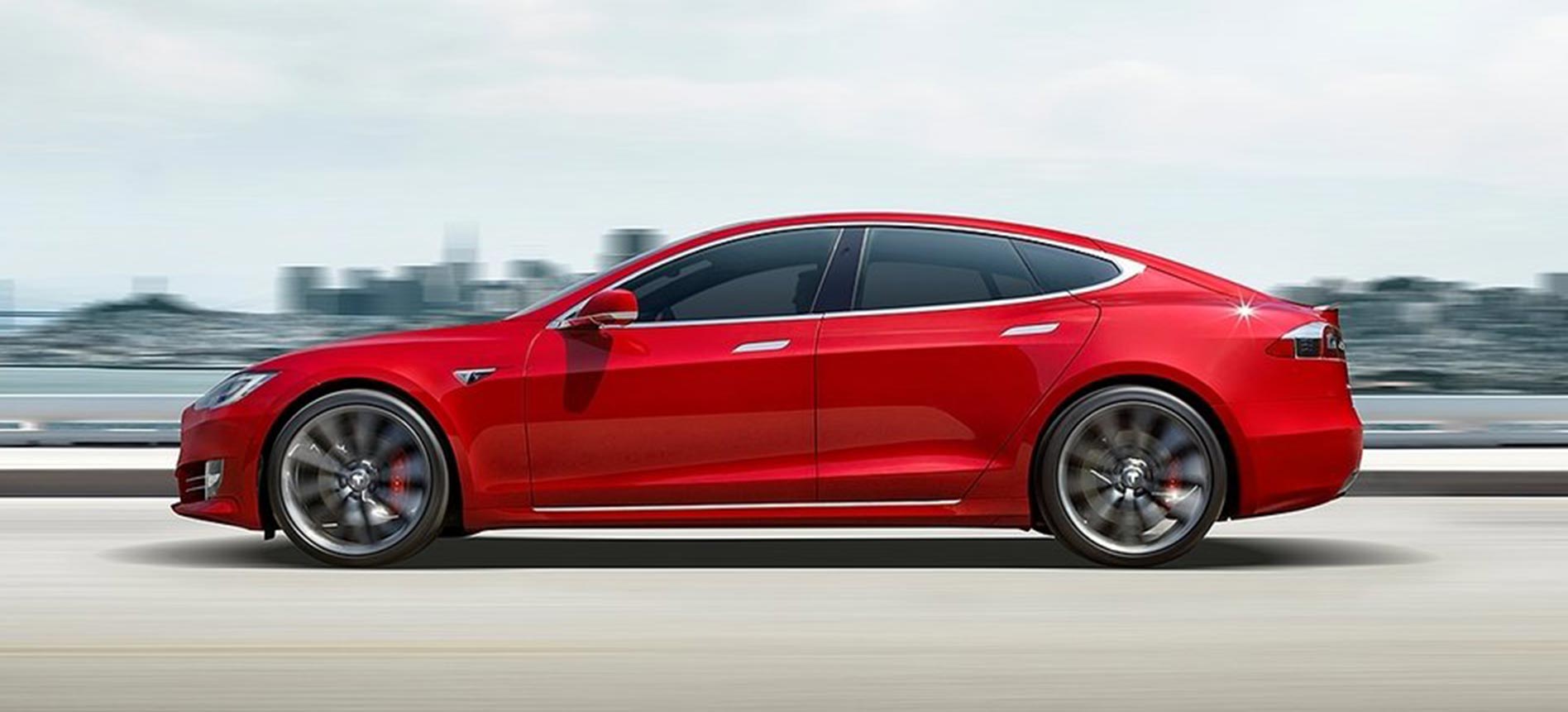
The Model S has been consistently upgraded over the course of its life, and its distinctive coupe-like silhouette has aged well.
However, the company has recently turned its focus to building a new plant in Germany, as well as prioritising the wider roll-out of the Model 3-based small SUV, the Model Y, in China and to the rest of the world, including Australia.
Built in Tesla’s Californian plant, the Model S gave the brand a big head start in the EV race, with rivals like the Porsche Taycan taking until 2019 to hit to market.
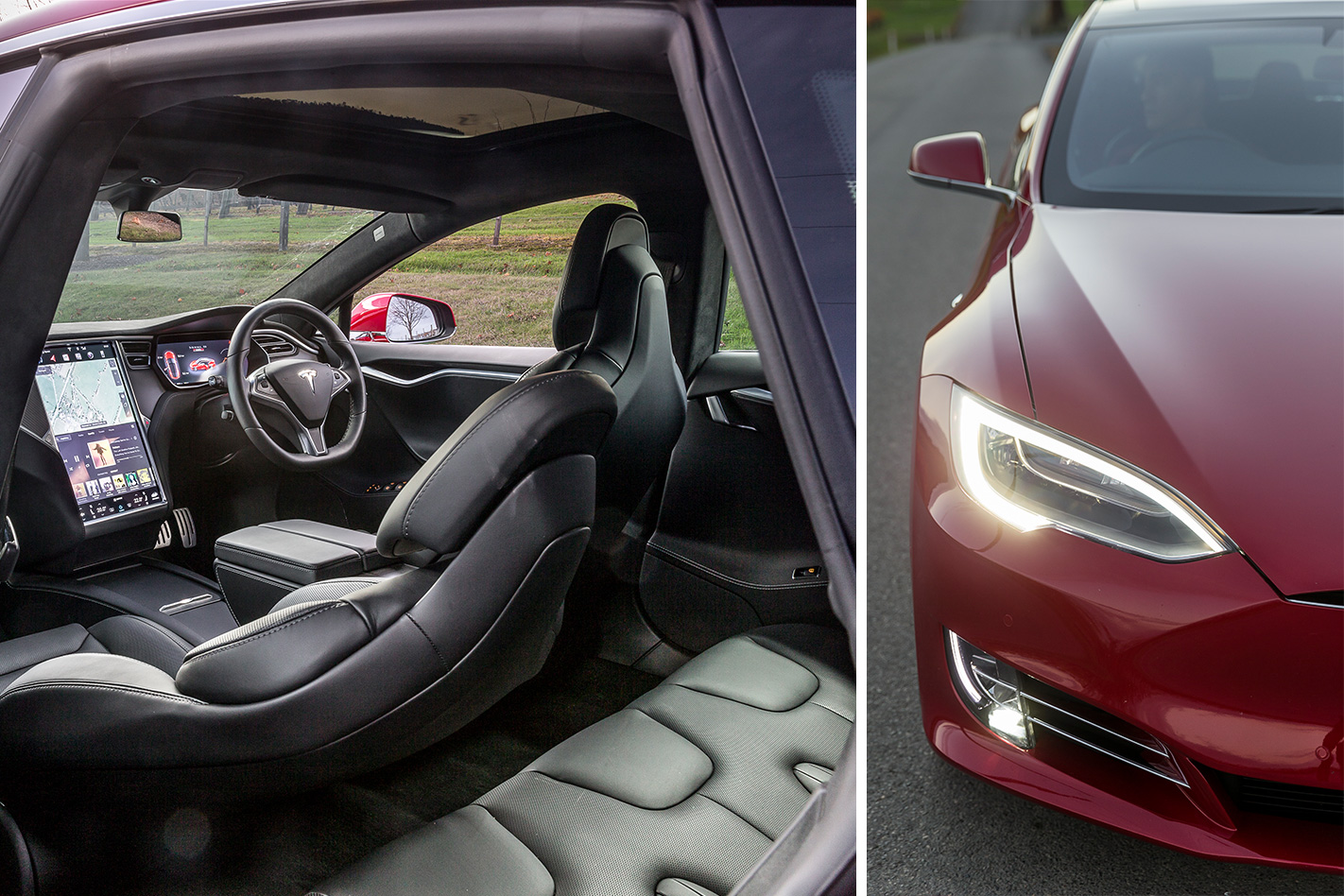
Life will become more challenging for the Model S, though, as mainstream machines like the Audi’s RS e-tron GT and upstart competitors like Lucid enter the fray.
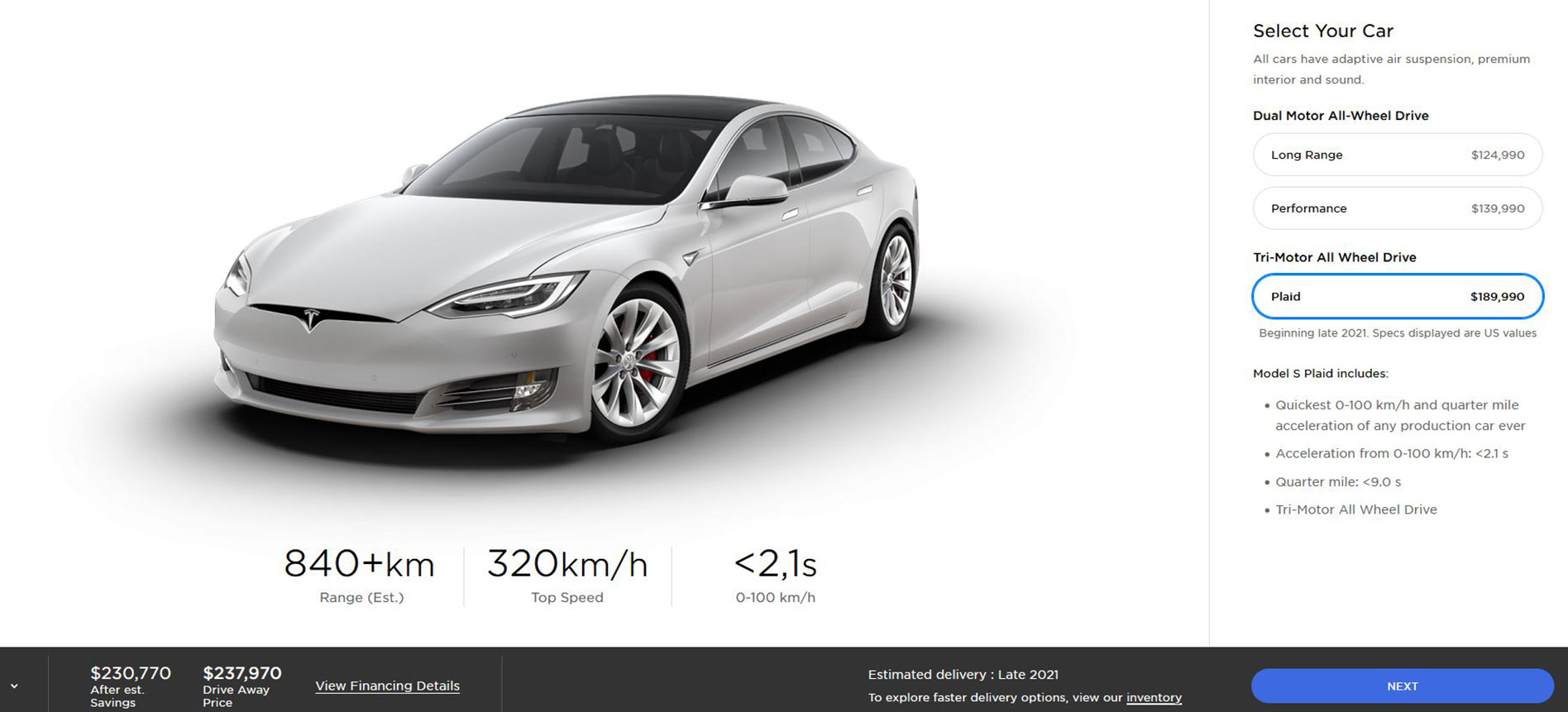
Launching in 2012 with battery packs as small as 40kWh, the dual-motor Model S is now only sold in Australia with 100kWh battery packs that give the car up to a claimed 722km of range.
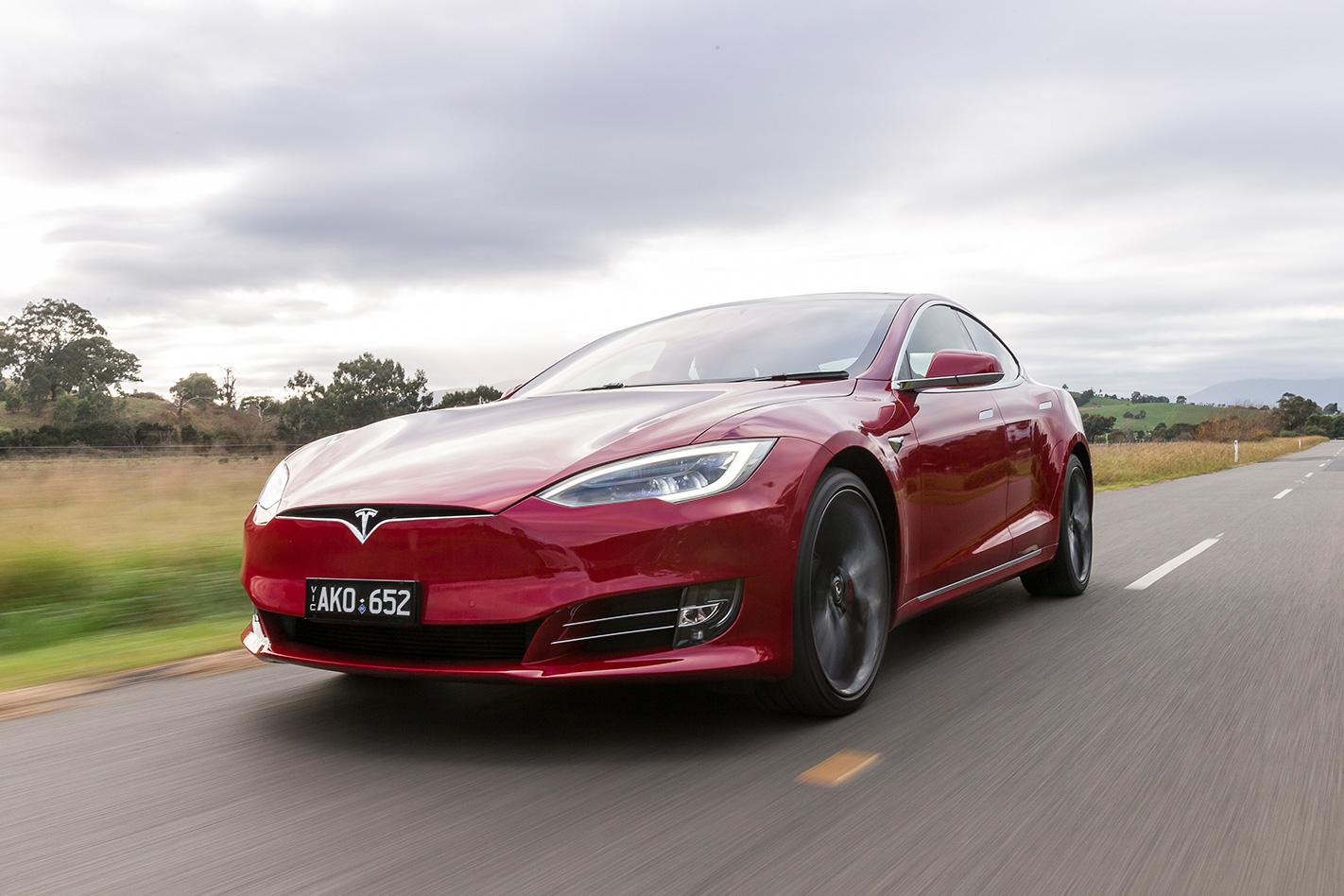
The entry-level Long-Range Plus offers this category-busting range claim, and lists at $119,990 on Tesla’s Australian site.
The $134,990 Performance, meanwhile offers a 0-100km/h time of 2.5sec – 1.3sec faster than the Long Range Plus – at the expense of 20km of range and about 36kg of extra weight.
A triple-motor Plaid version is also listed on the site at $189,990, with a timeline of late 2021 against its name.
So imagine my alarm when I’m handed the keys to this ‘look-at-me’ Suzuki Jimny. Painted as it is in a tennis-ball-like Kinetic Yellow, the diminutive 4WD is about as introverted as Donald Trump at a ‘Make America Great’ campaign rally. At least it’s not furry. Or rocking a comb-over.
Nevertheless, I simply couldn’t pass up the opportunity to drive a car that had been causing such a fuss around the Wheels office, so I flicked the self-conscious Me the bird and suited up for a set with the Slazenger-inspired Suzi.
Measuring just 3645mm from nose to tail, the little off-roader may be pint-sized, but its boxy, retro-inspired styling – characterised by those circular headlamps and blacked-out five-slit grille – punches well above its division in the head-turning stakes.
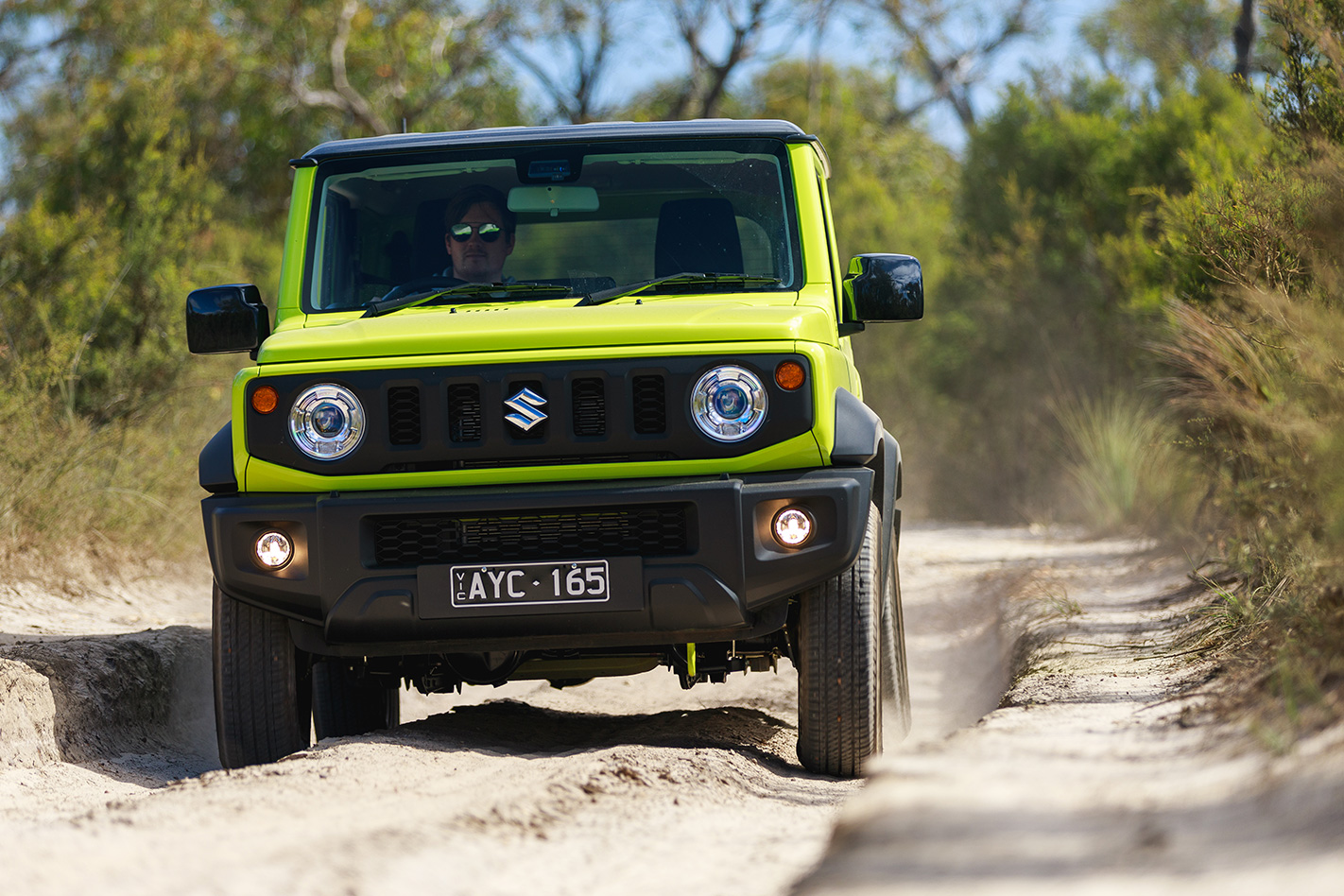
And judging by the vigorous scramble each arvo for first dibs on the road-test key jar, it appears I’m not the only one who has fallen for the little Suzi’s utilitarian charm.
Beneath its lightweight bonnet is a 1.5-litre four-cylinder engine, punching out 75kW and 130Nm. Those outputs might seem modest, but they’re fully 12.5kW and 20Nm more than the previous 1.3-litre unit, yet still only hauling around 1075kg.
Under the fur, I mean skin, is a five-speed manual gearbox, a ‘proper’ ladder-frame chassis, and what Suzuki calls the AllGrip Pro 4WD system. The latter features a low-range transfer case that enables switching between 2WD-high, 4WD-high, or fair dinkum 4WD-low. Add live axles front and rear and you have the same recipe that has been rendering Suzuki Jimnys unstoppable for decades.
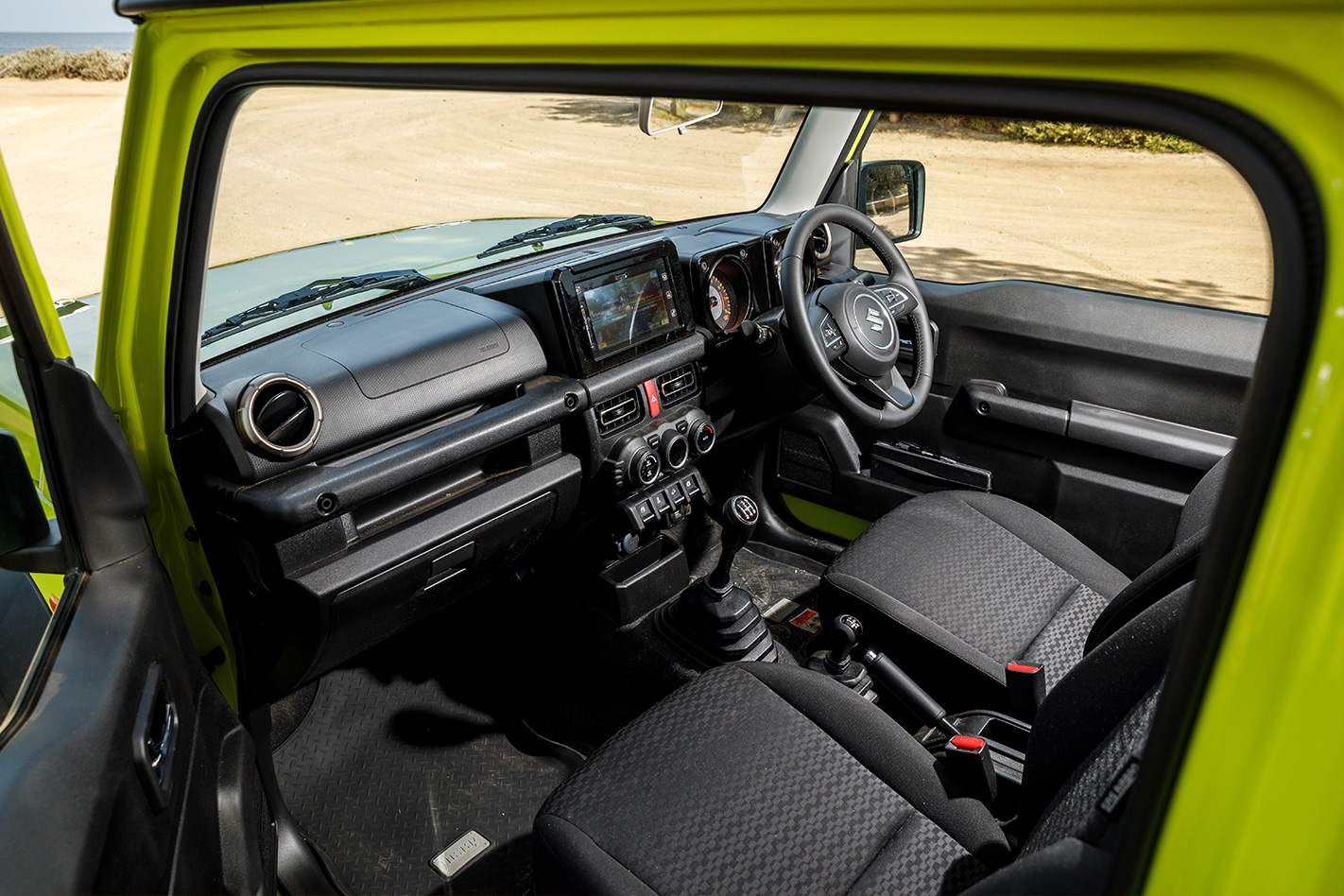
It’s not all old-school cool, though, as inside there’s a 7.0-inch touchscreen infotainment system, with mod-cons like sat-nav, Bluetooth, and Apple and Android compatibility. Other little luxuries include reversing camera, climate control, a USB charging port, AEB, cruise control and auto headlights.
The interior plastics aren’t the best quality, but everything is logically laid out and easily reached. The seats have no height adjustment but the high seating position and large glasshouse provide great all-round vision.
Rear seating can be a bit tricky to access for adults and is best reserved for kids, or people you dislike. Hit a speed hump with any vigour and those in the rear can get some serious air.
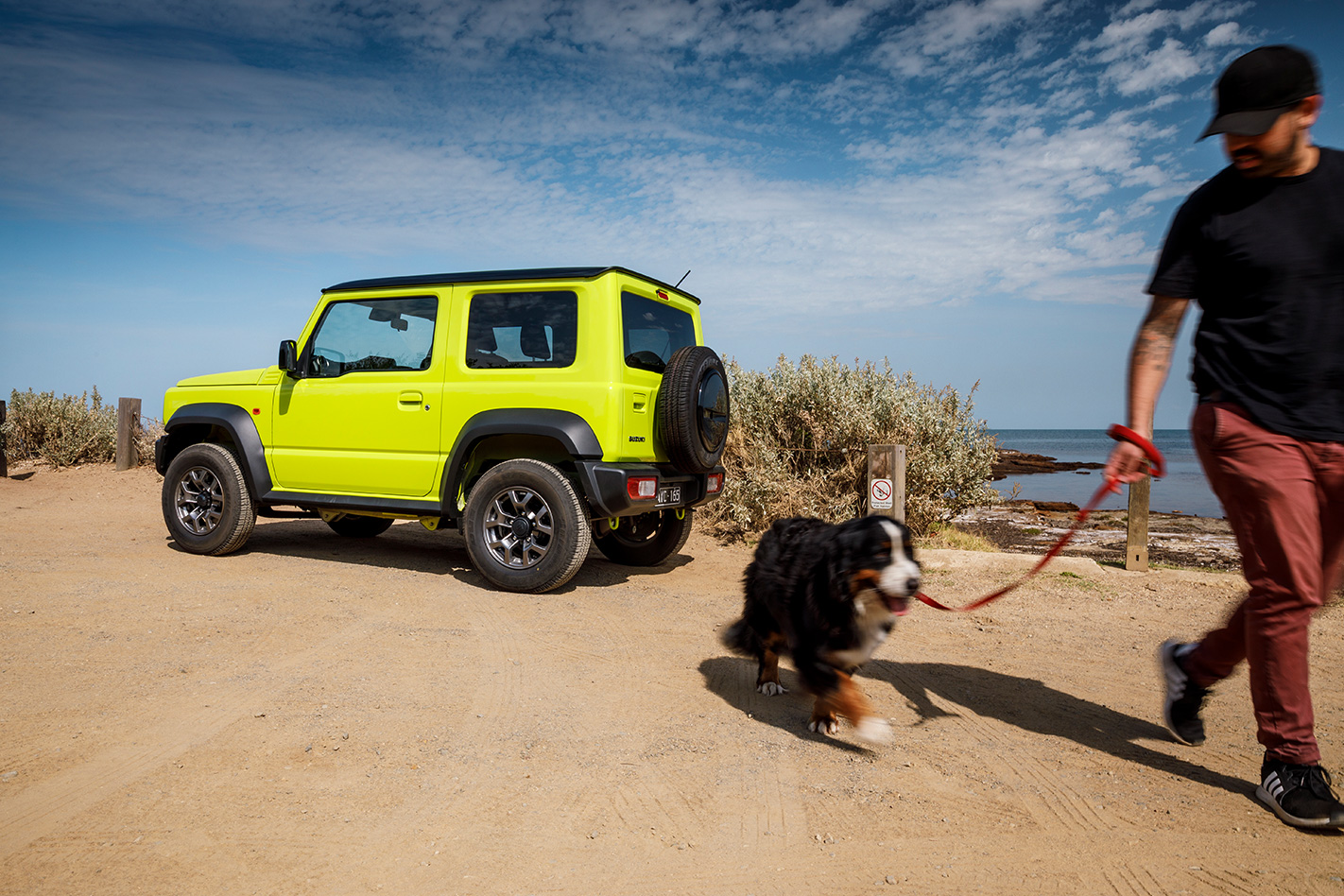
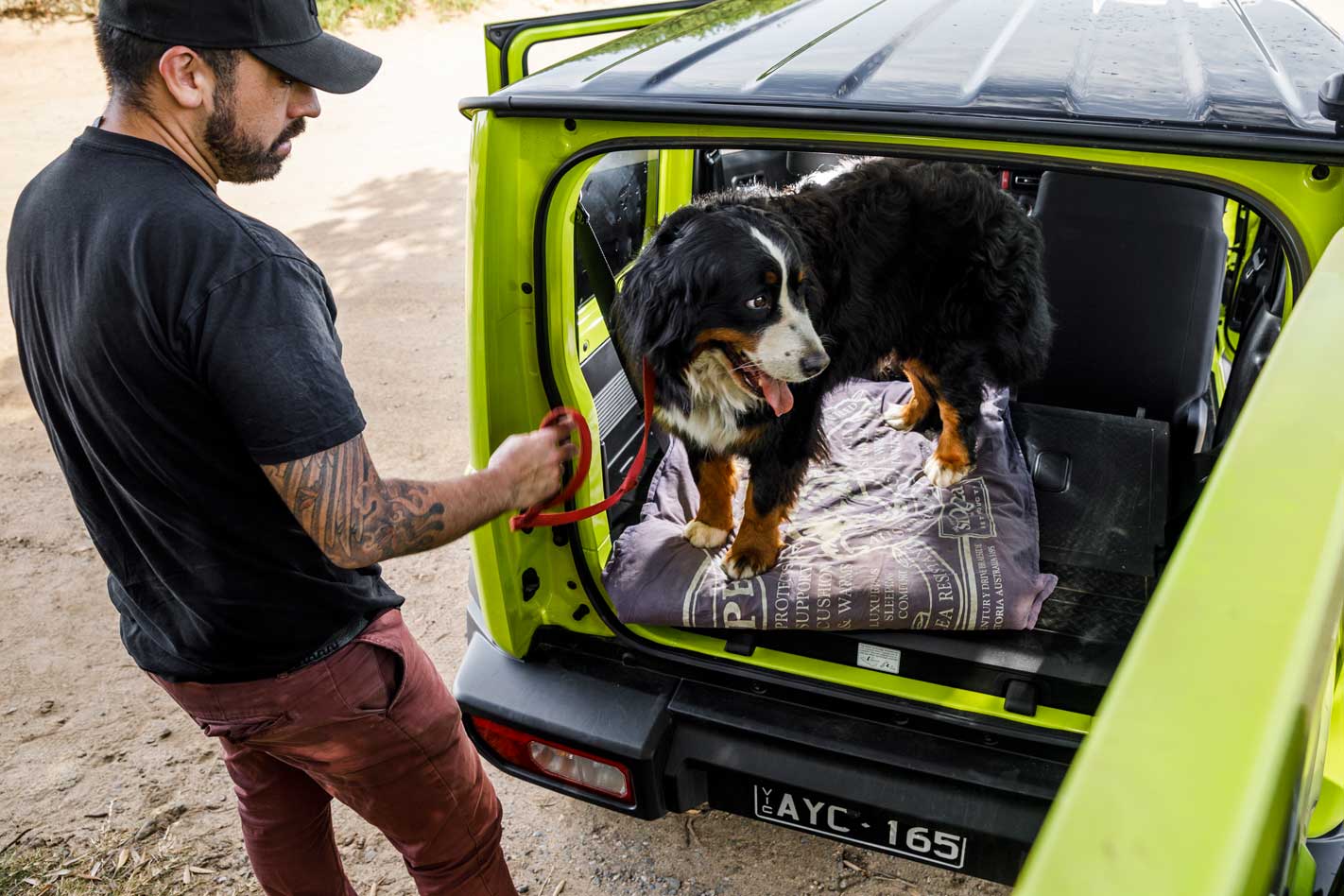
That rear space is best used with the seats down, allowing 377 litres of luggage space from a laughable 85 litres with the seats upright. One flaw already apparent is a need for fabric or rubber lining on the seat backs – a drive with Heidi the Burmese mountain dog had her sliding from side to side through every direction change.
Update 2
Being small helps keep rear-seat moaning to a minimum
Patience is a virtue – a phrase someone far wiser than me once stated, and it’s one I try to follow. Such has been my experience this first month with the Jimny, biding my time as it does the rounds fulfilling everyone’s curiosity and starring in segments for WhichCar TV. The attention it garners is ridiculous!
Now, with all the limelight subsiding, I’ve finally been able to spend some quality time in the tiny Suzuki.
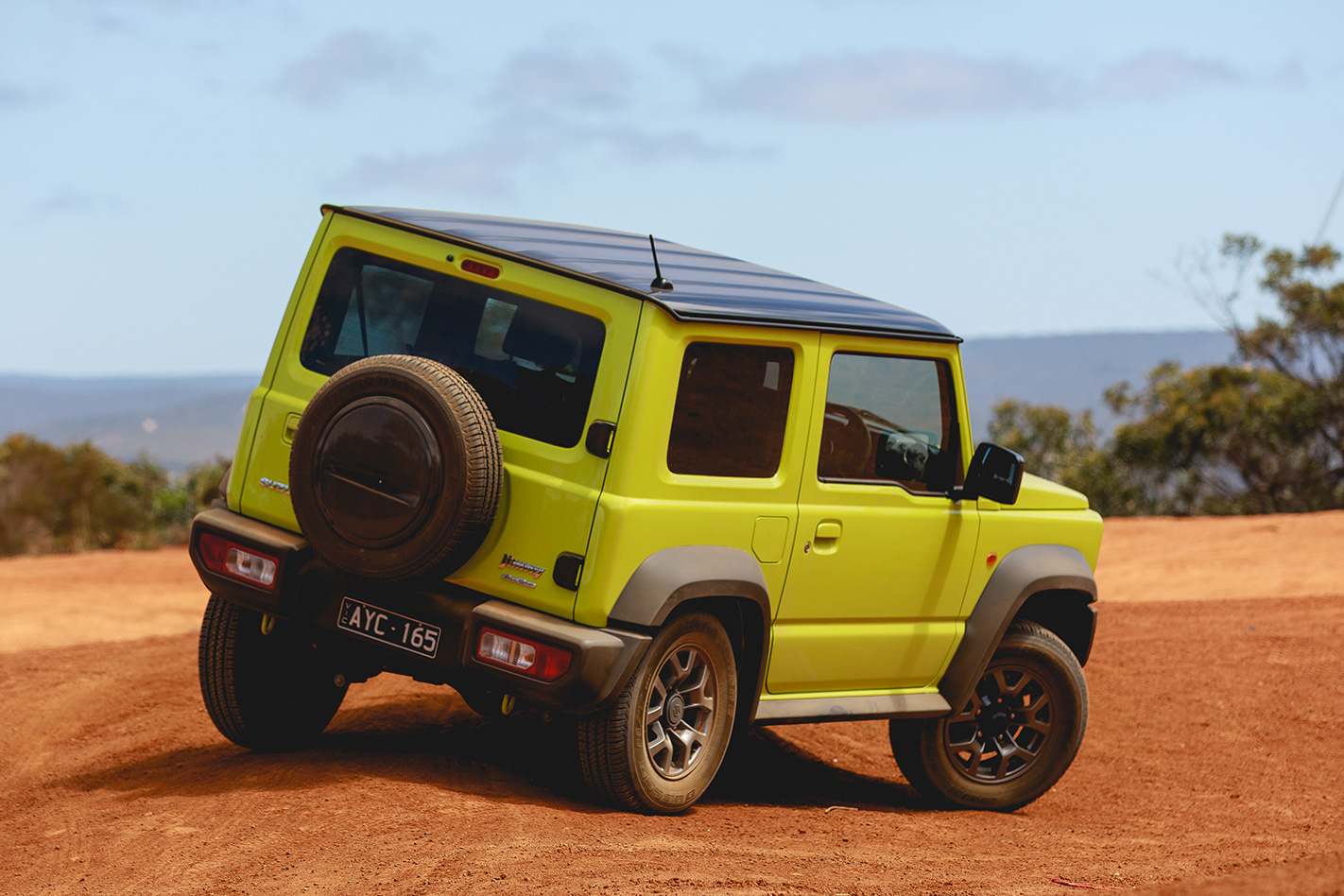
As a daily, the Jimny would certainly not be my first choice. Far from it, actually. While being able to accommodate two adults in the front, the rear is pretty much useless for full-sized humans.
Lucky for me, then, that the only two passengers I have to chauffeur on a regular basis are both under five feet tall.
When I finally introduced the car to my little girls, it was met with cries of delight and plenty of inquisitiveness. Its bright colour, toy-like shape and dimensions ticked several boxes for them. As did the high riding position, thanks to the booster seats, and the large windows.
It’s now been labelled “the bouncy car” by the girls, due to the softly sprung suspension. The kids quite happily clamber in and out without much assistance other than clipping on seatbelts.
The one thing that has become a nuisance is swapping the booster seats in and out of the Jimny – there’s no graceful way of reaching for them and installing/releasing the seats. The anchor points are on the edge of the cargo space, compromising access. Not that there’s much to access – a satchel and coat is probably all you’re going to be able to fit in with the seats up. Taking the girls to school and day-care sees us storing backpacks on the front passenger seat, which limits the distance it can be moved forward.
The girls do miss out on air-con vents, but having such a small cabin hopefully equates to quick heating going into the colder months.
I have to admit, I was apprehensive about how the Jimny would cope with my daily driving requirements. But thus far it’s done a great job running around our neighbourhood, with the only sour point being the girls trying to decide if it’s yellow or green. I’m letting them sort this one out.
Update 3
Kirby gets a lesson in off-roading from the ‘tennis ball’
It was during my first weekend with the Jimny, which I had pried from the hands of Wheels’ art direcotr, Felipe, while he was busy sharpening his crayons. I had decided to get some dust in the treads, and escape the urban jungle for some good ol’-fashioned off-roading, with Wheels crew member Tom Fraser along for the ride.
The problem is, I have about as much off-roading experience as a toddler does with theoretical mathematics. But there I sat, looking out the windscreen, desperately trying to figure out where the road had gone. I was perched on the edge of a drastic descent, which was transformed by my anxiety into what was quite clearly the biggest hill in the world, and it dawned on me that I had no idea what to do if things started to go sideways – literally.
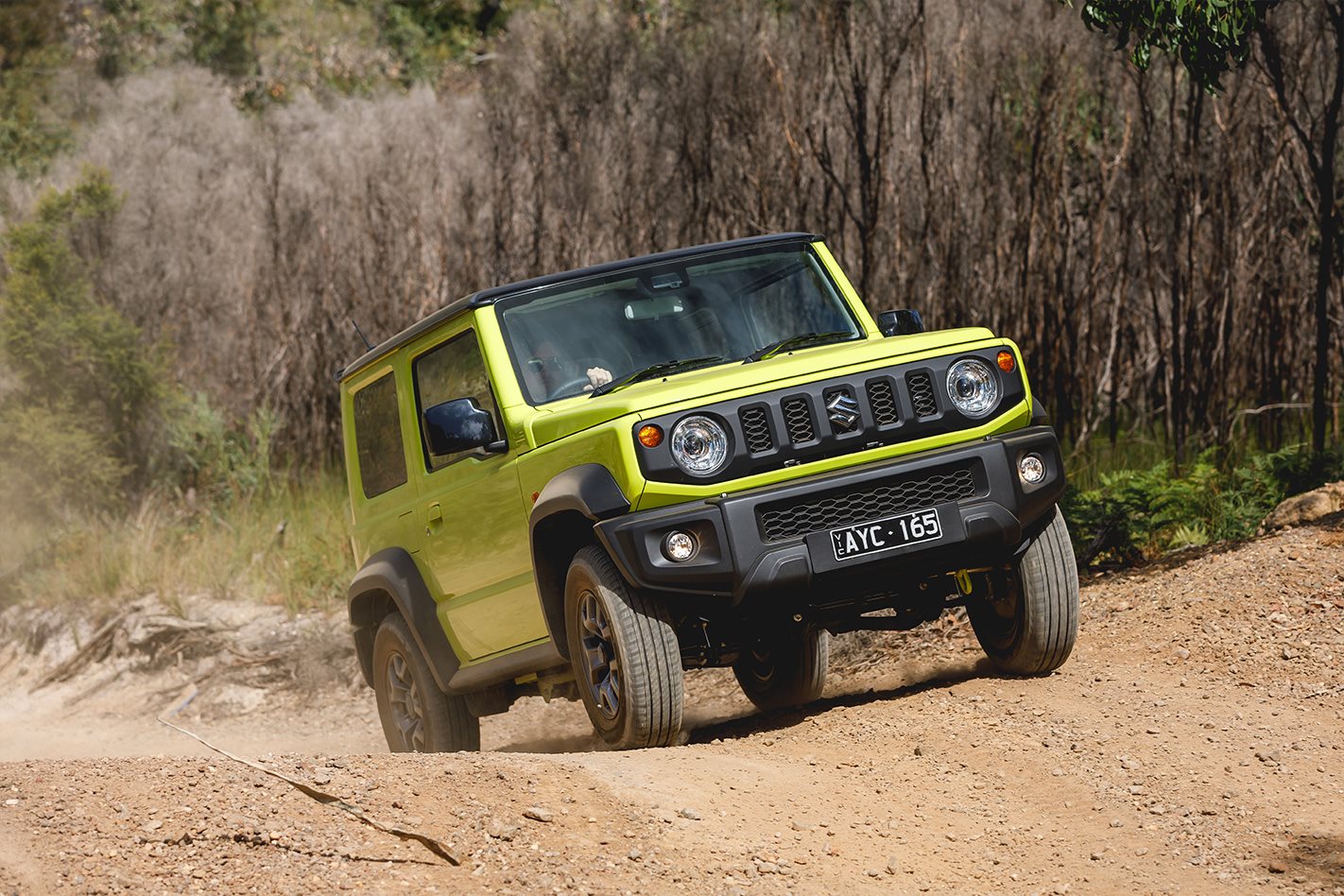
I ushered the mental maelstrom to the back of my mind, and carefully crept forward, and then downward. The invisible hand of gravity was held at bay by the Jimny’s hill descent control, the system taking care of ensuring speed was contained while I did my best to keep everything pointed in the right direction.
By the time I’d reached level ground, the Jimny’s faux-leather steering wheel felt like it had spent the night in a tropical rainforest. But I did find the hill descent control rather abrupt and jerky, so I turned the Tennis Ball around, pointed the nose skyward, and headed back for a second go. The ascent was a simple enough affair, with the Jimny’s modest kerb weight allowing it to scrabble upwards without a care in the world. No low-range needed today.
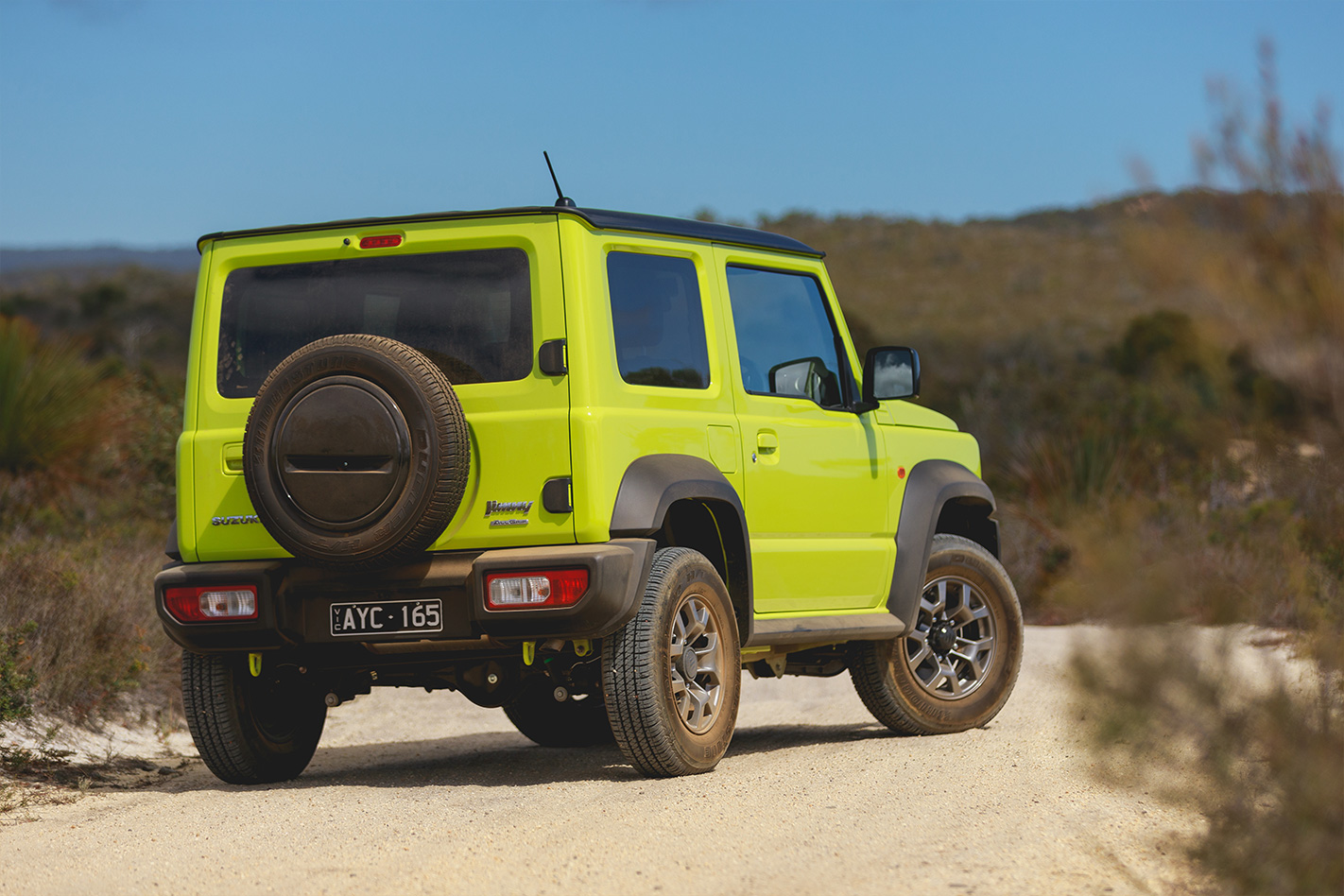
Time for descent number two, and this time I’d be in charge of both the brakes and steering. Taking back my independence from the machine was liberating, and I felt more at ease while in control of all inputs. Despite the mountain I had built up in my mind, the reality was that I was pretty much tackling a molehill.

With a couple of hours of bush bashing under our belts, which was raucous fun, we came crashing back to droning, monotonous reality for the schlep back to inner-city Melbourne, with the Jimny’s short gearing meaning the tachometer was reporting 3500rpm at 110km/h in fifth. I’ll be avoiding longer road trips in the future, then.
There wasn’t nearly enough mud and dirt on the panels for my liking once the day’s shenanigans had ended. Round two should rectify this egregious error, and hopefully bring with it a more rigorous challenge.
Update 4 – Total lightweight can still scare other motorists off the road
I’ve always loved John McEnroe, the friz-haired American tennis star with the short fuse and titanic dummy-spits. And I’ve long wondered how he approaches driving – could be quite the spectacle, I imagine.
Ol’ John would no doubt constantly lose the plot, dropping F-bombs, bouncing between the horn and flashing the headlights. But while incidents of road-rage are well documented, I can’t remember witnessing anyone going full McEnroe recently, or even flashing their lights. Until the Jimny came along.
Now well into our tenure of the Suzuki, young Kirby and I have had plenty of time to get familiar with its pros and cons. While we have much praise for the mini-wonder, a few minor chinks have begun to appear.
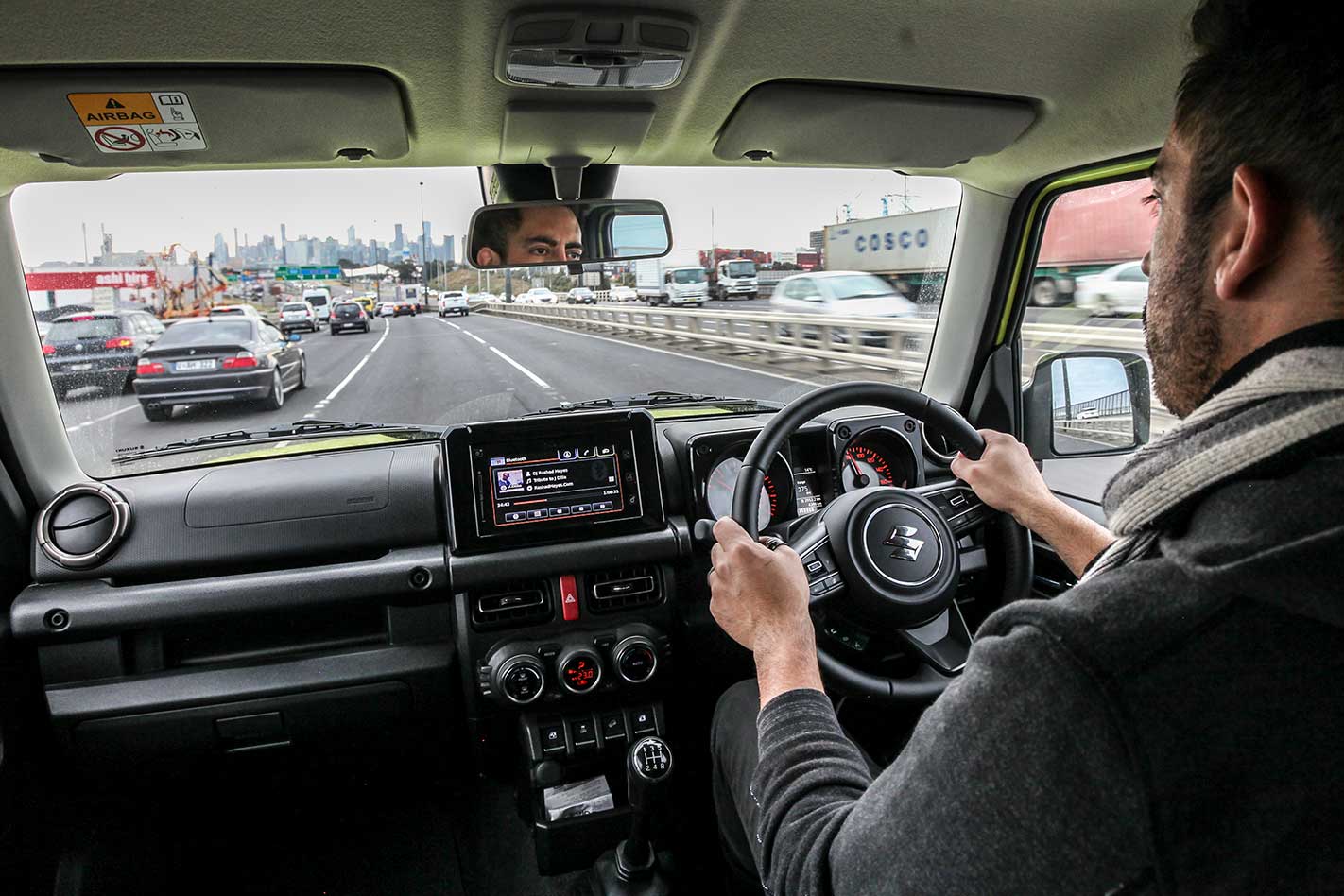
Recently while cruising to work on the freeway, a driver ahead suddenly freaked out and bolted to get out of the way. I wasn’t charging along or tailgating, and surely the diminutive Jimny isn’t that intimidating, is it?
The same scenario played out a few more times before I twigged as to what was occurring – the automatic headlight sensor was flashing the lights every time I passed under an overpass, of which there are plenty. Even the two-lane bridges were setting the damn lights off. That level of flashing would have made George Michael proud.
Now the auto lights are kept off in the day, but occasionally I’ve forgotten to kill them in the morning and the shade of trees has set them off again.
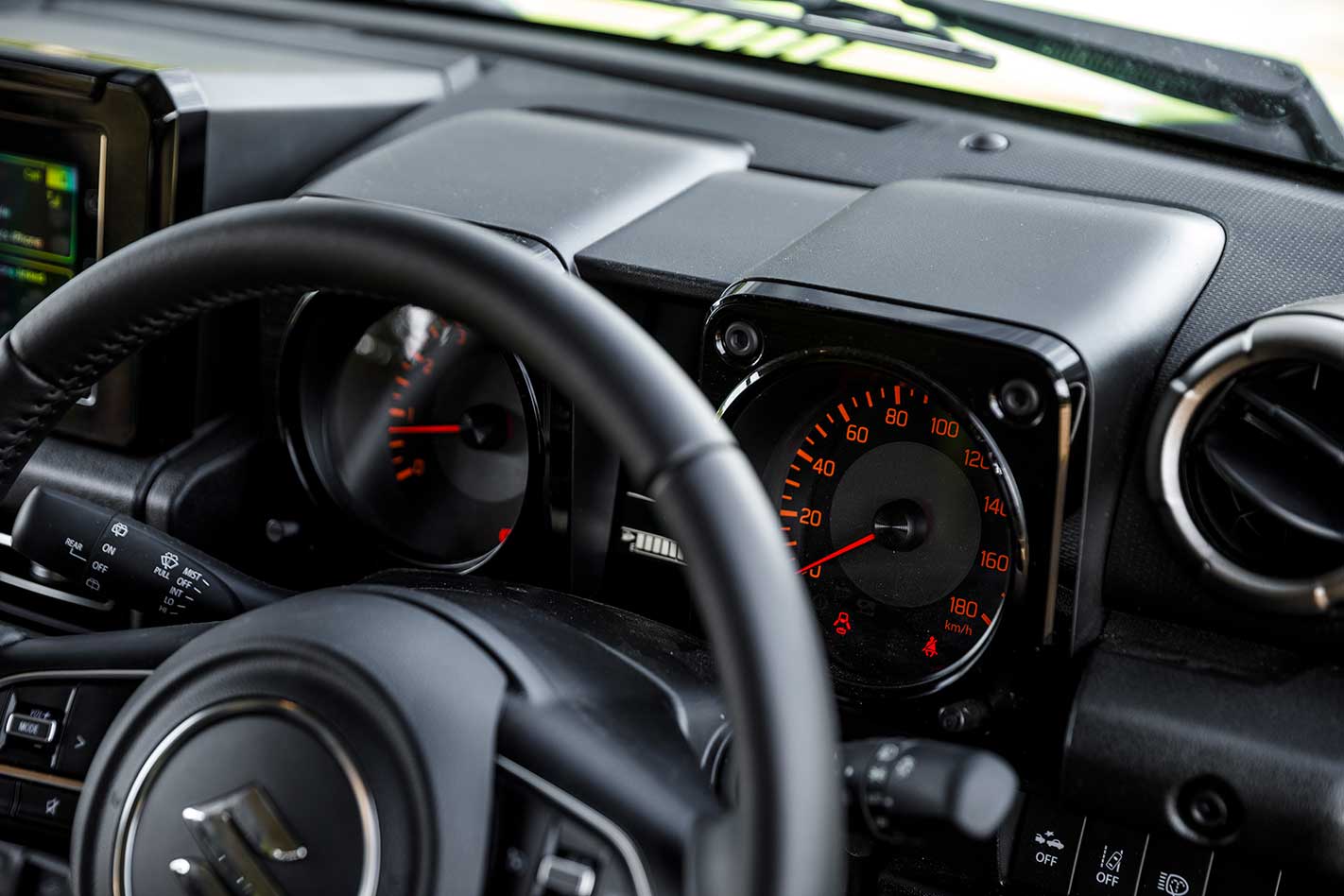
Something else we’ve become mindful of is how easily the car is affected by road and weather conditions. A combination of being light-weight (1075kg), high-riding, softly sprung and on small tyres make it a victim of the elements. Road imperfections can unsettle its trajectory, as can strong wind gusts. It certainly keeps you on your toes, even more so in wet winter conditions.
There is also a bit of wind and tyre noise to contend with, plus the sound of the 1.5-litre engine droning at just over 3000rpm at 100km/h. Another gripe is the placement of the cup holders, which sit almost behind the seats – blindly reaching for a coffee gets tricky.
What the Suzuki does have going for it are its elevated position and great 360-degree visibility. And there has been much joy in how easy it is to get through small gaps on congested roads and while the manual gearbox can get tedious in heavy traffic, it’s definitely the pick over the four speed auto.
We’ve had plenty of new metal come through the Wheels garage lately, but it’s always been a delight jumping into the Suzuki. Even its tennis-ball hue has grown on me. McEnroe would approve.
– Felipe Ubilla
Update 5 – Lessons in tough love
When the honeymoon is over, can the relationship move to the next level?
Just like songs, there are cars that are slow burners; the ones that don’t instantly forge a strong connection, but take time to steadily worm their way into your affections. Then there are the catchy automotive hits that have you tapping along and singing the chorus before the door locks have even clicked open.
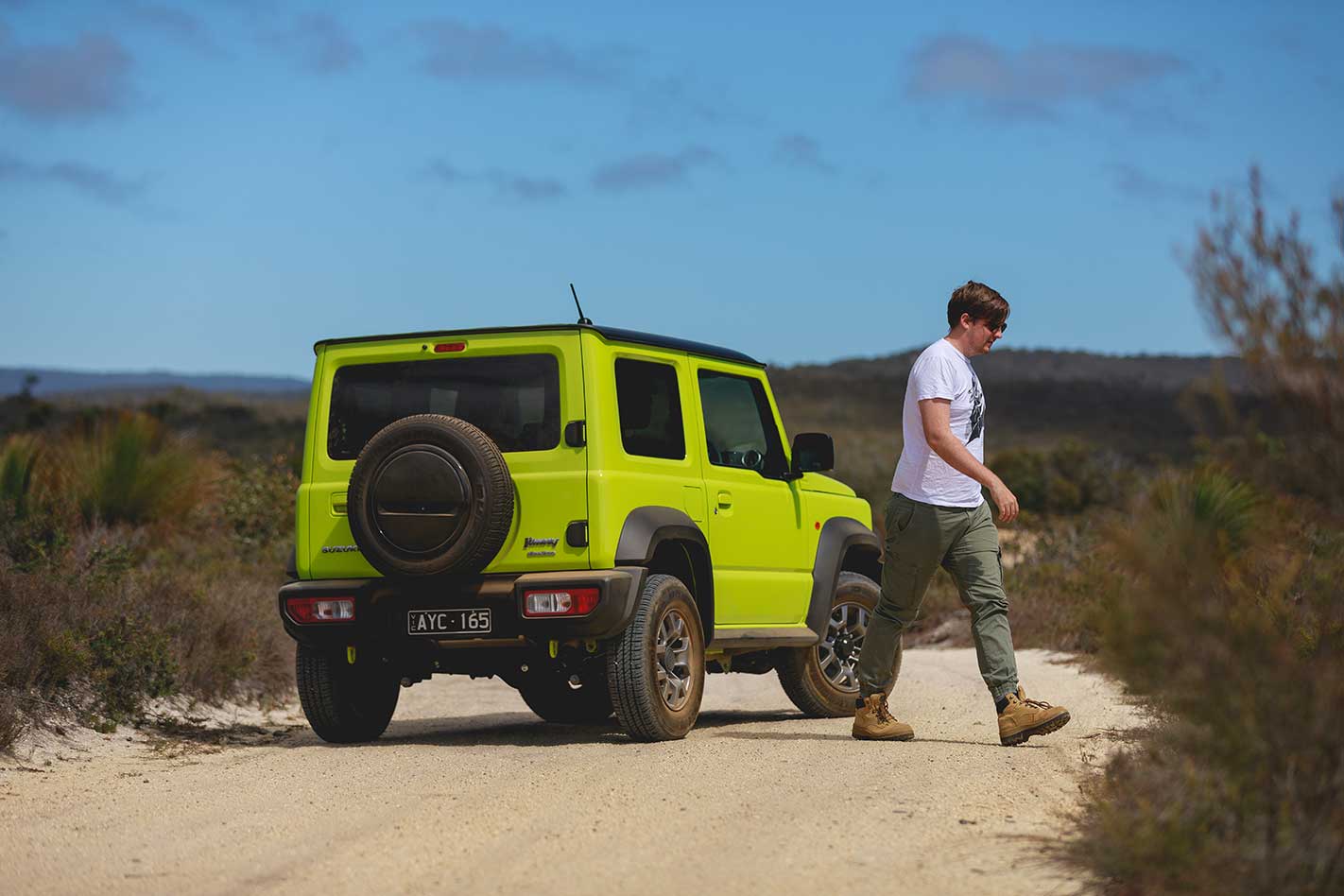
For me, the Jimny falls into the latter category. It instantly sets out to win you over with its retro-box styling acknowledging its preceding three generations, and the whole ‘junior bushie in the big city’ vibe it gives off. It’s virtually impossible not to fall for its charms – at least initially. The challenge for cars like this is to back up their immediate appeal with real substance in the daily grind, and it’s here where my early limerence for the lil’ Suzy is starting to fade.
This realisation arrives right around knock-off time at work, when the keys are handed out for the drive home. Almost subconsciously, I find myself checking out other options, manoeuvring myself into newer – actually, easier – cars.
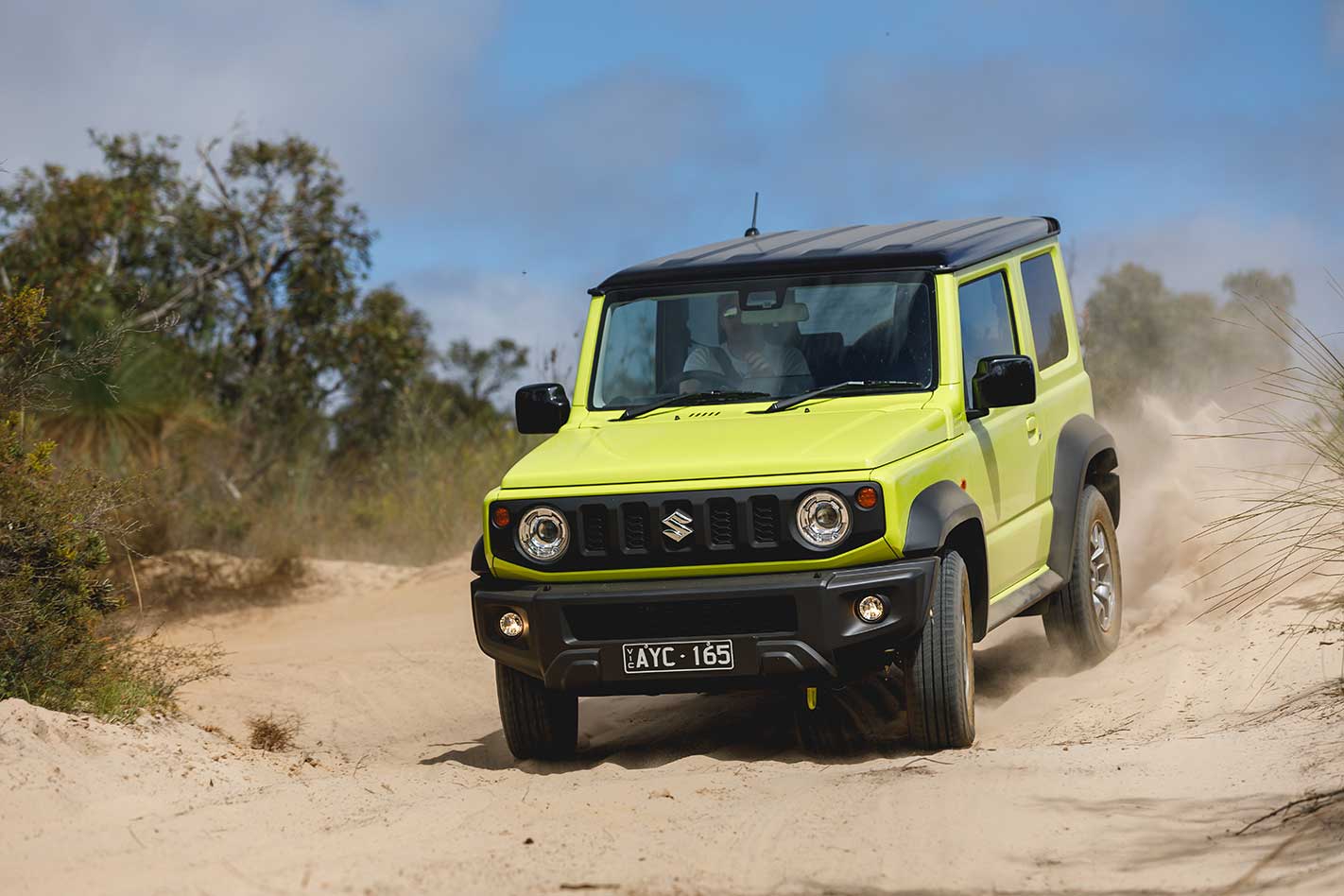
On a rugged trail, there’s no doubting the Jimny’s credentials. We know it’s capable of shaming almost anything this side of a Jeep Wrangler when the terrain turns hostile.
But urban life really does expose the inherent compromises in its design. The suspension is prone to crashing over sharp imperfections, yet the need for axle articulation means it rolls and wobbles when hustled through corners.
And the downside of the tall, two-box design means it’s susceptible to stiff crosswinds on the freeway, where it can take a steady, corrective hand on the wheel to keep it on line.
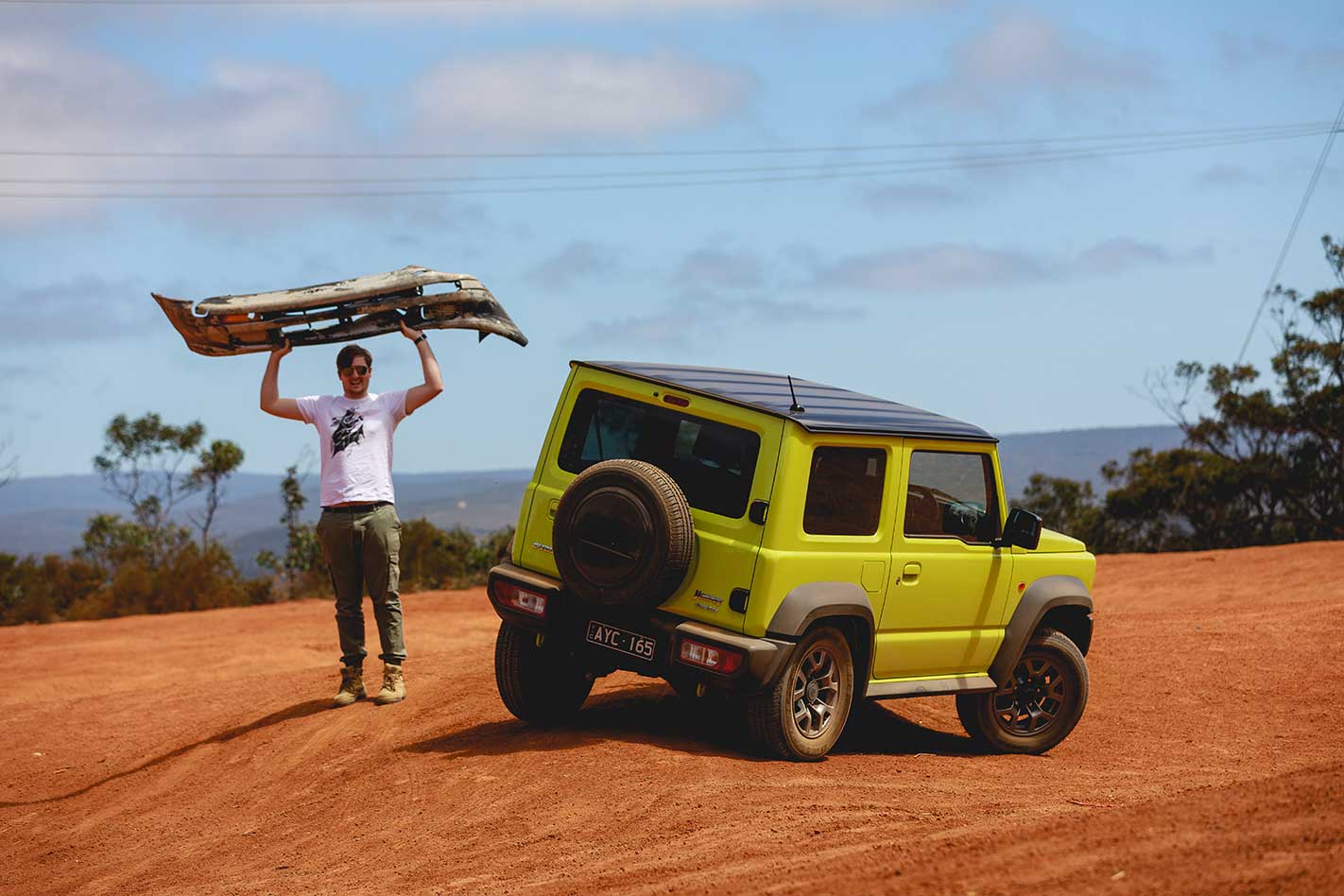
Then there’s the engine performance. With just 75kW/130Nm from the 1.5, reaching highway speeds in the space of an on-ramp requires full throttle, and as the tacho climbs, so does the loud buzziness coming through the firewall.
You snap an upshift to again be reminded that the lever’s action demands a lengthy throw, and the notchy gates require finesse, particularly at low speeds.
Considered as a whole, it’s really not the Jimny’s fault that the bromance has cooled. This junior 4×4 craves a remote, ruggedly isolated destination plugged into the sat-nav to shine. Using it as a sole form of urban transport takes a hardier, less critical soul than myself. But if you already have a comfortable daily driver in the garage, adding this pint-sized off-roader as an affordable weekend toy makes perfect sense.
Update 6 – Shifting perception
It’s not so much what the Jimny has, more what it allows you to do with it
- Price as tested: $24,490
- This month: 902km @ 7.1L/100km
This is where the Jimny comes in and fills that gaping hole in my life. Yes, the shift throws are long, 75kW isn’t stunning, and it’s damn noisy, but having the ability to control the revs and holding gears as long as possible makes the driving a lot more fun. Sneaking into small gaps through traffic is incredibly easy and rewarding, too.
Other positive aspects of the Jimny became a lot clearer recently. In the August edition of Wheels, we ran a comparison featuring the Suzuki Swift, which I figured would be cut from a similar cloth. I was far off the mark.
The clutch felt vague and the accelerator unresponsive compared to the Jimny. I only spent five minutes in it, but it felt worlds apart. While the Jimny has an extra 9kW and 10Nm, making the power-to-weight ratio similar, the delivery of those numbers feels more urgent in the Jimny.
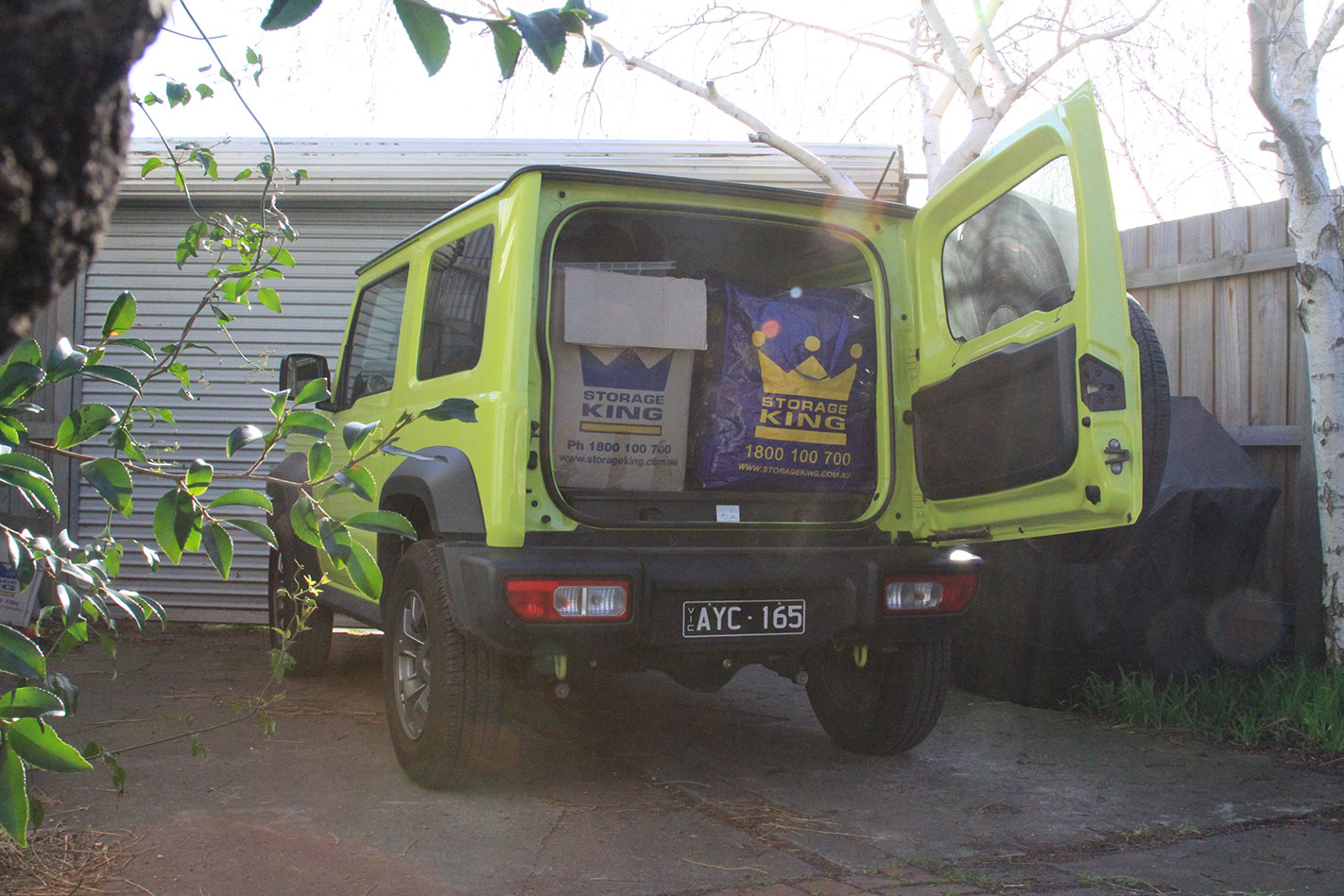
Despite its diminutive dimensions I’ve even explored the Jimny’s more practical side. We’ve begun clearing all the old kids’ gear, plus random junk we don’t need, and the Suzuki has been handy for the task. While the back seats are genuinely useless for full-sized humans, dropping them down takes the teeny 85 litres of cargo space to a handy 377. The huge side-hinged door makes access easy – perfect for box-Tetris.
After the tip run, I dropped in on the second Highball Cars and Coffee meet in Melbourne, which hosted a huge range of stunning metal, including a Porsche 911 Turbo 3.3, a Nissan Skyline R34 GT-R V-Spec and a De Tomaso Pantera GT5. In the midst of all this exotica, the Jimny still managed to attract several curious onlookers.
Surprises – that’s one thing the Jimny continues to deliver. And now we’re overdue to get the lil’ Suzie filthy. Off to the dirty stuff we go!
Update 7 – When things get A MITE SQUEEZY around town, LIL’ suzy finds its sweet spot
There’s a mission to complete. On the cards is a ‘quick dash’ to Melbourne’s mega mall, the Chadstone Shopping Centre – though whether it’s quick is in the hands of the traffic gods. Available are the keys to the monstrous Ford Ranger Raptor and the pocket-sized Suzuki Jimny. Which one to pick? The choice is pretty simple to make.
‘Chaddy’, as it’s more commonly known, reminds me of how old I am. I remember this retail behemoth – Australia’s biggest shopping centre – when it was half as big as it is now, and nowhere near as trendy. Mirroring its growth is its damned car park. Half the problem with visiting the place is navigating the concrete jungle and the sometimes simple folk that congregate within it.
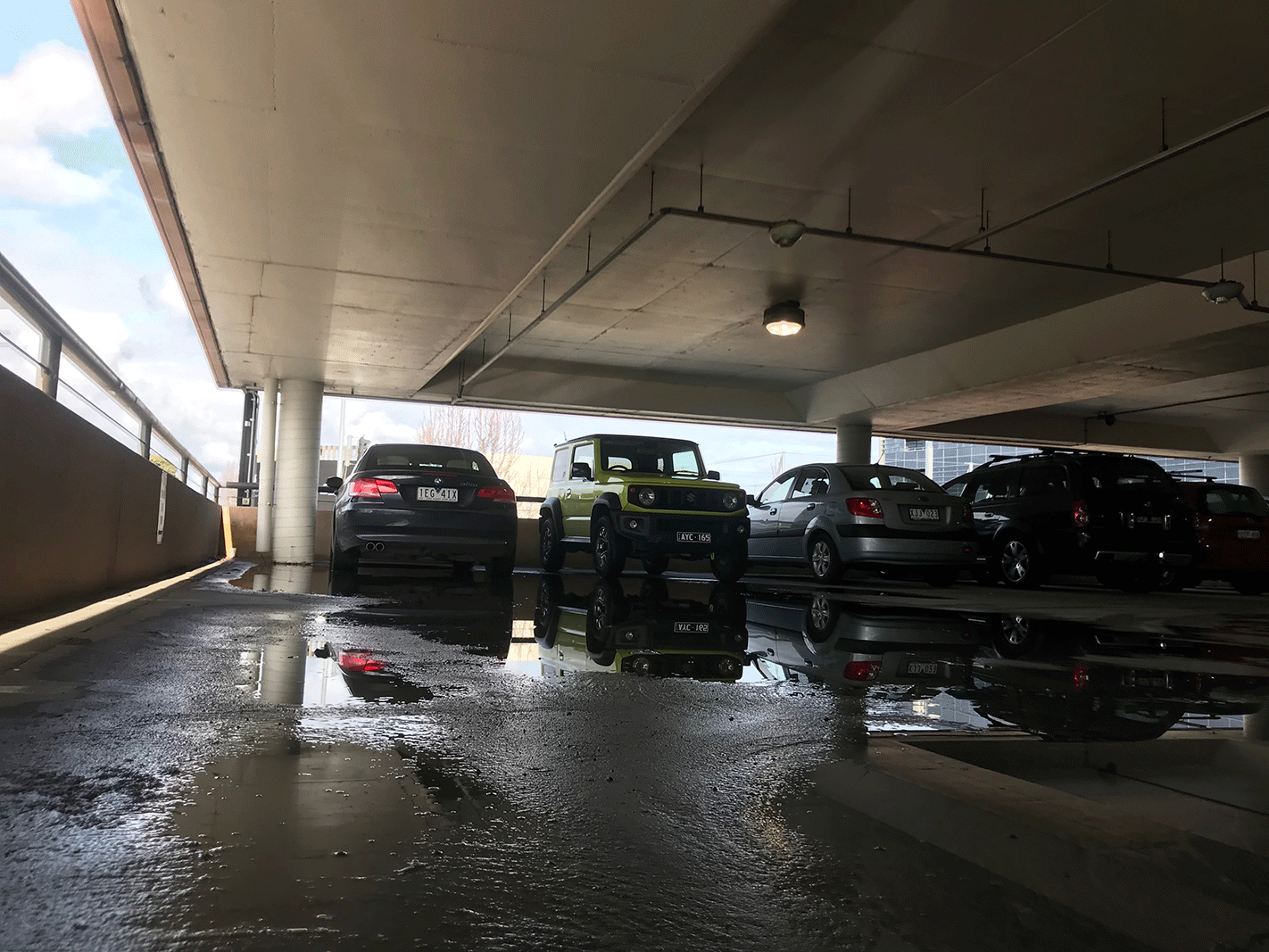
Taking on this mission with a press car results in approaching the trip with a higher degree of caution. If there’s a spot next to a beat-up, ratty looking car, it’s best to keep searching to avoid ending up with panels with more dints than a golf ball.
Experience has taught me that there is one spot in the complex where I’m guaranteed to always find space within one of the multi-level car parks.
While the Raptor is great for scaring people out of your way, its whale-like proportions make it a pain around any suburban shopping centre. The height alone is enough to deter entry into tighter car parks.
This is where the Jimny shines. Manoeuvering past those ever-hopeful drivers waiting for the ideal park near the entrance, or those making 17-point turns into one, is a breeze. The large glasshouse gives great visibility all round and the sharp turning circle makes slotting into a spot easy.
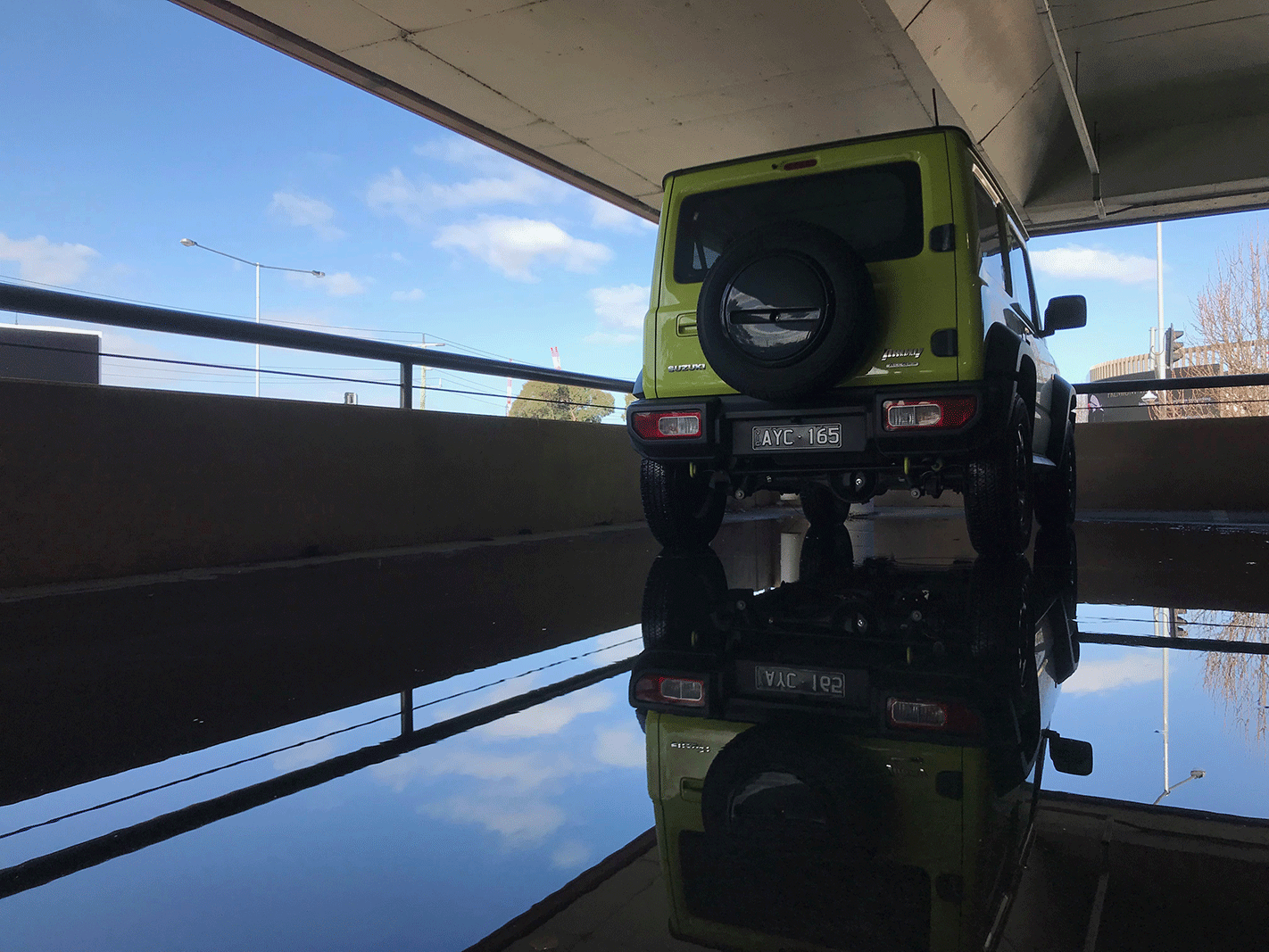
The massive doors can be a problem if you’re not attentive – they’ll swing out eagerly and strike anything within their extensive reach. A visit to the city recently nearly caught us out when the Jimny’s door sprung open in sloping lot within a high-rise complex.
Getting in and out of those dreadful car parks swiftly has become something of an art form now. Dealing with the actual act of shopping ? Well, we’ve all had our own experiences, so let’s leave it unsaid.
Like them apples?
Having bounced around a few cars in the Wheels garage lately, I’ve come to appreciate old-fashioned buttons and dials to control the air-con, instead of the touch-screen numbers. The inclusion of Apple CarPlay is the icing on the cake. The fact that it’s free for the Jimny while Ferrari charges nearly $7000 to install it makes my head hurt.
Update 8 – Bush bash
I returned to the driver’s seat of the Jimny recently after spending a week in a luxury SUV with a six-figure price tag and a 405kW supercharged V8 under the bonnet. I imagine the experience is similar to what people going on a two-week juice cleanse would go through – the automotive equivalent of a hard detox.
However, I’ve enjoyed my motoring recalibration, taking the opportunity to embrace the simpler side of motoring. Earlier gripes about the Jimny’s ability as a daily driver have been tempered significantly by weekend excursions.
Ever since the little Suzi arrived in the garage I’ve wanted to ‘fix’ its retina-searing paint by smearing it with as much mud as possible. Cue Toolangi State Forest, 80km north-east of Melbourne, on an overcast Sunday.
I’d roped in a co-worker who had a beefy diesel V6 dual-cab ute to join in the fun, both as an extra set of hands should things end axle-deep, and to see how the Jimny fared against one of Australia’s most powerful utes.
On the highway blast things were predictable, as the dual-cab cruised along with ease, the Jimny notably less so. But once we got some dirt under the treads, the tables turned. The Jimny cleaned the floor with the dual-cab, able to clear more obstacles, and with greater ease.
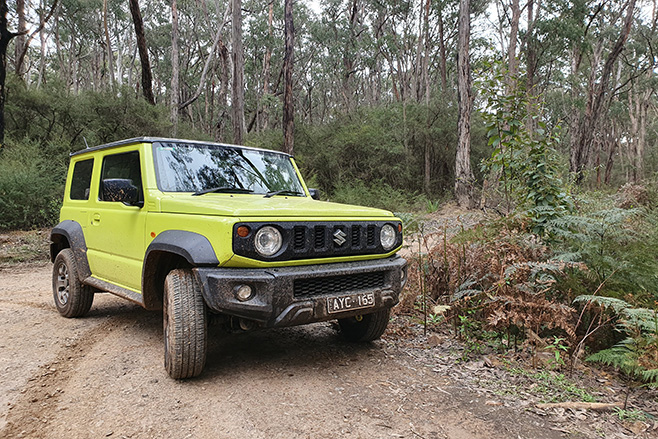
Weighing in at 1095kg, the Jimny is the lightest true 4×4 you can buy, helping it skip across terrain like a jackrabbit. Clearance was never an issue, with the Jimny tackling a number of deeply rutted tracks.
The difference in ability between the two vehicles was highlighted by a particularly wretched piece of terrain that required us to first head through a bog hole, before traversing several muddy ruts, and ascend a small bank. For the Jimny it was a breeze, and great fun. The dual-cab? Not so much. A lot of guidance, wheel-spin, and shouting were required for it to clear the obstacle.
By the time my friend made it safely across, his nerves were so frayed he decided to call it quits. Painfully aware of the Dunning-Kruger effect, and where I may fall on that bell curve, I decided that flying solo on some tougher tracks wasn’t advisable, and followed suit.
The Jimny remained utterly unchallenged by the day’s activities, as I had reached the limit of what I was comfortable in tackling. Frustratingly, the paint remained annoyingly visible, despite some splashes of mud. There’s always next time…
Farewell update – Did what it said on the tin
Price as tested: $24,490
This month: 777km @7.1L/100km
Overall: 8425km @ 7.3L/100km
No-one likes a dishonest soul. The kind of mate who is all gung-ho when plans are being made, promising the world with great enthusiasm, only to flake at the 11th hour and turn into a not-so-friendly ghost.
It’s a frustrating trait in some humans; one that can leave you more than a little disheartened about a friendship. Cars can do a similar thing. There are a multitude of vehicles that sell themselves on the promise of rugged, wild adventures, and the ability to take you and your family to the furthest reaches of our vast wide land. They do this with wheel-arch cladding and jacked-up suspension designed to hide the unfortunate reality that they’re better suited to a Westfield expedition than the Gunbarrel.
After nine months with Suzuki’s Jimny in the Wheels garage, I can safely say this is not the case with the retro-chic off-roader. In fact, it’s the opposite. The Jimny is the vehicular equivalent of that friend who always under-promises, and overdelivers. They are straight-talking, don’t have time for any nonsense, and are honest, sometimes brutally so.
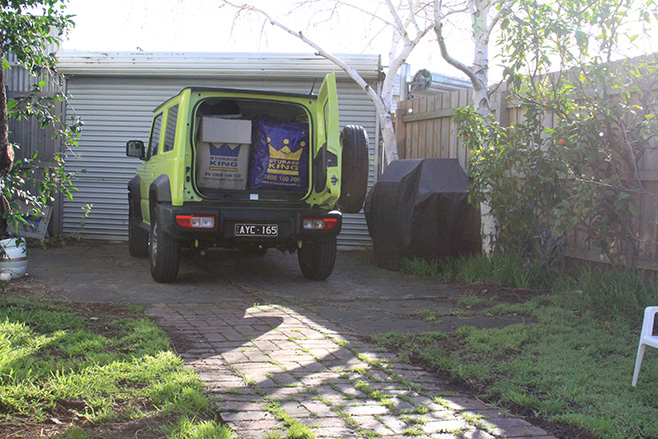
One of the great things about the Jimny is its simplicity – in philosophy, design, and personality. It’s endearingly earnest, with no false pretence involved in what it is attempting to be. What you see is what you get.
It’s also an honest, two-box design. The mechanicals might seem antiquated, but you can’t deny that they’re fit for purpose. There is no need to worry about turbocharging when you’re over 1000 kilometres from the town and need to get your bush mechanic on.
That simplicity has also paid dividends over our lengthy tenure with the Jimny in terms of fuel economy. In 8425km of driving, most of that spent commuting on the highway and tackling the urban jungle, the 1.4-litre naturally aspirated four-cylinder gurgled its way through 616.24 litres of unleaded for a real-world figure of 7.3L/100km.
Another thing about the Jimny is that it garners a lot of interest, which is inevitably followed by questions. So I’ve decided to follow the Suzi’s lead, and be brutally honest in my answers to the most frequent inquiries.
What’s it like on the highway? Tiresome.
Is it good off-road?
Better than you could imagine.

Can you fit an adult in the back seat? Only if you dislike them.
How does it go in the city? There isn’t another car this easy to park.
Then comes the inevitable kicker. Would you buy one?
No…
But here’s where brutal honesty can be a disservice. Because while I would never buy a Jimny, it’s one of the best cars around for its intended purpose – I’m just not the right buyer.
Perhaps, more importantly, the question that needs asking is, should you buy one? If you’re are fully committed to off-road adventures and want an affordable, supremely competent and reliable steed that doesn’t need modifying to get you pretty much anywhere your heart desires, the Jimny is for you.
Do you want to embarrass the big dual-cab and 4×4 wagon crowd? Step this way, because in a battle off the beaten track, you’d be hard pressed to find a car this competent straight off the showroom floor. Few would put this big a smile on your dial at the same time, too.
If the Suzi is to be your primary transport at the same time, be prepared to compromise, but the reward comes when you head bush and have your breath taken away by some of our country’s stunning natural beauty. Australia is a big country, with beautiful hidden gems strewn far and wide, and this off-road icon will take you there.
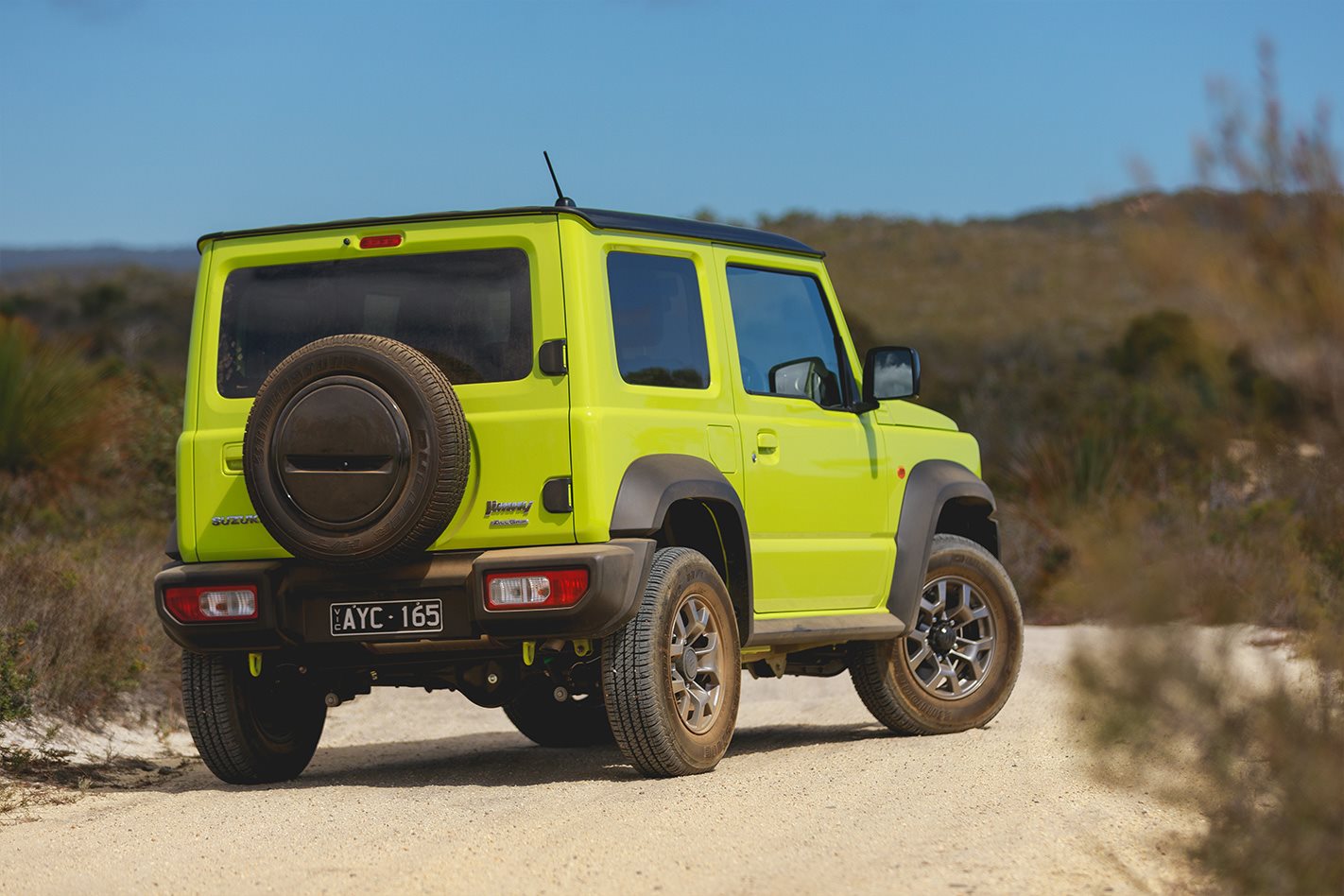
Sound enticing? It really gets the wanderlust pumping.
Just remember to be honest with yourself about whether this is what you want. You owe the Jimny that much.
2019 Suzuki Jimny long-term wrap-up
Price as tested: $24,490 This month: 777km @ 7.1L/100km Overall: 8425km @ 7.3L/100km
