
India’s industrial giant Mahindra has progressed from its tractor origins and is now sowing the seeds of global passenger-car ambition. And Australia has been targeted as particularly fertile ground.
The Mumbai-based tractor manufacturer turned car maker has a strategic plan to transition from farmers’ fields to suburban driveways.
And a key part is a forensic analysis of customers as it introduces a new product line – including a contemporary take on the traditional diesel ute alongside forthcoming electric vehicles.
1
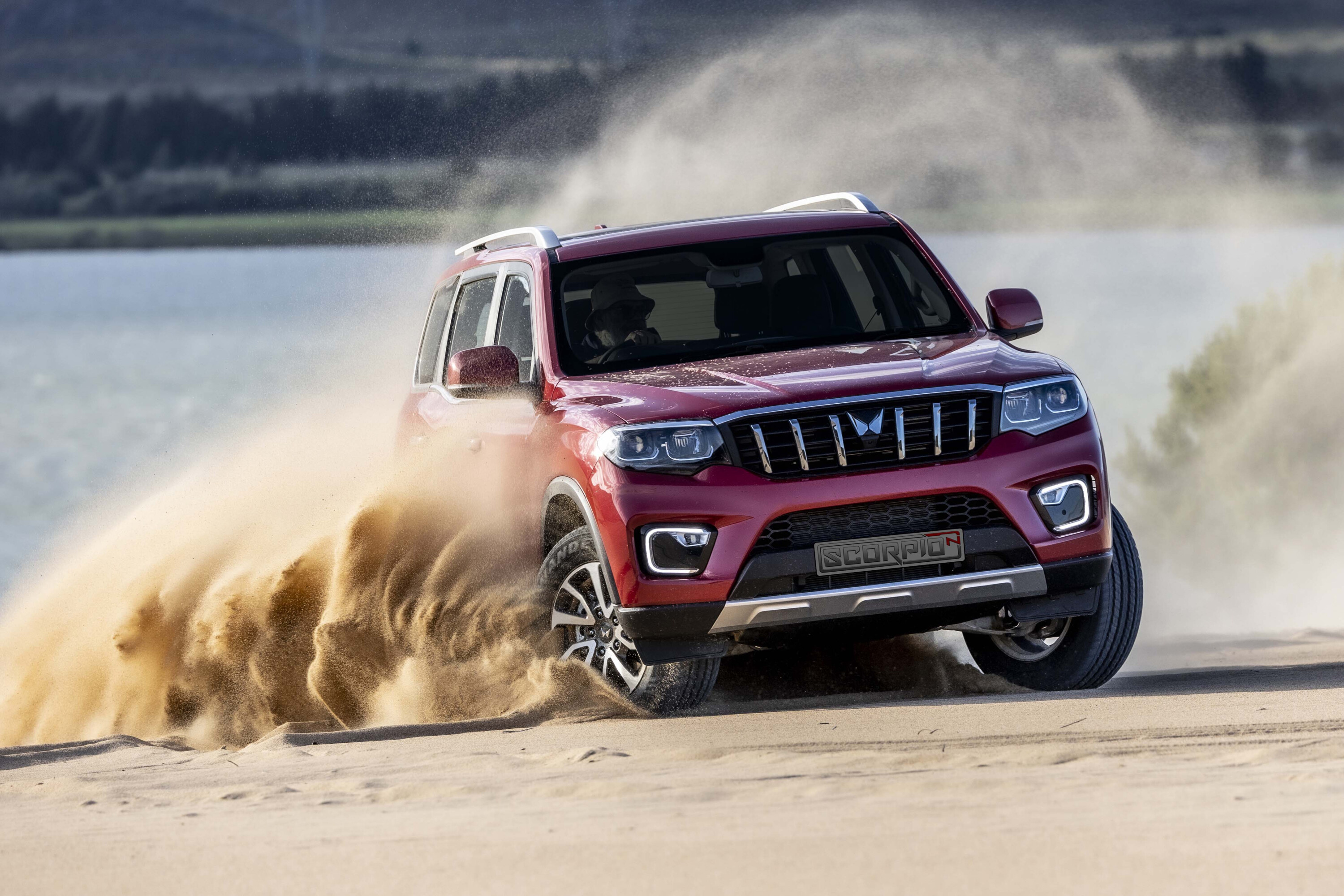
With fresh products – the XUV700 and Scorpio SUVs – recently released, the Australian arm is priming to be at the sharp end of the mothership’s global goals.
The ‘Global Vision’ target – announced in October by Mahindra’s Rajesh Jejurikar, executive director and chief executive (Automotive and Farm Equipment) – is a two-and-a-half-fold increase in the automotive division’s revenue by the 2026 Indian Financial Year. But Mahindra wants its Australian division to perform even better than that.
That’s a tall order given the brand has been here for decades, yet is hardly on the average new car buyer’s hit list.
1
The Mahindra name first appeared in Australian new-vehicle showrooms in 1990 with a small batch of its Peugeot-diesel-powered Pik-Up ute, before a more substantial return in 2007 distributed by Sydney-based Tynan Motor Group.
The Australian arm is now headquartered in Brisbane after Mahindra took full control of the business in 2011, and it’s from this base that it intends to make its biggest strides on the island continent yet.
It has witnessed newer makes become prominent on local new-car shopping lists, including a disruptive, reborn MG – now a consistent top-10 finisher in Australia – in our 50-plus brand sales stoush. Now it wants in.
1
Mahindra’s region head for the Australia Pacific, Joydeep Moitra, explained to Wheels the change in focus for Mahindra’s automotive business that sees Australia front and centre of its global transformation into a mainstream automotive brand.
“The brand has always stood for ruggedness – an authentic, rugged brand – and we’ve focused on SUVs and utes,” says Moitra, speaking from the company’s Brisbane base. “We are not into sedans or any other passenger vehicles.
“We started [locally] in Queensland and from that, we evolved towards the smaller towns … like Toowoomba, Rockhampton, and some parts of Victoria. We were manual transmission [vehicles] only for a long time – we have been extremely niche in Australia, servicing only pick-up and SUV [models] with predominantly manual transmissions.
1
“Now with our new range of products, we are getting into a more lifestyle segment,” says Moitra.
While the Australian new car market is notoriously competitive, it’s an understatement to say Mahindra knows how to succeed.
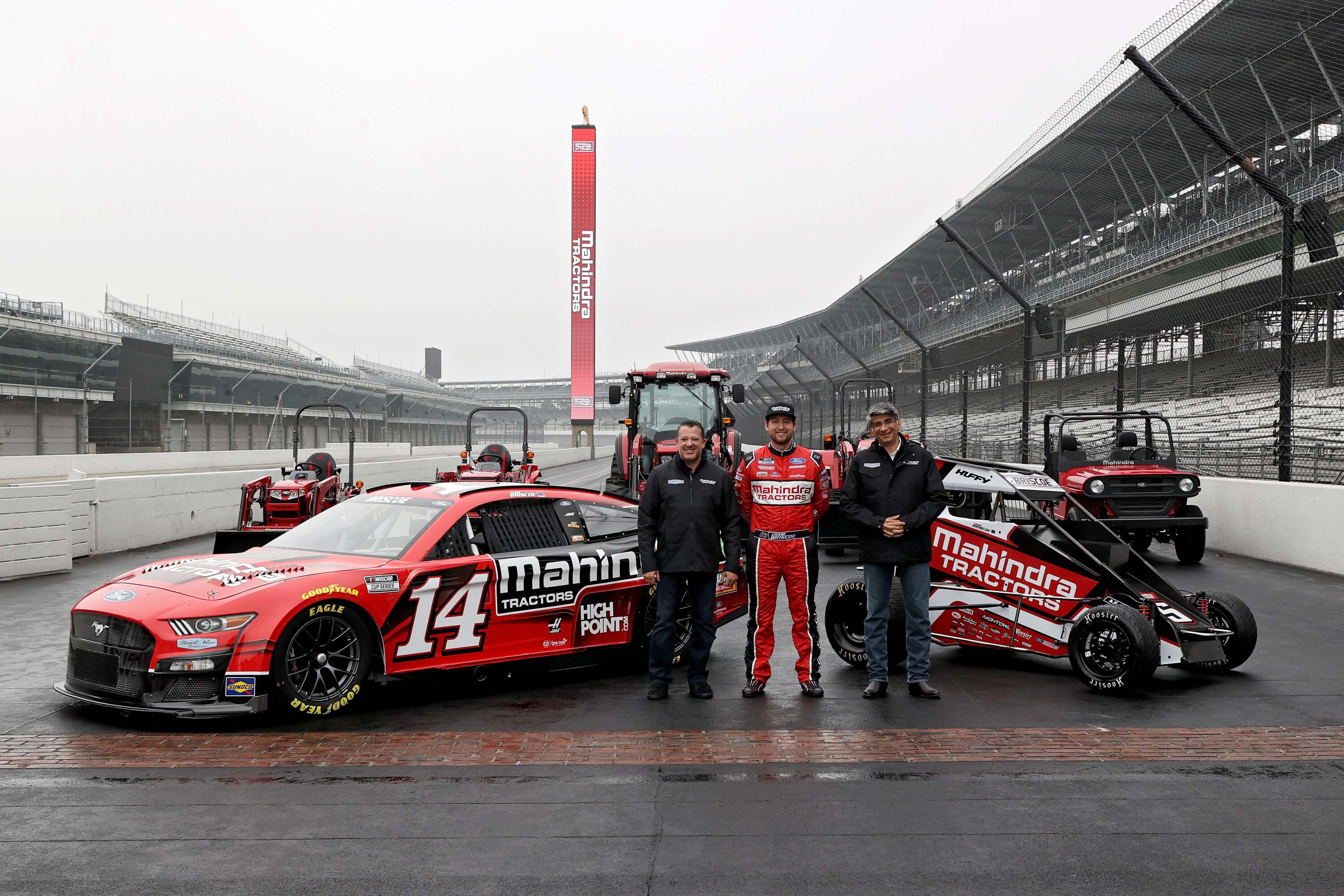
Mahindra & Mahindra (its official name) is an industrial powerhouse – a conglomerate of operations including a flourishing agribusiness as the world’s largest tractor manufacturer, advanced technology set-ups helping its move into electric vehicles, and now an emerging player on the SUV scene.
It bought the Peugeot bicycle business in 2014 and owns legendary design house Pininfarina.
1
It also makes about 700,000 vehicles a year across multiple factories and boasts impressive design and engineering facilities.
“We’ve seen that entire evolution over 50-plus years or more [globally] of the country, do-it-yourself kind of a buyer to, now, more modern metros, the smaller suburbs and so on. So in that sense, [Mahindra’s] entire customer profile has completely evolved. It’s become more mainstream,” says Moitra.
Moitra believes now is the time for the Australian arm to make a play into the big league, with multiple factors combining to fuel its push into the mass market – using a three-pillar product strategy based on design, technology, and affordability to capitalise on them.
1
“Once we started having visibility of the newer [vehicle] platforms with automatics and other advanced requirements [and] tech features, that’s where we said, ‘Now we are in the right frame to open up the urban markets.’”
There will be multiple strings to its product bow – namely diesel utes, SUVs and electric vehicles.
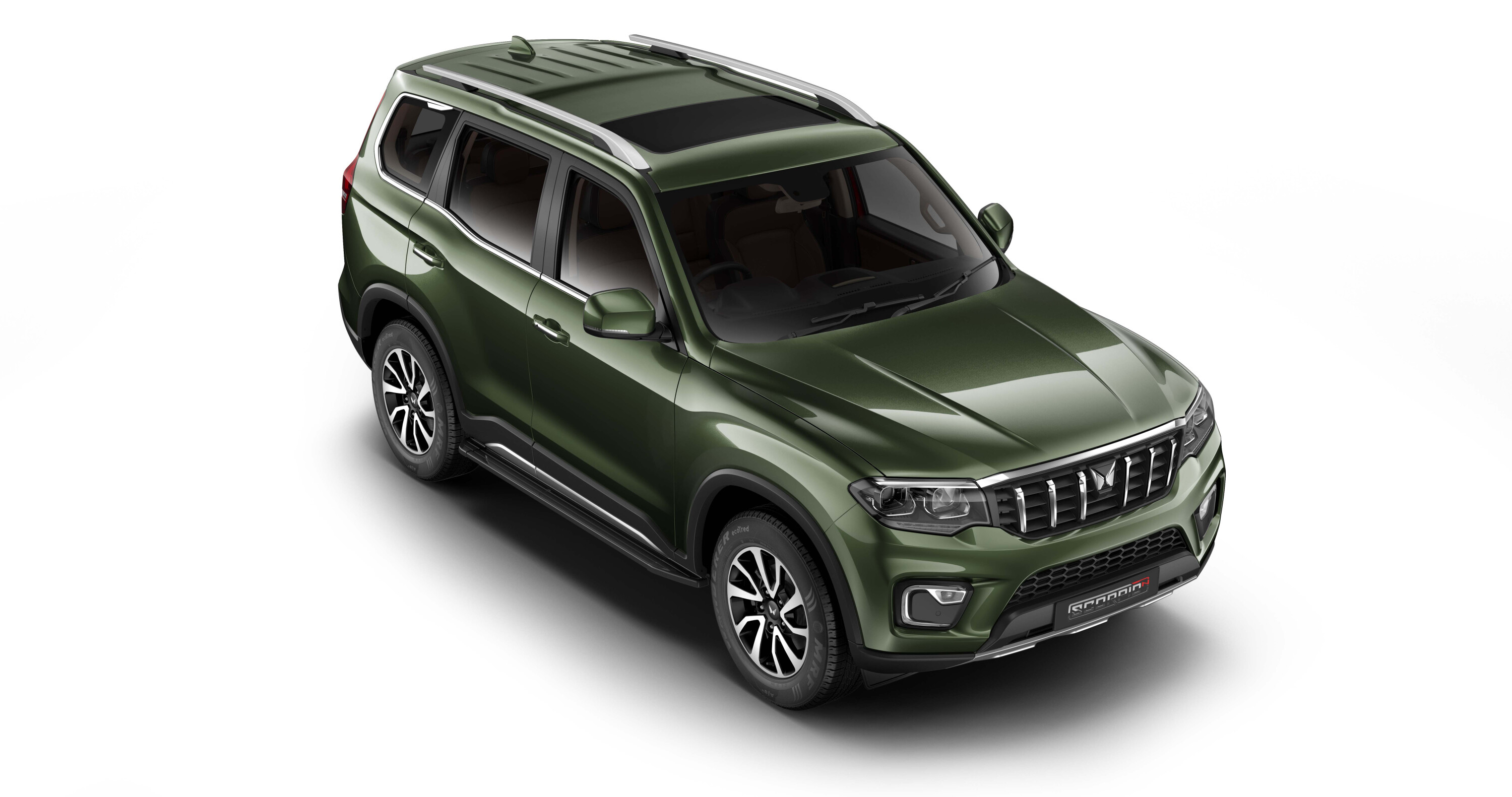
Mahindra’s first monocoque vehicle was the XUV500 introduced in 2011, succeeded by the more accomplished and much more mature XUV700, which remains one of the most affordable SUVs for its size.
1
“With the new products, the Scorpio and the XUV700, I think we have moved on”
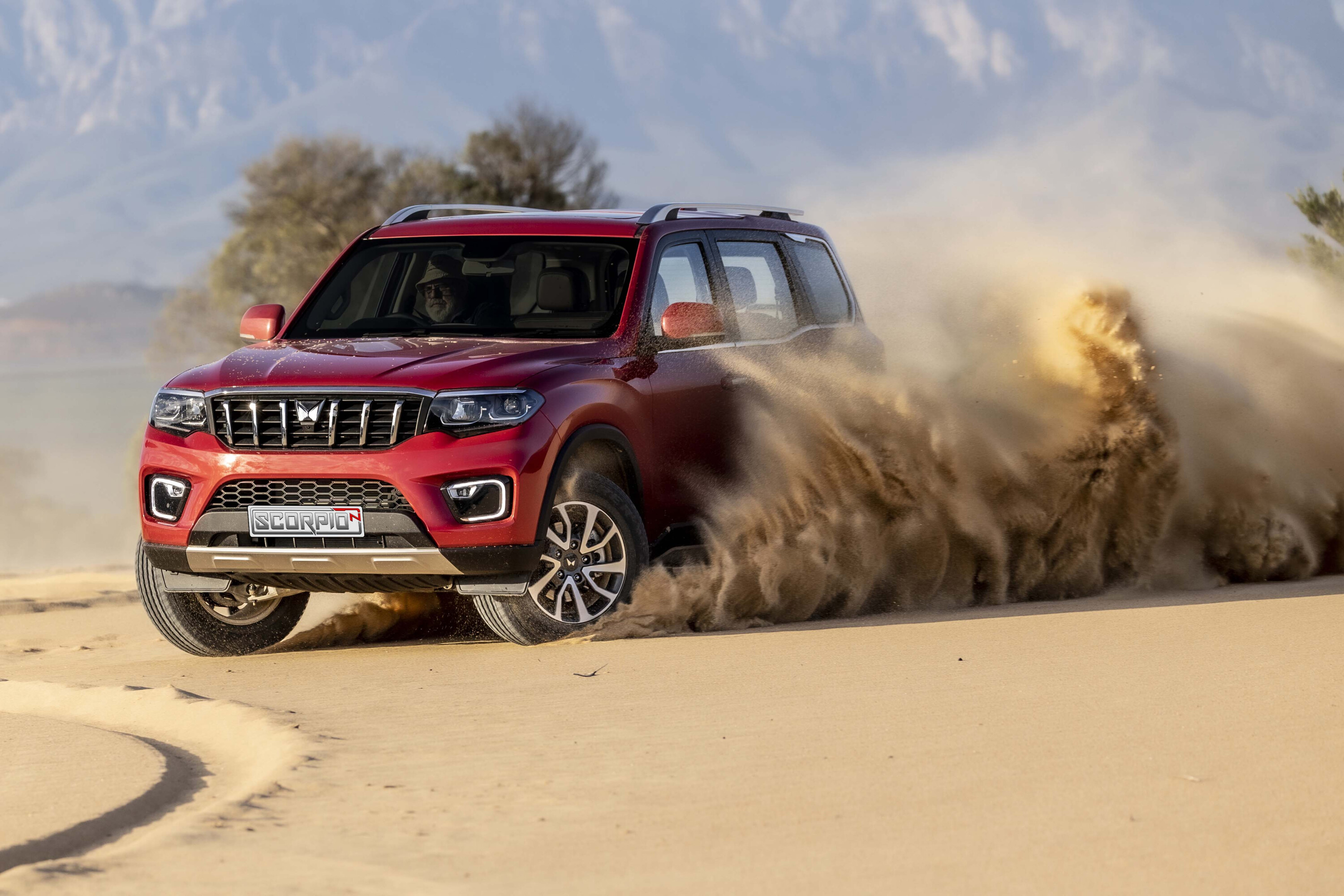
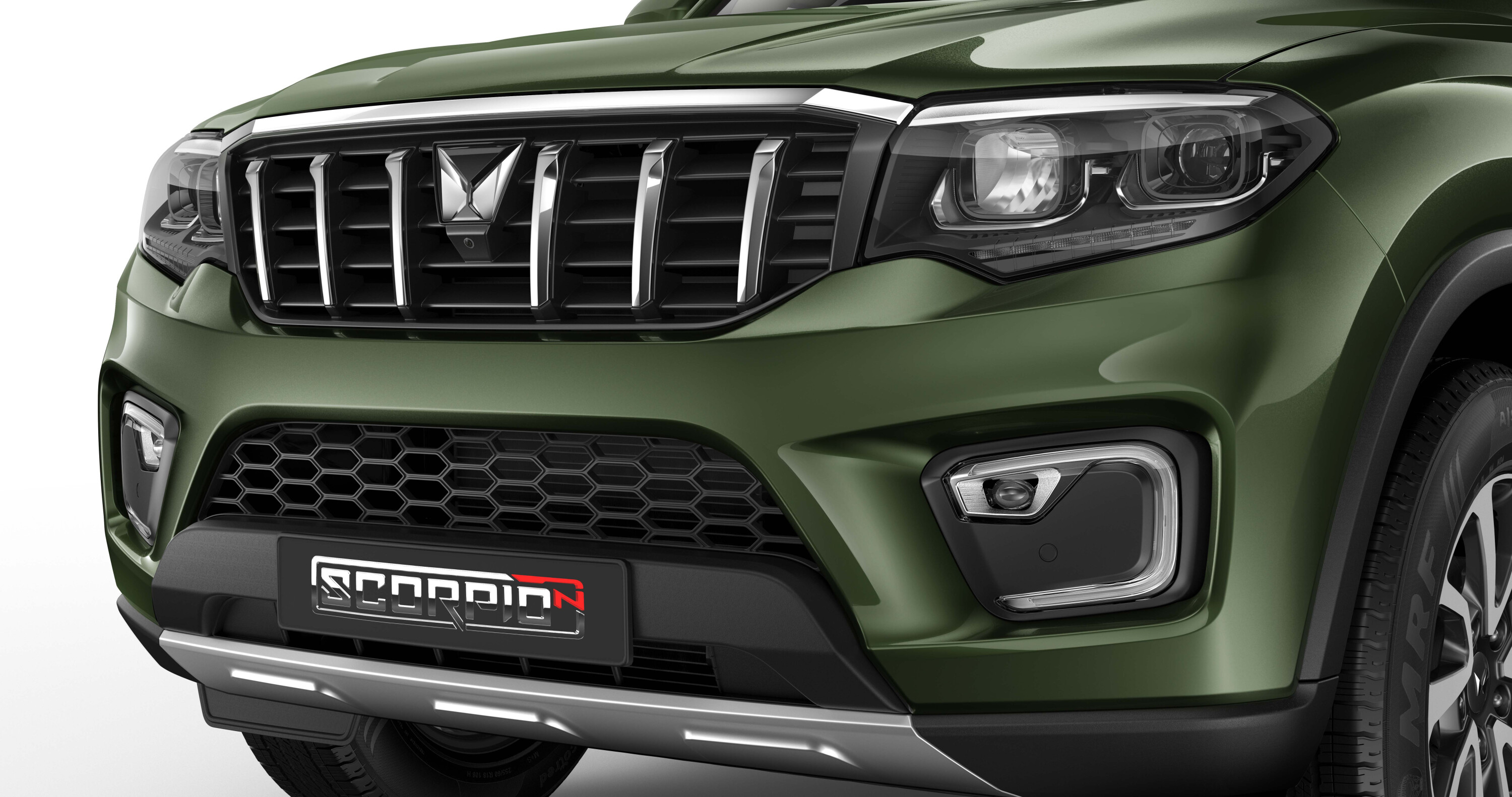
Then there’s the new full-chassis Scorpio SUV – also budget-driven – above the XUV700 in the line-up.
They sit alongside the dated, awkwardly styled S11 Pik-Up, which is an obvious hangover from the ‘old’ Mahindra.
“With the new products, the Scorpio and the XUV700, I think we have now moved on,” Moitra says. “These are the right two products, and we’ve seen good success, which has given us confidence.
“There’s a huge amount of opportunity because these are mainstream product segments for our dealer network. These are high-volume SUV segments in Australia, so clearly the business growth both for Mahindra as well as for the dealer network is now centred around these two products.”
1
The SUV segment has indeed made up more than half – 56 percent – of new-car purchases in Australia year to date, well ahead of the next-largest segment, light commercials, at 22 percent.
“Our XUV700 SUV competes head on with several Japanese and Korean brands. I think we’re competitive in terms of value, so the brand has evolved … the value proposition will always remain fundamental, and it will remain right up front.
“So, while everybody else is trying to move more into higher and premium territory, I think we will be able to offer a very strong differentiation with democratised tech … The idea is to remain that authentic brand of being a tough workhorse but evolving it into lifestyle.”
1
Mahindra also sees opportunity given the number of interest rate rises and the increased cost of living, while Moitra says that the two countries – and respective governments – work well together, evidenced by the Free Trade Agreement between India and Australia that came into effect in December 2022.
“Clearly, we are seeing that the products that we are designing, developing, and of course taking inputs from Australia during design development, testing it in Australia and then launching it into Australia, we are seeing reasonable success,” he adds. “We see that there is a very good opportunity for this brand to scale up operations.”
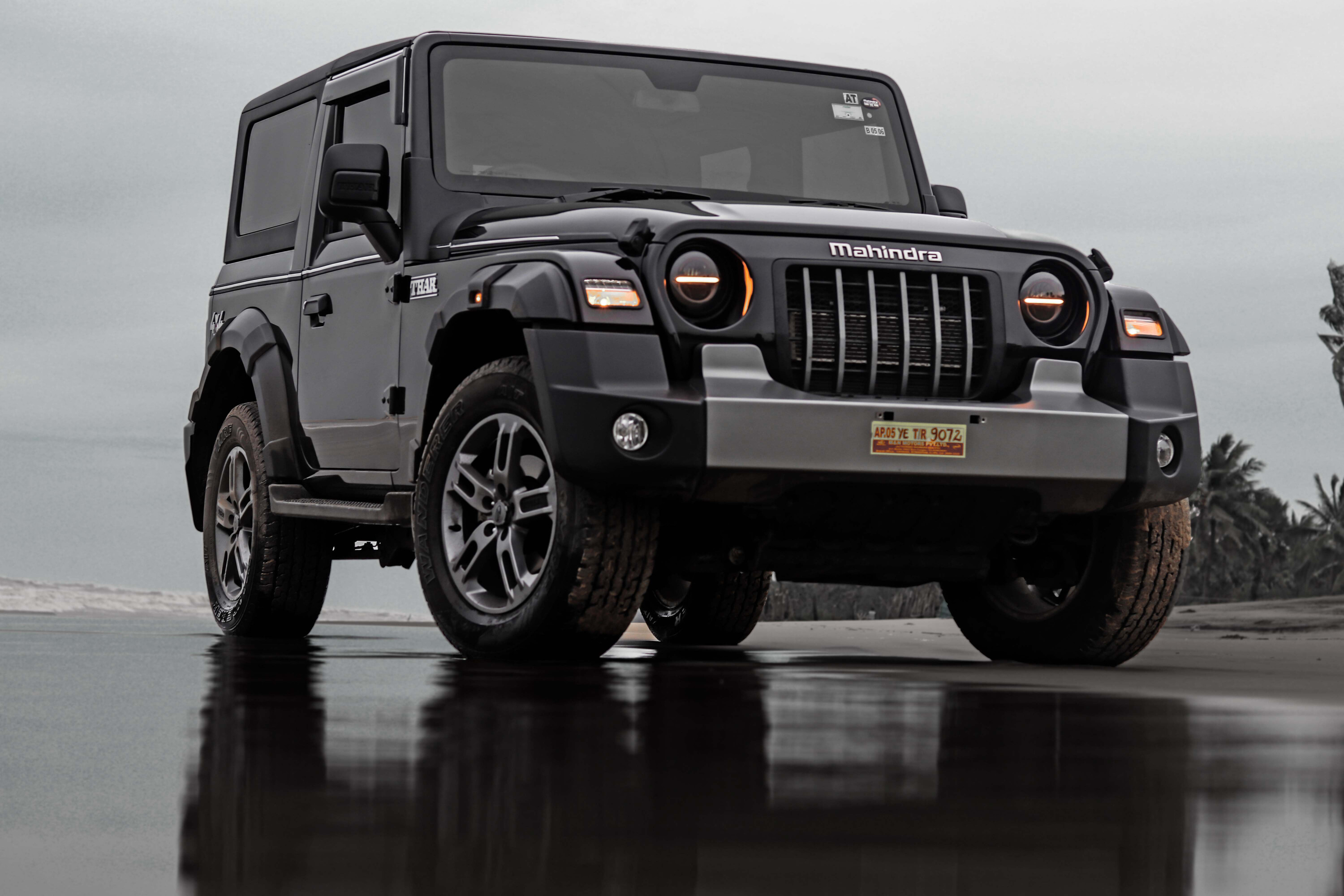
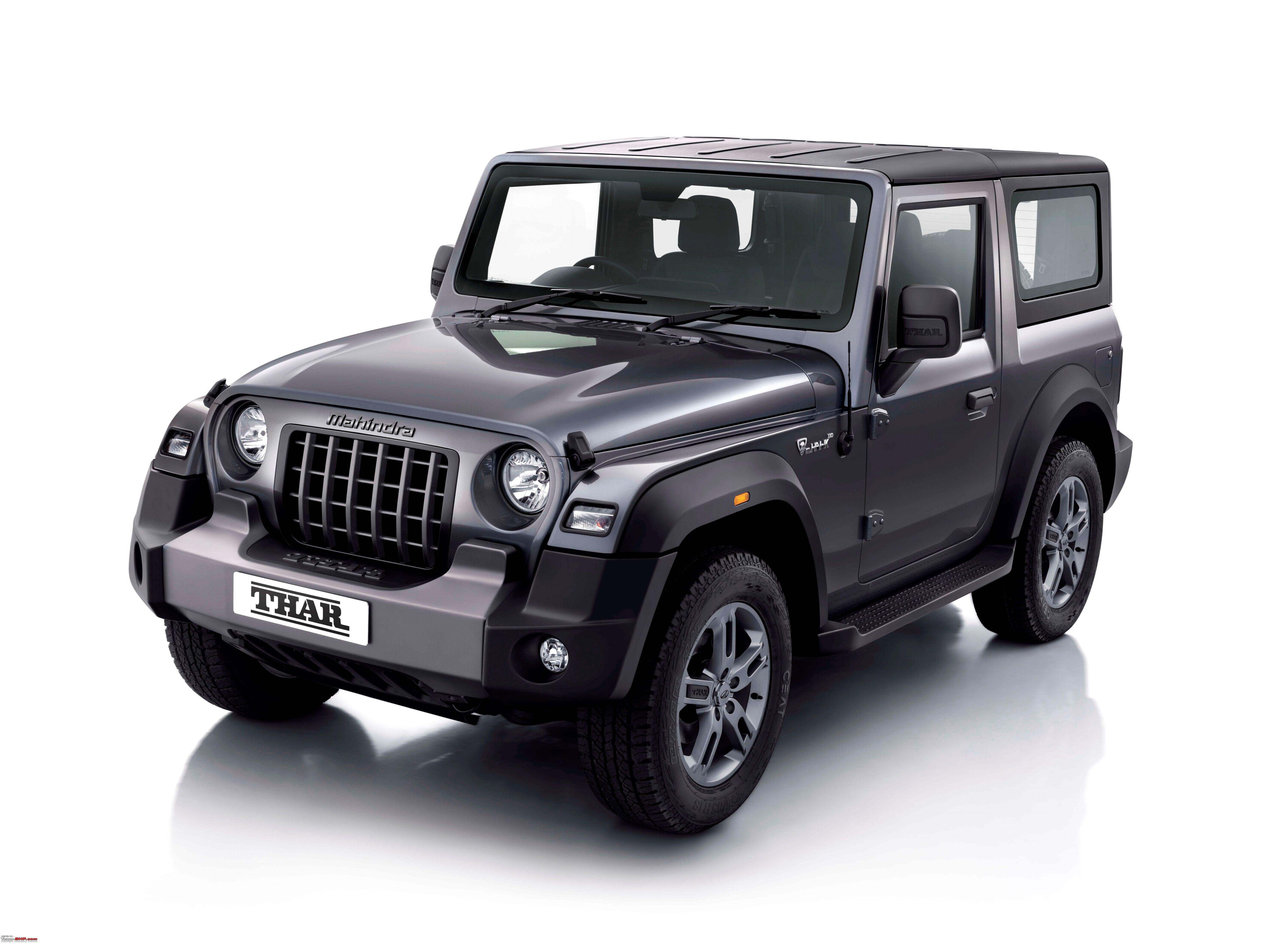
The design alone of both of its newest SUVs illustrates some of the advances the brand is making, far removed from its Jeep-building origins (though the company still hopes to introduce the Thar off-roader to Australia if it can overcome Wrangler-based legal objections from Jeep, just as it did in the US in June).
1
“Design is critical to enhancing the appeal for Mahindra in Australia and globally”
A significant step away from its derivative origins is its global design hub, M.A.D.E – which stands for Mahindra Advanced Design Europe and was opened in August 2022 by Mahindra Group chairman Anand Mahindra and the UK International Minister for Trade, Ranil Jayawardena.
The Banbury, Oxfordshire facility is home to 30 staff, with state-of-the art tools enabling conception to prototype capability, including 3D modelling, a digitisation suite, and Virtual Reality (VR) modelling.
“Design is critical to enhancing the appeal for Mahindra in Australia and globally,” says Moitra. “The idea of setting up a design centre was to use the talent over there and make that the hub for our global product design.”

1
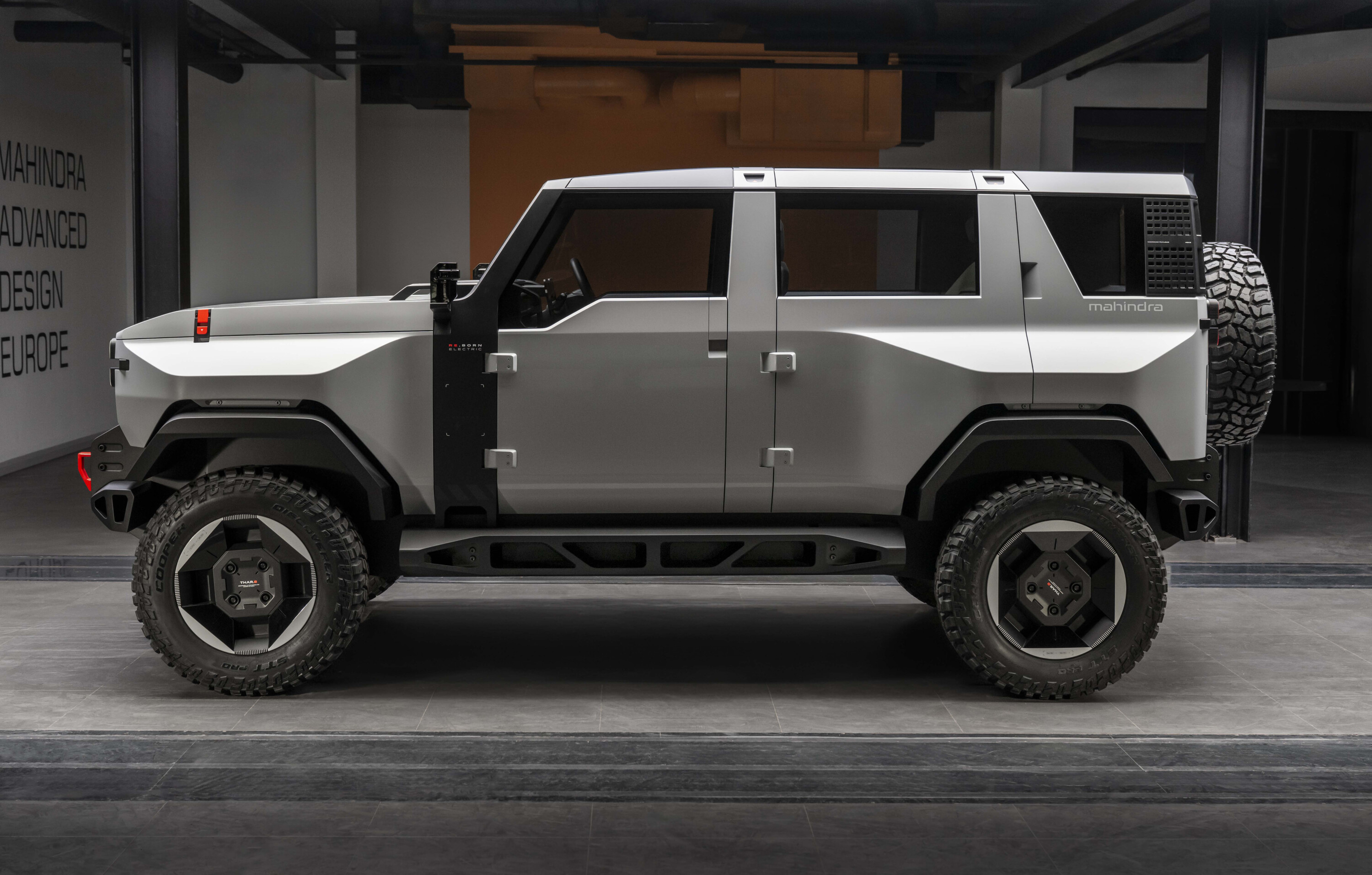
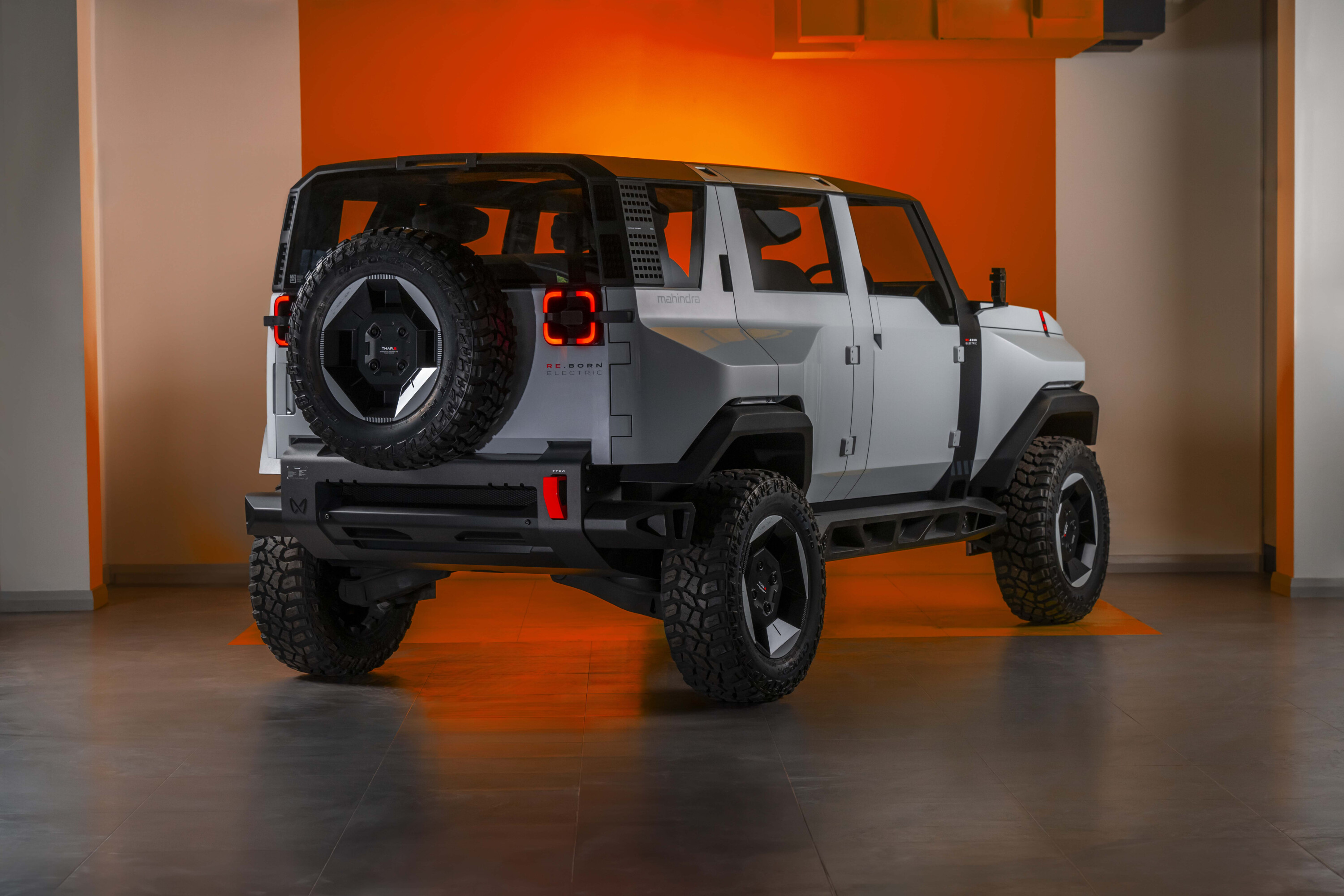
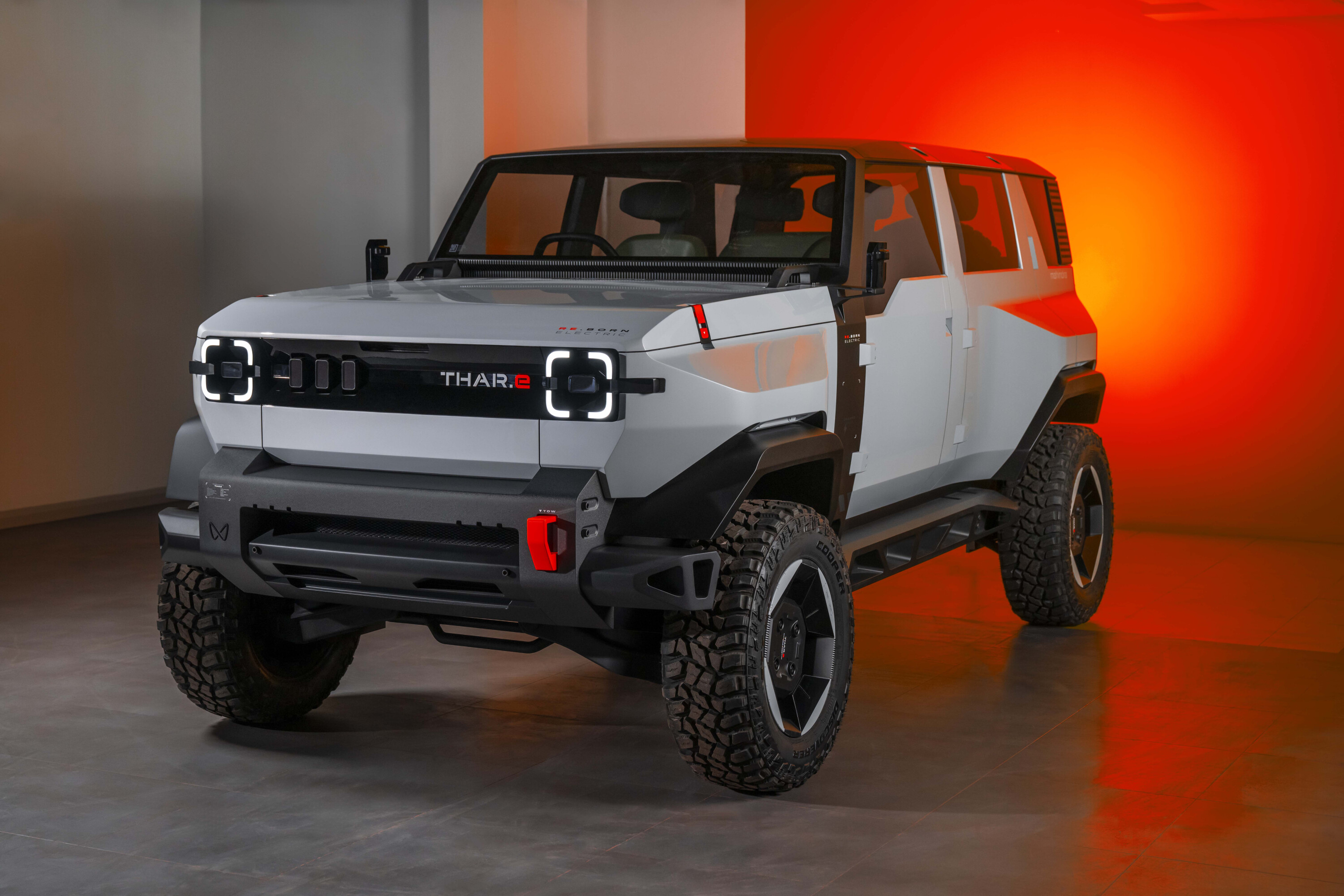
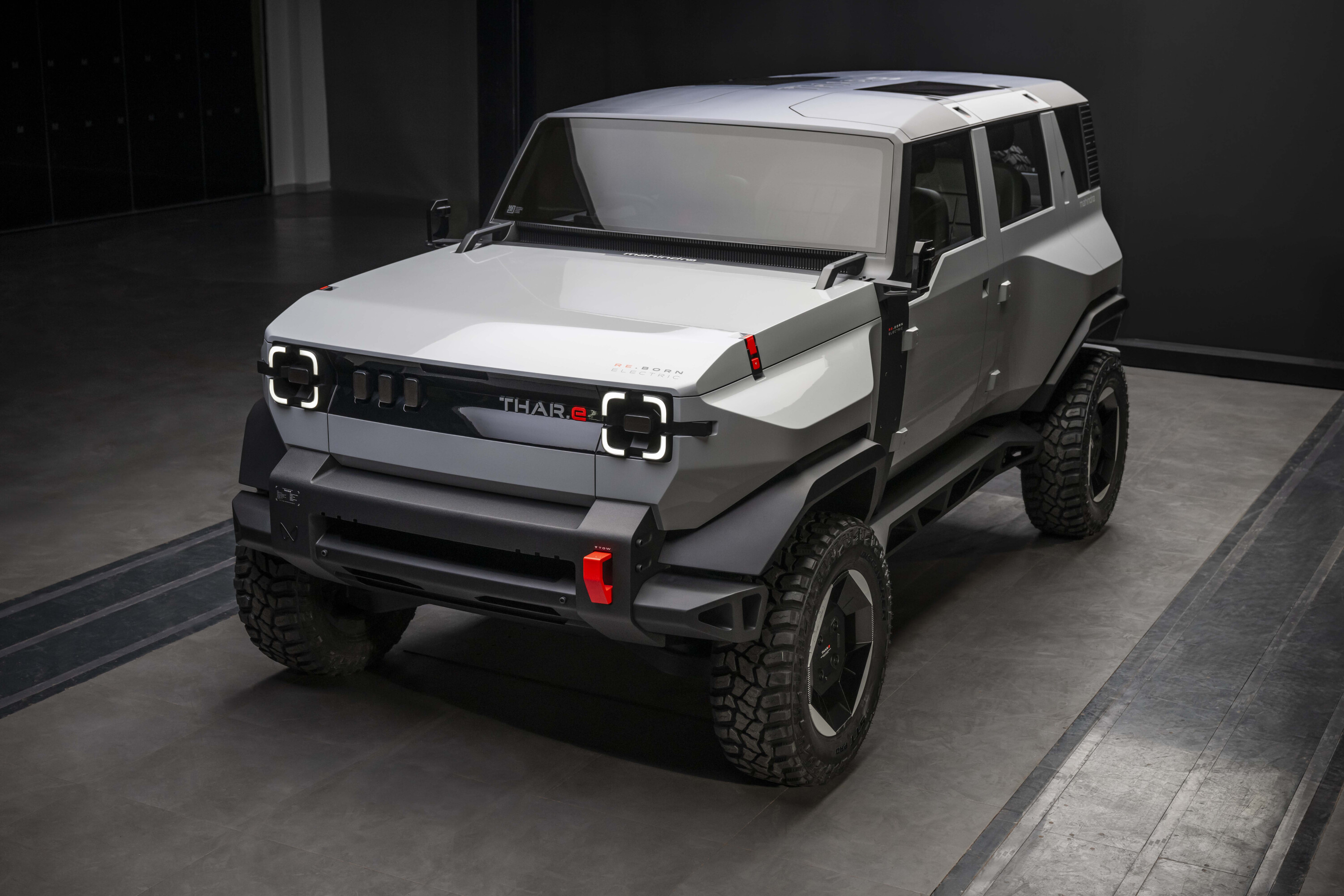
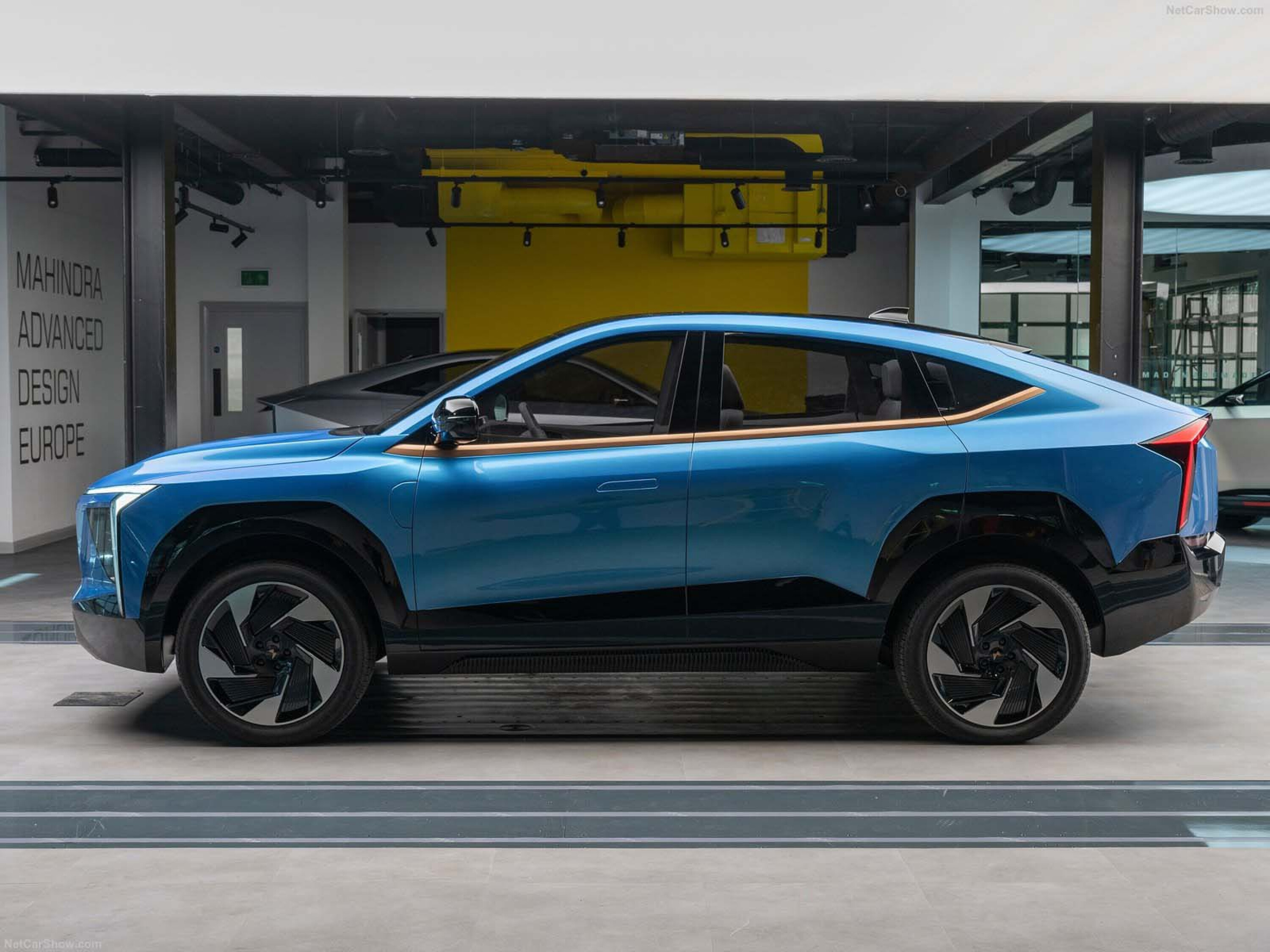
Building on this are Mahindra’s latest concepts – the Vision Thar.e and Global Pik-Up – which clearly show the continuing design evolution, as well as the car maker’s burgeoning engineering nous.
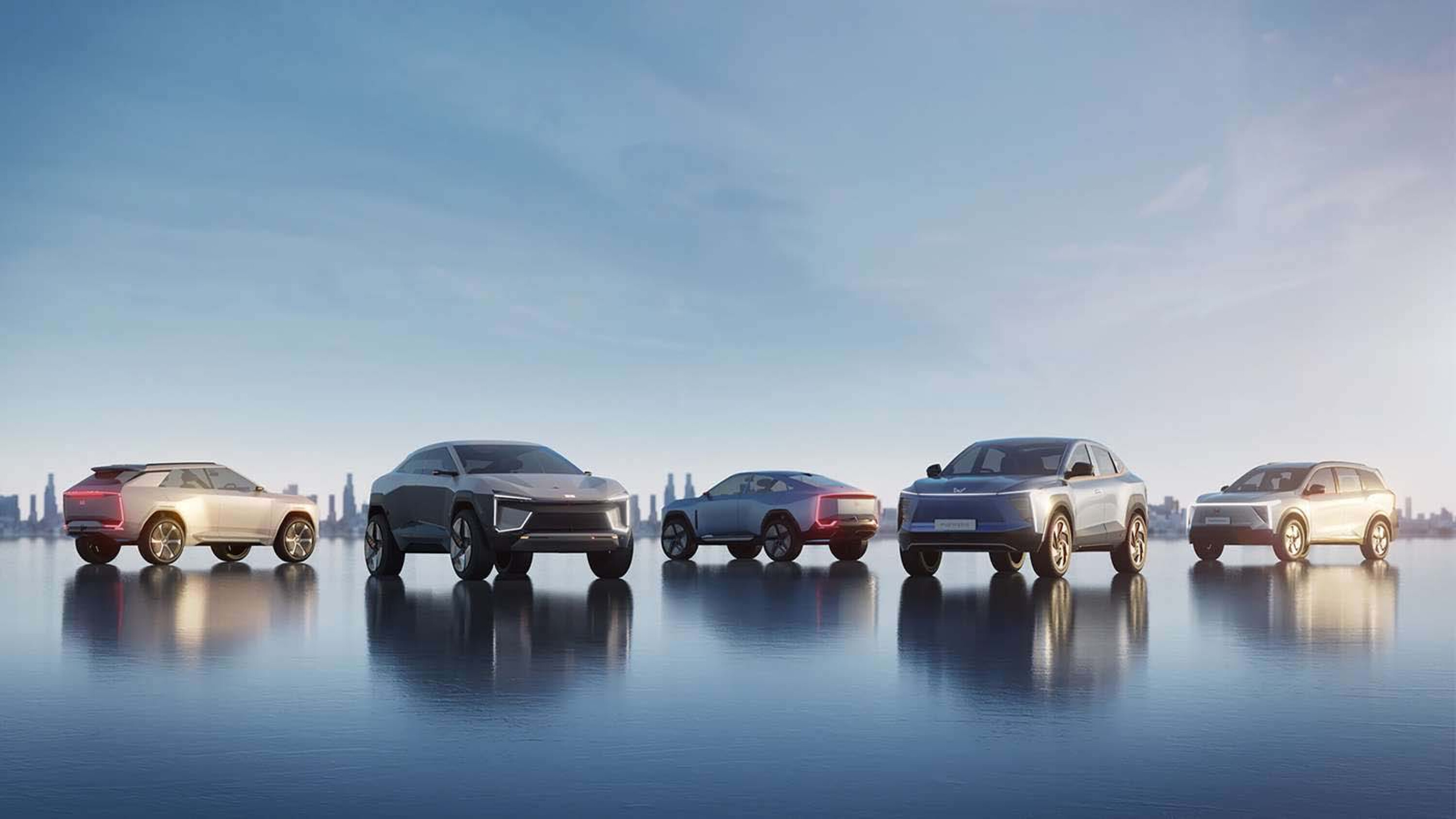
The Thar.e concept spearheads Mahindra’s electric sub-brand, Born Electric, with the company to produce at least five models from its new EV-specific plant in Pune, south-east of Mumbai, with a platform sharing arrangement with Volkswagen.
An electric Mahindra of some type should be in Australian showrooms in the near future.
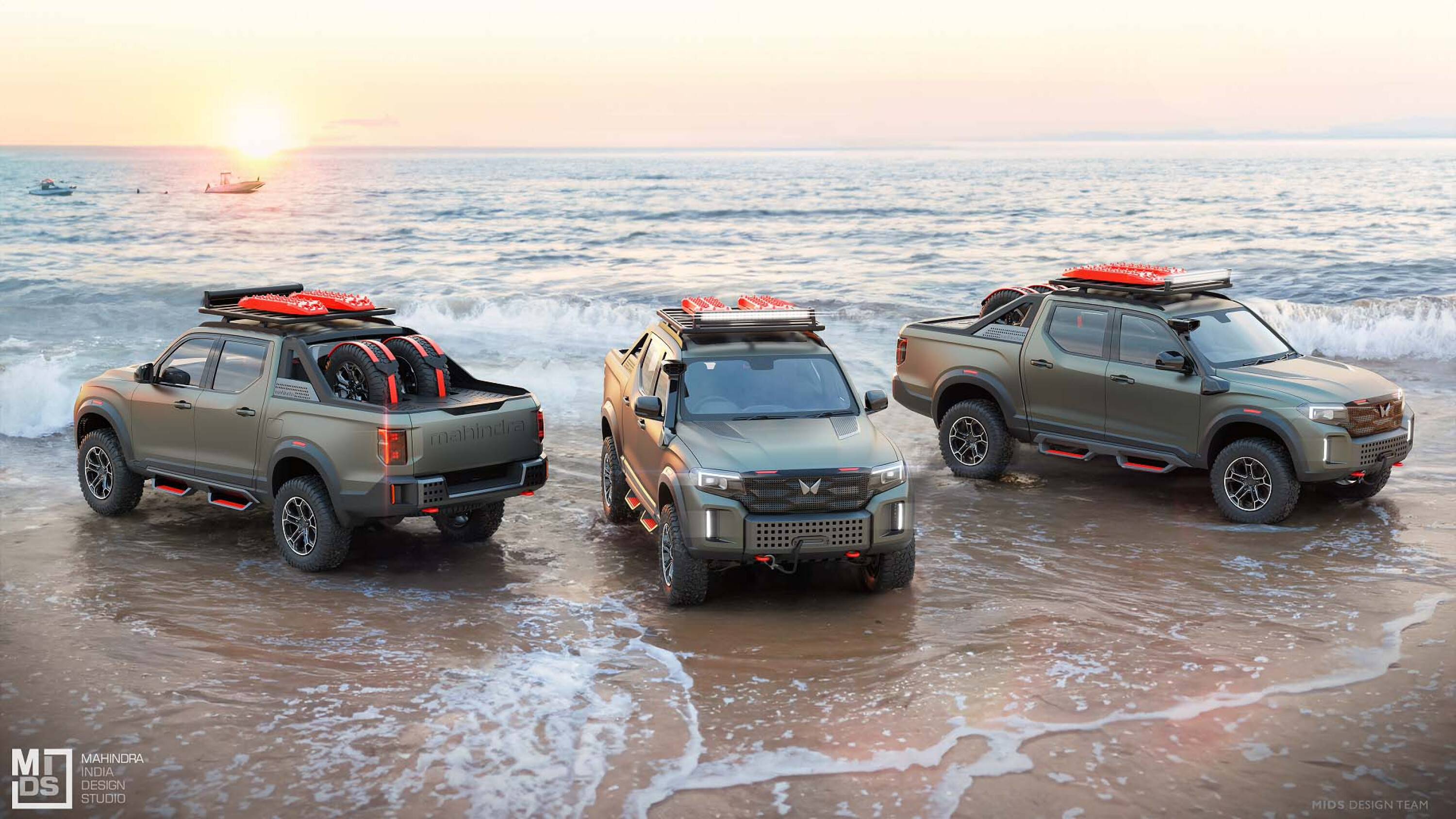
More salivating for Australia is the Global Pik Up concept unveiled in August, which – with its striking exterior executed by the Mahindra India Design Studio (MIDS) – is a like-for-like illustration of the shift in the company’s car making business.
1
“We’ll carry a lot of those [concept] visions into production,” says Moitra.“I’m pretty confident that a lot of those design elements will go into production.”
The dominance of local sales charts by dual-cab utes – with the Toyota Hilux the best-selling vehicle here every year since 2015 – and Mahindra’s history of off-road and utility vehicles is another checkbox making Australia a key market, both in terms of commercial growth and product development.
“A lot of benchmarking is happening based on products coming out of our [brand] being sold in Australia,” says Moitra when asked about the Pik-Up.
1
As expected, he’s coy about which of the best-sellers in Australia Mahindra is using as its yardstick.
“I don’t want to be very specific on this … But, yes, definitely – we operate at multiple levels in terms of the development and the testing done by us, as well as on critical development partners or suppliers, so we do know that a lot of utes are being developed in Australia.”
While it sounds simple, Mahindra’s goals in Australia are ambitious, though admirable.
1
The company, however, says it is given confidence by Australian buyers’ warm reception to new challenger brands in recent years (think MG, LDV and GWM).
“So right now we believe that the opening in the market just to find that new brands are getting a chance in the customer mind space – the fact that they’re willing to give a chance to newer and new products – is something that’s a fantastic opportunity for us. It’s not a closed market from a customer mindset.”
Success won’t be immediate, and – when asked what that could look in five years’ time – Mahindra acknowledges a strong future product line-up is crucial.
1
“When we have the next round of products, that will further enhance [growth],” Moitra says. “So, I’m just splitting up your five-year [question] into two-and-a-half, three years.
“I don’t want to be saying we’ll be in the top 10 or top five [brand in Australia], but as far as we are concerned we would like to see a much higher growth than the global two-and-a-half [revenue target].”
“At a global [level] now we are starting small … Australia will grow at a much faster clip when we have launched the right portfolio.”
1
That’s where an intense focus on customers’ feedback and needs comes in, he adds.
“It’s not only Australia specific, but also in every market – being close to the customer … because of the changing dynamic demographics of a market like Australia, it’s not an option – it’s our biggest challenge.”
1
Proving points
By Matt Raudonikis
Nothing exemplifies the growth of Mahindra & Mahindra since the end of WW2 more than its advanced R&D facilities in multiple cities around India.
Key to the product and development of its products are the Mahindra Research Valley (MRV) near Chennai and the new Mahindra SUV Proving Track (MSPT) some 50 kilometres away.
The MRV is located within the 1500-acre Mahindra World City, which is also home to the Indian operations of other global automotive companies.
MRV houses Mahindra’s product development and testing facilities for everything from electronics, powertrains, chassis development, safety, ergonomics and acoustics. It’s a cutting-edge facility that allows Mahindra to compete with the world’s leading automotive brands.
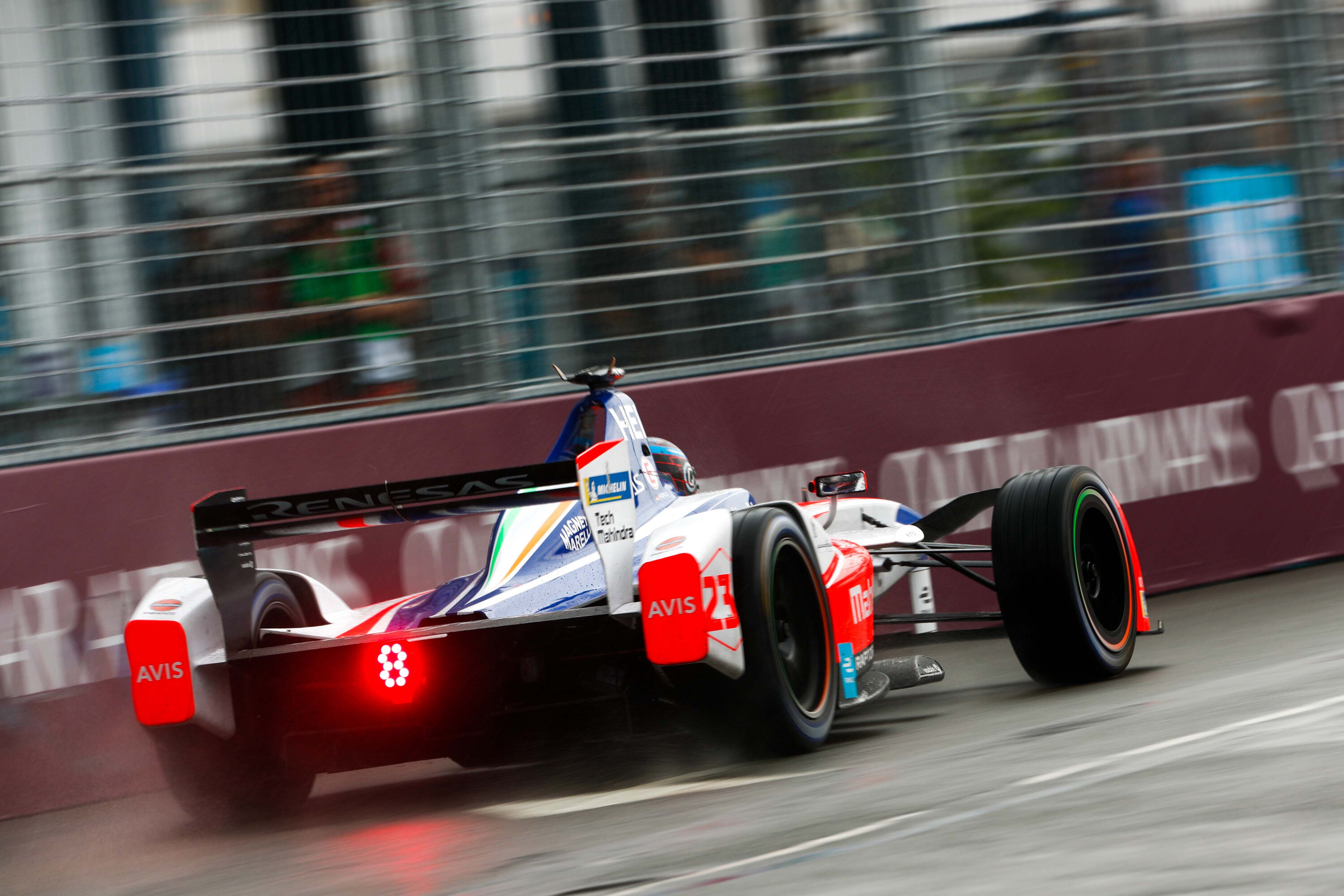
1
The MSPT was modelled on the IDIADA test facility in Spain, long considered to be the best in Europe and the gold standard for such proving grounds.
The 450-acres-plus MSPT site has been purpose-built to test and develop Mahindra’s range of SUVs and tractors over all kinds of terrain and conditions.
It includes a four-kilometre, four-lane high speed test track with 1100-metre straights connected by turns banked up to 44 degrees on the high-speed lane, designed to test vehicles at speeds up to 200km/h.
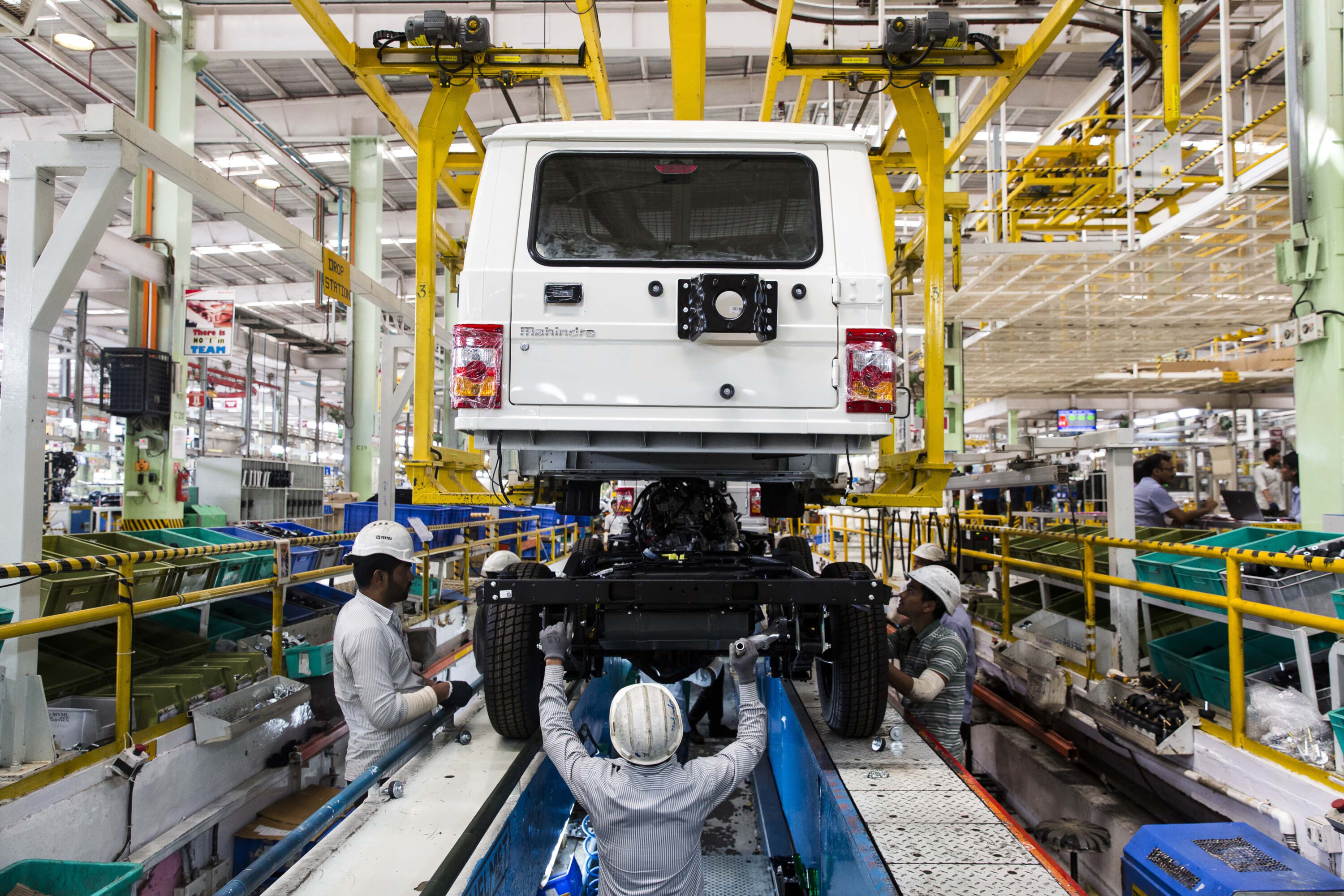
1
Around the high-speed track are kilometres of roads representing all kinds of driving conditions and road surfaces, including various grades of asphalt, potholes, manhole covers, corrugations, inclines and wet surfaces.
Some of the road surfaces are designed for ‘accelerated durability testing’. The General Durability track is a 5.5-kilometre circuit that takes in all of these various surfaces and conditions, and it’s constantly being used by various vehicles at different stages of their development.
There are also simulated suburban roads, a 250-metre-diameter skid pan, handling tracks, a sand pit, a tractor track and water baths where the depth can be controlled.
1
The salt water spray track covers the vehicle as if driving on a beach, and then it is parked in a humidity chamber which accelerates any possible corrosion – giving the engineers an idea of where corrosion may occur and take measures to rectify it prior to production.
The facility also includes a 4×4 test track that is not only used for developing and testing their own vehicles, but on weekends is open to guests to experience the off-road capabilities of the Mahindra Thar and Scorpio.
The track starts with a tilting bridge over a water course and includes deep offset holes, steep climbs and descents, rocky tracks, water crossings, articulation tests, rocky slopes, side slopes, pipe and tyre crossings, sand patches, cobblestones, and just about everything else you might find off the beaten track.
Yet Mahindra will need to ace all of that in order to prove its mettle in Australia.
This article originally published in the Wheels 2023 Yearbook, on sale from 18th December.
MORE
Everything Mahindra
The Renault Kangoo E-Tech has been priced for Australia ahead of its launch in February 2024.
Snapshot
- Kangoo E-Tech starts at $61,990 before on-road costs
- Pure EV with 285km driving range
- 80kW DC fast-charging capability
Replacing the Kangoo Maxi ZE that launched locally in 2017, the new Kangoo E-Tech packs a lot more punch. Power is up from 44kW to 90kW and real-world suburban range increases from around 200km to 250km, says Renault.
Pricing is also up, with the E-Tech’s $61,990 list price an $11,600 premium over the previous model.
Renault will offer the Kangoo E-Tech in both standard (SWB) and long-wheelbase (LWB) models ($63,990) locally.
When it arrives, the Kangoo will have no direct rivals. The Volkswagen ID.Buzz is a larger vehicle and other manufacturers are yet to announce plans for electric small vans in Australia.
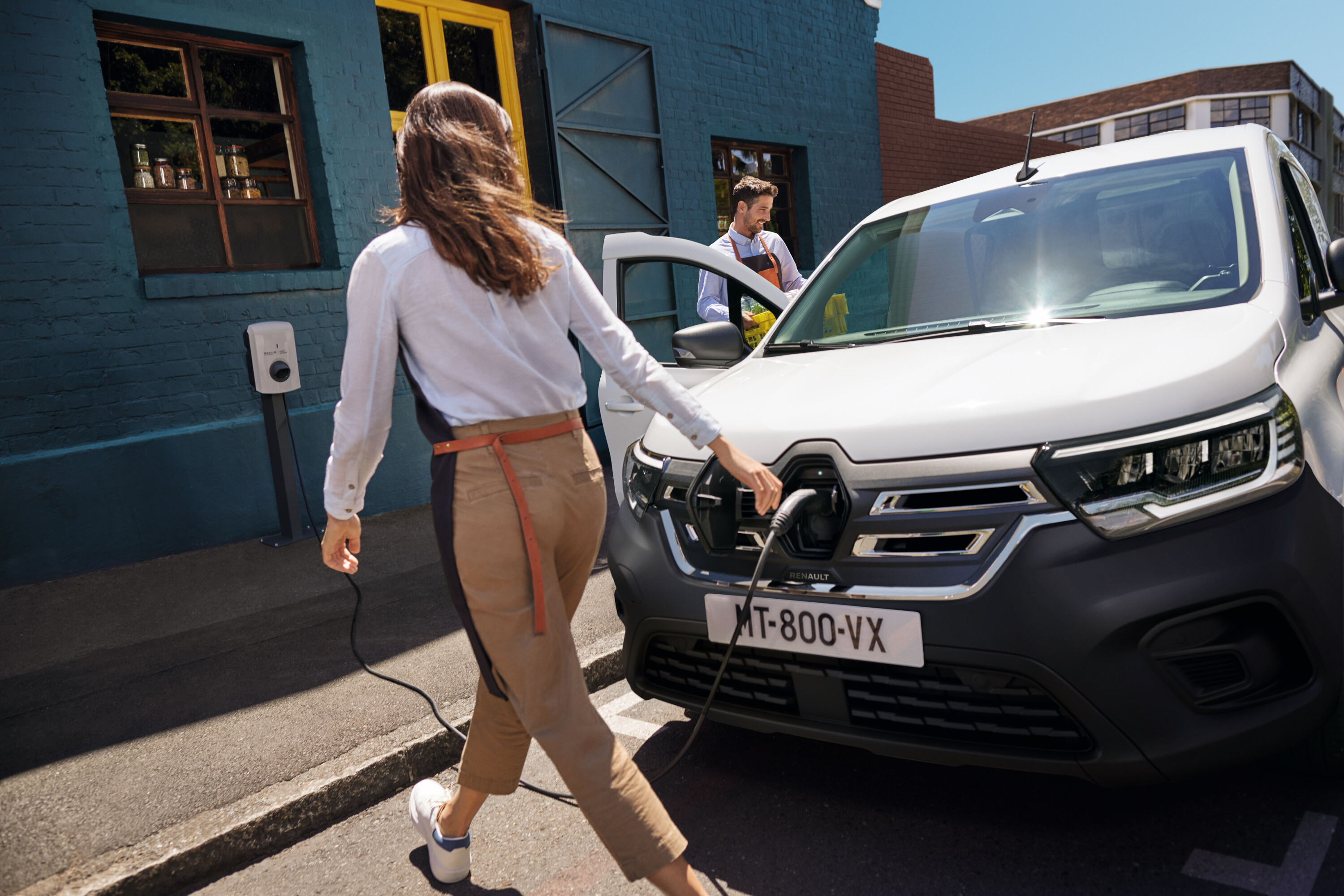
1
The new Kangoo’s NCM battery is a 44kWh item (rather than 33kWh) and it has an improved DC charging speed of 80kW, allowing drivers to add 170km WLTP driving range in 27 minutes.
Handily, the maximum AC charge rate is 22kW. That means back-at-base charging from 0-100 per cent can be accomplished in around 3-4 hours with three-phase electricity.
Renault has implemented three regenerative braking modes, from ‘B1’ which is for coasting up to ‘B3’, ideal for heavy traffic and steep grades, according to the marque. Eco mode limits power and adjusts HVAC settings to maximise range.
The Kangoo E-Tech is capable of towing up to 1500kg braked loads, and its cargo bay is either 3.3m3 in the standard wheelbase or 4.2m3 in the long wheelbase.
Payload maxes out at 668kg in the LWB, and the SWB can lug up to 523kg. Rear barn doors are standard and there are sliding side doors on both sides of the van.
Being a commercial vehicle, the Kangoo’s specification list is fairly short, but an 8.0-inch touchscreen and digital review mirror make this more luxurious than your average van.
1
| Renault Kangoo E-Tech specification | |
|---|---|
| 16-inch steel wheels | Climate Control Air-Conditioning |
| Glazed bulkhead | Left and right sliding doors |
| Glazed rear barn doors | Rear parking sensors |
| 8.0-inch touchscreen | Apple CarPlay and Android Auto |
| Digital rearview mirror | Manual adjiust driver and passenger seats |
| Cruise control | Three front seats |
| Halogen headlights | Cloth upholstery |
| E-Tech instrument panel with energy gauge | Synthetic leather-appointed steering wheel |
Packs are available to tailor the Kangoo E-Tech to your needs, be those work or play-related.
| Trade Pack ($1,200 RRP) | |
|---|---|
| Timber floor lining | Yard kit underbody protection |
| Full height wall lining | Cargo area LED lighting |
| Peace of Mind Pack ($1,500 RRP) | |
|---|---|
| Blind Spot Intervention | Navigation |
| Driver attention alert | Overspeed prevention and traffic sign recognition |
| High beam assist | |
| Business Pack ($3,200 RRP) | |
|---|---|
| Tyre pressure monitor | Extra tinted rear barn door glass |
| Hands-free key card | Front fog lamps |
| Body-coloured outer door handles | LED headlights |
| Adaptive cruise control | Leather wrapped steering wheel |
| Centre console w/armrest and storage | Heated steering wheel |
| Wireless smartphone charger | |
The Kangoo E-Tech is available to order now, with customer deliveries beginning in February 2024.
The McLaren GTS has been confirmed with more power and less weight than the GT it replaces, with a price tag of $419,392 when it lands in Australian showrooms in 2024.
A rival to the Porsche 911 Turbo S and Bentley Continental GT, the McLaren GTS takes on the role of grand tourer/daily driver in the McLaren line-up, and hones the already capable GT into a sharper, faster yet comfort-focussed supercar.
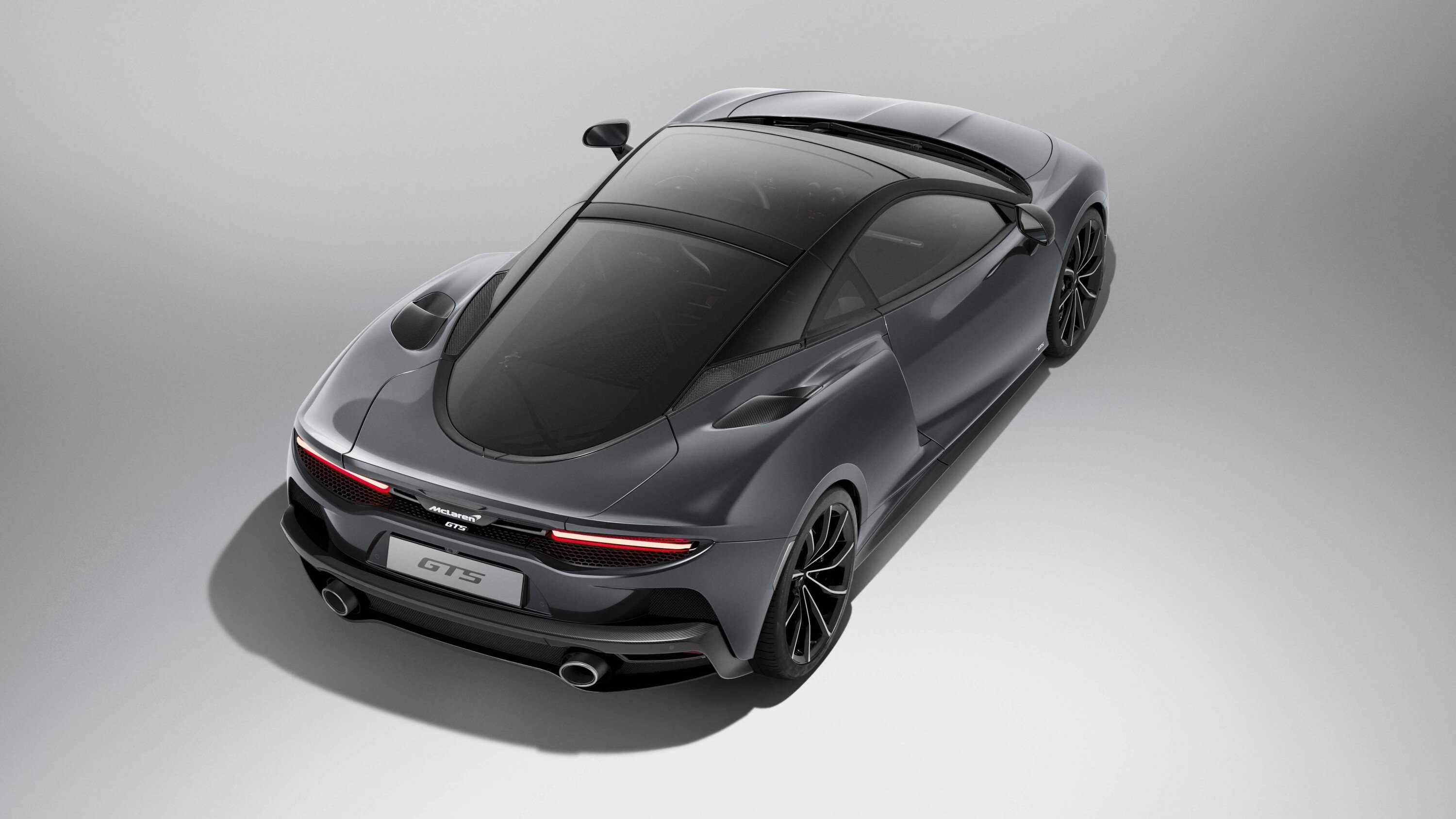
With new colours including an exclusive Lava Grey paint choice, gloss black detailing has been used to give the GTS a unique identity, taking the GT’s front end’s ‘hammerhead’ styling further with a new bumper and more pronounced sculpted air intakes – which can be optioned in a ‘gloss’ carbon fibre – while at the rear there’s a larger diffuser and dual-exhaust set-up.
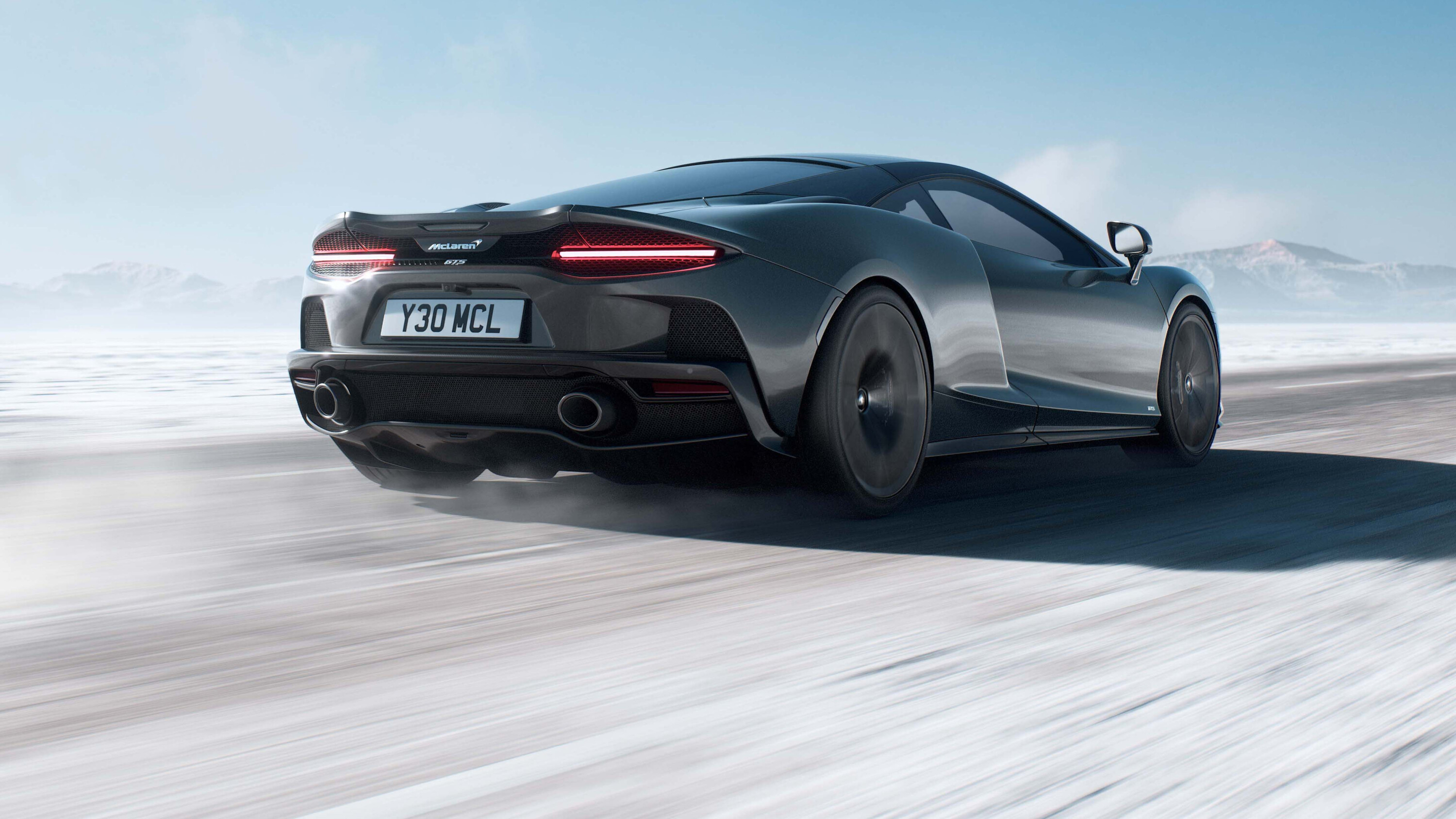
1
Unique 10-twin-spoke Turbine forged alloy wheels wrapped in Pirelli P Zero rubber measure 20 by 8.0-inches up front and 20 by 10.5-inches wide at the rear, and can be had in Silver, Gloss Black and Gloss Black Diamond Cut.
The GTS sits on the carbon fibre MonoCell II-T chassis but has a 10kg weight reduction compared to the 1520kg GT, with savings made via the recycled carbon fibre roof and increased use of carbon in the upper rear structure, including larger rear air scoops.
The hungrier scoops feed an 11kW more potent mid-mounted M840TE 4.0-litre twin-turbo V8 – now 467kW/630Nm – and seven-speed dual-clutch transmission for power-to-weight of 307kW/tonne – seven more kilowatts per tonne than the GT.
1
McLaren says the combination sends the GTS from 0-100km/h in 3.2 seconds, but more impressively hits the 200km/h mark in 8.9 seconds before a top speed of 326km/h.
Carbon-ceramic brake rotors measuring 390mm with six pistons up front and 380mm with four pistons at the rear see the GTS stop from 200km/h in 127 metres and pull up from 100km/h in 32 metres.
The GTS’s role is to perform its heroics in comfort, so there’s a unique set up for the hydro-electric steering, adaptive dampers – with McLaren’s proactive control for a more compliant ride when desired, including three settings, Comfort, Sport and Track.
1
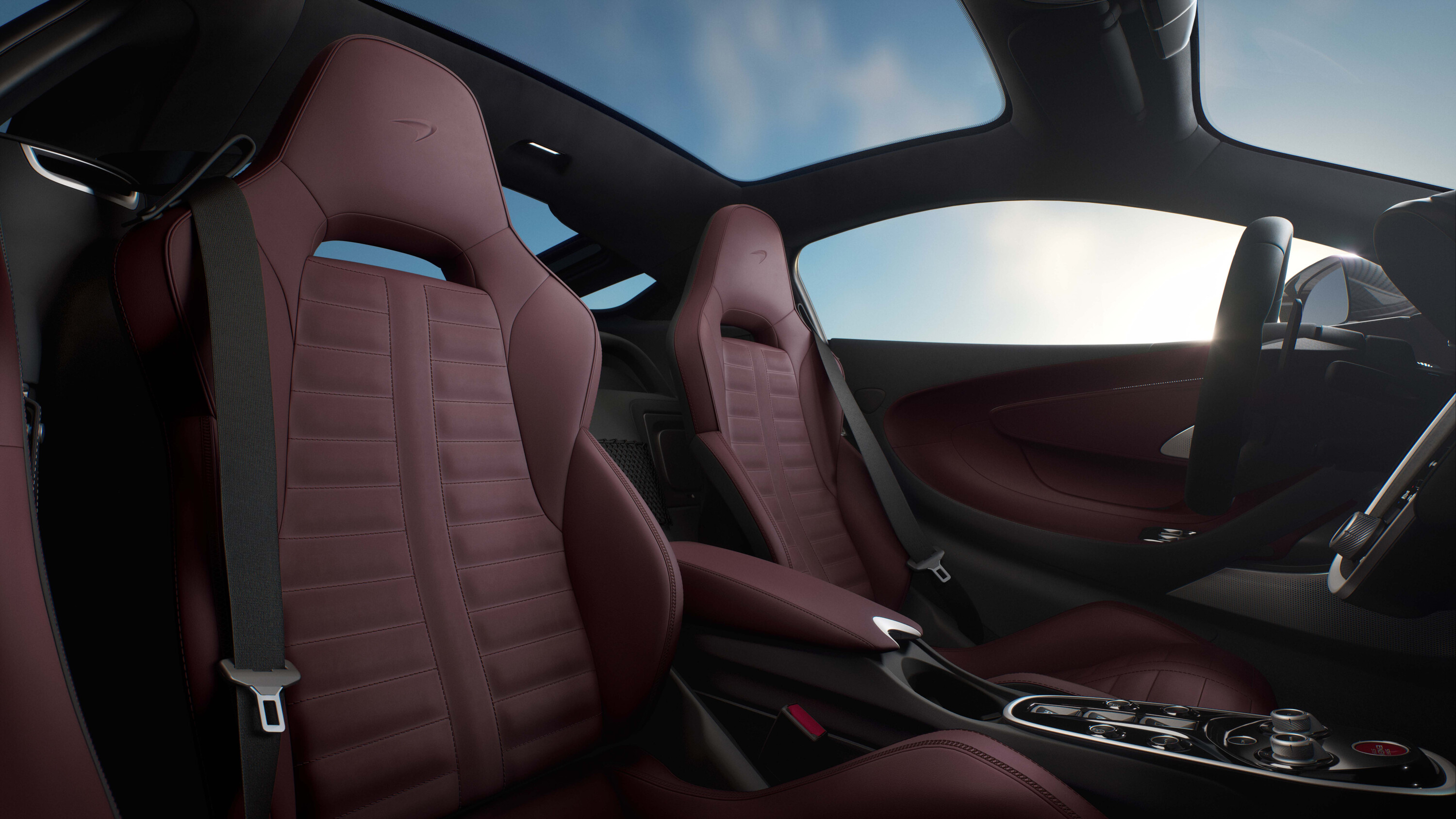
The cabin uses ‘Comfort’ Nappa leather seats and leather-wrap steering wheel, with a ‘TechLux’ interior design theme as well as machine-finished aluminium look used on the paddle shifters and switchgear.
The exterior gloss black detailing extends inside to the 7.0-inch infotainment screen, air vents surrounds and window switches.
McLaren says the GTS is the most practical supercar available in 2024, with 570 litres of luggage space made up of 150 in the nose and 420 litres behind the passenger cell.
The GTS’s $419,392 pricing is a minor increase over the GT’s original $399,995 ask before on-road costs when it launched in 2020.
MORE
Everything Mclaren
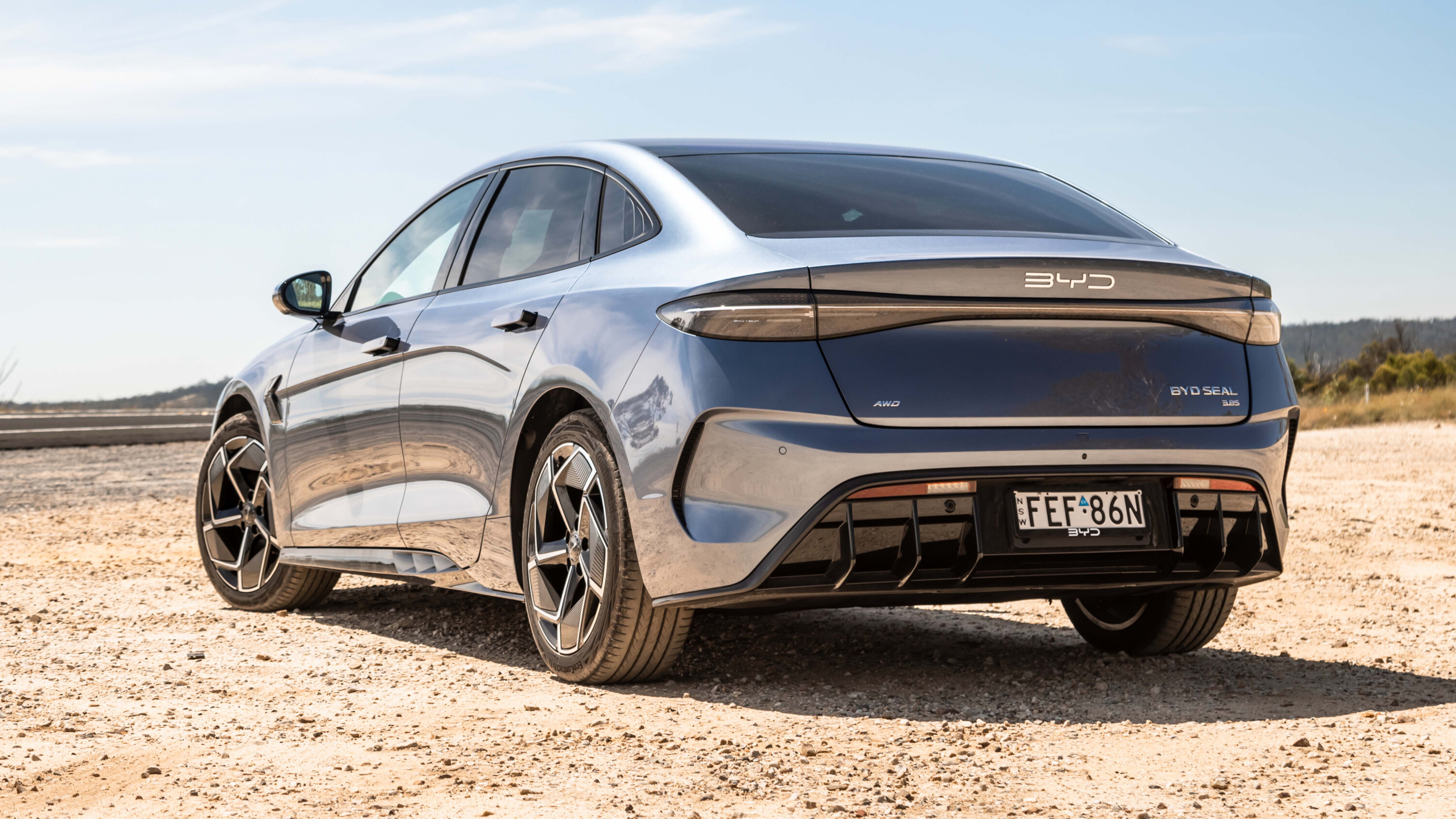
Talk about a headline act. The BYD Seal Performance is a four-door electric sedan that reshapes the bang-for-buck equation in Australia.
Never before has a manufacturer offered so many kilowatts for such little money – 390kW for $68,748. Paired with an eye-watering 0-100km/h time of just 3.8 seconds in flagship form, a lengthy list of equipment and great levels of space, the Seal looks like a stunning deal.
So, is there a catch?
1
JUMP AHEAD
Pricing and features
It’s the “KiloWatts-for-the-Kash King” in the Australian market. You’re paying $176.27 per kW of power here, which makes this a better bang-for-buck option than anything else on the market. It’s even more compelling than the MG4 X Power in that metric ($187.46/kW).
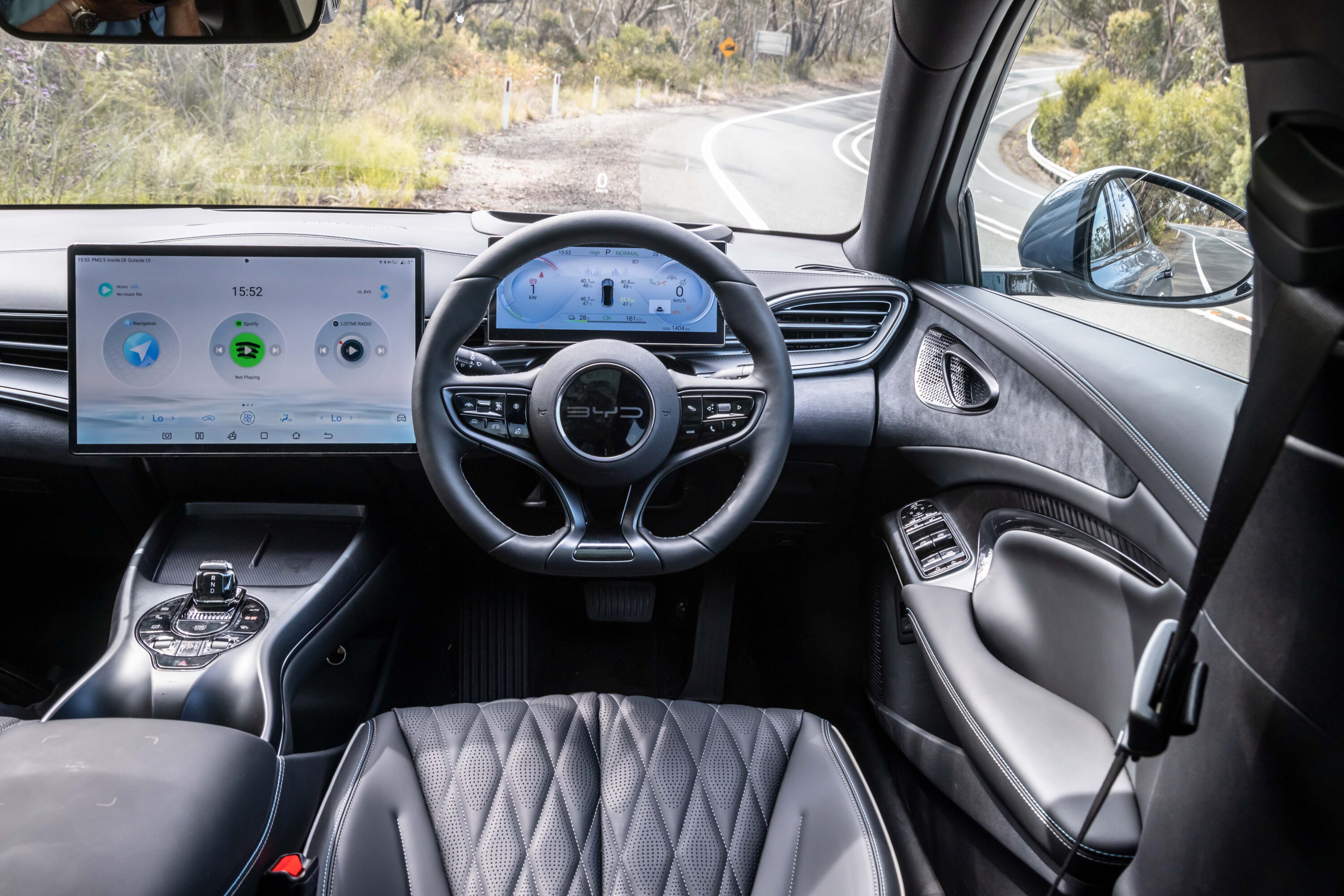
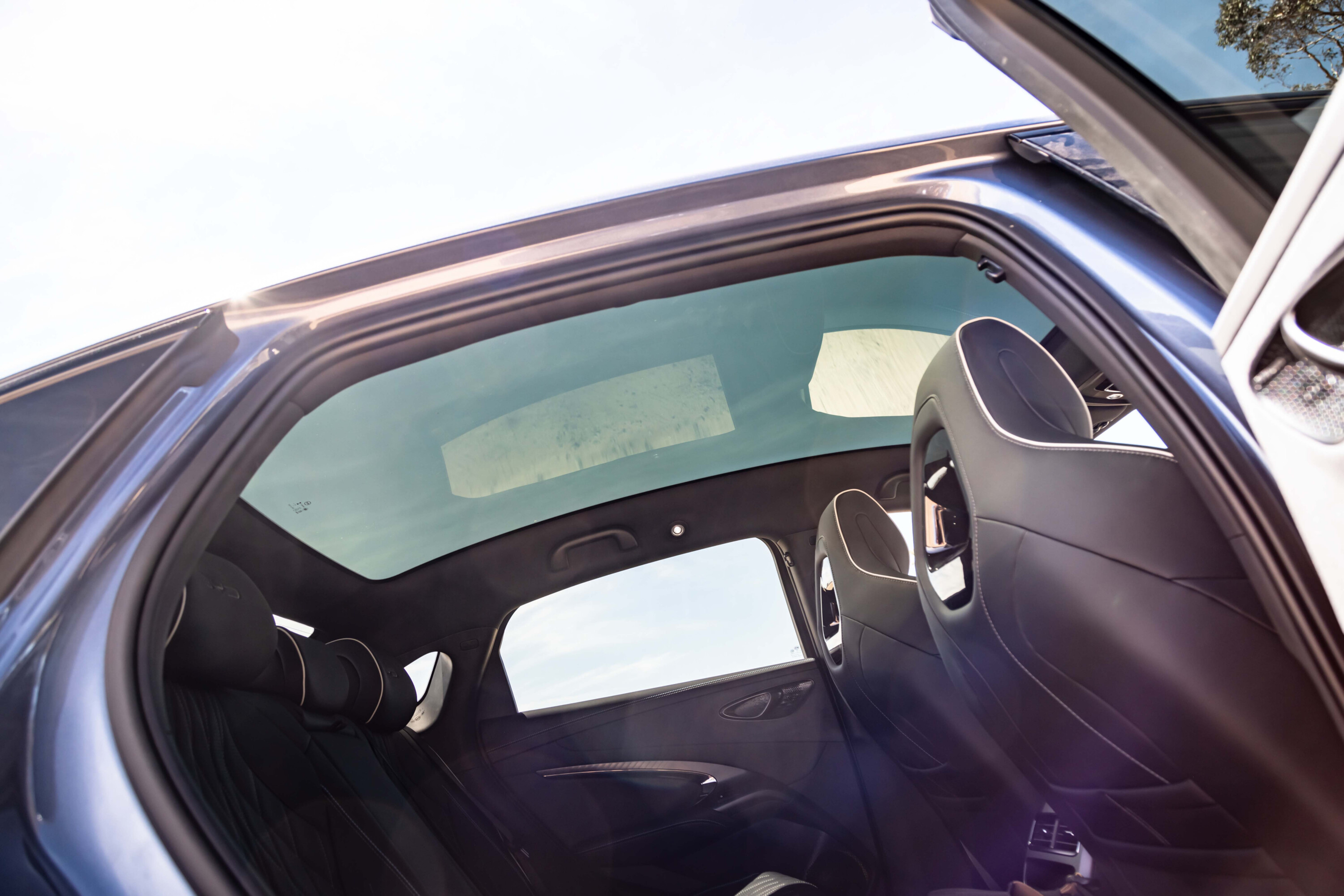
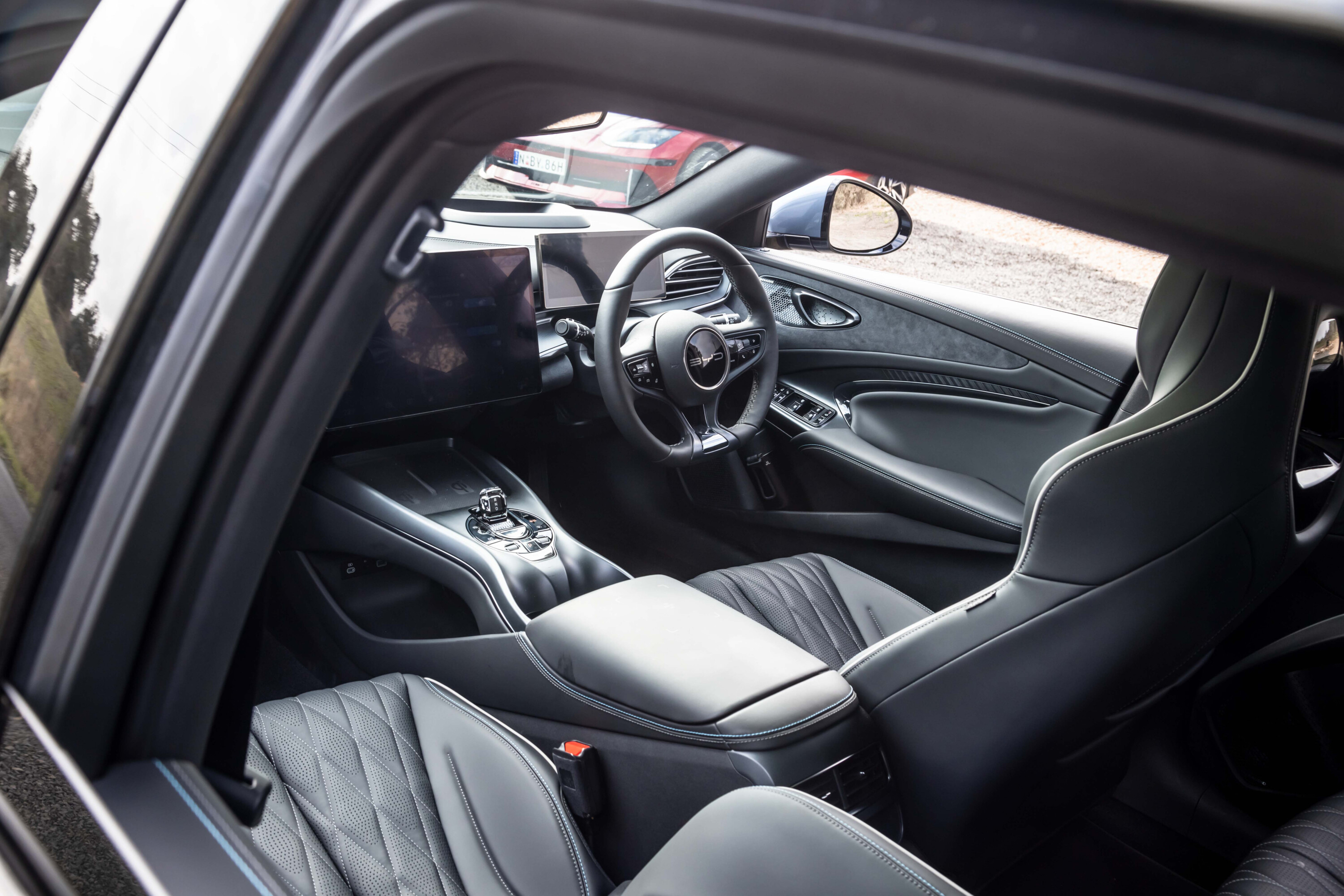
Beyond that you’re also getting an immense equipment list including 19-inch alloy wheels; LED headlights, daytime running lights and tail-lights; a panoramic glass roof; a 15.4-inch rotating touchscreen infotainment system with wireless Android Auto and wired Apple CarPlay, satellite navigation and DAB digital radio; a Dynaudio 12-speaker sound system; twin wireless phone chargers; a 10.25-inch digital instrument cluster; quilted leatherette-upholstered power-adjustable front seats with heating and ventilation; keyless entry and start… And that’s just the start.
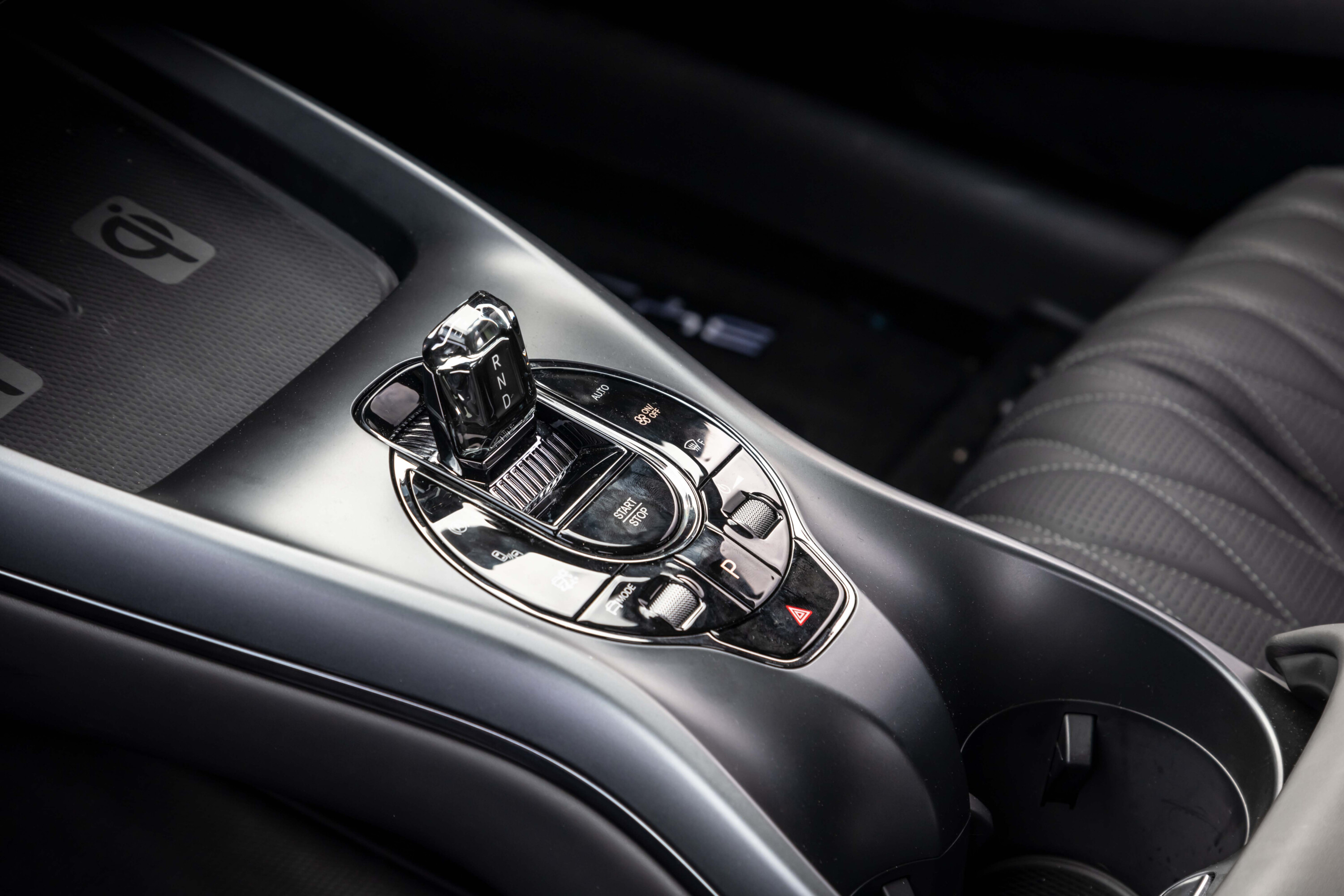
It also has the liveable (conventional) features you might appreciate if you’re cross-shopping it against a Tesla Model 3, including a physical gear selector and blinker/wiper stalks, plus a key fob (like the Tesla, there’s also an NFC card to unlock and start the car, or you can use the BYD app).
1
It is easy to see why you’d think the Seal could be a brilliant choice: huge power, heaps of gear, and it’s got the battery technology, too.
The Performance grade has a 82.5kWh ‘Blade’ LFP battery pack allowing it a WLTP-rated driving range of 520km, and there’s a pair of motors to employ all-wheel drive in this top-spec version.
BYD also includes a home charging cable, the Seal is vehicle-to-load (V2L) capable, and this grade has a few features you don’t get in the more affordable Dynamic ($49,888) and Premium ($58,798 both before on-road costs), such as a heated steering wheel, and frequency-selective dampers.
1
There’s AC charging at a maximum rate of 7kW, and DC charging tops out at 150kW.
Plugged into a typical single-phase wall box, the BYD will take 11 hours and 45 minutes to charge from flat to 100 per cent. When fast-charging at public stations over 150kW, the Seal will take 37 minutes to climb from 10-80 per cent .
For context, a Model 3 Performance offers 11kW AC/270kW DC charging capability, while the Hyundai Ioniq 6 can manage 22kW AC (optional) and 350kW DC, getting it from 10-80 per cent in 18 minutes.
The efficiency rating for the all-wheel-drive Performance is impressive, at 15.9kWh/100km (WLTP). Over this test, we averaged 20.3kWh/100km, with a mix of real-world and enthusiastic driving included. That equates to a real-world 406km driving range from a full charge.
You’ll want to study the warranty paperwork if you’re considering a BYD, as in Australia the business takes the unusual step of varying the length of cover depending on component.
There’s a six-year/150,000km warranty plan for the car and a battery warranty of eight years/160,000km, yet the infotainment system, wheel bearings and other items are only covered for three years/60,000km, while lights, suspension ball joints and tyre pressure monitoring are guaranteed for four years/100,000km.
1
The Seal has an eight-year capped-price servicing plan with intervals of 12 months/20,000km, and it costs an average of $299 per visit over that period.
The cabin has some wow-factor, with the 15.4-inch rotating mega-screen and interesting trim finishes (that are nicer than the Atto 3’s), as well as smartphone mirroring tech and seemingly dozens of menus upon menus.
It can be tricky to find your way around the screen at times, but keep in mind you can jump between screens using the steering wheel controls, too.
1
The Seal’s cabin space is decent, with enough room for adults to sit three across if need be and ample legroom. But the glass roof does allow heat in on summer days and there’s little toe room.
Amenities include four door pockets, cup holders front and rear, multi-pocket seatbacks, rear directional air vents, and a pair of USB ports for both rows.
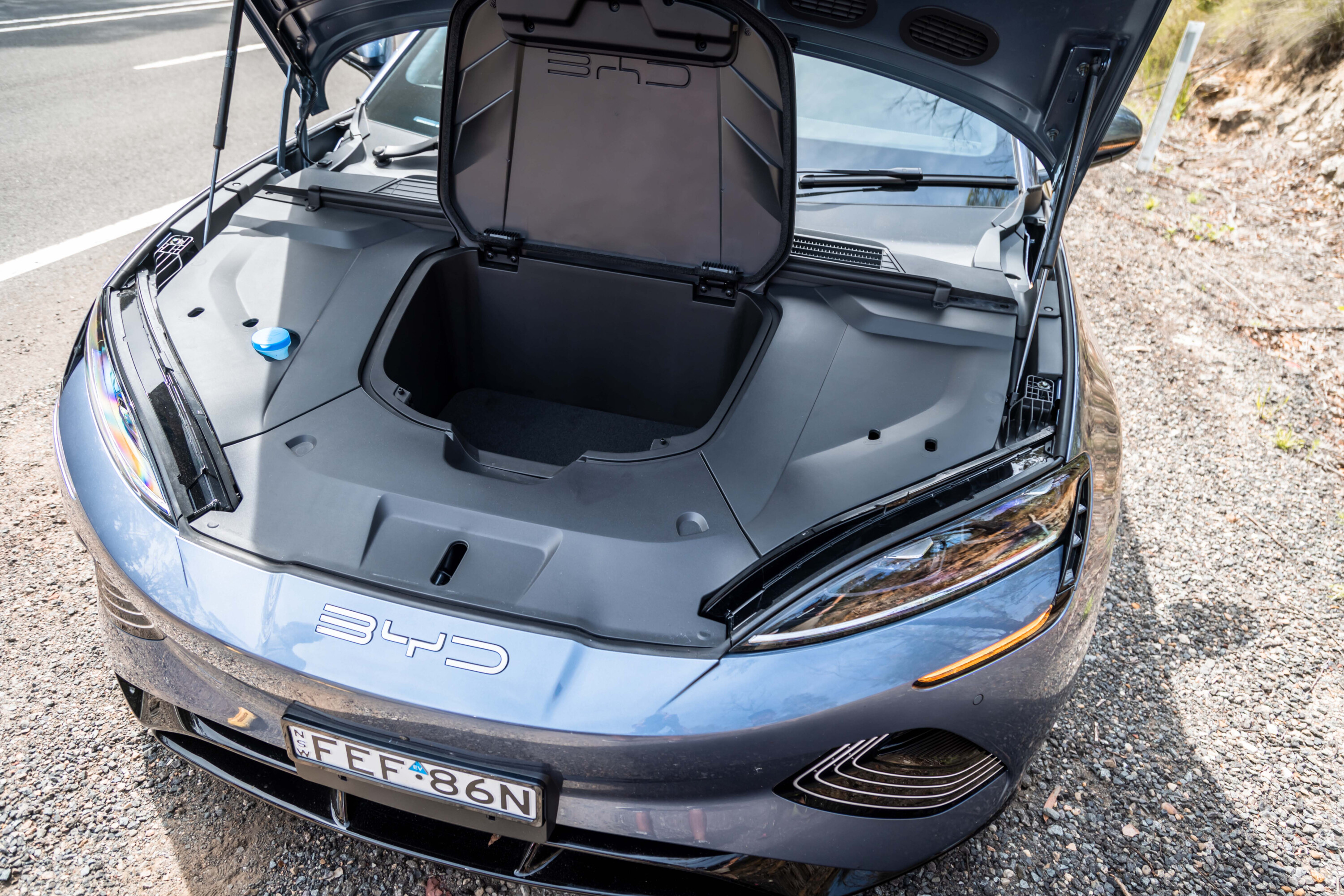
The boot space is stated at 400 litres, but there’s also a couple of hidden storage sections under the boot floor for your cables, and a tyre repair kit (which proved to be effective when we suffered a puncture!). The Seal’s under-bonnet frunk adds an extra 50L of stowage space.
1
Safety
BYD has sealed (ahem) a five-star ANCAP rating against the strictest criteria to date with a 2023 date stamp, so it has all the gear you’d expect. Not all of it is well integrated, though (more of which in the driving section).
Standard is autonomous emergency braking (AEB) with pedestrian, cyclist and junction detection, lane-keeping and emergency lane keep assist, adaptive cruise control, ‘intelligent’ speed sign recognition, driver attention alert, blind-spot monitoring, front- and rear-cross traffic alert with braking, a surround-view camera and parking sensors, and plenty more, including nine airbags.
There are ISOFIX points in the window seats and three top-tethers, too.
1
On the road
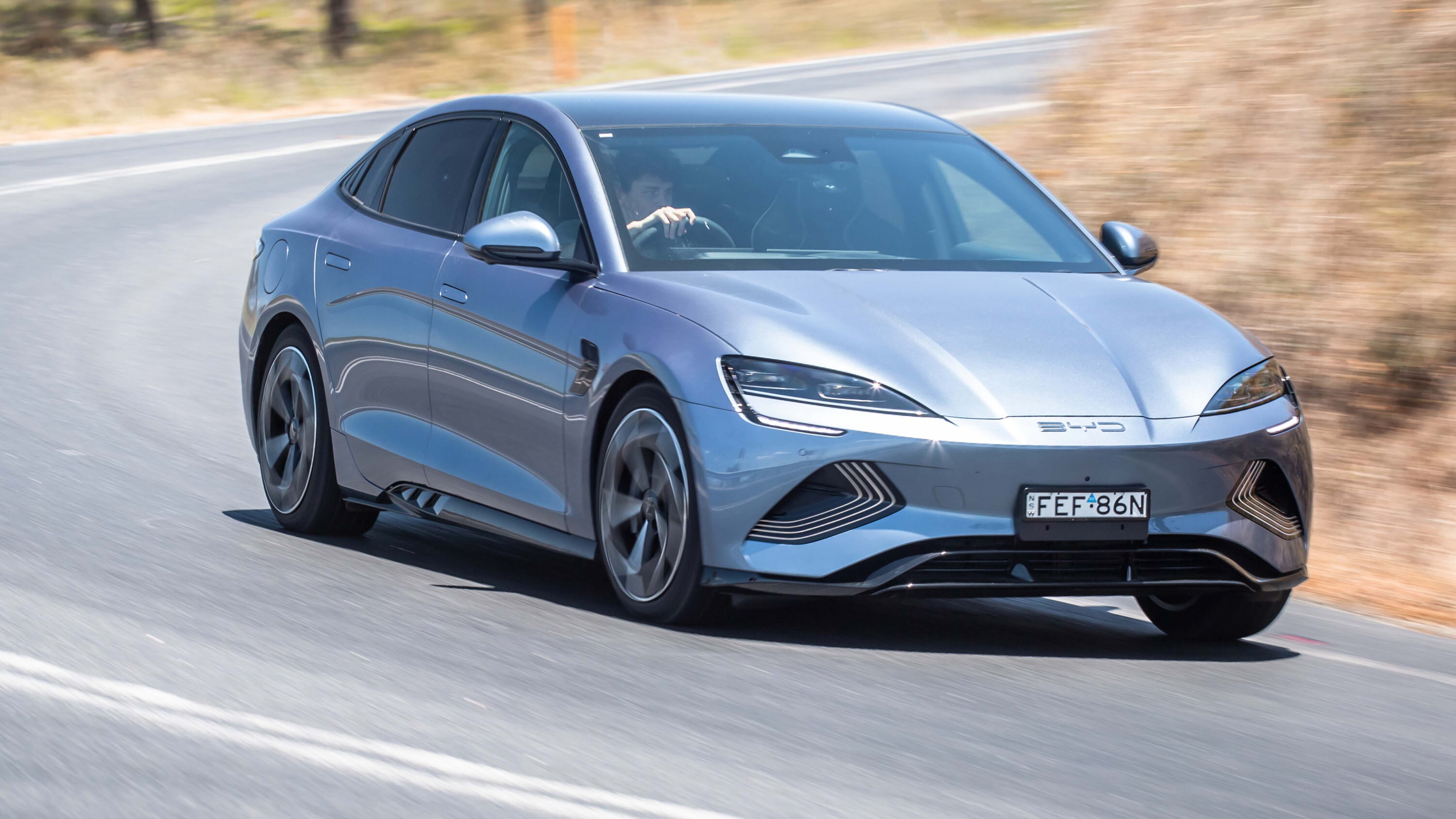
This is a tremendously fast car, with a 0-100km/h time to rival some EVs three to four times its price.
A specific example? Well, the Seal Performance’s 3.8sec claim puts it just a tenth behind a Porsche Taycan GTS that costs more than $250K on the road.
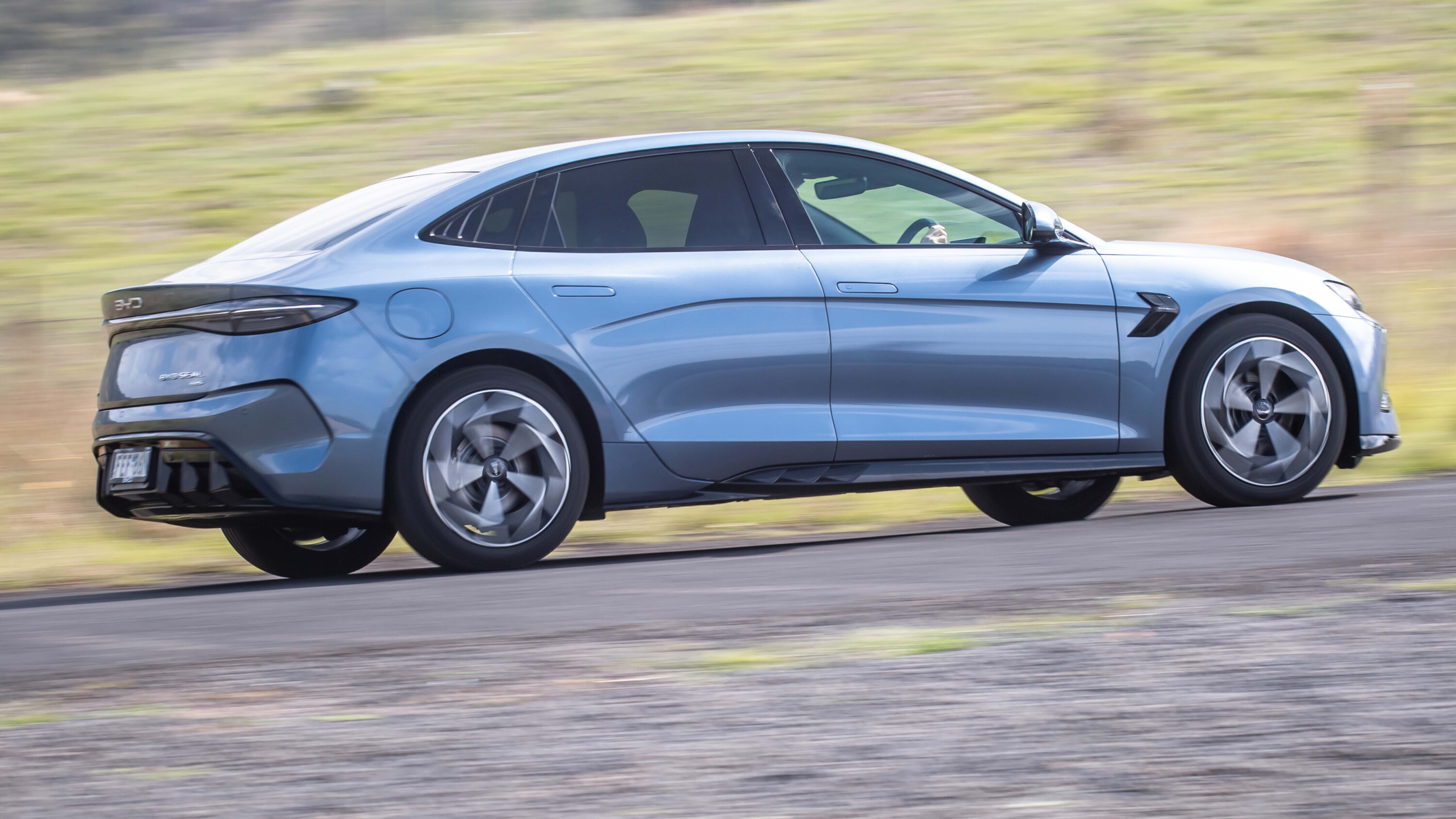
You’ll want to make sure your head is braced against the headrest when you punch the Seal’s throttle, because the acceleration is brain-meltingly quick. The world around you feels like it’s blurring as your mind attempts to keep up with what’s happening.
The entertainment factor just about stops there, unfortunately, as the Seal – at least in this top-of-the-range Performance guise – lacks the handling poise and predictability to give the driver much confidence on country roads.
1
And while the Continental EcoContact tyres would be fine on a lower-spec model, they don’t provide as much grip as you’d hope when taking a rapid 2.2-tonne, 4.8-metre sedan through tight and twisty bends.
With limited regen braking on offer, the actual brakes are needed more than they would be in most rival EVs and inconsistent pedal response makes it trickier to modulate braking effort.
The regenerative braking doesn’t have a single-pedal driving mode, and while it is adaptable with Comfort or Sport modes, it still feels somewhat underdone when you’re trying to slow down this much mass from massive speed.
I spent a few days in this car in a mix of different scenarios and, for the most part, the Seal Performance, which wears 19-inch wheels, was fine in urban driving, though the ride isn’t terrifically well judged.
Either jittery or lumpy, depending on the road, the Seal Performance struggles to settle like a Model 3 even on decent-quality bitumen, while it lacks the compliance of a Hyundai Ioniq 6 on bigger, 20-inch wheels.
We’ll need to wait to drive a base or mid-spec Seal to find out whether the Performance’s exclusive ‘frequency-selective’ dampers are part of the issue.

1
Some of Seal’s active safety systems are great, such as the front- and rear-cross traffic alert with braking assistance, which can essentially help you see beyond parked cars if you’re pulling out of a driveway, and the excellent surround-view camera system which makes piloting this car into a parking spot very easy indeed.
But other elements of the safety suite are horrible. The unnervingly jerky emergency lane-keeping system is one of the most violent we’ve experienced, and the speed-sign recognition system’s insistent binging and bonging is unendingly annoying.
You can turn them off every time you restart the car if you wish (about 20 seconds, give or take!).
1
- What is a Powertrain or Drivetrain?
- Power vs torque
- Car suspension explained
- Automatic transmissions (‘gearboxes’) explained
- Chassis control systems explained
- Car vs Ute vs SUV: How the vehicle you buy should guide the way you drive
- What is the WLTP emissions and range test?
The Model 3, as the best-selling electric sedan, is the most obvious competitor – and undoubtedly BYD’s primary target.
But there’s no shortage of other options in the electric sedan segment, including AWD dual-motor variants offering plenty of speed.
The Polestar 2, priced from $67,400 in RWD form, is even available with a Performance Pack to bring greater dynamic focus.
Or there’s Hyundai’s Ioniq 6, which costs from $65,500 in RWD form though from $81K if you want AWD.
1
Should I put it on my shortlist?
The Seal Performance goes like the proverbial off a shovel, comes with a heck of a lot of gear, looks interesting, has a roomy interior, and has a lengthy driving range.
You can tick many of those boxes, however, with the cheaper Dynamic and Premium variants – and, if your heart is set on a Seal, we’d recommend trying those models.
Until we’ve done the same, we’ll reserve overall judgement on the BYD Seal. For now, the Performance falls well short of rivals in all but bang for your buck.
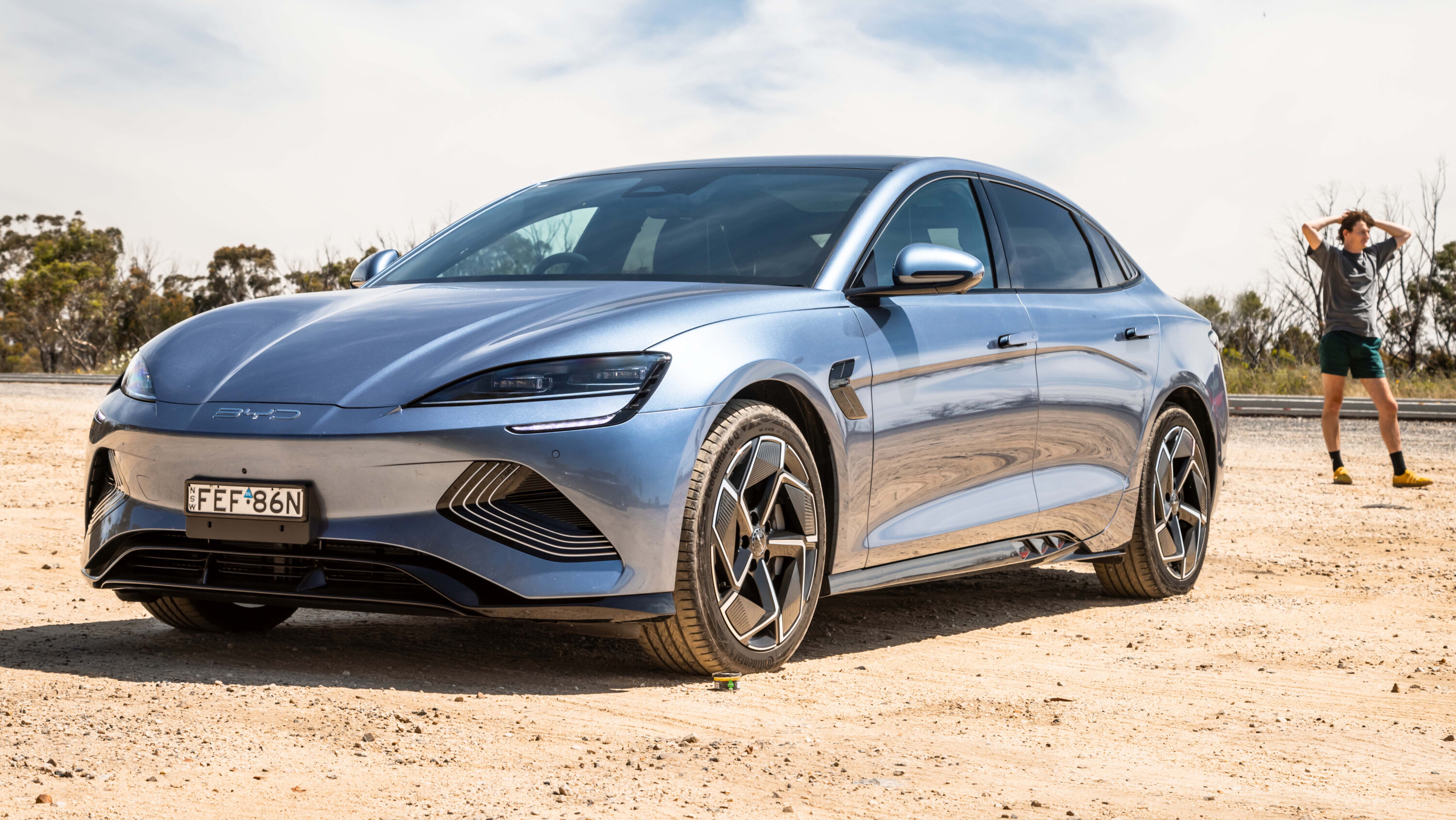
1
MORE
Everything BYD
| 2023 BYD Seal Performance specifications | |
|---|---|
| Powertrain | LFP battery, twin electric motors, single-speed transmission, AWD |
| Max power | 390kW |
| Max torque | 670Nm |
| Drivetrain | all-wheel drive |
| Energy consumption | 16.4kWh/100km (WLTP combined) |
| Price | from $68,748 plus on-roads |
December 19: New MG ZS revealed in our exclusive images
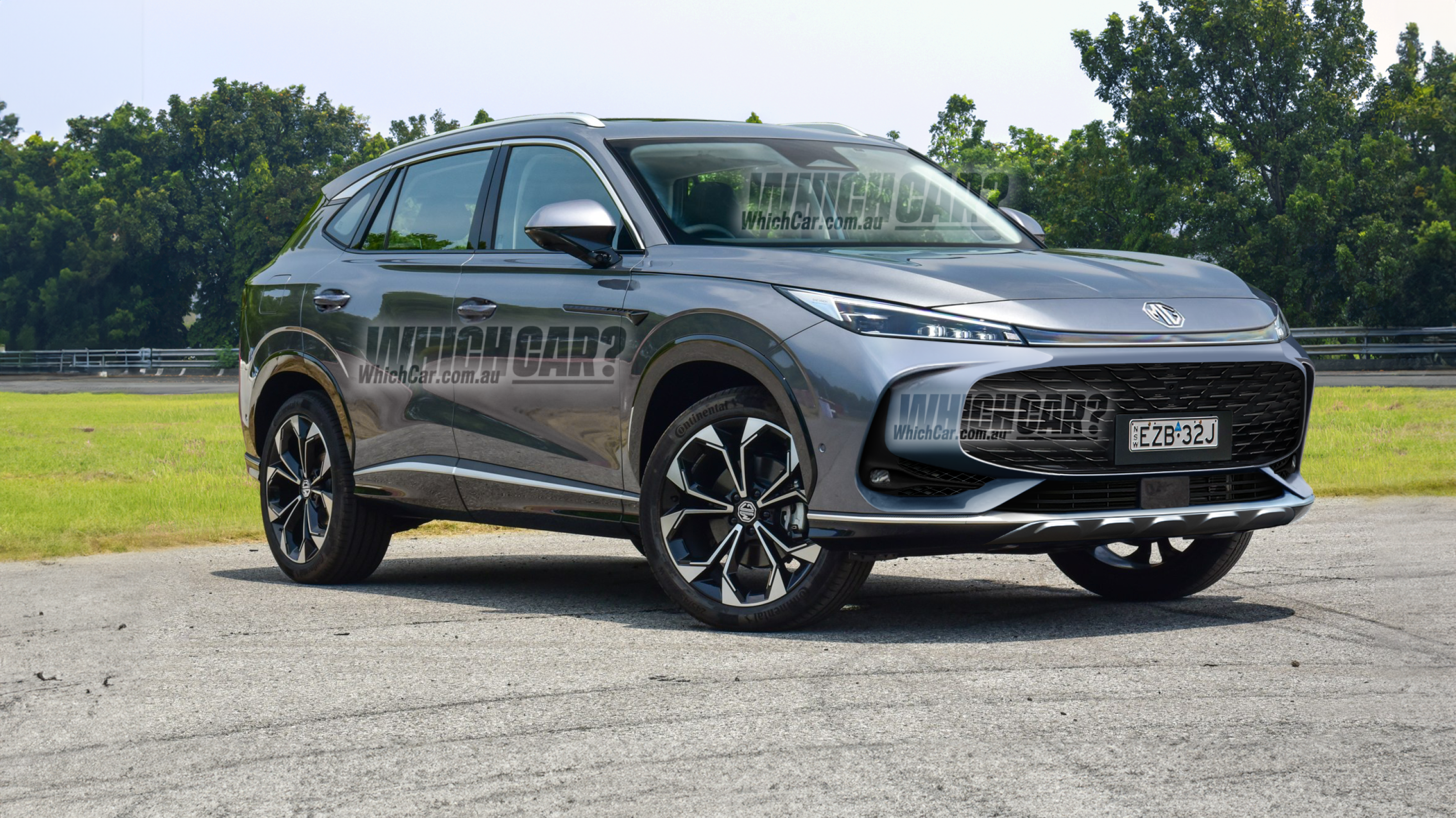
If those design patent renderings below are to be believed, you’re looking at the next-generation 2025 MG HS midsized SUV.
This was an easy one to imagine in production form, too, thanks to it being simply a restyling of the Roewe RX5 already available in China.
As expected, the new MG HS will wear a larger and more matured look than the current model, while dialling down the extravagant grille design and steering clear of the more dynamic styling worn by its new, smaller and all-electric MG 4 cousin.
Tell us what you think of the design, and continue reading below for more details.
1
1
December 15: New HS revealed in patent images as rebadged Roewe, electric variant possible
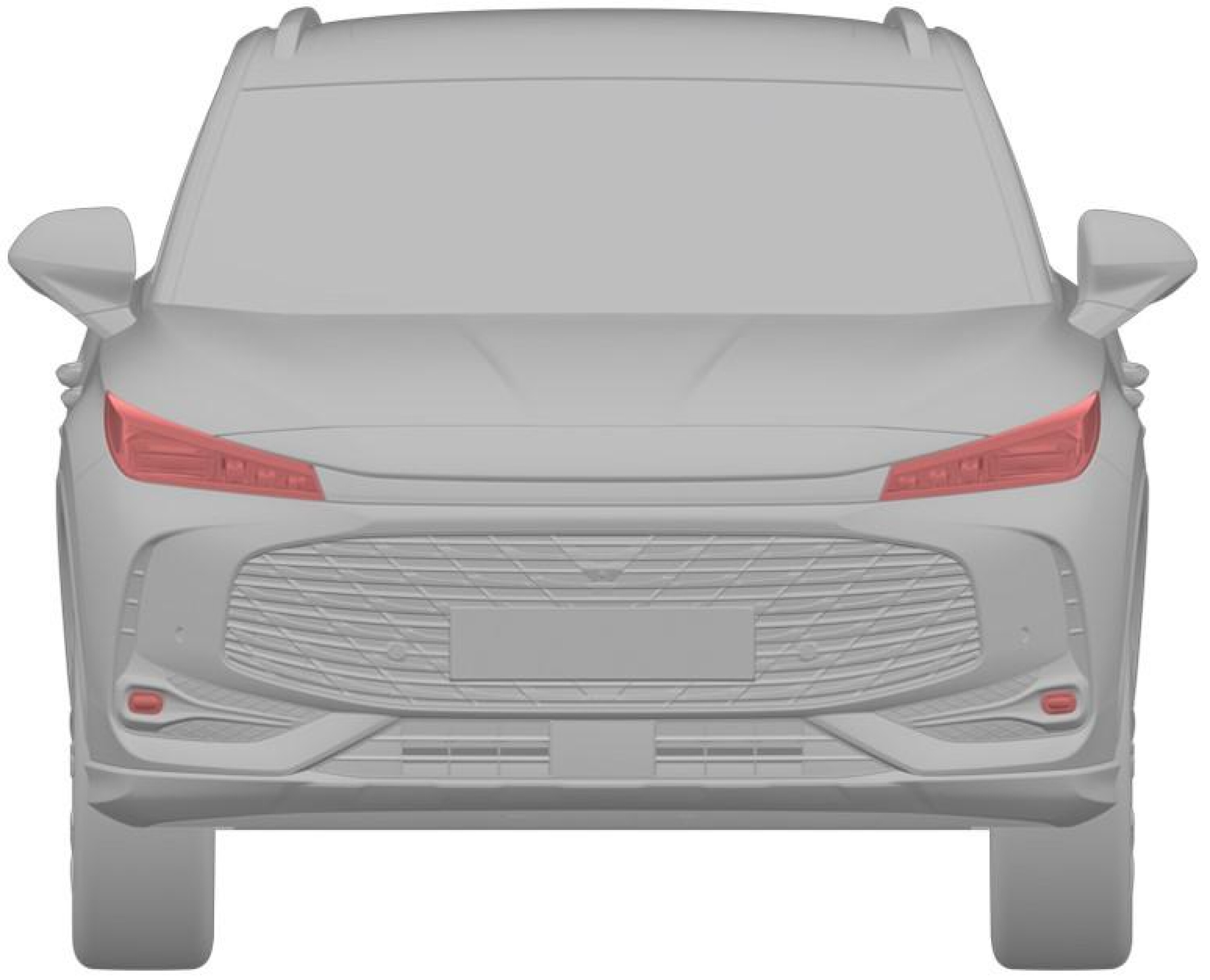
The 2025 MG HS mid-size SUV has appeared in European patent images ahead of its expected debut next year.
It is unclear if the ‘E-HS’ version seen here is all-electric or a plug-in hybrid, though the presence of a large grille opening suggests it could feature an updated version of the Chinese-built HS’s existing plug-in hybrid setup.
‘E-HS’ is the nameplate currently used for the HS plug-in hybrid in Europe, sold in Australia as the MG HS Plus EV.
1
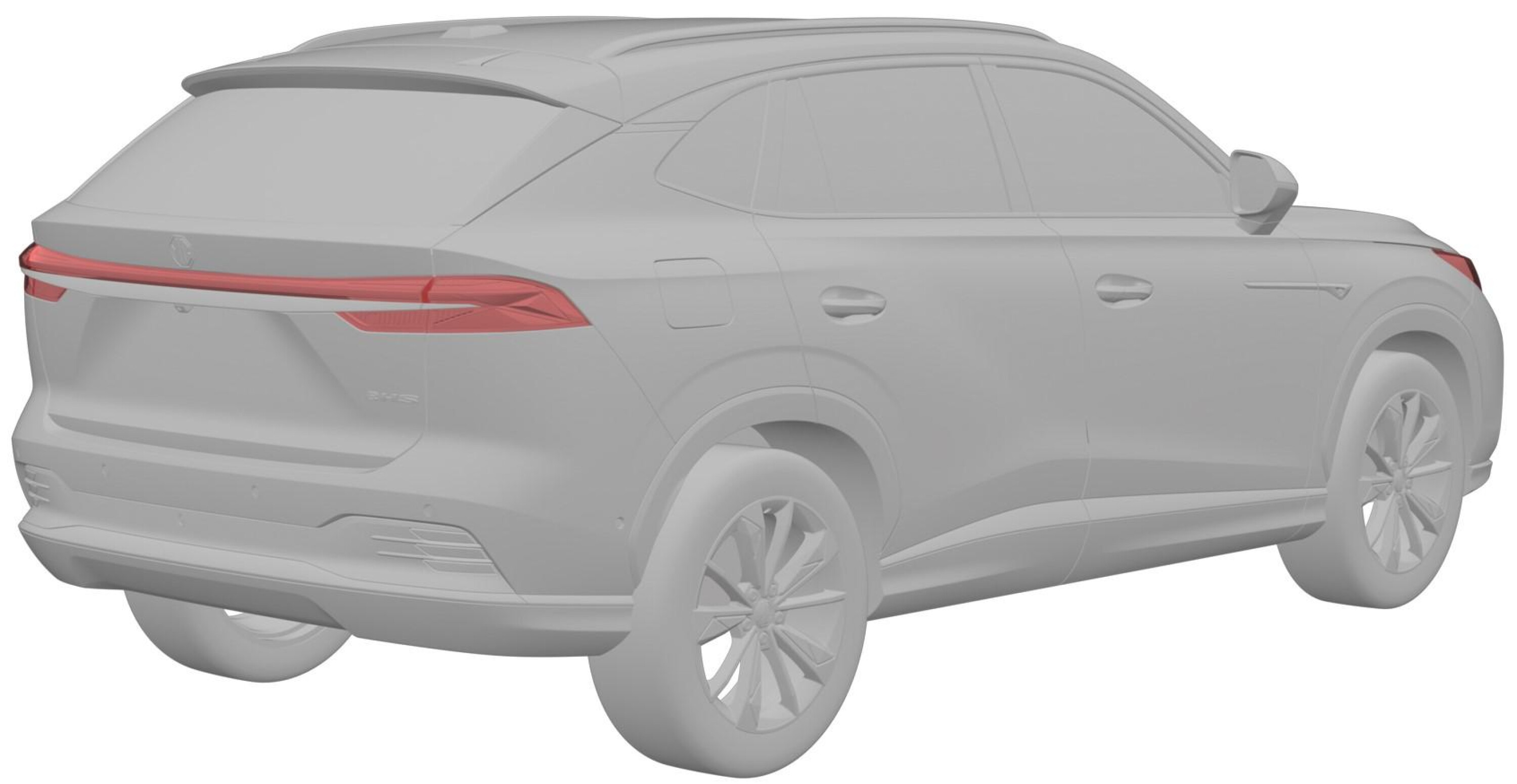
1
MG is working on a successor to the left-hand-drive-only Marvel R electric SUV that will be built in right-hand-drive and sold in the United Kingdom, opening the door for an Australian launch.
However, it is unclear if the MG E-HS will be this successor – with internal-combustion, hybrid and all-electric options like the smaller ZS/VS/ZS EV – or if the brand is working on a separate electric Tesla Model Y rival.
A facelifted version of the MG HS is expected in Australia in early 2024, however, it has been available in China since 2020 where it’s sold as the MG Pilot. The current HS was first unveiled in 2018.
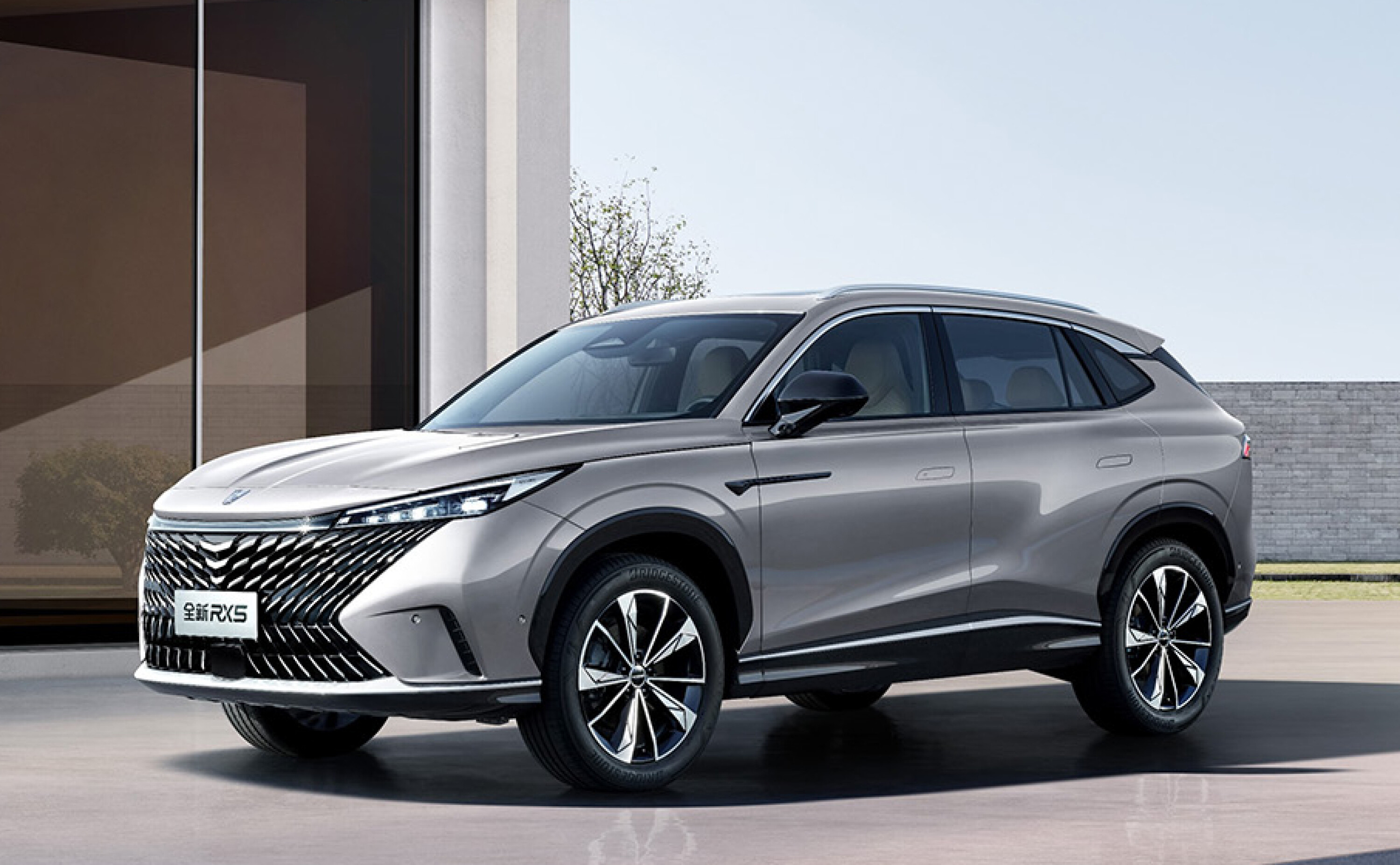
1
“MG Motor can confirm our line-up for next year (2024) to include an all-new MG3 available in both ICE and Hybrid, as well as the all-new HS and Cyberster,” said an MG Australia spokesperson.
The overall look appears almost identical to the third-generation RX5 from MG’s sister brand Roewe – the successor to the UK’s Rover – albeit with some MG touches like a more conventional grille and traditional door handles instead of pop-out units.
The MG 5 electric wagon – no relation to the zero-star ANCAP MG 5 petrol sedan sold in Australia – and MG Marvel R are existing rebadged Roewe vehicles, while the brand’s IM LS6 electric SUV is expected to come to Australia as an MG around 2026 with a sub-$100,000 price tag.
Inside, expect the new HS to adopt a larger infotainment system and floating digital instrument cluster – potentially on the same panel – a new steering wheel, and a simplified centre console.
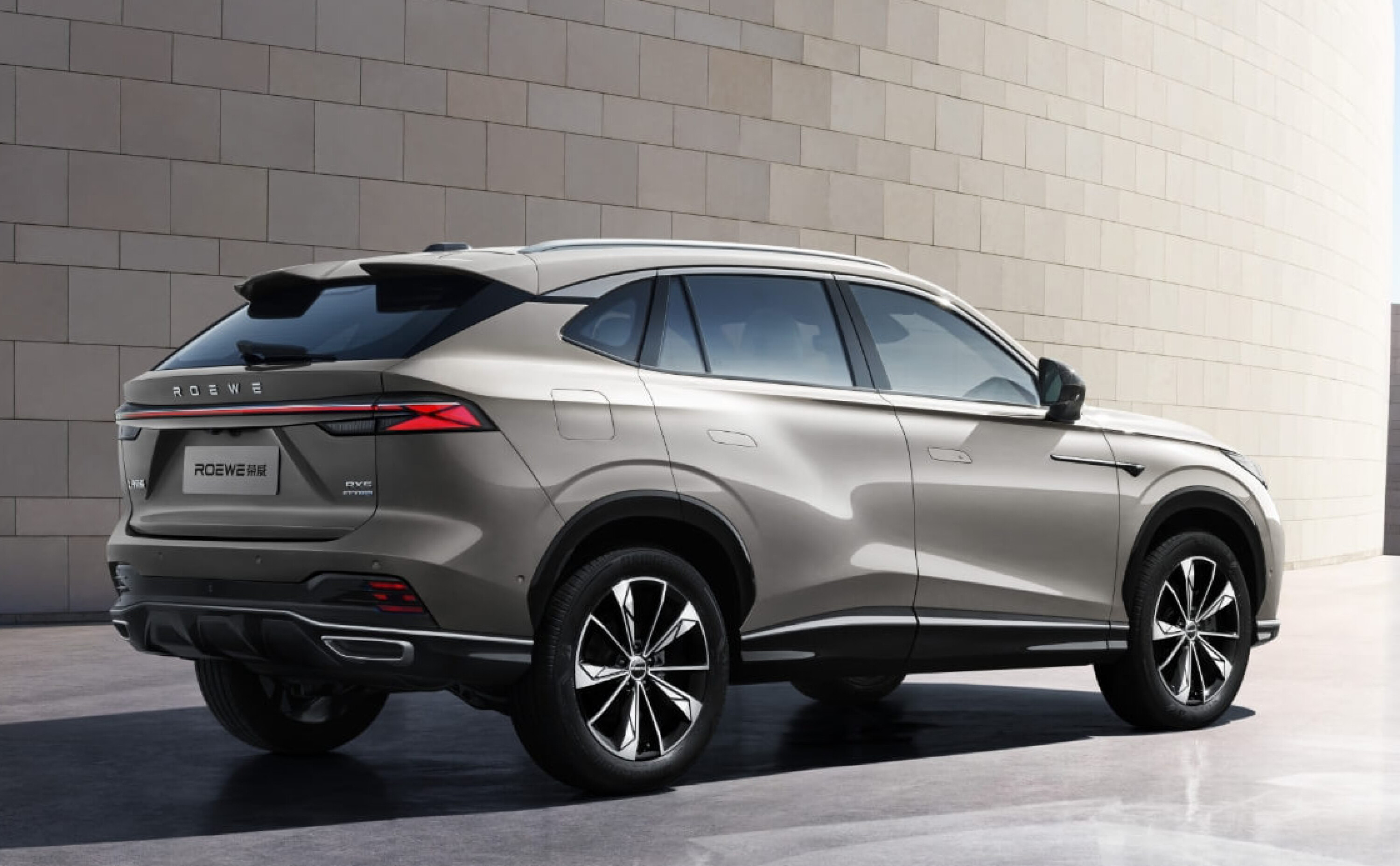
1
The Roewe RX5 measures 4655mm long, 1890mm wide and 1664mm tall, with a 2700mm wheelbase – 81mm longer and 14mm wider than the current HS, with an identical height and a 20mm shorter wheelbase.
Like the current HS, the Roewe RX5 is fitted with a 1.5-litre turbo-petrol in petrol, full-hybrid or plug-in hybrid form. The petrol produces 138kW and 300Nm, while the plug-in hybrid version adds a 180kW electric motor. It has a 570Nm total torque output and a 50-kilometre electric-only driving range.
The second-generation 2025 MG HS is expected to debut in 2024, ahead of an Australian launch later next year or in early 2025.
MORE
Everything MG
December 19: New MG ZS revealed in our exclusive images
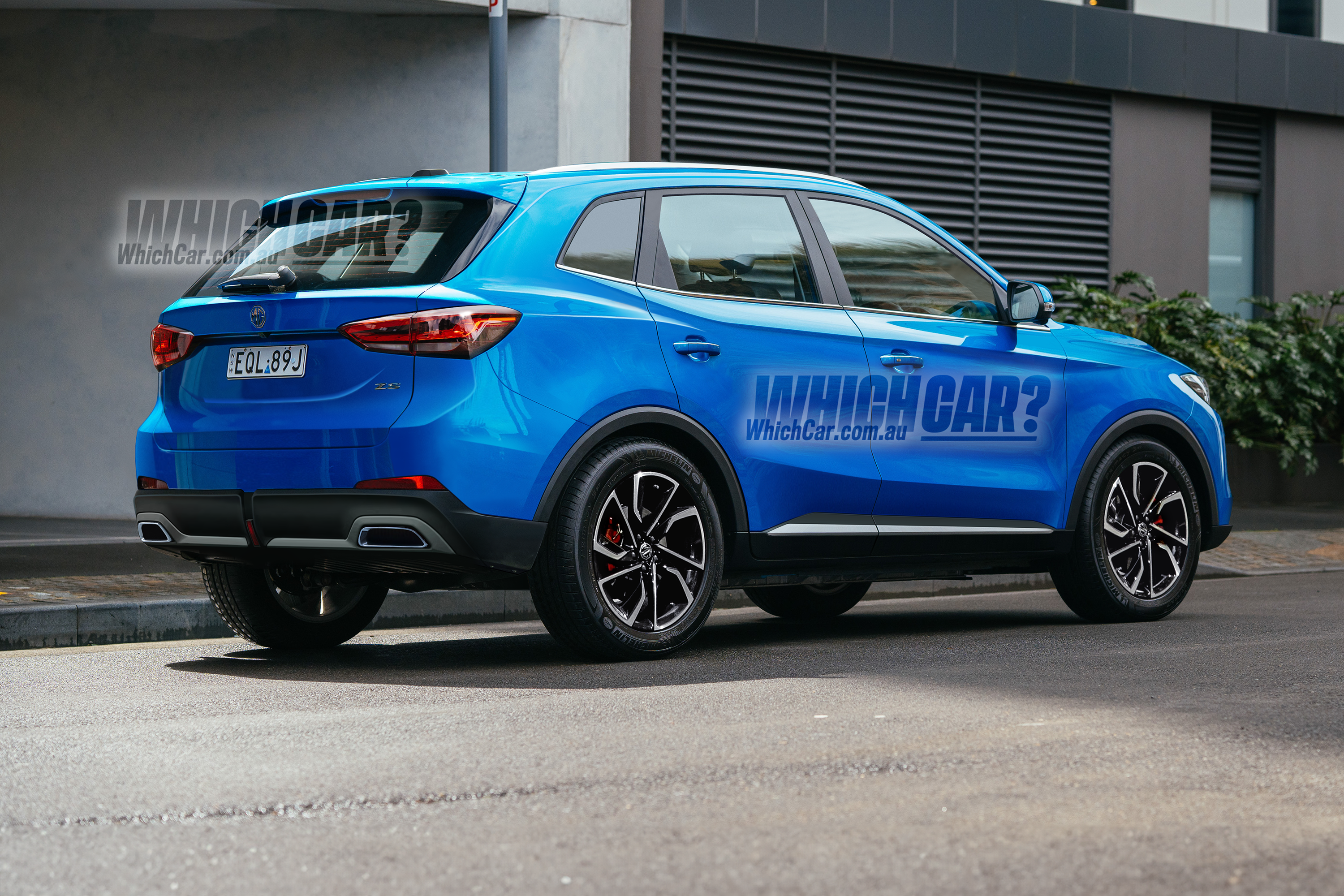
Here it is, the new-generation 2025 MG ZS, brought to life by our mate Theottle – with thanks to the official design patent filings reported below.
As expected, the new MG ZS will wear a larger and more matured look, without straying into the more dynamic styling territory of its more expensive and all-electric MG 4 cousin.
Tell us what you think of the design, and continue reading below for more details.
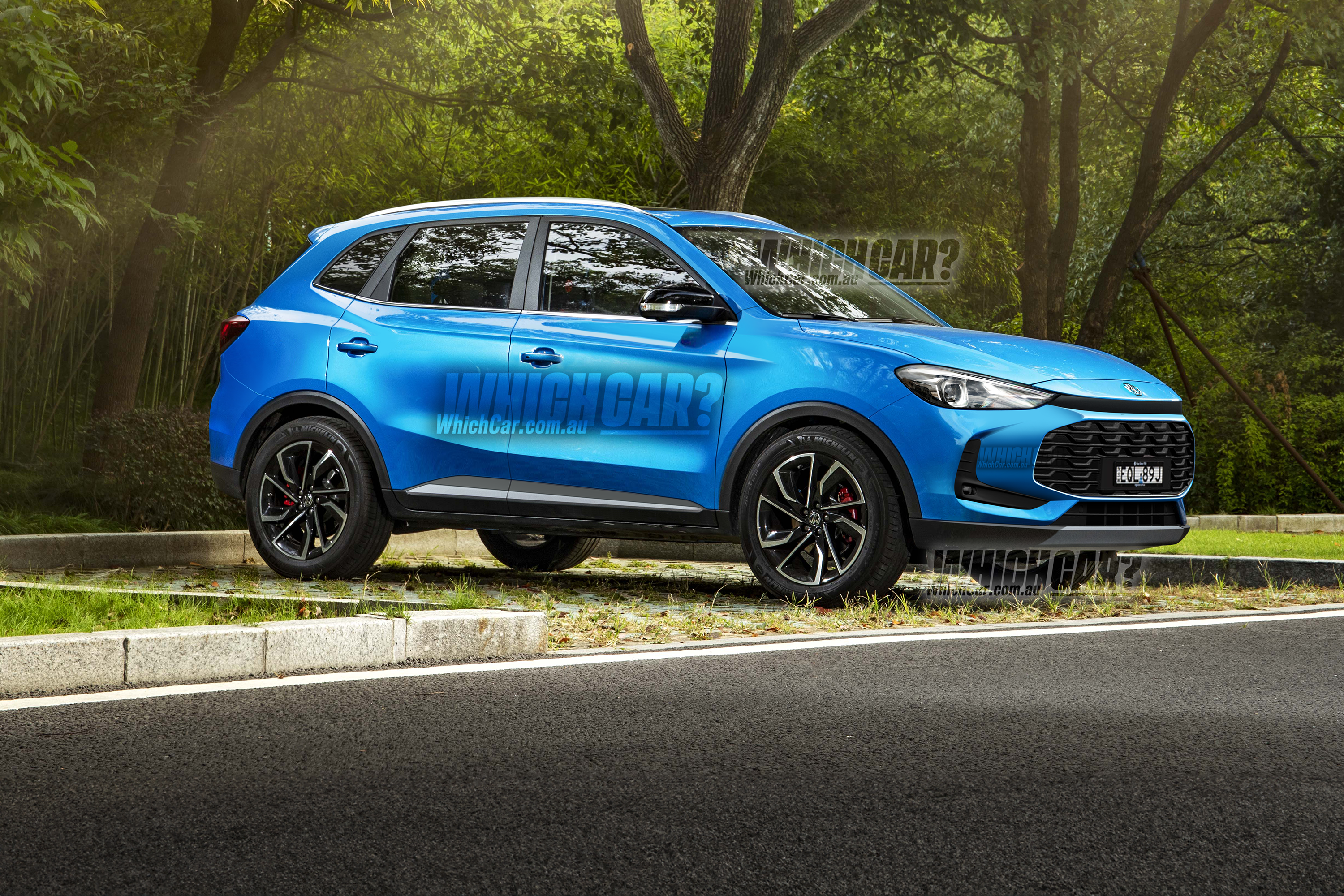
1
1
December 14: New MG ZS revealed in patent filing
The next-generation 2024 MG ZS has been revealed, thanks to patent office filings out of Europe that reveal the new model’s styling in full detail.
The computer-generated images don’t reveal any ZS badging, but the proportions of the car and the company name on the filing suggest there can be little doubt.
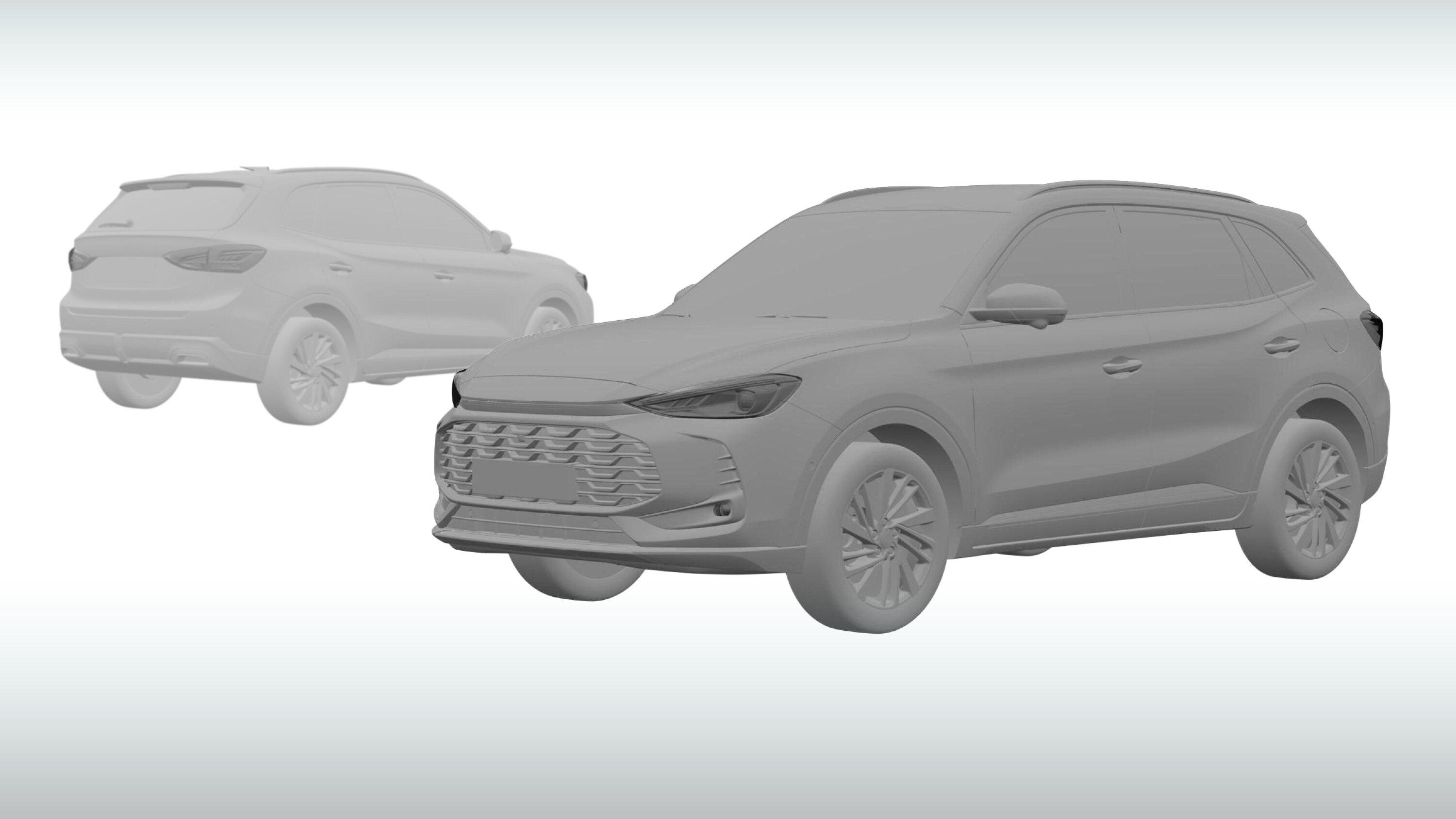
1
If you were expecting the next ZS to take its styling cues from the sharp new MG 4 electric car, think again.
By comparison, this new ZS design is somewhat tame, with lines that could have been borrowed from a Suzuki or Chevrolet of yesteryear.
The model wears an aggressive design up front, with sharp slender headlights and a wide protruding lower grille seemingly inspired by a boxer with his mouthguard beared…
Still, flat patent images are rarely inspiring and it usually takes a full reveal to appreciate the details – or some good speculative renderings from our mate Theottle. Stay tuned for that.
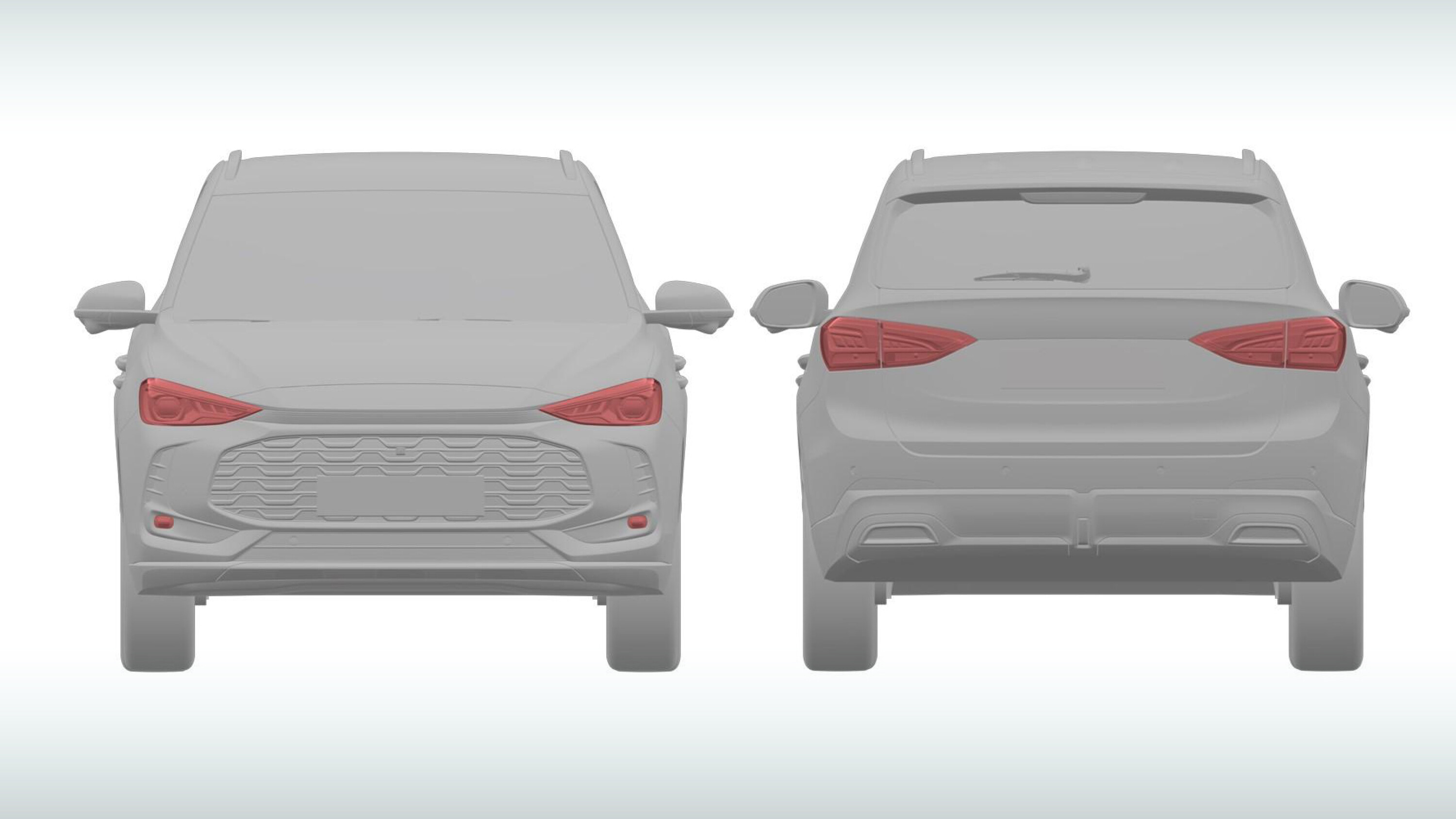
1
In its current form, the ZS is MG’s sales-volume success story in Australia, stealing the mantle of best-selling small SUV from the Mitsubishi ASX.
But, like the MG3 – set to be replaced in 2024 as well – the ZS is getting pretty long in the tooth, having been on the market since 2016.
While the current ZS has more standard safety gear than the budget-focused MG3, it isn’t likely to receive much in the way of future updates to bring it up to code. Clearly that will be left for this new model.
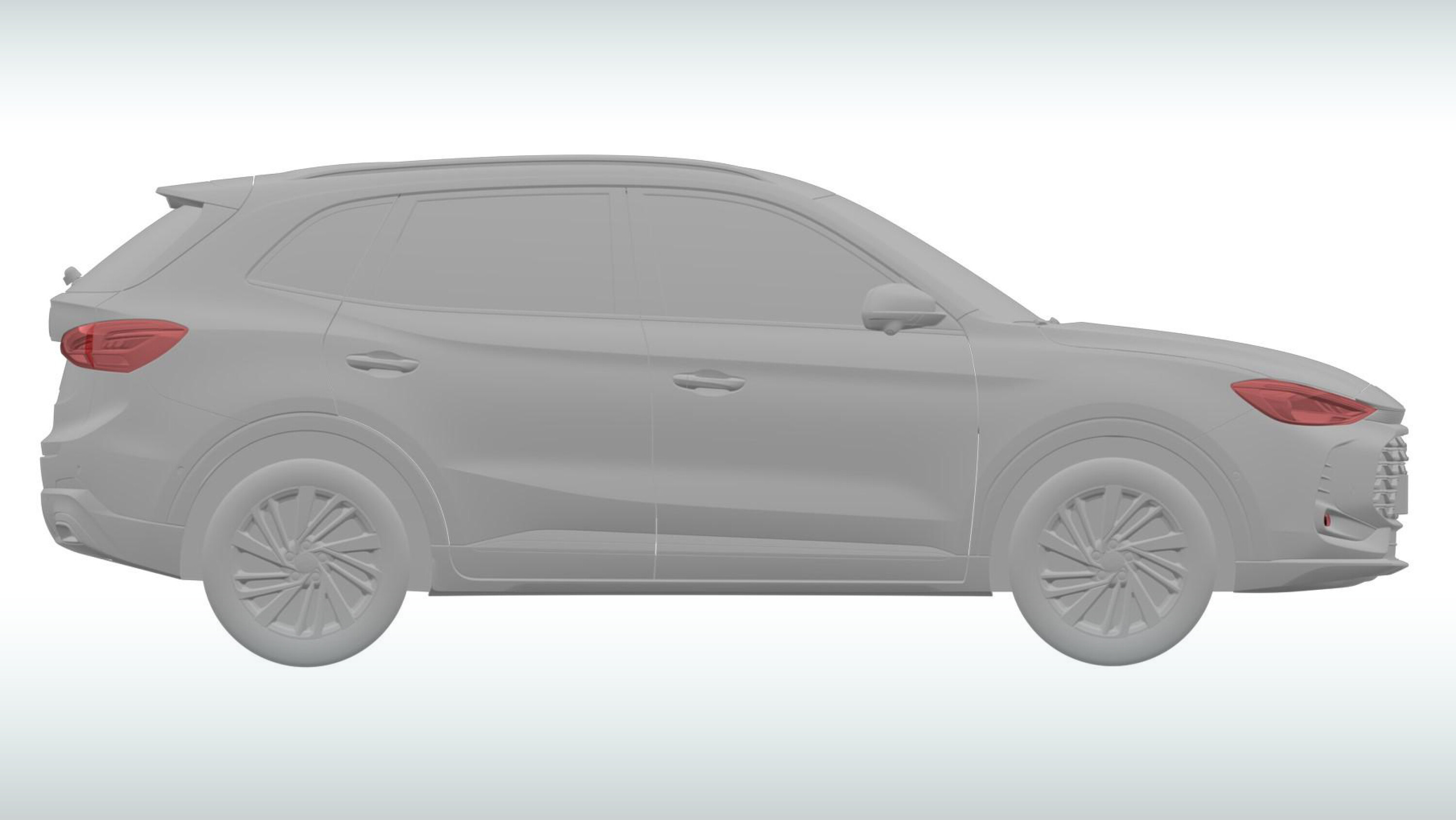
1
We’d expect the next ZS to sit on two platforms, depending on its purpose: cheap-as-chips petrol, and segment-rivalling EV.
A new ZS EV will likely be built on MG’s new Modular Scalable Platform that underpins the MG 4, allowing that variant to benefit from a more electric-forward architecture.
Expect a regular petrol version to remain available, however, possibly built on the existing model’s platform. Cheap small petrol SUVs have been the key to MG’s growth in Australia, among other markets, so the company is unlikely to spoil that value.
Watch for more on the new MG ZS to come in the months ahead.
MORE
Everything MG
BELOW: The current MG ZS, in regular, turbo and EV forms
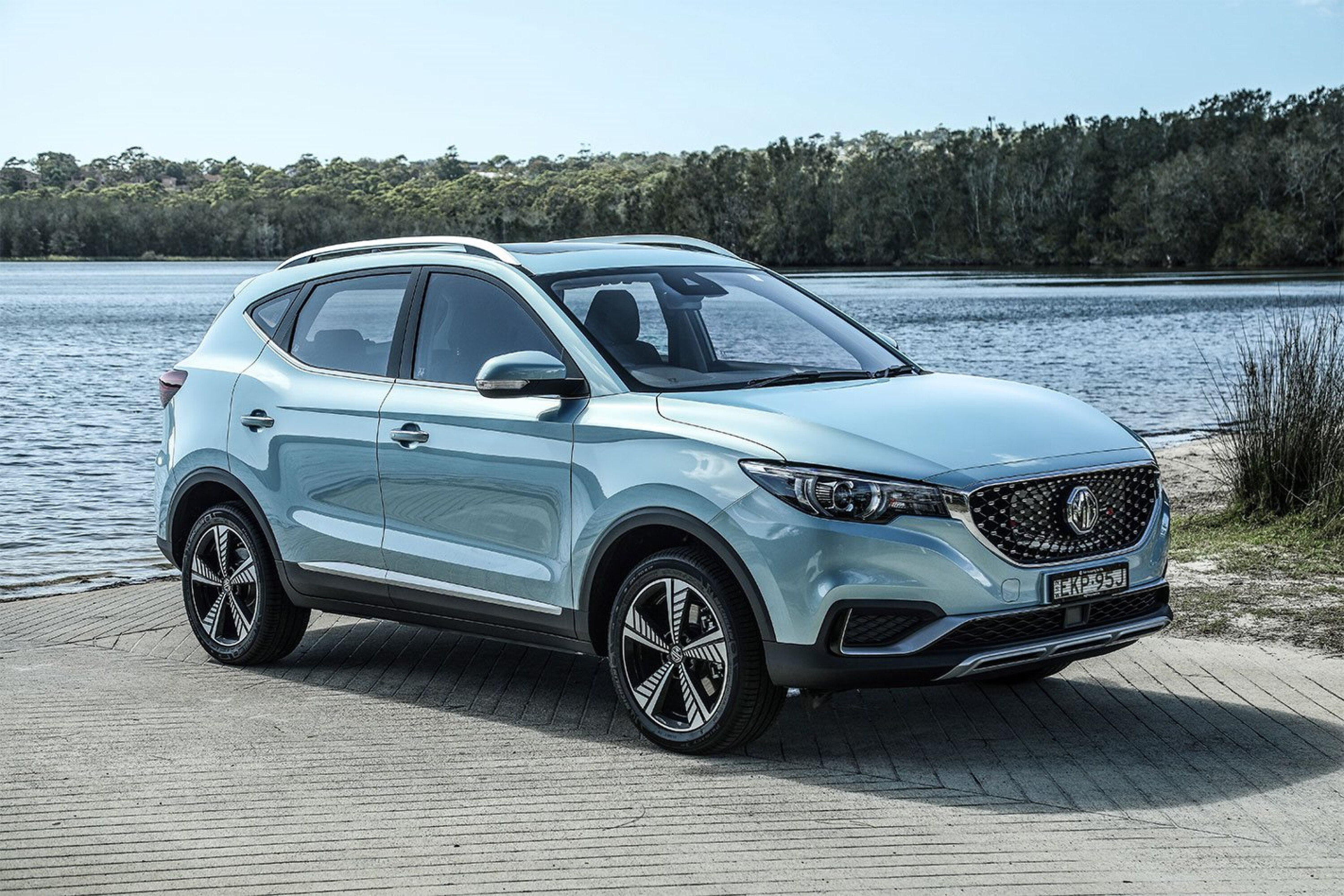
1
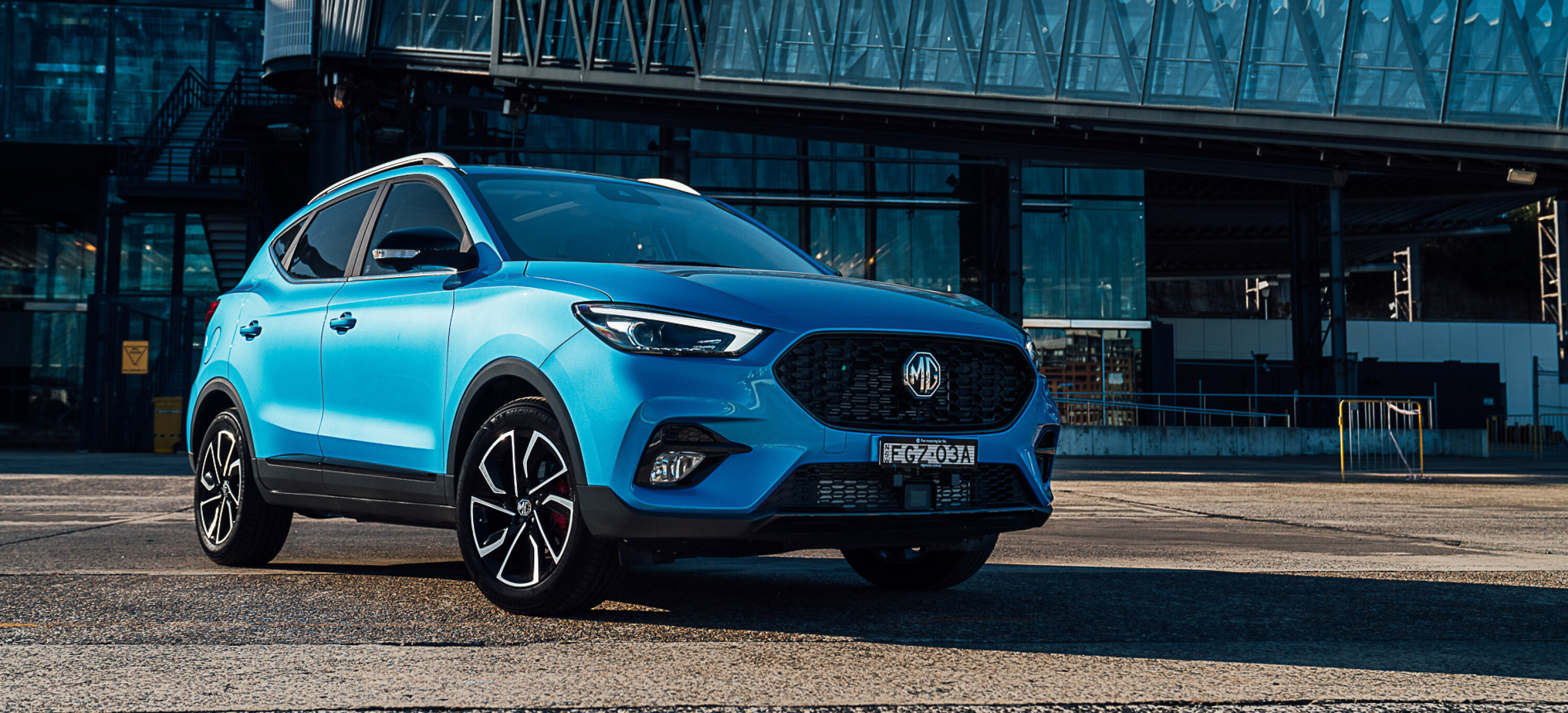
1
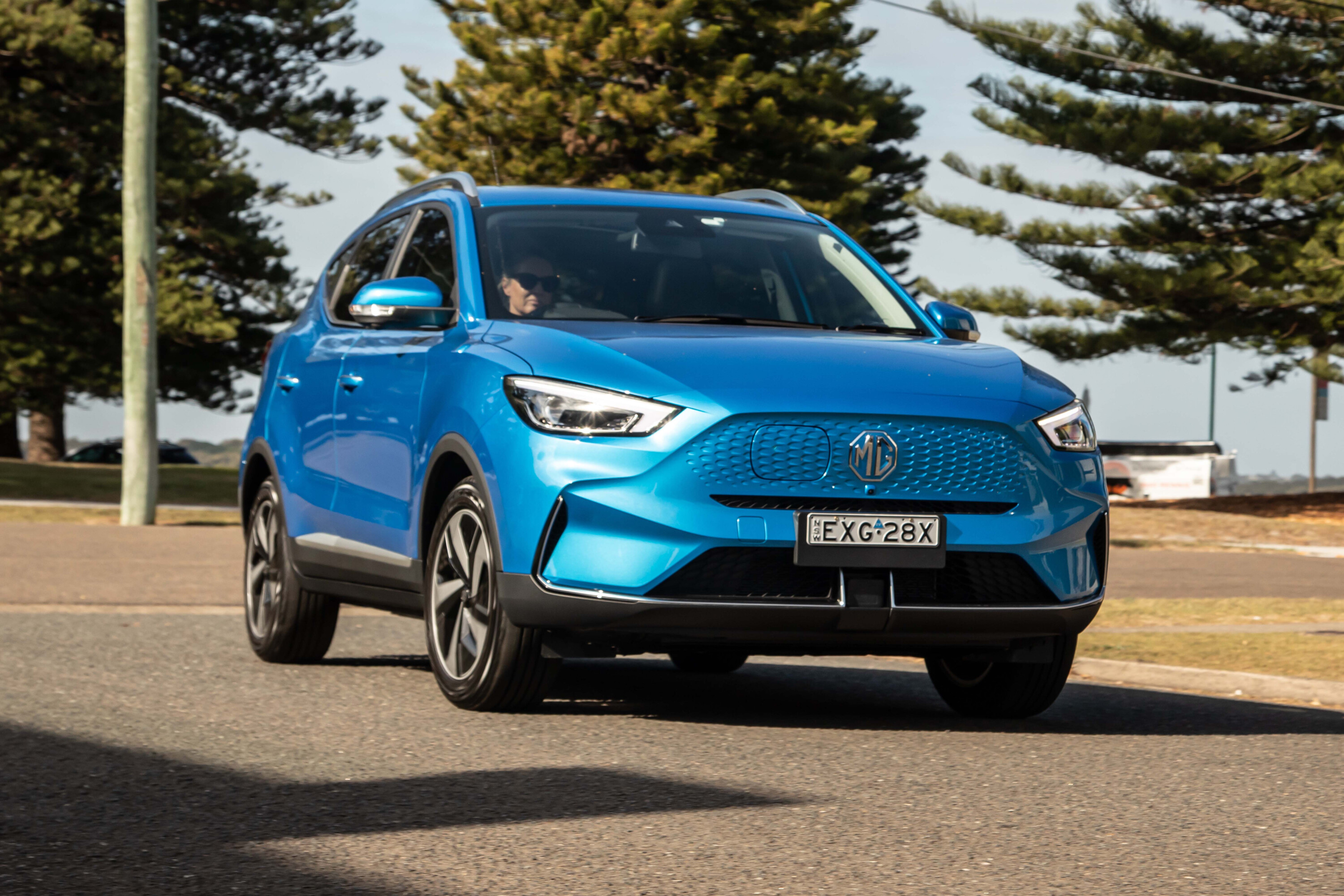
1
December 2023: It’s happening!
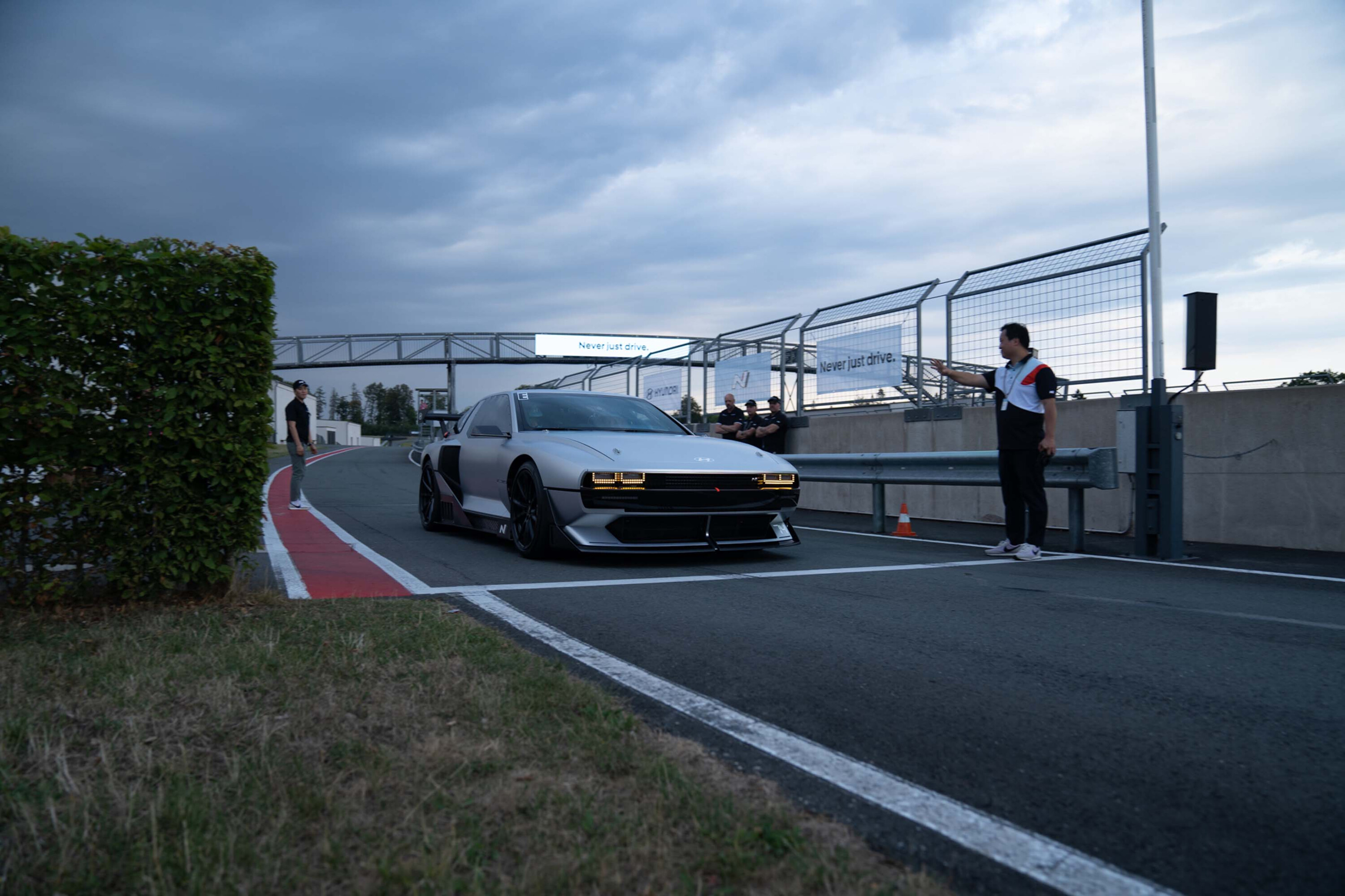
Here’s some news to brighten your day: it seems Hyundai is going to build and sell examples of its N Vision 74 concept.
Snapshot
- A Korean news outlet reports Hyundai will build 100 examples of its eye-catching N Vision 74 concept
- 70 of the cars will be sold to the public while 30 will race in a one-make series
- The production car will reportedly produce 800hp (circa 600kW)
Korean news outlet ETNews is reporting Hyundai plans to make 100 examples of the ultra-cool concept, with 70 of those cars earmarked for public sale while 30 will be reserved for racing.
Hyundai hasn’t confirmed the news officially but in our minds “reserved for racing” can only mean one thing: a one-make series that could rival the BMW M1 ProCar championship of the late 1970s for sheer wedgy supercar coolness.
Production of the road-going Hyundai N Vision 74 is scheduled to begin in the first half of 2026, according to ETNews, and power will be increased to 800hp (596kW) which is 120hp more than the concept car.
The extra grunt means the production version’s range will drop slightly, however, from 600km down to 400-500km.
May 2023: N Vision 74 green-lit for production
The rumour mill is in full swing, as Korean news media reports suggest the striking N Vision 74 Concept has been greenlit for production, with an official announcement expected imminently by Hyundai.
The N Vision 74, rumoured to be called ‘Pony Coupe’ if ever produced in series, is powered by a blend of hydrogen fuel cell and electric hybrid technology, producing 500kW and 900Nm from a 62.4kWh battery cell and two rear-mounted motors. The radical concept was a shot heard ‘round the motoring world when it debuted for N Day 2022.
Reports were initially surfaced by Korean outlet, Money Today, who first suggested the Korean carmaker had greenlit the hydrogen spearhead coupe for production with an official announcement to come imminently. Sadly, the citeless article remains conjecture until official word comes from Hyundai.
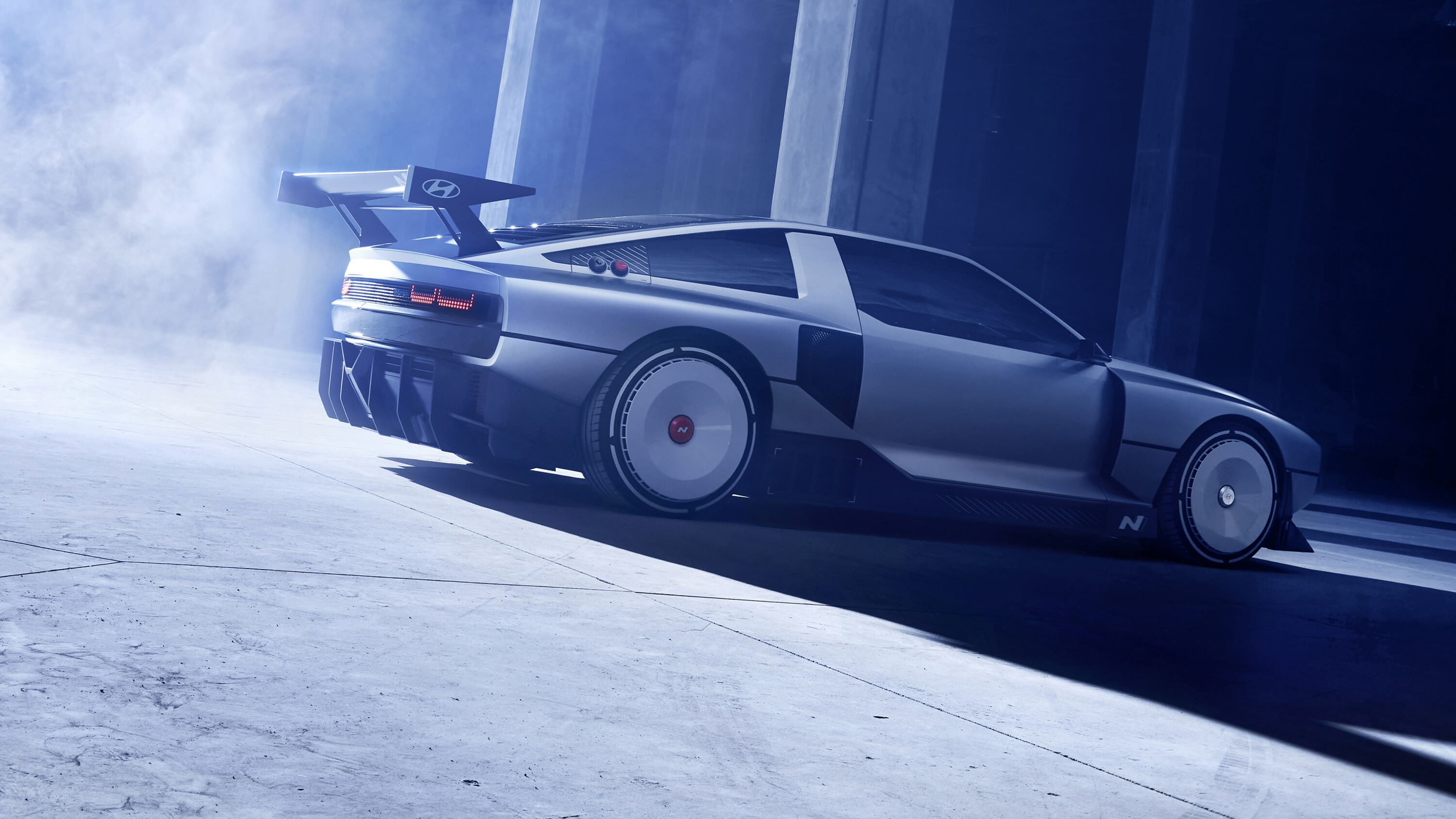
1
These rumours are actually a bit on the vintage side (like the concept), but we’d held off on reporting it because an official announcement was reportedly due on May 25. What now? ?♂️
Recent comments to TopGear [↗], however, by Hyundai’s Chief Creative Officer, Luc Donckerwolke, have recently reignited hope, suggesting he dislikes doing concept cars for the sake of the spectacle.
“I hate doing show cars and then — nothing.”
He continues to say, “we are serious about this. This could come into production. We have the platform.”
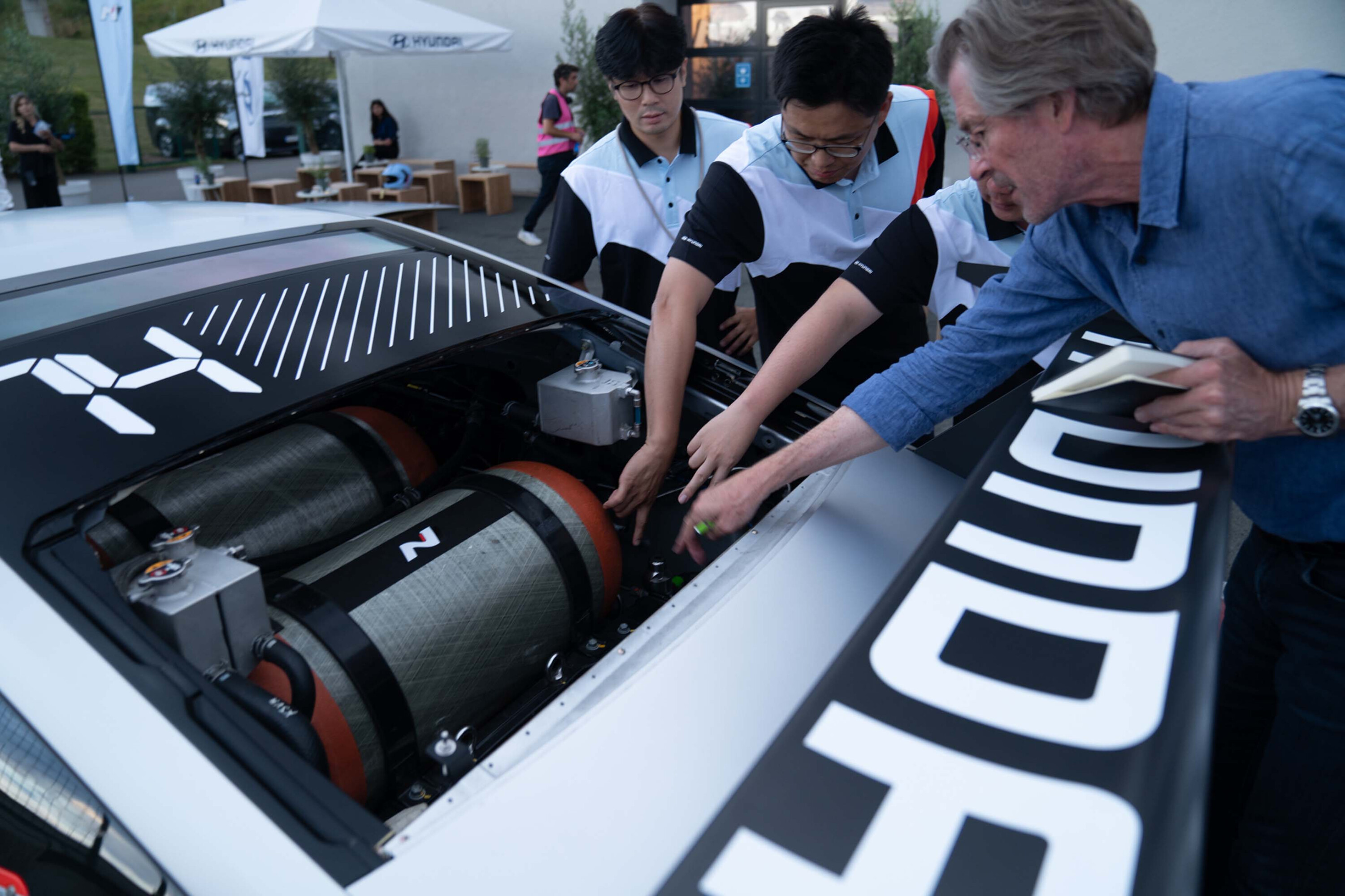
1
Top Gear has inferred that the ‘platform’ Donckerwolke mentions, references the N Vision 74’s powertrain and the fact that they have a fully functioning, driving proof-of-concept, rather than an announcement on chassis architecture.
“There is nothing unfeasible about this car. It’s pure. We’re hoping and we’re working and it’s only a matter of the right constellation”.
The high ranking Hyundai Officer’s enthusiasm echoes that of various other senior members of the company, who all ostensibly say that they would love to see the car in market. But, like any product, of course, the circumstances have to be right.
1
Donckerwolke, however, goes on to suggest it’s a good sign when projects are conceived by senior management, instead of being ‘pushed up’ the chain from the bottom.
“It’s always good when the management is telling you [to do it]”, Donckerwolke adds.
While the narrative of Hyundai’s N Vision 74 is compelling, it still sounds like the story isn’t over. We at Wheels are big fans of Hyundai’s forward-looking concept and continue to hold out hope.
Wonder what it’s like to drive? Read our prototype review below!
December 2023: Honda ordered to pay $6 million in penalties of misleading consumers about dealership closures
Honda Australia has been ordered to pay a $6 million fine by the Federal Court, following the ACCC’s allegations that the company had mislead customers of three former authorised dealerships.
According to the court’s judgement, Honda Australia had told customers of Brighton Automotive Holdings Pty Ltd (Astoria), Tynan Motors Pty Ltd (Tynan), and Buick Holdings Pty Ltd (Burswood) between January and June 2021 that these dealerships would no longer be servicing Honda vehicles.
In its initial filing last year, the ACCC said that while the dealerships were no longer Honda franchisees, “they remained open as independent dealerships and were able to service Honda vehicles”.
The communications between Honda Australia and its customers regarding the supposed closures were allegedly held over emails, text messages and phone conversations.
On Friday, ACCC commissioner Liza Carver said: “Honda Australia deprived consumers of the opportunity to make an informed choice about their options for servicing their vehicle. It also caused likely financial loss to the dealerships by the false claim they were closing or had closed.”
“The substantial penalty sends a strong message to all businesses about the consequences for making misleading statements to consumers.”
April 2022: Honda ‘misled customers’ during agency model switch – ACCC
Honda is being taken to court by a consumer watchdog for allegedly misleading customers about servicing arrangements when it switched to its new business model last year.
Snapshot
- Honda accused of misleading customers at VIC and NSW sites
- ACCC says the carmaker deprived customers of making informed choices
- Watchdog seeking penalties and costs
The Australian Competition and Consumer Commissions (ACCC) lodged legal action in the Federal Court today against the carmaker for “making false or misleading representations to consumers” about two former authorised Honda dealerships in Brighton, VIC, and Tynan, NSW.
The ACCC alleges that between January and June 2021, Honda Australia told customers of the two dealerships that they would be closing or had closed and would no longer service Honda vehicles.
1
In reality, though the agreements with the two franchisees had been terminated when Honda restructured its business to an agency model, which took effect from July 1 last year, Brighton Automotive Holdings Pty Ltd (Astoria) and Tynan Motors Pty Ltd both continued to trade independently – offering servicing for vehicles including Hondas.
“While Astoria and Tynan were no longer a Honda franchisee, they remained open as independent dealerships and were able to service Honda vehicles,” ACCC Commissioner Liza Carver said today.
The ACCC alleges that in emails, text messages and phone conversations, Honda informed customers the businesses had closed and directed customers to contact a Honda dealership or Honda Service Centre to book their next service.
1
“We allege Honda deprived customers of the opportunity to make an informed choice about options for servicing their car in favour of a Honda-linked dealership, which may have been less convenient or more costly for them,” Carver said.
Following a restructure announcement in May 2019, Honda shifted to an ‘agency’ model and terminated 36 of its authorised dealerships’ franchise agreements on June 30 last year. This included Astoria and Tynan who opted to exit in January 2021.
As part of the chanhe, the company now offers a fixed price for each model across the country.
Prior to the split, both franchises had been with Honda for around 50 years.
“We also allege Honda caused harm to the businesses, by falsely claiming they had closed or would close, which may have led customers to have their Honda vehicles serviced elsewhere,” Carver added.
1
“It is important that independent dealerships can service vehicles of all brands, and from July 1 dealerships will have fair access to the necessary technical information from all manufacturers to service and repair all makes of cars.”
The Motor Vehicle Service and Repair Information Sharing Scheme, which passed parliament last year, is scheduled to come into effect on July 1, 2022. It requires motor vehicle service and repair information to be made available for purchase by Australian repairers at a fair market price.
Responding to the news, Honda Australia told Wheels: “Honda Australia has cooperated with the ACCC’s investigation into this matter. We are reviewing the recent filing by the ACCC and at this stage are unable to comment further on specific circumstances or details regarding the claims made or individual dealers.”
MORE
All Honda
Navigating Australia’s fuel tax: What you need to know
First, what is the fuel excise?
It’s a tax. That much you probably know. Australia’s fuel excise is a flat sales tax imposed by the federal government on petrol and diesel, currently set at 48.8 cents per litre.
This rate is adjusted biannually in February and August in line with inflation, and it’s separate from the GST.
Fuel excise, unlike vehicle registration and driver’s licence fees, is collected by the federal government and contributes to general revenue.
Does the fuel excise pay for road construction and maintenance?
Although many Australian motorists believe the fuel excise exists entirely to fund and care for our roads, the specific direction of fuel excise revenue towards roads funding ceased in 1992.
Since then, it has had “only a minor link” with the development and maintenance of Australia’s transport infrastructure.
On average, 53.7 per cent of fuel excise revenue collected by the Treasury is put towards road and transport projects – not exactly a minor link, but only barely a majority – with the 2020-21 financial year marking the largest percentage (69.9 per cent) of fuel excise reinvested in roads in the last decade.
In 2022, the Australian Automobile Association called for the fuel excise to be returned to its earlier role as a purely roads-focused revenue – but it made no suggestions for how other public services partially funded by the fuel excise, such as healthcare and education, should be handled.
Do all motorists pay the fuel excise?
Every Australian motorist who buys petrol and diesel at the bowser pays this excise, as it is built into the price paid at the counter.
Meanwhile, heavy vehicle owners like those operating buses, trucks, and coaches on public roads, pay a Road User Charge for each litre of diesel purchased.
Fuel excise: the EV factor
The rise of electric cars, which don’t use liquid fuels and are exempt from fuel excise, presents a challenge to this traditional revenue model.
As EV adoption increases, the amount of fuel excise collected could decrease, prompting a potential review of infrastructure funding methods.
Some Australian states had proposed a road tax for EV owners, but only Victoria’s Labor government ever officially launched such a system. It was quickly panned by industry groups and even the Coalition government, before finally being ruled unconstitutional by the Australian High Court in 2023. The Victorian government will now refund $7 million in fees to affected EV owners.
When, or if, Australia ever reaches a majority of cars being electric rather than combustion-engined, it’s likely the government will return to the idea of a road user charge in place of the fuel excise – or else find another tax to ensure it does not lose the massive revenue currently taken by the existing fuel excise.
Are EV drivers getting a free ride on Australia’s roads then?
Not quite. EVs are generally more expensive to buy when compared to equivalent cars in the petrol and diesel space, so they attract more fees through government taxes at the time of purchase.
As an example, a previous-gen $38,000 petrol Hyundai Kona bought new in NSW would incur around $1600 in stamp duty and registration, while the $58,000 electric version would be hit 63% harder with $2651 in fees.
And, when charging an EV from the grid, electricity attracts 10% GST. The amount an EV owner contributes also differs by state, with Victoria charging $0.026/km.
Put all of that together, and a petrol car that uses 8.0L/100km of fuel costs around one cent per kilometre more in excise than an EV, which works out to $0.035/km in Victoria.
So how much revenue does the fuel excise produce?
The last estimate, covering the financial year 2022-23, suggested Australian motorists would contribute over $13.7 billion in net fuel excise, with an expected total of $60.1 billion over four years.
On average, a typical household will see a fuel excise bill of approximately $1,210 this year. As vehicles become more fuel-efficient and zero-emission technologies gain traction, the amount of fuel excise collected has been decreasing.
The fuel excise was briefly halved, between March and September 2022, to help Australians deal with rising living costs during the COVID pandemic. The newly elected Labor government elected to not extend the cut any further, and it was returned to the full amount in late September 2022.
Figures published a month earlier, in August, showed the excise cut hadn’t done much to help ease living costs.
? It’s been a hard road for motorists in recent years, with petrol prices increasing faster than the consumer price index (CPI) over the past 10 years.
Fuel excise in other countries
The numbers below have been converted to Australian currency and, where appropriate, from gallons to litres.
European Union Fuel Excise Rates (2023)
- Highest Gas Tax: Netherlands at approximately AUD 1.37 per litre.
- Second-Highest Gas Tax: Italy at approximately AUD 1.28 per litre.
- Lowest Gas Tax: Hungary at approximately AUD 0.52 per litre.
- EU Average for Gas: Approximately AUD 0.93 per litre.
- EU Average for Diesel: Approximately AUD 0.74 per litre.
Fuel Taxes in Select Non-EU Countries (2023)
- United Kingdom: Gasoline approx. AUD 1.48 per litre, Diesel approx. AUD 1.44 per litre.
- Turkey: Gasoline approx. AUD 1.41 per litre, Diesel approx. AUD 0.95 per litre.
- Switzerland: Gasoline approx. AUD 1.27 per litre, Diesel approx. AUD 1.28 per litre.
- Norway: Gasoline approx. AUD 1.20 per litre, Diesel approx. AUD 0.89 per litre.
- Canada: Gasoline approx. AUD 0.55 per litre, Diesel approx. AUD 0.16 per litre.
- United States: Gasoline approx. AUD 0.13 per litre, Diesel approx. AUD 0.05 per litre.
- Russia: Gasoline approx. AUD 0.05 per litre, Diesel approx. AUD 0.04 per litre.
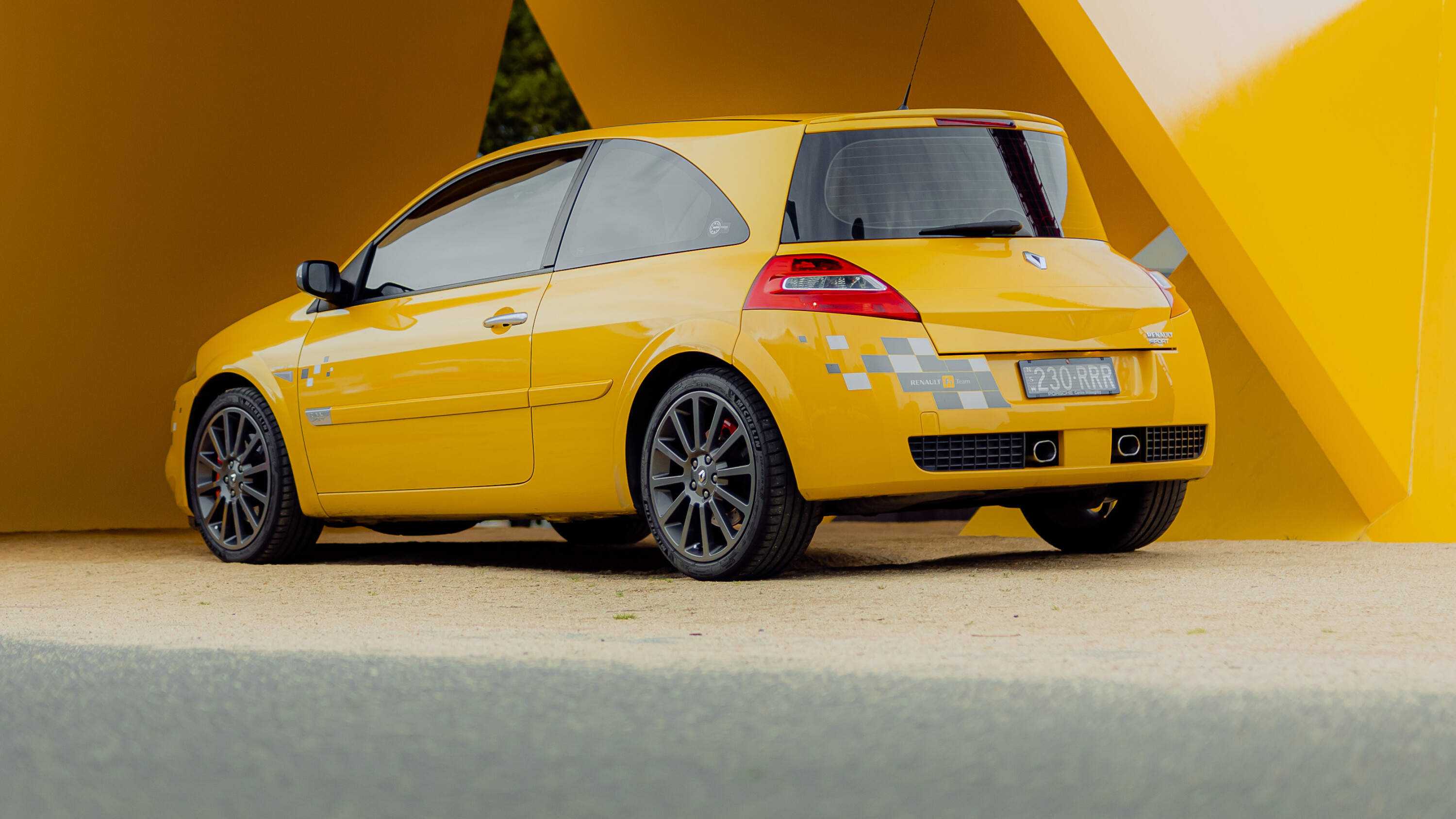
You may not know of Mr Vernon Gleasman. But if you drive a Renaultsport Megane 230 F1 Team R26 (henceforth to be referred to as an R26 because damn) you have a lot to thank this gent for.
With over 200 inventions and patents to his name, big Vern, who sadly passed away in 2004, lived a long and productive life. We’ll gloss over his hydromechanical steering system for tracked vehicles and his long-piston hydraulic machine and concentrate instead on his Dual Drive system, the so-called ‘impossible differential’, a clever piece of engineering that became better known as the torque-sensing, or Torsen, diff.
It’s this piece of technology, supplied by GKN Driveline for the 168kW R26, that distinguished this model from its immediate predecessor, the 225 F1, and did more than anything else to elevate the hot Megane from there or thereabouts to indisputably the best driver’s car in its class.
1
Renault wasn’t in the business of building middle-of-the-road hot hatches.
It had a rich form line running from the 5 Turbo through a whole series of lauded hot Clios which had branched into the acclaimed 16v versions of the 19 and the first-generation Megane. Yet when Renault launched the Renaultsport 225 version of the Megane in 2004, it was met with a lukewarm reception. The steering was rubbery, power-down wasn’t great and body control was vague.
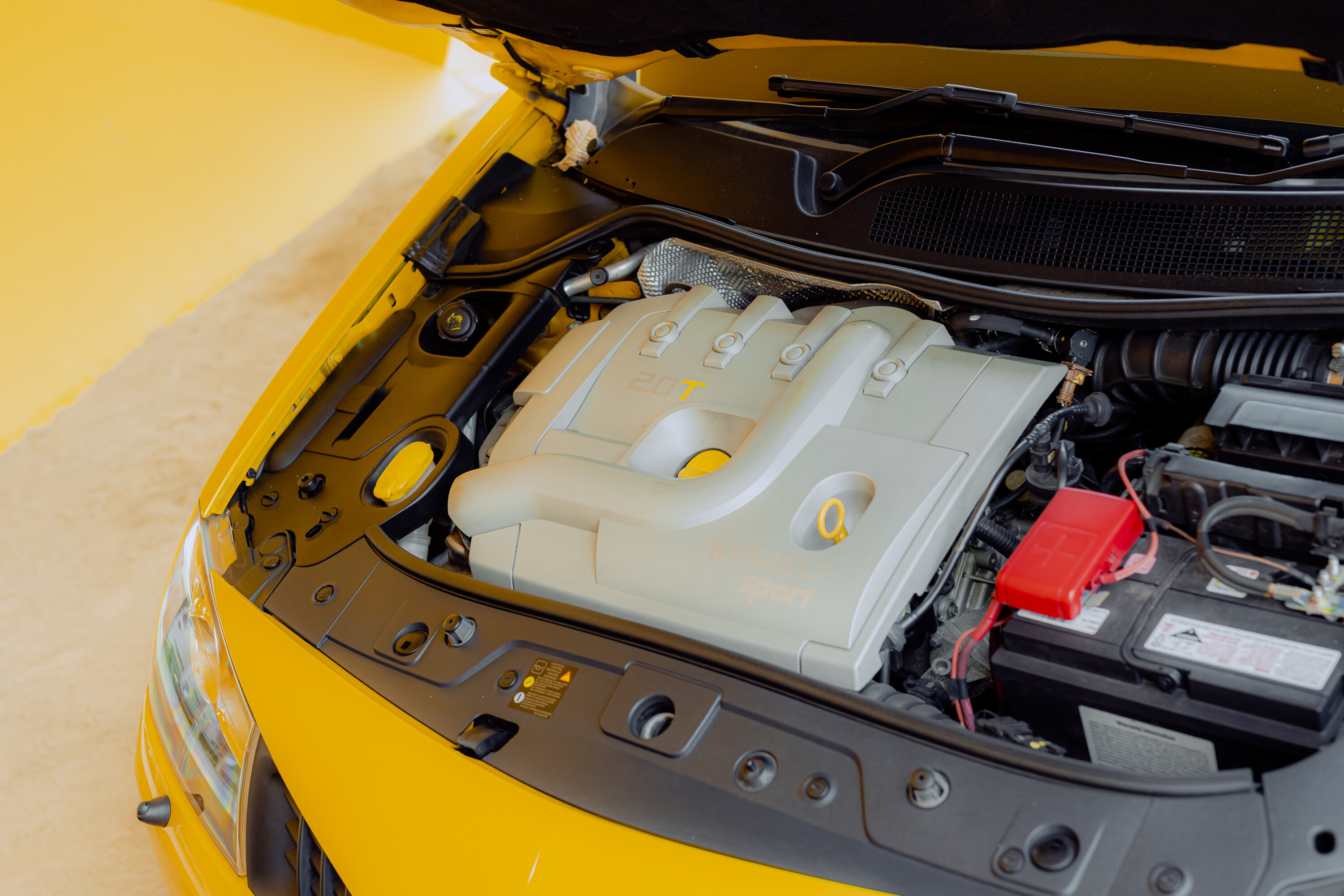
The subsequent Trophy, Cup and F1 Team versions incrementally improved things, but it was still clear that there was unrealised potential. The bones of a great hot hatch lurked beneath the Megane II’s bustle-backed styling; the formula just needed refining.
1
GKN received the brief from Renault in March 2005 for a helical limited slip differential and realised that it was supplying Nissan with a version that could be modified for use in the Megane.
By November that year, it had a working unit in the front of a Megane prototype. The R26 could easily have been underwhelming.
After all, the introduction of electric power-assisted steering and a modest power bump of 3kW courtesy of a nudge in the turbocharger’s boost pressure and a less restrictive silencer hardly seemed transformative.
1
Only 100 units were imported – an original batch of 80 in August 2007 and an additional 20 cars in June 2008 – so they remain a rare sight on Aussie roads
What’s more, Mazda had attempted to spike Renault’s guns with the prior launch of the 3 MPS, which packed a hefty 190kW, again driving just the front treads.
But where the Mazda felt remote, exhibiting a frustrating lack of dynamic cohesion, Renault knew that it didn’t need to compete in the power stakes if it could build a car that could out-handle the Japanese hatch and deliver a more intimate and involving driving experience.
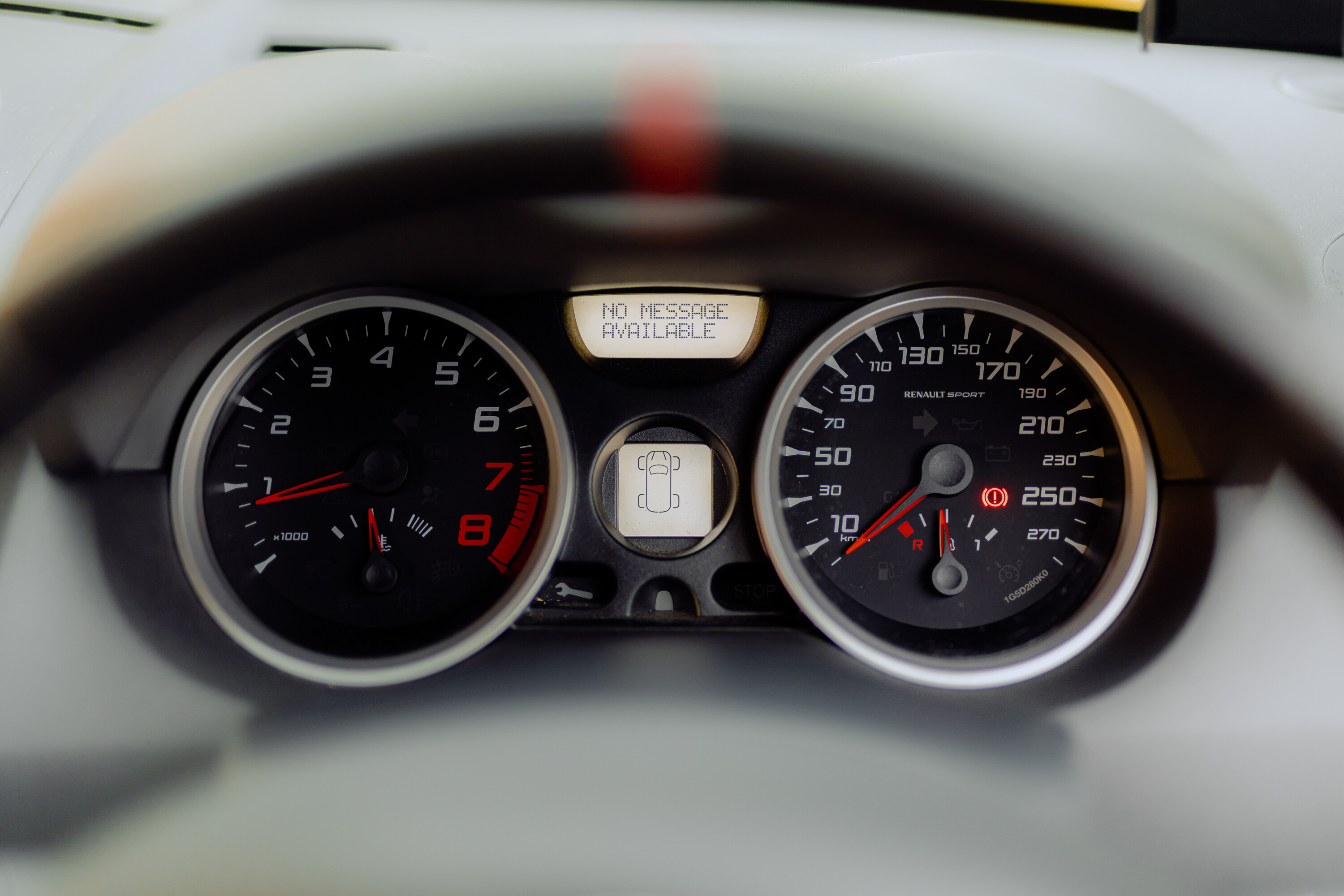
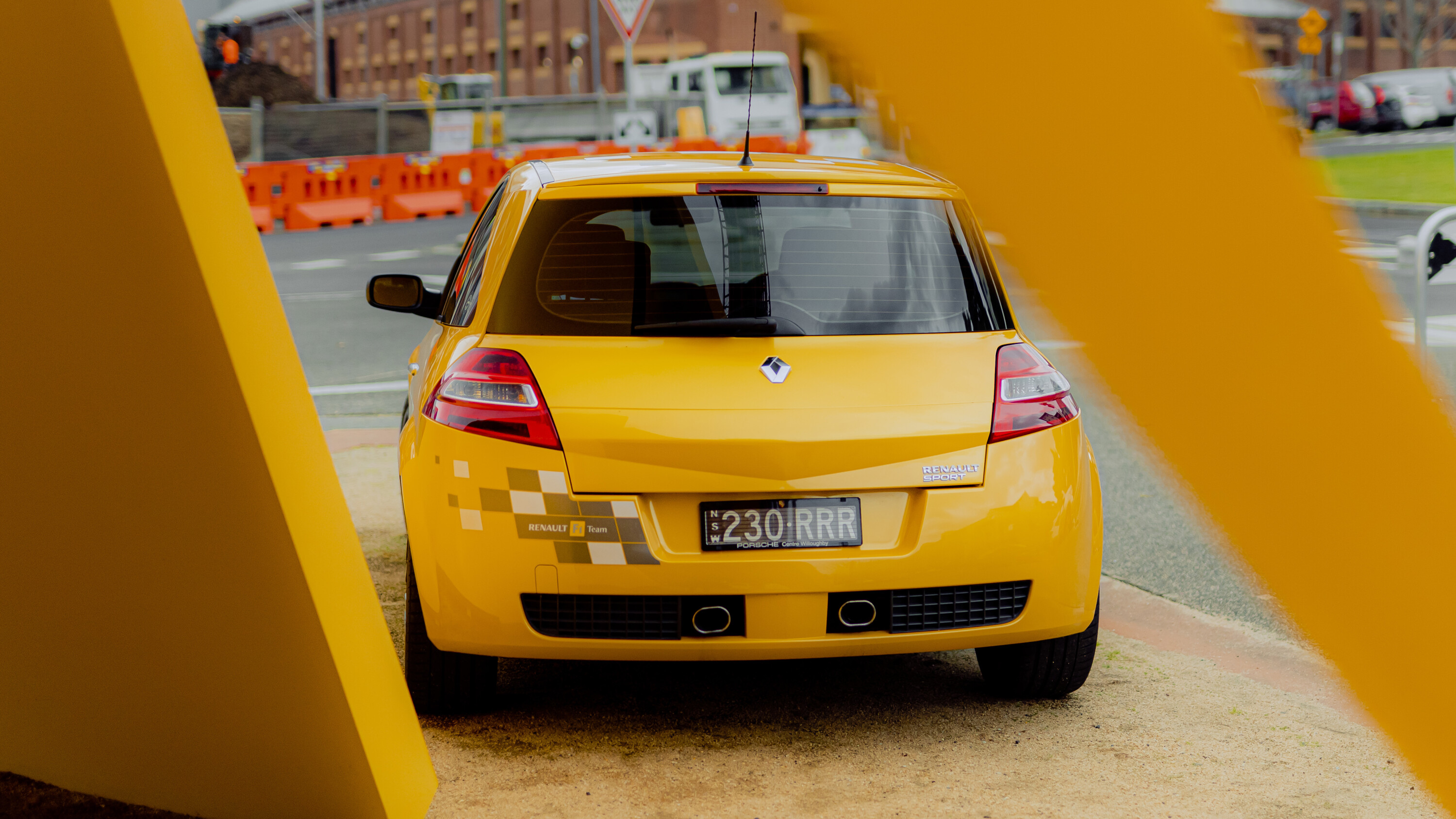
Mazda wanted $39,990 for the 3 MPS in mid-2006; the R26 was pitched to Aussie buyers at $43,990 for a black car or $44,990 for the hero Liquid Yellow colour, as pictured here. Only 100 units were imported – an original batch of 80 in August 2007 and an additional 20 cars followed in June of 2008 so they remain a rare sight on Australian roads.
1
A rare car and a very good one ought to mean a valuable car, especially in the current climate yet the Megane R26 has largely flown under the collector’s radar.
That’s probably down to two factors: the rarer-still R26.R track-day special that was spun off the R26 formula and the wholly excellent Renaultsport Megane III coupes that followed.
Prices between $10K and $15K for well-looked-after examples are the typical norm, although with a car this scarce, you clearly don’t get the option of a whole lot of shopping around opportunities.
The counterpoint to limited choice is rugged mechanical reliability; not always the first thing with which we associate French cars. The Megane R26 is a tank, over-engineered where it counts and with little in the way of troublesome tech that can go wrong. Complicated drive modes? Nope. Clutch-pack diffs? No. Finicky dual-clutch transmission? No.
1
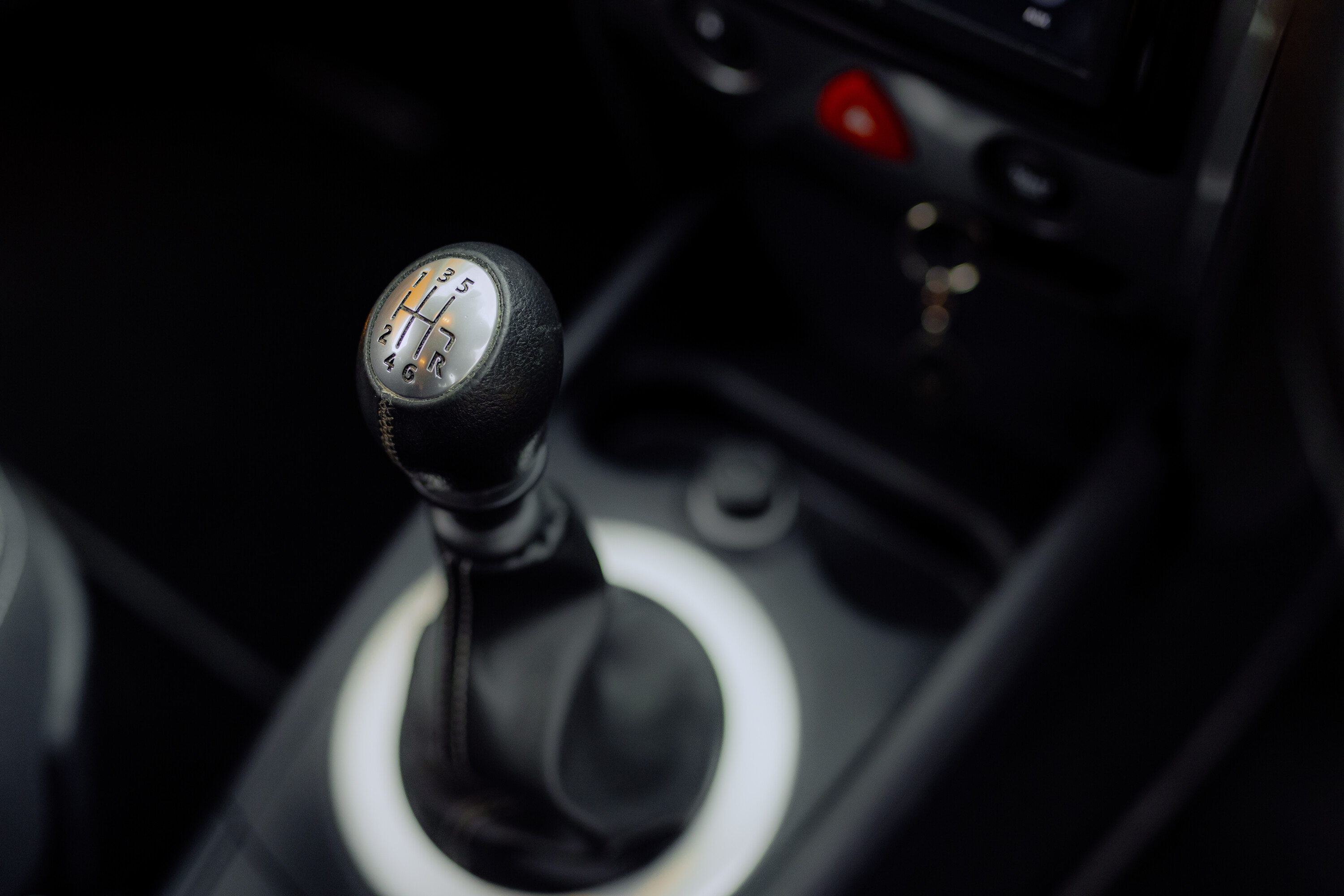
It’s just you, a workmanlike turbo four-pot, a manual gearbox that’s as tough as old boots and drive going through that purely mechanical Torsen diff to the front 18-inch tyres.
I’ve probably logged more laps of the Nürburgring in a Megane R26 than any other car and can attest to the fact that they can take a licking and still keep ticking.
Nevertheless, there are a few niggles to look out for. The F4R774 engine often sounds a bit grumbly on start-up, but clears down when warm. If the engine warning light on the dash fails to extinguish and a lumpy idle persists, it’s often down to a faulty injector.
1
Cam belts ought to be changed every 100,000km to be on the safe side (this is an interference engine after all) and look for a good oil servicing record.
Renault recommends a 5W-30 semi-synthetic lubricant for typical road use but track day fiends lean towards fully synthetic 10W-40 oil.
Another optimisation that has proven a popular aftermarket modification is a short-shift kit to rectify the R26’s long-throw manual shift. The R26.R utilised a factory short-shift kit and this is a sought-after adaptation amongst many R26 owners, delivering a crisper and quicker shift.
Standard exhausts will also have been replaced some time back, and an exhaust, subtle remap and performance air filter can add 20kW to an R26 without any reliability issues.
1
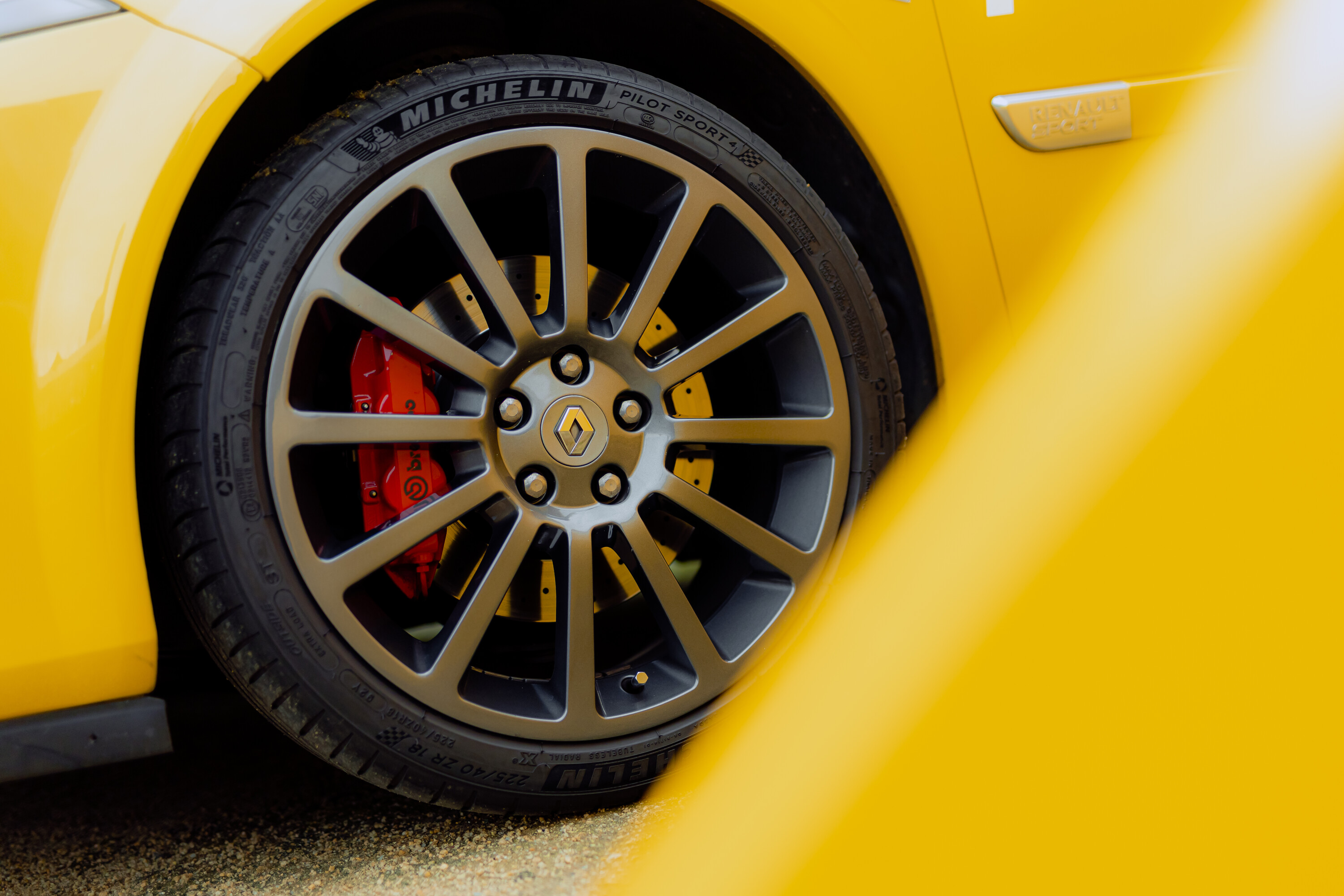
The R26 is fitted with Brembo brake discs and calipers.
The front rotors are 312mm cross-drilled items with 300mm rears and it pays to keep a weather eye on pad wear as enthusiastic driving can chew through pads quicker than you might expect.
Suspension bushings are another wear item to consider, with many R26 owners opting for firmer poly bushes if they’re tracking their cars regularly. The Toyo Proxes R888 tyre from the R26.R (225/40 R18) is another performance upgrade that has proven popular for circuit goers.
1
Some 17 years after it was first released, a decent Megane R26 still feels alert, fun to drive and refreshingly no-nonsense
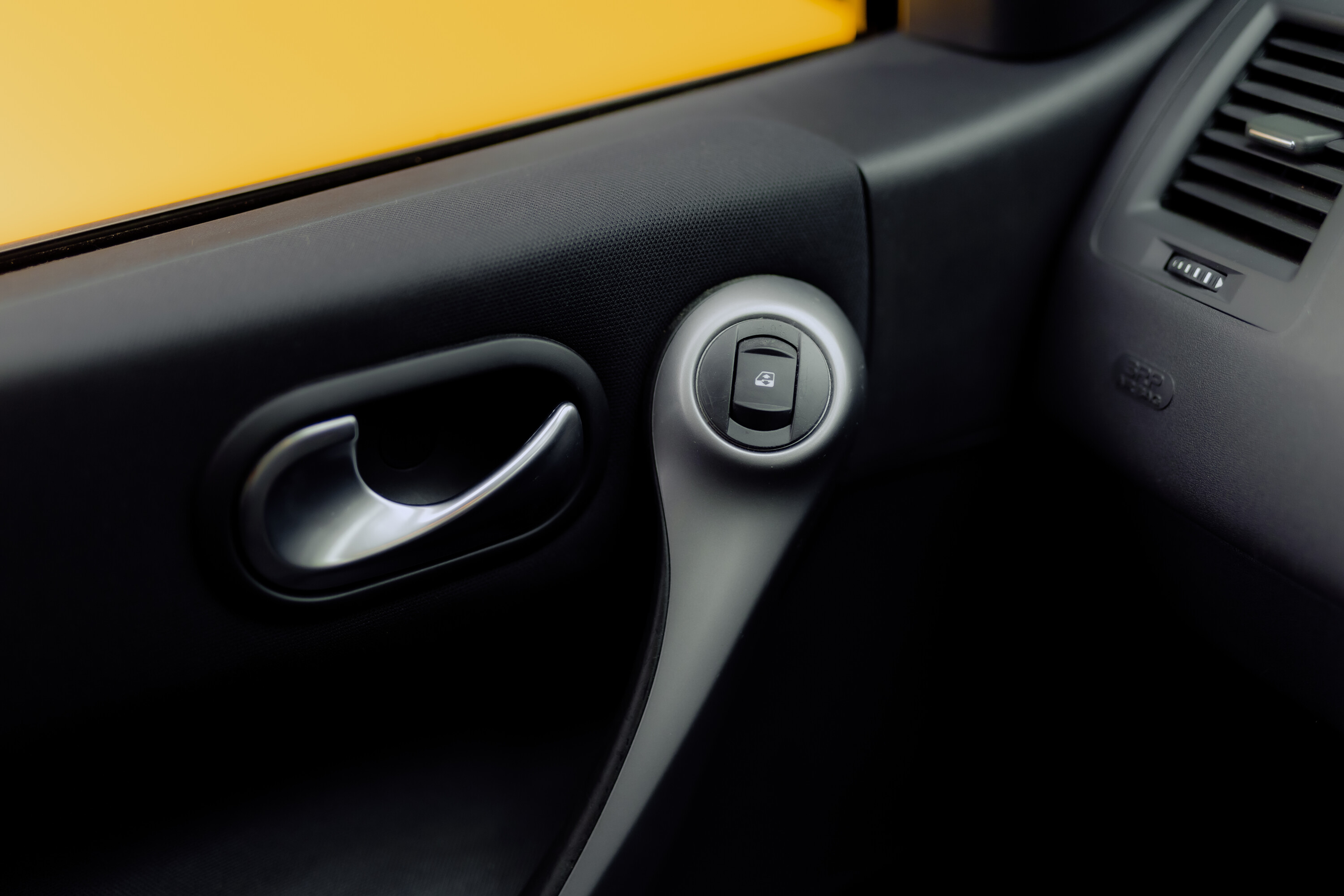
Bodywork is generally trouble-free, but there can be some minor electrical issues, especially concerning the credit-card-sized key fob. Some owners have reported these failing or being locked out of the car. The other issue to check is that the electric windows wind smoothly and fully, as a small component in this assembly has been known to break.
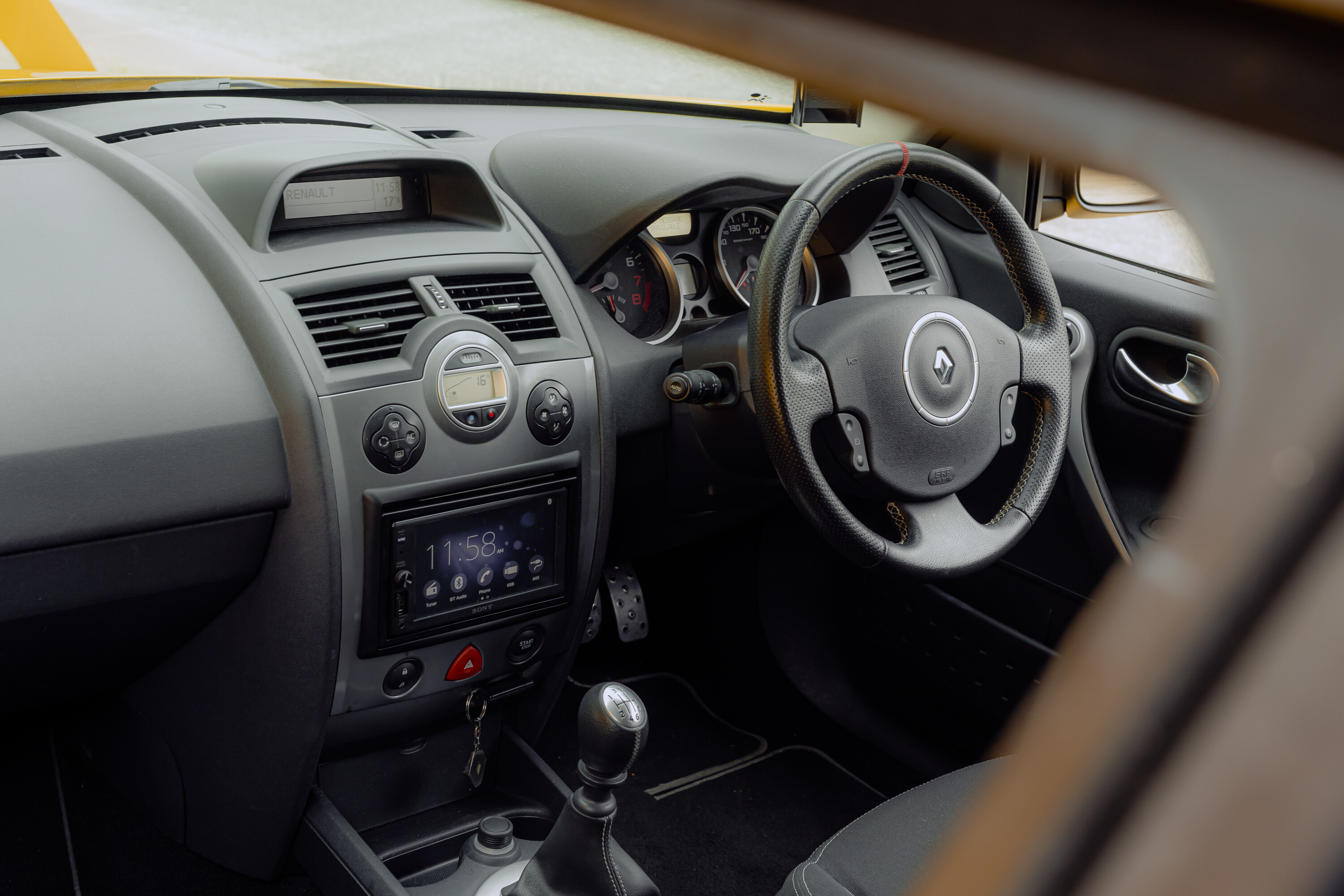
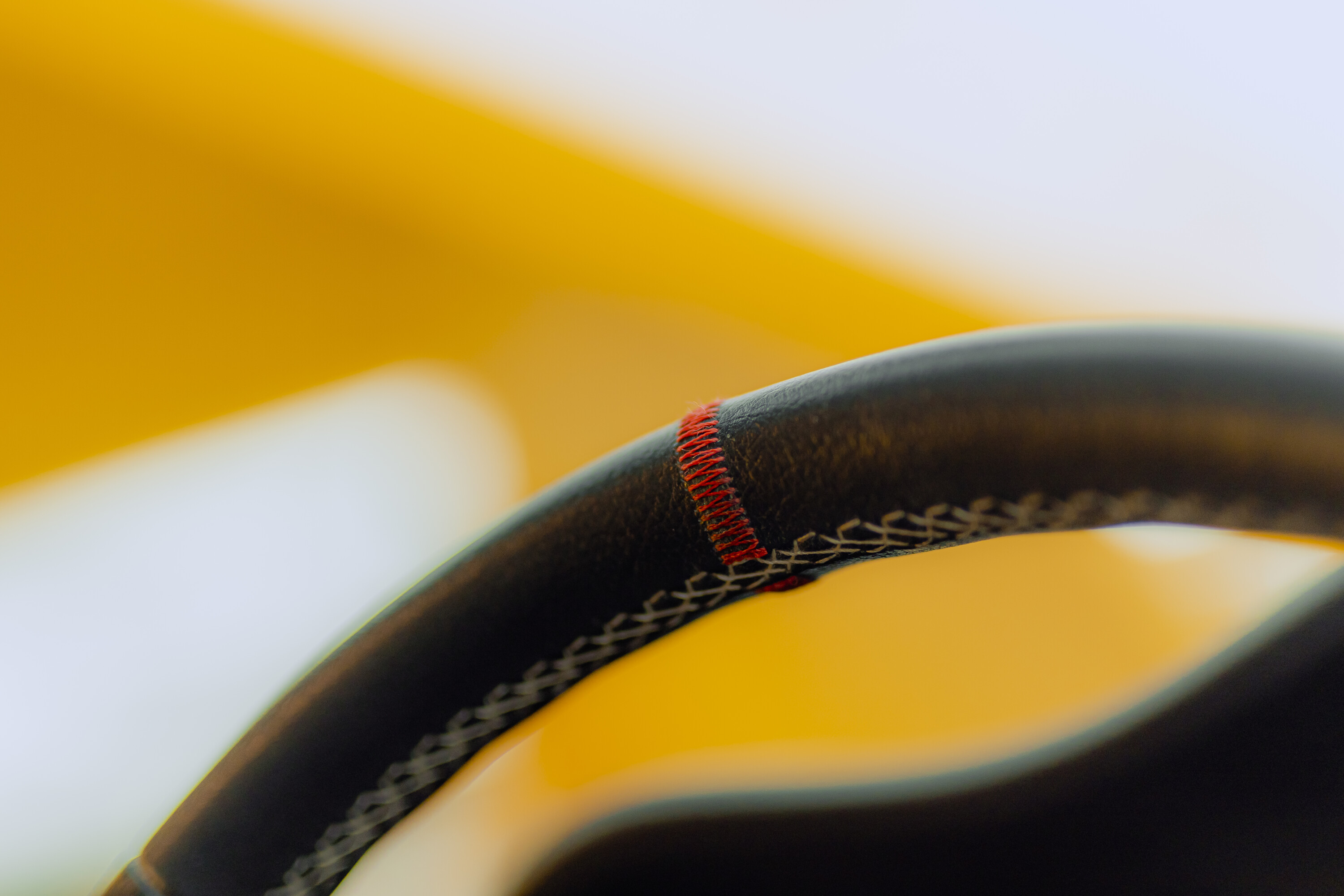
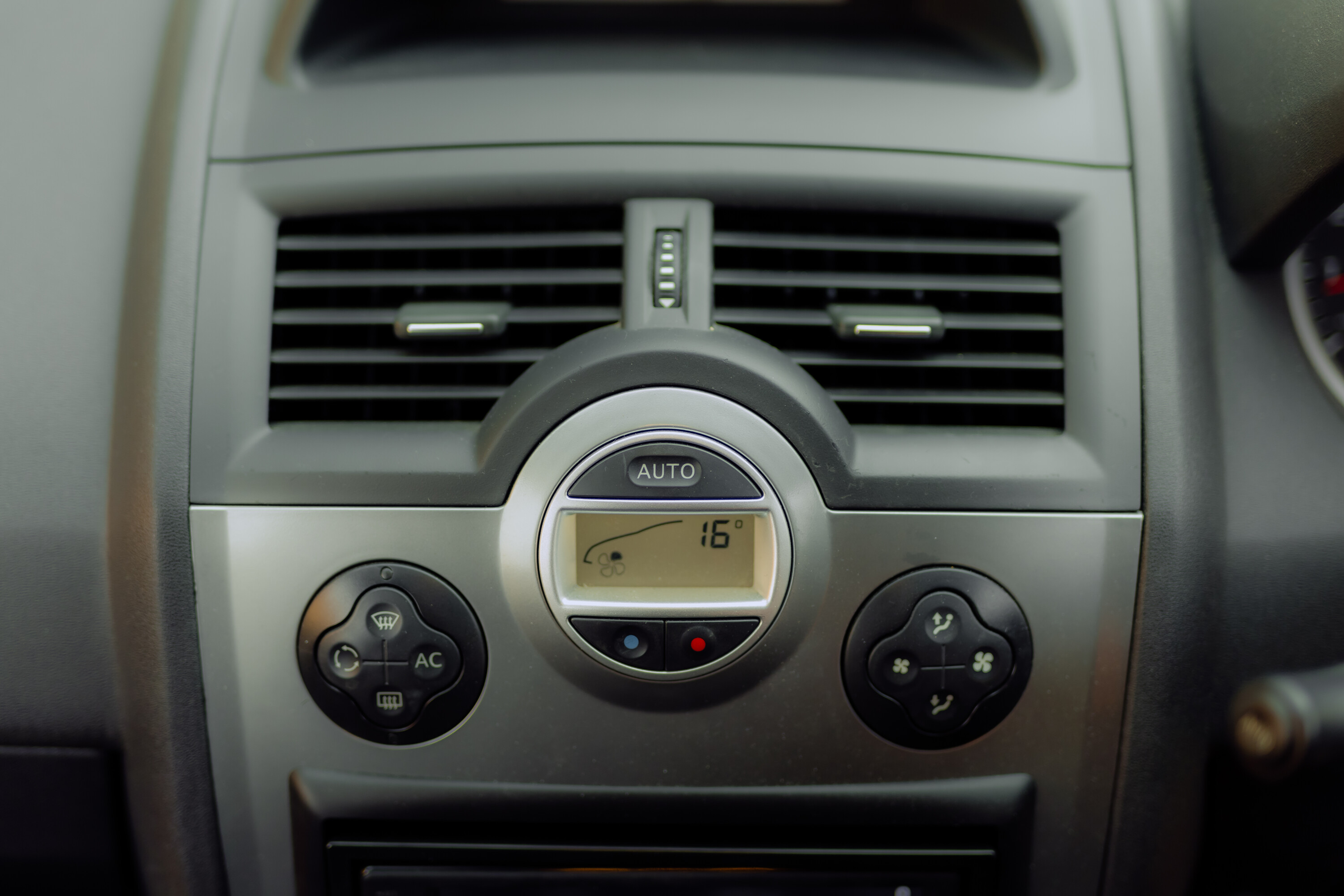
The interior plastics are unflashy and somewhat prone to scratching. The Recaro Trendline front seats are excellent but should you want to sit lower in the car, there are a number of aftermarket subframe options that allow for this.
Some 17 years after it was first released, a decent Megane R26 still feels alert, fun to drive and refreshingly no-nonsense. It was launched in what many see as a bit of a sweet spot, where buyers still got sensible safety features like eight airbags, electronic stability control and brake assist but before we got to an era where safety systems became intrusive.
1
This lack of complication means that it’s an easy car to get into and quickly understand.
The dynamics are similarly intuitive, although the way the differential drags the car in towards the apex in sharper corners might come as a bit of a surprise when it’s first experienced. From that point on, you learn to work with the diff and can get on the power a whole lot earlier than you might expect for a car that sends all its torque through the front treads.
Talking of which, peak torque for the R26 as standard is 310Nm. Even better, that figure was maintained in an almost unfeasible plateau from 2000 through to 6000rpm, so unless you’re a certified halfwit when it comes to shifting gears, it’s hard to catch the Megane off guard.
1
Between 2300 and 3000rpm, there’s a deep-chested bass note to the R26’s aural signature which makes it feel like a far gutsier powerplant than it really is. Some owners claim that dropping the rear seats markedly helps the in-cabin acoustics.
Context is key. By today’s standards, 310Nm isn’t that big a deal. It’d be comprehensively outgunned by a 370Nm Volkswagen Golf GTI or a 392Nm Hyundai i30 N. Slap a set of decent boots onto the Megane though (Michelin PS4s are a recommended fit), and it might still deliver the most fun through any given set of corners.
It has a talent of feeling as if the limit is not a sharply defined line, but a broad and accommodating zone into which you can happily push the car, knowing that it’ll signal very clearly and benignly when you’re taking unacceptable liberties.
1
With a kerb weight of just 1355kg, the Meg is hefting around 90kg less through a corner than an i30 N and it feels correspondingly light on its feet.
Compounding that impression is a wheelbase of just 2625mm. Driving the Megane is all about managing the front end, which shoulders 64 percent of the weight distribution.
The steering’s gearing isn’t hyperactive, which helps settle the car on turn-in. Once you have the front tyres engaged, you can choose whether to scribe a clean line or take the fronts to the edge of lateral adhesion and then jump off the gas, setting the rear end swinging round. Either works.
1
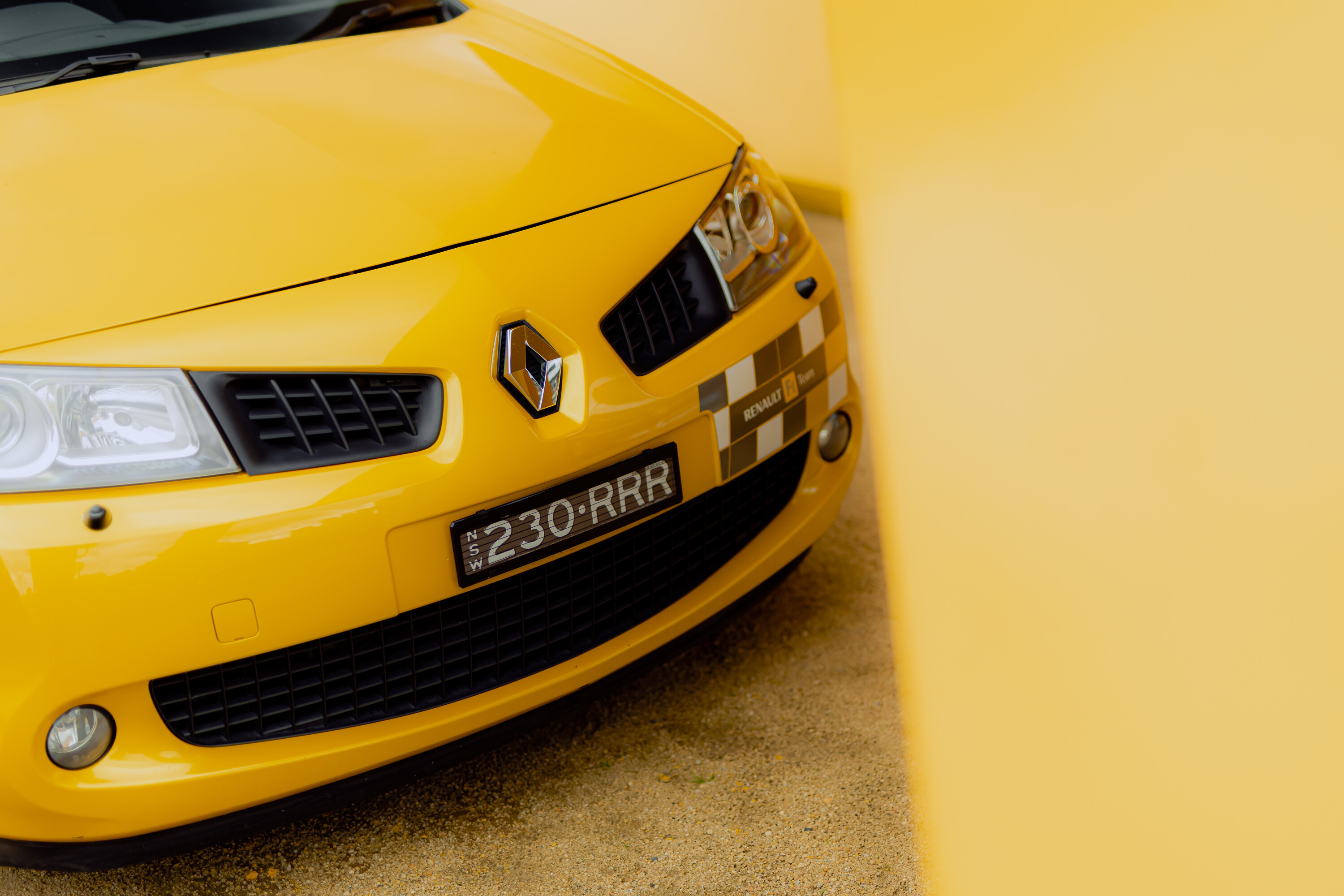
The R26’s F1 branding came about by dint of Renault retaining both the 2006 constructors’ and drivers’ championships, Fernando Alonso taking home the big gong, with Giancarlo Fisichella chipping in enough points to keep Ferrari at bay.
And yes, the car in which Alonso won in ’06 was called the R26. From this high point came a rapid decline to the ignominy of Piquet Jr and ‘Crashgate’ in 2008. It was to prove the last time the French manufacturer would claim an F1 title, with operations transferring to Alpine branding in 2021.
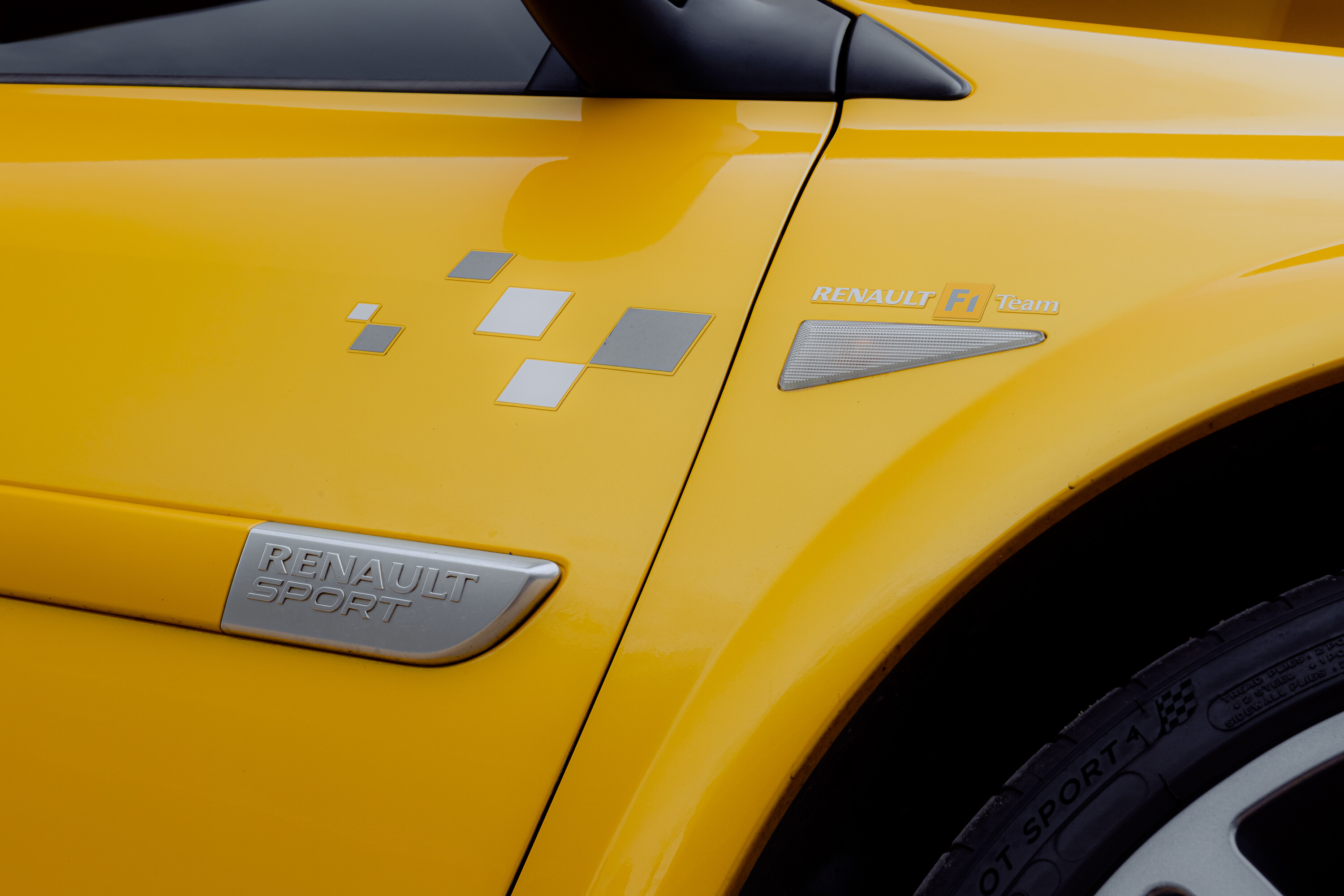
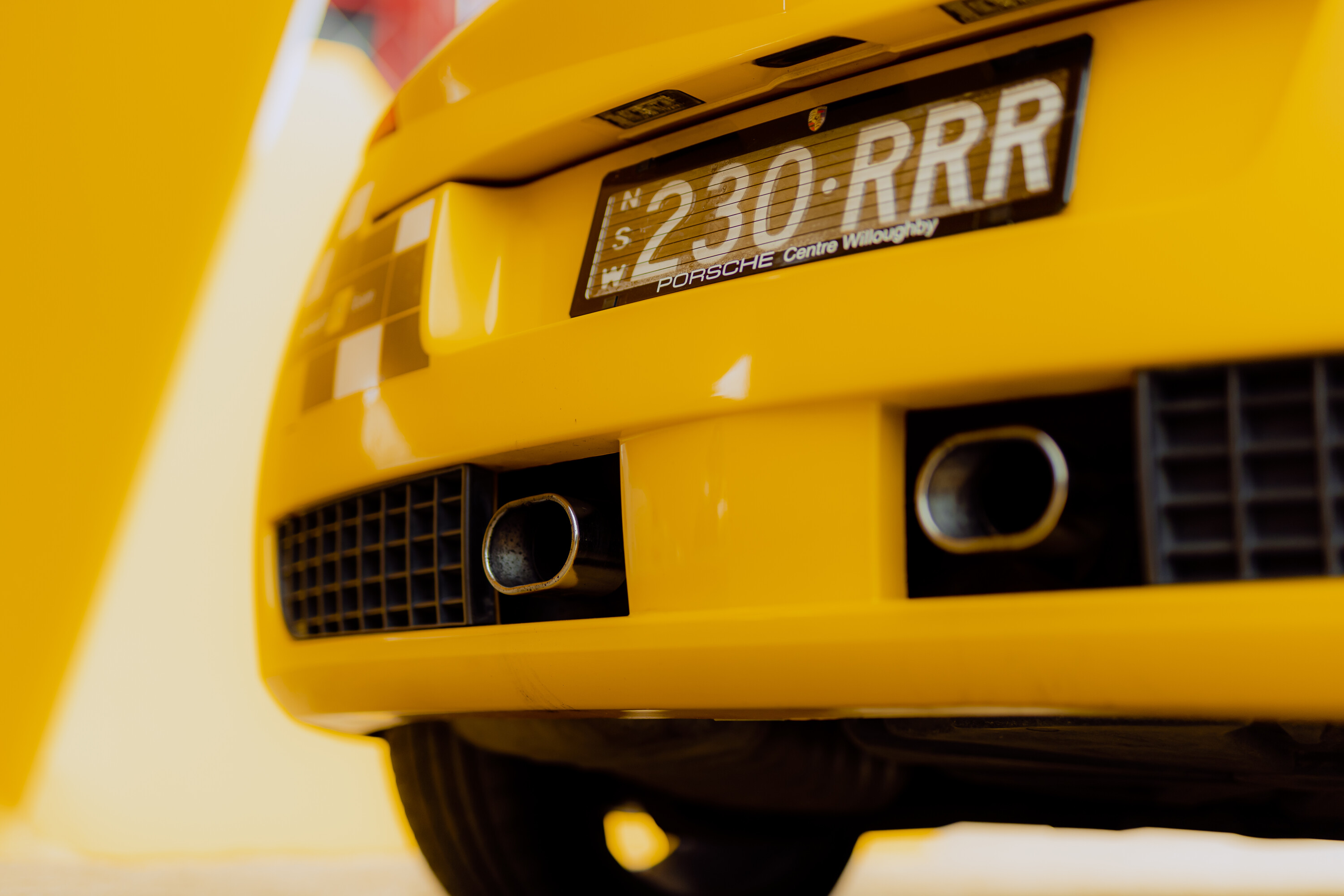
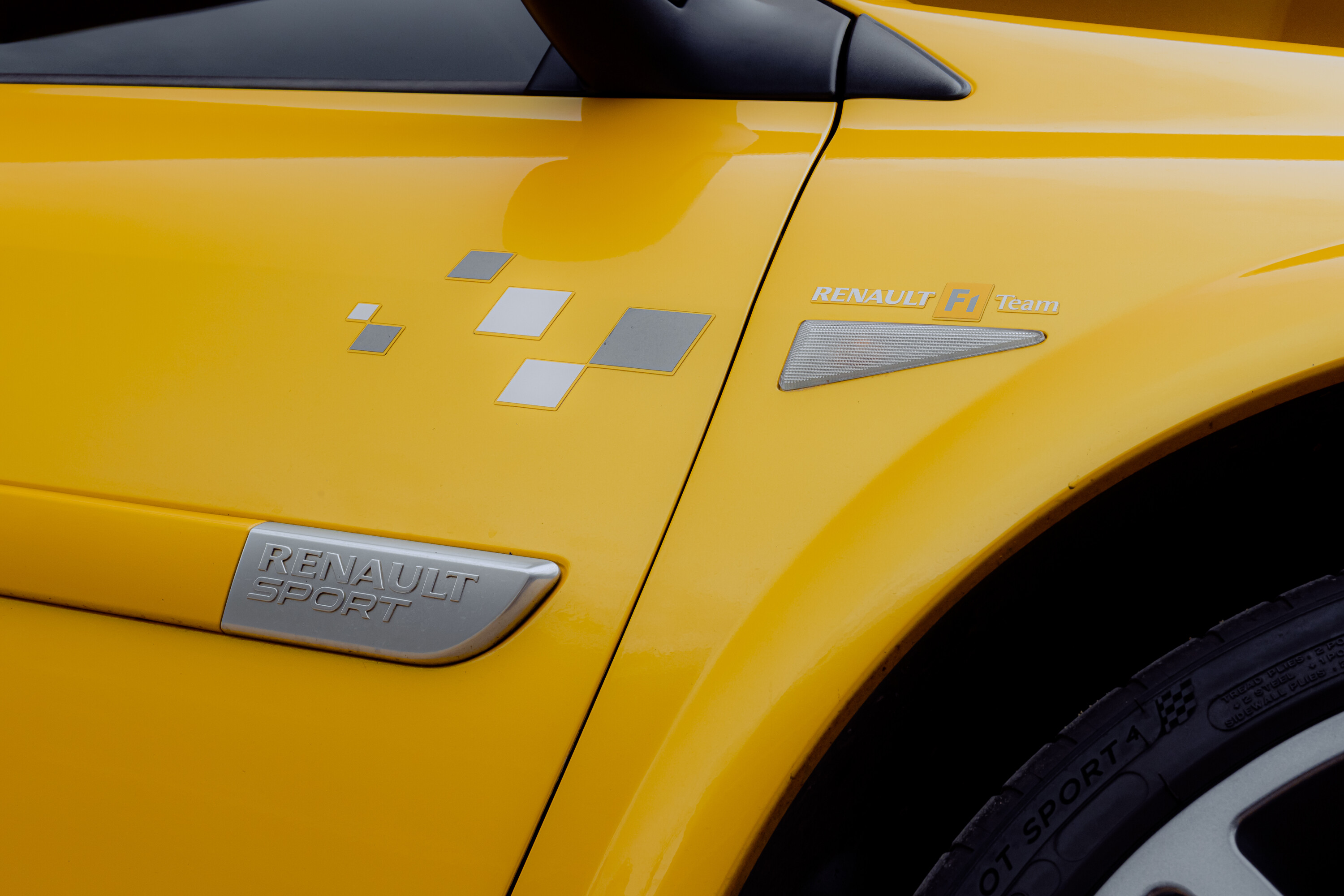
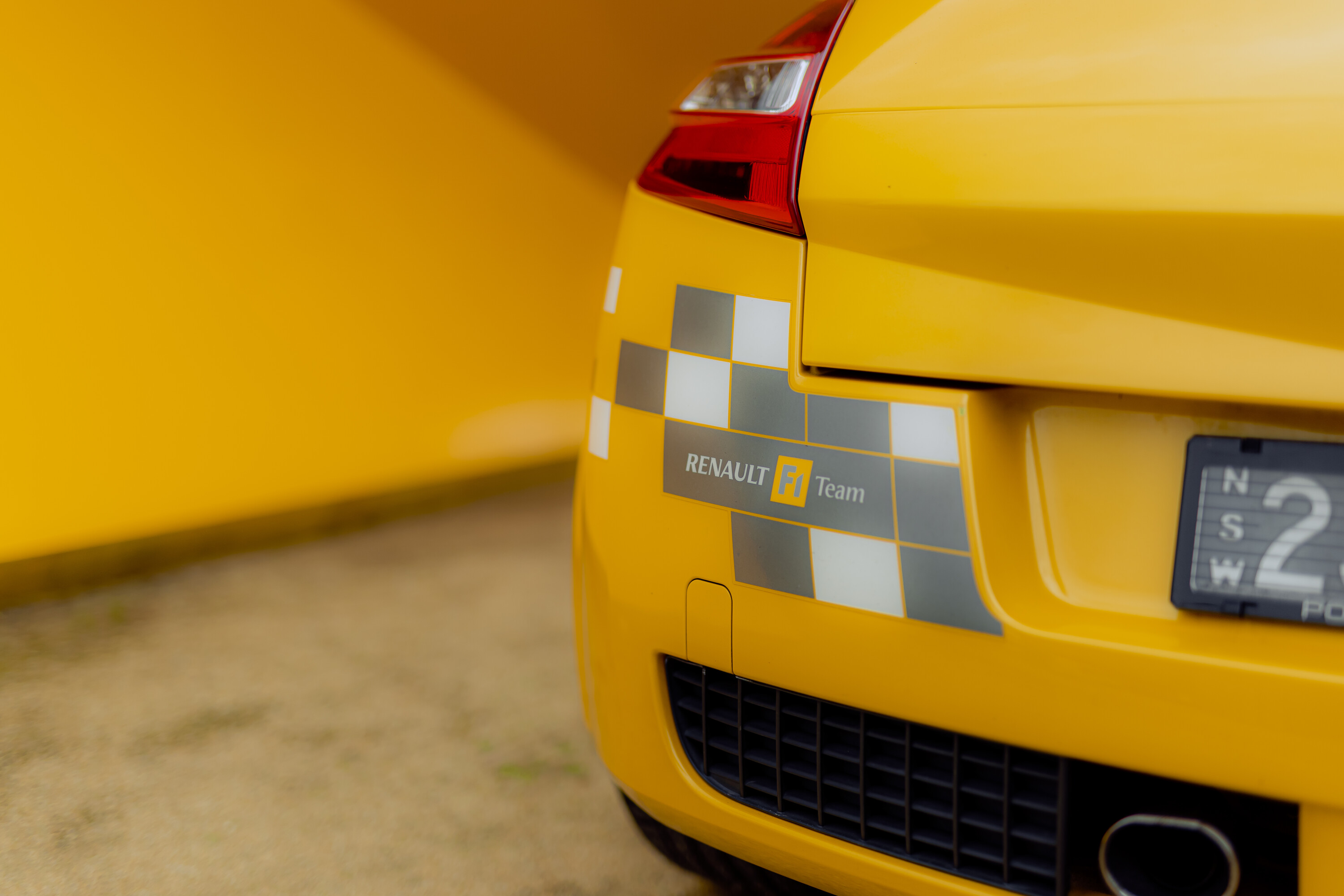
Opinions vary on the chequered flag decals applied to the R26, but should they not find your approval, 20 minutes with a hot kettle will get rid of them for good and give the Megane a more subtle look. Personally, I think they’re an integral part of the car’s identity.
1
Of course, there will be many who can’t see the point of the Megane R26 and will ask what this car does better than its successor, the Renaultsport Megane RS 250.
Objectively, the answer is either very little or nothing but since when did we buy enthusiast cars purely on objective measures?
We buy cars because something about them appeals to us, and the R26 is chock-full of character, has styling that will never be mistaken for any other car and, even by today’s standards, is a great steer. Any one of those reasons would be justification enough for us.
1
More and less
The Megane R26.R shaved 123kg from the weight of the R26 by ditching the rear seats, passenger airbag and curtain airbags, the climate control system, the rear wash/wipe assembly and heated rear window, the front fog lamps, the headlamp washers, the stereo and the majority of the soundproofing.
Add a carbonfibre bonnet, plastic tailgate and rear side windows, Sabelt seats with carbonfibre shell and aluminium base and six-point harnesses and you have a track weapon.
1
Renault didn’t stop there, though.
Uprated front and rear springs, revalved shock absorbers, beefier bushes, grooved brake discs, a wider track and the option of sticky Toyo Proxes R888 rubber contributed to a front-wheel-drive lap record of the Nürburgring.
In the 15 years since the R26.R went on sale, that mark of 8m16.9s has been whittled down to the current best of 7m44.9s, held by the current Civic Type R.
MORE
Everything Renault
| Renaultsport Megane 230 F1 Team R26 | |
|---|---|
| Engine | 1998cc 4cyl, 16v, dohc, turbo |
| Max power | 168kW @ 5500rpm |
| Max torquq | 310Nm @ 2000-6000rpm |
| Transmission | 6-speed manual |
| Weight | 1355kg |
| 0-100km/h | 6.5sec (claimed) |
| Price (now) | $10K-$15K |
