
- Leaked PowerPoint slide gives away Toyota plans
- Another small SUV due
- Lexus range set for shake-up
But in addition to the information about the forthcoming GR86, the leaks by AllCarNews mention a number of new products in the Toyota/Lexus pipeline too – and the world’s biggest car company is keeping very busy.
The leaked slide from the presentation itself only goes up to the end of 2022, but in addition to the slide AllCarNews has caught hold of further information suggesting a new crossover is bound for a spring 2020 debut as well as a refresh for the Camry late this year – itself ahead of an all-new 2024 Camry.
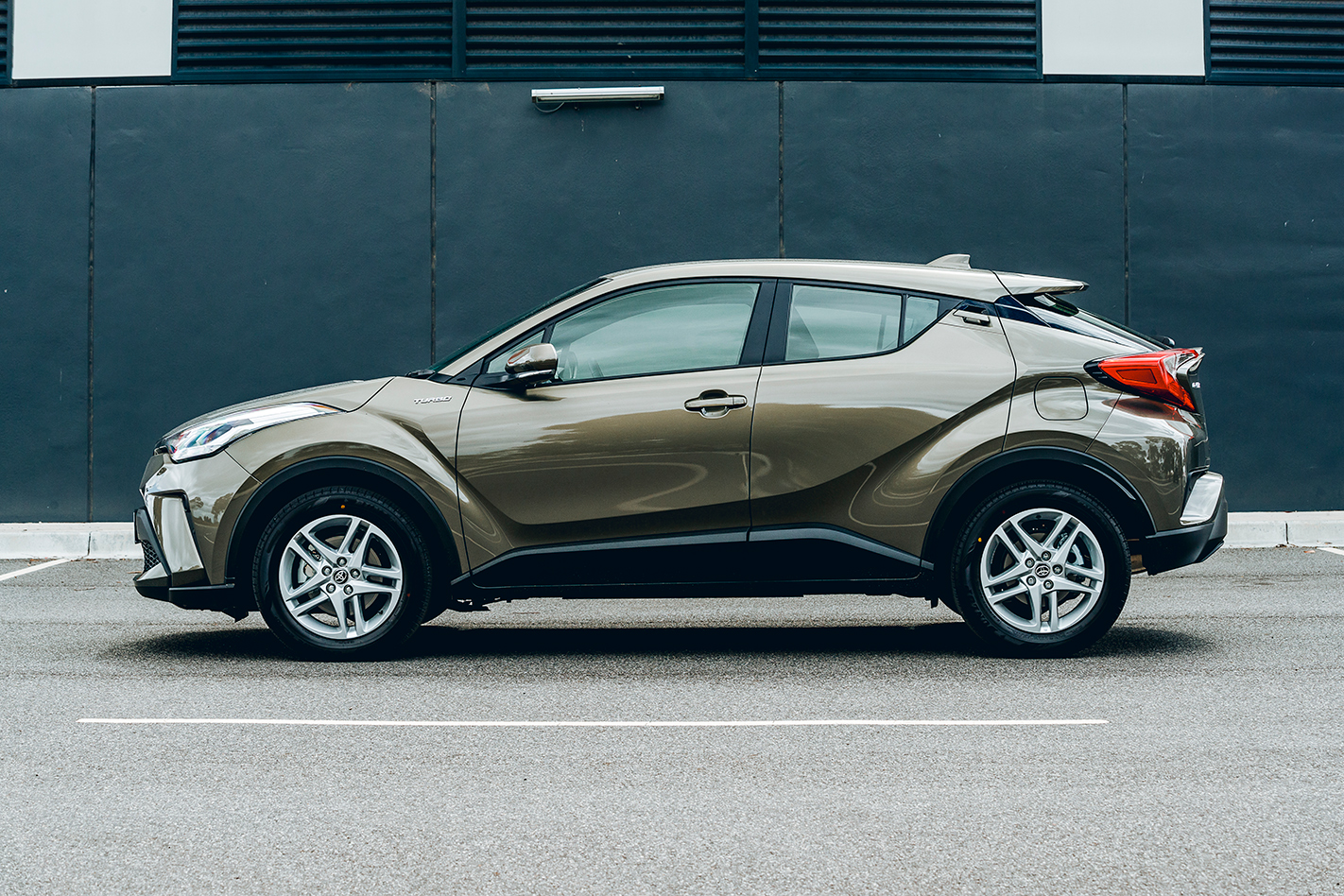
It goes on to mention a number of US-based products like the 4Runner, Sequoia and Avalon that are less relevant to Australians, but something that we wouldn’t mind seeing Down under is the late-2021 Tundra dual-cab ute.
The slide also rumours the introduction of yet another compact SUV in 2021 that is likely to be based on the Corolla. That crossover would join with the confirmed Yaris-based SUV that is currently in testing.
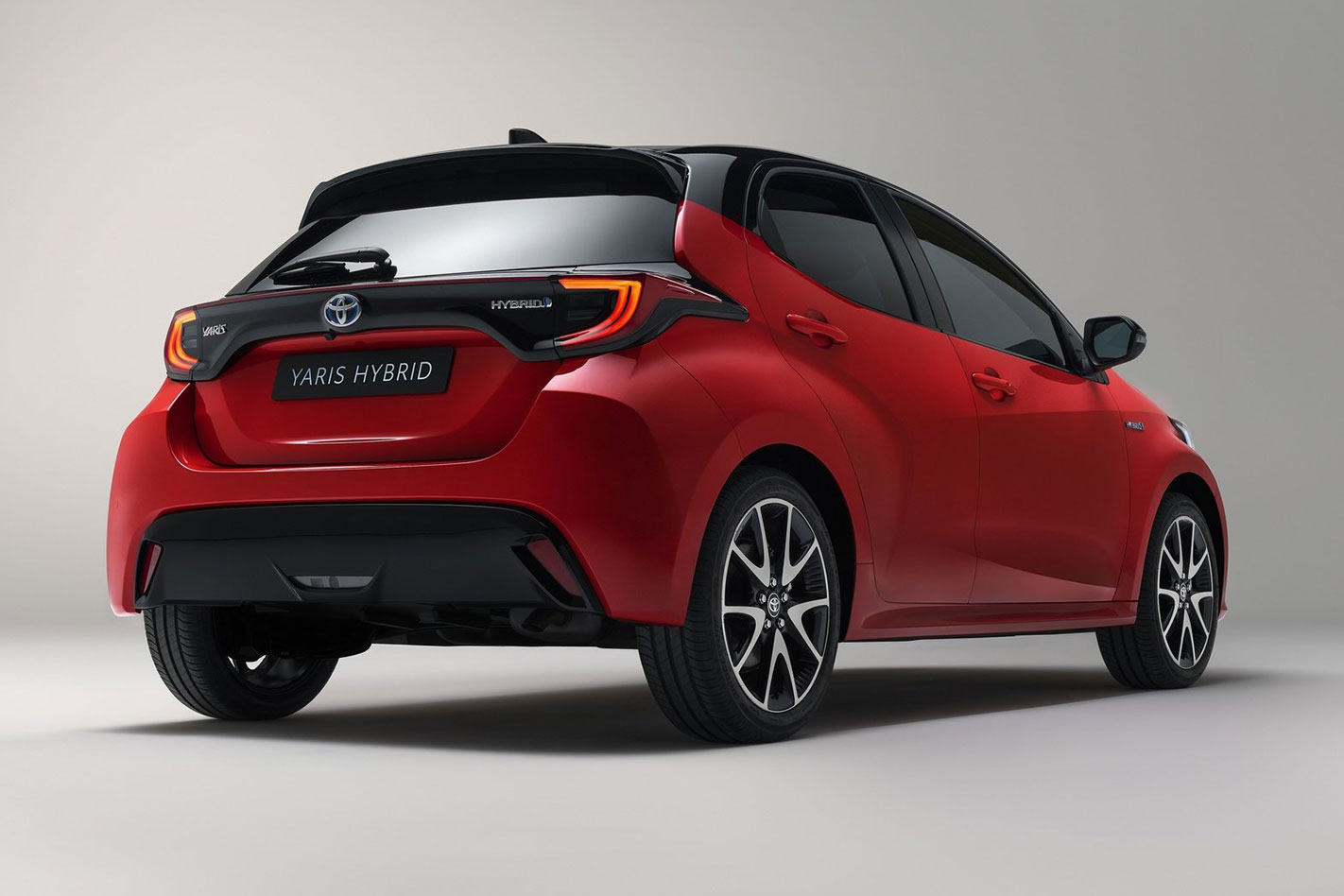
Toyota isn’t the only one readying its plans for the next few years. Lexus is mentioned in the post as preparing the ES and LS models for a 2022 refresh, GS is said to be killed off in favour of a Lexus-badge version of the upcoming Mirai fuel cell sedan, a brand-new IS sedan is headed for 2021 and a new RX SUV is coming in 2023.
A twin-turbocharged V8-powered LC F is still in the works for Lexus and is coming in 2022, but it’s also suggested that lesser models like the RC will no longer retain V8s for the future.
Lexus is also said to be upping the luxuriousness of its LX large SUV while Toyota will offer a down-spec version of the LandCruiser (perhaps a continuation of the 70 Series), to further separate the two SUVS.
As expected, Toyota isn’t about to spill the beans on its future model plan… but it all makes perfect sense to us.
Custom Porsche 911s are a dime a dozen, but this example that is for sale in the United States, dubbed the “Centro 911”, is probably the most outrageous out there.
The main centrepiece of this custom 997-gen Carrera S is its single, centre-mounted driver’s seat, lending any driver the McLaren F1’s famed center seating position.
To accommodate the hot seat’s new position, the instrument binnacle, pedals, and the entire centre console has been shifted to the right and grafted onto a custom console, maintaining the car’s six-speed manual shifter and handbrake assembly.
From the pictures supplied, the build looks remarkably well executed, with no indication that it is sporting a relocated steering assembly from the front trunk.
Besides the seating position and clear aftermarket LED taillights, the 911 looks like a standard 911 with a factory-fitted Aerokit and 19-inch Sport Design wheels.
As for the drivetrain, the Carrera S’s 3.8-litre naturally aspirated flat-six features an aftermarket intake and titanium exhaust system, whereas the manual transmission copped a short-shifter upgrade.
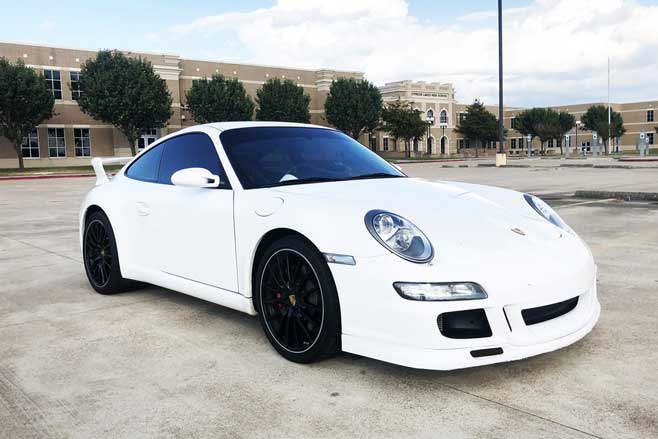
The Centro 911 is currently on sale at Bringatrailer.com with a current bid price of USD21,997 (AUD35,800) as of the time of publication, which is a great deal cheaper than the going price of a used 911 Carrera S of the same vintage.
The current owner acquired the car in the middle of last year and added around 3000 miles to its 33,000-mile total, which makes one wonder of its current condition.
Considering its price and the 997-gen Carrera S’s status as a PCOTY winner, this might be the cheapest substitute for a McLaren F1, if one could ever consider there ever being a substitute.
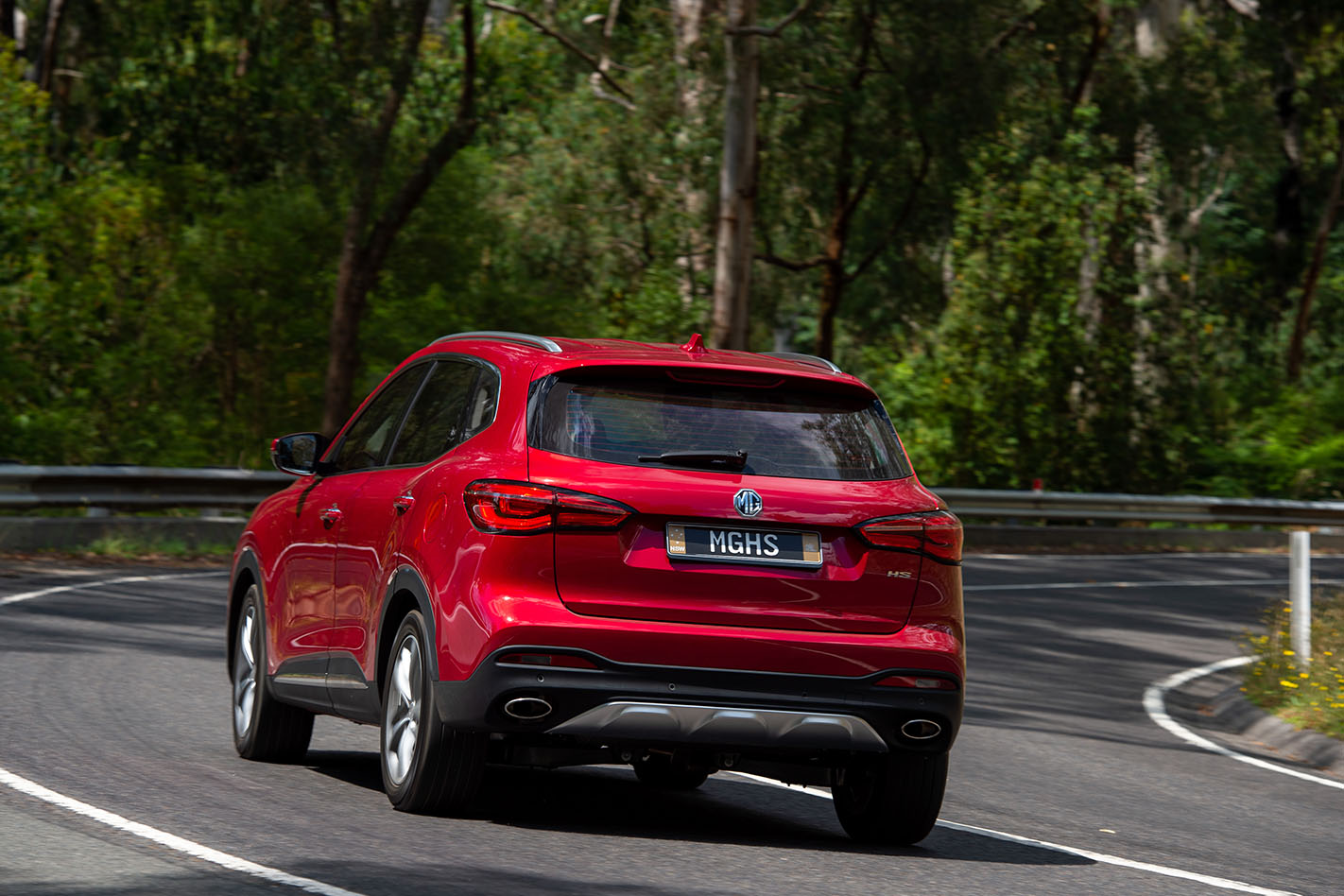
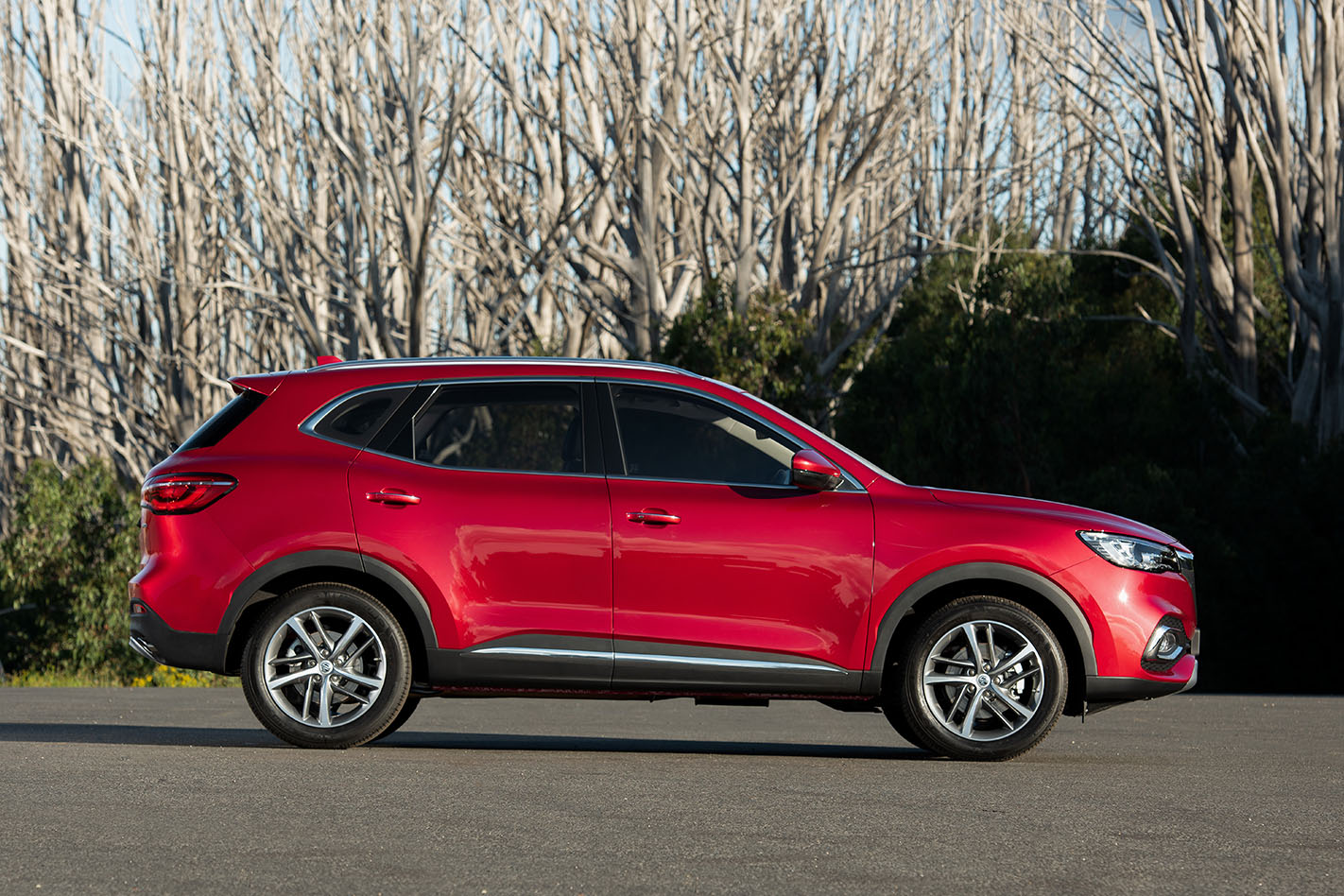
The Wheels Verdict: If you want value for money above all else from your mid-size SUV, the MG HS has you covered. Filled to the brim with generous kit, its showroom appeal is undeniable. However, it lacks some of the on-road refinement of its biggest competition.
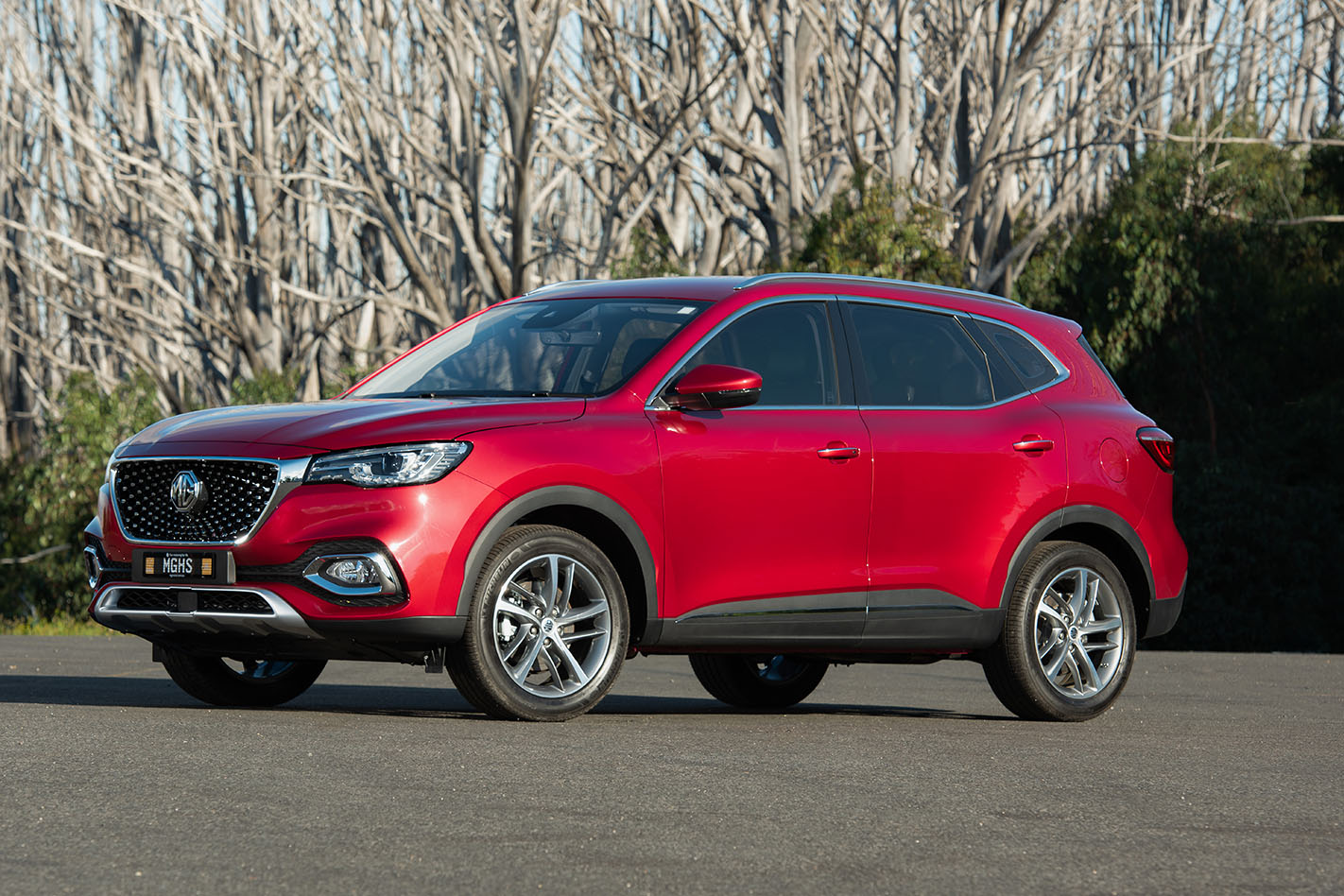
WHAT IS THE MG HS?
MG’s relaunch in Australia has been going for a couple years now, and the HS could be the secret sauce it needs to hit the big time. A rival to the Toyota RAV4 and Mazda CX-5, it hopes to win over families across the country.
WHY WE’RE TESTING IT
Priced to sell in an ultra-competitive segment, we thought it vital to put to the test one of the freshest mid-size SUVs on the market.
THE MG HS REVIEW
Is there a more hard-fought segment of the Aussie car market than the medium-size SUV? The choice for consumers is bewildering, with a number of stand-out cars available for well under $40K. What to do, then, if you’re a challenger brand seeking a slice of the pie? MG has a clever strategy to do just that, as we found on the Australian launch of its new HS.
MG’s previous offerings in Australia have been akin to taking a knife to a gunfight. They’ve been cheap, but the build quality and drive haven’t been good enough to be deemed cheerful. Nevertheless, MG has made inroads. Brand recognition of the octagon badge has given it a considerable edge over previous attempts by Chinese makers to woo Aussie buyers – consider the struggle for brand recognition faced by the likes of Foton and Chery.
This familiarity, plus decent ANCAP safety ratings and long warranty periods, have also helped MG establish a foothold in the Aussie market. Sales rose 177 percent in 2019 to 8326 units – more metal moved than by either Volvo, Jeep, Skoda, Peugeot or Mini. Now, MG has replaced the GS mid-size SUV with the HS. The strategy and execution has sharpened significantly, creating a value proposition some will find hard to resist, particularly with a five-star ANCAP rating and seven-year, unlimited-kilometre warranty.
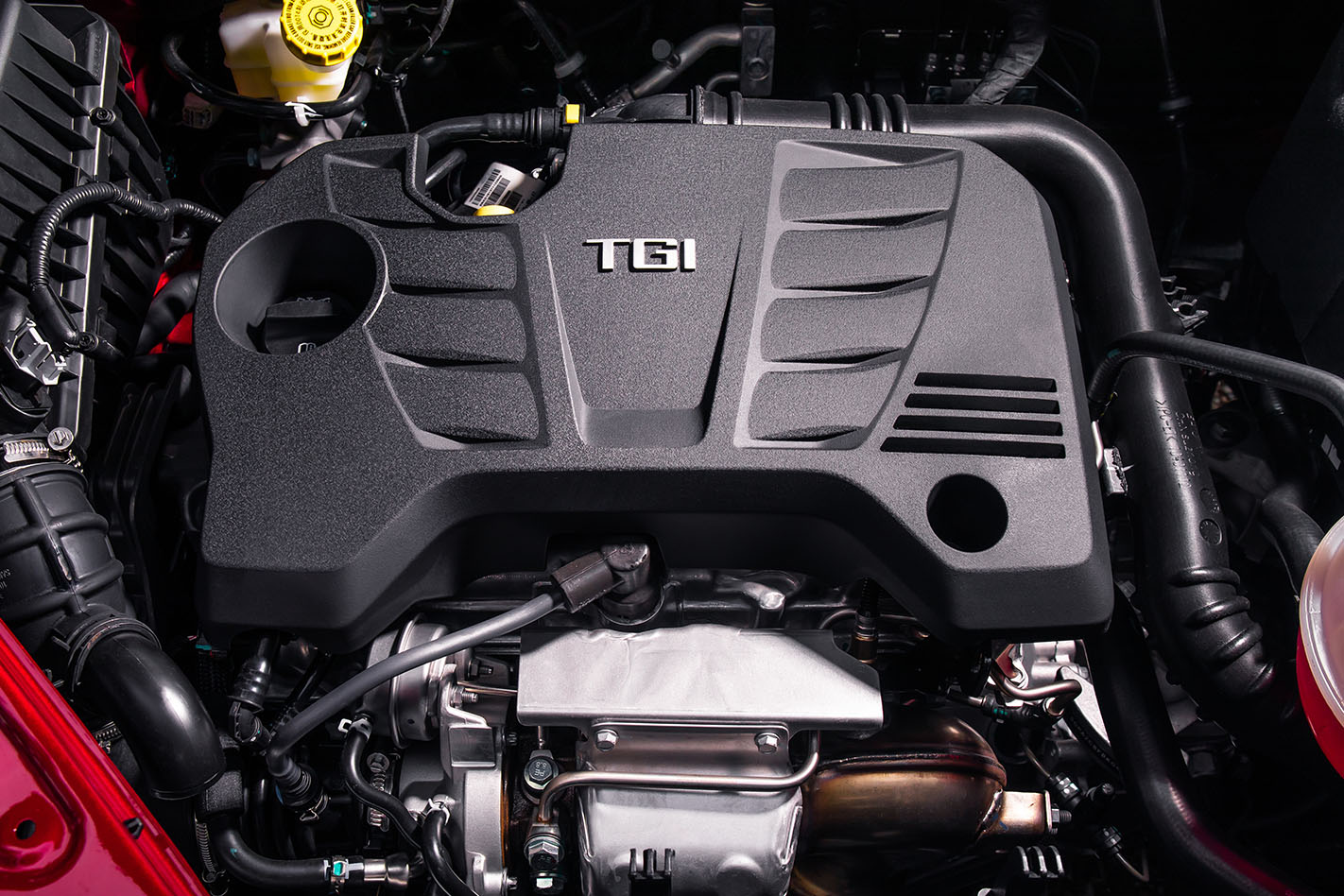
Unlike the GS, which came in three 1.5-litre variants and a 2.0-litre, the HS solely has two 1.5-litre specs – the entry-level Vibe for $30,990 and the Excite for $33,990 driveaway. Both are front-drive and powered by a version of the turbo four-pot (and seven-speed, dual-clutch auto) from the GS.
All models feature MG Pilot, a comprehensive suite of safety features including lane assist, blindspot monitoring, rear cross-traffic alert, adaptive cruise control, speed sign recognition, auto speed regulation and AEB. Throw in smartphone connectivity and, in terms of specification, MG has neatly wedged any other SUV player trying to compete at this price point.
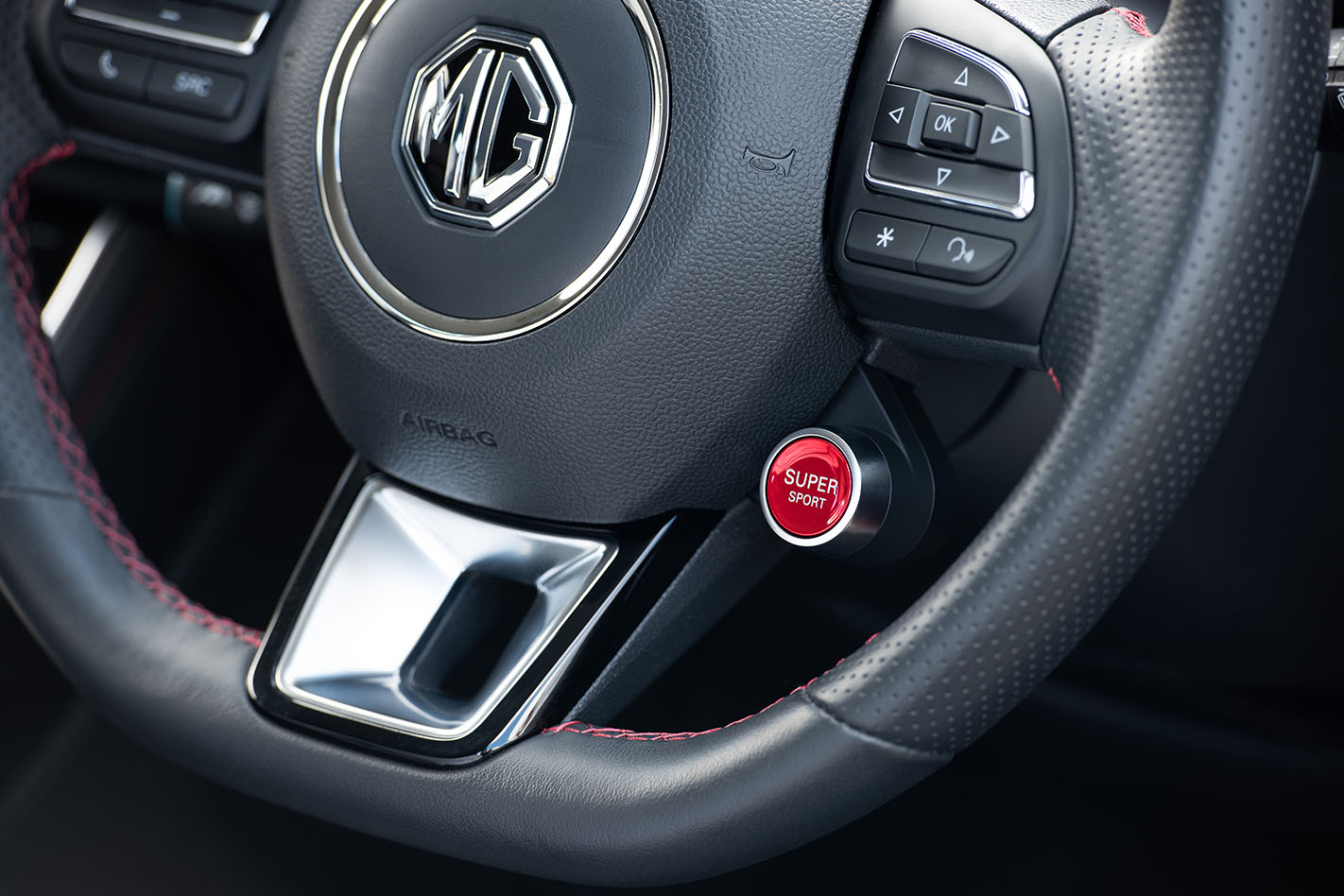
Step up to the Excite and you get an electric tailgate, sat-nav, paddle shifters, dual-zone climate control, a sport drive mode (with cool red button on the tiller), LED headlights, auto wipers and ambient lighting.
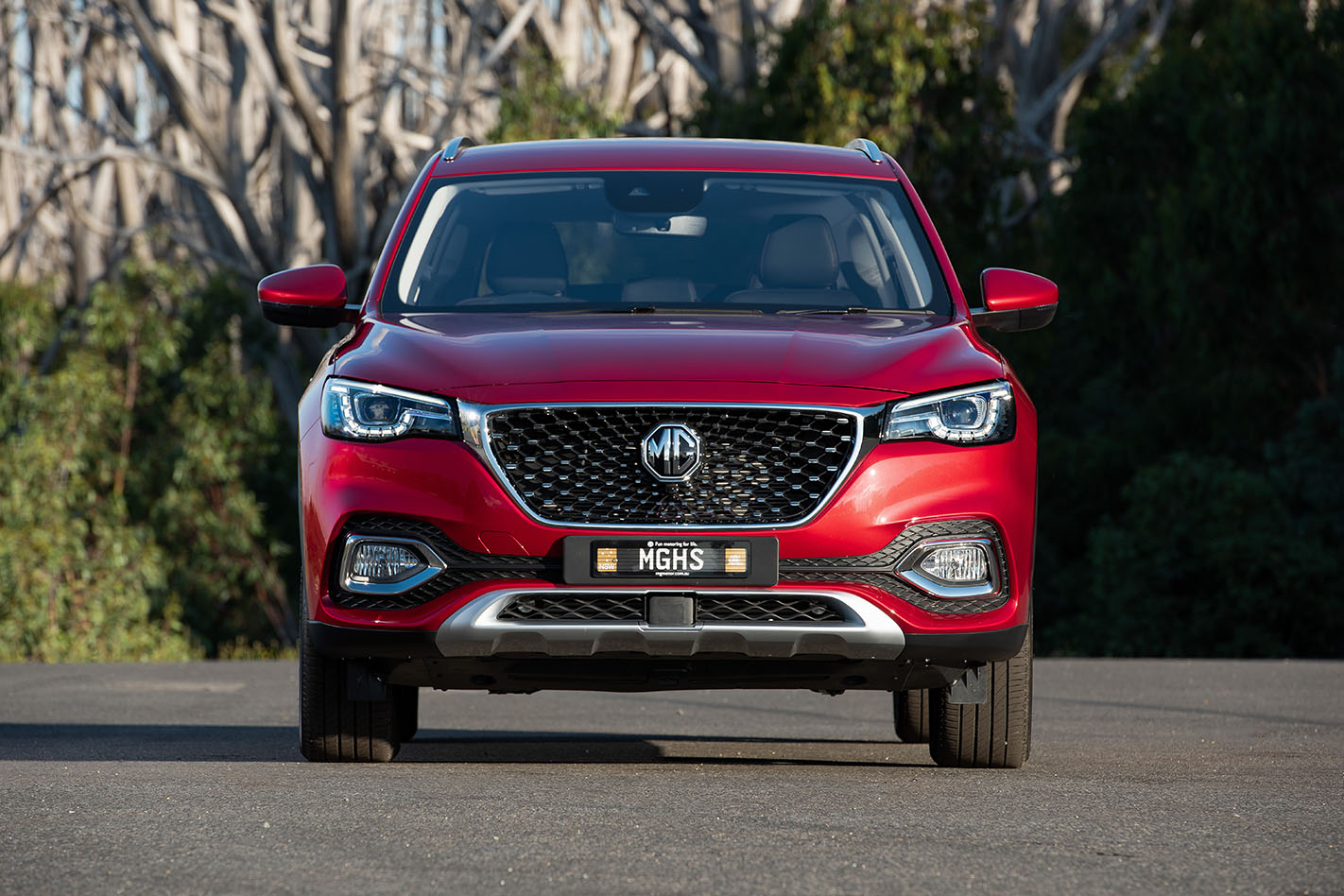
There’s little to differentiate the two visually, aside from the Excite’s 18-inch rims. While the electric tailgate is welcome, I’d swap power driver’s seat adjustment and DAB radio for the rest of that kit. Perhaps these are being saved for a third, range-topping variant.
The fine print includes mandated service intervals of 10,000km or 12 months – although capped-price servicing details are coming.
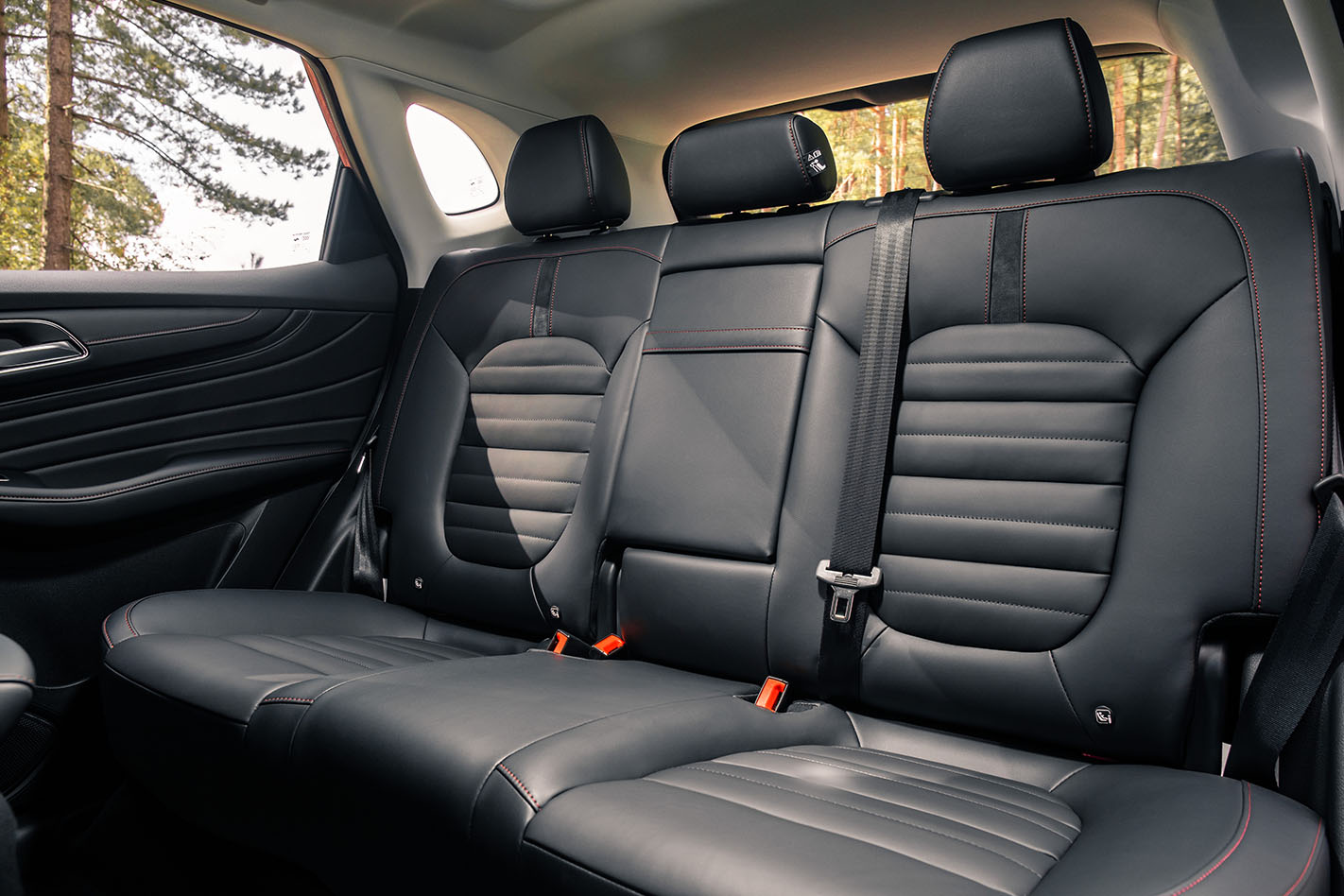
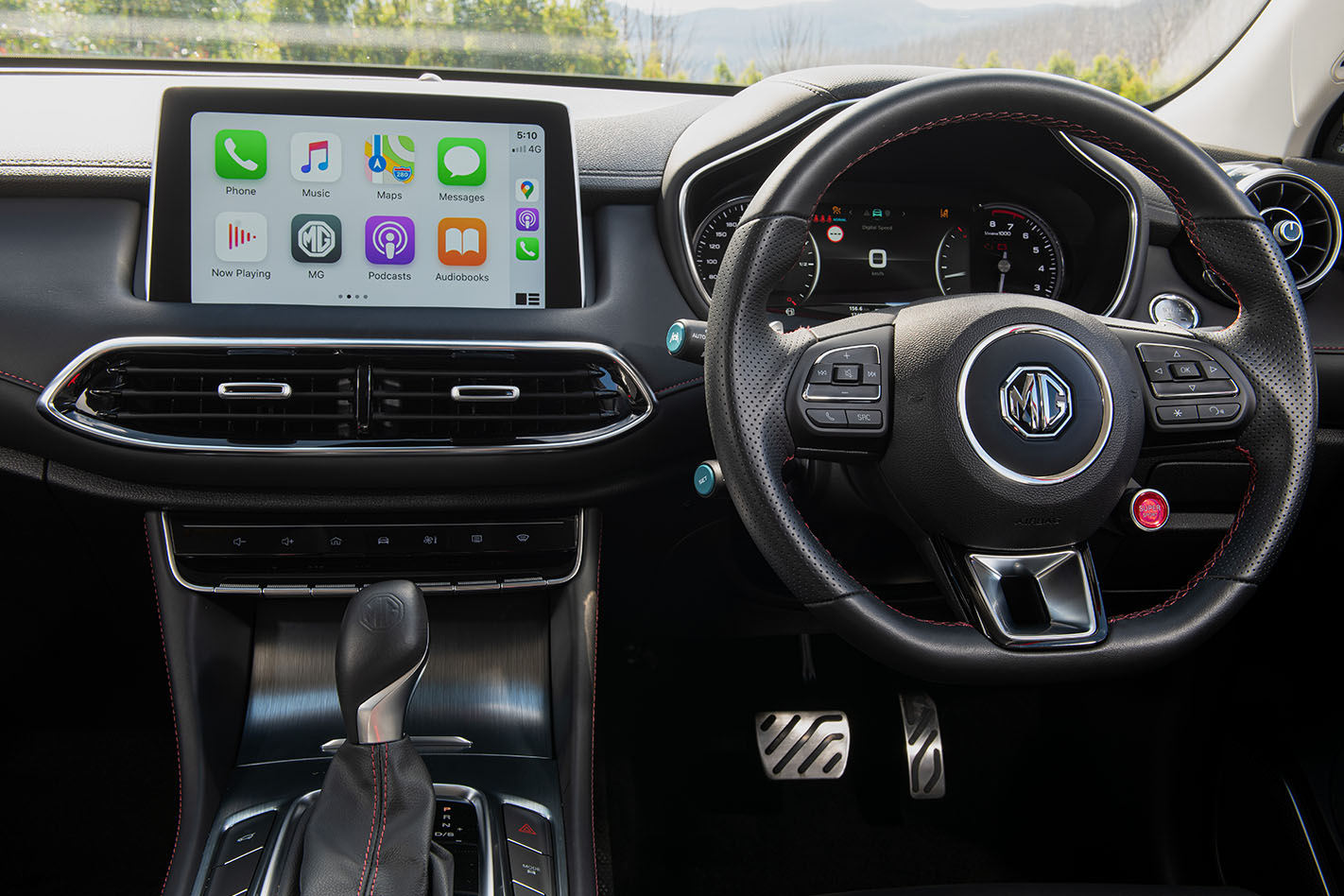
The interior feels surprisingly premium, with plenty of soft-touch materials, supportive faux leather seats, a 10.1-inch touchscreen and a leather-wrapped, tilt- and reach- adjustable multifunction steering wheel that wouldn’t be out of place in a European rival. Fit and finish of trims, carpets and switch gear is pleasing.
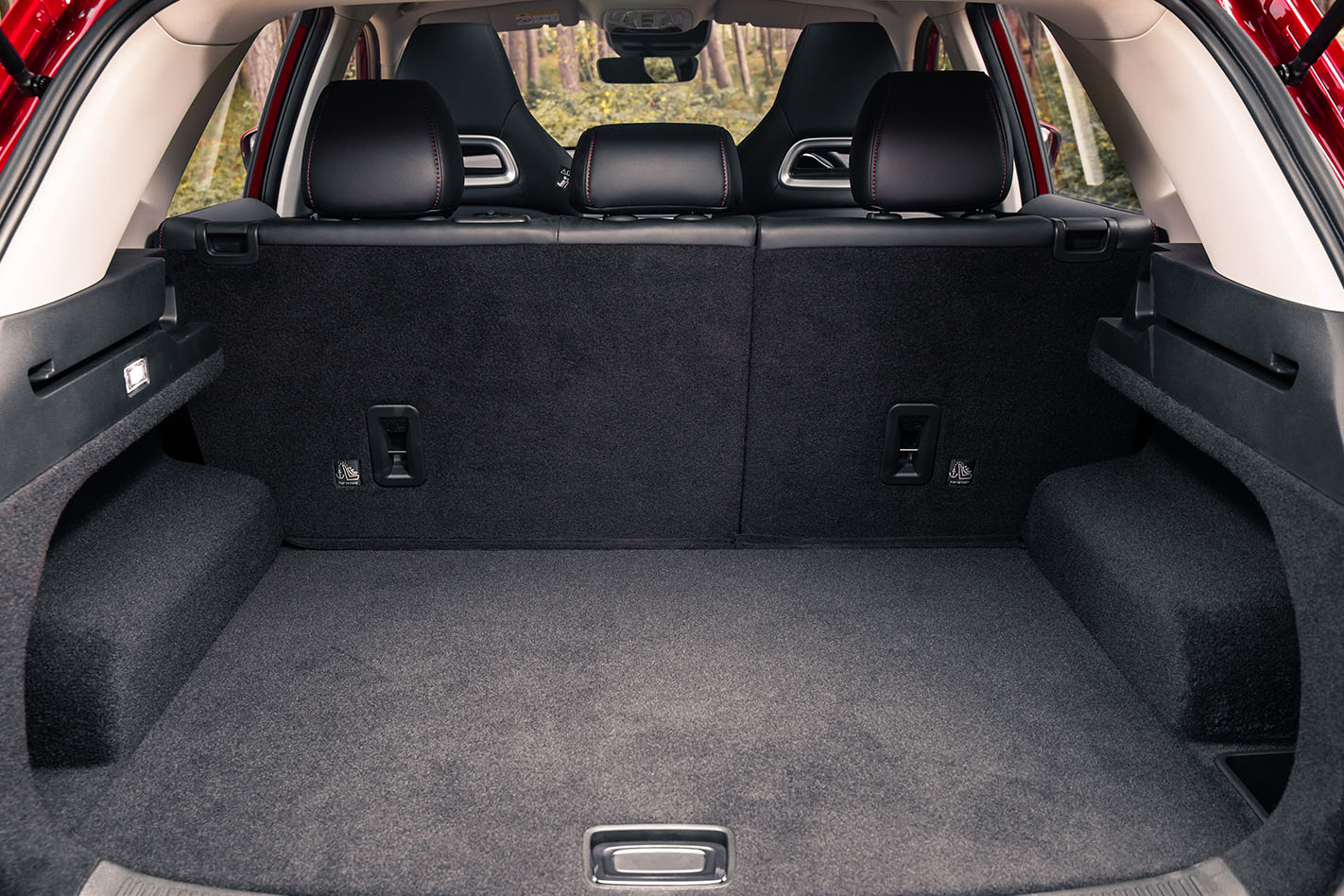
Rear passengers are well catered for, with a (slightly) reclining 60/40-split seat, fold-down centre armrest, ample legroom, air vents and twin USB ports. There’s no roof light in the back, but there is ample luggage space: 463 litres, or 1287 litres with the rear seat down.
On size and feel alone, the MG HS will have pricier rivals looking over their shoulders.
Our road loop on a cold and rainy summer day (thanks, Melbourne) is in the Yarra Valley north-east of the city and delivers a challenging mix of highway driving and country B-roads.
The cabin is well insulated from road and wind noise, contributing to a quality feel inside.
Despite turbo lag off the line, the 119kW engine has ample poke for a vehicle this size. It’s not too noisy, and revs willingly. The dual-clutch ’box can be indecisive and lacks polish, but I prefer it to less-sophisticated CVT trannies found in some rival SUVs. The tyres are Maxxis Bravos on the Vibe, with better Michelins on the Excite.
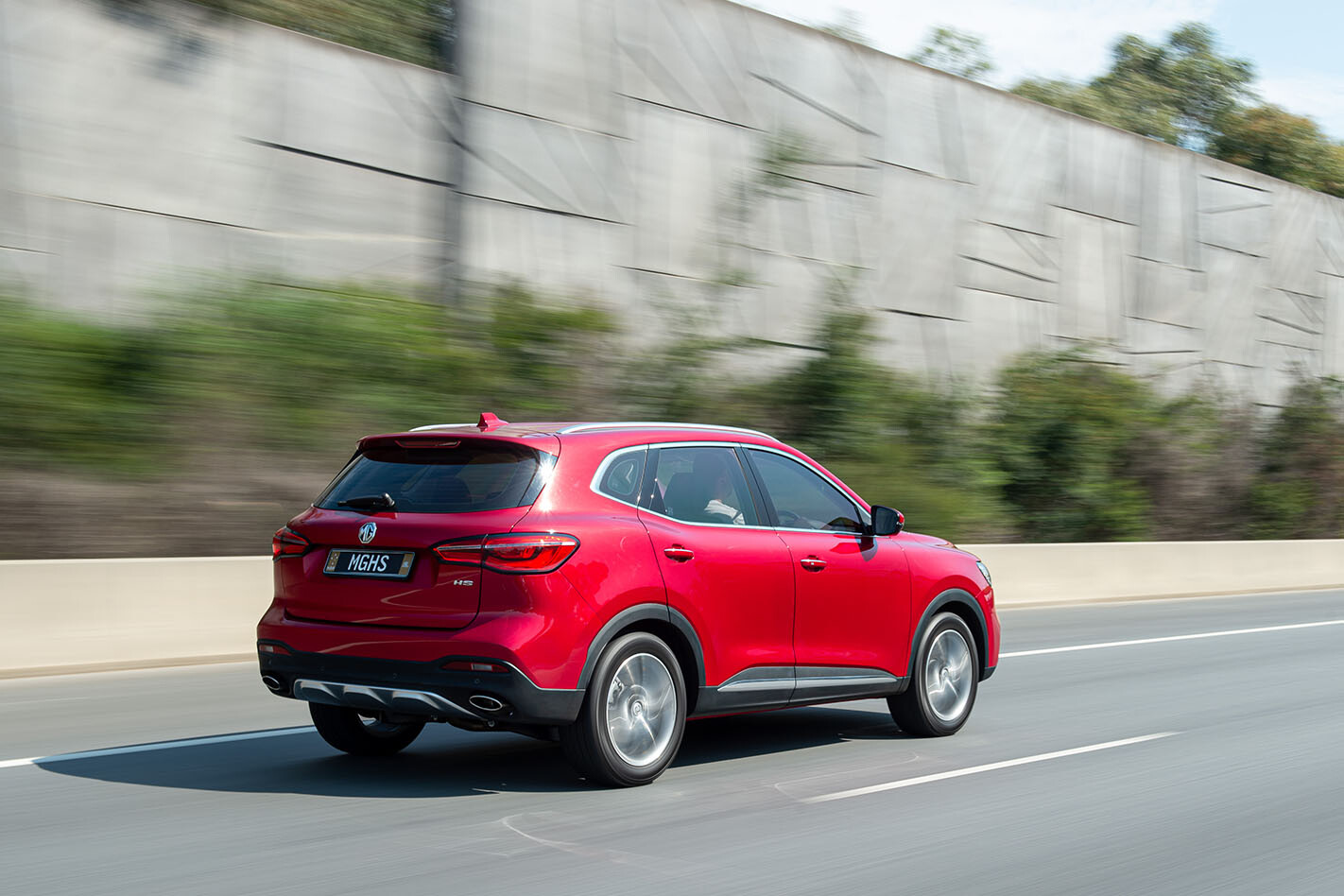
As a drive, the HS represents a step up over the GS. Steering, braking and handling are all as solid as they need to be in a family SUV. Ride is improved, although some harshness on less-than-perfect surfaces betrays the need for further development work if the HS is to match the class leaders. Claimed combined fuel economy is 7.3L/100km. Claimed figures for the 0-100km/h dash are in the mid- to low-8sec bracket.
Apple CarPlay and Android Auto work well, but a few areas highlight the development gulf between the MG and its more established rivals tech-wise.
Interplay between the touchscreen and the buttons below it isn’t always intuitive or speedy. With headlights on during the day, indicators for the buttons are rendered invisible. Manual dials for the Excite’s climate control would also be appreciated, as adjusting it is ponderous, though would no doubt become second nature in time.
The adaptive cruise control isn’t the smoothest and can struggle to settle into a consistent speed. In heavy traffic. The lane assist warning system beeps constantly and throws up error messages that are not automatically cleared. The in-built navigation on the Vibe is slow and a little clunky.
Niggles like these are unlikely to be deal-breakers for most buyers. Hopefully they represent development and calibration issues that will be addressed over the model’s life-cycle.
So the execution is much improved. How about that strategy? It seems that, while the HS is a similar size to the class-leading Mazda CX-5 and Toyota RAV4, these are not necessarily the vehicles in MG’s sights.
Instead, MG has packed the HS with safety and luxury gear as standard that might take box-ticking to achieve in more expensive rivals. Other competitors (think Karoq, Sportage, Qashqai) may struggle in the face of the MG’s keen value. .
RIVALS
Hyundai Tucson; Mazda CX-5; Subaru Forester; Toyota RAV4
MG HS Excite specifications
- Model: MG HS Excite
- Engine: 1490cc 4cyl, dohc, 16v, turbo
- Max Power: 119kW @ 5600rpm
- Max torque: 250Nm @ 4400rpm
- Transmission: 7-speed dual-clutch
- Weight: 1520kg
- 0-100km/h: 8.2sec (estimated)
- Economy: 7.3L/100km
- Price: $33,990
- On sale: Now
Just how fast is the Bloodhound SSC (renamed Bloodhound LSR)?
Well to answer that, the Bloodhound LSR team put together a rough projection of how the Bloodhound performs in a drag race against a ‘standard road car’, a Bugatti Chiron, and a Formula One car.
The projection is based on the Bloodhound’s 1010km/h test run done late last year on South Africa’s Hakskeen Pan.
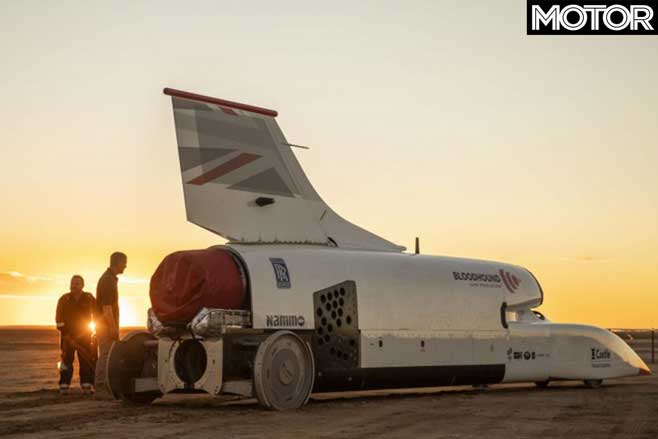
Though the 1010km/h is still far from the team’s 1600km/h target to break the 1000mph barrier and current land speed record of 1227.985km/h, it is still incredibly fast.
The projection uses “the most accurate” speed data of the other cars the team could find and calculated with the assumption that the desert surface only offers a third of the traction found on regular tarmac. The team mentions that other variables including traction from the tyres are not accounted for in this rendition.
As expected, engine-to-wheel propelled cars get a massive head-start on a jet propelled one. With a quoted 0-60mph time of 6.3sec, the Bloodhound would have trouble keeping ahead of a Volkswagen Golf GTI. Even with 0-100mph achieved in 8.3sec, it would be nose-to-nose with a Lotus Exige Sport 410.
It isn’t until the afterburner on the Bloodhound’s Eurofighter Typhoon jet engine kicks in at the 100mph (160km/h) mark that it really gets into its stride and make the Chiron and F1 car look like it had its handbrakes left on.
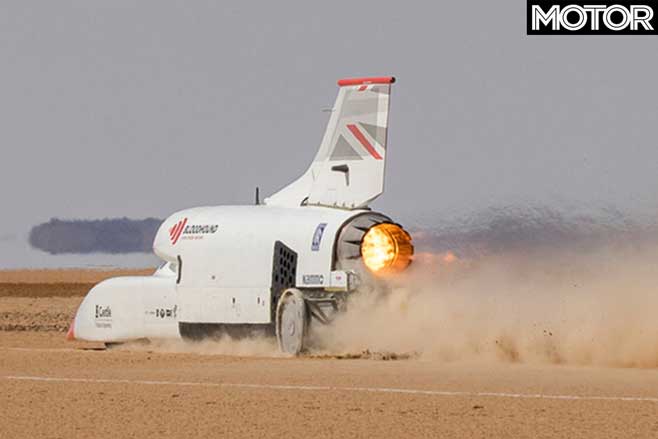
Mind you this run was done using the jet engine that produces 90kN (90,000N) of thrust, with its yet-to-be-tested 120kN-capable rocket engine expected to push the Bloodhound to the 1000mph barrier and onwards.
The team originally planned to test out the rocket later this year and expects to smash the previous land speed record, achieved by the British-built Thrust SSC in 1997, before attempting the 1000mph target in 2021.
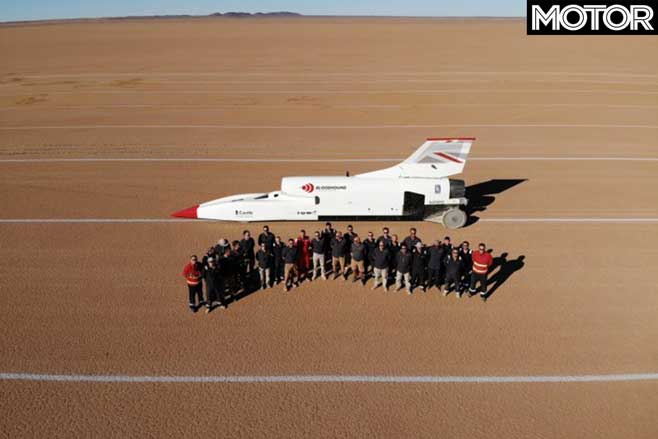
However, due to COVID-19 concerns the team has decided to put the run on hold as discussions with potential sponsors have been delayed.
“Discussions with a number of global brands were looking promising when COVID-19 struck, but the sponsorship industry literally shut down,” said Ian Warhurst, Bloodhound’s CEO who saved the project from being scrapped in 2018.
“This means our ability to raise the necessary funds in time and, consequently, the window to conduct the LSR campaign safely in 2021 is now very likely to be missed. As a result, we are planning to go into hibernation and reboot conversations with potential sponsors later in the year.”
If we’re all being honest, working from home isn’t the worst thing in the world. But here at MOTOR there’s one thing that’s got us a little miffed. Pretty much every car launch for the foreseeable future is cancelled.
This author (hi, that’s me) was to be driving Ford’s newest hot hatches, the Fiesta and Focus ST just after the time of writing. MOTOR Staff Journo L. Cordony was supposed to be headed to Phillip Island for a romp in a new AMG, and you were supposed to then get reviews from us based on these events.
But one we’ve all been waiting for was the launch of the Porsche 992 911 Turbo S, which was set for a US launch around… well around when this whole COVID thing really kicked off.
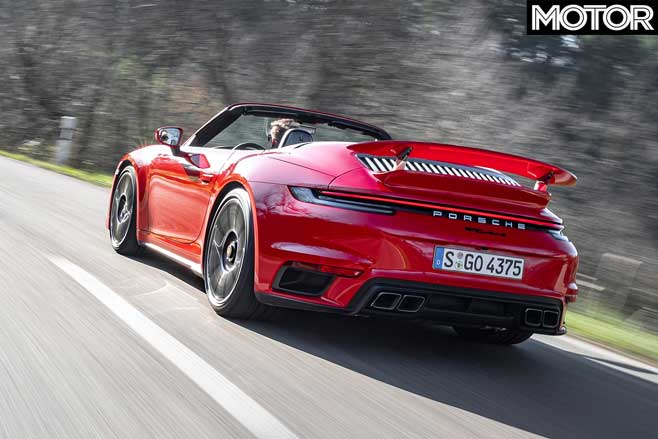
Deputy Ed. Scott Newman was meant to be off driving the newest Big Bad Porker at Laguna Seca (Scott has been robbed harder than Shannon Noll ever was) in the name of science, but that’s not been the case in reality.
Fortunately for you (and us, really), Porsche conducted the event photography in advance, which it would normally have supplied to us on a little USB – which would now be horrendous social distancing practice.
Unfortunately it will now be a little while longer until one of MOTOR’s full-time staffers – probably still Newman, if no one wants a fight to the death – ends up in the hot seat of the hot 911.
Instead, if you want to see plenty of detail of the new 992 Turbo S, the gallery at the top of this page will sate your desire.
What stands out?
The comfort, the high-tech safety, and how confident you feel behind the wheel. In this new-generation Impreza, Subaru has built a very practical small hatchback and sedan that can engage someone who appreciates a sporty car. A roomy, well equipped and well finished cabin looks after rear-seat passengers well. Most versions supply sophisticated active safety aids, including auto braking that works in town and out on the highway.
What might bug me?
That you can’t tow a trailer with your new Impreza sedan: its body is not designed to accept a tow-bar. You can tow with an Impreza hatchback, however.If you like to drive your Impreza quickly through corners, you might wish that the seatbacks had bigger bolsters on each side, to hold you in place better. You might also wish for more precise backrest adjustment than you can get from the ratcheted lever that handles this on all but the 2.0-S (which has powered adjustment).Driving under 80km/h on the space-saver spare tyre until you can fix your full-sized flat.
What body styles are there?
Five-door hatchback and four-door sedan.The Impreza drives all four wheels, and it is classed as a small car, lower priced.
What features does every Impreza have?
Cruise control, and air-conditioning that maintains a set temperature. Controls on the steering wheel for operating the cruise control, the audio system and your phone.A colour touchscreen for controlling cabin functions. An MP3 compatible sound system with a radio, CD player, Bluetooth connectivity for voice and audio streaming, and Aux and USB inputs.Support for Apple CarPlay and Android Auto, which lets you display some apps from compatible smartphones on the touchscreen and control them from there.Aluminium alloy wheels, and a space-saver spare wheel. A tyre pressure monitor, which warns you if a tyre is going flat.All-wheel-drive, which improves traction and stability on slippery surfaces. Automatic transmission.Hill-start assistance, which controls the brakes to help you take off on uphill slopes.Electronic stability control, which can help the driver to control a skidding car. All new cars must have this feature.‘Subaru Intelligent (SI) Drive’ that lets the driver choose between the efficient I (Intelligent) mode and S (Sport) mode for when quicker throttle response via the CVT auto.Seven airbags, and a reversing camera. (For the placement of airbags, and more on Impreza safety systems, please open the Safety section below)Every Subaru Impreza carries a five-year, unlimited-kilometre warranty.
Which engine uses least fuel, and why wouldn’t I choose it?
The sole engine available with the Subaru Impreza is a 2.0-litre petrol four-cylinder. When teamed with the continuously variable automatic transmission, it uses about 7.0 litres/100km on the official test (city and country combined).In real-world comparison testing conducted for the January 2017 issue of Wheels magazine, an Impreza 2.0i-L hatch with this engine averaged 9.1 litres/100km. That left it near the middle of the 12 popular small cars reviewed, consuming marginally less fuel than an accompanying Toyota Corolla and five per cent more than a Mazda3 Maxx.The Impreza’s engine differs from every other small-car four-cylinder in that it lies flat across the engine bay rather than standing up vertically. This places the weight of the engine lower in the car, which – in theory anyway – helps it steer more responsively.While the engine in this Impreza shares its layout and 2.0-litre capacity with the car it supersedes, it has been redesigned extensively. The most prominent change is a move to direct petrol injection – which supplies fuel directly to each cylinder at high pressure, allowing the engine to use less of it while making more power.The Impreza can shut down its engine when you are stopped, restarting automatically when you take your foot off the brake pedal to drive away. That saves fuel in the city.Every Impreza comes with a continuously variable automatic transmission (CVT). When you accelerate hard, it uses artificial ratio steps to mimic the feel of a seven-speed conventional automatic – avoiding the irritating engine droning that some CVT cars exhibit.
What key features do I get if I spend more?
The least costly Impreza, the 2.0i, comes with a 6.5-inch central screen and premium cloth seat trim.Paying more for a 2.0i-L brings you a lot of extra kit, perhaps most importantly Subaru’s EyeSight active safety suite. EyeSight includes adaptive cruise control (which can accelerate and brake to match the speed of a car in front), auto emergency braking that works at city and highway speeds, and a lane departure warning. Lane-keeping assist (which recognises lines on both sides of the lane and helps steer the car between them) was added in September 2017. (For more on these systems and other Impreza safety features, please open the Safety section below.)The 2.0i-L also has an 8.0-inch touchscreen, and two displays on the instrument panel, controllable from the steering wheel, that can show your EyeSight settings and other helpful stuff. You get leather on the steering wheel and gear lever, and dual-zone climate-control allows individual temperature adjustment for the driver and front passenger. And the exterior mirrors can be power-folded, to keep them out of harm’s way when you’re parked.Spending more again for an Impreza 2.0-i Premium gets you a powered sunroof and satellite navigation – the latter including the ability to have turn-by-turn instructions shown on the instrument-panel display rather than just on the central screen. Blind-spot monitoring, lane-keeping assistance, reverse autonomous braking, rear cross-traffic alert and front-view parking monitor enhance safety.The most expensive Impreza, the 2.0i-S, adds luxury, safety, and cornering verve. It has part-leather seat trim, with the power-adjustable driver’s seat with memory settings to make it easier to readjust your seat after someone else drives it.Windscreen wipers operate automatically when it rains. Headlights use very bright and long-lived LEDs, switch on automatically when it’s dark, and swivel to shine into corners. Side-skirts and bare-metal control pedals present a sportier aesthetic. The parking monitor also has a side view that’s great for helping to avoid small obstacles or scraping your wheels on the kerb.And there are wider, grippier tyres on bigger, 18-inch wheels, and a torque-vectoring system that lets the car turn more keenly.
Does any upgrade have a down side?
The bigger, 18-inch, tyres on the 2.0i-S will cost more to replace, and will feel a bit bumper to drive on than the taller-profile tyres on other Imprezas (because their shallower sidewalls leave less air and rubber between you and the road).Eight colours are available, and choosing a metallic, silica or pearl finish does not add to the price.
How comfortable is the Subaru Impreza?
In a word, very. The new Impreza is roomier inside than the car it replaced, and the cabin is smartly designed and trimmed to a standard much higher than seen in earlier-generation Imprezas.Tilt and reach adjustment for the steering wheel makes it easy for the driver to get comfortable, even if the seat backrest could use finer adjustment. A chunky steering wheel, leather-bound on most versions, and neat new switchgear imbue the Impreza with a level of class beyond its relatively meagre price point.Even the 2.0i-L, the least costly Impreza but one, supplies loads of eye-pleasing exposed stitching and a lovely dashboard finish, with two info screens in addition to the big central touchscreen.Dash-mounted air vents sit high and proud, filtering climate-controlled freshness in typically chilled Subaru fashion.The ride may feel a little busy at low speeds around town but mostly the Impreza feels smooth and easy to control, handling the bumps silently and insulating you very well from the road and the airstream outside – qualities supported by what Subaru claims is a body much stiffer than the unit it supersedes.The soothing flat-four engine responds more crisply to the accelerator than those in previous Imprezas and handles city and highway driving without fuss, with help from the bigger ratio spread in its CVT auto transmission.The Active cruise control and its accompanying EyeSight driver aids work seamlessly, showing the benefits of Subaru’s lengthy development of these systems. All-wheel drive enhances security in poor driving conditions, among other things facilitating smooth take-offs from traffic lights on wet and slippery roads.
What about safety in an Impreza?
The Impreza comes with seven airbags: one each ahead of the driver and front passenger; a knee airbag for the driver; an airbag outside each front occupant at chest level to protect from side impacts; and side-curtain airbags extending past both seat rows at head level.The mandatory stability control, seatbelt reminders for all seats, seatbelt pre-tensioners on the front and outer rear seats, and a reversing camera, contribute to a secure safety package.Augmenting this on the Impreza 2.0i-L, 2.0-i Premium and 2.0i-S is Subaru’s EyeSight active safety suite, which brings you Active cruise control, autonomous emergency braking, lane-keeping assist and lane-departure warning among other features.Based on stereo cameras, the auto braking works at city and highway speeds, warning of an impending collision and braking automatically if you fail to react. Subaru says this third-generation system uses better image sensors that detect hazards – and endangered pedestrians – under a wider range of contrast conditions and at longer range.Lane departure warning alerts you if you have begun to drift out of your lane on the highway, perhaps through distraction. Lane-keeping assist takes this a step further by recognising the lines on either side of the lane and providing steering assistance to keep the car in the middle of the lane.There is also a Lead-vehicle start alert, which lets you know when a vehicle ahead of you in a queue has moved on.The Impreza 2.0i Premium and 2.0i-S improve on this with a Vision assist suite, which uses radar-based sensors to scan behind you. It warns you if you are about to change lanes into the path of an adjacent or overtaking car. And when you reverse out of a driveway or parking space, it alerts you to vehicles crossing your path to the rear. Should you get too close, reverse autonomous emergency braking will bring the car to a stop.The Australasian New Car Assessment Program (ANCAP) awarded the Impreza a five-star rating for safety, its maximum, in December 2016.
I like driving – will I enjoy this car?
Yes you will, and even if you like driving quite hard. The Impreza feels poised and fluid from behind the wheel, nosing crisply into bends with fine support at the rear from its sophisticated double-wishbone suspension. Grip levels are high, and the more you ask of the car the more you respect its abilities.The supple damping does not feel quite as finessed as that on the Mazda3 or Toyota Corolla, from time to time letting a wheel reach its limits with a thump on a big bump. But that mild deficiency never fazes the prodigious purchase of the Impreza’s all-wheel-drive chassis. The most obvious improvement here would be more side-support from the seats.Spin the engine hard and there is as much power as you will find in most popular small cars, and more than many. However, depressing the go-pedal does not generate the instant shove you get from turbocharged alternatives, and compared with nearly all others there is more weight to get moving. The CVT works nicely with the engine in manual mode, even offering surprisingly effective engine braking from down changes.
How is life in the rear seats?
It’s great for a car of its type, and better than in the already good outgoing Impreza, with a comfortable seat and enough leg and shoulder room to keep two big adults quite happy.The stadium-style seating provides a superb outlook as well, and dedicated vents supply heating and cooling. It is hard to think of a small car that looks after you better.
How is it for carrying stuff?
Boot space is about the same as in the superseded car, with a capacious 460 litres in the sedan – as much as the mid-sized Ford Mondeo supplies, for example – and 345 in the hatchback. Boot openings in both are slightly wider than before. Seats split-fold 60-40 for extending the load space.Because of its design, you can’t tow anything with an Impreza sedan, however, the hatchback can tow up to 1200kg with a braked trailer
Where does Subaru make the Impreza?
The Subaru Impreza is manufactured in Japan.
What might I miss that similar cars have?
Not much. Maybe the more immediate acceleration of turbocharged alternatives such as the Volkswagen Golf, Ford Focus, Honda Civic, Skoda Octavia and Peugeot 308.Perhaps a more efficient hybrid powertrain, as available in the Toyota Corolla.Among other small cars worth considering are the Mazda3, Hyundai i30, Hyundai Elantra and Kia Cerato.If you like the Impreza but would appreciate a longer touring range (from a bigger fuel tank), a taller stance and and more competence on soft surfaces, you might be interested in the Subaru XV. The second-generation XV was developed from this Impreza.
I like this car, but I can’t choose which version. Can you help?
You get a lot for your money with any Impreza, but arguably the best value comes at the top of the price scale with the 2.0i-S. The leather, advanced headlights and all-round safety monitors are nice to have, and the improved grip and torque vectoring make it even more fun to drive. Hatch or sedan (which cost the same) is up to you; unless you’ll need to tow something which rules out the sedan.
Are there plans to update the Impreza soon?
This fifth-generation Impreza arrived in Australia in December 2016 as an all-new model.Lane Keeping Assist was added as a standard EyeSight function in September 2017 .In February 2020 the Impreza received a facelift that also brought premium cloth seats to the 2.0i and 2.0i-L and added the additional safety features available in the 2.0i-S to the 2.0i Premium.Expect an all-new version sometime in 2022.
What stands out?
Subaru’s tall-riding Forester is a practical medium SUV that is also fun to drive – and surprisingly handy on tracks and trails. It’s powered by a 2.5-litre petrol engine, or 2.0-litre hybrid, and has all-wheel-drive. Driver assistance technology such as autonomous emergency braking is standard. Forester also has facial recognition technology that does everything from detect driver fatigue to moving the seat to each driver’s preferred setting. The Forester was a top-three finalist for the 2019 Wheels Car of the Year Award.
What might bug me?
Every country town has a host of them – but they are popular for good reason.Not really seeing substantial fuel savings if you paid extra for a Forester Hybrid.That your brand new Forester doesn’t look too different from the previous generation.
What body styles are there?
The Forester comes only in one body style, a five-door SUV-style wagon.All Foresters drive all four wheels at all times.The Forester is classed as a medium SUV, lower priced.
What features do all Foresters have?
An automatic continuously variable transmission (CVT).All-wheel-drive traction with X-Mode, which optimises the Forester’s stability and traction controls for driving at low speeds on loose and slippery surfaces. X-Mode will even restrain the speed of the car on steep downhill slopes, without help from the driver.‘EyeSight’ driver assist with autonomous emergency braking, and other active safety technology such as adaptive cruise control, lane keeping assistance, lane sway warning, and brake light recognition that provides an additional sign that the car in front is stopping. They also now have a auto unlock feature after a collision as of October.Blind-spot monitor and rear-cross traffic alert.Touchscreen display, with reversing camera monitor.A sound system with an AM/FM/Digital (DAB+) radio, a CD player, aux and USB inputs, Apple CarPlay/Android Auto phone pairing, Bluetooth phone and audio streaming, voice control, and at least six speakers.Voice command recognition for infotainment and phone functions.Dual-zone air-conditioning, which allows the driver and front-seat passenger to set their own cabin temperatures. Rear air vents and floor heater ducts.Leather trim on the gear shift and steering wheel that has paddle gear shifters, and buttons for operating the cruise control, the entertainment system and your phone.Self-levelling, auto on/off headlights, tail-lights and daytime running lights all illuminated with long-lasting LEDs, plus front fog lights.Roof rails, for mounting luggage systems, rear spoiler, and shark fin antenna.Rain-sensing windscreen wipers, and technology that lets you get in and start your Forester without taking the key out of your bag or pocket.Aluminium alloy wheels, and a full-sized spare wheel.Seven airbags, anti-lock brakes, and electronic stability control, which Subaru calls Vehicle Dynamic Control. This helps you maintain control in a skid. (For the placement of airbags, and more on Forester safety systems, please open the Safety section below.)A five-year warranty, with no limit on distance travelled in that time.
Which engine uses least fuel, and why wouldn’t I choose it?
The 2.0-litre hybrid powertrain, called e-Boxer, joined the Forester range in March 2020. It is the same 2.0-litre hybrid drivetrain as available with the smaller Subaru XV, which means stepping down from the more powerful 2.5-litre used in regular Foresters.Available in the 2.0-L and 2.0-s specification grades, it has a claimed 6.7-litre/100km fuel consumption, which represents a modest improvement over the regular Forester.Subaru calls the e-Boxer a mild hybrid, but it does more than usual mild hybrid systems which simply offer a power boost on take-off but don’t drive the vehicles on batteries alone.However, it is a lot more subtle than full hybrid powertrains, with the single electric motor giving way to engine power at lower speeds and preferring to take up the slack when you’re coasting. The e-Boxer’s single electric motor contributes just 12.3kW of extra boost; by comparison, the Toyota RAV4 Hybrid has 131kW and 88kW electric motors for the front and rear axles respectively.Apart from the extra cost and limited efficiency gain, another reason you wouldn’t choose the e-Boxer is that you want the additional power available in the 2.5-litre petrol engine.The the 2.5-litre petrol engine’s fuel economy is rated at 7.4litres/100km for combined urban and country driving, according to the official lab testing.The 2.5-litre petrol engine works best when cruising. It feels smooth and is reasonably responsive but can struggle a little when fully loaded with cargo and passengers.The CVT automatic gearbox does a half-decent job at masquerading as a conventional automatic gearbox with synthesised steps instead of the usual revvy rubber band feel.The more expensive Foresters have ‘Subaru Intelligent Drive’ with two driving modes including Sport that changes the gearbox settings for take-off acceleration.The ‘Boxer’ engine’s four cylinders are laid flat in pairs and oppose each other. As well as helping maintain smooth operation it keeps the weight of the engine low in the car, which improves handling.(Power outputs and all other Forester specifications are available from the Cars Covered menu, under the main image on this page.)
What key features do I get if I spend more?
The most affordable Forester, the 2.5i has cloth seat trim, 17-inch wheels, a 6.5-inch touchscreen and all the above-mentioned features that all Forester versions have.Spend more for the 2.5i-L and you get the Driver Monitoring System that uses facial recognition to detect if you’re drowsy or distracted and also personally greets you when you get in the car and sets the climate control to where you had it last.The auto-braking also works in reverse to prevent you from hitting an object when parking, and the reversing camera also provides front and side views.Spend more again for a 2.5i Premium and the facial recognition system also ensures the driver’s seat and door mirrors are at your preferred setting.Performance is boosted with Intelligent Drive and Sport mode, and the passenger-side door mirror dips when you’re in reverse to help you see the kerb or other hidden obstacles. Other extras include in-built satellite navigation, powered tailgate, premium cloth seating trim, eight-way powered front seats, power-folding rear seats, and the alloy wheels grow to 18-inches.The most expensive Forester, the 2.5i-S gains leather seating trim, electric sunroof, and an eight-speaker Harman Kardon premium sound system.The Forester L and S spec grades are available with hybrid powertrains, priced for about $3000 more than the 2.5-litre petrol versions.
Does any upgrade have a down side?
The 18-inch tyre package on the more expensive Foresters ride a little rougher than the standard 17s, and the tyres can be more damage-prone on rough roads.As well as producing less power, the Forester Hybrid doesn’t come with a spare wheel, meaning you have to make do with a puncture repair kit which isn’t as ideal if you’re in the country and have quite a drive to get to a tyre repairer.
How comfortable is the Forester?
The Forester has a comfortable, roomy and well-appointed cabin even in the least expensive variant. The fit and finish is excellent and the overall feel is one of modernity and technical precision. Top-spec versions add to that with additional luxury and convenience features.The driving position feels very natural, and the second row of seating is bigger in every direction compared with the previous model and cavernous even with the front seats adjusted back far enough for generous room in the front row.The Forester is composed and quiet, even on coarse surfaces and unsealed tracks, with a nature that feels as though it was designed specifically for Australian conditions.
What about safety in a Forester?
All Foresters also have anti-lock brakes, stability control, seven airbags, a reversing camera, and seatbelt reminders for all seats.The airbags are in the usual places: two directly in front of the driver and passenger; an airbag in front of the driver’s knees; airbags immediately outside the driver and front passenger that protect at chest level; and curtain airbags extending down each side of the car at head level to protect passengers front and rear from side impacts. ISOFIX anchor points for two child seats are also standard.The Forester is also one of the best-equipped SUVs in its price range in terms of active safety, with all versions equipped with Subaru’s ‘EyeSight’ package that relies on stereo cameras. It brings autonomous emergency braking (AEB), which works at city and highway speeds and detects pedestrians, warning you first and then braking you automatically if a collision seems imminent.EyeSight also supplies adaptive cruise control, lane keeping assistance, brake light recognition that provides an additional sign that the car in front is stopping, and lane-drift assistance – alerting you if you start to drift out of your lane on the highway, perhaps from distraction, and gently attempting to steer the car out of trouble.Other active safety features that come standard in all Foresters include rear-cross traffic alert, that senses if a car is approaching from either side when you’re reversing, and a blind spot monitor.All Foresters except the 2.5i come with facial recognition technology that detects if the driver is distracted or becoming drowsy, and reverse automatic braking that helps prevent collisions while parking.The Australasian New Car Assessment Program (ANCAP) awarded the Subaru Forester a 5-Star safety rating in March 2019.
I like driving – will I enjoy this car?
The Forester manages to provide an excellent balance between comfort and driveability.It’s an easy car to drive, with light steering and responsive acceleration at low speeds. It handles bends well, and the steering and chassis compliance (how the rear of the car follows the front) are above average for SUVs in its class.Anyone used to a non-turbocharged petrol engine will find the Forester’s 2.5-litre powerplant adequate to the task, but will notice a lack of oomph when its fully loaded or when attempting a quick overtaking manoeuvre. This is also the case with the 2.0-litre Hybrid struggles, which can protest a little loudly when accelerating to overtake or join freeway traffic.On the plus side, the hybrid system further improves traction because of the more precisely controlled torque distribution.We like the general operation of the continuously variable transmission (CVT) auto, which is one of the finest when it comes to the principle. Some drivers don’t like the feel of a CVT, which allows the engine speed to rev out without a change in road speed. But the Forester’s addresses this problem, cutting fuel use when cruising but acting more like a conventional automatic, with stepped ratios, when you ask it to accelerate hard.The Subaru Forester’s X-Mode all-wheel-drive traction system helps maintain its confidence-inspiring ride when grip levels drop off or the road gets truly choppy. Aided by a 220mm ground clearance, it handles unsealed surfaces better than most small or medium SUVs, making it excellent on gravel roads, good on sand, and even some tracks that are rough or steep. Its full-size spare tyre is a major bonus here.
How is life in the rear seats?
The Forester’s rear-seat legroom is plentiful even when the front seats are pushed back for longer legs. Headroom is also bountiful.The seating is ergonomically well finished, though putting someone other than a child in the middle seat might be asking a bit much on extended trips.Rear-seat occupants get their own air vents and two USB sockets to charge their electronic devices.All Foresters have three child-seat anchor points, the outside two of which have ISOFIX fittings.
How is it for carrying stuff?
With the rear seats in place, the boot accommodates 498 litres of stuff and expands to 1768 litres with the 40/60-split seats folded.The load opening now measures 1258mm wide between the tail-lights and the widest point of the luggage area is up to 1300mm – enough to fit a golf bag sideways.The 2.5-litre petrol Foresters are upgrading to a towing capacity of 1800kg for trailers with their own brakes when the new model arrives October 2020, or 300kg more than before, thanks to an upgraded cooling fan. Unbraked towing capacity remains at just 750kg. The Hybrid versions can tow up to 1200kg braked, and 750kg unbraked.
Where is the Forester made?
All Subaru Foresters are made in Japan.
What might I miss that similar cars have?
A punchier and more economical turbocharged petrol engine as found on other medium SUVs including the Ford Escape, Holden Equinox, Honda CR-V, Hyundai Tucson, Peugeot 3008, Skoda Karoq, and Volkswagen Tiguan.The extra torque and fuel economy of a turbodiesel, as available with the Escape, Equinox, Tucson, Jeep Cherokee, Kia Sportage, Mazda CX-5, Mitsubishi Outlander, Nissan X-Trail, Peugeot 3008, Renault Koleos, Toyota RAV4 and Tiguan.
I like this car, but I can’t choose which version. Can you help?
All four Forester variants feature the same powertrain, and advanced driver assistance technology such as autonomous emergency braking and adaptive cruise control, so picking one will come down to preferred features and budget.We like Subaru Forester 2.5i Premium, which has most of the features available in the most expensive Forester the 2.5i-S, including facial recognition system’s safety and convenience functions, Intelligent Drive with Sport mode, powered tailgate, premium cloth seats with powered settings and in-built satellite navigation.
The new Forester 2.5i Sport strikes a balance in technology, features and price, stepping in at just under $42,000 and offering further exterior differentiation with black roof racks and side sills.
Are there plans to update the Forester soon?
The fifth-generation Forester went on sale in August 2018 with just the one powertrain option and smaller, four-variant, range than the previous model – which you can find out more about in a separate range review.
For 2021, Subaru plans to introduce a new 2.5i Sport variant that will rely on the same petrol engine as other variants while introducing a new cooling fan that upgrades towing capacity for them as well. It also heralds a new headlight design and a collision auto-unlock feature across all vehicles.
As more Australians chose a dual-cab as their main car, the once humble ute now has to be more versatile and multi-purposed than ever before, and sporty recreation vehicles are the latest trend at the pointy end.
The Nissan Navara N-Trek Warrior, Toyota Hilux Rugged-X, HSV’s Sportscat and, of course, Ford’s mighty Ranger Raptor all compete for a share of the freedom machine market, with the promise to take you and your kit wherever you want regardless of the pastime or place.
Some offer exceptional off-road ability, others have gigantic towing and load bays, while contenders such as the Volkswagen Amarok V6 bring massive engine outputs to the table too.
But a tongue-in-cheek concept created by Ford 50 years ago was a curiously prophetic flash of today’s unique landscape.
Actually, the 1969 Ford XW SurfeRoo deserves more than the label of mere concept as it evolved beyond one-off show-model into a production vehicle – albeit with a manufacturing run of just three.
The extremely limited batch was created to tour motor shows but, unusually for such a promotional tool, they were later put up for sale in dealerships for what seems a very reasonable $3000 (about $35,000 in today’s money). Can you imagine what Ford would ask these days for one of just three Australian-made show cars?
Also, unlike other rare and ageing cars, the whereabouts of all three are still known. If you were lucky enough to be in the right place at the right time, a budget nudging $100,000 might just snare you an example.
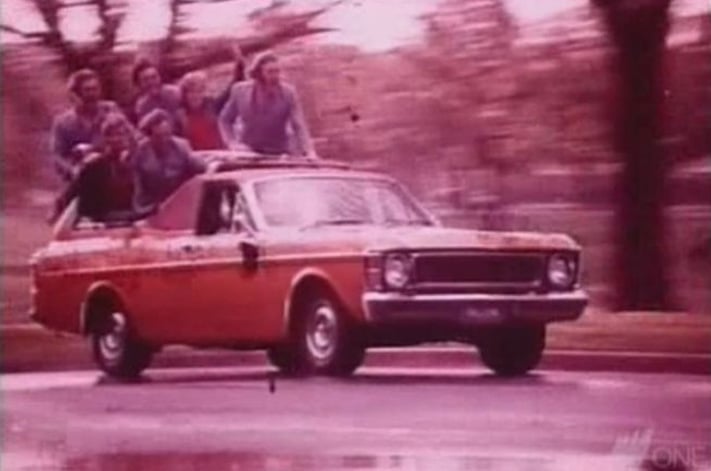
It may appear to be just a bit of fun, but the show cars were actually created to gauge public interest in a more recreationally focused version of the Falcon.
Its name was a play on the moniker of the XW Falcon GT 351 Super Roo of the same year. While many American muscle cars of the era were decorated with cartoon mascots, the SuperRoo had a kangaroo with spinning wheels instead of legs and the SurferRoo continued the parody with a board-riding macropod.
The key feature for the special Falcon concept is its ute tray and massive spoiler, which appears to be a reversed version of the wing found on the boot of the Plymouth Superbird – also introduced in 1969 – and a model personified by the Warner Bros cartoon Road Runner.
Actually, the spoiler was not an aerodynamic feature but worked in conjunction with a second smaller roof-mounted blade above the cab, which enabled surfboards to be carried flat without compromising load space in the ute tray.
The exact XW variant that lent the basis for the SurfeRoo remains a mystery, as engineers at the time simply plucked a model from the manufacturing lines and got to work, but the standard Falcon or Falcon 500 are the most likely candidates.
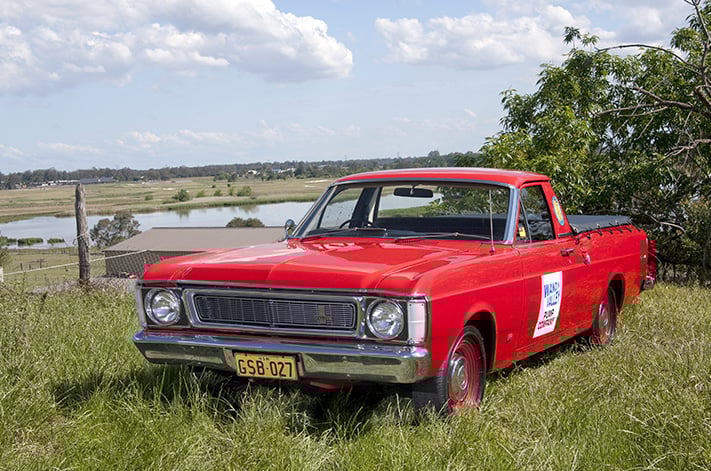
In its tray, the load area was decked out – quite literally – with timber boards flanked by fibreglass seats, while its interior was the Fairmont specification of the day, which meant adjustable sports seats and steering wheel and the ‘rally pack’ dashboard.
Ironically though, initial interest in the car was deemed as less than satisfactory and the concept of a more practical Falcon was shelved.
That decision left the surf-inspired arena unoccupied and arch rivals Holden swooped on the opportunity in 1974, introducing both a special ute and a panel van twin that would wear the now iconic Sandman moniker.
It would take Ford (and Valiant) another three years to see sense and launch a competitor with the Falcon Sundowner van and Chrysler Drifter respectively.
Many years later though, the world has moved on from once popular panel vans and wagons into a new era of one-tonne utes for every occasion. It would appear that had Ford quite accurately identified what its customers wanted with the fabulous SurfeRoo – it was just five decades too early.
UPDATED Leading Supercars teams Erebus Motorsport and Triple Eight Engineering have been instrumental in the design and build of revolutionary new pieces of medical equipment as the fight against the coronavirus pandemic in Australia ramps up
The Erebus Motorsport squad has worked with the Supercars’ medical liaison, Dr Carl Le, to optimise a concept thought up by a Taiwanese medical professional that acts as a shield to protect doctors from infection, while also developing a CPAP mask for front-line medical staff.
Triple Eight, meanwhile, designed and built a working prototype of a ventilator in four days, and is prepared to offer the concept to anyone who needs it.
Based around a simple Perspex box, the Erebus shield device is designed to assist health care workers when intubating patients. The shield fits around the patient’s shoulders and head, while two ports allow gloved access for medical staff.
Additional ports allow for air to be sucked out of the box, via suction systems already in use in intensive care wards around the country.
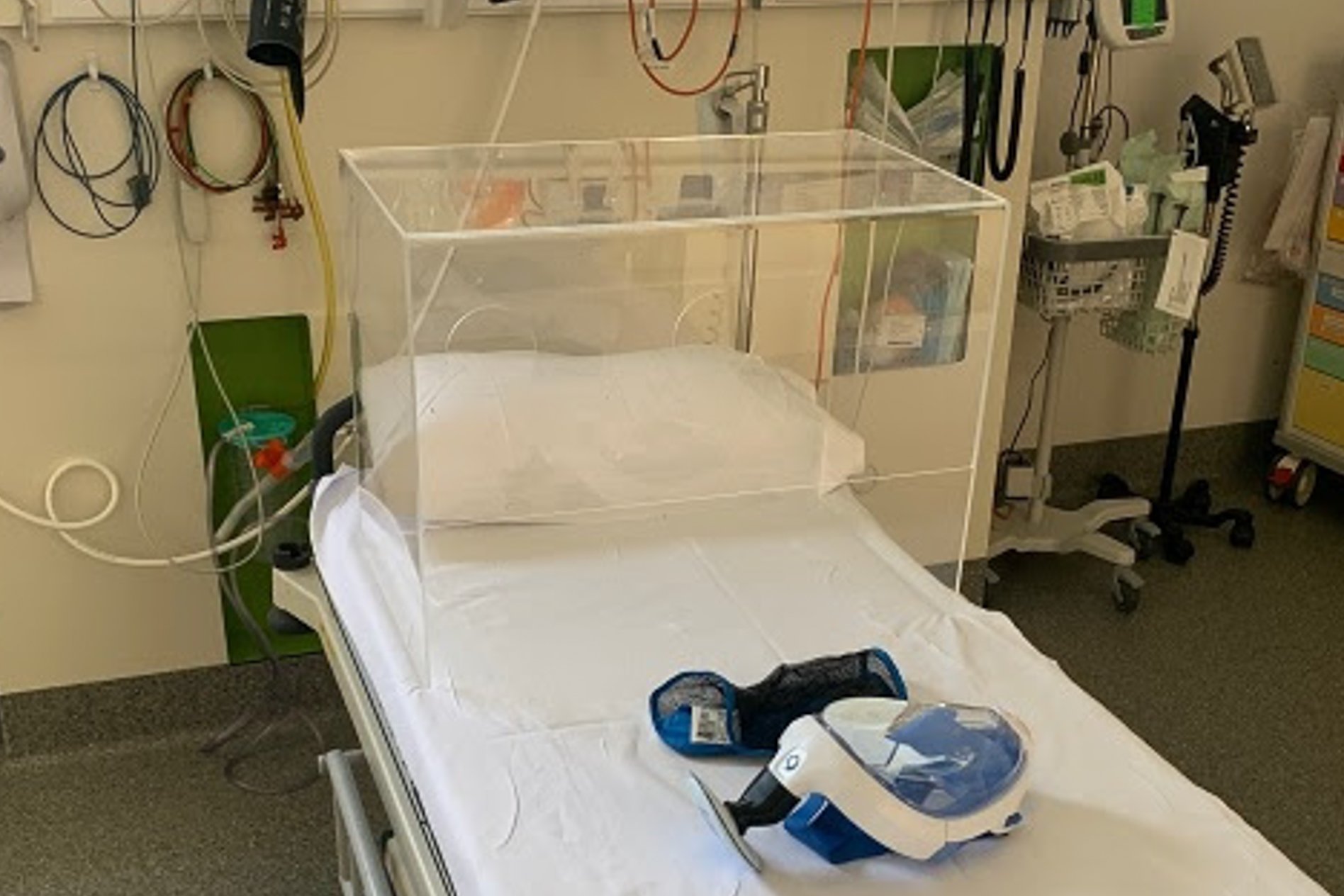
Two Melbourne hospitals are already trialling the box, and the team can build 20 a day if required.
“One of the riskiest times for a health care worker is when a patient is particularly unwell and needs to be intubated,” Dr Le said.
“Because these workers must be in very close proximity to the patient, this box can provide an additional physical barrier. Every emergency department or ICU has wall suction, so we modified the box, which can vacuum potential droplets away from the area.’’
Dr Le, who works in emergency department of a Melbourne private hospital as well as with the Supercars fraternity, believes that Australia is quite well prepared for the coronavirus pandemic, and that the government is actually resistant to private enterprise getting involved in the manufacture of equipment in this manner.
“What we are trying to do is to provide additional resources or options for health care workers for managing these patients as they come in,” he said.
The team, which runs two Holden Commodores in the Supercars series for 2018 Bathurst 1000 winner Dave Reynolds and young gun Anton de Pasquale, is also working on building respirator masks for doctors and nurses.
Known as a CPAP (Continuous positive airway pressure) mask, the team is using its 3D printing and prototyping skills in combination with sports gear supplier Decathlon to modify snorkelling masks with readily available, easily replaceable filters for front-line medical workers. Some 300 masks (prototypes below) are already near completion.

“We are in a fortunate position where we have the ability to make this shift in our operations and help our health care workers and patients,” said Erebus Motorsport CEO Barry Ryan.
“One of our engineers has family isolated in Italy, so the effects of this virus have hit close to home for us.
“Rather than developing something complicated, these cost-effective masks with a 3D printed adaptor and easily replaceable P2/N95 filtration can be mass-produced and go straight away to health care workers on the front line – who are at high risk.”
Ryan said that the team has already reached out to other Supercars teams in Australia, offering the CAD plans to the perspex box shield that can then be manufactured and delivered locally.
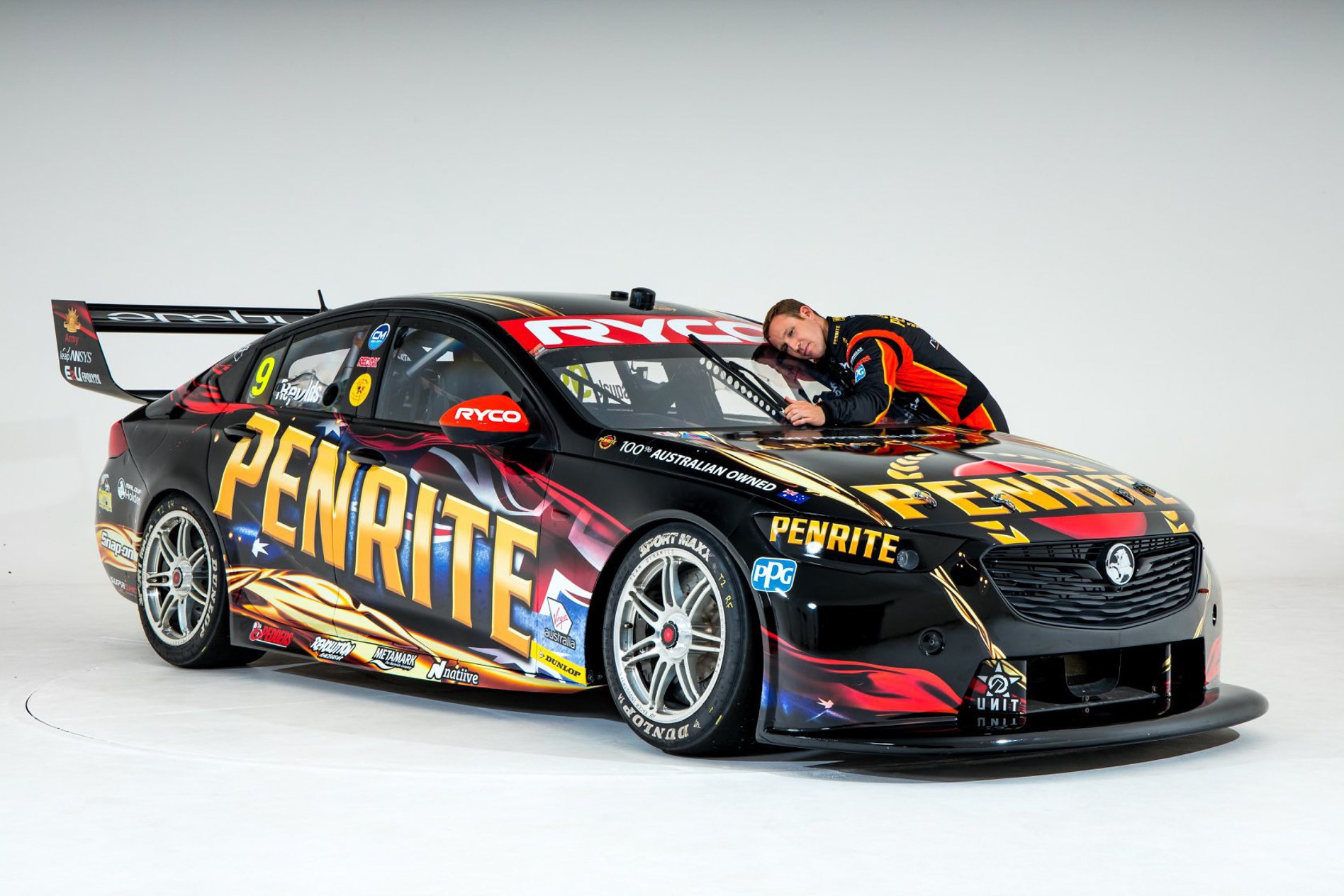
Dave Reynolds with his 2020 Holden Commodore Supercar
The Triple Eight Engineering device, meanwhile, has been prototyped from readily available materials, and could be deployed to help more seriously ill patients.
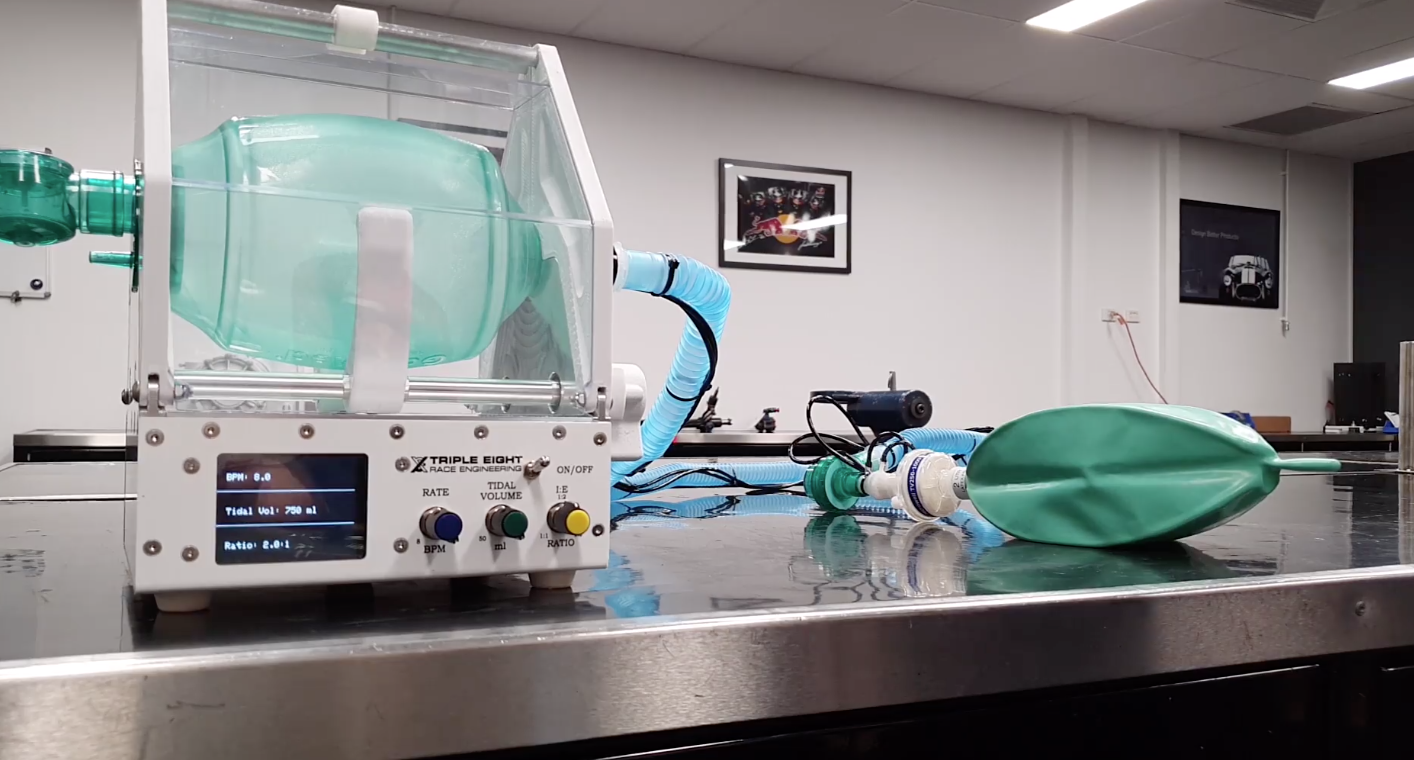
“As soon as we got back from the Grand Prix, Roland [Dane, owner of Triple Eight Engineering] had to idea to repurpose our resources in design and manufacture,” said race team manager Mark Dutton.
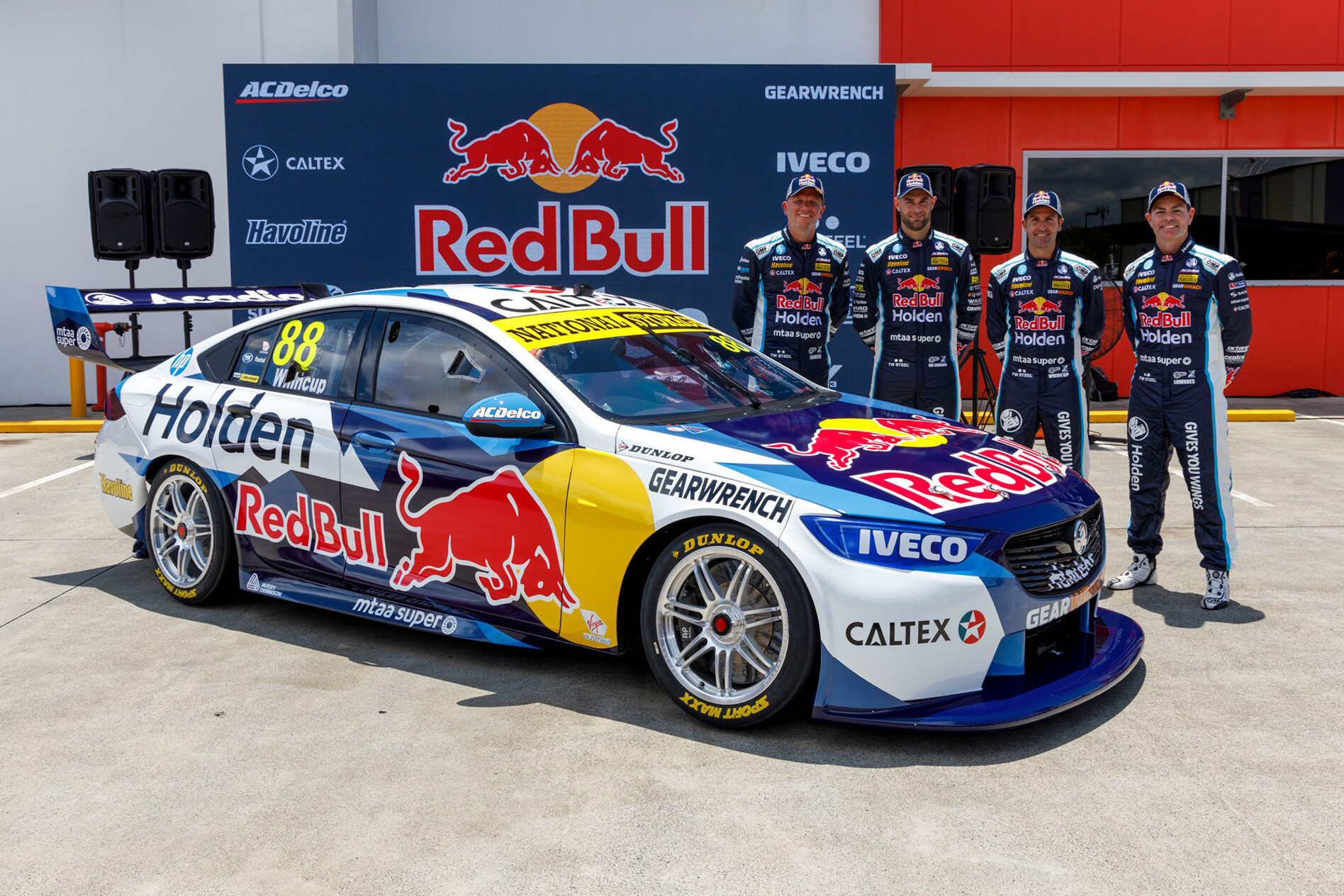
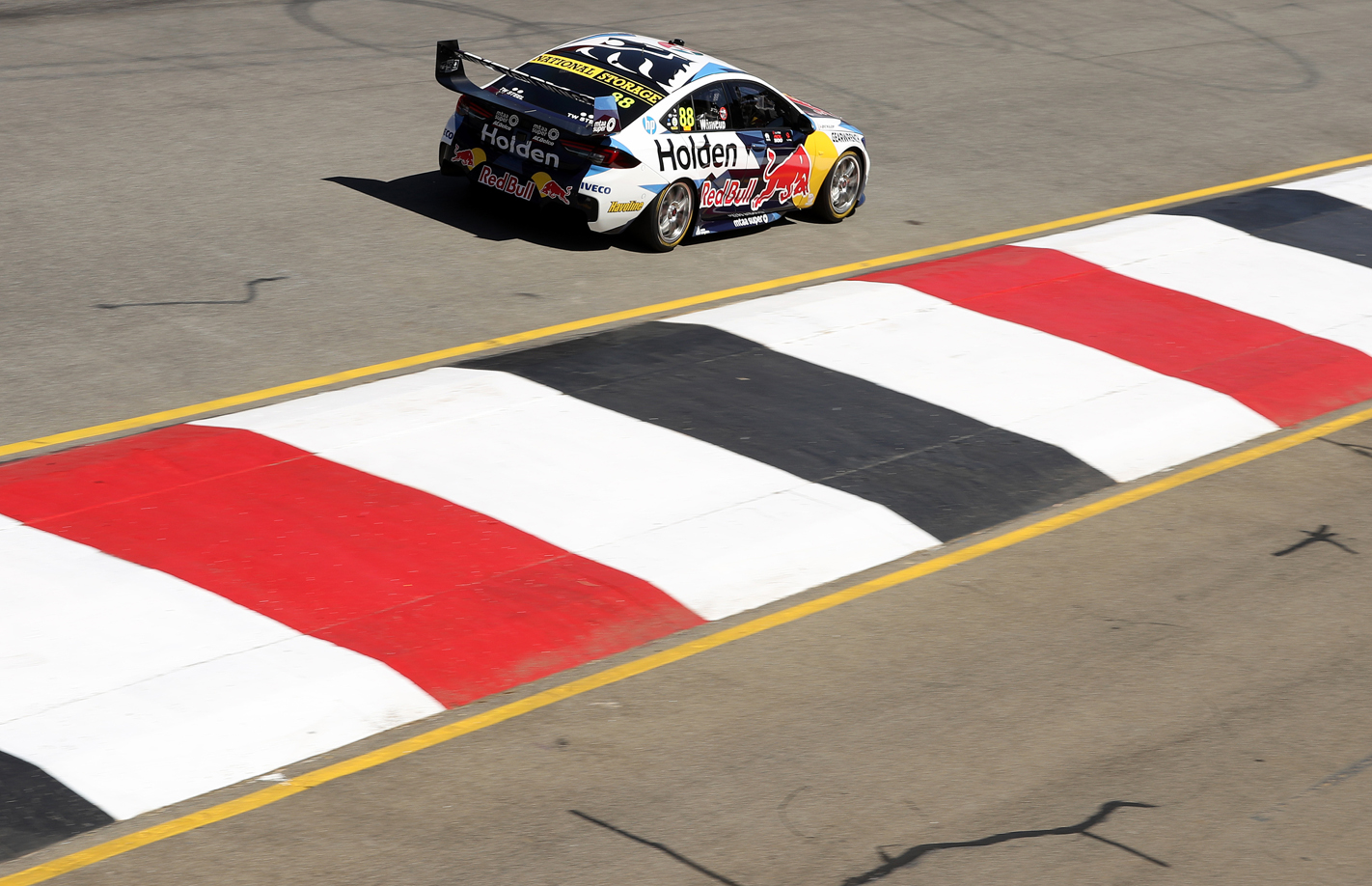
The Red Bull Holden Racing team is run by Triple Eight
“Straight away he wanted us to start looking at ventilators. The world is screaming out for them, so we started doing some initial research, and started work on March 20.”
The prototype is built from parts sourced close to Triple Eight’s Brisbane base, and even carries its own on-board power supply to allow it to be used in makeshift environments.
Both teams, along with the rest of the motorsport world, are currently in limbo as most racing series in the world are on hiatus thanks to the spread of the COVID-19 virus.
Supercars is caught in a perfect storm of events that is likely to wreak unprecedented change, if not havoc, at a time when the future has never been more uncertain.
Holden’s demise was the unexpected development, with the announcement coming just as two deals critical to Supercars’ outlook were being negotiated. One is the new broadcast rights agreement that will underpin finances for the next several years, and the other is the looming sale of the business.
As well, Supercars is trying to work out what the next generation of V8 racers will look like – literally and figuratively – from 2022, seeking to attract new manufacturers and institute much-needed cost reductions.
With all this going on, the timing of the news that Holden will be gone by the end of the year couldn’t have been worse, if only from a perception point of view. Supercars was prepared for life after the Commodore, a staple of Australian touring car racing since 1980, but not an automotive landscape without a significant General Motors presence.
On the surface, it’s like Formula 1 without Ferrari, or the AFL without Collingwood.
Replacing the Commodore with the Chevrolet Camaro to compete against the Ford Mustang was always part of the plan for Gen3, the coming major rules overhaul aimed at making it easier and cheaper for manufacturers – and teams – to compete with a wider range of two-door body shapes.
Originally, Gen3 was to be an evolution of the current Gen2 rules, which themselves were an extension of the game-changing 2013 Car of the Future regulations.
While Gen2 enabled the return of the Mustang to local top-line touring car racing – and with it Ford’s limited comeback in terms of factory backing – neither new manufacturers nor different engine configurations were enticed.
For Gen3, Supercars is again open to accepting non-V8s and even looking at hybrid technology, though not immediately.
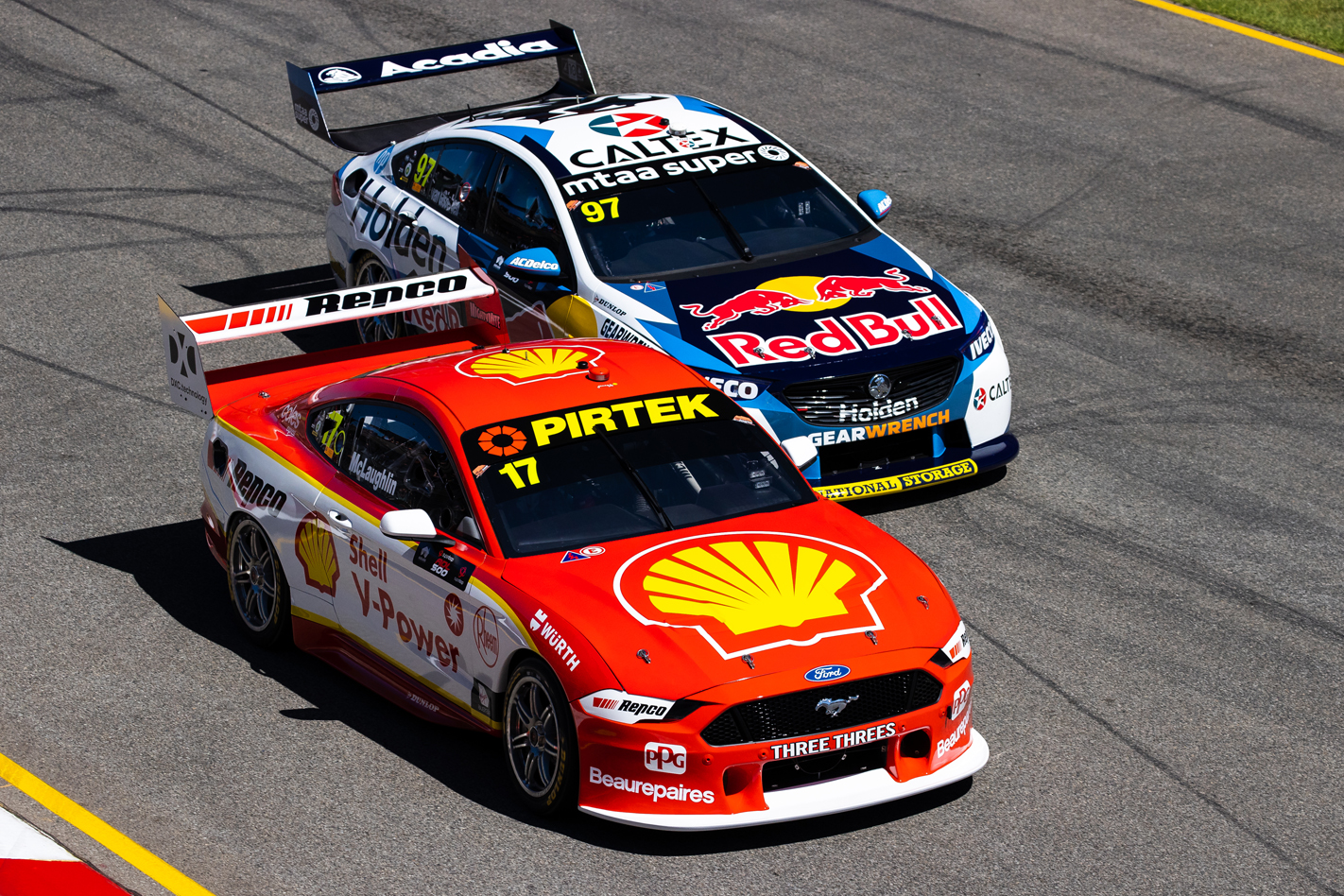
The other problem with Gen2 is that fitting a low-line two-door body shape onto the Supercars control chassis, designed for four-door sedans, produced the mutated Mustang. Despite every recent race car being cut and shut to fit the late 1990s-based chassis dimensions, Supercars always closely resembled the donor road cars.
The Mustang racer is obviously odd-looking, and Walkinshaw Andretti United – formerly Holden’s factory team – gave up on developing a Supercars Camaro because it would have looked unacceptably awkward.
WAU was hyper-mindful of racing a deformed Camaro because its HSV affiliate imports and ‘re-manufactures’ Chevy’s Mustang rival.
HSV will almost certainly transform into the GM Specialty Vehicles entity mentioned as the make’s future presence in Australia and, with backing from Detroit, will want to change from Commodore to Camaro in Supercars.
Also to be considered is that, unlike the Mustang, the future of the Camaro as a road car is uncertain beyond 2023/24. A new-generation Mustang, presumably to still be made in right-hand drive, is due in late 2021, in time for its shape to be adapted more proportionately to the Gen3 rules.
Ford Australia and Ford Performance in the US are interested in continuing their involvement in Supercars, but only if there is viable competition – be it red or otherwise.
Amid this turmoil and uncertainty, Supercars management has to ensure the sport’s financial future and resolve its ownership. The former is fundamental to both.
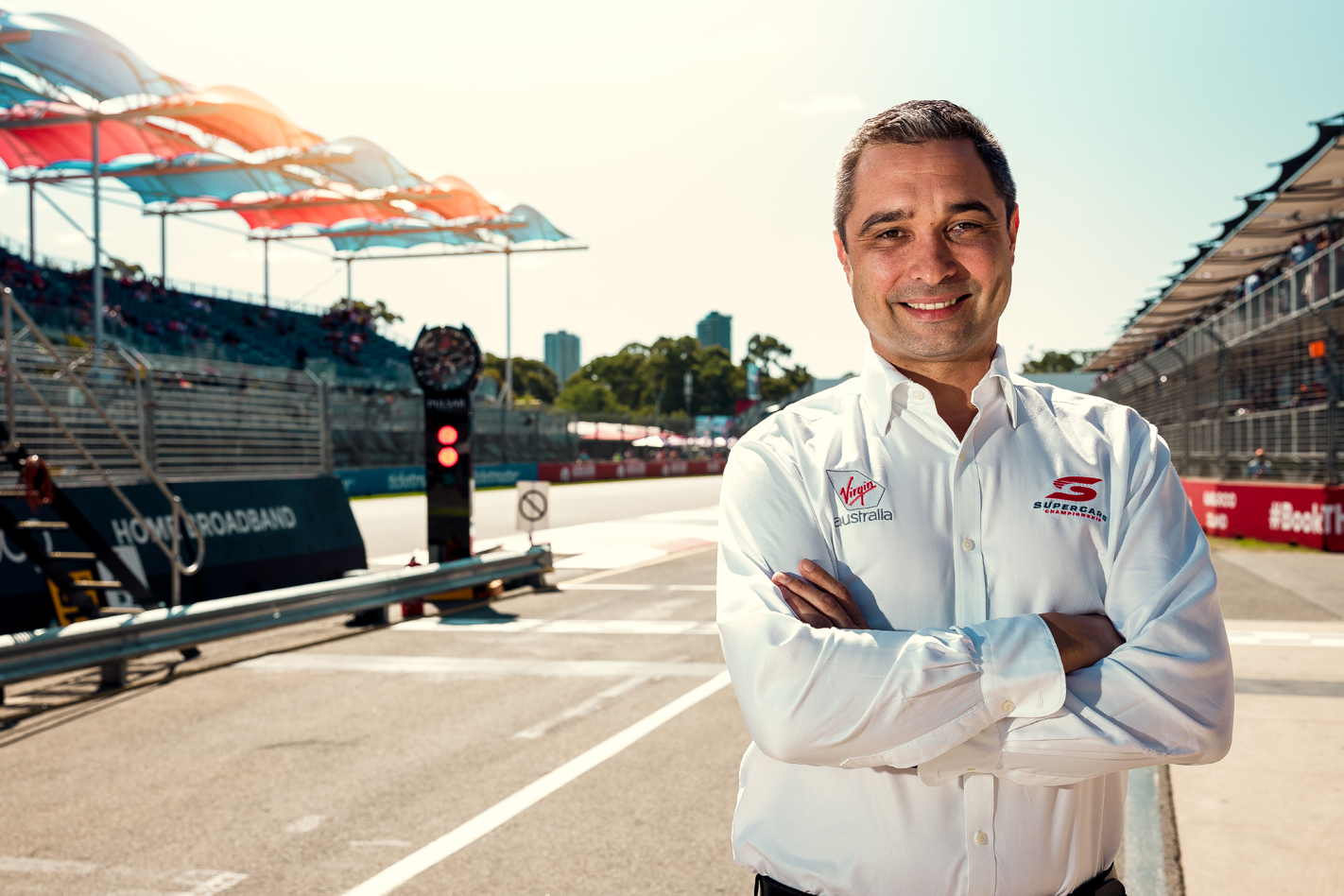
Supercars chief executive officer Sean Seamer, who took over from now Seven West Media boss James Warburton in early 2018, is facing his biggest test in securing a new broadcast media rights deal from next year.
The existing agreement with Fox Sports and Channel 10 was worth $241 million over six years, but industry experts say Supercars will be lucky to match that, much less get an increase.
The teams are crucial to any discussion about the future of Supercars because most are on the edge, either barely surviving or relying on subsidies from their owners.
Further complicating matters is Supercars’ ownership.
Private equity investor Archer Capital bought the series in 2012 and, by all accounts, did its dough. However, Archer has held on because Supercars was part of a basket of investments – including the fast-food chain Red Rooster – that overall have made the fund a fat profit.
But Archer has signalled for some time that it wants to get out of Supercars and, with the property’s value at an all-time low, predatory buyers are circling. Two bidders are in the race and will either wait until the new broadcast deal is done, defining the sport’s value, or strike early for a bargain.
So you can see why, even aside from sorting the new rules, Supercars management has a lot on its plate.
This background, while tedious, is relevant. Supercars has lost four manufacturers in the past five years: Mercedes-AMG, Volvo, Nissan and now Holden.
While Supercars chiefs proclaim “There is no crisis”, Holden’s demise has focused – if not hastened – attention on Gen3.
Wheels gathered Supercars supremo Seamer and WAU team boss Ryan Walkinshaw in the wake of the Holden announcement at the Adelaide 500. It was early days after the bombshell announcement, but both had strong views on the future.
Not so long ago, Supercars racing without Holden would have been unthinkable. Now it’s inevitable.
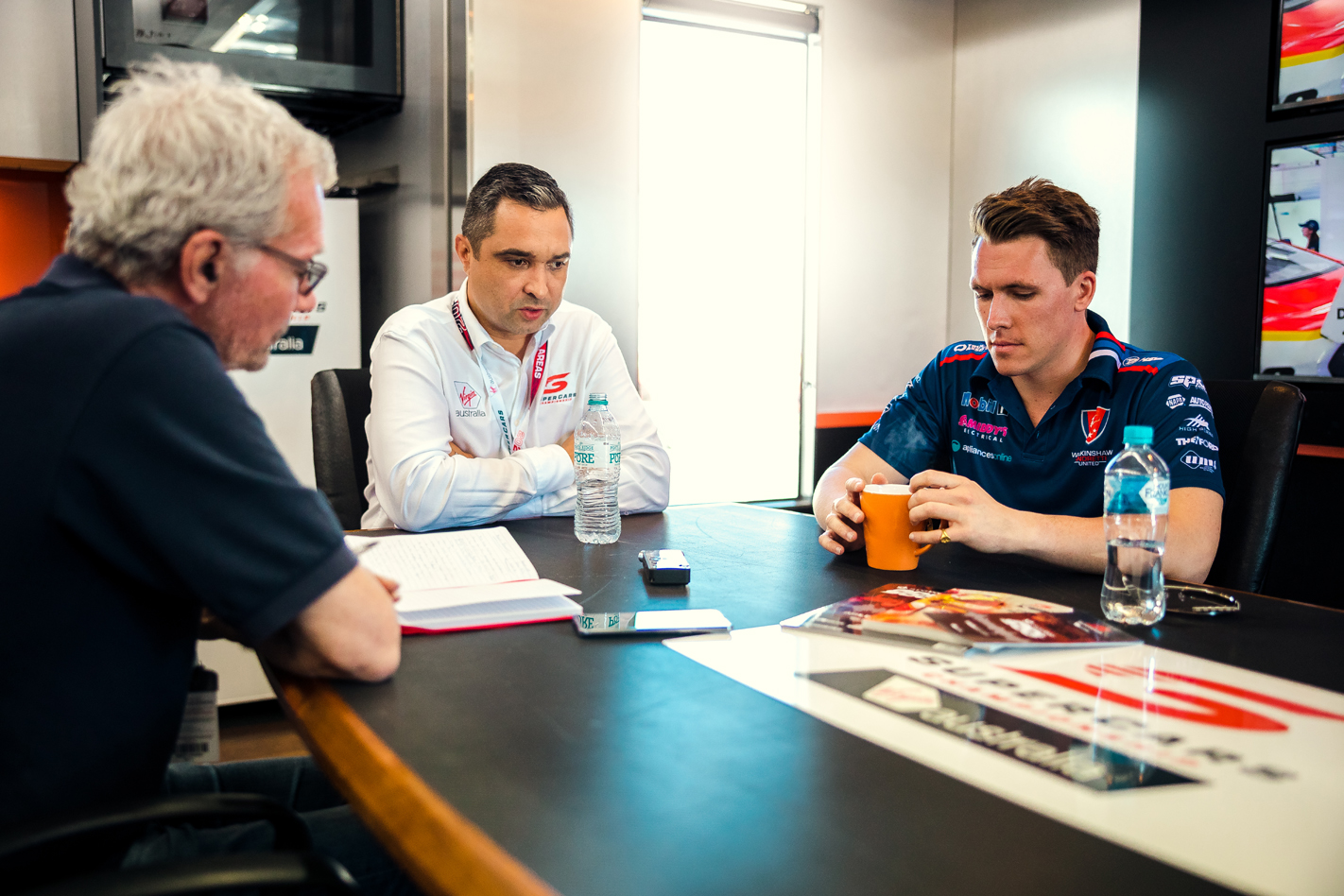
“It’s something that we knew was a possibility,” Seamer said. “We were planning for a future without the Commodore from late last year.
“The ramifications for us is a focusing of the collective mind up and down pit lane. I think you’re seeing a lot of unity from the team owners and from management, and some focus and some direction on a path that we knew we were going to have to tread, with some discussions about timing.”
Seamer rejected the notion that the departure of the sport’s biggest and most enduring brand is a crisis.
“I understand that there are people who might like to turn it into that, but the reality is that we knew that we were going to be working in a world post-Commodore. We also have a lot of people that are very, very experienced in the automotive industry, and none of us is naïve enough to think that the dynamism and the volatility that you see in the global automotive market wouldn’t have an impact on us.
“We know what’s going on, we’re not naïve, and I think that we’ll navigate the next three to five years perfectly because of all of that experience.”
Walkinshaw says: “I like to look at every challenge as an opportunity. People will focus in the short-term on the disappointment that the Holden brand won’t be here, but I think that there’s a lot of opportunity that presents itself for Supercars in re-evaluating who were are, what we do and what our product is, and a lot of that evaluation was already going on with Gen3.”
On specifics, Seamer says it’s too early to judge the impact of Holden’s demise, and the loss of large sedans, on Gen3.
“Obviously, we’re moving as quickly as we can to go through an assessment of that, but we’re not going to make a knee-jerk decision,” he declared. “This is a big, complex ecosystem, and decisions such as this need to be very thoroughly thought through. Even with the best intentions, if you rush a decision and don’t think it through properly, you don’t consider the follow-on impacts.”
Seamer confirmed that modifying the control chassis to more easily accommodate the Camaro, for example, was always on the cards.
“A new chassis was always part of the Gen3 plans, and that’s something that we’ll look at,” he said. “But it’s still too early to make any proclamations about that.”
Walkinshaw was reluctant to comment on efforts to bring forward rule changes to facilitate the Camaro’s entry as soon as next year, although he did admit that WAU was in discussions with non-GM makes.
“I know you’re trying to push the Camaro thing as a key point, but from our perspective, we’re going to wait and work with Supercars to ensure that any changes we have to the chassis are done the right way, and whether that’s for 2021 or 2022 is yet to be seen,” he said.
“We’re investigating a variety of different body shapes and have been in discussions with several different manufacturers for the future.”
Seamer confirmed that Supercars’ future would continue to be “fast, loud and proud”.
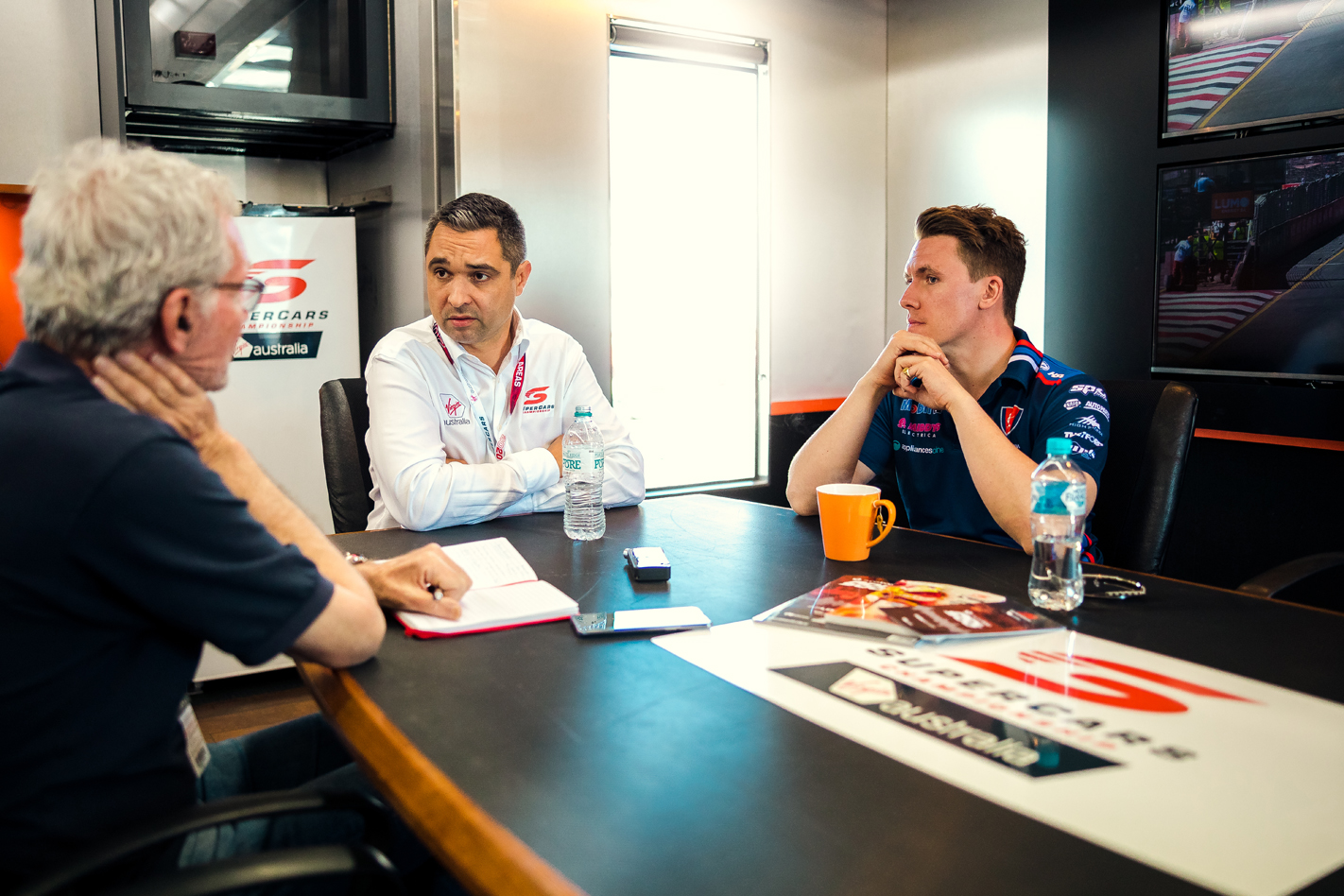
“Our number one priority is making sure that whatever we do, whatever we’re racing, we’re doing it the right way, that we’re doing it in an entertaining way, that we’re still putting on the best show in town.
“Like any business, you have to think about who your end consumer is, and we don’t want to get too caught up in the product right now and lose sight of the consumer.”
Seamer maintained that, while V8s were the core of Supercars, the Gen3 rules would have to consider allowing other engines.
“The foundation is fast, loud and close,” Seamer said.
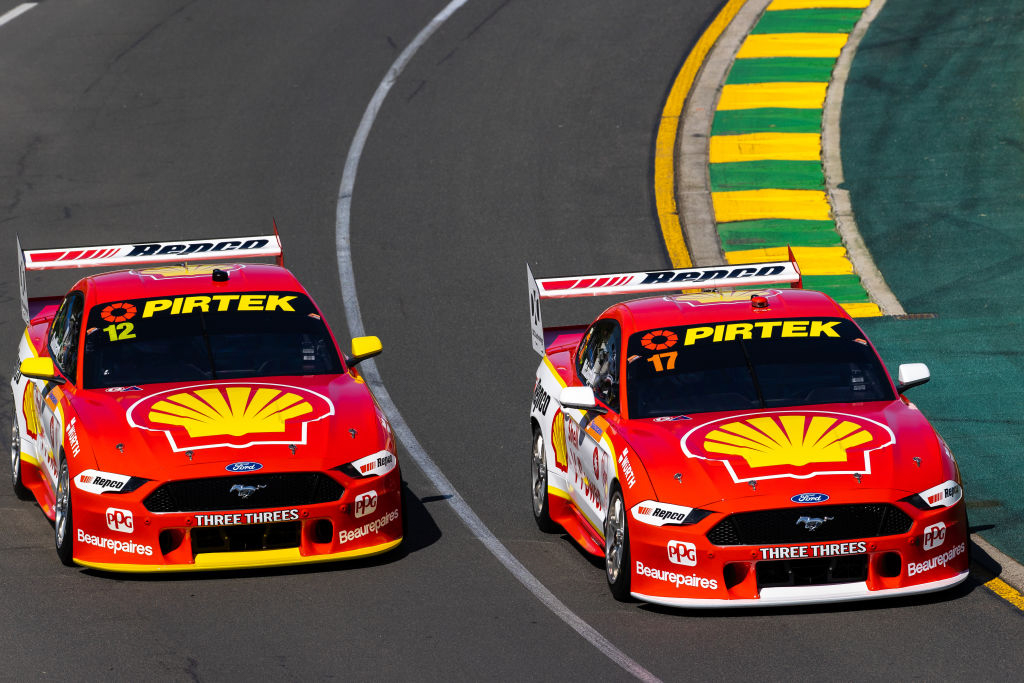
DJR Mustangs at Albert Park, 2020
“There are some negative connotations around different types of engines because it’s perceived that they’re not going to be entertaining, but they can be, and I think we’ve seen that in other eras.”
He also confirmed that Supercars was looking at adding hybrid electric assistance, but only as a “fast follower” to technology being developed by the British Touring Car Championship this year and NASCAR for 2021.
“We look at what all the other series are doing around the world,” Seamer explained. “Let’s not get hung up on cylinders. What I’m saying is that the DNA of being fast, loud, in your face and good visceral entertainment will remain, irrespective of what’s in the front of the cars. We’re not hung up on cylinder numbers. What we are hung up on is whether it’s entertaining or not.”
According to Walkinshaw, cost-cutting and simplifying homologation of body shapes is fundamental to the future of Supercars, which has prospered for more than 20 years.
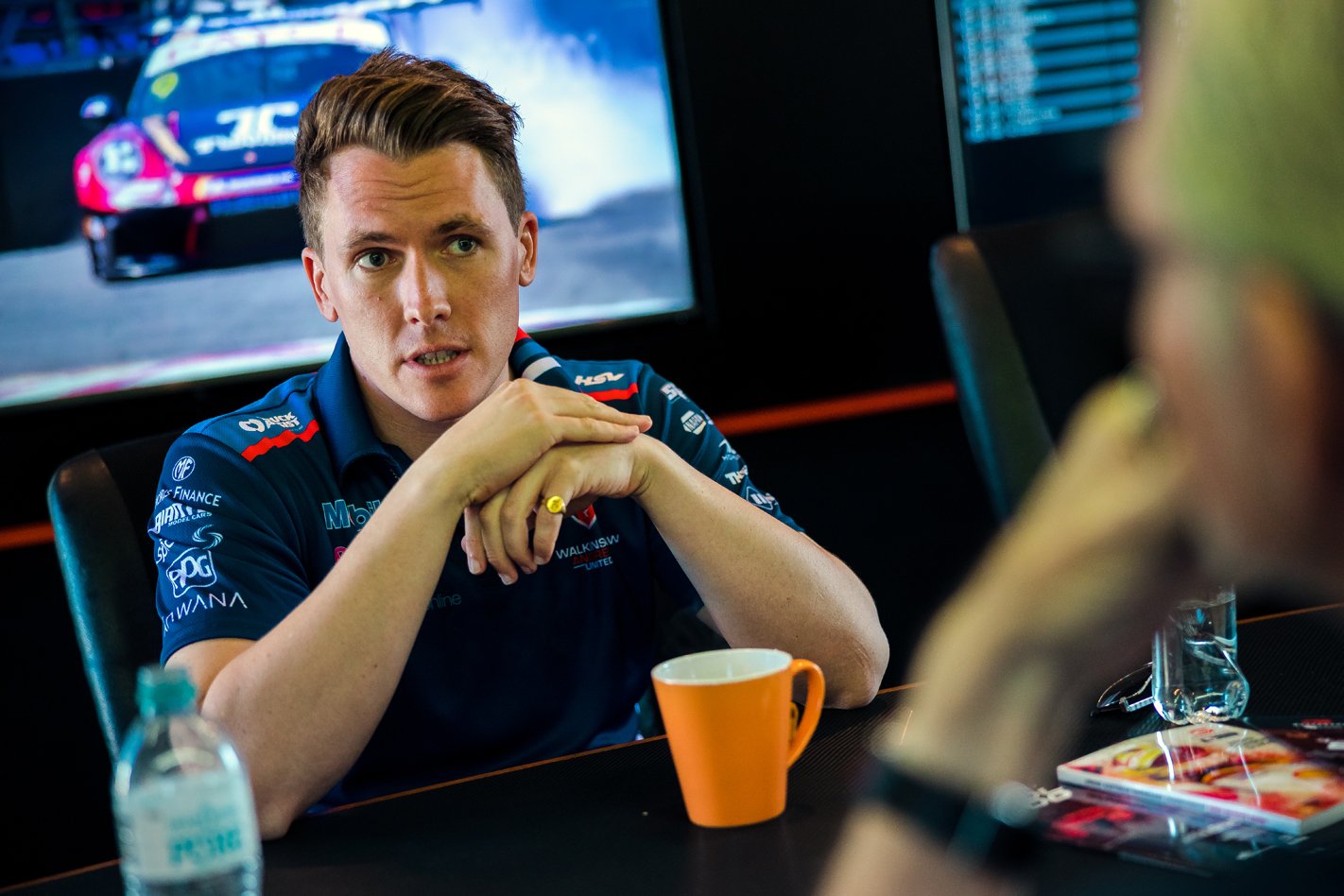
“I think there is a lot of opportunity to reduce costs,” Walkinshaw said. “There’s a lot of low-hanging fruit we’ve already removed, but there’s still some big low-hanging fruit that we can focus on for Gen3.
“Frankly, in my view the cars are too expensive, they are over-complicated for what we need. All that extra expense doesn’t make one iota of difference to the interest from the fans.
“As I’ve been saying for a long time, remove all the funky stuff and just have good, exciting, loud cars that go racing. We don’t need to have all this heavy engineering that goes on, because the fans don’t give a shit, they really don’t.
“They want to watch their favourite drivers go around and have close racing at some of the best sporting events in the country. That’s what we provide, so why do we need to have all the complexity we currently have in these cars?
“Let’s take Gen3 as an opportunity to remove as much cost and complexity as possible.”
Getting Toyota involved is the Holy Grail of Supercars’ ambition, which is why Gen3 will facilitate the tiny two-seater Supra’s dimensions, along with abandoning the requirement for four seats.
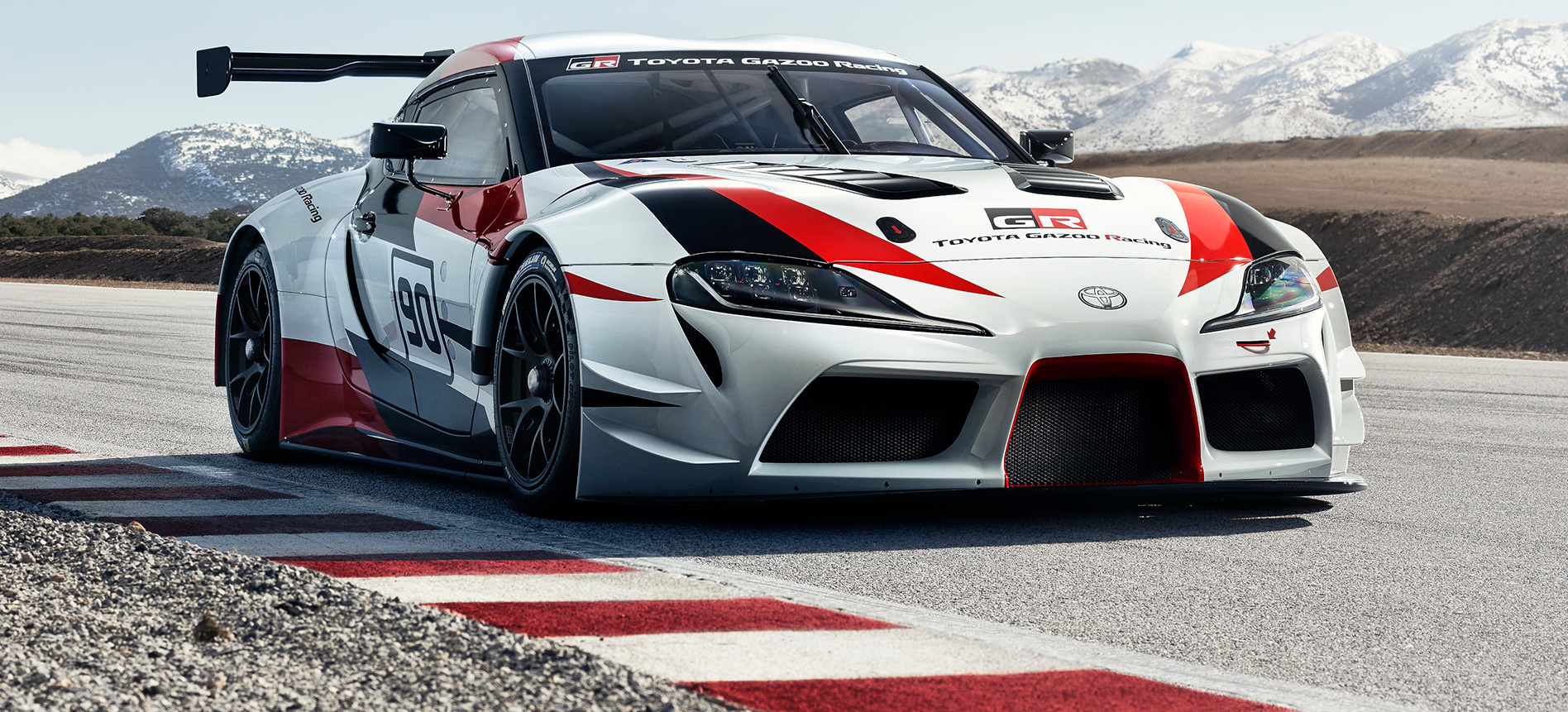
“I don’t think we’d stretch the rules,” Seamer said. “I think that in Gen3, you include the opportunity – or maximise the opportunity – for as many different relevant shapes, based on what a manufacturer wants to do. There’s been a lot of conversation around two-door performance cars because there is a market between $80,000 and $150,000 that’s relatedly affordable. They’re attainable and they’re also aspirational.
“Now, we’re not talking about Ferraris and all the rest of it, but I can aspire to owning a Mustang or a Camaro or a Supra or even an AMG C63 or a BMW M4, whatever it might be in that attainable performance car market. In the conversations that we have with manufacturers, we see longevity in that platform.”
Supercars is at a crossroads. History versus relevance. Once broadcast rights and ownership are resolved, the technical rules – and what they allow – will determine the future of arguably the best touring car racing championship in the world.
These are big stakes for what, in global terms, is a small series in a marginalised market.
Who would buy Supercars?
The first group wanting to buy Supercars is the Australian Racing Group (ARG), a well-financed disruptor that has emerged in the past year, funding the establishment of TCR 2.0-litre touring car racing, S5000 V8 big-banger open-wheelers and an end-of-season international event at Bathurst.
ARG is backed by reclusive property developer and racing enthusiast Brian Boyd – a long-time patron under his PAYCE and Paynter Dixon sponsorships of multiple classes.
Boyd has deep, deep pockets and a desire to run racing in this country. His motorsport lieutenants are former Wilson Group CEO John McMellan – a big racing backer when he headed Hong Kong-based parking, security, medical and storage conglomerate Wilson – and ex-Volvo Australia boss and Supercars 2IC Matt Braid.
Their rivals for control of Supercars are a band of rich team owners. Think Roger Penske, Roland Dane, Walkinshaw and eccentric Erebus Motorsport patron Betty Klimenko. Their takeover bid is being organised by amateur racer Tim Miles, a financier who brokered Archer’s buyout, which resulted in a multimillion-dollar windfall for team owners.
