
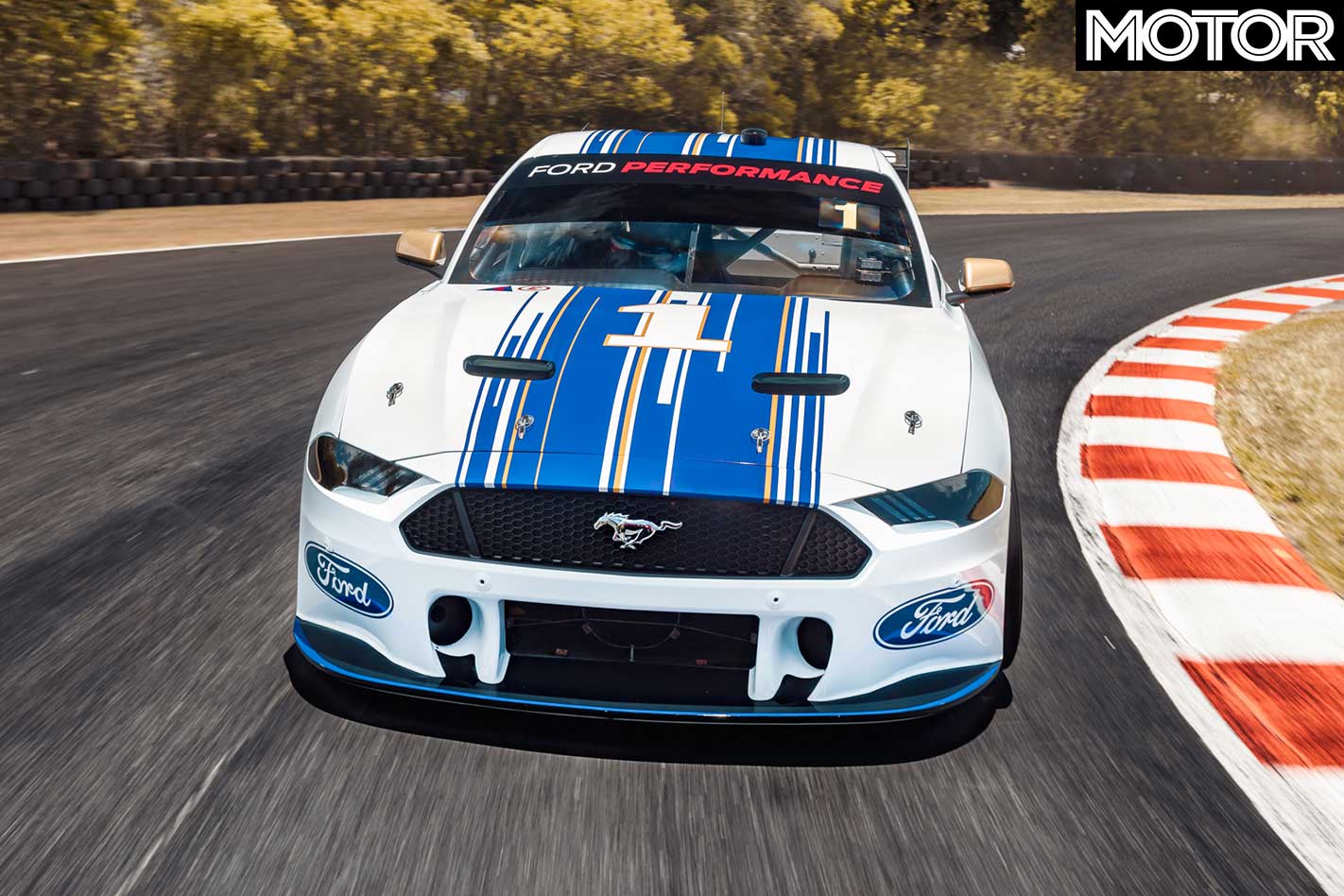
Australian motorsport legend and Supercars team co-owner Dick Johnson will take the wheel of the 2019 Ford Mustang Supercar at the Adelaide 500 during demonstration laps.
This means five-time Australian Touring Cars champion Johnson will be the first to score track time in the Mustang Supercar at an official race meeting.
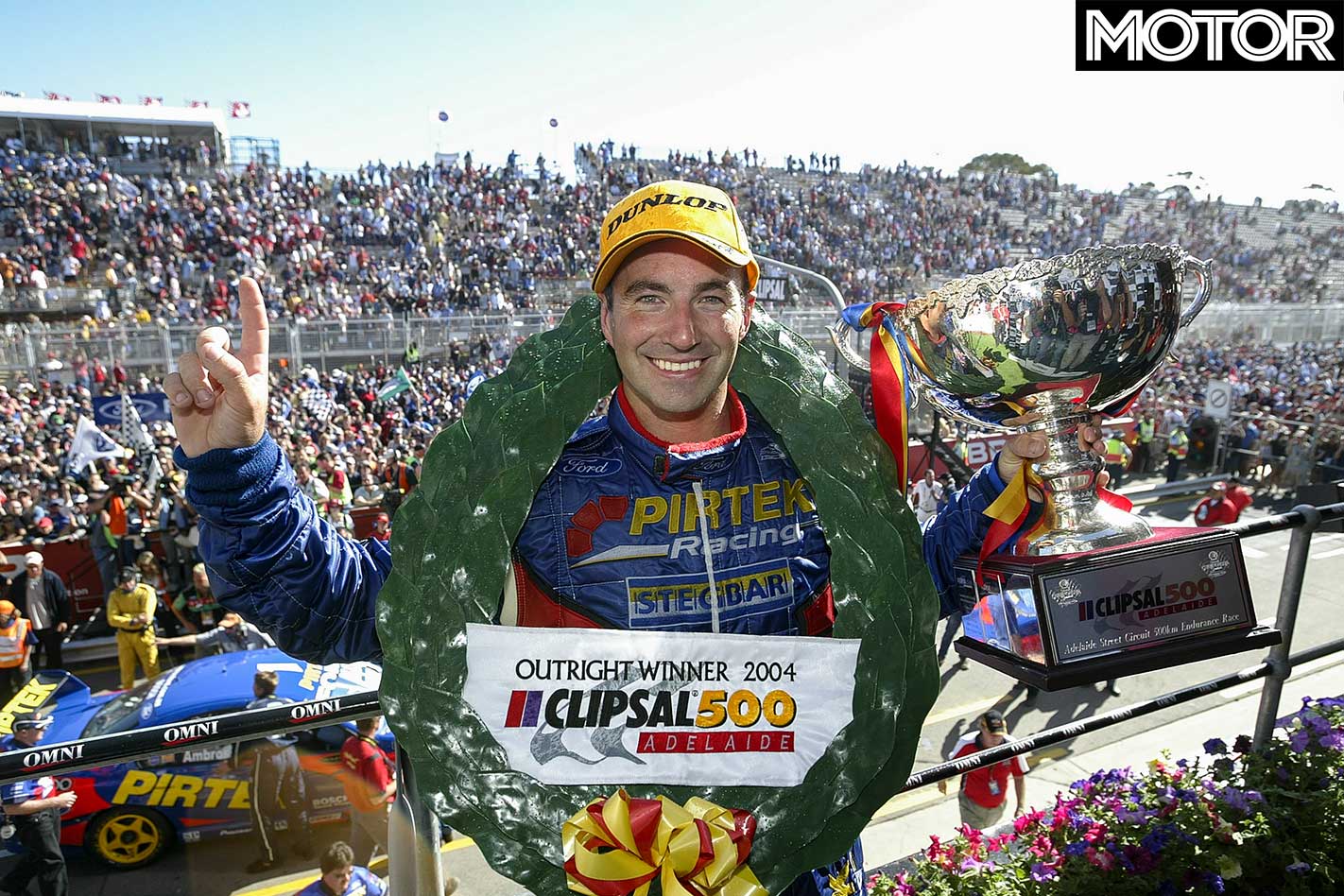
Also driving during demonstration laps at the 500 will be back-to-back 2003 and ’04 Supercars champion Marcos Ambrose, as well as reigning champ Scott McLaughlin.
Ambrose and McLaughlin will be driving a NASCAR-spec Mustang and “specially prepared” Mustang GT road car respectively.
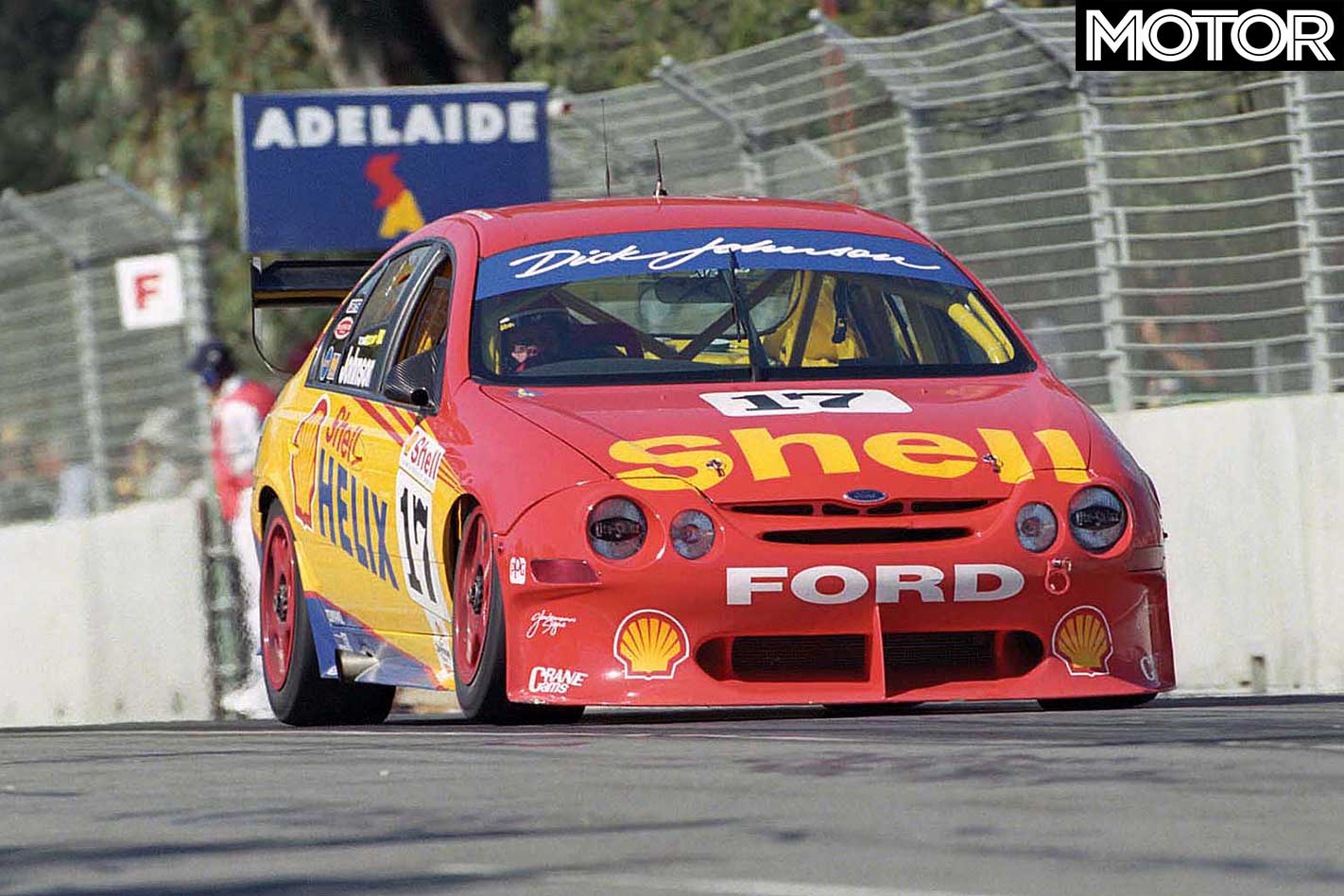
Ford Australia CEO Kay Hart says Johnson, who drove a Greens-Tuf ‘Foxbody’ Mustang in the ’80s, deserves the drive as “a tribute to Dick’s long-standing contribution to the sport.”
The DJR Team Penske co-owner says he’s very much looking forward to getting onto the track at Adelaide.
“When I was approached with the concept, the first thing I asked was, ‘What’s the lap record?’” the three-time Bathurst winner says.
“It has been a long time since I’ve been behind the wheel of a full-spec Supercar, and to get the chance to drive the new Mustang is something I’m very much looking forward to.
“Doing it alongside Marcos and Scott is just icing on the cake.”
Marcos Ambrose will fittingly be behind the wheel of a NASCAR Mustang, as he was the first Australian to have won a NASCAR Cup Series race.
“DJ and I have been out of the game for a while, but I have a feeling the red mist will descend when we pull the helmets on,” Ambrose says.
“Doing it in a NASCAR is going to be completely different for me, but I’m really looking forward to it.”
2018 Supercars victor and DJR Penske driver McLaughlin says he’s just excited to get out and drive with two motorsport heroes, even if he’s not in a race car.
“To share track time with not only Dick, but with a legend like Marcos who I watched as a kid, is hair on the back of your neck stuff,” says McLaughlin.
The Adelaide 500 commences on February 28, with the Mustang demonstration serving as a support event to the races.
TOUTED as the world’s first mass-market EV, in Australia the original ZE0 Leaf suffered the growing pains it had to have.
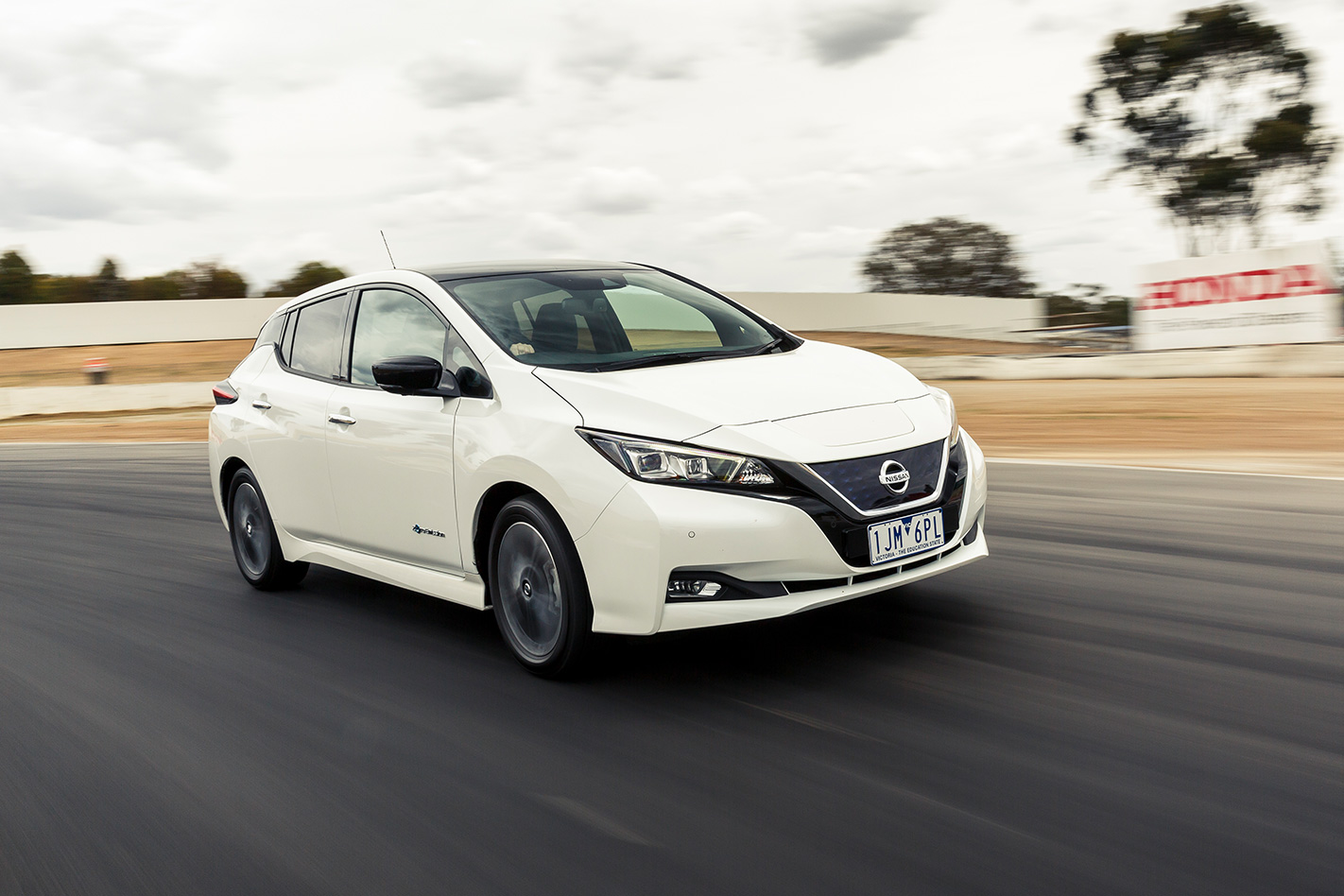
Injured by the oddball design, starship dash and dull dynamics, it was high pricing (initially $51,500) and low range (about 115km realistically) that dealt the fatal blow, resulting in just 635 sales in the four years from 2012, against over 250,000 globally.
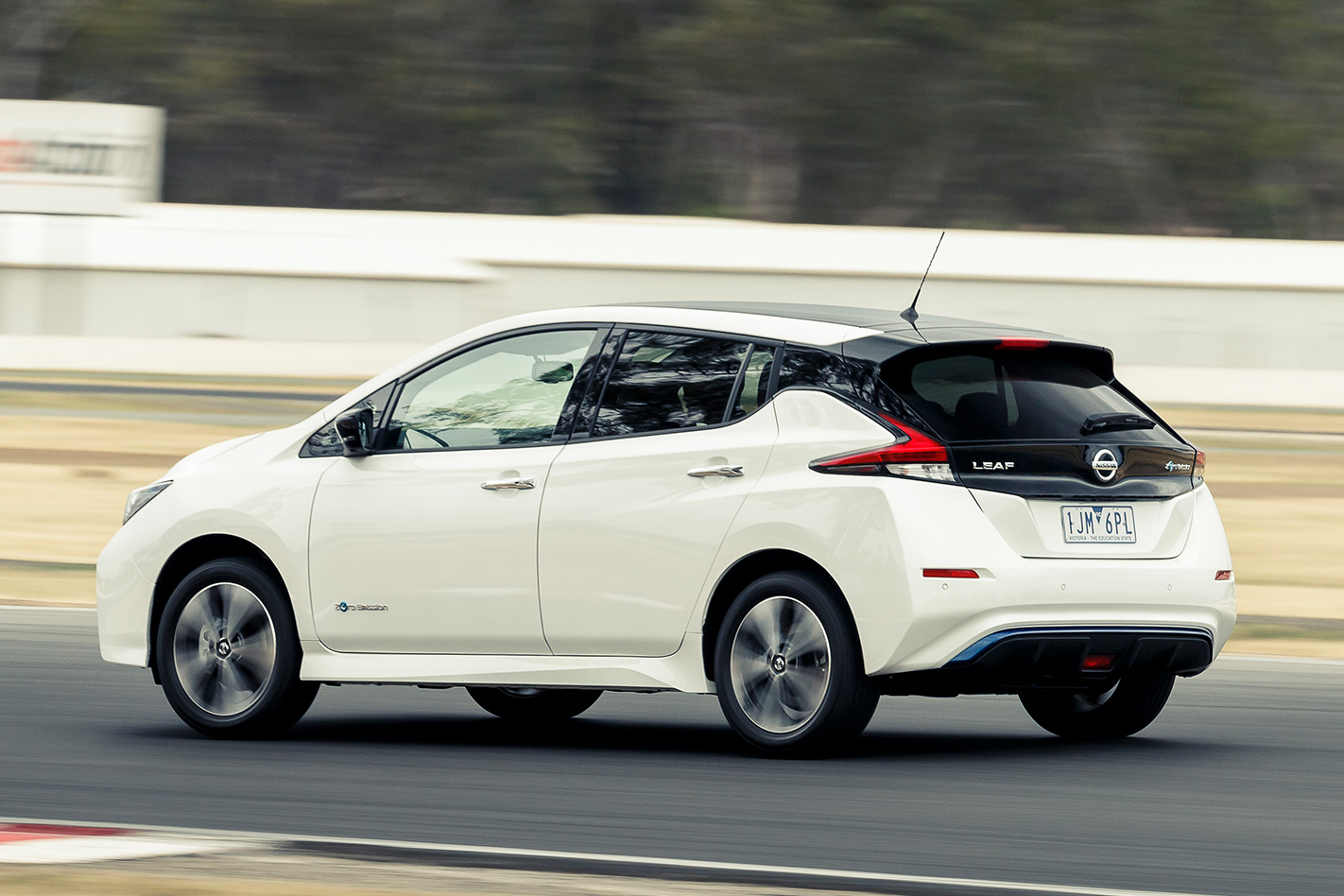
In contrast, the ZE1 Leaf II out in June is the result of hard lessons learned, with stronger performance, a 16kWh-larger battery that doubles real-world range to 270km, and a slightly larger, longer, wider and lower body on offer. Progress – though some of the old Leaf’s friendly/dorky flair has been exorcised in the process. Note the doors and bonnet are no longer aluminium, but steel.
Nowadays, the dash is as simple as the previous one was sophisticated. It’s now ho-hum conventional, down to an analogue speedo and wheel nicked from the Qashqai (that it’s built alongside in Britain).There’s still no column reach adjustment, annoyingly, we miss the old car’s eye-level digital speedo, and the electric park brake gives way to a foot-operated relic. Boo!
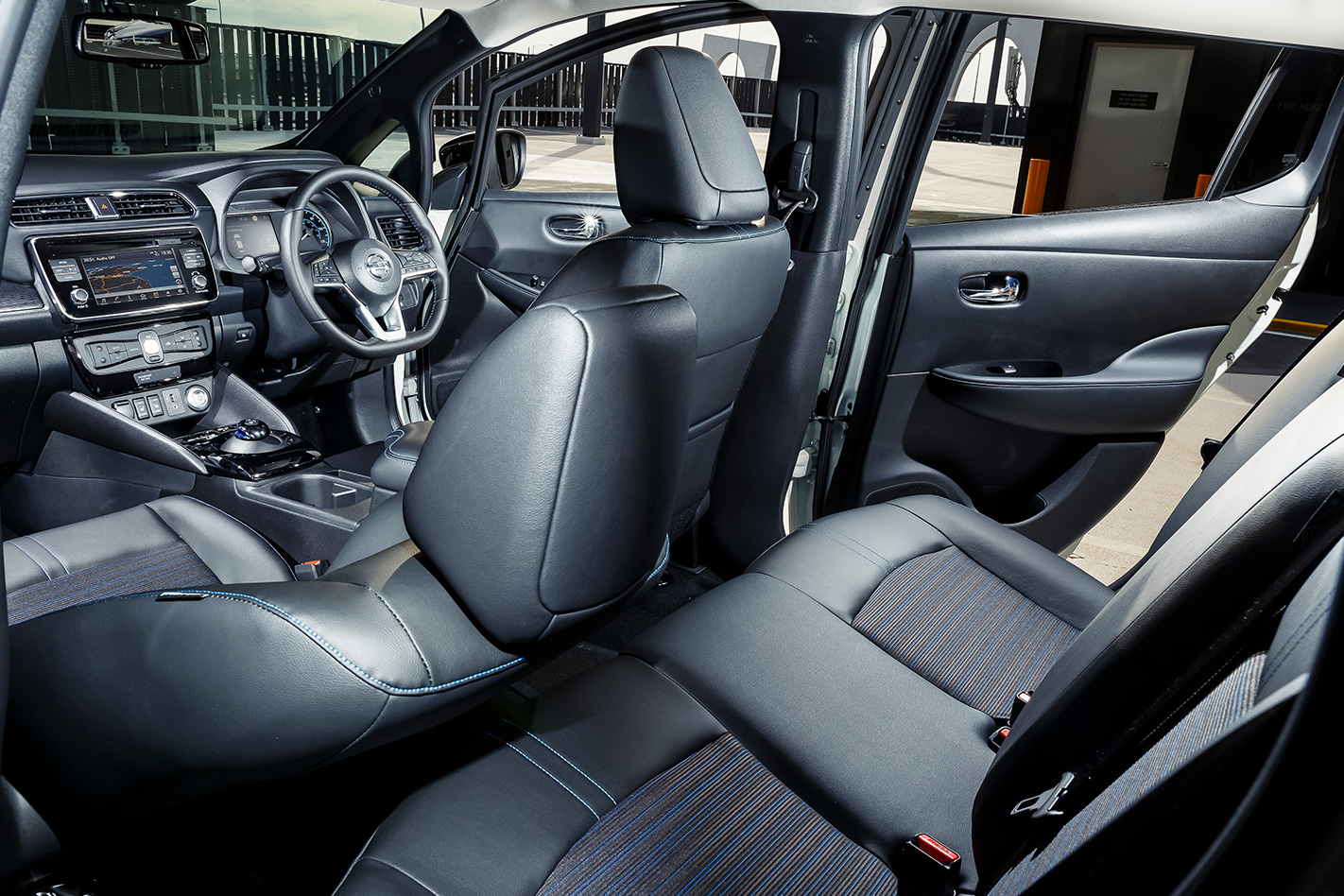
At least Leaf’s now quieter. DAB+ digital radio and CarPlay/Auto debut. And cargo capacity grows to a family-friendly 435L (though battery packaging means a flat boot floor remains elusive). Carry-over toggle auto lever aside, there’s precisely zero alien-EV weirdness inside.
Plenty of EV poke though. Performance livens up considerably, with hasty off-the-line dispatch and seamless overtaking yours to enjoy; the steering finally feels connected, with newfound feel and responsiveness; and while there’s an underlying chassis tautness that brings fresh dynamic nimbleness, the firmer-ride trade-off is perfectly acceptable. Enthusiasts no longer need ignore.
The fresh ‘e-Pedal’ regenerative braking system offers off-throttle braking, providing 0.2G of retardation, adding range and assisting in smoother driving – especially as brake pedal feel is still a bit snatchy. Furthermore, newly standard AEB, lane-keep assist, rear cross-traffic alert, adaptive cruise and surround-view monitor should help cement the Leaf’s mainstream aspirations.
Finally, just as before, charging via a regular three-pin socket could take up to 24 hours, but a circa-$3K-installed wallbox slashes that by almost two-thirds. Additionally, improved battery cooling means owners will be encouraged to seek out DC fast-charge outlets for 80 percent of capacity in about 40 minutes. And now bi-directional charging can provide electricity back to your house or grid.
Only Nissan offers a second-gen EV when most rivals still struggle to muster their first; that the ZE1 has matured into a more mainstream-focused proposition might finally see the Leaf flourish in Australia. But the price must be right.
8/10
Peugeot has released a limited-edition version of its 308 GTi hot-hatch featuring more aggressive looks, but with a kinder price tag.
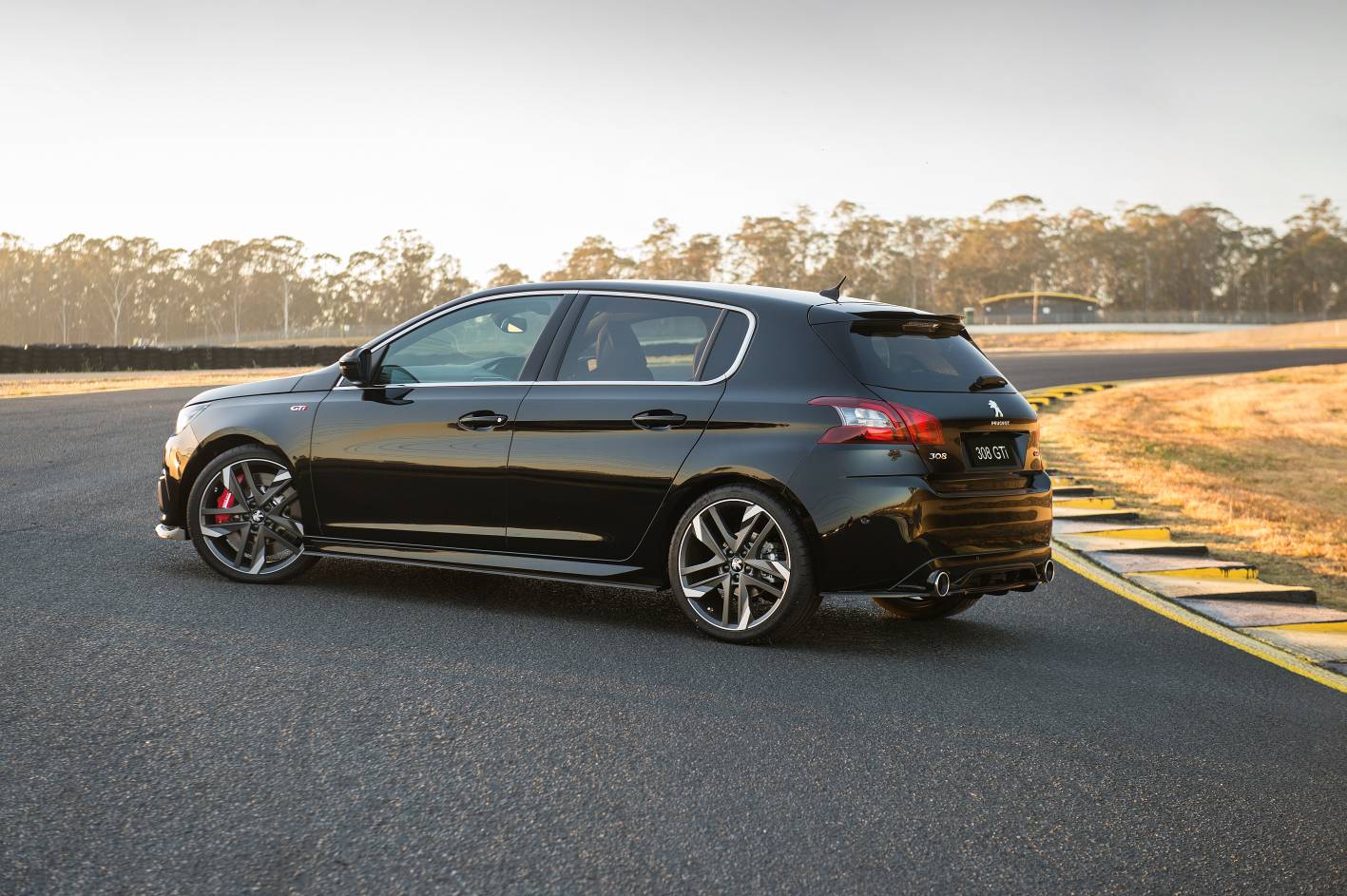
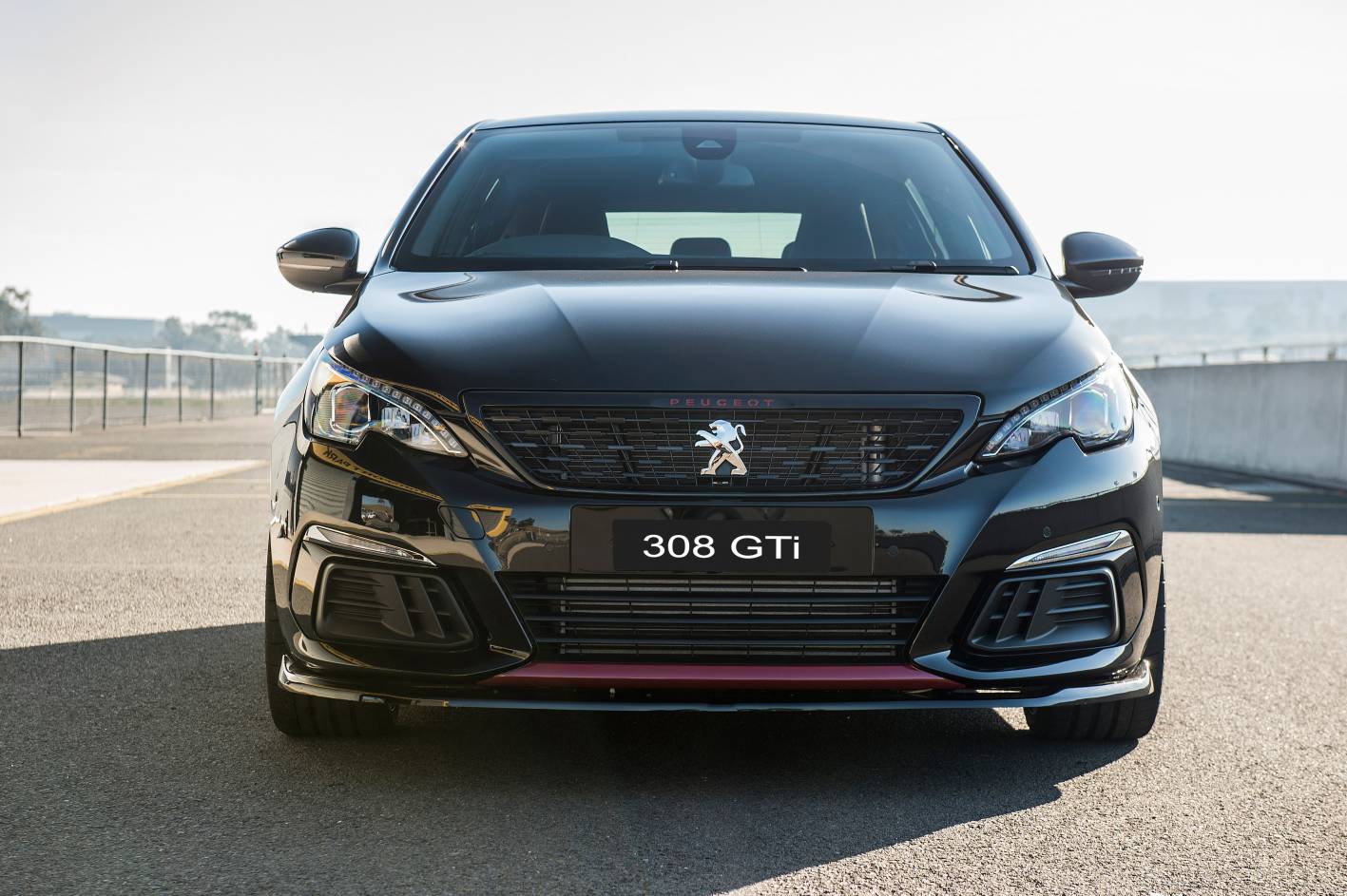
Priced at $42,990, the Peugeot 308 GTi Sport retails for $3500 less than the regular 308 GTi despite gaining a fresh five-piece body-kit featuring a new front spoiler, side skirt extensions, rear bumper corner extensions, rear diffuser, and rear spoiler (Gurney flap).
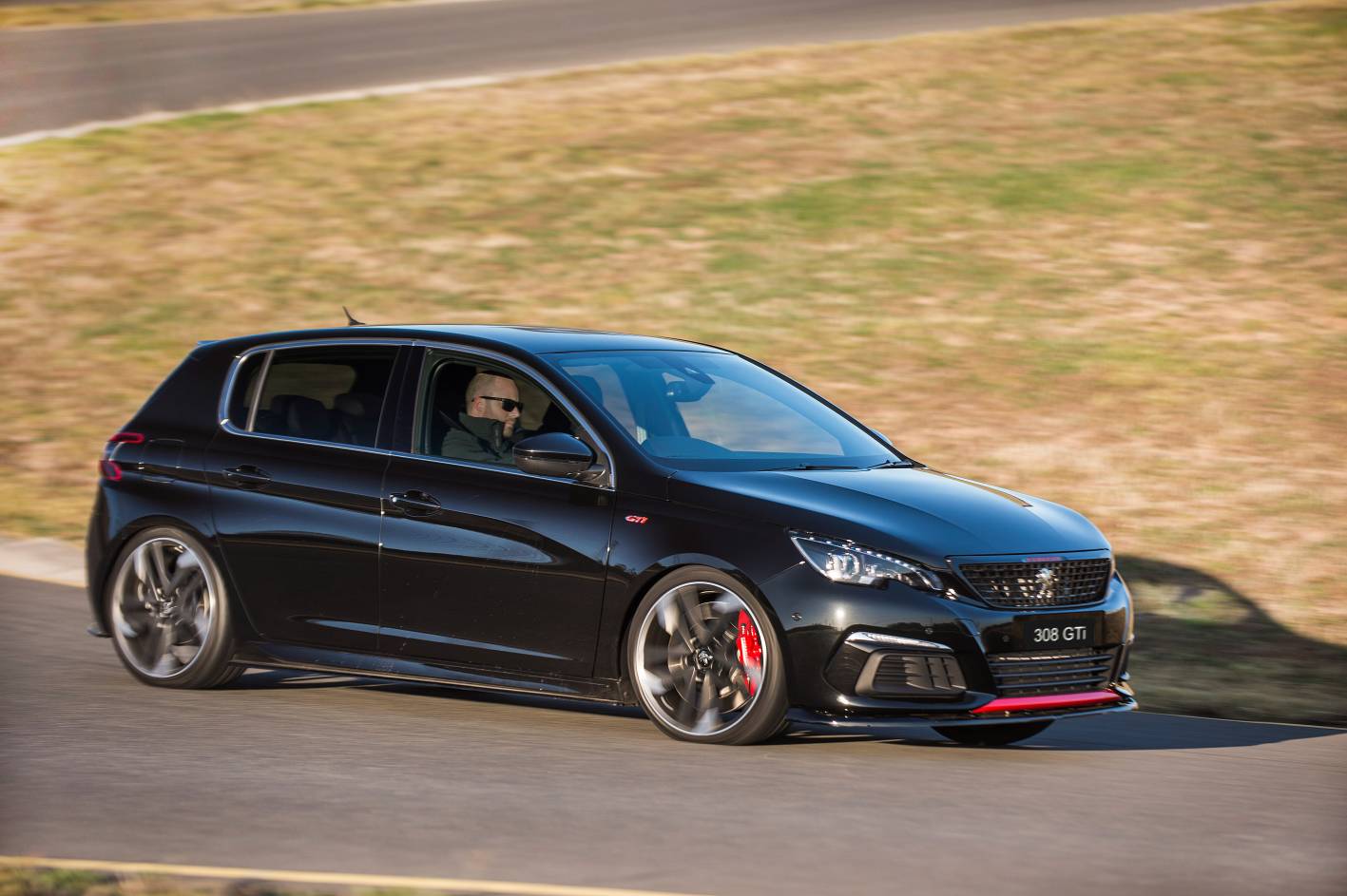
That takes the 200kW 1.8-litre turbo, six-speed manual hatch’s price below that of key euro rivals including the Renault Megane RS 280 ($44,990) and Volkswagen Golf GTI ($45,490), which it out-performed in Wheels’ recent hot-hatch megatest.
The package also includes metallic paint, with most of the 20 available cars coming in black, with Artense Grey and Magnetic Blue also available.
Buyers also receive a complementary $200 driver training course hosted by Driving Dynamics. The courses are currently held in Melbourne, Adelaide and Sydney, with Queensland and Western Australian drivers to be catered for soon.
The 2019 Peugeot GTi Sport also comes standard GTi features including 19-inch alloy wheels, sport bucket seats with massagers, red-cabin trim, leather sports steering wheel, limited-slip differential, 9.7-inch touchscreen, Apple Carplay/Android Auto, LED headlights with auto high-beam, front and rear parking sensors, traffic sign recognition, blind-spot monitoring and lane-keeping assist.
Click on the main picture to view more images of the 2019 Peugeot 308 GTi Sport.
- First look at VW’s new small SUV twins
- T-Roc officially confirmed for Australia
- T-Cross will start at less than $30,000
The lack of a small SUV in its product line has long been a thorn in the side of Volkswagen, with competitor vehicles like the Mazda CX-3 and Mitsubishi ASX adding serious numbers to the bottom lines of their respective companies.
The two five-seat five-door small SUVs are similar in stature but will differ in price and spec, according to company officials.
The smaller T-Cross is based on the underpinnings of the 2019 Volkswagen Polo, while the T-Roc is closer in size to a VW Golf.
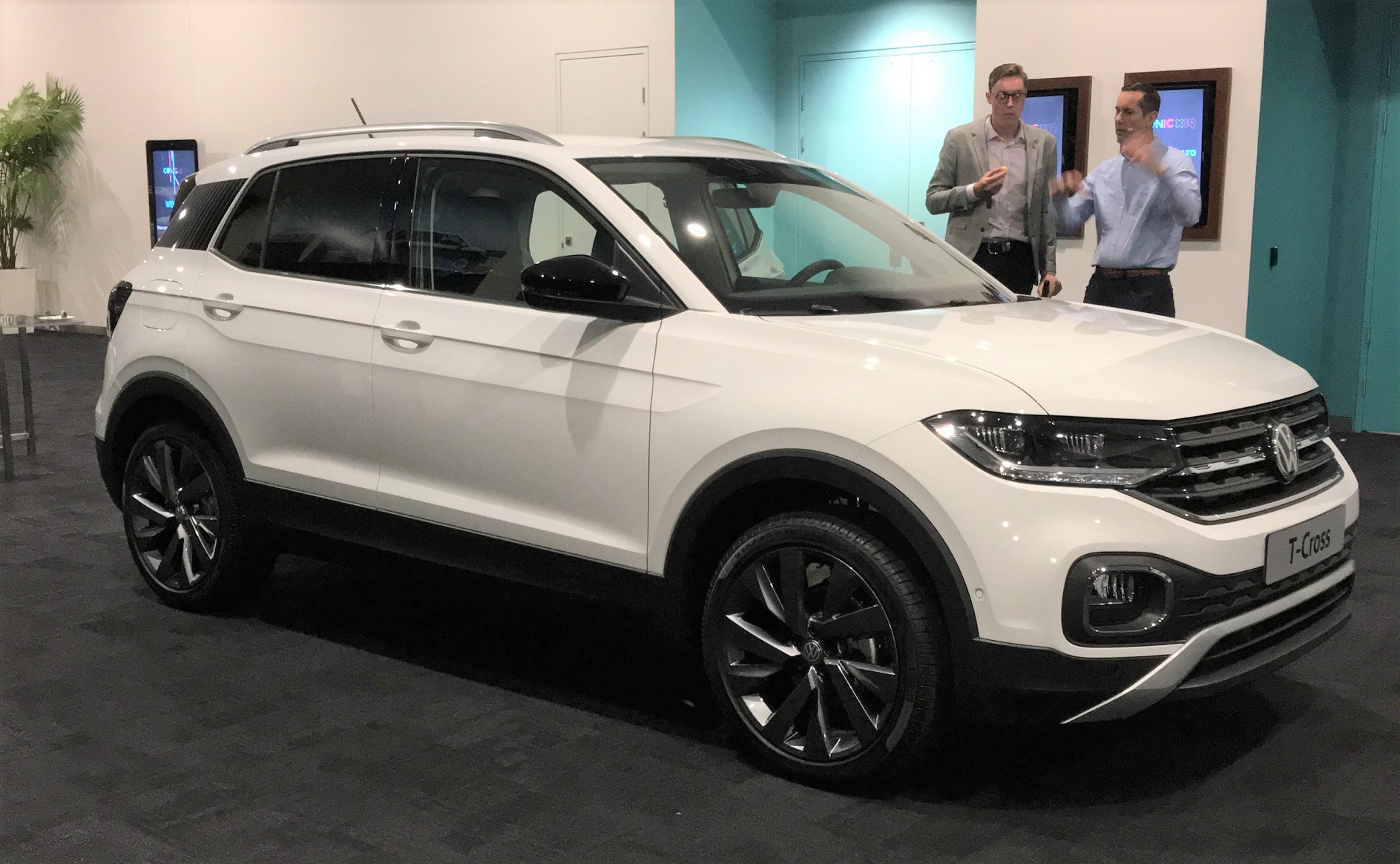
“The T-Cross will set the standards in the segment,” said Volkswagen Australia’s product manager, Todd Ford, adding that it’s “fair to say we’re fashionably late to the segment.”
While no specs have yet been announced for Australia, it’s expected that the T-Cross will kick off from less than $30,000.
The T-Cross is set to arrive in early 2019. It’s based on VW’s modular MQB A0 platform, with a 100mm higher driving position than the Polo on which it’s based.
Because it’s on the same platform as the Polo, driver aids like AEB, lane departure control and rear cross traffic alert are certain to arrive on the T-Cross.
It’ll be powered by the same 85kW/200Nm three-cylinder 1.4-litre turbocharged petrol engine as the Polo, using a seven-speed dual-clutch gearbox to drive the front wheels.
The interior treatment is similar to the Polo, and it’ll use an eight-inch multimedia screen and second generation Active Info Display digital dashboard.
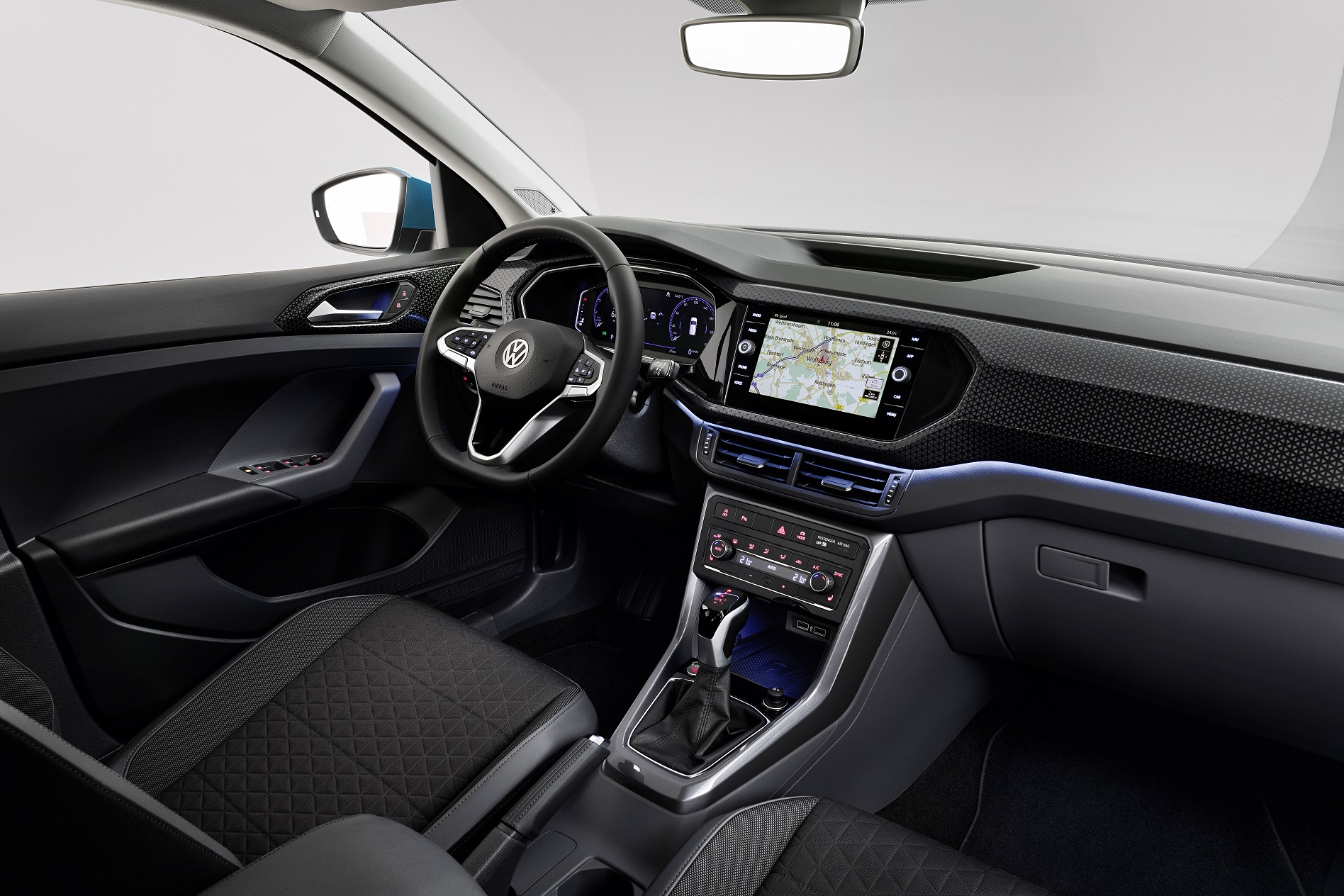
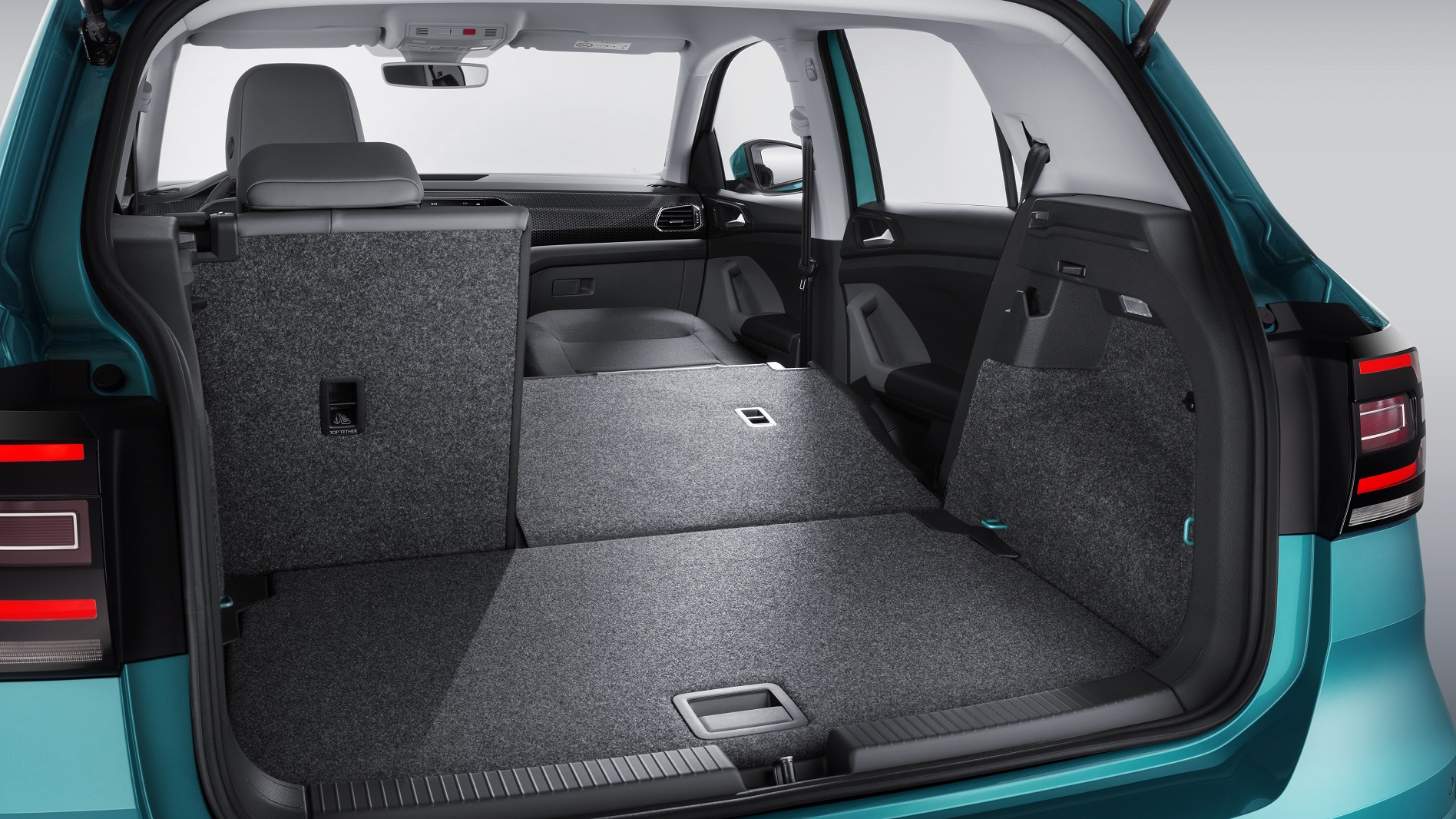
The second row of seats in the T-Cross is adjustable, with 385L of luggage space available behind the seats with the seats in the most rearward position, according to Volkswagen.
While this figures already tops the cargo space ok key rivals like the Subaru XV, according to VW, space grows to 485 litres with the seats slid forward, which is even larger than that of Honda’s HR-V and the Mitsubishi Eclipse Cross.
The front passenger seat will fold completely flat, as well.
Volkswagen says it’ll offer an R-Line package, as well as ‘colour concept’ packages featuring more vibrant colours than it’s used before, according to VW.
“It’s a significant volume opportunity for Volkswagen,” said the brand’s product marketing manager Jeff Shafer, who also told WhichCar that he didn’t expect to outsell cars like the Golf in the local market.
Volkswagen T-Roc
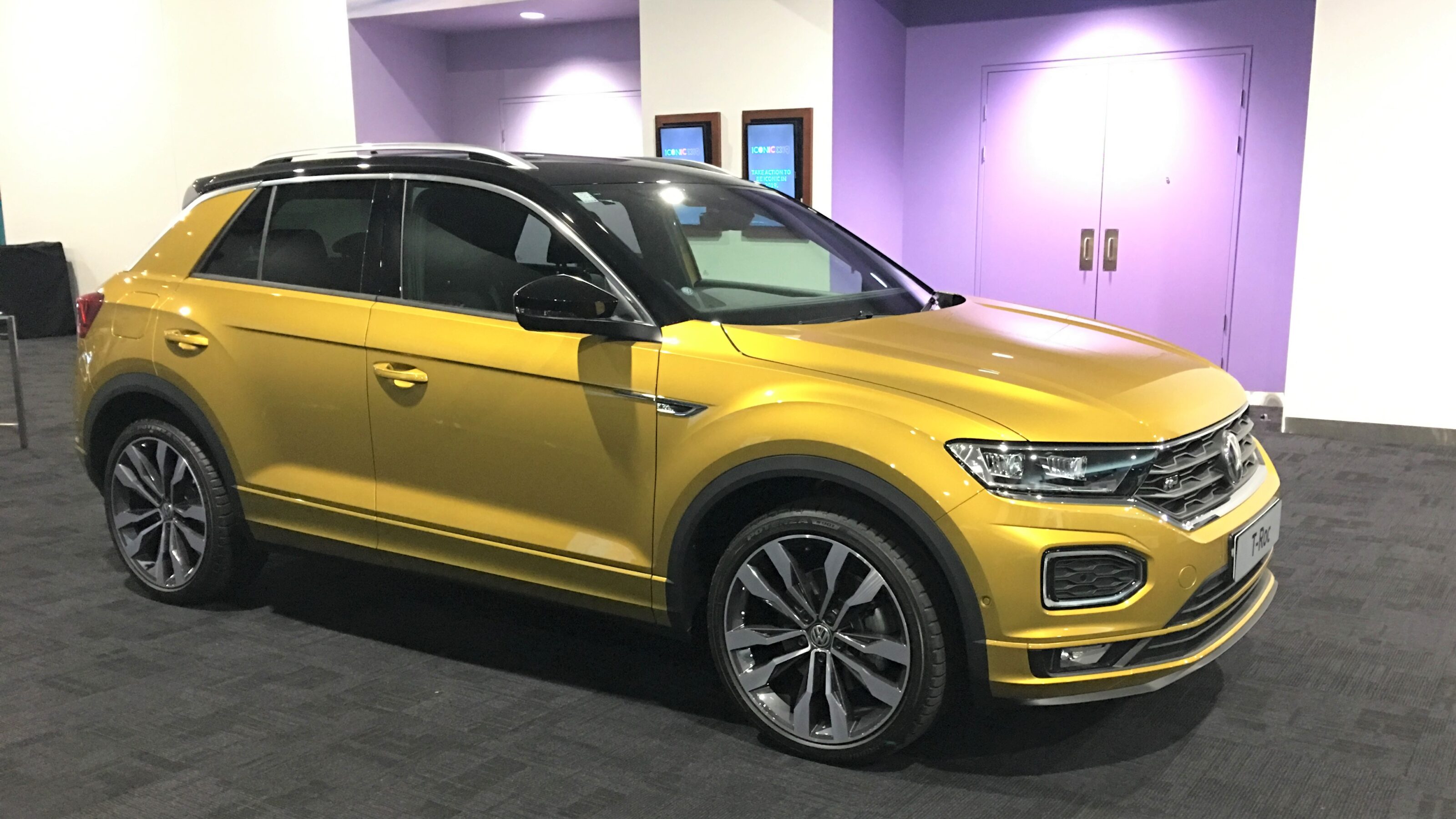
The slightly bigger T-Roc, meanwhile, has finally been confirmed for Australia.
“It’s been a real battle with head office to get this car,” said Schafer, “but the wait has been worth it.”
The T-Roc has been an enormous hit in overseas markets, which made the business case to supply the relatively small Australian market more difficult to get over the line.
Now that it’s been confirmed, though, Australia will be one of the first markets in the world outside of Europe to receive it.
It will be positioned above the T-Cross – it’s expected to start at $40,000 – and the T-Roc will be imported as a complete range. It’ll be likely offered in Style, Sport and R-Line models as opposed to variants, according to Shafer.
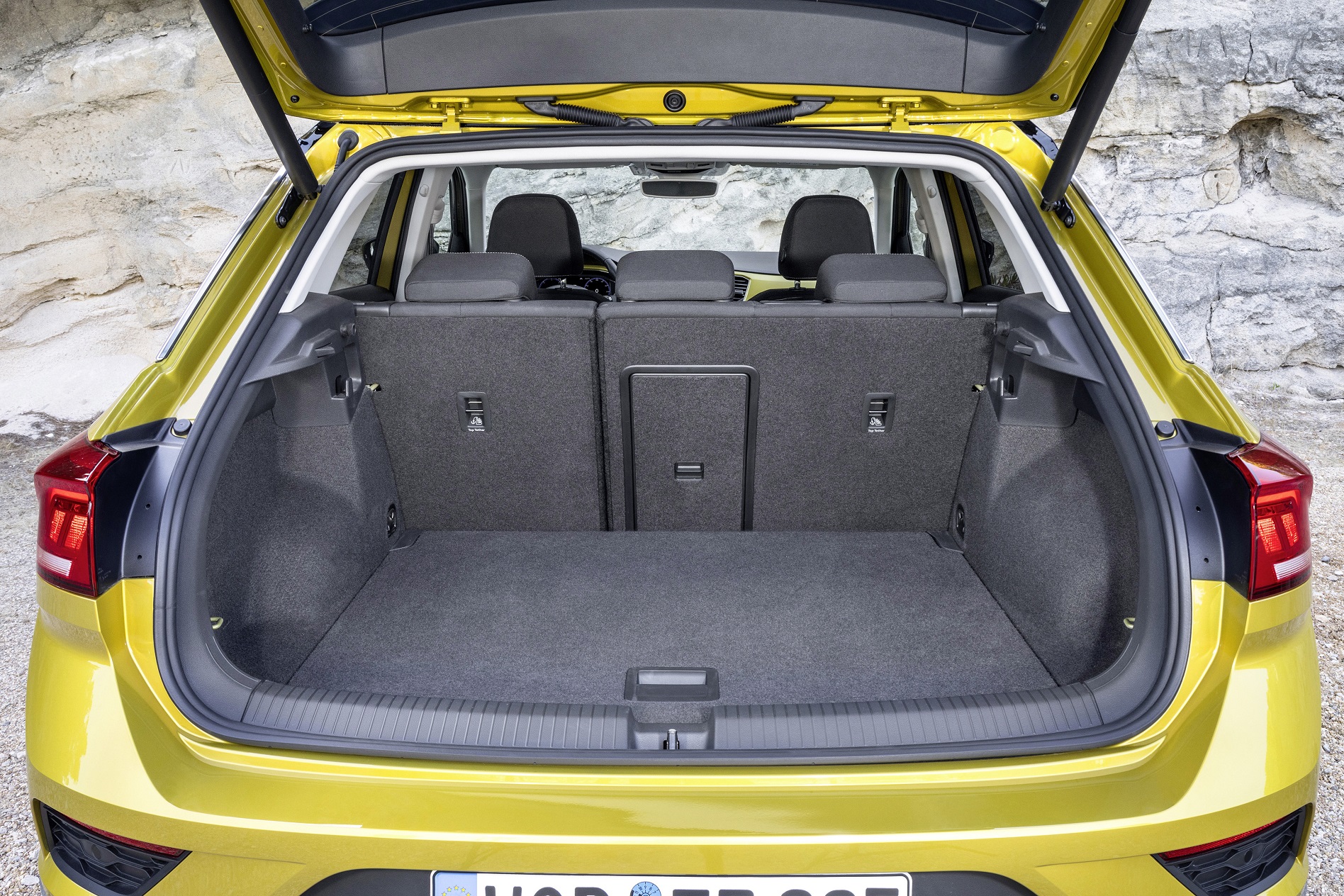
It’ll offer 445 litres of luggage room behind the rear seats, which will vault it into first place in the small SUV category.
It’ll be powered by a detuned version of the Golf GTI engine, which will make 140kW and 320Nm. A seven-speed dual clutch transmission and AWD will be the only option.
LED taillights, sports suspension, electric park brake, multiple drive modes and an electric tailgate will also be offered on the T-Roc. The top-spec T-Roc will also feature 19-inch rims.
“The T-Roc is a premium compact SUV,” said Ford.
T-Roc aR’nt available
What of the T-Roc R that’s just been spied in Europe? The news isn’t great, according to Shafer.
“We’d love to have it but we have issues to overcome,” he admitted, adding that the higher sulphur content of Australia’s petrol means that the 228kW, 400Nm version of the small SUV may not be able to be used here.
“We’ll do everything to get it here, though,” he added.
The Ferrari F355 has inspired Ferrari modifier Evoluto Automobili to create an homage with the philosophy of ‘peak analogue’ in mind, using a Ferrari 348 as a base.
The 348 reimagined by Evoluto is not only slightly redesigned, but also a fair bit lighter… and more powerful.
While the 1994 Ferrari F355 boasted a then-impressive 279kW power figure and kerb weight of 1350kg, the Evoluto-modified F355 scores a 368kW atmo V8, and weighs just 1000kg.
There are no prizes for calculating its kW-per-tonne figure without a calculator.
“Our vision of the ultimate naturally aspirated Ferrari V8,” Evoluto says, the company being careful not to refer to the car as an ‘Evoluto 348’ or variation thereof out of respect for Ferrari.
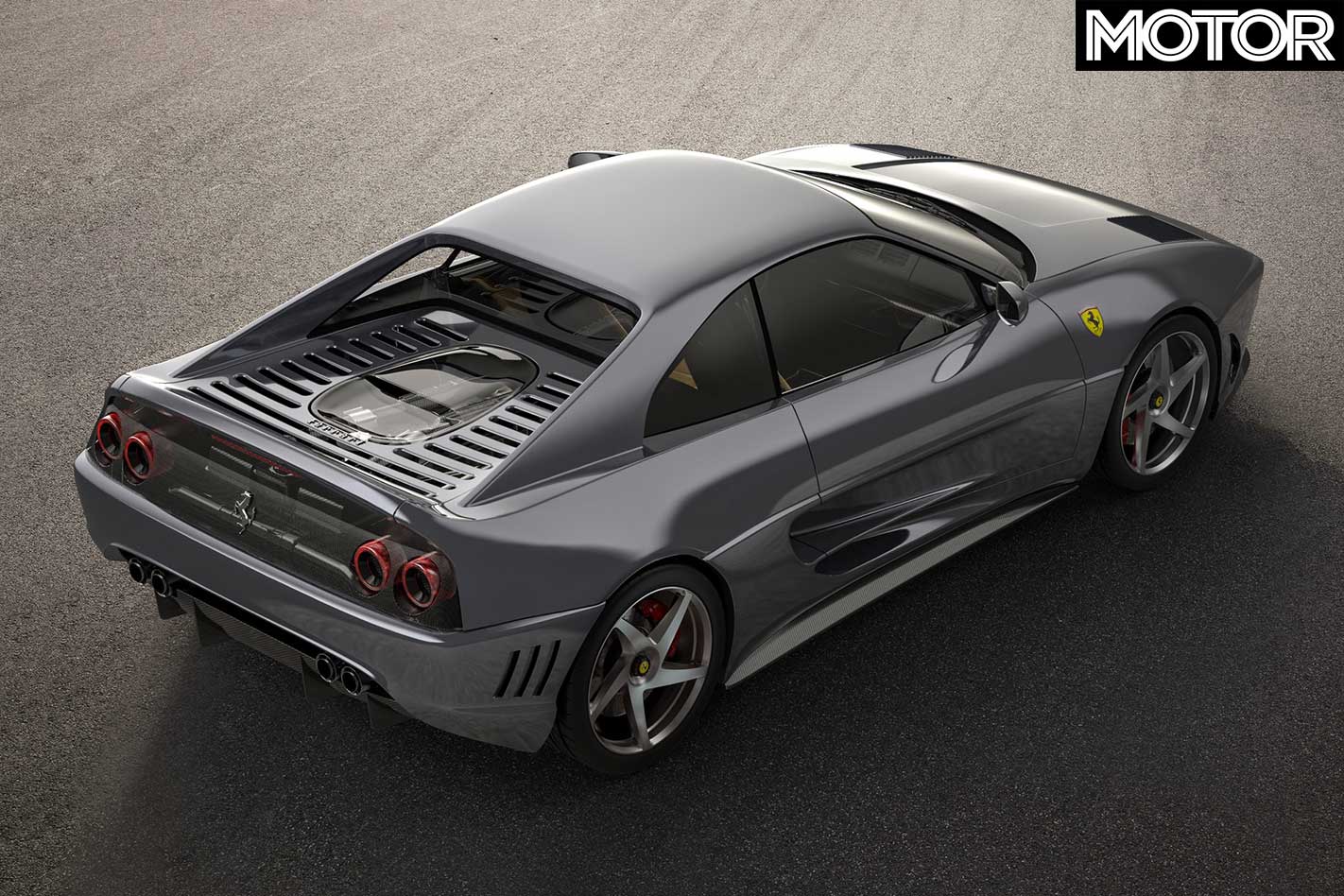
“With obvious styling nods to the stunning F355, our homage is more than skin deep. With a screaming 5 valves per cylinder engine and razor-sharp handling, this is a full rebirth of an icon.
“Built with a purposefully wide rear. We have taken the analogue diffuser and under-tray system first seen on a Ferrari F355 further to increase downforce and help tame the huge increase in power Evoluto has over a regular Ferrari 348.”
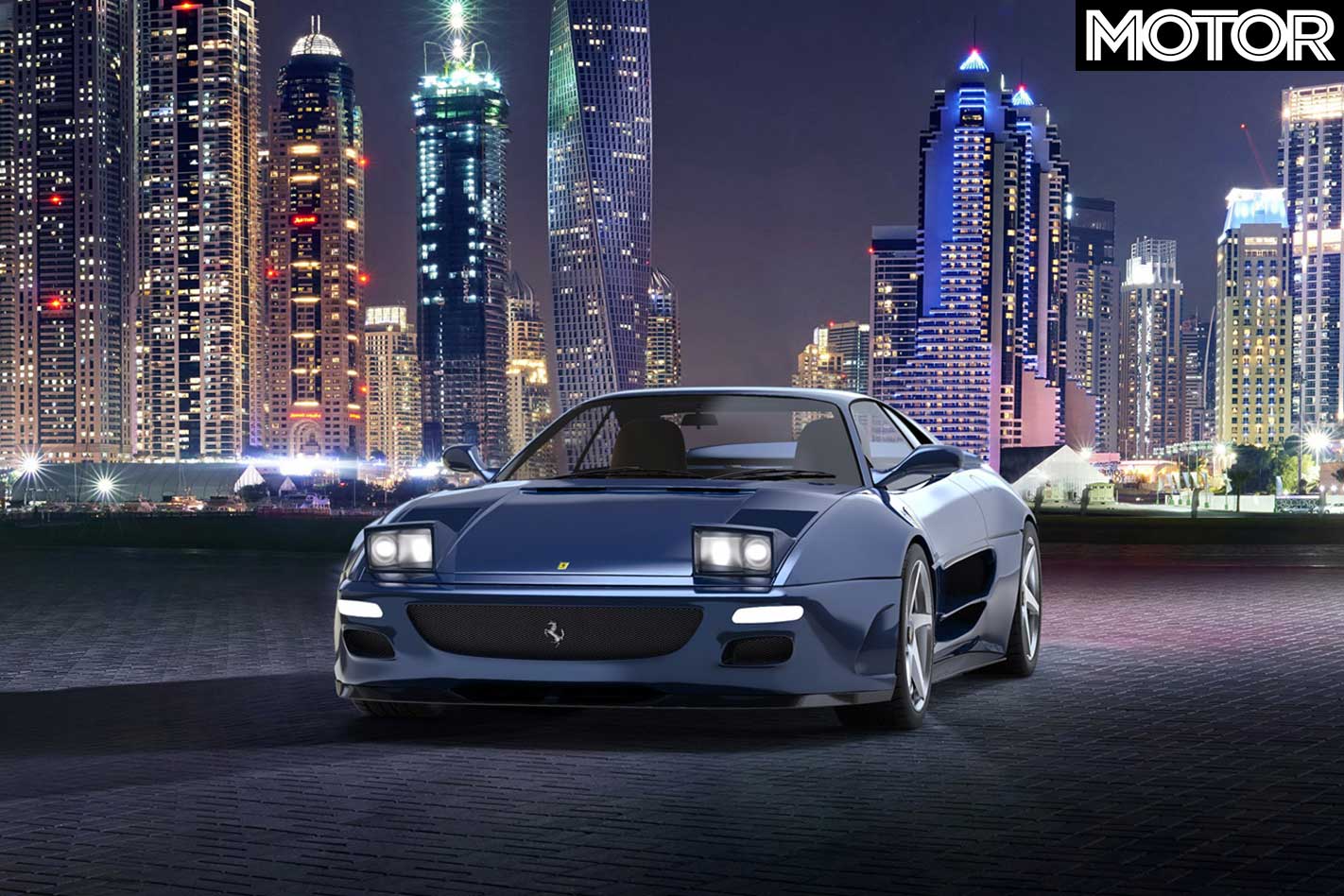
A 6-speed manual gearbox with a gated shifter is the Evoluto transmission of choice to suit its ‘peak analogue’ goals.
On top of all this, Evoluto says it will offer interested buyers the option of a car designed in the image of the Repsol-liveried Ferrari 348 GT/C LM.
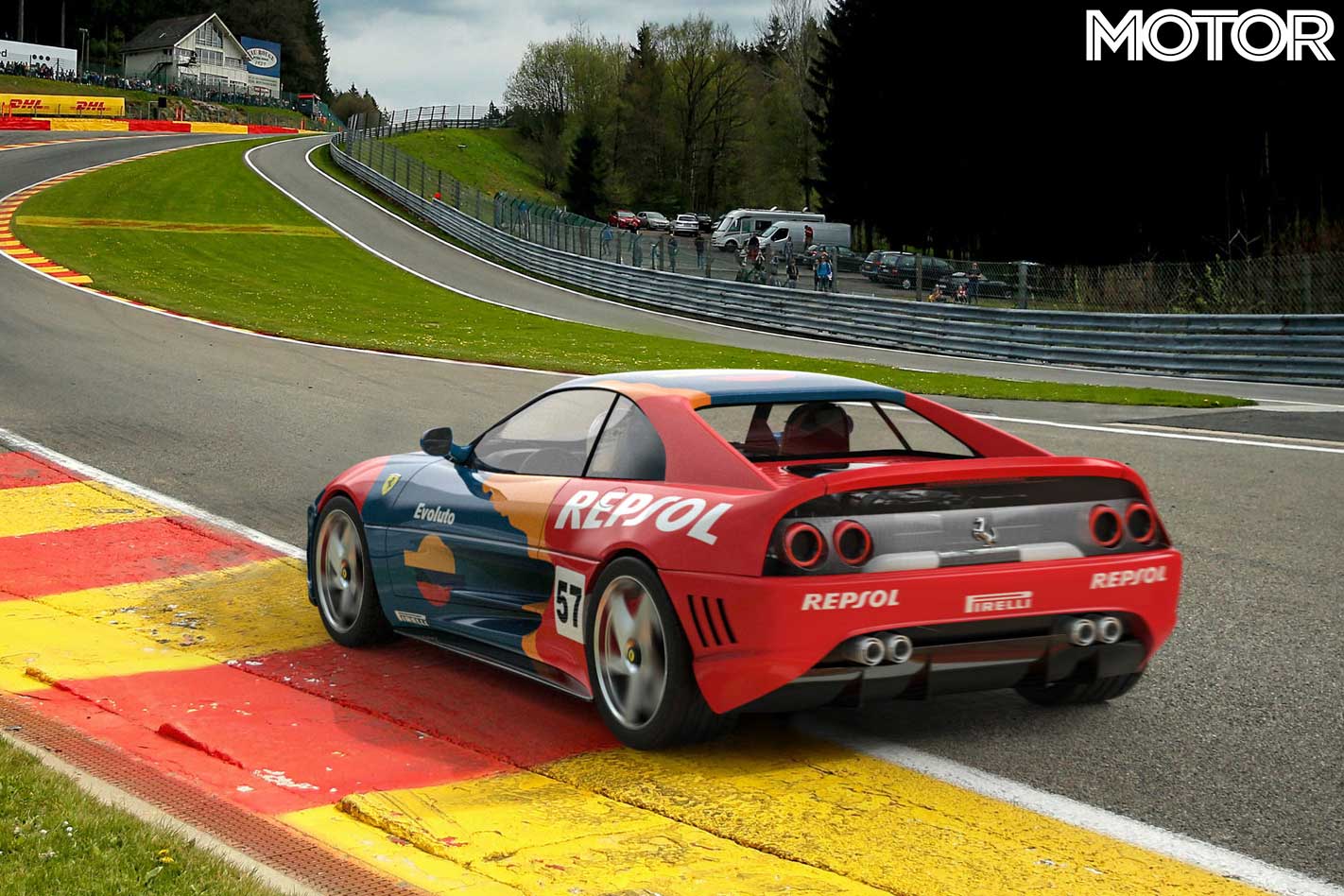
“We will be offering our vision in a special edition homage livery to this wonderful machine. It will also feature some individual performance upgrades and styling enhancements.”
Just don’t call it an Evoluto Ferrari.
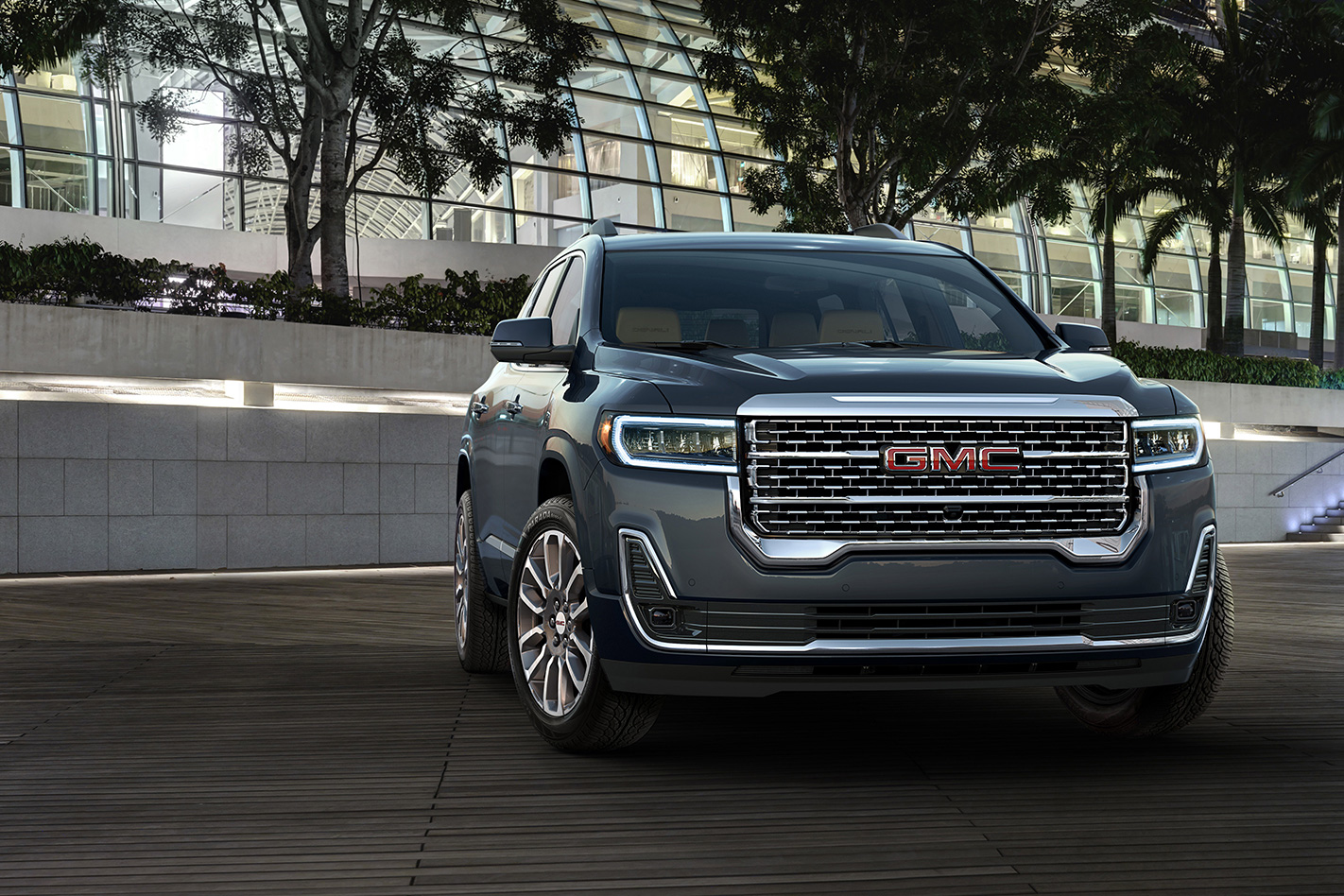
GMC has updated its Acadia large SUV for 2020, but Holden sources tell Wheels that Australia is likely to miss out on the updates – at least those related to the exterior styling.
This is because many of the mechanical and interior changes are already fitted to the Holden-badged Acadia, which went on sale in late-2018.
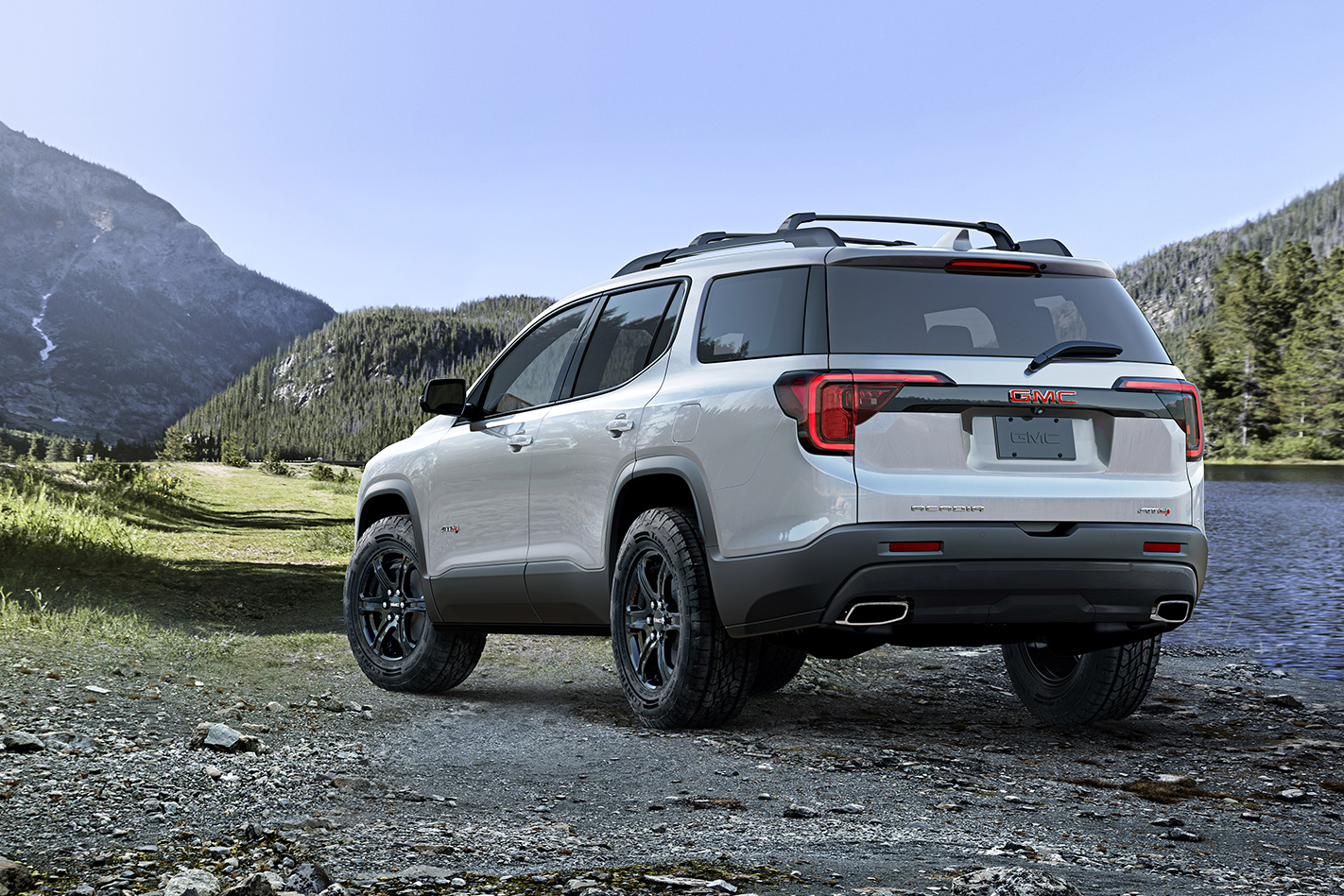
Despite being a relatively new arrival to Holden’s Australian line-up, the US-sourced SUV is actually three years old, with this mid-life refresh for the US model updating exterior styling, and introducing a new 2.0-litre turbocharged four-cylinder petrol engine.
Australian Acadia owners needn’t worry that they are missing out, with Holden’s seven-seater already fitted with the nine-speed gearbox, larger 8.0-inch infotainment screen, and digital instrument cluster that is now part of the update offered in North America.
Wheels understands that it is unlikely that the updated styling or turbocharged four-pot engine will make it to Australia. However, we are informed that Holden will be included in the discussions for future updates.
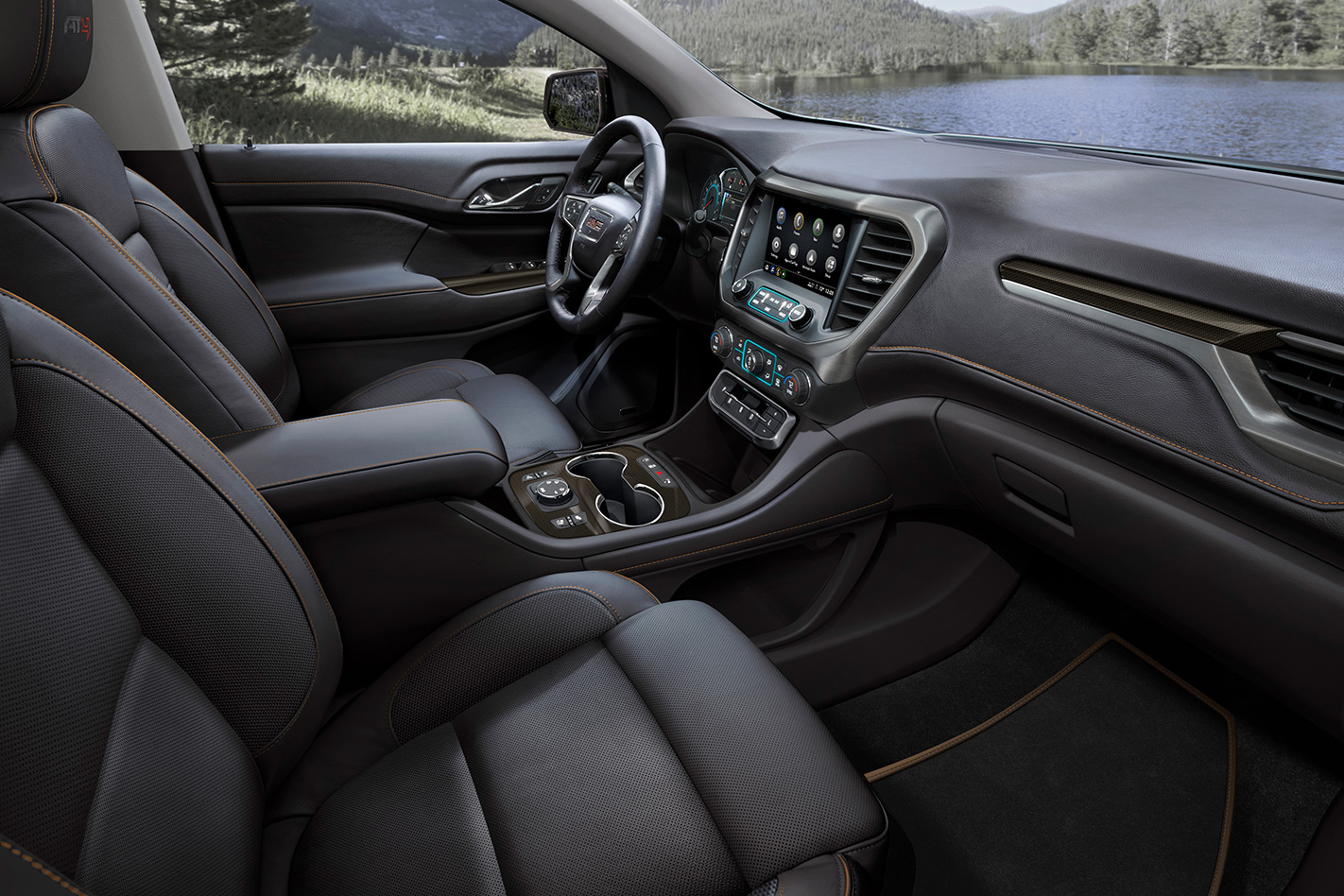
The new 173kW/350Nm 2.0-litre turbocharged four-cylinder petrol engine fitted to the GMC Acadia is a retuned version of what is seen locally in the Equinox and Commodore.
Australian Acadias are sold exclusively with a 231kW/367Nm 3.6-litre naturally-aspirated petrol V6. Holden insiders told Wheels at the Acadia launch last year that the company didn’t have the budget to take both the V6 and a four-cylinder variant.
Cars fitted with V6 engines have typically sold well in this segment, with the Toyota Kluger moving over 14,000 units last year, making it the second-most popular vehicle in the class behind its sibling the Toyota Prado, which is fitted with a turbo-diesel four-cylinder.
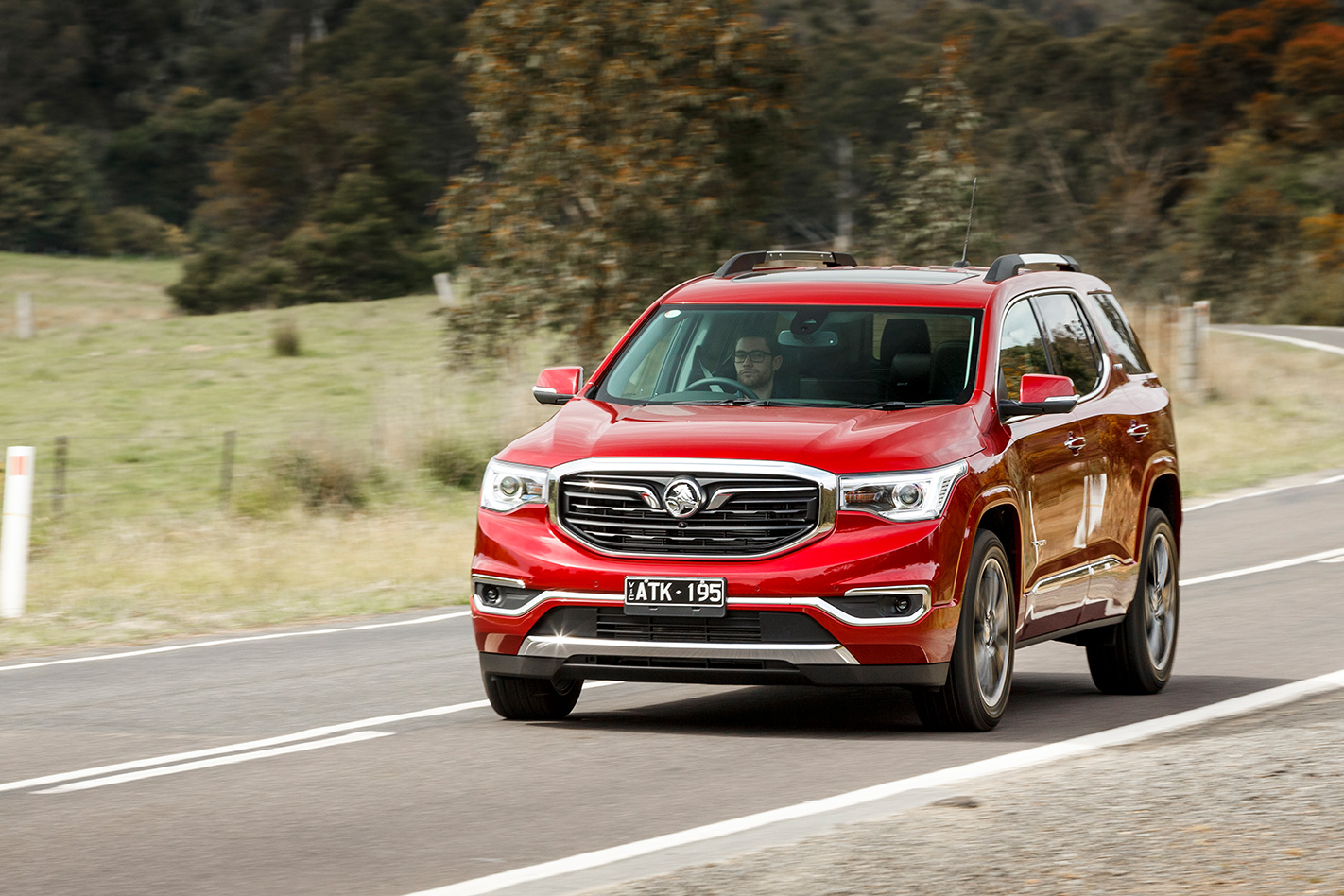
The Acadia recorded 272 registrations in January, down significantly on key rivals the Mazda CX-9 (534) and Kluger (945).
Holden has high expectations for the Amercian-built SUV, which it hoped would help lift the dwindling sales spiral the company is currently experiencing.
Since going on sale late last year, only 897 examples of the seven-seat Holden have been registered, less than the number of Klugers sold by Toyota in a typical month.
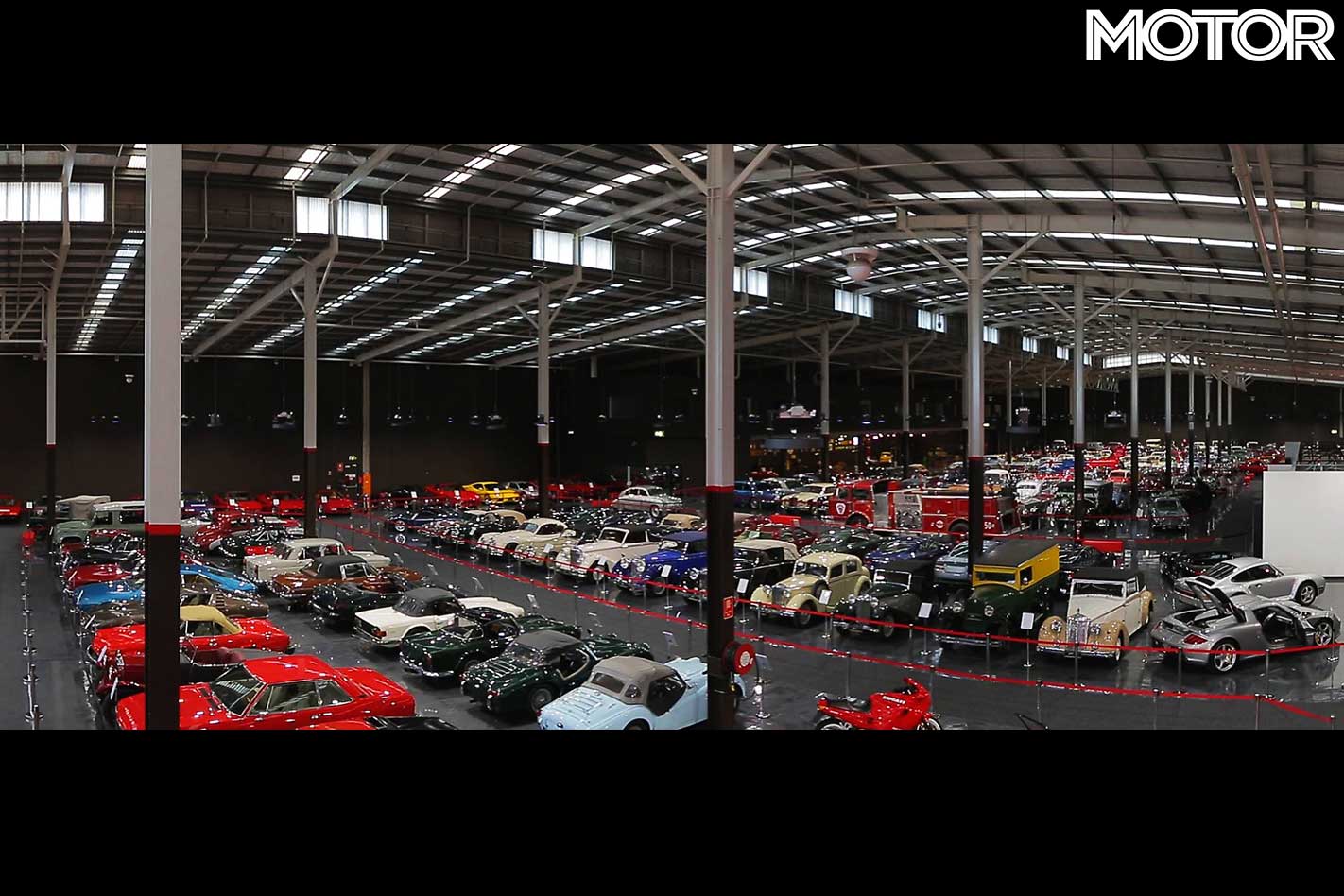
The Gosford Classic Car Museum has closed to the public after almost three years of operation on the NSW Central Coast.
An ongoing dispute with the Australian Taxation Office has been labelled the reason for the museum’s closure, with the ATO reportedly disagreeing with the Gosford Classic Car Museum’s operation as both a showroom and museum.
“Due to an ongoing & unresolved dispute with the ATO, It is with great sadness and disappointment that today we announce Gosford Classic Car Museum has closed and all cars will be auctioned on the 6th and 7th April,” an announcement on the museum’s Facebook page reads.

It’s reported that 40 jobs will be lost in the closure, with concern for the extra Central Coast tourism generated by the museum also being expressed.
Speaking with the Central Coast Express Advocate, museum workshop manager Jason Fischer said the ATO’s reasoning for pursuing the museum hadn’t been fully explained.
“The ATO… declined to explain why they consider promotion of trading stock using the museum concept is a secondary purpose, and therefore unacceptable, while other dealerships buying vehicles as a means of promoting their stock is acceptable,” Fischer told the NewsCorp outlet.
“We still have no answer from the ATO on why, as a matter of principle, promoting new vehicles by purchasing cars for test driving and inspection only is acceptable, while promoting the sale of cars using the museum concept is not.”
Reports say the ATO’s requirements for the business to continue were for the word ‘Museum’ to be removed from its name, and for the entry admission fee to be renounced.
The auction, set to be managed by Lloyds, will feature the entirety of Gosford’s collection to go under the hammer in one multi-million dollar swoop.
According to the museum, more than 300 cars are currently on display with a total value that has in the past fluctuated up to $70 million.
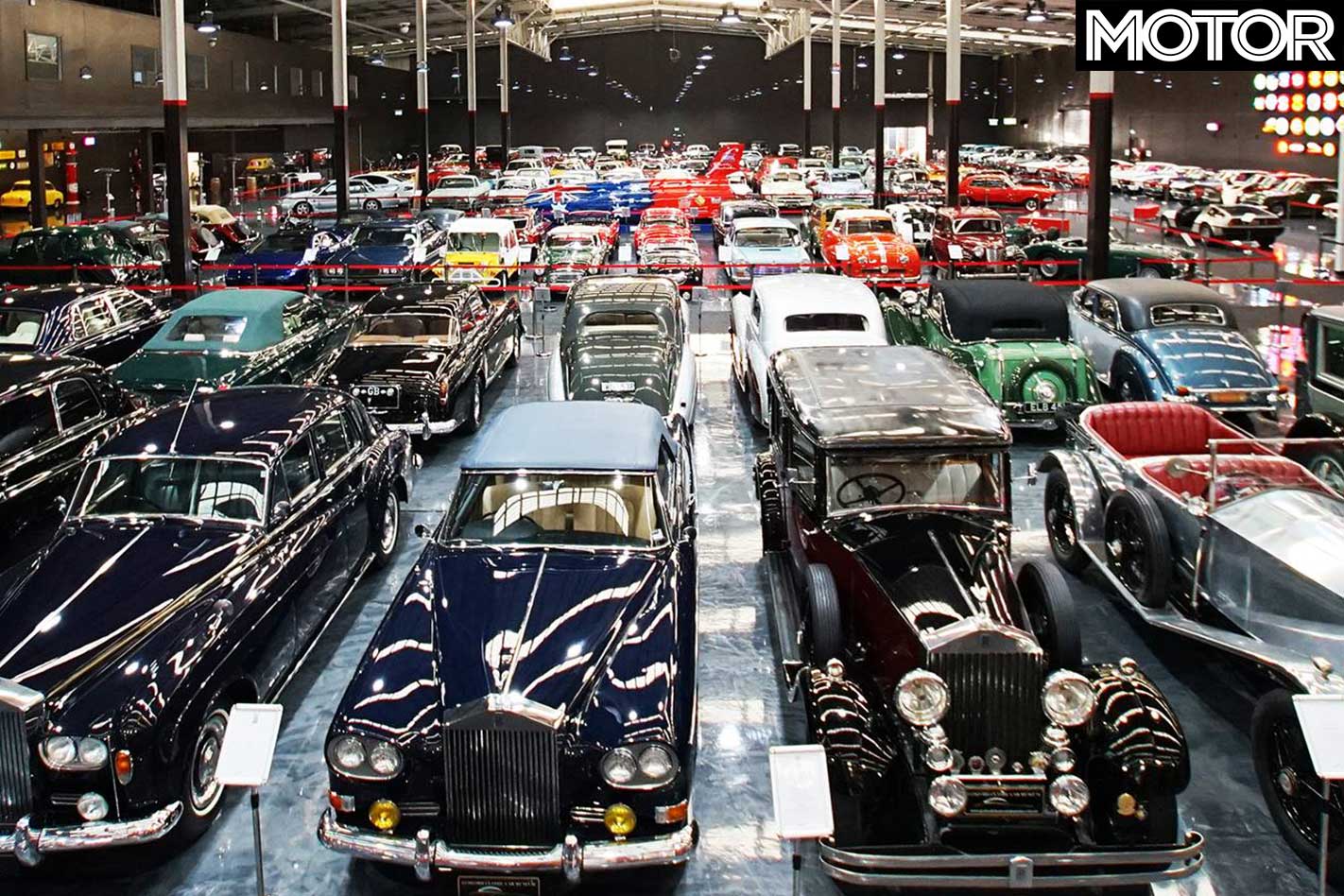
The cars that are to be available at the auction range from the likes of a LaFerrari or Lamborghini Countach 5000 QV, all the way to less pricey Nissan 300ZXs and oddball Euros like the Tatra 603.
MOTOR has attempted to contact Gosford Classic Cars owner Tony Denny or a representative to no avail, but will update this story if further information arises.
THE 1948 XK120. 1961 E-Type. 1968 XJ. Jaguar has a history of smashing moulds, and into that elite group quietly rolls the I-Pace.
Engineered in Britain (good) and built in Austria (great), the battery electric dual-motor AWD five-door, five-seater crossover is conceptually similar to the epochal Tesla Model S, which it has been designed to conquest (brilliant), but – 400km-plus claimed range aside – that’s where the similarities cease between the luxury EV grand tourers.
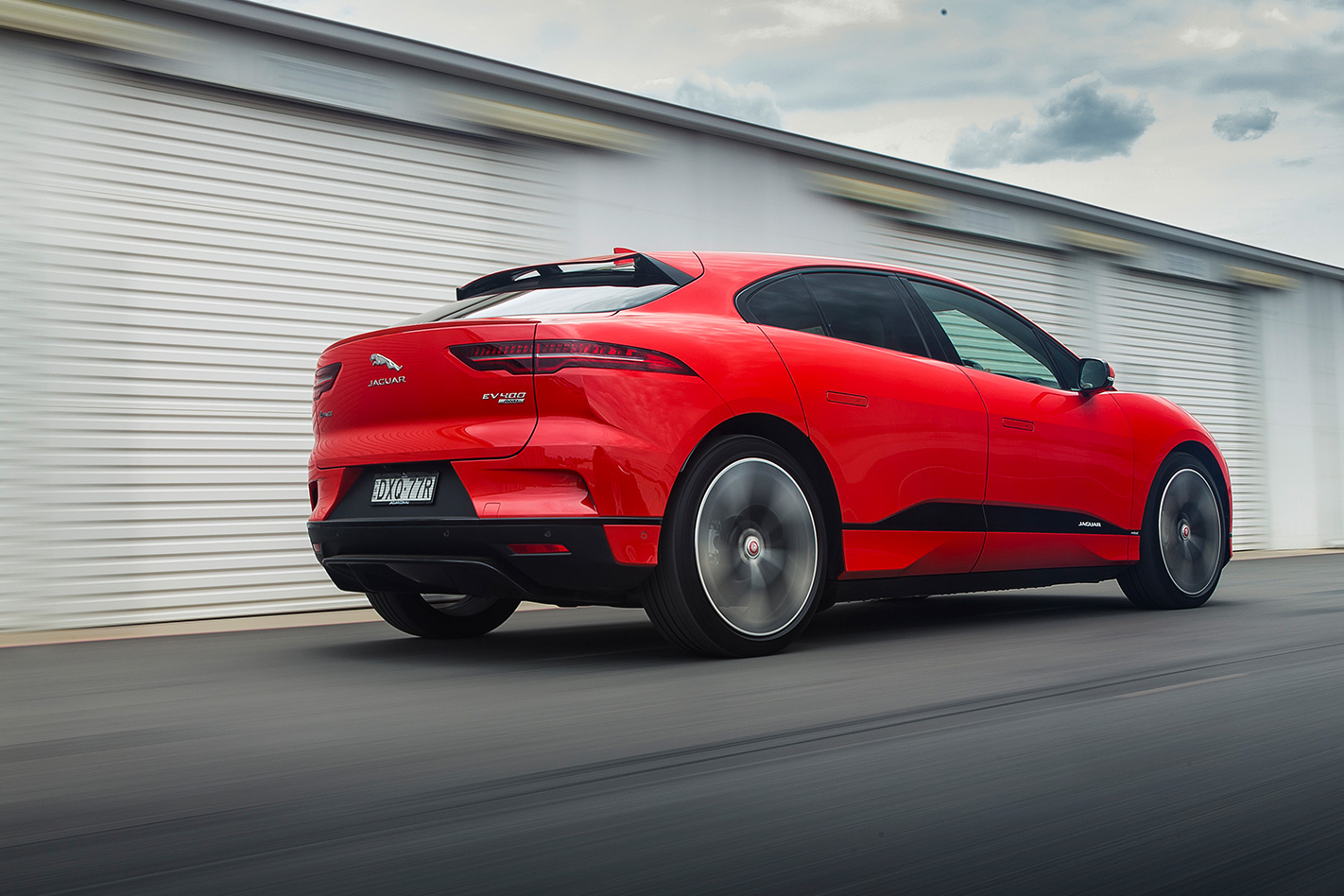
Be prepared for a shock (no pun intended) when first encountering the Jaguar I-Pace in person, with its near-monobox proportions and cab-forward silhouette that’s pure concept car. Wearing the optional 22-inch alloys certainly adds to the drama.
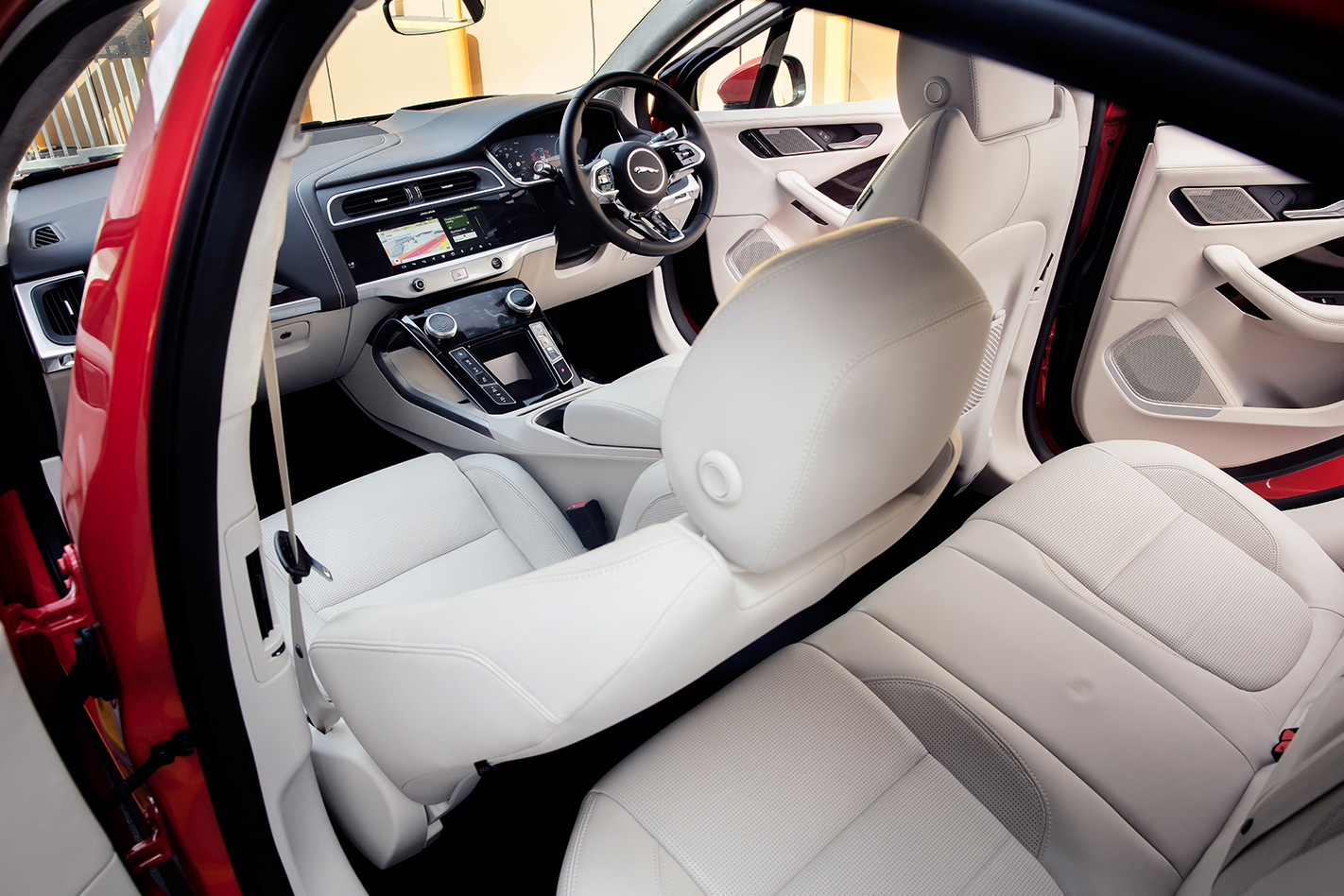
It’s inside, though, that the hushed EV really amps up the glamour, with what is undoubtedly Jaguar’s most alluring presentation in modern times, underscored by an elegant dashboard that’s big on intuitive ease, tactility and quality, sumptuous seating with an SUV altitude and space to spare for five (thanks to nearly three metres of wheelbase) and a flawless driving position. It’s even practical with 656L of cargo capacity. Some lower-lying plastics that seem beneath the brand, the lack of a sun block-out blind for the $3380 glass roof, and the odd rattle in these pre-production examples are the only real initial cabin disappointments.
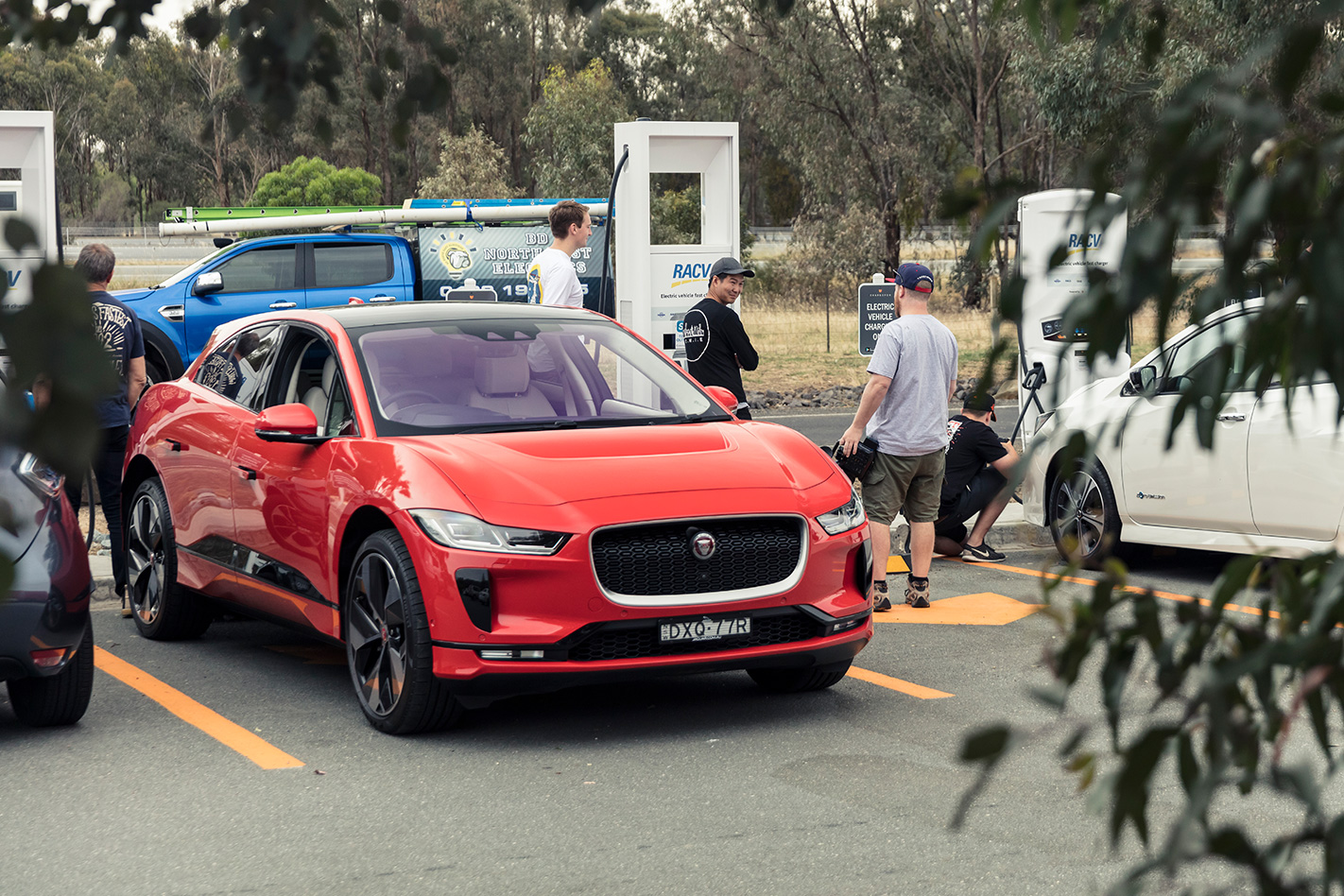
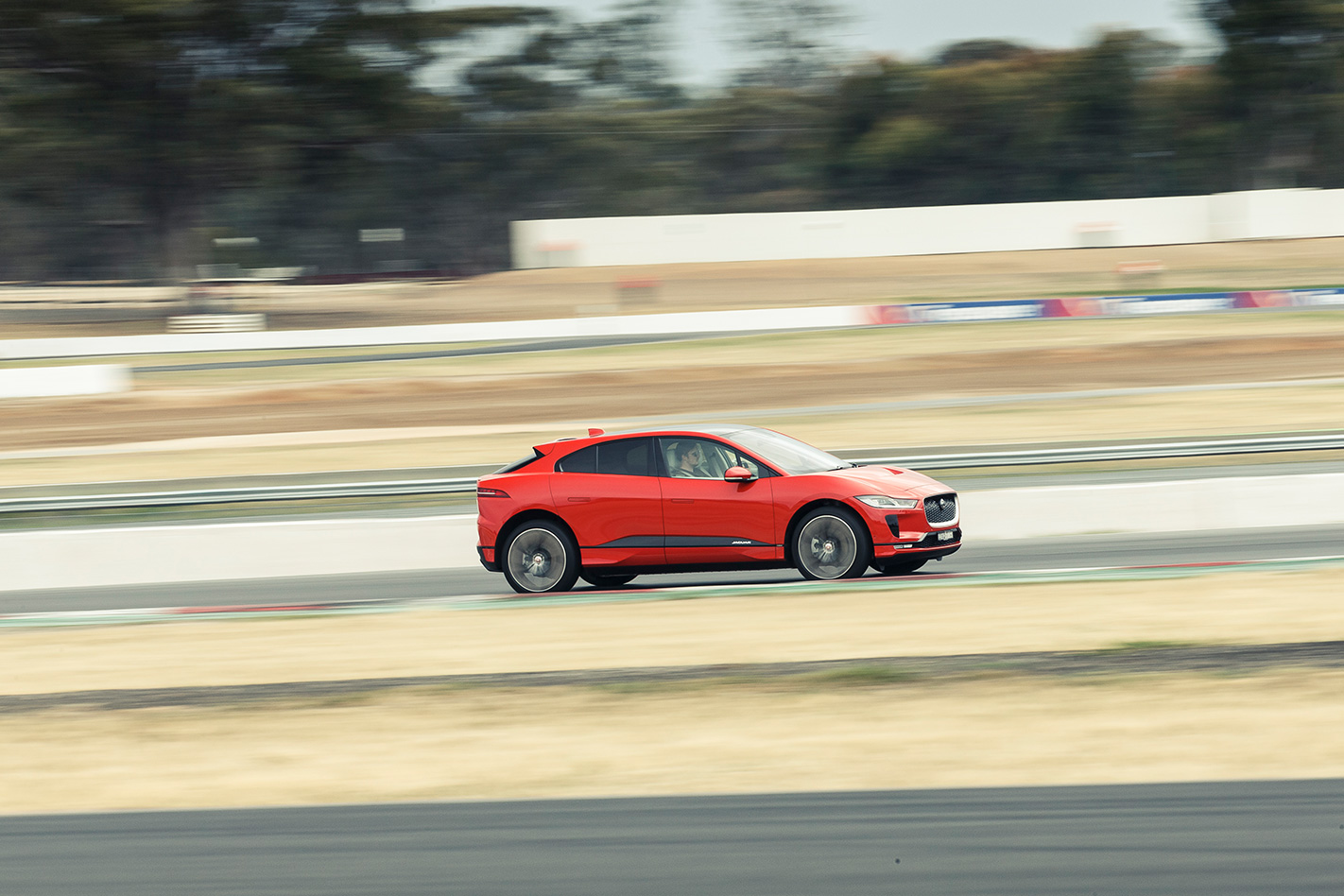
We ought to save the superlatives for the I-Pace’s driveability, however, since in no way does the Coventry Cat feel like a luxo SUV barge. Quite the contrary; engage ‘drive’ and the sole (for now) EV400’s moon-shot acceleration is literally akin to mainlining speed; terrifically tactile steering and tenacious grip allow for Olympics-level ice-skater alacrity (hooray for mass-saving 94 percent aluminium construction, double wishbone front suspension, a multi-link rear, and 50/50 weight distribution) and the ride – sampled on 20-inch wheels and steel springs through to optional air suspension and 22s – varies from cushy to comfy.
There was little to sour our initial I-Pace taste – our available range readout fluctuated wildly, halving quickly for around 300km of real-world distance – someway short of the claimed 480km; the $2K air suspension did occasionally induce a queasy motion over speed humps; and even a mild raid of the options cupboard can have prices soaring well over $150K.
Still, imagination runs rife throughout this beguiling new luxury crossover slingshot from Great Britain. For decades its glittering back catalogue mired Jaguar into retro pastiche when instead it should have inspired the brand to innovate.
That’s what the I-Pace is all about. Breakthrough and break free. Company founder Sir William Lyons would be proud.
8.5/10
ARE these the first-ever fully undisguised shots of the next-generation Ford Ranger due out in 2021? Or some future pickup from a rival carmaker that happens to pay uncannily close visual homage to the phenomenally successful Australian-designed and developed medium truck?
Nobody at Ford is saying obviously, but from what we can ascertain from the prototype snapped in an outer Melbourne suburb this week is that the crisp styling, overall proportions and even some minute detailing aspects all suggest a very strong and very clear Ford influence.
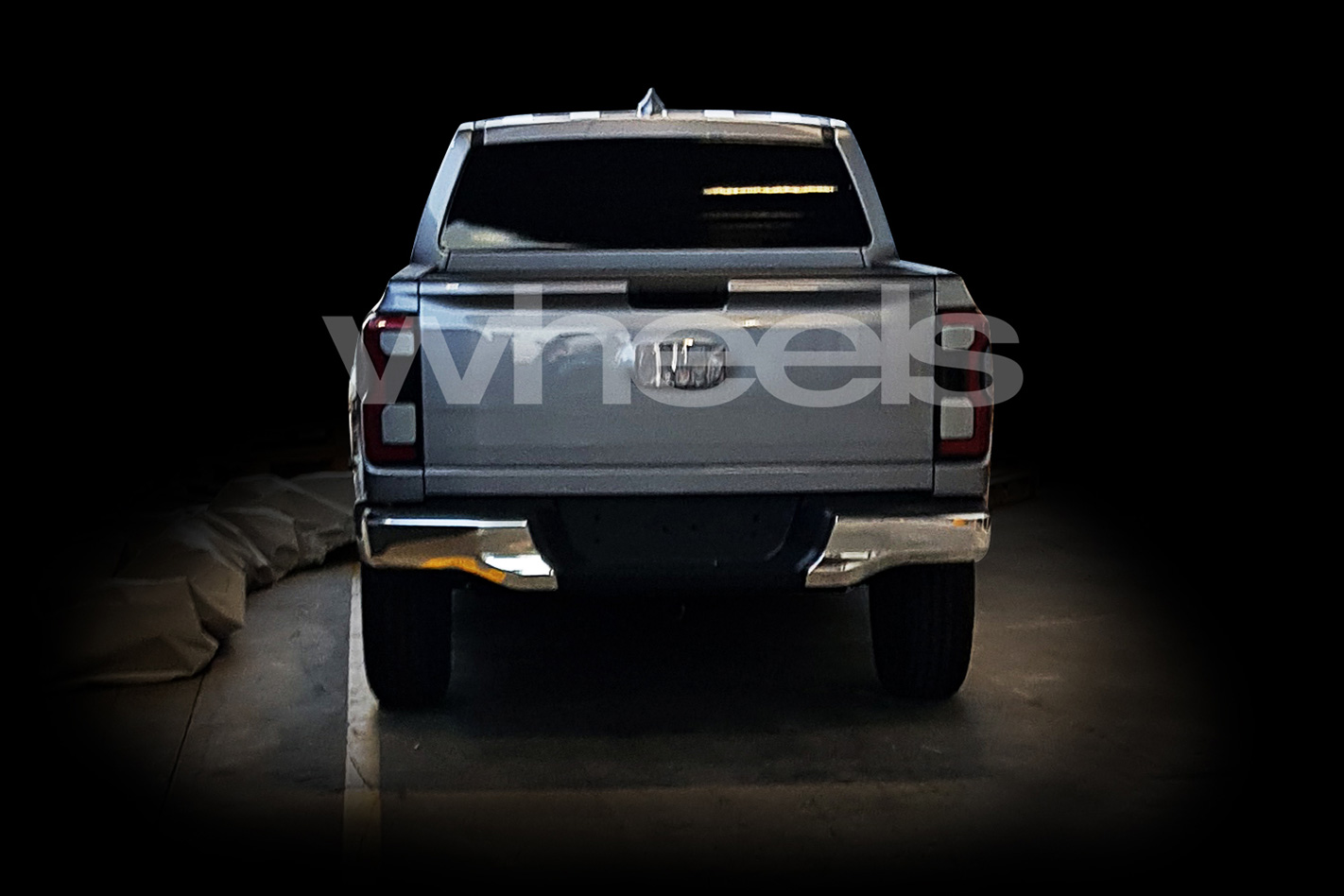
And not just from the existing T6 Ranger series either, since the mystery ute’s wide stance, bold grille, boxy wheel arches, deep glass area and subtle rear window-line kink speak with a very Ford F-Series truck accent.
If the mystery ute is from a competitor carmaker hellbent on muscling-in on the current Ranger’s worldwide success, its similarity to the just-unveiled full-sized 2020 Ford Super Duty F-250 sold Stateside is surely no coincidence. Check out how alike the C-shaped LED headlights, six-point grille garnish and square front foglight housings are, while the taillights and shape of the chrome back bumpers seem nearly identical. Even the spoked alloys are very similar.
All suggest that either this is true Blue Oval or somebody from another company’s design studios seem to have access to what’s coming up out of Ford HQ in Dearborn. It’s just too bad the blacked-out windows prevented the eagle-eyed photographer from snapping images of the dashboard and interior. So blacked out are the windows that it could suggest this is actually a clay-model of the next-gen Ranger on its way to Ford Australia, not a rolling prototype.
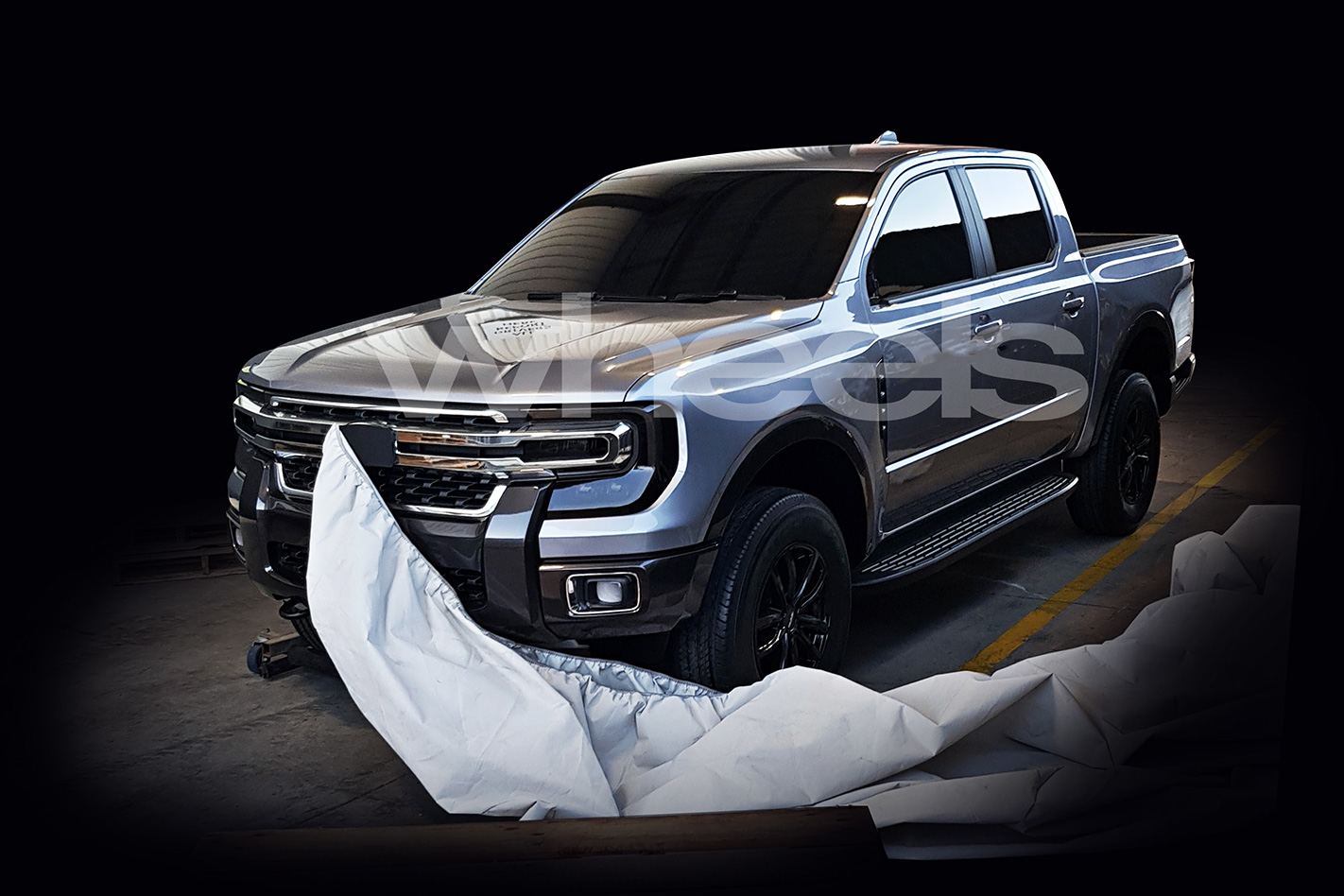
Given Ford’s current penchant for protruding tablet-like touchscreens, small steering wheels and big central vents, see inside the cabin might have been the confirmation we would have needed to identify this mystery ute for certain.
If the mystery ute indeed is the next-generation Ranger, then it’s a good-looking update on what has remained both a critical and commercial global success for Ford Australia, gaining a closer visual connection to the top-selling F-Series and underlining the Ranger’s increasingly vital role in the North American truck market. The general shape and proportions also bode very well for the 2022 Volkswagen Amarok that will be based on next Ranger.
On the other hand, if it is a close copy from an unknown carmaker from China or any other part of the world, then hats off to Ford’s international design team for influencing the next lot of mid-sized pickups. Either way, what we’re seeing here is a real good looker.
Watch this space…
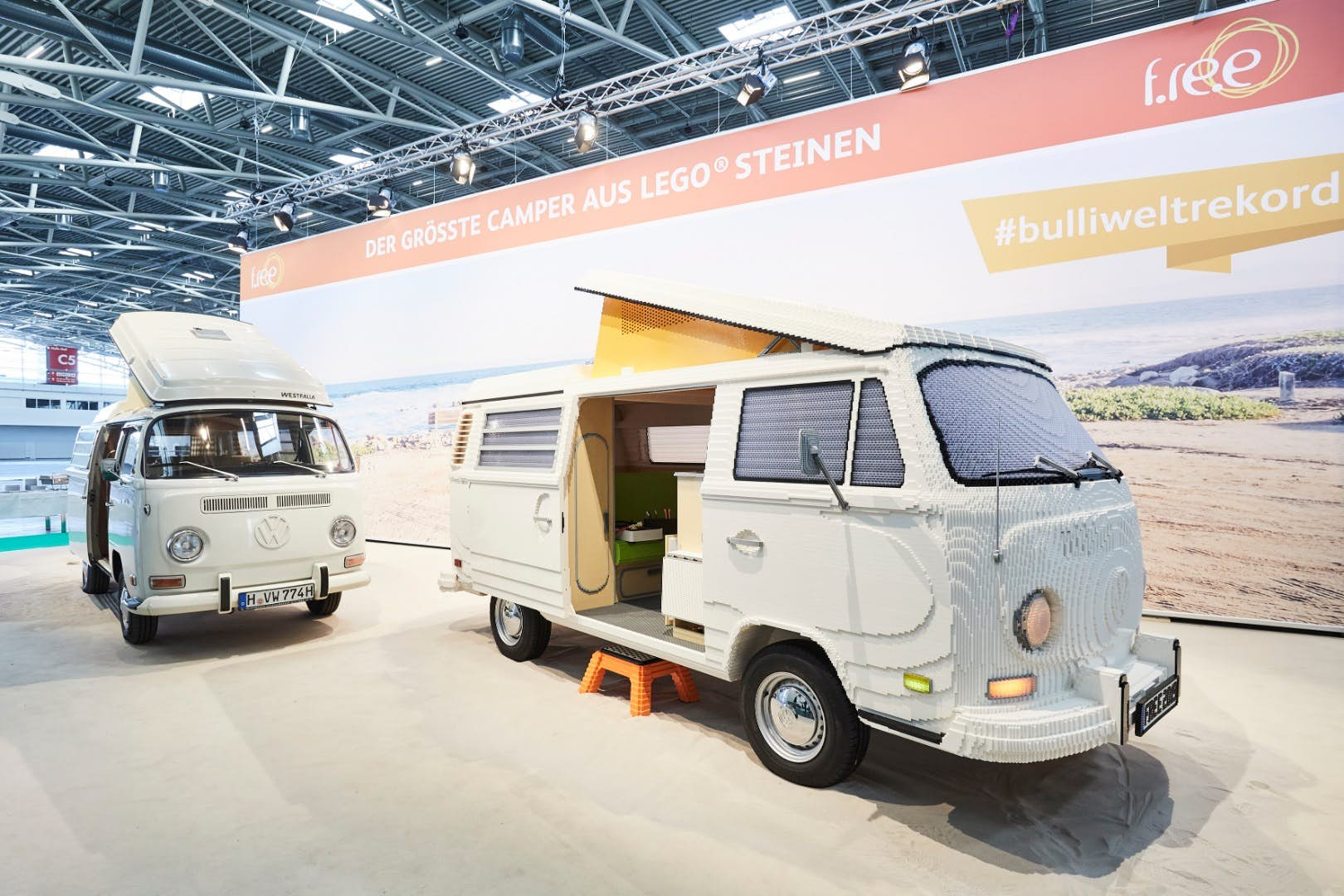
If you saw our story about the full-sized VW Kombi made from Lego, you’ll love this gallery of amazing Lego car creation. Some are life-sized, some are smaller, but all of them are pretty cool.
Lego Toyota AE86
Lego is famous for tapping into its fan base for free ideas for inspiration – and if your model is good enough, it’ll actually produce it.
The Initial D Toyota AE86 is the stuff of legend, and it could soon be yours, if Lego decides to make it happen.

Lego Renault F1 car
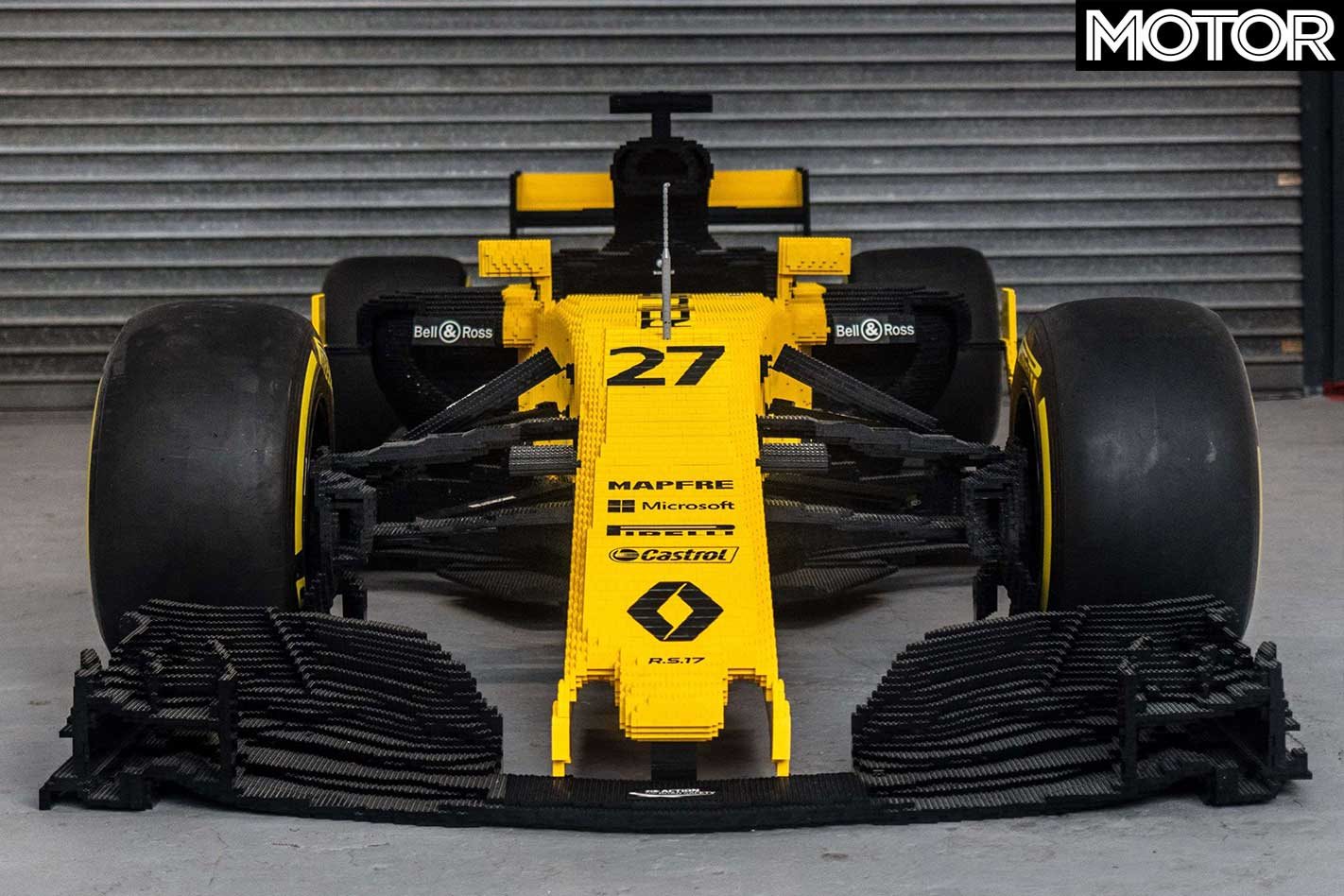
We’ve all built little open-wheel racing cars from the ubiquitous plastic blocks… but there hasn’t been a full-sized Formula One car. Until now, that is. This is a proper, full-sized Renault F1 car that’s been built with around 600,000 bricks around a steel frame. It’s even got pukka Pirelli slicks on it, as well as a real steering wheel.
Called the Renault F1 Team X Lego, it went up for auction earlier this month, selling for a nick over A$100,000. All monies raised went to UNICEF France.
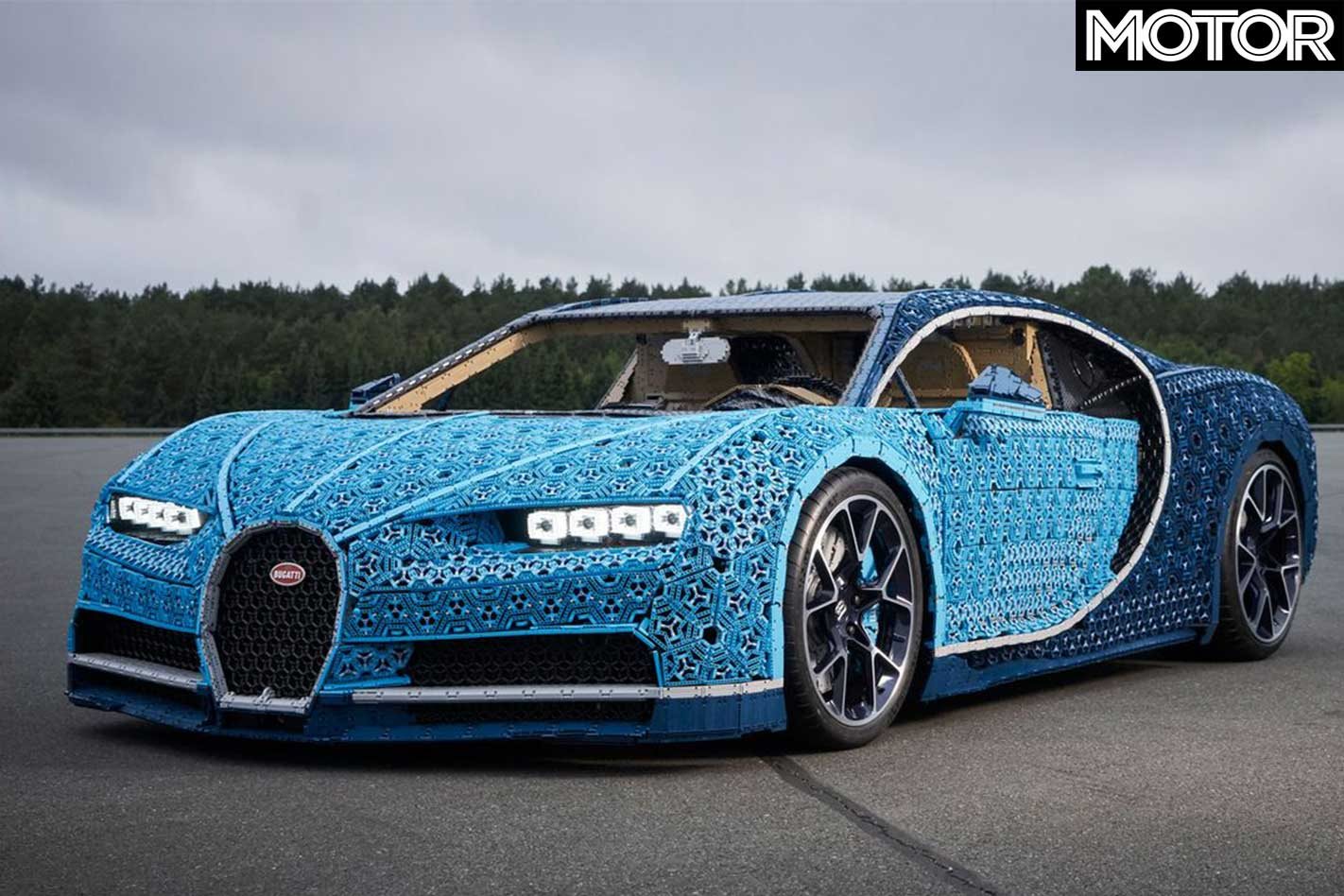
Lego Bugatti Chiron
Lego revealed a 1:8 scale model of the Bugatti Chiron you could build at home last August. Now Lego’s taken it to the next level. It then revealed a 1:1 version of the French hypercar which it had built using more than 1 million Lego Technic pieces, 2304 of which are Lego’s little electric motors.
It weighs much less than a real Chiron at just 1500kg, but it is only able to hit 20km/h. That’s significantly slower than a real Chiron, which claims a top speed of 420km/h with a limiter.
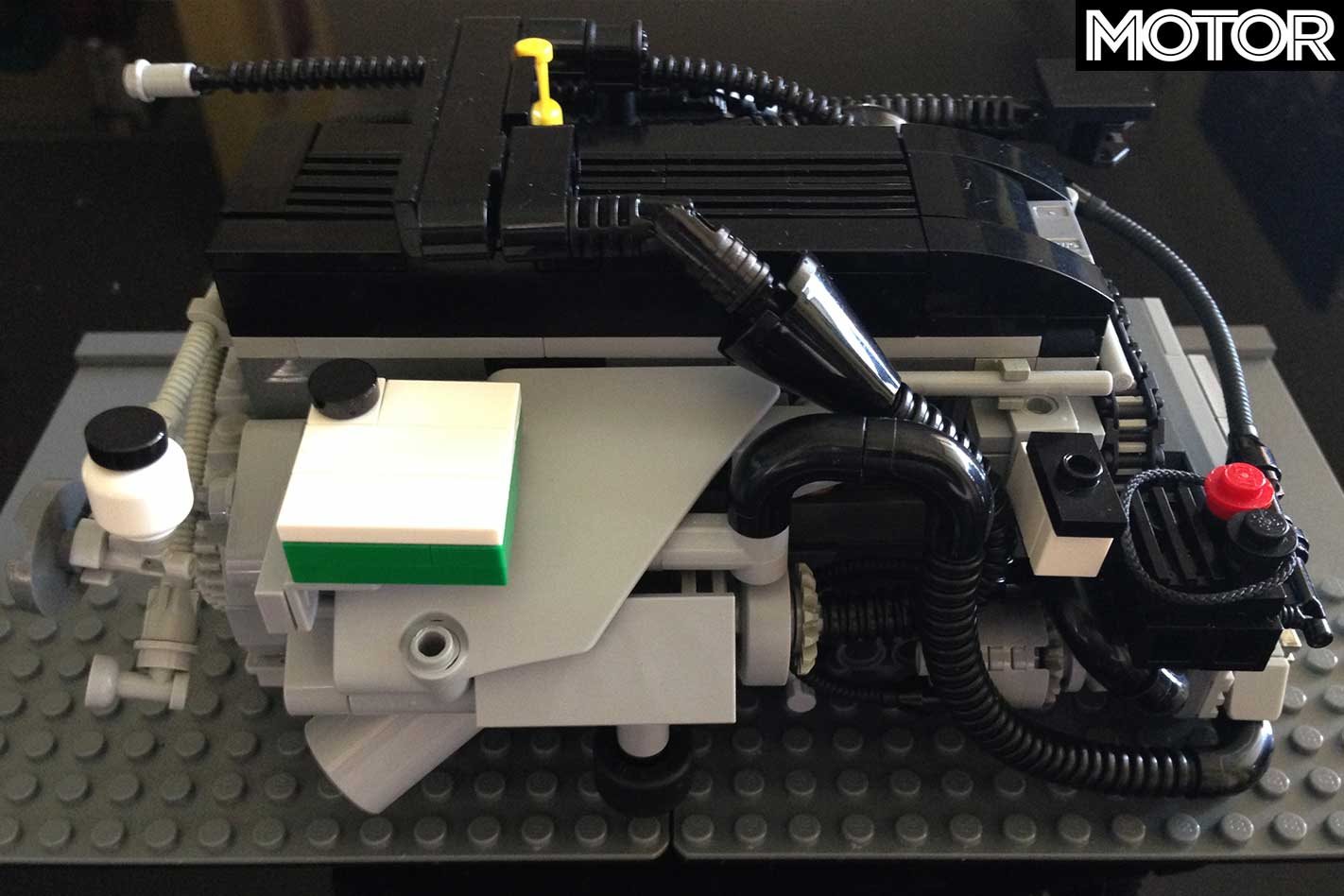
Lego Ford Barra Sprint engine
Part of a trio of Ford motors built by a Melbourne fan, this is the Barra Sprint version. It’s the most complex of the three, according to its maker, with working overhead cams and wiring.
They cost about $150 in parts and 40 hours in time, according to its makers.
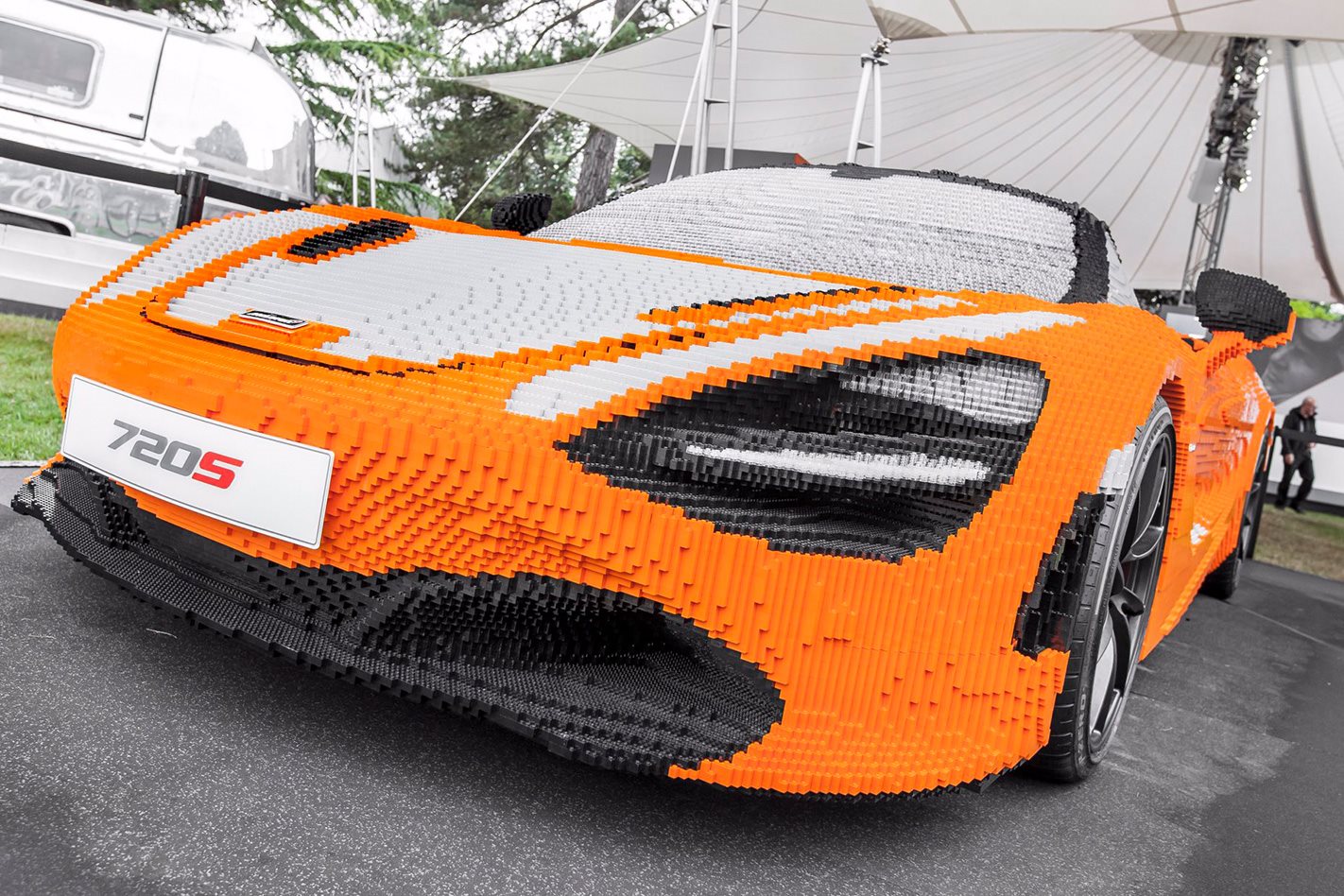
Lego McLaren 720s
If you, like us, can’t afford anything McLaren-badged other than a tee shirt, then look away… you can’t afford this life-sized 720S, either.
Built from 280,000 small, painful-to-step-on bricks for the 2017 Goodwood Festival of Speed and to celebrate the Speed Champions set, the Macca was built by a professional Lego team. Yes, you read that right. Looking at it from a cost point of view, the Lego version would cost around $33,000, versus the $490,000 real thing.
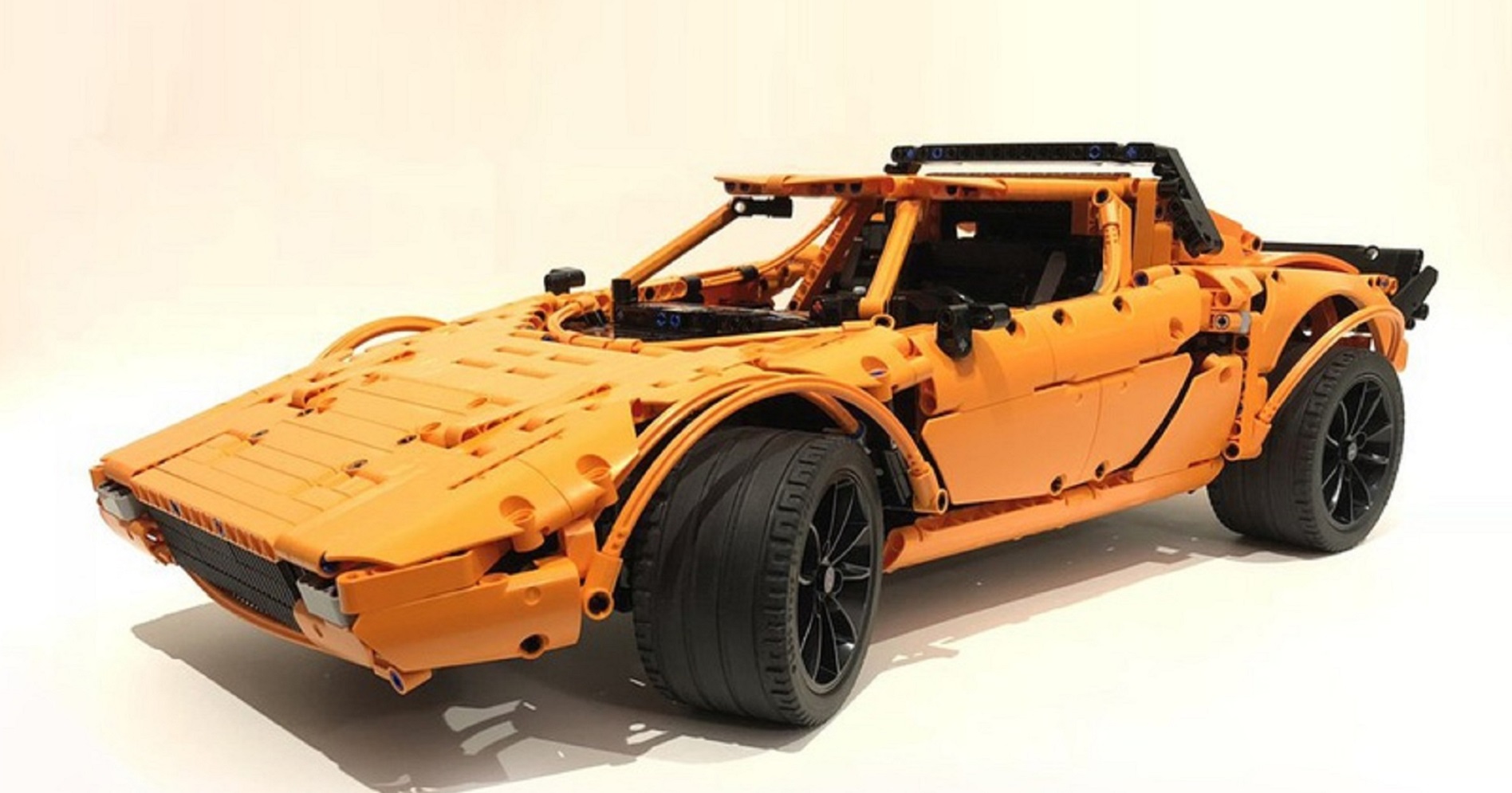
Lego Stratos
This isn’t a bespoke kit as such, but it’s still pretty damn amazing. If you’ve already built the Lego version of Porsche’s awesome 911 GT3 – a 2700-piece masterpiece in itself – all you need to do is buy a $30 instruction sheet from a company called Rebrickable, along with a single additional part if you want reverse gear, and the Stratos is within reach.
The doors will work, while the engine and gearbox function, too. Love it!
Got a fave Lego car? Let us know in the comments below!
