
Forget outright performance. Forget notions of reliability or drivability or practicality. In this article we have a myopic focus on one thing – chassis dynamics. It matters little whether you favour bum-dragging or barrow-pushing, we have you covered.
It’s all too easy to gather expensive cars that offer sparkling handling as a headline act, though.
But suggesting you buy a Ferrari 458 Speciale or Porsche 911 GT3 Touring probably is unhelpful. It’s ever more challenging to find sports cars costing $10K. Or $15K. Actually, let’s make our maximum $20K…
1. 2012 Renault Megane RS250 Cup Trophee – $10k
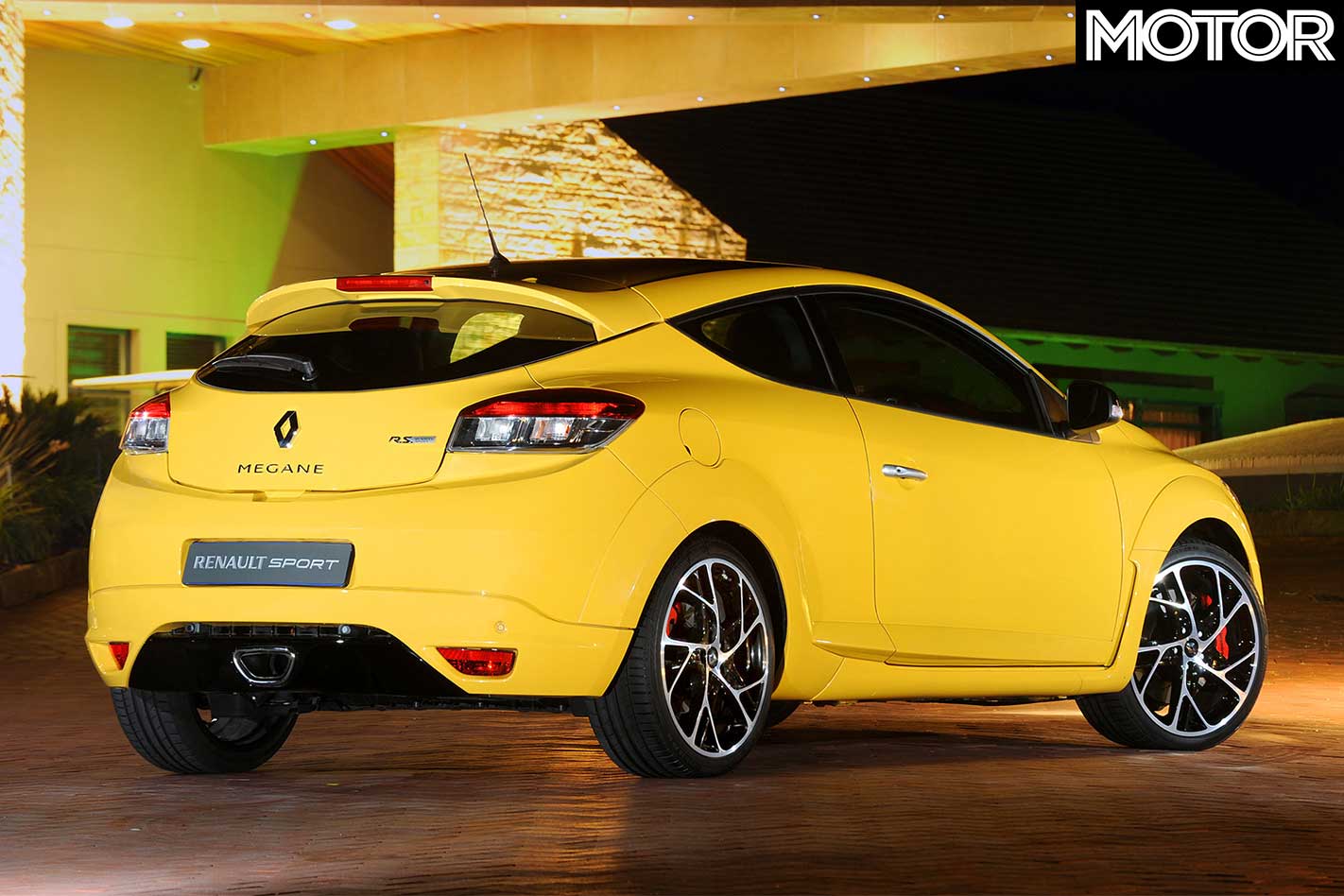
From the toey throttle, to the firm and clicky gearshift, these were just additional entrees to the chassis main course Renault Sport served up to near perfection here. Rare still can a hot hatch deliver strong brakes, aggressive turn-in, a light and lovely rear-end that pivots around the front, then an LSD-assisted slingshot corner exit. You’ll want the Cup Trophee for its Recaro seats, too, just to complete the picture. For $10K, it doesn’t get much better.
2. 2007 Audi TT 2.0 TFSI FWD – $15k
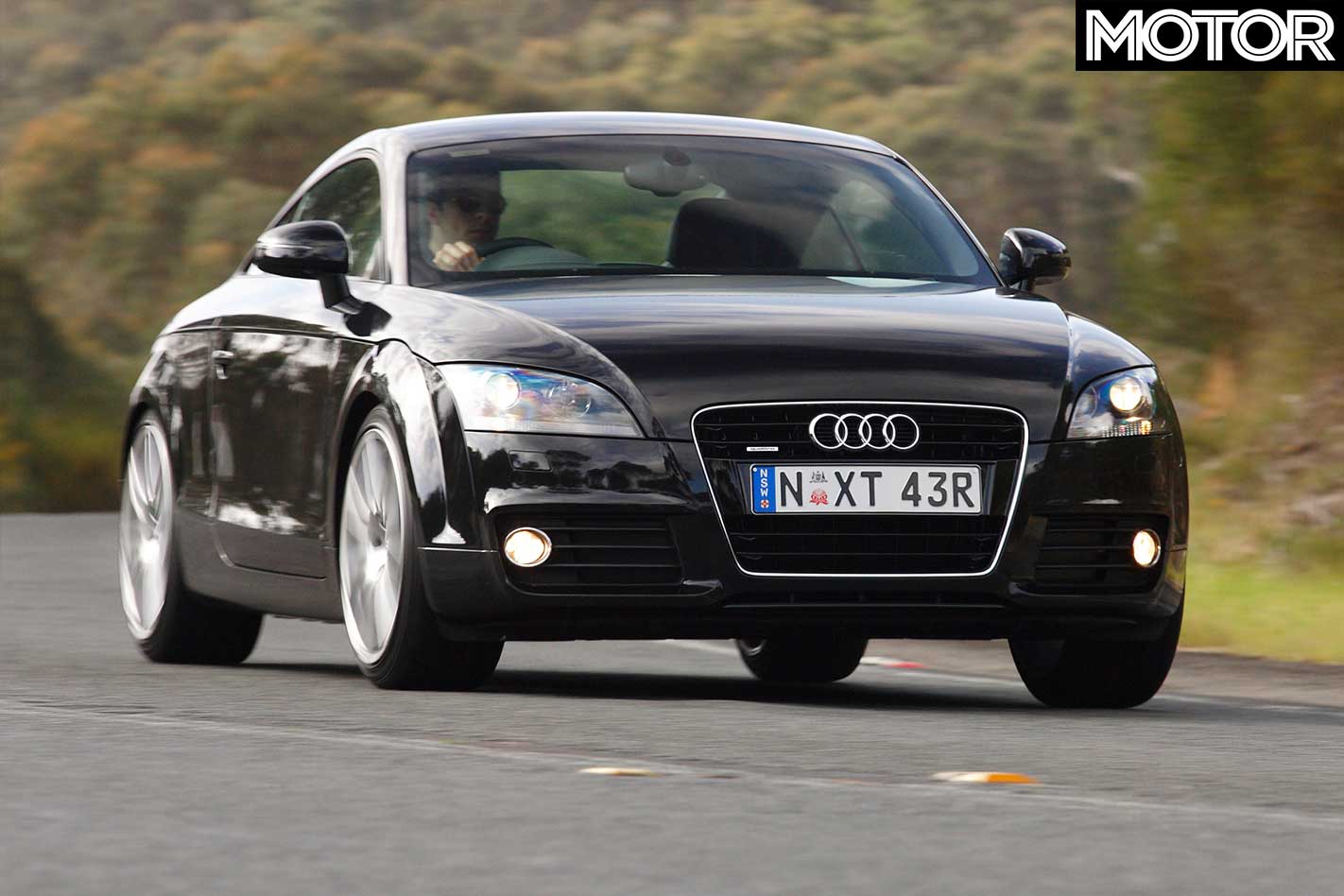
Okay, don’t laugh. Oh, and the hairdresser jibes are old. So many Aussies drive around in Golf GTI hot hatches these days, that surely its lighter and lower German sibling from Audi should get a look-in post depreciation. Nowadays a Volkswagen Mark V will be about $10K, while a TT 2.0 TFSI from the same era asks $5K more, and with sub-100,000km too.Ensure the front-drive TT 2.0 TFSI is picked, with the same 147kW of power and 280Nm of torque made by the GTI. It only weighed 1260kg, though, and its 6.6sec 0-100km/h remains brisk. Most importantly here, it’s basically a more agile Golf selling for the same price as the newer, heavier Mark VI GTI. It even rides and steers well; rare for an Audi from that era…
3. 1994 BMW M3 E36 – $20k
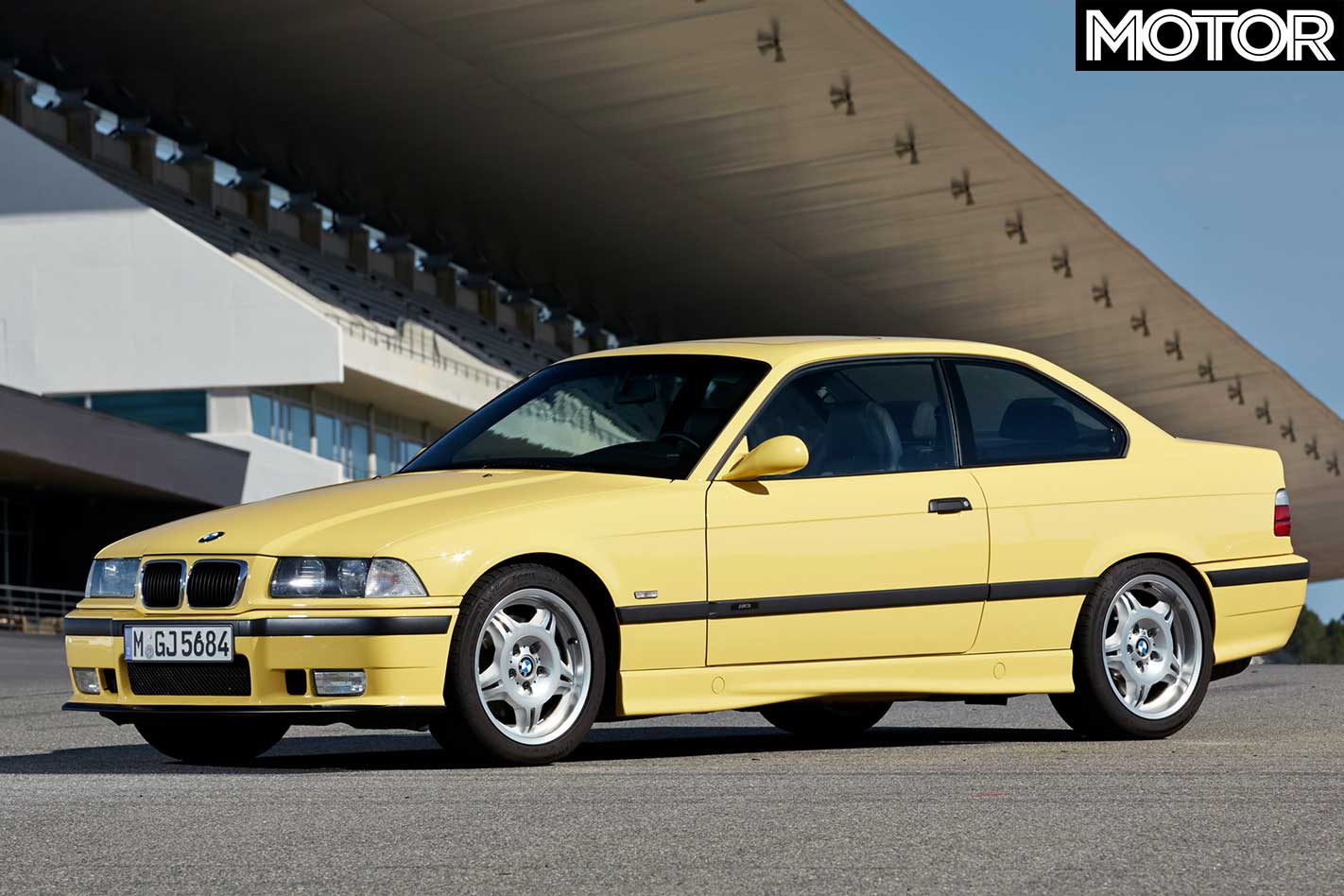
This tester watches the M3 market like shareholders watch the stock market, and the time is now to seize on a 25-year-old E36 for $20K-plus. With 210kW at 7000rpm, it’s that latter number that best gels with the sub-1500kg rear-wheel drive chassis, and you’re more likely to pick up a nice example than the almost-as-cheap versions of its E46 successor.At this end of town it’s all high mileage, but M cars don’t come more affordable this often, and as a weekender to tinker with, to polish and improve, there’s only one way used car values will go – and that is, of course, up. Plus, unlike later models these simple pre-SMG days mean it’s manual or bust, just the way we like it…
4. 1997 Porsche Boxster S – $20k
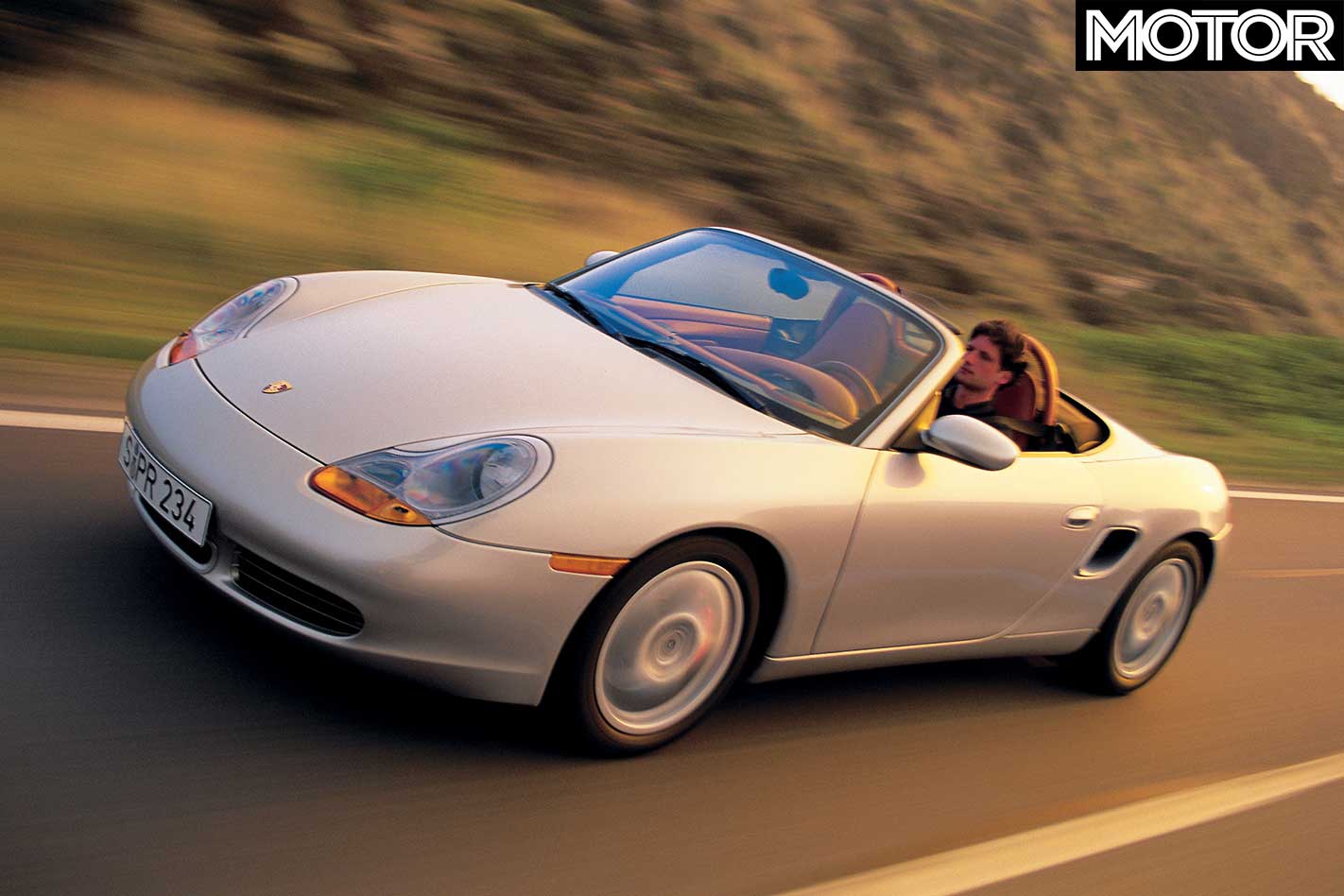
To think that over a teenager’s lifetime following the nameplate’s launch, there are still some who believe the Boxster isn’t a real Porsche, that you simply must have a 911. Imagine the hysteria back in 1996, then, when the 996-gen 911-aping first compact roadster emerged with orange indicators, undersized alloy wheels and a cabin design with few edges.
The truth is the original Boxster was a brilliant car, especially as an S, and few horror stories have emerged about them. There are plenty of circa-$15K tatty examples of this straight six, rear-drive, mid-engined sports car from the mid-to-late 1990s, but it’s worth spending Corolla money on a good one. If well serviced, it should last for as long as your smile.
THERE’S an old line about complimenting someone on their antiques – “what antiques?” – that comes to mind as Geoff Morse explains his field of specialty. As does another old line: choose a job you love and you’ll never have to work a day in your life.
When Morse, 68, started repairing cars in his original service station 43 years ago, Leyland Australia was still manufacturing cars like the P76 and Mini, and a significant number of cars on the road were British.
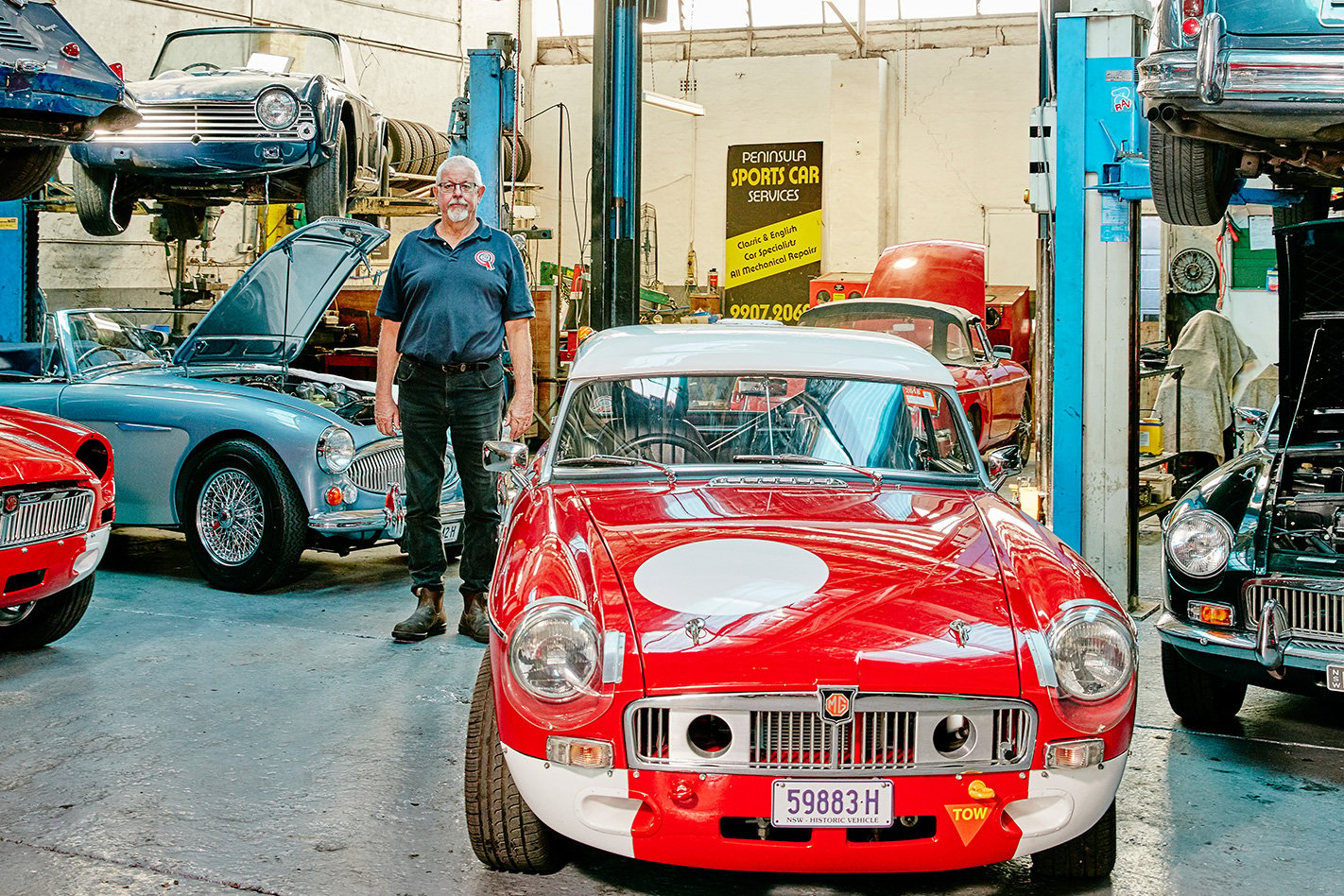
That was especially true among sports cars, with dominant 1960s machines like the MGB and Austin Healey Sprite, by then even more affordable on the used market.
Morse’s servo in Sydney’s Beacon Hill gained a good reputation because he put his money where his mouth was. He raced Group S (classic sports cars) for more than 35 years, only letting his CAMS licence lapse last year.
“Back then I had various race cars; an early [Lotus] Clubman, a Sunbeam Tiger, MGs. I always put them out the front of the service station because I see it as a good way to attract new business.”
Business expanded to two service stations and there was no shortage of interesting stuff to work on. “We used to work on a P76 Targa Florio, an ex-works car, that belonged to Evan Green. He lived just down the road from us.”
Almost unnoticed over the first 17 years, the regular Pommy shitters fell away, but sports car business at Morse’s servos just kept on keeping on. In 1991, he bought the Morris Minor Centre in nearby Manly Vale and moved everything, including similarly experienced mechanic Richard Caller, over there. In 2001, the business was rebranded as Peninsula Sports Cars.
Today, Morse and Caller also work on modern sports cars and they still get a “dribbling” of Morrises, Minis and the like. But 75 percent of the business is MGs, going back to pre-war P and T types, but mostly As and Bs.
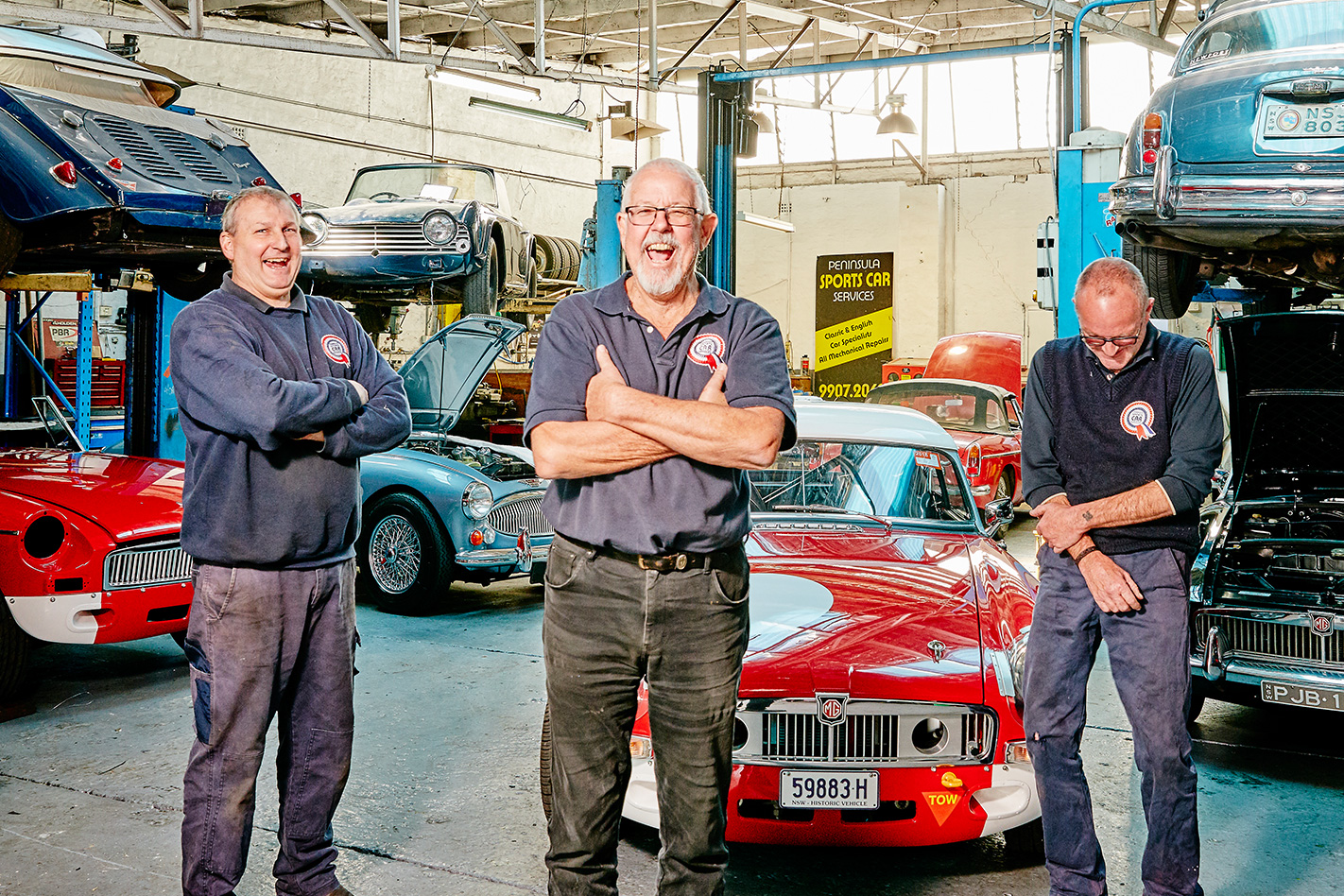
Asked to describe the typical MG customer, Morse says, “Old folks like me! Probably 70 percent are in their 60s or older, probably owned an MG before the kids and mortgage came along. Or they lusted after one and they’re getting it as a retirement toy.
“We’re restoring a ’71 B for a customer whose had it since brand new, but the last 10 years it’s sat in a carport with rats living in it. It’s a full restoration; it’s taken us a year to do it.
“We would do three or four full restos a year,” he continues. “We send out the bodywork and paint, but we do all the mechanical, trim, and electricals in-house. But the majority of our work is maintenance and improvements. We do five-speed gearbox conversions, brake upgrades, that kind of stuff.
“A lot of our customers keep things totally original, but we have another section that wants a car that’s reliable and fun to drive. They want cars that are better on the road, but with period parts in them so they look right when you open the bonnet.”
Sometimes, old and new worlds collide: Morse is currently building an MGB Mk1 with complete MX-5 running gear.
There’s a lively industry in reproduction MG parts and Peninsula is an agent for one such, Moss Motors, from the US. A few canny businesses in the UK and Australia years ago cornered stashes of genuine BMC spares. “We’re working on a pre-war TA at the moment, and we’ve managed to get everything we need.”
What most concerns Morse is that nobody’s reproducing the likes of him and Caller. “That’s the biggest problem. My youngest mechanic here is 51. It really does make me worry, because there’s no young blokes coming along to learn the older cars and they don’t teach that stuff at tech. You hand them a carburettor or a distributor, they don’t even know what it is.”
Aaaah, blessed Christmas, eh? Goodwill, festive cheer, the feeling of barely restrained rage welling up inside you as the last turkey is snatched out of the supermarket freezer right before your eyes…
Christmas is not just a time to put up with the snide asides of in-laws and the desecration of your azaleas by a chundering child… no, it’s a time to travel, to get out on the road with everybody else at the same time to spread the message of mass commercialism and the subtle game of one-upmanship between you and your nearest and dearest.
Err, I mean… to catch up with those you treasure the most and want to spend quality time with. Ahem.
Now, we’ve all read those preachy road safety messages before, right? ‘Don’t drive tired, check your oil’ and so on. Well, here’s a list for the modern family’s Christmas journey, and the best ways just to make. It. Through. To. New. Year’s. Day…
DON’T FORGET THAT KID
Christmas morning is a freaking madhouse. There’s thousands of dollars of used-once shiny paper crammed in every corner of the house, and your precious little petals have all vacated stage left to stare at length into whatever device they’ve managed to wheedle you into buying.

Time’s a ticking, though – woe betide you turn up at your in-laws’ place at 12.37, and not the 12.30 as arranged! So you hustle everyone to get a move on, endure the indignant shrieks of your tweeny girls who believe four hours just isn’t enough to apply makeup and do hair, and physically push the sullen boy out of the front door.
Here’s the moment where you should stop and do a quick head count. As tempting as it is to leave one, or all, the children behind, it’s best to do a stocktake before setting off.
DON’T FORGET TO BREATHE
Accept, right now, that EVERYONE else will be out doing this exact same task as you; ferrying out to various locales around the suburbs in the hope that, this year, the trifle might actually be edible.
Take a deep, calming, steadying breath, take firm control of the car stereo control and smile. After, all, you’re still not at work, right?

CHARGING CABLES ARE LIKE PLATNIUM
Forget gold – a relevant charging cable is like finding the Holy Grail swaddled in a signed premiership jersey (or guernsey) of (your favourite team) from (that truly incredible winning year). Wars will be fought over it, tears shed over its status and blood will spill should someone bend the end over enough to snap a couple of connect… oh.
If your car doesn’t have sufficient USB ports to support Lightning, USB-C, micro USB, USB macro macro D and, of course, that weird one from mum’s old Motorola phone, then grab a multi-head 12v charging socket, and all will be right with the world. For 30 seconds, anyway.
BOOK A SERVICE FOR YOUR CAR… A MONTH BEFORE XMAS NEXT TIME
Seriously… did you REALLY think the local garage would be able to fit you in any time in December? I mean, there’s the office party, the party with the golf crew, the Better Half’s office drinks, the street party, the Santa pub crawl… December is a busy month!
If you’re planning a big drive, and you haven’t sorted the car before 15 November, then grab your phone and set a calendar date. For November 2019.
You can do the basics, of course; check the oil level on the dipstick, give the car a wash, make sure your tyres aren’t flat on the bottom, clean the rubbish out of your door pockets, peer under the bonnet and pretend you know what you’re looking for… failing all that, ensure you have mobile data to find the number for your local auto club.
DO NOT DRIVE TIRED
If it is all a bit much, then have a rest before hitting the road again. No, seriously. Even if you’re more awake and alert than a kookaburra watching a schnitzel burger, feigning tiredness in the name of driving home is a sure-fire way to get you out of that cringingly awkward conversation with Uncle Aaron about the time he caught you swilling a beer at the back of nan’s when you were 14…
DO NOT DRIVE DRUNK
What are you, a freakin’ idiot? How many of our taxpayer dollars have been burned up in the name of drink-driver education over the last 20 years? And people are still stupid enough to think that ‘just a couple’ is okay to drive with? Just don’t drink if you’re driving.
Get blind ripped (responsibly of course) on Boxing Day, or at one of the mechanic’s aforementioned parties if you’re near public transport. Or a somewhat sympathetic partner. If you drive under the influence on Christmas Day, there will be no more Christmases… especially if your stupidity results in harm to others.
On a slightly more serious note… on behalf of the team at WhichCar, we’d like to thank you for tuning in during 2019, and we really hope you can join us for what will be a stupendously big 2019. We’ve even got our own TV show coming out!
Merry Christmas, one and all!
Glenn, Dan, David, Noelle, Tim, Tony and all the WhichCar team!
Are you a sufferer of techno-fear? Best skip the next few pages, then.
Maybe you’re a Henry Ford fanboy and believe history really is bunk; that a new design is inherently better than an old one. Then the same goes, because the Mercedes-AMG E 53 is not just a smorgasbord of getting your geek on, it’s also a throwback – turning its back on accepted wisdom and re-embracing a better time. And doing a better job as a luxury car in the process.
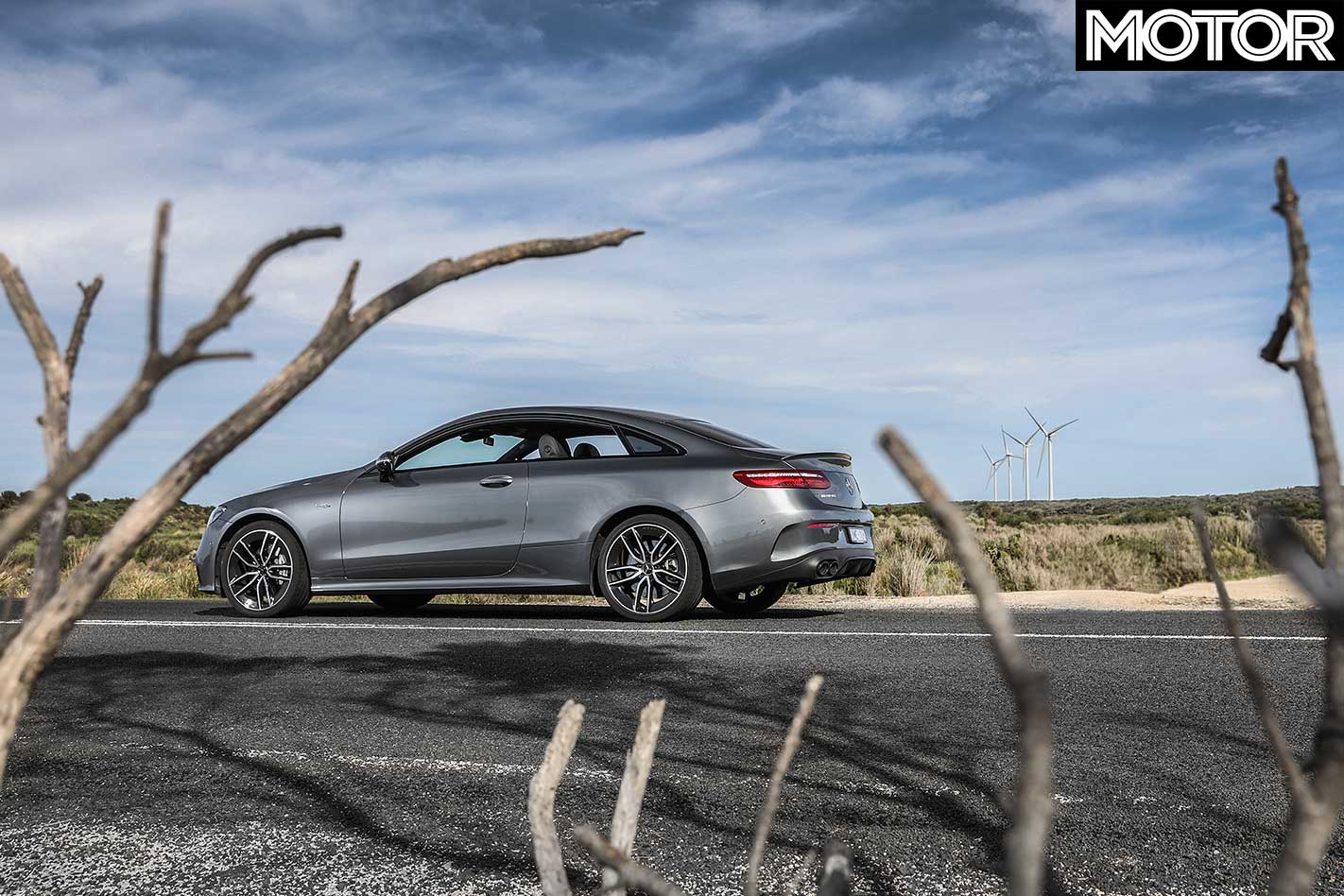
Let’s start by spinning up those propeller hats. EQ Boost? Mild hybrid? This is seriously edgy tech and it’s another way of extending the relevance of the petrol engine as we know it. I’ve said it before, but engineers work best when somebody (in this case emissions legislators) is shooting at them.
Fundamentally, what you have is an electric motor sandwiched between the AMG’s inline-six and the nine-speed auto. As well as acting as the car’s starter motor and alternator, the 48-volt electric motor can also add a 250Nm boot up the bum of the E 53 at low revs to overcome the turbo lag of the 3.0-litre and the inertia of a car that won’t give you much change from two tonnes.
The motor also provides off-throttle energy recuperation as well as powering stuff like the water-pump and air-con which traditionally have been belt-driven (and, therefore, parasitic, and have made the inline-six longer).
So how come the motor’s input is 250Nm, yet only 16kW? Science, old chook. It’s all down to the fact that torque is a measurable force (and an electric motor produces its maximum twist from zero revs) and power (kW) is an abstract. And since that abstract represents torque multiplied by revs, and the motor only chimes in at low engine speeds, the multiplication factor is small and the power stays low.
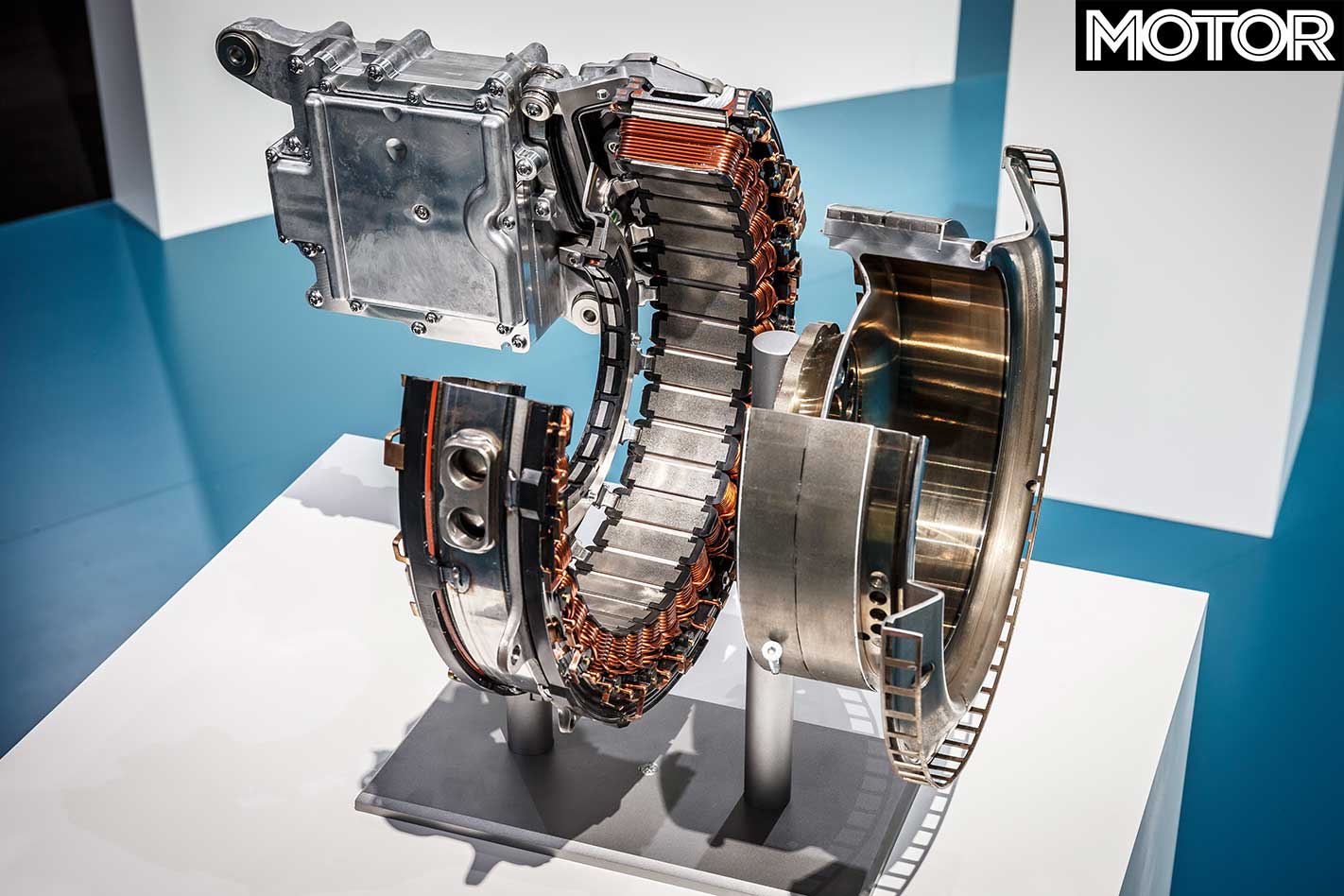
And why not bring the motor in at higher revs? Because by then, the electric turbo has weighed in, bulking out the torque curve before the gas-driven unit huffs up. Did I not mention the 48-volt electric turbo? Yep, there’s a bit going on here.
All up, you’re dealing with a maximum of 520Nm and 320kW with the full meat of the torque available from 1800rpm all the way through to 5800rpm, and that is about as flat as a torque curve can be without going full-electric.
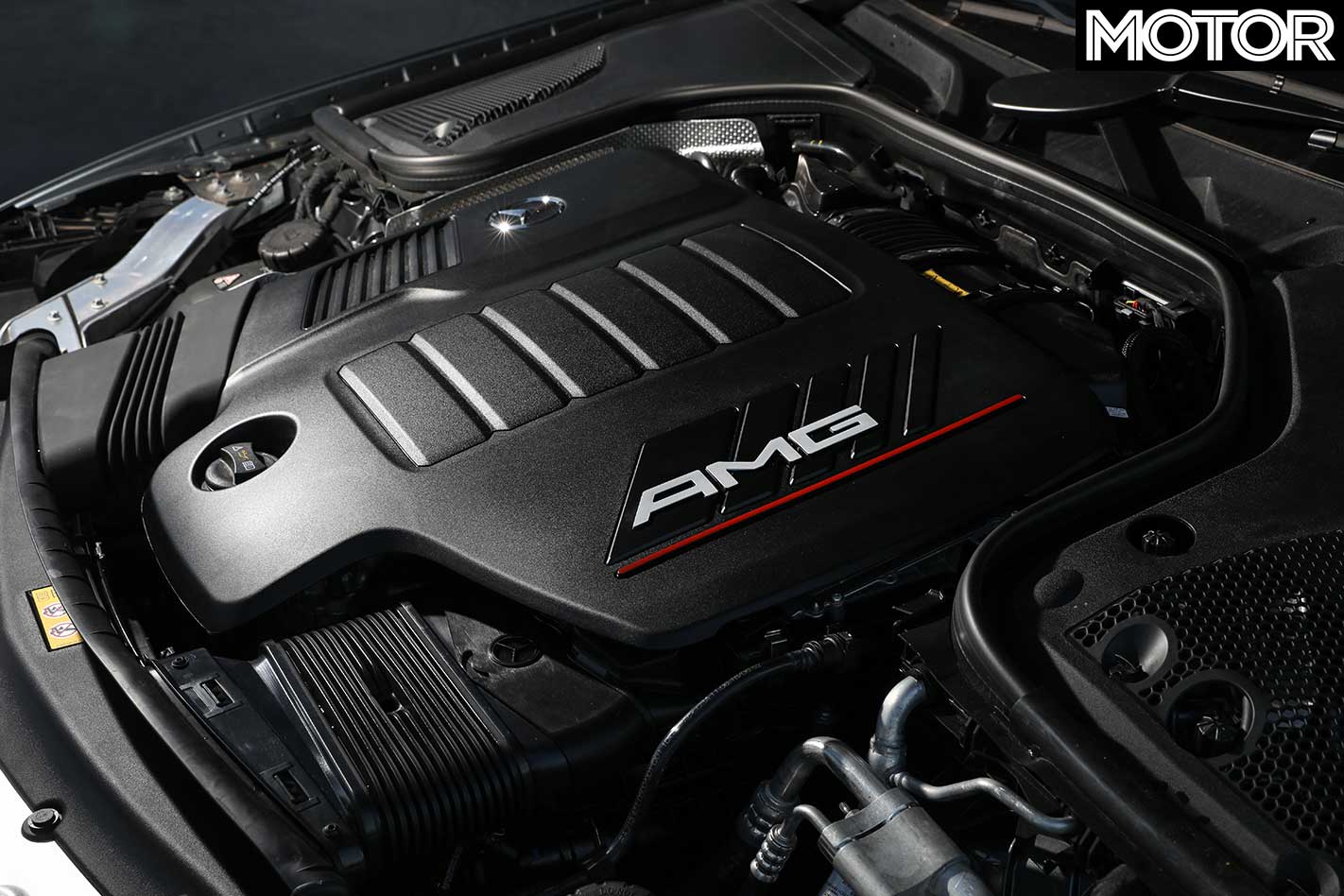
Power peaks at 6100rpm, which sounds a bit low, but is more to do with the turbo(s) having done their job by then and the auto’s (with a torque converter and lock-up clutch) ability to punt the whole show down the road on gearing rather than revs.
Meanwhile, what’s with the turning-back-the-clock inline-six? Bliss and common-sense, is what. The world abandoned the straight-six for the V6 years ago as the longer inline dude became harder to package (the planet was also embracing front-wheel drive) and imposed a sometimes less-than-optimal crash signature when you hurled it into the wall.
But some of us maintained that if you couldn’t get a full-sized, north-south engined car to zip up and crash properly, you weren’t trying. Turns out we were right.
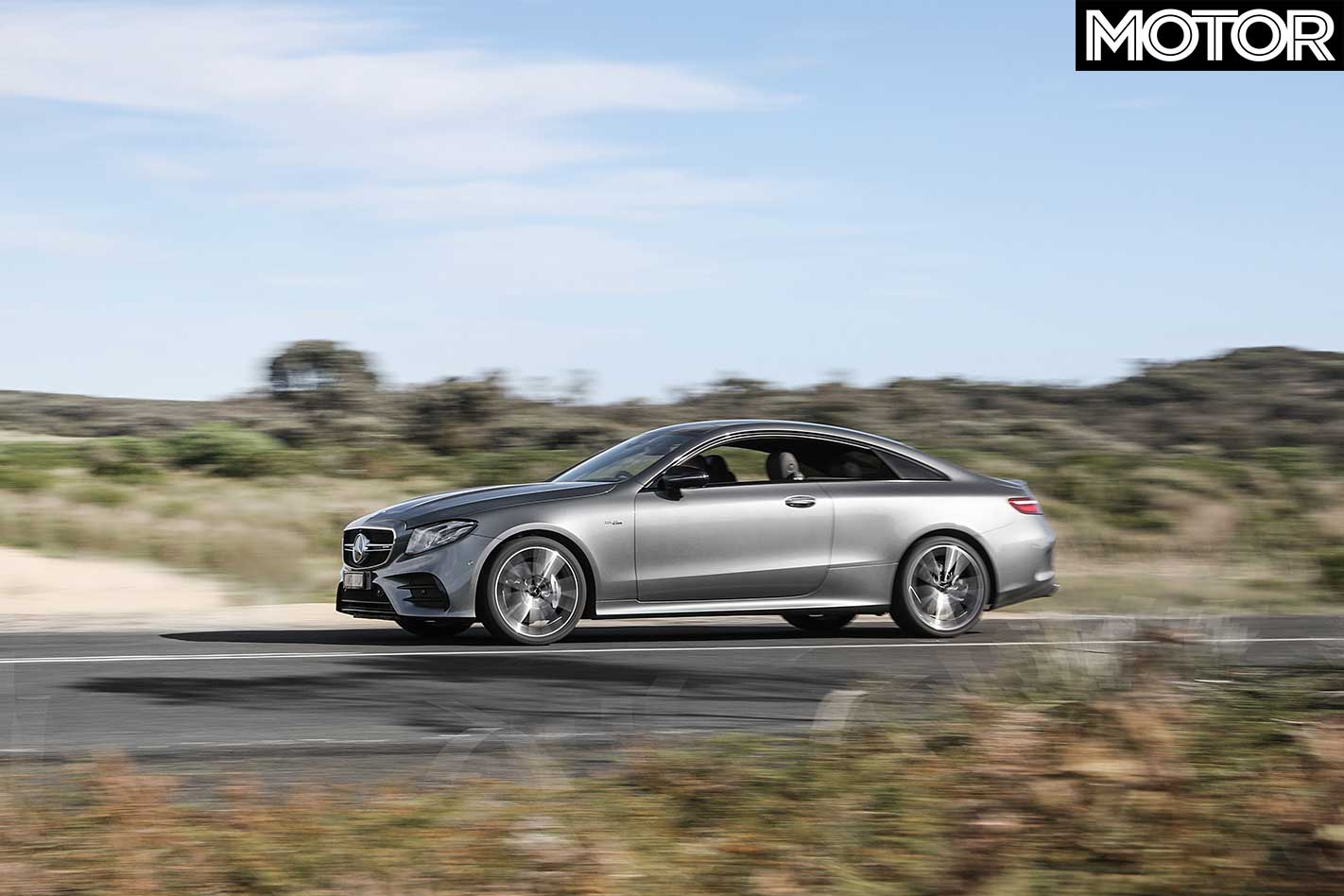
And once you’ve overcome those fears, you rediscover that an inline-six has perfect primary balance (even a V8 doesn’t have that) and the only real secondary imbalance is a rocking couple across the length of the crankshaft. So, yep, they can be very smooth. And this one is.
The familiar 4Matic+ all-paw platform uses an electro-mechanical centre diff to shift torque from the always-driven rear axle to the sometimes-driven front. The way it should be.
Plonking yourself down inside reveals an interior that is more Marie Curie than Marie Claire. But get used to that, because this next-gen of tailorable, smart displays isn’t going anywhere. That’s because they work and give you the option of what you get to see and what’s hidden away on a need-to-know basis.
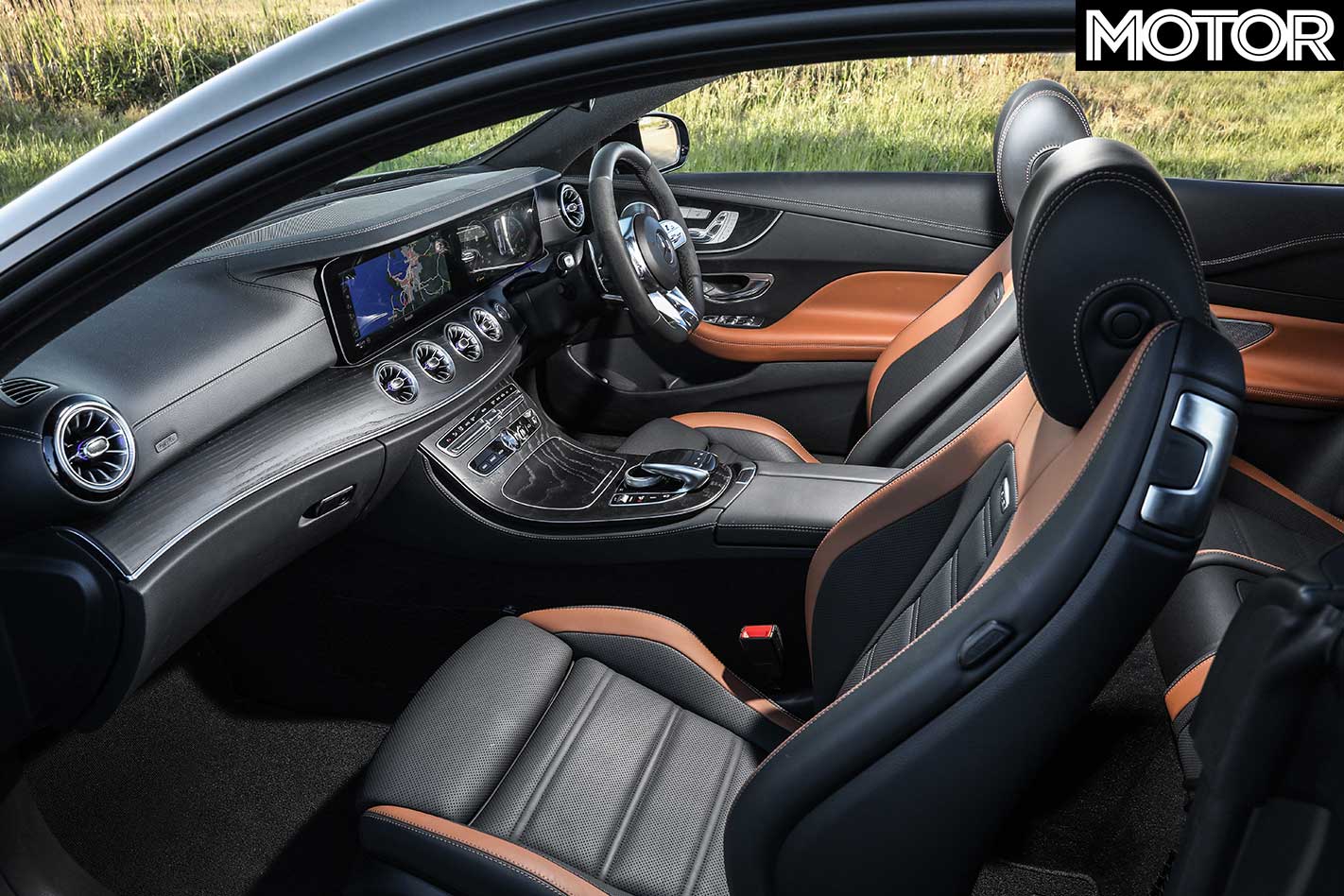
The media-controller seems like a bit of a double-up to me when there are also buttons that appear to do the same thing. Somebody less computer-dismissive may disagree. Equally weird are the air vents which display a disturbingly InSinkErator quality. As in, I wouldn’t stick my finger in one.
But if the interior looks slick, it’s nothing compared with that driveline. Even firing it up has you checking the tach to see whether it’s really running or not. The gentle, hushed start also makes the stop-start function less intrusive than it normally is. You may actually leave this one switched on. Big call, I know.
From there it only improves with a good step-off courtesy of the electric motor and a real ramp up until about 2000rpm when the thrust comes on hot and strong. The 48-volt turbo can get to 70,000rpm in 0.3 of a second and is over and out by 3000rpm while the electric motor weighs in up to 2500rpm.
I honestly couldn’t discern the point where the motor handed over to the electric snail and then to the conventional turbo. It’s all utterly seamless and combined with the almost-can’t-pick-’em shifts from the nine-speed automatic (the electric motor uses torque to paper-over any shift-shock) it almost feels like you’re being squirted along by a jet of water rather than by pistons jigging up and down.
The engine has a great six-pot note, too, and while this will start a fist-fight in Stuttgart, it really does snarl like a 911 when you have the exhaust flap open and your boot on the floor. And pace? No shortage of that with the E 53 all but matching the factory claim (which is rarer than an accurate house-auction estimate). Which is to say that we managed 4.5sec for the 0-100km/h dash and a 400m time of 12.7sec at 177.7km/h.
To be brutal, it’s so refined and lacking frantic-ness that it doesn’t even feel quite that fast. But on the road, the bulked out mid-range is what counts and it’s here that even the 1400 revs the E 53 is pulling at 100km/h in top gear doesn’t matter. It’ll either pull that ratio without fuss or, if you tip in deeper, it’ll drop three or four cogs and blast off.
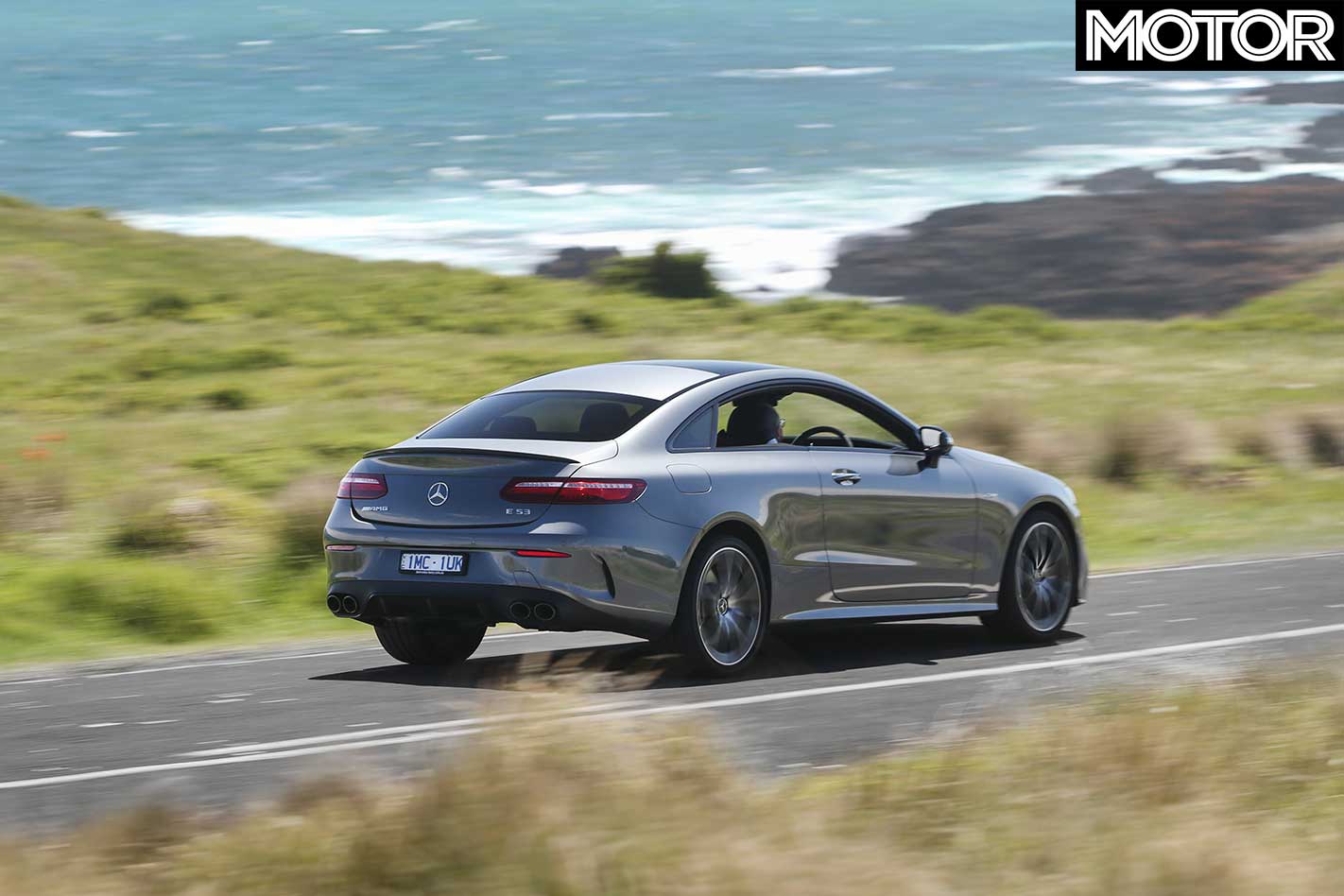
Dynamically, the only disappointing aspect is the fidelity of the steering. Sure, the front wheels are driving this time around and that’s usually a smack-down to tactility, but this time the tiller is really numb. Accurate still, but numb. A relaxed ratio does it no harm and although the spec-sheet says the driving modes alter the ratio, I couldn’t pick it.
If there’s one thing that has characterised AMGs lately, it’s been a ride that takes firm to new levels. But again, there are clues that the E 53 is designed to be different. There’s less difference in the way the air-suspension and adaptive dampers feel when switching from Sport to Sport Plus. But there is a decent improvement in plush when you switch back one more to Comfort.
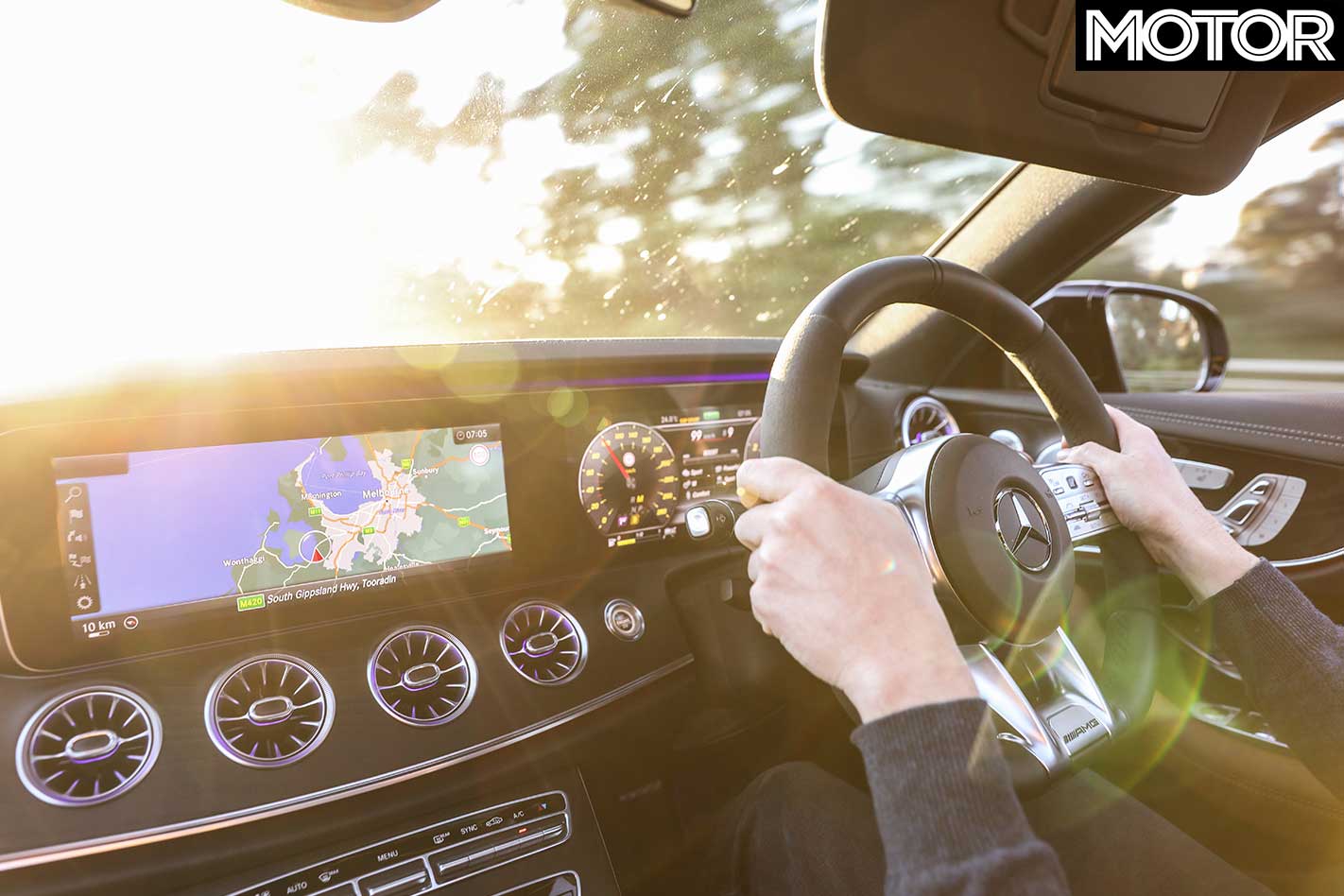
But here’s the thing, even in Sport Plus, the E 53’s demeanour is smoother, comfier and less edgy than the bloodied-urine ride of the E 63 S. And that’s on run-flats! It’s simply less brittle over pattery stuff, more compliant over big yumps and doesn’t take sharp road-edges personally. And all the while, the cornering is flat regardless of what mode you’re in.
And brakes? Loads of them. Enough, in fact, to haul her up in less than 36 metres and they don’t seem to need bulk heat in them, so the first stop is as good as the second and third.
I can’t help feeling that AMG is almost a little worried about just how good the E 53 is and what that might mean to sales of the E 63. And if I’m right, then that would explain how some of the E 53’s more apparent electronics have been calibrated. That starts with the cruise control that is active not merely in the recent sense of being able to see what’s holding you up and adjusting speed accordingly, but also, in this car, in offering to keep you out of the trees.
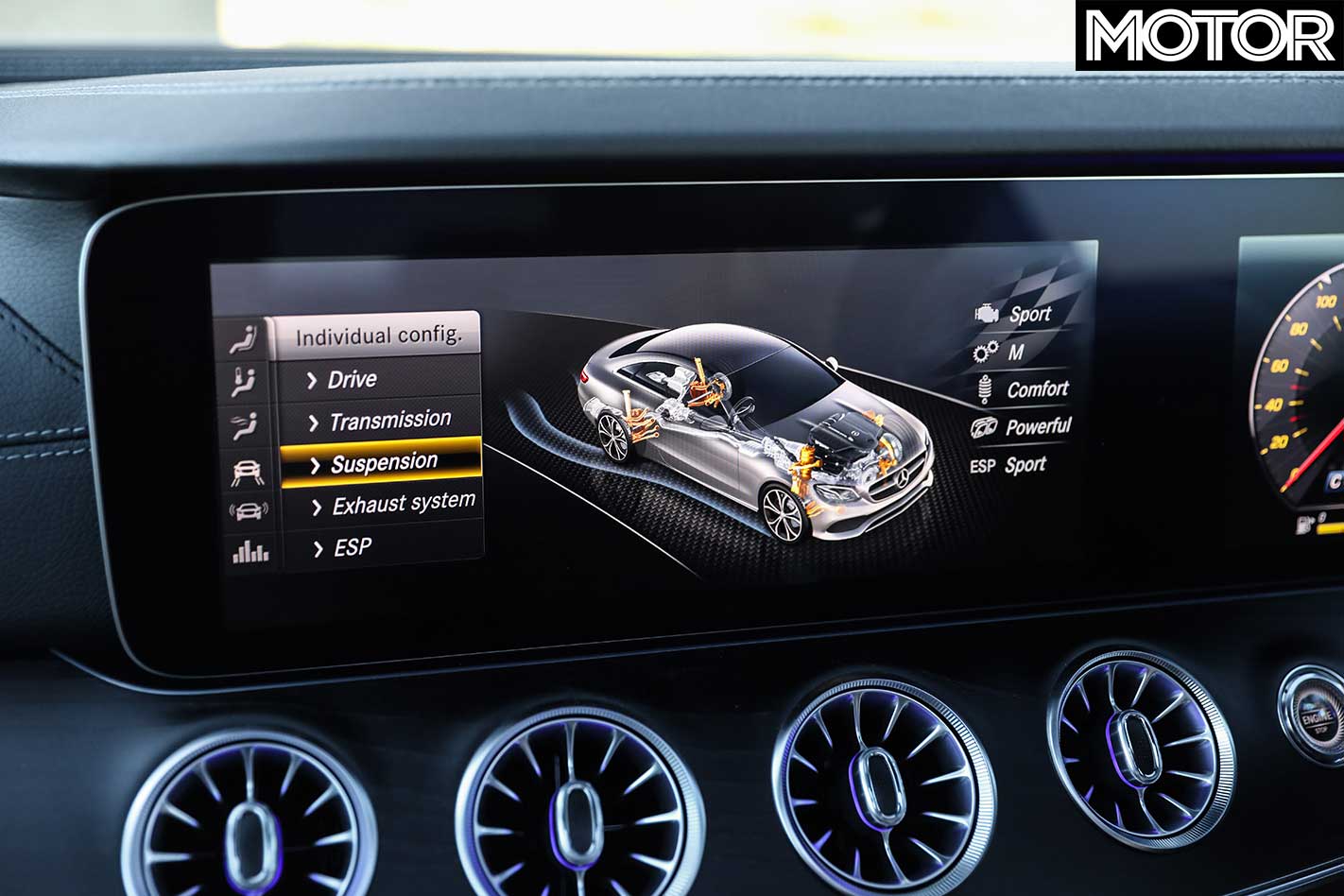
It does so by pre-emptively adjusting your speed down in corners or whenever there’s a rapid adjustment in steering angle. Problem is, it constantly assumes you’ve left the house without your padded helmet on.
Set the cruise for 110km/h on a winding road that you could cruiselessly hammer along at 140km/h, and the car will wipe off a handful of kliks as you turn. I’m tempted to assume it uses the ESP to do this, but the velocity hit occurs at a speed that seems well below the point at which you’ve started losing grip.
That there’s so much all-paw grip here in the first place, the sensation is only amplified. And you can’t turn it off, meaning, for me, that this luxo express only offers cruise-control on freeways. Straight freeways.
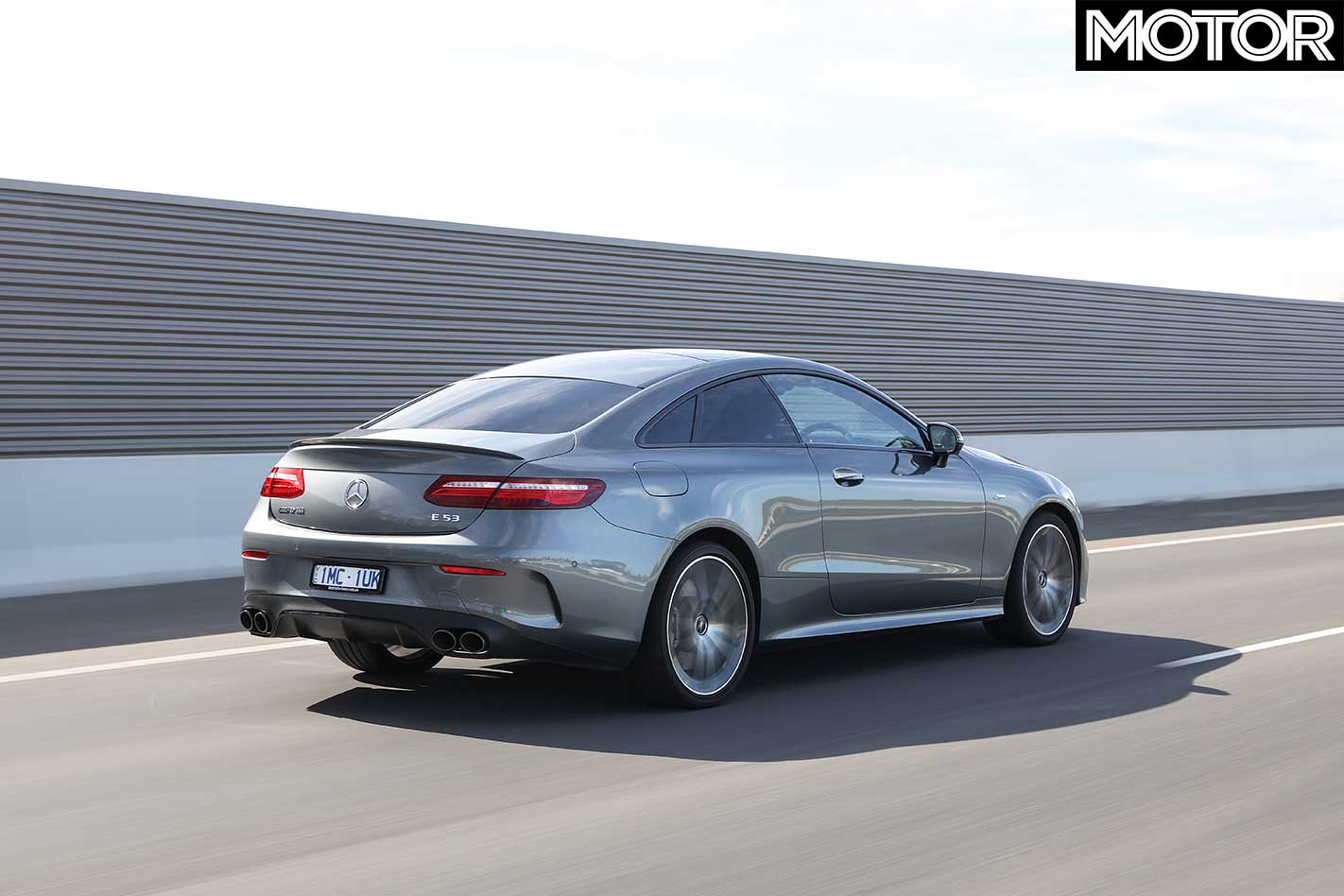
Even the ESP itself is a buzz-kill. It interrupts way before it should and, even though it’s less intrusive as you ramp up the drive modes towards Sport Plus, it’s still intervening before you’ve gone anywhere near the grip limit.
It’s at its most insistent when powering out of a turn, when it ignores its own grip and flat-lines the engine just when you want it to boost up and punt you onward. There are some serious algorithms at work here (making it truly active, rather than reactive), but none of them make me smile. And I’m not even looking for slides, just a brisk, even corner speed.
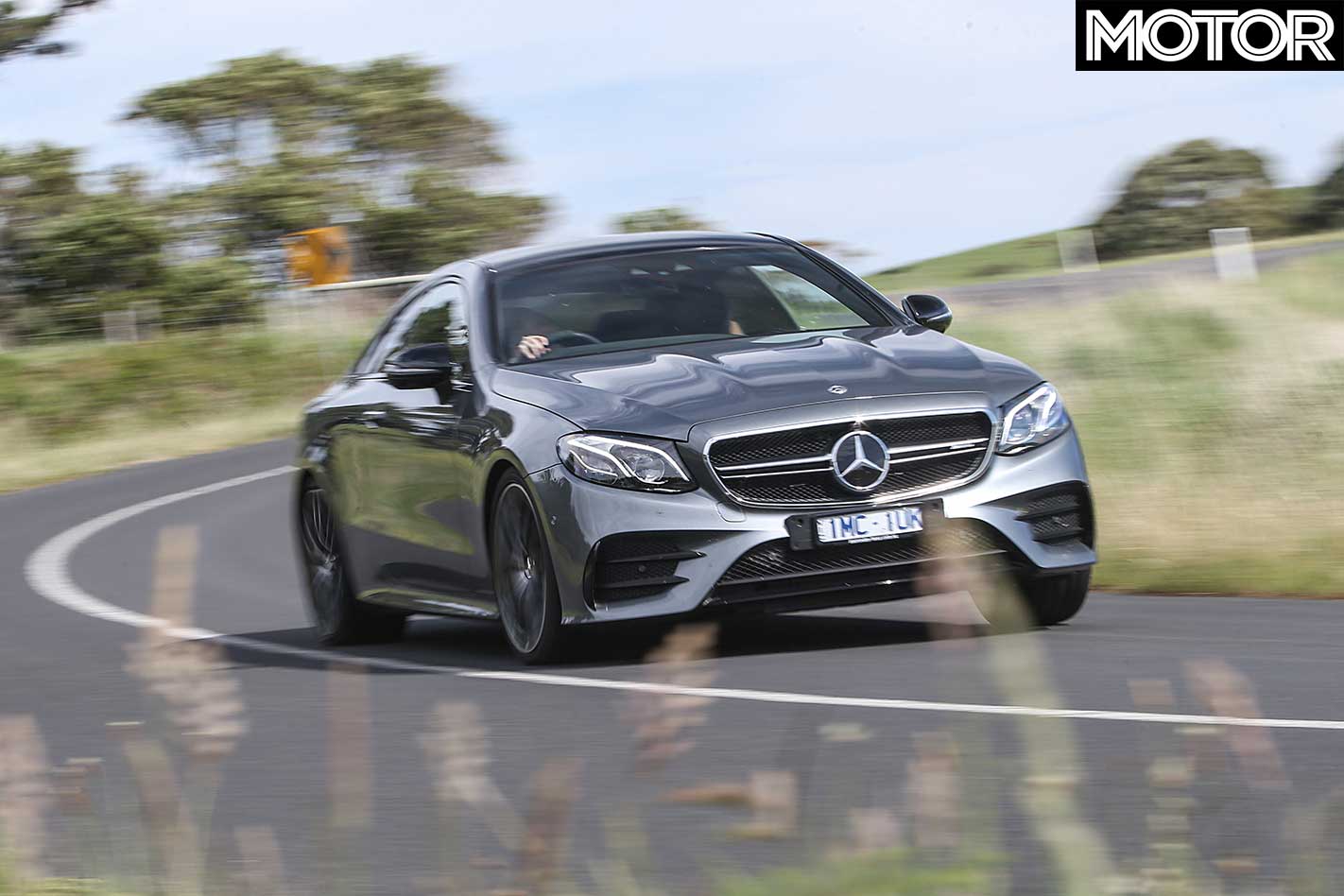
ESP that shuts you down before you’ve run out of grip is just a waste of expensive, sticky rubber. Yes, you can turn ESP off, at which point, in my case as an employee of MOTOR driving on a public road, I’m in contravention of company OH and S regs. Cue solicitors and the sound of insurance policies being torn up.
I can kind of see where AMG was going with all this just the same: you don’t want to cloud the E 63’s mission statement by offering something cheaper that is almost as capable. But you know what? For me, the E 53 is the one I’d buy.
I’d give me enough change to indulge my raw, red-meat V8 urges in other ways, yet it’d still be a terrific day-to-day car with plenty of ’tude. And if that plugs a gap that was previously existent in the AMG line-up, then this thing is a bulls-eye. Just gotta find a tuner who can re-map the ESP.
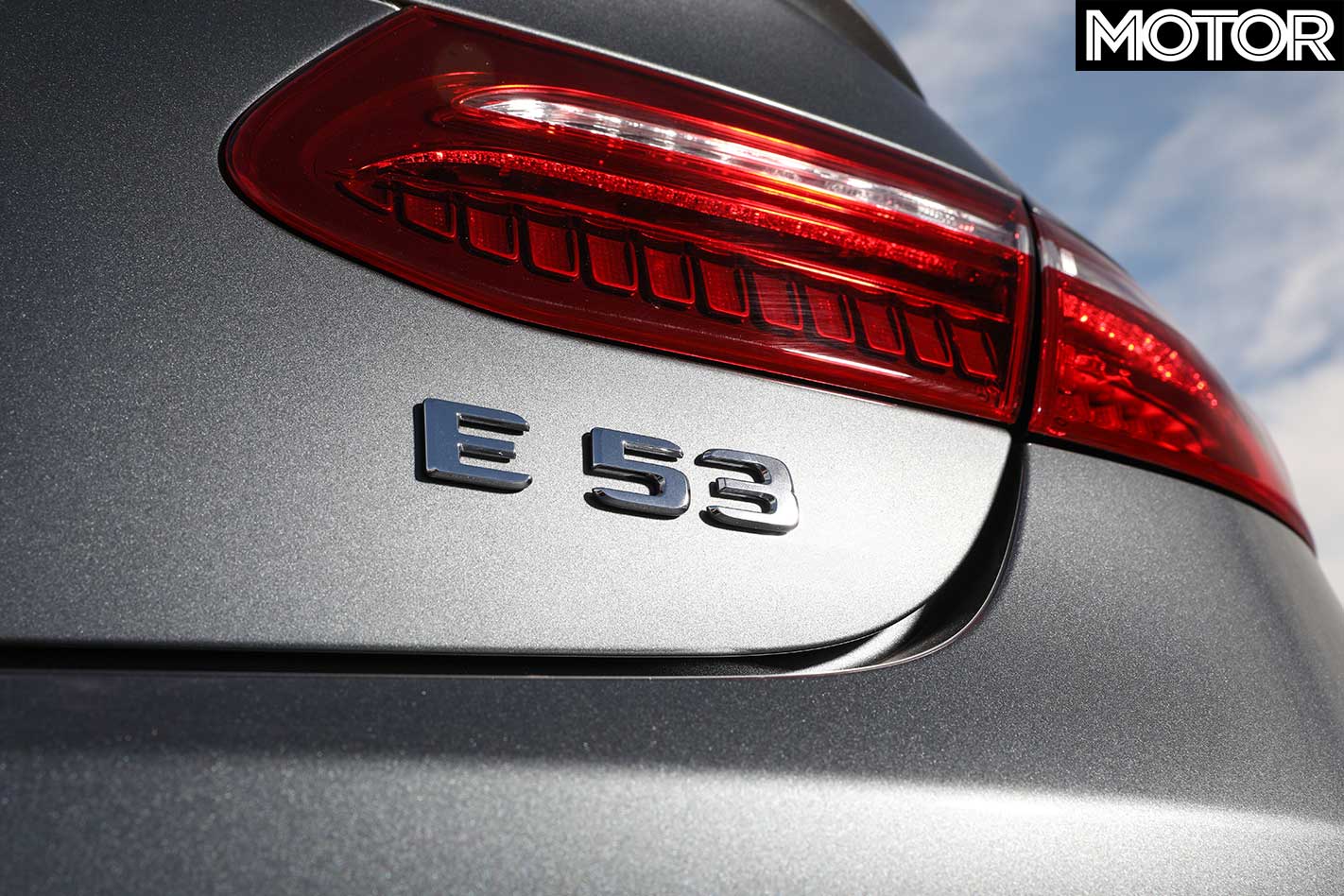
FAST FACTS 2018 Mercedes-AMG E 53 Coupe
BODY: 2-door, 4-seat coupe DRIVE: all-wheel ENGINE: 2996cc inline-6, DOHC, 24v, turbo, s/c, e-motor BORE/STROKE: 88.0mm x 82.1mm COMPRESSION: 10.5:1 POWER: 320kW @ 6100rpm (336kW combined) TORQUE: 520Nm @ 1800-5700rpm (770Nm combined) WEIGHT: 1895kg POWER-TO-WEIGHT: 168kW/tonne TRANSMISSION: 9-speed automatic SUSPENSION (front): MacPherson struts, air-suspension, adaptive dampers SUSPENSION (rear): multi-link, air suspension, adaptive dampers L/W/h: 4964/1852/1449mm WHEELBASE: 2939mm TRACKS: 1628/1598mm (f/r) STEERING: electrically assisted rack-and-pinion BRAKES (front): 370mm ventilated discs, 8-piston calipers BRAKES (rear): 360mm ventilated discs, single-piston calipers WHEELS: 20.0 x 8.0-inch (f); 20.0 x 9.0-inch (r) TYRES: Yokohama Advan Sport; 245/35 R20 (f); 275/30 R20 (r) PRICE: $173,900 (as-tested)
PROS: Return of the straight-six; seamless tech; luxe cabin CONS: Party-pooper ESP calibration; numb steering feel RATING: 4.5 out of 5 stars
The Strip
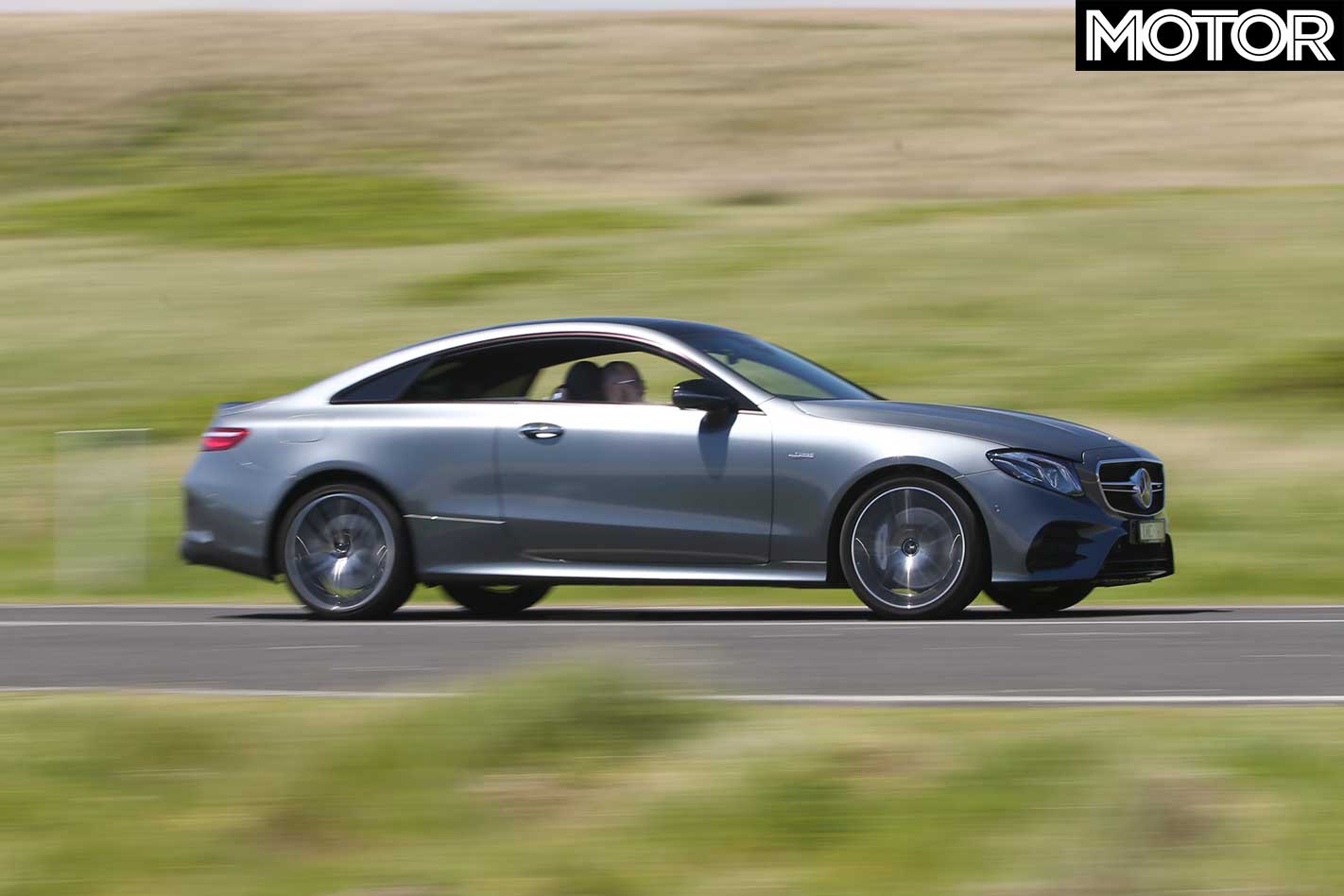
| Mercedes-AMG E 53 Coupe | |
| 0-10km/h | 0.26sec |
| 0-20km/h | 0.57sec |
| 0-30km/h | 0.96sec |
| 0-40km/h | 1.34sec |
| 0-50km/h | 1.76sec |
| 0-60km/h | 2.16sec |
| 0-70km/h | 2.67sec |
| 0-80km/h | 3.21sec |
| 0-90km/h | 3.80sec |
| 0-100km/h | 4.53sec |
| 0-110km/h | 5.26sec |
| 0-120km/h | 5.99sec |
| 0-130km/h | 6.90sec |
| 0-140km/h | 7.91sec |
| 0-150km/h | 8.94sec |
| 0-160km/h | 10.11sec |
| 0-170km/h | 11.49sec |
| 0-180km/h | 12.68sec |
| 0-400m | 12.68sec @ 177.70km/h |
| 80-120km/h (Drive) | 2.94sec |
| 100-0km/h | 35.90m |
| Speed in gears | |
| 1st | 50km/h @ 6450rpm |
| 2nd | 82km/h @ 6450rpm |
| 3rd | 118km/h @ 6450rpm |
| 4th | 163km/h @ 6450rpm |
| 5th | 218km/h @ 6450rpm* |
| 6th | 250km/h @ 6050rpm* |
| 7th | 250km/h @ 5260rpm* |
| 8th | 250km/h @ 4350rpm* |
| 9th | 250km/h @ 3690rpm* |
Heathcote Dragway, 13˚C, dry. Driver: David Morley *Manufacturer’s claim Official timing supplier – VBOX Australia
ENGLAND’S immortal Mini Minor may have started the pocket-rocket phenomenon some six decades ago, but it’s France, Germany and Italy that have nurtured the class in the intervening years, with a bevy of belting superminis brandishing evocative badges like GTI, RS, ST, Ti and Turbo.
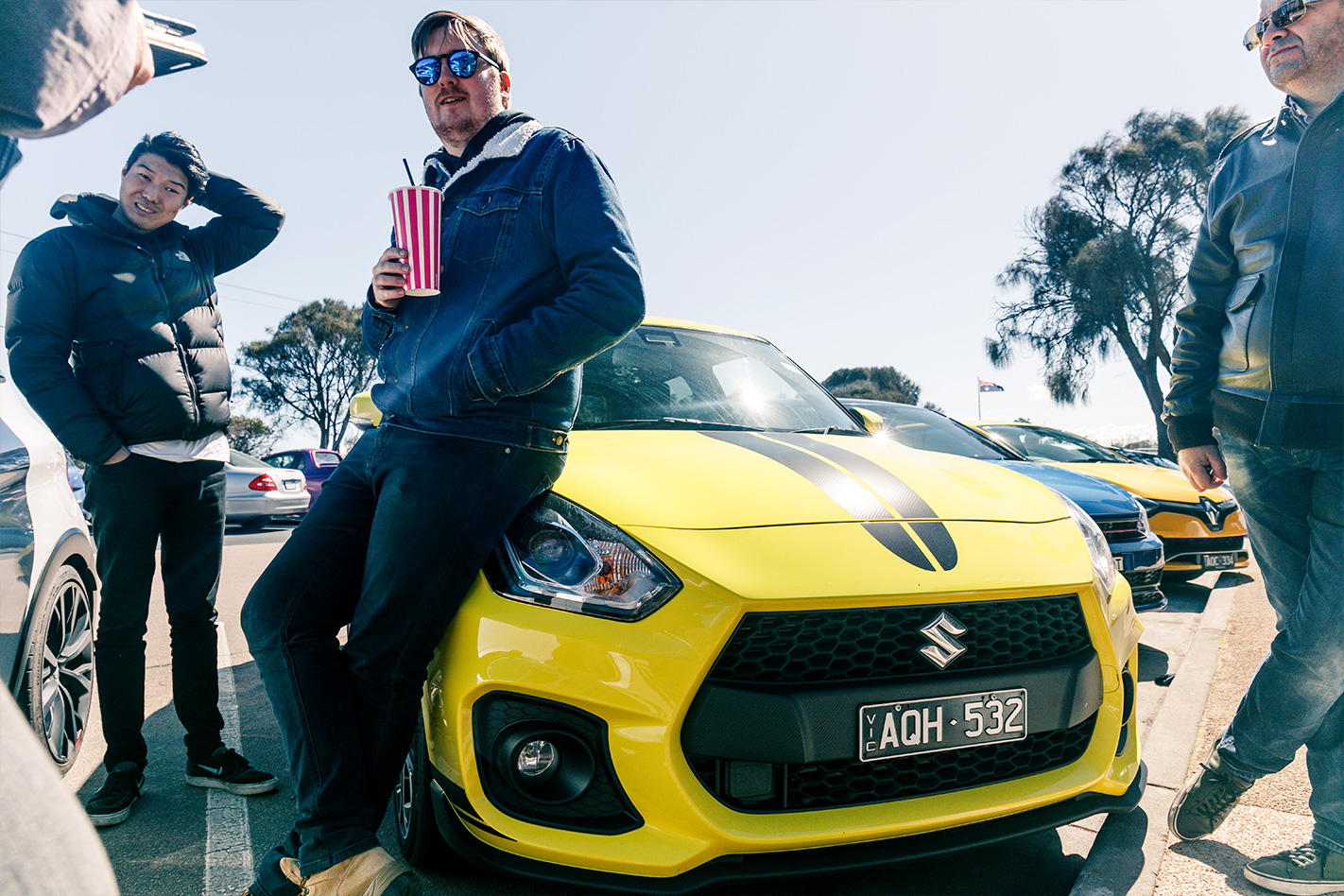
And let’s not forget Japan’s Suzuki either, the unlikely survivor on the Australian hot-hatch scene, supplying an almost uninterrupted series of sizzling Swift GTis (and latterly the Sport) since the spring of ’86.
Volkswagen re-entered the light hot-hatch fray with the Polo GTI in 2005 (the Golf GTI having outgrown it) but it wasn’t until the succeeding generation five years later, ushering in back doors and a dual-clutch auto, that things became serious, broadened the genre’s reach significantly. With sales soaring and a Wheels COTY gong under its belt, the Wolfsburg wunderkind has become the one to beat.
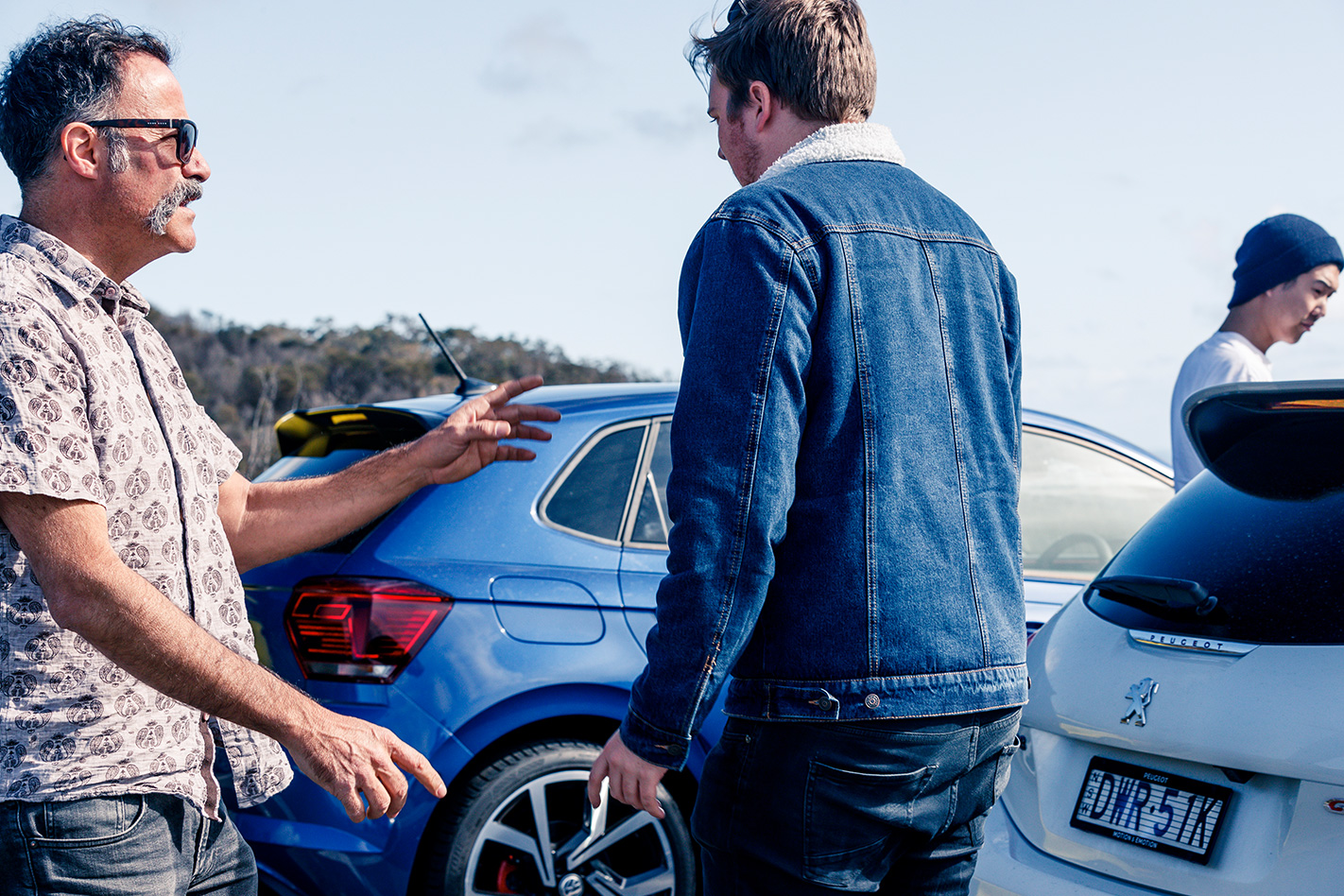
Now there’s another all-new Polo (the Mk6) to take on the equally fresh sixth-gen Swift Sport – two exciting reasons for a four-way hot-hatch fight.
Inevitably, the GTI takes a huge step forward by adopting VW’s ubiquitous MQB modular transverse architecture … yet also looks back at the same time, because out goes the old 1.8-litre turbo for a 147kW/ 320Nm 2.0-litre turbo, in a mighty no-substitute-for-cubic-inches middle-finger gesture to the downsizing trend. There’s also extra body bracing, a stronger power-steering motor and revised suspension with a thicker anti-roll bar, firmer bushes and a much sturdier torsion beam rear. Ride height also drops, by 15mm. Note that a six- and not seven-speed dual-clutch drives the front wheels.
To counteract all that added firmness, adaptive dampers make their Polo debut, along with key driver-assist safety advances like forward-collision warning and autonomous emergency braking (AEB), while an electronic diff lock, powered folding mirrors, cornering lights, paddle shifters, keyless entry/start, dual-zone climate control, an 8.0-inch touchscreen and one-touch electric windows complete the picture.
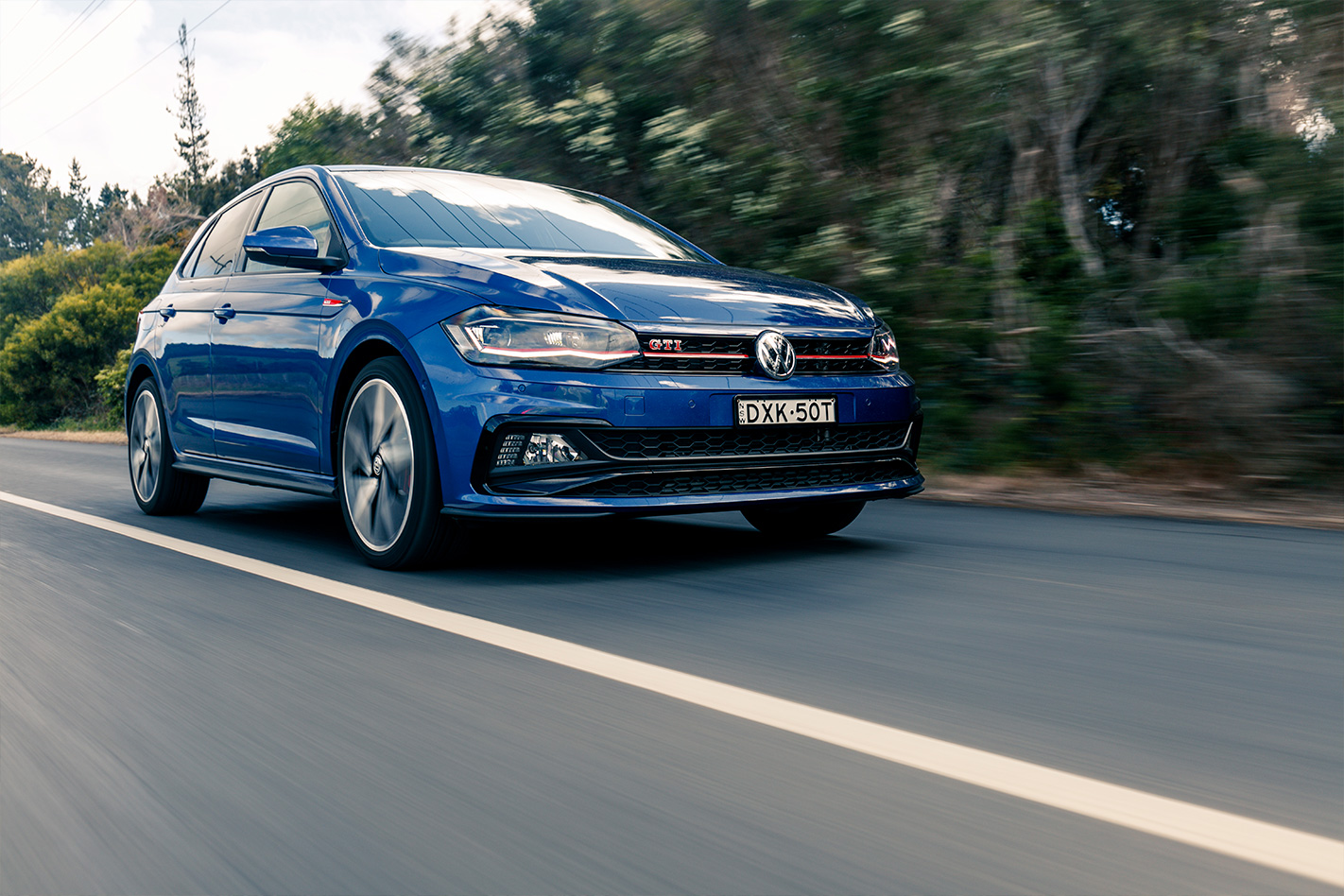
However, our South African-assembled example went ionospheric with extras, including $1400 ‘Driver Assistance’ (adaptive cruise, blind-spot monitoring, rear cross-traffic alert and auto park assist), $1900 ‘Sound & Vision’ (Active Info Display digitised instrumentation, nav, ritzier audio) and $3900 ‘Luxury’ (velour, heated front seats, LED headlights, panoramic sunroof, extra tinting and 18-inch alloys) packs. Add $500 for metallic paint, and the price vaulted from $30,990 to a GT-eye-watering $38,690.
In contrast, the $25,490 demanded for the still-green Swift Sport seems charitable, given that much of the aforementioned gear – plus sat-nav, adaptive cruise, high-beam assist and lane-departure warning – is included. For maximum smiles per gallon, we picked the peerless six-speed manual shifter rather than the $2K-extra (torque-converter) auto alternative.
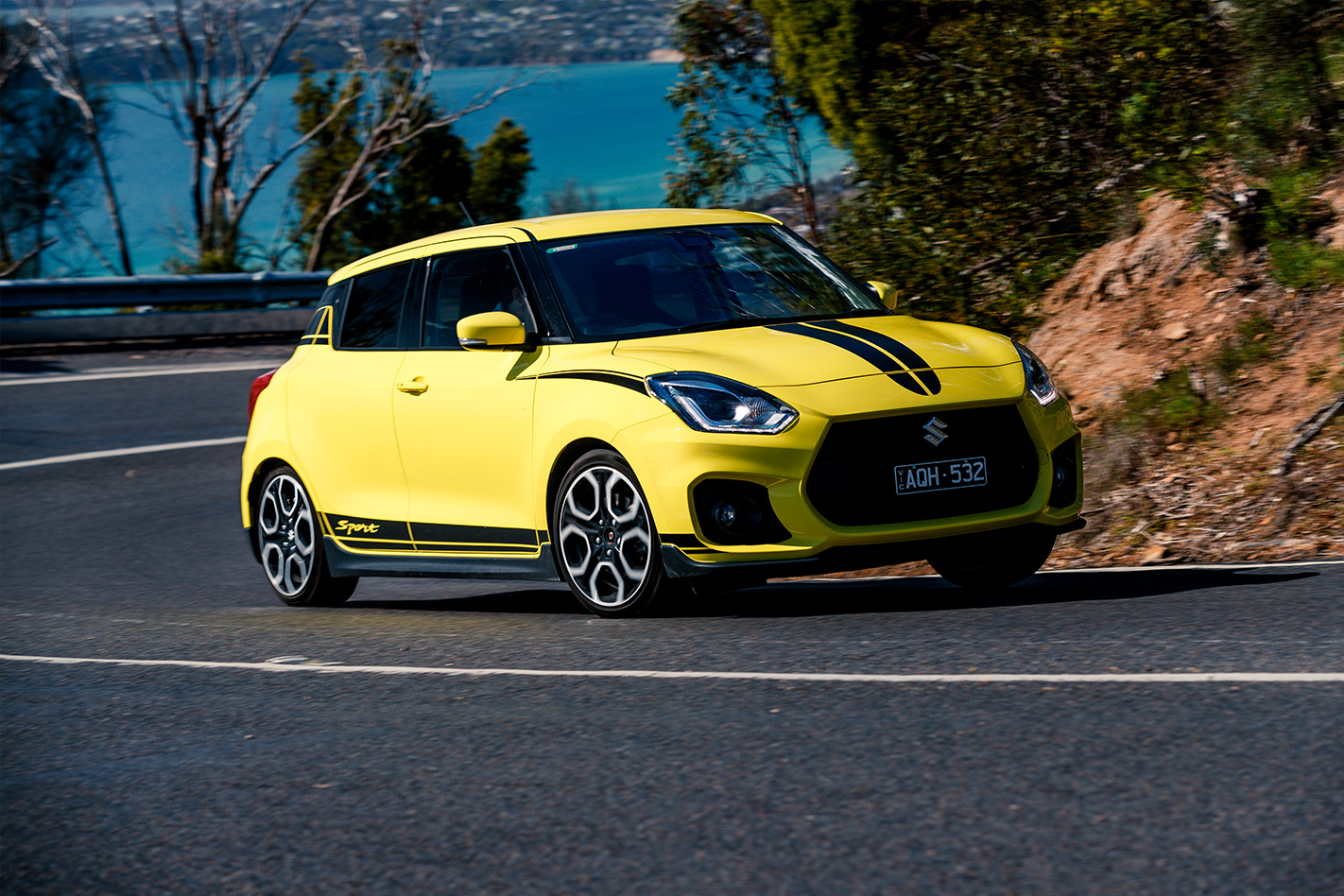
Over regular Swifts, the Sport sports a protruding proboscis housing LED lights and a wider grille, bodykit, sturdier wheel hubs, Monroe dampers, fatter anti-roll bars and bigger discs; but the really big news is Suzuki’s sensational 103kW/230Nm 1.4-litre K14C turbo, ousting the 100kW/160Nm 1.6-litre M16A atmo gem in bygone generations. Should be a hoot in a 970kg runabout – an 80kg saving over the previous iteration, and the same amount the 1355kg Polo has gained.
: Volkswagen Golf GTI Original
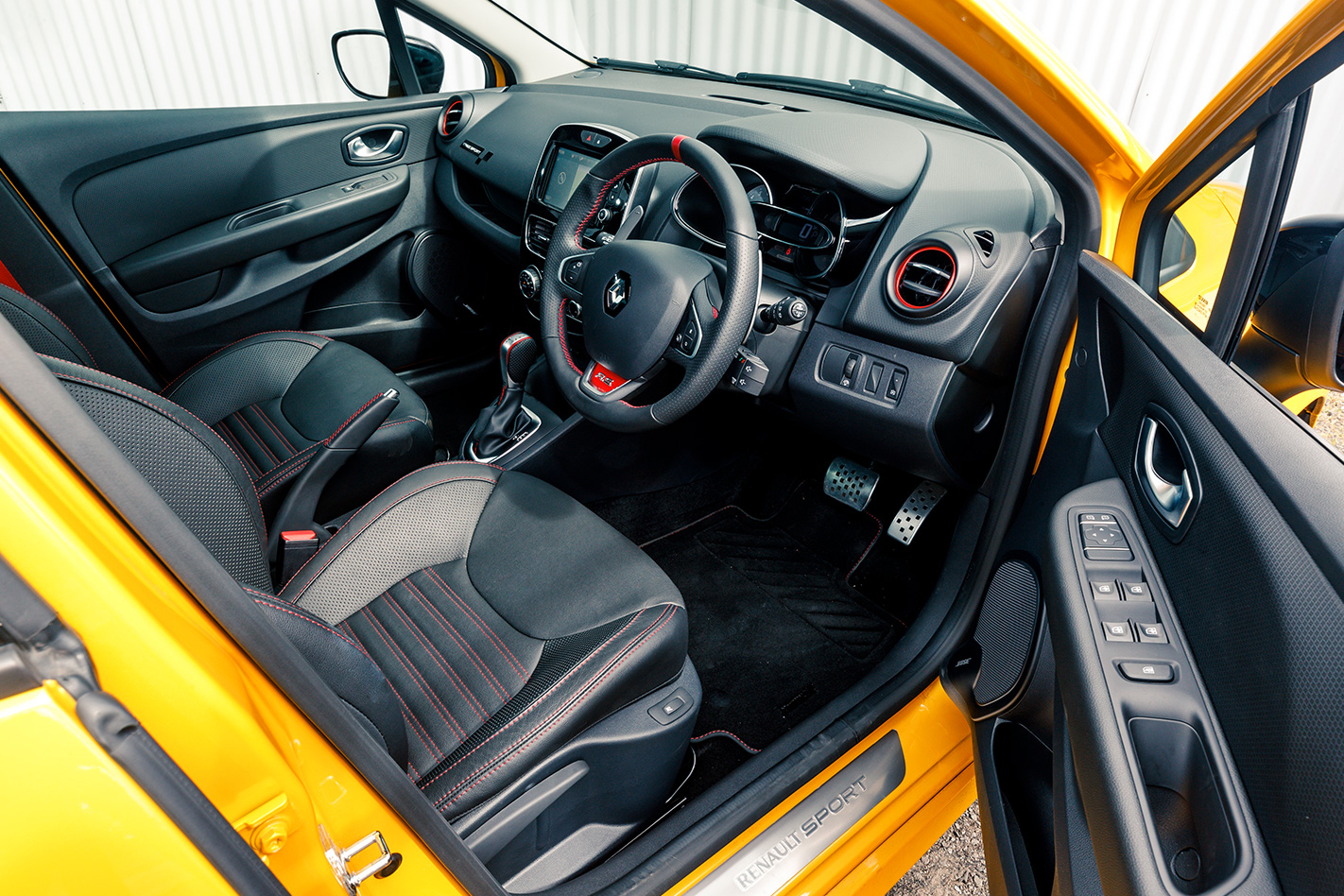
Tipping the scales at 1200kg is the $30,990 Renault Clio RS200 Sport Phase II, the latter denoting the 2017 facelift that ushered in LEDs, improved specification and updated multimedia. Otherwise, the French supermini remains much the same as it was in 2013, including Renault Sport chassis magic like hydraulic compression bump stops, a rousing 147kW/260Nm 1.6-litre turbo and six-speed dual-clutch duo with launch control and multi-downshift functionality.
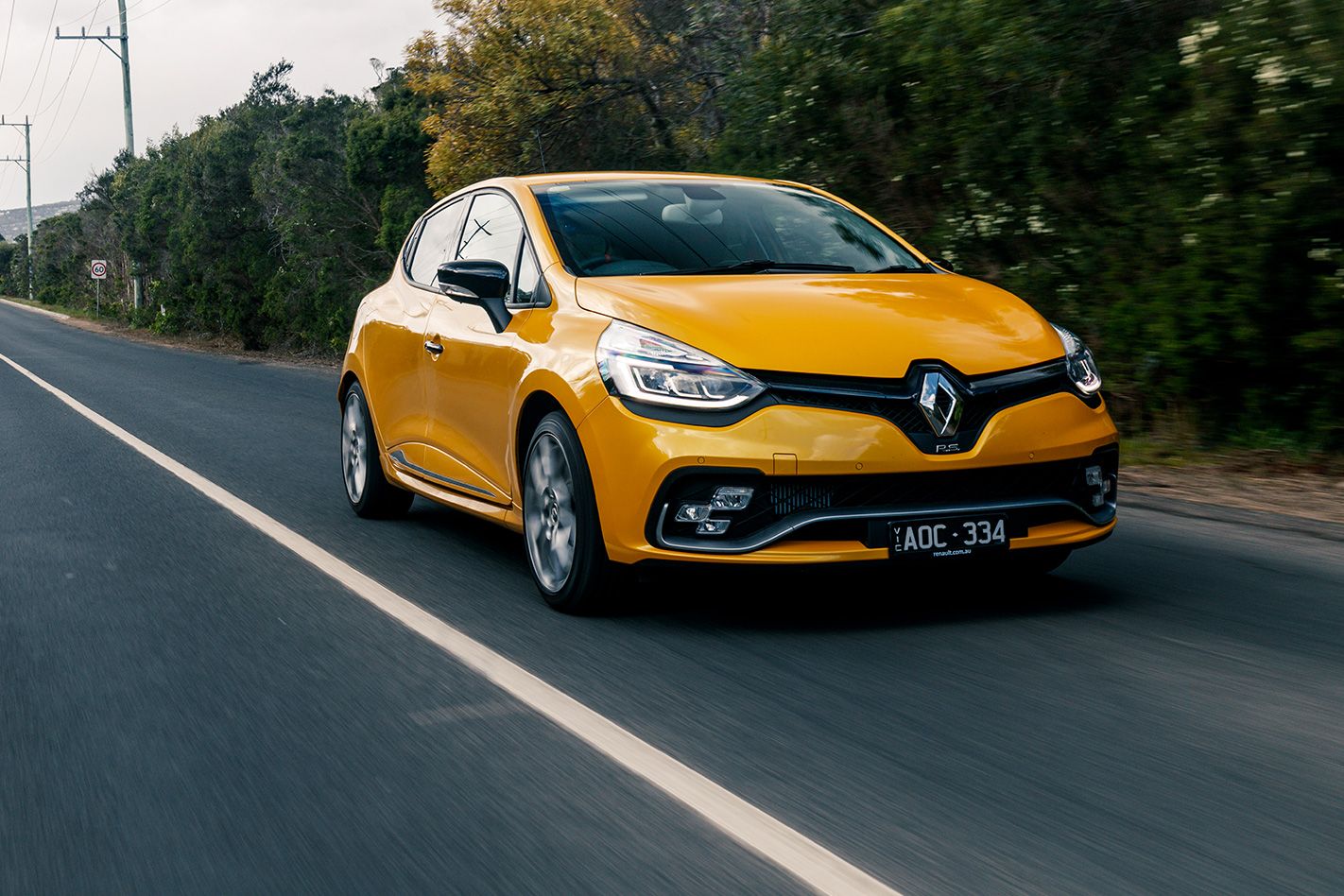
Ours added a $1500 Leather Pack with Alcantara upholstery and heated front seats, a $1500 Entertainment Pack with sat-nav, enhanced multimedia offering Android Auto (but not Apple CarPlay), RS Monitor performance telemetry system, Bose audio and $750 metallic paint.
Total? $34,740.
Even older than the Renault and also hailing from France is the perpetually underrated Peugeot 208 GTi. A suave descendent of the epochal 205 GTi, the quartet’s lone three-door has already blown out six candles, and is about to bid au revoir. Over lesser versions, the 1160kg GTi brings a stiffer front subframe, extra body bracing and the usual springs, anti-roll bar and damper uprating, as well as a forceful 153kW/300Nm 1.6-litre four-pot turbo with six-speed manual and no auto option in sight. Dieu merci pour ça!
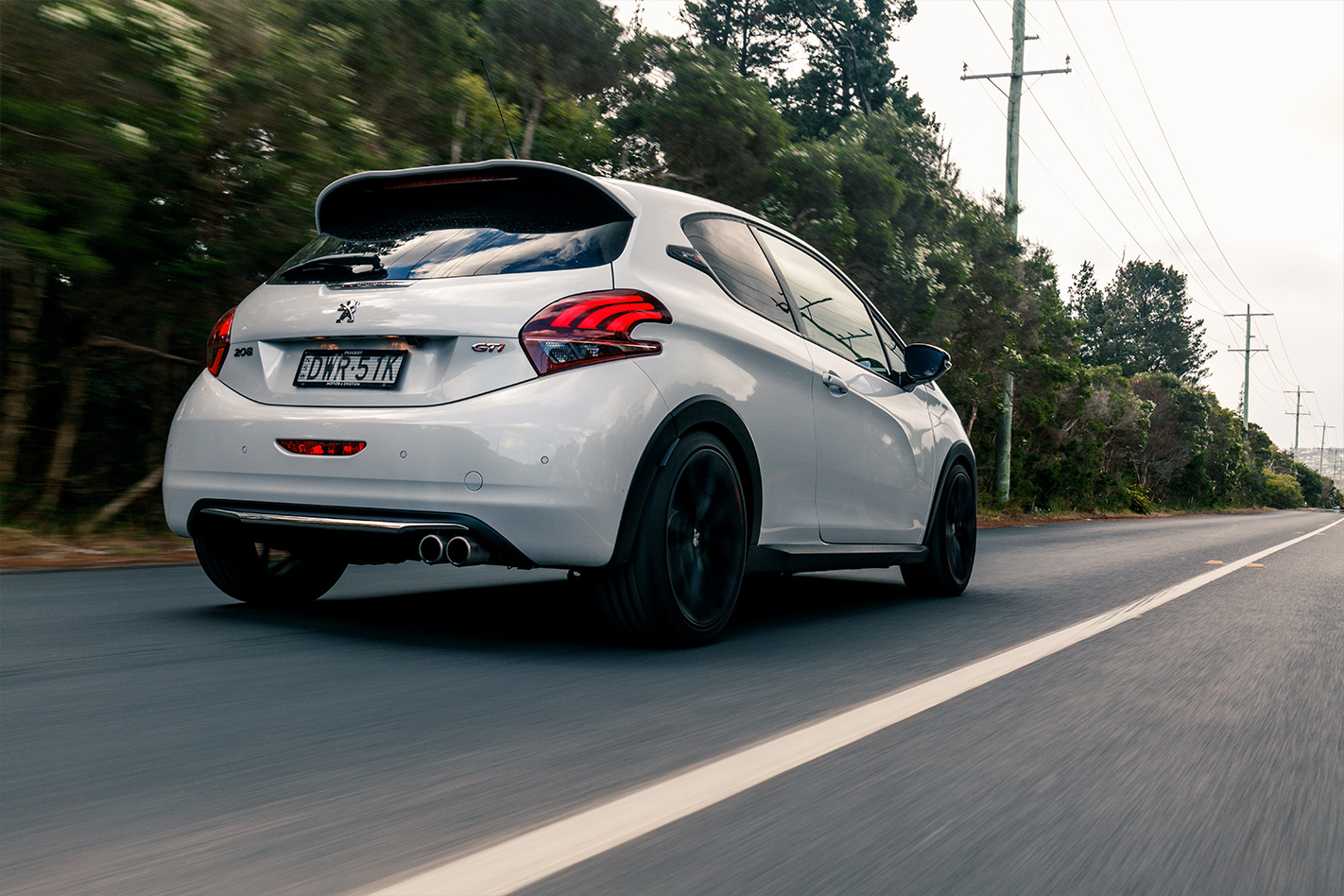
Just 20 ‘Edition Definitive’ hatches are here, at $31,490 apiece, boasting wider tracks, a 10mm suspension drop, 18-inch alloys, a freer exhaust, uprated springs and dampers, revised camber settings, retuned steering, AEB (a 208 first), big Brembo brakes, a Torsen limited-slip differential and Alcantara buckets – but no Apple CarPlay or Android Auto.
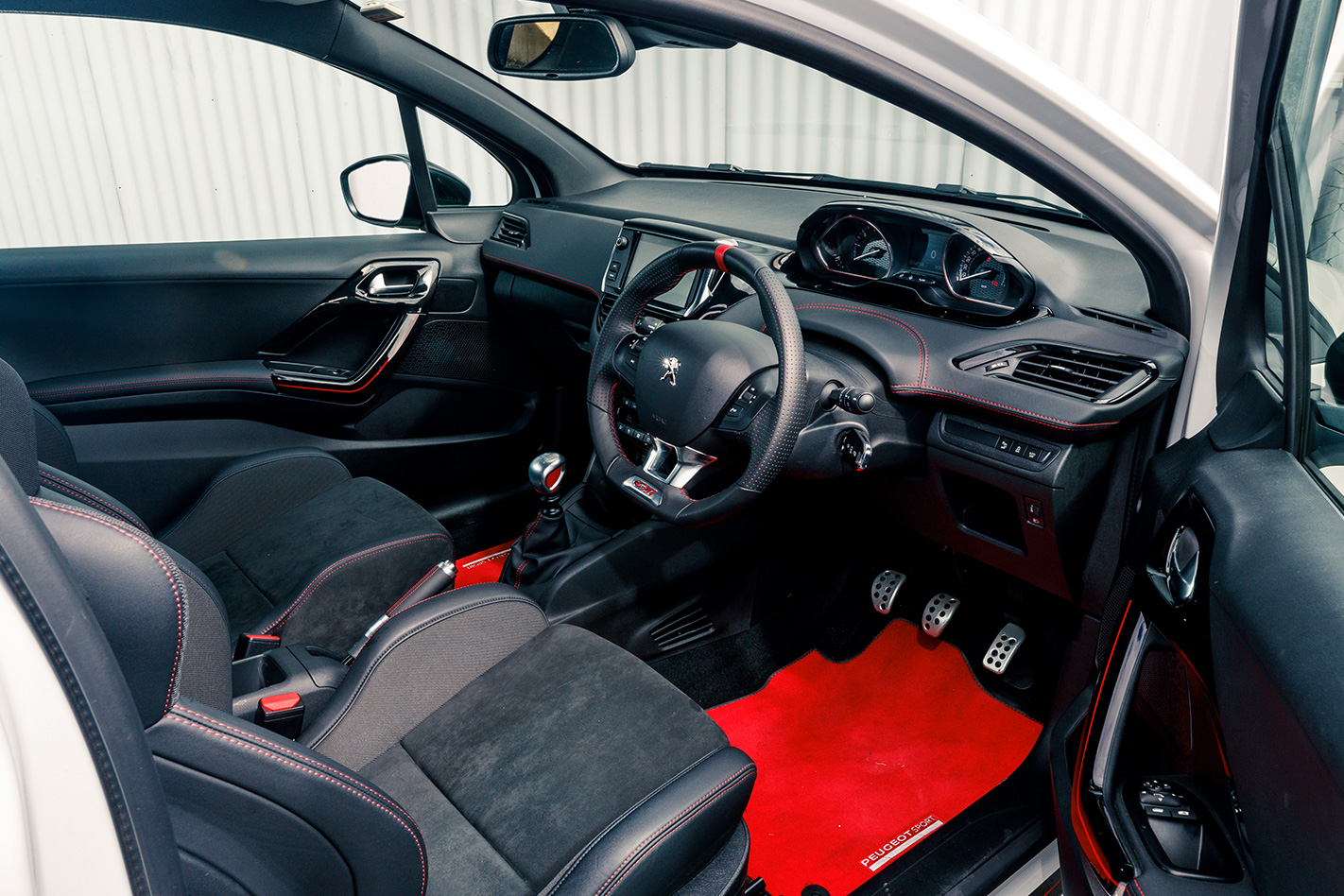
Geriatric or not, the 208 GTi is disadvantaged neither by its age nor door count, and instead exploits the group’s second-longest wheelbase and high roofline to provide a pleasingly spacious and even airy cabin. Entry/egress is child’s play thanks to seats that slide/tip before returning to their original position; the dashboard’s progressive high-set instruments/low-set wheel philosophy barely feels dated; trim quality is noticeably a cut above; the driving position works well; and all outboard seating is snugly comfy.
In some ways the opposite applies to the cab-backward Clio, which sacrifices its sizeable footprint’s packaging benefits at the altar of style. Everything is focused on the driver, so the front row offers reasonable space, supportive seats, brilliantly legible instrumentation and a general sense of in-car command. But some switchgear is scattered, the infotainment system is slow and the rear is cramped …and noisy when the RS Drive button is prodded, piping augmented engine noise in through the speakers.
So, has half-a-decade-plus of development benefited the non-French newcomers? In a word, definitely.
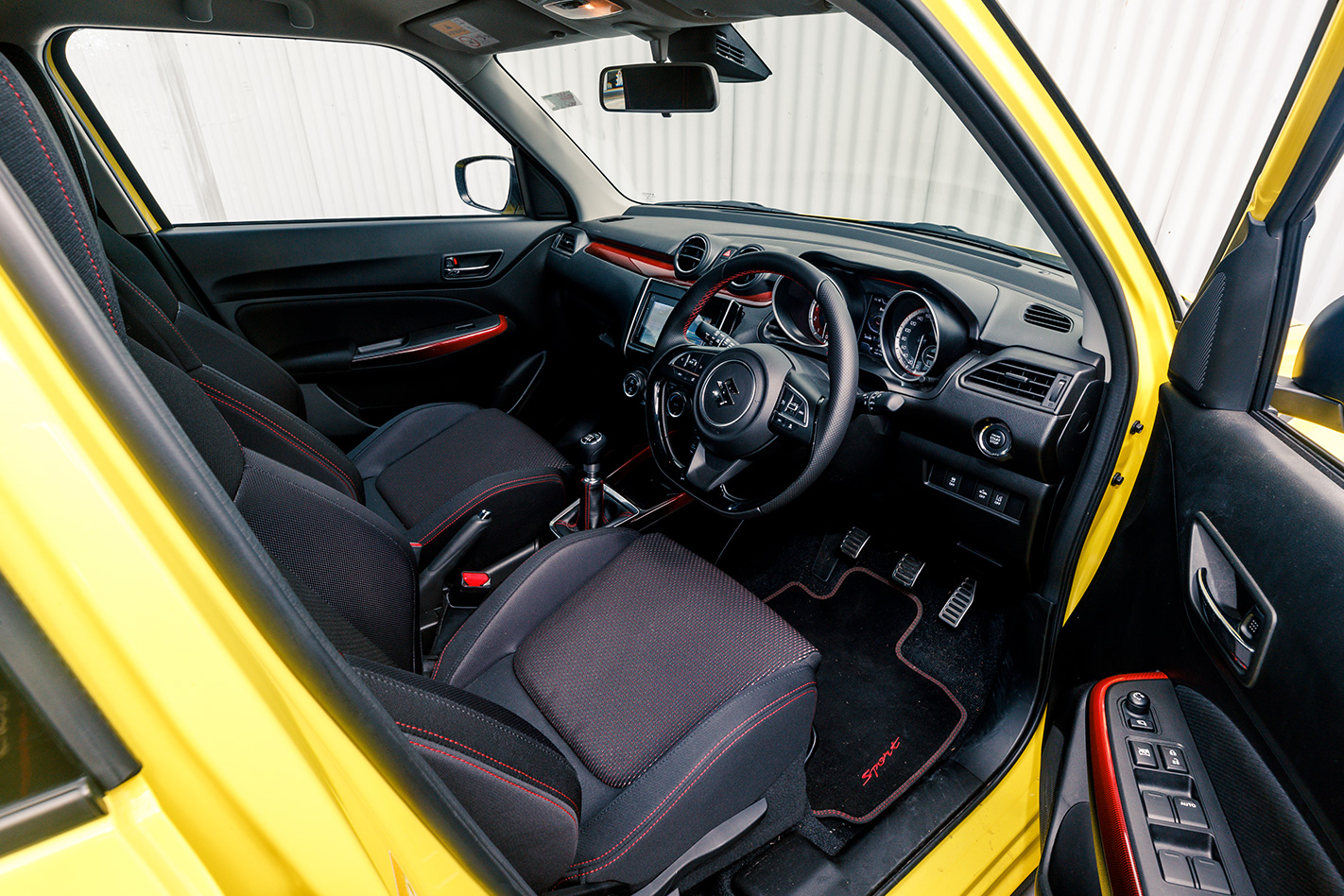
For proof, behold the Suzuki’s miracle packaging. Shortest in length and wheelbase it may be, yet no car here feels roomier, especially in the lofty back seat, aided by deep glass areas and a tall turret that allows light to flood in. Not an inch of space is wasted. And while the rear seat looks flat, it’s as accommodating as it is roomy.
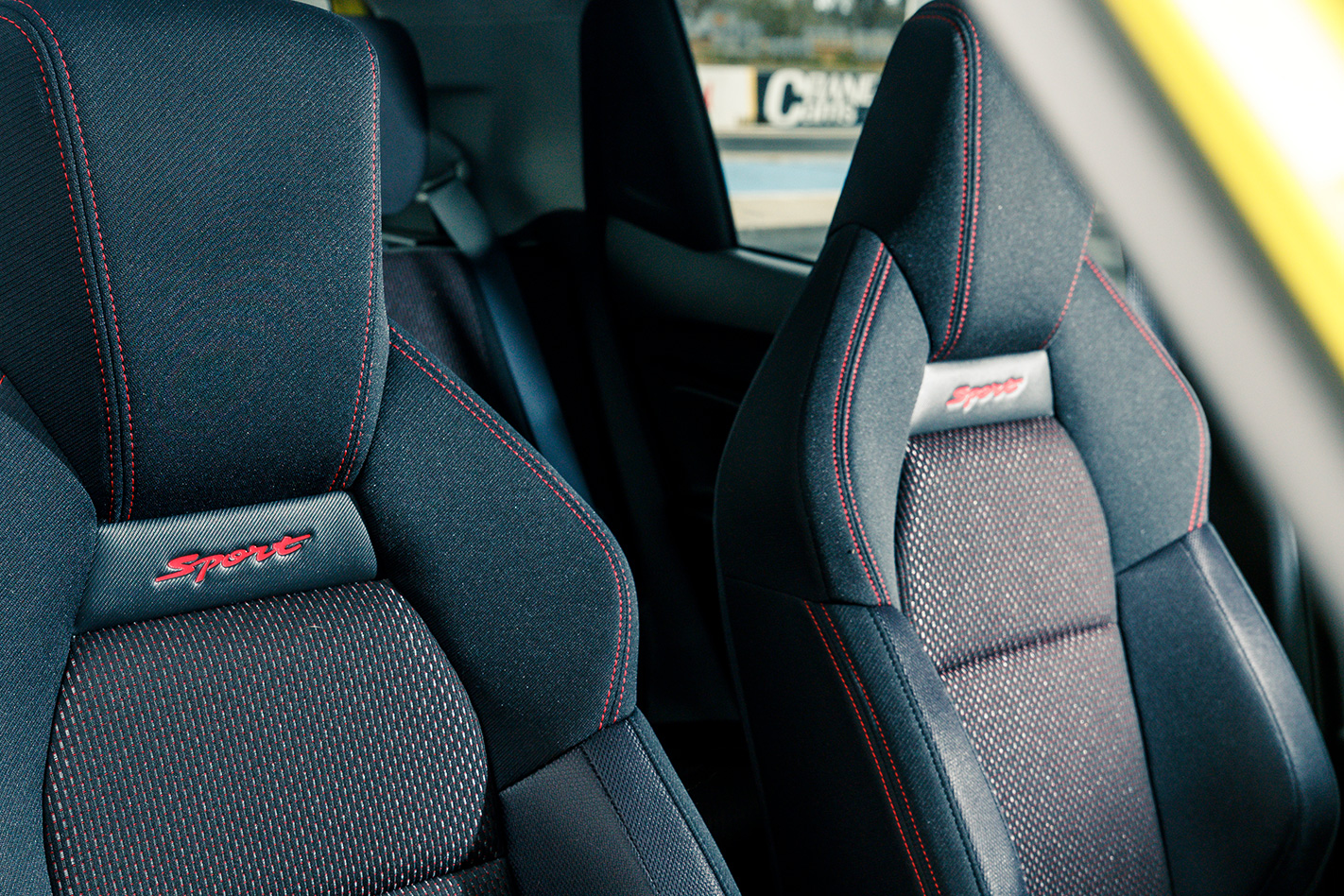
The same efficient thinking is evident in the Swift’s detailing. Pared back the dash design may seem, but there’s style and sophistication to go with the simple presentation. Superb vision, a beaut driving position, refreshingly thin-rimmed wheel and elegant analogue dials are classic hot-hatch pillars. Build quality is exquisite too. On the flipside, though, there’s no digital speedo or rear cupholders; road and engine noise levels are high; and the wide C-pillar blank creates an unfortunate blind spot.
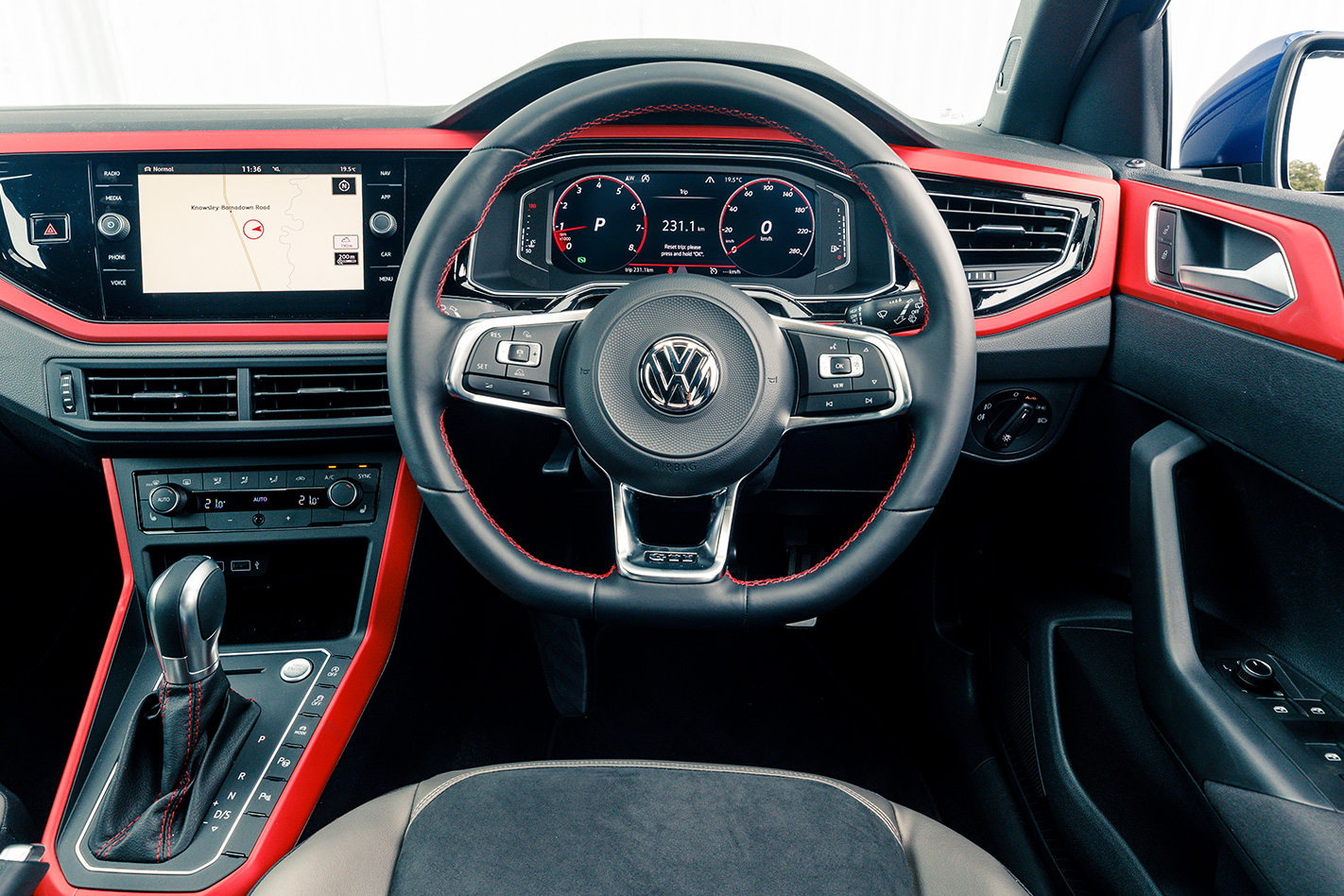
Like the Suzuki, the VW makes the most of what’s there in terms of space, and is larger than a 1998 Golf IV. It’s easy to see out of, inviting to luxuriate in, lovely to the touch, extremely functional, and a class-above in terms of quality. And with all our options fitted, it’s a veritable cut-price Audi. Which adds value in itself. And that’s all before you consider the formidable German engineering it features.
Stuffing a big engine into a small car is hot-hatch-101 mastery, with the torquey, turbine-smooth EA888 2.0-litre turbo elevating the Polo to a higher realm of refinement in this company, while also providing better-than-anticipated performance.
Though possessing the fewest kilometres under its belt, the VW was quickest to 100 (at 6.4sec it proved 0.3sec quicker than the claimed figure), and blitzed the opposition over the 400 metres with a 14.6sec at 159km/h. And it should only grow more muscular with kays. In this light, our 9.0L/100km average – middling among rivals here – is a noble achievement.
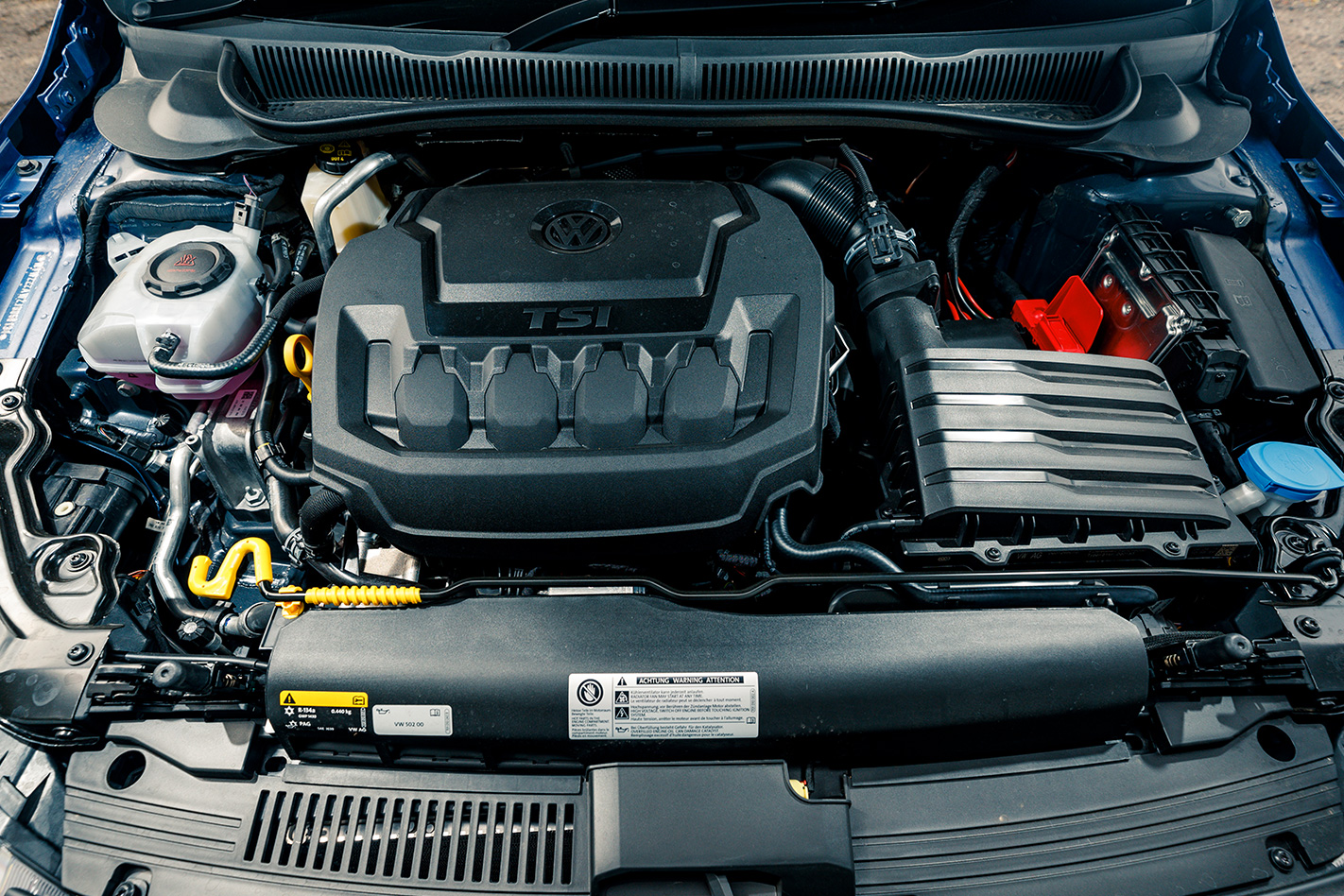
The six-speed dual-clutch certainly contributes to the ultra-smoothness of the powertrain, especially on the open road, where the right ratio is seamlessly and seemingly intuitively always selected. But the usual DSG bugbears of low-speed lag and jerkiness in slow, heavy traffic or on hilly terrain also apply, and it will not hold a chosen gear in manual mode no matter how hard you pull the lever back. We cannot wait for the forthcoming manual. Bring it on, Wolfsburg!
In contrast, the other DCT on test, the Clio, with its 1.6-litre turbo, is a fizzy, frothy, flavourful thing, punching hard the moment the throttle is prodded, blasting and bellowing forward with unbridled enthusiasm, and sometimes even the occasional jolt. Like a shot of adrenalin, you might say. And the Frenchie keeps pulling madly right up to the 6500rpm redline.
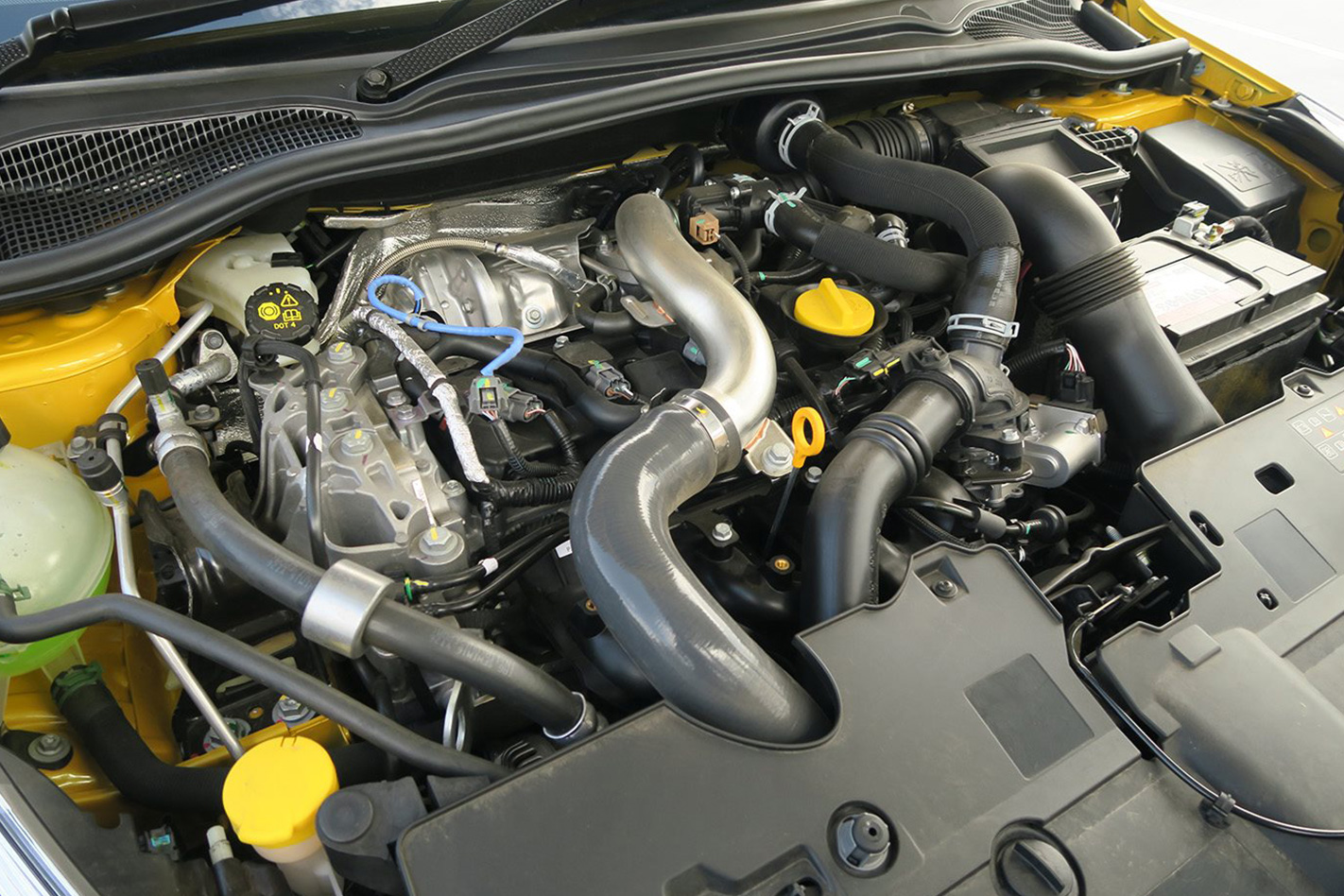
Our test car fell 0.3sec shy of the claimed 6.7sec to 100km/h and wouldn’t breach 15.0sec to 400m, yet still thrilled with its vivacity, aided by the sheer theatre of the exhaust symposer in the transformative RS Drive mode. Still, aren’t hot hatches all about the feels rather than the facts?
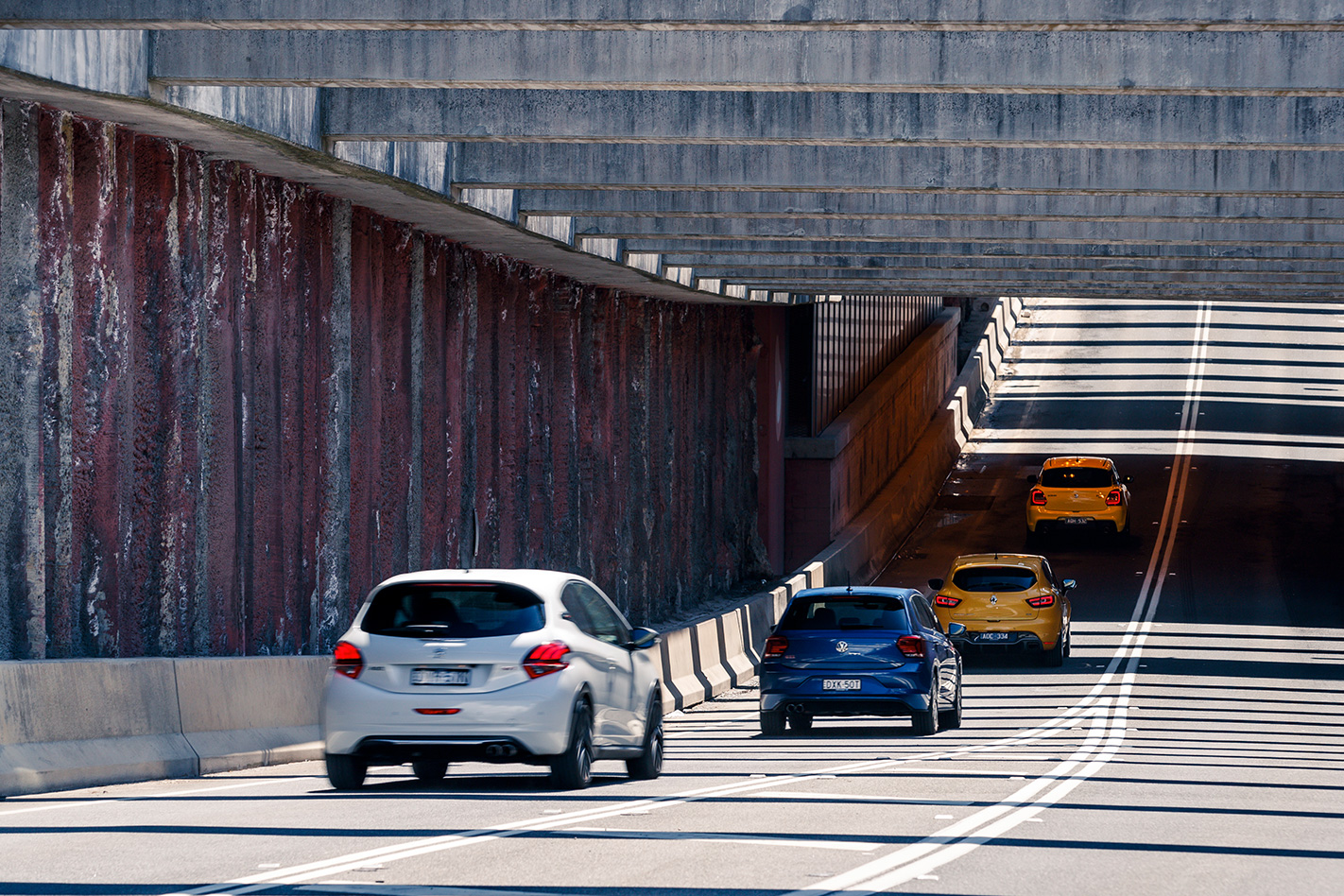
And so on to the stick-shifters. The Peugeot’s BMW-designed 1.6 turbo shines, eager to roar well past the redline as the driver rips through each ratio, barely containing the power that’s cascading through the front wheels. There’s a raw, delicious freneticism in the way it thrusts forward so fervently, particularly as a second wind kicks in – old-school Honda VTEC-style – when the tacho swings red-wards. At 6.5sec from 0-100km/h, the 208 GTi kept the larger, lardier Polo honest despite a 400cc capacity deficit, while only using 8.8L/100km. That’s admirable stuff.
Yet that pales beside the Swift’s 8.1L/100km, which underscores the Japanese mighty mouse’s dazzling efficiency, particularly considering how terrifically eager the Suzuki feels off the line. With one of the most delectable shifters by the driver’s side, the 1.4 turbo’s velvety flexibility is outstanding, delivering torque-rich smoothness and brawn that owners of the previous, rev-obsessed versions would simply not believe. Our figures, while respectable (0-100km/h in 7.6sec), don’t quite convey the Sport’s fierce zeal and gusto. Again, fun and feels outflank the facts.
The Swift’s ability to be caned so mercilessly is matched by light, agile and tactile steering, providing kart-like handling composure and response – and minus the heart-in-mouth lift-off oversteer of yesteryear. Instead, it’s more about the chassis’ alertness, connecting and working with the driver who wants to enjoy an immersive blast. That the Suzi’s ride serves up control and consistency without ever being crashy or jarring is revelatory, and it does so even when laden with people, revealing the exceptional, meticulous engineering the modest outlay buys you.
Speaking of coin, the Polo: on initial contact, its steering might mildly deflate as feeling too light for a GTI, missing the desired nth degree of weight, sharpness and feedback. Press on, though, and the helm transforms, with pitch-perfect heft and lush fluidity, as it carves up a mountain road with utter confidence and control. And, yes, the driver’s sense of connection with the front wheels grows with speed, too. The standard adaptive dampers offer a newfound compliance, masking the underlying firmness of the chassis tune over roads that would have shaken older versions.
The Clio, meanwhile, takes steering tactility to a loftier level again, providing a more intimate dialogue for the driver to trust and exploit. Again, in RS Drive mode, the entire chassis gels with feverish yet faithful focus, with the snout feeling magnetised to clipping points like a bloodhound on a scent. Such interactivity and intensity can be insanely addictive and is bang on-brand. That the ride also remains cushy and quiet throughout is wondrous.
Conversely, comfort is what lets the Edition Definitive Peugeot down. Regular 208 GTis on 17s possess a pleasing suppleness that’s AWOL on the 205/40R18s, upsetting the balance. Now, that would be acceptable if the latter remained planted at speed, but instead there’s discernible lateral body movement to contend with, which sometimes requires two bites of the wheel through tight turns tackled quickly. That said, the chassis comes alive on the right road at speed, bonding driver with wheel as few rivals can.
Ultimately, the 208 GTi is feeling its age, but is far from pensionable. The timeless styling, sassy interior and electrifying power delivery mark the Edition Definitive as utterly desirable, despite the flaws. We’d have one in a heartbeat.
The Clio, too, revels in its uniqueness, providing visceral talents on a scale that no other here can quite achieve, backed up by a truly captivating and at times infuriating charm. The RS is like an epic intoxication and niggling hangover rolled into one.
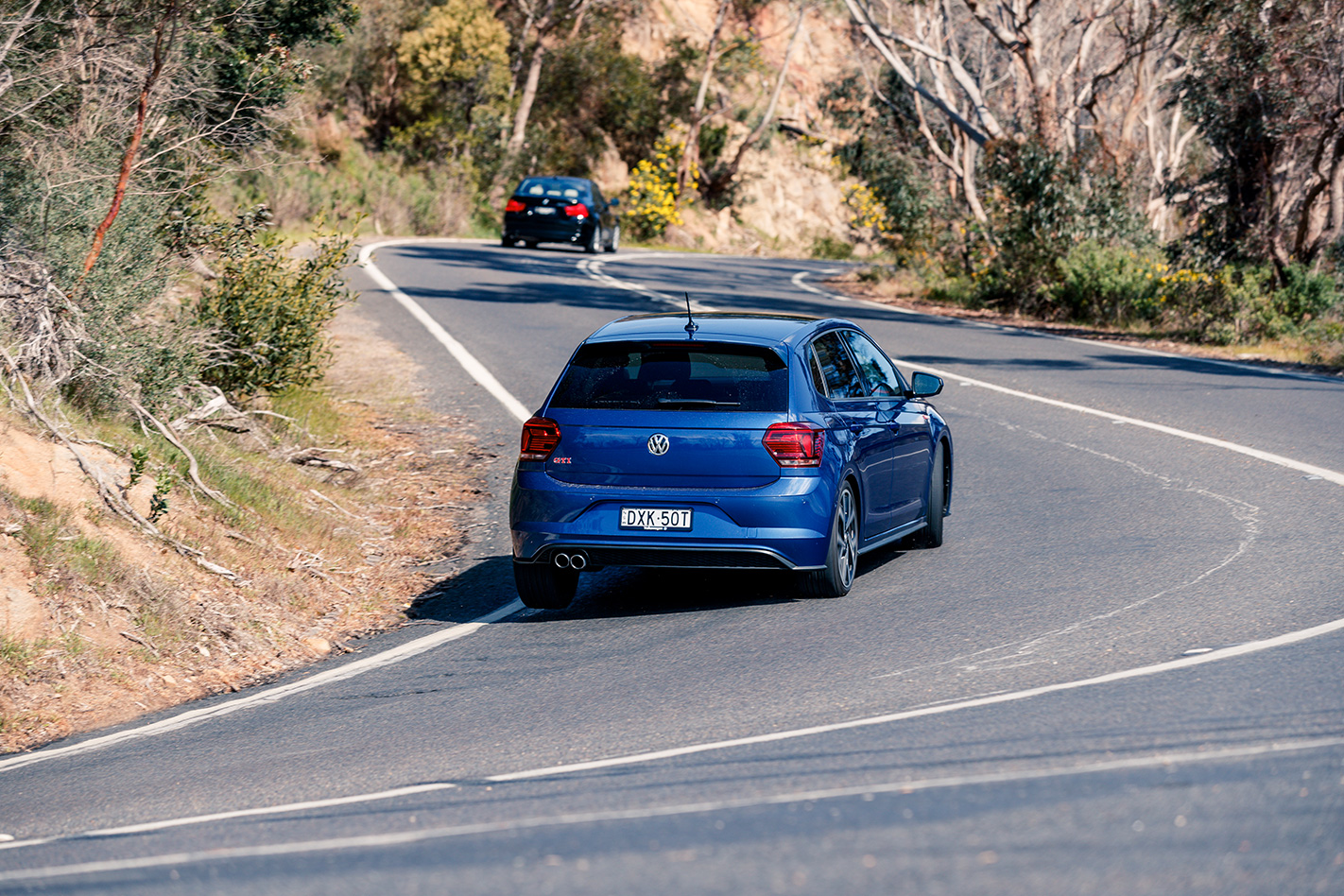
Like the French pair, the Swift and Polo too can provide unbridled joy and happiness. Brilliant and beguilingly affordable in their own ways, each deserves the gold for its own reasons.
But while the Suzuki feels at the peak of its vertical value pocket-rocket trajectory after four decades, the latest VW is a transcendental experience, leveraging technology and luxury to bust hot-hatch boundaries and snare the crown.
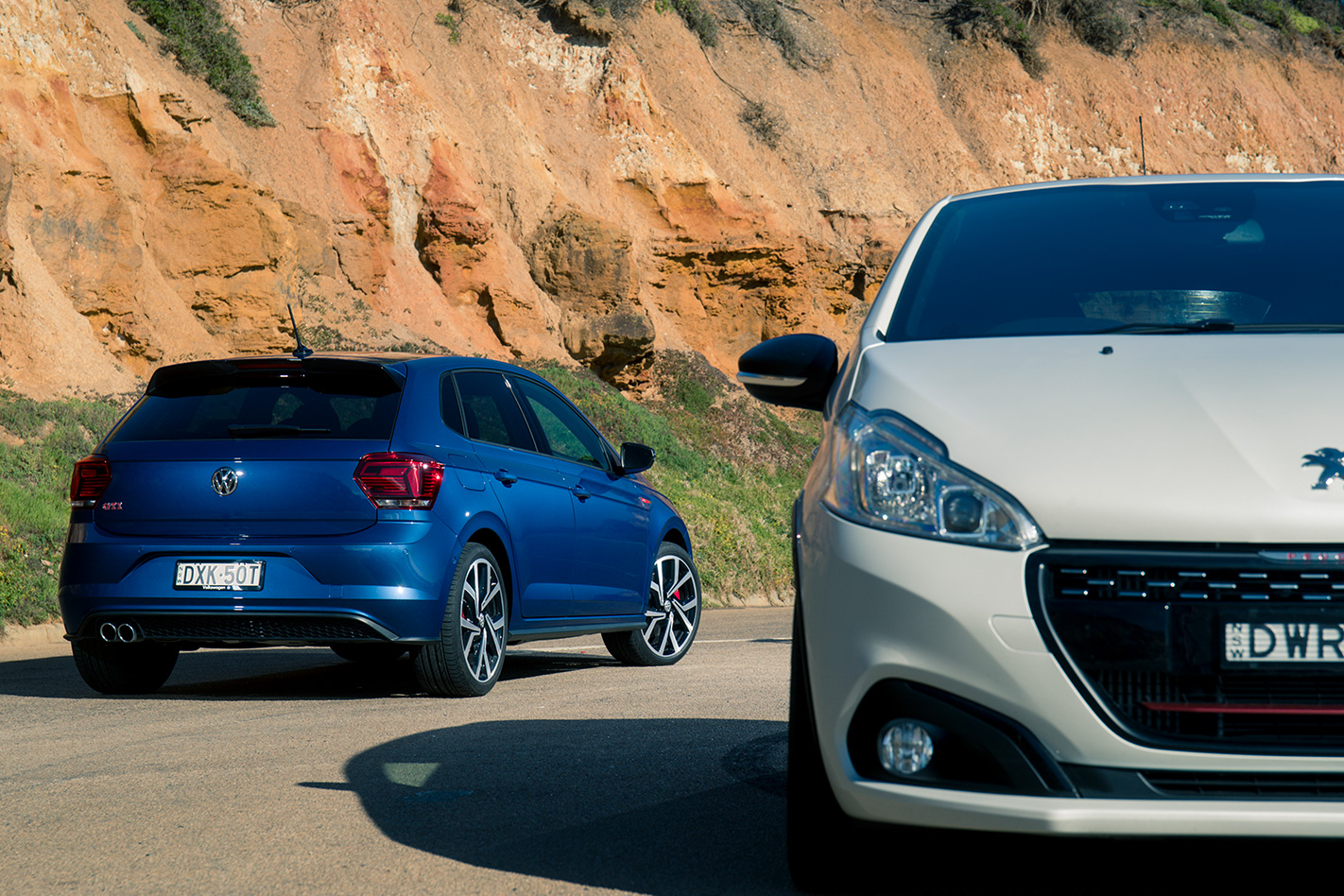
Best of all, you know that France and others – especially Suzuki – won’t likely just sit back and watch. The enduring legacy of the 60-year-old Mini Minor lives on.
Want to do 0-100km/h in 2.5 seconds, and feel like you’re Lewis Hamilton every time you head to the shops for milk? Well, both Aston Martin and Mercedes-AMG think they have the car for you in 2019 – but you’ll just need a lazy $4 million.
Or maybe the petrol-free world of electric propulsion is your ideal automotive chariot… or a car that’ll drive from home to work without you lifting a finger… or perhaps your personal automotive tastes extend to a car that’ll hold conversations with you?
Whatever you want, car companies are clambering over each other to give you the car of your dreams, and they’re all coming to Australia in 2019. Hold on tight, because the pace of automotive evolution is about to go stratospheric, if our top ten dream machines coming in 2019 is anything to go by.
Aston Martin Valkyrie
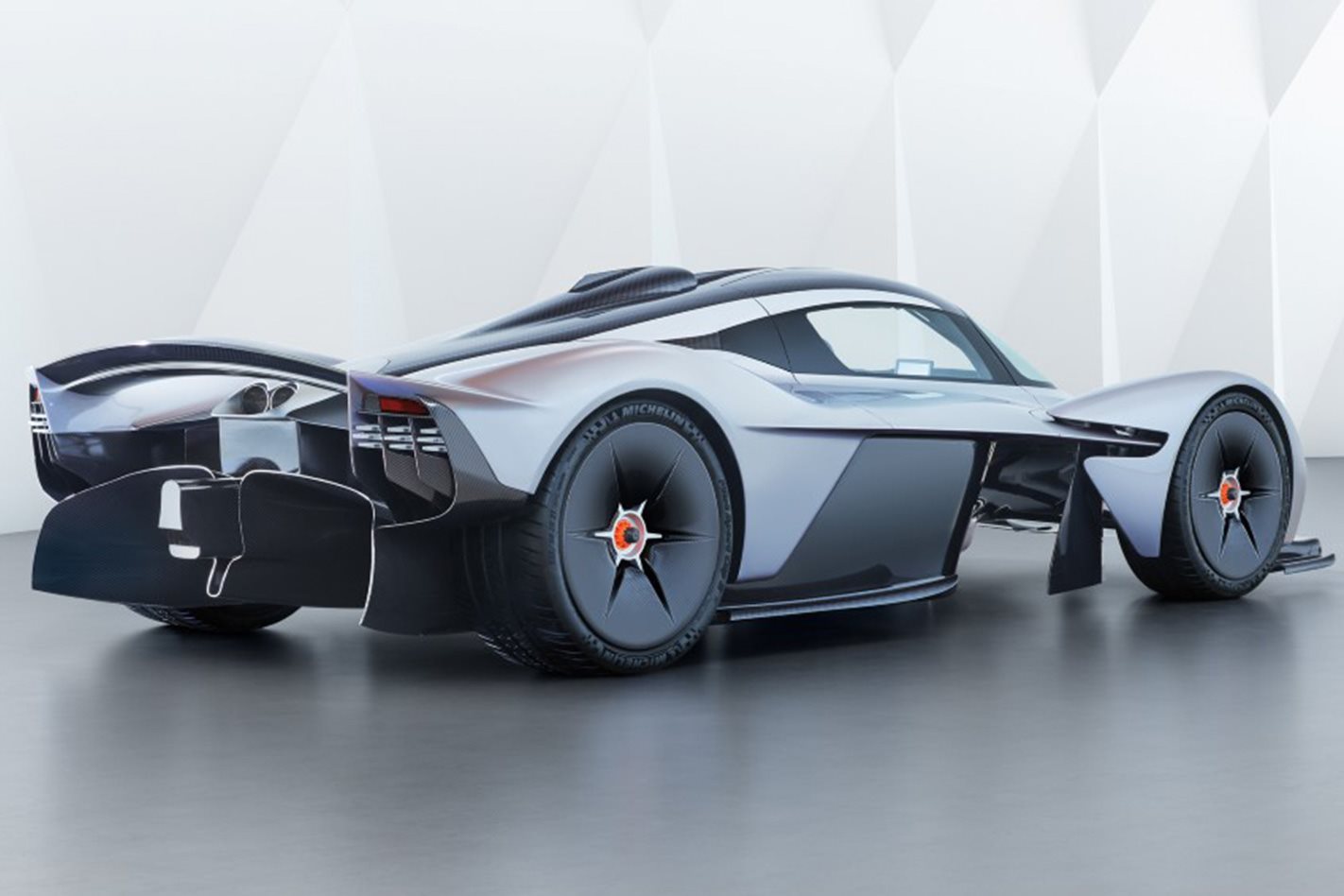
Aston usurps the turbo trend with a monstrous race car for the road
Price: $4 million
Rivals: McLaren Senna, Ferrari 812 Superfast, Mercedes-AMG Project One
Due: December 2019
This is one outrageous rig, featuring arguably the most powerful naturally aspirated road-going engine ever built. The Valkyrie is being manufactured in conjunction with Red Bull Technologies – legendary F1 designer Adrian Newey penned its sensuous form – while its monster 6.5-litre V12 motor was designed in conjunction with legendary British engine builders Cosworth. Early mail suggests it’ll boot out north of 820kW. Ulp.
With its gullwing doors, carbonfibre everything, and a hybrid power system to go along with that engine, the $4 million price tag should be no surprise. And if you’re thinking of snapping a couple up, too late – all 150 road and 25 track version slated for production have been claimed.
Audi Q7 e-tron quattro
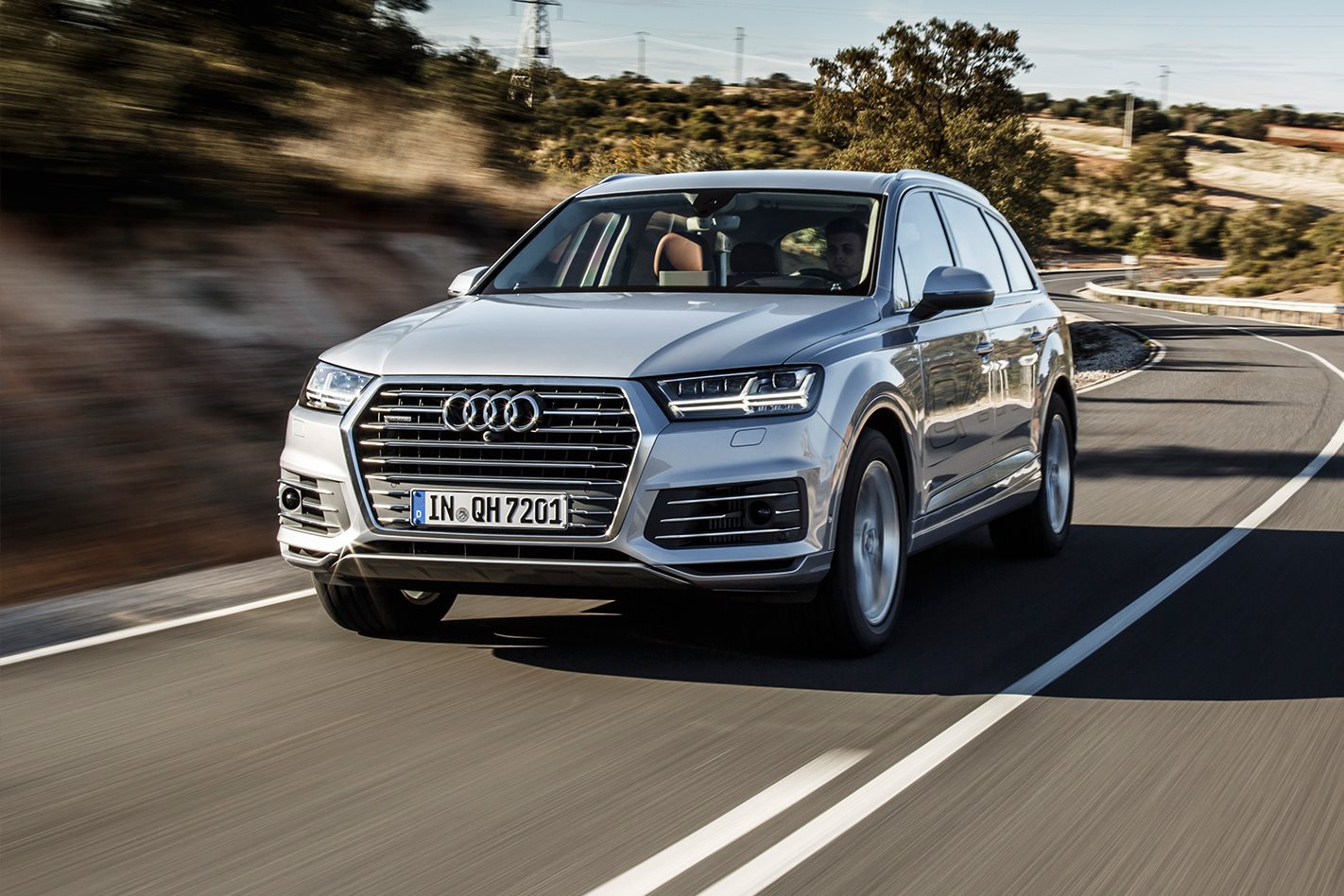
Audi builds an electrified offensive against strong German competition with its first hybrid SUV
Price: $139,000
Rivals: Mercedes-Benz GLE500e, Mercedes-Benz EQC, Porsche Cayenne E-Hybrid, Volvo XC90 T8
Due date: January 2019
Using the Audi Q7’s 3.0-litre V6 synced to an electric motor fed by a plug-in chargable 17.3kWh battery, the new Q7 e-tron large SUV has a pure electric range of up to 56km and a combined fuel efficiency of just 1.9L/100km. Beyond the plug-in hybrid system, the Q7 e-tron shares the same specification as the Q7 3.0 TDI quattro, and includes the same driver assistance and safety systems of the entire range.
BMW Z4
BMW’s revenant sportscar looks as wild and svelte as the concept that previewed the production version
Price: $75,000-$130,000 (est)
Rivals: Audi TT, Ford Mustang convertible
Due: March 2019
At long, long last, the new BMW Z4 will land in 2019. Lighter and simpler than the outgoing version thanks to a fabric roof, the Z4 is designed to chase cars like the Porsche Boxster and Alpine A110. Of course, it also shares its architecture with the forthcoming Toyota Supra.
No specifics on pricing yet, but it looks like there will be three models on offer; an sDrive20i, sDrive30i (just rolls off the tongue, doesn’t it?) and the most potent M40i.
Power will be sent to the rear wheels, and the two sDrive cars will get a 2.0-litre four-cylinder turbo engine. The M40i, meanwhile, will score a 3.0-litre turbocharged six-potter making a healthy 250kW and 500Nm.
Ferrari 488 Pista
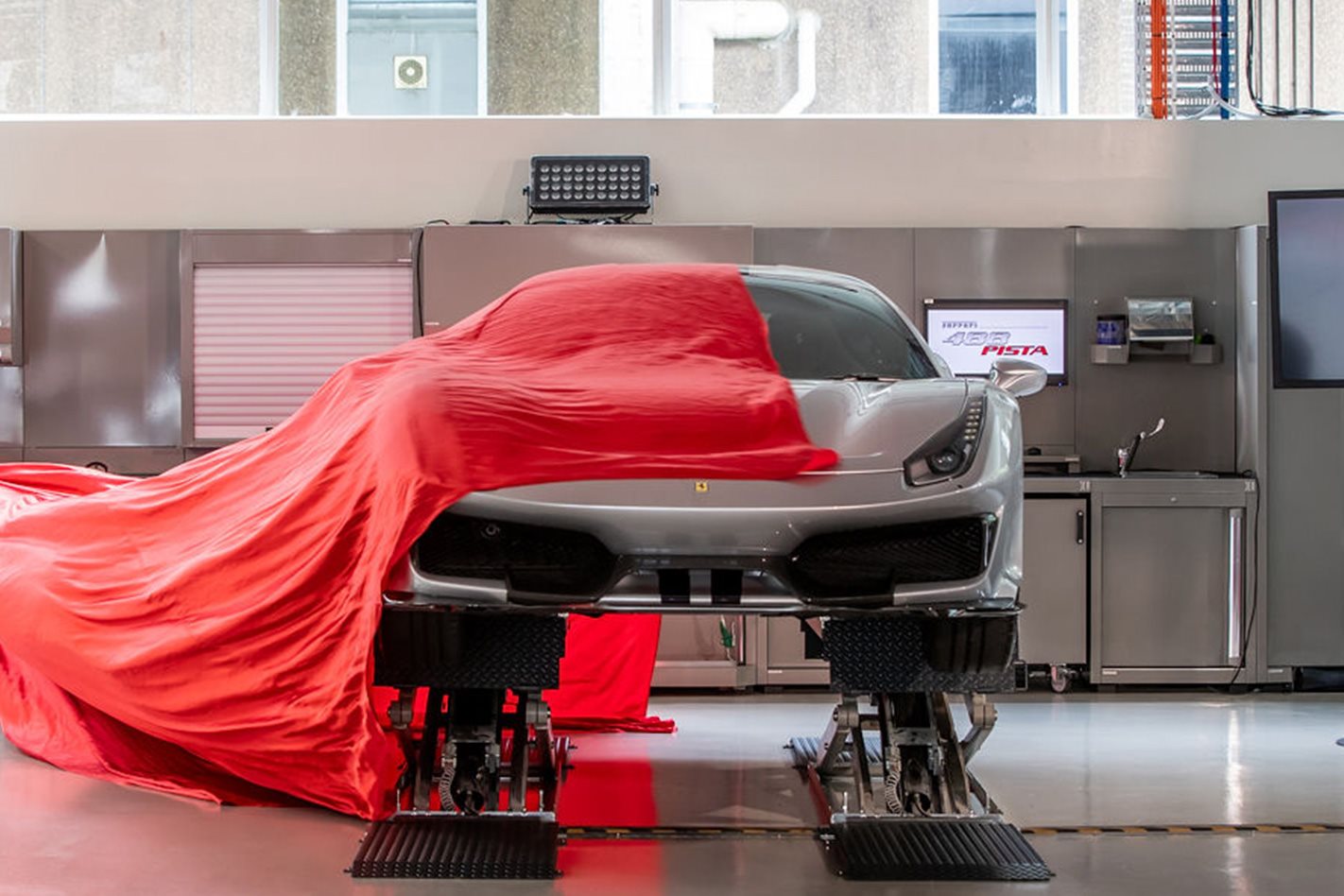
Ferrari’s mid-engined V8 road scythe gets a crash diet and more power for the track
Price: $645,000+
Rivals: McLaren 720S, Porsche 911 GT2 RS
Due: December 2019
Should be called the Pista resistance… for this is the defining light of Ferrari’s V8 prowess. Packing 530kW and 770Nm in a lighter, more aerodynamic form, the Ferrari 488 Pista is a trackday toy like few others – though we’d love to see how it fares against Porsche’s 911 GT2 RS…
Pricing falls under the ‘if you have to ask…’ category, but since you asked, it’ll cost near enough to $650,000… And that’s before the average $65,000 that Ferrari owners add to their new cars in options.
Jeep Gladiator
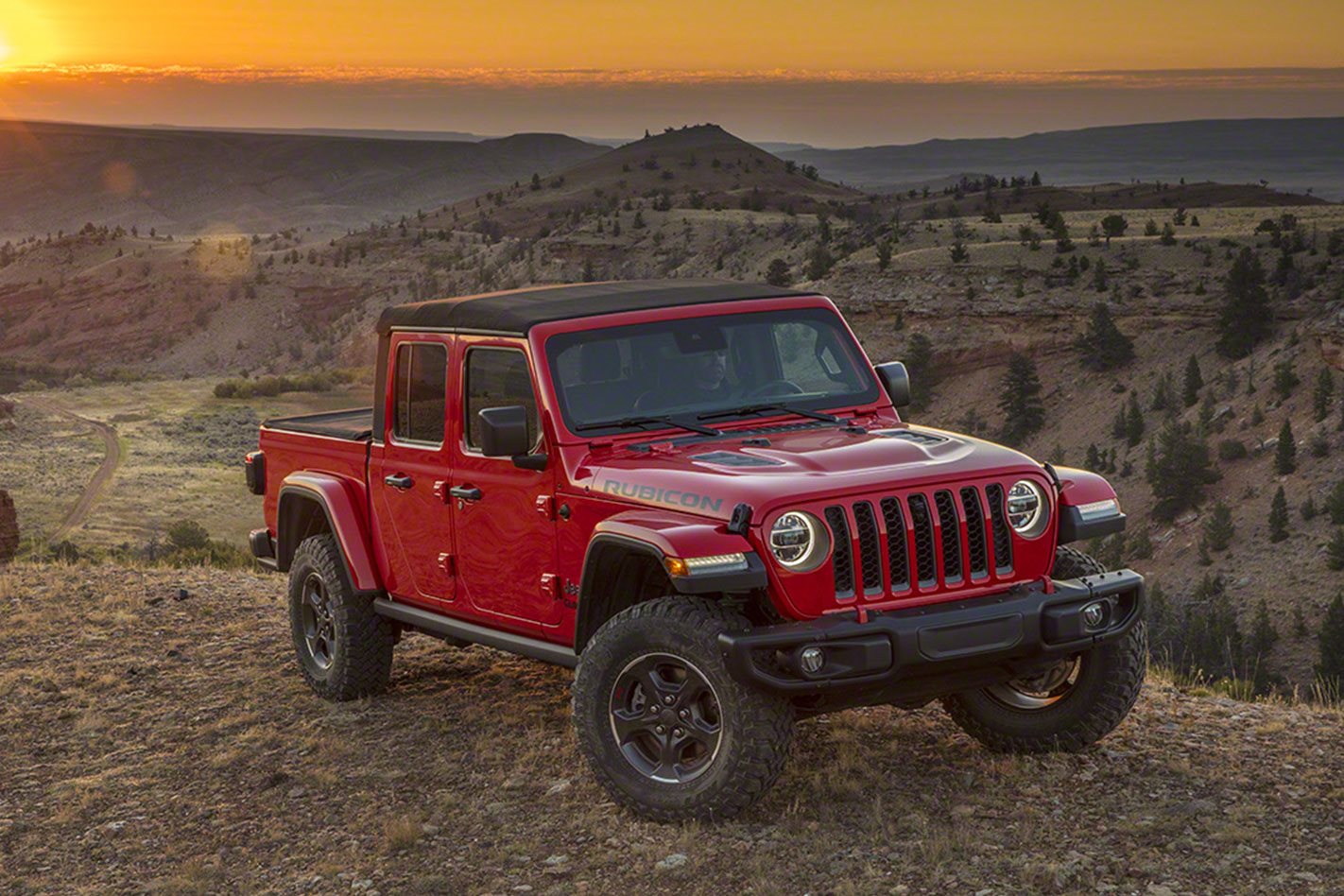
Long-rumoured Wrangler-based pick-up finally confirmed with badass name.Price $60,000 (estimated) Rivals: Ram 1500, Ford Ranger Wildtrak, Mercedes X-Class Due date: Late 2019
Details are light on the ground at the time of writing but Jeep’s late offering in the one-tonne market will bring a more style-focused option in a carpark occupied by many forgettable designs. What is known is that the Gladiator will be mechanically almost identical to the all-new Wrangler, which is known for its go-anywhere capability. Expect Jeep’s first ute in years to be an authority when the paved road ends.
Kia e-Niro
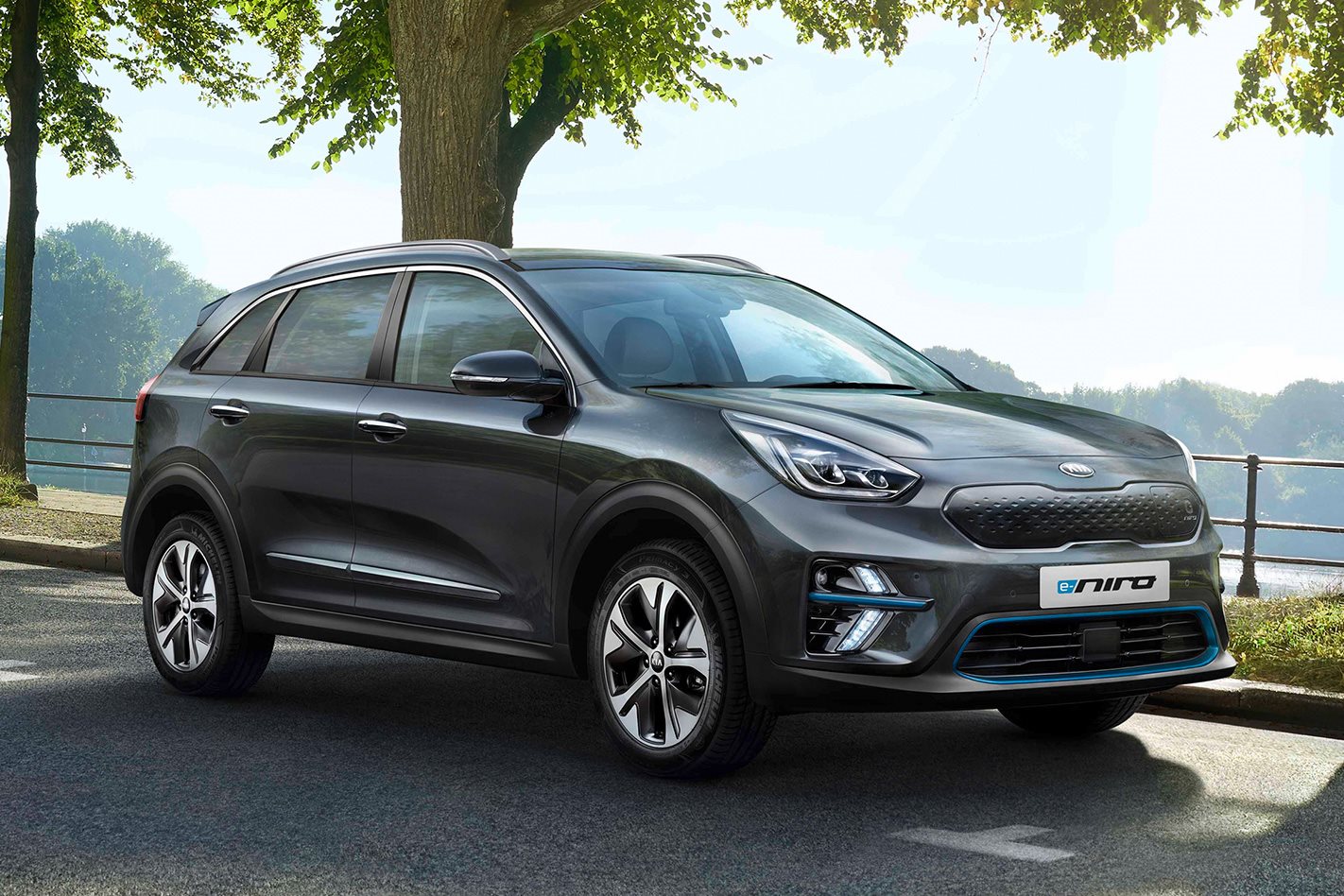
Kia’s first all-electric crossover promises a 600km urban range between charges.
Price range: From $55,000 (estimated)
Due date: November 2019
Rivals: Hyundai Kona Electric, Nissan Leaf
Kia Australia has all but confirmed its Sportage-sized e-Niro will arrive toward the end of 2019, boasting a range between charges of up to 615km that will leave more expensive European models such as the Jaguar i-Pace and Mercedes-Benz EQC in its wake.
The e-Niro will also feature independent rear suspension, advanced regenerative braking technology, battery heating for cold climates, LED lighting inside and out, a 451-litre cargo area and Kia’s seven-year warranty.
Lamborghini Urus
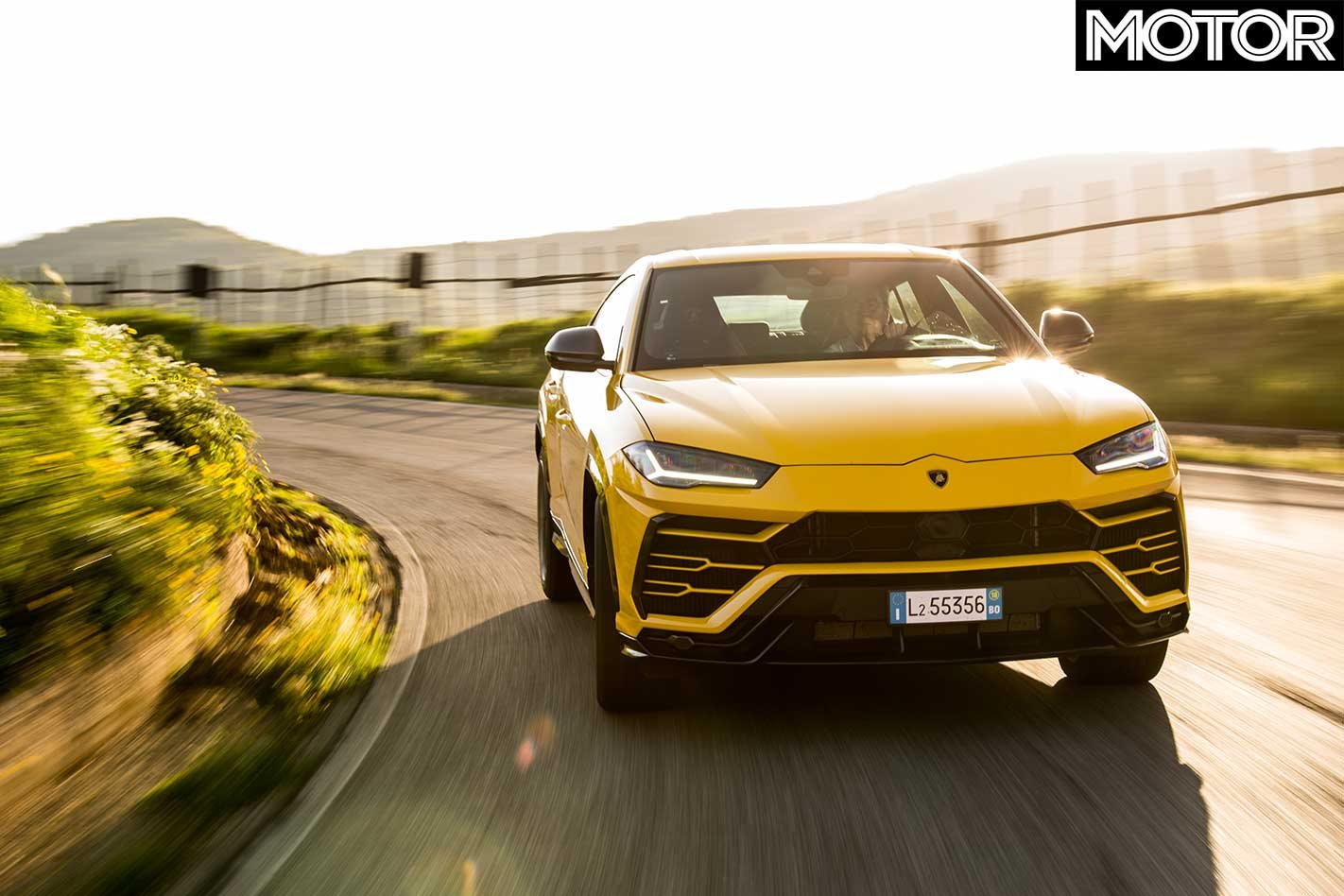
Lambo’s SUV foray knocks Bentley’s Bentayga from the top sport as most powerful in class
Price: $390,000
Rivals: Porsche Cayenne Turbo S, Bentley Bentayga, Aston Martin DBX
Due: January 2019
What do you get when you blend the best elements from some of the world’s most premium brands and whack it underneath a body that a Hot Wheels designer couldn’t have dreamed up? The Lamborghini Urus.
The five-door, five-seat Urus uses a Porsche-sourced twin-turbo 4.0-litre V8 petrol engine that produces 478kW and 850Nm, powering an all-wheel-drive system with the ability to send up to 87 per cent of drive to the rear end.
It’s backed by a traditional eight-speed automatic transmission, which forms part of a multiple drive mode system that includes Strada, Sport and Corsa road modes as well as Terra (land), Neve (snow) and Sabbia (sand) settings. There’s also an Ego mode that allows for a mix of personalised settings.
The Urus uses components and tech found in cars like the Bentayga, Cayenne and Q7. It’ll do 0-100km/h in about 2.5 seconds, and its ten-piston brakes are the biggest ever fitted to any production car ever. Wow.
Mercedes-AMG Project One
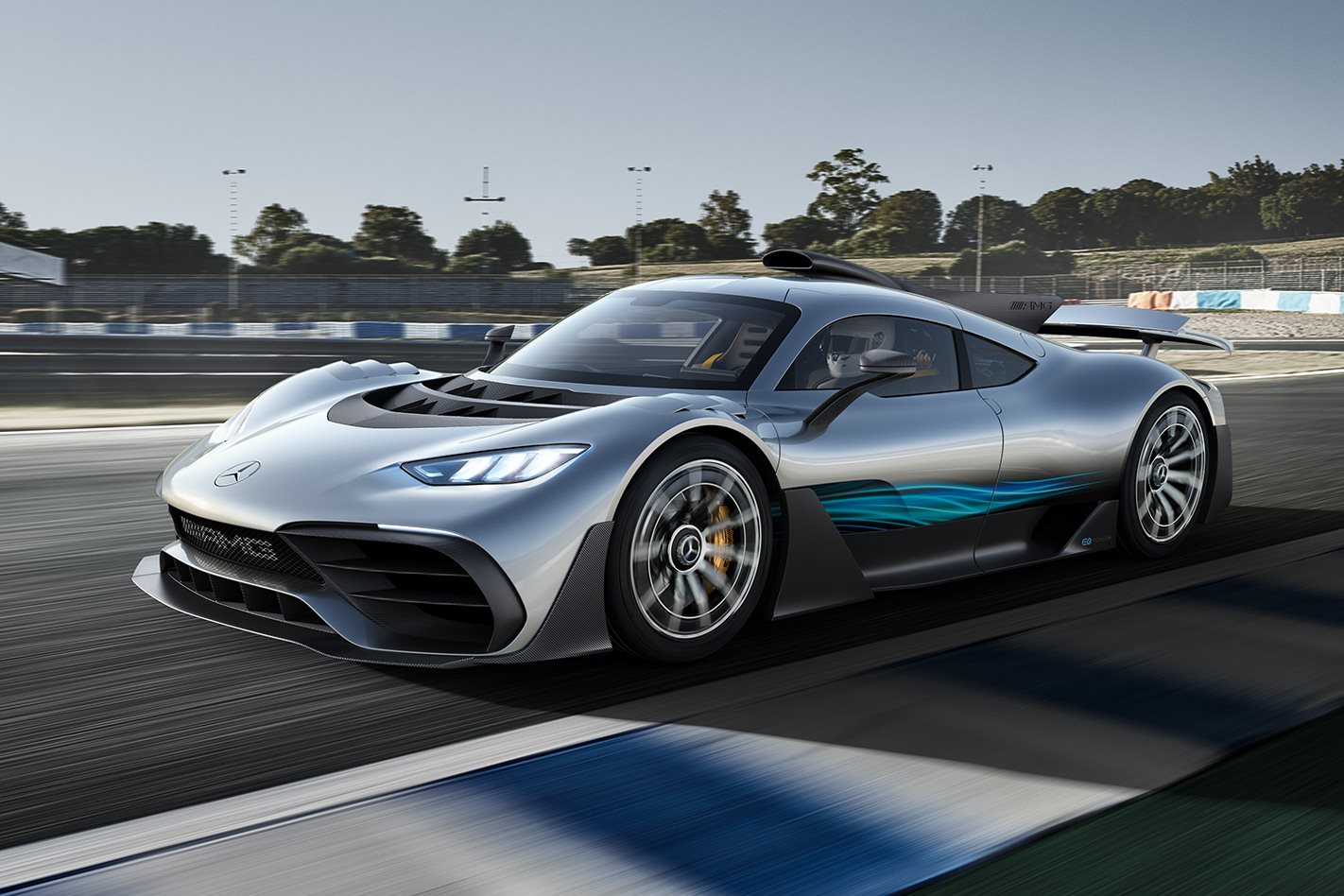
Manic Formula One-engined hypercar threatens every road car record in the book
Price: $4m (estimated)
Rivals: Aston Martin Valkyrie, McLaren Senna, Ferrari La Ferrari, Koenigsegg Agera RS, Pagani Huayra BC
Due: 2019
When a car company says it’s built a race car for the road, it’s probably stretching the truth. In the case of Mercedes-AMG, however, it is the truth. Under the outlandish carbon skin of the Project One lies the complex, cutting edge heart of the same car that took Brit Lewis Hamilton to the 2017 and 2018 F1 World Championships.
It’s got a projected 0-100km/h time of just 2.5 seconds, courtesy of a 1.6-litre turbocharged V6 engine teamed with four electric motors, and it’s making a neat one thousand horsepower (745kW). And its limited top speed is a measly 350km/h. Pricing is expected to be in the A$4 million bracket – though it’s rumoured that all 275 are already sold out. We’d bet that ardent Merc collector Lindsey Fox might be near the front of the queue.
Porsche Taycan
The car that surfaced as the dizzyingly gorgeous Mission E concept rolls out in production form
Price: $240,000 (estimated)
Rivals: Tesla Model S, Porsche Panamera
Due: Dec 2019
Long shot for 2019, this one, but Porsche is pushing hard with the development of its Taycan electric sedan. It runs on an all-wheel drive system driven by a twin-motor setup. The motors are permanent magnet synchronous, and the system is based on the one developed for the 918 Hybrid.
A 160kW/300Nm motor drives the massive 21-inch front wheels, while either a 240kW/340Nm or 320kW/550Nm motor will drive the even bigger 22-inch rears, depending on your spec.
Porsche is already claiming a 0-100km/h sprint of 3.4 seconds, with a top speed limited to 250km/h… and what it says is usually true or understated even. Add to that a 500km claimed range on the larger 95kWh battery, and 800-volt charging that can give you 400km of range in 20 minutes (or 100km in four)… where do we sign up?
Toyota Supra
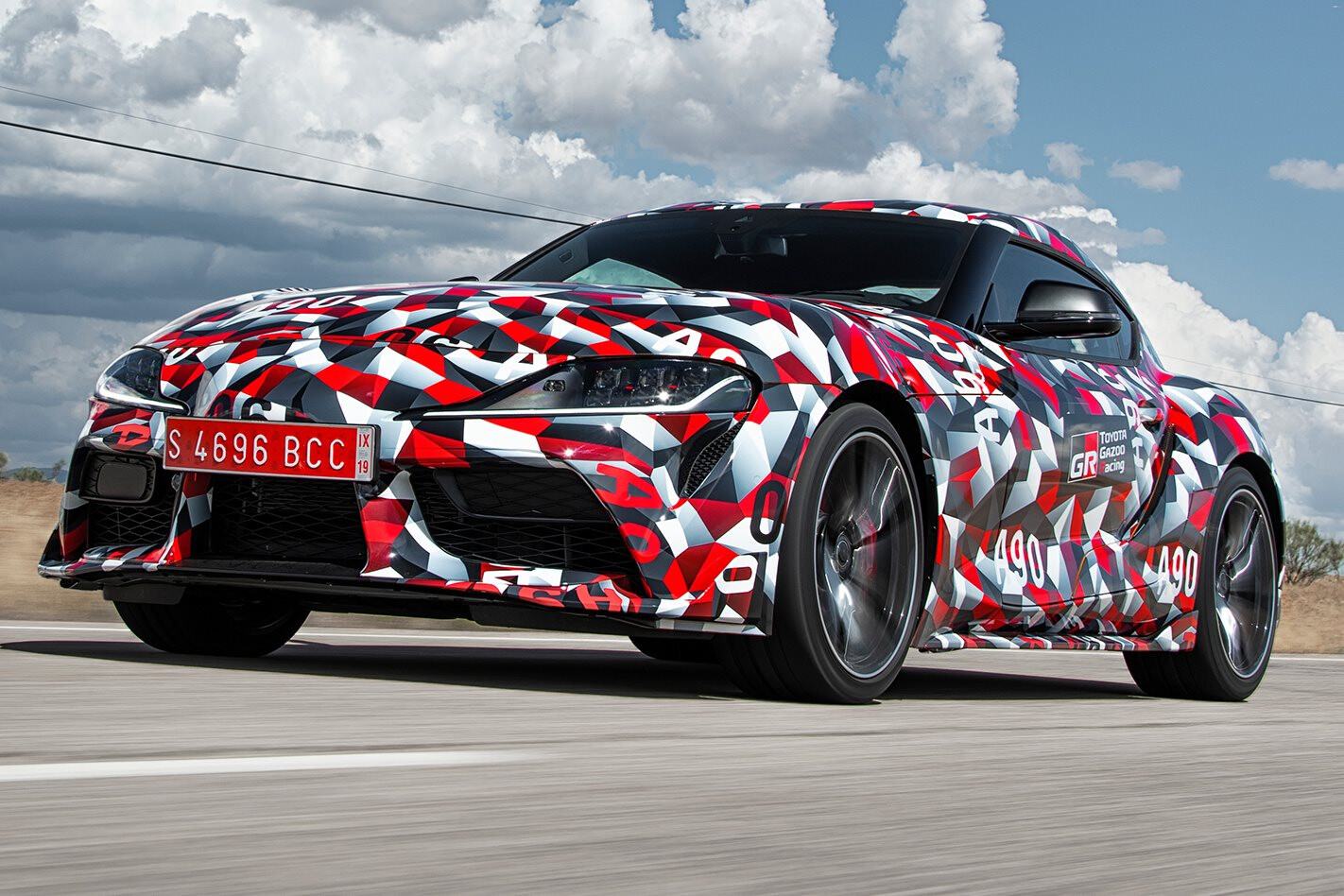
The iconic Supra returns rolling on oily bits shared with BMW’s Z4
Price: $70,000 (estimated)
Rivals: BMW Z4, Nissan 370Z NISMO, Kia Stinger
Due: Late 2019
Seven years… that’s how long it’s been since Toyota first hinted that it might revisit the notion of a medium-sized sports coupe. Now, after a long and fruitful collaboration with BMW, the Supra is finally on the horizon (and maybe as soon as the Detroit Motor Show in January).
Stats are virtually non-existent on the internally coded A90 Supra, but figure on outputs of around 250kW and 450Nm, as well as an estimate weight of around 1500kg, a short wheelbase and wide front and rear track widths.
It’ll stay true to the notion of a rear-wheel-driven, six-cylinder petrol-powered two-door, though it may well forgo a manual gearbox (It will have a ZF/BMW eight-speeder and a BMW limited slip diff). It’ll sit above the 86 in both size and price; we guess (hope?) that Toyota won’t make the Supra too premium at the base.
All the best Porsche 911s, or at least revered ones like the Turbo, GT3 and RS, sprout big, iconic wings. So why, then, for a feature like this, is our 911’s rump smoothed over? Don’t be fooled, it deserves its place.
Porsche, after years of pushing GT3s to be faster, realised not all its customers are obsessed with the stopwatch. Some want to be more involved, less compromised, so it stole the transmission from a 911 R for the 991.2 series, then left the GT3’s unmistakable lairy bits on the shelf. It calls the result the Touring package.
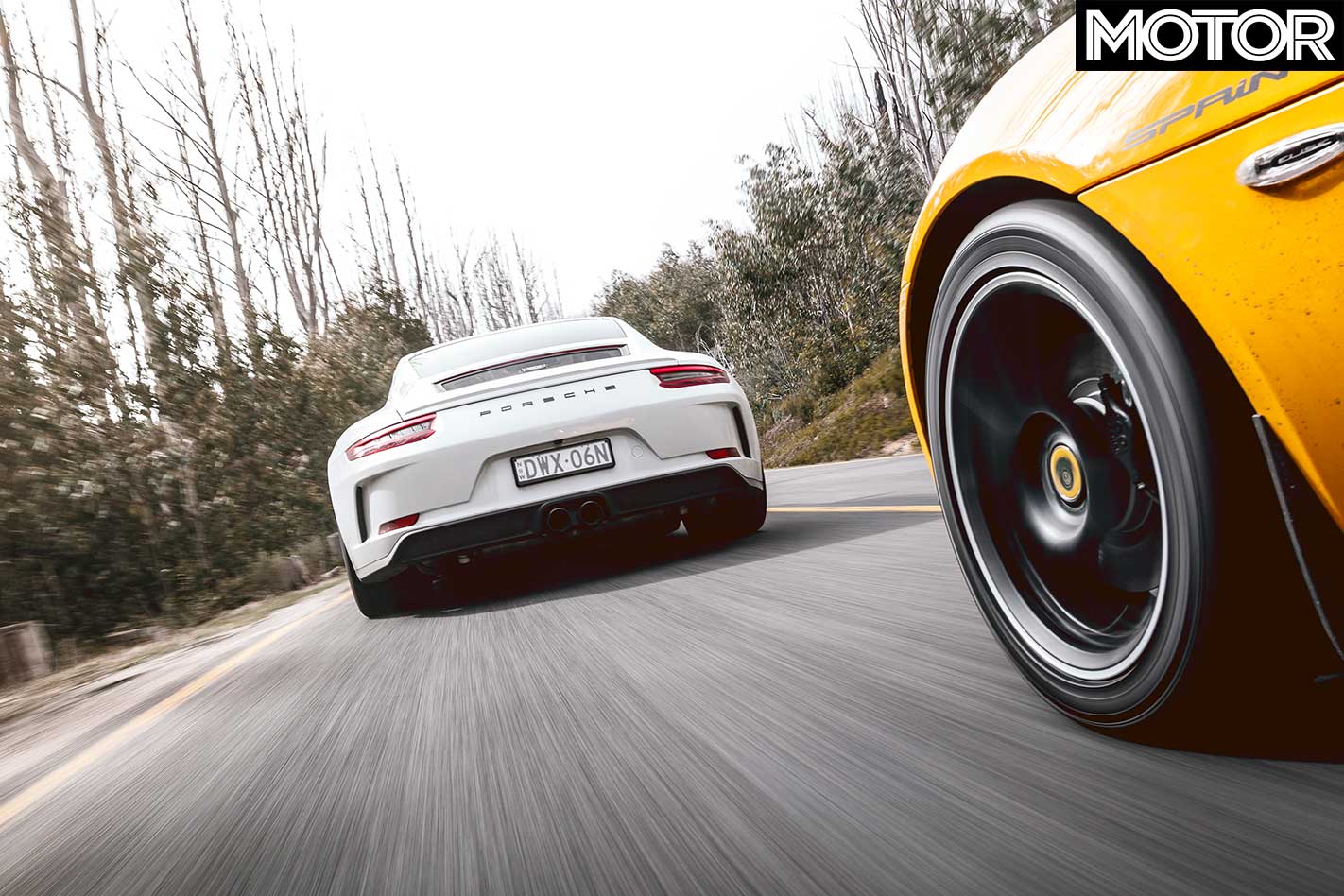
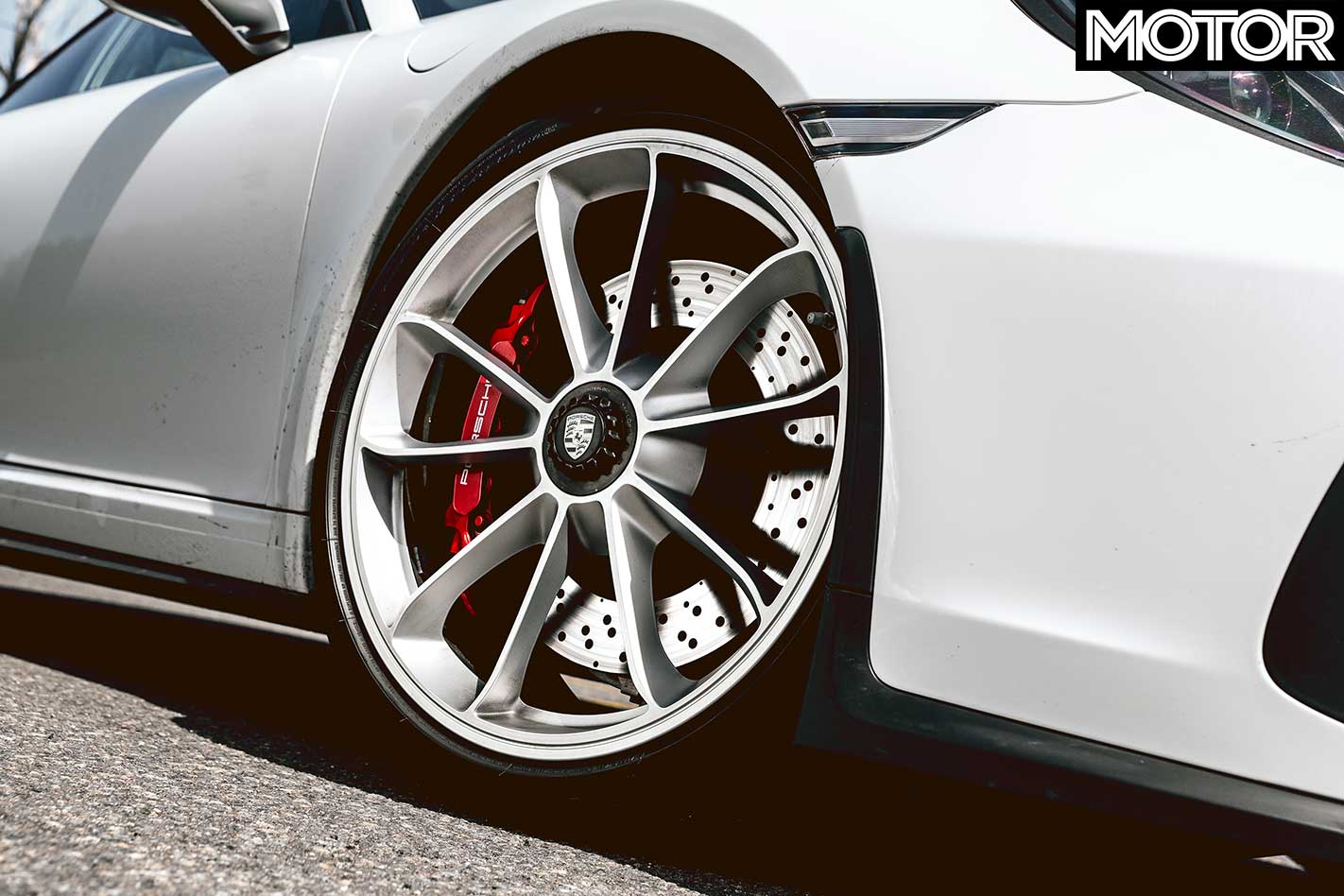
The centred tailpipes, GT3-specific front and rear bumper, centre-lock 20-inch wheels and a rear diffuser, which regains downforce, are clues it’s something special. They continue inside where the rear seats are missing, its redline is set at ‘9’ and it comes only with a six-speed manual.
The things that make the GT3 feel so race-bred are amplified by its understated package. You can’t see the 911 RSR’s direct injection system, a 13:3.1 compression ratio, titanium connecting roads and staged intake system, but insert the 911-shaped key into its slot, twist, and it shakes into life with a splutter to make you feel, for a moment, like you’re on the 24 Hours of Daytona grid.
Even with dynamic engine mounts, at low speed an interior panel rattles somewhere. Meanwhile its ride rocks and fidgets as its 245mm/305mm wide Dunlop Sportmaxx Race 2s endure city streets. The experience urges you to find tarmac more worthy of their grip.
Row into sixth gear on the move at 60km/h and it’ll lope along where other engines would be rattling and ready to drop the clutch. Booting it, however, is a paradigm-shifting experience you won’t forget.
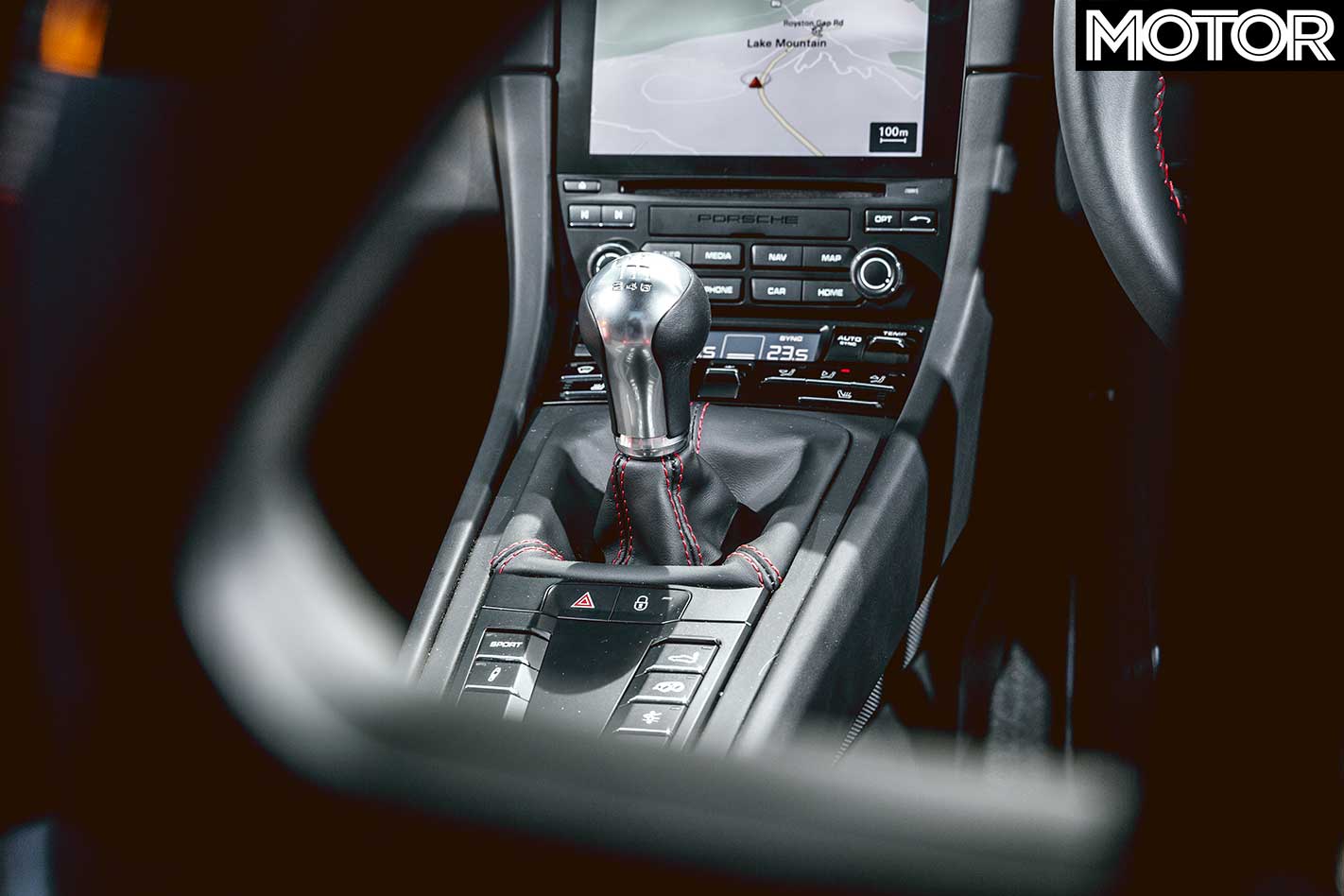
The crescendo of acceleration and noise is so ferocious that when 7000rpm arrives, you rush for the next gear like a frightened fool. The GT3 Touring is claimed to hit 200km/h in 11.4 seconds, an experience so fast your eyes can only fix themselves on the road rushing towards you, leaving your ears to judge when 9000rpm is about to climax.
You let it sing for another 1000rpm in the next gear because you’re convinced that the engine, wailing with a hard-edged buzz at 8000rpm, is going to suck in everything around it. Including you. It’s only after the third pull that you adapt to its stratospheric peak. You’re then elated, with Lake Mountain’s road ahead, that’s the sound you’ll be hearing in-between each corner. But you’re also slightly intimidated.
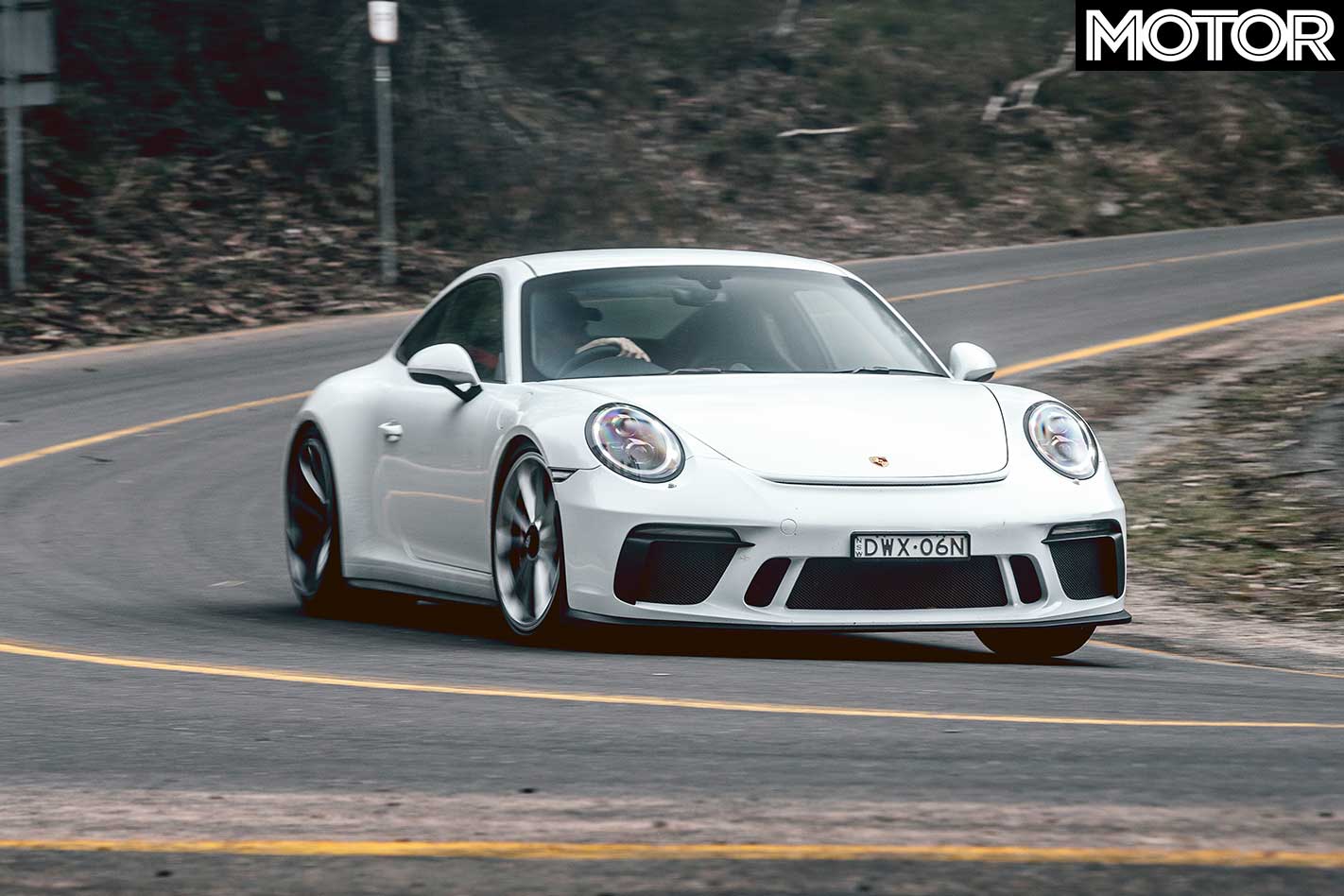
It won’t kill you, but then again it won’t work for everyone, either. At first the massive rear tyres dominate the grip balance while the car’s consumables rise to operating temperature. But once you’re squaring off corners to leave as little steering lock as possible when coming off the brakes, it’s ballistic.
Everything is created to work with you in this zone. Its beautifully weighted shift puts you at the centre of its incredible powertrain. It’s rear suspension squats proportionately to every millimetre of throttle.
The brakes have so much feedback you can feel the ABS pulse, a warning that you’re perhaps wiping too much speed. The steering is precise and you can’t tell the rear axle steering’s adding lock.
This is what’s so rewarding about its package. The reason why Porsche continue to make amazing driver’s cars is it lets as much filter down to customers as possible. The GT3 engine comes from motorsport, while the transmission and Touring’s concept is borrowed from the ultra-rare 911R.
It’s like inheriting superhero powers that you can keep a mystery. A perfect combination.
FAST FACTS 2018 Porsche 911 GT3 Touring
BODY: 2-door, 2-seat coupe DRIVE: rear-wheel ENGINE: 3996cc flat-6, DOHC, 24v BORE/STROKE: 102.0mm x 81.5mm COMPRESSION: 13.3:1 POWER: 368kW @ 8250rpm TORQUE: 460Nm @ 6000rpm WEIGHT: 1413kg POWER-TO-WEIGHT: 260kW/tonne TRANSMISSION: 6-speed manual SUSPENSION: struts, coil springs, adaptive dampers, anti-roll bar (f); multi-links, adaptive dampers, anti-roll bar (r) L/W/h: 4562/1852/1271mm WHEELBASE: 2457mm TRACKS: 1551/1555mm (f/r) STEERING: electrically assisted rack-and-pinion BRAKES: 380mm ventilated/drilled discs, 6-piston calipers (f); 380mm ventilated/drilled discs, 4-piston calipers (r) WHEELS: 20.0 x 9.0-inch (f), 20 x 12.0-inch (r) TYRES: Dunlop SportMaxx Race 2; 245/35 ZR20 (f), 305/30 ZR20 (r) PRICE: $365,930 (as tested)
PROS: Pace; noise; grip; brakes; gear shift; driving position CONS: ‘Waiting’ for the tyres; might be too subtle for some RATING: 5 out of 5 stars
Mercedes-Benz has launched the third model in the newest A-Class line-up, which debuted earlier this year. The entry level A180 arrives in February 2019, and slots in underneath the A200 and the A250 4Matic (all-wheel-drive in Mercspeak).
The five-seat, five-door small hatch will be powered by a three-cylinder turbocharged 1.3-litre engine – backed by a seven-speed dual-clutch transmission – that cranks out 100kW and 200Nm, while returning a claimed combined fuel consumption figure of 5.7 litres per 100km.
At $42,300, it’s not the cheapest hatch-with-a-badge you can buy – both the Audi A3 and BMW 1-Series entry level models pip it at the post, as does Merc’s own B-Class – but it’s by far the newest of the German arch-rival trio, and its list of standard kit is pretty impressive.
Take, for example, its E-Class-esque twin 10.5-inch screen array, or its Mercedes Me AI-based multimedia interface; these are items usually found in cars two and three times more expensive.
The A180 also adds 17-inch alloy rims, auto lights and wipers, cloth trim, and a comprehensive range of active safety and security features including active lane keep assist, active parking assist, blind spot assist with exit warning, AEB, traffic sign assist, a reversing camera and LED headlights.
Of course, you’ll be able to option up the A180 to your heart’s content.
To save you from looking it up, the A200 is $47,200 (before on-roads) and gets 18-inch alloys, Progressive Equipment Line kit including body kit parts and the like, wireless phone charging, Adaptive High Beam Assist and 120 kW/250 Nm from the same engine/gearbox combo.
Merc is also adding two more variants to the A250 model, including a front-wheel-drive version of the A 250 4MATIC Limited Edition, along with an A250 4MATIC fitted with an AMG Line kit, which will include 18-inch AMG bi-colour alloy wheels, AMG Line body styling, tinted windows, keyless entry and smart key, sunroof, ambient lighting and a sportier interior trim.
2019 A-Class hatch pricing
- Mercedes-Benz A 180 – $42,300
- Mercedes-Benz A 200 – $47,200
- Mercedes-Benz A 250 (FWD) – $48,800
- A250 4MATIC Limited Edition – $49,500
- A250 4MATIC with AMG Line 0 $54,800
Almost immediately after Leo Pruneau retired from GM’s Design Staff in November 1988, he was interviewed by David Robertson for this story. Robertson, then Wheels’ News editor and The Bulletin’s motoring editor, was a real newshound.
Pruneau’s first involvement with Holden was in Detroit, working on the HD. In 1962, after designing the Opel Diplomat, Pruneau, with help from Don Laski, was given the job of styling the next new Holden, complete with the HD’s soon-to-be-controversial extended front guards, an idea from GM’s global design director Bill Mitchell. A few years later, when he arrived in Melbourne, the first car Pruneau wanted to see was the HD with those “dammed front guards”.
Pruneau was never one to hold back. The highlight of Robertson’s discussion with the then 57-year-old American, who retired to his property outside Woodend, Victoria, was Holden’s 1979 decision to kill the Kingswood.
“I thought it was wrong, wrong, wrong. They got tired of me objecting to what was planned, they gave me a minuscule budget to facelift the HZ, but it wasn’t enough to replace the bumper bar and grille.
“Hell, we should have kept making the Kingswood alongside the Commodore; we would have had two car lines filling two market slots and we could have rolled with market trends.”
At a time of dramatically increased oil prices and diminished oil supplies, all the company’s prognostications suggested Holden would only be building four-cylinder cars by the mid-1980s. The directors – among them Evan Green, then director of public relations – voted to kill the Kingswood.
Five years later, in a Wheels story, Evan Green remembered Pruneau’s comment when he showed them the little-changed and very ’70s WB Kingswood styling proposal: “If you guys don’t give me the money, this is what you’re gonna get.”
Given market trends, it was an easy decision: the Camira replaced the Torana, and the Commodore the Kingswood, leaving Holden without a rival for the Fairlane, or a ute.
Then the oil producers began fighting among themselves, the oil crisis disappeared, and big cars returned.
What upset Holden MD John Bagshaw most was Pruneau’s criticism of the merger between Holden and Toyota in Australia. “To me it is an indication that the corporation isn’t serious about being involved in Australia for the long haul. GM grabbed it as a chance to ease its way out of a loss-making problem,” Pruneau told Robertson. “From everything I’ve seen, the Japanese are going to win in the long haul.”
The success of the VN Commodore, and later the arrival of the hugely successful VT, changed the dynamics of the merger and creation of the short-lived and disastrous UAAI.
In his retirement, Pruneau continued to consulate to Daewoo/Bertone and became a valued member of the Wheels COTY judging panel.
Remember Ford’s angrier Focus RS that was spied tearing around the Nürburgring Nordschleife some years ago?
The press dubbed it the new ‘RS 500’ and that it would rip an Audi RS3 to shreds. Whispers inside Ford said it was going to happen. But the business case didn’t convince the bean counters. It was suddenly axed, leaving the hot hatch’s potential to be explored in the aftermarket.
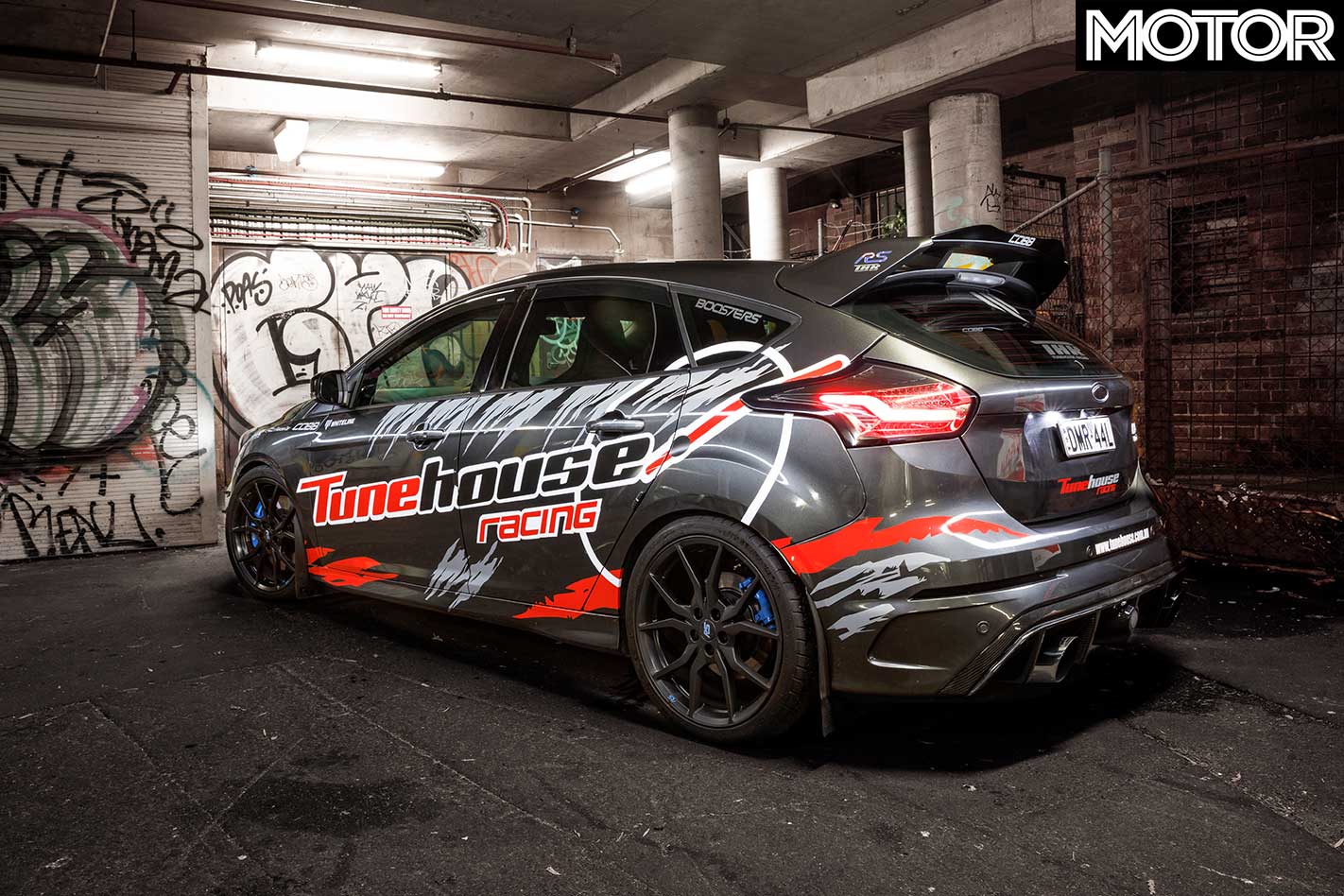
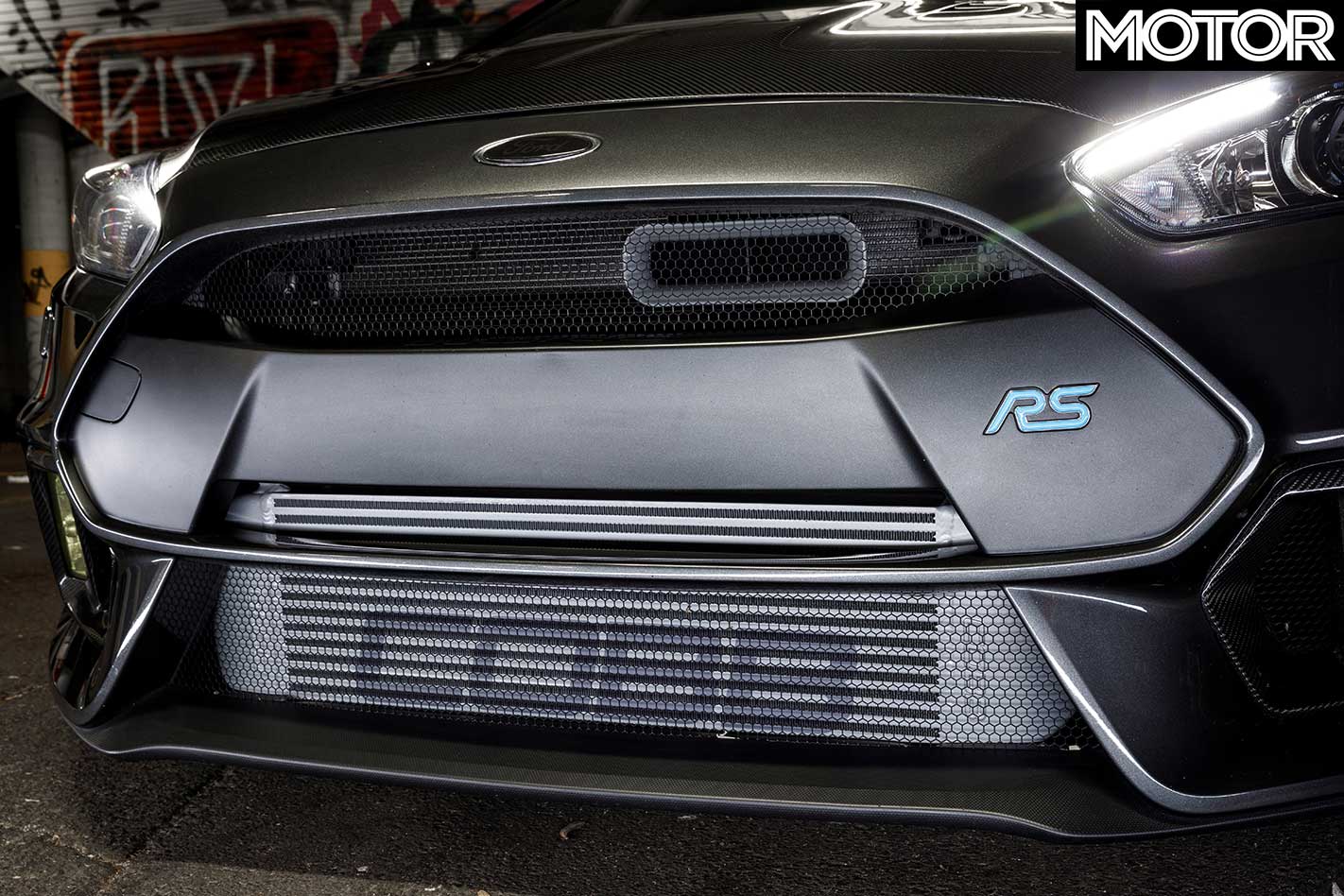
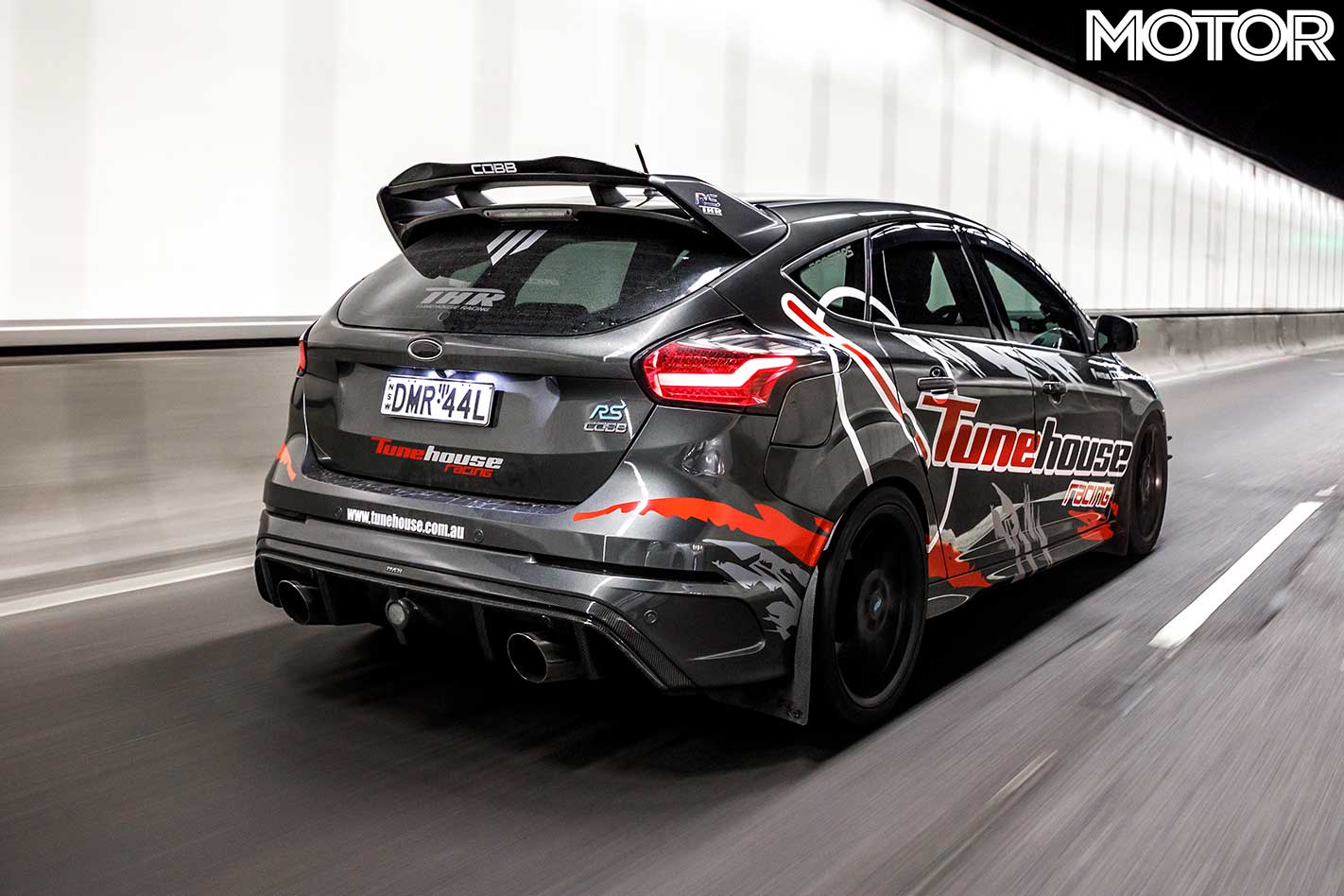
The Tunehouse RS pays tribute to it, at least in looks. It is in the same Stealth Grey. It sits on the same black 19-inch forged alloys and Michelin Pilot Sport Cup 2 rubber. It has a taller wing and even a carbon-fibre bonnet with vents in the exact same places.
The Sydney-based shop is a good fit for one of the greatest hot hatches of recent times. They boast records on drag strips and racetracks with modified cars across Australia. But the base package is already at such a high level, improving one must be like trying to make an atom bomb more explosive.
“Compared with the previous Focus [RS] it’s much more efficient,” says Jim Ghelis of Tunehouse. “The handling is awesome. Definitely it’s a better car altogether from the previous one, more complicated, but a better car.”
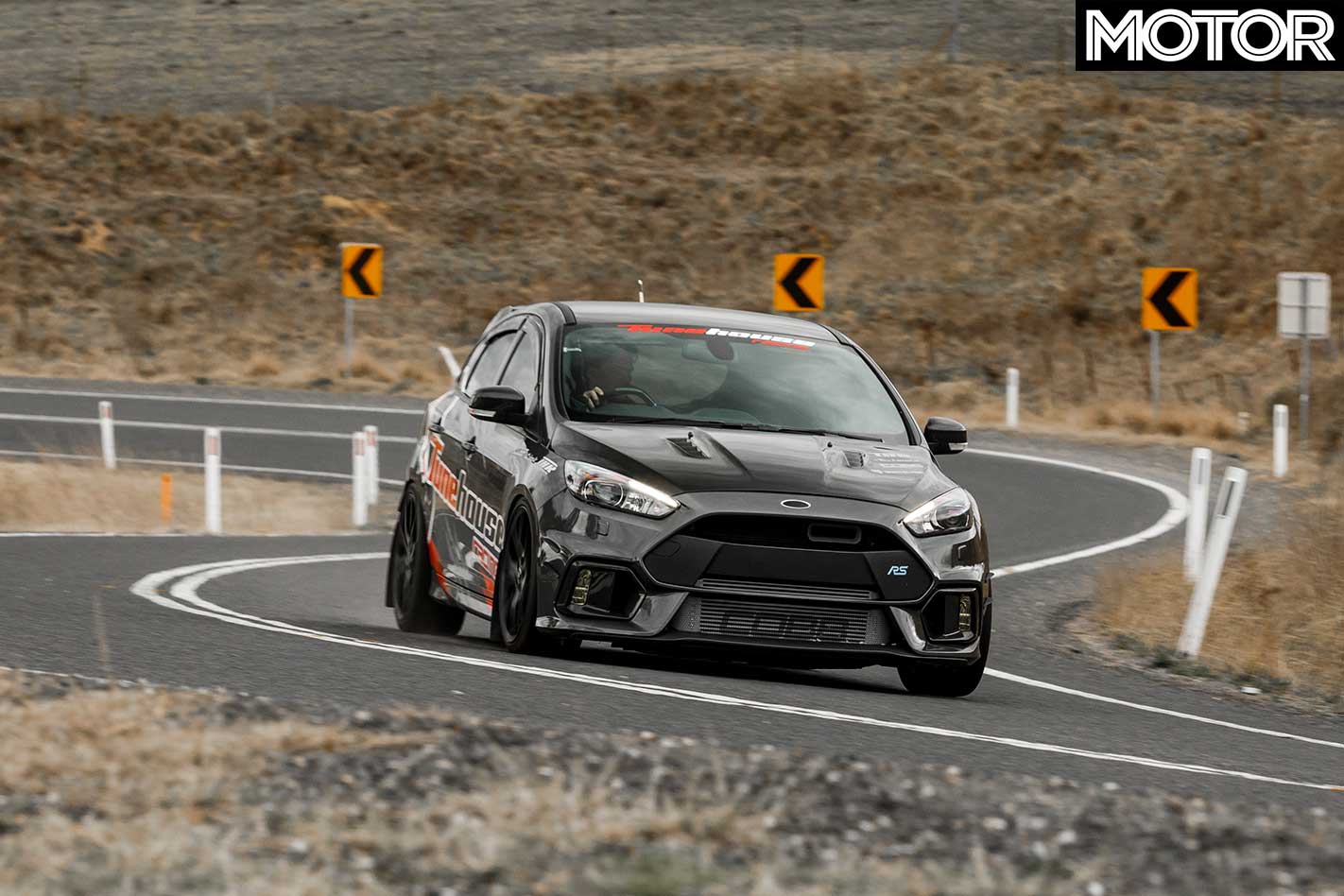
He’s right. Its 2.3-litre engine has been around for a while. Yet here it’s squeezing 204Nm from each litre on overboost. That’s more than a 911 Turbo S. And then there’s its handling. Its all-wheel drive technology is usually reserved for cars twice its price and helped it nab Bang For Your Bucks and a strong Performance Car of the Year finish in 2017.
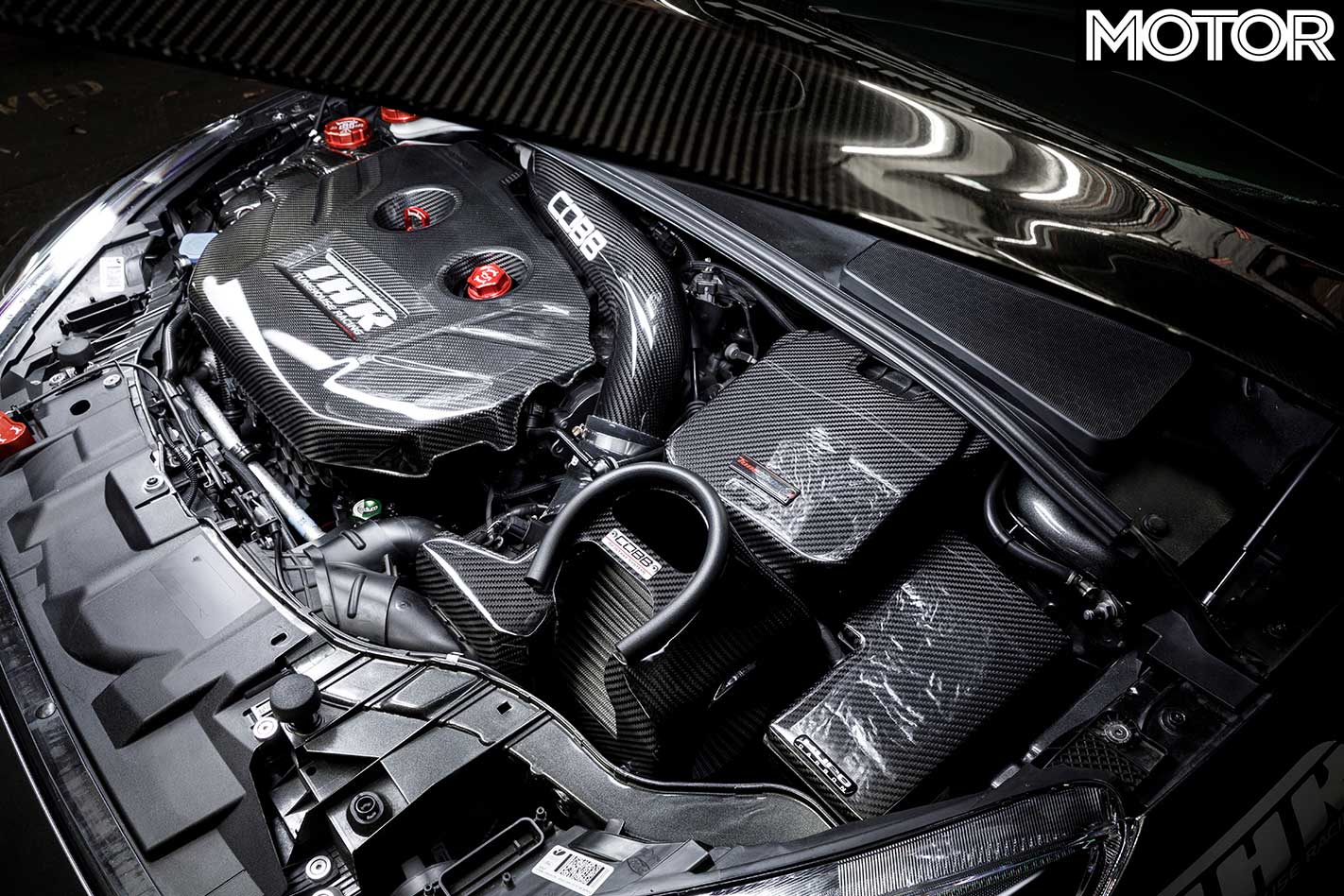
Lift the car’s gorgeous carbon-fibre bonnet and you’ll see the beginnings of Tunehouse’s newly developed ‘Stage 2’ kit. It replaces all turbocharger-related piping with freer flowing hardware from Cobb Tuning in the United States.
The carbon-fibre intake pipes glisten. Lurking underneath there’s a larger intercooler with a more efficient core. Then hung off the turbine is a full 4.5-inch exhaust system with an adjustable rear muffler.
Ghelis has programmed the ECU with his own map via special Cobb software, but it wasn’t as simple as it is with other cars. He tells us things like fuel, timing and boost are all based on torque values, and forced him to tune more than 250 maps before signing off.
The hard work has at least paid off on the dyno sheets. An RS produces 257kW at 6000rpm and 440Nm at 2000rpm on its factory spec sheet, or 470Nm at 3200rpm with overboost. On their hub-based Dynapack dyno that translated to 213kW and 446Nm at its front wheels. The Stage 2 kit on Aussie 98RON fuel raises those figures to 269kW at 5260rpm and 550Nm at 3309rpm – or 56kW/104Nm more. Boost is set at 22psi, or one pound less than stock.
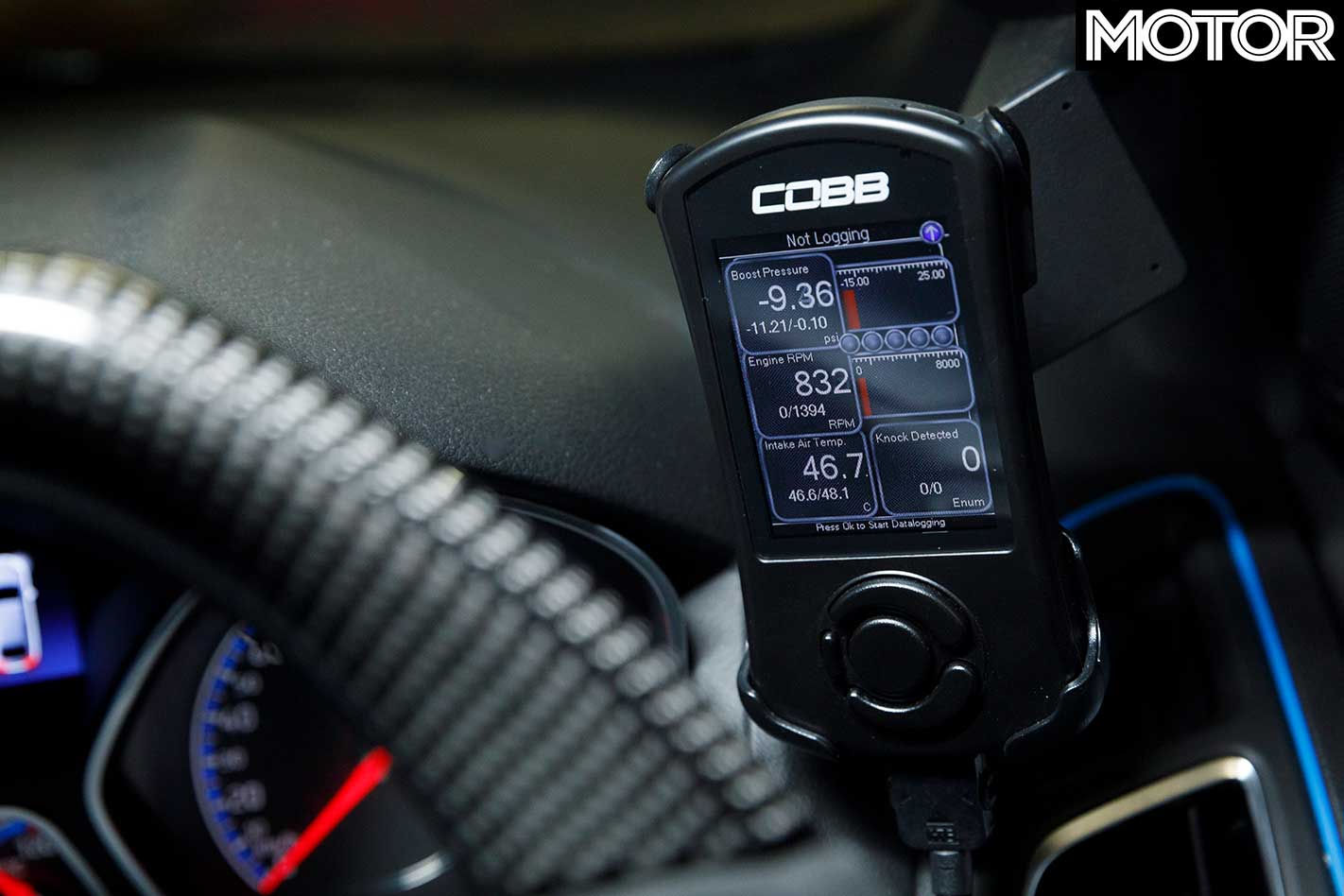
“I’m not a big believer in ‘boost is the only answer’ to make power,” he says, “you can make 28 pounds, but the range of the boost is small. Or you can make it 22 and spread it across and use your timing and fuelling to make it work for you.”
Either way, climbing aboard and starting the engine reveals nothing extraordinary. The rear muffler baffles change with the factory drive mode software, and in Normal mode it awakes with the typical raspiness of a stock system. More aggressive sounds soon emerge, though.
You hear the turbo sucking hard as it starts to blow positive pressure. But the true fun starts with its re-circulative blow off valve. When the throttle plate closes it forces air back onto the compressor blades, turning its turbo whistle into a deflating flutter. It sounds like Darth Vader in a coughing fit.
Switching from Normal to Sport mode upgrades the power map. Torque builds more keenly off boost. The turbo wakes at 1500rpm, spools hard at 2500rpm, then a big clump of acceleration hits in the mid-range. Ghelis has made the power curve taper off well before its 6800rpm redline (up from 6600rpm) to prevent harmful limiter bashing.
“Everytime you hit the rev limiter,” he says, “it’s a very, very aggressive harmonic happening, even if it’s tested on a low range. You can definitely damage the valvetrains and chains, bottom ends and stuff.”
The only bangs unleashed here are from the exhaust on upshifts. It’s louder as well, but adds more resonance and blare rather than anything musical. Instead of top-end acceleration that reels in the horizon, the Tunehouse RS pulls from low with solid tractability.
Its mid-range is stronger, and the engine feels half a litre larger than it is. Its response now feels as honed as the car’s chassis, helped by the fitment of a solid rear engine mount that means the throttle pedal literally tingles with feedback.
This gives you a much finer sense of how much output is finding the tyres and means it can stay in gear through tight, twisting corners – somewhere small turbo engines struggle to be effective.
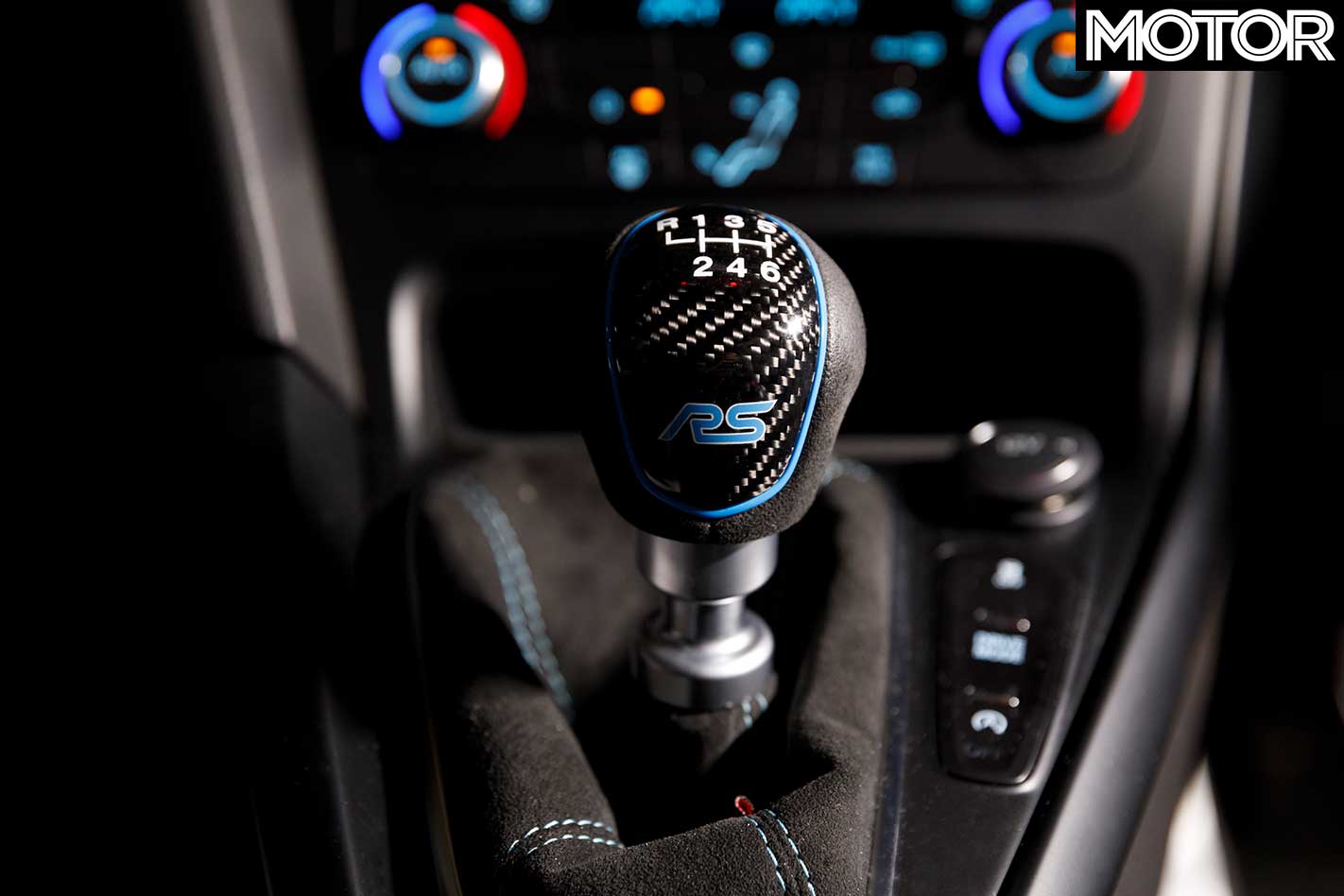
This car’s also upgraded with a plethora of bits on top of the Stage 2 kit. A Boomba short-shift kit cuts stroke distances in half and produces short, heavy rows. They’re enjoyable if you’re committed, or clunky and easily baulked if not. The hex-shaped shift knob is also awkward to grasp.
We’re big fans of how it looks underneath the vinyl wrap. That bonnet, wing, and lowered stance perfectly complement the car’s aggressive looks. The lowering springs do add a touch more bounce to an already harsh ride. It also pushes more into a corner, as if it’s less keen to rotate on its outside front, but that is easily fixed with a set of rollcentre adjusters.
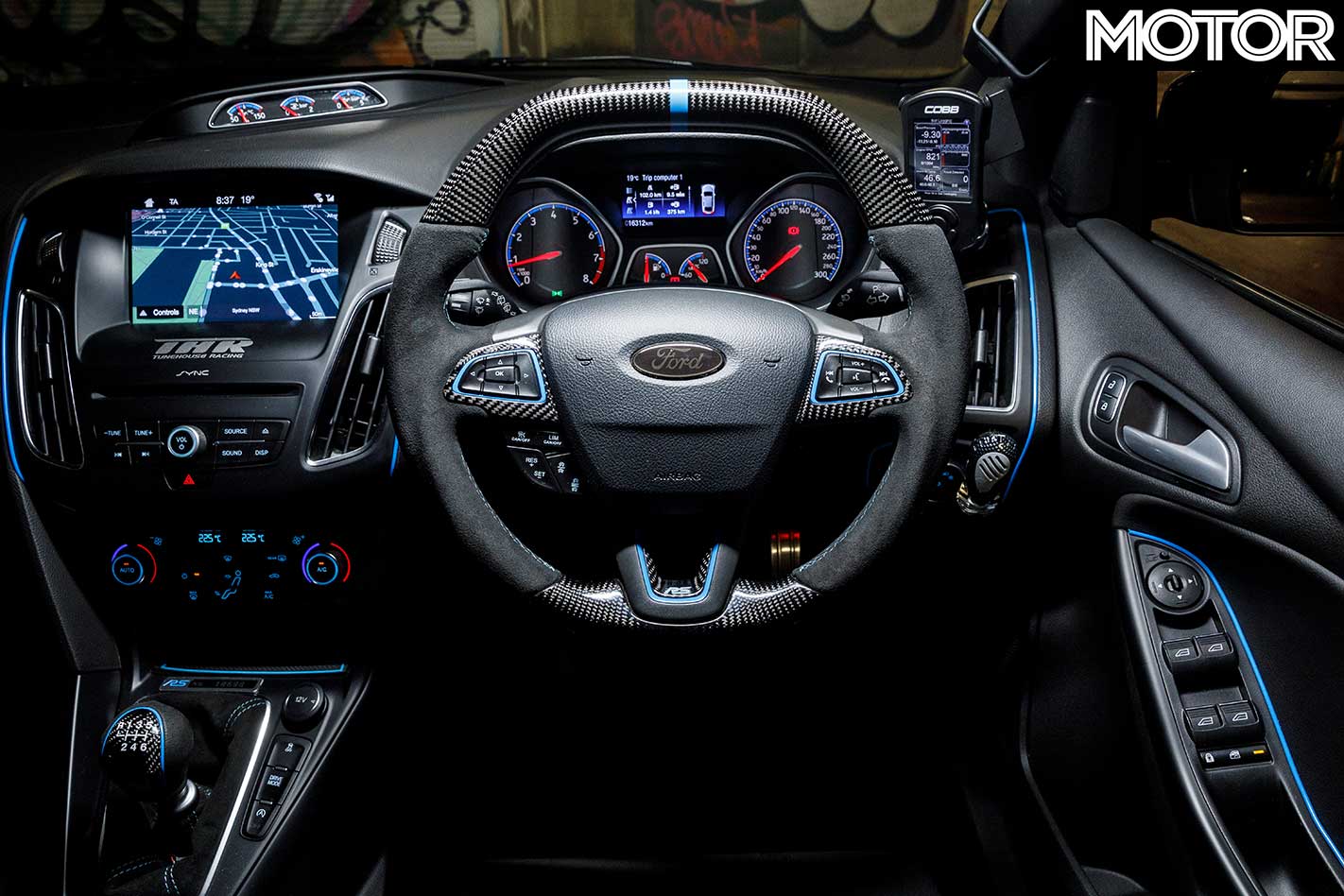
While we’re on gripes, the steering wheel matches the shift knob in both shape and finish as they’re from the same company. But its flat-top design proves annoying when you grab its brim for more lock. Anything that needs more than two turns lock to lock should have a round wheel.
So, has Tunehouse managed to build its own RS 500? Yes and no. On one hand, they’ve enhanced its low-down response and mid-range to make it even more usable. And the quality of its package shows in how it ran without fault and could be used like any factory car we regularly test. Tunehouse has also kept balance in mind with its kit. Its brakes, tyres and suspension easily absorb the extra urge.
Those expecting to munch Mercedes-AMG A45s at traffic lights, though, might be disappointed. Acceleration isn’t improved as much as an extra 56kW/104Nm at the hubs would have you believe.
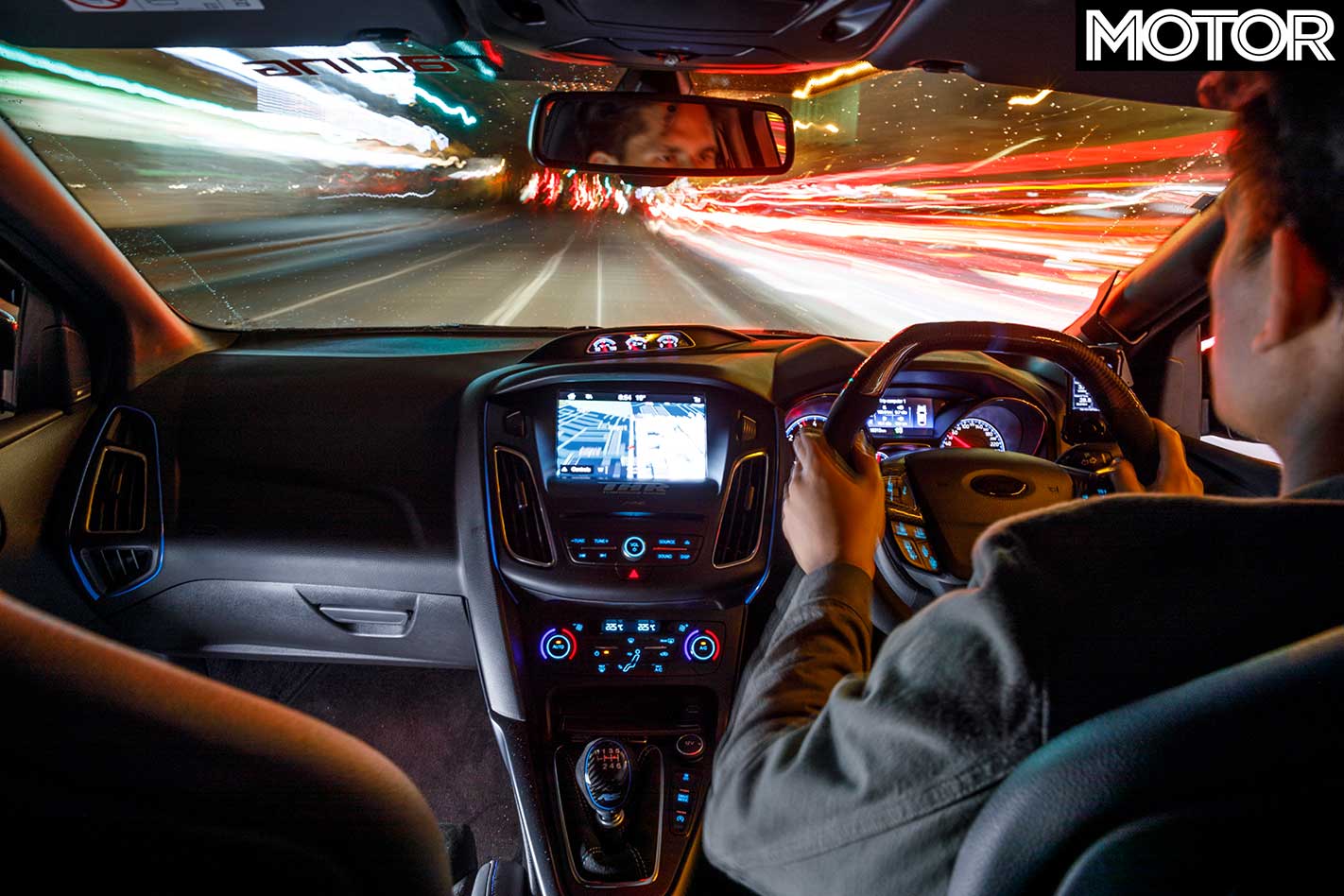
You could push further with these modifications, but there is just not that much headroom in this EcoBoost’s stock turbocharger, injectors and cylinder block. And if you’re keen to replace those things, you stand to spend more than what you might gain.
That’s perhaps why Ford never signed off on an RS 500. It was always going to be hard to improve on such an athletic package. But if you must modify an RS to such a degree, then this kit presents good value. It enhances its traits rather than spoils them. And that might be the next best thing.
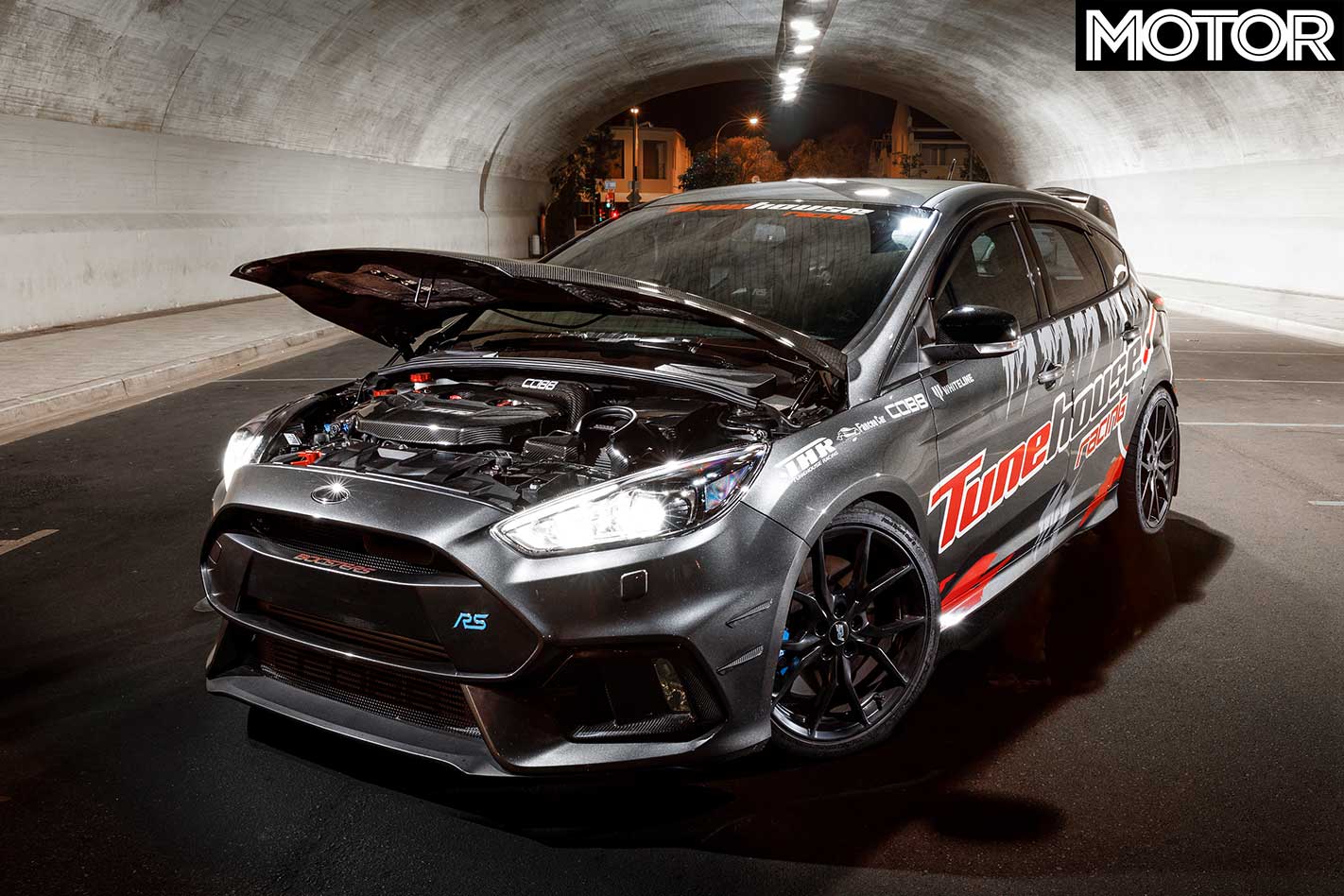
FAST FACTS 2018 Tunehouse Ford Focus RS
BODY: 5-door, 5-seat hatch DRIVE: all-wheel ENGINE: 2261cc inline-4cyl, DOHC, 16v, turbo BORE/STROKE: 87.6mm x 94.0mm COMPRESSION: 9.4:1 POWER: 269kW @ 5259rpm (at front hubs) TORQUE: 550Nm @ 3309rpm (at front hubs) WEIGHT: 1524kg POWER-TO-WEIGHT: 177kW/tonne TRANSMISSION: six-speed manual SUSPENSION: struts, adaptive dampers, adjustable anti-roll bar (f); multi-links, adaptive dampers, adjustable anti-roll bar (r) L/W/h: 4390/1823/1472mm WHEELBASE: 2648mm TRACKS: 1572/1549mm (f/r) STEERING: electrically assisted rack-and-pinion BRAKES: 350mm ventilated discs, 4-piston calipers (f); 302mm solid discs, single-piston calipers (r) WHEELS: 19.0 x 8.0-inch (f/r) TYRES: Michelin Pilot Sport Cup 2; 235/35 ZR19 91Y XL (f/r) PRICE: $80,000 (mods & vehicle; estimate)
PROS: Low-down urge; response; fit and finish CONS: Expensive upgrade; dollar-per-kW gain
Seven ways to a sharper Focus RS
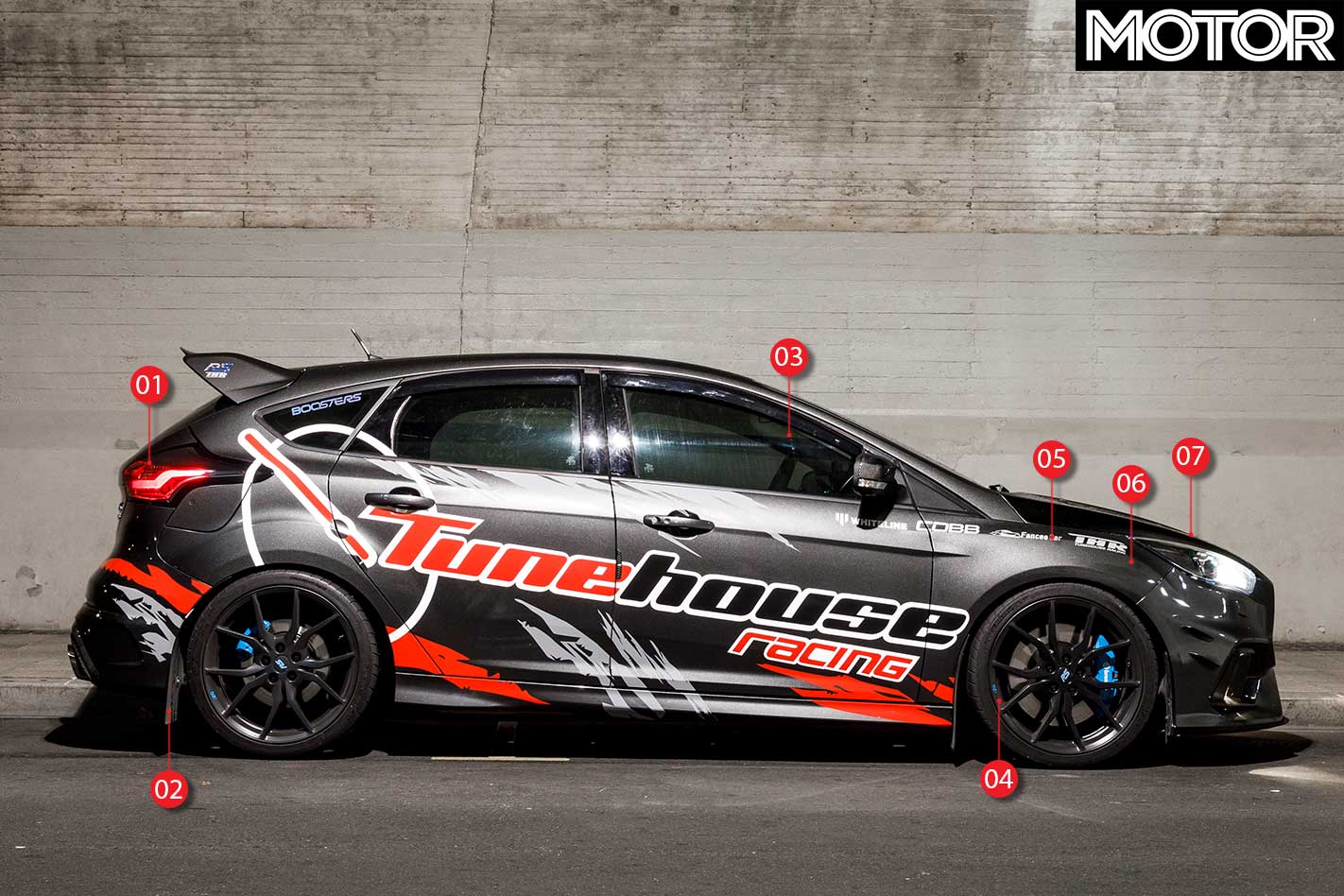
ONE – QuantiTEC LED taillights ($371) join a Kuro carbon fibre rear diffuser ($3215) and Triple R wing extension ($183) on its rear end. TWO – ROKBLOKZ short mudflaps ($140) keep the rally car spirit alive. Front and rear adjustable roll bars ($799) allow further chassis tuning. THREE – Complete Boomba Racing short shifter kit cuts rowing distances in half via an adaptor plate ($120), shifter stick ($255), and bushings ($93). FOUR – ST suspension 12.5mm spacers ($90) and Whiteline lowering springs ($435) give this car a stance that’s not too over the top. And that’s how we like it. FIVE – Boomba Racing alloy oil filler cap, alloy dipstick handle and alloy reservoir caps add engine bay bling for $152 all up before shipping from the US. SIX – Stealthier mods include GFB DV+ recirc valve ($172), Velossa Tech Big mouth air ram ($272), and Mountune sound suppressor ($82). SEVEN – Seibon RS-style carbon-fibre bonnet ($1305) hides Tunehouse Stage 2 kit ($8999). Price includes supply, install and tune of all parts.
*All prices quoted are obtained direct from manufacturers, converted to AUD at the time of publish and do not included shipping unless stated.
