
Connected in no way to the 1980s sci-fi feature film about a computer programmer stuck inside a video game, Audi’s e-tron brand has gone from a seemingly whimsical concept to a badge you can put on your driveway.
And as the German car maker increases its focus on the development of alternative energy vehicles, you can expect to see the e-tron moniker featuring even more in the four-ring portfolio.
But what exactly does the badge represent?
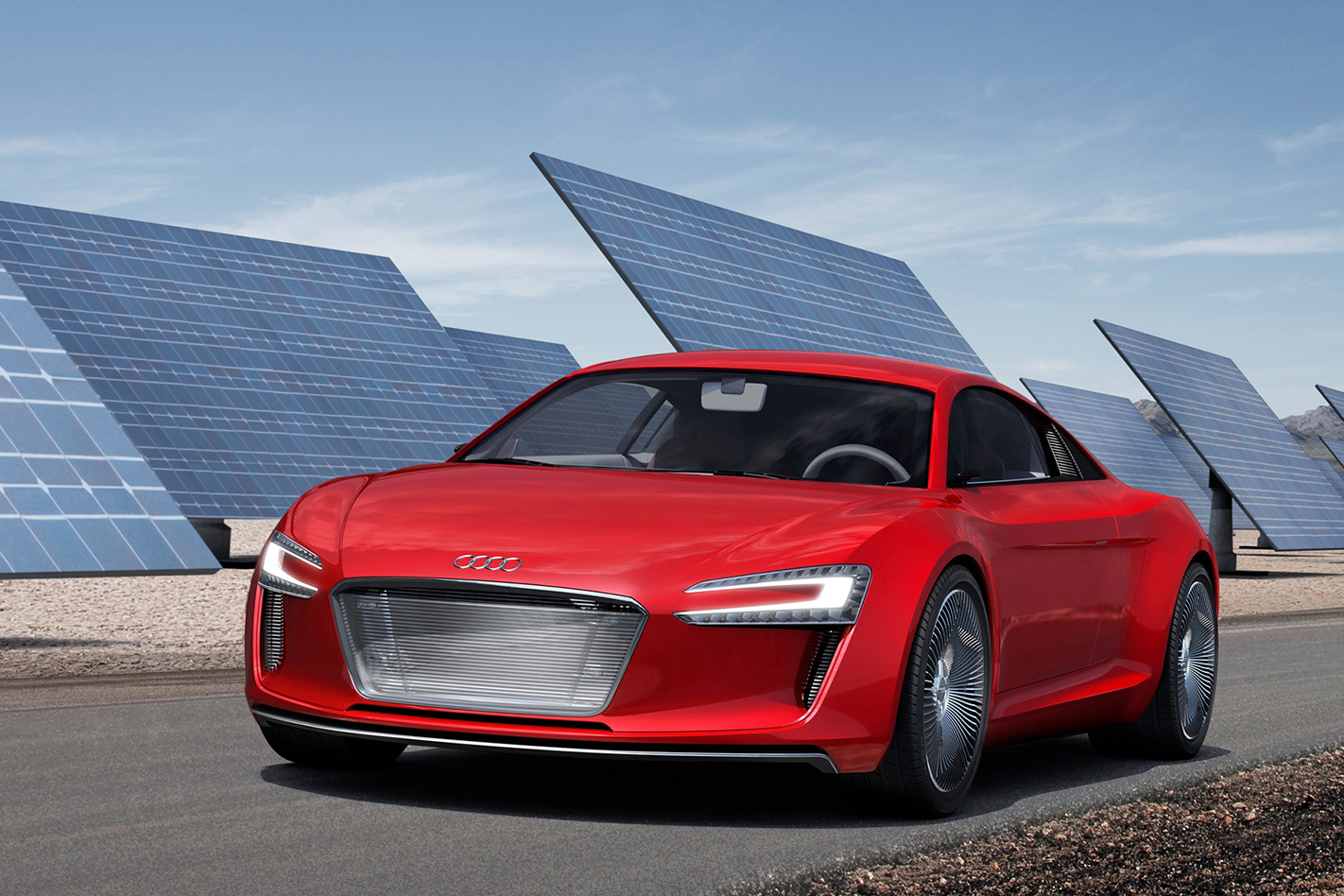
Put simply, e-tron is applied to anything that has an electrified drivetrain including hybrid and pure electric, but less straightforward is the evolution of the nameplate and its uses since it was forged 10 years ago.
When it surfaced in 2009, the first use of e-tron was as a standalone model name for the Frankfurt concept car. The very first e-tron offered a glimpse into an Audi future where electrification was not for sensible zero-emissions people mover, but as a no-compromise sportscar.
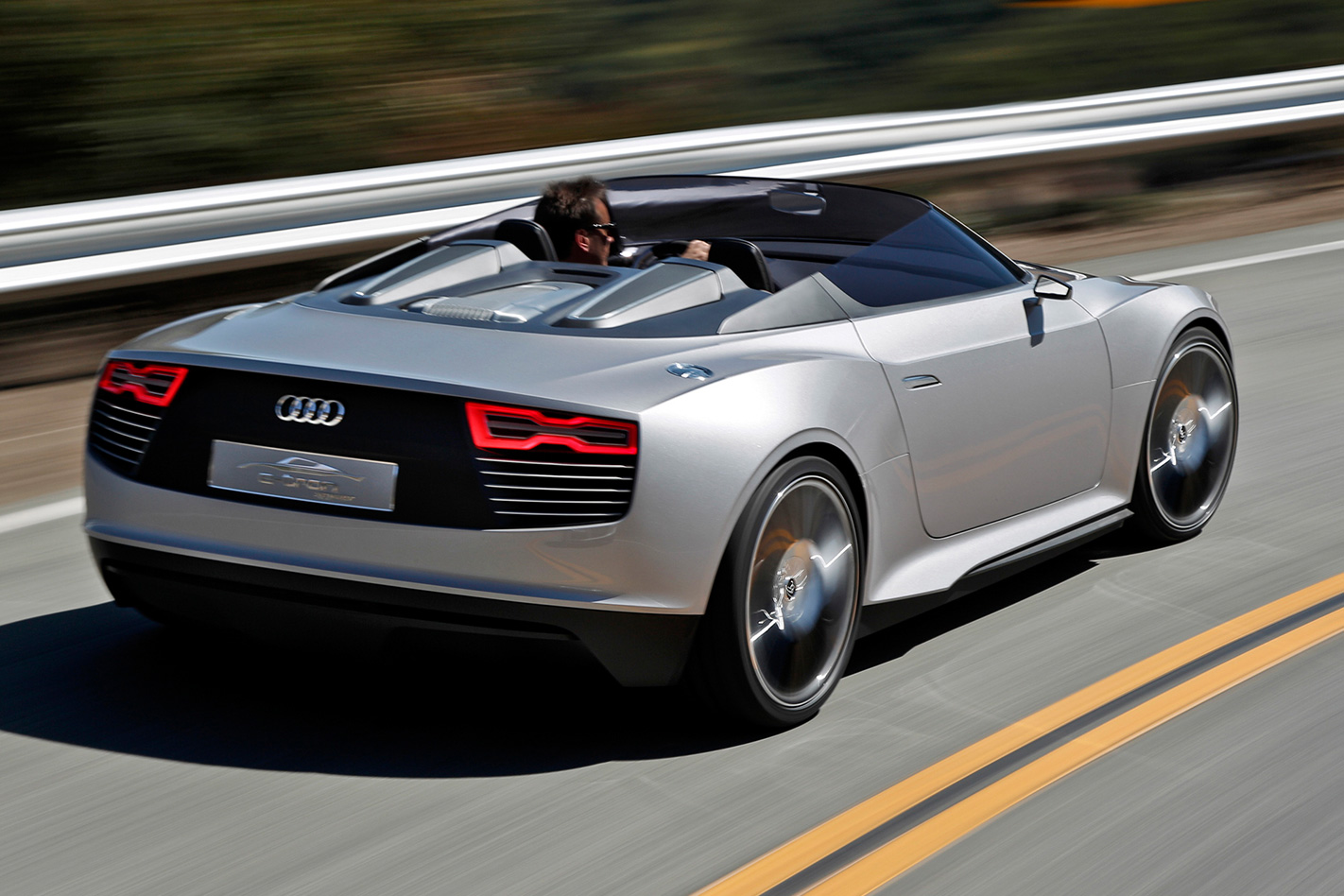
The e-tron’s resemblance to the R8 petrol-powered supercar was also a prophetic hint at a version of the company halo that would later be offered as a full-electric variant. The first e-tron was followed by a second of the same name at the Detroit in January 2010 and then an e-tron Spyder in later that year, which used a diesel-electric hybrid powertrain.
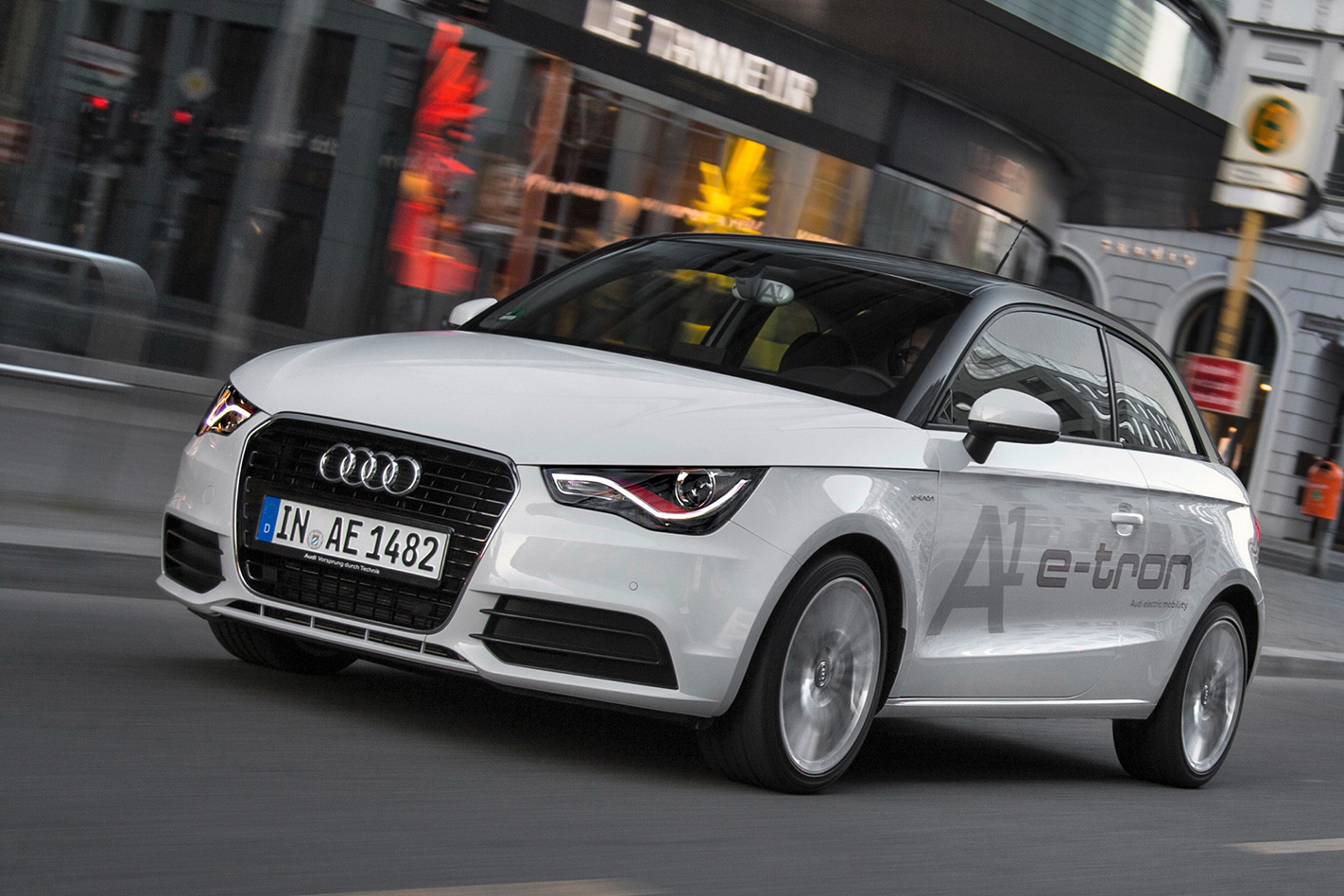
However, the name shifted from a model to a variant when the company revealed the A1 e-tron and A3 e-tron hatchback concepts.
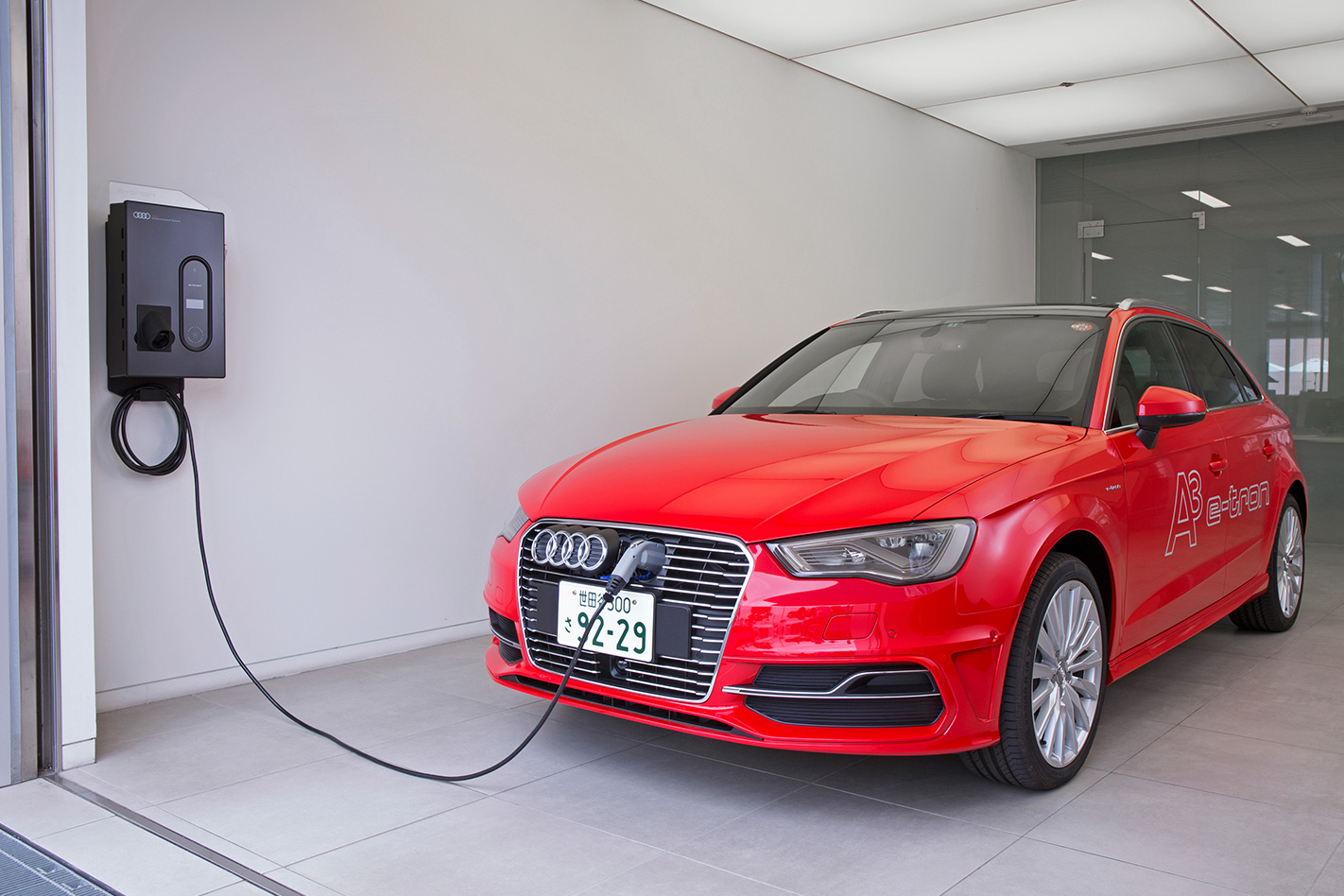
But it wouldn’t be until 2013 when Audi unveiled the production version of the A3 e-tron when the badge made the transition from the show floor to the manufacturing line. The first production model used the A3’s relatively conventional petrol engine coupled with an electric motor and plug-in charging for a hybrid that could be used as a pure EV for short trips.
The same principle has now been applied to the company’s large SUV for a version of the Q7 that can cruise for 56km on electricity only or uses just 1.7 litres of diesel per 100km when in hybrid mode. Like the now discontinued A3, e-tron is still the Q7 version’s variant name.
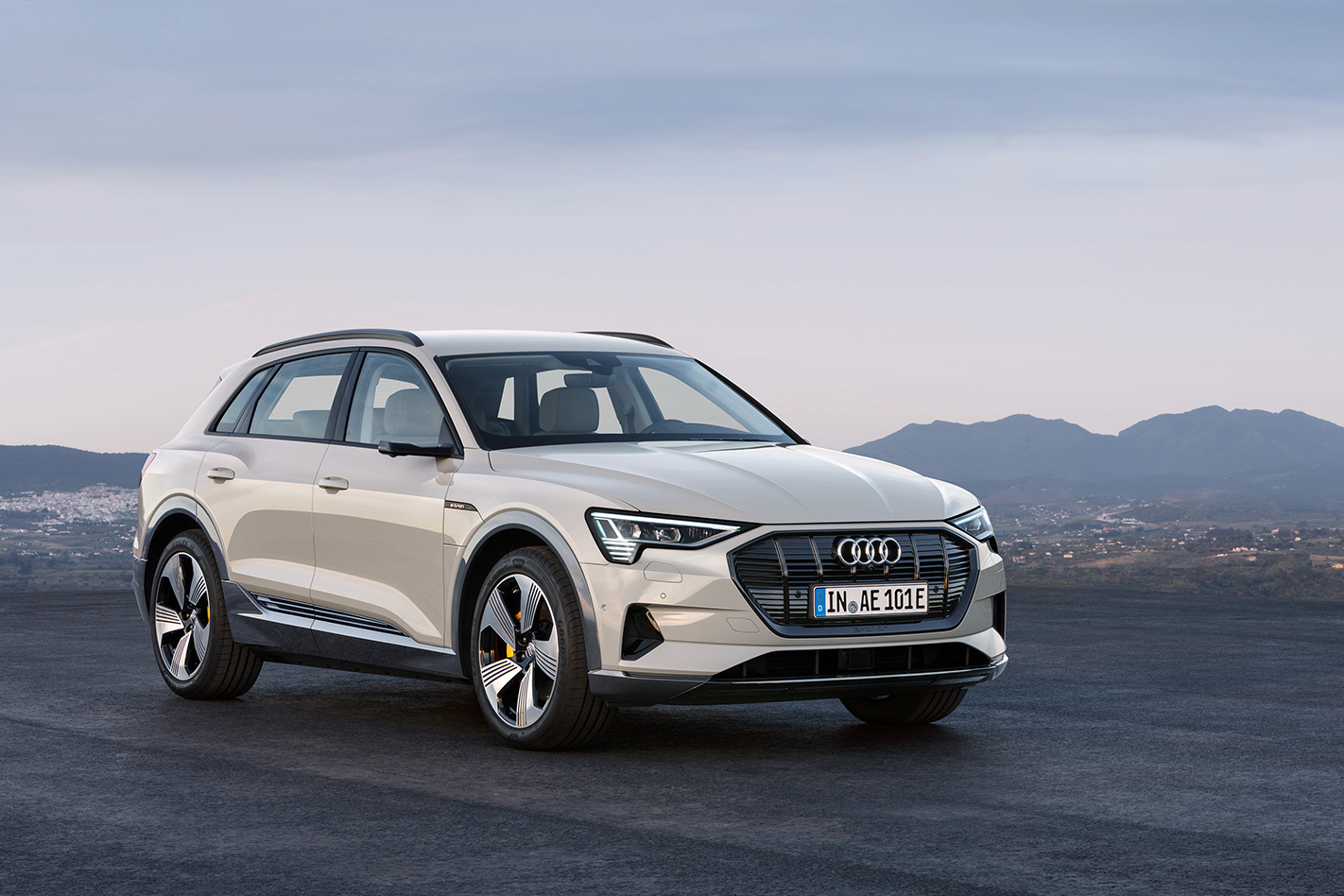
But it was time for the brand to make its foray into pure electric passenger models heralded by the 2015 Frankfurt SUV concept EV dubbed the e-tron quattro, which became the production e-tron, revealed earlier this year.
Once again, the e-tron name has come full circle and is being used as a model designation, which raises questions about how the car maker will roll out other electric vehicles and their nomenclature.
As for the future? Just this week, Audi let slip an electric and stretched wheelbase version of the Q2 for the Chinese market and an electrified Q8 is also close to being confirmed, all of which will broaden the e-tron halo.
Looking even further into the future and the RSQ e-tron concept (a virtual evolution of the awesome PB 18 concept) returns the brand full circle to a hyper sports concept a decade after the first R8-doppleganger started the movement in Frankfurt.
Audi’s e-tron strategy might not have been quite as prominent in its new car landscape if it wasn’t for the Volkswagen diesel emissions scandal of 2015. After the controversy surrounding combustion engines, the company pulled resources from some development projects to boost the development of emissions-free initiatives.
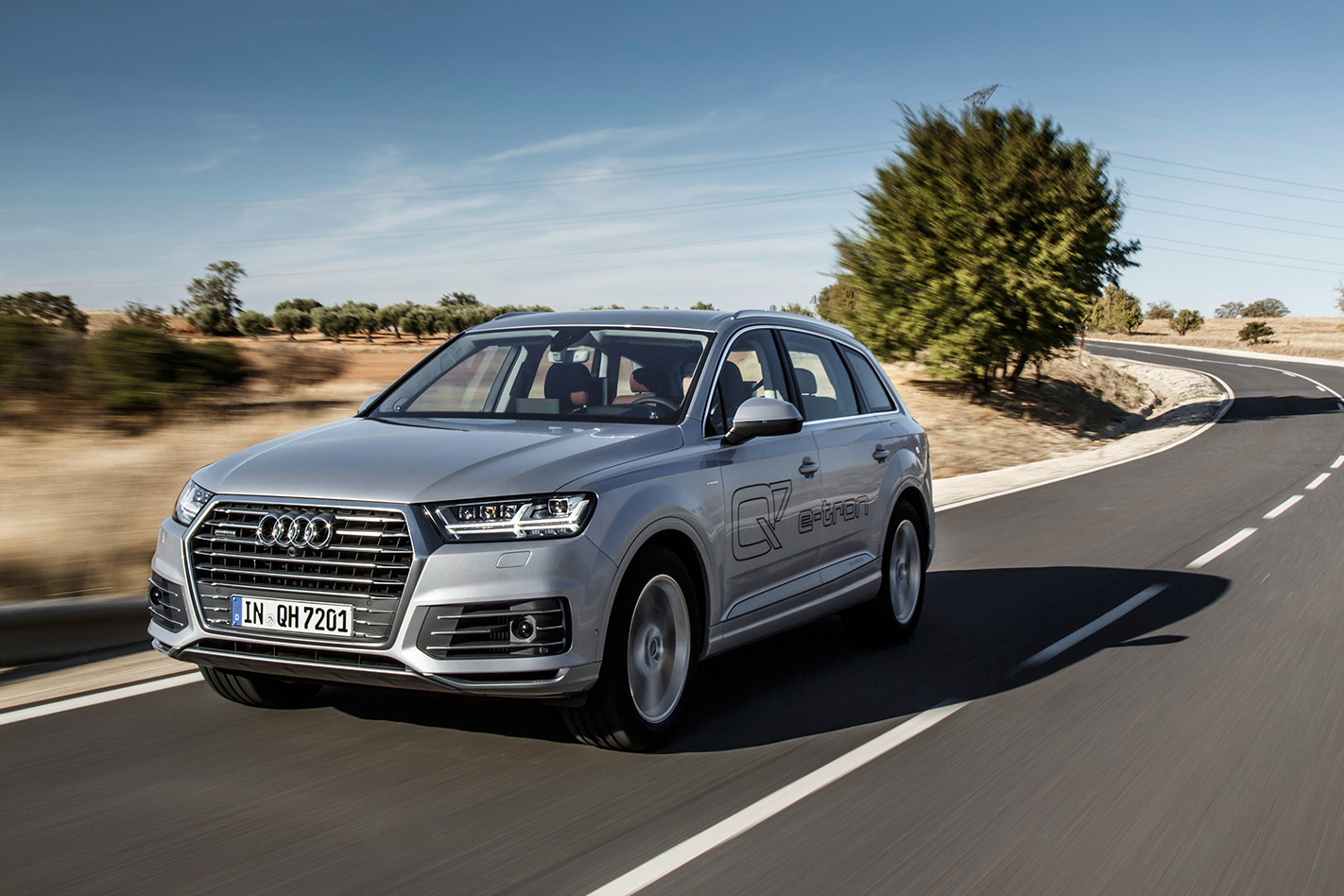
Today, the e-tron brand is not just a model or a variant name and instead represents Audi’s electrification movement as a more holistic umbrella in much the same way its Audi Sport branding encompasses all high-performance models.
As a marketing tool, it goes head to head with arch rivals BMW, which has the equivalent i branch of EVs and hybrids, while Mercedes has weighed in with its EQ line of electrified vehicles.
In a bid to set the emerging e-tron vehicles apart from the more traditional offerings in its ranks, Audi has applied a number of styling signatures to its cars, whether they be fantastical concepts or the latest production models.
The absence of tailpipes is one indication you are behind an electrified Audi and the classic grille is always filled with a different, lower drag mesh to improve range. Cool LED lighting both inside and out has also become a trademark of the e-tron bloodline.
Futuristic vehicles gliding almost silently around in an eerie LED-lit glow? Hmm, maybe Audi’s e-tron empire has a lot more in common with Tron after all.
Are SUVs the new sports cars? Of course not, but the market seems to think so.
The laws of physics haven’t changed, so low-slung cars with lower weights will almost always be more fun to drive – or to watch.
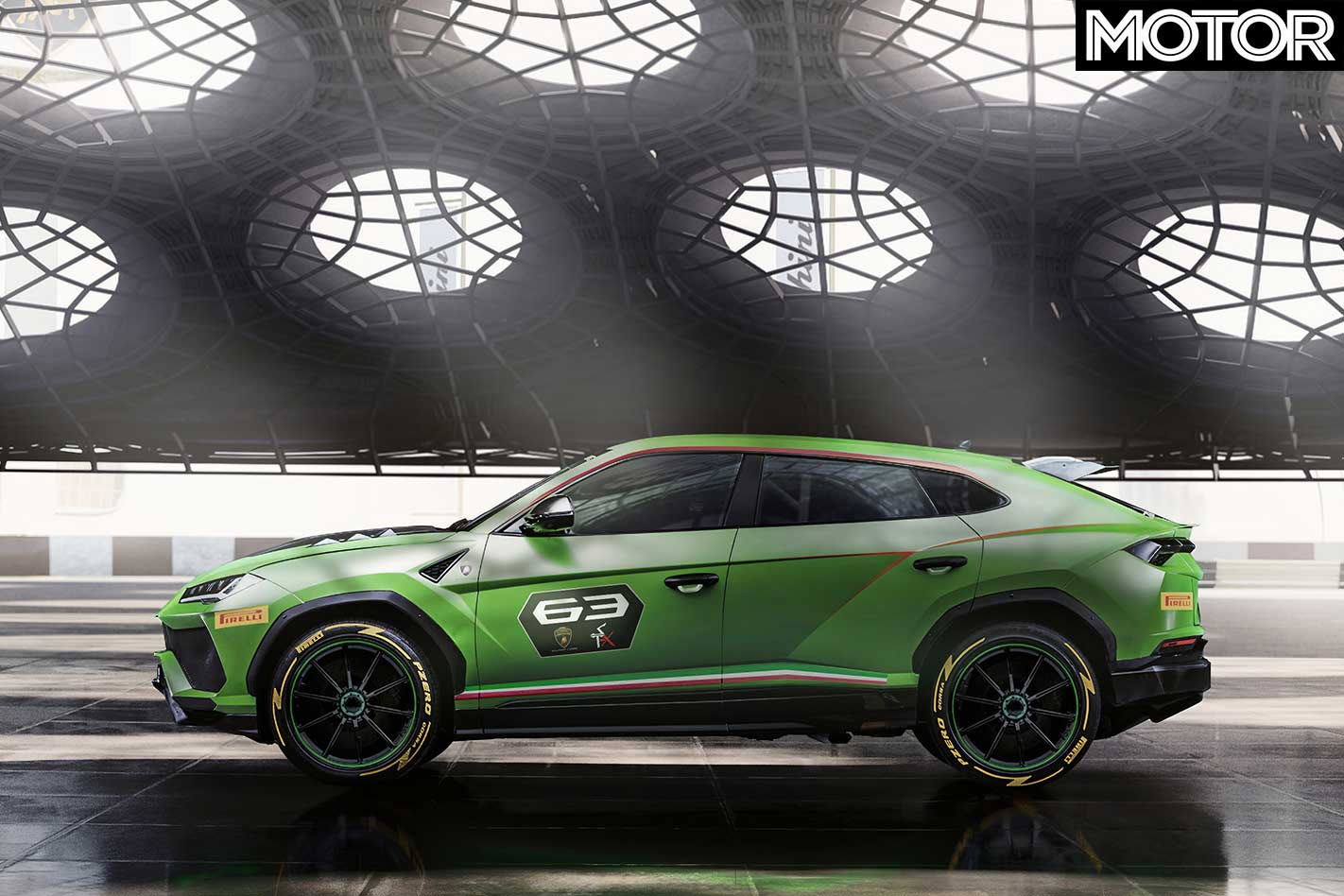
So why does Lamborghini – a company we would normally trust to make decisions in the interests of enjoyable driving – want to create a racing series just for its Urus SUV?
The answer is relatively straightforward. People can’t get enough of SUVs, even the ones that cost upwards of six-figures.
Why this is happening is unknown to those of us who live in cities and enjoy a dynamic drive. SUVs take up more space, are less efficient, are slower, and don’t corner like a car.
Yet in 2020 there will be a one-make series of Urus racers, prepared by Lamborghini’s Squadra Corse motorsport division, and driven by ‘arrive-and-drive’ customer racers.
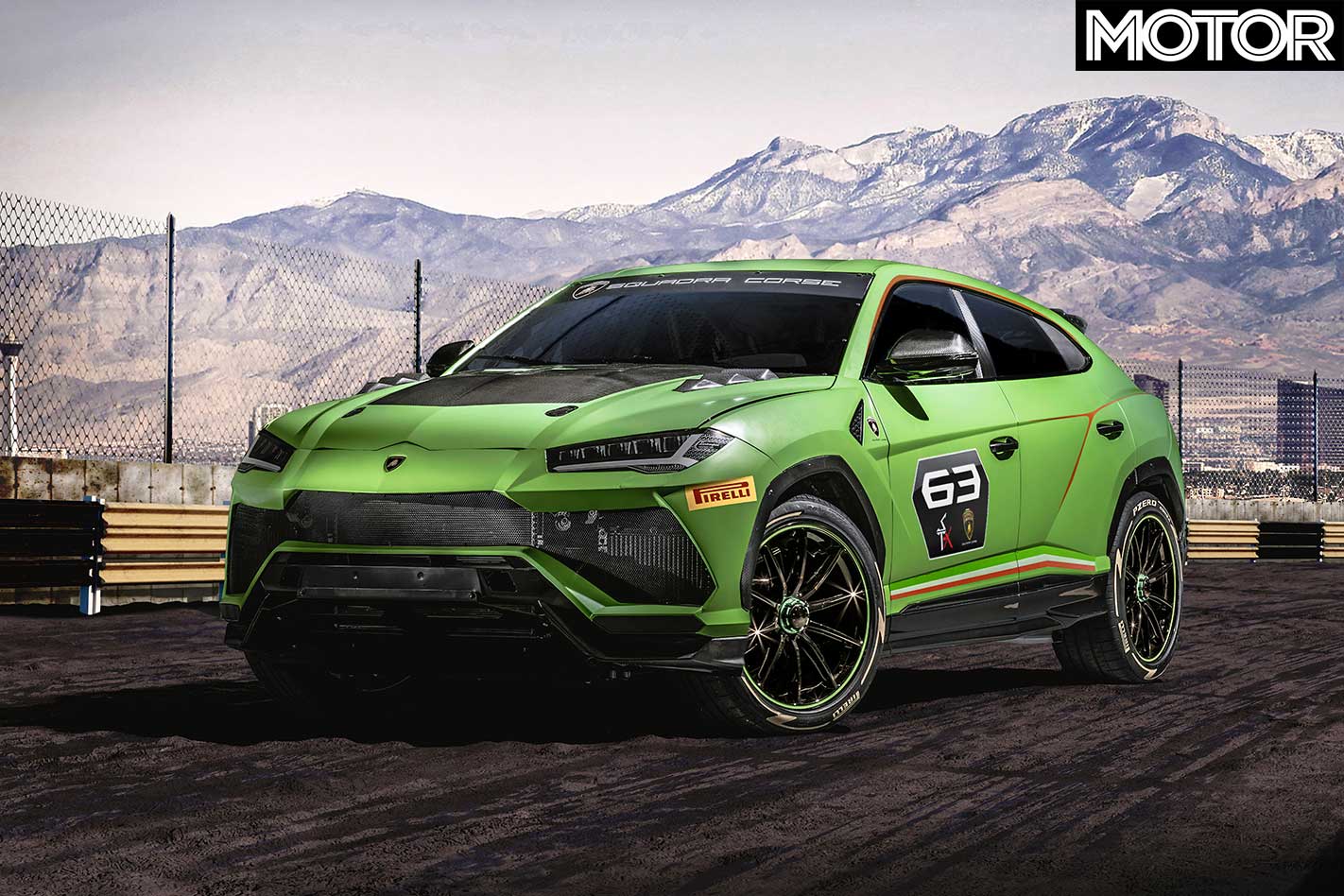
Granted, the series aims to include ‘race circuit and off-road track’, likely to show off the Urus’ USP amongst its siblings. Plus, the Urus ST-X Concept (pictured) is claimed to be 25 per cent lighter than the 2200kg production version. But 1650kg is still a fair bit of bulk for a race car.
If Lamborghini wants to aid the narrative that SUVs are good drivers’ cars, they’ll probably be successful. Does it mean we’ll see Nissan Jukes battling Kia Sorentos at track days? We can only hope not.
Having said that, I’d probably still watch it if it’s televised or streamed – with genuine interest.
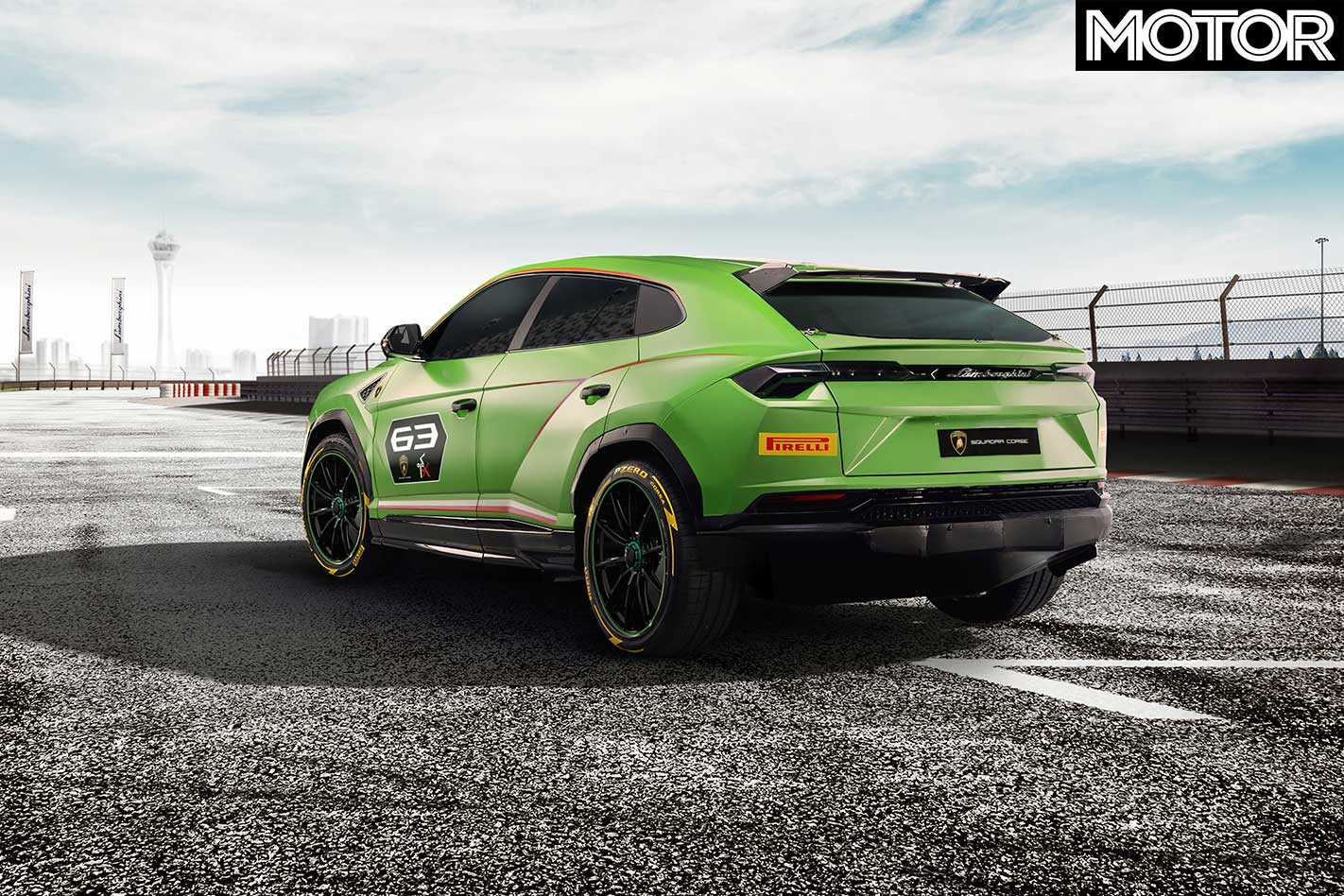
The suggestions that these massive clumsy vehicles could become the ‘new sports cars’ is terrifying, but the idea of two 478kW twin-turbo V8-powered Italians rubbing doors is still enough to pique my curiosity.
In fact, can we get the Trackhawk or the Cayenne involved?
A third Lego Barra engine has been built by Ford Falcon enthusiast and Lego fan Leo to round out a trio of creations.
The three Ford Barra engine gradually become more complex, though even the first – an XR6 Turbo engine – is rather impressive.
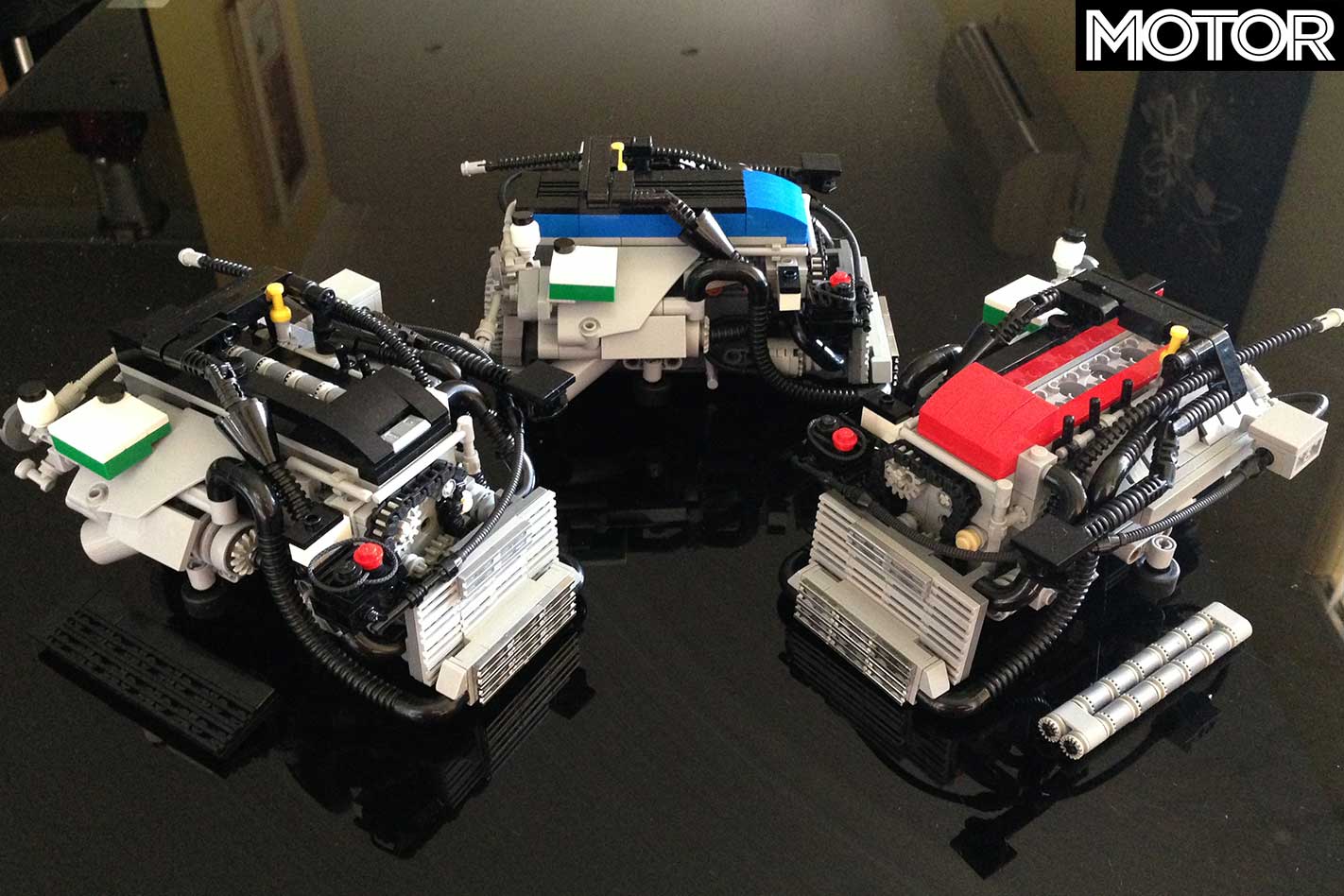
The most recent, a Sprint-era engine, is the most accurate overall of the three thanks to spinning cams – though its ability to produce 340kW is yet to be tested.
“All three Lego Barras now have dual overhead cams, but only on the Sprint motor do they turn, on the red XR6T and blue F6 motor they are cosmetic but can easily be removed to show the six cylinders and pistons,” Leo tells MOTOR.
“On the black Sprint motor they cannot be removed, this has obstructed the viewing of the 6 cylinders so I have now used some transparent pieces combined with yellow pistons.
“The removable panel on the F6 motor was better but reduced the Lego model’s strength.
“The internal workings on the F6 motor are most correct as the red and black Barras use a second shaft below the crankshaft to gear the spinning turbo – the F6 turbo does not spin.”
Leo says despite the ease of viewing of the F6 Barra he built, or the turning cams of the Sprint engine, he’s most fond of the ‘red Barra’ due to his status as an XR6 Turbo owner.
“The red Lego Barra was my first build and it’s easy to demonstrate the moving turbo, pistons and belts by turning the flywheel.
“The other two engines are more complex to show the mechanical workings, requiring the removal of wiring/piping/hoses etc.”
Each of the three Barras was built using standard LEGO parts, and without instructions.
Each consists of more than 650 pieces, with Leo estimating they take more than 40 hours to build, and around $150 due to the need to order specific parts.
In addition, Leo has submitted the XR6 Turbo design to the Lego Ideas program in the hopes of it becoming a fully-fledged Lego set – something possible due to Lego’s licencing deal with Ford.
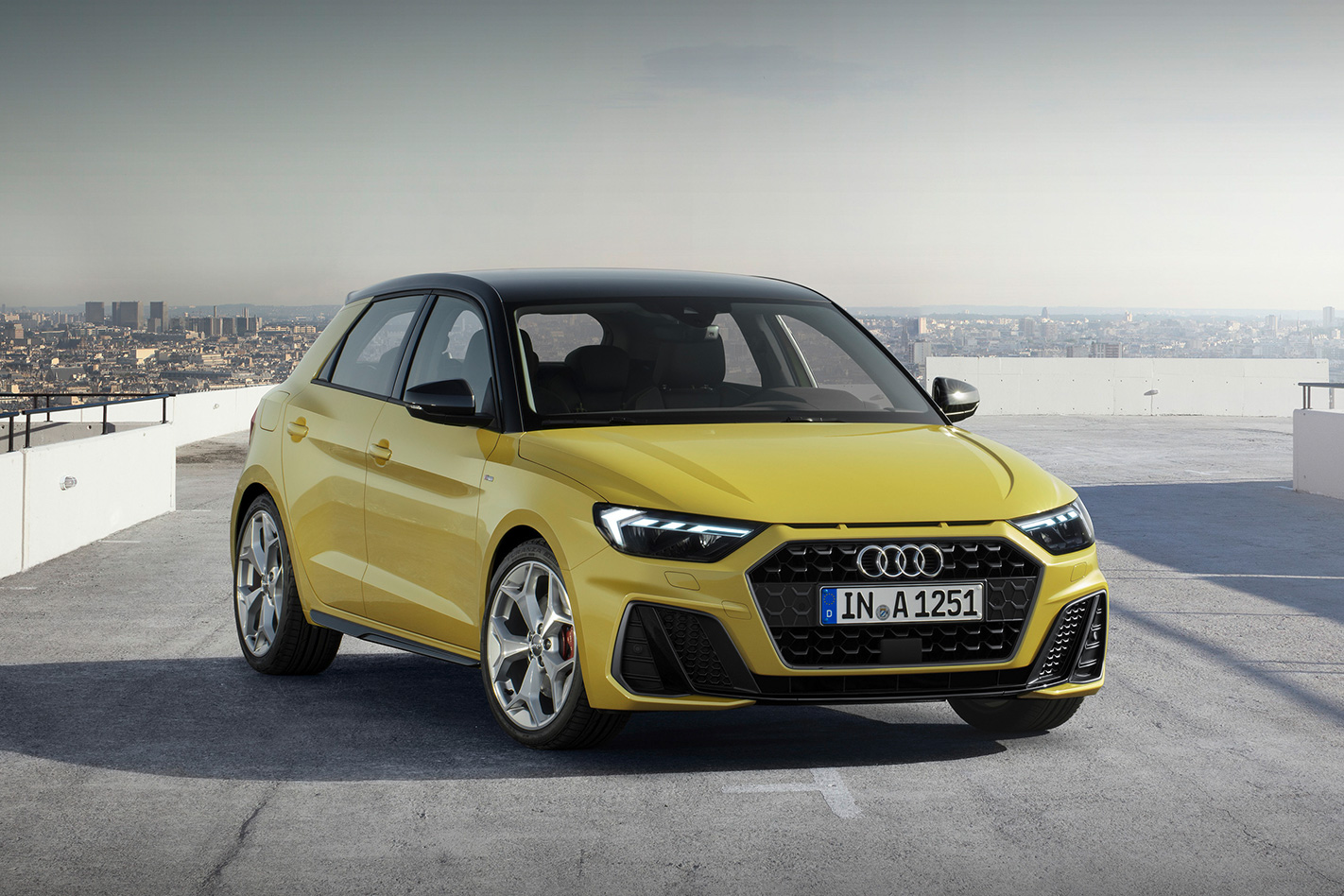
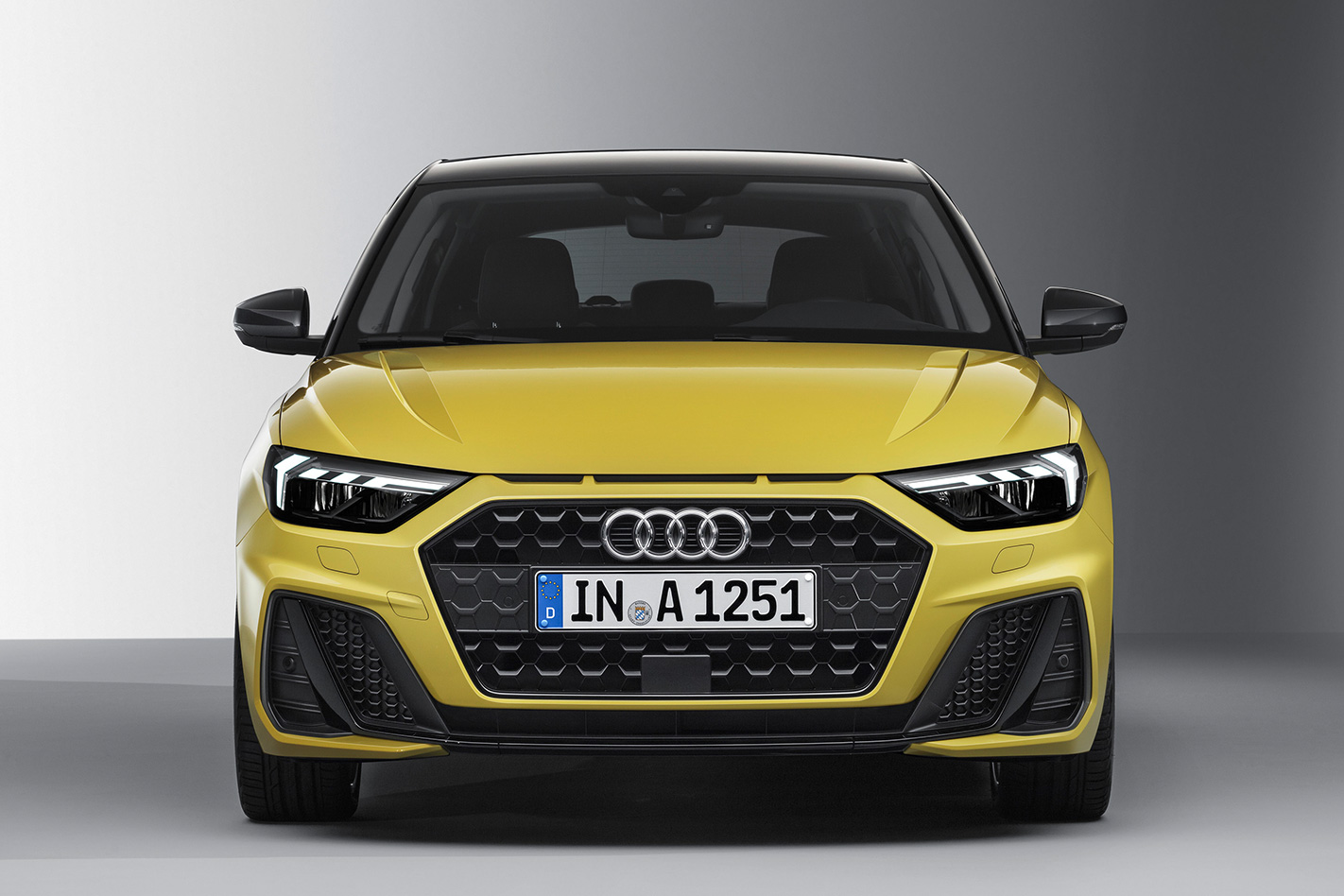
IT’S STILL the smallest car in Audi’s range, but the A1 has grown up for its second coming. An increase of 56mm sounds small, but at 4029mm long its even longer than its Mini five-door rival – a car that seems to stretch the supermini tag to breaking point.
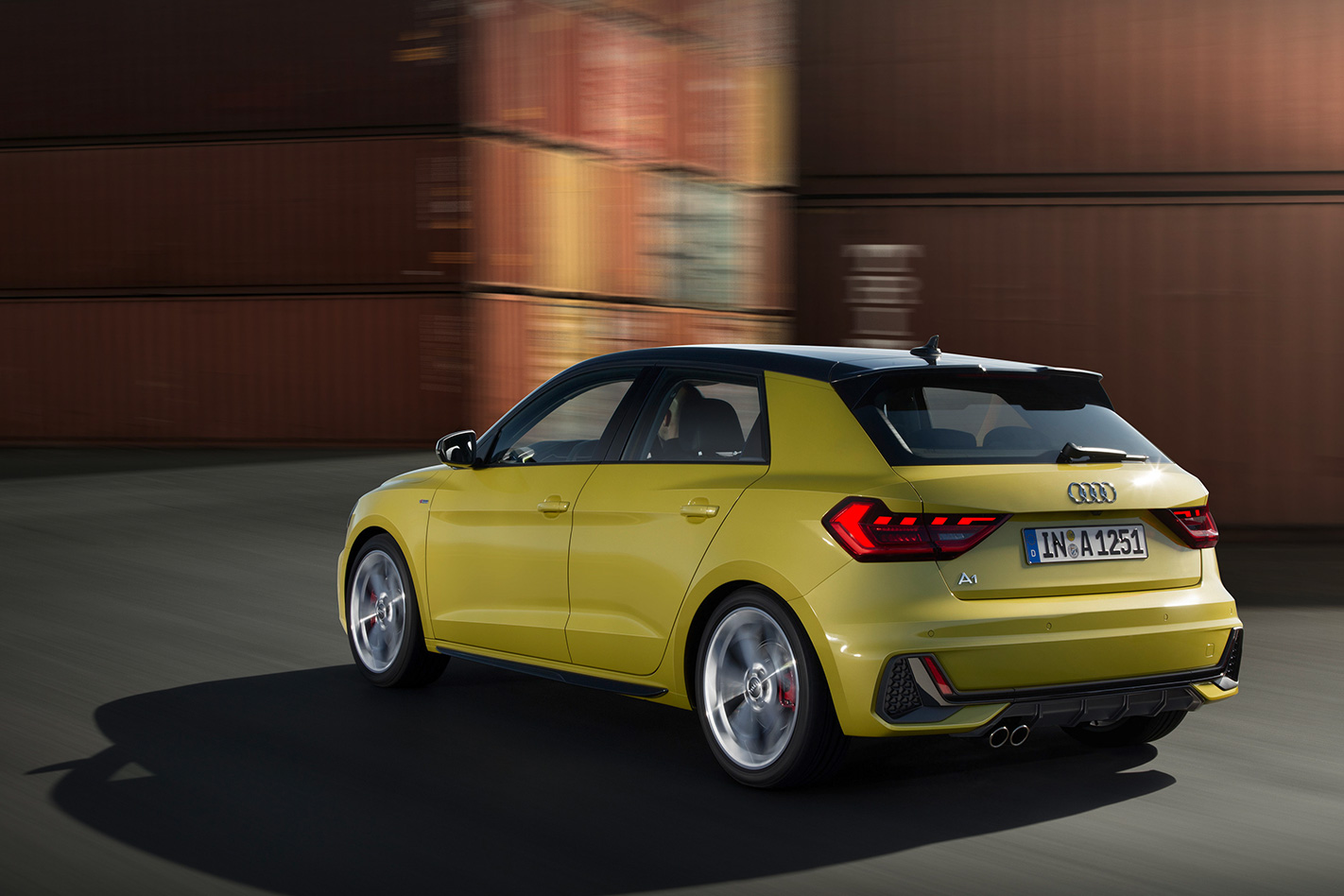
It’s a larger, more mainstream look for the A1 that lacks appeal in dowdy specs, but you can personalise to glamorise, and the growth spurt is welcome inside – the A1 feels more spacious even up front, while four adults can travel in comfort and the boot grows 65 litres to 335 litres. That’s a sizeable 57 litres larger than a Mini’s.
This is a grown-up feeling cabin too, with an edgy origami dash laden with slick infotainment. Nice that both the 10.25-inch digital instrument cluster and 8.8-inch central touchscreen are standard. Shame the high-tech façade wobbles slightly when you spy some cheap plastics as high as the door tops.
Think less is more when it comes to engines. The 40 TFSI is the most powerful, essentially a Polo GTI with the Cinderella treatment – the A1 and Polo share their MQB platform, though the Audi is likely to be more than 10 percent costlier, based on European pricing. Its 147kW 2.0-litre turbo has a charmlessly flat delivery and no great turn of speed, and there’s some steering corruption, an occasionally grumbly ride too. Mostly it just lacks fun.
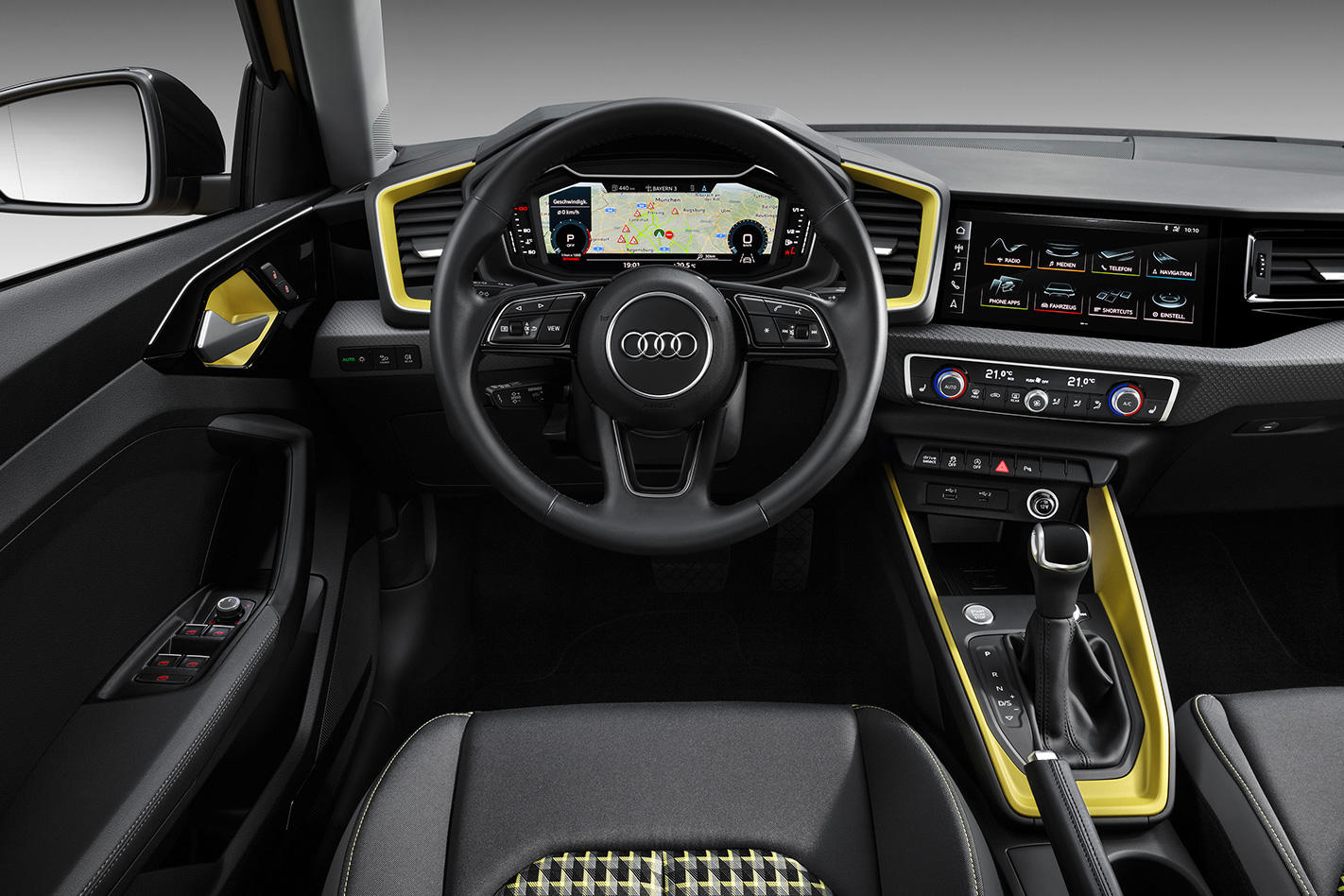
The 35 TFSI – a 1.5-litre turbo four that can drop to two cylinders – has a calmer, more natural feel, and the slick six-speed manual also increases the sense of engagement over the 40 TFSI’s standard and rather anodyne dual clutcher. It is, however, clearly slower, and still delivers its 110kW in a monotonous fashion.
We weren’t expecting to prefer the three-cylinder engine, but we do. There are two tunes, and we tested the more powerful 30 TFSI. No, it’s not quick with 85kW, but somehow there’s more turbocharged attitude in its powerband, making it feel more energetic. It also weighs a huge 145kg less than the 40 TFSI – there’s enough performance, it steers and rides nicely, and the 30 TFSI even feels fleet-footed and keen through the twisty stuff.
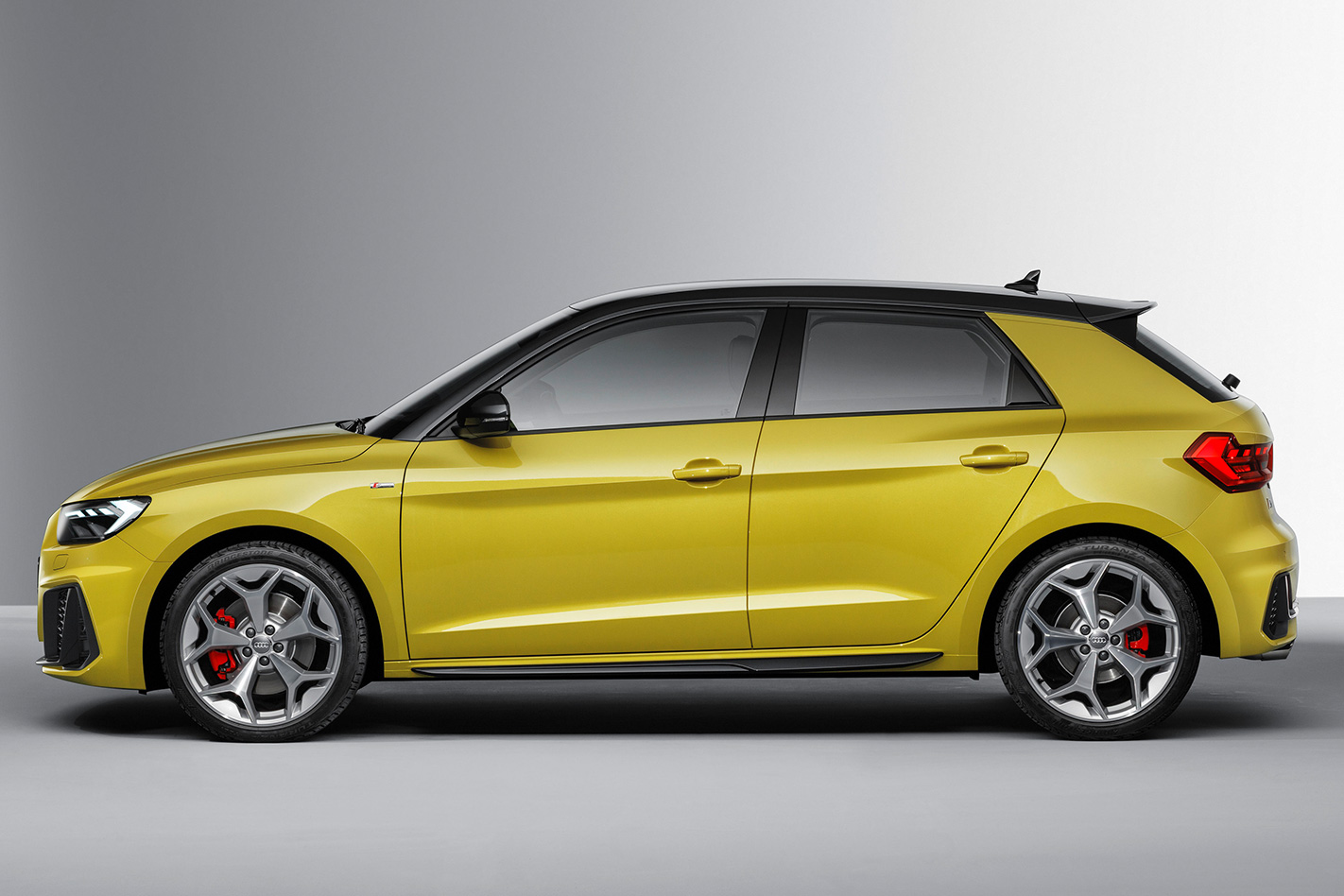
It’s easy to spend even more than the A1’s already high base price, but our pick’s a three-cylinder 30 TFSI with a manual transmission and some choice options, not a more powerful model with a lower spec.
S1 and only
Audi won’t crown its new A1 range with an S1 hot hatch. Last time it swapped the base car’s torsion-beam rear suspension for a multi-link set-up to clear the quattro all-wheel-drive system’s rear differential and driveshafts. That’s been vetoed on cost/development grounds this time, even though the last car made a profit. One senior insider suggested electrification and autonomy are consuming significant resources, making such projects less viable. Could Audi compromise with a front-drive S1? ‘We prefer not to,’ came the reply.
SPECS
Model: Audi A1 Sportback 30 TFSI Engine: 999cc 3cyl, dohc, 12v Max power: 85kW @ 5000-5500rpm Max torque: 200Nm @ 2000-3500rpm Transmission: 6-speed manual Weight: 1105kg 0-100km/h: 9.5 sec Economy: 4.8L/100km Price: From $29,000 (est) On sale: Q2 2019
WHAT IS IT?
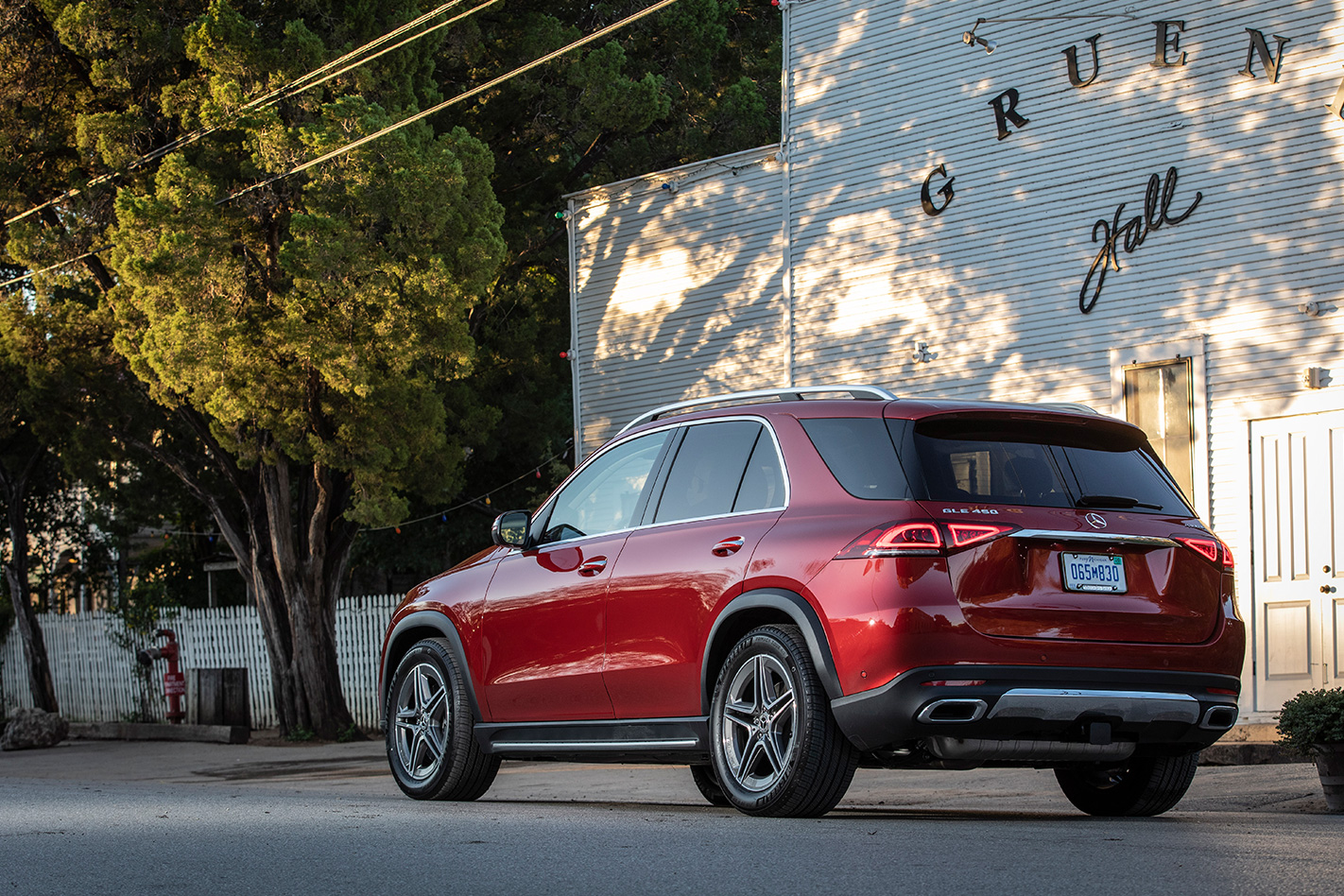
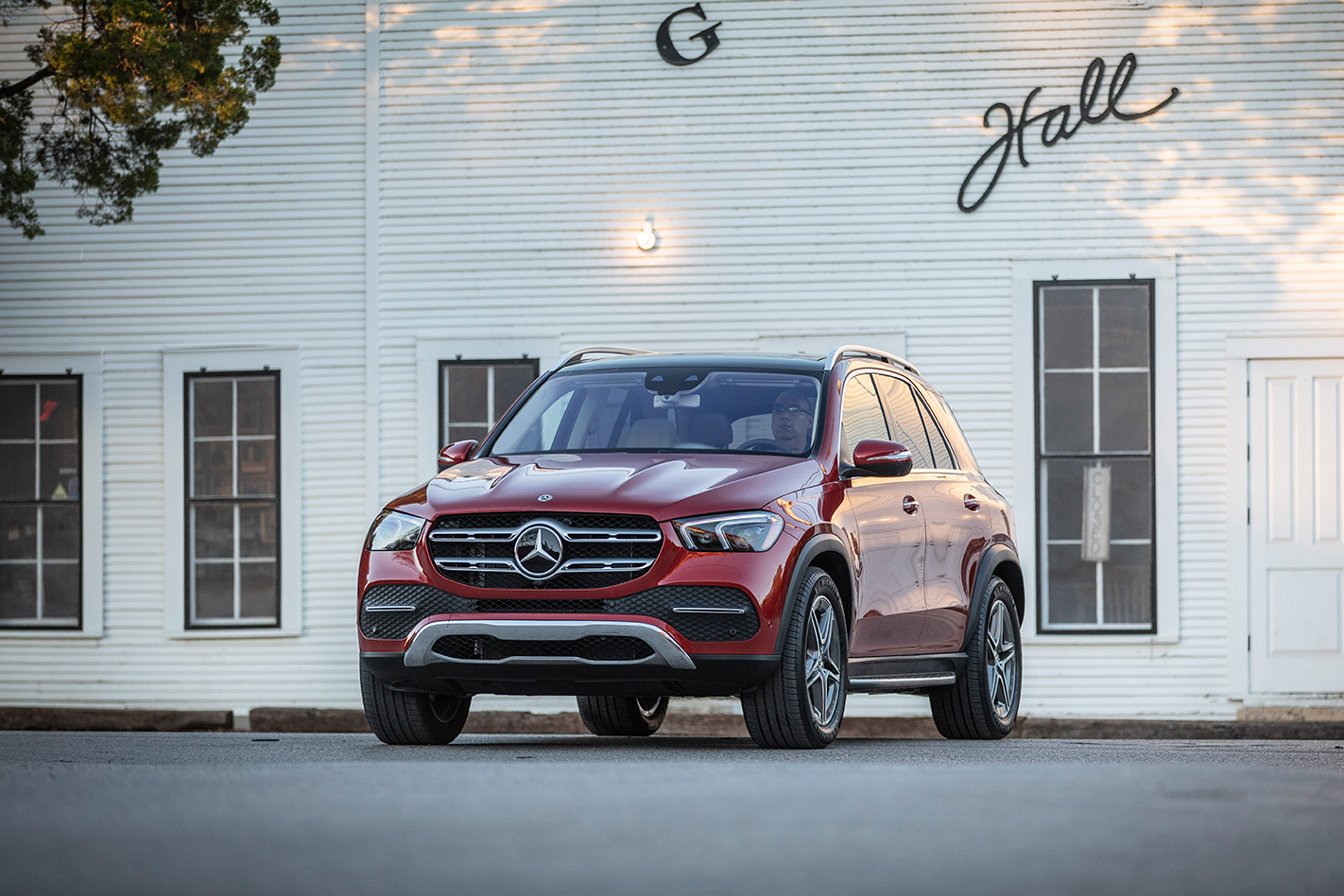
Here is Mercedes-Benz’s original – G-Class excluded – and best-selling SUV, now in its fourth-generation. What began as the M-Class in 1997 is now laden with more technology than ever before, and set to land in Oz by mid-2019 in a three-tier line-up of all-wheel-drive seven-seaters.
WHY WE’RE TESTING IT
The outgoing GLE has been struggling to keep its head above water against premium large SUV competition, but this generation aims to blow those rivals out of the pool. An early preview in Texas, not too far from where the GLE is built, gave us a chance to sample Merc’s remarkable reworking of its family all-rounder, including a first-of-its-kind active suspension set-up.
MAIN RIVALS
Audi Q7, BMW X5, Infiniti QX70, Land Rover Range Rover Sport, Lexus RX, Maserati Levante, Volvo XC90.
THE WHEELS REVIEW
SELLING large SUVs has been a difficult business for Mercedes-Benz in recent times. Year to date, the ageing third-gen GLE wagon has been overshadowed on local sales charts by an X5 in its death throes and awaiting replacement. An overhaul for Stuttgart’s big family transporter couldn’t come too soon, and the brand hasn’t taken to the challenge meekly.
The all-new, fourth-gen model is a boon for Merc’s big SUV stock, with an array of technological innovations including ground-breaking active suspension that advances the game significantly. It also carries over its predecessor’s badge for the first time in this model’s history. The first-gen M-Class of more than 20 years ago met opposition from BMW, who already had M-badged models. That saw it change to ML-Class in 2005, then again to GLE with the third-gen in 2011.
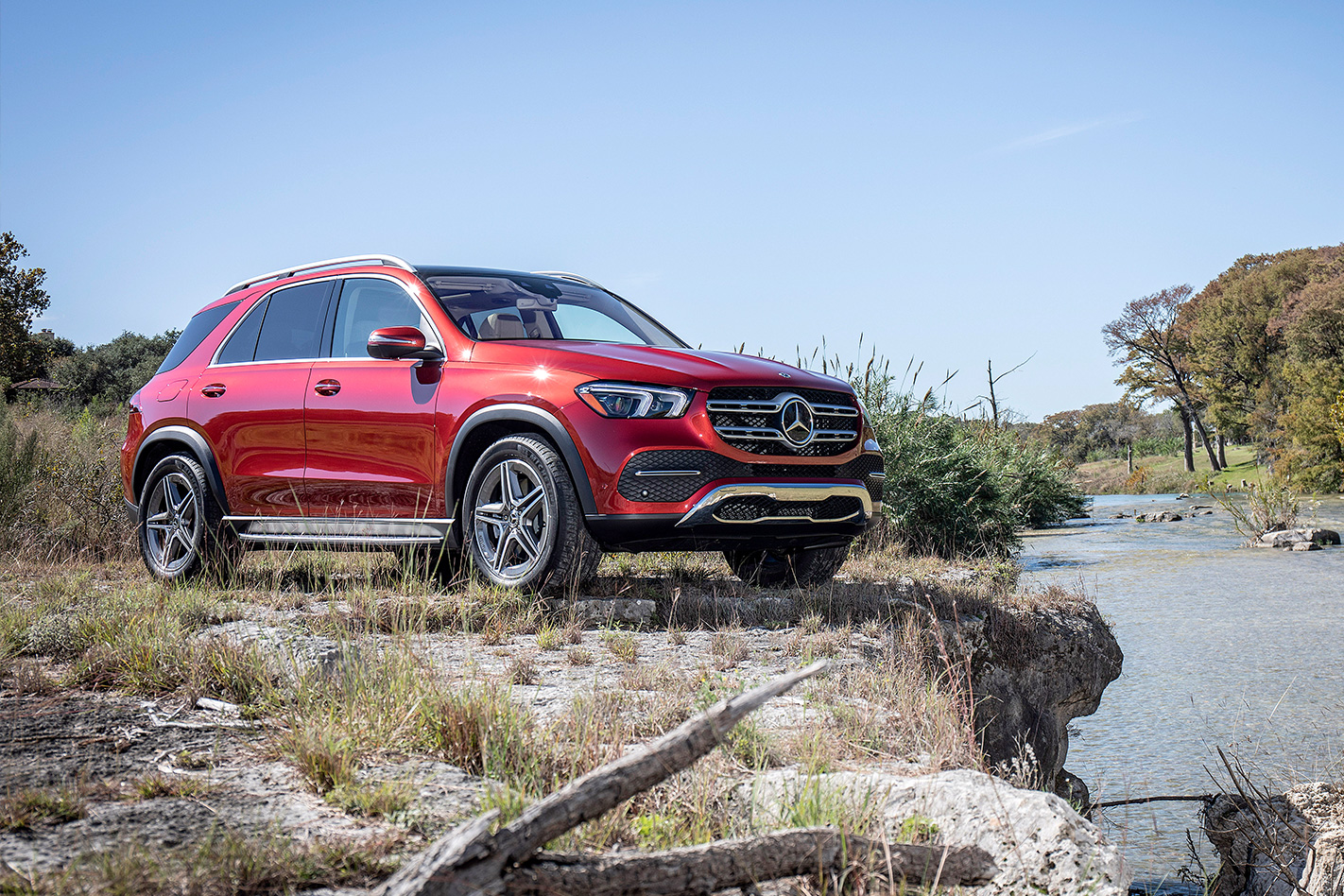
It’s easier to follow the lineage by looking at each iteration, all of which are linked by a distinctive ‘shark fin’ C-pillar shape. Designer Achim-Dietrich Badstubner says he fought hard to keep that element for the new car, which is lower, slightly wider in the body and significantly longer than before. Nose to tail the GLE has gained 105mm, with 80mm added to the wheelbase to open up almost 70mm of additional rear legroom. The body structure uses a mixture of materials and construction methods to improve passive safety characteristics along with torsional rigidity (up 30 percent), and cabin comfort by reducing acoustic intrusion to a serene level.
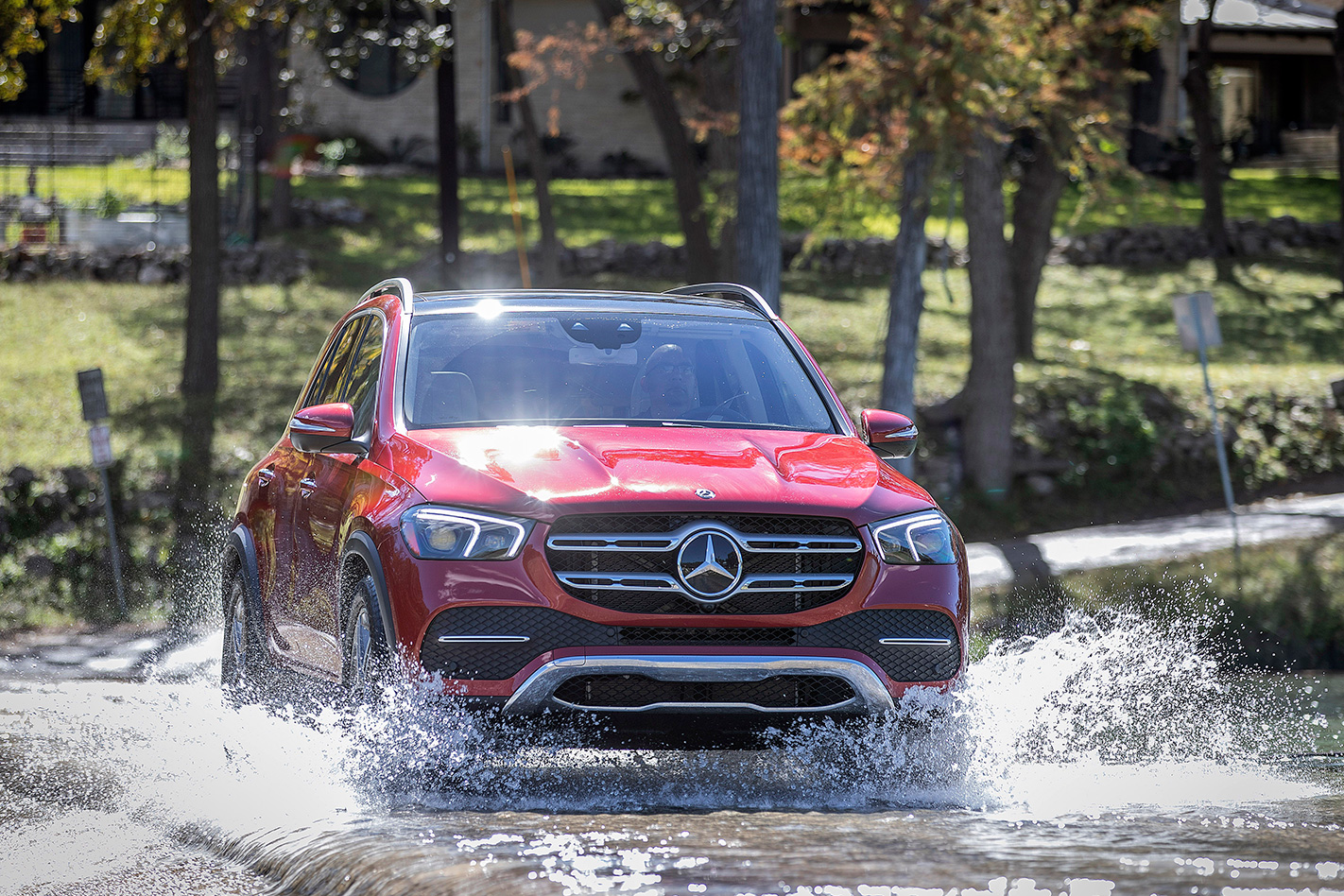
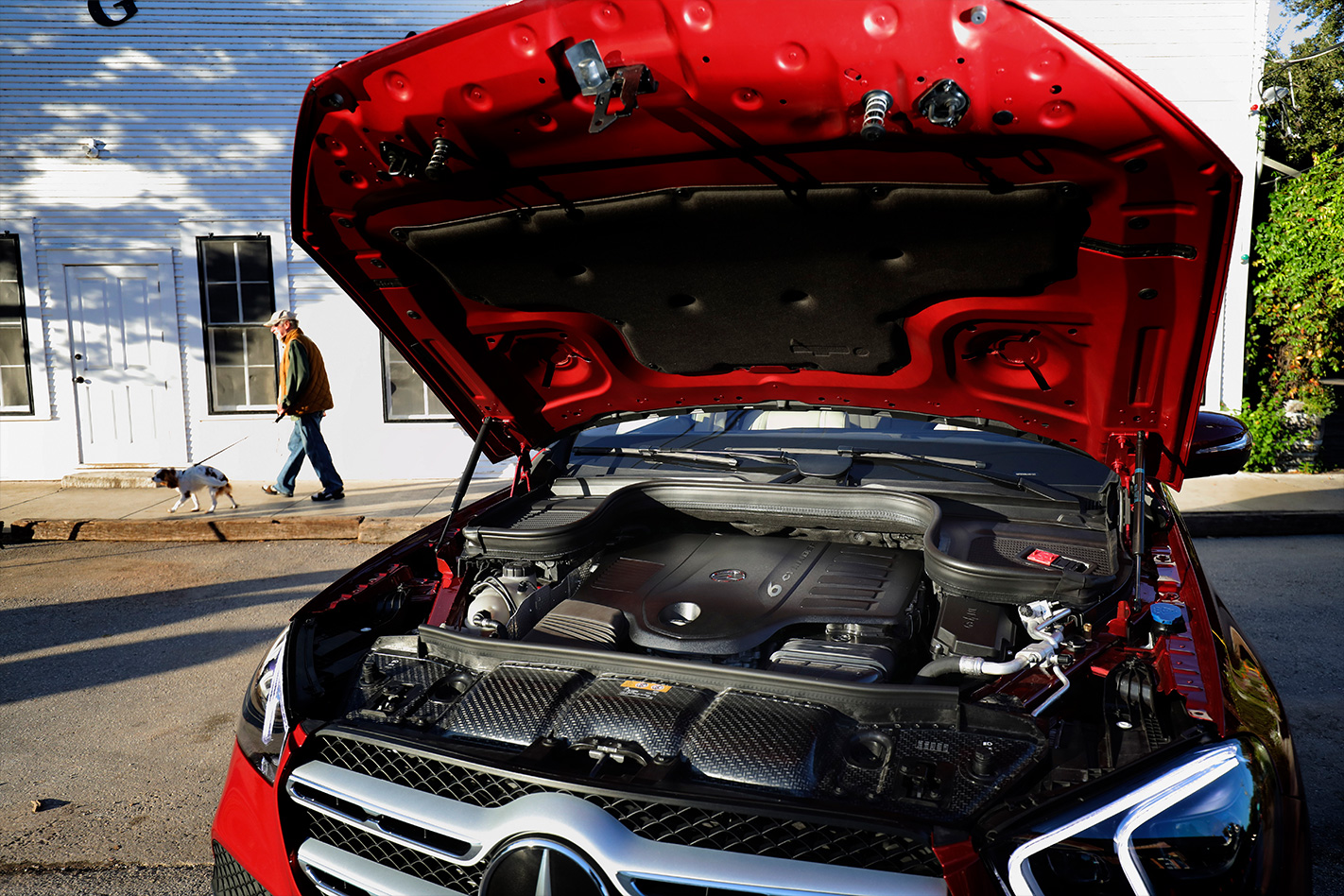
Australia has a three-tier GLE range arriving from Merc’s Alabama plant around the middle of 2019. A sole petrol variant sits sandwiched between entry-level and range-topping diesels, all three with Stuttgart’s proven 9-speed auto and 4Matic all-wheel drive. The GLE300d opens with a 185kW/500Nm 2.0-litre four-cylinder diesel, followed by the GLE450 with a 270kW/500Nm 3.0-litre inline six-cylinder petrol, plus a 48v mild-hybrid system that adds up to 16kW/250Nm at take-off. But the most popular choice initially is expected to be the GLE400d with a strong 243kW/700Nm 3.0-litre inline six-cylinder diesel. Two future AMG variants (namely GLE53 and GLE63) are slated.
In a blind test the oilers are hard to pick from the lone petrol-powered GLE, such is the slickness and refinement of Merc’s latest generation diesels, and there’s no penalty for shopping at the lower end of the range. The torquey 300d shifts the base car’s hulking frame with ease, even though it’s now 90kg heavier than before at 2165kg in total. Performance of the 450 and 400d is tremendous, both reaching 100km/h from rest in under 6.0-sec.
But this is a segment where stopwatches and ultimate dynamics take a back seat to practical considerations such as cargo space, third-row utility and ride quality. For Oz, every GLE will feature seven berths as standard, though the rearmost pew can be deleted at no cost. Massive rear doors make access to the back half easy.
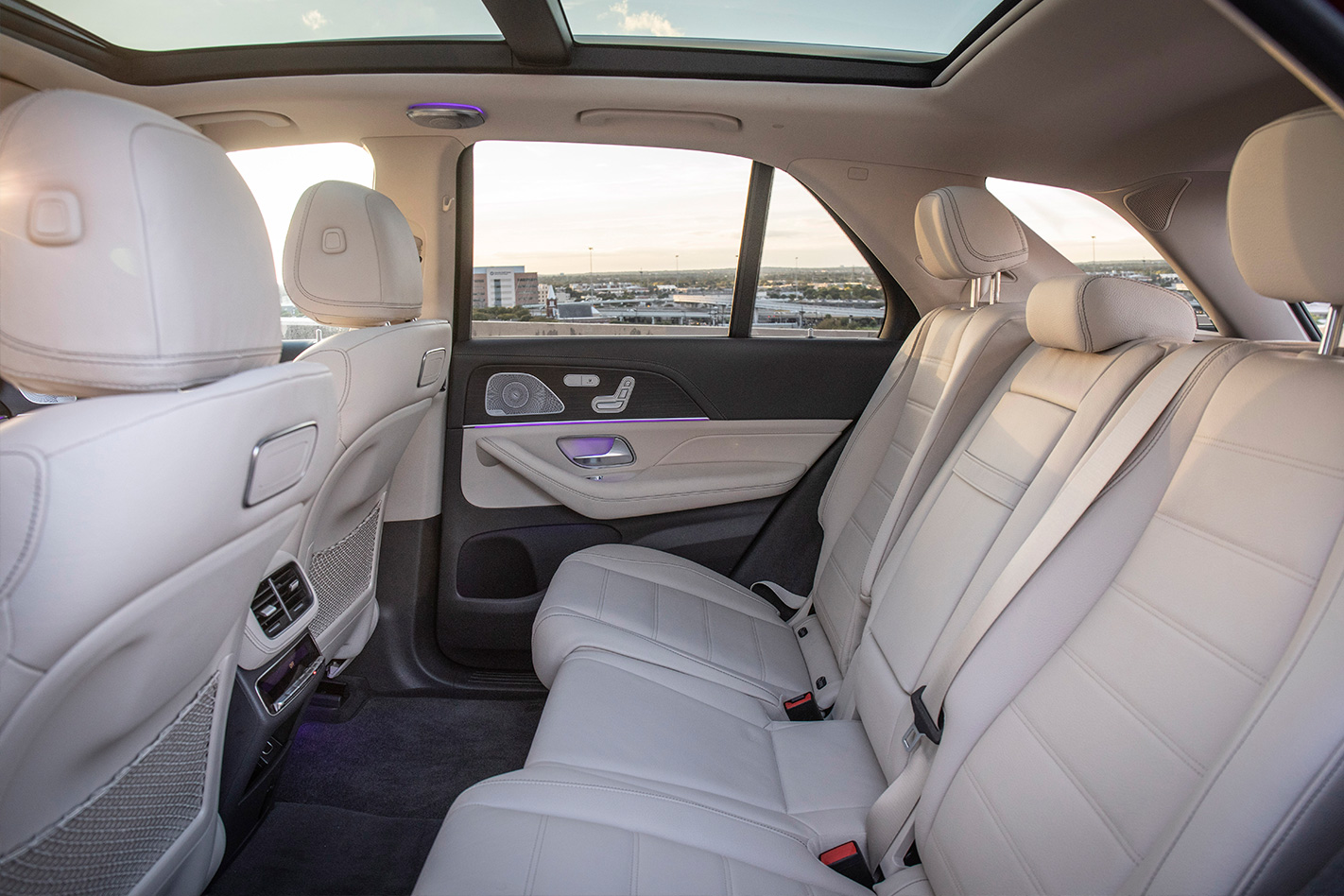
Electric adjustment for the sliding second-row opens up generous space for passengers, and varies boot space between 630L and 825L, or 2055L with all seats stowed. Clever packaging of the folding third row means cargo capacity is the same as the five-seater when tucked away, and a storage compartment for the cargo blind keeps it hidden when all seats are deployed. Kids in the third row get USB ports and cup holders, though an absence of vents means making do with airflow from face-level B-pillar outlets is as good as it gets.
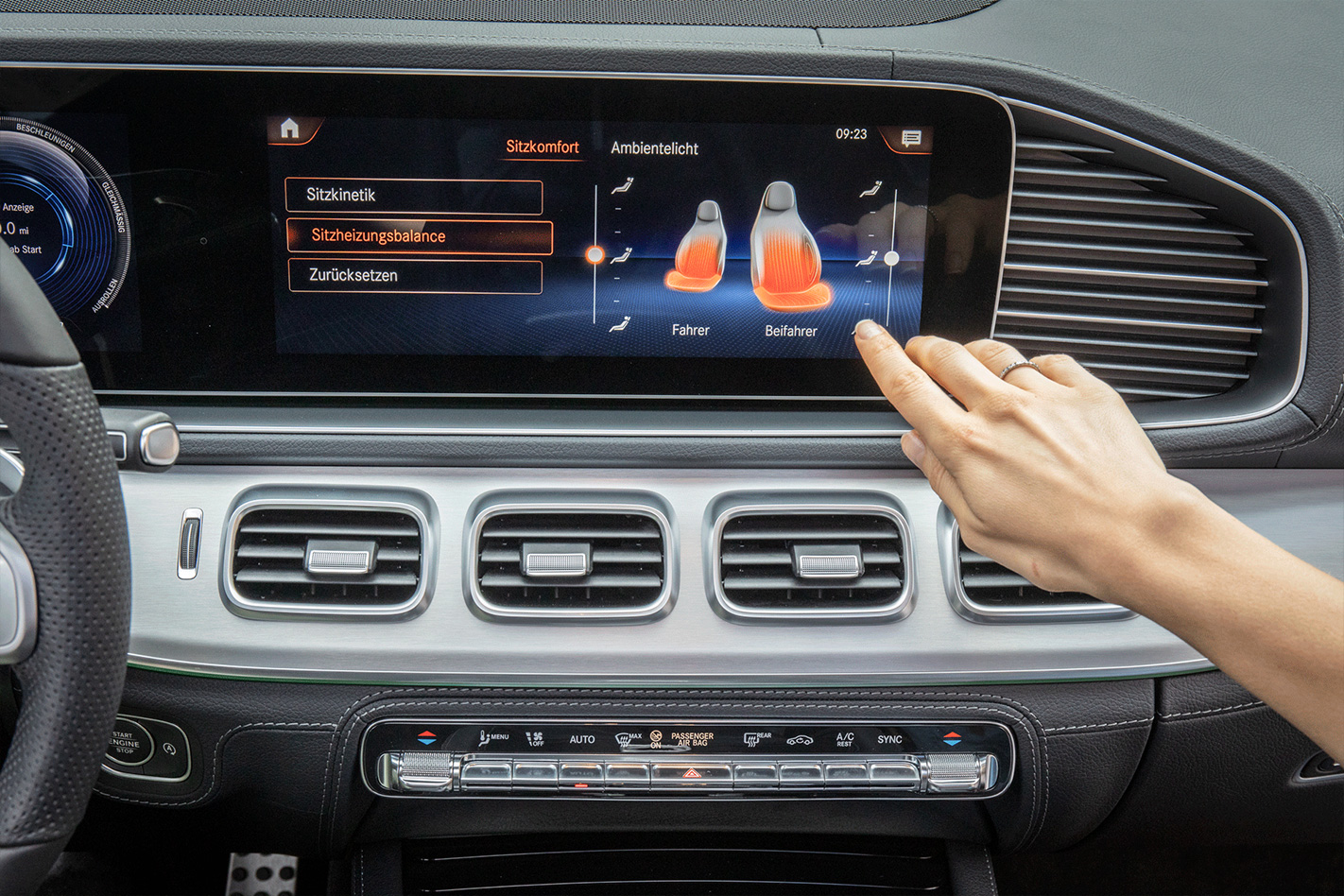
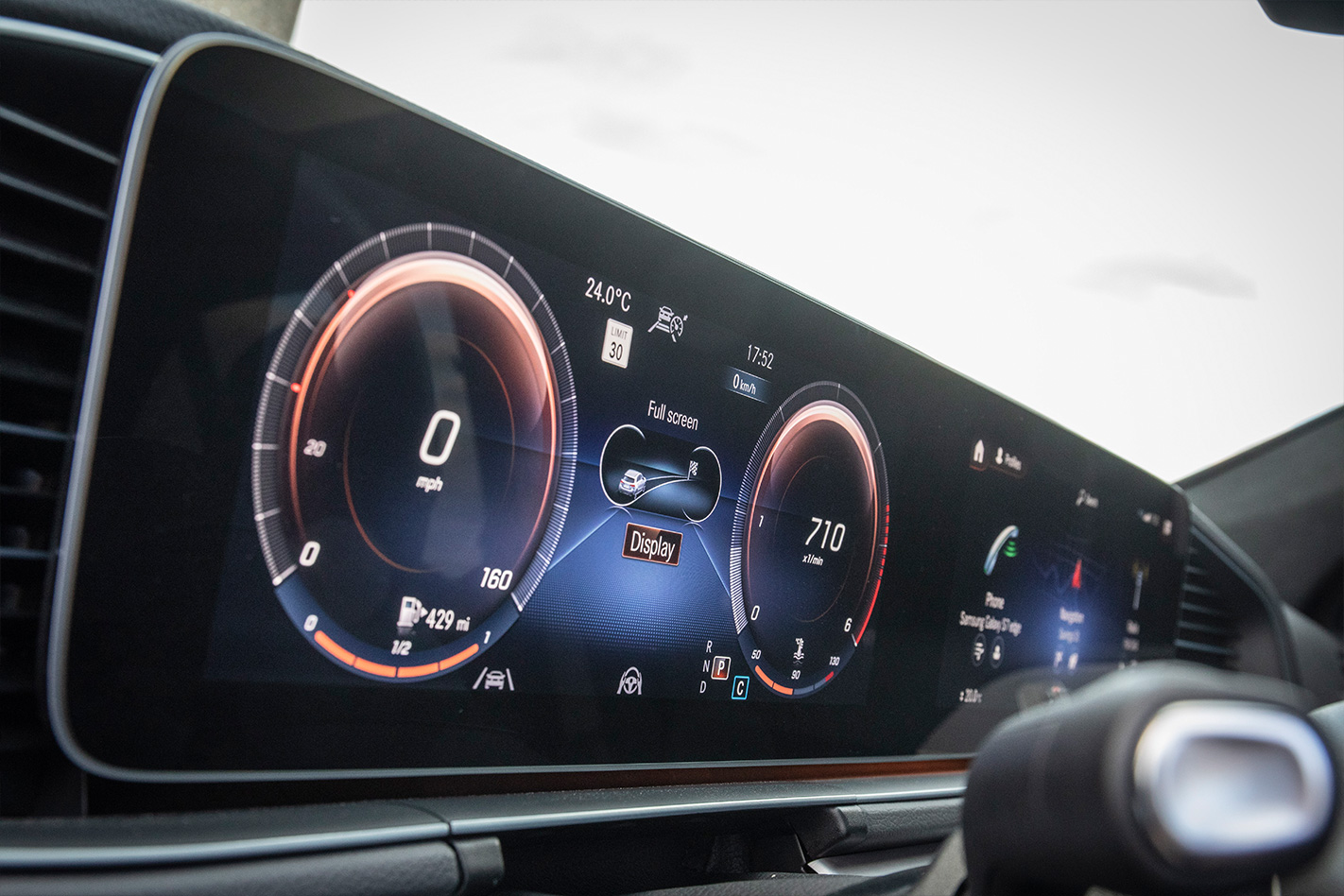
Elsewhere the GLE’s premium cabin is an attractive and comfortable place to spend time. Advanced driver assistance and Benz’s latest MBUX infotainment are standard, presented on a beautiful dual-pane widescreen display. Thoughtful touches are littered throughout, especially with Merc’s Interior Assistant package optioned in. This brings a huge head-up display, augmented reality for clearer navigation and additional intuitive functionality including gesture control that buyers might actually use.
Air suspension is standard in all variants, and adjustable for height and firmness via drive modes depending on driving style and terrain. On broad Texan roads around San Antonio where the GLE was tested its ride comfort was impressive, with only a hint of terseness over the few choppy surfaces we encountered. But the party trick, for those who option it, is a new suspension system called E-Active Body Control.
Mercedes has been playing with active suspension since the 1970s to minimise the impact of bumps on cabins, but this 48v system is a first. It’s available on GLE450 and 400d, with the latter gaining the 450’s 48v battery and alternator when E-ABC is fitted. The hardware offers variable ride heights for each wheel for off-roading, and a rocking-free mode for getting out of soft sand. Integration with the GLE’s radar and camera hardware scans the road surface to pre-emptively react to potholes, and a function called Curve allows the GLE to lean into corners like a motorcycle, which works better on fast, flowing tarmac than tight, twisty terrain. The struts can even recuperate kinetic energy to recharge the 48v system.
Benz has taken an all-encompassing approach to the development of this GLE and delivered a thoroughly well-rounded family car. How much of its cutting-edge tech will be standard in Oz remains to be seen, but the GLE is set to take the fight to a new generation of BMW X5 with more weapons in its arsenal than ever.
THE WHEELS VERDICT
The latest generation of big Mercedes-Benz SUV is a compelling offering for buyers with large families. Considerate packaging has markedly improved practicality, and a range of excellent engines makes it worth considering at every tier of the line-up.
PLUS: Superb powertrains, premium cabin environment, up-to-the-minute technology MINUS: No third-row air vents, intimidating size and weight
SPECS
Model: Mercedes-Benz GLE 450 4Matic Engine: 2999cc, inline 6cyl, dohc, 24v, mild hybrid, turbo Max power: 270kW @ 5500-6100rpm Max torque: 500Nm @ 1600-4500rpm (750Nm system torque w/e-motor) Transmission: 9-speed automatic Weight: 2220kg 0-100km/h: 5.7sec Economy: 8.3-9.4L/100km (claimed) Price: $120,000 (est) On sale: Q2 2019
Black Friday sales are set to kick off, and while the American retail phenomenon has traditionally seen shoppers swarm into department stores in dangerous volumes it’s increasingly becoming a day of keen deals for online consumers too.
Carmakers in the ‘States also get involved in the retail frenzy that is Black Friday, both on the dealership forecourt and on the web, but online car sales is something that hasn’t quite taken off in this country just yet.
But why not? When I say there’s nothing you can’t buy online, I really mean it; a can of dehydrated water is a personal favourite (just add water!), and it’s hard to look past a box of poop for your least favourite person’s stocking… erm, filler.
But cars, being the second-most expensive thing a person will buy in their lifetime, are naturally a different kettle of fish. You’ll buy a fridge or a barbeque, but are you brave enough to hit ‘Buy Now’ on an entire car – even if it wears an attractive Black Friday discount?
Sight Unseen
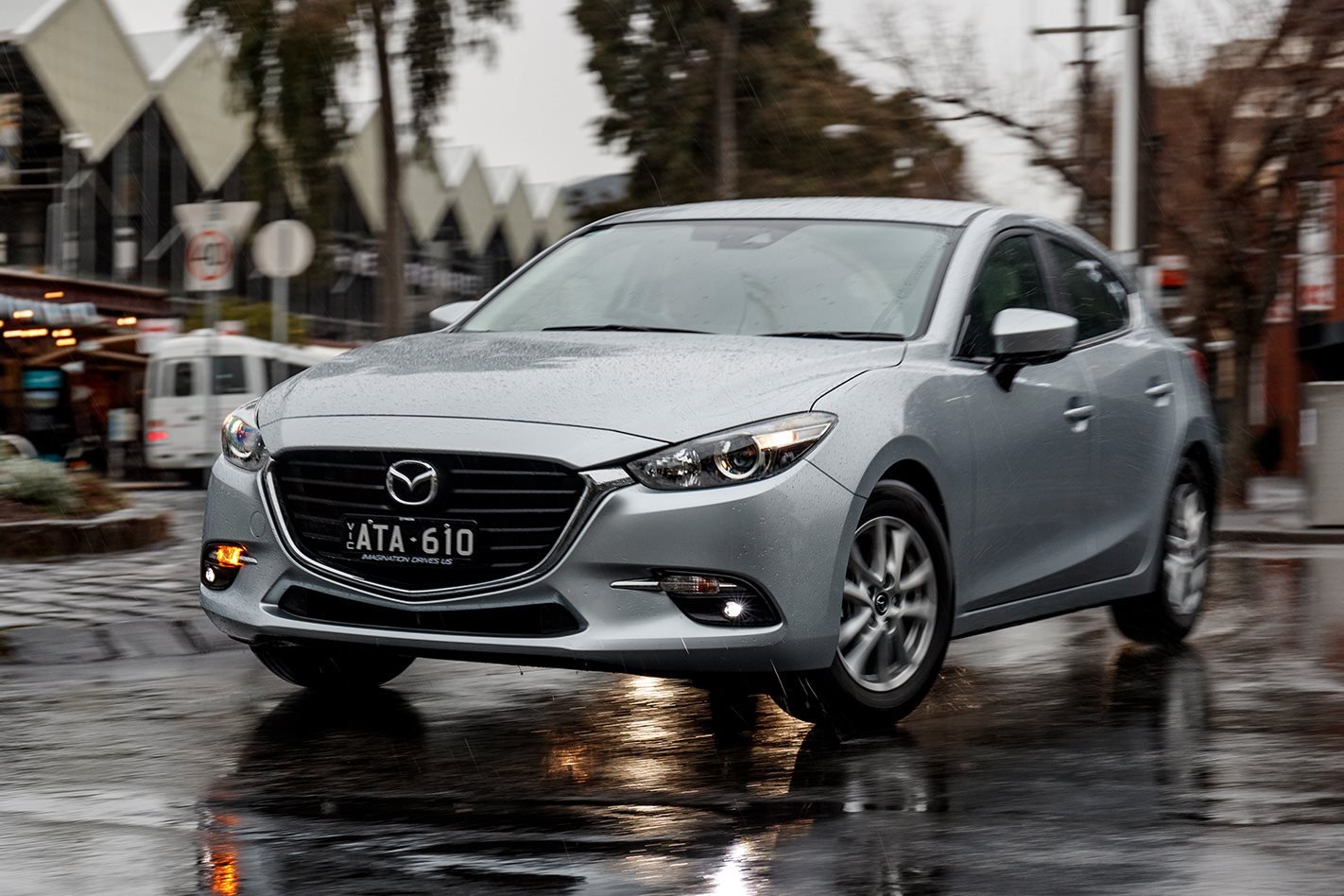
A relative of mine is a big fan of buying sight unseen, though strictly speaking, he’s actually buying via email through a vehicle broker. He simply picks the car, trim level and colour – in his case, his last buy was a Mazda 3 for the Better Half – and the car was sourced at the cheapest price and trucked to their door from interstate.
But what about a test drive, I asked? “Honestly, at that end of the car market, they all feel pretty much the same to us,” he shrugged. “We could pop down to a dealer to try one if we wanted, but we like the brand, and this will be our third one.”
BRZ sellout
Mazda itself doesn’t sell its cars online, but its rival Subaru certainly does. In fact, it was arguably the first mainstream brand to offer a car for sale exclusively via the internet. The 2012 BRZ was an experiment in bypassing the dealership model completely… and with only 200 cars available from July to December of that year, it was a reasonably low-risk exercise.
“It was a massive success,” says Subaru Australia’s public relations manager David Rowley. “The offer opened at midnight, and the first customer logged on at 1245am and bought their car in 20 minutes. The demand even crashed our website!”
He says that 50 BRZs were sold in the first hour and a half, and all 200 were gone by 3am on the same day.
Mr Rowley says the relative simplicity of the model on sale helped a lot. “All information was available online, and we offered a national drive-away price on the car,” he explains. “There weren’t too many demonstrator models, but a customer could find one by entering their postcode. We also had a dedicated customer support base here to regularly update the customer.”
Subaru still sells cars online, and has actually just expanded its operations with a new Build and Buy website tool. It allows a potential customer to pick any car from Subaru’s range, including the Forester, Impreza and XV, by model, colour and options, and prices it at a driveway figure.
More than 15,000 builds have been performed online this year, and even though they don’t all end up as a purchase, Subaru Australia managing director Colin Christie says it offers “an exciting opportunity” for the company.
“The ability to purchase a vehicle entirely online ensures we continue to offer access to Subaru when and where our customer wants.”
It might sound like Subaru is making the dealer experience irrelevant, but Mr Rowley says that’s definitely not the case.
“We consider the dealer delivery requirement an essential part of the loop,” he says, “not only just in terms of hand-over, but also for the entrée to the servicing relationship, beyond the initial purchase.”
Not There Yet
Other companies with a finger in the online car retailing pie are Tesla (which doesn’t sell cars through a traditional dealership network) and Toyota, which has recently begun trialling an internet sales model with a small number of dealers. However, they’re the exceptions: Skoda, like many other car brands in this country, is taking a ‘wait and see’ attitude towards the notion of people buying its Octavias and Kodiaqs online.
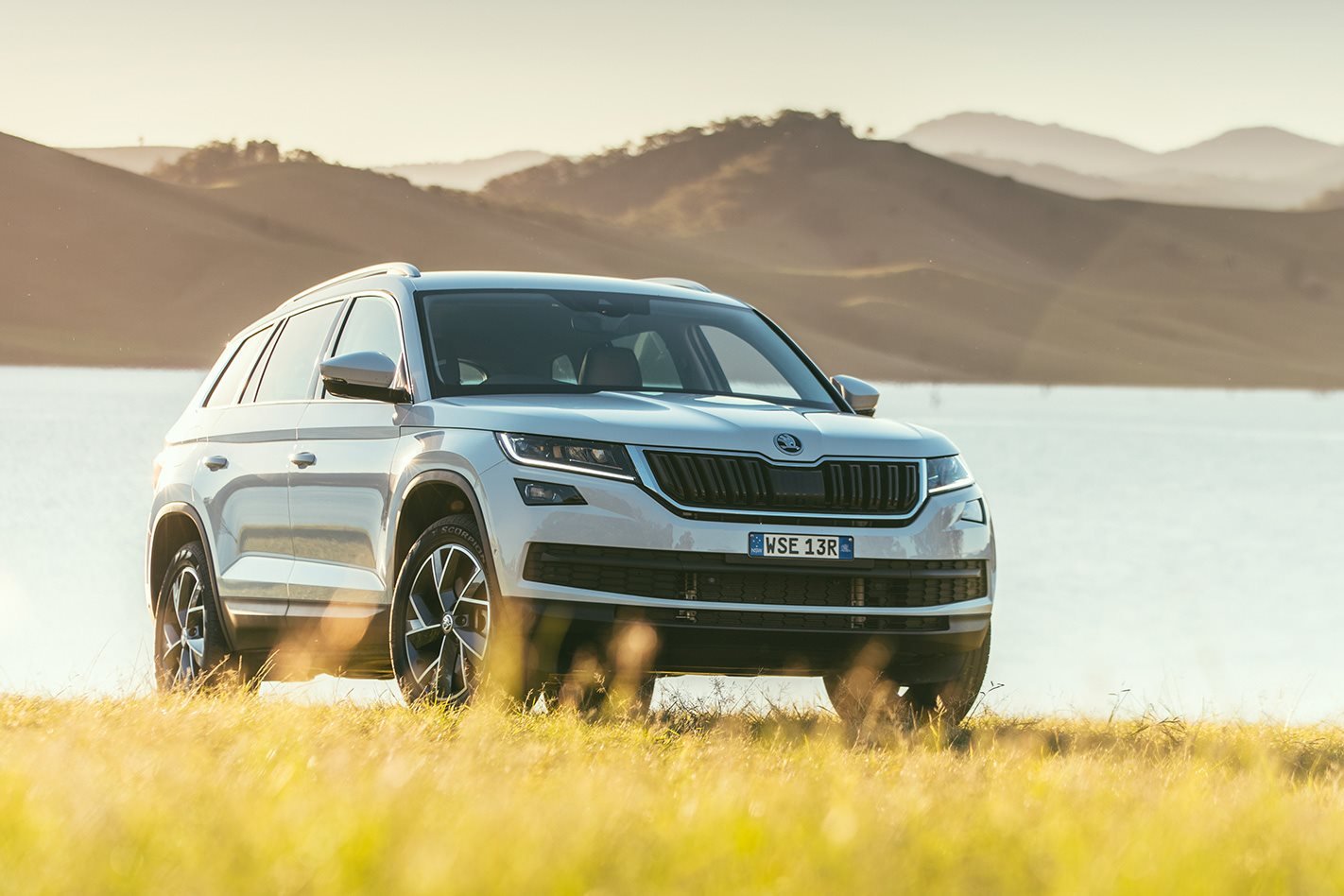
“We do believe that in future, and even today, some people want to buy their cars online,” Skoda’s Board Member for Sales and Marketing, Alain Favey, told WhichCar. “We are working on solutions for this, because we want to offer the customer the whole deal, from information to financing the car under one umbrella.”
As part of the Volkswagen Group of car companies, Skoda is waiting for a new central digital platform with extended e-commerce capability that covers all of the group’s brands to come onstream. Mr Favey says it’s still a couple of years away yet, but will potentially offer services like remote firmware and software upgrades to its cars.
He’s still not convinced, though, that customers are ready to pick up the mouse and buy cars online en masse.
“We don’t think it’ll be a big number of customers,” he says.
“Maybe by 2025, it’ll still be only five to 10 per cent of customers buying completely online. We still think that buying a car is such an important investment for people, and it’s such an emotional choice that has to be made that people will still want a formal point of contact and a similar buying experience to the one they have today.
“That’s why we’re still investing in our dealer network. Even in 20 years’ time, we believe it’ll still be the route of choice for the majority of people to buy a car.”
Subaru opens Do Service centre in Victoria
Offline is Still Okay
While buying a car in a one-stop-shop way via the interwebs is certainly convenient, the fact is that that same convenience will end up costing you a bit more on average.
The way to save money on a new car is to be prepared to buy something that the dealer has on their lot, rather than holding out for a particular colour or trim level. Car yards thrive on turnover, and if you can live with a white car instead of an orange one, then you’re more likely to be able to ink a deal for a few bucks off.
Mr Rowley counters that by suggesting that the convenience of doing everything at home – while still having the option to come and see a car in the metal – will attract customers regardless.
“We see online selling as a complimentary activity to the dealer network,” he says. “Trade-in information, insurance and finance through Subaru… it’s clear, time-efficient and offers the customer more choice than ever before.”
Have you bought a car online, or would you never do that in a million years? Let us know in the comments below!
When you think about the abilities of a Formula 1 car, its acceleration and downforce are usually what come to mind. But in the last few years the braking systems in F1 have become arguably just as impressive.
Before we dive into how they work, let’s look at the basics of braking and how the previous conventional system worked.
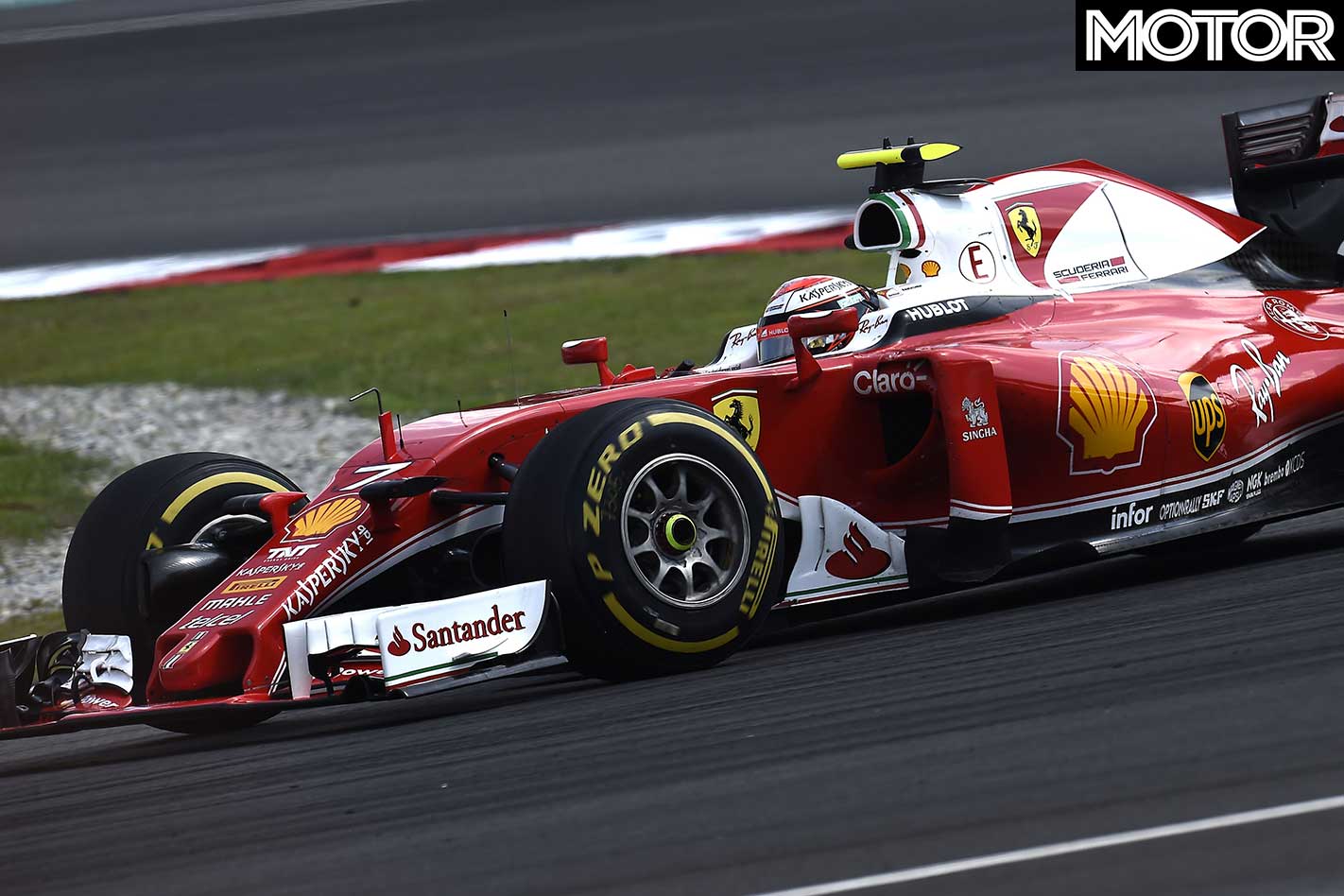
Much like the brakes in your car (unless you own an Alfa Romeo Guilia, but we’ll get to that), the system used pre-2014 in F1 cars had direct physical connection from the pedal to the calliper.
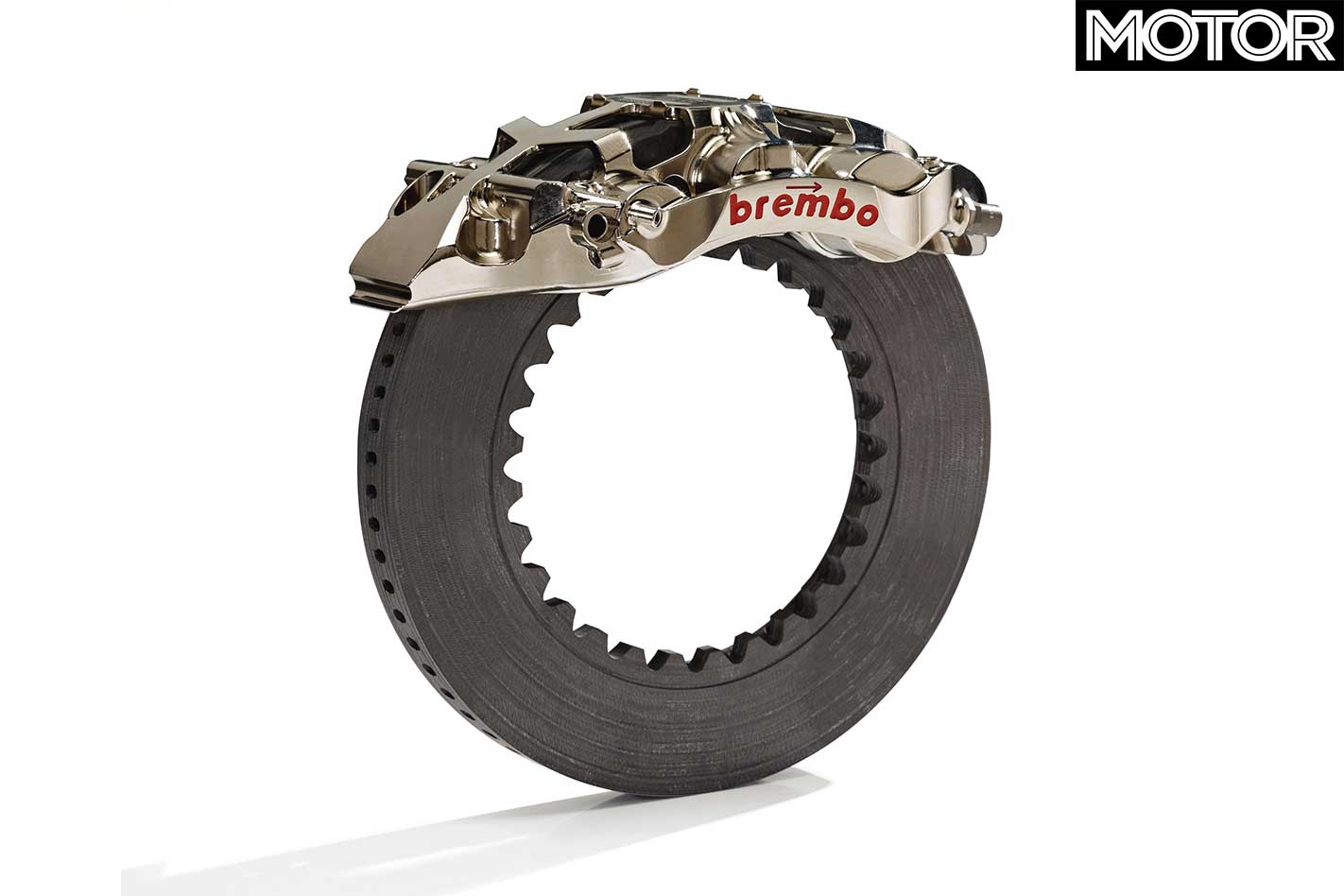
To simplify it somewhat, pressure from the pedal transfers to pressure on the fluid in the brake lines, which in turn does the same to the callipers and, well, more pressure, but this time for the callipers, applying friction to the disks and slowing the car. Rather dramatically, in the case of F1.
In 2009, the kinetic energy recovery system (KERS) was introduced to F1, and this changed the braking game somewhat.
As KERS harvests power under braking, it also creates friction and results in more dramatic deceleration. In 2009 this wasn’t a huge issue for drivers, as KERS was limited to harvest a maximum of just under 60kW. Until 2014, rear brakes were still hydraulic.
Now, F1 uses a similar system called ERS which applies more friction and is allowed to gather more energy – around 120kW.
Because of this, teams were allowed to use a far more adjustable electronic braking system to better control the pressure applied to the rear brakes for more balance and stability. Front brakes remain hydraulic.
So how does this system work? When a driver brakes, the pedal still pressurises the master cylinder for the rear brakes hydraulically, but the physical connection ends there.
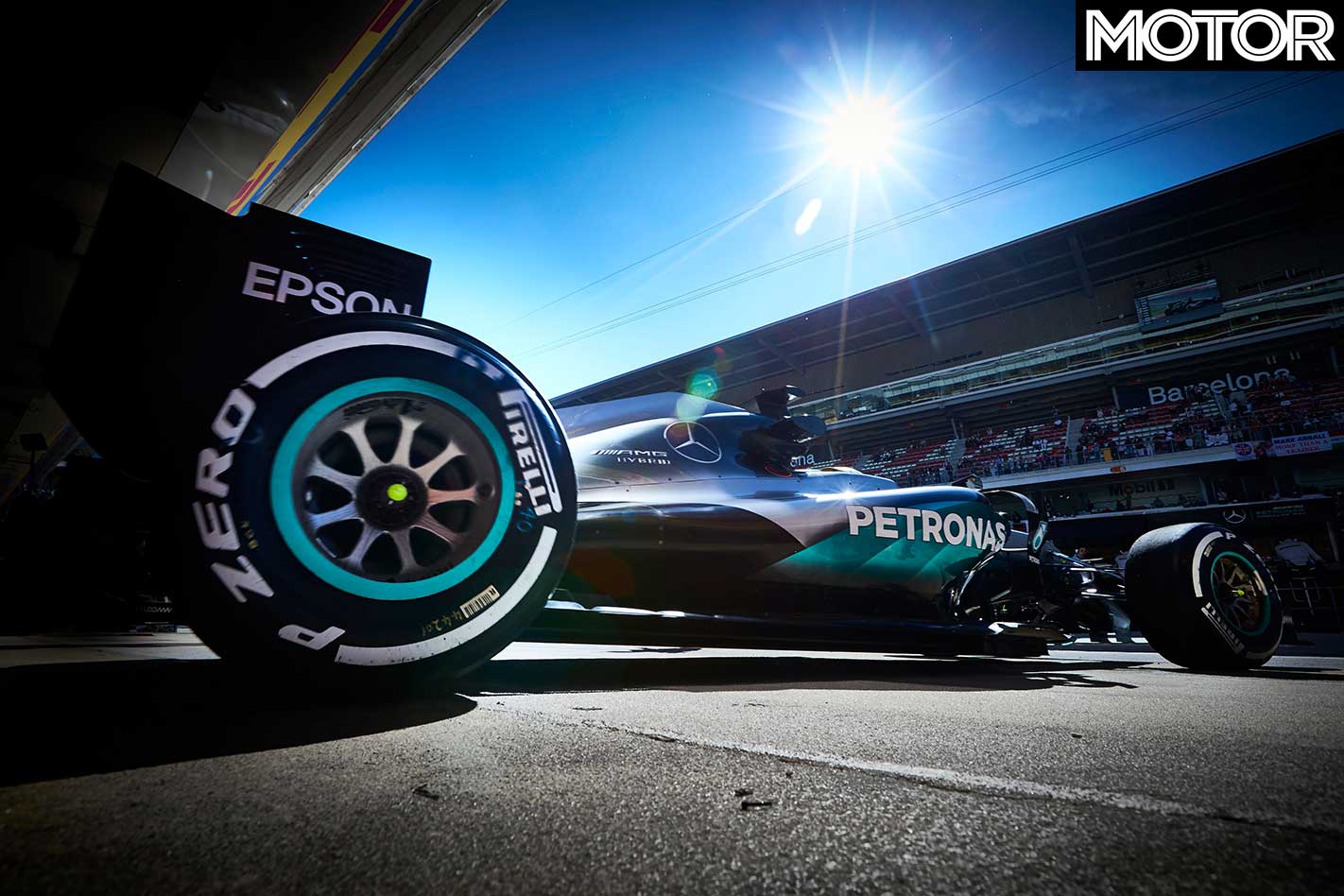
A computer measures the driver’s pedal pressure, and then takes into account both the front brake effectiveness and how much energy the kinetic motor generator unit (MGU-K) is able to harvest before reaching the 120kW storage capacity. The front/rear brake bias chosen by the driver is also taken into account.
While energy is being collected, the brakes will ease off to counterbalance the amount of retardation caused by the friction of the ERS. If the MGU-K is unable to gather any more energy, the rear brakes apply full pressure. If the ECU which controls the rear brakes fail, there’s a backup line to the brakes, though its effectiveness is limited and unable to adjust itself.
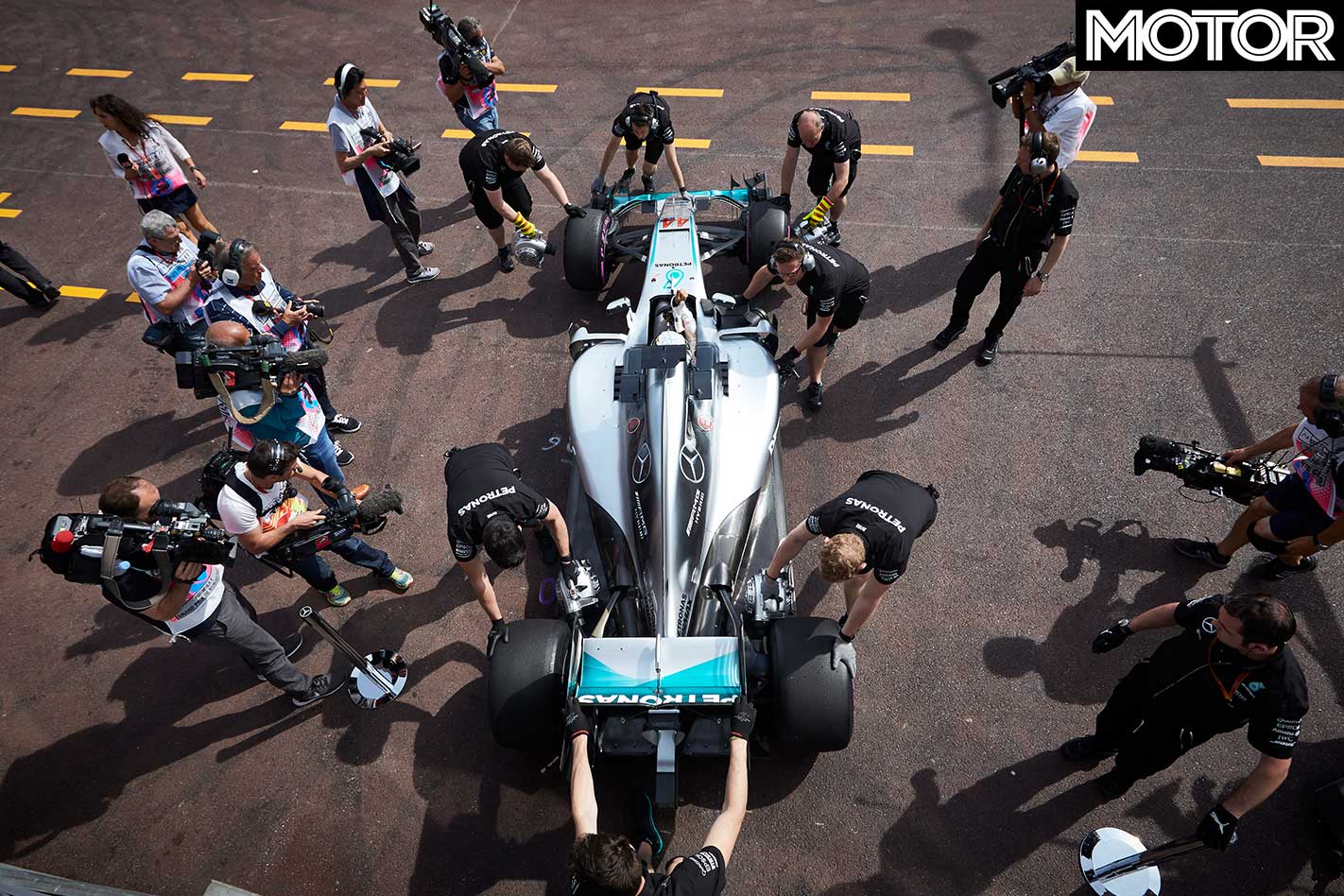
The lower reliance on rear brakes has now meant engineers can use smaller (and therefore lighter) brakes at the rears, with some teams even using four-piston callipers instead of six.
Though brake-by-wire remains primarily the realm of F1 engineering, Alfa Romeo has taken it to the road with its Guilia’s braking system, known as Integrated Braking System (IBS). Mercedes also gave it a try in the early 2000s with Sensotronic, though it didn’t last long, and many cars were recalled.
It appears size is everything when it comes to Australia’s appetite for dual-cab pickups, and as Toyota Hilux, Ford Ranger and Mitsubishi Triton sales continue to demonstrate, the demand is showing no sign of slowing. But while the mainstream brands scramble to get a slice of the one-tonne ute action, there is a new battle looming in a class above.
Kicking off the plus-size revolution in 2016, the Ram 2500 and 3500 offered a pick-up like no other with a monstrous towing capacity and the road presence to match. It’s is now on offer as the more manageable 1500 to do battle with Ford’s steroid pumped Ranger Raptor.
In the US, vehicles like the Toyota Hilux are somewhat amusingly categorised as light trucks, with American customers spoilt for choice when it comes to so-called full-size versions, while we Aussies feel left out.
Here are the top US-market trucks that we’d like to see rolling out of Australian showrooms, offering that little extra heft and brawn over the current kings of the ‘light-ute’ market.
Click on the image gallery above to read about the Yank utes we want in Australia
Australian Racing Group, managing company of the new TCR Australia series and of the freshly-confirmed S5000 series has revealed the calendar for TCR’s racing season in 2019.
Following the Shannons Nationals as a support series, TCR Australia and S5000 will hit six tracks across seven rounds, with three races per round for TCR.
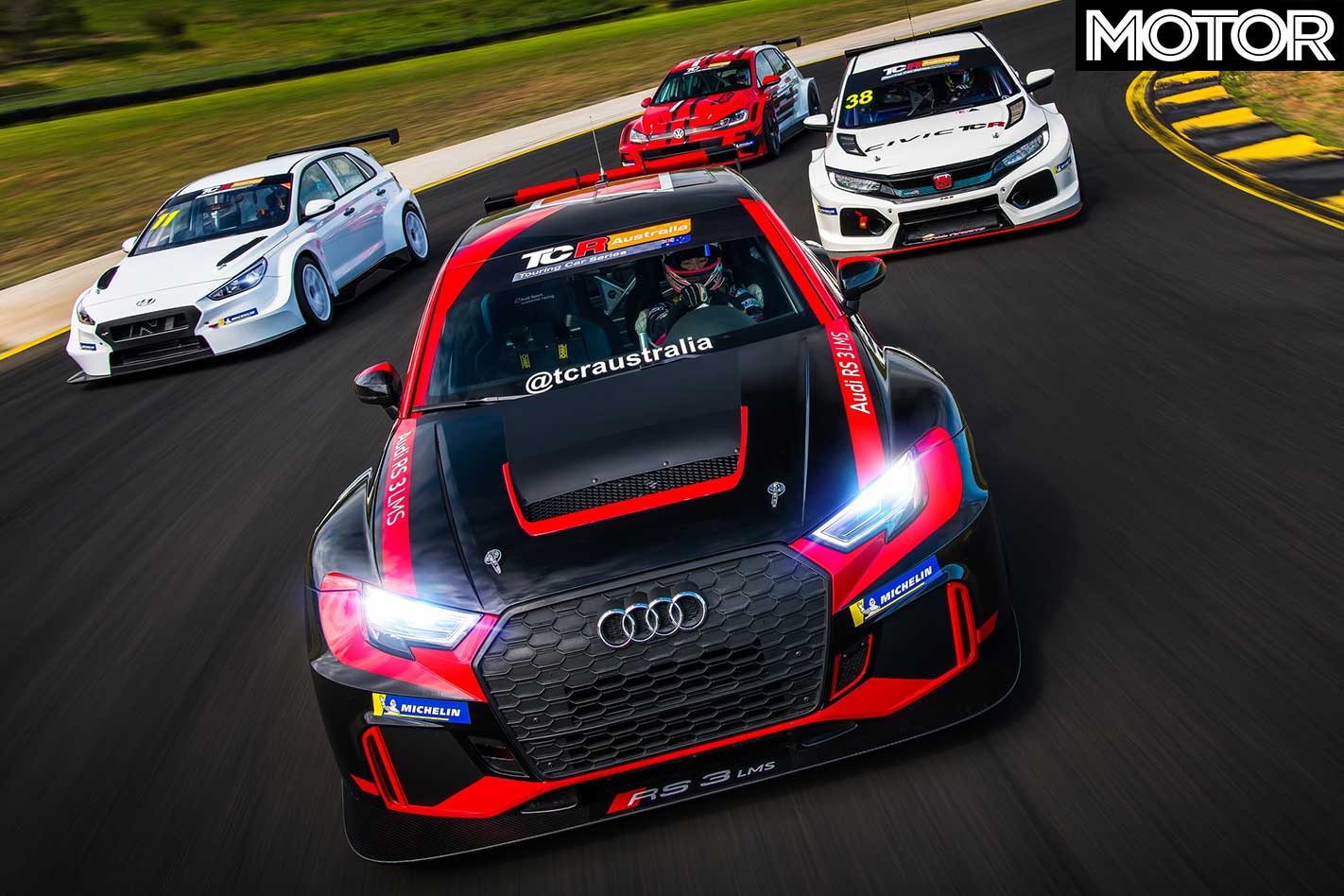
Round one takes place at Sydney Motorsport Park on the 17-19 May weekend, before round two at Phillip Island between June 6 and 9. Round three hits The Bend Motorsport Park across July 12 to 14, then a couple of weeks later TCR heads to Queensland Raceway on August 2.
Winton is the fifth round on 31 August, then Sandown on September 20 before a revisiting of The Bend Motorsport Park on the November 15 weekend.
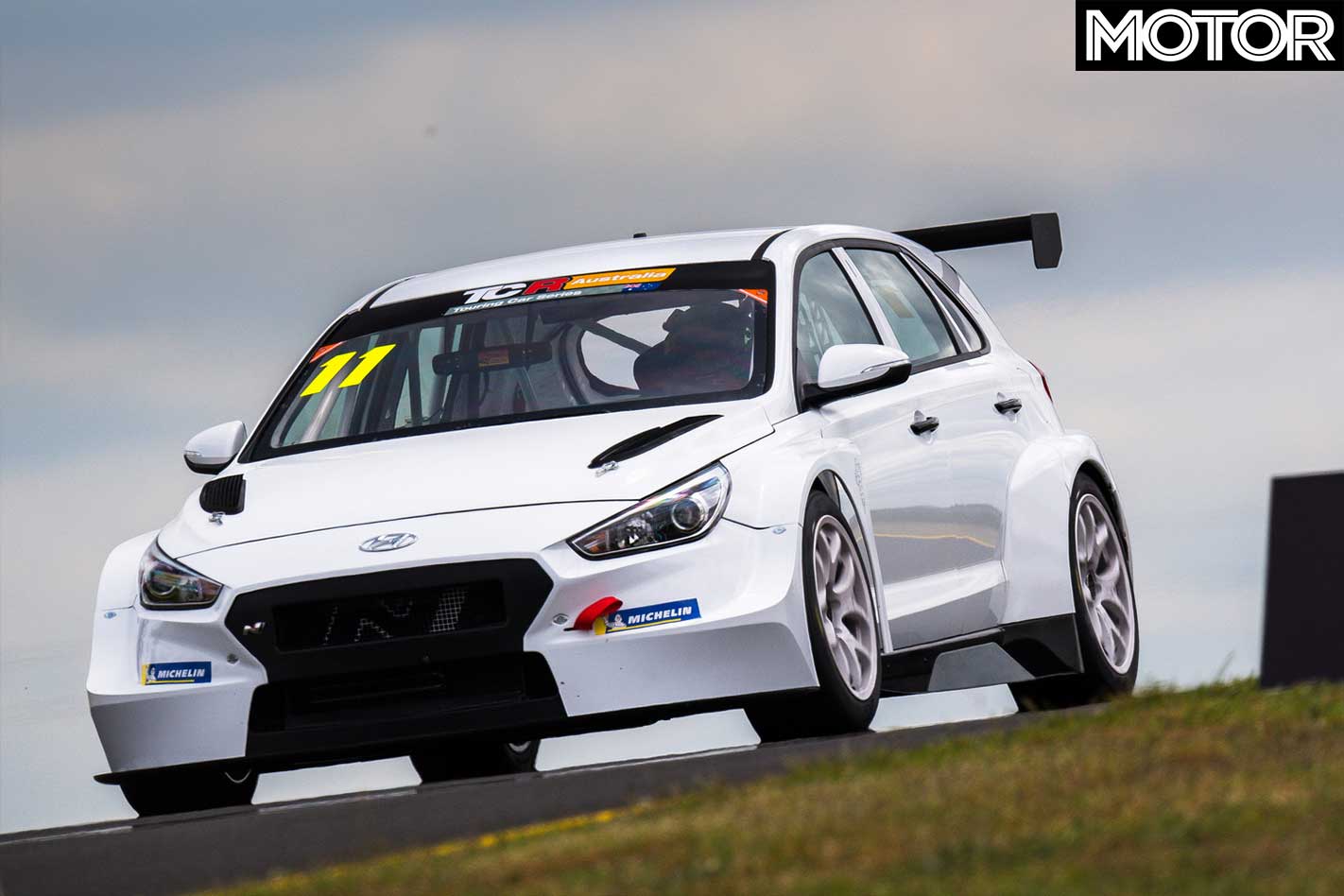
So far, four makes of car are expected for the series, with Hyundai’s i30 N already having been entered by a team – HMO Customer Racing.
Audi RS3, Honda Civic Type R, and Volkswagen Golf GTI TCR racers are all present in Australia and ready to go.
Each of these cars run 2.0-litre turbo fours, with output limits of 257kW and 420Nm. They are, of course, front-wheel driven.
Potential drivers for the series haven’t yet been speculated upon, though racers from other Australian series were allowed a sample of the TCR cars’ potential this week.
Most notably, Supercars driver Chaz Mostert was rather impressed with the Hyundai i30 N TCR, likening it to a GT3 racer.
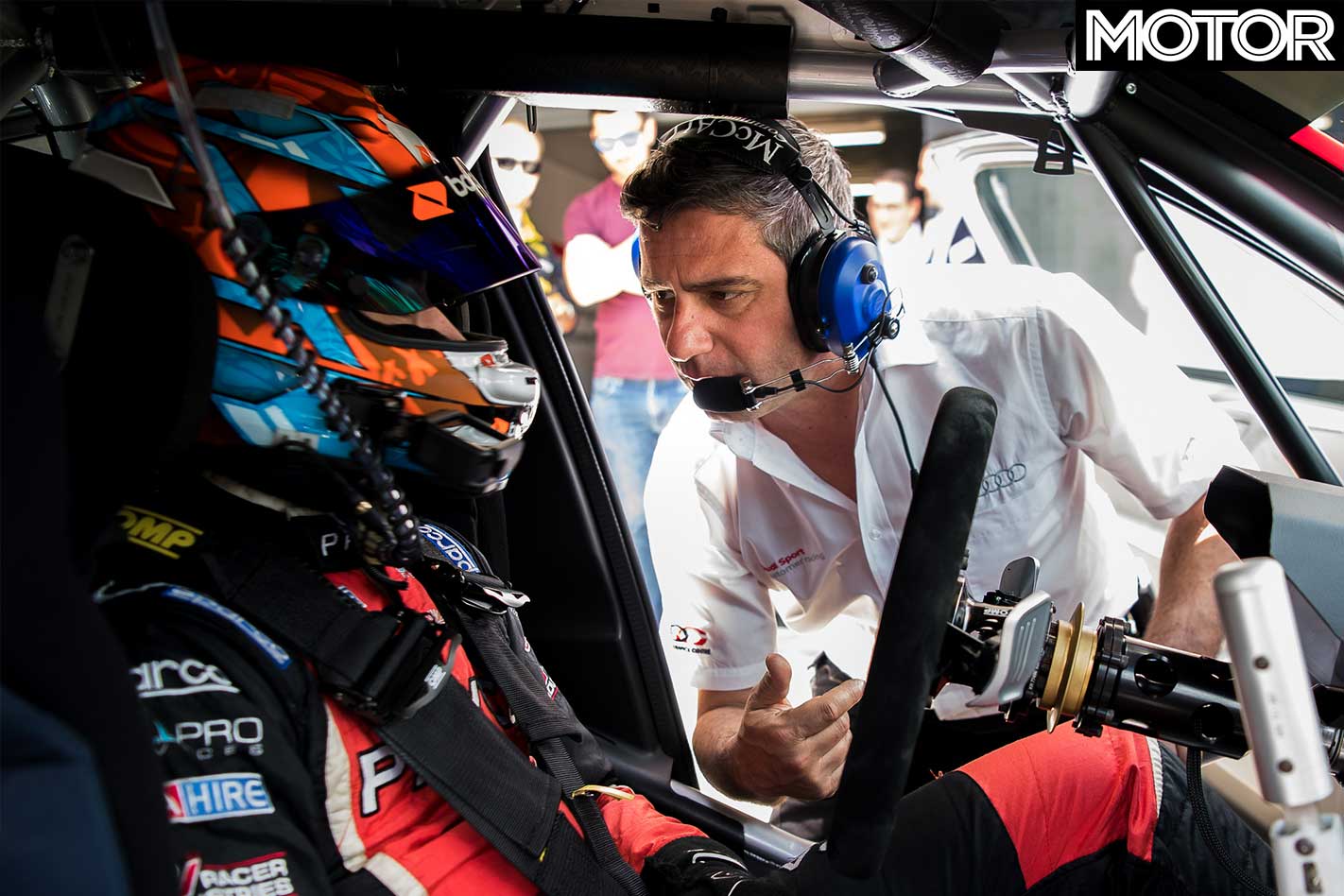
“I haven’t driven too many front wheel drive cars, but it felt pretty cool,” Mostert says.
“They are kind of like a hot hatch, front-wheel drive GT3 car.
“As a front-wheel drive car, it’s definitely on steroids! You can get quite a lot of speed up and the way it moves around is quite exciting. It also makes you feel pretty safe behind the wheel.
“They are actually quite comparable to a GT3 car in terms of driver satisfaction.”
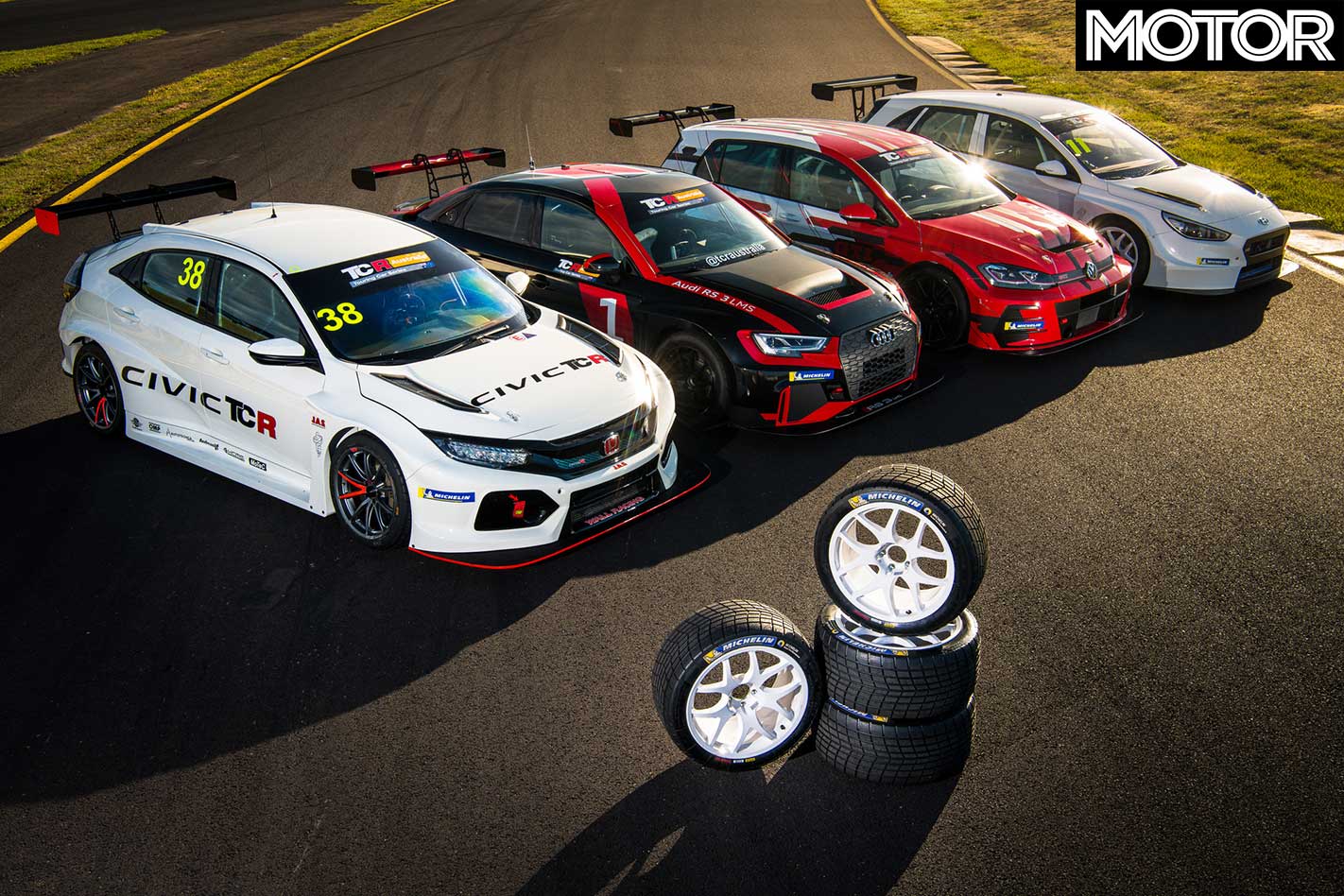
James Moffat, Leanne Tander, and Macauley Jones were also invited to drive Honda and Audi’s TCR racers, and were equally impressed.
ARG director Matt Braid says there’s more to be confirmed, including broadcasting and even the viability of endurance races, which could come as soon as 2020.
“There are still a number of factors to confirm, including the broadcasting of the TCR events, and we are close to locking in all the details of what will be a great debut series for the teams and drivers that commit.”
An image of Ford’s latest SUV – leaked at a Ford dealer event in the US – points to a rougher, tougher version of a midsized high-rider that would fit perfectly within Ford’s current framework of outdoors-ready rumblers.
Colloquially known as the Baby Bronco, the smallish SUV looks to be sized to fit between Ford’s two smallest SUVs, the pint-size EcoSport and mid-range Escape. However, its rugged demeanour paints it as a rival to vehicles like Jeep’s latest Renegade, the Mini Countryman and the Subaru XV.
Ford’s current line-up of larger SUVs includes the unapologetically macho Everest, and the less rugged, but still angular, Endura that drops here in diesel-only guise in December.
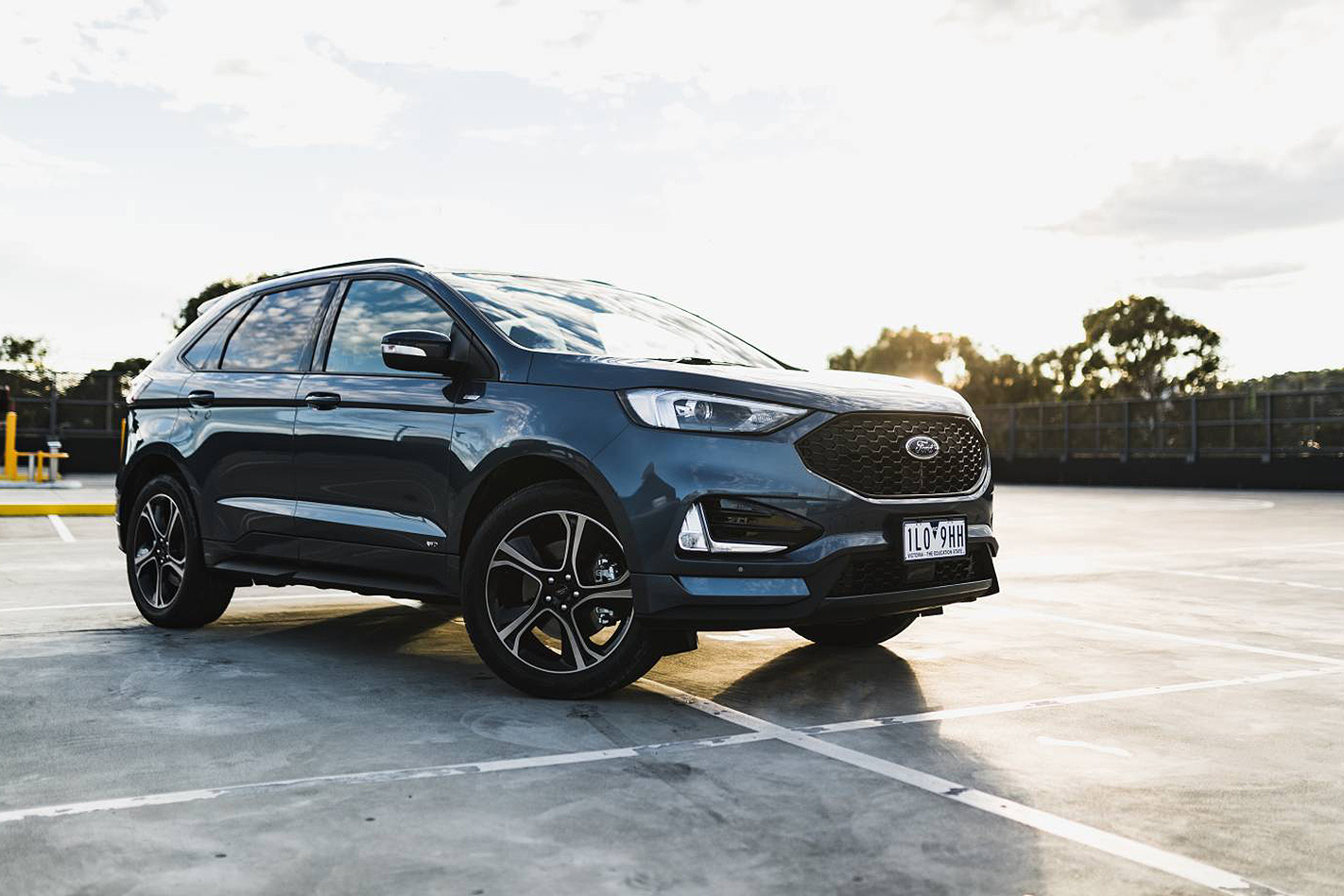
Ford Endura
Of its smaller cars, the EcoSport is languishing in a red-hot segment behind machines like the Mazda CX-3, while the Escape – nee Kuga – is also off the pace against fresher rivals including the Hyundai Tucson and Mazda CX-5.
Repositioning these slow sellers with more overtly macho replacements is one way that Ford could gain some clear air in these increasingly crowded segments, but equally, Australian buyers run hot and cold when it comes to buying unusual, retro-styled cars.
For every Toyota FJ Cruiser success story, there are many tales of decent but overlooked cars gently wasting away in dealer forecourts – Fiat 500X, anyone?
The fleeced Ford pic shows a car with very short front and rear overhangs, a bluff nose and good ground clearance, while the white roof and single round headlight treatment even bring to mind the aforementioned FJ Cruiser, which was a surprise smash hit for the local arm.
Just as interestingly, the silhouette behind the baby Bronco appears to be an outline of the Bronco itself.
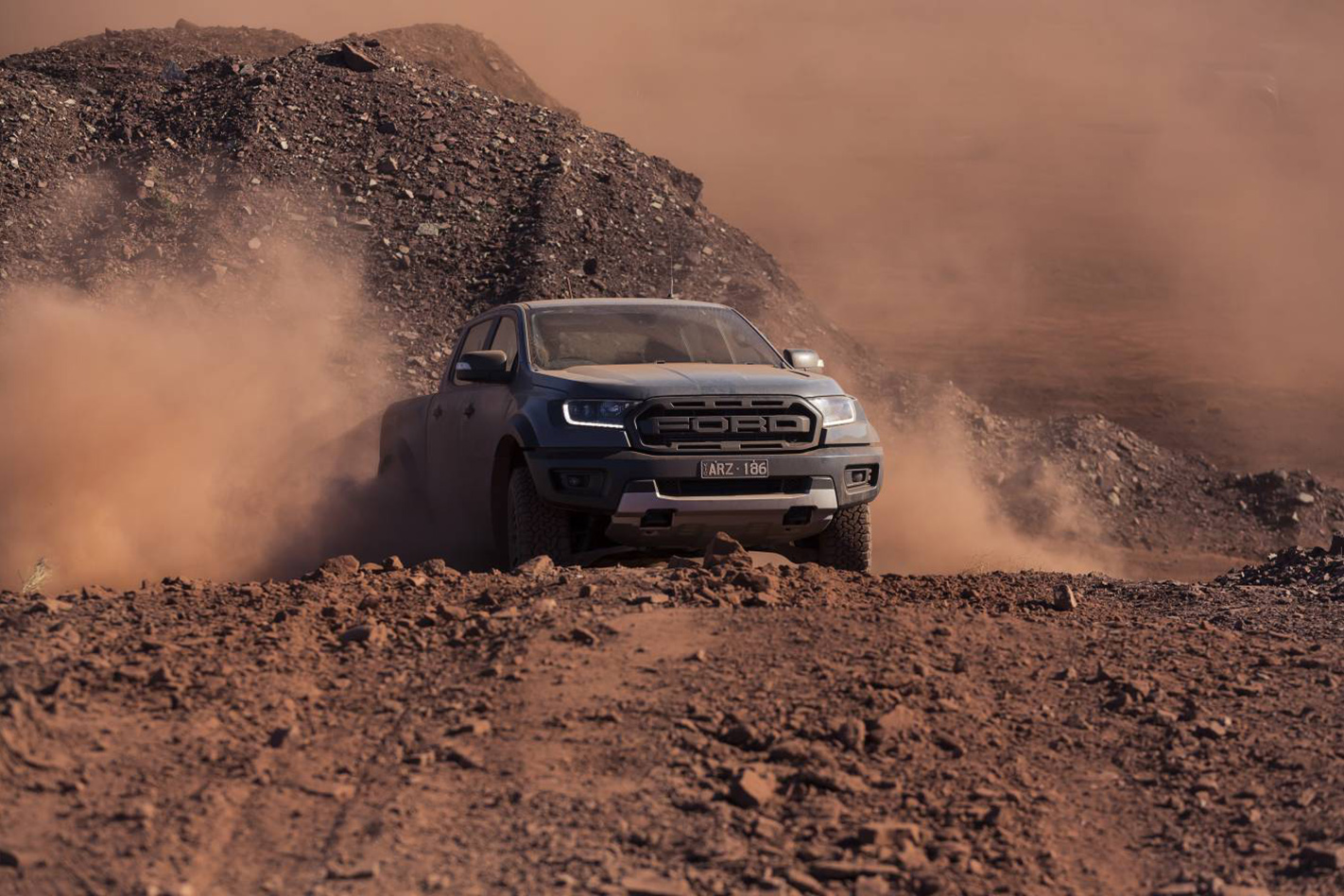
This will be built on top of the Australian-developed Ranger T6 platform, and appears to be a sharply angled nod to the Bronco of the 1970s and 80s, complete with a spare wheel hanging from the tailgate.
After an absence of eight years, the Ranger has just returned the United States, where it is built in the company’s Michigan plant.
