
You don’t often hear of a bloke being too successful, but it can happen. And the tragedy is that it happens to honest, hard-working blokes more than any other type.
This feature was originally published in MOTOR’s January 2004 issue
Here’s the classic scenario. You’ve been running your own trade-based business for a few years now and despite a succession of state and federal governments trying to harpoon it, you’ve actually done all right for yourself. You’ve now got a team of lads working for you and the contracts are still coming in regularly.
And what about your suppliers – little blokes who run on a shoestring to keep you buying the bits and pieces you need locally? Aren’t they going to be tempted to jack up their prices if they think you’re laughing too hard on the way to the bank each Friday lunchtime?
Damned right, so what do you do? Well, rest easy, because both HSV and FPV have blokes like you firmly in mind.
Get yourself into either a Maloo R8 or an FPV Pursuit ute and you’ll get all the performance you ever wanted, all the luxury and the blokes you deal with every day won’t suspect for a minute that you’ve stopped drinking straight from the thermos. Hell, any boss who still drives a ute can’t be all bad, right? Correct.
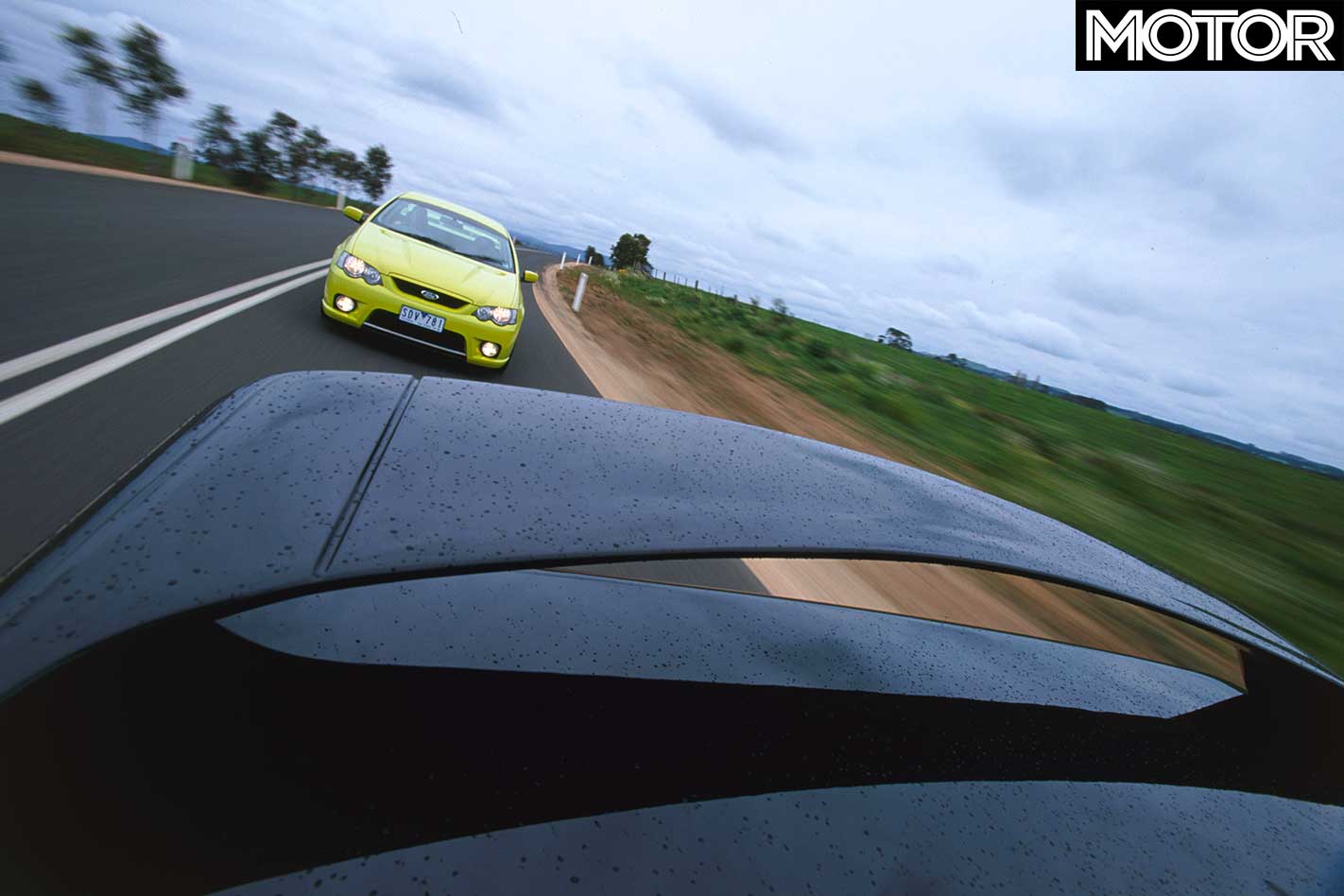
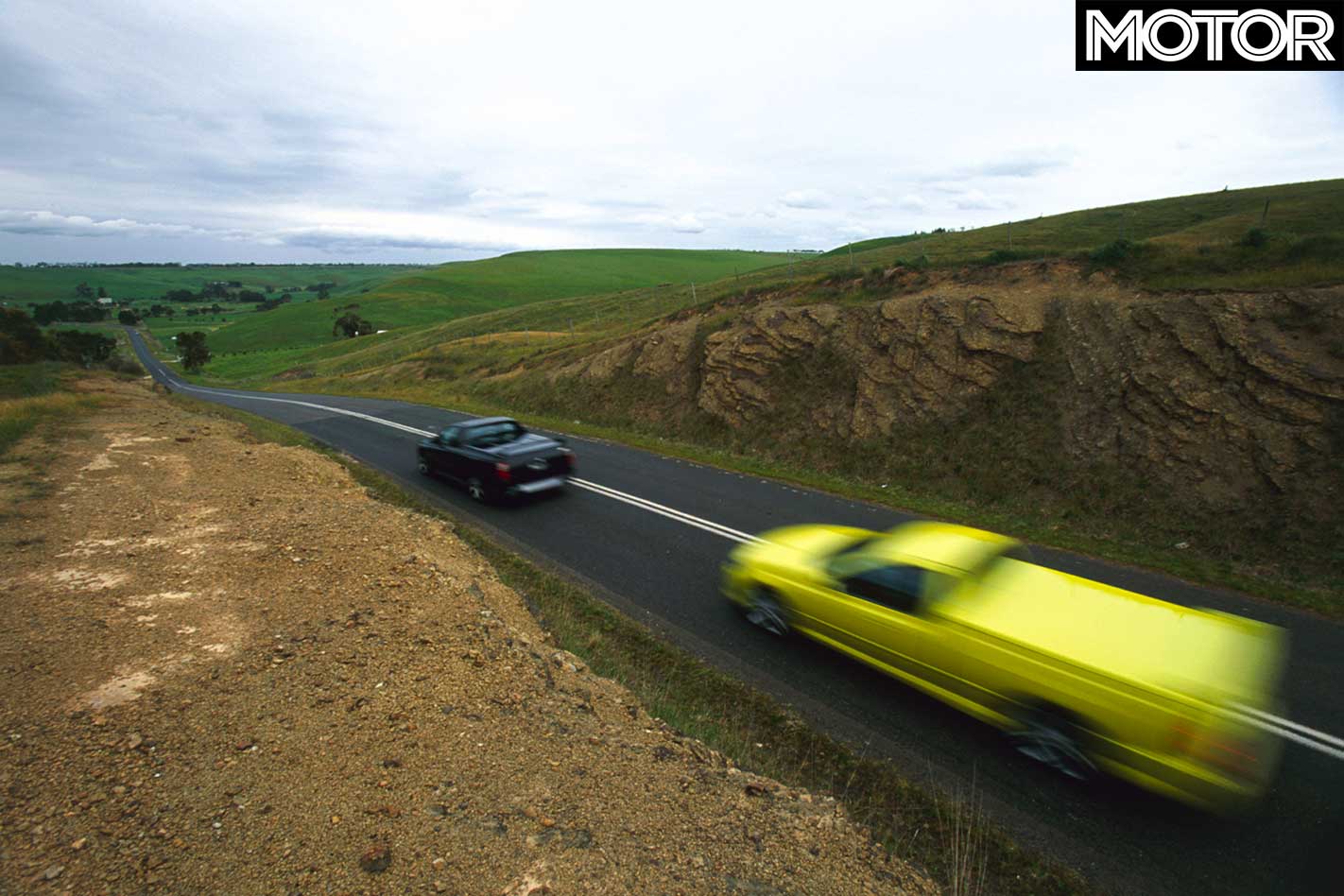
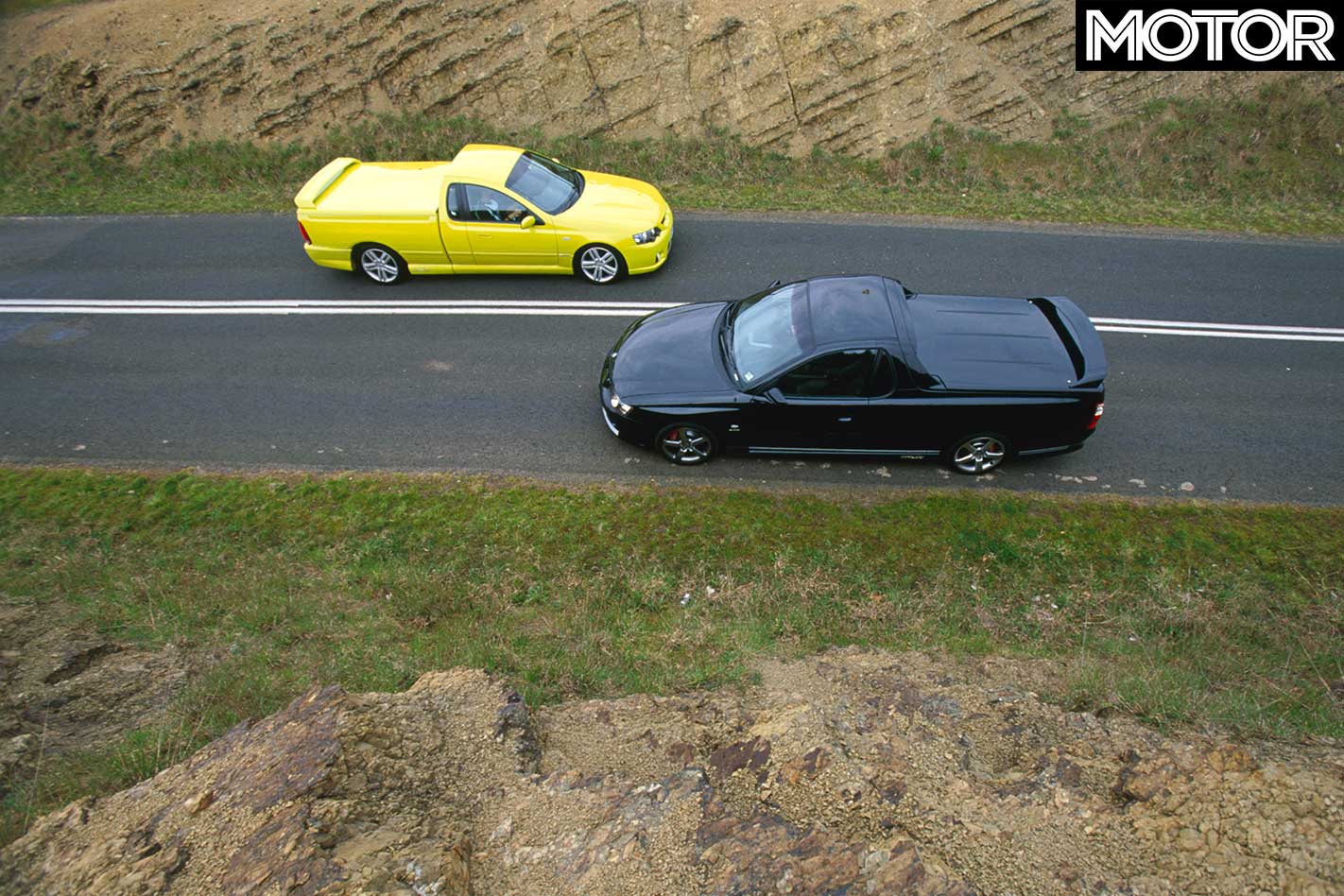
In the ute world, the Maloo R8 and the FPV Pursuit are kings. They are, if you like, two-door, long-boot versions of the ClubSport R8 and the Falcon GT respectively. The chairmen of the board in Blunnies and a blue singlet. Perfect.
In conceptual terms there’s very little to separate the Maloo and the Pursuit, but in the metal they’re quite different animals. Yet still both animals, if you know what we mean.
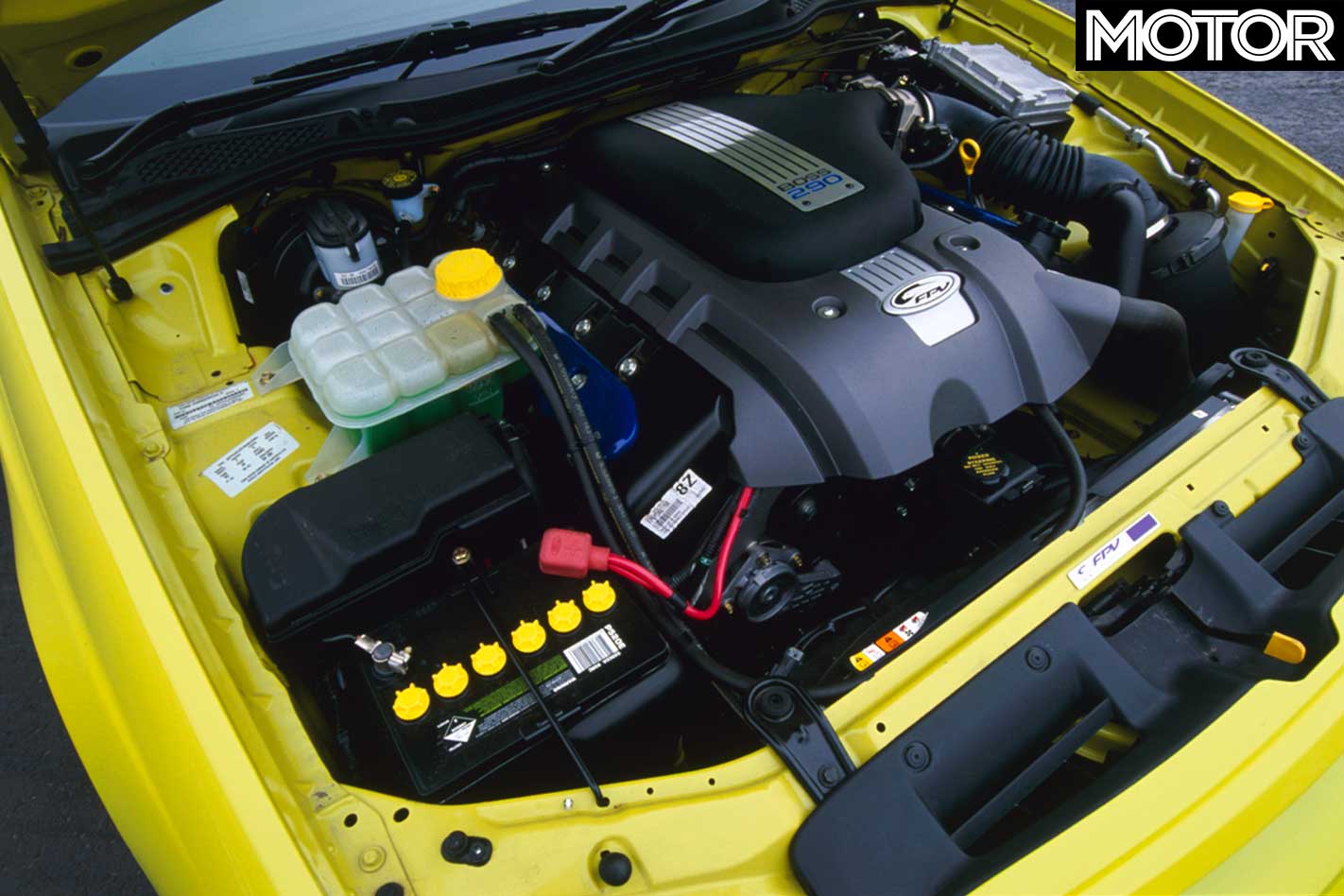
Until now, the 290kW 5.4-litre Henry mill has had a bit of an edge over the 260kW version of the HSV 5.7. Like we said, until now. With the step up to 285kW trim, the Gen III in the Maloo is now endowed with all the mid-range and bottom-end urge the Ford can muster.
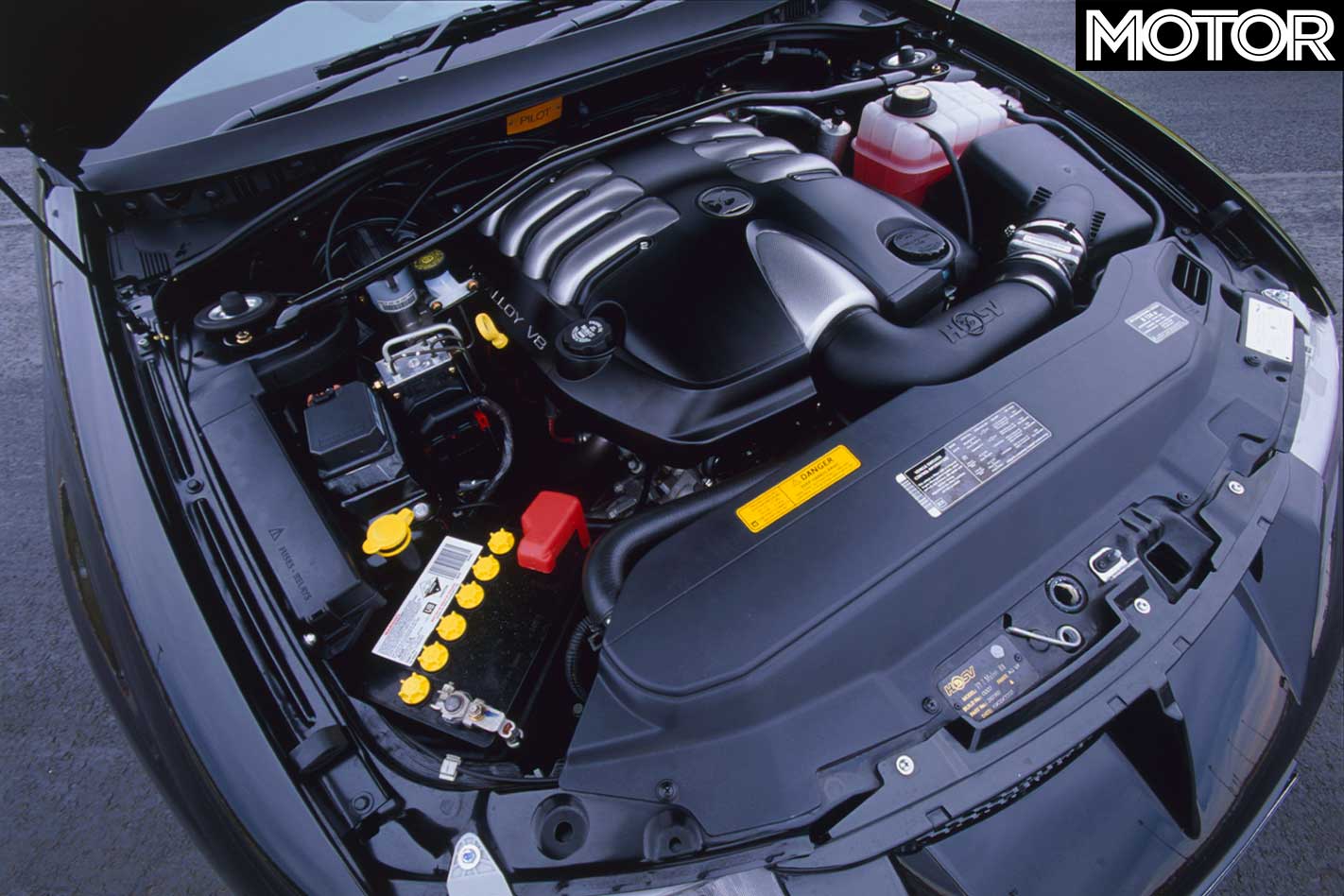
Sadly, for both parties, that still ain’t a whole hell of a lot considering both measure better than 325 cubic inches. But the 285kW/510Nm is significantly more muscular than any previous incarnation of the LS1.
The point is that while there’s more oomph on tap below 3000rpm than before, you’ll still need 4000rpm showing on the Maloo’s tach before it’s really boogying. From that point, too, the Gen III starts to get pretty thrashy and noisy, betraying its pushrod architecture and all-alloy (it conducts noise better) construction.
The Ford, meanwhile, gets hustling by the time the needle has swung through about 3700rpm and feels slightly more two-stage than the HSV, with a more marked transition between mild and wild. And it keeps its cool right through to the limiter.
Past experience suggests, of course, that even though the two are now very close in outright power terms, the HSV will be quicker thanks to the fact that the Henry gives away almost 170kg at the weighbridge.
And since a drag race hides any flat patches in the power delivery, and since we’ve had plenty of 260kW HSVs run 13s before today, and since the V8 BA ute has always been hard to extract a quick time from, it was a forgone conclusion, right? Er, no, actually.
Dunno whether it was the air on the day or what, but despite plenty of snap shifts, torched tyres and stinky clutch action, we couldn’t break 14.5 in the Maloo. To be honest, it just felt like an off car. Despite a brand new clutch and tyres, it just couldn’t be launched cleanly.
Try to keep things sane and the bugger bogs off the line; give it too much and it’ll axle-tramp until it feels like the rear quarters are about to jump ship. In fact, it shakes so bad on a hard launch that she eventually threw an exhaust hanger, allowing the big-bore pipe to bang against the rear skirt. A burnout? Nope, she wouldn’t drop a skid for love nor money.
The Pursuit, meanwhile, is a vastly easier thing to get off the line, even if it’s not actually any quicker (a tenth either way doesn’t count). But it ain’t perfect, either. Too little gas and it’ll still bog down a little, and too much sees the rear bags go up in expensive, Dunlop-coloured smoke.
Okay, so maybe you could find the happy medium with time, but the throttle-by-wire set-up is so short in travel and lacking in feel that it’s impossible to back off just the right amount to bring it all back to hook-up point.
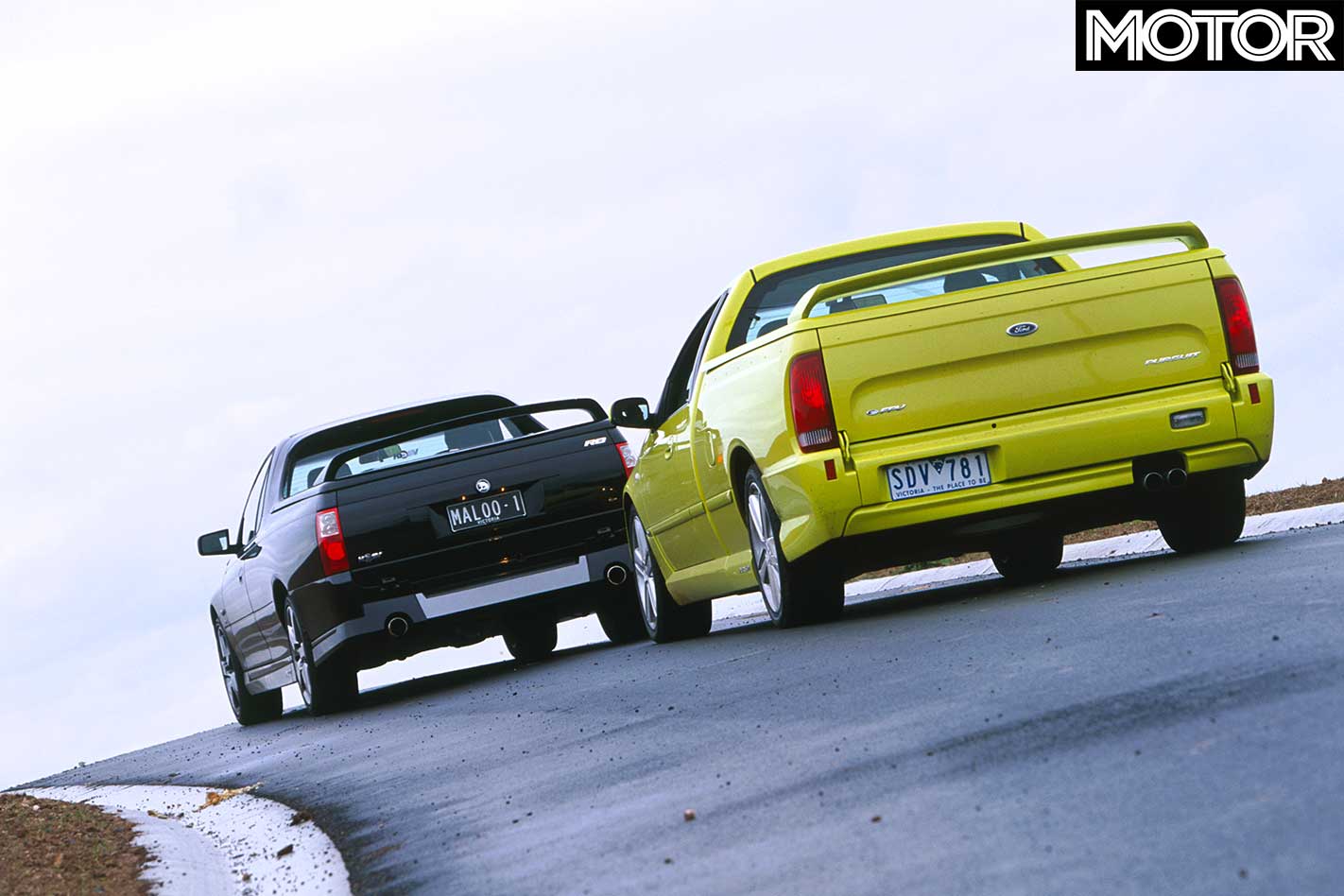
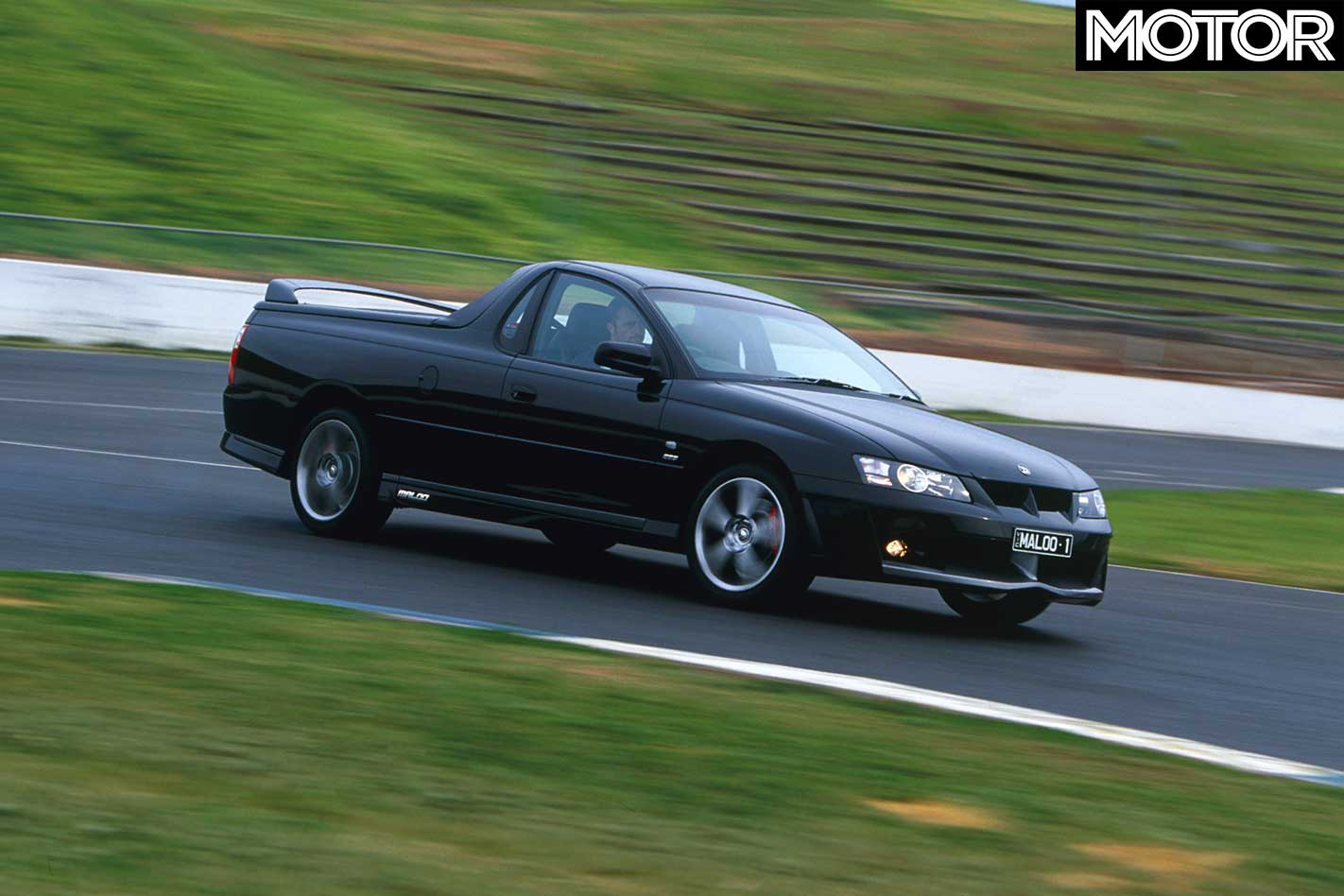
Neither have terribly co-operative gearboxes, either, and it’ll come down to personal preference as to which is the least crap. It’s possible to miss a shift in either car (usually the two-three shuffle) and it’s only the lighter clutch action of the HSV that scores it any real points south of the flywheel. Out on the road, the HSV soon emerges as having a better matched front and rear end.
The ride is a bit softer initially, although there’s still no mistaking a bump for exactly what it is. But that little bit of initial plushness means it feels great on a smooth surface; you simply need to understand that both ride quality and traction will go sharply downhill as soon as the bumps arrive.
The FPV, meanwhile, leaps about on pocks and holes, but more than that it feels like two halves of different stories. The front end is actually quite good, with more feel than the Maloo can muster, but the wayward rear end means the tiller isn’t ultimately as accurate. Combine that with the HSV’s ability to give you exactly the amount of lock you requested and it’s the more trustworthy in faster going.
The Ford’s rear end is at its worst over a series of bumps, downhill, mid-corner. Okay, so not too much copes with that stuff too well, but in the Pursuit’s case you can feel an almighty struggle going on between tyre grip and unsprung weight. All that wheelbase means it telegraphs its unhappiness quite well, but you’re still never sure it’s going to grip again when the live axle has stopped hopping about.
And when you’re really pressing on, the Falcon feels more prone to body roll, not to mention heavier, wider, longer and much more of a handful.
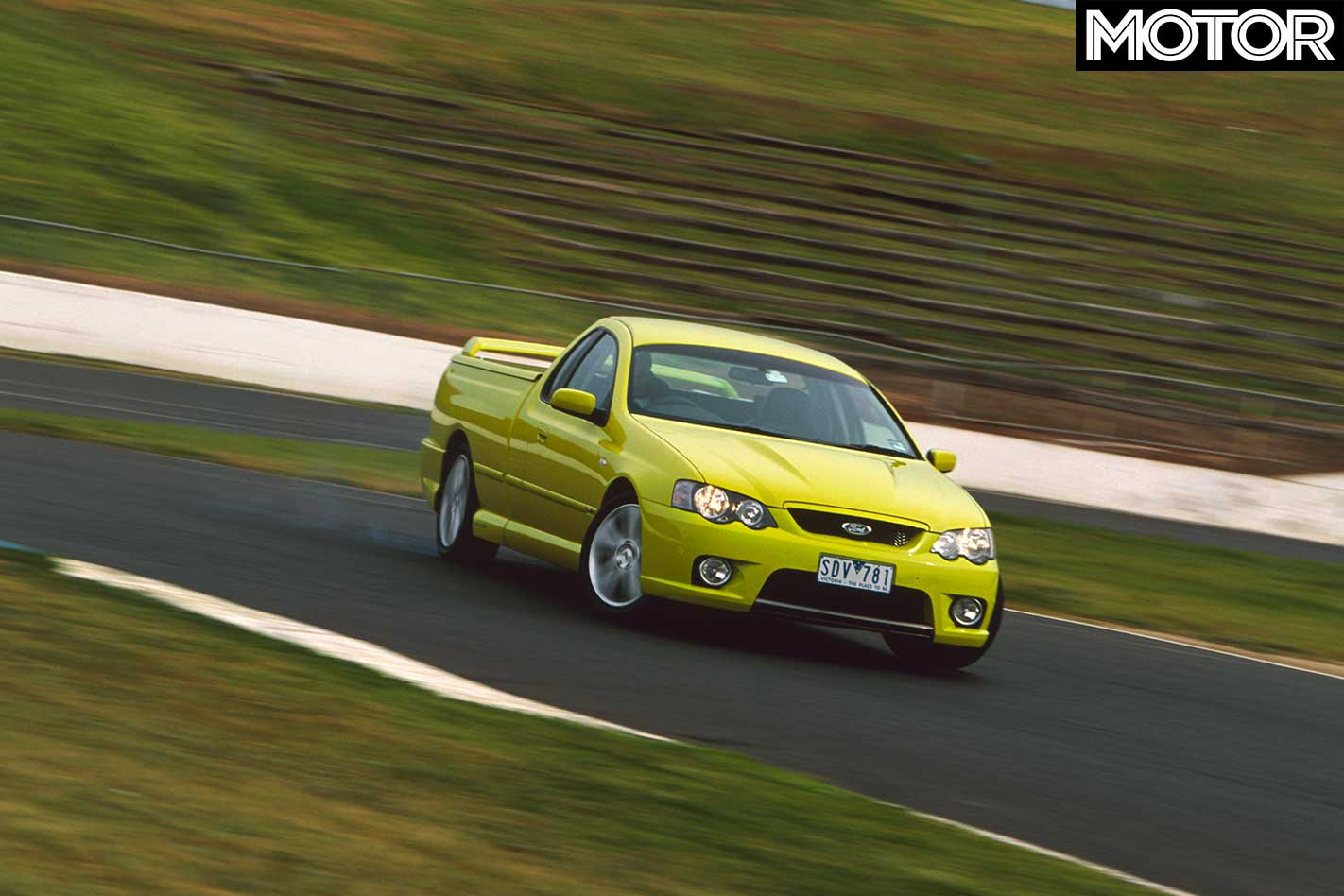
Heading back up the same hill, you soon find that the limitations of the leaf-sprung rear end are somewhat. Power-down falls well behind the HSV, with a desire to break loose that will delight some owners for all the wrong reasons.
The Maloo’s IRS, meanwhile, is much more squat-and-shoot and you can pour on the coals in tighter exits without the same little voice in the back of your mind wondering out loud whether it’s all about to spear sideways.
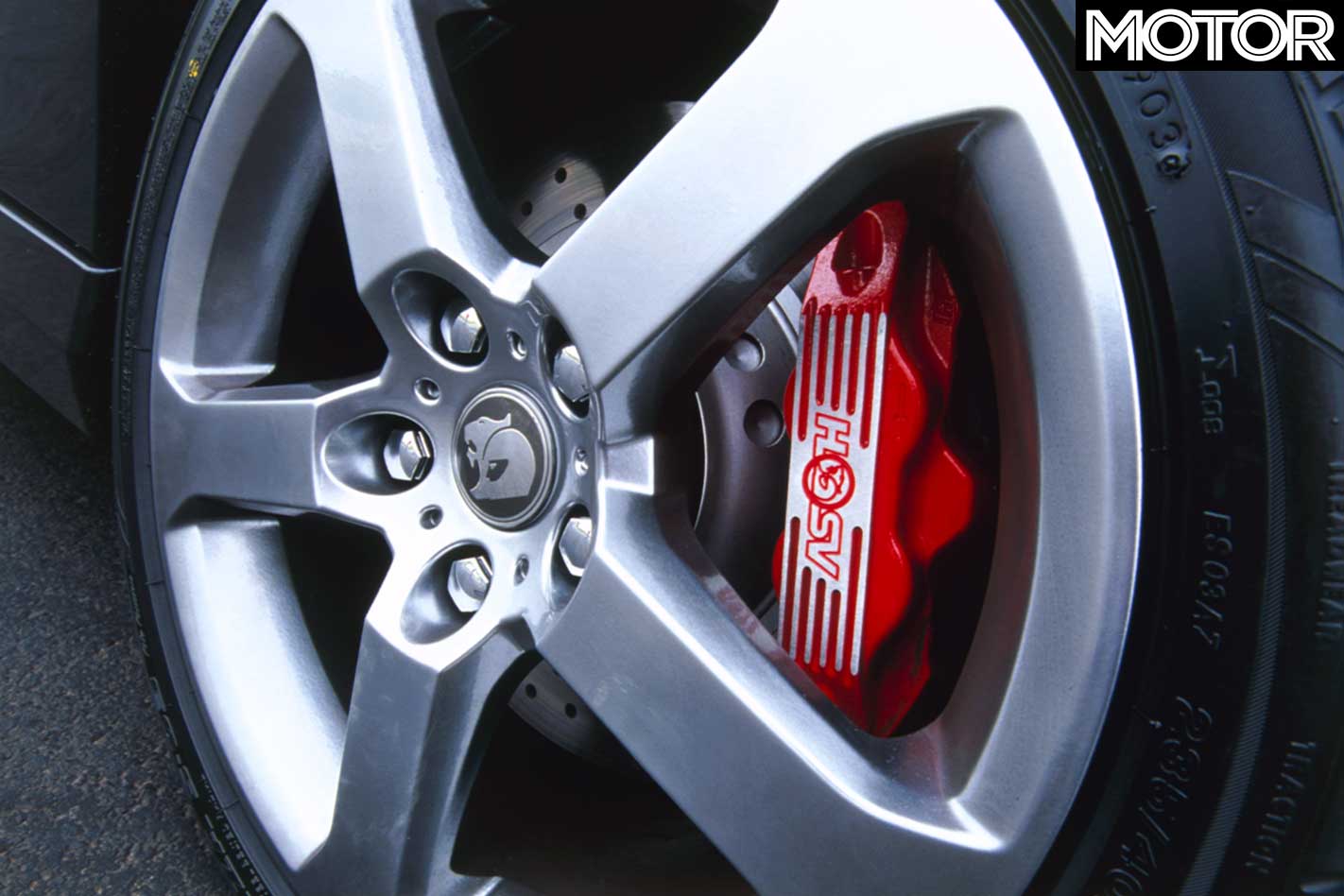
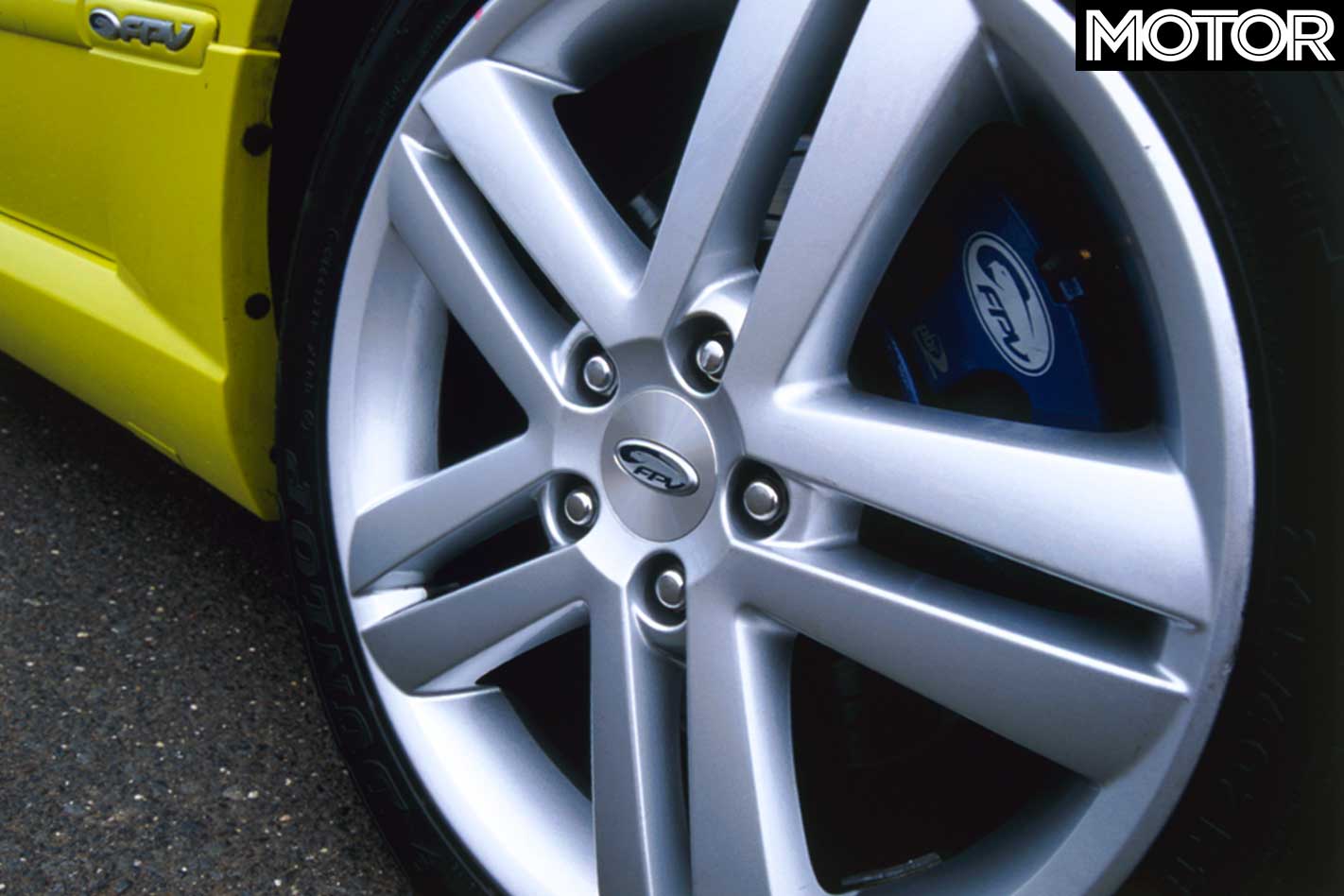
When it comes to stopping, both vehicles get excellent brakes that we couldn’t make fade, even at the drag strip. While the Maloo gets sexier monobloc calipers, the FPV makes do with old-fashioned sliding-caliper jobs. Yet the Henry has the better pedal feel, while the centre pedal in the HSV is deader than tube tops.
The caveat with all this dynamic assessment stuff is that the Pursuit’s simpler-than-Hanson rear end is going to make it the superior tow vehicle and load carrier generally. If that’s part of your purchasing brief, bear it in mind, but if the most you ever carry is a trailbike and a bedroll, it probably won’t matter.
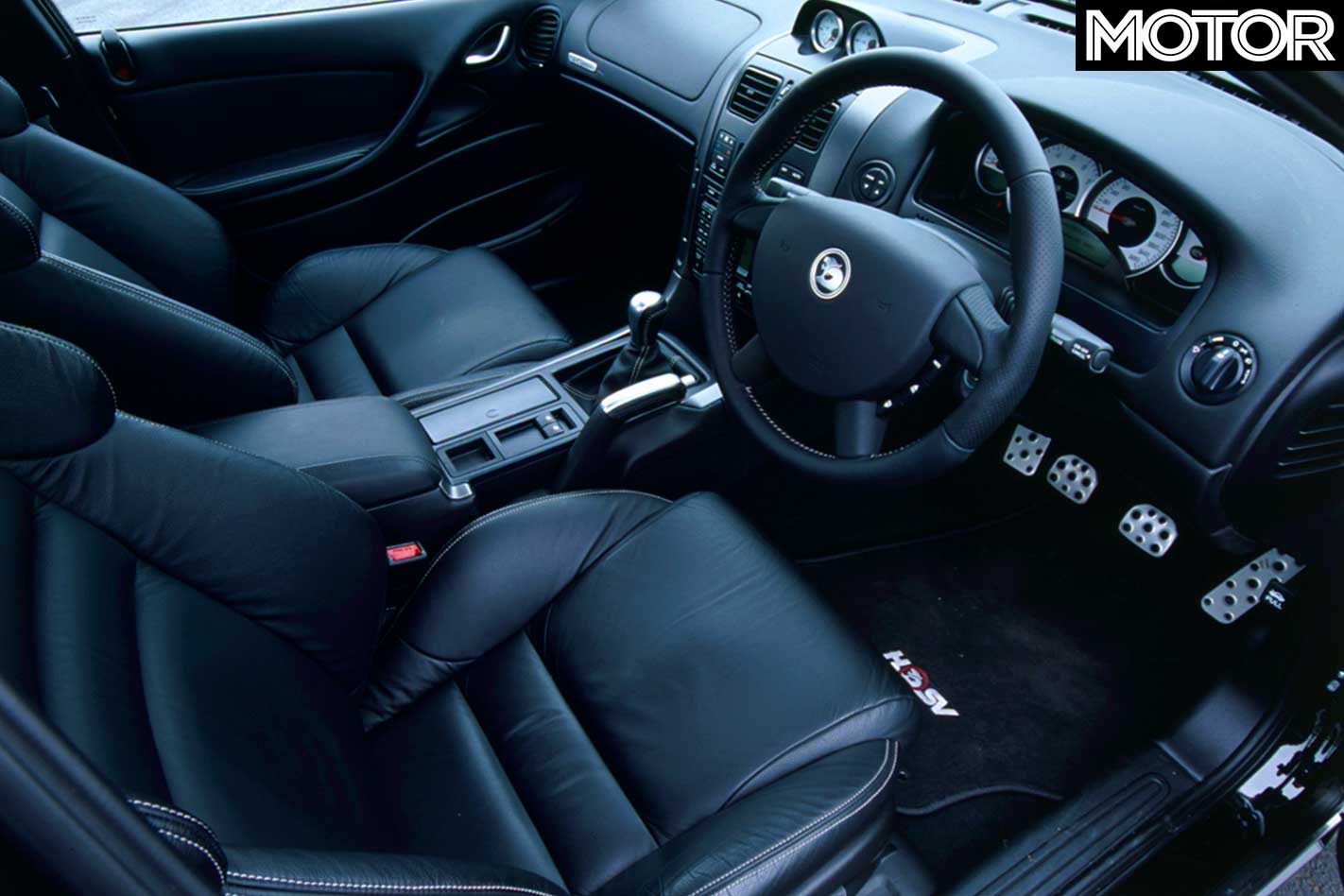
Inside, the good work done by Ford on the BA’s interior is still paying off. The suede seat trim and green stitching mightn’t be to all tastes, but the dashboard is clean and simple, although it’s not only the light switch on the stalk that seems a backward step from the AU.
We’re still left wondering about the lack of a redline (although the Maloo doesn’t get one, either – you rely on the shift buzzer and light) and why there’s no gear pattern printed anywhere.
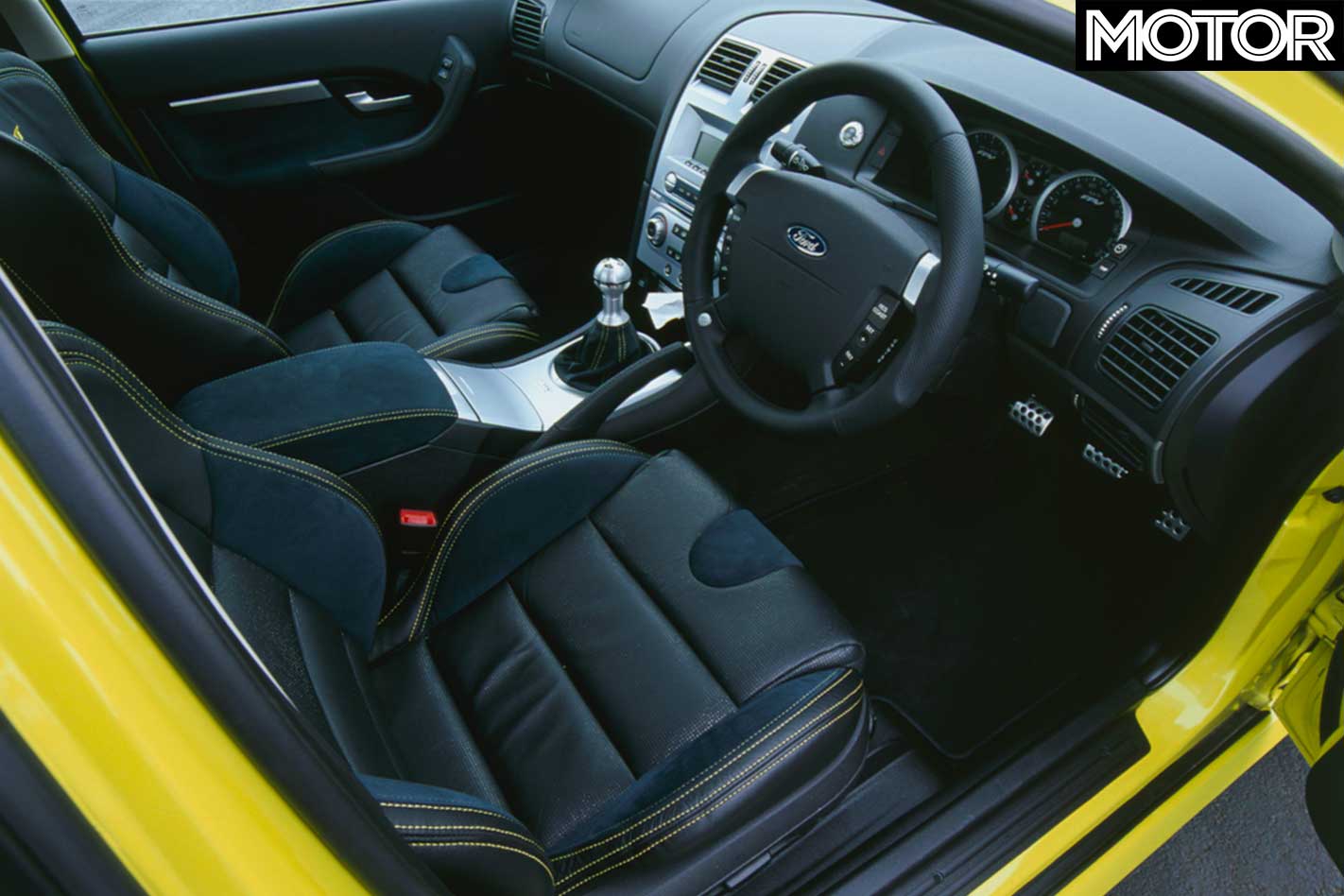
And that starter button… ye gods. Ford tells us the punters love it, but we’re not buying it. It’s a dopey affectation in a car like the Pursuit and it’s poorly executed since it makes starting a two-handed job.
I’m also aware of the fact that many people like hard tonneaus, but I’m not one of them. Even a pushbike won’t fit with the lid shut, and the spoiler on both the FPV and the HSV is positioned to hide most of what’s going on behind you. The Maloo, meanwhile, trumps the Henry on the quality of its pews (the R8 adds the gun chairs from the Clubbie R8) but the rest is a bit kitsch.
Given their humble origins, neither of this pair are what you’d call cheap, but considering the performance they dole out, well, maybe they’re not so expensive after all. The FPV weighs in at $54,850 in standard trim, including the Performance brake package (which is optional on the XR8 ute but standard on the Pursuit).
By the time you add leather ($1850) and the hard tonneau ($1695) you’re looking at $58,395, compared with the Maloo’s $59,600, making it a pretty close contest. Too close to use price as a meaningful justification for buying one over the other, anyway.
While the FPV is an attractive package with its nod to its working past, that DOHC engine and clean interior, in any dynamic contest the Maloo scores a points decision purely for its better grip and overall handling.
And I know I say this every time products from the red and blue corners start butting heads, but if we were dealing with automatic versions of the same vehicles the positions might well be reversed. The clunky old auto tranny in the HSV is just too crass for a lot of buyers, while the Ford slushbox is definitely smarter than the average bear. Or lion.
Fast Facts
| u00a0 | FPV Pursuit Ute | HSV Maloo R8 |
| Body | 2-door ute | |
| Drive | rear-wheel | |
| Engine | 5.4-litre DOHC 32-valve V8 | 5.7-litre pushrod 16-valve V8 |
| Bore x Stroke | 90.2mm x 105.8mm | 99.0mm x 92.0mm |
| Compression | 10.5:1 | 10.0:1 |
| Power | 290kW @ 5500rpm | 285kW @ 5800rpm |
| Torque | 520Nm @ 4500rpm | 510Nm @ 4800rpm |
| Transmission | 5-speed manual | 6-speed manual |
| Weight | 1870kg | 1703kg |
| Power/Weight | 155kW/tonne | 167kW/tonne |
| Suspension | double wishbones, coil springs, anti-roll bar (f); leaf springs, anti-roll bar (r) | MacPherson struts, coil springs, anti-roll bar (f); semi-trailing arms, coil springs, anti-roll bar (r) |
| L/W/h | 5123/2141/1435mm | 5112/1845/1465mm |
| Wheelbase | 3095mm | 2938mm |
| Tracks | 1560mm (f); 1575mm (r) | 1558mm (f); 1576mm (r) |
| Brakes (f) | 325mm ventilated discs, two-piston calipers | 343mm ventilated discs, four-piston calipers |
| Brakes (r) | 303mm solid discs, single-piston calipers | 315mm ventilated discs, four-piston calipers |
| Wheels | 18 x 8.0-inch (f & r), alloy | |
| Tyres | Dunlop SP Sport 9000, 235/40 ZR18 (f & r) | Bridgestone Potenza S03, 235/40 ZR18 (f & r) |
| Price | $54,850 | $59,600 |
Fast Figures
| u00a0 | FPV Pursuit Ute | HSV Maloo R8 |
| 0-10km/h | 0.54sec | 0.49sec |
| 0-20km/h | 1.10sec | 1.00sec |
| 0-30km/h | 1.56sec | 1.60sec |
| 0-40km/h | 2.12sec | 2.11sec |
| 0-50km/h | 2.65sec | 2.67sec |
| 0-60km/h | 3.13sec | 3.18sec |
| 0-70km/h | 3.95sec | 3.80sec |
| 0-80km/h | 4.63sec | 4.87sec |
| 0-90km/h | 5.37sec | 5.49sec |
| 0-100km/h | 6.20sec | 6.37sec |
| 0-110km/h | 7.47sec | 7.66sec |
| 0-120km/h | 8.85sec | 8.73sec |
| 0-160km/h | 13.97sec | 14.39sec |
| 0-400m | 14.42sec @ 164.5 km/h | 14.48sec @ 161.8 km/h |
Lightning Strike
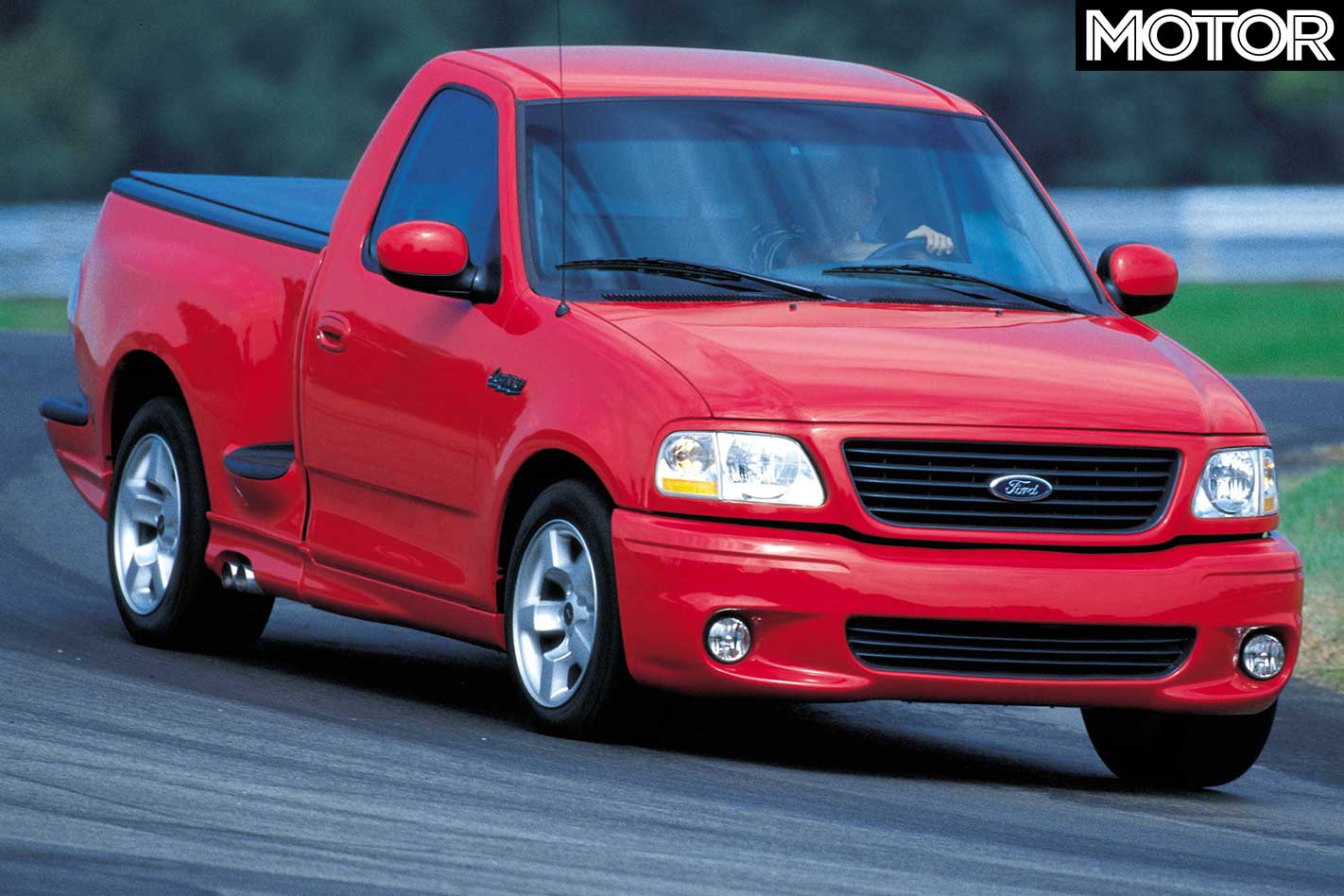
This tyre-frying beast is the Ford F150 Lightning and it’s the king of the US sports trucks. Packing a supercharged 5.4-litre bent eight, the Lightning pumps out 268kW at a very lazy 4750rpm. Redline is just 5250rpm, but this doesn’t stop the 2120kg Lightning from rocketing to 100km/h in a frightening 6.3 seconds.
Any thought from Ford brass to bring the beast Down Under? Ah, no. The F150 series actually has a smaller payload than our one-tonne utes (the Lightning’s only good for 500kg). And besides, Ford reckons the XR series and FPV Pursuit fill our needs pretty well. Too right.
The F150 series of trucks differs greatly from the F250 and F350 range, so Ford would have to stump up for extra parts supply and service training. Not worth the hassle, really.
Skip to Maloo
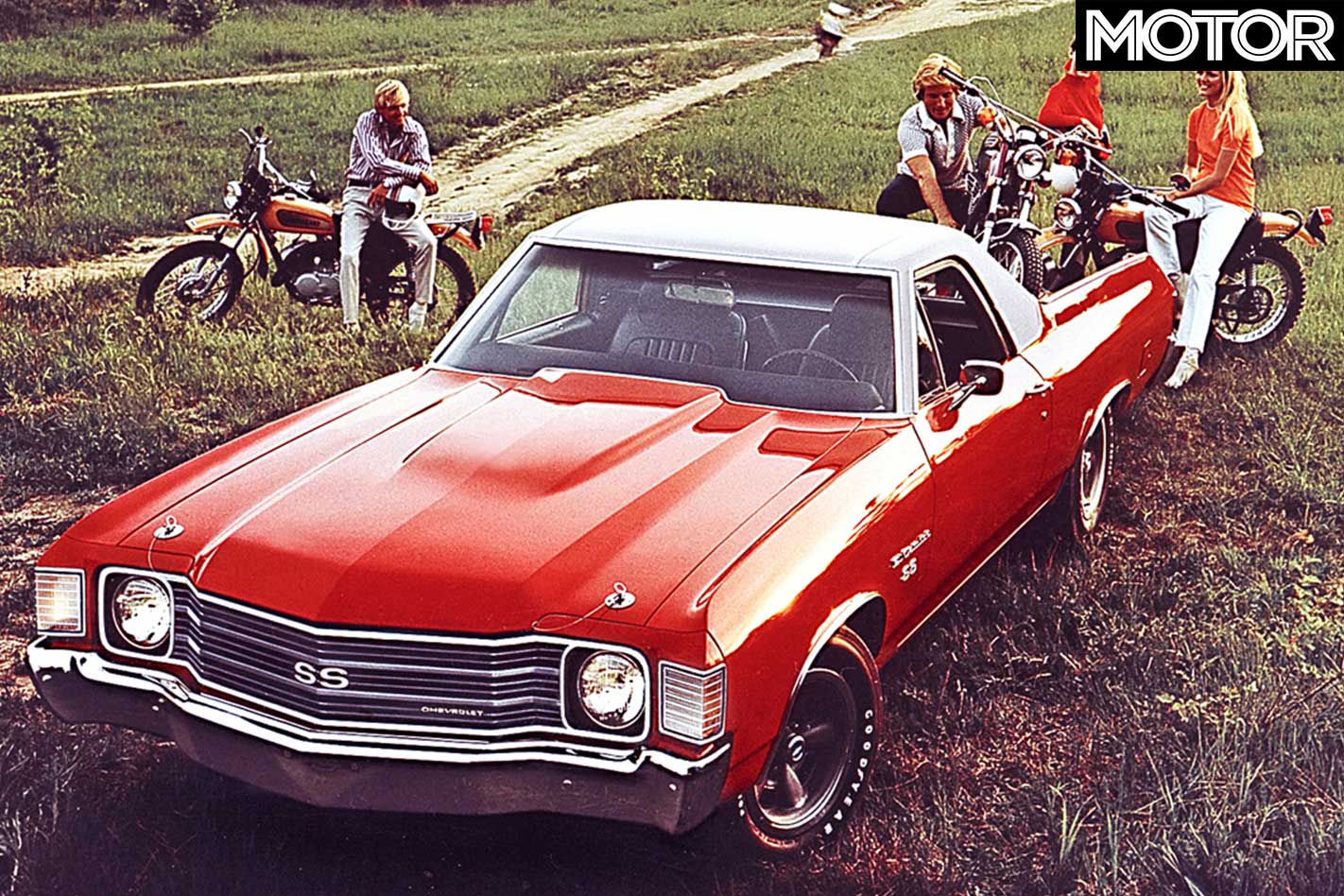
With the Monaro getting its Green Card to the US as a Pontiac GTO, there’s been plenty of talk of the Holden SS ute or Maloo going to the States to revive the Chevy El Camino badge.
The road block stopping this is America’s powerful Union of Automotive Workers (UAW). They get all narky when foreign-built cars are imported and sold under local badges. Particularly ones using American engines and gearboxes. That’s why GM will be importing 18,000 to 20,000 GTOs when the free demand might be closer to 60,000 units.
While there’s no contract, there is an agreement for GM to take their 18-20k allocation from Holden, certainly for the short-term future. Whether these are all Pontiac GTOs or a combination of El Caminos and GTOs remains to be seen.
Five Falcon Pursuits from the past
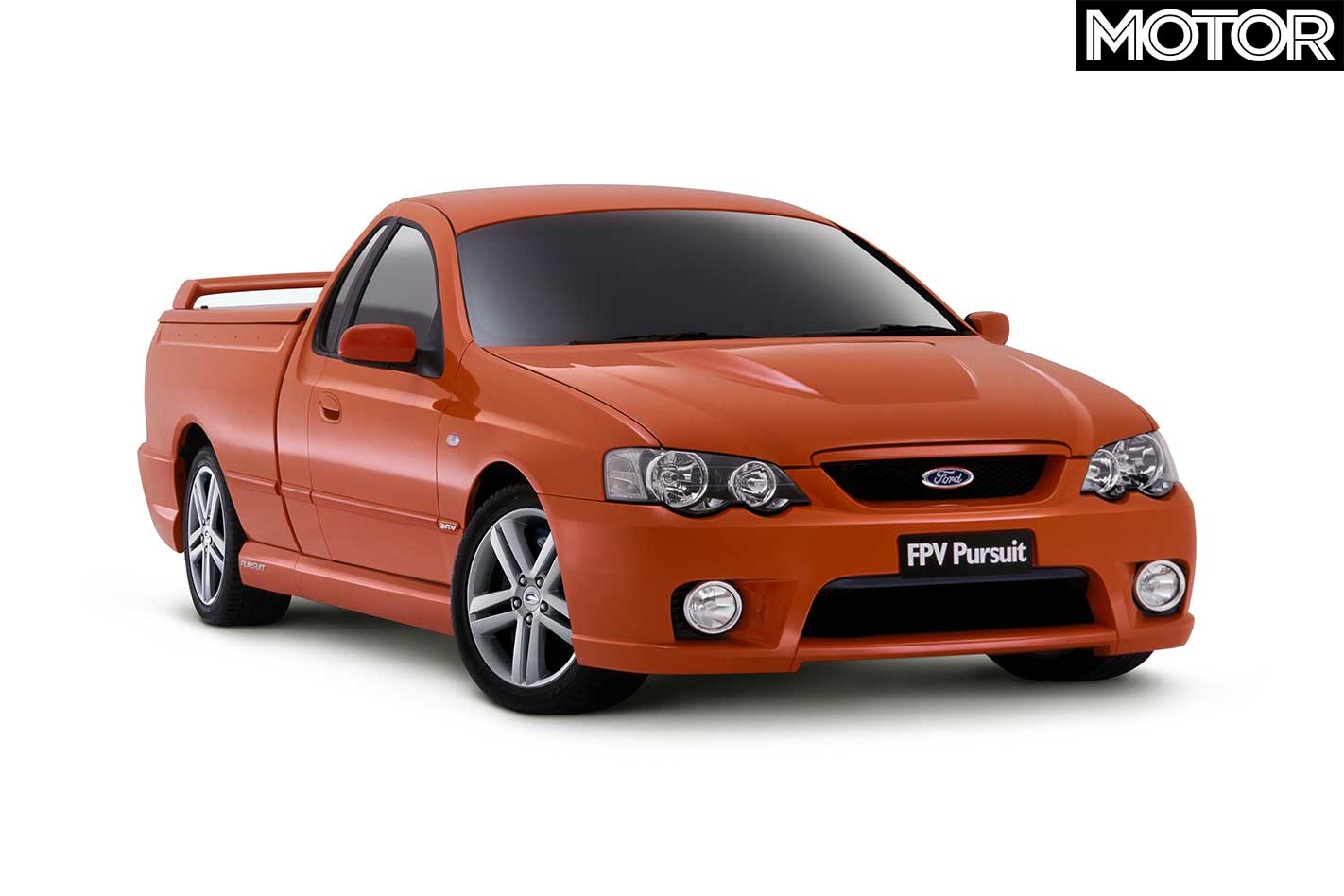
– 1962 Falcon XL Pursuit: 75kW – 1965 XM Super Pursuit: 90kW – 1965 XP Super Pursuit: $2954 – 1966 XP Pursuit Convertible – 2001 Falcon XR8 Pursuit 250
Five Blasts from HSV Maloo’s past
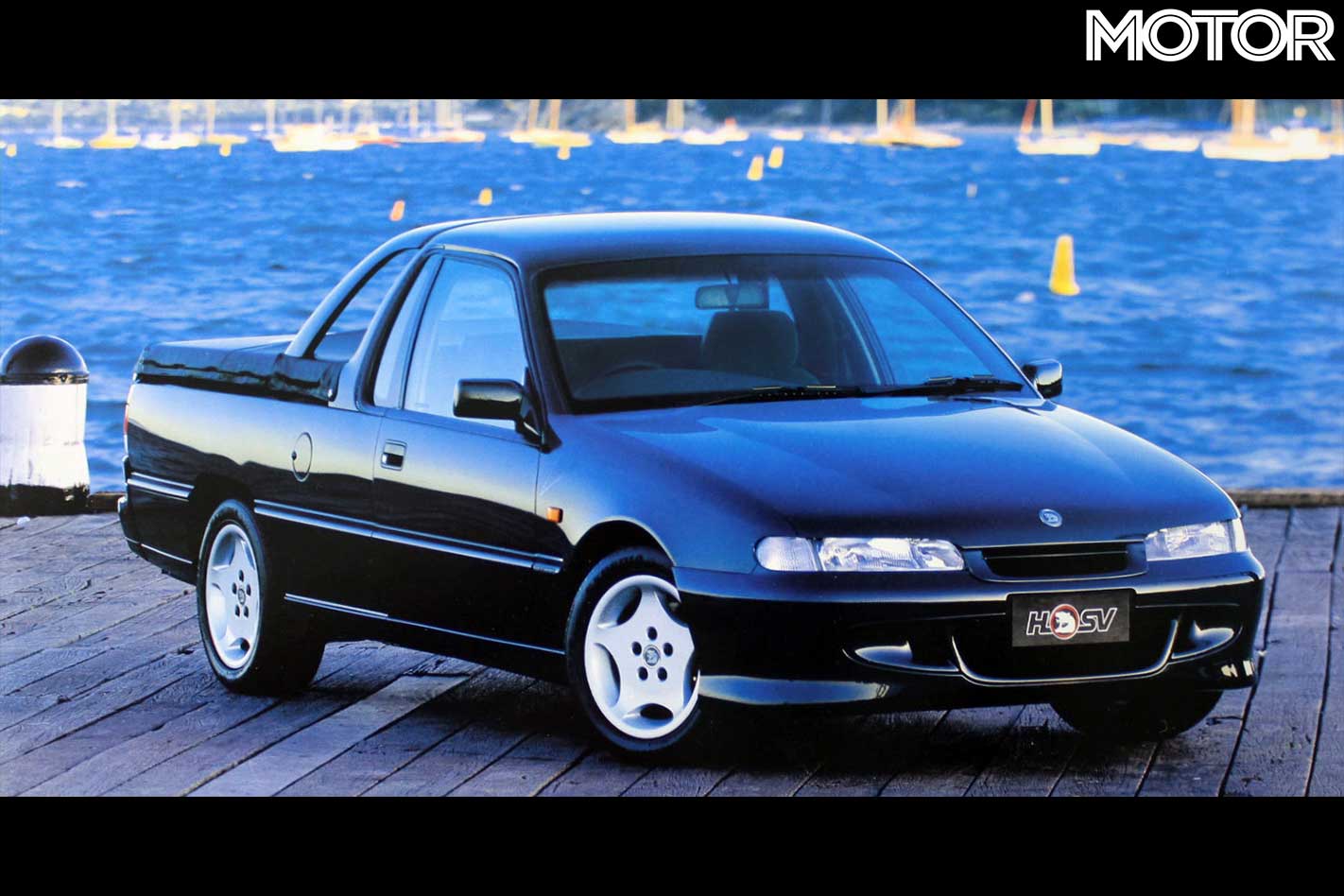
– VG Maloo: 180kW, 5.0-litre – VP Maloo: 49 built – VR Maloo: 185kW, 5.0-litre – VS Maloo: 97 built – VU Maloo R8: 255kW Gen III
THE 750KW HENNESSEY Exorcist will spearhead a V8 invasion of muscled-up Chevrolet Camaros, as the nation’s starved GM fans prepare for the car’s imminent arrival.
As the Ford Mustang – previously free to gallop the local sales plains uncontested – also prepares to face its US foe on Aussie soil, local GM tuners are stocking up on superchargers, exhausts and other go-fast hardware hot from the USA and in some cases, developed locally.

The nation’s leading GM tuners in Harrop, KPM Motorsport, Tunehouse, VCM Performance and Walkinshaw Performance are all preparing offerings for The General’s LT1-powered ponycar, also helping to soothe the angst of Australia not yet being able to get its hands on factory LT4-powered tyre-fryers such as the supercharged 6.2-litre 485kW Camaro ZL1 and ZL1 1LE.
But it’s the Exorcist that will sit atop the V8 pecking order, at least initially, its 750kW supercharged LT4 V8 launching the rear-drive coupe down the quarter mile in an eye-watering 9.8 seconds, going on to a top speed of 350km/h – if you dare, that is.
The Exorcist is the Texan tuner’s cheeky answer to the Dodge Demon, Chrysler’s factory supercharged, 626kW HEMI V8 drag strip monster, capable itself of sub-10sec quarter miles.
The Exorcist will be offered by exclusive Hennessey distributor KPM Motorsport, based in South Australia, which also offers its Street Fighter brand of aftermarket enhancements. David Roscio of KPM Motorsport confirmed one lucky Aussie had already put their name down for an Exorcist despite what is likely to be a circa-$240,000 pricetag.
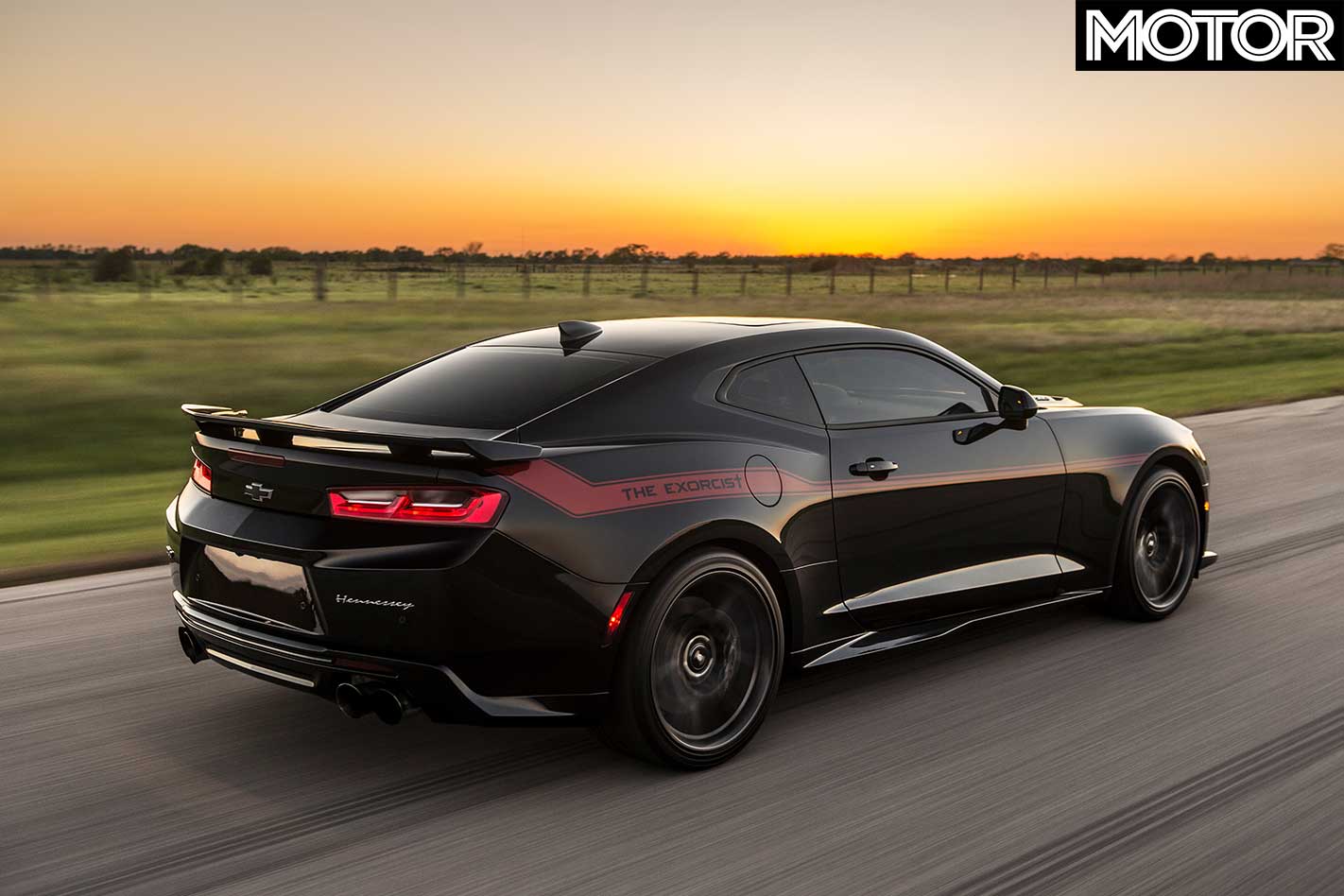
“Because the Exorcist is built on a factory supercharged ZL1 model as its base, it is a separate import process to the HSV Camaros,” said Roscio, explaining that an HSV-converted Camaro SS, with its LT1 powertrain, could not become an Exorcist – you would need to import a ZL1 with the LT4 V8. KPM Motorsport will sell the Exorcist with a 100,000km, three-year warranty, plus ADR approval.
Despite the Exorcist being a ZL1-only proposition, Hennessey will vie with other Australian tuners with upgrade packages for the LT1 engine found in the Camaro SS to be converted by HSV.
On top of its 370kW and 445kW naturally aspirated packs for the LT1 V8, KPM Motorsport will also offer Hennessey’s supercharging options for that engine, ranging from 480 to 750kW, meaning if you want Exorcist levels of power, you needn’t start with a ZL1. Hennessey claims its HPE1000 supercharged LT1 Camaro SS is capable of sub-10 second quarter miles, sub-3.0sec to 100km/h and a top speed beyond 350km/h.
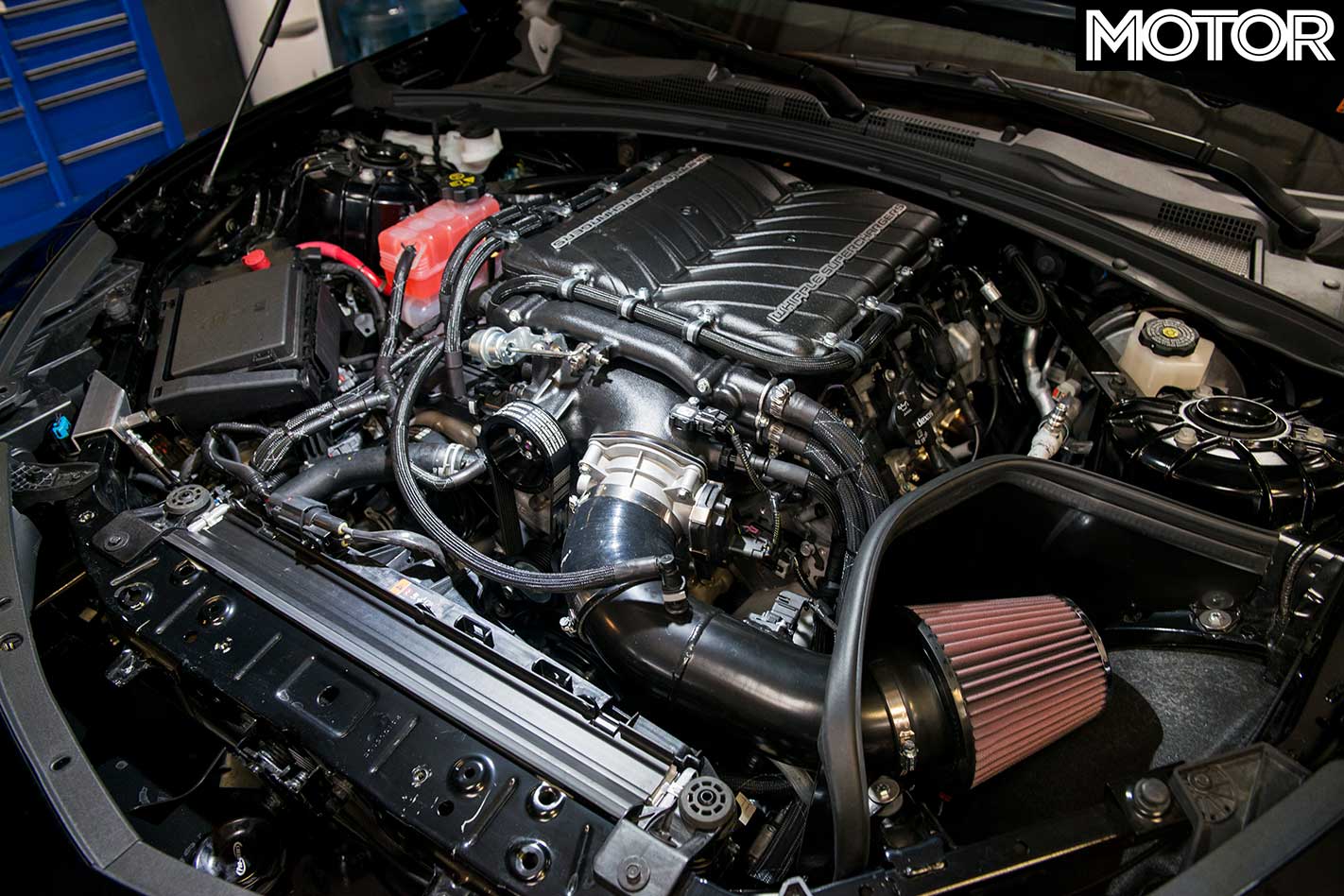
Roscio said as well as Hennessey upgrade packs – considered the more premium modification brand – KPM Motorsport would also offer a Street Fighter range of enhancements for the Camaro. “There will be three stages of naturally aspirated power packages, then two or three stages of supercharged upgrades, all ADR approved,” he said.
Taking on Hennessey and Street Fighter with its own upgrade options, world-class Aussie aftermarket firm Harrop Engineering is developing superchargers for local Camaro owners for whom the SS’s 339kW/617Nm is not enough – but also gear that lets the LT1 breathe freer for those who love their V8s naturally aspirated.
Harrop’s four-lobe FDFI superchargers have offered bolt-on boost for a range of cars throughout the years, and the direct-injected LT1 in the sixth-gen Camaro will be no different. “From our point of view the Camaro is really a continuation of the Gen-F HSV and LS3 Holden platform,” Harrop General Manager Heath Moore told MOTOR.
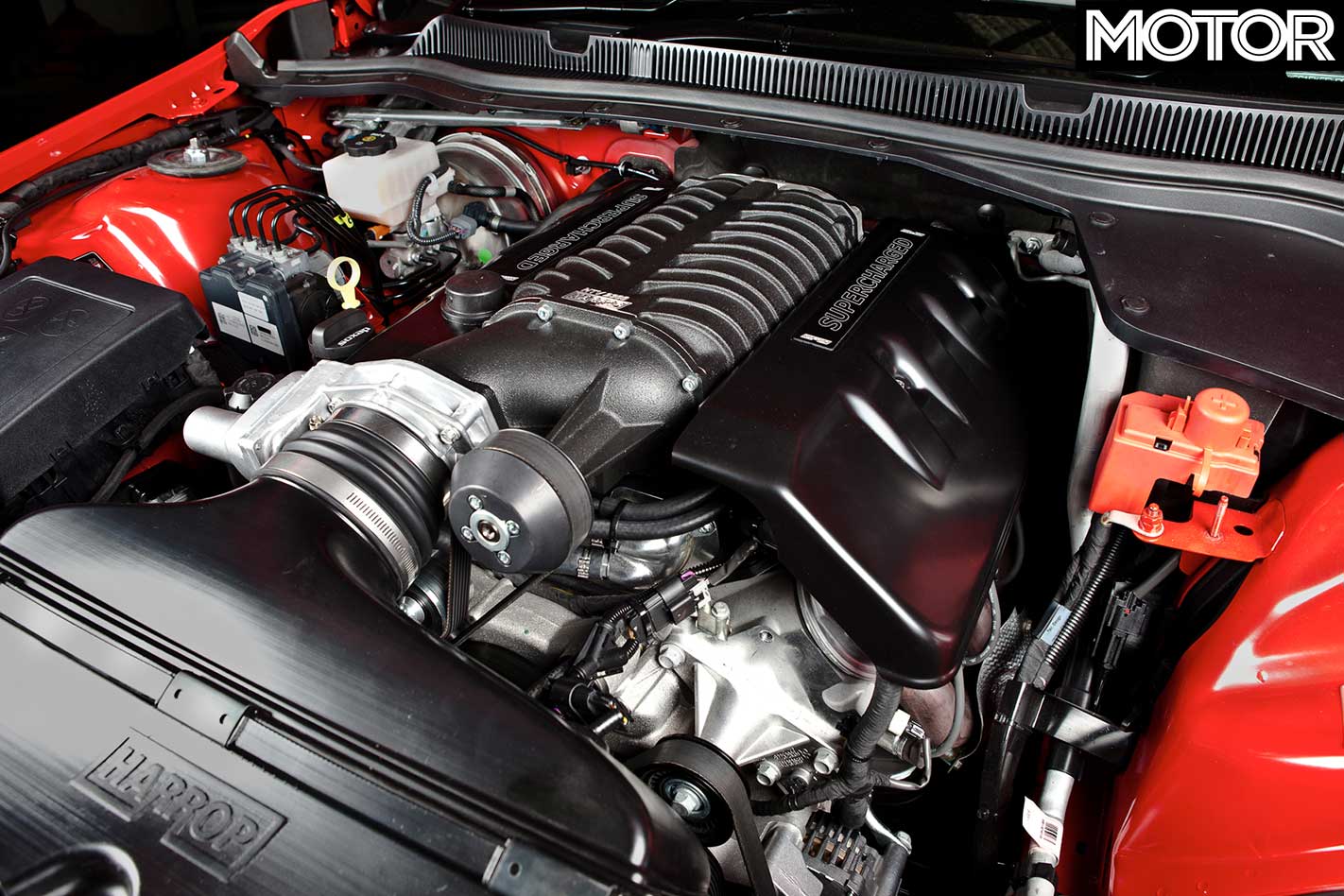
“We have supercharger development running now – in Australia and America – around the LT engines and we are focusing on the FDFI 2650 unit. This is the biggest blower core Eaton makes and is found on the 563kW LT5 engine in the 320km/h ZR1 Corvette.
“We’ll be able to turn the FDFI 2650 at a milder RPM to suit a stock or mildly modified LT1 engine, but the owner will be able to turn that up later if they do more engine work. We’ll also have naturally aspirated performance packages and exhaust packages.”
Moore said Harrop will also offer products beyond engine upgrades.
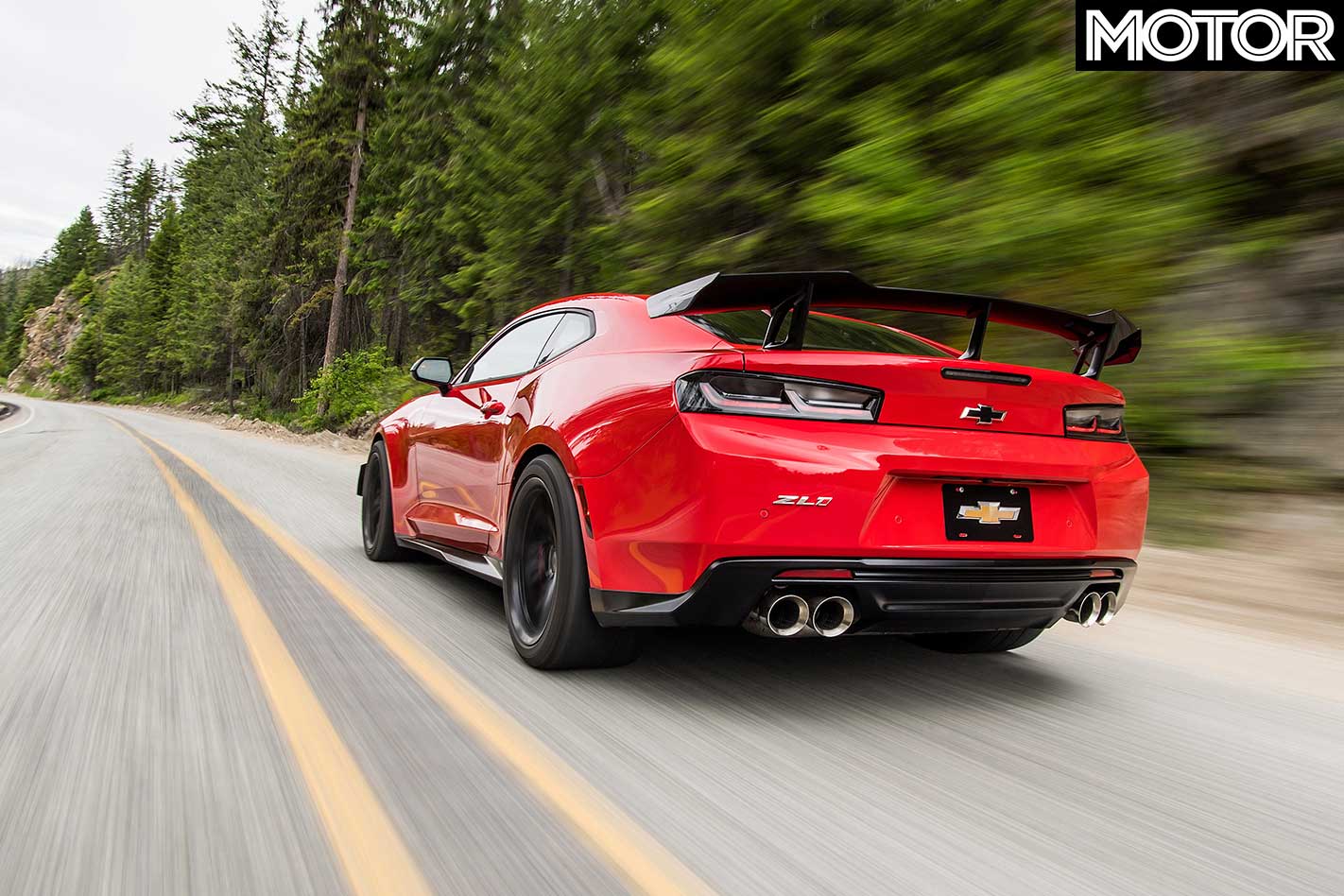
“We will likely look into an Ultimate-level brake kit and we’ll also likely have a TruTrac limited-slip option for the differential,” he said. “Our partners at Forgeline Wheels have huge experience working in this field, and we have styling providers we work with who can potentially offer aesthetic upgrades.”
Back at Clayton in Melbourne’s south-east, for those keen to keep their modified Camaro in the Walkinshaw family, the best prospect for appearance and performance upgrades is HSV’s aftermarket partner Walkinshaw Performance.
Although there is no official comment because of the delicate Intellectual Property arrangement with GM and Holden, it is understood WP will offer performance and appearance enhancements shortly after launch.
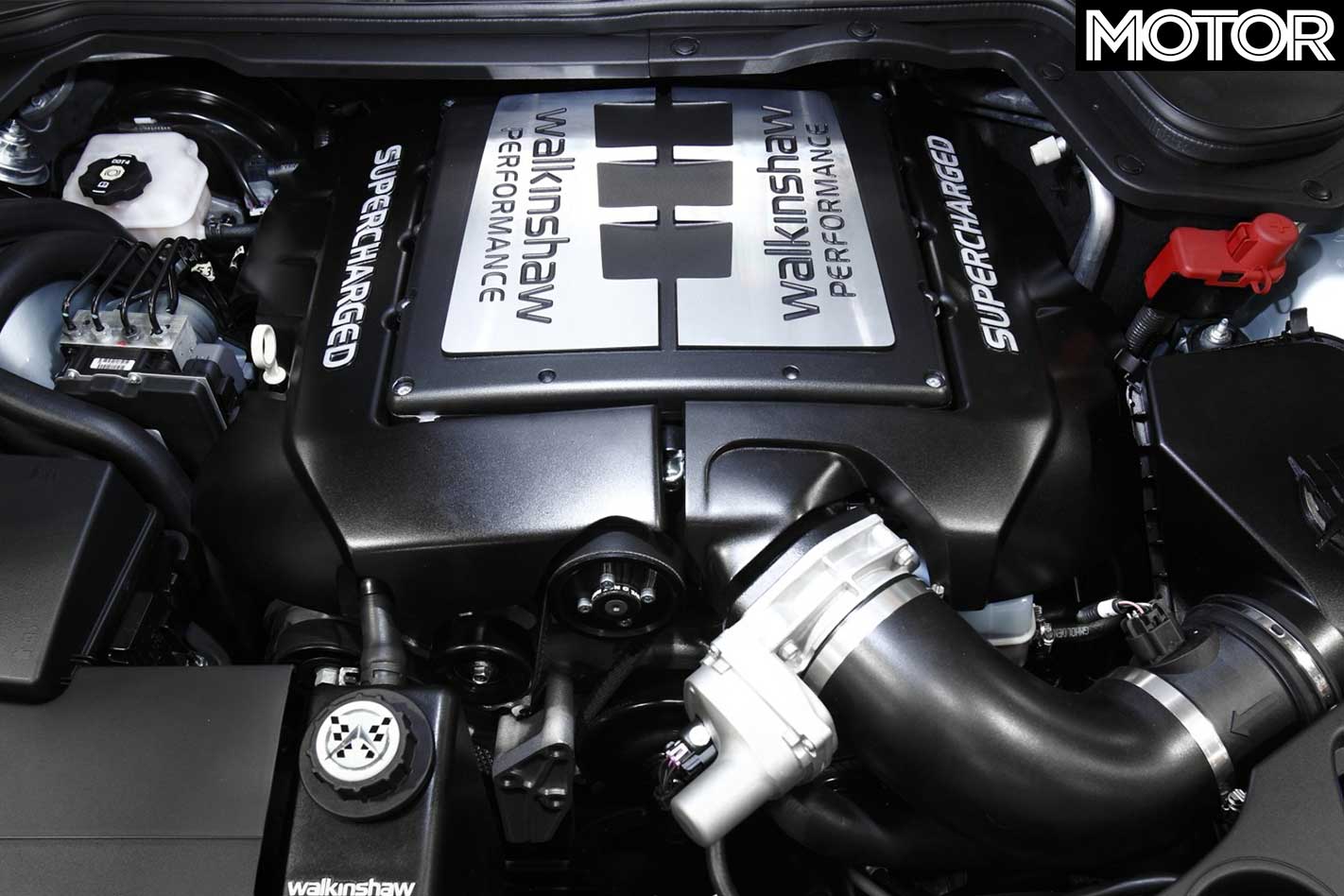
In the US, Chevrolet competes in the aftermarket with its own licensed Performance range of Camaro SS upgrade gear. Chevrolet even markets a Drag Race Development Program selling parts that boost the LT1 SS’s quarter mile potential to a claimed 10.5sec at 205km/h, with validation requiring more than 400 passes at 600-plus horsepower.
Parts include cold air intakes to headers, high-stall torque converters, heavy duty halfshafts; to Brembo brake kits, several full suspension upgrade packages and factory spec louder exhaust systems. We can only pray this is the gear on Walkinshaw’s radar for Australia.
Elsewhere in Melbourne, VCM Performance will compete for Camaro business with its HP Tuner software upgrades and Magnuson superchargers.
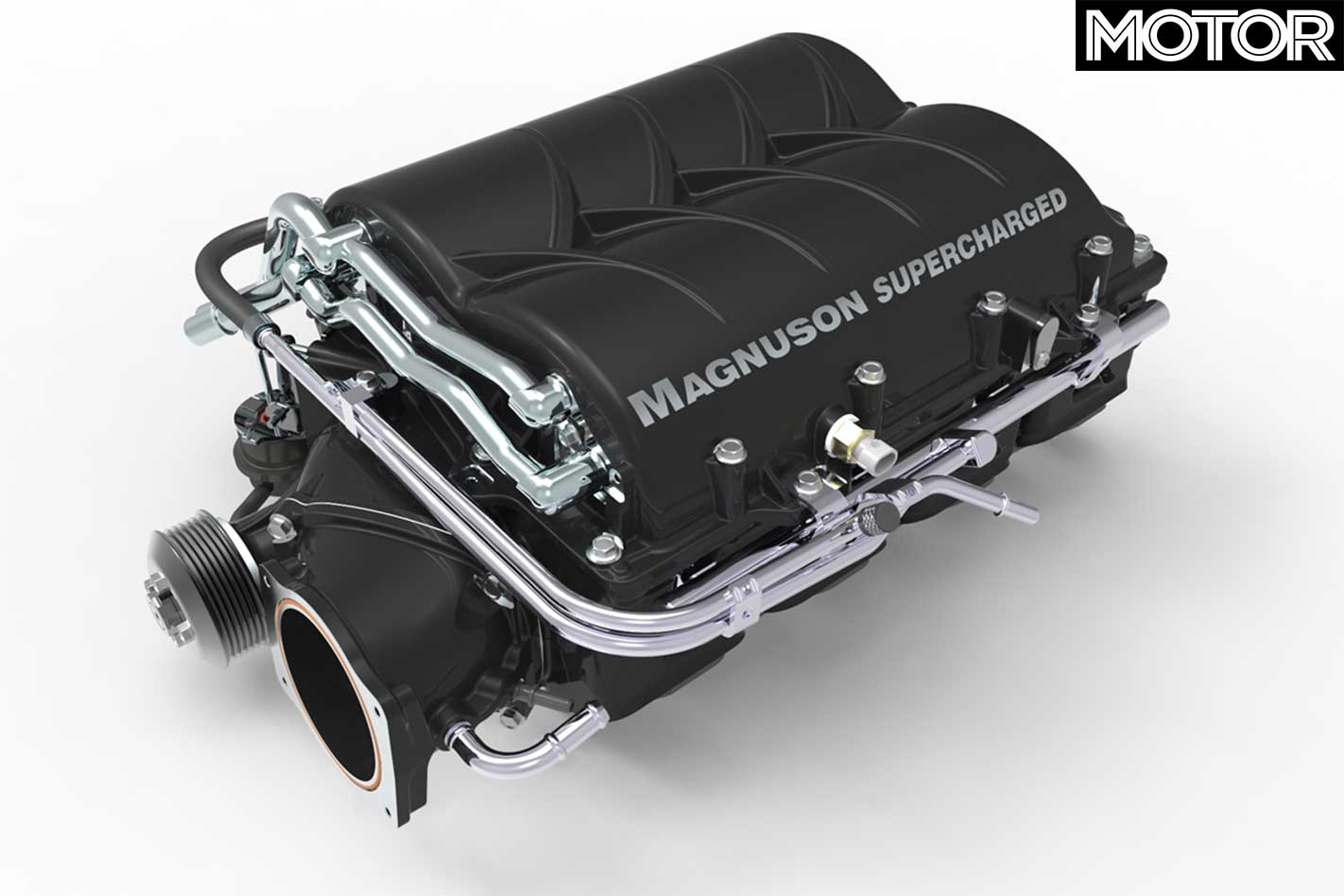
“We have a supercharger kit in stock and ready to go,” said VCM’s Mario Pancione. “It is a Magnuson 2300-sized four-lobe kit set-up to bolt onto the LT1, and should be on the market for around the same price as the Heartbeat kits we sell for Commodores. We are actually waiting on our own Camaro to be delivered so we can build a demo car.”
Suiting those perhaps stepping out of a Clubsport R8 LSA, the Magnuson 2300 will supercharge the LT1 Camaro SS to beyond 400kW with 6psi of boost.
Pancione said as Australian distributor of software tuning brand HP Tuners, VCM is busy working on related upgrades for the HSV-converted Camaro. As with any tuner, VCM must ‘crack the code’ of not only the the direct injection fuel system, but the eight-speed auto transmissions.
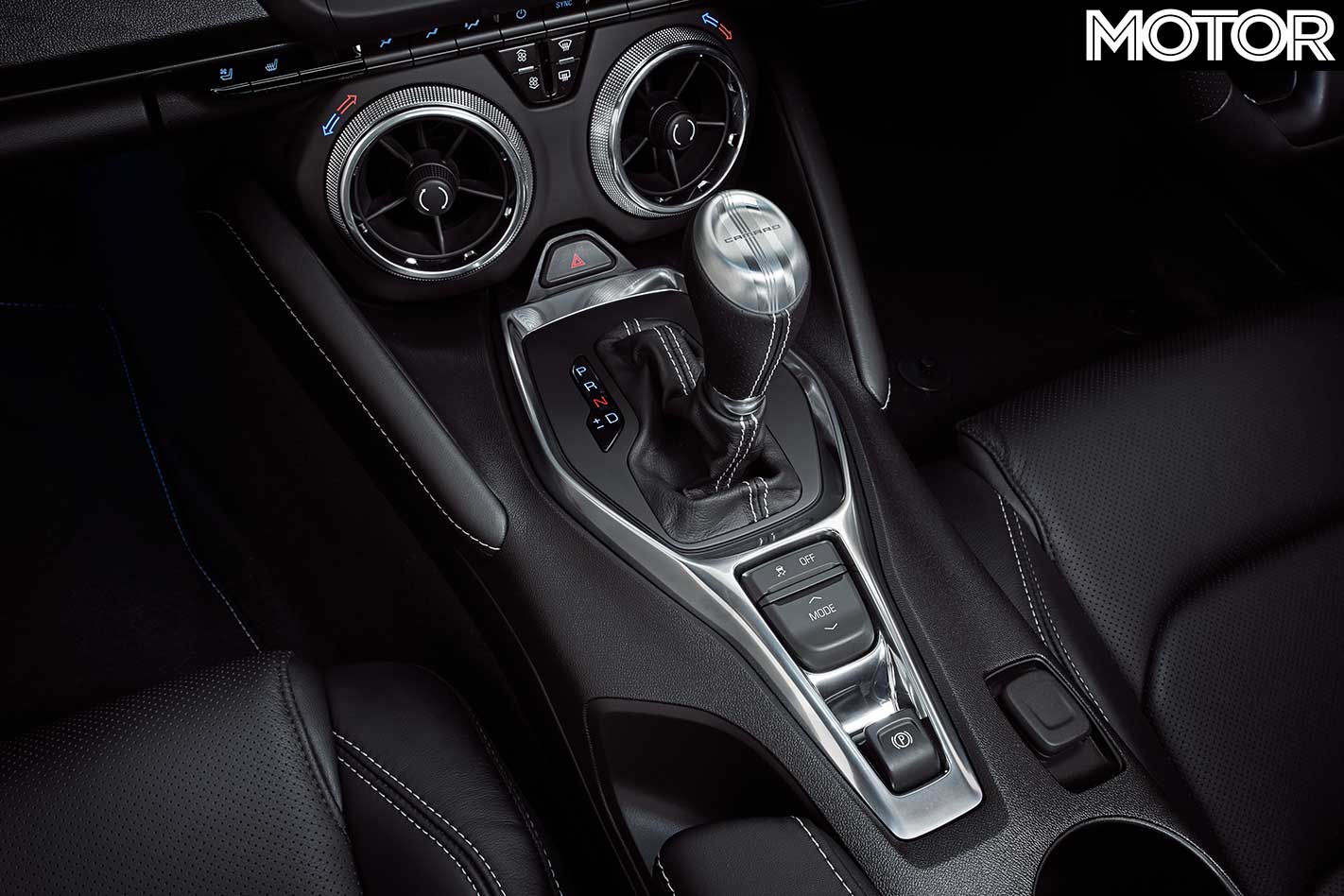
VCM had been spied fiddling with a ZB Commodore for reasons previously mysterious, but now clearer: “The transmission control unit (TCU) in both the new ZB Commodore and the Camaro needs to be unlocked,” explained Pancione. “The ZB Commodore uses the exact same TCU as the Camaro right down to the part number, so we have unlocked that in preparation for tuning Camaros.”
VCM is well known in the LS tuning world for developing new cam grinds that unlock huge power in the Chevy small-block engines, including reverse-pattern cams that suit forced-induction combos.
However, with only a limited number of Camaros coming, cam junkies should not expect to see a huge range of cams to suit Gen V engines pop up overnight. “We will look at developing cam grinds in time,” said Pancione. “We will see what the market response to the Camaro is first.”
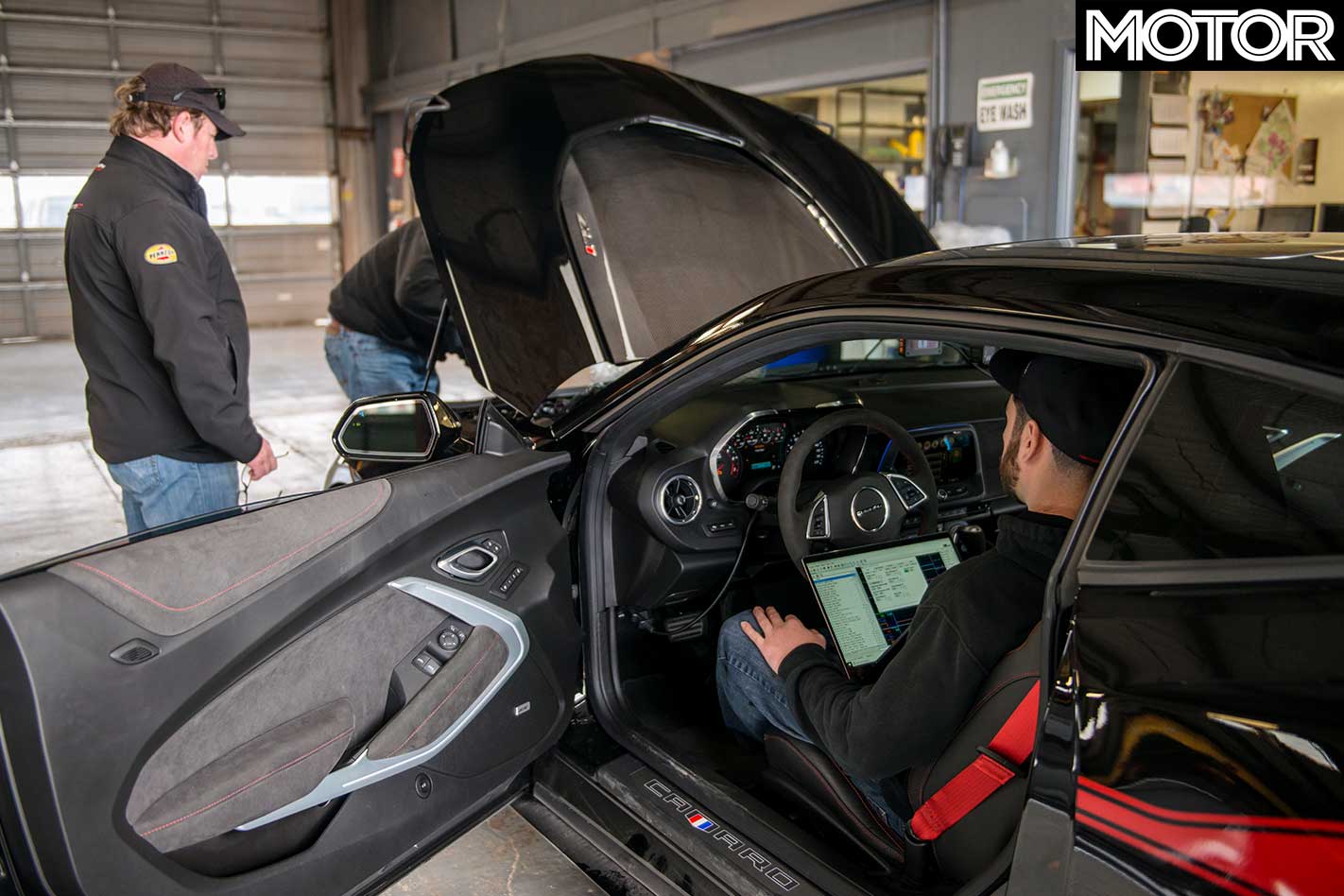
Sydneysiders needn’t fret for a lack of local tuning providers with Tunehouse in Marrickville jumping into the fight. “People are talking about these cars and we will work with various companies to develop packages under the THR brand,” said head honcho Jim Ghelis.
“This means suspension and brake upgrades, and leaving engine upgrades to bolt-on parts to avoid opening them up. We have a lot of options for R&D cars and we will get in and get them done, but we are going to run our own journey, like we always do, and develop our own packages.”
Queensland’s GM horsepower addicts Hi-Torque Performance couldn’t comment on its Camaro plans.

While power upgrades such as superchargers and software tuning are obviously high on the agenda for Camaro owners and tuners alike, expect to see a tsunami of aftermarket wheel options in Camaro-friendly fitments from ubiquitous brands such as ROH.
Suspension lowering options and upgrades are expected from brands such as Eibach and, more locally, Whiteline. For those who just want a little more herbs and perhaps sound without overdoing it, K&N Air Filters will offer an OE-quality cold-air intake.
What’s plain to see is if you have an HSV Clubsport R8 LSA, or GTS, and the lease is almost up, it will be far from difficult to replace it with a right-hook Camaro converted to OE standards by HSV, with a lazy supercharger bumping power to safe or psychotic levels – or even a snarling, enhanced naturally aspirated V8 sweetheart. Enough to scare the horses, whichever route you take.
LT1, LT4, LT5? Know your modern GM V8s
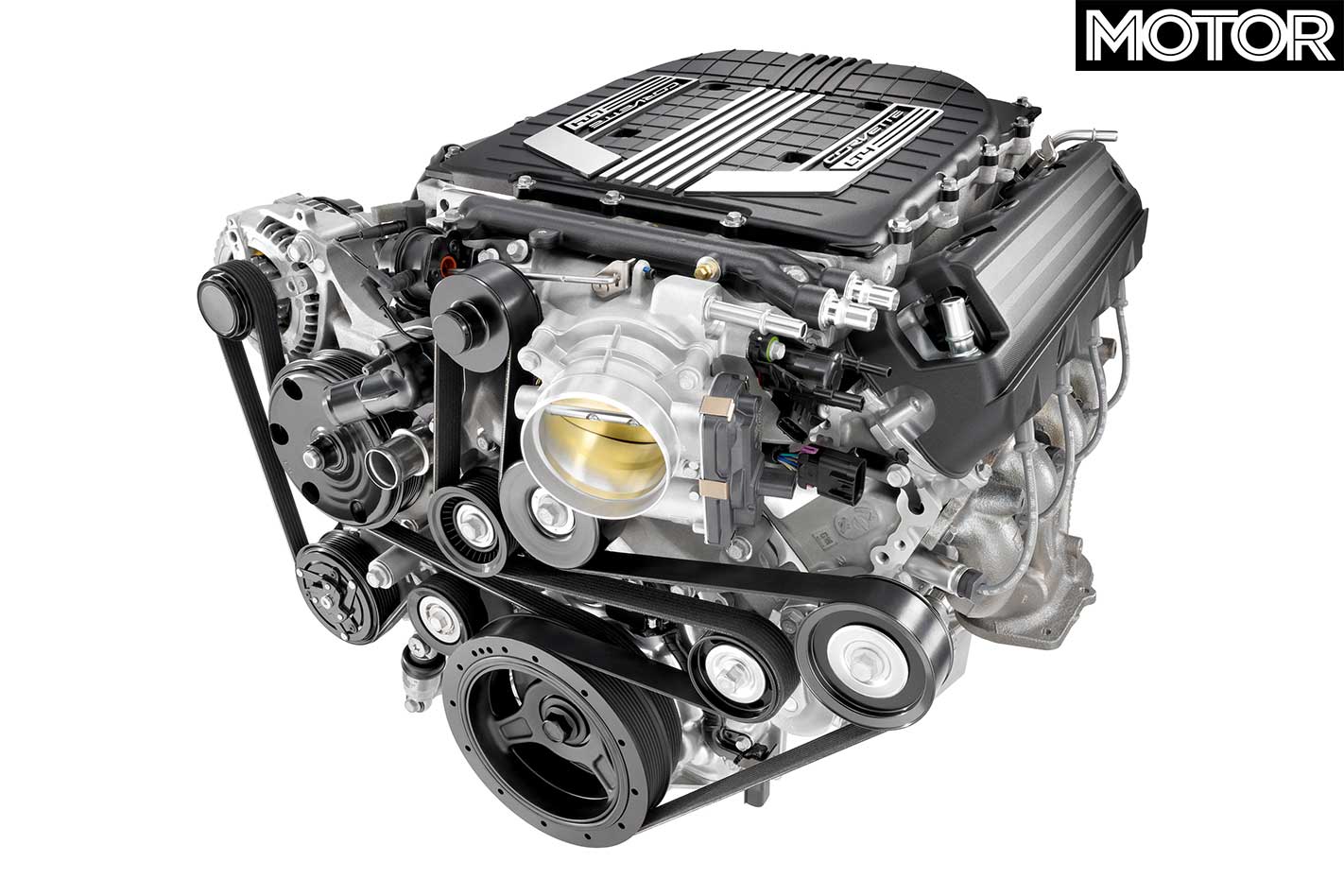
The sixth-generation Camaro sees the new Gen V LT small-block V8 slotted between the rails, boasting significant technical upgrades like direct injection and variable-rate oil pumps over the old LS-series engines we’ve had in Holdens since 1999.
The engine’s basic architecture carries over from the Gen IV LS3 with aluminium block and cylinder heads, 90-degree vee, 103.25mm bore and 92mm stroke, and a displacement of 6.2 litres. However, there are less than a handful of parts which interchange between the LS motors and the new LT1 and LT4 used in the sixth-generation Camaro.
While the LT1 runs a 11.5:1 compression ratio for snappy performance on various grades of fuel, the 485kW LT4 drops to 10:1 to deal with increased cylinder pressures from the new 1.7-litre Eaton four-lobe supercharger (made more compact to improve bonnet clearance). The LT4 also uses forged internals and an upgraded valvetrain to handle the huge 650hp, including a dry sump oil system and variable-rate oil pump.
There is also the 563kW LT5 V8 on duty in the new ZR1 Corvette, boasting a massive 2.65-litre supercharger. However, this is unlikely to appear in Camaro in the next 12 months.
MUCH LIKE there’s two sides to every argument, ‘significance’ can be a subjective thing. So choosing 10 Aussie-made Holden models that really mattered was always going to have inevitable casualties.
In almost every instance, you could argue there was better to come as each generation matured into a more polished and sophisticated version of the original. For example, there wouldn’t be a person on this earth who thought Holden’s airbag-equipped VR Commodore of 1993 wasn’t a vast improvement over the ’88 VN, but it was the big-selling VN that saved Fishermans Bend’s bacon, at exactly the right time.
Same applies to the first 48-215 of ’48. The final ’53 model was definitely better than the first, thanks to modern telescopic front dampers replacing antiquated lever-arm units, yet it’s the first Holden’s flamboyant FJ facelift that truly became a post-war icon. Richard Ferlazzo created the FJ-inspired ‘Efijy’ concept car for that very reason. Then there’s the ‘if onlys’: imagine how great the beautiful HQ could’ve been had it been gifted the suspension smarts of the RTS-equipped HZ. Or the VB Commodore with modern engines.
Or the EH with the HR’s ball-joint front end and optional disc brakes. But none of that applies to the final locally made Holdens. The VFII Commodore SS-V Redline and HSV’s supercharged V8 beasts are irrefutably the last, and by far the finest. Lest we forget.
10. LX Torana Sunbird
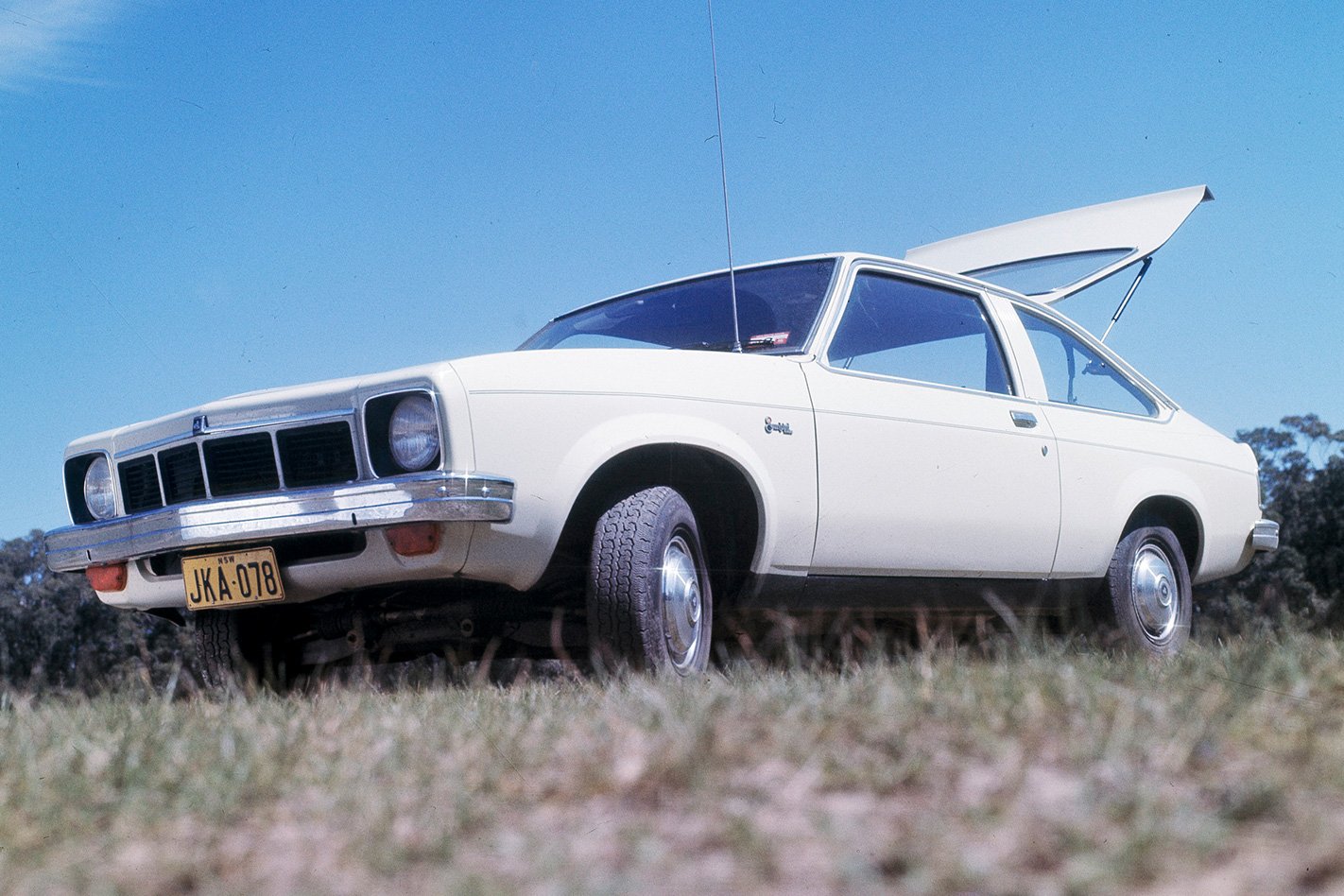
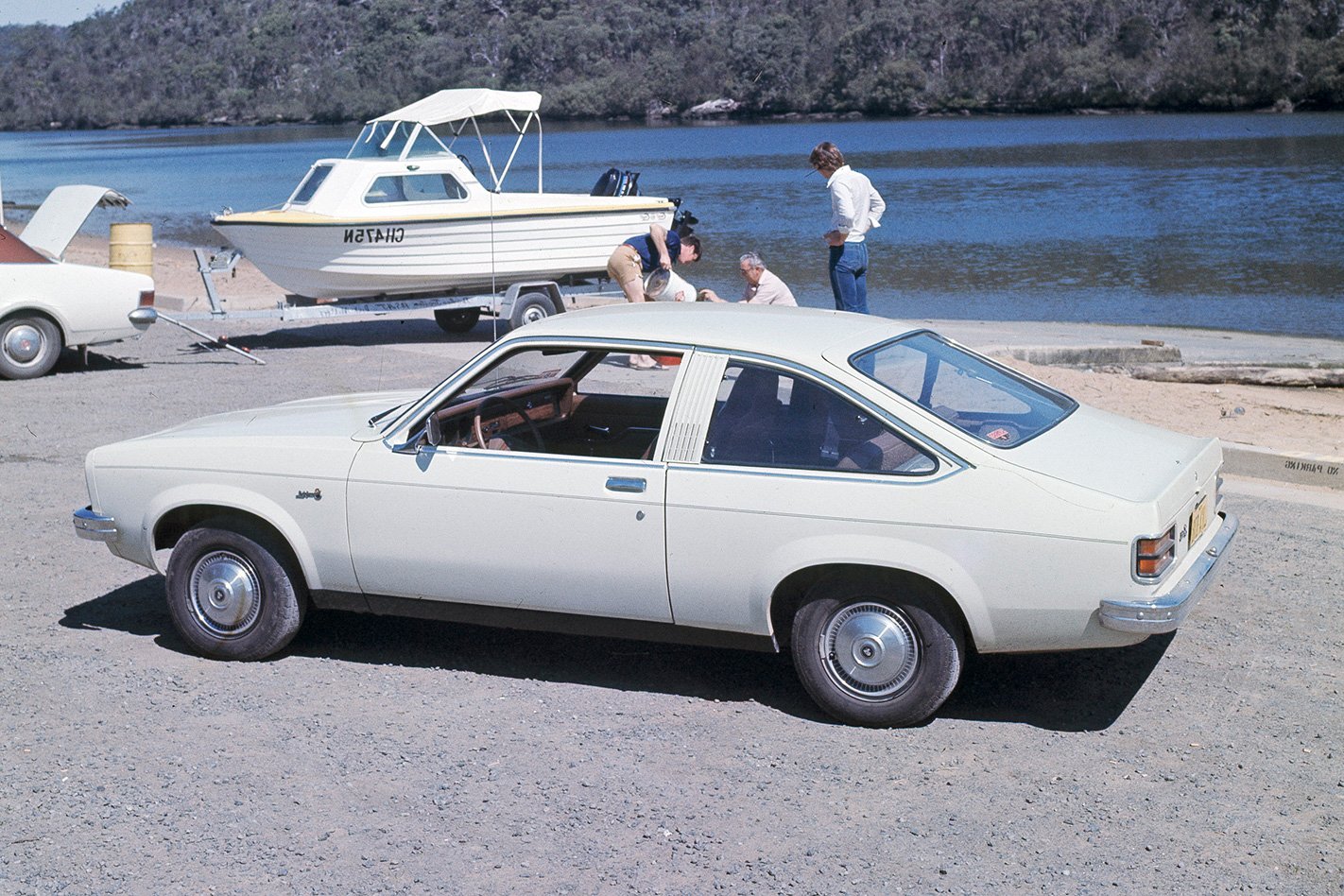
It was a tough call between including this – essentially a humble facelift of the LX Torana 1900 – and 1969’s COTY-winning LC Torana, which single-handedly created the ‘compact six’ category. But if you consider the significance of the LX Sunbird’s legacy, then this, the first Holden to boast Radial Tuned Suspension (RTS), packs a dynamic punch that resonates in Holden’s best products to this day.
Masterminded by MD Chuck Chapman, chief engineer Joe Whitesell, and ex-Opel engineer Peter Hanenberger, the up-to-date kinematic approach of Radial Tuned Suspension (RTS) quickly transformed Holden’s entire range. The Sunbird was first (accompanied by actual press pics comparing its flat, balanced handling to the rolling, understeering mess of its Torana 1900 predecessor), followed by the entire LX Torana line-up, an updated TC Gemini, and, most spectacularly, the full-size HZ range in late-’77. And then a comprehensive second stage in 1978.
Some models were easier to make over than others. Being of European descent, the original TX Gemini’s lack of anti-roll bars and rubbish cross-ply tyres simply suppressed the T-car’s dormant dynamic goodness, whereas the Torana and Kingswood/Premier/Statesman required extensive hardware alterations to achieve the suspension geometry necessary for dynamic finesse. No such problems for the late-’78 VB Commodore, though, which became Holden’s poster child for the ride, handling and steering benefits of Radial Tuned Suspension.
Yet, Holden wasn’t the first GM brand to offer RTS. The marketing term was actually coined by Pontiac in the US for its 1974 model range, trumpeting standard radial-construction tyres, and a marketing term is what it eventually became for Holdens, too, on imported wannabes like the first Japanese-built Barina. But its core dynamic DNA lives on today.
As for the Sunbird, besides the glimmer of its handling and steering superiority, and its oh-so-’70s nameplate reeking of Reef Tan, it has become merely a distant age spot on a craggy, sun-damaged era that is now long gone.
9. VN Commodore
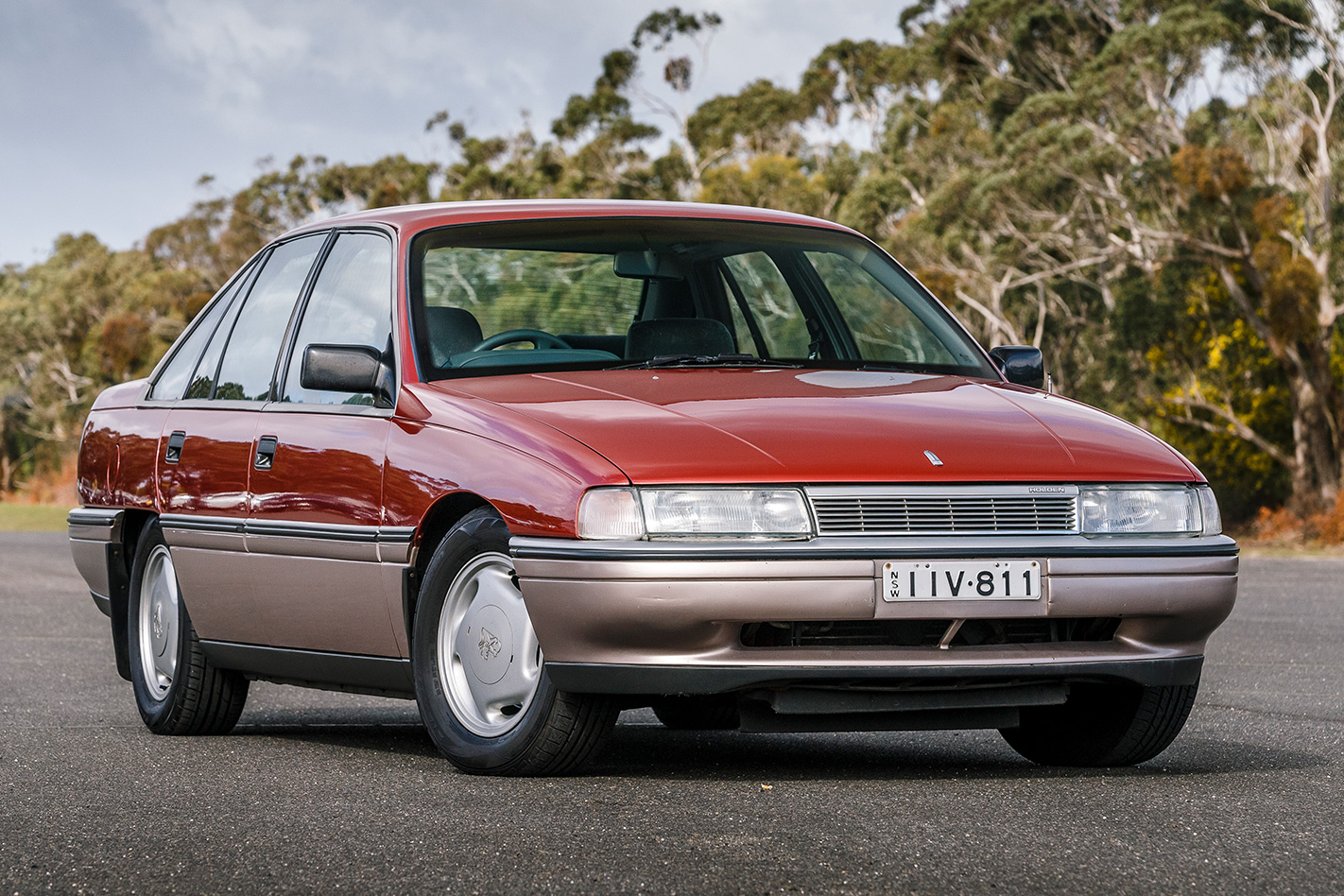
On the back of the almost cult-like following for the sweetly powered VL (which sold strongly to private buyers but was deemed too small for proper fleet volume), the wide-bodied VN instantly made an impact, knocking the Falcon off its number-one-selling perch for the first time since 1982.
But what is more remarkable is that the VN’s success was born out of Holden’s near-bankruptcy – and subsequent $700 million bail-out by GM in 1986. Left with having to stretch the least amount of development coin the farthest it could, Holden managed to engineer the revival of its evergreen 5.0-litre V8 with multi-point fuel injection (1989), the return of long-wheelbase luxury models (VQ Statesman and Caprice in 1990), and a first-ever Commodore Ute (the VG in 1990), all of which managed to save the company.
Part of Holden’s cost-cutting involved axing the VL’s much-loved overhead-cam Nissan sixes for a cheaper, US-sourced, all-iron, 3.8-litre pushrod V6 whose 90-degree vee angle hinted at the undesirable vibes this engine would produce. But boy was it effective.
Mega torque – 92 percent of maximum from just above idle – and the VN’s light weight meant that a base Executive auto could crack a high-15 for the standing 400m, while delivering unexpected fuel efficiency.
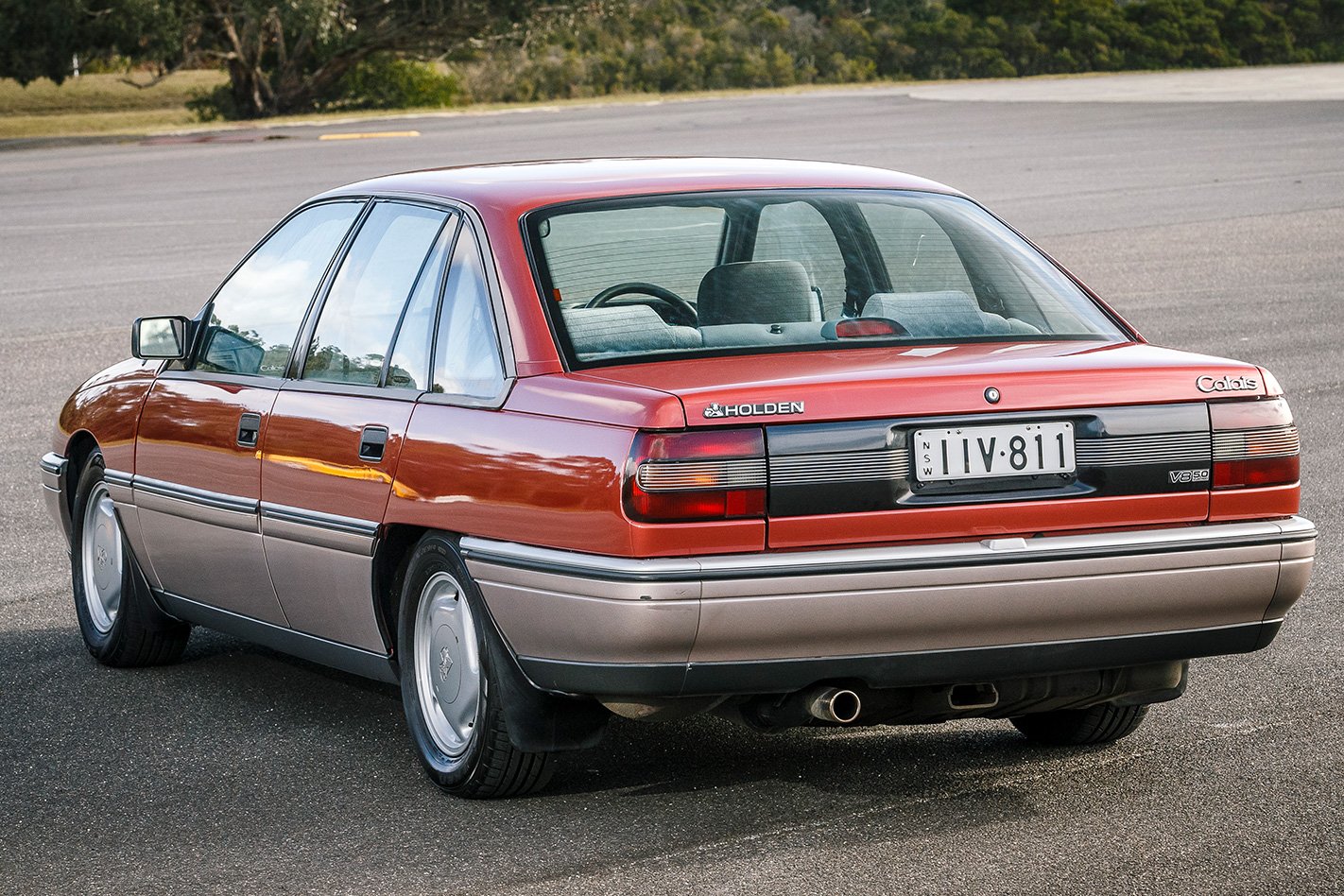
But with a narrow front track carried over from VL, the VN looked almost knock-kneed when wearing 14-inch steelies. And while contemporary testers praised its dynamic responsiveness, it could also feel nervous, especially with all that torque being channelled through a live rear axle.
A worn VN is not a pleasant thing to drive, and that’s how most ended their lives – driven into the ground, as gravity exerted its unforgiving forces on seat trims and headlinings. But the VN’s significance as a milestone model, and its success against its opposite Blue Oval number can’t be ignored.
8. HK Monaro
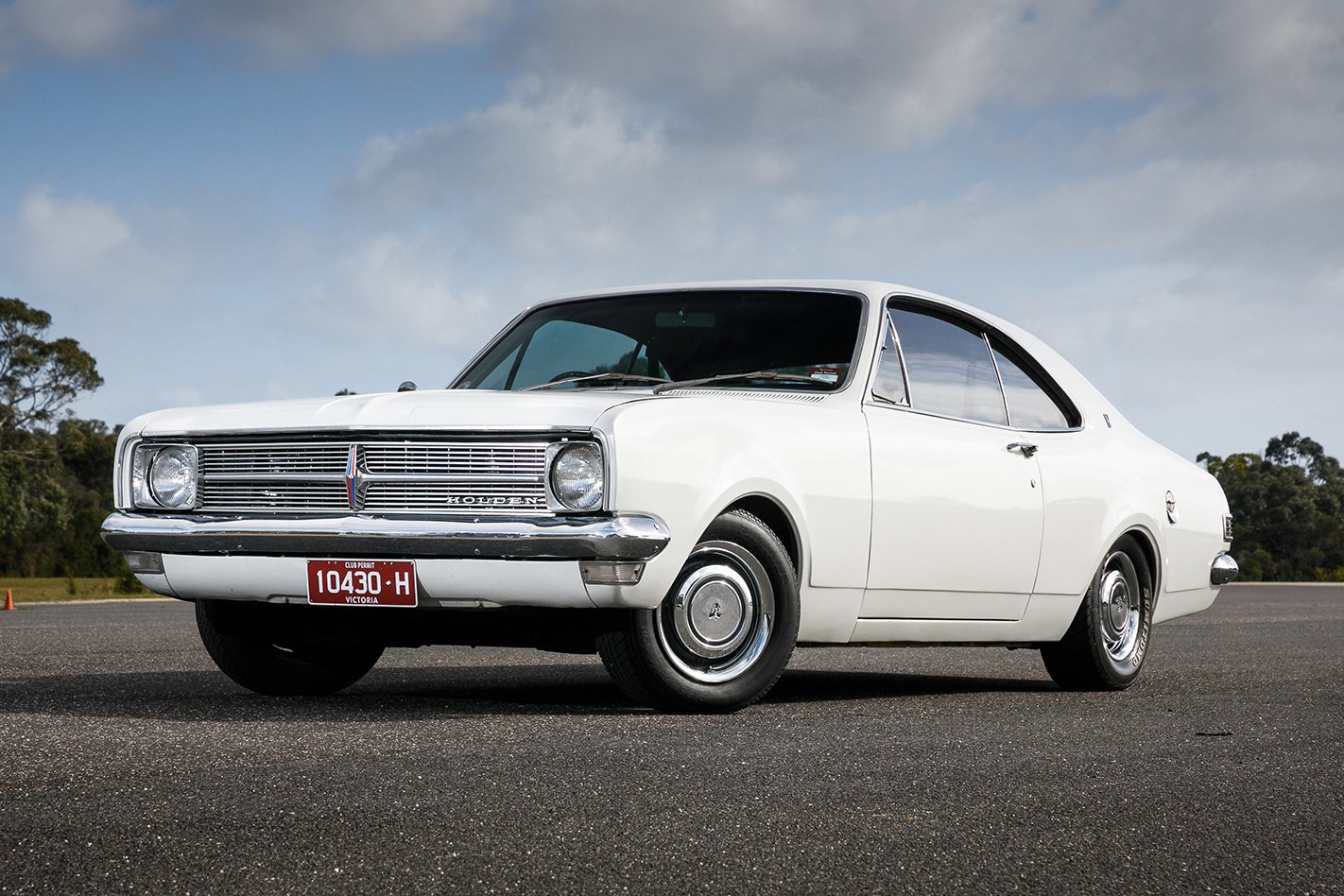
Introduced as the ‘Swinging Sixties’ mood progressively infected the western world, the HK Monaro coupe was almost an anti-Holden.
Just a year earlier, Holden’s line-up included the conservatively competent six-cylinder HR Holden Special and Premier, and the Vauxhall Viva-replacing HB Torana, but in much the same way that 1968 played out across the globe, the year of revolution saw exactly that happening in Holden’s Australian dealerships.
Inspired by the pillarless-coupe style of its international GM stablemates (particularly the Opel Commodore coupe), the HK Monaro was a watershed moment for Holden, specifically the flagship GTS 327.
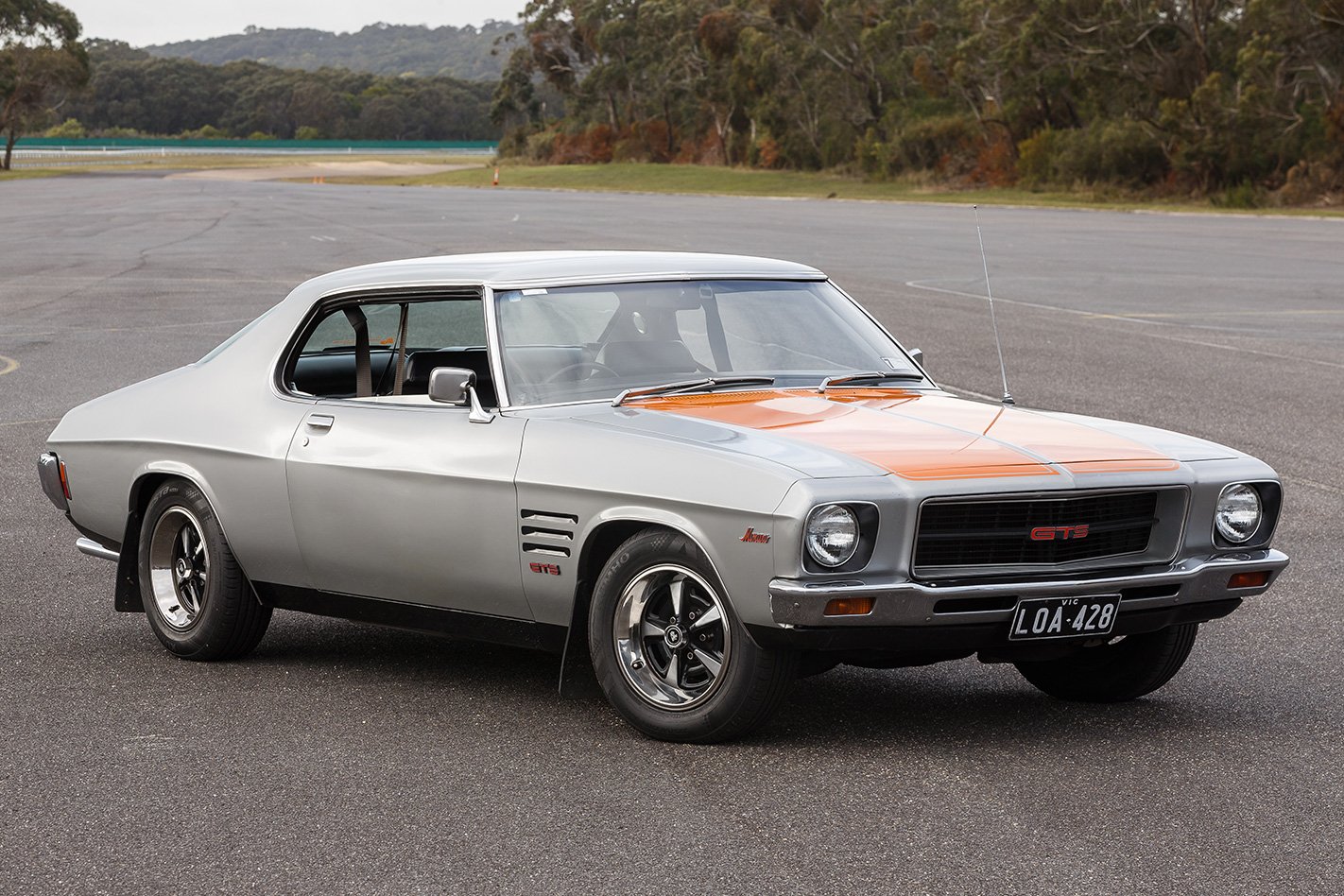
Here was a four-barrel 5.3-litre Chevrolet V8 punching out 250hp (186kW) tied to a four-on-the-floor, with red-banded ‘D70 Nylon high-speed’ tyres, track-honed suspension, and, after the long weekend in October ’68, a Bathurst endurance win under its belt. The V8 Monaro range-topper kick-started a lion-badged muscle-car lineage that remains overwhelmingly active in today’s bent-eight Commodores and HSVs.
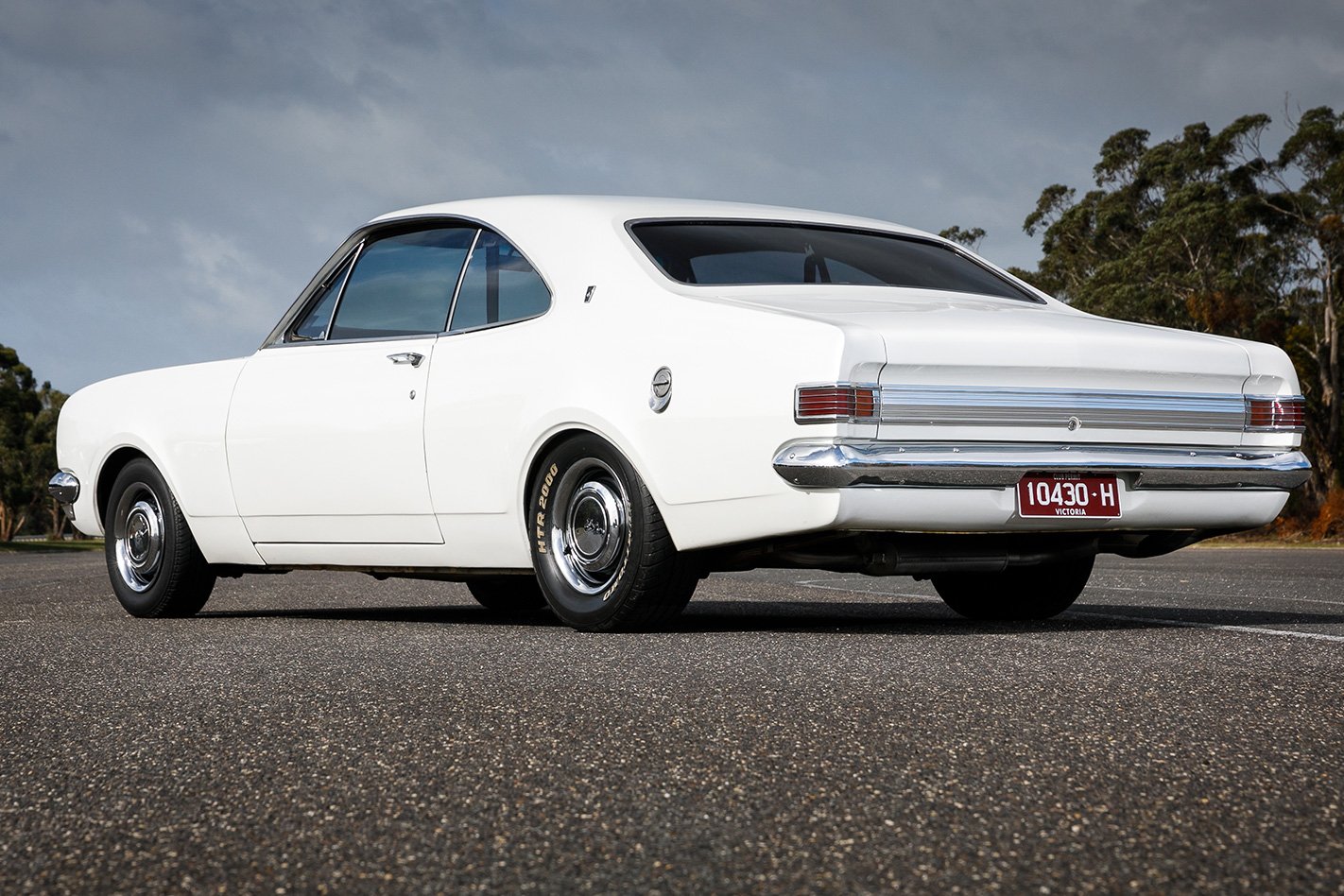
Of course, not every HK Monaro was a Bathurst winner. The base car was simply called Monaro and, beautifully athletic form aside, had little going for it in terms of sporting abilities. A small 161ci (2.6-litre) six and three-on-the-tree manual ’box without synchro’ on first, drum brakes, no radio, no heater – this was a blank canvas awaiting some creativity with Holden’s freshly burgeoning options list. But in traffic-stopping Warwick Yellow, with that aluminium rear bootlid garnish gleaming in red reflector tape, the GTS 327 was a true halo car.
And so this elegantly formed coupe lineage continued into the ’69 HT and ’70 HG Monaros, each offering improved refinement, brighter colours, and more muscular engines. It was Holden at its most ambitious, closing out the ’60s with all the visual flair and brashness of an Aussie fashion model done good.
7. EH Holden
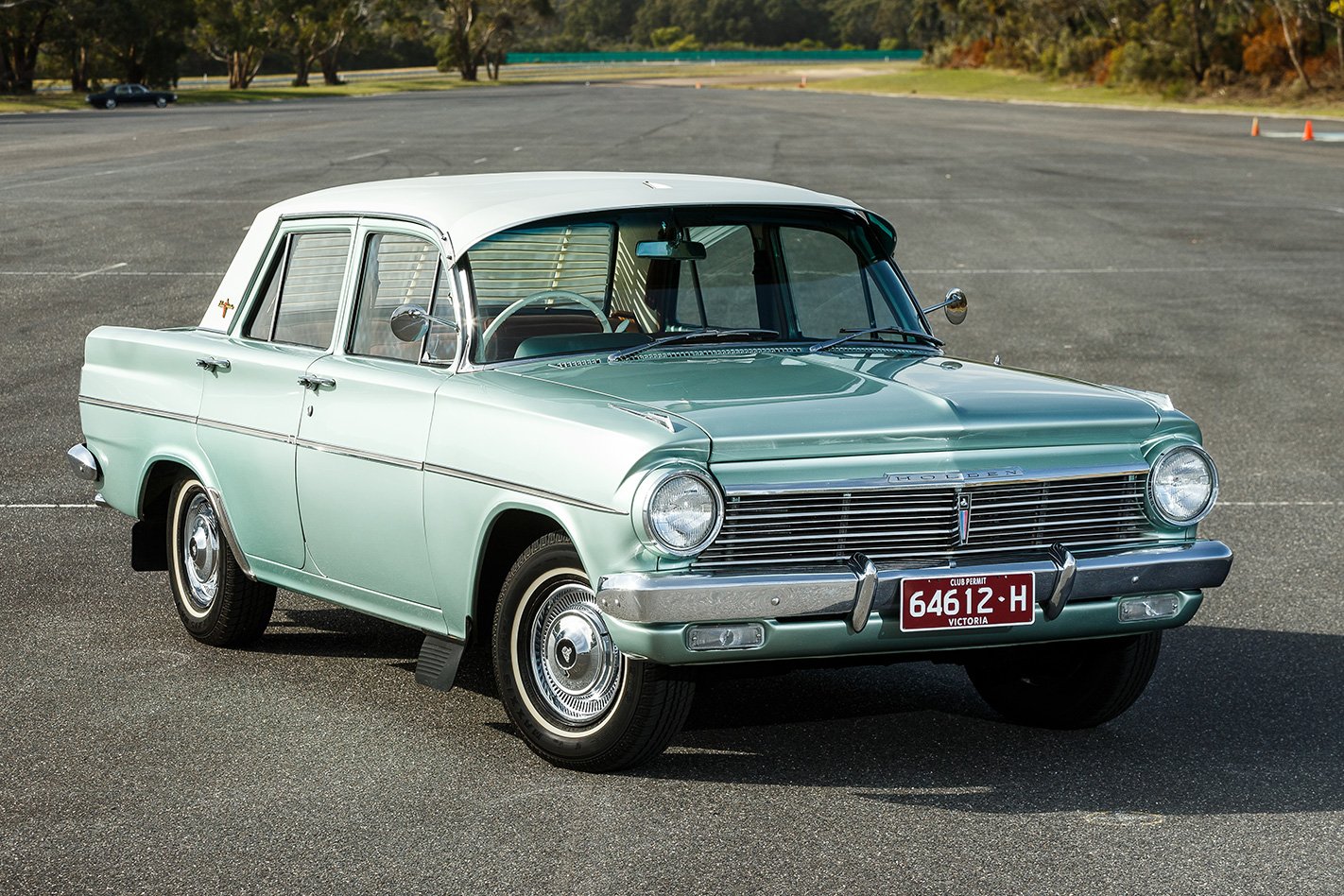
THE ‘power race’ began late at Holden – August 1963 – and it was signified by a chequered-flag ‘179’ badge attached to the rear end of the new EH Holden.
Under the EH’s sharp-edged bonnet sat an all-new, all-Australian ‘red’ straight-six, its block and rocker cover resplendent in the same hue that graced its title. While a red-painted, single-carburettor engine available in relatively modest 2.4- and 2.9-litre capacities might seem about as racy as a neck-to-knee swimsuit, compared to the EH’s bodily related predecessor, the 1962 EJ, having a top donk punch out 115hp (86kW) was massive news. The feeble EJ could only manage 75hp (56kW) from its 2.3-litre ‘grey’ six.
Light in weight, and with further development future-proofed into its design (think triple-carby LJ Torana GTR XU-1 or fuel-injected VK Commodore), the red six transformed the EH. Holden even produced a limited-run 179 S4 version for racing duties, though even with sintered-metallic brake linings, the desperation of the EH’s four-wheel unassisted drums quickly put paid to any serious sporting aspirations.
The irony with the EH, however, is that its styling wasn’t really Australian at all. The Yanks had already heavily altered early proposals for the ’62 EJ, and when it came to facelift time, the job was completed entirely in Detroit.
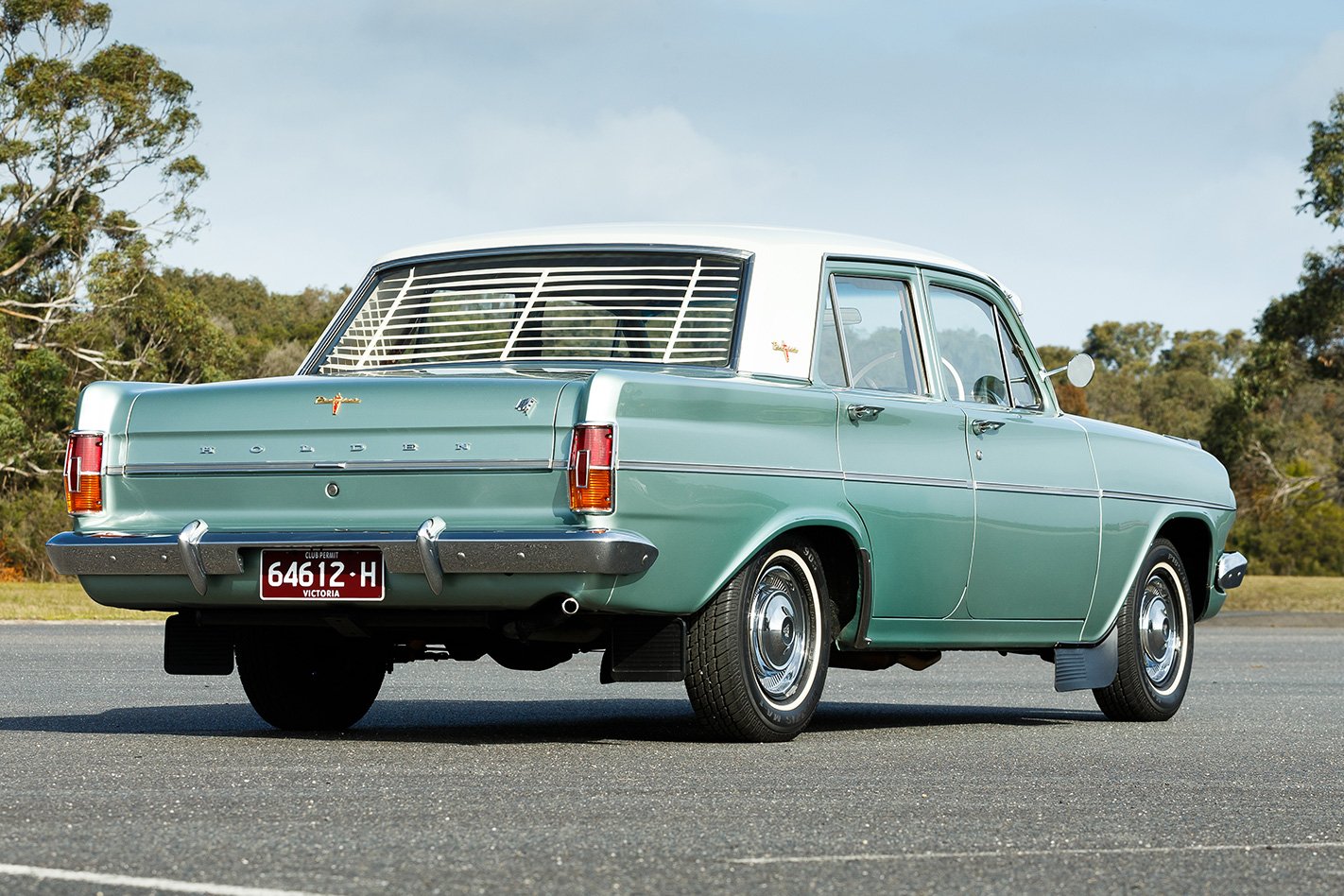
The EH simply appeared at Fishermans Bend in a crate, its crisp edges and more cohesive look in total contrast to the EJ’s blobby rear lights and droopy tail … but only if you bought the EH sedan or wagon. As was common practice at the time, the utility and panel van retained the EJ’s back end and simply copped the EH’s new nose.
6. VT Commodore
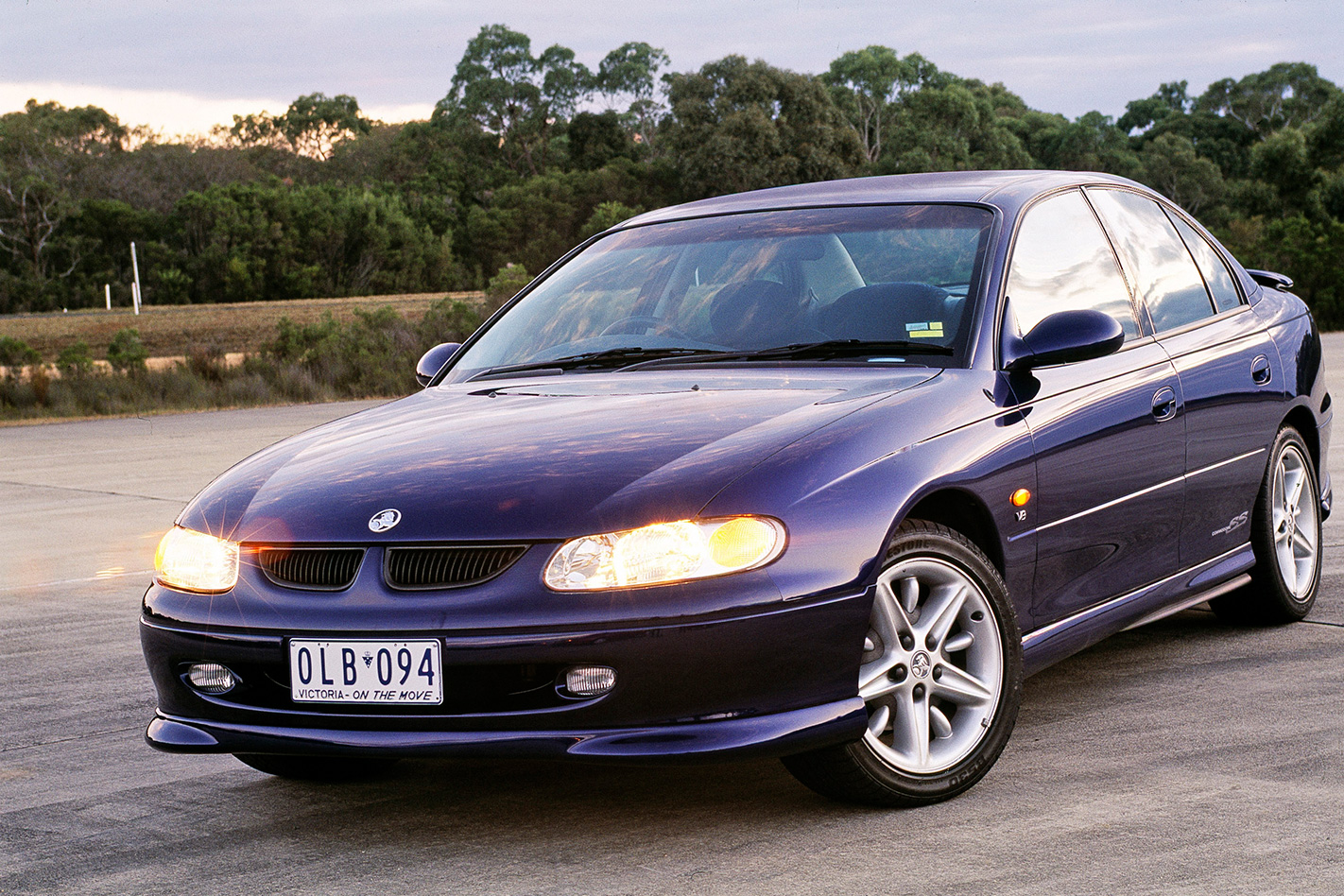
THE VT was the most successful Commodore of all time, not only because it set the sales charts ablaze like no Holden since the HQ, but because it sired a vast model range featuring some of the greatest lion-badged cars ever.
At the top of that list sits HSV’s brilliant VTII GTS (2000) – a Callaway-engined 5.7-litre V8 muscle sedan producing a then unheard-of 300kW (more than a contemporary E39 BMW M5) and packing a level of sophistication like no fast Holden before it.
The svelte V2 Monaro (green-lit thanks to the uproarious reaction to Holden’s 1998 Sydney Motor Show ‘Coupe Concept’), also owed its provenance to the VT, offering Aussies a home-grown two-door for the first time since the late-70s. And the variants kept coming. Beyond the long-wheelbase WH Statesman/Caprice (1999) came a new-generation Ute (the VU in 2000), its four-door relative (the Crewman, in 2003), a separate-chassis One Tonner Ute (2003), and the Adventra AWD wagon (2003).
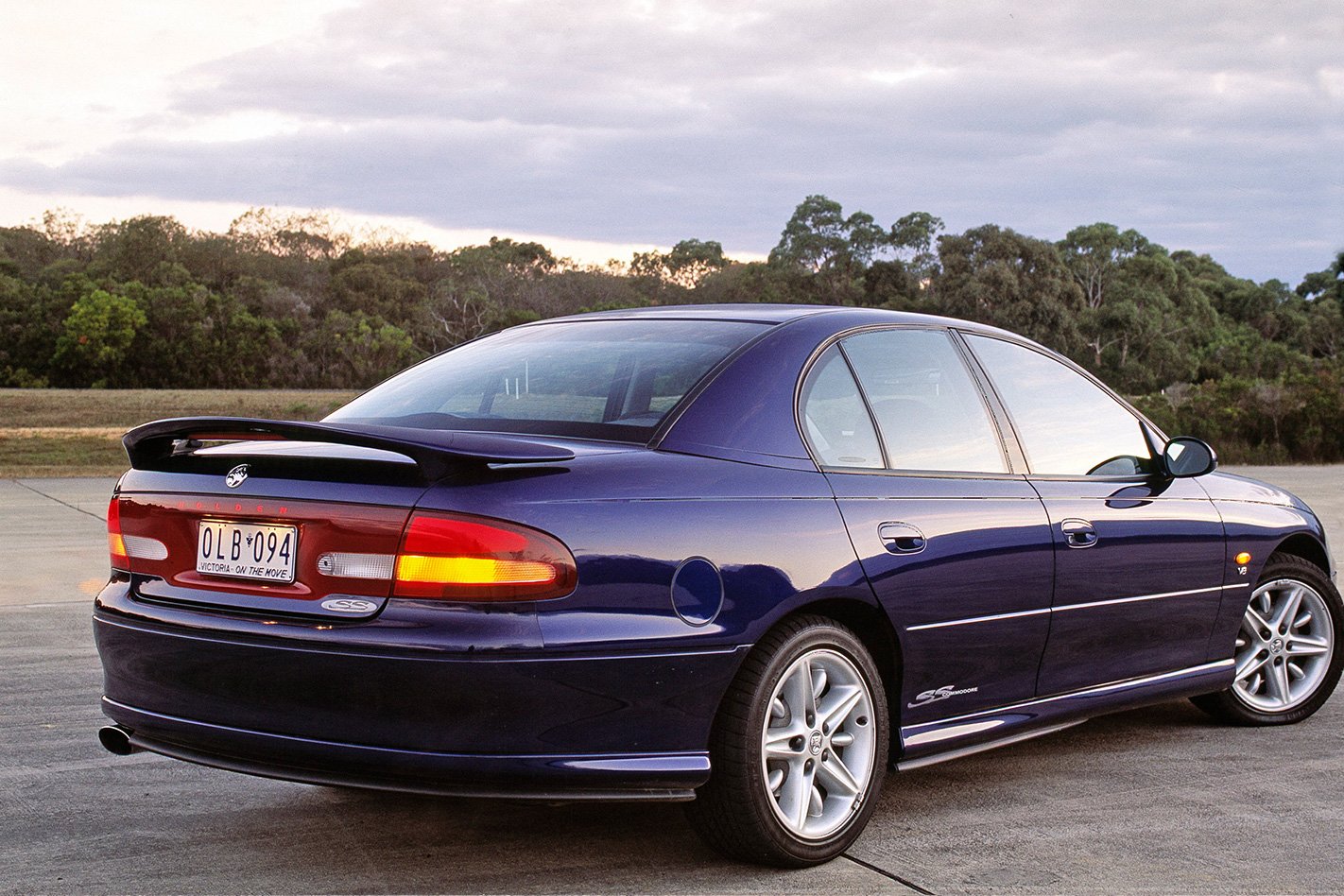
The VT and its offshoots were also an export hit. The VT went to the Middle East, South Africa, and Brazil, while the Arabs loved the V8-engined long-wheelbase WH sedan – badged as the Chevrolet Caprice for left-hook consumption.
But it was the VT’s absolute domination in its home market that put Holden on a path towards (brief) market leadership and an all-time sales record. In the VT’s first full year on sale, Holden sold a staggering 94,642 examples of its muscular new baby, with some months during the VT’s three-year tenure topping the 9000-unit mark. In comparison, Ford’s AU Falcon was barely an also-ran.
5. HQ Holden
Arguably Australia’s greatest styling success, the HQ was more things to more people than any local product ever made. From a basic 173ci (2.8-litre) Belmont utility with drum brakes, a bench seat, and not even door armrests, to a lavishly equipped Statesman DeVille long-wheelbase sedan with a 350ci (5.7-litre) Chevrolet V8 burbling out front, the HQ mastered range diversity like no other.
In just over three years, Holden built 517,614 HQs (if you include all body variants – not the 485,650 regular-line sedans and wagons so often quoted), making it the biggest-selling Aussie car of all time. And those variants included short- and long-wheelbase sedans, a long-wheelbase wagon, a coupe, a panel van, a utility, and even a one-tonne utility, as well as Australia’s first limited-run, package-value models. Think Vacationer (’72), SS (’72), and Sandman (’74).
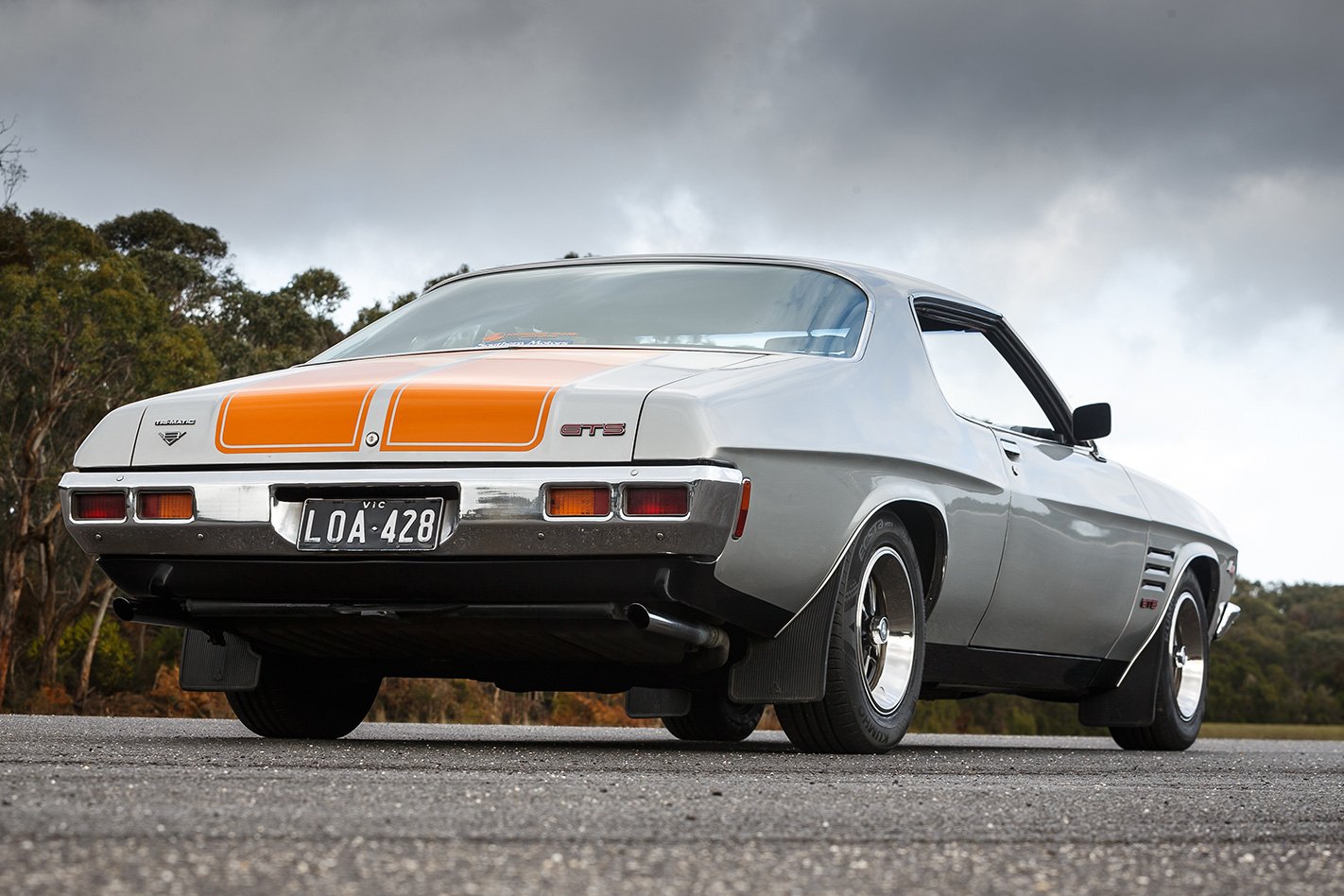
Cherry-picking the best styling cues from GM’s impressive late-60s line-up, the HQ’s beauty encompassed subtly blistered guards over each wheel, the world’s thinnest A-pillars for outstanding forward vision (if perhaps not roll-over protection), and a stunningly elegant Monaro coupe. It was also incredibly strong, incorporating a monocoque body design, like every Holden since the 1948 original, with an additional sub-frame that spanned the front half of the underbody. Needless to say, with the inclusion of a coil-sprung rear end, the HQ effortlessly devoured Australia’s punishing dirt roads.
But its handling on bitumen was less convincing and its recirculating-ball steering (with a oval-shaped wheel on most models) was notoriously heavy if the finger-light power assistance wasn’t fitted. Its front seats were also rubbish – too low and flat, necessitating alterations after barely a year – and having gained a substantial amount of weight through its robust safety engineering, the performance of six-pot HQs was adequate at best.
But look at all that beauty.
4. HSV Gen-F
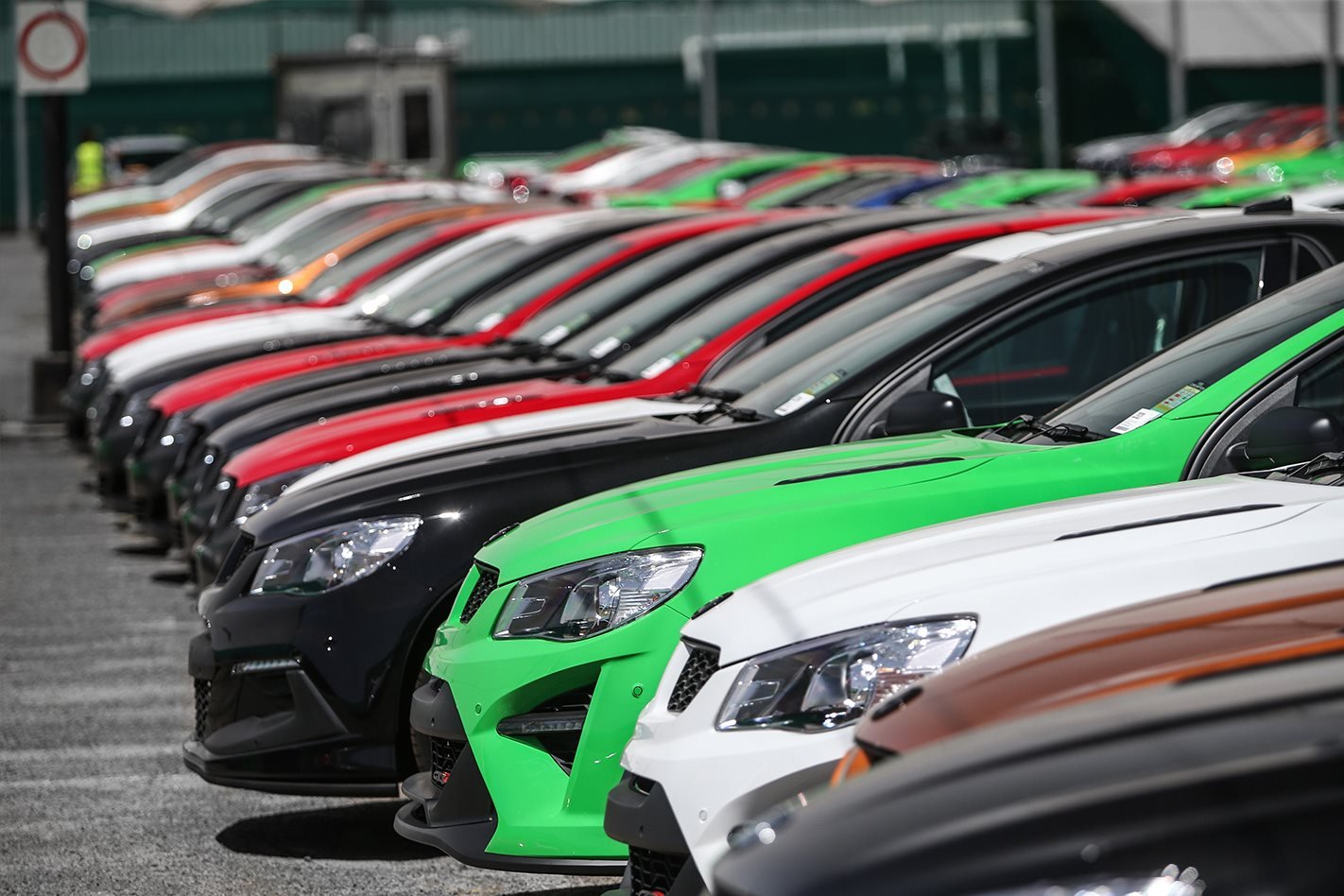
Ford’s 1971 XY Falcon GT-HO Phase III remains the most collectable Aussie muscle-car of all time, but it has little hope of matching today’s outgoing HSV line-up for sheer excellence in comparison to its contemporaries.
HSV’s Stephen Bradbury-like lunge to the finish line began with the Gen-F range in 2013, headlined by the newly supercharged 430kW/740Nm GTS featuring a significantly beefed-up rear-end from the Chevy Camaro ZL1 to harness all the newfound grunt pumping through the Commodore’s sticky rear Continentals. Dollar for dollar, it was a better car than Mercedes-Benz’s E63 S AMG of the time, if you could overlook the odd bit of ‘creative’ build quality inside the GTS’s sumptuously comfortable interior.
In fact, that’s the thing about these big-wheeled HSVs with magnetic dampers – they ride. And since the across-the-board fitment of superchargers in 2016, there isn’t a single one that doesn’t seriously perform either.
The old naturally aspirated LS3 V8 had its fans, but unless you were revving it hard, the atmo 6.2 had little hope of rising to the heights of its blown LSA replacement. Given a decent launch surface, just about anyone could extract a mid-to-high 12sec standing 400m number from an LSA auto sedan. And then there’s its cornering talent. For such a big unit generally weighing in excess of 1800kg, the Gen-F is a consummate dynamic wonder, even on punishing racetracks like Phillip Island.
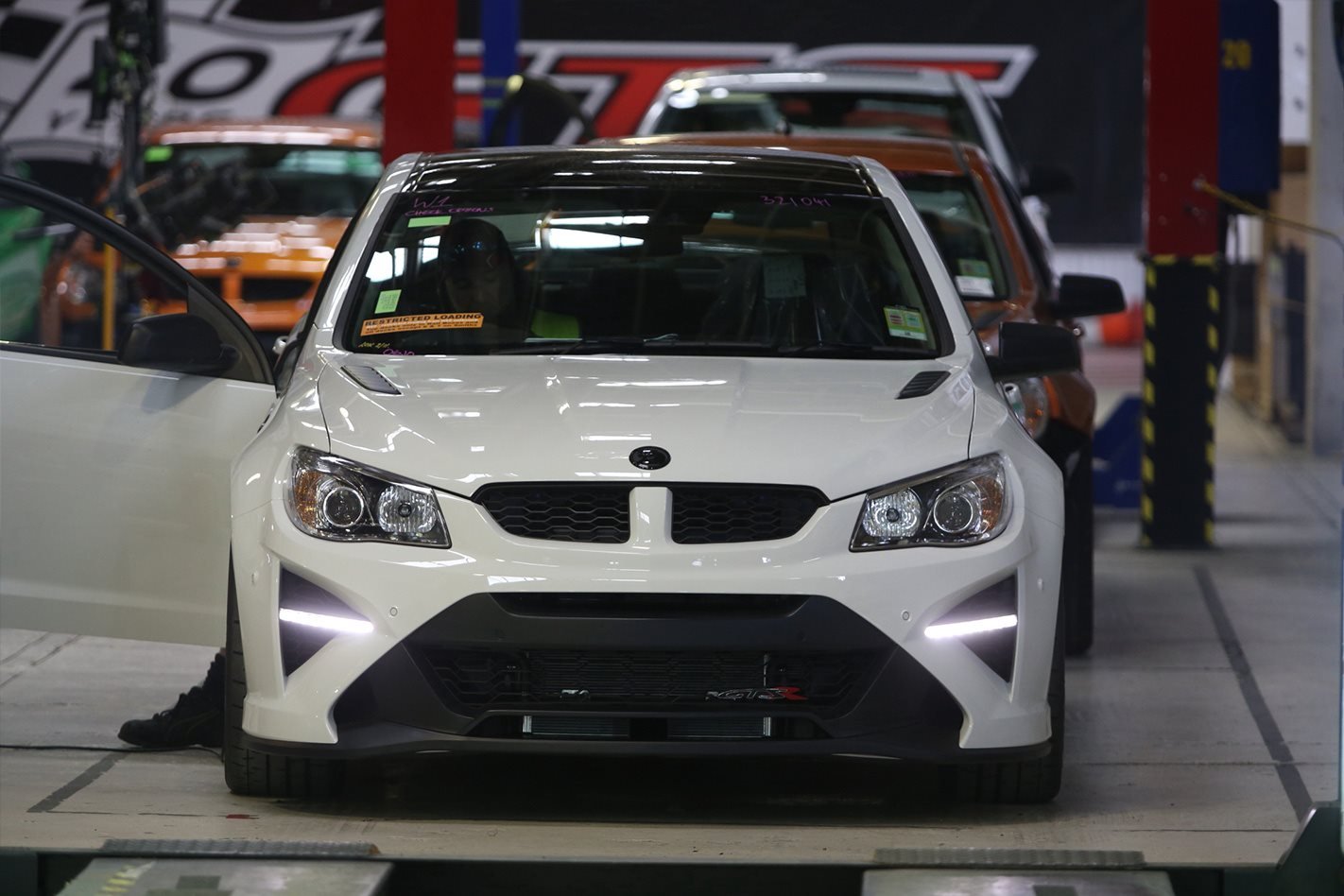
Which brings us to the last, and arguably the best, HSV of all time – the Gen-F2 GTS-R W1. Costing more than any other ($170K, and rising, given the current state of second-hand values), with more grunt than any other (474kW/815Nm), and even its own transmission ratios and suspension set-up, it’s the celebratory finale that bent-eight Holdens deserved.
Most will probably never leave the confines of their spotlessly clean garages, and the W1’s Supashock dampers are about as forgiving as either side of the marriage-equality debate, but as the pinnacle of Aussie automotive engineering, it will remain unchallenged for eternity.
3. VB Commodore
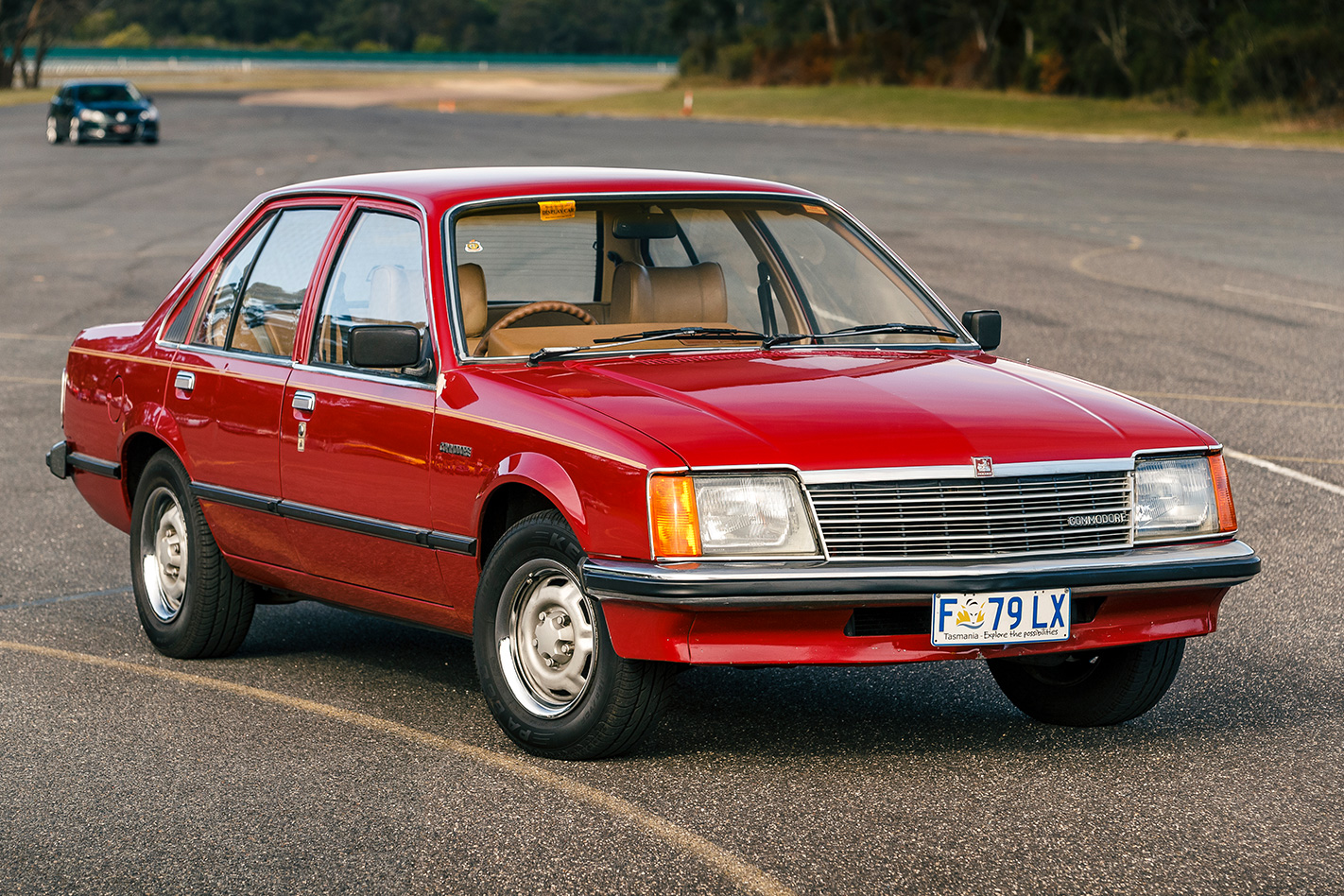
Commodore numero uno marked Holden’s first serious shift in direction. The VB introduced a significantly downsized, heavily European design that still packed the toughness (and large-capacity engines) that Aussie buyers craved, while being housed in a sleek, handsome, incredibly modern body that no longer reflected a Detroit-inspired design aesthetic.
Things began well for the VB. Launched in October ’78, it initially sold up a storm and Peter Brock’s Repco Round-Australia rally win in 1979 proved that this German with a thick Aussie accent wasn’t just brilliant on blacktop. A VB Commodore SL/E 5.0 won a Wheels comparison test against a Mercedes-Benz 280E, Rover 3500, and Volvo 264 – the Benz costing more than three times the SL/E’s price – while bread-and-butter VBs made the domestic opposition feel flabby and/or dated, Holden’s own UC Torana and HZ Kingswood/Premier included.
Melding the long-nosed front of Opel’s six-cylinder Senator with the Opel Rekord’s four-cylinder rear – garnished with Holden alloy wheels on the SL/E, and locally styled grilles on all variants – created a more handsome car than any of its European cousins.
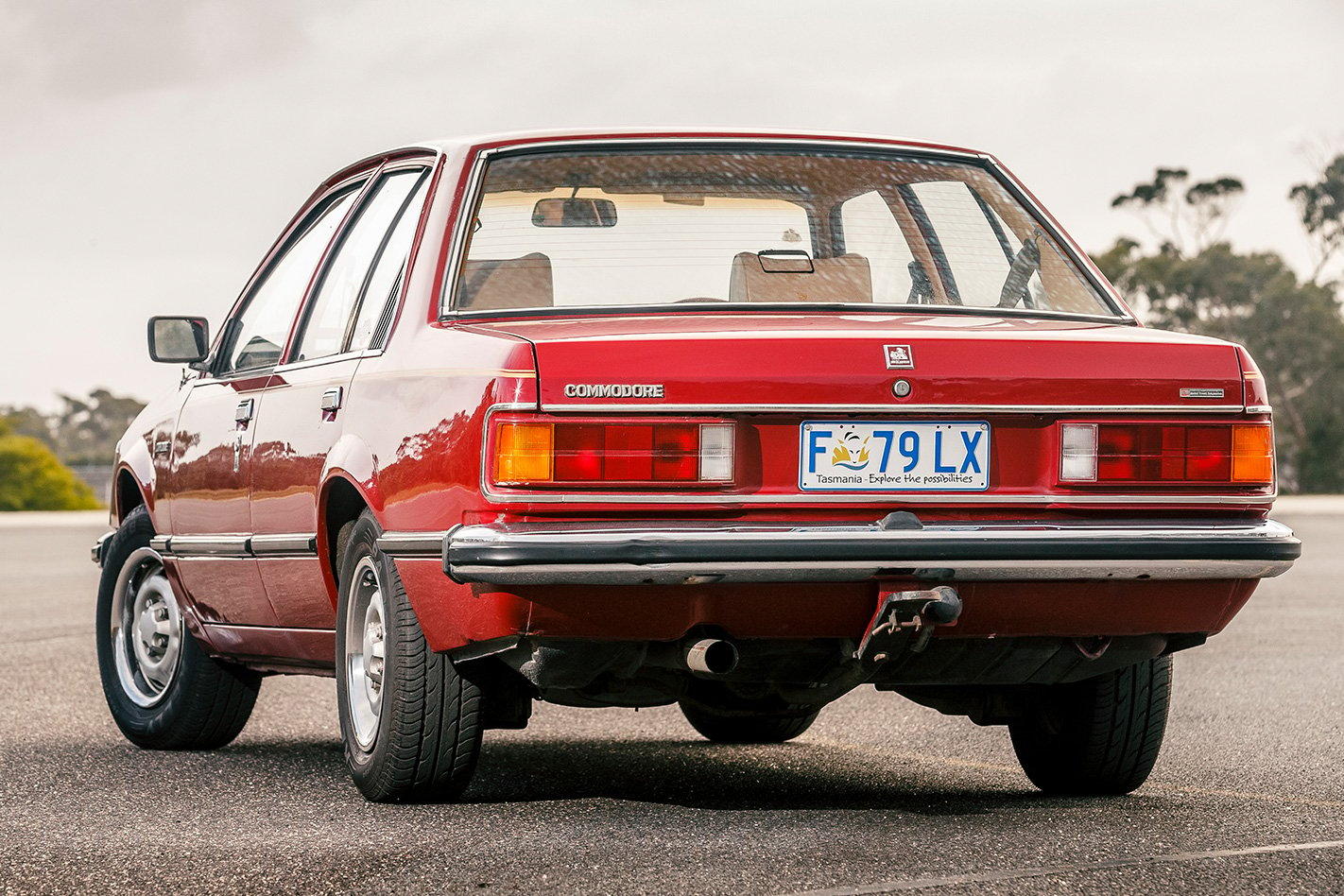
Thing was, Holden spent $110 million re-engineering GM’s V-car sedan and wagon for harsh Aussie conditions, leaving nothing for the development of fresh powertrains to take advantage of the new car’s leaner body. Ford spent less than that ($100 million) developing its entire ’79 XD Falcon line-up – commercials, and Fairlane/LTD included!
Strengthening measures included a full-width panel behind the rear seat, lateral reinforcements for the strut towers, stronger front anti-roll-bar mounts, a reinforced rear engine mount and a rear stone guard, creating an impressively robust car (despite many build-quality issues).
But only with the insertion of Nissan’s excellent fuel-injected (and, later, turbocharged) RB30 six of 1986, did the first-gen Commodore, in VL form, receive the engines it truly deserved.
2. VE Commodore
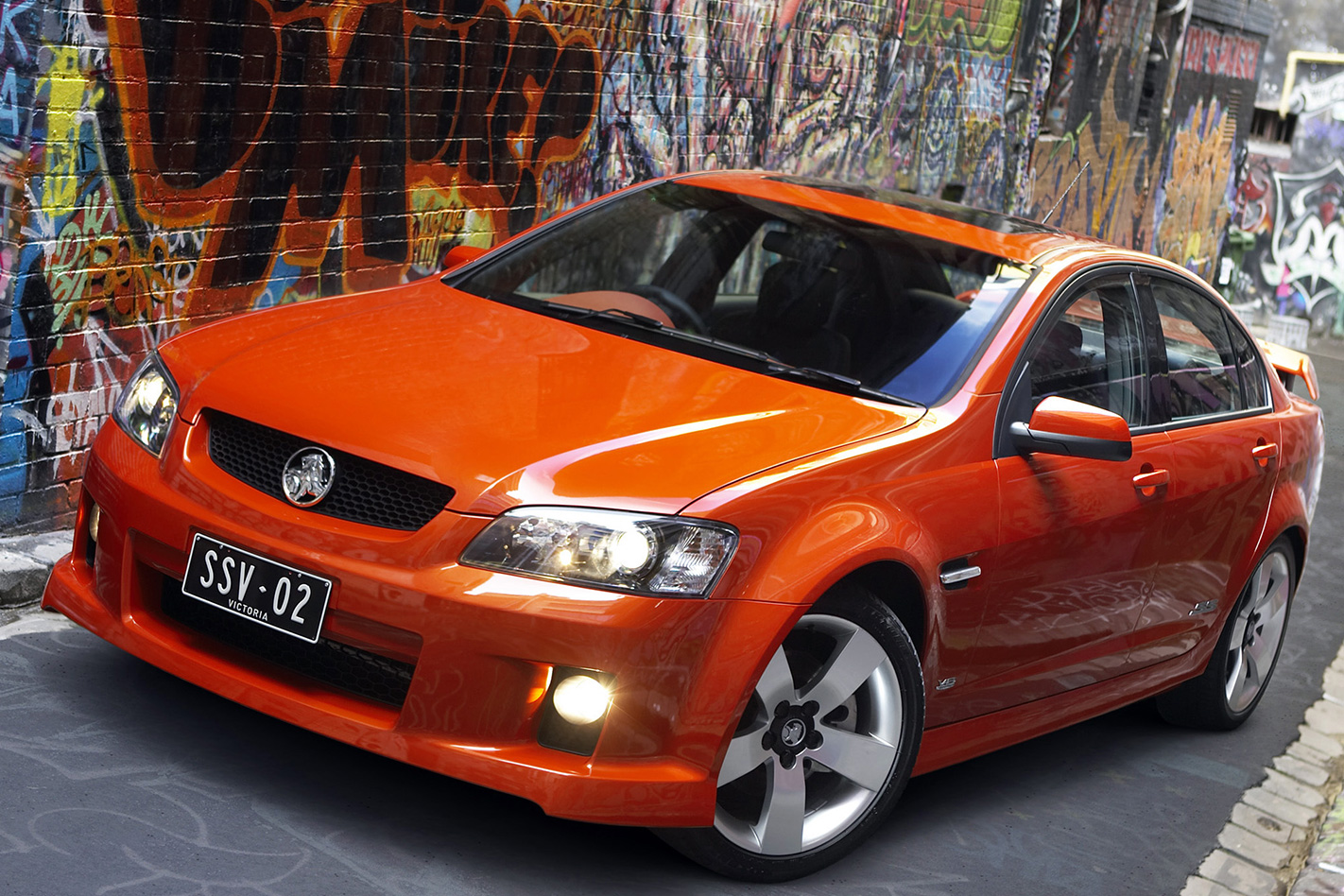
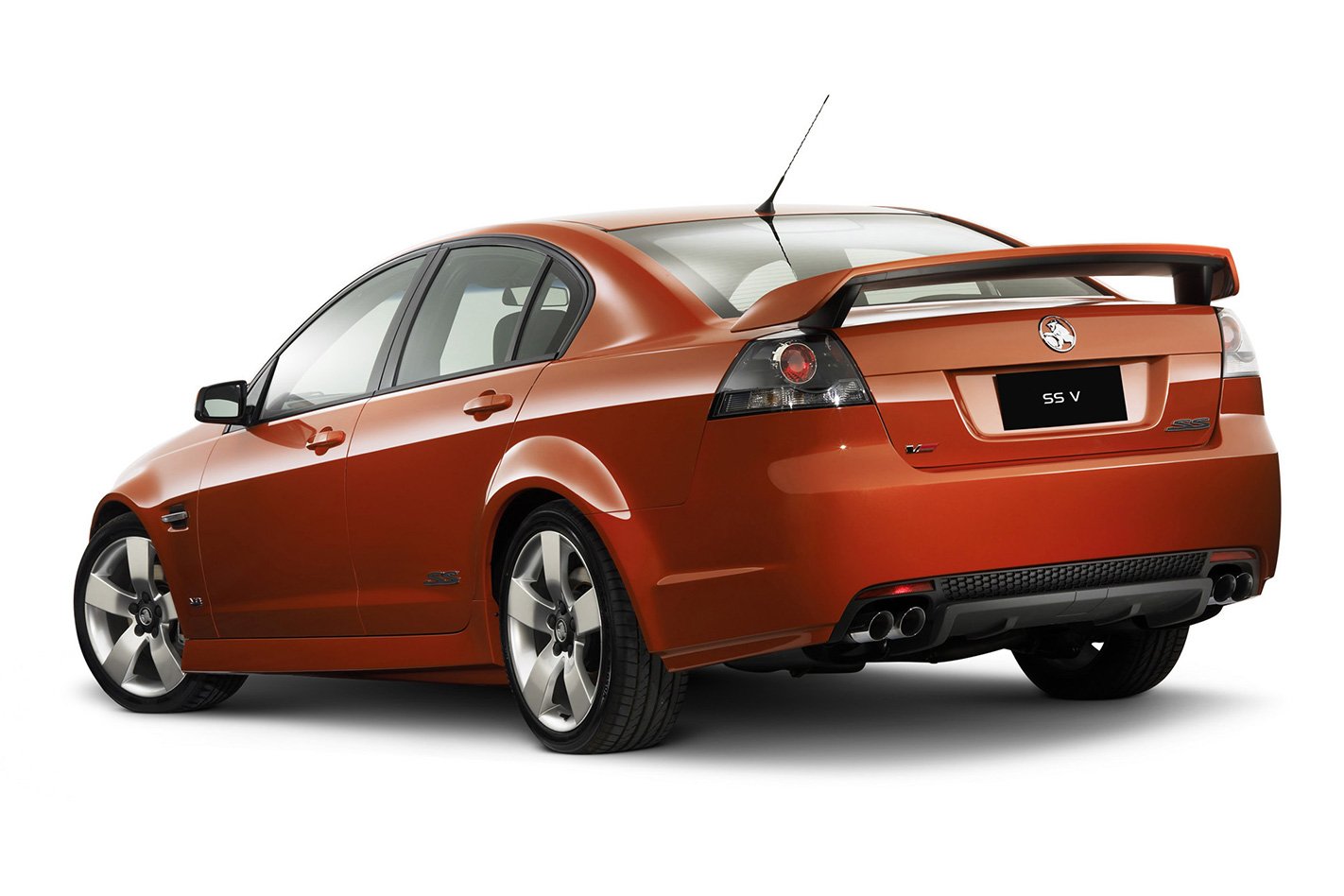
Not only the longest running model in Holden’s 69-year history but also one of its finest achievements, laying down the foundation for an entire line-up of global GM models born from the VE’s Zeta architecture.
As we now know, that latter part never came to fruition, shot down by GM’s bankruptcy in 2009, but the VE’s overall contribution to Holden’s trophy cabinet can’t be ignored. Heck, this baby cost a billion Aussie dollars to develop (if you include its long-wheelbase WM Statesman/Caprice relative) so you’d expect excellence, and in most ways that’s what the VE delivered.
In fact, there are still areas where the VE – and its updated VF successor – still set the benchmark. Five-seat space, body strength, dynamic cohesion, the country-road ride of non-sporting versions, but most of all, style. The timelessly handsome sedan has inspired numerous global designs (chiefly the Jaguar XE), and even nearly a decade on, the virtually unchanged Sportwagon still looks fresh. So does the Ute. Much like its similarly voluminous 1971 HQ ancestor, a cared-for VE and all its relatives are destined to look great for years to come.
What can’t be ignored, though, is what could’ve been. The stunning 2008 Coupe 60 concept, begging to become a new-generation Monaro, just didn’t have the business case to support its huge emotional pull. Neither did the Pontiac G8 export program of HSV-engined SS sedans Stateside, killed by GM’s execution of its 80-year-old affordable-sports marque during hard times. And the current export program of barely a few thousand Chevrolet SS sedans per year was hardly enough to keep our home-grown rear-driver afloat.
Sadly for the VE, and its superbly re-engineered VF successor, going out on a high note is the best it could hope for. Unlike so many predecessors – VZ, VT, VN, VL, even VB, and not to mention models from decades earlier – the VE/VF need few excuses to be made for the fact they costs peanuts compared to similarly sized imported models.
Right to its dying days, the SS-V Redline remains the world’s best-value sports sedan.
1. 48-215 Holden
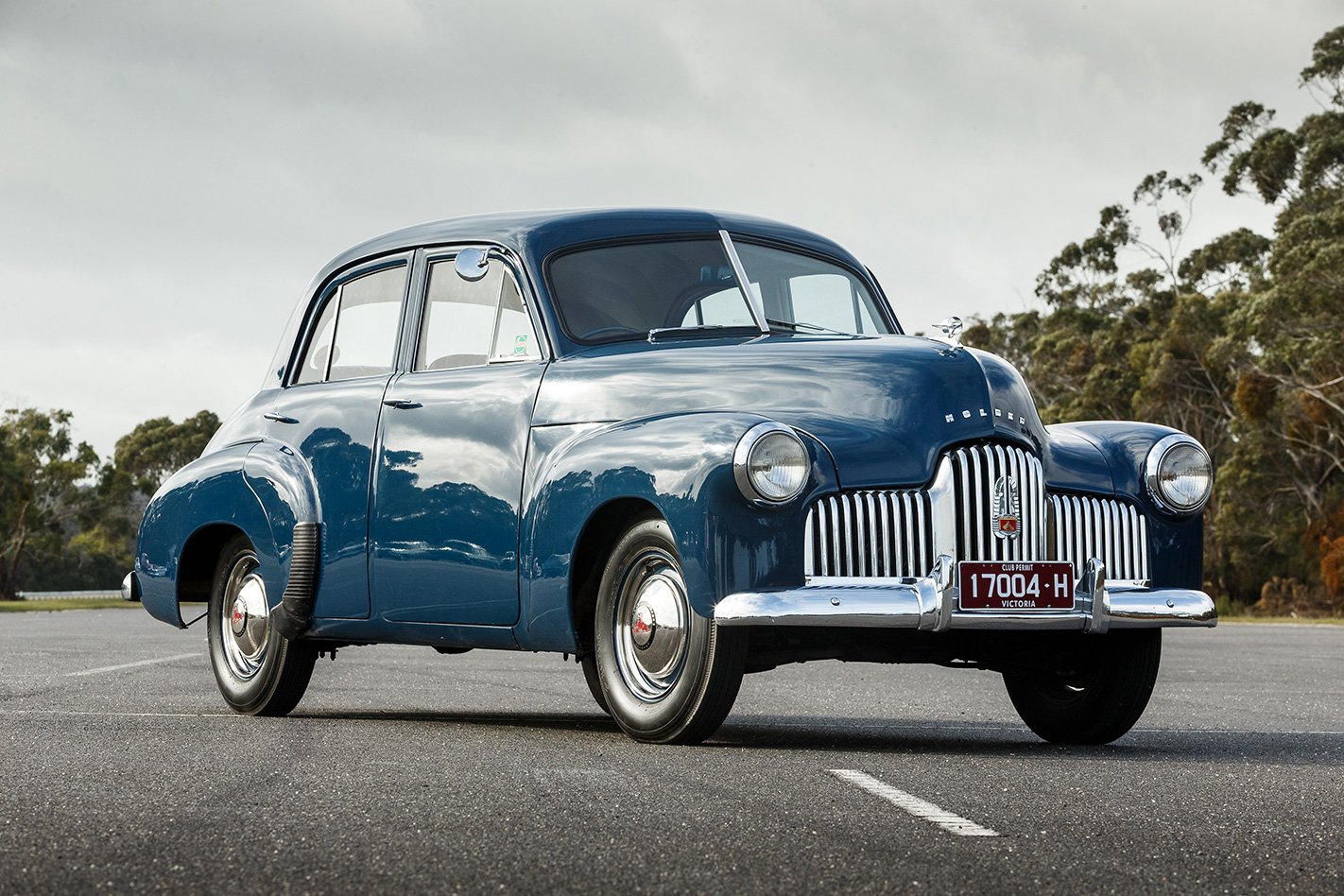
Twenty-two years after the formation of General Motors-Holden, and following more than a decade of lobbying by GM’s Australian arm to design and develop its own car, that vehicle finally arrived on 29 November 1948. The moment Prime Minister Ben Chifley unveiled the 48-215 Holden in Fishermans Bend, our automotive landscape changed forever.
Watched by millions in newsreel theatres all over the country (TV was still eight years away…), the PM’s immortal line “she’s a beauty” almost certainly undersold just how good the 48-215 looked for its time. Beautiful it wasn’t, but the practically proportioned ‘humpy’ Holden was arguably the most advanced mainstream family sedan in the world in 1948.
Featuring a strong-yet-light monocoque construction (pioneered in the GM world by Opel in 1935), a roomy six-seater body with enough headroom for passengers to wear hats, and sufficient ground clearance to tackle Australia’s mostly dirt-road network, the original Holden ticked just about every packaging box. But it was the combination of its one-tonne litheness, a torquey 2.15-litre straight-six, impressive fuel economy, and all-weather driveability that sealed its unburstable reputation.
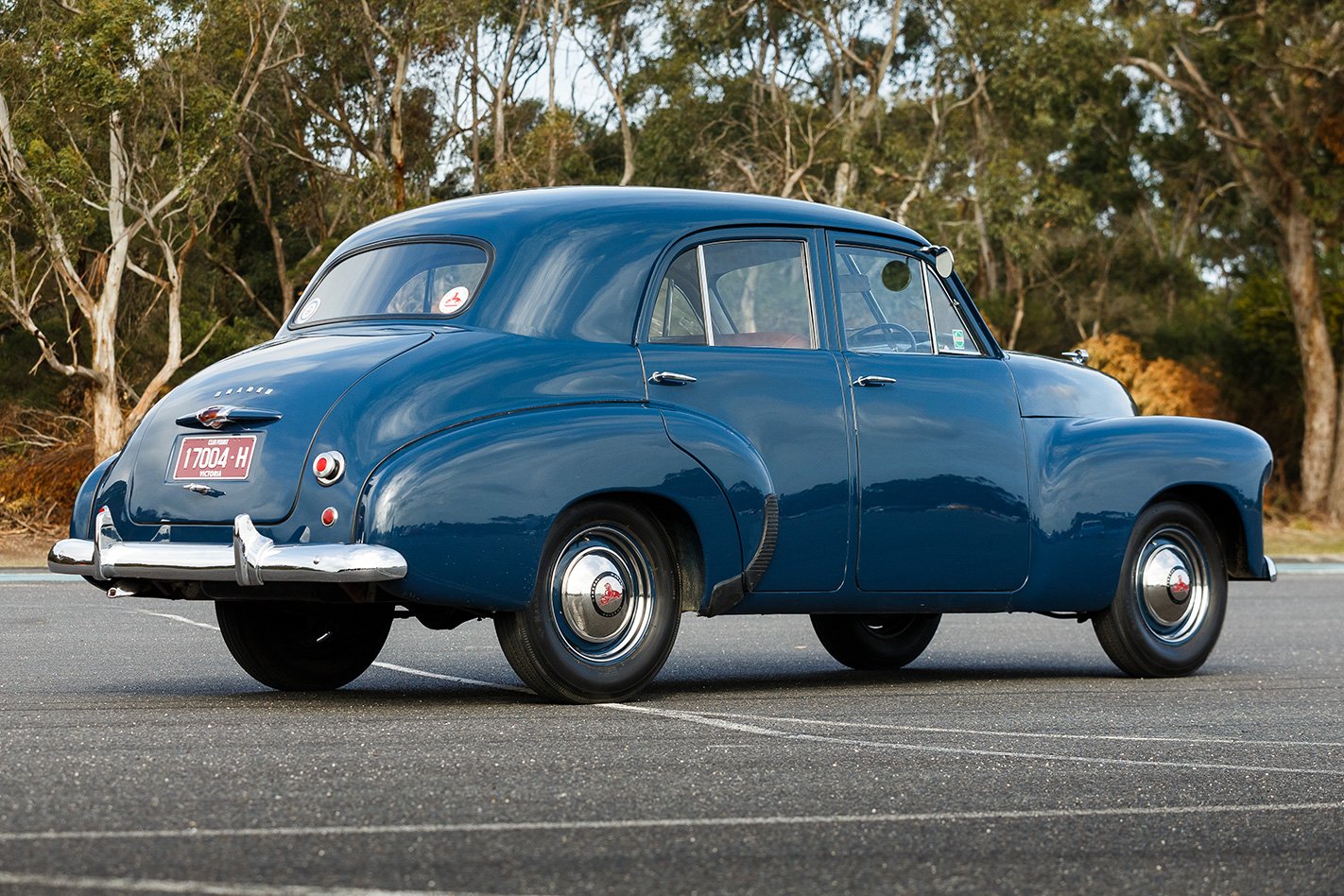
Back in the days before anyone knew what a freeway was, the first Holden’s top-gear flexibility was legendary, as was its ability to tow stuff. The ‘Holden’ left many wheezing, over-heating “Pommy s__tboxes” in its wake as it carved a new path for Australian automotive travel. It would even top 85mph (137km/h) if you were brave enough.
That was all providing you could get one, of course. Demand for the new Holden was so great that waiting lists stretched to a year, for years. A utility version followed in 1951, by which time Holden was building 100 units a day. Then, in 1953, Holden built on the original’s reputation with its iconic, toothy-grilled FJ facelift.
Back then, ‘Australia’s Own’ didn’t just mean ‘born here’. It actually meant ‘better’.
IT HAD been a swell two months behind the wheel of the Swift GLX Turbo, but to be brutally honest I was pretty keen on handing it back by the time week eight came and went. The GLX is a terrific thing, but returning it to Suzuki meant I’d be able to hop straight into an even more appealing Suzi – the feisty Swift Sport.
And so as I motored down the street toward Suzuki Australia’s headquarters, in Melbourne’s industrial south-west, I found myself involuntarily grinning. The third-gen Swift Sport was a giggle-inducing joy at its local launch at Victoria’s Broadford race track, and I’ve been itching to spend more time in it since. However, as I steered into Suzuki’s driveway my smile began to fade.
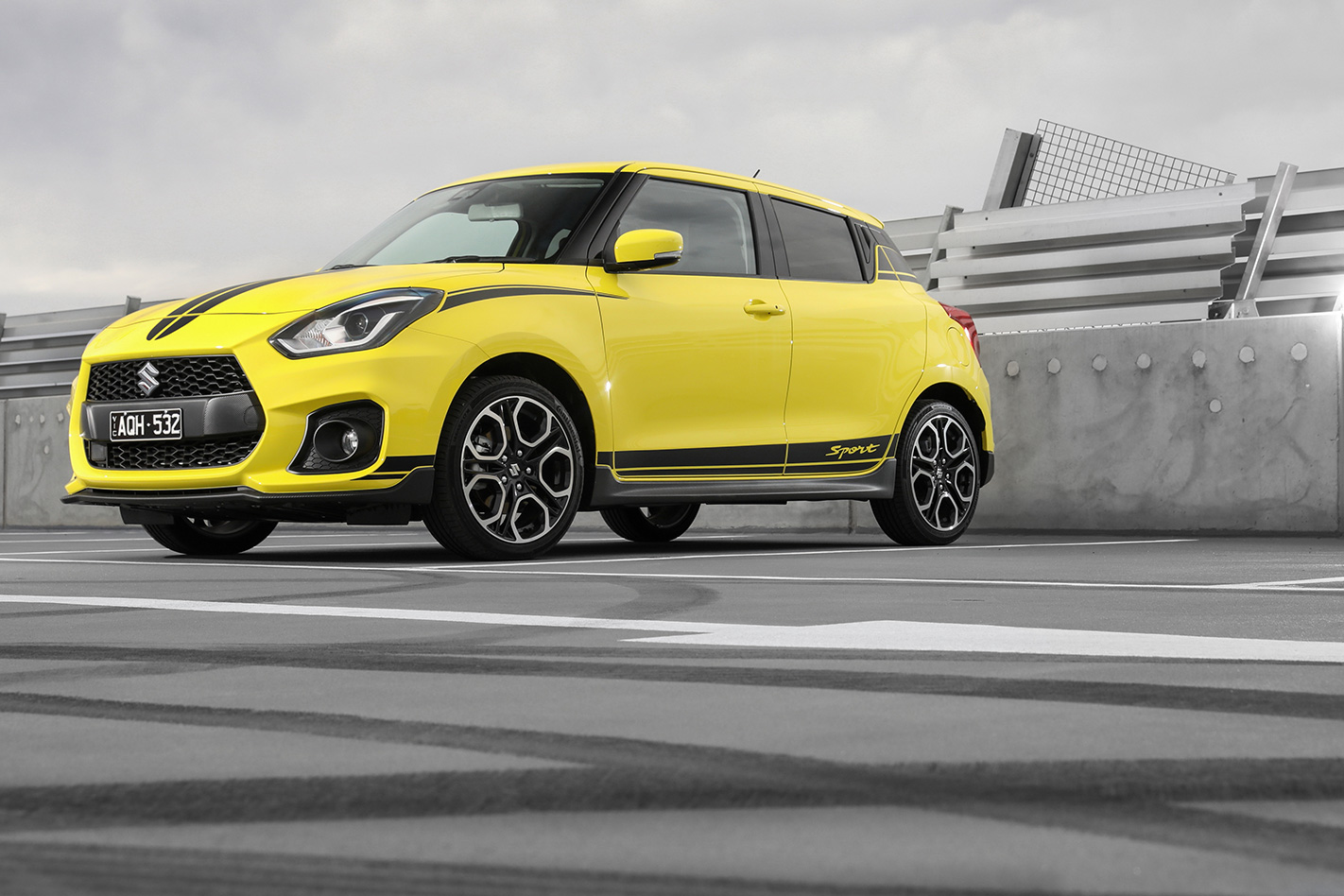
There was my Swift: parked, polished and ready for the handover. The only problem was it was festooned with stickers.
Don’t get me wrong. I’m all for the tasteful application of decals on cars, and anyone who knows me will confirm that I have a peculiar fetish for ’80s-era door stickers that say things like INTERCOOLER 4-VALVE DOHC TURBO in large block letters. However the graphical, erm, enhancements on my Swift Sport are just a little too juvenile for my tastes.
The stripes on the lower doors and up on the C-pillar are actually okay – I appreciate that the former loudly proclaim this to be the SPORT, in case the Champion Yellow paint didn’t clue you in – but the winged eyeliner on the headlamps and the cloven hoof bonnet decals seem unnecessary. They’re also printed in a faux-carbon weave, another of my pet hates.
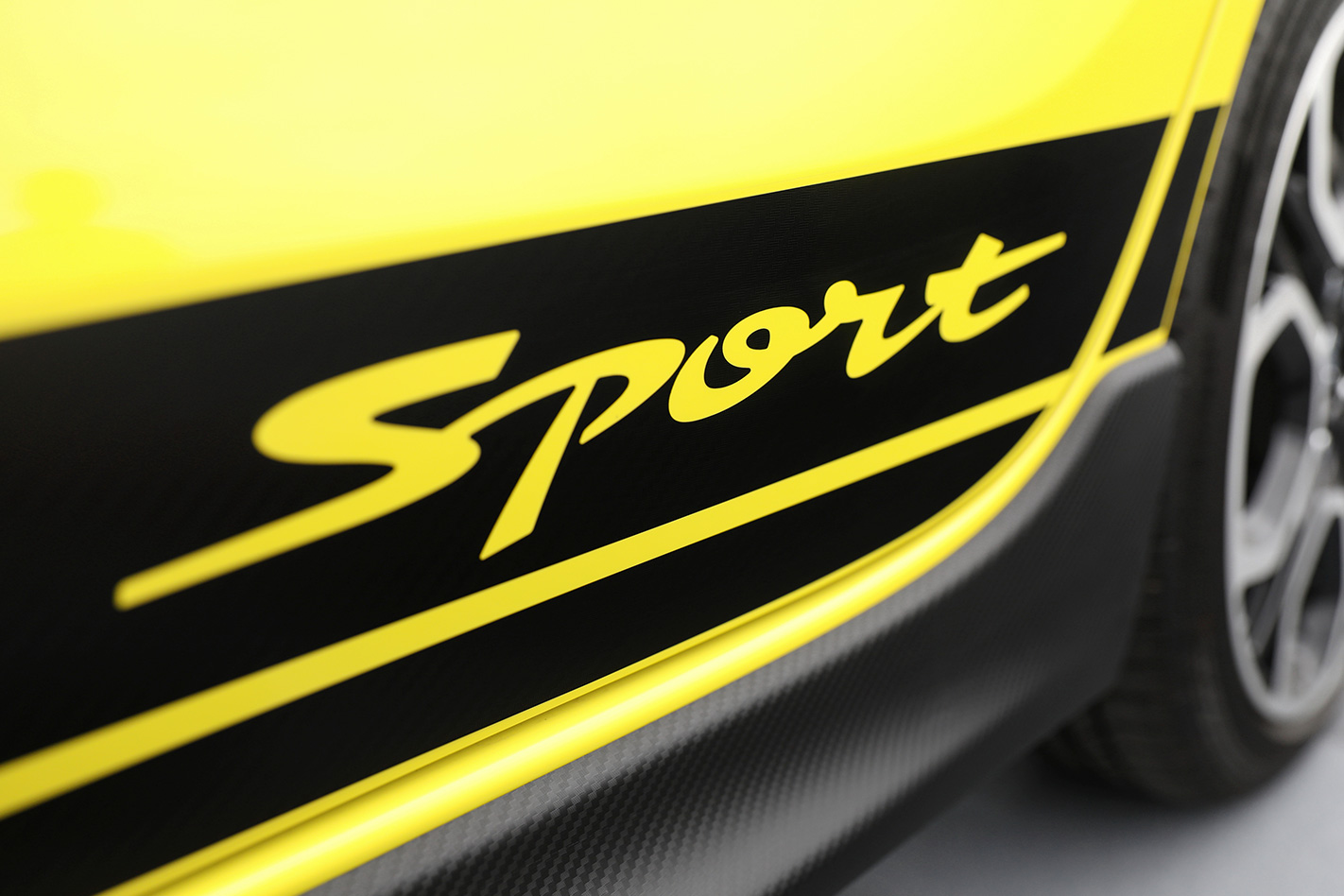
Or maybe I’m just being a snob. I’ll let you know if I still hate the stickers in four months.
I know, I know, I’m sounding tremendously ungrateful, but here’s the thing: the Swift Sport could be plastered in a My Little Pony livery and I’d probably still drive it. Even the cringiest exterior accessories can’t diminish the sheer fun-factor of the spiciest Swift.
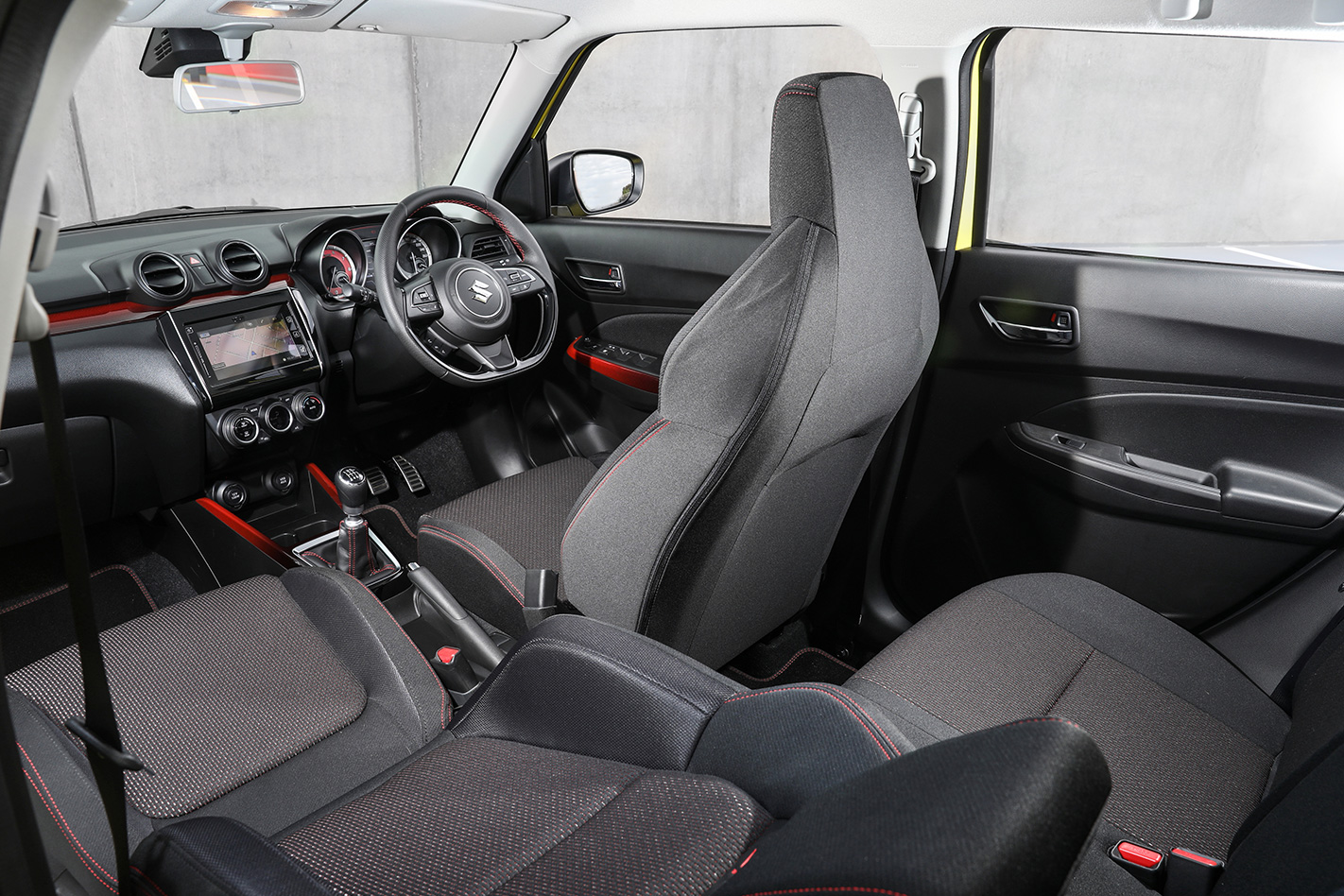
And it’s not like you can see those decals from the inside, where your bum is hugged by superb bucket seats and the red-faced tacho hints that this ain’t your gran’s Suzuki. I’m still unsure whether I approve of the dot-matrix red trim on the dashboard and door cards, and some might argue that the cabin furniture doesn’t bear enough differentiation from the GLX Turbo that sits beneath it. I’m not of that view.
Sure, some extra soft-touch surfacing would be welcome (especially inside the centre console storage tray to stop phones from sliding about), but let’s not forget this car’s roots as a budget light hatch.
Anyway, all is forgiven once you hit the starter button and get stuck into that joyously boosty 1.4-litre turbo. It’s got astonishing flexibility in around-town driving thanks to an abundance of low-end torque, and the Sport’s featherweight 970kg kerb mass means the effect of those 230 Newtons of twist is far more profound than the bald figure would suggest.
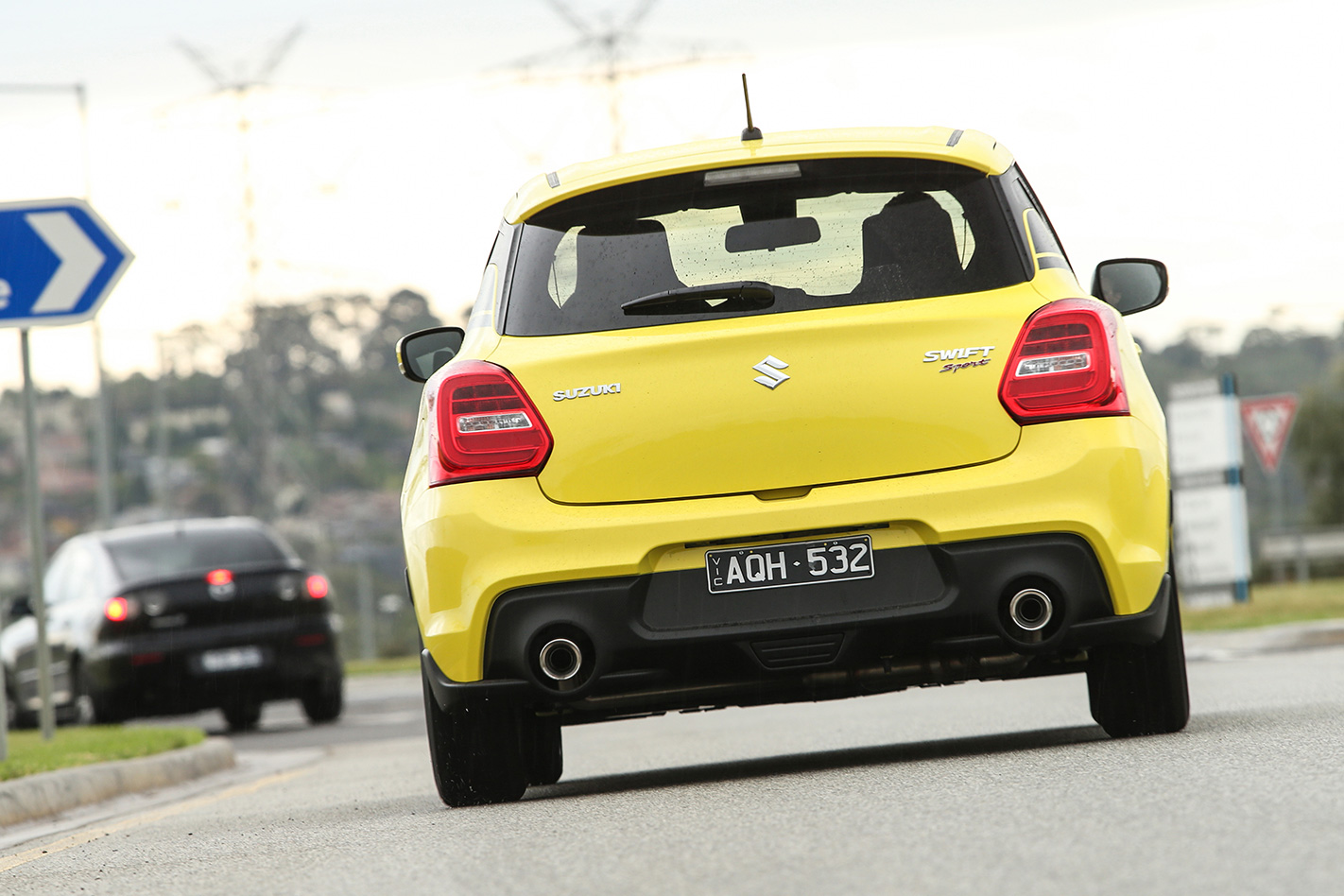
Peak torque arrives at between 2500 and 3500rpm and doesn’t sharply tail off thereafter, which means that commuting is a much less frenetic task than it was in the last-gen Swift Sport, whose atmo 1.6L needed loads of revs to extract meaningful oomph. Cruelly, commuting is pretty much all I’ve been able to do in it so far – I picked up my decal-clad Sport just a few days before heading off on a three-week holiday.
My loss will be a colleague’s gain, but once I’m back I intend to give the Sport a damn good strap – hopefully at speeds fast enough to peel off a few stickers.
Update #2
By Daniel Gardner
I USED to think the best way to evaluate the day-to-day ride quality of a hatchback was to find a poorly maintained bit of road and do some laps, but I was wrong.
What you actually do is get carried away at the gym and give yourself something called a ‘vertebral subluxation complex’ between C6 and C7. Ride quality takes on an entirely new meaning when you feel as though someone has left a kebab skewer in your neck and you’re walking around like a droid that can’t look up or left.
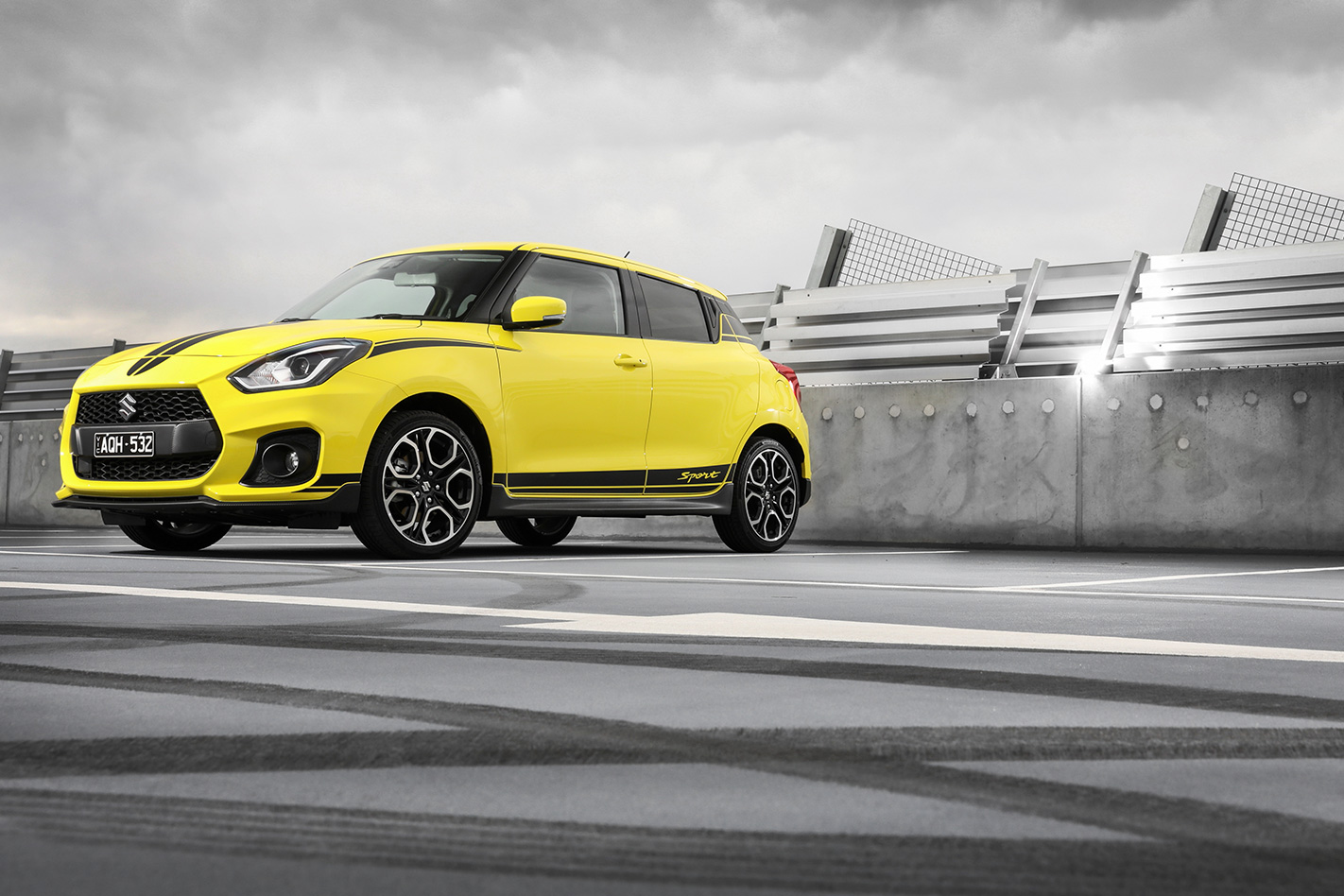
So you might imagine my life was hell standing in for O’Kane and looking after his Swift Sport for a few weeks. I’m already a big fan of the Swift GLX Turbo but this performance-enhanced version has stiffer track-tuned suspension – a feature that threatens to loosen the bladder of someone with a neck injury.
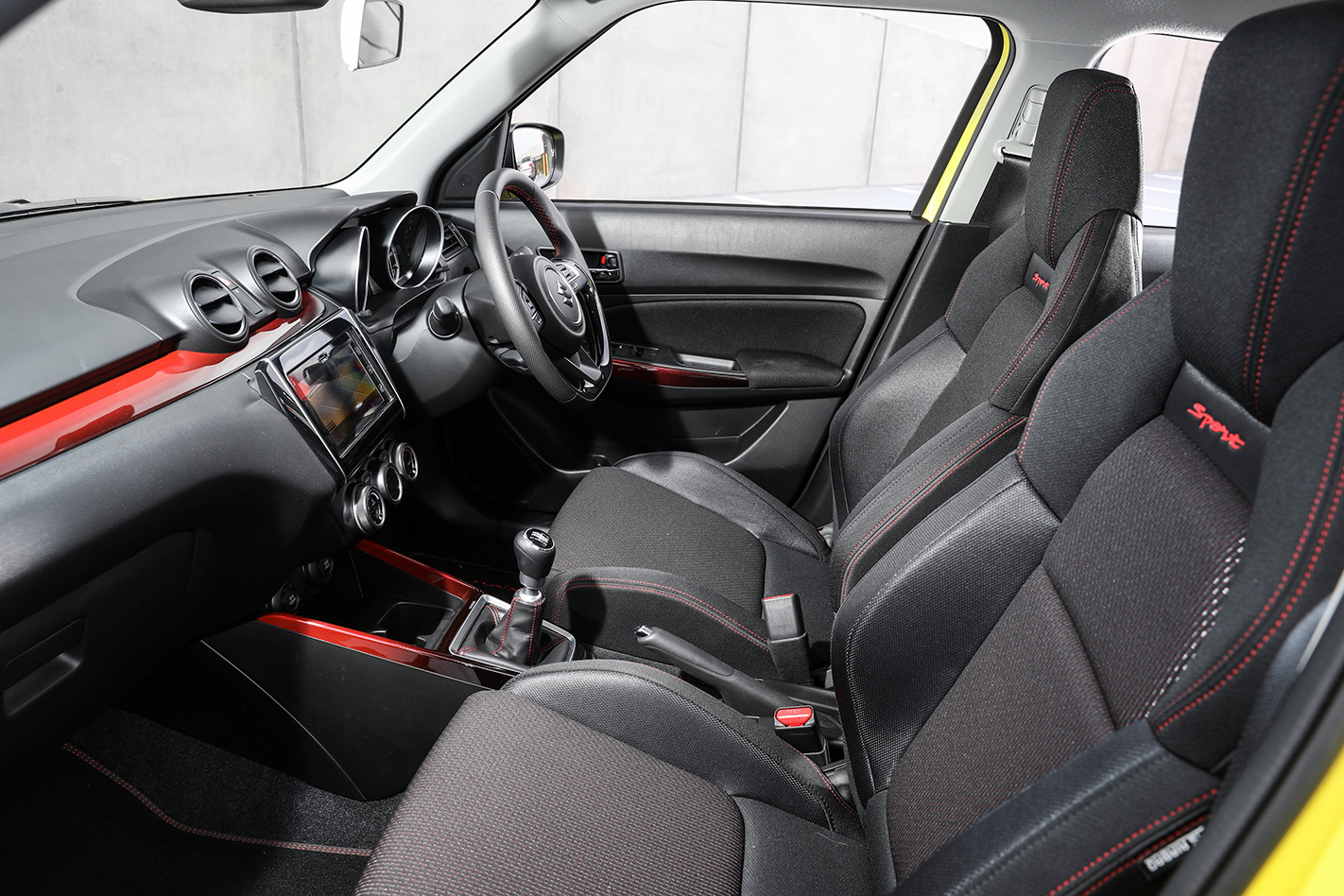
Far from being unrelentingly stiff, however, the Suzuki realises its performance gains through minimisation of weight and deft chassis tuning. The result is a car that was fast and enormous fun before I injured myself, but still comfortable and forgiving for trips to the chiropractor after.
No doubt its 103kW/230Nm would get to the ground more effectively if an LSD was standard, but then it wouldn’t be a $25,490 proposition and there’s something satisfyingly involving about the way its front end wriggles around, even in the dry.
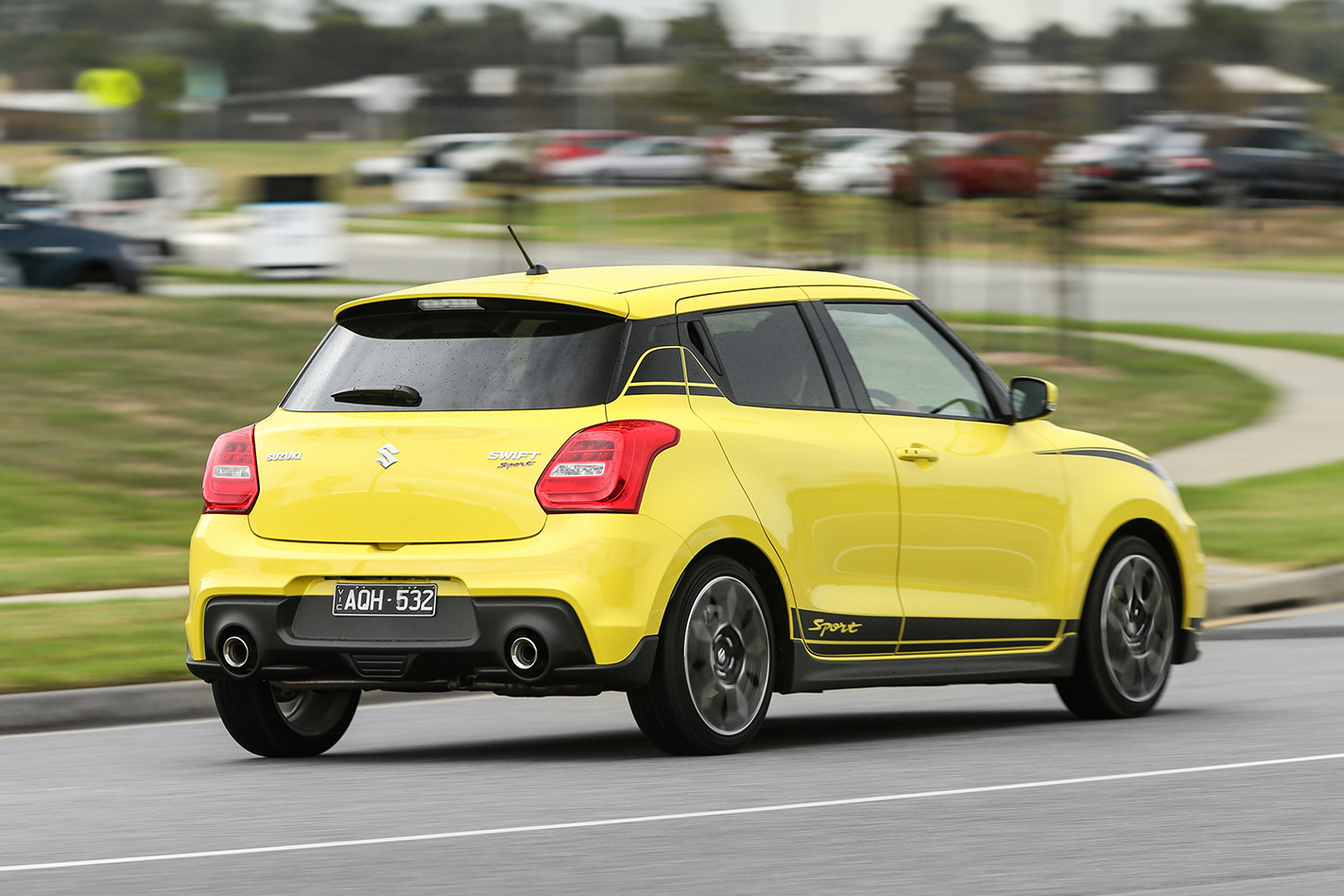
Either way, the Swift lives up to its name and certainly is quick. DIY shifting is standard (a six-speed auto adds $2000), and while a more decisive shift action and more aggressive clutch would enhance the experience, the manual Sport is a must. Its six ratios are bunched tight and combined with a short final-drive for peppy acceleration, but the downside is an engine that revs at 2750rpm at 100km/h in top.
I particularly like the absence of a ‘sport’ button too, which is often used by other brands to sharpen key controls. The Sport is permanently in sport mode because it says so on the boot. However, a little more exhaust note would add to the cause.
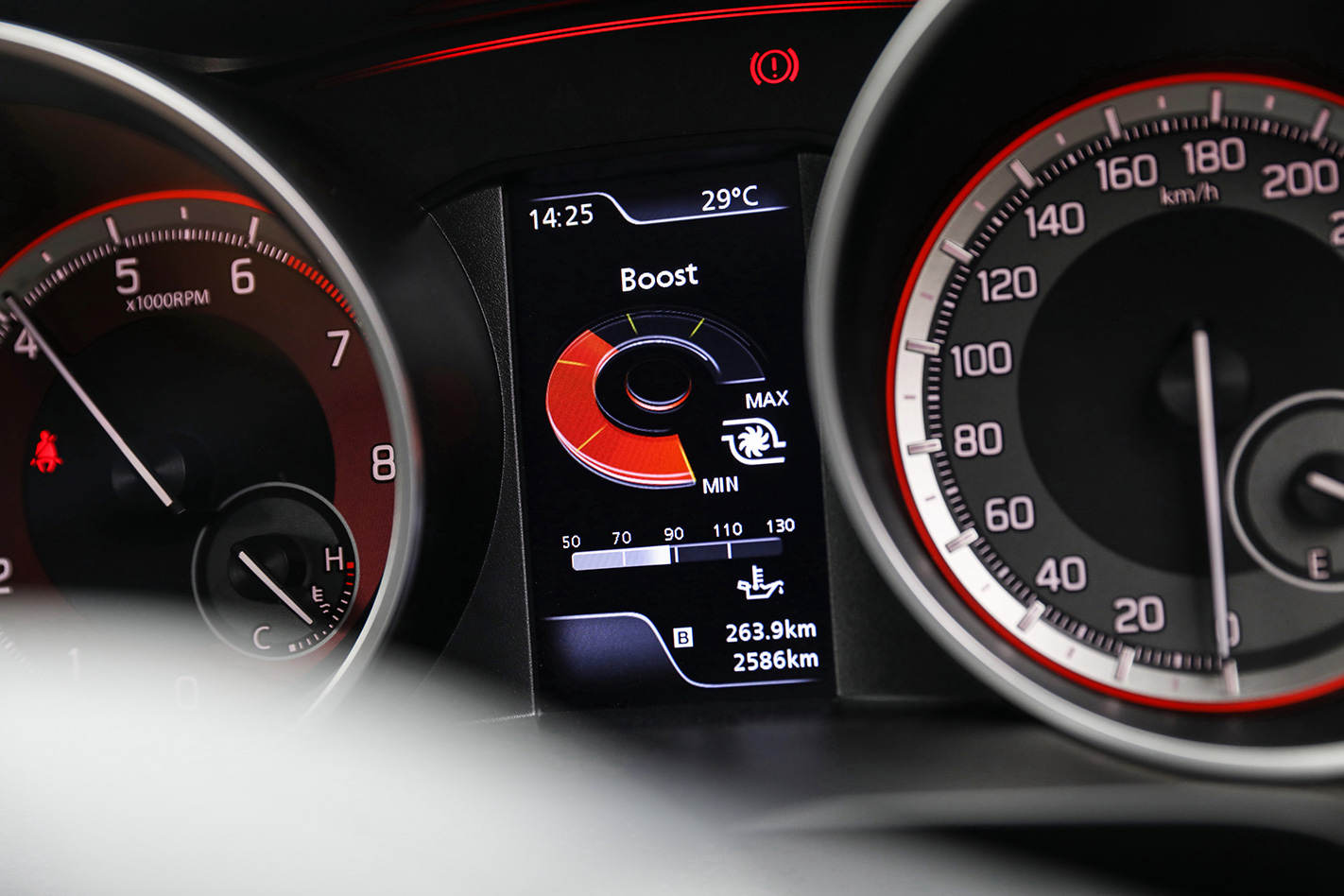
My only other qualm are the hyperactive driver assistance features, with collision warning and lane-departure warnings frequently interrupting the digital turbo boost gauge (one of my favourite features). The safety tech is commendable in a car this price but it shouldn’t detract from the driving experience.
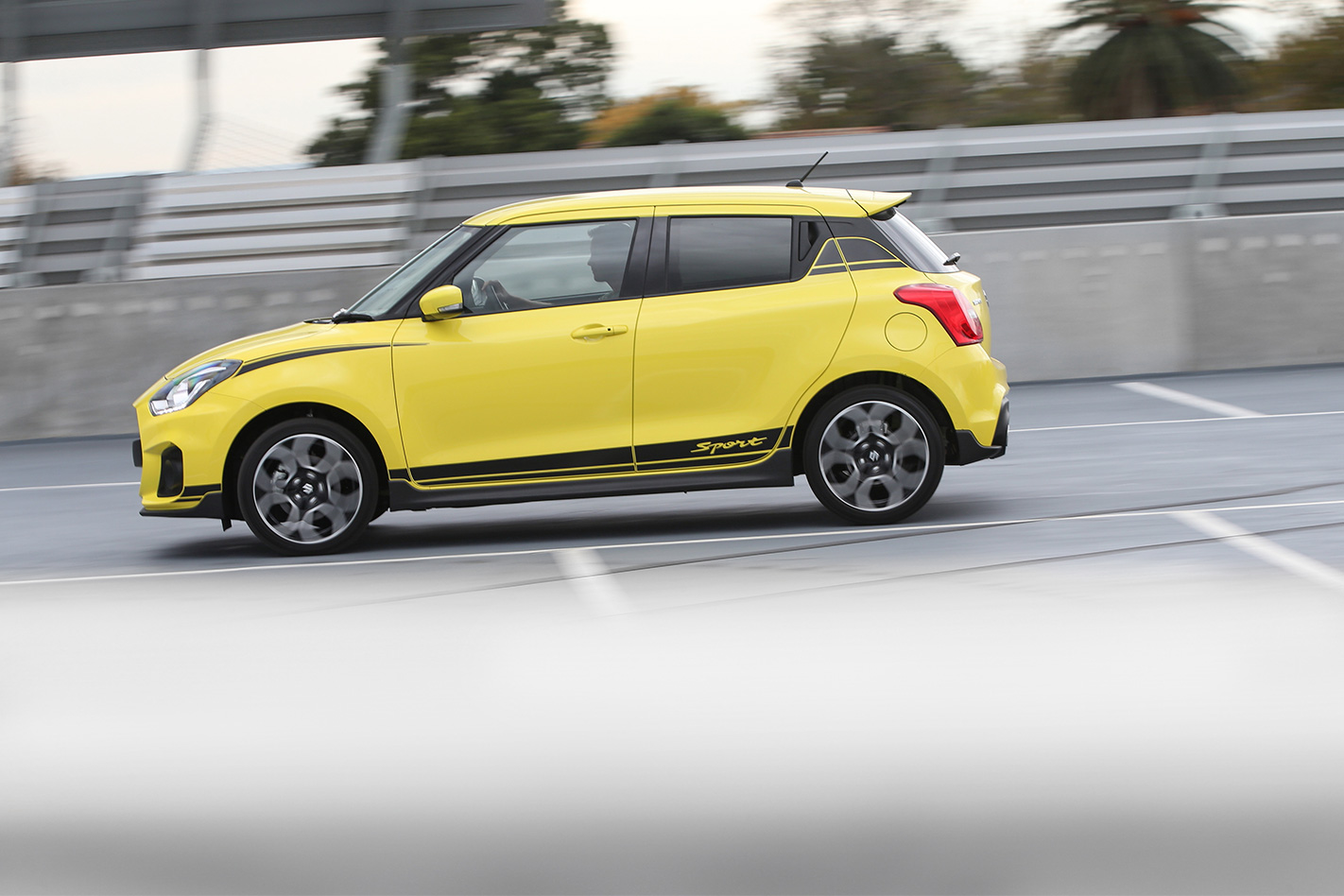
So there you have it. The Swift Sport is quick, chuckable and has a ride that won’t snap your neck. Which is lucky because it seems I’m quite capable of doing that by myself.
Update #3
Want to know what the most impressive aspect about the Swift Sport is? It’s not its ability to devour corners, nor its pleasingly direct steering, nor its boosty 1.4 litre four. It’s the way it sheds speed when you stand on the middle pedal.
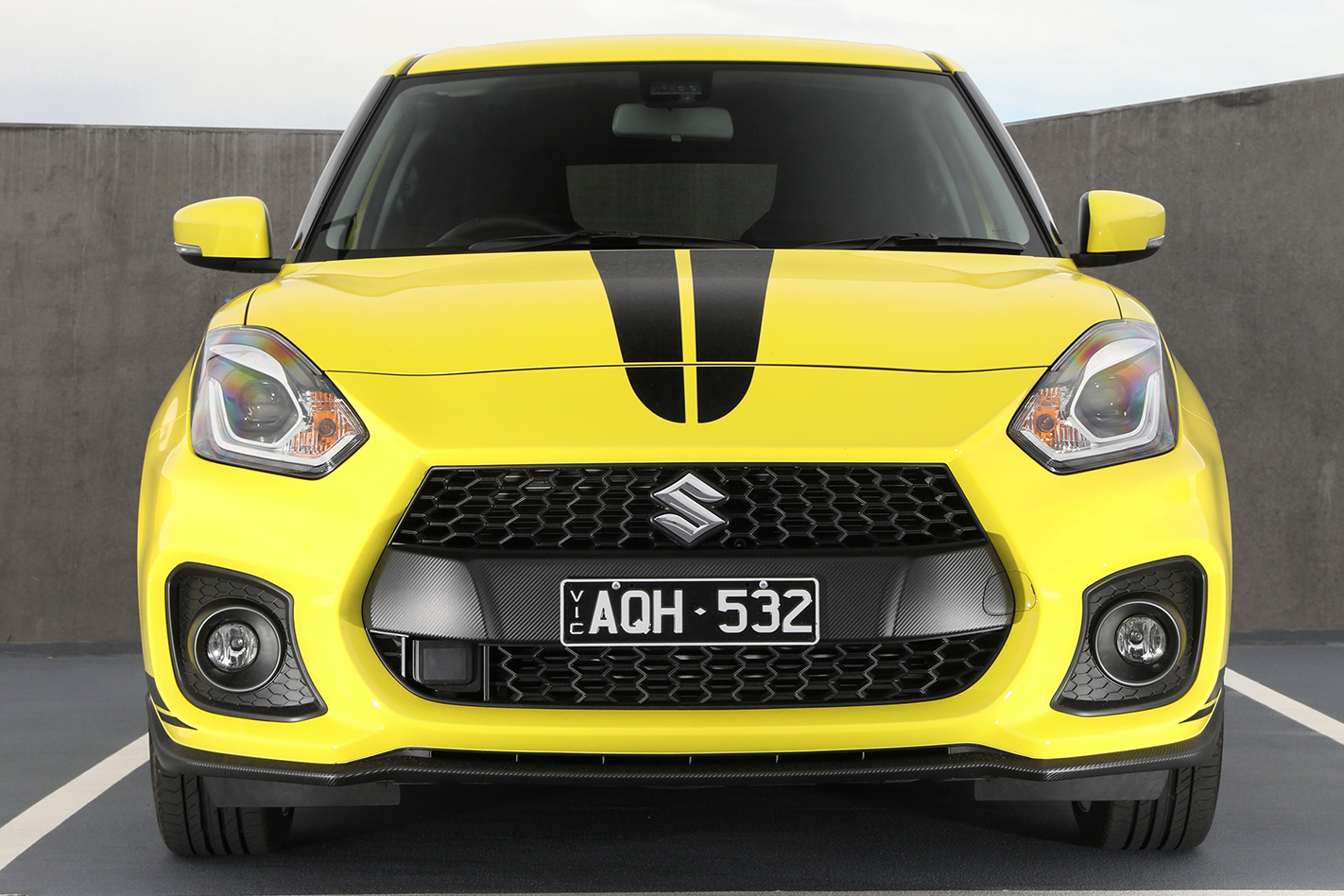
I really wasn’t prepared for that. The latest Swift Sport might be the fastest in Suzuki history, but it’s still far from what you’d describe as ‘rapid’. Hustling it quickly on a mountain road is an exercise in preserving momentum, and you aim to avoid hitting the brakes as much as possible for fear of washing off all that hard-earned forward motion. I hadn’t really had a pressing need to push the Swift’s brakes – until I took it to its first proper circuit outing.
Rocking up to Winton Raceway for a club track day, the Sport felt just a smidge out of place. Bone-stock and factory-fresh, rolling through in the bright-yellow Suzuki gave me flashbacks to being a meek year 7 student entering a high school locker room for the first time, only to find it full of intimidating year 12s.
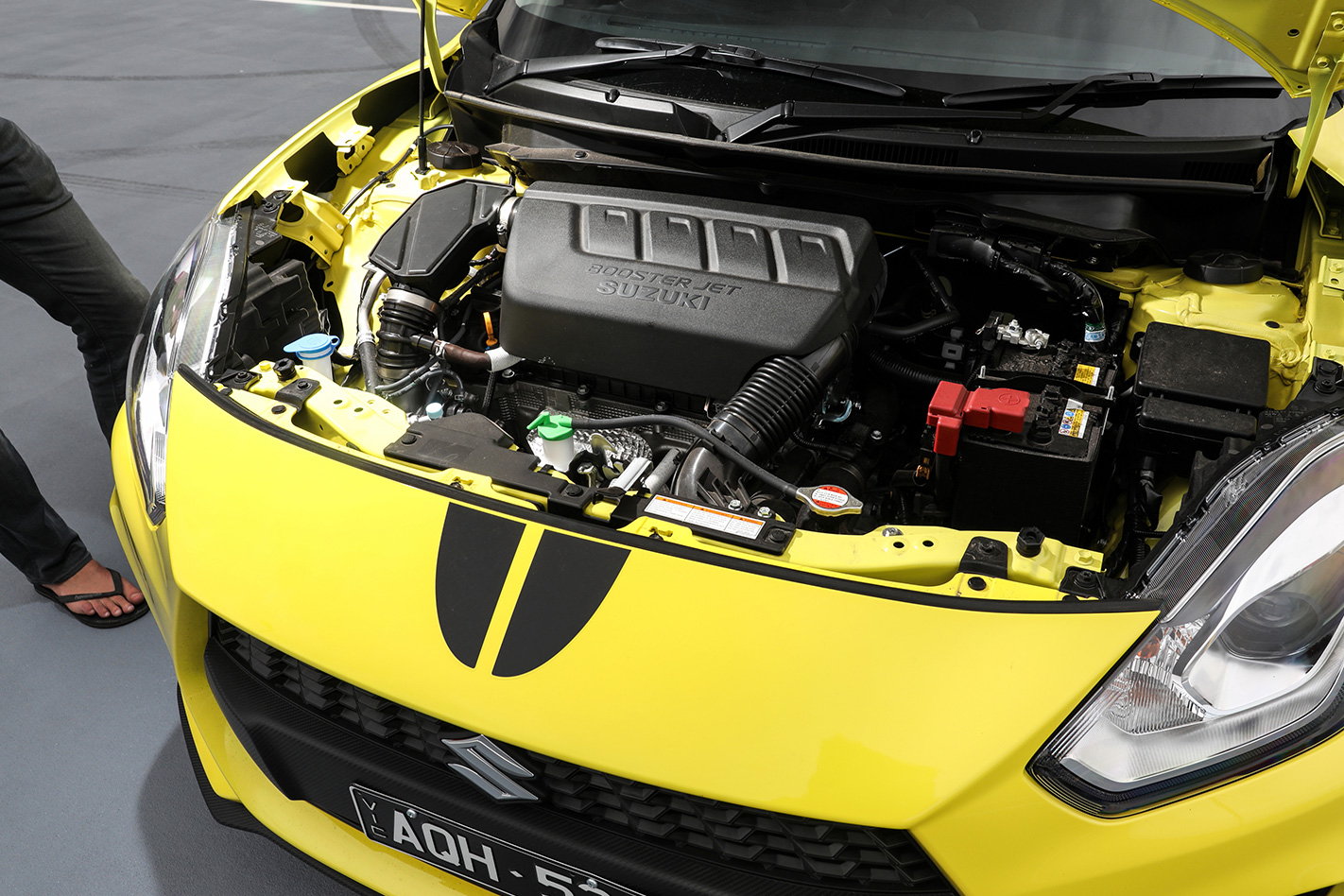
But on the circuit, the Sport proved to be a genuine athlete. The engine is probably the only part that doesn’t seem quite so suited to track work, given its low redline and top-end breathlessness. The best is wrung from it by short-shifting, leveraging its feisty slug of mid-range torque, but that hardly feels – or sounds – all that fun. It’s not difficult to tell the Sport’s engine was borrowed from an SUV.
Shifting the powerband further up the rev range would also perhaps tame the Sport’s front-end traction issue. With a surfeit of available Newton metres and an open differential between the front axles, it’ll easily spin up the inside wheel when loaded up in a corner. Fitting tauter springs or swaybars would help reduce that by containing some of the Swift’s extraneous body roll, but would come at the expense of ride comfort. A proper limited-slip differential would be the ideal solution.
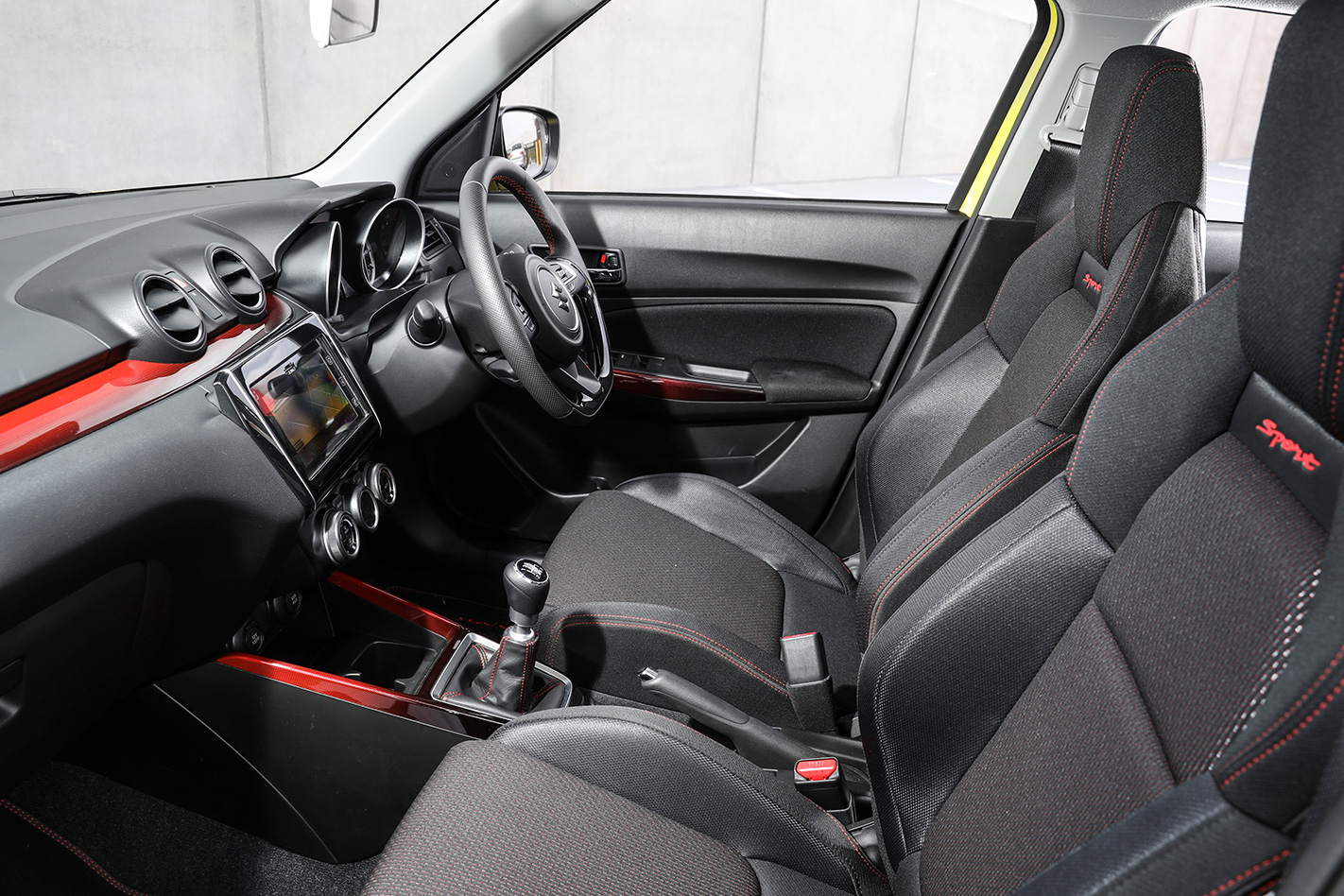
Everything else, though, is peachy. The direct, fast-acting steering is a delight, the Continentals surprisingly grippy and the chassis remarkably resistant to understeer and eager to rotate for a front-driver. The body-hugging bucket seats are also perfect for this kind of hard driving, while remaining comfy enough for the two-hour drive to and from the circuit.
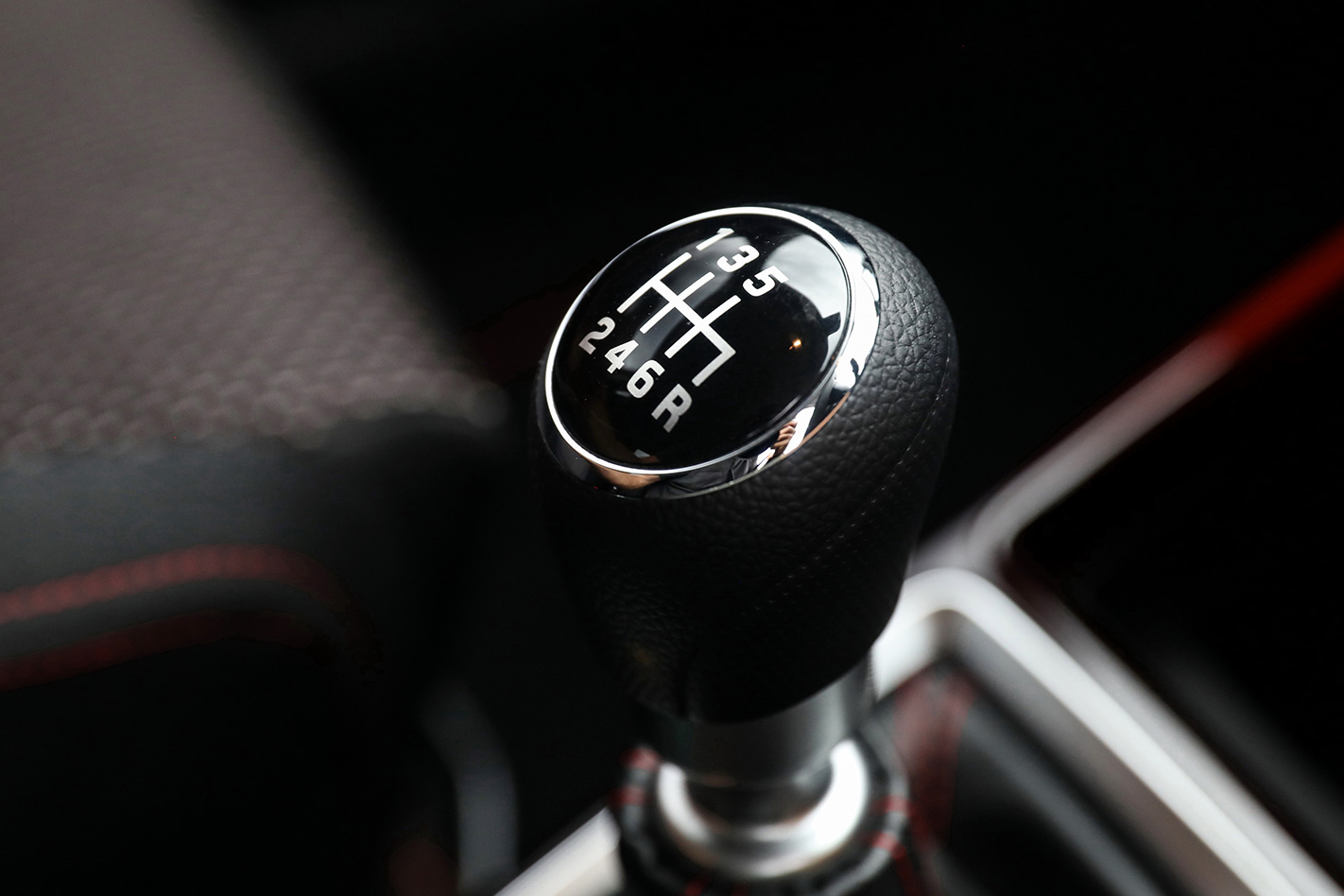
And that brings me back to the brakes. Those pint-sized rotors and calipers are nothing special, but with less than a tonne to halt they’re eye-wideningly effective. So much so that my first stab of the brakes at the end of Winton’s front straight came 50 metres too early – braking points that made sense for virtually every other car I’ve driven there were meaningless to the tiny Swift.
And, like the rest of the car, the brakes were unbelievably durable. An entire day of hard lapping didn’t see them fade to any great degree, while there was still plenty of meat on the pads when it came time to head home. No warped rotors, no overheating engine, no warning lights, no problem.
Update #4
MY FIRST experience of forced induction front-wheel drive didn’t come in the form of a Golf GTI, Saab 900 Turbo or even a Renaultsport Megane. No, that initial taste of a boosted bum-dragger was supplied by a fairly unlikely candidate: my friend’s SV11 Camry, which was supercharged in the most ghetto way imaginable.
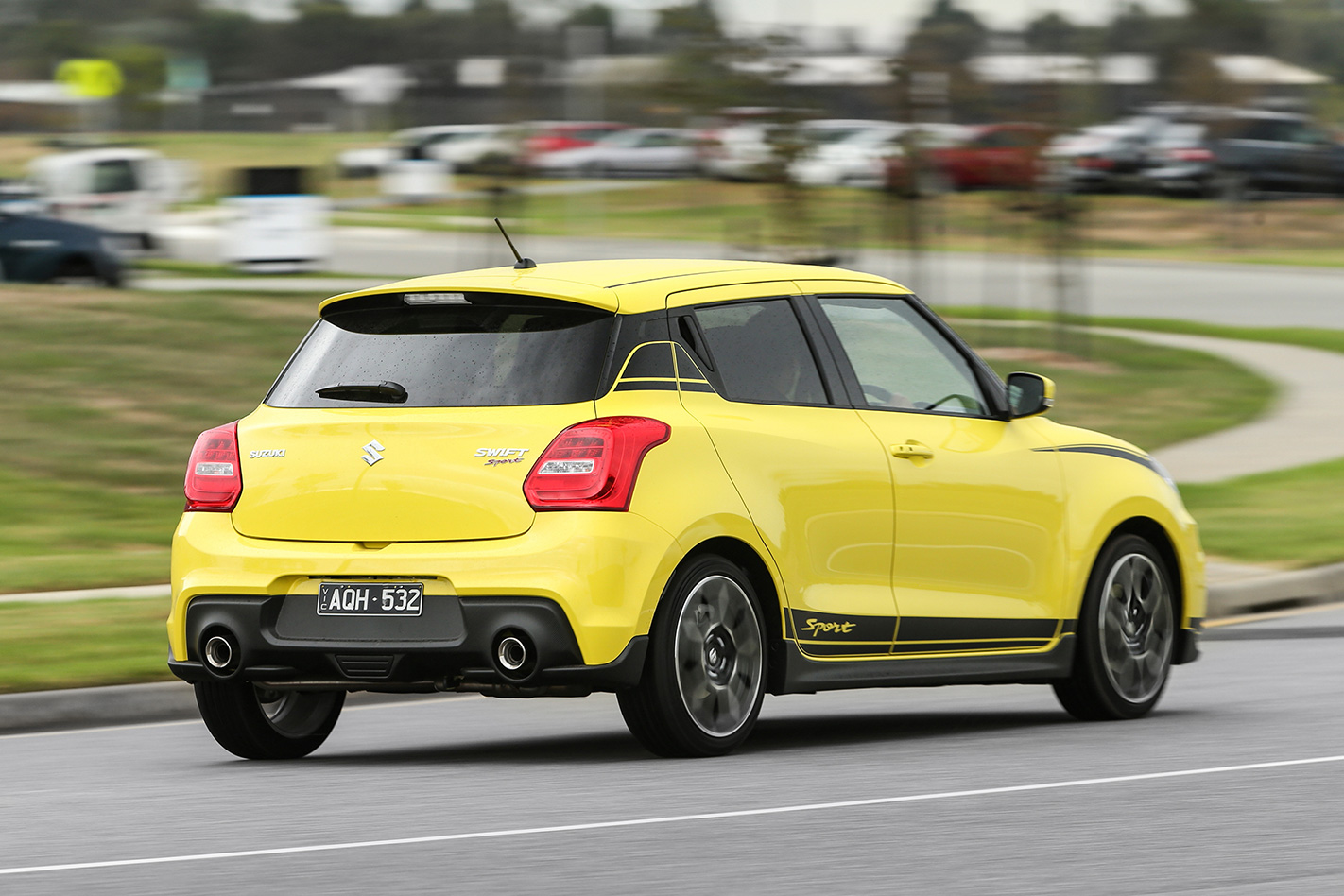
A crude bracket fixed an Eaton M90 to the side of the head, the belt tensioned by a length of twisted rope. For some added spice the supercharger’s electric clutch was hooked up to the windscreen wiper relay, so if it was raining you not only had to deal with diabolically sketchy traction, but you had to do so with a screen full of water as well.
Its greatest party trick was also one of its last. A particularly spirited burnout managed to generate so much heat inside the differential that it welded the spider gears solid, locking both axles together. No longer a single-pegger, the Camry could now lay down a ferocious figure-eleven indefinitely or, as it turned out, until a tyre exploded.
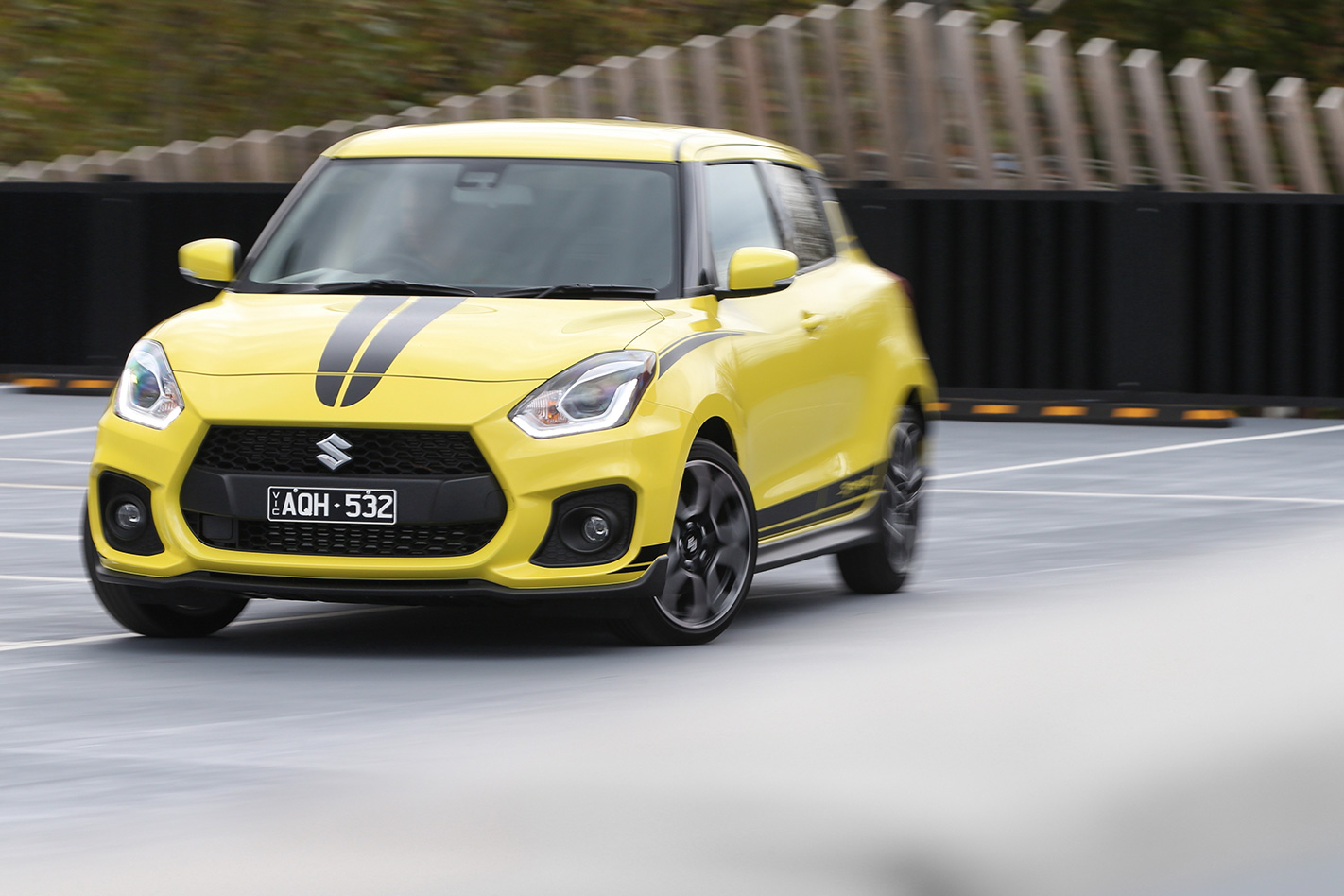
Why am I telling you this? Because that poor, tortured Camry taught me two things: that forced induction was the Horny Goat Weed that turned mild-mannered metal into ’roided-up tyre shredders, and that high-powered front-drivers are always better when both wheels can lay the power down.
The Swift Sport is far more civilised than that Camry – I don’t have to choose between boost or windscreen wipers, for example – but even so there’s clearly a bit of animal in its power delivery. It’s not old-school laggy, which is no surprise given its engine is a very lightly warmed-over version of the Vitara Turbo unit, but even so it easily spins an inside wheel in a corner when the turbo spools up, and generates plenty of bushing-bashing axle tramp on a hard launch.
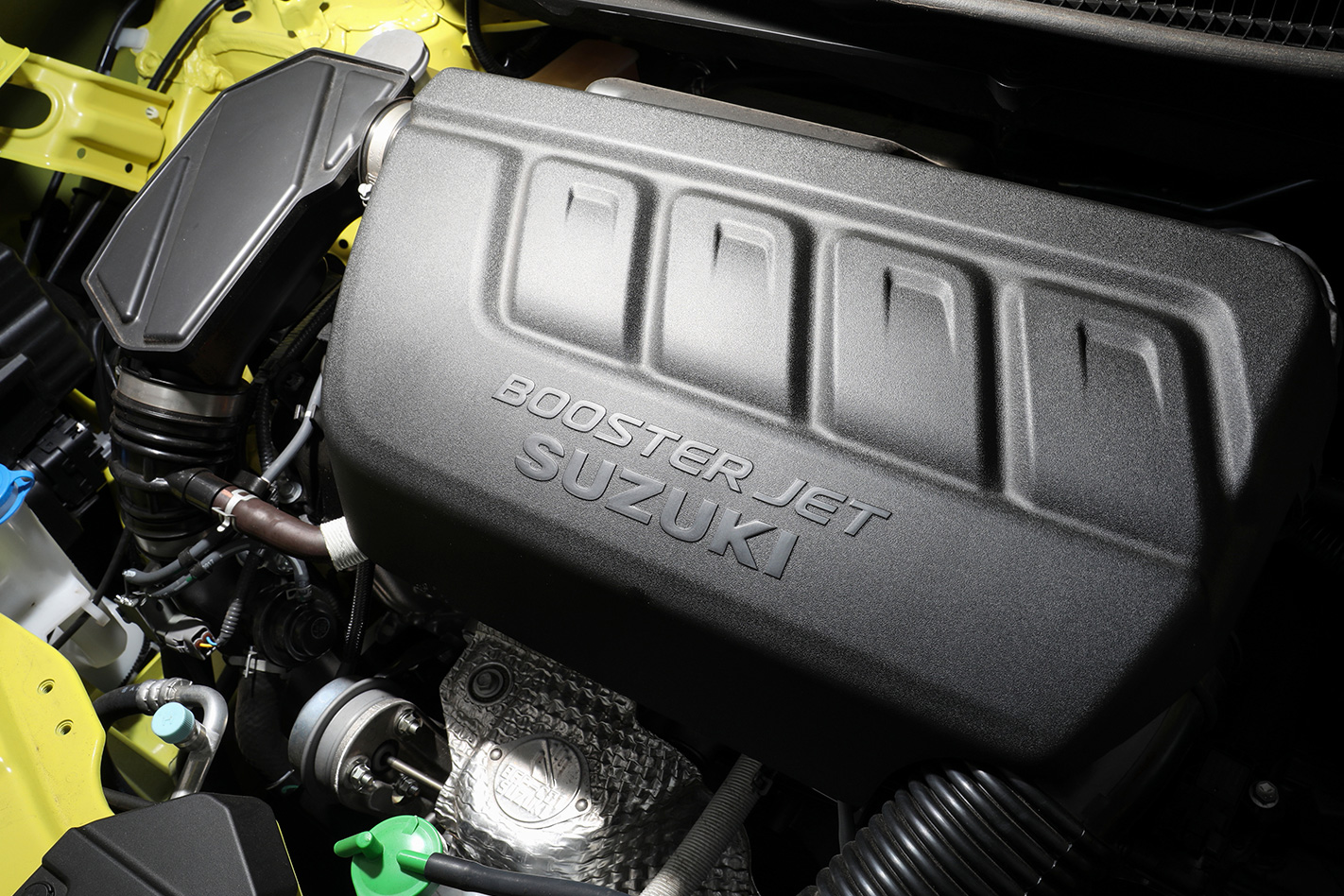
As I found out last month it’s nevertheless surprisingly quick around a race track, but even on the road the absence of a limited slip differential can be felt. The more time I spend at the wheel, the more strongly I feel that an LSD would allow the Swift Sport to put its best foot forward – quite literally.
Ford’s all-new Fiesta ST is coming early next year and for our market a mechanical LSD is standard. I’ve driven it in Europe both with the tricky diff and without, and the Fiesta is a proper weapon when it’s got the right hardware between its front wheels.
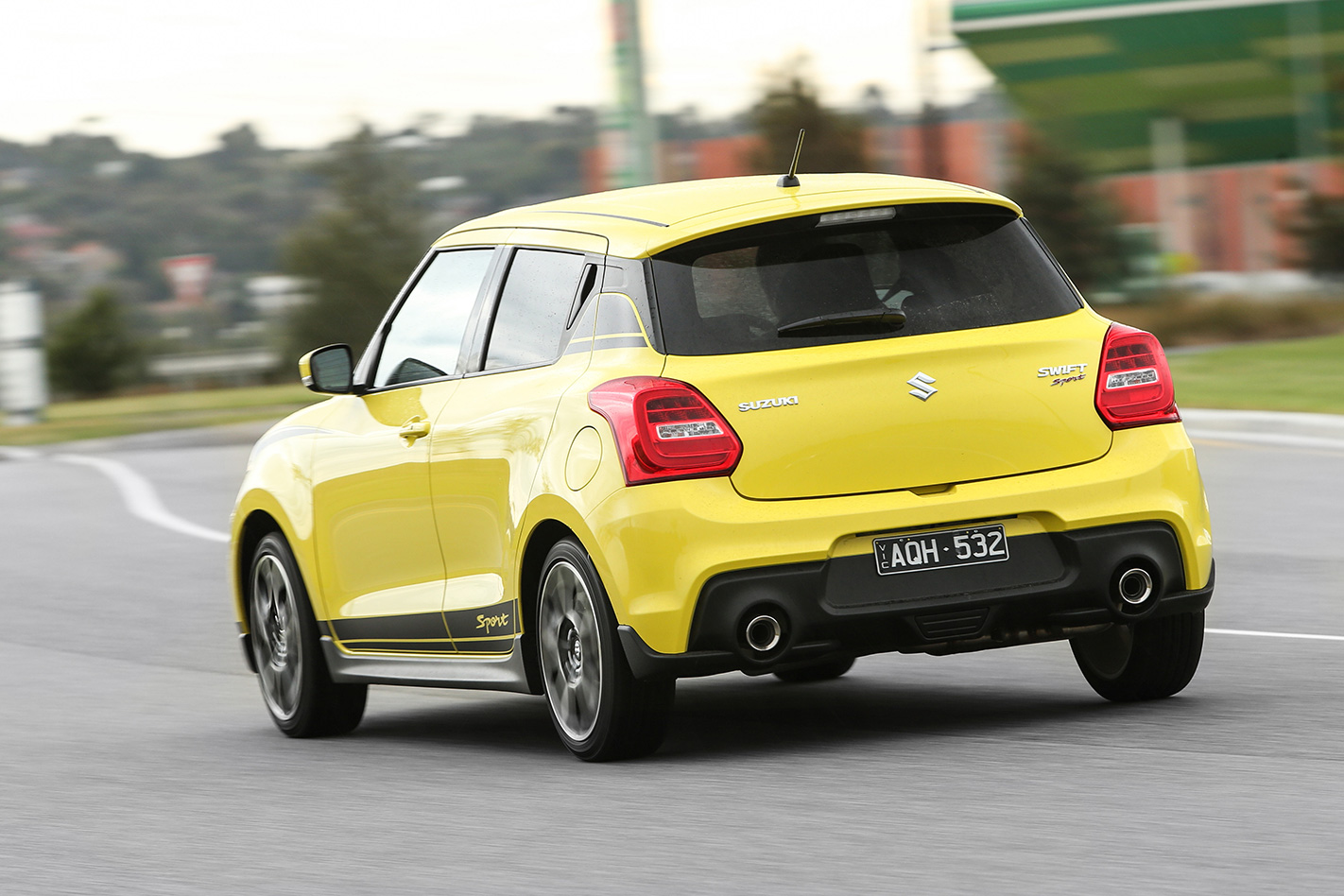
For the Swift to have any hope of keeping up with its Blue Oval rival next year, it’d need a similar treatment.
Farewell
FAMILIARITY breeds contempt, so they say, but like so many well-worn maxims that phrase doesn’t apply to everything. It certainly doesn’t apply to the Swift Sport I’ve been driving for the past five months.
I don’t want to give it back. That’s the summary of how I feel about it. Can you blame me? It’s light, chuckable, looks cool, is a cinch to park and sips fuel. The seats are great, it loves to be driven like a hooligan, and even the stress and duress of a trackday wasn’t enough to make it wilt. It’s a Jack Russell of a car, bursting with energy and playful to the extreme.
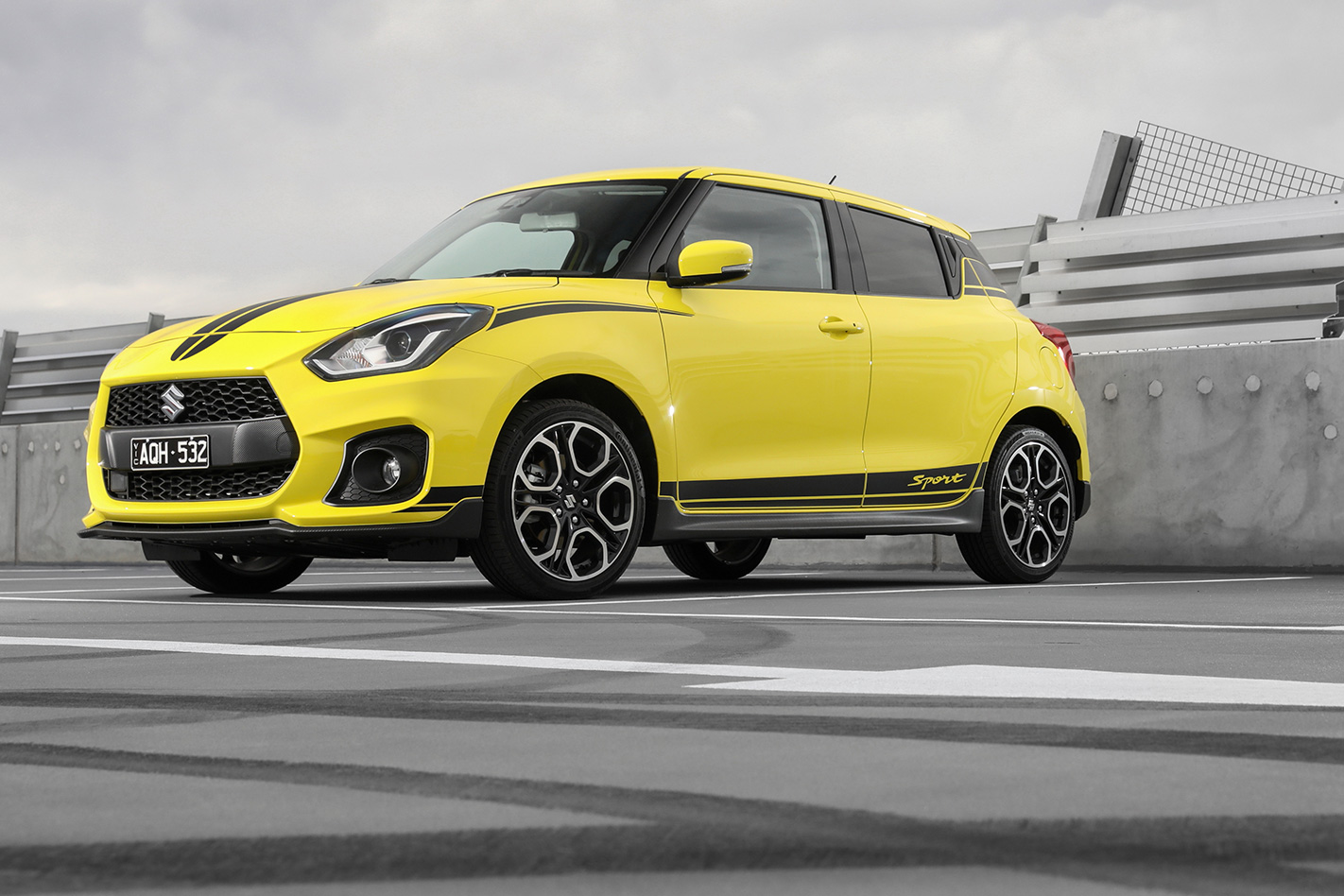
But this isn’t Stockholm Syndrome. I’m not going to ignore its flaws. For starters the gearshift action could be more precise (I just drove the new Corolla in base-model manual form and it has a tighter gate), and the exhaust note could be improved with some raucous bangs and burbles. The new Fiesta ST that’s coming our way next year sounds wicked, but sadly the Suzuki does not.
There are other niggles like some hard plastics where they should probably be soft, but it seems mean to mark down a mainstream B-segment hatchback for being built to a price. Even so, none of these issues were enough to dilute my enthusiasm for the Swift Sport. I’d hold onto it forever if I could, but sadly AQH532 is the property of Suzuki Australia and needs to be returned.
So I did the next best thing and persuaded my other half to buy one.
She didn’t take much convincing. Having the Swift Sport in my driveway for nearly half a year made it an easy sell – it’s a known quantity, after all, and given she’s spent many hours in the passenger seat she’s had plenty of time to decide whether she likes it or not. Other factors were at play too, namely the ability to run a novated lease through her work and the fact her existing car decided to fry its ECU.
To my eternal dismay my dear girlfriend is anything but a car enthusiast, but she nevertheless wanted something with a bit more attitude than the average hatchback, and that was also available with an automatic and priced somewhere in the mid-$20K region. Taking those criteria into account, it’s actually surprisingly slim pickings. The Clio RS200 Sport is an animal when put in Race mode, but costs north of $30K, the Mazda3 SP25 is too sober in its current generation, the Hyundai i30 SR is a smidge too expensive at $29K with an auto, the Fiesta ST is manual-only and Honda rudely refuses to act on my suggestion that it should produce a Jazz Type R.
The planets were clearly in alignment then – the Swift Sport was the sweet spot. There was just one more hurdle – facing a car dealer.
If you believe the stereotype, car salesmen are greasy-haired, fork-tongued, slick-talking charlatans. Much like car journalists, in fact. The truth is somewhat different, at least as far as Suzuki’s sales staff were concerned. They ignored me almost entirely, but that’s because they homed in on the fact that it was my partner who was buying and not me. For an industry that doesn’t have the greatest reputation when it comes to serving women, it was encouraging to see. Kudos, Suzuki.
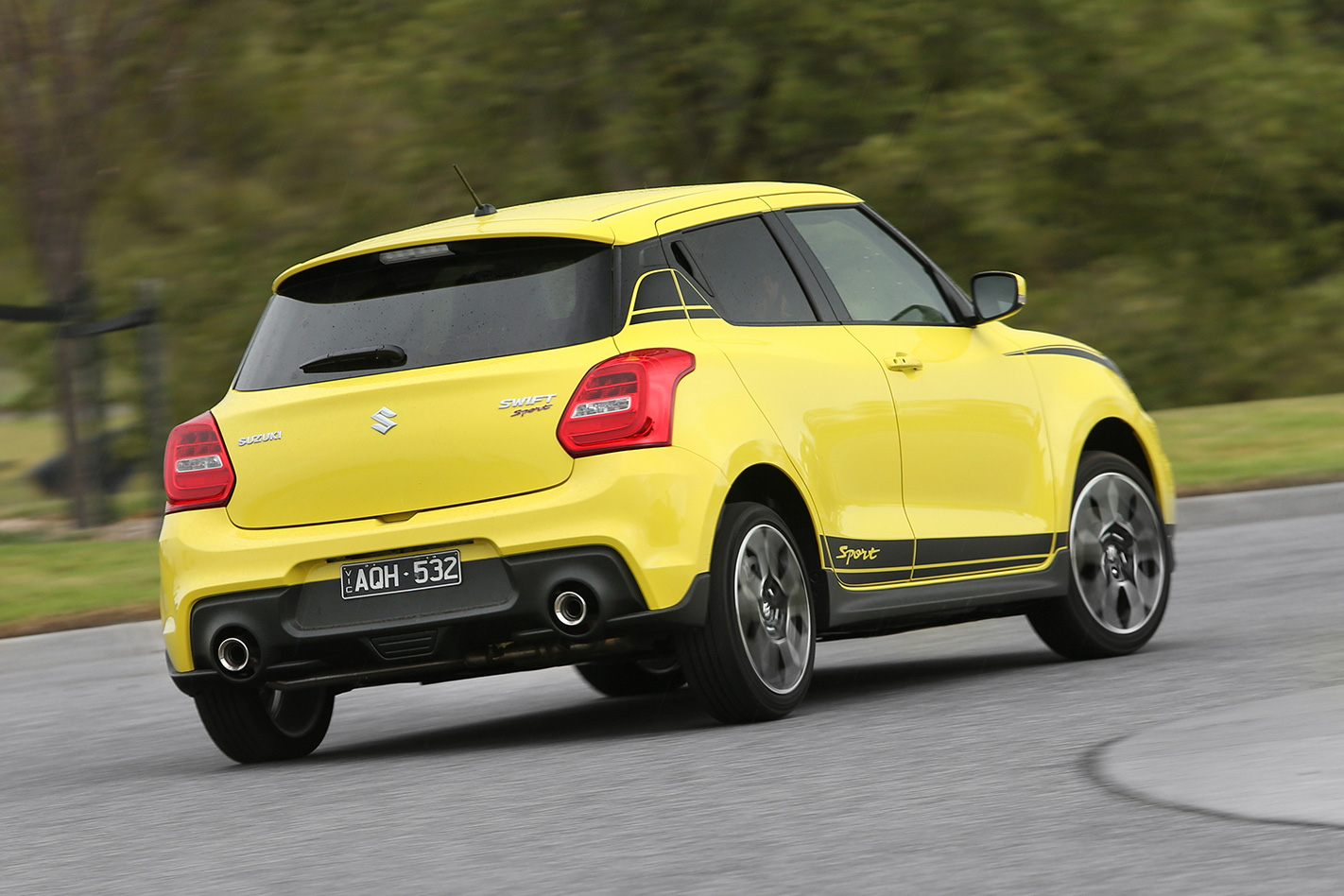
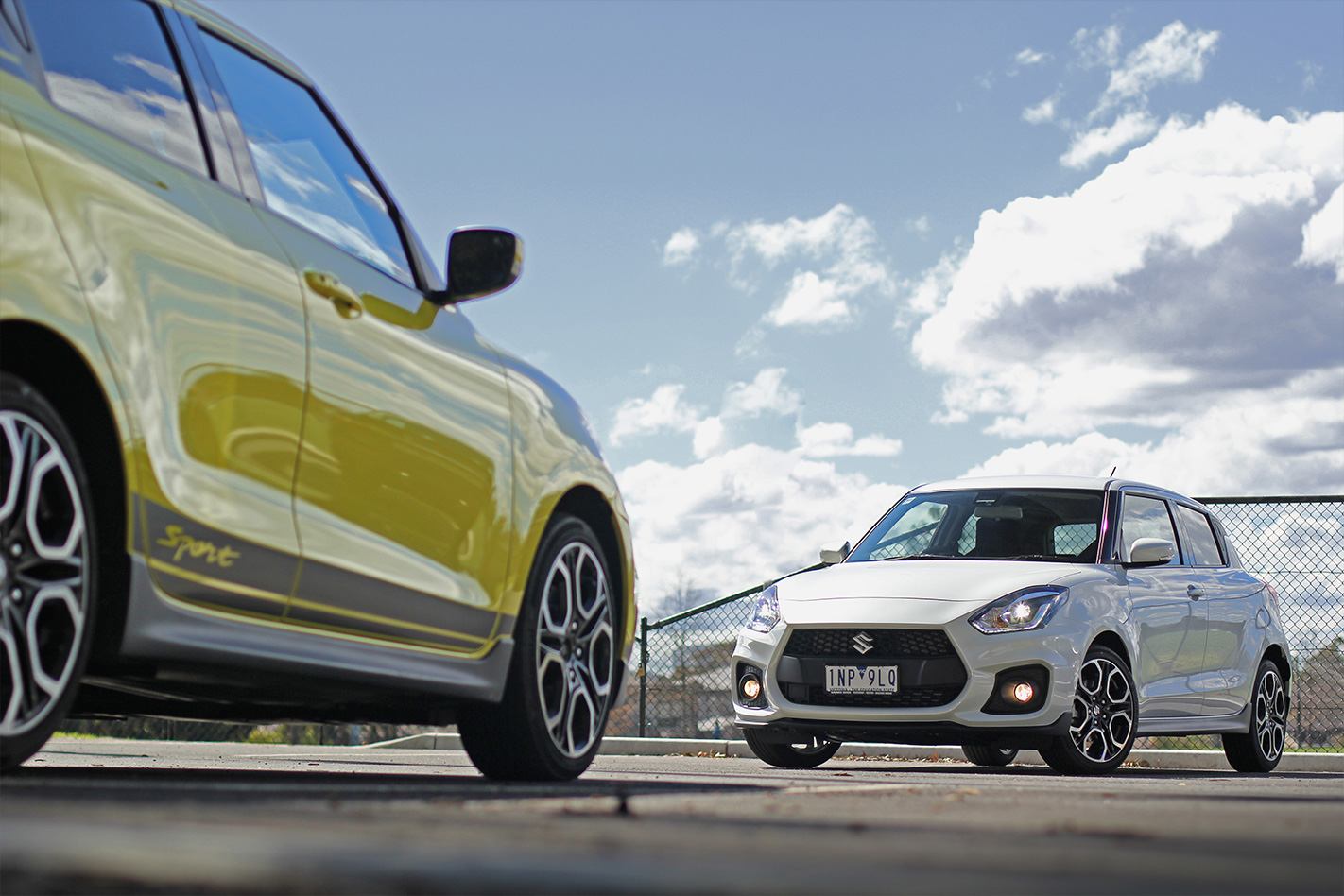
After a test drive and some fairly painless bargaining, we had an order in for a white automatic Swift Sport. The timing is perfect: as I wave goodbye to my Pikachu-yellow Swift, a vanilla-white example rolls in to take its place in the O’Kane garage. Except this time, this one’s going to stick around a lot longer.
The Yenko name is set to make another small resurgence in the US, with the announcement from tuner Specialty Vehicle Engineering (SVE) that it’s releasing a supercharged kit bearing the name for the 2019 Chevrolet Camaro.
Historically, Yenko Camaros were among the most powerful you could buy, with dealer Don Yenko going ‘against’ factory policy and swapping 7.0-litre V8s into Camaros in the late 1960s.
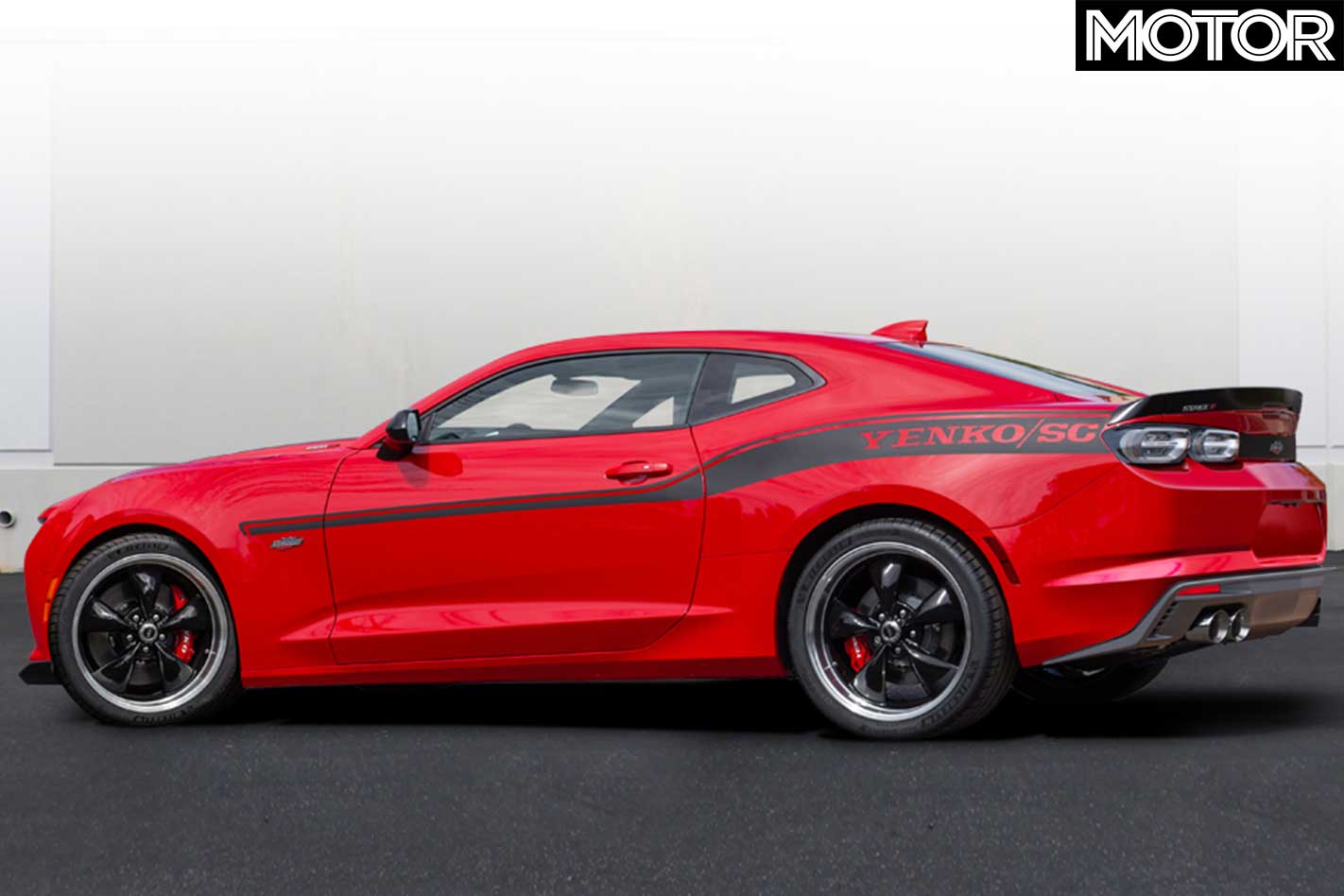
They’re only available with a manual transmission.
There’s a long list of parts that get upgraded, including pistons, cylinder heads (which are ported but still LT-1), fuel system, and injectors. Custom stainless steel headers and high-flow catalytic converters (which are apparently located in the boot) are part of a full bi-modal stainless steel system.
Plenty of other gear comes with the kit in terms of visual additions, including Yenko badged brake calipers, Yenko/SC side stripe graphics, four Yenko crest exterior body badges, and hood cowl badging.
The visualisation also has ‘1000HP’ seen on the car several times across places such as the hood, ‘decklid’, as well as the key fob.
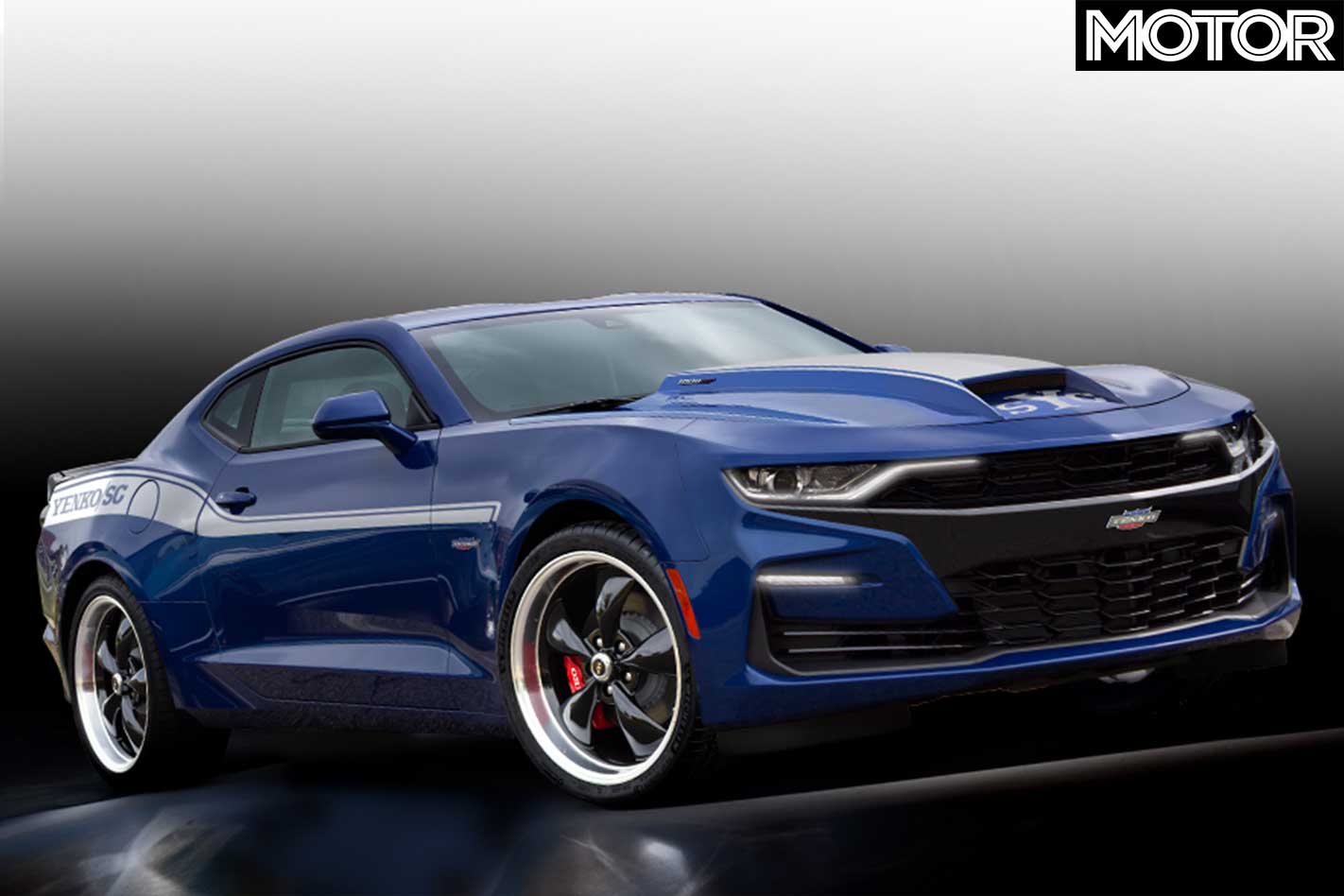
Each Yenko/SC Camaro will be numbered from 1 to 25, as only that many are to be made. Chances of one making it to Australia are abysmally slim.
They do, however, come with a three-year/60,000 kilometer warranty for the engine, supercharger, and driveline.
Reportedly, the pack costs USD$66,995, which converts to around AUD$94,134 – more than a HSV-converted Camaro SS will cost Aussies once they hit showrooms.
It’s hard to not notice the popularity of dual-cab utes, with increasing numbers of drivers choosing the high-riding trucks as the favoured family vehicle over more conventional large sedans and wagons.
But, for some drivers, big isn’t big enough and you may have also noticed a growing number of extra-large super-sized US-style trucks rolling out on our roads.
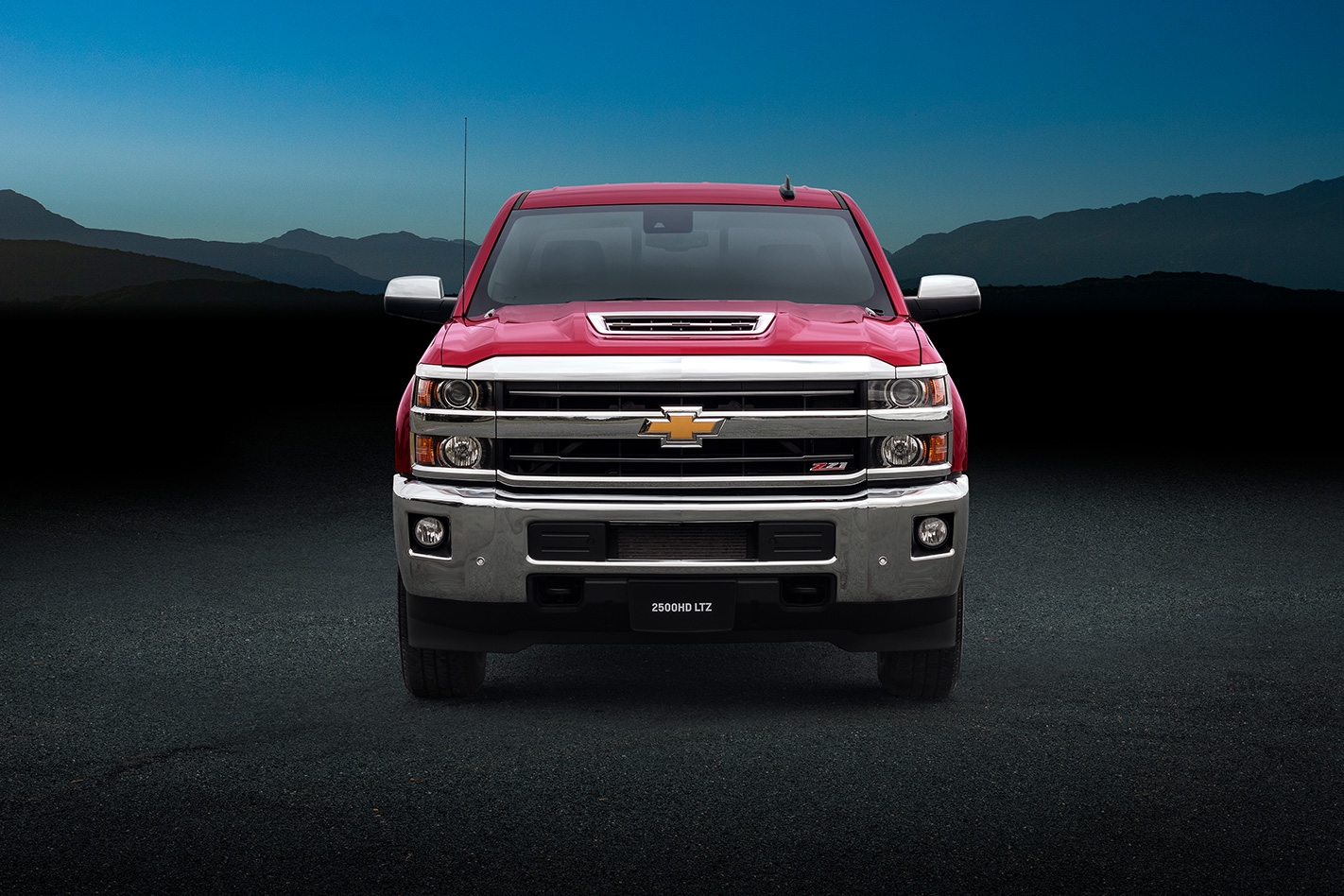
One such wheeled behemoth is the Chevrolet Silverado which is now being converted to right-hand drive by HSV, with the equally imposing Ram 1500 also rolling out of the same factory, albeit under sister-company ASV’s supervision.
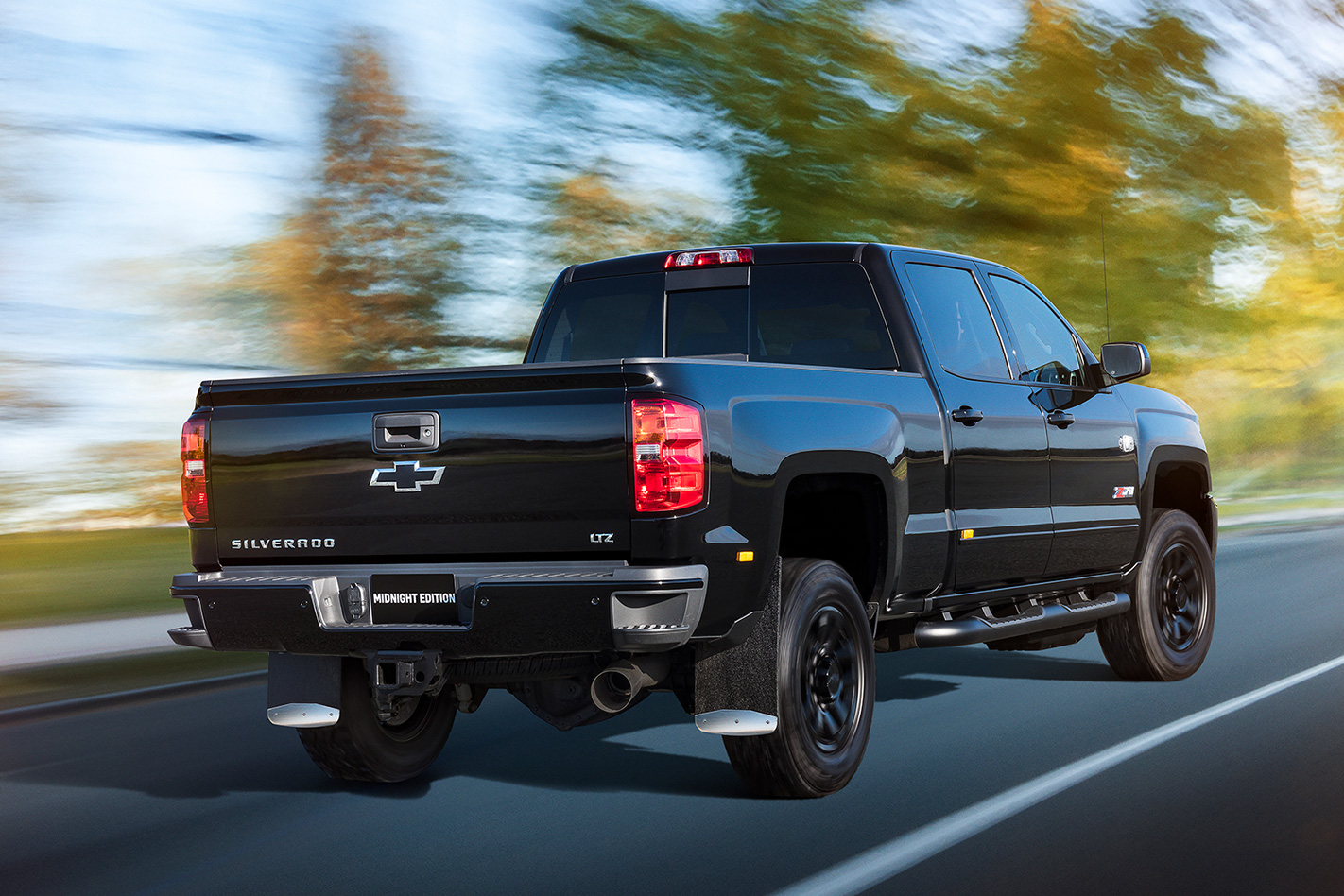
When you see one of these goliaths bearing down on other diminutive road users, you have to ask yourself, why?
We spent a little time with a freshly converted Silverado to try and understand why HSV says it can shift about 750 of the goliaths in just six months.
Titanic towing torque
Housed in the Silverado’s massive bull-nosed front end is a powerplant unlike almost anything else on the road. Fuelled by diesel, the 6.6-litre turbocharged V8 pumps out 332kW, which is significant, but it’s the torque figure which truly is without equal. How does 1234Nm sound?
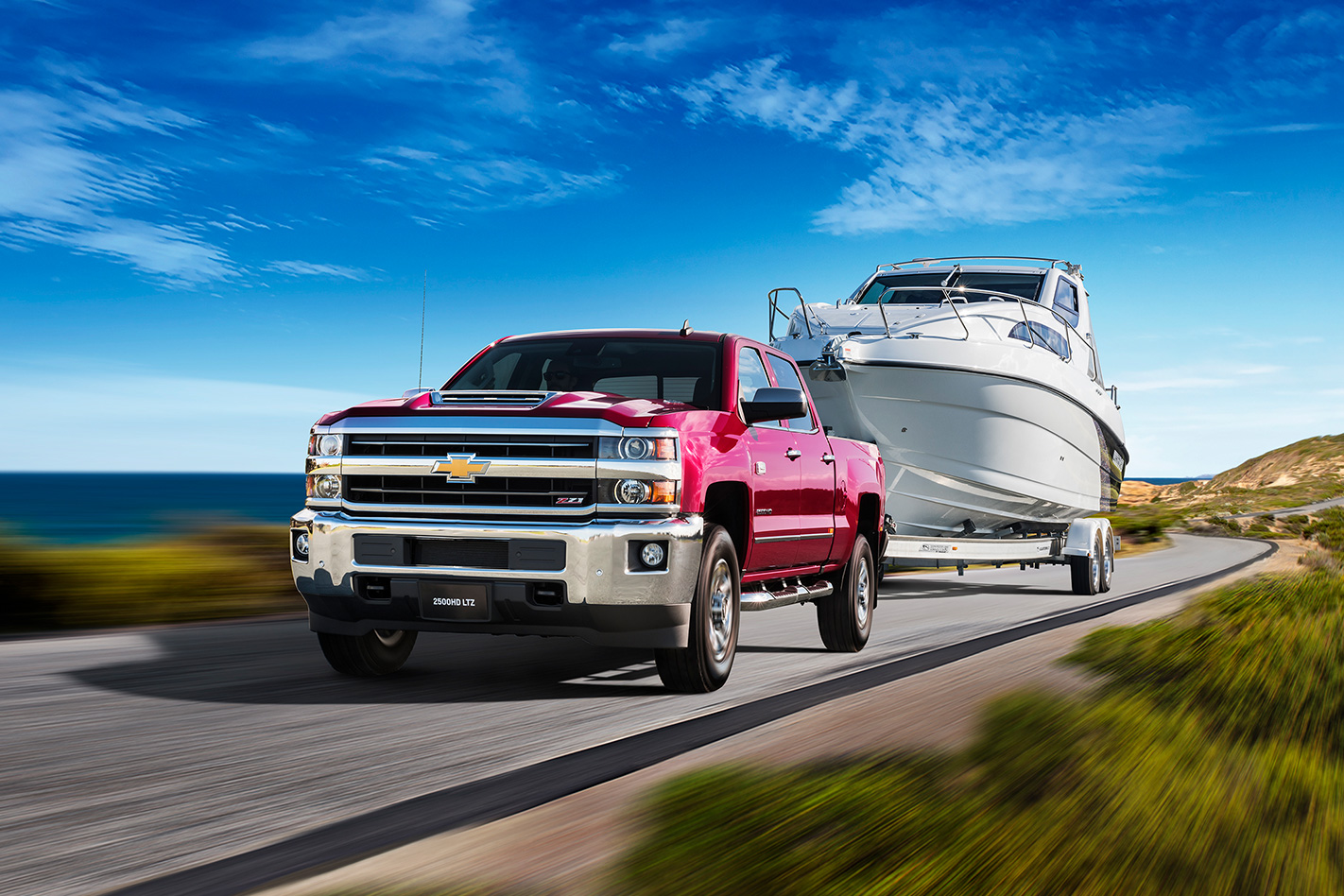
Combined with its heavy duty suspension set up, the Silverado offers a towing capacity unrivalled by anything. Use a conventional 50mm tow ball and the Chevy will match many other one-tonne utes for pulling power, fit a 70mm ball and the figure rises to 4500kg but if you opt for the specialised optional pintle hitch the Silverado will haul a massive 5890kg.
If that’s still not enough, the 3500HD LTZ has been confirmed for Australia this week, with a payload capacity of more than two tonnes, and maximum towing capacity of nine tonnes. This beefier Silverado is larger than its siblings as well, measuring in at 6.5-metres long and 2.5-metres wide.
That’s the main appeal of the Silverado. If you regularly tow significant loads such as a serious boat, multi-horse float or palatial caravan, there is little else that will do the job as effortlessly. HSV is also targeting primary producers with the Silverado, many of which have extreme towing duties but don’t always want to hook up a tractor to do the job.
Power is handled by an Allison 1000 six-speed automatic transmission which sends power to the rear wheels but can be directed to all four with a simple twist of a dial when extra traction is required.
Lock and load
For even more all-terrain ability, the electrically operated transfer case offers a low range as well. With its stretched 3.9-metre wheelbase and overall 6.1-metre length, the Silverado doesn’t have the off-road ability of some more compact and lighter utes on the market but we were surprised just how far it went in a decidedly wet and slippery Gippsland.
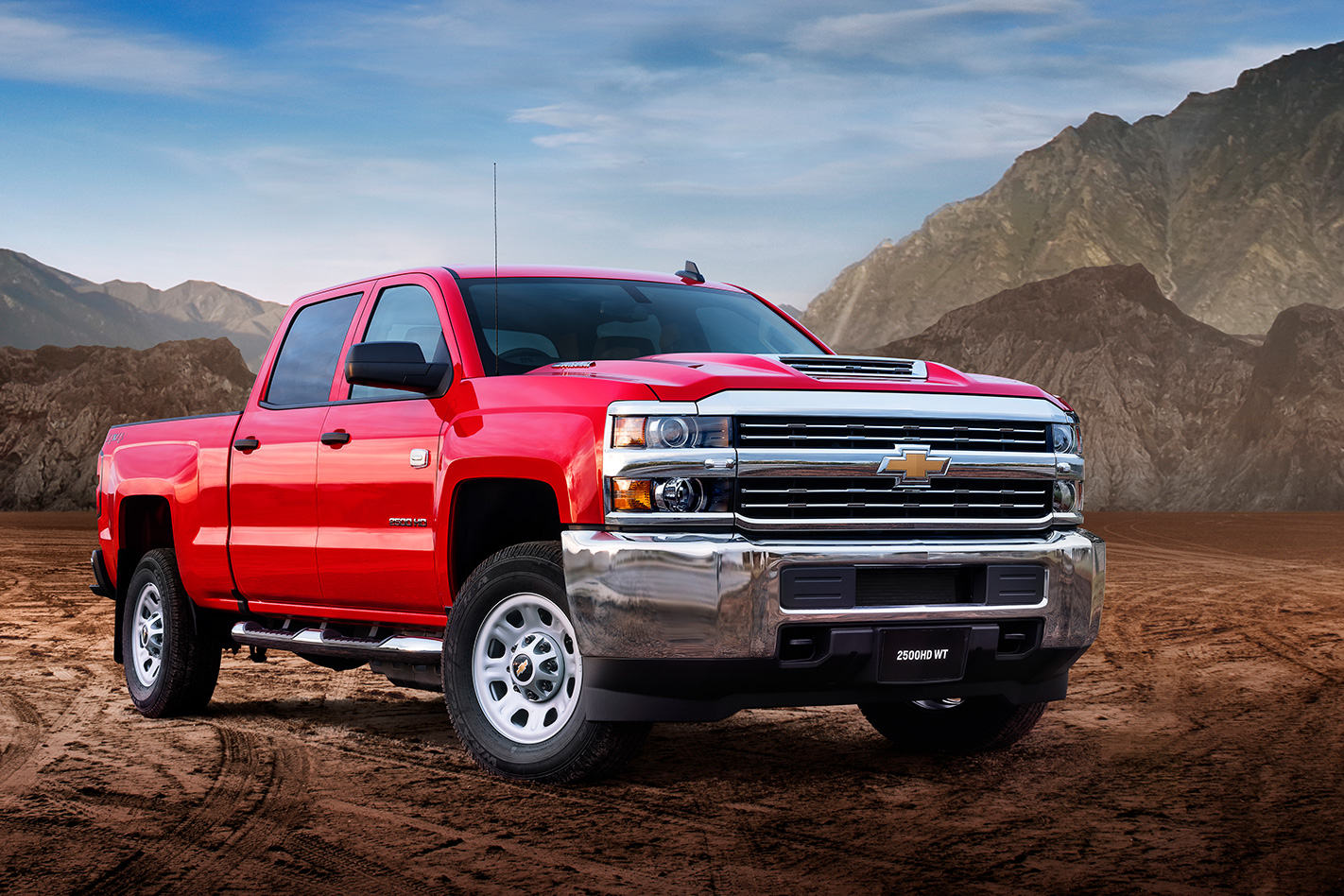
Standard road tyres definitely don’t help but there was still plenty of traction to deal with ice-like damp paddocks and farm run-off slurry. The Silverado’s performance was even more impressive given that we had loaded a round bale into its tray.
With such a surplus of torque, the extra 400kg of weight in the back didn’t even register, further highlighting the Silverado’s might.
Interestingly, due to gross vehicle mass restrictions, the standard Silverado 2500 cannot carry any more in its tray compared with many smaller utes – approximately one tonne, but its tray is significantly larger offering an expansive 2.0-metre by 1.3-metre load area.
Lounge room luxury
The Silverado is big. How big? With a height of nearly 2.0 metres, just shy of 2.4 metres wide and 6.1 metres in length, the Silverado dwarfs almost every family car on the road, if you want to call it that.
But that outside heft translates to a cavernous interior too. Where some dual-cab utes have adequate interiors with an agricultural second row, the Silverado cabin is vast. Rear leg room is a whopping 1.0 metre, there’s 1.6 metres of shoulder room and more than a metre of headroom for all occupants. There are also a whole heap of USB sockets; two in the front, two more in the centre storage box and more in the second row, along with two 12-volt power sockets.
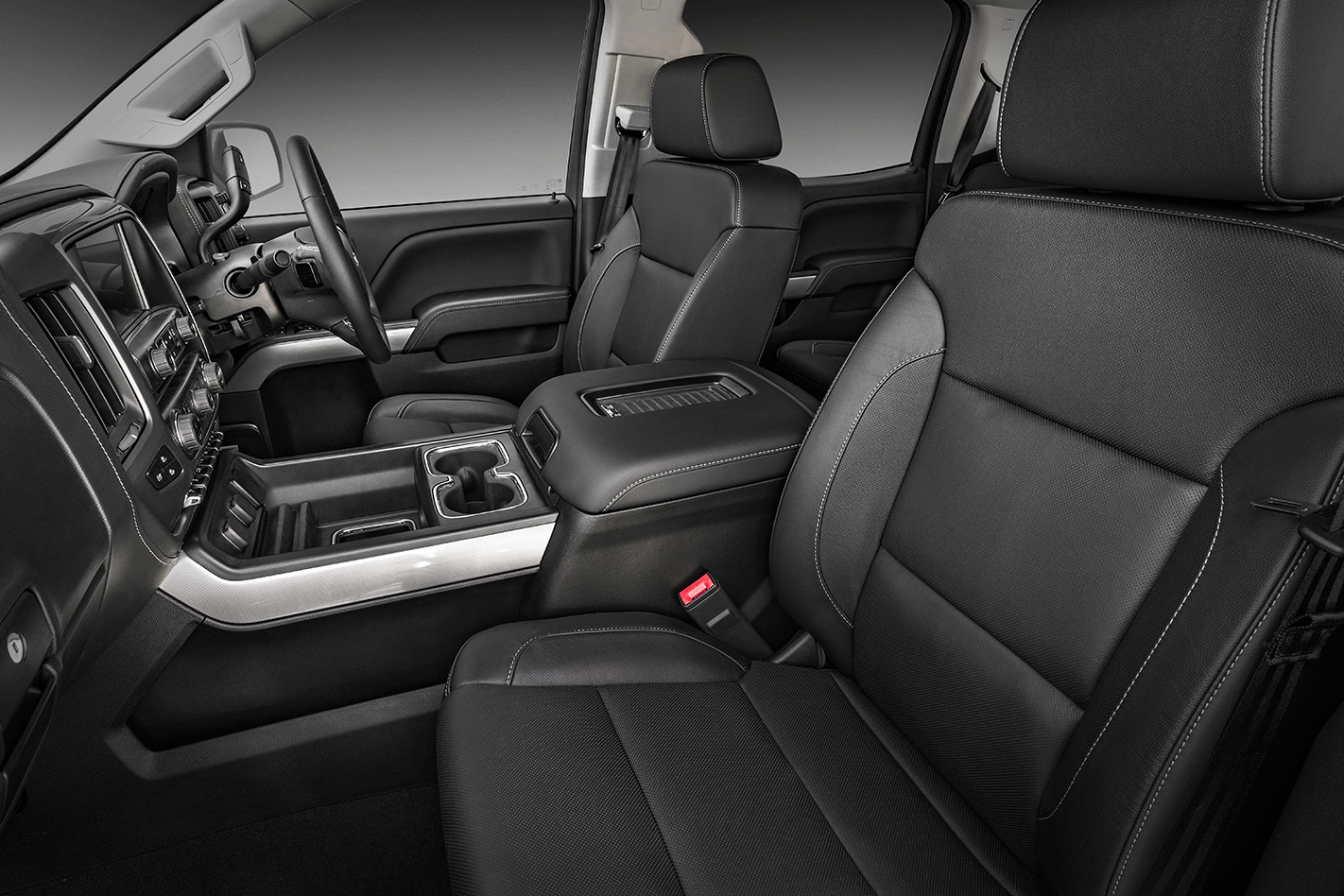
Android Auto and Apple CarPlay smartphone mirroring is also supported so all occupants will be happy for long journeys.
Big style
Finally, HSV expects to sell a number of the tough trucks based on the incredibly imposing presence and styling. That huge unapologetic nose that towers in rearview mirrors, doubled-up headlights and indicators and massive wheels housed in blocky square wheel arches are all part of the appeal.
There is something very commanding about piloting the Silverado and the advantage its raised driving position offers is unquestionable. You will always be looking over the traffic in this monster.
The price to pay for road supremacy
Needless to say, living with such a large vehicle has its drawbacks. First of all there’s the fuel consumption. Diesels might typically be more efficient than large petrol engines, but there’s only so far you can make each drop go when you’re dragging around 3.6 tonnes with a 6.6-litre V8.
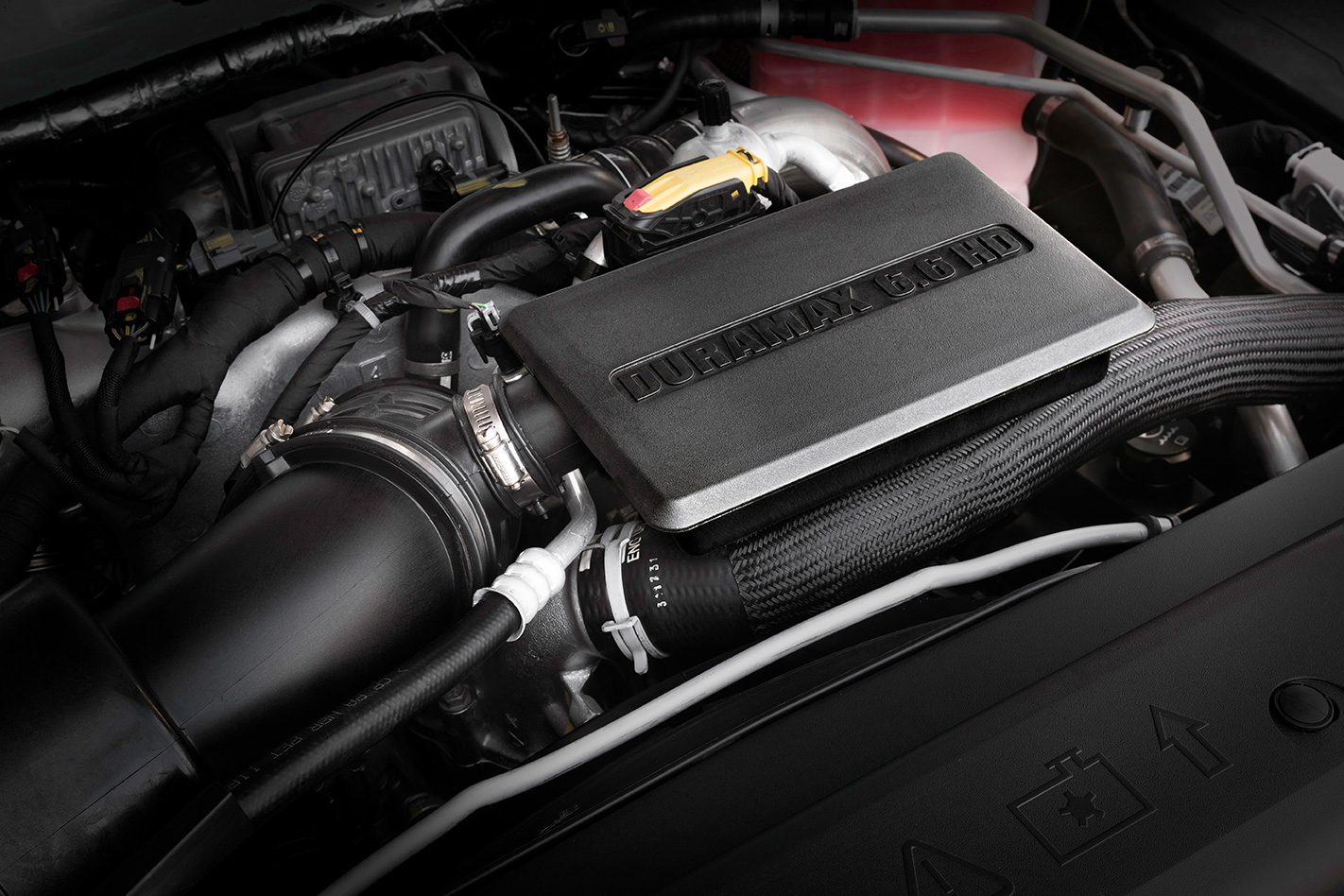
Don’t let the economy display fool you. When it told us 5.6, the Silverado is reading in kilometres per litre, which translates to about 17.8 litres per 100km. Ouch.
Then there’s the sheer size, which in a rural setting is normally no problem, but as soon as the going gets urban, the Silverado causes serious headaches. Standard sized car park spaces are almost unusable, negotiating tight manoeuvres requires the planning of a truck driver and a turning circle of more than 15 metres becomes very apparent.
And the ultra-heavy duty suspension, which doesn’t even flinch at a 400kg hay bale, is a little jarring when unloaded. Traditional dual-cab utes are not known for a cosseting ride, but don’t expect the Silverado to break from this tradition just because of its size. If anything, it is even stiffer.
Finally, there’s the cost. For a pure workhorse, HSV will sell you the WT for $114,990 but the LTZ with more equipment you will definitely want costs $134,990, while the special custom versions rise to $139,900.
Verdict
So there you have it. The Chevrolet Silverado is a brutish machine that makes no apologies for its sheer size and stature. Thanks to its scale and corresponding powertrain, it has a simply gargantuan towing ability, good all-terrain versatility and a cabin that’s comfortable for the entire family.
Yes there are significant compromises, but for a select niche of Australian drivers, there is little else that will fit a very, very large bill.
We wouldn’t blame you for thinking that a hulking SUV wagon based on a commercial ute would be a little too agricultural for family work, but the Ford Everest actually works better in that role than you might expect. Now available with an efficient 2.0-litre twin-turbo diesel, the Everest has a lot to offer Aussie families – and for those that rarely venture into challenging off-road scenarios, the mid-strength Trend RWD variant we have here sits right in the sweet spot.
VALUE
At $56,190 before on-roads, the Everest Trend RWD is, superficially speaking, not especially great value against its key rivals. Similarly-positioned competitors like the Toyota Fortuner GXL, for example, retails for $54,990, while the Mitsubishi Pajero Sport Exceed and Holden Trailblazer LTZ cost $53,000 and $52,490 respectively. All of them come standard with 4WD as well, something that comes at a $5000 premium on the Everest Trend.
However, none of those cars can equal the Everest’s 6.9L/100km fuel economy figure, nor its 157kW peak power output and 3100kg tow capacity. Those metrics are the ones that set the Everest apart from its competition, and are no doubt attractive numbers for those looking to tow or tour.
STANDARD FEATURES
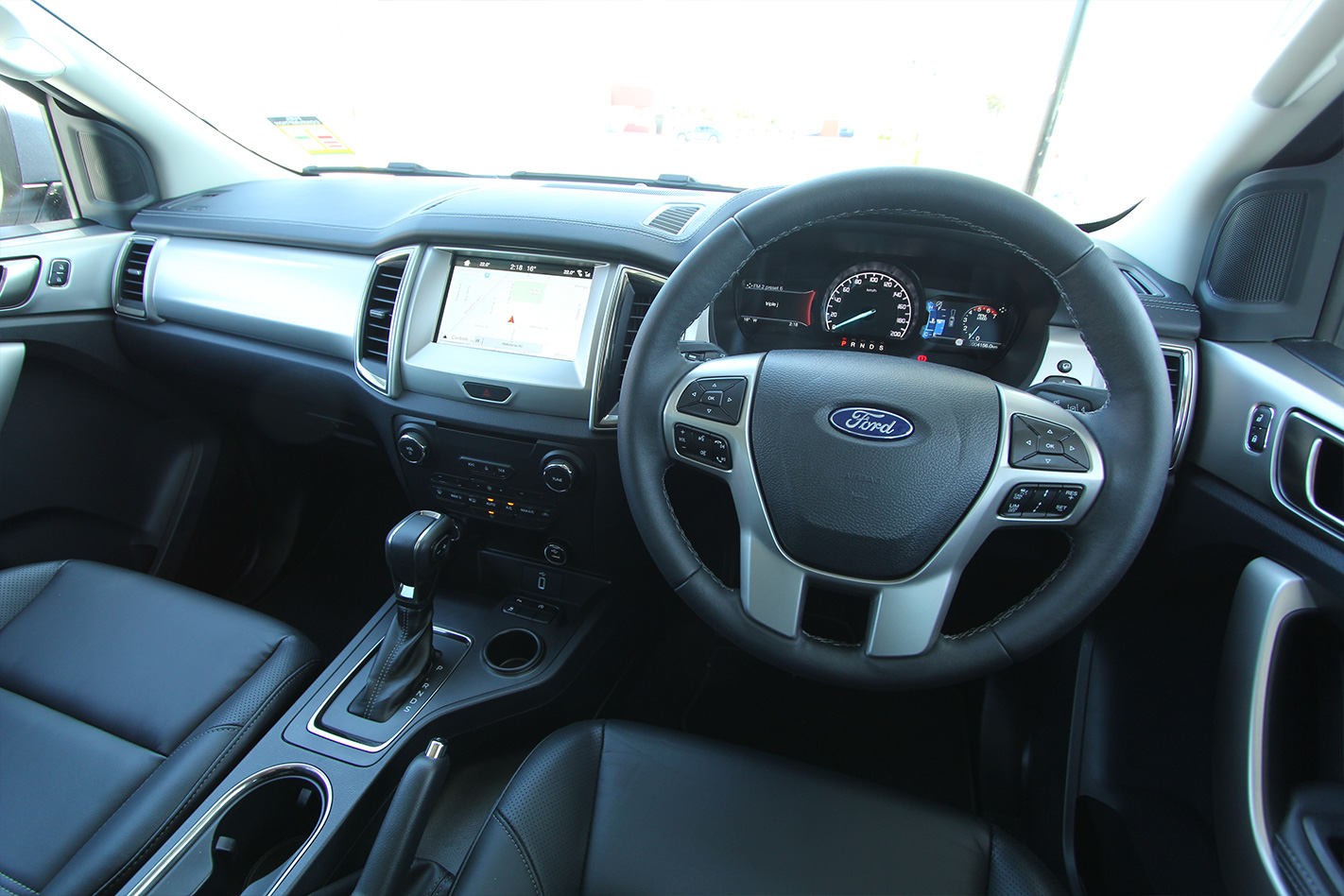
The Trend grade sits in the middle of the Everest’s model hierarchy, but it’s specified to a level that’s on par with flagship versions of the Fortuner, Pajero Sport and Trailblazer. Standard features include mod-cons like keyless entry and ignition, leather upholstery, dual-zone climate control, a pair of 4.2-inch reconfigurable colour displays in the instrument panel, a powered tailgate, self-levelling HID headlamps with auto high-beam, rain-sensing wipers and a power-adjustable driver’s seat.
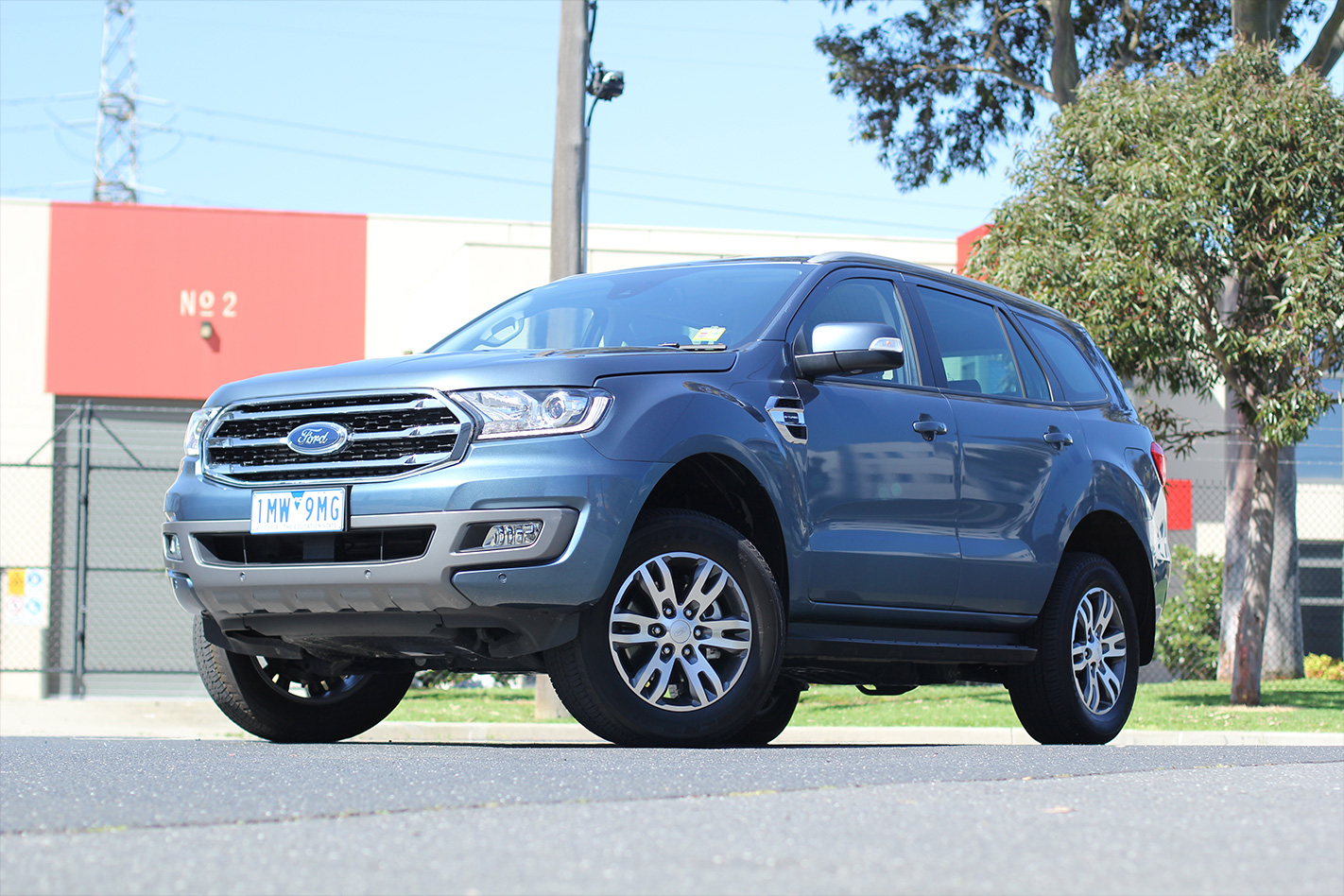
Front and rear parking sensors are also standard, along with rear privacy glass, a self-dimming rear view mirror and adaptive cruise control. It’s built for long-distance touring too, with plenty of USB and 12-volt power outlets to keep your passenger’s devices charged up. There’s even a 230-volt household power outlet on the rear of the centre console for plugging in accessories like portable fridges and the like.
Satellite navigation is also standard, displayed through an 8.0-inch colour touchscreen that also controls the 10-speaker, digital radio-equipped audio system. Smartphone mirroring via Apple CarPlay and Android Auto is standard too, equalling the Trailblazer and Pajero Sport, and giving the Everest a leg-up on the Fortuner’s infotainment package.
SIZE
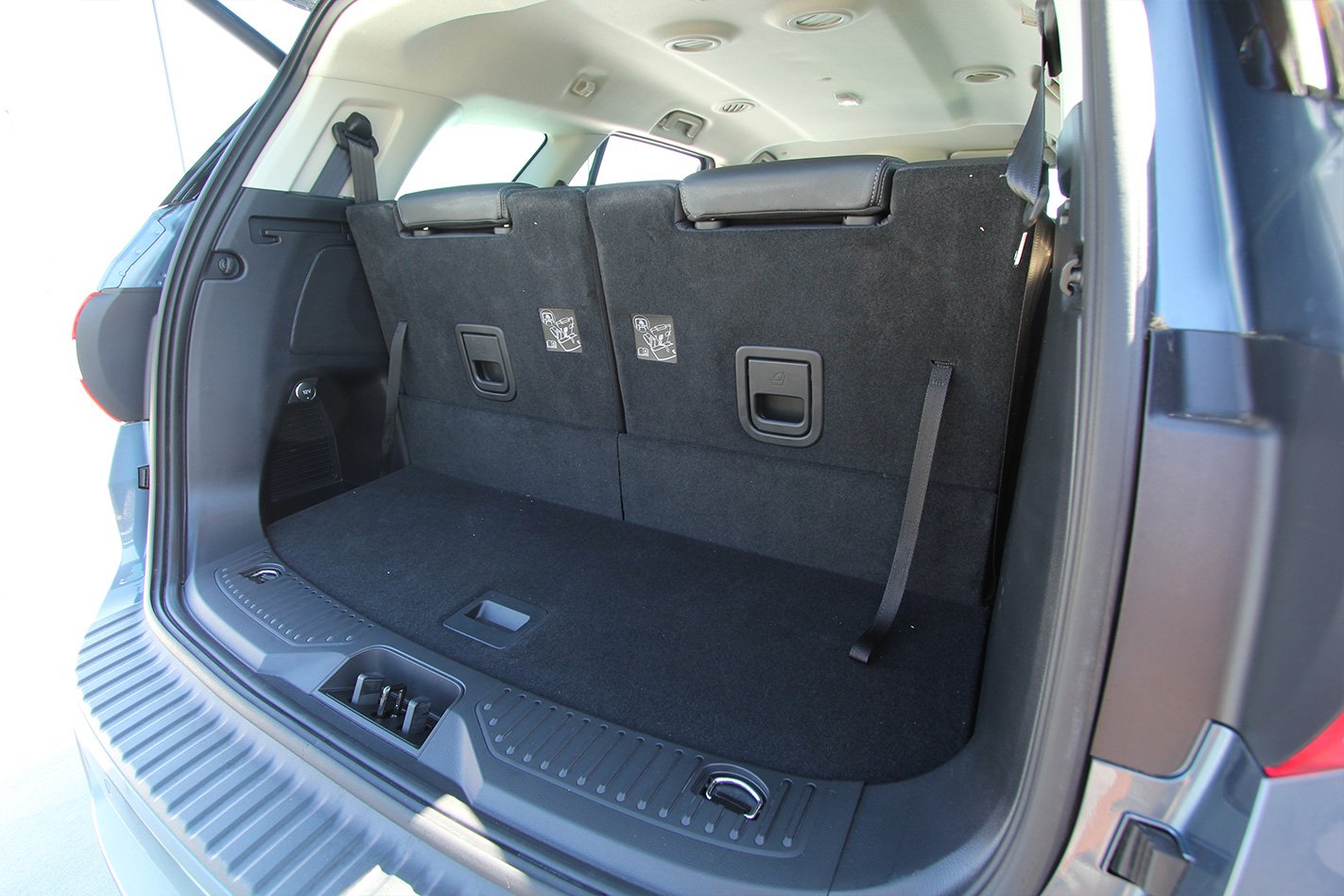
Based on the Ranger, the Everest boasts generous proportions both outside and in. Its total length of 4.9 metres and width of 1.87 metres gives it a bigger footprint than its core competitors.
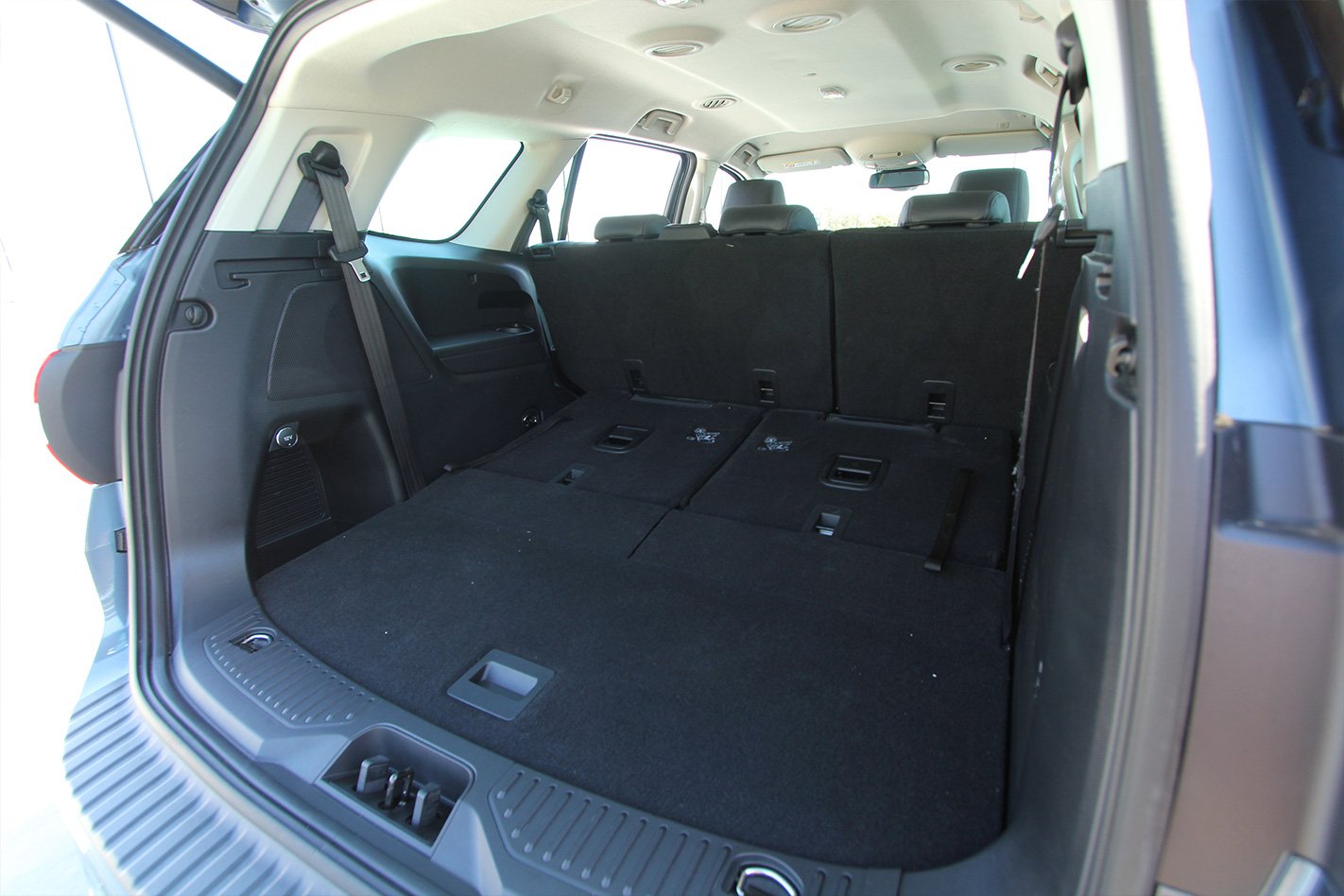
And that not only translates into heaps of passenger space across all three rows, but also a sizable luggage capacity. With all three rows raised there’s 450 litres of cargo room between the roof and floor, while keeping the rearmost row stowed gives a massive 1050L up to the roof. Fold down both the second and third rows, and you can store 2010L of cargo in the huge area behind the front seats.
SAFETY
The Everest Trend’s safety fit-out is good, with Autonomous Emergency Braking, pedestrian recognition, traffic sign recognition and lane keep assist all working to help keep you on the right side of the law – and the right side up.
That’s all on top of the also-standard stability control, traction control, ABS, EBD, hill start assist and suite of seven airbags (including head-protecting curtain airbags that stretch all the way to the third row). Tested by ANCAP in 2015, the Everest achieved a five-star crash safety score.
COMFORT
It’s a comfy cabin, for sure. Having heaps of space definitely helps, and there’s decent legroom, headroom and elbow room across all three rows. Fitting three adults across the middle bench is also a viable option, and roof-mounted air vents mean everyone can enjoy fresh air – even if they’re in the back row.
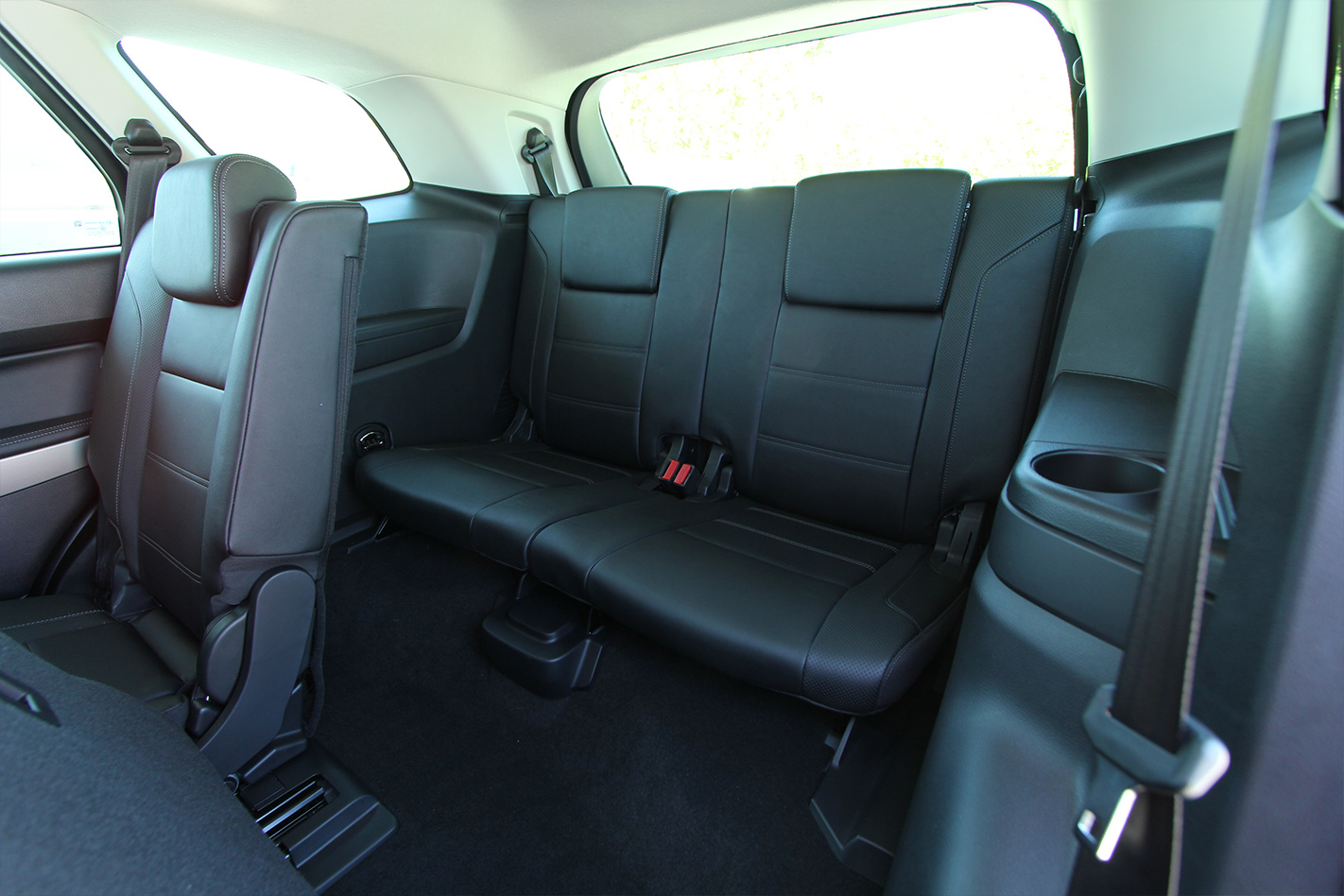
Even adults should feel reasonably comfortable in the last two seats, provided they’re not especially tall. As a family-friendly bus, the Everest has good credentials.
Ride comfort is also appropriate for this kind of vehicle, with cushy damping and a suspension that makes the most of the Everest’s significant wheel travel. It feels quite plush out on the highway, without being seasickness-inducing in its softness.
ON THE ROAD
Despite its 2.2-tonne kerb weight and Titanic dimensions, the Everest is actually quite an easy vehicle to pilot. The steering is finger-tip light yet feels well connected to the front wheels, while the elevated driving position and sizable wing mirrors make keeping an eye on your proximity to obstacles easy – on the off chance the parking sensors and rear camera didn’t pick them up first.
The big news for the 2019 model year is the addition of Ford’s 157kW/500Nm 2.0-litre twin-turbo diesel four-cylinder as a powertrain option, and while it’s 1.2 litres smaller and has one fewer cylinder than the Everest’s old 3.2-litre inline-five (which carries over as an optional engine), the four-cylinder has more power (14kW), more torque (30Nm) and can tow an extra 100kg (for a total of 3.1 tonnes).
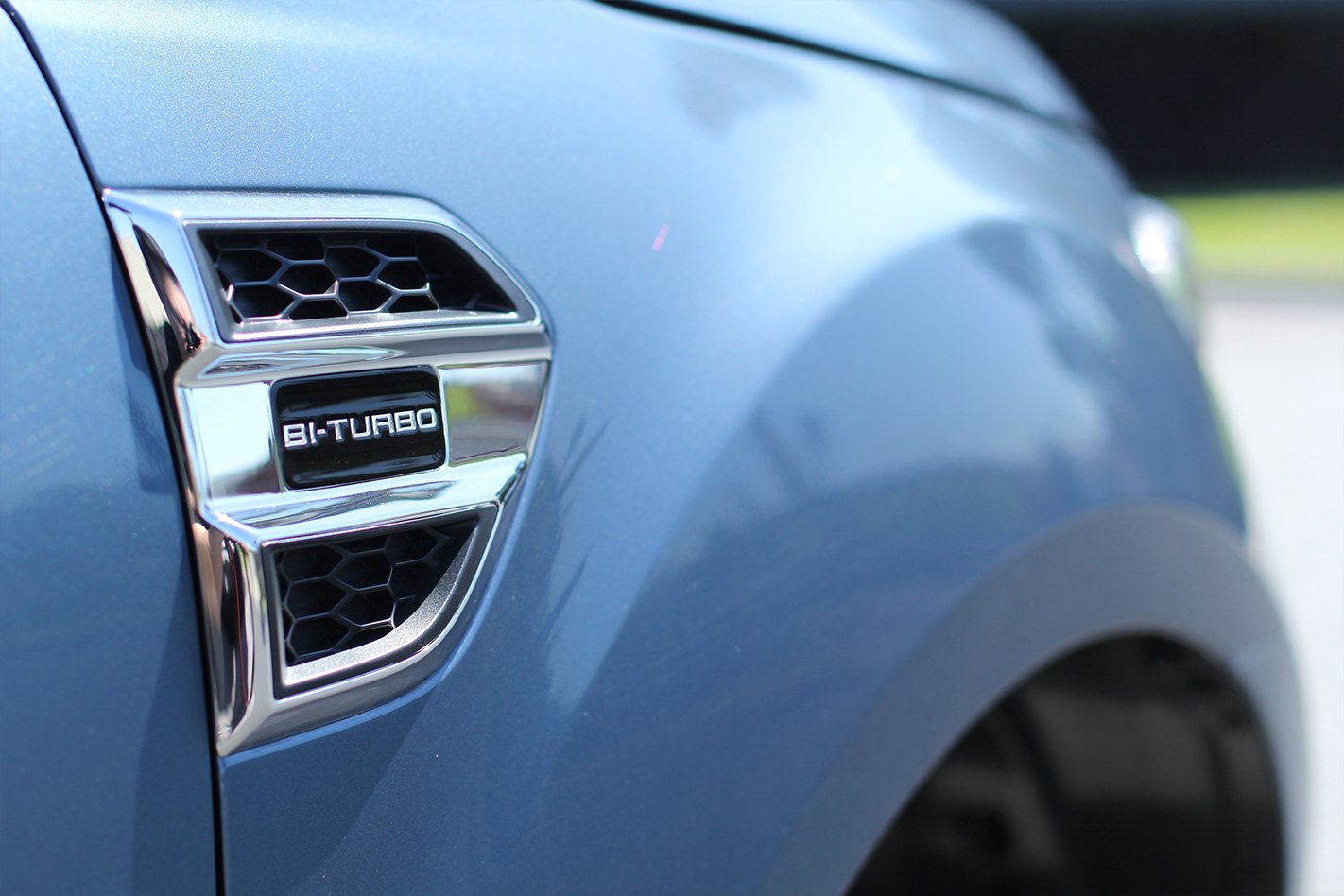
And from behind the wheel, it feels every bit as grunty as the spec sheet suggests. The torque band is spread wide across the rev range thanks to the engine’s twin-turbo setup, and even spirited acceleration doesn’t feel especially taxing for the two-litre. That performance is aided by the 10-speed automatic (another new addition for 2019), which has a broad spread of ratios that not only makes light work of around-town motoring, but gives it long legs for highway cruising. Family roadtrips in the Everest should be a relaxed affair – at least as far as the powertrain is concerned.
VERDICT
The only real notable shortfall with this particular Everest variant is the fact it doesn’t send power to the front wheels when all of its similarly-priced rivals do. That said, with many SUV buyers – even those jumping into hulking body-on-frame SUVs of the Everest’s size – rarely straying from the blacktop, Ford’s decision to offer the Trend in RWD as well as 4WD could be an astute one.
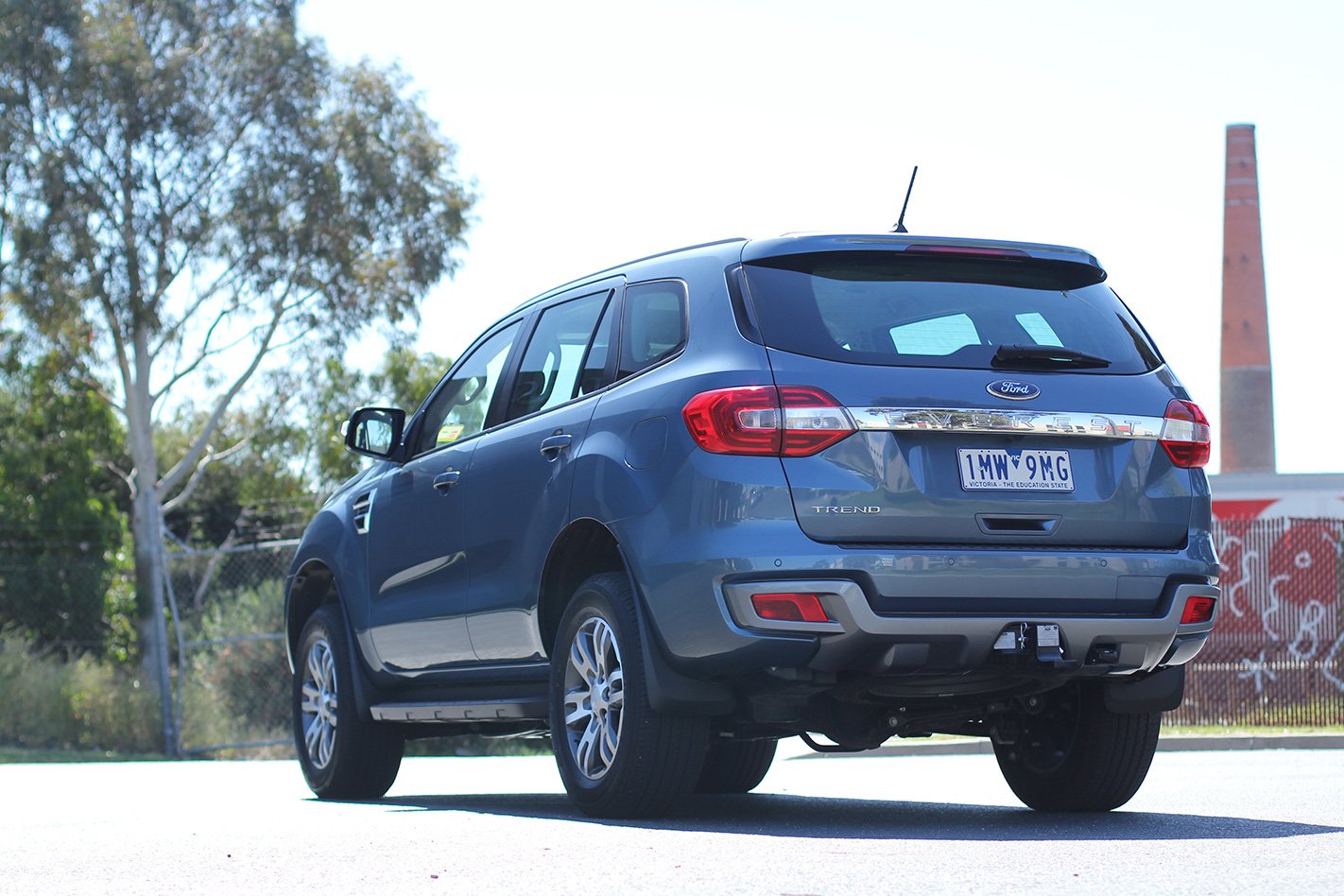
After all, there are likely plenty of buyers looking for a capable tow vehicle for their horse float, boat or camper, but don’t necessarily need the off-road traction (and the added weight, complexity and reduced fuel efficiency) of four-wheel drive. For those people, the Everest Trend RWD should hit the spot.
Honda’s Civic Type R is now the second TCR racer to arrive in Australia ahead of the inaugural 2019 season of the TCR Australia Series.
Audi is already represented by an Audi RS3 LMS, held by Melbourne Performance Centre, and Hyundai’s i30 N TCR racer will show up soon after it was recently confirmed HMO Customer Racing had purchased two for the local version of the international TCR series.
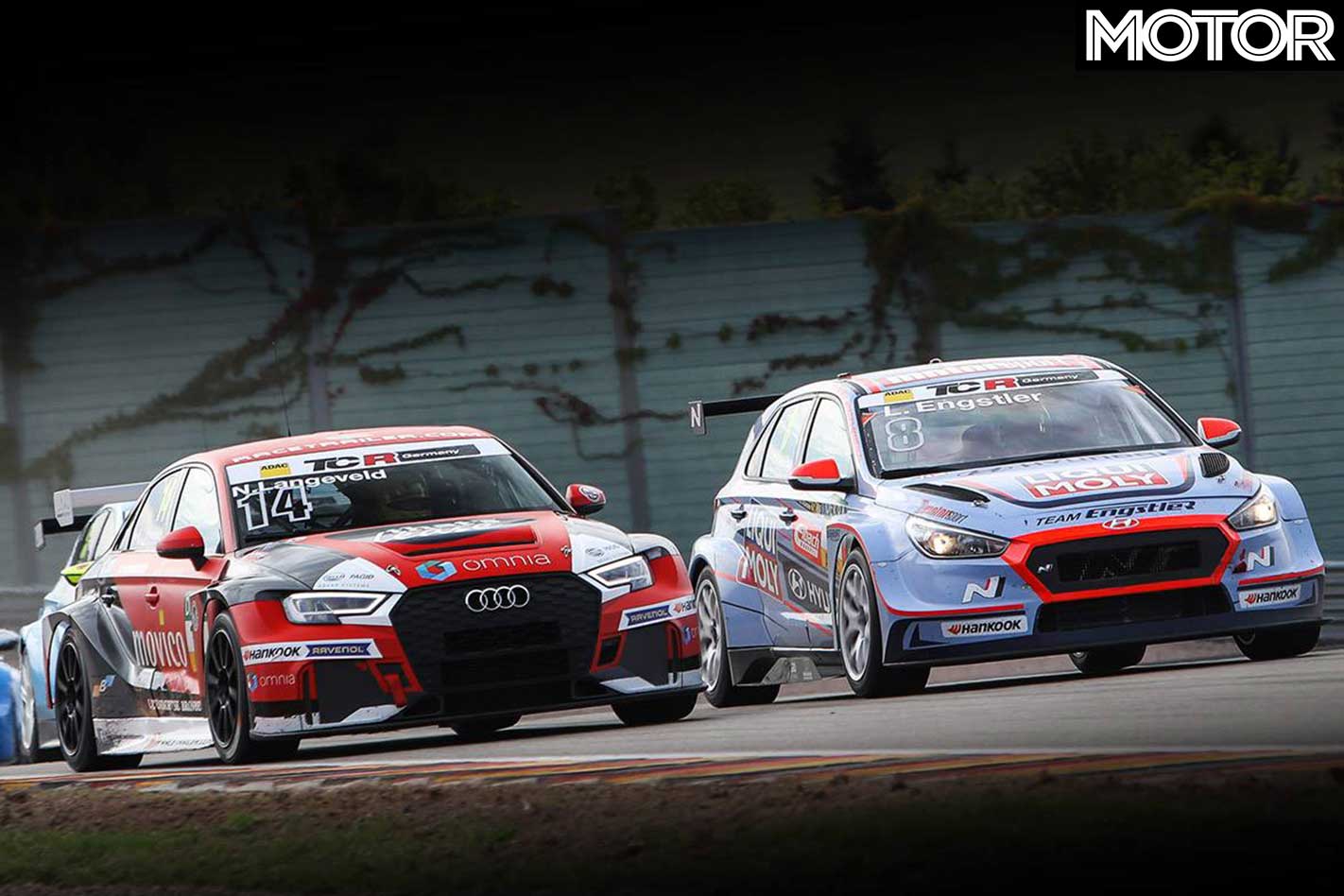
Sydney-based Wall Racing is assisting J.A.S. Motorsport with the preparation and storage of the Civic Type R TCR car, but Australian Racing Group director Matt Braid says J.A.S intends to find someone to purchase the car from them.
“It’s great to see another brand of TCR cars arrive in Australia. You can really start to feel the momentum building now ahead of the 2019 season,” says Braid.
“The J.A.S. Motorsport squad is world famous for their engineering capabilities and racing developments. They are also race and championship winners in their own right too. They offer a terrific, turn-key product.
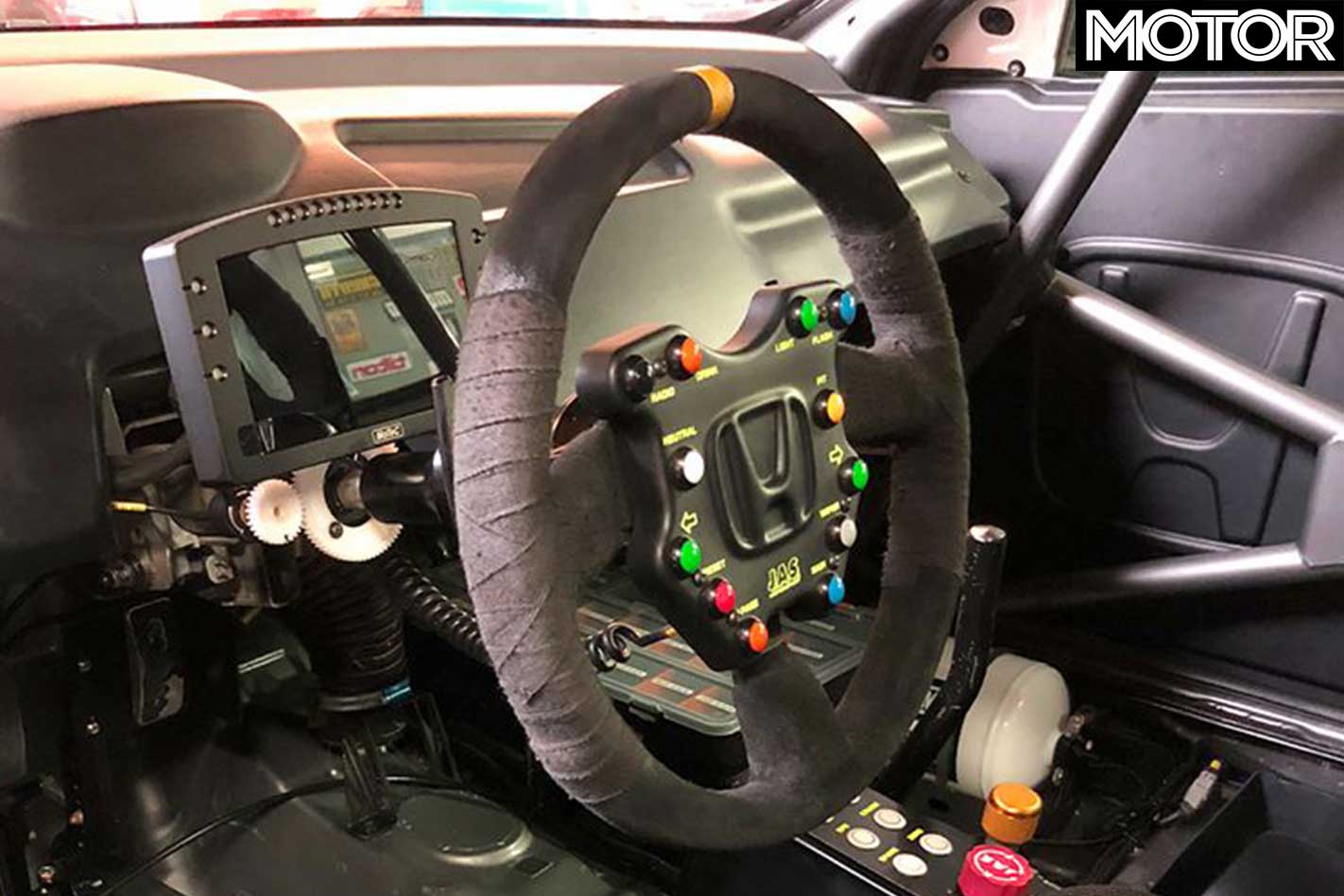
“At this stage, the car is on loan from J.A.S, however, the intention is for someone to purchase the car, and secure a local distributor for the Civic Type R. There has been lots of interest, so I’d say that it is just a matter of time before we are able to confirm this.”
J.A.S. Motorsport business development manager Mads Fischer confirmed this, saying the right team could “help put Honda on the map” for TCR in Australia.
“Australia has a rich history in motorsport, so it was no surprise to see a TCR Series created Down Under,” says Fischer.
“We have a long history with Honda’s global racing programs, and we are very proud of the business that we have developed alongside Honda to create the best race cars.
“We will be paying close attention to TCR Australia and are looking forward to partnering with the right team to help put Honda on the map in Australia.”
While the Audi RS3 LMS has already been evaluating locally, it’s expected the Hyundai i30 N TCR will arrive in November.
THE HOT hatch formula has always been a simple one. Take a diminutive chassis, plonk a relatively large engine under the bonnet, and let the good times roll.
In recent years hot hatches have been in a renaissance, growing into brawlers with flared haunches and fire-spitting attitudes. Power has skyrocketed, with some next-gen models rumoured to be 350kW+ all-paw monsters. The physical size, and prices, of the enthusiast main stay have also become bloated, seemingly locking more budget orientated buyers out of the market.
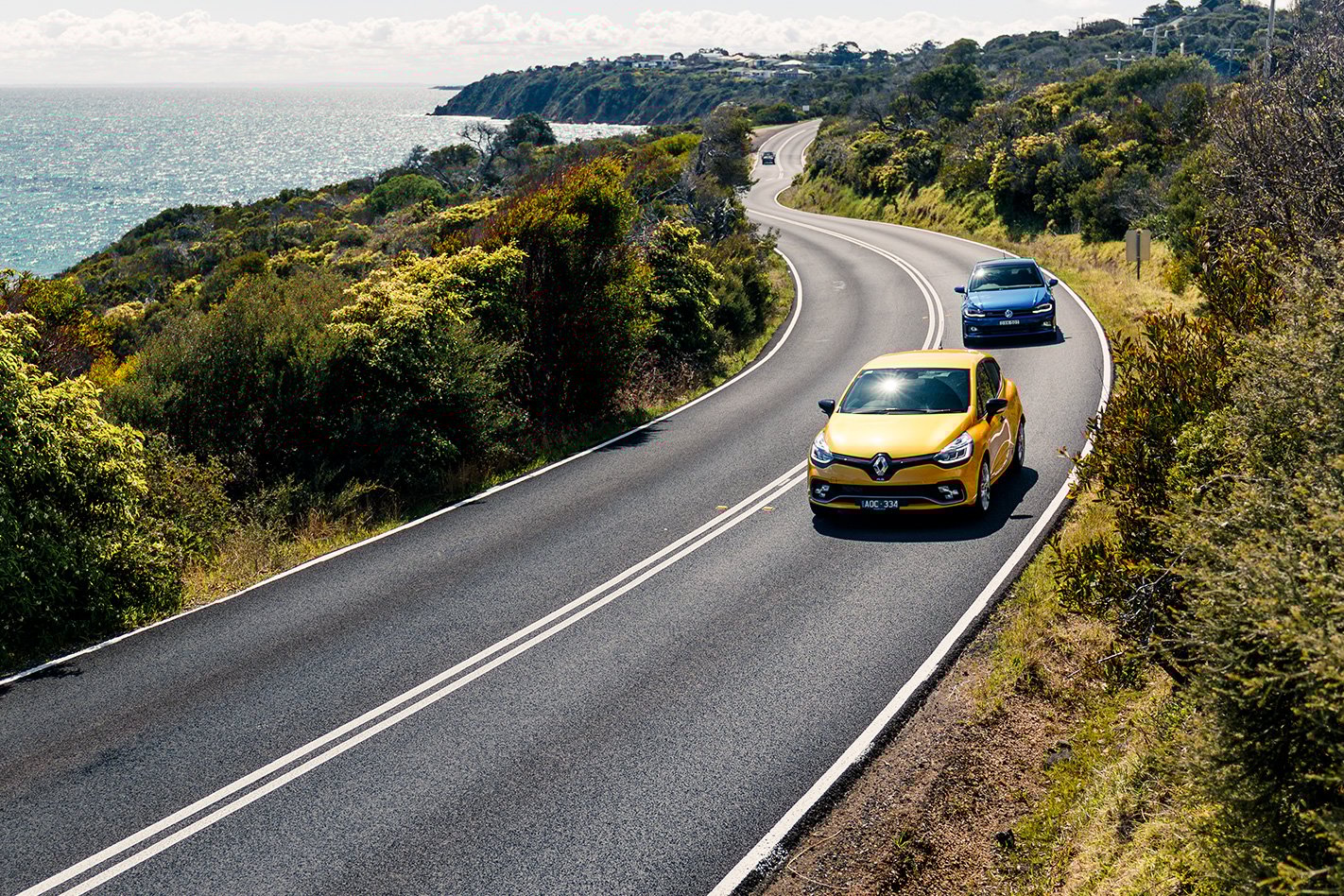
Fear not, for there are still affordable options, which are arguably more true to the original hot hatch formula than their headline-grabbing siblings – enter the Volkswagen Polo GTI and Renault Clio RS 200.
Both have a starting price of just over $30,000, and send power exclusively to the front wheels via six-speed dual-clutch automatic transmissions.
Play on, then…
Price and Equipment
Winner: Volkswagen
Both of these cars start at $30,990, but our test vehicles had a number of options fitted.
As standard the Polo features adaptive dampers, forward collision warning and autonomous emergency braking, an electronic diff lock, powered folding mirrors, cornering lights, paddle shifters, keyless entry/start, dual-zone climate control, an 8.0-inch touchscreen and one-touch electric windows.
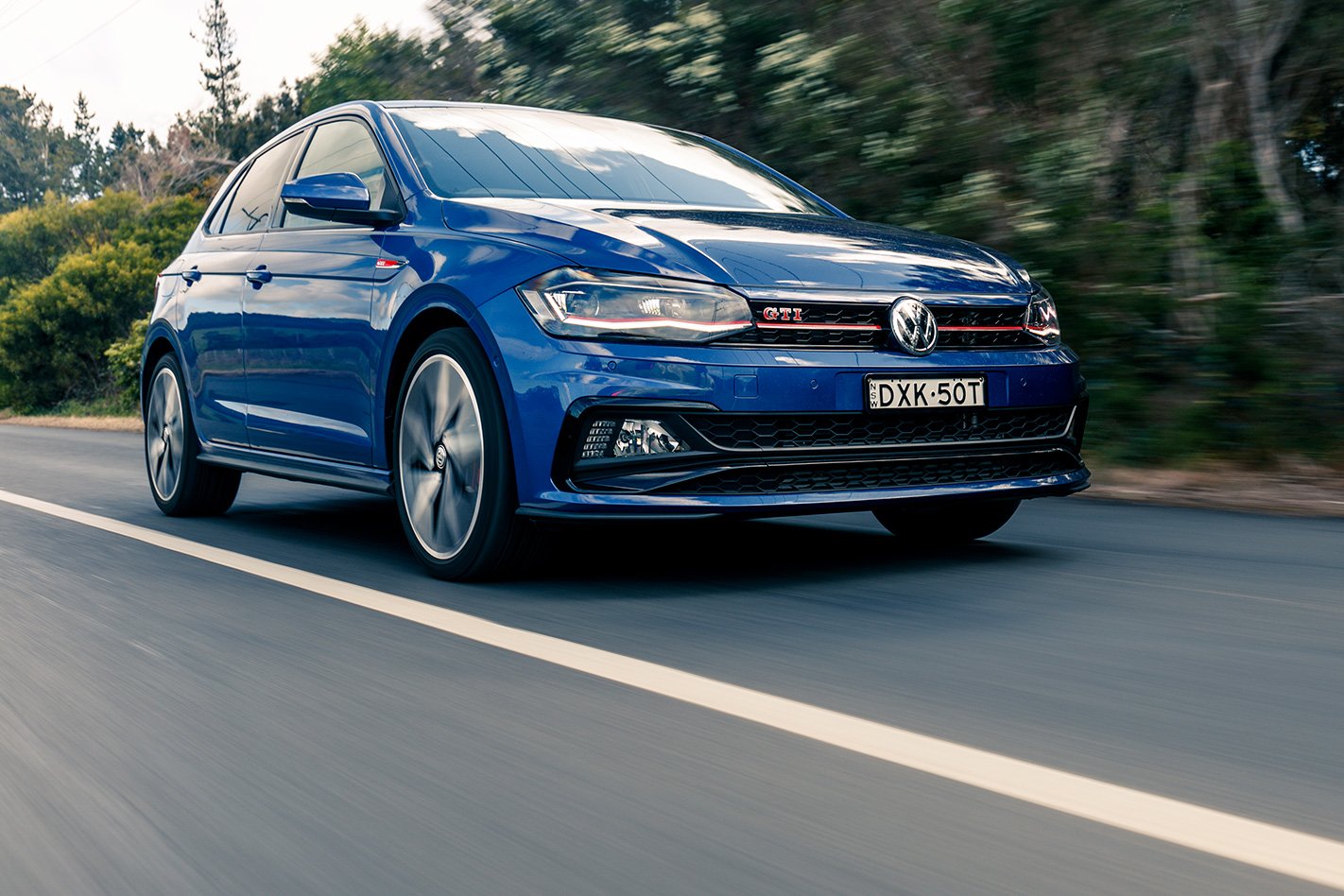
For our comparison the Volkswagen also arrived with the $1400 ‘Driver Assistance’ pack bringing adaptive cruise, blind-spot monitoring, rear cross-traffic alert and auto park assist; the $1900 ‘Sound & Vision’ pack adding Active Info Display digitised instrumentation, sat-nav, and an upgraded sound system; and a $3900 ‘Luxury’ pack with velour, heated front seats, LED headlights, panoramic sunroof, extra tinting and 18-inch alloys. Along with $500 metallic paint, the as-tested price was $38,690.
Facelifted in 2017, the Clio RS 200 Phase II remains similar to its 2013 specification, with the addition of LED lights and updated multimedia.
Renault fitted the Clio RS 200 with a $1500 Leather Pack with Alcantara upholstery and heated front seats, a $1500 Entertainment Pack with sat-nav, enhanced multimedia offering Android Auto (but not Apple CarPlay), RS Monitor performance telemetry, and BOSE audio, and $750 metallic paint. All up, the Clio RS came to $34,740.
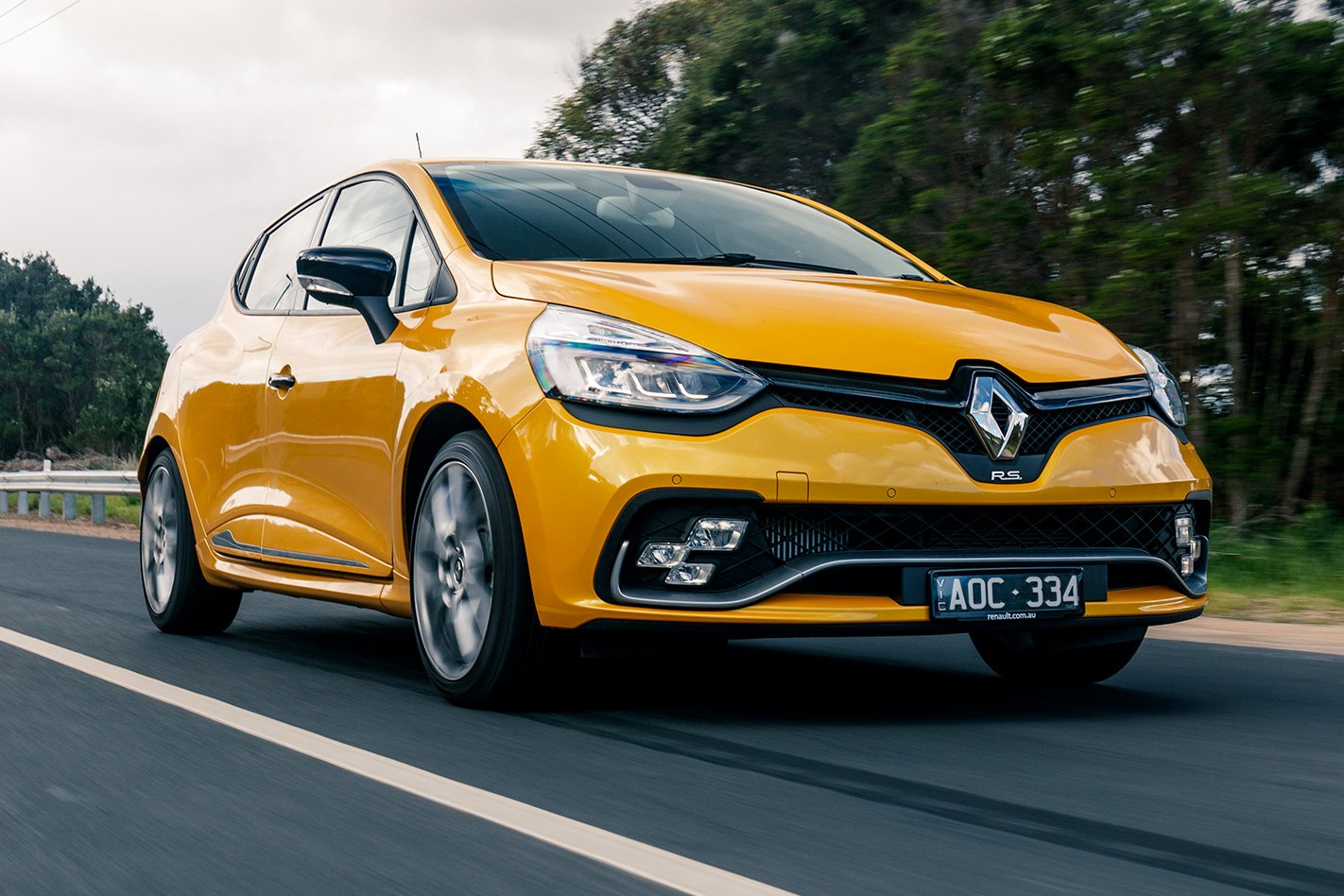
For the same base price, the Clio can’t compete with the features provided as standard with the Volkswagen. However, once you start ticking option boxes with the latter, the final price can rapidly rise into Golf GTi territory.
Interior and Connectivity
Winner: Volkswagen
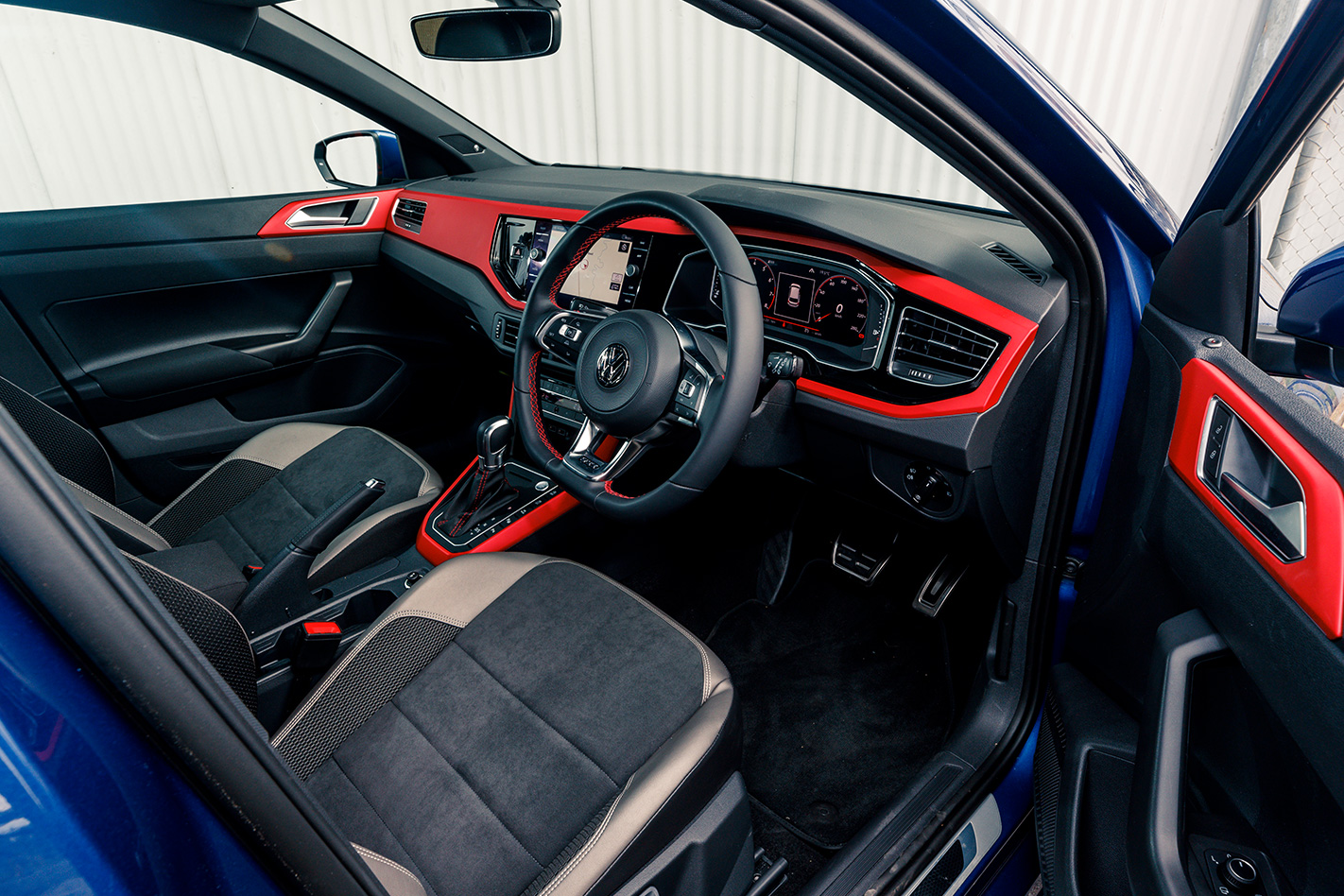
In an age of rapid technological advancements, a six-month lag can make a stark difference in infotainment. Five years? That’s a lifetime.
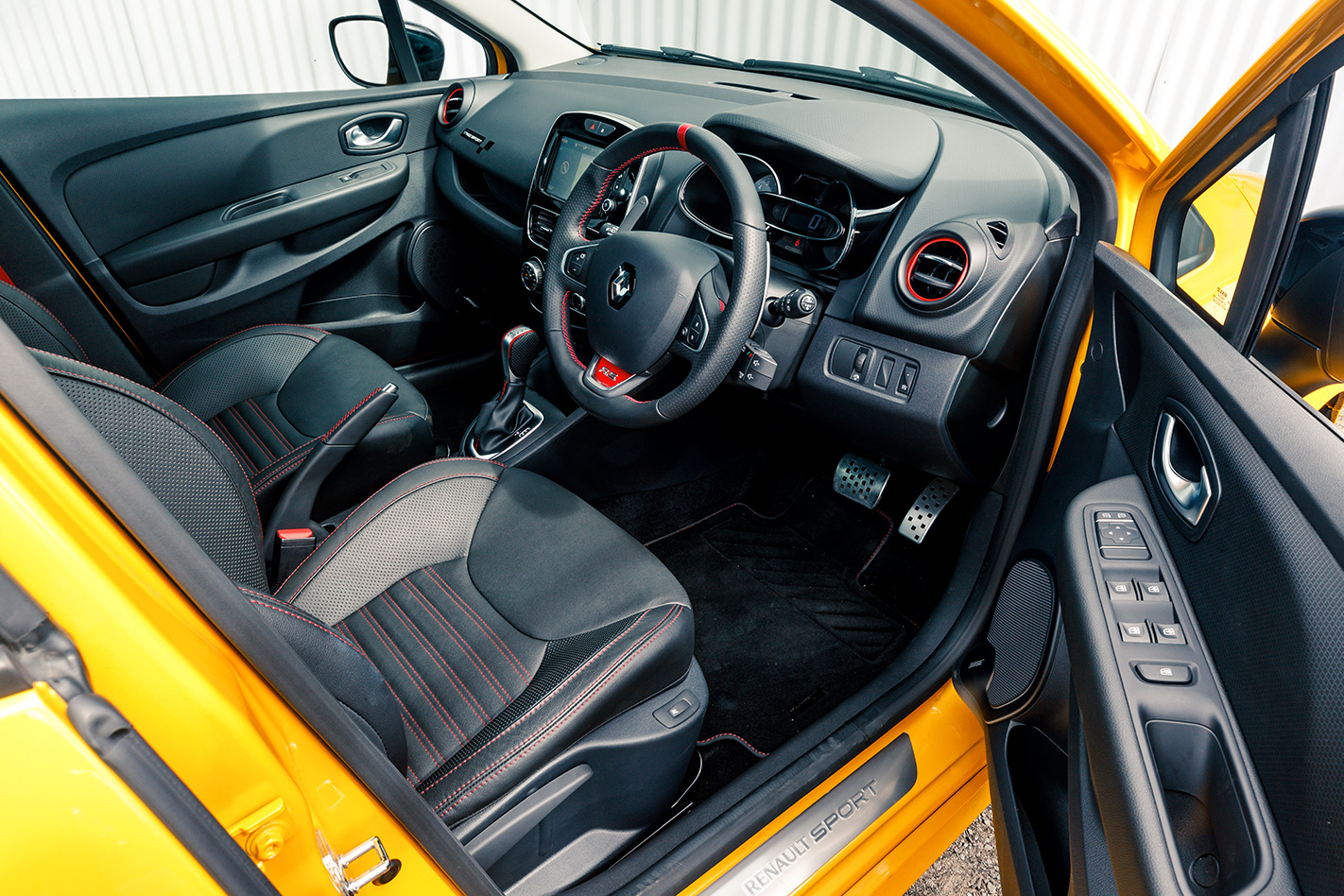
Even with its 2017 update, Renault’s infotainment system is severely outclassed by the Polo, in terms of look, functionality, and speed.
The same goes for the cabin design and materials, with the Volkswagen providing a premium look and feel, while the Renault feels dated, with hard piano black plastics dominating the cabin.
Ride and Handling
Winner: Renault
The French certainly know what they are doing when it comes to chassis tuning, and the Clio RS 200 is a perfect representation of this.
Steering in the Renault is tactile and confidence inspiring, and when the RS Drive mode is selected, the chassis is as faithful as a golden retriever, holding the road with vigour, egging you to become ever more ambitious with your corner speeds. At the same time, the ride remains supple and refined, all without the need for adaptive dampers.
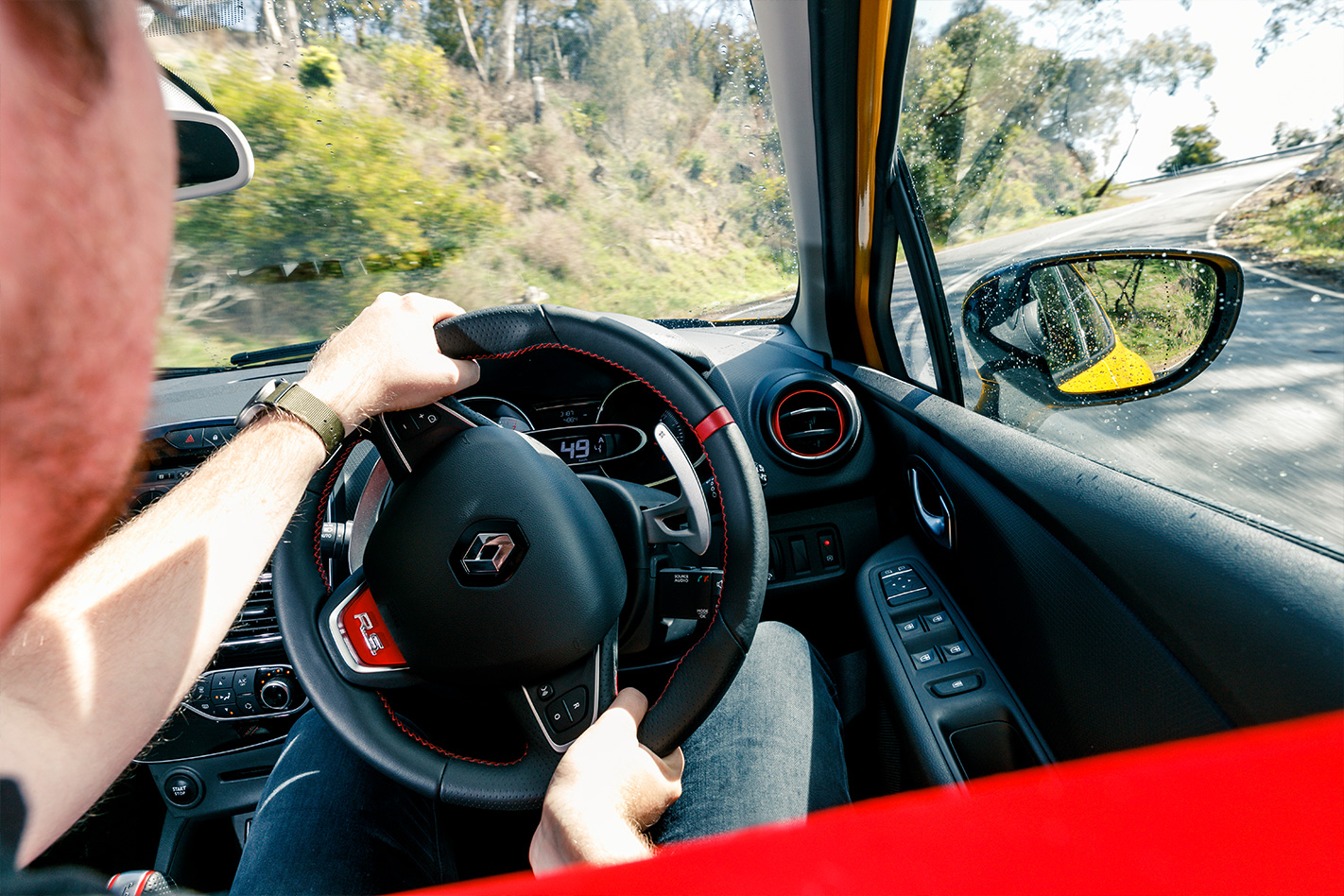
The Volkswagen requires a deeper dive to find a rewarding drive, with the initial feel of the steering being a touch light, and missing the required feedback for a true driver’s car. But push harder and the Polo starts to reveal itself, with fluid steering and a confident and controlled ride bubbling to the surface. Adaptive dampers allow the GTI to remove some of the tuned-in firmness of the chassis on harsh roads.
Helping the Renault in the fight is its 155kg weight advantage over the Polo, tipping the scales at 1200kg compared to the VW’s 1355kg. With power at a premium in this segment, every kilo counts.
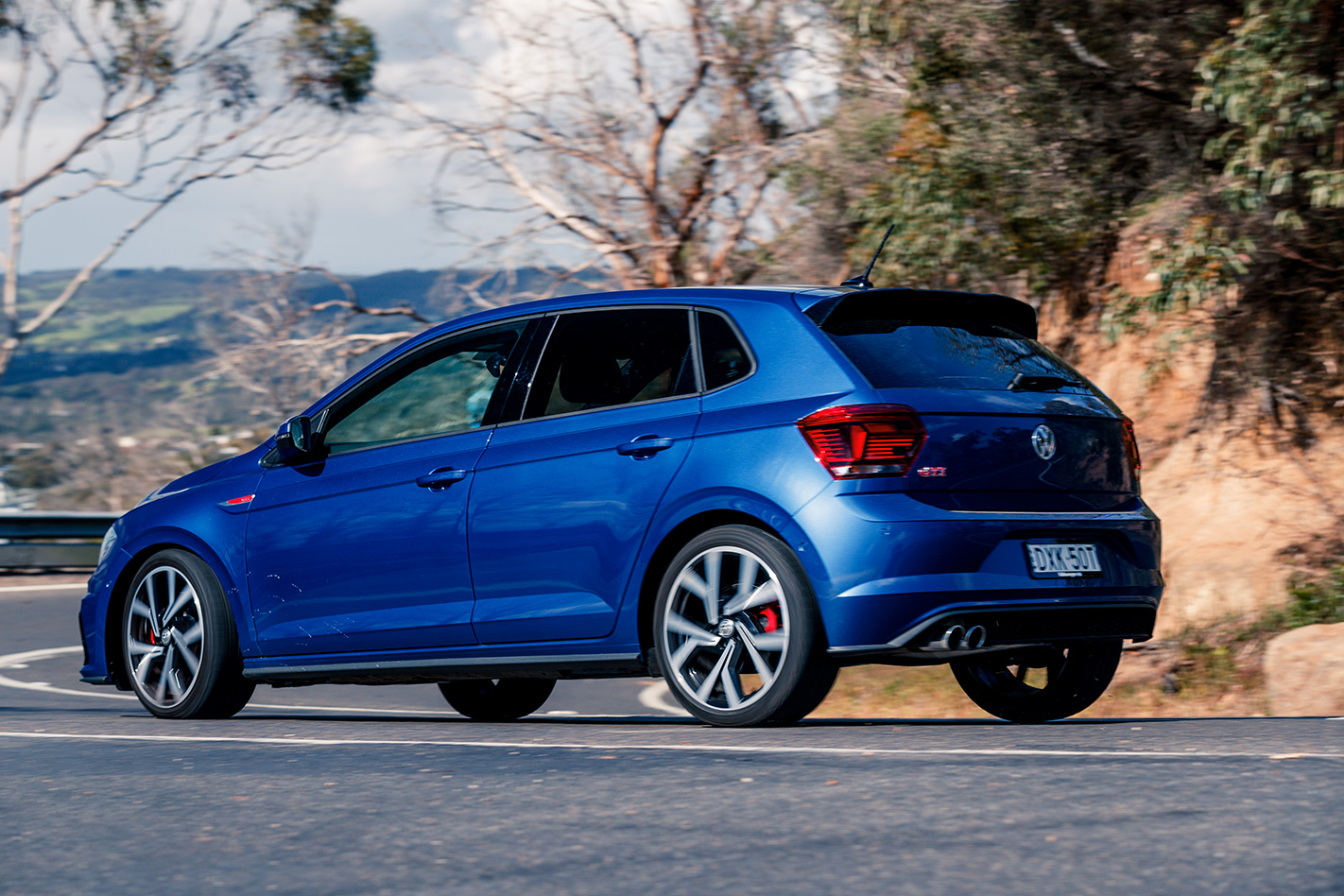
Both cars come with a six-speed dual-clutch auto, and while the VW’s falls into clichéd trap of low-speed jerkiness, on the highway and twisting backroads the self-shifting unit seems to always have the right gear selected, ready to deliver great gobs of turbocharged torque. The Renault’s DCT is an overly energetic thing, always wanting to rush toward redline, encouraging crisp upshifts to keep the thrills coming.
2005 Volkswagen Polo GTI pre-production review: classic MOTOR
Performance and Economy
Winner: Volkswagen
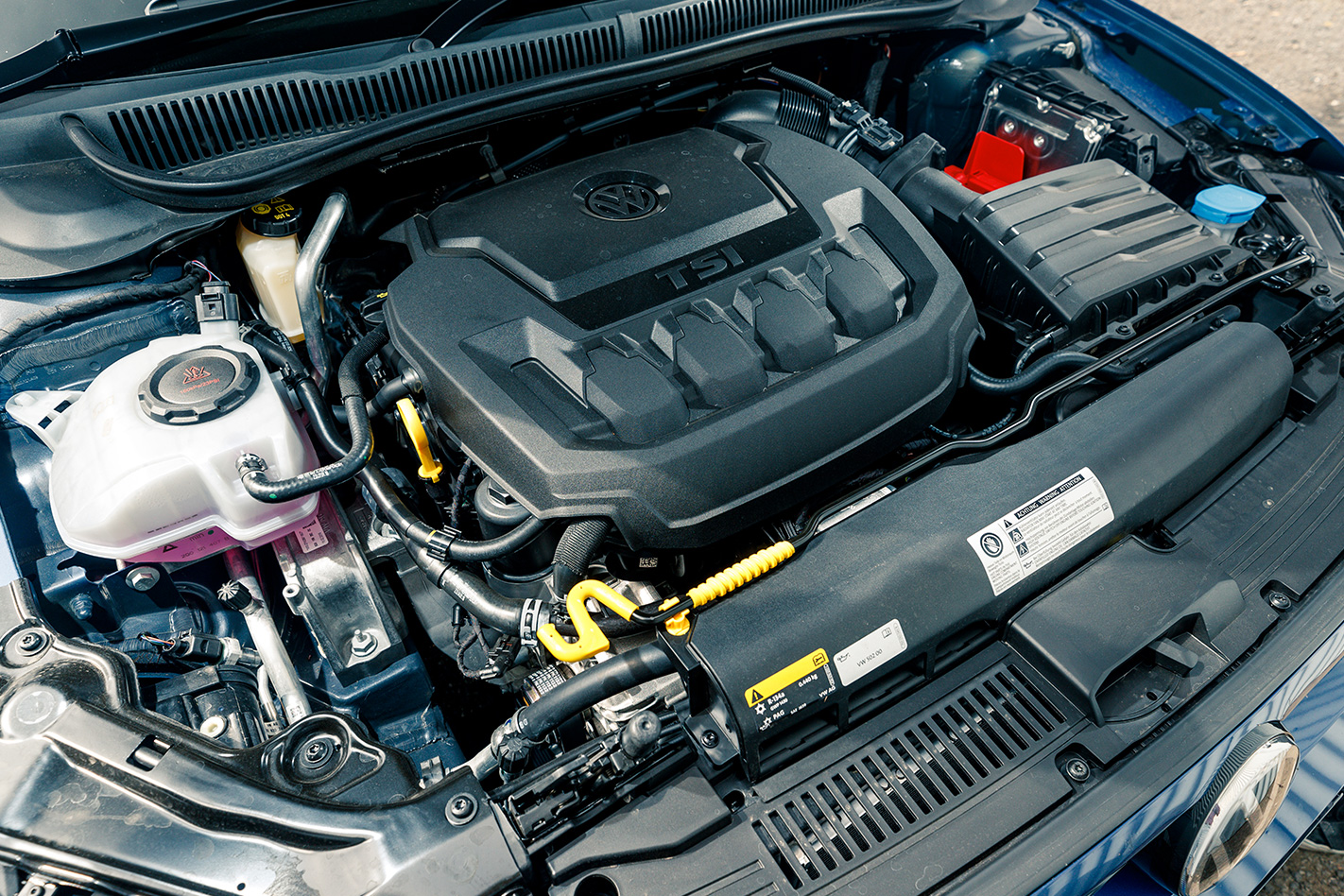
Looking at the engine and power stats for both of these cars, the pecking order becomes predictably clear.
In the Clio the 1.6-litre turbo under the bonnet produces 147kW and 260Nm, while the Polo has the same amount of power, but an additional 60Nm of twisting force from its EA888 2.0-litre four-pot.
That torque advantage in the Polo GTI makes it the straight-line hero of this pair. During independent performance testing we recorded a 6.4 second 0-100km/h sprint (0.3 seconds faster than the official claimed figure), with a 14.6 second quarter mile at 158.8km/h.
Meanwhile, the Clio was three tenths slower than its claim, with a 7.0 second flat 0-100km/h sprint, and wasn’t able to break out of the 15 second bracket during quarter mile runs. In its defence, hot hatches are more about feel than instrumented numbers, and the Clio kept on pulling all the way to its 6500rpm redline with a voracious appetite. You may lose the race at the traffic light grand prix, but you won’t stop smiling.
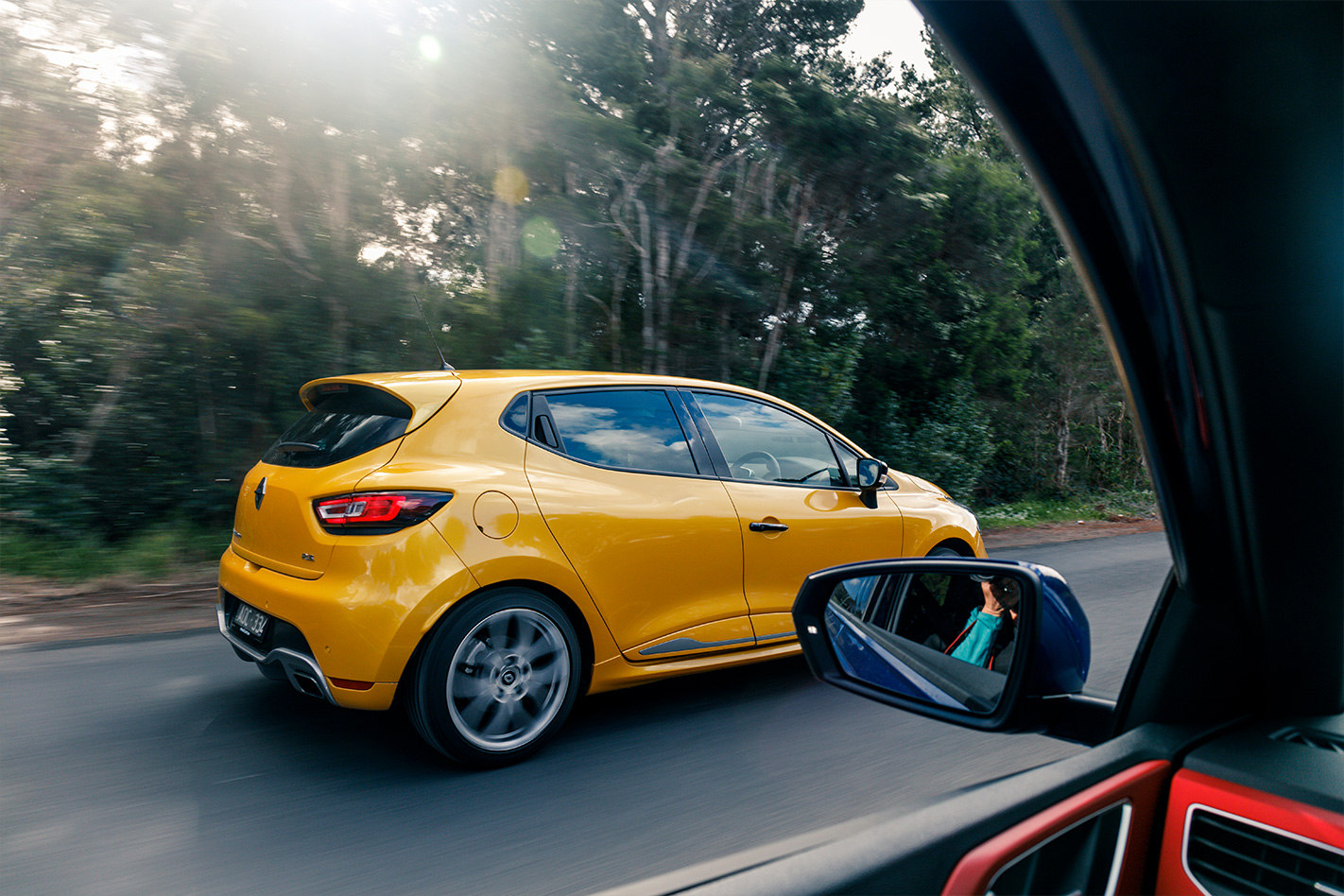
Fuel economy during our testing for the Polo was 9L/100km, while the Clio sipped 9.3L/100km. That’s a close enough average to be negligible in our books.
Verdict
Almost clean sweeping each category, a cursory reading of this comparison would appear to be a dominant victory for the Polo GTI. Not so, with the Clio RS putting up an admirable fight for a car which is now half a decade old, compared to the still newborn VW.
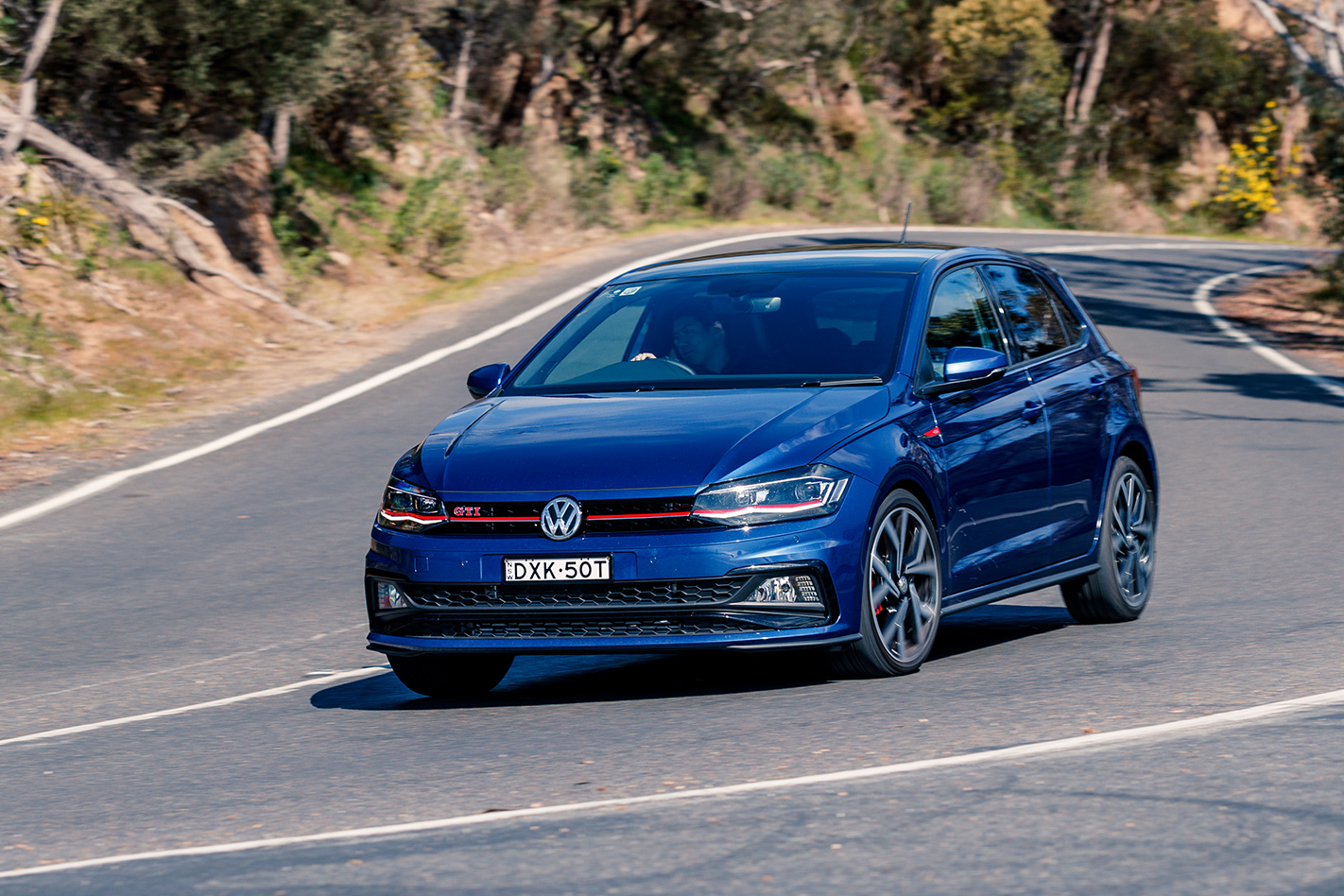
It’s that age which lets the Renault down, with its dynamic prowess and performance still enough to have the Polo sweating, but inside the cabin the materials, design and refinement fall short at a time when the Polo is breaking new ground for the segment.
Throwing a spanner in the works for the Polo is its as-tested price, which is only $1300 less than that of the Hyundai i30 N, our reigning hot hatch king, and a car Wheels rates as a Civic Type R, Renault Megane RS, and Golf R Grid killer.
But none of the options are ‘must-haves’, allowing the Polo to remain convincing for many budget-focused customers, and keeping the true spirit of the enthusiast hot hatch alive.
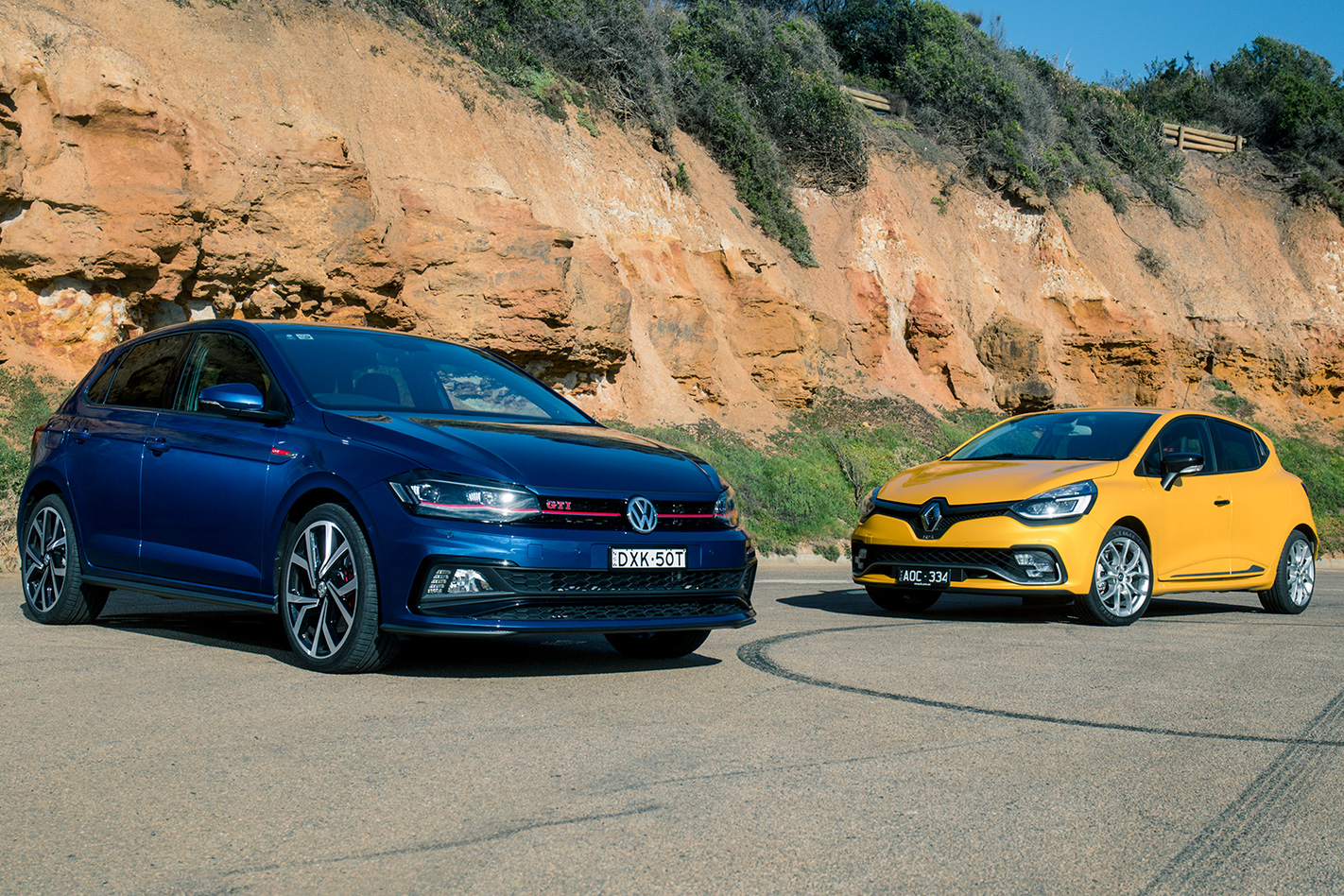
For everyday use, the Polo GTI is the clear winner here, with a comfortable and refined ride, mated with a plush interior and gutsy drivetrain. It’s hot hatch credentials are impressive on twisty roads, but for those that put corner carving above all else, the Renault is the more endearing option.
The New South Wales Auditor-General has recommended a review of the state’s speed-camera strategy, encouraging the removal of signs warning motorists that there is a camera ahead.
The push comes in the wake of a report released on Thursday from the state Audit office, which claims while the 30 “best performing” mobile speed cameras have prompted a reduction in fatal and serious crashes, they have not changed driver behaviours.
The NSW Auditor-General claims warnings signs that tell motorists where a speed camera is located has stopped the enforcement method becoming an effective deterrent.
“This limits the opportunity to moderate driver behaviour through causing drivers to be worried they could be caught anywhere, anytime,” the report said.
“Research indicates the best way to maximise road safety outcomes is to maintain an element of randomness in camera deployments.”
The Sydney Morning Herald reports there are 1024 locations in NSW approved for use by mobile speed cameras, but only 940 of those have suitable sites, and just 650 were used in the six months to December 2017.
The Auditor-General’s report claims this restricted coverage of mobile speed cameras, and made enforcement more predictable, which it claims reduces the deterrent effect.
According to the SMH, the number of infringements issued by mobile speed cameras in NSW has more than halved since 2014, falling from 55,473 to just 21,246 in four years.
Victoria doesn’t warn motorists of speed cameras for mobile units – a system the Auditor-General wants to mimic.
However, since 2013 the road toll in Victoria has fluctuated with no discernible trend.
In a rolling 12-month period to October 17, the 2012-13 road toll in Victoria was 244, increasing to 259 in 2013-14. While there was a slight decrease to 253 in 2014-15, there was another increase in lives lost to 277 for the 12 months after, before falling again to 258 in 2016-17.
During the last year, 226 Victorians have lost their lives on the state’s roads.
