
The Suzuki Vitara will enter its 31st year on sale in Australia with a fresh look and autonomous emergency braking, but no diesel option.
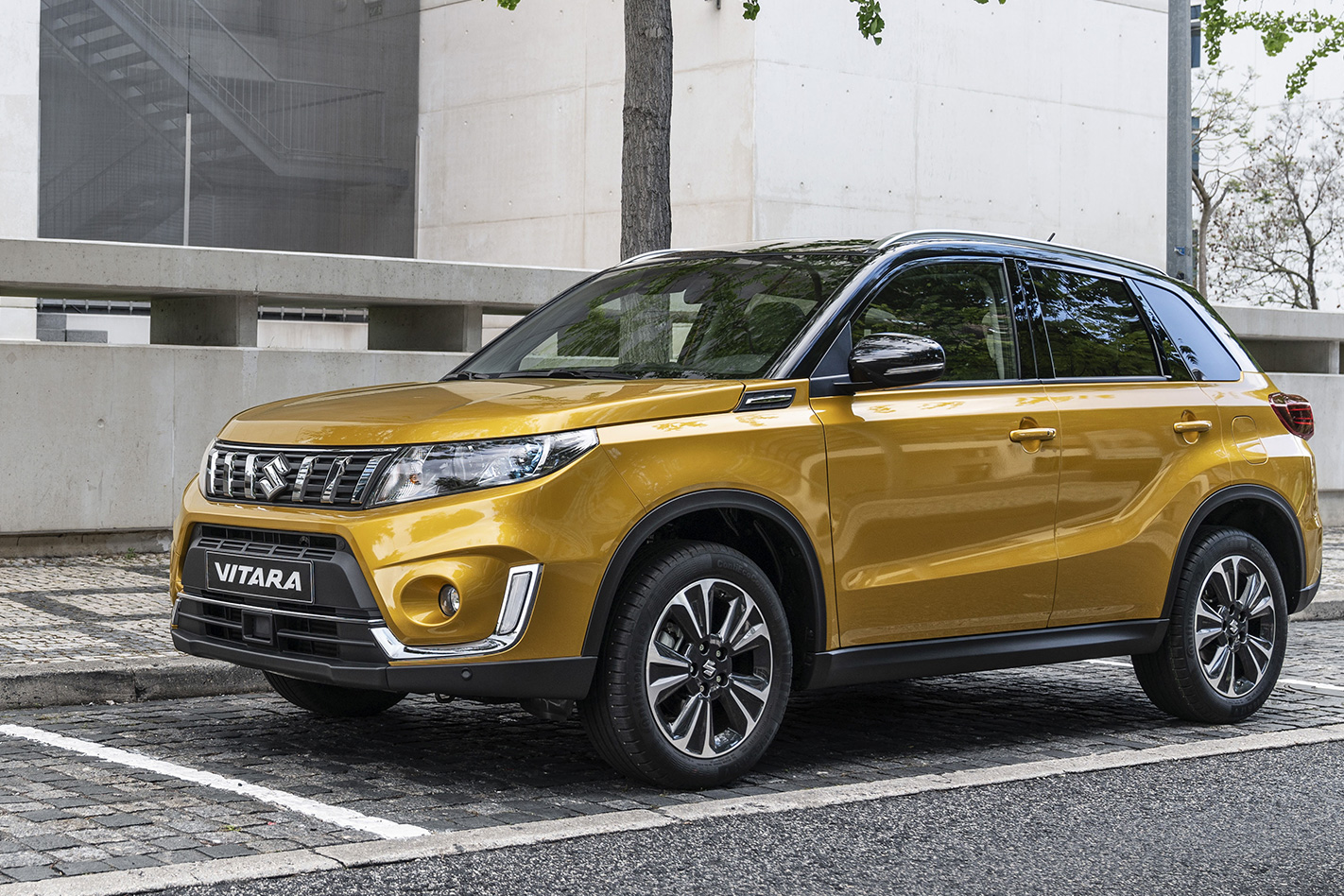
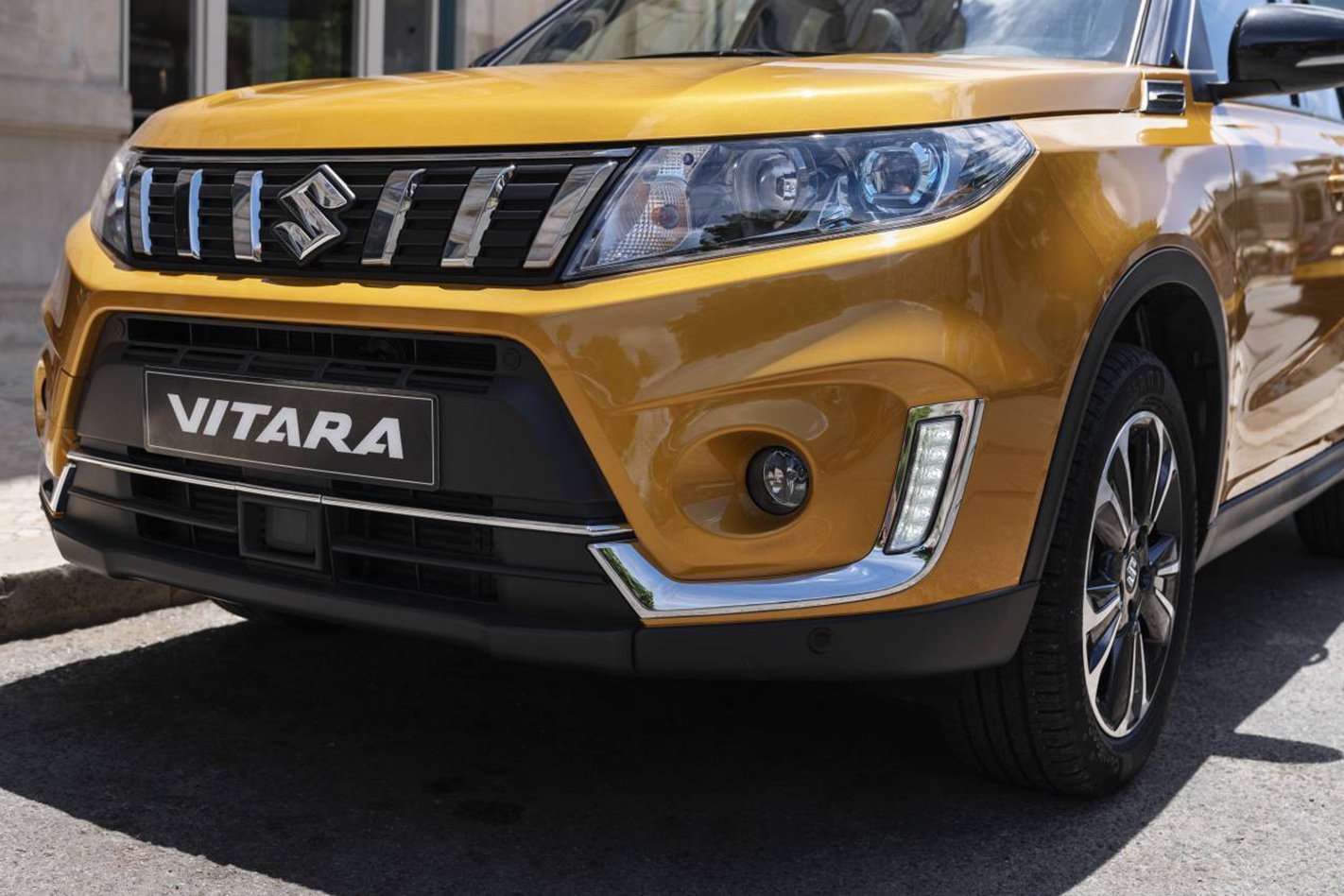
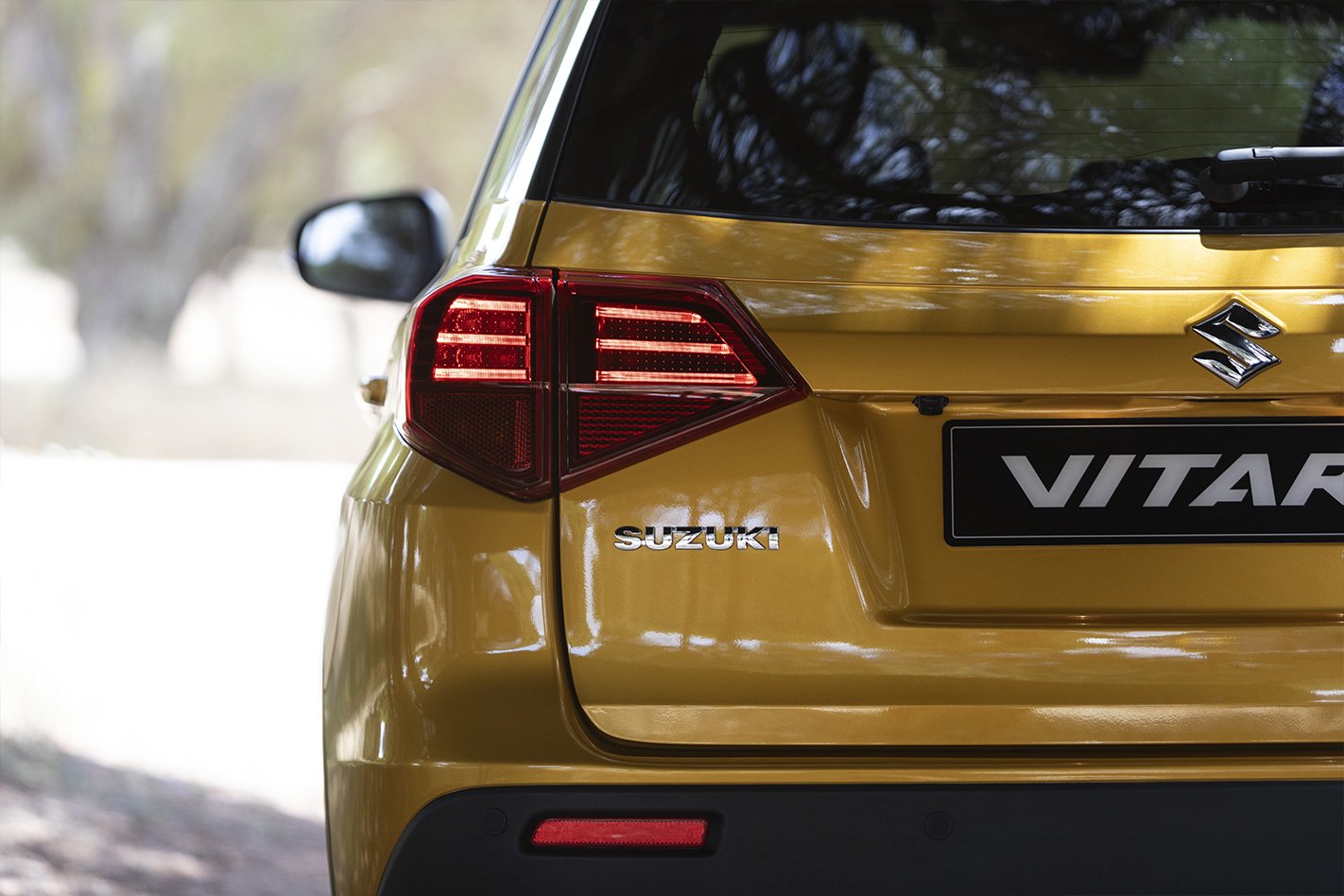
The Vitara Series II represents a significant update of the current model, which includes a redesigned front end, revised rear-end with LED combination lamps, new two-tone colour options, and higher-quality interior surfaces.
The update also belatedly adds active safety to the Vitara range, including forward collision alert, auto braking, lane departure warning, lane keeping assistance, traffic sign recognition, blind spot monitor and rear cross traffic alert.
The full active-safety suite will be available in higher spec-models, with Suzuki yet to reveal which tech, if any, will be standard across the range.
One thing it has confirmed is that the 1.6-litre diesel engine is being dropped, resulting in the demise of the range-topping Vitara RT-X, due to declining and insufficient demand.
The 1.6-litre petrol and 1.4-litre turbo petrol will remain, however, the punchy 82kW 1.0-litre three-cylinder ‘Boosterjet’ turbo petrol announced for the European range won’t be an option here despite being available in the Swift GLX Turbo.
The Vitara Series II range will be reduced to three variants – the 1.6-litre, front-wheel-drive Vitara, 1.4-litre Vitara Turbo and all-wheel-drive 1.4-litre Vitara Turbo Allgrip.
All three variants are expected to arrive in Australia during the first quarter of 2019, with local specifications and pricing revealed closer to launch.
The Suzuki Vitara recently celebrated 30 years since its global introduction. Designed as a more road-focused option to the Sierra, it was a decade ahead of cars such as the Honda CR-V and Toyota RAV4, which are often attributed to kicking off the driver-focused SUV boom here.
Since then, there have been four generations of Vitara, with more than 3.65 million sold in 191 countries.
What stands out?
The previous generation of Subaru’s tall-riding Forester is a practical car for families that is also fun to drive – and surprisingly handy on tracks and trails. You can choose from four engines, among them a thrifty diesel and a very fast turbo-petrol, each driving all four wheels. Auto braking and other high-tech driver aids are available, completing a highly respected medium SUV.
What might bug me?
Every country town has a host of them – but they are popular for good reason.
What body styles are there?
The Forester comes only in one body style, a five-door SUV-style wagon.All Foresters drive all four wheels at all times.The Forester is classed as a medium SUV, lower priced.
What features do all Foresters have?
A reversing camera, and a 7.0-inch touchscreen display.A sound system with an AM/FM radio, a CD player, Aux and USB inputs, Bluetooth phone and audio streaming, voice control, and at least six speakers.Dual-zone air-conditioning, which allows the driver and front-seat passenger to set their own cabin temperatures.Leather trim on the steering wheel, with buttons for operating the cruise control, the entertainment system, and your phone.Roof rails, for mounting luggage systems.Aluminium alloy wheels, and a full-sized spare wheel.Seven airbags. Anti-lock brakes, and electronic stability control, which Subaru calls Vehicle Dynamic Control. This helps you maintain control in a skid. (For the placement of airbags, and more on Forester safety systems, please open the Safety section below.)A three-year warranty, with no limited on distance travelled in that time.
Which engine uses least fuel, and why wouldn’t I choose it?
The 2.0-litre turbocharged diesel uses least fuel, consuming 5.9 litres/100km in the official test (urban and country combined) in manual gearbox form. For country driving, this combination is hard to go past. In city driving, the diesel needs lots of gearchanges and therefore is better with the optional automatic, which uses about 10 per cent more fuel.In the real world, you can expect a Forester diesel to average about 8.5 litres/100km over a mix of city and highway use, with consumption dropping to 7.0 litres/100km once you get out of town.The diesel will also feel more powerful in most driving conditions than the two non-turbocharged petrol engines available. The main reason you wouldn’t get it is that it costs more than either of these engines.The engine in the least costly Forester is a 2.0-litre four-cylinder petrol, which is available only as a manual.From there you can move up to the 2.5-litre petrol, which is auto only. The 2.5 feels a bit stronger than the 2.0 in all conditions, and the CVT auto transmission enhances that strength.A Forester 2.5i-L averaged 11.8 litres/100km in a real-world comparison conducted for the June 2017 issue of Wheels magazine, ranking among the heavier drinkers of nine medium SUVs reviewed. (The most frugal, a Volkswagen Tiguan, returned 9.5 litres/100km.)The most powerful engine choice is the turbocharged 2.0-litre petrol, a version of the engine powering Subaru’s iconic WRX sports sedan. This engine provides about half again as much thrust as any of the alternatives. It is available only with the automatic gearbox.A Forester XT Premium with this engine averaged 11.4 litres/100km in real-world driving for Wheels.The manual gearbox supplied with Foresters is a six-speeder. The auto gearbox is a Continuously Variable Transmission, or CVT, which gives better performance and fuel efficiency than a conventional auto with fixed gear ratios.All Forester engines have their four cylinders laid flat in pairs and opposing each other, an unusual design that helps smoothness and – because it keeps the weight of the engine low in the car – improves handling.(Power outputs and all other Forester specifications are available from the Cars Covered menu, under the main image on this page.)
What key features do I get if I spend more on 2016-2018 Forester?
Spending as little as possible will get you a Forester 2.0i-L, which has the 2.0-litre petrol engine, cloth seat trim, a manual gearbox, and 17-inch wheels.Spend more for the 2.5i-L and you get the bigger petrol engine with an automatic gearbox. You also get X-Mode, which optimises the Forester’s stability and traction controls for driving at low speeds on loose and slippery surfaces. X-Mode will even restrain the speed of the car on steep downhill slopes, without help from the driver.Spend more again for a 2.5i-S and you get, in addition, two suites of driver aids: EyeSight, and Vision Assist.EyeSight brings you adaptive cruise control (which will slow you from your set cruising speed to follow slower vehicles on the highway, resuming when the way is clear). As well, you get auto emergency braking and lane-keeping assistance, among other features.Vision Assist helps you understand what is going on around your car. It includes a blind-spot monitor, a rear cross-traffic alert, and a side-view monitor.The 2.5i-S also has satellite navigation, leather trim, heated and power-adjustable front seats, a driver’s seat that remembers your setting, and a tailgate that raises and lowers at the press of a button. Windscreen wipers operate automatically when it rains. Headlights use very efficient and long-lasting LEDs, and switch on automatically when it gets dark. They also swivel to shine into corners as you turn the steering wheel. A smart key can be left safely in your pocket or bag while you unlock and start the car. And the wheel diameter rises to 18 inches, with the tyre sidewall shrinking to compensate.You can also spend money on a diesel engine. The 2.0D-L is similarly equipped to the 2.0i-L. The more expensive diesel, the 2.0D-S, has most luxury features of the 2.5i-S. However, only automatic gearbox diesels have X-Mode, and only the 2.0D-S automatic has EyeSight and Vision Assist.Finally, you can purchase a Forester with the most expensive engine, the very powerful turbocharged 2.0 litre petrol. The Forester XT has this engine and the features of the 2.5i-L, including the automatic gearbox and X-Mode. It also has a power-adjustable driver’s seat, and swivelling LED headlamps from the 2.5i-S.The Forester XT Premium has the turbo petrol engine and all the features of the 2.5i-S. In addition, in February 2016 it became the only Forester to use Active Torque Vectoring, which improves drive in corners by directing more power to the tyre with more grip.
Did any upgrade have a down side?
The turbocharged petrol engine requires premium grade (minimum 95RON) petrol, which is not always available in country towns.The 18-inch tyre package on the more expensive Foresters rides more roughly than the standard 17s, and the tyres are more damage prone on rough roads.
How comfortable is the Forester?
The Forester has a comfortable, roomy and well appointed cabin even in the least expensive model. The fit and finish is excellent and the overall feel is one of modernity and technical precision. Top-spec models add to that with plenty of luxury and convenience features. The driving position feels very natural, while the tilt and reach adjustment for the steering wheel and the broad seat adjustments work for a wide range of people.The Forester has a comfortable but well controlled ride. Models with 17-inch wheels ride more softly than those on the 18s.Road noise suppression in past Foresters hasn’t been great, and on some surfaces the Forester has been noisy inside. Foresters on sale since February 2016 have benefited from several measures designed to make them quieter to ride in, among them thicker glass in the door windows and revised door seals.The Forester is an easy car to drive, with light steering. All engines respond well to the accelerator, especially when fitted with the most popular gearbox, the CVT auto.Some drivers don’t like the feel of a CVT, which allows the engine speed to fluctuate incrementally without a change in road speed, a bit like an old manual car with a slipping clutch. The latest Forester CVT addresses this problem, cutting fuel use when cruising but acting more like a conventional automatic, with stepped ratios, when you ask it to accelerate hard.
What about safety in a Forester?
All Foresters have anti-lock brakes, stability control, seven airbags, a reversing camera, and seatbelt reminders for all seats.The seven airbags are in the usual places: two directly in front of the driver and passenger; an airbag in front of the driver’s knees; airbags immediately outside the driver and front passenger that protect at chest level; and curtain airbags extending down each side of the car at head level to protect passengers front and rear from side impacts.The Forester 2.5i-S and XT Premium, and (since September 2017) the diesel 2.0D-S in automatic trim, add Subaru’s EyeSight active safety package, which relies on stereo cameras. It brings auto emergency braking that works at city and highway speeds, and detects pedestrians, warning you first and then braking you automatically if a crash seems imminent. EyeSight also supplies lane-drift assistance – alerting you if you have begun to drift out of your lane on the highway, perhaps from distraction, and gently attempting to steer the car out of trouble.These three Foresters also have Subaru’s Vision Assist suite, comprising a blind-spot monitor and a rear cross-traffic alert, among other features. The blind-spot monitor checks for traffic near your rear corners, alerting you to vehicles that might not show in your mirrors. (A related system alerts you if you indicate to change lanes into the path of an overtaking car.) The rear cross-traffic alert operates when you are reversing, checking for vehicles crossing behind you. In addition, there is Subaru’s Side-view monitor, which shows you how close your wheels are to the gutter when parallel parking. And an Adaptive driving beam seeks to maximise illumination from your headlights while avoiding dazzling oncoming drivers.The Australasian New Car Assessment Program (ANCAP) rated all current Foresters at five-stars for safety, in January 2013.
I like driving – will I enjoy this car?
In a word, yes – you will enjoy driving this car.The 177kW turbocharged petrol models are the pick for keen drivers, and have a level of performance approached by few lower-priced SUVs of this size. The only glitch is that this engine is not available with a manual gearbox, something that keen drivers may miss. However, the CVT does respond well to this engine, largely because there’s good power available even from moderate engine speeds.The diesel produces strong power at low engine speeds but top-end performance is modest.All Foresters offer agreeable, nicely sorted handing and steering that will appeal to keen drivers. In fact it’s one of the best lower-priced SUVs in this regard. (In February 2016 Foresters gained marginally more responsive steering, through a more direct ratio.)“What a deeply admirable thing the Forester is,” Wheels senior reviewer Nathan Ponchard reported of the 2.5i-L in June 2017, after driving it alongside key alternatives. “If you champion function over form and lament the loss of great ride quality in modern cars, then welcome to Subaru country, where the weather’s always fine.”The Forester is also better to drive off sealed surfaces than most small or medium SUVs, which means it is excellent on gravel roads, good on sand, and okay on tracks that are not very rough or steep. Its full-size spare tyre is a major bonus here.
How is life in the rear seats?
The Forester has one of the better rear seats in its class, with plenty of leg room and head room for tall passengers. The ride quality is also very good at the rear.Dedicated vents supply heating and cooling to the rear compartment.All Foresters have three child-seat anchor points, the outside two of which have ISOFIX fittings.
How is it for carrying stuff?
The Forester has a relatively shallow load area as the floor is raised slightly to accommodate the full-sized spare tyre fitted to all Australian models. That said, the load area isn’t bad, thanks in part to the Forester’s boxy body shape.Diesel and turbocharged petrol engines also have a solid 1800kg tow rating (braked trailer). The two other petrol engines have a 1500kg limit, which is more usual for medium SUVs.
Where is the Forester made?
All fourth-generation Subaru Foresters were made in Japan.
What might I miss that similar cars have?
The ability to display some apps from compatible smartphones on the car’s touchscreen, and control them from there (via Apple CarPlay or Android Auto). The Ford Escape, Holden Equinox, Honda CR-V, Hyundai Tucson, Kia Sportage, Skoda Karoq and Volkswagen Tiguan offer this, for example, as does the smaller Subaru XV.Wider access to active safety aids such as auto emergency braking, which is not available on the less luxurious Foresters. The Tiguan, the Nissan X-Trail, the Mazda CX-5, and the Toyota RAV4 supply auto-braking with all versions, for example.
I like this car, but I can’t choose which version. Can you help?
The 2.0D-S in automatic form was arguably the pick of the range. This model is equally at home in the city and the country. Its offers decent performance and excellent fuel economy. Because it’s easy on fuel, you can go a long way on a tank, which is handier the further you get from civilisation. And it comes with EyeSight and Vision Assist driving aids, and a lot of convenience and luxury.However you can’t go far wrong, no matter what model you choose. The Forester remains among the best of lower priced medium SUVs.
Are there plans to update the Forester soon?
This fourth-generation Subaru Forester went on sale in Australia in early 2013 and was revised in 2015.A facelift in February 2016 brought new-look headlamps, tail-lights and bumpers, swivelling LED headlamps on the more expensive petrol models, and changes aimed at reducing cabin noise and improving the ride and steering. The CVT transmissions on Forester XTs gained gear-ratio steps at high throttle openings.In the third quarter of 2016 Subaru offered briefly a limited-edition Forester tS, based on the XT Premium, which had a firmer ride, for sharper handling on smooth roads.About September 2017 (for the 2018 model year) Subaru made its EyeSight suite of driver aids available on a diesel, the 2.0D-S auto, and added Vision Assist to all Foresters with EyeSight. In addition, steering assistance enhanced EyeSight’s lane-keeping functions.The all-new, fifth generation 2019 Subaru Forester arrived in August 2018, bringing a more advanced version of Eyesight active safety, and facial recognition that recognises the driver and adapts to their preferred settings. Powertrains were cut to just one option, a 2.5-litre non-turbo petrol with CVT auto, resulting in the line-up being reduced from nine to four. It’s bigger too, with 33mm more rear legroom and a wider boot space.The 2019 Forester will soon be covered in a separate range review.
MERCEDES-BENZ’S model rejuvenation process has concentrated on its passenger cars for the past couple of years, which has left its SUV range at risk of falling behind fresher rivals from Audi, BMW, Land Rover and Jaguar.
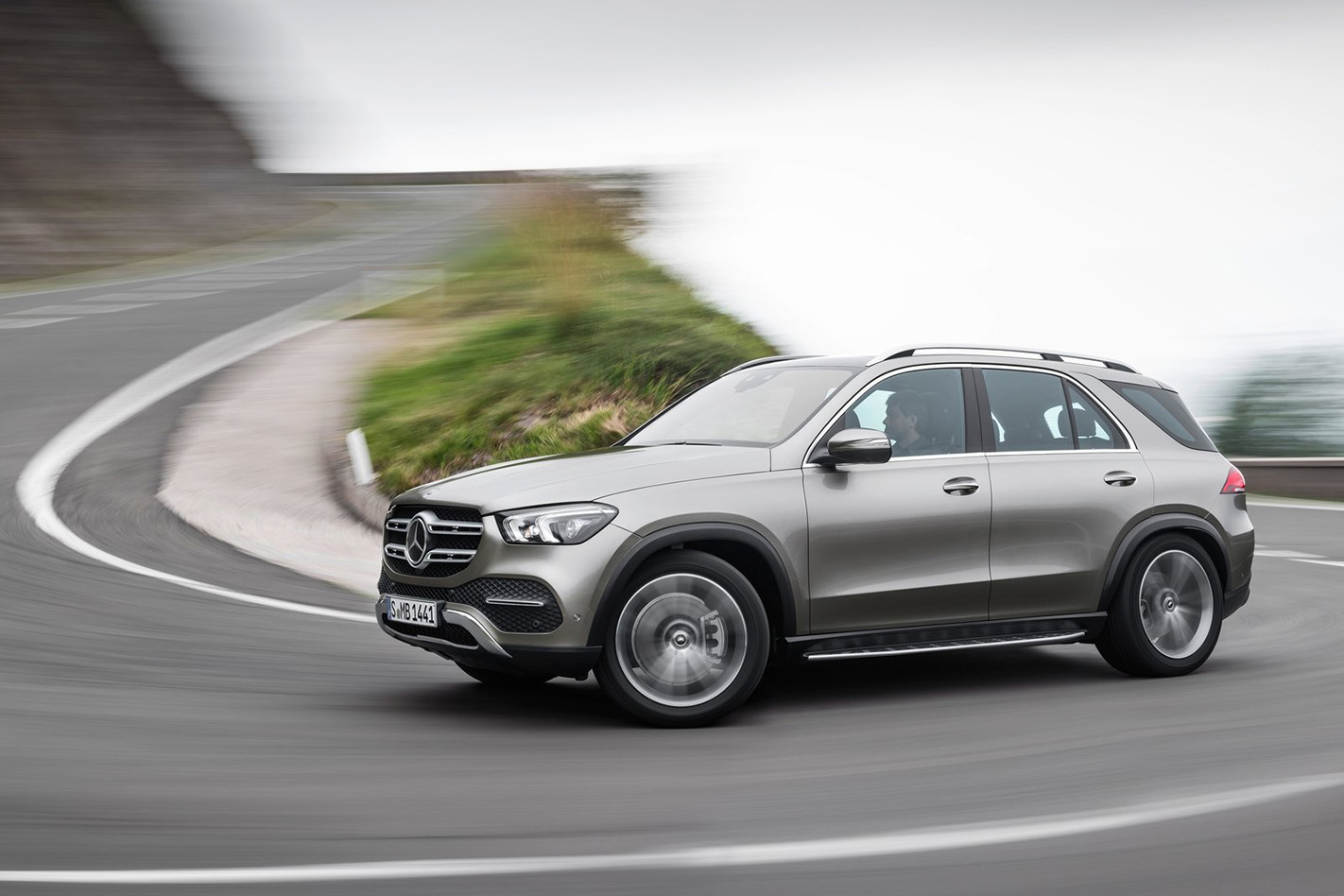
But the German carmaker is at last giving its high-riders some love, starting with the GLE-Class that’s set to leap frog competitors such as the Audi Q7 and soon-to-launch BMW X5 with technology that makes it even more advanced than Benz’s flagship S-Class sedan.
Headlining the new-generation GLE’s features list is the 48-volt ‘E-Active Body Control’ air dampers, which take Benz’s active suspension tech and adds the capability to control pitch and squat movements as well as roll. It can also adjust spring and damping forces on-the-fly, promising the best compromise between ride and handling.
It will also be the first model to feature an all-new ‘Active Tailback Assist’ that enables it to recognise tailbacks before the driver even sees them, with help from live traffic data. In Germany it will automatically “slow to around 100km/h as a precaution” when approaching traffic jams– which could be handy in Australia should you ever encounter a traffic jam between Alice Springs and Katherine.
Once in the tailback, the system will autonomously steer within the lanes and stop and go to maintain a safe distance with the car in front at speeds up to 60km/h.
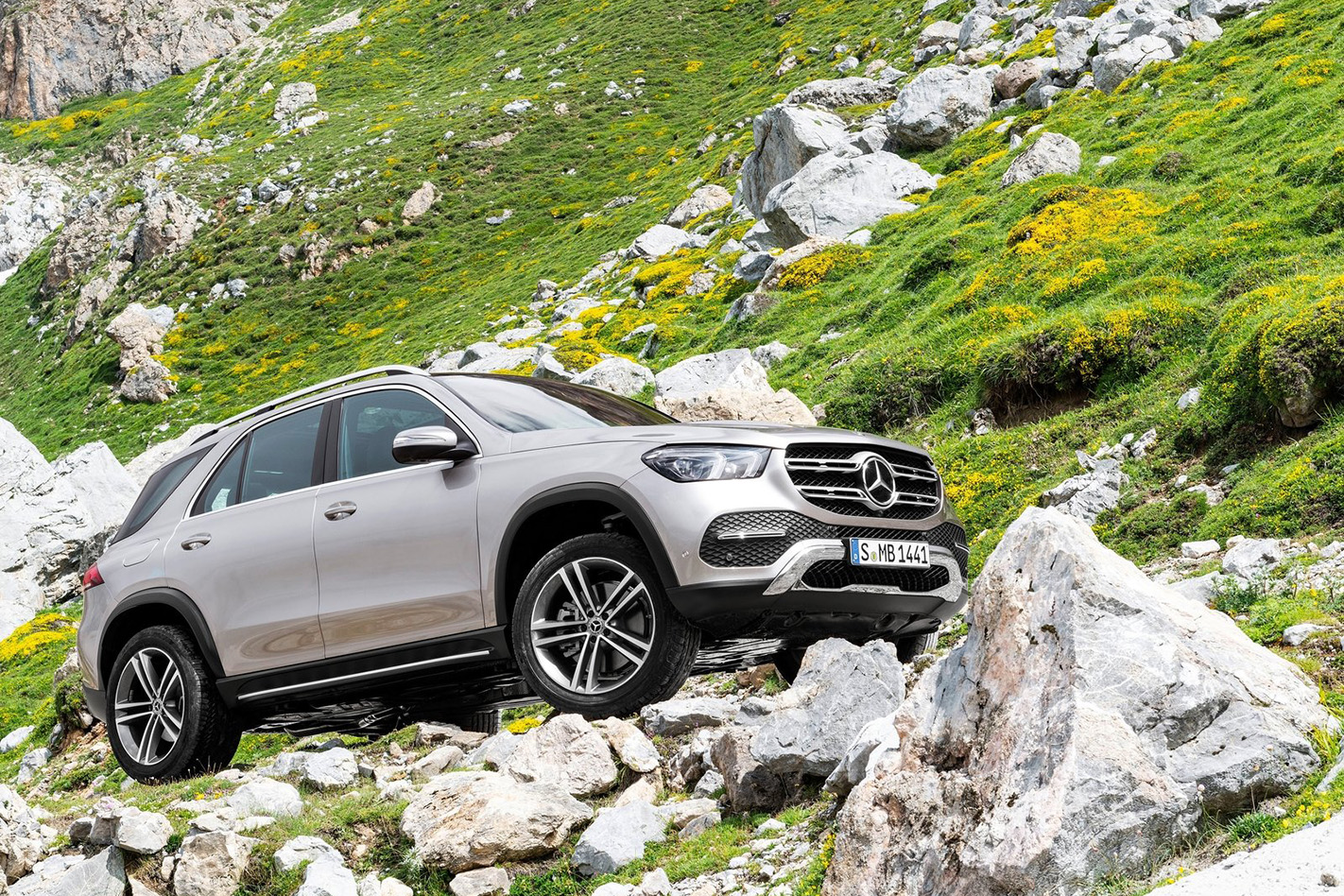
To be built in the USA, the 2019 GLE sits atop Benz’s MHA (Modular High Architecture) that will also underpin the second-generation GLS upper-large SUV that’s due to be unveiled at the LA Motor Show in November.
As its name suggests, MHA is a high-riding SUV version of the MRA (Modular Rear Architecture) platform employed by the C- E- and S-Class.
It will harness the additional ride height for improved off-road capability over the current model, with an enhanced version of Benz’s 4Matic system offering low and high-range gearing via an optional off-road package. The system is also able to transfer between 0 and 100 percent of torque to the rear axle.
As well as a family of 2.9-litre turbo diesels, the 2019 GLE will score a new 270kW/500Nm 3.0-litre turbocharged petrol inline-six than can deliver an extra 16kW/250Nm for short periods via Benz’s ‘EQ boost’ mild-hybrid system. This donk will be retuned for the AMG GLE53 that will produce around 320kW and bridge the gap between regular GLE variants and the 450kW 4.0-litre V8 AMG GLE63 that’s expected to follow later in 2019.
Mercedes has also revealed an advanced long-range plug-in hybrid model will become available later next year, with an all-electric range that will dwarf the 30km offered by the current GLE PHEV.
All powertrains will incorporate Benz’s nine-speed automatic gearbox and 4Matic four-wheel drive.
Comfort-wise, the second-generation GLE gains more interior space thanks to a longer wheelbase, believed to be 2995mm, which is 80mm more than the current model. As well as more legroom it will give the GLE buyers an option to add a third row of seats.
Second-row seats will be fully power adjustable, with seat switches on the door as is typically the case for the front seats of most Benz models. The seats can also slide back and forth up to 100mm or be folded down to provide a generous load space that ranges between 825 litres and 2055 litres.
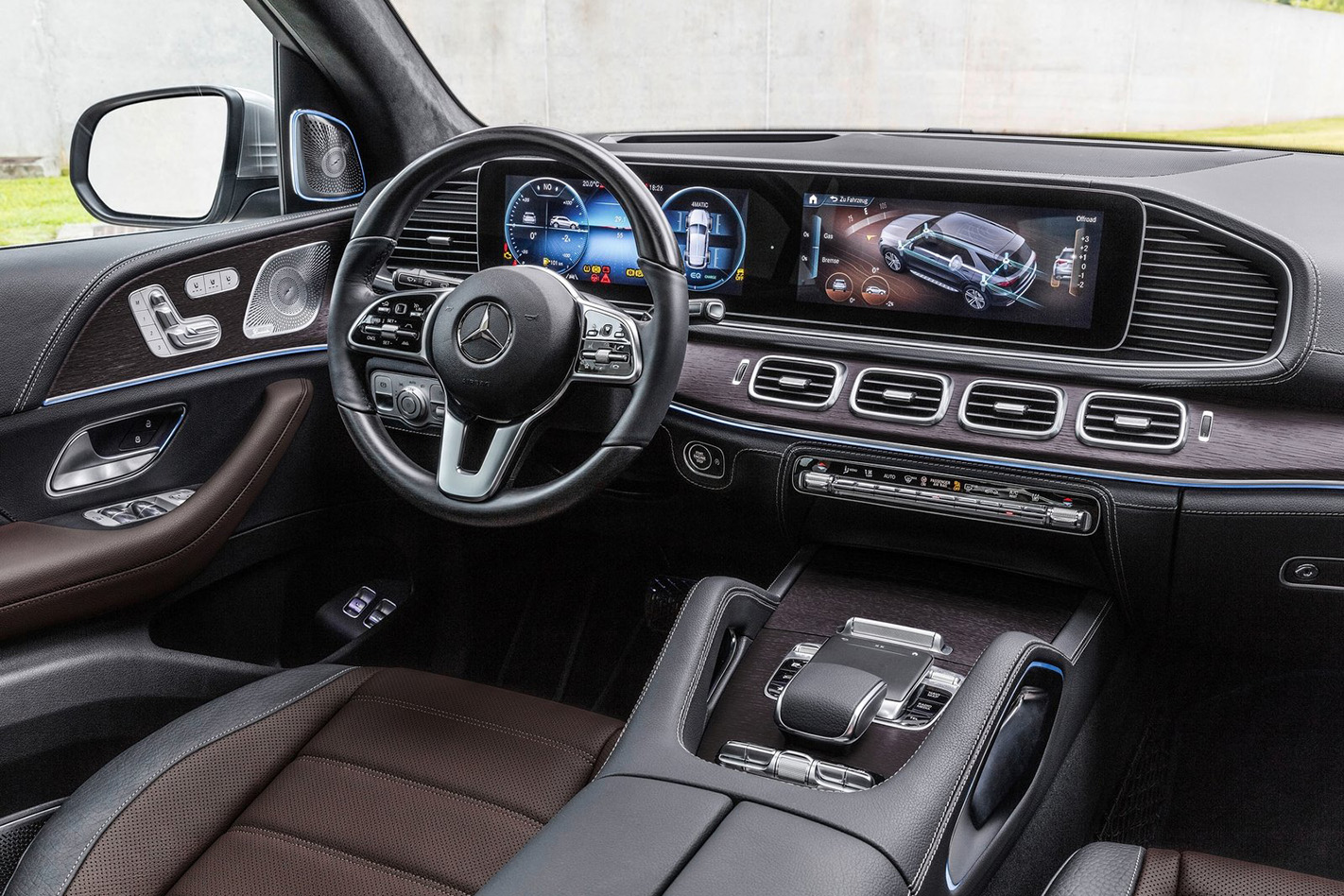
The new GLE also gains the advanced MBUX infotainment system that recently debuted in the all-new A-Class range, with twin 13.2-inch digital displays for both instrument panel and infotainment screen, and ‘Hey Mercedes’ voice recognition system.
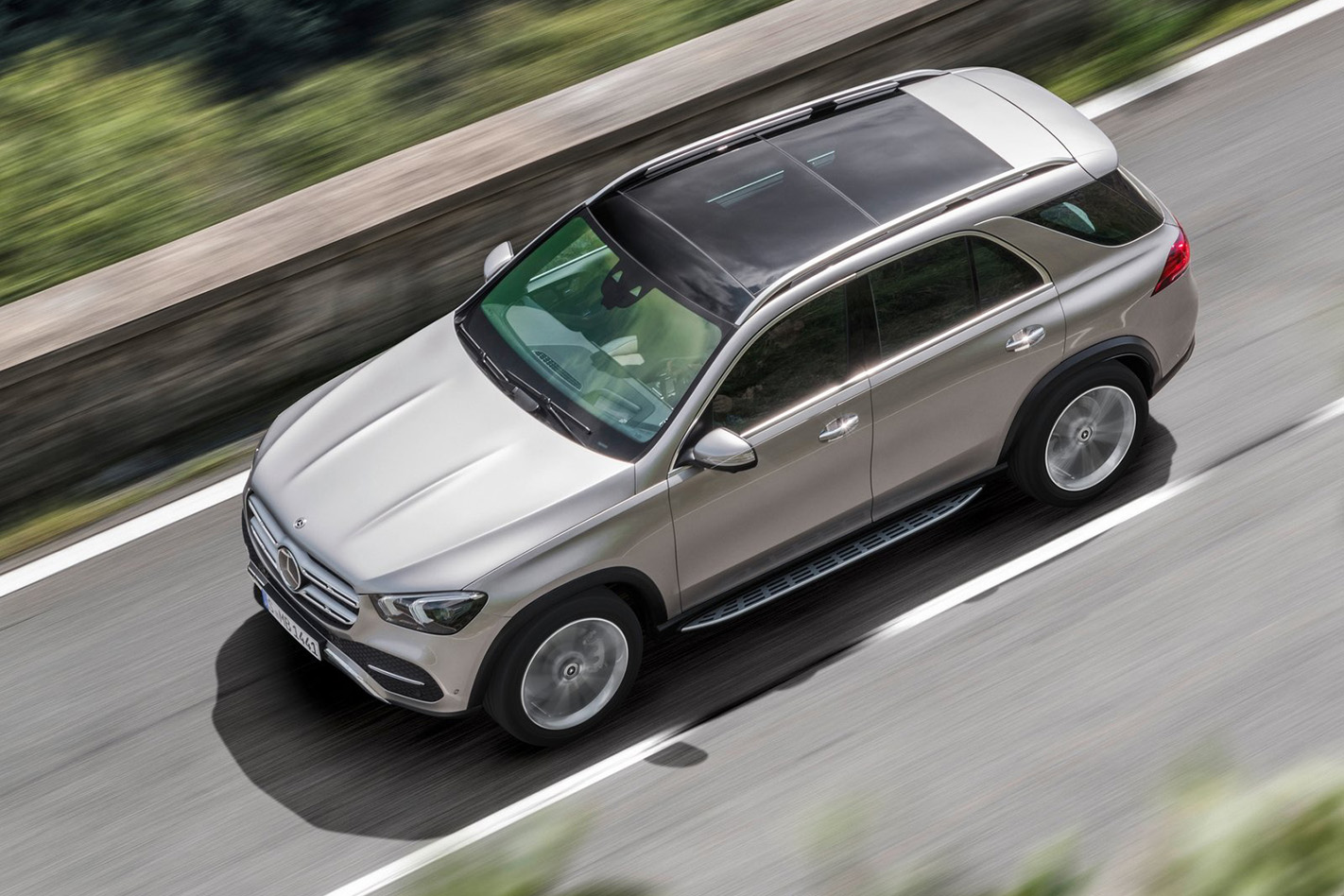
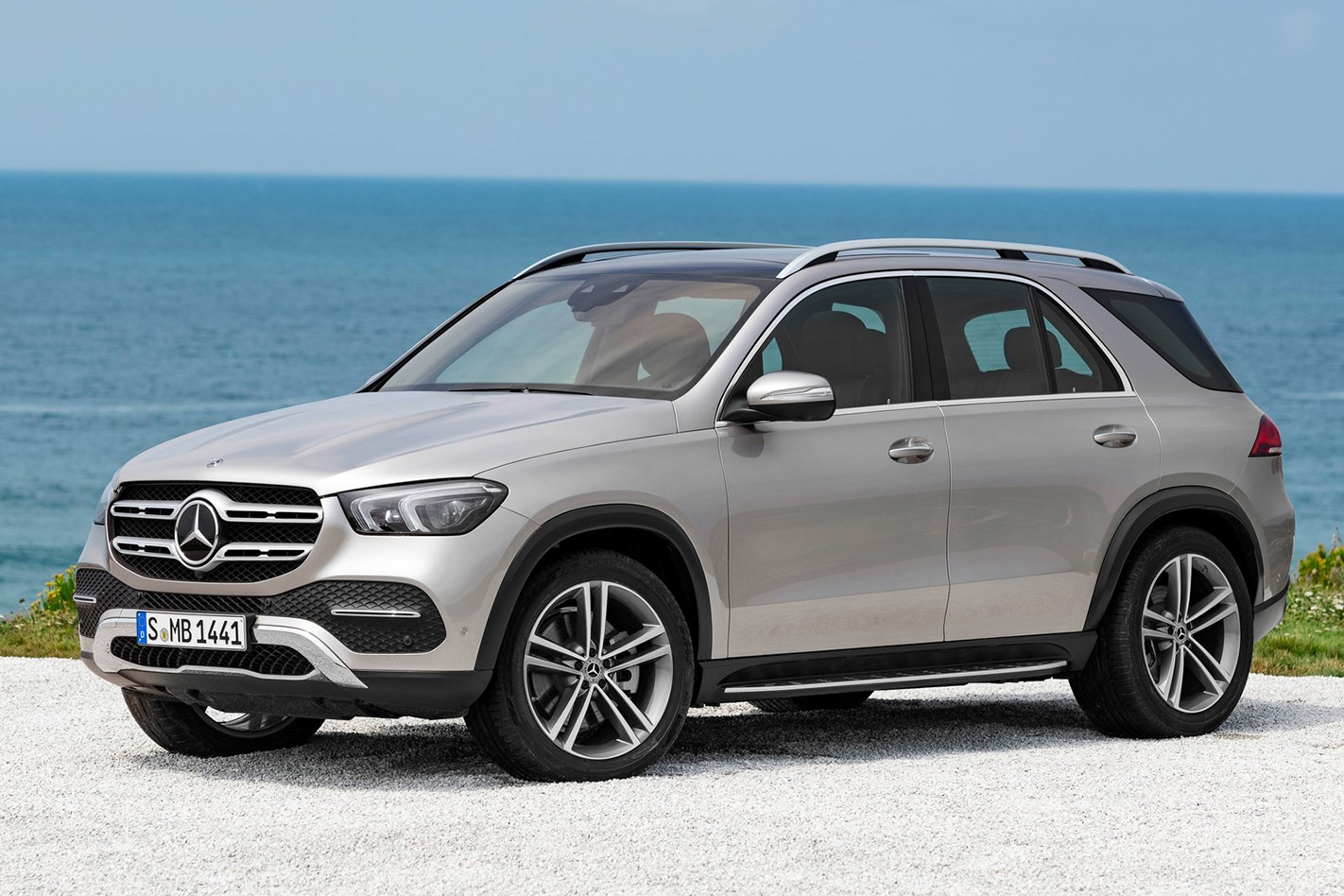
Externally, it’s more aggressively-styled than the current model which changed nomenclature from M-Class to GLE-Class as part of a mid-life refresh back in 2015. One of the original premium SUVs, the M-Class itself first appeared in 1997 with a distinctive forward-swept C-pillar, which still features on the new model along with the bonnet bulges. If you count the previous two-and-a-half generations of M-Class models, the upcoming all-new GLE will be the fourth generation of that lineage.
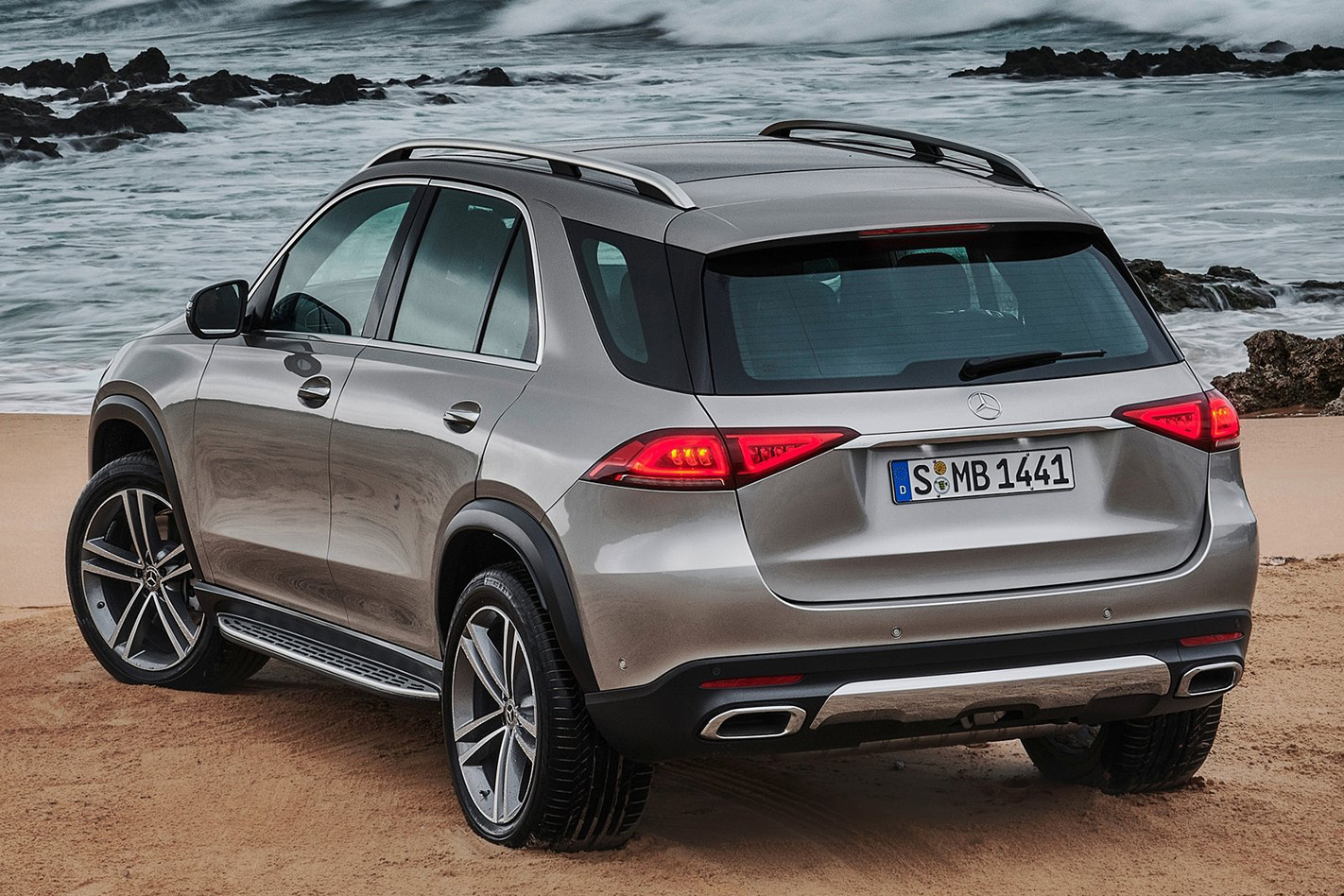
The 2019 Mercedes-Benz GLE will be officially unveiled at next month’s Paris Motor Show. It’s expected to be launched globally, including in Australia, around the second quarter of next year, with local specifications and pricing will becoming available closer to launch.
Gordon Murray Automotive, run by the Former McLaren designer, has revealed the specs and more details of its upcoming lightweight sports car.
The ‘T.43 iStream Superlight sports car’, as it’s referred to in a statement, is an 850kg back-to-basics car that utilises Murray’s developing ‘iStream Superlight’ system.
With a 1.5-litre three-cylinder engine as its powerplant, it produces 164kW for a total of 193kW per tonne. It’ll also only come paired up with a 6-speed manual gearbox.
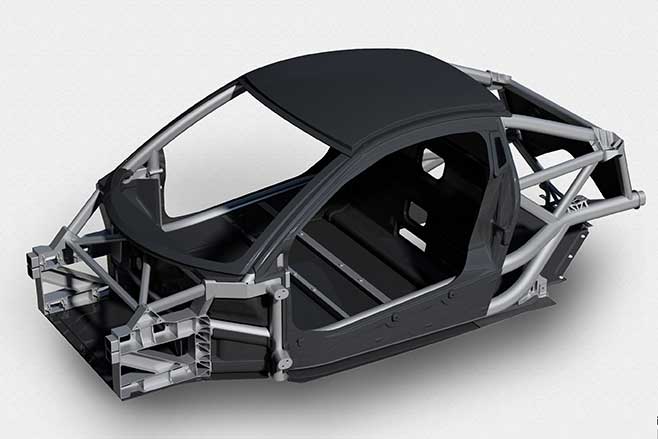
“The T.43 sports car utilises iStream Superlight and is designed to be an everyday usable coupe with not only exceptional performance capabilities, but also class leading ergonomics, visibility, and cargo capacity. The T.43 introduces new levels of lightweight, torsional stiffness, and durability,” The company says in a statement.
iStream destined for new TVR sports car
The iStream system itself is claimed to save 50 per cent of weight over a conventional manufacturing method up to the BIW (body-in-white) stage, before panels, interior, and running gear are added.
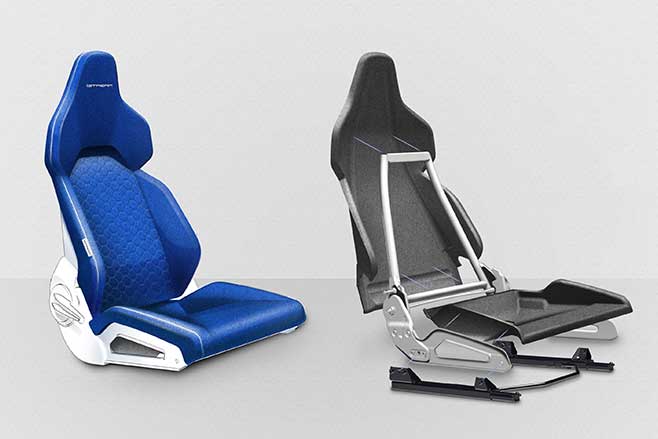
“The new iStream Superlight approach to vehicle manufacturing is a paradigm-shifting innovation for the global automotive industry,” Professor Murray says.
“It is a breakthrough that will deliver the lightest chassis technology for decades to come. The Gordon Murray Design team has created a unique, adaptable and cost-effective way for manufacturers around the world to dramatically improve vehicle performance and efficiency.”
According to an interview with Top Gear, the T.43 is set to be a very low production model, with a rather high price, but Murray says the platform will be available under licence for other brands to use.
FERRARI has a new Formula 1 driver. His name is Charles Leclerc, and he has some rather big shoes to fill when he joins the factory team in 2019.
The 20-year-old from Monaco is locked in to swap seats with F1 statesman Kimi Raikkonen, who has signed on to race for the Ferrari-supplied Sauber team for two seasons starting next year.
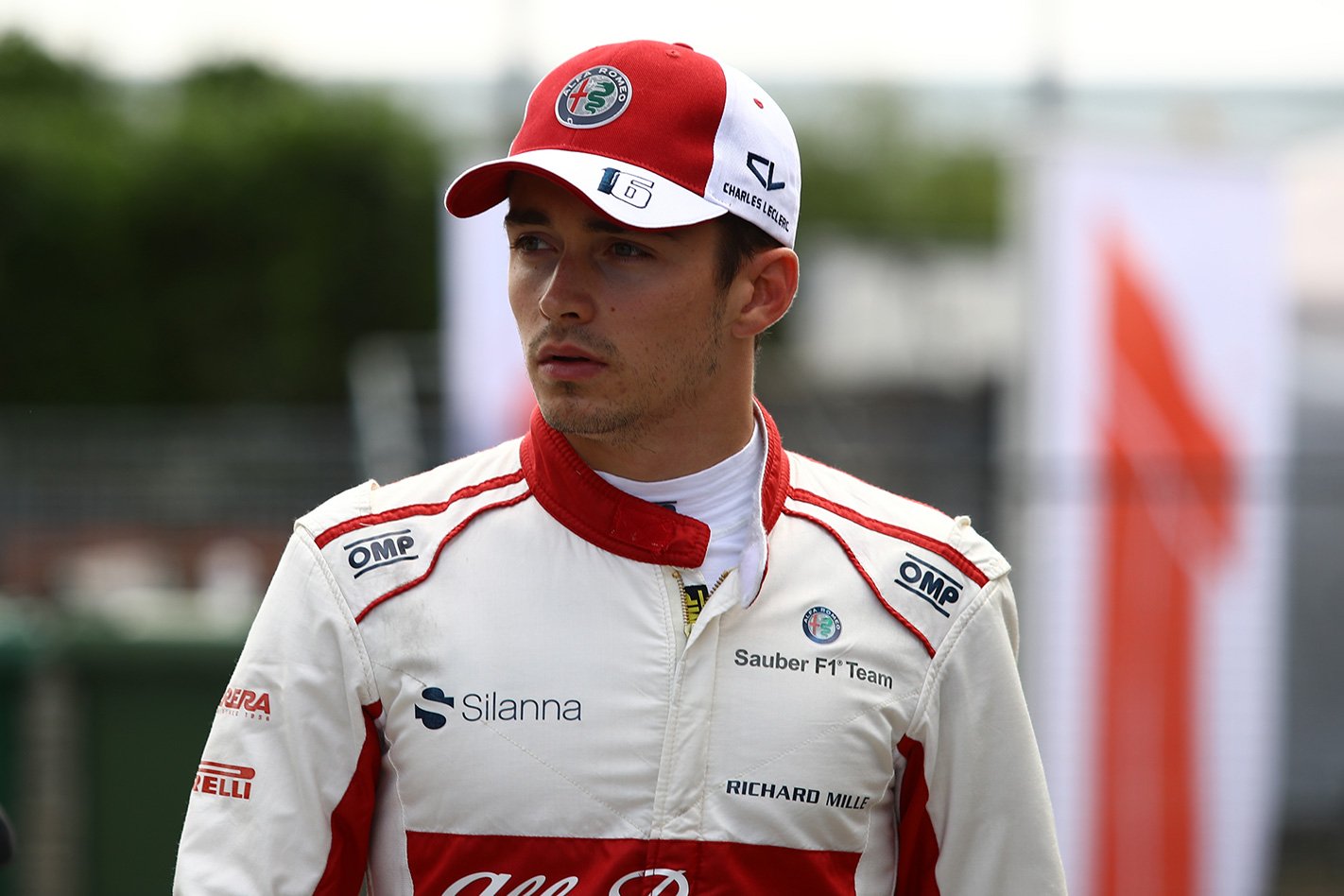
If you haven’t been paying close attention to Formula 1 or its feeder series for a little while, you might not be aware of young Leclerc and his career thus far, so here’s a bit of background.
Ferrari’s signing of such a youthful driver eschews the Maranello factory team’s long-running tradition of hiring older, more experienced racers. Leclerc is the youngest Scuderia driver since Ricardo Rodriguez in 1962, who was 19.
Leclerc is the first graduate of Ferrari’s Driver Academy (established in 2009) to make it through every tier and reach the flagship Italian team as a racer, something many expected Jules Bianchi to achieve had he not tragically passed away following a crash at the Japanese Grand Prix in 2014.
Although he has only been racing single seaters since 2014, Leclerc has earned a strong reputation for his calculated overtaking prowess, and ability to adapt quickly to new cars and conditions.
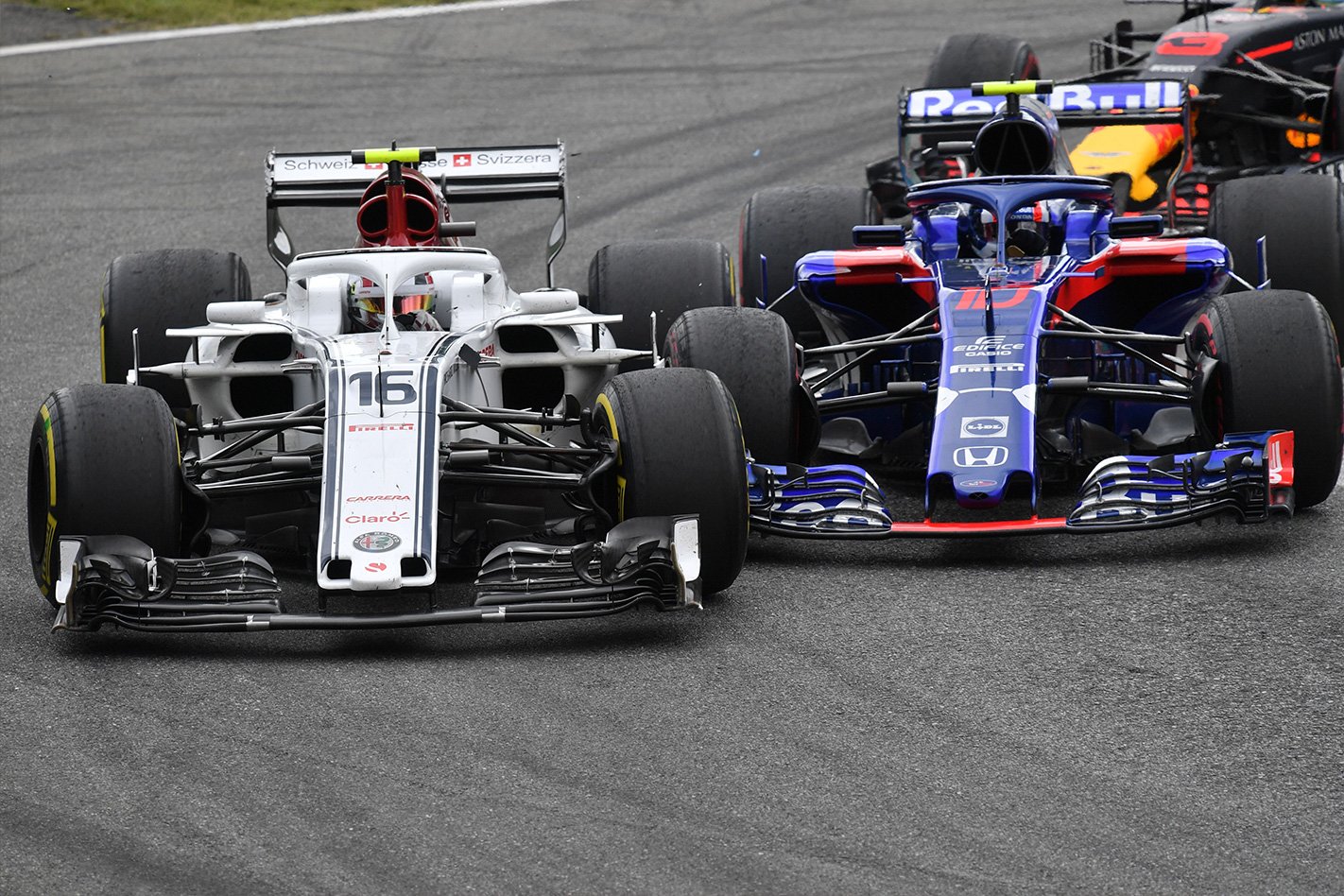
The current season is his first in Formula 1, and the 20-year-old has exceeded expectations, with a best result of sixth at the Azerbaijan Grand Prix and 13 points to his name putting him a respectable 15th in the World Drivers’ Championship standings – trouncing his much more experienced teammate, Marcus Ericsson.
Leclerc won back-to-back championships in GP3 and Formula 2 in order to graduate to Formula 1, with a highlight being his brilliantly brazen performance during the F2 race at Bahrain last year. Traditionally there are no pit stops during an F2 sprint race, however after starting sixth, Leclerc charged his way into first before stopping for fresh tyres, dropping him to 14th with eight laps remaining.
What was called “impossible” by the commentators was just another day in the office for Leclerc, who put on an overtaking masterclass to win the race, making two overtakes on the final lap.
Autosport reported Leclerc’s graduation to the factory Ferrari squad as greenlighted by none other than late former chairman Sergio Marchionne.
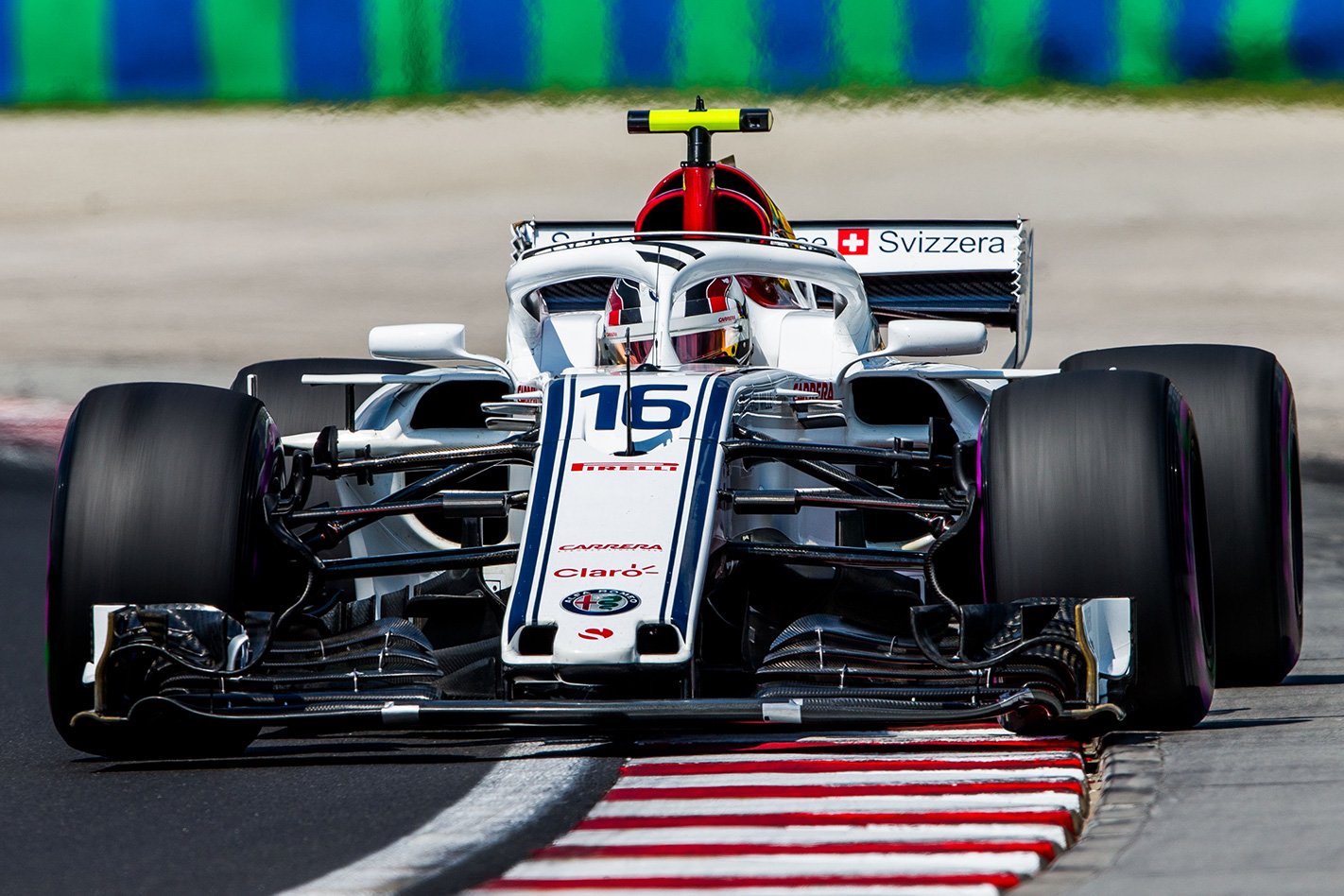
The process was complicated following Marchionne’s death in July, with replacement Ferrari CEO Louis Camilleri reportedly supportive of the incumbent Raikkonen staying on.
However, Ferrari’s new leadership team followed through with Marchionne’s wishes, and Leclerc was promoted to race alongside Sebastian Vettel next year.
Tipped as a future champion, and now given the full support of F1’s most successful team, the weight of expectation will be heavy on Leclerc’s shoulders for 2019, and the youngster will be eager to please.
WHAT IS IT?
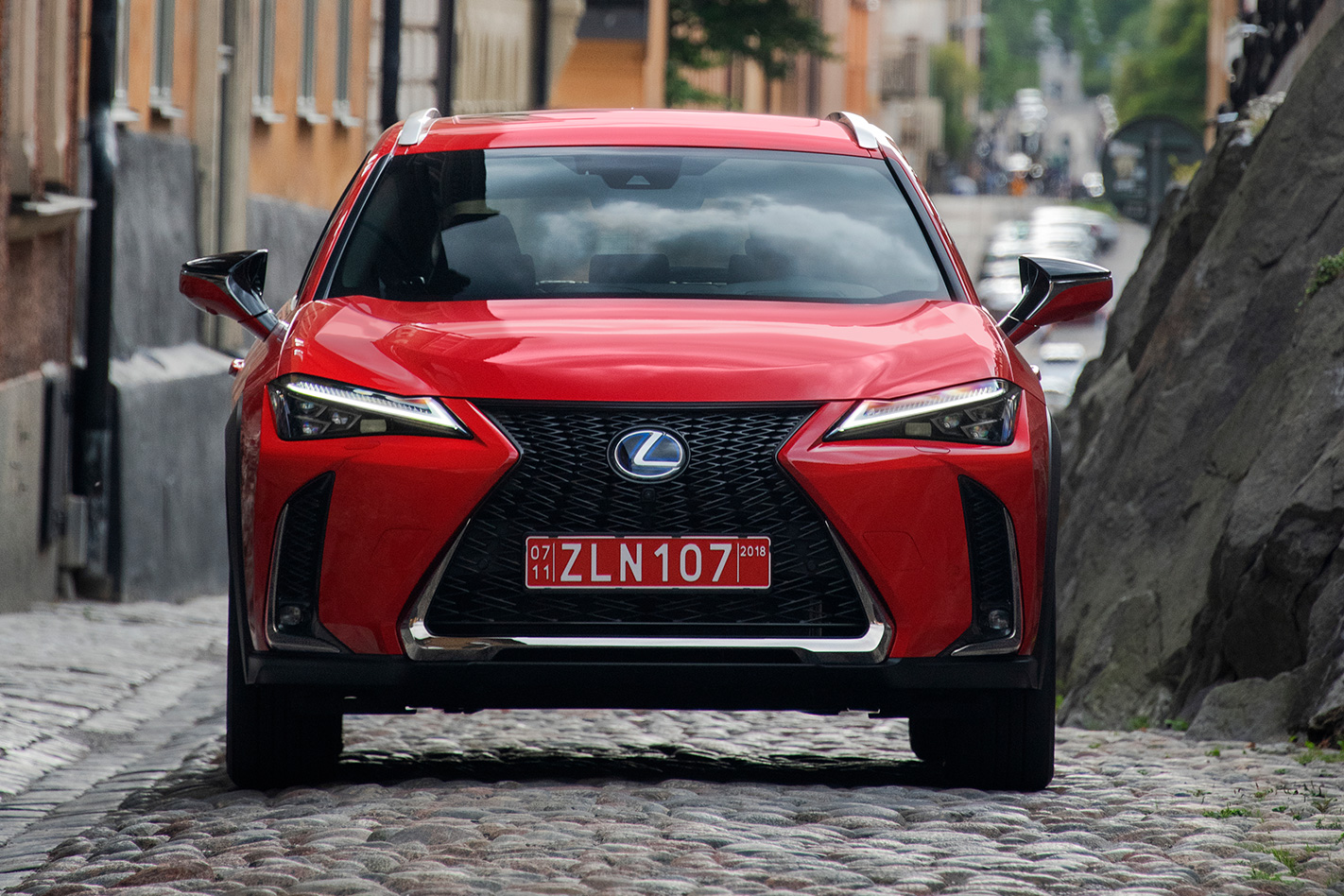
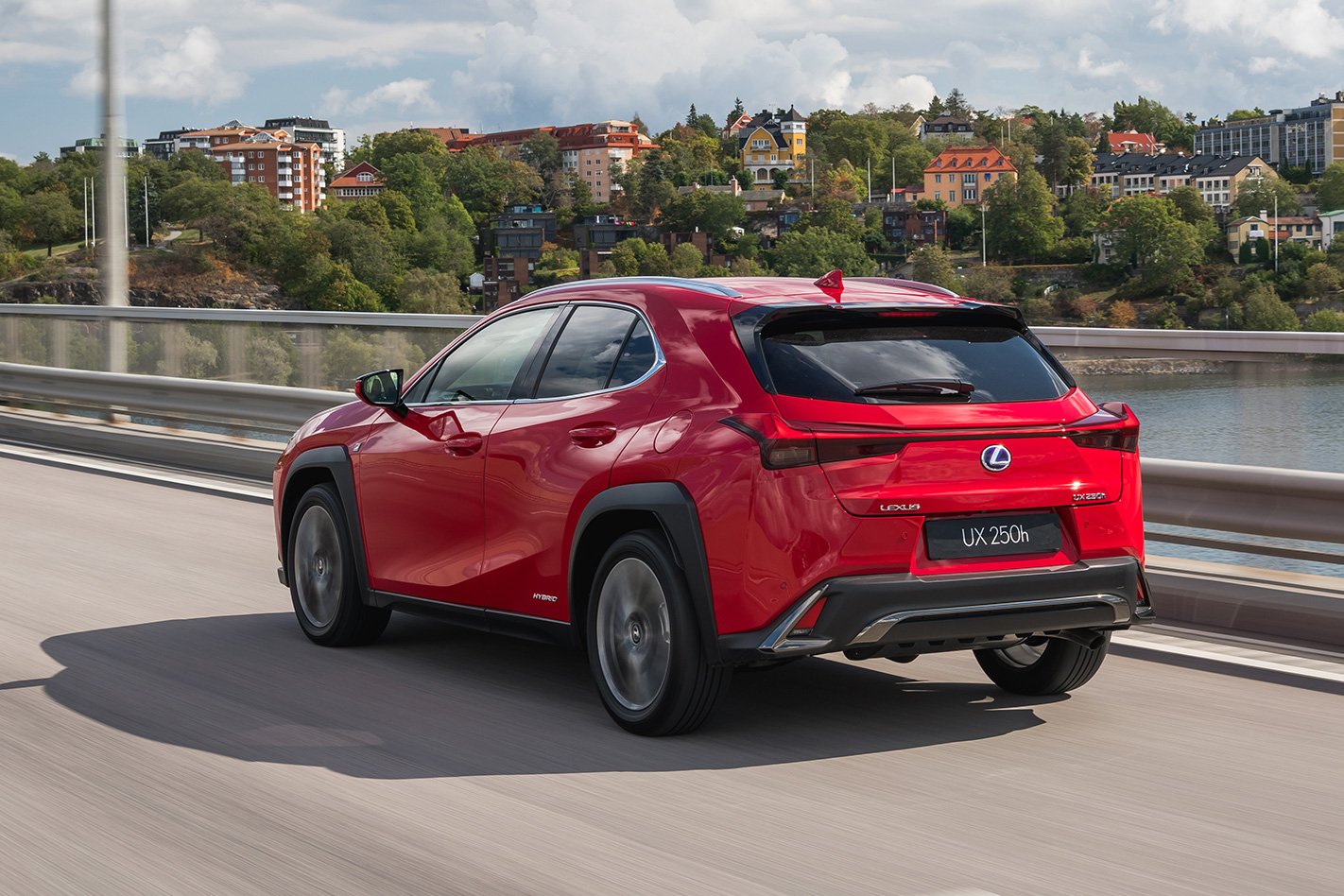
This is Lexus’ first-ever compact crossover. Based on the same platform that underpins Toyota’s impressive C-HR and the 12th-generation Corolla, the UX gives Lexus customers in the market an option below the NX, and crucially allows the Japanese automaker to expand its entry-level offering beyond the ageing CT 200h.
WHY WE’RE TESTING IT
The UX is new territory for Lexus, and while cynics will turn their nose up at its Toyota-sourced architecture we’re keeping an open mind. After all, every Toyota so far that’s deployed the company’s new GA-C underpinnings has proven to be a good thing.
MAIN RIVALS
Audi Q2, BMW X1, Mercedes-Benz GLA-Class, Infiniti QX30
THE WHEELS REVIEW
“GO where the money is”. Those are the alleged words of the late Willie Sutton, and they’re words that must have been in the minds of Lexus’ top brass when they decided to greenlight the company’s first-ever compact crossover, the UX. If there’s money to be made in the car biz, it’s surely centralised in the lucrative SUV segment.
Sutton wasn’t talking about cars – he was talking about banks, and specifically about robbing them – but his principle nevertheless holds true. Lexus has a golden opportunity to shift the focus away from the homely CT 200h that’s been its gateway model up until now and onto a more exciting SUV, the UX. After all, right now that’s where the money is.
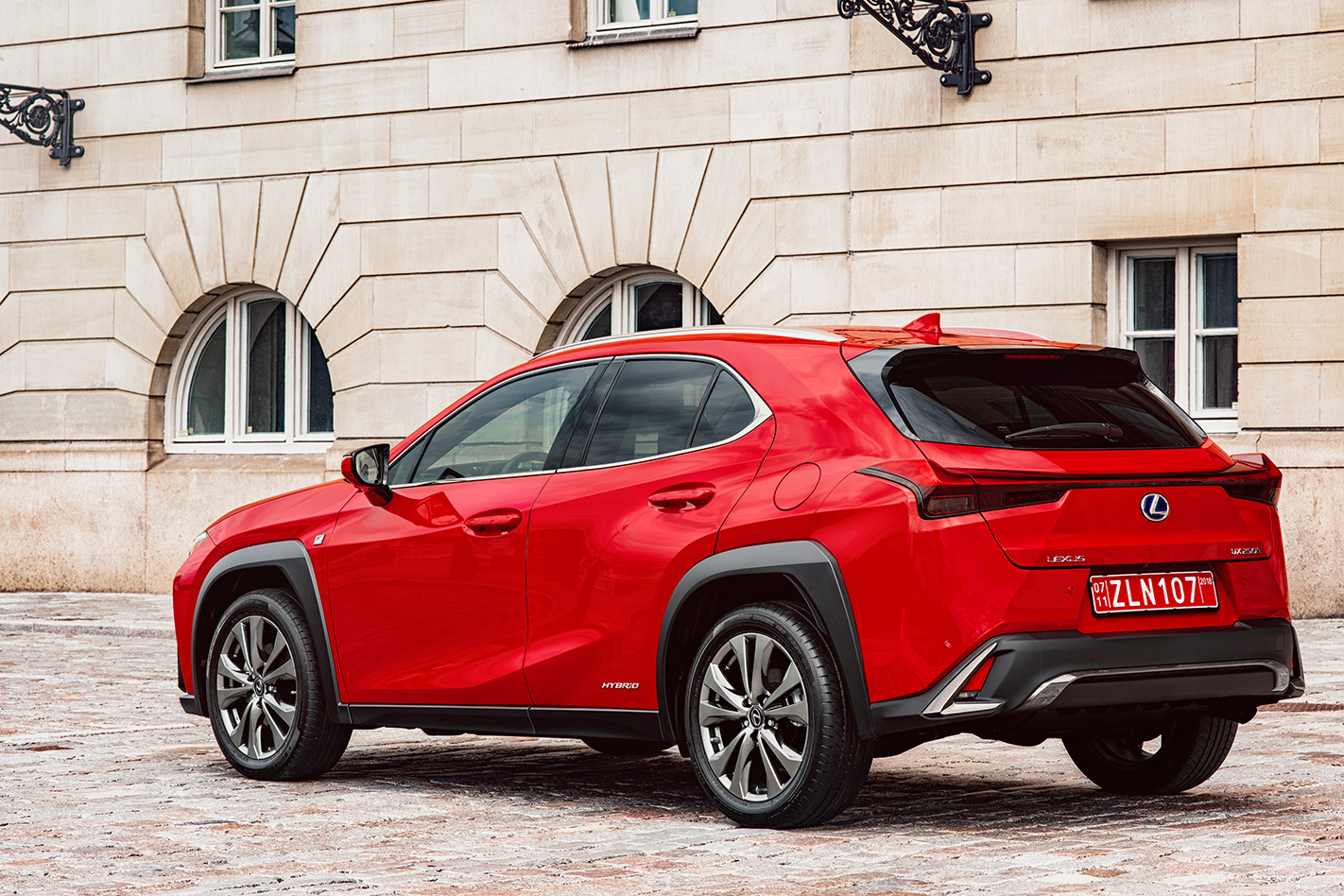
And truth be told, it’s where the next generation of car buyers are too. Lexus needs to get a younger crowd into its showrooms, and the UX is the car tasked with reaching out to millennials and gen-Xers. Forget about the CT 200h – the more extroverted UX has the form factor that counts in this day and age, even if its body is more hatch than traditional SUV wagon.
It’s easy to be cynical and dismiss the UX as a cash grab, a hatchback with extra ground clearance and plastic body cladding that’s designed to exploit the tastes of today. The only thing is… the UX is actually rather good. Even if you’re the type who pours scorn on SUVs, a quick drive in the UX should have you at least nodding with begrudging respect. At the conclusion of the UX’s global launch drive in Sweden, that’s precisely what I was doing.
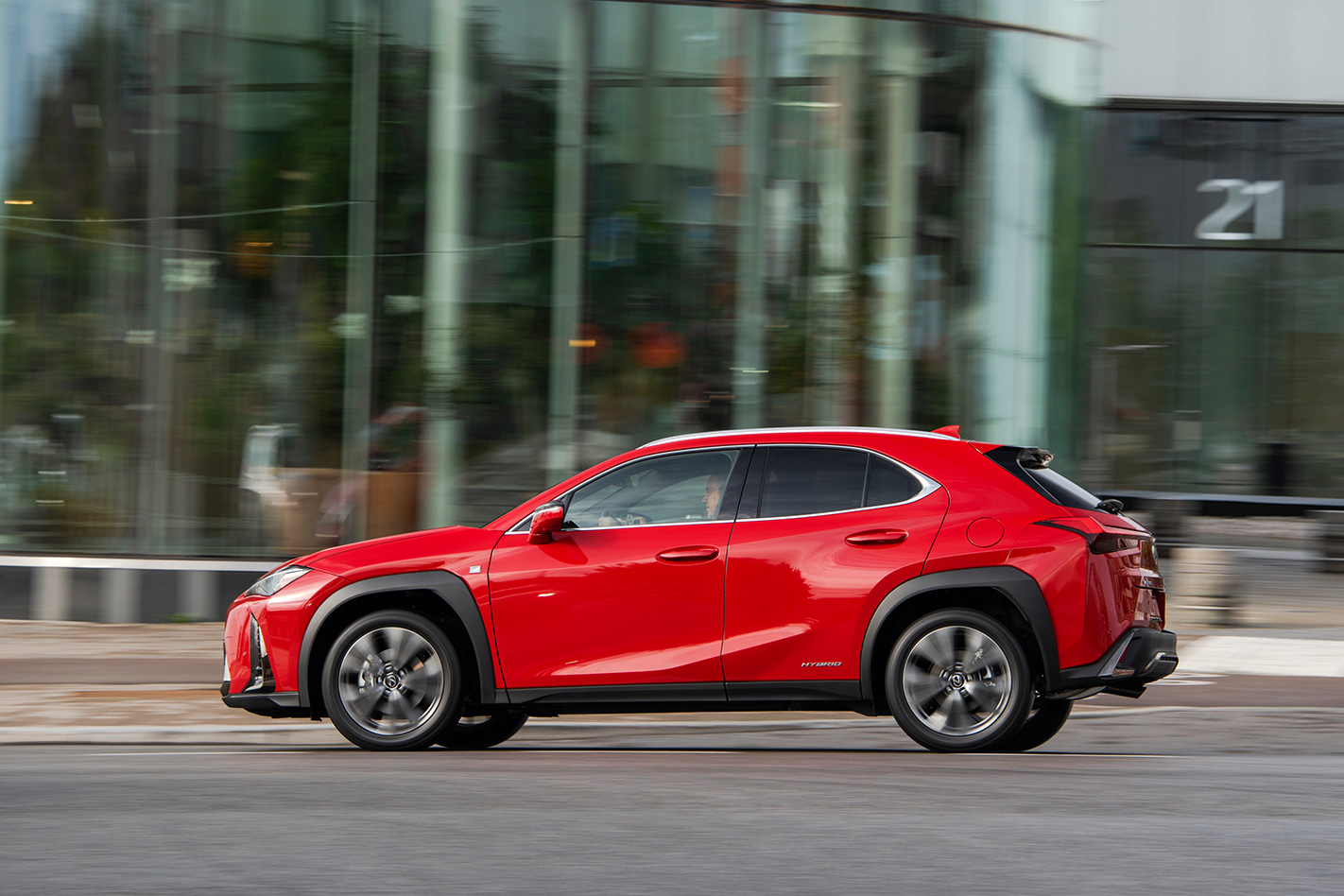
The roads in and around Stockholm are, as you’d expect of a country that deals with plenty of crap weather and more than a little bit of snow, pretty much perfect. Ironed flat and wonderfully cambered, the only real downside to Swedish pavement is the coarseness of its surface. Tyre roar is plentiful, but even a go-kart would waft like a Rolls-Royce on Swedish highways. But to a road-tester, the selection of silky-smooth roads for a car launch rings alarm bells. What are they trying to hide? Tame and unchallenging road loops selected by international Lexus PR didn’t help either.
In the F-Sport variants we spent the bulk of our time in, the adaptive dampers of that particular spec (base models will get non-adjustable dampers) yielded a fairly firm ride even on well-groomed roads. We suspect, however, that has less to do with the damper tuning than it does the run-flat tyres and 18-inch alloys that are standard-issue on F-Sport, though we did note that the suspension dealt better with bigger lumps – perhaps because the dampers were more in play, rather than just the tyres.
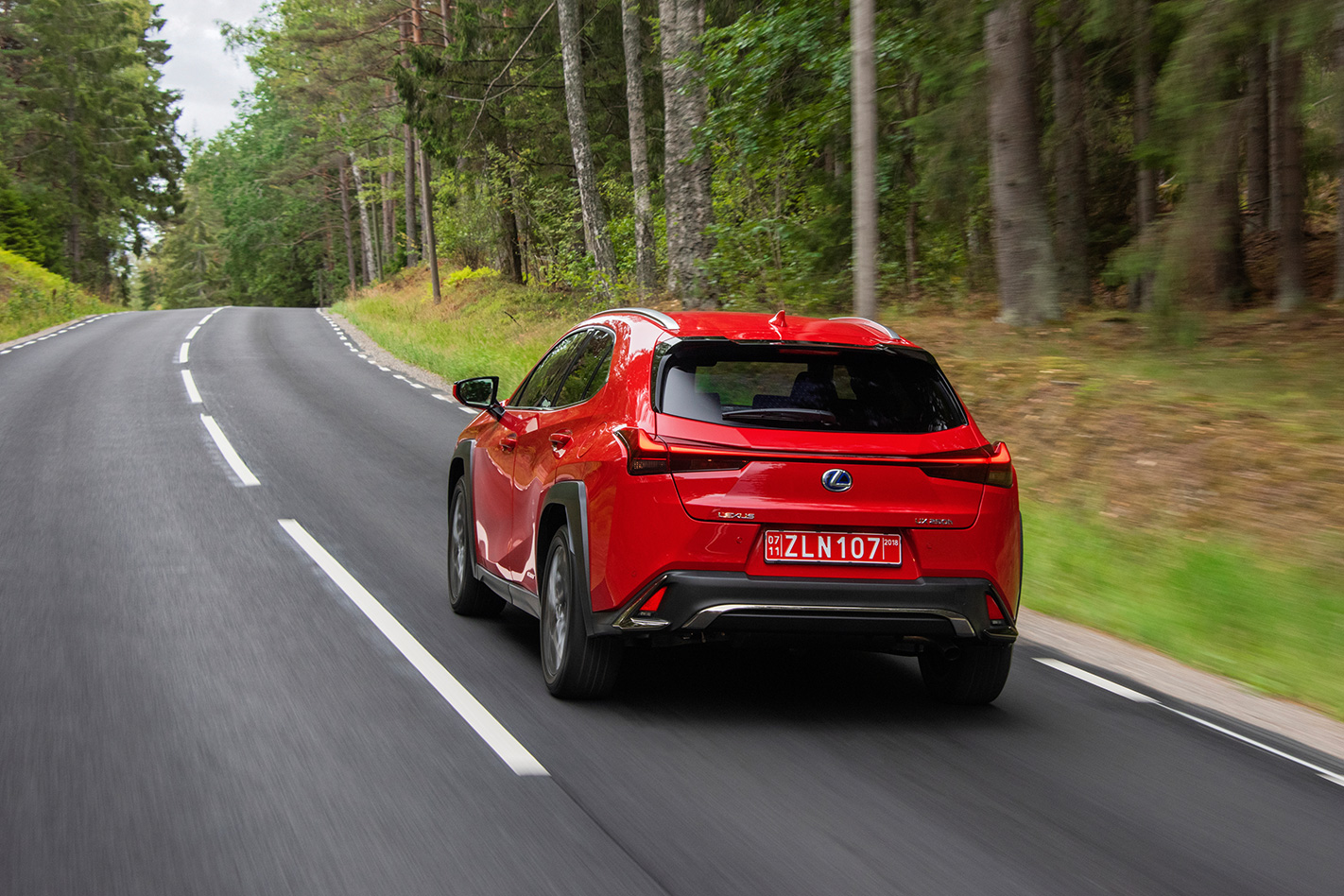
Deviating from Lexus’ program eventually netted some tighter and twistier tarmac, not to mention some potholes and ruts that echo those of typical Aussie country roads. We’re not sure why Lexus shied away from these kinds of surfaces, because when the UX’s sharply-creased snout was pointed down more taxing Swedish B-roads it displayed a very different character, one that bordered on genuine sportiness.
The steering is quick and accurate, (and augmented by brake torque vectoring) while the chassis of FWD UX models displays a neutral balance that’s uncommon in the small SUV segment. A low centre of gravity that hovers 594mm above the ground imparts an agile feel and keeps body roll at bay, which in turn eggs you on to push the UX harder.
A day at the wheel of a base-spec car with 17-inch wheels and non-adaptive suspension revealed outstanding compliance that didn’t impinge on handling, and in our mind it’s the winning configuration for everyday duty. It’s a shame, then, that the powertrain line-up is so mild.
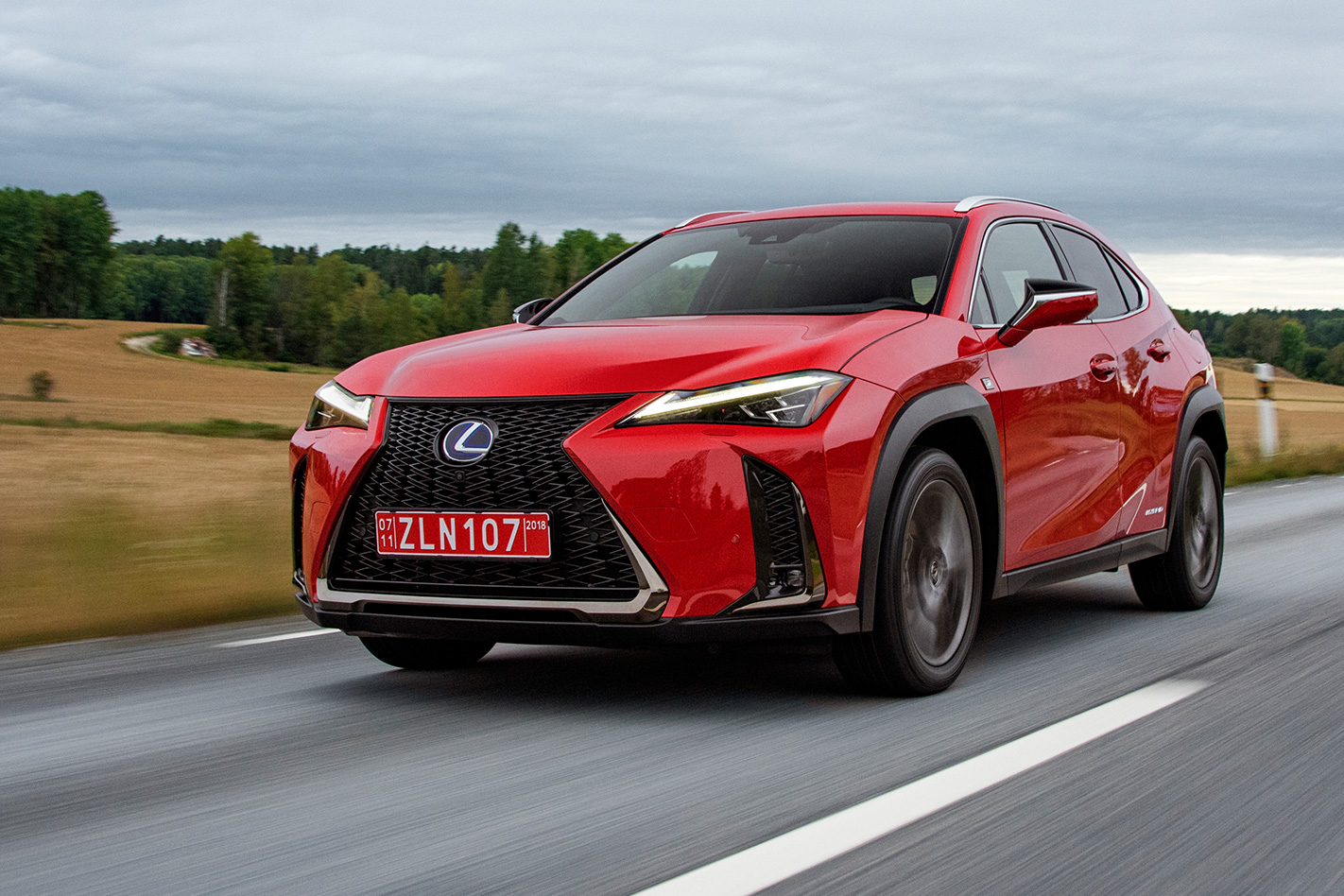
The mainstay of the range is the UX 200’s 126kW/205Nm naturally aspirated 2.0-litre petrol, borrowed from the UX’s corporate cousin the Toyota Corolla. It’s a solid engine with a linear power delivery, and happens to claim the best thermal efficiency of any production petrol engine, but clearly doesn’t feel as relaxed or as torquey down low as some turbocharged rivals. It does, however, actually sound surprisingly throaty when at full song. Now there’s something we weren’t expecting from a baby Lexus SUV.
There’s no manual entry version, but that’s okay because the CVT that’s the default UX 200 trans is properly good. Just as in the new Corolla, a mechanical launch gear and torque converter provide crisp take-up when moving away from a standstill, while a smaller, lighter drive belt enables manually-actuated gear changes that are so rapid it’ll probably fool some into thinking it’s a dual-clutch. What’s more, floor it in auto mode and it will step through pre-set ratios rather than doing the usual CVT thing of pegging the engine at one RPM, instead reserving the efficiency-boosting CVT behaviour for light-throttle cruising and urban driving, where it’s barely noticeable.
The hybrid UX 200h is less impressive, despite packing 8kW more. It’s also equipped with a CVT but misses out on the trick launch gear that makes the petrol powertrain so responsive, and its extra 80kg relative to the petrol dulls the UX’s dynamic performance. If it brought a plug-in capability or a more useful electric-only range it would perhaps possess some eco-tech appeal, but unless saving a little bit of fuel makes your heart race we’d stick with the more engaging UX 200.
However, if AWD is a must-have then your hands are tied: it’s hybrid or nothing. The UX 200h is the only model that’s available in both FWD or AWD configuration, and in the latter it only delivers a maximum of 5kW to the rear wheels via a compact electric motor located where a differential normally would be.
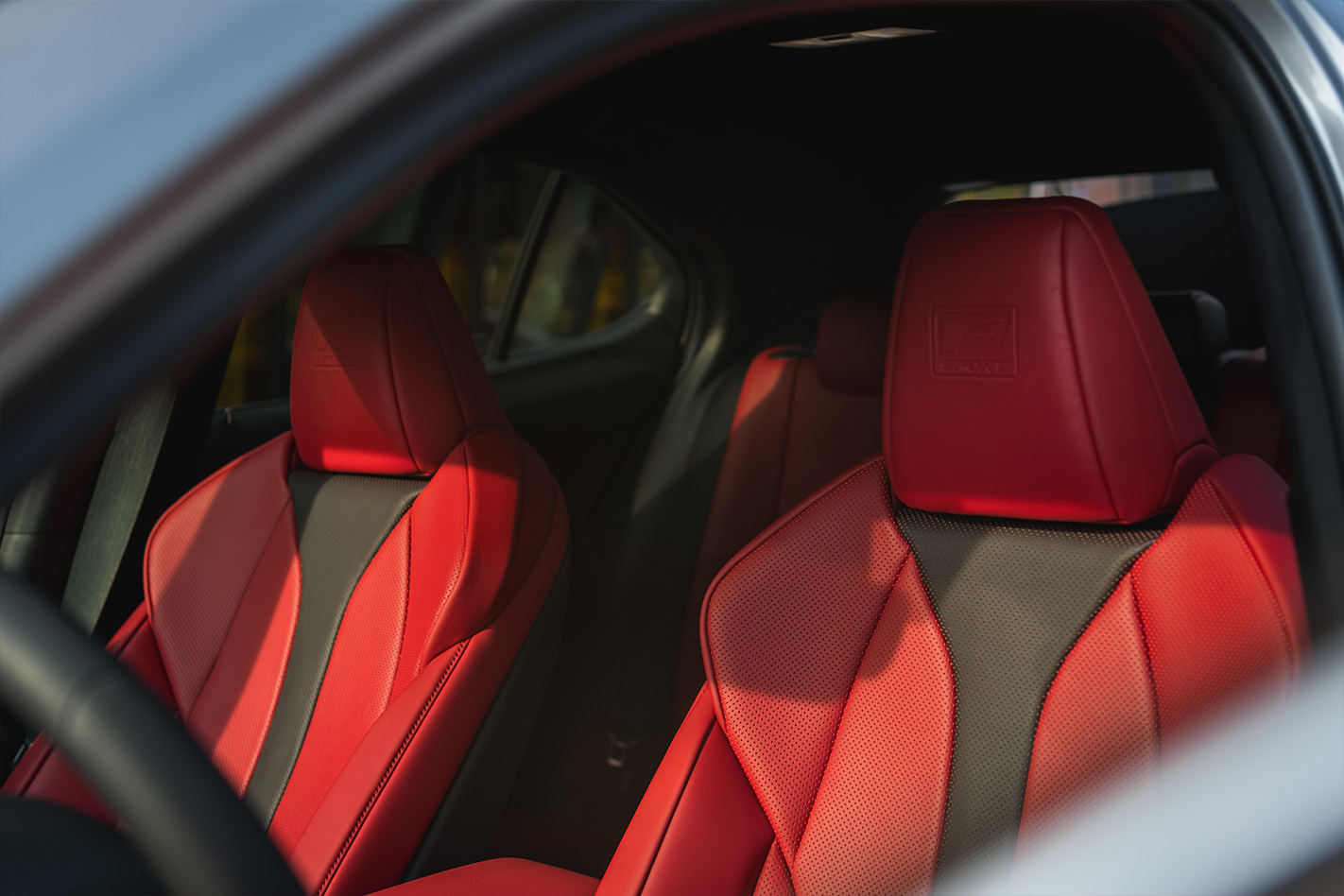
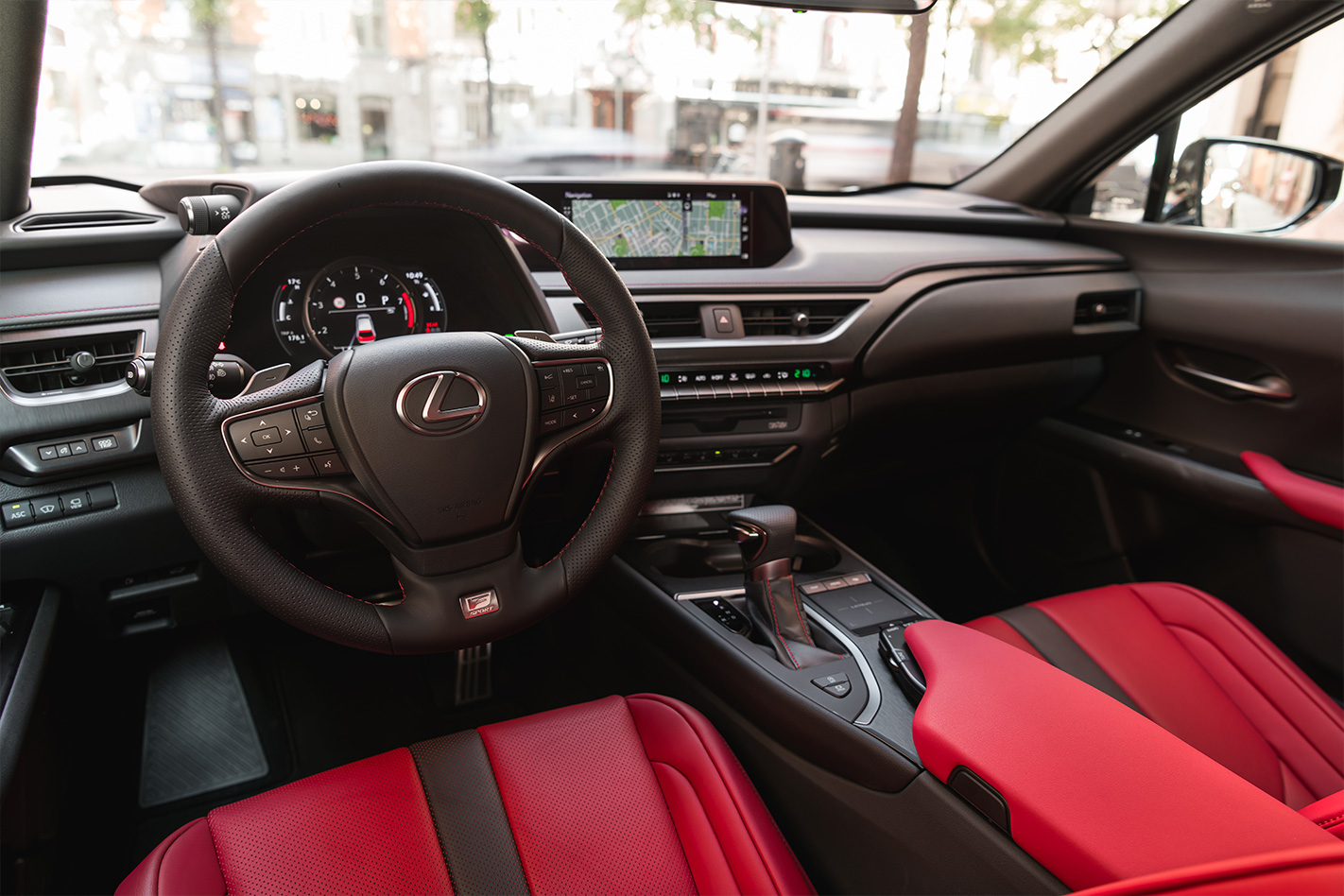
Happily, your choice of powertrain has no great influence on what kind of interior you get, and that’s great news because the UX’s cabin is one of Lexus’ – and the segment’s – best.
The seating position is low-slung compared with other SUVs, and even lower than the related Toyota C-HR thanks to seat rails that are 55mm closer to the floorpan. It seems the common buyer rationale of wanting to be elevated above traffic may no longer be as true as it used to be – or at least that’s Lexus’ read on the wants and needs of the thirty-somethings that it’s targeting with the UX.
It’s obvious that Lexus has put a great deal of thought into this cabin and its ergonomics. Even in low-grade guise it has a premium look and feel with abundant soft-touch plastics, supple leather upholstery and the especially pleasant optional ‘washi’ trim that mimics traditional Japanese handmade paper.
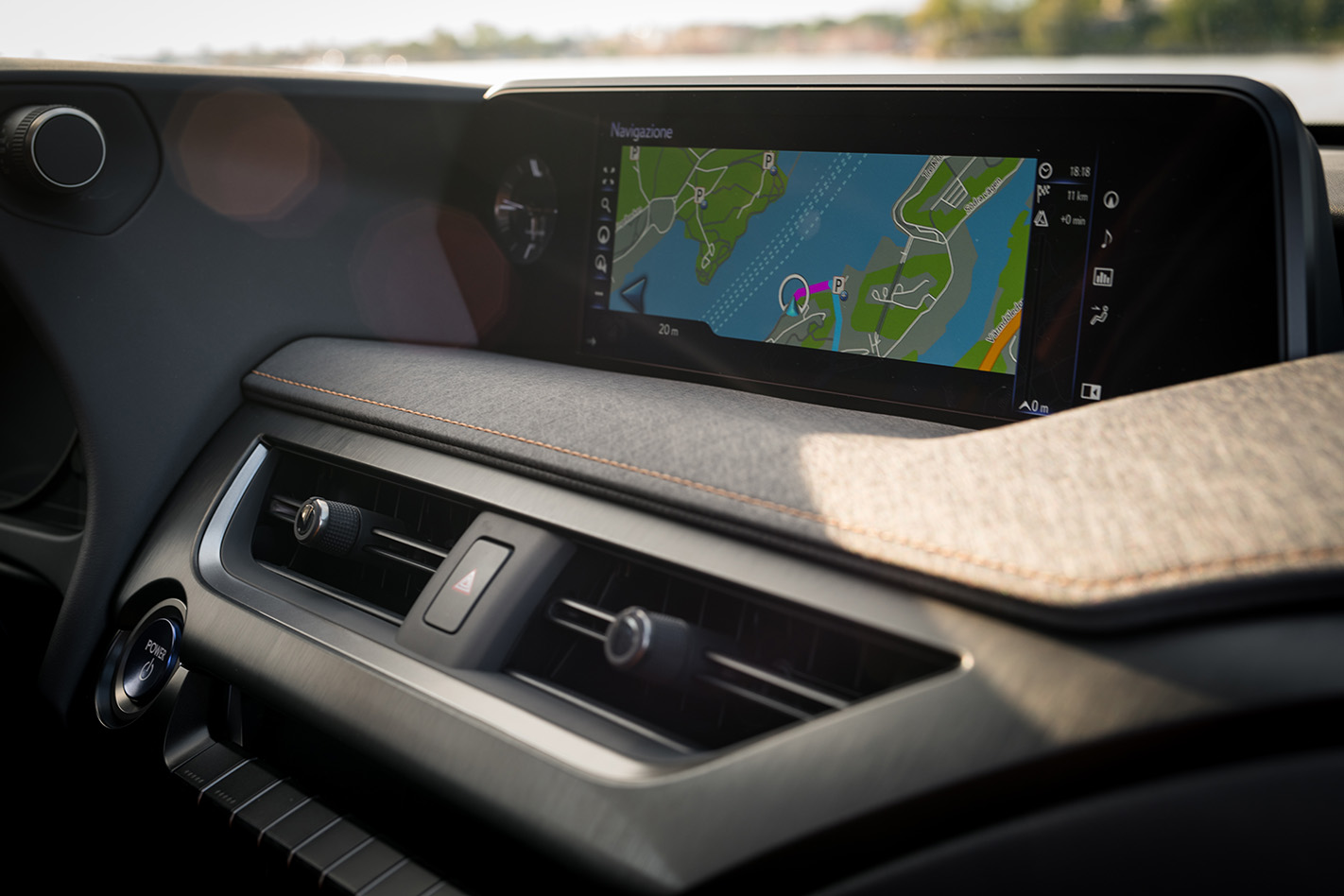
Tech is everywhere you look too – even hiding in places you wouldn’t expect. For example, the UX’s dash vent knobs can illuminate at night, but what’s cool is how the electrons actually find their way to the middle of the vent. Power is transmitted wirelessly by an inductive loop – a bizarrely high-tech solution to a fairly inconsequential problem.
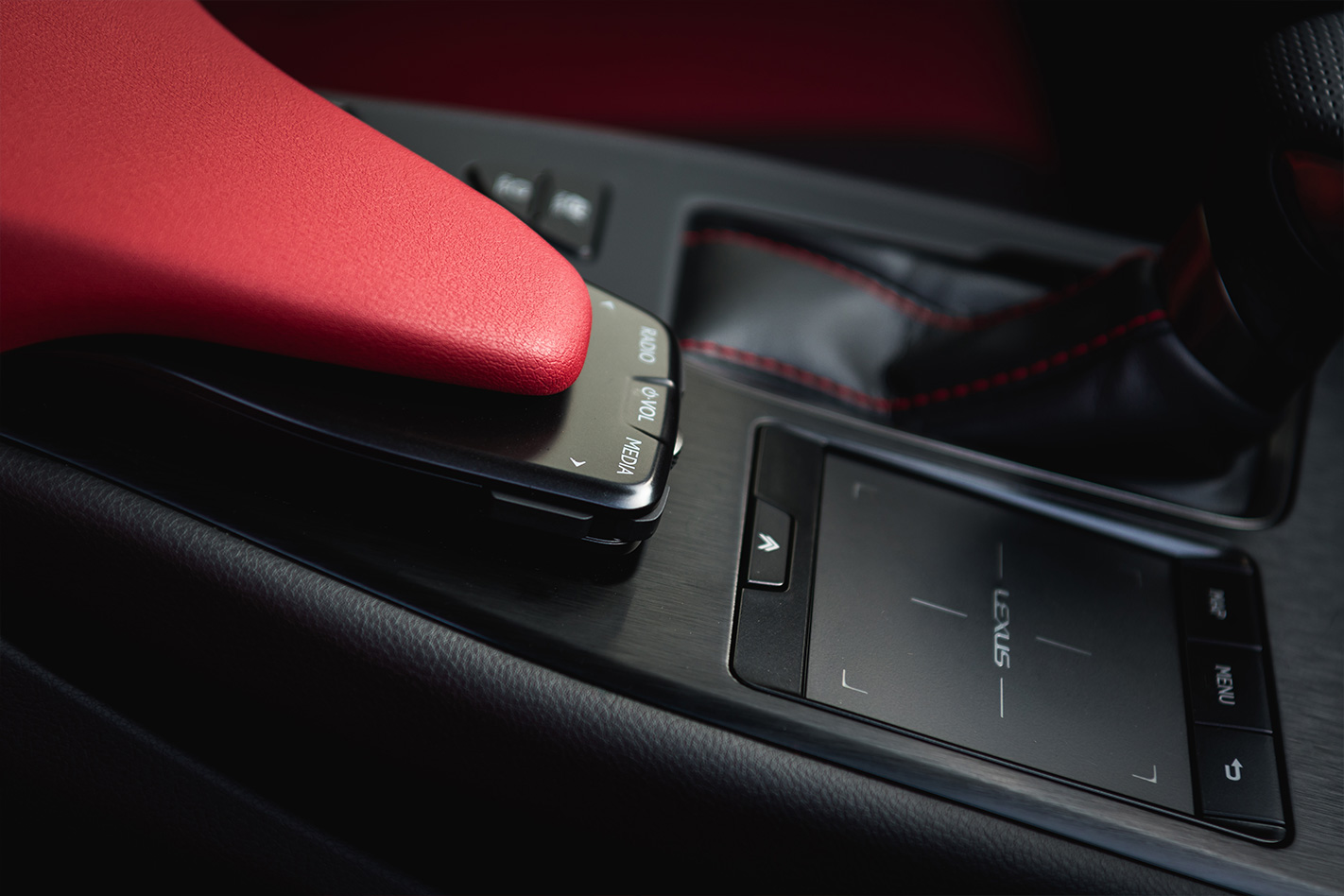
An inductive loop can also be found at the base of the centre stack on high-grade models, where it can charge compatible smartphones without requiring a cable. A large and clear head-up display is also available – a rarity at this end of the premium market – as is an electronic instrument panel, power-adjustable steering column and active cruise control. Front seat occupants can also enjoy the extra comfort offered by heated and ventilated seats, plus a heated steering wheel, while the body-hugging seats of the F Sport grade are especially supportive.
Meanwhile, while Lexus infotainment systems have historically been maddening to use, but the UX debuts the latest generation of Lexus’ touchpad control interface and it responds quickly and faithfully to inputs. Meanwhile smooth animations and more intuitive menu graphics help bring it into the modern era, though there’s no smartphone mirroring for now. At least the base system is far more user-friendly now.
The report card isn’t so positive in the back half of the cabin. Don’t expect packaging similar to the C-HR, despite the two cars sharing the same wheelbase and platform. The UX’s lower front seats trade rear legroom for front legroom, so foot- and knee-room in the back isn’t as generous. That said, the UX’s rear seats are cossetting and fairly spacious in other dimensions, there is a pair of USB charge ports, face-level air vents, and the view out the rear side glass is also far better than from within Toyota’s baby SUV.
Boot space is one area where the UX falls down. The Euro-spec cars we drove all had a boot floor that, though flush with the loading lip, is incredibly high and uncomfortably close to the cargo blind. It’s not a great luggage lugger, and while Australian cars will get a lower floor, capacity will still only be 312 litres – behind much of the small SUV pack.
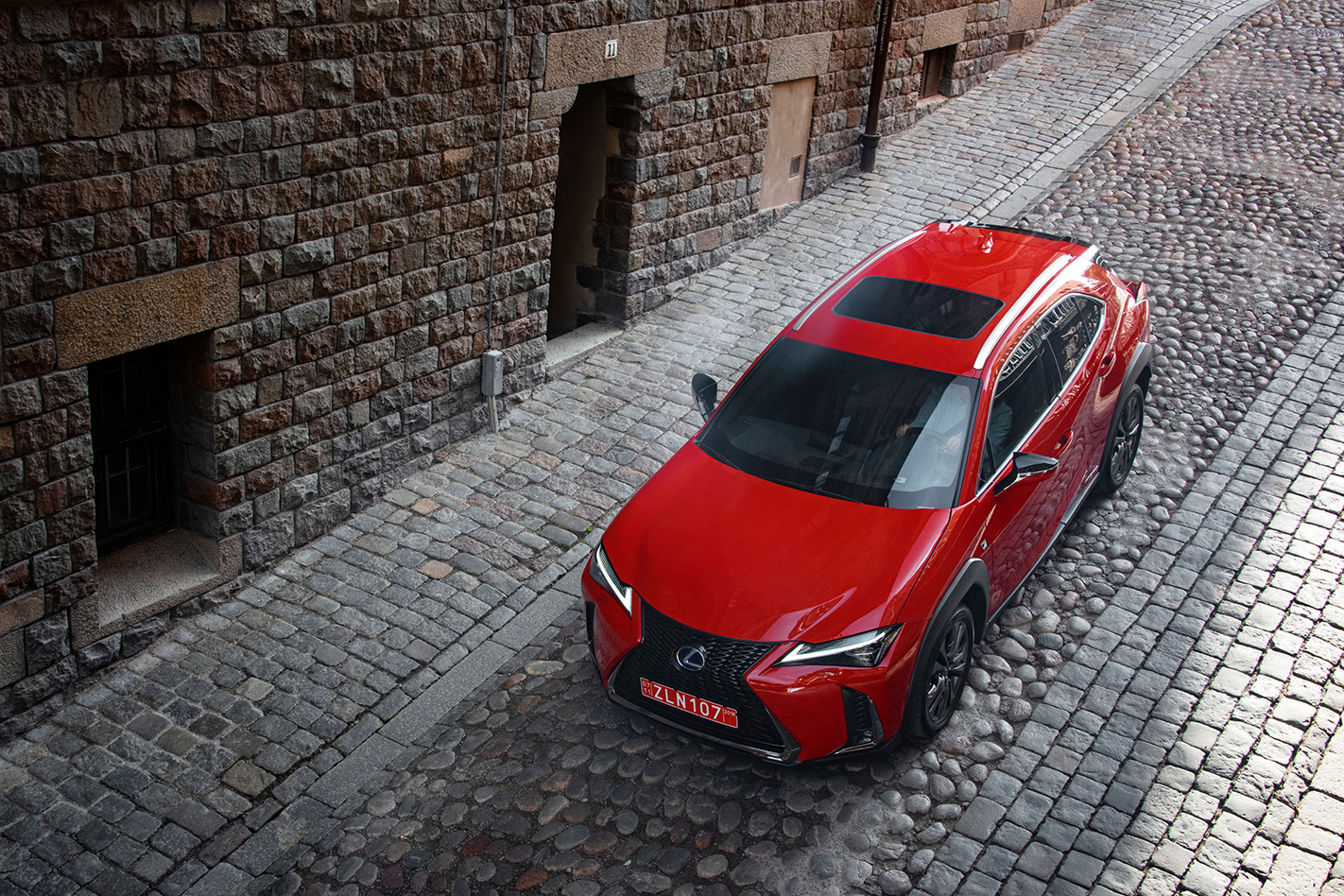
But the UX has the ingredients of an enticing ‘starter Lexus’, with distinctive design and driver appeal, and if it lands at the expected $45K entry price at the end of this year, you won’t need to rob a bank.
THE WHEELS VERDICT
The UX might be slotting in close to the bottom of Lexus’ model hierarchy, but first impressions indicate that it’s one of the company’s most well-resolved cars – and easily its most fit-for-purpose SUV. Positioned to snare younger buyers to the brand commonly associated with retiree-age customers, the UX is stacked high with technology and mod-cons and thus holds plenty of appeal for a less wrinkly generation. The most pleasant surprise, though, is that it’s genuinely good fun to drive. This is one to look out for.
PLUS: Premium cabin; superb chassis; excellent CVT in petrol version; chock-full of equipment MINUS: More powerful engines would be welcome; run flats ruin the ride; hybrid CVT
SPECS
Model: Lexus UX 200 F Sport Engine: 1987cc 4cyl dohc 16v petrol Max power: 126kW @ 6600rpm Max torque: 205Nm @ 4800rpm Transmission: CVT Weight: 1510kg 0-100km/h: 9.2 seconds (claimed) Fuel economy: 5.6L/100km (EU) Price: $54,000 (estimated) On sale: Q4 2018
It was hard to believe that sportscar maker Porsche would join the emerging luxury large SUV market in 2002, but the Cayenne proved that it was possible to inject some typical high-performance DNA into a high-riding family wagon.
Now in its third generation, the Cayenne continues to break new ground in the realm of driver-focused all-terrain vehicles, as well as offering a practical five-seat solution for the well-heeled. Here are a handful of the 2019 Porsche Cayenne’s defining features.
1. Braking news

Standard fitment on the Turbo are Porsche’s new Surface Coated Brakes, which use highly specialised tungsten carbide-plated brake rotors in place of conventional cast iron versions.
The extremely hard coating makes the discs more resistant to wear and extends service life, but also increases the temperature resistance of the rotor, preventing ‘brake fade’ during hard driving. The condition is when the discs cannot absorb any more heat and braking efficiency starts to decrease.
As part of the package, brake callipers are upgraded to mighty ten-piston versions and after a few thousand kilometres, the discs polish to an attractive mirror finish. Finally, tungsten coated discs won’t rust when left unused for extended periods.
2. High-achieving twins

All three variants of the Cayenne use turbocharged engines, but the Turbo is awarded the famous moniker as it represents the very pinnacle of power in the range. Under its bonnet you’ll find a 4.0-litre V8 with two turbos that pump maximum power up to 404kW.
Unlike many other twin-turbo V-engines that position the turbos outside the main engine mass, the Porsche’s turbos are tucked away in the centre of the block, in a void called the valley.
The radical design change makes the engine more compact and enables each turbo to reach maximum efficiency faster. Porsche says its V8 suffers less from so-called ‘turbo lag’ – the delay a turbocharged engine experiences between pressing the accelerator and the production of full power.
3. Air force

Active aerodynamics are not new to supercars and very high-end sportscars, but the clever idea of moving spoilers and fins have not been applied to an SUV until now.
At the Cayenne Turbo’s tail, a roof mounted spoiler is hidden away at low speeds but as the car accelerates, the spoiler automatically extends to force the rear wheels into the road for greater stability. It also opens fully under hard braking to help slow the vehicle similar to aeroplane wing brakes.
As a bonus feature, if the panoramic sunroof is open at speed, the spoiler will rise to a small angle according to speed, which corrects the turbulence caused by the opening and minimises cabin disruption.
4. Weighting game

In its third generation, the Cayenne has grown. It now measures 63mm longer, which has freed up extra space for luggage and occupants, but thanks to more advanced construction, it has lost weight too.
Its outer shell is made exclusively from aluminium, lightweight recycled plastics are more extensively used in low-stress applications, and a lithium-ion battery replaces conventional lead-acid versions for a 10kg saving.
The result is a Cayenne that has lost up to 65kg over the previous model and rolls about 225kg lighter than the first-generation.
5. Now rows from the back
Despite a larger cabin and load area, the new Cayenne is not available as a seven seater, and Porsche’s decision to maintain its five-seat capacity comes down to a matter of performance.
To accommodate an extra row of seating, the designers would have needed to extend the wheelbase but that, says Porsche, would have compromised driving dynamics. Instead, the Cayenne has room for just five, but preferences performance – as a Porsche should.
6. Wheel deal

More sportscar calling cards can be found in the Cayenne’s wheels. Rims measuring up to 21 inches are standard on the Turbo, representing the largest to date for the model, but the width of rubber differs from front axle to rear – another first for the model.
With tyres measuring 11 inches wide on the rear axle and a narrower 9.5 inches at the front, the Cayenne Turbo has more traction for the back wheels, which allows the clever four-wheel drive system to send power to the tail end a majority of the time, improving handling.
The uneven width tyre layout is a chassis design feature that has been employed on Porsche coupes and convertibles for decades. It’s complemented by a new rear-wheel steering system, which allows the rear wheels to steer a small angle, which enhances stability at high speed and manoeuvrability at lower speeds.
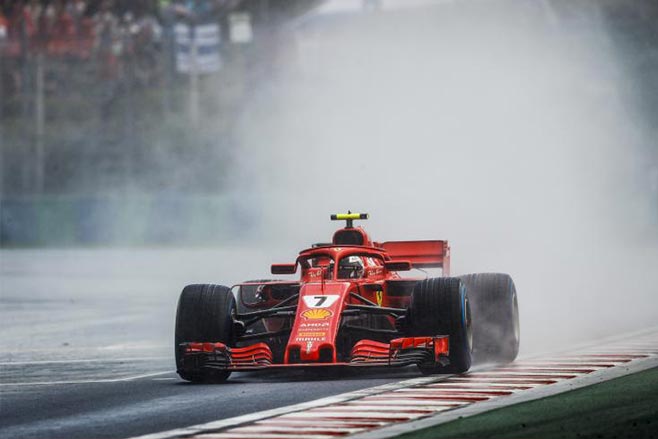
Kimi Raikkonen is set to leave Scuderia Ferrari upon the end of the current F1 season, at which point he’ll become a driver for Alfa Romeo Sauber.
Raikkonen’s F1 career began at Sauber back in 2001, when he was driving alongside Nick Heidfeld. Kimi has since gone on to secure 20 Grands Prix wins and 100 podiums, the most recent podium at the Italian GP.
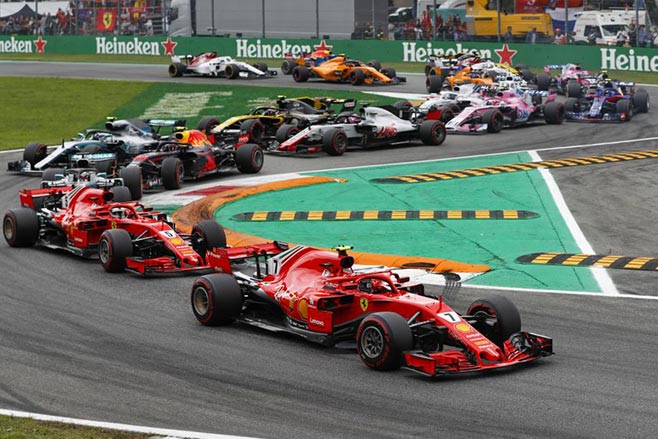
In a statement, Ferrari confirms the news, with an additional announcement that Charles Leclerc is to replace him.
“Scuderia Ferrari announces that, at the end of the 2018 season, Kimi Raikkonen will step down from his current role,” Ferarri says.
“During these years, Kimi’s contribution to the Team, both as a driver and on account of his human qualities, has been fundamental. He played a decisive role in the team’s growth and was, at the same time, always a great team player.
“As a World Champion for Scuderia Ferrari, he will always be part of the Team’s history and family. We thank Kimi for all of this and wish him and his family a prosperous future.
“In the next Formula One racing season, Charles Leclerc will drive for the Team alongside Sebastian Vettel.”
Iceman expressed some uncharacteristic excitement on Instagram upon the announcement, saying he was excited to continue driving.
https://www.instagram.com/p/BnlCYA-hWBD/?utm_source=ig_embed_loading
“Guess who’s back?!” Kimi begins in his post, even dropping in an exclamation mark.
“Next two years with Sauber ahead! Feels extremely good to go back where it all began!”
Sothebys sold Schumacher’s 2001 F1 car for $10.5 million
Sauber CEO and team principal for Alfa Romeo Sauber F1 team Frédéric Vasseur seems to share Raikonnen’s excitement.
“Signing Kimi Räikkönen as our driver represents an important pillar of our project, and brings us closer to our target of making significant progress as a team in the near future,” Vasseur says.
“Kimi’s undoubted talent and immense experience in Formula One will contribute not only to the development of our car, but will also accelerate the growth and development of our team as a whole.
“Together, we will start the 2019 season with a strong foundation, driven by the determination to fight for results that count”.
Raikkonen’s likely teammate is current Sauber driver Marcus Ericsson, though his place in 2019 is yet to be confirmed.
As Donald Trump would say: “fake news”.
A picture of a totalled Bugatti Divo on the back of a flatbed truck has gone viral in internet car circles today, leading to outcry that one of the 40 €5million hypercars had already met an untimely end.
Thankfully, that’s not the case. The picture is the work London-based automotive designer/concept artist Yasid Design, who first posted the picture on his Instagram account with the caption “God Dammit. Well, I guess this Divo was a good one while it lasted.”
https://www.instagram.com/p/Bnl_bVlBsry/?utm_source=ig_embed_loading
The clue to the ruse is in the hashtag #carrendering. Yasid has been upfront that it’s a forgery in the comments, however, plenty haven’t bothered to read that far and the picture has spread like wildfire, helped by the fact the picture’s location was tagged as “Los Angeles, California”, close to where the Divo made its public debut during Monterey Car Week.
Yasid told MOTOR the picture is “just a fun render that I did to create a buzz”, but it serves as an interesting case study of how quickly online information can spread and be accepted as fact.
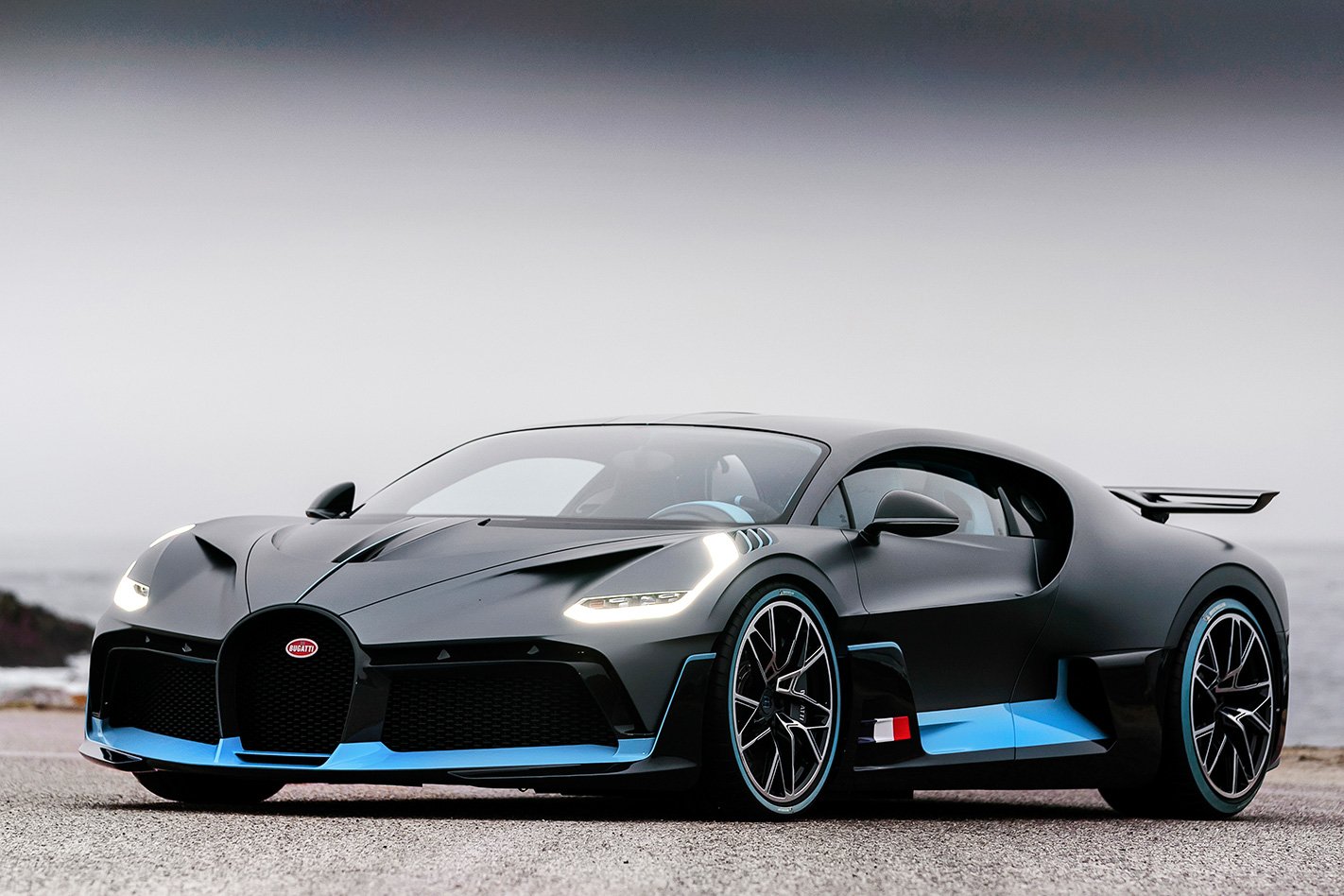
All 40 examples of the Divo were pre-sold by the time it made its public debut. Not a bad way to generate €200m in revenue!
The Nissan 370Z is by no means a new car, but this is a ‘new’ version of it, released this year by Nissan Australia.
Only 50 370Z N-Sport models are to be sold, with each coming in at a $1500 discount, leaving the price at $48,490. That’s right, the rare special edition costs less than the standard car.
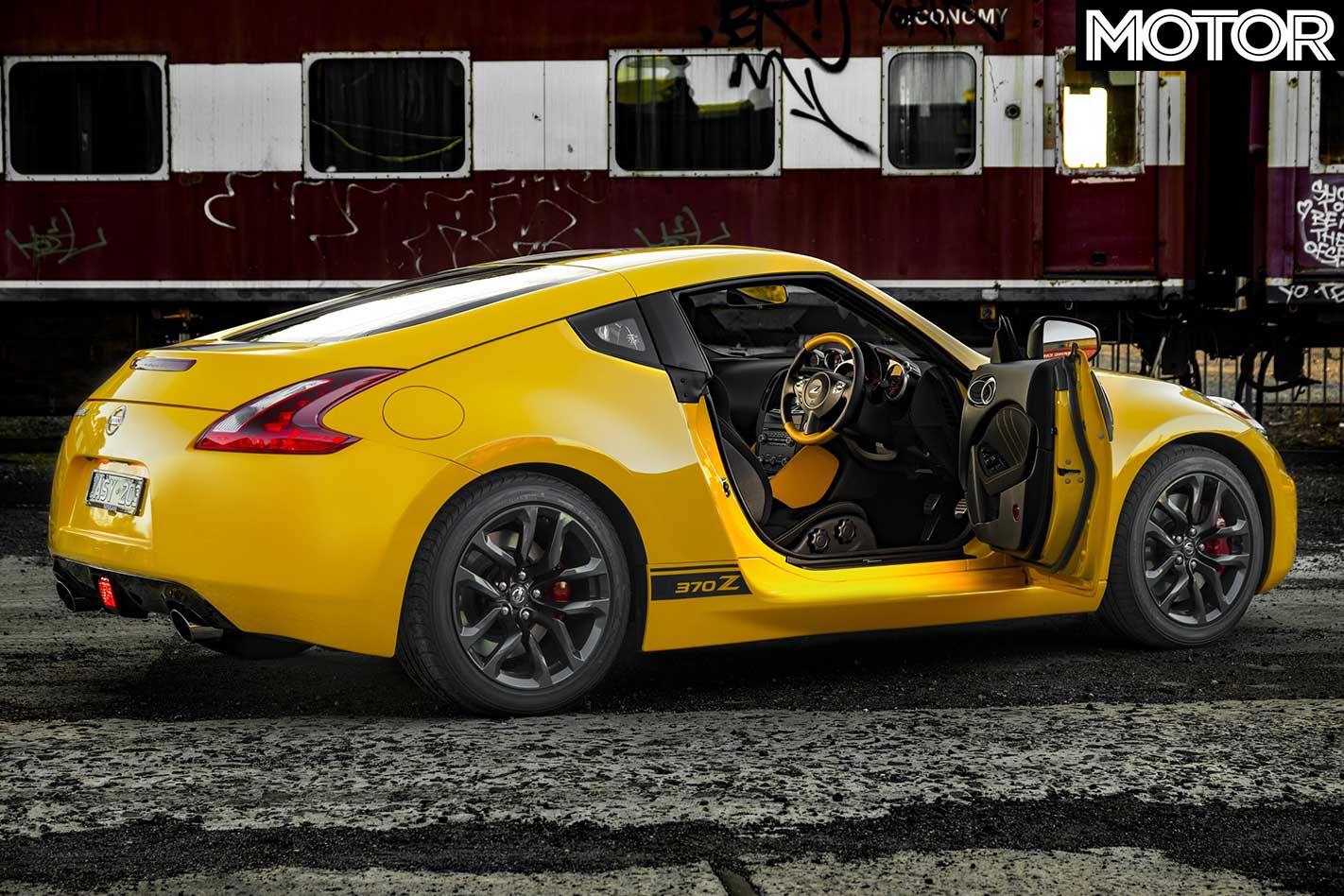
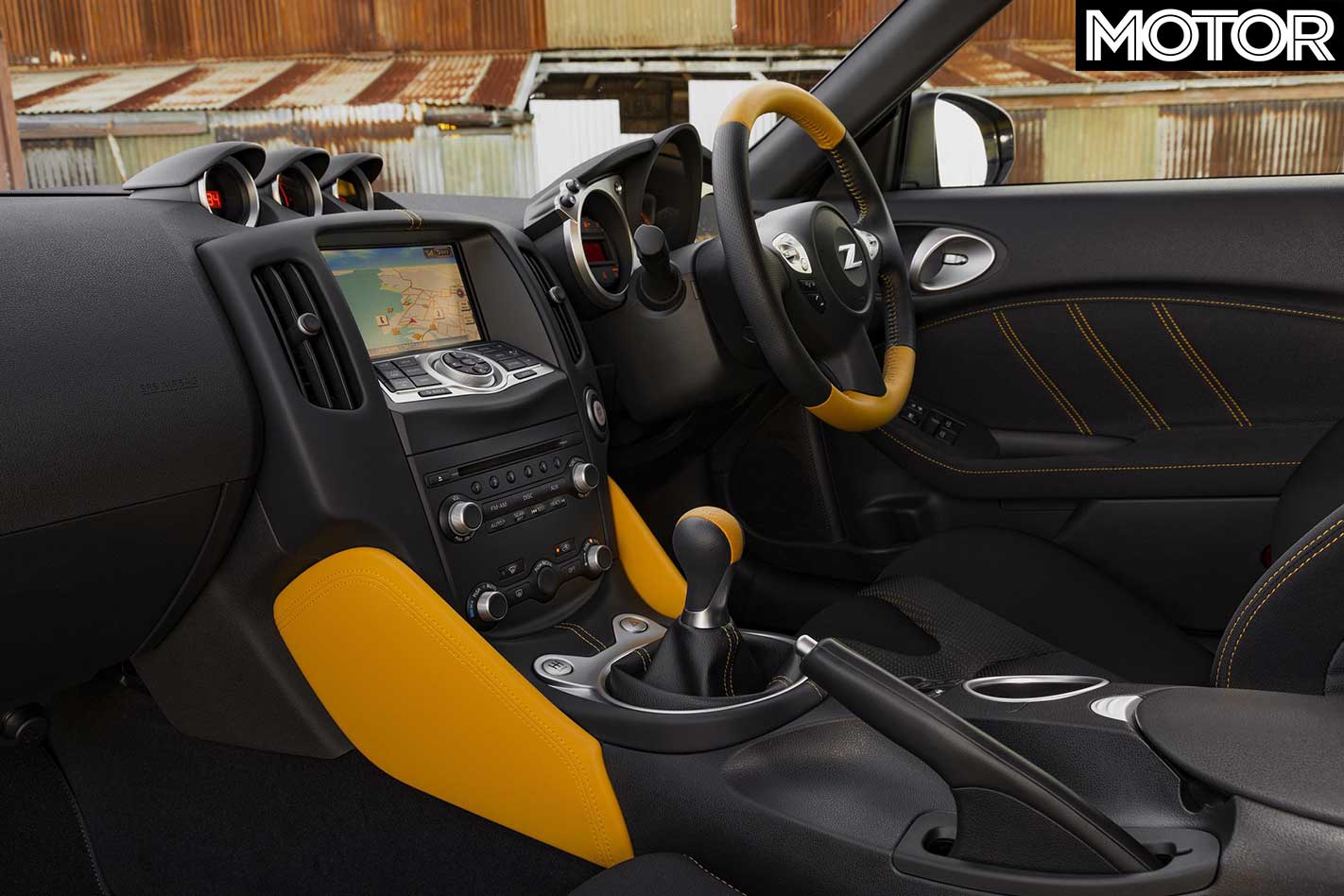
The N-Sport brings with it a ‘yellow-fied’ interior, with yellow stitching, leather on the centre console, and both of the aforementioned on the steering wheel. It’s a bit much in this journo’s opinion, but we asked around and feedback for the styling was mixed.
Outside, the yellow continues – unless you shell out an extra $550 for black or white premium paint – while decals in the form of a central racing stripe and side graphic let others know what you’re driving.
The unkind observer might call it ‘tacky’, though some in the MOTOR office are fans of the loud, almost ‘90s-esque throwback styling.
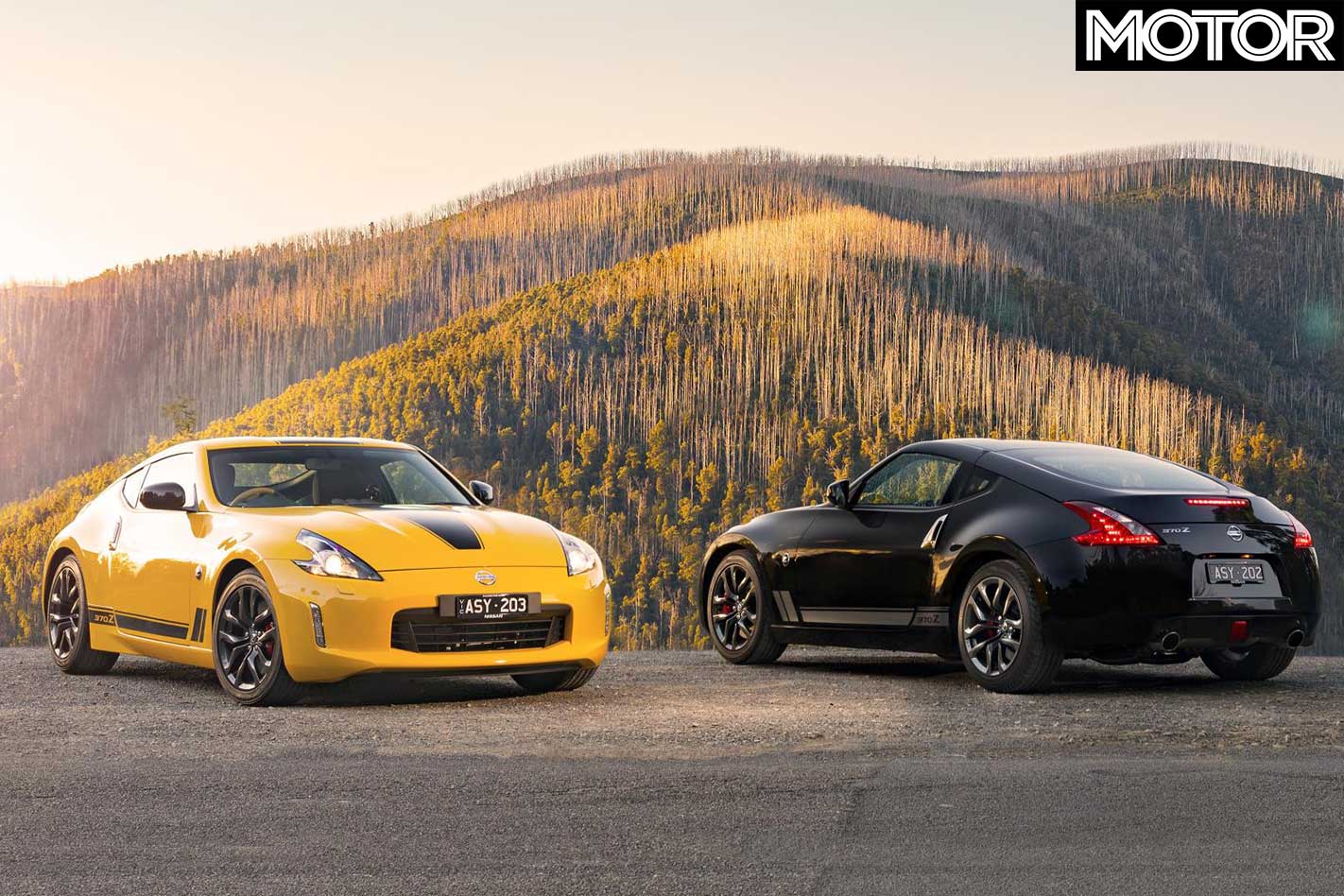
Nissan actually says it’s inspired by the Black Gold Edition 1980 Datsun 280ZX, but it doesn’t share a lot in common with the design cues of this bright beast.
The only aspect of the 370Z N-Sport that might affect the way it drives is the change of wheels, now a set of 18-inch black alloys. They’re a touch smaller than the 19s on the standard car, and don’t fill out the guards at the rear, but the black is a better match for the rest of the design.
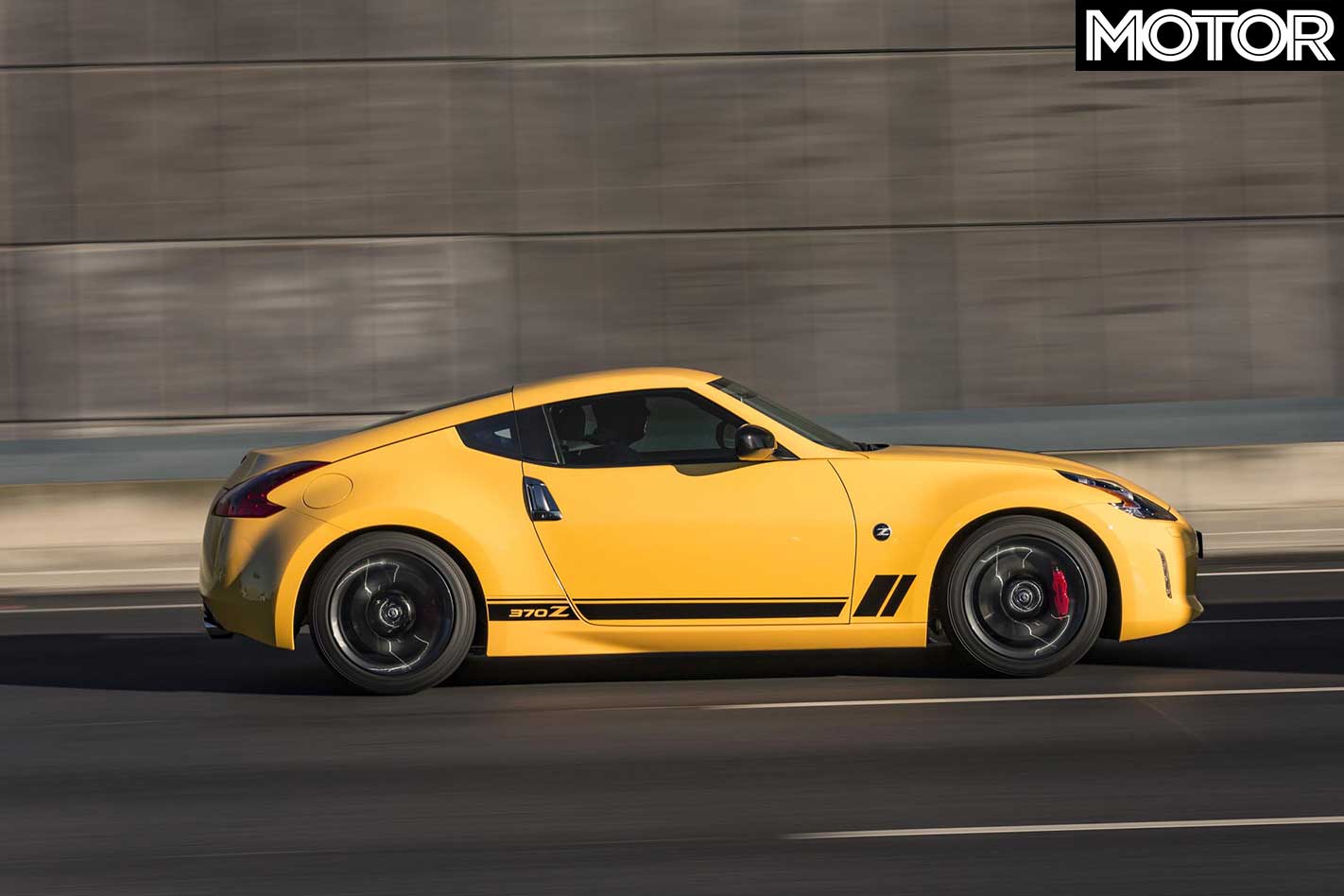
Aside from this, power, chassis, weight, and just about everything else remains the same.
So, for a touch less than $50,000, you can pick up a muscular rear-drive coupe that has old-school charm and still holds up as a fun driver’s car.
Its steering is sharp, handling well-sorted, and it’s still relatively quick – even though the engine feels a touch asthmatic in the lower end of the rev-range. Thankfully, revving is what atmo engines do best.
Is it worth the yellow treatment to score the discount? Put simply, yes. But with the 370Z model stretching back to 2009, and the 350Z before that, there’s an unsurprising profusion of used models for sale, and we reckon that’s where the thrifty buyer should go.
2018 NISSAN 370Z N-SPORT SPECS: Engine: 3693cc 60-degree V6, DOHC, 24v Power: 245kW @ 7000rpm Torque: 363Nm @ 5200rpm Transmission: 6-speed manual Weight: 1468kg Power-to-Weight: 162kW/tonne Price: $48,490
Likes: Still drives like a 370Z; small discount Dislikes: Looks; sound; cost over buying a used Zed
