
We needed this. Without a Holden Commodore or Ford Falcon at Bang For Your Bucks we have welcomed the Kia Stinger with open arms.
This track review was carried out in conjunction with MOTOR’s Bang For Your Bucks 2018
Mainly because a cuddle with a four door, long wheelbase, and brawny rear-drive sedan would help ease the absence of Aussie-made fast cars. Oh, and it’ll give the photographers an easy drift shot or two.
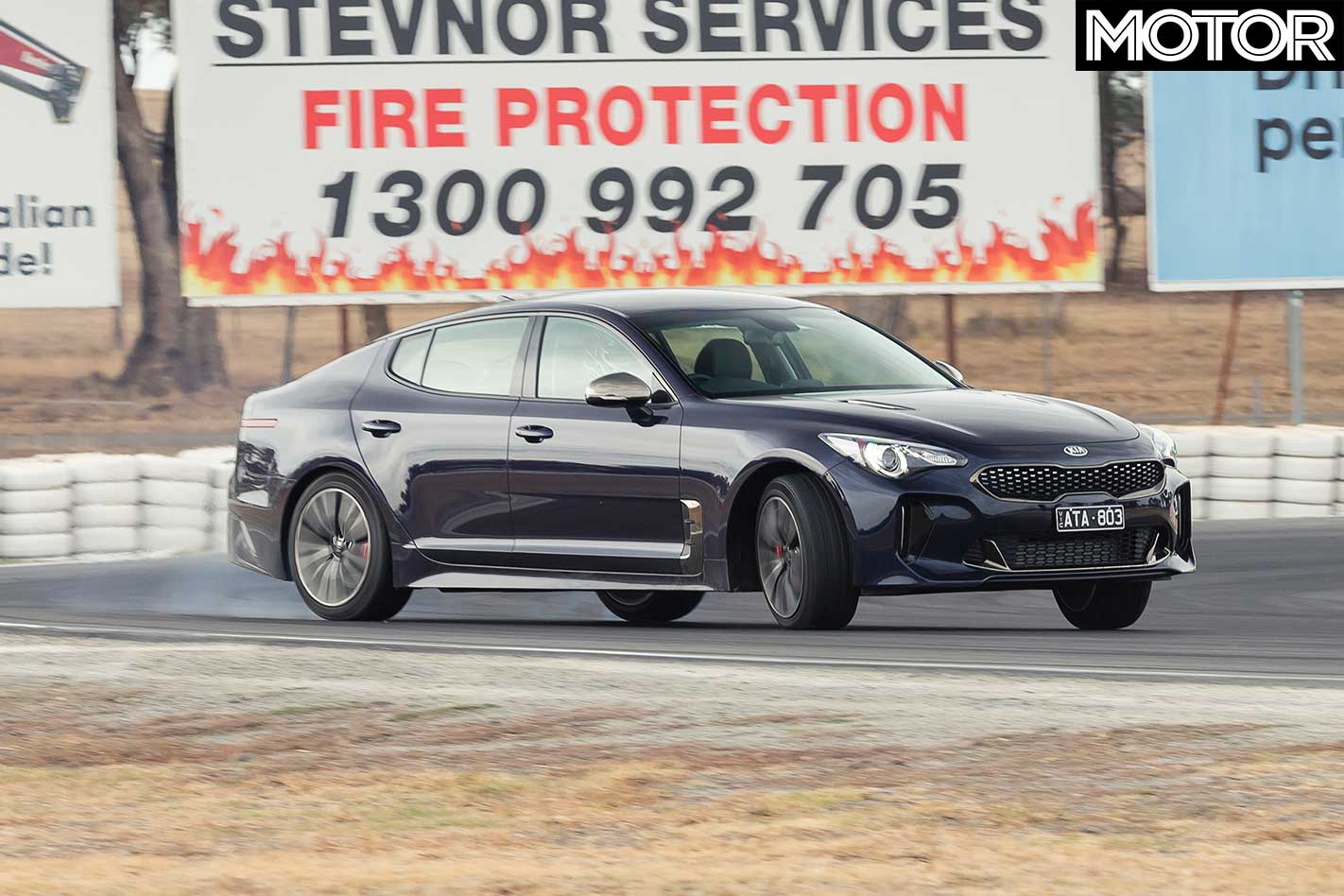
The Aussie Holden Commodore SS Ute bowed out last year with a category win and outright fourth place behind the SS Redline. Meanwhile, the Kia has proven its 3.3-litre twin-turbo V6 packs just as much punch as our old V8 larrikins.
Its 5.07sec standing sprint to 100km/h here would have split the old LS3-powered pair’s 5.01 and 5.13sec acceleration figures in 2017, along with their 400m times. Additionally, its lap time, braking and handling data would have breathed down the SS Ute’s neck. So how’d our Stinger finish towards the back end of 2018’s order?
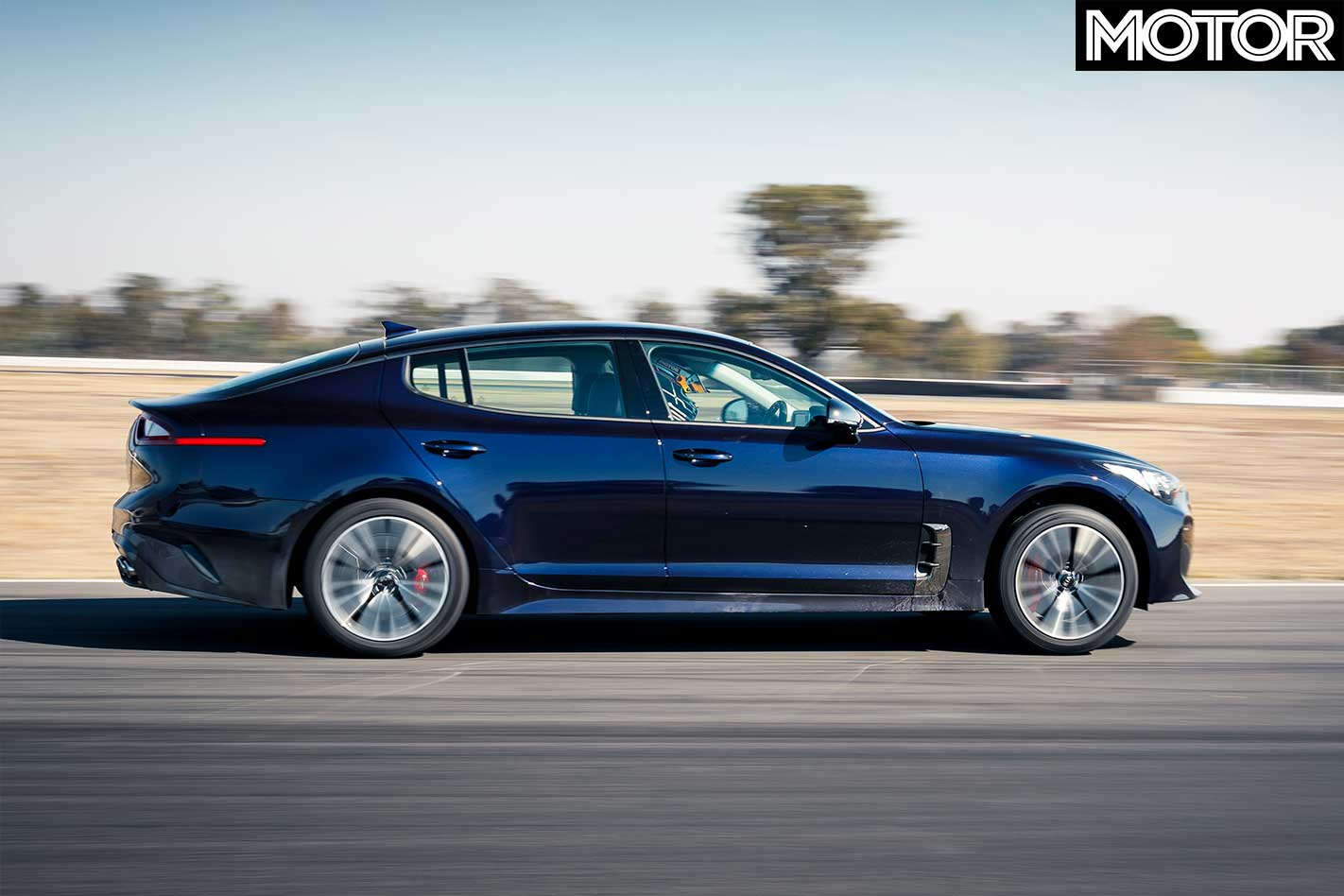
You could cast suspicions on our choice for the bargain-based 330S. We’ve seen the Stinger go faster with wider rear rubber; the Si and GT variants get 255mm-wide rear Continentals on wider rear rims, versus the 225mm you’ll find on the back of the S. But the Si’s 4.89sec/13.01sec acceleration figures, as seen at PCOTY, would only move it up one place at BFYB this year.
The GT’s adaptive dampers aren’t a solution either. They would have to reduce its lap time by a second to overcome that variant’s $11K price hike just to maintain ninth at BFYB.
Nope, the Kia’s less-than-amazing result has been decided by much tougher competition. The hot-hatch breeding season over the past 12 months has moved the goal posts on cornering speeds, lap times, price, and straight-line figures so far forward the Stinger has had no chance to really sizzle.
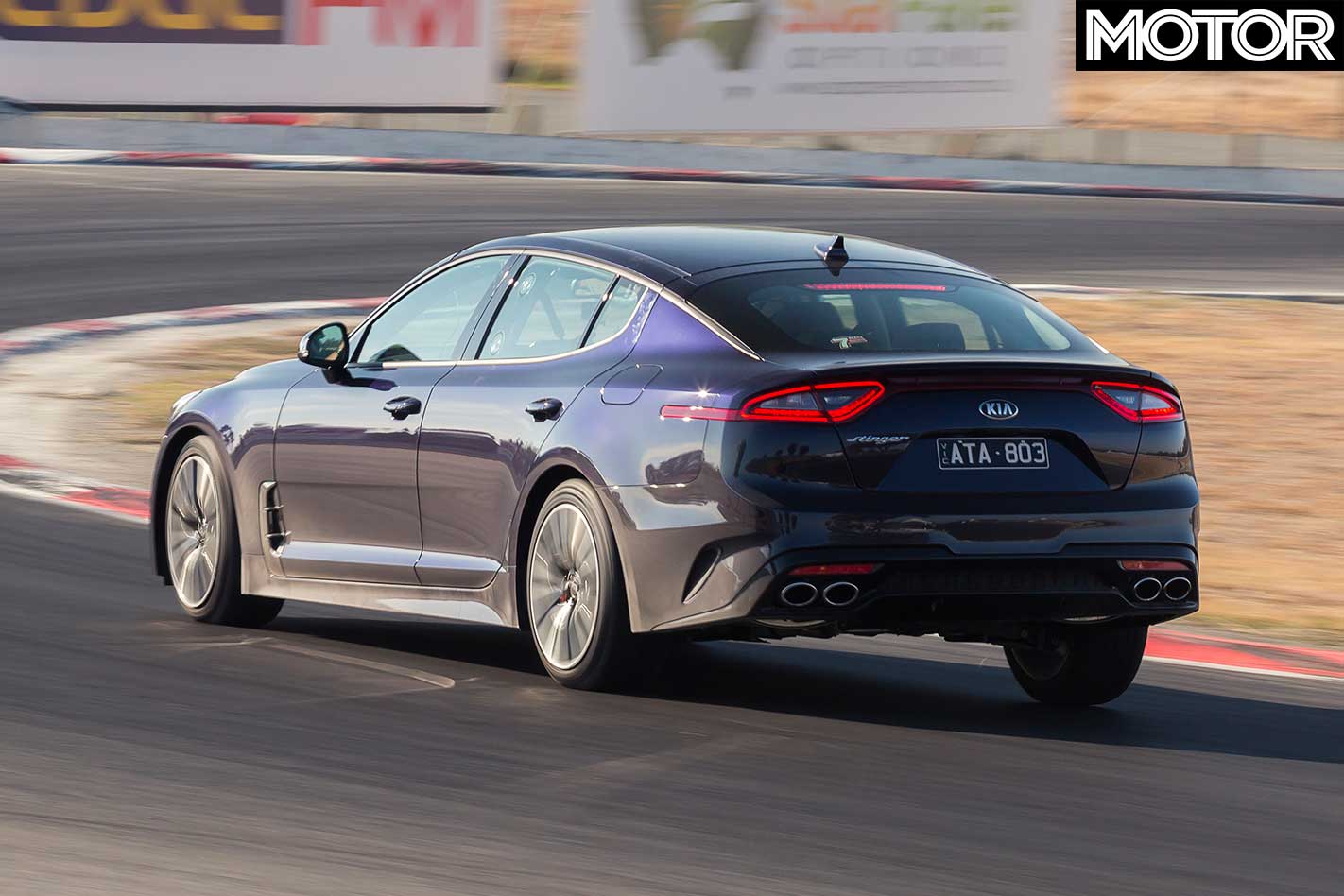
The judge’s scorecard has reflected that much. We rue that it has auto paddles, but no true manual mode and the fact stability control can’t truly be killed. But in contrast to the Infiniti, the Kia Stinger throws together a decent package for much less. It points true, with a nicely weighted tiller that’s geared well, and even though there’s a fair bit of roll, it handles like a Commodore SS, rather than an unlikeable oaf.
Maybe if Kia slashed the 330S’s price and made wider tyres and adaptive dampers an affordable option it’d make real waves here. But for now it’s ninth place.
Kia Stinger 330S BFYB 2018 Results – 9th place
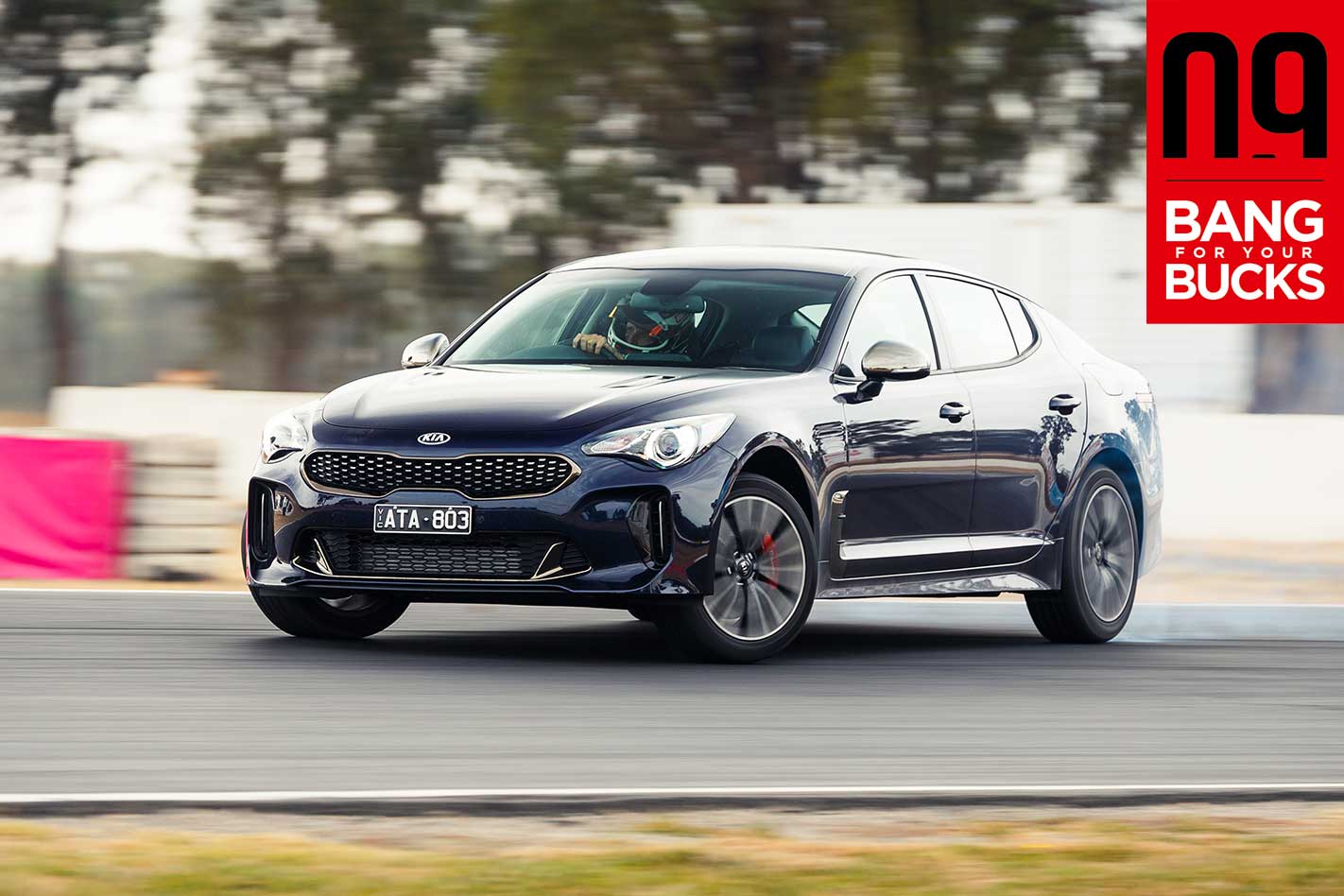
0-100km/h: 5.07sec (4th) 0-400m: 13.26sec @ 174.62km/h (3rd) Lap Time: 1:40.80sec (10th) Price: $48,990 Bang Index: 133.9 Bucks Index: 102.5 BFYB Index: 119.8
Judges’ Comments
Warren Luff – 14th “The Stinger’s chassis response and dynamics are really good at Winton. The 330S’s got great front-end feel and change of direction – as a driver it gives a lot of feedback. The engine is fantastic, it has plenty of power and low-down torque. The brakes are probably its biggest let down. The rear does get a bit lively, but it makes it that bit more fun to drive. Surprisingly, as a driver it’s a more rewarding package than some at BFYB 2018.”
David Morley – 11th “Fast but flawed. Next model should be a ripper”
Dylan Campbell – 12th “Kia’s made the new XR6 Turbo. On-limit handling is… exciting”
Scott Newman – 12th “Fun up to around 8/10ths, a wild ride beyond that”
Louis Cordony – 10th “The journey to sport sedan greatness is still a long one”
FAST FACTS 2018 KIA STINGER 330S
BODY: 5-door, 5-seat liftback DRIVE: rear-wheel ENGINE: 3342cc V6, DOHC, 24v, twin-turbo BORE/STROKE: 92.0mm x 83.8mm COMPRESSION RATIO: 10.0:1 POWER: 272kW @ 6000rpm TORQUE: 510Nm @ 1300rpm WEIGHT: 1780kg POWER-TO-WEIGHT: 152kW/tonne TRANSMISSION: 8-speed automatic SUSPENSION: struts, coil springs, anti-roll bar (f); multi-links, coil springs, anti-roll bar (r) BRAKES: 350mm ventilated discs, 4-piston calipers (f); 340mm ventilated discs, 2-piston calipers (r) WHEELS: 18 x 8.0-inch (f/r) TYRES: ContiSportContact 5 225/45 R18 (f/r) PRICE: $48,990
Bang For Your Bucks 2018
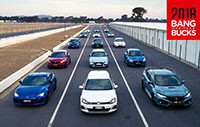 The Contenders, Judges & Criteria
15 of the hottest new fast cars under $100K roll up to take on our famous formula. Which will be number 1?
SPENDING $209.99 on 1295 small pieces of plastic may sound like madness, especially if you’re going to stand on one of them at night and wake the neighbourhood with your cursing. But follow the included instructions, and you’ll end up with a construction toy masterpiece.
Just two Aston Martin DB5 coupes can claim to be a part of the 1964 feature film Goldfinger. Only one of those was decked out with the hyperbolic spy modifications that immortalised the model, but now Lego is giving anyone the opportunity to build their own smaller, slightly more angular version.

Unfortunately some of the Aston’s pretty lines are lost in the conversion from hand-finished steel panels to stacked plastic blocks, with the completed kit leaning more to Bristol 411 than one of Gaydon’s finest, but the reproduction of 007’s gadgets is remarkable.
Yank on its back bumper and the passenger seat will eject an unlucky occupant through the roof. A shove of the gearstick reveals machine guns hidden in the front wings, there’s a flip-up bullet shield for the rear window and the registration plate revolves for a different identity, just as it did in the movie.

Other true-to-the-film details include a telephone handset and centrally mounted radar tracker screen, while scythes attached to the authentic wire wheels evoke the scene where Bond mauls a Mustang into submission on a Swiss mountain pass.
Even without the Bond references, the Lego Aston is brilliantly detailed, including three individual carburettors under the bonnet, specially coated parts to imitate the chrome bumpers of the original, and even tiny Aston badges.
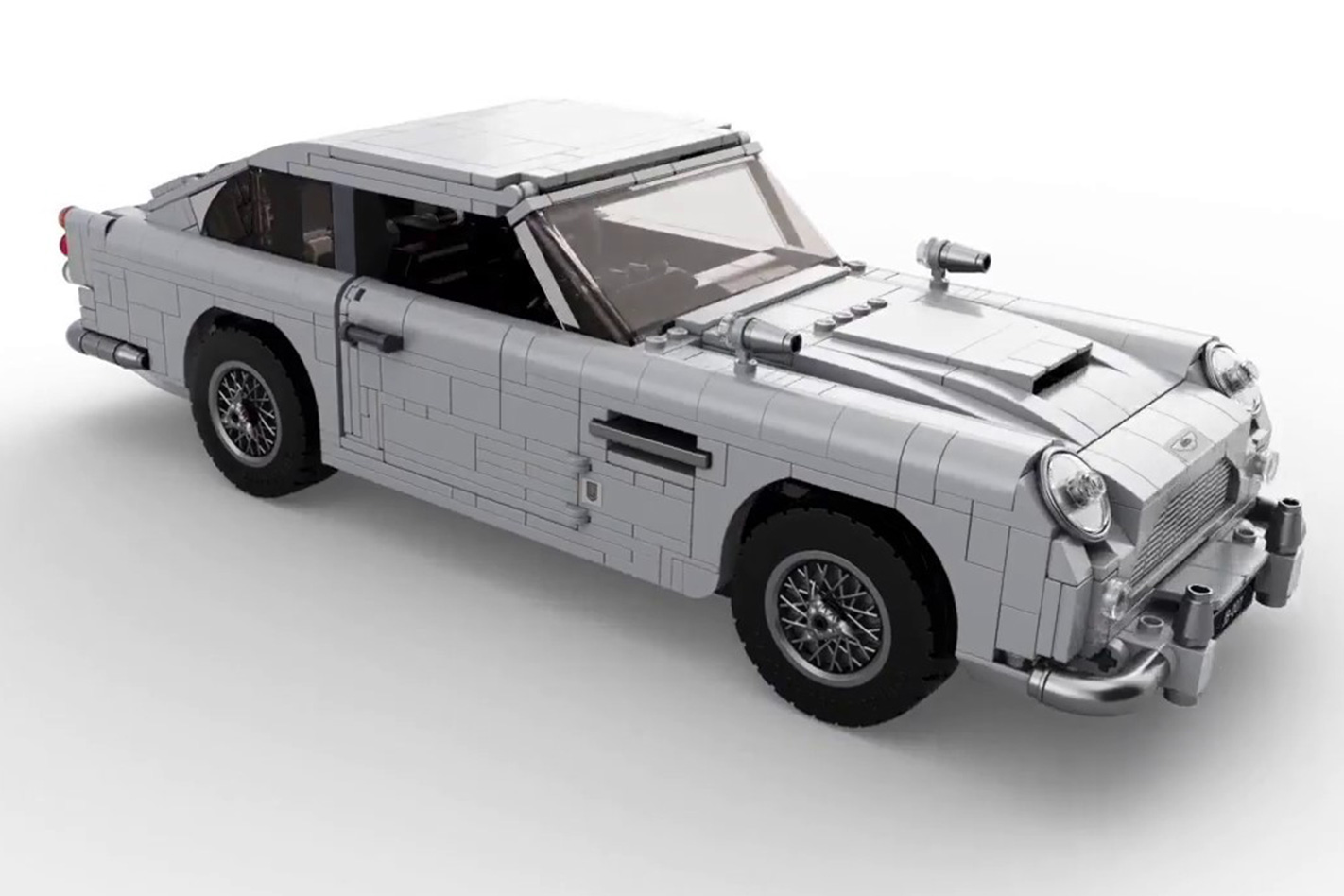
With Lego looking after the ultimate spy car, adding the appropriate cringe-worthy puns, flawless suits and groan-inducing advances to your version of Moneypenny are entirely up to you.
We get behind the wheel of the mid-spec Sport variant to better understand Kia’s smallest sedan offering.
TELL ME ABOUT THIS CAR
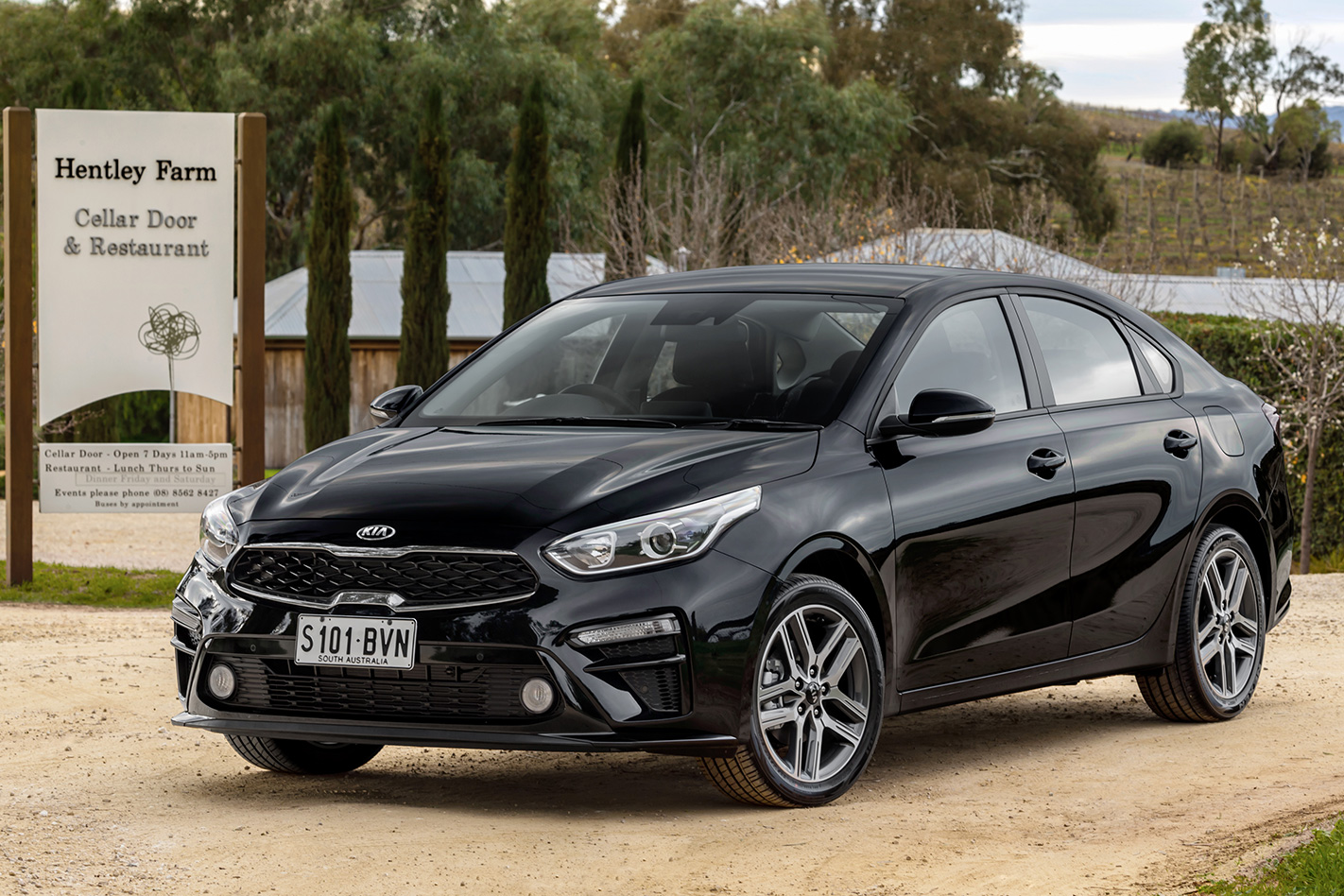
The fourth-generation Cerato sedan arrived in Australia about six months before the hatch version, which is due about the start of 2019. It comes armed with clever packaging and design and plenty of standard features including autonomous emergency braking. The Sport variant that’s the subject of this review sits between the entry-level Cerato S and the flagship Sport+ model grade, and retails for $21,490.
STRENGTHS
- Ride: The suspension fitted to the Cerato is a simple design that does a good job of providing a comfortable ride. Tuned by Kia Australia specifically for local conditions, the small sedan has a stable feeling in regular driving conditions, with a ride which impressive ride quality. For the car nerds, the Cerato is fitted with a basic MacPherson strut front, and torsion beam rear-suspension set-up.
- Luggage capacity: Despite being classed as a small passenger vehicle, the Cerato has luggage capacity that rivals medium, and even large, segment cars. Boot space has grown by 20 litres with this generation to a hefty 502 litres of seats-up hauling ability.
- Back seat: For rear occupants, the Cerato sedan is spacious, with generous leg and foot room, and nice visibility out of the windows for kids. Headroom is plentiful enough for tall adults to sit comfortably, while a fold-down centre armrest offers two cupholders.
- Interior: Cerato’s cabin is well designed and a marked improvement over the previous generation, with soft-touch materials, stylish circular air vents, and a silver horizontal trim piece giving an almost premium look to the dash.
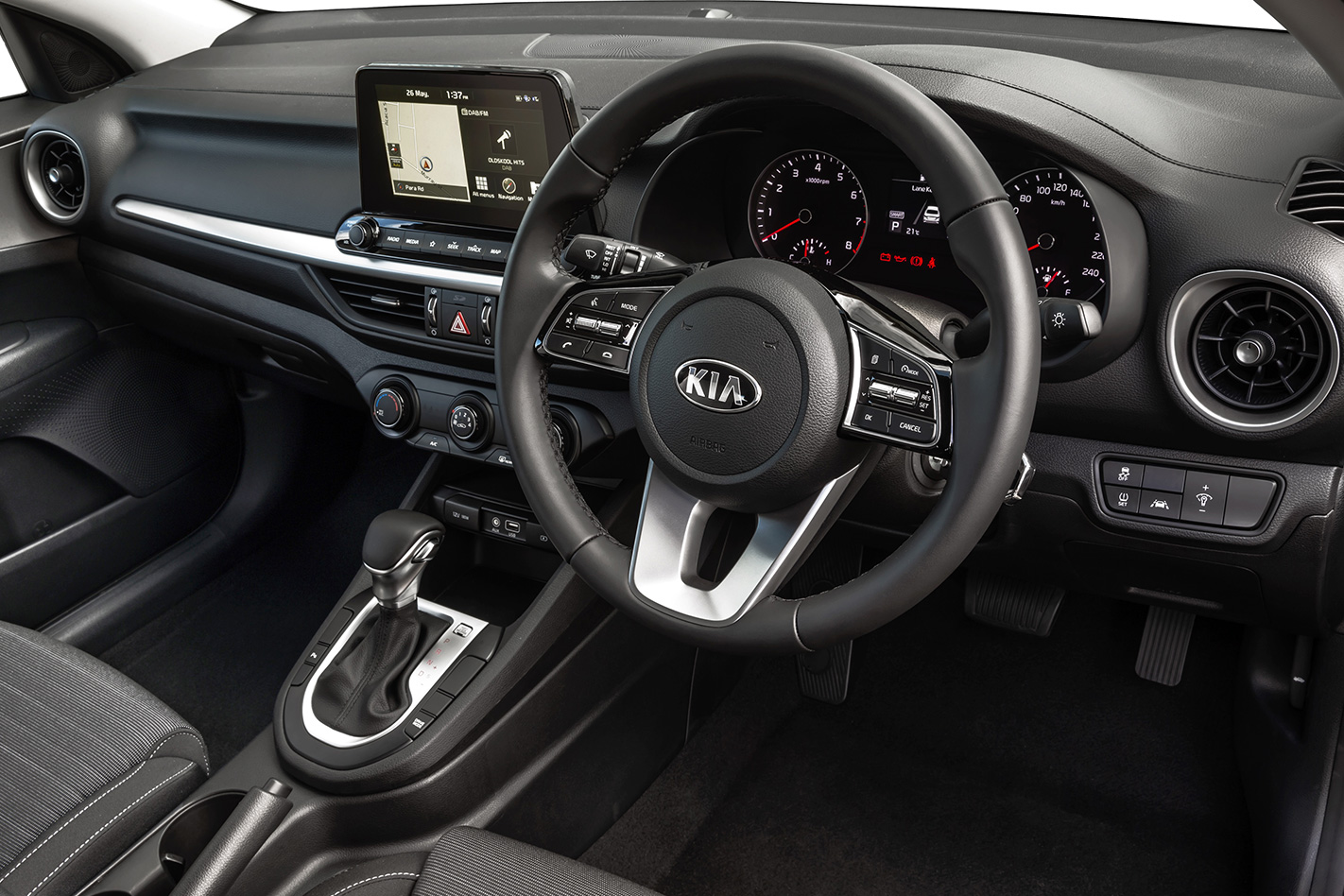
- Infotainment: A slick eight-inch tombstone-style centre tablet controls the Cerato’s infotainment, which includes sat-nav, and AppleCarPlay/Android Auto smartphone mirroring as standard. The system is clear and intuitive to use, with quick responses to touch inputs.
- Auto braking: The sport features autonomous emergency braking that detects, and prevents or mitigates a collision with a vehicle in front of your Cerato.
WEAKNESSES
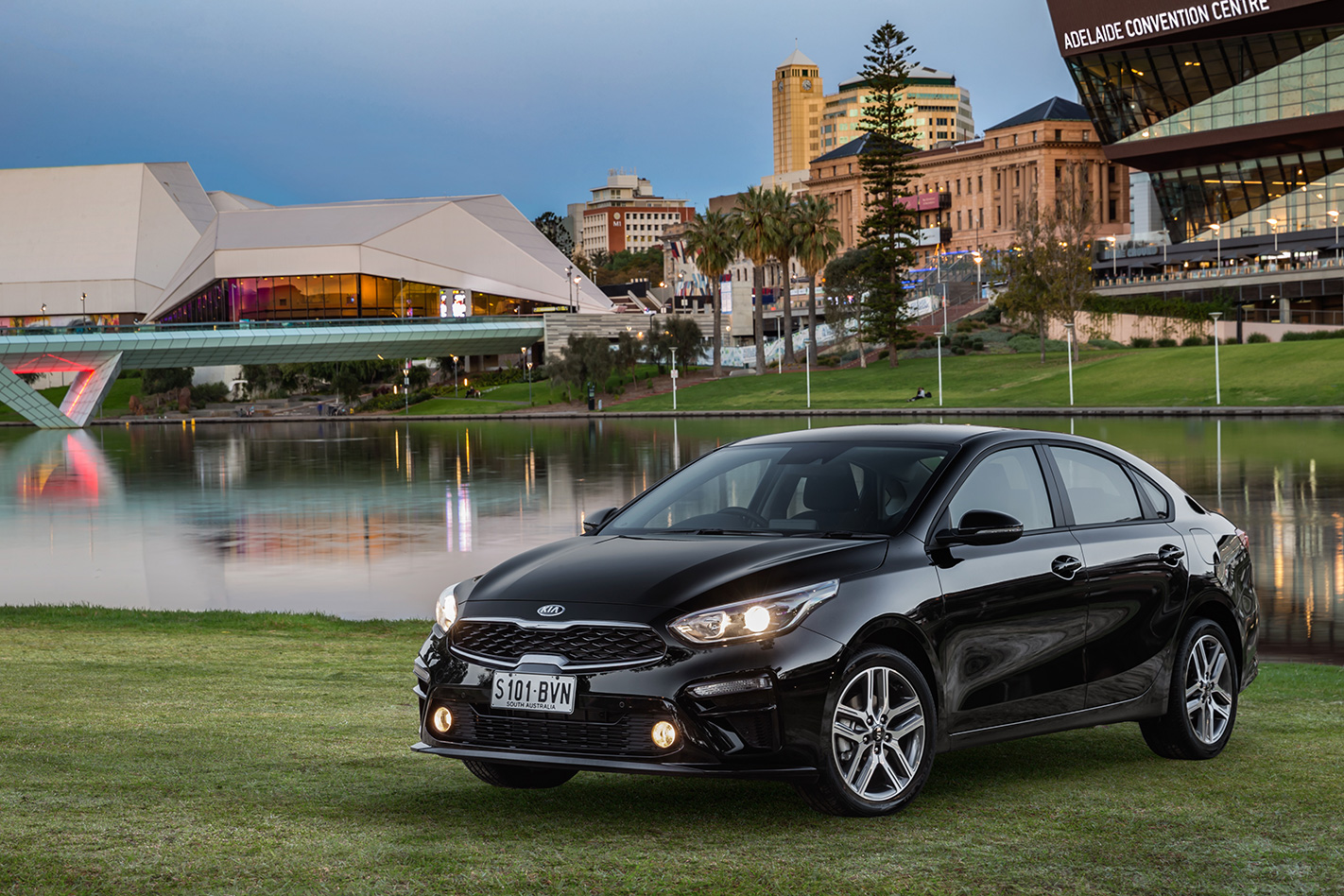
- Engine: Powering every Cerato is a 2.0-litre four-cylinder petrol engine which carries over from the previous model, making 112kW and 192Nm with a claimed combined fuel economy of 7.4L/100km. In Eco and Comfort driving modes it feels sluggish and lazy to respond to throttle inputs, while flips too far to the other extreme in Sport. While the standard six-speed automatic gearbox is well calibrated, the naturally-aspirated unit is thrashy, and feels overworked compared to some competitors.
- Advanced safety kit not standard: A more advanced Automatic Emergency Braking system which can detect pedestrians and cyclists is only available on the top-spec Sport+ variant. The Sport has AEB, but the system can only detect other vehicles, while the more advanced system is part of a $1000 option which also includes active cruise control, blind spot monitoring and rear cross traffic. This should be a ‘must-tick’ option for Cerato Sport buyers.
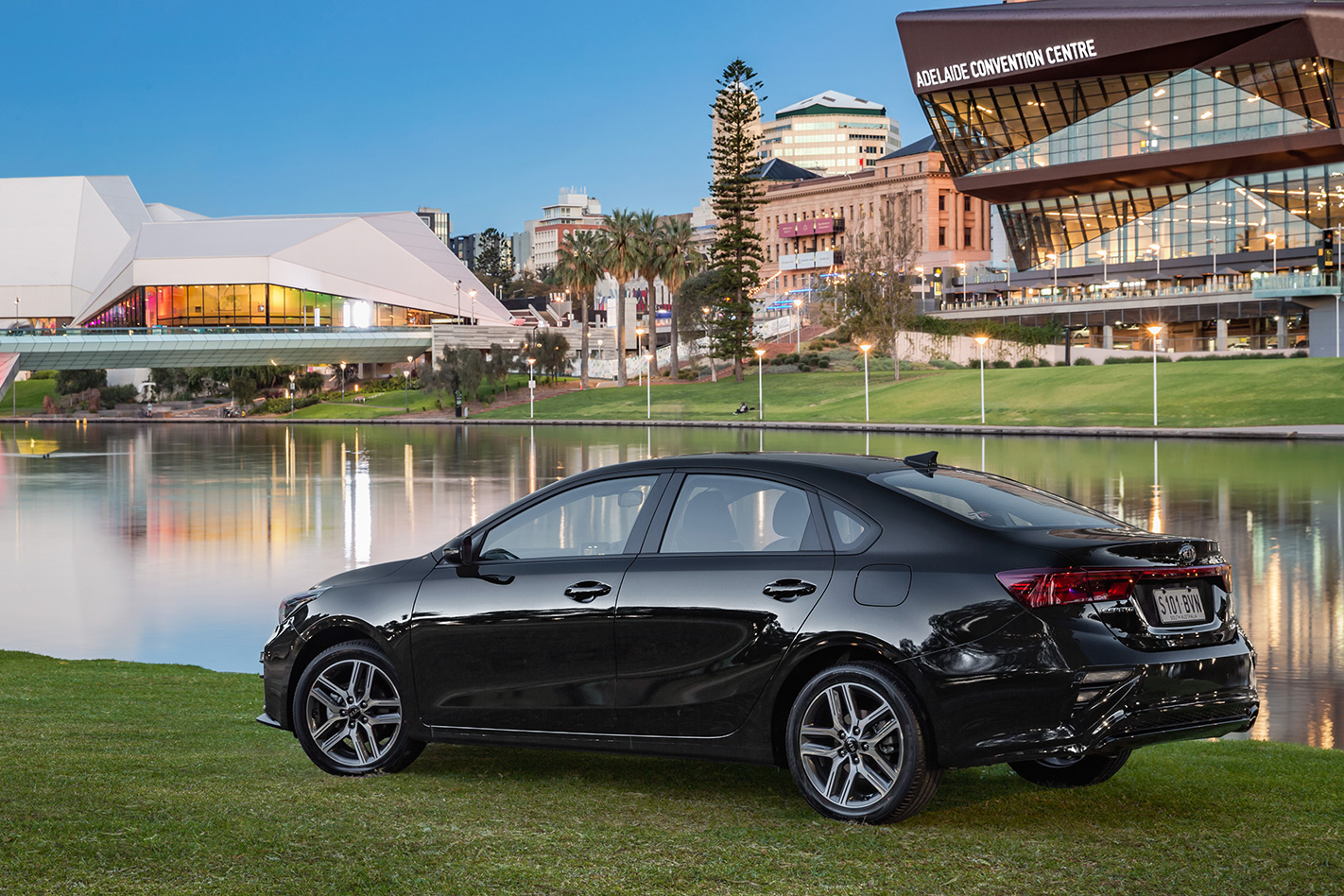
- Rear-seat passengers have to look at hard plastics on the back of the front seats, which have a taxi feel about them.
- The Cerato Sport lacks rear air vents, which are only available in the pricier Sport+.
Any other small sedans I should consider?
The Cerato Sport holds up well in terms of equipment and value against similarly priced rivals including the Hyundai Elantra Active, Mazda 3 Neo, Honda Civic VTi, Toyota Corolla Ascent, Holden Astra LS, and Mitsubishi Lancer LS.
After almost four years since the BMW i8 coupe’s release, the Roadster now blows into showrooms Down Under as the range welcomes more range, more power, and aerodynamic tweaks.
The update inflates the Coupe’s price by $15,500 to a total of $318,900 before on roads, which defines a $30K gap between it and the convertible, which is priced at $348,900.
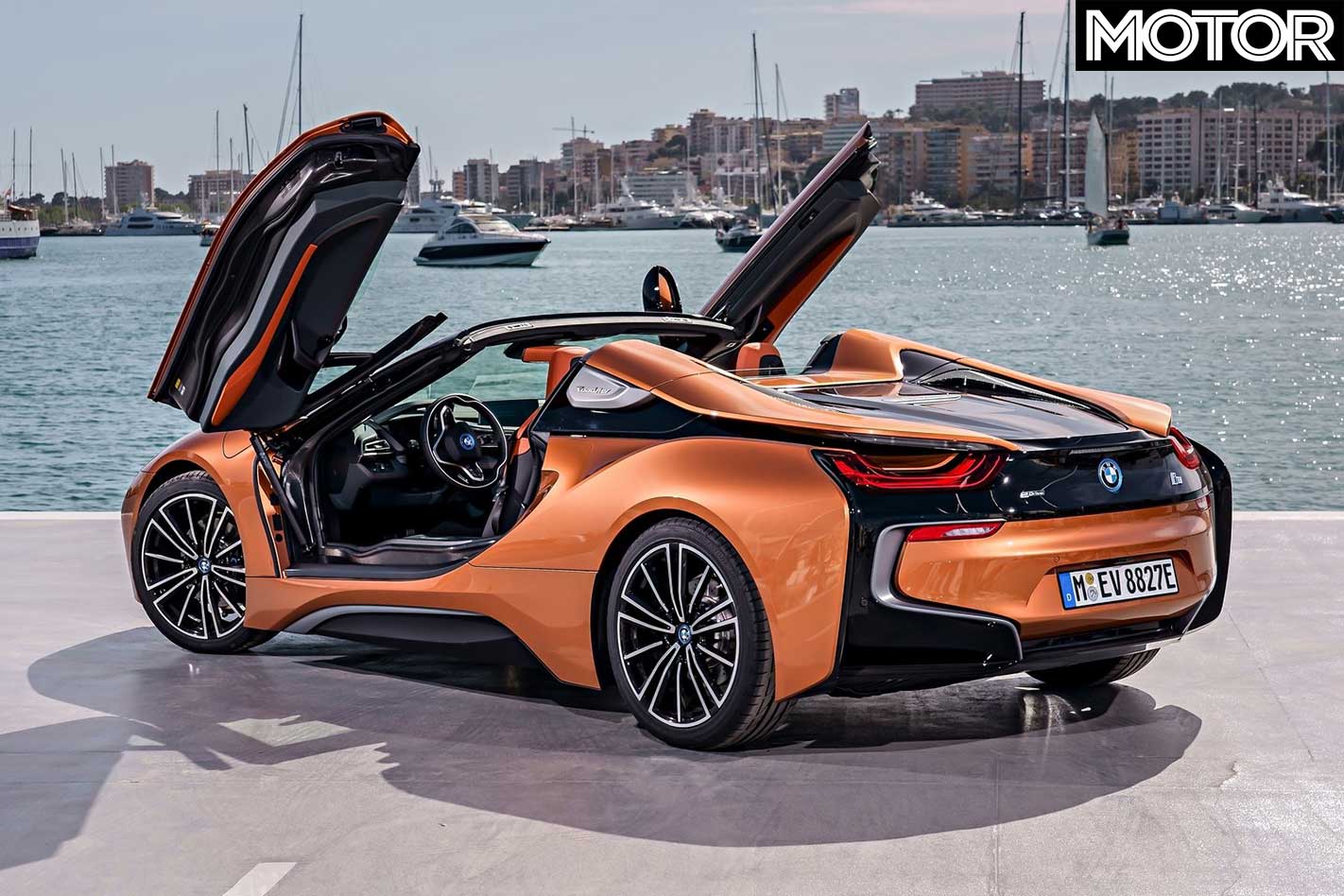
While we’ve already covered off the crucial mechanical differences between the coupe, convertible, and their predecessors in another article here, elsewhere its infotainment screen is now 10.25-inches (up from 8.8 inches) and uses iDrive 6.
Luggage space expands to 88 litres in standard form, while an optional ‘Travel’ package boosts that by 7 litres to 95 overall.
With a higher price comes lower sales targets for the roadster, which BMW says is 12 for the next year. This also means it positions the Roadster as more exclusive.
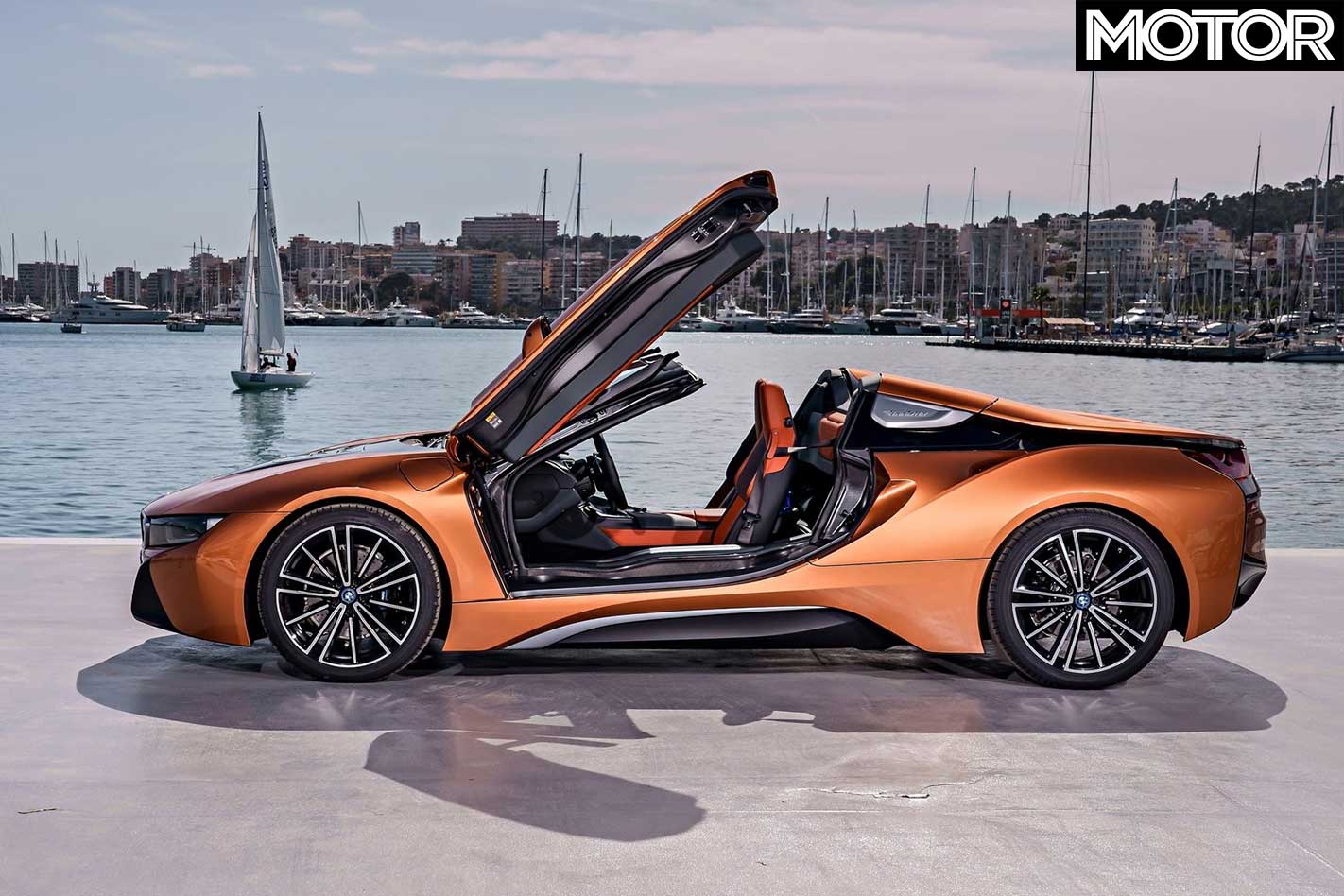
Allocation wise, Australia has surpassed BMW’s expectations for i8 coupe sales. Our appetite for 110 of the hybrid sports cars over the 3.75 years since its release equates to about one per cent globally.
It’s unclear as to how our roadster allocation compares to other global markets, however we understand the brand might find the sales figure as ambitious.
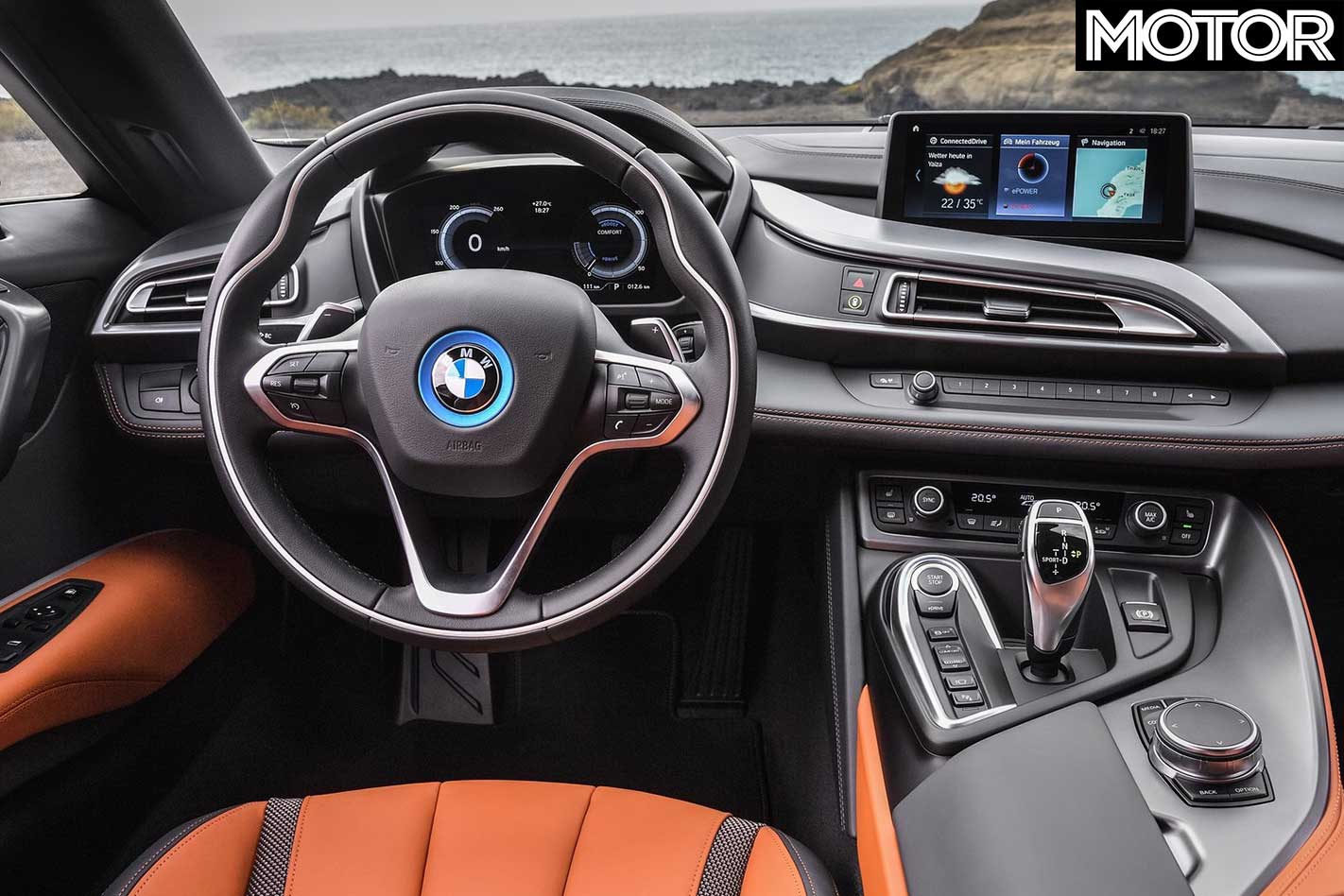
While the BMW i8 Roadster, with its hybrid drivetrain and eco-focused engineering, exists uniquely in the Australian market, its price will draw inevitable comparisons with the 911 Carrera 4 GTS Cabriolet, which asks $327,490 with a PDK transmission.
The Porsche’s 0-100km/h acceleration stands at 3.7 seconds compared to the I8 Roadster’s 4.6 seconds.
The order books for the i8 Roadster are now open with deliveries expected to begin as soon as the end of July.
THINK the BMW M5 Competition’s 460kW twin-turbo 4.4-litre V8 is about as far as the German car maker can push the road-going performance boundaries? Nope, it can dial it up even further, the car maker has revealed.
And it is all down to a “gentlemen’s agreement” between German performance brands, BMW says.
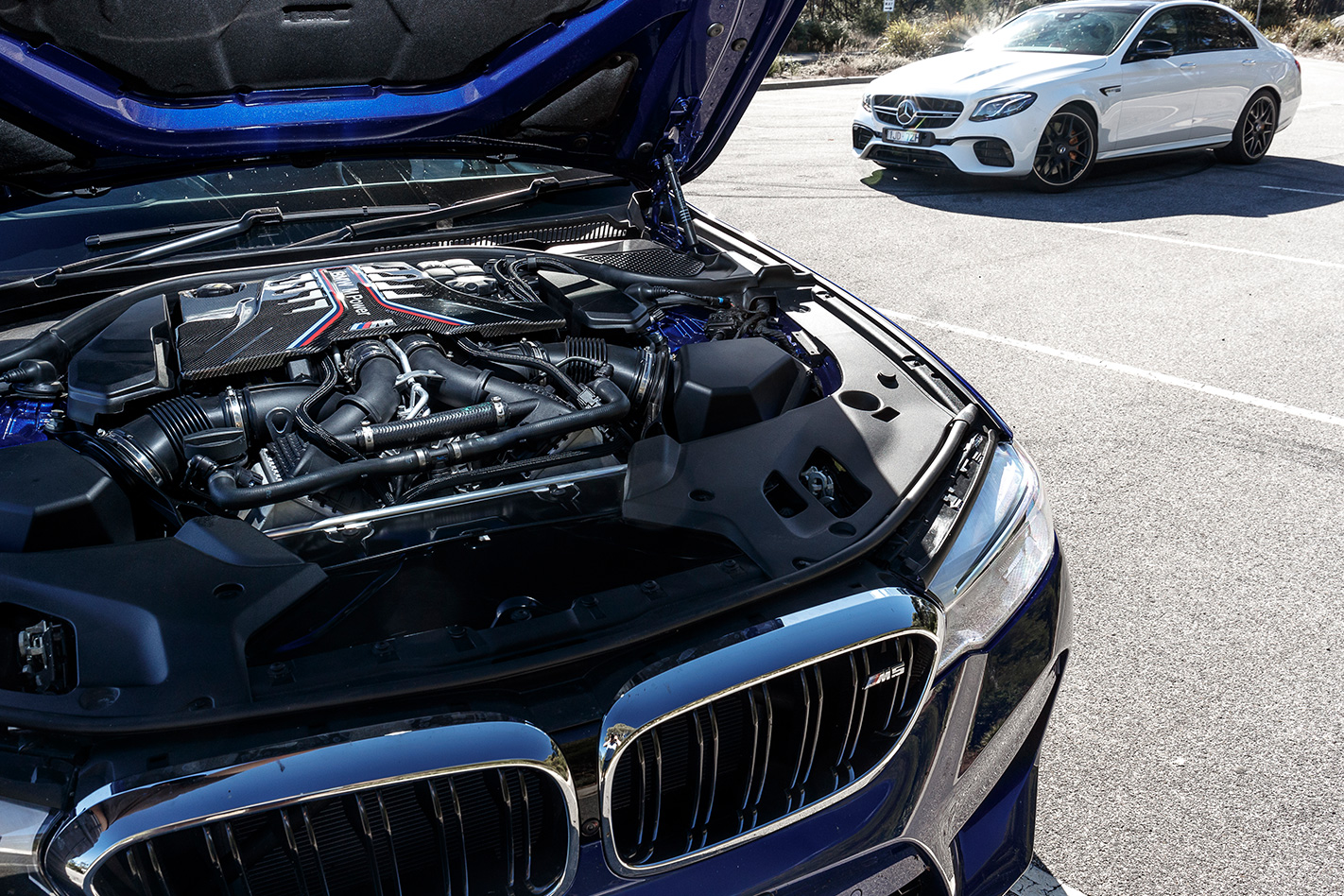
Andreas Klugescheid, BMW’s global vice-president of government affairs, said authorities had not intervened in Germany’s push to develop increasingly more powerful and performance-honed cars only because the brands producing them adhere to an unspoken rule that the cars are capped at a top speed of 250km/h.
If they didn’t do this, Klugescheid said, the regulatory framework that German car makers would need to adhere to could be quite different – by that, he means more restrictive.
“We have a gentlemen’s agreement that we don’t make the cars go faster than 250km/h, although you can get that taken off,” Klugescheid said. “I have a 550i, and when I’m doing 250km/h and I look down it’s only doing 2000rpm. It can go a lot faster than that.
“You also get cars like the Bugatti [Chiron] sold in Germany that has a lot more power and speed, and that’s okay.”
When asked if the voluntary speed cap was one of the main reasons the German government had not intervened to introduce performance benchmarks, Klugescheid simply replied: “Yes.”
BMW has brought a number of its German executives to Australia to meet with the Federal Government in Canberra today to talk about the possibility of providing incentives, such as transit lanes or free parking, for plug-in hybrid car owners.
It comes as the car maker introduces the i8 Roadster, a drop-top version of the petrol-electric plug-in hybrid i8 coupe, to Australia.
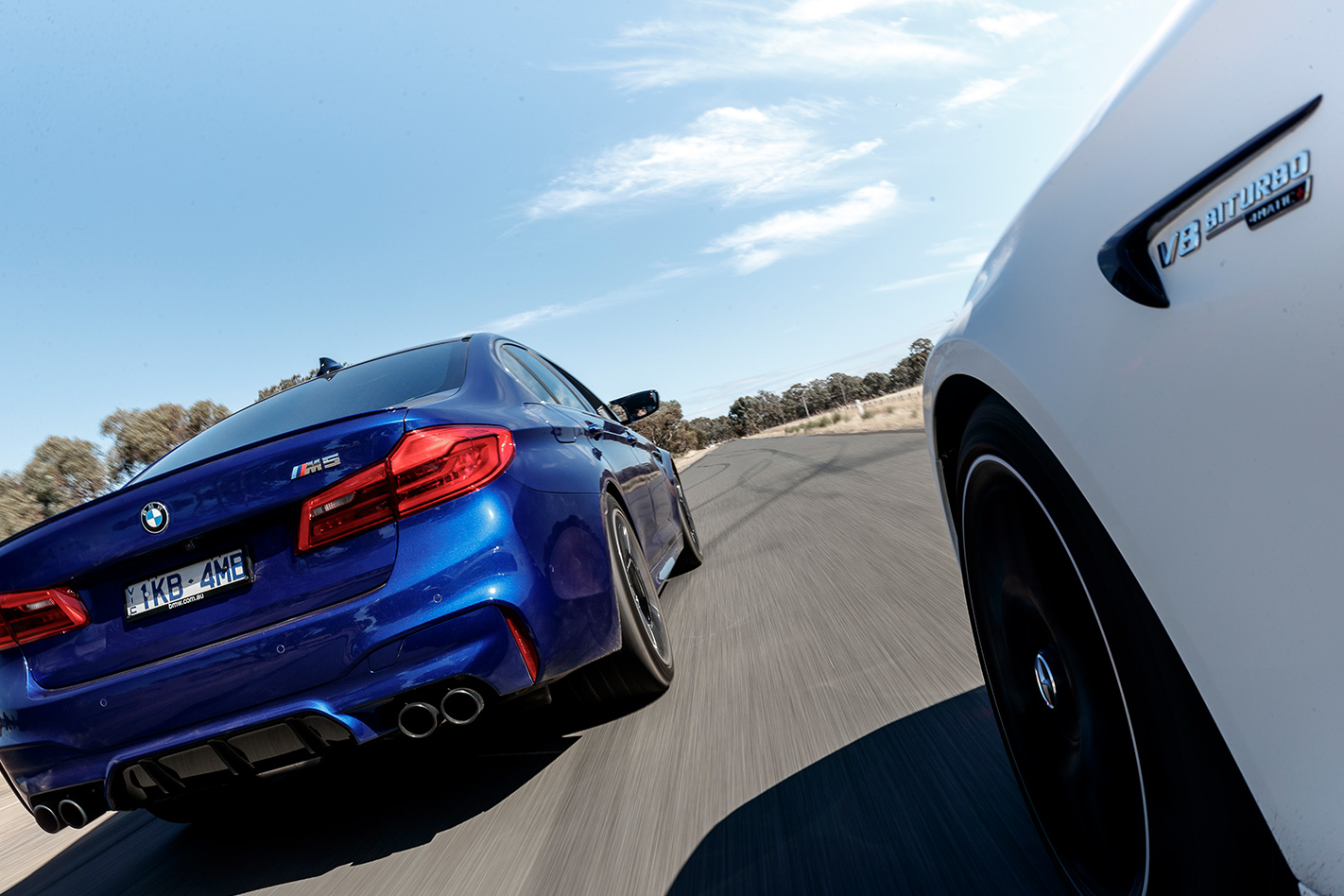
The i8 coupe has accumulated about 120 Australian owners since it went on sale here in 2014, and the drop-top version also flags a midlife makeover for the fixed-roof i8 – along with a price rise.
The i8 coupe jumps to $318,900, a rise of $15,600, but improvements include upping the i8’s twin electric motor/1.5-litre three-cylinder drivetrain’s combined output to 275kW, up from 266kW, while torque remains at 570Nm. The front axle-mounted electric motor keeps its two-speed gearbox, while the hybridised engine sends its drive to the rear wheels via a six-speed automatic.
Packing more energy density into the i8’s batteries has extended the i8’s official all-electric range to an estimated 55km. The top speed is electronically governed to 250km/h.
The retracting cloth roof on the $348,900 i8 Roadster, which stows in a vertical space behind the seats, will drop or cover the cabin in 15 seconds, and operates at speeds up to 50km/h. The folding roof also attracts BMW’s Travel Package that provides more storage around the cabin, and electric-adjust front seats.
A special feature on the i8 Roadster is a puddle lamp fixed to the scissor-lift door that projects the i8 logo on the ground.
Only 12 of the roadsters will make their way to Australia this year, with production for other markets taking priority ahead of ours.
Since its 2014 launch, the coupe has attracted about 120 buyers who mostly use the plug-in hybrid as a daily driver.
A top 10 place in this company is pretty good going, especially when you’re packing about a third of the horsepower of something like the Audi or the Infiniti.
This track review was carried out in conjunction with MOTOR’s Bang For Your Bucks 2018
Then again, at $25,490 even if the bang isn’t so huge, the bucks thing is even smaller (the smallest here, by a long chalk). It’s also a fact that the Swift Sport doesn’t feel bargain-basement. Quite the opposite, in reality, and that cabin looks and smells decidedly better than the price tag would suggest.
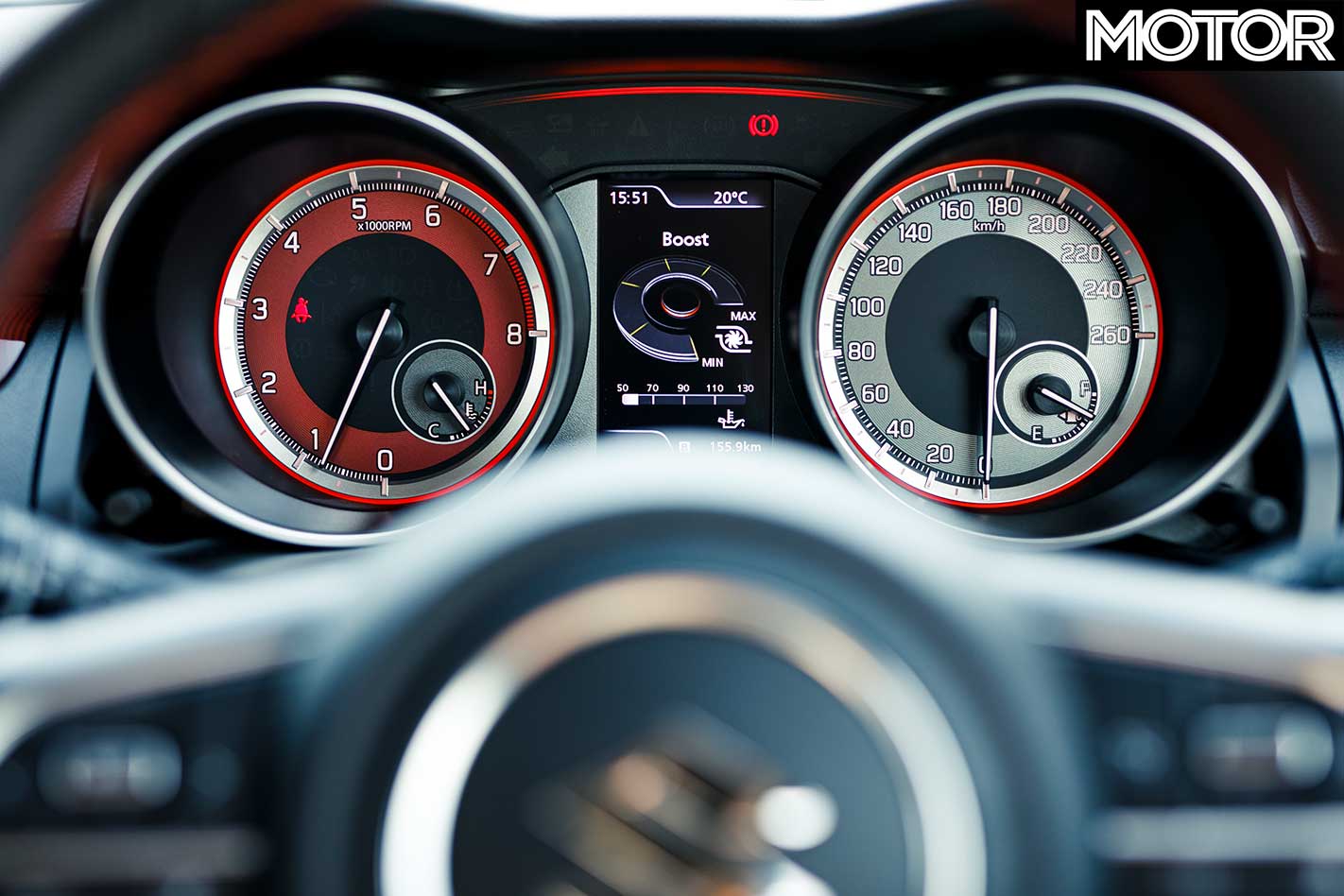
Around the Winton layout, that equated to the thing needing an extra 500rpm (or even a few more) just to keep it flowing on the gearing it’s blessed with. The overall short gearing is appreciated, but like many cars before the Suzuki, the tricky Winton footprint showed up that inability to hold a shorter gear for a tiny bit longer to get you to the next braking marker.
That slight shortness of breath is amply demonstrated by pretty much all the acceleration and lap-time numbers where the Suzuki finished motherless last, but when you look at the average speeds through the various apexes, that changes and the little Zook starts to come back into it. And for all the relative lack of go, there’s no such shortfall when it comes to whoa and the Swift pulled up very darn smartly.
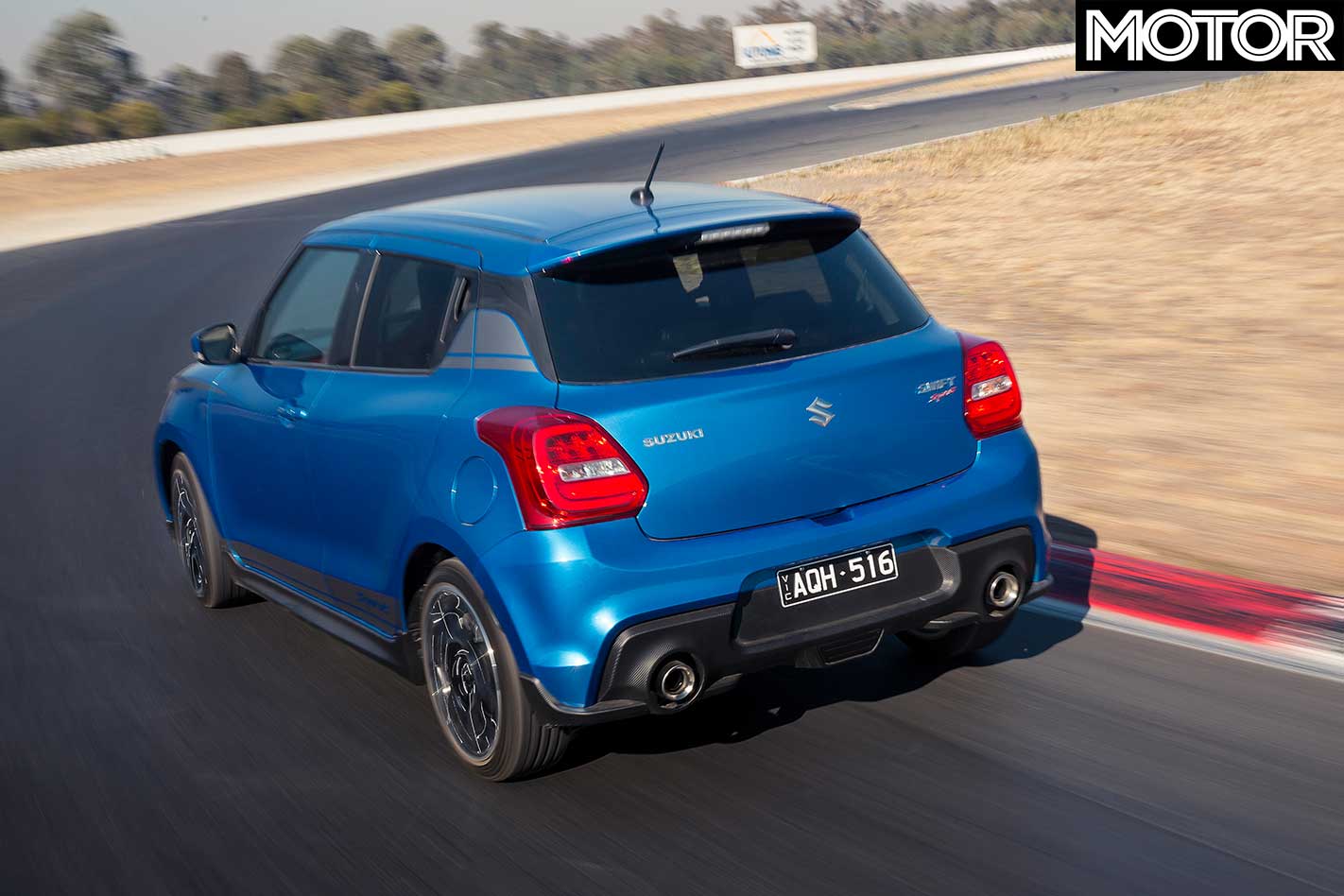
Pretty much all the judges agreed that there are a couple of things Suzuki could do to make big strides in a competition such as this. The first would – obviously – be to stuff some more power and torque into the thing. No brainer.
But the second, slightly more debatable statement was that the little bugger could use a front diff. Jumping straight from the driver’s chair after a few laps, that much appears obvious, but then, when you hold the Swift’s strong points up to the light, it isn’t corner speed that lets it down. So who knows; maybe a diff wouldn’t make too much difference until you sort out the rest of the performance deal.
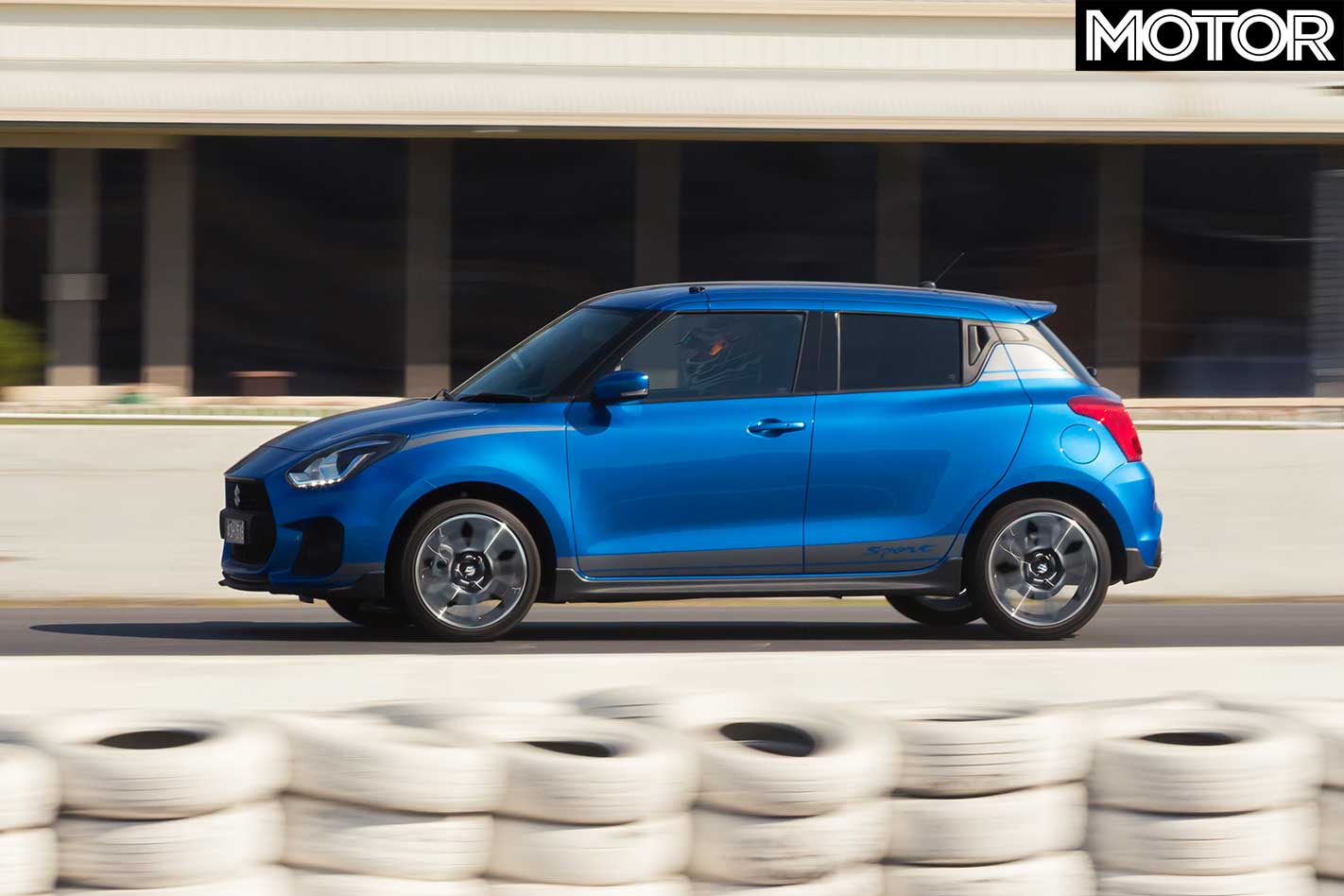
As it is, though, there’s plenty of body-roll and slides for the taking which seems like fun for a while until you try to stay with one of the big kids in the grown-up cars. At which point the Suzuki reveals that even though it’s a fun road car, as a track-day wannabe it’s got some work to do.
Suzuki Swift Sport BFYB 2018 Results – 10th place
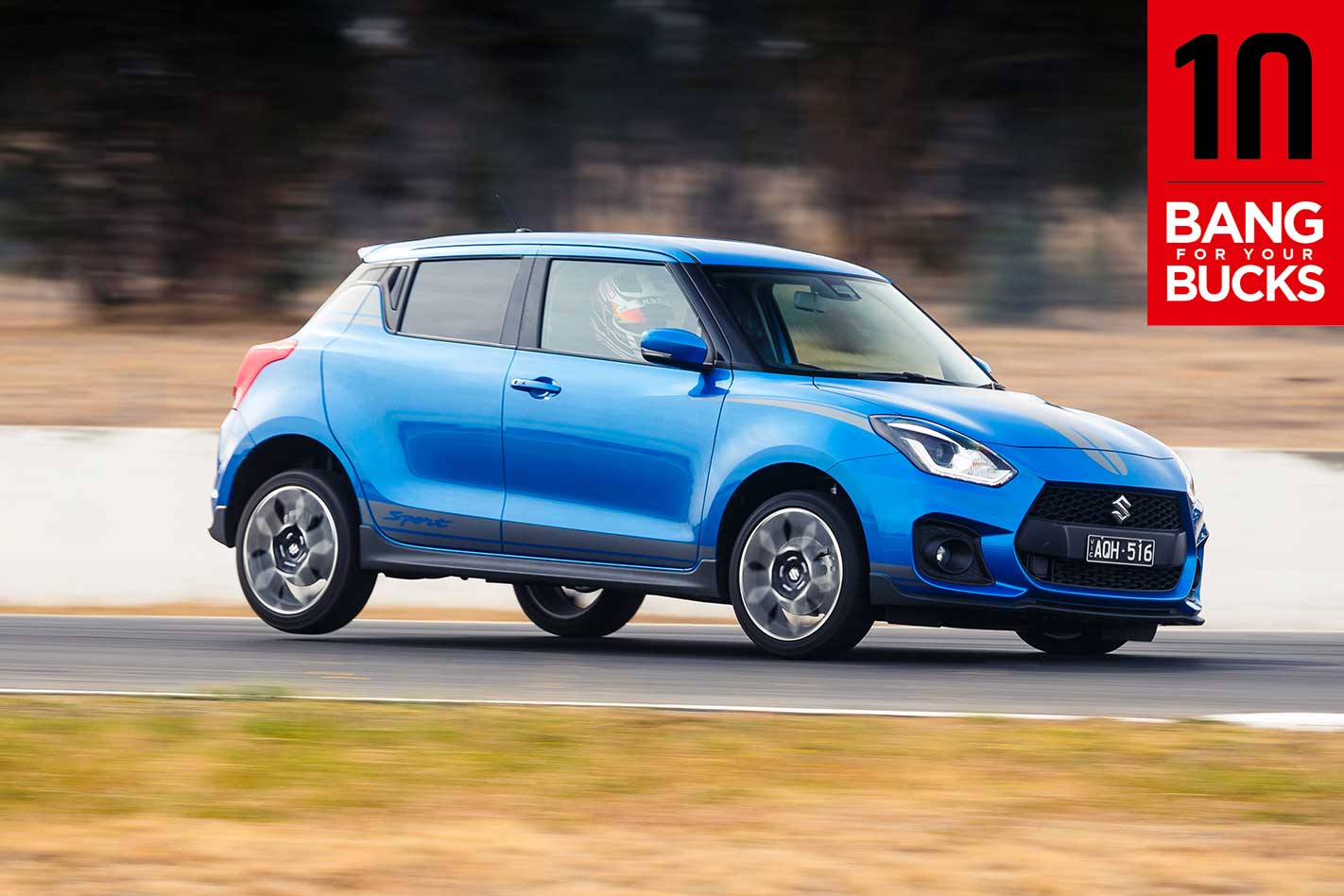
0-100km/h: 7.86sec (15th) 0-400m: 15.72sec @ 146.50km/h (15th) Lap Time: 1:44.60sec (15th) Price: $25,490 Bang Index: 52.1 Bucks Index: 197.0 BFYB Index: 117.3
Judges’ Comments
Warren Luff – 13th “So many hot hatches over the years have grown up and got bigger, heavier and loaded with electronics. But the Swift is still that fun little thing you want to throw around. Its mid-corner speed is really good, but obviously it’s going to lose out on the straights. Still, through all the twisty stuff at Winton it’s a match for any car here. You can feel it wheel hike and do all the things you’d expect a small hot hatch to do. Straights are its greatest enemy.”
David Morley – 12th “Is there anything more fun at this price?
Dylan Campbell – 9th “What a great little car. A body-rolling bundle of fun”
Scott Newman – 10th “Its flaws on track becomes virtues on the road”
Louis Cordony – 7th “It is as tiny and chuckable as a terrier. Good thing”
FAST FACTS 2018 Suzuki Swift Sport
BODY: 5-door, 5-seat hatch DRIVE: front-wheel ENGINE: 1373cc inline-4, DOHC, 16v, turbo BORE/STROKE: 73.0mm x 82.0mm COMPRESSION RATIO: 9.9:1 POWER: 103kW @ 5500rpm TORQUE: 230Nm @ 2500-3000rpm WEIGHT: 970kg POWER-TO-WEIGHT: 106kW/tonne TRANSMISSION: 6-speed manual SUSPENSION: struts, coil springs, anti-roll bar (f); torsion beam, coil springs, anti-roll bar (r) BRAKES: 285mm ventilated discs, single-piston calipers (f); 252mm ventilated discs, single-piston calipers (r) WHEELS: 17.0 x 6.5-inch (f/r) TYRES: ContiSportContact 5 195/50 R17 (f/r) PRICE: $25,490
Bang For Your Bucks 2018
The Contenders, Judges & Criteria
15 of the hottest new fast cars under $100K roll up to take on our famous formula. Which will be number 1?
UNTIL recently, the idea of a successful full-electric motorsport series was a killer joke you’d tell at the pub, but now, thanks to Formula E, battery powered racing categories are beginning to proliferate and become a reality.

While solely electric racing categories total just one at this stage, there are two new series which, if all goes to plan, will make their debut before the year’s end.
The first is Electric GT, a hopeful category which has attracted a healthy dose of scepticism due to its prolonged development following its announcement in early 2016, but that scepticism is matched by hesitant excitement, with the category claiming some terrific performance figures.
Using a homologated Tesla Model S P100D, the series hopes to launch later this year with each round consisting of two 60km races, one of which will be held at dusk.
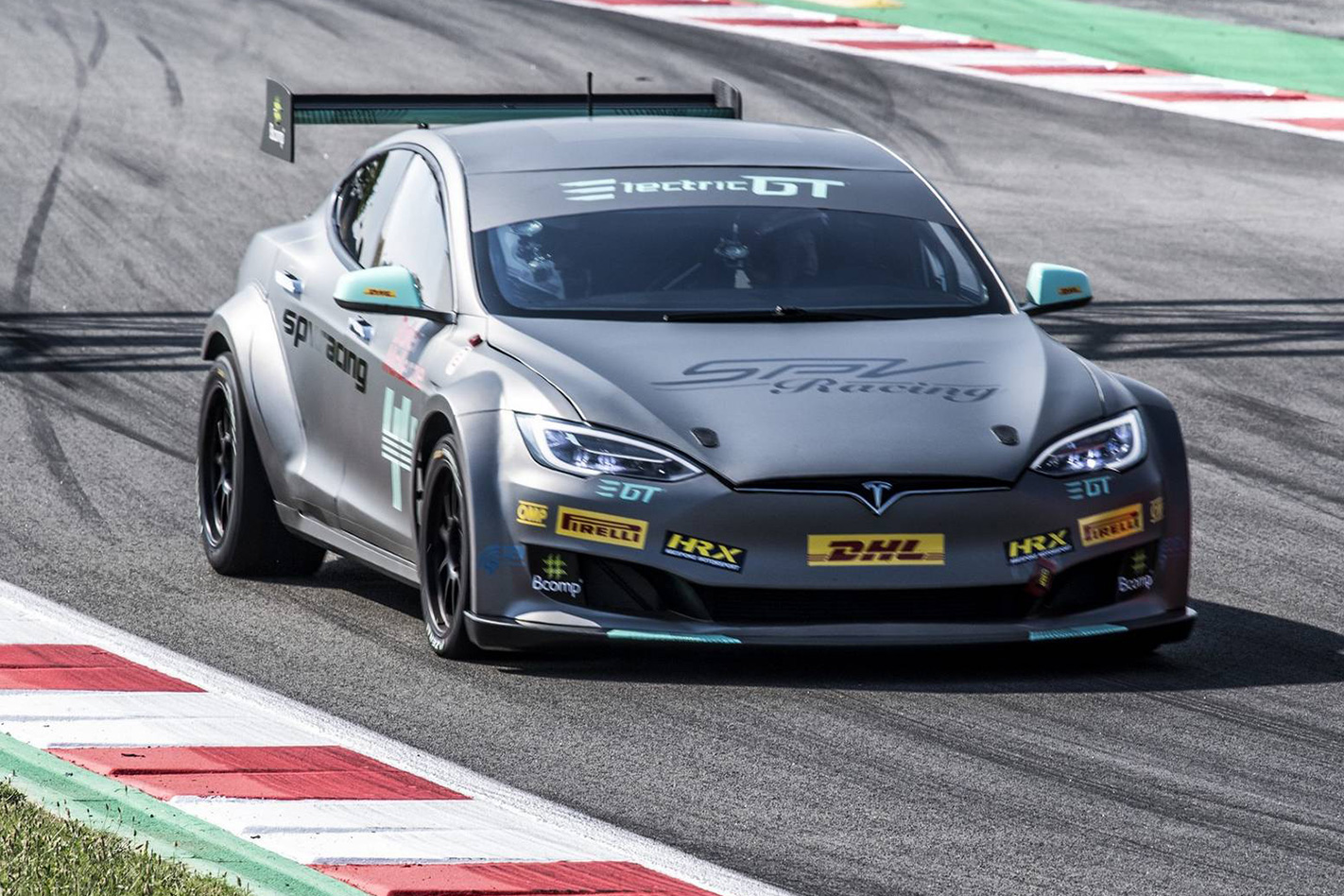
For the first season, Electric GT claims the cars will produce 585kW from a 100kWh battery, cracking 100km/h in 2.1 seconds, before topping out at 250km/h. For the next two seasons the same power figures will be used, with modifications to the Tesla’s braking systems and aerodynamics.
However, by season four, Electric GT claims it will feature 825kW monsters which use a 140kWh battery pack to accelerate to 100km/h in 1.7 seconds, and be capable of reaching a 380km/h top speed.
The claims are part of the category’s ‘five year technical road map’, but whether the series can last its full season remains uncertain with funding still hanging in the balance and multiple delays in developing the first homologated Model S.
Two other electric touring car categories are more likely to be making waves before Electric GT’s 825kW beasts become a reality.
The first is Jaguar’s I-Pace eTrophy – a one-make series which will go live later this year on the supports bill of Formula E’s fifth season.
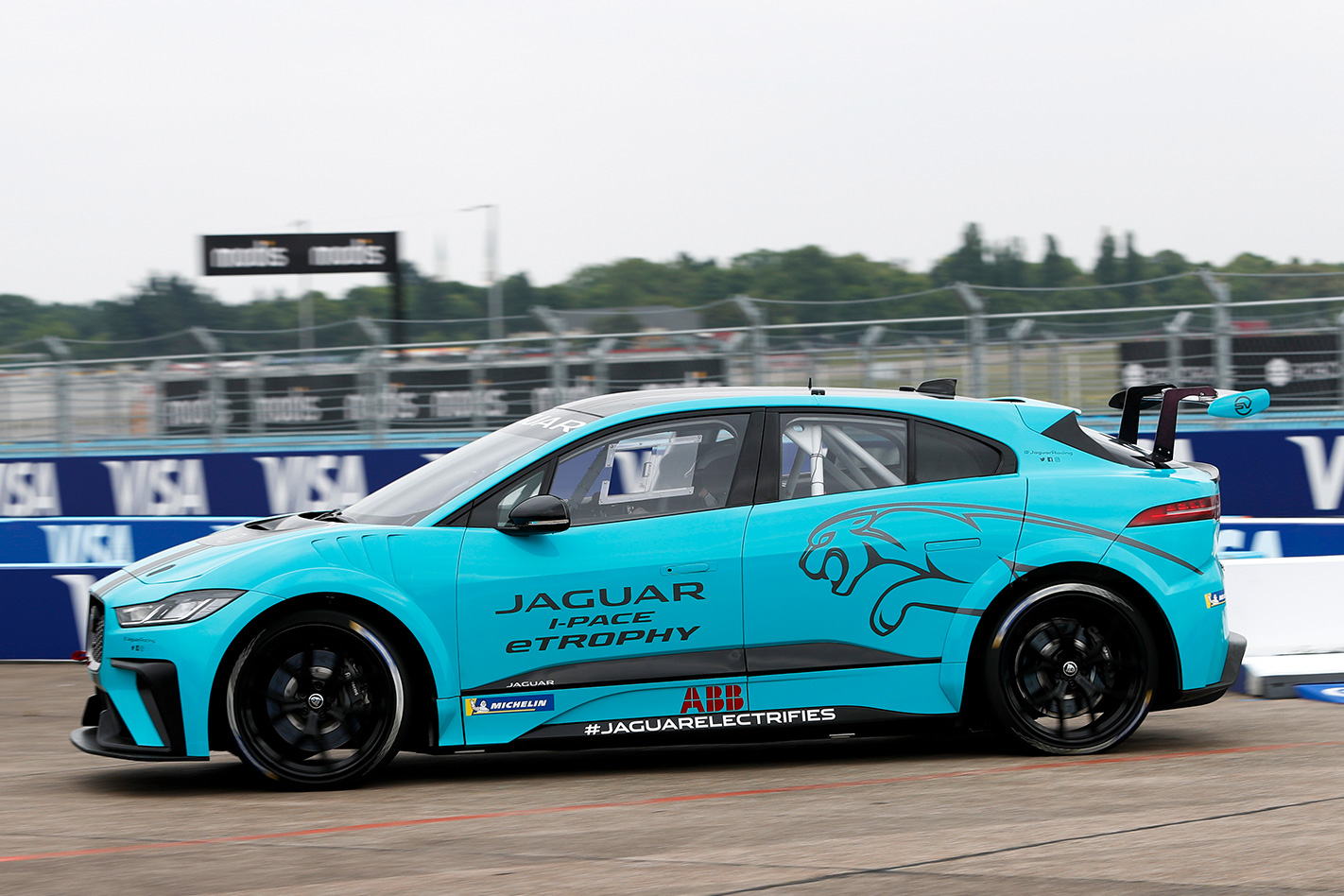
The category has been created for amateur ‘gentlemen drivers’, with Jaguar providing ‘arrive and drive’ packages in 20 identical I-Pace race cars. The field of paying customers will be joined on the grid by a different VIP driver at each round.
Jaguar will build the I-Pace race cars at the Jaguar Land Rover Special Vehicle Operations (SVO) in Warwickshire, UK, and will be based on the production car, with specific technical data thin on the ground at this stage.
Jaguar says a typical race weekend for the eTrophy will consist of free practice, qualifying sessions, and a 30-minute race.
If single make racing is just a little one-dimensional for you, how about this for some more variety in your zero-emissions battles?
WSC Group is the company behind TCR (Touring Car Racing) which has become the category the FIA has placed at the top of the global touring car tree. WSC Technology is a subsidiary of WSC Group, and earlier this year revealed its eTCR concept for a fully-electric touring car championship.
eTCR racers will be four- or five-door production touring cars, much like the existing TCR series, but instead of traditional combustion engines and transmissions, will use a single-gear rear-drive transmission mated to a common supply package which includes the motor, 65kWh battery pack, and inverters.
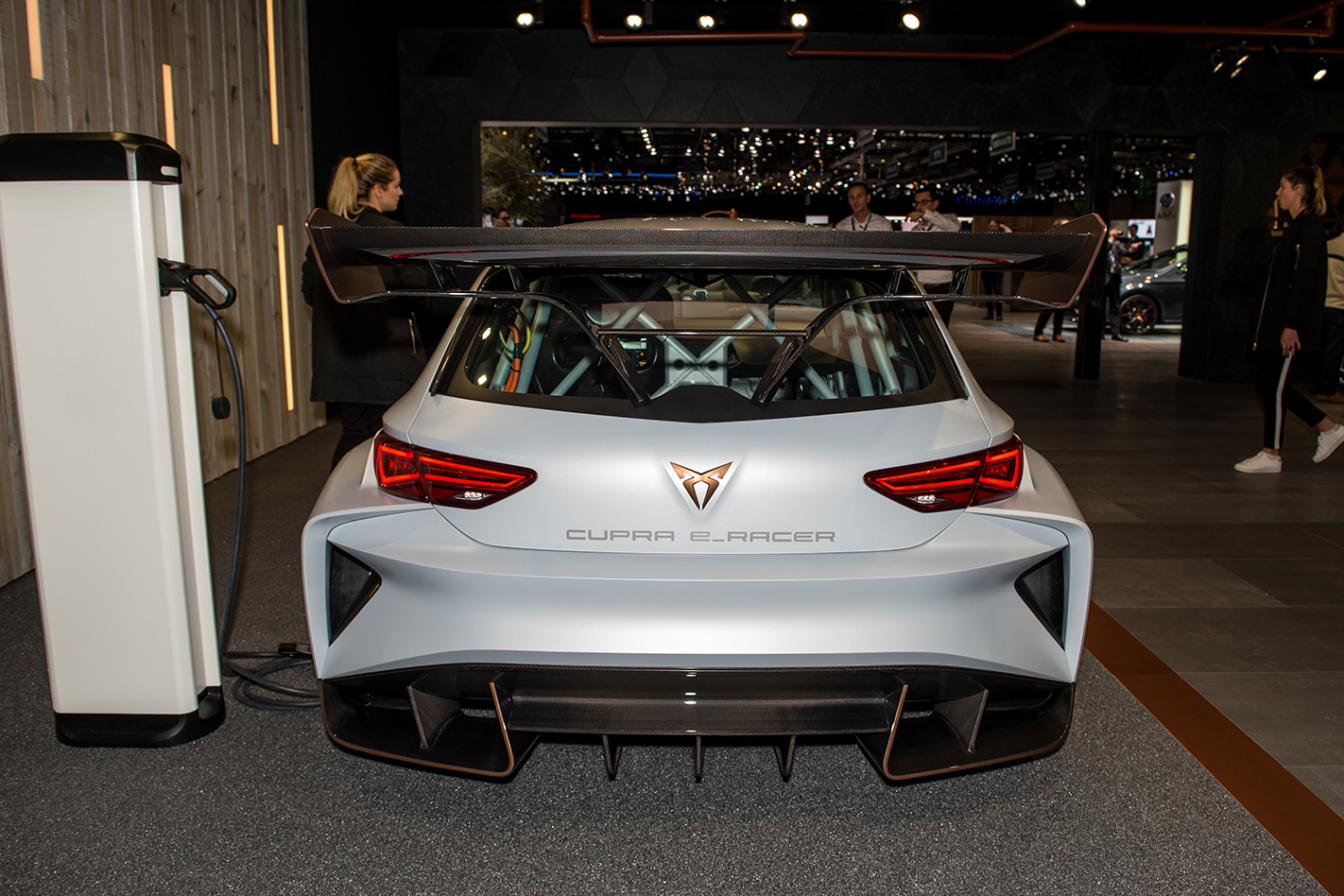
SEAT has fully embraced the idea, building a Cupra e-Racer concept for the category which is capable of producing 500kW of power.
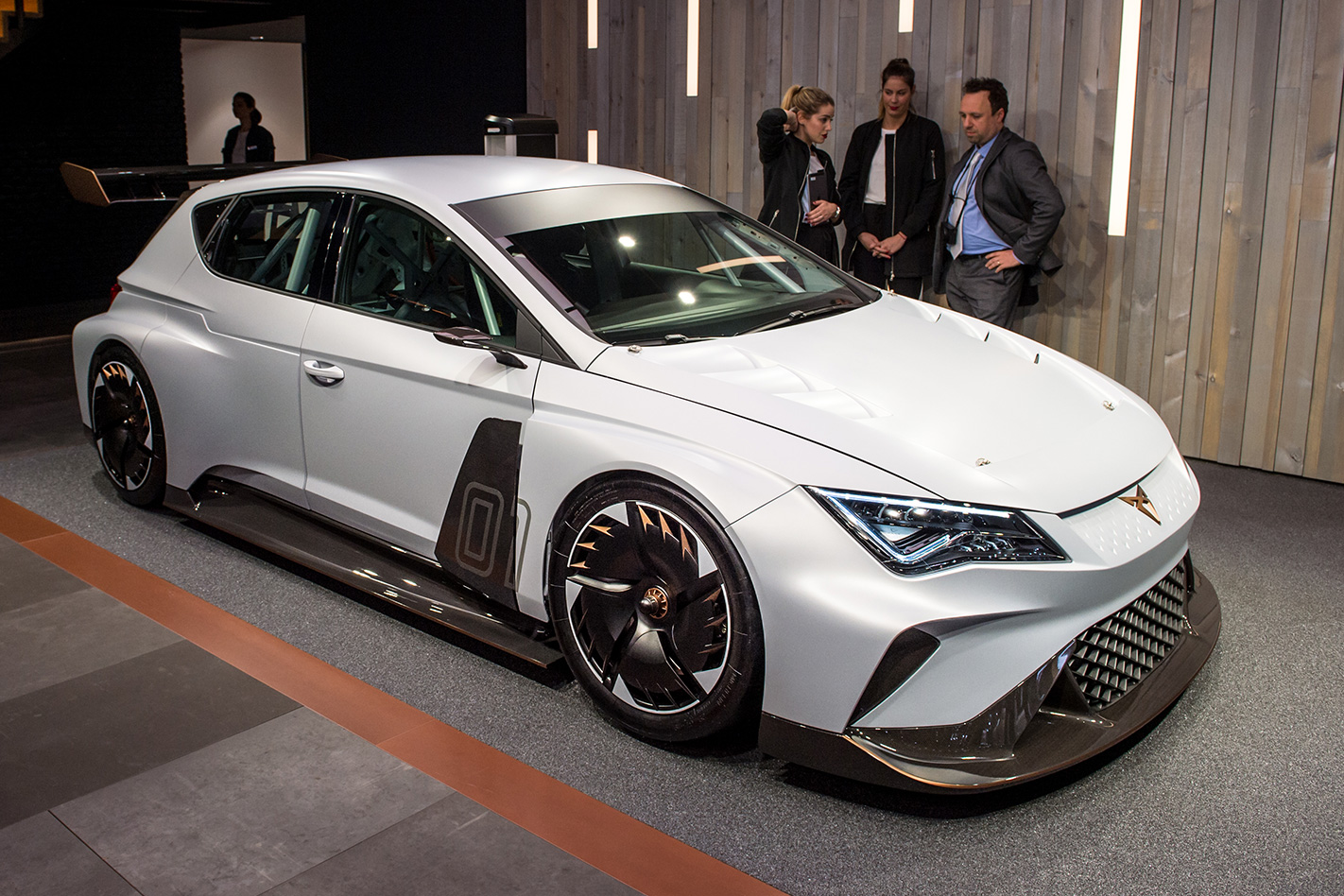
WSC Technology has stated it plans to organise “promotional and media events” before officially launching the series.
Moving away from the tarmac is the FIA World Rallycross championship which has confirmed it will be fully electric by 2020.
UK publication Autosport reported earlier this year the series is likely to use a common carbonfibre monocoque tub and safety structure, which will include suspension and braking systems, with a tender currently in place for the battery supplier.
While each of these categories are developing their first-generation cars, Formula E’s its Gen2 racer is poised to make its racing debut later this year, which is faster and more powerful than the original vehicle, and removes the need for a mid-race car swap.
Lucas di Grassi, a former series champion, and development driver for the all-electric championship believes the Gen3 cars need to accelerate from 0-200km/h faster than a Formula 1 car. That’s a while off just yet, but the electric racing revolution is coming, whether we like it or not.
THE Mazda CX-8 and the Volvo XC40 – the first two cars to experience the Australian crash safety watchdog’s now much tougher assessment process – have both earned a top five-star rating.
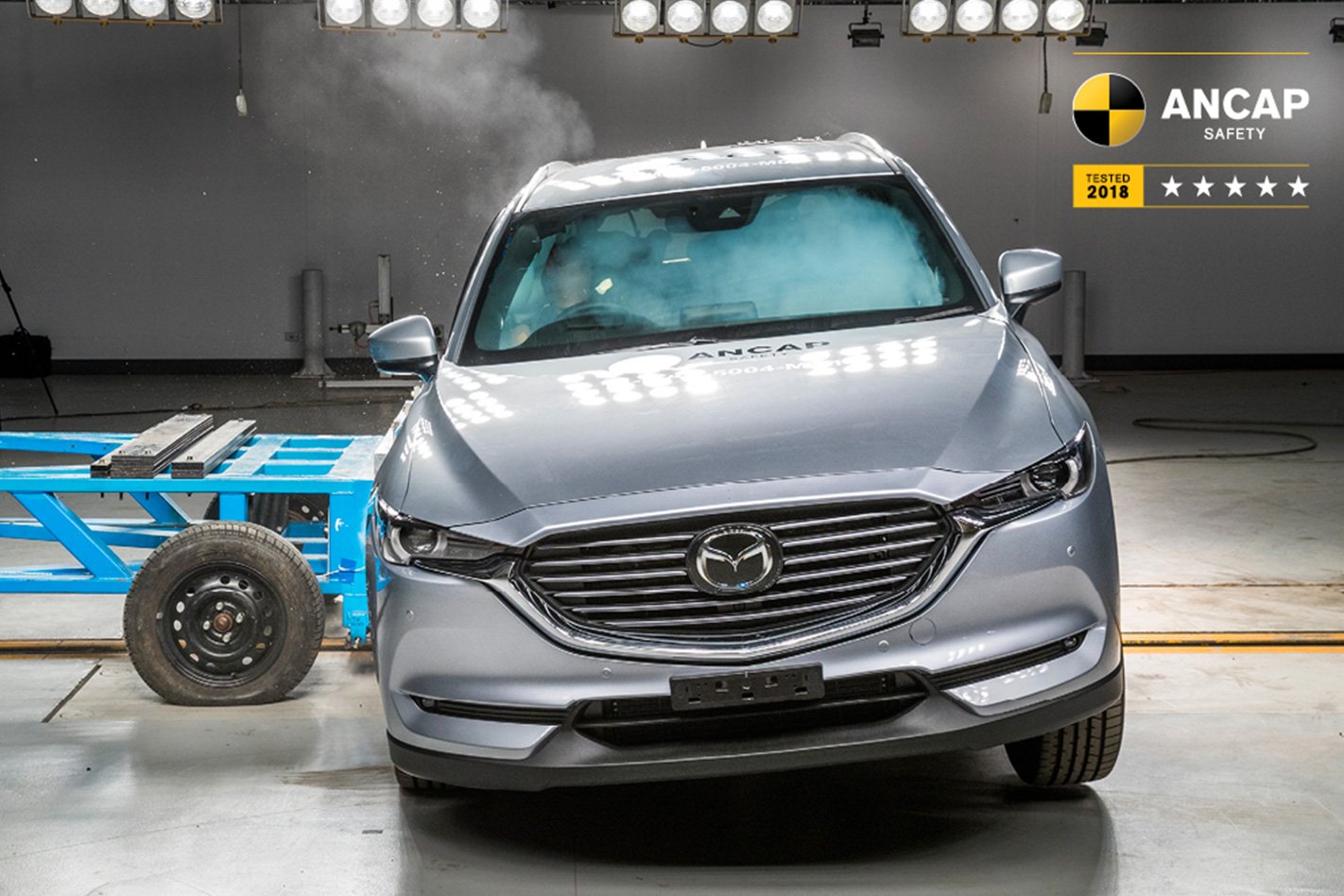
The Australasian new Car Assessment Program today announced both the CX-8 – a diesel-engined seven-seat SUV that’s only sold in two markets; Japan, and here where it is offered as an alternative to the petrol-engined Mazda CX-9 – and the Volvo XC40 compact SUV had become the first locally assessed cars to pass tougher assessment criteria introduced earlier this year.
The Volvo XC40’s score was assessed using data provided by ANCAP’s continental partner, EuroNCAP, while the CX-8 was crash-tested in Australia last month.
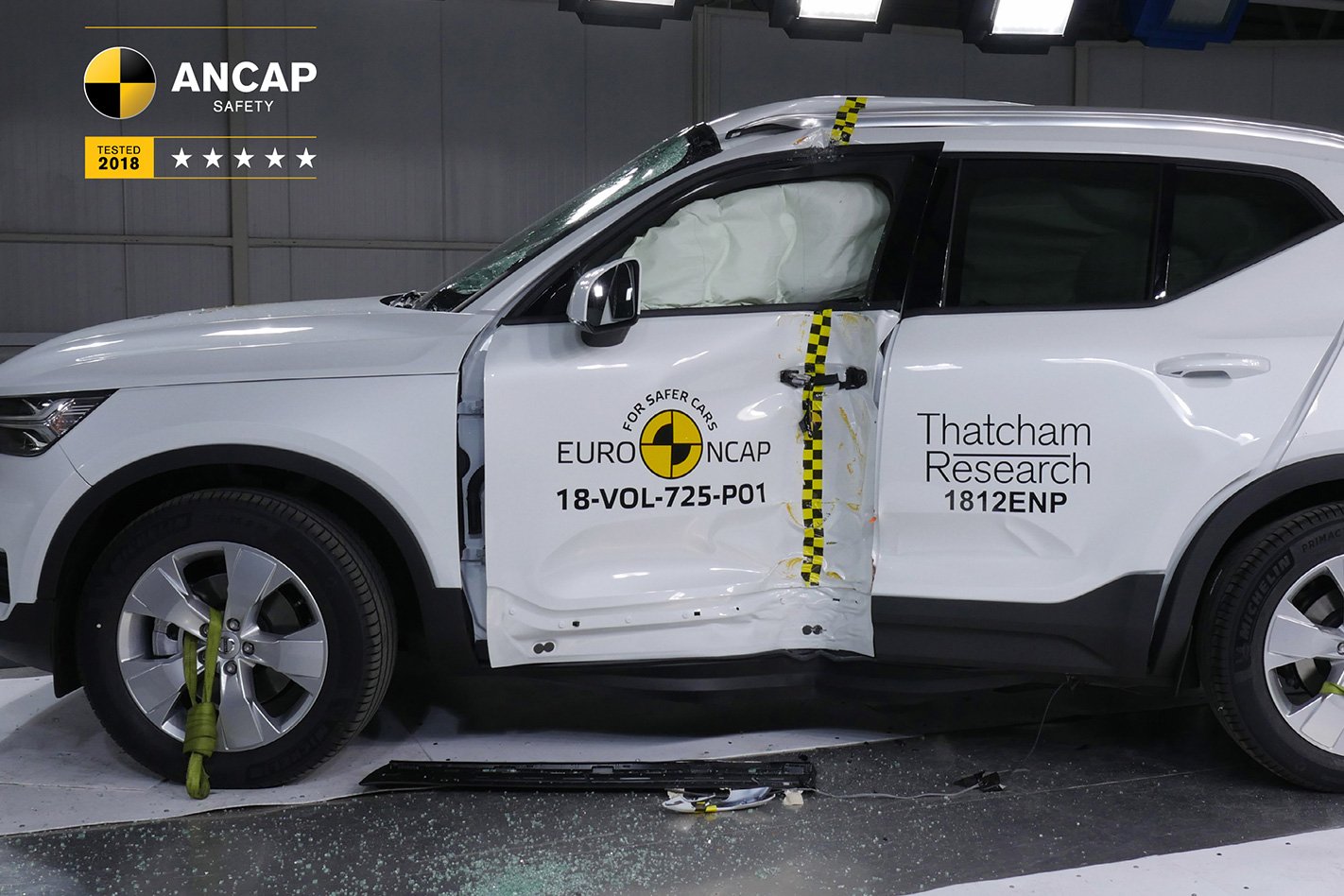
“The hurdles have been raised significantly for vehicles tested from 2018,” ANCAP chief executive James Goodwin said.
“We now test and rate against four key pillars of assessment, and across these we have implemented a range of enhancements to encourage vehicle manufacturers to improve the active and passive safety elements of their models,” he said.
“Most notably, we’re looking at the performance and effectiveness of active safety assist technologies, and the ability of a vehicle to protect a broader range of occupants, including children and females.”
The emphasis on children includes how well child restraint systems integrate with the cars being assessed. Crash-test dummies representing children aged either 6 or 10 years are now included in the assessment.
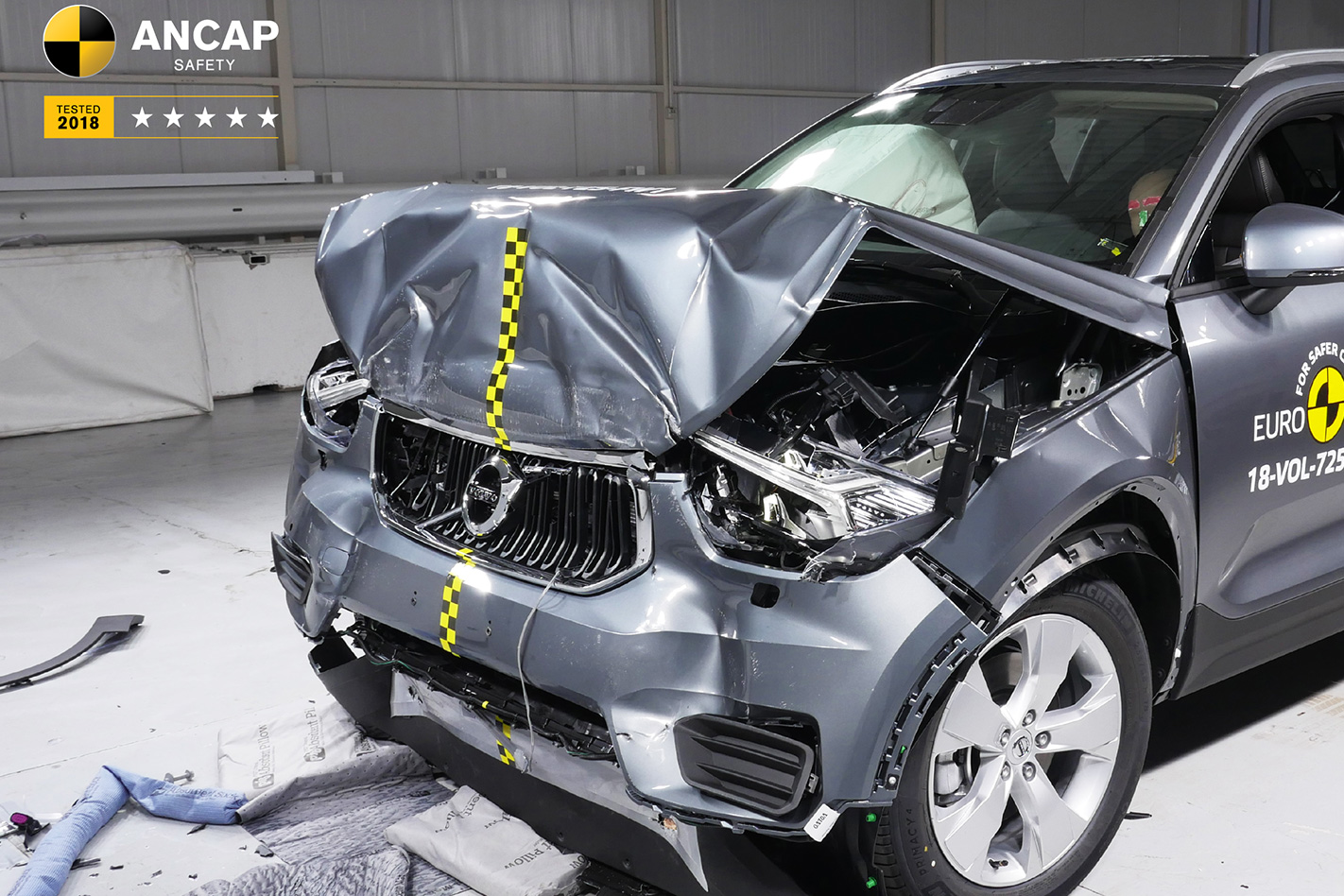
Also assessed – and gaining further weighting on what rates as a five-star performer – is driver-assist technology, such as automatic emergency braking that will help avoid or minimise the severity of a crash with pedestrians or cyclists.
However, while the top five-star rating applies to all front- and all-wheel-drive versions of the Mazda CX-8, only all-wheel-drive variants of the XC40 are covered by the score, with T4-badged front-wheel-drive versions remaining unrated because they were not tested.
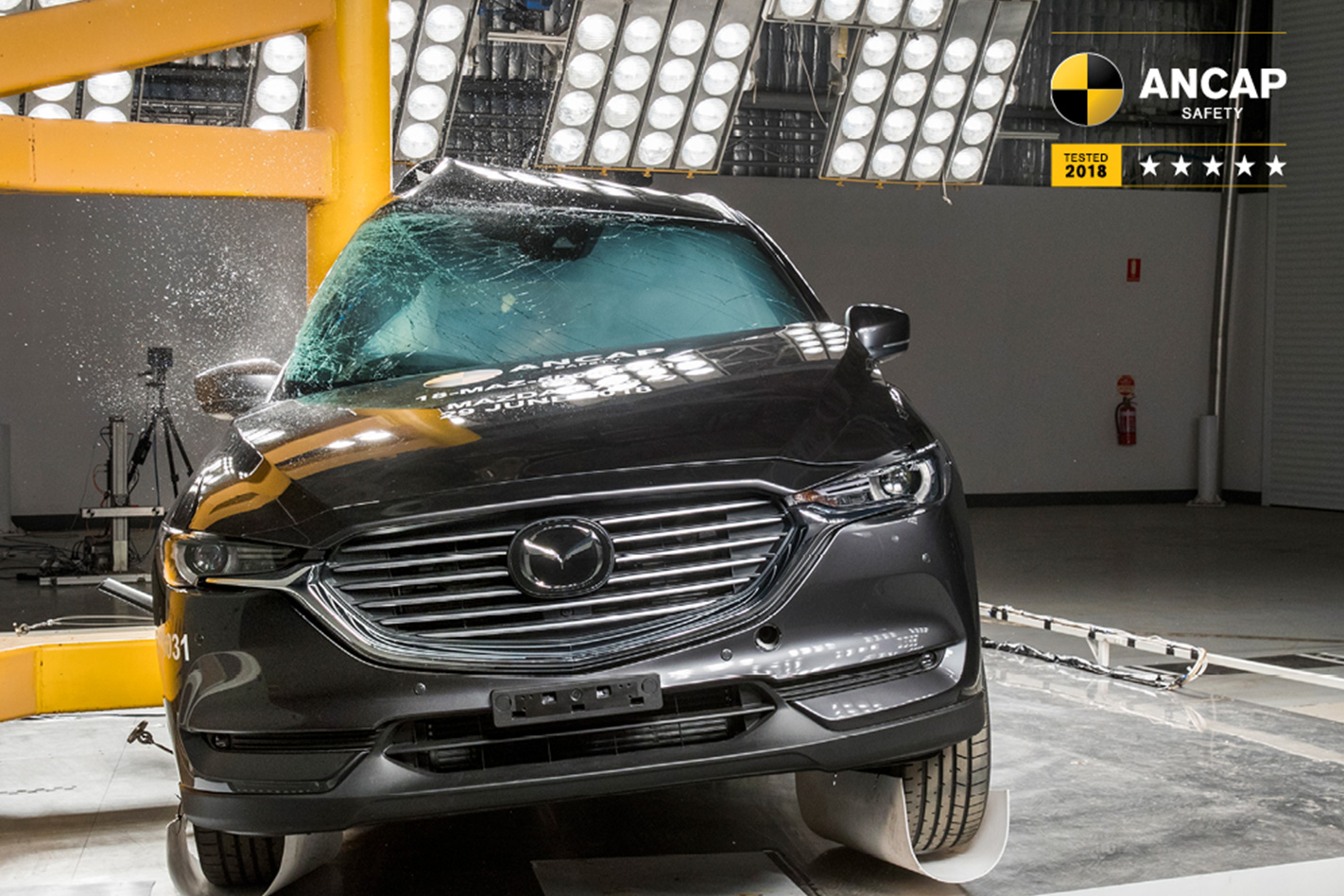
Of note, the Mazda CX-8 offered “good levels of performance” in both the second- and third-row seats, while the Volvo XC40 “performed well across all areas of assessment, offering emergency lane-keeping functionality and the full range of autonomous emergency braking systems”.
TELL ME ABOUT THIS CAR
Car makers are offering evermore choice as the popularity of SUVs at the small end of the spectrum increases.
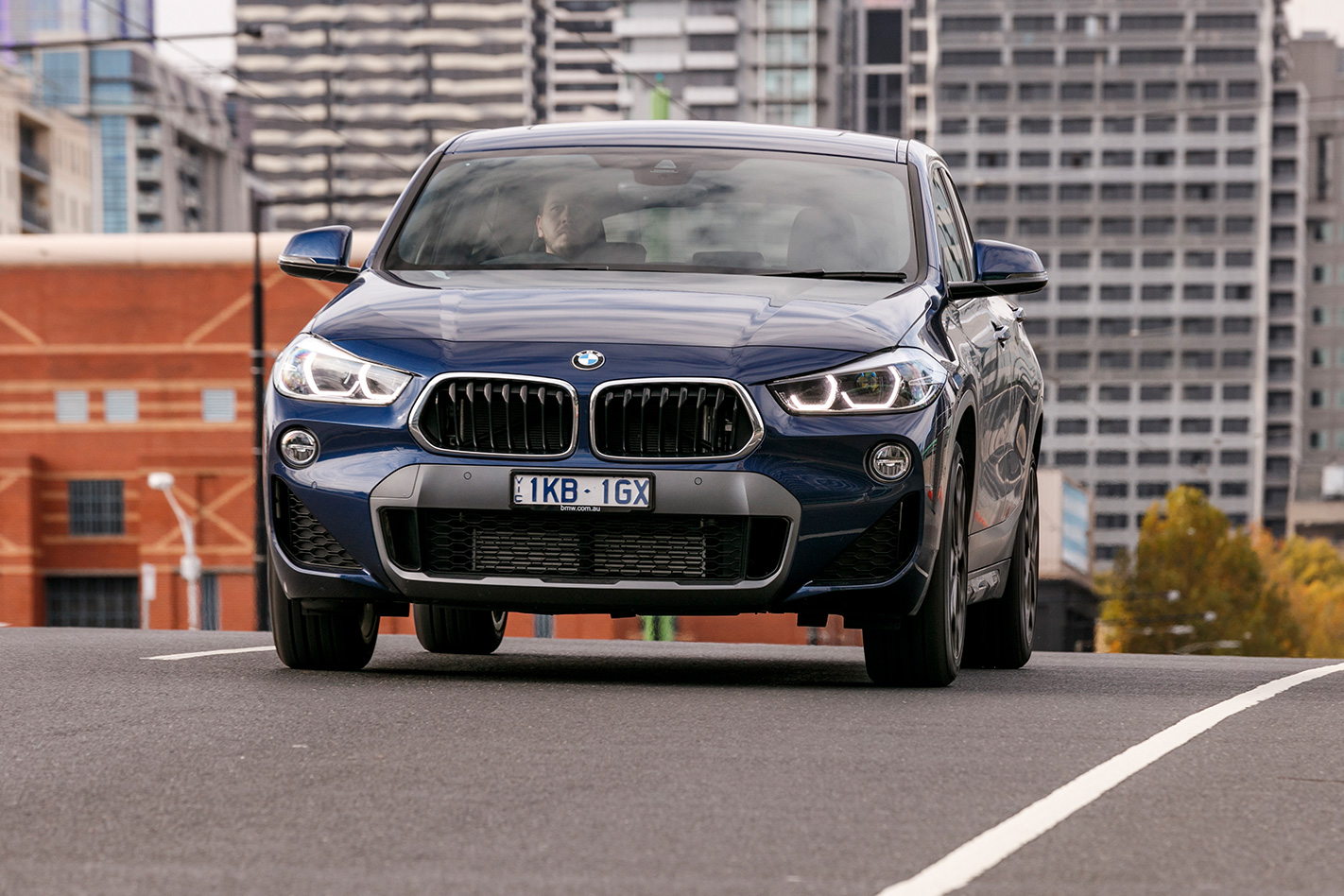
One such area of evolution is into vehicles offering more ground clearance and view of the surroundings afforded by a higher ride-height, but with a more elegant coupe profile.
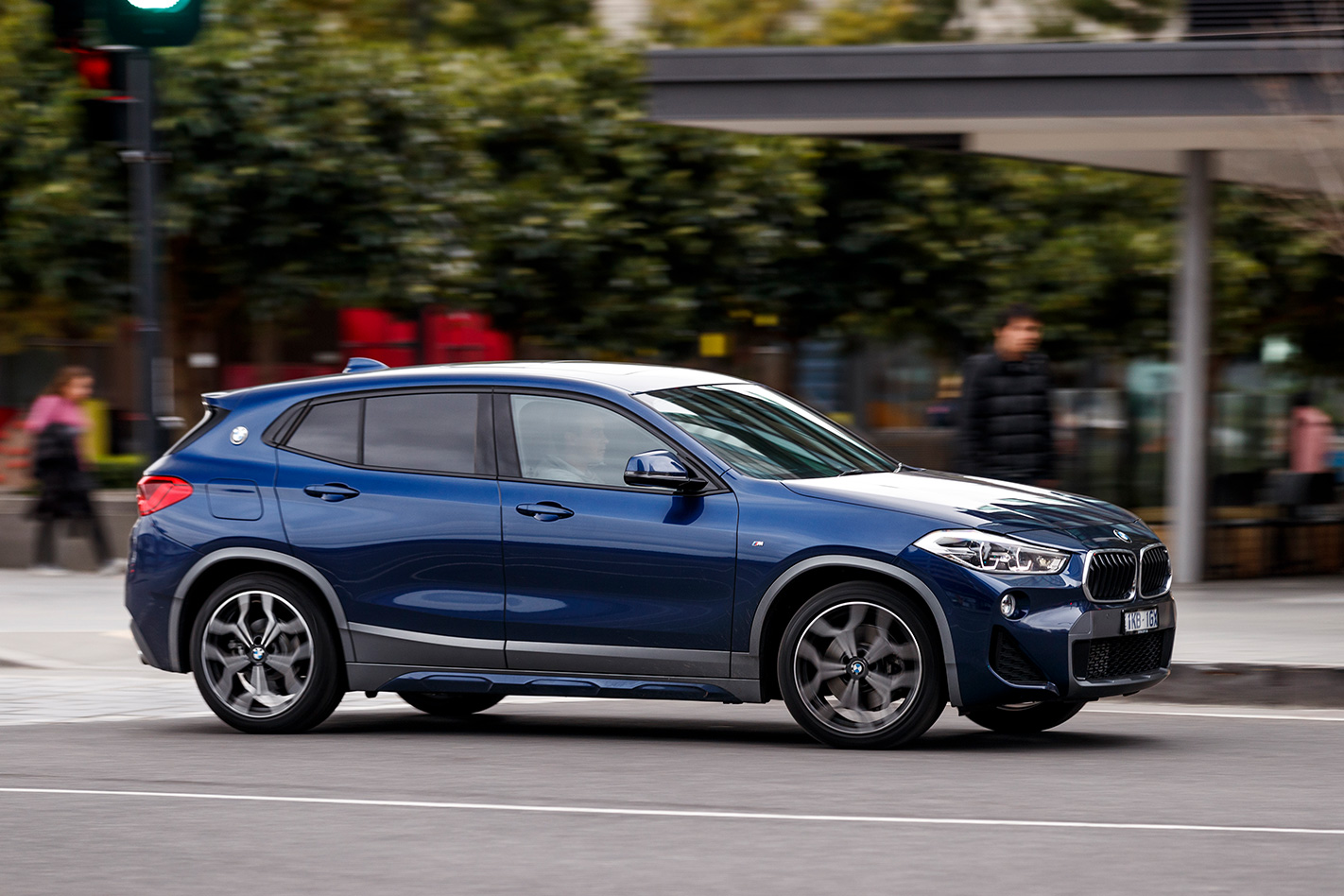
BMW is often cited as starting the coupe SUV revolution with a reprofiled version of the X5 dubbed the X6 – and now the German manufacturer is at it again. Taking the X1 as its basis, the new X2 offers many of the virtues of the more wagon-shaped model wrapped up in a more style-focused and handsome body.
Three variants are on offer in the form of a pair of front-wheel-drive petrol-powered variants starting from $49,900, but we jumped into the flagship diesel, which adds xDrive all-wheel-drive traction into the mix for $59,900.
STRENGTHS
- In a word – looks. In full X1 wagon form, the smallest BMW SUV is no faceache. But with the X2 fettling, the aesthetics take on even more desirable proportions. With a falling roofline toward the rear, the X2 has a more athletic and confident stance complemented by design details such as the roundel badge on each C-pillar, which harks to the 1970s M1 just a little. The transition from X1 to X2 did not just involve taking a plane to its roof and the newer model is 79mm shorter, 69mm lower, 3mm wider and has an extra 12mm of front overhang but 91mm less rear overhang. That’s quite a makeover.
- While some BMWs of late have lost their way a little when it comes to steering feedback and feel, the X2 represents a delightful return to the dynamics of yesteryear. Its steering is highly responsive and offers a pin-sharp connection to the road, boosting driver enjoyment and handling.
- The excellent steering is complemented by an equally refined chassis. While the X1 is justifiably criticised for a firm ride, in a vehicle like the X2 that targets a younger, excitable audience, a stiffer ride is completely warranted. The sportier tune makes the X2 huge fun to drive without being punishingly hard when the driver and occupants just want to relax.
- Despite its compact size, the driver’s seat allows a comfortable, reclined position more akin to a larger drive-focused model.
- You might expect the second row of seating to be impacted by the sportier roofline but rear occupants still have a surprisingly roomy reception. Head room is less than you would find in an X1 but there’s still plenty of space. Second-row comfort is boosted further by a three-position adjustable back rest, air vents and a 12-volt power supply.
- Its 2.0-litre diesel engine is refined, quiet and provides lots of useful torque (400Nm) low in the rev range, allowing brisk progress but is frugal – it officially needs just 5.1 litres of diesel to travel 100km under combined driving conditions, says BMW.
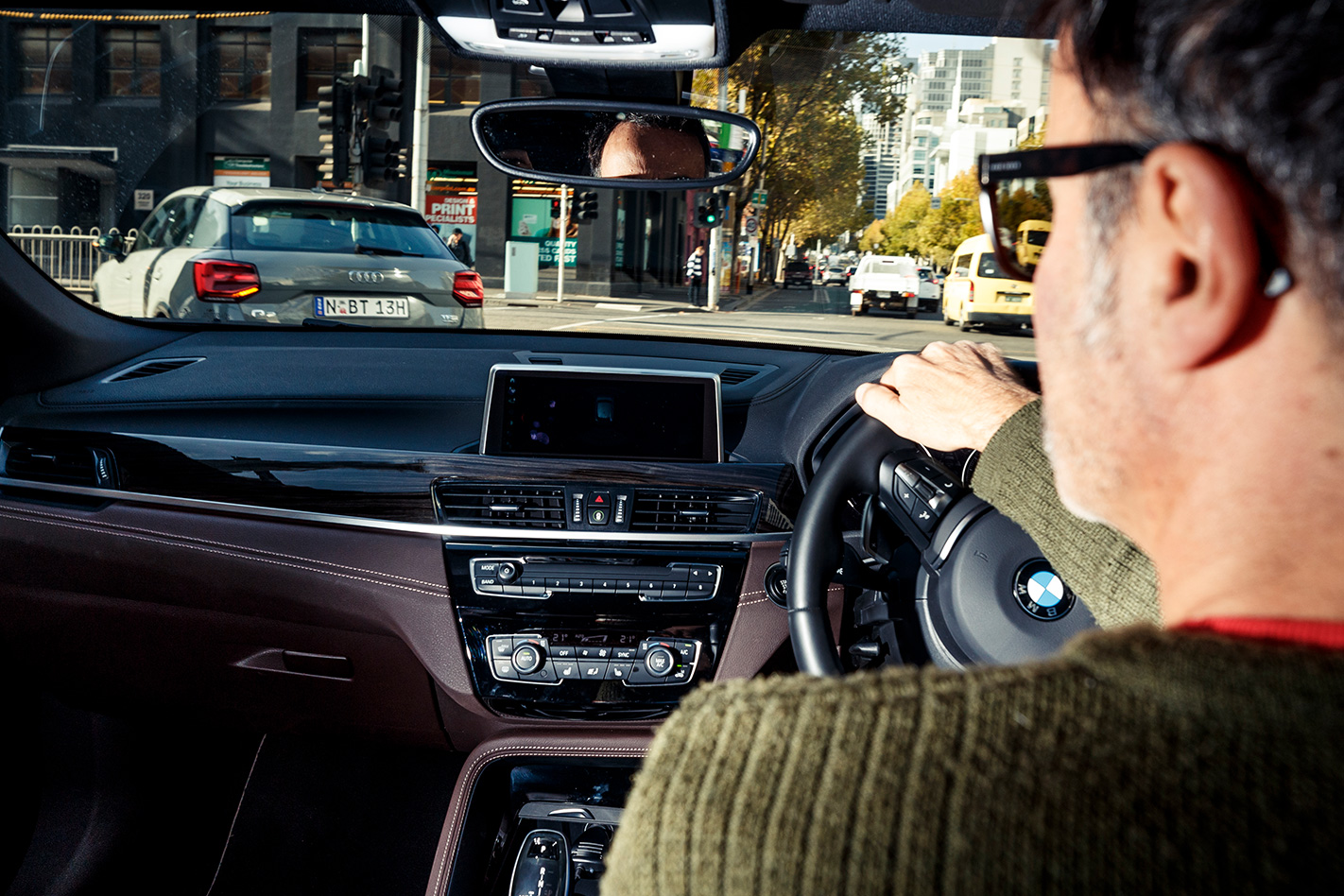
- While the petrol varieties have to make do with a seven-speed dual-clutch auto, the diesel gets an eight speed torque converter auto. The tighter ratios make the X2 really good fun to drive – click through the gears using the paddle shifters and the transmission is eager to punch the X2 off the line. Its operation is so aggressive under hard acceleration that it feels a lot like a dual-clutch auto.
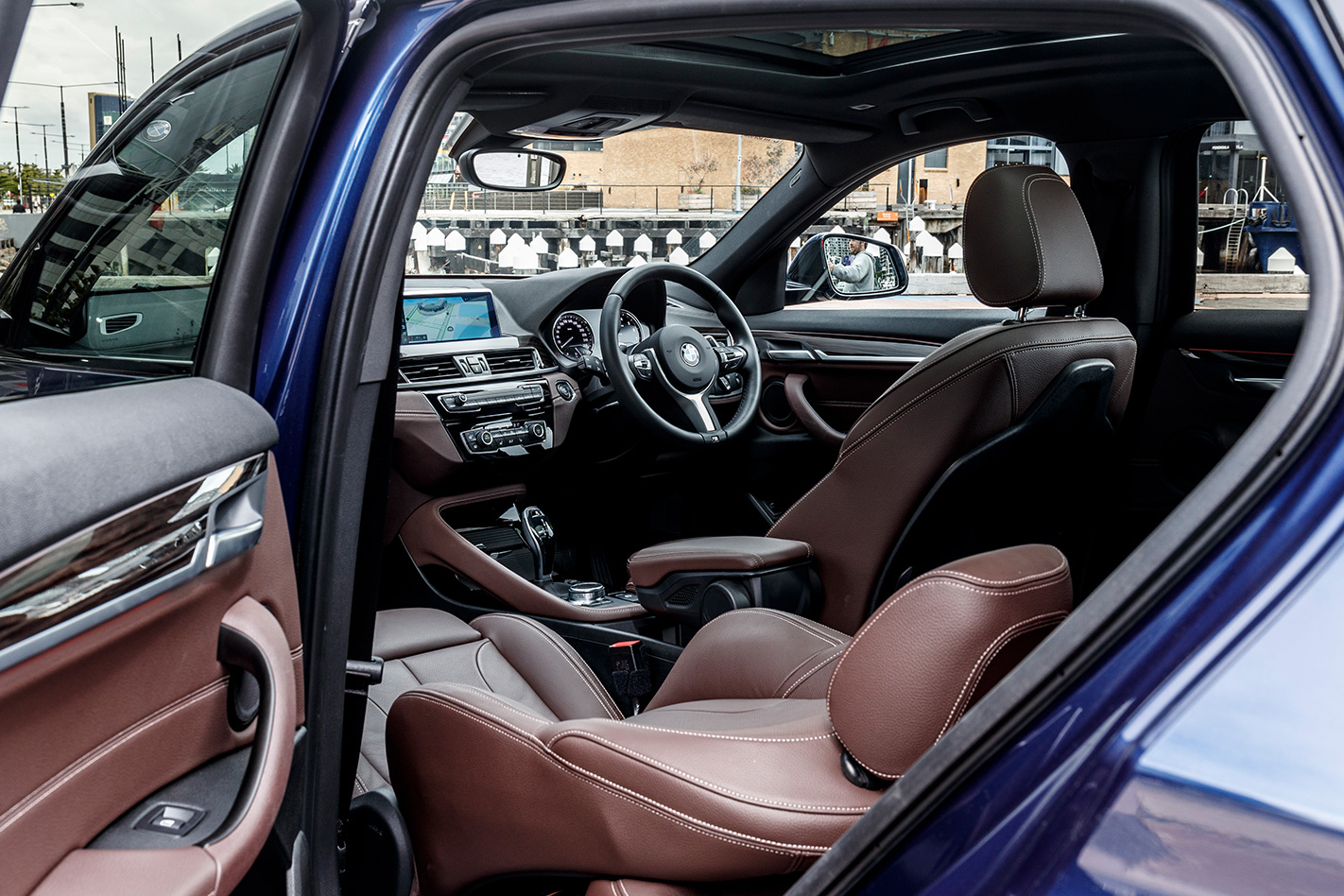
- Our test vehicle was dressed up in the M Sport X package, which we wouldn’t be surprised to find on the options list but it is actually included in the standard equipment. You’ll have to pay more for it to add it to the entry-level X2, but the 19-inch wheels, M steering wheel, sports seats, black roof lining and exterior gloss touches look even better when you know you didn’t have to pay extra for them on the more premium variants.
WEAKNESSES
- At the moment, the most power you can have from an X2 is the 141kW X2 sDrive 20i but the excellent chassis has a lot of performance capacity left in it. We would love to see a 25i or even 30i hit the market, bringing the 175kW or 185kW that the 2.0-litre petrol engine is capable of pumping out in other models.
- While many manufacturers, including BMW, are migrating to digital instrument clusters, the X2 is sticking to traditional analogue dials. The needles are concealed behind a pane for a neat finish but the versatility of a digital display would suit the X2’s up-to-the-minute styling and technology. A head-up display is available for a touch more driver technology but as an option that adds to the bottom line.
- The optional adaptive damper suspension is essential for the best ride characteristics regardless of the driving style.
- Run-flat tyres are a good safety feature –allowing the car to be driven for a limited distance even when punctured, but they often can’t be repaired if you are unaware how far you have driven while underinflated. In this case, they also transmit a lot of road noise through to the cabin when driving on rougher road surfaces.
ANY RIVALS I SHOULD CONSIDER?
The Q2 is the equivalent small coupe-styled SUV from BMW’s arch rival, Audi. Similar to the X2, the Audi offers an excellent driver’s car as the flagship Sport Quattro variant, but unlike the BMW, you can have the all-wheel-drive version with either petrol or diesel powertrains.
If delightful styling touches are your thing in a small premium SUV, Volvo’s XC40 is definitely worth a look. It offers the same 140kW/400Nm output from the diesel version, or alternatively comes with a 185kW/350Nm petrol engine sending power through all four wheels. The Volvo is full of cool European design touches and clever functional innovations.
NISSAN’s second generation all-electric Leaf will boast a 60 percent improvement in its single-charge range, but while that equates to roughly 270km on a real-world test cycle it appears Japan’s EV powerhouse is preparing to turn over a new Leaf: one with even longer legs.

Expected to hit overseas markets as the Leaf E-Plus, Nissan’s top-tier electron-burner will pack a higher-capacity battery than the 40kWh lithium-ion unit of the entry-spec car, and bump up the power output of its single electric motor to 150kW. With its greater power density, total range will be extended to 362km.
That’s a whopping 75 percent boost in range, not to mention a 73 percent improvement in power output. For EV critics keen to complain about range, those metrics are important.

The details were let slip by Brian Maragno, Nissan’s director of EV marketing and sales in North America. With rivals including the Chevrolet Bolt and the upcoming entry-level Tesla Model 3, the addition of a more powerful and longer-range Leaf variant will be crucial for the model’s commercial success in the USA. Both the Chevy and the Tesla offer similar range, and while the Model 3’s power output is still as secret as its launch date, it’s expected to be in the same realm as the Leaf E-Plus.
However, an Australian debut for the Leaf E-Plus is still uncertain. Originally slated for a local arrival sometime in the second half of this year, Nissan Australia is now expecting it to launch here in the first quarter of 2019 – but only in base 110kW form with the standard 40kWh battery and 270km range.

