
I can still smell the petrol. Still see the wringing of my father’s hands as we loitered in the fuel station’s forecourt, our shoes squeaking on the slightly slick concrete as we paced back and forth; my 12-year-old self casting quick, furtive glances at the dealership across the road, my dad working up the courage to walk us through its doors.
We had no right to be there, really. As two working class car nuts from the country visiting the big smoke of Sydney, the Porsche showroom in Willoughby, with its huge glass windows, shiny white floor and glittering metal (championed by a white over red 996 GT3), seemed to belong to another universe.
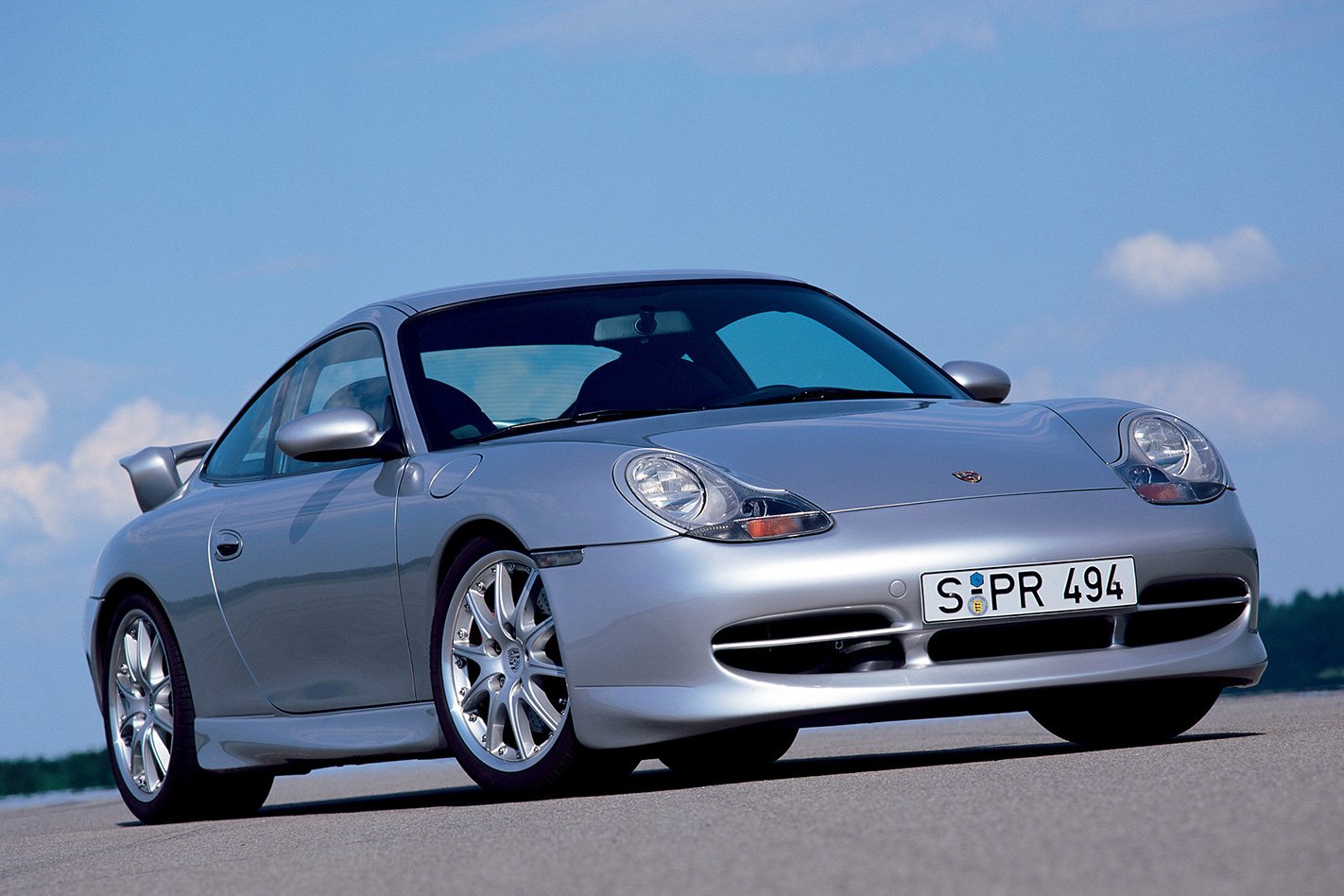
Perhaps the dealer principal had a son of his own. Or maybe we just caught him on a good day. Whatever the reason, instead of rebuffing our uncertain approach, he welcomed us inside. I was even allowed to sit in the cars, including the GT3, and on the way out, we were given two thick, stiffly bound brochures (which I still have). It left an ineradicable mark.
I’ve thought about that moment a lot this month, given this magazine’s hat tip to Porsche’s 70th anniversary. I’ve been trying to pinpoint the exact moment where my passion for Porsche began; to understand why, of all the brands out there, that’s the one that resonates most with me.
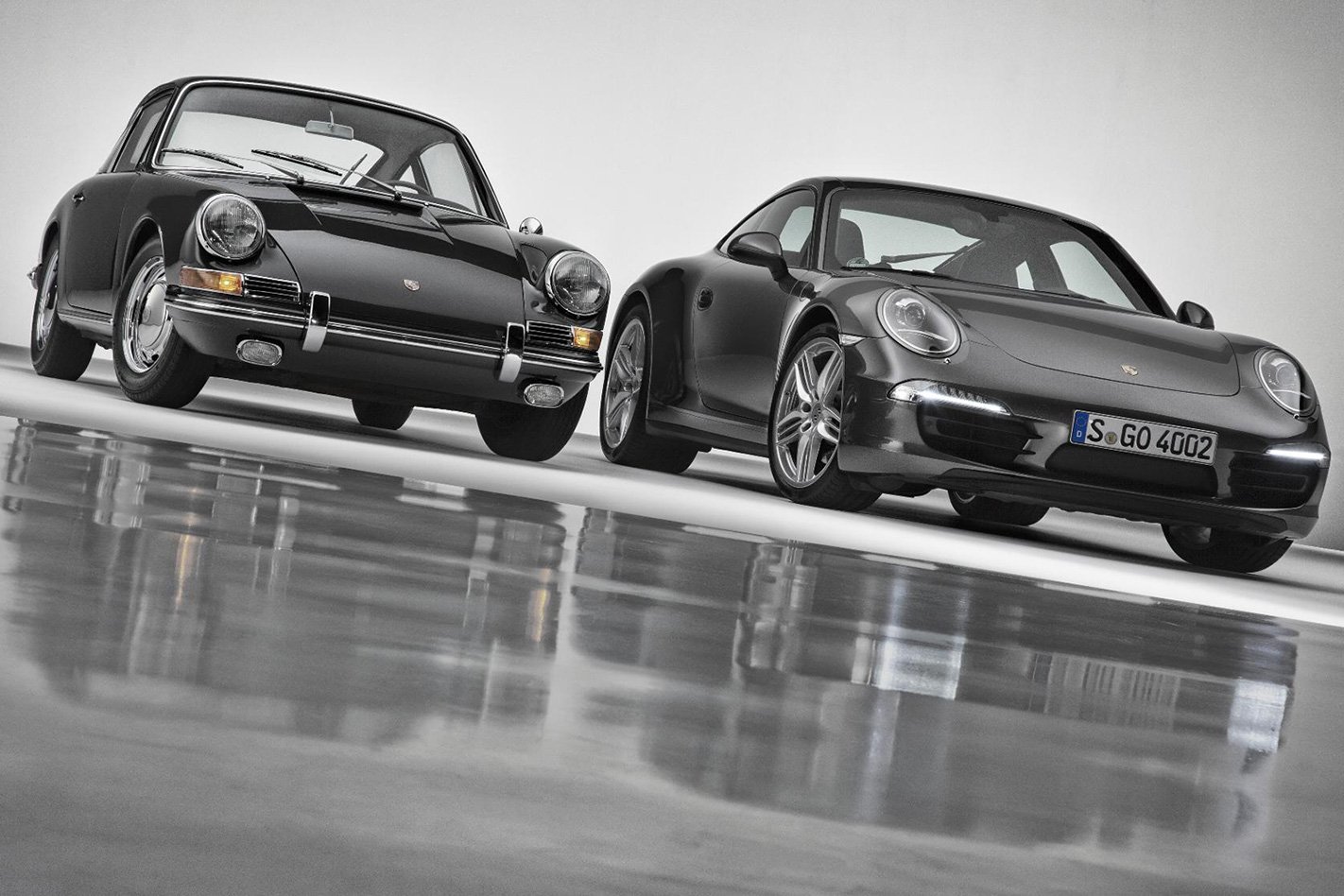
It’s a selfish quest, I admit, but also one applicable to all of us. Be it Porsche, Ferrari, Holden, Ford, something Japanese, British, French, or a brand more obscure, every one of us has a marque that speaks to us more than others.
The influence of our parents is hard to escape, of course, but in my case it doesn’t tell the whole story. Dad didn’t love Porsches, he was a Ford man, and while the dealer experience helped cement it, I’d been a Porsche fan long before that.
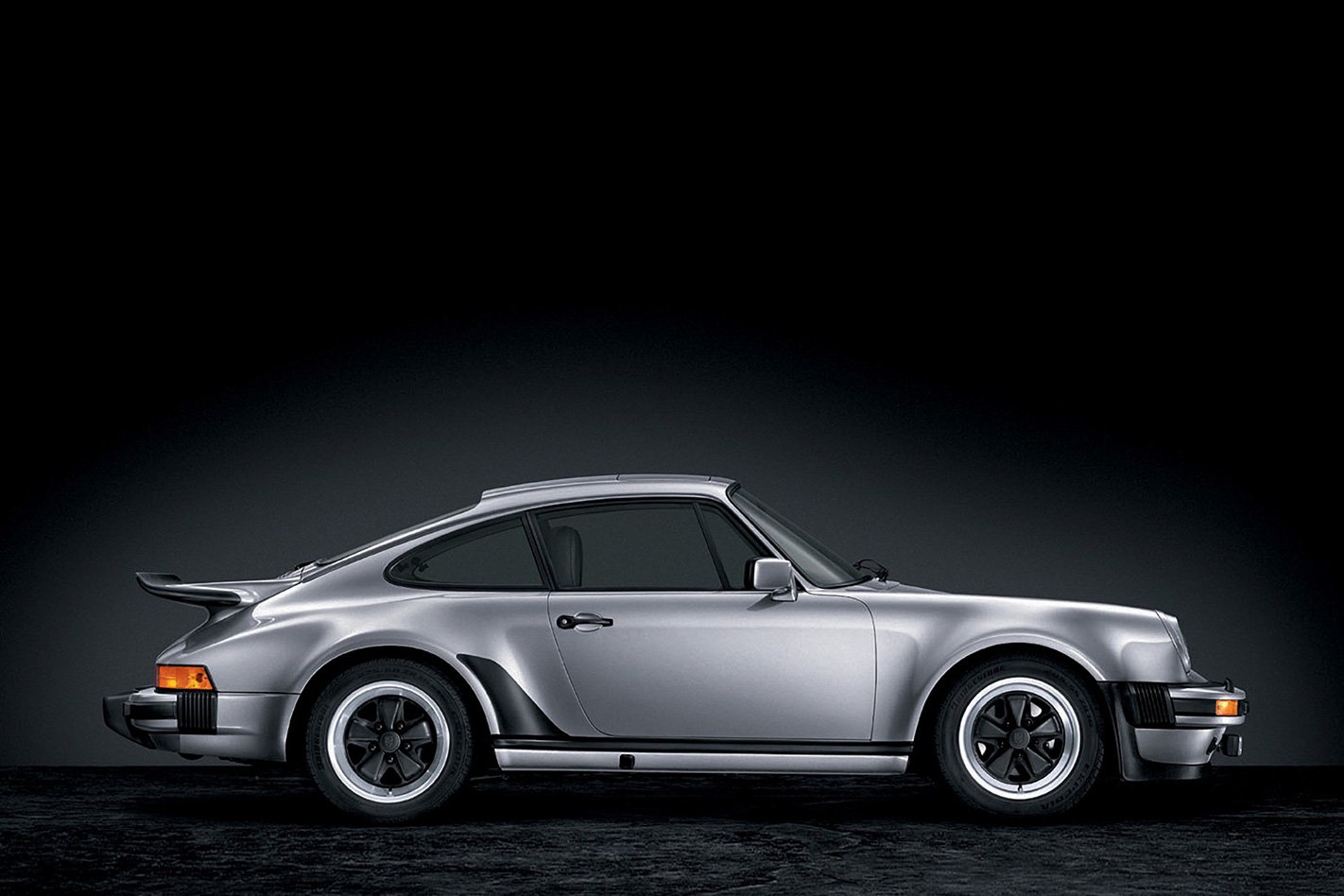
Nailing down the precise moment has proven elusive, but I was able to glean some insights from Mark Webber and Walter Rohrl, both of whom contribute to our Porsche coverage on p70. Rohrl’s passion is infectious, his words coming in a rush and his voice rising as he hastens to explain what Porsche means to him (he currently owns 11). What struck a chord, however, is that both Rohrl and Webber singled out Porsche’s “subtlety” as a key attraction.
Porsches are rarely as brash or as outlandish as their competitors and nowhere is this approach more visible than in the brand’s claimed performance statistics. Porsche’s head of motorsport Frank Walliser once told me that after collecting the times from a full day of straight-line testing, Porsche always adds a tenth or two to ensure the number is repeatable by average drivers in varying conditions. I like that.
Stephen Corby wrote an excellent column for this magazine last year where he asked: “Is brand allegiance and tribalism in car culture dead?” He argued the apathy of many youngsters is proof that it is.
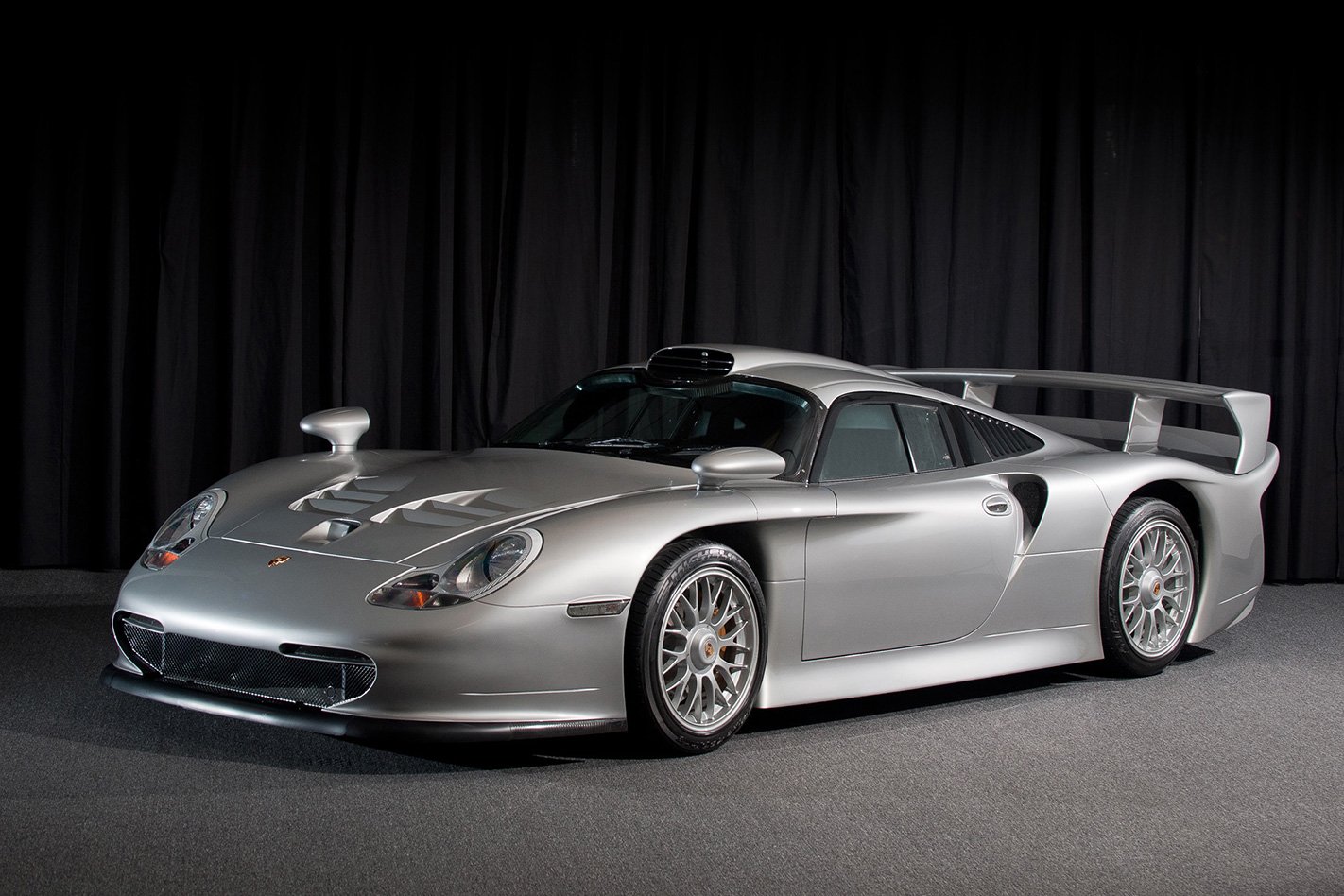
It’s a scary thought, but the counterpoint is that it’s up to us to keep it alive. Our love of cars is what drives us. It’s what compels you to read this magazine, to be inexplicably passionate about collections of metal, plastic and glass. And if passing that onto the next generation requires a small moment of courage to walk into the showroom of a brand we can’t afford, we shouldn’t shy away.
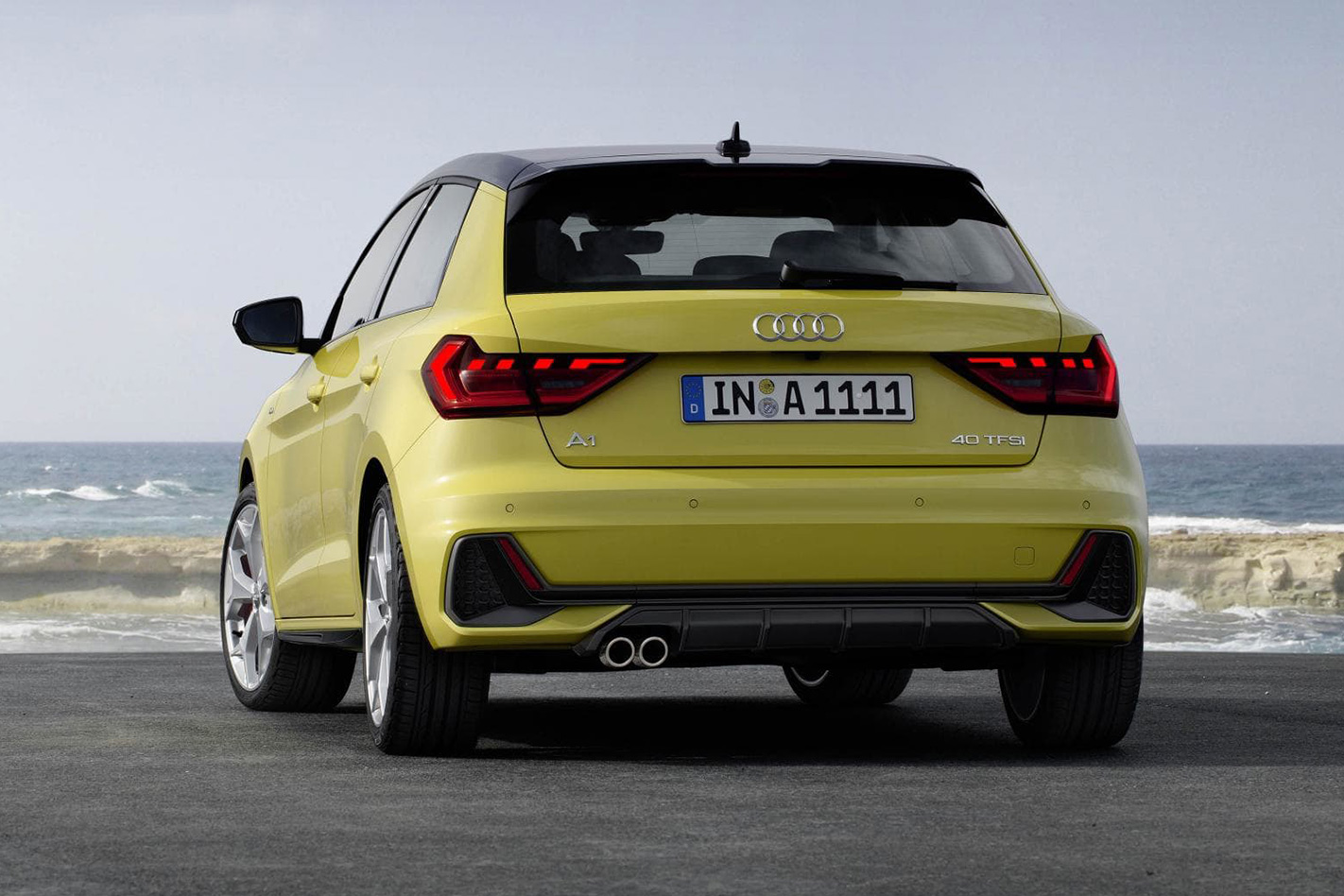
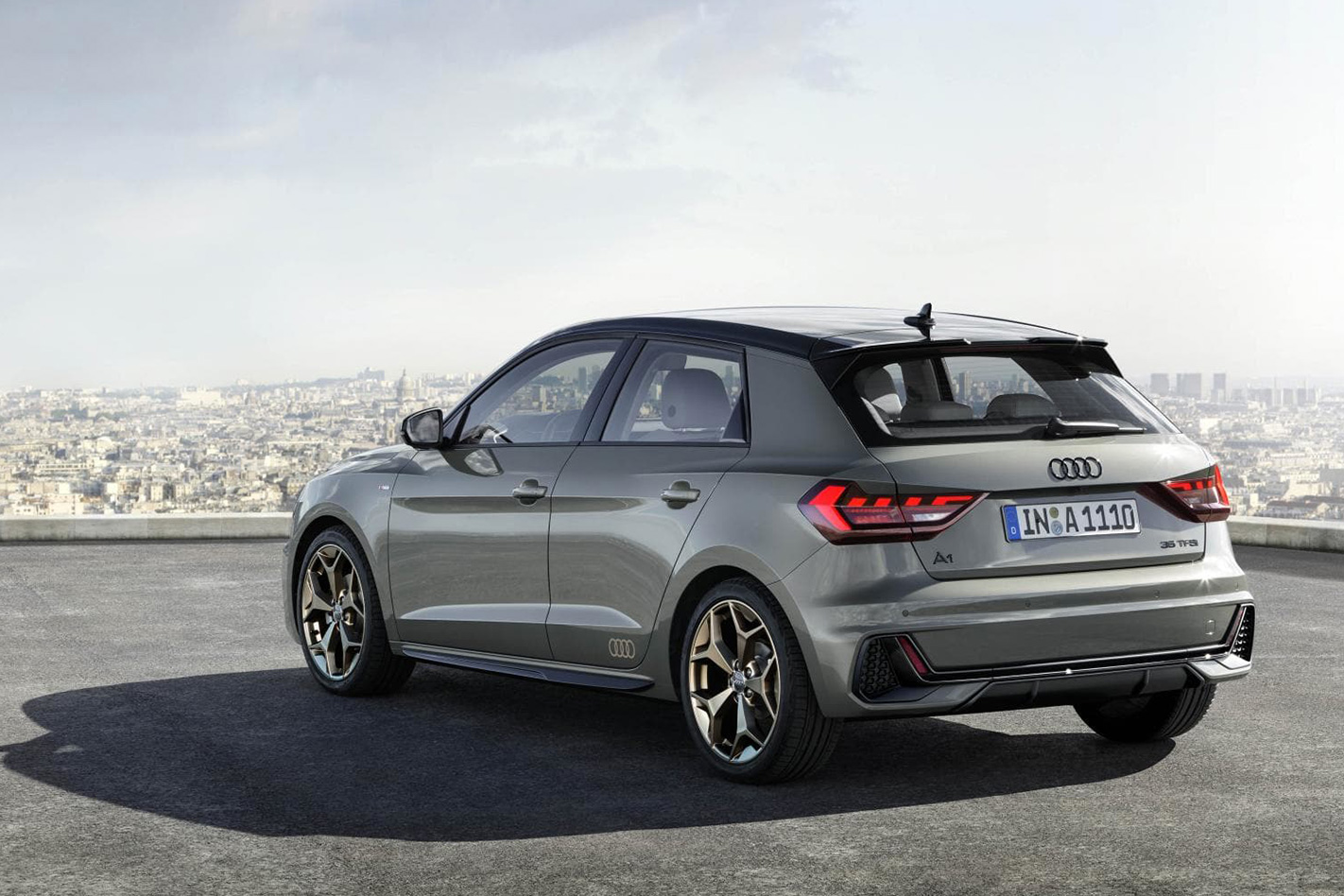
THE second-generation Audi A1 has been officially revealed, showing off a compact German luxury hatchback that is now longer and more striking to look at, and packing turbo-petrol engines and technology.
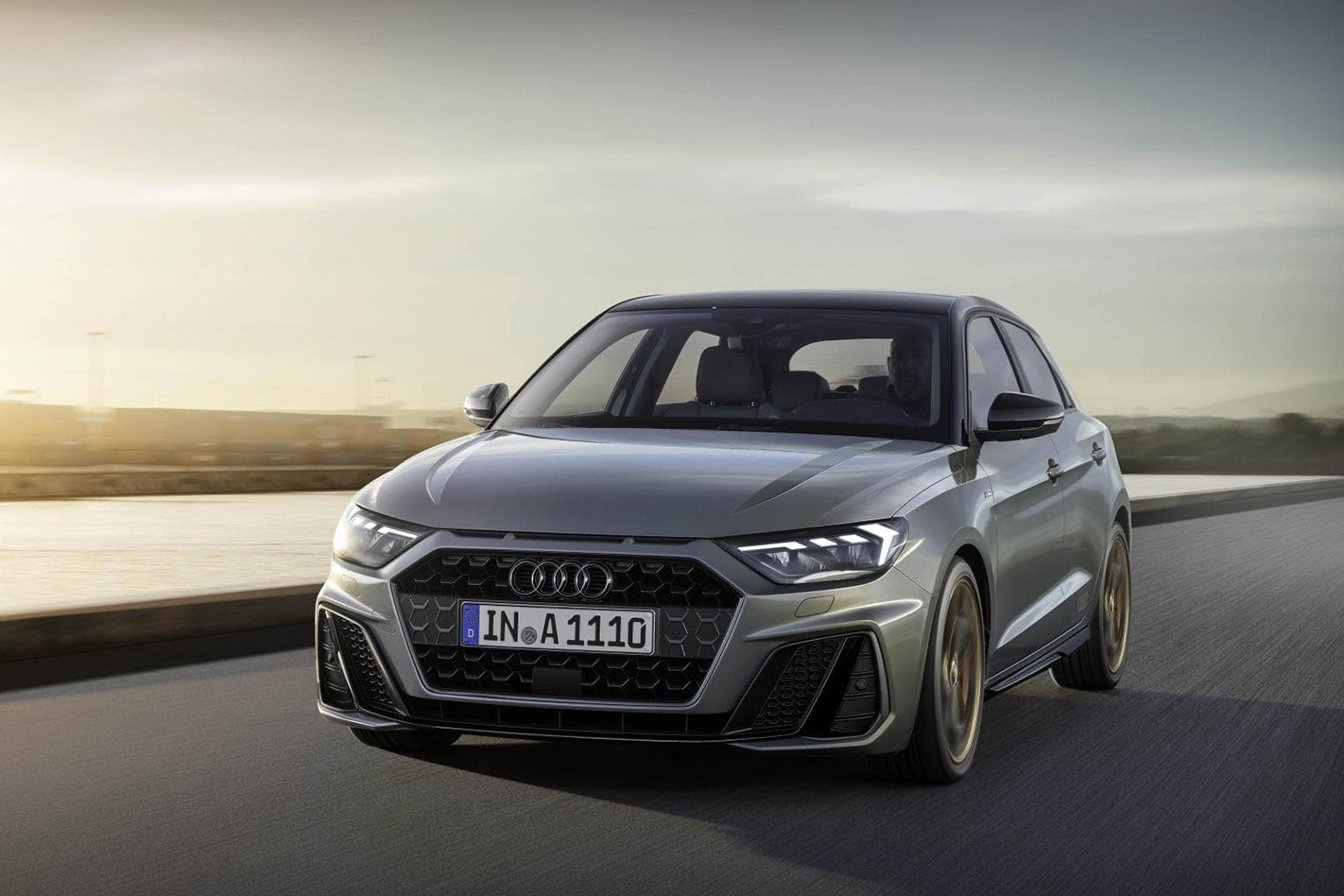
Exterior styling for the all-new Mini hatch fighter aligns the A1 with other models from Ingolstadt, while three horizontal slits between the grill and bonnet pay homage to the original 1984 Quattro.
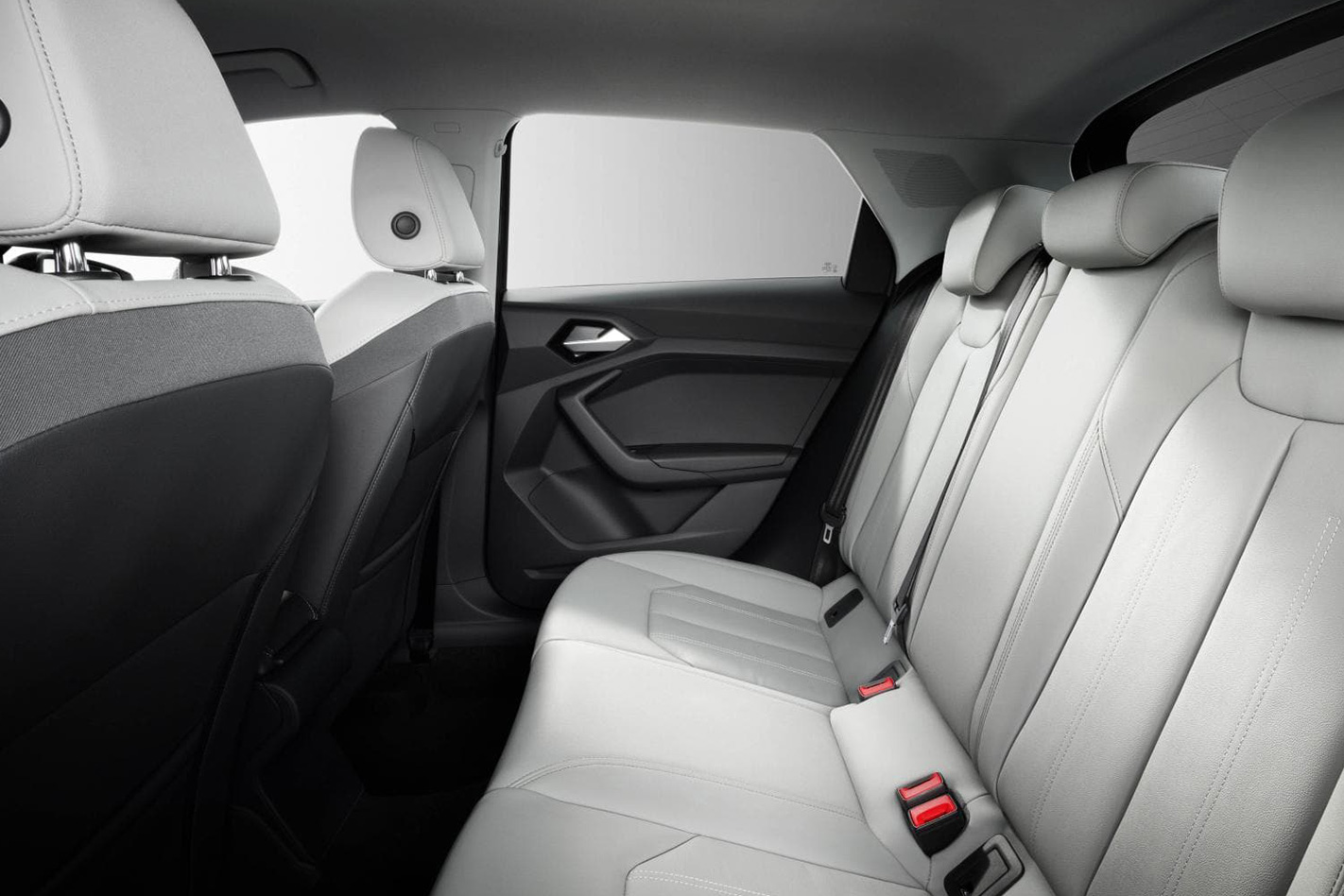
Built on the VW group’s MQB A0 platform, shared with group sibling the Volkswagen Polo, the A1 will be sold only in five-door form. Exterior dimensions have grown, and it now measures in at four metres long, with much of that extra stretch giving rear-seat occupants more room.
Luggage space has also increased by 65 litres to a seats-up capacity of 335 litres – this expands to 1090 litres with the rear seats folded down.
This time around, though, and in the wake of Dieselgate, there won’t be any diesel engines. Instead the A1 will have one of three turbocharged petrol units fitted behind its snout.
Buyers in Europe will have a choice of either a 1.5-litre and 2.0-litre turbocharged four-cylinder engine, with the latter making up to 147kW. An entry-level 70kW 1.0-litre turbo three-cylinder will also be available.
While a six-speed manual gearbox is standard, it’s highly likely most A1s sold in Australia will be fitted with the seven-speed automatic gearbox. However, the most powerful 2.0-litre 40 TFSI model will come equipped with a six-speed automatic as standard.
Inside, a 10.25-inch all-digital ‘virtual cockpit’ instrument cluster is standard for all models, along with an 8.8-inch centre touchscreen infotainment unit (with the exception of the entry-level model, which loses the central unit). This dash-mounted screen grows to a 10.1-inch unit for flagship models.
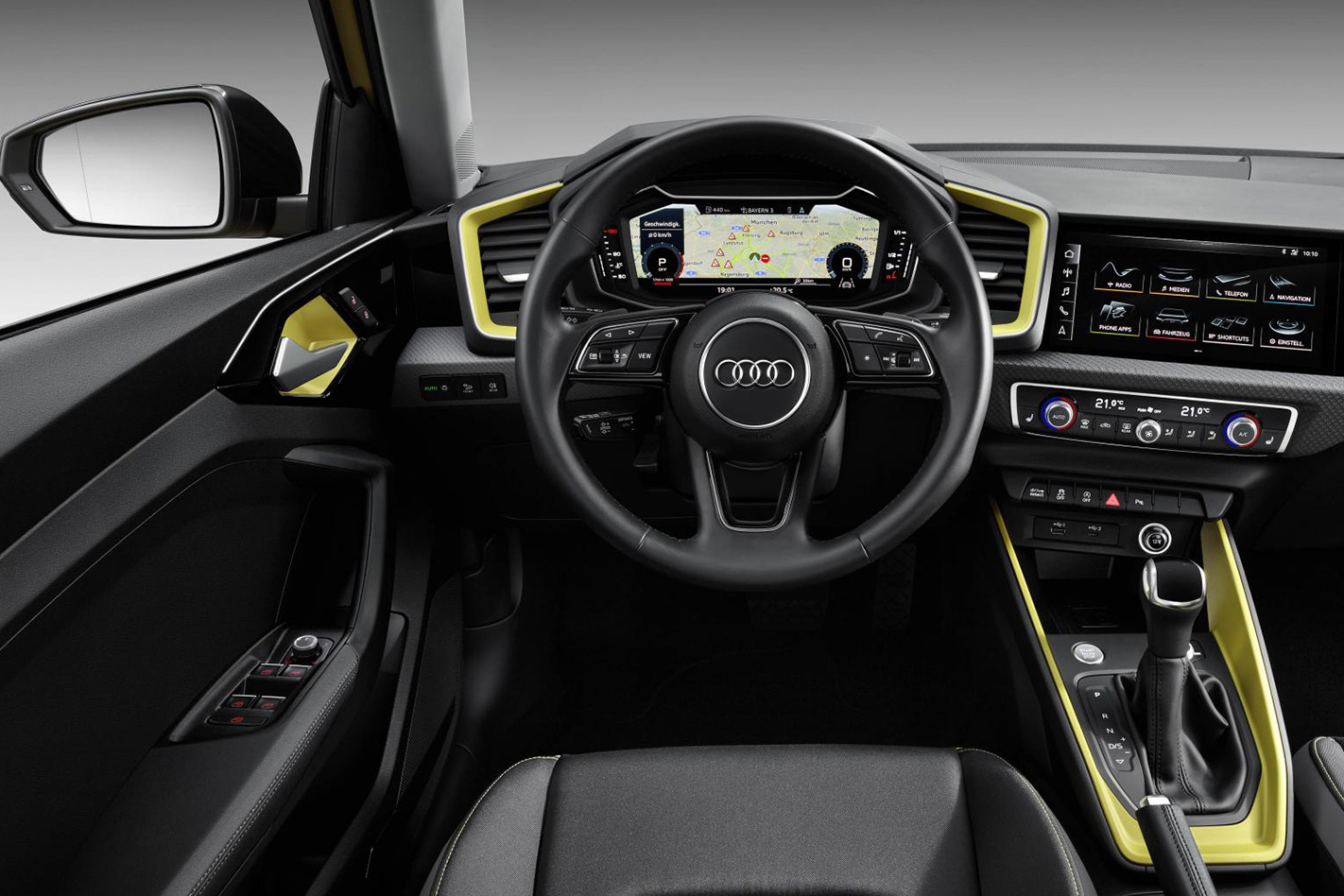
The A8 limousine’s touch-operated handwriting recognition software has trickled into the A1, along with more advanced voice control tech. Other infotainment features include an internet-connected location search, including Google’s search engine or Google Maps.
Android Autoand Apple CarPlay are standard.
A choice of two sound systems will be offered, with the more powerful option being a 560 watt Bang and Olufsen 11-speaker set-up.

Audi will also fit a full suite of safety features as standard, including pre-sense radar tech, radar adaptive cruise control, and a lane departure warning system.
Wheel options range in size from between 15 and 18 inches. Different exterior and interior styling packs will be also offered.
A more potent, all-wheel-drive S1, due in 2019, is also expected.
Australian pricing and specifications are yet to be confirmed.
TESLA has admitted Australian customers of the Model 3 will have to keep hitting refresh until at least the second half of 2019, with right-hand drive production some way down Elon Musk’s priority list as he attempts to crawl out of self-described “production hell”.
The tech start-up has been taking orders for the Model 3 since March 31, 2016, and it’s fair to say demand has outstripped the company’s most optimistic expectations. The Palo Alto company processed 180,000 orders in the first 24 hours and within the first week of books being opened, Tesla announced that some 325,000 deposits were in the bank.
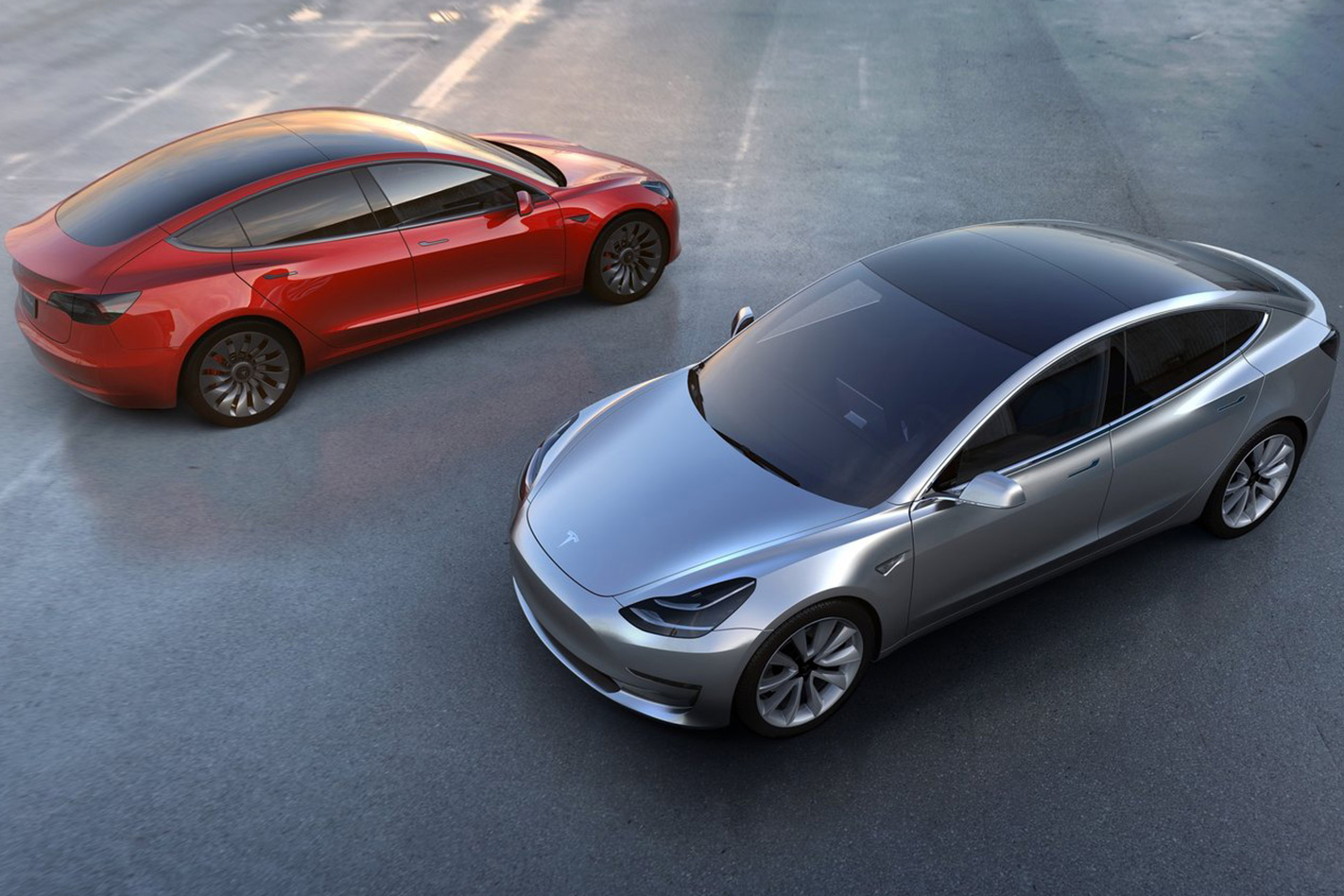
That figure has since blown out to around 500,000 which, if Tesla could build the cars at the target rate of 5000 cars per week, still leaves anybody placing an order now with two years’ worth of production backlog in the queue ahead of them.
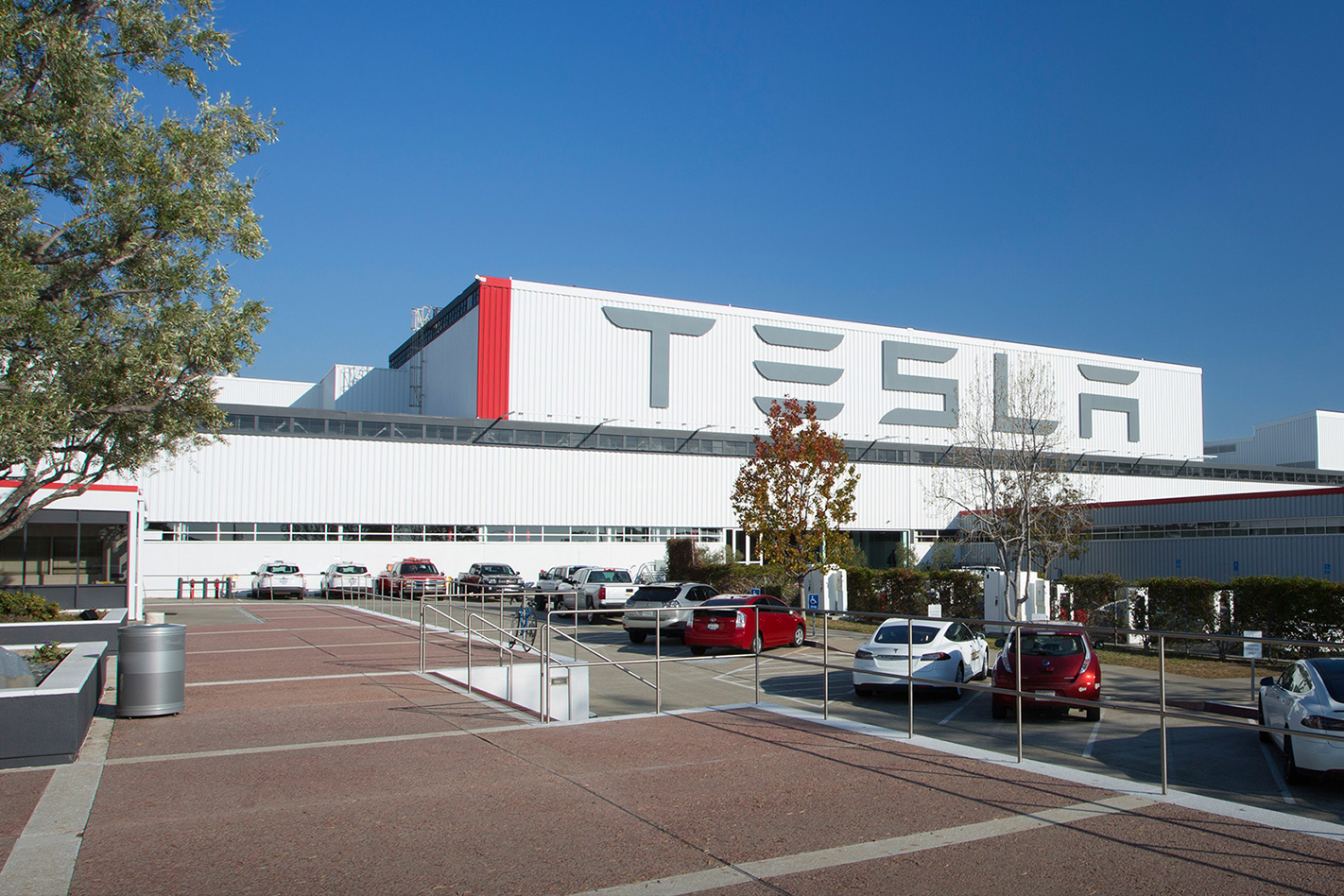
With a third production line laid on outside its Fremont factory, Tesla is finally getting serious about building vehicles. Hard lessons have been learned, many of them stemming from Tesla’s stubborn refusal to view itself as a car company.
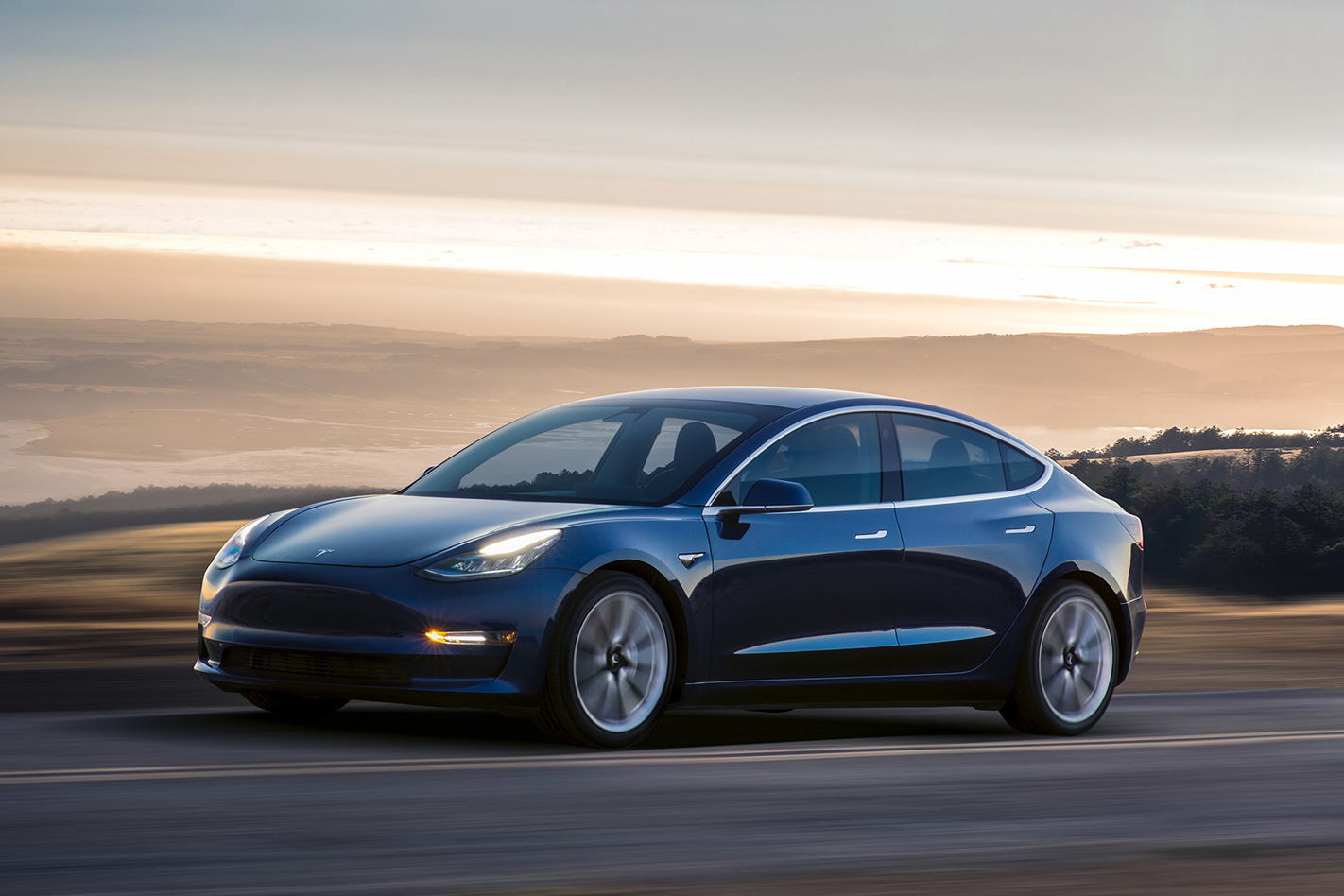
Australian customers who submitted a $1000USD (A$1350) deposit early in the ordering cycle have at least a year to wait, which means a period of more than three years between placing the order and it being fulfilled. In the interim, a number of mainstream manufacturers are bringing product to market, Jaguar’s I-Pace crossover, Nissan’s new Leaf and Mercedes-Benz’s EQC to name but three.
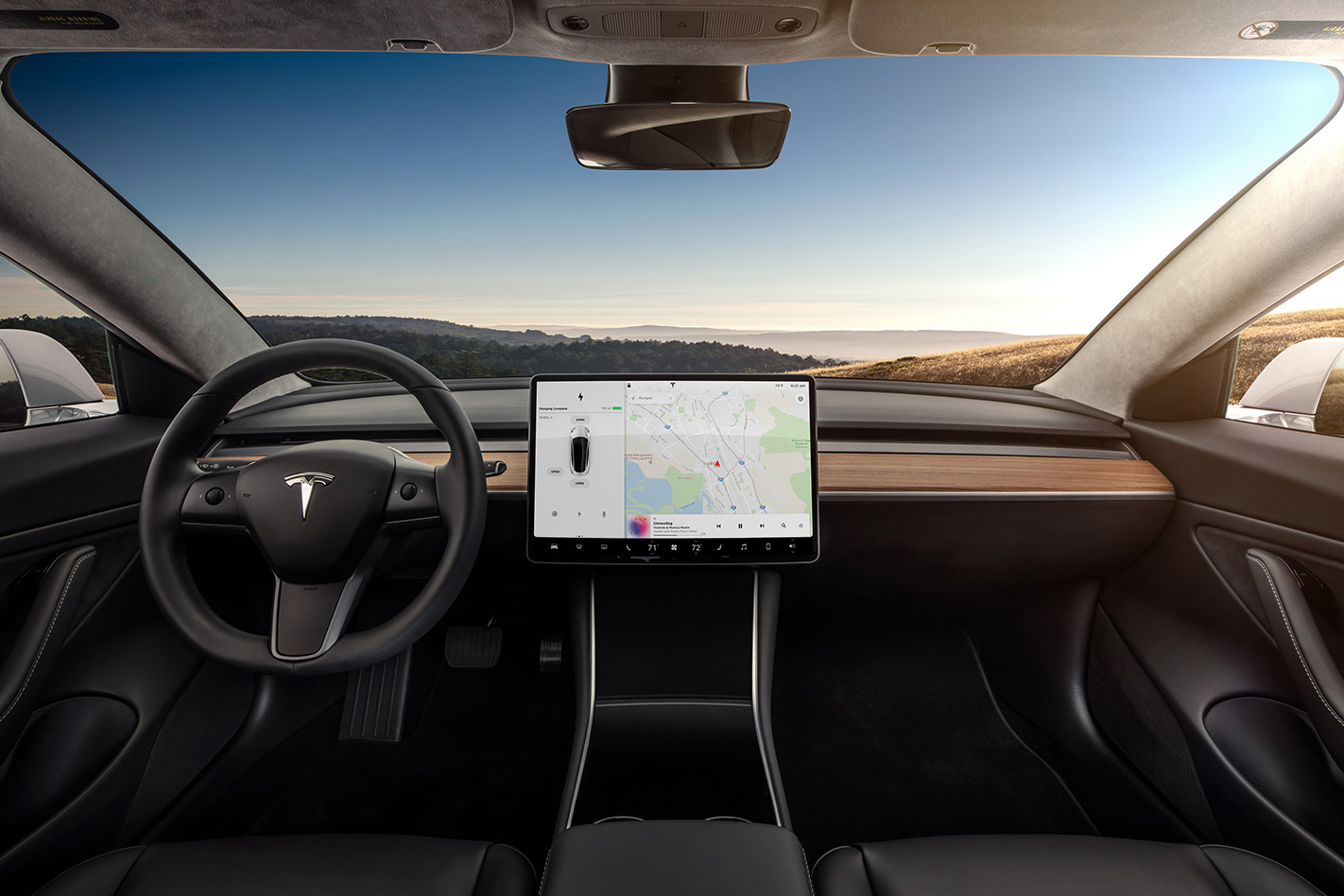
At the current rate of production versus model life cycle, it’s possible that the Model 3 will receive its mid-life facelift before cars are delivered to Australian buyers. Let’s hope it’s worth the wait.
It’s been 40 years since Mazda’s RX-7 burst onto roads and tracks around the world, so to celebrate four decades of Hiroshima’s favourite rotary-powered export we take a look back at the company’s long-running history with the innovative – and somewhat troubled – Wankel engine.
1967
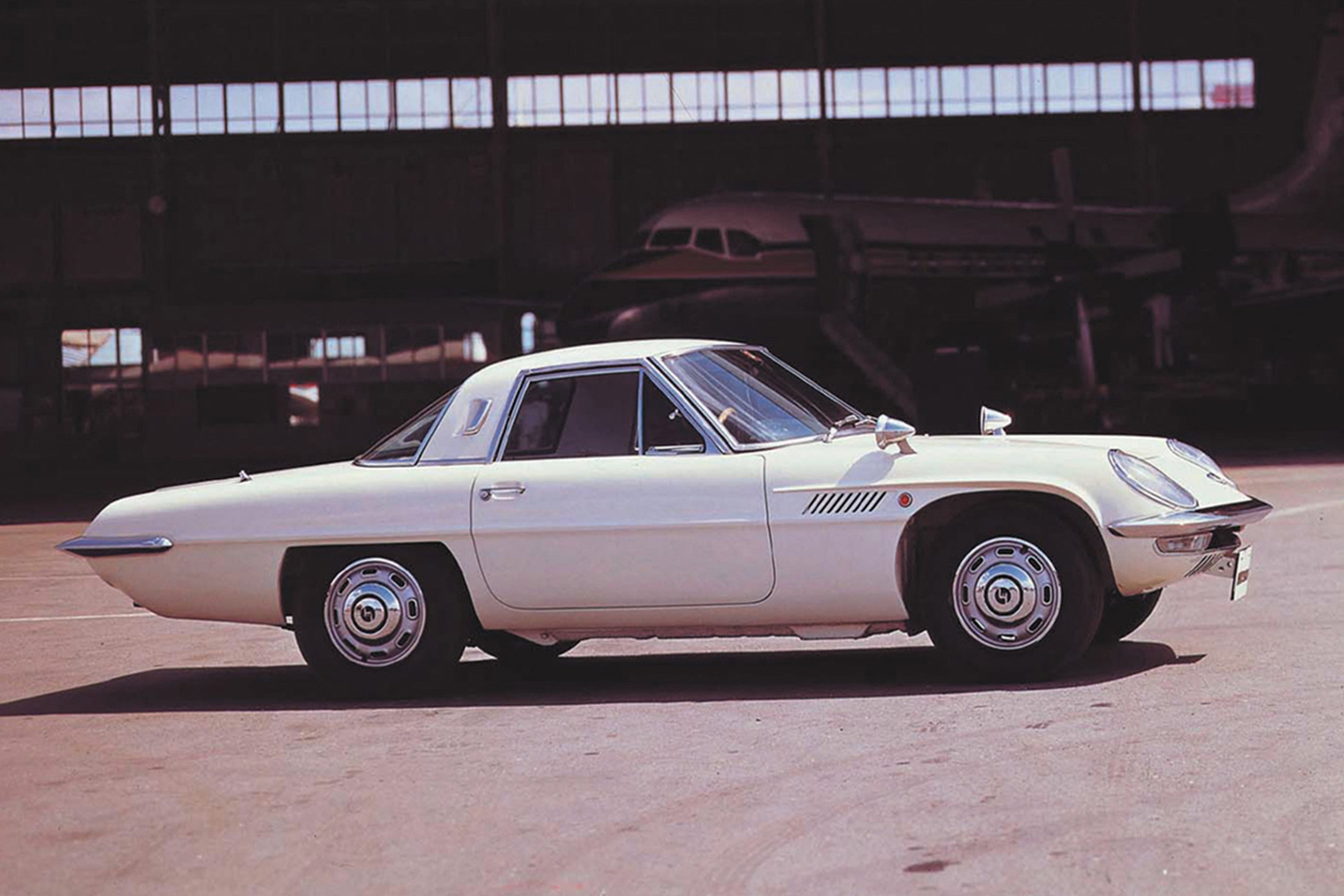
The Cosmo Sport 110S was the first Mazda to feature German engineer Felix Wankel’s advanced engine, and the first twin-rotor production car. As well as the radical 982cc L10A rotary engine, the two-seater, rear-drive coupe boasted rack and pinion steering and de Dion rear suspension, wrapped in a body that drew US and Euro styling cues, with a sporty, minimalist hounds tooth cloth ’n’ vinyl interior, wood-rim wheel and soon-to-be trademark central tachometer. Early Cosmo prototypes featured a smaller L8A engine. Protos powered by the L10A were shown at the 1964 Tokyo Motor Show, before the model went on sale in 1967. In all, 1519 Cosmos were built.
1968
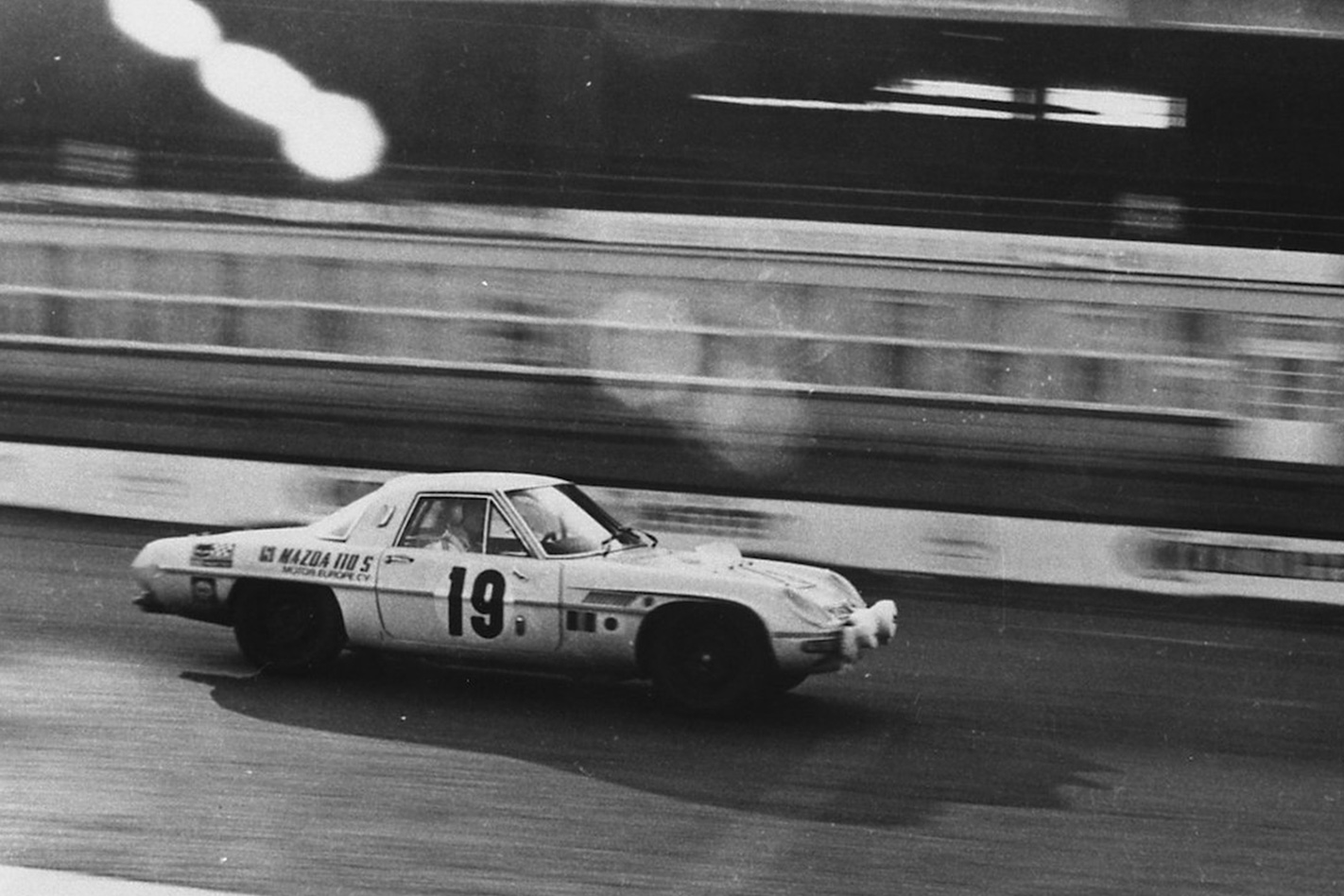
To prove the rotary engine’s durability, a pair of Cosmo Sports entered the 1968 Marathon de la Route 84-hour at the Nürburgring. The Cosmos held fourth and fifth for much of the race, the Japanese team suffering axle damage with two hours to go, and the Belgian entry finishing fourth.
1969
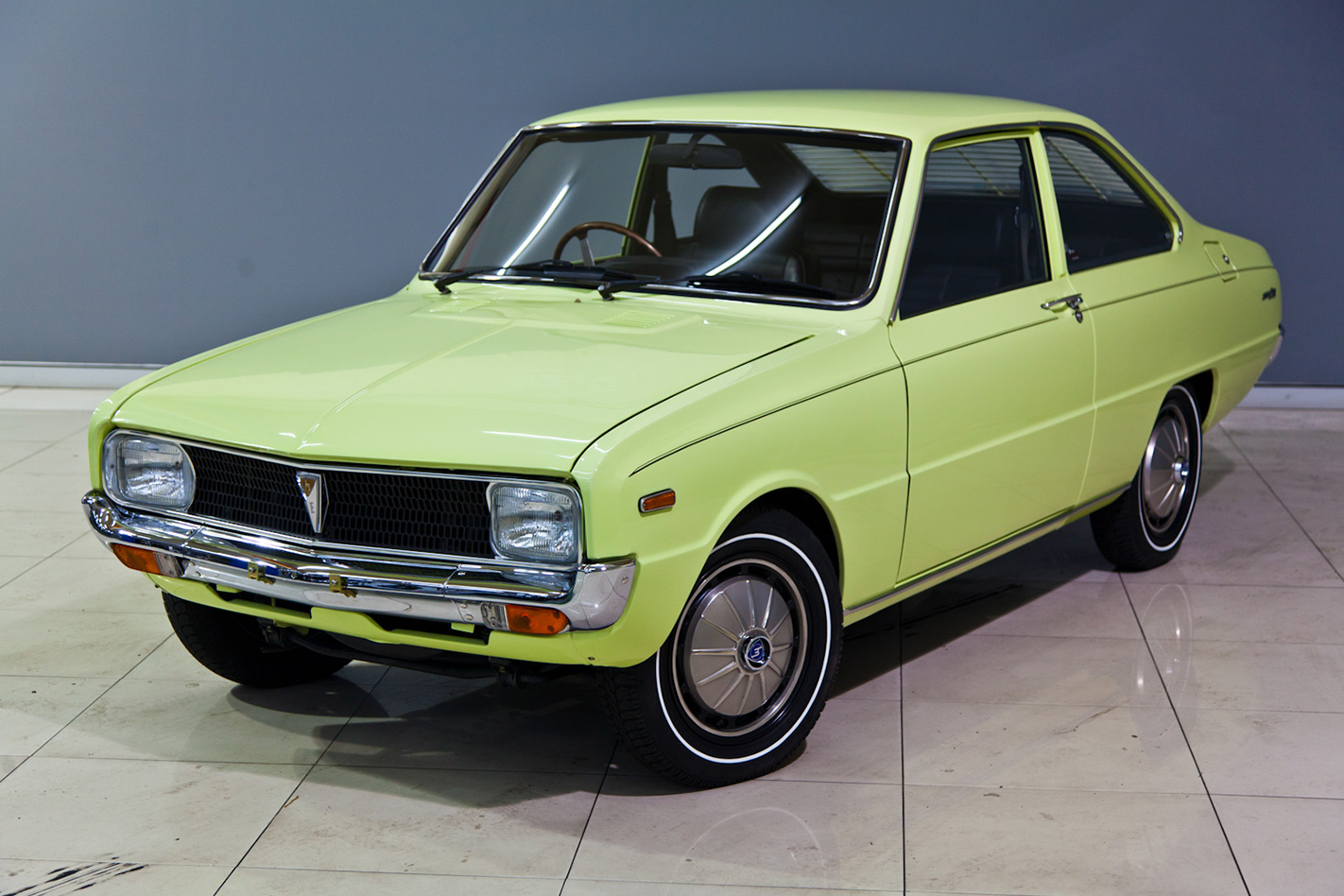
The Mazda Familia Coupe (R100 in Australia) offered rotary power in conventional wrapping to position the Wankel as a viable mainstream passenger-car engine. With its leaf-sprung live axle, drum rear brakes and recirculating ball steering, the R100 was no sports car, but the rev-happy 10A proved incredibly smooth.
1969
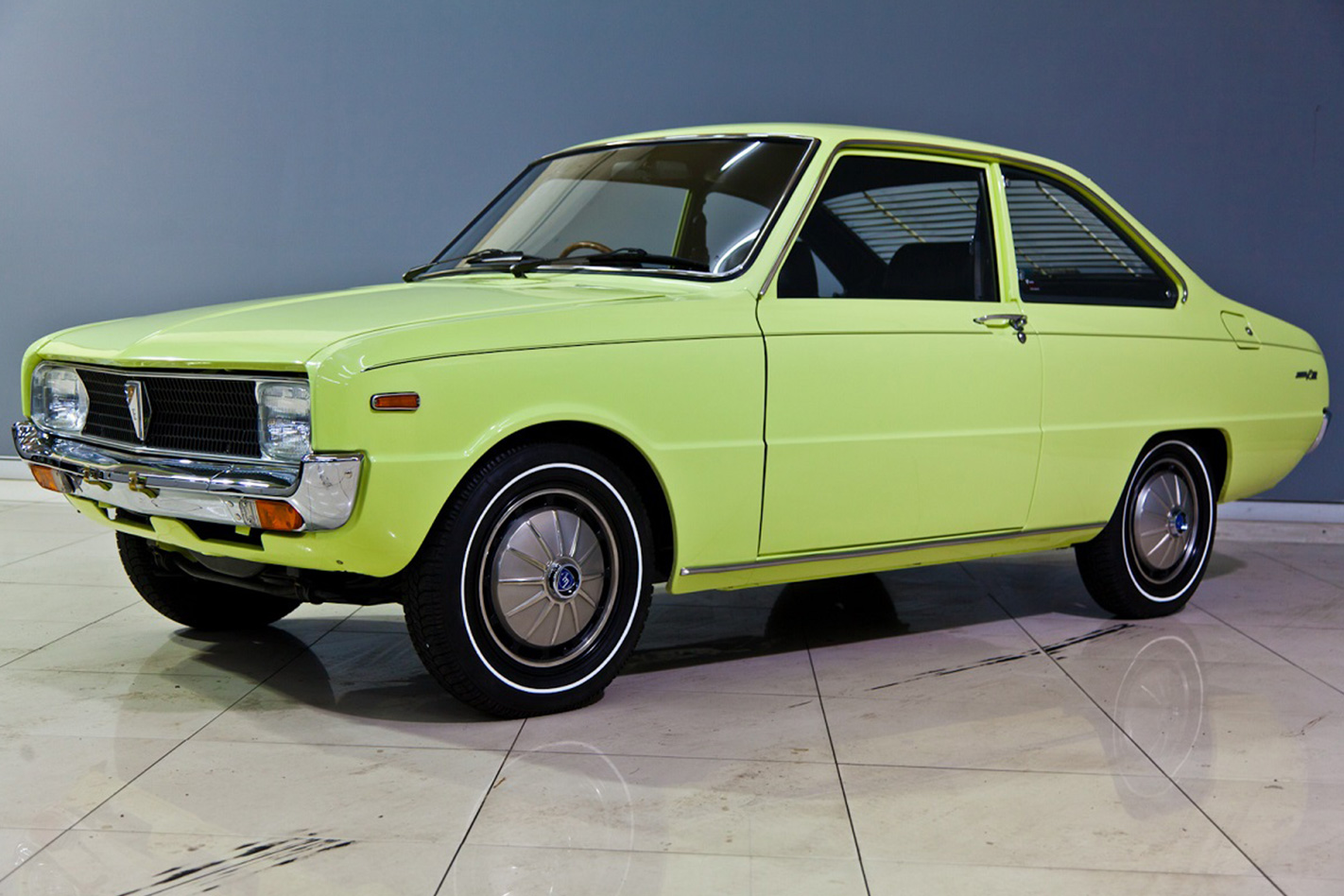
Fewer than 1000 Luce Rotary Coupes were built. The Giorgetto Giugiaro-penned model brought something of the Cosmo’s styling elegance and holds a pair of distinctions in the Mazda rotary timeline, being the sole front-wheel-drive model, and the only car to use the 13A rotary engine.
1970
The Mazda RX-2 – also known (and badged in Australia) as a Capella, took the new, bigger 12A rotary – now up to 1146cc, thanks to 10mm wider rotor housings – and slotted it into a small family car that applied subtle Alfa Romeo and Peugeot cues to a practical sedan and a good-looking coupe. While the 12A engine proved more durable than the problematic 10A, it was not without its issues, and the coil-sprung live axle failed to deliver dynamics to match the rotary’s accelerative ability. Yet the RX-2 helped put the rotary on the map and still holds enthusiast appeal today.
1972
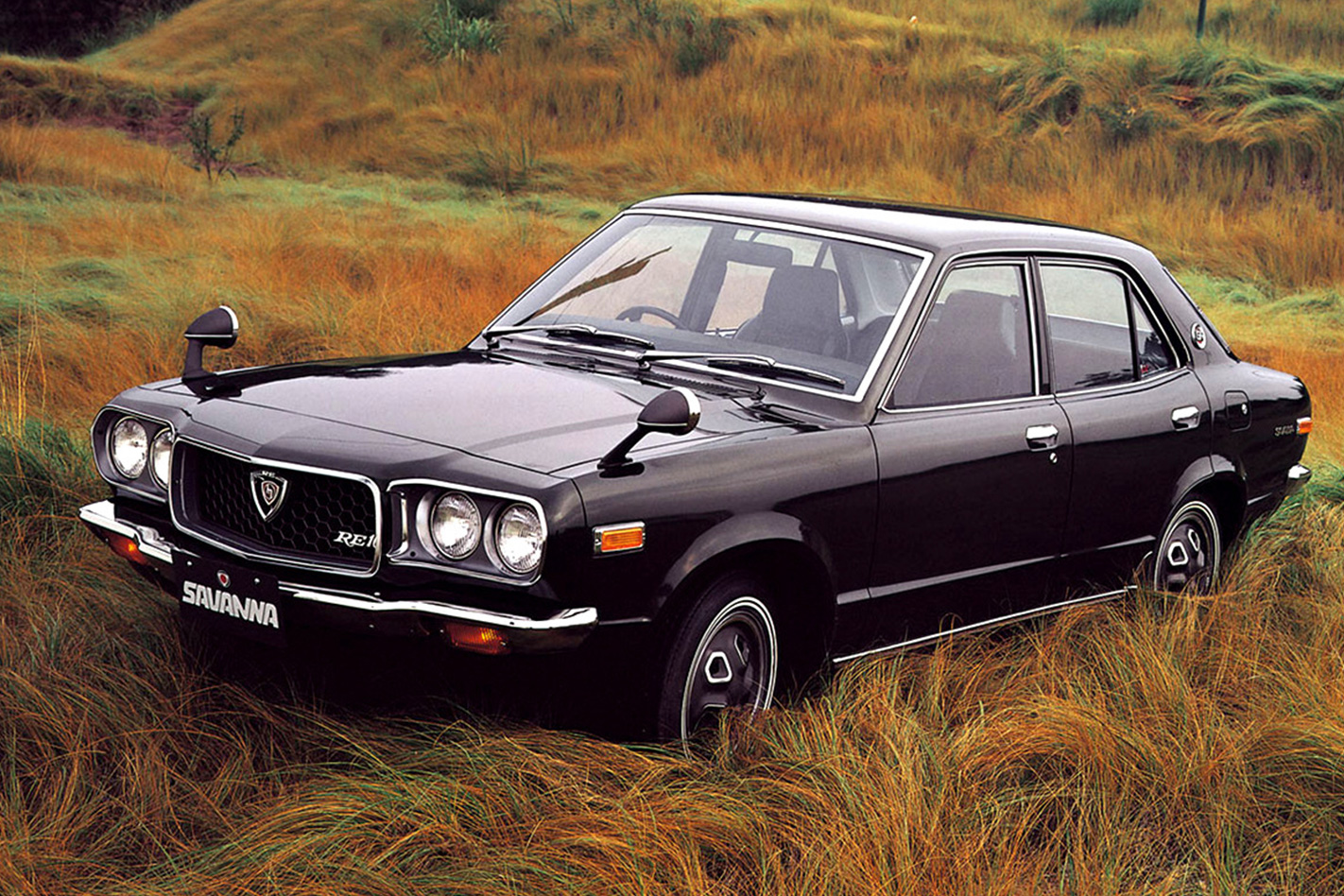
Perhaps the most-loved of Mazda’s early rotaries, the RX-3’s – Savanna in Japan – aggressive frontal styling, signature circular tail-lights and racetrack success endeared it to Australian enthusiasts, despite it being a very conventional small car like its predecessors. Early versions were 10A-powered, but later 12A RX-3s in sedan and coupe form (and as a Rotary Wagon in Japan) were more reliable and offered a better power-to-weight ratio.
1973
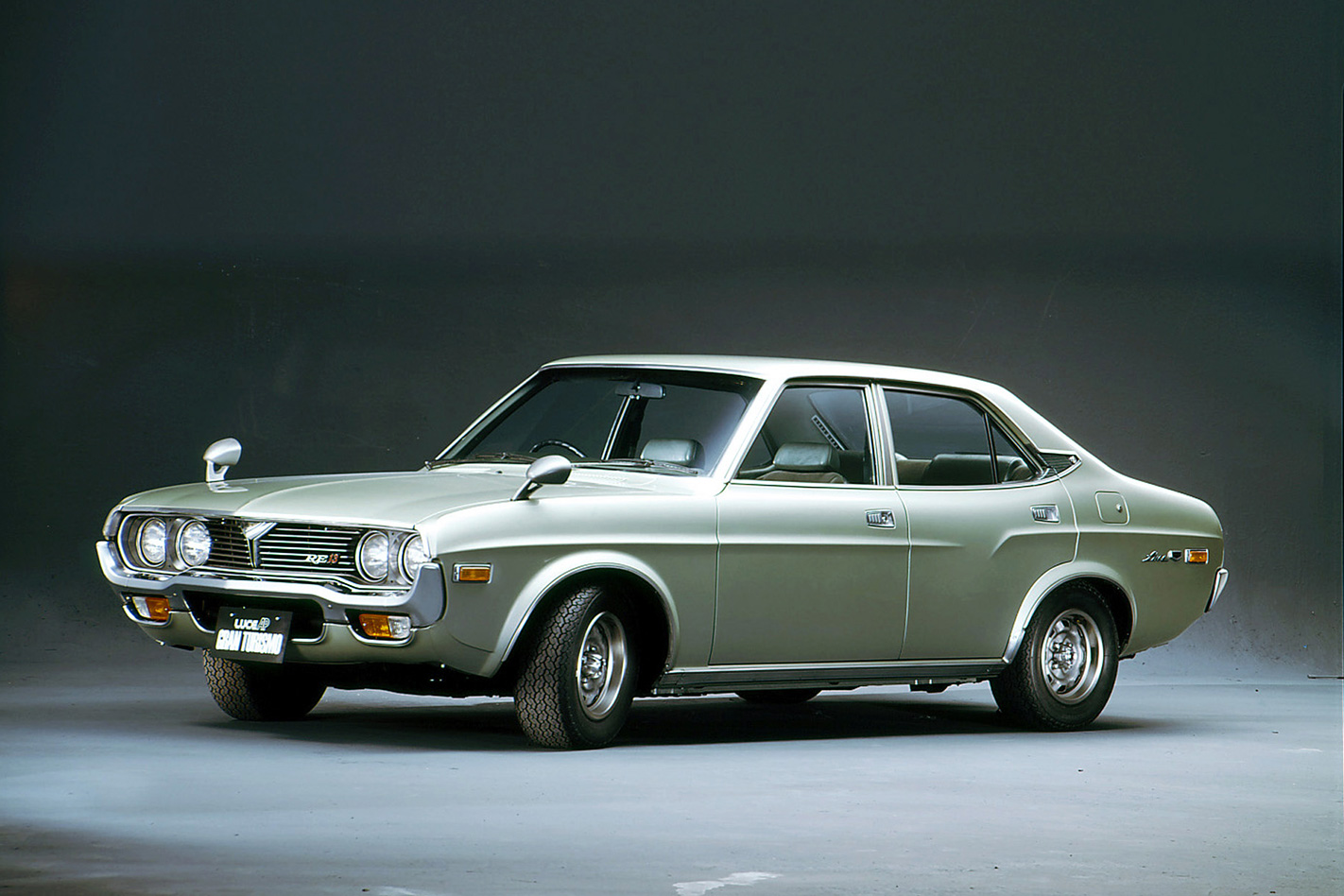
The Mazda RX-4 (aka Luce) was bigger and more luxurious than its RX-2 and RX-3 siblings, which sold alongside it in Australian showrooms through the mid-1970s. It was offered here as a rakish coupe and an upright sedan, initially powered by the 12A engine. The series II RX-4 offset its weight with the adoption of the bigger 12B (1308cc) engine, which would have made it the most potent RX yet, if not for the REAPS emissions system, which strangled outputs in an effort to green the exhaust.
1974
It wasn’t offered in Australia, but the Rotary Engine Pick-up or ‘REPU’ sold Stateside signalled Mazda’s continuing push for the rotary as a mainstream engine, this time in a light commercial ute. The ‘Rotary Power’ tailgate slogan was a highlight of this unique aside in the Mazda rotary story.
1975
Was the Roadpacer the weirdest chapter in Mazda rotary history? Well, if you overlook the 1974-77 Parkway Rotary 26 bus, then yes. The slotting of a 13B rotary and three-speed auto into Holden HJ (and later HX) Premier bodies was certainly a strange way for Mazda to arrive at a Toyota Century/Nissan President rival. As if the big Aussie sedan’s torque-to-weight wasn’t already bad enough, Mazda loaded the Roadpacer with automatic central locking, an over-speed warning and audio controls for rear occupants, to create an unlikely steed for salarymen.
1975
The 1973 oil crisis had hurt the sales of gas guzzlers, and the rotary had established itself as thirsty. With the RX-5, Mazda set out to claw back sales in the United States by drawing styling inspiration from Yank cars of the time. However, on top of the heavy-handed styling that resulted, the RX-5 was bigger and heavier than the earlier RX models and despite some pluses, such as rear coil springs, rear discs, a five-speed manual, and the 13B engine, the weight and emissions controls conspired to kill performance and appeal. The RX-5 was called Cosmo in Japan, but it had little in common with its pretty precursor.
1979
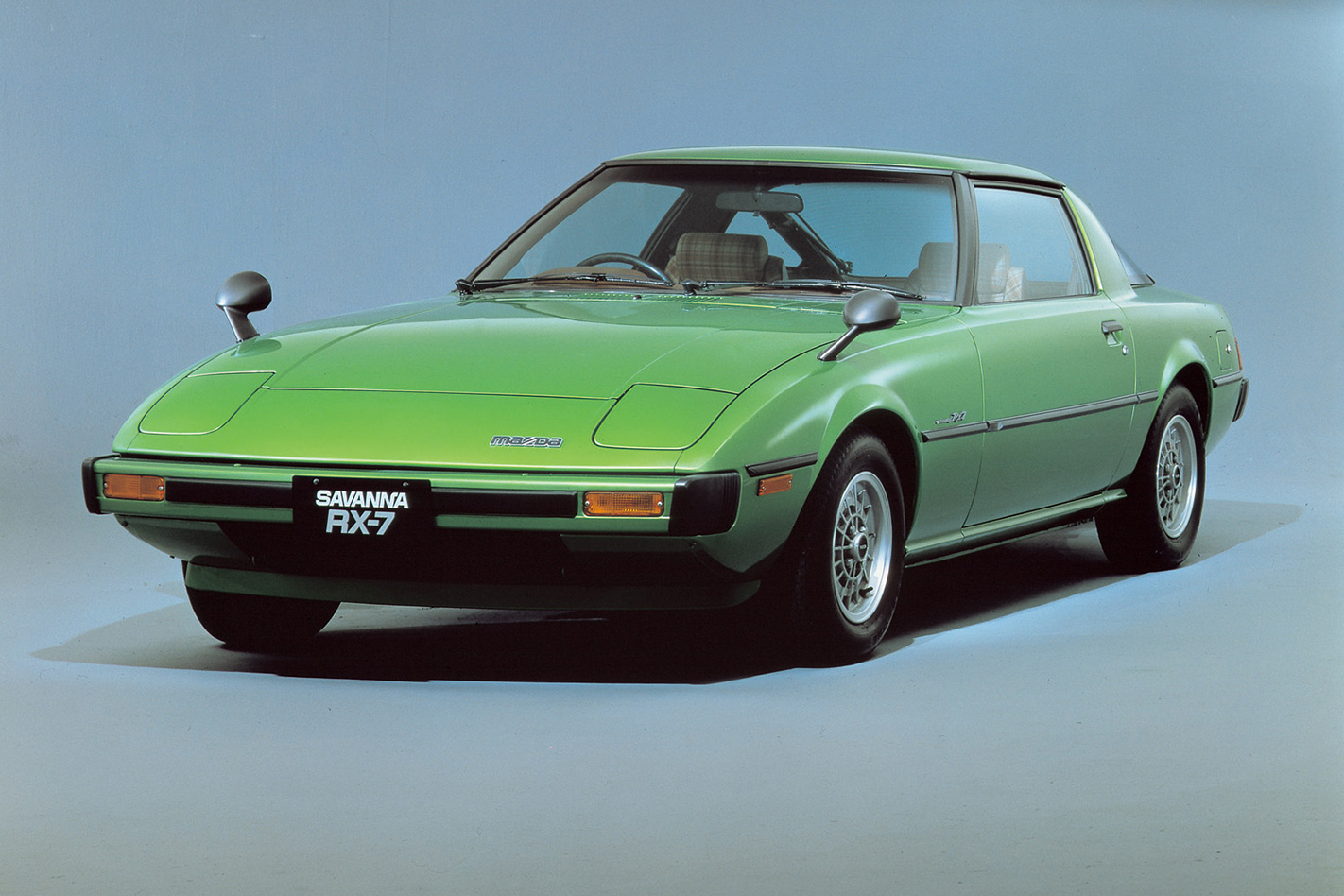
By the end of the 1970s, Hiroshima had come to the conclusion that the rotary’s home was in a sports machine, and looked to the Cosmo Sport for fresh inspiration. The result was the RX-7, which represented the rebirth of the rotary, drawing from the RX-3 parts bin to contain cost – recirculating ball steering, drum rear brakes – but deftly re-engineering them in a light 2+2 coupe with a low centre of gravity. The series 1 RX-7, circa 1000kg, was considered light enough that a revised 12A rotary was chosen rather than the 13B. Its location front-mid in the chassis contributed to 51/49 weight distribution and brilliant handling.
1982
The Cosmo and Luce badges were revived again in the early ’80s in Japan for a range of sedans, hardtops and coupes. They were sold in Australia as the Mazda 929, but we missed out on the engine at the heart of the HB Series Cosmo and Luce’s inclusion on the rotary honour roll. Fuel injection and turbocharging were firsts applied to the 12A engine, to make this Japan’s fastest production car at the time, and the Cosmo and Luce also featured power rack and pinion steering and independent rear suspension (with crude adaptive dampers) three years before the RX-7 adopted such tech.
1986
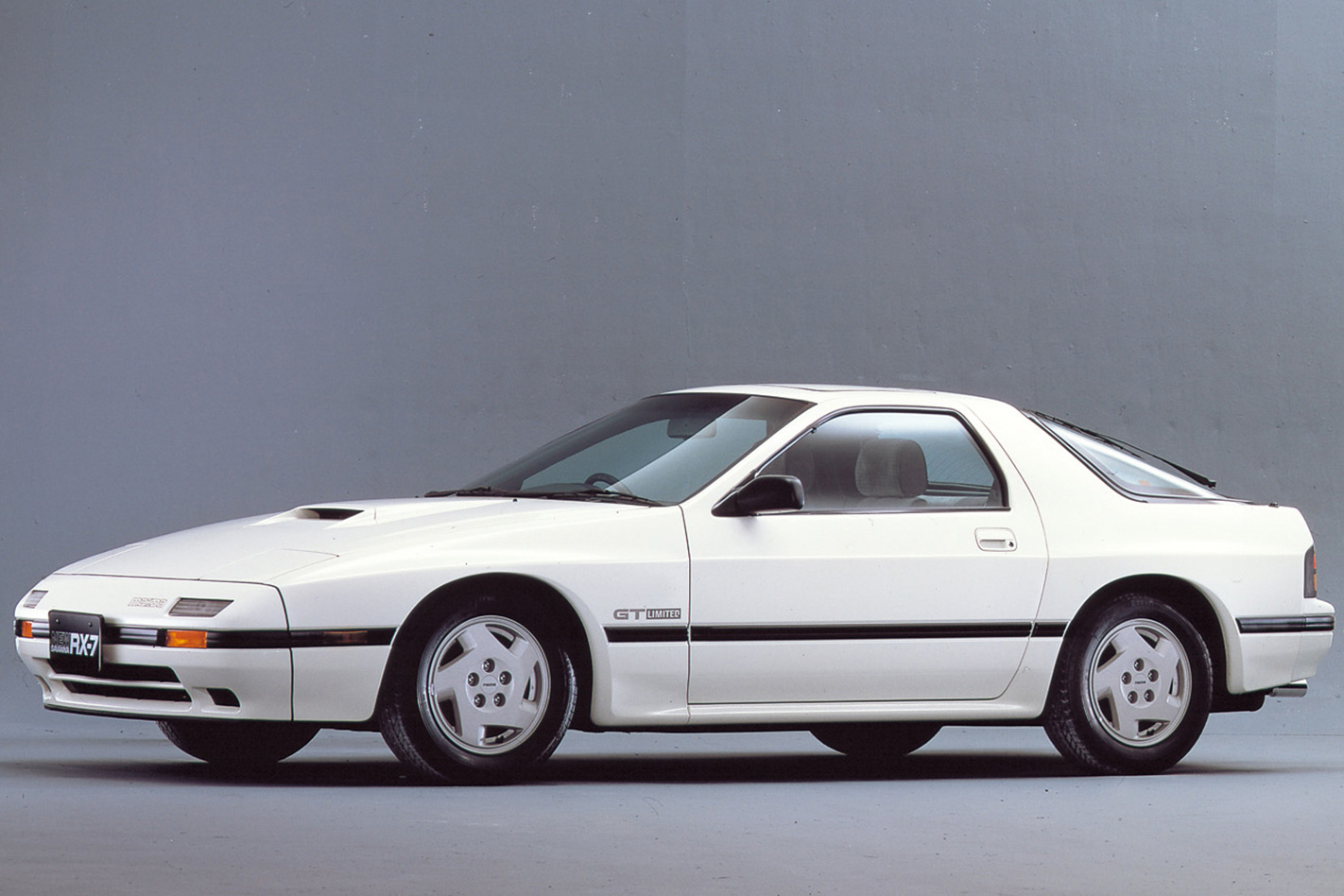
The second-generation RX-7, like sports car contemporaries the Nissan 300ZX and Toyota Supra, grew away from the original’s pure ideal into a bigger and heavier, pricier and more complex machine. The 2+2 coupe’s styling might have been derivative, but the powerful 13B intercooled turbo engine and clever passive rear-wheel steering IRS were all-new, and helped the RX-7 hunt upmarket.
1990
The Cosmo nameplate returned at the dawn of the ’90s, this time applied to a coupe from Mazda’s luxury marque, Eunos. The Japan-only JC series became the high-water mark in the development of the production rotary engine, in terms of the capacity, complexity, and power and torque outputs of its 206kW, 402Nm twin-turbo, triple-rotor 20B. One and a half 13Bs stacked end-to-end resulted in 1962cc and a unique exhaust howl.
1991
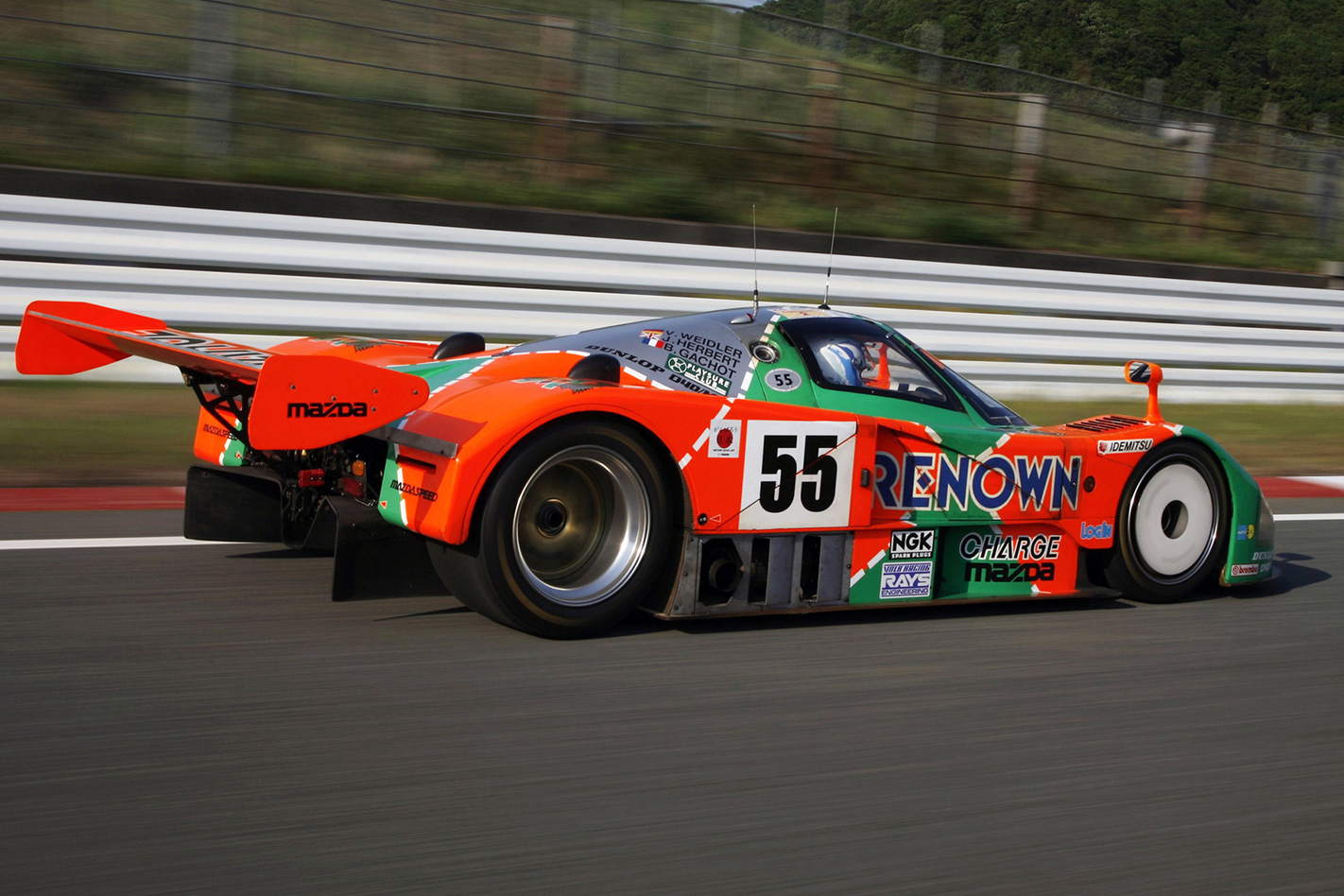
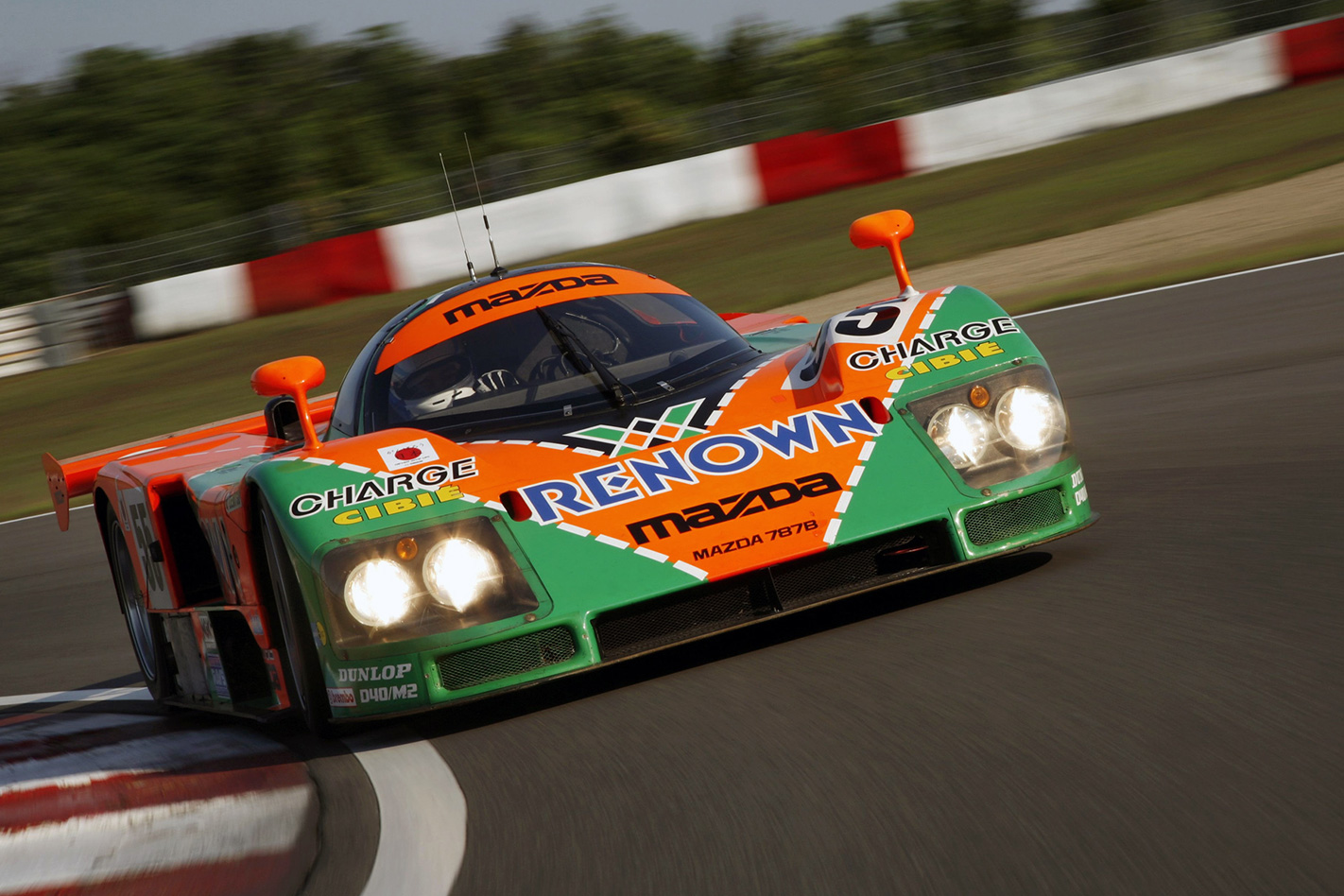
Anyone who had come to the conclusion in the 1970s and 80s that the Mazda rotary was thirsty or unreliable – and at various moments in its history it had been both – probably didn’t see the Japanese brand’s Le Mans campaign coming. After all, efficiency and reliability are the very cornerstones of endurance racing. Yet, with the screaming naturally aspirated quad-rotor R26B rotary-powered 787B Group C sports prototype, Mazda sealed what remains the only non-piston-engine victory – and the sole win for a Japanese maker – at the gruelling 24 Hours of Le Mans, beating out tough rivals from Mercedes-Benz, Jaguar and Porsche.
1992
While many Japanese rivals continued the pursuit of speed via technology into the 1990s, Mazda returned with a third and final RX-7 that was simpler and lighter, with a focus on handling purity and its most potent twin-rotor production engine yet. The 13B-REW twin turbo produced 176kW in Australian-delivered series six RX-7s, to make the trim, taut and terrific FD series Mazda’s quickest road rotary to date.
1992
Nine years after Allan Moffat’s RX-7 finished second in the Bathurst 1000, Mazda returned to the Mountain for the James Hardie 12-hour with a pair of third-gen RX-7s and went one better. The RX-7 graced the top step again in ’93 and ’94, and in ’95 at Eastern Creek. Mazda Motorsport, under Allan Horsley, went on to become a tarmac rally force.
2003
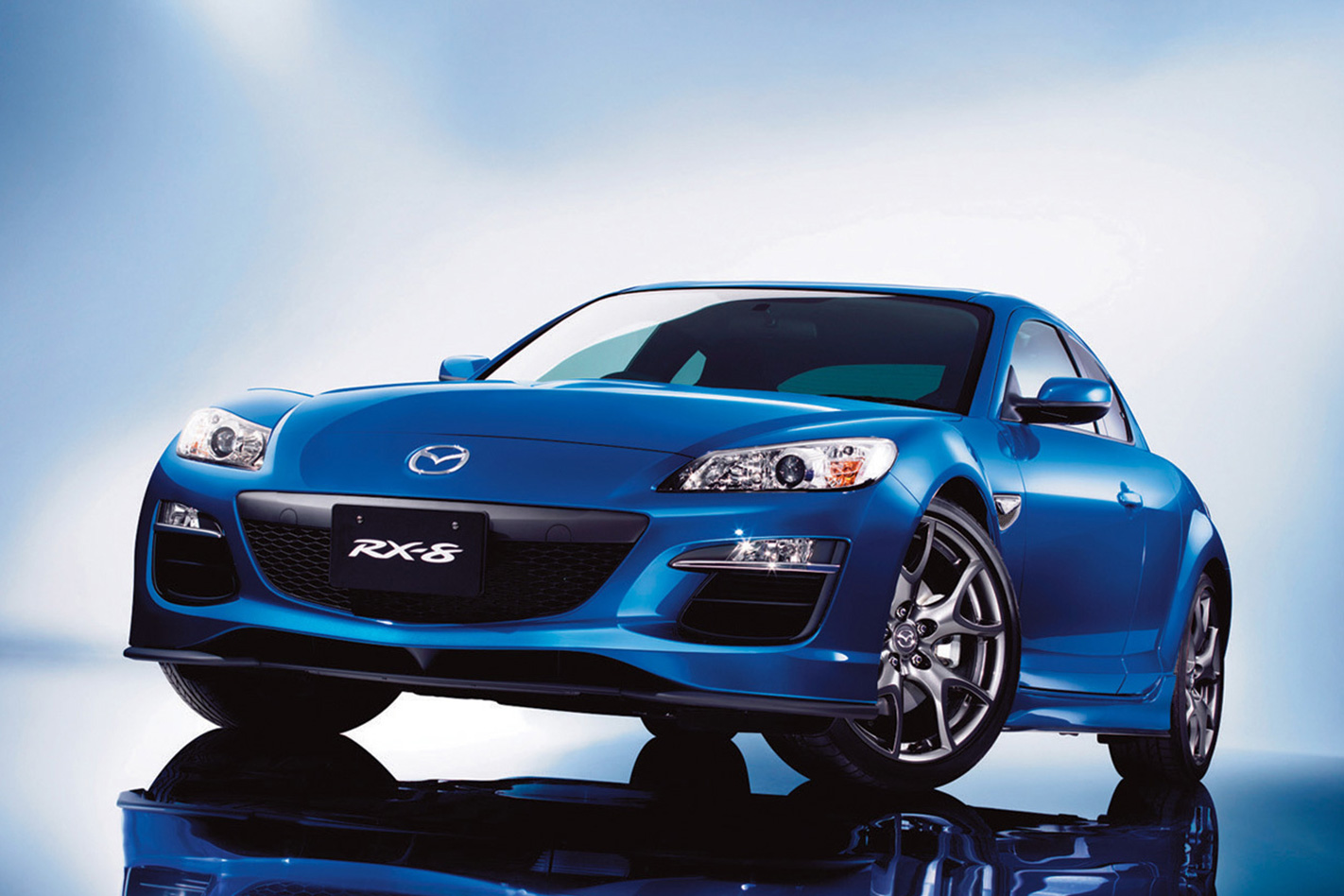
In the RX-8, the new 177kW naturally aspirated multi-side-port Renesis engine – still a 1308cc twin-rotor like the original 13B – was deployed in a ‘freestyle’ four-door, four-seater coupe long before Europe adopted the genre. While at various times in its rotary history Mazda had positioned its revolutionary engine to deliver a family, sports or luxury experience, the RX-8 was designed to provide a measure of all three. A stunning automotive achievement, the RX-8 was 2003 Wheels Car of the Year.
TESLA has its tail up. That’s if you believe pitchman Elon Musk. In a sometimes emotional and frequently bullish shareholders meeting near the company’s Palo Alto headquarters, Musk outlined his plans for the brand and attempted to address many of the issues that have led to Tesla’s stocks being the most shorted in the auto industry.
While he was keen to spruik the fact that the Model 3 production line can now make 500 cars a day and is targeting 5000 cars per week by the start of July, significant issues still remain. According to purchase analytics company Second Measure, twice as many Model 3 deposits are being refunded than acquired, with a quarter of all Model 3 pre-orders being cancelled.
“This was, I have to tell you, the most excruciating, hellish several months I’ve maybe ever had,” Musk admitted, alluding to the production issues that have dogged the Model 3, “but I think we’re getting there.” Profitability has proven an even tougher nut to crack for Tesla and the recent layoff of nine percent of its staff was a “difficult but necessary” strategy to achieve that, according to Musk.
Undeterred by the company’s issues with getting cars to customers, Tesla displayed a third Roadster prototype (for which he announced an updated ‘SpaceX’ performance upgrade) and its semi-truck project, currently mired in intellectual property litigation with competitor company Nikola. In addition to this, Musk showed teaser images and announced dates for the much-rumoured Model Y crossover, citing a March 15th reveal and production slated for late 2020. Running on a modified Model 3 platform, the crossover would not be built at the at-capacity Fremont factory, and would also utilise a more traditional build process.
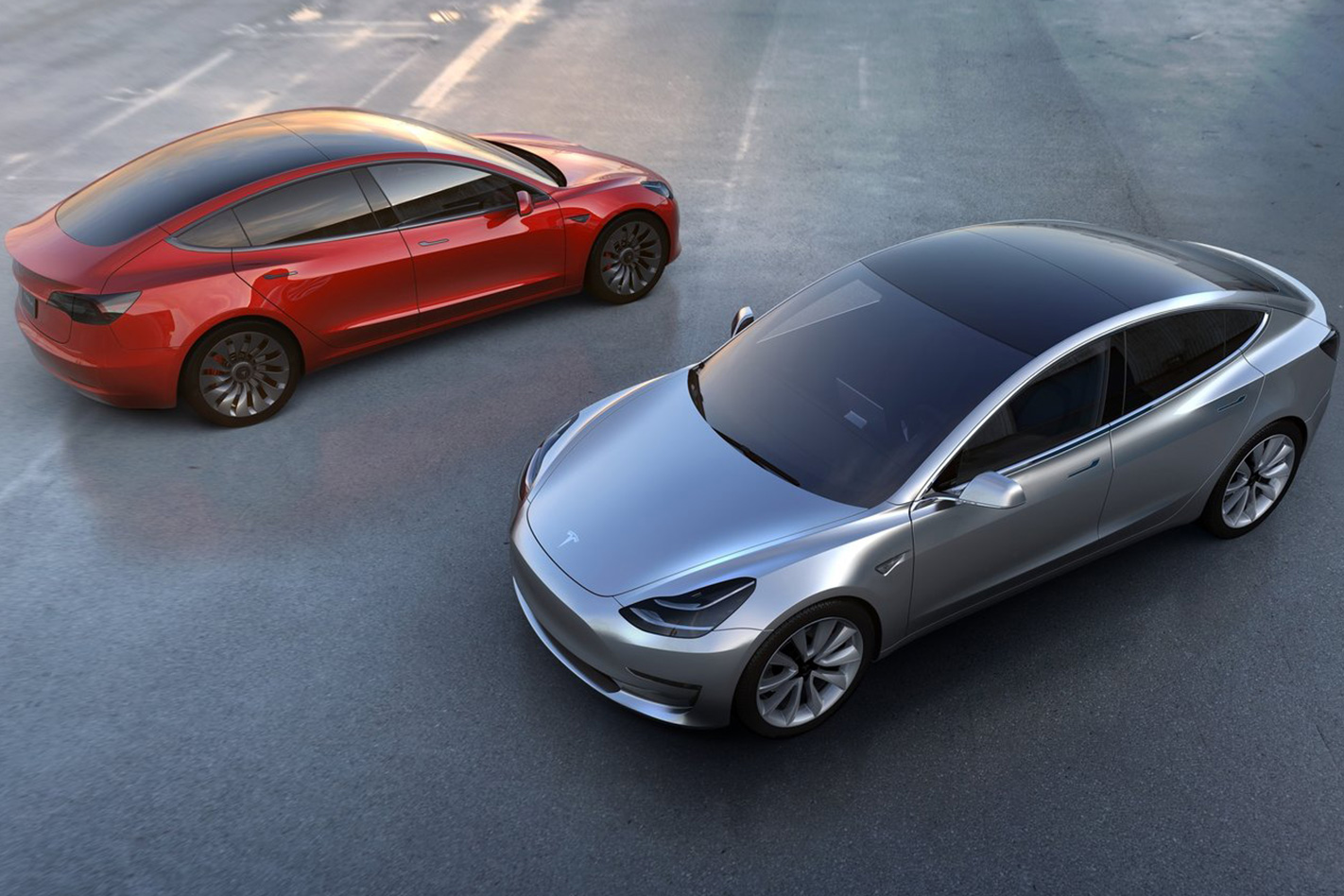
In an attempt to clear its production backlog, Tesla opened a third production line this weekend, built not inside the Fremont factory but in a vast temporary tent structure outside. Built over three weeks, the makeshift assembly line had just produced the first Model 3 Dual Motor Performance.
Musk claimed that the Model 3 is already outstripping US sales of the BMW 3 Series, Audi A4, Mercedes C-Class and Lexus IS. The dual motor all-wheel drive version of the Model 3 is set to bolster its market appeal when it hits showrooms in July, although the big kick-on in volumes remains reliant on the addition of the “shorter-range battery/lower-cost” Model 3 which Musk stated was due “around the end of this year.”
Musk recognises the need for a certain pragmatism when it comes to the build process, with an admission that Tesla bit off more than it could chew. “There are some things that are very well suited to manual operation and some things that are very well suited to automated operation, and the two should not be confused,” he said. “We did go too far on the automation front and automated some pretty silly things,” he added.
Musk also suggested a Golf-rivalling compact car was in the works. In an apparently off-the-cuff remark, he said, “I think we’ll do a compact car in less than five years.”
Hiding To Nothing
When asked during the shareholder’s meeting whether it was possible to specify a Tesla with no leather used in the interior, Musk indicated that it was currently possible to do so via special order although this slows the build process. He then let on that the forthcoming Model Y would feature no leather in its build, with seats and steering wheel trimmed in a more sustainable material. “If it does have a steering wheel,” he deadpanned.
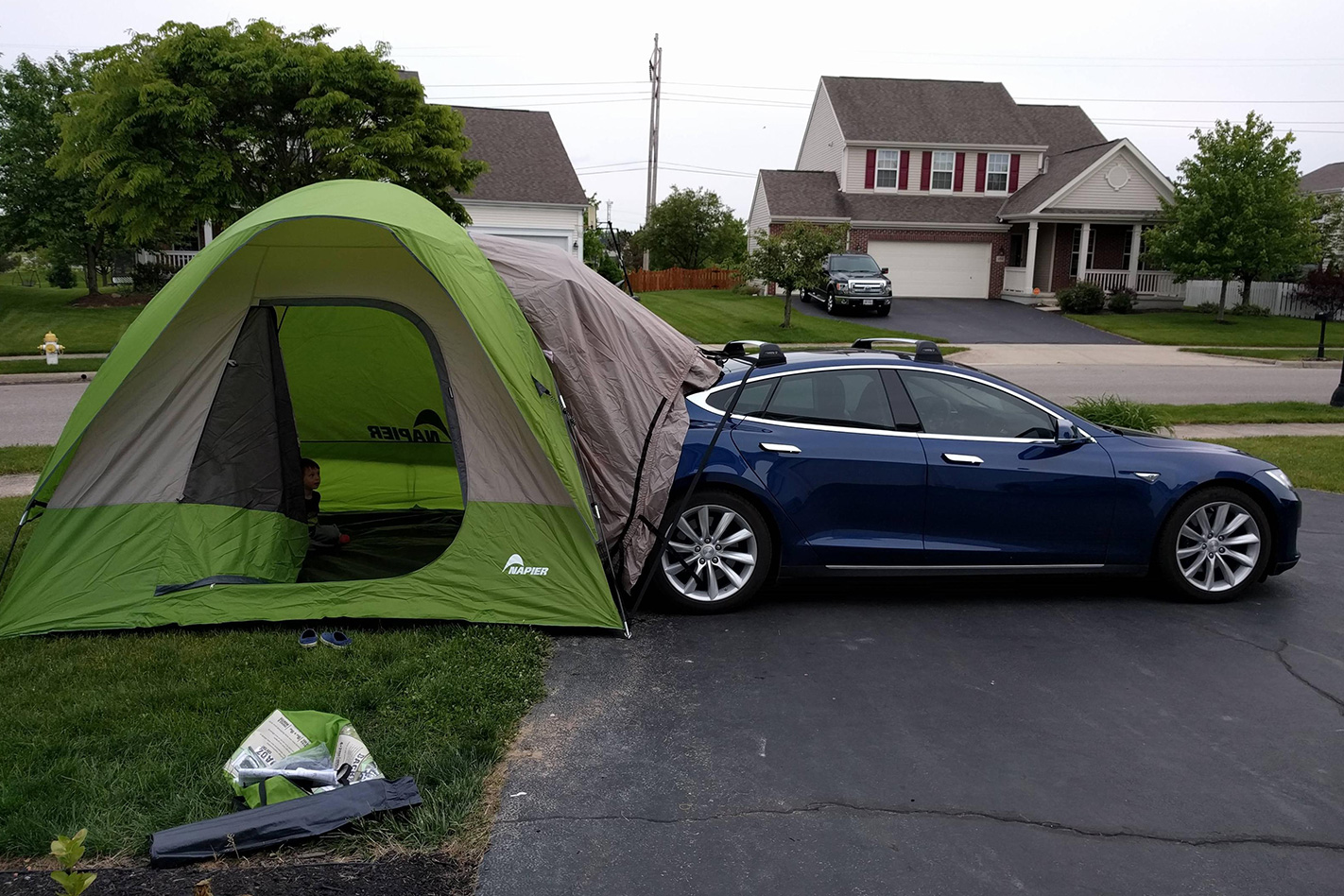
Ford Australia has confirmed pricing and specs for the 2018 Ford Mustang Bullitt, which is headed to Australia this October.
Starting at $73,688, including LCT, the Bullitt will be the most powerful Mustang GT which Ford Australia has sold.
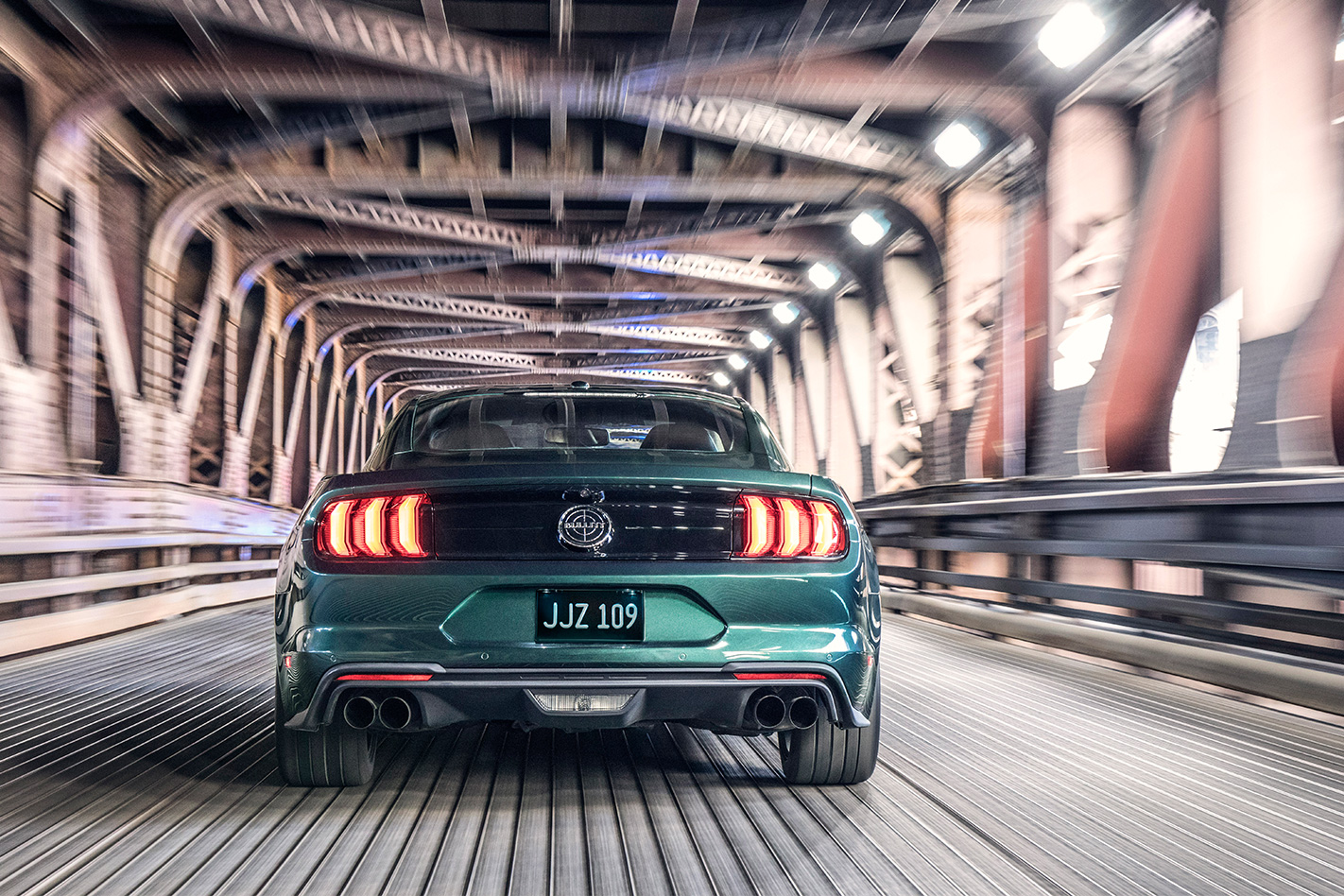
The US carmaker’s local arm says an initial allocation of 700 units will be available to buyers willing to stretch the budget over the $68,740 it costs to buy a standard manual GT with Magneride suspension and Recaro seats.
Its 5.0-litre V8 gains a few extra kiloWatts too, bringing its output to 345kW rather than 339kW. Torque stays the same at 556Nm, though both of these figures are down on the 354kW/569Nm Bullitt in the US market.
As far as performance upgrades, the extra power – thanks to a new intake system and Shelby GT350 intake manifold – is it. It’s also only available in 6-speed manual guise, to keep the classic car’s theme going.
In terms of its styling, the 2018 Mustang Bullitt is as true to the original car as something 50 years its younger can be.
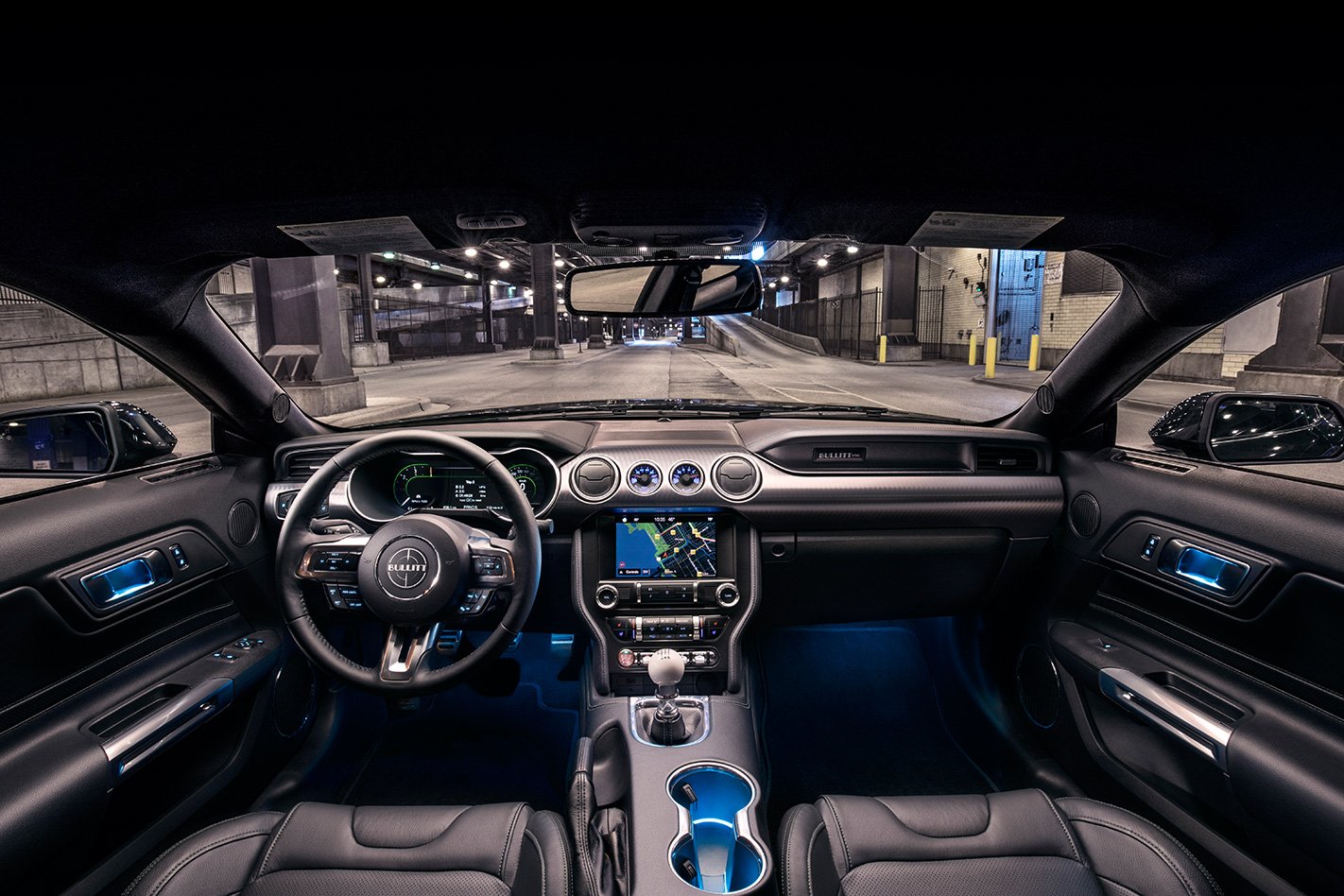
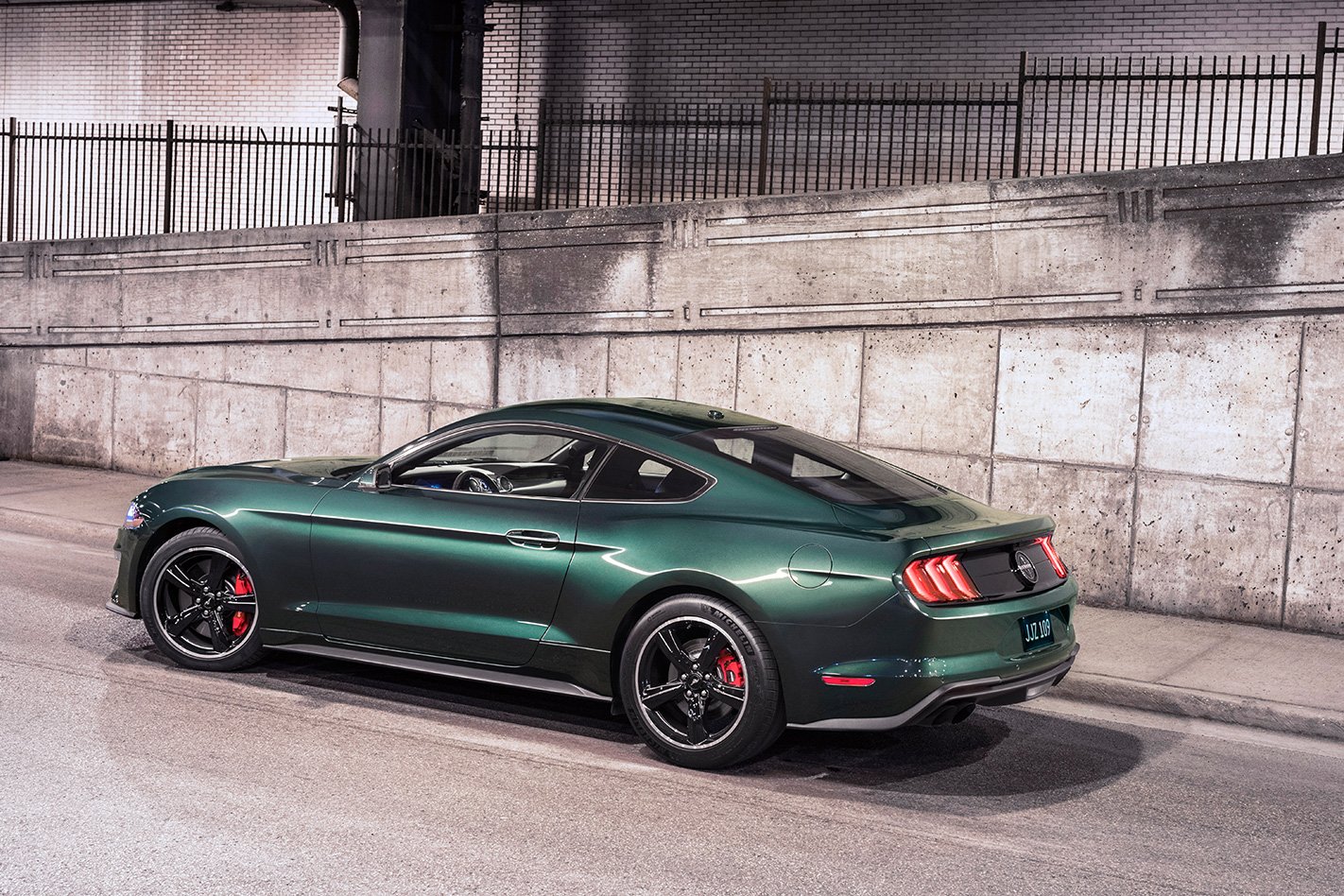
Highland Green paint is immediately recognisable as the same colour as the original movie car driven by Steve McQueen, while a ‘Bullitt’ badge at the rear takes the place of the ‘GT’ badge.
Exclusive ‘gloss-black 19-inch Torq Thrust-style alloys’ are also a styling cue unique to the Bullitt, again inspired by the original movie car.

Inside, ‘Bullitt’ scuff plates and a numbered plaque will alert the uninitiated that they’re not in a normal Mustang, while more subtle nods to the original car such as a white gear knob will put a smile on the face of a keen-eyed McQueen fan.
VOLKSWAGEN on Monday is expected to announce a new head of its Audi luxury car division after its current chief executive overnight was arrested in Germany over the Dieselgate scandal.
Rupert Stadler was arrested as part of a German investigation into claims that Audi has cheated on diesel emissions tests. According to Munich-based public prosecutors, Stadler was being investigated for suspected fraud and false advertising, and for his alleged role in helping to bring cars equipped with illegal software to the European market.
The allegations being levelled against him infer that Stadler, the most senior VW executive so far to be arrested in the wake of the Dieselgate scandal, knew of the software-based defeat devices as early as 2015, yet continued to allow the brand’s cars to be sold. Prosecutors said they feared Stadler might seek to suppress evidence in connection with a diesel emissions probe, prompting his arrest.
Both Audi and Volkswagen Group, which owns the luxury car brand, are yet to issue a statement. Bram Schot has been installed as an interim chief executive to replace Stadler, who was stood down in the wake of the arrest.
The charges levelled at Stadler are in stark contrast to Volkswagen Group’s claims that only lower-level management knew of the emissions cheats. They also follow an announcement from German authorities early last week saying that Stadler was being named directly as a suspect in its Dieselgate investigations, and a police raid on Stadler’s apartment looking for evidence.
Stadler was appointed to head up Audi in 2007, sitting as chairman of the luxury car maker. However, in April of this year he was elevated to take on a wider sales role. A month later, Audi would announce that it had discovered “engine management irregularities” in about 60,000 V6 diesel versions of the A6 sedan and A7 fastback saloon sold globally.
Stadler’s arrest comes in the wake of the former highest-ranking VW official to have a warrant issued for their arrest, former VW chairman Martin Winterkorn. The US filed charges against Winterkorn in May, accusing him of misleading government regulators about Volkswagen’s efforts to deliberately cheat on emissions tests of its diesel-powered vehicles.
In Australia, the Australian Competition and Consumer Commission has named Audi Australia as one of the members of the wider Volkswagen Group that it alleges “engaged in misleading or deceptive conduct, made false or misleading representations and engaged in conduct liable to mislead the public in relation to certain diesel vehicle emission claims”.
Volkswagen Group Australia and Audi Australia have both denied they have broken any Australian laws.
Suzuki has let slip some official images of the first all-new Jimny for this century – and confirmed some key details of its compact 4×4 in the process.
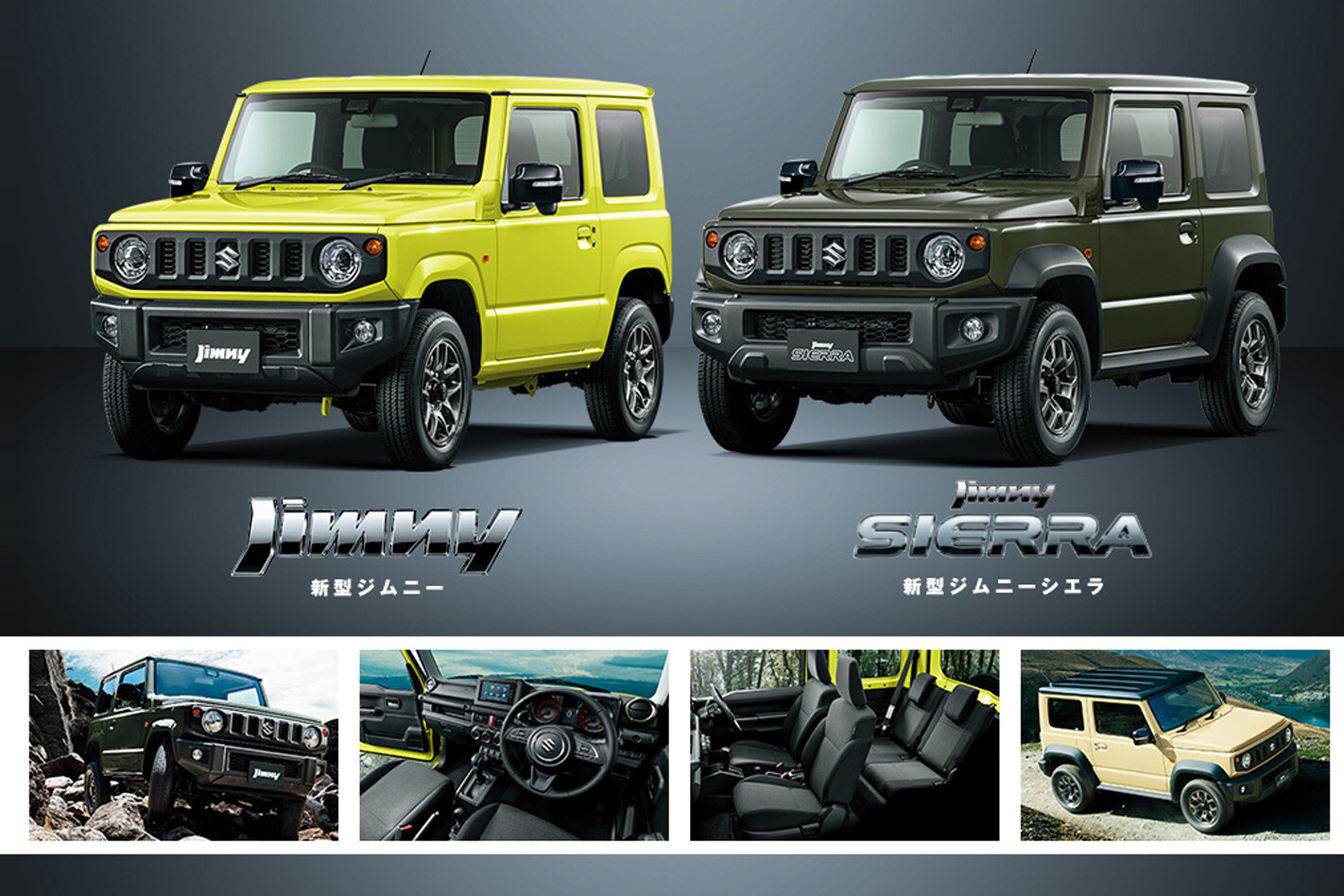
A teaser page on Suzuki’s global website shows the full palette, highlighting an eight-colour lineup with a bold “Kinetic Yellow” as the hero colour. Two-tone options will exist with black roofs to contrast against the body colour, giving the Jimny’s boxy, retro and quasi-military styling an even bolder presence.
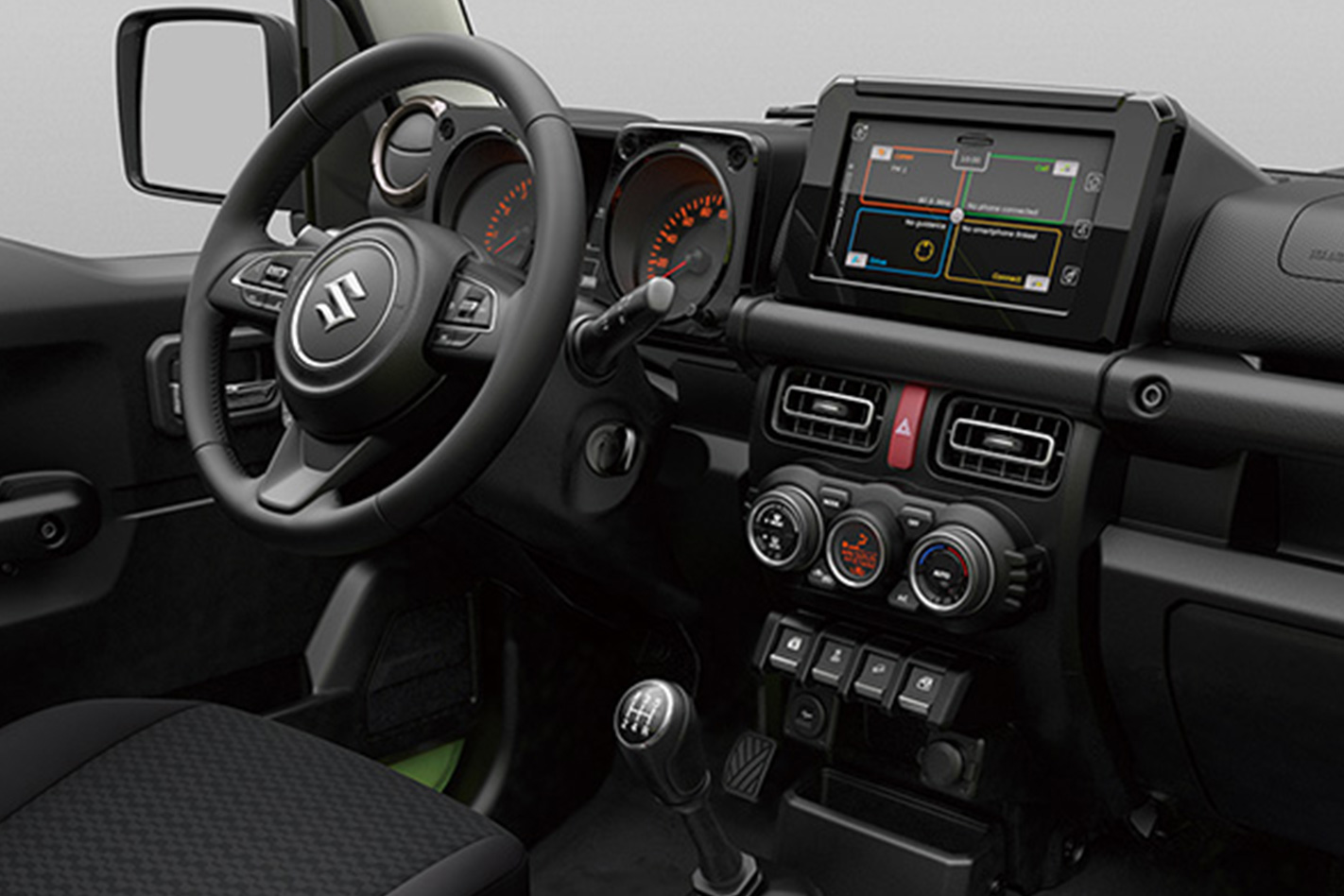
Inside, there’s an interior that recalls classic second-generation SJ Jimnys, with a horizontal grab handle in front of the passenger and square instrument housings ahead of the driver, while also combining those classic elements with the same large touchscreen infotainment system and steering wheel of the Swift.
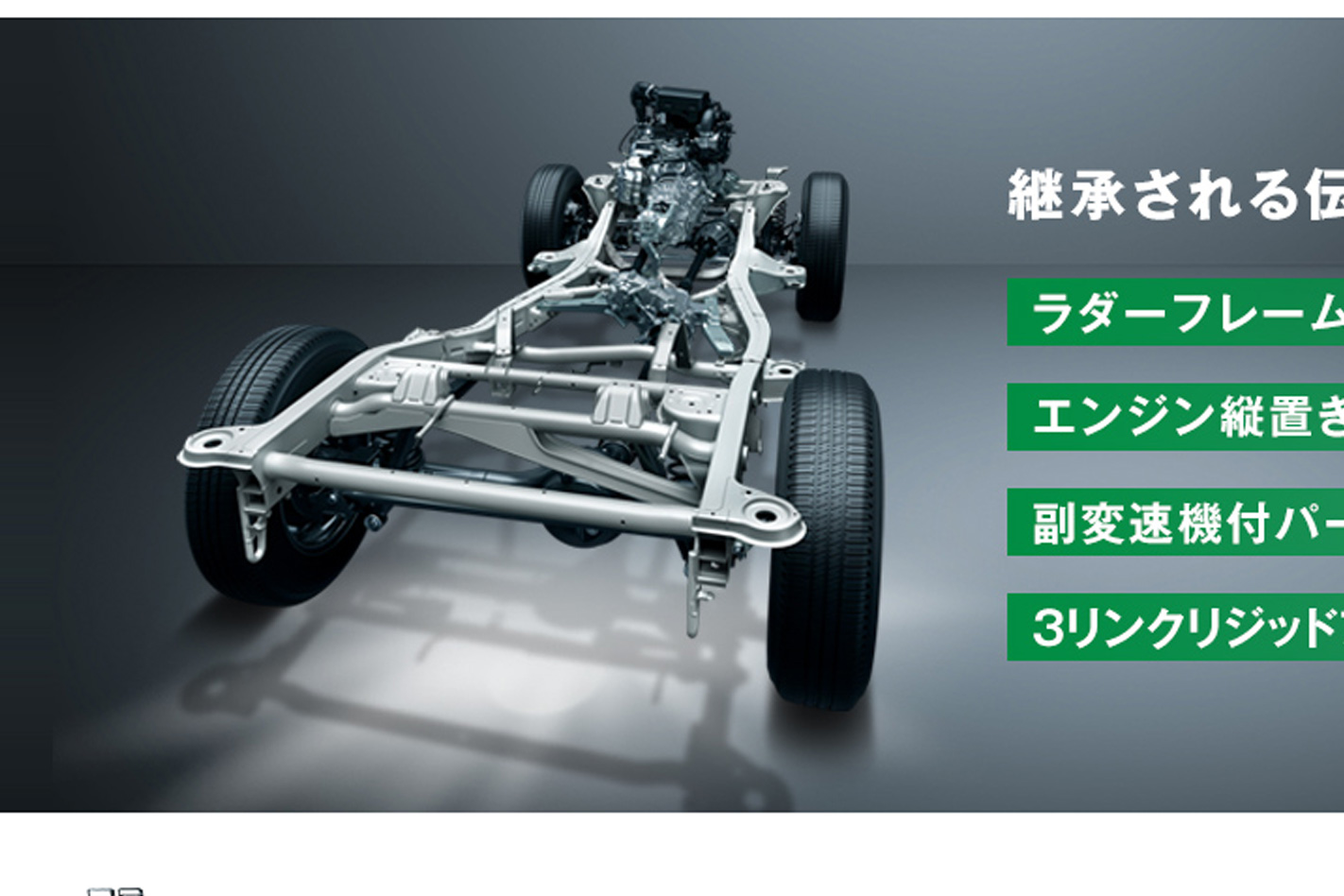
But the details that most off-road enthusiasts will be excited for have been verified in an image of the bare chassis – the new Jimny will still make use of a ladder frame chassis with a longitudinal engine and gearbox sending drive to live axles at the front and rear. A low-range transfer case will also remain in the Jimny’s technological arsenal.
In Japan, a narrow bodied kei-class version will be offered without the boxy plastic arch flares, powered by a 660cc turbo triple, and will sell alongside a wide-body “Jimny Sierra” propelled by a 1.5-litre naturally-aspirated petrol four-pot.
In Japan both engines will be offered with a choice of a five-speed manual or a four-speed automatic, and, while local details are still yet to be ironed out, we expect the 1.5-litre will be the engine offered downunder.
Autonomous emergency braking will also be offered in the Japanese market, and will likely make its way to Australia-bound cars too.
An Australian launch date has yet to be confirmed, though local boss Michael Pachota told Wheels that the next-generation off-roader was high on his wishlist – and he wants it before the end of this year.
“We would very much welcome the introduction of [the new] Jimny this year, We’ve put in a request with Suzuki Motor Corporation to have that vehicle as soon as possible,” he said.
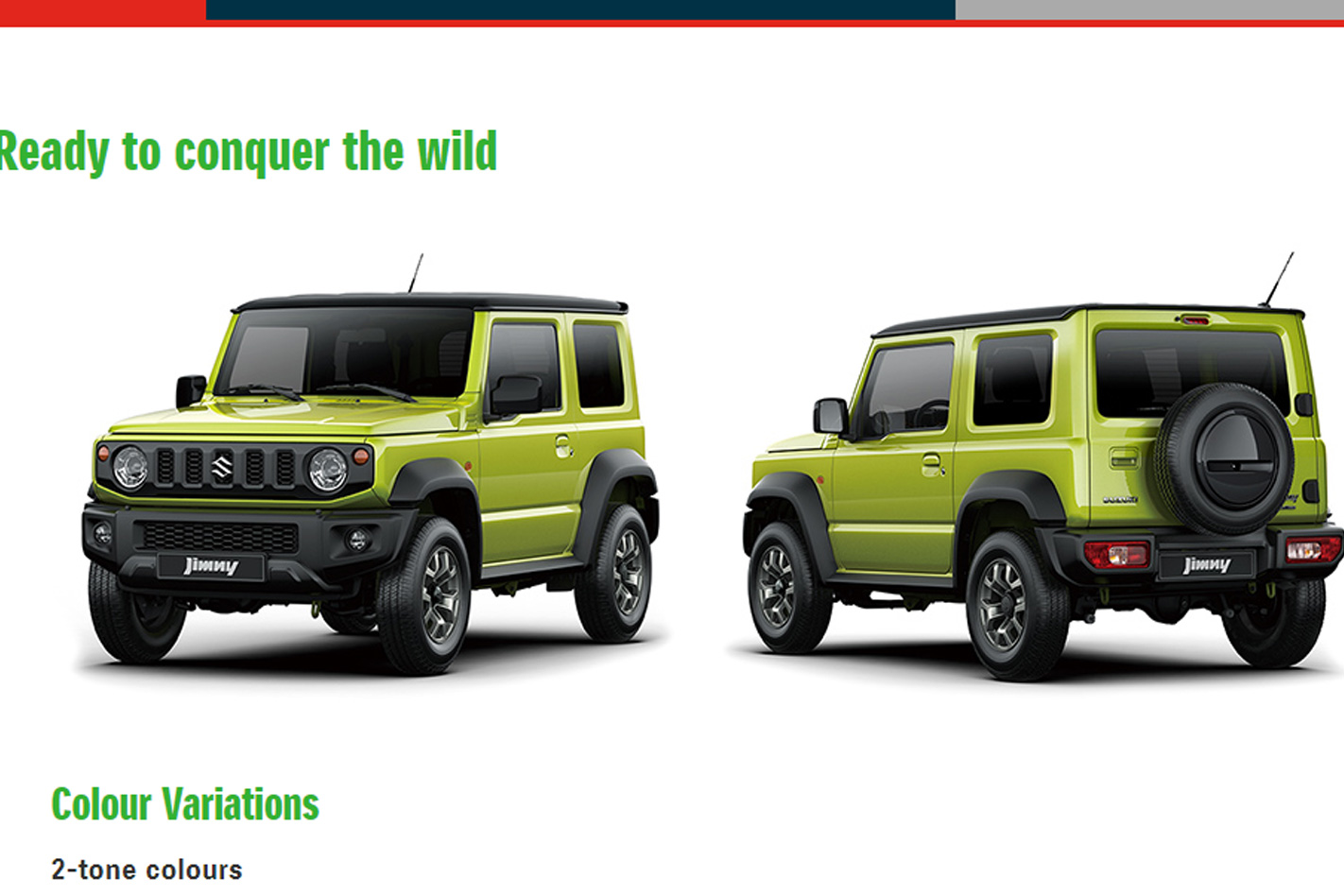
Pachota also said a dual-specification strategy would likely be employed, with an affordable entry model with basic specification opening the range as an enthusiast-pitched offering, while a high-grade range-topper would provide more appeal to metropolitan buyers.
The former would likely stay around the low-to-mid $20K region of the current model, while the latter is expected to be priced in the high-$20K bracket.
The World Endurance Championship will have a new premier category which will emulate the glory days of GT1.
A vision of the new rules – set to be introduced in 2020 – was revealed by the FIA and ACO (which govern the World Endurance Championship) at the 24 Hours of Le Mans over the weekend.
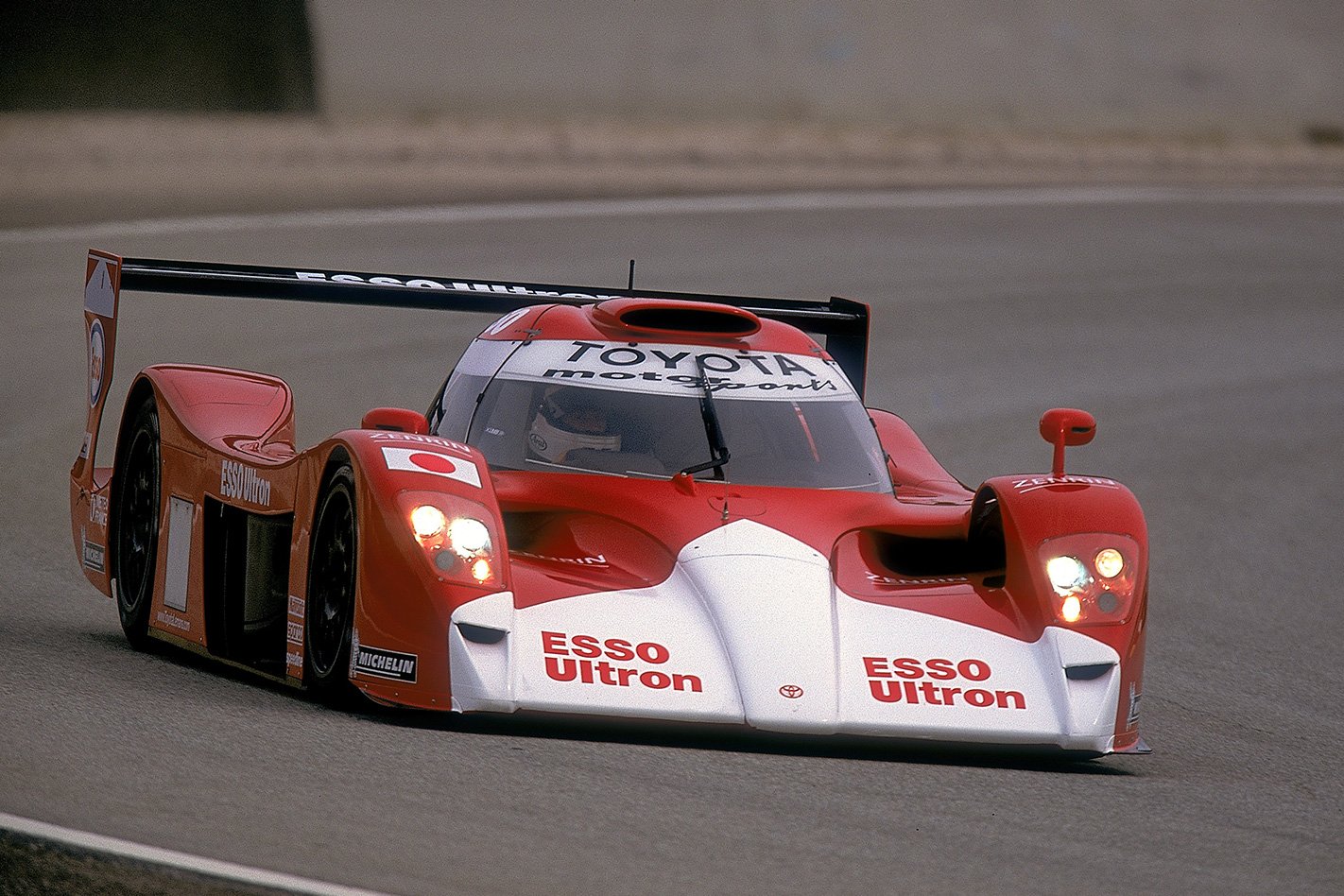
LMP1 is the current premier category in WEC, but is set to killed off at the end of the current 2018/19 ‘superseason’.
The writing has been on the wall for LMP1 ever since Audi and Porsche pulled out of the category in quick succession in 2016/17, and now we have a clearer idea of what its replacement could look like.
While a name has not yet been announced – with the FIA stating a final decision will come down to popular vote (Fasty McFastface anyone?) – the regulations are intended to appeal to manufacturers while slashing the multi-million dollar budgets of LMP1.
The FIA says the new rules will revolve around “hypercars, supercars, luxury GTs or concept cars”, and “focus on the appearance, style and lines of the cars”.
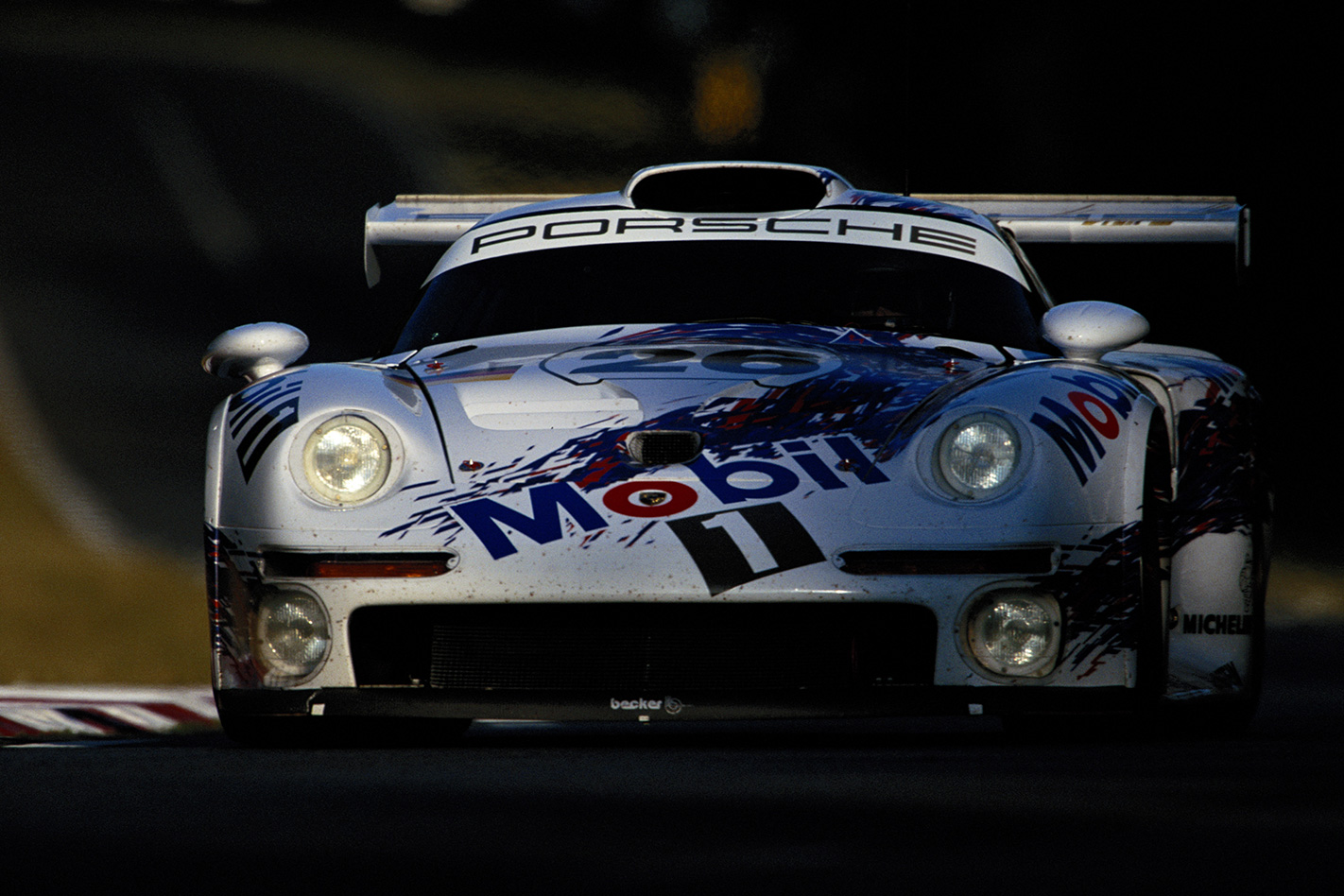
Visuals are high on the ACO and FIA’s priority list, with a press release stating “aerodynamics cannot take precedence over aesthetics” with the new rules.
The dimensions being suggested by rule makers include cars featuring two seats, a larger car-like cockpit, wider windscreens, and a more upright seating position (instead of the semi-reclined, almost F1 position of current LMP1 cars).
Moveable aerodynamic devices will be permitted, with maximum drag and downforce levels determined by the FIA.
A maximum weight of 980kg has been suggested with weight distribution regulated much as it is in F1.
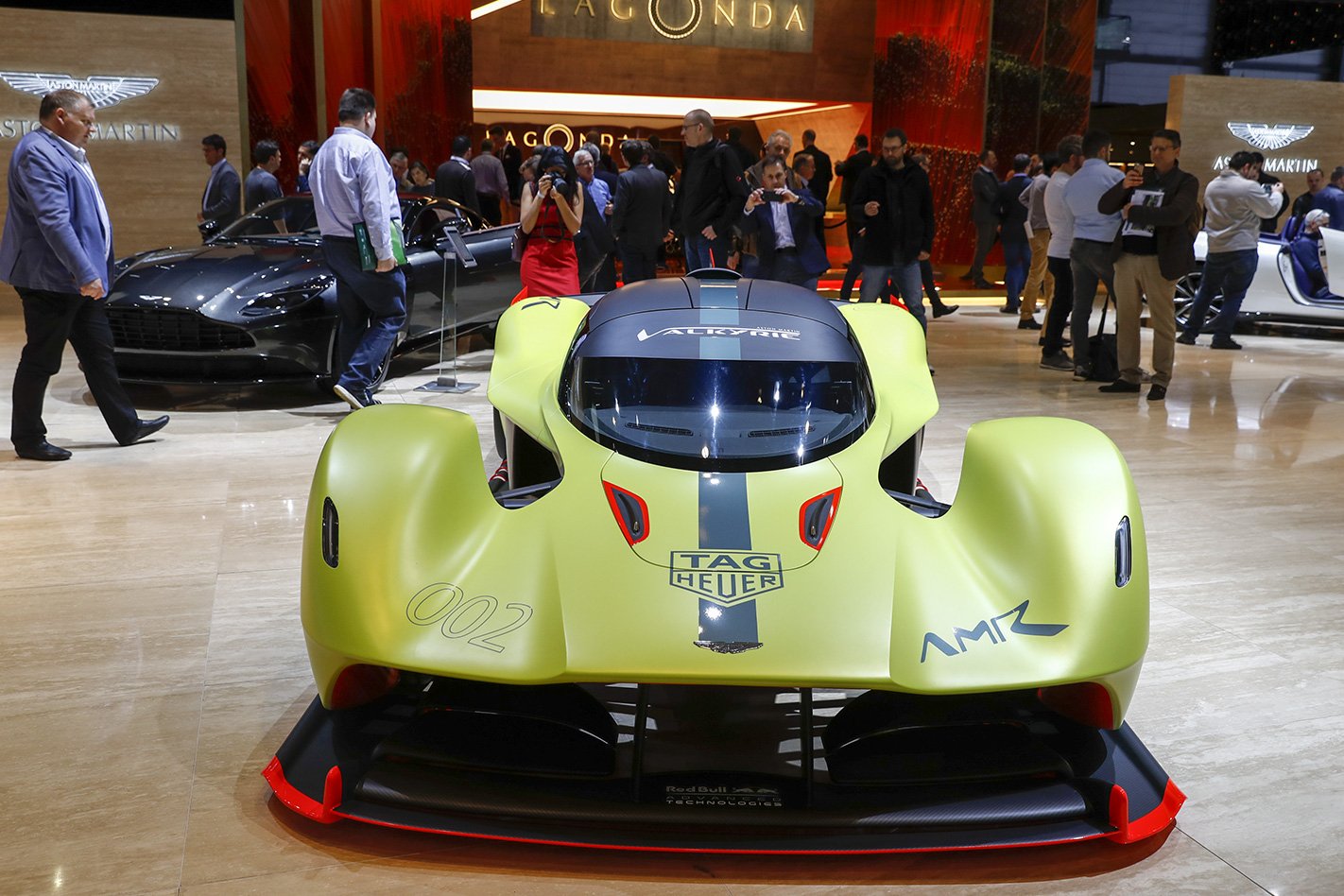
Power will be provided to thanks to a hybrid powertrain, with the new rules dictating a 4WD system. The FIA has stated it is keen to see a variety of different engines involved in the category, and will permit a “free engine design”. However, engines will have their minimum size, weight and centre of gravity dictated by the rulebook.
A target total system output of 720kW has been touted, with the combustion engine capped at 520kW, and 200kW being provided by electric motors which are fed by a kinetic energy recovery system (KERS) on the front axle.
The current fuel flow limits of LMP1 (80kg per hour for hybrids) are expected to carry over into the 2020 regulations.
Media speculation has suggested the return of GT1-style homologation rules, with the racing cars requiring mechanically similar (or identical) roadgoing siblings.
However, the FIA has not specified this will be the case. Instead it has stated that the KERS “will have to be used on production cars at a pre-defined price”.
This could be interpreted as meaning teams could use a bespoke prototype body and chassis design, but will feature an energy recovery system from a roadgoing car.
Privateers that aren’t affiliated with a factory effort will be taken care of thanks to a rule which dictates the KERS system must be made available for lease by manufacturers, along with a common ECU.
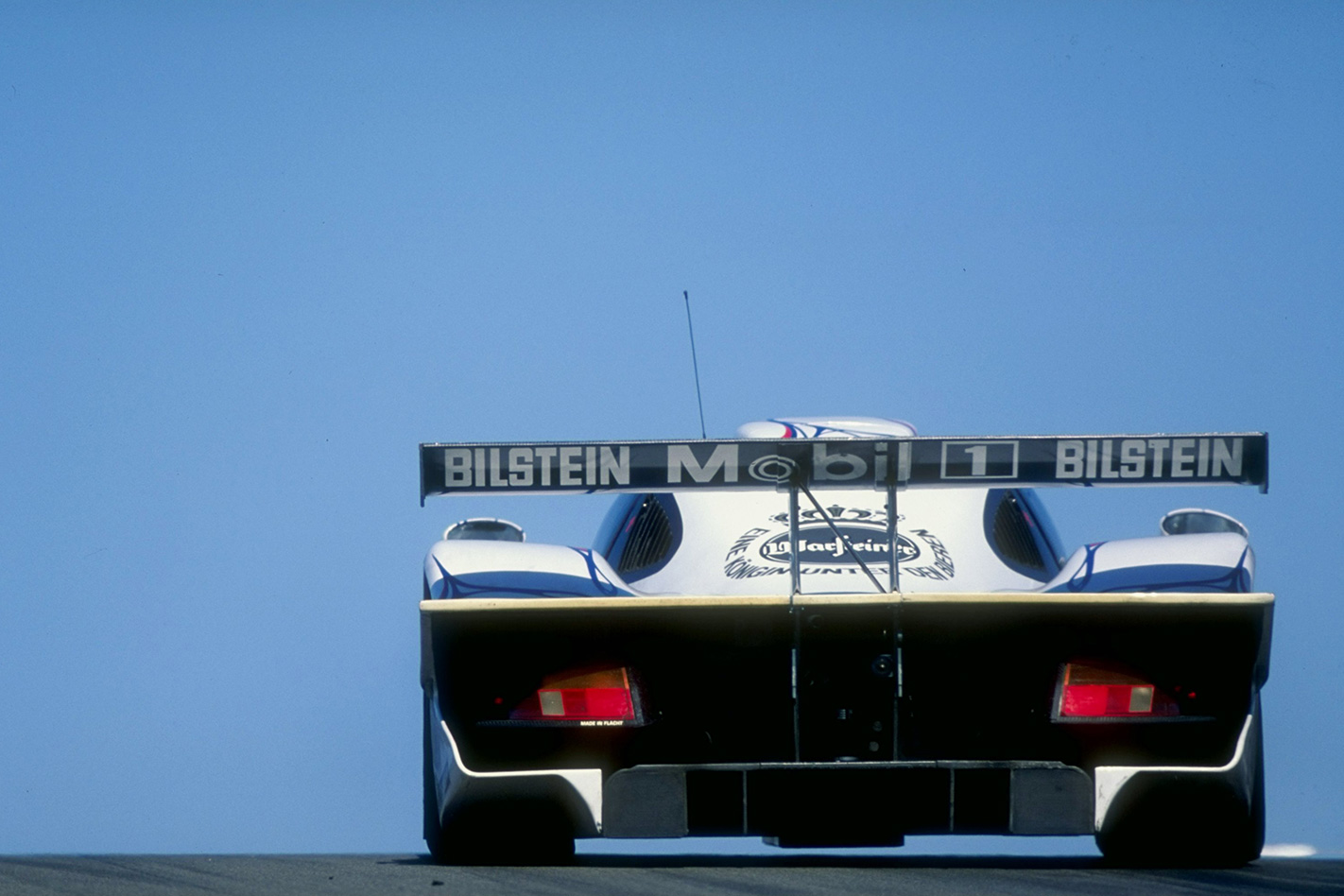
So what will all of this mean for performance? Well the FIA has stated it is targeting a laptime at Le Mans of 3:20. For context the pole time at this year’s 24 Hours of Le Mans was a 3:14.355 from Toyota, while the lap record is a 3:14 set in 2017.
Teams will also be restricted to a single body homologation. Currently two designs are homologated in LMP1 – a high-downforce set-up used at tracks like Silverstone, and a low-downforce setting for Le Mans and similar layouts. This will doubtless cause much consternation from engineers as they attempt to achieve a happy balance between hunting Le Mans glory, and season-long performance.
FIA representative claim the new rules will reduce budgets to a quarter of what was spent by hybrid manufacturers this year, while still offering factories the opportunity to develop road-relevant technology.
Technical Working Groups will meet from July 2 to iron out a full set of regulations, which are expected to be finalised at a meeting of the Motorsport World Council in December.
IMSA, the American sportscar championship, is currently involved in discussions regarding the 2020 WEC rules, but will not yet confirm if it will also adopt the new regulations. Toyota, McLaren, Aston Martin, Ferrari and Ford have been involved in ongoing discussions with organisers.
Oh, and the FIA also dropped the bombshell that it hopes to have hydrogen-powered cars racing at Le Mans in 2024.
The fourth-generation Audi A8 will arrive in Australia in July with new powertrains and state-of-the art driver assistance technology priced from $192,000.
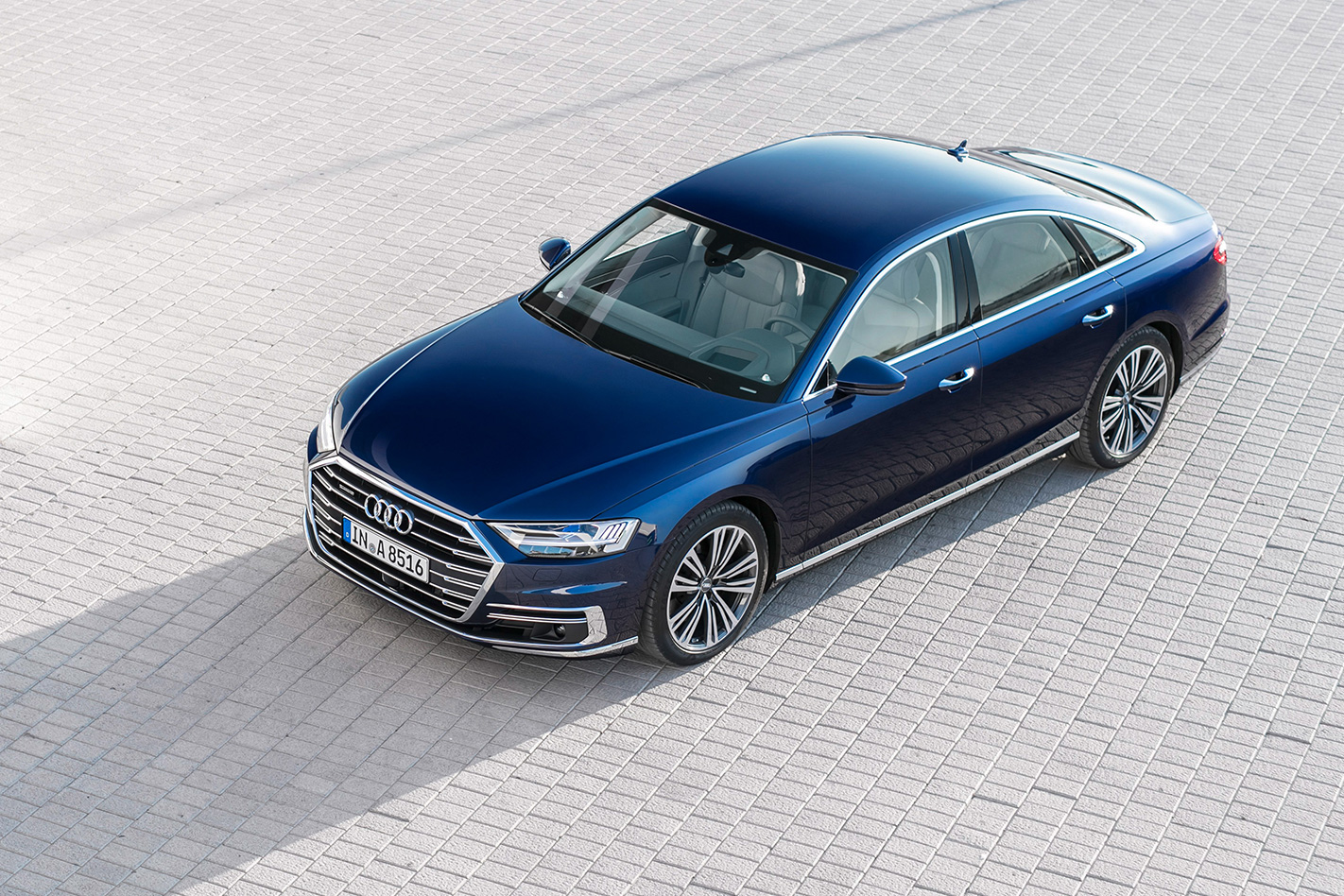
While that’s a pretty hefty price tag for us mere mortals, it’s a bit of a value buy compared with the $198,855 entry-level price of the previous model, considering the generational leap in powertrain and active safety technology.
It also gives you about $20,000 change from the similarly-powered and specced BMW 730d that kicks off its fellow-German rival’s luxo sedan range.
The new Audi A8 is the first to use the German brand’s new nomenclature that ditches engine sizes to a less-than-intuitive number system that reflects the car’s engine size and spec-levels, says the company.
This means what was the 3.0-litre V6 turbo diesel A8 3.0 TDI quattro has been replaced by the A8 50 TDI powered by a 3.0-litre V6 oil burner that produces 210kW/600Nm – 20kW/20Nm more than its predecessor.
The A8 range again features a long-wheel-base version called the A8 L 50 TDI quattro, which adds an additional 130mm in overall length for boosted room in the second row of seating.
The new A8 range also scores a couple of petrol variants, the A8 55 TFSI quattro stretched A8 L 55 TFSI quattro, that are powered by a 250kW/500Nm 3.0-litre V6 engine and, while not yet officially confirmed, a performance flagship S8 is almost a certainty later on.
Both V6 engines feature new mild-hybrid technology that uses a belt alternator/starter (BAS) and 10 Ah compact lithium-ion battery that allow A8 to coast at speeds between 55 and 160km/h with the engine off, resulting in fuel savings of up to 0.7 litres per 100km.
Fuel economy is also enhanced by the revised version of its Audi Space Frame (ASF) architecture, which makes the fourth-generation A8 10 percent lighter and 24 percent more rigid than its predecessor.
The light frame also improves handling, that’s further enhanced by adaptive air suspension, with electronically-controlled dampers as standard equipment, and also provides the A8 with four ride height options and improved ride comfort.
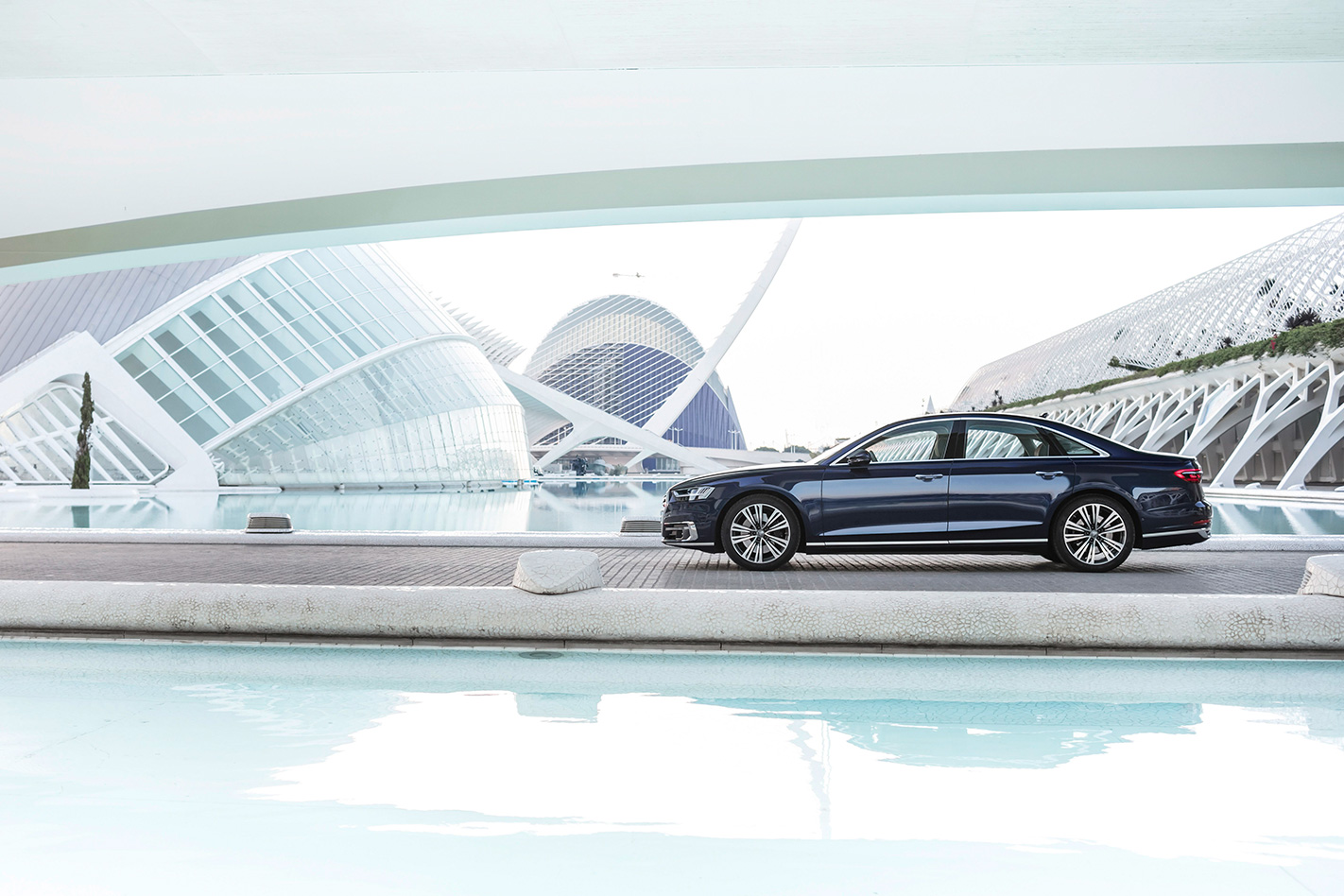
A more advanced active suspension system, that uses cameras to detect bumps in the road and adjusts a titanium torsion bar attached to each wheel to help smooth out the ride, will be available next year.
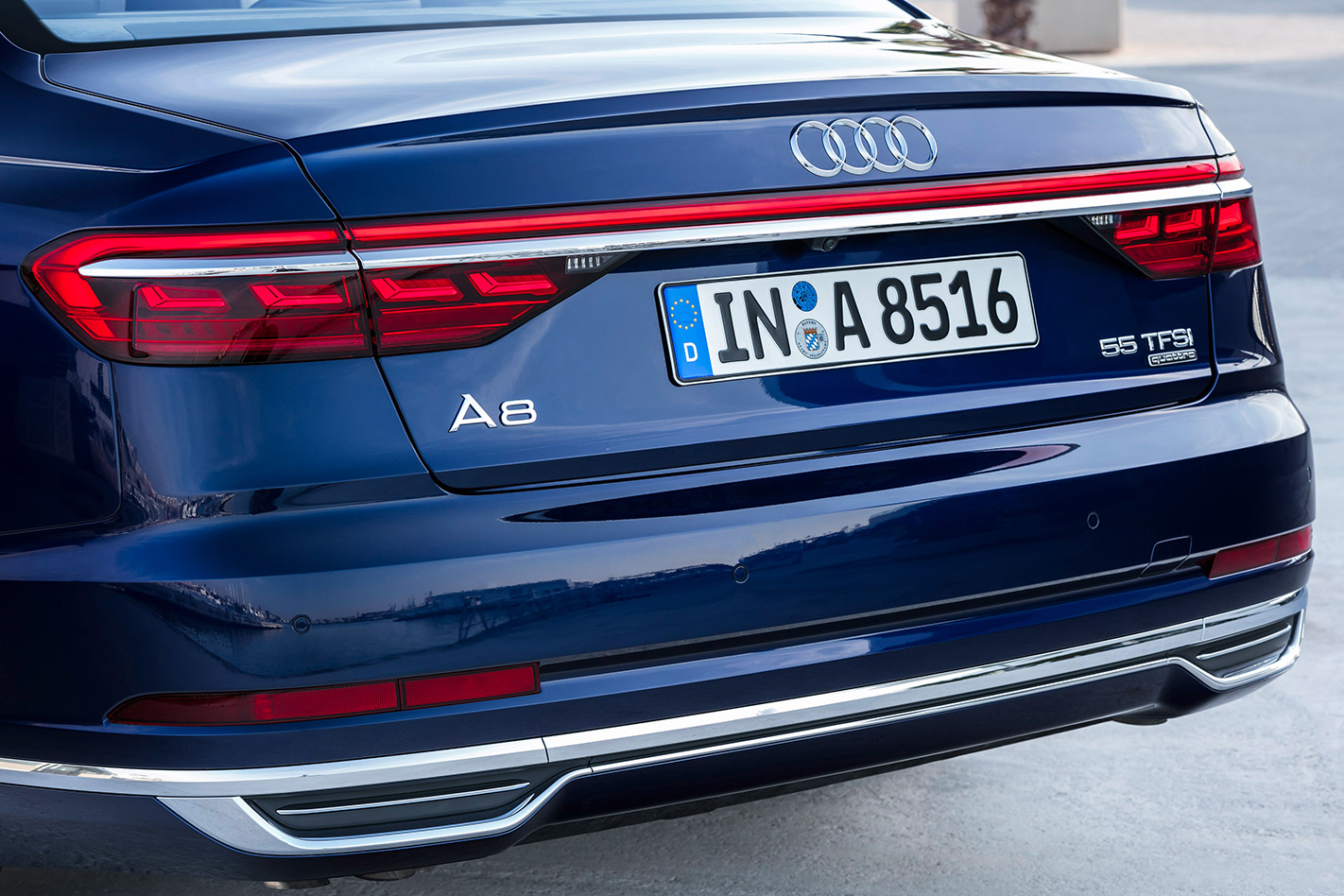
Styling wise the new Audi A8 a broader ‘Singleframe’ grille and sleek new HD Matrix LED headlights, while the chiselled rear-end shows off a full-length light strip.
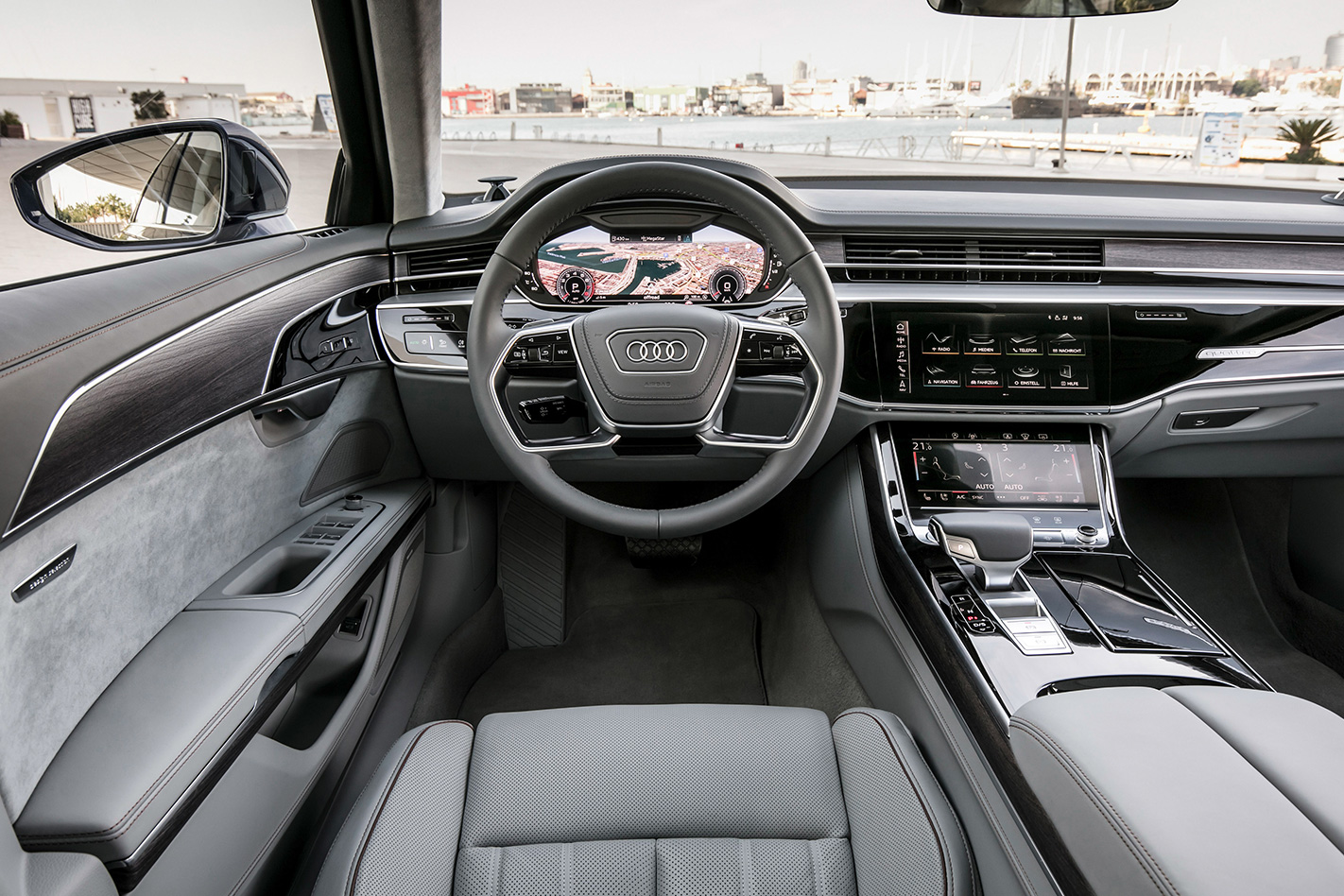
The plush interior design has been completely overhauled, with a dual high-resolution 10.1- and 8.6-inch touchscreens occupying the entire centre stack, with the top-screen displaying MMI navigation, audio and phone data, the bottom showing climate control functions. The new operating system uses haptic feedback and voice control, which Audi claims is more user-friendly than the old rotary dial.
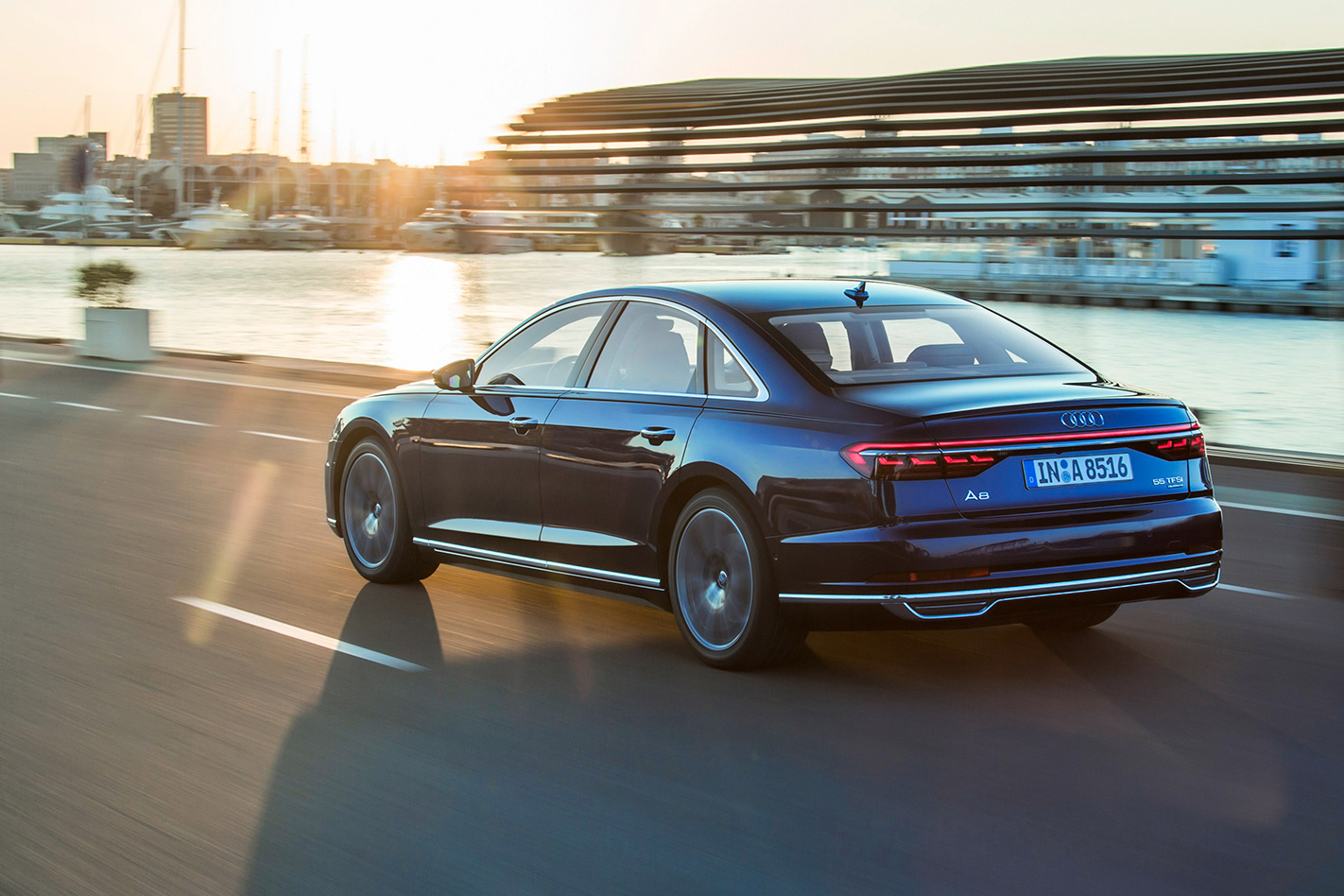
The long-wheelbase A8 L variants are available with an optional rear ‘relaxation seat’ that provides extensive adjustment options and back massage, as well as a footrest with heating and a full massage function for the soles of the feet.
Standard comfort features include:
- Panoramic glass sunroof
- Audi virtual cockpit
- Audi connect
- DAB+ Digital Radio
- Audi smartphone interface with phone box light
- 17-speaker, 730W Bang & Olufsen 3D Sound System –
- Audi music interface with x2 front and x2 rear USB outlets
- Rear seat remote control
These include:
- Adaptive cruise control with Stop & Go and traffic jam assist
- 360 degree cameras with 3D view
- ‘Audi pre-sense front and pre-sense rear’ with auto-braking
- Audi active lane assist
- Audi side assist with cross traffic assist
- Collision avoidance assist and turn assist
- Intersection assist (which warns of traffic approaching from the side)
- Efficiency assist
- Head-up display.
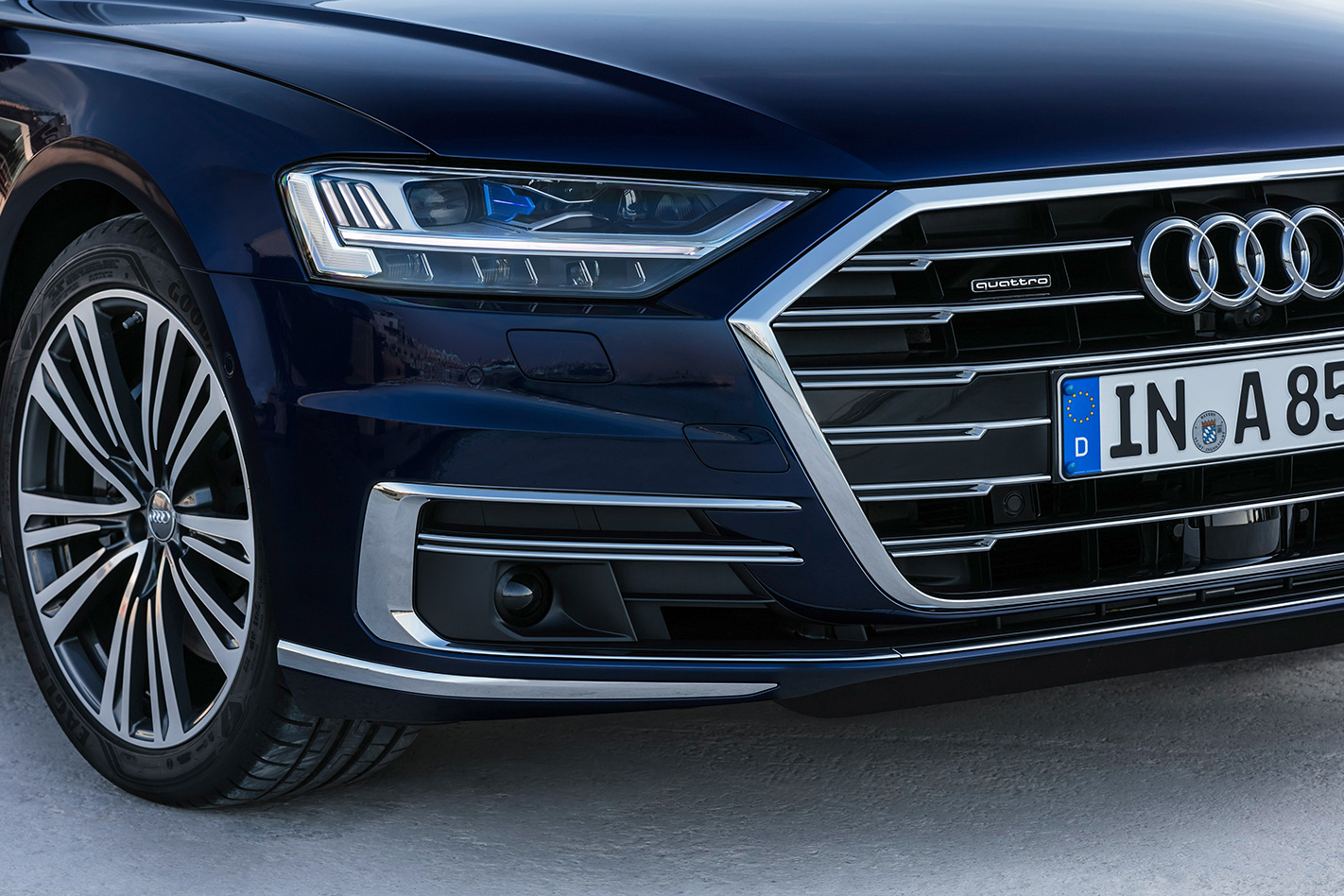
Being an Audi there will also be a considerable range of option packages allowing customers to tailor their A8 to their individual tastes and requirements.
MY2019 Audi A8 pricing
- A8 50 TDI quattro tiptronic – $192,000
- A8 50 TFSI quattro tiptronic – $195,000
- A8 L 50 TDI quattro tiptronic – $207,000
- A8 L 55 TFSI quattro tiptronic – $210,000
