
Here are our ten favourite cars that 007 has driven in over 50 years of shooting, shagging and shaking (but not stirring).
This was first published in MOTOR’s November 2008 issue
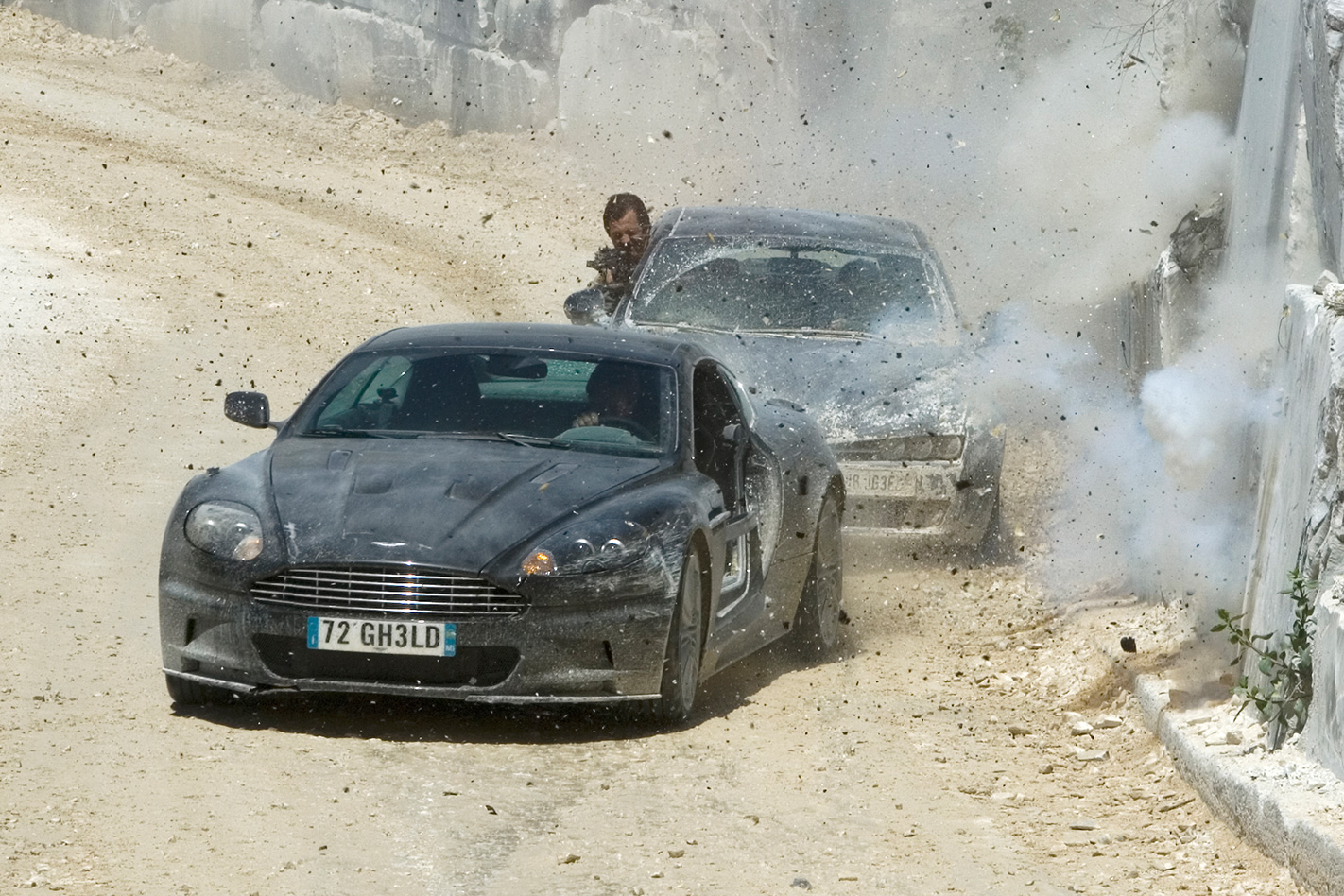
1. Aston Martin DBS – Casino Royale (2006) Quantum of Solace (2008)
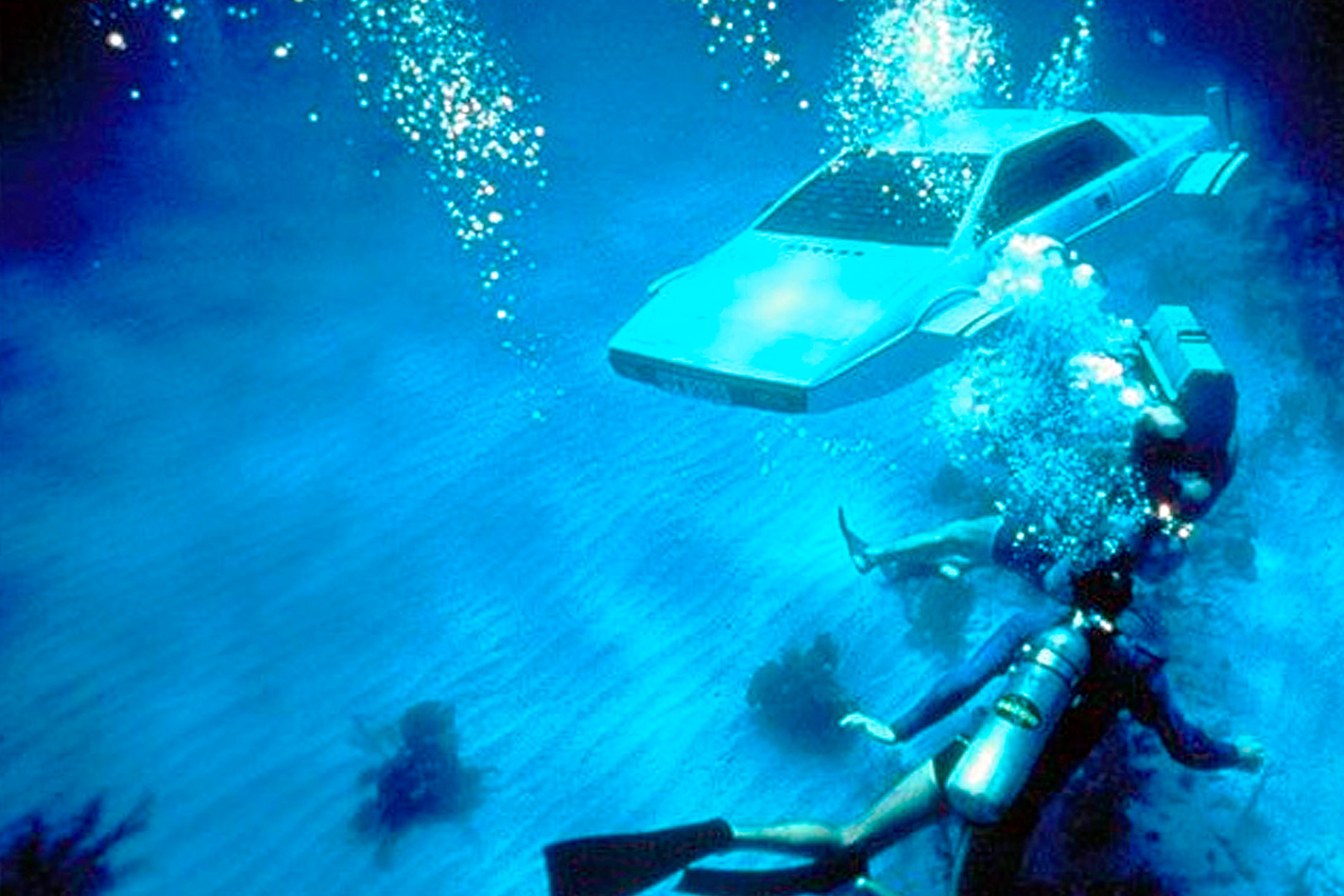
2. Lotus Esprit – The Spy Who Loved Me (1977)
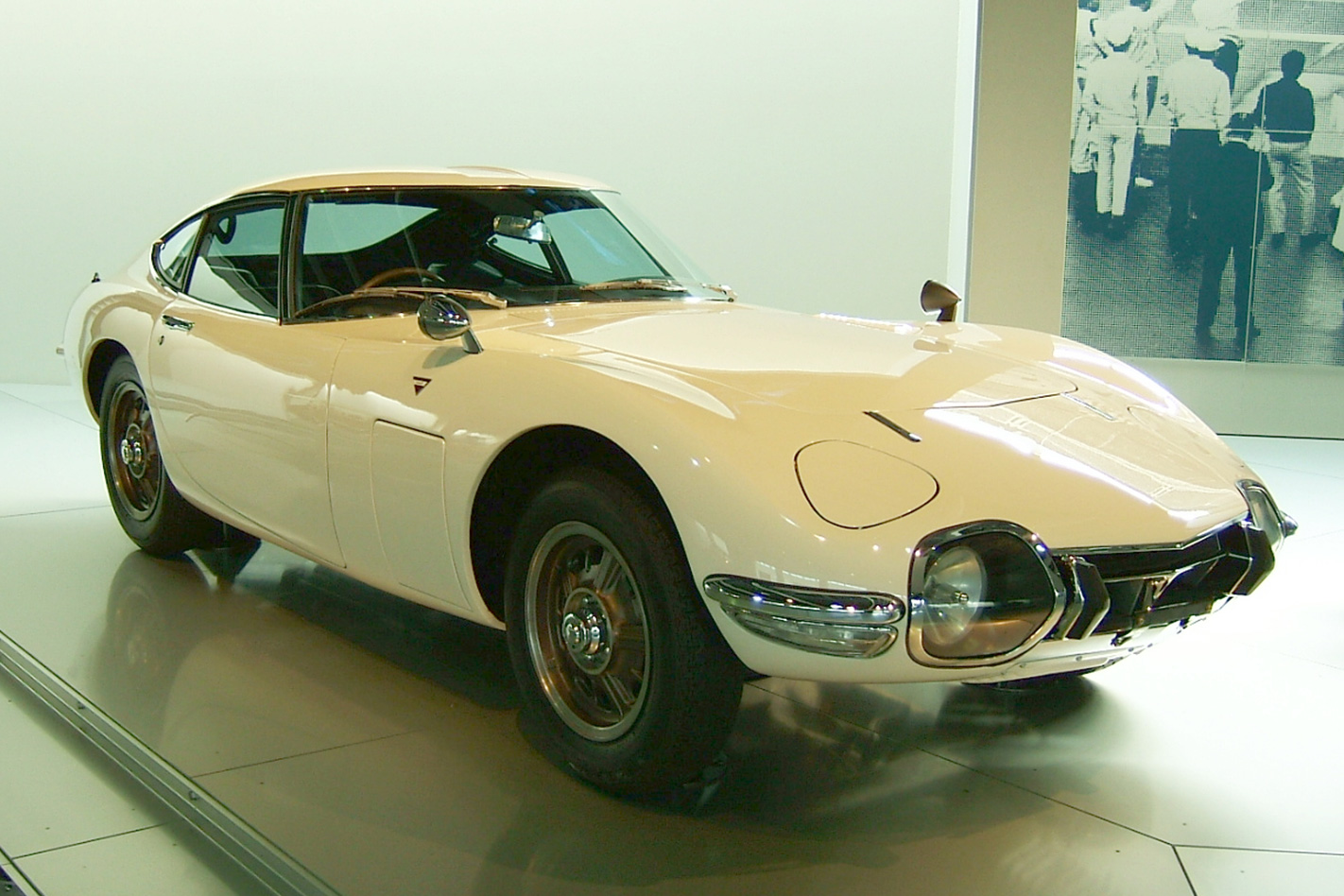
3. Toyota 2000GT – You Only Live Twice (1967)
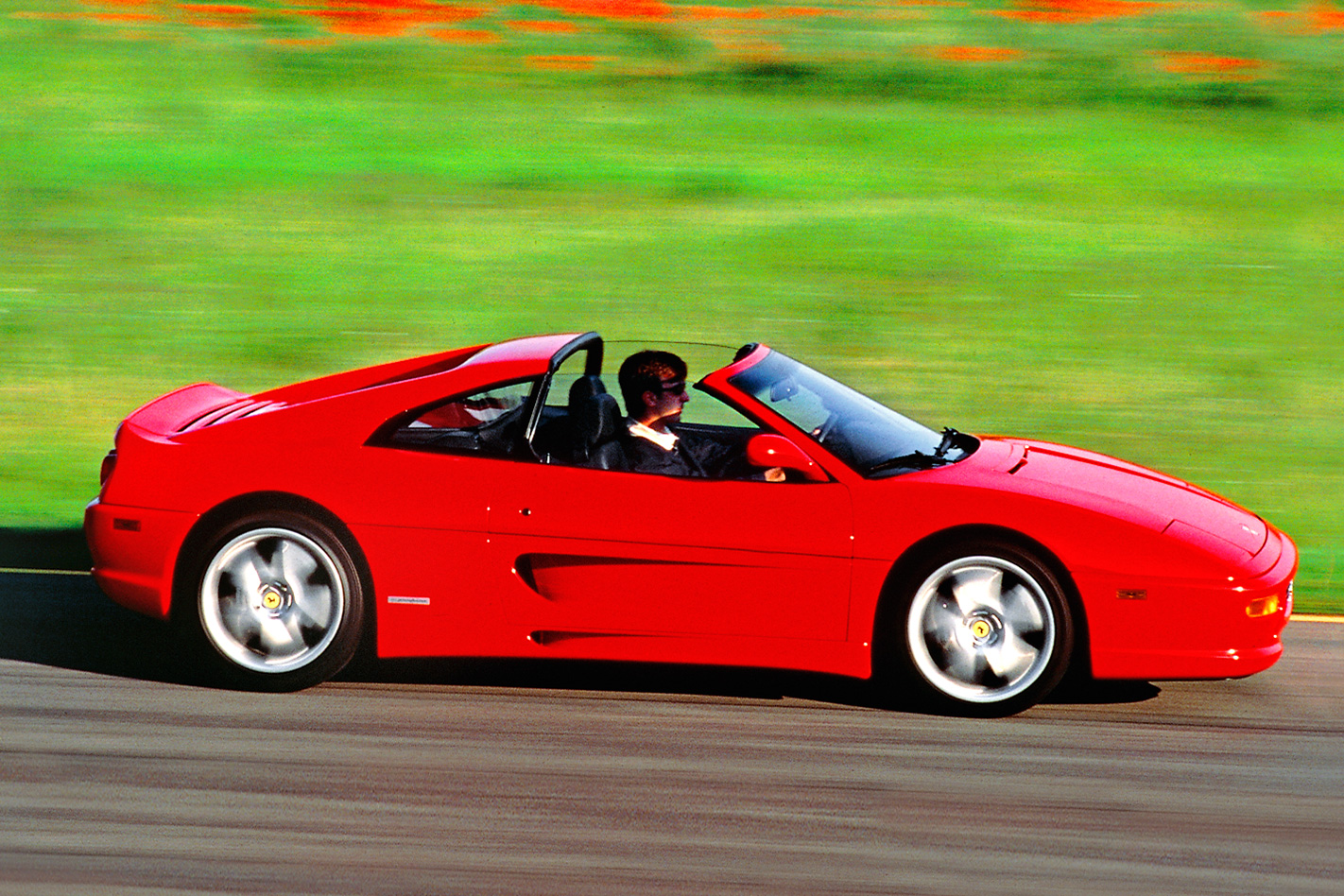
4. Ferrari F355 GTS – Goldeneye (1995)
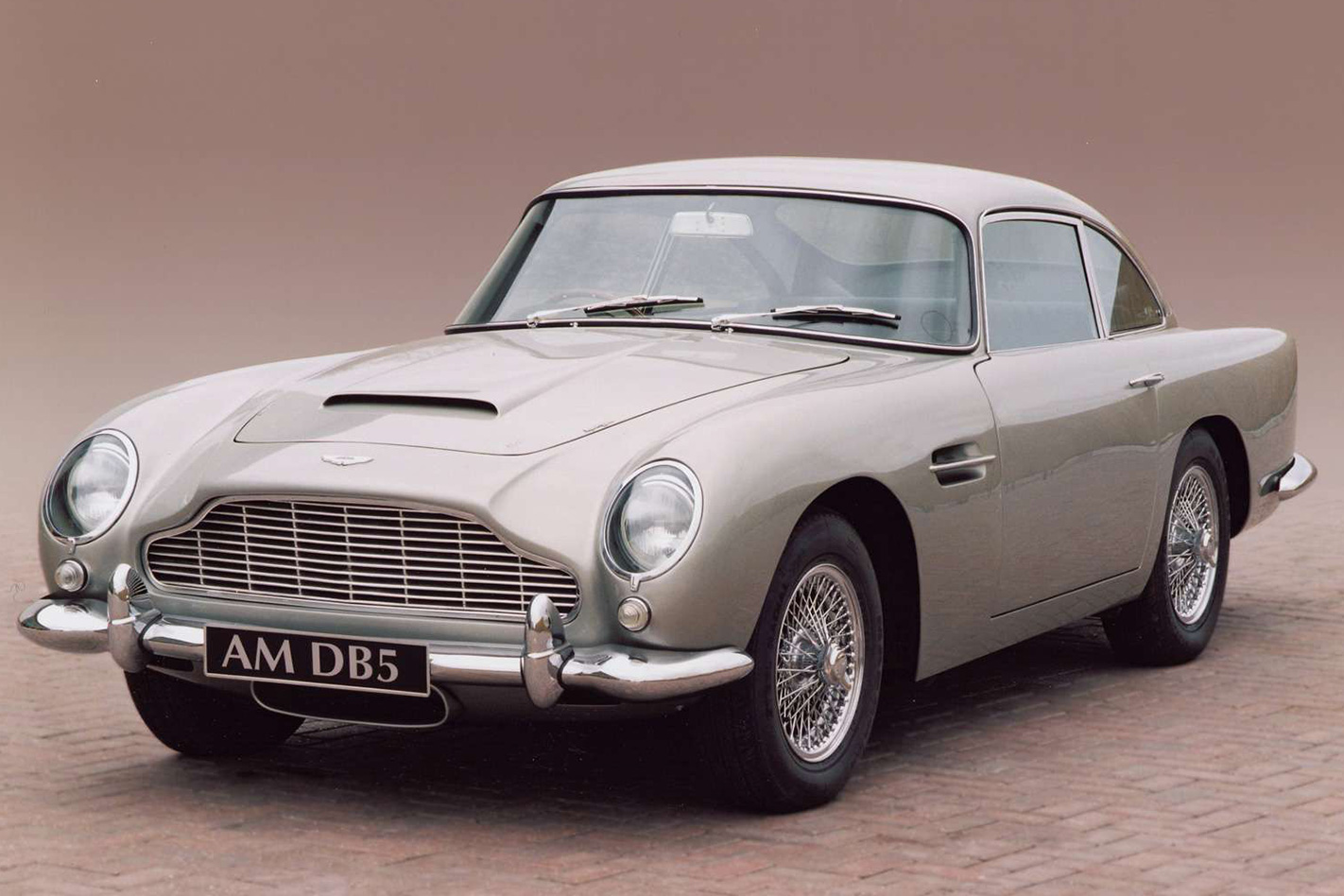
5. Aston Martin DB5 – Goldfinger (1964)
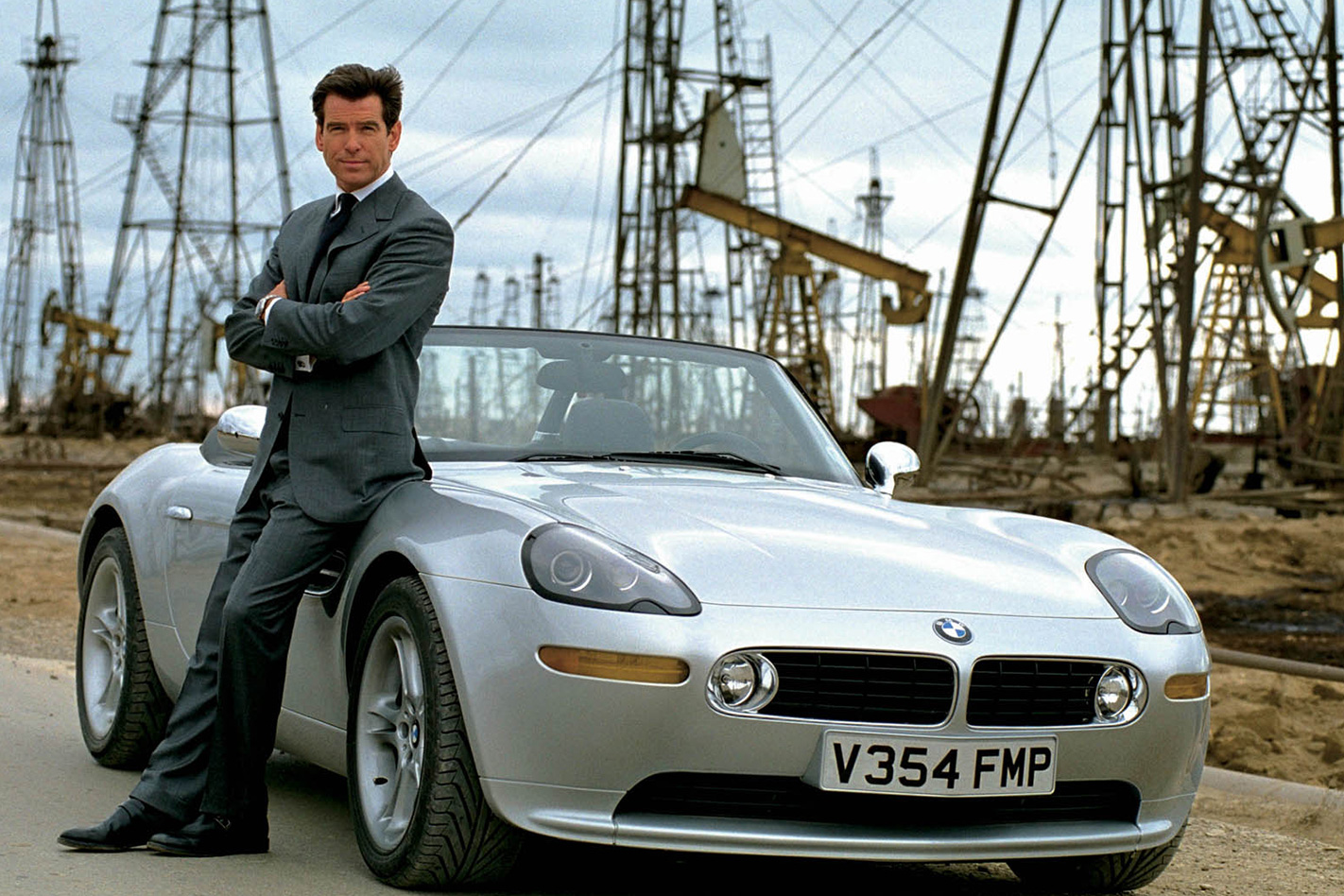
6. BMW Z8 – The World is Not Enough (1999)
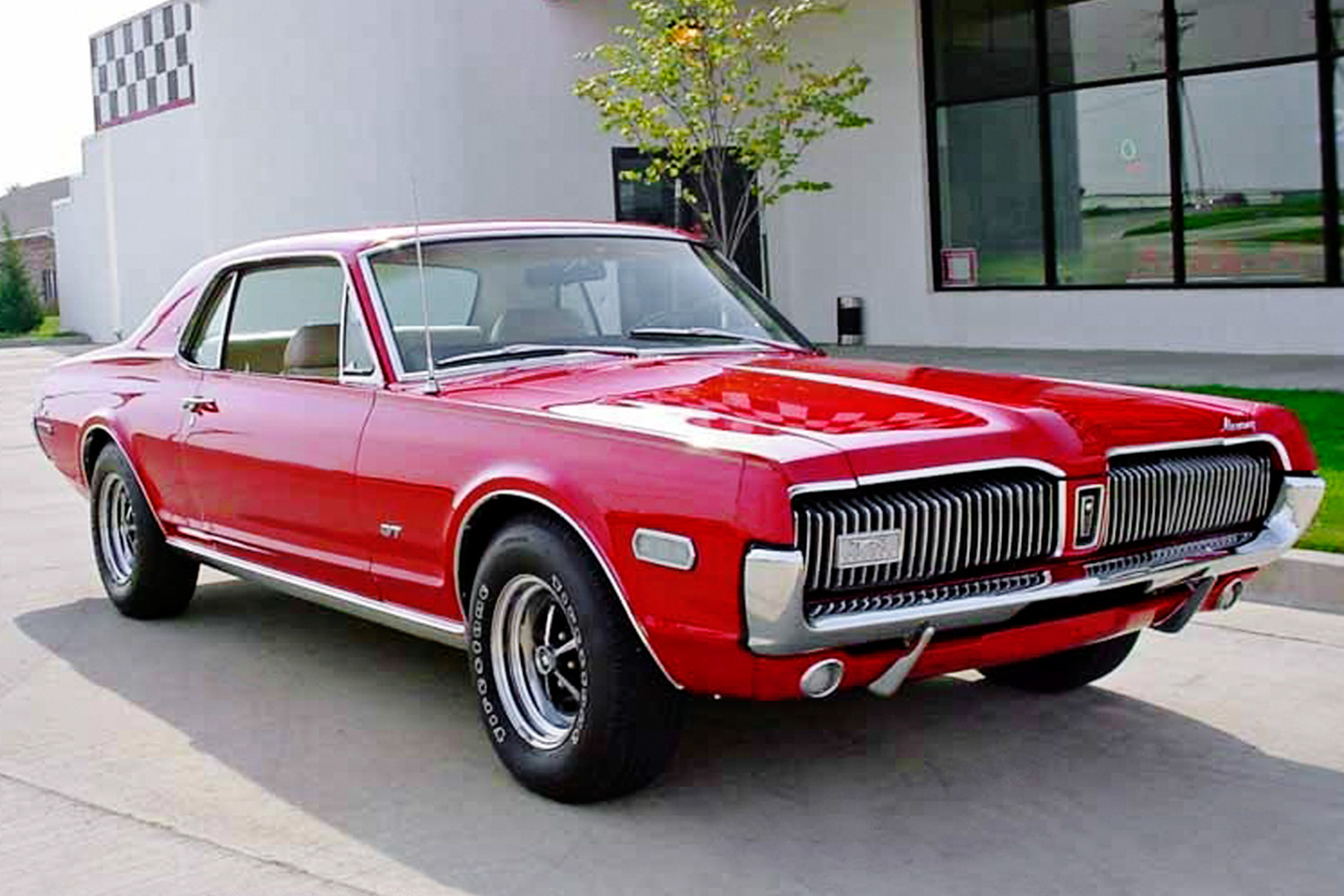
7. Mercury Cougar – On Her Majesty’s Secret Service (1969)
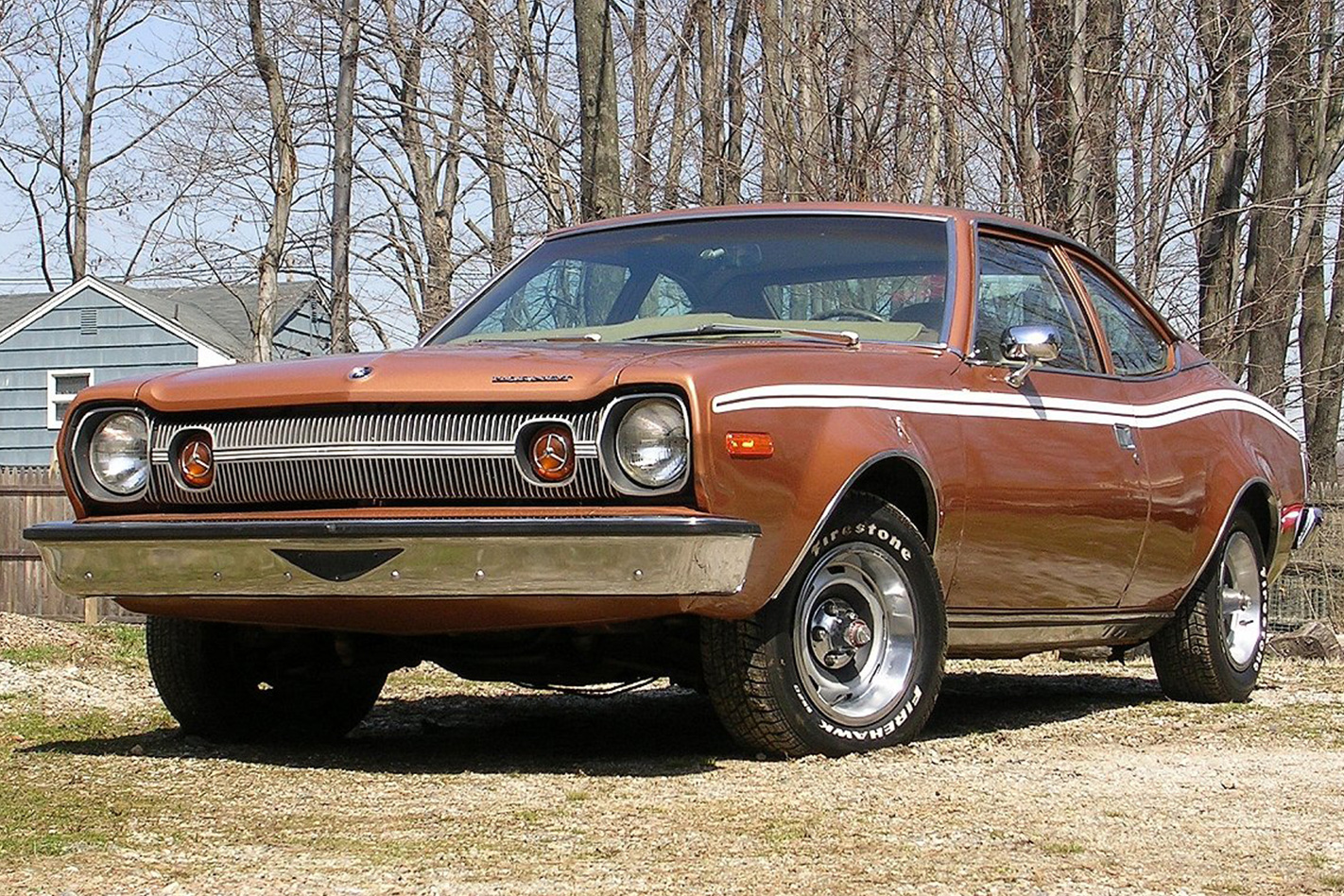
8. AMC Hornet X Hatchback – The Man with the Golden Gun (1974)
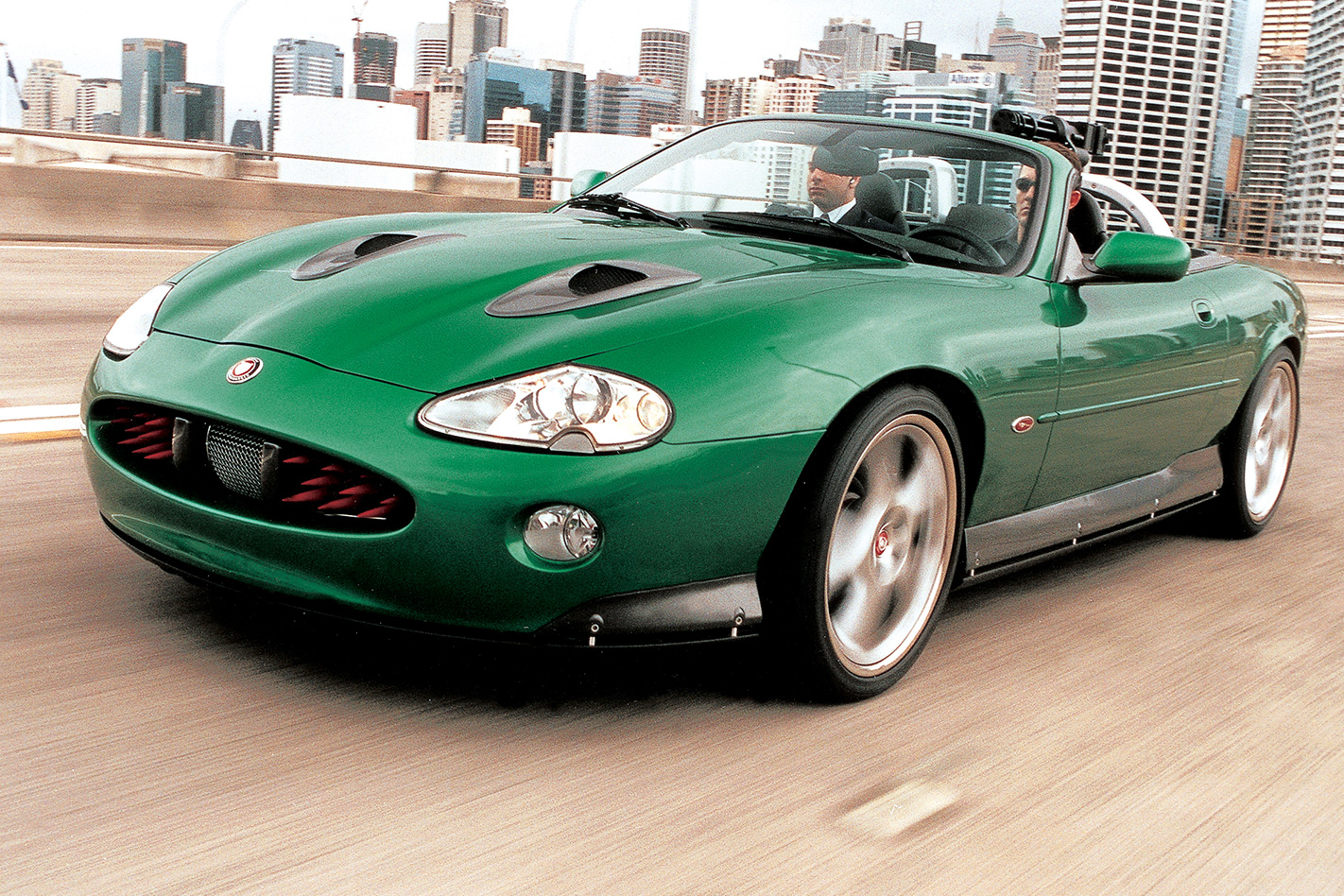
9. Jaguar XKR – Die Another Day (2002)
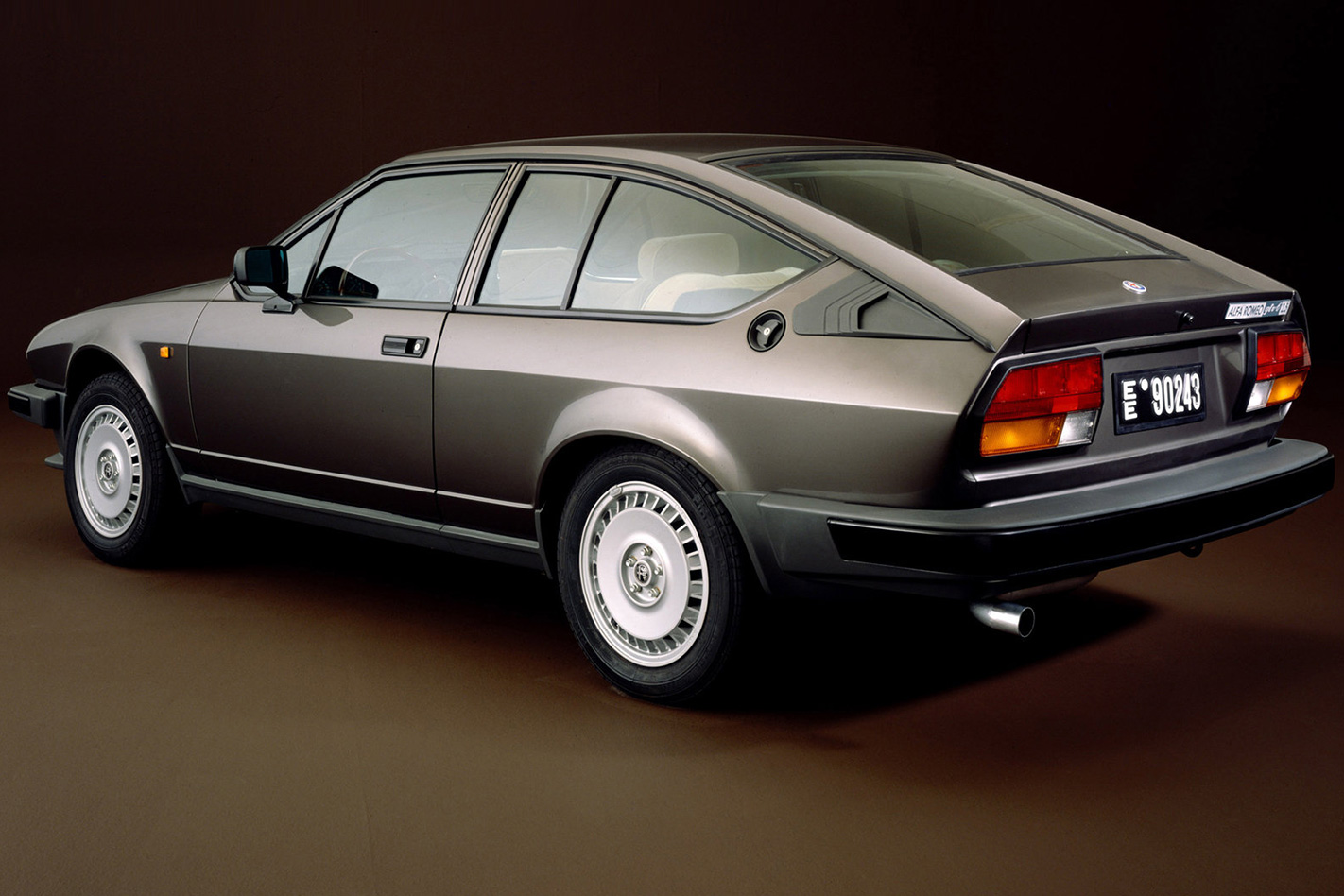
10. Alfa Romeo GTV6 – Octopussy (1983)
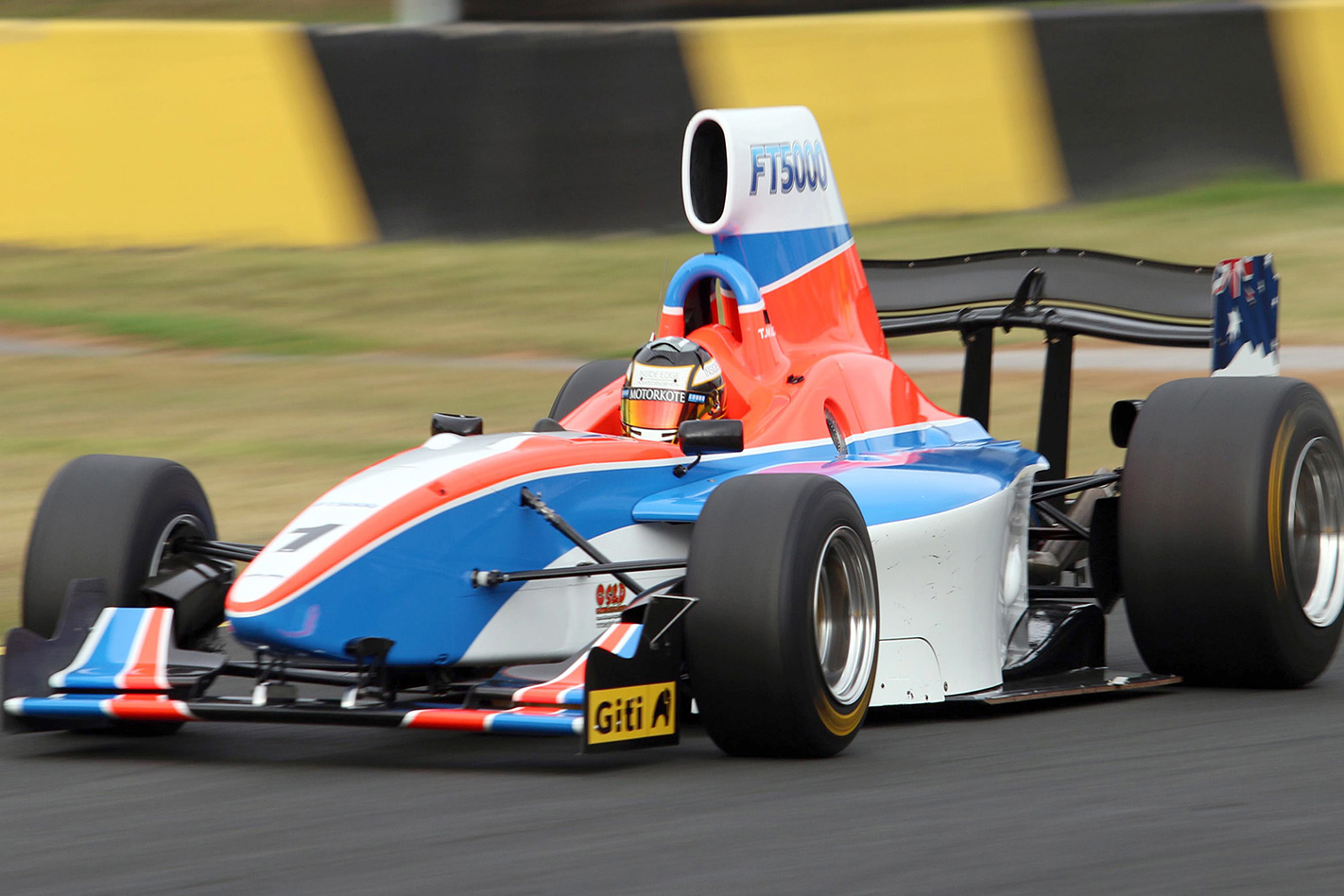
They were big, brawny, fast and loud. Low-slung open-wheelers with fat tyres, wide wings, towering air scoops and rumbling V8s.
No wonder Formula 5000 is remembered so fondly. F5000’s fame is so enduring that local efforts to bring back the ‘big bangers’ of single-seater racing are well under way. A modern version is scheduled to be thundering around Australian tracks by the middle of next year.
The prospect has excited open-wheel aficionados, who rejoice in the idea of V8 racers without roofs, doors or fenders. But the revival has not been without rancour. Until a recent accord, there were two rival proposals for the reincarnation of F5000. Super5000 was supported by Supercars, while Formula Thunder 5000 was the brainchild of an independent enthusiast.
There was only room for one and among purists, it was seen as big business versus a battler. Supercars came off as a bully, accused of trying to crush ex-racer and motorsport publisher Chris Lambden’s FT5000 initiative with a copycat concept.
Long story short, after a divisive war of words, wiser heads prevailed and the pair of projects has been combined under the S5000 umbrella to create a V8-powered open-wheeler series aimed at joining the Supercars support race program in mid-2018.
You have to wonder, though, whether all the angst was worth it. After all, we are talking about an extremely niche need. The appeal is limited to dedicated fans who buy into the nostalgia of F5000 and pine for raucous single-seater racing. A 21st century take on F5000 is a lovely idea that warms the cockles of the hearts of those who saw the originals in action.
The noise and fury made such an impression that their mere mention is met with big smiles by enthusiasts of a certain age. It was Australia’s pinnacle racing category from 1970-81 and also headlined the final years of the Tasman Cup summer series. Aussie constructors Matich and Elfin rivalled British builders Lola and Chevron, and the Repco-modified Holden 308 V8 challenged the ubiquitous 302 cubic inch Chevrolet.
F5000’s hairy chested heyday lasted little more than a decade, but it is still regarded as a golden era of open-wheel racing. The legend has grown to almost mythical proportions, with interest fuelled by a revival movement in historic racing.
Restored period F5000s have become the crowd-pleasers at retro meetings in Australia, NZ and the USA, reminding diehard fans just how lacklustre single-seater racing has become. Since the demise of the raspy 3.6-litre V6-powered Formula Holden a decade ago, Australia hasn’t had a truly challenging top-level open-wheel category, much less one that provides any real sight-and-sound spectacle.
No wonder, then, that the glowing memories of F5000 inspired interest in a redux. What are the odds, though, that two variations of this popular old theme would come along at roughly the same time?
Although aimed at the same ‘market’, Formula Thunder 5000 and Super5000 varied significantly in execution and ultimate costs. Lambden’s FT5000 is based on the design of the 2009 Swift Formula Nippon chassis, powered by a locally developed version of the Ford Coyote V8 crate engine and featuring F5000’s signature ‘snorkel’ air intake.
The S5000 is a bespoke machine using a Supercars-spec GM V8 – but adaptable to the Ford and Nissan V8s, as well as future twin turbo V6s and even turbo fours – and claimed to comply with the latest F1 safety standards, while mimicking the look of the classic Lola T332.
The political fallout that divided fans and potential customers forced a truce in July, with Lambden brought into the S5000 fold to keep the peace. But the odds are the unification will be much more S5000 than FT5000, retaining the custom-made chassis and Supercars-sourced V8s.
The whole idea of recycling the existing five-litre V8s in a single-seater sideshow remains flawed because of the cost of the motors and the false assumption there will be a surplus due to a mass migration to twin turbo V6s.
While a return of domestic open-wheelers that have power, presence, noise and speed will be applauded by dyed-in-the-wool enthusiasts, reinventing F5000 is not only an indulgence, but an irrelevance.
I REALLY like helicopters, but if you asked me to review one it would either result in 12 paragraphs of gushing praise on how I imagine the Eurocopter EC145e compares to the UH-72 Lakota or, if I were allowed at the controls, a massive fiery crash.
Why?
Because, beyond the basic operating principle and sitting in the passenger seat of a few, I know nothing about helicopters, and it’s the same for food processors, golf and artificial insemination. If you ever see a review of any of these things with my byline on it, I encourage you to ignore every word.
I’m certainly not suggesting the calling of motor journalism should be reserved exclusively for those with a specific set of qualifications. If that was the case my distinct lack of any formal training would have me relegated to the capacity of Uber driver.
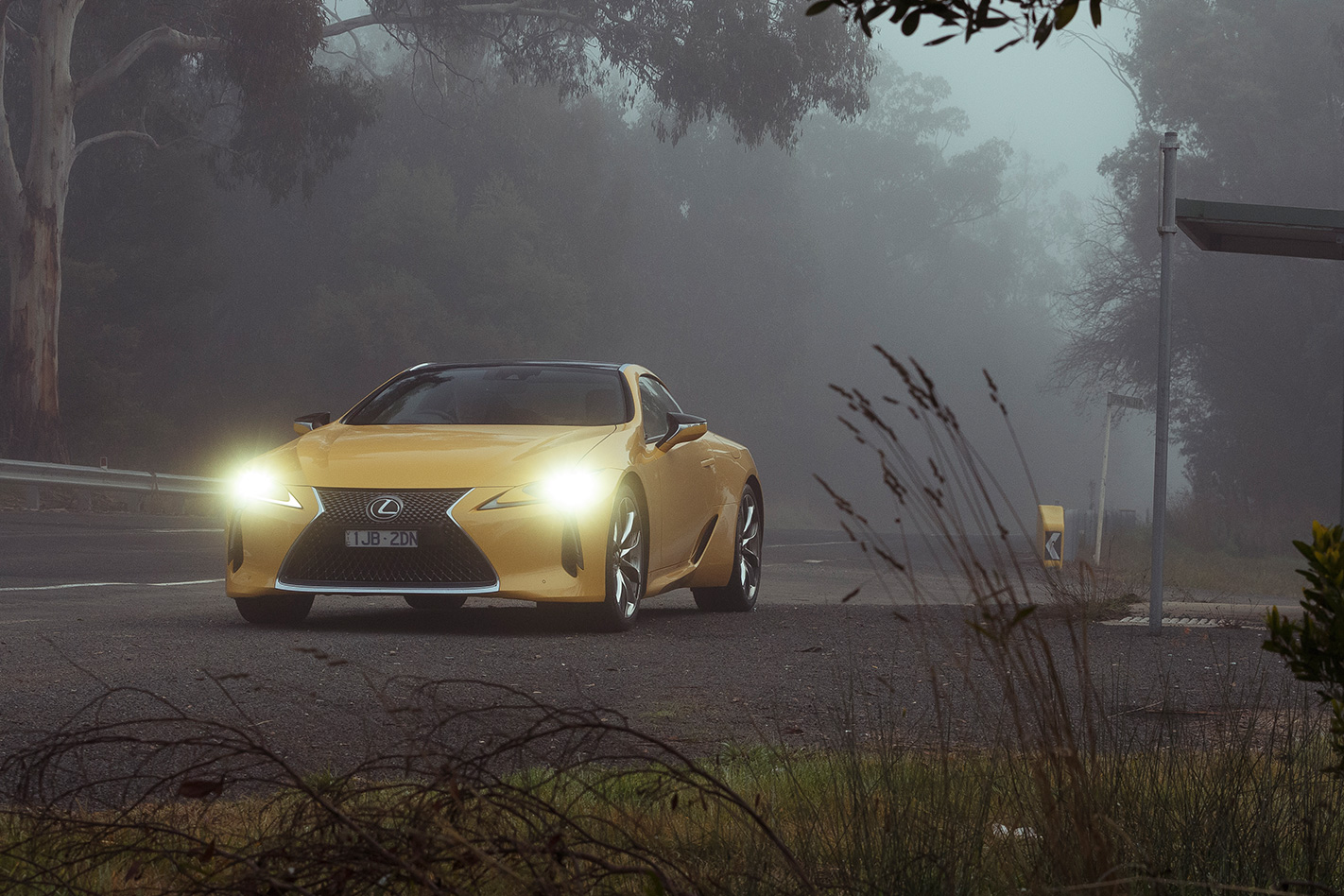
As a novelist, James Patterson has forged a career writing about things that aren’t true and on subjects that have about as much to do with motoring as dairy farming, so it’s not entirely clear why Lexus decided he was the ideal candidate to pen a review, ‘The Ultimate Review’, no less, of its LC500 – the type of story that must be based entirely on facts and experience.
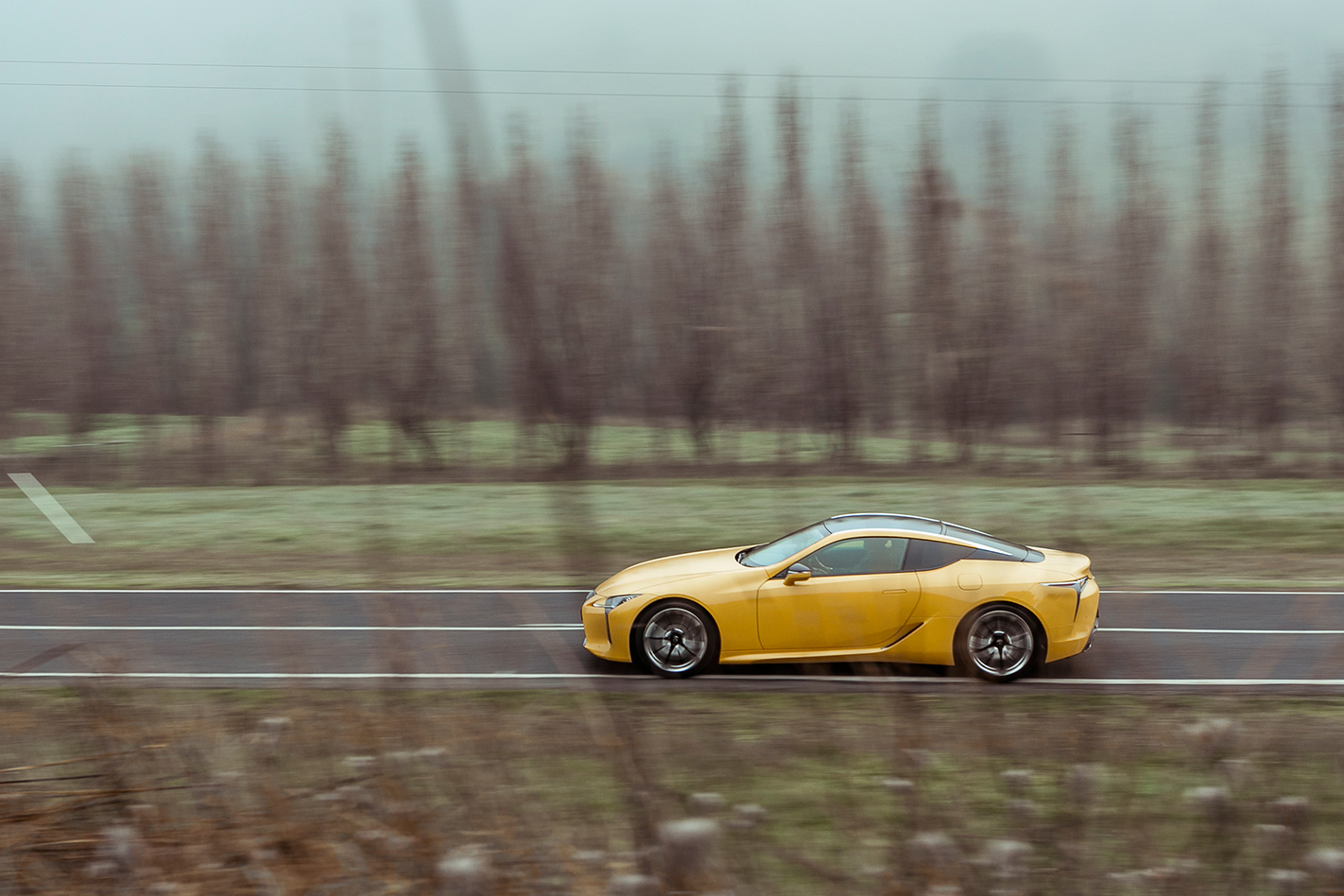
I’m not going to dissect Patterson’s review – if you want to digest the 590 words of one-sided, verbose gushing then be my guest – because this is not about content good or bad.
What Patterson wrote about the Lexus is nothing more than an advertisement, albeit a very effective advert, and should be labelled as promotional material but, not only is it packaged as a review, it’s described as ‘the ultimate review’ which some readers may interpret as meaning it was written by a seasoned automotive journalist. This guy is a great writer after all, right?
If you do decide to read the ‘review’ you’ll have to stomach Patterson’s extraordinarily modest introduction in which he shamelessly plugs his “breathtaking best-selling thrillers” and describes what follows as “a review like no other”.
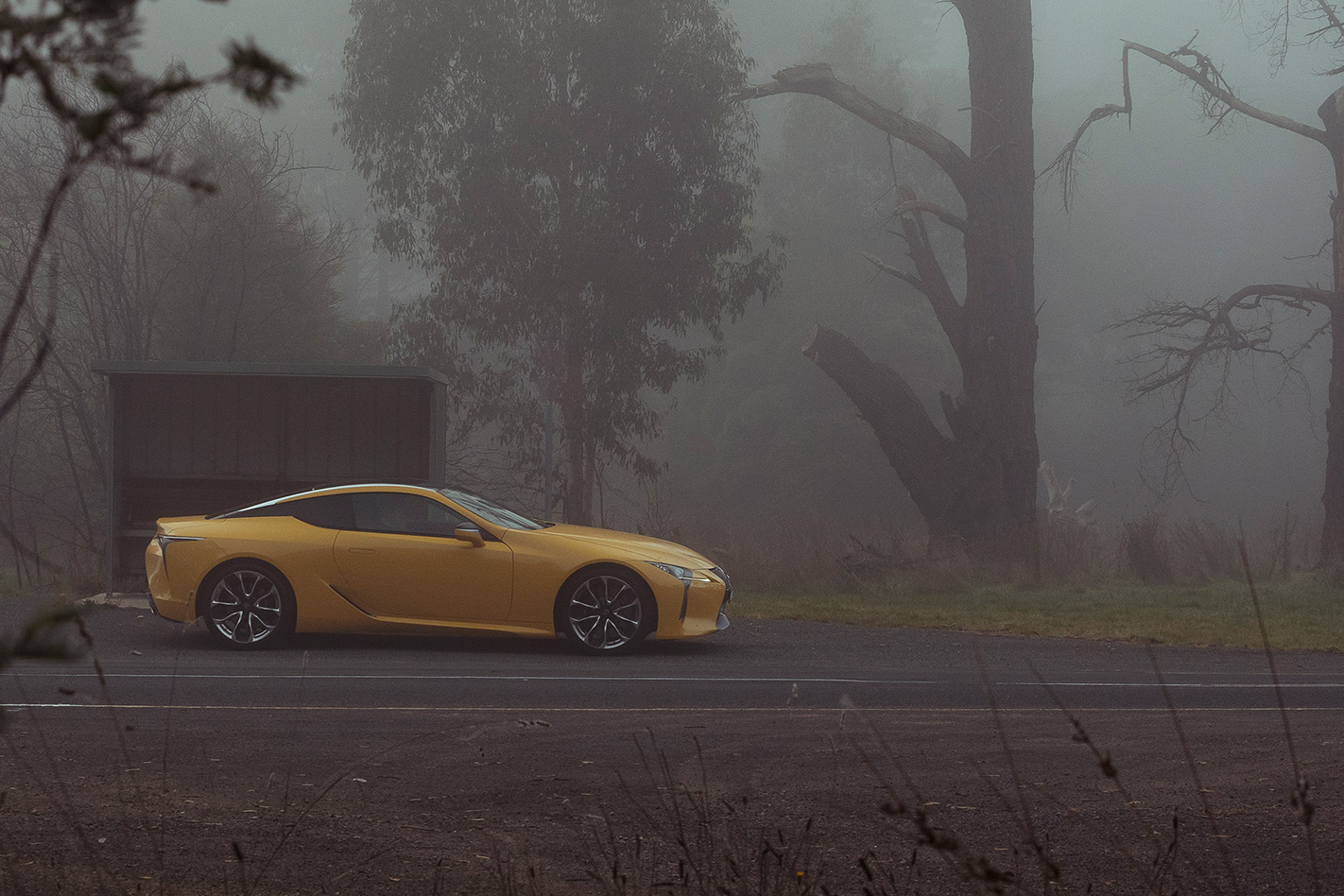
Then there is the bit where Patterson describes the engine noise without a mention of how much power it has, its capacity, aspiration or efficiency. A mention of the acceleration is not accompanied by claimed performance figures and a flippant remark on the road holding is left without quantification or comparison. Review or sponsored content? You decide.
By all means pore over Patterson’s prose, structure and flow in the same way one might enjoy one of his books, but whatever you do, don’t be tricked into thinking that an ability to come up with a snappy analogy is in any way related to the craft of reviewing cars.
Ken Block has a pretty good tyre supply deal with Toyo, and he needs it.
Watching him absolutely destroy the rubber on the Hooncorn has always been a safe bet for entertaining viewing, but now, in preparation for his Pikes Peak hillclimb, Block has upped the ante.
He’s calling it the Hoonicorn V2 and, even though it’s the same car, it’s an entirely different beast.
The Ford Mustang that has become synonymous with tyre chewing now has two turbos clearly visible above the bonnet line (not that there’s a bonnet anyway), and it drinks methanol.
This makes for a ridiculous 1044kW.
Just watch.
“What’s it like to drive the 1400 horsepower methanol-fed twin turbo Hoonicorn V2?” Block begins.
“Terrifying. And it takes a LOT for me to admit that!
“This car was already pretty insane as it was… but now it’s got two turbos added to it.
“It went from around 850 horsepower [or 633kW]… and I have to say it’s a bit frightening!”
Block reckons he’s going to have to re-learn how to drive the thing, since the way he used to handle it doesn’t quite cut it anymore.
“It’s really weird that it spins the tyres so fast that the things that I’m used to doing with an all-wheel-drive, like how I point the wheels, how much gas I give it, or how I tighten up or change the line, it actually doesn’t work with this car right now.
“I’m gonna have to re-learn this because I’m about to go to a very scary mountain and lay at the edge of a road.”
That mountain road is Pikes Peak, and it’s going to be the basis for Block’s next video, entitled Climbkhana Pikes Peak.
It goes live on September 25, three days from date of publishing.
McLaren has designed a new hypercar, and you have just as much of a chance to own one as a millionaire does.
That’s because the car will only be available in a game – Gran Turismo Sport.
McLaren says the car isn’t a prototype for any real-world future cars, but it highlights that the idea of the ‘Vision Gran Turismo project’ entices car designers to conceive cars that they otherwise wouldn’t.
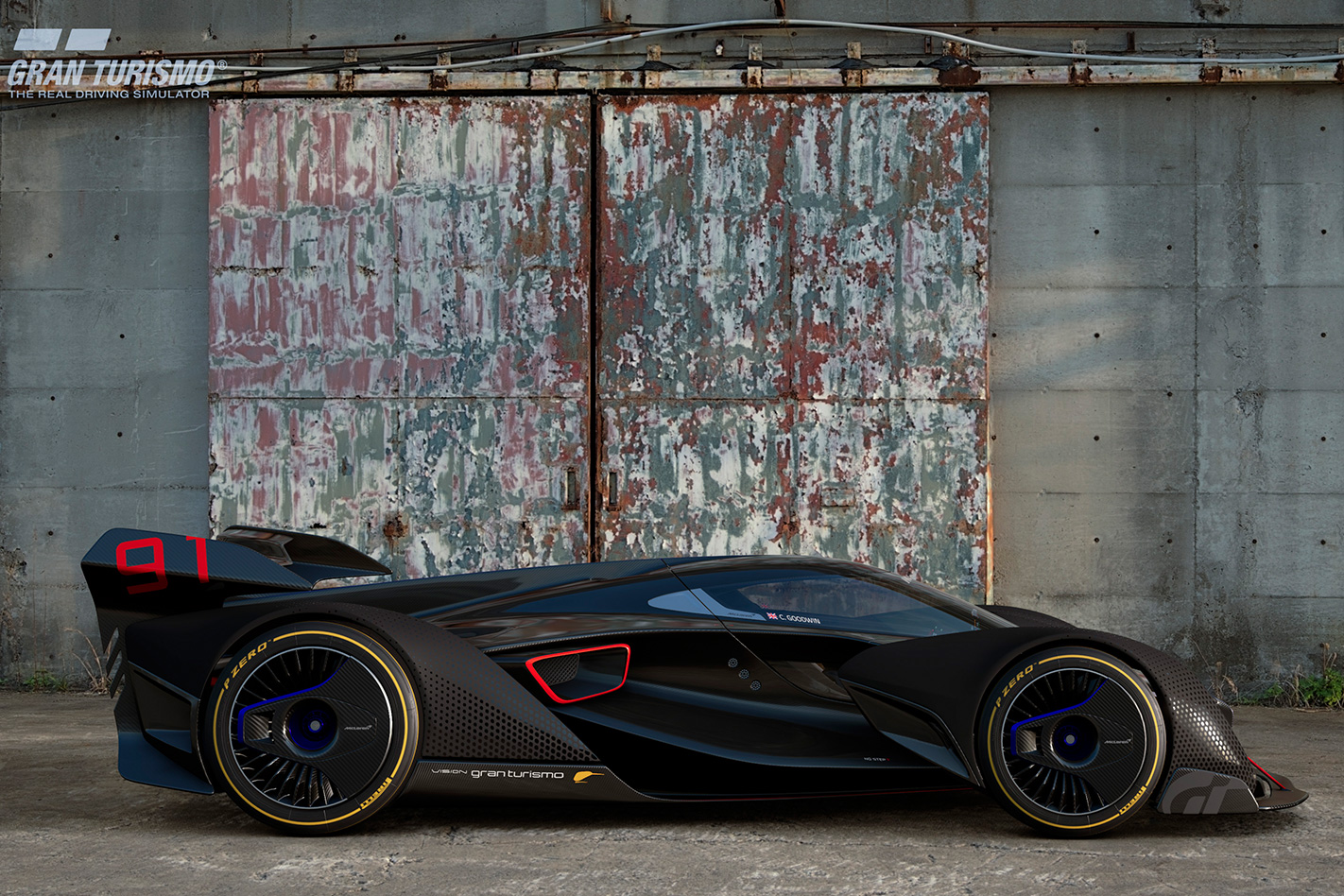
“We wanted to break new ground and to innovate and the McLaren Ultimate Vision Gran Turismo does exactly that,” Melville says.
“It puts the driver absolutely at the centre of the action, delivering a sensory overload with incredible sound and awe-inspiring acceleration.
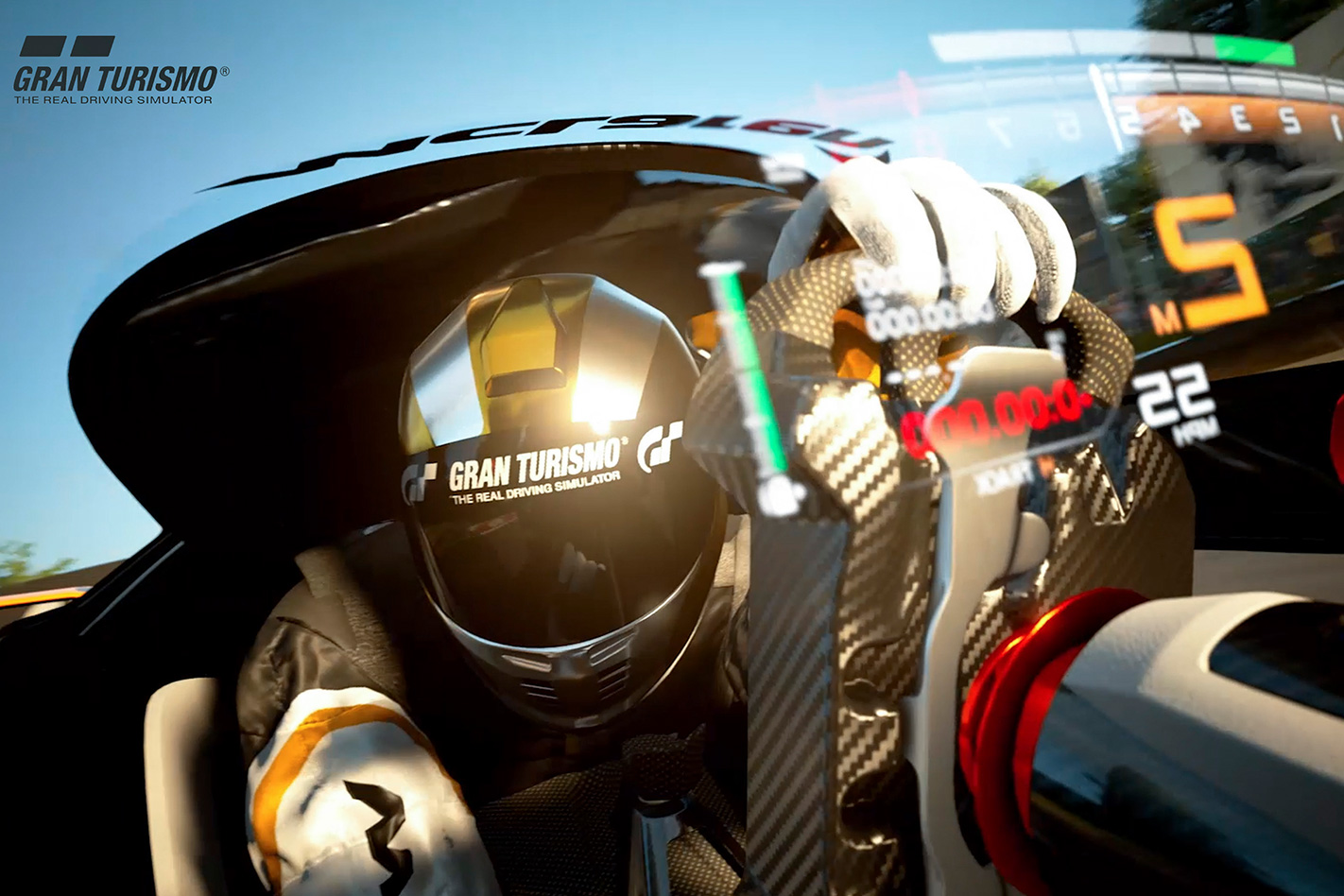
By ‘motorcycle-like’, Melville means the driver is almost laying down in a prone position, with arms outstretched towards the wheel.
We have to give them credit for the adventurous idea, but we can’t be sure how comfortable that would actually be.
“More than anything though, the McLaren Ultimate Vision Gran Turismo is a stunning looking car.
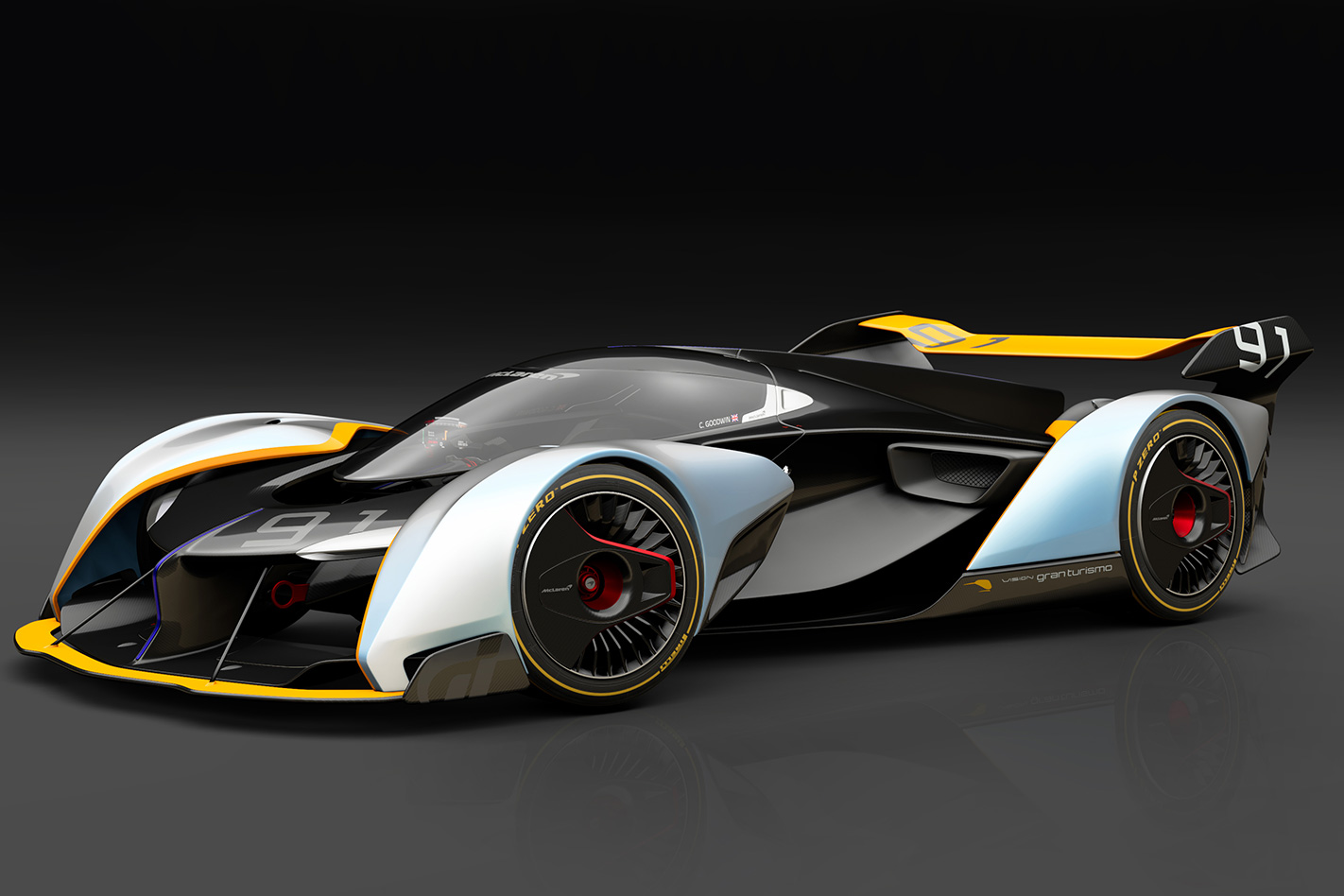
The whole idea behind inviting companies to design wild concepts for a video game came from president of Polyphony Digital – and creator of Gran Turismo – Kazunori Yamauchi.
“I created the Vision Gran Turismo project to give car manufacturers the opportunity to design something that has all of the characteristics of their brand, and will live on as a playable vehicle in Gran Turismo,” Yamauchi explains.
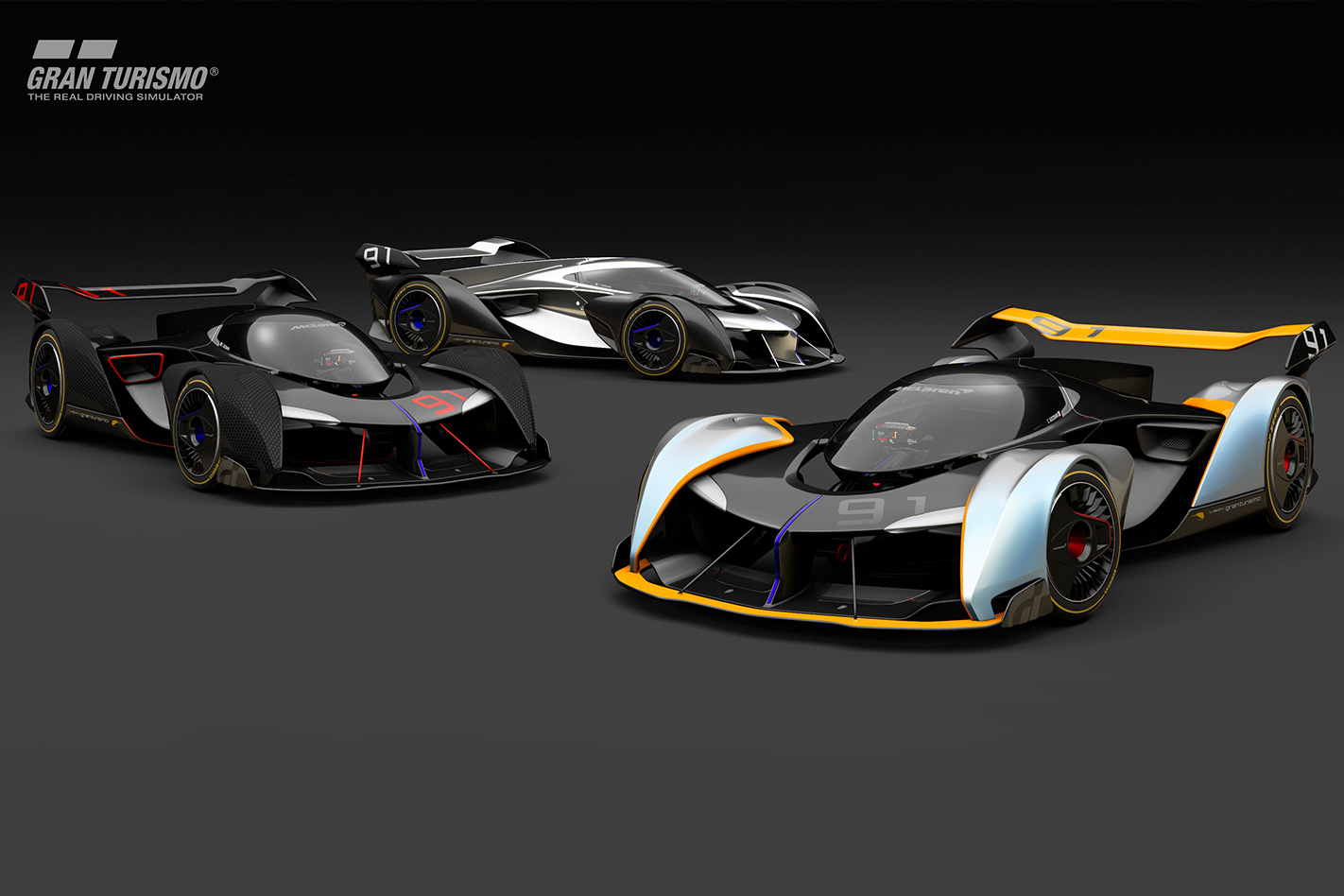
For me, a car needs to be an extension of the driver; I am focused not just on the appearance, but on the handling, the sound of the engine, and the feeling you get when you are racing. So, it was an honour to work with McLaren to bring the Ultimate Vision Gran Turismo to life, and to put such a car on the circuits of Gran Turismo Sport for players to enjoy driving at the limit.”
Past concepts introduced for the game include a couple of insane-looking VW GTIs, a Mercedes-AMG Gullwing/GT-R-style concept, and even a Chaparral-inspired Chevrolet open-wheeler.
Volvo has unveiled its XC40 compact SUV in Milan, revealing its smallest-ever crossover and the first Volvo to be built atop its new scalable CMA architecture.
An Australian launch is slated for the first half of 2018, with local specifications and pricing still to be confirmed. However, with its larger brother, the second-generation XC60, entering showrooms this October priced from $59,990, we can expect the more compact XC40 to wear a $40-50k sticker.

That would make it a natural rival for the Mercedes-Benz GLA-Class and Audi Q2 not only on size, but in dollar terms as well.
From launch, the Volvo XC40 will be available with a D4 turbo-diesel four-cylinder or a T5 turbo-petrol inline-four. Down the line, turbo three-cylinder, plug-in hybrid and pure electric powertrains will be added – part of Volvo’s aspiration to have a fully electrified lineup from 2019.
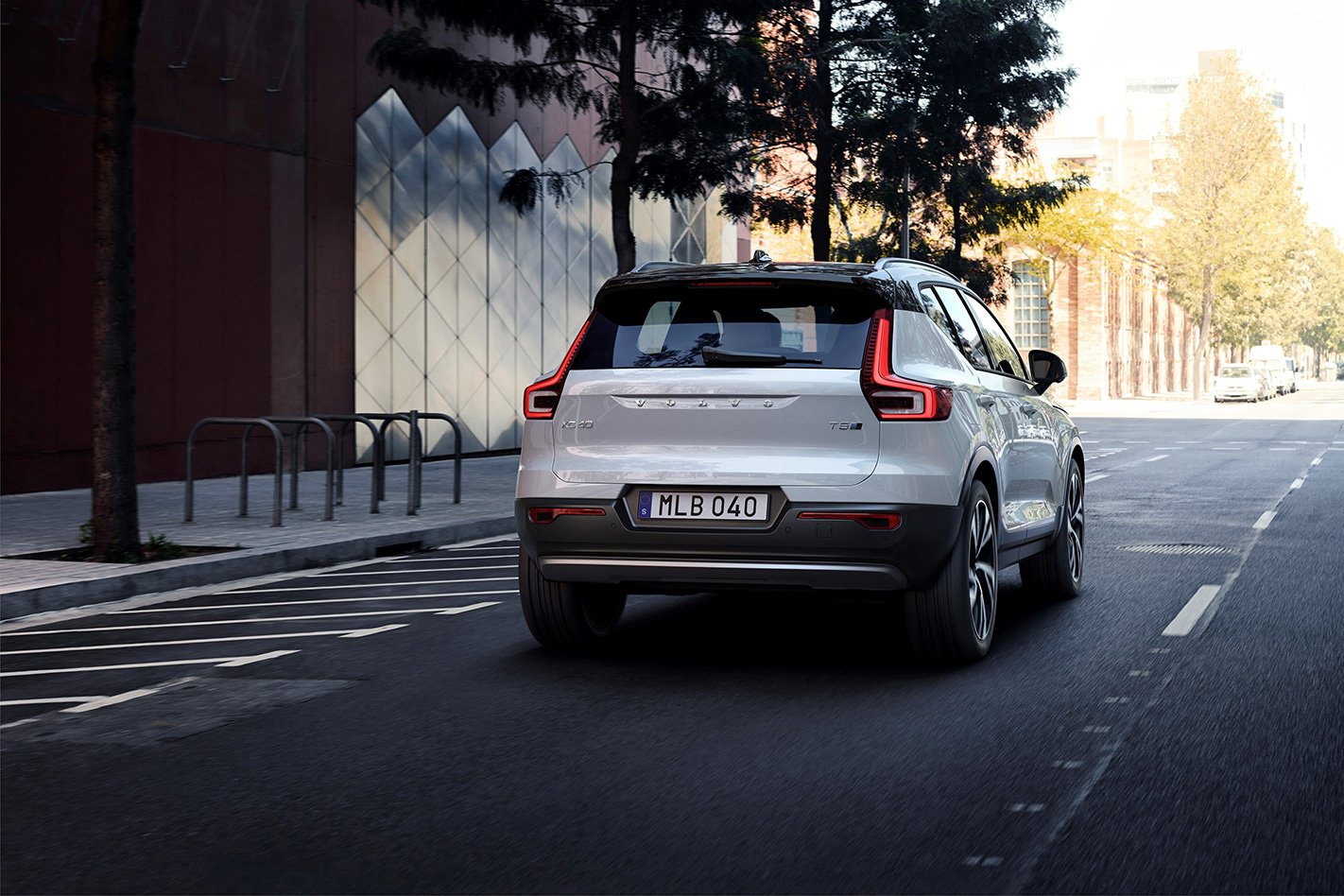
Both front-wheel drive and all-wheel drive will be offered, though transmission options are yet to be confirmed.
The technology story doesn’t stop outside of the engine bay either. The XC40 will feature the next evolution of Volvo’s vertically-oriented infotainment display and all-electronic instrument panel, first seen on the XC90, S90 and XC60, while Volvo’s Pilot Assist driver assist tech, autonomous emergency braking, “Run-off Road” protection and a top-down camera view will all be available.
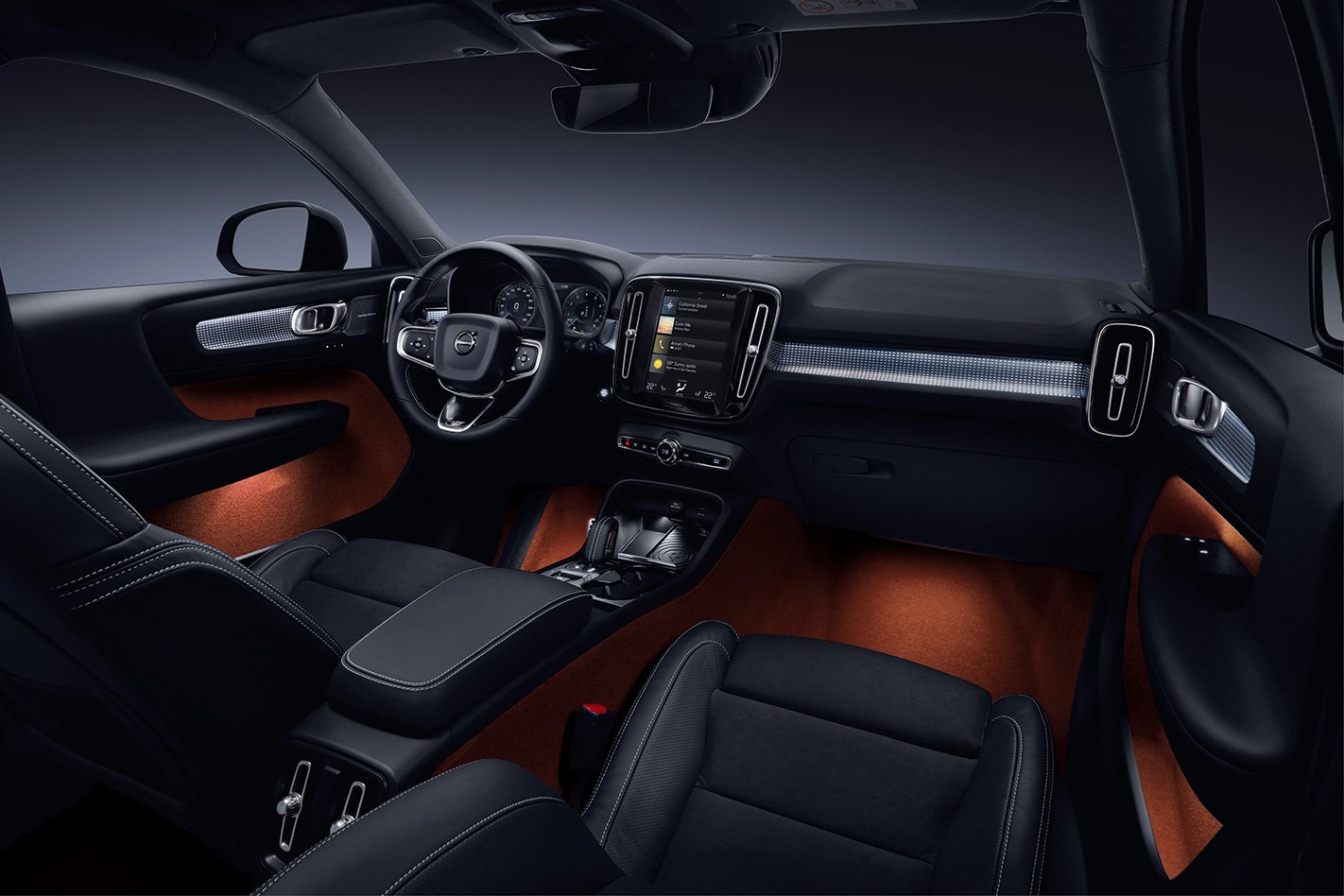
The interior is also designed to not only boost comfort, but provide more intelligent storage as well. Beyond just cramming in a few more cupholders, Volvo has kitted out the XC40 with huge door bins capable of taking a handbag or full-size laptop, under-seat drawers, a dedicated phone shelf with an inductive charging pad, fold-out bag hooks, and a built-in waste bin hidden in the centre console.
On the outside, Volvo’s blocky design language means the Swedish carmaker’s smallest SUV looks far from dainty, with pronounced wheelarches emphasising its square-shouldered styling. Two-tone paint schemes will also be available, with the roof able to be coloured black or white to contrast with the body colour.

Australian pricing and features will be confirmed closer to the XC40’s local launch next year.
THERE could be a new Nurburgring Nordschleife lap record holder upon us.
Experts in all things Nordschleife, Bridge to Gantry, are reporting a Porsche 911.2 GT2 RS has been spotted lapping the Green Hell during industry pool sessions. Not unusual behaviour for a pre-production prototype, but what IS noteworthy is that it’s been lapping the 23km circuit in less than 7 minutes.
According to the blog, Porsche had booked two full evenings for lap record attempts with 7 minute-plus laps being clocked during the first day.
Things heated up on the following evening, with the GT2 RS touring the circuit in under 7 minutes – a scorching time for a road car.
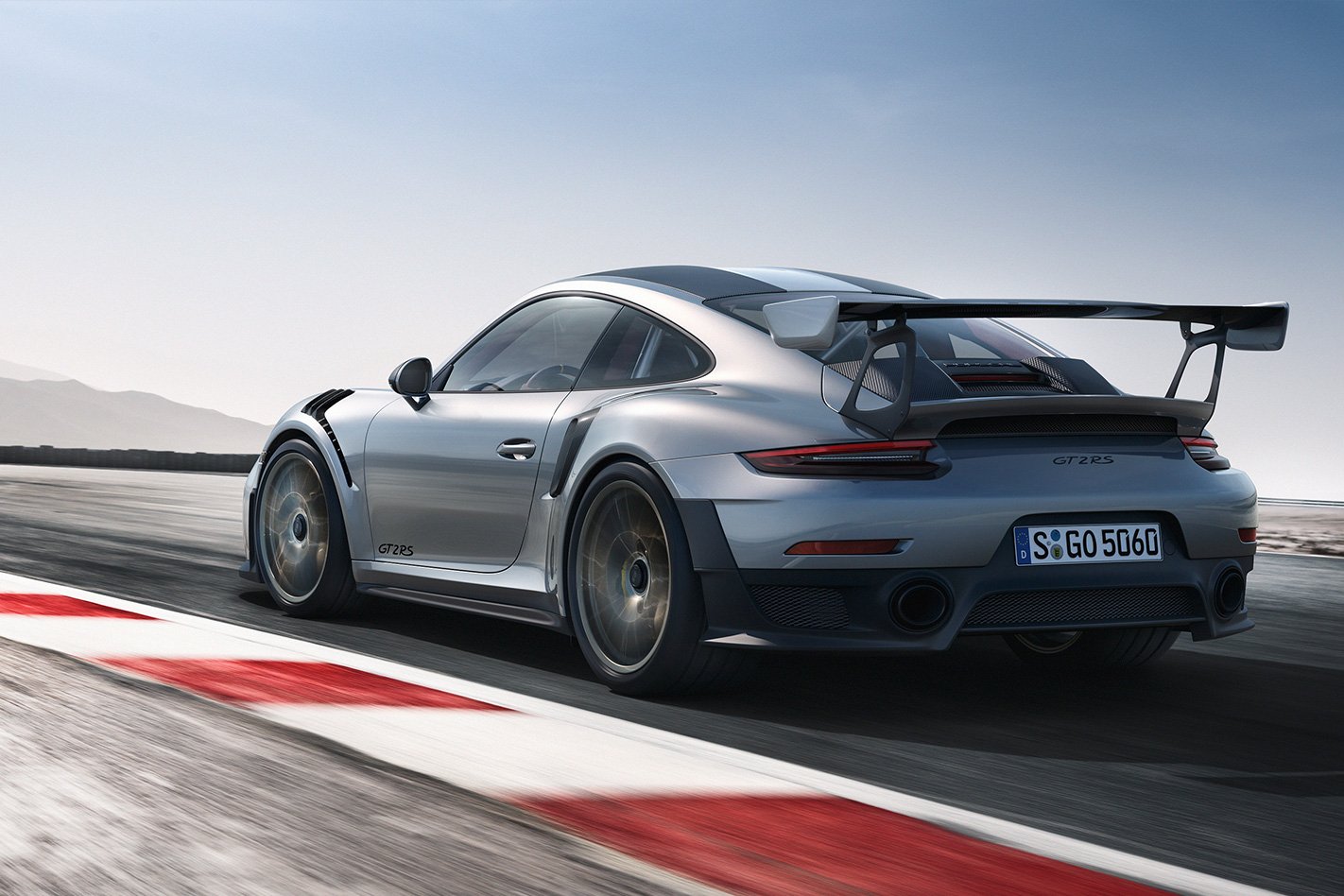
Bridge to Gantry speculates it’s likely the Porsche was able to lay down a time as low as 6:54.00 or less.
Oh, and that was on the first attempt.
The current production car lap record is held by the Lamborghini Huracan Perfomante, with a 6:52.01 laptime.
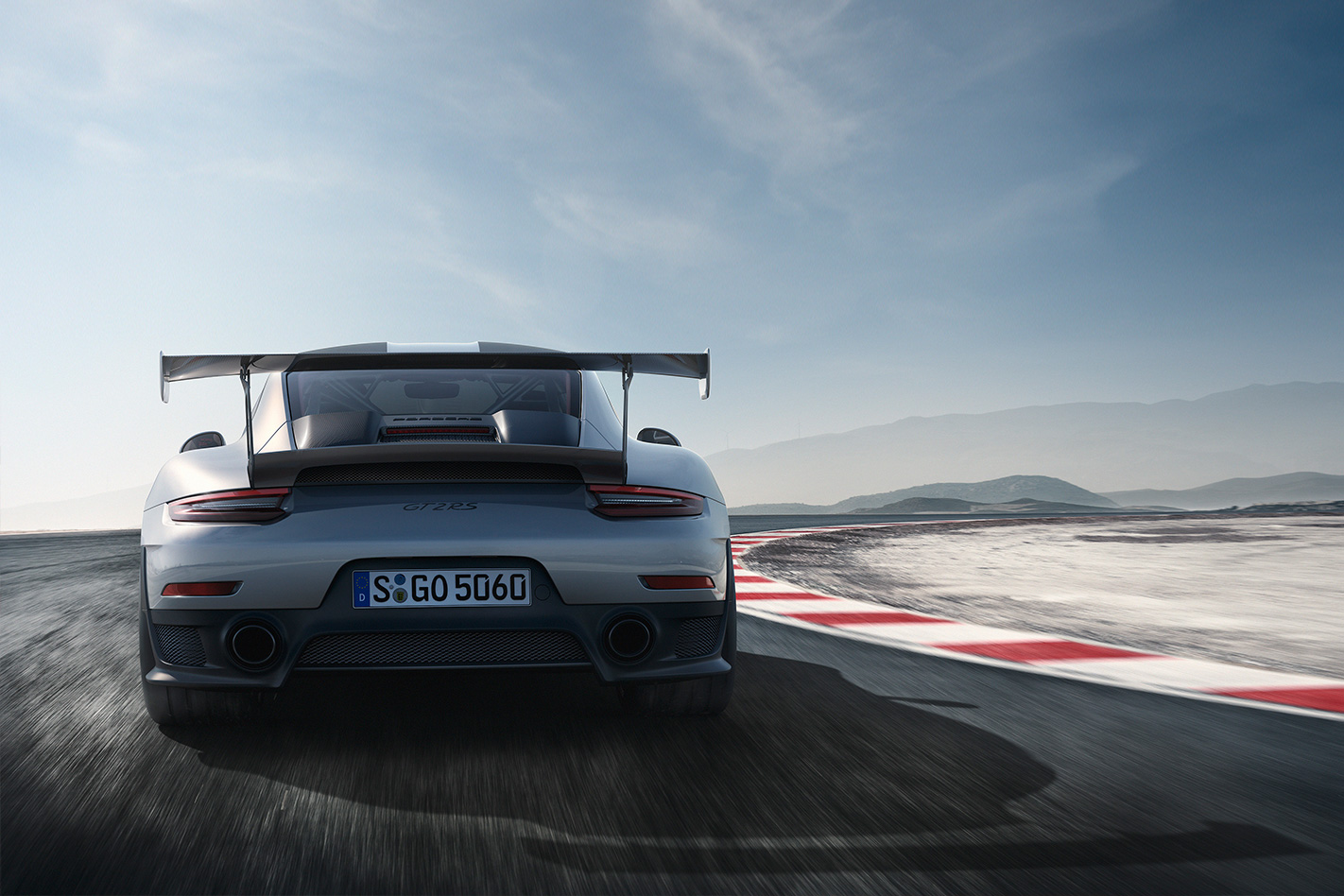
The reported sub-7 minute laps are obviously not official, but it gives us a good indication of the GT2 RS’s performance. For further context, the Nissan GT-R Nismo could ‘only’ achieve a 7:08.68 when it went for its own lap record attempt in 2015.
Porsche’s current fastest Nurburgring laptime is held by the 918 Spyder, with a 6:57.00 effort.
The GT2 RS is the most powerful Porsche 911 ever, sending 515kW and 750Nm from a rear-mounted 3.8-litre twin-turbo flat-six cylinder engine exclusively to the rear wheels.
Kia has launched its most exciting car yet, the Stinger, providing those who love driving with an alternative to more vanilla transport.
The Stinger is Kia’s first dedicated rear-wheel-drive passenger car sold in Australia. It is so significant that we’re the first market outside of Korea to receive the five-door liftback sedan.
The Stinger will launch here with a six-variant line-up split across two engines. Three of them feature a turbocharged 2.0-litre engine producing 182kW and 353Nm, giving it the same level of performance as a traditional V6, and the other three use a twin-turbocharged 3.3-litre V6 producing a V8-rivalling 272kW and 510Nm.
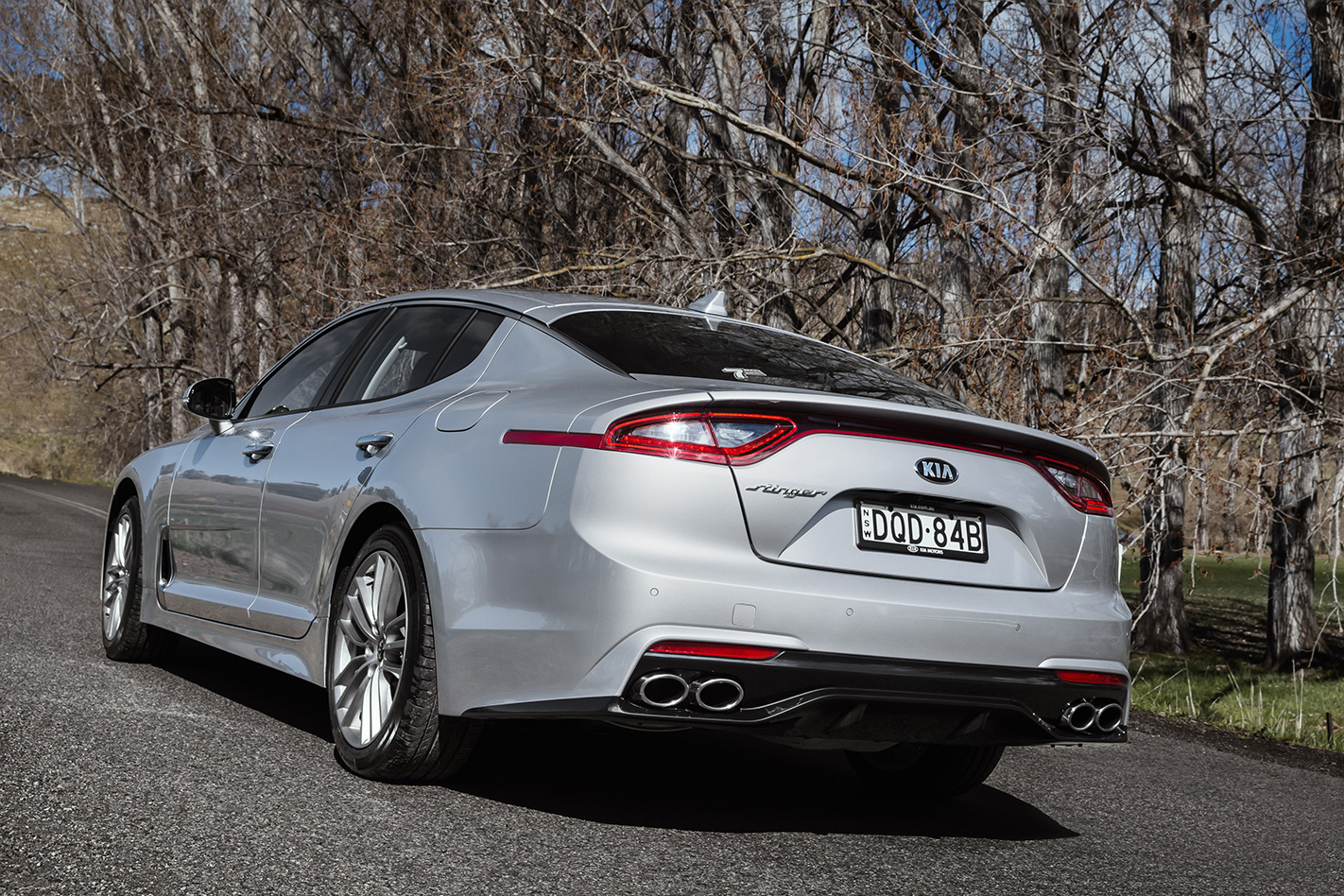
The Stinger line-up starts with the $45,990 200S (above), the “200” denoting variants using the turbo four-cylinder. Compared with the other cars in the Stinger line-up it’s a bit basic, featuring a smaller seven-inch multimedia touchscreen and missing out on important driver aids available on more expensive models such as active cruise control, and – more vitally – autonomous emergency braking that can automatically avoid – or lessen the severity of – a crash.
Even so, base equipment levels will make some Euro competitors blush. There’s an electric parking brake, smart-looking 18-inch alloy wheels, tyre pressure monitoring, rear parking sensors linked to a reversing camera, self-levelling headlights, LED daytime running lights, puddle lights, push-button start, eight-way electrically adjustable driver’s seat (front-seat passengers have manual six-way adjustment), imitation leather seats, auto up/down front windows, electric-adjust folding wing mirrors, two USB ports, dual-zone climate control air-conditioning linked to dual rear-seat air vents, a digital radio linked to six speakers, and a sat-nav system with a decade of free updates and traffic information.
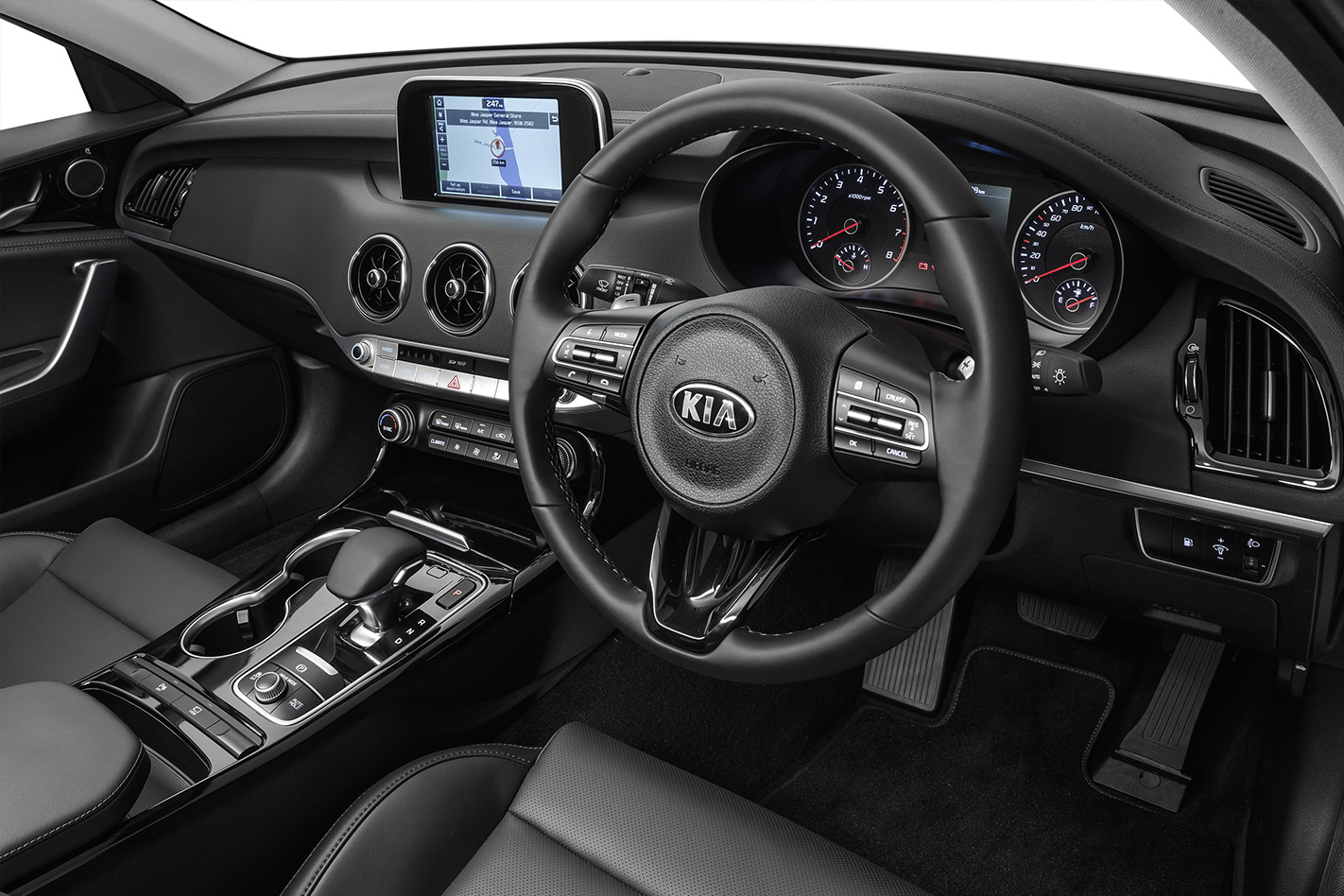
Each version of the Stinger also comes with seven airbags and an eight-speed automatic transmission featuring a torque converter that includes a balance bar to make it run much smoother. They also all have a feature called launch control – more on that a bit later – and selectable drive modes ranging from Eco to Sport. It’s a bit of overkill, but all six versions come with quad exhaust pipes – and in the four-cylinder cars’ case there’s no skimping, they all work.
Stepping up to the $52,990 Kia Stinger 200Si (below) adds front parking sensors, real leather trim, auto wipers, a bigger eight-inch touchscreen, different 18-inch alloys, a nine-speaker audio system (two of which are under the front seats) that pipes artificial engine noise into the cabin. There’s better-looking cabin trim, too. But the Si’s biggest advantage is the suite of driver assist technology it adds: autonomous emergency braking, a collision warning system that alerts drivers that they’re about to collide with the car in front, a lane-keeping system, active cruise control, and a driver fatigue monitor.
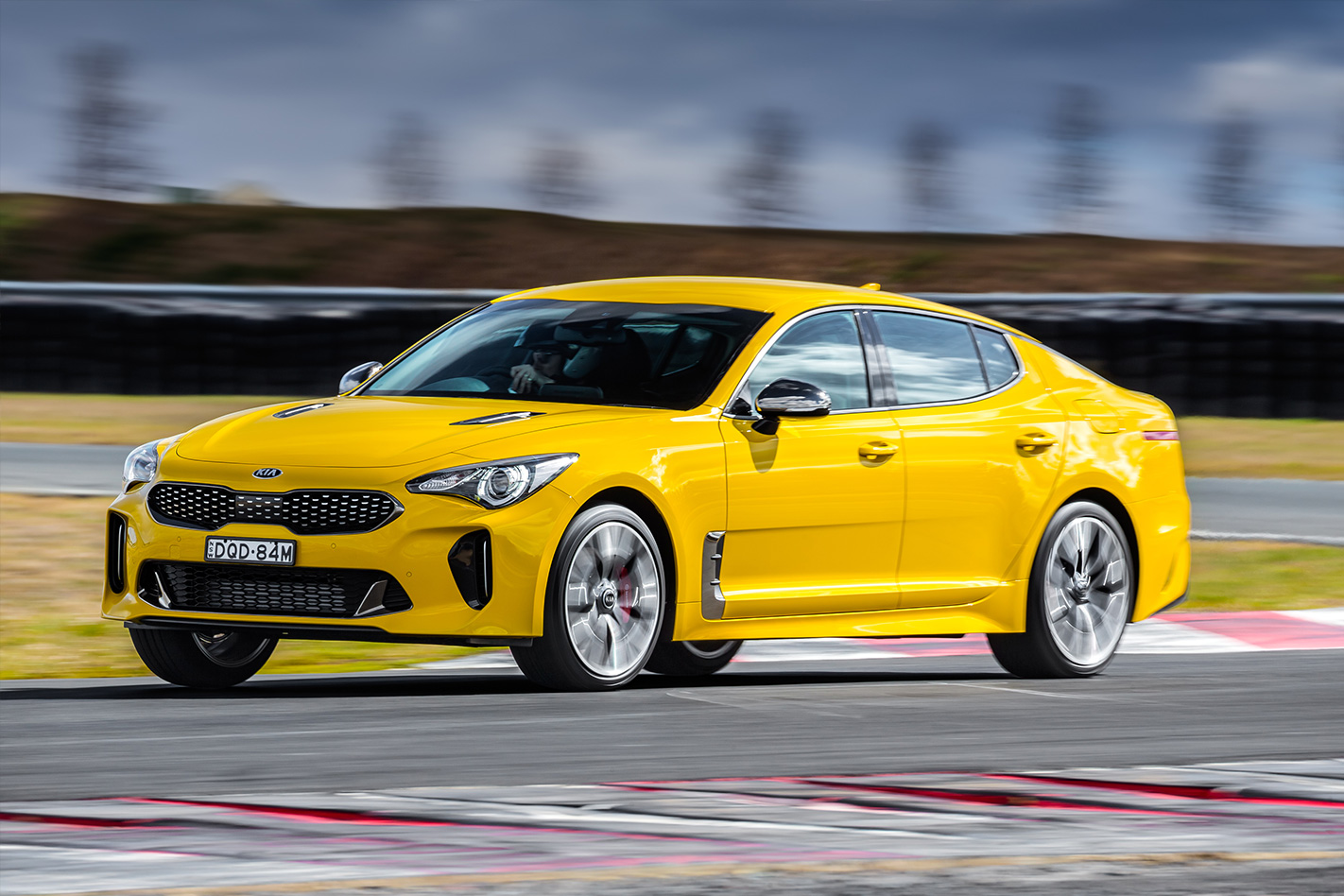
The range-topping 2.0-litre is the $55,990 GT-Line. The headline here is that this car includes an active suspension system that can flip-flop between a comfort mode that is more pliant on the road than the traditionally sprung 200s, and a sports mode that helps hold the GT-Line flat while cornering, making it even more of a sports car. As well, the car sits on bigger 19-inch alloys, the heated and cooled front seats have even more leather and electric adjustment, the driver’s seat gains a memory function, the steering wheel adjusts electrically, the dash contains a wireless phone charger, a sunroof brings the outside in, LED headlights show the road ahead, and the small screen in between the analogue tacho and speedo in the instrument panel adds colour and racetrack-like gauges.
The steering wheel also squares off on the bottom, alloy trim replaces some of the plastics, suede-like material lines the roof, and the audio system jumps to 15 speakers. But the forte is an adaptive suspension system that flip-flops between Sport and Comfort settings, allowing drivers to drive the Stinger like a sports car when the roads get twisty.
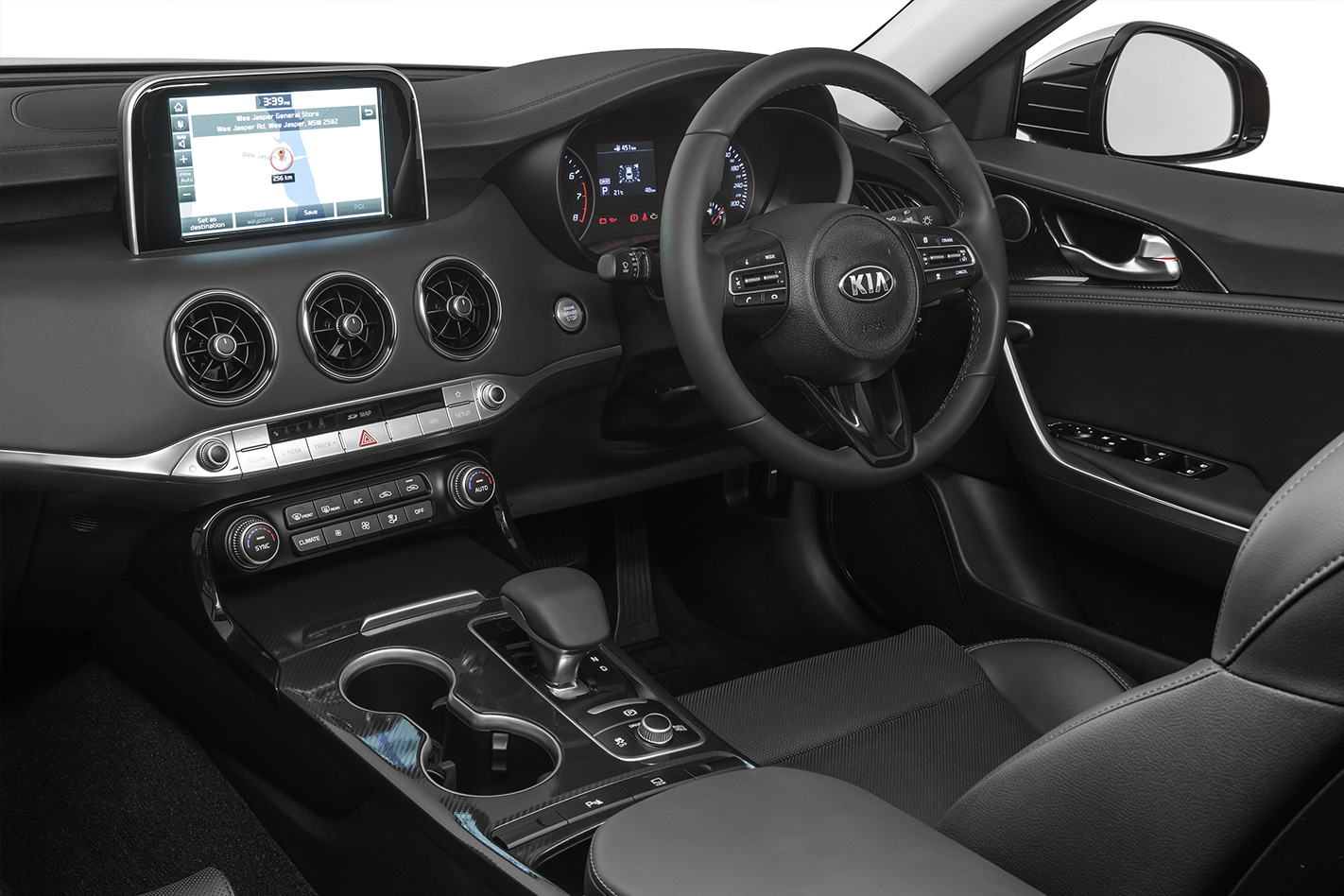
All V6 versions get a mechanical limited slip differential, which helps with cornering, variable ratio steering that makes it easier to turn the slower or faster you go, bright red Brembo calipers wrapped around larger brake discs than four-cylinder models, and different exterior trim such as dark-finish exterior mirror caps. They all weigh about 100 kilograms more than the four-cylinder equivalents.
The entry-level $48,990 V6, the 330S, otherwise follows the 200S’s equipment list, meaning it also misses out on the active cruise control and automated braking.
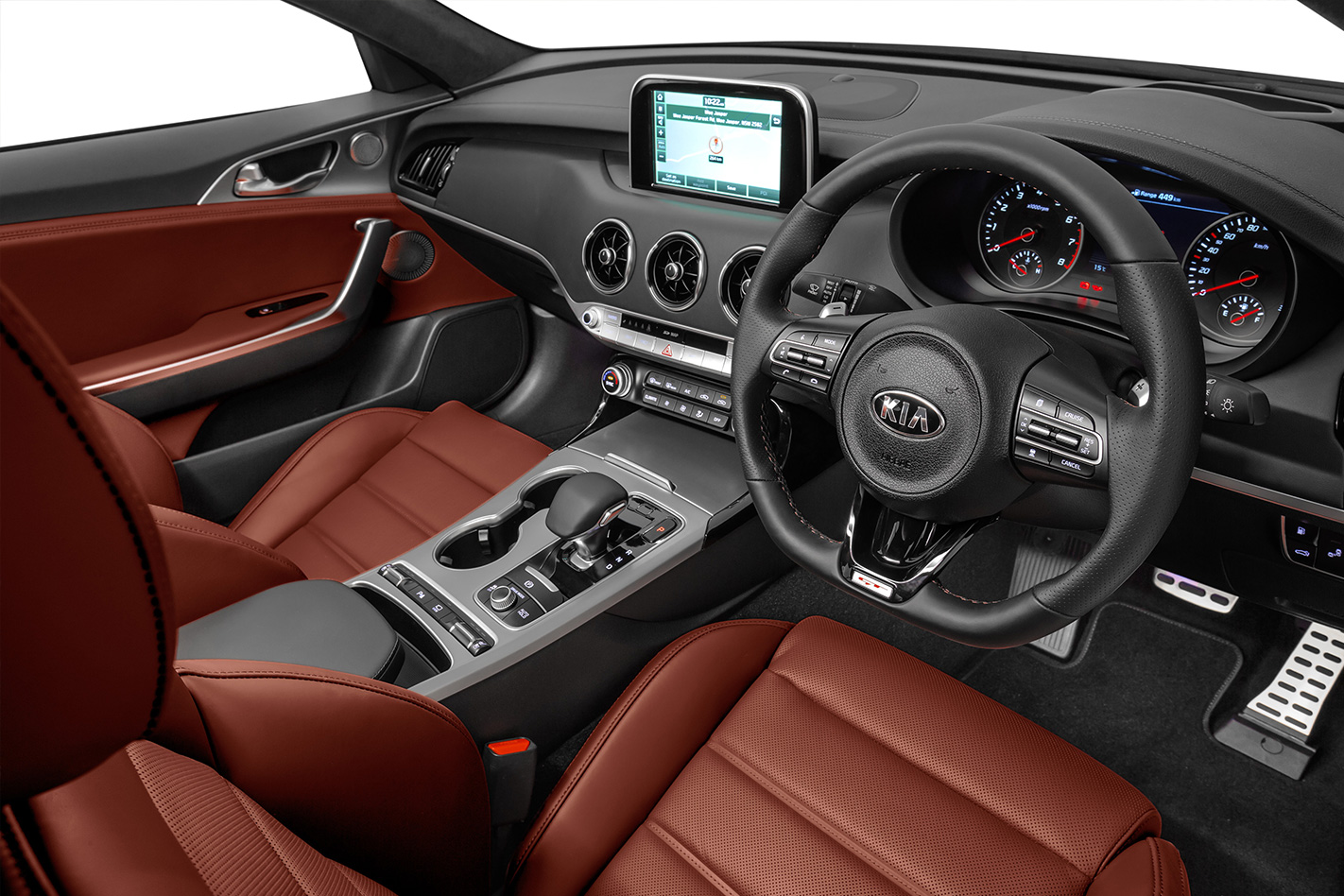
Similarly, the $55,990 330Si adds all the features of the 200Si, but uses a more rigid suspension tune to account for the extra weight of the V6 engine. Notice that it is only $3000 more than the equivalent turbo-four version? We did. From this grade up, the cars also get staggered Continental tyres – the rears are lower aspect, meaning they should provide more grip to transfer more of the V6’s power to the road.
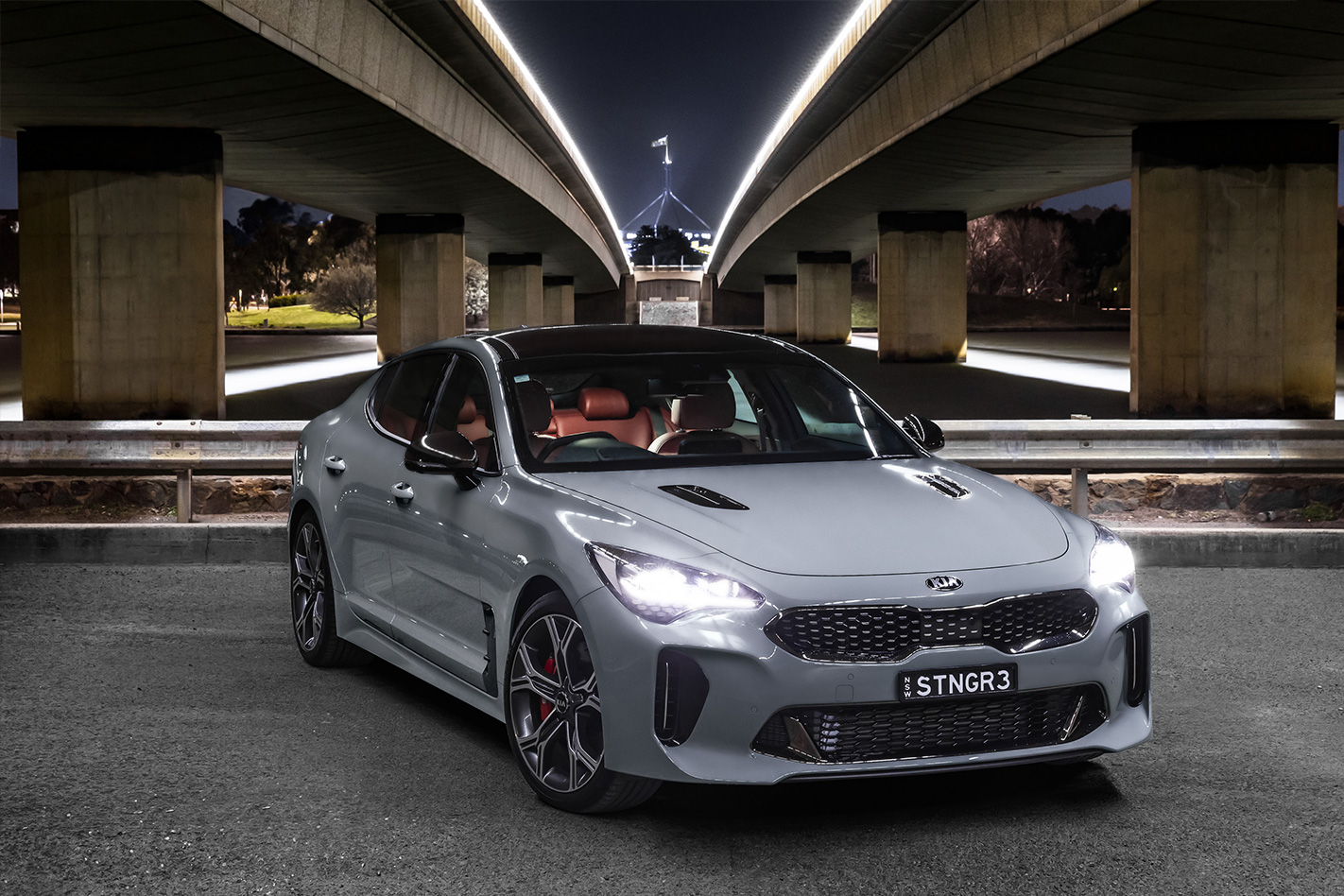
The jewel in the Stinger’s crown is the $59,990 GT (below). Again, it follows the 200 GT-Line’s equipment list closely, including the dynamic suspension and electric steering column adjustment, but uniquely adds a track-focussed menu to the instrument cluster that monitors oil temperature, boost and torque, a lap timer, and even a G-force meter – a dot that moves around inside a spider’s web to show where the laws of gravity want the car to go.
You only get a temporary-use space saver spare with the Stinger.
2017 Kia Stinger pricing
Variant Price
200S (8-sp auto) $45,990
200Si (8-sp auto) $52,990
GT-Line (8-sp auto) $55,990
330S (8-sp auto) $48,990
330Si (8-sp auto) $55,990
GT (8-sp auto) $59,990
ALMOST one in four cars on Australia’s roads are now caught up in the growing Takata recall scandal after almost 900,000 more vehicles were added to the tally overnight.
The potentially fatal blow-out has prompted the Federal Government to consider a compulsory recall for the cars affected, which now number around 3.7 million vehicles on our roads. The mandatory recall could compel car makers to go to extreme lengths to contact owners, even if they have bought the vehicle second-hand and no longer in contact with the brand.
Small Business Minister Michael McCormack yesterday issued a draft compulsory recall notice for all vehicles with the defective airbags in the wake of an Australian Competition and Consumer Commission (ACCC) safety investigation that found another 877,000 at-risk vehicles. The move also comes shortly after Australia experienced its first death linked to the faulty airbags in Sydney earlier this year.
If the recall is adopted, it will be the first mandatory automotive recall in Australia’s history.
Brands affected among the estimated 14 million passenger cars on our roads include BMW, Chrysler, Dodge, Ferrari, Ford, Honda, Jeep, Lexus, Mazda, Mercedes-Benz, Mitsubishi, Nissan, Performax (a right-hand drive conversion company), Subaru and Toyota. In some instances, the ageing airbags can either split as they inflate, or even spray a deadly hail of shrapnel into the people they were designed to protect. Some of the cars are more than 15 years old.
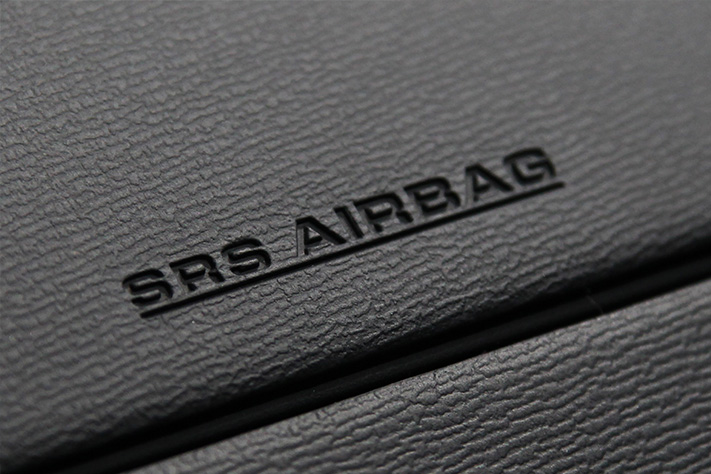
Choice says these carmakers are yet to issue a recall because they claim their airbags were manufactured in Germany to more stringent standards than the airbags have ruptured cars.
However, the US National Highway Traffic Safety Administration (NHTSA), which has taken a leading effort in dealing with the recall, reports there have been six documented cases across several European countries during the past year of the German-manufactured airbags rupturing.
Jaguar Land Rover has confirmed it is planning a voluntary recall that effects a limited number of Jaguar XF models, with a spokesman telling Wheels, “We would like to confirm that this is a voluntary recall and that there have been no reported instances of a customer being injured because of a malfunction in an airbag in any Jaguar or Land Rover product”.
A Volkswagen Australia spokesman told Wheels: “We have been advised that our airbags are not among those affected. We are, of course, cooperating with the authorities to the fullest extent.”
Audi responded in kind, saying customer safety its its highest priority.
Holden, meanwhile, said its cars affected by the recall “are safe to drive”. “We’ve found no evidence that Holdens in Australia are affected by the condition that has been reported in the media over the past couple of months,” spokesman Haydn Lane said.
“Some GM vehicles, including Holden vehicles, are fitted with Takata airbag inflators. However, GM/Holden Takata inflators are different from the Takata inflators that have ruptured in other types of vehicles.”
Mercedes-Benz said it was currently clarifying the extent that the proposed mandatory recall may impact Mercedes-Benz vehicles.
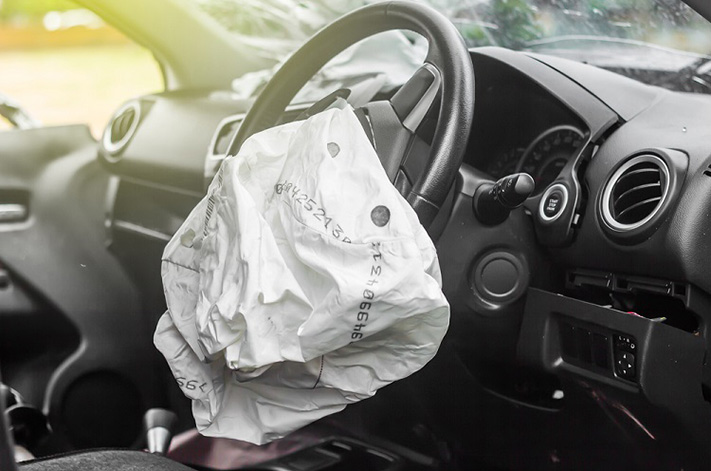
Of particular concern are some of the older ‘Alpha’ inflators which have been linked to at least one death in Australia which were in around 150,000 cars of which 51,000 are yet to be replaced.
The proposed compulsory recall should expedite the process. The ACCC has yet to reveal details of how it will be managed, though the Minister’s draft mandatory recall notice issued yesterday stated that vehicle suppliers would have to take a range of actions to give effect to the recall of the Takata airbags, including:
- Recalling the vehicles on a specified timetable based on the safety risk so as to enable the inflator to be replaced. This includes one business day from of a consumer contacting the supplier in the case of the older Takata ‘alpha’ inflators, which have been linked to at least one death in Australia.
- Compensating consumers if the replacement doesn’t occur with a specified period of time or when acceptable alternative transport is not provided.
- Taking a range of steps to contact subsequent owners of used vehicles.
- Clearly communicating with consumers the nature of the safety risks associated with the particular airbag and details of the replacement program.
- Keeping records and maintain a database accessible to consumers.
- Safely disposing of the faulty airbags.
THE CHEAPEST Lamborghini you can buy (on paper) is an unhinged race car.
Lamborghini has released the latest iteration of its home-grown racer for the one-make Super Trofeo series, and it is the final word in Italian showmanship.
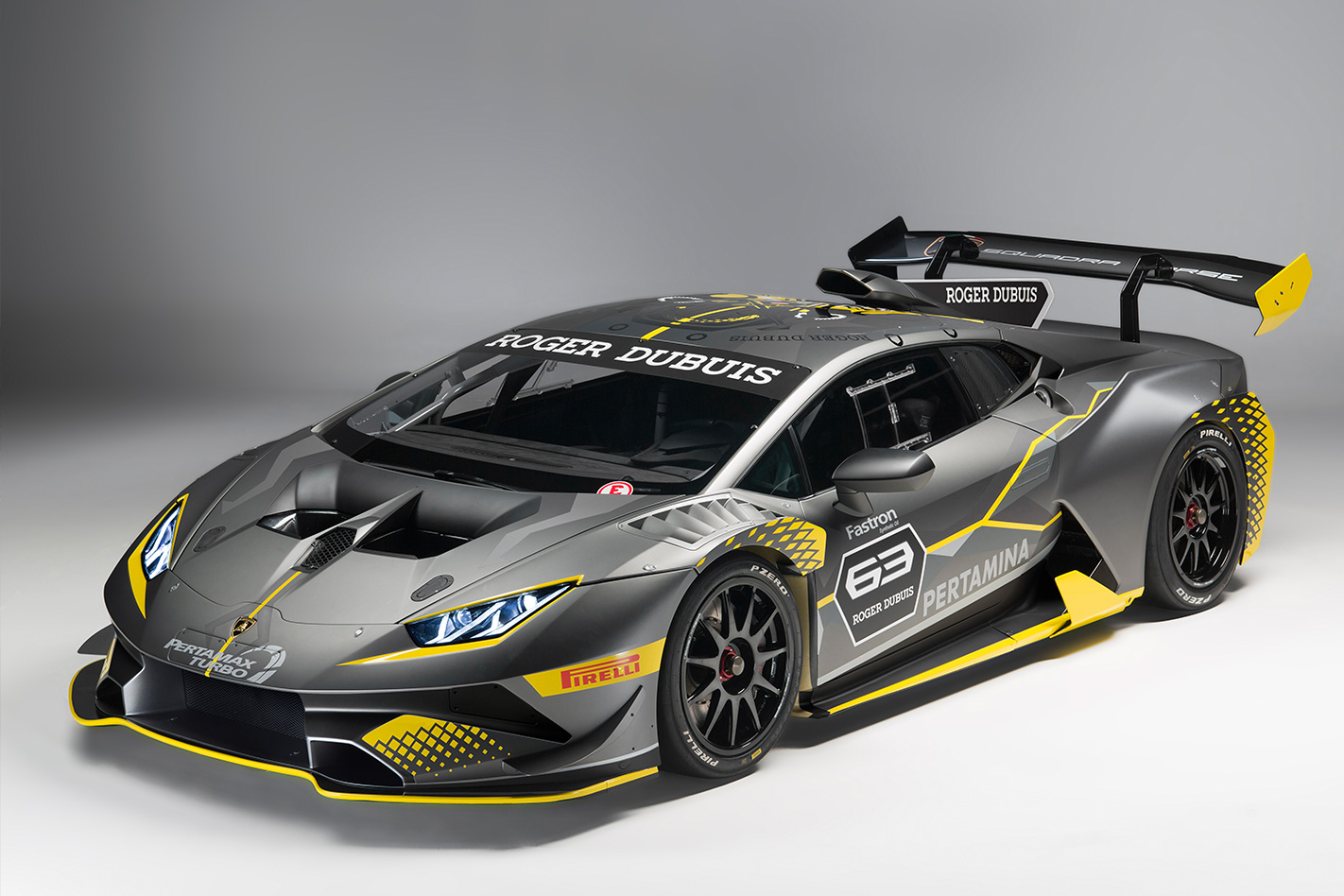
While it starts life as a road car, the racer gets a serious cosmetic makeover, with the EVO wearing some seriously mean looking aerodynamic bodywork, developed by the boffins at Dallara – the same people behind the 2018 IndyCar racer, and KTM X-Bow road car.
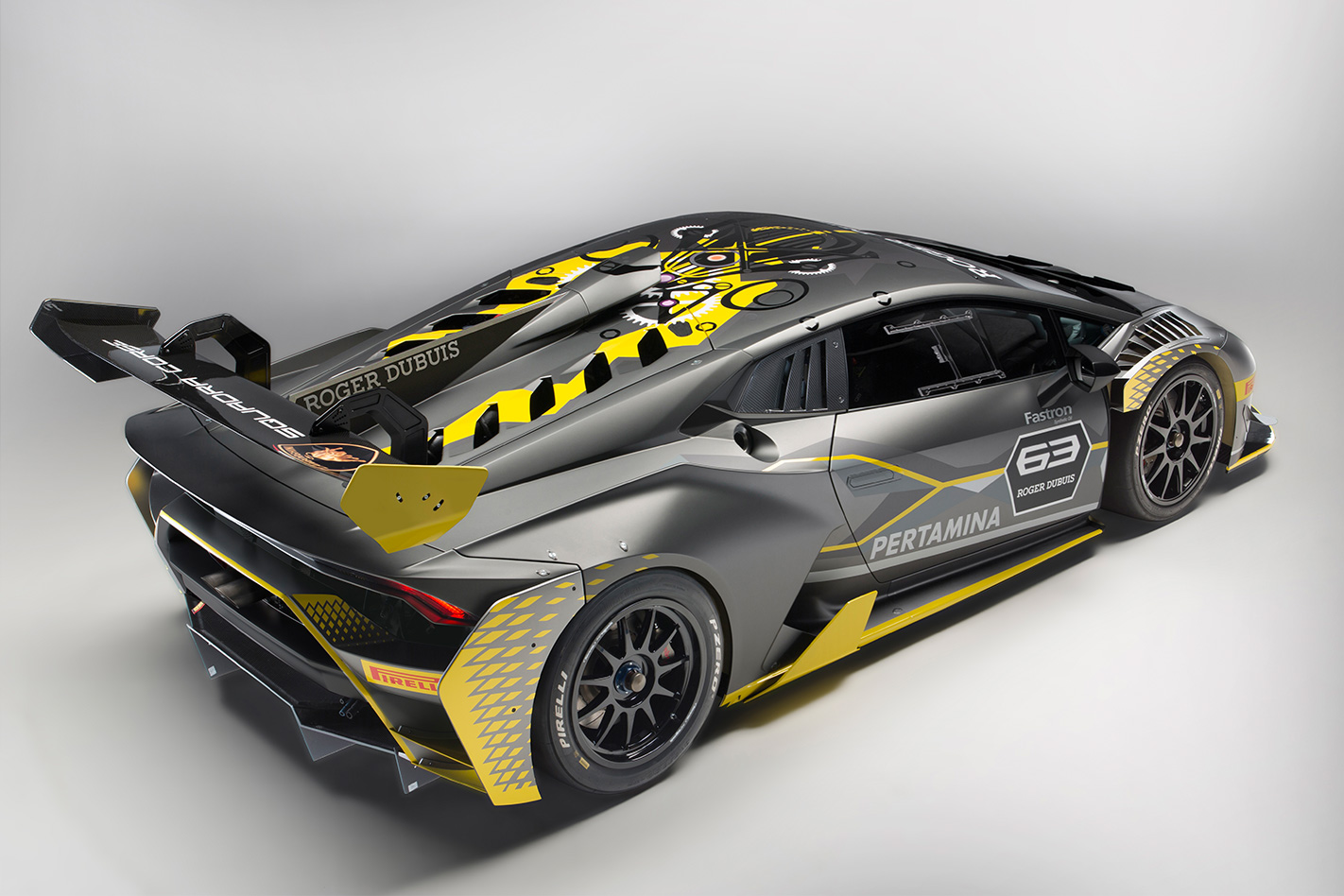
The new bodywork is the major update over previous Super Trofeo racers, with the car remaining relatively unchanged underneath the skin. The engine will breathe slightly better in the EVO however, thanks to the wonderfully ridiculous air scoop on the roof.
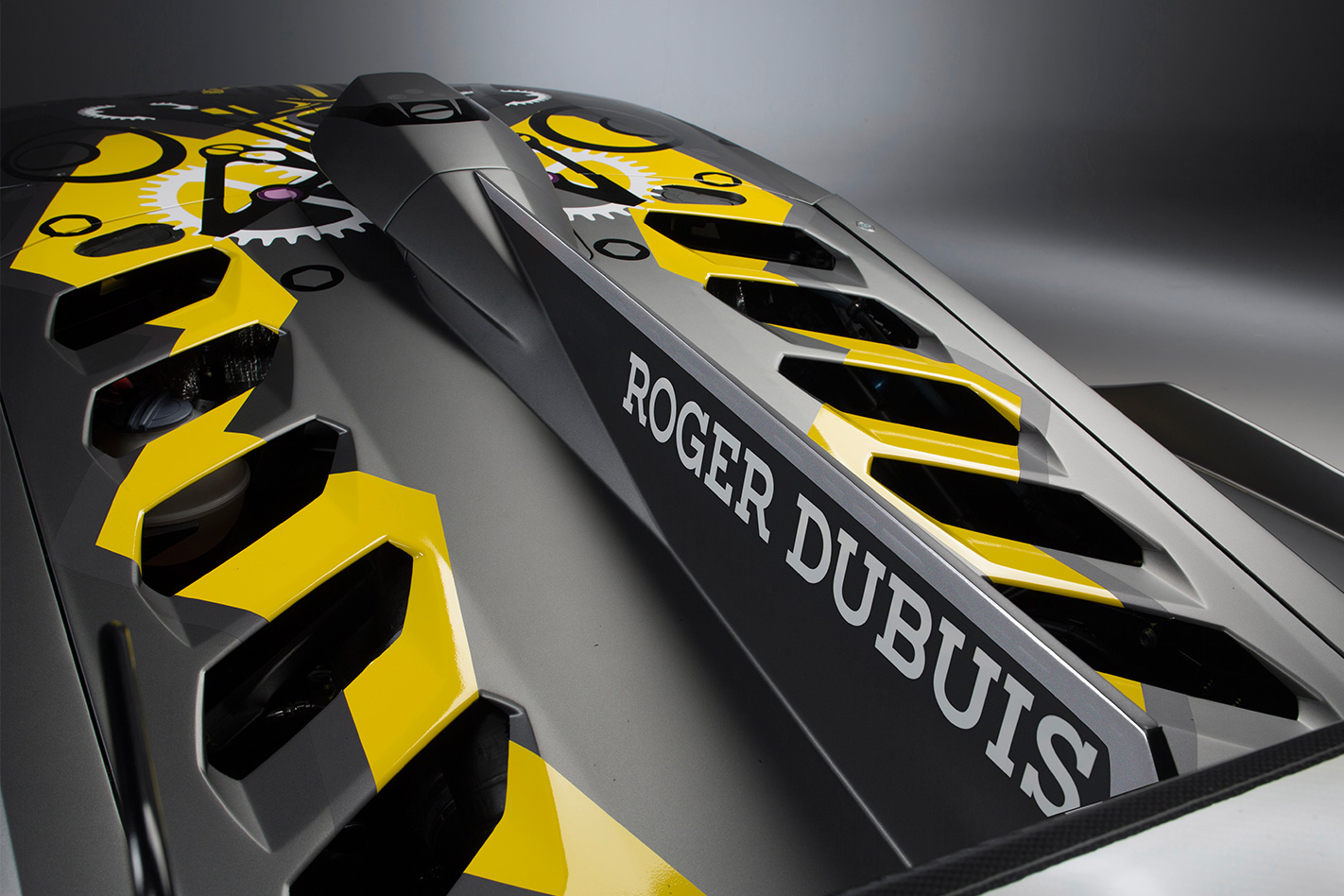
It’ll cost US$295,000 to add a Super Trofeo EVO to your (racing) garage, which translates to A$372,851 – that’s before any sort of taxes. The cheapest Lamborghini you can buy in Australia currently is the Huracan LP 580-2, which starts at $390,000. Bargain!
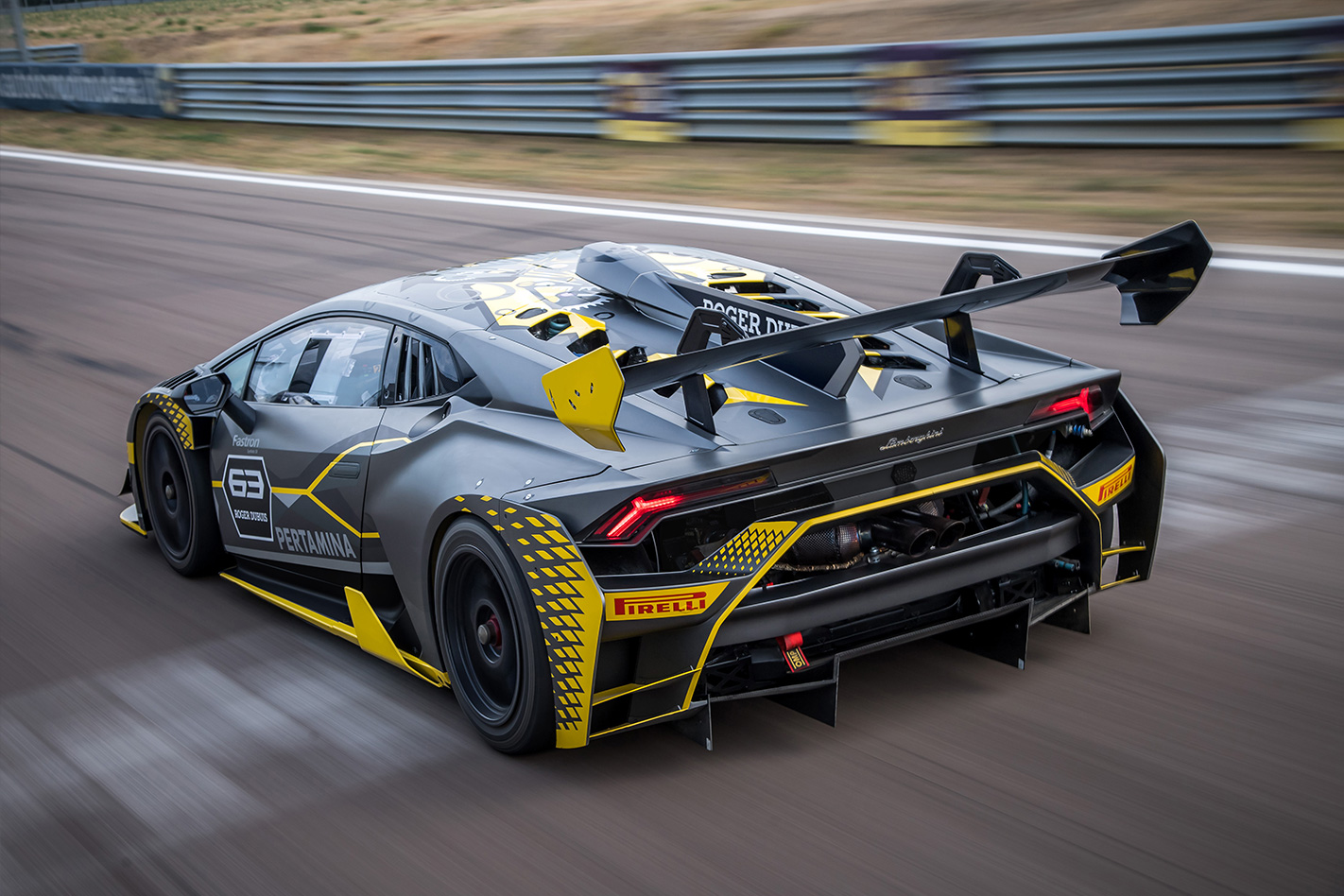
Teams with the current-spec Super Trofeo will be able to purchase the new body kit to upgrade their cars.
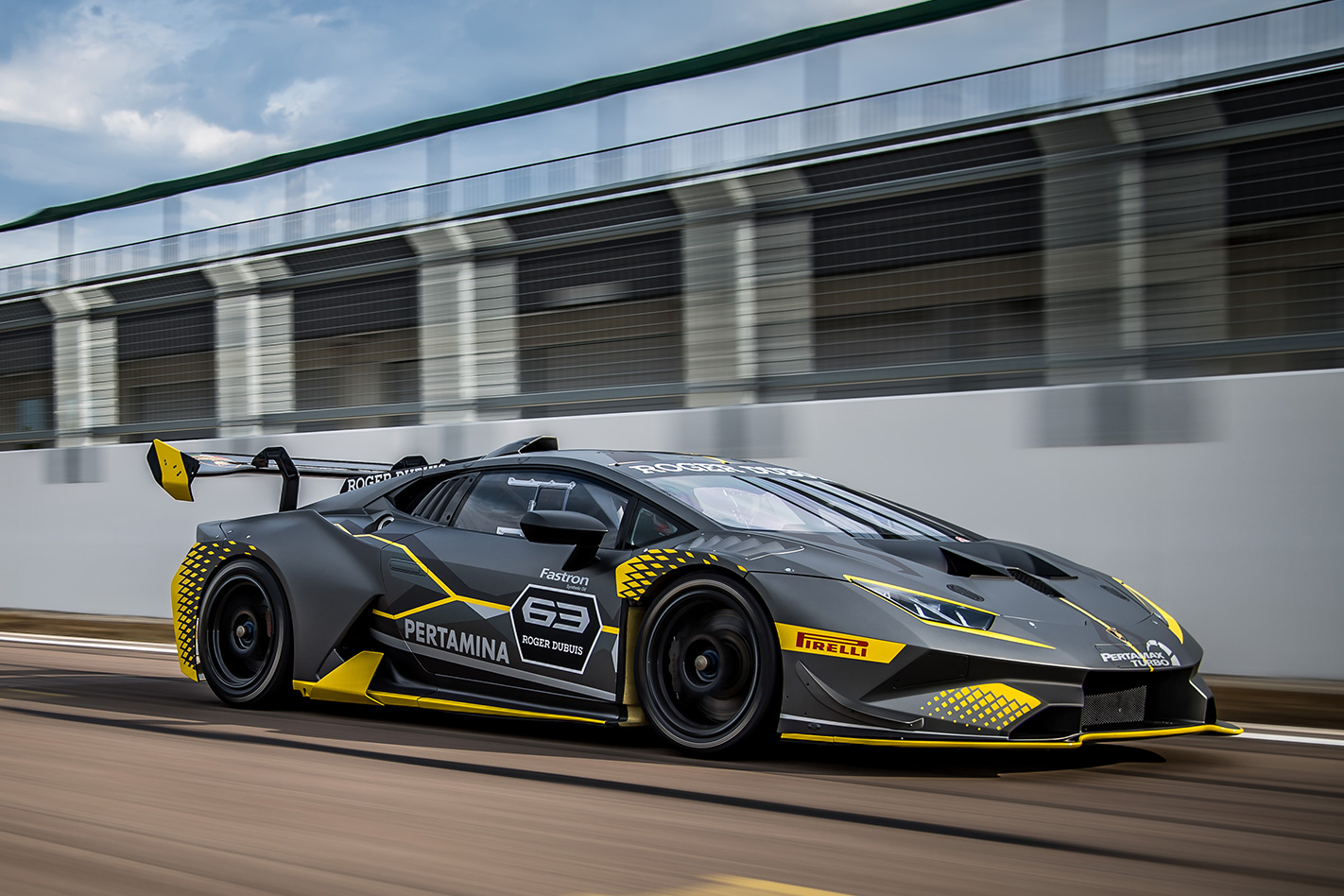
While it looks visually similar to the Huracan GT3 race car, there are subtle but important differences between the two, largely in the aerodynamics.
