
Buying new, the Mazda MX-5 is the world’s best-value roadster.
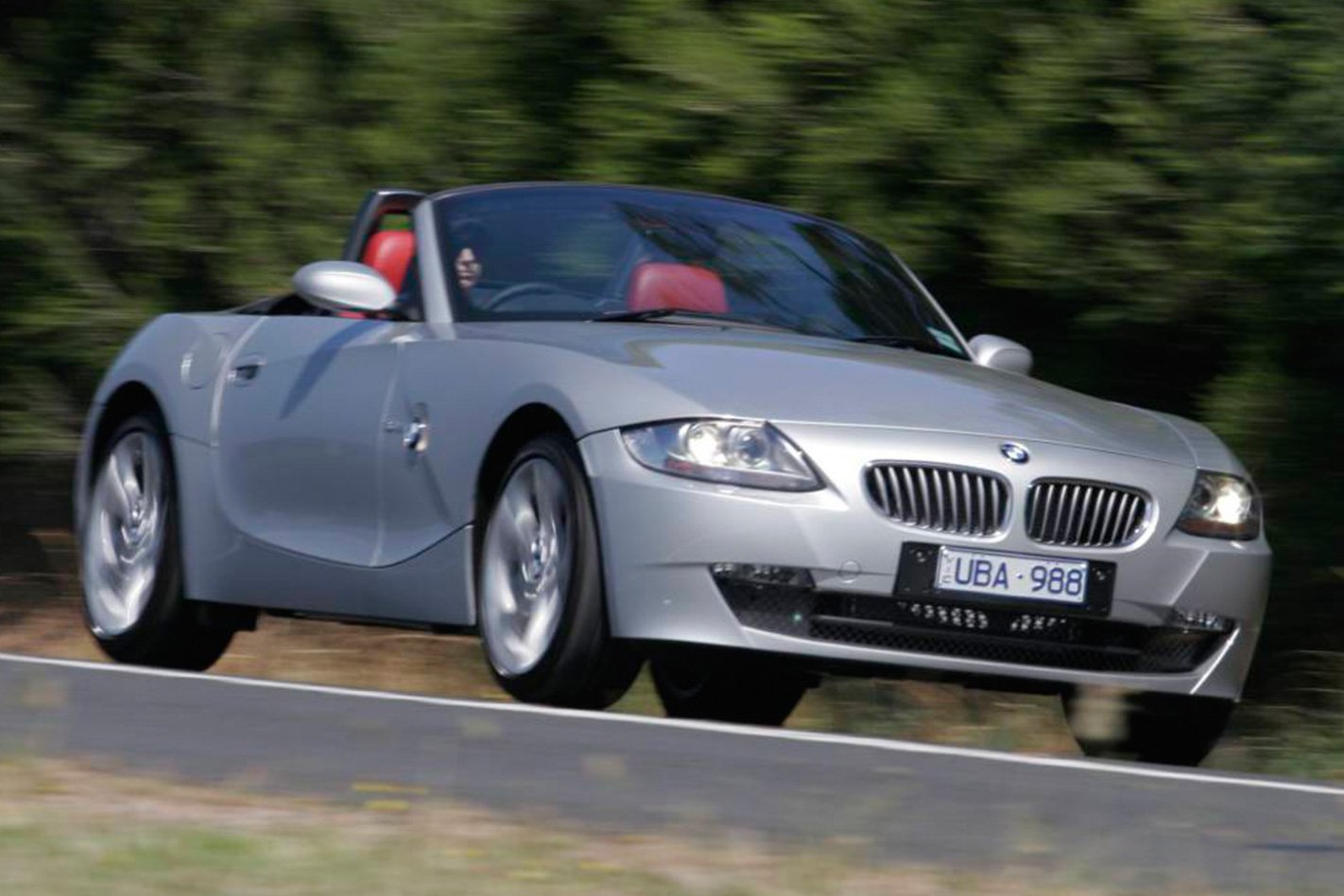
But when purchasing a used rear-drive drop-top, a relatively unloved and unlikely contender has arguably taken the title – from the era of Chris Bangle and made in the USA, enter the original BMW Z4.
Replacing the undercooked (albeit James Bond Goldeneye-cool) BMW Z3 roadster that was meant to challenge the original Porsche Boxster in the late 1990s, the Z4 made a far better fist of things. There are two models worthy of note, and both are now stellar value.
Likewise the NB-gen that followed, particularly in 2004 SE Turbo guise, stretches from $12,000 to $20,000 depending on the kilometre reading. These Japanese roadsters are as great to drive as they are easy to work on and endlessly reliable, but there’s a big ‘but’ here.
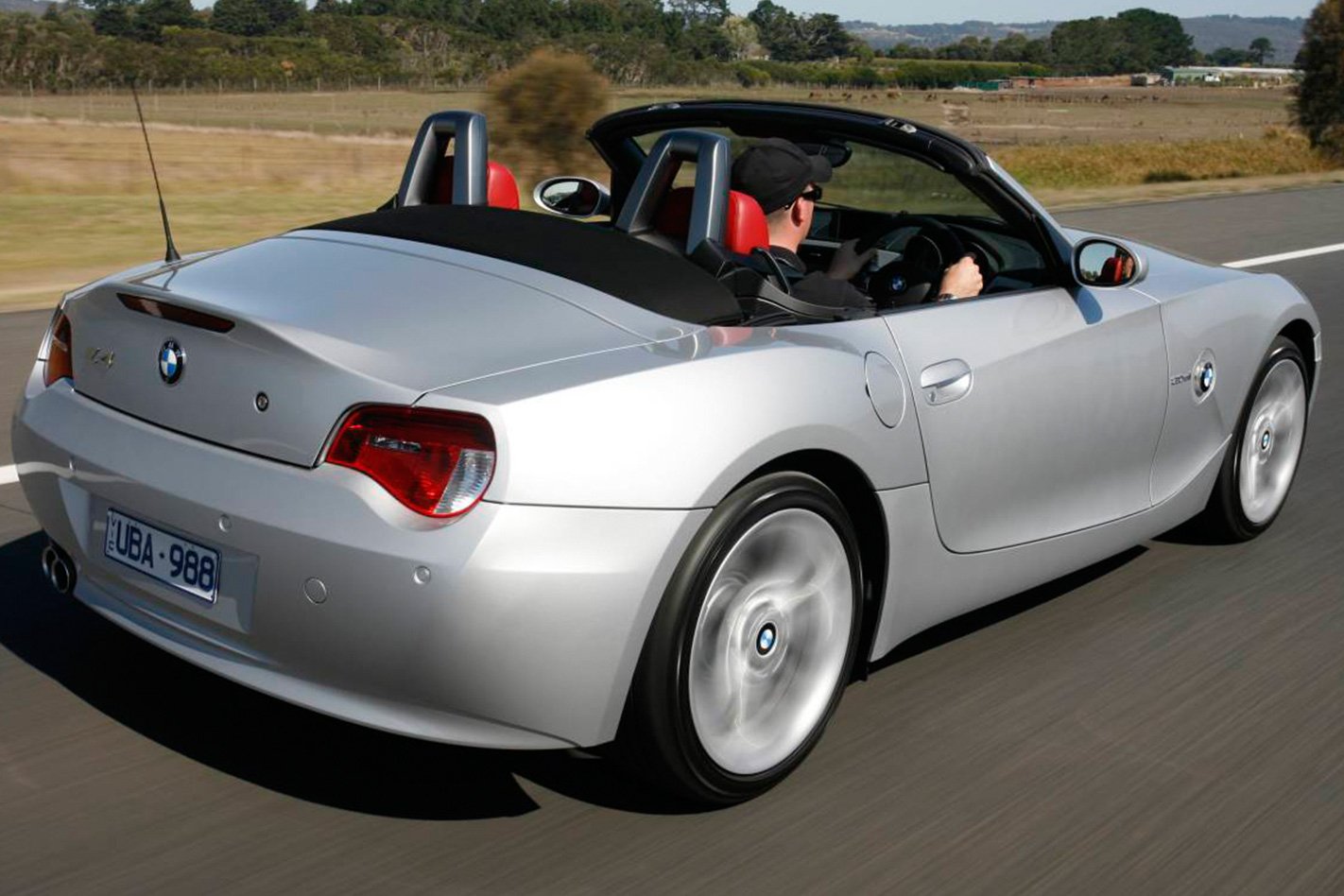
For under $15,000 a decade-old BMW Z4 3.0 roadster can be purchased with around 100,000km showing (or similar kays to the equivalent Mazda).
Compare this to the 126kW/206Nm 1.8-litre in an MX-5 SE Turbo.
BMW Z4 with a Dodge Viper V10 engine
Underpinned by an E46 3 Series chassis, it was no duffer in the handling department, either. That said, it lacked an LSD and this was round one of BMW’s foray into electric power steering, which wasn’t a high point of the car. No, the Z4 wasn’t quite Boxster-good – but it simply isn’t possible to buy the Porsche for this money on the used-car market.
There is a second contender for best-value roadster honours as well – the BMW Z4 M. For around $30,000 it makes an E46 M3 of the era seem pricey, and it could surely tempt some away from that petite new ND-gen MX-5 1.5-litre base model.
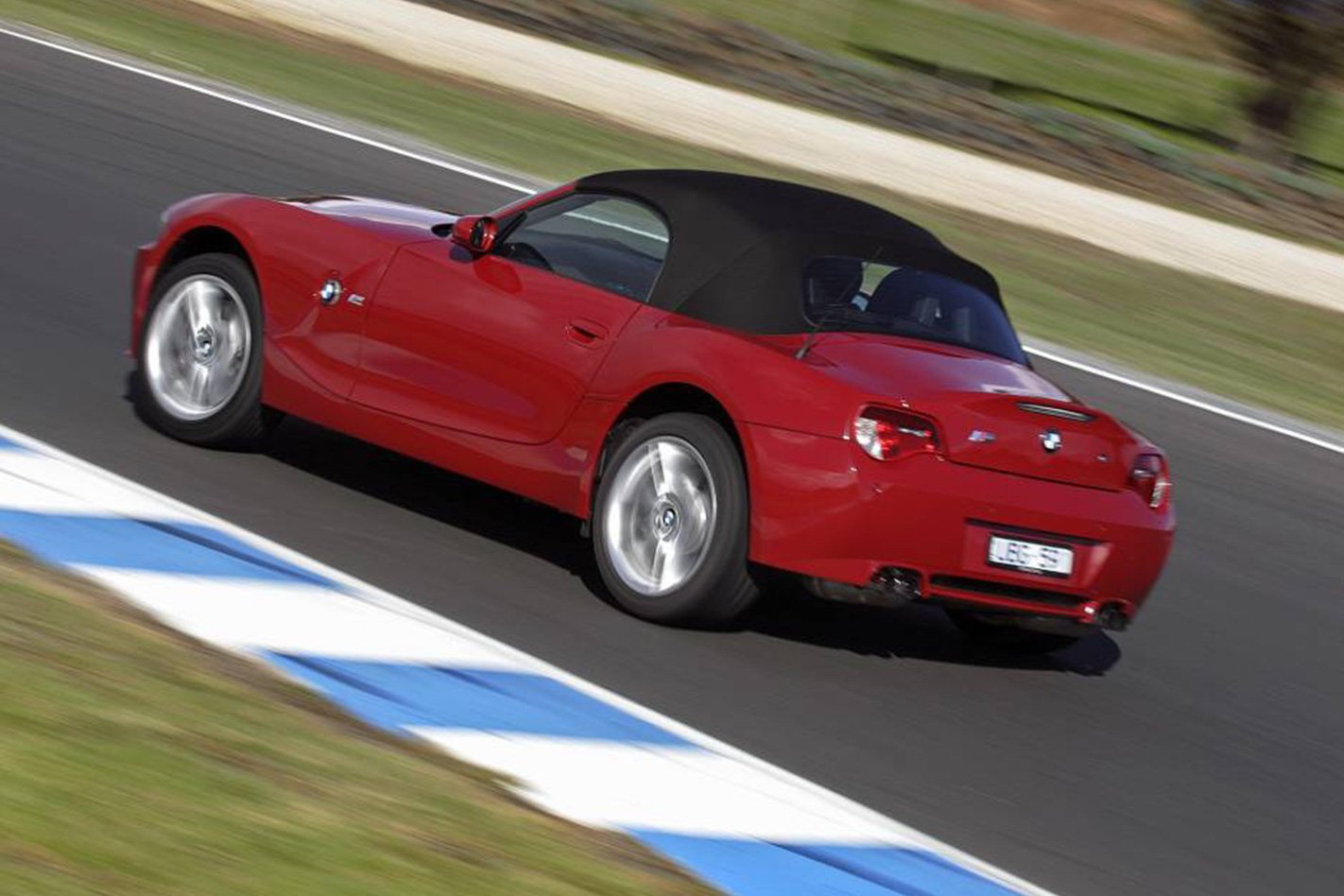
Hard-top versions of the Z4 M will of course ask more than the roadster, in the same way that (at least for now) a Cayman will ask more from your wallet than a Boxster equivalent.
Plus, just look at the long bonnet and epic dash-to-axle ratio of the first BMW Z4, with driver’s bum on the axle and short rear overhang, then tell us you’d rather a Mazda MX-5.
Don’t worry if you haven’t seen Baby Driver yet, I’m not going to spoil anything.
The video above is the first scene of the film, so don’t be afraid to hit the play button. In fact, it’ll make you want to see it even more.
In what is possibly the best driving sequence we’ve seen in recent years, the eponymous protagonist ‘Baby’ rocks out to ‘Bellbottoms’ by The Jon Spencer Blues Explosion while throwing a 2006 hawkeye Subaru WRX thorugh the streets of Atlanta.
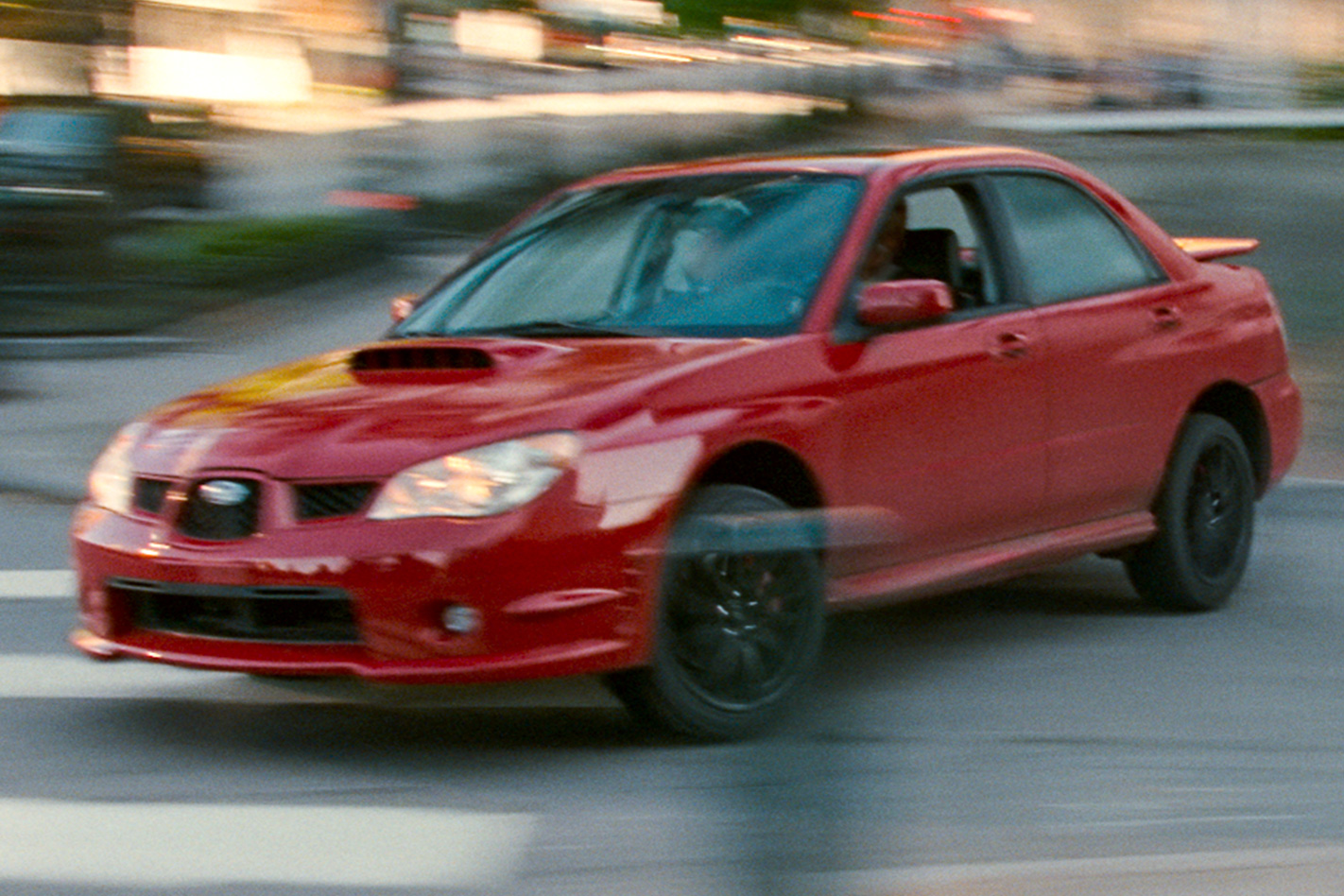
The stunt team were also under extra pressure from ‘Cornetto Trilogy’ director Edgar Wright (Shaun of the Dead, Hot Fuzz, and The World’s End) as each sequence in the film is timed to the beat of the soundtrack.
Crashes, gunshots, and even visual patterns are tied in with the music so closely that a single mis-step by drivers would mean an entire shot had to be re-taken.
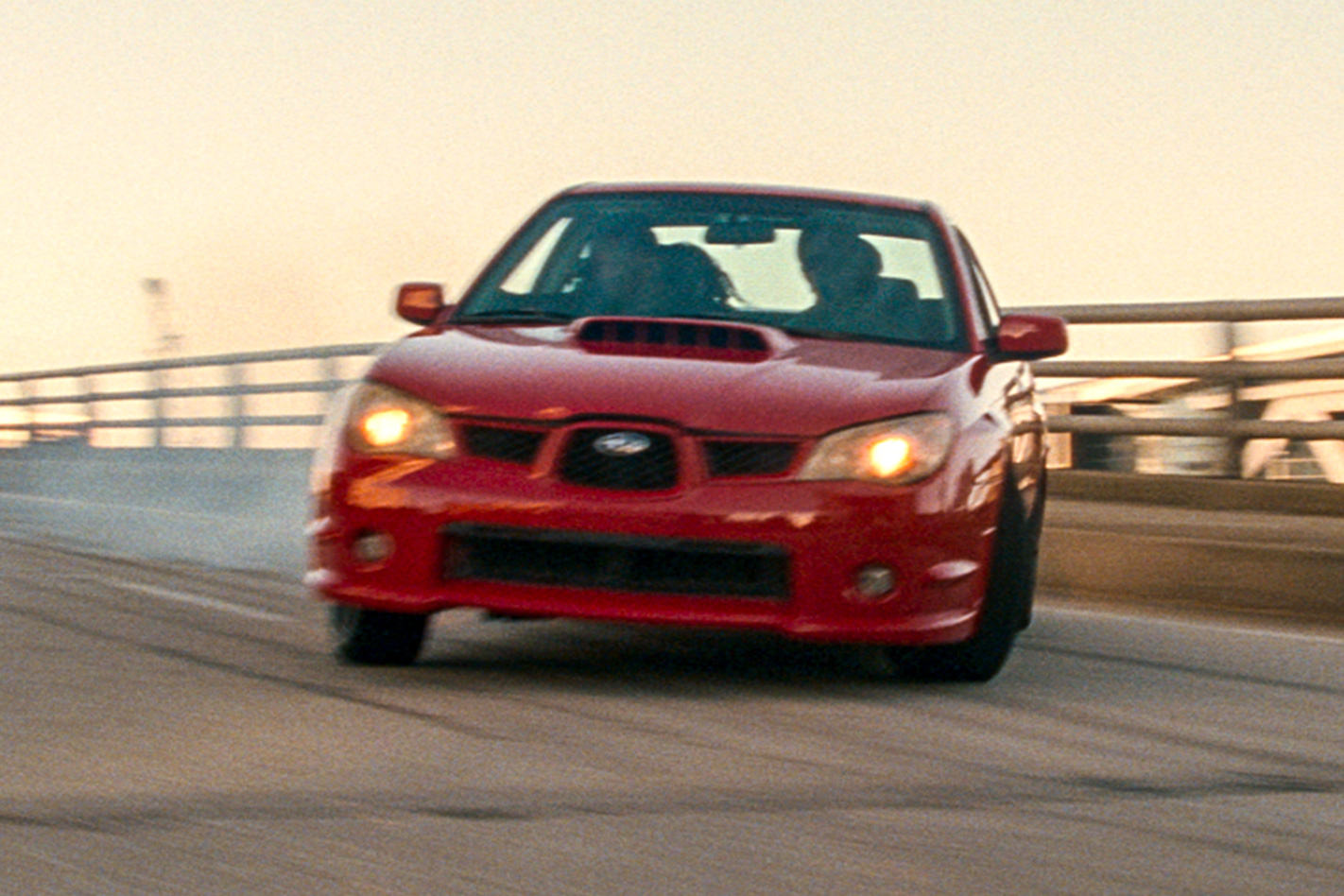
To get some of the scenes to play out the way Wright wanted, lead stunt driver Jeremy Fry had to take the wheel of a few different WRXs, one of which was rear-drive.
See if you can spot where it was featured most. The MOTOR team noticed a few slides that would have been a tad difficult for an AWD car to pull.
New Die Hard movie trashes 132 cars
We also found ourselves very much wanting to own a hawkeye WRX in red…
The idea of a getaway driver timing actions to music isn’t new to Wright. He directed a film clip for ‘Blue Song’ by British band Blue Royale in the early 2000s, with actors Noel Fielding and Nick Frost (Frost having gone on to star in all three ‘Cornetto’ films).
Wright, thankfully, still went on to use the idea for a feature-length film rather than binning it after the music video.
Holden has released details about a performance version of its all-new European-built Commodore, including confirmation it will wear a VXR badge, signalling the end of the SS.
As previously revealed, the Commodore VXR will use a 230kW/370Nm 3.6-litre naturally aspirated V6 engine and nine-speed transmission linked to an all-wheel-drive layout with a torque vectoring rear differential.
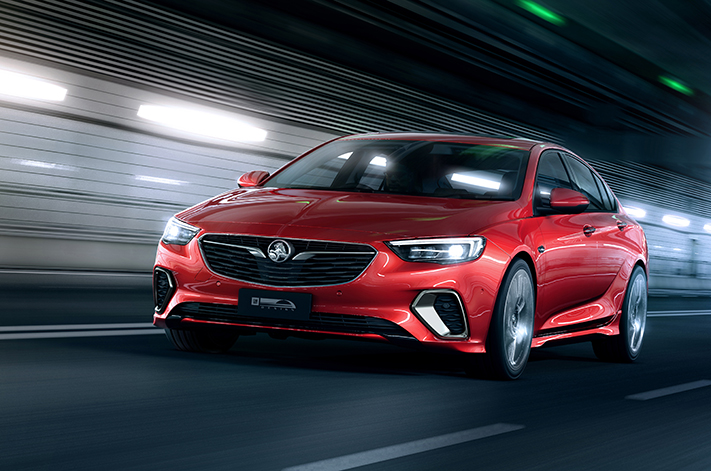
Performance and handling characteristics will be selectable via three driving modes, each adjusting the car’s steering, transmission, adaptive AWD, and the suspension’s Continuous Damping Control (CDC) system. Brembo front brakes will provide the bulk of the VXR’s stopping power.
The VXR’s athleticism will be highlighted by sporty front and rear styling, a rear lip spoiler, 20-inch alloy wheels and VXR sports performance heated and ventilated front seats.
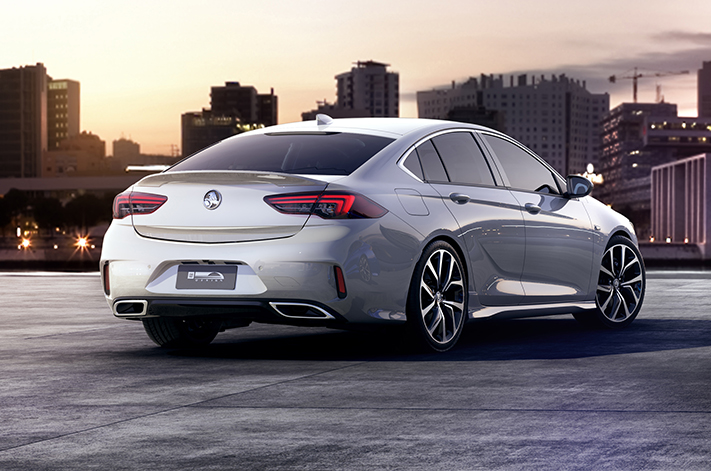
Its brawn will be matched by smarts with advanced driver assistance technology including automatic emergency braking with pedestrian protection, lane keeping assist, blind-spot alert and rear-cross traffic alert.
It will also feature adaptive LED Matrix headlights, a head-up display and 360-degree camera.
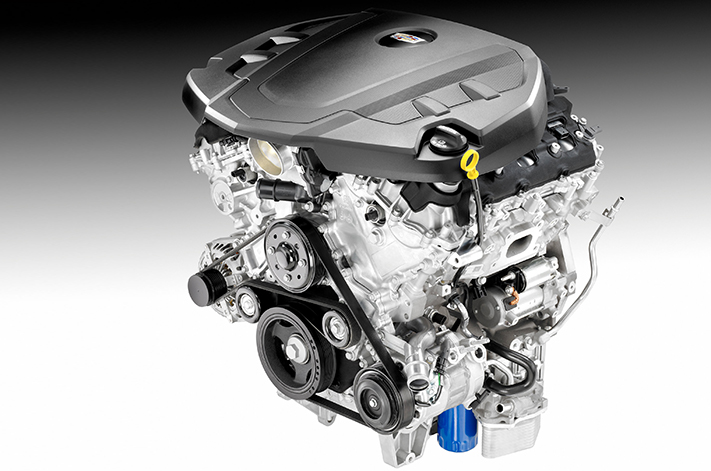
VXR badging for the new model consigns to history Holden’s SS badge that has featured on Commodores since 1982 having first appeared on the HQ 10 years earlier. Despite a couple of exceptions, the SS badge was the domain of V8 Commodores, hence the shift to the VXR badge.
Holden’s Lead Dynamics Engineer, Rob Trubiani says the European-built VXR will be a “worthy successor” to the iconic Aussie-built SS models despite the obvious differences.
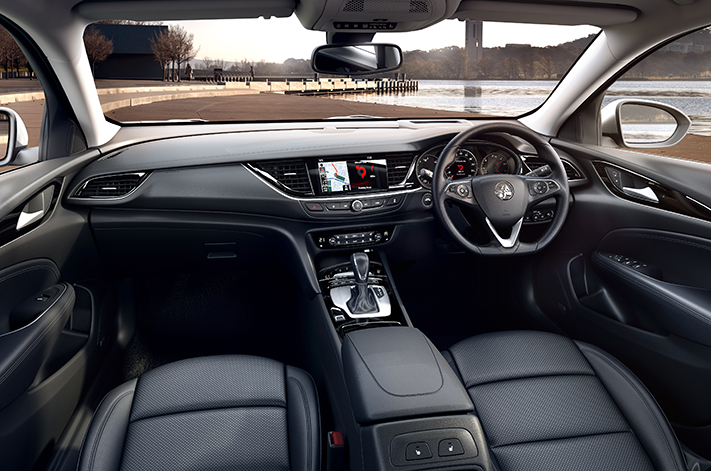
“We’ve been involved in the development of this car from the beginning and I personally have spent significant time behind the wheel overseas and at Holden’s Lang Lang proving ground.”
The 2018 Commodore VXR will be on sale alongside the rest of the next-generation range in early 2018.
IT’S official: the much maligned Halo driver protection device will be fitted to Formula 1 cars from 2018, a move that has motorsport fans up in arms.
And they aren’t alone. F1 teams and drivers have campaigned against the Halo’s introduction, with nine out of the sport’s ten teams voting against it at the most recent F1 Strategy Group meeting on Wednesday.
But the FIA – the world’s motorsport governing body that is headed up by former Ferrari team boss Jean Todt – is pushing ahead, beginning the process for its implementation from next year.
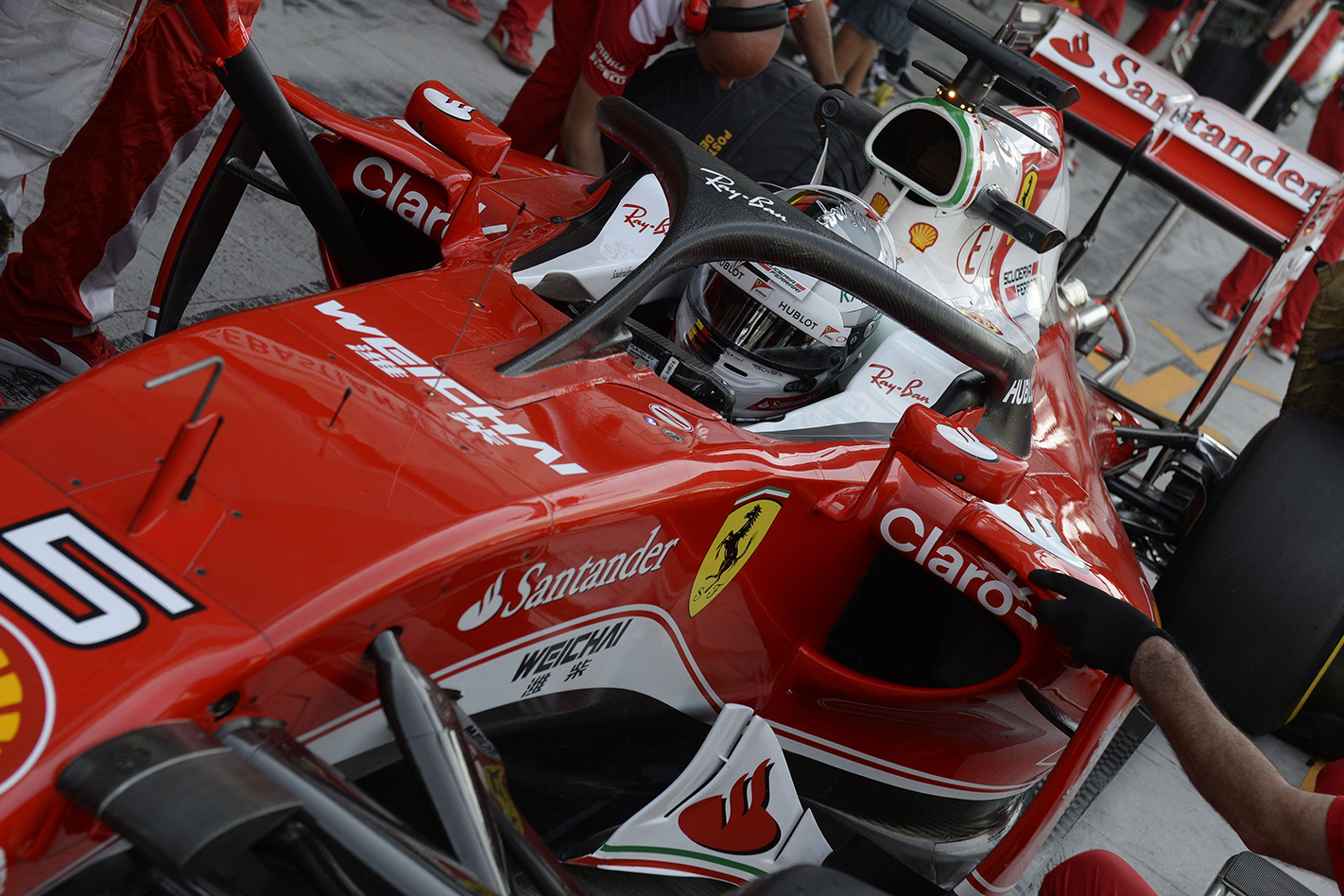
Every team in F1 has completed tests using the Halo which was first introduced in 2015, and the FIA has conducted extensive testing of its own.
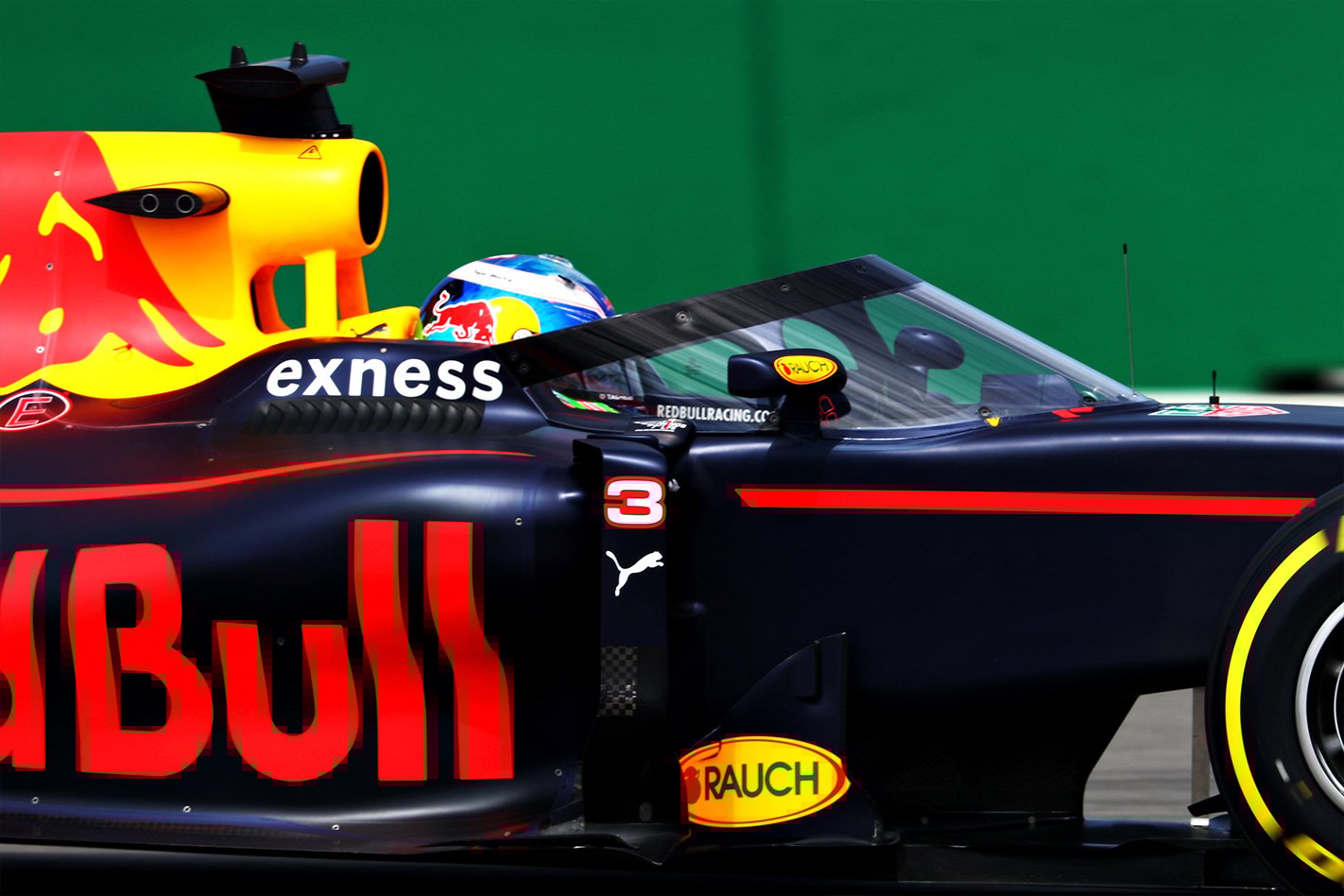
The negative reaction from teams and the public has seen several alternatives to the Halo also being trialled, with the most recent concept having its debut at last weekend’s British grand prix.
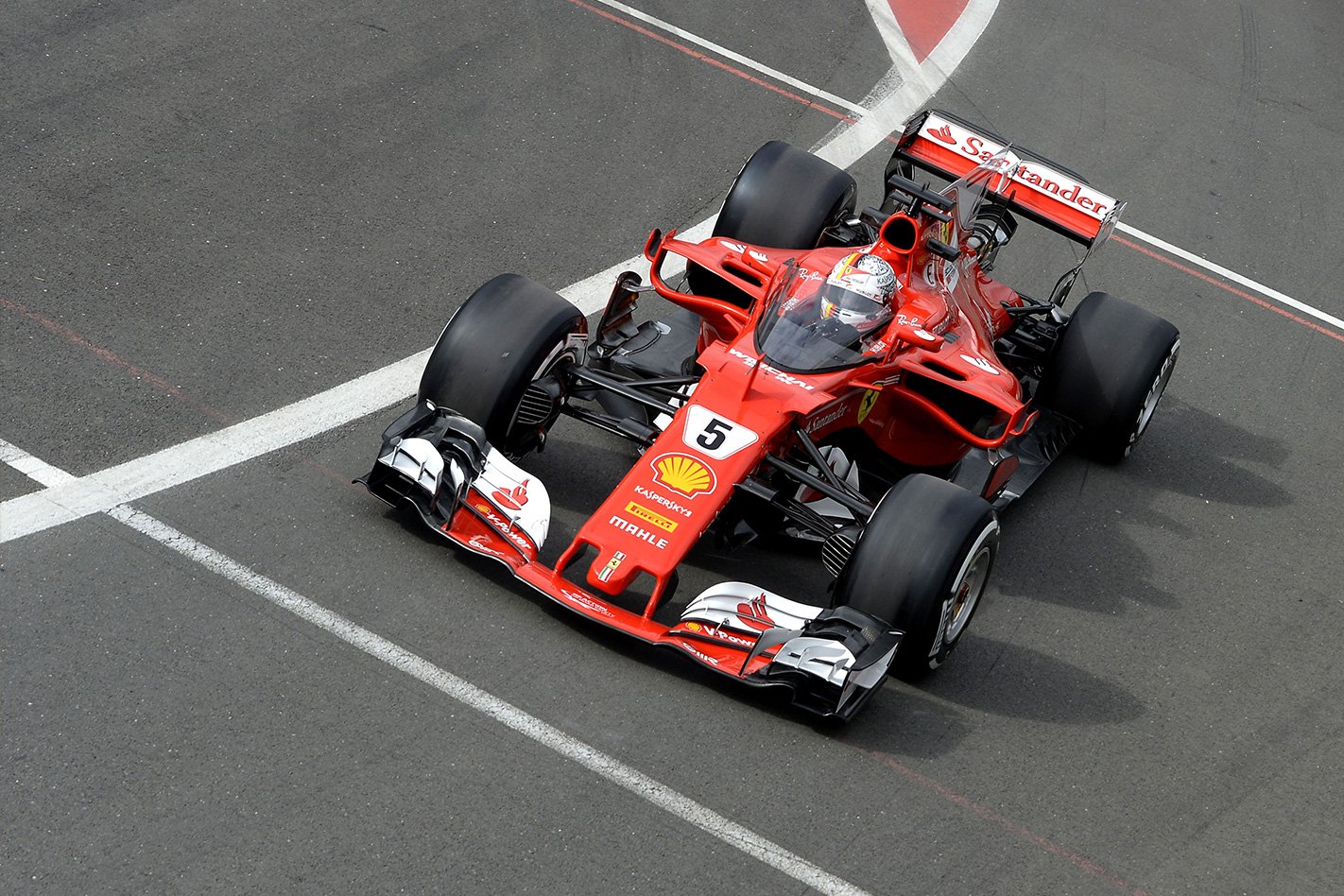
Red Bull last year completed installation laps with a similar design called the Aero Screen, with Team Principal Christian Horner preferring it to the Halo.
So why, despite all the resistance and outcry, has the FIA opted to push forward with the Halo?
The death of Jules Bianchi in 2015, resulting from a head injury sustained in a crash at the Japanese grand prix in 2014, accelerated the move. Bianchi’s death was the first in F1 since Ayrton Senna in 1994.
Other high-profile head injuries have ensured improved driver head protection has been an increasing priority in all open-wheel disciplines, not just Formula 1.
In 2009 Felipe Massa was stuck in the head by a stray spring, suffering a serious head injury that put the Brazilian driver in hospital, and he missed several races that year.
IndyCar driver Justin Wilson was another recent fatality after he was struck in the head by a piece of debris during a 2015 race.
Debate still rages around whether or not the Halo, or another head-protection device, could have prevented or minimised the injuries that occurred in these incidents.
For an understanding of the kind of impact the Halo is designed to withstand, and the sheer violence of such impacts on a driver’s head, watch the below video from the FIA’s research on the topic:
Interestingly, despite the FIA’s official ruling, the Halo has one final hurdle to clear before becoming mandated. The World Motorsport Council must now vote to ratify the implementation, though motorsport fans shouldn’t expect the move to be overturned.
And nor should they hope for it. While it might be cumbersome and aesthetically challenging, if the Halo can prevent just one fatality it will instantly prove its worth.
It appears closed cockpits in open-wheel racing are inevitable. It’s just a shame it has to be so damn ugly.
Holden’s 475kW twin-turbo V6 Supercar engine is upon us.
Though it won’t be locked in as the engine of choice until 2019, Red Bull Holden Racing is planning on introducing it early as a wildcard entry to the 2018 season.
But first, they have to make sure it works properly. Enter Lowndes and the Triple Eight Holden Sandman.
It’s the first time we’ve had a proper listen to the new donk, and we’re actually impressed.
First impressions are that the thing sounds like engineers had a go at making it sound as much like the original cars without trying to ‘mimic’ the unbeatable sound of a V8.
There’s barely any turbo sound, which is probably going to be a disappointment to the few who were keen for whistles and whines.
For comparison, here’s some of Scott McLaughlin’s recent onboard footage. The V8 rumble is unmistakeable.
Of the recent V6 testing, Red Bull Holden’s boss Roland Dane says an incredible amount of work had already been done before the engine even made it to Australia.
“A huge amount of work has been done already, both at GM Racing in Pontiac, Michigan and also here in Queensland,” Dane says.
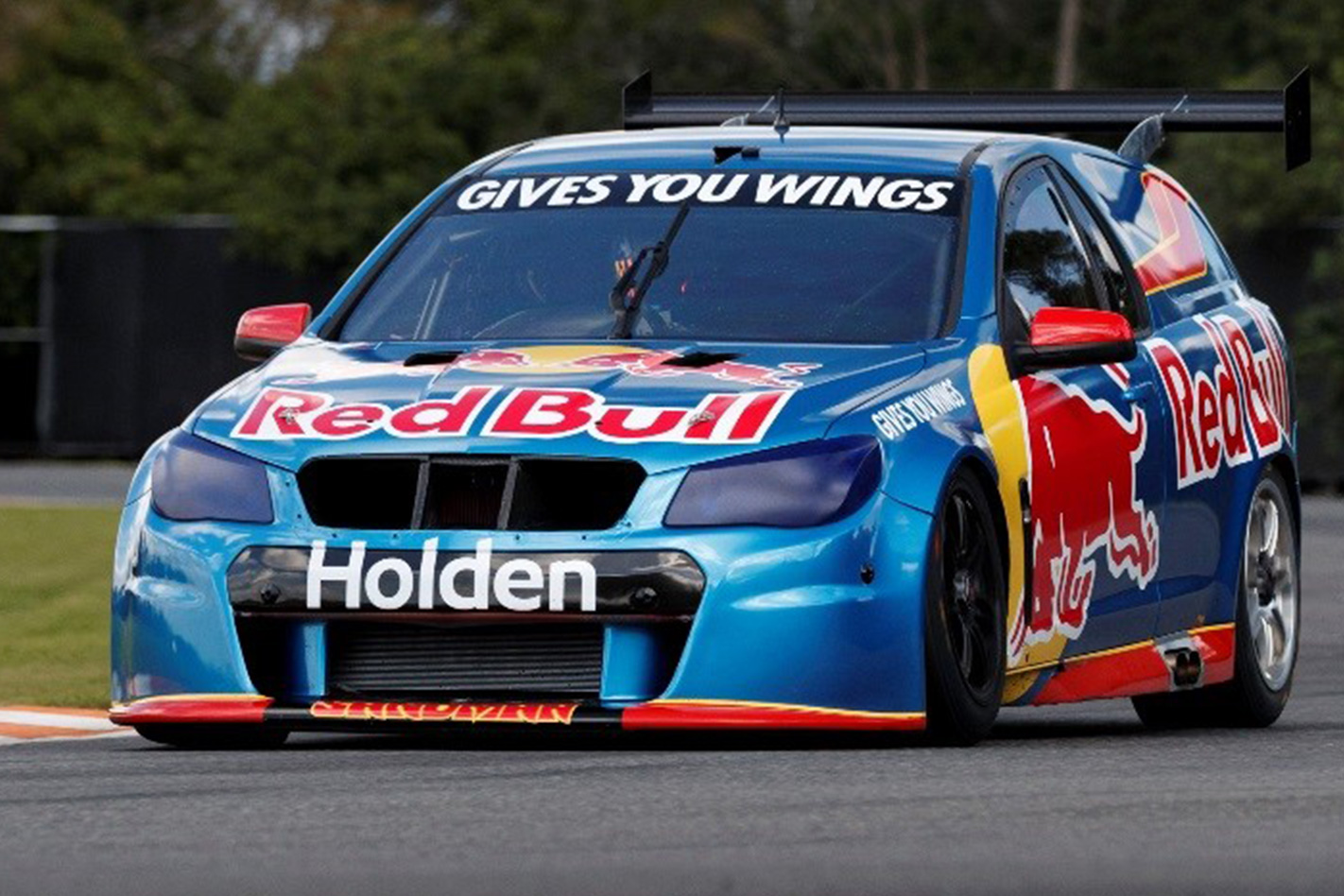
“There aren’t any advantages or disadvantages to running the engine in the Sandman for what we’re doing at the moment.
“It’s about getting kilometres on the engine and understanding what it needs at this point to prepare it for racing in Supercars.”
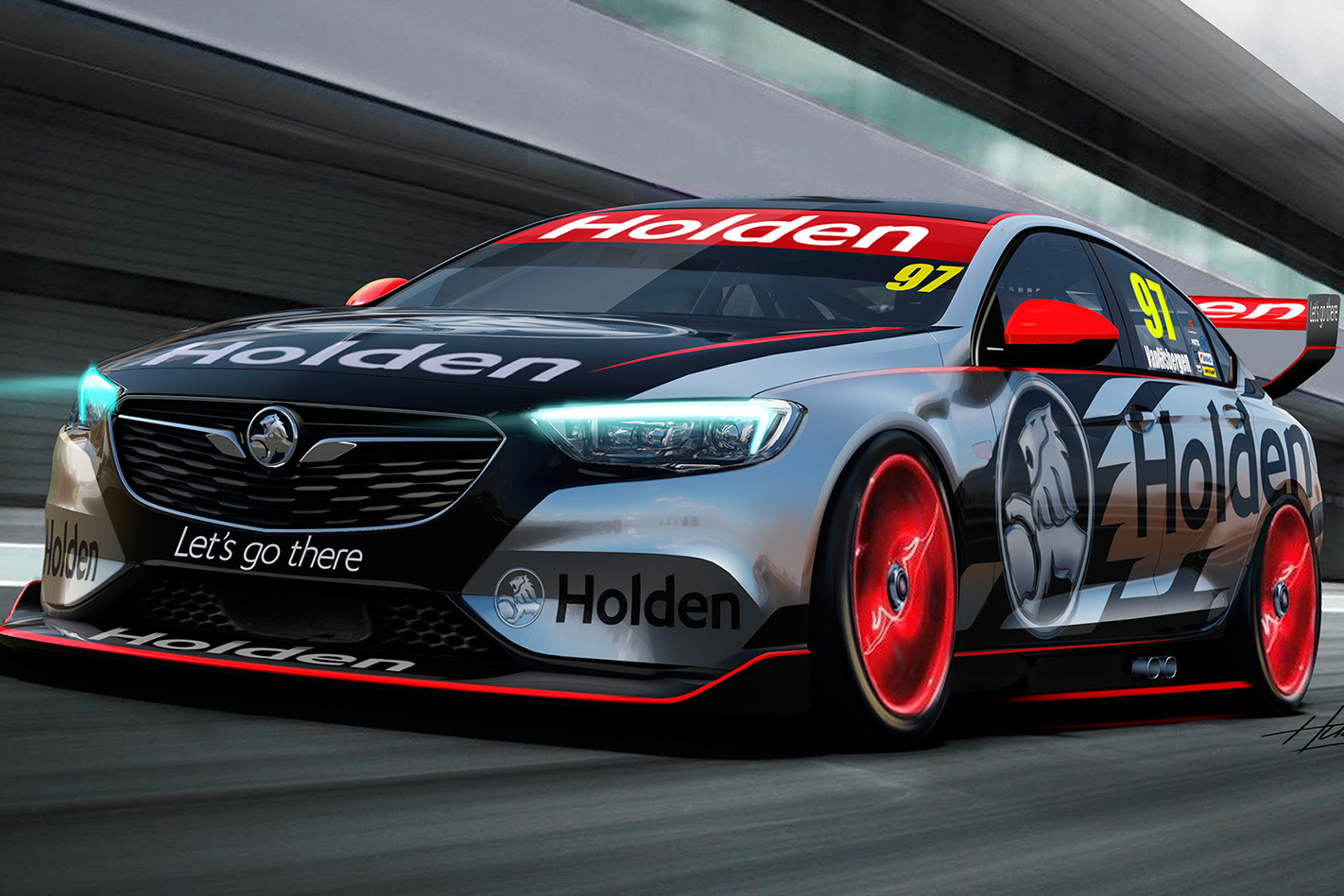
Here is your first look at the range-topping next-generation Holden Commodore VXR.
As expected, Holden will retire its iconic SS nameplate with its V8 models, instead adopting Vauxhall’s global VXR branding introduced locally with the likes of the Insignia and Astra. Under the bonnet will be a 3.6-litre naturally-aspirated V6 producing 235kW/381Nm, outputs slightly higher than the 230kW/370Nm released by Holden in late-2016. A nine-speed automatic will be the only available transmission and the 0-100km/h sprint is expected to take around six seconds.
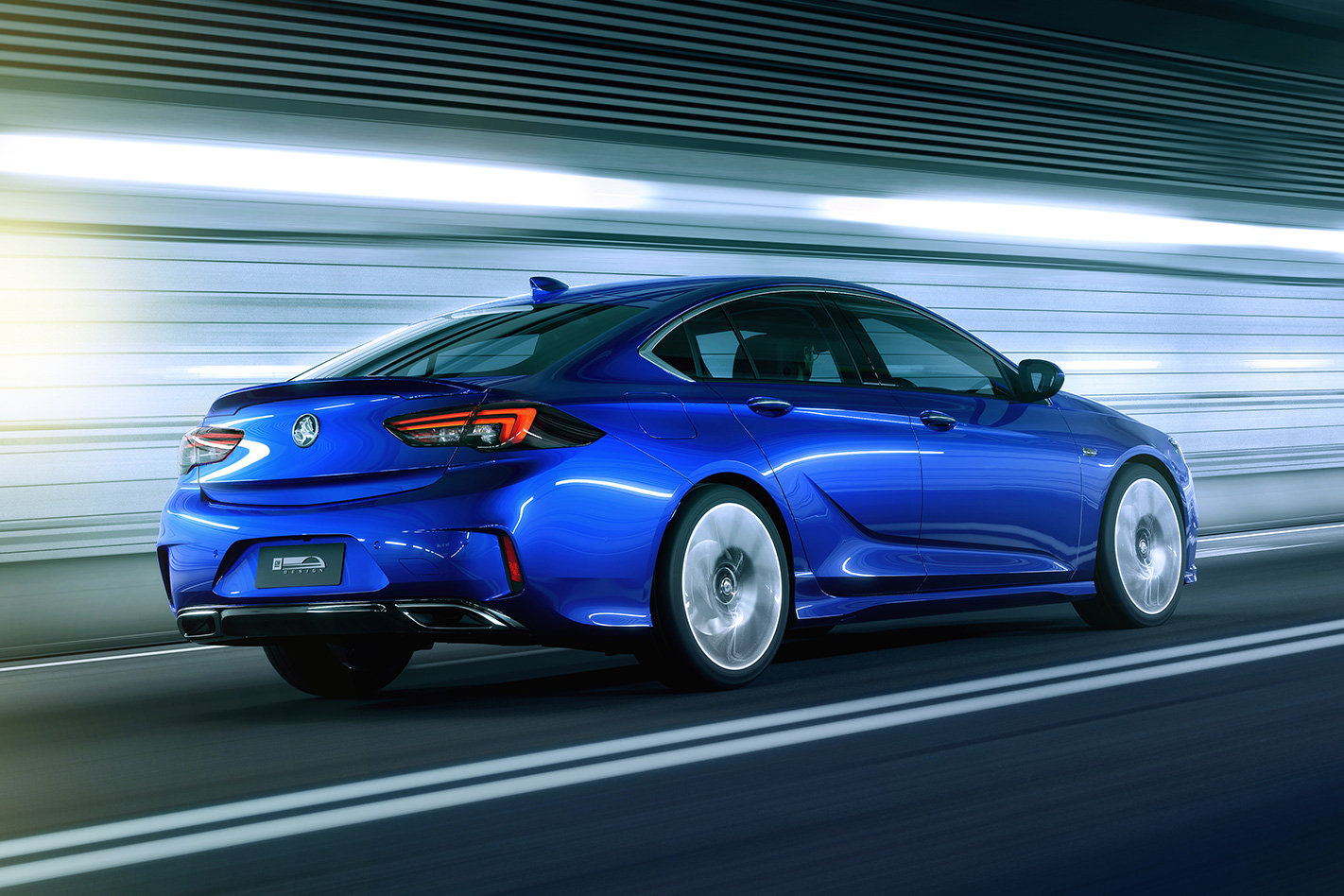
According to Holden’s dynamics guru, Rob Trubiani: “The next-gen Commodore VXR offers a different execution of performance to the outgoing SS but make no mistake, this is more than a worthy successor.”
Rounding out the VXR mechanical package are adaptive dampers, Brembo front brakes and 20-inch wheels. Drivers will be able to select from three driving modes which will adjust the steering weight, suspension stiffness and response of the all-wheel drive system.
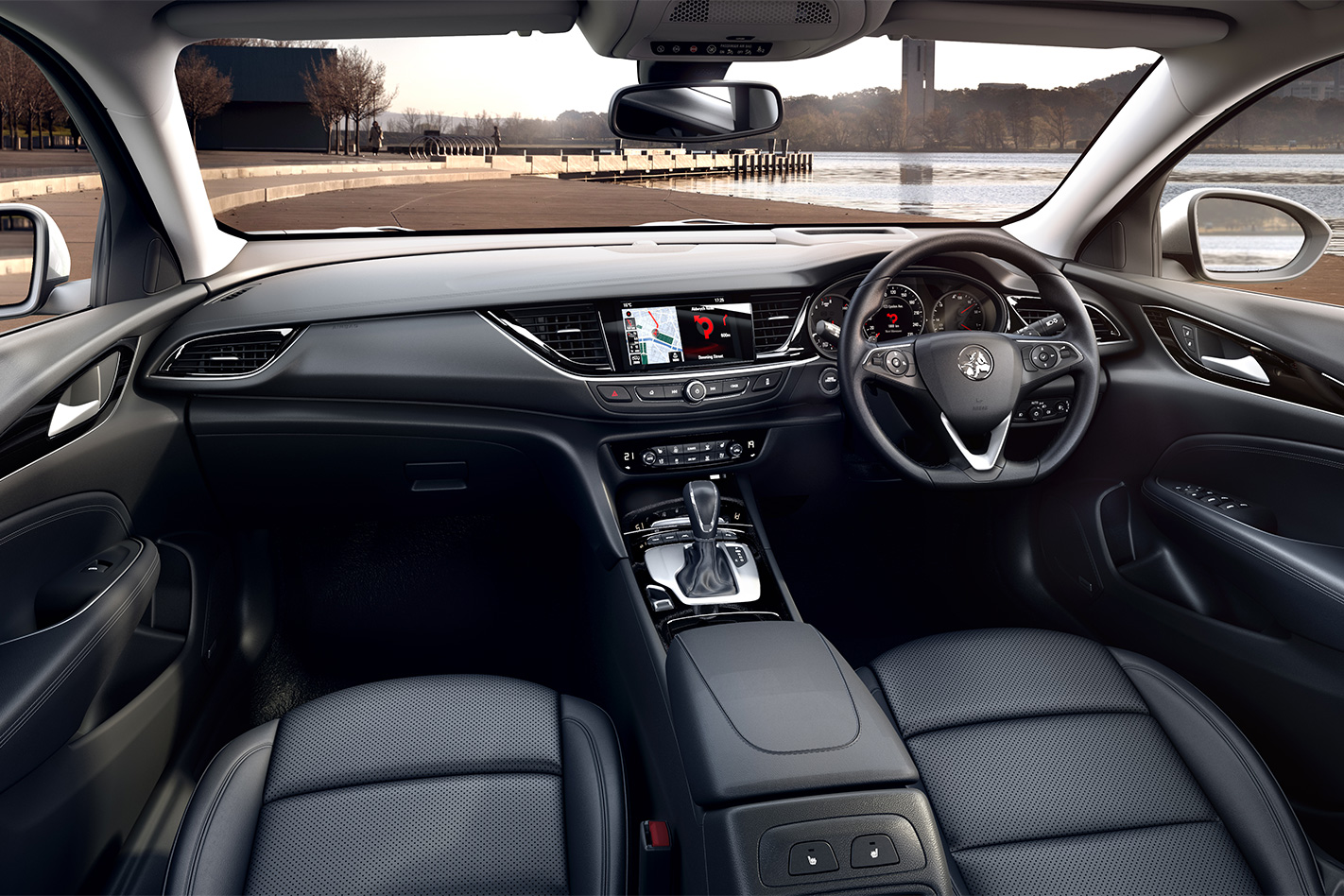
The new Commodore will also include a full suite of active safety equipment, including a 360-degree camera, autonomous emergency braking, adaptive cruise control, lane keep assist and a head-up display.
The VXR will launch alongside the rest of the 2018 Holden Commodore range in early 2018 and we’ll have pricing information closer to that date.
WHEELS sneaks an early preview of the Mercedes-Benz one-tonne ute line-up ahead of its April 2018 arrival in Australia.
WHAT IS IT
The X-Class is Mercedes Benz’s first entry into the booming one-tonne ute segment. It is a body on chassis, double-cab ute that shares much of its underpinnings and some driveline components, including the four-cylinder engines, with Nissan’s Navara ute. At the top of the range will be a class-leading diesel V6 variant offering 190kW of power, 550NM of torque and full-time four-wheel drive.
The Mercedes-Benz X-Class will be diesel fuel, 4×4, double-cab only.
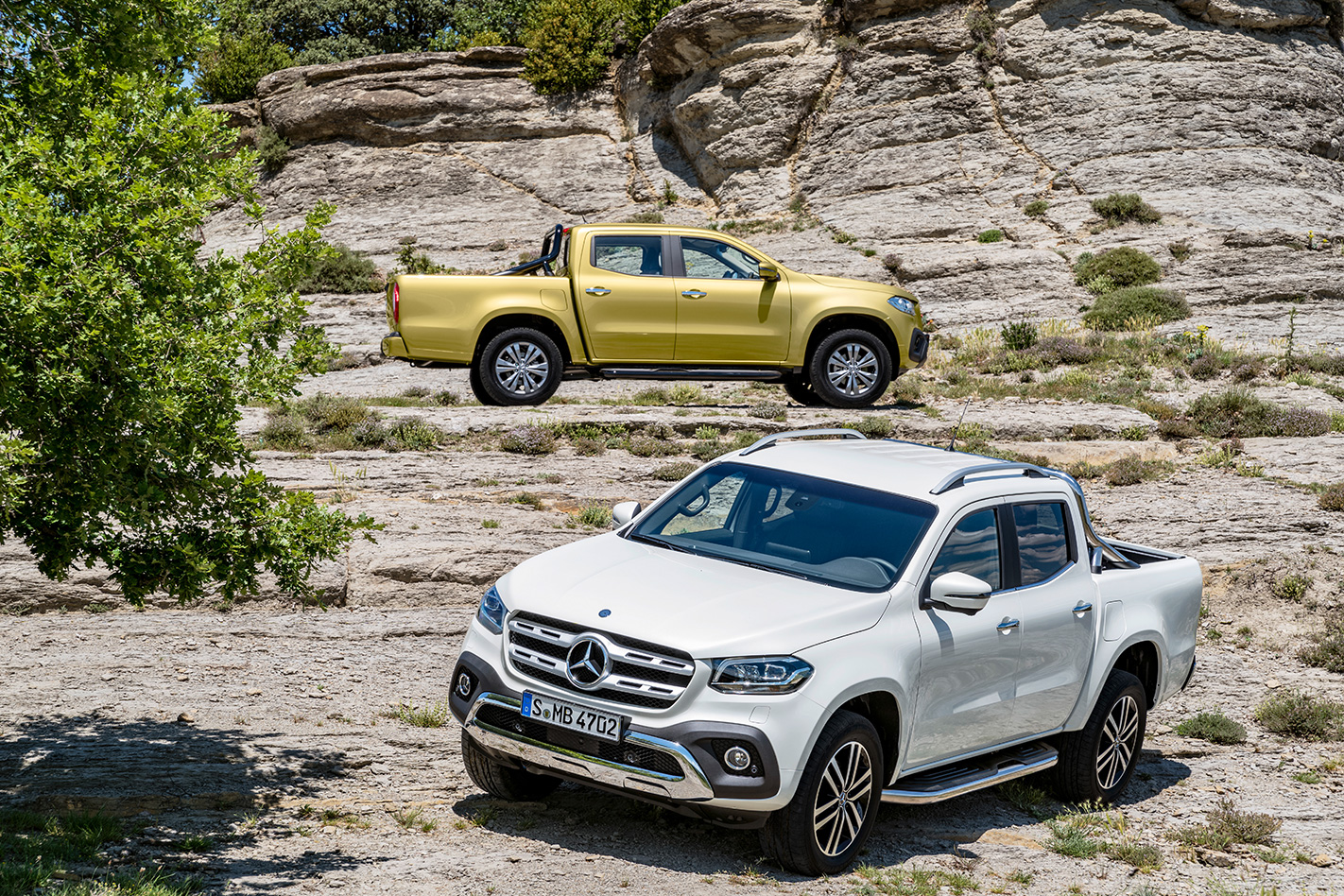
We’re not. Mercedes Benz has taken us to Cape Town, South Africa, the home of the ‘Bakkie’, to give us a first look at the production ready vehicle and a brief ride along.
The four-cylinder X-Class will be launched in Australia in April 2018 with the V6 following around mid-year. When it lands it will offer class-leading levels of refinement, safety, equipment and performance to what was once a truck-based vehicle segment.
MAIN RIVALS
Up-spec versions of the sales-leading Ford Ranger and Toyota Hilux double cabs are already tipping $65K and the only other full-time 4×4 V6 powered ute in the segment, the Volkswagen Amarok V6, can cost upwards of $70K.
With 4×4 utes being one of the fastest growing segments in the market, it is these range-topping models that Mercedes-Benz will be targeting with the X-Class. Lower spec variants using the Nissan/Renault four-cylinder engine and part-time 4×4 will compete with the models above, as well as Holden Colorado, Mitsubishi Triton, Isuzu D-Max, Nissan Navara and Mazda BT-50 utes.
There’s no word on official pricing as yet but Benz will have to be sharp to compete with the many established players. Only the upper spec V6’s will be able to command a premium price.
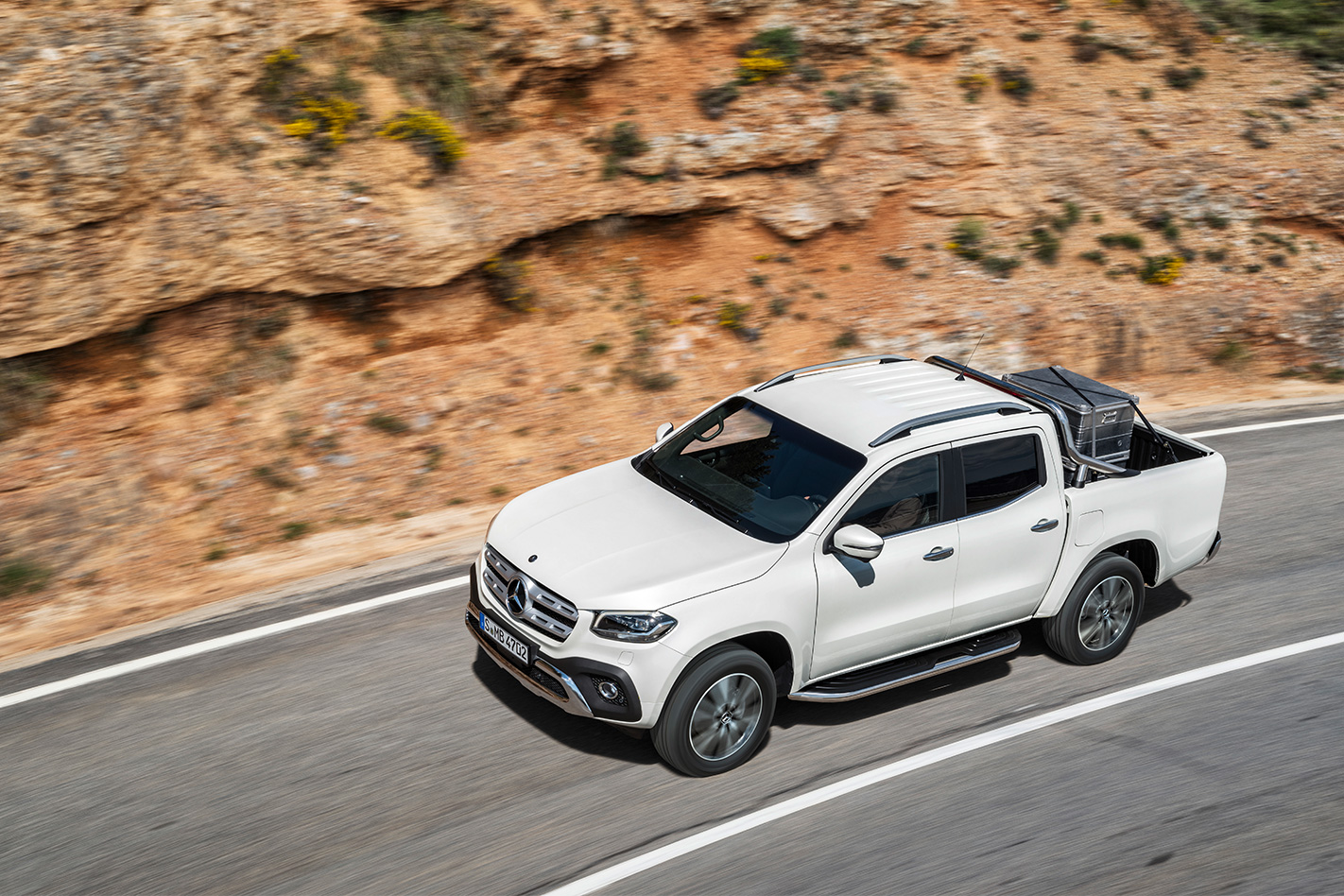
MERCEDES-BENZ has seen the rapid growth in mid-size pick-up sales globally and doesn’t see the skyrocket changing trajectory any time soon. It is predicting growth of 43-percent over the next decade to be running at around 3.2-million units worldwide in 2026. As such Benz can’t get its own entry into the segment to market quickly enough.
To massively cut the development time and cost of an all-new model, Benz partnered with Renault/Nissan to share the platform and engines from its well established Navara.
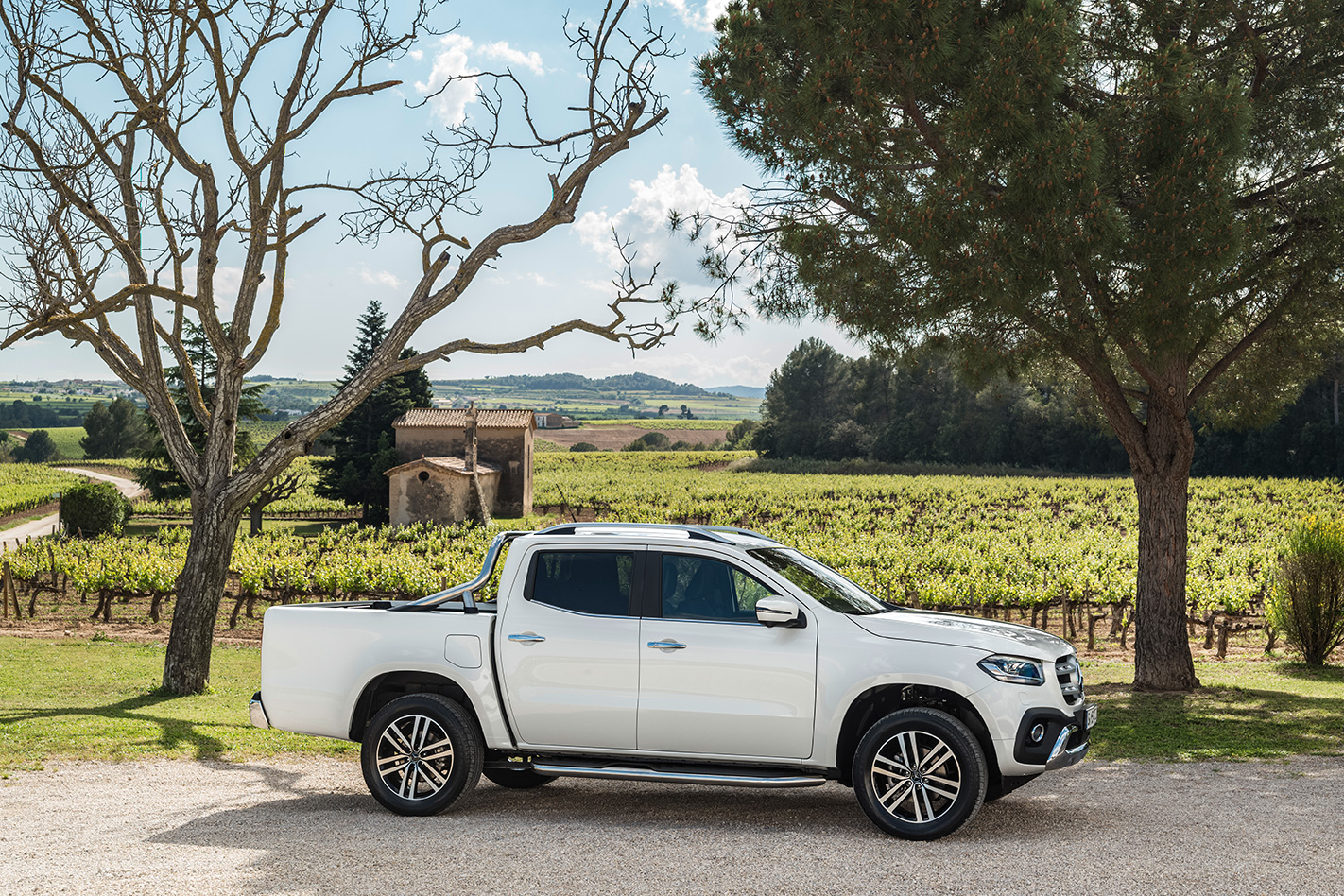
The X-Class will be available in three levels of specification – Pure is for the tradies and farmer’s markets, and will be distinguishable by its unpainted bumpers, non-carpeted floors and steel wheels; Progressive adds extras like body-coloured bumpers, alloy wheels and upper spec interior trims; while Power is the top tier for those who want authentic Mercedes-Benz passenger car levels of features and performance.
Three engine specifications will be offered, these include the two Renault-sourced four-cylinders and the Mercedes-Benz V6. The entry level X220d makes 120kW/403Nm from its single turbo 2.3-litre diesel engine while the X250d makes 140kW/450Nm from its twin-turbo version of the same engine. Both four-cylinder engines can be had with either a six-speed manual or seven-speed auto transmission and as is conventional for the segment, part-time four-wheel drive.

The ladder chassis used under X-Class is derived from the Navara platform and includes the unique to class, five-link coil spring rear suspension. The X-Class will only be offered with rear coils while Nissan still offers the option of leaf springs at the rear in Navara for towing and load carrying.
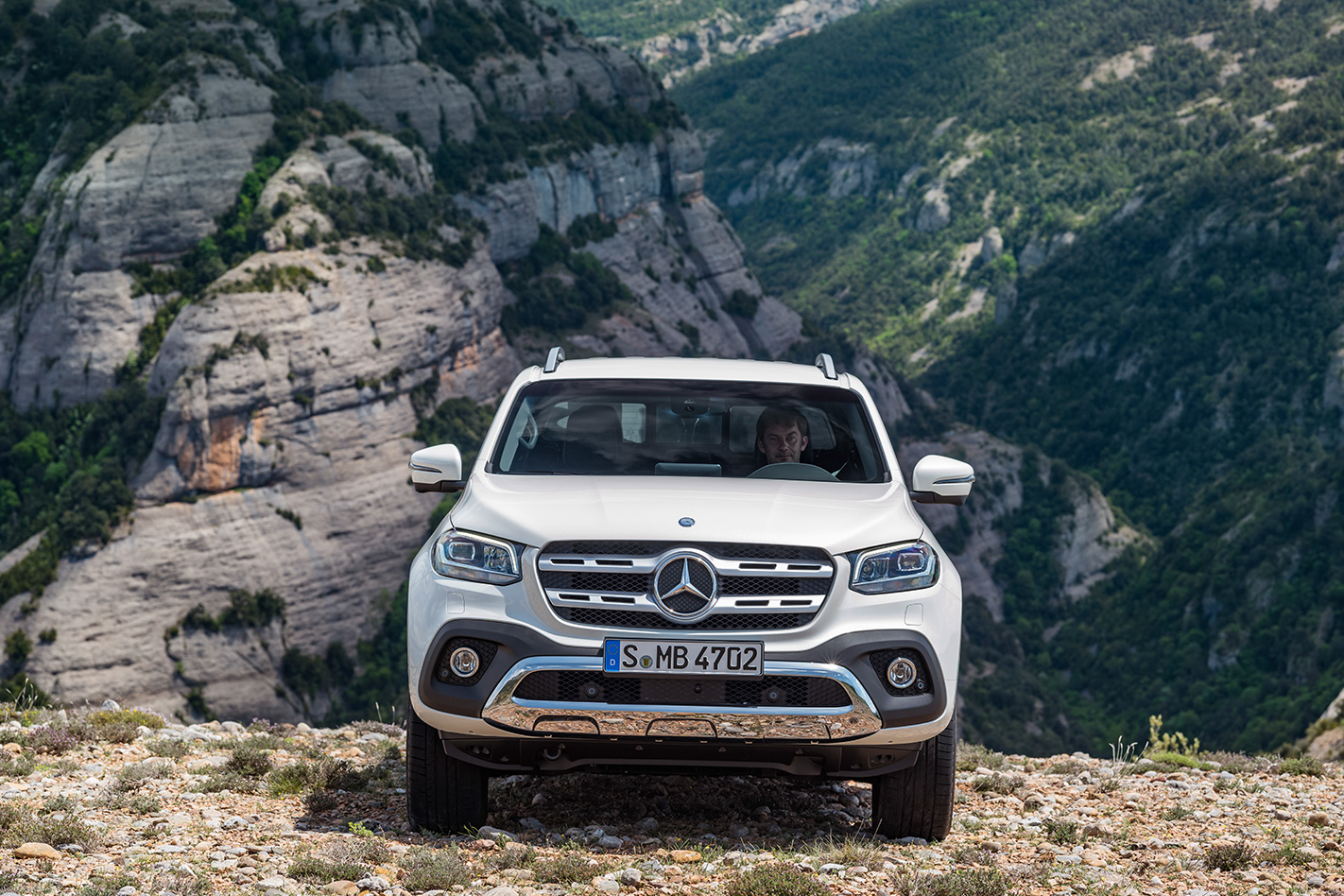
Safety is enhanced with the X-Class employing pre-collision assist, lane keeping assist, trailer sway control, stability control and seven cabin airbags to protect occupants. LED headlights, another first for utes, offer excellent night time visibility.
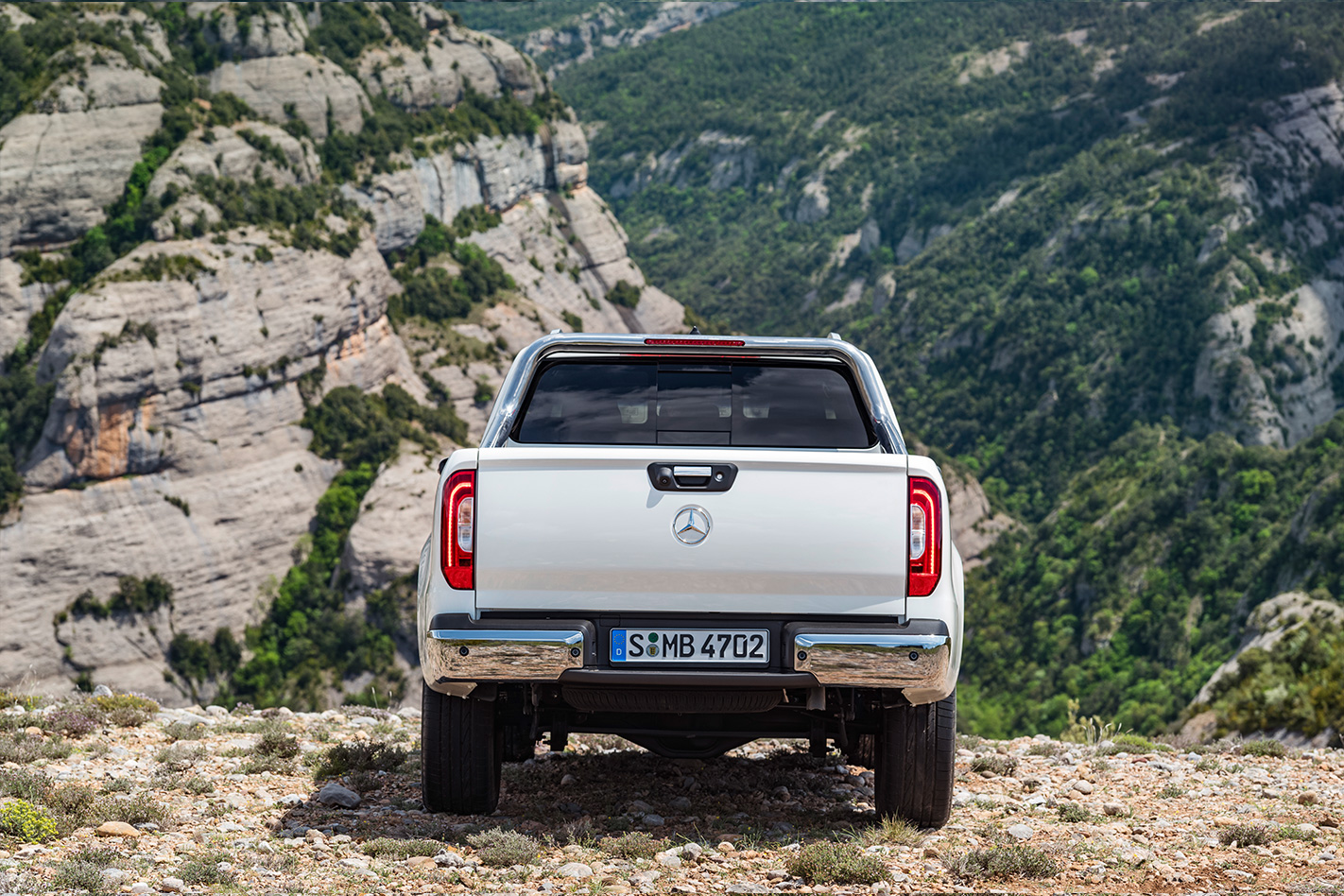
Many of the interior components have been adapted from the Mercedes-Benz C-Class passenger car and V-Class van and integrated into the adopted bodyshell, and you can see where compromises have had to be made. For example, the HVAC controls sit very low in the centre stack while there’s a plain of vacant space above them that would have been a much more practical location. In fact the whole dashboard looks a bit mish-mashed. Likewise, the steering column lacks reach adjustment, a carry-over from the Nissan donor.
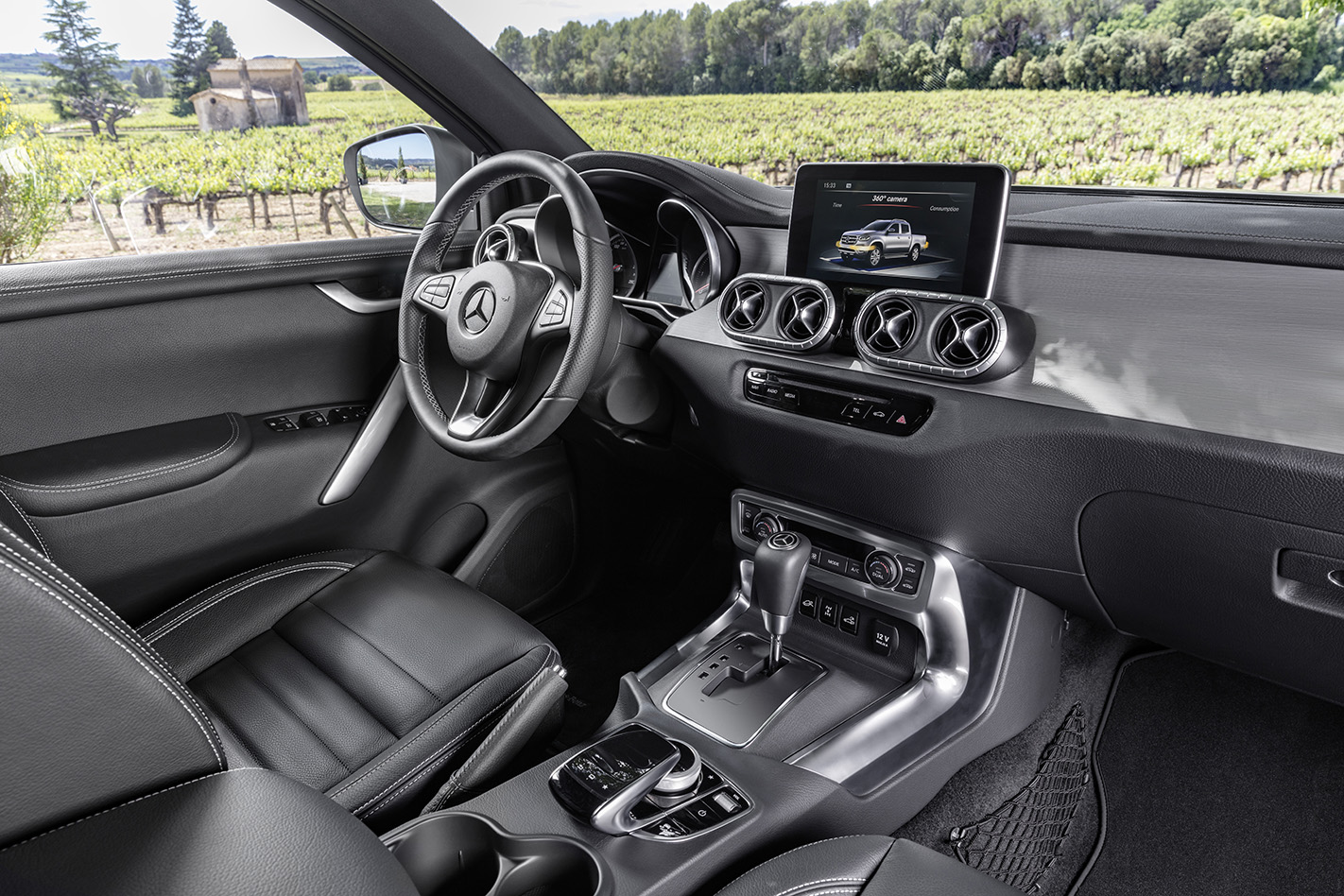
We did have a chance for a short ride in an X250d Power on a closed track with both on and off road sections, and the test driver didn’t hold back. Obvious straight away was the composed nature of the suspension as we powered through high speed curves at a rate you wouldn’t think possible in a work ute without much tyre squealing. It did this while remaining comfortable and compliant over the rough sections.
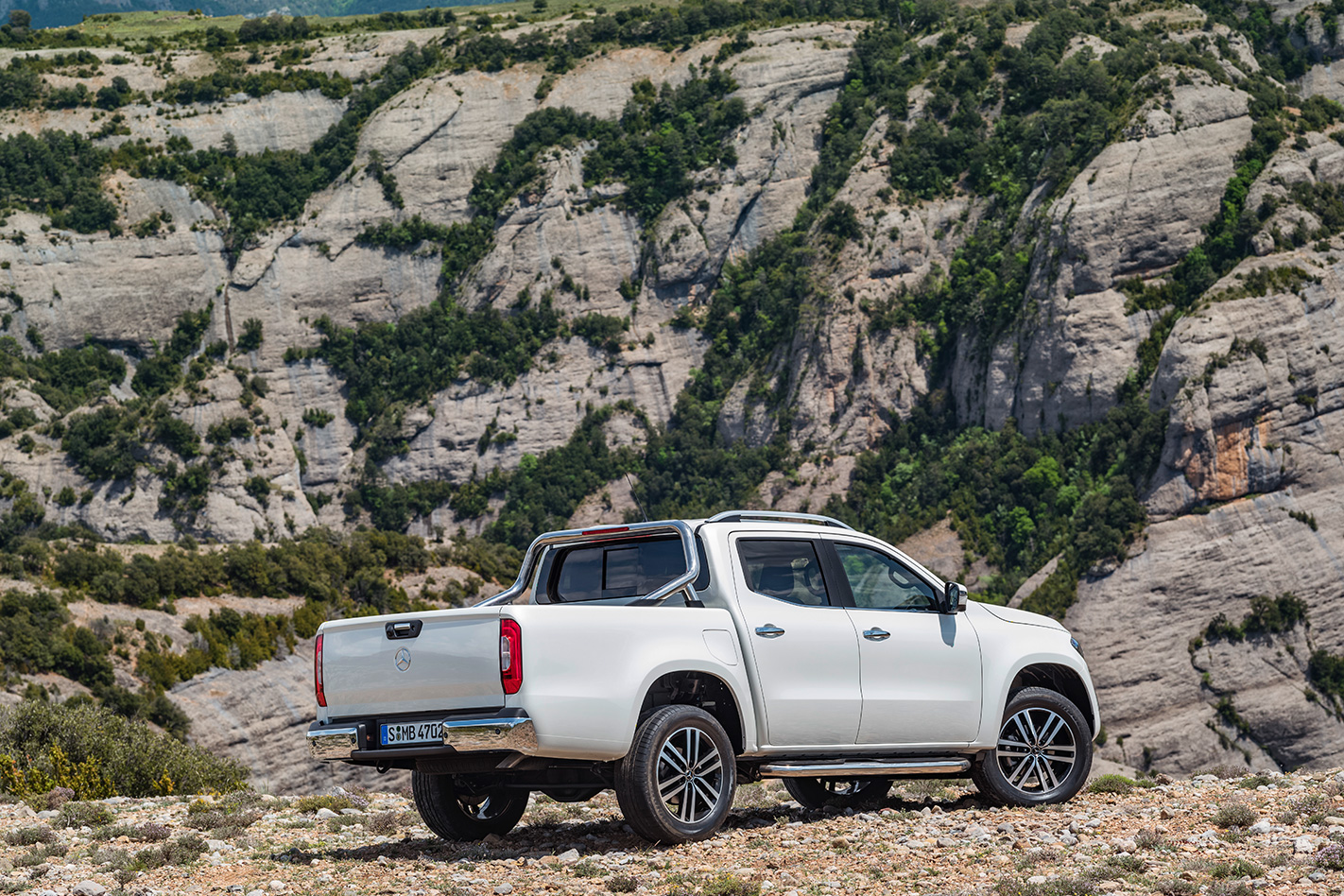
Also evident is the work Benz has put into keeping the cabin quiet. This four-pot engine is known to be harsh and noisy in the Navara but that has been well and truly subdued in the X-Class. A ute will never feel like a luxury limousine but the refinement of the X-Class takes a step in that direction.
That’s what you expect of any Mercedes-Benz vehicle be it ute van or luxury sedan. The V6 should take that level up again and will be worth waiting for.
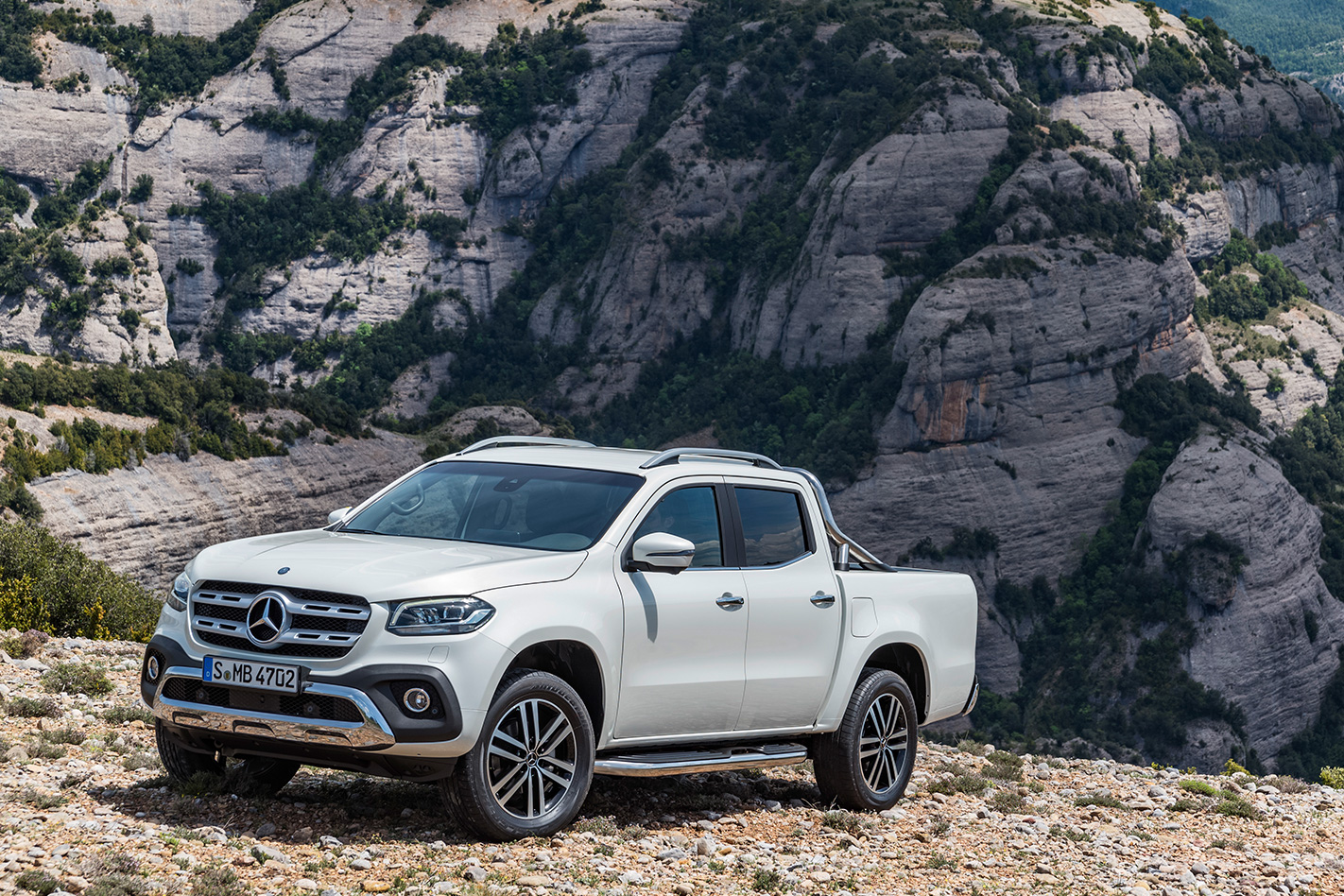
The first six months of 2017 are in the rear-view mirror, and the numbers show that though the market overall is shaping up for a bumper year, not everyone is winning in the new-car sales race.
Here are the segments, models and marques that haven’t fared so well thus far.
Almost everything that isn’t an SUV or a ute
The public’s desire to trade their ordinary hatch and sedan for the ruggedness and go-anywhere promise of an SUV or high-riding ute isn’t slowing down, and it’s causing issues for the cars traditionally thought of as mainstream choices. Light-car sales are over 6500 units down compared to 2016, medium-car sales have dipped by nearly 2000 units and almost 4000 fewer large cars have been sold year-to-date.

Small SUVs
Even though the SUV segment as a whole continues to grow its market share, it’s not all sunshine and green grass in SUV land. It appears that demand for small SUVs is cooling, despite a recent explosion in the variety of product available for buyers to choose from.


Sports cars, except for the Mustang, Veloster and C-Class Coupe
The days of Toyota’s 86 dominating the sports car sales charts is over – the new king of the fast-car segment is undoubtedly the Mustang with 5048 sales, with plenty of daylight between it and the second place-getter, the box-fresh Mercedes-Benz C-Class Coupe.

Even the fan-favourite Mazda MX-5 is starting to see its sales taper off, while the 2 Series Coupe/Convertible, Audi TT and the Porsche Boxster/Cayman also suffered slightly as well. Is nobody interested in quick fun anymore?
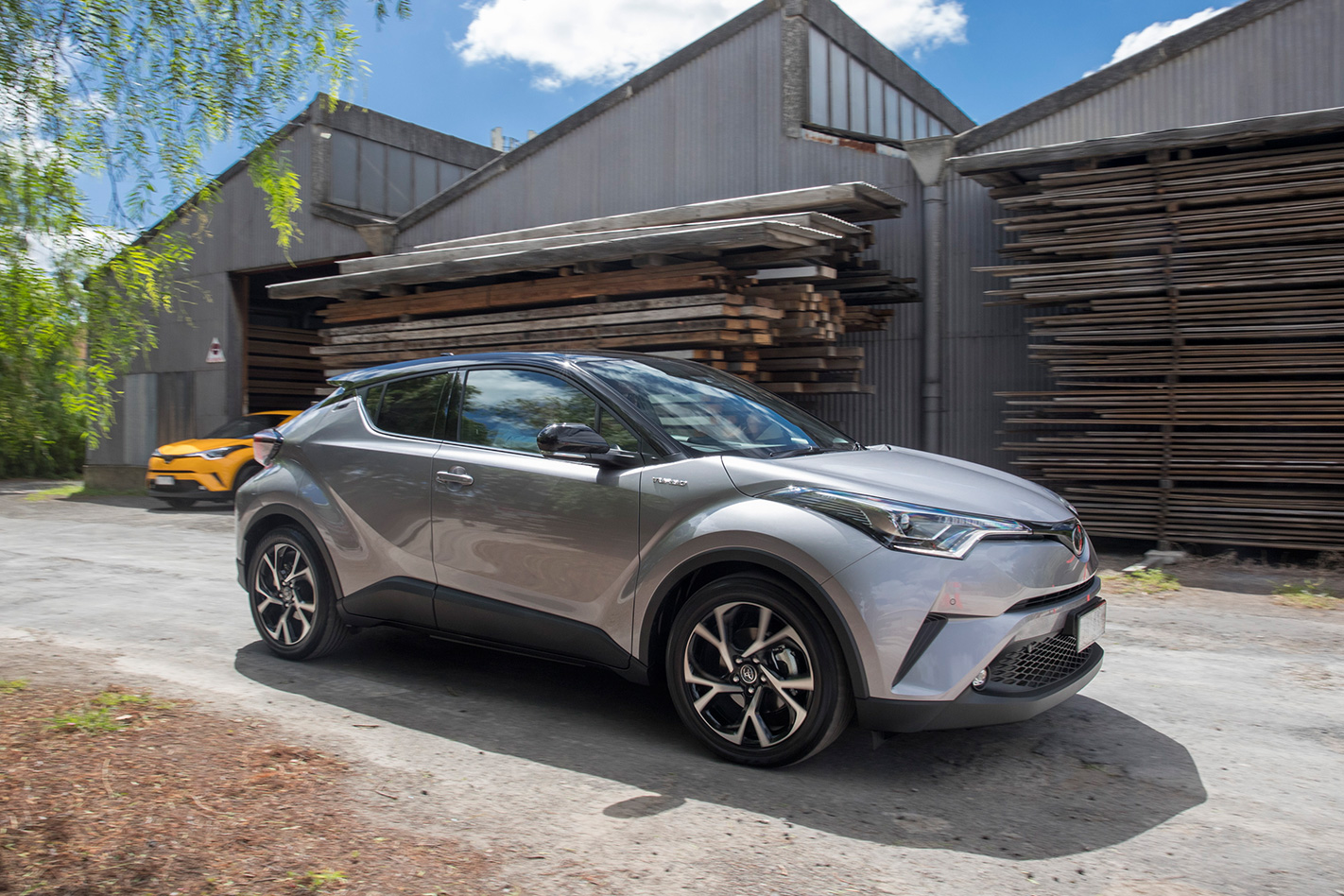
Toyota C-HR
With eye-catching design, CX-3 beating space, appealing value-for-money and decent dynamics, you’d expect the Toyota C-HR would have been kicking major goals since its local launch in February. However, to date, Toyota Australia has only moved 2215 cars while Mazda has sold over 9000 CX-3s.
BMW
After a reasonably strong showing around this time in 2016, the Bavarian automaker has gone back to 2015 levels of sales during the first half of this year – a year-to-date reduction of 18.5 percent.
However, BMW Australia isn’t too concerned by the dip, with a spokesperson saying it’s not necessarily indicative of a longer-lasting trend and is largely a result of the company’s product renewal cycle.
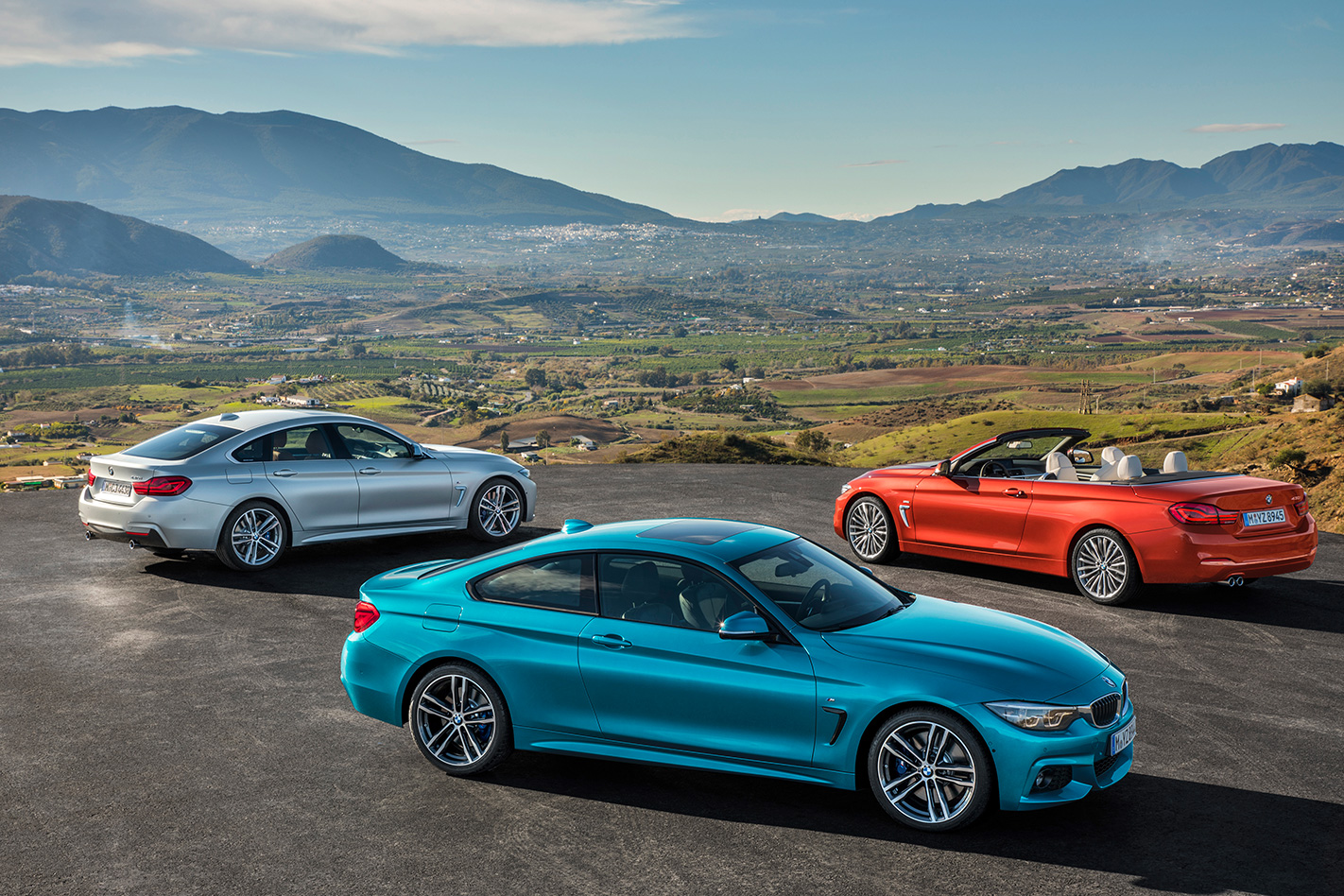
The X3 won’t be doing all of the heavy lifting either: expect strong showroom performance from the X2 compact and the supersized X7. Until the new breed of mainstay SUVs arrive, though, the Bavarian brand is hurting.

Jeep’s fortunes dwindled in the first half, with Grand Cherokee sales slipping by nearly 25 percent over the past six months relative to 2016 figures. As Jeep’s core model – and the only one to have sold in four-digit numbers so far this year – that’s bad news. Right now, it’s a middle-of-the-pack contender in the large SUV market.
The mid-size Cherokee, Jeep’s second most popular model, is also suffering. Jeep sold over 4000 in the first half of 2015, but that fell to a sub-1k figure in 2016 and so far this year only 718 Cherokees have rolled out of Jeep dealerships.
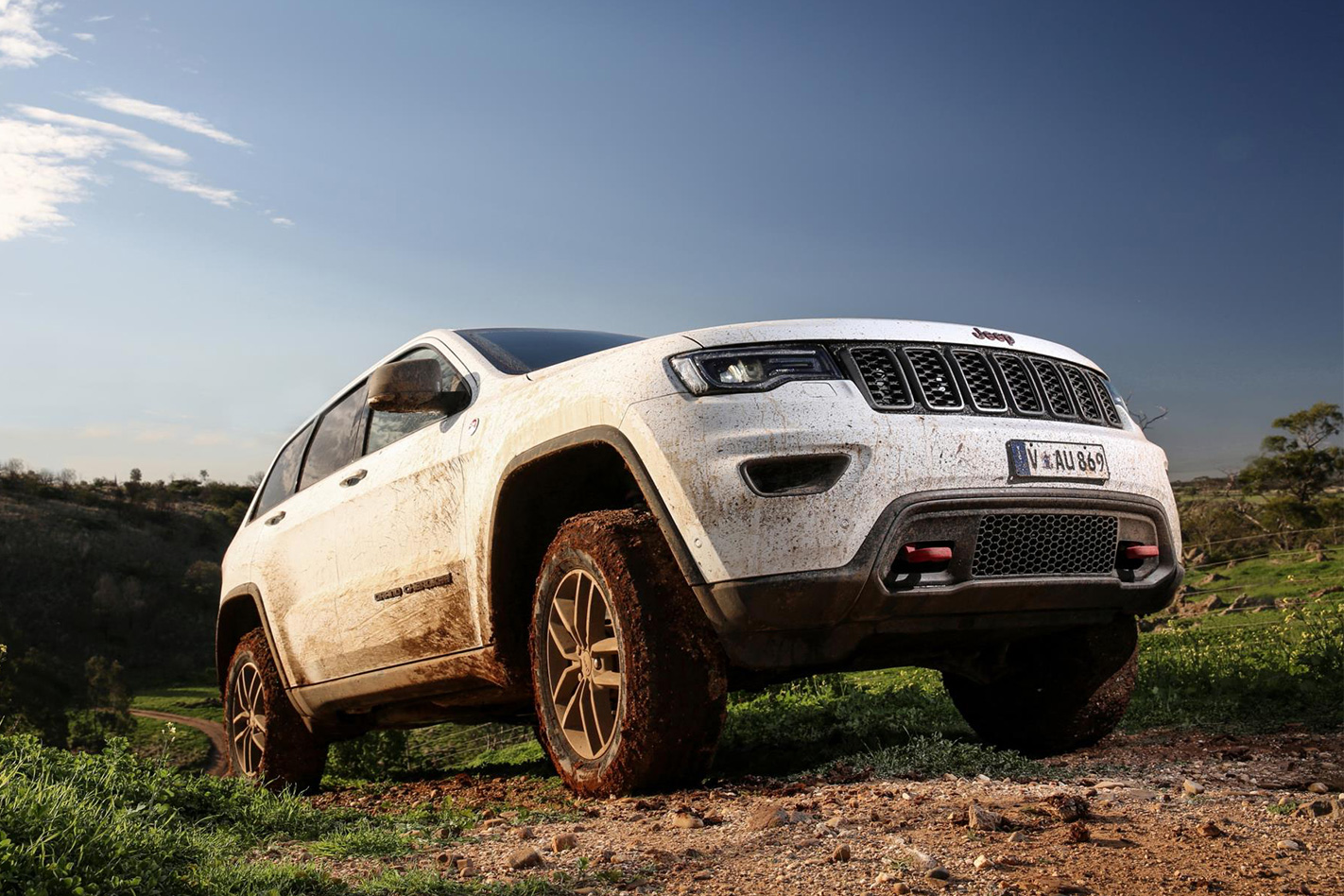
Jeep’s position is also compounded by the absence of a small SUV offering from its showrooms. The Patriot and Compass twins departed this year and an all-new replacement has yet to take their place. Naturally, as an off-roader specialist Jeep doesn’t have a passenger car range to lean on either – nor does it have a workhorse-grade ute to capitalise on demand in that segment.
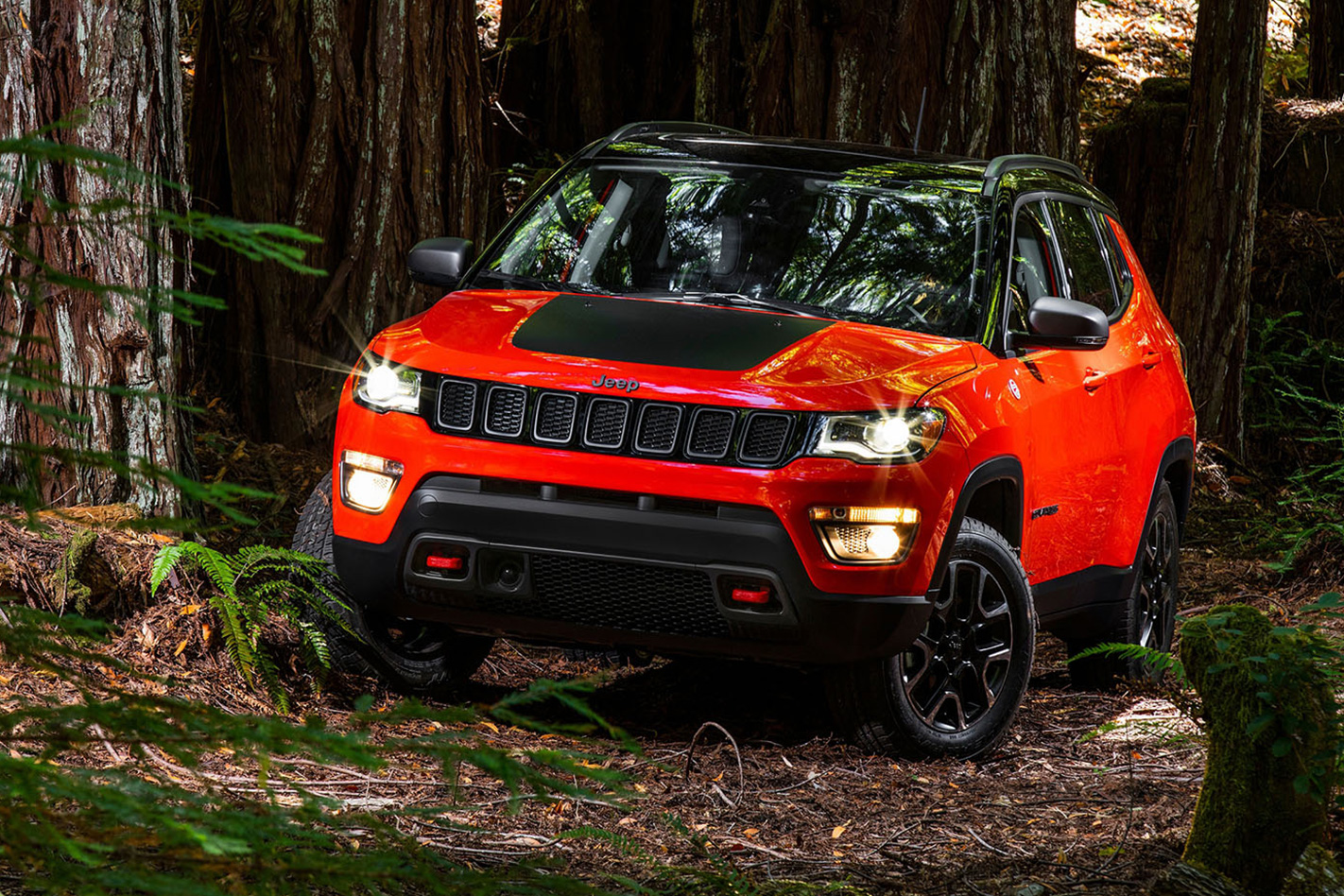
“Australia’s Jeep results in June proved to be solid with sales up 5% year on year,” said Fiat-Chrysler Australia’s head of PR Lucy McLellan.
“Impressively, the Grand Cherokee was up 21 percent year-on-year.
“Overall, given we’re without our C-SUV – the all new Jeep Compass – until the end of the year, the performance was pleasing.”
Holden
While rival Ford has slightly improved its position relative to its 2016 performance, Holden has slid backwards. With 42,113 sales year-to-date it’s nearly 6000 sales behind where it was this time last year – and if trends continue, Ford could overtake its long-time nemesis by year’s end.
In fact, Holden has suffered the biggest reduction in sales volume of any brand so far this year, though its 12.3 percent drop is far from the largest if we’re talking percentages. Nevertheless, the company admits 2017 was bound to be a challenging year as it makes the transition from manufacturer to a full-volume importer.
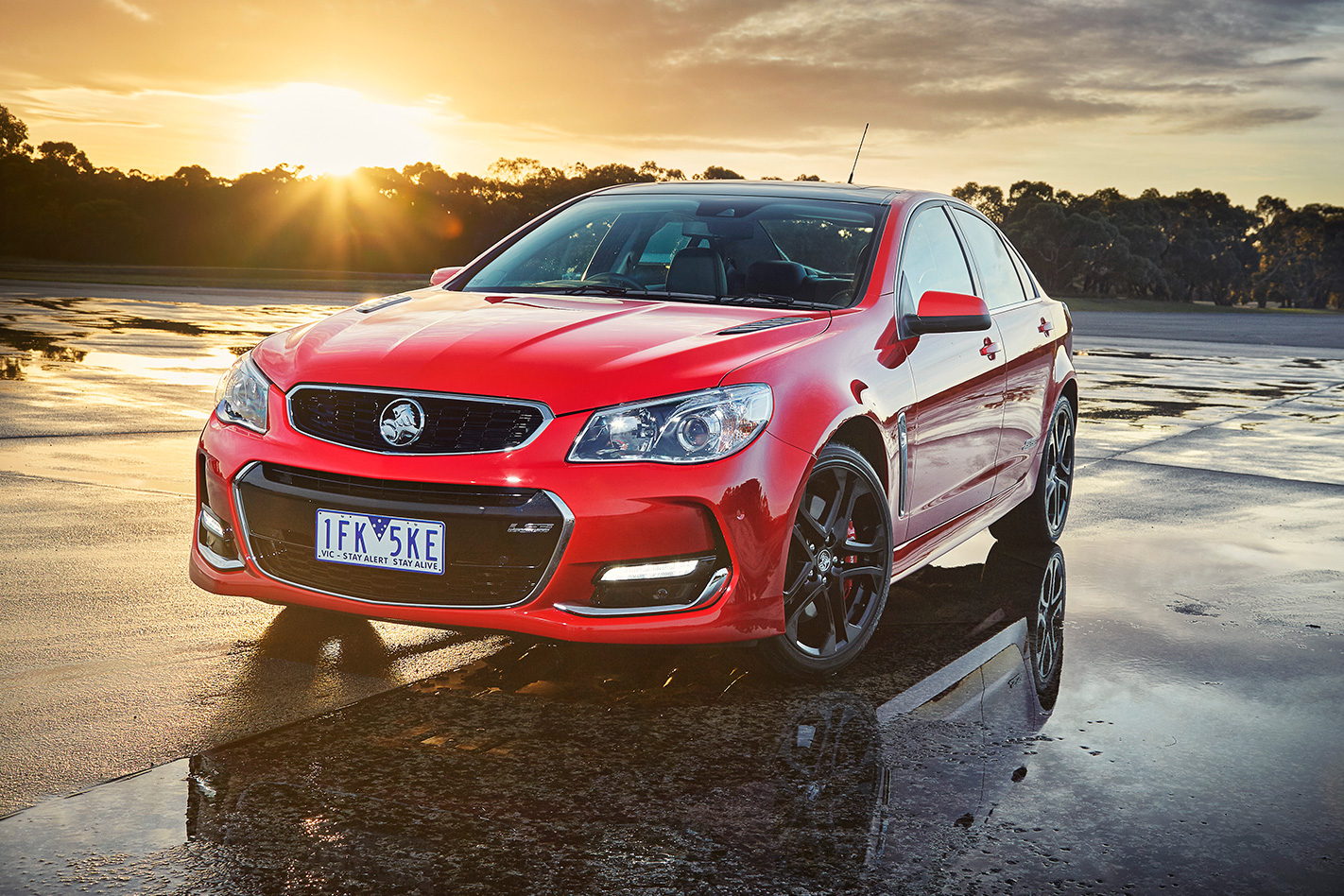
“Do we need to improve our market performance? Absolutely. But it’s hardly a surprise to anyone that during the most fundamental period of change our company has ever seen we’ve got a few speed humps to get over.”
And instrumental to Holden’s recovery plan is its promise to launch 24 new models by 2020, among them the Europe-sourced NG Commodore and the Captiva-replacing Acadia and Equinox SUVs.

“We need to fish where the fish are.”
The Astra range has also been fleshed out thanks to the recent arrival of a sedan bodystyle to complement the hatch that launched late last year, and will be bolstered even further by the addition of a wagon later this year. So far, Astra is doing a reasonably good job of taking over from the Cruze as a core model for the brand.

“We’re tracking towards 90,000 total sales this year, which will mean almost 1 in 10 new cars sold this year will wear a Holden badge.”
If Holden achieves that target, Ford may have to wait a little longer before it can one-up its rival.
Hyundai
After achieving an all-time half-year sales record last June with a 54,350-strong tally, Hyundai has failed to build on that number this year. For the first six months of 2017, the Korean auto giant moved 49,819 cars – 4531 fewer than it did this time last year and 280 behind what it achieved in the first half of 2015. An 8.3 percent drop, in year-to-date terms.
And that’s despite stronger performance from its SUV range, right now comprised of the Tucson and Santa Fe. No, the big reason behind Hyundai’s backwards movement is the absence of ultra-keen driveaway deals on the volume-selling i30. The new-gen i30 is selling in healthy numbers right now (third in its segment, in fact), but last year it was moving in massive volume thanks to heavy discounting that saw entry models priced below $20k drive away.
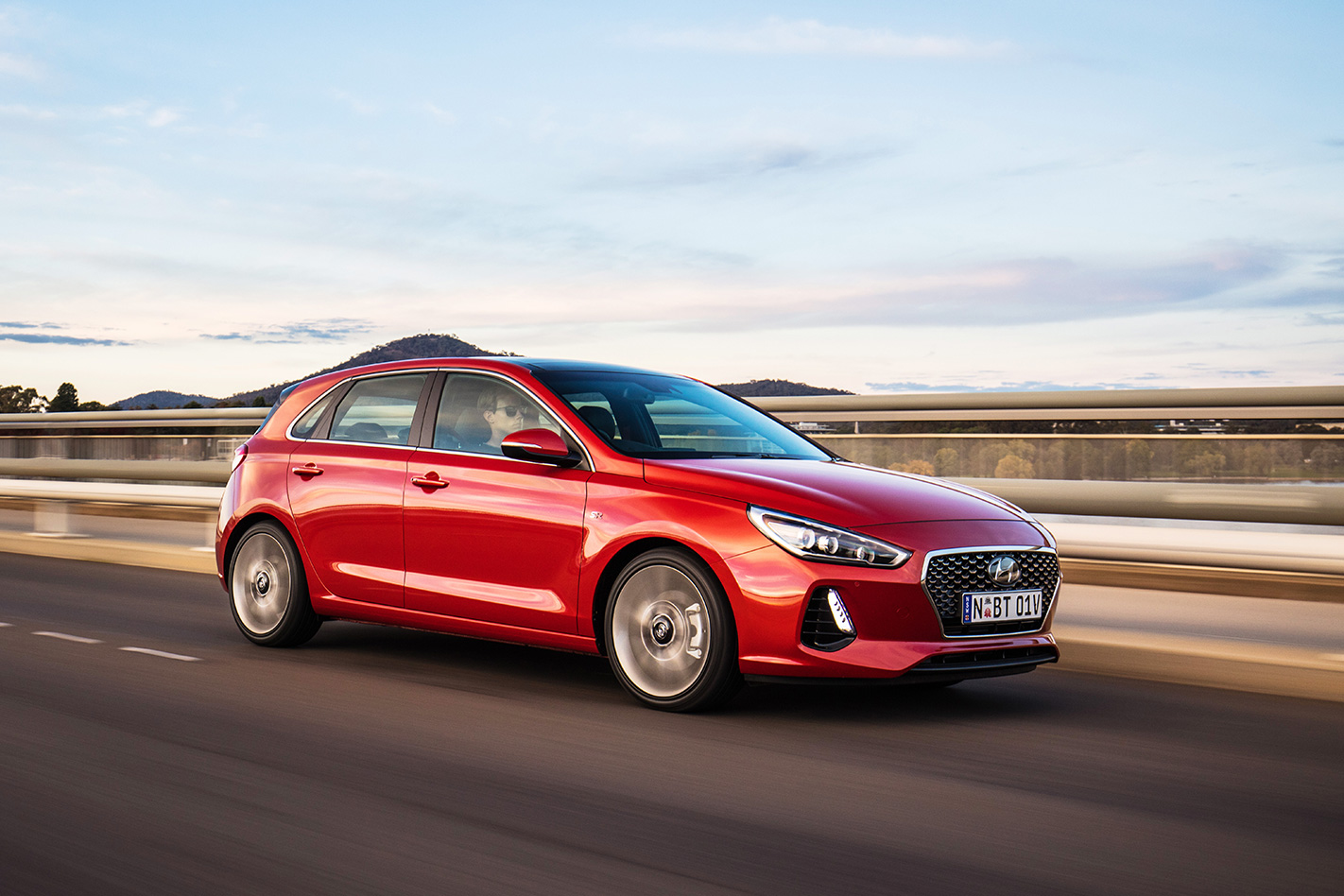
So does Hyundai have a problem? Hardly, if you look at its across-the-board sales growth. Indeed, even though fewer i30s are being sold right now, the profit margins on each car are doubtlessly greater than they were this time last year. Plus, with the Kona compact SUV just around the corner, Hyundai would seem set to head towards December with the wind in its sail.
The Holden Equinox has a huge weight of expectation placed upon it.
The proposed volume player in Holden’s SUV assault, the imported sports utility has undergone a serious amount of revisions to lick it into shape for a tough Aussie crowd.
WHAT IS IT
A Mazda CX-5-sized SUV with a choice of three engines, front- or all-wheel drive, and a slick nine-speed automatic transmission, the Holden Equinox will help make up for lost share in a booming sector. Playing catch-up on a limited budget is a tough assignment, but the Equinox is not without its attractions.
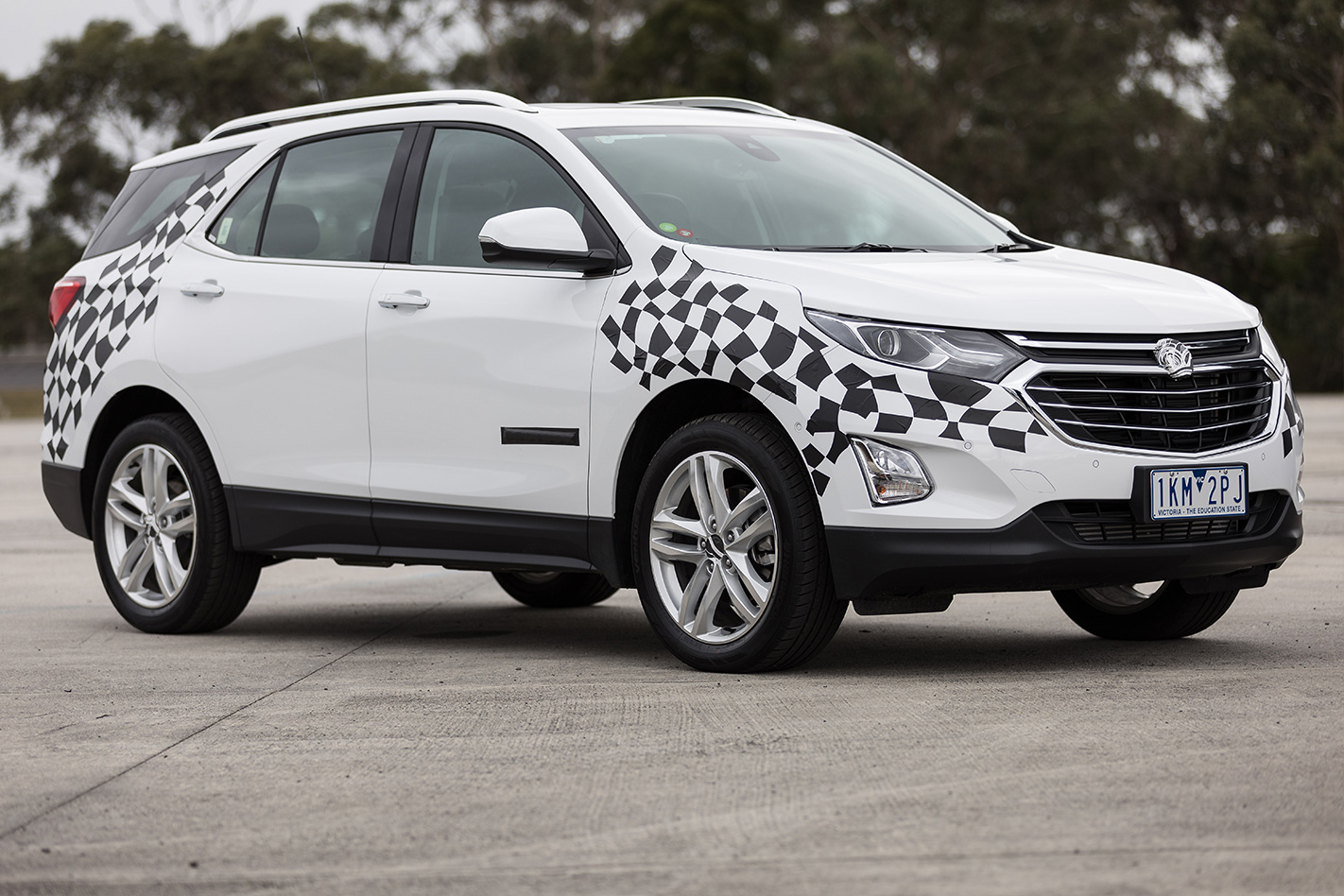
While taking a step forward from the Captiva wasn’t going to be overly taxing, kicking on and levelling with cars like the Mazda CX-5, the Hyundai Tucson, and the Kia Sportage is a more challenging brief. We had the chance to drive a pre-production prototype to get an early taste of what’s on offer.
MAIN RIVALS
Ford Escape, Hyundai Tucson, Kia Sportage, Mazda CX-5
THE WHEELS VERDICT
The Holden Equinox is, at present, a work in progress, but it shows promise. The 2.0-litre turbo petrol engine is its standout feature, delivering more power than an entry-level Porsche Macan, and Holden has blown the overtime budget in honing this mid-sized SUV’s dynamics. Matching the showroom glitz of key rivals might be the Equinox’s biggest challenge in a tough and crowded sector.
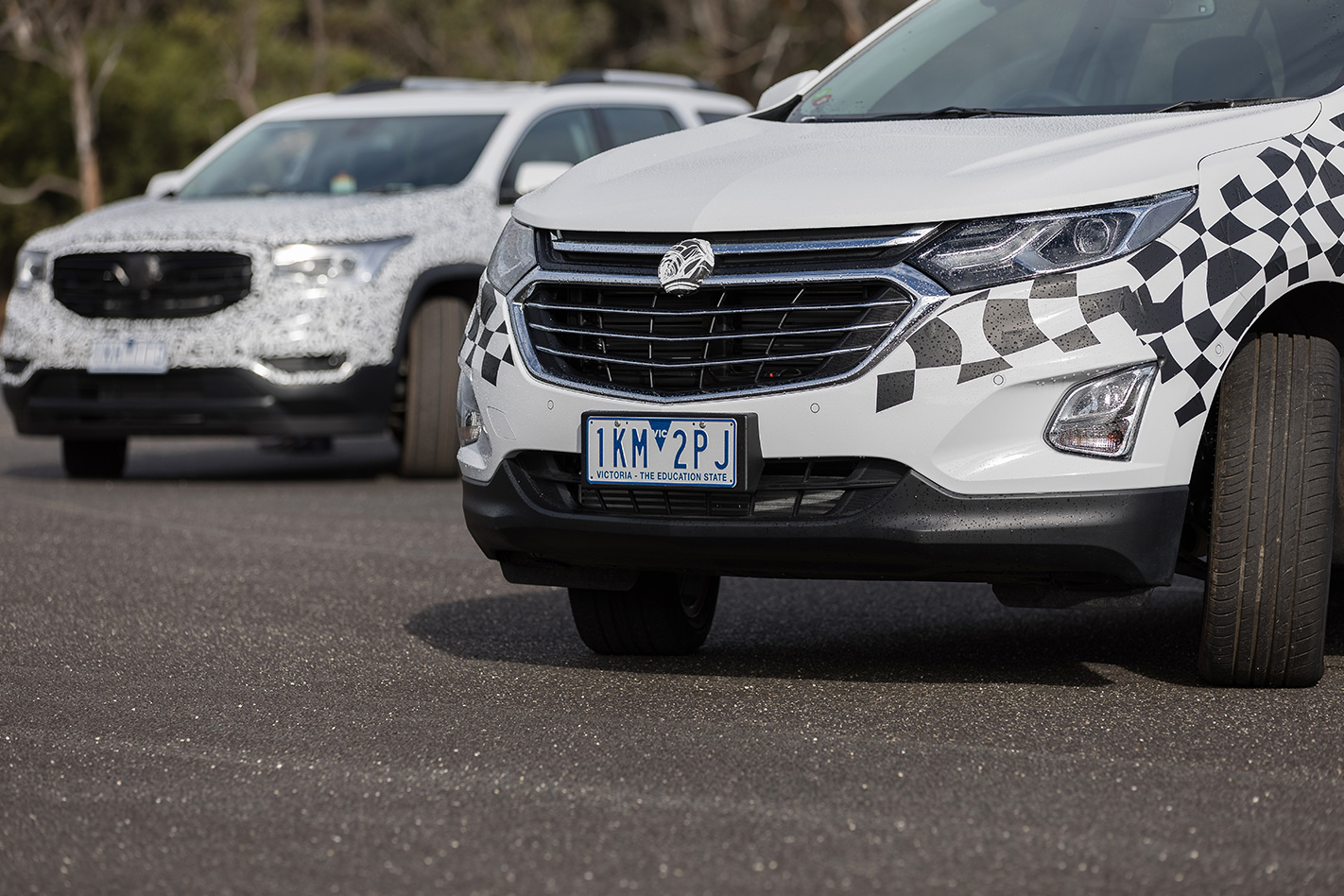
MINUS: Materials quality in cabin unconvincing, unexciting exterior styling
THE WHEELS REVIEW
There’s a strange sense of déjà vu about the launch of the Holden Equinox. Eleven years ago, Holden realised that the Suzuki-based Cruze and jacked-up Adventra weren’t convincing SUV buyers who were used to more sophisticated SUV fare like the Ford Territory and the Toyota Kluger. The answer was to import the Daewoo-sourced Captiva. At the time we seemed generally impressed by Holden’s efforts, but time wasn’t kind to the Captiva. Where its rivals evolved rapidly, the Captiva quickly became an also-ran and, latterly, an embarrassing exemplar of Holden’s developmental stasis.
Now, here’s Holden again admitting they’re behind the curve on SUVs, and the answer is to again scour the General’s portfolio for a pret-a-porter solution. The Mexican-built Chevrolet Equinox is this year’s overseas marquee signing, currently undergoing a rapid process of Australianisation at the hands of the engineering team at Lang Lang.
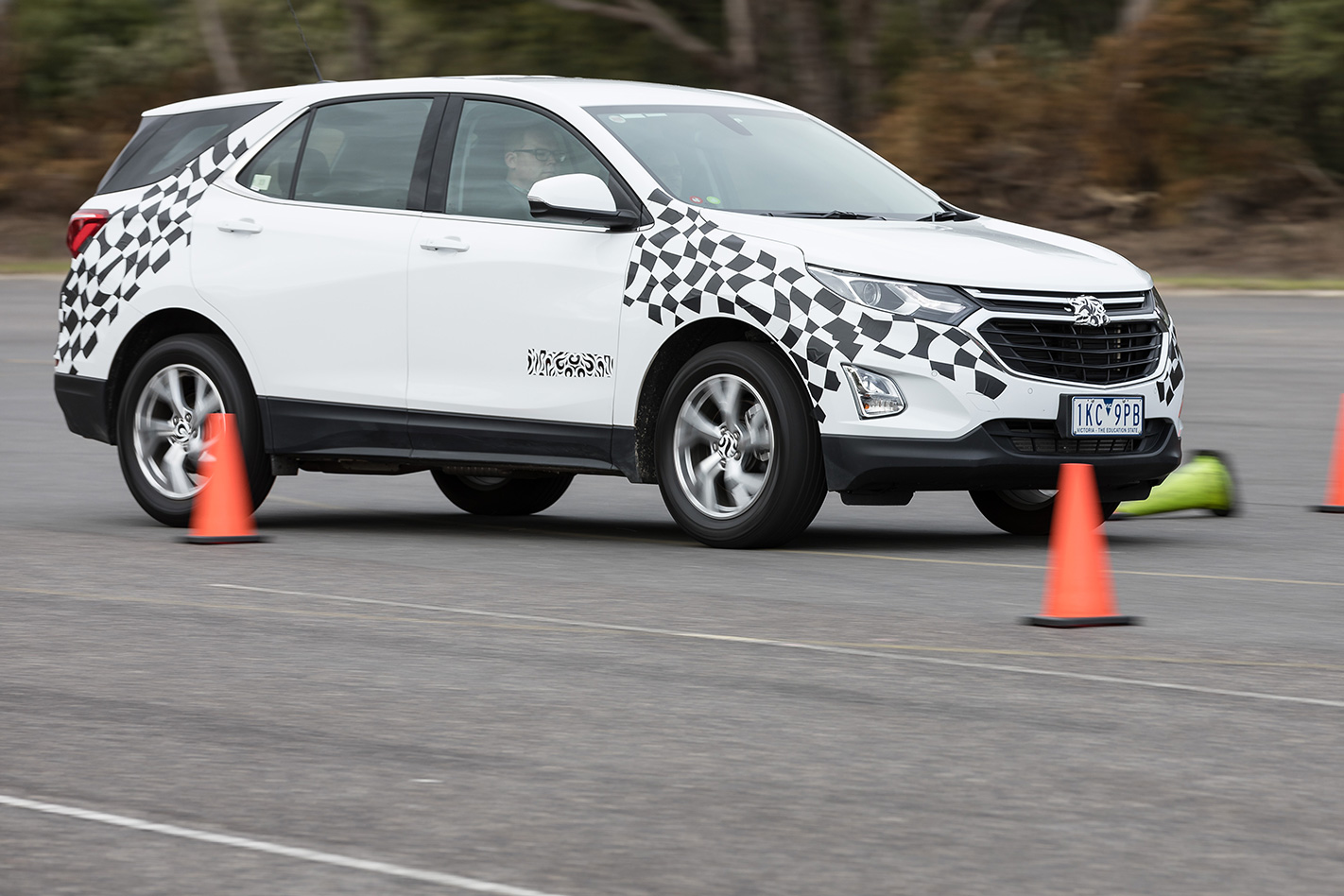
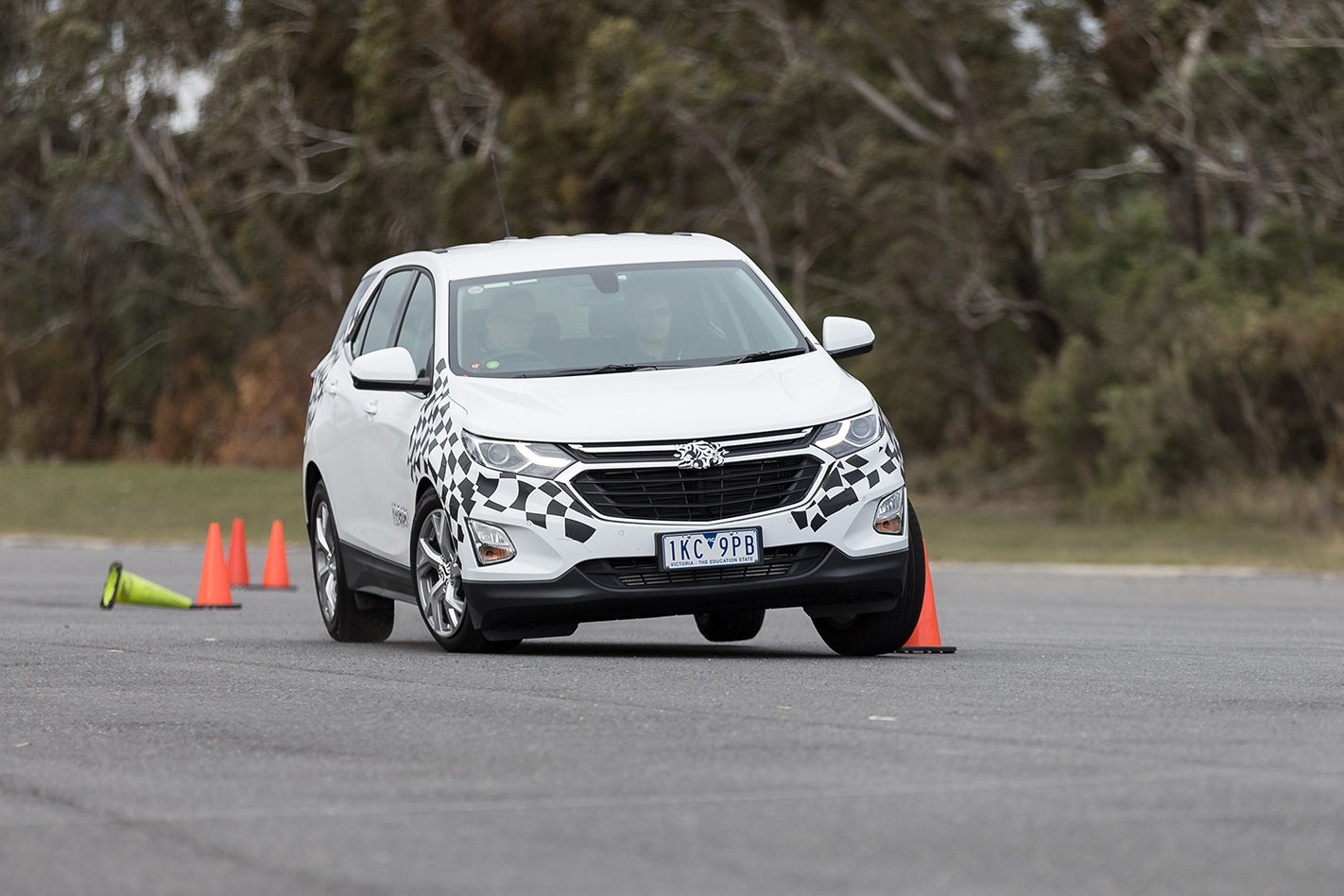
We got to drive the 2.0-litre turbo, in this instance in front-wheel drive guise. The dynamics seem generally well-sorted, with impressive body control, low effort but accurate steering, and a supple ride. On a coned slalom course, it’s possible to feel the brake torque vectoring at work, dragging the car back into line. The 18-inch alloys featured 60-series Bridgestone Dueler rubber which helped the secondary ride considerably. On damp tarmac, there’s a surprising amount of wheelspin before the traction control intervenes, but the 2.0-litre engine has enough about it to put a grin on your face. Holden expects a 0-100km/h in the mid-7s and it feels every bit that fast. Despite in-car noise-cancelling tech, it’s not the quietest car in its class at cruising speeds. The Bose-engineered noise cancelling chiefly targets engine frequencies and not wind, tyre, and suspension noise.
Holden has had to develop three separate suspension tunes for the Equinox, one for the 1.5T, another for the front-wheel drive versions of the 2.0T and 1.6TD, and a third for all-wheel drive 2.0T and 1.6D variants. These changes include ride bush, handling bush, rear lower control arm bush, rear toe link bush, front and rear stabiliser bars, as well as damper, and steering calibration. Once these variables have been crunched, it all has to work on 17, 18, and 19-inch wheel and tyre combos. That’s quite a task. Engineer Tony Metaxas runs through some of the highlights such as the decouplable all-wheel drive, the active shutter tech in the front grille, and the two-tonne towing capacity that Holden insisted upon. “We probably did more work on this car than we were expecting,” he admits.
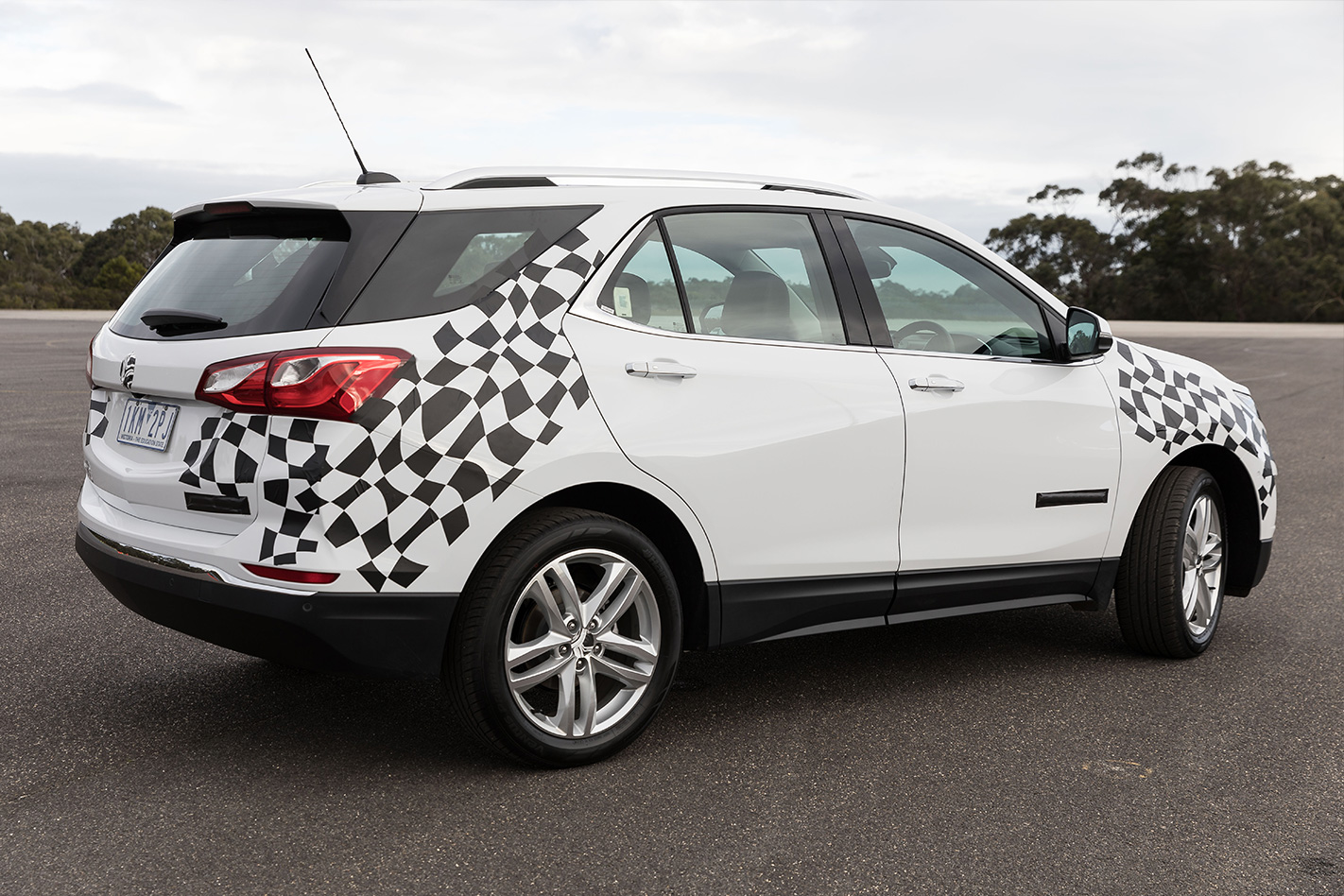
Rear seat accommodation impresses, with plenty of space for six-footers in tandem and it’s easy to drop the non-sliding rear seats using a tab in the luggage bay. The wider part of the 60/40 rear bench requires the centre headrest to be removed in order to fold fully flat and luggage space is class competitive, albeit just pipped by the Kia Sportage. The rear bench is creaky though and the front seats are a little insubstantial, with rear three-quarter visibility hampered by the big C-pillars.
JOIN THE THRONG
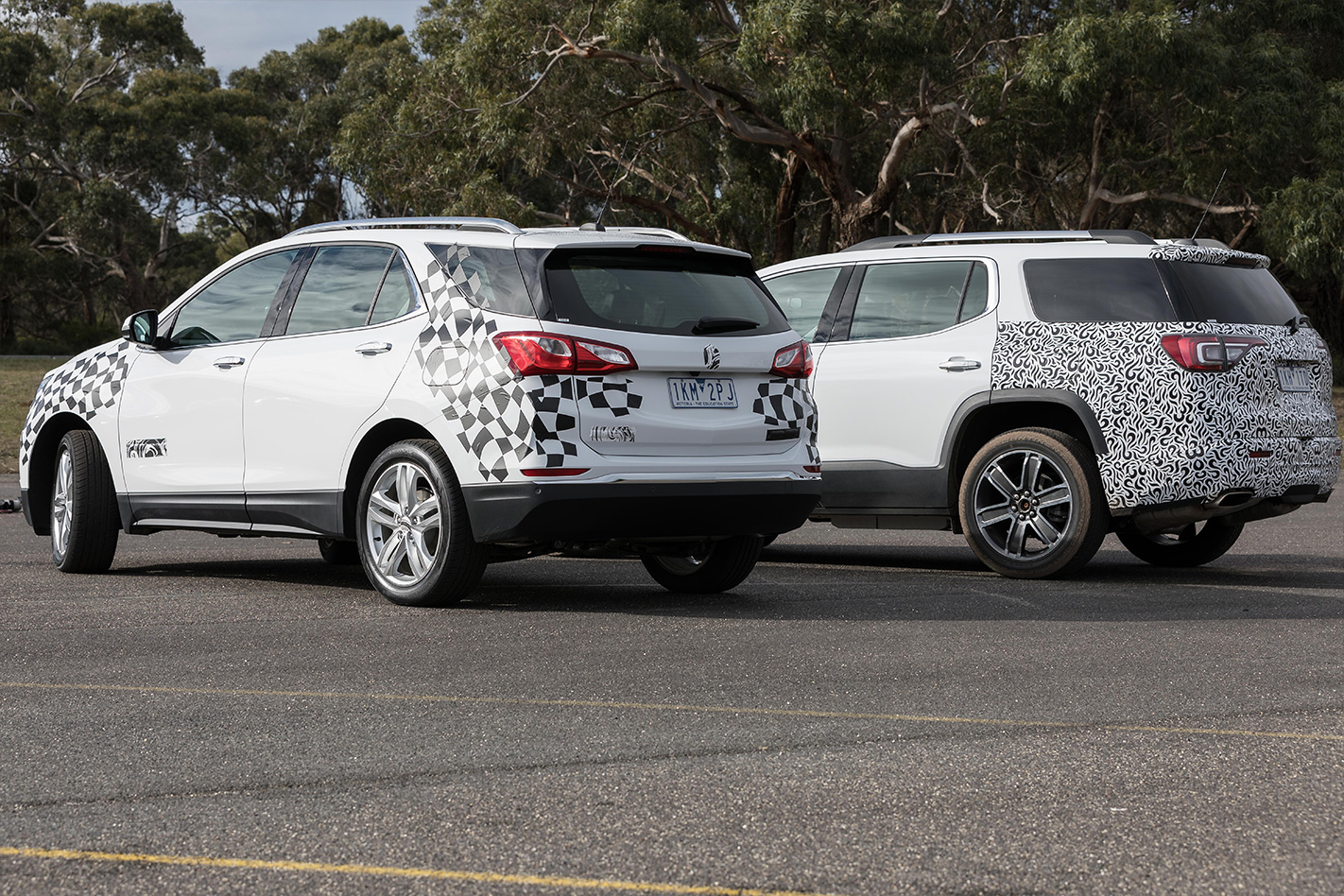
The Equinox and its bigger Acadia sibling represent the 16th and 17th new vehicles as part of Holden’s aim to introduce 24 new models by 2020. These two new additions will join the Trailblazer and Trax to broaden their SUV offering to four, with other AWD choices in the shape of the Colorado ute and the Commodore Sports Tourer. “We can’t compete on volume. We need to rebuild the business and be solid and strong in the big sectors,” said Holden’s communications director Sean Poppitt.
Model: Holden Equinox 2.0T FWD Engine: 1998cc turbocharged dohc inline-4 Max power: 188kW @ 5500rpm Max torque: 353Nm @ 2000rpm Transmission: 9-speed automatic Weight: tba 0-100km/h: 7.5sec (est) Fuel Economy: 8.4L/100km (US-spec) Price: $ tba On sale: December 2017
THE Acadia is Holden’s seven-seater that assumes the mantle of luxury flagship for the company’s new four-pronged assault on the SUV market. Based on the GMC Acadia but tuned for local conditions, it signals the death knell for the ancient Captiva 7.
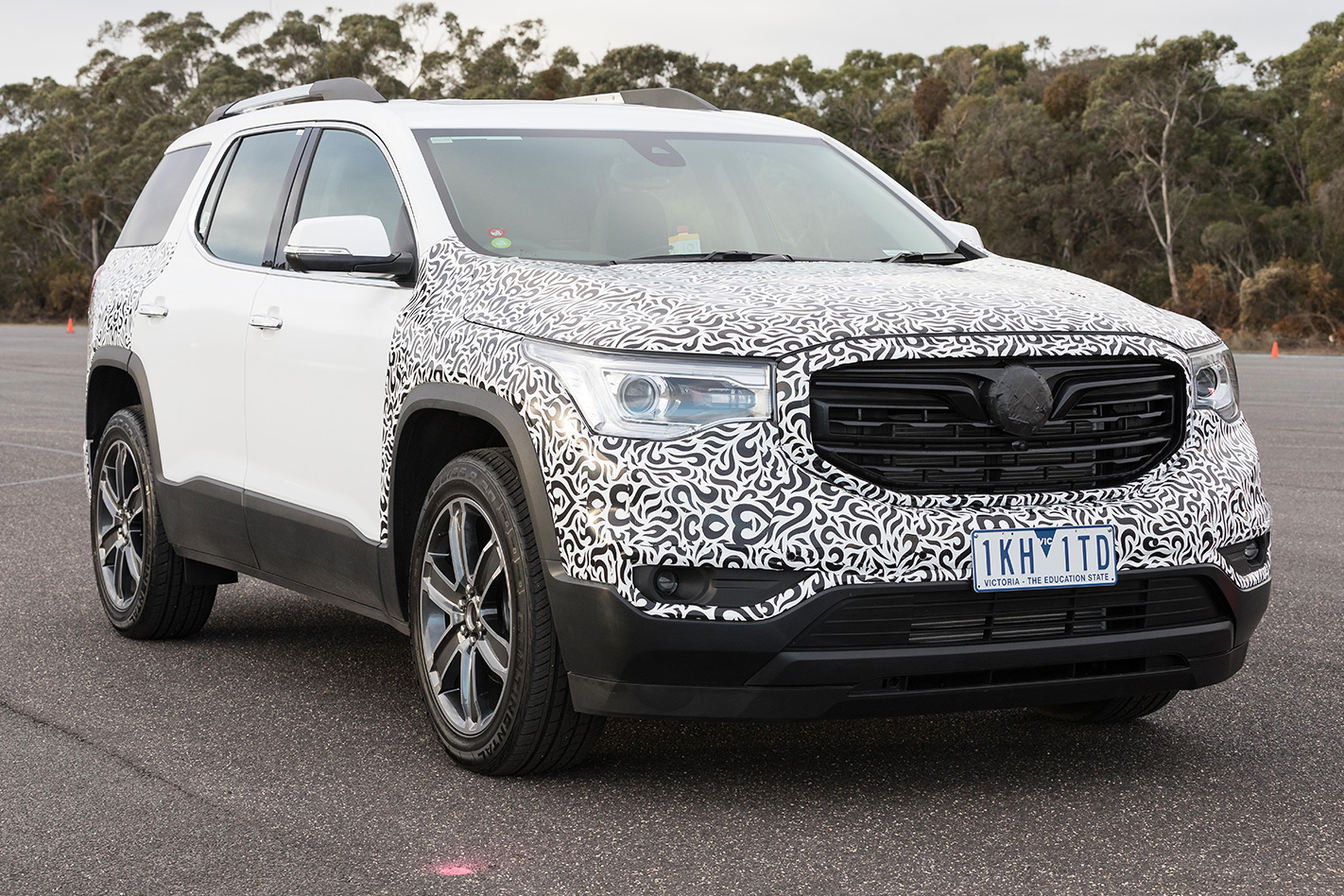
Think of the Holden Acadia as a direct rival for the hugely successful Toyota Kluger and you’re not too far off the mark. The car has already established itself in the US, with sterling performances in the JD Power survey, so it ought to be tough enough for Oz.
WHY WE’RE TESTING IT
Holden offered us the chance to drive pre-production prototypes on a closed off-road course. We’re not yet permitted to comment on the powertrain, but it’s well worth seeing what we’re getting from a packaging and quality perspective. As the flagship luxury SUV in Holden’s line up, it’s up against some fierce competition.
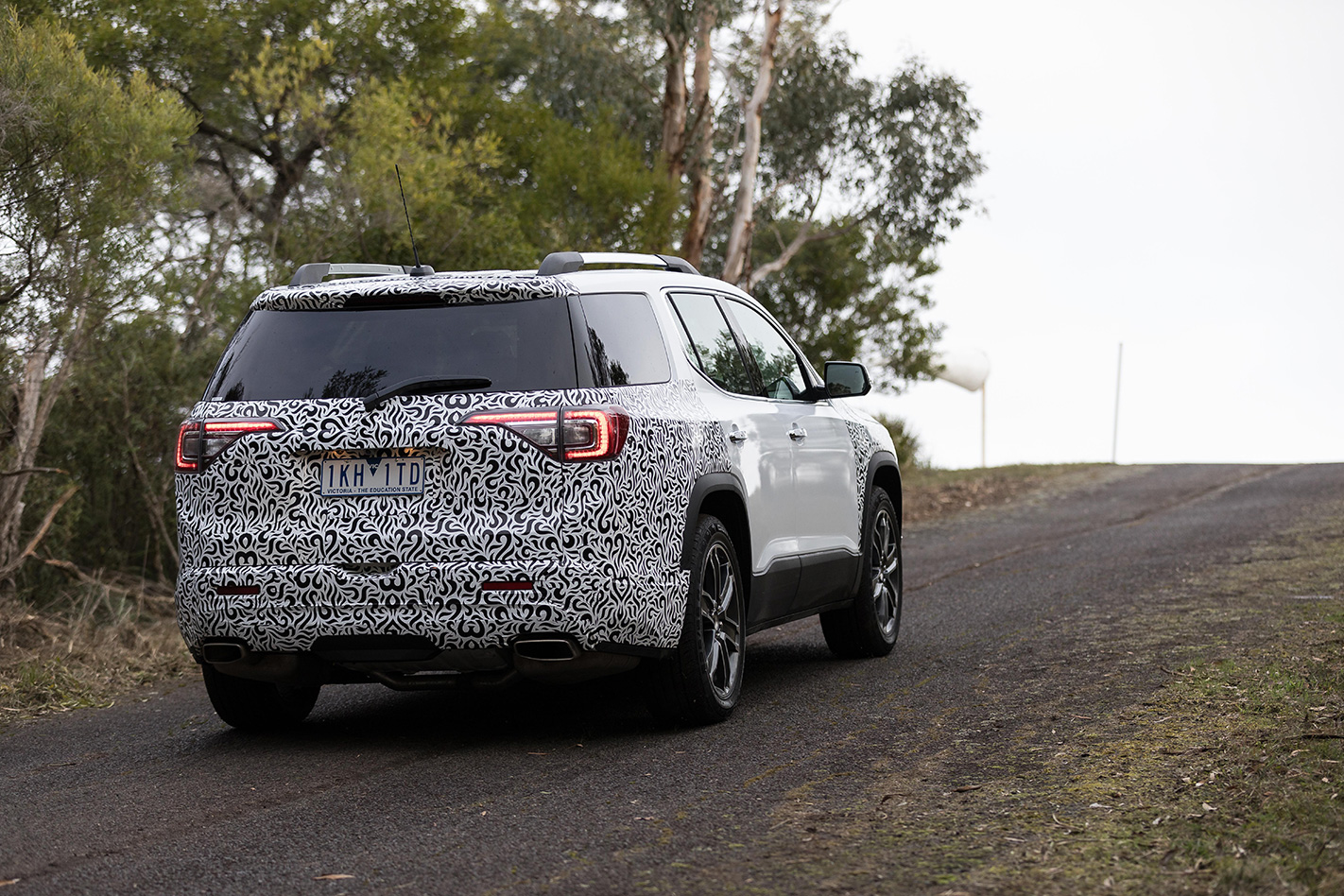
Ford Everest, Kia Sorento, Mazda CX-9, Toyota Kluger
THE WHEELS VERDICT
It’s too early to form a definitive verdict on Holden’s latest and biggest SUV but a brief drive in a pre-production prototype shows that this US import has real promise. Much will depend on pricing, but an Australian tune for the dynamics has made the Acadia a lot lighter on its feet.
PLUS: Space, styling, body control for such a big vehicle
MINUS: Petrol engine only, is something still lost in the translation?
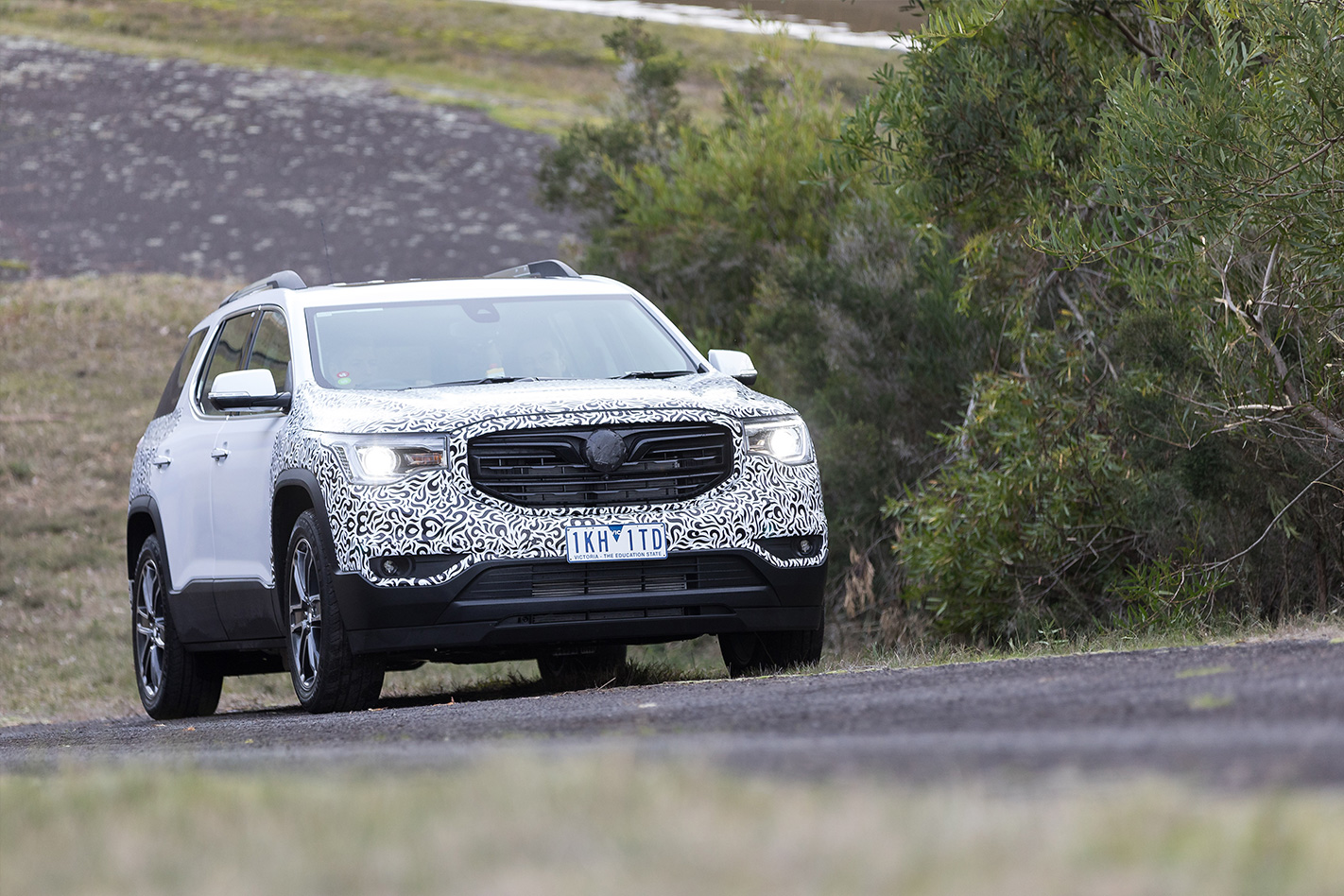
THERE’S probably a great PhD thesis in how Holden became so obsessed with one-upping the Ford Falcon that it managed to overlook the boom in SUV sales. As a result of its pyrrhic victory over the Blue Oval, Holden is now forced to play catch up from a position so far back that even Steven Bradbury would have probably given it up as a bad job. Still, better late than never and Holden’s assault on the SUV market is now in full swing, tempered by the significant caveat that it’s now a badging and local tuning operation, sifting through GM’s portfolio for promising nuggets.
One of these is the GMC Acadia, a sports-ute the Yanks describe as mid-sized, but which we’d lump into the bloody enormous category. It’s Holden’s answer to the Toyota Kluger and we had the chance to drive a very early pre-production version at their Lang Lang test facility to get an early taste of what’s coming to dealerships in mid-2018. Because of a bit of a wrangle between Holden and their US paymasters, we can’t comment yet on what powertrain the vehicle has. The American models have the option of an unexciting 145kW 2.5-litre four or a far more attractive 231kW 3.6-litre V6. Make of that what you will.
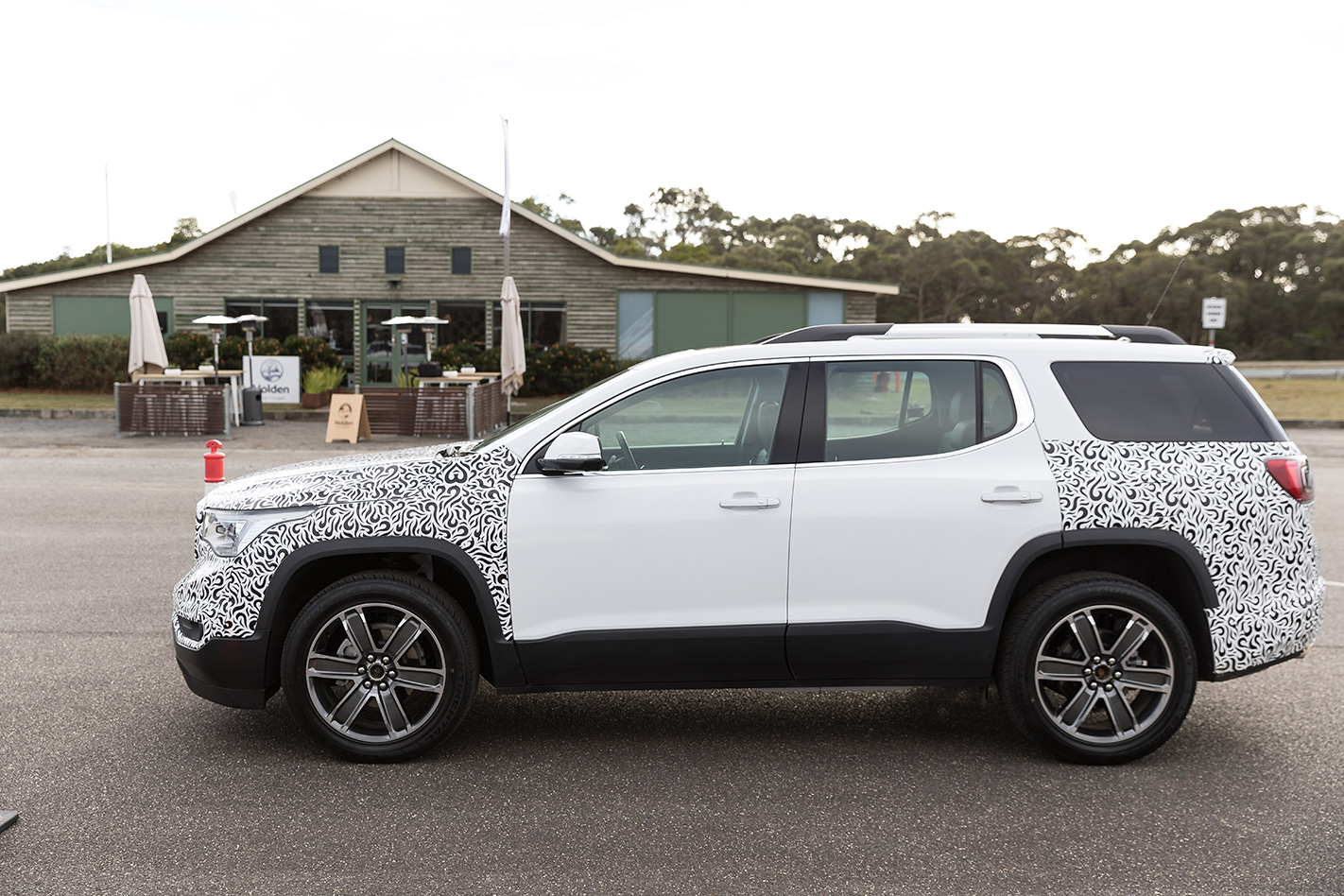
Holden’s engineers have been tasked with the monumental job of making the Acadia feel sprightlier than a tectonic plate and, by and large, they’ve succeeded. The American market car’s suspension had been engineered to float over severely frost-damaged bitumen, but also featured a competition mode – yes, really – that firmed the suspension up so much that the dampers felt as if they were milled from a billet of aluminium. Engineer Jeremy Tassone was part of the team responsible for developing a suspension tune that worked better for Australian tastes.
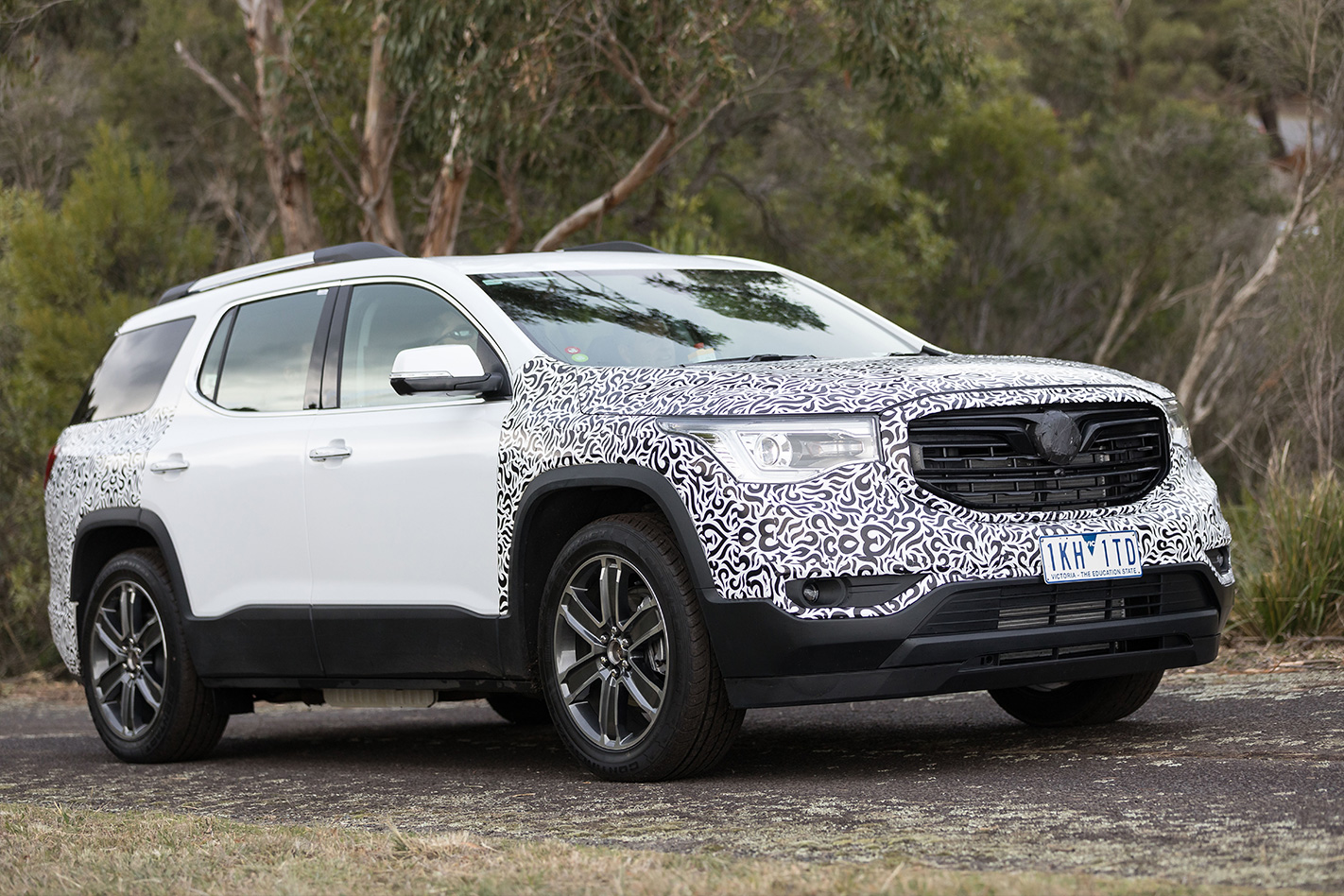
“We first drove a right-hand drive Acadia in the US in March with summer tyres and Holden content in it and then we set the tuning direction. Springs, roll bars, damper calibration, stability control, trailer sway control and so on. We’ve also upped the towing capacity to two tonnes for this vehicle,” he explains. Reducing the gulf in ride quality between the two drive modes was also accomplished.
The results are impressive. We were able to drive a US-spec GMC vehicle and then jump into the Acadia and the difference between the two is night and day. The former feels like a typical LAX airport hire car, with a bouncy castle ride and steering that’s low geared and lacking in feel. The Holden Acadia feels tauter and more responsive, with less float in the ride and far superior body control. The Acadia we drove was riding on huge 234/55 R20 Continental Cross Contacts and there’s likely to be an 18-inch option available too.
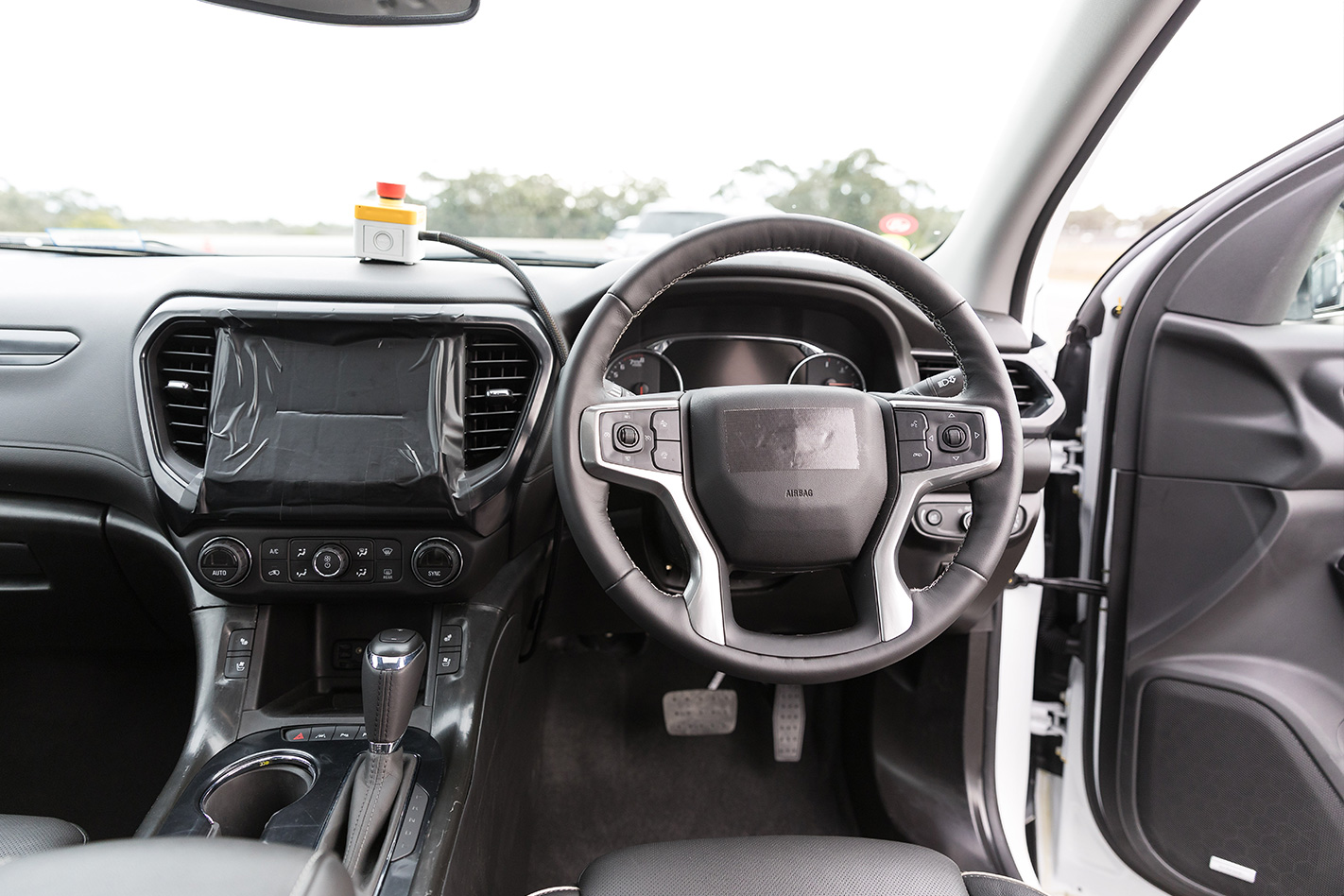
It’s also well catered for with electronics. Holden promises Apple CarPlay and Android Auto compatibility, remote start, wireless phone charging, a hands free powered tailgate, a 360-degree camera and a customisable driver display. There are a pair of USB slots up front, two in the second row and one in the cheap seats out back, which ought to head off arguments over charging devices.
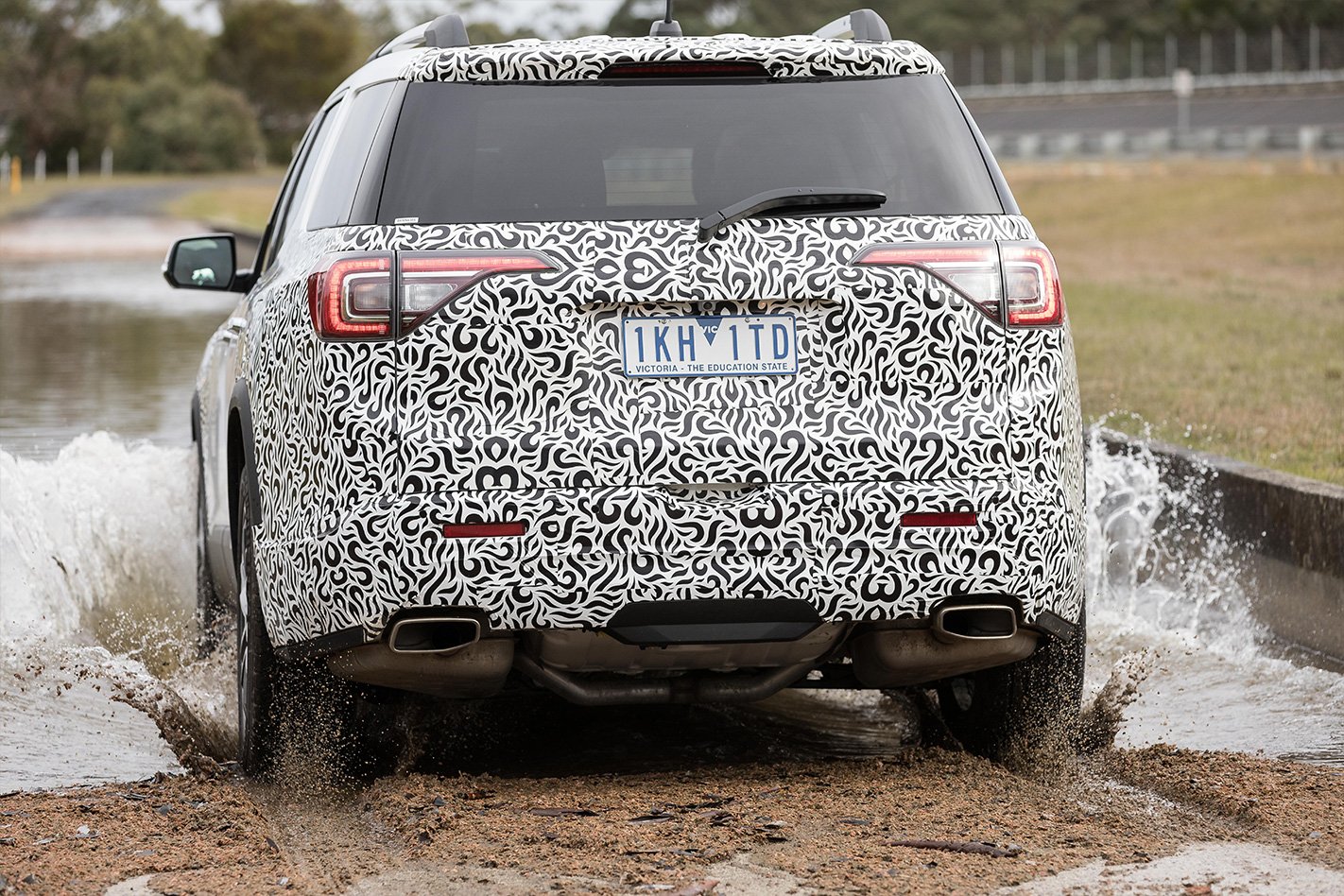
So there’s real promise here. Clearly much will hinge on how the car is priced for the Australian market and the next milestone is for an 80 percent production ready car due to arrive in August. Holden is talking up the car’s chances, hoping to get some return on the $30m investment in retooling the Spring Hill plant for right-hand drive production.
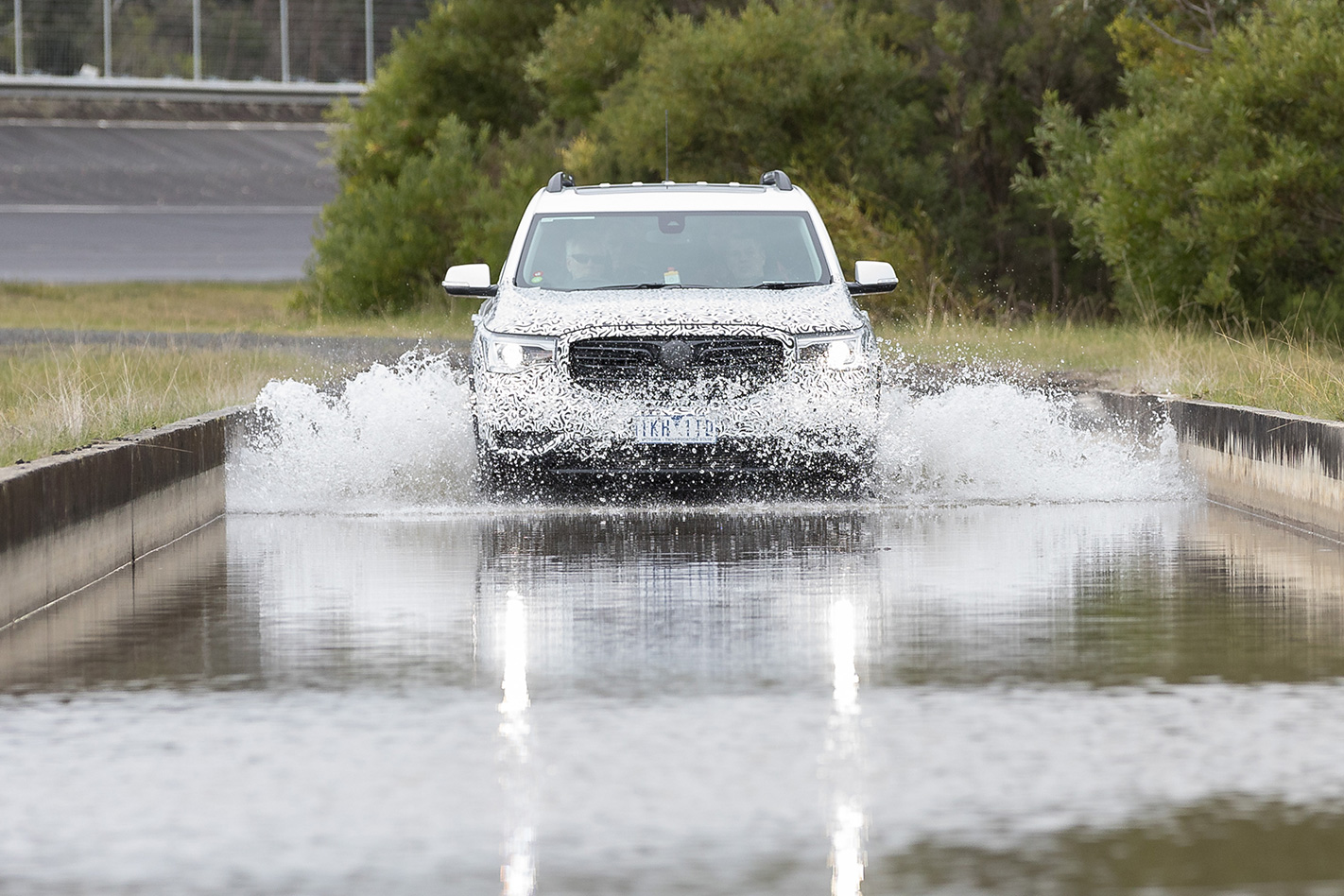
The Captiva, which will be replaced at the end of the year when the five-seater Equinox SUV arrives, will continue in seven-seat guise until the Acadia makes landfall in the middle of next year. The only flaw in Holden’s logic is assuming that Aussie buyers will afford the Acadia’s petrol engine the leeway they do with the Kluger’s. The Toyota gets away with its thirst because the brand’s badge bundles in a raft of other perceived values – justified or otherwise. Holden’s not there yet but who said playing catch up was easy?
MORE: Holden Acadia Range Review MORE: Holden Acadia Specs, Range & Price
