
Okay, this is the big one; probably 2021’s most anticipated head to head and we’re bringing it to you early.
There are few cars that have caused as much excitement within the car community recently as the Toyota Yaris GR. With a purpose-built three-cylinder turbocharged engine, all-wheel-drive traction, brutish proportions, and a direct WRC lineage, the Yaris GR has everything you could dream of on paper.
Does that mean it has what it takes to dethrone the current king of the hot hatch class, the newly updated Honda Civic Type R?
The two cars may differ in conception, but they’re both up for your consideration if you have around $50K and want the fastest and most focused new cars for your money. Which would get your money?
To find out, MOTOR put the pair to the test on both the road and dragstrip to find out which will walk away with the crown.
You can read the full comparison test (and discover the shock winner) in the January, 2021 issue, which goes on sale Thursday, January 14.
That’s not all, though. Our first issue of 2021 is rammed with performance car stories to get you through the Back To Work Blues.
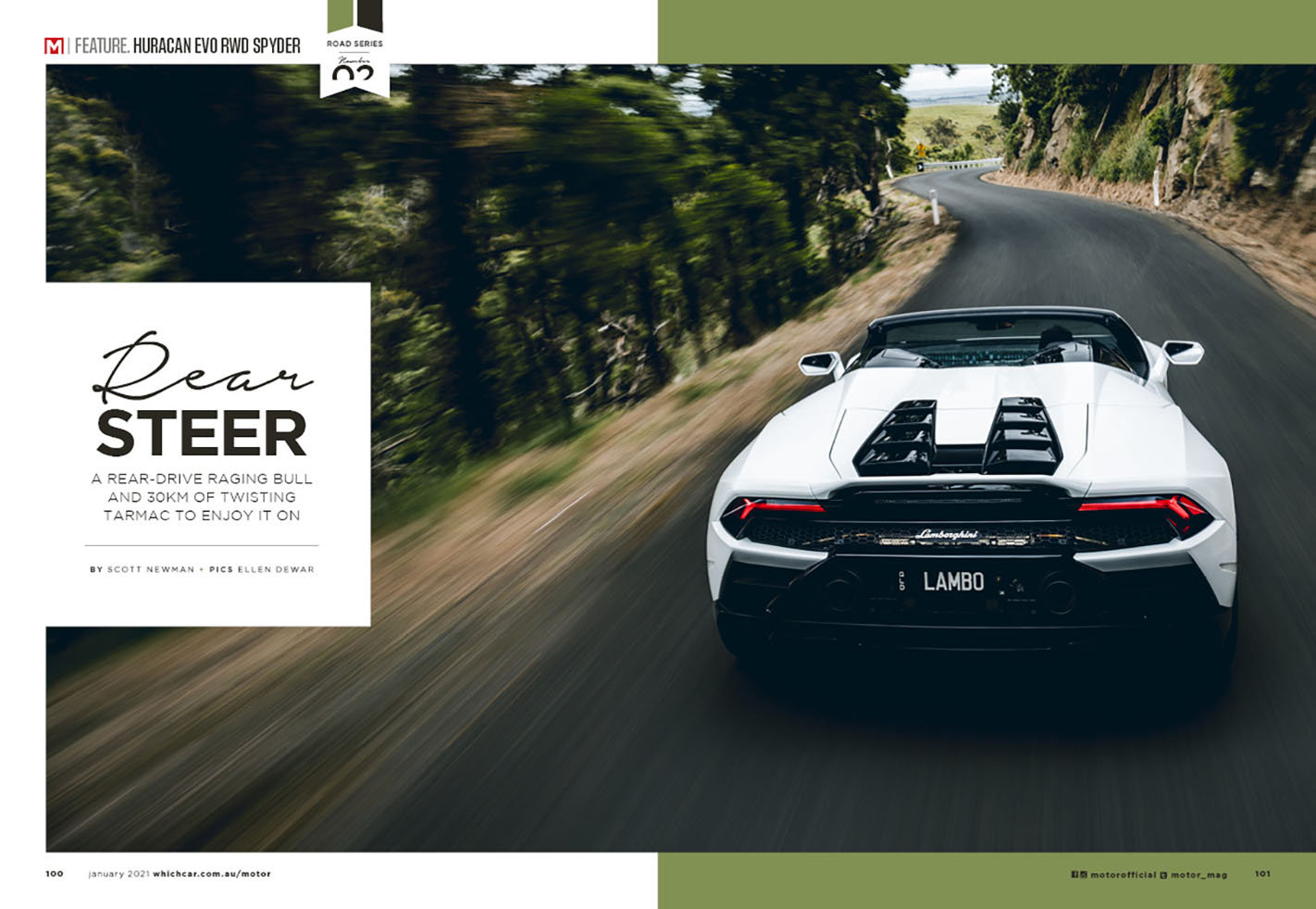
Scott Newman gets behind the wheel of the Lamborghini Huracan Evo Spyder for a top-down summer blast, while our resident JDM expert Alex Affat explains everything you could possibly want to know about buying the car that made the sub-8-minute Nurburgring lap a thing, the Nissan R33 GT-R.
Ever wondered which V12 engine is the greatest of them all? We’ve put together of the ten best from history, and looked at a new technology that could ensure the survival of the combustion engine in an electric future.
We explain why the 24 Hours of Le Mans is about to enter a new golden age, and sit down with Daniel Ricciardo to find out more about the fastest Australian on four wheels.
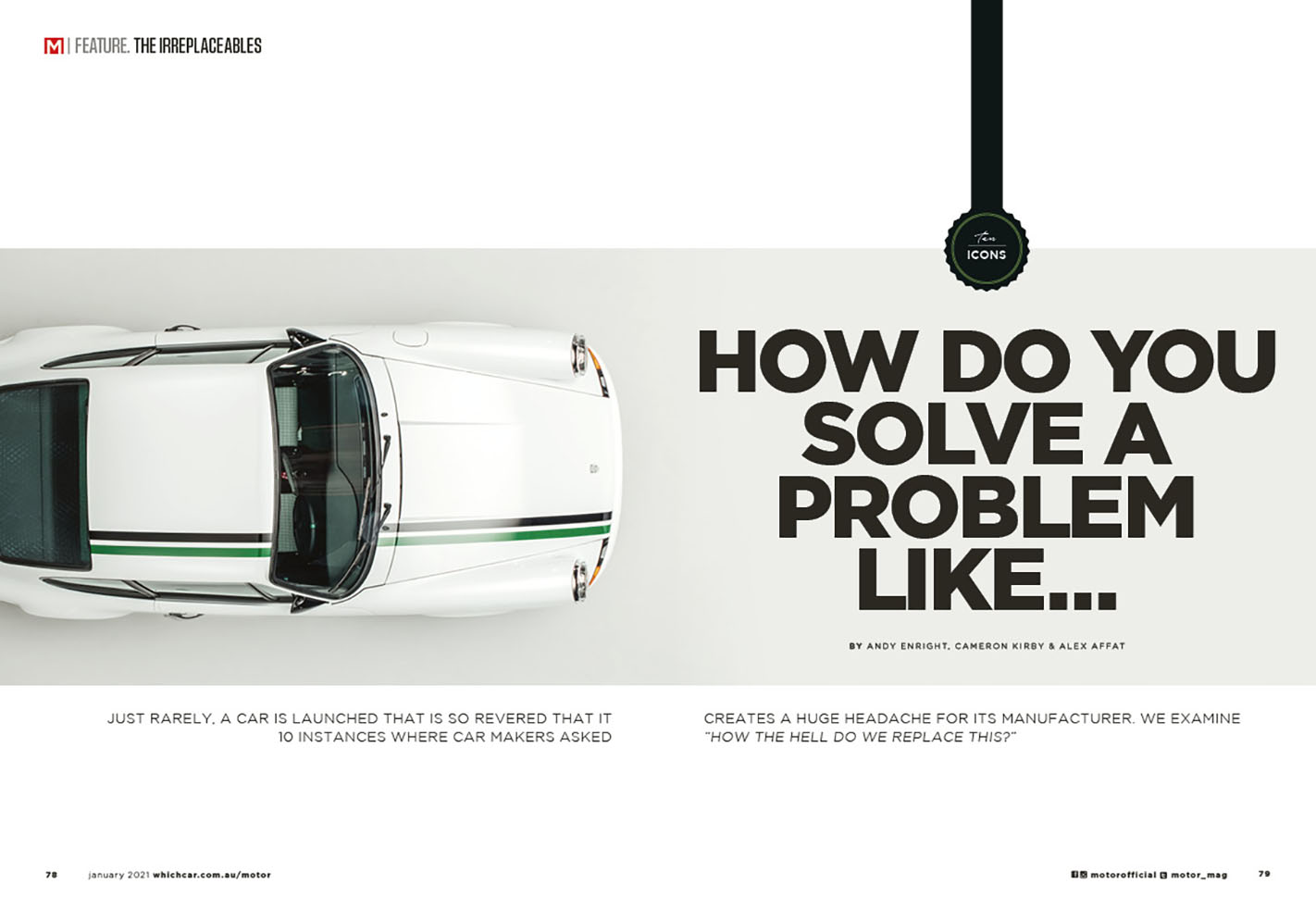
Finally, the team investigates how different car companies have attempted to create follow-ups to their most iconic and legendary vehicles. Spoiler alert: not everyone is a winner.
Plus there’s insight from our regular columnists, rigorous long term tests, and independent first drive reviews.
We are still doing ripper deals on subscriptions, meaning you’ll never miss an issue and get the world’s most exciting car magazine delivered early, direct to your door and at up to 49% on the newsstand cover price at motor.subscription.com.au.
If you aren’t subscribed, make sure to pick up a copy at your local newsagent or supermarket.
WHAT IS IT?
Vans have exploded in popularity over the last year to keep up with online shopping and tax breaks in a heavily re-shaped post-COVID economy.
If you’re looking for something in the medium van segment, Renault’s ever-popular Trafic has been a mainstay in Australia since 2004, currently in its third generation since 2014.
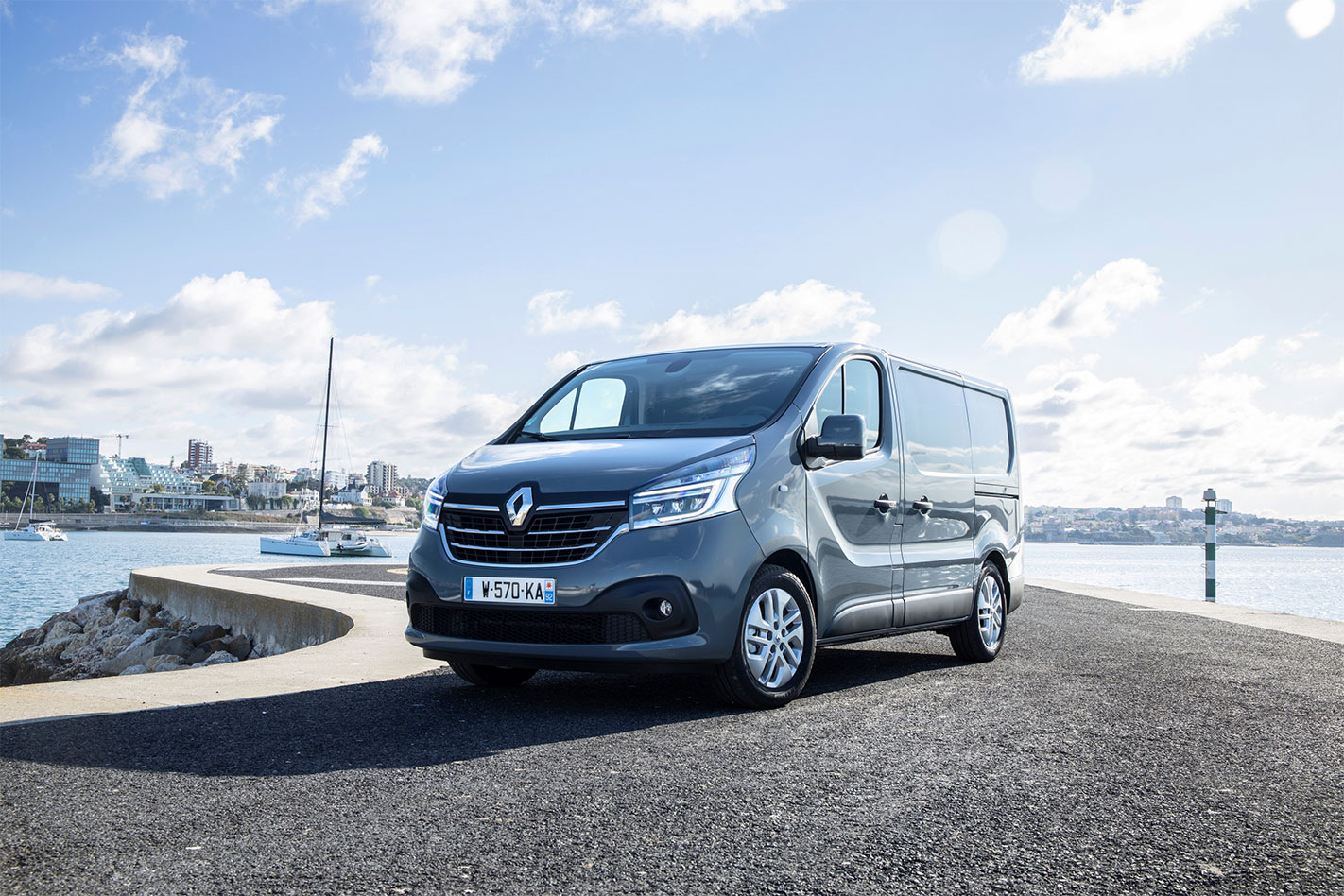
Renault updated the Trafic as recently as late 2019, smartening its looks with new LED headlights, adding a new powertrain and re-arranging spec levels.
It also took the opportunity to reorganise the range and hinge it off three variants.
We’re testing the Premium version, the middle child between the entry-level Pro and range-topping six-seater Crew Lifestyle.
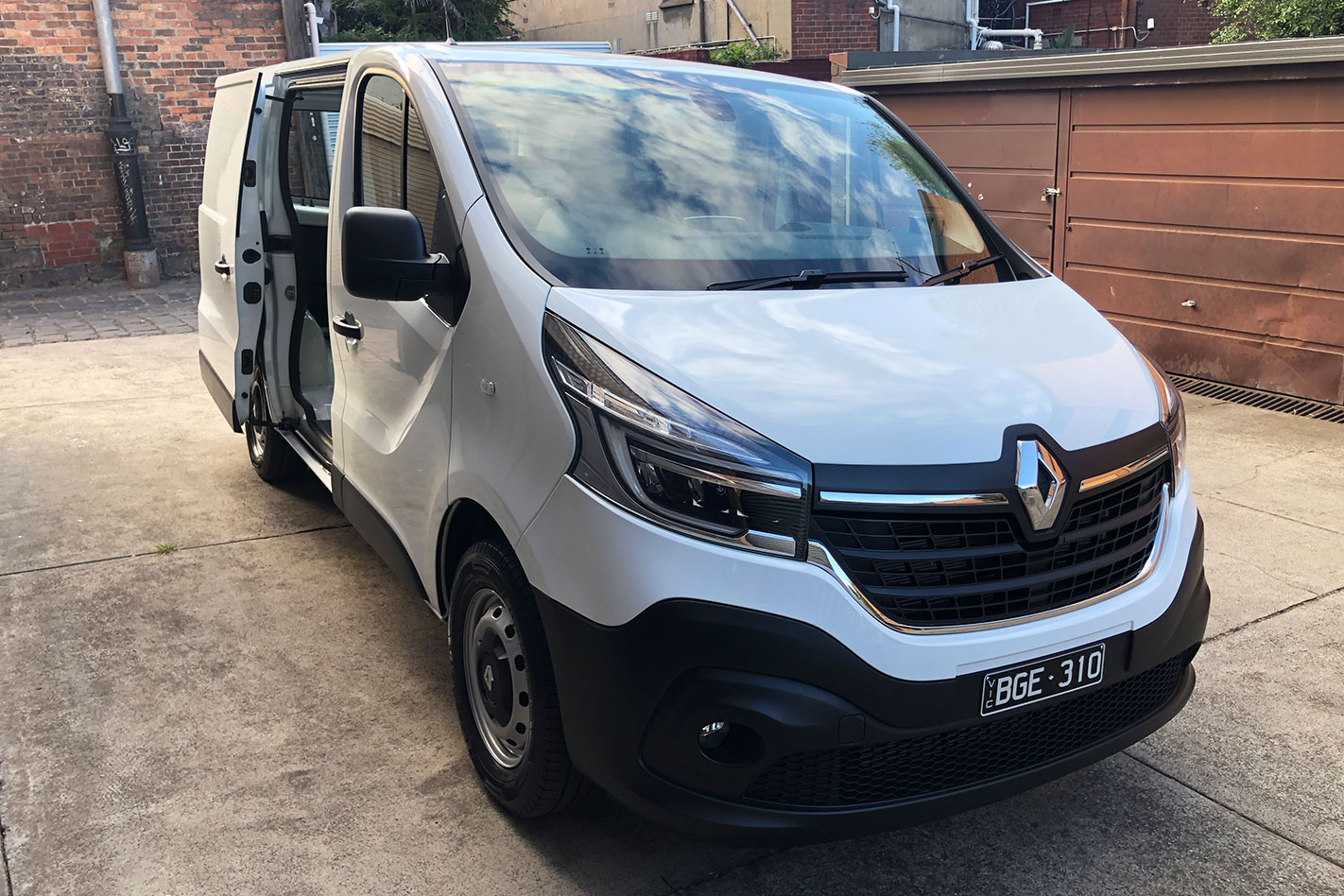
It’s also the sweet spot with its healthy equipment levels and automatic option, starting at $40,490 for the short-wheelbase manual.
VALUE & FEATURES
The Premium costs $4K more than the entry-level Pro but packs a lot of kit for the ask, including a new powertrain.
While the Pro sticks with a trusty single-turbo diesel four-cylinder engine producing 85kW and 300Nm, the Premium upgrades to a twin-turbo 103kW/340Nm version.
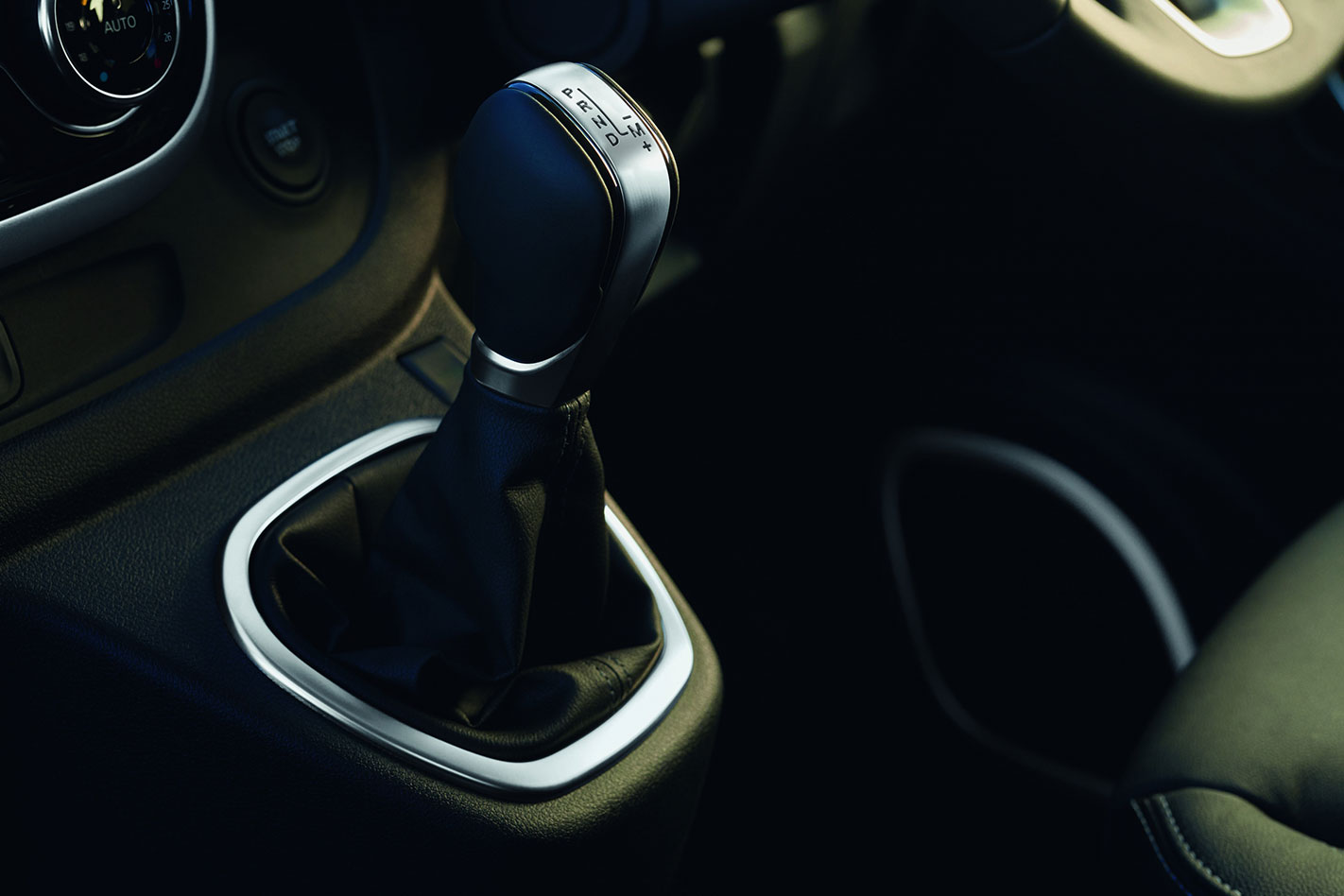
Now you can spend another $4K and score 125kW/380Nm with a six-speed dual-clutch automatic transmission that Renault pinches from its very own Megane R.S hot hatch.
As for other configurations, a long-wheelbase chassis costs an extra $2000. But we’ve stuck with a short wheelbase Premium auto that costs $44,490 before on-roads.
It’s overall $8K more expensive than the cheapest Trafic, bringing a slew of extra features outside and inside the cabin.
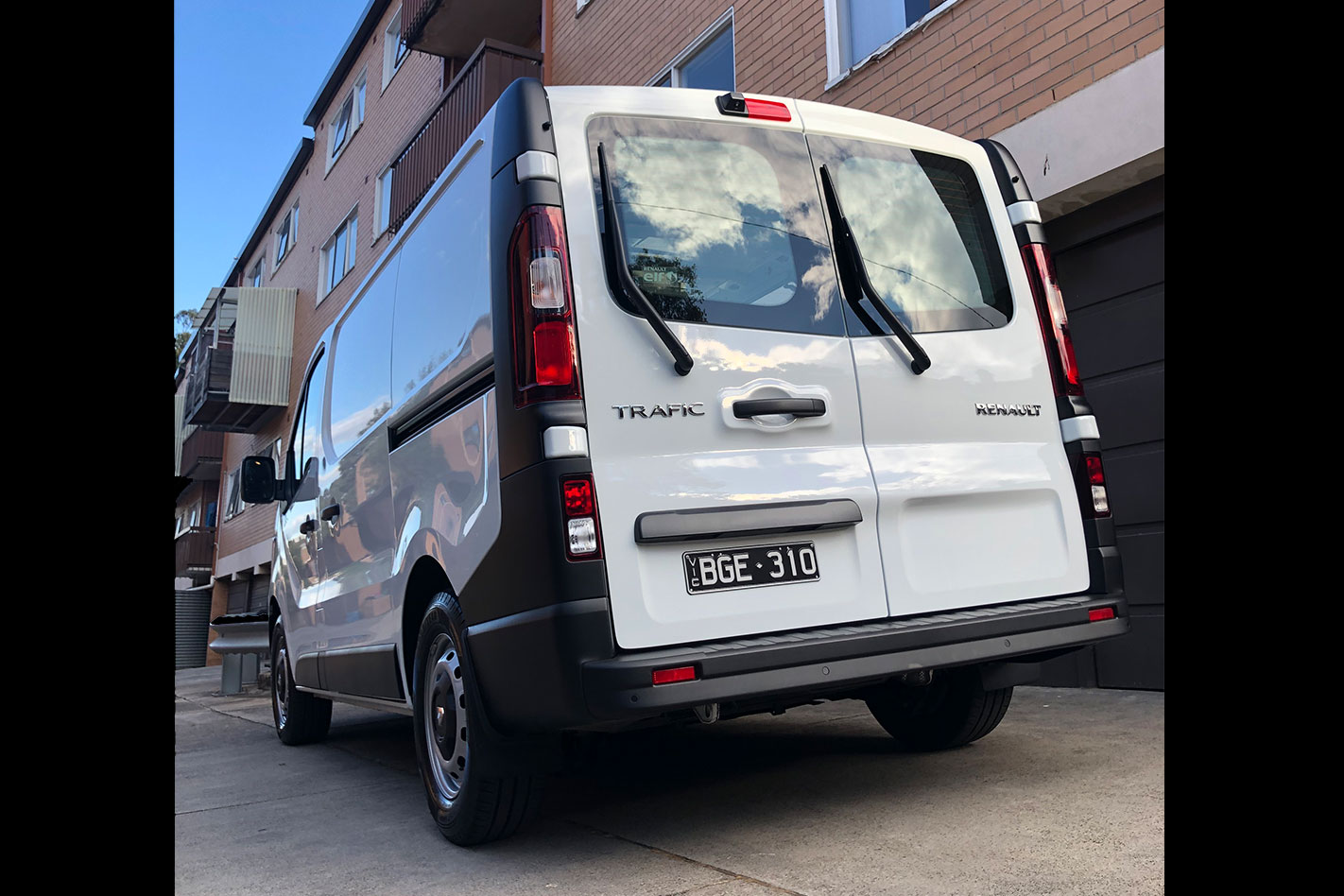
For instance, there are rear barn doors and an extra roller side door. These pair with a bulkhead behind the driver’s seat.
Inside, there’s auto start-stop, smartphone mirroring on the 7.0-inch infotainment system, a phone cradle and a workstation bench on the backside of the middle passenger seat.
Last but not least is a load-through flap in the cargo space that hides long items in a compartment that extends underneath the passenger seat.
SIZE
A short wheelbase Trafic measures 4999mm long, 1956mm wide and 1971mm high. The wheelbase is set 3098mm.
Cargo length stands at 2.5-metres and the load-through flap allows up to 4.15m long items to slide through.
While this is handy for packing long items, it also opens an air passage between the cargo space and cabin, which is something to consider with harmful vapours on board.
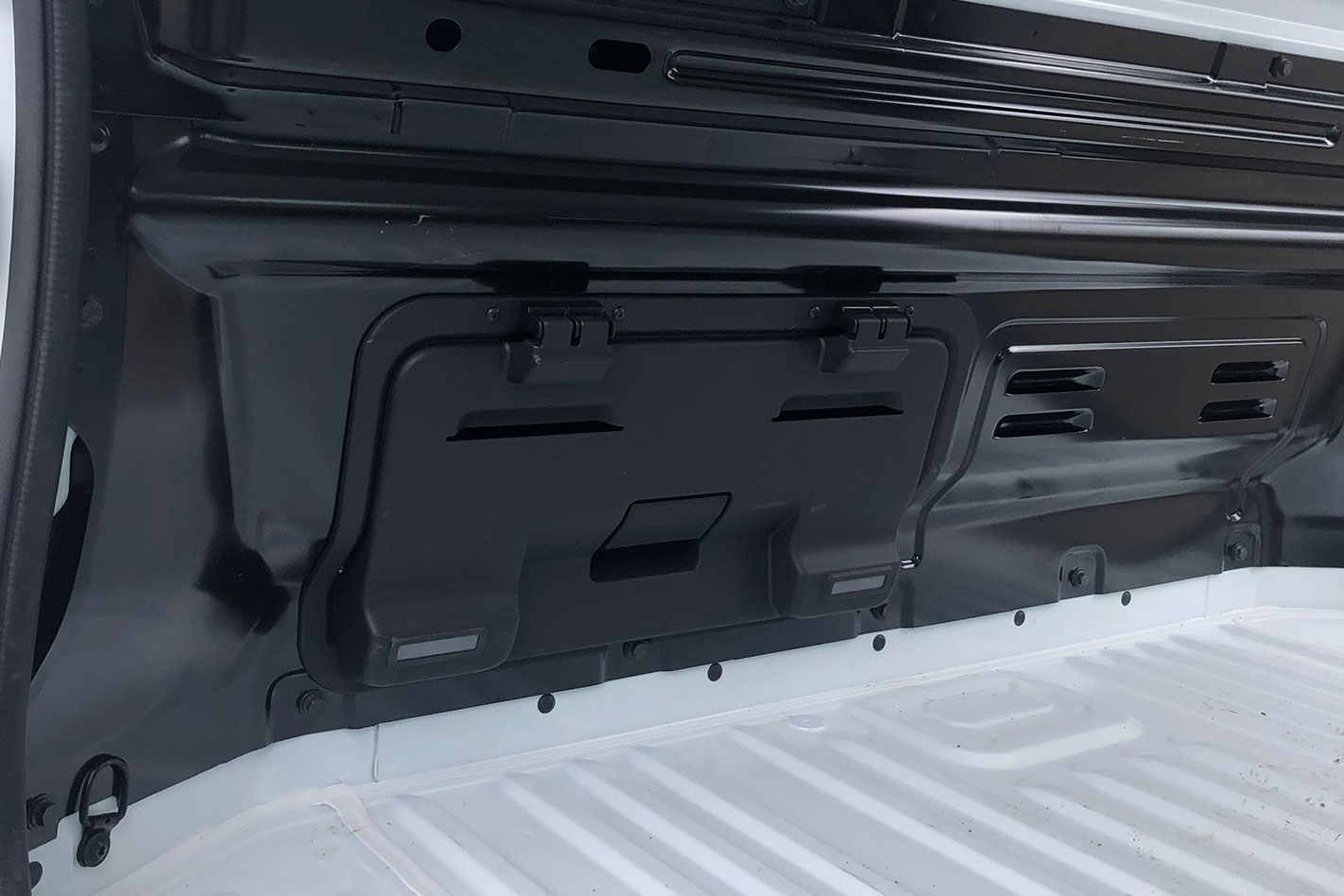
Pairing its cargo length with a height of 1.38m back there, Renault claims the Trafic SWB can swallow 5.2 cubic metres.
If you’re sliding in bulky items on the floor, the wheel arches measure 1268mm across, otherwise comparable with the Peugeot Expert, Volkswagen Transporter and Mercedes-Benz Vito. The width above the wheel arches expands to 1662mm.
The barn doors work well, locking in the open position and measuring 1392mm across the opening.
The absence of a rear differential equals a low step-in height and there are plenty of tie-down points inside to secure cargo.
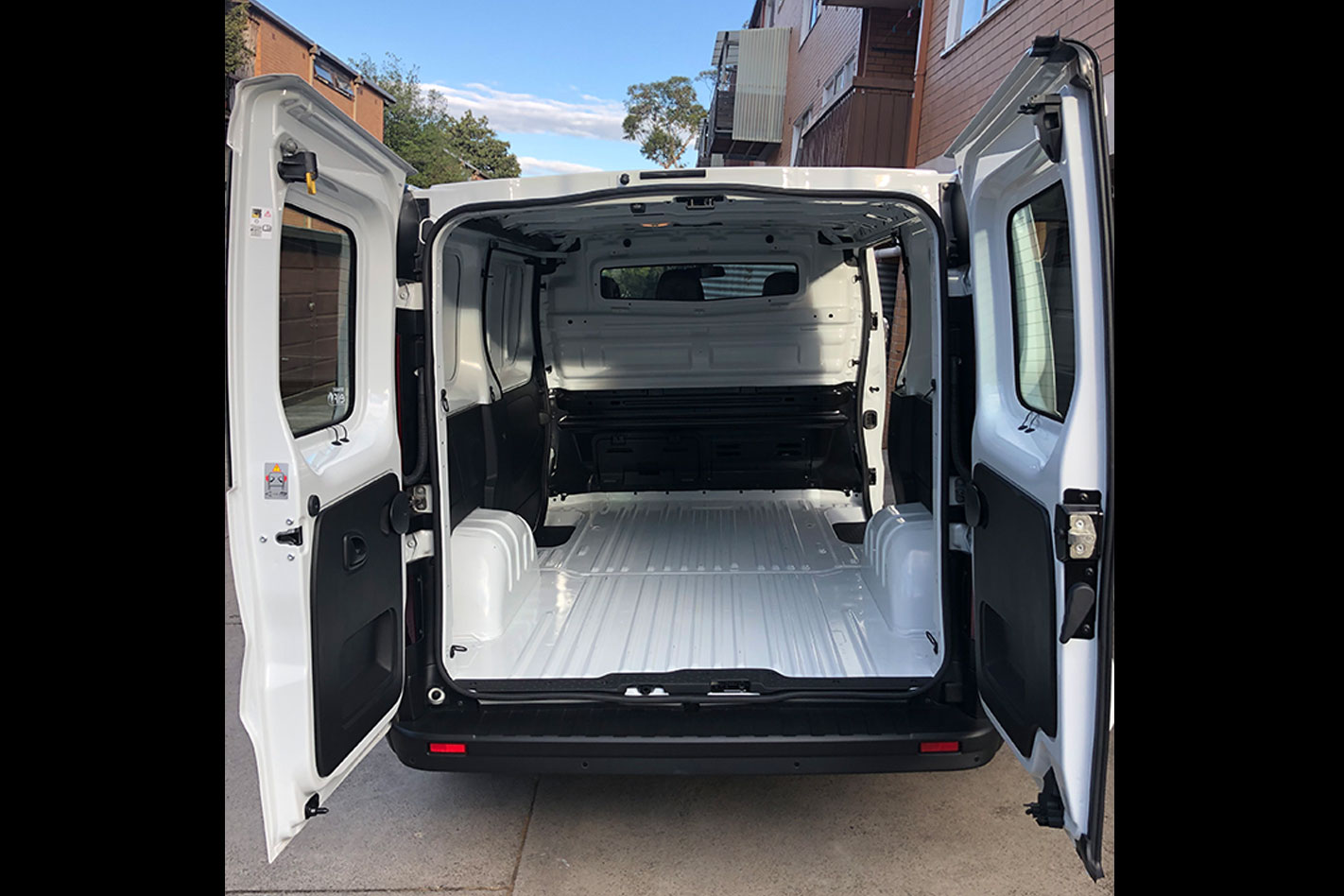
No tub-lining means the painted floor can be slippery under wet shoes and make hopping in without grab handles sometimes perilous.
SAFETY & COMFORT
Up front, the Trafic’s well-finished cabin is an excellent place to sit, honouring the brand with a low-nonsense, squircle-centric interior that feels premium for a van.
The cloth driver’s seat is comfortable for a long day in the cabin, with good back support and cushioning.
There’s plenty of storage inside as well – Renault claims 90 litres – but the cupholders on the dash are woefully small and should suit small coffee cups only.
Of course, the inside of a van is the closest thing some drivers will have to office, so the Trafic addresses this with a scribble pad on the back of the middle passenger seat.
And if you’re averse to Apple Carplay and Andriod Auto, then the high-mounted phone cradle puts mobiles in easy view.
Speaking of, it’s relatively easy to see out of the cabin. But given the Trafic lacks crucial safety tech like active cruise and blind-spot monitoring, it’s baffling that the centre headrest can’t be removed to clear your rearward view.
ON THE ROAD
In a way, it’s a shame Renault’s Trafic is no longer manual only.
The six-speed manual is so easy to use that some may ask if the model ever needed an automatic. But Renault knew it was missing out on a chunk of sales.
We had reservations about using the Megane RS’s six-speed dual-clutch for a commercial purpose, however, it handles the job well.
With 200kg worth of cargo onboard, take-off is smooth, and while it’s not as responsive as a torque converter on part-throttle in traffic, it’s certainly bearable in stop-start situations and manoeuvring at low-speed.
It’s also paired with a real workhorse in the new Euro 6 compliant twin-turbo four-cylinder engine.
Offering 380Nm from 1500rpm, the Trafic has enough grunt to wheelspin from traffic lights if you are indelicate and can easily haul a load up to 100km/h, only running out of puff in top gear on inclines.
It’s matched to 1715kg braked tow and 1250kg payload ratings, although it’s worth mentioning the manual can handle a higher 2000kg braked tow rating.
As for fuel, Renault says it’s slightly thirstier than the middle-spec 103kW/340Nm engine, with 7.3L/100km playing 6.6L, and our 8.21L/100km tested consumption came close to matching the claim.
But the Trafic’s biggest drawcard remains how it drives.
From its natural steering to its superb ride quality, it’s easy to forget you’re piloting a van. If you’re spending lots of time navigating city streets we’d weigh this score heavily.
VERDICT
From an ownership perspective, Renault‘s five-year, 200,000km warranty on all Trafic models lags slightly behind rivals like Ford who offer unlimited kilometres.
But from its stylish looks to its comfy cabin and superb dynamics, the new 125kW dual-clutch powertrain puts another feather in the Trafic’s attractive cap, making it well worth a look.
*This article has been corrected concerning Renault’s five-year warranty, which was originally published as three years.
UPDATE, January 2023: Sony Honda Mobility announce Afeela brand, unveil new prototype EV
Here it is, a first look at the near-production EV concept that will be launched in 2025 under Sony Honda Mobility’s new brand, Afeela. Get all the details at the link below.

The story to here
Sony has used the world’s biggest consumer show to show that its electric car project continues on apace, despite the disruption of the coronavirus.
One year after its debut at the 2020 Consumer Electronics Show, Sony has again used the 2021 CES event to reveal footage of the electric newcomer undergoing testing in the real world.
The footage shows the Vision-S prototype being tested on snowy public roads in Austria and not only shows a behind-the-scenes look at some of the high-tech development of the electric vehicle but also shares some vision of how the futuristic features will work.
Further detail shots show a wide array of screens from mirror to mirror, not unlike the recently-unveiled MBUX Hyperscreen from Mercedes-Benz.
It also shows features like gesture control, a 360-degree audio system, 5G connectivity, autonomous driving ability and rear-view mirror cameras.
It will undergo further tuning and testing of its real-time sensory systems in real-world environments in order to test safety, according to Sony.
This is no Gran Turismo gamer special, either.
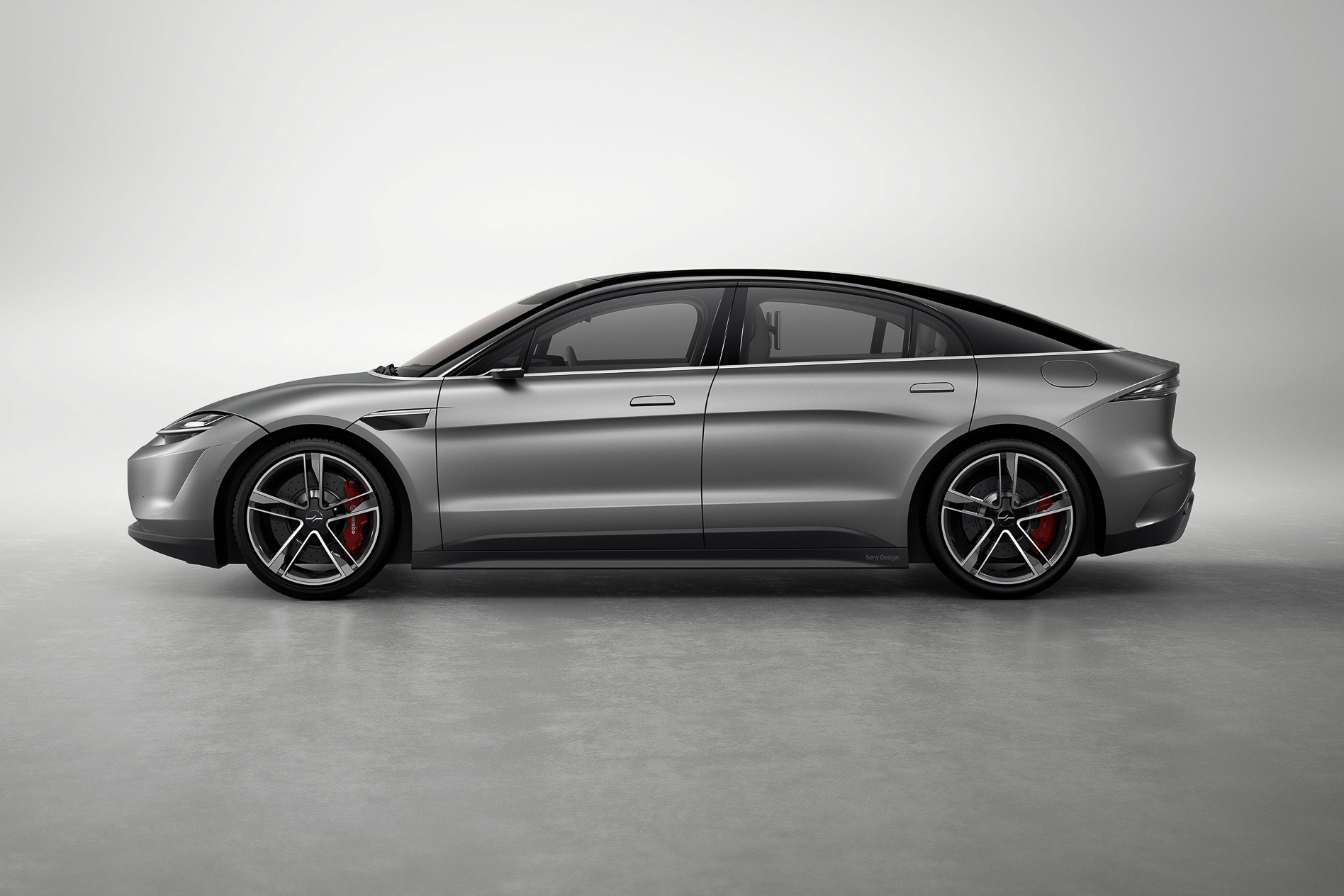
Built for the Japanese tech giant by renowned small-run specialists Magna Steyr (who also build the Toyota Supra and BMW Z4), the twin-motor 400kW Vision-S neatly rounds up the very best tech from Sony’s various arms, including visual and audio.
Sony is not a complete stranger to the automotive world; it currently sells CMOS sensors to Toyota, for example.
What’s more interesting, though, is the fact that Sony has waded into the battle to produce affordable LIDAR (light detection and ranging), which is a key component in the race towards affordable autonomous cars.
Built for a very good reason
The Vision-S prototype which debuted at CES 2020 incorporates Sony’s imaging and sensing technologies, as well as on-board software regulated using Sony’s AI, telecommunication and cloud technologies, according to the company.
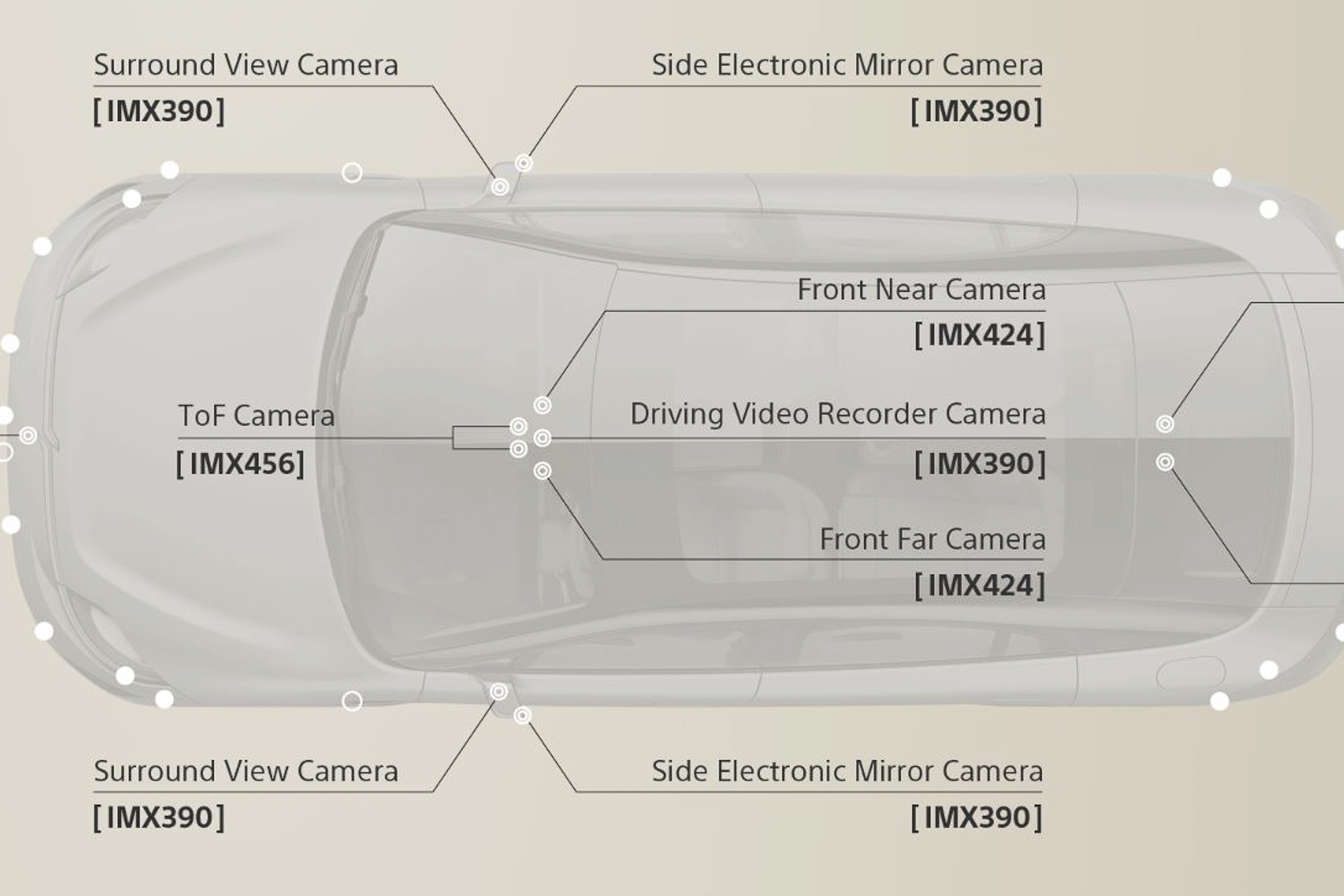
A total of 33 automotive-spec sensors – including Sony’s own CMOS image sensors from its successful camera division – are used to detect and recognise people and objects both inside and outside the car.
The Vision-S sports advanced cruise control, self-parking and auto-lane change functions that equate to Level Two Plus autonomy, according to Sony.
Software updates allow for continual performance upgrades, and Sony says it wants to achieve Level Four or higher self-driving in the future.
The car’s 5G network capability will help here, too.
A tap on a mobile phone app will allow drivers to summon their parked car, while maps being viewed by a driver outside of the car will display automatically on the car’s panoramic screen as soon as the driver enters.
All about the occupants
As well, Sony’s 360 Reality Audio uses speakers built into each seat.
Sony says each musical element, such as vocals or instruments, can be placed in a spherical sound field based on the artist’s intended position.
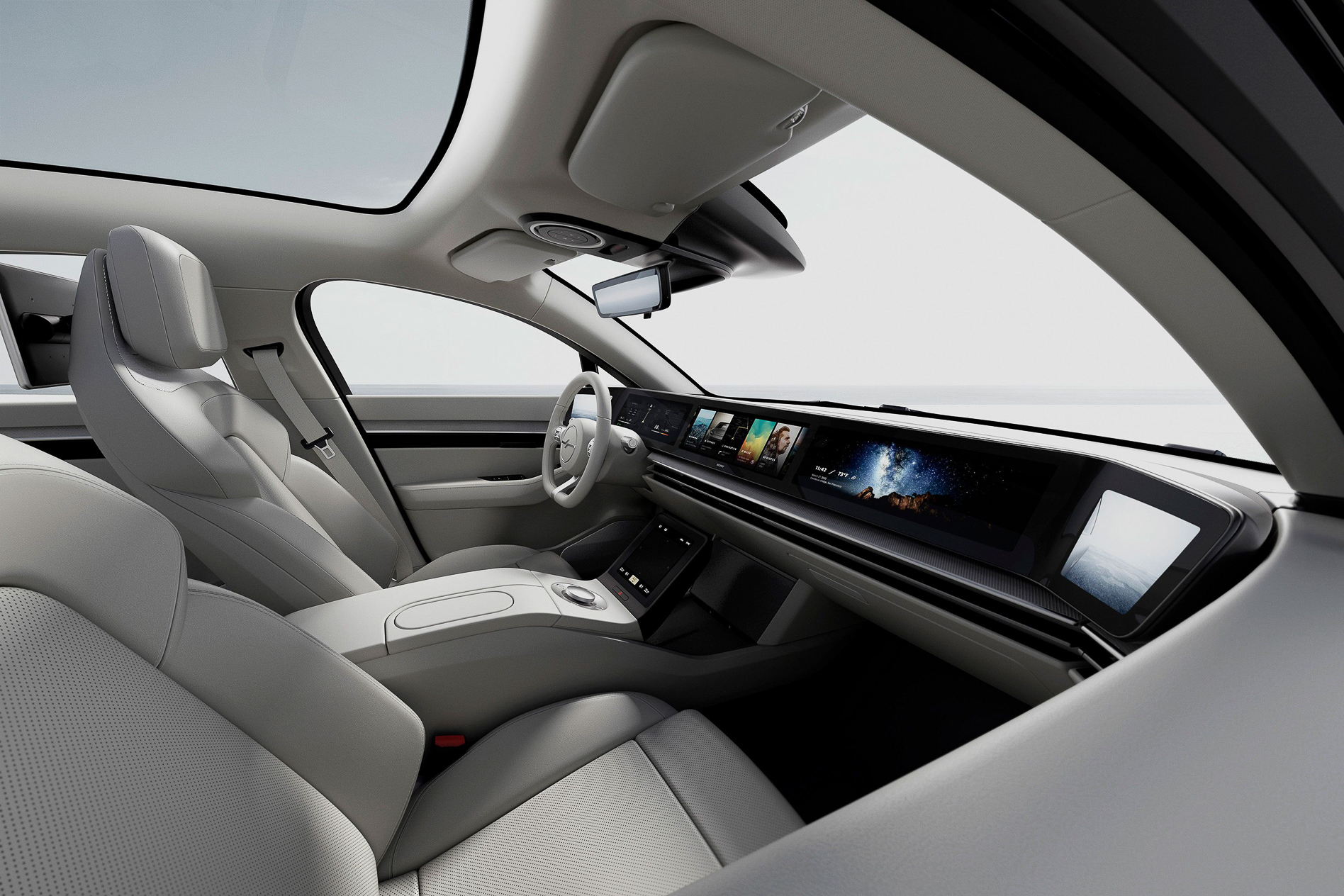
Front seat passengers face a wide panoramic screen, and rear seaters also get their own screens.
Camera sensors can detect both vehicles and pedestrians and send the driver an alert even before they can be detected by the human eye, while the three large displays in the cabin can be aligned according to the driver’s preference.
For example, the room display (room mirror) in the middle can show the view from both sides of the vehicle.
“Sony will aim to leverage its array of sensing technologies to realise this next-generation safety system, providing smart mirrors that offer greater visibility and intelligence than conventional mirrors,” says the company.
Inside the cabin, sensors will also monitor the driver’s and passenger’s facial expressions, while body movement of drivers will be used to gauge their concentration and fatigue levels.
This kind of technology, which is already available in Subaru models, will become mandatory across the wider industry later this decade, as part of NCAP testing requirements.
The cabin temperature will be adjusted according to the condition and feelings of passengers.
The safety of passengers will not be the only goal – the aim is to also achieve a cabin environment that will be sensitive to people’s comfort.
If it detects a sleeping passenger in the back seat, for example, the car will automatically adjust the climate around that seat to a suitable temperature.
It will also continue to learn, whether it is about preferred cabin temperatures, music, driving settings, routes, or various other driver and passenger preferences.
Vision-S is the real deal
When it comes to the vehicle itself, Austrian prototyping specialists Magna Steyr built the electric car on top of an all-new skateboard-style EV platform which, Sony says, can be used for various car types like “sedans, SUVs and MPVs.” Interesting…
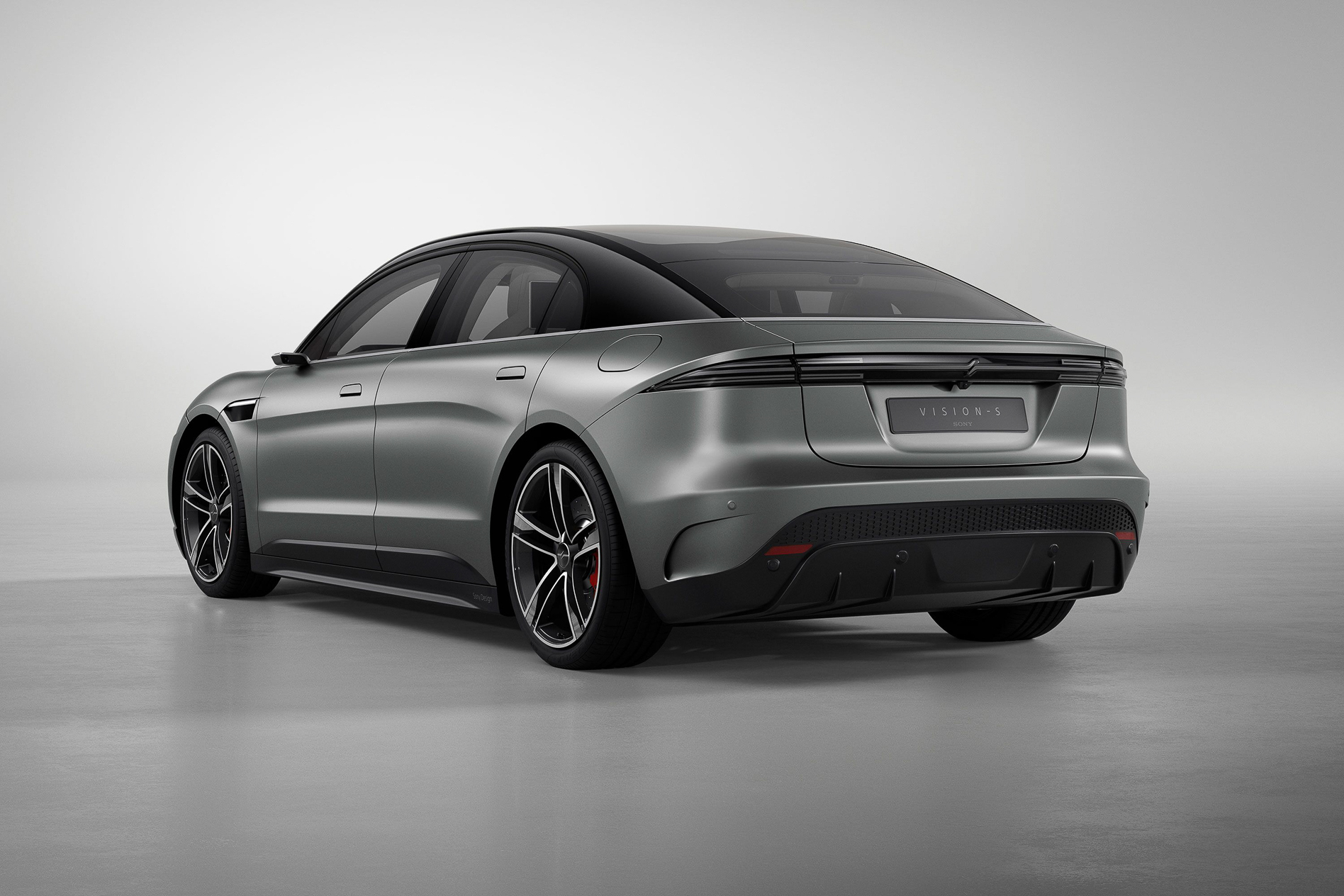
Looking like a cross between a Tesla Model S and a Porsche Panamera, the Vision S is about 100mm shorter than a Model S but with a 40mm longer wheelbase and 15mm more width.
It’s built with air-damped double-wishbone suspension front and rear and staggered 21-inch rims.
An electric motor is mounted on each axle, with Sony claiming a 200kW output from each one. It’s also got a claimed 0-100km/h time of 4.8sec and a top speed of 240km/h.
No indication is given about battery spec or range, other than to suggest that the battery packs are ‘ultrathin’, but the Vision-S’s claimed weight of 2350kg indicates that the battery pack is pretty sizable.
If we had to guess, a range of 320km isn’t a stretch.
WhichCar’s take
This is an eye-opener for the automotive industry.
One of the one world’s true tech giants has just rolled out a good-looking EV that appears on the surface to be incredibly well resolved.
Price, of course, will be a factor, but Sony knows how to mass-produce and sell high-end consumer products. This will be interesting to watch.
What do you think of Sony’s EV prototype? Let us know below!
Formula 1 fans rejoice; the Australian Grand Prix will go ahead this year, with news from the Victorian government resting fears the race might be cancelled altogether.
It says after discussion between itself, Formula 1 management and the Grand Prix Corporation, the Australian GP will remain on the 2021 Formula 1 calendar and run over November 19-21 instead of opening the season.
But the one-off date in some ways could also be a stay of execution, as the event will remain “subject to prevailing public health conditions and advice from the Chief Health Officer” according to the Premier office’s statement.
While there are also no guarantees the travel restrictions between Australian states will be fluid enough to allow fans to travel to the event – or indeed whether the event itself could even host spectators, the decision allows more breathing space for the possibility of attendance.
Quarantine arrangements and further details will be confirmed in due course.
At the same time, Formula 1 has said the Melbourne GP is “subject to World Motor Sport Council approval”.
F1 has also announced the full 2021 calendar which places the Melbourne based Grand Prix third last in the season line-up.
It’ll be followed the Jeddah GP in Saudi Arabia and then Abu Dhabi on December 5 and 12 respectively.
The calendar remains remarkably intact given the circumstances with 23 races planned. In other news, it will see a Netherlands GP return at the Zandervoort track and Imola re-introduced before what could be the Chinese GP – talks are still taking place on the race’s viability.
The Bahrain Grand Prix, set down for March 28, will take the place of Melbourne, which saw extraordinary scenes last year when the race was cancelled just hours before first practise after McLaren team members were diagnosed with the virus.
The coronavirus ripples then expanded, with most forms of racing delayed until the middle of the year.
F1 managed to throw together a truncated season that concluded in Abu Dhabi in December.
It would have been a rush to have the things ready for March, as ticket sales had not yet commenced, while building works to convert the Albert Park precinct into a racing track would have needed to kick off in the next three weeks in order to be completed by the March 21 deadline.
Several drivers – including world champion Sir Lewis Hamilton – and team members contracted COVID-19 during 2020, despite F1’s best efforts to operate in a ‘travel bubble’ mode while racing.
A small outbreak in NSW that has spread to Victoria has seen the borders between the east coast states slammed shut with just 24 hours’ notice, while anyone who does gain access to Victoria will be required to isolate in quarantine for 14 days.
Toyota has issued a recall on late Yaris and Yaris Cross hybrid models due to a potential transmission fault that could cause them to stop unexpectedly during normal driving.
The recall’s statement on the Australian Competition & Consumer Commission’s website identifies an anti-corrosion agent as the core problem.
It writes that “improper application” of the agent during manufacture can cause the transmission’s “input damper” to slip when driven hard.
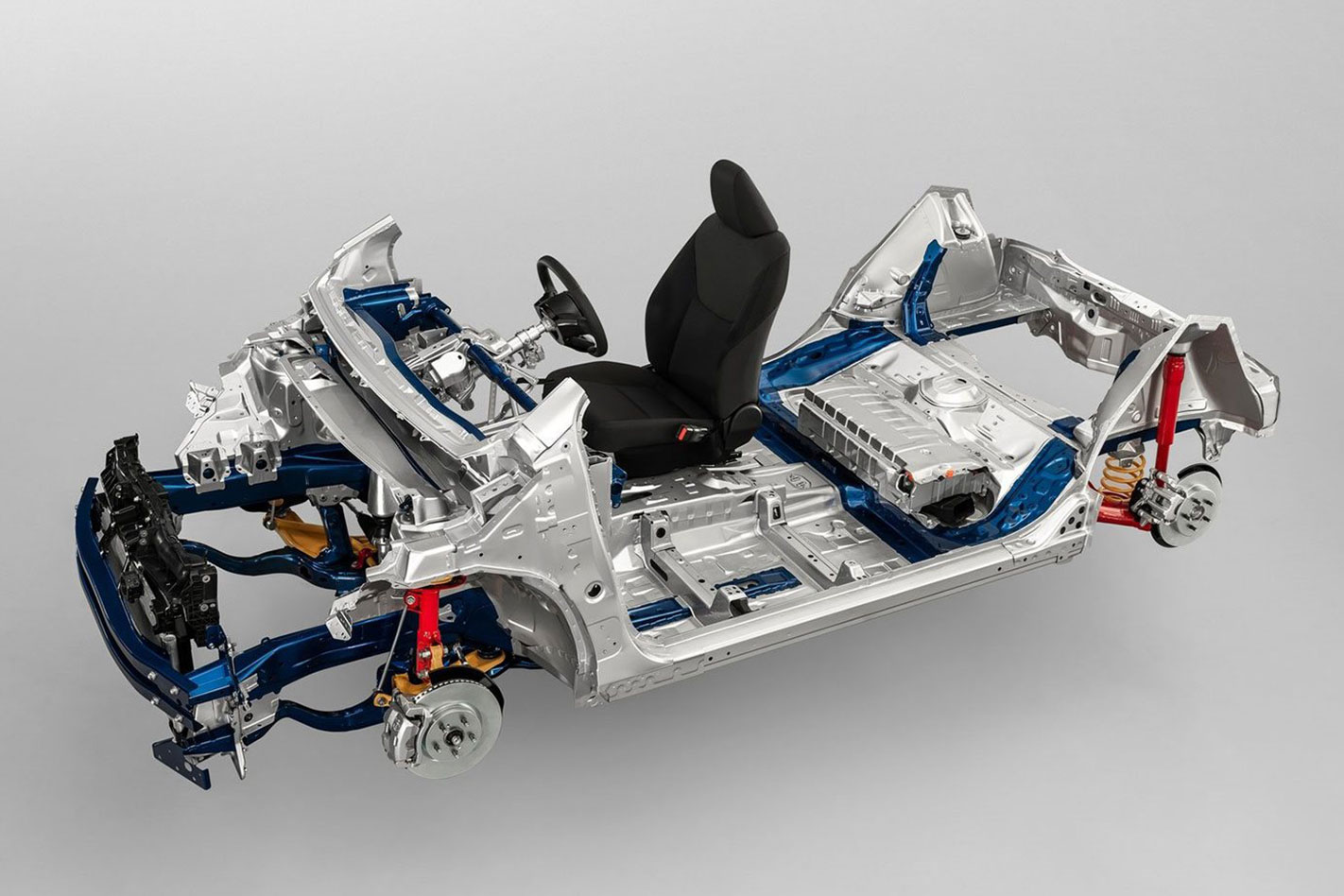
“In the worst case, the hybrid system may shut down, causing the vehicle to unexpectedly slow or stop, increasing the risk of an accident and injury or death to vehicle occupants and/or other road users.”
The nationwide recall first concerns a batch of 234 Yaris models, bearing the chassis code MXPH10, and built across the model years 2019-2020.
Meanwhile 1061 Yaris Cross hybrids built for the model year 2020 are also being recalled. These go by the codes MXPJ10 and MXPJ15.
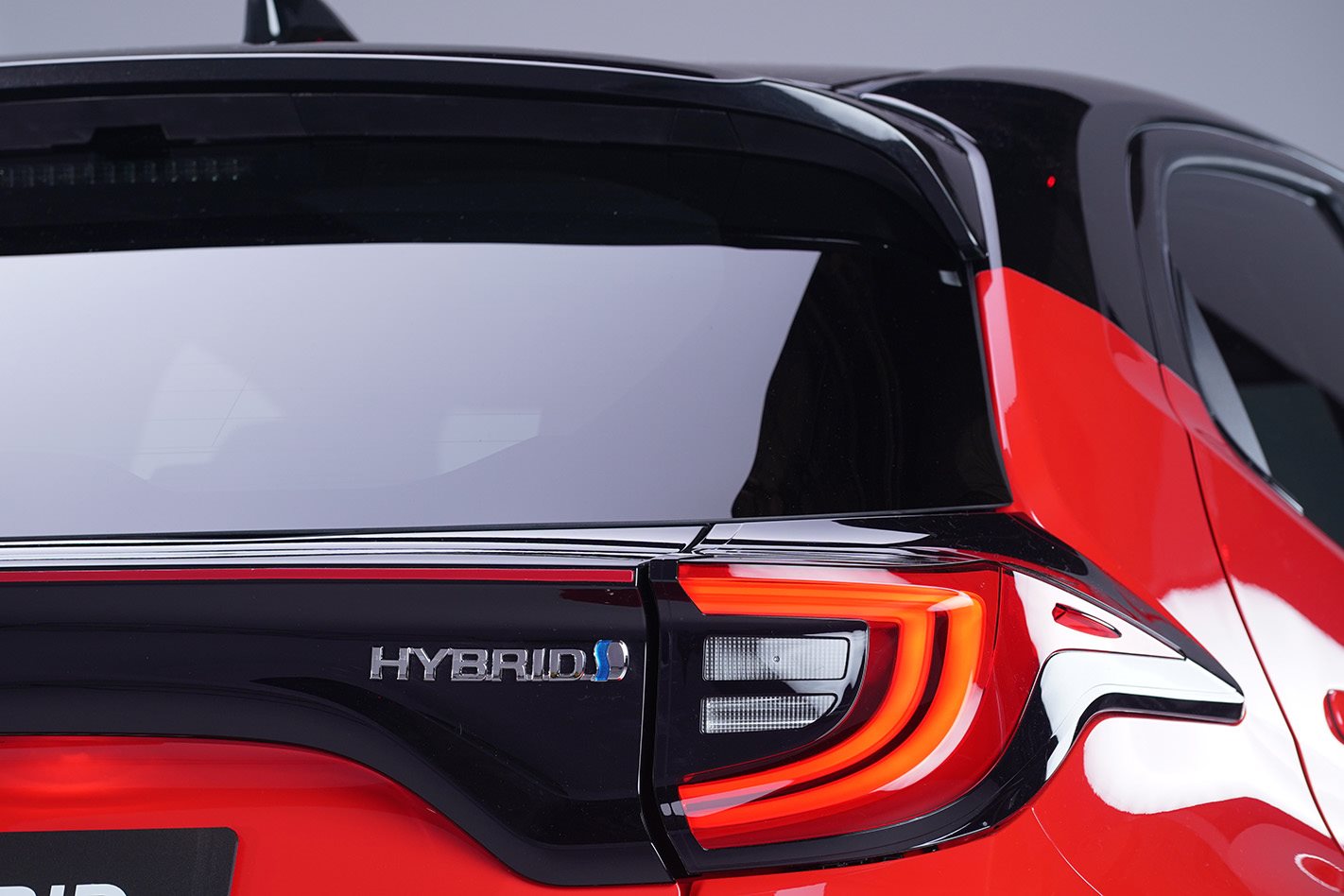
A list of vehicle identification numbers has been published on the website. You can cross-check your Yaris or Yaris Cross here.
Toyota has pledged to fix affected cars free of charge when the required parts arrive in February/March and will immediately write to owners alerting them to the recall.
We reached out to Toyota but are yet to hear back on whether owners are advised to stop driving their cars in the meantime.
The Yaris and Yaris Cross represent just under a third of Toyota’s popular hybrid range. But up until now, there has been no recall for any other model regarding this issue.
That’s likely because the 1.5-litre hybrid powertrain in question belongs solely to the Yaris and Yaris Cross models.
Toyota’s last significant recall concerning hybrids was in 2014 when an electrical fault affected two million Priuses, slowing them unexpectedly.
MORE Can the new Yaris justify its high price?
While it’s unlikely that you’ve heard of Rick Treworgy’s Muscle Car City Museum in Florida, United States, in no way does that diminish the size and spectacle of this incredible 200-strong collection of muscle cars.
Every single one of these iconic General Motors machines will be auctioned later this month with no reserve after the museum shuts its doors for the last time.
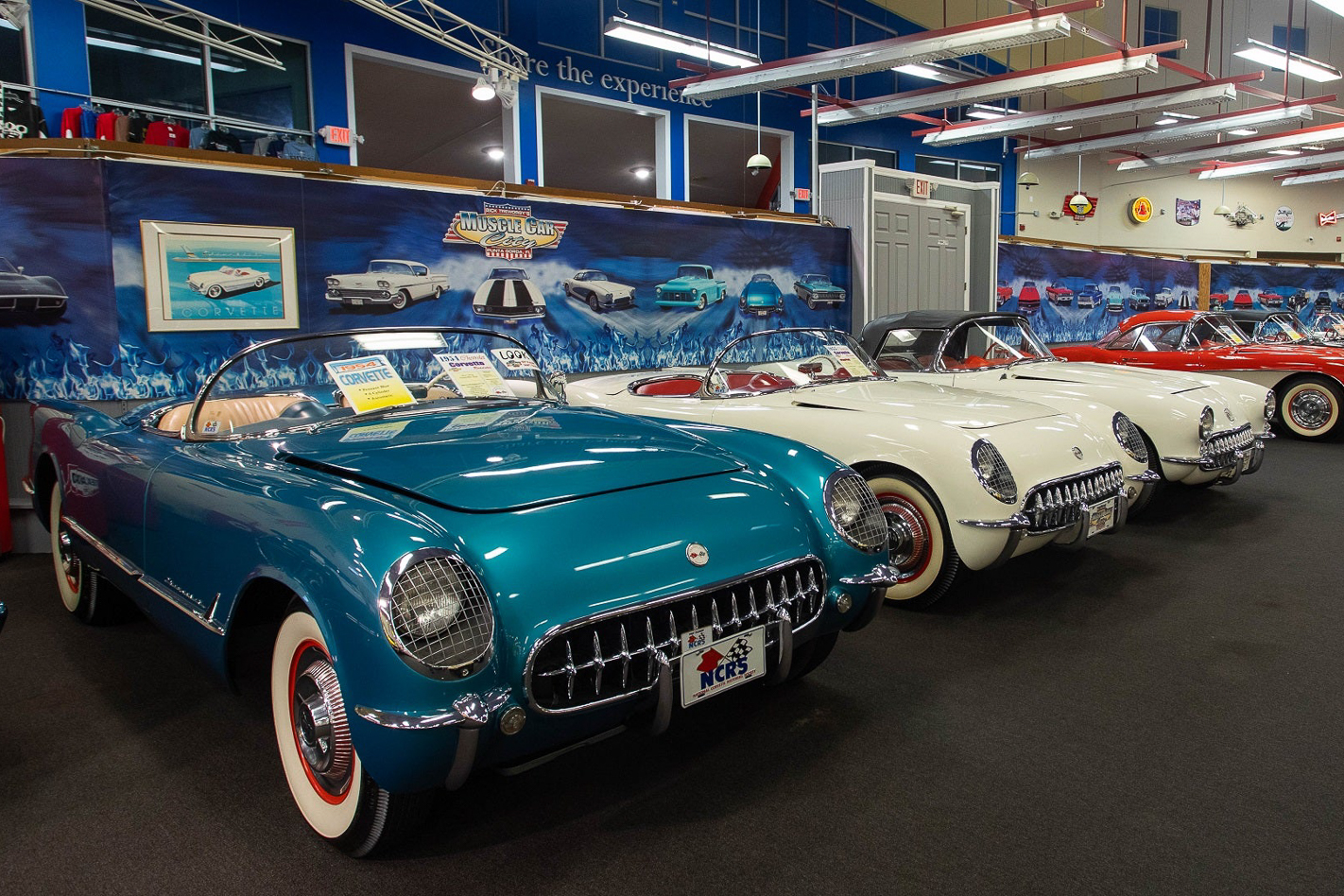
It’s a robust collection full of some of the rarest and best GM cars of the last 80 years, with a heavy emphasis on the Chevrolet Corvette. The museum collection comprises more than 200 cars, is described as having more than 65,000 horsepower and is found inside an ex-Walmart shopping centre.
Treworgy made his fortune in commercial real estate, and has collected muscle cars ever since his first acquisition at the age of 14. He often bought placeholders of cars until he found the right example.
The museum they’re housed in includes a work shop, showroom and 50s-style diner.
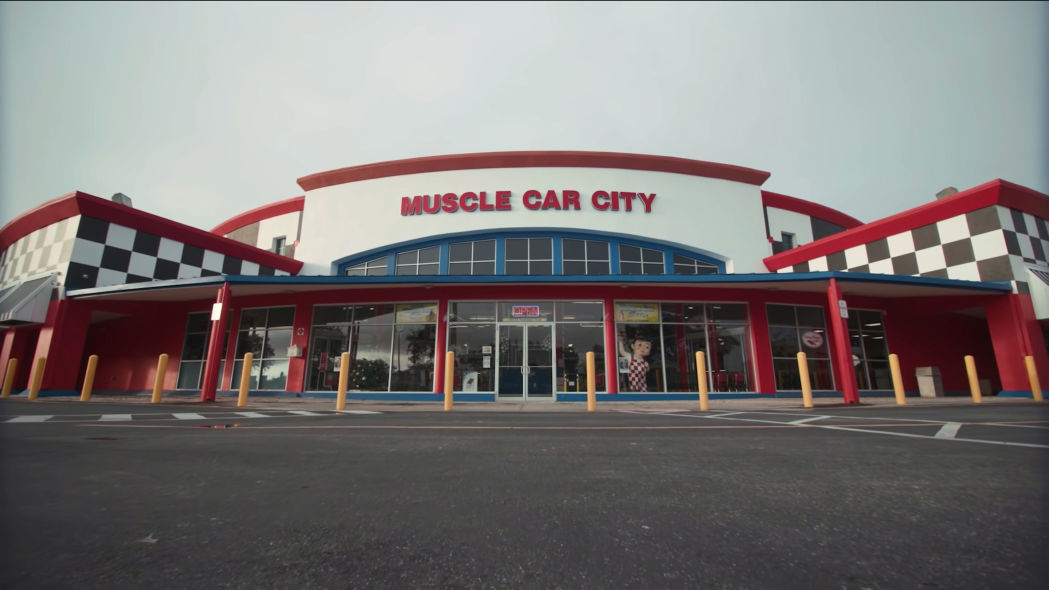
There are more than 80 Corvettes alone, including 20 examples of varying colours from Treworgy’s favourite year, 1967. Impalas, Chevelles, El Caminos, Novas, the list goes on – many of them the most desirable examples of each model.
Camaros are well-represented too; the two very desirable 1969 Camaro ZL1 COPOs are a highlight. Intended as more powerful street legal versions of the normal Camaro, they were sold through a special back-door dealership-style arrangement. They’re some of the most highly-coveted classic Camaro specifications on the used market today.
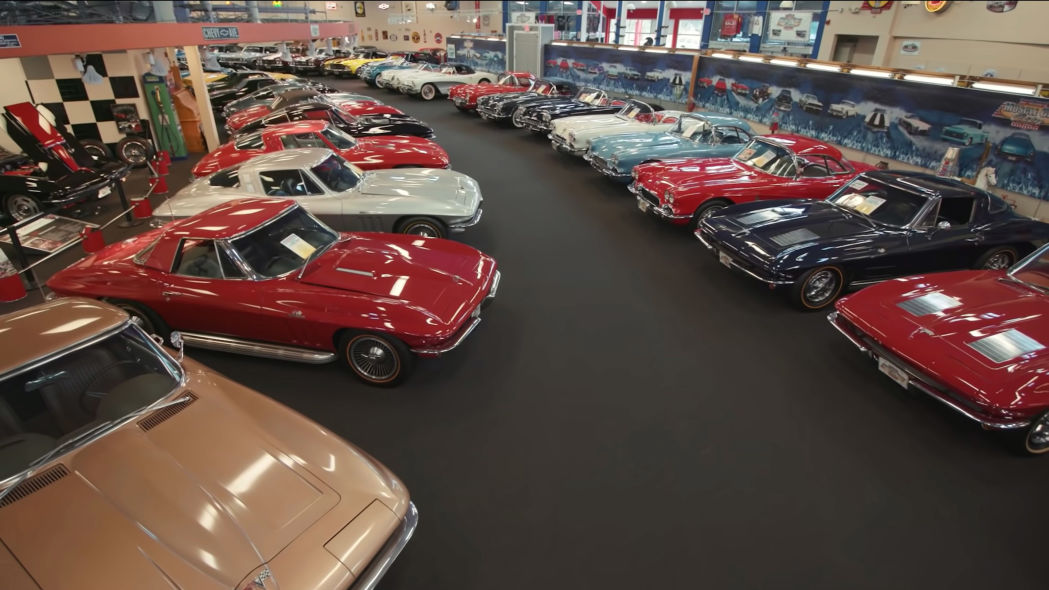
Many of the cars in the collection present in concours condition to the naked eye, though they have been preserved as museum examples. Auction house Mecum Auctions warns that most will need some restorative work before being unleashed on the road.
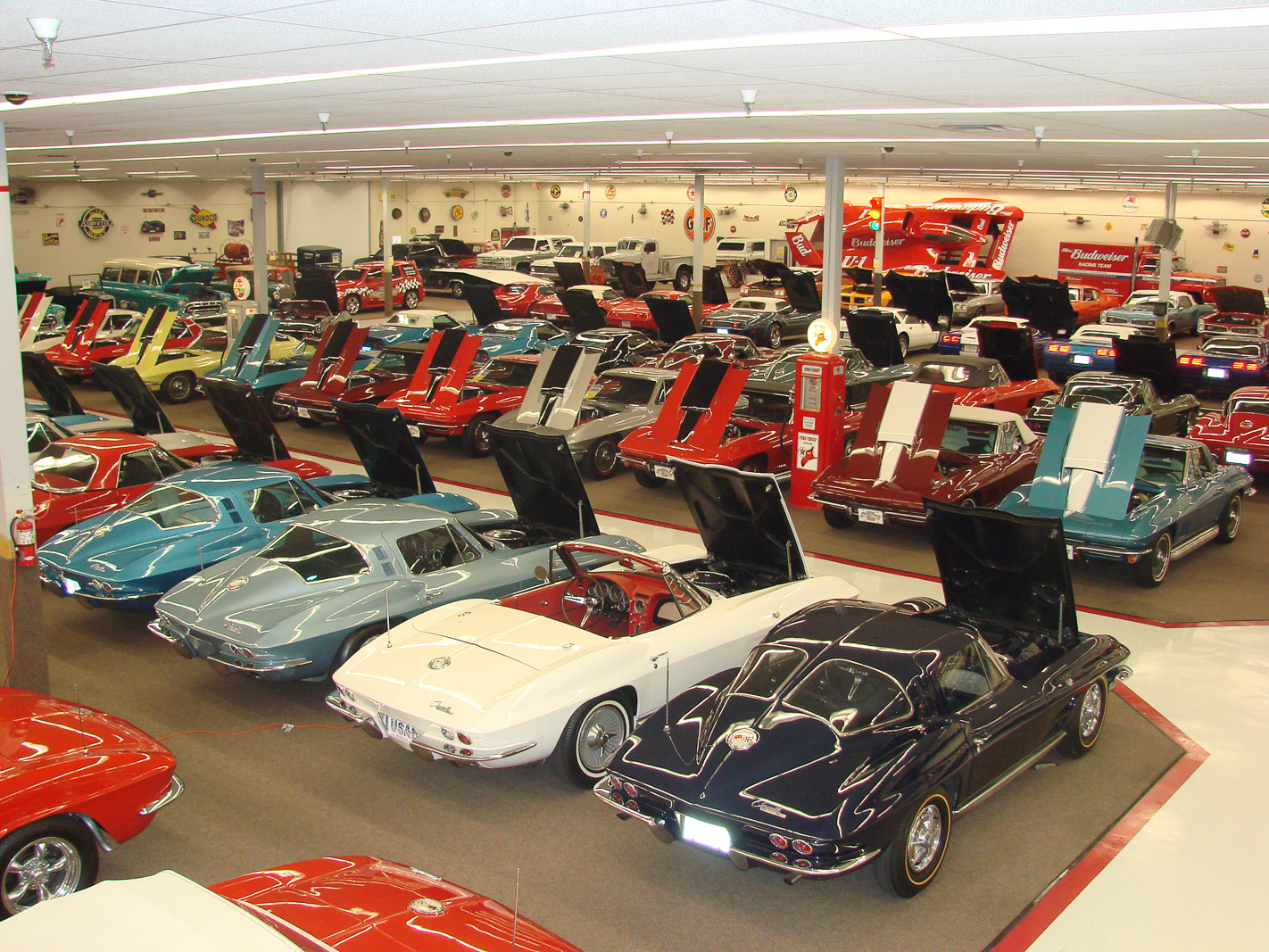
A dwindling number of visitors to the museum and the snowball effect of Covid-19 prompted Treworgy to sell his collection, though he’ll keep a small number of cars for personal use in retirement.
The auction will be held on-site on January 22-23, 2021.
Images: Rod Authority, Mecum Auctions
GWM Australia has announced the maximum towing capacity for its brand-new dual-cab ute, simply called the Ute, has been increased by 750kg to 3000kg.
This should significantly assist the fortunes of the latest dual-cab ute on the Aussie market, which has been designed and engineered from the ground up, and promises to be a far cry from previous generation light commercial vehicles that wore the old Great Wall badge, including the rudimentary Steed.
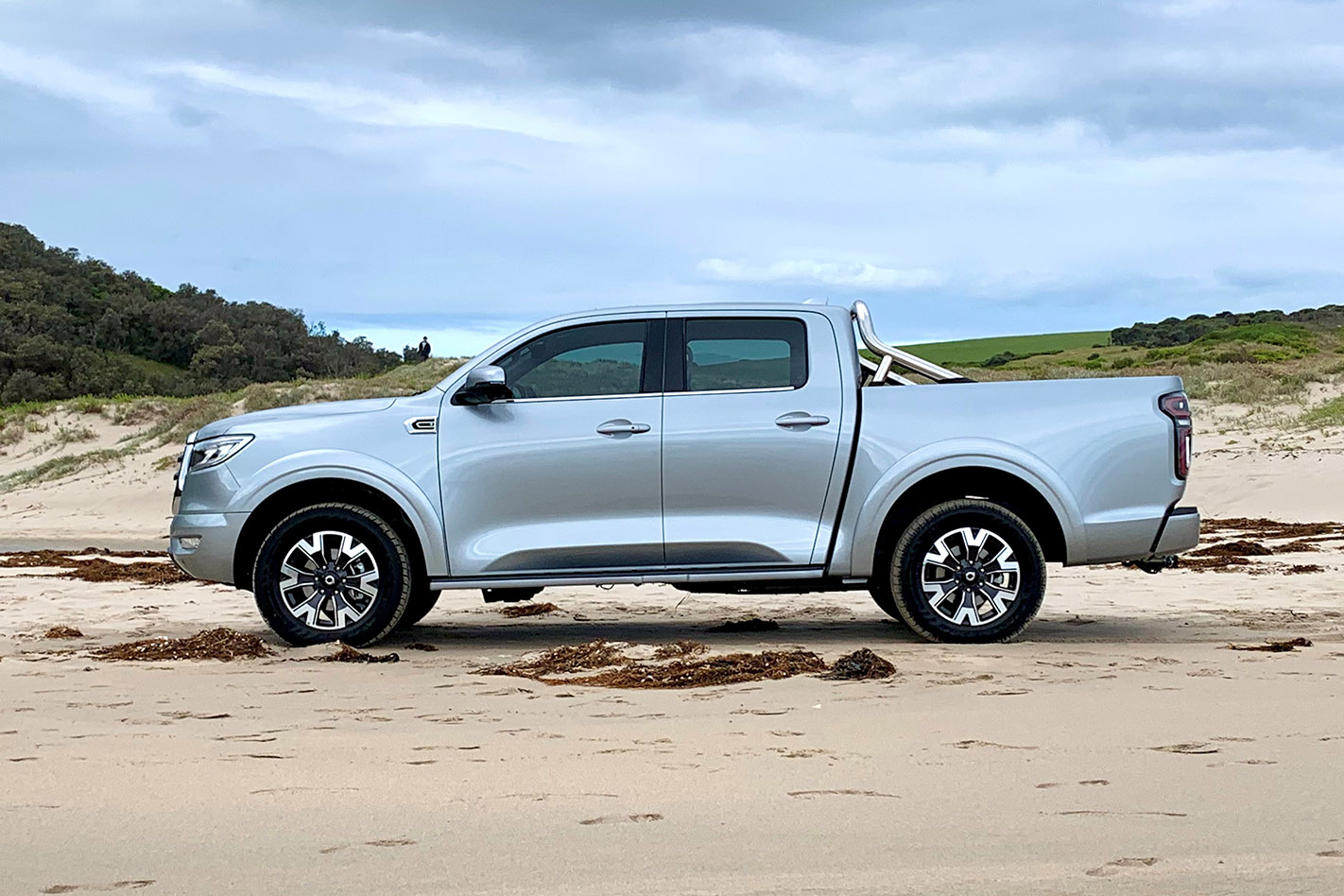
The initial Australian line-up consists of three 4×4 Dual Cab variants, the Cannon, Cannon-L and Cannon-X, which are each powered by an upgraded 2.0-litre turbo-diesel engine and eight-speed automatic transmission.
Pricing starts at just $33,990 drive-away, which is about $3000 more than the LDV T60 Pro but $6000 cheaper than the similarly equipped Ssangyong Musso Ultimate.
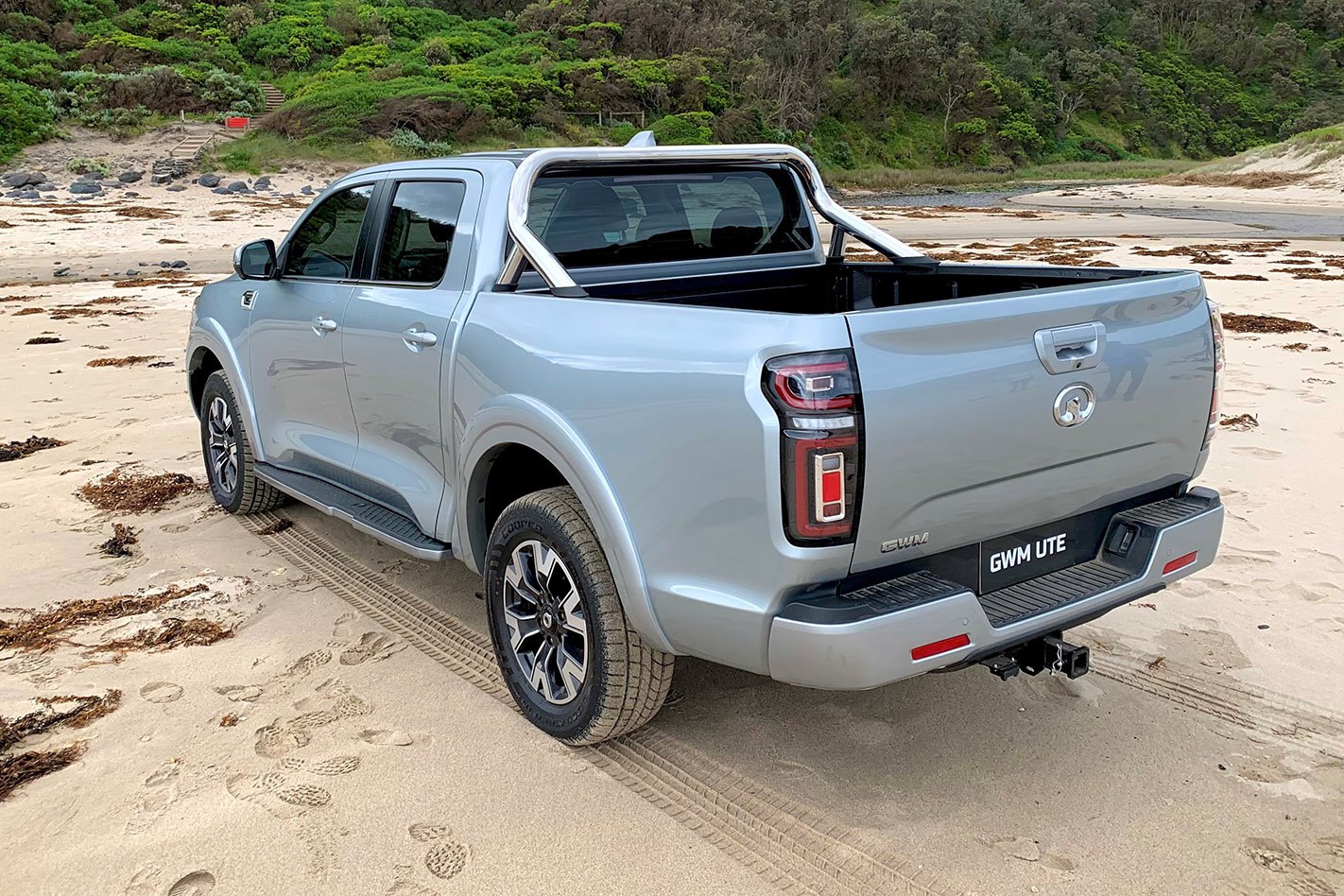
Putting it up against similarly specified versions of big-selling rivals such as the Toyota Hilux, Mitsubishi Triton and Ford Ranger brings five-digit savings. And while you expect them to be more capable off-road (we’re yet to test the either Cannon variant) this is more of a recreational offering that’s targeted at families seeking a good value ute with SUV comfort and features.
When it first arrived in November 2020 its 2250kg braked towing capacity fell well short of 3500kg capacity of most of its rivals. However, the entire range has been re-certified with a handier 3000kg towing capacity, with the maximum downball weight increasing to 300kg.
Until March 2021, anyone buying a new GWM Ute before end of March 2021 will receive $1000 worth of genuine GWM accessories. A $1000 trade-in bonus also applies to anyone trading in a Great Wall Steed or Haval vehicle for a GWM Ute during the same period.
The entry-level GWM Ute Cannon brings with it a seven-year unlimited-kilometre warranty, five-year roadside assist and a bunch of standard features, including:
- 4×4 drivetrain with Torque On Demand
- Rear differential lock
- 9.0-inch LCD touchscreen with Apple CarPlay & Android Auto
- Keyless entry
- Push-button start
- Comfort-Tek (Eco Leather seats)
- Air-conditioning
- Paddle shifters
- Dash cam power outlet
- 12v power outlet, 2 x front USB ports & 1 x rear USB port
- Electronic parking brake
- Autonomous emergency braking (AEB) with pedestrian and cyclist protection and forward collision warning,
- Lane departure warning, Lane keep assist, and Lane change assist
- Rear Cross-Traffic Alert
- Adaptive cruise control
- Traffic sign Recognition and overspeed alert
- Tyre pressure monitoring
- Reversing camera
- Kerbside camera (passenger side)
- Rear parking sensors
- LED headlights with auto on/off
- Daytime running lights
- 7 airbags
- Hill-start assist
- Hill descent control
- 18-inch alloy wheels
- Power adjustable door mirrors
- Fog lamps with auto-steering function
- Side steps
- Shark fin antenna
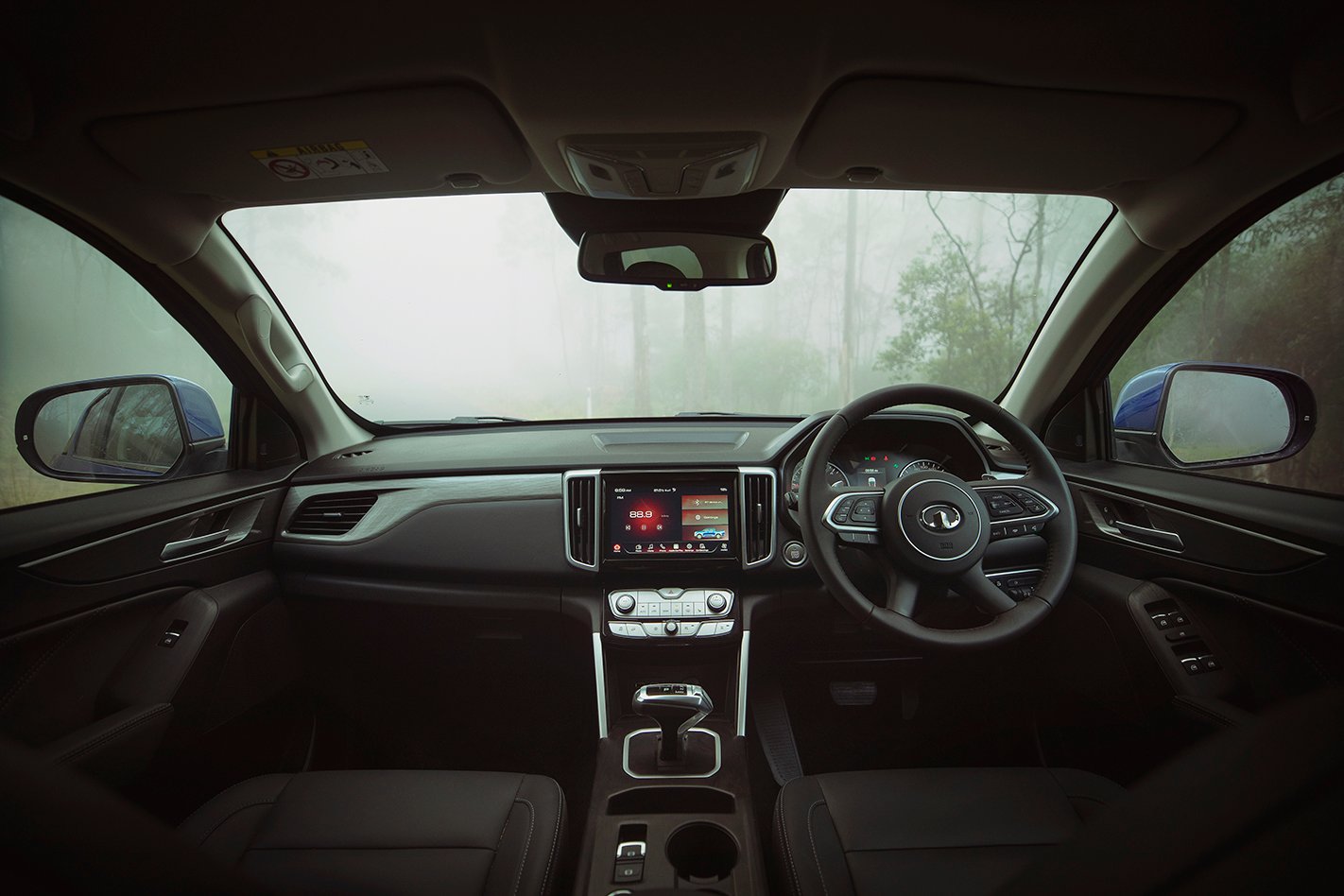
- Leather-wrapped steering wheel
- Heated front seats
- 6-way power-adjustable driver’s seat
- Automatic climate control with Rear A/C Vents
- Front parking sensors
- 360-degree view camera
- Sports bar
- Premium 18’’ Alloy Wheel
- Spray-in tub liner
- Easy up/down tailgate
- Cargo ladder
- Chrome front grille, door handles and mirrors
- Power-folding door mirrors
- Roof rack
- Privacy glass
- Auto-dimming mirror
- 220V power output
- Luxury interior with leather seats
- Tilt and slide adjustable steering
- 7-inch colour instrument cluster
- Wireless charging
- 4-way power-adjustable passenger seat
- Power-assist steering modes
- Door-open warning
- Second-row 60/40 split seat
- Voice Recognition
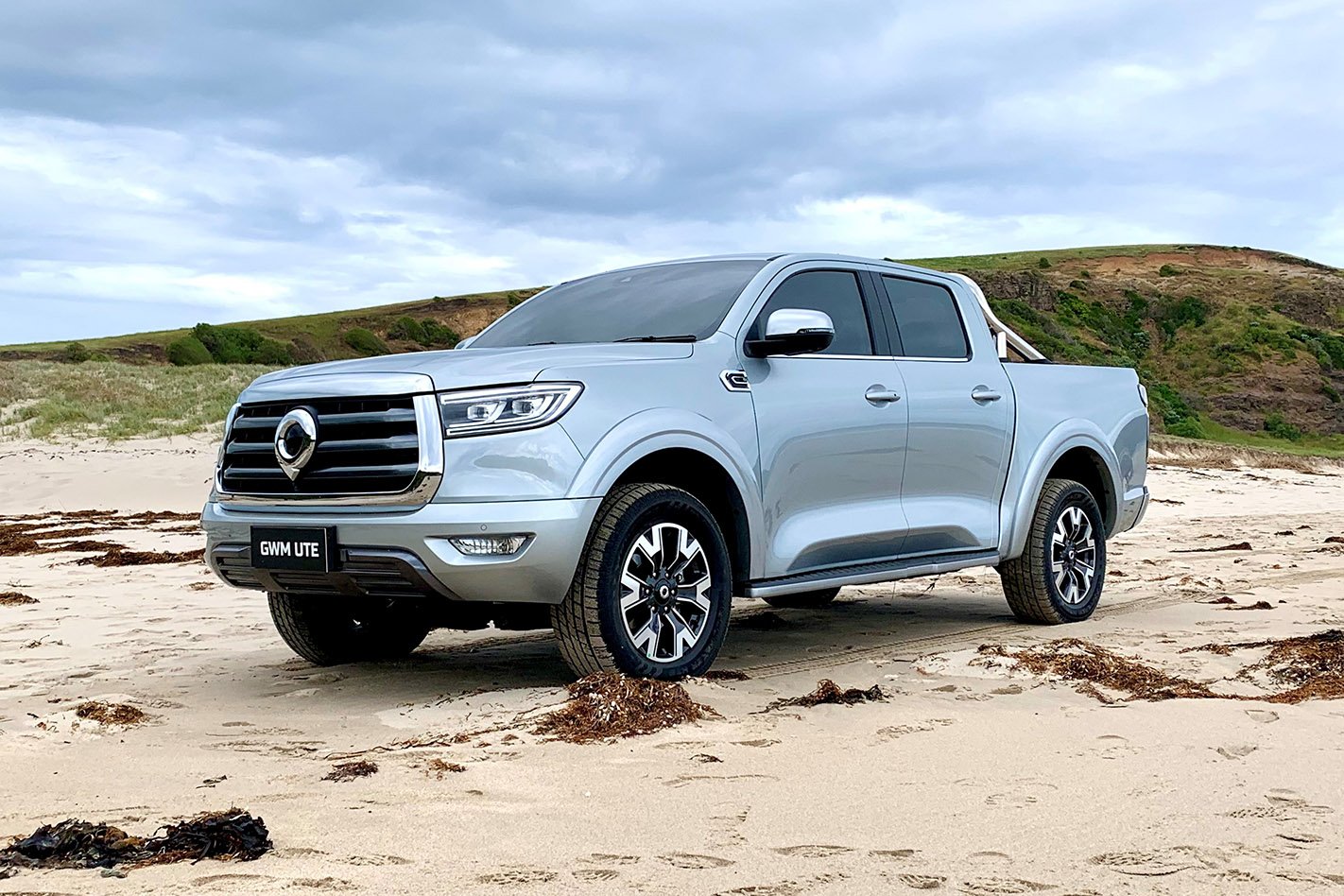
GWM Ute Specifications
- 120kW/400Nm 2.0 litre turbodiesel engine
- ZF 8-speed automatic transmission
- Towing capacity: 2250kg / 300kg downball weight
- Fuel economy (combined): 9.4L per 100km
- Suspension – Front Double Wishbone and Rear Leaf Spring
- 4-wheel disc brakes
- Length: 5410mm
- Height: 1934mm
- Width: 1886mm
- Wheelbase: 3230mm
- Track (front) :945mm
- Track (rear): 1235mm
- Ground clearance: 194mm (laden)
- Approach angle: 27°
- Departure angle: 25°
- Ramp breakover angle: 21.1° (unladen)
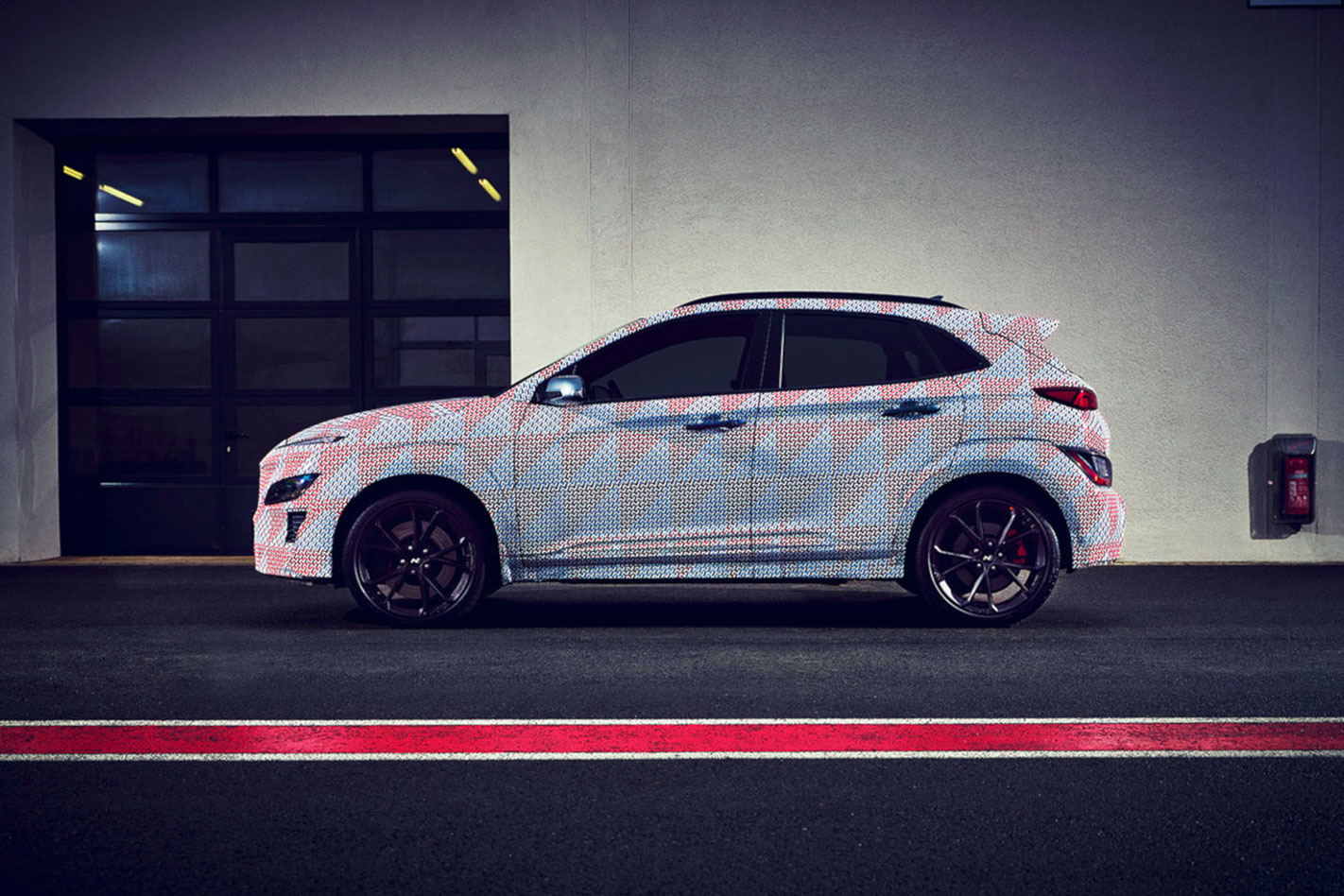
Hyundai’s worst-kept secret is now official after the company confirmed a high-performance Kona N is on the way – and it’s coming to Australia.
Revealed in the brand’s signature multi-colour camouflage, the Kona will be the first SUV to join the N range, harbouring an eight-speed dual-clutch transmission mated with a 2.0-litre turbocharged engine.
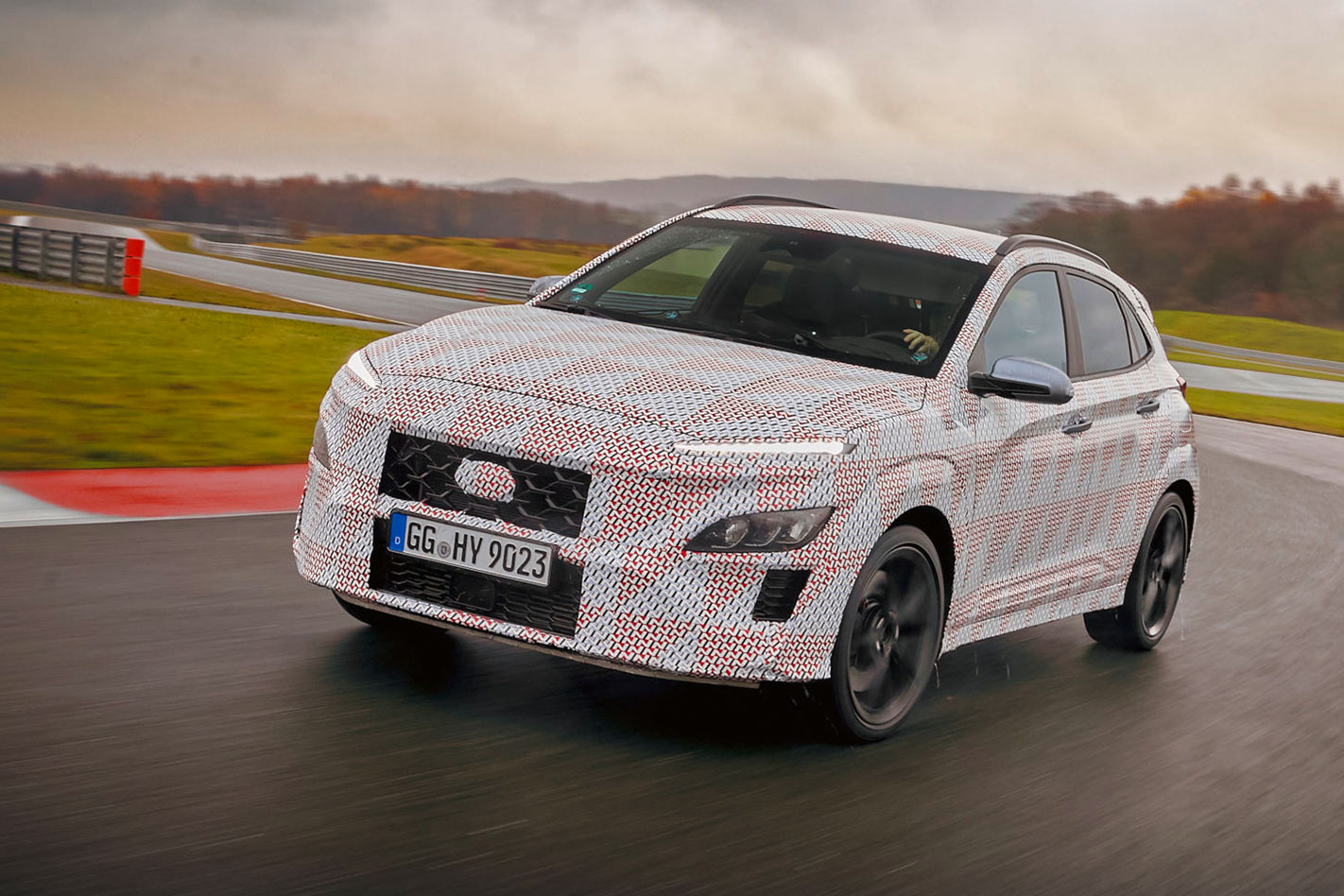
But we don’t believe it’ll offer a different grip configuration to other full N models with all-wheel drive, like its warmer N-Line sibling.
It’ll put around 206kW and 392Nm through the front wheels and that is a lot for a small SUV. Yet, this hasn’t stopped Hyundai adding a launch control function.
There’s not a whole lot we can discern from photos from the prototype, except that it’ll pack large wheels rolling in Pirelli performance rubber. Disc brakes finished in trademark red are also present.
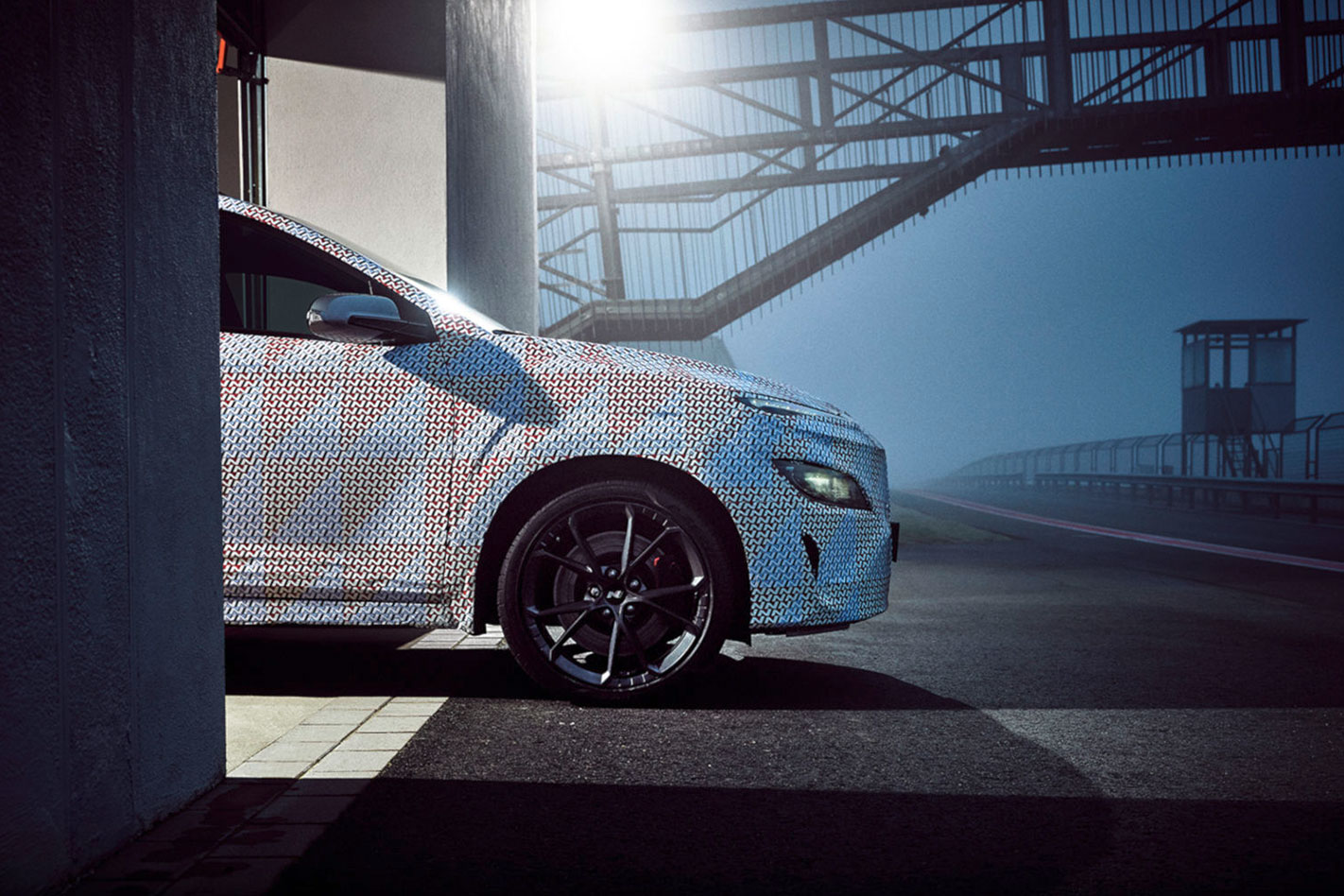
Hyundai’s promised more on the Kona N in coming weeks and we understand that it could be in Australia as soon as the middle of the year.
“As N brand’s first ‘hot SUV’,” says Till Wartenberg, Vice President and Head of N brand management and motorsport, “KONA N will offer plenty of versatility and driving thrills that N-thusiasts have come to expect from the brand.
It’s the final and fourth N model to be revealed as part of an N product offensive, following the new i20 N, i30 N, i30 sedan N, Sonata, Kona and Tuscon N-line that are confirmed for our shores.
Conservatoire Citroën is an incredible place. Housed in a dull, unmarked industrial unit north-east of Paris are Citroën’s crown jewels dating back over a century.
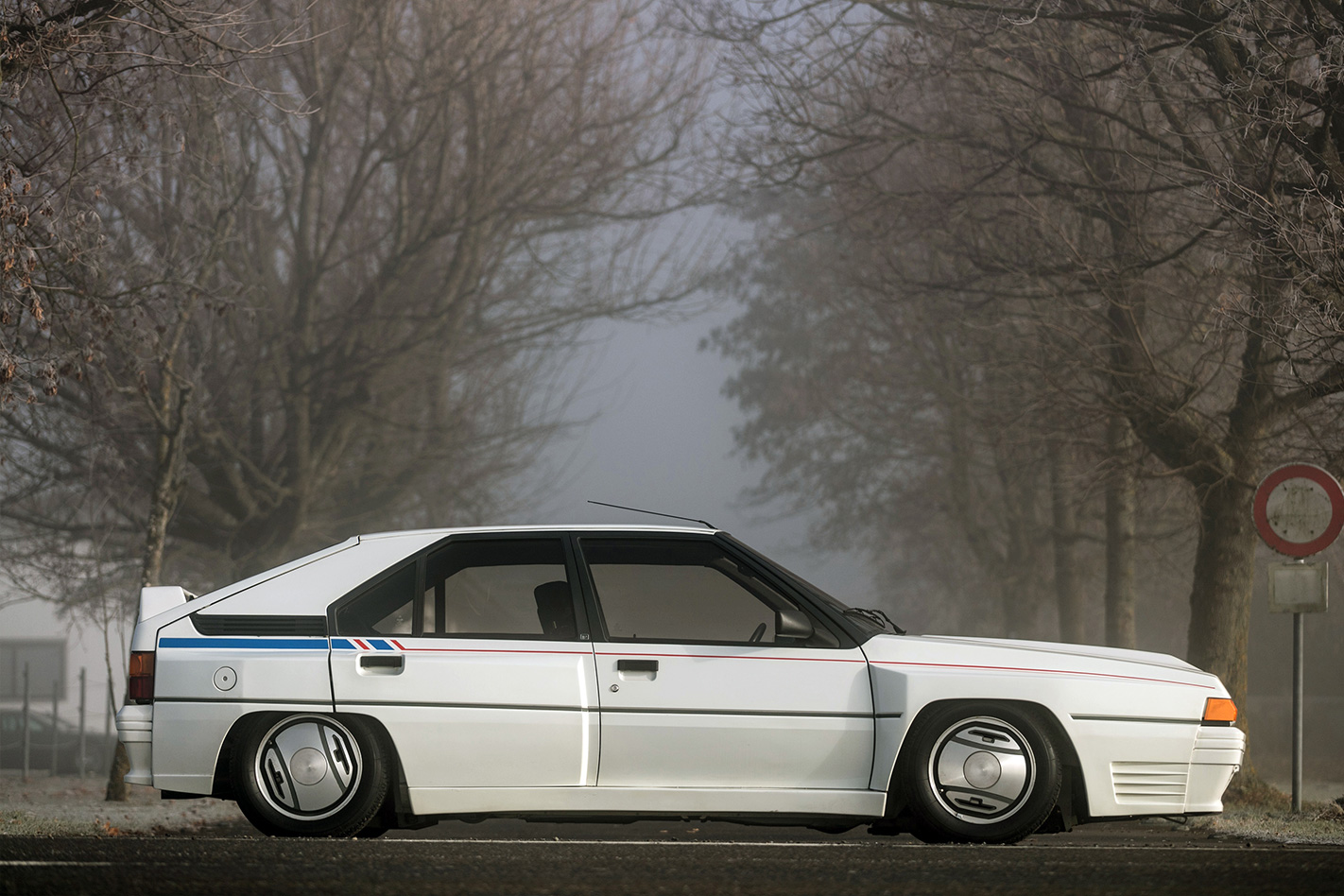
The docent for the day is Denis Huille, who waxes at length about each entry, before briefly pondering the 1985 BX 4TC homologation special. He harrumphs and moves on when I ask him about it. All he will say is “this car was a disaster.” He has a point.
Citroën was late to Group B rallying, but rather than adopt best practice of a mid-mounted engine, Citroën decided its BX weapon would retain a front-engined platform. Out went the transverse layout and in came a longitudinal arrangement. However, the 147kW 2.1-litre 8v Simca-Chrysler four was pushed so high and far forward that weight distribution was goosed.
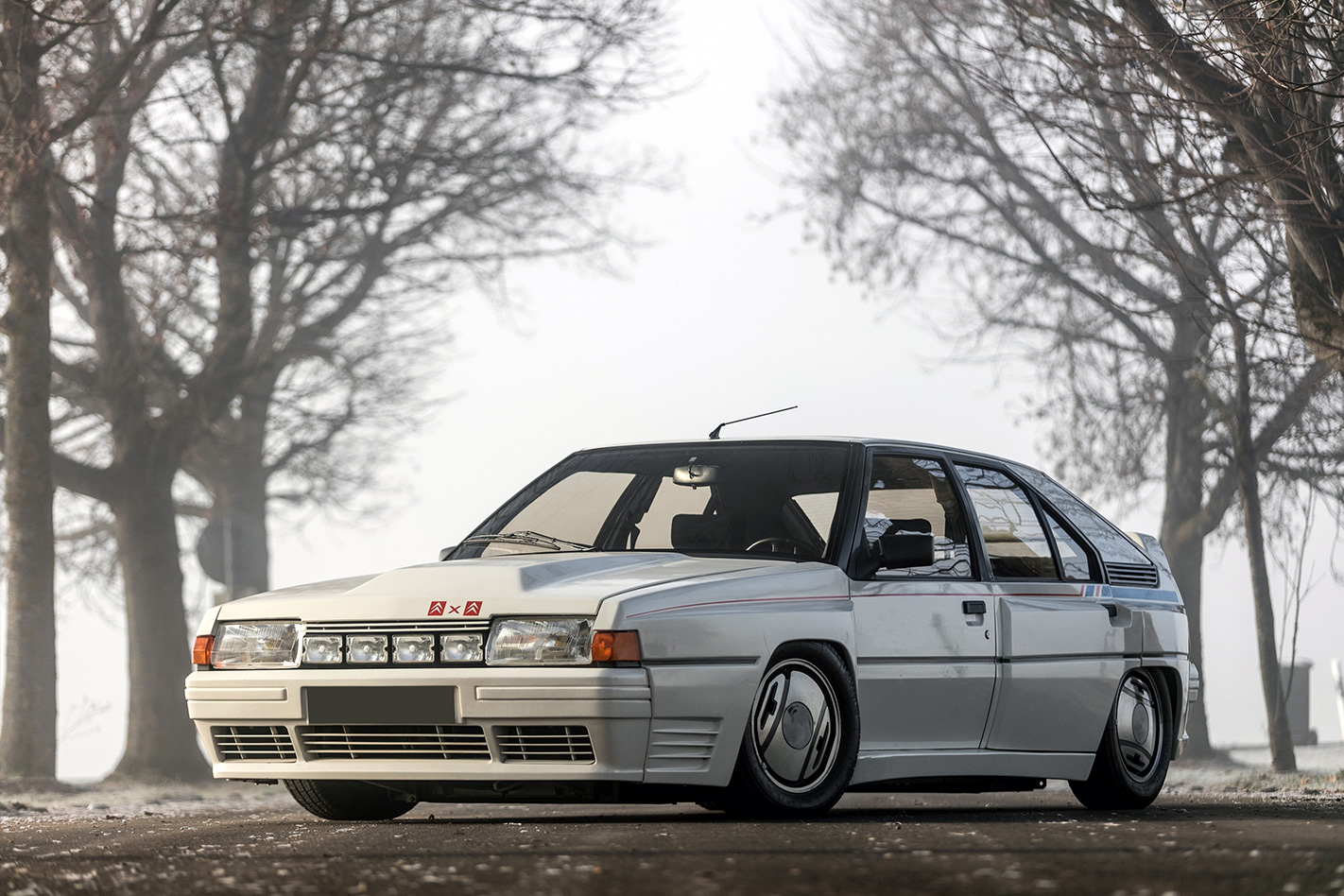
To further compound its dynamic shortcomings, it weighed 1280kg, around 200kg more than its rivals. It used a modified SM transmission and had no centre differential, so on anything other than loose, low-friction surfaces the front and rear axles would engage in open hostilities. The rally version fared little better, competing in three events, scoring a best of sixth and then having the rug pulled from beneath it when Group B was cancelled.
That it was even permitted to compete was a miracle. Coachbuilder Heuliez needed to build 200 cars for homologation, but only around 110 were ever made, with just 86 finding buyers.
Citroën went into damage limitation mode and tried to buy back the road cars, offering double the original asking price. Only around 40 survived, with Citroën stripping the buy-back vehicles and destroying them.
You’ll find no mention of the BX 4TC nor its Group B involvement on the competition section of Citroën’s website. Yet despite the company’s efforts to erase the car from history, we love an underdog and they don’t come much doggier than the BX 4TC.
1985 Citroen BX 4TC specs
Engine: 2141cc inline-4, SOHC, 8v Power: 147kW Torque: 294Nm 0-100km/h: 7.1sec Weight: 1280kg
It’s getting hot so make sure you take a few preventative and active measures to make sure both car and driver get through those long, hot days on the road.
Prevention
It’s easier said than done, but get your car serviced before going on any long road trips.
Cool car
On hot days or before going on long drives, check your radiator coolant levels and also check if the cooling fan is working by idling the car after a drive and seeing if it kicks in and then turns off after a short time.

If your car goes through a lot of coolant or the fan doesn’t seem to operate properly take it to a mechanic or radiator specialist – it’ll save you plenty of money.
Cool interior
If the car is stinking hot, turn the air-conditioning on and open the windows a little to force hot air out as you drive. Don’t cool the car by idling it with the air-con on as it’s less effective, wastes fuel and risks overheating your engine – unless of course you drive an electric vehicle.
If you want to cool the car before you drive off, open the driver’s side window and then open and close the passenger door a few times to force warm air out. You’ll look pretty silly, but it works.
If the weather isn’t too oppressive, drive around with the windows open if travelling at low speed and enjoy the breeze. If driving faster than 80km/h the wind resistance created by having the windows open is uses more fuel than running the air-con.

If your steering wheel tends to get very hot, turn it 180 degrees when parking in the sun so when you turn it back the top of the wheel is cooler to touch. Better still use a sunshade when parked in the sun, which will not only keep things cooler, but will protect interior fittings from harsh UV light.
Tyres
Check your tyres regularly in summer, as the roads become a lot more unkind as they heat up, particularly if they’re underinflated. Ensure they’re pumped up to the correct pressure before you drive in the morning. If you check them when the tyres are hot you won’t have an accurate reading as the air would have expanded. Underinflated tyres will also cost you fuel economy on long drives.
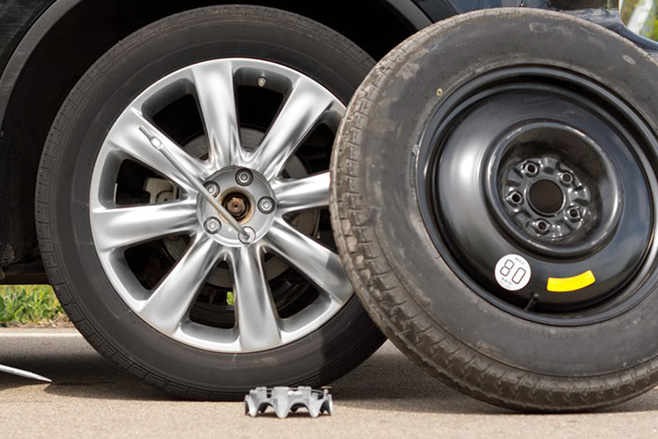
Ensure your spare tyre is inflated and your jack and associated kit is in working order should you need to change a tyre. Carry a rug to kneel on in case you have to change the tyre on a hot roadside.
Fluids
Make sure you check your engine oil, transmission, coolant, brake, power-steering and windshield fluids, especially before a long drive.
See clearly
It’s easy to forget about them when the weather is fine, but don’t wait for a sudden downpour to find out whether your windscreen wipers and washers are in good order.
You should also keep your windows clean, so you’re not trying to see through dirt and sun glare.
Other things to carry
Among the things to have handy in your car during summer is radiator coolant, window sunshades, drinking water, non-perishable food like muesli bars, a hat and a rain/shade umbrella.
The food and water is especially handy if you have children.
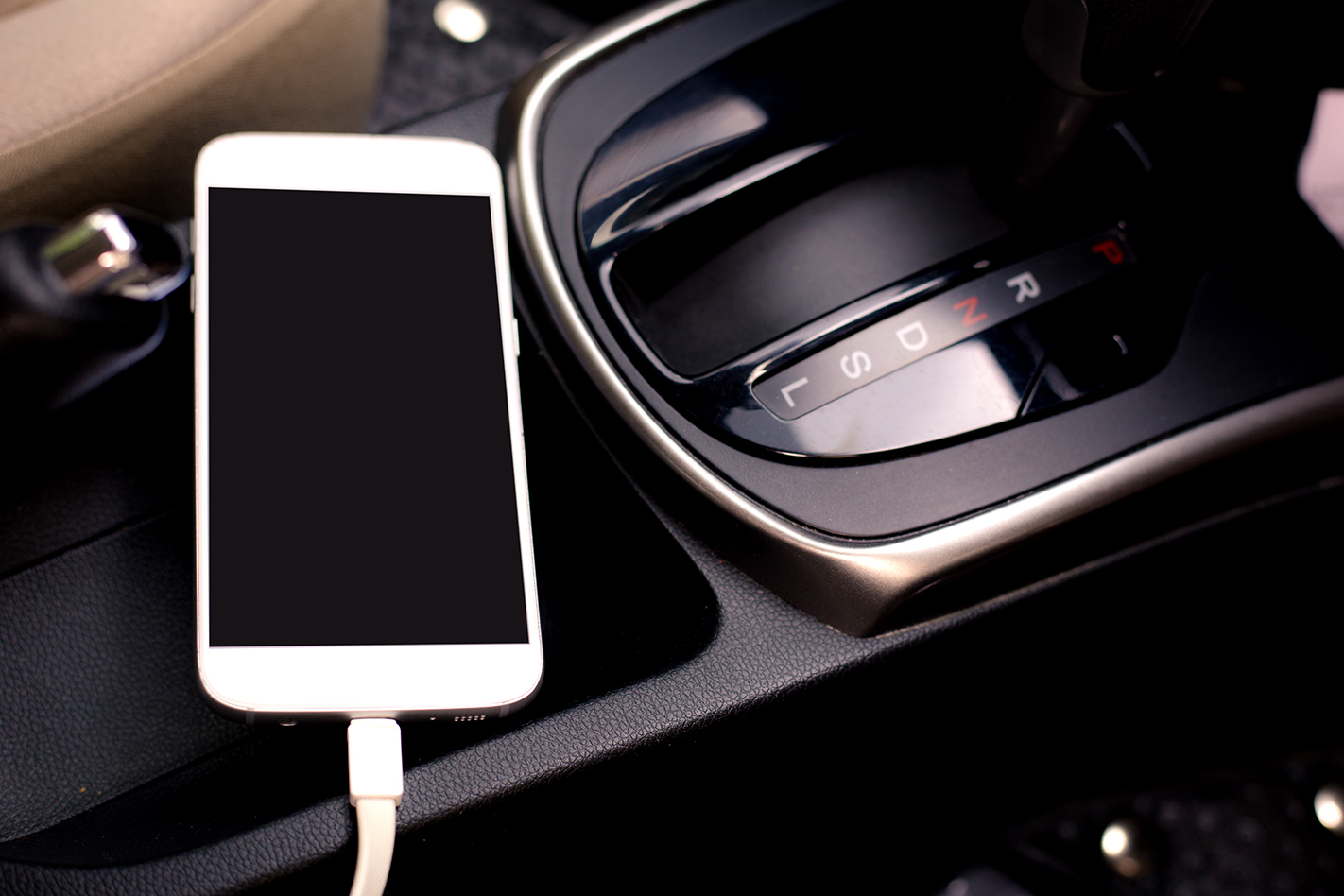
Also make sure you have a charger cable for your phone, so you can call for assistance or use apps such as maps or weather alerts.
Plan ahead
Check if there will be any interruptions to your planned routes such as roadworks or summer events such as cycle races or triathlons. Check weather forecasts, which can be subject to quick changes during summer, and take note of places to stop for refreshments.
It’s also a good to have an idea of where service stations are along the route in case there are any early signs of car trouble.
Stay refreshed
Even with air-conditioning on, it’s easy to get fatigued while driving long distances in summer. Dress comfortably, take regular breaks and keep yourself and your passengers hydrated.
