
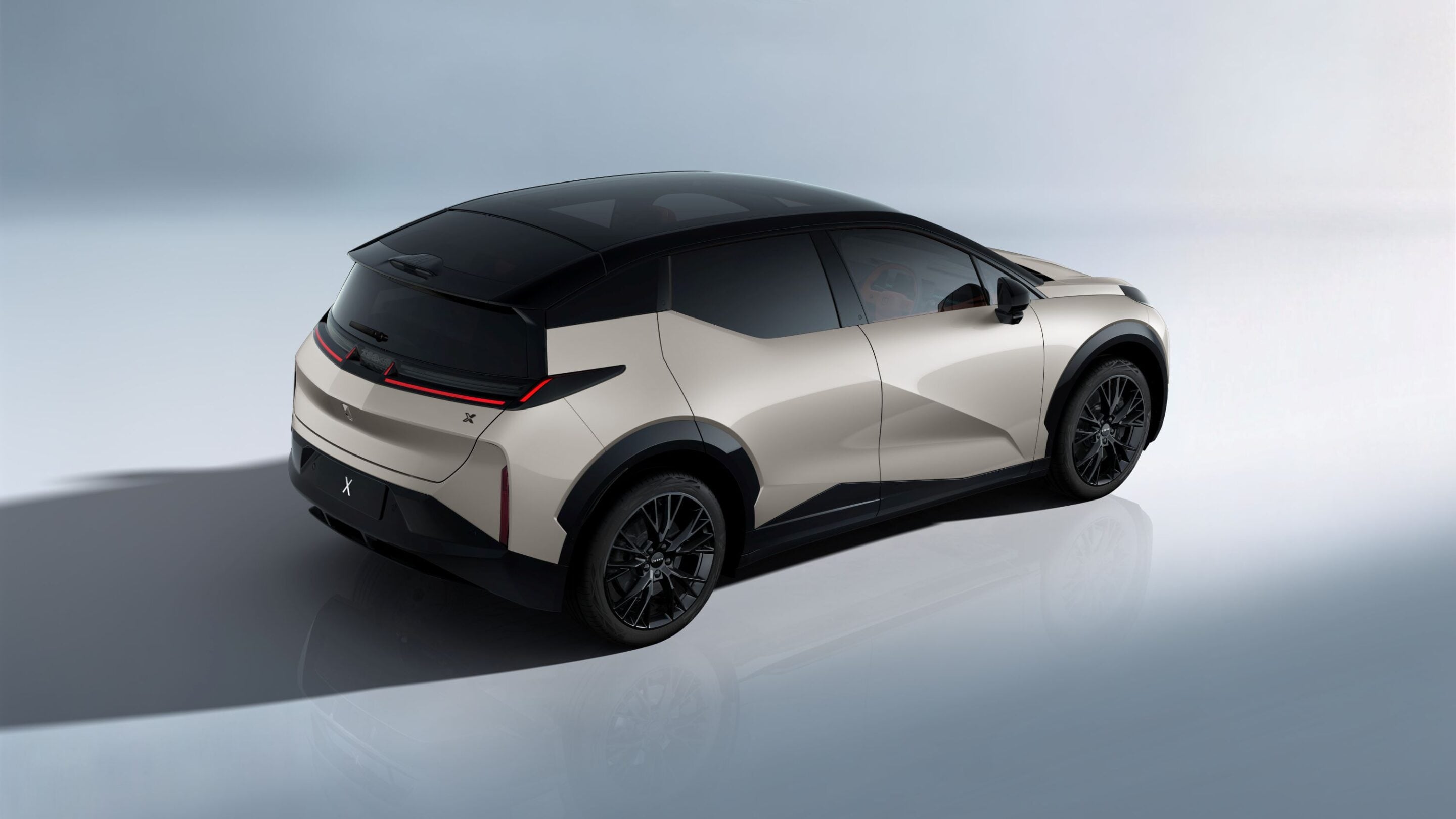
The 2026 Zeekr X launches in Australia with an updated, sharper design profile, new colours and an extended list of standard features. Measuring in at 4432mm long, 1836mm wide, 1566mm high, and riding on a 2750mm wheelbase, Zeekr X shares the same platform as stablemate Volvo’s EX30.
More powerful electric motors are also now standard, with the single motor X generating 250kW through the rear wheels, combined with a Lithium Iron Phosphate (LFP) battery and claimed 405km range on the WLTP cycle. The AWD steps that up with a 115kW front motor, and 250kW rear motor for a combined system output of 365kW, paired with a Nickel Cobalt Manganese (NCM) battery and a WLTP claimed 415km driving range. Those power figures represent a 50kW gain for both RWD and AWD models.
As a result, the Zeekr X is a rapid SUV. The RWD will sprint from 0-100km/h in 5.6 seconds, while the AWD makes the run in just 3.7 seconds.
Zeekr claims 230kW fast charging capability for the LFP battery in the RWD, with 10-80 percent achieved in 18 minutes, while the 150kW charging capability for the AWD means 10-80 percent charging in 30 minutes.
Changes also include a new matte khaki green and onyx black exterior colour option for the AWD model, black forged 20-inch rims also for the AWD model, and optional automatic doors for the AWD model.
Updates for the 2026 model include a deeper level of standard equipment including heated first and second row seats (RWD and AWD), inductive steering wheel controls (RWD and AWD), a 13-speaker Yamaha surround sound audio system (RWD and AWD). The 14.6-inch touchscreen now runs Zeekr’s newest 5.5 operating system, which is snappier, and brings improved functionality and a richer user experience.
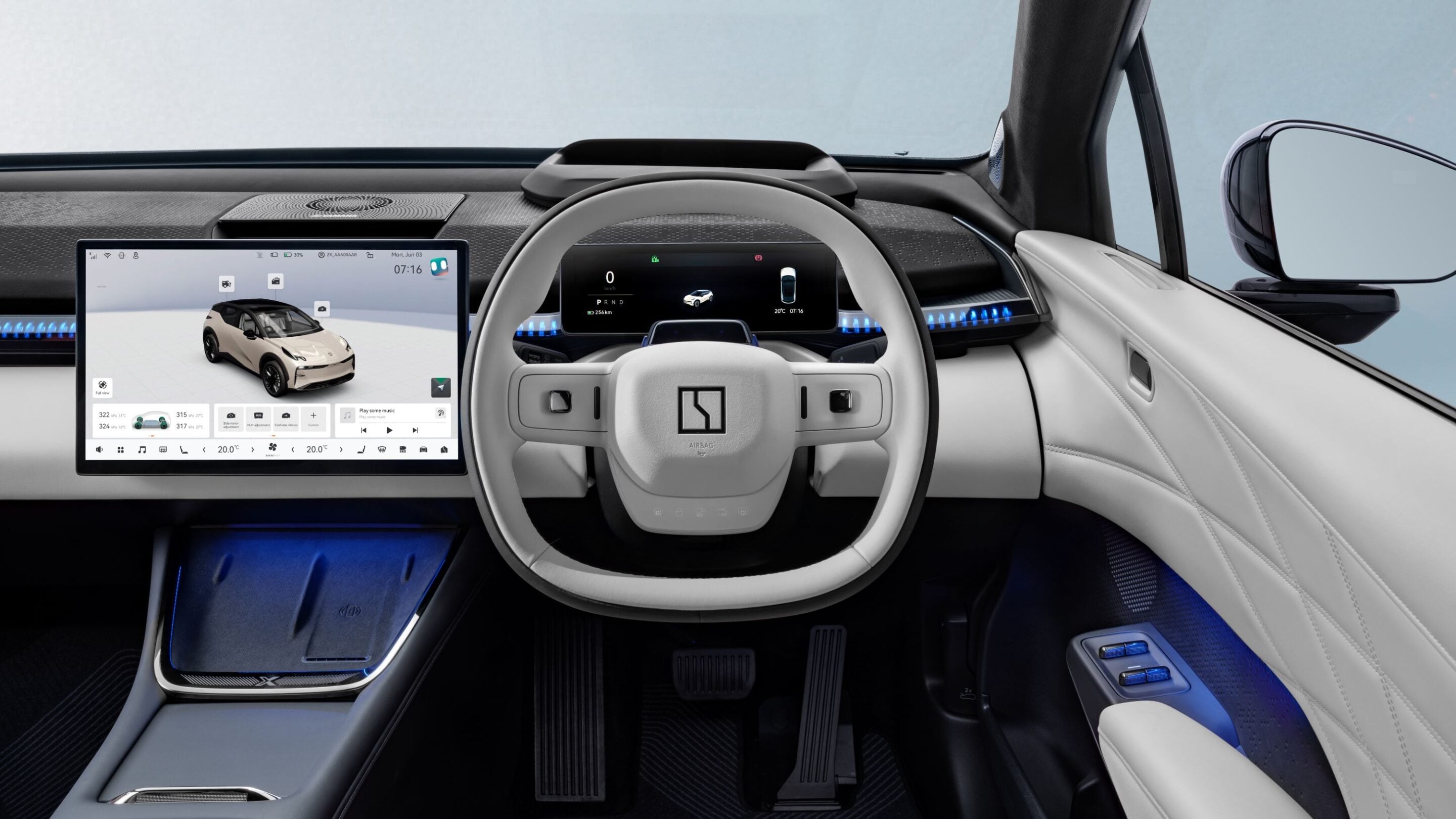
In addition, AWD models get first row massage seats, and a temperature controlled fridge mounted under the armrest in the centre console. Across the range, X models get Zeekr’s advanced driver assistance system, ‘Zeekr AD’, which includes five high definition cameras, five millimetre wave radars, 12 ultrasonic sensors and remote parking assist.
Zeekr will announce pricing in the coming weeks, with speculation suggesting the RWD will be launched beneath $50,000 drive away, and the AWD beneath $60,000 drive away. WhichCar will cover pricing as soon as it is announced.
The ongoing Middle East conflict has seen demand for electric vehicles surge as new car buyers look to immunise themselves against escalating fuel prices and supply issues.
But that demand has seen wait times blow out by as much as three months, according to some automakers who are reporting unprecedented interest in EVs and plug-in hybrids while at least one auction house is reporting a 100 per cent clearance rate for its stock of second-hand electric vehicles.
Chinese auto giant BYD, the world’s largest manufacturer of electric vehicles, is reporting a 50 per cent increase in enquiries since the onset of the conflict, resulting in wait times stretching out to two to three months for some popular models.
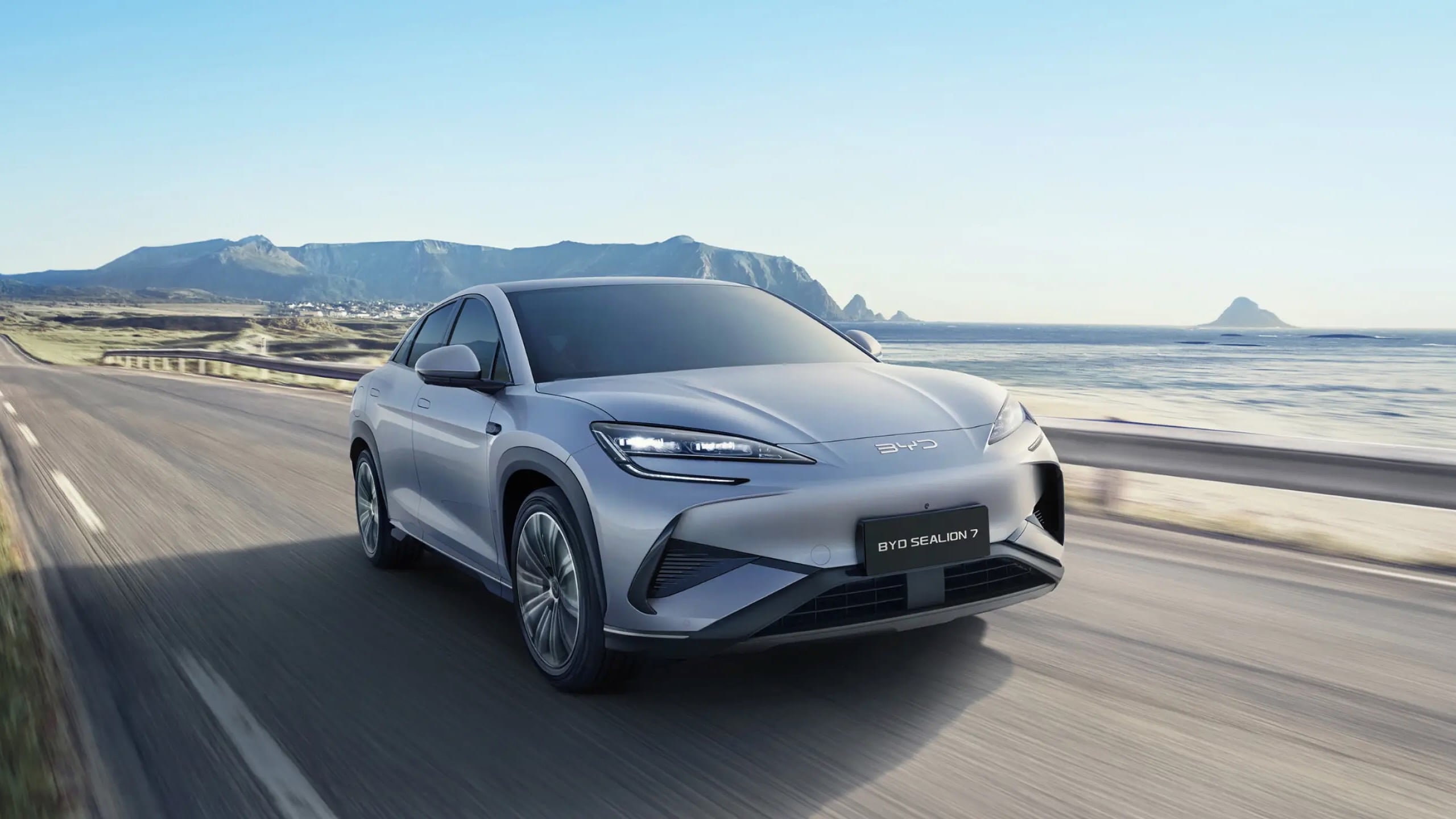
“Normally, we’re are able to fulfil customer order within two to three weeks, but that’s been pushed out to two to three months on some models,” a BYD Australia spokesperson told WhichCar by Wheels.
The affected models are the brand’s two best-sellers in Australia – the Atto 2 small SUV and Sealion 7 medium SUV. However, BYD Australia has been able to secure extra allocations of those EVs, the company’s spokesperson stating that, “we can respond very quickly and we’ve been able to rejig production (in China)… to secure extra allocation [for Australia]. It’s going to be a pretty busy three months but we will be able to fulfil our orders.”
Fellow Chinese brand, Chery, is reporting demand for plug-in hybrids and EVs has increased dramatically since the start of the conflict in February.
“New energy vehicles (PHEV/EV) now make up 65 per cent of orders taken, which has increased from 30 per cent last month,” a spokesperson for Chery Australia told WhichCar by Wheels.
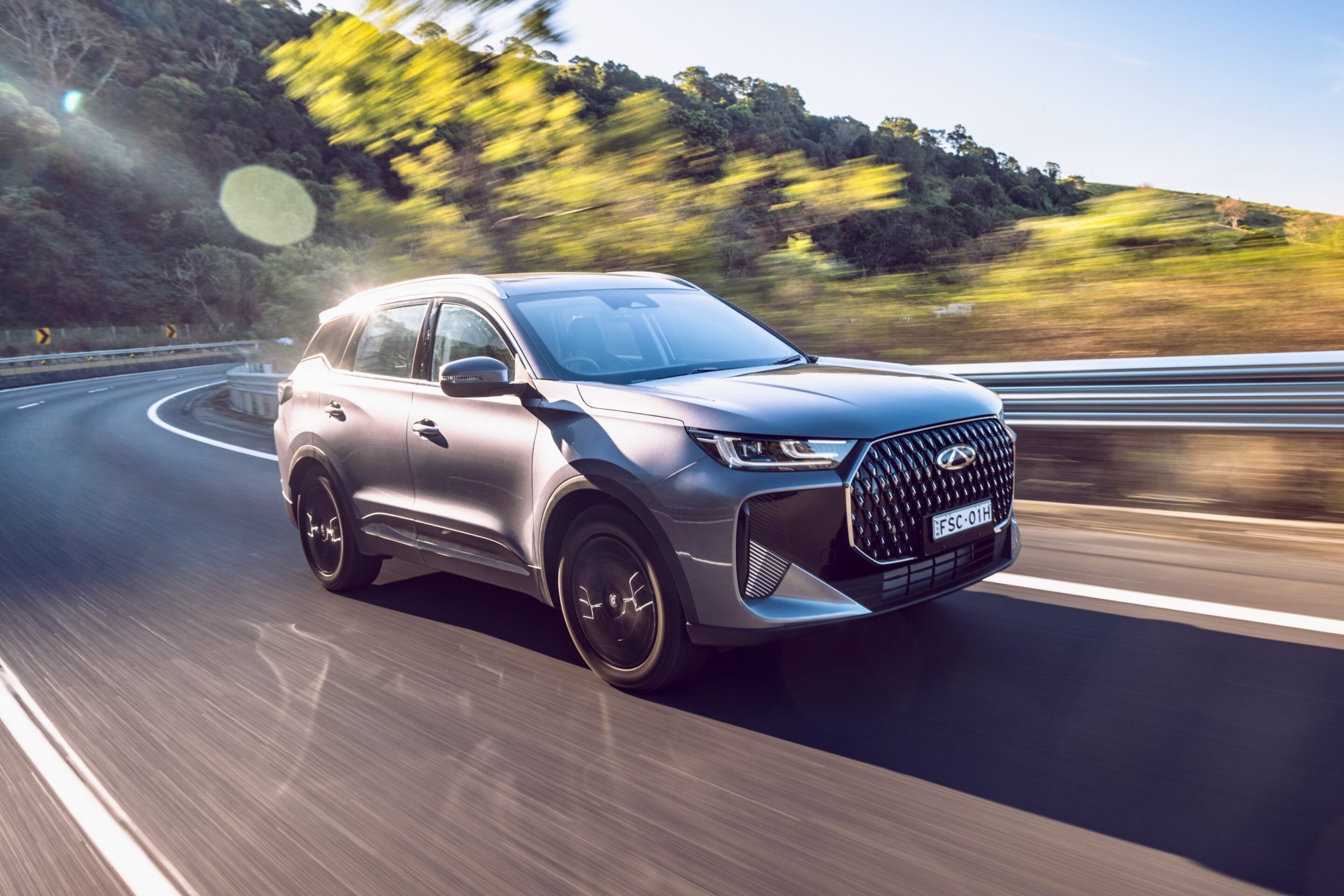
But while demand has increased for vehicles such as the Chery Tiggo 7 Super Hybrid (PHEV) medium SUV, the brand maintains it has enough stock on hand to provide “good coverage across all model lines”.
Similarly, Sino-Swedish brand Polestar, which exclusively sells electric vehicles, is reporting a tripling of enquiries since the Middle East conflict began in late February.
“Interest in the Polestar brand is surging in Australia,” Polestar Australia’s managing director, Scott Maynard, told WhichCar by Wheels. “Test drive bookings have tripled in the last fortnight, and traffic to our showrooms is what we’d expect to see during a sale event.”
Maynard added that there was “a clear sense of urgency from customers, which is driving strong order volumes”.
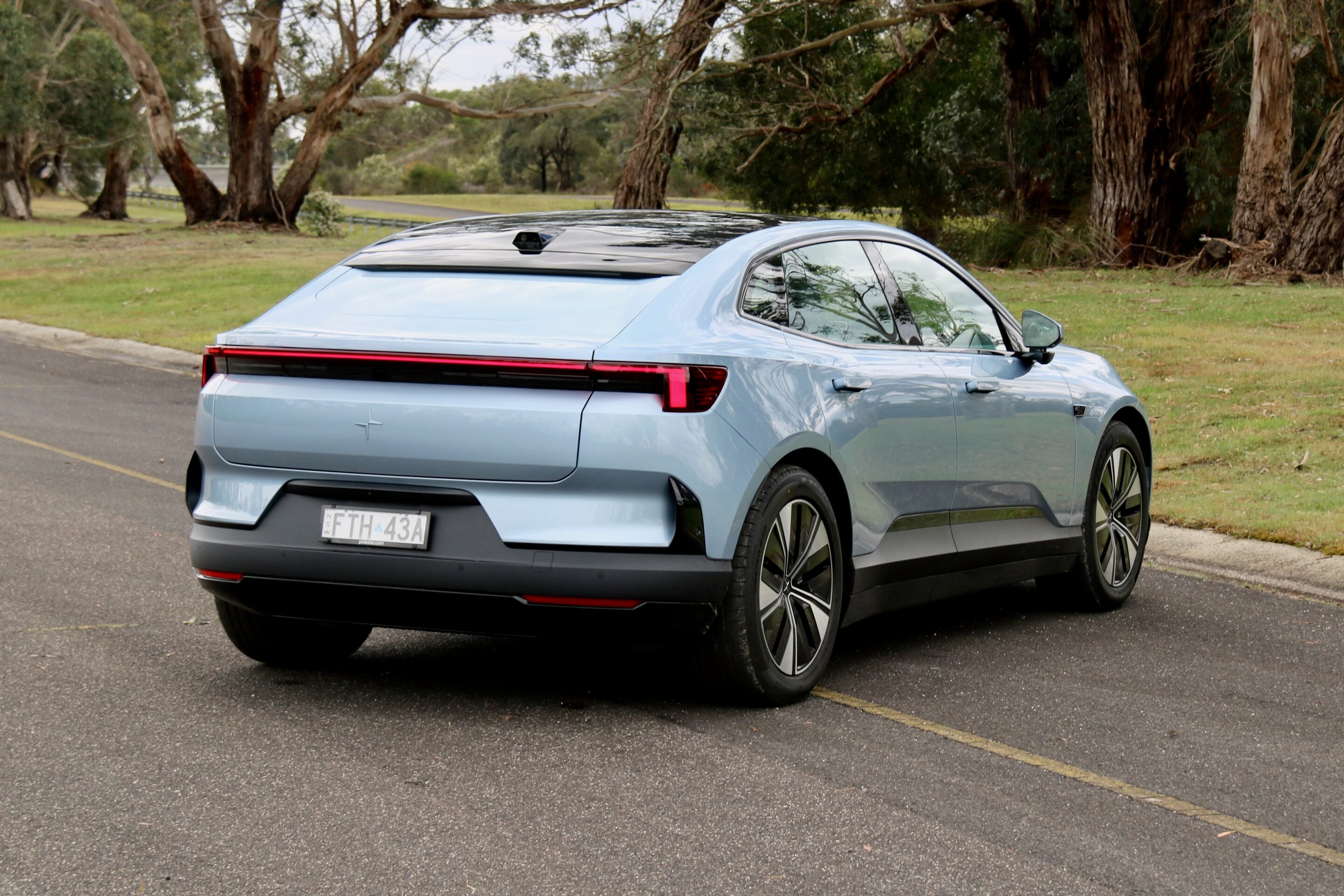
Maynard said demand was strongest for its Polestar 4 medium SUV and that the brand had good stock on hand while there remained “limited stock” of Polestar 2 available for “fast delivery”, adding that lead times for “built-to-order vehicles hasn’t changed, and currently sits at around three months”.
Buyers are also flocking to the second-hand market for electric vehicles, with search queries on some classified and online auction sites increasing by over 100 per cent in March. As reported by the Australian Financial Review, online car auction site, Pickles, is claiming a 100 per cent clearance rate for second-hand EVs advertised on its site, with the time taken to sell a used EV has halved to under 10 days.
The surge in demand is backed up by lender’s data with the Commonwealth Bank reporting that “since 1 March, new loans for battery electric vehicle (BEVs) were up 161.5 per cent compared to the weekly average volume recorded in February, before the conflict in Iran began.”
And it’s not just private buyers who are looking to immunise themselves against fuel price shocks. According to Commonwealth Bank, finance applications from commercial customers have increased significantly as businesses look to reduce fleet operating costs in the face of fuel price volatility.
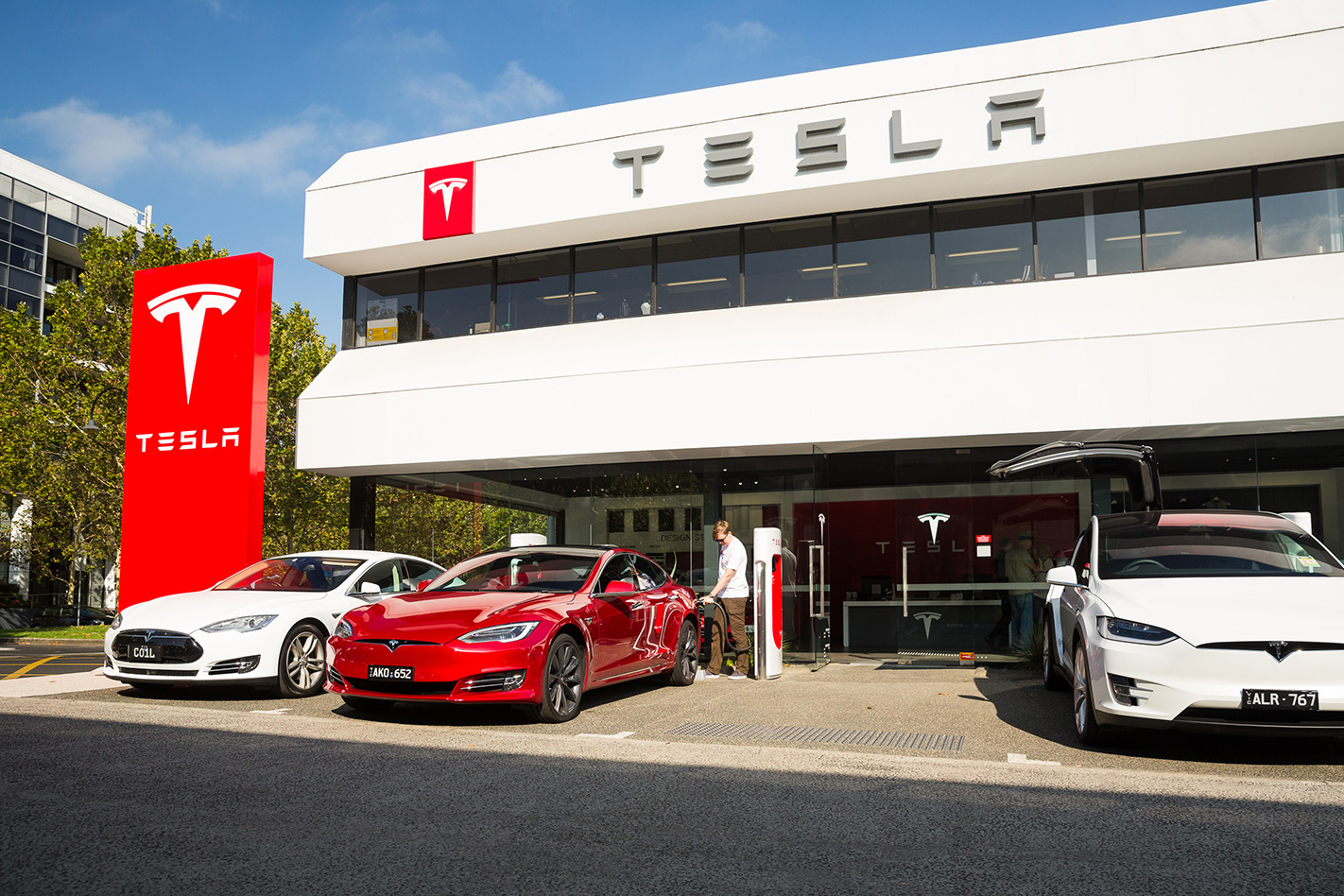
“Business loan applications for Tesla vehicles alone are up 268 per cent to date in March compared with the same time last year,” the bank said in a statement. “The bank expects demand to continue under current macro conditions, a sign that fleet operators and small businesses are also reassessing running costs at a time when fuel volatility has become a live issue.”
The Australian government is also helping to smooth the path to EV ownership, committing a further $100 million to subsidise low-interest loans for new and used EVs through Volkswagen’s financing division.
The government’s Clean Energy Finance Corporation had already committed $60 million in a similar partnership with Hyundai Capital Australia to offer discounted loans on eligible Hyundai and Kia electric vehicles.
Expanding the initiative to include Volkswagen Financial Services Australia opens up a broader portfolio of brands to buyers including Volkswagen, Audi, Cupra and Skoda.
With fuel prices still rising and global oil supply under threat, many drivers are looking for practical ways to reduce their reliance on petrol and keep running costs affordable. While it’s possible to change things like how often you drive, choosing a more fuel efficient vehicle can ultimately make more of a difference.
Not all of us can afford an expensive electric or hybrid SUV but there are many fuel-sipping vehicles priced comfortably underneath $30,000. Here’s the WhichCar by Wheels guide to the 10 cheapest new cars currently available (based on driveaway pricing in New South Wales):
1) Kia Picanto Sport: $22,140 driveaway
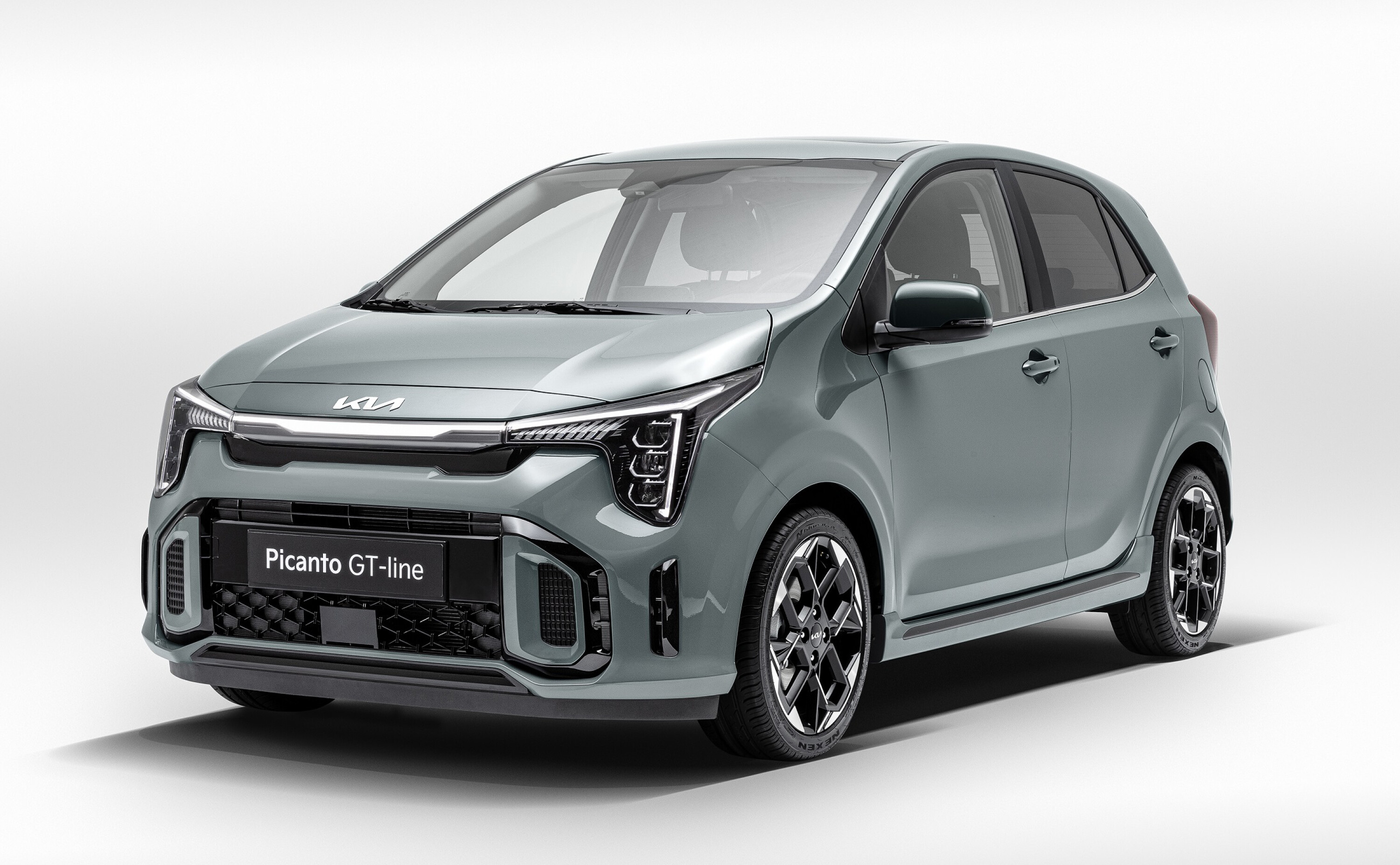
Drivetrain: 1.25-litre four-cylinder petrol, 66kW/122Nm, five-speed manual or four-speed automatic
Combined fuel efficiency: 5.4-6.0L/100km
Warranty: Seven-year/unlimited km, up to eight years of roadside assistance
Although it’s more expensive than it once was, the Kia Picanto is currently the cheapest new car you can buy in Australia. Priced from just $22,140 driveaway for the five-speed manual – $23,240 driveaway for the four-speed automatic – the Picanto is excellent value for money. It’s not a stripped out package, either, with plenty of standard feature and a 1.2-litre engine that may not be considered ‘powerhouse’ but is relatively fuel efficient and grunty enough for city driving.
2) MG 3 Vibe: $21,990 driveaway

Drivetrain: 1.5-litre four-cylinder petrol, 81kW/142Nm, CVT automatic
Combined fuel efficiency: 6.0L/100km
Warranty: Seven-year/unlimited km (extendable to 10 years/250,000km with dealer servicing)
The MG 3 has been one of Australia’s biggest-selling small cars since it landed and the latest version is larger and much better equipped, even in entry-level Vibe spec. A 1.5-litre petrol engine with a CVT automatic transmission is standard, though if you’re looking to save more money at the pump, a hybrid version is available for closer to $30,000 driveaway in upper-spec Excite form.
3) MG ZS Vibe: $22,990 driveaway
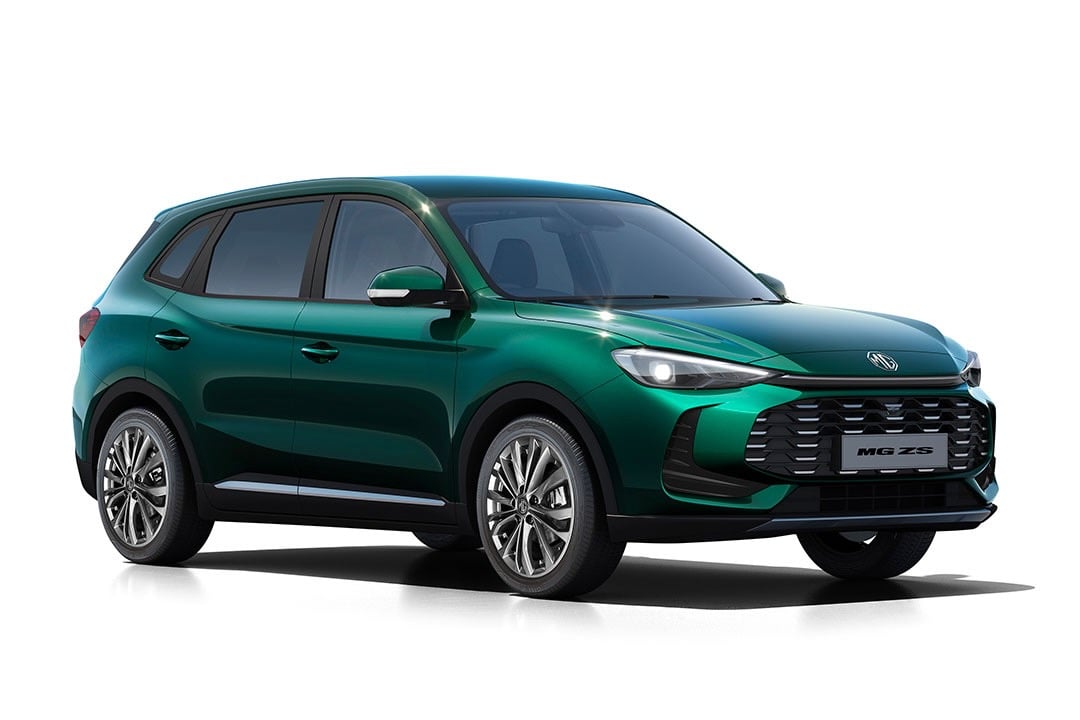
Drivetrain: 1.5-litre four-cylinder petrol, 81kW/140Nm, CVT automatic
Combined fuel efficiency: 6.7L/100km
Warranty: Seven-year/unlimited km (extendable to 10 years/250,000km with dealer servicing)
The MG ZS is a popular and attractive small SUV, and the new Vibe model is now cheaper than before, priced at just $22,990 driveway. That makes it Australia’s cheapest SUV, which is important for those wanting a cheap and practical new car. Power comes from the same 1.5-litre petrol engine as the MG3, meaning that the ZS is certainly no performance car, but it’s got enough go for efficient urban driving.
4) Chery Tiggo 4 Urban/Mahindra XUV 3XO AX5L: $23,990 driveaway
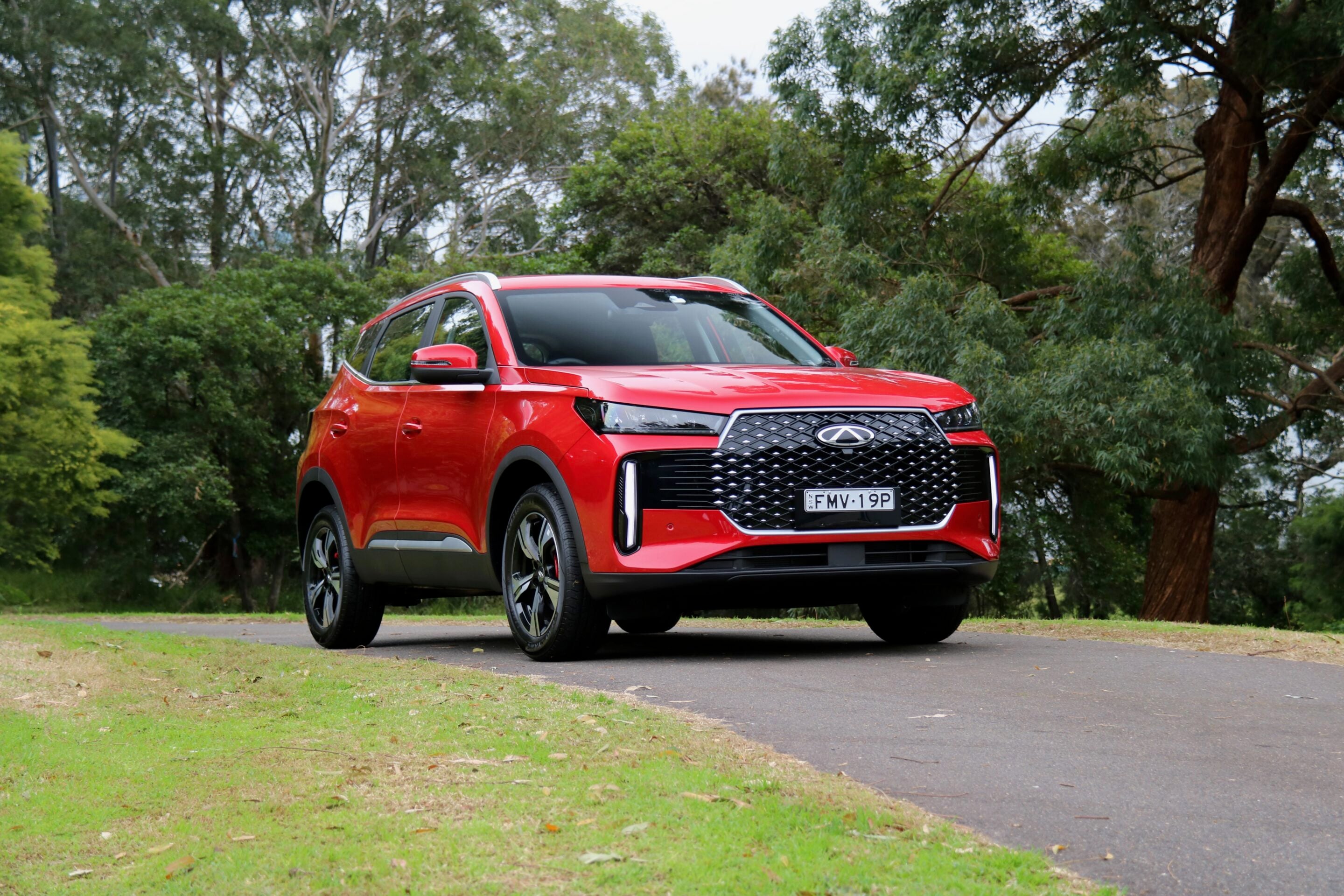
Drivetrain: 108kW/210Nm 1.5-litre turbocharged four-cylinder, CVT (Chery); 82kW/200Nm 1.2-litre turbocharged three-cylinder, six-speed auto (Mahindra)
Combined fuel economy: 7.4L/100km (Chery); 6.5L/100km (Mahindra)
Warranty: Seven-year/unlimited km (Chery); seven-year/150,000km (Mahindra)
Both the Chery Tiggo 4 Urban and Mahindra XUV 3XO AX5L are priced at just $23,990 driveaway and used to be the cheapest SUVs in Australia. Although that’s $1000 more expensive than the MG ZS Vibe, both the Tiggo 4 Urban and AX5L are better equipped and gruntier than the MG thanks to their turbocharged petrol engines. Both are covered by long warranties too, and present comfortable driving experiences from behind the wheel.
5) Suzuki Swift Hybrid: $25,490 driveaway
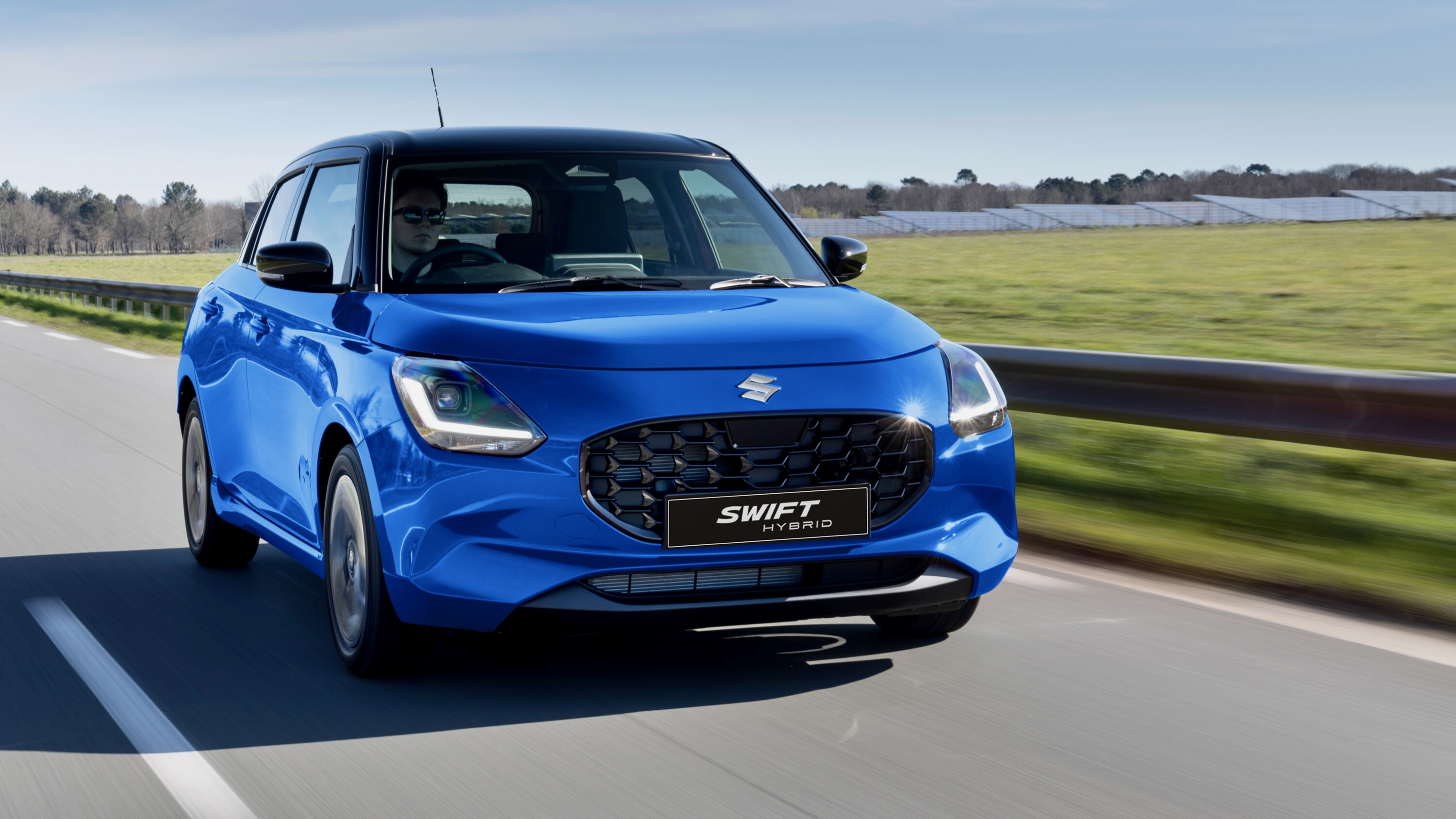
Drivetrain: 1.2-litre mild-hybrid three-cylinder, 61kW/112Nm, five-speed manual
Combined fuel economy: 3.8L/100km
Warranty: Five-year/unlimited km
The Suzuki Swift is an iconic little car and in its latest generation, it’s a good to drive as well as fuel efficient. Pricing starts from $25,490 driveaway and its 61kW 1.2-litre engine is hardly a firecracker, but it’s fine around town and with fuel economy rated from 3.8L/100km for the manual (CVT auto: 4.0L/100km), it’ll likely save you a lot in petrol. The Swift range is well equipped, with even the base model featuring a 9.0-inch touchscreen with inbuilt sat-nav, wireless Apple CarPlay and safety features like autonomous emergency braking and adaptive cruise control.
6) GWM Haval Jolion Lux: $26,990 driveaway
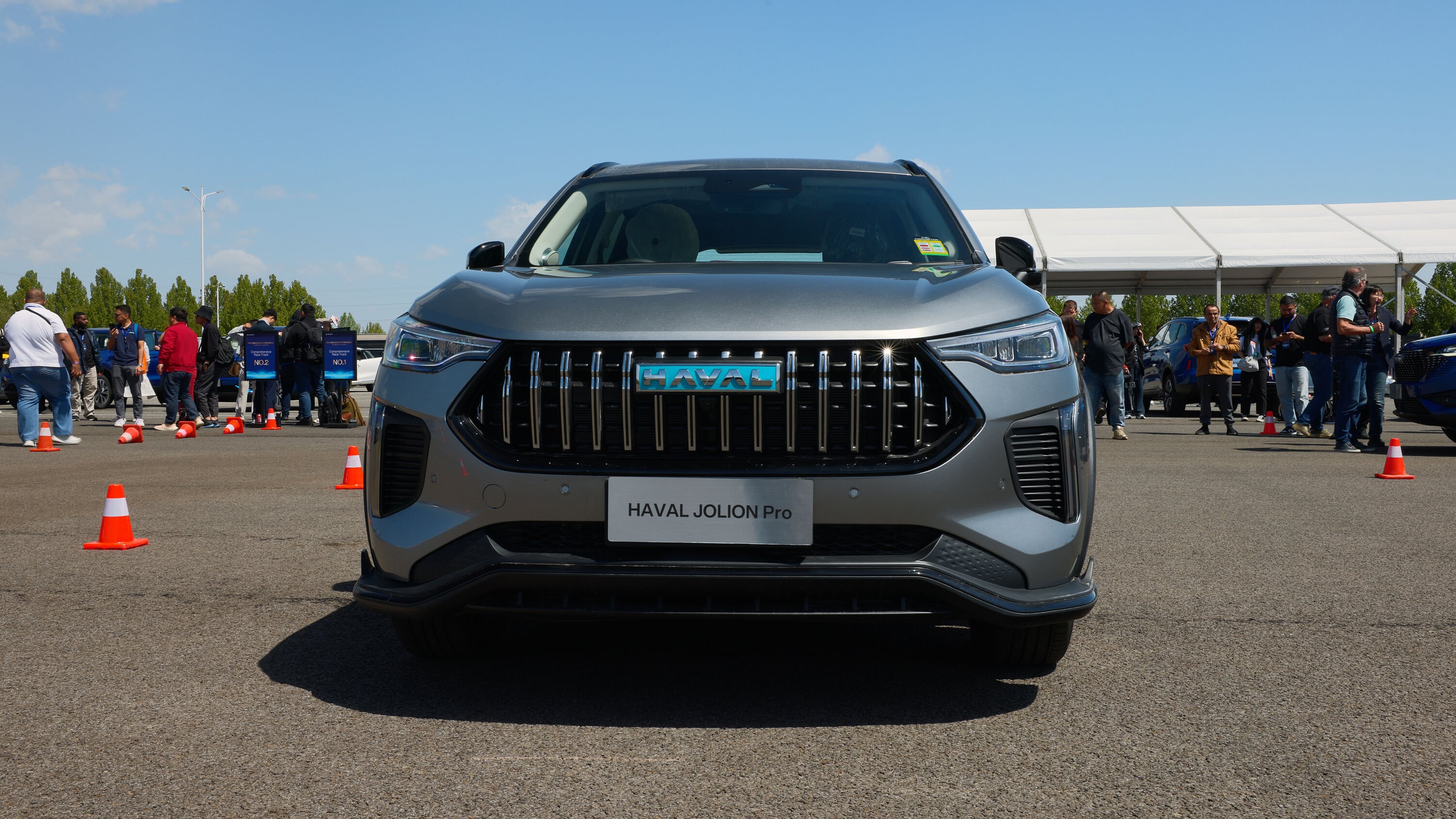
Drivetrain: 1.5-litre turbo four-cylinder, 105kW/210Nm, seven-speed dual-clutch
Combined fuel economy: 8.1L/100km
Warranty: Seven-year/unlimited km
The Jolion is a highly popular small SUV with 3593 sales under its belt in Australia to the end of February, and it’s easy to see why. It’s excellent value for money priced from just $26,990 driveaway, though there are deals to be had – for example, the base Lux is currently available for just $23,990 driveaway. Standard features are healthy across the range, and a 105kW 1.5-litre turbo-petrol engine is standard across the range – plus, a hybrid is also available.
7) BYD Atto 1 Essential: $27,096 driveaway
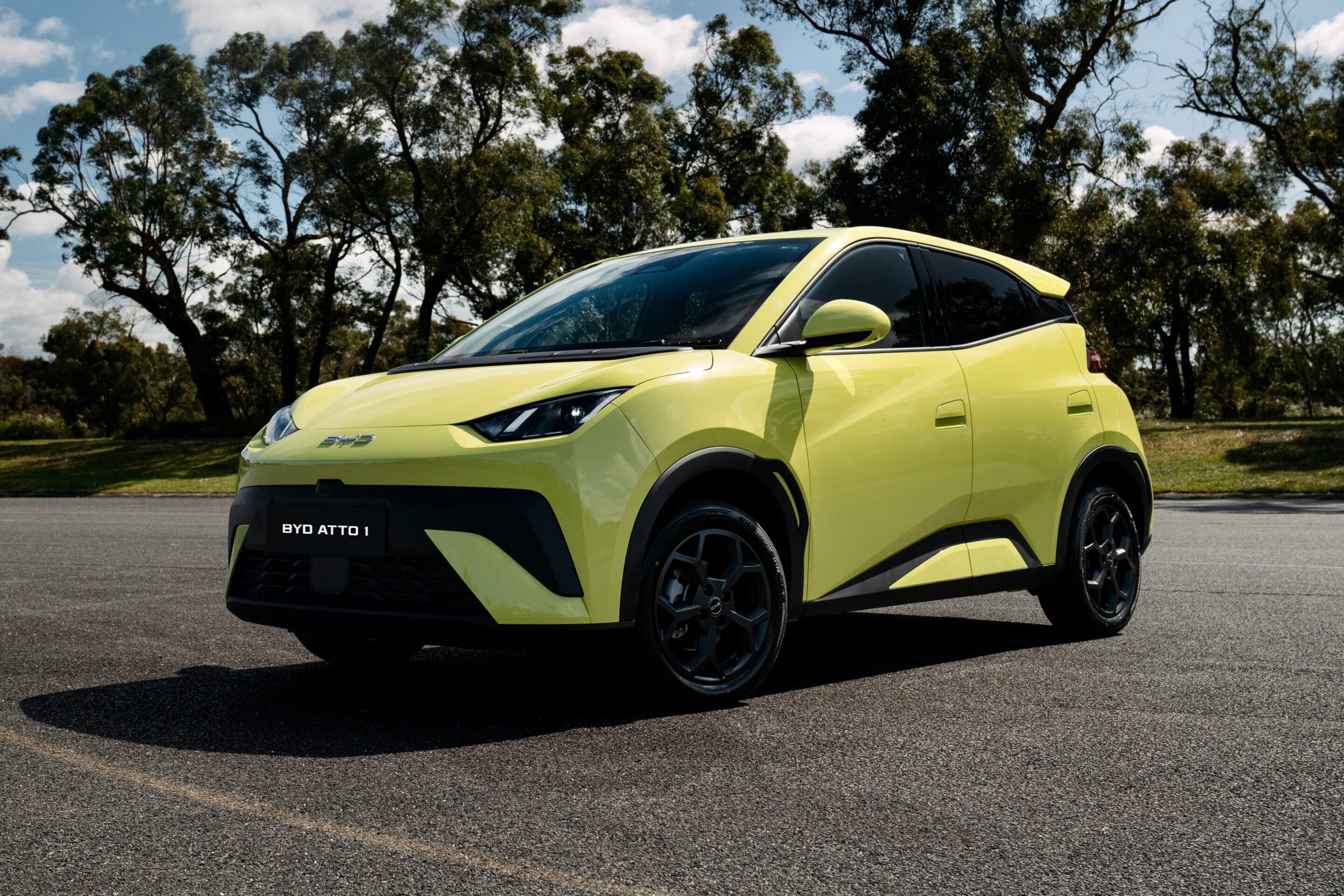
Drivetrain: Single-motor electric, 65kW/175Nm, single-speed
Range: 220km
Warranty: Six-year/150,000km (car), eight-year/160,000km (battery)
Perhaps surprisingly, it is possible to buy a fully electric vehicle for comfortably under $30,000 including on-road costs. BYD launched the Atto 1 electric light hatchback in late 2025 and it’s available in two specifications with the entry-level Essential using a small 30kWh battery for a reasonable 220km of range. The upper-spec Premium uses a larger 43.2kWh batter for 310km of range, though that’s priced at around $32,000 driveaway.
8) GAC Emzoom Luxury: $27,572 driveaway
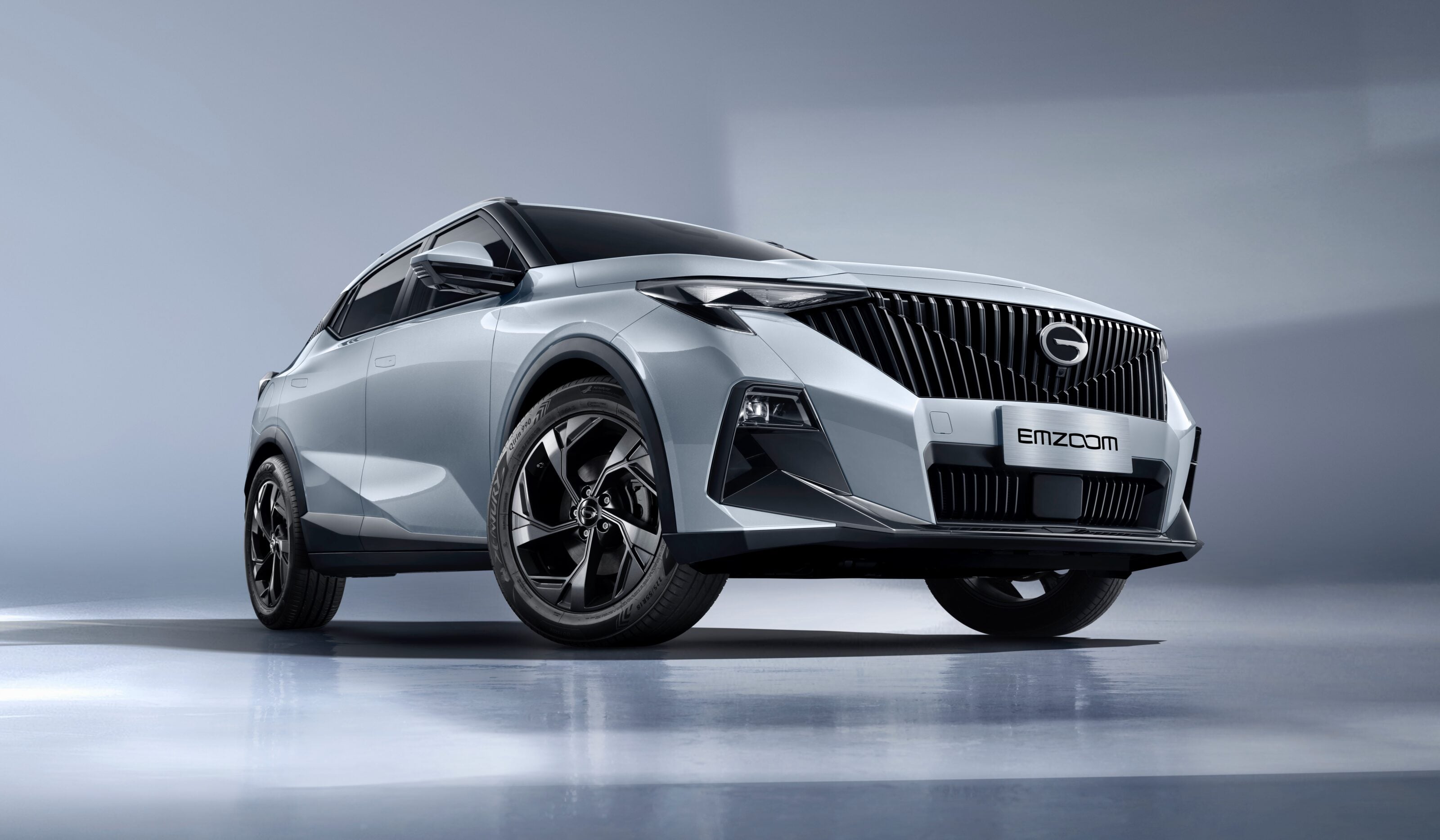
Drivetrain: 1.5-litre turbocharged four-cylinder, 125kW/270Nm, seven-speed dual-clutch
Combined fuel economy: 6.1L/100km
Warranty: Seven-year/unlimited km
GAC is a new brand to Australian shores – the Emzoom is its petrol-powered small SUV and its most affordable product locally. It features a 1.5-litre turbo-petrol engine making a gutsy – for this list, anyway – 125kW of power and 270Nm of torque, which is mated to a seven-speed dual-clutch transmission. The Emzoom is funkily styled and well equipped, and is one of Australia’s cheapest small SUVs.
9) Hyundai Venue: $27,636 driveaway
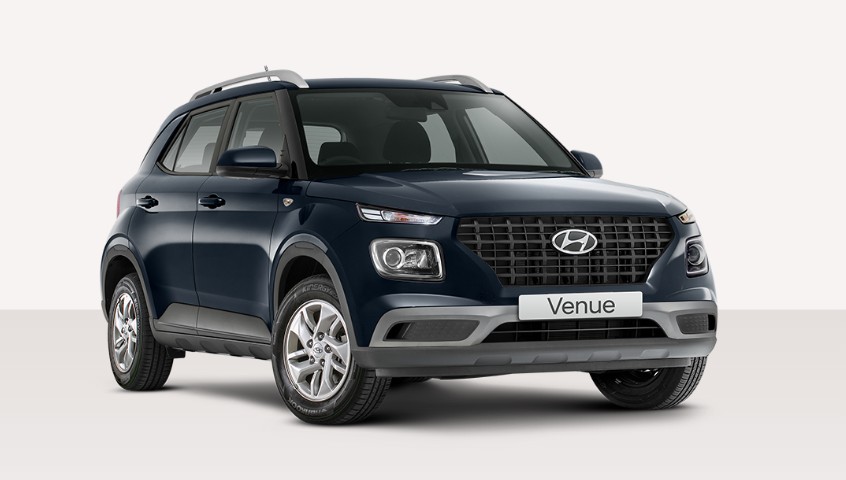
Drivetrain: 1.6-litre four-cylinder, 90kW/151Nm, six-speed manual or automatic
Combined fuel economy: 7.0-7.2L/100km
Warranty: Five-year/unlimited km (extendable to seven years with dealer servicing)
The Hyundai Venue is the cheapest product that Hyundai sells locally, but it’s also a good small SUV option thanks to its spacious feeling inside, solid driving experience and – rarely – the fact it still offers the option of a six-speed manual. A 1.6-litre petrol engine is standard across the range, which is a little thirstier than competitors, but it makes a reasonable 90kW of power.
10) Mazda2 G15 Evolve: $28,990 driveaway
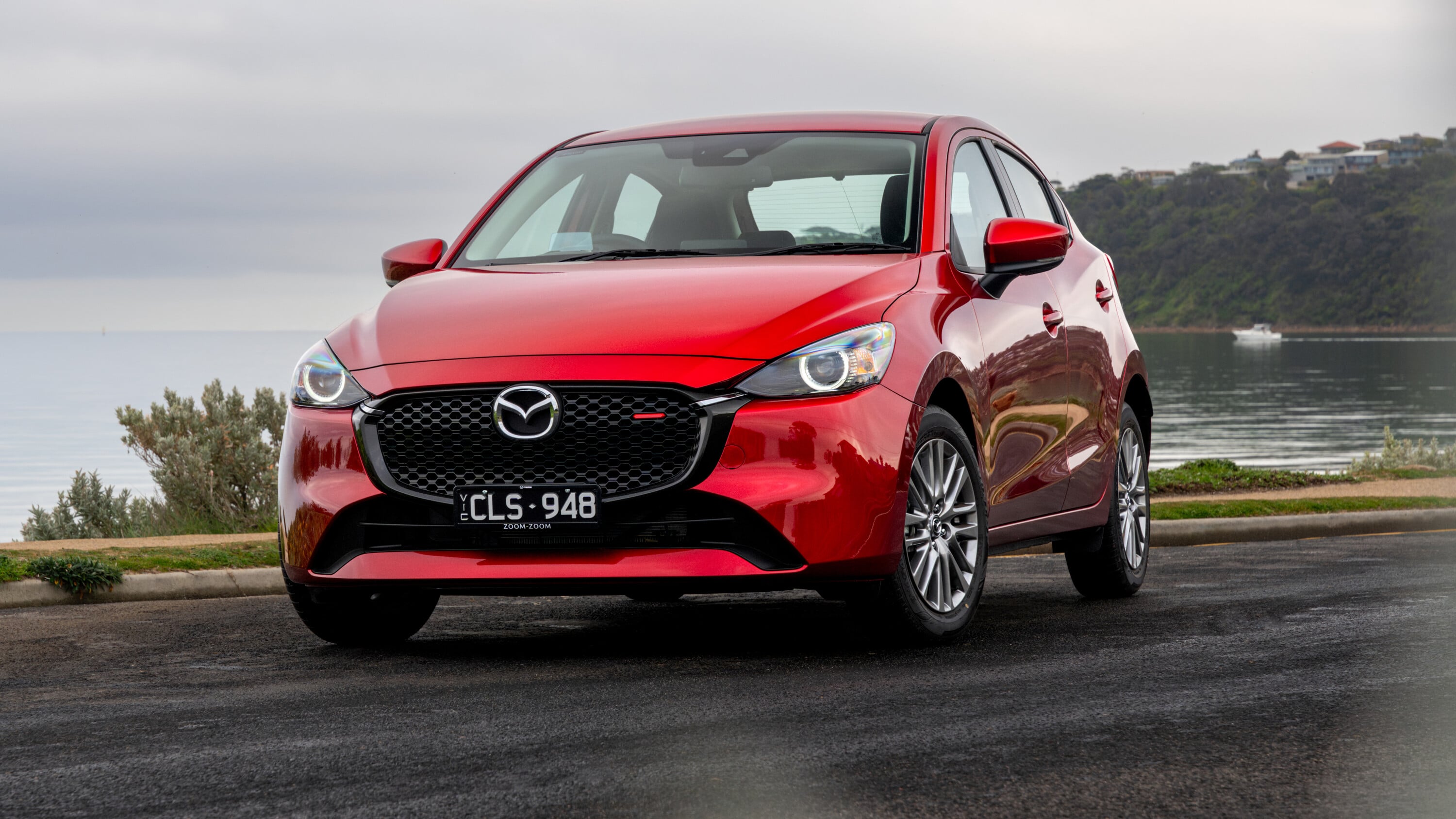
Drivetrain: 1.5-litre four-cylinder, 81kW/142Nm, six-speed automatic
Combined fuel economy: 5.0L/100km
Warranty: Five-year/unlimited km
The final entrant in the top 10 cheapest cars in Australia is the venerable Mazda2, which is currently priced from $28,990 driveaway. An 81kW/142Nm 1.5-litre petrol engine with a six-speed automatic transmission is standard across the range, as is a long list of standard features like climate control, an 8.0-inch touchscreen with wireless smartphone mirroring and even adaptive cruise control. The 2 is also fun to drive and fuel efficient too, rated at just 5.0L/100km.
With fuel prices rising and global supply under pressure, many drivers are looking for practical ways to reduce their reliance on petrol and keep running costs under control. While small changes in driving habits can help, choosing a more efficient vehicle can make a far greater long-term difference.
For those considering a switch, the current market offers plenty of options – from hybrids to fully electric vehicles – each designed to deliver meaningful savings at the bowser while maintaining everyday usability. The right choice will depend on your lifestyle, driving patterns and budget, but the goal is the same: using less fuel and gaining greater efficiency.
With that in mind, here are some standout models available now that can help lower fuel consumption and ease the impact of rising costs.
Toyota Yaris Hybrid: From $28,990 plus on-road costs
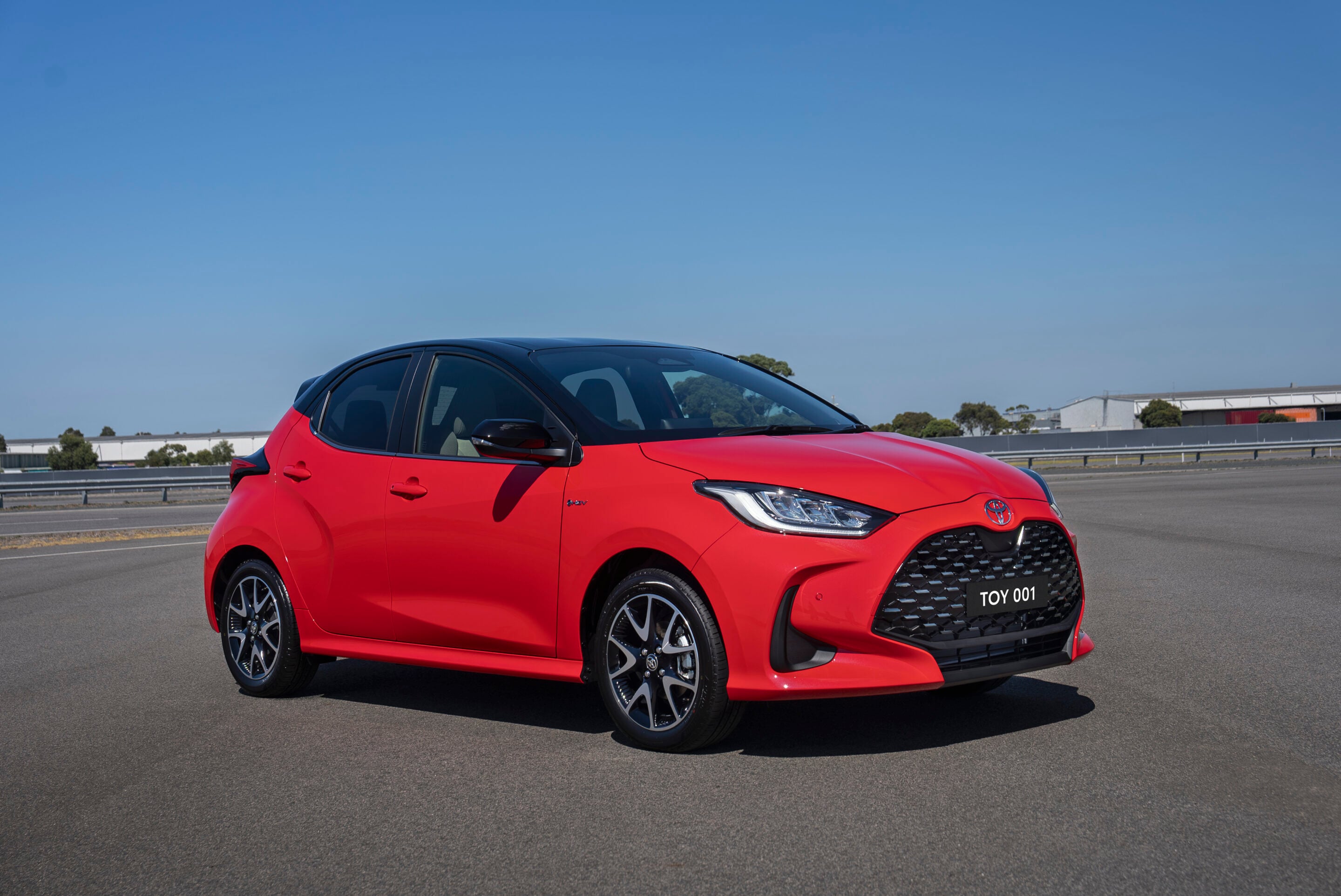
Drivetrain: 1.5-litre three-cylinder hybrid, 85kW, eCVT, front-wheel drive
Combined fuel economy: 3.3L/100km
The Toyota Yaris, which uses a 1.5-litre three-cylinder hybrid system making a peppy 85kW of power, is Australia’s most fuel efficient car without a plug, providing claimed combined fuel consumption of just 3.3L/100km. The Yaris is also good to drive, well equipped with safety features and reasonably practical as well.
BYD Sealion 5: From $33,990 +ORC
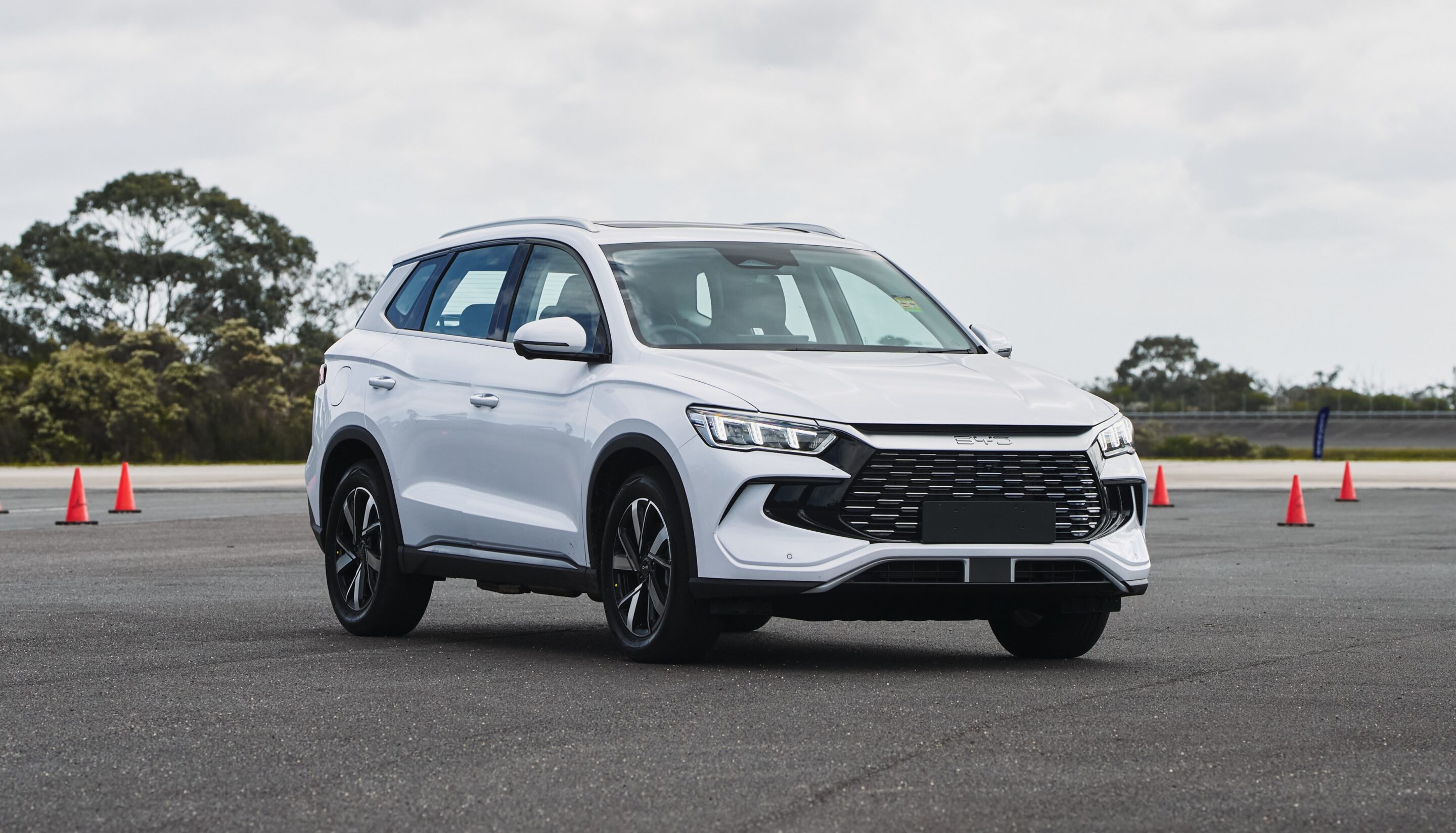
Drivetrain: 1.5-litre four-cylinder plug-in hybrid, 156kW, DHT, front-wheel drive
Battery size, electric range: 12.9kWh or 18.3kWh, 71-100km (NEDC)
Combined fuel economy: 1.2-1.3L/100km (full charge), 4.5-4.6L/100km (low charge)
The BYD Sealion 5 is new to the Australian market but is well priced from $33,990 +ORC. It also features an efficient plug-in hybrid drivetrain making 156kW of power with up to 100km of electric driving range and a practical, in-vogue mid-size SUV body. It currently holds the title of Australia’s cheapest plug-in hybrid, and there’s also plentiful stock available for you to take delivery soon.
Chery Tiggo 7 Super Hybrid: From $34,990 driveaway

Drivetrain: 1.5-litre four-cylinder turbocharged plug-in hybrid, 255kW, DHT, front-wheel drive
Battery size, electric range: 18.4kWh, 93km (NEDC)
Combined fuel economy: 1.4L/100km (fully charged)
The Chery Tiggo 7 Super Hybrid, priced at just $34,990 driveaway, is impressively fuel efficient with a claimed 93km EV range and a total range of 1200km. The Tiggo 7 is also quite practical and well equipped for a small-medium SUV, and its stunning value for money is exactly what we expect from Chery.
Mazda CX-60 plug-in hybrid: From $63,790 +ORC
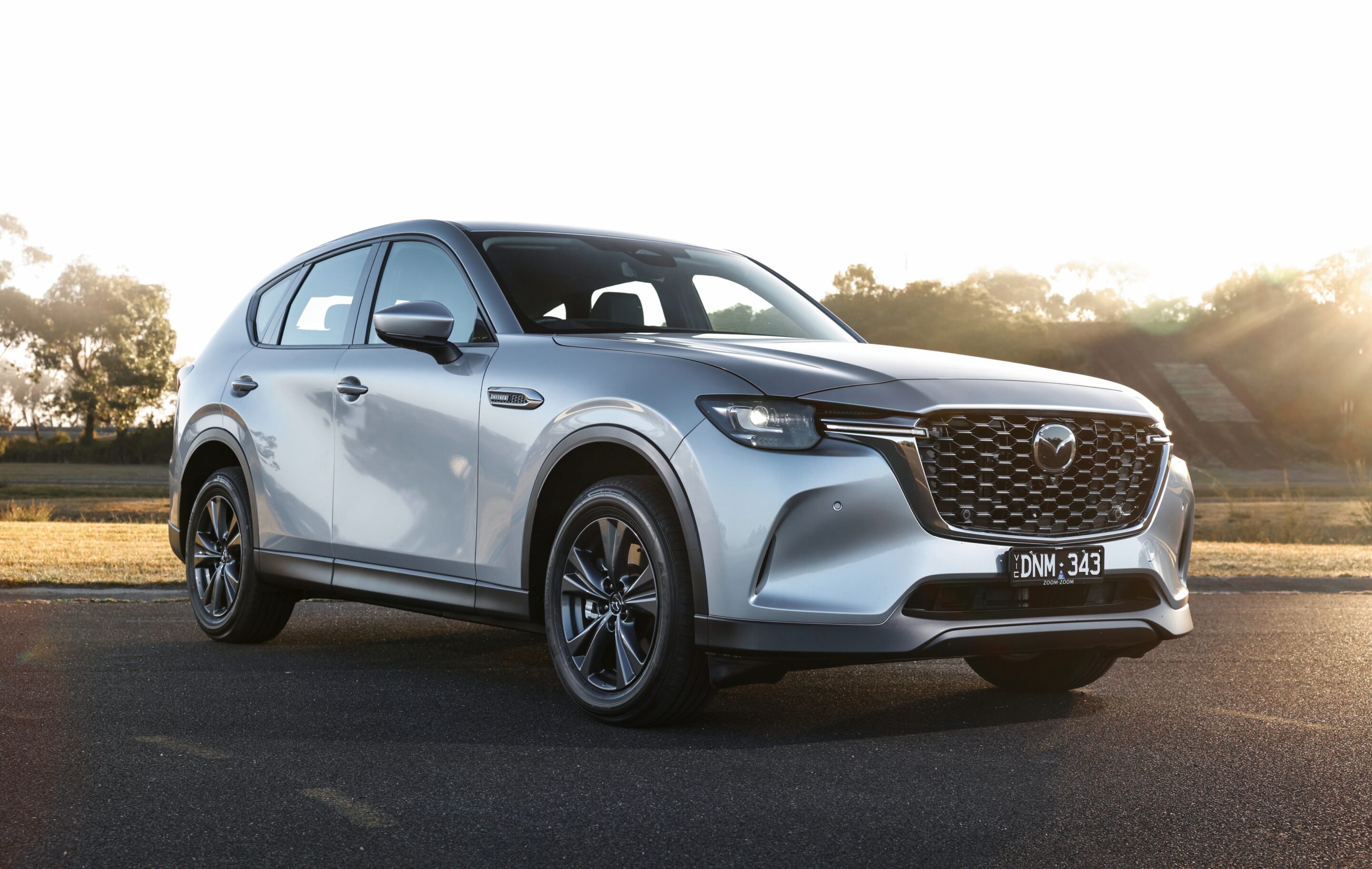
Drivetrain: 2.5-litre four-cylinder plug-in hybrid, 241kW, eight-speed auto, all-wheel drive
Battery size, electric range: 17.8kWh, 78km (NEDC)
Combined fuel economy: 2.1L/100km (fully charged)
Mazda’s first plug-in hybrid in Australia is the mid-size CX-60 and it features a strong 241kW 2.5-litre plug-in hybrid drivetrain with up to 78km of electric driving range that’s also capable of a low 2.1L/100km combined fuel consumption. There are also mild-hybrid versions of the CX-60, including a 187kW diesel that returns just 5.0L/100km on the combined cycle, giving buyers plenty of options to save fuel at the bowser.
BMW X1 xDrive25e: From $79,500 +ORC
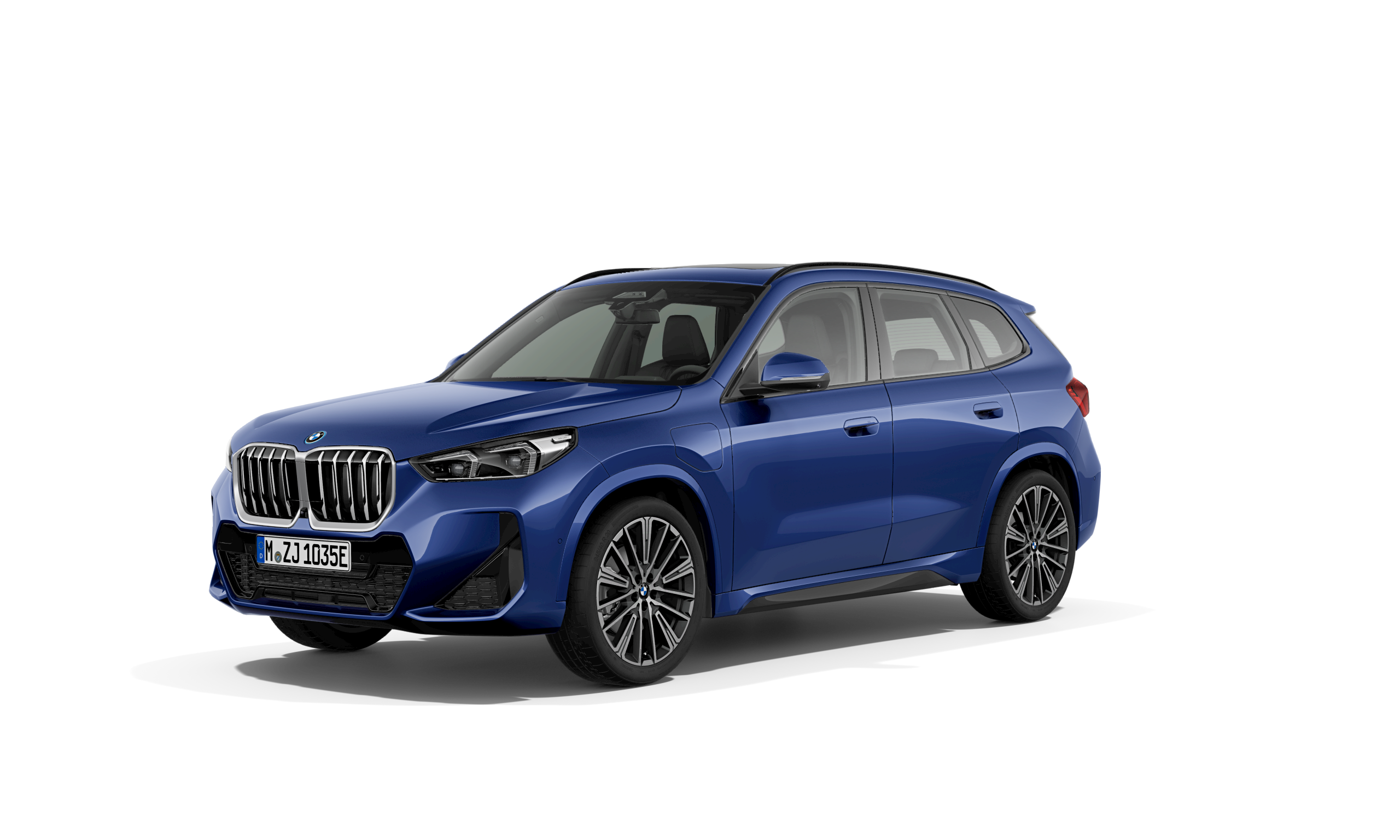
Drivetrain: 1.5-litre turbocharged three-cylinder plug-in hybrid, 180kW, seven-speed dual-clutch, all-wheel drive
Battery size, electric range: 14.2kWh, 76km (WLTP)
Combined fuel economy: 2.8L/100km (fully charged)
The BMW X1 is one of the best small SUVs available thanks to its roomy cabin – check out that headroom! – great driving experience and long list of features. While the electric iX1 has been on sale for a while now, the plug-in hybrid X1 xDrive25e is now available with a claimed WLTP electric driving range of 76km. Its 180kW PHEV drivetrain is strong, and if kept charged, will return just 2.8L/100km of fuel useage.
Geely Starray EM-i: From $37,490 +ORC
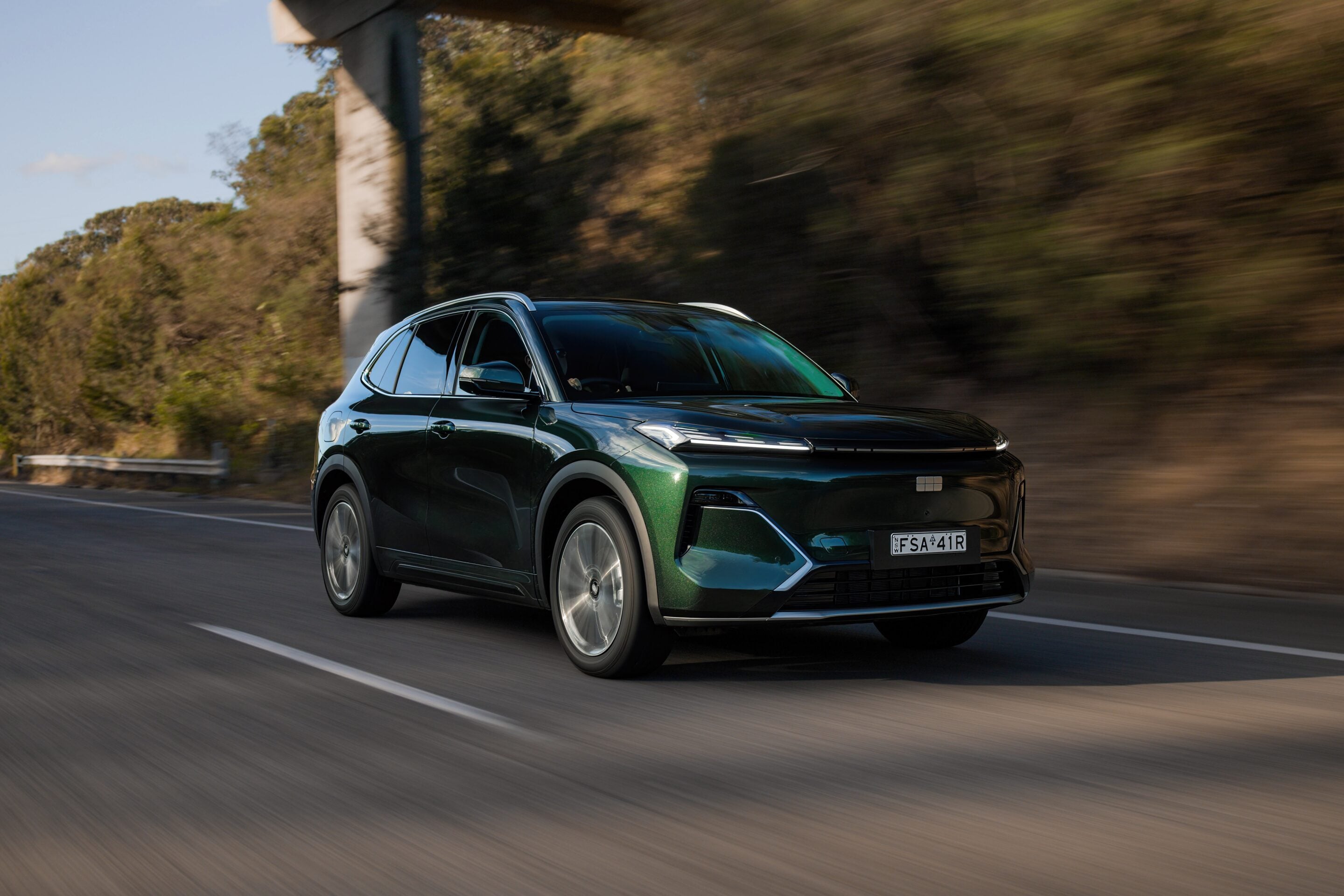
Drivetrain: 1.5-litre plug-in hybrid, 193kW, 18.4kWh battery, DHT, front-wheel drive
Claimed combined fuel consumption: 2.4L/100km
EV range: 83km
The Geely Starray entered the Australian market in late 2025 but is already selling well thanks to its impressive 83km electric-only range and combined fuel consumption of only 2.4L/100km (if fully charged). The Starray is also well equipped, practical and its cabin quality is excellent, too. Like all plug-in hybrids, if you charge the Starray regularly, it has the potential to significantly reduce your fuel bills.
GWM Haval H6 hybrid: From $40,990 driveaway
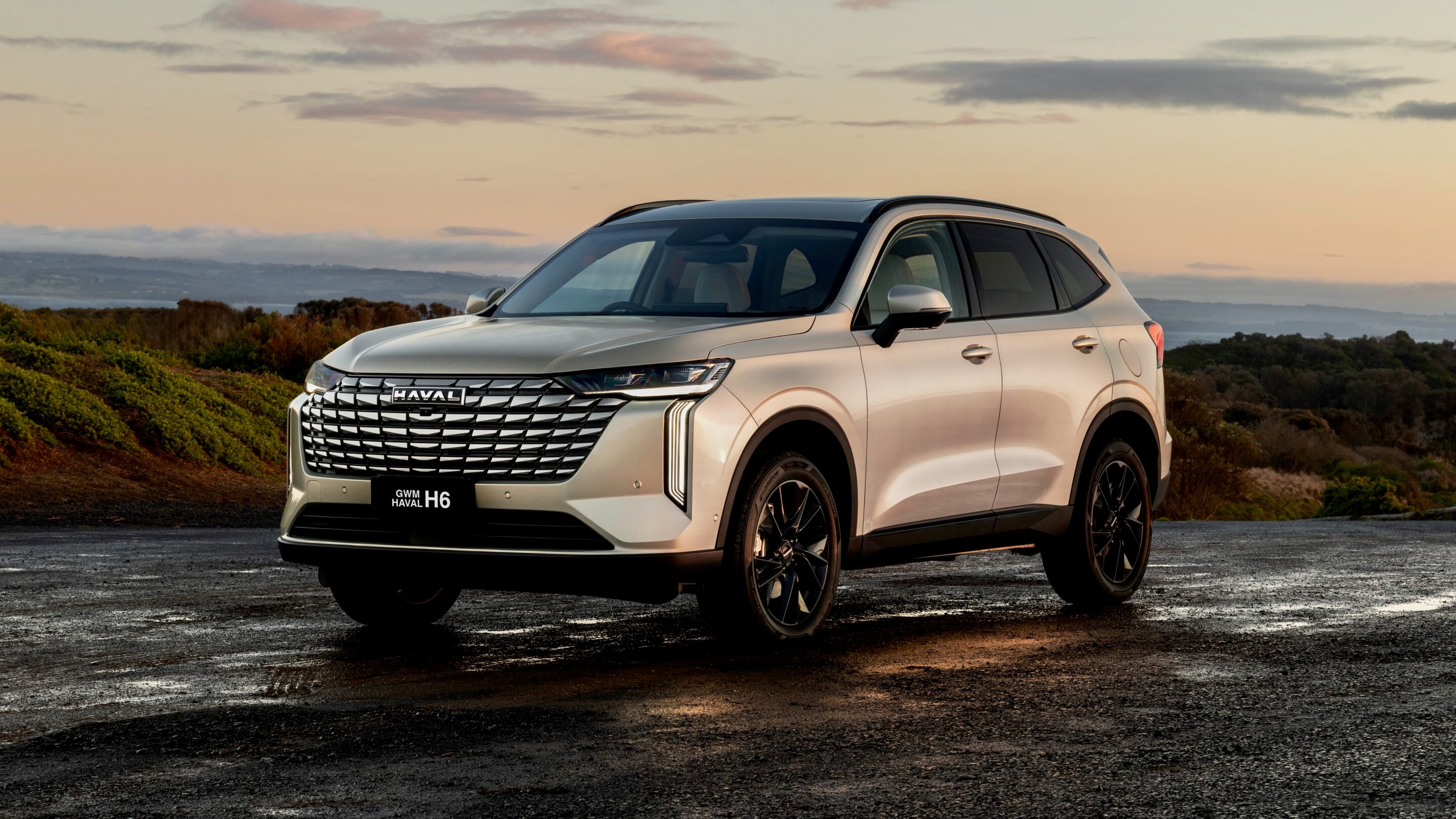
Powertrain: 1.5-litre four-cylinder turbo hybrid, 179kW, two-speed auto, front- or all-wheel drive
Fuel efficiency: 5.2L/100km
The GWM Haval H6 was given a comprehensive update in the second half of 2025 which improved its styling and dynamics, gave it a new touchscreen system and improved its value further. The base Lux hybrid is available from just $40,990 driveaway but is often discounted further (currently it’s priced at $36,990 driveaway). Its hybrid system is quite punchy and gives good performance, but it’s rated at just 5.2L/100km on the combined cycle, giving potential for a significant fuel use cut. A plug-in hybrid with 100km of electric range is also available.
Kia EV3: From $46,990 driveaway
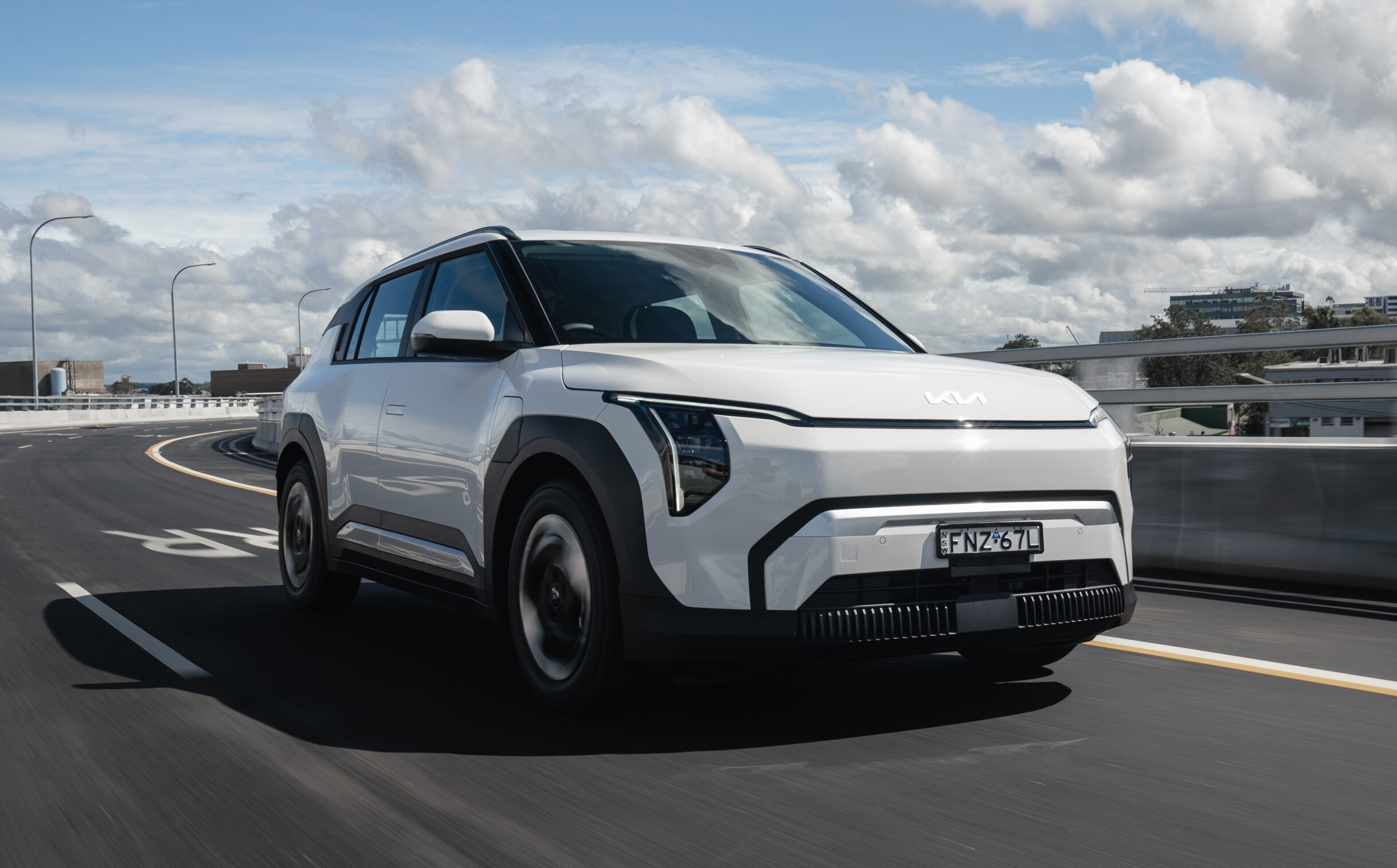
Powertrain: Single-motor electric, 150kW, single-speed, front-wheel drive
Battery size: 58.3kWh – 81.4kWh
Claimed WLTP range: 436km (Air Standard Range) – 604km (Air Long Range)
The Kia EV3 is the brand’s cheapest electric vehicle in Australia, but it’s also one of its best. Prices currently start at $46,990 driveaway for the entry-level Air, and its 58.3kWh battery gives it a claimed WLTP range of 436km, which is more than enough for city driving, though the Air Long Range’s 604km rating is a lot more. It’s well equipped across the range, and a seven-year pre-paid service plan costs $1929 or just $275 per year.
Hyundai Kona Electric: From $54,000 +ORC
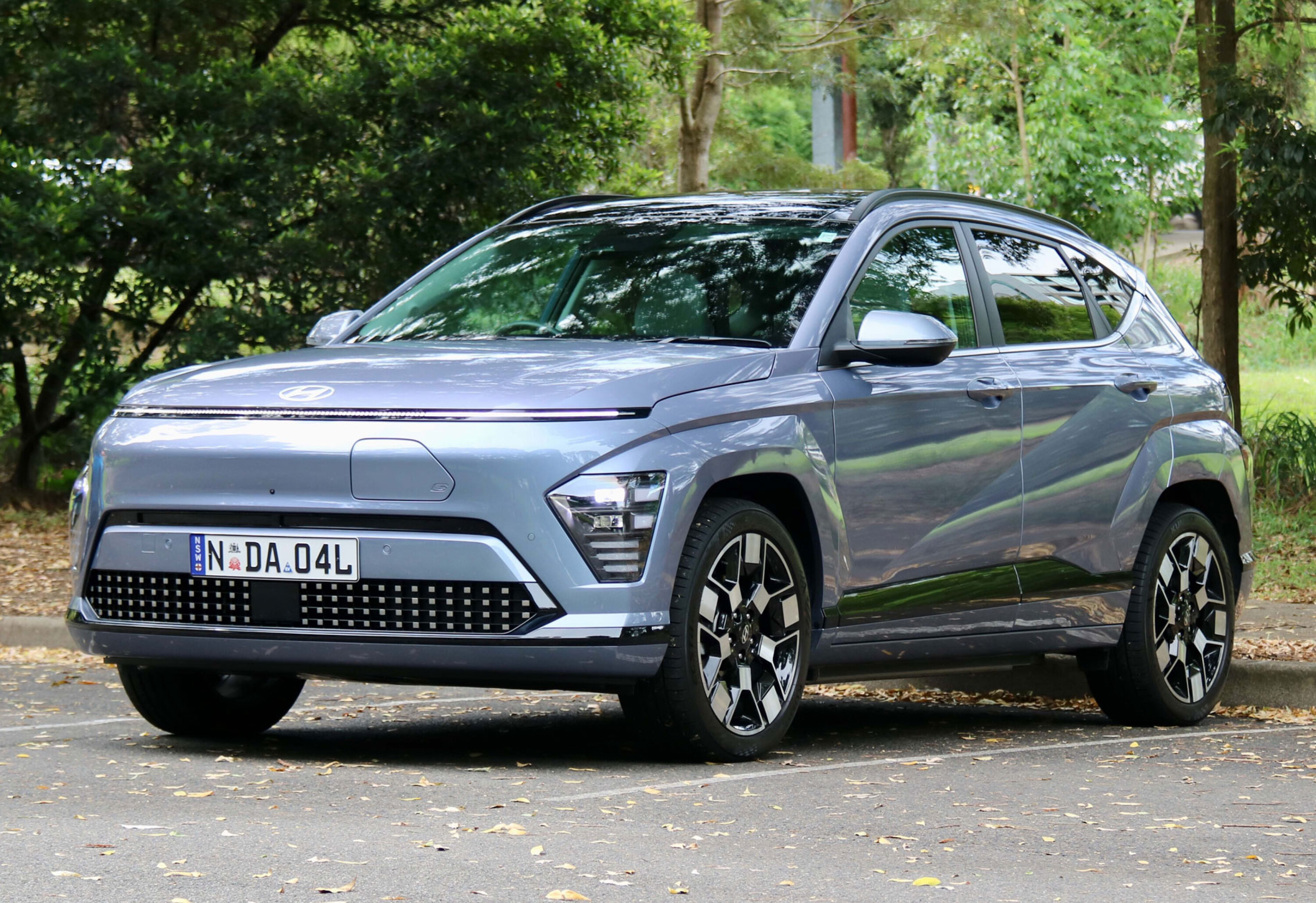
Powertrain: Single-motor electric, 99kW or 150kW, single-speed, front-wheel drive
Battery size: 48.6kWh – 64.8kWh
Claimed WLTP range: 370km – 505km
The first-generation Hyundai Kona Electric was one of the first mainstream EVs that was sold in Australia, with the second model building onto that with a more sophisticated and more practical package. Prices start at $54,000 plus on-road costs, though at the time of writing, Hyundai is offering the entry-level model for just $45,990 drive away, suggesting that there’s plentiful stock around. If electric power isn’t your thing, the Kona Hybrid is also on offer, with fuel consumption of just 3.9L/100km.
MG ZS Hybrid+: From $30,990 driveaway
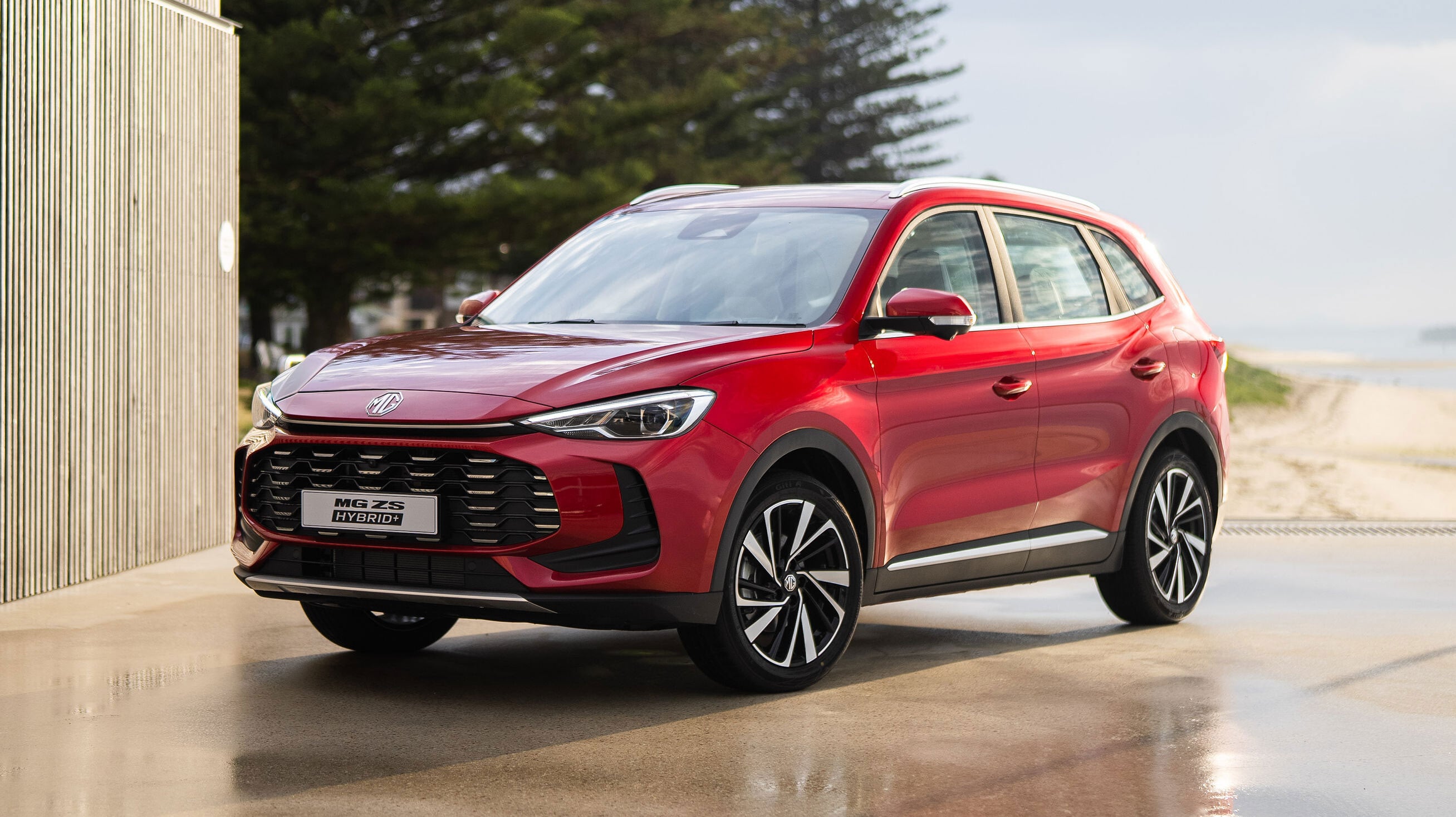
Drivetrain: 1.5-litre four-cylinder hybrid, 155kW, three-speed auto, front-wheel drive
Combined fuel economy: 4.7L/100km
The MG ZS Hybrid+ is one of Australia’s cheapest hybrid vehicles and was awarded Wheels Best Small SUV for 2025. Priced from $30,990 driveaway, even the entry-level Excite is well equipped. Under the bonnet is a powerful 155kW 1.5-litre hybrid system that is capable of just 4.7L/100km combined fuel consumption, which is impressively low. In addition, the ZS Hybrid+ is practical, good to drive and covered by a long warranty.
Honda HR-V e:HEV: From $39,900 driveaway
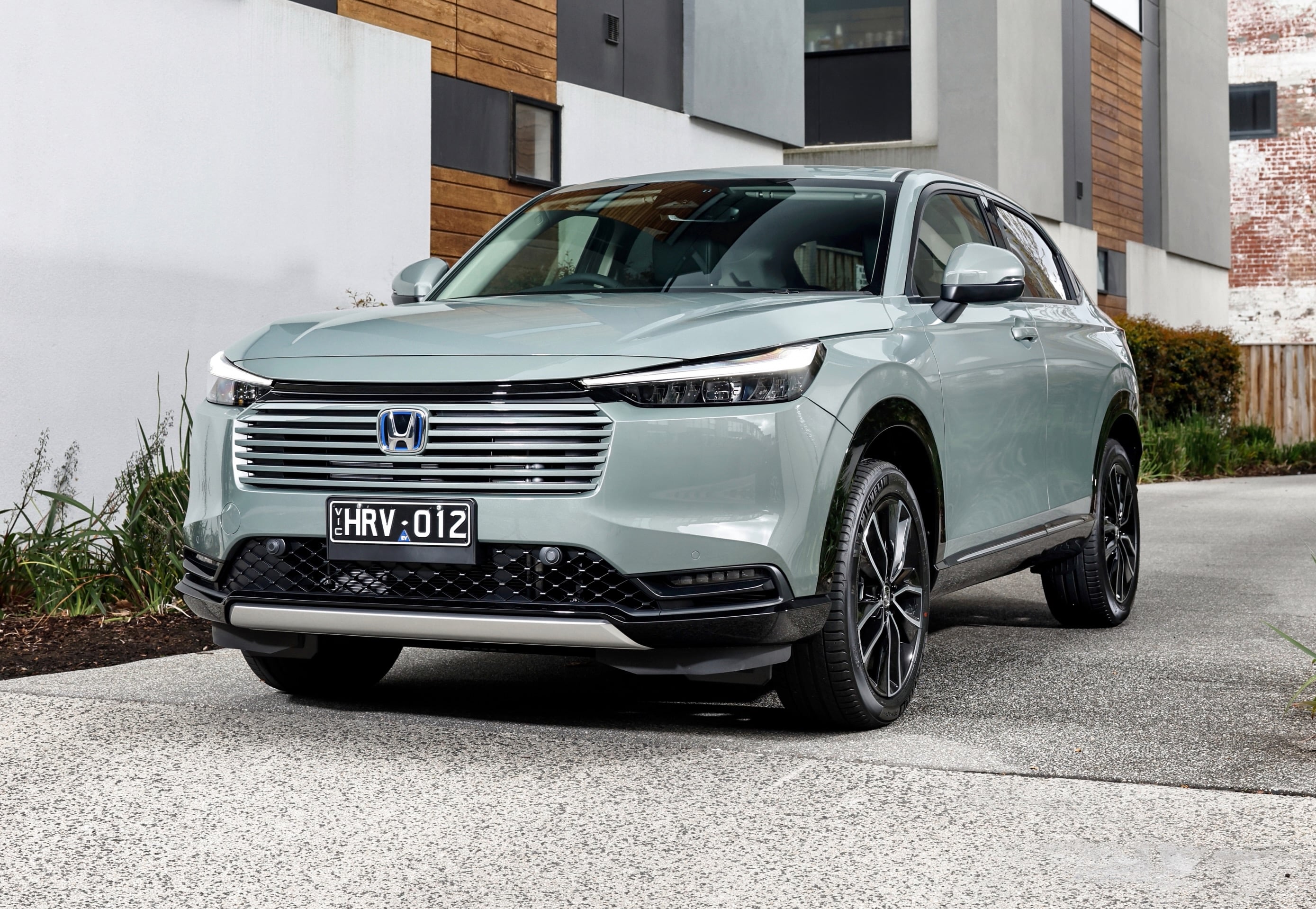
Drivetrain: 1.5-litre four-cylinder hybrid, 96kW, CVT, front-wheel drive
Claimed combined fuel consumption: 4.3L/100km
The Honda HR-V e:HEV hybrid is one of the best small SUVs you can buy and with combined fuel consumption of just 4.3L/100km, it’s also one of the cheapest to run. Using a peppy 1.5-litre hybrid drivetrain making 96kW of power, the HR-V hybrid is also more than grunty enough for most. It’s also extremely practical thanks to Honda‘s Magic Seats, it drives well and is also well equipped across its two-model range.
Mercedes-Benz EQB 250+: From $90,000 +ORC
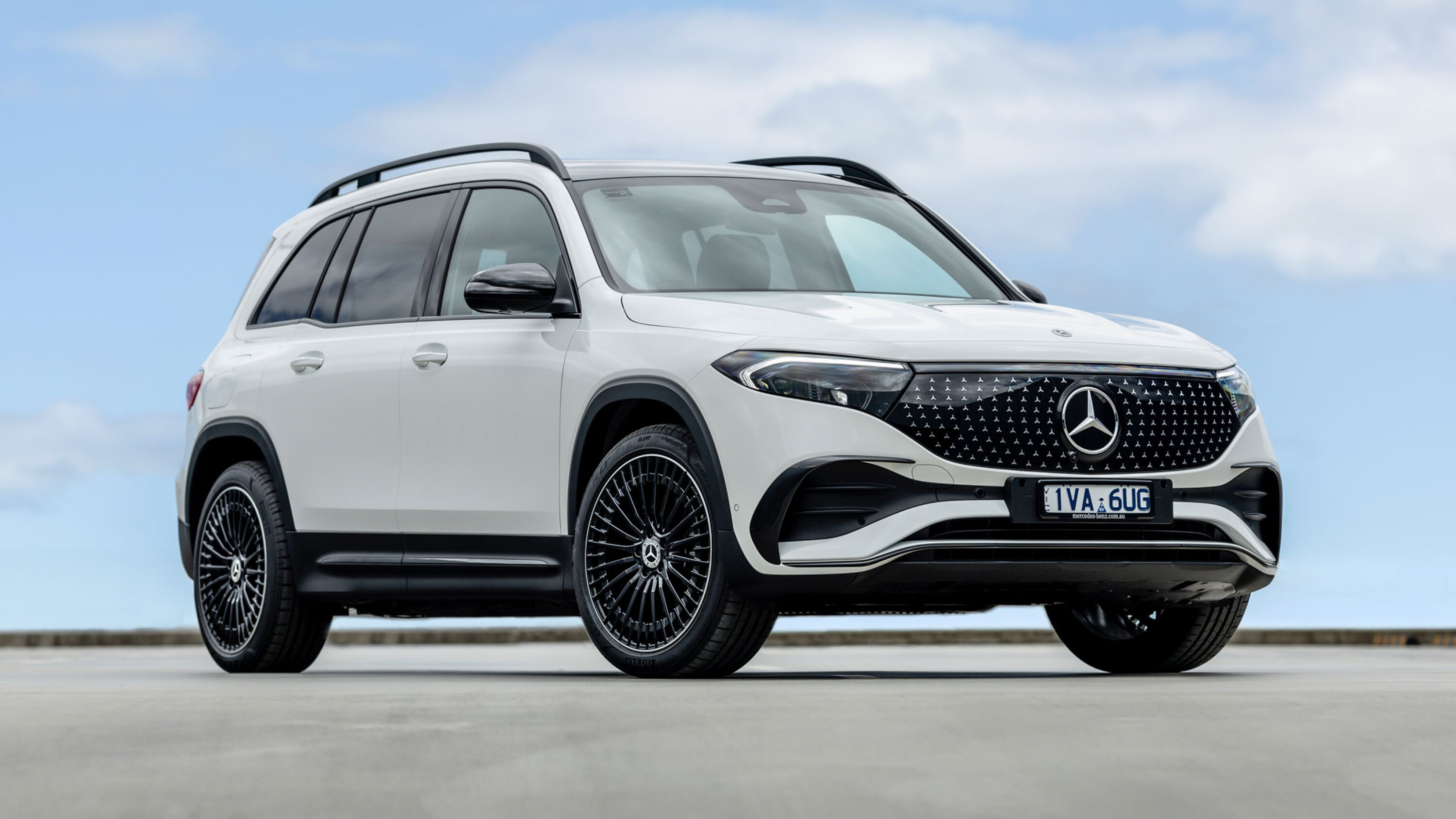
Powertrain: Single-motor electric, 140kW, single-speed, front-wheel drive
Battery size: 70.5kWh
Claimed NEDC range: 564km
The Mercedes-Benz EQB 250+ is one of the only seven-seat electric SUVs you can buy in Australia, and there is plentiful stock available, at least according to the brand’s local website. Using a 70.5kWh battery for a healthy 564km claimed range, the EQB 250+ is cheap to run and offers plenty of performance at 140kW. Its cabin is high quality, as you’d expect for a Mercedes-Benz product, and it’s capable of seating seven – though keep the third row to kids as it’s not huge.
Subaru Australia has confirmed that it will sell its third electric vehicle locally from mid-2026 with the new Uncharted small SUV. While pricing is yet to be announced, Subaru has confirmed that it will only sell the 252kW dual-motor version at launch, one of the company’s quickest-ever production cars. Twinned with the new Toyota C-HR+, the Uncharted will beat its twin to the Australian market by around 12 months.
Dubbed ‘SEV’ or ‘sport electric vehicle’, the Subaru Uncharted will arrive in Australia only in 252kW dual-motor all-wheel drive form at least initially, gifting it the ability to sprint to 100km/h in just 5.0 seconds. Subaru’s ‘symmetrical’ all-wheel drive system will be standard equipment, while its ground clearance is 211mm so it will have reasonable off-road ability like the ICE-powered Crosstrek already on sale.
A 74.7kWh CATL battery will be standard, giving the Uncharted a WLTP-rated range of 522km. It can charge at up to 150kW, with a 10 to 80 per cent DC fast charge time of around 30 minutes, but it can also be charged at up to 22kW on an AC charger.
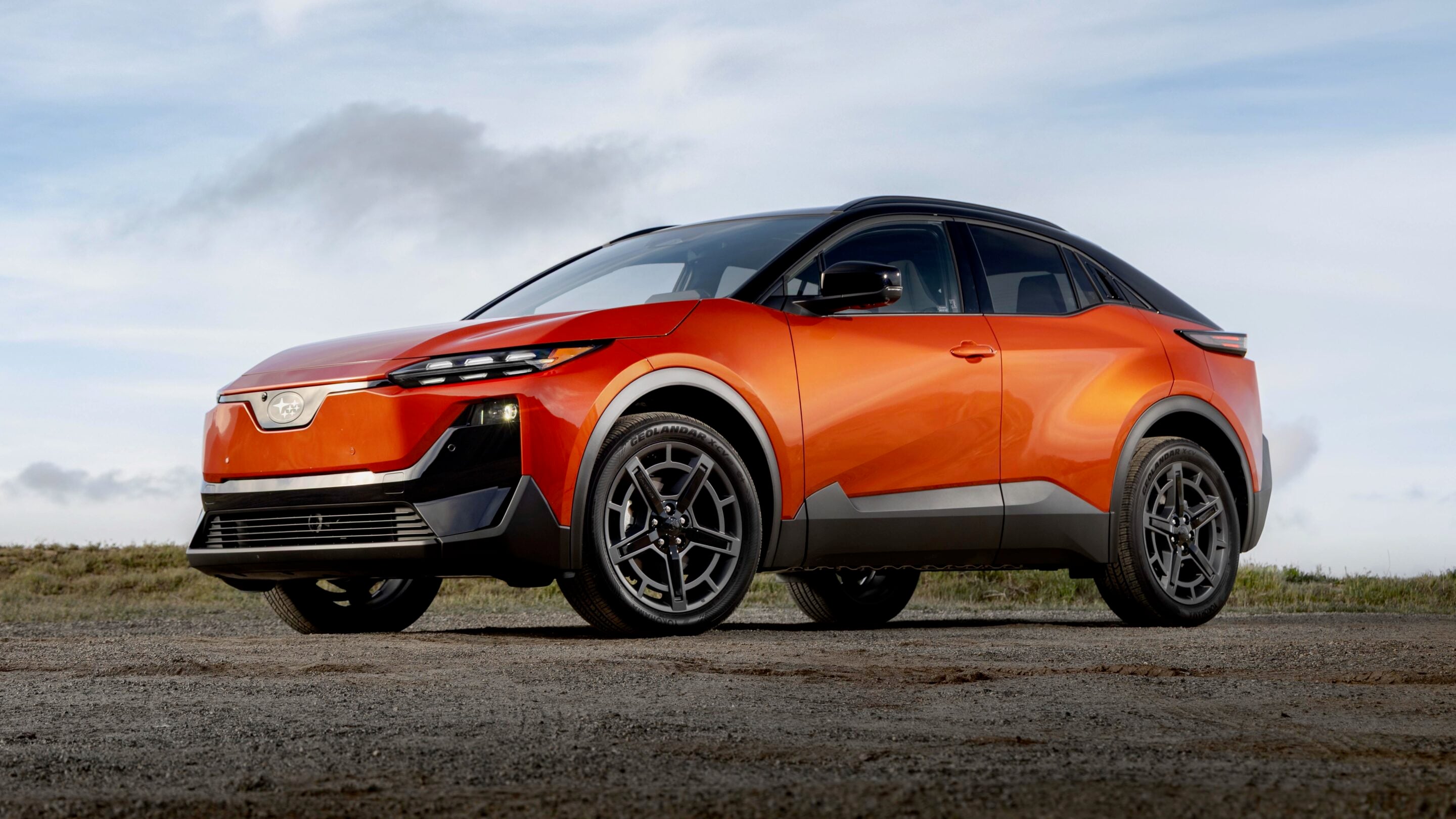
The Uncharted will feature 1500W vehicle-to-load (V2L) functionality as well, allowing devices to be powered from the vehicle.
Full standard features are yet to be confirmed, but Subaru has announced available features such as 20-inch alloy wheels, LED exterior lighting, a 14-inch touchscreen with wireless Apple CarPlay and Android Auto, dual wireless phone chargers and Subaru’s full suite of active safety features like adaptive cruise control, blind-spot monitoring, driver attention monitoring and 360-degree camera.
Subaru Australia will confirm local pricing and specifications for the new Uncharted ahead of its mid-2026 local launch.
The GWM Ora range is set to expand in Australia, with the Chinese brand’s electric Ora 5 small SUV already all-but confirmed to join the local line-up in the middle of this year.
But that could be bolstered further if GWM’s local arm decides to bring in the new Ora 5 hybrid (HEV) which made its debut at the Bangkok motor show in Thailand earlier this week.
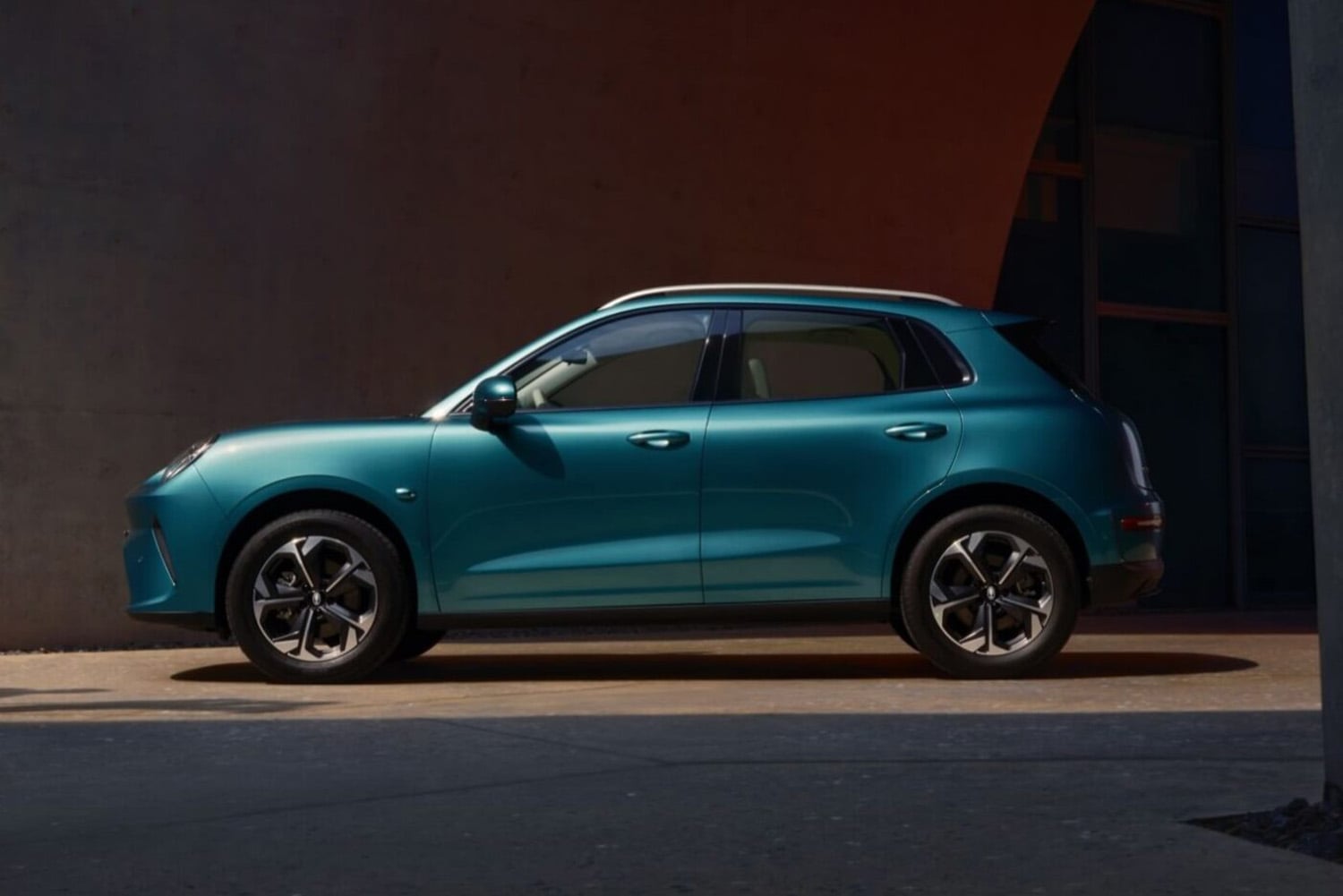
While there has been no confirmation the hybrid variants will make its way to Australia, any such move would make sense, given the current demand in Australia for HEVs of all shapes and sizes.
A small SUV, the GWM Ora 5 HEV would go toe-to-toe with hybrid variants of Toyota Corolla Cross, Chery Tiggo 4 and fellow GWM stablemate, Haval Jolion.
Powering the Ora 5 HEV is a 1.5-litre turbo-petrol paired with a single electric motor producing a combined 164kW and a healthy 476Nm. GWM claims a fuel consumption figure of around 4.3L/100km.
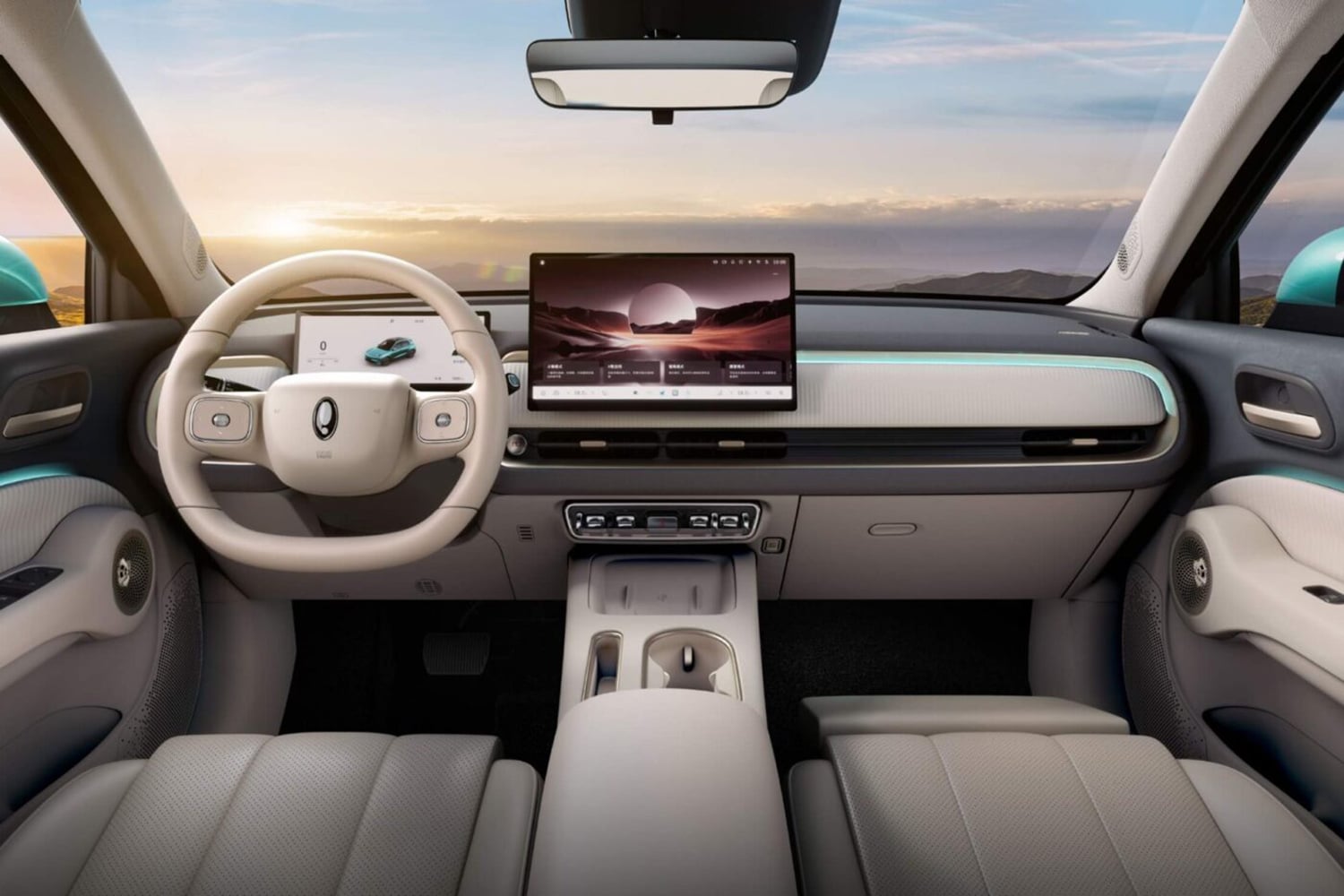
The battery-electric Ora 5 is powered by a single electric motor driving the front wheels good for 150kW and 260Nm. A 58.3kWh lithium-ion battery pack provides a claimed 520km of range, based on the more lenient NEDC laboratory testing cycle.
Pricing is yet to be confirmed by the Australian arm of GWM, however it’s likely to cost more than the GWM Ora electric hatchback which is currently priced from $35,990 drive-away.
The GWM Ora 5 EV will trade sales blows with BYD Atto 2, Chery E5 and Leapmotor B10. All are priced under $40,000.
Record high fuel prices and supply issues caused by the Trump administration starting a war with Iran have many of us considering more efficient vehicles, but what if an EV isn’t for you? You aren’t alone –regularly charging is still an issue for many of us, and most EVs aren’t exactly cheap to buy either. Thankfully, there are also now plenty of hybrid options in the Australian new car market that will still save you a lot of fuel and cash at the bowser. Here’s the WhichCar by Wheels guide to the 10 cheapest hybrids on sale right now:
1) MG 3 Hybrid+: From $27,990 plus on-road costs
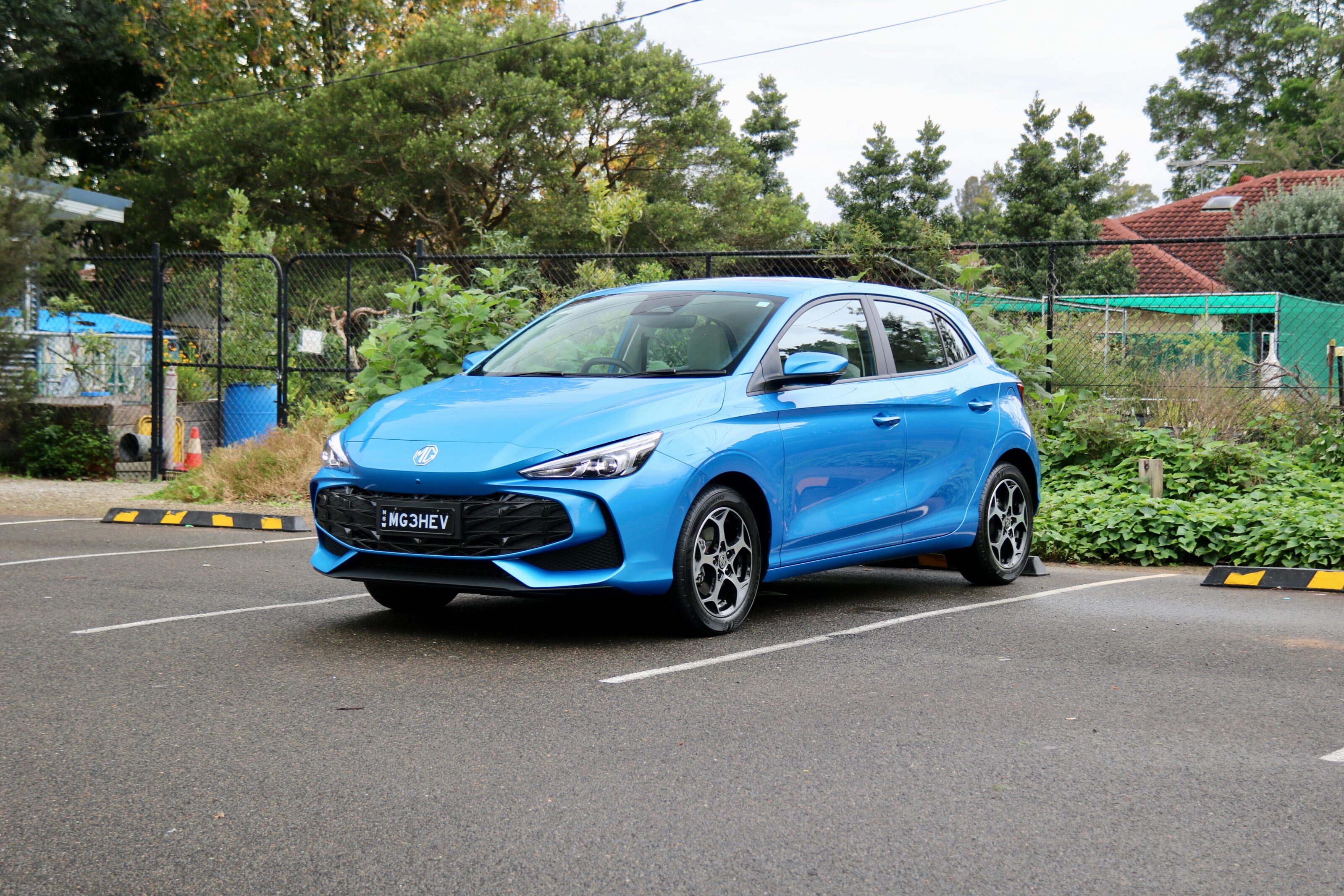
Drivetrain: 1.5-litre four-cylinder hybrid, 155kW, three-speed auto, front-wheel drive
Combined fuel economy: 4.3L/100km
If you’re searching for Australia’s cheapest full hybrid (not mild-hybrid) car, the MG 3 Hybrid+ is your choice. Priced from $27,990 plus on-road costs or $28,990 driveaway nationally, the MG 3 uses a punchy 1.5-litre hybrid system that’s capable of just 4.3L/100km on the combined cycle. The second-generation MG 3 is also far more technologically advanced, better to drive and more practical than the car it replaced but, we should note, more expensive, too.
2) Toyota Yaris: From $28,990 +ORC
Drivetrain: 1.5-litre three-cylinder hybrid, 85kW, eCVT, front-wheel drive
Combined fuel economy: 3.3L/100km
While the MG 3 is Australia’s cheapest hybrid car, it’s not the most efficient. That is the Toyota Yaris, which uses a 1.5-litre three-cylinder hybrid system making a reasonable 85kW of power and its claimed combined fuel consumption is just 3.3L/100km. The Yaris is also good to drive, well equipped with safety features and reasonably practical as well.
3) Chery Tiggo 4 Hybrid: From $29,990 driveaway
Drivetrain: 1.5-litre four-cylinder hybrid, 150kW, eCVT, front-wheel drive
Combined fuel economy: 5.4L/100km
If you’re seeking Australia’s cheapest hybrid SUV, the Chery Tiggo 4 Hybrid is the car to buy. Using a powerful 150kW 1.5-litre hybrid system, the Tiggo 4 returns a combined fuel consumption figure of 5.4L/100km, which looks high in this company but it’s still low judged other options in this segment. Regardless of what fuels it, the Tiggo 4 is a great all-rounder in the small SUV part of the market.
4) MG ZS Hybrid+: From $30,990 driveaway
Drivetrain: 1.5-litre four-cylinder hybrid, 155kW, three-speed auto, front-wheel drive
Combined fuel economy: 4.7L/100km
The MG ZS Hybrid+ is one of the cheapest hybrids you can buy but it’s also one of the best, awarded Wheels Best Small SUV for 2025. Priced from $30,990 driveaway, even the entry-level Excite is well equipped. Under the bonnet is a powerful 155kW 1.5-litre hybrid system that is capable of just 4.7L/100km combined fuel consumption, which is impressively low. In addition, the ZS Hybrid+ is practical, good to drive and covered by a long warranty.
5) Toyota Yaris Cross: From $31,790 +ORC
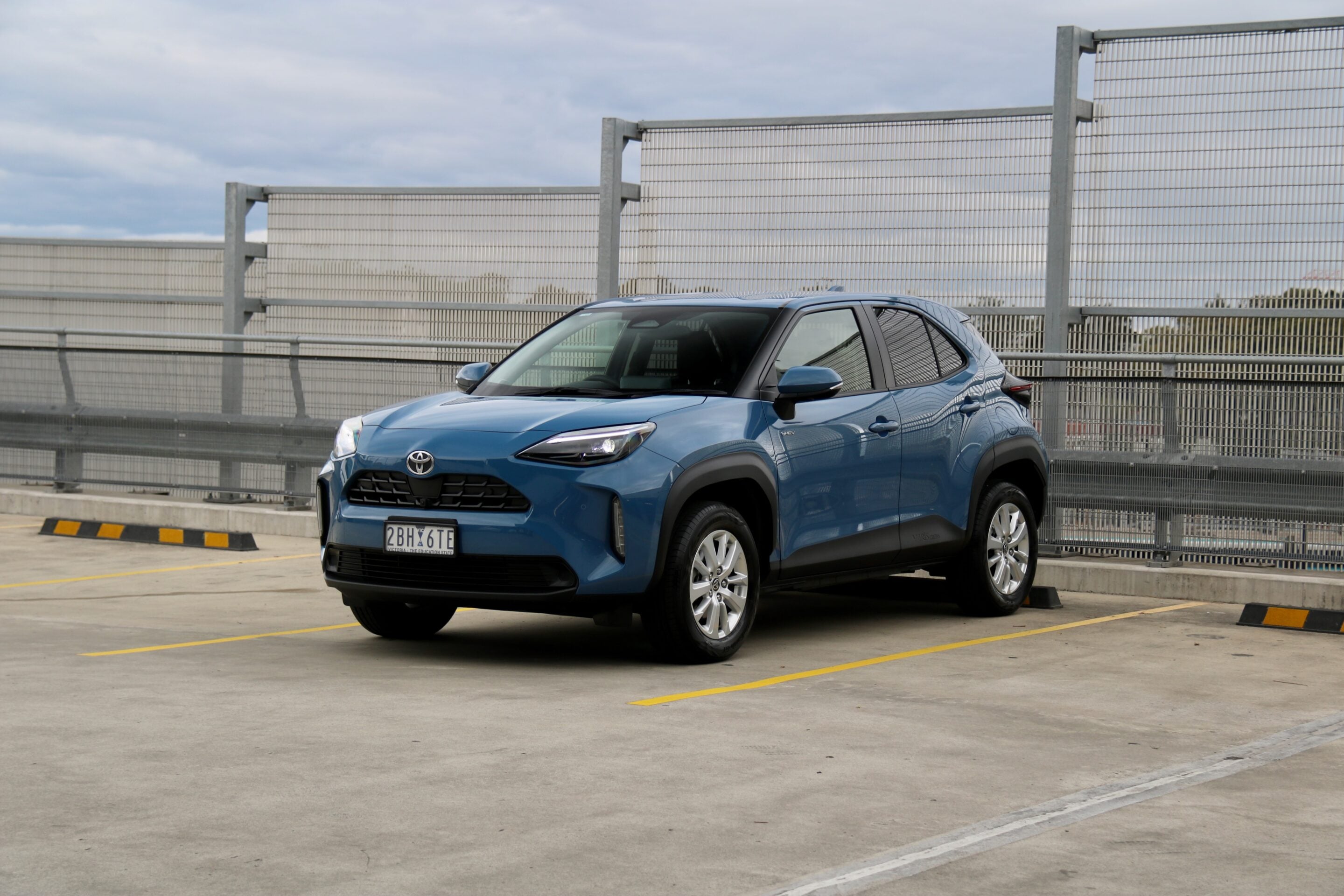
Drivetrain: 1.5-litre three-cylinder hybrid, 85kW, eCVT, front- or all-wheel drive
Combined fuel economy: 3.8L/100km (2WD), 4.0L/100km (AWD)
Take what we know about the Yaris hatchback and apply it to a taller, higher-riding small SUV and you get the Yaris Cross. Using the same 85kW 1.5-litre hybrid drivetrain to use slightly more fuel at 3.8L/100km (hardly a gas guzzler then), the Yaris Cross is the most fuel efficient non-PHEV/EV SUV in Australia. It’s also reasonably practical with a big boot, good to drive and cheap to service.
6) Toyota Corolla: From $32,110 +ORC
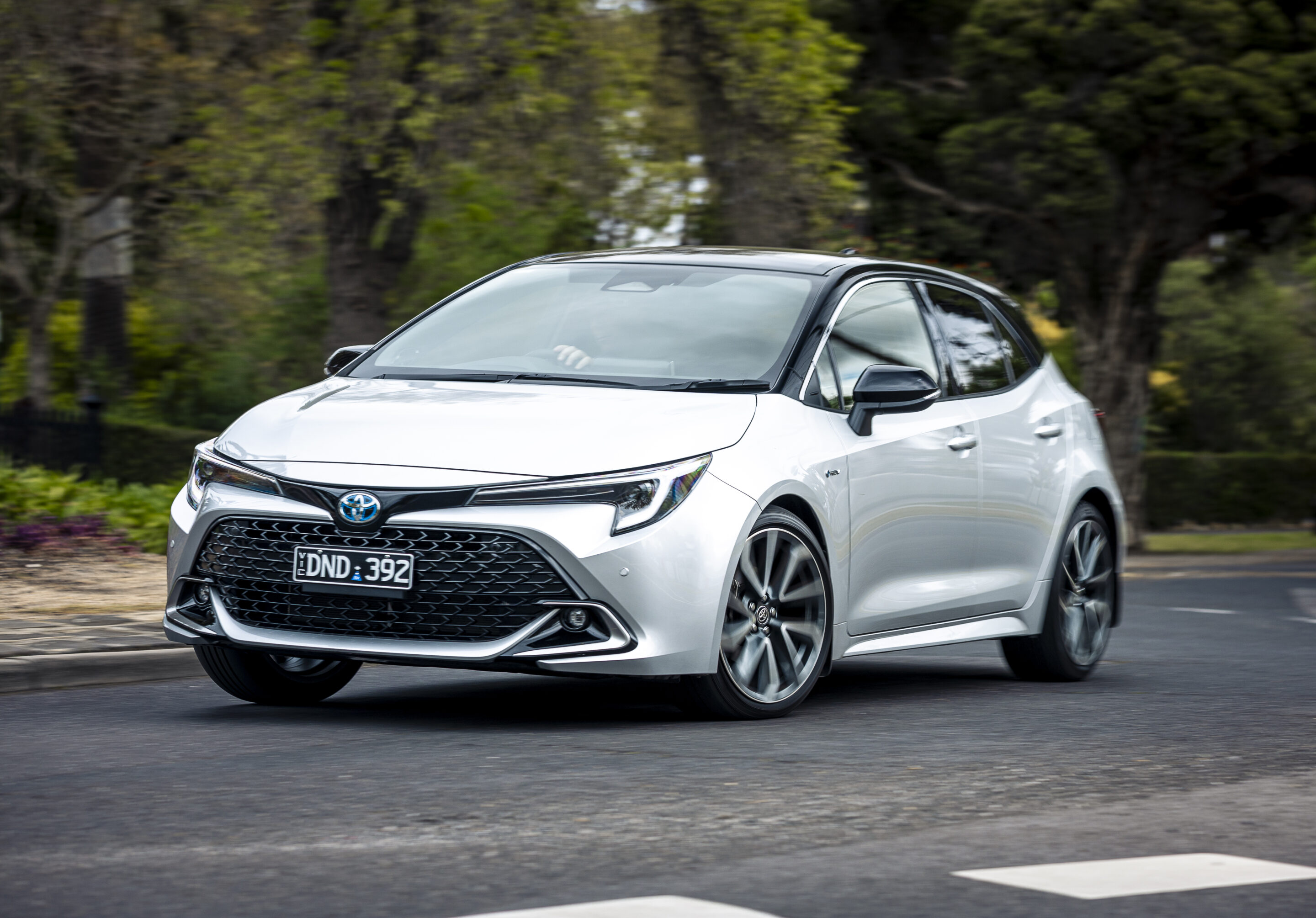
Drivetrain: 1.8-litre four-cylinder hybrid, 103kW, eCVT, front-wheel drive
Combined fuel economy: 3.9L/100km (sedan), 4.0L/100km (hatch)
Yet another hybrid Toyota on this list, the Corolla has long been one of the most popular hybrid cars in Australia. It’s great to drive and reasonably punchy, making 103kW of power, yet offers fuel efficiency of just 3.9L/100km for the sedan and 4.0L/100km for the hatchback. The Corolla’s cabin is good quality as well, and while the hatchback isn’t the most practical, the sedan is able to carry more stuff thanks to its large boot and roomier rear seat.
7) GWM Haval Jolion Hybrid: From $32,990 driveaway
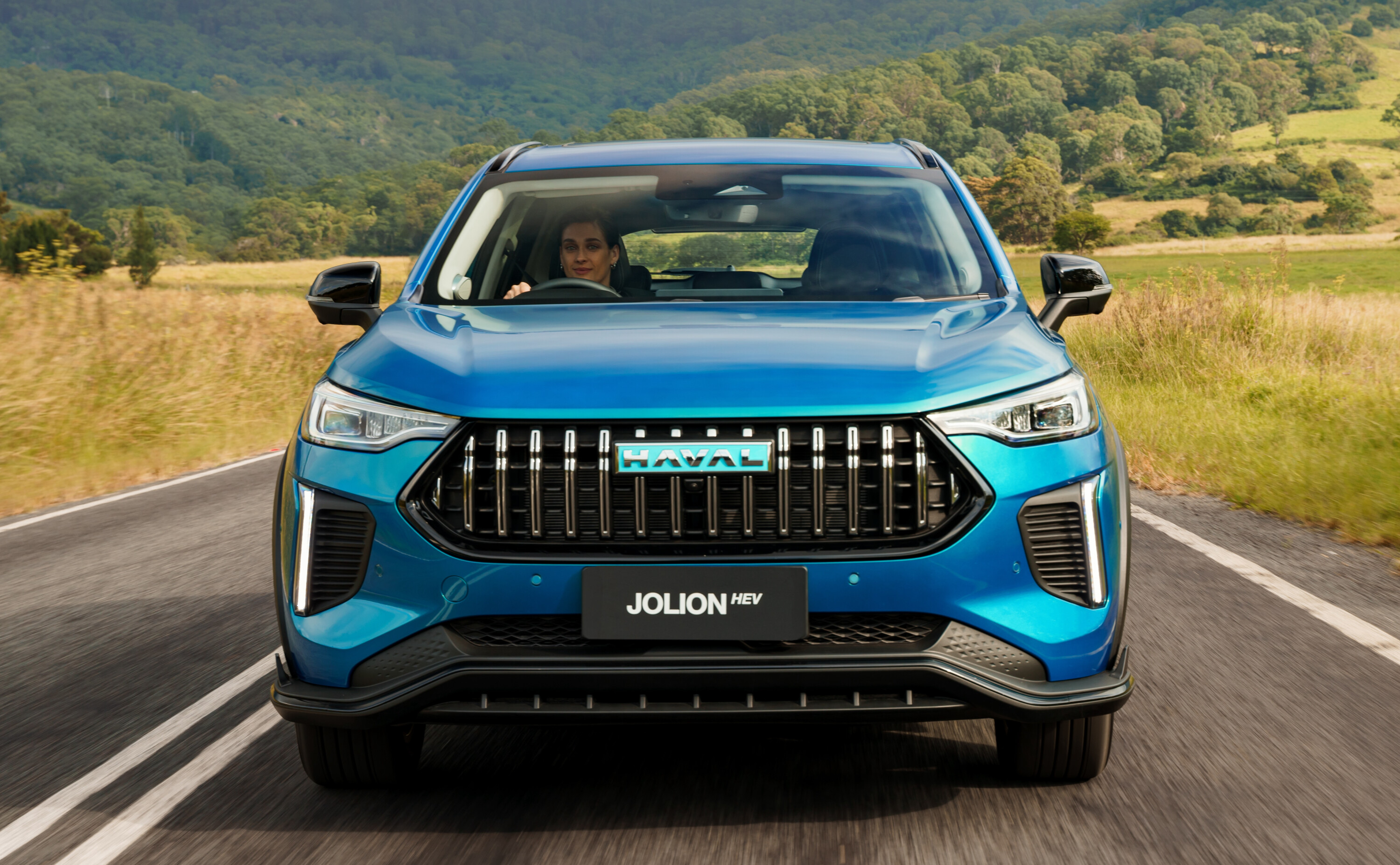
Drivetrain: 1.5-litre four-cylinder hybrid, 140kW, DHT, front-wheel drive
Combined fuel economy: 5.1L/100km
The GWM Haval Jolion is one of the most popular small SUVs on the new car market thanks to its great practicality and value for money. But it also offers an efficient and peppy hybrid system capable of just 5.1L/100km, which is a big improvement on the petrol Jolion’s 7.8L/100km rating. Adding to the Jolion’s value equation is its strong aftersales program with a long seven-year warranty and cheap capped price servicing.
8) Hyundai i30 Sedan hybrid: From $33,250 +ORC
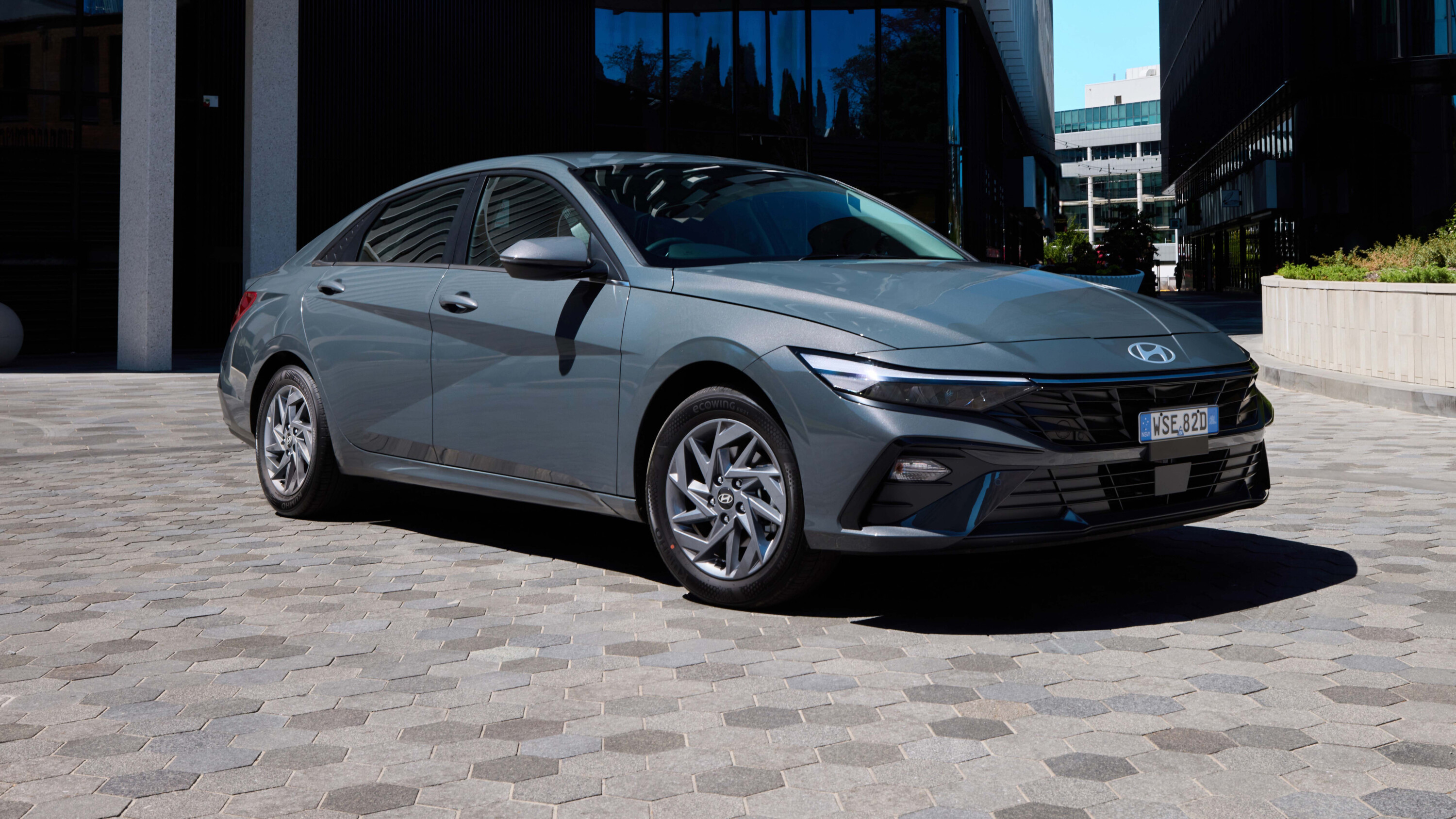
Drivetrain: 1.6-litre four-cylinder hybrid, 104kW, six-speed dual-clutch, front-wheel drive
Combined fuel economy: 3.9L/100km
The Hyundai i30 Sedan hybrid proves that you don’t need an SUV for a practical family car, and it also happens to be one of the cheapest hybrids on offer in Australia. Prices start at just $33,250 +ORC, which is less than the Kona hybrid small SUV, and it’s also very fuel efficient, rated at just 3.9L/100km. The i30 Sedan is also very roomy for a small sedan and well equipped across the range.
9) BYD Sealion 5: From $33,990 +ORC
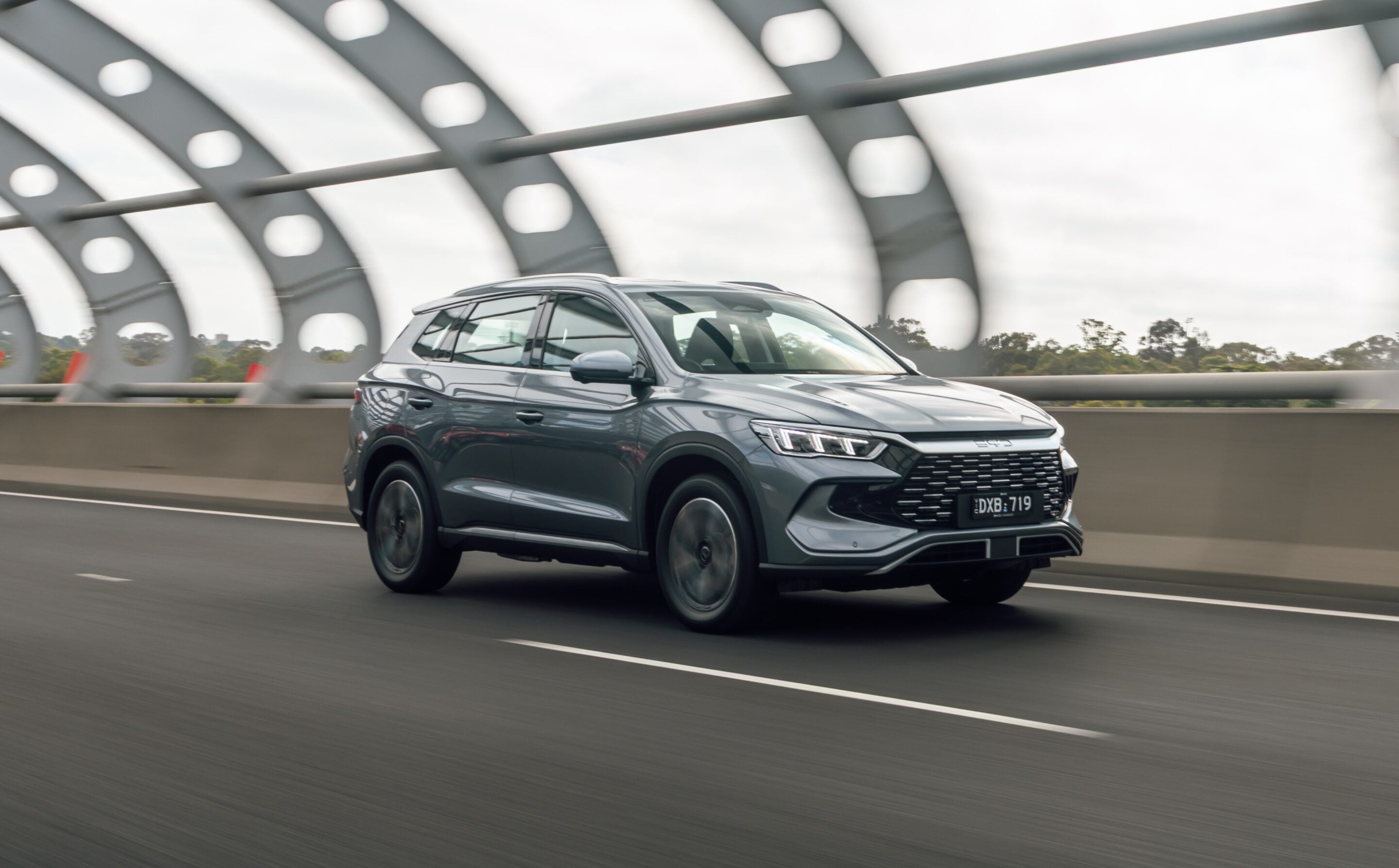
Drivetrain: 1.5-litre four-cylinder plug-in hybrid, 156kW, DHT, 2WD
Battery size, electric range: 12.9kWh or 18.3kWh, 71-100km (NEDC)
Combined fuel economy: 1.2-1.3L/100km (full charge), 4.5-4.6L/100km (low charge)
The BYD Sealion 5 is new to the Australian market but brought impressive stats, like a low $33,990 +ORC starting price, an efficient plug-in hybrid drivetrain with up to 100km of electric driving range (or much further than the average commute in Australia) and a practical mid-size SUV body. The Sealion 5 is also well equipped and offers a decent 156kW of power. It currently holds the title of Australia’s cheapest plug-in hybrid which in itself makes it worthy of consideration.
10) Chery Tiggo 7 Super Hybrid: From $34,990 driveaway

Drivetrain: 1.5-litre four-cylinder turbocharged plug-in hybrid, 255kW, DHT, 2WD
Battery size, electric range: 18.4kWh, 93km (NEDC)
Combined fuel economy: 1.4L/100km (fully charged)
Rounding out the top 10 cheapest hybrids on sale in Australia is the Chery Tiggo 7 Super Hybrid, which is priced at just $34,990 driveaway. Before the BYD Sealion 5 arrived, it was the cheapest plug-in hybrid on offer locally. Its 93km electric range is healthy, regardless of the price. The Tiggo 7 is also practical and well equipped for a small-medium SUV.
What other hybrids can you buy for under $40,000?
- Hyundai Kona Hybrid: From $36,950 +ORC
- Toyota Corolla Cross: From $37,440 +ORC
- Geely Starray EM-i: From $37,490 +ORC
- Honda HR-V: From $39,900 driveaway
- Toyota Camry: From $39,990 +ORC
- MG HS Hybrid+: From $37,990
- GWM Haval H6 Hybrid: From $36,990 (nationwide special)
With Australia’s fuel prices higher than ever before, and supply becoming scarce at some locations, it’s likely that new car buyers will increasingly look towards electric cars. However, many EVs aren’t cheap to buy and despite price parity in some situations, many remain more expensive than their equivalent ICE models.
Thankfully for those wanting to escape petrol-dependence, there are a growing number of cheaper EV models that are worthy of consideration. Here’s the WhichCar by Wheels guide to the 10 cheapest electric cars on the market in Australia:
1) BYD Atto 1: $21,990 +ORC
Drivetrain: Single-motor, 65kW – 115kW, front-wheel drive
Range: 220km – 310km (WLTP)
BYD shocked the nation launching not just the cheapest electric car in Australia but one of the cheapest cars, period. Priced from just $21,990 plus on-road costs, the BYD Atto 1 is priced similarly to other light cars such as the Kia Picanto and MG 3, but it’s fully electric instead. The entry-level Atto 1 Essential uses a small 30kWh battery for a claimed 220km of range, as well as a 65kW electric motor, which is more than enough for most urban-dwelling buyers – but those wanting more range and grunt can jump up to the Atto 1 Premium, which features a 115kW motor and a larger 43kWh battery for a healthier 310km of range. Regardless of the drivetrain, the Atto 1 is a well equipped, practical and darty city runabout.
2) BYD Dolphin: From $29,990 +ORC
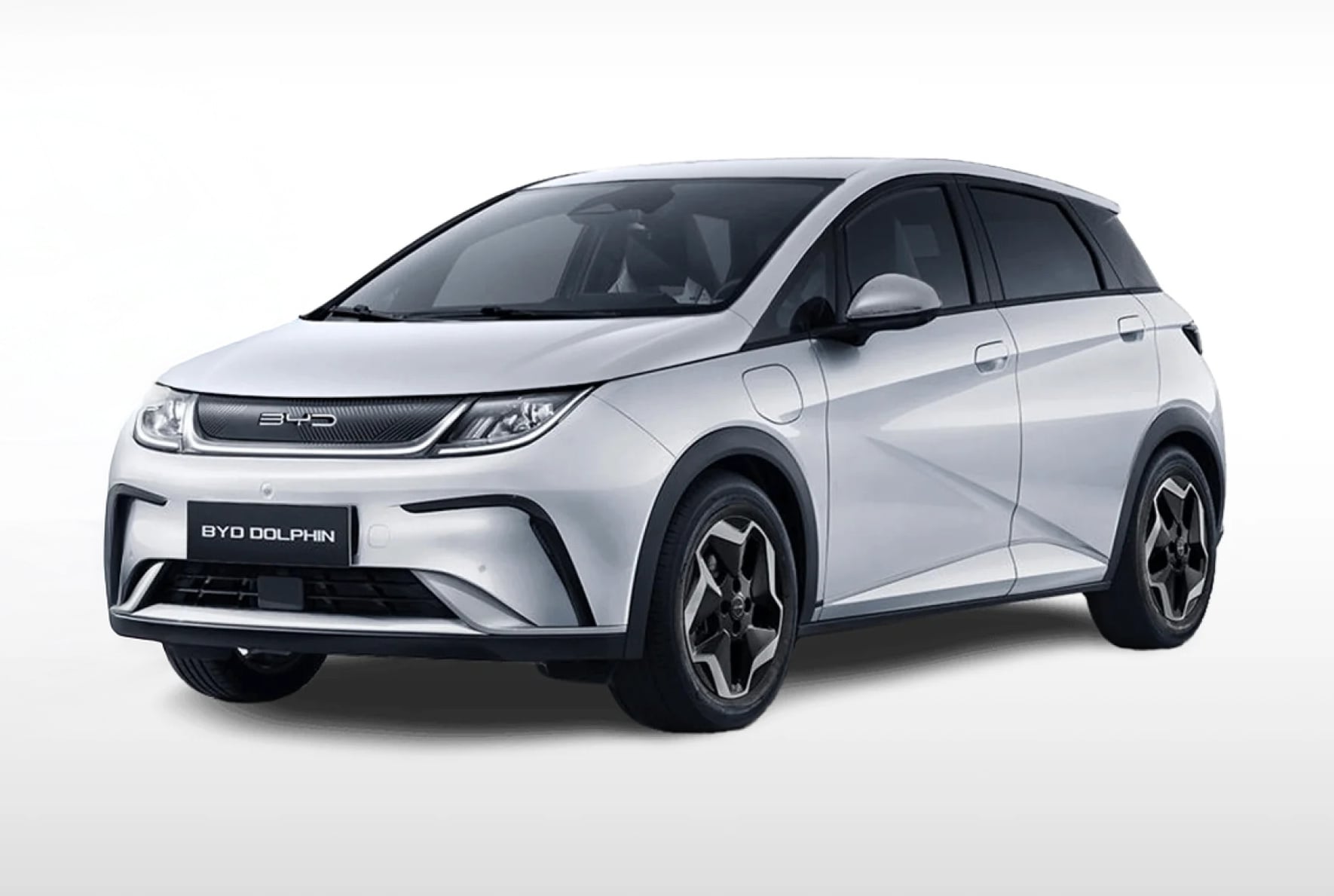
Drivetrain: Single-motor, 70kW – 150kW, front-wheel drive
Range: 340km – 427km (WLTP)
The previous cheapest electric car in Australia, the BYD Dolphin is larger than the Atto 1 that sits below it, is priced from $29,990 plus on-road costs for the entry-level Essential that uses a 70kW motor and can travel a claimed 340km on a charge – the upper-spec Dynamic ($36,990 +ORC) makes more than double the power at 150kW and uses a larger battery for a claimed 427km of range.
3) GAC Aion UT: From $30,990 driveaway
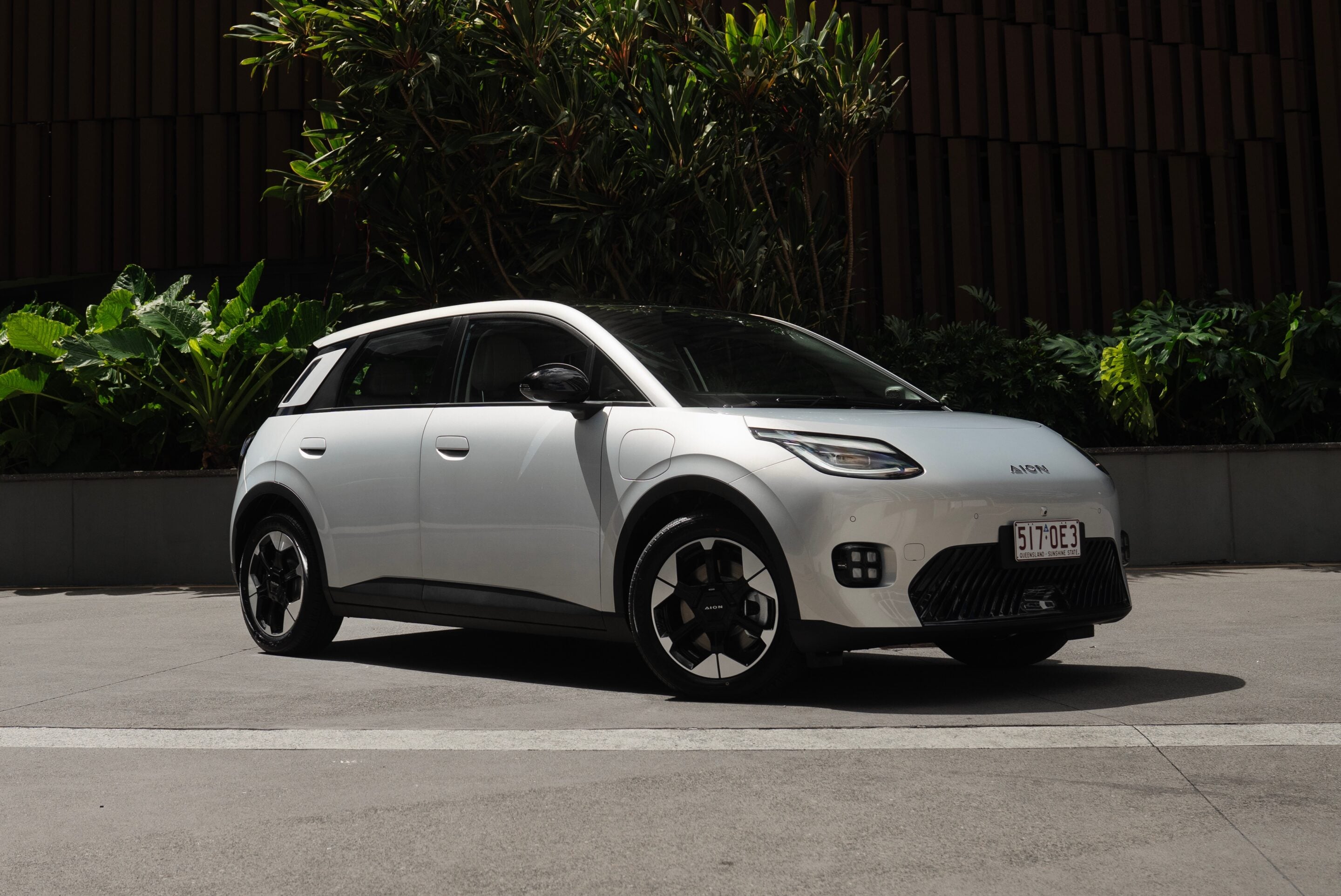
Drivetrain: Single-motor, 150kW, front-wheel drive
Range: 430km (WLTP)
The Aion UT is a new electric hatchback to Australia from Chinese firm GAC and pricing starts at $30,990 driveaway for those buying an Aion UT before April 9 (at which time it will revert to a still-sharp $31,990, plus on-road costs). For that money, buyers get a healthy 430km of range and a powerful 150kW motor, giving the Aion UT spritely performance. Its cabin is roomy for its size with a 321-litre boot, and it’s also quite well equipped across the range.
4) BYD Atto 2: From $31,990 +ORC
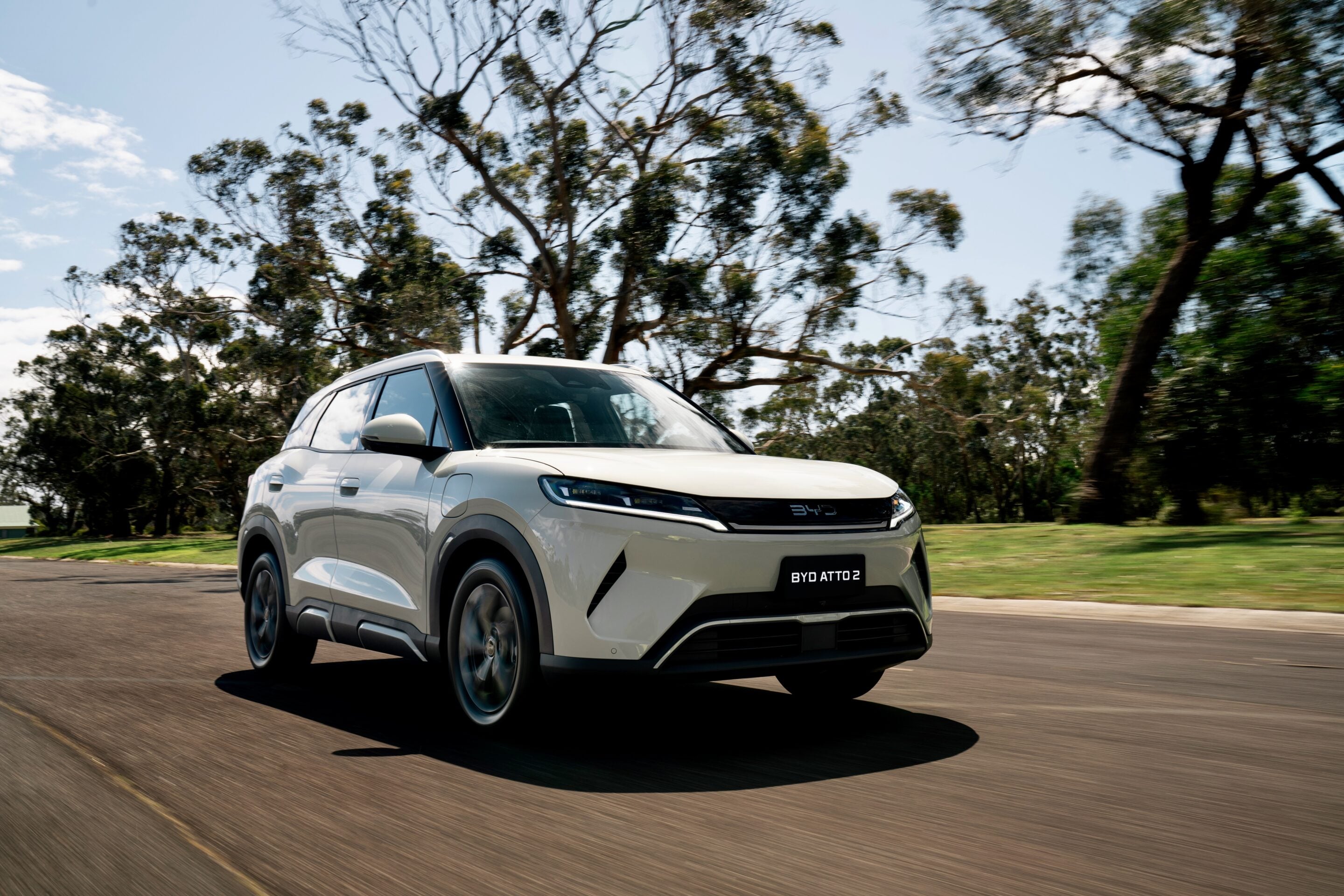
Drivetrain: Single-motor, 130kW, front-wheel drive
Range: 345km (WLTP)
The BYD Atto 2, the cheapest electric SUV in Australia so far, launched in late 2025 priced from just $31,990 plus on-road costs for the entry-level Dynamic and $35,990 +ORC for the better-specced Premium. Both use the same drivetrain with a 51kWh LFP battery that’s good for a claimed 345km range, with a 130kW motor driving the front wheels. Both Atto 2 variants are well equipped and it uses good quality materials on the inside as well.
5) GWM Ora: From $35,990 driveaway
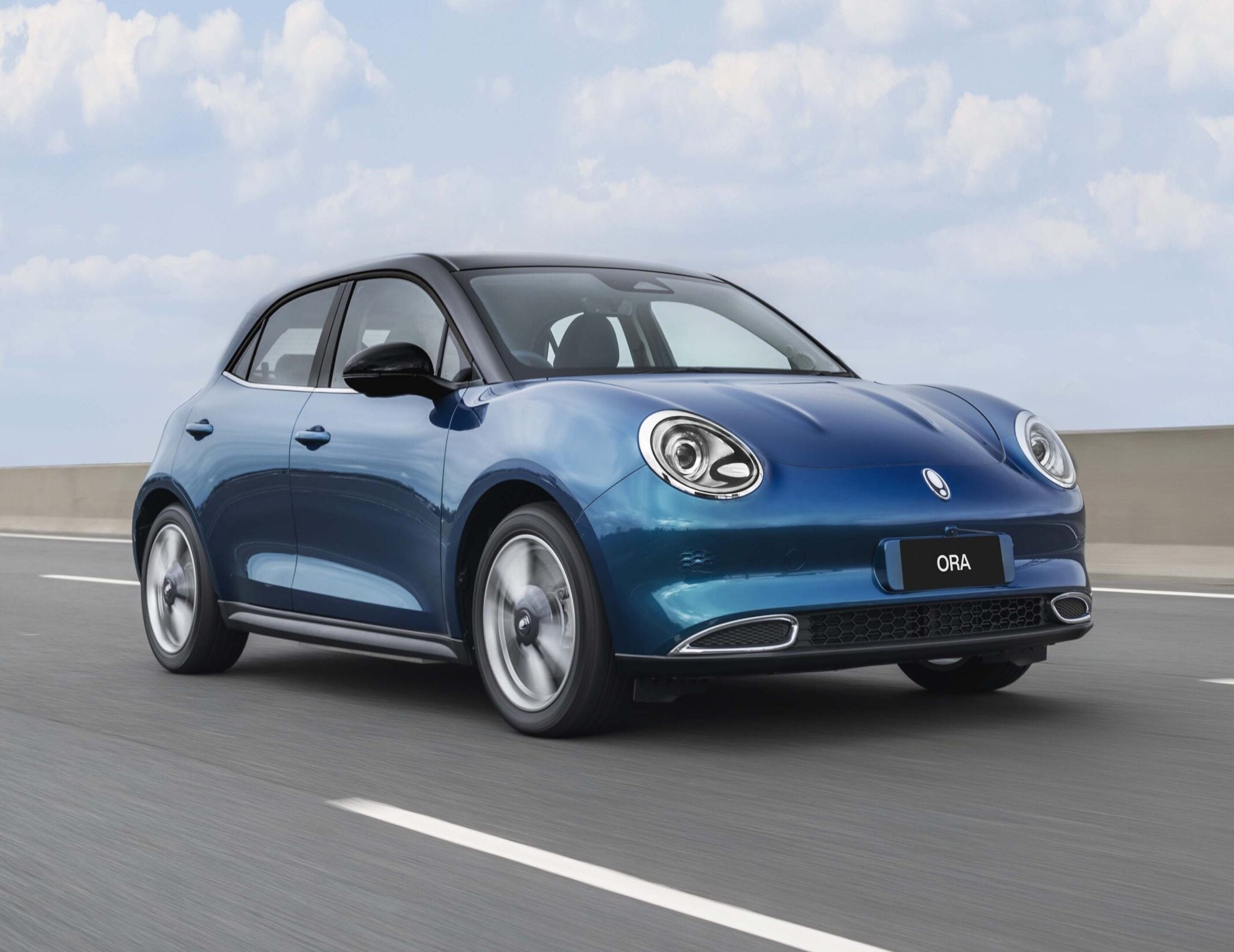
Drivetrain: Single-motor, 126kW, front-wheel drive
Range: Up to 400km (WLTP)
The GWM Ora was actually one of the first small electric vehicles to go on sale in Australia, when it did so back in mid-2023. Nowadays, its range is split into two trims: base Lux and the sporty-looking GT at the top of the range, though both use the same drivetrain. A reasonable 126kW is put through the front wheels, while a 57.7kWh LFP battery provides up to 400km of driving. The Ora’s cabin is surprisingly roomy for its size, and it’s well equipped as well.
6) Jaecoo J5 EV: From $36,990 driveaway
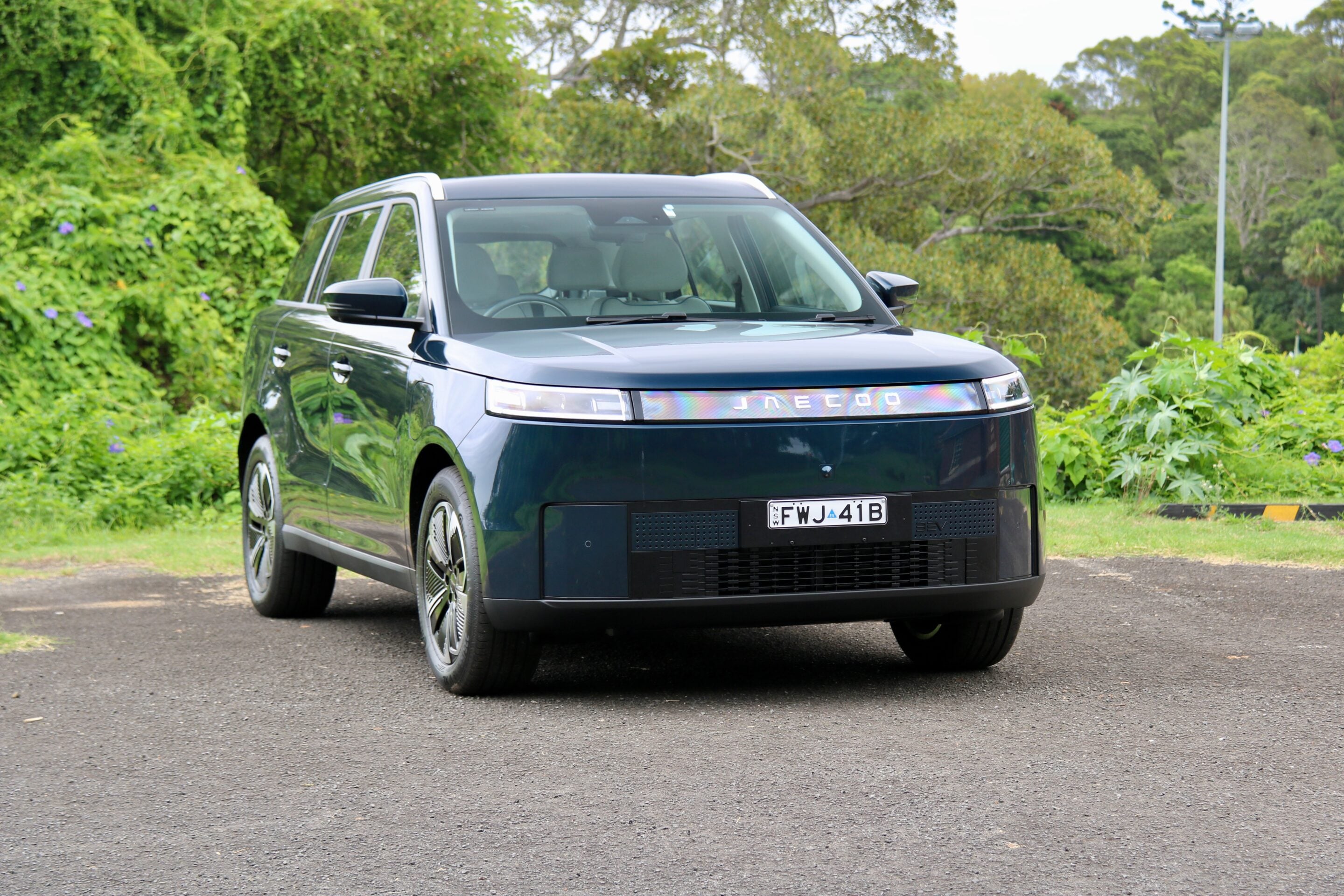
Drivetrain: Single-motor, 155kW, front-wheel drive
Range: Up to 402km (WLTP)
Jaecoo’s J5 will soon also be offered with petrol and hybrid power, too, but so far only the electric version has launched, locally priced from $36,990 driveaway. Under the body is a 58.9kWh battery for a claimed 402km of range, while its 155kW front motor handles propulsion. The exterior design is clean and handsome, while the interior is good quality and loaded with features like a panoramic glass roof, synthetic leather upholstery and a huge 13.2-inch touchscreen.
7) Chery E5: From $36,990 +ORC
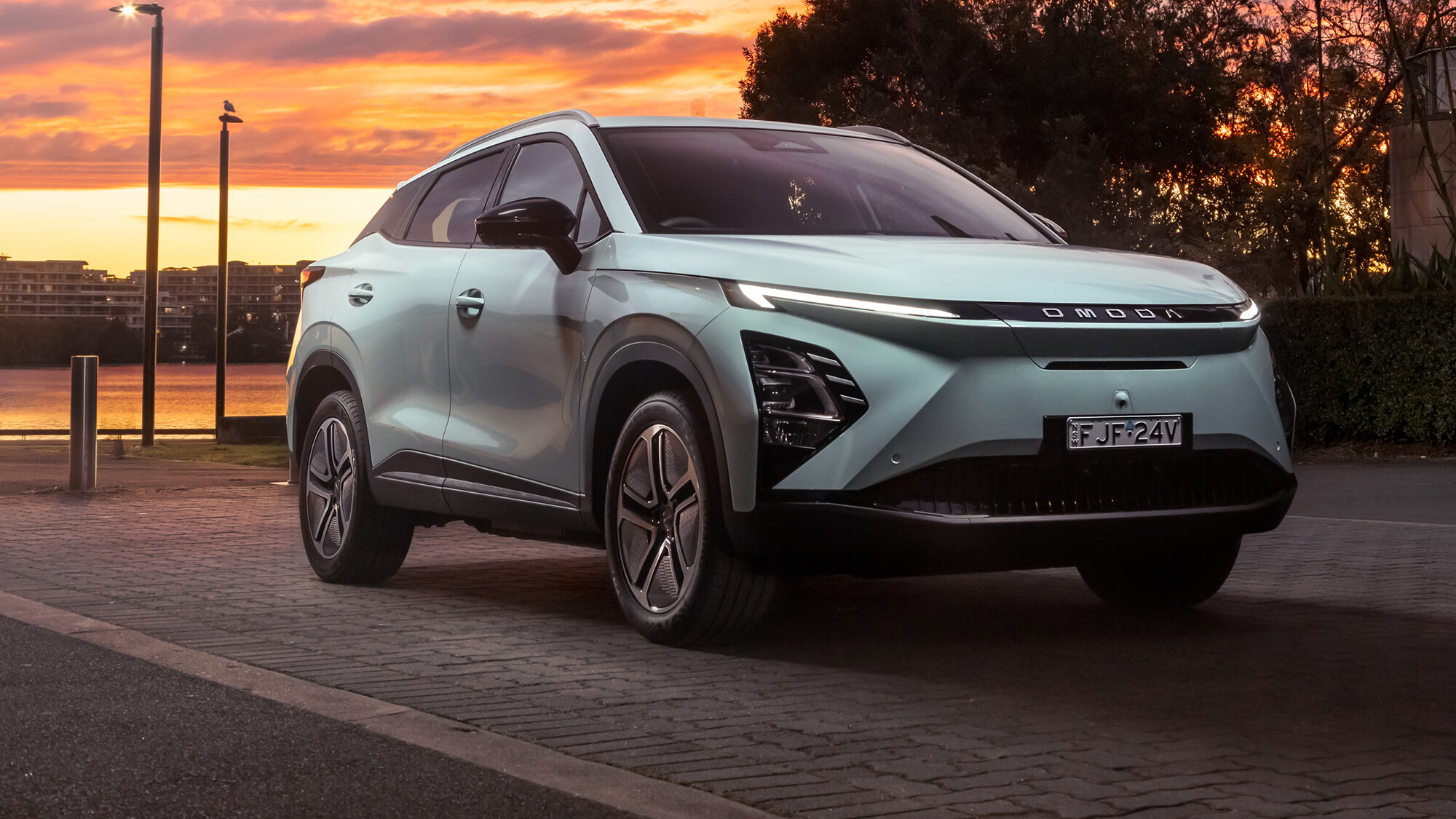
Drivetrain: Single-motor, 155kW, front-wheel drive
Range: 430km (WLTP)
Previously called the Chery Omoda E5, the new Chery E5 is a handsome small SUV with a coupe-like roofline. Priced from $36,990 plus on-road costs, the E5 is offered in two spec points: Urban and Ultimate, with each featuring a 58.9kWh battery for a claimed 430km range (WLTP) and a 155kW front-mounted electric motor. The E5 continues the strong value for money that Chery is known for thanks to its long standard equipment list and long warranty.
8) Leapmotor B10: From $37,888 +ORC
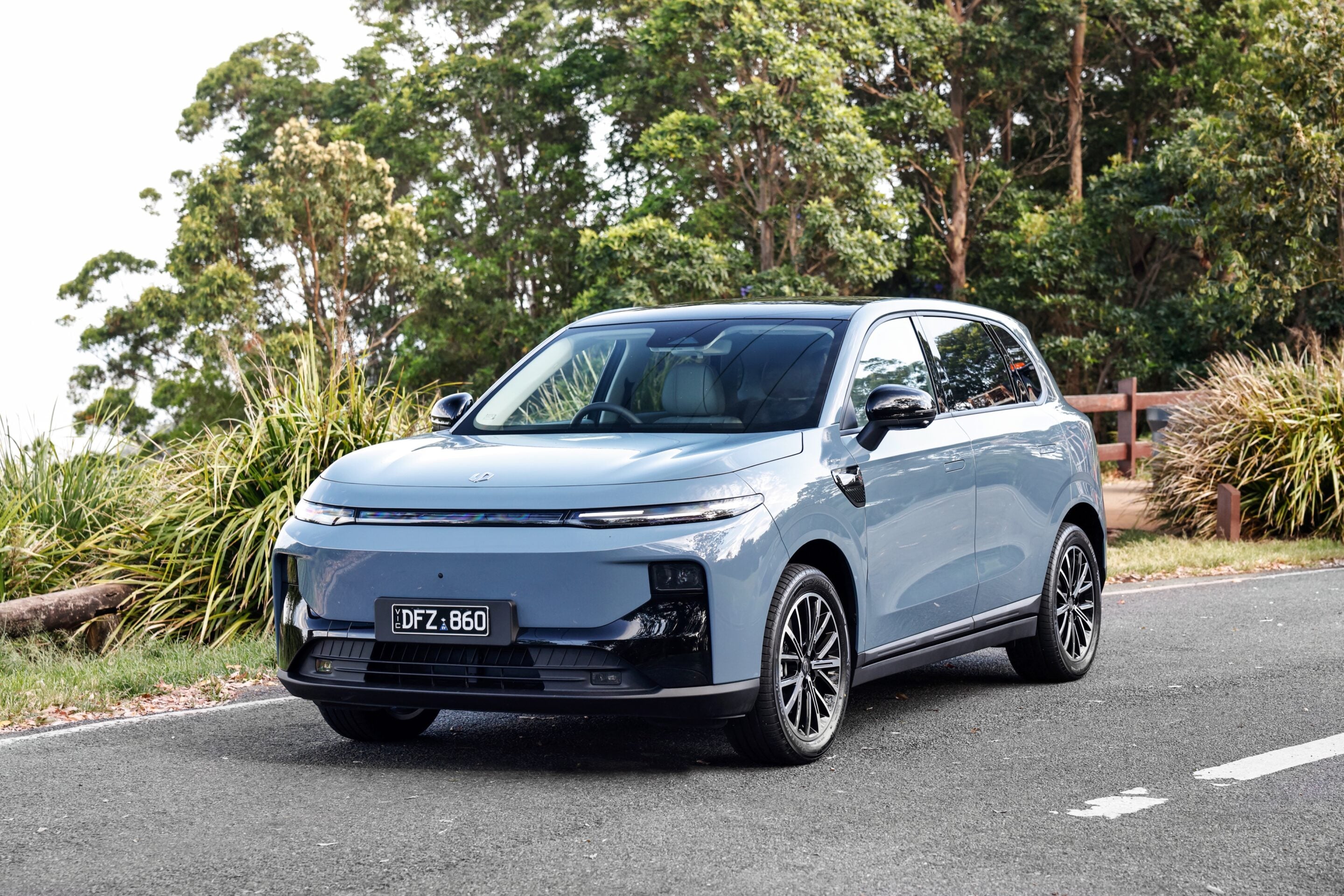
Drivetrain: Single-motor, 160kW, rear-wheel drive
Range: 442km – 516km
Leapmotor recently launched the B10 in Australia, its second car on offer locally. Sitting in the small SUV class, the B10 uses a 160kW rear-mounted electric motor, but offers two battery sizes (56.2kWh for the entry-level Style and 67.1kWh for the upper-spec Design Long Range) for between 442km and 516km of driving range. Unlike almost all other cheap EVs, the B10 is actually rear-wheel drive and Leapmotor is keen to point out that its chassis was developed by Maserati, which also fits under the Stellantis umbrella, meaning it offers an engaging driving experience.
9) MG 4: From $37,990 driveaway
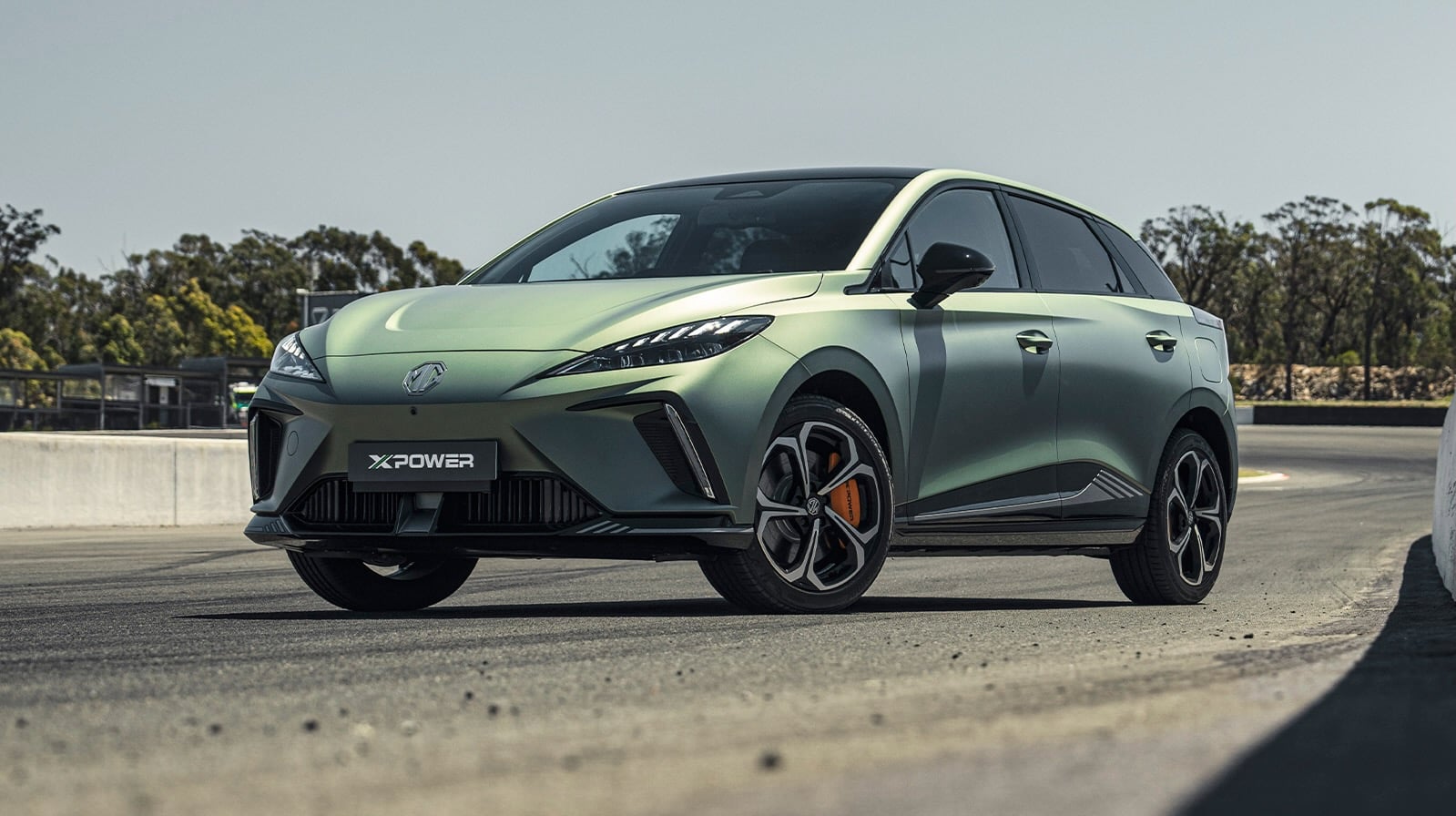
Drivetrains: Single- or dual-motor, 125kW/150kW/180kW/300kW, rear- or all-wheel drive
Range: 405km – 590km (WLTP)
The MG 4 has been one of the most popular EVs we’ve seen in Australia so far thanks to its keen driving experience, spacious cabin, big drivetrain choice – including the very fast 300kW XPower – and typically strong value we’ve come to expect from the MG brand. There’s an updated model and even a brand new model called the MG 4 Urban that we predict is not far off launching locally, but the pre-updated model is still great buying.
10) Hyundai Inster: From $39,000 +ORC
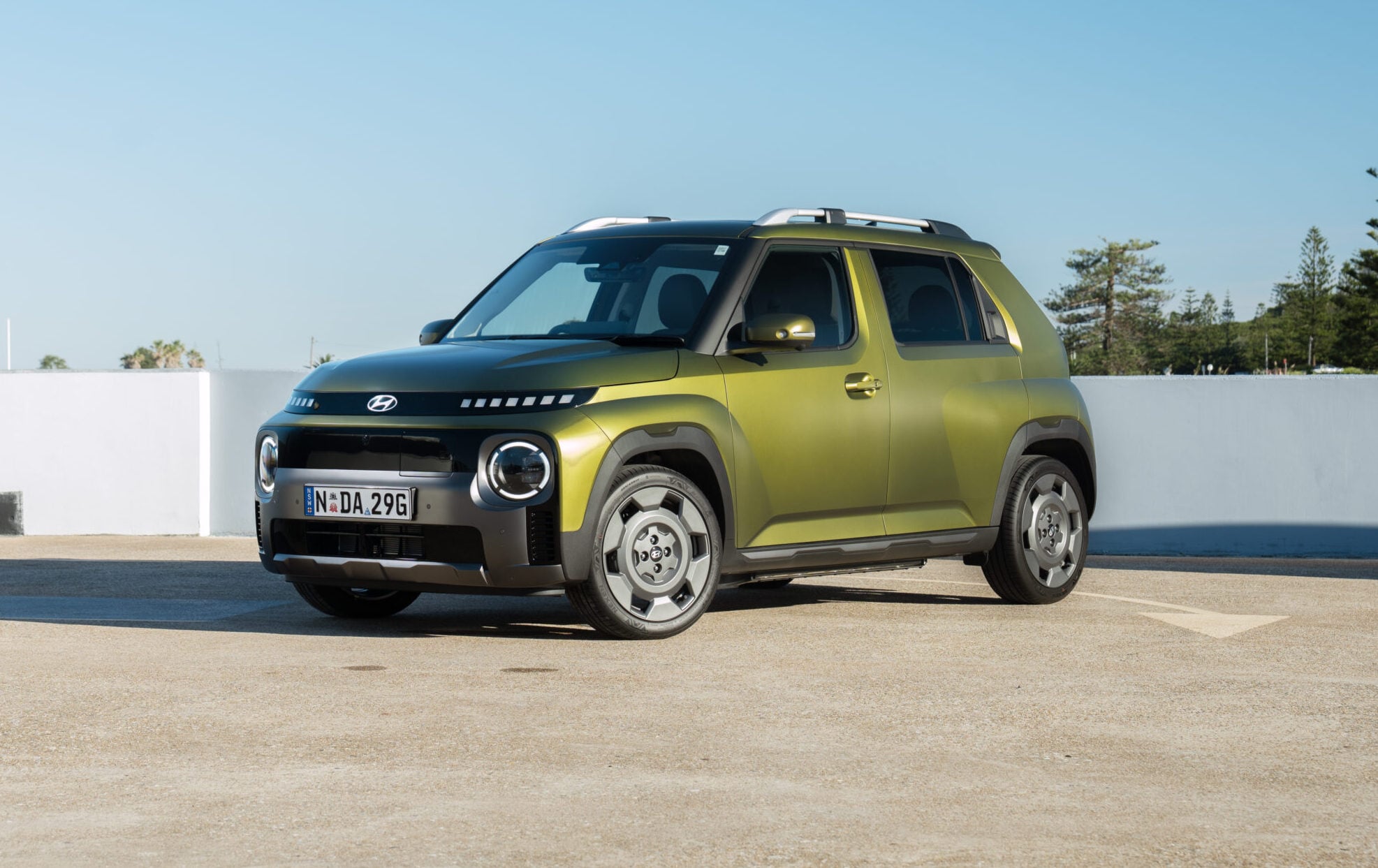
Drivetrains: Single-motor, 71kW – 85kW, front-wheel drive
Range: 327km – 360km
Hyundai’s cute little Inster launched locally in 2025 priced from $39,000 plus on-road costs, though it’s currently on special for $35,990 driveaway. Offering characterful styling, lots of standard equipment, fun driving dynamics and a surprisingly roomy interior, the Inster is only a four-seater so won’t appeal to everybody. There are three models on offer, including the off-road-like Cross, and there’s a reasonable range of up to 360km on offer.
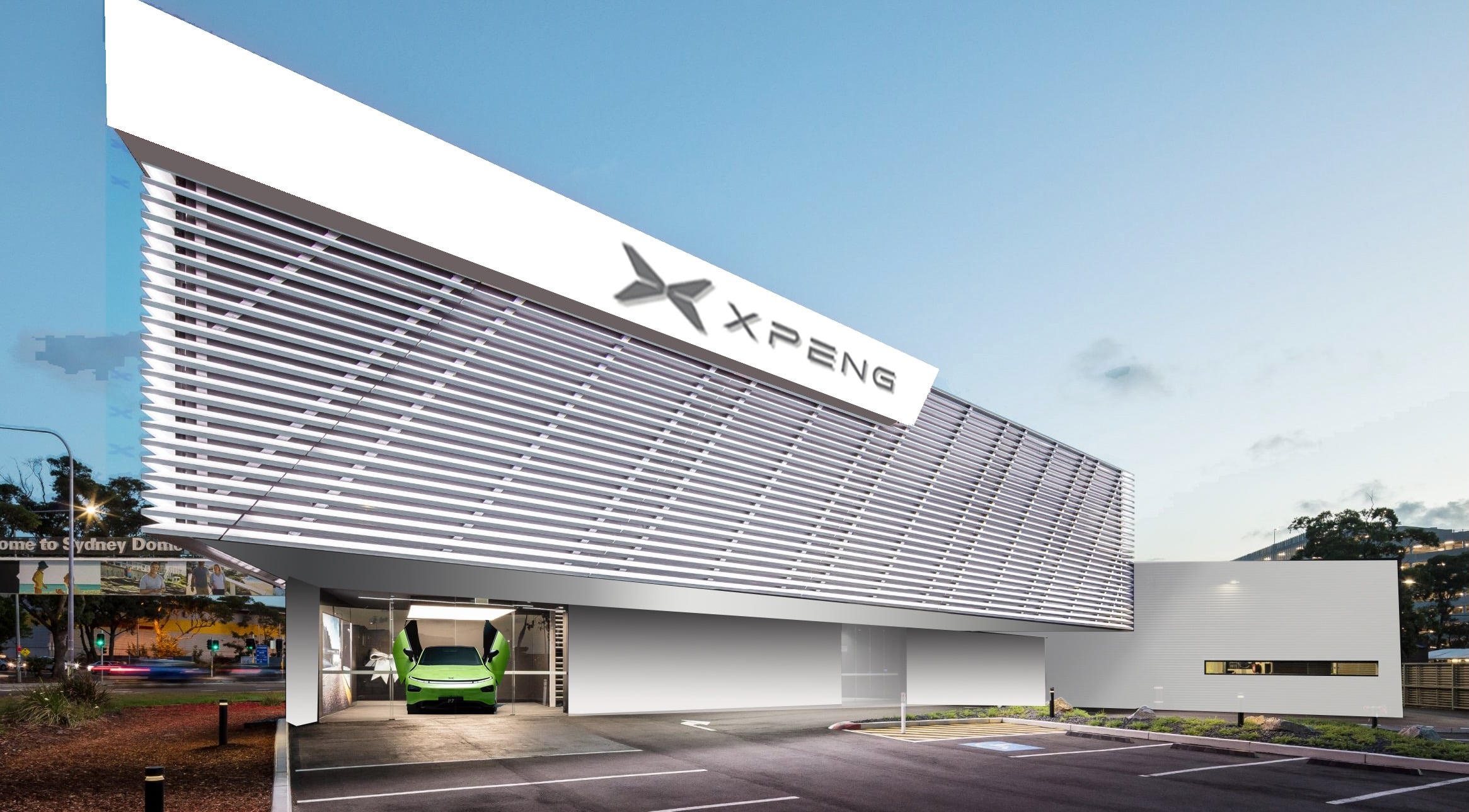
The local distributor for the Chinese electric vehicle brand, Xpeng, has gone into administration leaving the future of the brand in Australia in uncertain territory.
According to documents filed to the Australian Securities and Investments Commission (ASIC), external administrators – Daniel Juratowitch and Barry Wight of Cor Cordis – were appointed to Xpeng’s Australian distributor, TrueEV, on March 19, 2026.
The AISC filing lists the appointment of Cor Cordie “by instrument” which indicates that either TrueEV has gone into voluntary liquidation or that a secured creditor is seeking to take control over assets. The ASIC filing confirms Cor Cordie has taken control of Xpeng vehicles located across Australia.
Additionally, TrueEV is listed as the applicant in a Federal Court case against Xpeng that began on March 3, 2026. The next hearing is set down in the court for March 30, 2026. There is no indication in the court documents as to the nature of the legal dispute.
TrueEV was appointed the sole Australian distributor of XPeng in May 2024 ahead of first deliveries in August of the same year.
With 18 dealerships nationwide, Xpeng currently sells just two variants of its small electric G6 SUV, but had planned to roll out more models in 2026, including the larger G9 SUV and X9 people mover.
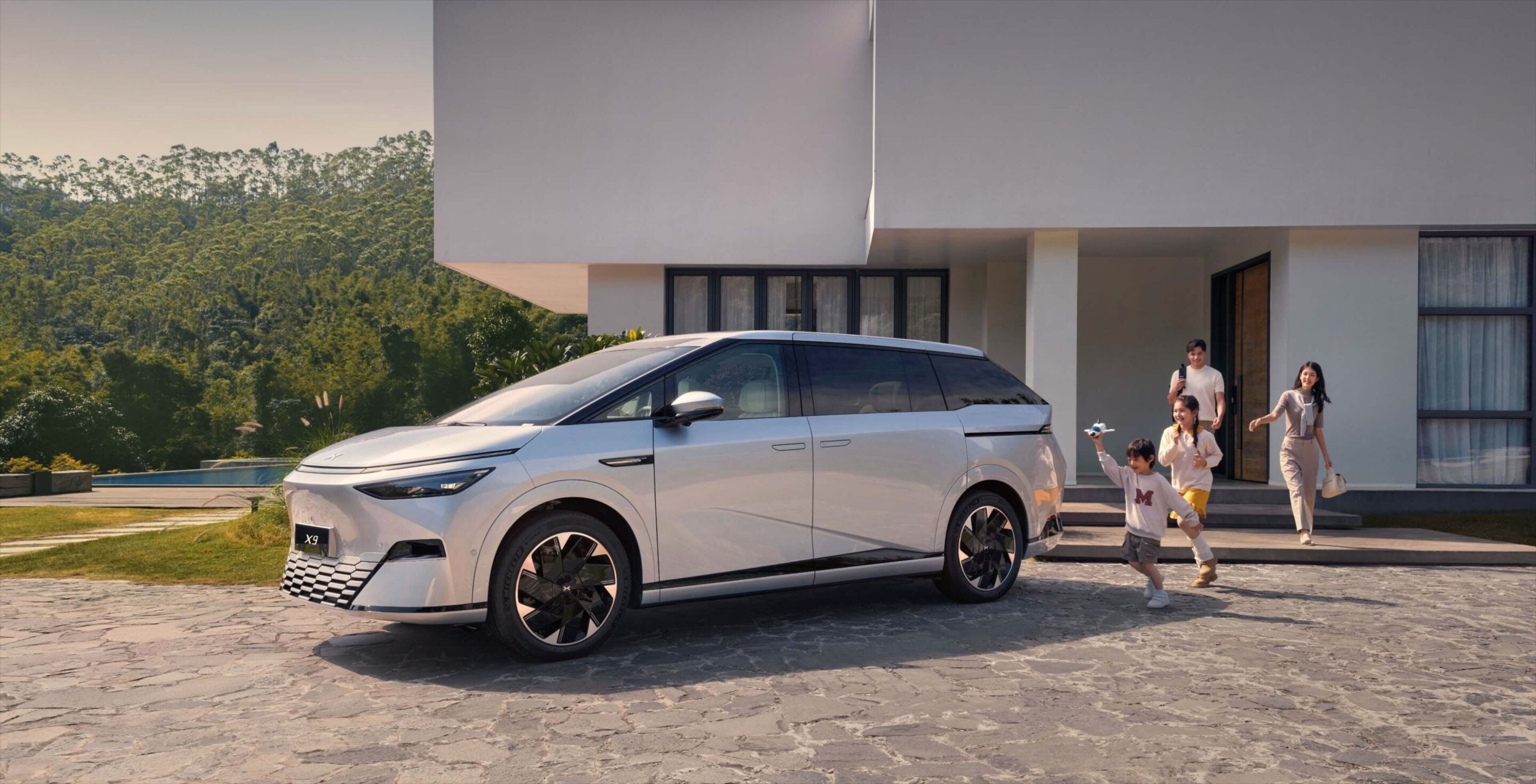
With the future of the company now uncertain, there remain unanswered questions surrounding warranty, servicing and the availability of parts for the approximately 2000 vehicles it had confirmed as sold by the end of 2025. TrueEV does not report its official sales figures to the Federal Chamber of Automotive Industries or to the Electric Vehicle Council.
With the ongoing legal battle between the two parties it remains unclear if Xpeng is looking to take control of the brand in Australia.
Another Middle East conflict has spiked fuel prices around the country and consumers are once again winching at the prospect of filling up theirs vehicle. As such, changing vehicles for a more fuel efficient option is no doubt being considered by many of us. But what if you don’t want to consider an electric or plug-in hybrid option? Can vehicles without those power sources still be fuel efficient? Of course they can. Here are the most fuel efficient plugless vehicles in each segment:
Light: Toyota Yaris
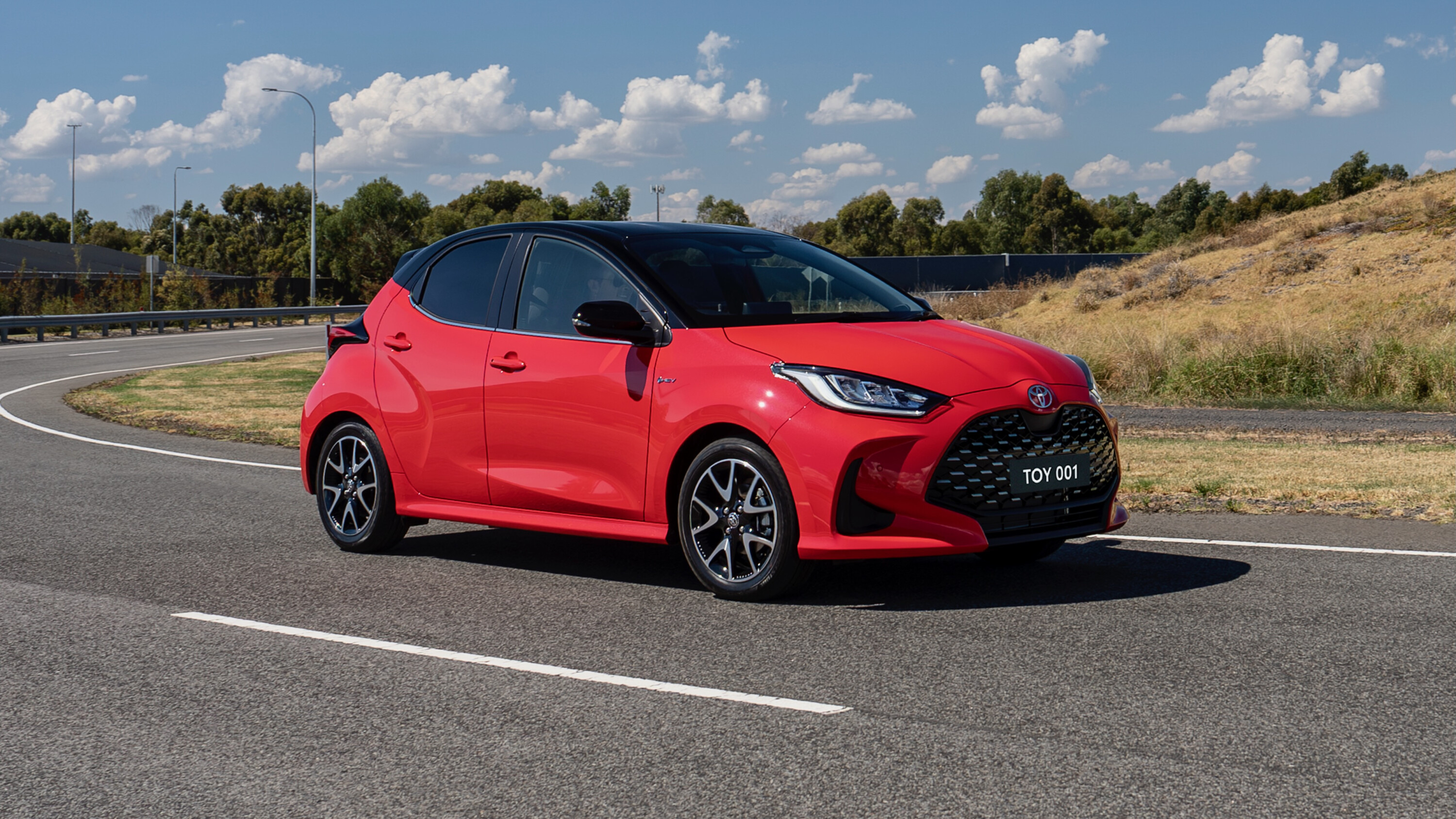
Price: From $28,990 plus on-road costs
Drivetrain: 85kW 1.5-litre hybrid, eCVT, front-wheel drive
Claimed combined fuel consumption: 3.3L/100km
Australia’s most fuel efficient car without a plug is the Toyota Yaris, which is capable of an incredible combined fuel consumption of just 3.3L/100km. That’s thanks to its small size, but also its 85kW 1.5-litre three-cylinder hybrid system, which is very efficient but also surprisingly punchy as well. Pricing for the Yaris starts at $28,990 plus on-road costs, so it’s not the cheapest option, but it is a very efficient one.
Small: Toyota Corolla sedan and Hyundai i30 Sedan hybrid
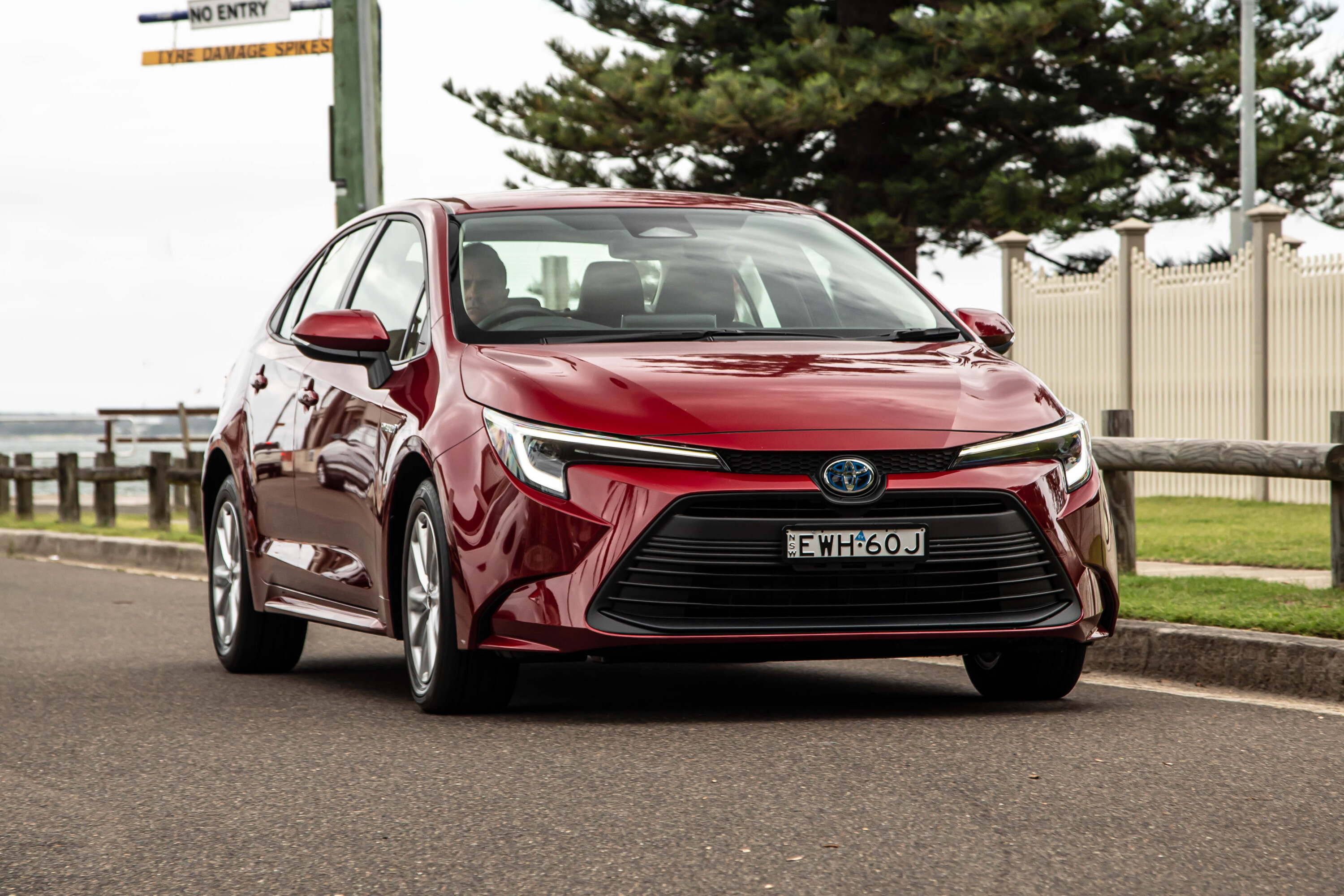
Price: From $32,585 plus on-road costs (Corolla), from $33,250 plus on-road costs (i30)
Drivetrain: 103kW 1.8-litre hybrid, eCVT, front-wheel drive (Corolla), 104kW/265Nm 1.6-litre hybrid, six-speed dual-clutch, front-wheel drive (i30)
Claimed combined fuel consumption: 3.9L/100km
Just above the Yaris in consumption is its larger Corolla sedan sibling, which uses a larger 1.8-litre hybrid system making 103kW of power but using just 3.9L/100km of fuel. Hyundai‘s i30 sedan hybrid uses a slightly smaller 1.6-litre hybrid system with a six-speed dual-clutch transmission making one more kilowatt in total at 104kW. Regardless, both the Corolla sedan and i30 sedan are practical, well equipped and great options to lessen fuel consumption without using a plug.
Medium: Toyota Camry
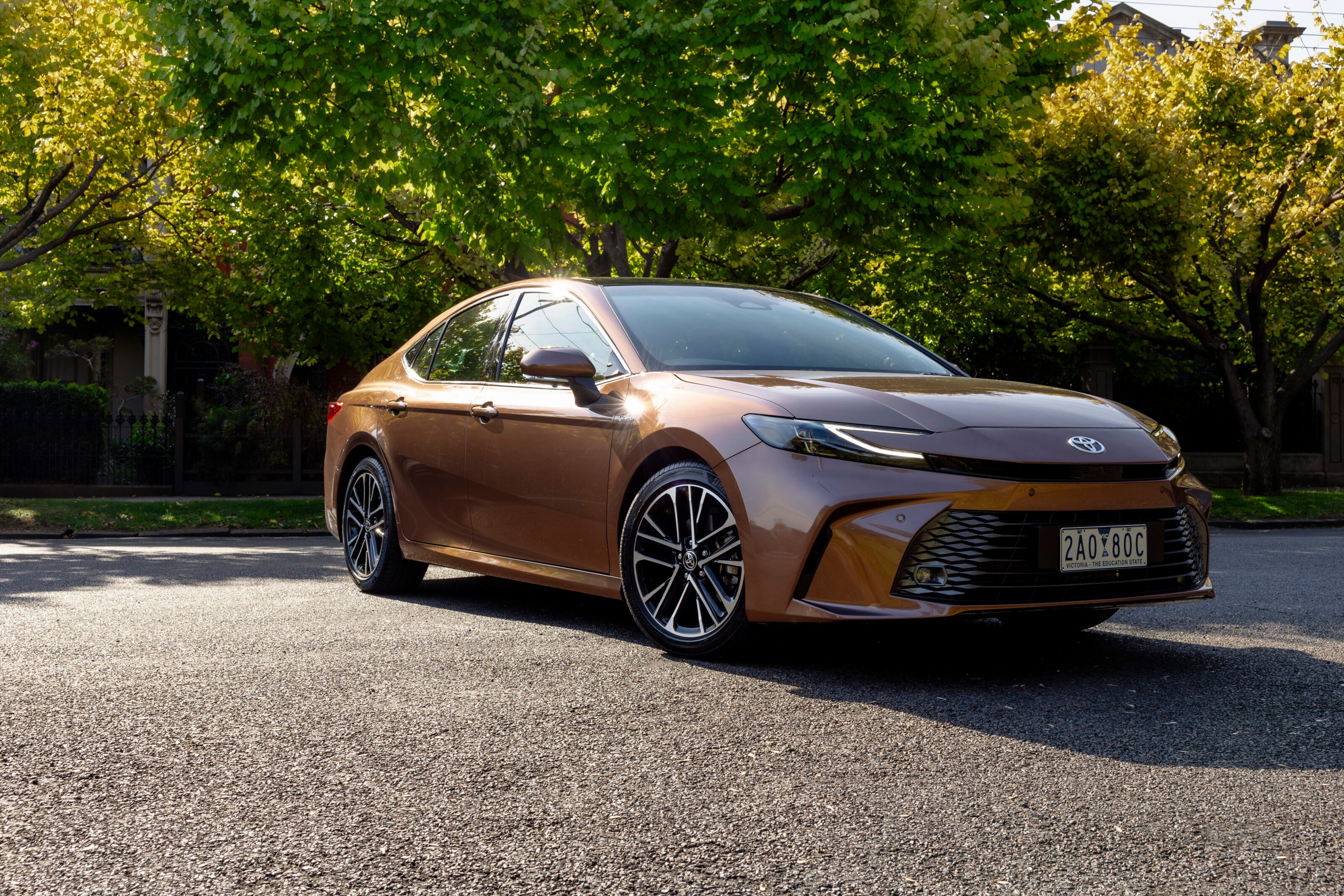
Price: From $39,990 plus on-road costs
Drivetrain: 170kW 2.5-litre hybrid eCVT, front-wheel drive
Claimed combined fuel consumption: 4.0L/100km
Somehow, thanks to Toyota‘s hybrid magic, a big sedan like the Camry can use just 4.0L/100km on the combined cycle. That’s despite featuring a large 2.5-litre engine – obviously combined with a hybrid system in this case – making 170kW and providing ample performance. The Camry is also hugely spacious inside, well equipped and drives quite well too.
Large: BMW 540d
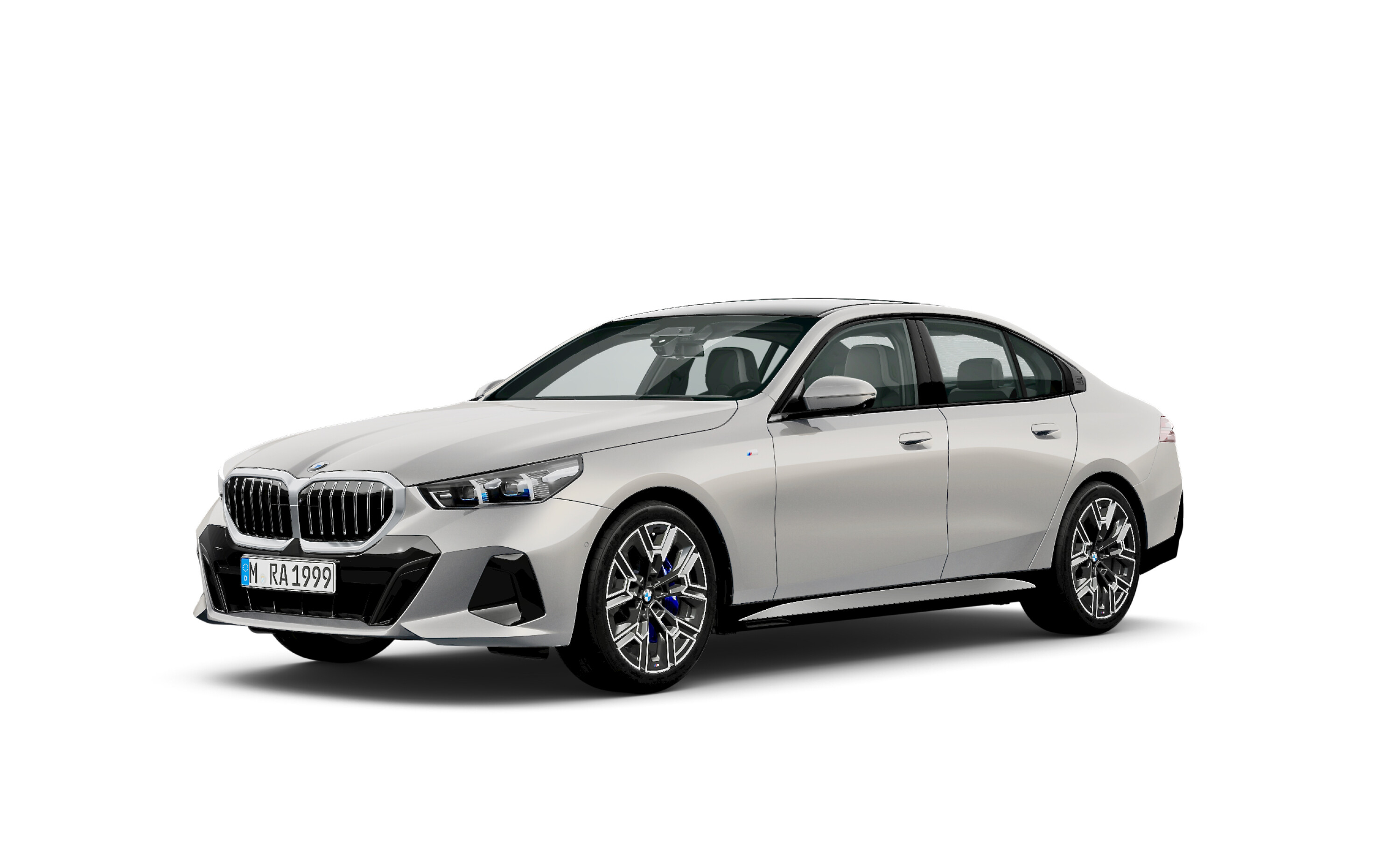
Price: From $136,900 plus on-road costs
Drivetrain: 210kW/700Nm 3.0-litre turbo-diesel, eight-speed auto, all-wheel drive
Claimed combined fuel consumption: 6.5L/100km
If you’re seeking the most fuel efficient large car, the BMW 540d is your choice and oddly enough, the only diesel passenger car on this list. In this case, it’s a lovely 210kW 3.0-litre straight six turbo-diesel, making strong 210kW/700Nm outputs – yet, it’s also capable of a 6.5L/100km combined fuel consumption rating and on highway trips, it’ll use a lot less than that. The only thing that would make it better would be offering a wagon, eh BMW Australia?
People movers: Kia Carnival hybrid
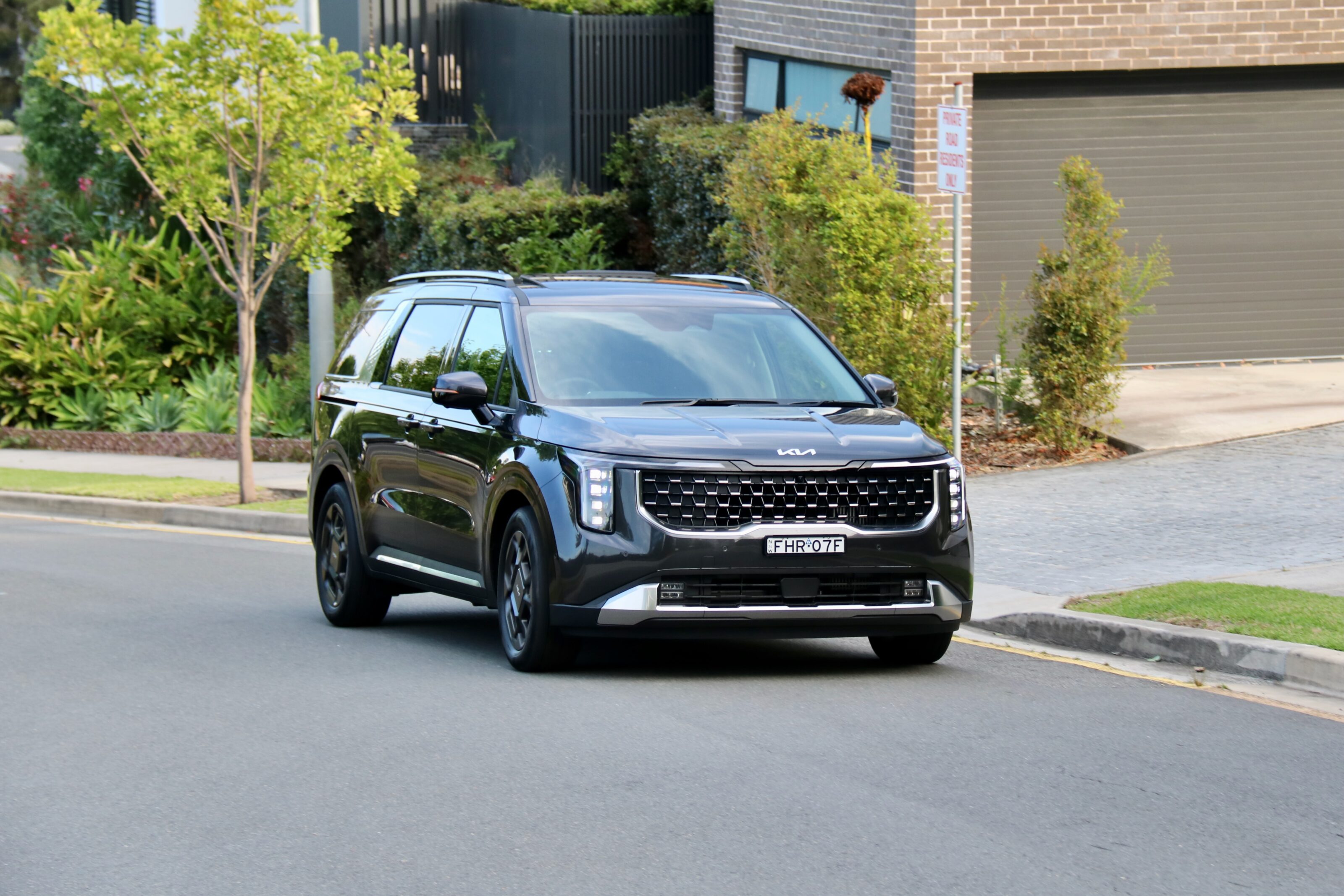
Price: From $56,100 plus on-road costs
Drivetrain: 180kW/366Nm 1.6-litre turbo-hybrid, six-speed auto, front-wheel drive
Claimed combined fuel consumption: 5.8L/100km
The Kia Carnival received Kia‘s punchy hybrid system relatively recently with great results. Using just 5.8L/100km on the combined cycle, it’s easily the most efficient large people mover on the market. That it can carry eight people and their stuff in comfort while providing excellent efficiency is even better. The Carnival also offers an efficient 2.2-litre turbo-diesel option (6.5L/100km), but for those wanting to use their Carnival in mostly urban driving, the hybrid is the way to go.
Small SUV: Toyota Yaris Cross
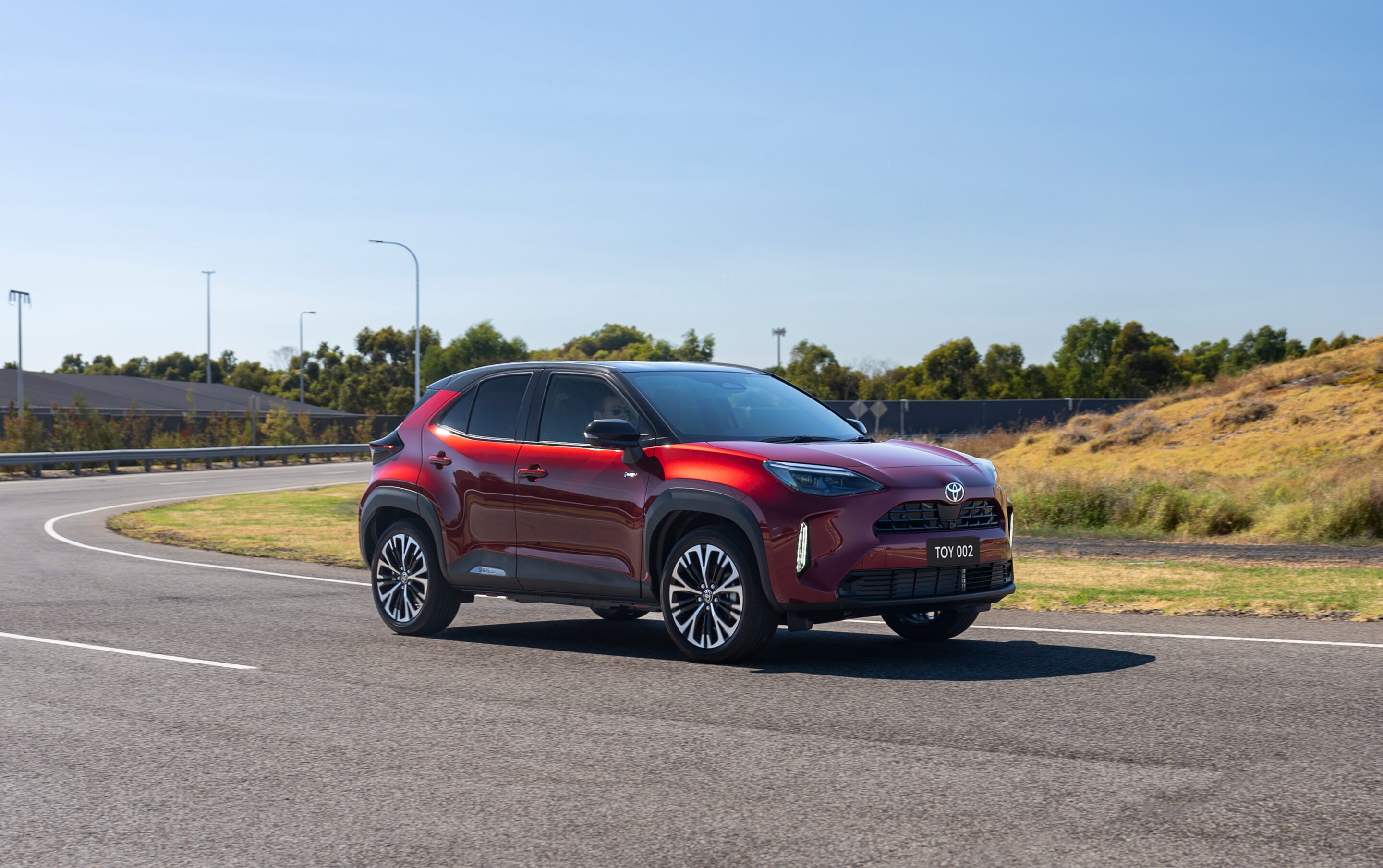
Price: From $31,790 plus on-road costs
Drivetrain: 85kW 1.5-litre hybrid, eCVT, front- or all-wheel drive
Claimed combined fuel consumption: 3.8L/100km
Like its Yaris light hatchback sibling, the most fuel efficient small SUV in Australia is the Toyota Yaris Cross, which is capable of a low 3.8L/100km on the combined cycle. Like the Yaris, it uses a 1.5-litre hybrid drivetrain making a reasonable 85kW of power, while both front- and all-wheel drive drivetrains are available – the latter with a separate electric motor for the rear axle – for those who need the choice. The Yaris Cross is also roomy, drives well and is well equipped, especially with safety features.
Medium SUV: Toyota RAV4
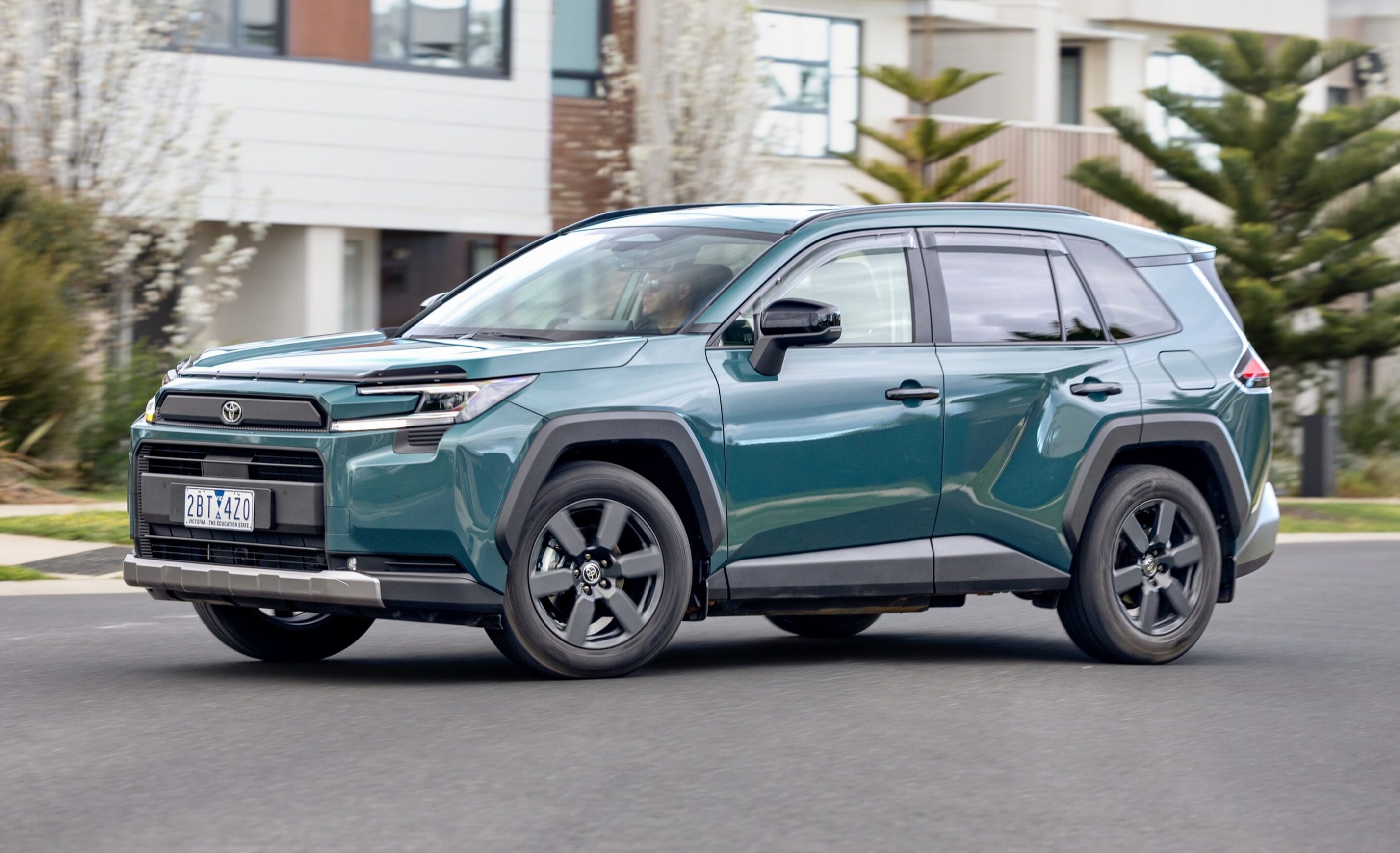
Price: From $45,990 plus on-road costs
Drivetrain: 143kW 2.5-litre hybrid, eCVT, front- or all-wheel drive
Claimed combined fuel consumption: 4.7L/100km (old model, new model expected to be identical or less)
The Toyota RAV4 is the world’s best-selling mid-size SUV and for good reason: While many rivals used to not offer hybrid options – many now do – the RAV4 hybrid was capable of sub-5L/100km fuel use reliably without any trouble. As such, most people bought the hybrid and now it’s the only drivetrain option in the range. The new-generation RAV4 is about to launch and although we don’t know its fuel consumption rating just yet, we’re expecting it to be the same 4.7L/100km as the old model or less.
Large SUV: Toyota Kluger and Hyundai Santa Fe hybrid
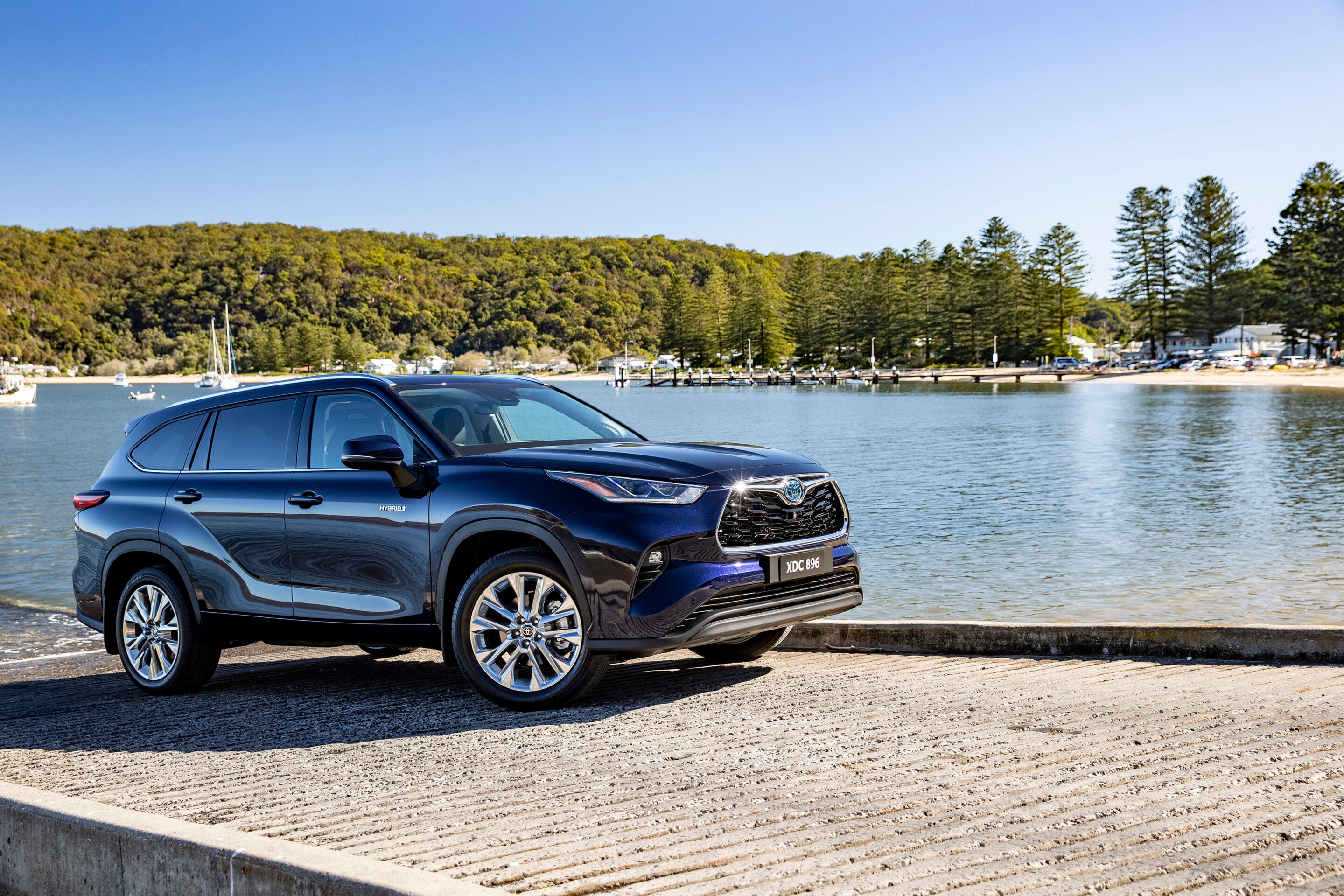
Price: From $62,410 plus on-road costs (Kluger), from $57,650 plus on-road costs (Santa Fe)
Drivetrain: 184kW 2.5-litre hybrid, eCVT, all-wheel drive (Kluger), 172kW/367Nm 1.6-litre turbo-hybrid, six-speed auto, front- or all-wheel drive (Santa Fe)
Claimed combined fuel consumption: 5.6L/100km
You can probably sense a theme here: Toyota is capable of making very fuel efficient cars that don’t need a plug. The Kluger hybrid large SUV is the latest example, capable of just 5.6L/100km on the combined cycle and carrying seven in comfort. But Hyundai has also entered the fray with a very efficient large SUV: The hybrid Santa Fe, which is rated the same as the Kluger on the combined cycle. Both options are comfortable, good to drive and good quality, though the Hyundai is better value.
Performance: Mazda MX-5

Price: From $42,640 plus on-road costs
Drivetrain: 135kW/205Nm 2.0-litre petrol, six-speed manual, rear-wheel drive
Claimed combined fuel consumption: 6.8L/100km
The Mazda MX-5 is one of the last pure sports cars on the new car market, and it’s also the most efficient. Rated at 6.8L/100km on the combined cycle, the MX-5 uses a 135kW/205Nm 2.0-litre four-cylinder petrol engine with one of the best six-speed manual gearboxes we’ve ever seen.
Dual-cab ute 4×4: Isuzu D-Max SX 2.2L and Mazda BT-50 XS 2.2L
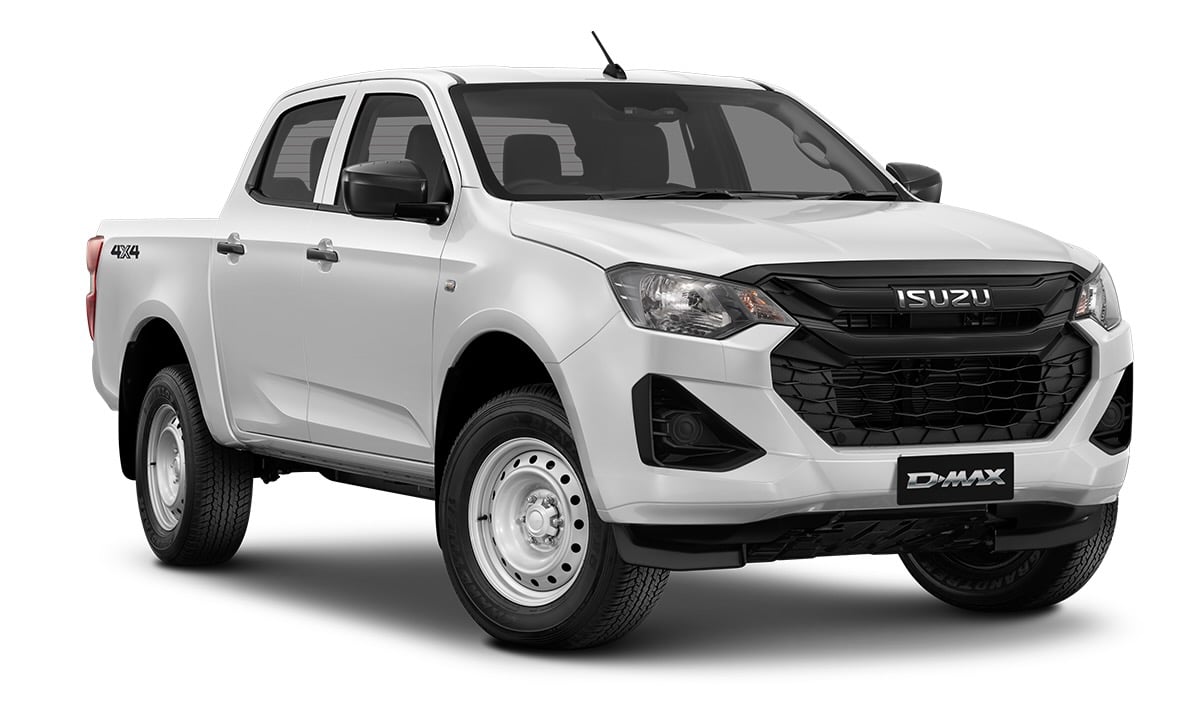
Price: From $52,200 plus on-road costs (D-Max), $55,220 plus on-road costs (BT-50)
Drivetrain: 120kW/400Nm 2.2-litre turbo-diesel, eight-speed automatic, four-wheel drive
Claimed combined fuel consumption: 6.6L/100km
Isuzu – and partner Mazda – introduced a new 2.2-litre turbo-diesel engine into the D-Max ute, MU-X large SUV and BT-50 last year. Replacing the former 1.9-litre unit as the entry engine in each range, the new 2.2-litre donk is more powerful (120kW versus 110kW) and torquier (400Nm versus 350Nm), as well as more fuel efficient, rated from just 6.6L/100km. A new eight-speed automatic transmission is also fitted, making the 2.2-litre engine more driveable than the former 1.9-litre unit as well.
