
Koenigsegg-owned Raw Design House, has developed a concept for an entry-level Koenigsegg hypercar.
The car is named after the design company, hence the Raw by Koenigsegg name, and was penned by one of its designers, Esa Mustonen, for his graduation thesis.
Don’t discount Esa Mustonen for being a design student, as he spent 2018 working with Genesis’ design team in Frankfurt, and 2019 with Renault as a design intern. On top of this, Koenigsegg and its design arm back his efforts.
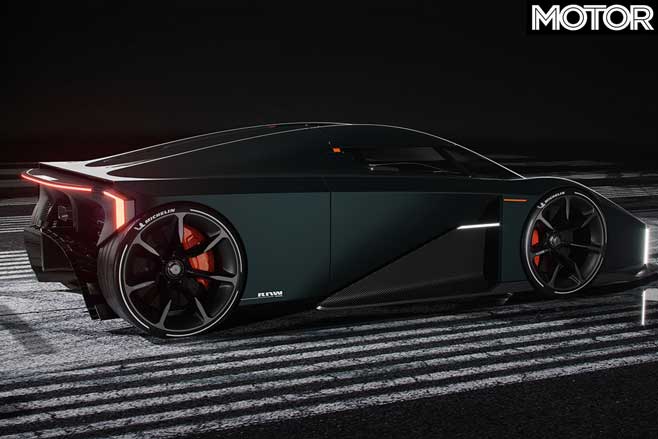
Raw says the concept is a look at what the future of Koenigsegg’s more affordable models could look like, with the project supervised and supported by Christian von Koenigsegg himself, as well as head of design Sasha Selipanov.
It uses existing (albeit revolutionary) tech from the Koenigsegg stable, including a 515kW version of the 2.0-litre 3-cylinder Freevalve engine from the Koenigsegg Gemera, and a lightweight construction (via use of a carbon shell) to allow a 700kg weight.

“Raw by Koenigsegg makes use of the world famous Koenigsegg technologies and know-hows,” Koenigsegg’s design company explains.
“Mounted behind the innovative 3 seat carbon fibre occupant cell is the 3-cylinder Freevalve TFG [Tiny Friendly Giant] engine which was first shown to the world in the Koenigsegg Gemera.
“Our ambition was to use Koenigsegg Automotive’s vast composite and light-weighting experience to aim for an unprecedented 700hp and 700kg, a new interpretation for the 1:1 power to weight ratio.
“On top of this, Raw by Koenigsegg has a strong focus on innovative aerodynamics with its flow-through architecture and jet fighter afterburner inspired articulated rear diffuser.”
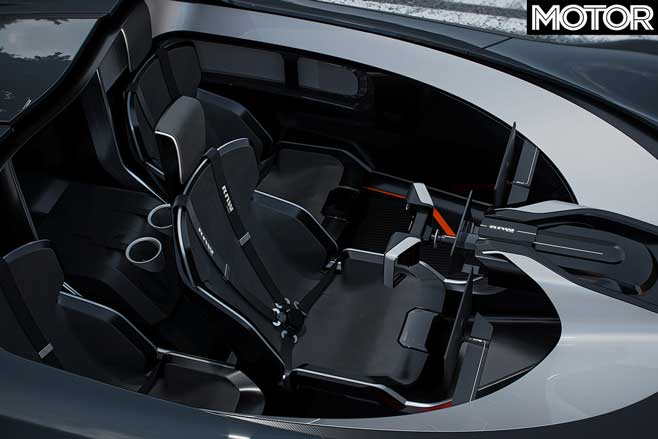
The rendered video released by Raw Design House (top of this page) also shows off some rather advanced active aero, with a diffuser able to increase the space for air to exit.
Koenigsegg’s signature ‘dihedral synchro-helix’ doors also feature, as well as a moving screen system inside the cabin, where three seats are arranged for a McLaren F1-style central driving position.
What’s on WhichCar TV this week?
Ute beaut
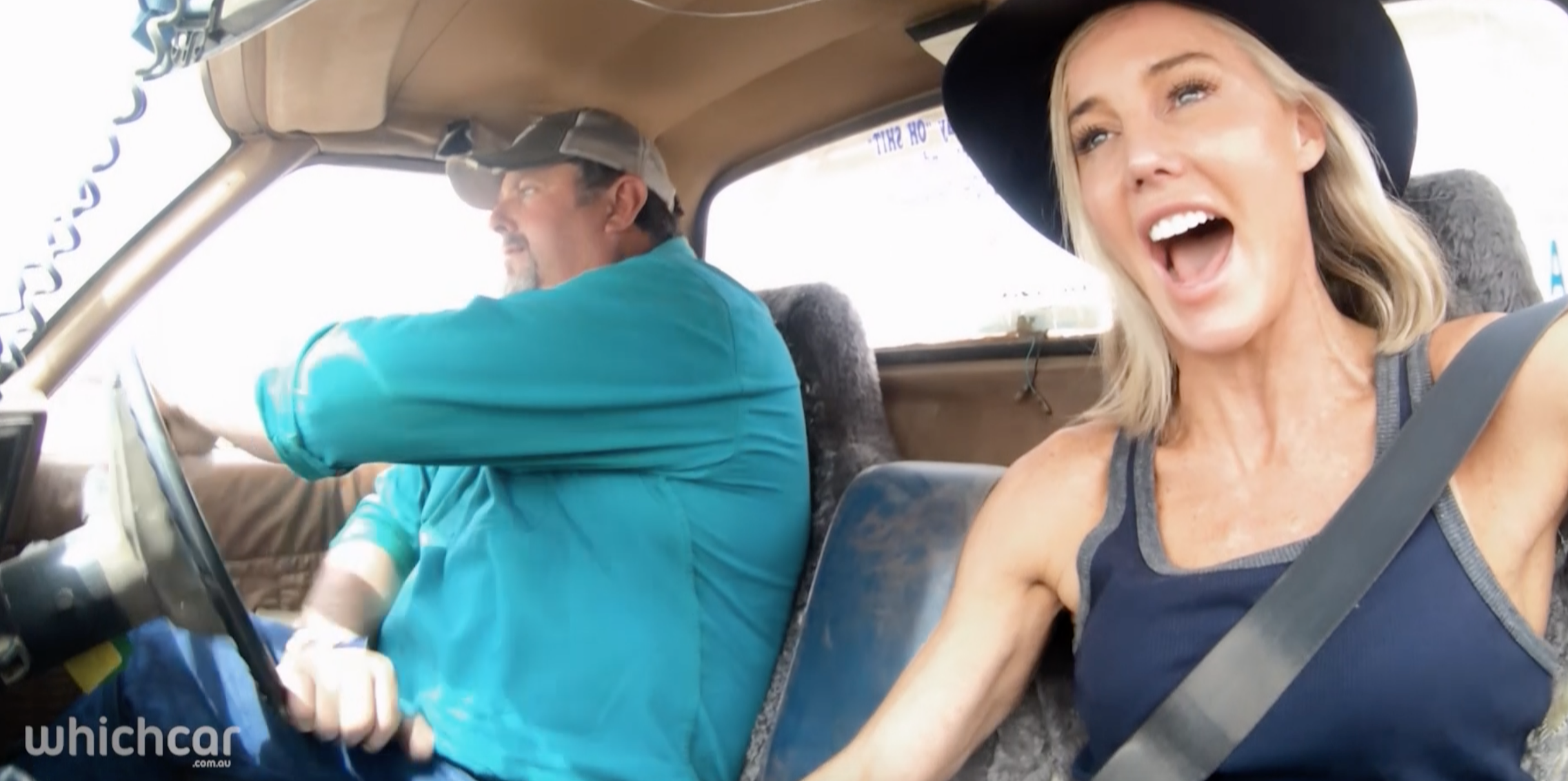
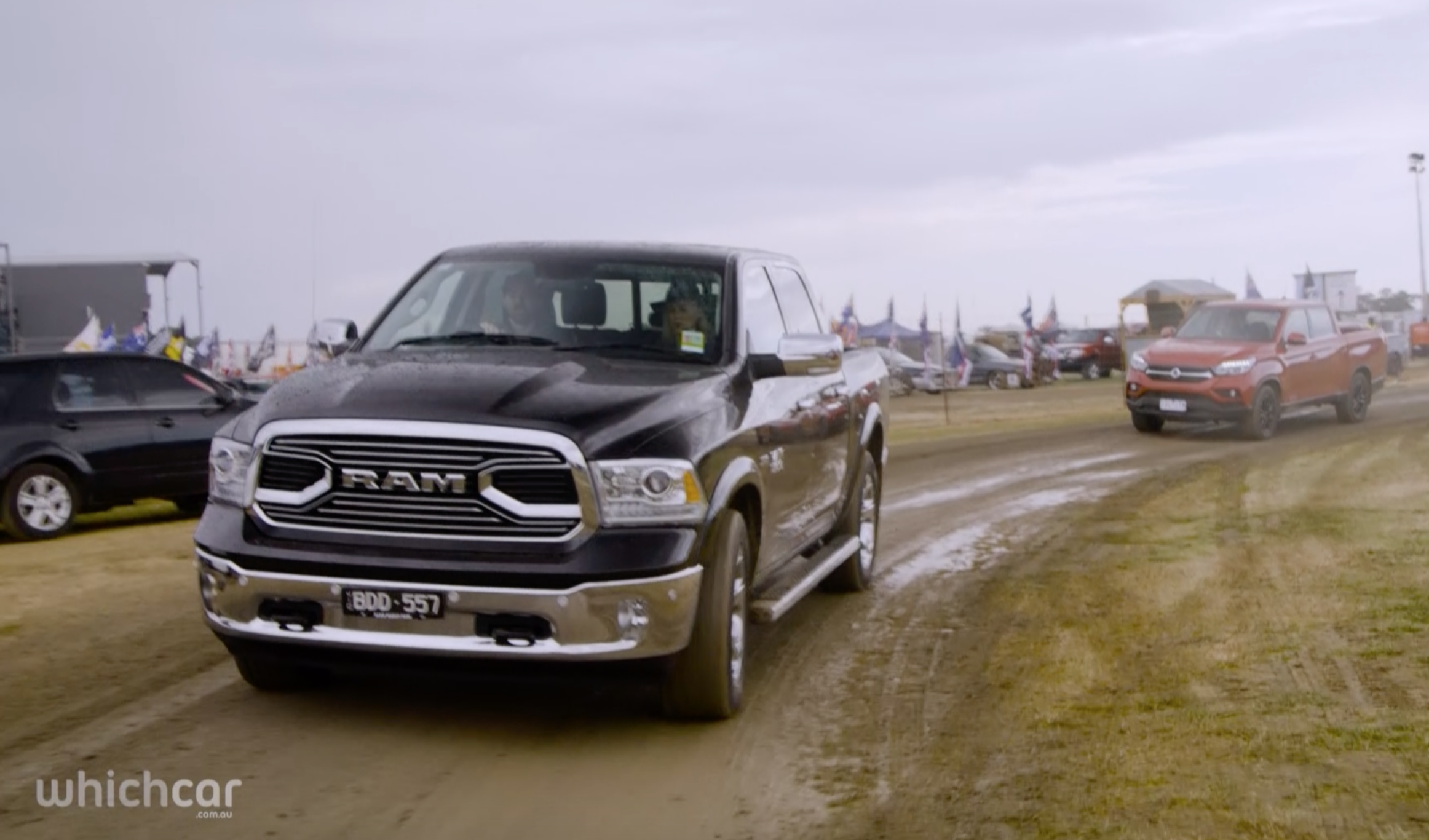
Pull on the singlets and warm up the beer coolers – we’re off to the awesome Deni Ute Muster with Daniel and Elise! Yeeeeeeehah!
It’s going to be a wild ride!
Editor’s review – Toyota Corolla
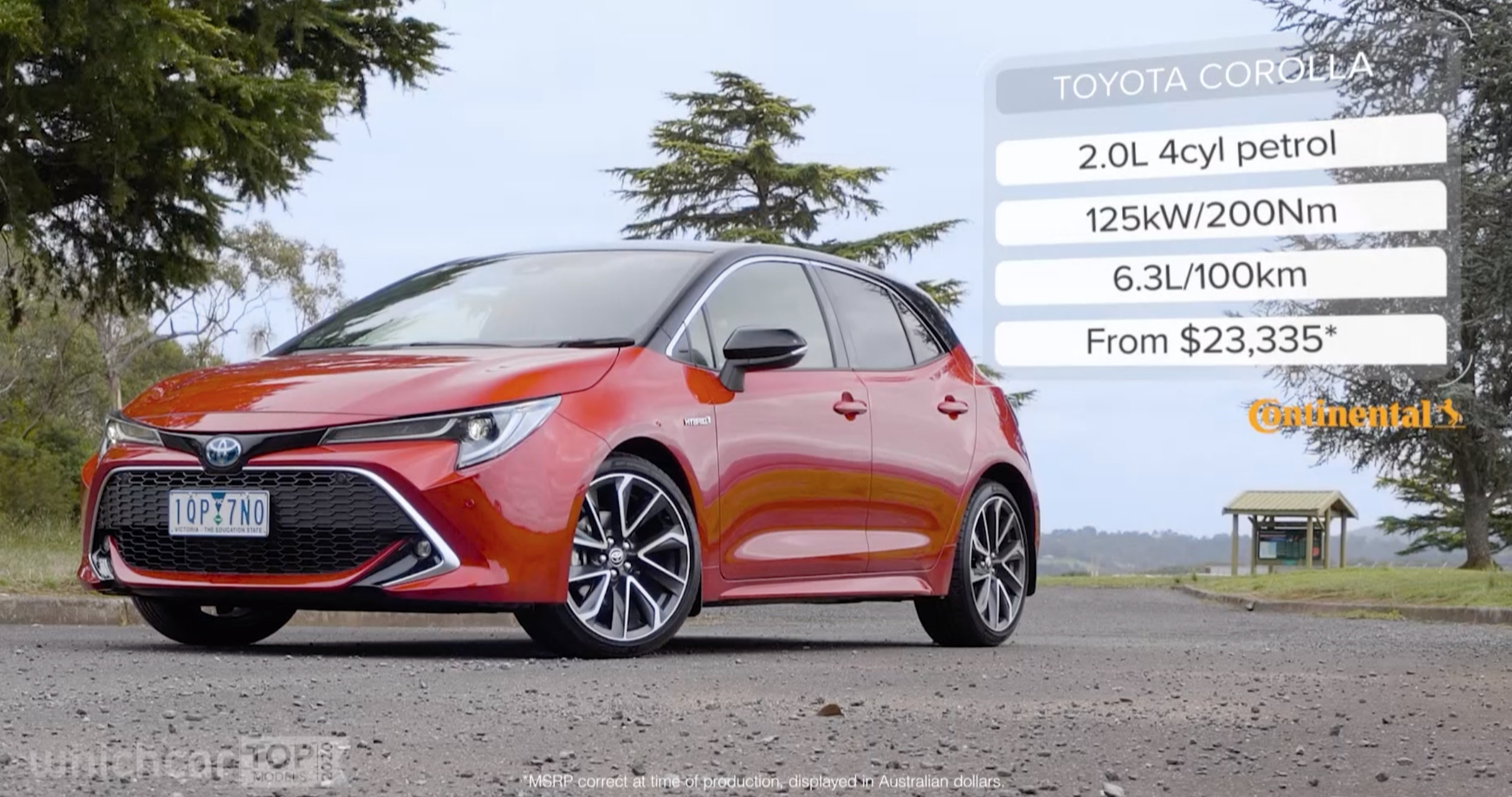
One of Toyota’s longest-serving hatchbacks is also one of its best-ever – here’s the inside scoop on the Toyota Corolla with Alex Inwood.
Rolling with Rolls-Royce
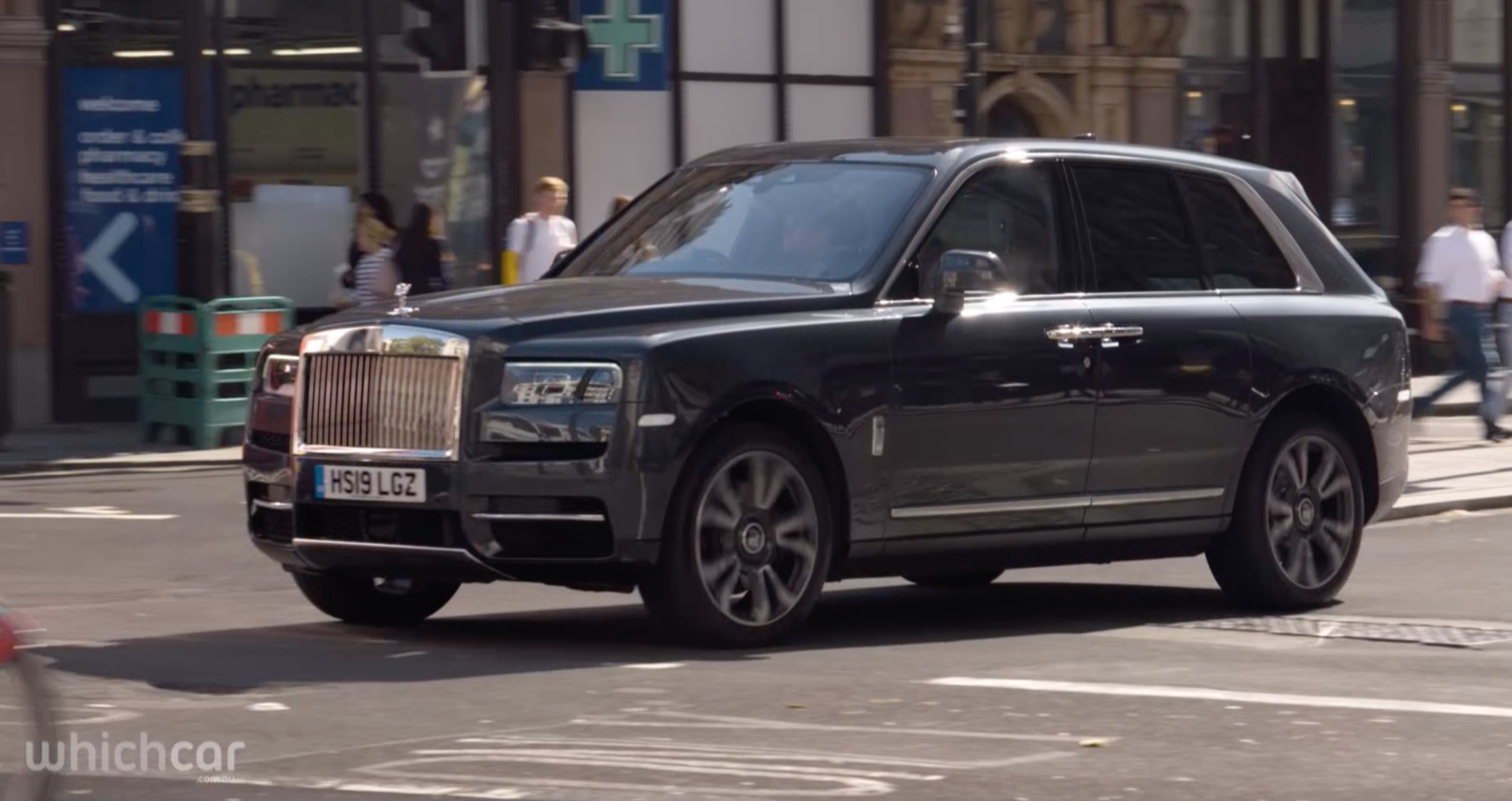
Glenn Butler treats wife Rachel to a day out in London aboard the world’s most extravagant SUV, the Rolls-Royce Cullinan.
WIN A TRIP TO THE MALDIVES WITH WHICHCAR
For season two, we’re also offering an amazing prize for our viewers. How does a trip to the Maldives sound? Pretty awesome, right?
The competition is open NOW so make sure you tune into WhichCar TV on Channel Ten at 4pm Sunday AEDT.
And, if for some reason you can’t (and it had better be a good reason!) then there’s a host of ways to catch up on the show, check out behind-the-scenes stuff and find out more about the cars Aussies want to buy.
For example, our weekly podcast, our Facebook page and our YouTube channel are standing by 24/7.
WhichCar TV Season Two Episode 12
4:00pm Sunday April 26, Channel 10
FIND THE HOSTS ON INSTAGRAM
Daniel Gardner @octanedan
Elise Elliot @eliseelliott_media
Alex Inwood @thealexinwood
Glenn Butler @glennthebutler
Rachel Butler @rackree
MISSED THE SHOW? Catch up at Ten Play
Owners of Tesla’s Model S and Model X equipped with the Raven drivetrain will soon receive an update for their car allowing lower acceleration times and improved cooling, an email sent to buyers has revealed.
The electric car maker announced a new performance figure, 0-60mph in just 2.3 seconds (0-97km/h), for the Model S through the adoption of a new launch mode called Cheetah Stance which lowers the front axle while leaving the rear slightly raised, much like a dedicated drag car.
Tesla owners took to social media to spread the word, notably in the form of American YouTuber Marques Brownlee posting a screenshot of the email.
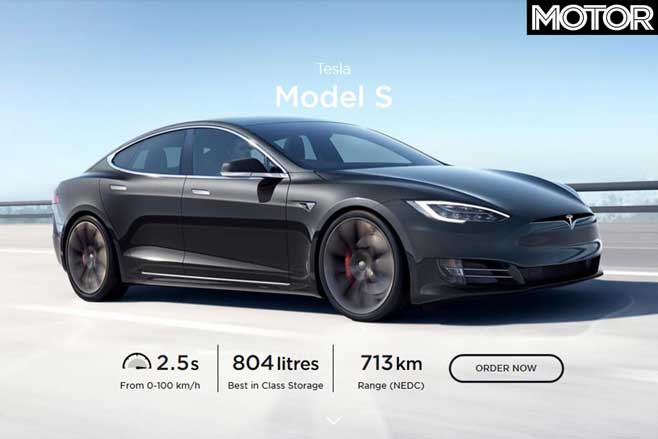
Tesla’s Australian website is yet to update the displayed performance figure.
“You asked for it,” the email begins. “With our latest over-the-air software update to Model S Performance, we improved 0-60mph [0-97km/h] acceleration to 2.3 seconds and quarter-mile time to 10.4 seconds.
“Go for more back-to-back runs with improved thermal endurance, and activate Launch Mode with a press of the pedals.
“Launch Mode’s new Cheetah Stance lowers the front axle and adjusts damping before entry for better traction and faster acceleration off the line.
“You’ll automatically receive this update based on your location and vehicle configuration—you can’t request the update.”
The email sent to Model X owners instead claims the new 0-60mph time as 2.6 seconds, with Cheetah Stance added, and cooling claimed to be three times more efficient than previously.
How often do you see people needlessly driving around with roof racks on their roof?
Sure, it might earn you some cool-points from some crowds but leaving a bike carrier, luggage pod or other cargo-toting device on top of your car can impact your fuel consumption – and by a significant factor too.
It’ s not something most would readily acknowledge, but even the sleekest bike carrier imparts drag. The laws of aerodynamics dictate that interrupting the flow of air over an object even by a small amount causes resistance and that resistance requires energy to overcome… and that energy comes from only one source: your fuel tank.
Car manufacturers spend millions of dollars designing their cars to be as aerodynamically slippery as possible, so the interruption of that carefully thought-out air flow seems to be undoing all that hard work. It also generates noise, but that’s not what we’re focusing on here.
We were curious and wondered how much of an effect on fuel consumption that leaving a bike carrier (and a couple of bikes) on top of a car could have, so WhichCar hit the road to examine the science in a methodical manner.
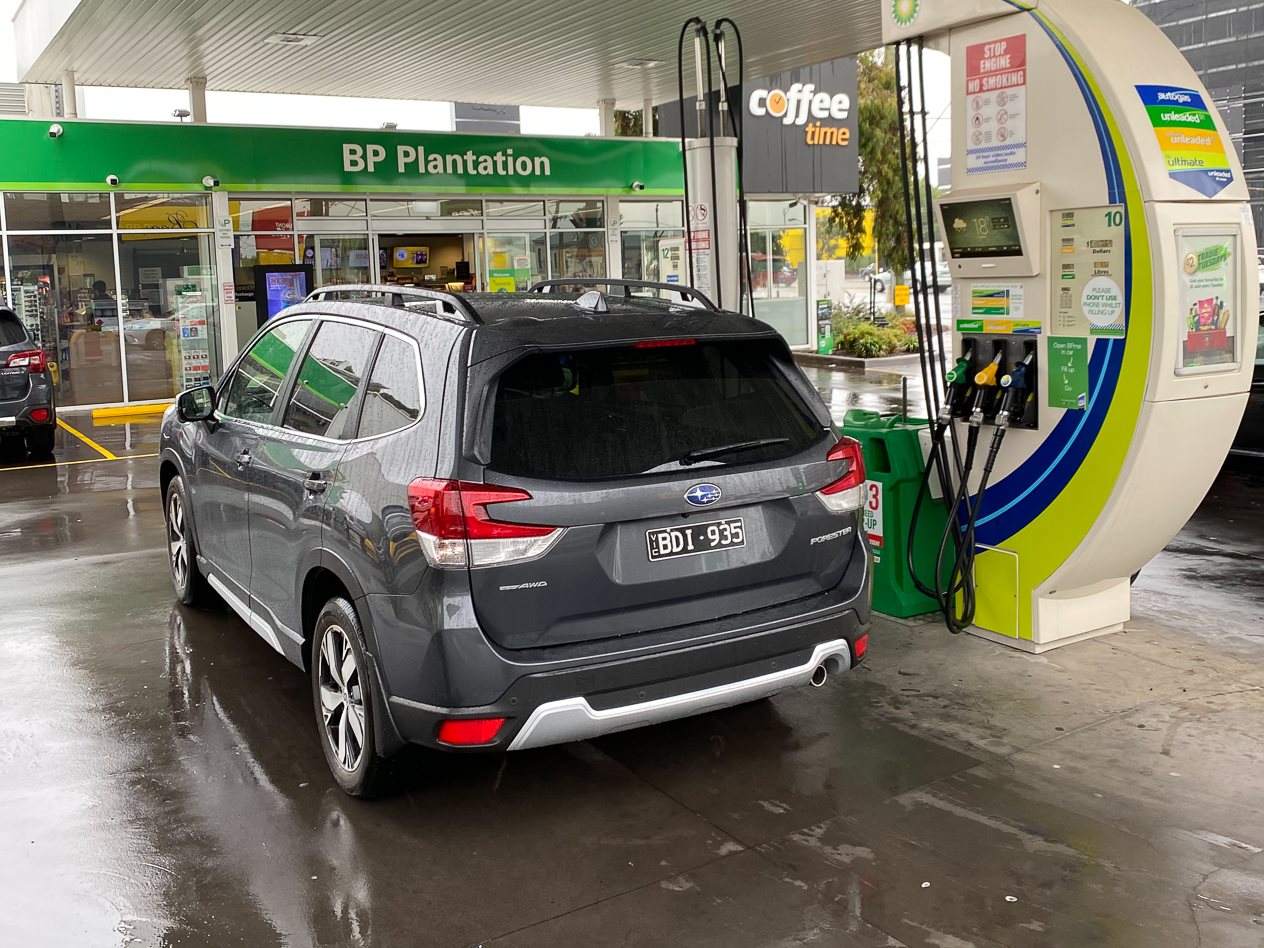
Our experiment aired on television during season 2 of WhichCar TV and involved three 100-kilometre road loops along Melbourne’s M1 freeway, completed at the same 100km/h average speed, coming back in between each run to the same pump at the same petrol station to get as accurate a representation of fuel consumption as possible. For an accurate result, the variables need to be minimised to just the factors we want to examine.
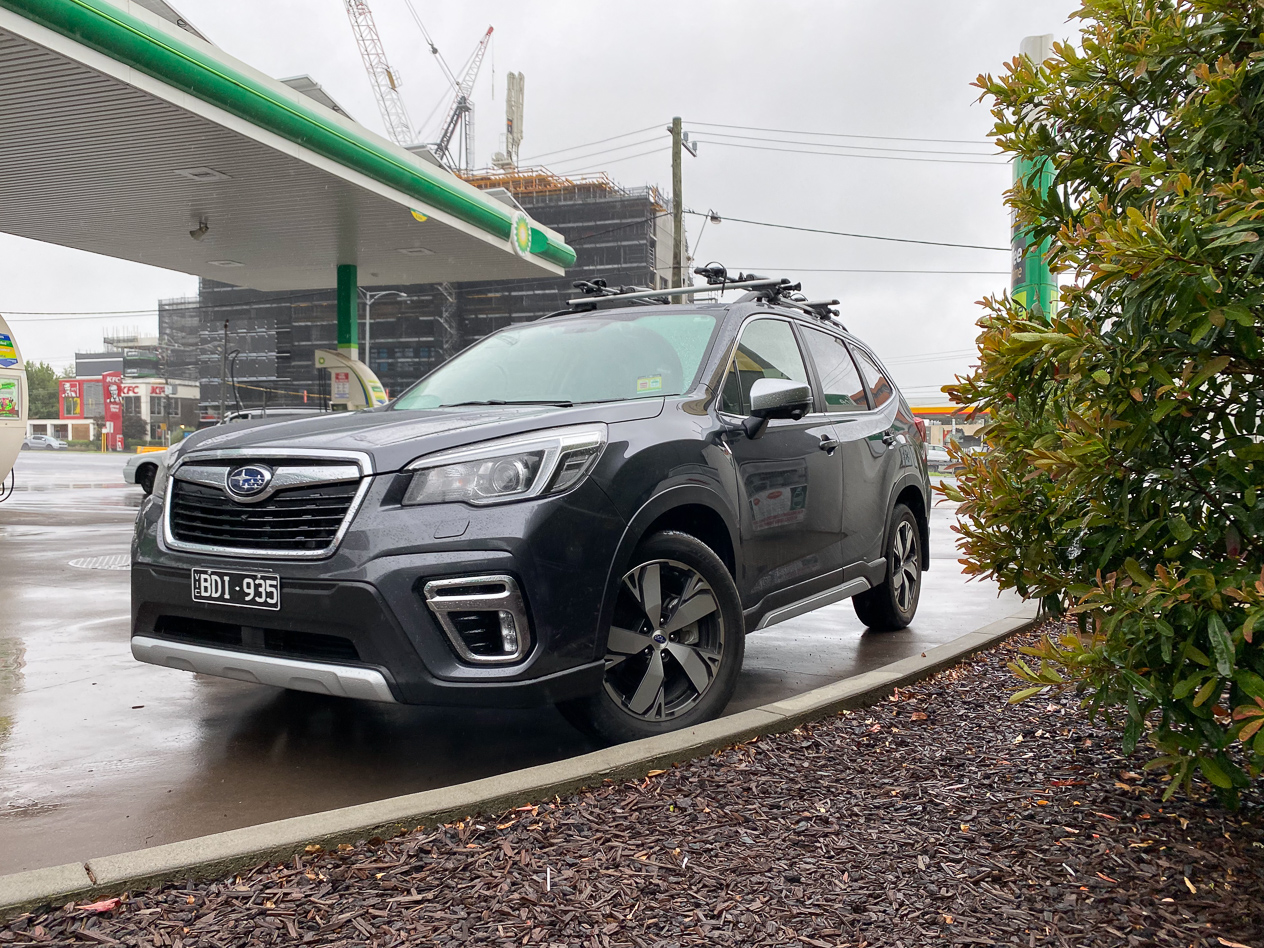
A control test was first completed with the roof of a petrol-powered, natural-aspirated Subaru Forester unburdened by any racks or cargo – only the factory-installed roof rails remained. That 100km run chewed up 6.46 litres of petrol, and was our baseline number.
Next we equipped a set of roof racks and a bike carrier attachment to the roof of the Forester, brimmed the tank once more and set off, completing the exact same run a second time. That second run returned a fuel consumption of 7.06L/100km – that’s 0.6 litres more than our control run. That’s not so good over a short 100 kilometre run, let alone a year. We’ll come back to that in a minute.
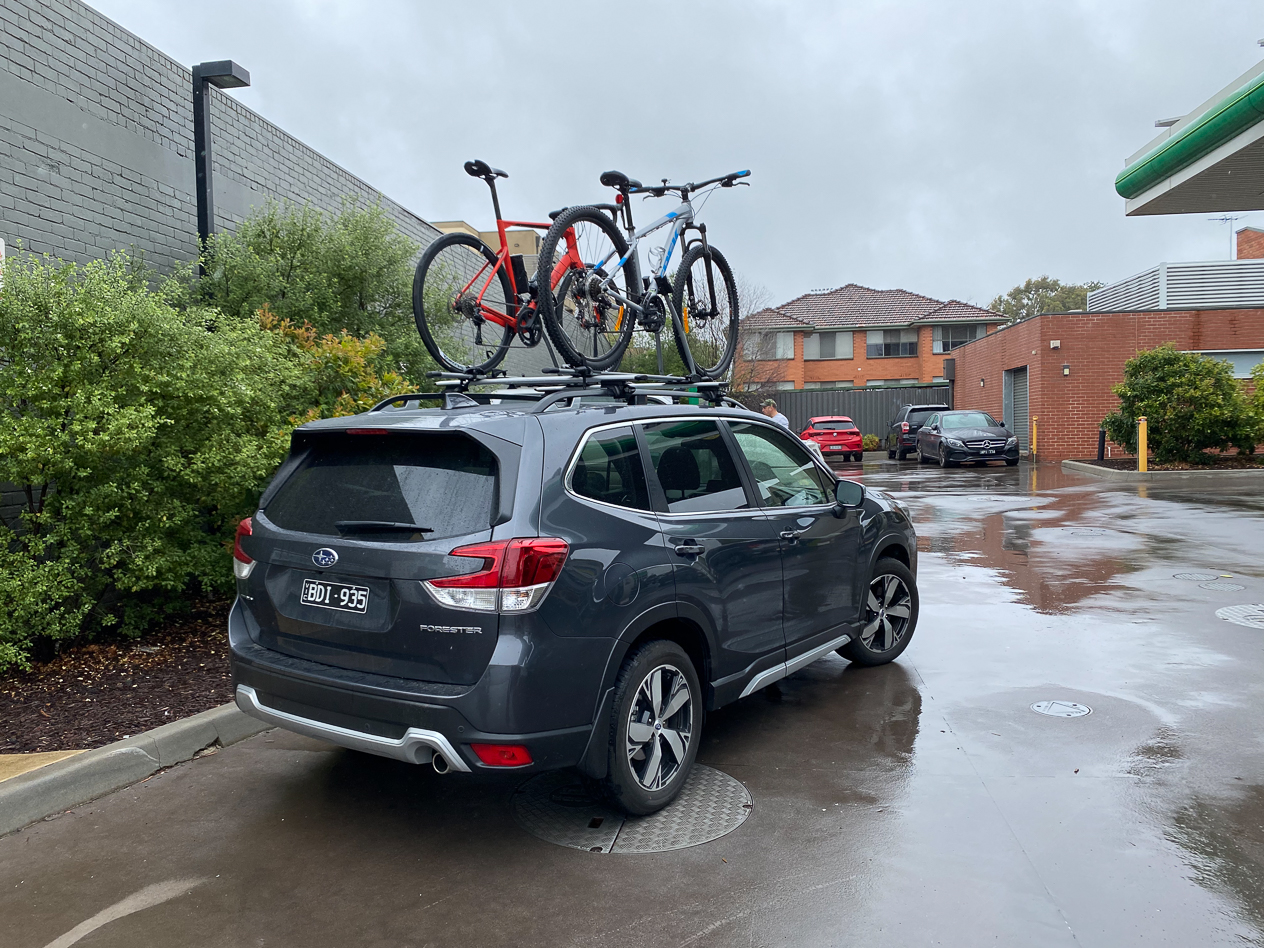
Finally, we two full-size road bikes to the roof to really create some drag on our final test run. That run used 7.84L/100km, or an extra 1.4 litres of fuel over the control.
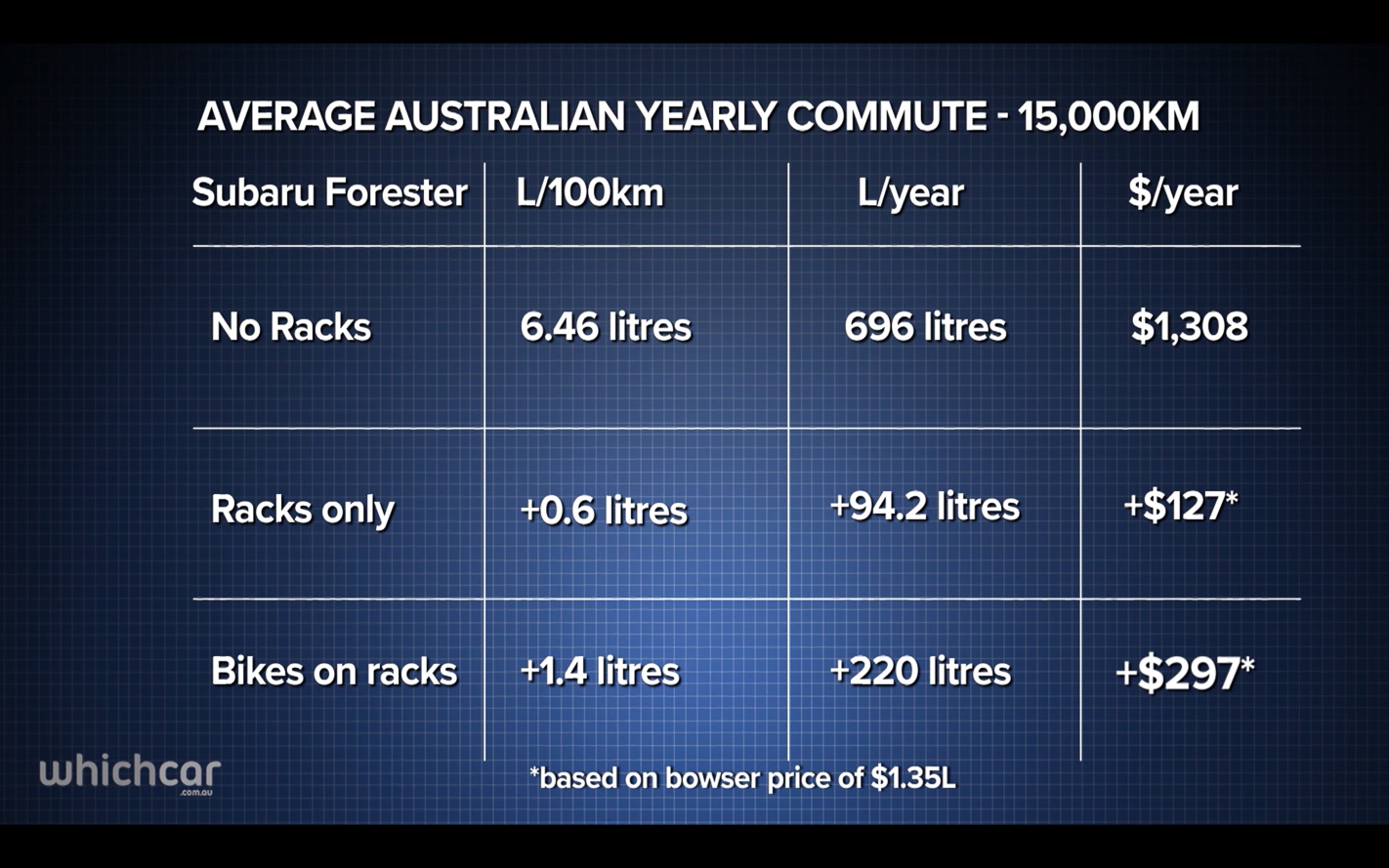
To put that in dollar terms, based on a bowser price of $1.35 per litre, the average Australian who drives 15,000km a year can expect to use an extra 94 litres of petrol over a year, and pay an extra $127 per year if they drive around with a bike carrier attached unnecessarily.
That shows that while it might be easier to leave them on between your biking adventures, it makes the most sense for your fuel economy – and your back pocket – to make sure your roof doesn’t have anything attached to it if you don’t need it.
Is there really a distinction between hot hatches and hyper hatches? If there is, is it a vague notion, something that magazine headline writers probably hit on to hype a new model some time ago? Or is there something more to it?
It used to be easy. The Mk1 Volkswagen Golf GTI changed the way we viewed the souped-up hatch, although the term ‘hot hatch’ only really gained significant traction in the early ’80s. During this period, the upper echelon of hot hatches were still making less than 100kW and it took the influence of turbocharged, all-wheel-drive rally replicas to kick this on a gear.
Vehicles like the Ford Escort RS Cosworth and the Lancia Delta Integrale Evo appeared in the early ’90s, fronting up with over 150kW, before the introduction of the 206kW Japanese rally replicas like the Subaru WRX STi and Lancer Evo IV really forced manufacturers to rethink their strategies.
This was where the fissure opened between hot hatches and hyper hatches. At that time, putting much more than 150kW through the front wheels of a hatch resulted in something that was a torque-steering liability.
In time, manufacturers started to develop a hot hatch line and what would eventually evolve into a separate all-wheel-drive hyper hatch line. With its MkIV version of the Golf, Volkswagen marketed the 110kW front-drive Golf GTI 1.8T and the 177kW all-wheel-drive Golf R32.
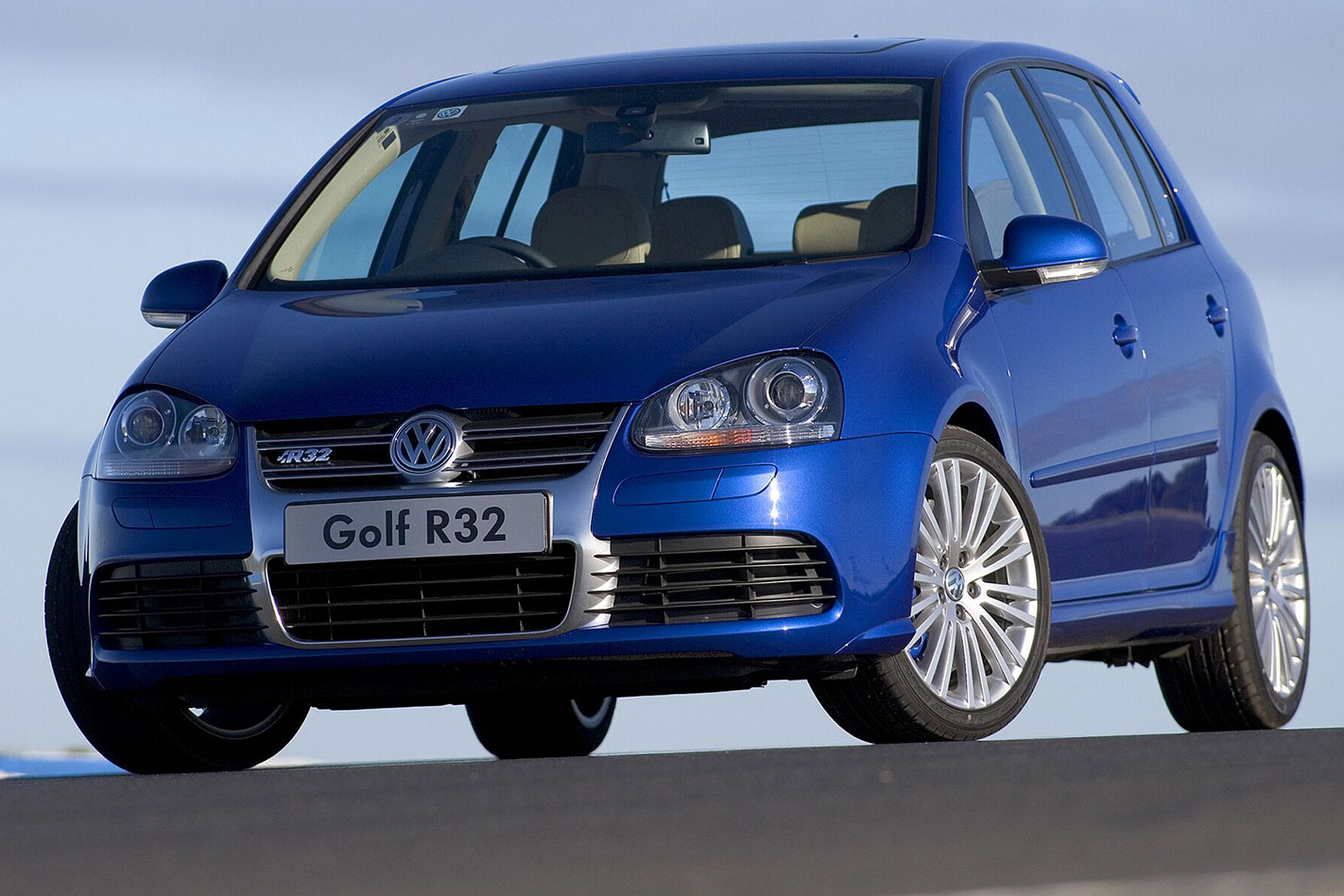
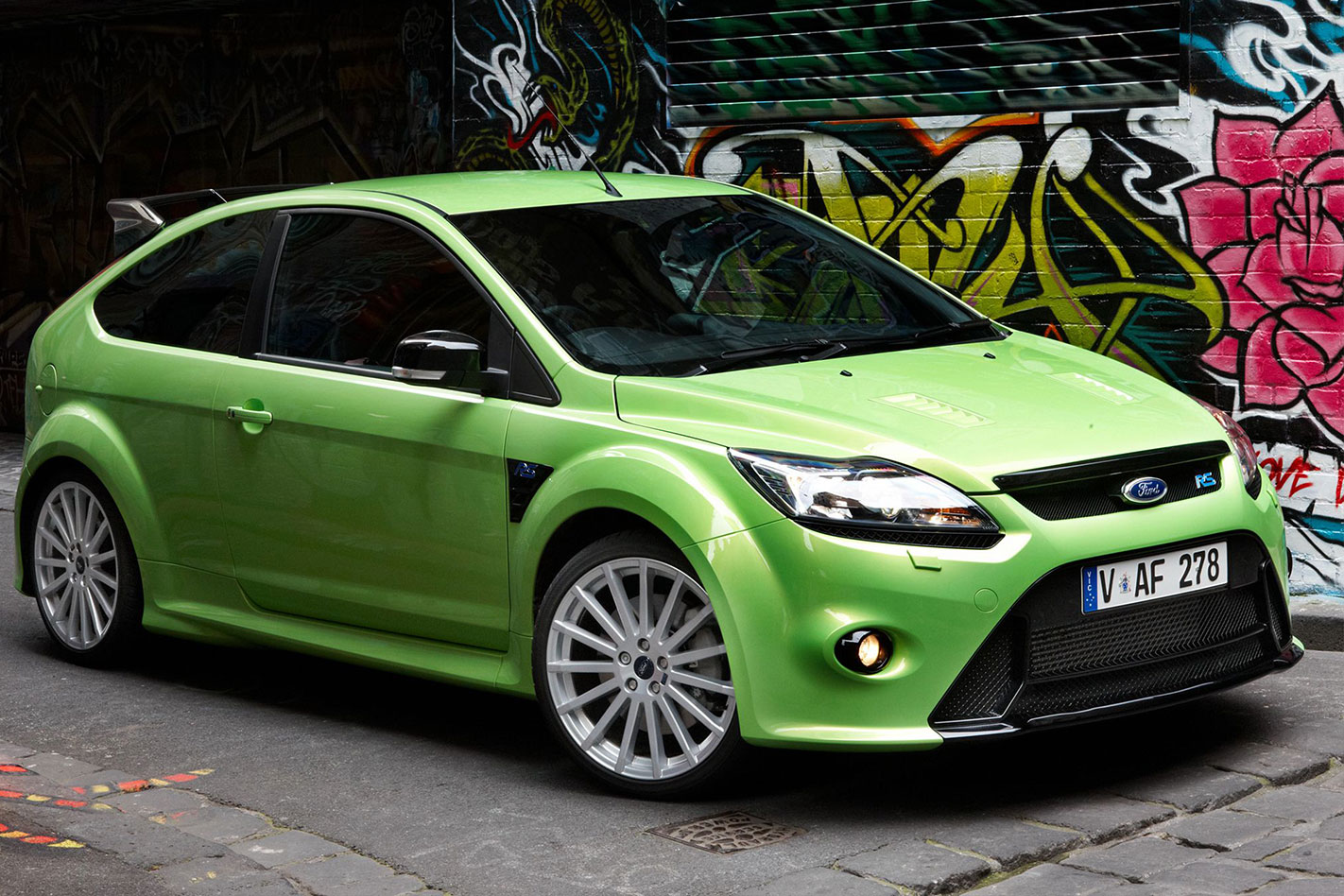
And that was how it seemed the market would naturally develop, until Ford broke it in 2008. In short, Ford discovered a way to effectively channel a lot of power to the front wheels.
All of a sudden, it looked as if the all-wheel-drive hyper hatch could go extinct.
Ford’s RevoKnuckle front suspension design was ingenious, effective and, most importantly, cheap. It gave strut front suspension the sort of low scrub radius and kingpin offsets that you’d get with an expensive multi-link system, but without the unsprung weight penalty.
Add a Quaife torque-sensing limited-slip diff and here was a solution to reduce torque steer and keep the tread footprint square on the road. The 224kW Focus RS (and 257kW RS500 limited edition) demonstrated what, at the time, seemed to be the limits of the system.
Renault quickly followed suit with its Megane III, spawning the 2010 Megane Renault Sport 250 (184kW) and its 265 (195kW) and 275 successors (202kW).
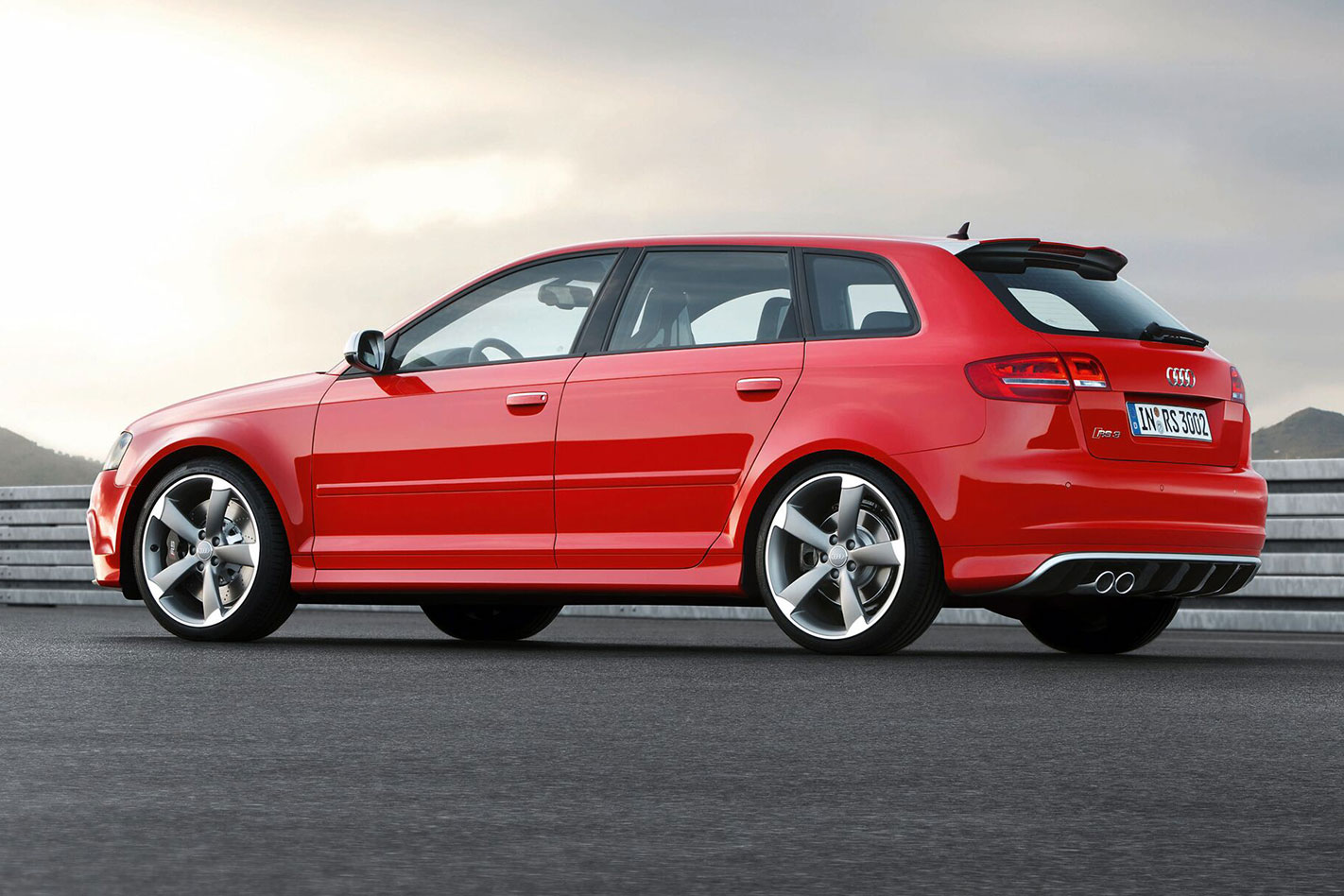
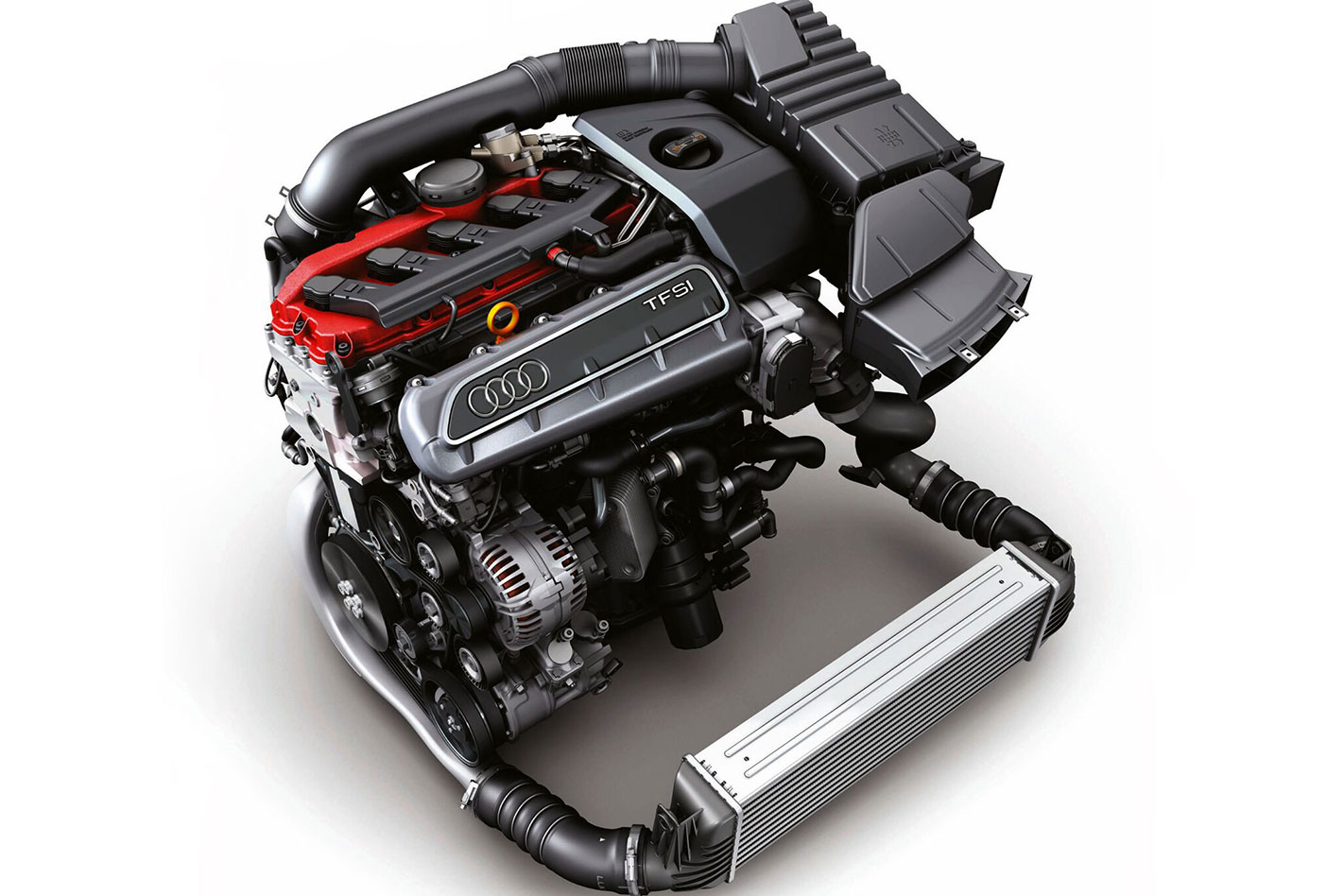
Just when the all-wheel-drive hyper hatch concept looked dead in the water, Audi breathed new life into it. The 2011 RS3 Sportback featured a gutsy five-cylinder lump driving all four wheels, developing a hefty 257kW. Audi’s tradition was to only have a limited number of RS models in its range at any one time, and the RS3 was quietly deleted in 2012.
Cue Mercedes. If there was one car that has come to define the hyper hatch genre, it’s probably the A45 AMG. This 265kW tearaway appeared in 2013 and was refreshed in 2016, with 280kW at its elbow. It comfortably elevated the entry requirements to this space way beyond anything that just sent drive to the front treads.
Audi rejoined the fray in 2015, with a new 270kW RS3 Sportback, and Ford unleashed its 261kW all-wheel-drive Focus RS. From this point on, you’d have hot hatches like the Renault Megane RS, Civic Type R and Hyundai i30N pitching in with a power ceiling somewhere around 220kW and a select handful of all-wheel-drive hyper hatches duking it out way above that figure.
The introduction of the 310kW Mercedes-AMG A45 S this year has elevated the playing field into a new and, it could be argued, more competitive arena. With that much power, and an asking price of $93,600, the baby Merc brawler now comes into competition with cars like the BMW M2 Competition Pure and the Alpine A110 Pure, specialist sports coupes that deliver a very different driver experience to even the best all-wheel-drive hatch dynamics.
But perhaps we should have expected that to happen. After all, it seems a logical development. Don’t believe me? Have a look at the table below. It charts the inflation in power (in kilowatts) across these genres. It’s pretty self-explanatory. Ferrari V8 supercar is F355/F430/458 etc, Ferrari limited-run hypercar is 288GTO/F50/Enzo/LaFerrari material, and Lamborghini V12 supercar is Countach/Diablo/Murcielago/Aventador. You know, billionaire doors.
u00a0 | u00a0 | 1985 | 1995 | 2005 | 2015 |
Ford | Escort Cosworth / Focus RS | 98 | 167 | 168 | 261 |
VW | Golf GTI/R32/R | 84 | 130 | 184 | 221 |
BMW | M5 | 213 | 254 | 373 | 411 |
Ferrari | V8 supercar | 179 | 283 | 360 | 493 |
Ferrari | Limited-run hypercar | 294 | 362 | 485 | 708 |
Lamborghini | V12 supercar | 335 | 380 | 427 | 515 |
Porsche | 911 Turbo | 221 | 300 | 309 | 382 |
So we have a situation where a Mercedes A-Class, once derided as the elk-test failure, the very exemplar of handling ineptitude, now packs more heat than a 2005 Porsche 996 Turbo, the car many journalists dubbed the fastest car in the real world.
No other class of cars has trebled its typical 1985 power figure. Partly that’s due to a low initial base, but it also speaks to the fact that hot hatches and hyper hatches like the A45 S have indeed diverged.
The nomenclature means something. The hyper hatch has finally come of age.
- New entry-level Toyota SUV due later this year
- 1.5-litre three-cylinder with hybrid on offer
- Likely to kick off at around $27,000
Based on the underpinnings of the new Yaris hatchback, the five-seat, five-door Yaris Cross is the shortest of the three SUVs at 4180mm long, which is 180mm shorter than the CH-R and 420mm shorter than the RAV4.
At 1765mm wide it’s just 30mm narrower than the CH-R and 90mm skinnier than the RAV4, but sits between the two for overall height at 1560mm.
Compared to the Yaris, the Yaris Cross is 90mm taller, 20mm wider with 30mm more ground clearance.
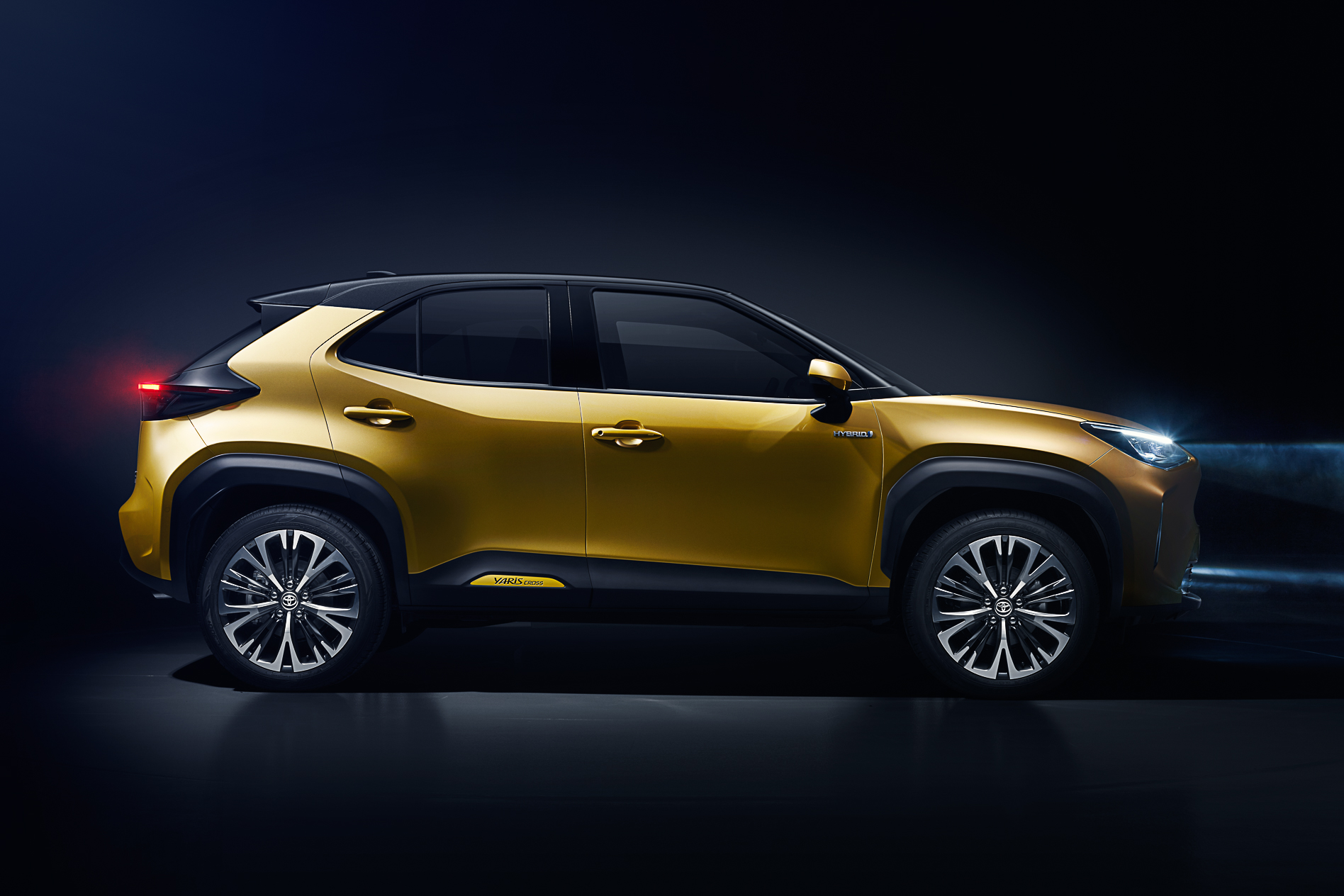
The Yaris Cross, which was revealed online after the cancellation of its original launch at the abandoned Geneva Motor Show, will be offered with Toyota’s 1.5-litre three-cylinder turbocharged petrol engine in both front- and all-wheel-drive options.
A hybridised version of the three-pot engine will make a claimed 85kW, and will also be made available with the electronically-assisted, front-biased AWD system, according to Toyota.
A brace of improved active safety aids will also come with the Yaris Cross, likely including AEB, lane-keep assist and adaptive cruise control.
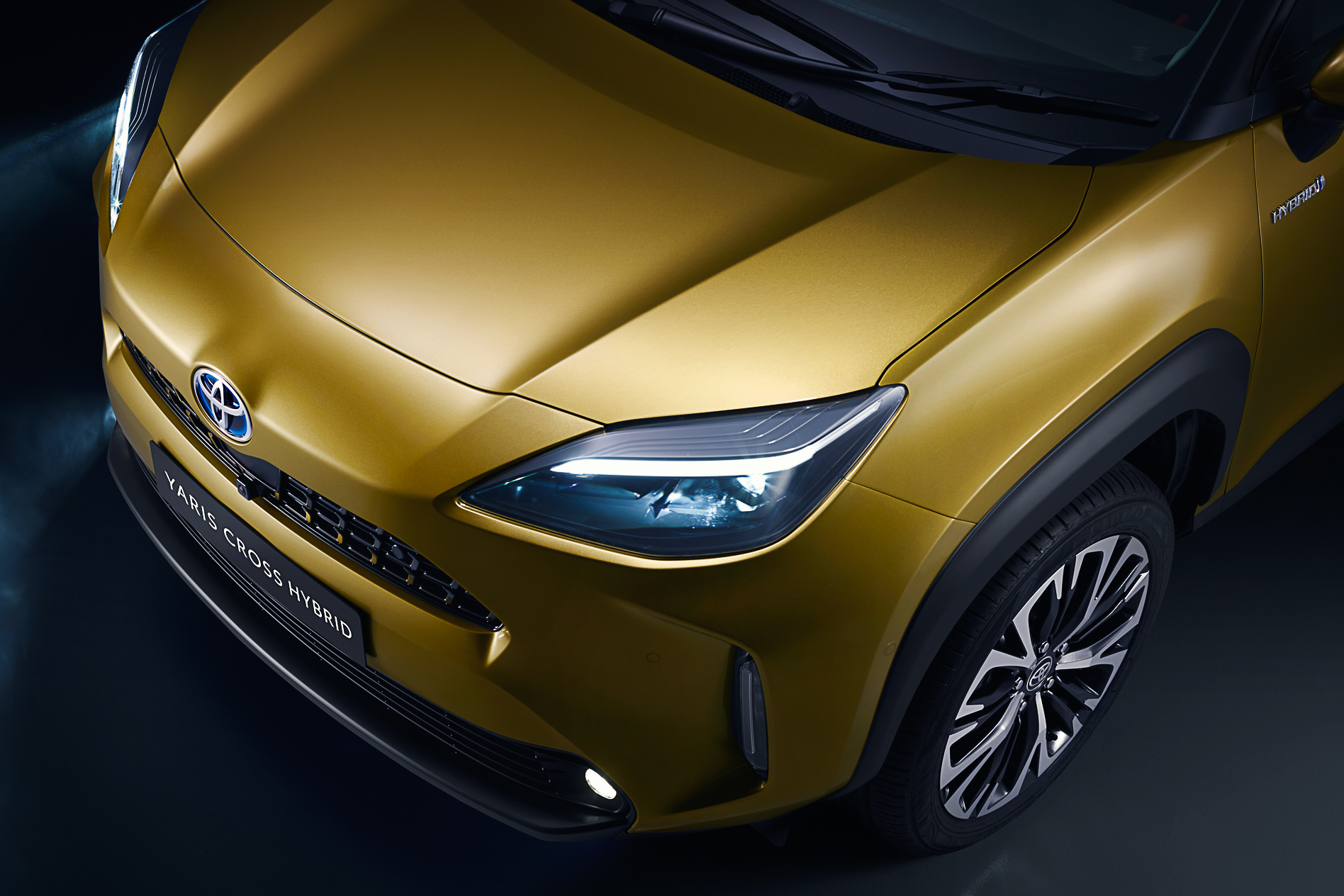
The Yaris Cross’s exterior includes elements of the angular RAV4 with plastic overfenders and pronounced sills, while the exaggerated c-pillar sweep brings to mind the C-HR’s sharper styling.
However, softer lines through the front fascia and bonnet, and a more pronounced and rounded rear, sets the Yaris Cross apart from its stablemates.
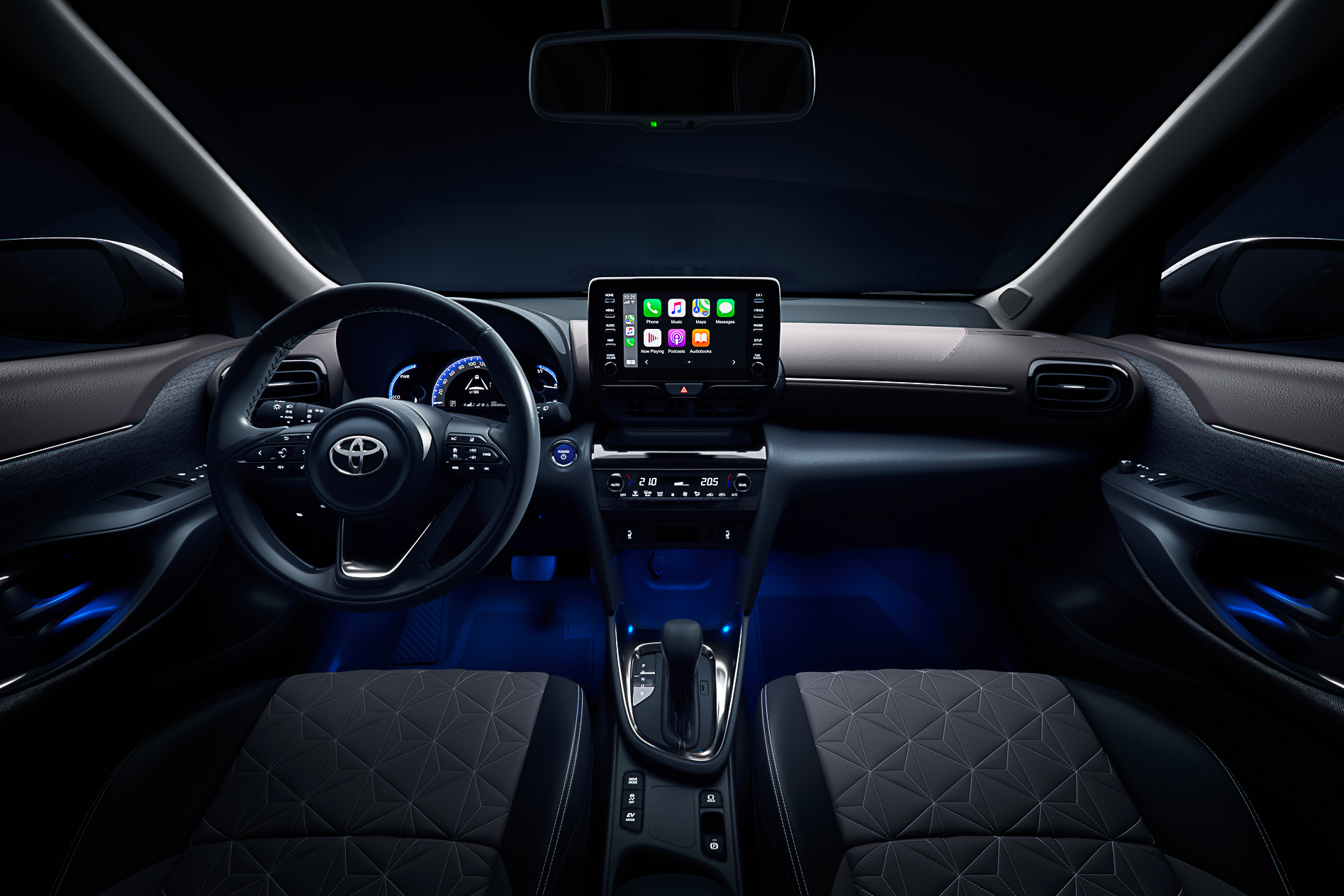
The interior marries elements of the Yaris and the Corolla hatch, with a large centrally-mounted multimedia screen and a softly angular dash and centre console treatment.
Locally, Toyota’s vice president of sales and marketing, Sean Hanley, said that the Yaris Cross will meet the changing tastes of consumers towards SUVs – a movement that Toyota has taken full advantage of, selling more than 80,000 last year alone.
“Yaris Cross is a stylish and flexible vehicle for people with active lifestyles who appreciate the strength, space and high-riding qualities of an SUV at a scale that suits their daily need to negotiate city streets and laneways,” Mr Hanley said in a statement.
The Yaris Cross is due later this year, and will go up against other light crossovers like the dominant Mazda CX-3 and the incoming Volkswagen T-Cross.
Pricing isn’t finalised yet, but with the first auto-equipped CX-3 starting at less than $27,000, expect to see the Yaris Cross in close proximity.
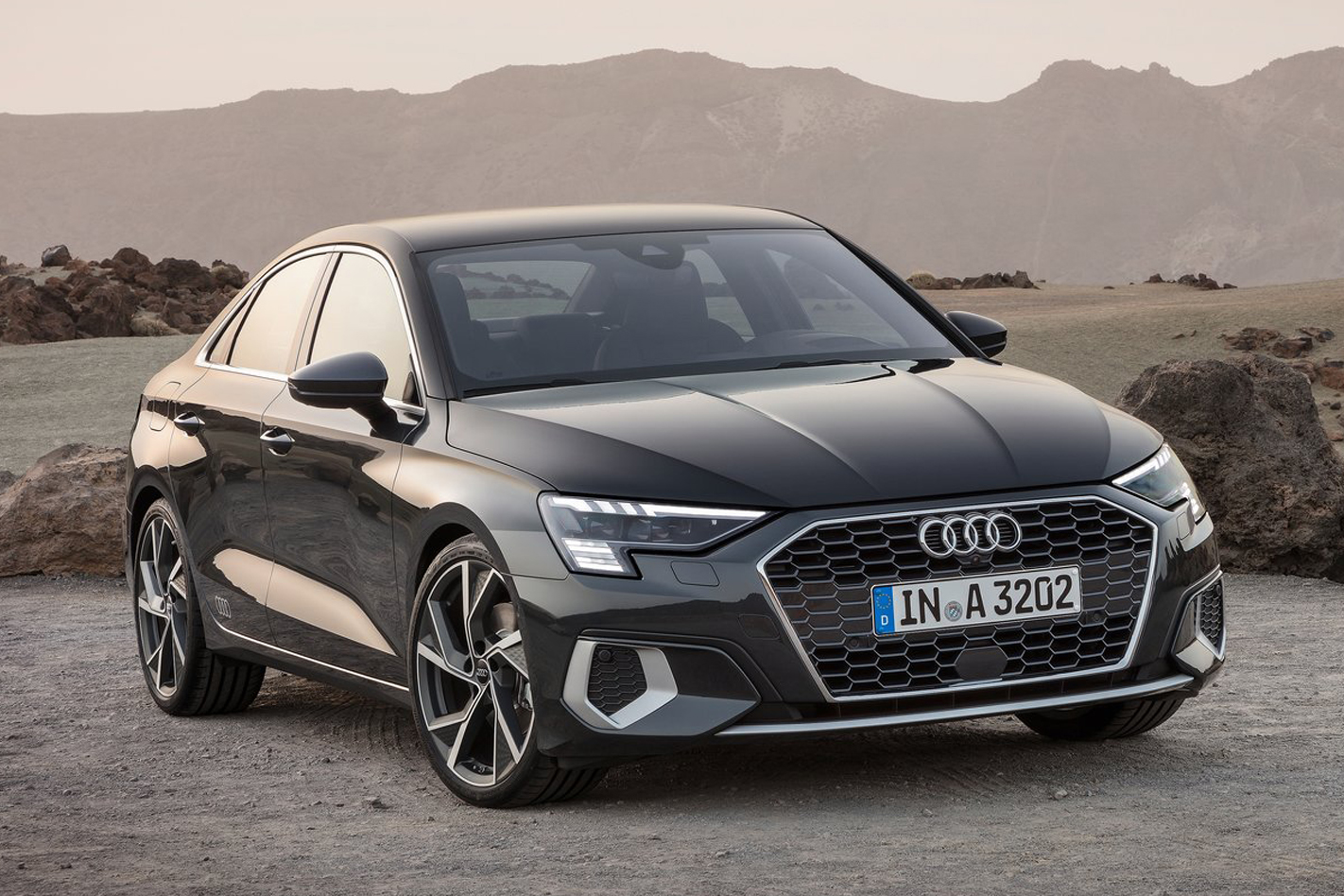
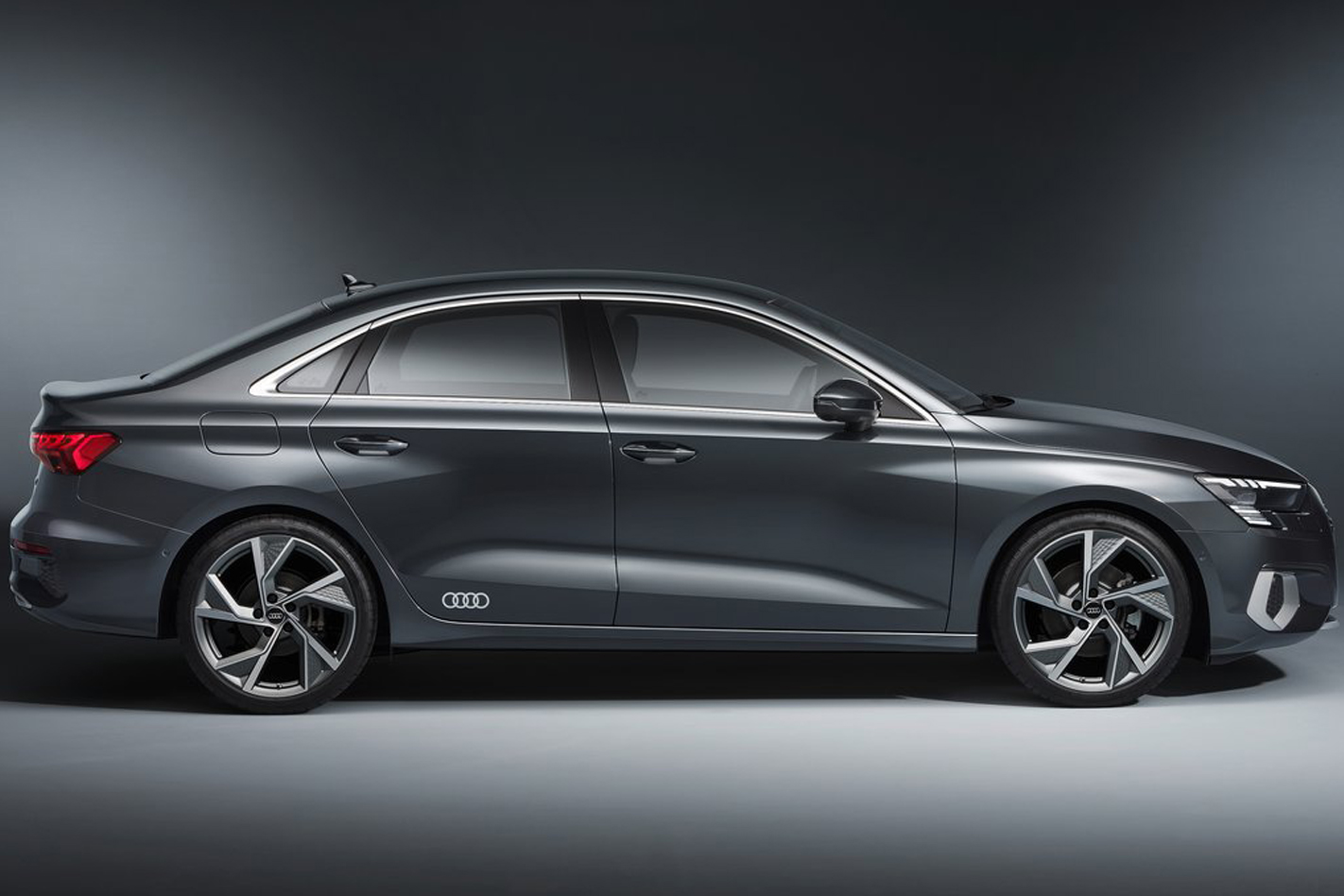
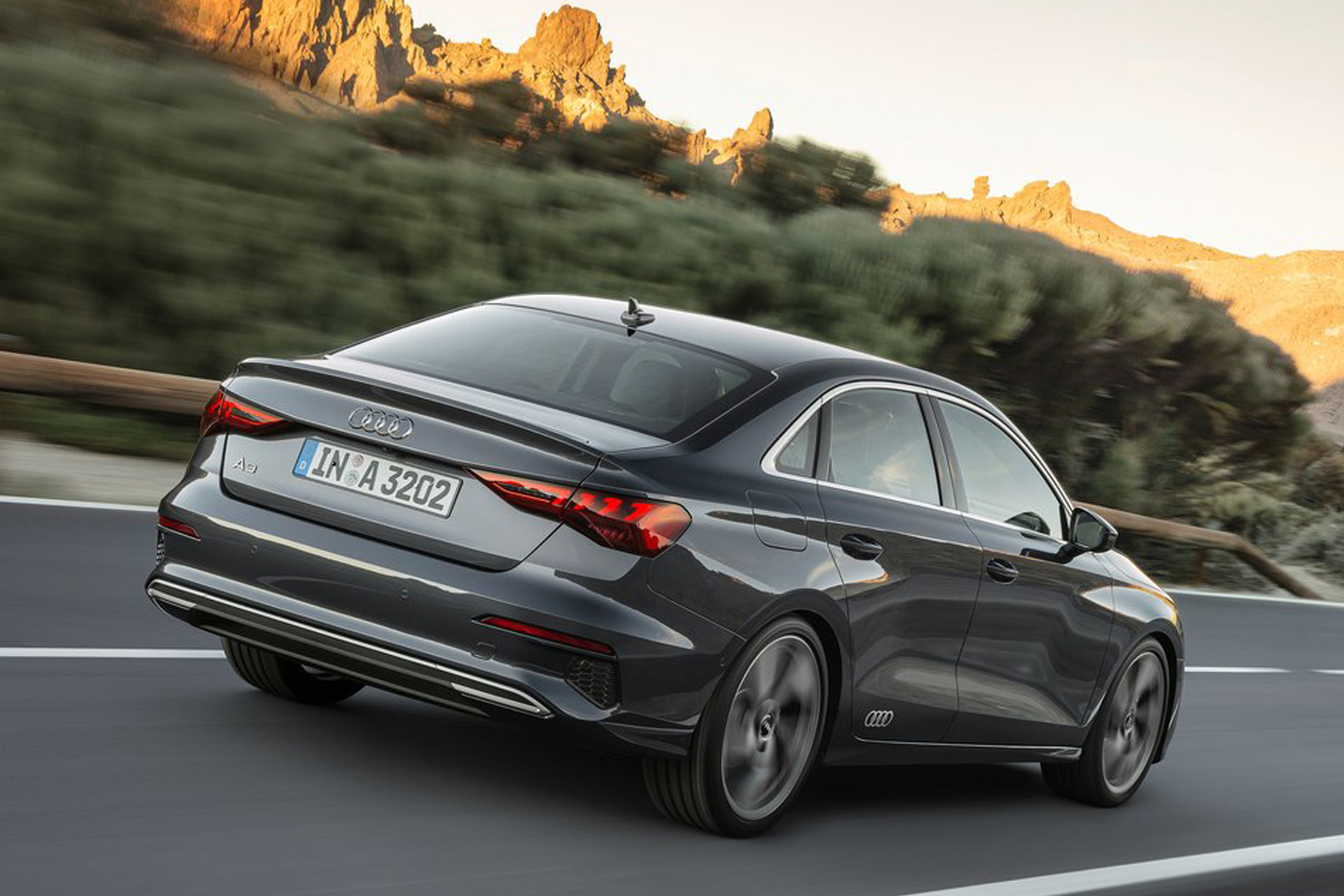
Audi has released the first batch of images of its handsome new A3 sedan, which grafts a more business-like rump to the sharp-looking form of the 2020 Audi A3 Sportback that made its debut in March this year.
Besides the boot lid, the A3 sedan measures in at 15cm longer than its Sportback brother. Compared to the outgoing A3 sedan, the new one is also 4cm longer overall, 2cm wider and has slightly more headroom and elbow room inside.
The 425-litre boot capacity is the same, too, giving it a greater seats-up volume than the hatchback.
All of its sheet metal forward of the B-pillar is shared with the hatch, with pumped-up quarter panels at each corner giving the car a profoundly athletic look.
The rear door skins, meanwhile, feature a different contour to emphasise the sedan’s length. With the base models looking this fat, the high-performance S3 and RS3 sedans should look properly bonkers.
Audi A3 sedan equipment
Expect everything that’s available on the hatch to also be on the A3 sedan’s spec sheet, including things like advanced Matrix LED headlamps on high-grade A3s, and a 10.25-inch all-electronic ‘virtual cockpit’ digital dash on every variant – except those with the top-of-the-range virtual cockpit, which sees an even bigger 12.3-inch screen sit behind the steering wheel.
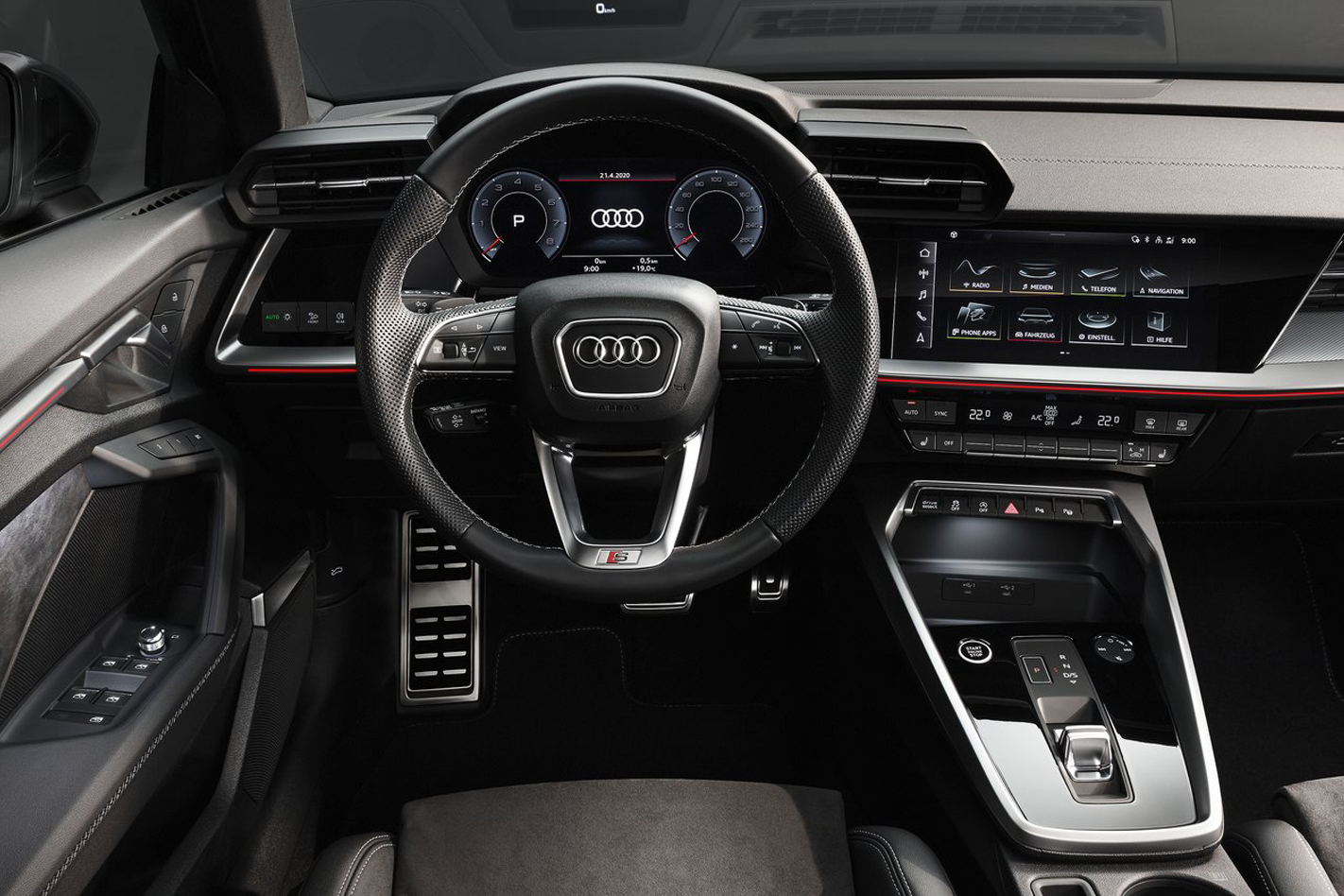
Opt for the top-spec MMI Navigation plus infotainment system and you get an in-car computer that’s ten times faster than the current A3’s, and features an integrated high-speed wireless internet capability and an in-car wi-fi hotspot.
That ties into the new suite of car-to-X technologies that Audi will introduce with the A3, which sees vehicle data transmitted to the cloud to help other vehicles and vice versa.
Smartphone mirroring via Android Auto and Apple CarPlay will also be built-in to the A3’s infotainment suite.
Audi A3 sedan mechanical specs
Again, there’s going to be a lot of crossover with the hatchback when it comes to what’s under the bonnet.
For now, Audi has only confirmed two engines and three powertrains at launch for the Euro-market A3 sedan, versus five for the A3 Sportback.
These are a 1.5-litre four-cylinder turbo petrol with 110kW, which is backed by either a six-speed manual or seven-speed dual-clutch automatic, and which burns a claimed 4.9L/100km with the help of cylinder deactivation and a 48-volt mild hybrid system.
A 2.0-litre turbo diesel is the other engine option, also making 110kW and consuming a claimed 3.9L/100km on the combined cycle, but it’s available solely with the seven-speed dual-clutch auto.
For now, both engines take drive to the front wheels only – AWD quattro variants will follow.
Australia
By the time we see the A3 sedan arrive in local showrooms, there should be more powertrain options to speak of.
It’s not scheduled to land in Australia until sometime in the first half of 2021, with local prices and specifications still to be announced.
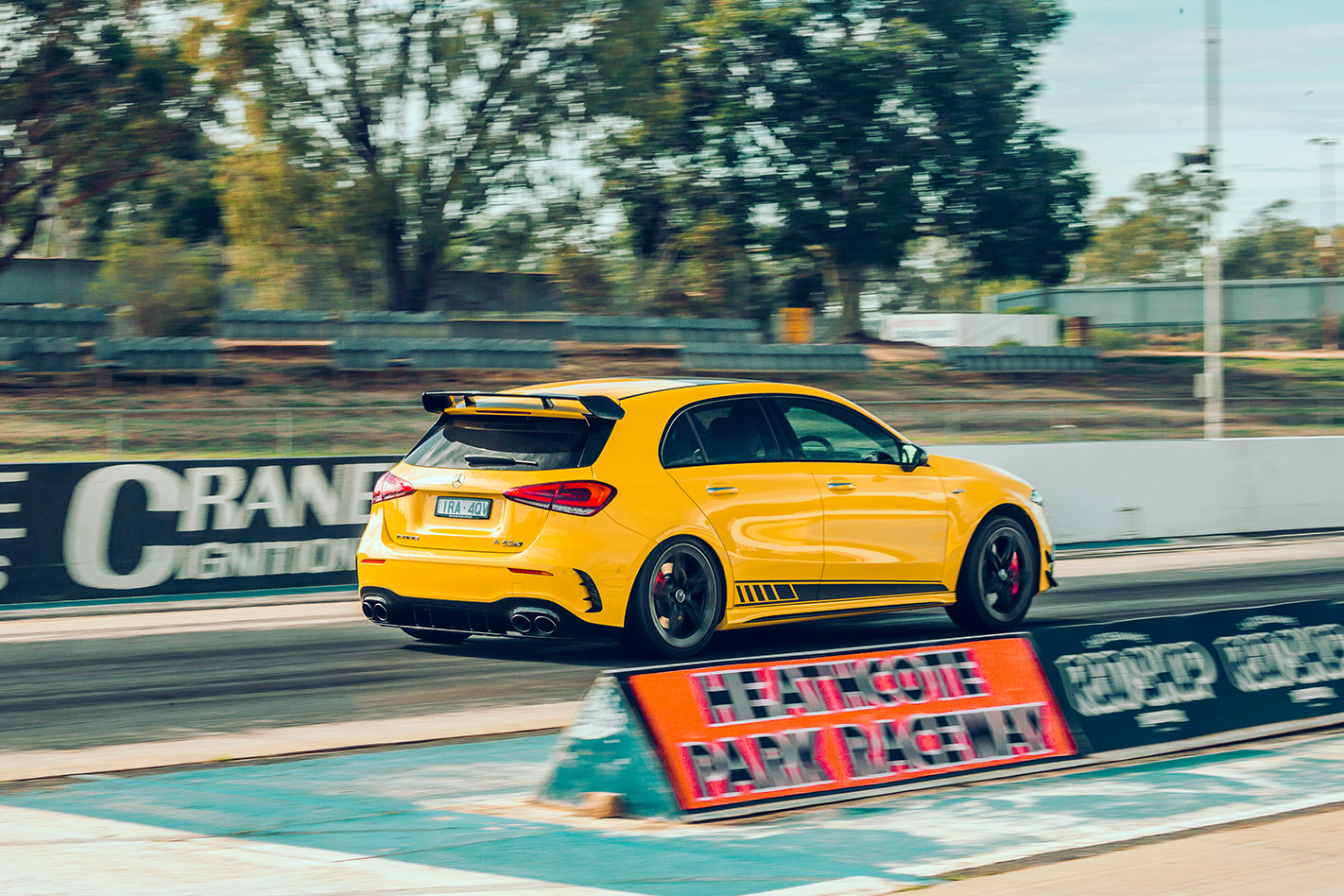
The all-new Mercedes-AMG A45 S deserves to be nicknamed the ‘ego killer’ for the way in which it will decimate cares with more power and significantly larger price tags in a drag race.
With an impressive claimed acceleration figure of under 4.0-seconds, the latest addition to the hyper hatch segment’s arrival on Australian shores has been hotly anticipated.
Using a VBOX GPS data recorder, the AMG A45 S underwent Wheels’ independent performance testing regime at Heathcote to see how accurate the 3.9 second 0-100km/h claim on the brochure really is.
Our first three launches in the A45 S returned a 4.1-. 4.0-, and 3.9-second run to 100km/h. From that point onwards it was bang on the claimed manufacturer figure until we decided we’d had enough fun.
Engage launch control, build the revs, and simply keep your right foot planted into the firewall while keeping the pocket rocket pointed toward the horizon. It’s that easy.
Pumping 310kW and 500Nm from a 2.0-litre four-cylinder engine to all four wheels was always going to produce an impressive acceleration figure, but the fact that the ‘baby’ AMG was able to rattle off repeatable sub-4.0 second passes all day long shouldn’t be taken for granted.
While some might see the $93,600 price tag as excessive for a hatch, it’s important to remember the performance it offers is unmatched by any muscle car currently on sale in Australia, and enough to threaten sports cars that cost twice as much.
The in-gear acceleration is mighty impressive as well, taking just 2.3 seconds to shift from 80km/h to 120km/h.
On the unprepared Heathcote drag strip, the A45 S was able to return a quarter-mile ET of 12.2 seconds at 185.2km/h.
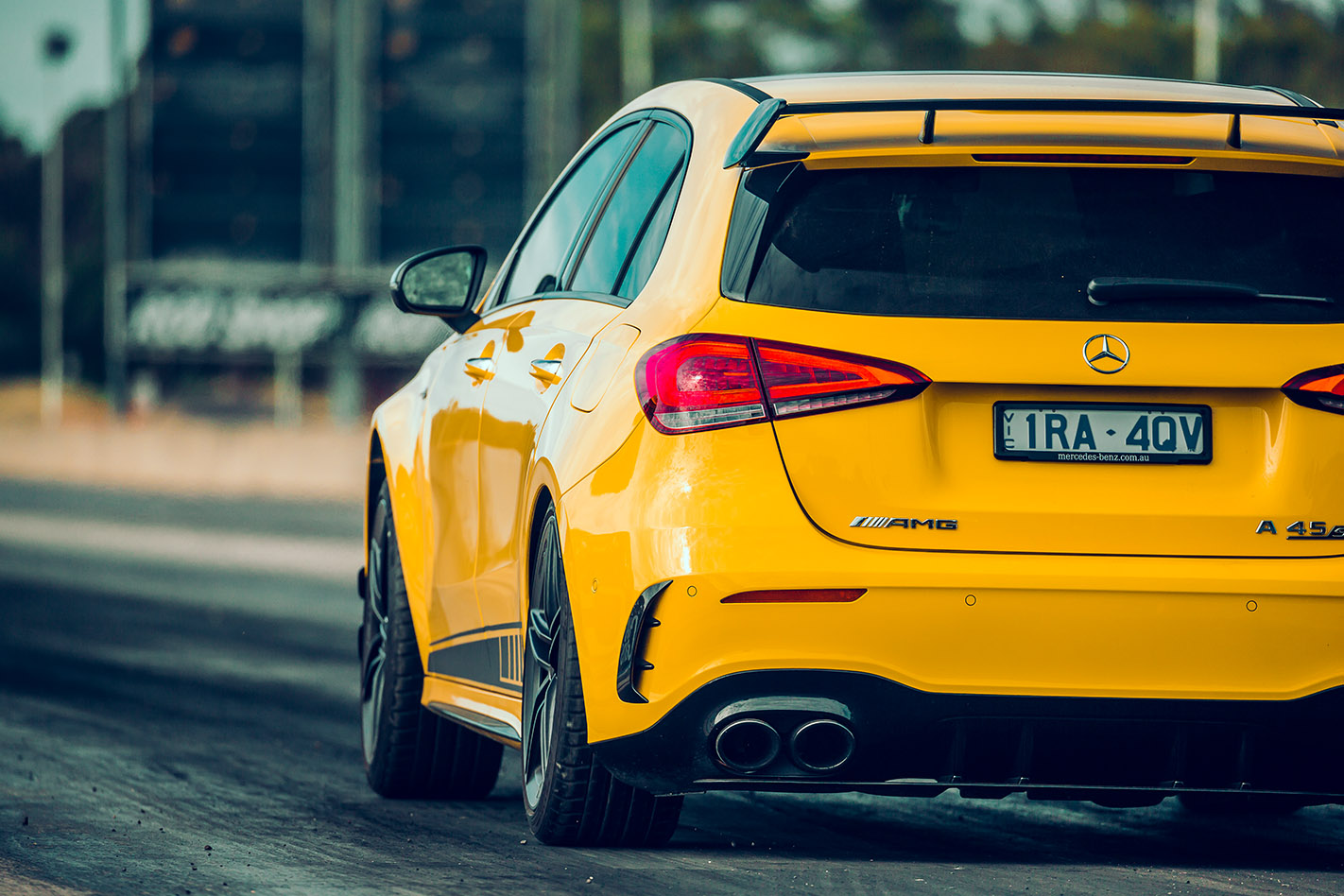
That’s two-tenths of a second quicker than 500kW supercharged V8-powered Ford Mustang R-Spec!
So rapid was the A45 S, that we were able to measure its time to the double-tonne, with 200km/h appearing on the speedo after 14.5 seconds of full-throttle acceleration.
It’s not just acceleration where the A45 S impresses, with the brakes able to haul the AMG to a standstill from 100km/h in the space of 35 metres.
A full rundown of our independent test data is below.
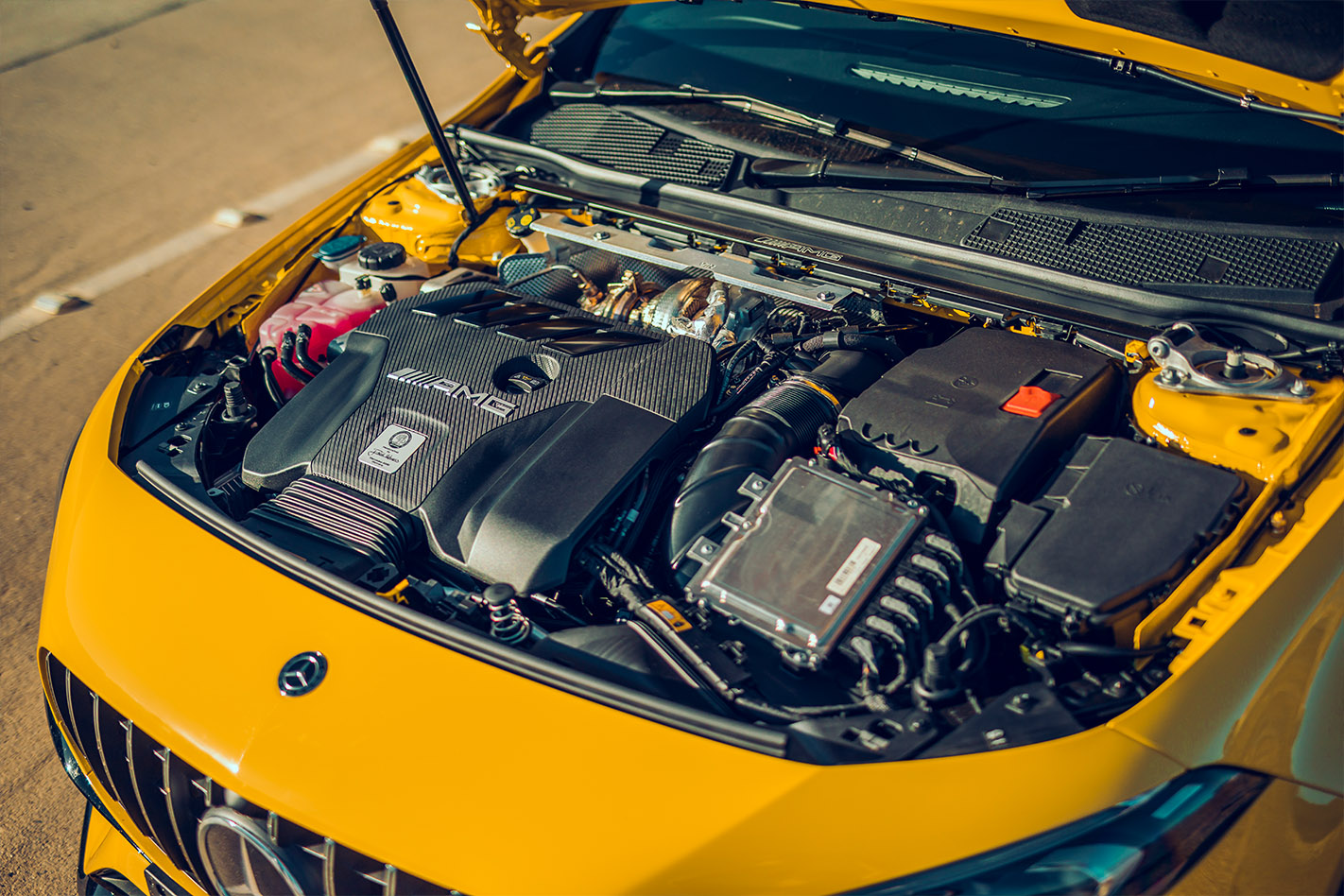
2020 Mercedes-AMG A45 S performance figures
- 0-20km/h: 0.6sec
- 0-40km/h: 1.4sec
- 0-60km/h: 2.1sec
- 0-80km/h: 3.0sec
- 0-100km/h: 3.9sec
- 0-120km/h: 5.3sec
- 0-140km/h: 7.0sec
- 0-160km/h: 8.9sec
- 0-180km/h: 11.4sec
- 0-200km/h: 14.5sec
- 0-400m: 12.2sec @ 185.2km/h
- 80-120km/h: 2.3sec
- 100km/h-0: 35.0m
- Power-to-weight: 185kW per tonne
- Redline/cut-out: 7000/7000rpm
- Speed at indicated 100km/h: 97
The Wheels Verdict: If you expected this new Mercedes-AMG A45 S to be more of the same, think again. It’s a massively improved car compared to its predecessor. With that comes a significant price rise, but if you want the world’s most capable hyper hatch, you’re looking at it right here.
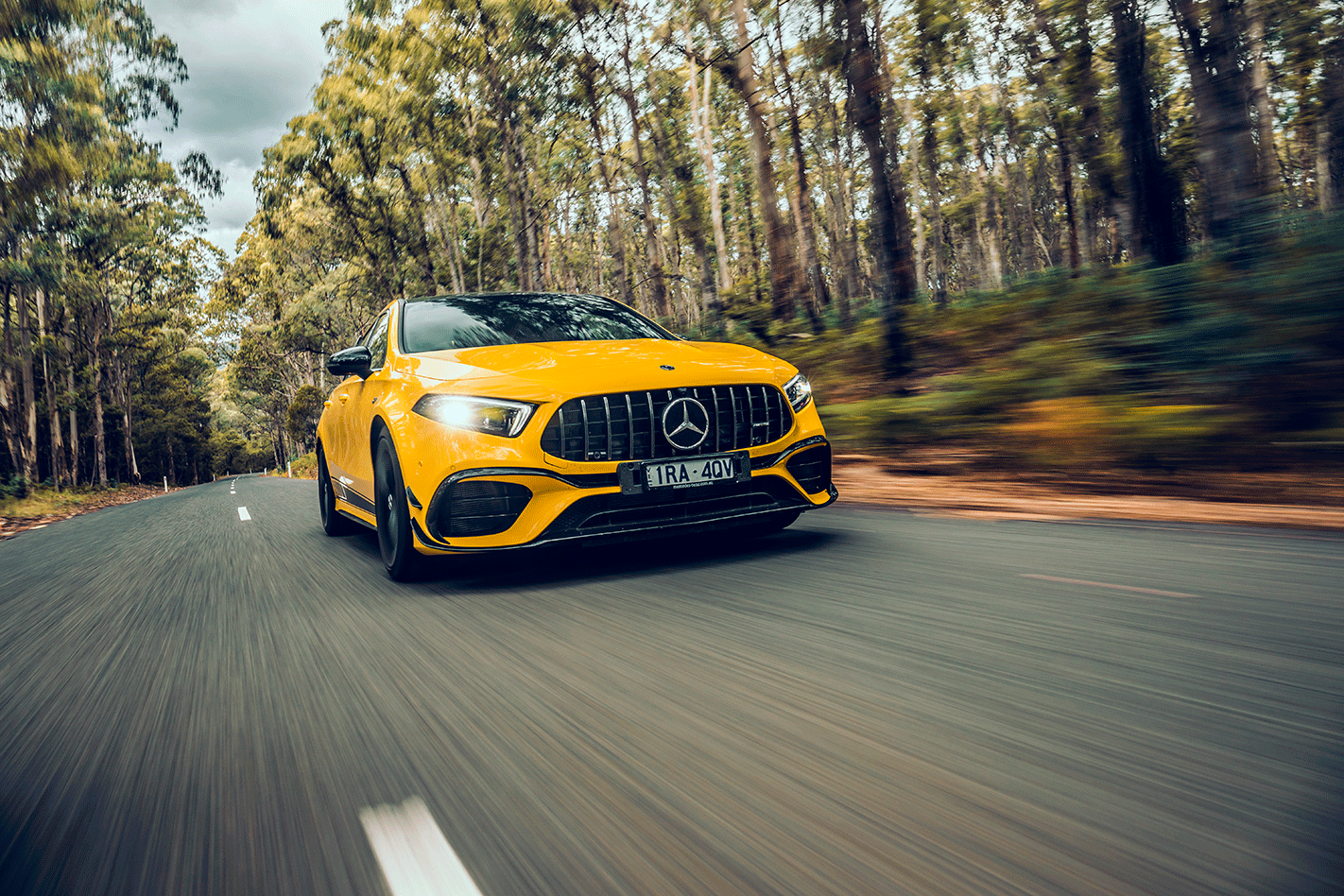
What is the Mercedes-AMG A45 S?
Back in 2013, AMG revolutionised the fast hatchback market with its A45. That car was raw, edgy and uncouth but gave a tantalising taste of what was possible. That potential has finally been realised in the ultra-polished 2020 A45 S. It’s a perfectly civil hatchback with more pace and power than a V8-engined Audi R8 supercar and it’s yours for less than $100K.
Why we’re testing it
Our curiosity had been piqued by glowing reviews of the A45 S from its international launch and this was the first chance we had to drive it on Aussie roads. With that in mind, we took it to one of the very toughest we knew, the queen stage of Targa High Country between Eildon and Jamieson, in Victoria’s high country. If the A45 S could shine there, it could shine anywhere.
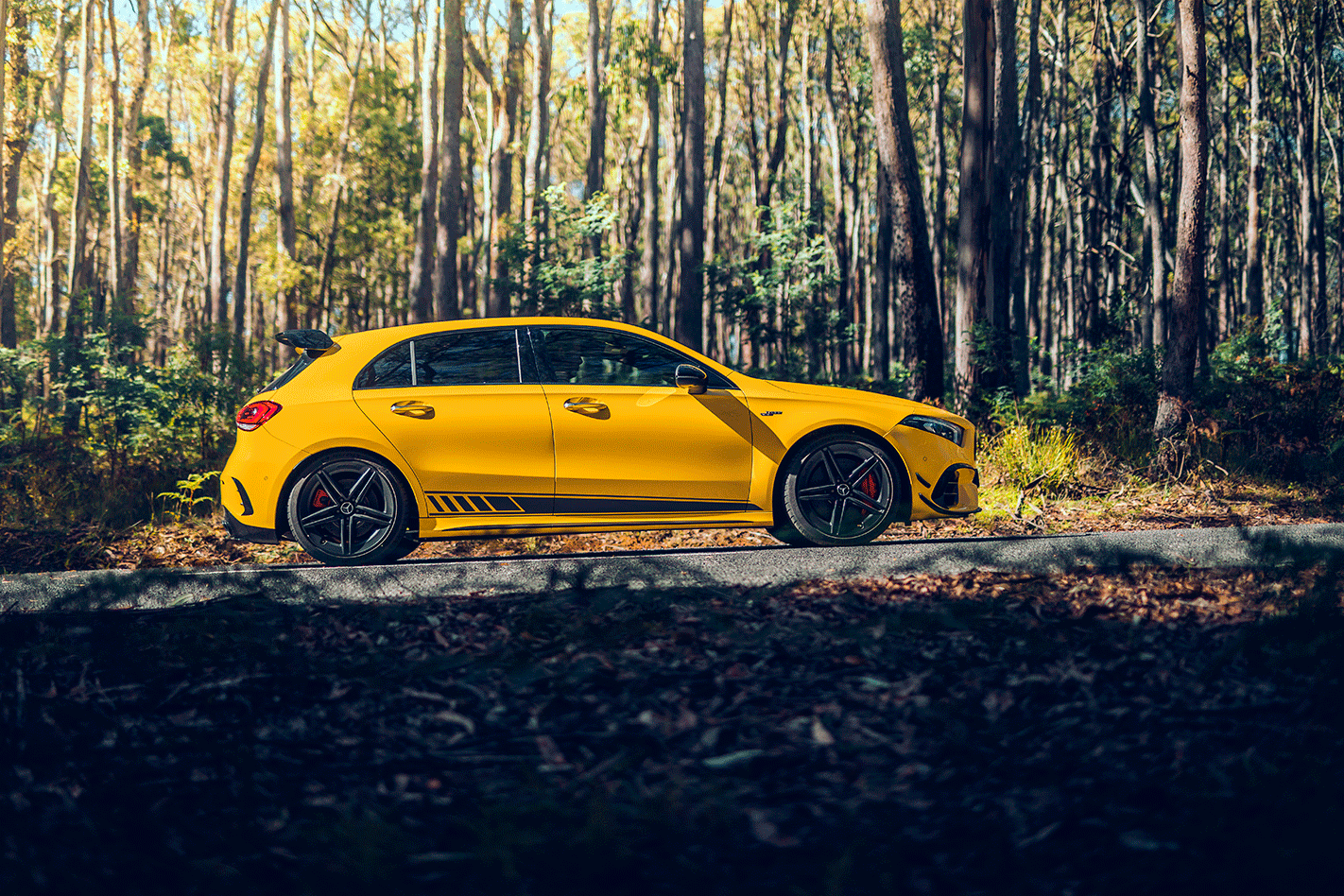
REVIEW
I know you’re busy, so let’s cut to the chase. AMG needed to fix three things to turn the old A45 into the best hyper hatch in its division. It needed to ride better, it needed a smarter gearbox and it needed to be more involving for the keen driver. Those requirements have been addressed with the all-new Mercedes-AMG A45 S. So that answers how Mercedes ‘fixed’ the A45.
Since you’re here anyway, you might well want to discover how AMG went about each of those three remedial measures, but first a bit of background to get you fully up to speed. The old A45 AMG debuted in 2013 with 265kW/450Nm and was revised in 2016, bringing adaptive dampers and an uptick in grunt to 280kW/475Nm. Still the same turbo 2.0-litre engine driving all four wheels, still the quickest car in its class at 4.2 seconds to 100km/h.
Now we have this new A45 S, riding on the more advanced fourth-gen A-Class chassis. Power has stepped up yet again, the latest model making a dizzying 310kW at 6750rpm. Torque? How about 500Nm at 5000-5250rpm? The result is a claimed 0-100km/h time of just 3.9 seconds. We verified exactly that figure during independent testing using the standard launch control, so it doesn’t require any fancy footwork to achieve.
But the A45 really didn’t need to be any quicker, any louder or any glitzier than before. While it was long on headline-grabbing numbers it was, to summarise its faults, short on subtlety. There are some cars that really shine when pushed hard. The A45 wasn’t one of them. Up to about eight-tenths it felt rock star. Ask any more of it and you began to suspect it was one of those rock stars who only know a couple of chords.
In order to extend the repertoire of the A45 S, the team at Affalterbach clearly thought long and hard – and at a very early stage – about how this latest car would go down a road. This is absolutely fundamental stuff; the basics of suspension tuning, transmission response, driver feedback and power delivery.
Firstly, the car had to ride well. “It’s an improvement in every perspective,” says AMG boss Tobias Moers. “There’s more comfort, more rigidity in every way, so we put a lot of effort into the body in white. There’s lots of reinforcement.” The three-stage adaptive dampers cycle through Comfort, Sport and Sport+ settings and the first two are exploitable on any road, with Sport+ best reserved for smoother surfaces. In Comfort, there’s a genuinely expensive-feeling polish to the damping, with noise pathways into the passenger cell decently suppressed.
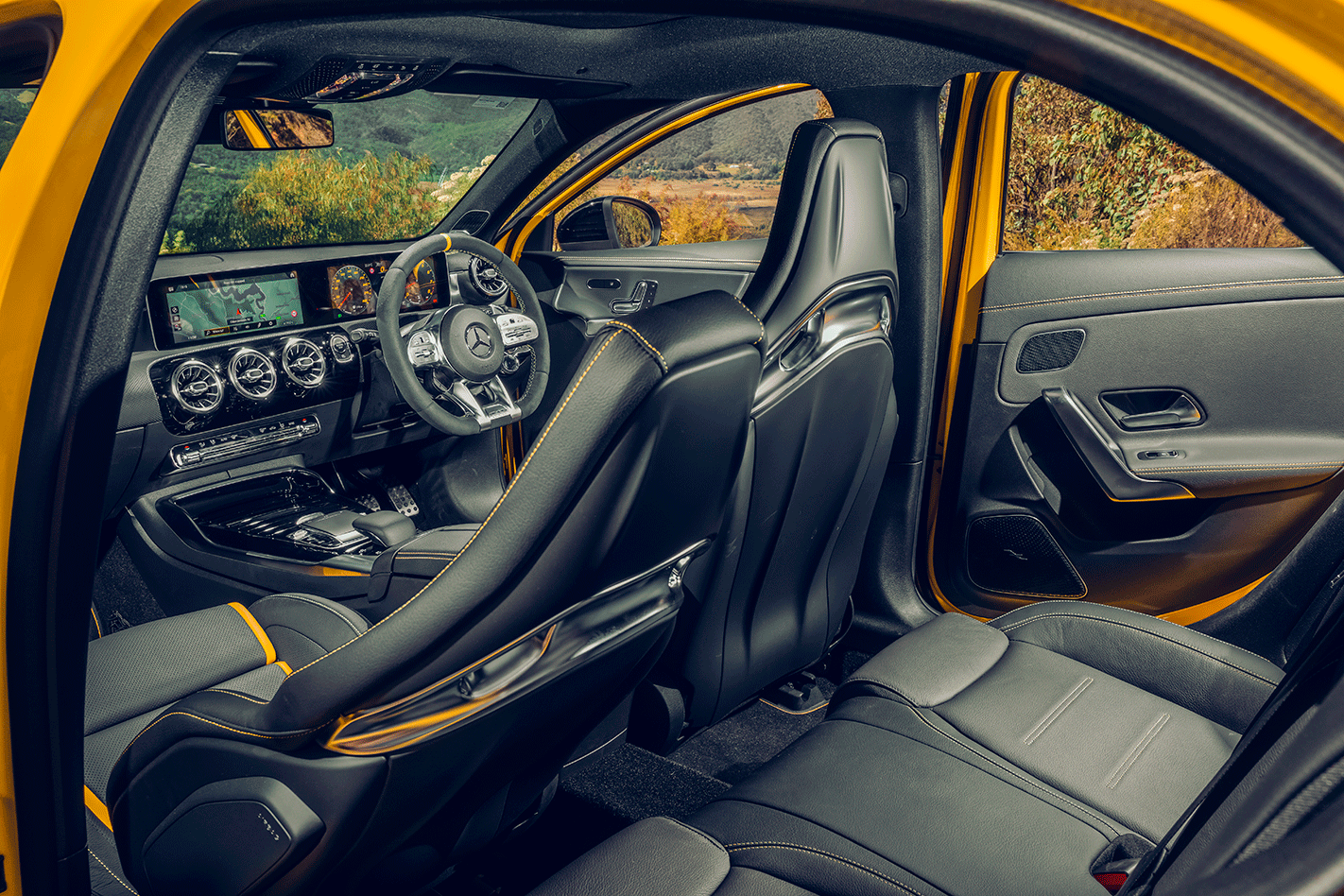
Also helping the A45’s body control is a far slicker transmission. The old seven-speed dual- clutch has been replaced by an eight-speed unit, and it’s not so much the extra ratio that transforms this installation, more the smarter software logic. With the old ’box, you were often denied what appeared viable downshifts and the transmission would sometimes do odd things like throw in an unwanted upshift just as you stepped off the gas to go for the brake approaching a corner.
The AMG Speedshift DCT 8G transmission, to give it the full moniker, is a very different box of cogs. It’ll perform double-declutching theatrics in Sport+ and partial ignition cuts during upshifts, but when you’re not driving it like a berserker, it’ll slur between gears, doing a decent impression of a torque converter auto.
Finally there’s the issue of driver involvement. I don’t offer any apology for talking about this at length. Other aspects of the A45 S have been covered at length elsewhere. If you’re here, you want to know how it drives. Want an infotainment review or a deconstruction of lower dash-materials quality? That’ll be along later.

Go too hard into a corner in the old A45 and it would doggedly understeer, and it seemed virtually immune to any of the strategies that a good driver would normally use to bring understeer back to neutrality without completely killing off all forward velocity. In certain regards it felt like the days of old AMG when you got a fantastic engine mated to a chassis that seemed to account for the remaining 10 percent of the vehicle development budget. That has certainly changed for the better, but is it all the way there? That’s a tough one.
Key to the new A45’s dynamics is the AMG Torque Control system, effectively a pair of separately acting clutches on the rear axle that allows 100 percent of the torque directed rearwards to be sent to either side. The issue some will have is that 100 percent in this instance isn’t actually 100 percent of the total torque. In typical driving, the A45 S will send a maximum of 50 percent of drive backwards. The much-vaunted drift mode doesn’t disengage the front driveshafts and turn your A45 into a rear-driven monster. Instead, it works by the simple expedient of overspeeding the rear axle in relation to the front. It still doesn’t send more than 50 percent rearwards. It just sends all of that 50 percent to the outside rear wheel.
Drive the A45 S hard on a challenging road and it’s clear that AMG has got an awful lot right. The steering is crisp and accurate, although its two weighting modes are not individually selectable. More on modes later. The brakes are excellent, too, with massive 360mm discs up front clamped by six-piston calipers. Body control is tight, front-end grip imperious and turn-in tenacious.
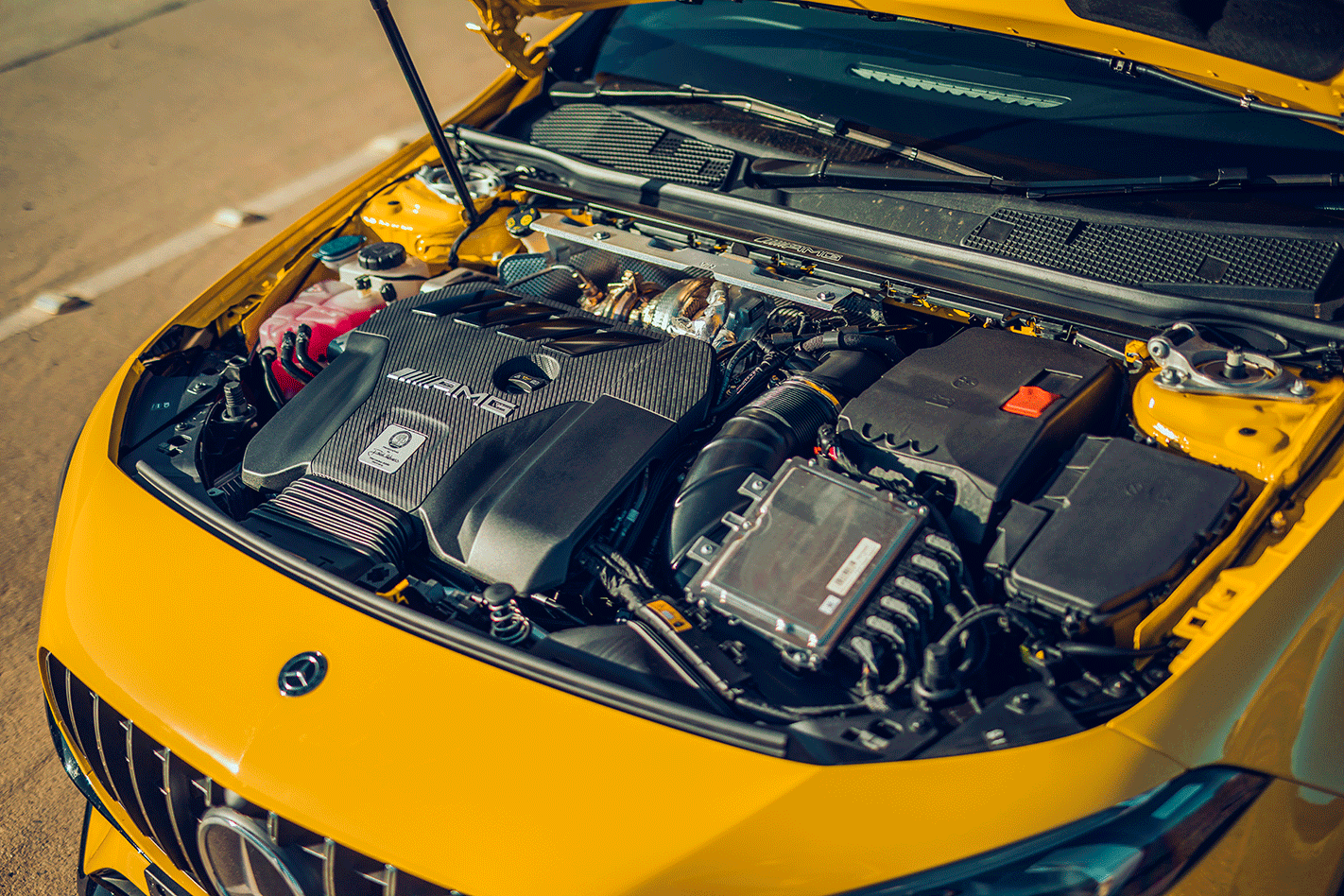
The engine’s 250rpm-wide torque maximum sounds peaky, but in reality there’s so much at your elbow that anything above 3000rpm will do. By 4000rpm you’re really moving, and above 5000rpm, the car’s persona transforms, a barrel-chested roar filling the cabin that sounds as if it can’t possibly come from 1991cc of swept capacity. Mercedes Australia confirmed that none of the A45s on their press fleet are fitted with the optional sound symposer. Crikey.
That the engine punches well above its 160.5kg weight is clear. Moers again: “The reason [it makes so much power] is that we’re going to use that engine for further applications which are not necessarily east-west applications.” In other words, this hand-built M139 unit, which still adheres to Affalterbach’s one man, one engine credo, is going into bigger AMG models in future.
Combine propulsion and poise in equally generous parts and you have a car that can demolish a challenging cross-country route. And this is where I have an issue with the A45 S. It’s refined enough to function as a daily driver, but despite that civility it doesn’t mean it’s a car you get a lot from at modest speeds. For all its smarts, it’s hardly a tactile overload. Even the pops and crackles from the exhaust have been muted this time round.
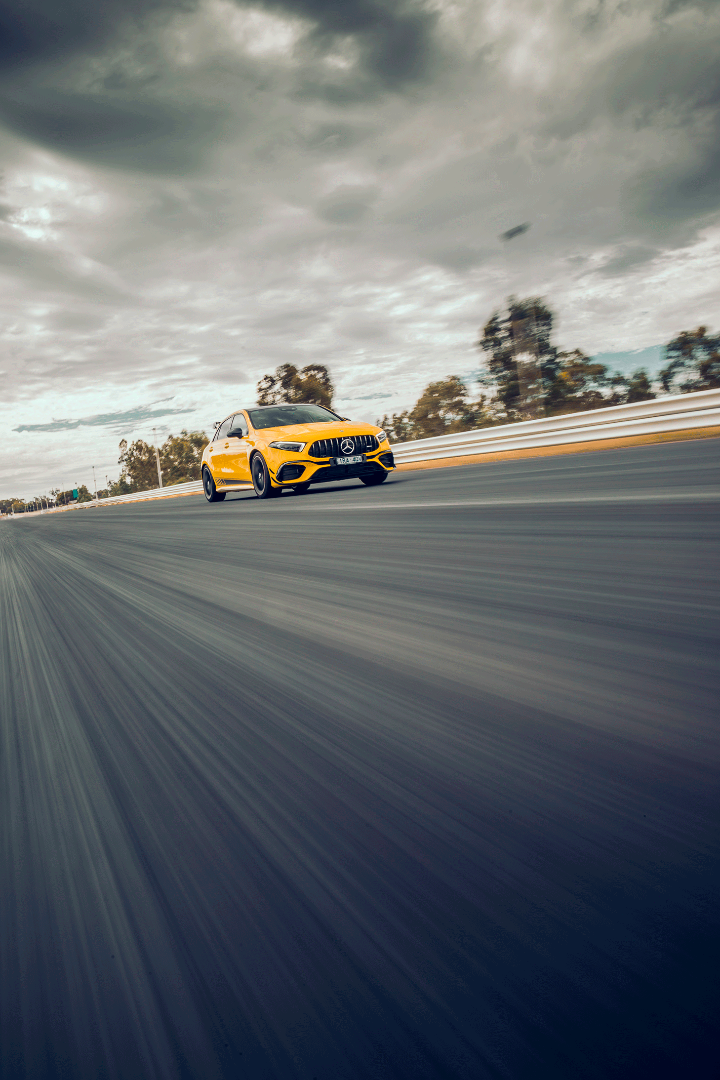
Up the pace, and things get far more exciting. With some effort, you can pivot the car into a corner on the brakes or with a throttle lift, but the purchase of the Michelin Pilot Sport 4S rubber is pretty phenomenal. Switch into Drift Mode, go caveman with the throttle on a hairpin exit and it’ll have a shimmy, but as soon as the car detects corrective lock, it’ll scoot torque forwards. After a bit of experimentation, you realise that the key to prolonging the slide is both more throttle and, weirdly, winding on more steering lock.
If you grew up with hot Mitsubishi Evos or Subaru WRXs, there’s a lot about the A45 S that will spark déjà vu. We drove on one of the stages of Targa High Country and it would be hard to find a more perfect road for the AMG to show off its flea-like reflexes. Yet despite its effectiveness, there are some nagging doubts.
There are two main contributors to this slight equivocality. The first is the drive mode set-up. It’s an utter mess. Even now, after a week with the A45 S, the AMG Dynamics chassis system, with its various drive modes, three scalable dynamics interfaces, and separate controls for transmission, suspension, exhaust and engine maps seems anything but intuitive. You’re always beset by a concern that whatever setting you’re in, it’s likely you’re in the wrong one.
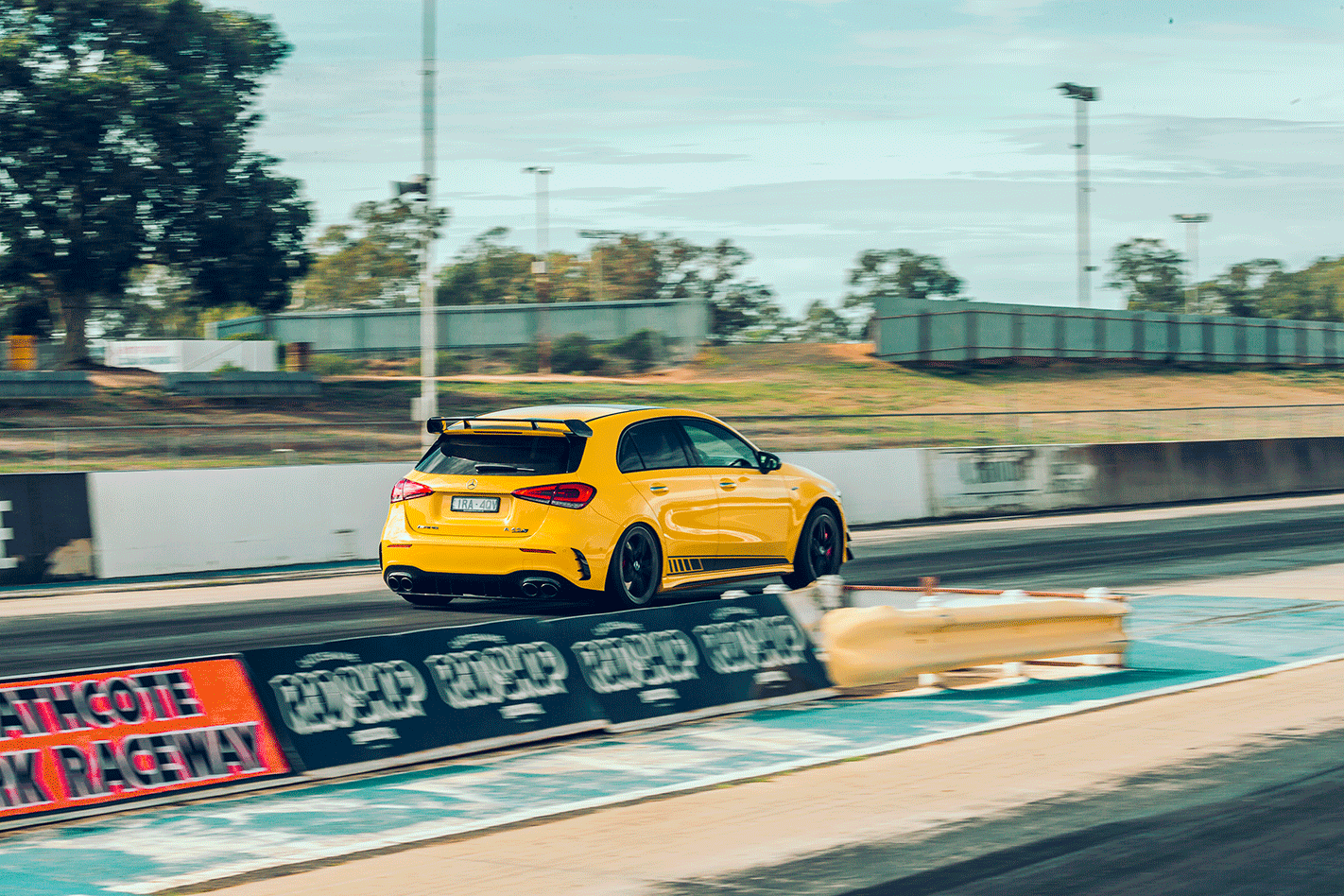
Then there’s pricing. Okay, it sounds churlish to quibble with what Mercedes-AMG is offering for less than $100K, but bear with me on this one. You’ll need to dig up $93,600 for the admittedly well-equipped A45 S, a hike of around $15,000 compared to its predecessor. This Edition 1 special retail with its outré cosmetics retails at $101,690 before on-roads and options, and what you get is a far better car than the old A45. The issue now is that the price increase brings it within striking range of models like the $99,900 BMW M2 Competition Pure and the $97,000 Alpine A110 Pure. Come to think of it, let’s throw the $116,000 Porsche 718 Cayman into the mix as a stretch target.
Viewed in terms of driver reward, the A45 S can’t quite level with these specialist coupes, but it’s worth noting that none of this illustrious trio will function as viable transport for rear-seat passengers with legs; none are as well appointed as the A45 AMG; and none will have a hope of keeping up when the road gets wet. Perhaps we shouldn’t expect the Mercedes-AMG A45 S to be something it’s clearly not. Within the parameters set out for it, it’s a bloody marvel.
RIVALS

Mercedes-AMG A45 Specs
- Model: Mercedes-AMG A45 S
- Engine: 1991cc 4cyl, dohc, 16v, turbo
- Max power: 310kW @ 6750rpm
- Max torque: 500Nm @ 5000-5250rpm
- Transmission: 8-speed dual-clutch
- Weight: 1625kg
- 0-100km/h: 3.9sec (claimed)
- Economy: 8.3L/100km
- Price: $93,600 ($101,690 Edition 1)
- On sale: Now
What if you want an even more authentic experience than your trusty gamepad can provide? Perhaps you’re truly slumming it in PC land with a keyboard?
Worry not, for in this article, we’ll list the best racing wheels we’ve tested, for those who want a more realistic, engaging drive. Keep reading if you fancy sharpening up your skills for esports, or you just want a boost against the usual online competition.
Prices are based on Australian RRPs sourced in April 2020
Should I buy a racing wheel?
Before we go through the best racing wheels you can buy, it’s worth explaining who they’re for and who will get the most out of them.
Of course, you don’t need a racing wheel, but if you’re particularly interested in racing games, they’re worth a look.
Simply put, they unlock another dimension to most good racing games, giving you increased feedback from – and control of – your virtual ride.
For those who prefer realistic racers such as iRacing and Assetto Corsa Competizione, or those who to be competitive at GT Sport, a wheel is almost essential.
They offer more control and provide more information than a gamepad, and that translates to more precise inputs, and ultimately, quicker lap times.
Even if you’re an arcade racing fan, but want to experience another level of interaction, a racing wheel is still worth a look.
How do I use a computer racing wheel?
Finally, it’s best to work out where you’ll put your wheel before you buy it. To get the most out of a racing wheel, you’ll ideally want a racing chair or frame – so you’re in the correct driving position – but wheels can also be clamped on to coffee tables or desks.
Even though pricier wheels can be clamped onto existing furniture, we’d strongly advise getting a racing seat to get the most out of your investment.
Where will it work?
Sadly, there isn’t a racing wheel that works on every platform – so take care checking the wheel you choose is compatible with the products you want to use it with.
Typically, wheels will be compatible with a PC and one console or the other – so it’s either Xbox One and PC or PS4 and PC.
Those who like to switch between Xbox One, PS4 and PC won’t be able to use a single wheel for all three – although third-party products such as the Drivehub promise universal compatibility. We’ll review one of those at a later date.
With that out the way, here’s a look at the best racing wheels for PS4, Xbox One and PC.
Best racing wheels for PS4, Xbox One and PC
Fanatec CSL Elite PS4 Starter Kit – $999 (approx)
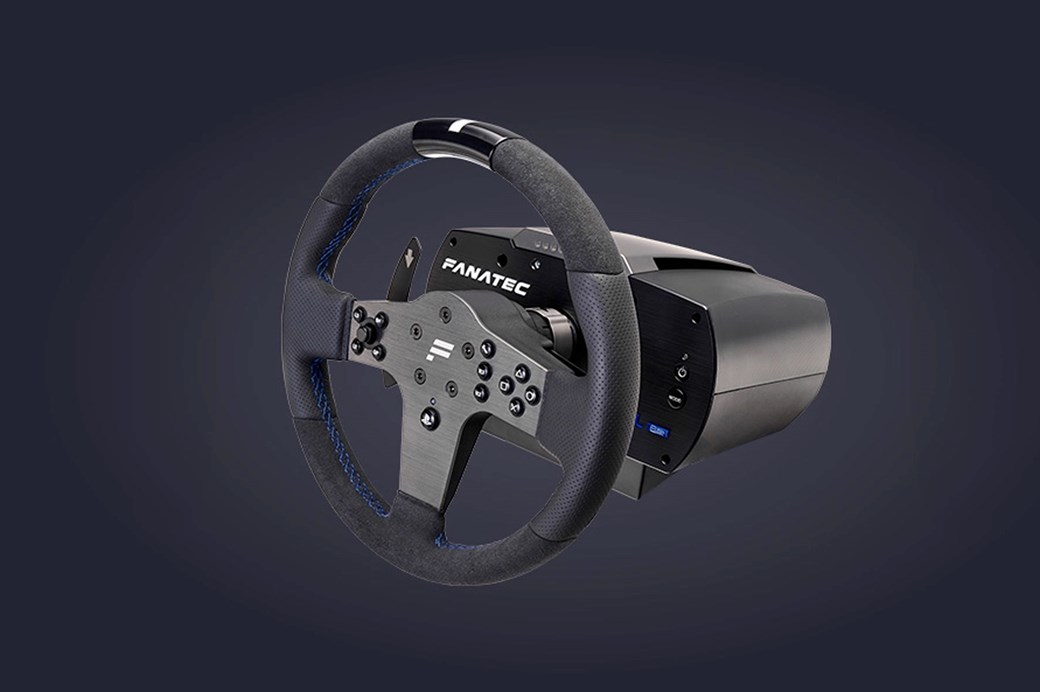
Available for both PS4 and PC, the Clubsport series is an impressive midrange offering – and can easily be boosted later down the line.
The PS4 version comes with the same buttons you’d find on Sony’s controller, and there’s even an LED rev-counter to help you nail your gear changes.
The metal rim of the CSL Elite weighs 970g, has a 30cm diameter, and includes snappy, durable shifter paddles.
Under the surface, the CSL uses a brushless server motor, which essentially means force feedback is strong and accurate so you know exactly what the car is doing beneath you.
What’s more, the range of FF and much more is also customisable via buttons on the wheel, so you don’t have to recalibrate all the time.
Pedal-wise, the CSL bundle impresses with a fully adjustable layout. What’s more, there’s the possibility of adding extravagant extras, like a load-cell pedal or gear shifter if you fancy.
A load-cell pedal is a step above a typical pedal supplied with an entry-level steering wheel set-up. Instead of potentiometers, the pedals use automotive-industry spec load cells, which are vastly more linear and sensitive – and they last indefinitely, too.
Prices can vary as the CSL comes in a variety of bundles, so choose which makes the most sense for you. It’s also Xbox One-ready, but be aware that isn’t same as being compatible with the Xbox One out the box. Instead, you’ll need to buy an Xbox One compatible rim.
Fanatec CSL Elite F1 set – $999
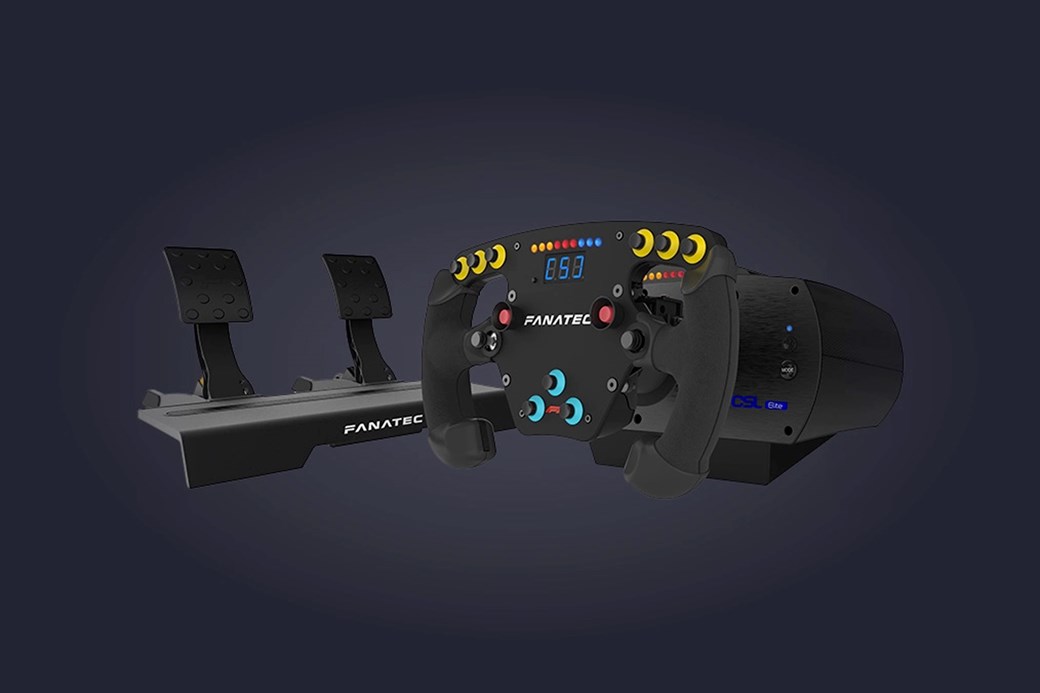
There are currently two FIA-approved esports championships, GT Sport and the F1 championship. The former uses the Thrustmaster TGT included later in this list, and the Formula One esports championship uses this, the Fanatec CSL Elite F1 set.
As you’d expect, it’s a solid bit of kit, and uses the same ClubSport as the other Fanatec wheels on this list.
However, it also adds the stunning F1 esports steering wheel: designed to look like it just came off a real F1 car, it’s compact and features a rev-counter and LED display – but adds the usual PS4 buttons to the mix.
Thrustmaster T300 RS – $699 (with twin pedal set)
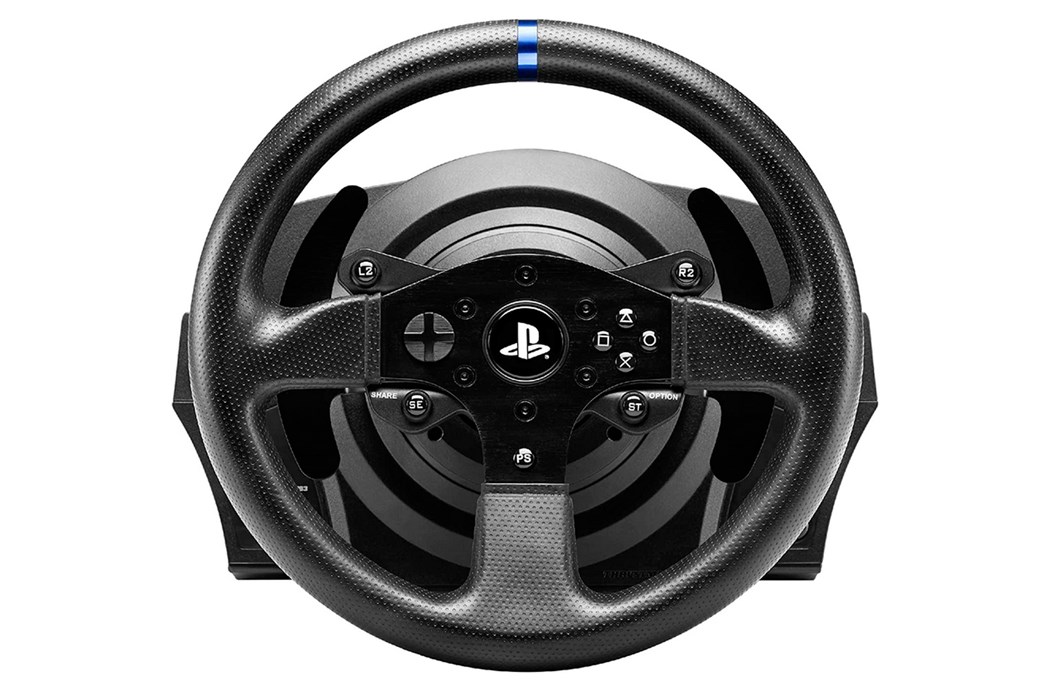
The first official force feedback-enabled wheel for the PlayStation 4, and still one of the most popular, the T300 RS remains a bargain. Take a look at the stats and it won’t be able to compete with some other big hitters on this list, but the T300 RS is a heavyweight at this price.
A smooth brushless motor will be a revelation to wheel newcomers, and it’s also very precise for the money.
Like other wheels on this list, you’ll find dedicated buttons on the front of the rim, along with solid paddles on the rear, and you also get metal pedals to go with it. Plus, it has 1080 degrees of rotation.
Of course, this T300 RS also serves as platform for further upgrades; a range of rims can replace the eleven-inch, 1.2kg one supplied, and you can add a gear shifter.
Thrustmaster TX – $699
Like the look at the T300 RS, but have an Xbox One rather than a PS4? Try the Thrustmaster TX. It offers the same features as the T300RS for an equally reasonable price but provides Xbox One buttons rather than PS4 ones. A three-pedal set is bundled with the TX, though you can upgrade them if you wish.
Logitech G29 – $499
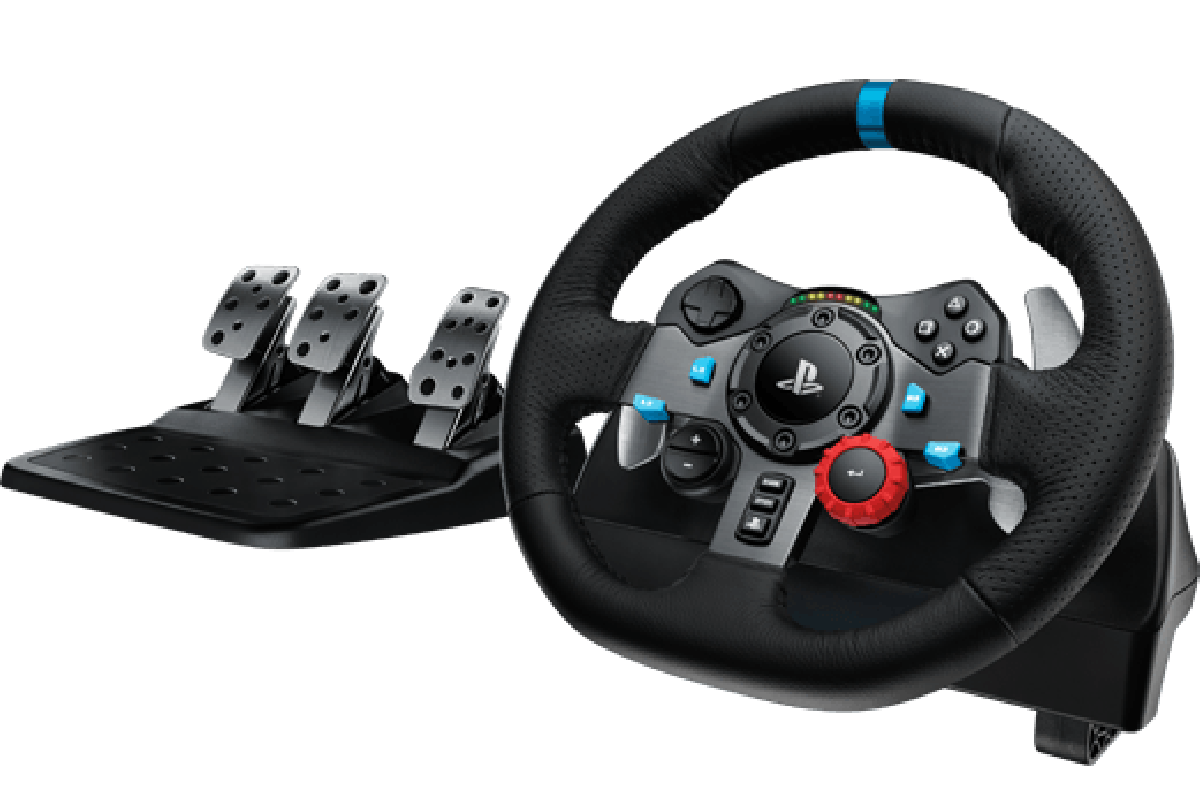
Those familiar with PC peripherals will already be aware of the Logitech name – for everyone else, it’s a very established brand in the accessory market.
Simply put, the Logitech G29 is a simple, solid piece of kit: well-built, packed with features and favourably priced.
It’ll only rotate 900 degrees but it uses a dual-motor for strong force feedback, and there’s also a neat wheel-mounted rev-counter so it’ll never be blocked by the position of the wheel.
Elsewhere, there’s a trio of metal pedals along with a non-linear brake pedal, and you’ll find all the PS4 buttons on the wheel face, so you can zip through menus. It works on PC, by the way.
Logitech G920 – $499
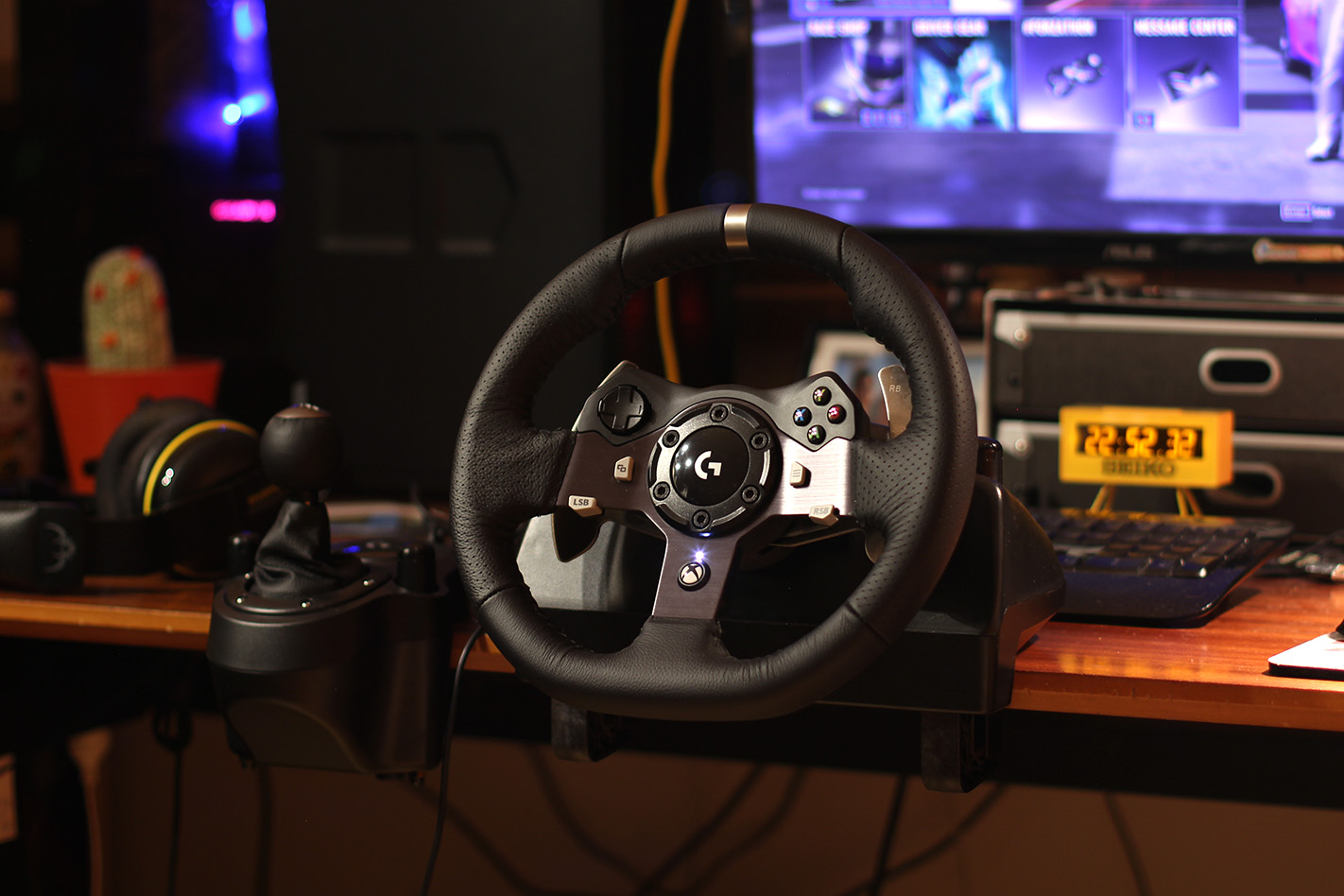
This is simply a version of the G29 for the Xbox One and PC, the G920 is pretty much identical to the G29.
There’s only one real difference; the G920 loses the nifty shift lights we enjoy on the PS4 and PC wheel, which is a pity.
We’ve got one as a long-term tester from Logitech, and it’s the wheel we use for all of our game reviews.
Want to know what we really think of it? Read our Logitech G920 review here.
Thrustmaster TGT – $1499
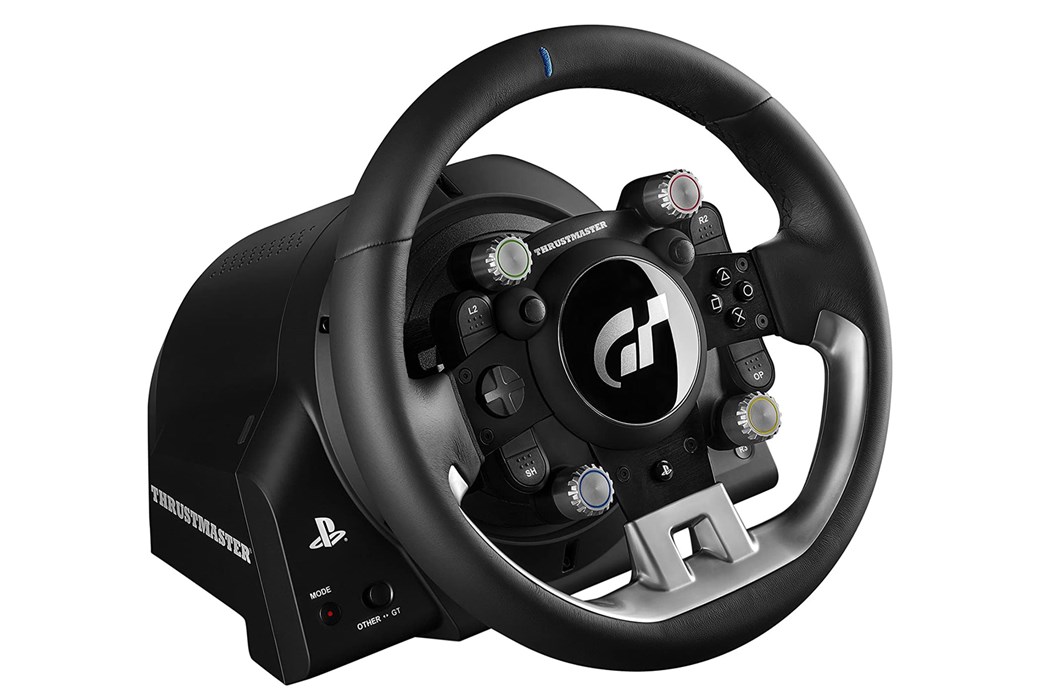
Heard of esports? Heard of Gran Turismo? Heard of Igor Fraga, or Mikal Hizail? If so, then you’ll already know what this wheel is, and the pedigree it comes with.
Simply put, this is the official wheel of GT Sport, one of the biggest, most important racers on the PlayStation platform – and by extension, the official wheel of the FIA-approved GT Sport championship.
It’s also purpose-built for the latest version and future versions of Gran Turismo. The TGT is expensive – but you get a lot for your money.
Thrustmaster has effectively thrown the kitchen sink at this collaboration with Polyphony Digital, and it shows after just a few minutes use.
Take a look at the wheel and you’ll see it features the same buttons as your standard DualShock 4 pad, but it also adds four rotary dials for parameters such as traction control and brake bias, echoing what you see on screen.
A 40-watt industrial-class brushless motor is able to directly convey what’s happening in-game, while remaining 100 per cent proportional to the intended forces.
In addition, a technology called T-DFB adds vibration effects along with suspension feeling to the steering column, giving you even more information about the road. Oh, and the wheel rim is leather.
Throw in three sturdy, adjustable pedals, two metal paddle shifters, along with the ability to upgrade the wheel rim – though we can’t see why you’d want to – and this is an impressive bit of kit.
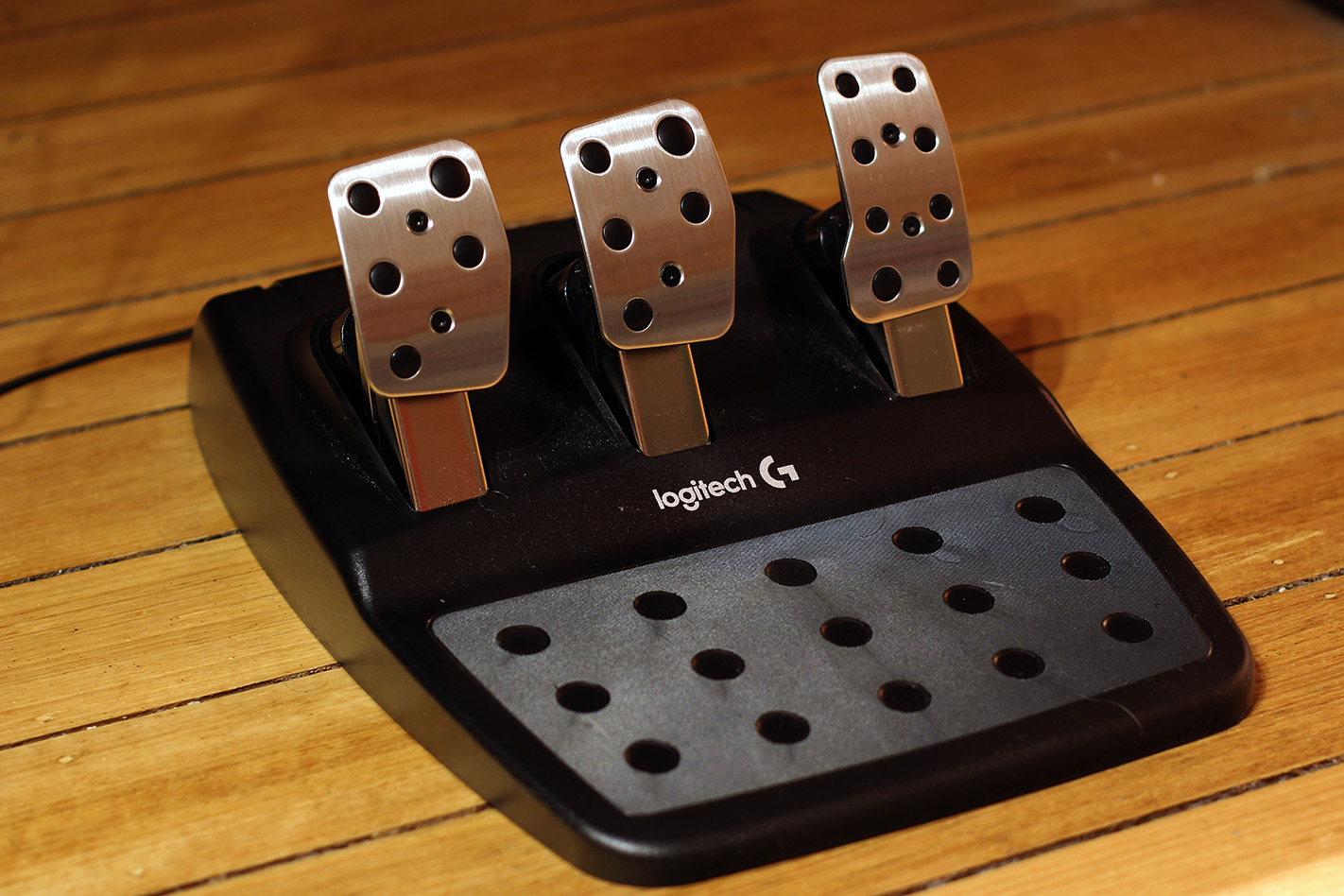
Pedals and racing seats
Pedals are just as important as a wheel, and the bundles here tend to use more basic ones. If you want something a little more exotic, we’d suggest load cell pedals. These emulate the feel of racing car brakes, trading pedal position for pedal pressure.
After dialling this new method your muscle memory, it’s possible to be far more accurate with load cell pedals. It’s also easier to pull off trail or cadence braking.
Thrustmaster have just released the fully adjustable T-LCM and Fanatec also has a load cell kit to adapt existing pedals.
A seat is also important for getting the absolute most out of your set up. Pricing ranges from less than $200 for a simple t-shaped stand that needs you to supply a seat, through to a minimum of $600 for a stronger frame/seat combo that is capable of handling the loads of heavier-duty wheel/pedal combos.
However, when you consider how much the rest of your racing setup costs; monitor, console or PC, steering wheel and pedals – it’s worth bringing it all together and getting the very best experience out of it.
