
Destined for the Aston Martin Valhalla, a new hybrid 3.0-litre turbo V6 is well underway to being developed at Aston Martin’s Gaydon home.
Not only will the new design, named TM01, be the most powerful engine in the Aston Martin range, but it will also be the first completely in-house developed engine created by the brand for more than 50 years.
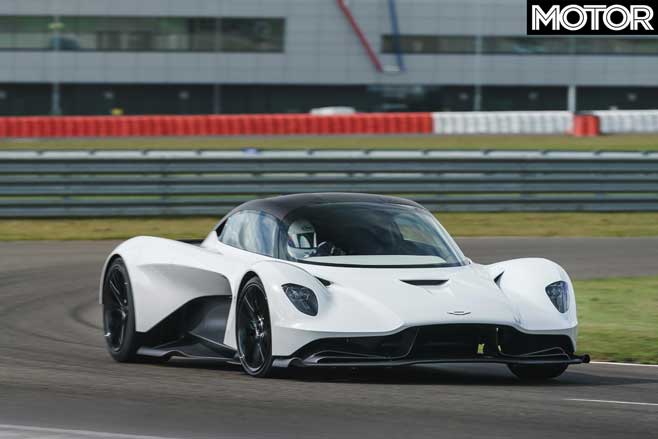
Currently, the most powerful engine in Aston Martin’s lineup is the twin-turbo V12 from the DBS Superleggera, making 533kW/900Nm.
Its name, TM01, comes from the initials of legendary Aston engineer Tadek Marek who designed the Aston Martin V8 in 1968.
Joerg Ross, Aston’s chief powertrain engineer, says creating the hot-vee, dry sump design has been a testing exercise, but one which has allowed much experimentation.
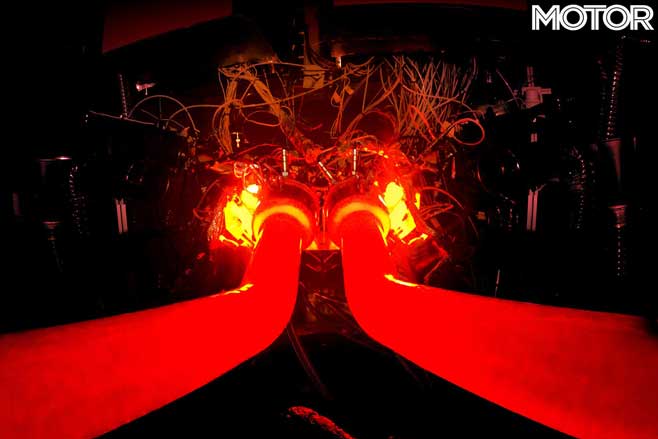
“This project has been a great challenge from the start. Putting a team together to deliver what is going to be the future power of Aston Martin has been an honour.
“From the very beginning, we have had the freedom to explore and innovate in a way that we have not been able to do so in a very long time.
“Most importantly, we wanted to create something that is befitting of the TM01 nameplate and create something that would have impressed our predecessor and pioneering engineer, Tadek Marek”.
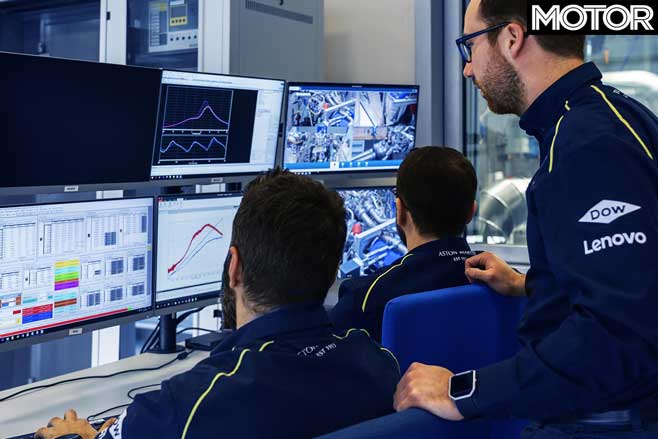
While developing an engine in-house isn’t Aston’s normal process, CEO Andy Palmer says in the case of the Valhalla it’s the best way to go forward.
“Investing in your own powertrains is a tall order, but our team have risen to the challenge.
“Moving forward, this power unit will be integral to a lot of what we do and the first signs of what this engine will achieve are incredibly promising.”
What stands out?
Hyundai’s stylish i30 hatchback is loaded with equipment, including great smartphone integration and – on more expensive versions – a broad active-safety suite that includes autonomous emergency braking. Handling and comfort are good, and there is a broad range of models ranging from the budget-priced i30 Go to the i30 N hot hatch.
What might bug me?
If you have chosen one of the sportier i30s, driving at 80km/h on your space-saver spare wheel until you can fix your full-sized flat tyre – all other i30s carry a full-sized alloy spare that matches the other wheels on the car. On the plus side the reason the i30 N-Line and N have a space saver spare is because they have a more sophisticated multi-link rear suspension that takes up more space.If you have chosen an auto-transmission i30 diesel or i30 N-Line, stop-start driving in city traffic. These use a dual-clutch transmission (DCT), which operates much like a manual gearbox with robotic control. It won’t give you the fluid, elastic, take-off from rest that you get with the conventional auto gearbox in other i30s.
What body styles are there?
Five-door hatchback. This includes the i30 N Fastback version which has four doors and a more coupe-like exterior with a lift-back hatchHyundai also offers a small sedan alternative to the i30, which it calls the Elantra.The i30 drives its front wheels, and is classed as a small car, lower priced.
What features does every Hyundai i30 have?
A sound system with AM/FM radio receivers, Aux and iPod compatible USB inputs, Bluetooth connectivity for phone calls and audio streaming, and six speakers, controllable from an 8.0-inch colour touchscreen.Support for Apple CarPlay and Android Auto, which lets you display some smartphone apps on the touchscreen and control them from there (or by voice).Cruise control. A steering wheel adjustable for height and reach, from which you can operate the cruise control, the audio system, and your phone. Height adjustment for the driver’s seat.A reversing camera.Headlights that switch on automatically when it’s dark, and daytime running lights illuminated by very long-lived LEDs.Heated exterior mirrors that power-fold automatically against the body when you lock the car (to keep them out of harm’s way).Illuminated vanity mirrors and ticket holders on the sunvisor.Either a full-sized spare wheel and tyre, or (in either i30 N-Line and N) a space-saver spare. A tyre pressure monitor, which could give you more time to get a slow puncture seen to.Hill-start assist, which helps you take off on uphill slopes by controlling the brakes automatically.Seatbelt reminders, seven airbags, and electronic stability control, which can help you control a skid and is mandatory on new cars. (For the placement of airbags, and more on i30 safety features, please open the Safety section below.)Every i30 carries a five-year warranty with no limit on distance travelled.
Which engine uses least fuel, and why wouldn’t I choose it?
You can choose from three petrol engines and one diesel in an i30. The most fuel-efficient is the 1.6-litre, four-cylinder, turbo-diesel available in the i30 Go, Active, Elite and Premium. It consumes 4.7 litres/100km on the official test (city and country combined) with the seven-speed dual-clutch automatic transmission (DCT).It is a smooth and quiet diesel and brings you relaxed cruising, but it is not particularly brisk.One reason you might not choose this engine is that you expect to use your i30 almost exclusively for short trips around town. The diesel uses a particulate filter to trap soot from its exhaust, and every week or two you need to sustain 50km/h or more for 20 minutes so that the filter can self-clean.A second reason is that the dual-clutch transmission supplied with the diesel is not as friendly around town as the conventional auto in petrol versions of the i30 Active.Another reason you might not choose the diesel is that you want to pay less for your preferred i30 version, which costs less with petrol power than with the diesel.The petrol engine available in an i30 Active is a 2.0-litre four-cylinder, the same engine that powered the sporty SR versions of the previous-generation car. On the official test, i30s with this engine consume 7.4 litres/100km in auto form.Finally, you might forgo the fuel-efficiency of diesel power because you want the superior performance of the turbocharged 1.6-litre petrol that powers the i30 N-Line and N-Line Premium, or the even more powerful 2.0-litre turbocharged engine in the i30 N.On the official test, the 1.6 turbo petrol uses only marginally more fuel than the 2.0 petrol in the other variants. It feels more responsive when you first squeeze the accelerator than the 2.0 petrol, and about the same as the 2.0 diesel. But it develops a lot more thrust than either of those if you hold your foot down.Despite having more power, the i30 N’s 2.0-litre turbo use less fuel the than the 1.6 litre; 7.1 litres/100km through the six-speed manual gearbox, which is the only transmission available in the sporty hot hatch.The standard 2.0-litre petrol engine drives through either a six-speed manual gearbox or a six-speed conventional auto. The 1.6-litre diesel is available with a six-speed manual gearbox (Active only) or a seven-speed DCT auto. The 1.6-litre turbo-petrol is available with a six-speed manual gearbox (N-Line only) or a seven-speed DCT auto.
What key features do I get if I spend more?
The least costly i30, the Go, comes standard with cloth-covered seats, manually controlled air-conditioning, 16-inch steel wheels, the 2.0-litre petrol engine, a manual gearbox, and the features in any i30.You can spend more for an auto gearbox, in which case you get a conventional auto with its around-town friendliness. Or you could choose instead a Go diesel, with a dual-clutch (DCT) auto.Spend more on the i30 Active and you gain satellite navigation that doesn’t depend on your phone, digital radio (DAB+), auto-folding door mirrors, rear parking sensors, rear-seat centre arm rest, and 16-inch alloy wheels that look nicer than steel wheels and don’t need plastic trim. Like the Go there is also a diesel option.For about $1750, the i30 Go and Active are also available with Hyundai’s SmartSense active safety suite, comprising adaptive cruise control, autonomous emergency braking that works at city and highway speeds, lane-keeping assistance, a driver-attention alert, blind-spot detection, and a rear cross-traffic alert. (For more on these systems, please open the Safety section below.)From here you have two possible paths along which to spend more on an i30. You can have a choice of the 2.0-litre petrol and 1.6-litre turbo diesel and more features, by choosing an i30 Elite or Premium. Or you can have a turbo-petrol engine, a sportier drive and more features, by choosing an i30 N-Line or N-Line Premium, or even more for an i30 N.Choose an i30 Elite and auto gearboxes are standard with both the petrol and diesel versions. You get a mix of leather and fake leather on the seats and steering wheel, and smart-key entry (which lets you unlock the car and drive away without handling the key). Dual-zone climate control maintains a set cabin temperature, the driver and front passenger have independent controls, and there are vents for rear passengers. Windscreen wipers operate automatically when it rains. Compatible smartphones can be charged wirelessly from a pad on the centre console. And the wheels are an inch bigger at 17 inches, wrapped in wider tyres with a lower profile (for more dry grip and a sportier look).The i30 Elite also brings you Hyundai’s SmartSense active safety suite as standard equipment.Paying more for an i30 Premium brings you, in addition, heating and ventilation for both front seats, and a power-adjustable seat for the driver. There is a power-opening glass sunroof, and windows are tinted. Headlights use very bright and long-lived LEDs rather than conventional bulbs. And front parking sensors are added to those at the rear.Choose the sportier route and go for an i30 N-Line (formerly known as the SR) and you get the 1.6-litre turbo-petrol engine, with a manual gearbox as standard. The N-Line also comes with yet bigger wheel rims, at 18 inches, wrapped in tyres with a lower profile again. It substitutes a more sophisticated, multi-link, rear suspension for the torsion-beam set-up on other i30s. And its seats are more deeply bolstered on each side, so that they hold you in place more securely around corners.An i30 N-Line with a manual gearbox costs less than an i30 Elite, and shares most of its features – the key exceptions being the SmartSense active safety suite and the rear air vents. An i30 N-Line with the DCT auto gearbox costs about the same as an i30 Elite, and shares just about all of the Elite’s features – including the SmartSense active safety suite.The i30 N-Line Premium has the DCT gearbox, costs about the same as an i30 Premium, and shares just about all the i30 Premium’s features, including SmartSense.The most expensive i30, the N, has most of the features of the standard N-Line with the extra money being spend on performance and handling, including the gutsier 2.0-litre turbocharged petrol engine and six-speed manual gearbox plus enhanced brakes, differential, suspension and steering for true hot-hatch performance and handling.An active variable exhaust system is also fitted, which can be controlled via Hyundai’s N Mode Drive System that adjusts steering, suspension and engine mapping to suit normal or sports driving conditions. The N Mode system also contains performance timers and a launch control function, while the dash features a row of shift-light LEDs.The i30 N also has more aggressive exterior trim features such a side skirts and rear-spoiler, and most of the interior features found in the N-Line. If you want more creature comforts you can add the Luxury Pack that brings many of extra the features found in the i30 Premium.You can also spend a little more on the i30 N Fastback, which has most of the same features as the hatch, but a more coupe-shaped body.
Does any upgrade have a down side?
The i30 N-Line and N versions ride more roughly than other i30s, because they have firmer suspensions and lower profile tyres.The N-Line and N substitute a smaller, temporary spare wheel and tyre for the full-sized spare on other i30s, and it has a recommended top speed of 80km/h.Choosing an i30 with a sunroof means slightly less headroom, most noticeably for those seated in front.White is the only standard colour. The other hues cost extra.
How comfortable is the Hyundai i30?
The i30 is at its core a hatchback version of the Hyundai Elantra. But it feels much better than an Elantra when you step inside, with more attention lavished on finish and presentation.The 8.0-inch touchscreen, for example, is more than a display – it’s a design feature protruding from the dash. It looks good and works well, even if from the driver’s seat you have to lean forward a bit to reach the fixed buttons and volume control to its left. All other controls fall easily to hand and are logically grouped: audio and infotainment on the main display and ventilation lower on the dash.Numerous silver flecks and linings lift the dark plastics, many of which have a hard finish that is not pleasing to touch. Optional two-tone finishes create a more open and welcoming cabin for the Elite. The N-Line’s racier look – complete with red highlights that resemble anodised aluminium – is more appealing again. Seats are comfortable on all versions, with good lateral support.Under way, it’s the Go and Active that cushion you most effectively from bumps, thanks in part to its cushier suspension tune but also to its relatively high profile tyres.All versions are well shielded from wind noise. On poorly surfaced country roads you hear a mild hum from the tyres, particularly in the N-Line and N with the bigger wheels and wider tyres.The 2.0-litre petrol automatic has the friendliest accelerator response of the various engine and transmission combinations, and its six-speed conventional auto gearbox shuffles smoothly between ratios. Manual versions reward those who want to change gears themselves with a clean clutch take-up.The diesel versions are also very quiet, the diesel engine having been muted impressively. Cruising feels very relaxed. The diesel versions, and i30 N-Line auto uses a dual-clutch transmission (DCT) that is slightly less forgiving in town than the auto in the petrol Active. But the extra punch from the N-Line’s turbo engine is fun around town, and generates effortless acceleration and hill climbing at highway speeds.This is further amplified by the i30 N that brings performance car levels of driver enjoyment, albeit with a firmer ride.
What about safety in a Hyundai i30?
Every i30 comes with stability control, seven airbags, a reversing camera, rear parking sensors, auto-on headlights, LED daytime running lights, and seatbelt reminders on front and rear seats. It is a safety package that prioritises crash safety, visibility to others, and awareness of what is behind you when reversing the car.There are two airbags directly ahead of the driver and front passenger; a third airbag protecting the driver’s knees; one outside each front seat to protect at chest level from side impacts; and curtain airbags running the length of the cabin on each side at head level, protecting front and rear occupants from side impacts.The i30 Elite and Premium, the auto i30 N-Line, N-Line Premium and N, enhance the basic package with a very comprehensive active safety suite aimed at helping you avoid collisions (this is a $1750 option in automatic Go and Active versions). It comprises adaptive cruise control, autonomous emergency braking, lane-keeping assistance, a driver-attention alert, blind-spot detection (with lane-change assist), and a rear cross-traffic alert. The adaptive cruise control can reduce your speed automatically to maintain a safe distance from a slower car ahead on the highway, until you can overtake.The autonomous emergency braking uses radar and camera sensors to scan the road ahead of you, and works in two speed-ranges at up to 180km/h. In both ranges, if the system registers a hazard ahead (at city speeds this could be a pedestrian), it will first issue a warning, intervening only if you ignore it. At speeds under 80km/h, it will then apply heavy braking automatically, attempting to stop the car and avoid a collision. At speeds over 80km/h it will apply partial braking, with the aim of reducing your collision speed.The lane keeping assistance looks for signs you are drifting wide of your lane – perhaps from fatigue or distraction. It can gently adjust the steering, to arrest the drift and attract your attention. If you are about to join another lane without indicating, it will sound and flash an alarm.The driver attention alert monitors your steering and braking. If they show signs you are falling asleep, it suggests you take a break.Blind-spot detection uses rear-facing radars to keep tabs on what is happening near your rear corners, alerting you to vehicles that might not show in your mirrors. If you indicate to change lanes into the path of an adjacent car, it will flash an alert in the relevant mirror and sound an alarm. The closely related lane change assist does the same if a car is approaching quickly from further behind – typically because it is preparing to overtake you.Rear cross-traffic alert uses the same rear-facing sensors when you are reversing, for example from a shopping centre parking space. It sounds a warning if another car is about to cross behind you.The Australasian New Car Assessment Program (ANCAP) awarded the i30 five stars for safety, its maximum, most recently in April 2017.
I like driving – will I enjoy this car?
Absolutely, and especially if you opt for an i30 N-Line version. The turbocharged engine brings feisty acceleration and a hint of hot hatch, albeit minus a rorty exhaust note. The N-Lines are not hard-core sports cars but they bring more excitement than most popular small cars, and are the most engaging of the new i30s.Firmer springs hold an N-Line flatter through corners, and the 18-inch tyres provide plenty of grip. The multi-link rear suspension settles better after mid-corner bumps.For the money, and given its versatility, an N-Line is a fantastic car for a twisting strip of bitumen, but if you really take your driving seriously than the i30 N is for you!The N’s gear shift action is incredibly slick and is augmented by rev-matching tech that eliminates the need to heel-toe when braking hard. With the exhaust valves opened all the way engine offers up a delightful cracking noses that makes you think you’re driving one of Hyundai’s rally cars.Straight line performance is exceptional, with plenty of thrust and minimal turbo lag when you put the foot down. And on bends there’s plenty of grip with handling tuned to deliver high-speed stability.Hyundai’s first attempt at a hot -hatch is so good that it beat benchmark rivals, including the Volkswagen Golf R and Honda Civic Type-R, in Wheels magazine’s 2018 Hot Hatch Mega Test.The other i30s take a step backwards for driving enjoyment, but still rank among the better small cars for eliciting a smile on a challenging road.The Elite has about as much grip as an N-Line but leans more, which detracts from its stability when driven hard. The Go and Active’s 16-inch tyres have less grip, and will squeal if you ramp up the pace. Body control is good, like the Elite’s, but the fun stops at lower speeds.The diesel versions are more about cruising than punching through the gears. The diesel engine is fairly quiet and pulls strongly when you depress the accelerator. But it does not build up as much power as either petrol engine when you ask for all it has got, and so takes longer to gain a big chunk of speed.The 2.0-litre petrol pulls nicely around town and revs cleanly and accelerates in a spirited manner.
How is life in the rear seats?
Leg room in the rear is marginally greater than in the previous i30, but this is still among the less spacious of small cars in the back. You get noticeably more room in the Honda Civic and Subaru Impreza, for example.As is common in cars of this size, the rear seat is a bit narrow for three but will keep two rear passengers fairly happy. If you do need to put three in the back, at least the rear floor is almost flat in the centre and there is space under the front seats for feet.The Elite, Premium, N-Line Premium and automatic N-Line feature air vents at the rear of the centre console.All versions except the Go have a fold-down centre arm rest.
How is it for carrying stuff?
The i30 has pockets in each door for carrying odds and ends, and a binnacle under the armrest between the front seats.The boot is slightly larger than the previous i30, now displacing 395 litres (up 17 litres). That’s good for a small hatchback.The i30 N Fastback’s boot holds up to 436 litres.The rear seats can be folded 60-40, and you can adjust the height of the boot floor. At its lower setting, capacity is maximised but there is a large step up to the rear of folded seatbacks. Raising the floor gives you a flatter extended-load space.
Where does Hyundai make the i30?
All standard versions of the i30 sold in Australia are made in South Korea. The i30 N hatch and fastback are built in the Czech Republic.
What might I miss that similar cars have?
Not much. The i30 is very well equipped.On wet or gravel roads, you might miss the added security of all-wheel drive, which is standard on a Subaru Impreza.An economical hybrid powertrain as in the Toyota Corolla – though Hyundai does have the similarly sized Ionic that’s available in hybrid and all-electric versions.The similarly equipped Kia Cerato has longer warranty, at seven years.Among other small cars worth considering are the Ford Focus, Holden Astra, Honda Civic, Mazda 3, Volkswagen Golf, Renault Megane, and Peugeot 308.
I like this car, but I can’t choose which version. Can you help?
The i30 N-Line with the auto transmission is great buying. You get a powerful turbocharged engine and a lot of equipment, including the SmartSense active safety suite.
Are there plans to update the i30 soon?
Yes – the i30 went on sale in Australia in May 2017 and is a new-generation car. The previous i30 arrived in 2012 and received a mid-life update in 2015. A comprehensive update has been revealed and is scheduled to arrive in Australia at the end of 2020.Interestingly, the 2021 model range will also include an i30 sedan, instead of a separately-badged Elantra.The i30 has had a few updates since 2017. In December that year, the i30 Go was introduced as a cheaper alternative to the Active to lure more buyers. It costs around $1000 less than the Active with savings made by dropping the satellite navigation, reverse parking sensors and replacing the 16-inch alloy wheels with steel wheels with plastic covers.The high-performance i30N was added to the range in March 2018, with a 202kW 2.0-litre turbocharged petrol engine.In April 2018 Hyundai made the SmartSense active safety package available to the cheaper i30 Go and Active variants as an extra-cost option. It also made the 2.0-litre petrol engine with six-speed automatic transmission available on the Elite and Premium.Hyundai rebadged the SR versions as N-Line in January 2019 and the i30 N Fastback arrived the following March.The manual gearbox was dropped from the diesel i30 versions in mid-2019 for the 2020 model year.
Test drivers can be an odd bunch. Some are disappointing, data processing automatons that seem to find no joy in their work, instead just looking forward to getting down to brass tacks on a phone call to a sensor supplier.
Then there are the others. Guys like Stefan Roser, Ruf’s hotshoe who once arrived for an interview with the front bumper of a Porsche he’d just ploughed through a gate. Or, indeed, Lamborghini’s legendary gun driver Valentino Balboni.
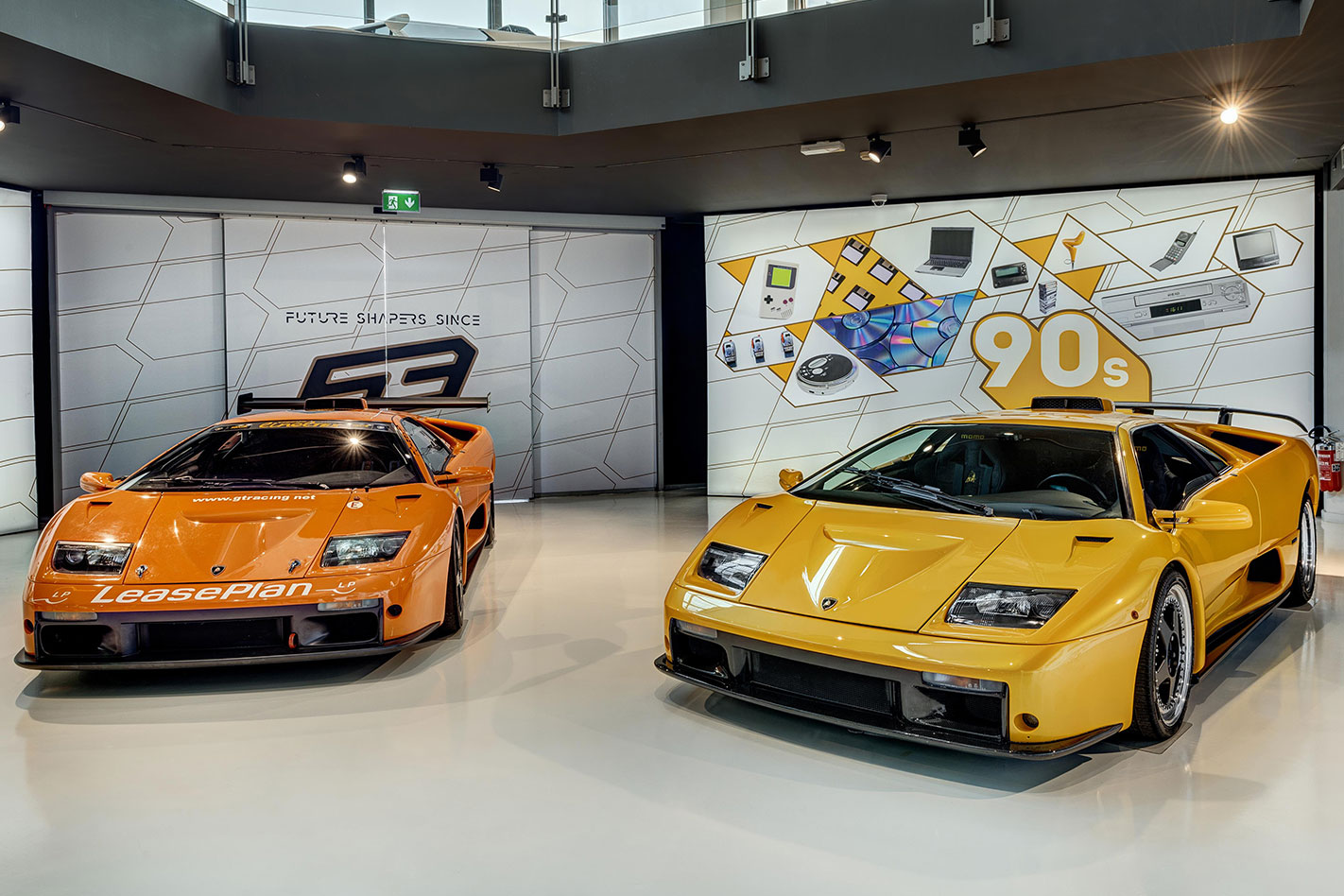
I got a clue quite how different Balboni was back in 2000, when I dropped in at Lamborghini to have a go in their Diablo GT.
Balboni was at a loose end so he agreed to take me out for a spin in the car. The local roads around the factory at Sant’Agata run along the boundaries of flat farmlands. There isn’t much in the way of interesting relief nor challenging sets of corners, so Balboni made up for that by attempting to see how fast the car would go.
A typical 290km/h day in the Countach on local roads for Valentino Balboni
At one point he came barrelling round a 90-degree right in a perfect four-wheel drift, only to see a police Alfa heading the other way. “They don’t bother us,” said Balboni with a casual wave of the hand. “They know me,” he grinned waspishly.
It seems that this may have been only partially true.
While chatting with Matteo Ortenzi, Lamborghini’s APAC CEO, at a recent Lamborghini Esperienza event, he tells a story set some years ago during his time as a financial controller at the Sant’Agata factory.
“I was at work and Balboni appeared in front of the factory, very fast,” he grins. “He took the car and drove it through to the back of the plant.”
The next thing Ortenzi witnessed was the police arriving at the gates with an angry officer demanding to see Balboni. As captain on deck, Ortenzi had to front up and take the flak.
“I just shrugged and said Valentino wasn’t at work today,” he said.
“The policeman told me he’d been at the head of a stream of traffic and he’s seen Balboni overtake the whole snake of cars, coming past him at over 200km/h.
“I saw Balboni!” shouted the officer.
Ortenzi refused to break the game face and merely insisted that perhaps the officer had been mistaken. After a while, he was placated and went on his way.
“Of course, nowadays we can’t get away with things like that,” admits Ortenzi somewhat ruefully. “Everything has to be done by the book.”
Balboni retired in 2008, having served 40 years with Lamborghini.
This softly spoken grandfather oversaw the transition from the brand’s wild early days to its current corporate polish.
Ortenzi’s right. The business runs to very different rules these days, but the cars still retain more than an element of Balboni’s free spirit. Long may that continue.
The Wheels Verdict:u00a0The GLSu2019s only major downfall is the price premium Mercedes demands compared to key German rivals. However, judged on its merits, the big Benz delivers, with real presence and almost unparalleled cabin space and comfort. A gutsy diesel engine, paired with refined ride and dynamics make it a compelling all-rounder.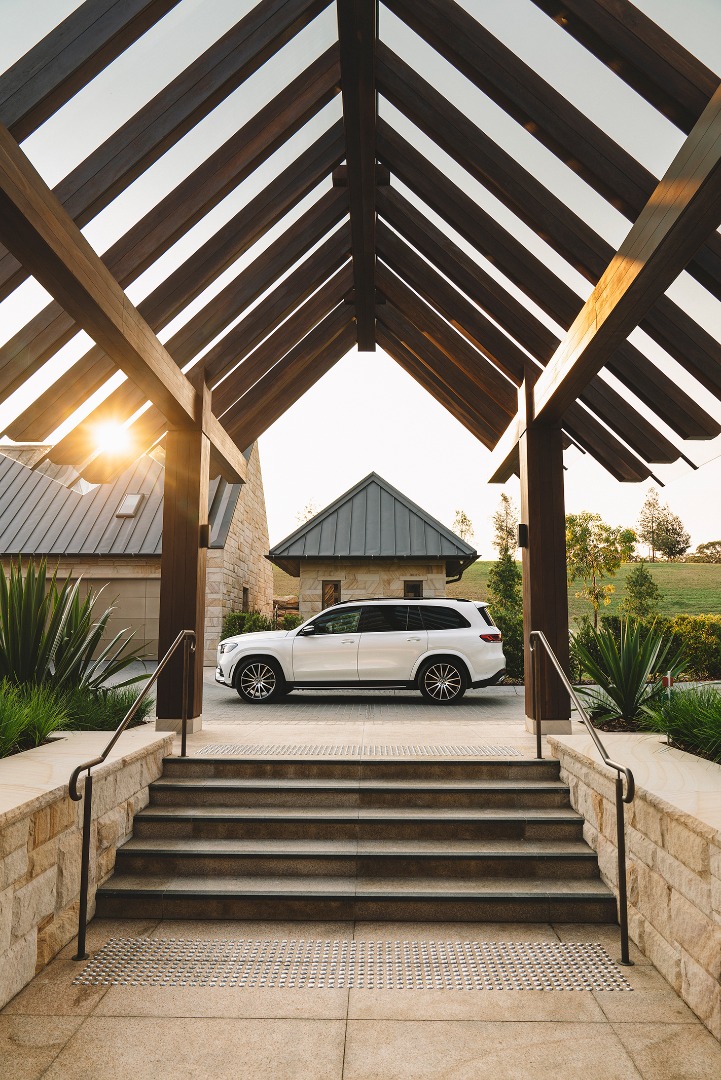
What is the Mercedes-Benz GLS 400d?
Now in its third generation, the Mercedes-Benz GLS is the biggest SUV in the German brand’s range. It majors on luxurious practicality, with two variants on offer powered by a pair of straight-six turbocharged engines. The higher-end AMG and Maybach versions will arrive later in the year.
Why we’re testing it
Australia’s appetite for luxury behemoths of this ilk is only growing. BMW’s X7 and Audi’s Q8 offer two distinct takes on the genre – the former offers copious space, while the latter focuses more on driving dynamics. The GLS is more expensive than both, so we need to find out if it can beat its specialist rivals by doing enough to offer the best of both worlds.
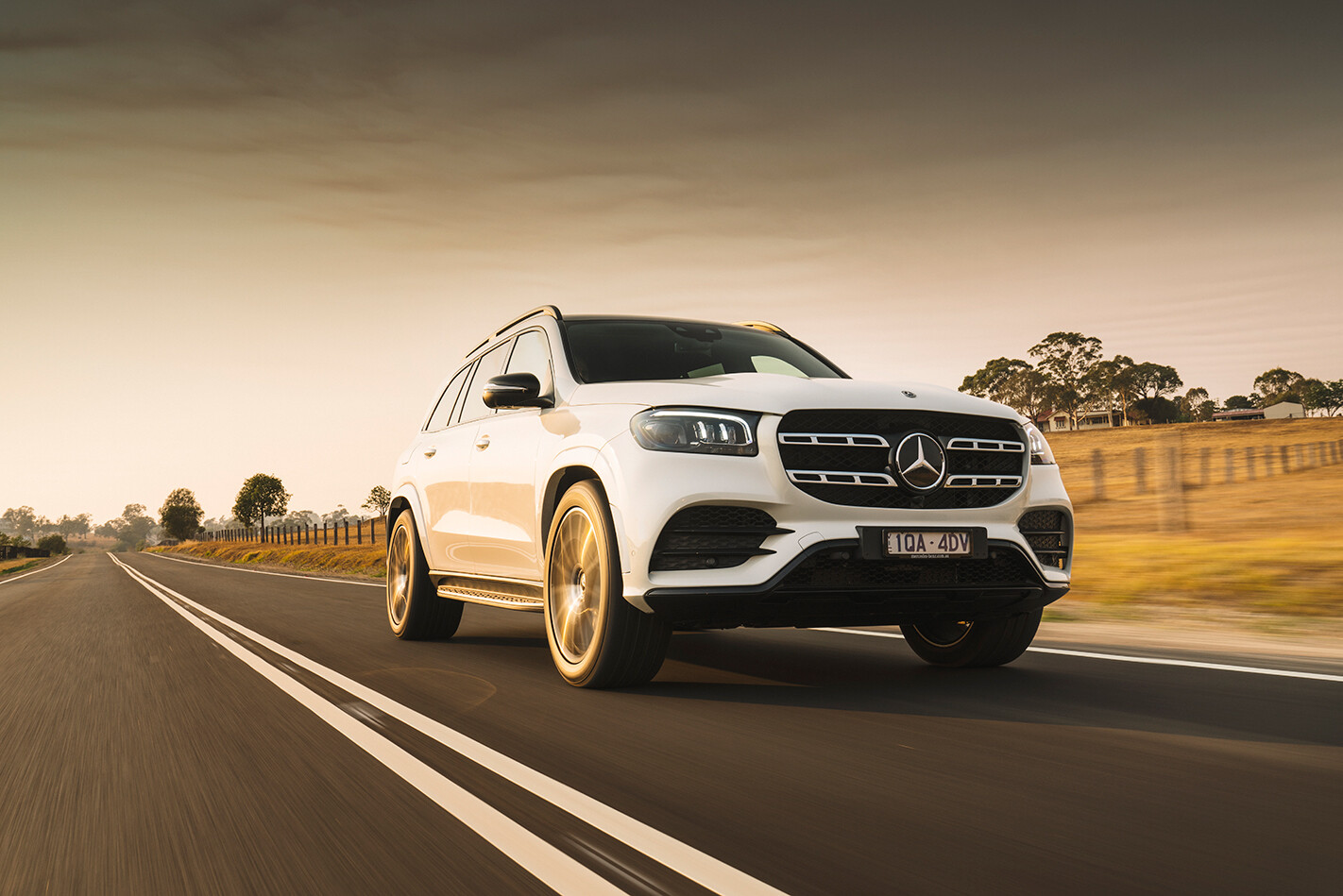
Review
Segment creep is an automotive phenomenon where cars grow by a few centimetres each generation. These are often nominal increases at the time, but over the decades it results in situations like how the current 3 Series appears bloated and oversized if put side-by-side with an original E21.
Mercedes-Benz has taken this to the extreme with the GLS, stretching by 77mm compared to the previous generation, bringing its total length to 5207mm. Of that extra length, 60mm has been added directly between the wheels, boosting the wheelbase to 3135mm.
Why has Mercedes done this? It’s all in an effort to make the GLS one of the most practical vehicles for moving a large number of people (and their luggage) this side of a commercial vehicle.
Powering the GLS is a choice of one of two 3.0-litre straight-six turbocharged engines, which send power to all four wheels via a nine-speed automatic transmission. The GLS 450 starts the two variant range at $146,500, powered by an ‘M256’ petrol engine with EQ boost (fancy speak for a mild-hybrid system) sending 270kW/500Nm to the treads.
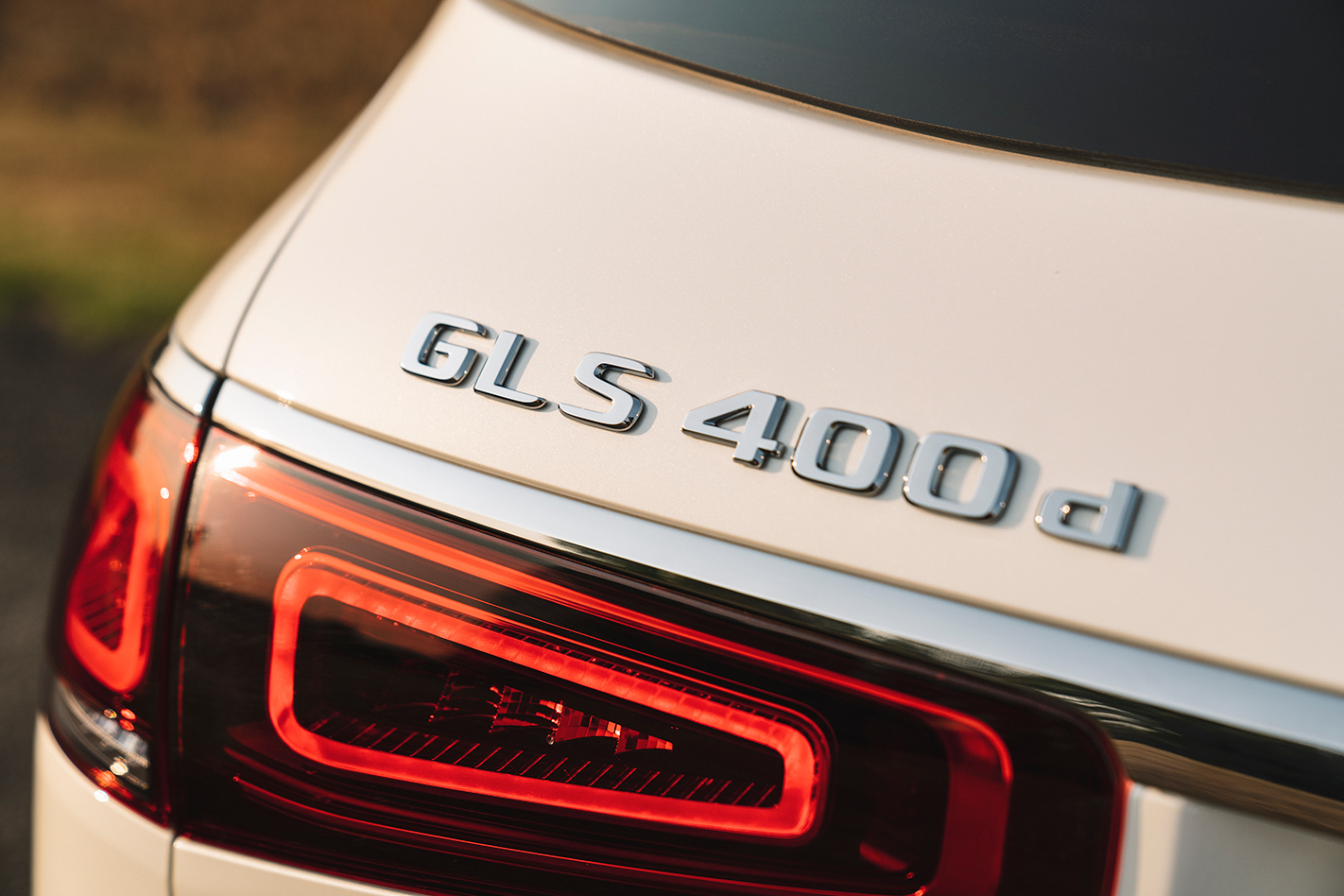
However, it’s the $153,300 GLS 400d that we have on test, powered by the ‘OM656’ diesel, with claimed outputs of 243kW and 700Nm – sizeable increases of 53kW and 80Nm compared to the second-gen GLS 350d it replaces.
This is expected to be the more popular variant, and acceleration is claimed to be a crisp 6.3 seconds to 100km/h – impressive considering the nearly 2.5 tonne heft of the vehicle.
Behind the wheel it’d be easy to forget you were driving a diesel engine, with nary a hint at any of the old oil-burner clichés present. It’s just the lowly redline that gives the game away, and that prodigious low-end torque. The nine-speed gearbox shuffles between gears subtly, without constantly searching for the right ratio when you lay into the throttle
Fuel economy is a claimed 7.7L/100km, which combined with a 90 litre fuel tank, means the GLS 400d’s cruising distance stretches well into the 1000km range.
AMG Line styling is standard in Australia. This is the first Merc which can be fitted with 23-inch wheels from the factory; our test vehicle came with 22-inch rims as part of a $2500 night package styling option, wrapped in meaty Continental Premium Contact 6 rubber – 285/45/22 at the front, and 325/40/22 at the rear.
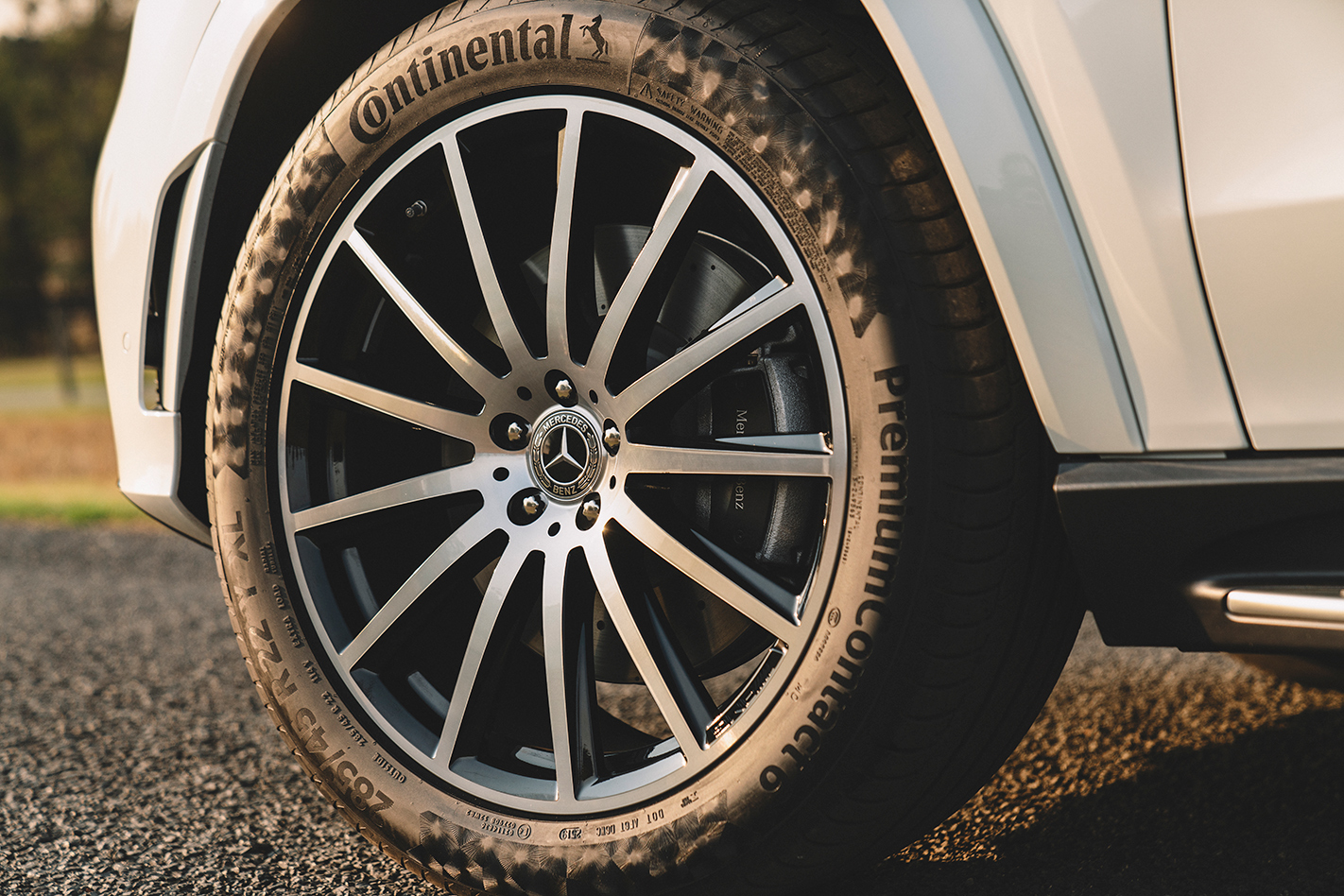
Air suspension is standard, with Merc engineers reworking the front axle design in an effort to reduce tyre noise and vibrations. As a result, the ride is plush and cosseting, with impressive body control. Damping is well sorted, with the GLS regaining composure quickly following large bumps.
This is not to the detriment of dynamic ability either, with the GLS able to be hustled at a speed that defies its imposing physical stature. Describing it as agile would be a stretch, particularly on tighter mountain roads, but on medium to large radius bends the GLS has confident turn in, and planted mid-corner grip. In sport mode the car becomes more composed dynamically, without becoming overly stiff.
Mercedes’ crazy E-Active Body Control system is available if you want to ratchet comfort levels up further, for an eye watering $13,000, but how much are you willing to pay to essentially eliminate speed bumps from existence?
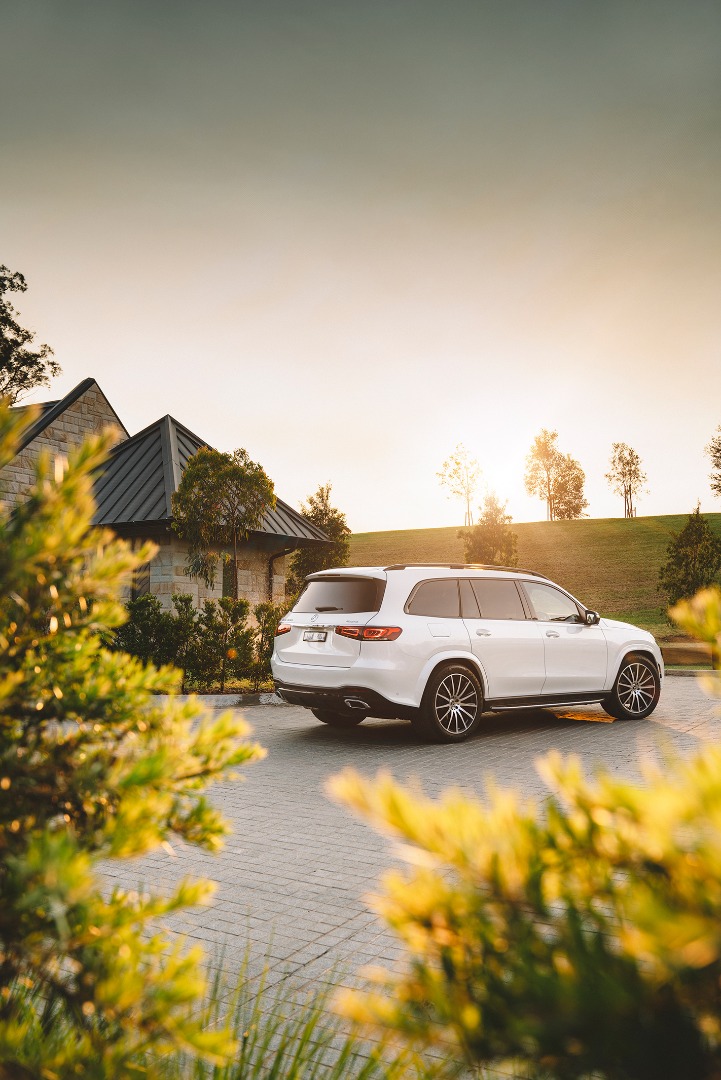
The cabin is hushed at cruising speeds, with impressive refinement keeping noise intrusion from wind and road at a minimum.
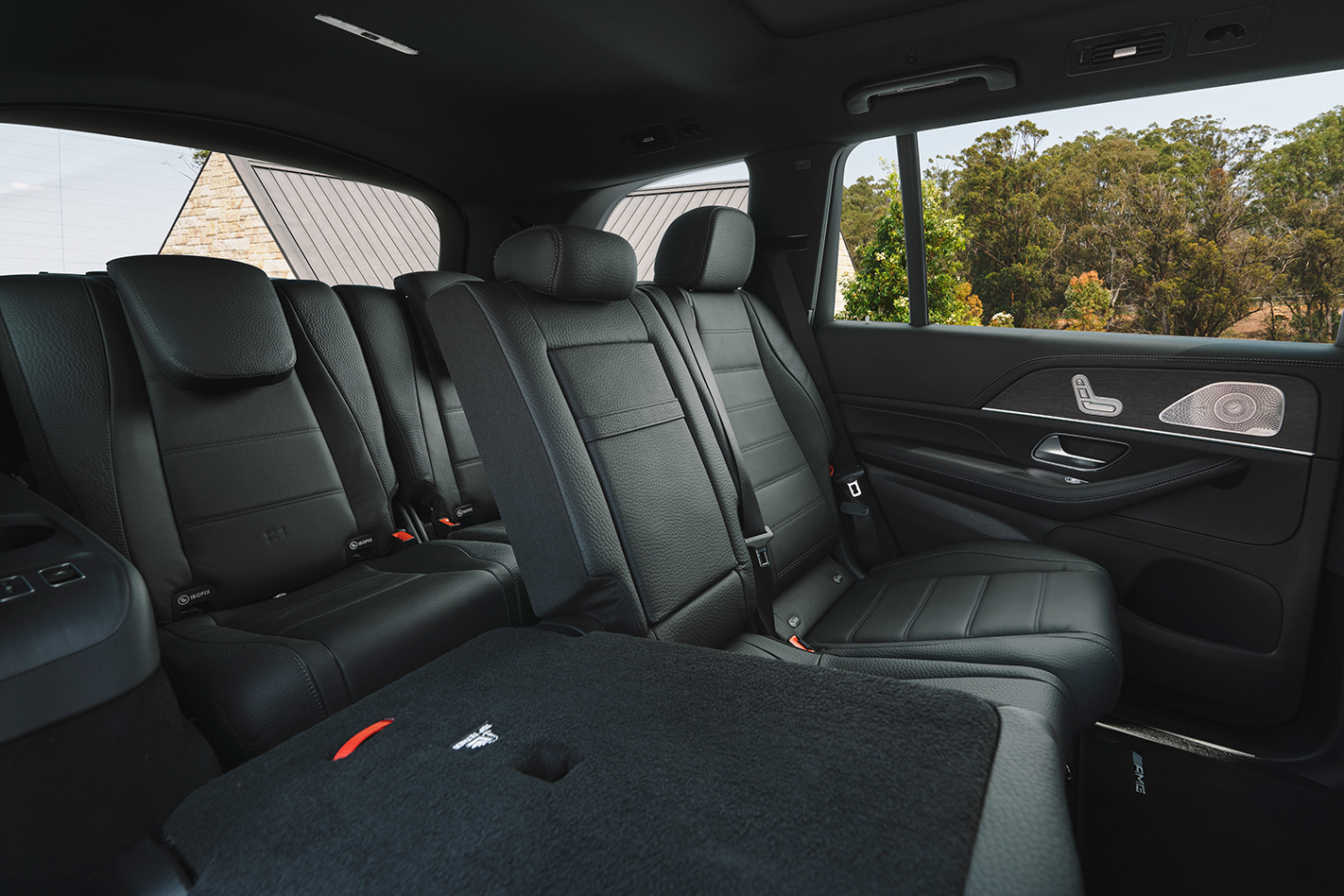
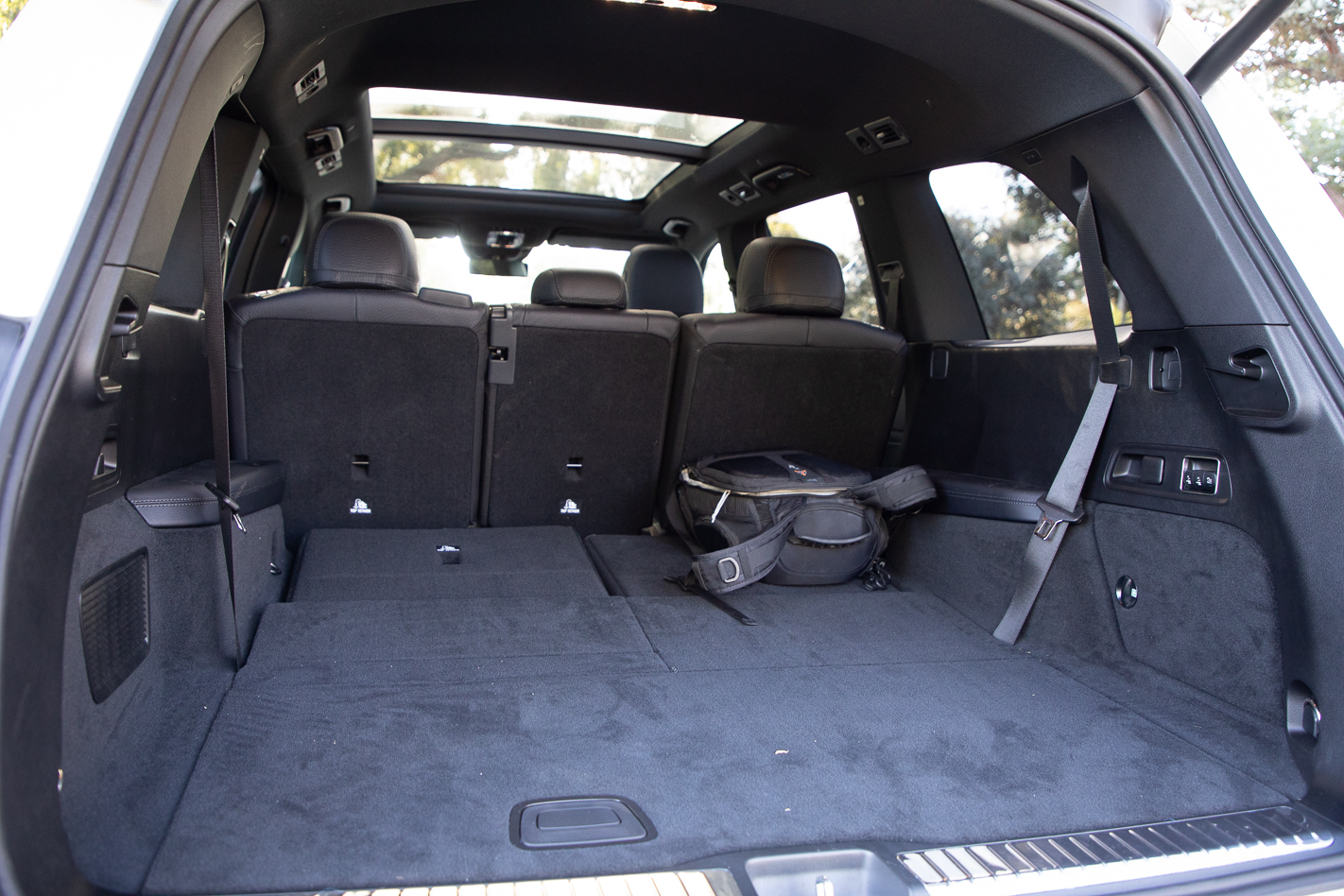
The dimensional nip and tuck hasn’t been in vain, with the GLS offering supreme space inside for both animate and inanimate cargo. Second row seats can slide fore and aft, with up to 87mm of leg room offered, which is extremely generous.
Mercedes claims people up to 6ft4 can feel comfortable in the third row of seating. While we didn’t wedge someone that large into the space, your 6ft1 writer clambered in and out with relative ease, and didn’t feel cramped in the space, comparing it to many mid-size SUV second row seats.
If you want to understand the lengths Mercedes has gone to expand the GLS, even the sunroof is 50 percent larger than the previous generation.
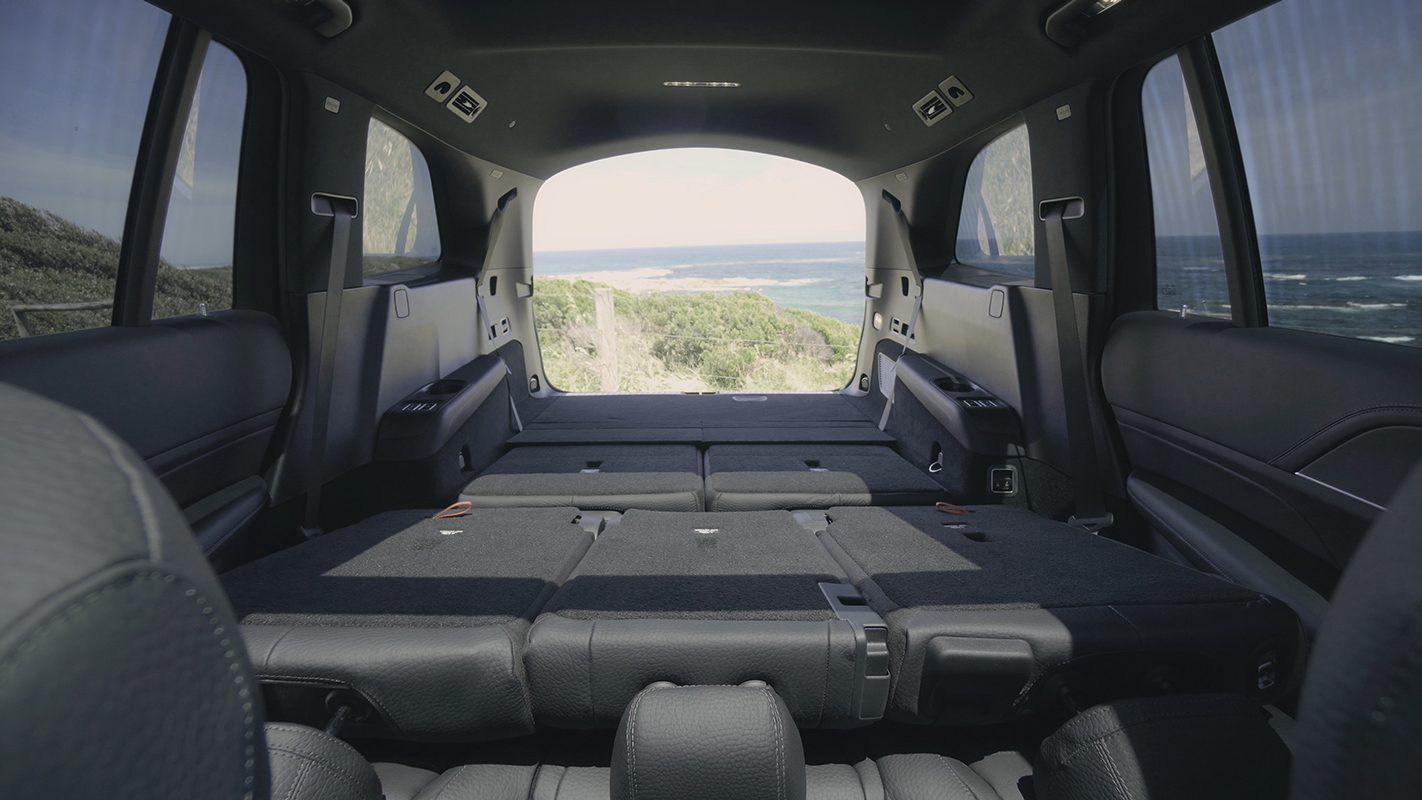
Boot space is, frankly, vast. With all three rows of seating raised there’s 355 litres of luggage space, growing to 890 litres with just two rows being used. These are increases of 60 and 210 litres respectively compared to the previous generation GLS. With both second and third row seats folded flat, the GLS offers 2400 litres of luggage space, with 2.2 metres of useable length.
A switch is easily accessible at the boot which lowers the rear of the car, and each seat can be electronically raised or lowered individually. The spare wheel in the boot can be accessed even with all three rows of seats being used.
Despite its almost six-metre length, the big Benz isn’t unwieldy, with an admirable 12.5-metre turning circle, and enough parking cameras and sensors to land a lunar module.
Heated and cooled seats, with hot stone massage function, are standard up front, while the powered seats now have increased adjustability. Six USB-C ports are offered to rear seat occupants, in addition to the four cupholders and two bottle holders. Child seat top tether attachments are available for second and third row seats; while five-zone climate control is standard with no shortage of air vents offered in each row.
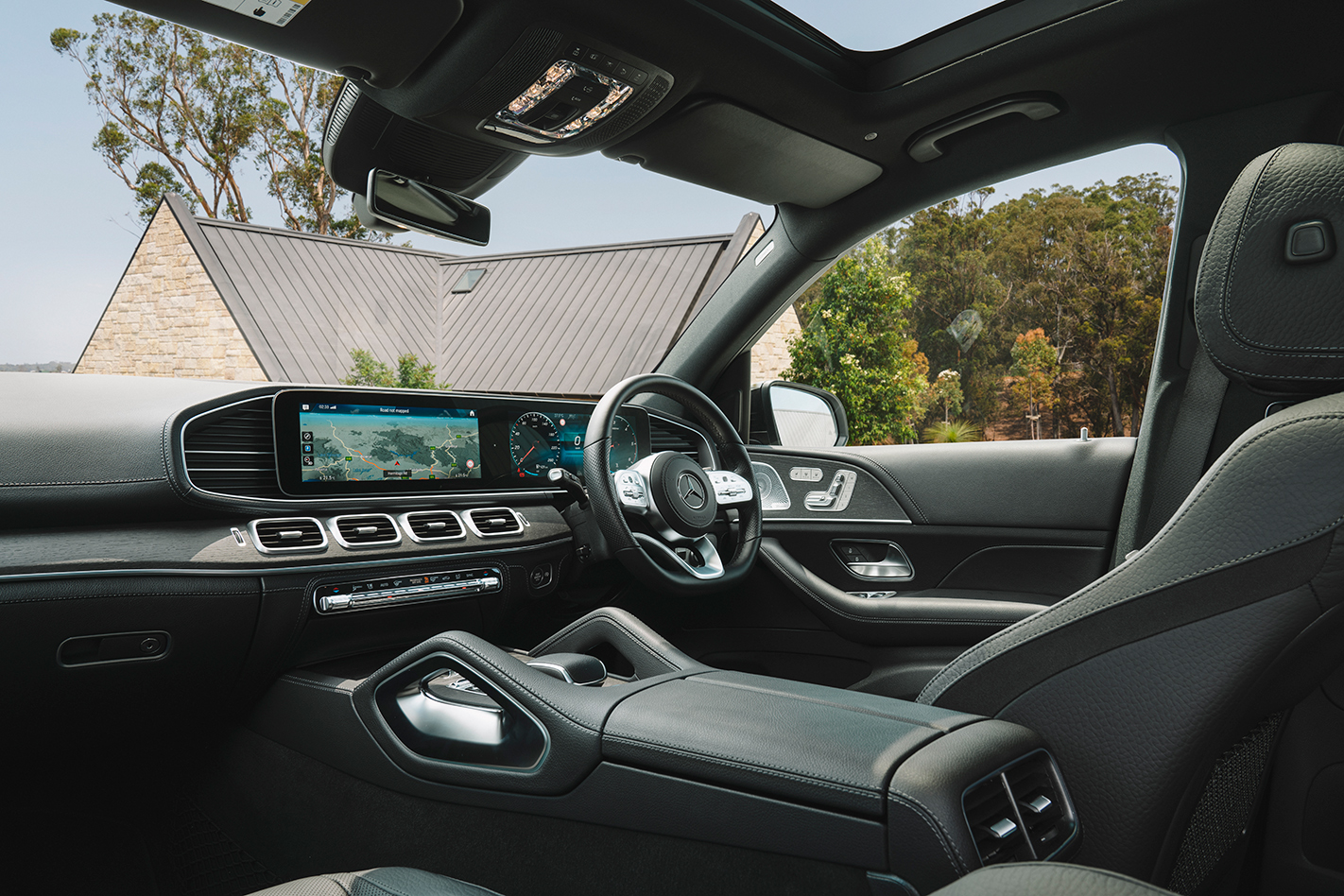
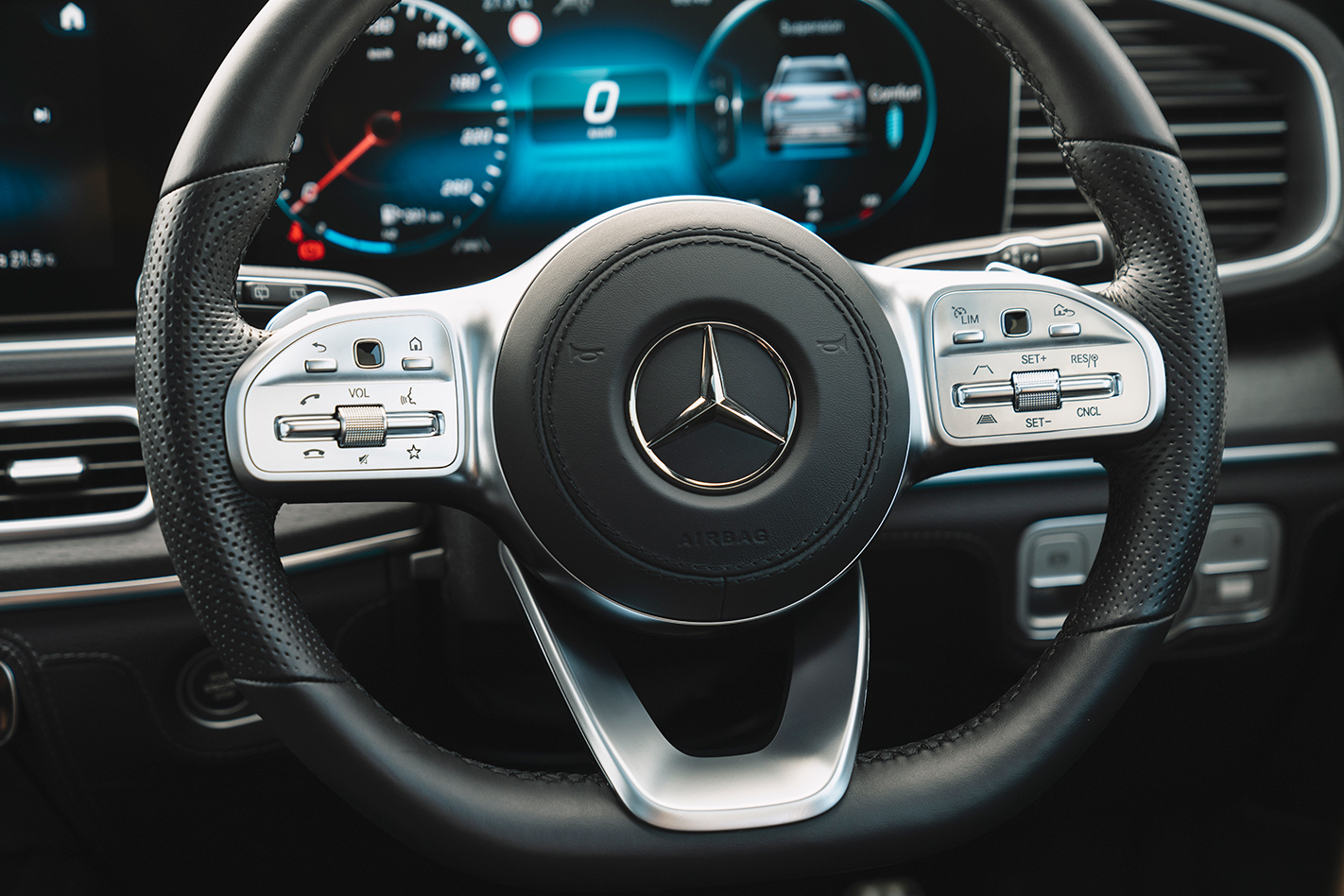
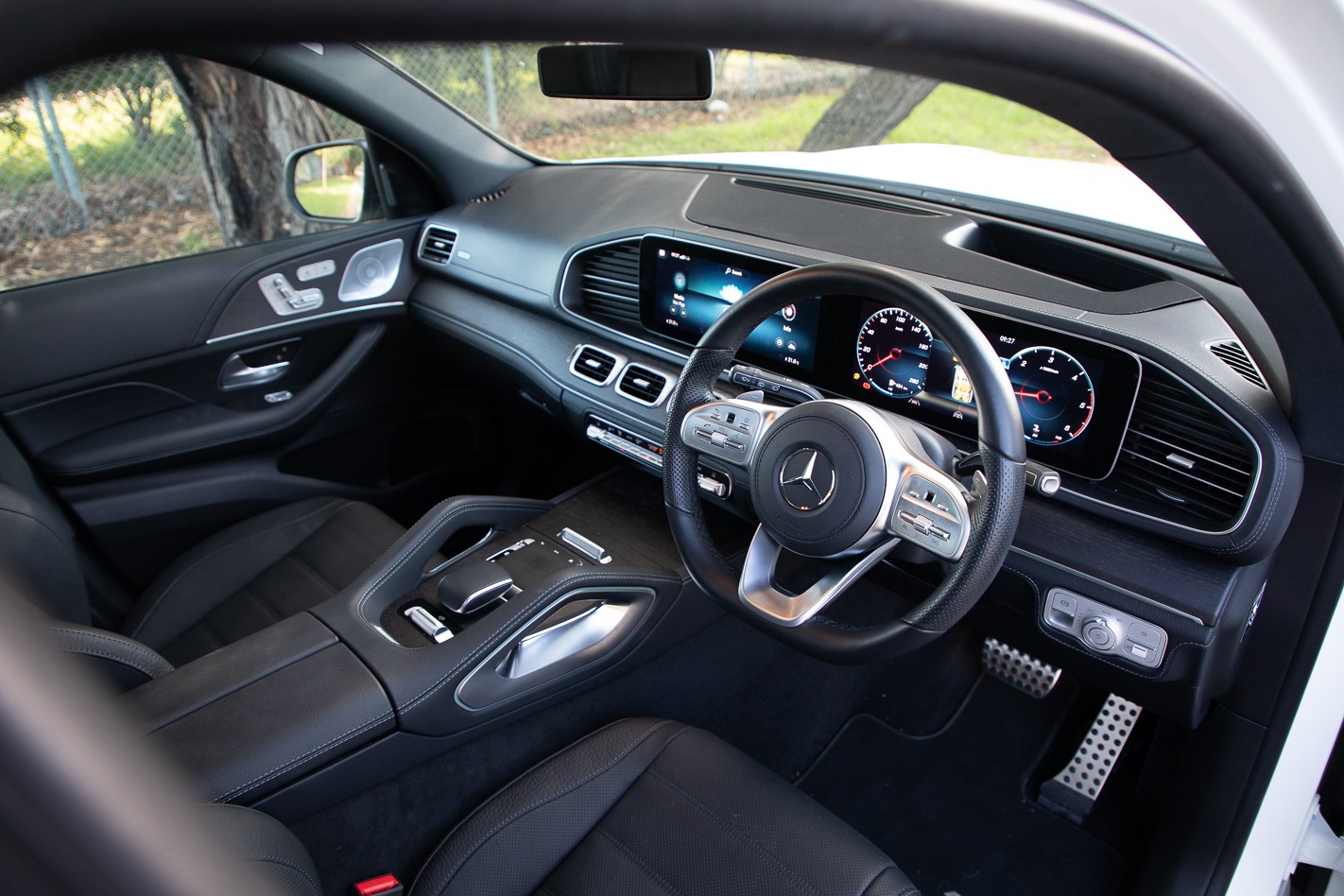
The driver is treated to a massive head-up display that feels like something ripped straight from a science-fiction fighter jet. All the information you could desire is offered up, without having to take your eyes off the road. If you do lower your gaze, information is displayed on the dual 12.3-inch displays which turn the central touchschreen and driver instruments into one continuous panel. These are powered by Mercedes’ MBUX system, which includes Apple CarPlay and Android Auto as standard.
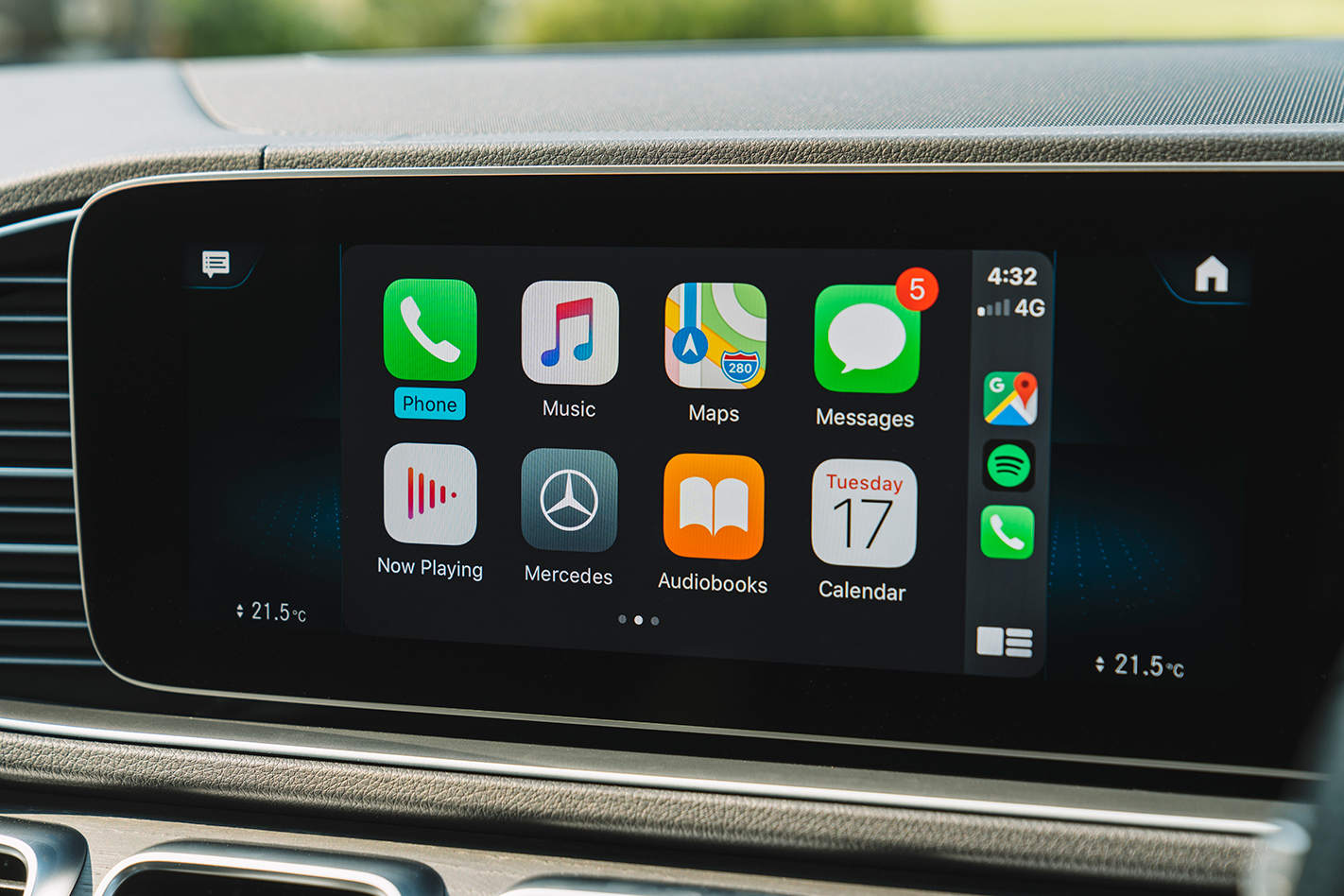
Stuttgart’s entire safety suite is offered as standard, while augmented reality sat-nav is part of an $800 option. This system, which is relatively new to Australia, is best suited to situations where you are driving in unfamiliar territory.
The GLS has a towing rating of 3500kg, but you’ll need to fit the optional $1900 towbar package before you hitch a wagon to the rear. If you are a proper off-roading masochist, you can also tick the box for the $3500 off-road engineering package catering to those specific needs, which includes a low-speed transfer box among its goodies.
These sorts of options could raise the price of the GLS even further above its rivals, which sit in the lower half of the $100,000 bracket. This is the Mercedes’ only real downfall, with premium pricing compared to rivals. But for the way it pairs practicality with luxury and driving dynamics, we’d argue the price is worth it if you are in the market.
The rivals
Specs and price
- Model: Mercedes-Benz GLS 400d
- Engine: 2925cc straight-six, dohc, 24v, turbo diesel
- Power: 243kW @ 3600-4000rpm
- Torque: 700Nm @ 1200-3000rpm
- Transmission: 9-speed automatic
- Weight: 2490kg
- 0-100km/h: 6.3sec
- Economy: 7.7L/100km
- Price: $153,300 ($158,700 as tested)
- On sale: Now
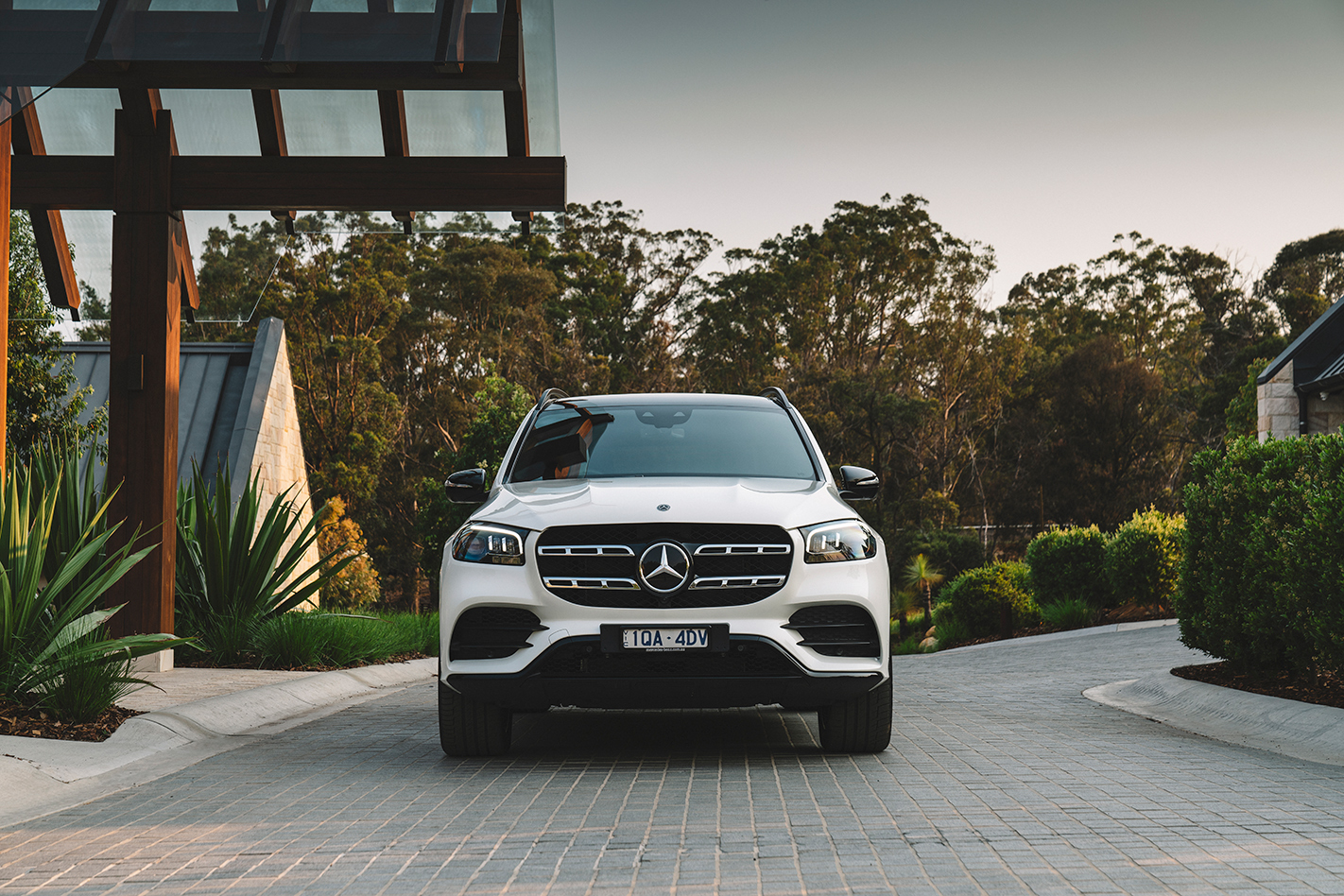
WhichCar Mercedes-Benz GLS400d review
The Mercedes-Benz GLS400d is like an S-Class on stilts
Tom Fraser
The Mercedes-Benz GLS may often be relegated to being a school pick-up tool, but this Toorak tractor has a serious bag of tricks.
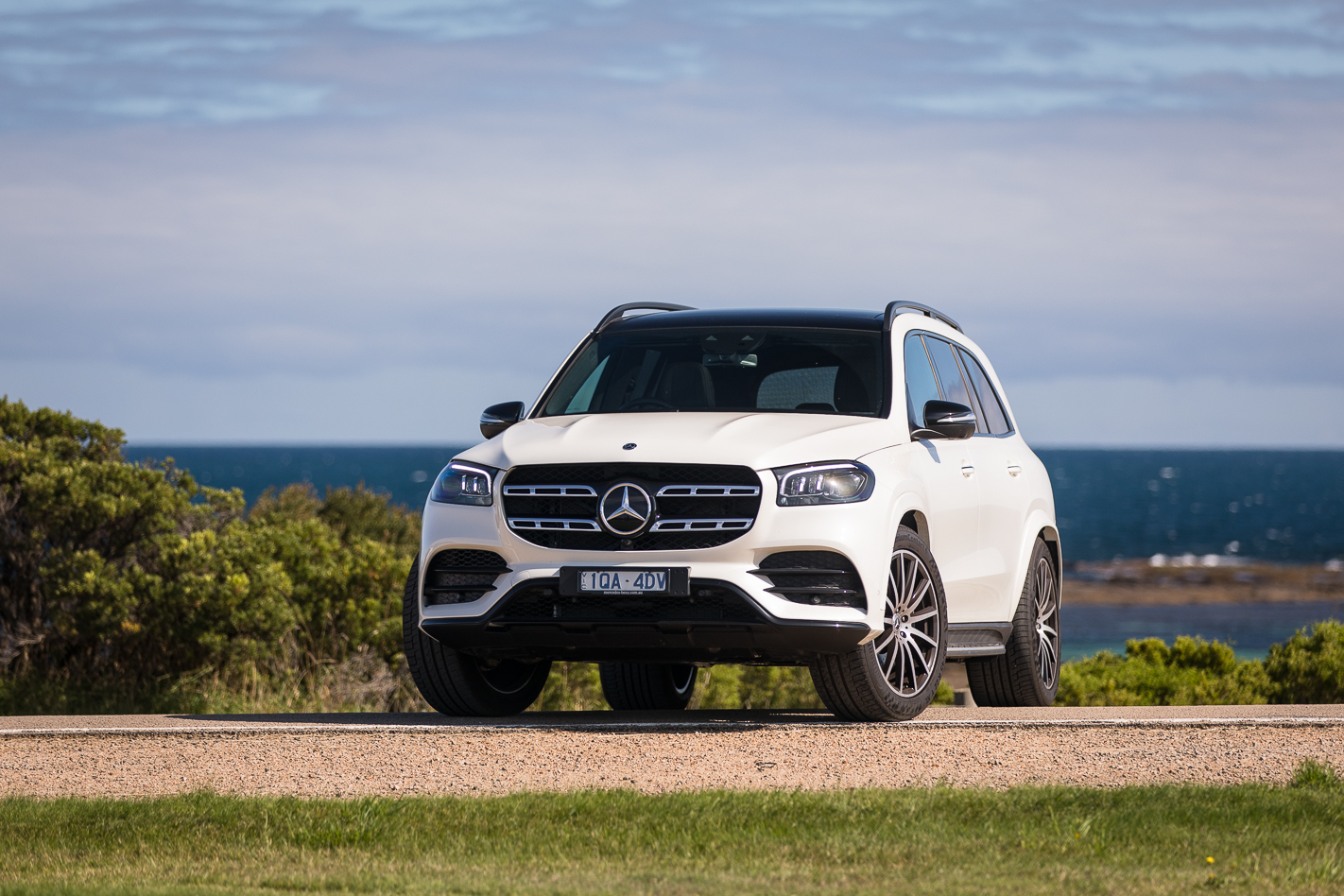
What is the Mercedes-Benz GLS400d?
It’s the largest and most opulent SUV you can buy from Mercedes-Benz currently, only to be surpassed by eventual Maybach and AMG versions at a later date.
The Mercedes-Benz GLS400d we have on test is one $153,300 part of a two-strong range which also includes the $146,500 GLS450 petrol version. The GLS400d is powered by a 3.0-litre inline-six turbo-diesel engine that produces 243kW and 700Nm.
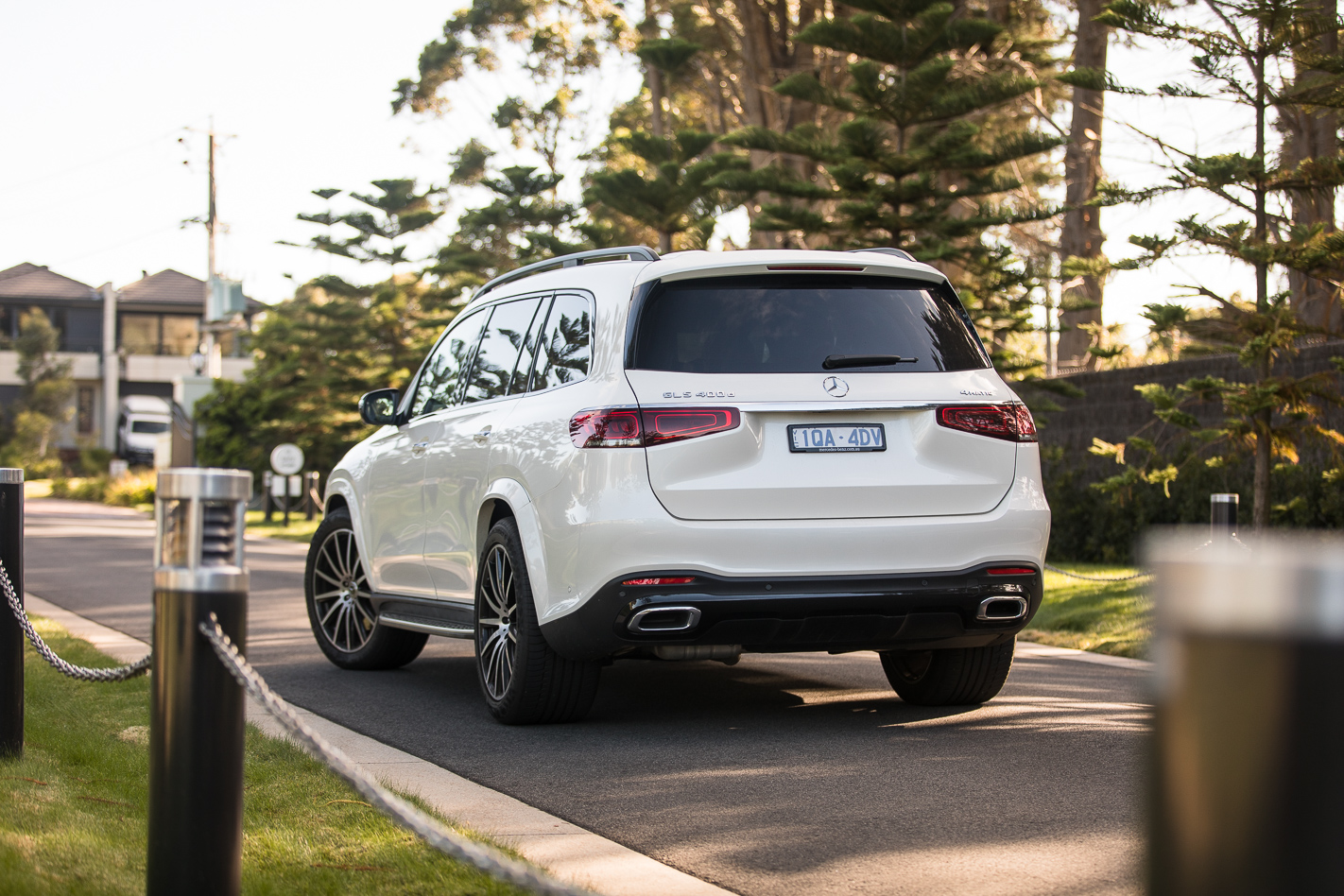
It offers genuine S-Class levels of comfort in a high-riding body that can seat up to seven people among three rows.
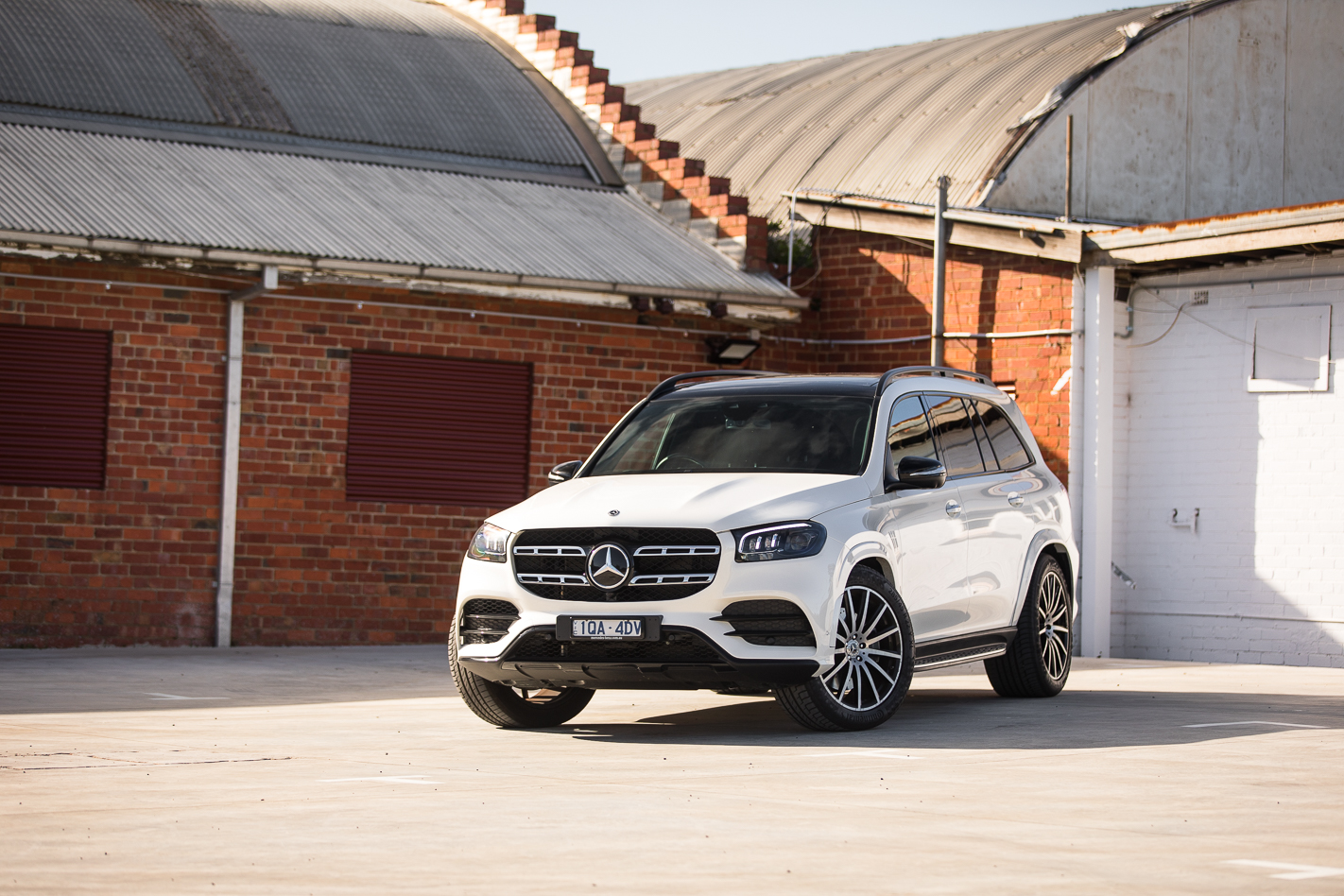
The GLS competes with BMW’s X7 range and to a lesser extent Audi’s Q8 range (which focuses more on style and driver engagement), but it is worth noting that as a base without options, the GLS400d is almost $30k more expensive than the equivalent BMW X7 xDrive30d.
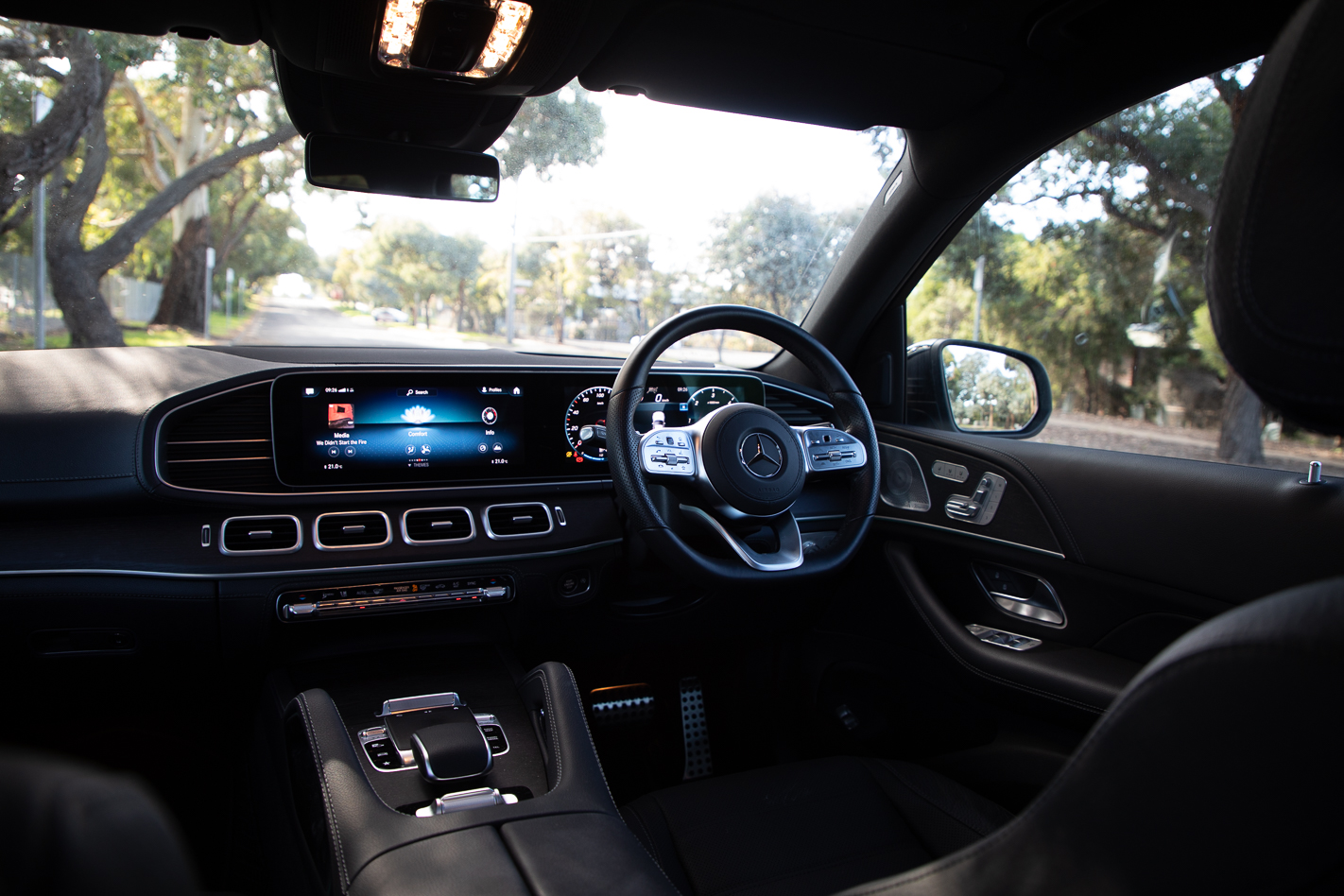
Luckily the GLS400d comes very well equipped as standard, with AMG styling, air suspension, tinted privacy rear windows, LED headlights, powered boot release, panoramic sunroof and keyless entry and start all featuring on the outside, while ambient lighting, configurable head-up display, 13-speaker Burmester surround sound system, open-pore oak wood panelling and multi-contoured front seats with heating, ventilating and massage functions are found on the inside. Just to name a few things.
The fact of the matter is the GLS400d does cost extra on top of its rivals, but it certainly presents a strong base package in return as well.
What is the Mercedes-Benz GLS400d like to drive?
Given its gargantuan size, the GLS400d isn’t the easiest thing to whip around in. It’s phenomenally comfortable because of it, but the footprint takes some getting used to before you can handle regular manoeuvres with ease.
Knowing where to place the car around corners, on tight laneways and reverse parking all take some getting used to, helped thankfully by the expert-level camera system which extends a full 360 degrees around the car.
While the GLS400d is expressly plush no matter where you take it, the city is not its playground – much more capable operating once roads are a bit quieter, spaces are slightly larger and streets are wider.
On the way out to greener pastures, the GLS is a divine freeway tourer. Very-adept radar cruise control takes some of the load off while your backside is fittingly massaged by the sumptuous leather seats. There is a wallop of overtaking power available thanks to the strong 243kW/700Nm turbo diesel and the nine-speed transmission is incredibly smooth, switching ratios often without notice.
Veer off the freeway and start to get stuck into some tighter curves and the GLS obviously begins to come unstuck. It fares fine around switchback corners at a leisurely pace but seriously doesn’t want to be hustled around which is understandable.
Torque and power levels ensure hills are easily ascended, and the engine even sings a powerful straight six growl which is cool.
What is the Mercedes-Benz GLS400d like to live with?
The grandiose nature of the GLS is a joy to live with. It’s about as comfortable as motoring gets without venturing into a Bentley or Rolls-Royce dealership and can ferry up to seven in supreme comfort.
From the first row to the third, space is commodious and seats are very adjustable to find the ‘right spot’. Entry to the third row is made simple thanks to electric seats that roll forward themselves providing a large aperture to squeeze through, while the rear seats fold up electrically too. Even for this six-foot-four tester, there’s a surprising amount of legroom back there.
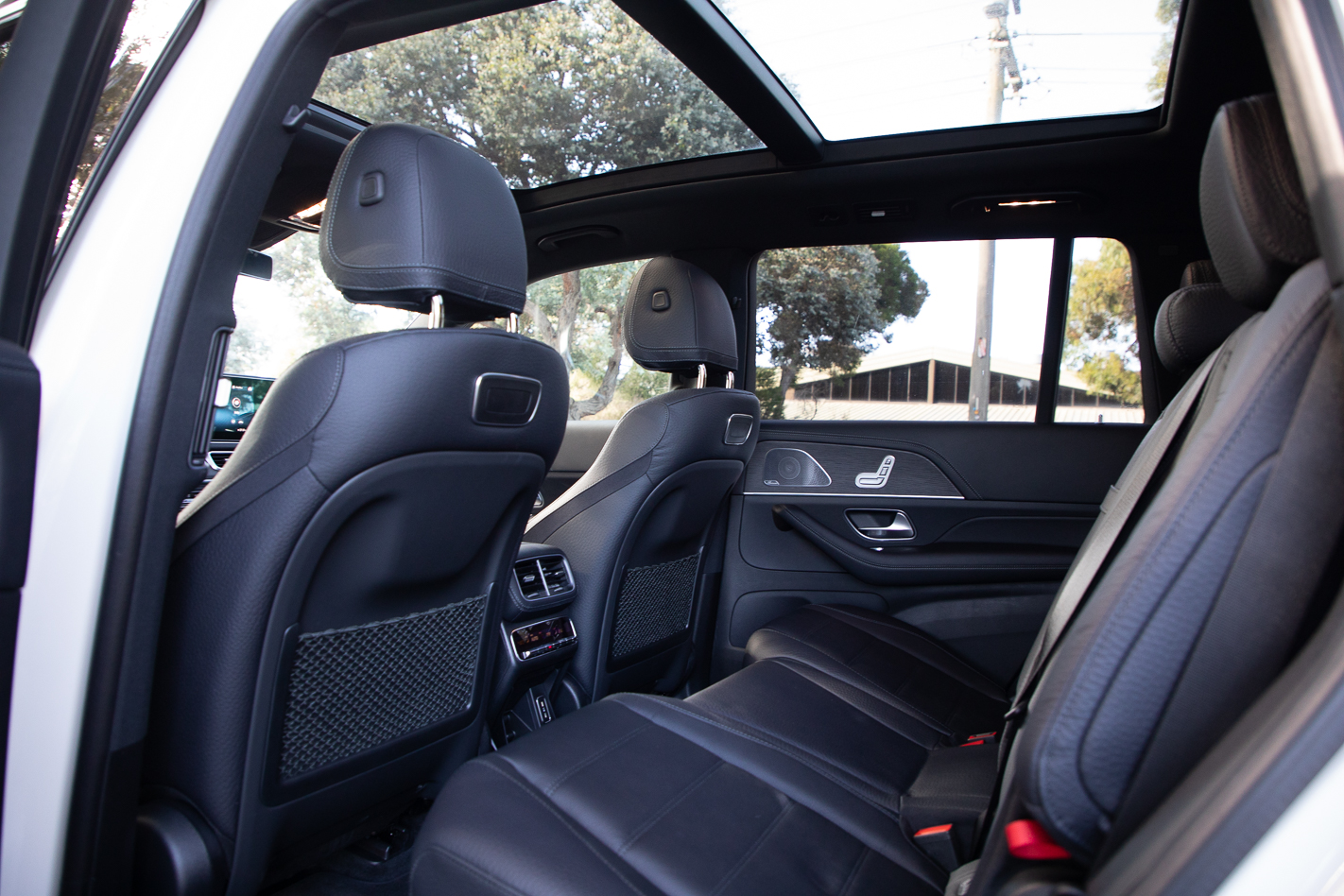
One thing there seemed to be no adjustment for was the seat base angle for the second row, which was heavily raked upwards. It wasn’t uncomfortable but if you’re going to offer electric seats in the second row you might as well make sure all of it is adjustable.
The car is very well put together, and is quietly insulated from the outside world in terms of road and wind noise. But there was one squeak we kept hearing from the second row that we didn’t find the source of.
The seats up front are fantastically plush, holding you in really well with extensive levels of customisation. After setting your perfect set-up you’d best make sure to get the car to ‘remember’ your configuration because it may take some time to get it just right again.
The MBUX infotainment system is fairly easy to use and caters for so many aspects of in-car entertainment, and the configurable head-up display can display more information than ever so you don’t have to take your eyes off the road.
Is the Mercedes-Benz GLS400d worth it?
On the face of it, the GLS400 is a very complete car. It stocks a stonking great engine with strong power, it’s as extremely comfortable and well put together and contains all the features and customisation you could wish for.
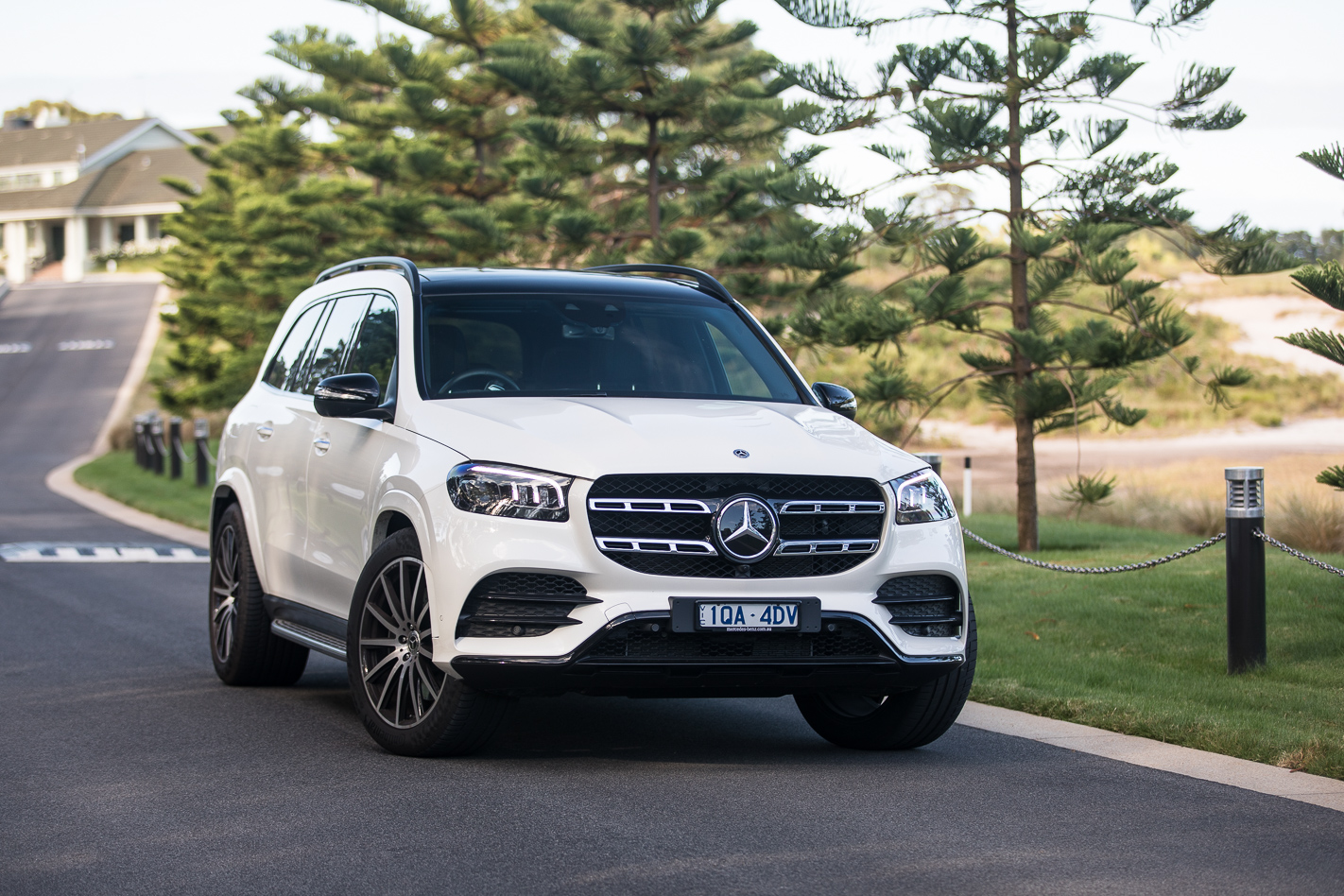
But factor in its extra $30k ask in price over its BMW X7 rival and things are a bit more complicated.
But much the same as what Cameron mentions in the review above, although a big downfall, the extra outlay in price is its only real detractor. The rest of the car is a sumptuous, complete SUV that any person would be proud to see in their driveway.
Pros: Smooth ride, high quality materials, level of equipment Cons: Extra spend over segment rivals
Rating: 4/5
- More details emerge about LandCruiser
- Set to score Toyota’s most popular diesel engine
- LandCruiser debut delayed
Reports from Japan suggest that we’ll have to wait a little longer to see the new Toyota LandCruiser 300 Series, though, and that it will come with a diesel engine… though not one ’Cruiser users might relate to.
The LandCruiser 300, which is known internally at Toyota as an LC300, has been delayed by about a year, according to reports on Japan’s bestcarweb, which means that it’ll be 12 years between the launch of the Toyota LandCruiser 200 Series and the latest iteration.
Given the state of the automotive world at the moment, a delay isn’t unexpected. Toyota, however, is faring better than other carmakers, with all of its Japanese plants still operational.
Earlier reports have revealed that the new LandCruiser will roll on a new version of Toyota’s global platform that’s been designed specifically for 4×4 applications, while a more sharply designed exterior will come within a handful of millimetres in size in all directions as the 200 Series.
It’s also expected to retain a third row of seats, and to pick up advanced driver aids like unintended acceleration mitigation, advanced passenger and cyclist detection and level two autonomous driving capability.
It will also undoubtedly also offer a high degree of electronic trickery in its 4×4 drivetrain.
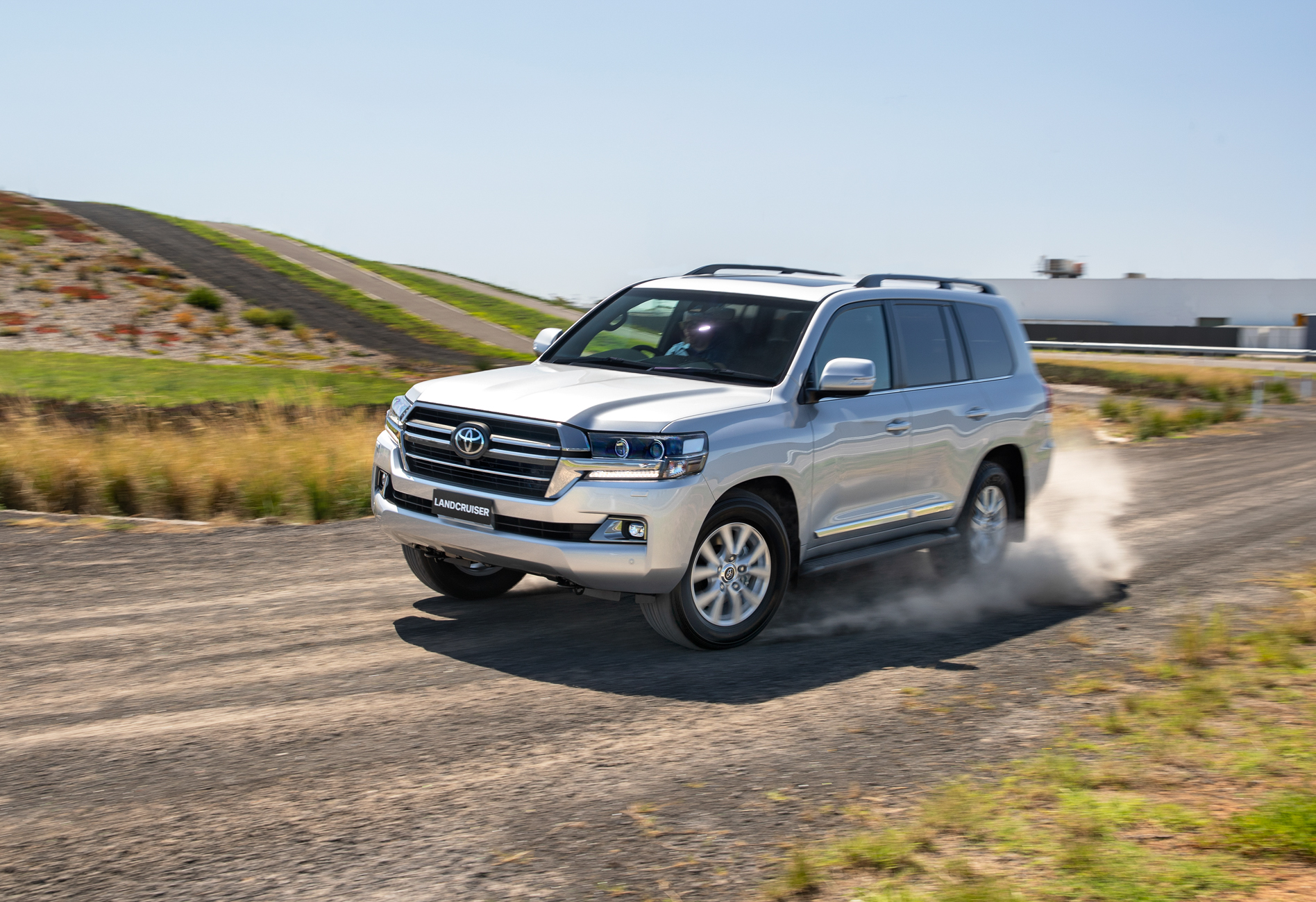
Toyota LandCruiser 200 Series will survive until 2021
Most interesting of all, though, is the assertion that the LandCruiser will adopt Toyota’s 1GD-FTV 2.8-litre four-cylinder diesel engine, along with a six-speed automatic transmission.
The 1GD-FTV is used in the Prado, HiLux, Fortuner and HiAce, and if it does indeed make its way under the bonnet of the LC300, it would mark the first time since the 60 Series that the Toyota LandCruiser would have a four-cylinder diesel engine.
While Toyota is not commenting on the speculation, adding the four-cylinder diesel from the Prado makes a lot of sense. Despite its popularity with its fans, the LandCruiser is not a big seller for Toyota, so developing a new, more powerful diesel that meets Euro 6 emissions standards isn’t really an option – and its current turbodiesel V8 is rapidly running out of time on an emissions front.
The four-cylinder’s 130kW and 450Nm outputs are down on the current V8’s numbers of 200kW/600Nm, and while overall kerb weights might fall in favour the LC300, expect the four-potter to burn more diesel than the Prado and HiLux thanks to the extra mass of the 300.
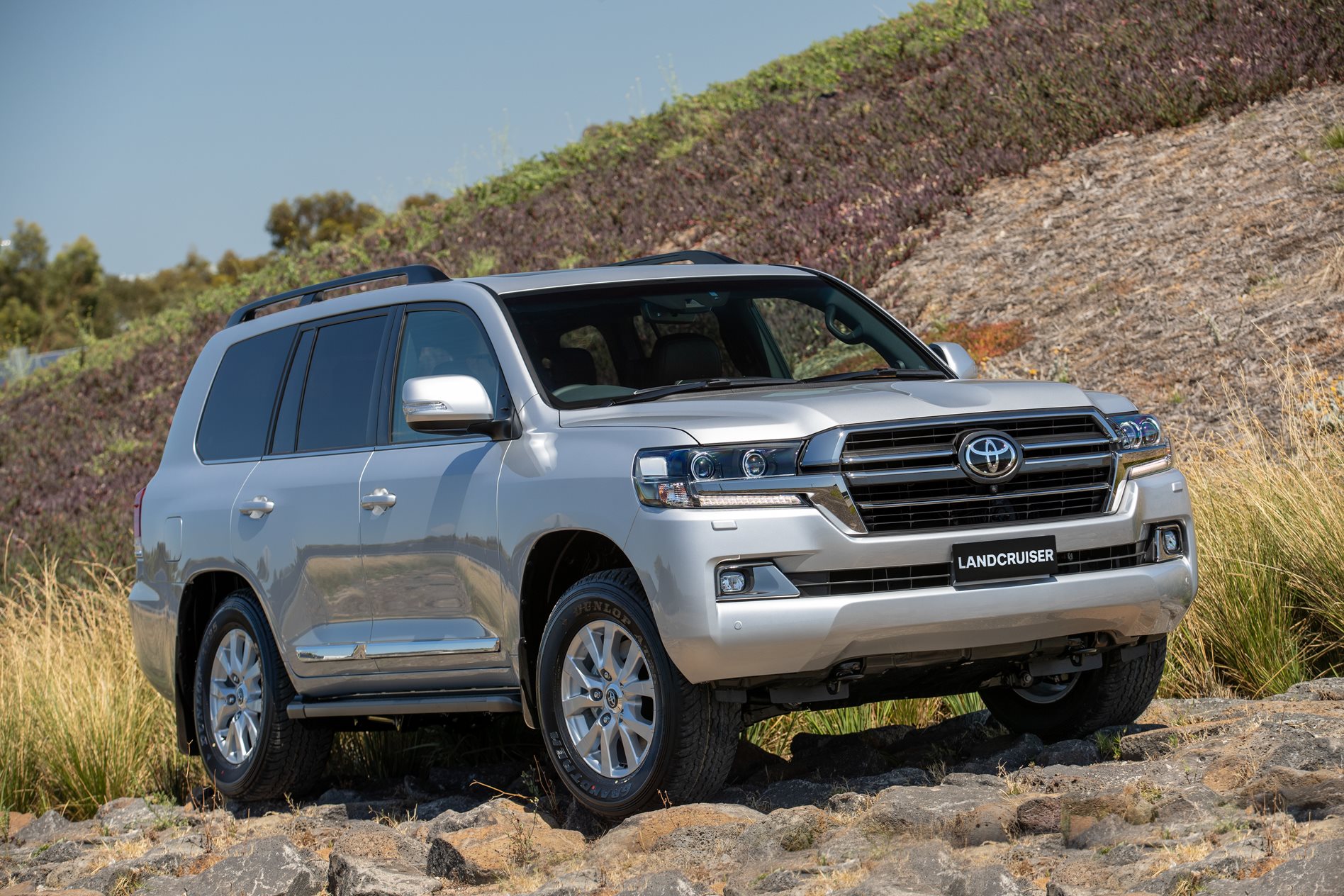
Will the Toyota LandCruiser 300 Series still tow 3500kg like the 200 Series (above)? We reckon so, but it will come at the expense of payload capacity.
Toyota is not commenting on specifics, with local sources saying only that there is “a lot of speculation out there about this model, especially from Japanese media.”
One thing is certain, though – we’re keen to cut through the speculation!
MORE LANDCRUISER NEWS AND VIEWS
LandCruiser or Patrol – which is best for towing?
The ten greatest 4x4s of all time
Coil-sprung LandCruiser concept car
The 2020 Formula 1 season never even got its season opener in Melbourne and now, with the global Coronavirus pandemic shutdown in full swing and the first seven F1 races now cancelled, there’s seemingly little chance that F1 will be able to resume until 2021.
However, in lieu of the Bahrain Grand Prix that was scheduled for the weekend just gone, the official F1-sanctioned Virtual Grand Prix series launched its first race, set in a virtual Bahrain GP circuit and rendered by Codemasters’ F1 2019 racing sim. Drivers played remotely, respecting the need for social distancing.
Featuring 20 drivers from the racing world, both real-life and virtual, it was an interesting exercise in whether e-sports can step in for top-tier motorsport. So… how was it?
For one, the driver line up was disappointing – at least if you’re a dyed-in-the-wool Formula 1 fan. Every current F1 driver was invited to participate, but only McLaren’s Lando Norris and Williams F1’s Nicholas Latifi showed up to the virtual Bahrain GP. The rest of the field was a weird mish-mash of semi-recognisable names, test drivers and notable e-sports athletes.
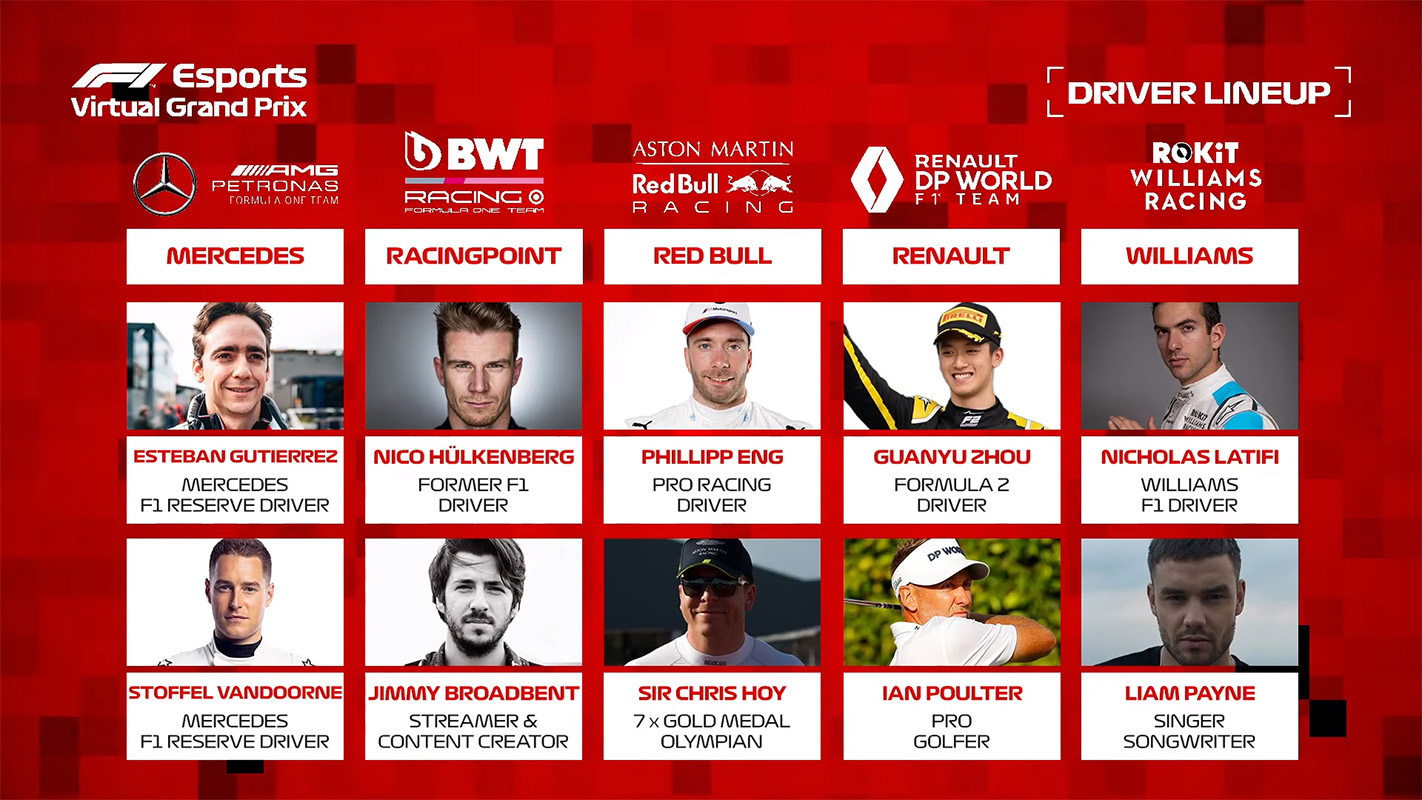
Lewis Hamilton’s half-brother Nicolas (a touring car racer in his own right) was on the Virtual Grand Prix grid, even though his famous bro wasn’t. Meanwhile former F1 driver and F1 announcer Johnny Herbert was there too, as were Mercedes F1 test drivers Esteban Gutierrez and Stoffel Vandoorne.
Liam Payne, a singer from boy band One Direction, was an interesting inclusion, while champion cyclist Sir Chris Hoy and pro golfer Ian Poulter added some extra diversity to the driver lineup just in case it needed it.
Even so, much of the allure of F1 fandom is being able to follow the highs and lows of your chosen teams and drivers – and with those household names being largely missing from the Bahrain round we could forgive F1 die-hards from tuning out.
But how was the racing? We won’t spoil the outcome – and you can watch the whole race in the video above – but things were messy from the very start. Before turn one, even. Aside from what looked like some diabolical lag between the start lights extinguishing and the cars actually moving, it appeared that some network latency issues may have seen Nico Hulkenberg unceremoniously punted right into the pit wall right after race start.
Perhaps a good thing that the damage model was turned down to 50 percent, and the race length was just 14 laps long. Hulkenberg managed to continue.
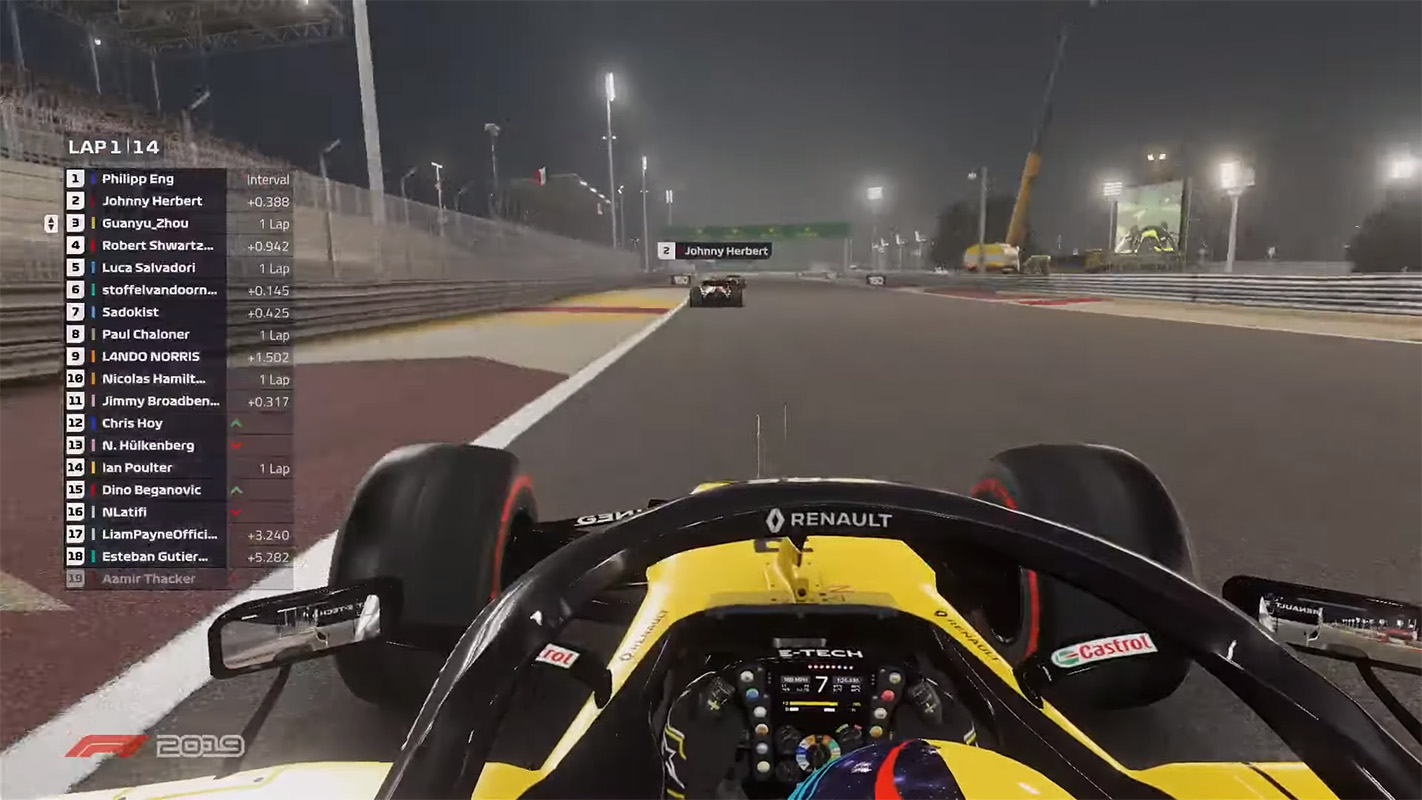
Almost straight afterward, Johnny Herbert, now safely in first position, displayed a comedic disregard for race rules by ruthlessly cutting corners he came across, earning a penalty for his troubles. In the pre-match banter the (fairly amusing) commentator team reported that Herbert was “apparently at least one Jagerbomb down” before qualifying had even begun, and the man’s driving reflected that at times.
With damage being somewhat inconsequential and nobody’s actual life being on the line, the on-track contact was fairly extreme for an F1 race. Will the next round of the Virtual Grand Prix, set for Vietnam on April 5, see more civilized racing? Will it see a field more heavily populated by actual F1 drivers? Will the organisers be able to work around the not-insignificant fact that the Vietnam street circuit isn’t actually available in F1 2019?
More importantly, will you be tuning in to the livestream?

As the decision to retire the iconic Holden brand still echoes around the country, many are still asking if anything could have saved the lion and avoided such a devastating blow to our nation’s automotive heritage.
The answer is complex with overlapping influences from government, local management and Holden’s global parent GM, but what is certain is that the company’s product portfolio and timing played a pivotal role.
Could any car have steered Holden down a different avenue than the dead end road it finds itself in now?
MORE The forgotten Ford ute concept that preceded the Ranger Raptor
It could have been the next Monaro and a new Australian-made coupe, but much to the disappointment of high-po Aussie two-door fans, the Holden Coupe 60 never quite made it from the easel to the showroom.
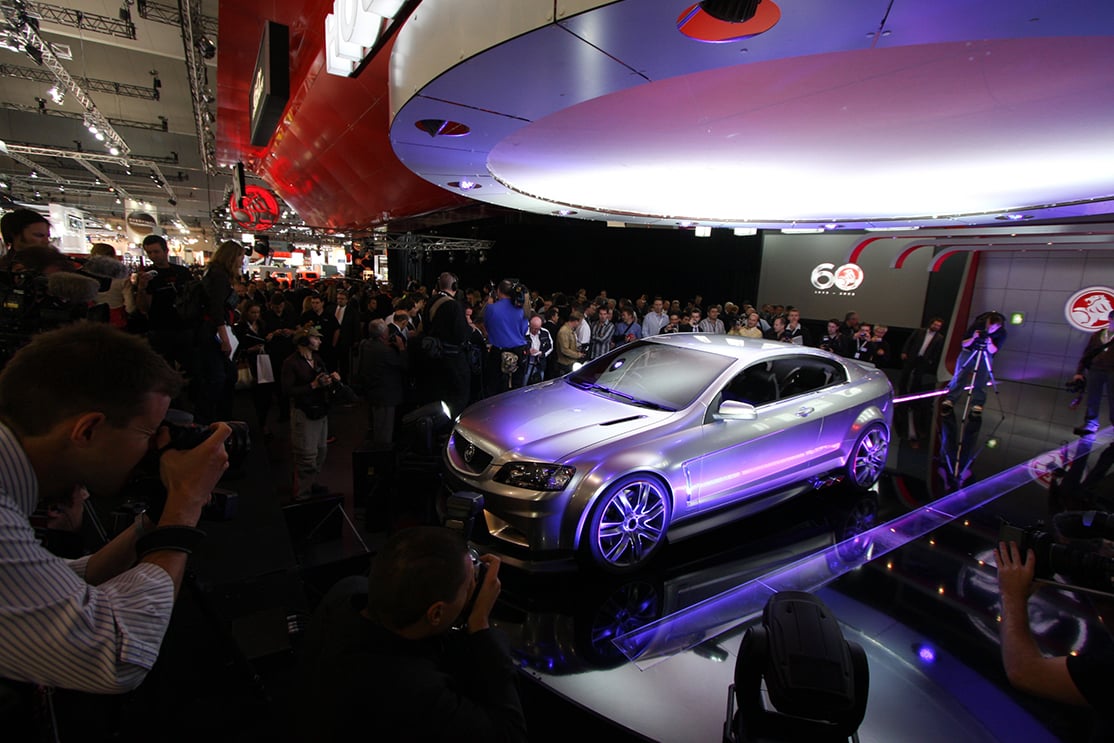
Debuting at the 2008 Melbourne motor show, the VE-based sports car blasted out as a complete surprise to adoring onlookers, kept secret even from many inside the company walls.
But while it may have stolen the show at Melbourne, the car had been many years in the making – and if the project hadn’t stalled three years before, a debut could have been chalked as early as 2005.
Inception of the Coupe happened immediately after the design of the VE sedan had been signed off, and was cruising along smoothly until 2005 when the project was shelved for undisclosed reasons. In fact, the concept could well have never gone public.
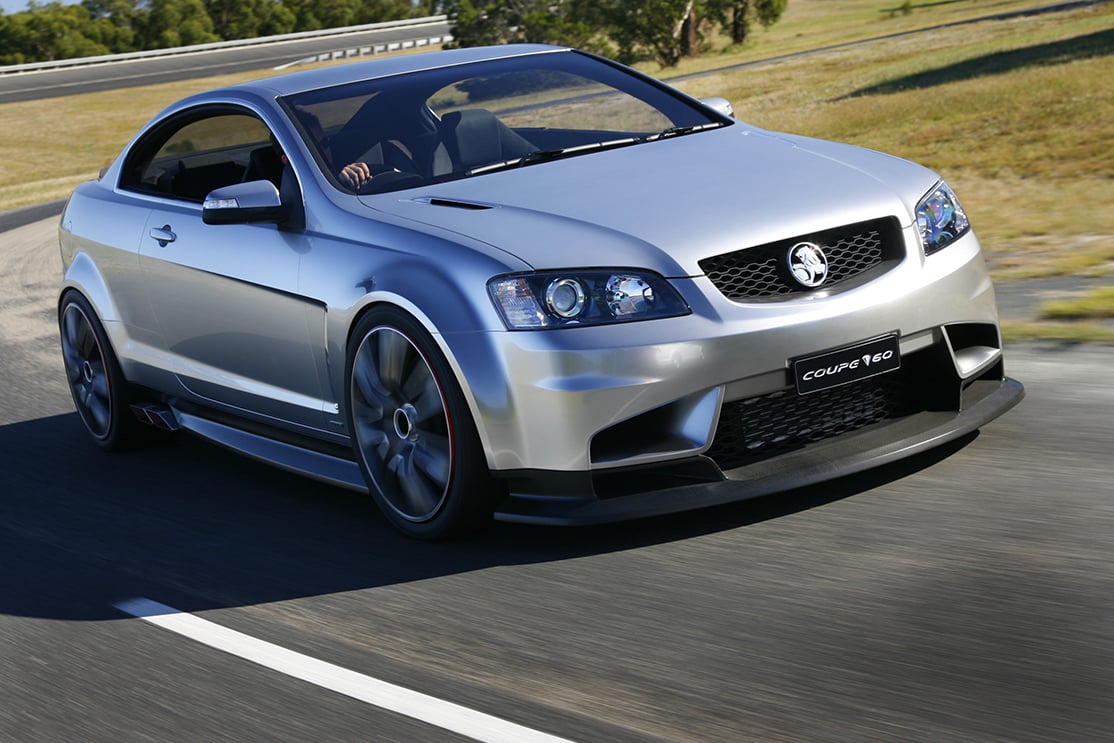
But it was the looming 60th anniversary of the lion badge that prompted the designers to lick their pencils and commit to finishing the Commo Coupe. The result was almost identical to the clay model that had been packed away three years earlier.
MORE Holden’s lost heroes – could these concepts have saved the General?
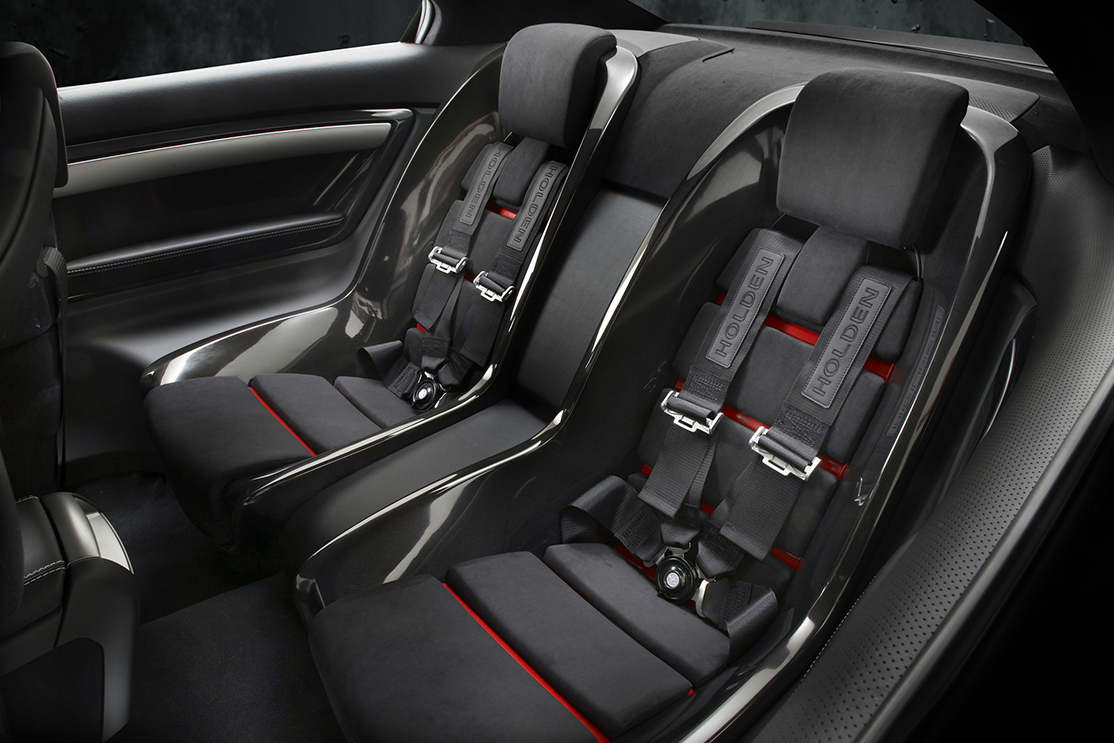
Race car influences from the V8 Supercar circuit were present in the lower front blade splitter and rear diffuser, while the centre-lock wheels and bellowing side-exit exhaust draw two big black lines from the race track to the road.
The side-exit soundtrack was provided by a 6.0-litre LS2 naturally-aspirated V8 and sent power to the back wheels via a six-speed manual gearbox, both of which were unchanged from the Commodore SS of the time.
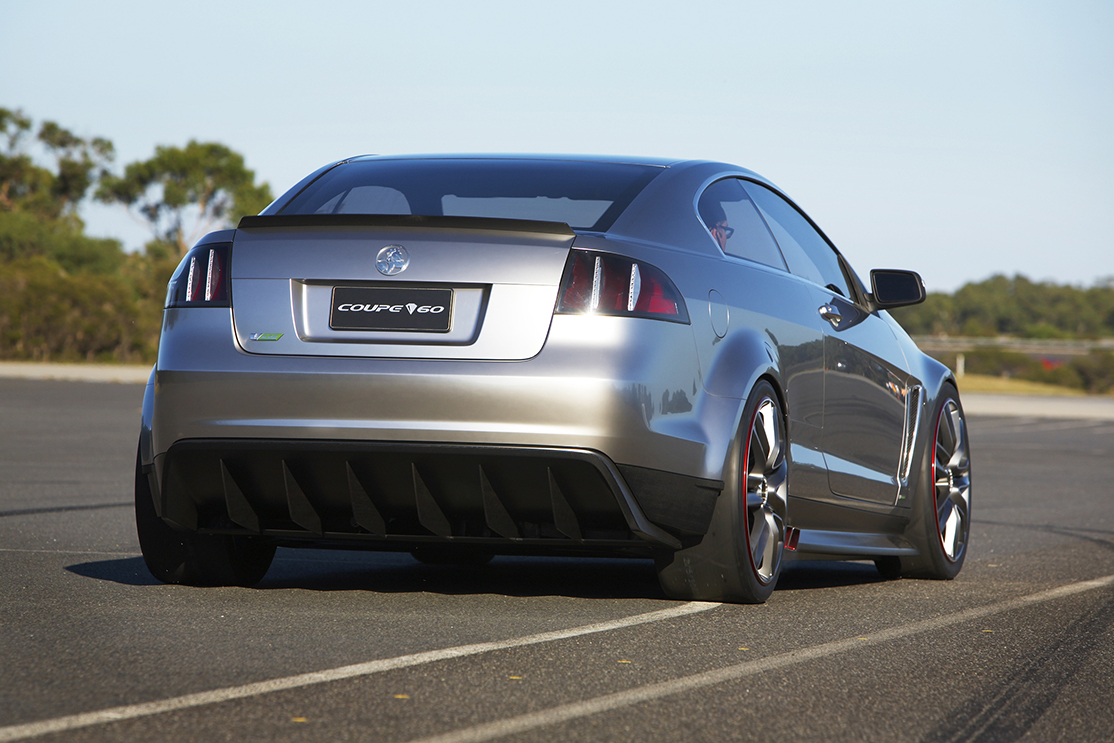
It goes without saying, however, that the most significant changes over the sedan were aesthetic.
While the car wears a front end that looks suspiciously like a standard VE sedan fitted with a bodykit, the concept body was actually built from scratch from fibreglass and carbon fibre, with only a Zeta platform rolling chassis being the only link to production-spec Commodores.
MORE Wild Holden ute mule takes centre stage at Chevrolet Camaro launch
From that, a Japanese build team turned the Australian design into the frameless-doored, fat-fendered, flat-floored pillarless masterpiece that wowed crowds at Melbourne, with the team also chopping the rear rails for more pleasing cab-rearward proportions.
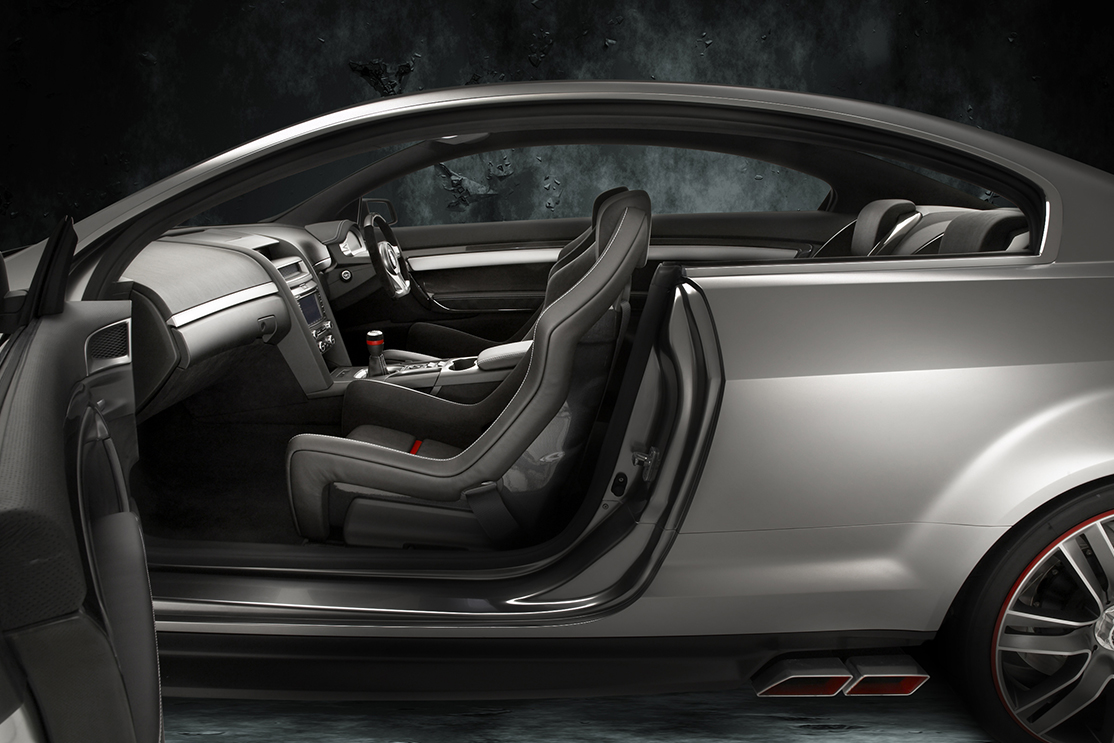
Flat-bottomed steering wheels and fully digital instrument clusters are becoming commonplace in even mildly sporty models today, but the Coupe 60 heralded their adoption nearly a decade ago. It also featured 21-inch wheels shod in Kumho semi-slick tyres – a monstrous diameter by 2008 standards.
Had this incredible Holden been given the green light to progress from lurid show car to production model, it might just have diverted the terminal course of Holden if only for a few years if not longer.
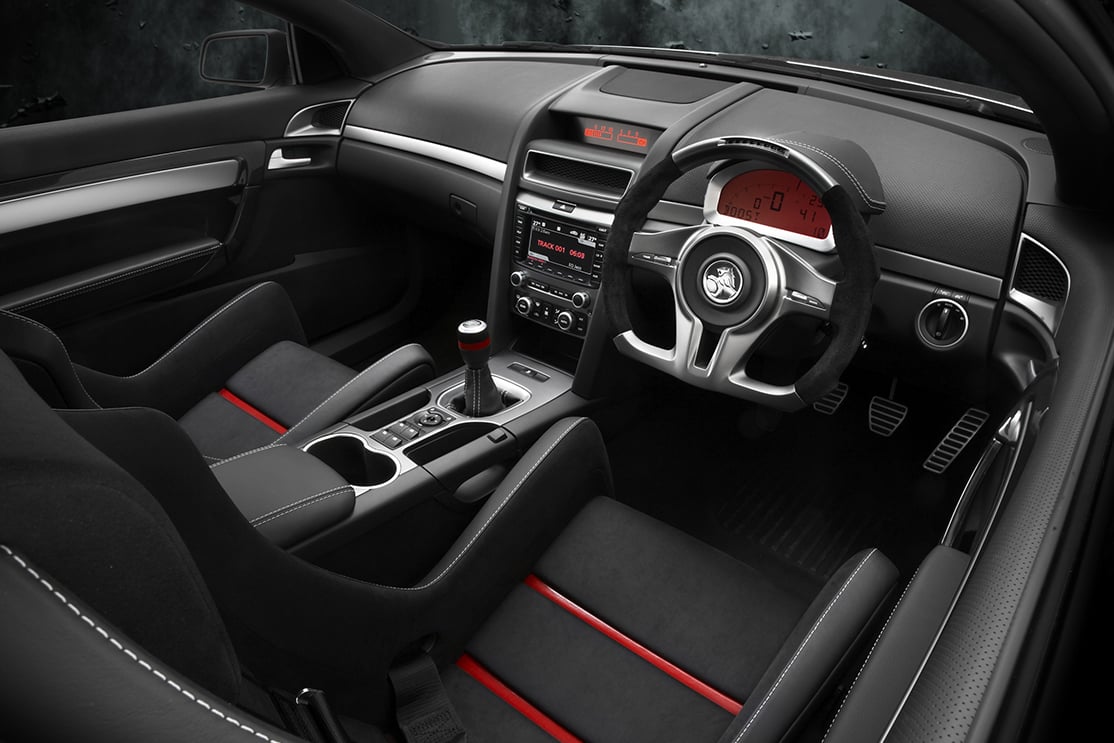
With its mighty powertrain, rear-drive, nimble handling stunning looks and prodigious power, the Coupe 60 had the potential to embarrass General Motor’s beloved Chevrolet Camaro and it was never going to allow that.
Furthermore, the V8-powered VE (and later VF) Commodore was already proving the US had a small but not insignificant demand for Australian-made sedans, where the model was marketed as the Pontiac G8 and later Chevrolet SS.
It wasn’t to be. Holden ran the figures, crunched the numbers and decided that in the absence of feasible export potential for the car, the Coupe 60 didn’t make sense in showrooms anywhere in the world.
Twelve years after the Coupe 60 appeared and then disappeared almost as quickly, the HSV-converted Camaro continues to garner an enviable local audience. But we cant help feeling that an Australian-made, arguably more handsome alternative would be infinitely preferable, especially if it meant the lion was still alive and roaring like a side-exit exhaust.
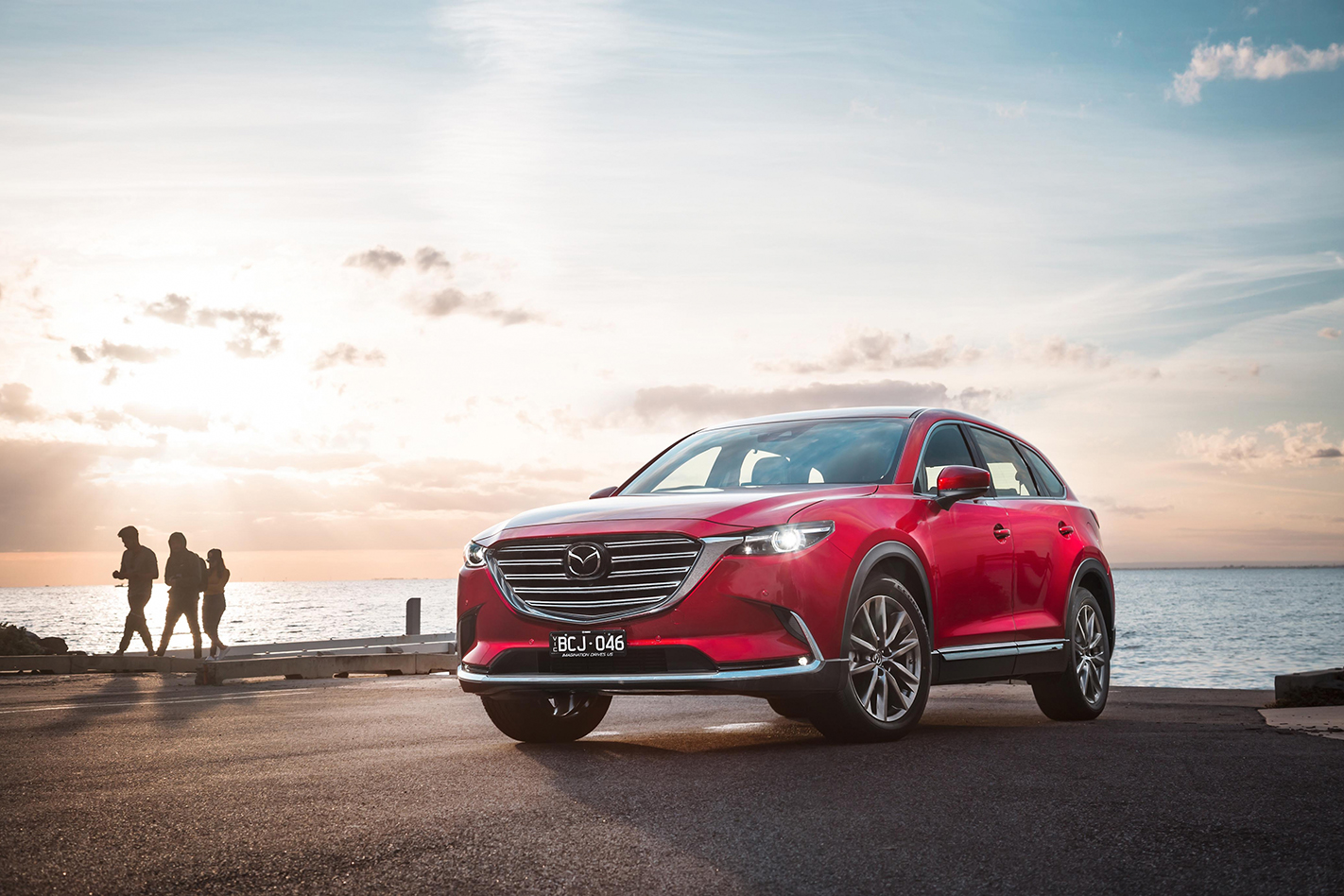
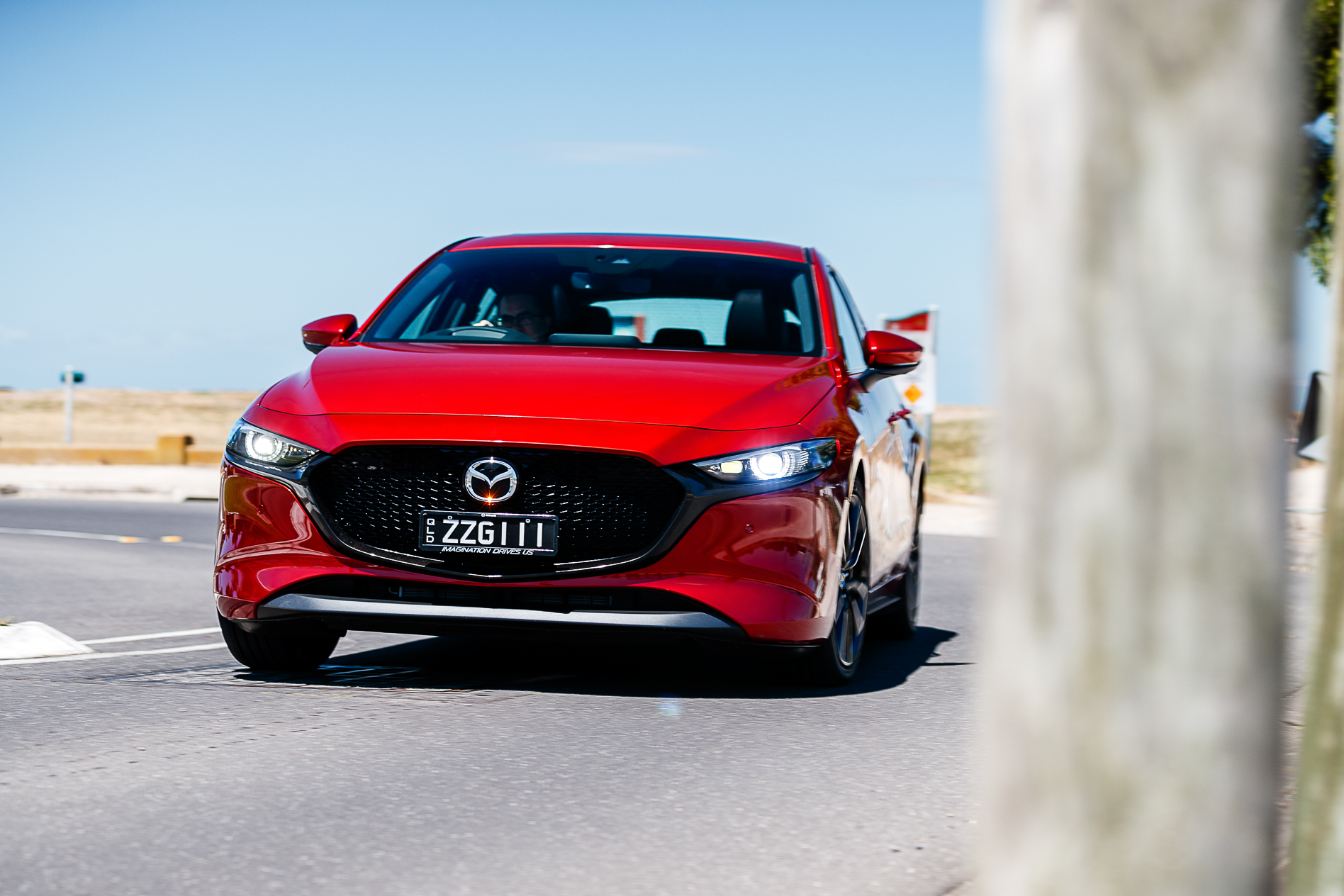
Mazda Australia has taken a bold step by introducing a new flexible ownership model that’s super-popular in Europe.
‘Mazda Assured’ promises a guaranteed value for a vehicle at the end of the loan term, enabling customers to upgrade to a new model more frequently and with their changing lifestyle demands.
However, unlike the now-defunct Holden Maven short-term lease scheme that offered the opportunity to lease a vehicle and swap for another after just one month, Mazda Assured only offers loan terms of between one and four years.
Mazda’s structure means customers will have to cycle through the range more slowly if they want a taste of the diverse Mazda line-up, that ranges from the MX-5 roadster up to CX-9 large SUV and BT-50 ute.
Even so, if you see your circumstances changing within the next year or so, if planning a family or about to become an empty nester, for example, this lease-type arrangement is not a bad way to ensure you’ll be able to up- or downsize to another new Mazda when you need it.
How Mazda Assured works
Mazda’s new finance scheme is similar to a novated lease. Select any new or demonstrator Mazda from the range and choose a loan term between one and four years, the deposit you want to put down and estimated number of kilometres to be driven during the term of the loan. Based on the deposit and nominated kilometres, the buyer receives a tailored repayment plan and Guaranteed Future Value (GFV) that is equal to the final repayment.
At the end of the loan term, customers have the option to trade their vehicle for another Mazda vehicle, keep the vehicle and pay the remaining GFV, or return their vehicle if it meets the fair wear and tear conditions and agreed kilometres.
Mazda Australia Managing Director, Vinesh Bhindi said Mazda Assured allows customers to choose the most suitable Mazda model as fast as their life circumstances change.
“We recognise our customers’ lifestyles change more frequently than they’re able to change their car to suit – be that having children or getting a new job.”
Turn up the volume and listen to the demonic sound of Hennessey Performance Engineering’s (HPE) twin-turbo C8 Corvette.
For fans of spooling forced induction, it’s a treat, with the dual blow-off valves clearly audible as the menacing set-up comes to life.
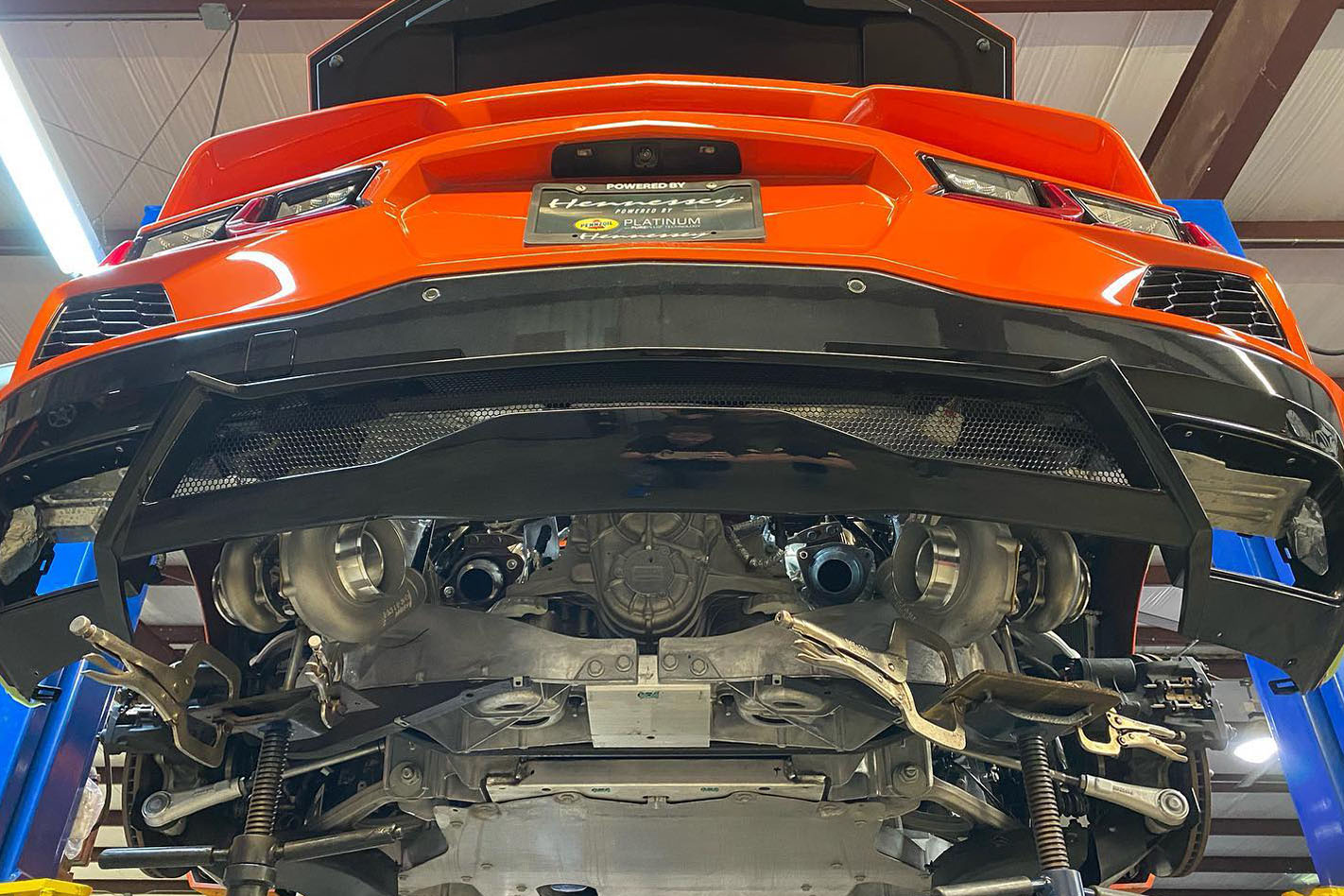
HPE claims it’s a world first application, and as you can see in the video posted on its YouTube channel, the turbos are positioned low in the engine bay and underneath the (traditionally naturally aspirated) 6.2-litre LT2 V8.
The boosted Hennessey C8 is dubbed HPE1200, alluding to the fact that HPE is aiming for 1200 horsepower (882kW) from the project. However, official figures for the test mule are yet to be detailed.
While Hennessey is working on the HPE1200, GM is also expected to reveal faster versions of the regular C8 in the future.
Rumours suggest a high-performance ZR1 is in the wings and will be powered by a hybrid twin-turbo V8 with around 900hp (670kW). After all, GM has already trademarked the ‘E-Ray’ badge.
While full specs of HPE’s crazy creation are yet to be showcased, we already know the mid-engined ’Vette hasn’t just had two turbos bolted to the LT2 without any other upgrades.
The internals have been beefed up with forged aluminium pistons and forged steel connecting rods (for a 10.0:1 compression ratio), as well as ECU tuning.
HPE is also ensuring that the gearbox is up to the task, with the company stating that the Corvette will be fitted with an “upgraded and fortified factory dual-clutch transmission”.
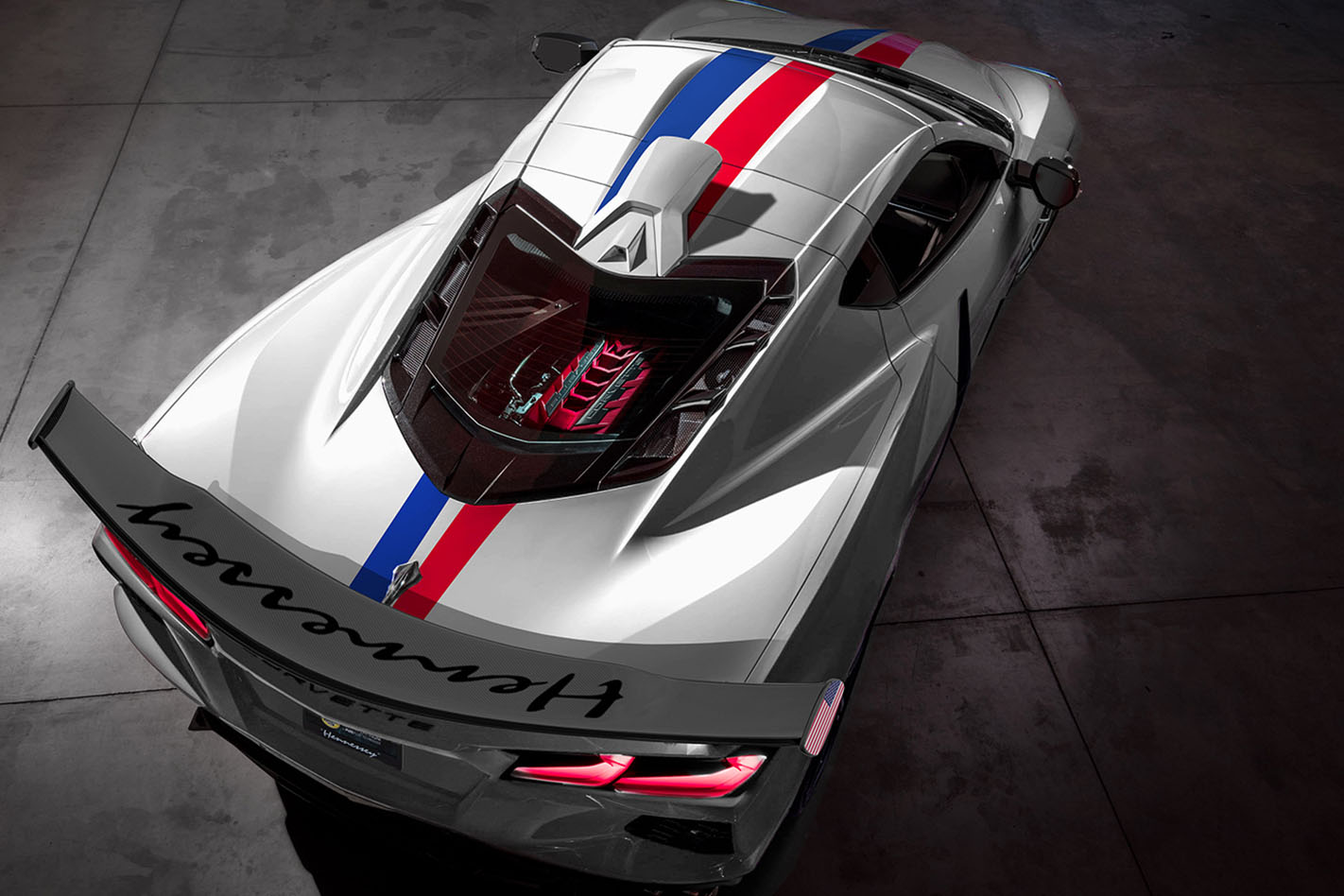
Apparently, the system can be fitted without needing to encroach on boot space, so two golf bags can still fit inside a twin-turbo Corvette.
HPE plans to offer CarbonAero carbonfibre aerodynamic upgrades, which include a front splitter and air dam as well as a carbon rear wing.
A 700hp (515kW) supercharger upgrade is also in the works, if turbocharging isn’t your flavour, and you can’t wait for faster factory-built options from GM.
The C8 Corvette is still slated for Australia, but it’s unclear how or when it’ll arrive down under following the announcement of Holden’s closure.
You were blue, or you were red. There was no piking out – you backed Ford or you supported Holden, or you stayed the hell out of it.
The Bathurst 1000 race on the October long weekend was as sacred a day as Christmas or your birthday, and you only hoped your favourite – Brock, Moffat, Johnson, Grice, Perkins – came out on top for bragging rights at school the following Tuesday.
The Ford v Holden war in domestic touring car racing preceded Supercars and transcended the sport, making heroes of everyday men and superstars out of the cars they raced.
Now, as the news sinks in that Holden is gone forever, that racing rivalry will truly be no more.
And the Commodore was a success, notching 509 wins since the late Peter Brock drove a VB to victory in Tasmania in 1980.
As racing series go, Supercars – formerly V8 Supercars – is a unique formula. Originally, the rules were written specifically to enable only the Holden Commodore and the Ford Falcon of the day to be eligible to race.
At the stroke of a pen, millions of dollars and decades of effort in other, non-local cars – Ford Sierras and Nissan GT-Rs, to name two – were swept aside in favour of a simpler, easier to digest, more promotable motorsport product.
And it worked – V8 Supercar racing, grounded in rivalries kept burning by fathers and mothers, sons, brothers and friends, went from strength to strength, building names like Mark Skaife, Craig Lowndes and others into household brands.
The cars morphed and changed, but the basic premise of an under-tyred, overpowered, rear-drive V8 monster remains to this day.
The game changed, however, when Ford announced in 2015 it would end production of the Falcon. The car would survive until the end of the 2018 season, but was supplanted by a mutated version of the company’s Mustang, which lost much of its beauty in the transformation to – ironically – fit the rules designed for the Falcon.
Holden followed suit, killing the locally built version of its Commodore, but choosing to keep the Commodore nameplate – a decision which, we’d suggest, the company now realises was the wrong one.
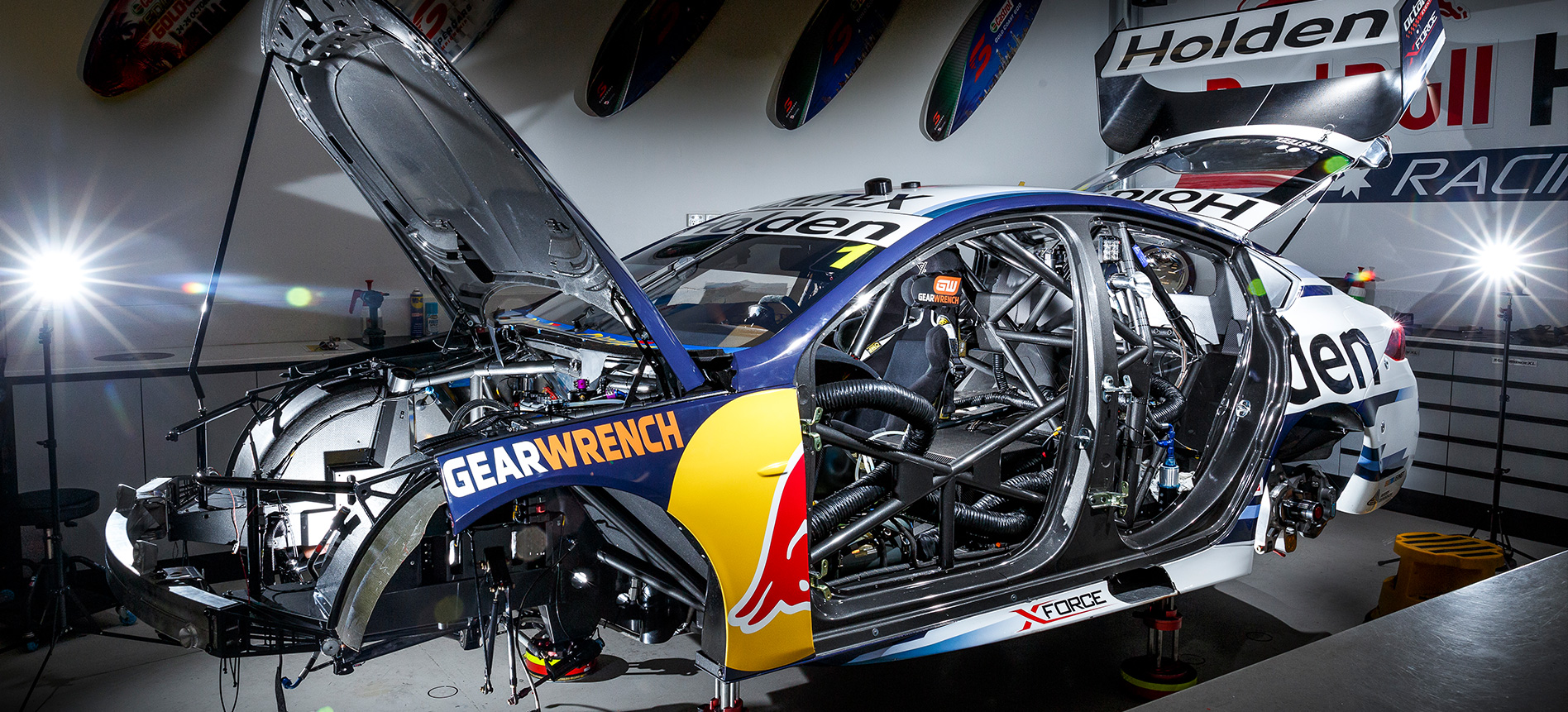
The Opel Insignia-based Commodore Supercar ZB (above) came on stream in 2018, and it has enjoyed success in the hands of its Triple Eight Engineering team, who wrested the mantle of official factory operation from bitter rival Walkinshaw.
While season 2019 – dominated by the Mustang – will be remembered for all the wrong reasons, 2020 will mark the last year we see a factory-backed Commodore in action.
While Holden still maintains it will support the Commodore in local competition until the end of 2021 despite it going out of business as a carmaker, the Commodore’s final year started in Adelaide in March (and won’t get going again until June at this rate).
What happens after that? It’s an interesting question. The Supercars category moves to what it’s calling a Gen3 car, which won’t look a lot different to the current machinery.
There will be a big focus on cost savings in areas that fans can’t see nor care about – front suspension uprights, for example, and new hub spindles – and we’d guess a change to the parameters that govern the car’s dimensions will allow the introduction of more coupe-shaped cars.
What car could that be for Holden? Even though the brand is leaving the country, the Chevrolet Camaro is still on sale – even though it’s not in the clear itself in terms of its future.
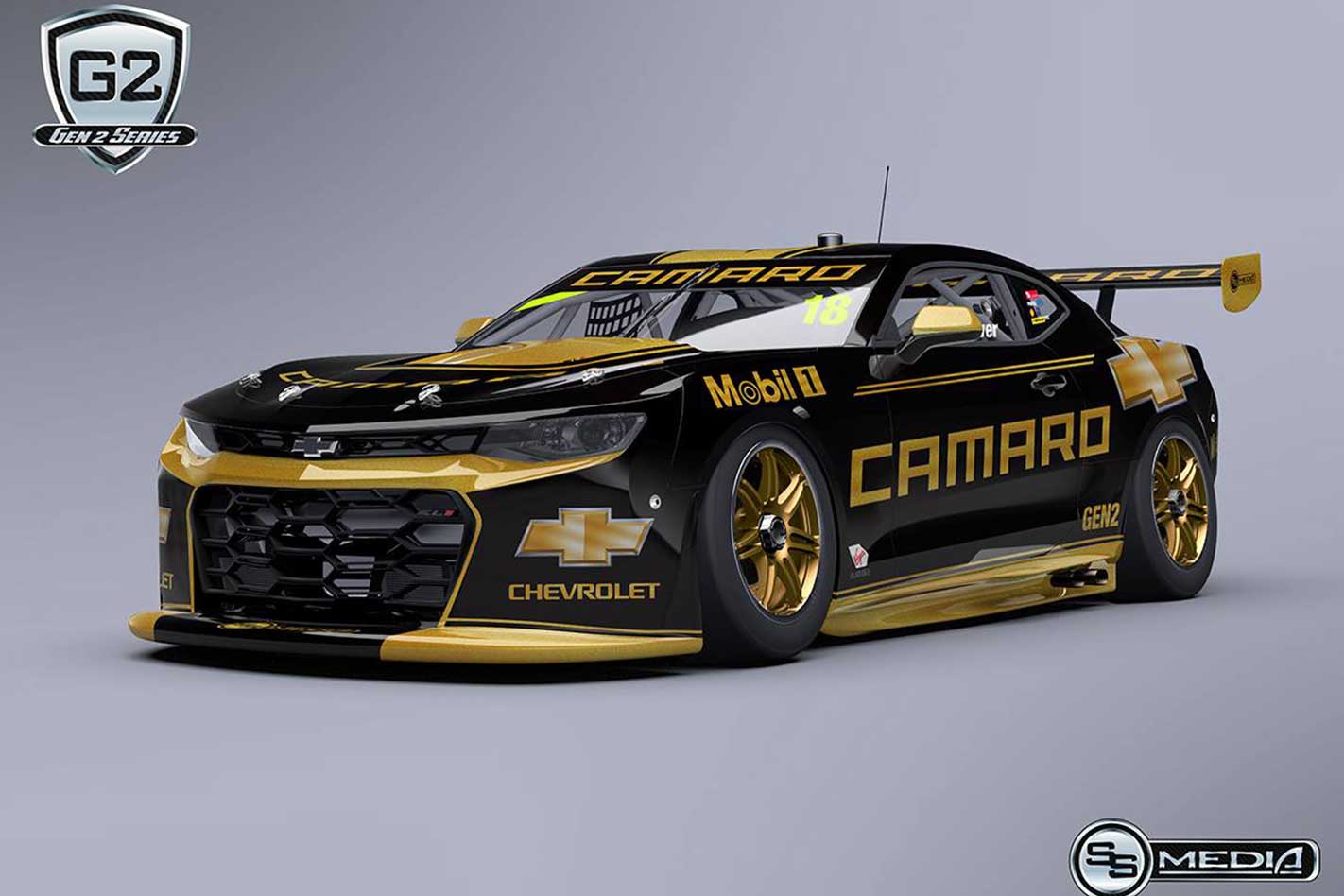
Supercars CEO Sean Seamer was confident GM would remain involved in the sport.
“Gen3 will be driven in a large part by the direction that manufacturers are going, because it’s about maintaining and ensuring that we’ve got market relevance,” Seamer said at the Supercars 2020 season launch.
“I think that from what we’re able to see from the manufacturer road maps, two-door sportscars – obviously, the Mustang is the first of which – will be a core part.”
Teams are already assessing their options in a Commodore-less future – names like BMW are being bandied about, but we’re not sure that will happen – so the heat will come out of Commodore development at a point next year.
So if you’re keen to relive old schoolyard rivalries one last time, you’d better book a ticket to a 2020 Supercars round to Ford v Holden duking it out at the front end of the grid.
