
We really appreciate our loyal readers getting in touch, whether it’s to ask a question, to find out more about one of our stories, or to let us know you liked a feature or sometimes that you didn’t!
Through your interaction, we are able to provide you with more of the information you are looking for, putting you in a better position as a car buyer and owner. Over the last 12 months, we hope we’ve helped you save money, kept yourselves and families safer on the road and had a more enjoyable experience at the wheel.
Here are the top ten most popular advice articles from 2018 and if there’s something you need to know, get in touch through our social media pages. We will do everything we can to bring you the answers in 2019.
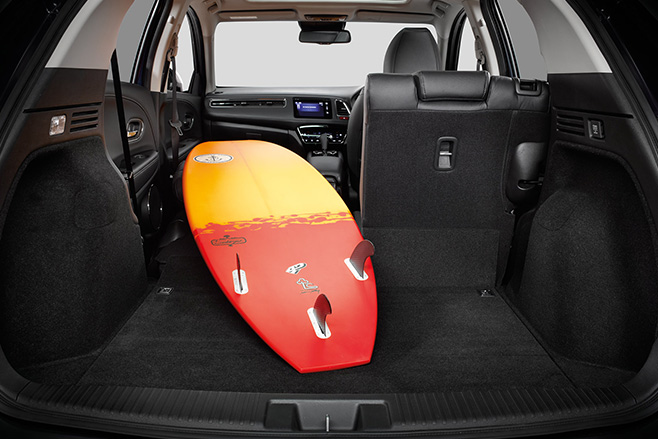
Size, they say, is everything and you clearly agree, because our most popular advice story was this deep-dive into SUV boot capacities. One of the main reasons many drivers are moving away from traditional passenger vehicles and into high-riding alternatives are the practical advantages, including space for people and things.
WhichCar’s audience is also clearly a pennywise automotive audience. Of our top ten advice stories, four were about the most affordable vehicles, including this one at the bargain basement end. Expect an updated version in the New Year, covering the latest affordable options in our unique market.

Another story from 2016 but still generating a fair amount of traffic was this story that clears up any uncertainty surrounding children in the front row seating. We assume you meant in the passenger seat!
You also clearly like to take a few risks, with this article that looks at how far a car will go after it says the tank is dry ranking as the fourth most popular advice yarn in 2018. The main message is: it’s best not to risk it, but you might be surprised and amused to see just how far a diesel SUV will go on ‘empty’.
One owner gave us a little chuckle this year, admitting they thought the paddles on either side of the steering wheel were for controlling the stereo volume. The only volume that changed though would have been the engine. Here’s how to use gear shift paddles correctly, in at number six.
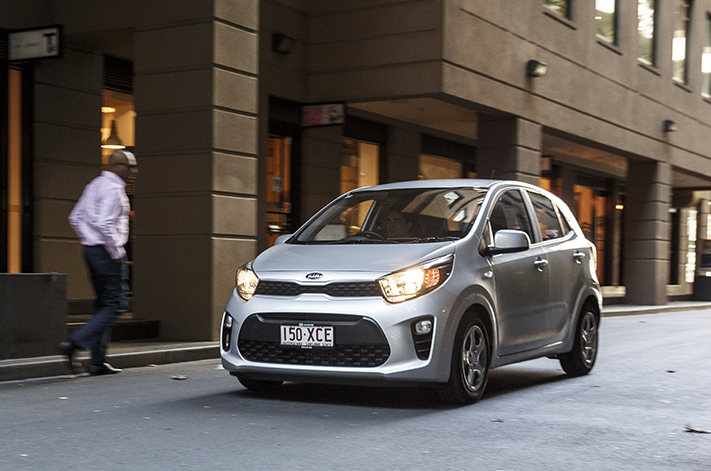
In 2017, we once again looked at how much car a very tight budget will get you, and unearthed 12 vehicles that cost less than $16,000. At the end of 2018, the game has changed and many of the previous cheap champs are out to pasture so you can look forward to a new angle on this in 2019.
And here’s another landscape that is constantly changing. At number seven, you wanted to know just which of the global car making giants owns which brands. We put together a selection of easy to understand slides, showing just how powerful some of the parent companies are.
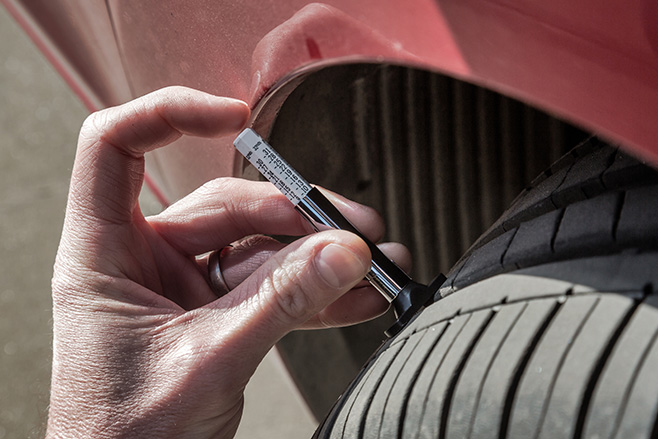
Back in 2015, we published a story that cleared up some of the confusion surrounding the minefield of replacing your car tyres. The test highlighted a number of surprises including some star performers and a real shocker. Despite its age, you are still flocking to the story for some gossip it seems.
Rounding out the top ten were two more popular stories about cheap hardware. At number nine, we looked at all the options in the SUV realm for less than $25,000, and found 10 examples that are easy to recommend.
And at number ten, a similar in-depth story brought you some good choices for a new car if you have no more than $20,000 to spend.
What a savvy bunch you appear to be! We hope all that saved cash can be put to good use this Christmas and help enhance a very happy new year.
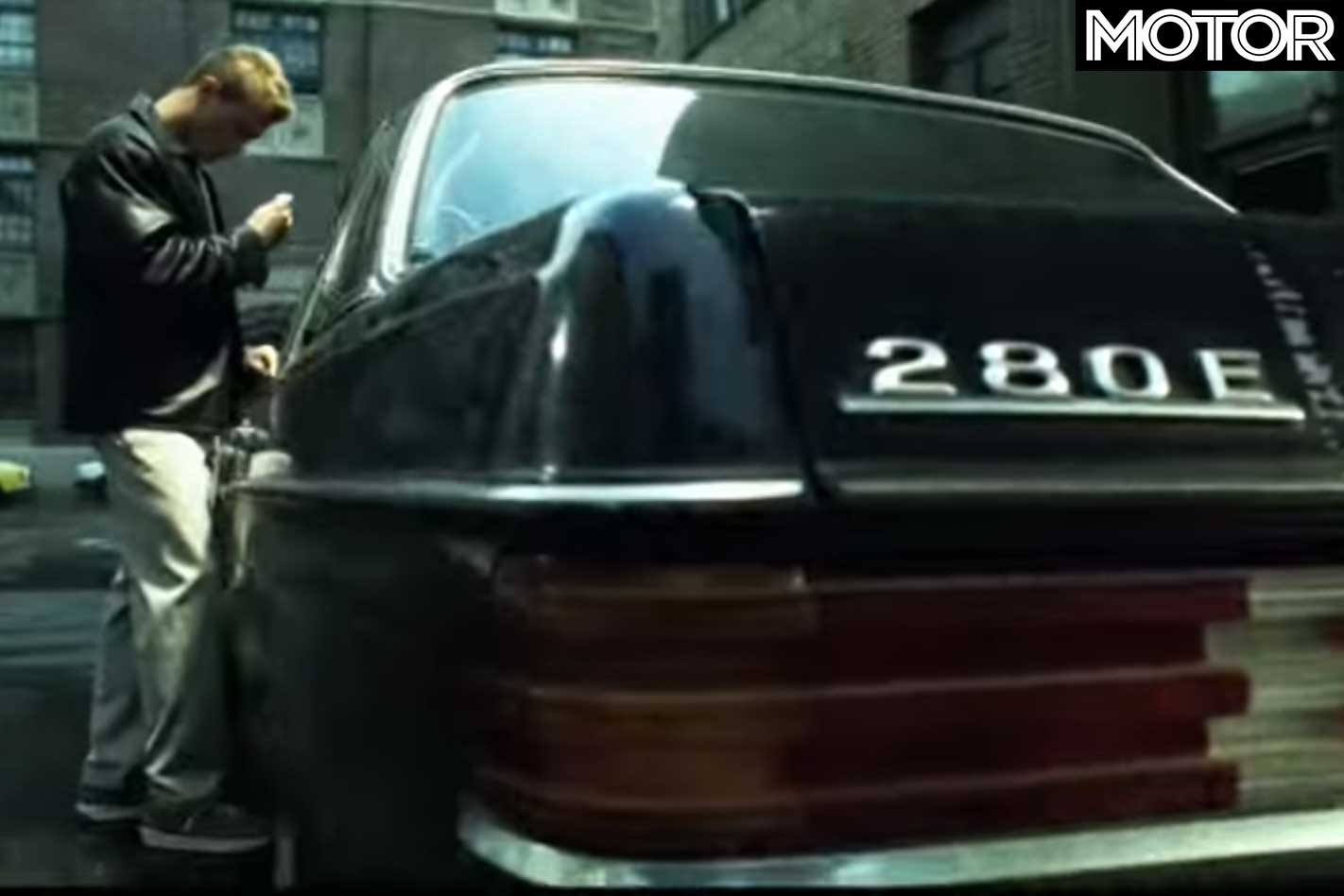
If you’re of a certain vintage, you’ll remember that old “Piracy – it’s a crime” ad that said, “You wouldn’t steal a car”, and therefore you shouldn’t download that BitTorrent of Blade: Trinity. It always seemed a pretty wobbly piece of finger-wagging.
Calling it “piracy” made it seem glamorous and exciting – the ad came out only months after the first Jack Sparrow movie – and also that the guy stealing the old 1970s 280E in the ad actually looked pretty badass. But the point is, we’re finally ready to put that ad to the test.
Because pirating cars is suddenly possible. If you’re unlucky, you’ve seen a 3D-printed electric motorbike designed and produced by a German company called NOWlab.
It looks like a motorbike designed by a blind person who has not only never seen a motorbike, but hates everyone who has, and is trying to get back at them by making their eyes hurt. It is, as the Germans would say, hässlich, not to mention unschön and widerwärtig – or, in English, fugly. On a scale of Clive Palmer to Idris Elba, it is a solid Steve Buscemi. It’s all jagged shapes and jarring angles, mounted on a pair of honeycomb wheels with run-flat tyres. It’s awful.
But of course, there’s no real reason it has to look like that – it’s just the overwrought result of a NOWlab geek watching Akira while eating a tainted weisswurst.
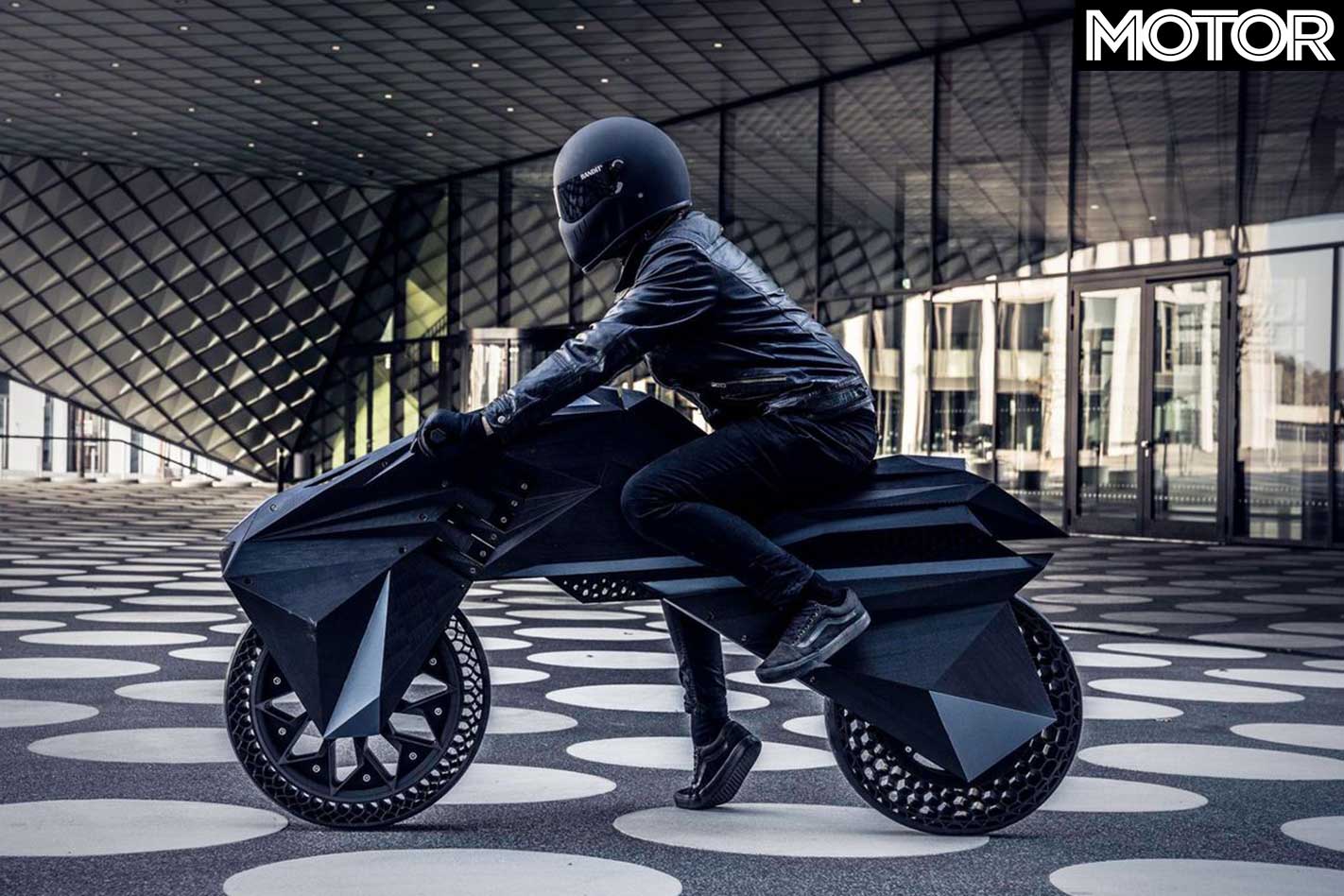
If they wanted, they could 3D-print any sort of motorbike they wanted… as could you, if you had the AMF (Additive Manufacturing Format) file – the 3D computer model that the printer recreates. If you pirated it, even. Hell, there’s no reason they would have to limit themselves just to motorbikes.
Which quickly and inevitably turns the mind towards thoughts of 3D-printing one’s self an Aventador. It wouldn’t be the first entirely 3D-printed car. Local Motors, based in Arizona, USA, touted the 2015 Strati as the world’s first 3D-printed car, an ugly little thing that looked like the lovechild of a dune buggy and an electric shaver.
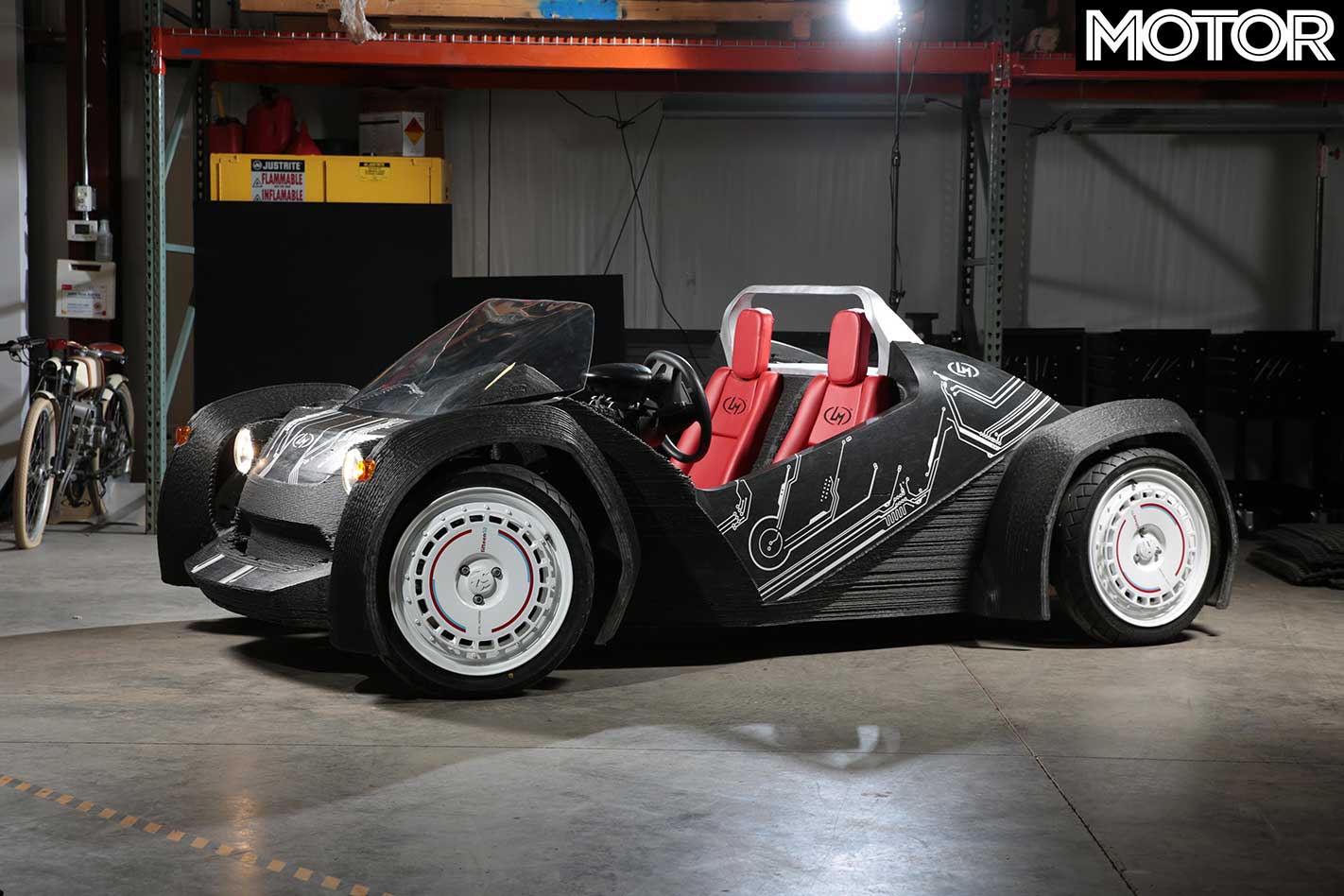
The difference is how fast 3D printing has evolved. The Strati looks like it was hacked out of plastic using a gardening fork: it has no smooth surfaces, just thousands of lines and ridges. It is, frankly, balls.
But just a few years later, material printing has taken some great strides, like a shoplifter in an RM Williams store. HRE Performance Wheels makes swanky rims for expensive cars in sun-baked Vista, California.
Well, HRE has unveiled the HRE3D+, which they are calling the world’s first 3D-printed titanium wheel. It is a thing of wonder: smooth, structurally impregnable, and since it requires vastly less metal than a Monoblok wheel (where each wheel is carved from a huge forged block, 80 per cent of which is removed as waste), it’s more efficient and (theoretically) cheaper to make.
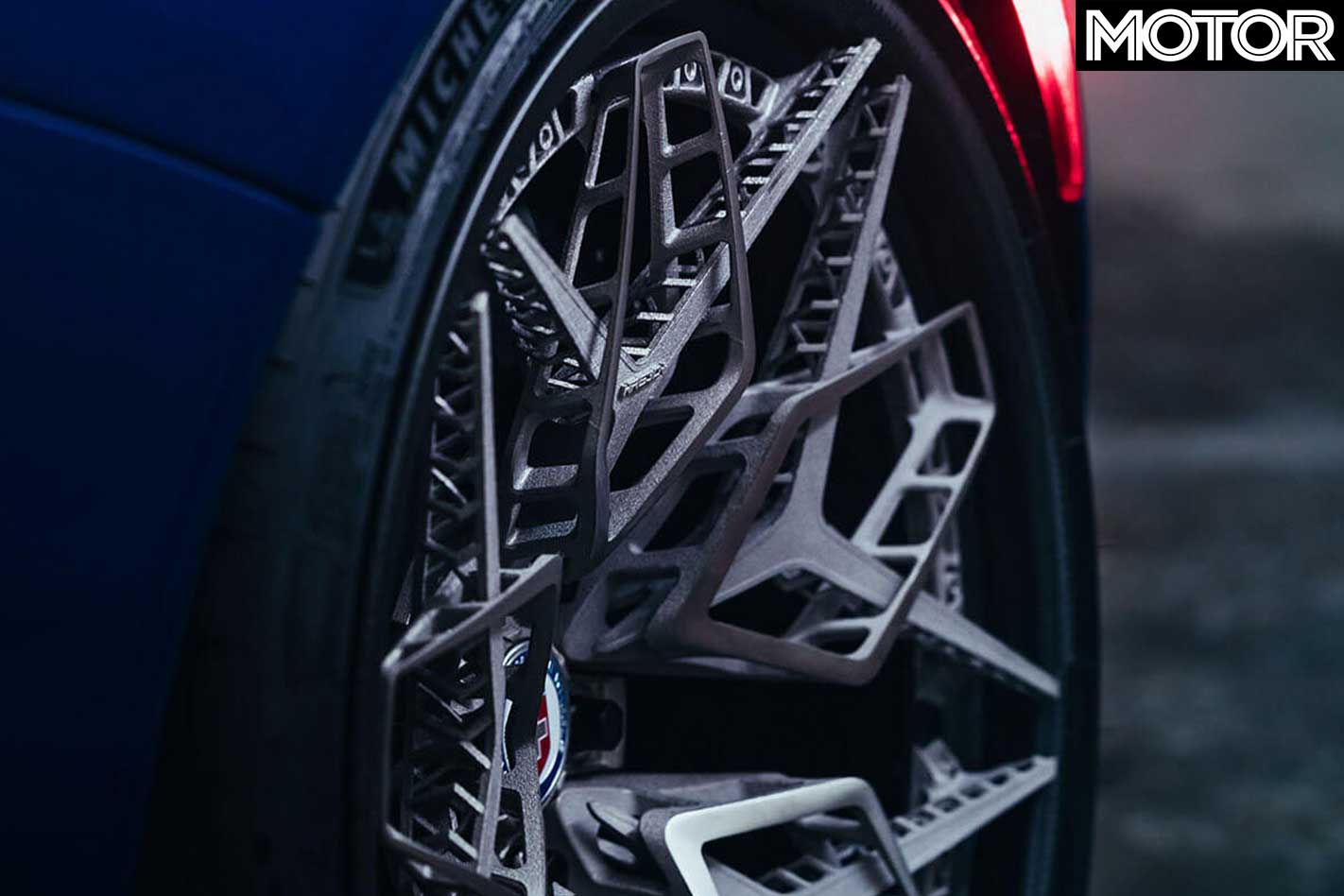
So if you could get your hands on the AMF file of a car… well, there’s theoretically nothing stopping you from pirating yourself a new ride. Out of titanium! And just like when you’re looking for knock-off Chanel handbags or a social media network purged of pro-democracy commentary, China might be the answer.
Staggering amounts of counterfeit goods come out of China – $200b to $600b worth per year, according to the US Commission on Theft of American Intellectual Property. The US Trade Representative, Robert Lighthizer, says that Chinese telecom companies may be “hijack[ing] Internet traffic and direct[ing] it through Mainland Chinese servers for possible collection and analysis”, just for the purpose of copying intellectual property. So every time a designer in Sant’Agata, or Maranello, or Stuttgart, or Bowling Green, Kentucky, sends a CAD model to the factory… well, there’s a chance that data is being hoovered up in Beijing, ready to be sold on the dark web, to an amoral car-pirate who has always wanted a 911 GT3 RS made completely out of titanium.
But not me. Because I wouldn’t steal a movie. And besides, there’s no way I’d ever be able to bolt all the bloody pieces together.
“She’s the last of the V8s… it’s the duck’s guts… 600 horsepower through the wheels.”
Forty years ago, the roads west of Melbourne rumbled to the sound of a Cleveland 351ci V8 as George Miller completed filming Mad Max. Its plot examined issues of violence, grief and revenge, but it’s best remembered as a celebration of horsepower, primarily thanks to the screaming, supercharged, nitro-fuelled Pursuit Special driven by Mel Gibson in his role as Max Rockatansky.
Melbourne’s urban sprawl is expanding rapidly, but the roads and scenery between Little River in the south, Bacchus Marsh in the north and Meredith in the west have changed little since 1978. Ruler-straight B-roads disappear into a heat-hazed horizon, intersecting the vast, straw-coloured fields that gave Mad Max its semi-apocalyptic vibe.
It might seem an odd place to test the Jaguar XJR575, but Coventry’s latest supercharged V8 limo is almost certainly its last. Jaguar head of design, Ian Callum, is on record as stating the new XJ, expected to appear in early 2019, will be bigger, roomier, filled with cutting-edge tech and look radically different to the traditional limousine.
It’s also expected to be powered purely by electricity, using technology transfer from the i-Pace crossover. The XJR575, then, is the last of the V8s.
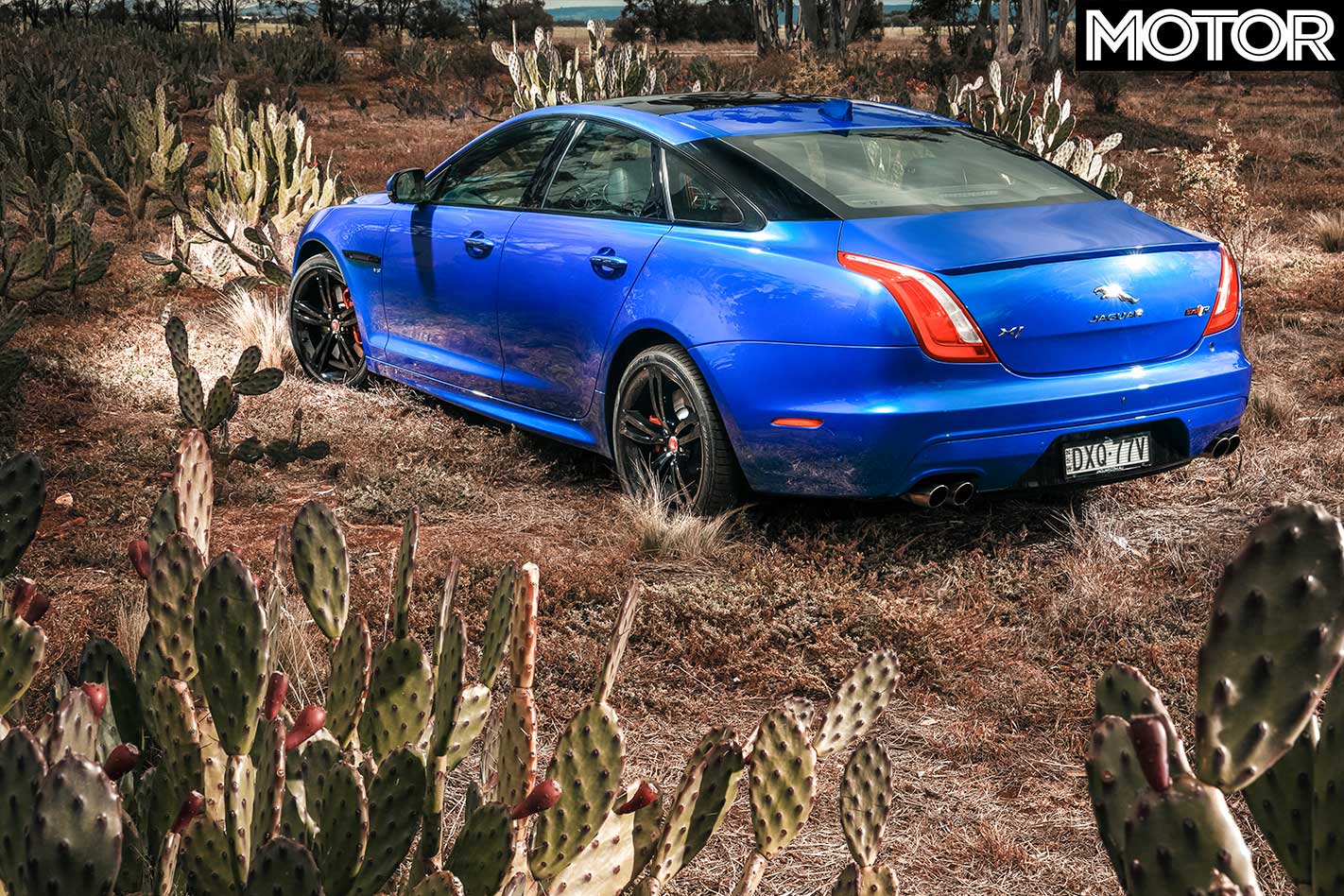
The XJ’s flagship status makes it the sensible choice to, i-Pace aside, lead Jaguar’s electrically powered charge. After all, the X350 XJ (2003-2009) was Jaguar’s first all-aluminium car and the current X351 a stylistic game changer, taking the ‘new Jaguar’ look debuted by the XF and developing it with a large, square grille and vertical tail-lights, intended to mimic a cat’s claws. In design terms, it was like replacing the Queen Mary with the Starship Enterprise.
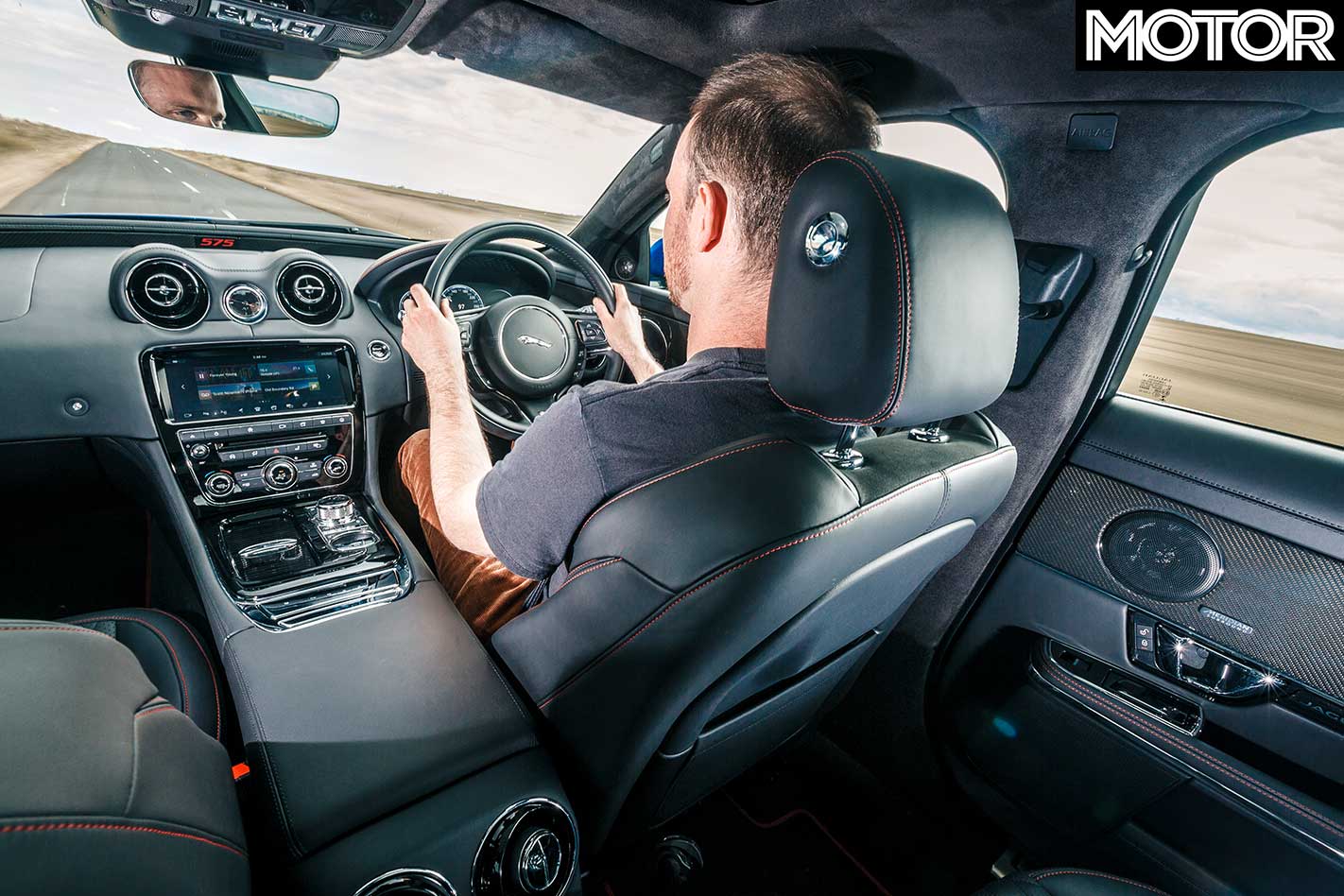
As you’d expect, the bold looks polarised at the time, but the benefit is a design that still looks fresh today, especially in the vibrant 575-exclusive Velocity Blue of our test car. If you’re colour-blind, you can spot an XJR575 via the revised rear spoiler, side sills, bumper, splitter and lower air intakes, which also feature gloss black surrounds. Twenty-inch wheels of the same hue shelter vivid red brake calipers, or you could just look at the badge. The unusual shapes and squinty headlights won’t be to everyone’s taste, but it is distinctive and its size – 5.1m long and 1.95m wide – lends it plenty of presence.
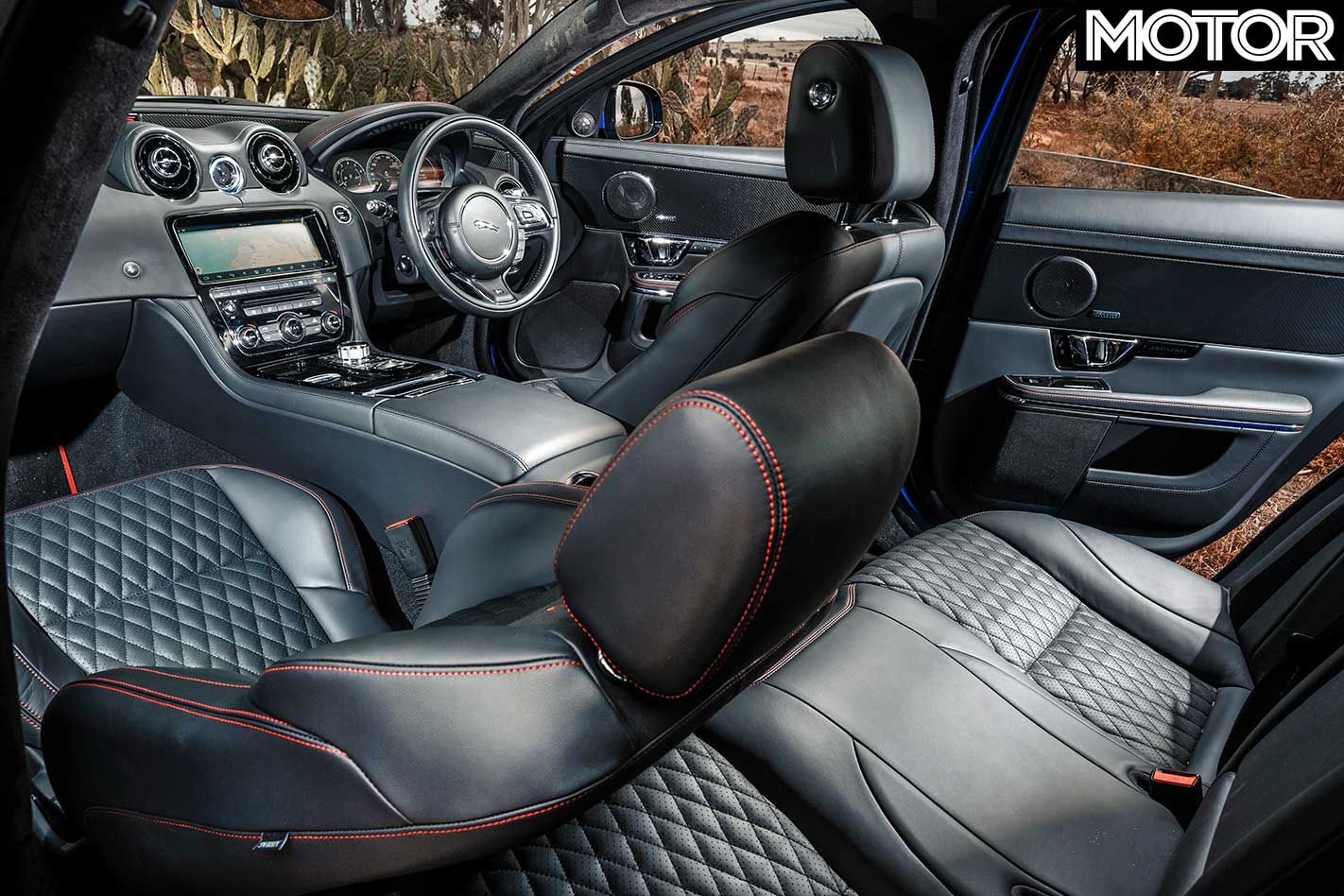
Inside, there are more badges on the sills, dash and diamond-quilted sports seats. The interior of an XJR575 is a quirky place, but I love it. Some details frustrate: the touchscreen isn’t the world’s slickest, figuring out the digital dash’s sub-menus takes practice, the rotary gear selector is great until the first three-point turn and why is the steering wheel rim split into two sections?
Nonetheless, the materials are lovely, glossy carbon weave, acres of leather and the fluffiest Alcantara known to man, the roof and pillars covered in what feels like shagpile bath towels. Best of all, though, is the enormous crescent that encircles the dash and joins the tops of the doors like the rim of a giant leather-trimmed bathtub.
According to Jaguar, one of the biggest bugbears of current XJ owners is the lack of interior space, particularly those in the far-east who prefer to be driven than drive. To be honest, the XJR575 isn’t the ideal chauffeur vehicle.
The ride is comfortable enough on smooth roads, but busy on broken tarmac to the point that selecting Dynamic for stiffer dampers almost feels to improve matters – it’s firmer, but somehow more cohesive. Such is the contradiction of the sporting limousine: the XJ, particularly in R guise, wants to involve rather than isolate in the manner of the equivalently priced Mercedes-Benz S560.
Thankfully, it’s not all straight roads out here. Towards the town of Meredith a series of sweepers curve steeply downhill, each a little tighter than the previous. A Ford Focus RS would eat it up, but it’s a stern test of something weighing two tonnes.
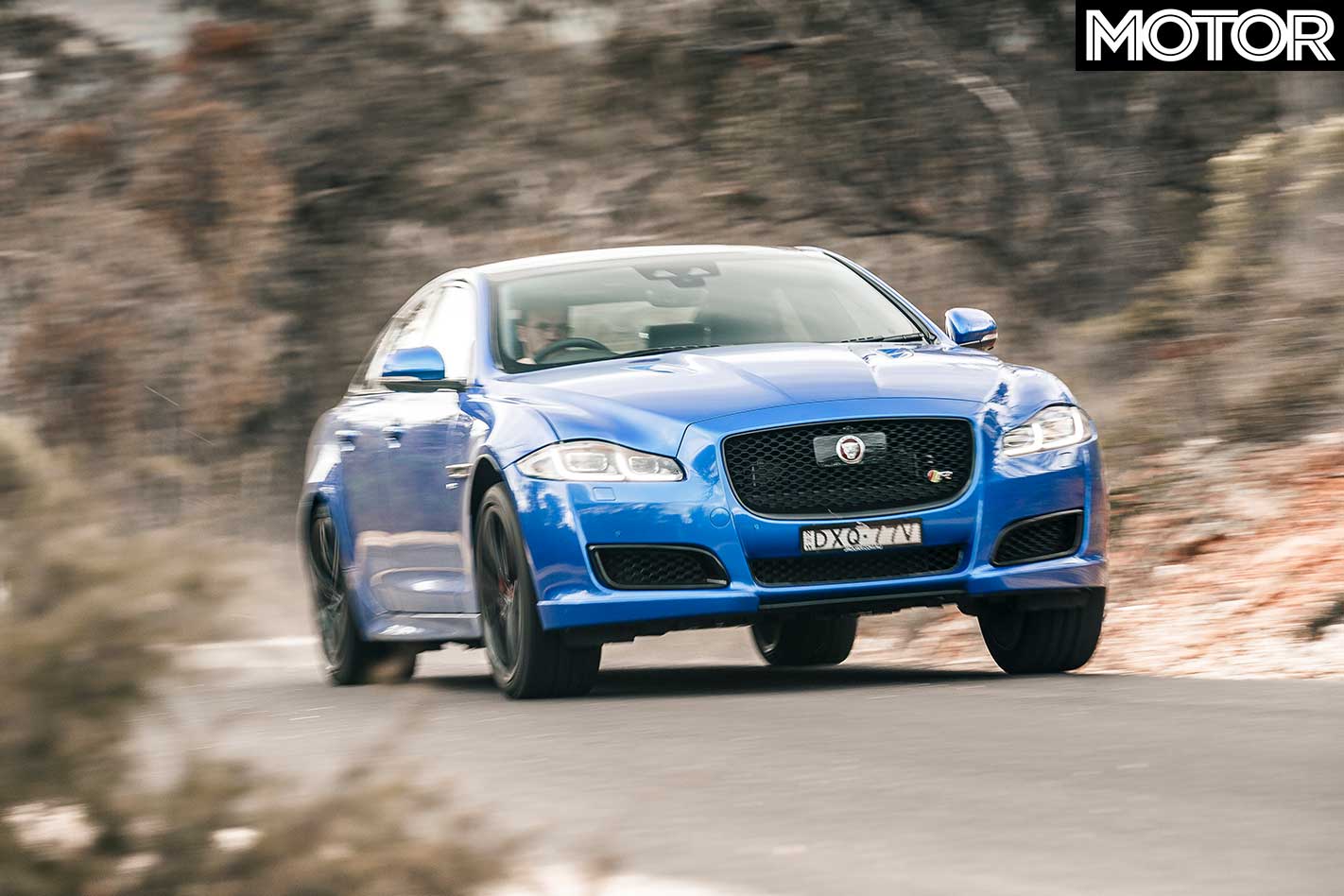
The Jag’s steering is accurate, responsive and well-geared, but a little mute in its feedback, making caution the better part of valour for initial dynamic explorations. Quickly it becomes clear the XJR575 has much deeper reserves than initially apparent. In fact, it comes alive as the tyres start to squirm, edging onto its tiptoes rather than sinking into an understeering sulk.
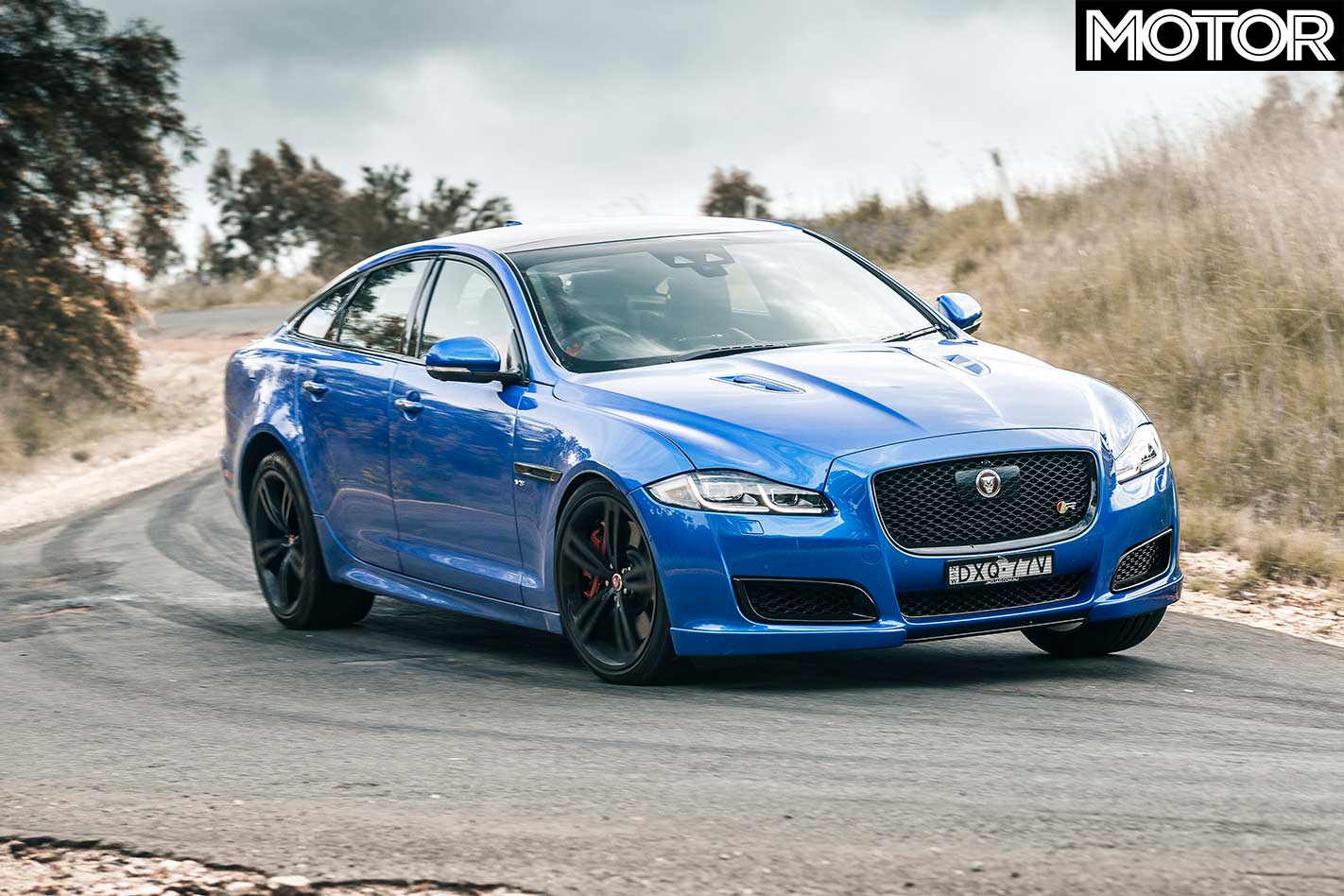
Grip levels are very strong. The XJR575 wears plenty of rubber, Pirelli P Zeros measuring 265/35 at the front and 295/30 at the rear, though it leans on them very hard, the pillow-soft tyres showing early signs of wear after even our limited stints of hard driving.
Nonetheless, there is tremendous balance; at the limit of grip it feels poised and gives the driver options. Gentle understeer can be quelled with a lift of the accelerator, while a neutral stance can easily become one of slight oversteer with more throttle, antics the TracDSC mode is happy to allow, sitting with its feet up until actually required.
With the electronics deactivated the XJR575 is the consummate drift car. Jaguar Land Rover’s chief engineer, Mike Cross, is an extremely accomplished oversteerer and his familiarity with opposite lock is evident in the progressive way the big Jag loses traction.
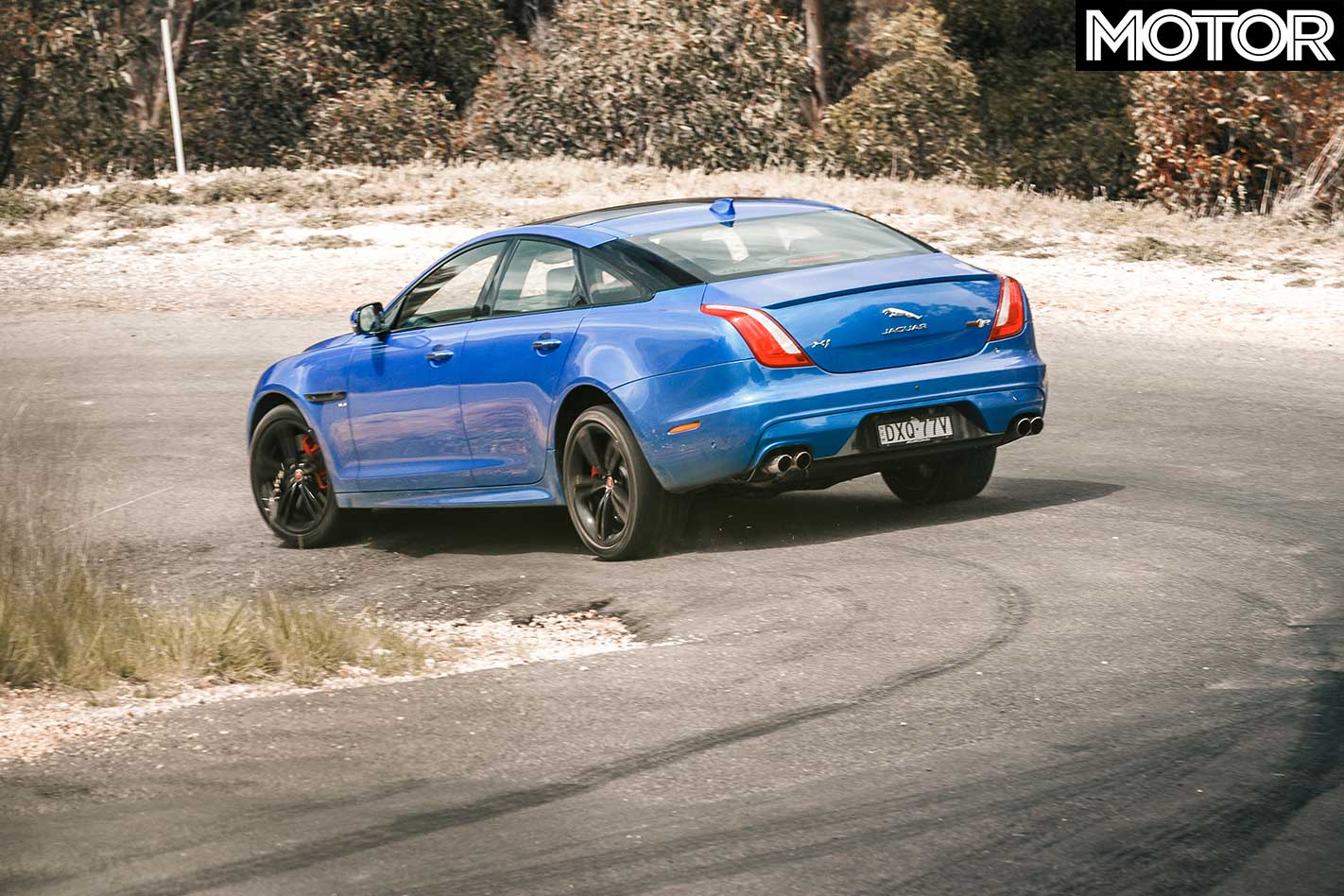
Ultimately, the XJR can’t escape its weight. The brakes work hard, though it stops from 100km/h in a very respectable 34.79m, and even in Dynamic the suspension is quite soft, so inputs need to be telegraphed early as there’s the slightest delay before a response occurs. There’s also the occasional audible clunk from the front end, which isn’t ideal in a $300,000 car.
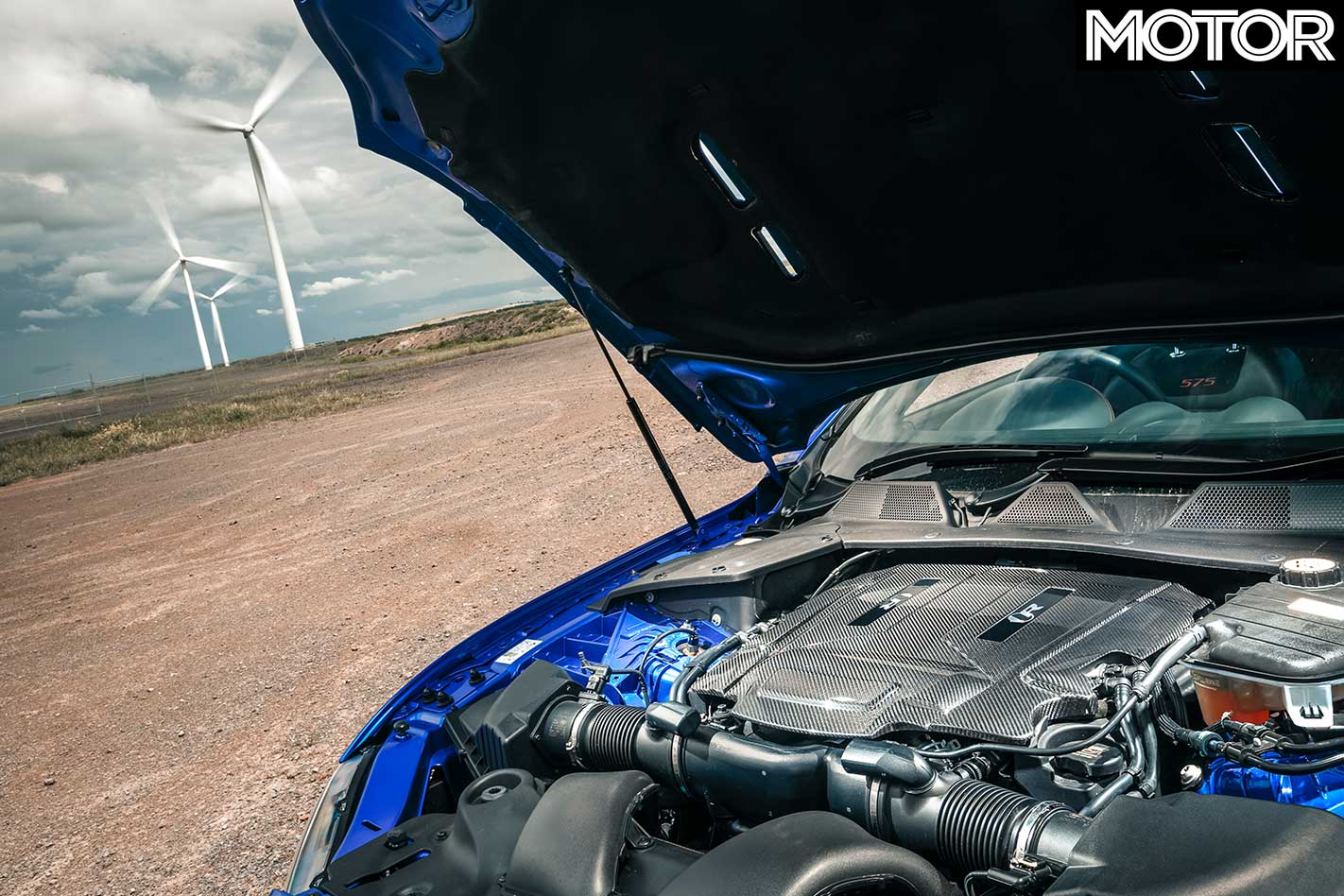
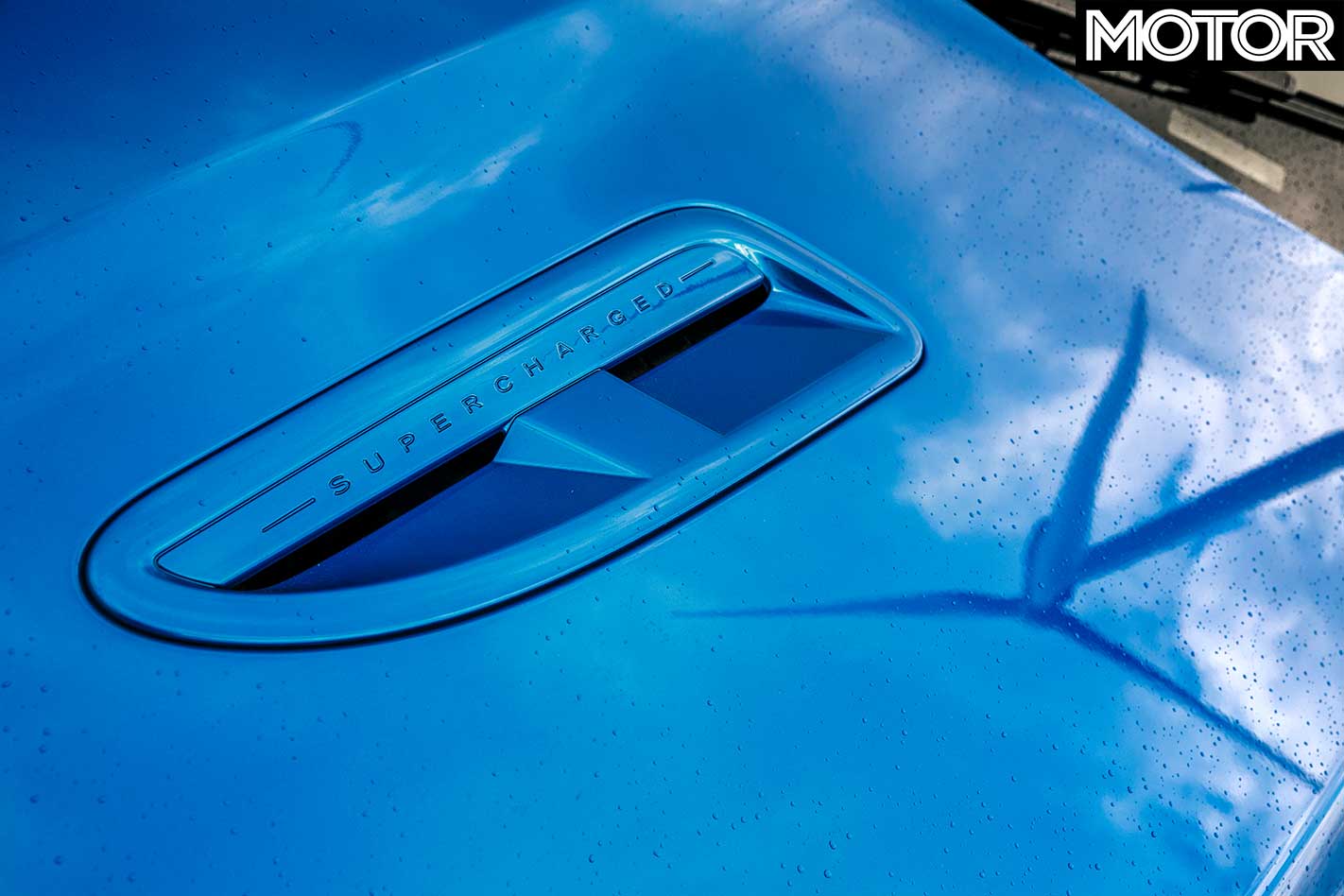
A much more frequent noise is the burble from the V8 under the bonnet. Unlike Max’s Interceptor, the XJR doesn’t manage 600bhp, but 567bhp isn’t far short and it doesn’t need nitro to do it, just 5000cc and a supercharger. In Aussie-speak, that’s 423kW backed by a fat 700Nm in the mid-range.
There isn’t the shove from just above idle typical of the latest turbocharged Germans, but Jag’s blown bent-eight counters with a seamless surge of grunt that builds from a torrent to a flood as the needle sweeps across the dial.
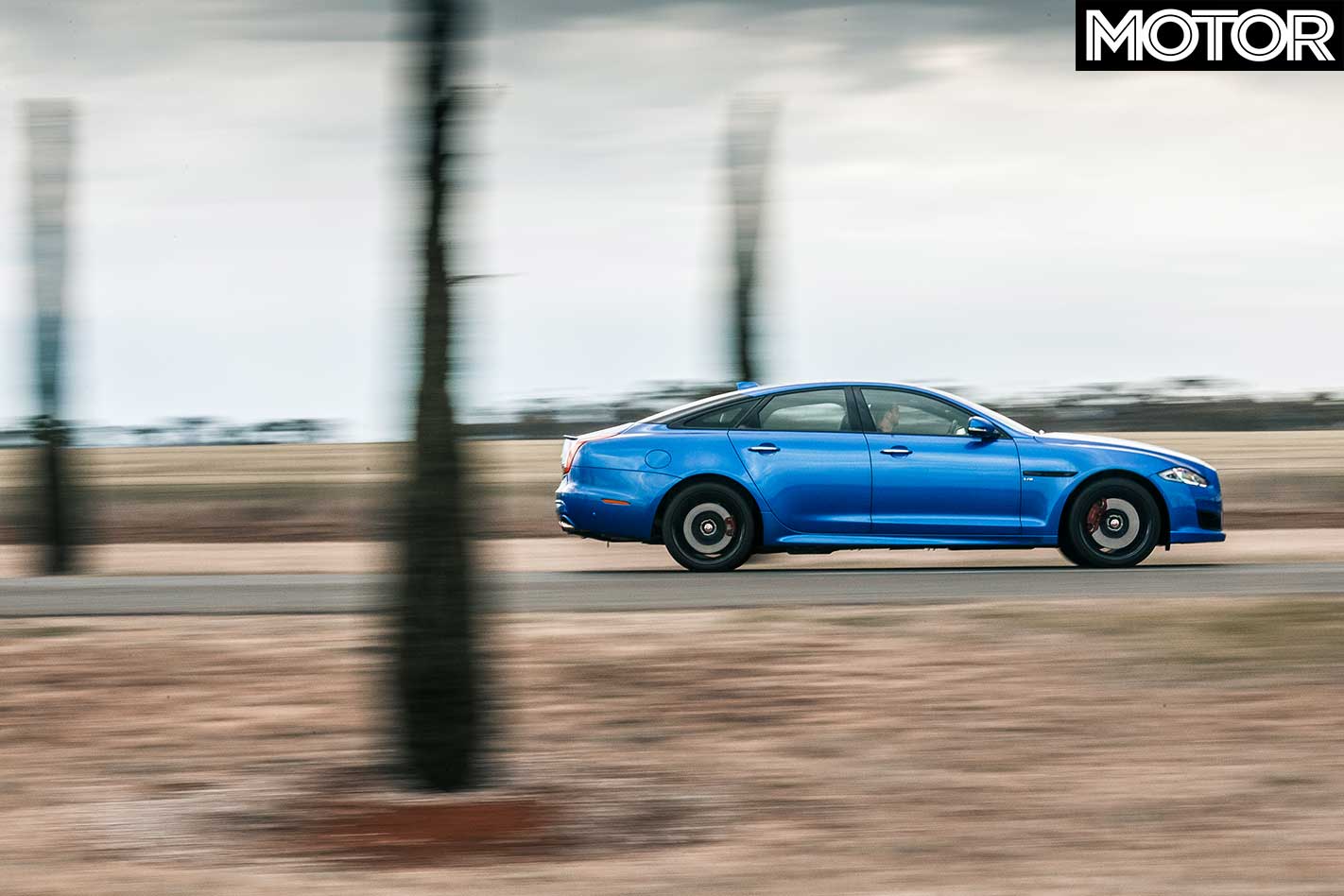
As ever with a supercharged engine, the linear nature of the power delivery somewhat disguises the XJR’s potency. It’s a very, very fast car, as the 12.45sec quarter mile at 191.79km/h illustrates. It’s fairly easy to launch, too, recording 4.46sec to 100km/h, within fractions of the 4.4sec claim, and it monsters the mid-range overtaking test, blitzing from 80-120km/h in 2.34sec.
The smoother power delivery also makes for an easier, more rewarding driving experience than that offered by harder-hitting, but more unpredictable turbo’d rivals. Equally, the eight-speed auto is the perfect partner, smooth and unobtrusive in daily use yet quick enough in its manual changes for any supposed speed difference compared to a dual-clutch to feel a bit irrelevant.
The biggest disappointment with this otherwise gem of an engine is its noise output never reaches the same intensity as its acceleration. The identically powered Range Rover Sport SVR bellows and snarls and crackles, yet the Jaguar is altogether more polite. It’s a soundtrack that feels entirely appropriate for the more mild-mannered XJ Autobiography, but the ultimate XJR surely deserves more attitude? Those who don’t appreciate the racket could always turn the exhaust button off.
Sporting limousines are by definition a contradiction. Most sacrifice outright ability for greater comfort and refinement; the Audi S8, BMW M760Li and even the Mercedes-AMG S63 L feel built more for the autobahn than the Alps.
Jaguar takes a different tack; the XJR is unapologetically a driver’s car. As such, it’s objectively flawed: the occasionally terse ride is an everyday annoyance and it’s almost hilariously short of traction in the wet.
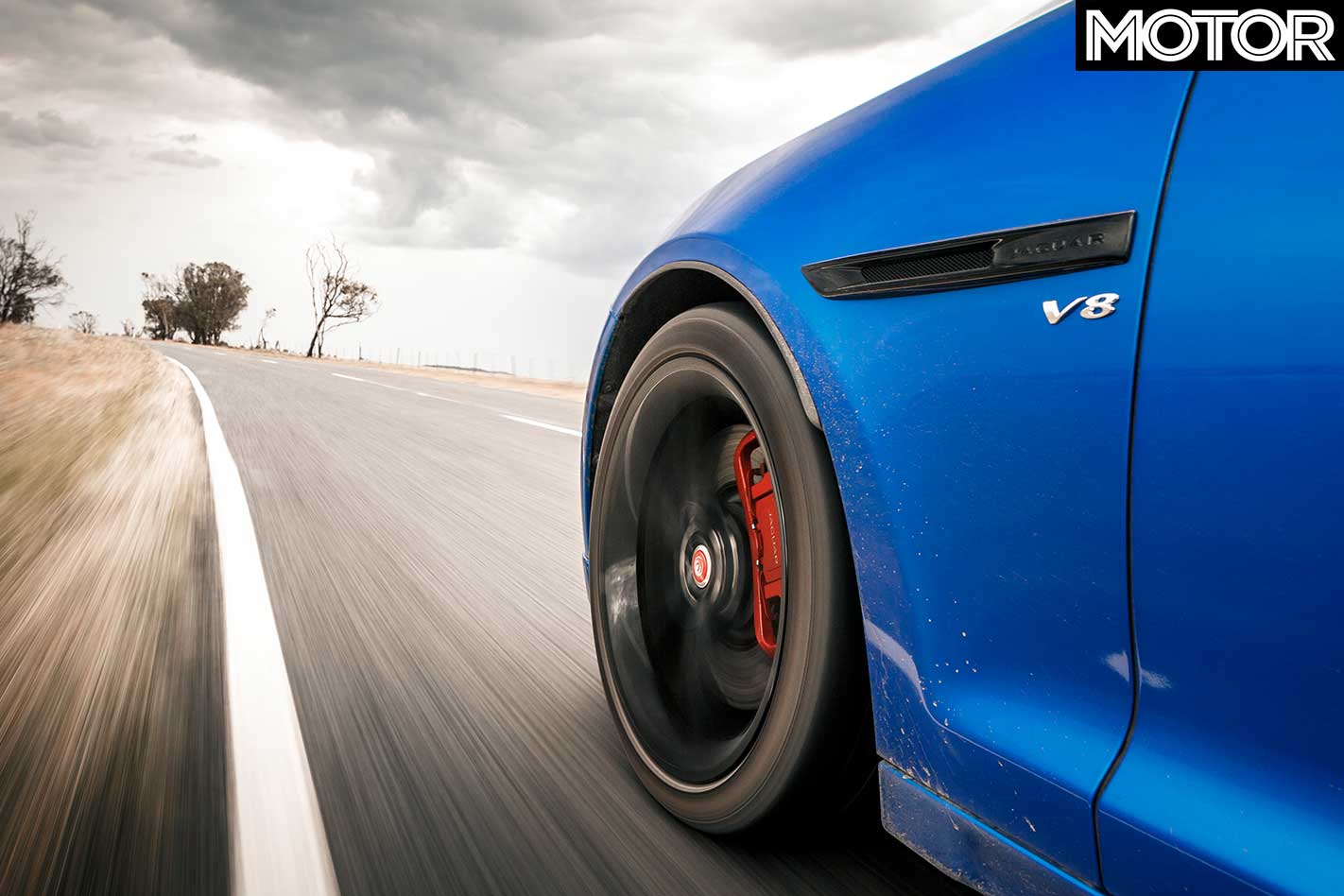
Yet it’s also an extremely easy car to fall for – a Panamera Turbo is better in virtually every area bar price, yet personally I’d rather have the Jag. It’s living on borrowed time – in fact, in Europe the XJR575 is already dead thanks to the introduction of the new WLTP emission regulations. It’s a shame Jaguar is unlikely to make cars like this anymore; it’s very good at it. Ian Callum promises the electric XJ will still be a driver’s car, but it won’t be like this one.
This one’s the last of the V8s, it’s the duck’s guts.
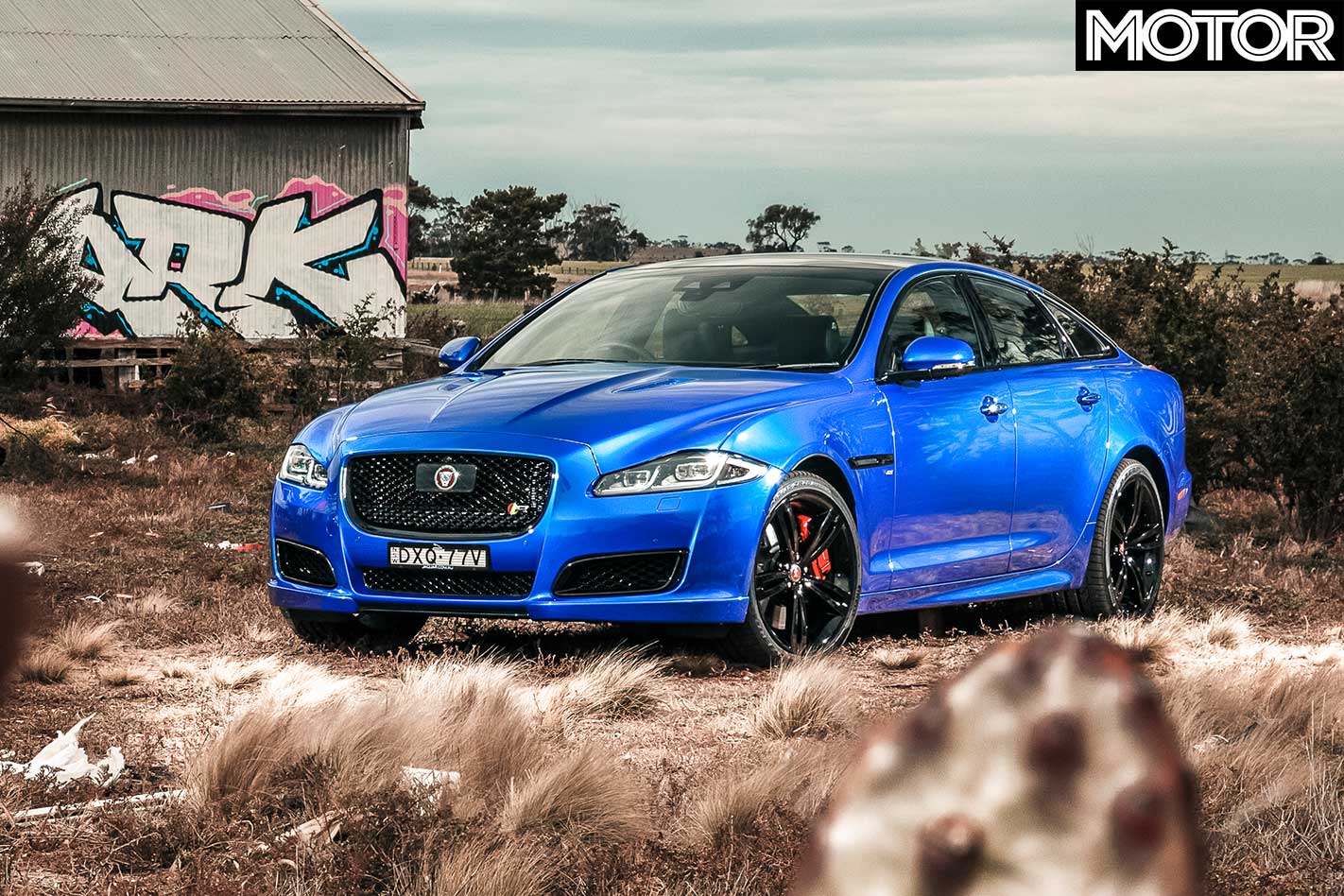
FAST FACTS 2018 Jaguar XJR575
BODY: 4-door, 5-seat sedan DRIVE: rear-wheel ENGINE: 5000cc V8, DOHC, 32v, supercharged BORE/STROKE: 92.5 x 93.0mm COMPRESSION: 9.6:1 POWER: 423kW @ 6250-6500rpm TORQUE: 700Nm @ 3500-4500rpm WEIGHT: 1875kg POWER-TO-WEIGHT: 226kW/tonne TRANSMISSION: 8-speed automatic SUSPENSION: double wishbone, adaptive dampers, anti-roll bar (f/r) L/W/h: 5130/1950/1460mm WHEELBASE: 3032mm TRACKS: 1626/1604mm (f/r) STEERING: electrically assisted rack-and-pinion BRAKES: 380mm ventilated discs, 2-piston caliper (f); 376mm ventilated discs, single-piston caliper (r) WHEELS: 20 x 9.0-inch (f); 20 x 10-inch (r) TYRES: Pirelli P Zero; 265/35 ZR20 (f); 295/30 ZR20 (r) PRICE: $306,475 ($312,735 as tested)
PROS: Dramatic looks; supercharged stonk; balance CONS: Needs more noise; ride; brake feel; last of its kind RATING: 4 out of 5 stars
The Strip
| Jaguar XJR575 | |
| 0-10km/h | 0.48sec |
| 0-20km/h | 0.88sec |
| 0-30km/h | 1.25sec |
| 0-40km/h | 1.63sec |
| 0-50km/h | 2.01sec |
| 0-60km/h | 2.41sec |
| 0-70km/h | 2.95sec |
| 0-80km/h | 3.48sec |
| 0-90km/h | 3.89sec |
| 0-100km/h | 4.46sec |
| 0-110km/h | 5.10sec |
| 0-120km/h | 5.80sec |
| 0-130km/h | 6.52sec |
| 0-140km/h | 7.27sec |
| 0-150km/h | 8.09sec |
| 0-160km/h | 9.08sec |
| 0-170km/h | 10.08sec |
| 0-180km/h | 11.12sec |
| 0-190km/h | 12.22sec |
| 0-400m | 12.45sec @ 191.79km/h |
| 80-120km/h | 2.34sec |
| 100-0km/h | 34.79m |
| Speed in gears | |
| 1st | 73km/h @ 6800rpm |
| 2nd | 109km/h @ 6800rpm |
| 3rd | 163km/h @ 6800rpm |
| 4th | 206km/h @ 6800rpm |
| 5th | 267km/h @ 6800rpm |
| 6th | 300km/h @ 5950rpm* |
| 7th | 300km/h @ 4990rpm* |
| 8th | 300km/h @ 3970rpm* |
Heathcote Dragway, 16˚C, dry. Driver: Scott Newman *Manufacturer’s claim
Tiny dancers: Mazda CX-3 Maxx and Toyota C-HR 2WD
AUSTRALIA’S second-best-selling small SUV has much going for it – striking design, stylish interior, great seats, strong performance, quality engineering – but the Mazda CX-3’s biggest ace is choice. Nothing else in its class offers the dazzling smorgasbord of petrol, diesel, front-drive, all-wheel drive, auto and manual flavours. Sixteen all up, in fact.
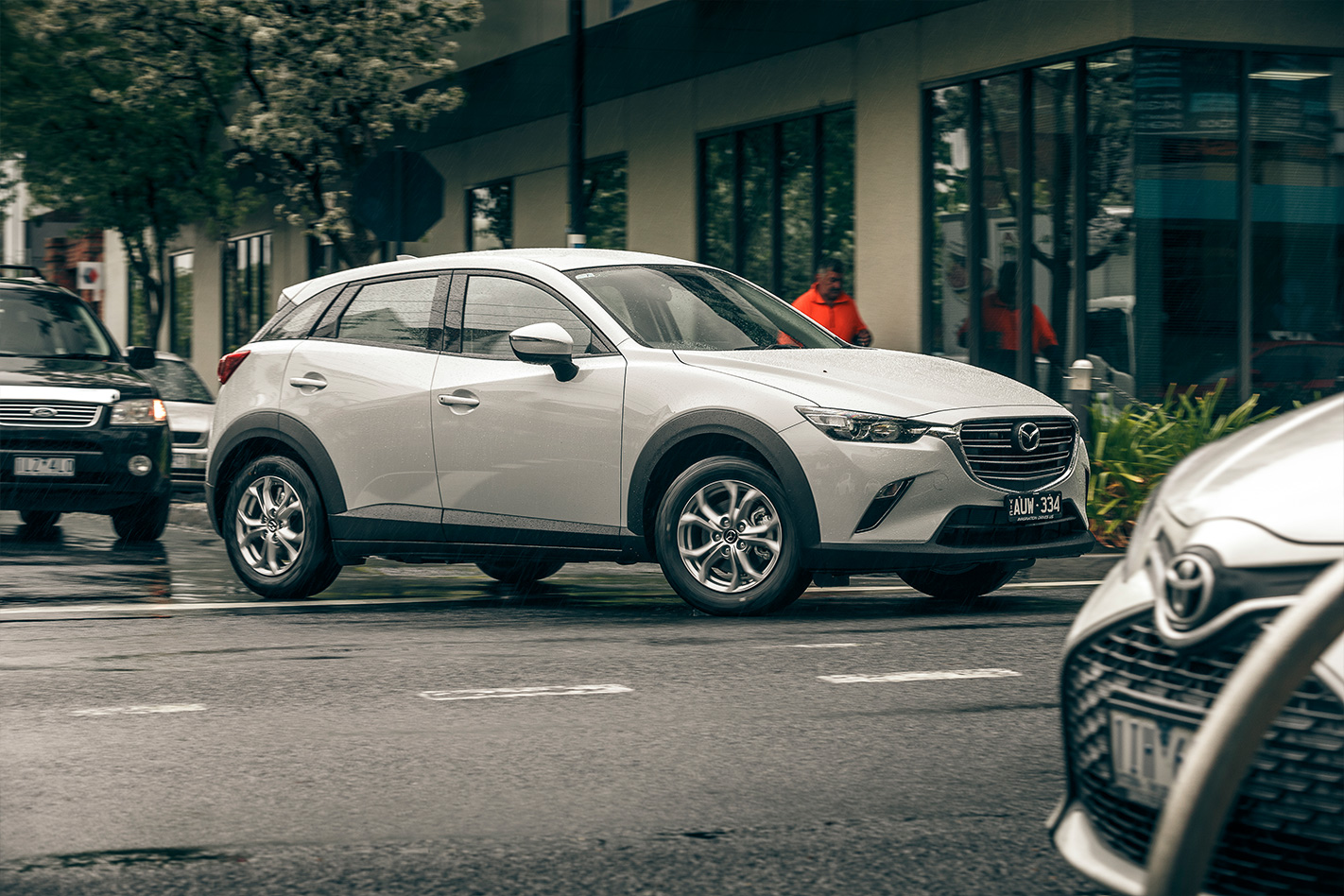
Lots of choice, and within that lies some real gems – namely the AWD, since it upgrades the rear suspension from the FWD’s torsion beam to a De Dion set-up. Yes, it’s also auto-only, but in this case that hardly matters.
In late 2015, an sTouring AWD auto chase car in our Mazda MX-5 meets Toyota 86 GTS comparo astonished all with its ability to keep up with the hard-charging sports cars over demanding mountain roads, displaying un-SUV-esque handling and roadholding prowess, backed up by a punchy, rev-happy 109kW/192Nm 2.0-litre heart and quick-shifting six-speed torque-converter auto that in Sport mode held on to each ratio right up to the limiter.
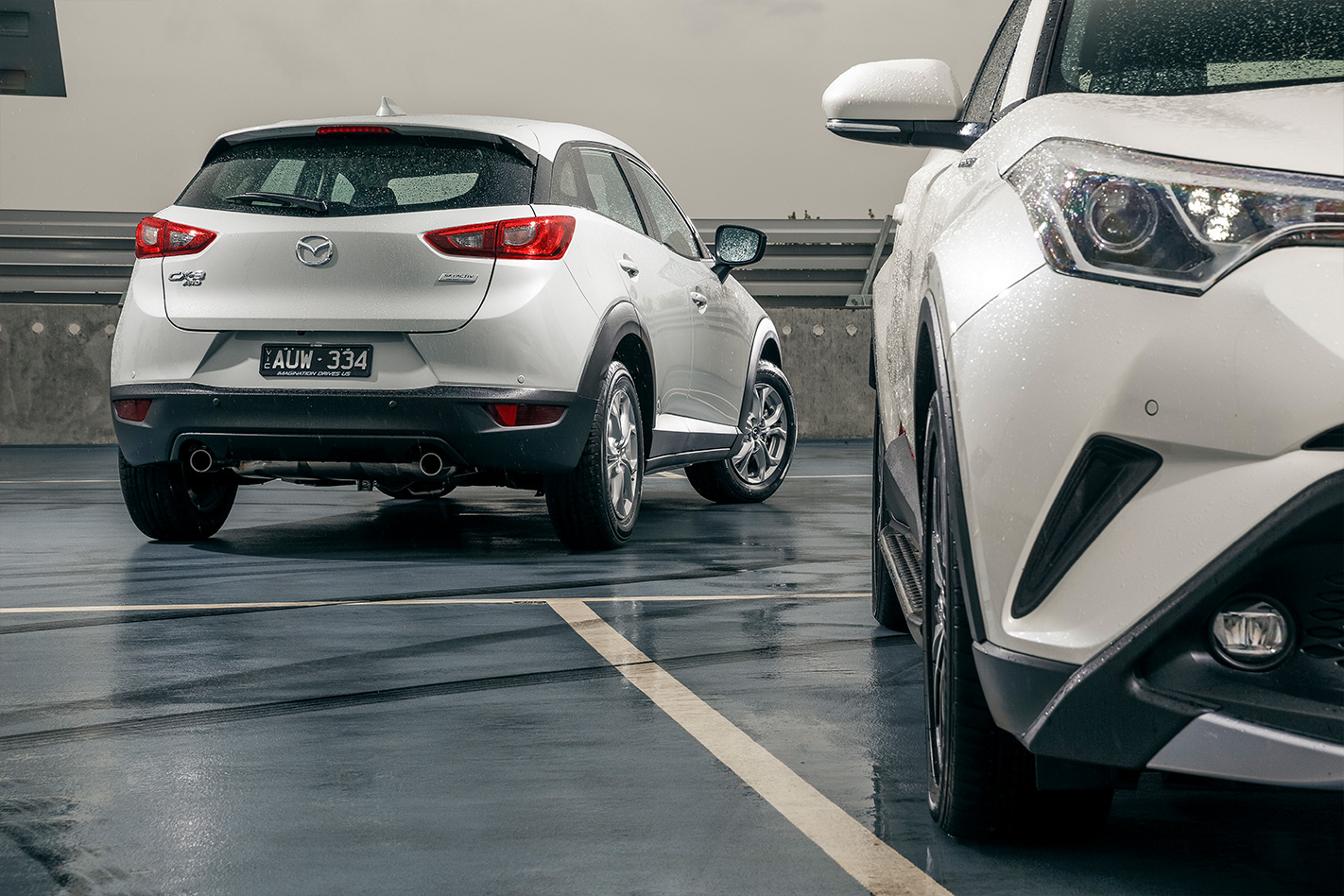
We still talk about that CX-3’s athleticism in the office today. But it wasn’t without flaws. At the time, we complained about tiresome engine and road noise intrusion, but September’s Series II facelift – with its upgraded cabin finish, specification, power outputs and chassis tune – has quietened things down a tad on both fronts, while the $27,690 Maxx Sport AWD auto’s 16-inch rubber takes the edge off the firm ride as well. Lusty, lively and lovely to behold, Mazda’s littlest SUV upstart in this guise fits like a glove – a form-fitting fencing one for sparring with warm hatches.
In contrast, the Toyota C-HR manual’s coupe-on-stilts styling suggests a return to the superficial ‘form over function’ softness from the brand’s more comic back-catalogue tat like the ’90s Paseo, especially as the 85kW/185Nm 1.2-litre four-pot turbo seems incongruously tiny beneath that broad bonnet. A CVT with or without all-wheel drive are the only other options, too. So not exactly spoilt for choice.
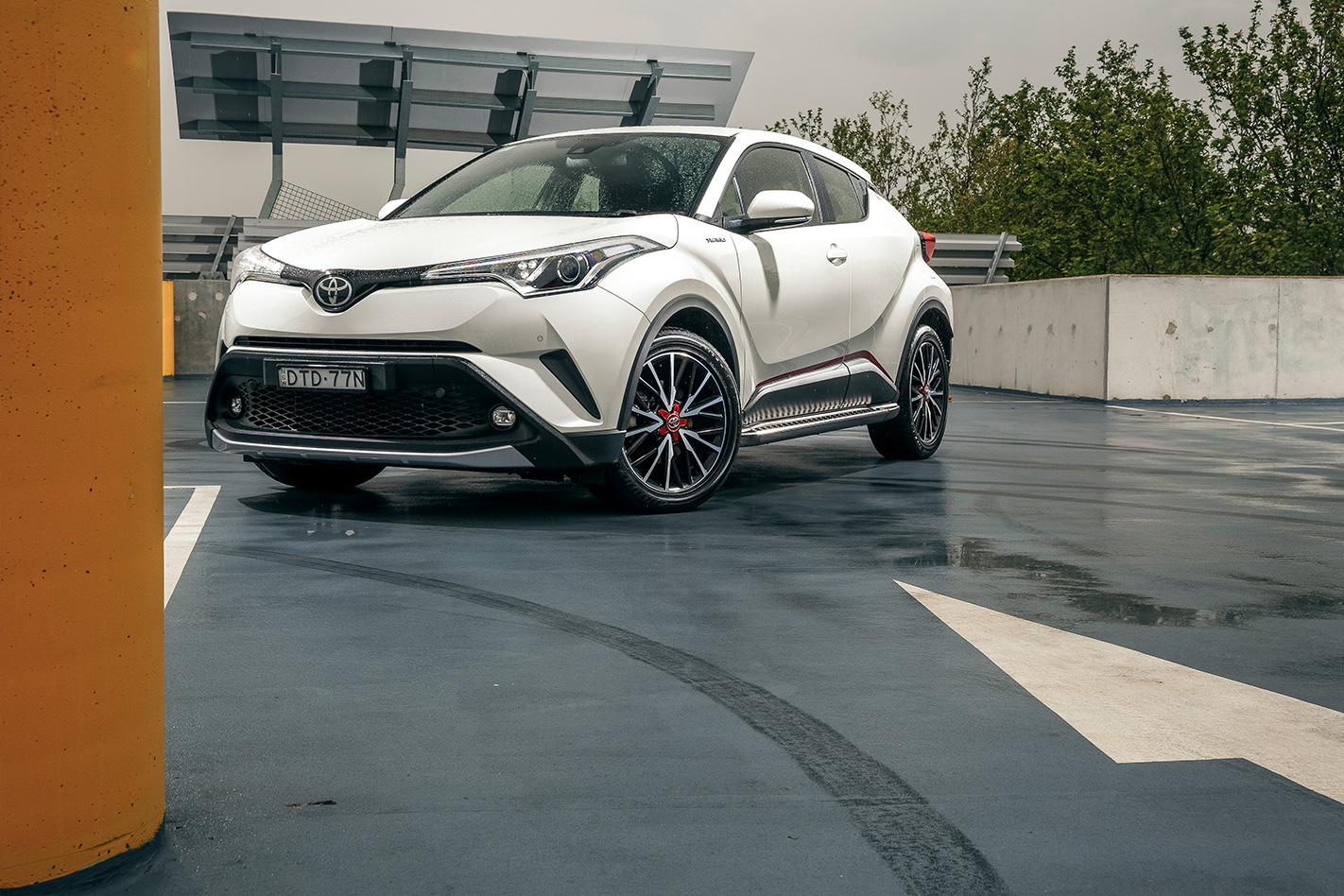
Yet the C-HR’s rigid body is underpinned by the company’s impressive all-new Toyota New Global Architecture (TNGA) structure that elevates the other Japanese small SUV a league or two higher than most for suspension suppleness (there’s a double wishbone rear-end back there), steering connection and chassis refinement. If it wasn’t for the anime looks, you’d swear such fluency is only the provenance of the French. If only most premium SUVs offered such cultured manners.
There’s more. The son-of-’86 six-speed manual shifter is a joy (thankfully, as it needs to be rowed quite regularly to get the most from that slick turbo powertrain), the elegant dash is a statement in sparse, solid, contemporary design, the generous packaging provides ample space for adults as well as heaps more cargo capacity than the limited CX-3, while standard kit includes adaptive cruise control, auto-high beams and AEB.
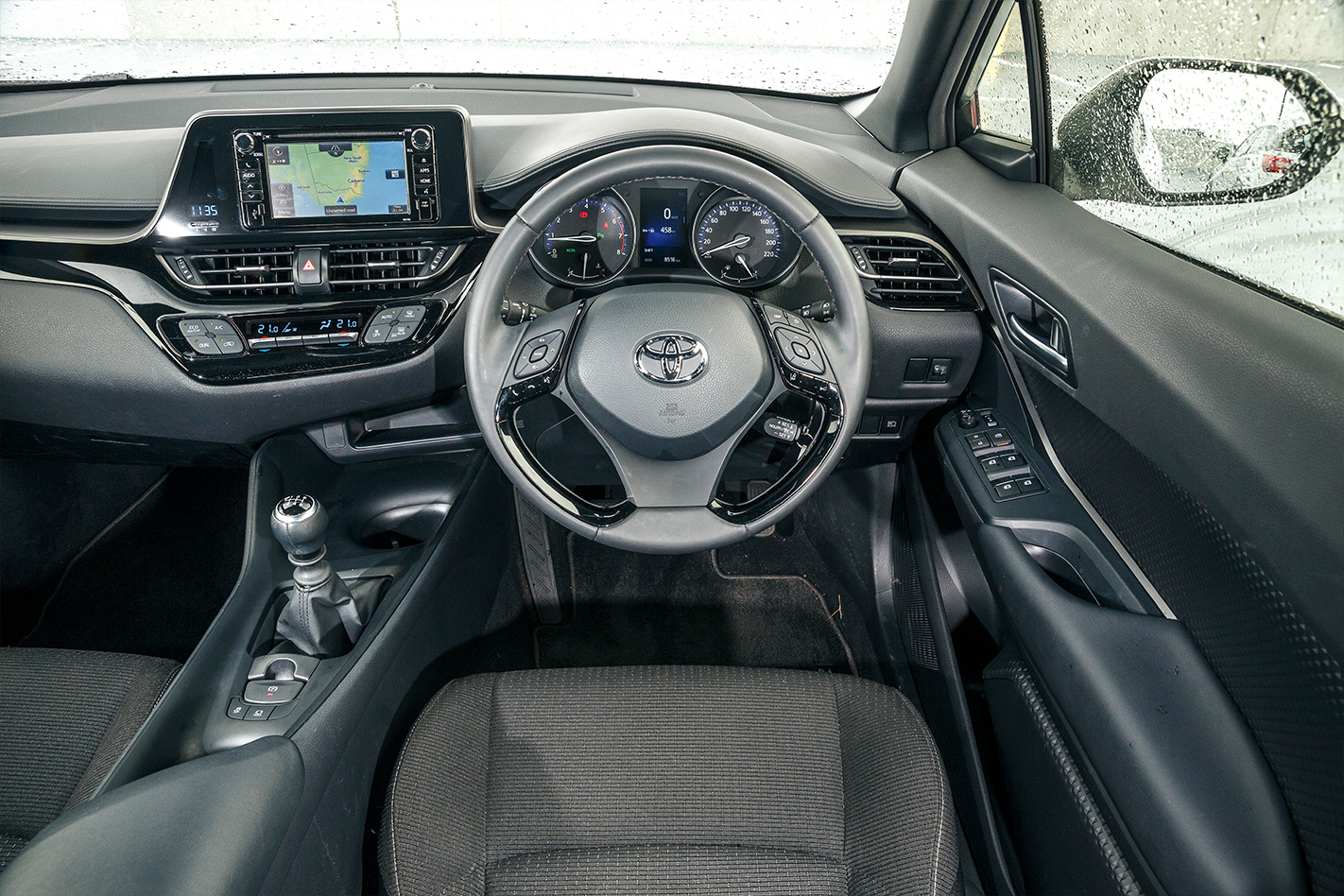
A small-SUV comparison champion within these pages, the C-HR feels and drives like it’s been over-engineered. That said, as with most cars with well-sorted steering and suspension, the Toyota’s chassis always seems like it could do with a lot more power. That unusual upswept side glasshouse and shallow rear window also limit reversing vision, forcing an over-reliance on the camera sited within a very dated and fiddly centre touchscreen. The Corolla’s latest multimedia system cannot come soon enough. Never mind. It all still works fine.
In a nutshell, then, the base C-HR manual at $26,990 is fun to just let loose in, with an eager and willing powertrain, steering connection and reactions to carve through corners quickly and suspension travel to glide over urban bumps beautifully. Don’t be fooled by the bold and brash exterior looks; this Toyota small SUV is anything but superficial.
Mediums well done: Ford Escape Ambiente and Holden Equinox LS
SLIGHTLY random fact: the Ford Escape and Holden Equinox are dimensionally roughly equal to their respective early Falcon and EJ/EH ancestors of the 1960s. And therein lies an amazing coincidence (or is it truth?) about medium SUVs – they actually represent the size and footprint Australians have always loved. No wonder families across the land are flocking to them.
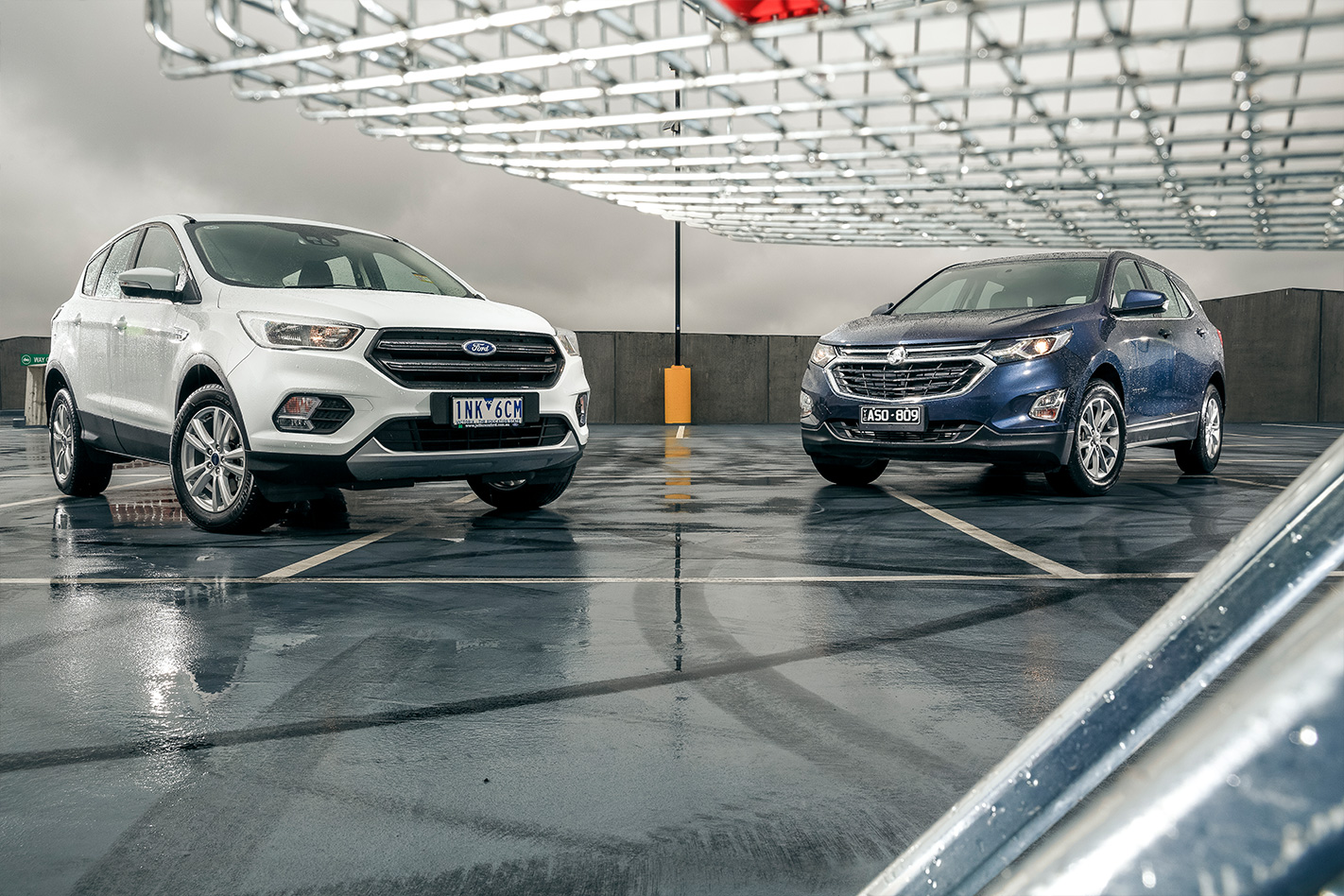
Not these two, though. Both have struggled to gain traction with consumers despite keen pricing, very competitive packaging, progressive dynamic characteristics and above-average aftersales care. What gives, Australia?
We’ve long banged on about how underrated the German-engineered, Spanish-made Escape (and its pre-facelift Kuga predecessor) has been since launching in 2013, and in $28,990 Ambiente manual guise, few mid-sized crossovers are as delightful. The 2016 makeover ushered in a welcome dash overhaul with Ford’s excellent SYNC3 multimedia interface, topping a long list of features that also includes sat-nav, DAB+ digital radio, climate control and – since MY18 – AEB and alloy wheels.
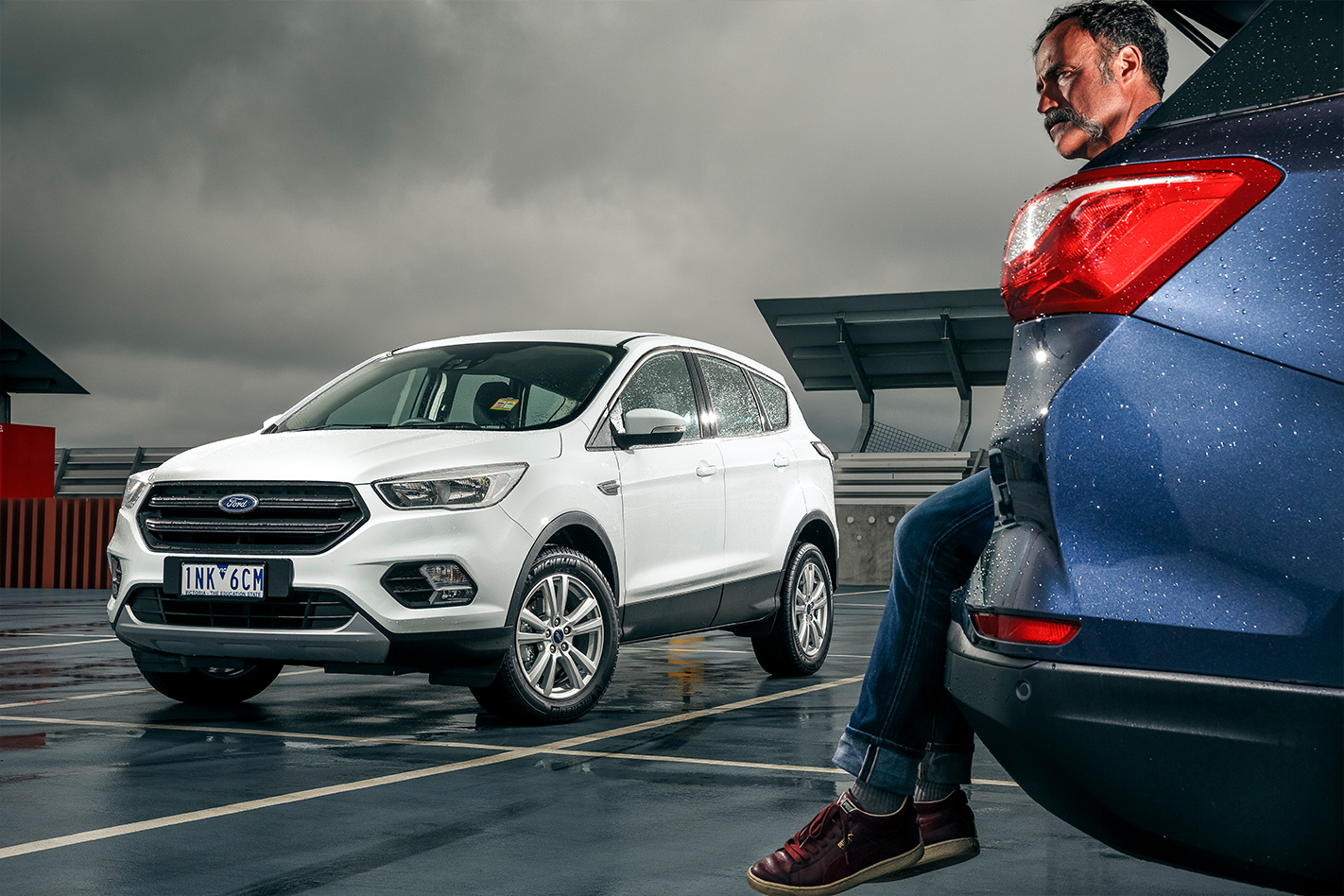
That’s the basics covered and then some – and that’s before taking in the excellent driving position, fine front seats, spacious interior and sizeable cargo area.
However, the Ambiente 1.5 turbo FWD manual’s best-kept secret is its lovely, measured steering, providing the sort of crisp handling and balanced, secure roadholding that enthusiasts can sink their teeth into, coupled with superb damping, for a ride quality that – as with the Toyota C-HR’s – would embarrass most similarly sized luxury-badged medium SUVs. Ford’s engineering prowess is fierce.
Technically, the agreeable six-speed torque-converter auto (as pictured) is $500 over our limit, but we implore keener drivers to just try the rarely purchased six-speed manual as well before signing a dotted line. Working seamlessly with the quick and creamy 110kW/240Nm 1.5-litre four-pot turbo, it helps connect car and driver, for an inclusive, involving drive. The same DNA that makes the Focus and Mondeo so great behind the wheel is also all over the Escape. Just more so when there’s a clutch involved.
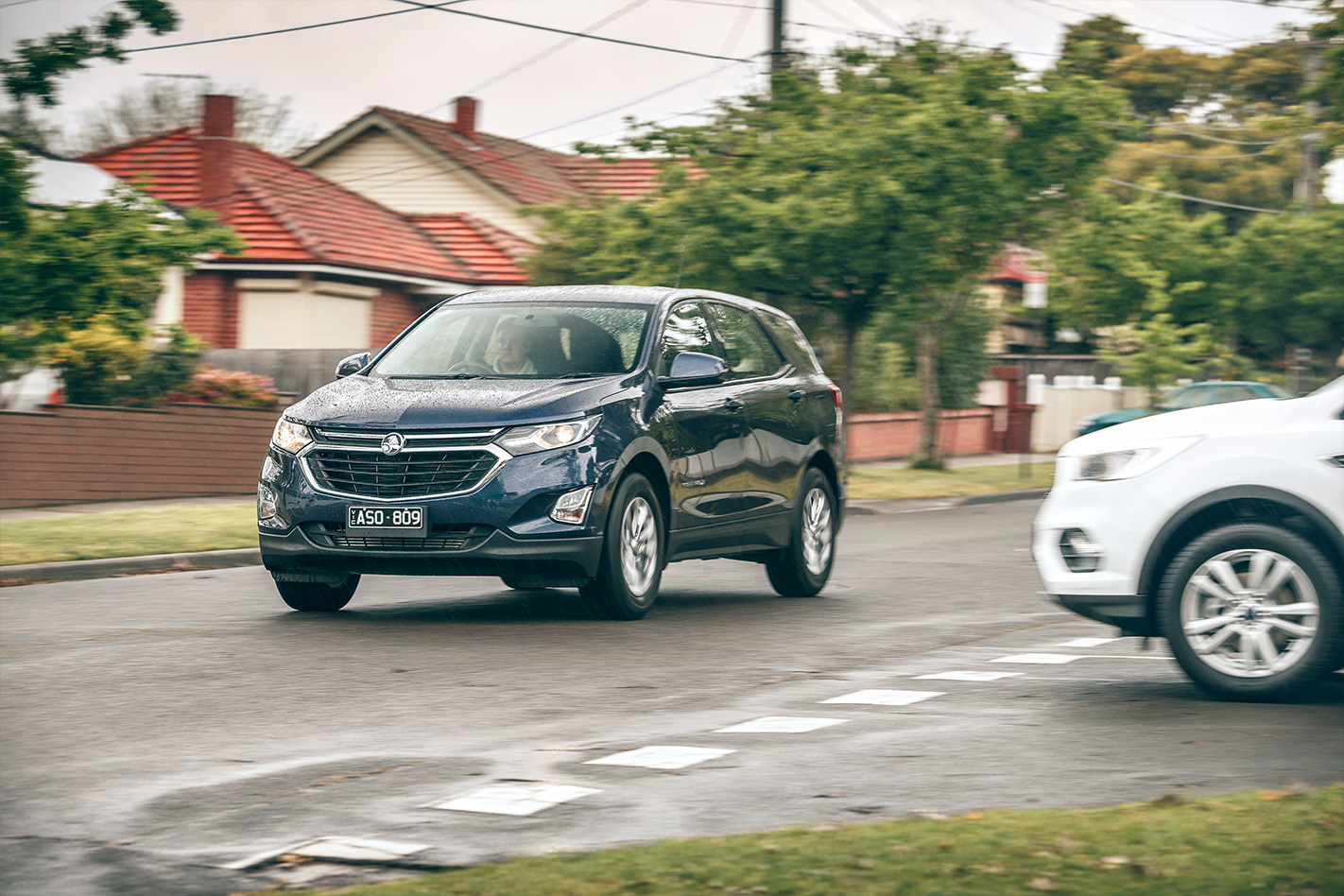
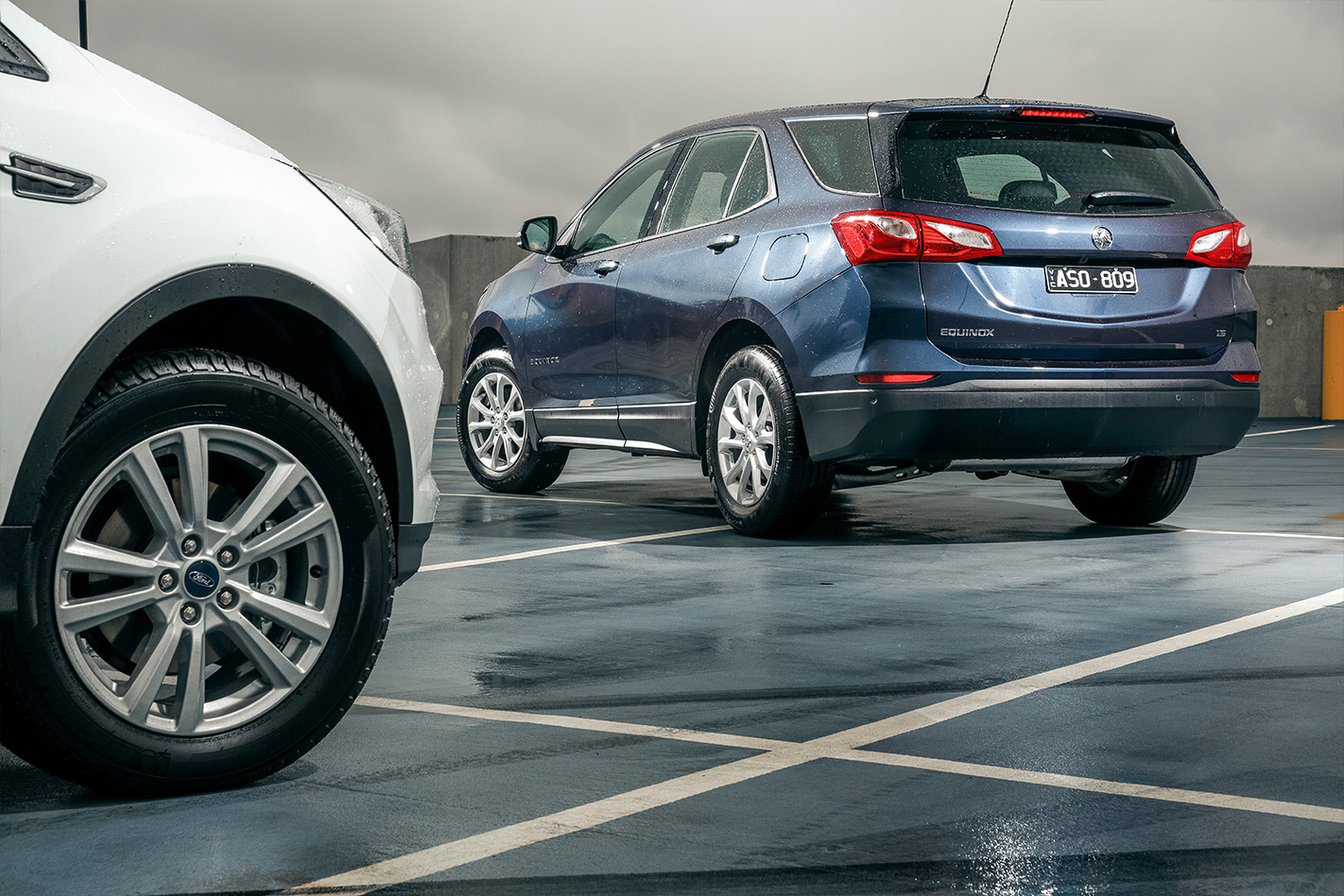
In some ways, the $27,990 Equinox LS 1.5 turbo FWD – based on the GM Delta platform that spawned the current Astra range – is an even more impressive effort, since it offers a longer, larger and more family-friendly body for less money.
Unlike the Ford, the Holden has benefitted from a generous dose of local Aussie tuning down at Lang Lang, providing a level of steering and handling alacrity and control that would be familiar to owners of the Commodore. Though not quite on the same finesse level as the Escape, the Equinox feels terrifically tied down. Much more than just a Mexican-made Chevrolet, then.
That sporty Astra connection is evident in the other car-like ways this big mid-sizer hustles along, from the peaky 127kW/275Nm 1.5-litre turbo’s love of revs to the long-throw shifter. Find an especially fast set of bends and this LS will soon have you forgetting you’re in such a family-focused machine.
While on the latter point, you’ll struggle to find a more spacious contender for the cash, whether carting kids of all ages or cargo of all configurations, while the interior’s design and execution – while unexciting – is practical. The better-equipped Ford does feel more European inside, but the Holden’s hardier (and admittedly cheaper-feeling) plastics give it a wipe-down usefulness.
So, in a segment that is now the biggest-selling in the entire industry, why are Aussies ignoring these two? Is it the Escape’s awkward tippy-toed stance? The Equinox’s slightly watered-down styling that makes it look like an Alamo rental out of LAX? As the dynamic-duo Ambiente and LS demonstrate, both deserve better than that.
You can tell a lot about a person by the vehicle they drive or aspire to one day own, so we conducted a little experiment at WhichCar.
Each of our writers was asked to pick a single vehicle from the ones we know will be launching in 2019 – there’s more than 50 – and explain why they are getting so excited about it.
Of course everyone went for the hyperbolic, $4m Mercedes AMG Project One and Aston Martin Valkyrie, right? Wrong.
Here’s the WhichCar team’s 2019 new car wish list. No judging please.
Glenn Butler, WhichCar Editor
Audi RS5
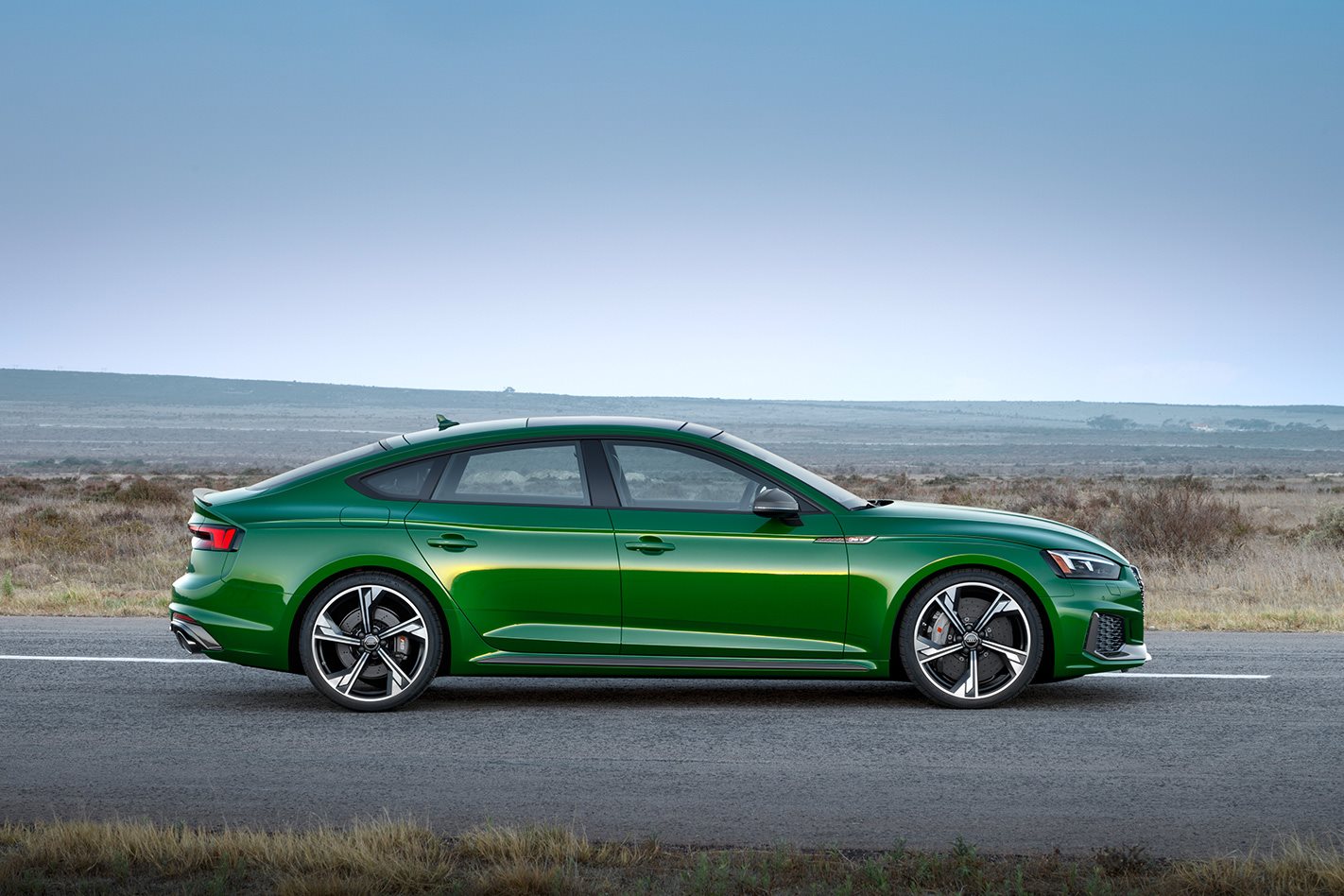
Firstly, I’m loving what Audi is doing with car interiors. They’re technologically packed, gorgeous to look at, and… functional! So, for a guy who changes his smart phone every year just because he wants some new gizmos and gadgets to play with, Audi’s latest interior designs really tickle my fancy. I’m also coming around to these four-door coupe concepts that blur the line between a sedan and a two-door coupe. They not only look stunning, the hatchback-style rear opening adds a level of practicality the sedan can’t match.
And the third reason I’m salivating over the new Audi RS5? The scorching hot twin-turbo V6 engine which, when paired with Audi’s quattro all-wheel drive system, means you’ve got phenomenal acceleration on call whenever you want it. And the theatrics of an angry engine note, and thundering exhaust (which can be switched to quiet mode at a whim) means the Audi RS5 offers the best of stately cruising and ballistic blasting to suit my mood.
Dan Gardner, WhichCar senior Journalist
Ford Transit plug-in hybrid
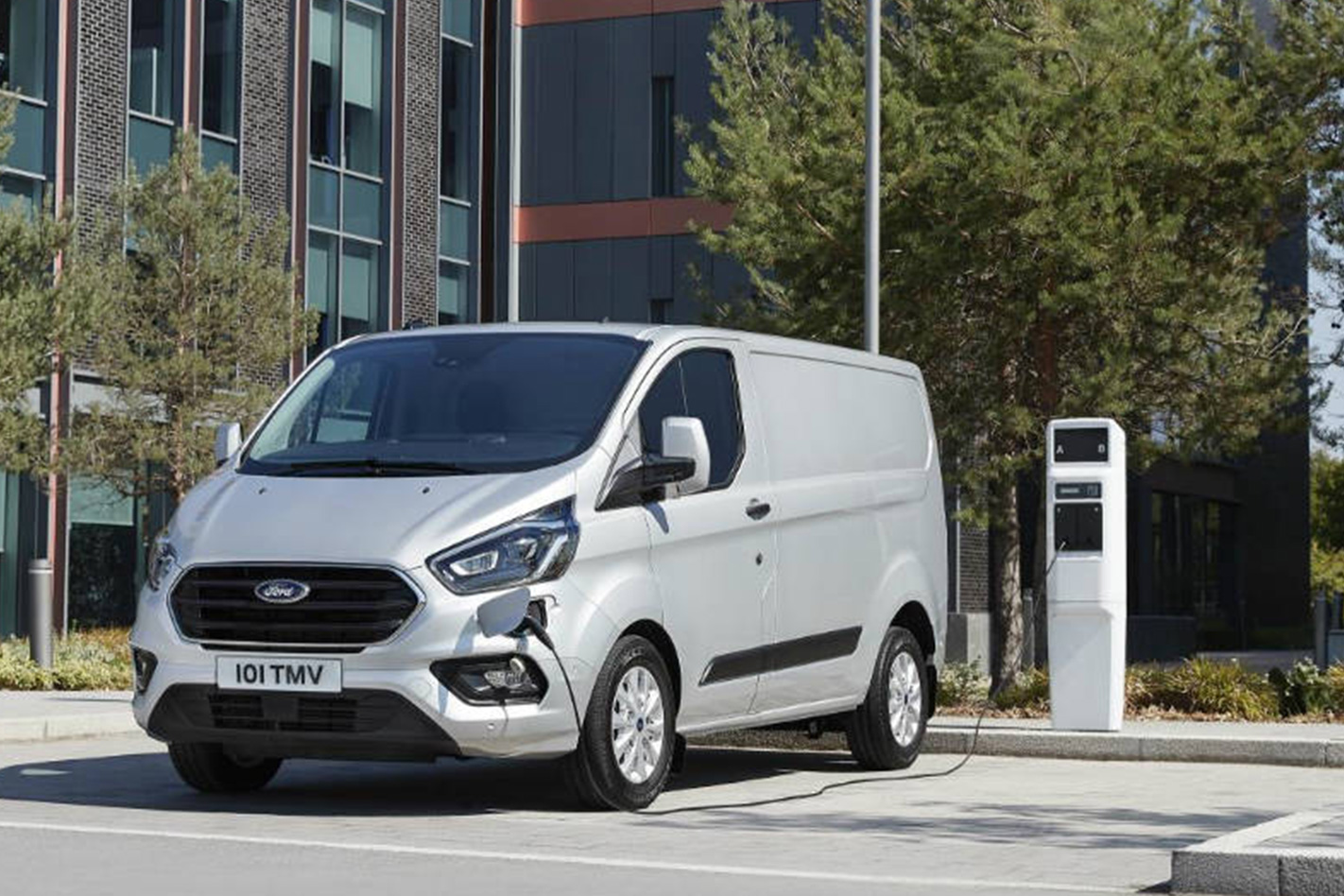
A billion-kilowatt megacar that can tear asphalt atoms apart, or a luxo limo upholstered with unicorn leather are the more obvious choices for the vehicle on everyone’s 2019 wish list, but I’m afraid it’s the plug-in hybrid Ford Transit van for me.
It might not have the savage V12s or turbocharged V8s of some other vehicles coming in 2019 but, since its introduction more than 50 years ago, the Transit has always been the fastest vehicle on the road.
Don’t believe me? Whether it be a metropolitan centre or remote rural region, the car that you will always see tripling the speed limit is the humble Transit, complete with an irate delivery driver at the wheel. Not only is it the ultimate performance vehicle, it can also accommodate more people than even the cleverest seven-seater cabin and, with a new battery powered option, it’ll probably be more economical than anything else in its class and many others. The only shame is that you won’t be able to enjoy the symphony of its diesel doing 20,000rpm as Derek tries to get a late consignment of floor cleaner to the docks.
Noelle Faulkner, WhichCar senior journalist
Porsche Taycan
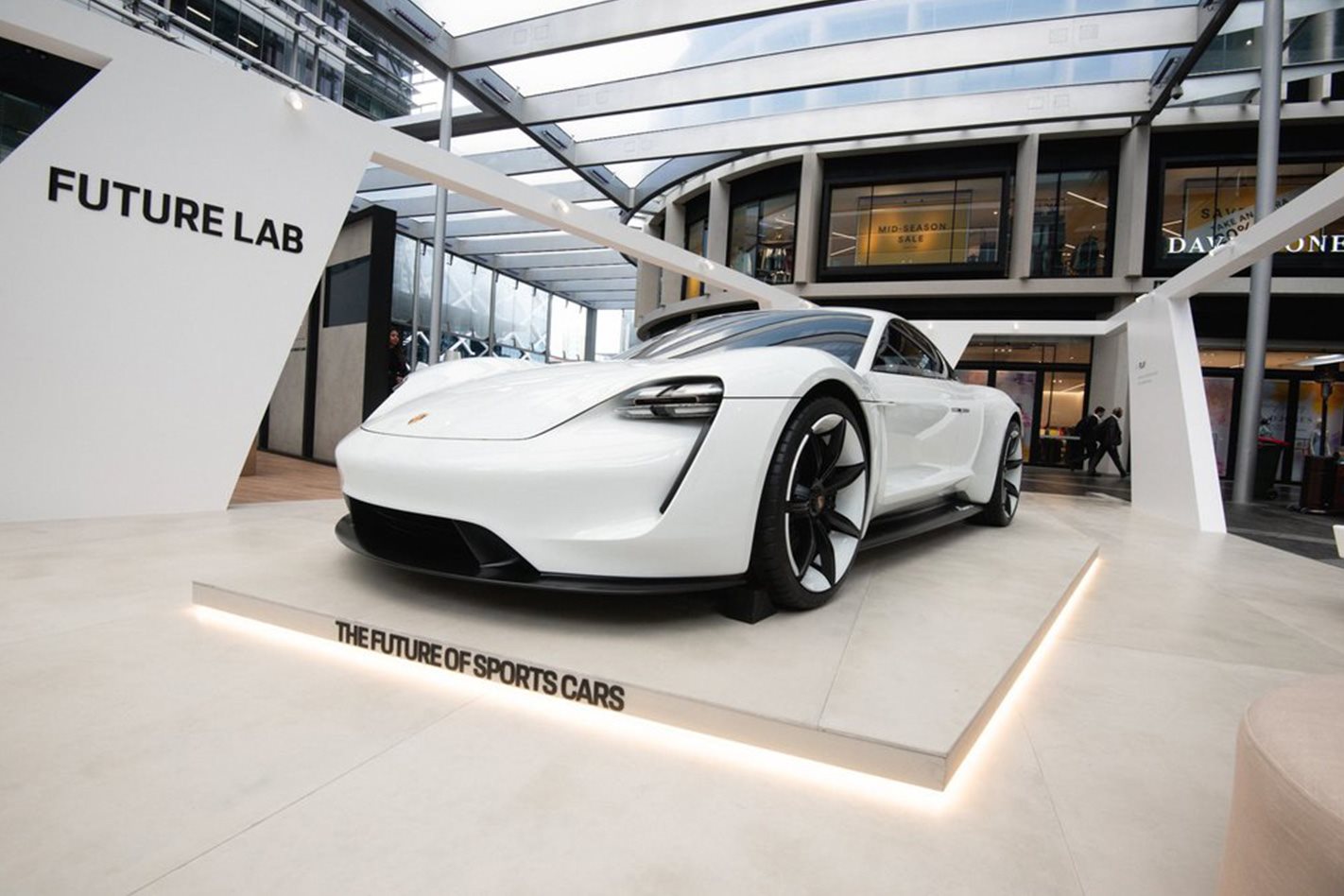
Porsche’s foray into performance EVs , the Taycan, which, FYI, is pronounced “Thai-kahn” (thanks to a recent pass-agg video explanation from the Germans), might not make it here by the end of 2019, but I’m hopeful anyway. Formally the Mission E project, this all-electric four-door beauty and Tesla Model S-topper has been in the works for what seems like forever.
In that time, I’ve been glued to the videos Porsche has been dropping on its conception. My favourite features former Porsche design boss, now head design honcho at Lamborghini and the pen behind the Urus, Mitja Borkert and his design team explaining the concept and freedom that comes with designing an engineless car. So the fact it is finally coming, in all its 918-based glory is tres exciting. I mean, a 160kW/300Nm motor on 21-inch front wheels and 240kW/340Nm or 320kW/550Nm one on 22-inch rears, PLUS a claimed 0-100km dash of 3.4 seconds? Gimme gimme gimme.
David Bonnici, WhichCar senior journalist
Peugeot 508
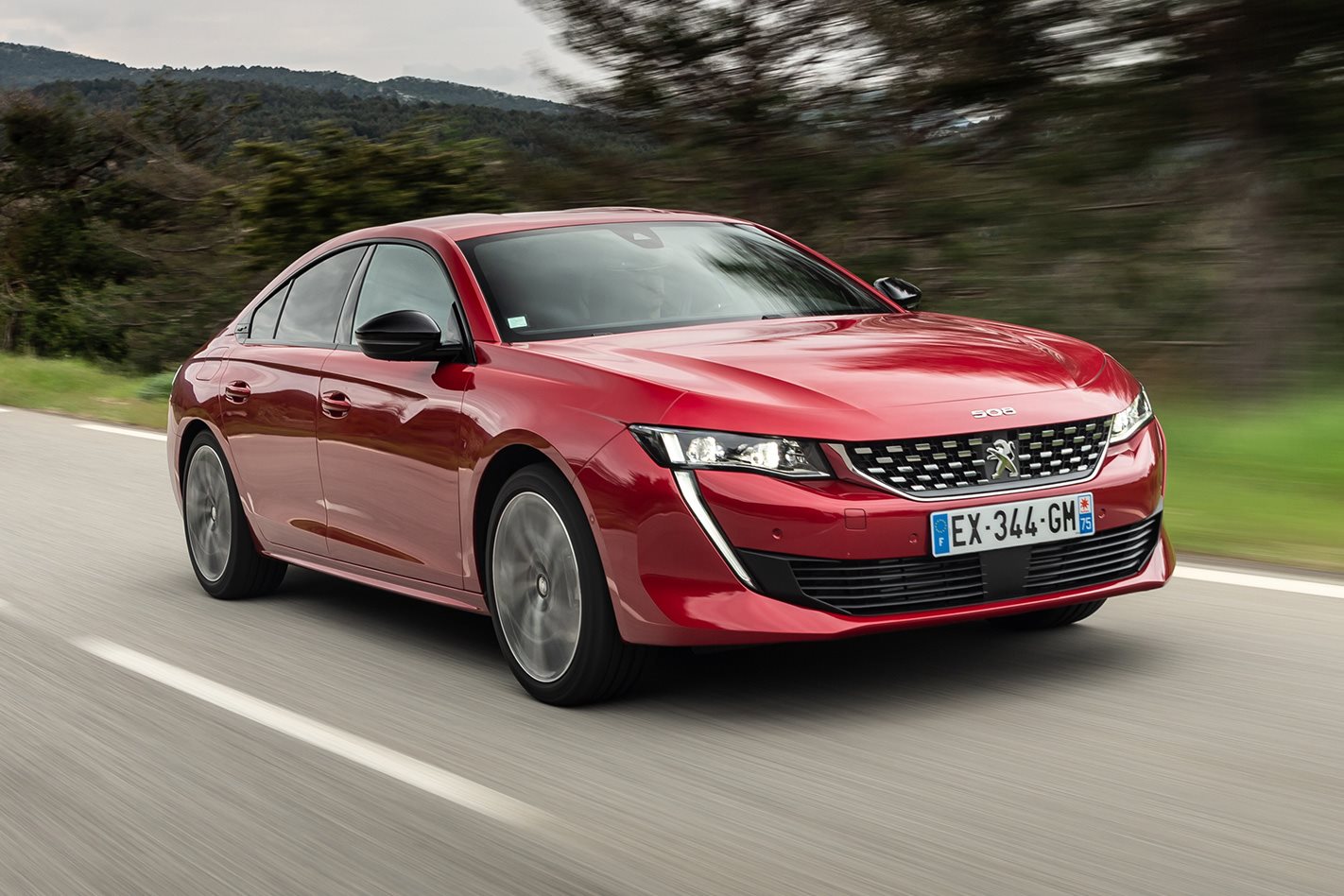
Amidst all the new SUVs being churned out to usher in the next decade, there’s one new car that I hope will help stem the tide for traditional sedans and wagons – the Peugeot 508. In both sedan and wagon form it’s one of the more beautiful cars on the books for 2019, with lashings of Gallic flair inside and out that endeared us to Pugs of old. The new 508 doesn’t just breathe new life into the traditional sedan and wagon segment, it lubes up a defibrillator and yells out “stand clear!” Here’s hoping the aesthetic pleasure the Peugeot 508 brings is reflected in its driveability.
Tim Robson, WhichCar senior journalist
Toyota Supra
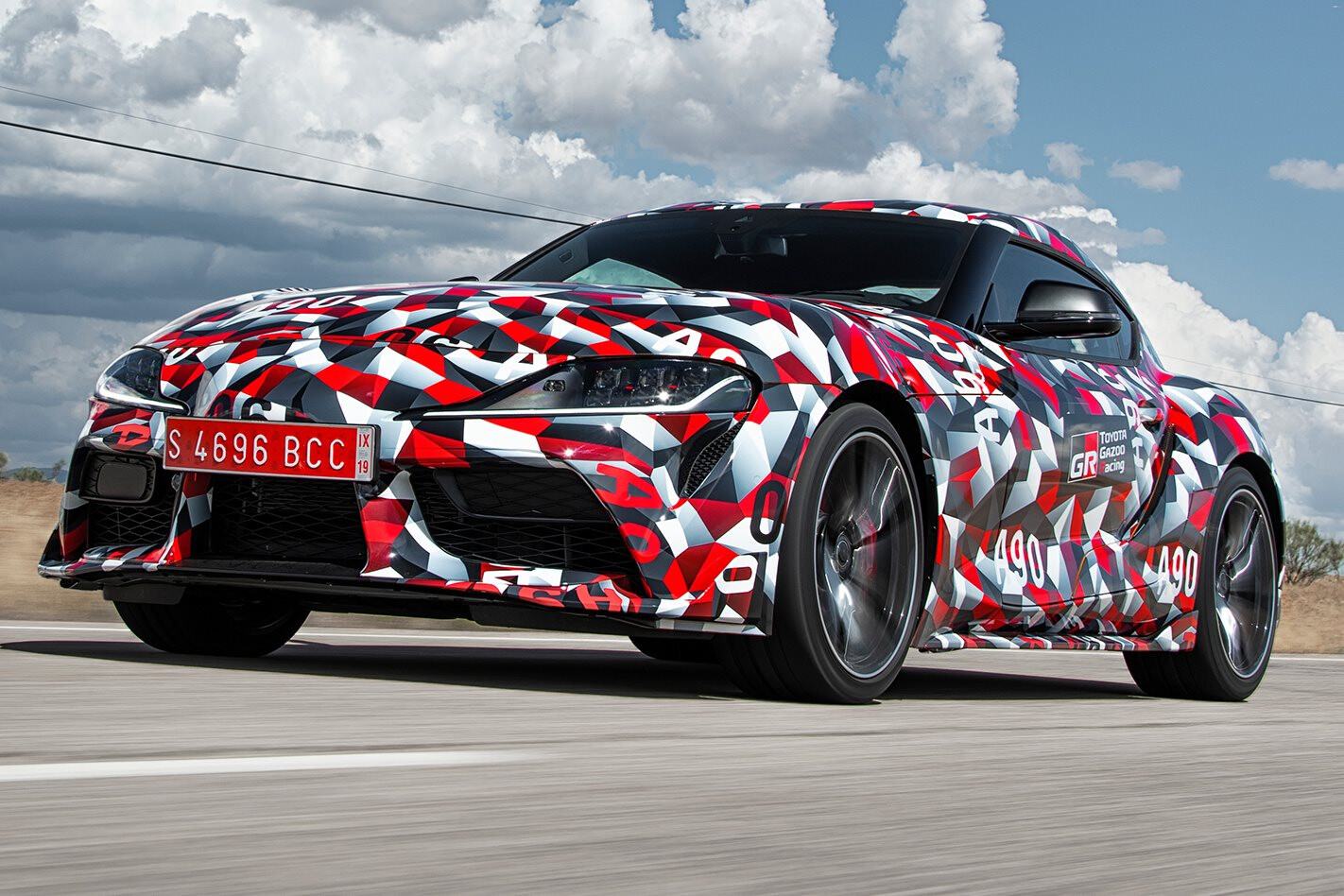
As I’ve moved through the various phases of my automotive life, there’s been one car that’s stayed with me for one reason or another, and that’s been the Toyota Supra. Sure, we haven’t seen one sold locally around here since 2002, but the fourth generation machine in particular has been a huge cultural influence for a lot of car lovers a LOT younger than I.
The Toyota Supra’s launch has been more drawn out than the last episode of any competitive cooking show you’ve ever seen, and sure, it’s a BMW-powered, BMW-chassied quasi-BMW that’s built in Austria… but damn it, it’s a two-door, straight-six, rear-drive looker that will find a wider audience than Toyota expects. I can’t wait.
There is no better way of fully evaluating a particular vehicle than pitching it against its arch rivals in real time. Comparisons highlight small differences, qualities and flaws that can easily go unnoticed when focussing on just one vehicle.
That’s exactly why we put so much effort into arranging proper, fair head-to-head comparisons, and the resulting verdict is a critical appraisal that you can really trust.
During 2018, we lined up more models for comparisons than ever before. Some were simple head-to-head tussles between two obvious enemies, while others involved as many as 12 vehicles, a week of assessment on racetrack and public roads.
Here, then, are the comparisons that most piqued your interest in 2018.
Highlighting Australia’s interest in vehicles that can go far beyond the beaten trail, our most popular comparison in 2018 asked if your Toyota Landcruiser budget was better spent on something else.
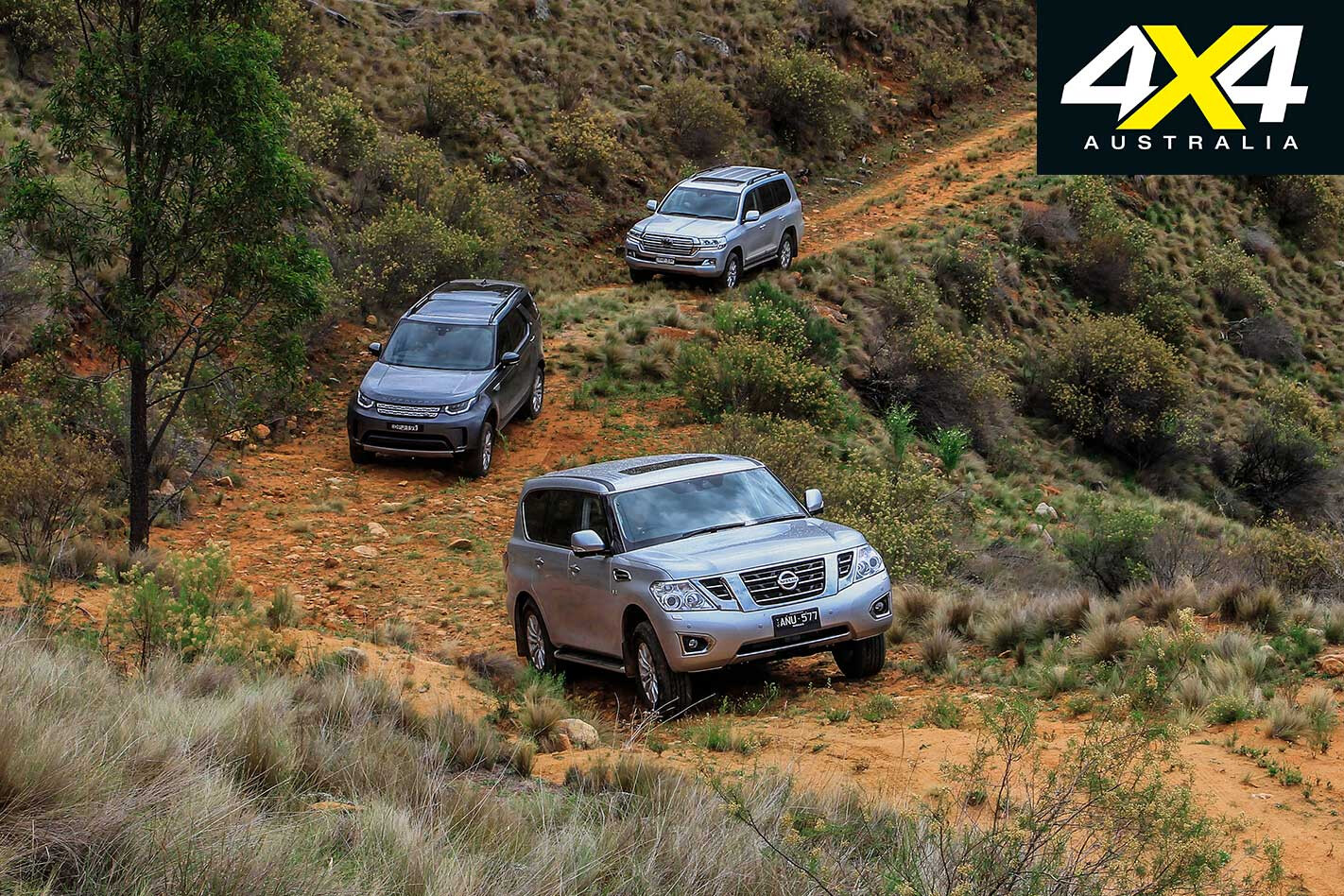
You might be surprised at what 4×4 Australia pitched against the evergreen Japanese competitor, but it’s certainly worth a read.
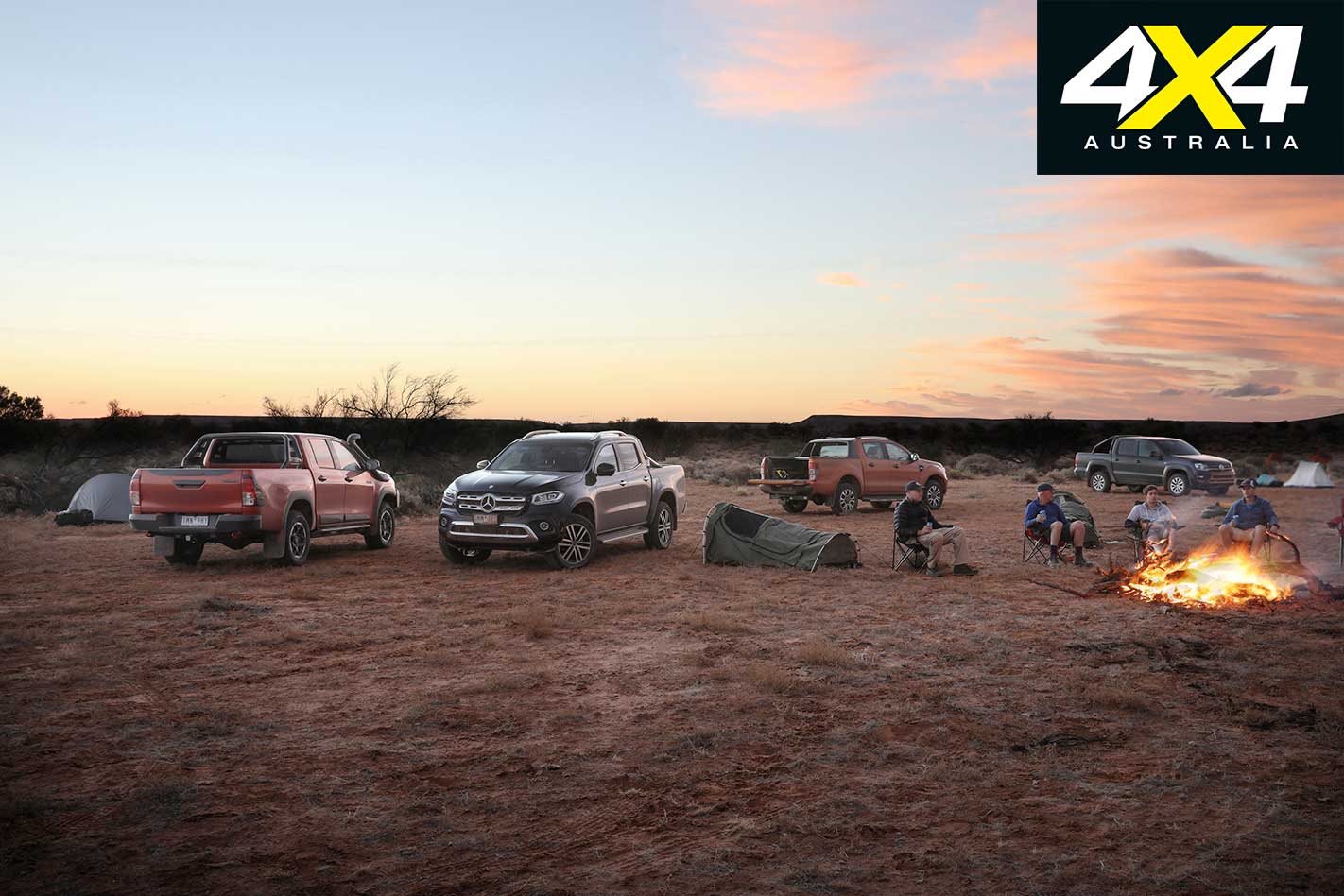
Our second most watched and read comparison was another outback battle between tough off-roaders, this time between luxury newcomers to the one-tonne segment and, you guessed it, a Toyota.
Before seven-seaters began proliferating all the major brand’s product portfolios, people movers were the only way to cart large families and big groups of people, but there is still a market for the more van-like options.
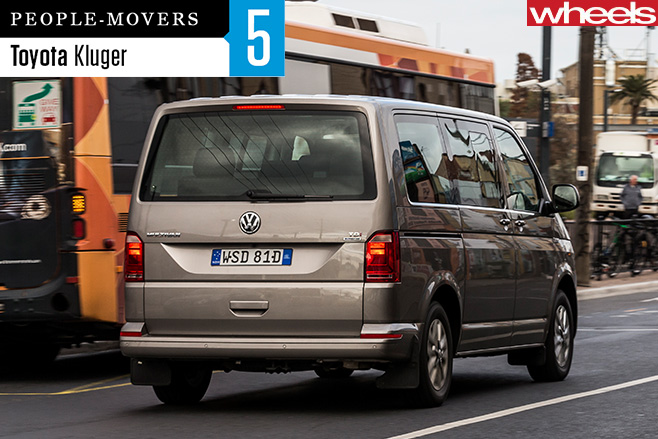
This comparison from 2016 looks at how the Volkswagen Multivan stacks up against some seven-seat newcomers – and despite its relative age, it was our third most popular comparison of 2018.
As the memory of locally built medium-to-large sedans fades, we tried to find a new champion of this sliding but still attractive segment.
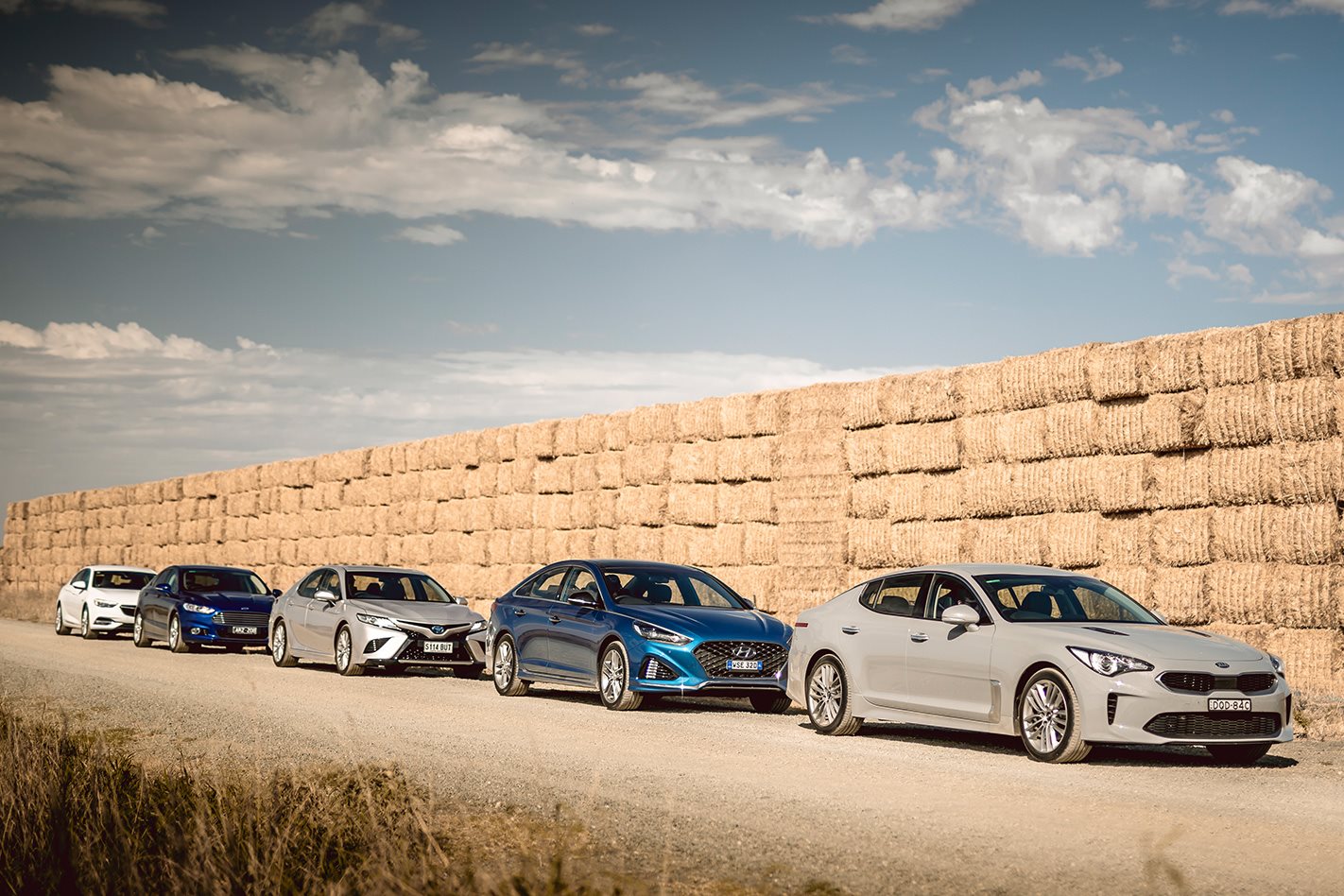
Five cars went to battle, including the new imported ZB Commodore with something for everyone in this increasingly niche arena, but would you choose a sedan over an SUV?
For our fifth most-read comparison on 2018, we presented the decision faced by thousands of Australians each year – Hyundai i30 or Kia Cerato?
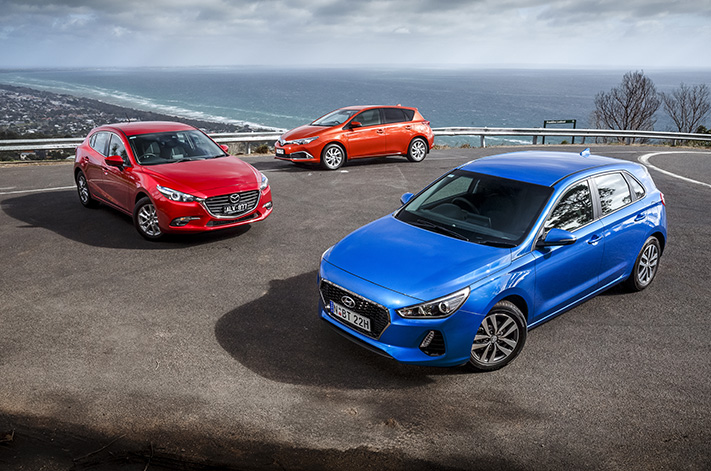
As two of the most popular small hatchbacks on offer locally – and from sister South Korean brands to boot – many customers find it a hard decision to make, but let us take the hard work and uncertainty out of this close comparison for you.
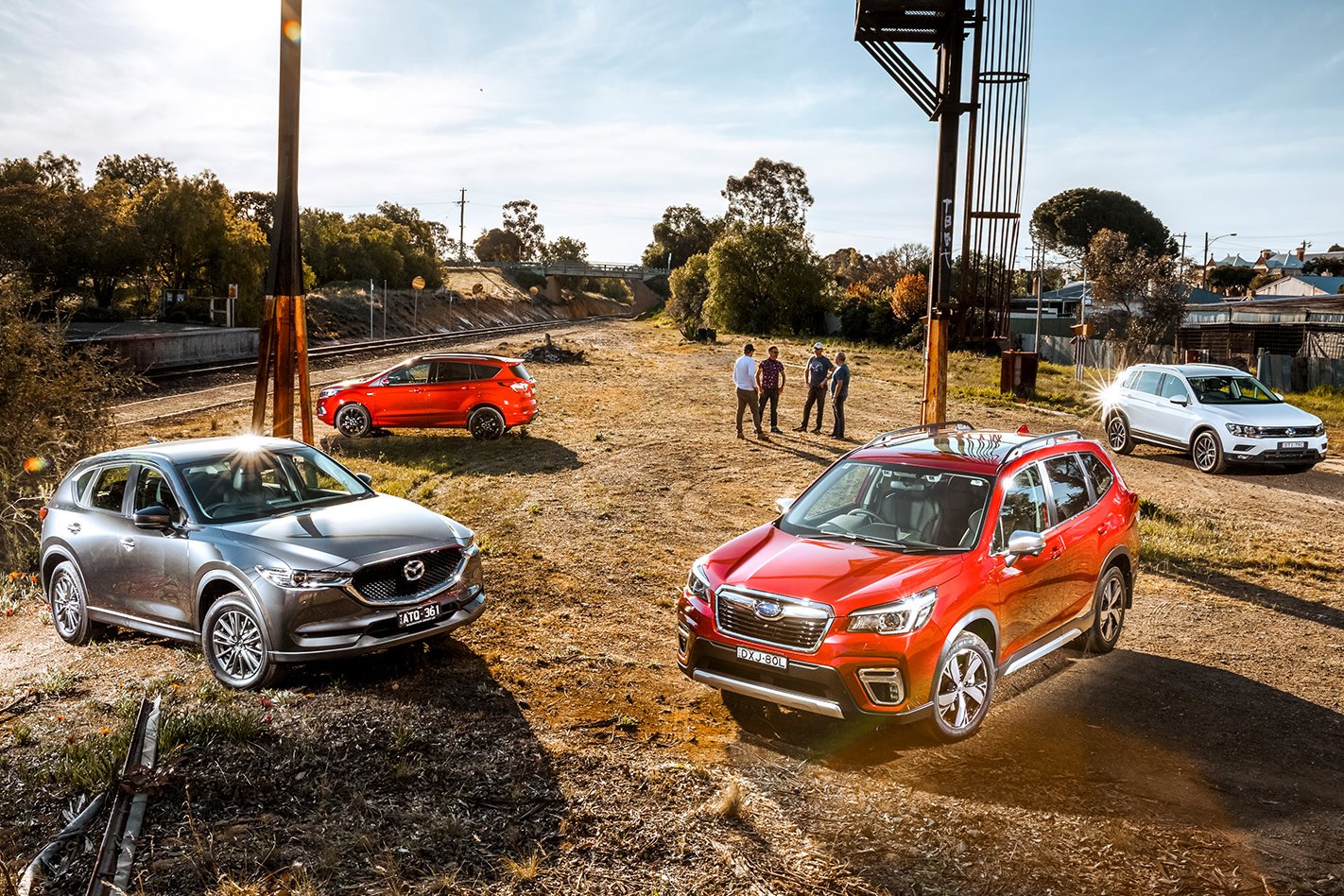
Ranking in sixth place is another fierce battle that continues to rage in the mid-sized SUV market. You might be after a reasonably priced high-rider but that doesn’t mean it has to be dull, and these four options are a case in point.
Hyundai’s strong-performing i30 was, once again, under the spotlight in 2017, this time fighting it out with the equally popular and compelling Toyota Corolla and Mazda 3. Our seventh most visited comparison for 2018 proves that there is still plenty of interest in small hatchbacks, even though SUVs dominate in overall sales.
One of the most hyped and eagerly anticipated developments of 2018 was the arrival of new dual-cab ute models from Ford and HSV. In the blue corner, Ford delivered something shamelessly muscular with incredible suspension, but the red corner hit back with something wearing a badge that has always been associated with power and performance. Take a look to find out who was victorious.
Utes are now so popular that manufacturers are reimagining well-known and established pick-up models to be fully enclosed SUVs as well. At the more affordable end of the spectrum, these two 4x4s based on the Mitsubishi Triton and Isuzu D-Max were the subject of our ninth most read comparison.
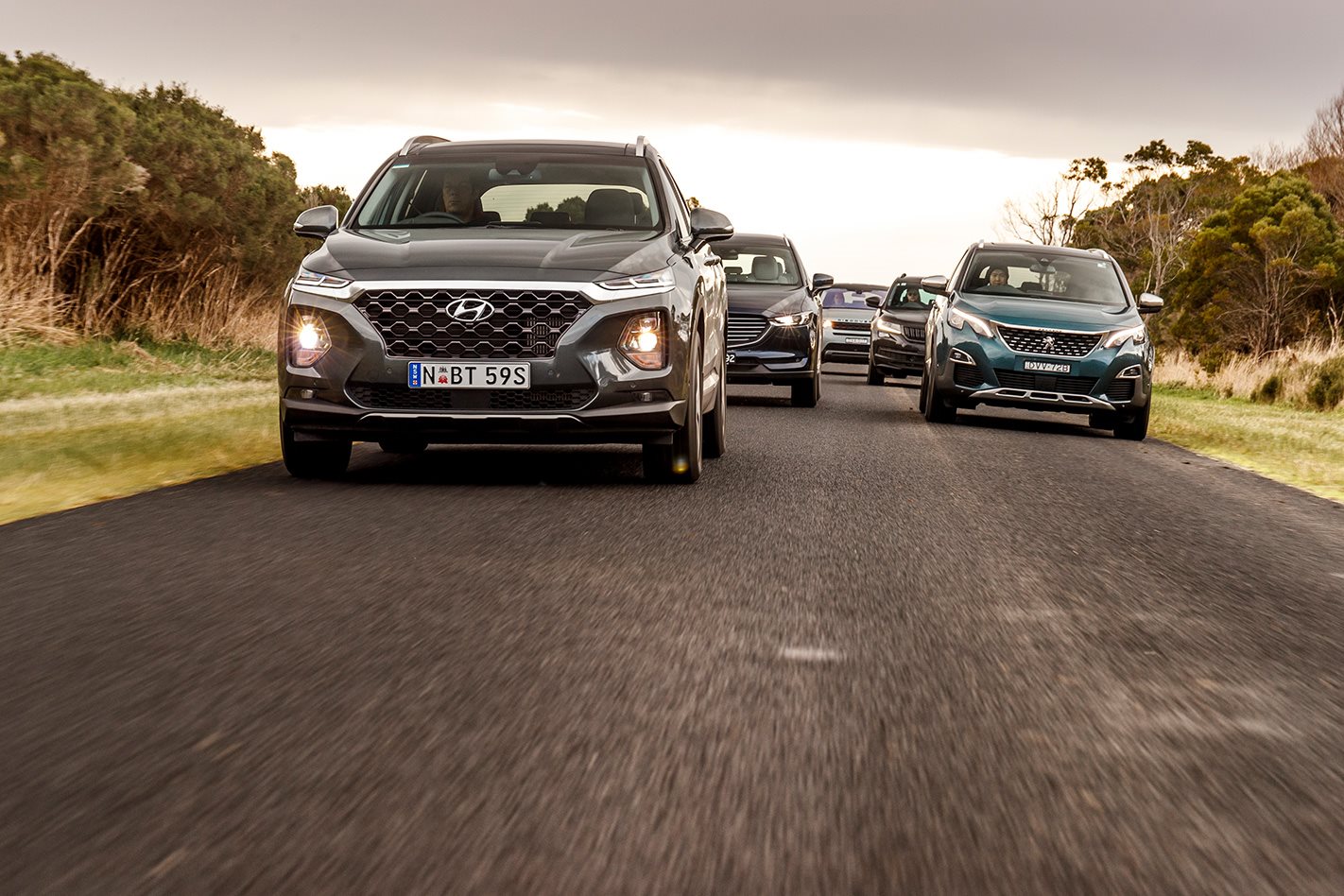
And in tenth spot, one of our chilliest comparisons of the year took five large SUVs to the Gippsland coastline in the depths of winter. We were blasted by icy Bass Straight winds, hammered by the August rain and were still shooting in the dark, to find out which is the best diesel seven-seat SUV.
Comparisons are a tough job, but we love them and we can’t wait to bring you even more in 2019.
50 years is a long time in automotive design. Not only is it almost half the entire existance of the motor car as we know it, the last 50 years (which are the ones I’m talking about here) have seen a huge acceleration in development and technology. Consider the sophistication of electronic injection compared with an oil-damped SU carby (ask your grandad) and you’ll see what I mean.
This feature was originally published in MOTOR’s April 2007 issue
Surely, there’s no way a car from 50 years ago could bear any resemblance to any current model beyond some token visual clues (VW Beetle and Mini for instance). Could it? Well, before the argument’s settled, may I offer up the Porsche 911.
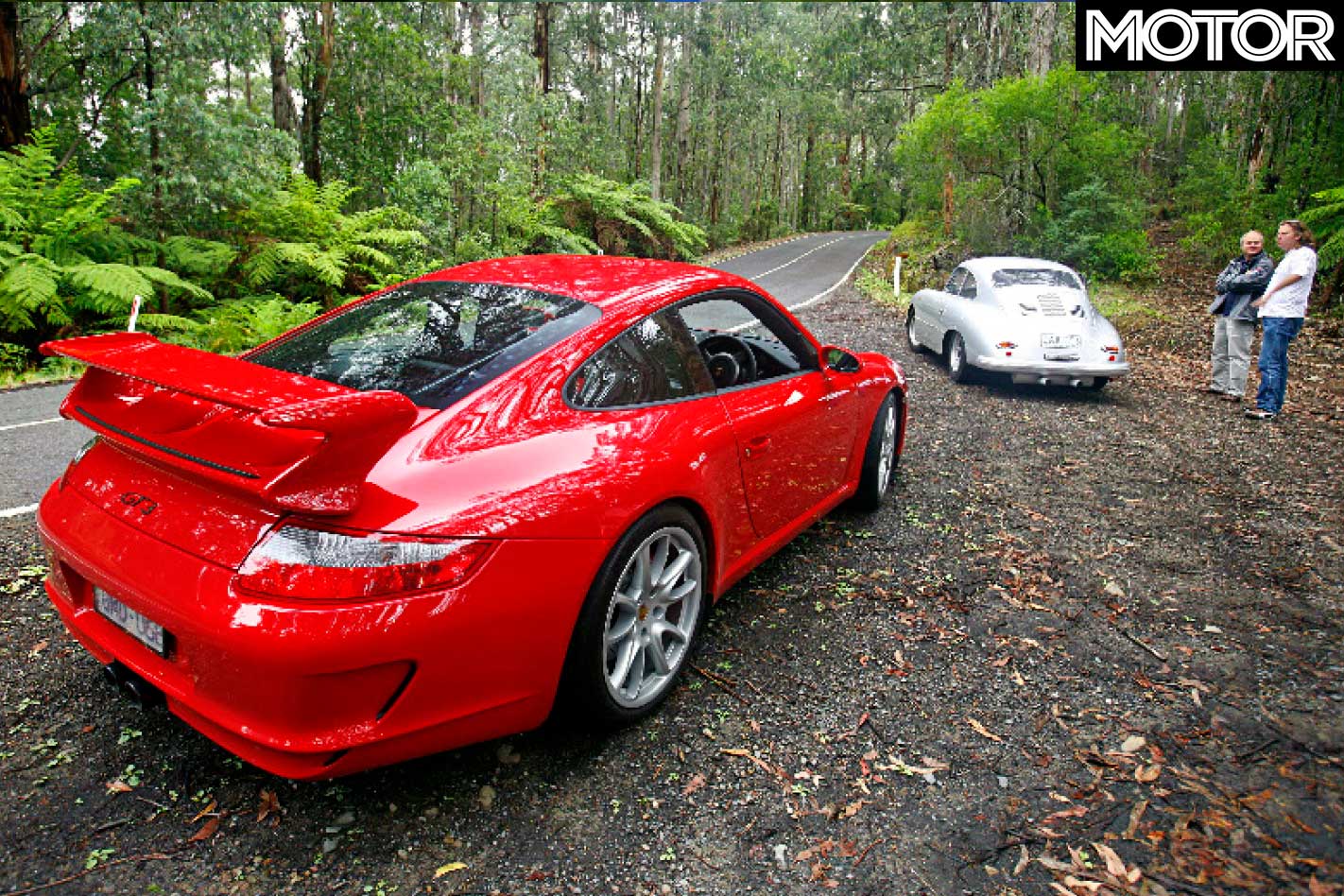
But go back another decade to the 50s and you’ll find the first production Porsche road car, the 356. It lacked a couple of cylinders, but it was still more or less the same design (in shrunken form) and if you look at the way the A model morphed into the B and then the C, you can actually see the 911 emerging. Further proof of evolution comes when you look at the most specialised versions of a pair of cars separated by 50 years.
These days, if you want the spankiest 911 around, you need to go shopping for a GT3. Yes, the Turbo is just as quick (slightly quicker, actually) but with its all-wheel-drive and bloated torque curve, it doesn’t demand the dedication insisted upon by the rear-drive, atmo GT3. And hey, you’ll never convince me that there’s not something other-worldly about a normally-aspirated flat six with its nuts tuned off.
Same sort of thing was at work in 1956 when the other car on these pages, the 356 Carrera GT, was appearing on Porsche price-lists. Not happy with the performance of your normal pushrod-engined 356? Then step right up for the Carrera GT with its double-overhead camshafts on each pair of cylinders; true exotica back when The King’s Heartbreak Hotel was storming up the charts.
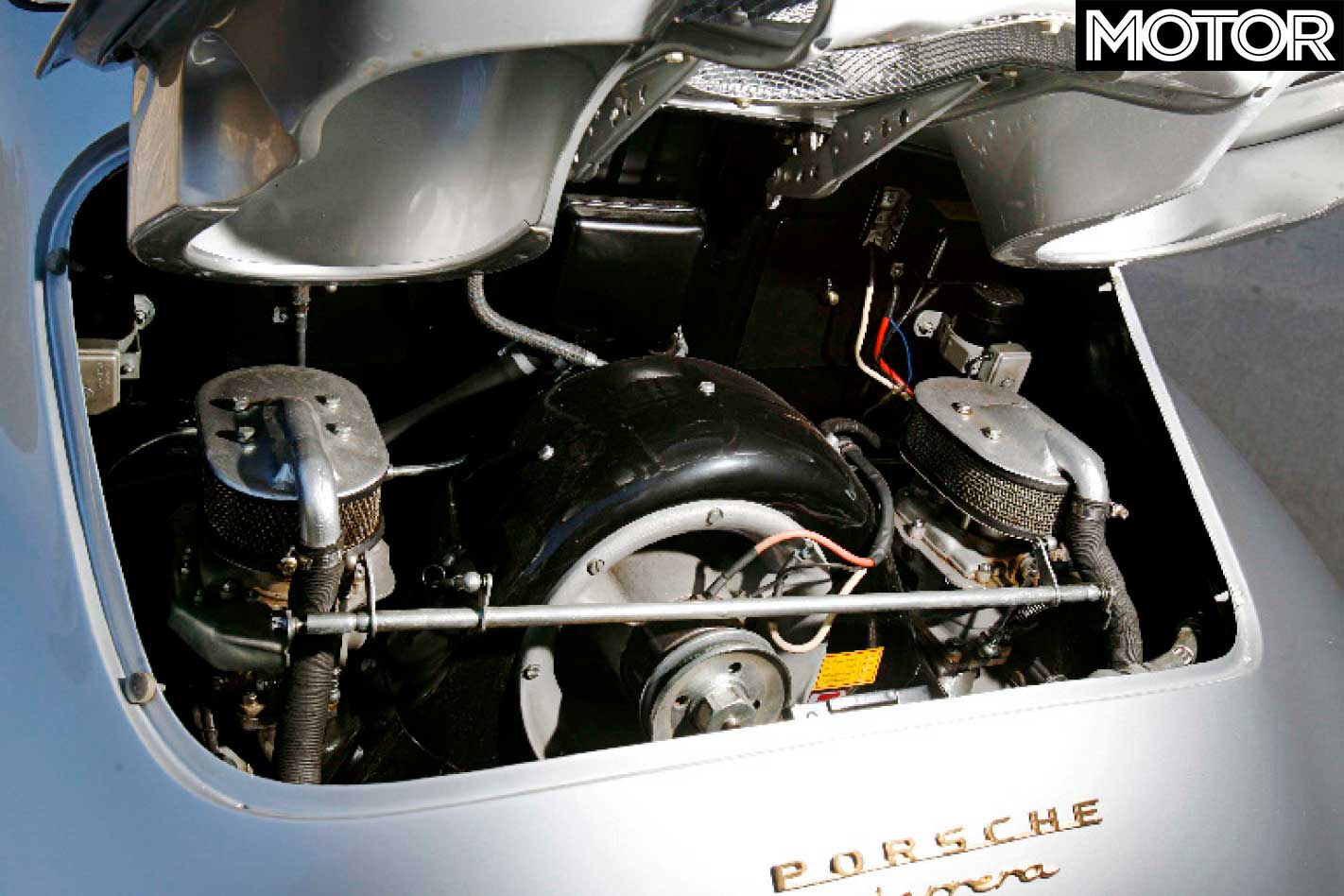
The engine still measures the 356’s standard 1.6 litres, but a crank-driven bevel drive spins the first cam on each bank with another bevel taking drive to the second camshaft. Dual Weber carbs (unlike any Webers I’ve ever seen before) squirt the gas and there’s a very 911-looking upright fan to keep the lid on temperature.
While 90 horsepower was a good figure for a pushrod 356 mill, the GT makes a more stirring 135 (call it 104kW). Mind you, it’s all stacked up high, beyond 4000rpm leaving you working with about a 2000rpm power band.
Back in 2007, the 997 version of the GT3 pumps out 305kW (415 neddies) from 3.6 litres giving it a specific output of 84.7kW per litre compared with 65kW per litre for the oldie. While the former is remarkable, the latter is truly astounding for 1956 and is further proof of the spiritual link between the two. And like the early girl, the new GT3 has a distinct powerband with the real grunt arriving from about 5000 and lasting until 8000rpm.
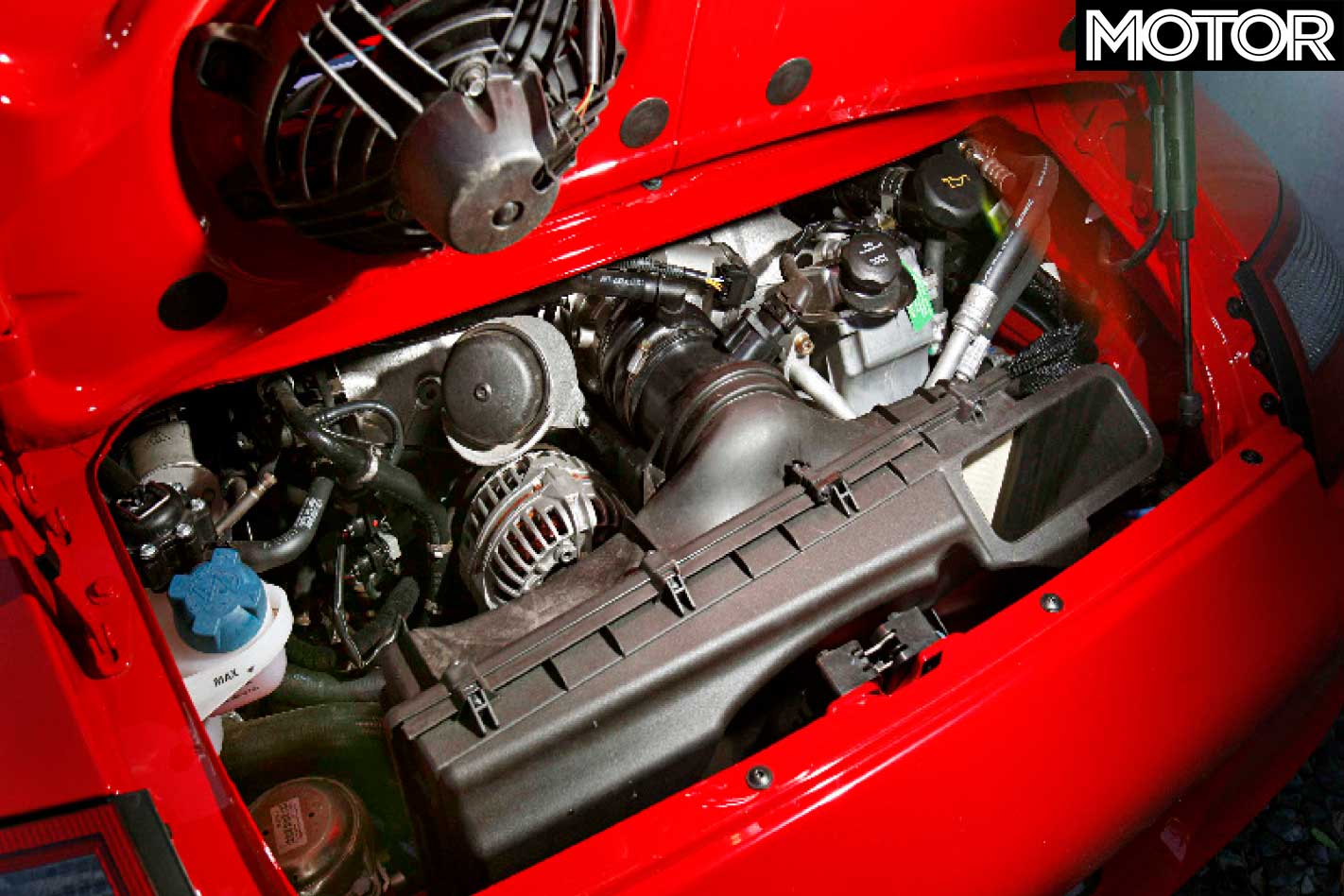
Below about 4000rpm, the GT3 is a bit, ahem, underwhelming. In fact, it’s downright disturbing. Trundle out into the traffic and you can feel a decently muscular torque curve, but the collection of buzzes, thunks and vibes the flat six sends through the cabin makes you wonder what all the fuss is about. And exactly how you’re going to justify that not insignificant purchase price.
It honestly feels like the GT3 has lost the dual-mass flywheel (it hasn’t) with the level of buzzing and zinging going on and what sounds like a rattly clutch at rest. At legal freeway speeds in sixth gear (and the shifter remains the best in the business, although the clutch is pretty heavy) the GT3 is simply not happy, Jan.
The lumpiness comes through the floor and the seat, although at least the steering retains its fidelity. By comparison a 911 Carrera S is a limousine.
But this is the point of the GT3. It’s meant to have a large dollop of mongrel in it. Don’t you get it? Push past the city and onto a twisty strip of smooth hotmix and you bloody well will. Because here – and probably only here (a racetrack aside) – is where the GT3 makes any sense.
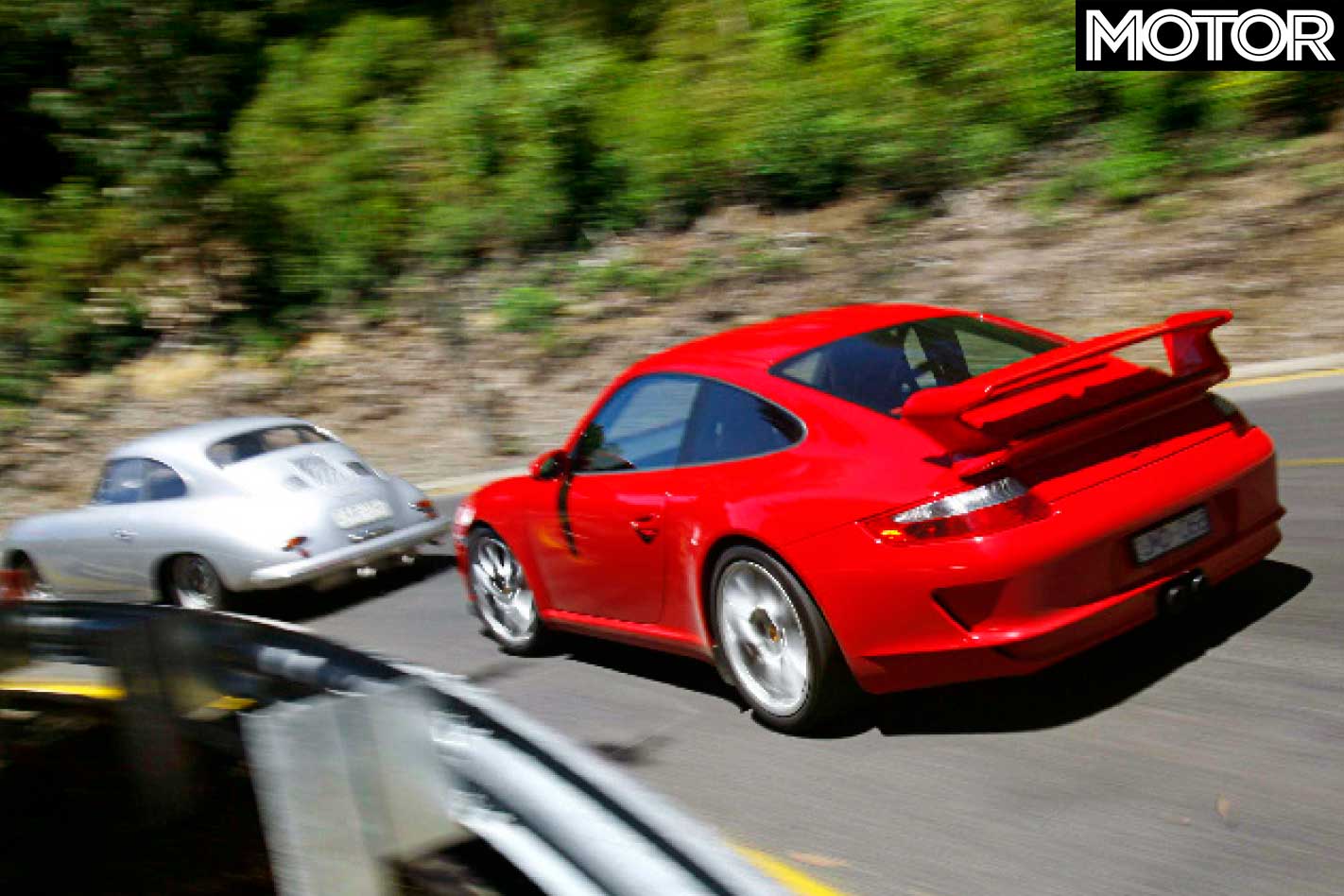
But the talk it talks and the walk it walks on that curly black ribbon is almost beyond description. Keep the revs above 5000rpm or so, pound the brakes into dust and haul on that tiller like scrub hasn’t been invented; the GT3 doesn’t sulk, it doesn’t argue back and it never, ever gives the impression that it hasn’t got more up its sleeve.
Entry speed (like all 911s of the modern era) dictates attitude and the same corner can throw up either under- or oversteer depending on how hot you shove it in. A slower entry seems the business since it allows you to crack the apex on the scone and then pick up the gas early for a blurring, slightly sideways exit. Yes, you need a few brave pills to treat a car such as this in a manner such as that, but the GT3 is always on your side. Believe it.
Obviously, the limits in the 356 Carrera GT are much lower, but the essential requirement to keep the engine spinning hard and be physical with the thing remain. Below 4000rpm, the GT engine is flatter than the Nullarbor… nothing doing.
Oh, it’ll haul itself around in traffic but you need to be mindful of the throttle opening you’ve chosen because those big Webers are guzzlers and seem way too big for 1.6 litres. Take it as read; off the cams, driveability is woeful. But spin the little flat-four up and there’s a distinct surge at 4000rpm combined with a hardening of the exhaust note and suddenly… she’s alive.
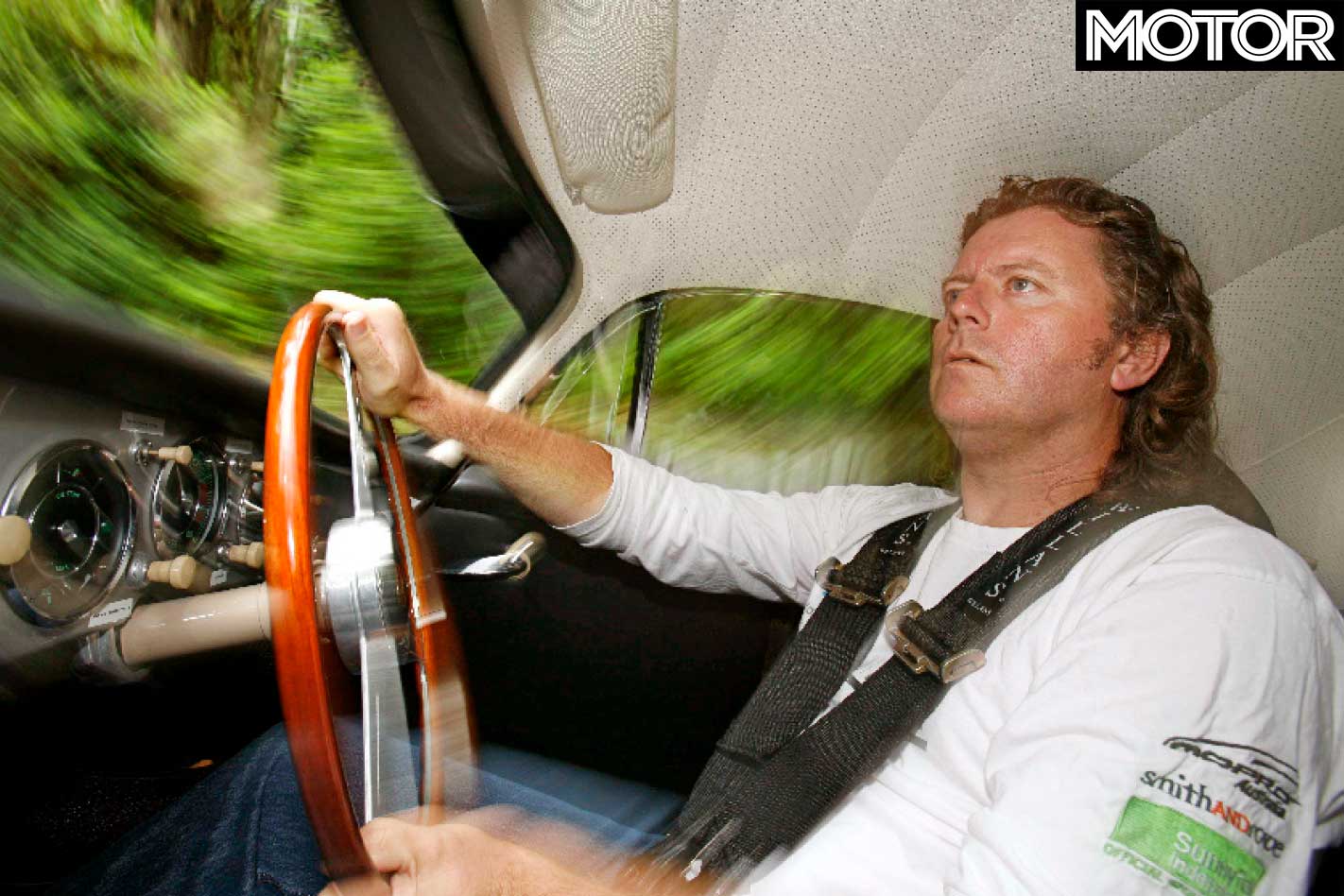
There’s a gulf between each of the four ratios and the spindly shifter is light and accurate, but has throws like a Russian shot-putter. The trick is to max it out in each gear and hope that revs come back to somewhere north of 3500rpm so that you’re not left waiting too long for the grunt to reappear. The non-assisted steering loads up in corners, but the skinny tyres help, and the slender Nardi timber tiller is absolutely alive in your hands.
The nose points true every time and there’s a surprising amount of corner speed available. Drum brakes sound stone-age, but with minimal weight to haul up and big, heat-shrunk-finned alloy covers, they never give up once you’ve worked out that they need a big shove.
Relative to the GT3, the 356’s cabin is tiny. The spindly little wipers and narrow seats seem a bit Toytown and the glasshouse is the squinty variety. Should I even mention the windows that lower and raise via a leather strap? Not that the GT3 is perfect, either.
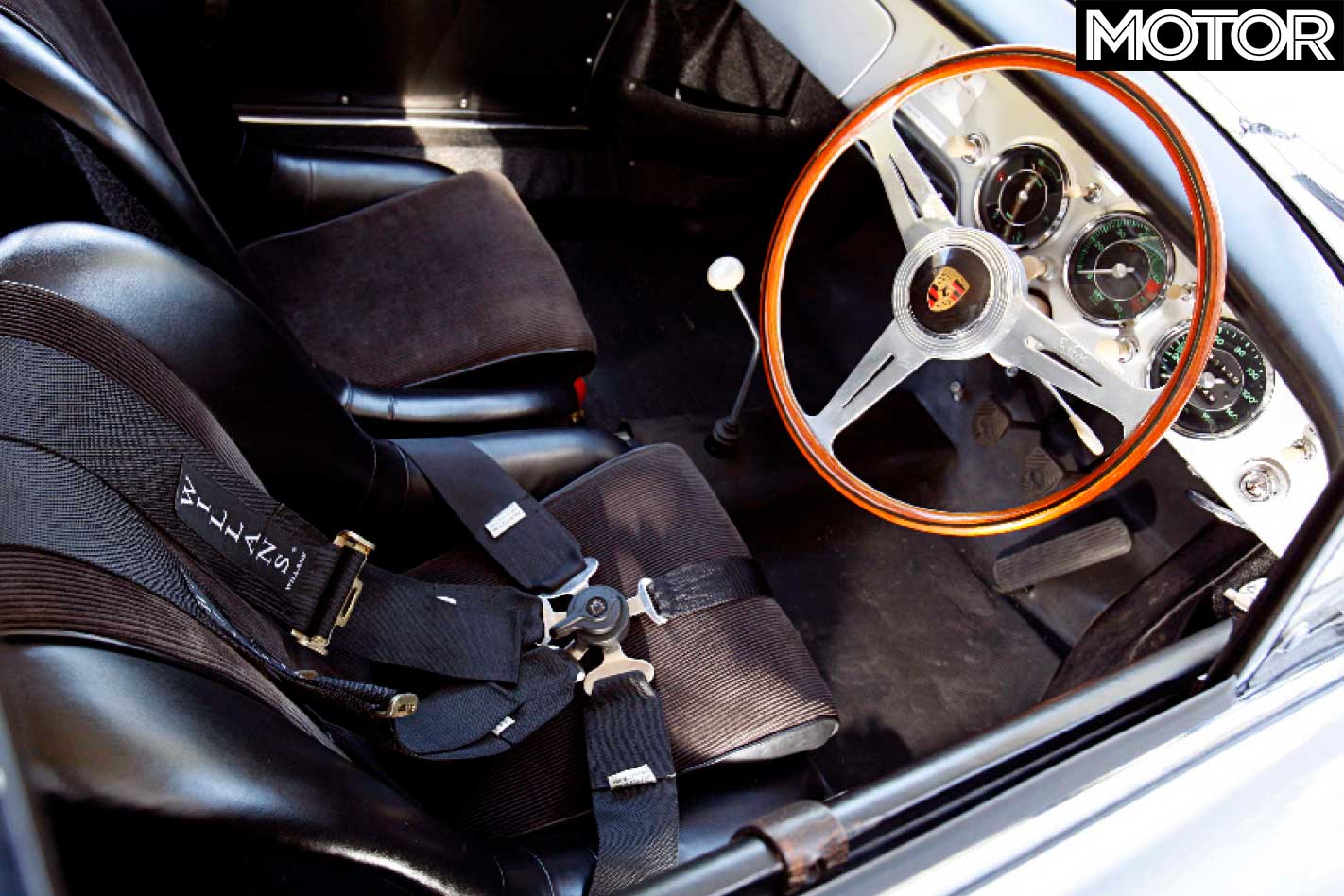
The high-sided seats are buggers to get in and out of and the seat-belt buckle (if you’re not using the harness) jabs you in the butt as you slump into the chair. The roll-cage makes it a two-seater and the fire-bomb takes the place of the passenger’s legs. But it’s those compromises that most closely unite this pair of mutants, perhaps even more so than the obvious mechanical similarities.
Back in 1956, if all you wanted was transport with a Porsche badge, you were much better off with the extra driveability, civility and reliability of the basic, pushrod 356. And whaddaya know? Even in 2007, anybody looking for a Porsche day-to-day driver is going to be happier with a standard Carrera or Carrera S than the grumpy GT3 with its lumpy motor, awkward seats and driveway-scooping ride height.
But if the no-compromise solution is where you’re coming from, or were coming from five decades ago, there’s only one path to take. Sure, technology has forced differences between these cars, but philosophically speaking, they’re dead-set peas from a pod.
The more things change, eh?
Fast Facts
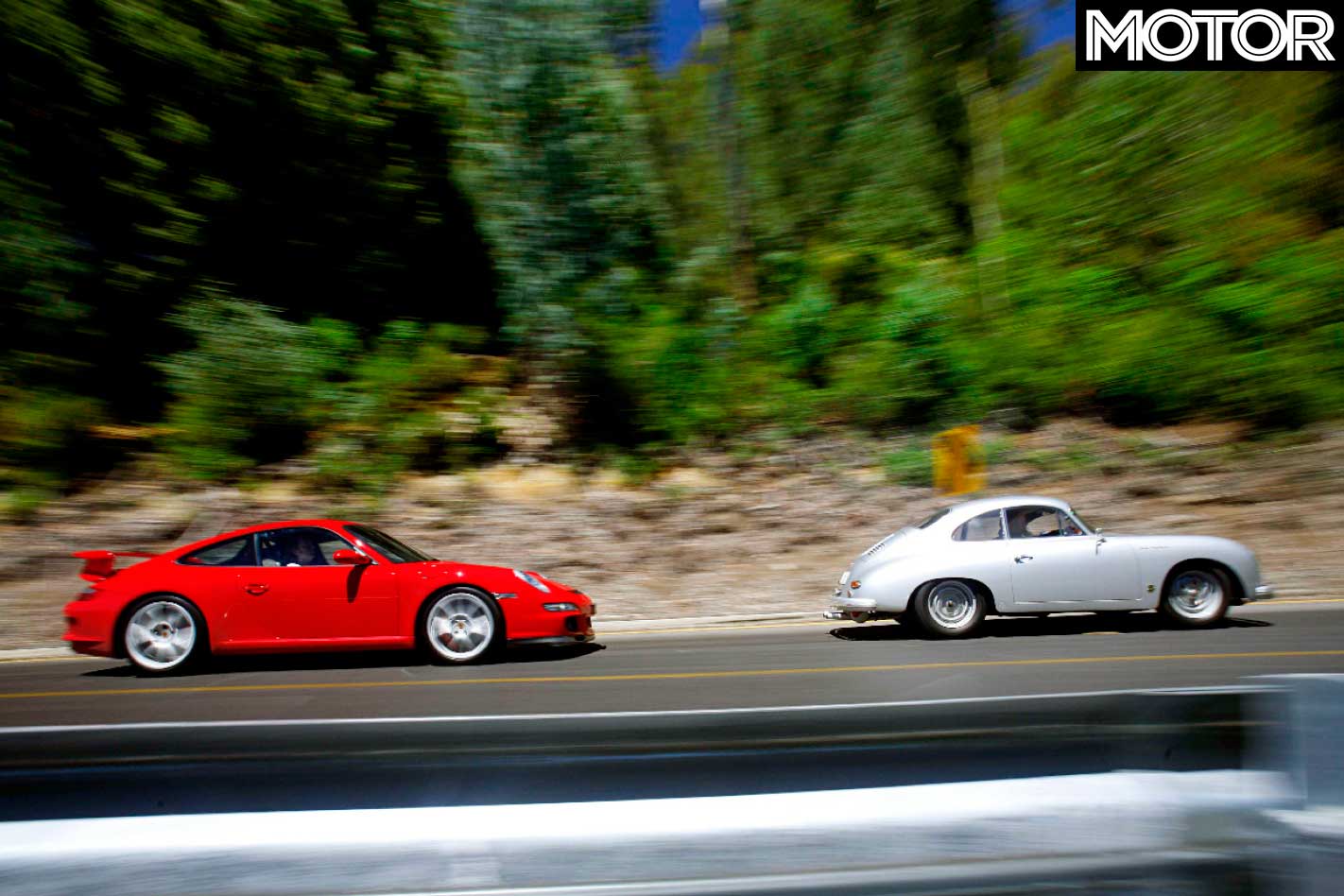
| u00a0 | Porsche 911 GT3 | Porsche 356 Carrera GT |
| Body | 2-door, 2-seat coupe | |
| Drive | rear-wheel | |
| Engine | 3600cc flat 6, DOHC, 24v | 1584cc flat 4, DOHC, 8v |
| Bore x Stroke | 100.0 u00d7 76.4mm | 87.4 u00d7 66.0mm |
| Power | 305kW @ 7600rpm | 104kW @ 6500rpm |
| Torque | 405Nm @ 5500rpm | 120Nm |
| Transmission | 6-speed manual | u00a04-speed manual |
| Weight | 1395kg | u00a0870kg |
| Power/Weight | 219kW/tonne | u00a0120kW/tonne |
| 0-100km/h | 4.3sec (claimed) | 11.0sec (claimed)u00a0 |
| Top Speed | 4.3sec (claimed) | 200km/hu00a0(claimed) |
| Suspension (f) | struts, A-arms, adaptive dampers | double trailing parallel arms, torsion baru00a0 |
| Suspension (r) | multi-links, coil springs, adaptive dampers | u00a0swing axles, trailing arms, torsion bar |
| Brakes (f) | 350mm cross-drilled inner-vented discs, six-piston calipers | Large-diameter steel inserted aluminium drums |
| Brakes (r) | 340mm cross-drilled inner-vented discs, four-piston calipers | Large-diameter steel inserted aluminium drums |
| Wheels | 19 x 8.5-inch (f); 19 x 12.0-inch (r) | 15 x 4.5-inch (f/r) |
| Tyre Sizes | 235/35R19(f); 305/30R19 (r) | 175/70R15 (f/r) |
| Price | $253,200 | $5000 (1958) |
Race car pedigree
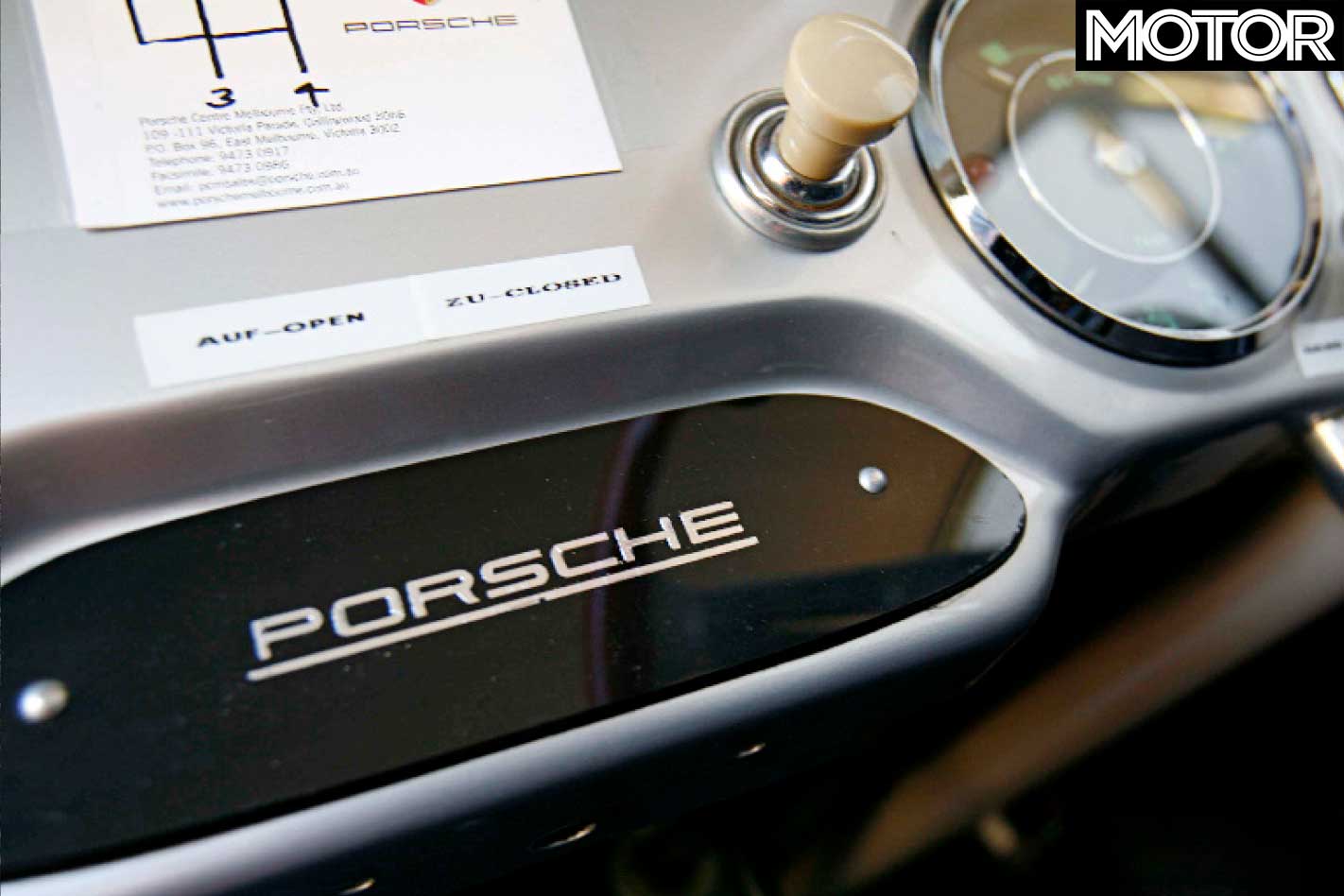
It’s important not to under-estimate the impact the 356 Carrera GT had on the world when it was brand new. These days, it might seem a bit lukewarm with just over 100kW and just four cylinders, but back in the 50s it was an absolute revelation. A gentleman racer could have done a lot worse than hitch himself up to a Carrera GT and, in fact, many races were won by the things both at factory and privateer level.
The racing pedigree was everywhere on the thing, too, from the massive Webers designed to make the thing rev (and to hell with tractability) to the monster fuel tank that devoured most of what would otherwise have been luggage space. Meanwhile, circuit racing, rallying, long-distance road events, you name it, the Carrera GT was there, and quite often on the podium.
The days of the road-registered Carrera GT turning up to race were numbered, however, and in 1959 when Porsche updated the 356 to B-specification, the road-going GT was dumped in favour of a competition-only model.
That didn’t stop it winning races, however, and development continued right through the decade with the final – and fastest – versions capable of around 225km/h and 0-100 in around seven seconds.
FIFTY years ago, a French car was en route to victory in a mammoth event set up to showcase the British and Australian motor industries.
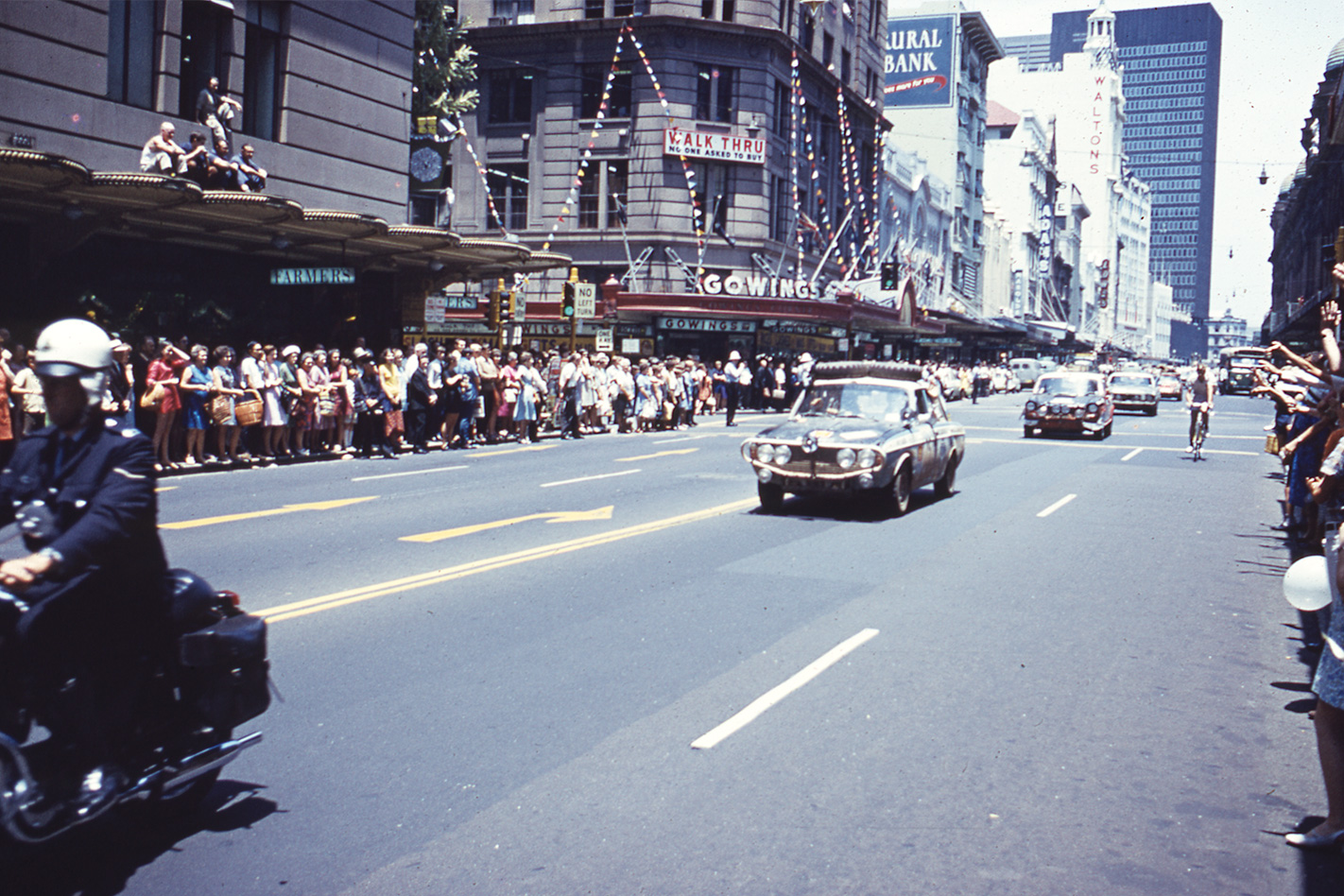
The 1968 London-to-Sydney Marathon, the first and still greatest of the ultra-marathon car races (not rallies), was a gift to the car makers from Britain’s leading newspaper, The Daily Express. Its proprietor, Sir Max Aitken, a Battle of Britain fighter ace, was staunchly supporting Britain’s isolationist policies against a massive push to join the European Common Market – and a win by an Austin, Ford Cortina or even a Hillman would be a huge call to arms. But on the last night of competition, after more than 16,000 competitive kilometres over just 10 moving days (do the maths), a French car was leading, followed by a German one. The first British car was a relatively distant third. It was, from Aitken’s perspective, a disaster.
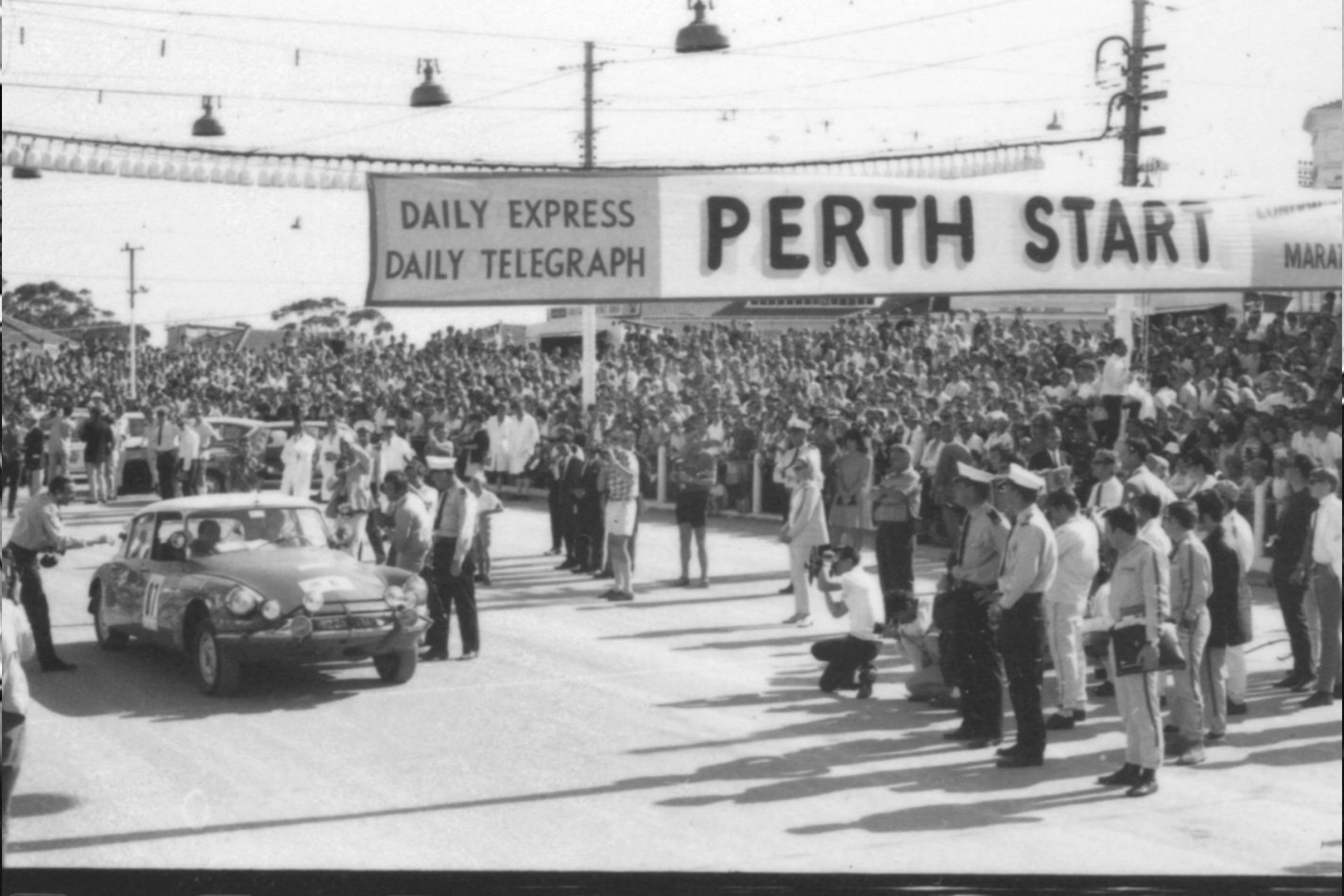
On the last competitive stage, the German Ford Taunus driven by Flying Finn Simo Lampinen failed spectacularly in a bust-or-bust-through lunge, elevating a British car to second place. But Belgian Lucien Bianchi in a works Citroen DS21 emerged from the last night of frenetic activity with an unassailable 11-point lead and was cruising to the finish at the Warwick Farm Grand Prix circuit. Then he was crashed out of the event by a head-on collision with a spectator’s car.
Author John Smailes covered the marathon in 1968 and co-wrote a book, The Bright Eyes of Danger, with Australia’s first touring car champion David McKay, who led the Holden team in the marathon. Half a century on, Smailes has written its sequel, Race across the World (released this November to coincide with the anniversary), which, for the first time, tells the stories behind the world’s greatest long-distance car race. Publisher Allen & Unwin has given Wheels an exclusive inside view of the crash that saved the British motor industry. It’s a story that’s never before been told.
“THE CRASH was deliberate.”
The small man, grey hair cut short, with eyes so piercing they drill you, was unwavering in his assertion.
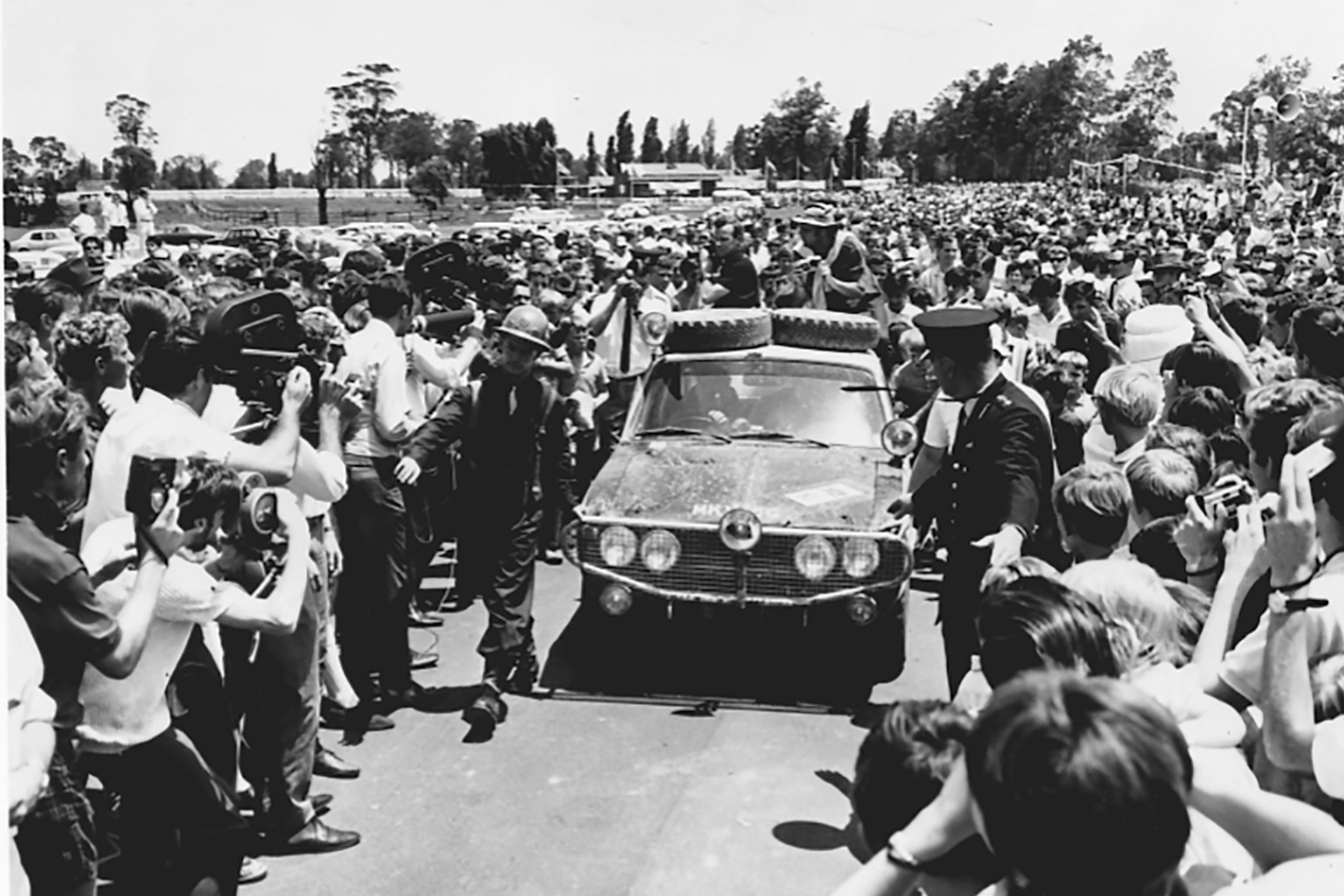
“The car that hit us was deliberately there. The crash was not normal.”
We had met in a cafe in Marseille airport, a cheerful place decorated in the manner of the ’60s.
Jean-Claude Ogier and his wife, Lucette, had driven up from their holiday home at Saintes-Maries-de-la-Mer and I’d flown in from the UK on a tight schedule. Our meeting was to review their part in the greatest road race of modern times – the 1968 London-to-Sydney Marathon.
Ninety-eight crews raced across half the world in pursuit of a total prize purse of 22,650 pounds – a huge sum fifty years ago equivalent to almost $500,000 today. Ogier had almost won it.
Driving with Belgian ace Lucien Bianchi, winner of the Le Mans 24 Hour race only two months before, the Frenchman was in sight of victory. The pair had kept their lightweight Citroen DS21, a real rocket, in touch with the lead all the time. They’d been third at Bombay, and across Australia had kept their head, as a firestorm of desperate competition burst out around them. That tactic had delivered them outright first, but it was tenuous.
At midnight on the last day of competition, just 12 points separated the top six competitors. Bianchi and Ogier’s gap was only two minutes, and each minute was worth a point. It was too close to call, and there were 694 competitive kilometres remaining. Bianchi, the lead driver, took the wheel. Formula One driver, sports car ace, rally expert – he was masterful that night.
When the team reached Hindmarsh Station, the last competitive stage on the near 17,000-kilometre journey, they were 11 minutes ahead. Bianchi had massively consolidated his lead. It had been a night of legend, a fitting climax to a glorious adventure. It was the expectation of all crews that the real marathon had finished and that they would now cruise to the finish. Ogier took over and a tired Bianchi settled down in the right-hand seat of their left-hand-drive car.
It was early morning, just coming up to 8:00am, and they had two hours and one minute to cover the distance to the time control outside Nowra, an average speed of less than 80 kilometres per hour. Seventeen kilometres back from the control was Tianjara Creek, the last obstacle on the course. Ogier cleared it, not gently but with spray flying. It was an act of celebration.
Just moments before, a white Mini Cooper S drove unchallenged through the control point at Nowra with two young men on board. Incredibly, it set off the wrong way, in the opposite direction to the oncoming competition cars. The marathon did not close roads and nobody at control stopped them.
Two kilometres down the road from control was John Gowland, manager of the Australian Ford team. “I heard, then saw, the Mini coming,” he said. “I stepped out on the road, waving my hands at him, but he swerved around me and kept going.” Gowland saw and heard nothing more. “Later, Andrew Cowan [in a Hillman Hunter] came through followed by Paddy Hopkirk [Austin 1800].”
There was no Citroen.
Two kilometres after the water splash, Jean-Claude Ogier had been approaching a right-hand bend. It was a big sweeper with room for two cars to squeak past each other. “I was in the centre of the road,” Jean-Claude told me in Marseille, his memory of that moment and his attention to detail still intense. “Then the Austin [Mini] jumped to our side.”
The crash was catastrophic. With a massive tearing of metal and not much energy absorption, both cars folded back to their firewalls, trapping their right-hand occupants. The Mini caught fire. No one saw the crash and no one was in earshot.
Then British ace Paddy Hopkirk, the most famous driver in the event, arrived in his Austin 1800. Co-drivers Tony Nash and Alec Poole leapt from the car and aimed their small extinguisher optimistically at the damaged under-bonnet of the Mini. Miraculously, the fire went out. Hopkirk left his two teammates and sped back to Tianjara Creek to alert a small army of media spectators and a smattering of officials, who rushed to the scene.
Half a century on, Jean-Claude and Lucette, who was also in the marathon, co-driving for the works Ford team, are in no doubt. “I think the Austin [Mini] went on the stage purposely to stop us,” he asserts. “Someone knew there was an accident due to happen,” he claims, handing me a handwritten document in support.
But why and how? Where’s the evidence?
“Citroen is very small in the marketplace,” he offers. “A win for it would not be good for sales of the others … People were betting on cars. They did not want us to win.
“The Mini drivers were wearing four-point harnesses,” Ogier continues. It’s as if he thought they were rigged for collision.
“There were so many media there. They must have been tipped off something was going to happen.”
Yes, they were. They were there to cover the stage end of the greatest road race on earth.
Rumours quickly spread from the scene – the one most repeated even 50 years on is that the Mini drivers were off-duty policemen, and intoxicated.
Greg Stanton and Allan Chilcott never knew what hit them. The two 18-year-olds were members of the Campbelltown District Motor Club, just up the road from Nowra.
“Greg knocked on my door about nine o’clock the night before the marathon was due at Nowra,” Allan tells me. “He said we should go and have a look.”
This is the first time, ever, that Chilcott has spoken to a journalist about the crash. He had written a partial explanation for an enthusiast publication, but this is different.
“Greg and I made a pact not to talk. It was better that way.” Stanton passed away from an illness at age 61. Out of a sense of duty, Chilcott has protected his identity all these years. “We were keen to get to Nowra really early, so we decided to go that night,” Chilcott says. “We got our mothers to phone us in sick.” (Both young men worked at the same department store in Campbelltown.)
The next morning, they turned up at control. “It was just a couple of tents at the side of the road. We heard the ETA is one hour, so we thought, ‘Let’s go down to the creek crossing about ten minutes away.’” Chilcott is adamant no one tried to stop them. They just drove off.
“We didn’t see any cars on the road. Thinking back, instead of us it could have been a family going home.” Chilcott describes Stanton as a skilful driver. He claims speed was not a factor. “The road was quite narrow. It would have been a single lane if it had been bitumen. There was a very distinctive curve on its crown. The last thing I remember is the Citroen coming towards us. I don’t recall the crash at all.”
The boys lay in Shoalhaven Hospital with Bianchi in the next cubicle. “No one came to see us; no organisers, no press. We were offered no transport. That night, my parents came down and drove me home.” Fake news had travelled fast. Chilcott’s girlfriend had initially been told he’d been killed. The crash was all over The Sun newspaper that day.
Chilcott tells me he is surprised by Ogier’s accusations. He dismisses talk of sabotage and claims no knowledge of a betting syndicate that would want to influence the outcome of the marathon. “We were just two kids from Campbelltown,” he says. But for 50 years the marathon has “been a big thing on my mind”.
“One day, I was watching a replay on TV of the famous incident when Bathurst 1000 race leader Dick Johnson was eliminated by a rock that tumbled onto the track. I turned to my wife and said, “I know how the rock feels.”
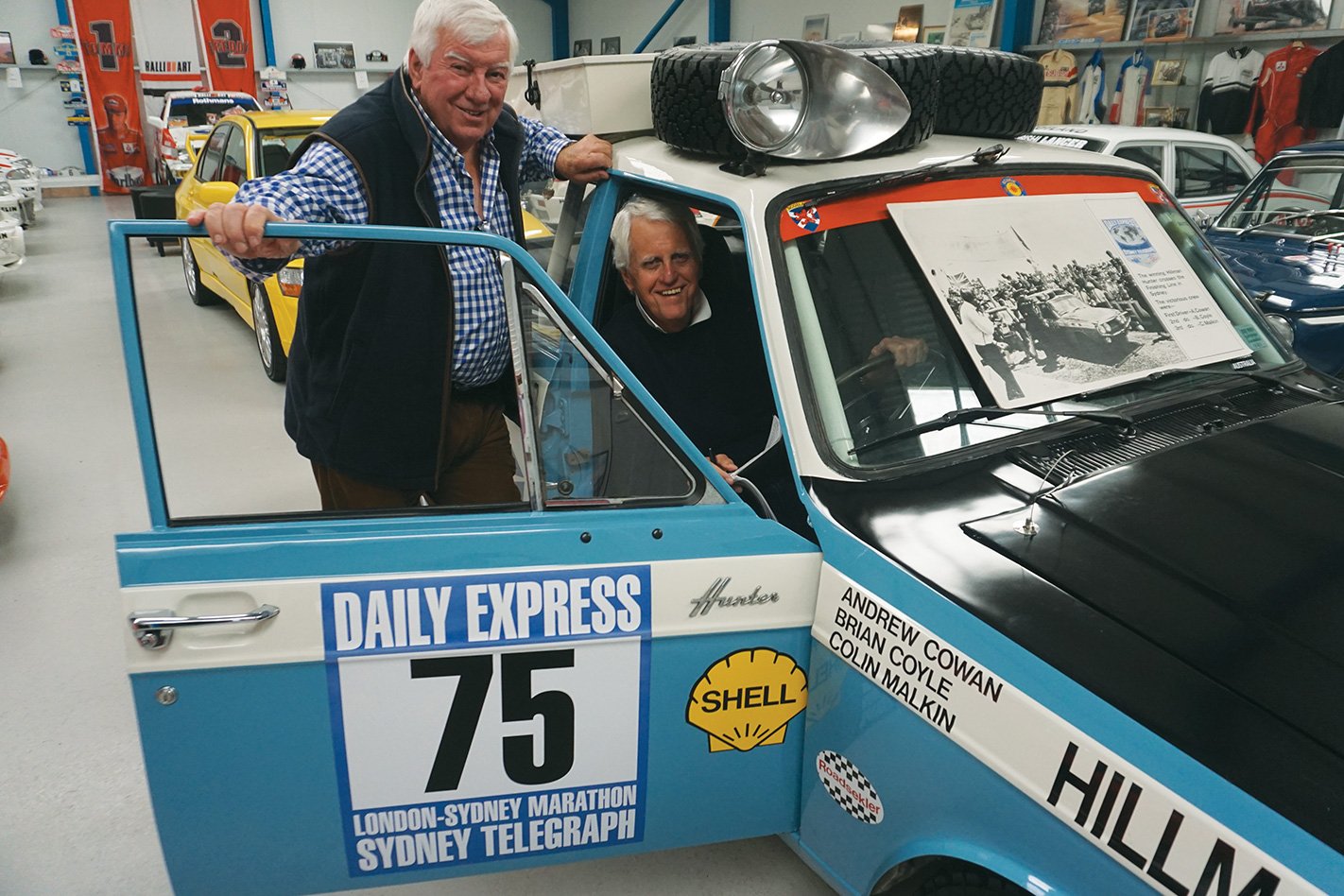
With Bianchi out, Andrew Cowan, his brother-in-law Brian Coyle and British Rally Champion Colin Malkin, in a Hillman Hunter, won from Paddy Hopkirk, Alec Poole and Tony Nash in an Austin 1800 by a margin of just six minutes after 16,694 competitive kilometres in 10 days, seven minutes and nine seconds. Ian Vaughan – a young Victorian trials driver and Ford engineer – was, with Bob Forsyth and Jack Ellis, third in a Falcon GT, six minutes back.
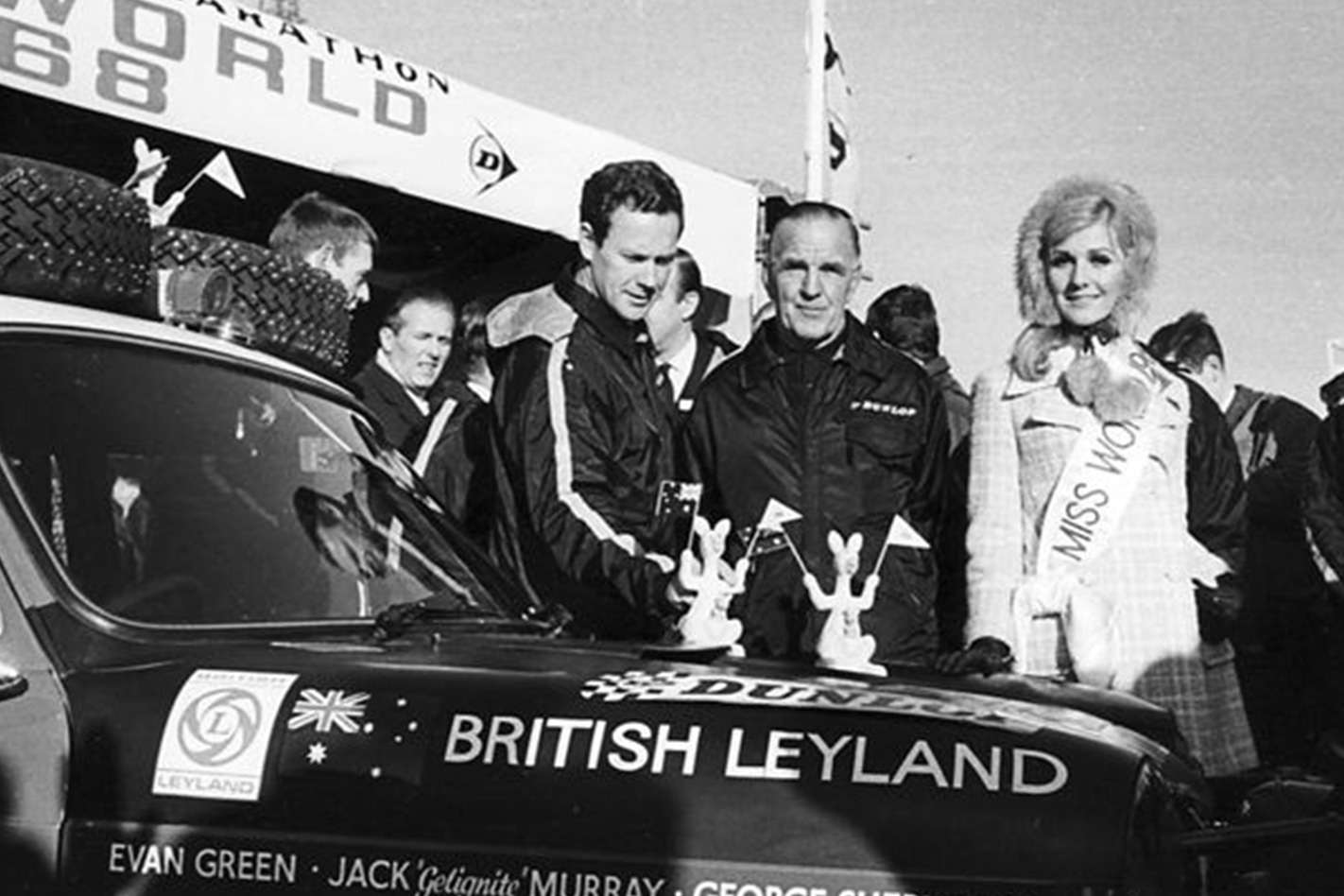
At the prize giving, Andrew Cowan, marathon hero, said: “When you do an event like this there’s got be a lot of luck in it. But as far as I’m concerned it wasn’t good luck that won it. It was bad luck that lost it.”
Even as Cowan was speaking, the UK House of Commons was passing a resolution noting ‘with pride the success of British drivers and British cars in the London-to-Sydney Marathon’ and congratulating ‘the British Motor Industry for making the best cars in the world.’
Three months and fourteen days after his marathon crash, Lucien Bianchi, still recovering from his injuries, crashed his 3.0-litre Autodelta V8 Alfa Romeo 33/3 prototype while testing for his Le Mans defence. He died instantly. Lucien was the great-uncle of Jules Bianchi, F1’s last fatality, the young member of Ferrari’s elite Driver Academy who died as a result of injuries sustained in the 2014 Japanese Grand Prix.
Hello WhichCar
Is the new Toyota Corolla any good? I rented the previous generation hatchback a few months back and thought it was sub-par, and nowhere near my current-gen Hyundai i30 in terms of quality. The CVT (Continuously Variable Transmission) was awful too, especially in comparison to my Hyundai’s automatic. My mum is in need of a new car (probably her last one) and it would be a struggle to convince her to drive anything other than a Toyota Corolla, given she’s had Corollas pretty much her whole life. Her current Corolla is about two generations old I think, but I just want to make sure that the new one is actually decent before I help her shop for one. In case the Corolla is a no-go, what else would you recommend for an older lady that doesn’t need a lot of space but just wants something that’s comfy and easy to drive?
Tabetha, Williamstown VIC
Hi Tabetha,
You’ll be happy to know that the 10th-generation Toyota Corolla, which launched in Australia in early 2018, is indeed a return to form! Like you, we were never in love with its predecessor, but the new Corolla is a significant step forward. For one, it’s actually fun to drive. The base 2.0-litre petrol is the engine we’d choose (the hybrid can feel a bit dozy), and the new CVT is worlds better than the CVT of the last Corolla. It feels crisp, decisive and a lot more intelligent in its shift programming. There are some negatives, though, such as a tiny boot and a somewhat cozy rear seat. They may not concern your mother, though, if she just needs a car to get herself and her groceries around town.
Our pick would be the mid-range Toyota Corolla SX petrol automatic, which retails at $26,870.
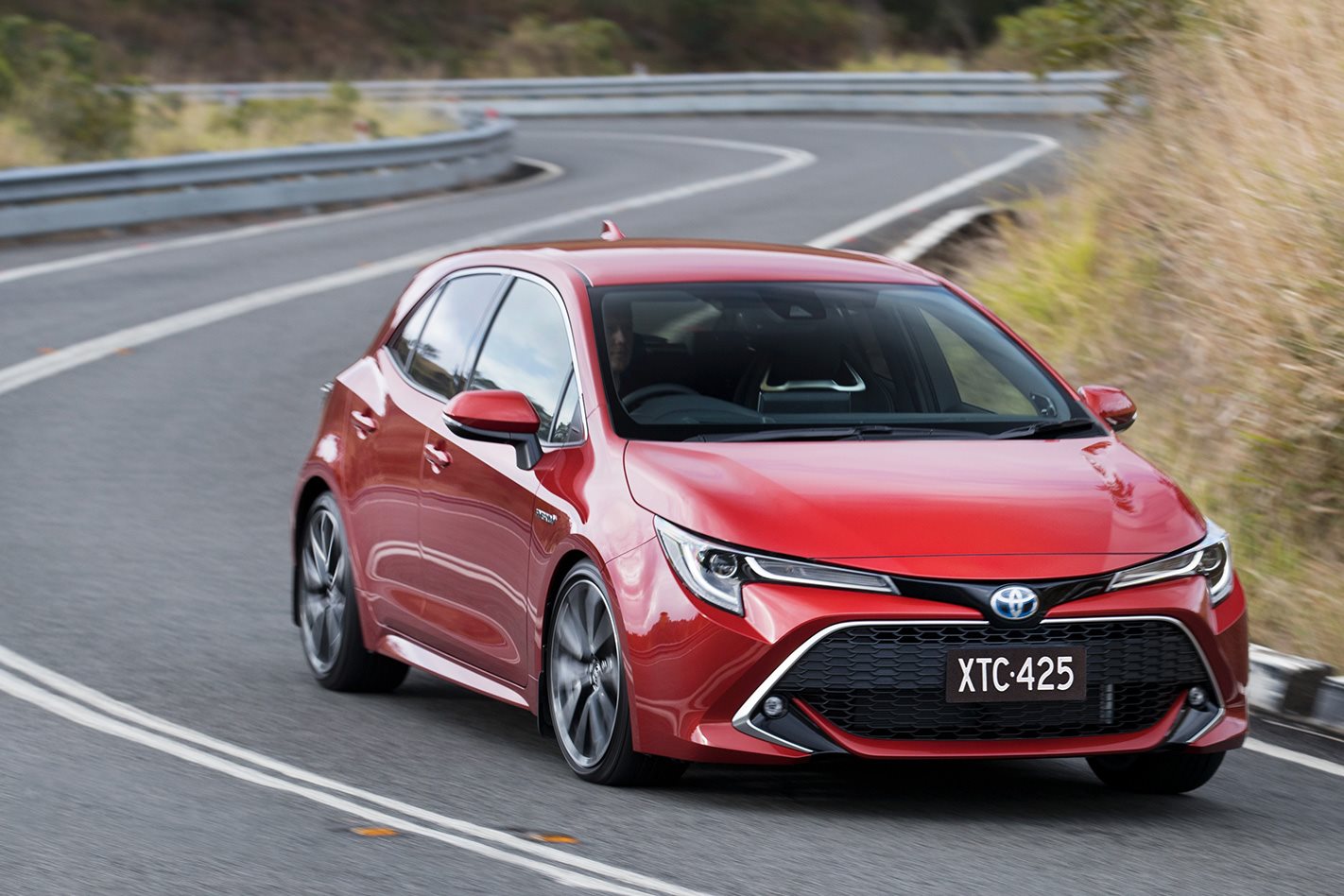
On the question of alternatives, we’d put forward the Volkswagen Golf, which is sophisticated, spacious and lovely to drive, and probably the most compelling alternative to the Corolla. However, if your mum is a long-time Corolla fan then convincing her to go with a German option may be difficult, especially as the turbocharged Golf range is more mechanically complex than the naturally-aspirated Toyota, and reliability is a huge reason for purchase for many Toyota buyers.
The Honda Civic is another option, and a very spacious all-rounder too, but its unresponsive CVT takes some of the sheen off what could otherwise be quite a fun car to drive. Does she want a big interior in a small hatch? The Subaru Impreza might be more appealing, in that case, and also comes with the bonus of standard all-wheel drive. As with the Honda, though, the Impreza’s CVT is nowhere near as polished as the Corolla’s, and its extra weight (due to the AWD system) means it feels significantly slower when driving around town.
WhichCar recommends: Toyota Corolla
Need help to choose a new car? We’re here to help. Email us at [email protected]
The rarefied world of super-expensive new cars is about to get a whole lot more expensive in 2019, with multi-million dollar performance machines from Aston Martin and Mercedes-AMG, and many others with ‘more affordable’ six-figure price tags making their way to Australian shores in 2019. Chances are you won’t see these automotive exotics in showrooms, because potential customers for cars like the Aston Martin Valkyrie will be wined and dined behind closed doors, as well-dressed sales people attempt to pry seven-figure deposits from their fur-lined pockets.
Maybe a seriously quick SUV from one of Italy’s most famous performance car brands is more your style? Or a luxury saloon from a storied British purveyor of automotive finery? Whatever your desire, there’s a vehicle of lavish price and incredible excess headed to Australia that will ensure you’re the envy of every Australian.
Here’s our look at the finest of automotive horse flesh coming in 2019.
Mercedes-AMG Project One
Price: $5m (estimated)
Rivals: Aston Martin Valkyrie, McLaren Senna, Ferrari La Ferrari, Koenigsegg Agera RS, Pagani Huayra BC
Due: 2019
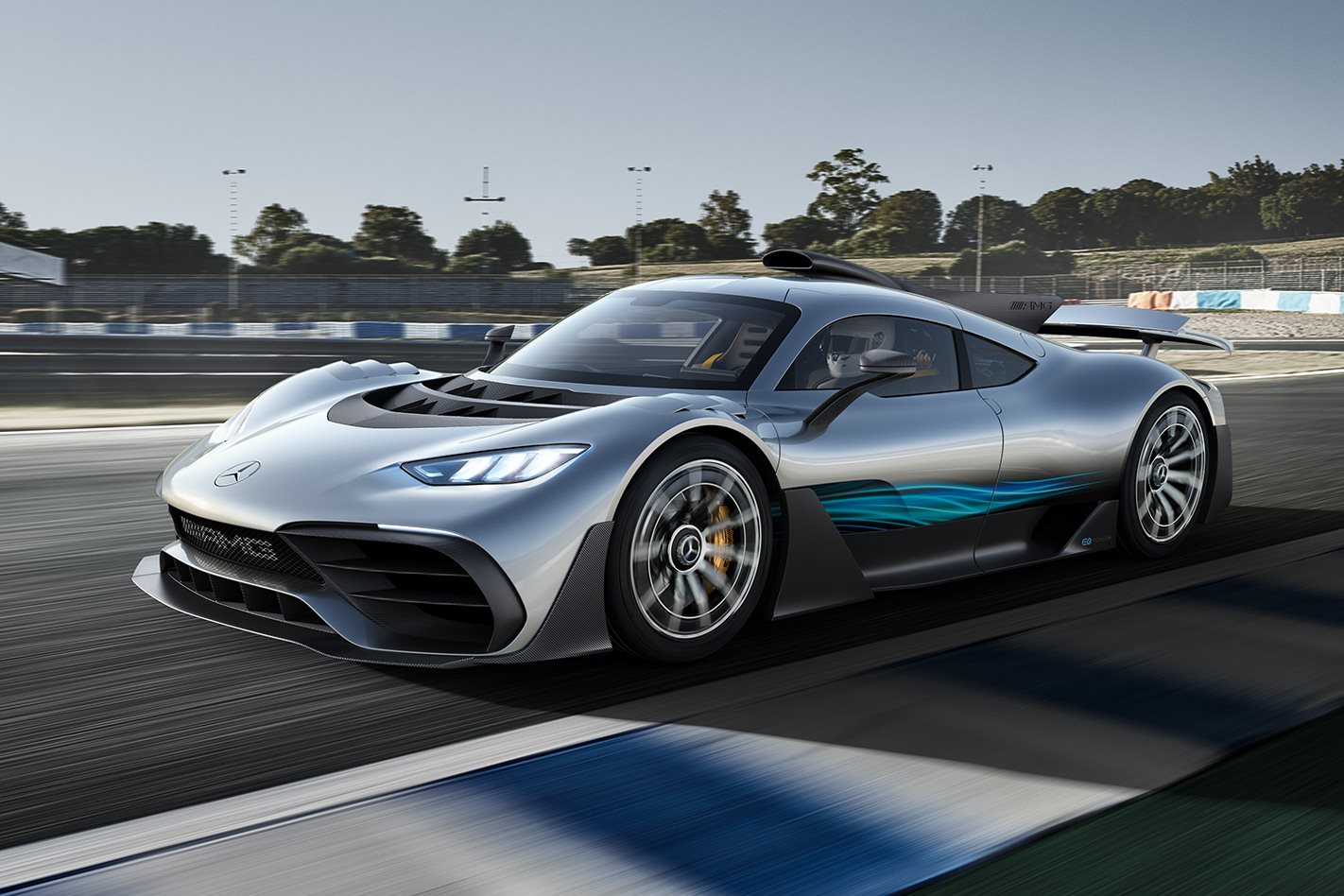
When a car company says it’s built a race car for the road, it’s probably stretching the truth. In the case of Mercedes-AMG, however, it pretty much is the truth. Under the outlandish carbon skin of the Project One lies the complex, cutting edge heart of the same car that took Brit Lewis Hamilton to the 2017 and 2018 F1 World Championships.
It’s got a projected 0-100km/h time of just 2.5 seconds, courtesy of a 1.6-litre turbocharged V6 engine teamed with four electric motors, and it’s making a neat one thousand horsepower (745kW). And its limited top speed is a measly 350km/h. Pricing is expected to be in the A$4 million bracket – though it’s rumoured that all 275 are already sold out. We’d bet that ardent Merc collector Lindsay Fox might be near the front of the queue.
Aston Martin Valkyrie
Price: $4 million
Rivals: McLaren Senna, Ferrari 812 Superfast, Mercedes-AMG Project One
Due: December 2019
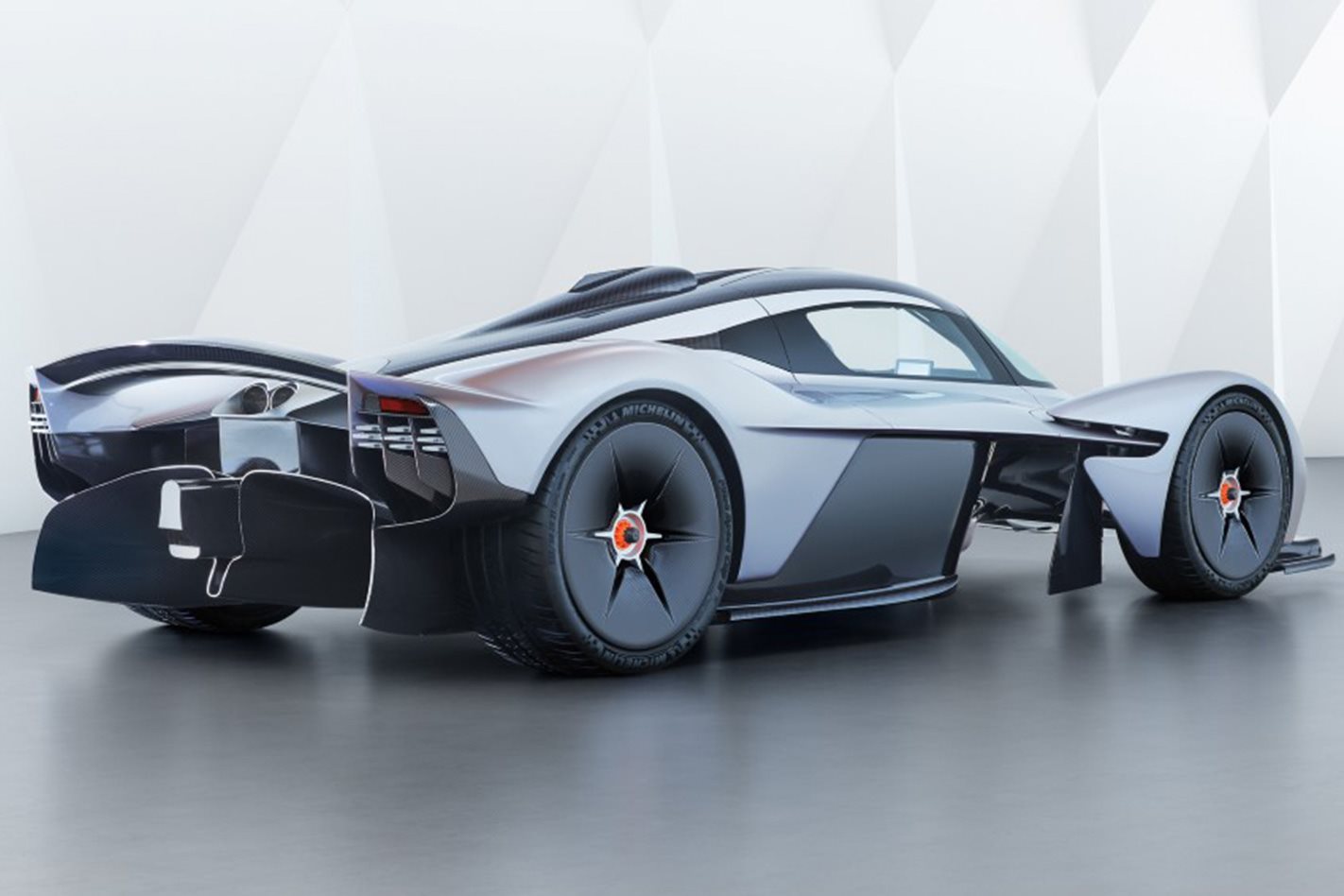
This is one outrageous rig, featuring arguably the most powerful naturally aspirated road-going engine ever built. The Valkyrie is being built in conjunction with Red Bull Technologies – legendary F1 designer Adrian Newey penned its sensuous form – while its monster 6.5-litre V12 motor is being built in conjunction with legendary British engine builders Cosworth. Early mail suggests it’ll boot out north of 820kW. Gulp.
With its gullwing doors, carbon fibre everything, and a hybrid power system to go along with that engine, the $4 million price tag should be no surprise. And if you’re thinking of snapping a couple up, too late – all 150 road and 25 track version slated for production have been claimed.
Ferrari 488 Pista
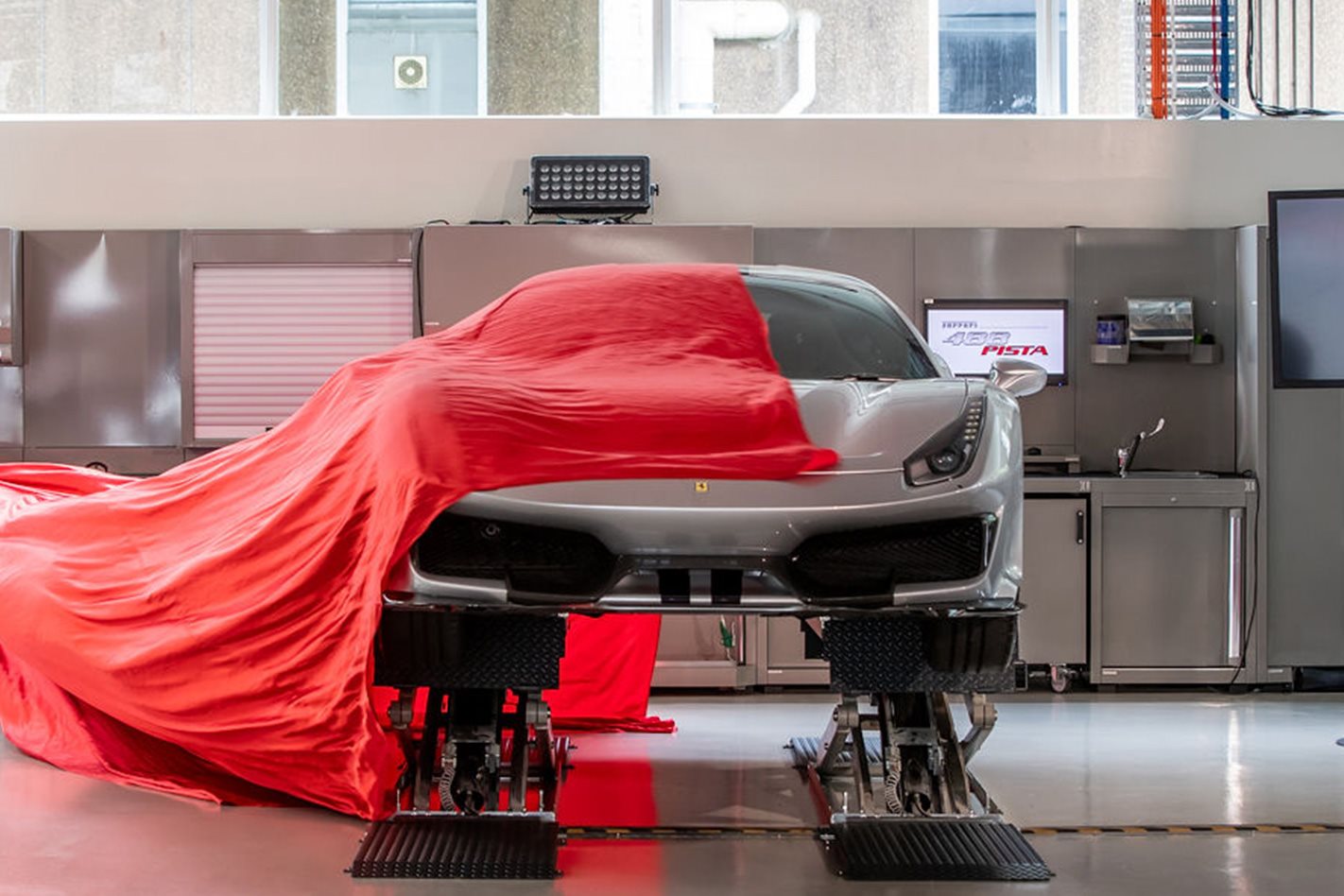
Price: $645,000+
Rivals: McLaren 720S, Porsche 911 GT2 RS
Due: December 2019
Should be called the Pista de resistance… for this is the defining light of Ferrari’s V8 prowess. Packing 530kW and 770Nm in a lighter, more aerodynamic form, the Ferrari 488 Pista is a trackday toy like few others – though we’d love to see how it fares against Porsche’s 911 GT2 RS. Pricing falls under the ‘if you have to ask…’ category, but since you asked, it’ll cost near enough to $650,000, and that’s before the average $65,000 that Ferrari owners add to their new cars.
Audi R8
Price: $395,000 (estimated)
Rivals: McLaren 570S, Lamborghini Huracan LP610-4, Mercedes-Benz AMG GT-R
Due: October 2019
Even though the Audi to beat them all has already gone through a mid-life tweak, Audi says its mid-engined V10 high-performance coupe will score another light update later in 2019. It’s unlikely to score any substantial updates, given how late in its lifecycle it is, but expect perhaps a little tickle-up on the already potent 456kW headline figure, as well as a further tidying of its dynamics. Perhaps a more track-inspired version of its RWS rear-driver, too? Never say never…
Lamborghini Urus
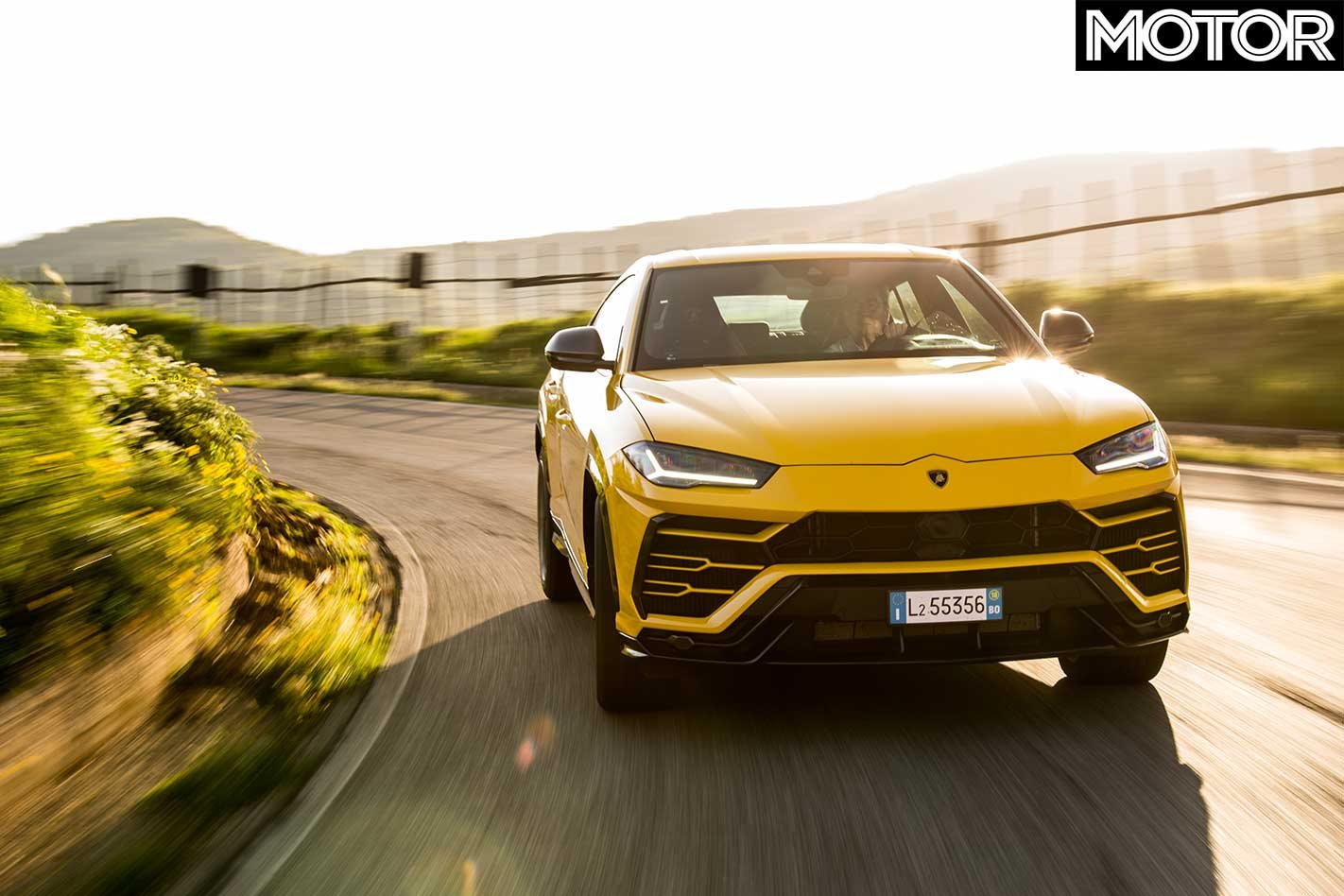
Price: $390,00
Rivals: Porsche Cayenne Turbo S
Due: January 2019
What do you get when you blend the best elements from some of the world’s most premium brands and whack it underneath a body that a Hot Wheels designer couldn’t have dreamed up? The Lamborghini Urus. The five-door, five-seat Urus uses a Porsche-sourced twin-turbo 4.0-litre V8 petrol engine that produces 478kW and 850Nm, powering an all-wheel-drive system with the ability to send up to 87 per cent of drive to the rear end.
It’s backed by a traditional eight-speed automatic transmission, which forms part of a multiple drive mode system that includes Strada, Sport and Corsa road modes as well as Terra (land), Neve (snow) and Sabbia (sand) settings. There’s also an Ego mode that allows for a mix of personalised settings.
The Urus uses components and tech found in cars like the Bentley Bentayga, Porsche Cayenne and Audi Q7. It’ll do 0-100km/h in about 3.6 seconds, and its 10-piston brakes are the biggest ever fitted to any production car ever. Wow.
Mercedes-AMG GT 4-Door Coupe
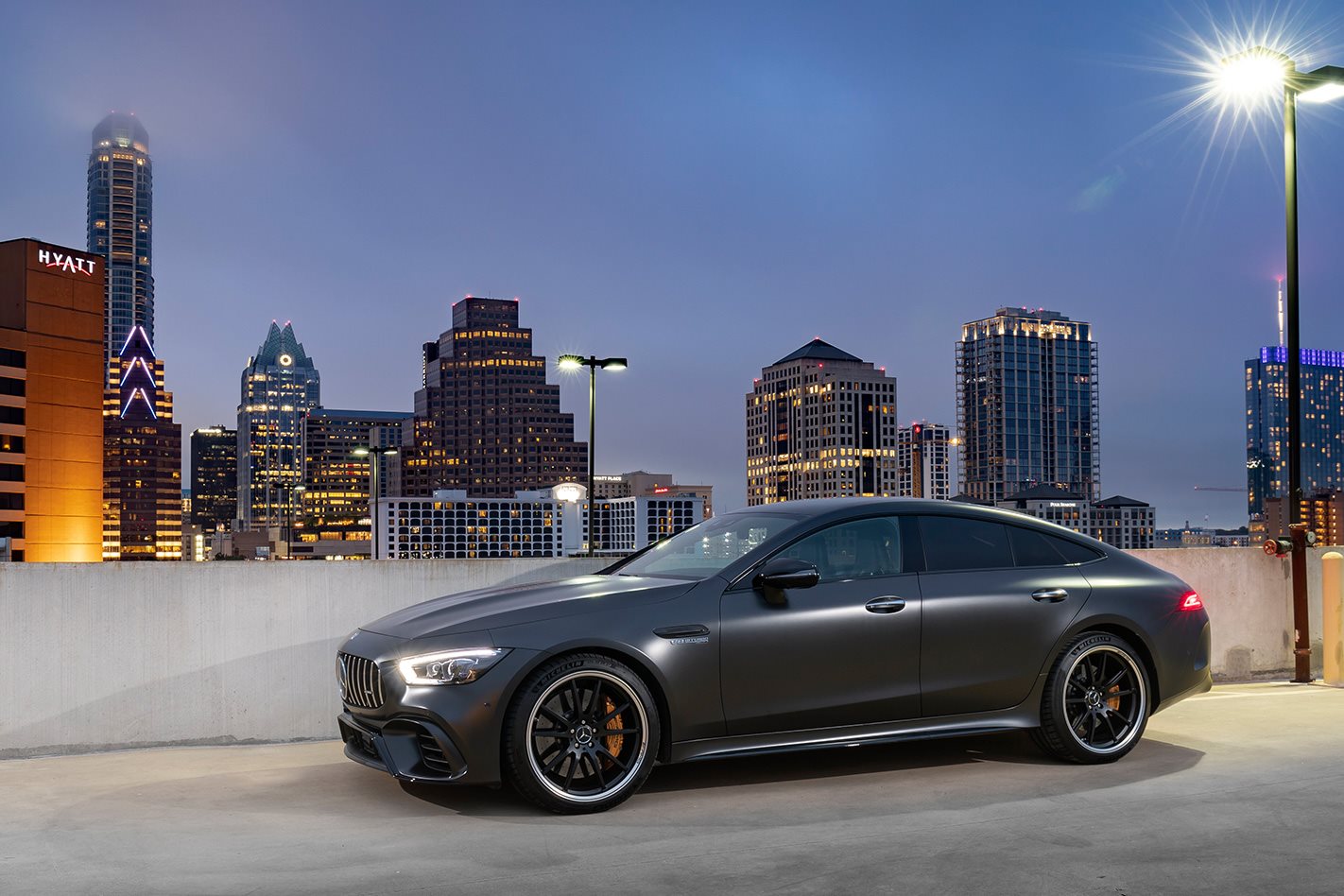
Price: $300,000 (est)
Rivals: Aston Martin Rapide, BMW M6 Gran Coupe, Porsche Panamera
Due: Mid 2019
It’s an AMG GT but not as we know it. The oddly named GT 4-Door Coupe is the first hot sedan built entirely by AMG, and it shares underpinnings with the E-Class. Due in Australia mid-way through 2019, it’s expected to arrive in two guises; a 320kW GT53 six-cylinder and a 470kW GT63 twin-turbo V8.
Lexus LC-F
Price: $280,000
Rivals: Audi RS7, Mercedes-Benz AMG GT-R
Due: November 2019
Could this finally be the sports car that defines the Lexus brand? The LFA was awesome but expensive and a bit oddball, but the RC F potentially powered by a brand new twin-turbo 4.0-litre V8 – could be right on the money. Packing an expected 350kW or more, along with flared wheelarches, bigger tyres and a whole lot of attitude, it’ll surface late in 2019.
Aston Martin DBX
Price: $240,000+
Rivals: Maserati Levante, Porsche Cayenne
Due: October 2019
There are few details available yet on Aston Martin’s entry into the world of high-performance crossovers, but early imagery suggests that the British brand isn’t being shy about giving the high-riding DBX some off-road chops.
Based on the same platform that underpins the new DB11, the DBX will be a petrol-only proposition, with powerplants likely to be sourced from Mercedes-Benz. These could include Merc’s excellent 3.0-litre straight six at the entry level, while a flame-spitting twin turbo V8 could potentially power a range-topper.
