
THE most fearsome hillclimb in the world is taking place this weekend in Colorado at Pikes Peak.
Also known as the Race to the Clouds, the event has attracted mad hat racers and thrill seekers for decades, all of whom must contend with extreme elevation changes, 156 challenging corners, the close proximity of trees in the lower altitudes and vertigo-inducing sheer drops along the upper sections of the course.
While it requires a particular kind of driver to be successful at Pikes Peak, those drivers also require a particular breed of race car. These are some of the wildest from the race’s history:
1987 Volkswagen Golf Mk2
Volkswagen is fielding a 500kW all-electric prototype dubbed the I.D. R in this year’s unlimited class at Pikes Peak. But that imposing and stealthy machine isn’t the first unhinged beast the Germans have unleashed on the Colorado mountain. In 1987 a Mk2 Golf was built to take on Pikes Peak which featured not one, but two engines. In the 1980s teams were battling the power sapping effects of the high-altitude climb by pushing their engines to the very limit. VW though that it would take the idea a little further by doubling power via doubling the number of powertrains.
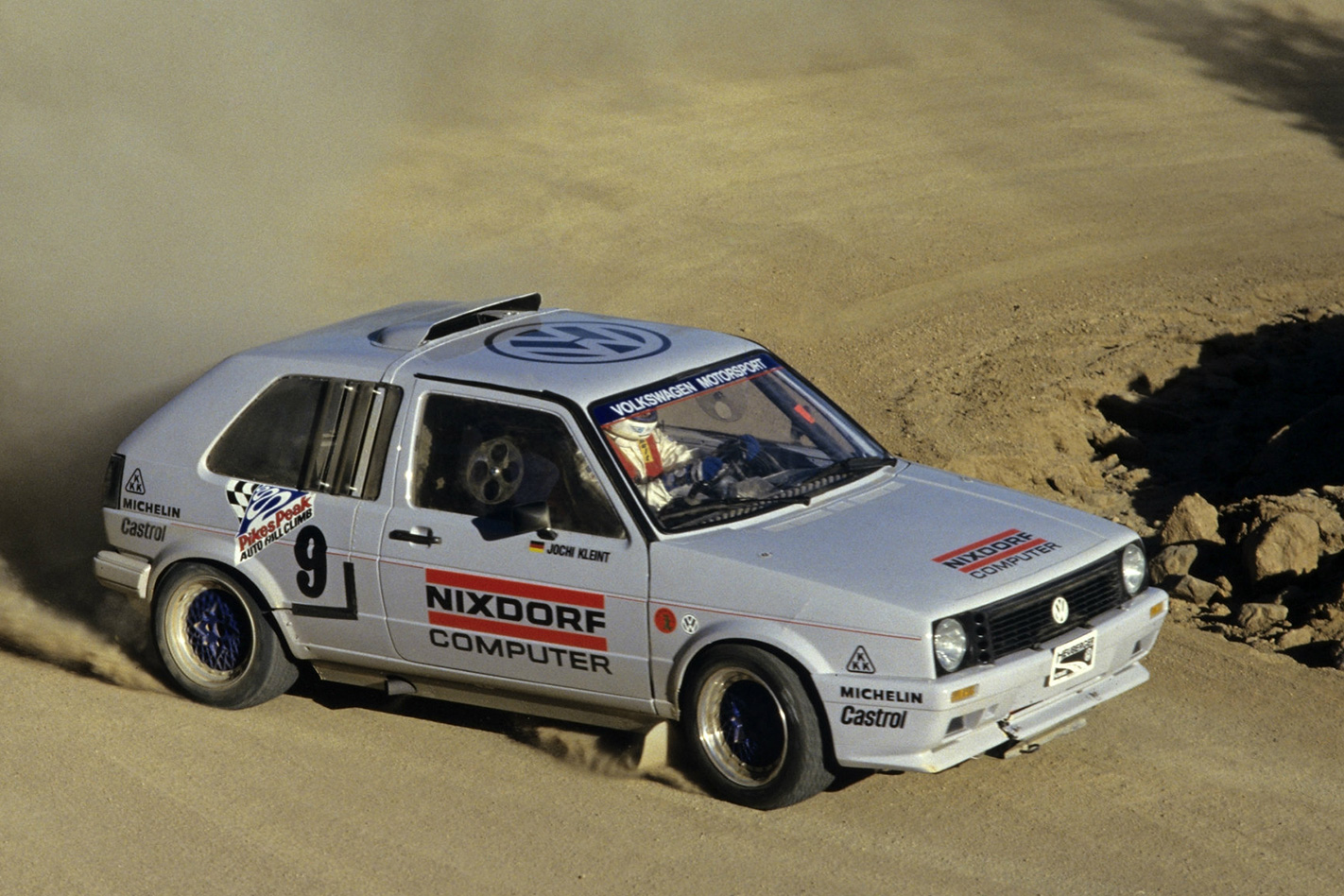
The Mk2 Golf was given a bespoke clamshell back half which housed a 1.8-litre four-cylinder turbo engine. Combined with an identical engine under the bonnet, the duo created a total system output of 447kW, with each motor driving one end exclusively.
Unlike most cars on this list, the ’87 Golf was bereft of massive aero, instead relying on the bravery of driver Jochi Kleint to keep all four wheels in the Colorado dirt. A system was developed within the car where Kleint could swap between front-, rear-, or all-wheel drive on the fly.
Kleint was on what looked to be a record breaking run, when just three corners from the finish line a suspension component failed forcing the car to retire agonisingly close to victory.
1988 Peugeot 405 T16
While rally legend Ari Vatanen drove the Peugeot 405 T16 to victory in the 1988 event, the duo are more often recognised as the stars of the award-winning Climb Dance movie – filmed at Pikes Peak.
The video is a must-watch for any petrolhead, with Vatanen perfectly in-sync with his high-boost beast.
Instead of regurgitating stats and figures on the 405 T16, I’ll simply let the Climb Dance video and an anecdote from Vatanen himself justify why this car couldn’t be omitted from this list.
“One thing I’ll remember forever was an occurrence during our preparations in Colorado,” Vatanen recalls on his website.
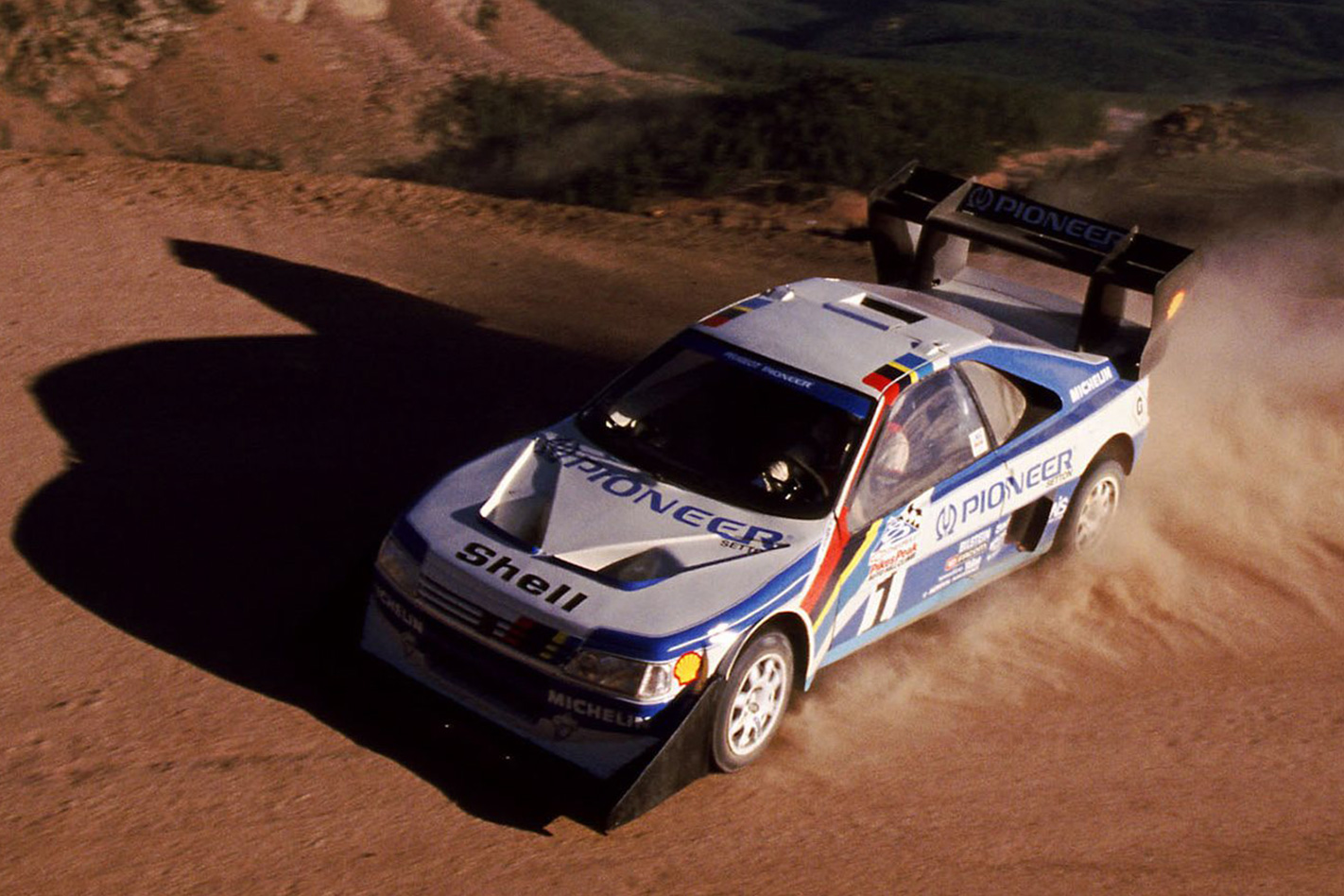
“We prepared the cars in a workshop in an industrial estate, where it was possible to do a quick roll-out on a closed-off street.
“Jean Todt sat beside me in the car, but of course there was no passenger seat. The car’s acceleration on tarmac (0-200km/h in under 10 secs) had made me think that this is how it must feel to be catapulted off the deck of an aircraft carrier!
“Jean tried to hang on to whatever solid objects he could find inside the car, but when I stamped on the pedal he just disappeared from my peripheral view… getting squashed against the firewall in the back!”
1991 Honda NSX by LoveFab
If one car alone personified the unhinged levels of aerodynamics needed to be successful at Pikes Peak nowadays, the LoveFab NSX would be it. Characterised by the snowplow-esque front wing, the 1991 Honda NSX is the work of Cody Loveland and his buddy Matthew Noble Marker.
The reason for the gargantuan front wing is purely pragmatic. Originally fitted with just the aft wing, the rear downforce was so significant that the NSX’s front tyres were struggling for traction. Instead of dialling things down at the back, Cory and Matthew simply decided to balance things out by equipping the front with an equally massive aerofoil.
It was at this point the duo faced a second problem. Downforce was now so significant, the suspension was being maxed out at speed, and the NSX was driving along on its bump stops.
An F1-style solution was found – a third damper that linked each pair of cantilevers in the car’s pushrod suspension – and even driving at “half pace” (following a nasty shunt in practice), Cody was able to finish second in the Unlimited class for the 2012 event.
1996 Suzuki Escudo Pikes Peak
Anyone who has spent time cutting laps with early Gran Turismo games will certainly be familiar with this red beast, piloted by the Monster himself. The most legendary driver at Pikes Peak Nobuhiro ‘Monster’ Tajima tamed the Suzuki for the 1996 event.
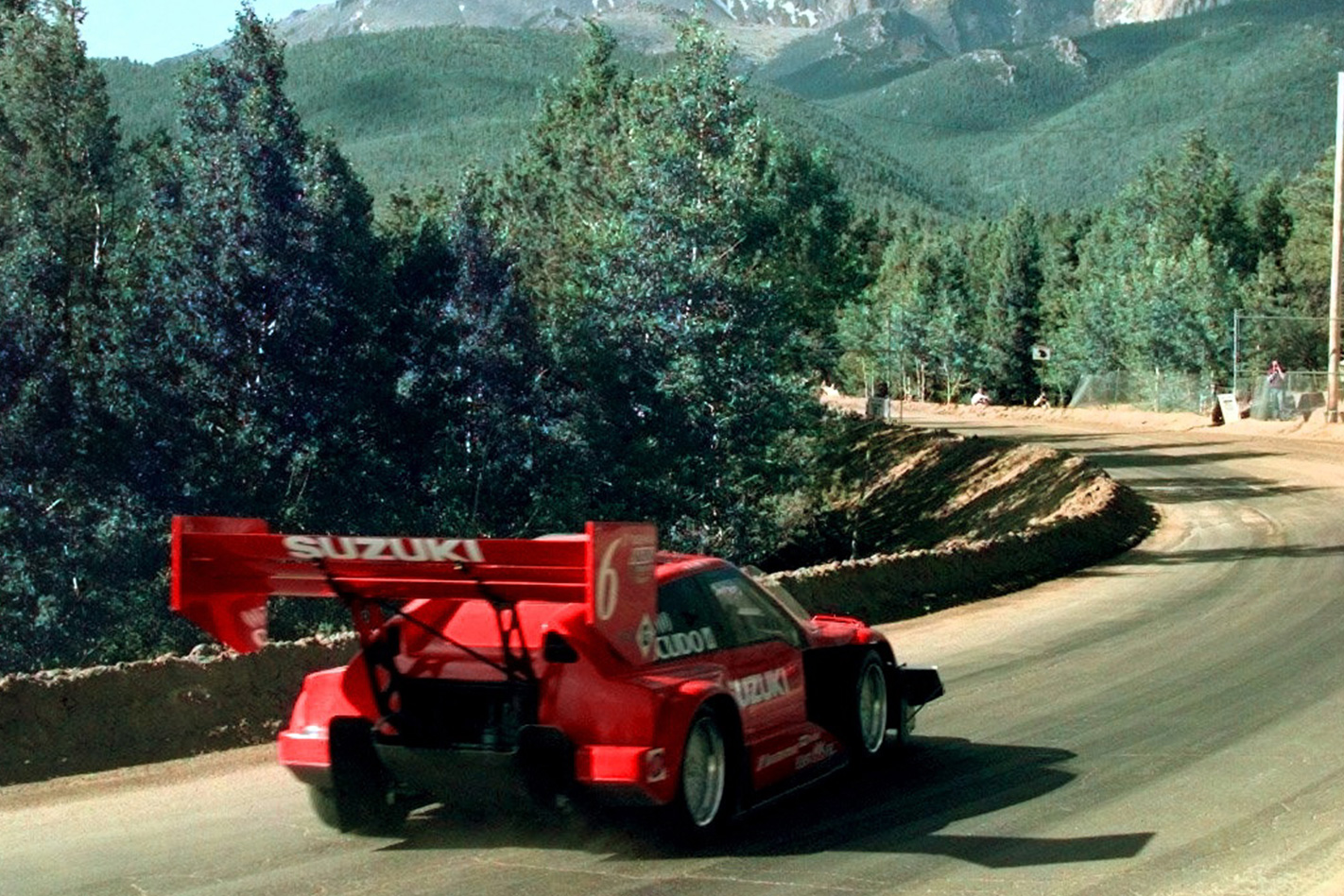
Tamed is the imperative word there, with the Escudo powered by a mid-mounted 2.0-litre twin-turbo V6, cranking out a staggering 734.5kW and weighing a scant 800kg – less than a current-gen Suzuki Swift. Truly insane.
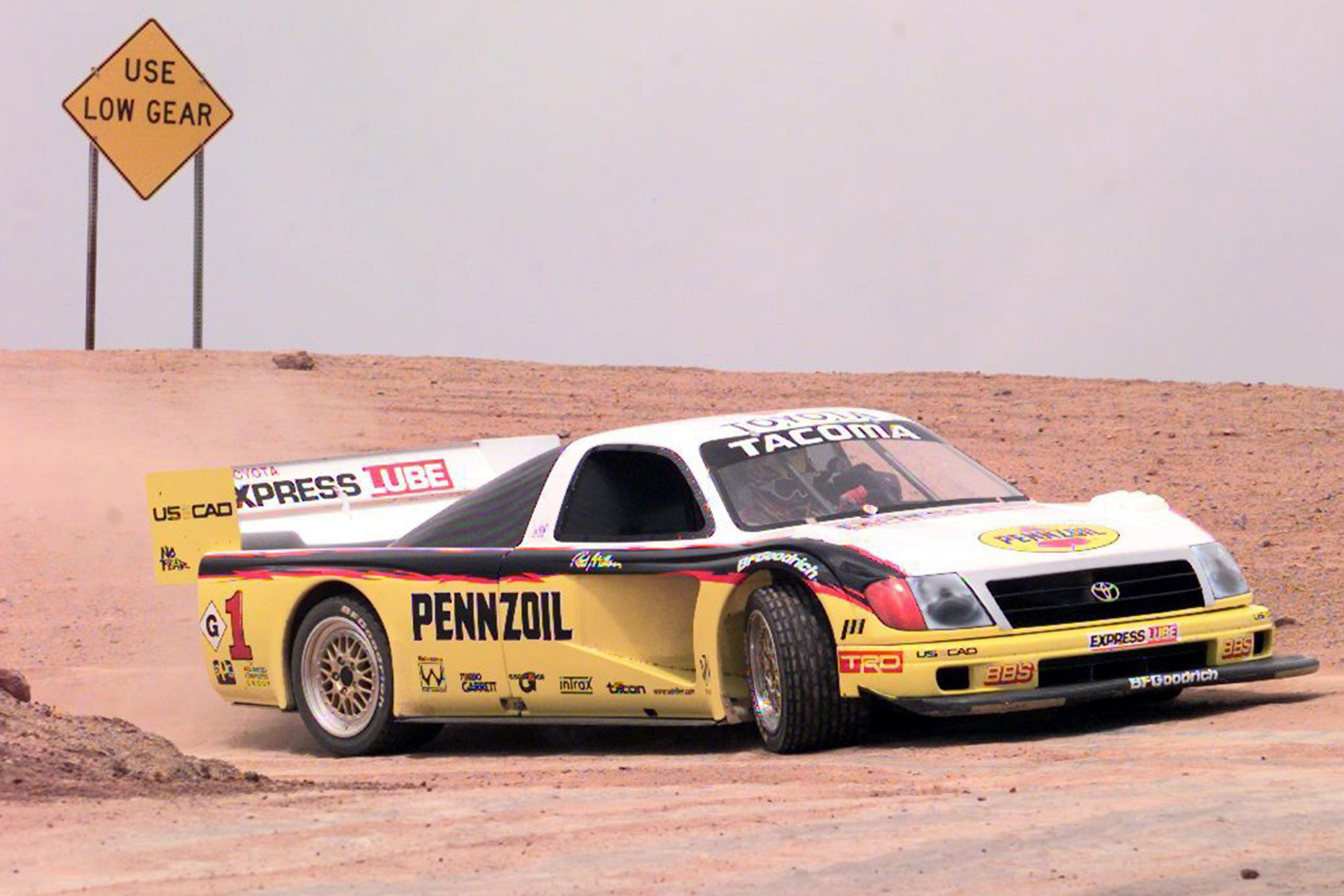
1998 Toyota Tacoma
While not the fastest car on this list, Rod Millen’s Toyota Tacoma Pikes Peak car is certainly the most entertaining to watch. With unfathomably high boost levels, the Tacoma belches black smoke from its side-exit exhaust as Millen wrestles at the wheel.
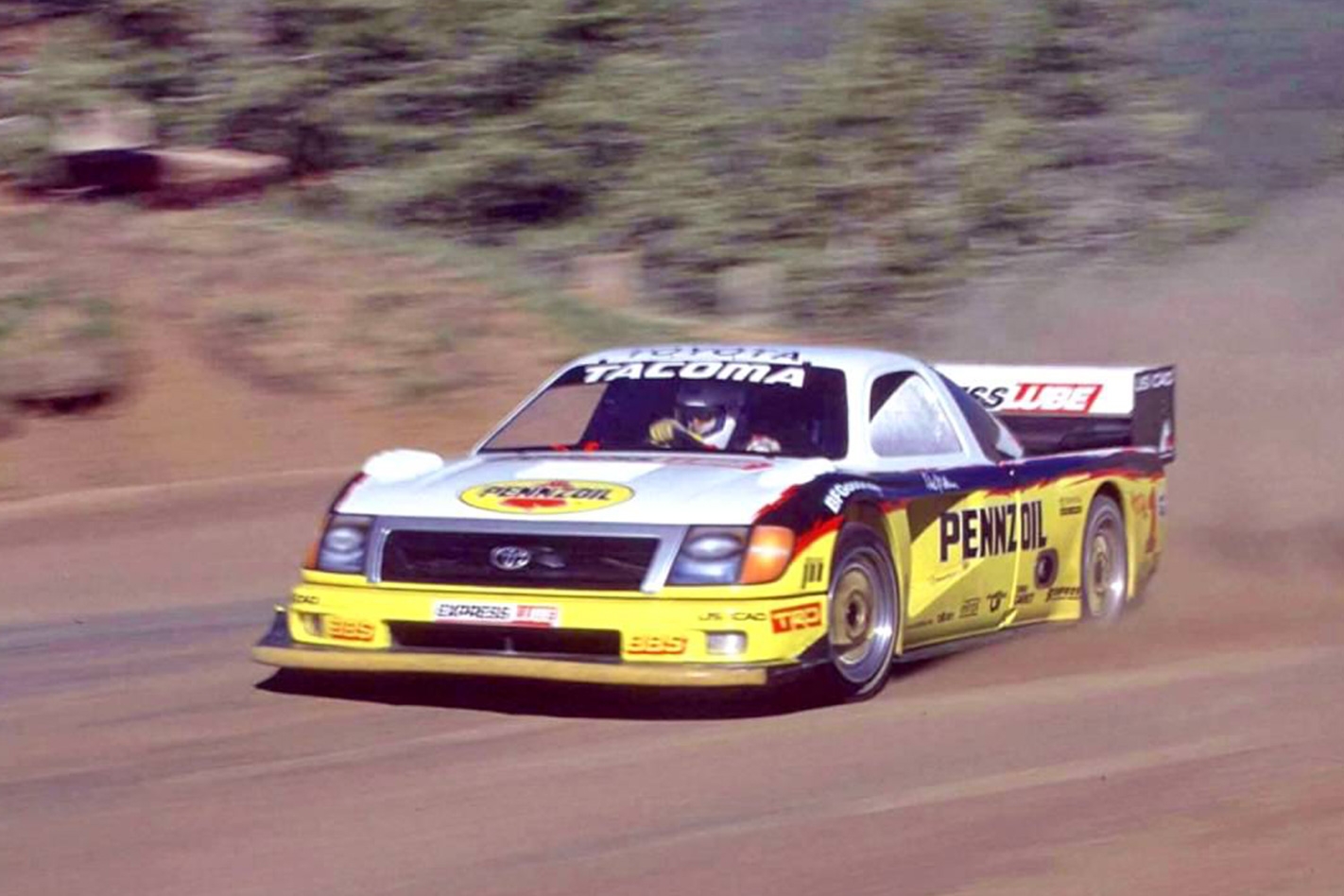
The mid-mounted 2.1-litre turbocharged four-cylinder was alleged to produce 745kW in full attack mode, and helped propel the 800g car to 60mph (97km/h) in 1.6 seconds. Yes, 1.6 seconds. Max speed was gear-limited to 212km/h.
Millen and the Tacoma won outright honours at Pikes Peak in 1998 and ’99, and the duo continues to entertain crowds at both the Goodwood Festival of Speed and Leadfoot festival to this day.
2013 Peugeot 208 T16 Pikes Peak
This list wouldn’t be complete without the fastest car/driver combo to ever attempt the Pikes Peak ascent – Sebastien Loeb and the Peugeot 2018 T16 Pikes Peak.
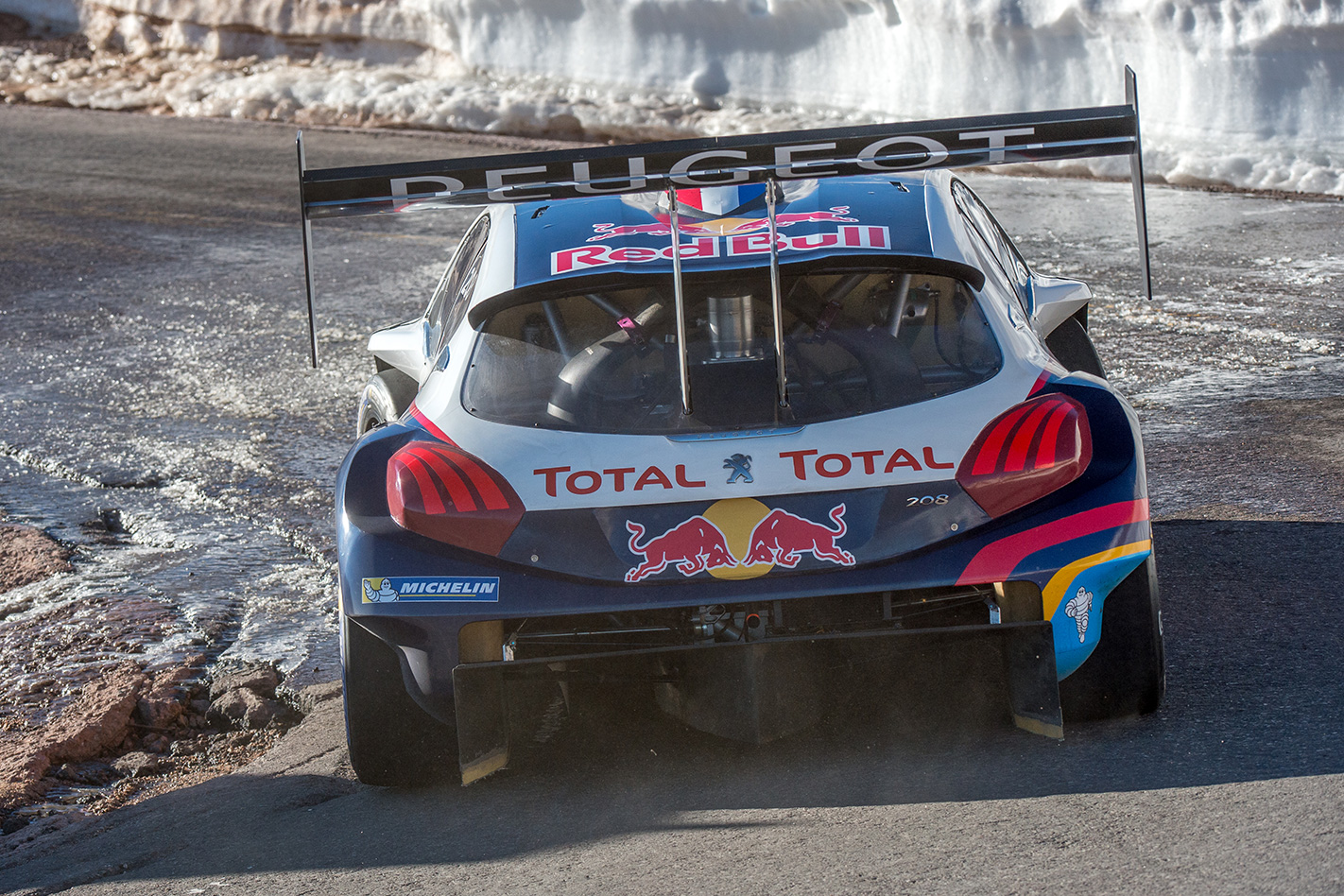
With aero lifted from the 908 LMP1 Le Mans race car, the 208 T16 was powered by a 3.2-litre twin-turbo V6 producing 652kW, with a total weight of 875kg. It wasn’t the most powerful car to compete at Pikes Peak, but it was shockingly efficient, with Loeb recording an average speed of 140km/h on his winning run.
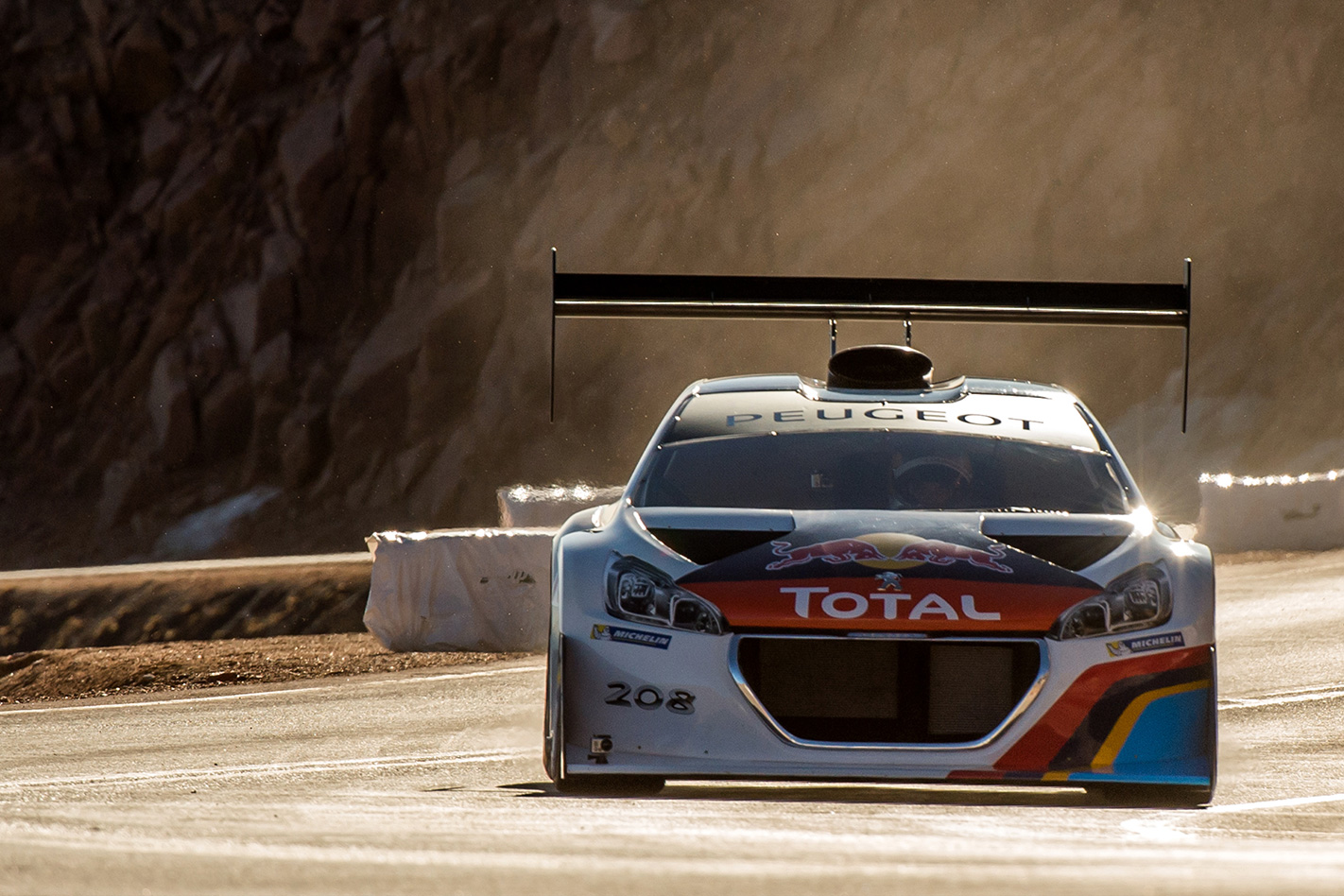
Loeb and the 208 T16 recorded a blistering 8:13.878 time to shatter the record and become the fastest combo to ascend Pikes Peak. At the time, the fastest record was a 9:46.164 set by Rhys Millen the year prior. The second quickest time in Pikes Peak history? A 8:51.445 set by Romain Dumas in 2016 – a full 37 seconds slower than Loeb. Long live the King of Pikes Peak
The problem with the current Mustang, as far as Ford’s concerned, isn’t the car itself.
When it first launched two and a half years ago, its retro-inspired looks and hard-charging speed whipped the world into such a frenzy, chief engineer Dave Pericak was promoted to Ford Performance’s top spot quicker than he could yell ‘yee-haw’.
No, the Mustang’s real problem lurks in Detroit. Chevrolet unsheathed its newest Camaro only months after Pericak’s Mustang launched. It was lighter, fitter and meaner than before. So rather than light cigars on a job well done at the time, Ford instead began training up its thoroughbred.
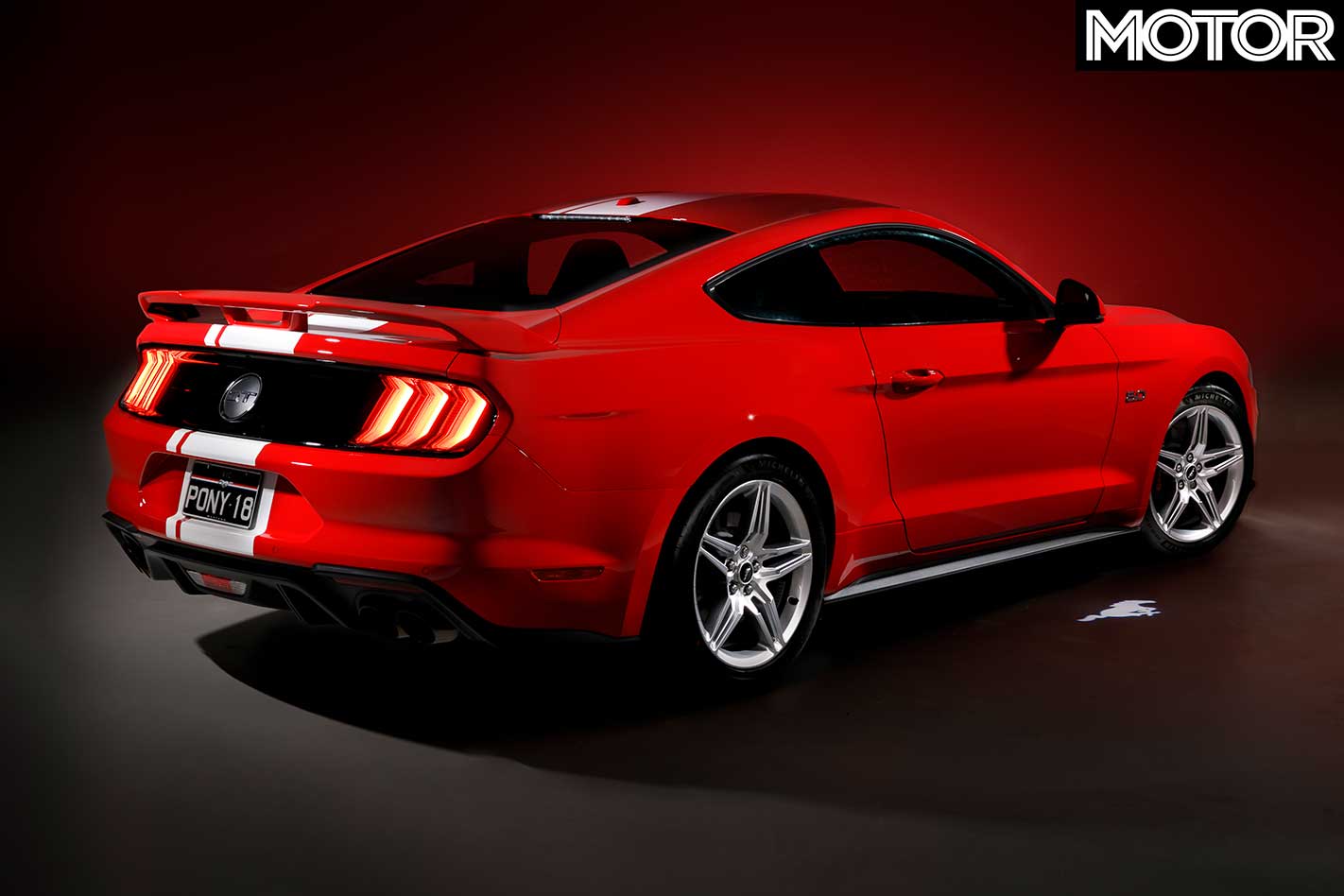
What you see here is the result. A new Mustang for 2018, armed with a 10-speed automatic transmission, a ‘thoroughly reworked’ V8, and sharper suspension. It’s been moulded with meaner looks and its aerodynamics honed to slice the air more effectively.
However, flipping a mid-life refresh into a Camaro-crushing revamp in that timeframe was no easy task. Carl Widmann, Pericak’s succeeding chief engineer, accepted the job in January, 2015. Widmann’s hefty experience as a vehicle engineering manager would prove crucial in coordinating such an upgrade. But he reveals there was more to it during an exclusive interview with MOTOR.
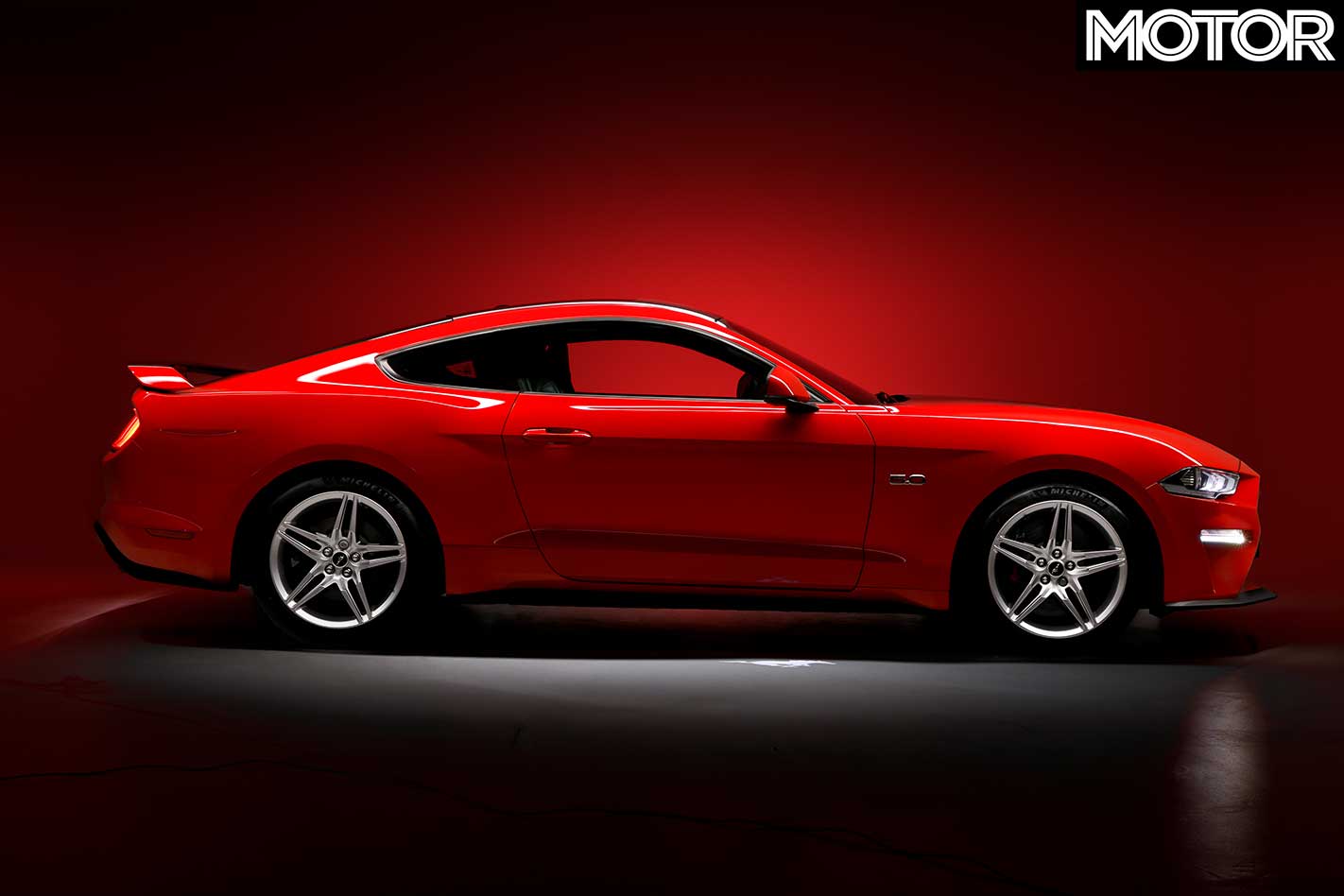
“In the near history before Mustang I was actually in charge of all aerodynamics, powertrain, cooling and heat management for North America,” he says.
The perfect man, then, to tackle one of the new Mustang’s key targets. “The challenge was ‘what was the maximum amount of power we could get out of the five litre?’ That was the going-in push.”
Because the 5.0-litre Coyote V8 in the Mustang is hardly old-hat, its aluminium block is topped by double overhead cams with variable timing, finding more flow required the use of something that sounds like it belongs in a science fiction movie.
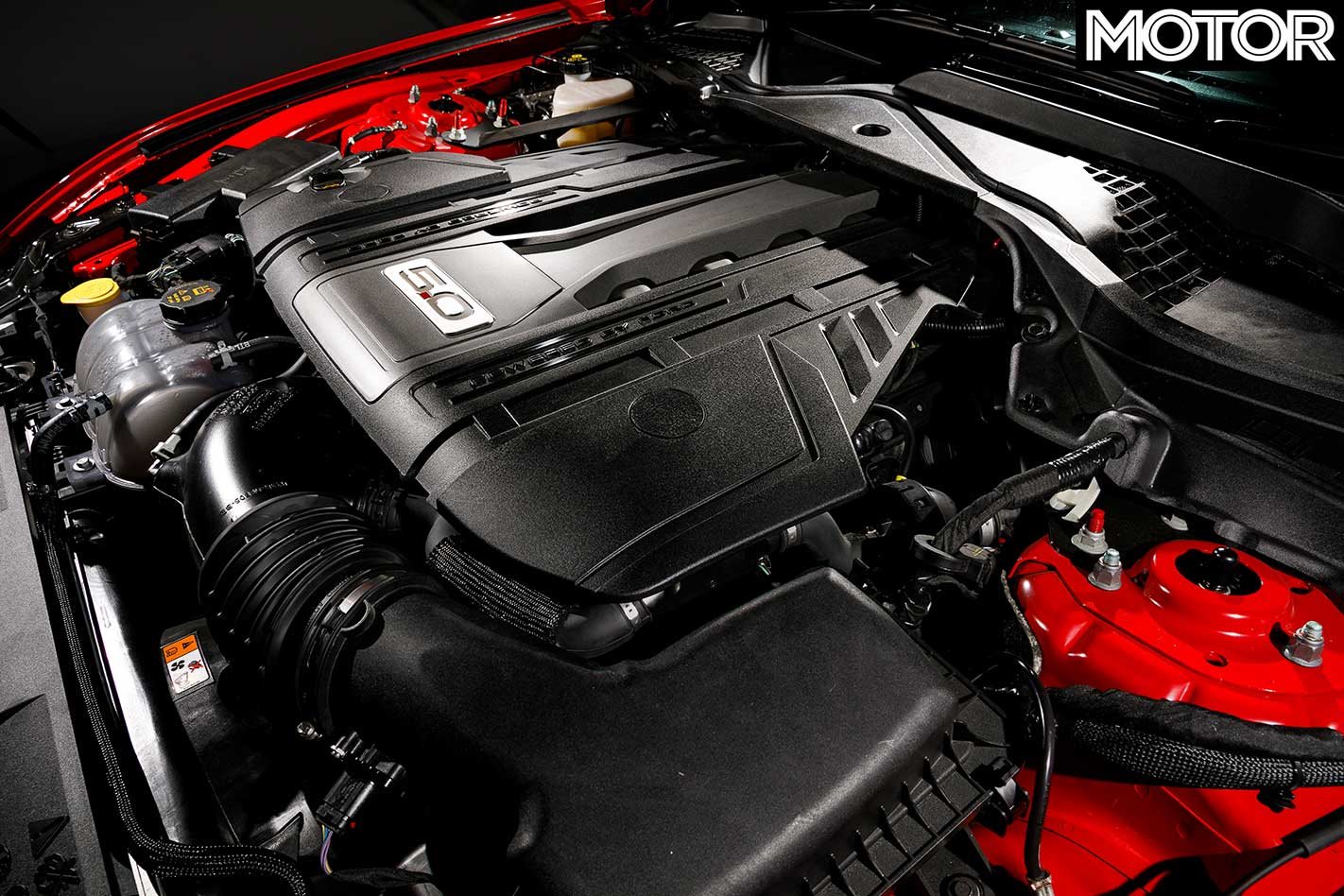
“The intake and the exhaust manifold, we made them a little bigger, because we had a little bit more room when we took the liners out and went to plasma-spray bores.”
He’s talking about the extra 84cc that’s appeared on the Mustang V8’s specification sheet, which boosts capacity from 4951cc to 5035. Pistons snuggle into 0.8mm wider bores, which then allowed 0.3mm larger valves to be thumbed into the Coyote’s re-designed cylinder heads.
While this expanded its lung capacity, the next step was raising the Coyote’s heart rate, so a 7500rpm redline was targeted from the beginning (up 500rpm).
“All the thread bolt valves, keepers, and all that stuff going in made sure we met that requirement. Crankshaft dampers had to meet that requirement from being able to spin that mass up that high.” Yep, the Mustang can now rev as hard as a Porsche 911.
The next step was to extract a bigger bang. “They run 16 injectors instead of eight,” Widmann says about its new dual-fuel injection system, “[this] improves the fuelling strategy we use, so that opened up some spark capability.” With two extra knock sensors and the precision of direct injection (DI), the compression ratio was ratcheted to a towering 12.0:1.
“We don’t use the DI a lot at idle,” he adds, “so you don’t have that huge ticking factor that you get with DIs.”
What you get instead is 343kW at 7000rpm and 569Nm at 4600rpm using America’s SAE ratings. Our outputs, however, are set by DIN testing methods, which fit ancillaries and the exhaust system to the engine while it’s on the dyno. So Aussie V8s are good for 339kW and 556Nm. Or 23kW and 26Nm more than before.
Things snowballed from here, as the new outputs demanded more from the car’s driveline. “The manual had to change because we had too much torque coming out of the new Coyote,” Widmann says, “we knew for the fact, we were getting to the limits of a single clutch, basically.
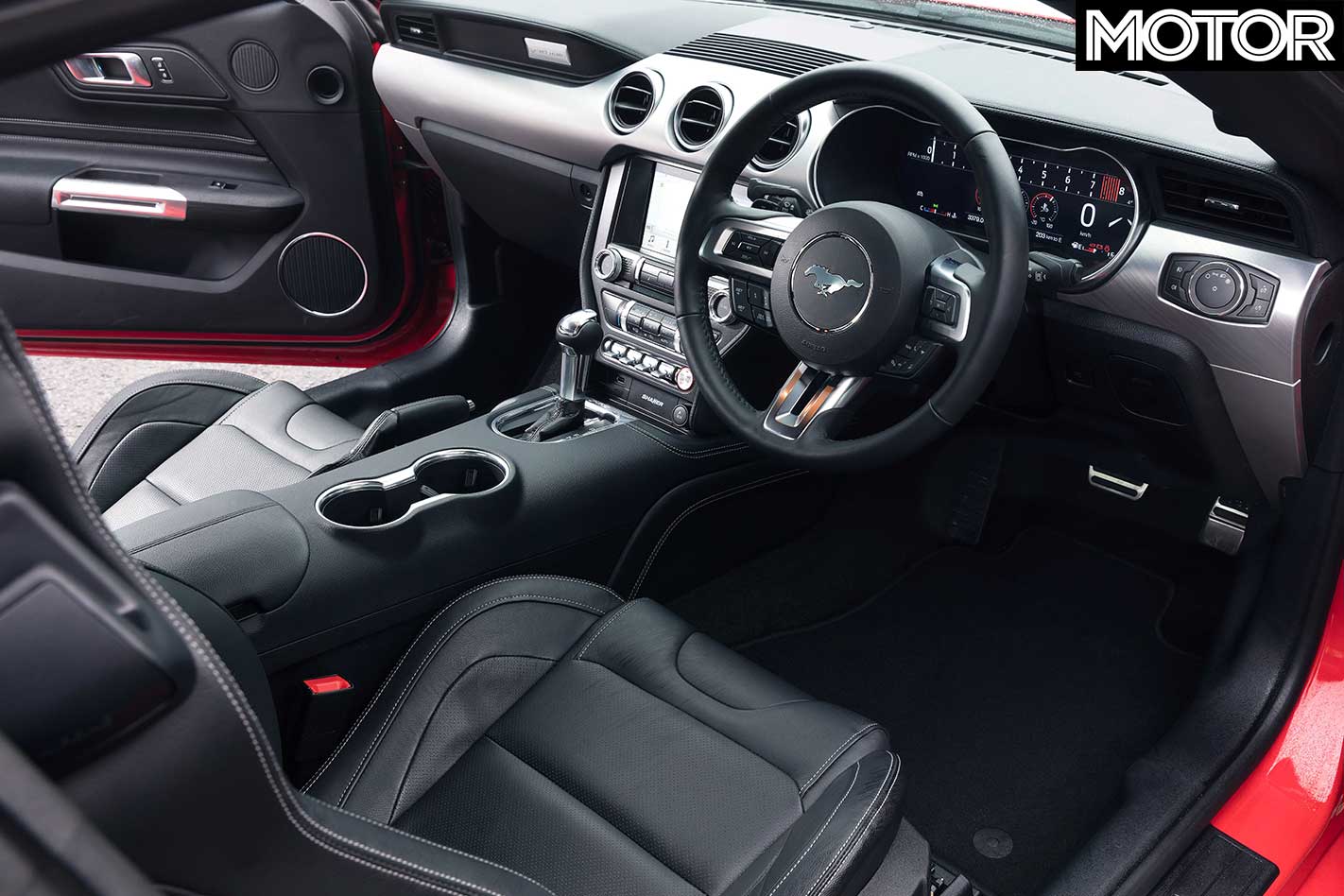
“So we went to a twin-disc, dual mass flywheel – similar to what we have on the GT350 – different supplier, different design, but the same concept whereby you can get more clamp load, more torque capability.” You won’t have to hire a personal trainer, either, to build up the leg strength to use it. “When you drive an ’18 [Mustang] you’ll notice clutch efforts are actually down 15 to 20 per cent.”
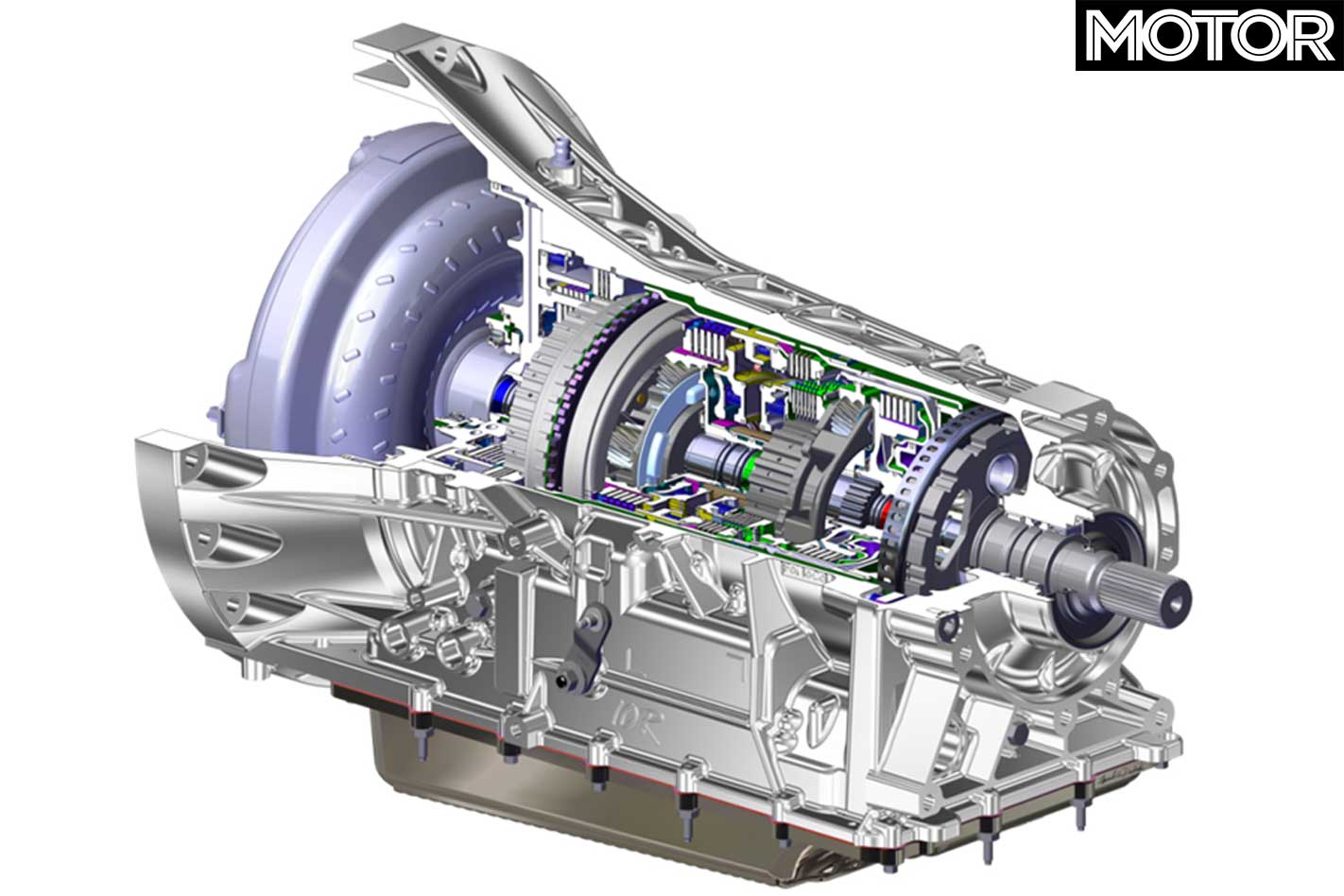
You’d think swapping cogs yourself would crown you king in a Mustang, but that’s set to change for 2018. Ford’s co-developed (with GM, of all companies) a new 10-speed automatic for rear-drive applications. And with Chevrolet already stuffing it in the wicked Camaro ZL1, the Mustang seriously needed to play catch-up.
Of course, with Mustang owners salivating over racetracks as much as drag strips these days, the new 10R80 ’box needed to not only upshift like a dual-clutch, but also shed a bunch of gears when being hurried into a corner. So Ford gifted Widmann’s powertrain team an automatic with state-of-the-art hydraulics. That gave them the ability to calibrate it for a wide range of scenarios, with three modes of operation.
“[Sport mode] is really a ready to go gear state,” he tells us, “so when you drive that, the car’s really egging you on. It stays exactly at maximum torque if you’re going to jump back in on the pedal.
“And then if you select drag-strip mode, from the mode selection switch, what that then does is, it’s got the capability to not take torque out at the shift. We don’t drop torque at the 1-2, 2-3, 3-4. Because you basically get that surge with all that inertia you don’t have to speed it back up again as you drop torque. That’s how we get most almost three tenths of a second 0-60 with that approach to a shift.”
Yep, the 2018 Mustang GT with an automatic will hit 100km/h in a claimed 4.3 seconds. That’s 0.3sec quicker than the new manual-equipped car and 0.5sec quicker than the old one.
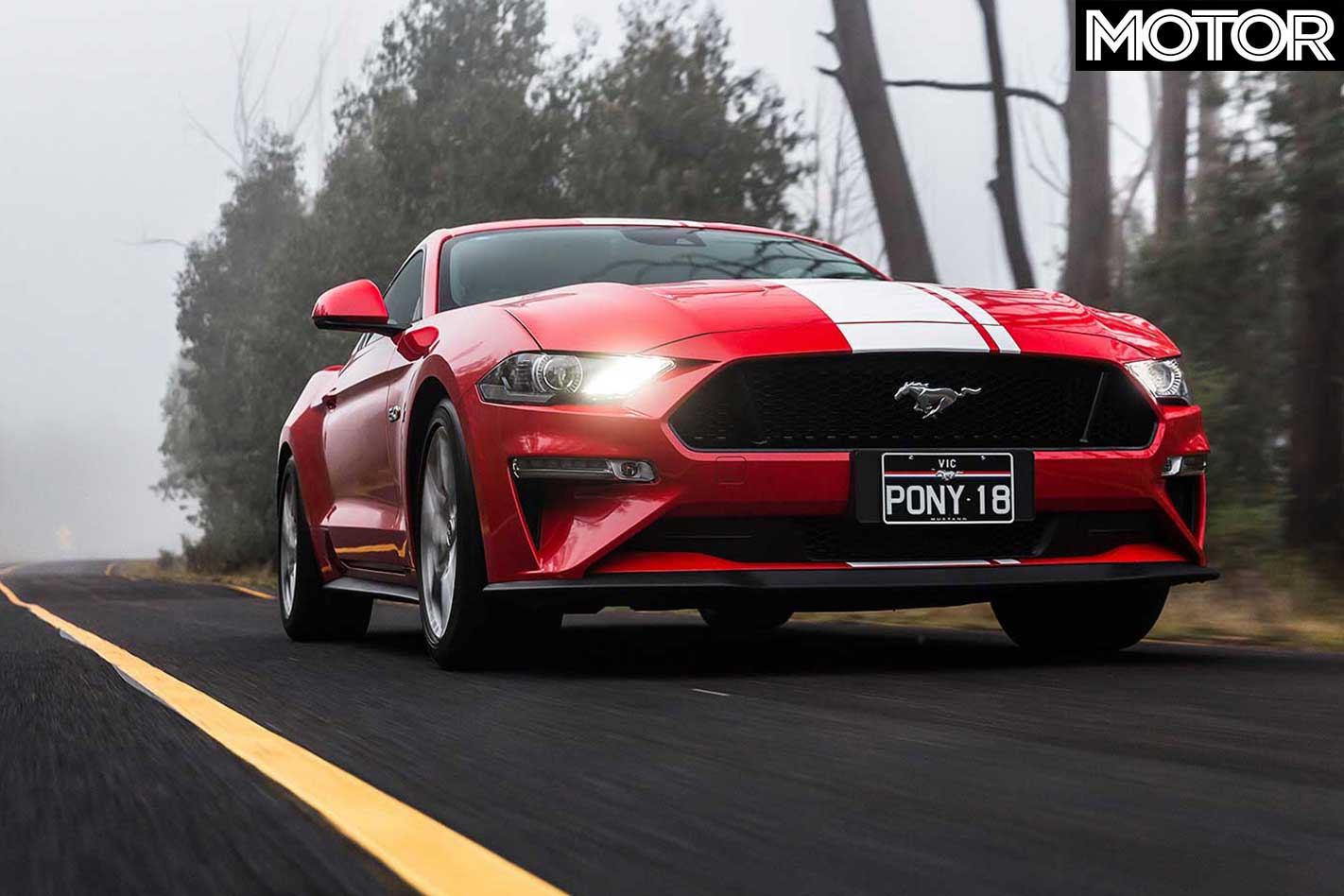
To cope with the accelerative force straining its rear bits, Ford upgraded its propshaft and pinched the thicker half-shafts from a GT350. Then there were its tyres. Ford leant on its relationship with Michelin – who helped out with the Ferrari frightening GT – to score the latest Pilot Sport 4S.
While they glue to the road like warm gum, and have better roll resistance, Widmann says his team prized their tread stiffness most. That’s because the new Mustang welcomes magnetically operated adaptive dampers, as an option, just like the circuit conquering GT350. Less tyre deformation means more response and control.
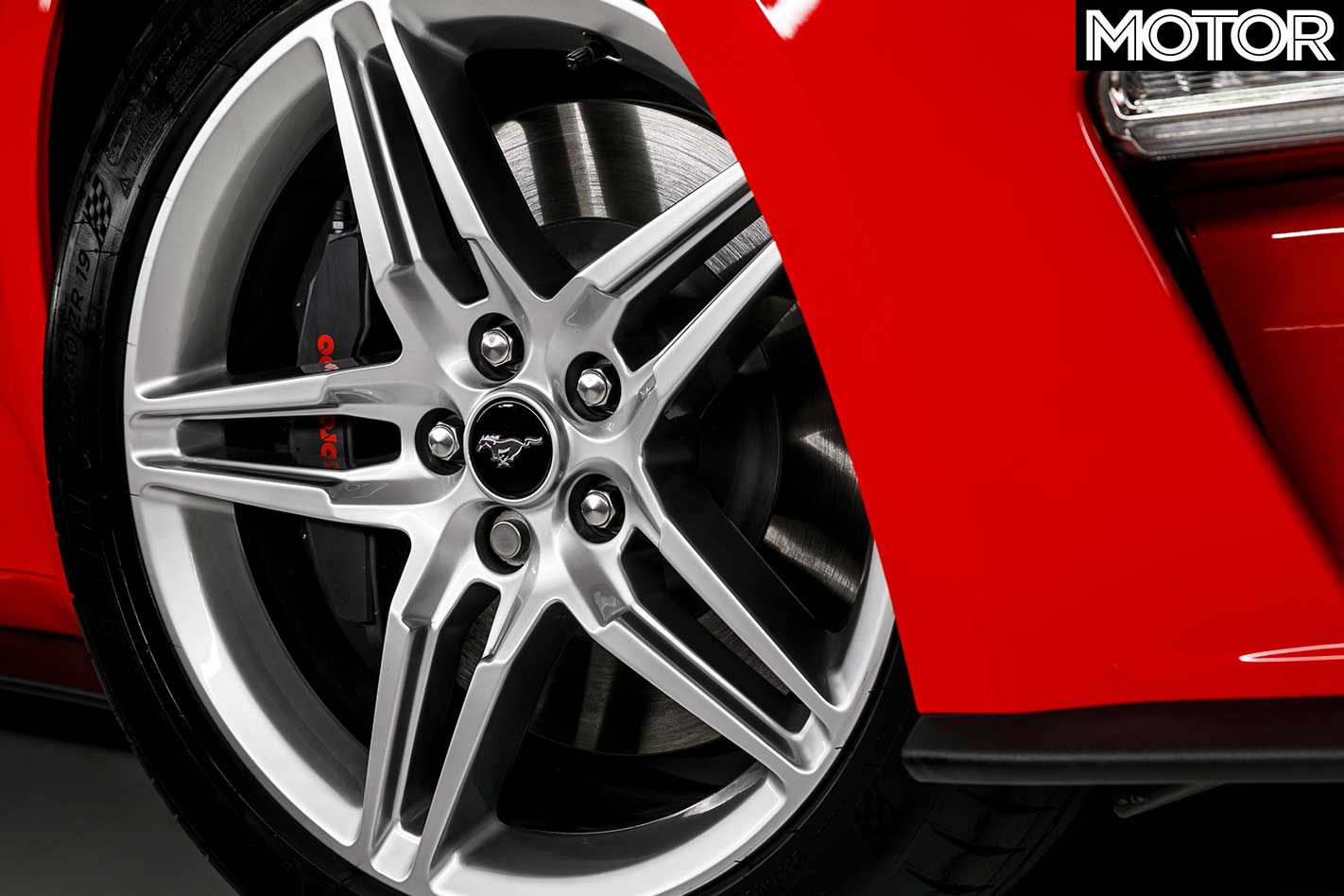
The amount of grip generated is now so large that the front steering knuckles have been beefed up to house the GT350’s bigger wheel bearing. Even the regular dampers have been uprated.
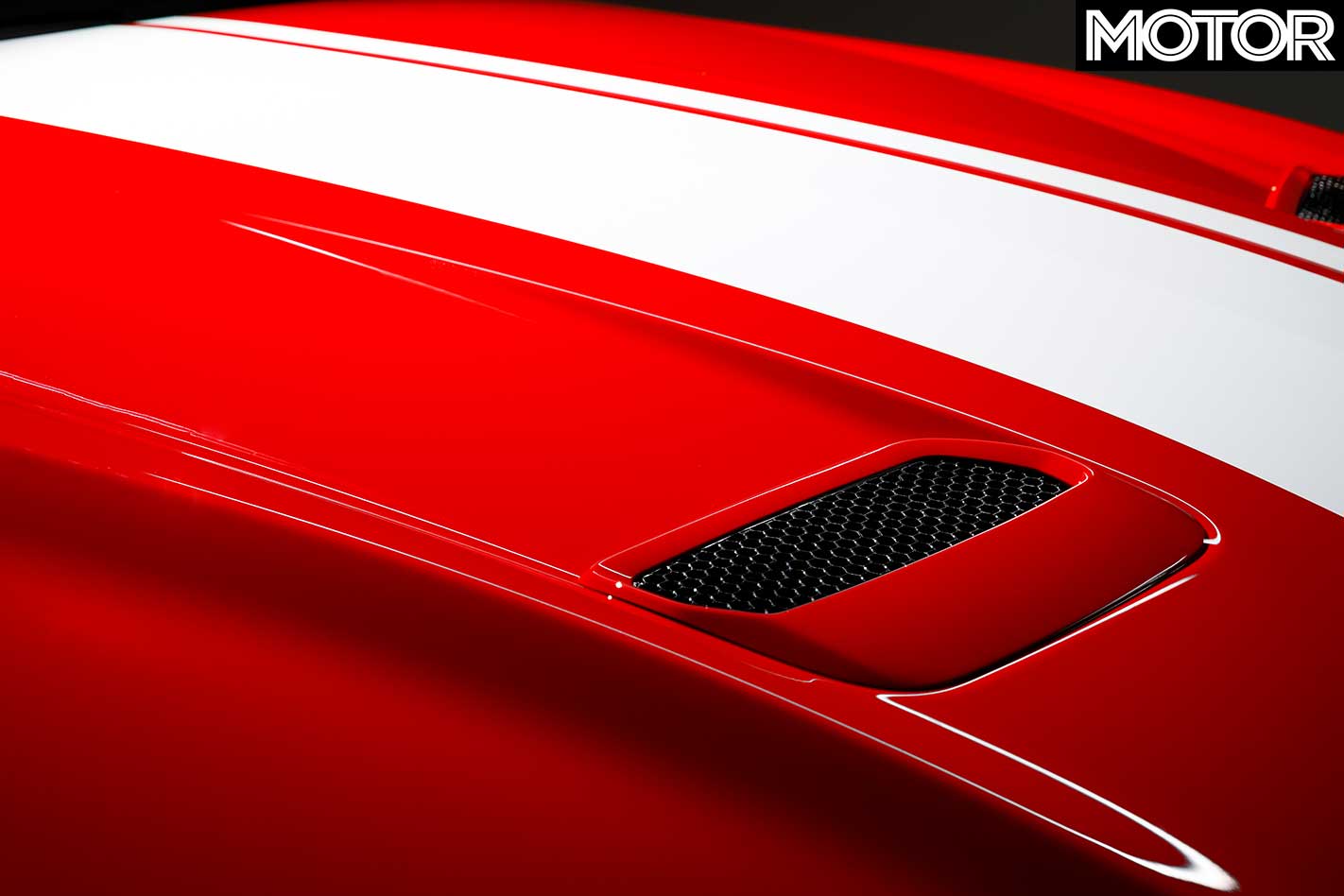
Unfortunately, the Mustang’s good looks aren’t the best for finding front-axle downforce. So work was put into massaging its mug into something more aggressive and aerodynamic. LED technology allowed thinner headlights, lowering the hood and broadening the grille. An engine under-tray was fitted to smooth airflow, while a new off-the-deck rear-spoiler features. The result is less drag and lift.
After having figured out how to have the Mustang better grip the ground, Ford turned its attention to how the new car would blast its war cry. Feedback on the current model focused on the V8’s timbre, with people saying they wanted to hear something more “visceral”.
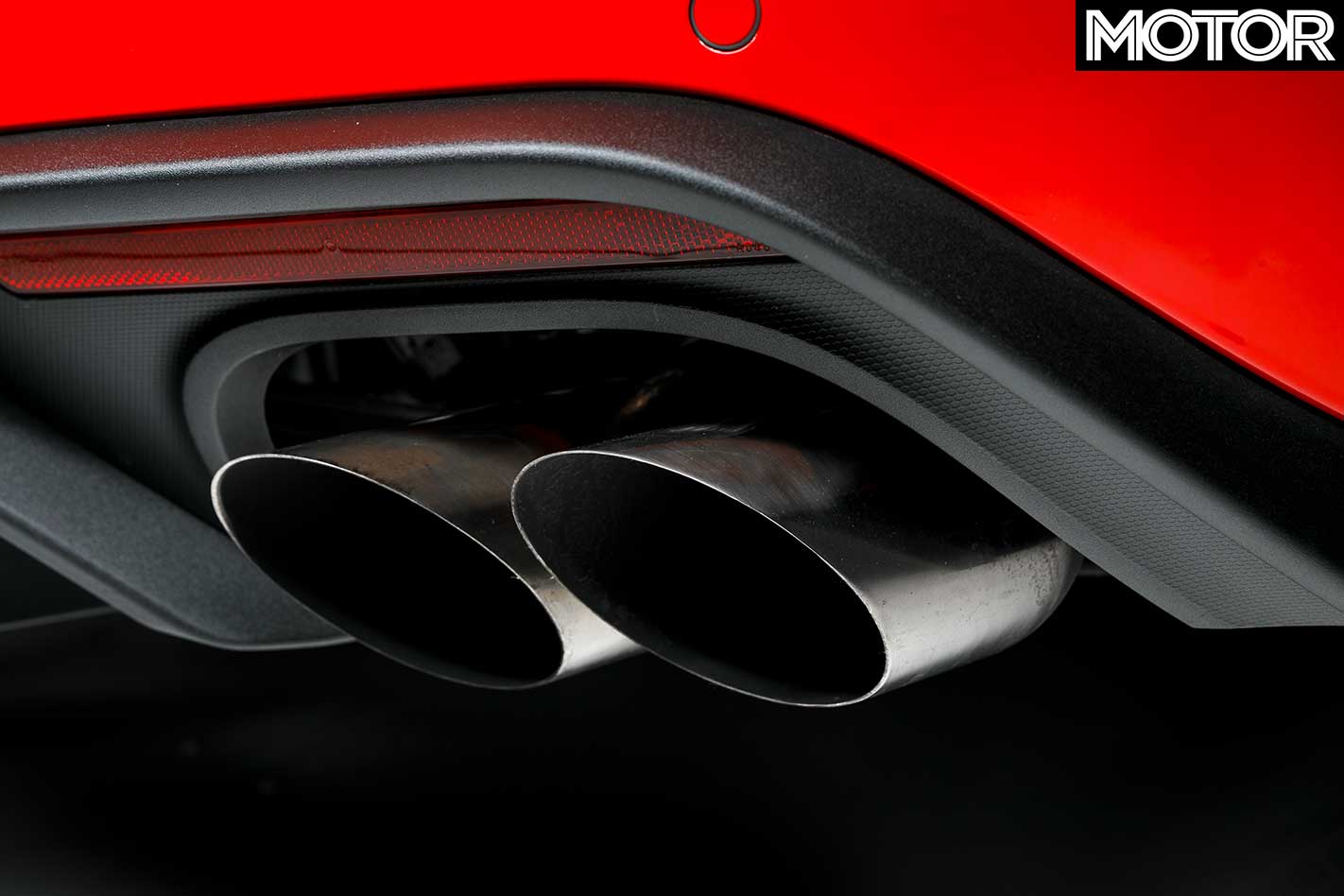
But freeing up the Coyote’s growl wasn’t straightforward. Noise and emissions rules differ from one region to the next. This is where the advantage of an active system shone through. Ford could dial in a sound that progressively builds without using excessive baffling.
On top of this, Australia’s unique regulations meant our system scores special tuning and muffler baffles, unshackling more horses. “There are some benefits in the active exhaust that came across in the [Australian] homologation numbers for 2018, because it has more flow than the 2017 exhaust system. On the V8 it did provide a little benefit.”
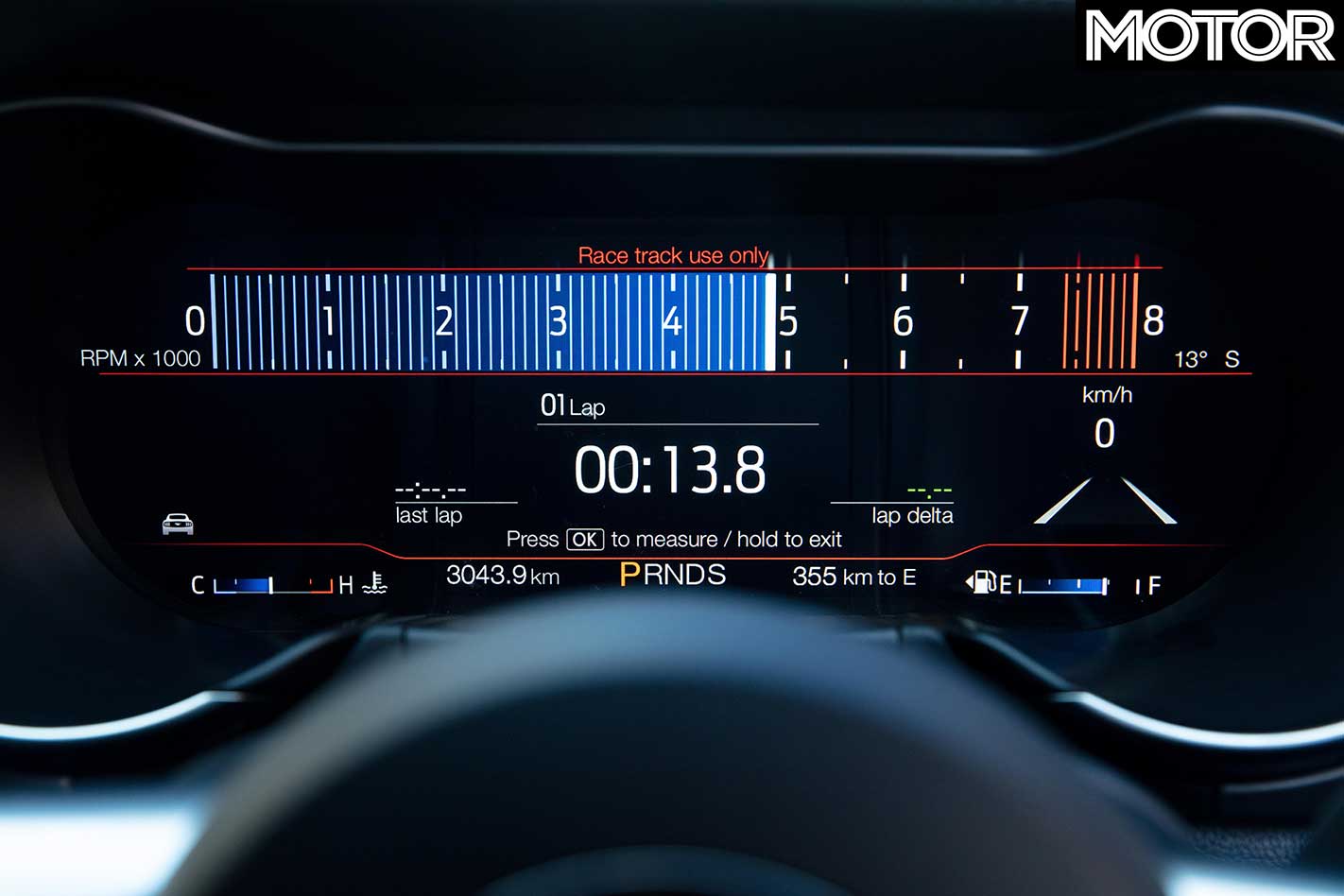
When asked what he’s most proud of, though, Widmann doesn’t boast about its drag mode, cornering prowess or kilowatts. “To get that [digital] cluster to work,” he says, “was a tremendous challenge for the program.”
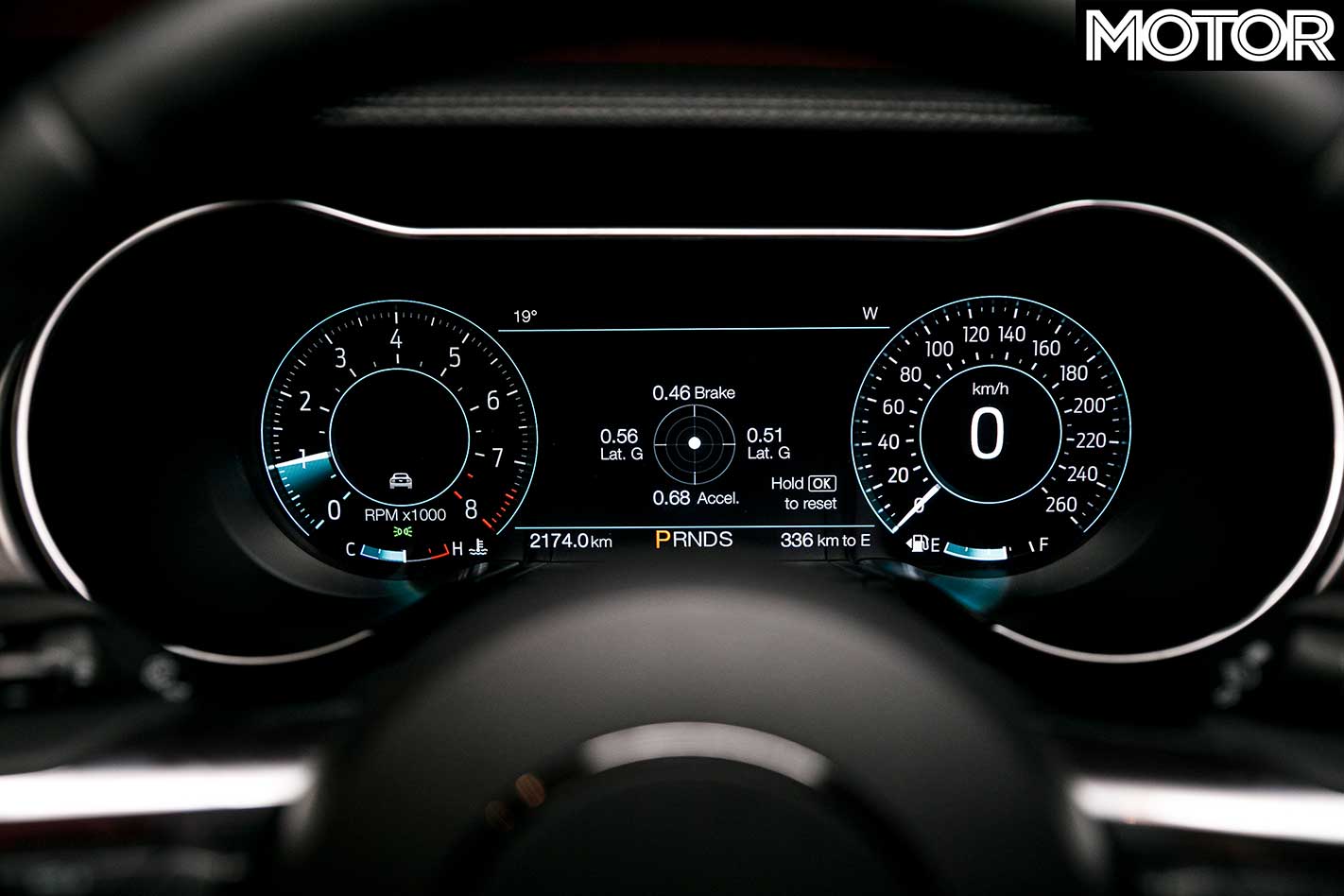
Dedicated teams that programmed the GT’s own 10-inch unit worked on the new 12-inch system’s graphics and interface. A code-writing company was even reeled in to help. But the new unit has delivered, he says. “We’ve got the next generation of capability versus what [the GT’s team] were working with.”
As part of the Premium Plus package (standard on Aussie Mustangs) which brings fancier surface materials, it should go a long way to silencing critics of the Mustang’s interior. Track junkies might also appreciate the new optional powered Recaro seats inside, too.
That’s more stuff to pay for, and a manual fastback V8’s price inflates by $5500 to $62,990, but if overseas reports are anything to go by, they are changes for the better. We’ll just have to wait to see if it’s enough to stave off Chevrolet’s Camaro in coming months. Brace for the beginning of a whole new war where red and blue forces face off again.
Six Tasty Mustang Morsels
01/Cluster Cluster is now a 12-inch digital unit and changes RPM and speed display to cater to each drive mode, spanning Normal, Sport, Track, and Drag.
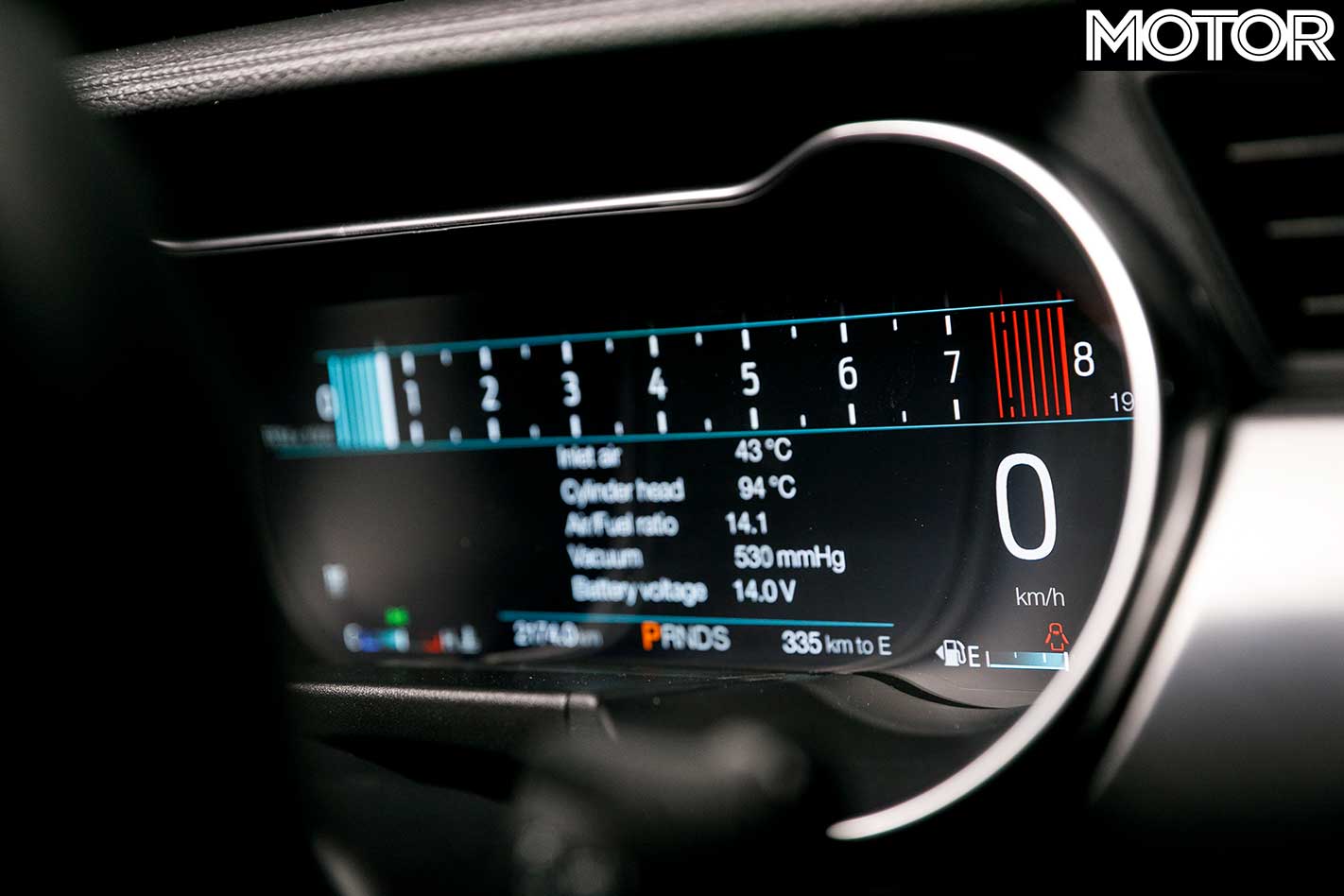
02/Dynamics Grippier tyres required an upsized swaybar and sturdier toe-links in the V8’s rear end. EcoBoost models carry over 2017 wheels and tyres.
03/Exhaust The exhaust has four settings: Quiet, Normal, Sport, and Track. It can be adjusted separately through new ‘pony button’ on the steering wheel.
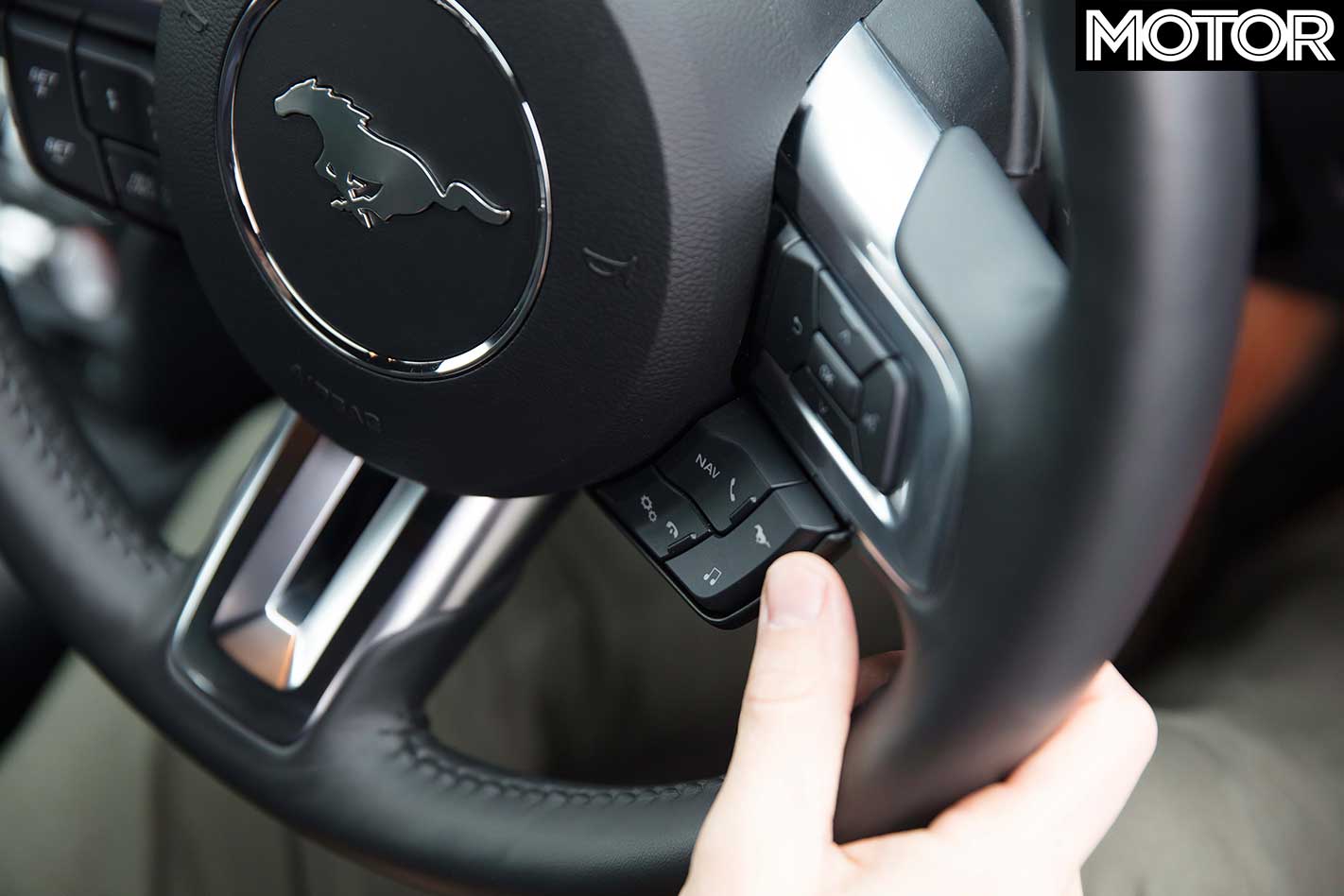
04/Gearbox 10-speed ‘box uses four planetary gearsets and six clutches. New low-parasitic pumps control them with ultra-thin fluid. Torque converter is lighter, too.
05/Shift Duties Widmann says the auto can engage top gear going as low as 70km/h. It’s shortly stacked, with six ratios above 1:1. The manual has only three.
06/Boost Those with plans for boost needn’t worry about new dual-fuel injection and high compression, Ford’s already built a factory supercharger pack.
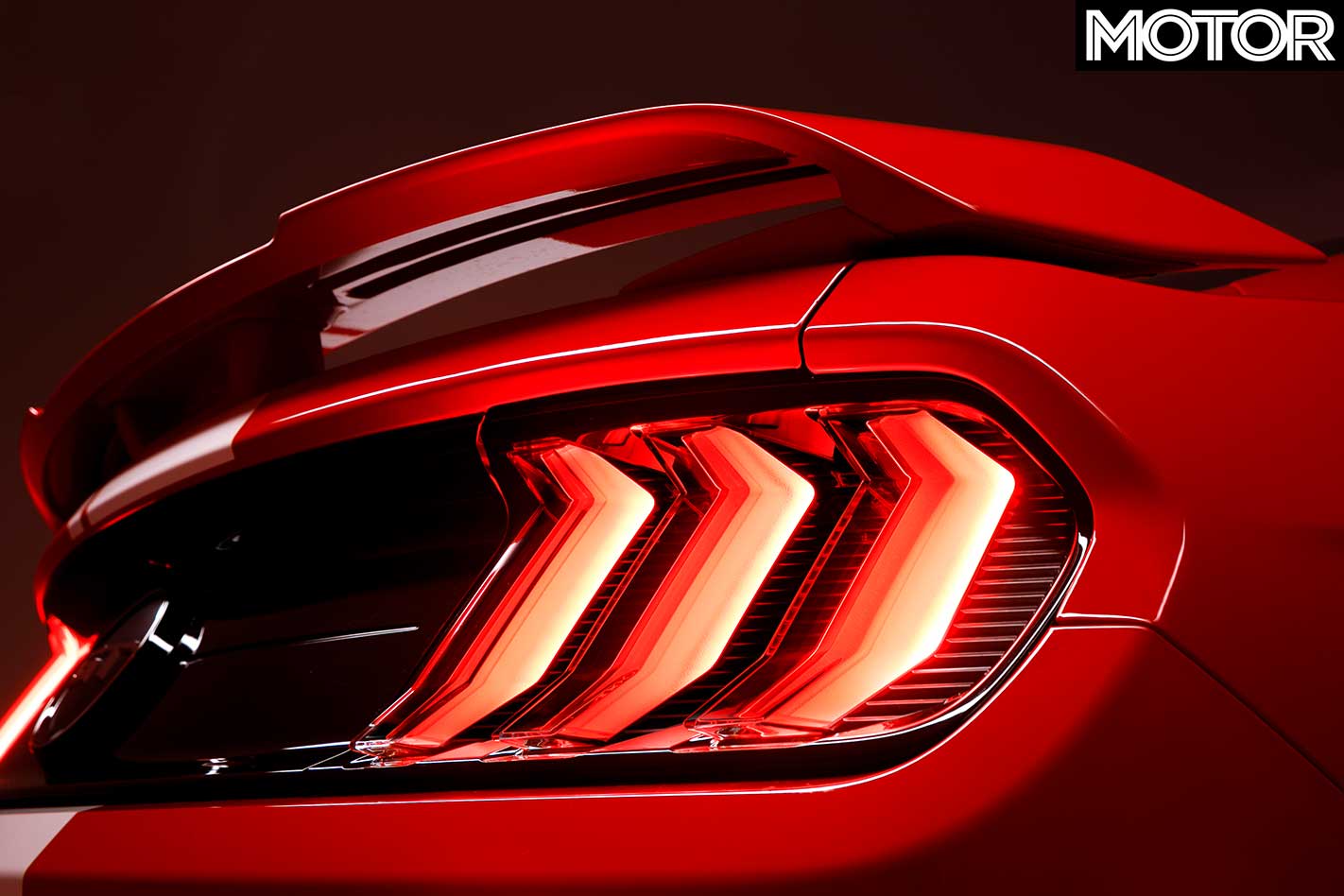
FAST FACTS 2018 Ford Mustang GT
BODY: 2-door, 4-seat coupe DRIVE: rear-wheel ENGINE: 5035cc V8, DOHC, 32v BORE/STROKE: 93.0 x 92.7mm COMPRESSION RATIO: 12.0:1 POWER: 339kW @ 7000rpm TORQUE: 556Nm @ 4600rpm WEIGHT: 1668kg (1681kg automatic) POWER-TO-WEIGHT: 203kW/tonne (202kW with auto) TRANSMISSION: six-speed manual; 10-speed automatic SUSPENSION: struts, adaptive dampers (optional), anti-roll bar (f); multi-links, adaptive dampers (optional), anti-roll bar (r) L/W/H: 4789/1916/1382mm WHEELBASE: 2457mm TRACKS: 1642/1642mm (f/r) STEERING: electrically assisted rack-and-pinion BRAKES: 380mm ventilated discs, 6-piston calipers (f); 330mm ventilated discs, single-piston calipers (r) WHEELS: 19.0 x 9.0-inch (f); 19.0 x 9.5-inch (r) TYRES: Michelin Pilot Sport 4S; 255/40 R19 (f); 275/40 R19 (r) PRICE: From $62,990 (manual base GT)
What is it?
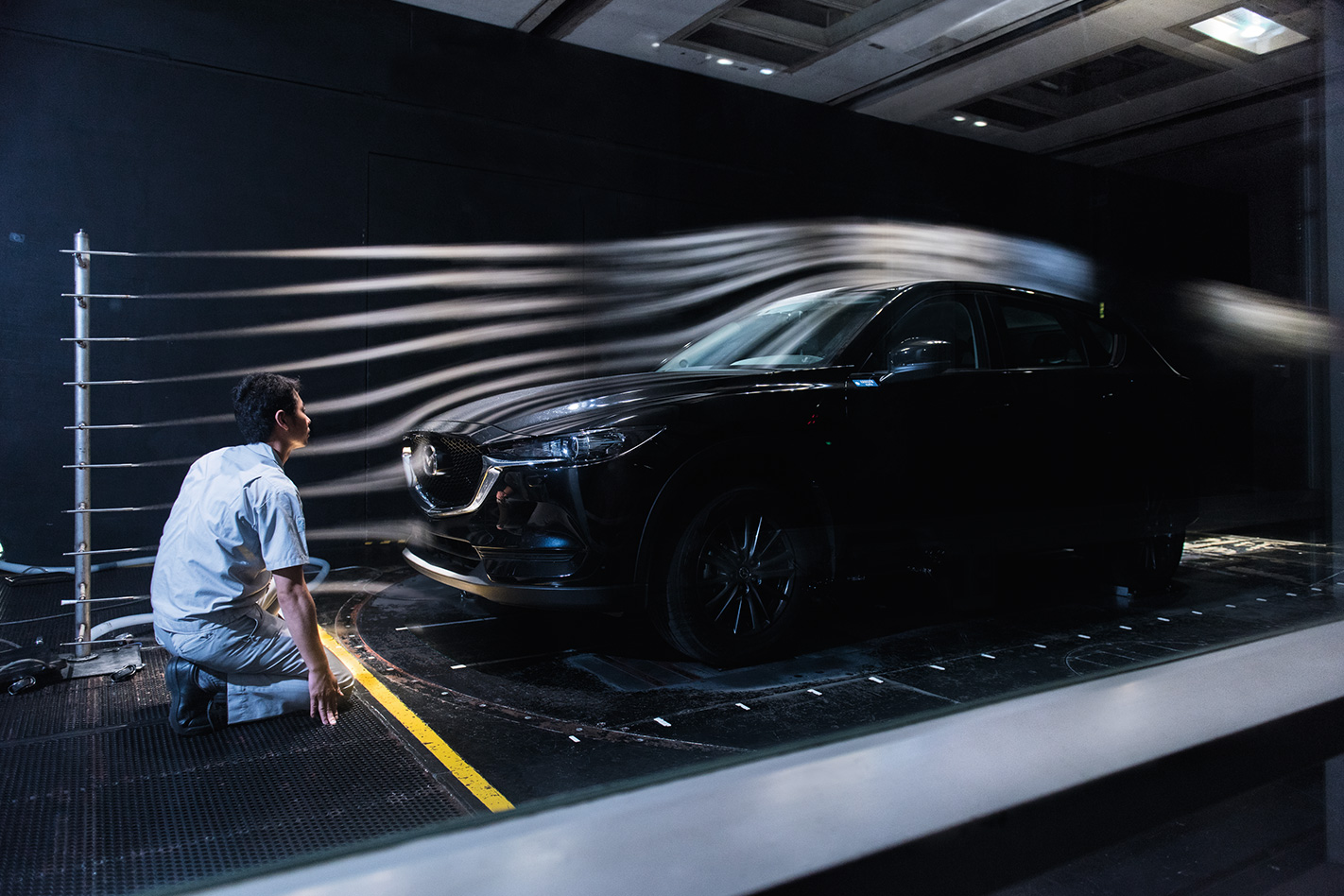
Part of Mazda’s gruelling development program that takes prototype and pre-production vehicles and subjects them to tortures they might encounter in only the most extreme real-world situations. In the anechoic chambers, almost all reflected and rebounding sound and radio waves can be eliminated, allowing engineers to study exactly how new models perform in a carefully controlled environment devoid of any outside interference from sound or radio waves.
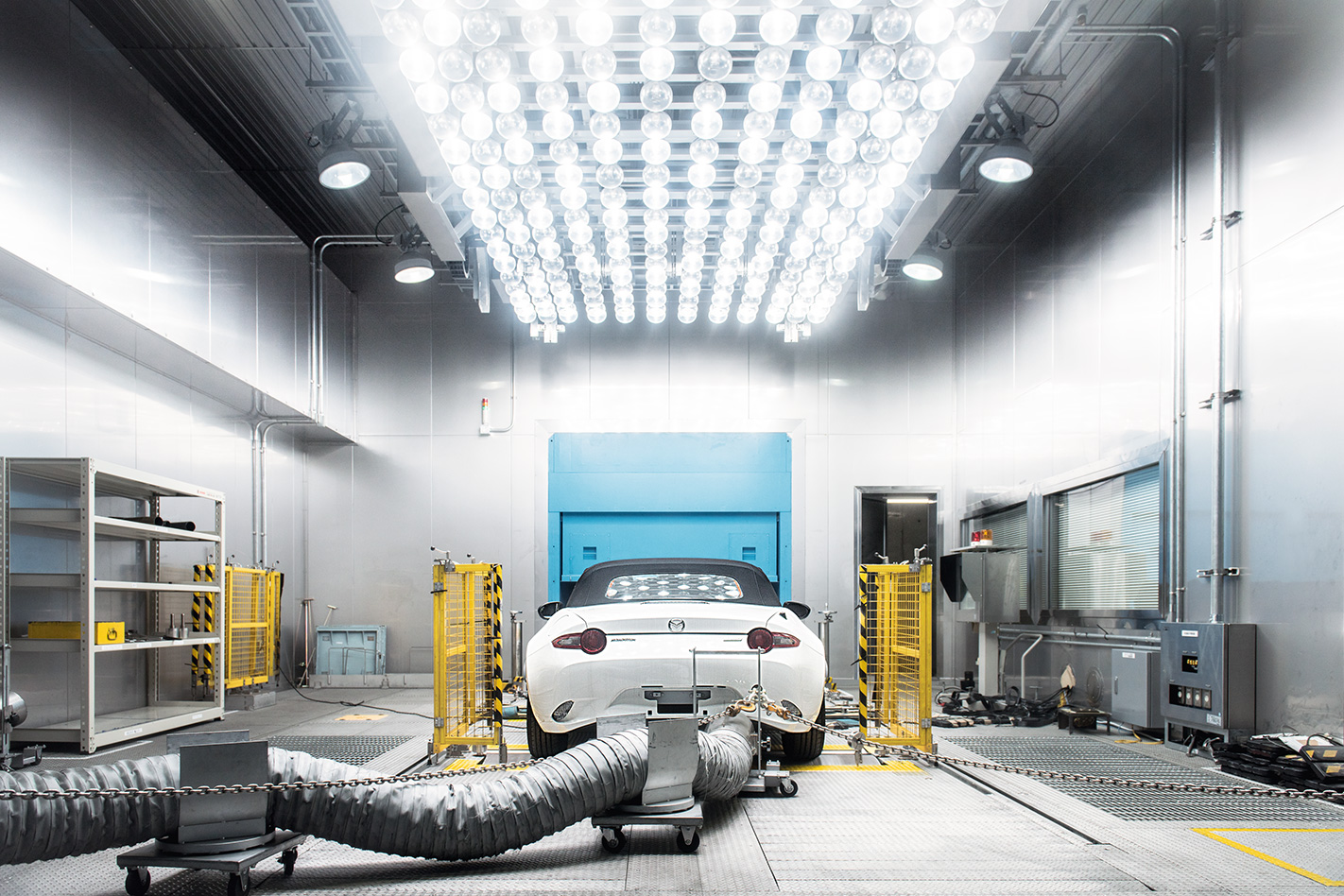
How does it work?
Specially shaped blocks of absorbent materials line the walls of the chambers and are precisely designed to dissipate the energy from sound and electromagnetic waves as they meet the wall. This prevents reflection of waves back through the space and creates the effect of an infinitely large room, which is also insulated from outside noise or radiation.
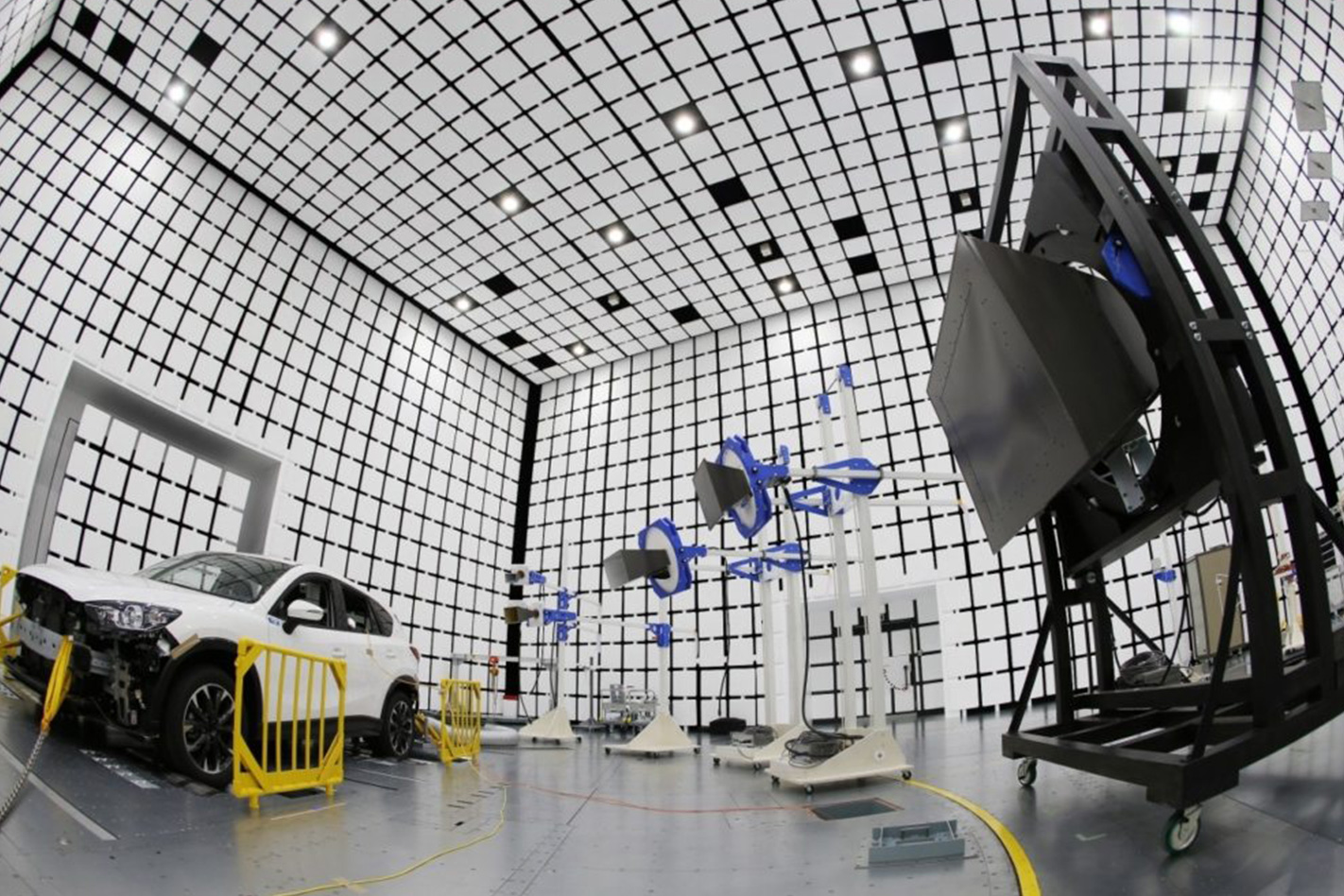
Mazda’s chambers also have rolling roads installed for simulating driving conditions while remaining under the highly controlled conditions. The acoustic anechoic chamber allows the accurate monitoring of noise, vibration and harshness (NVH), while the RF (radio frequency) chamber allows the engineers to bombard vehicles with enormous electromagnetic wave energy and study how the sensitive computer electronics respond.
Why does it matter?
Converging wave forms can cause confusing and often misleading results in uncontrolled environments – this applies to both sound and RF waves. Anechoic chambers remove echoes and reflected waves, which allows accurate tuning and development of vehicle systems for greater comfort and reliability. That satisfying thunk of a closing car door was most likely tuned in an anechoic chamber.
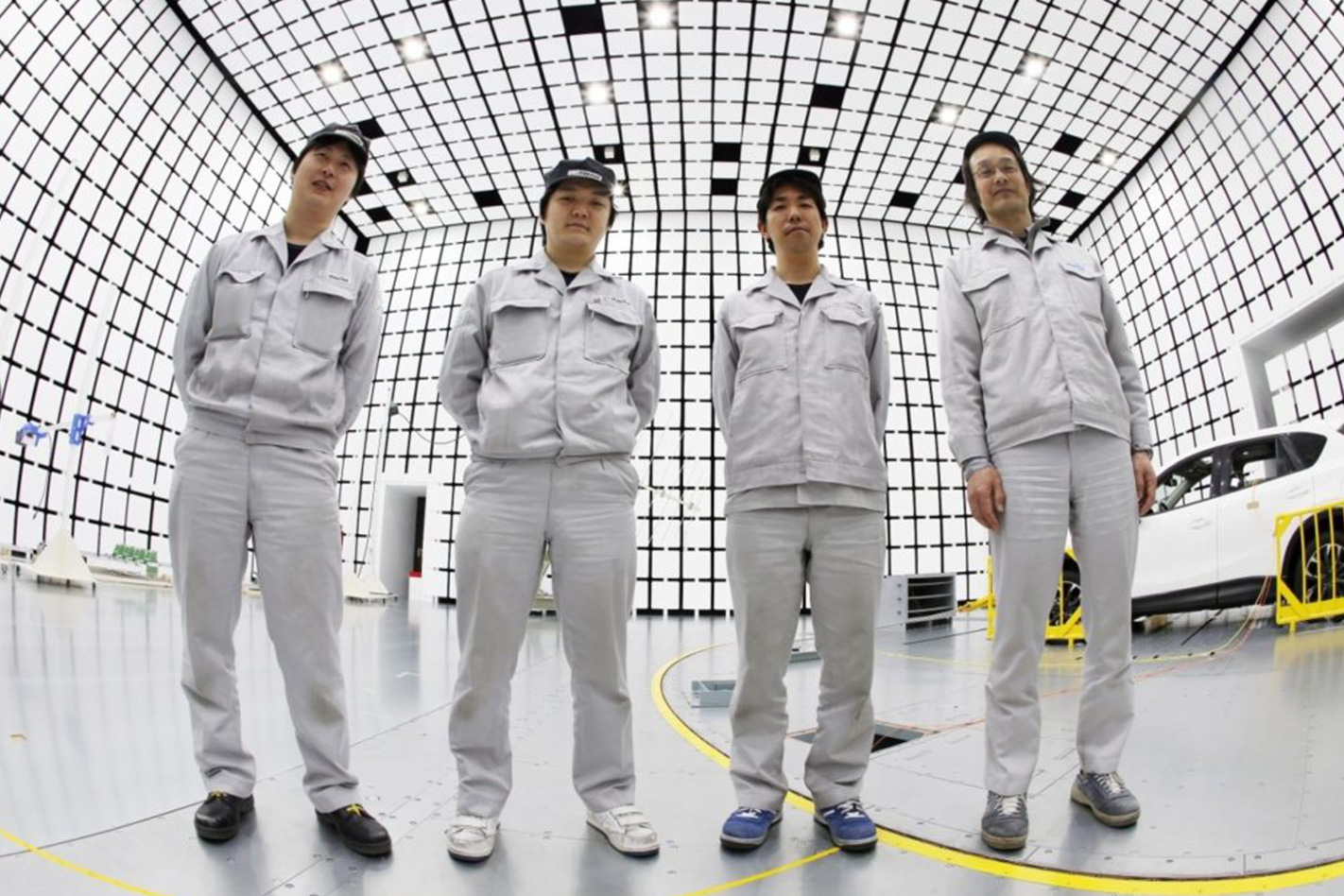
Increasingly important, however, are the effect of radio waves on vehicles, given that sources of radiation are found everywhere from mobile phone communication networks, radar and WiFi equipment, and even cosmic activity. At the Mazda laboratory, the team can bombard a vehicle with radio waves more powerful than a national radio station’s transmitter to try and find system weaknesses before the car hits the road.
Silent Killer
Silent killer People commonly describe the experience of entering an acoustic anechoic chamber – among the quietest places on earth – as eerily weird. Some say the complete silence is so deeply unsettling that they can only endure a few seconds while others say they can hear their own pulse after an extended stay. You wouldn’t want to spend any time in an RF anechoic chamber though. The radio energy is non-ionising and not harmful at regular levels but such is the power of the frequency generators that the RF chamber can be likened to a huge microwave oven.
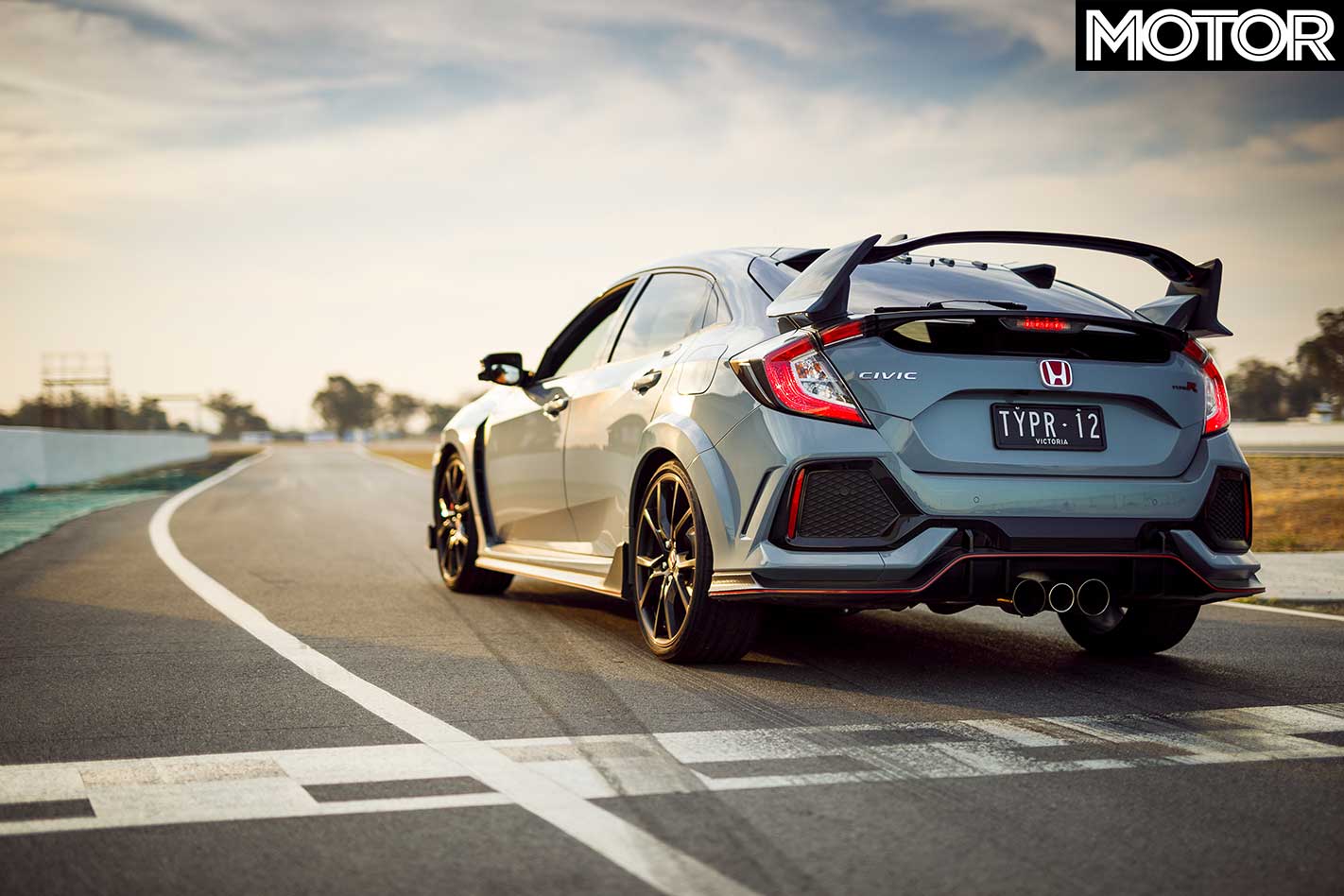
Honda has worked wonders with the newest iteration of the Civic Type R, and it’s paying dividends in terms of awards.
We’ve crowned it the winner of Bang For Your Bucks (BFYB) 2018, making it the winner of two of MOTOR’s major annual events – it’s already been crowned Performance Car of the Year.
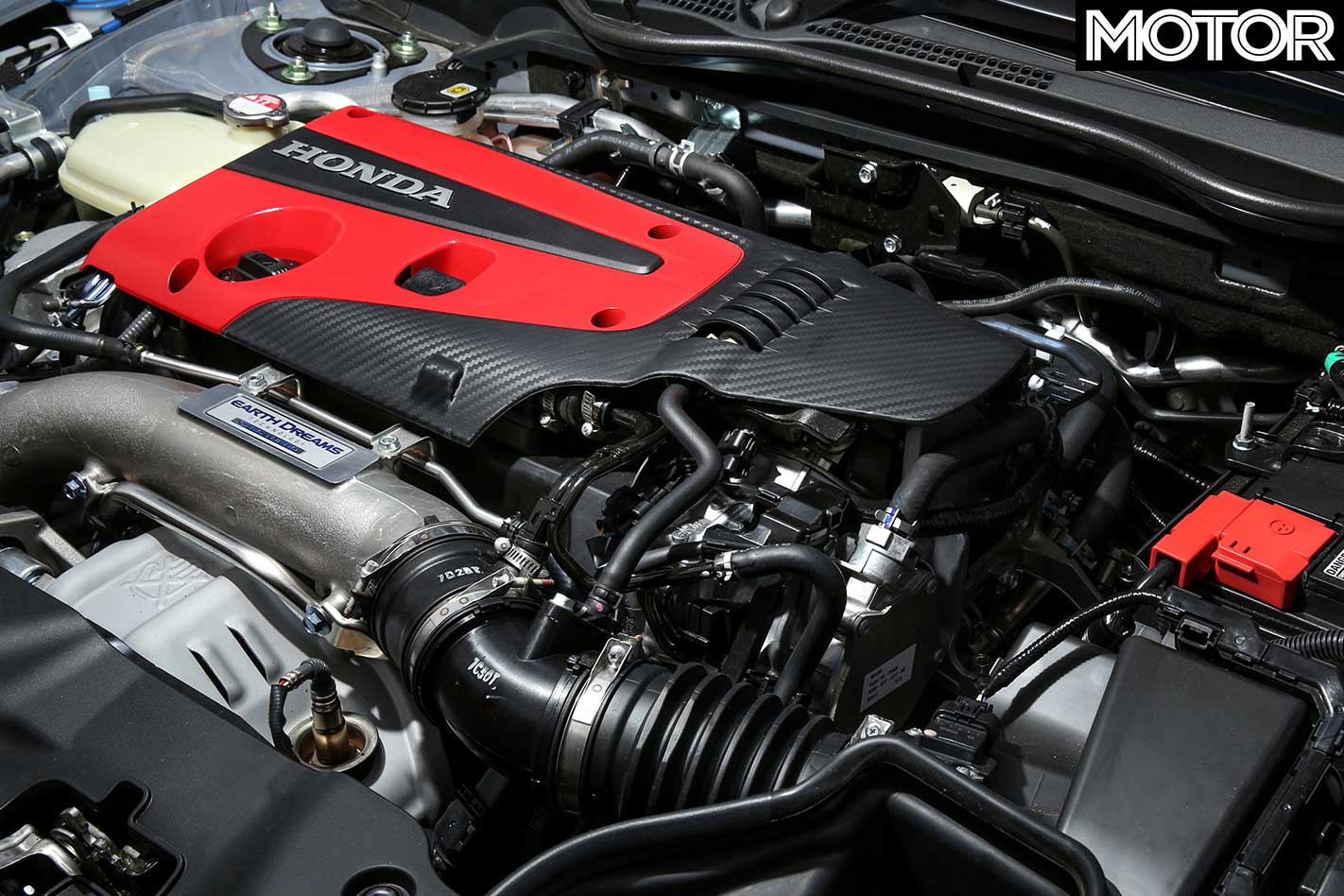
The 228kW turbo inline 2.0-litre engine under the bonnet has allowed the well-balanced hot hatch to take out not only the second-best average apex speed at Winton Raceway, but it even equalled first for fastest lap time – we’ll tell you what it tied with in the July 2018 issue of MOTOR.
The formula then puts these factors up against its price.
A sticker price of $51,990 allowed the Civic Type R to take advantage of the formula (one that’s remained unchanged for years.
Our gun driver Warren Luff, who set the impressive time (under 1:36!) had this to say immediately afterwards:
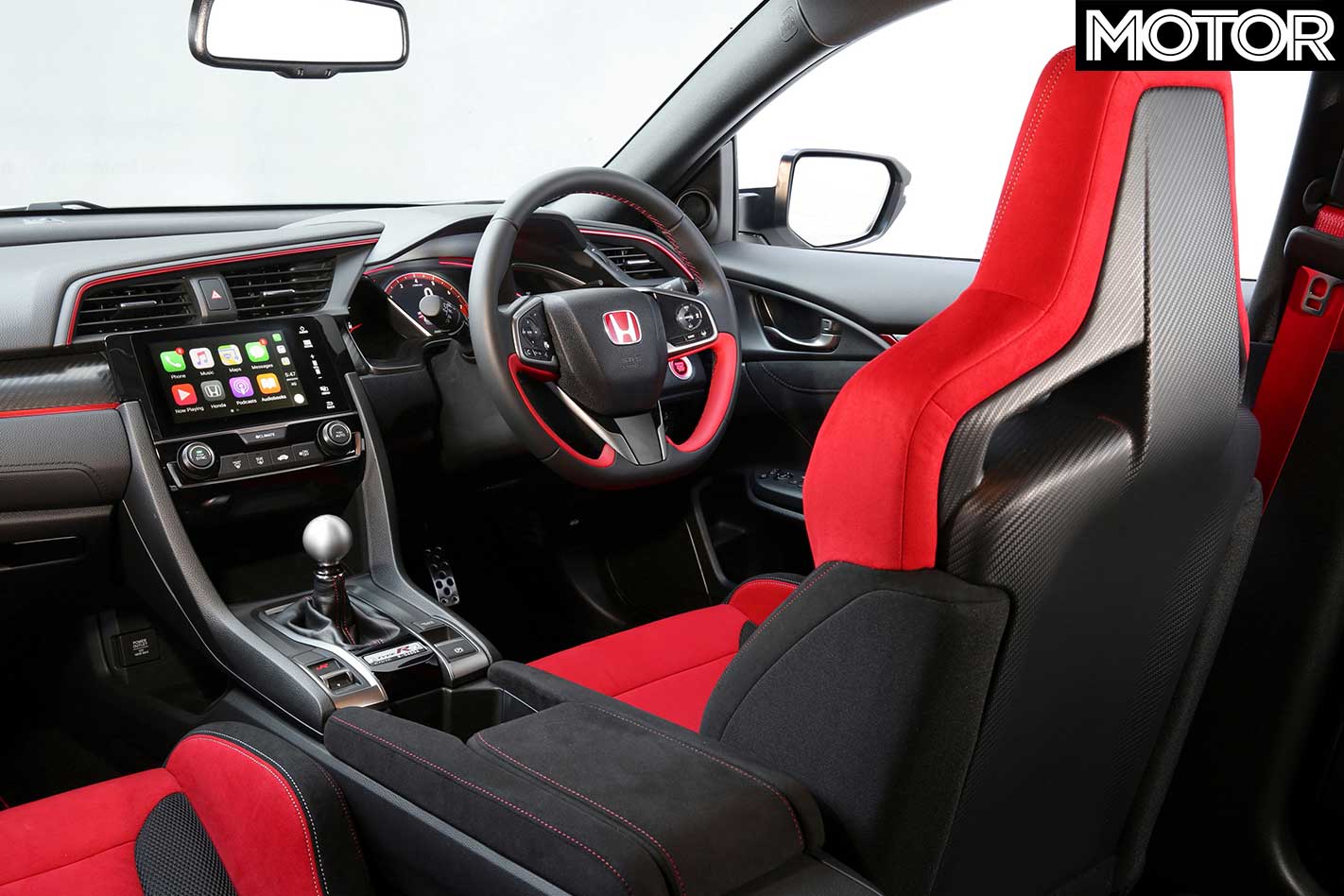
“The Civic Type R is really fun to drive on the limit, and it’s only once you come out of the tight corners in second gear that you actually realise it’s front-wheel drive because you do get a little bit of wheel spin.
“There’s great front-end grip with great driver comfort and feedback. It’s one of those cars you just want to keep driving.
“The only time that it loses a bit of lap time is out of the really tight stuff as it does get a little bit of front-wheel spin, but all in all it’s definitely worthy of the Type R name tag.”
Keep an eye out for the July issue of MOTOR, on sale June 28th, for the full details, triumphs, and tragedies of BFYB 2018.
The contenders it took out are as follows:
- Audi RS3 Sportback
- Ford Focus RS LE
- Hyundai i30 N
- Infiniti Q50 Red Sport
- Kia Stinger 330 S
- Nissan 370Z Nismo
- Peugeot 308 GTi 270
- Skoda Octavia RS
- Subaru WRX STI
- Subaru BRZ tS
- Suzuki Swift Sport
- Toyota 86 Performance Pack
- VW Golf GTI Original
- VW Golf R Grid
INTRO
It’s often said that base models only exist to get people through the doors. Many new car shoppers might head into a showroom to check out the car with the most attractive pricetag, but once they catch a glimpse of something up-spec sitting next to it they’re suddenly more inclined to splash a little more cash.
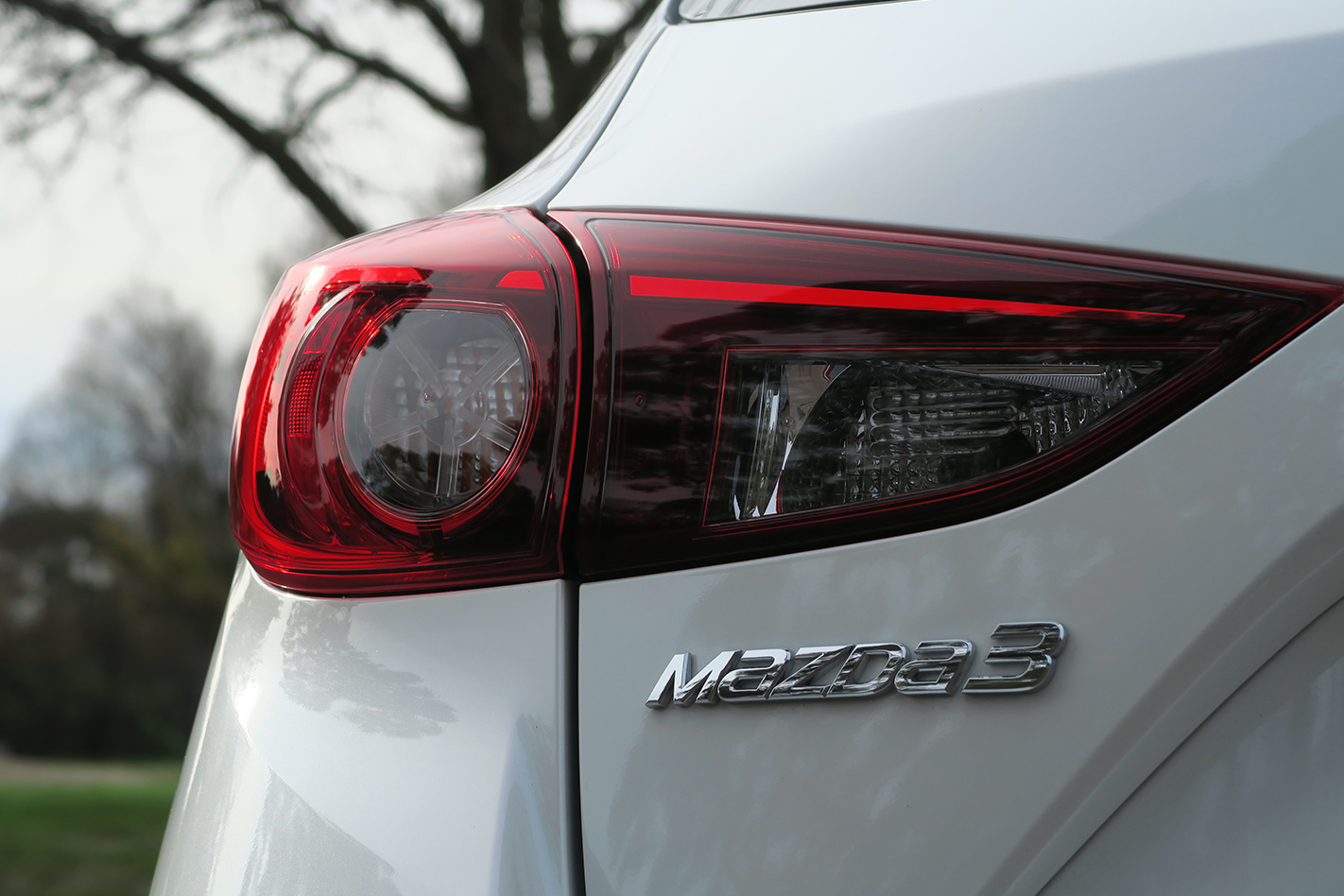
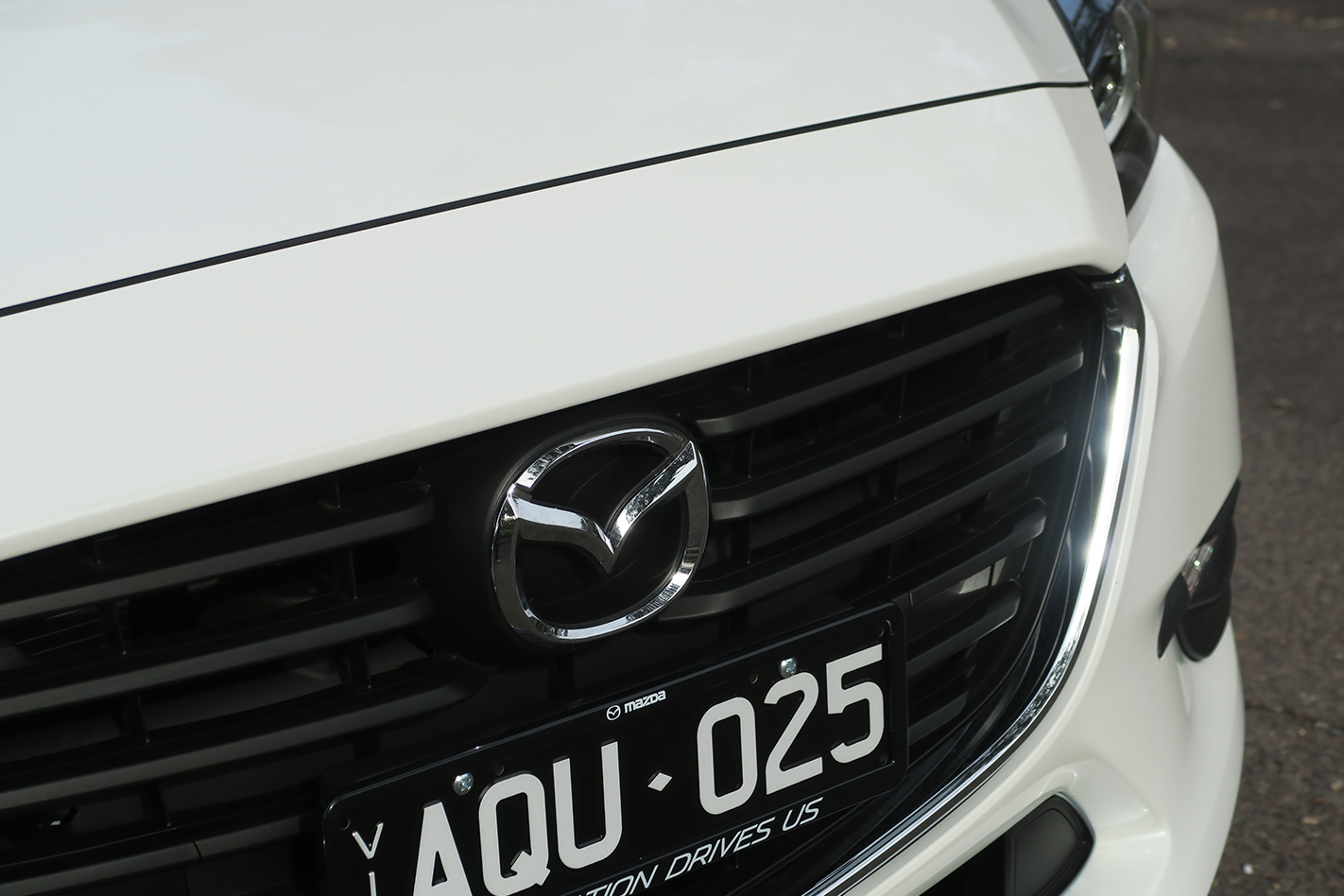
But what about those who are immune to the up-sell? Well, if you’re in the market for a small Mazda you’re in luck, because despite its age and budget positioning, the entry-level Mazda 3 Neo Sport proves that you don’t always have to spend big to get that premium feel.
WHAT IS IT
The Mazda 3 Neo Sport is Mazda’s most affordable and most basic small car offering. Priced at $21,490 in the six-speed manual form tested here (add $2000 for a six-speed automatic), the Neo Sport benefited from a model year update that arrived in February, bringing a touchscreen infotainment display, digital radio, two extra speakers and a reversing camera.
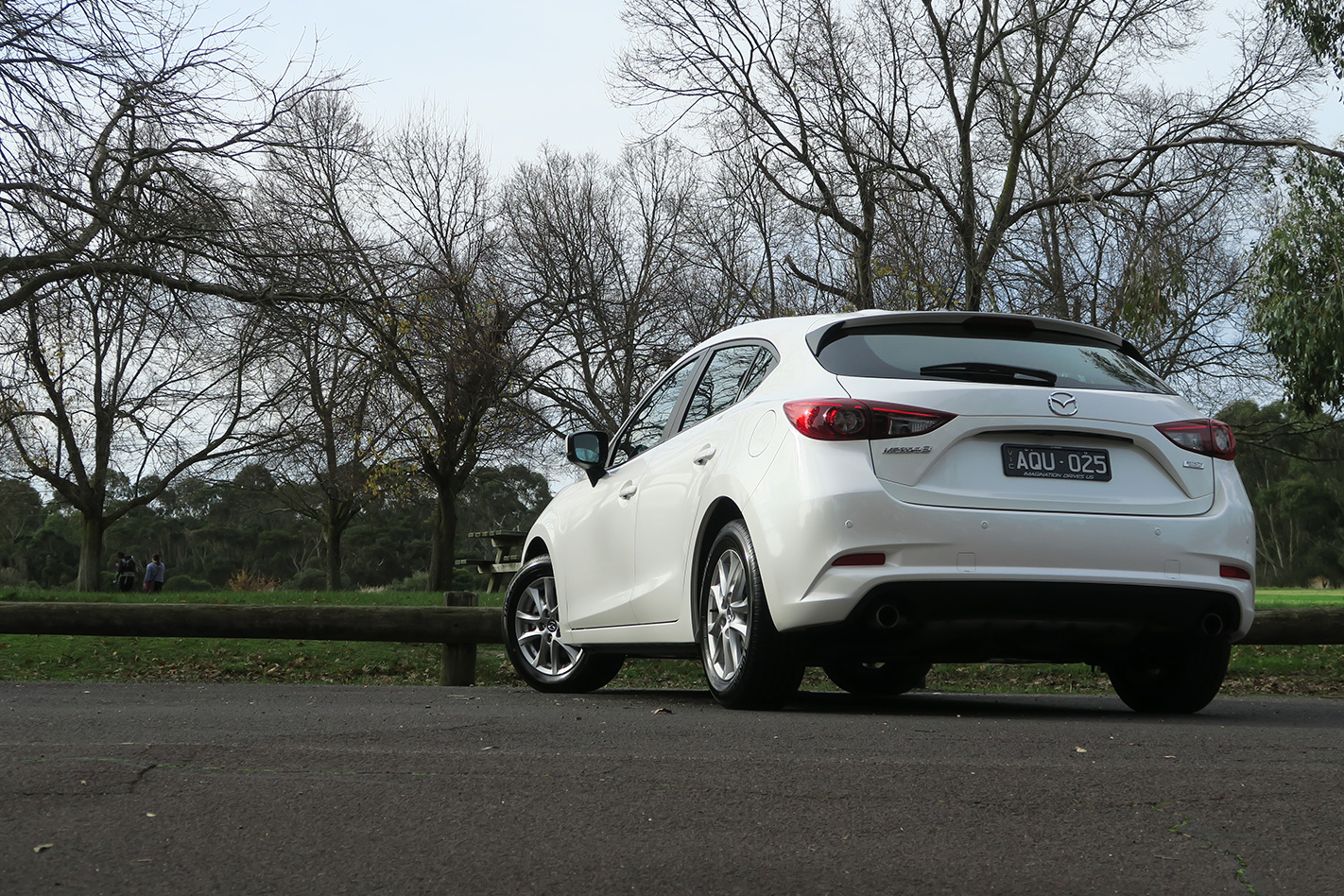
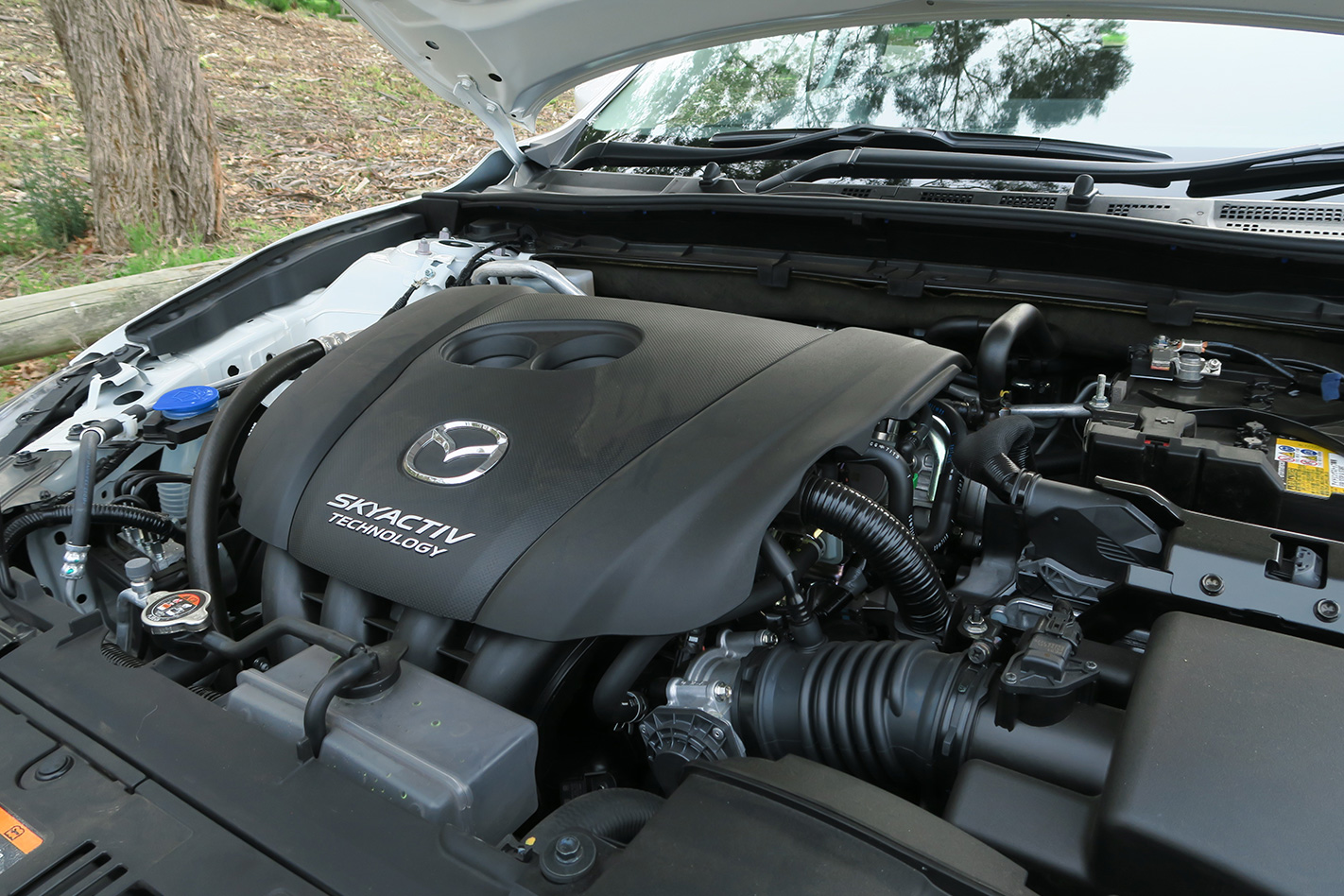
Power is provided by a naturally-aspirated 2.0-litre petrol generating 114kW and 200Nm, and burning 5.9L/100km of petrol on the combined cycle.
STRENGTHS
Quality. This is where the Mazda3 schools the bulk of its competitors, for even the base model Neo is blessed with an interior that not only looks borderline premium, but feels good to touch and is screwed together tightly. It may have a bare plastic steering wheel, but the texture and feel of that urethane rim is nicer than some leather-clad wheels. In fact, the only class competitors that convincingly beat it for cabin quality and presentation are the European Peugeot 308 and Volkswagen Golf.
Steering and handling. The Mazda 3 has long been one of the best-handling options in its segment, and the crisp, linear steering and superb chassis dynamics that routinely attract praise has been baked into every variant. All 3s are now equipped with Mazda’s “G Vectoring Control” tech, which subtly tweaks the engine output to further enhance cornering capability. The effect is subtle, but the end result is a car that isn’t just agile and grippy, but one that’s genuinely good fun to drive.
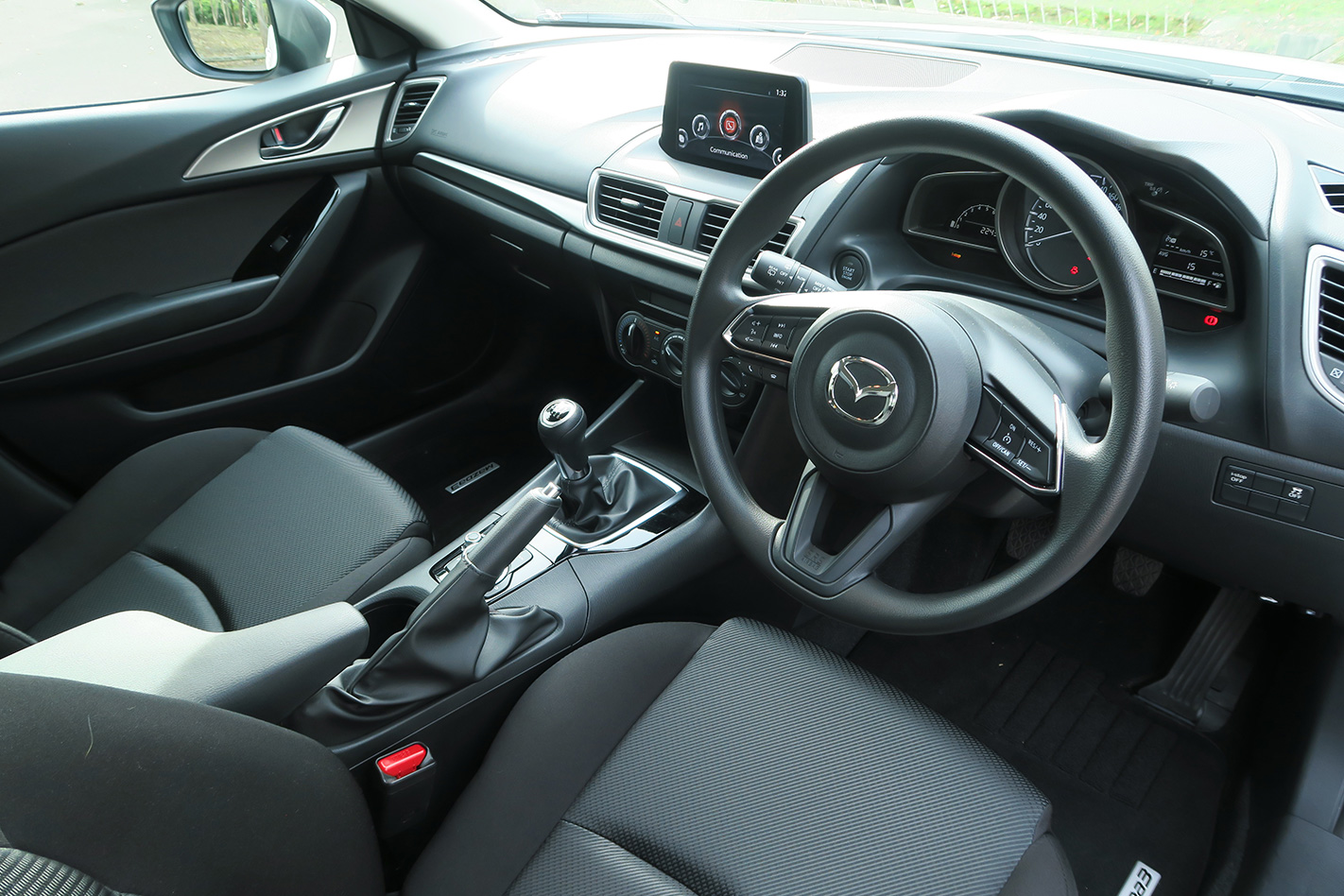
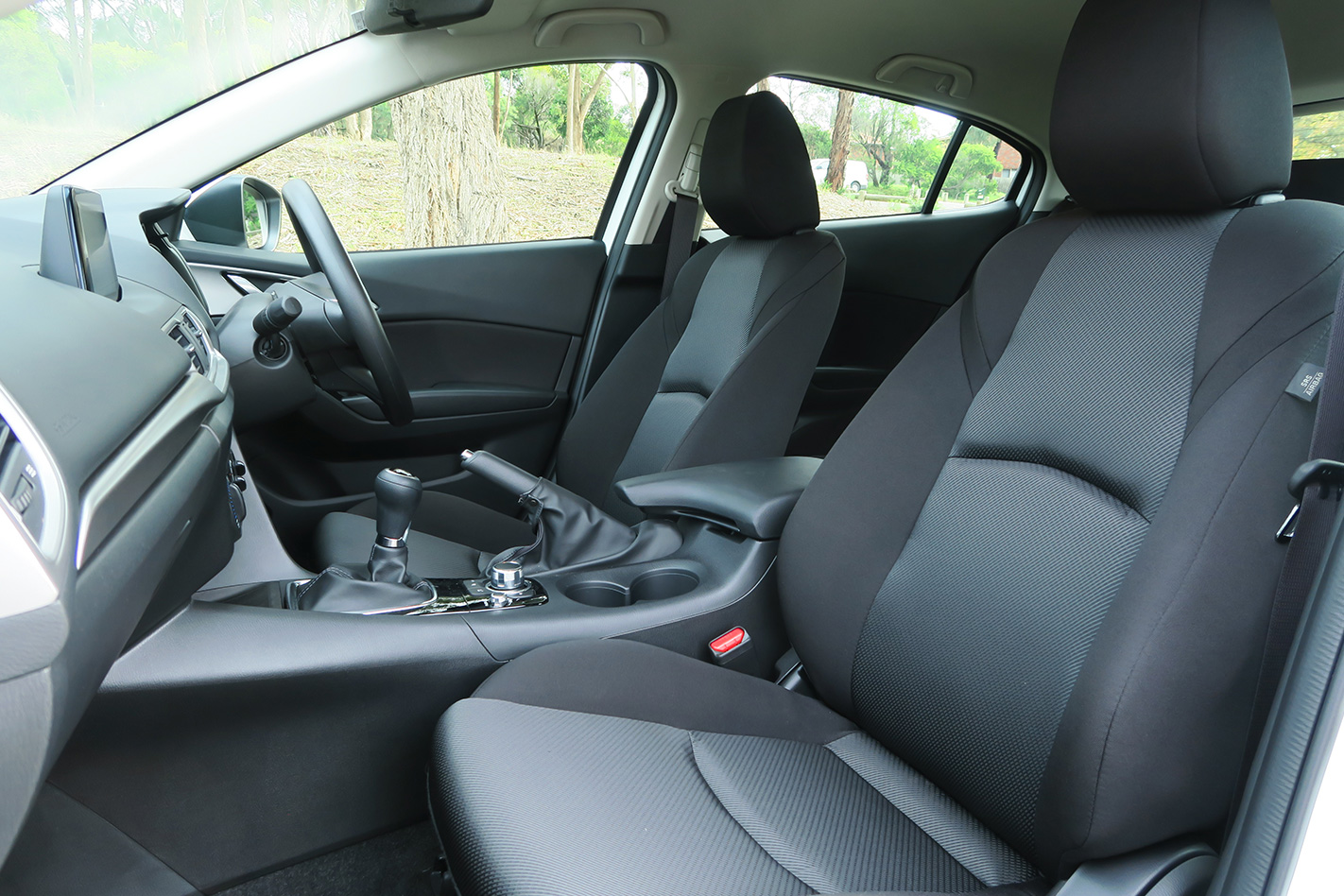
Ergonomics. Excellent handling is meaningless if you’re not comfortable behind the wheel, but there’s further good news here for the Mazda. With plenty of adjustment in the tilting and telescoping steering column, as well as a wide range of height adjustment in the driver’s seat, it’s a cinch to find a relaxed position behind the wheel. It’s further aided by the infotainment’s rotary control dial that’s mounted behind the gear selector, where your left hand naturally falls. Easily navigable by touch, it provides a superior alternative to interacting with the screen than by reaching out and prodding the on-screen buttons – which you can also do, if you prefer.
Fun manual. Yes, we know that the vast majority of small car shoppers wind up selecting an automatic transmission, but the standard six-speed manual is a delight in the Mazda 3. It has a crisp and precise shift feel that slots easily into each gear, along with a clutch pedal that’s easy to modulate in traffic – if you’re the kind of person who enjoys that level of engagement when driving, definitely check out the manual. For everyone else, though, the good news is that the automatic does a superb job of putting the engine’s power to the ground, with sensible gear ratios, swift kick-down performance and snappy gearchanges.
Sound suppression. Mazda 3s have a reputation for being a bit noisier when travelling at speed, but the Neo Sport’s chubbier sidewalls and 16-inch alloys help quell some of that road roar.
Equipment levels. The basics are well covered with the Neo Sport. A push-button starter means you don’t need to jam your keys into an ignition barrel, the six-speaker audio comes factory-fitted with a digital radio tuner, the 7-inch infotainment screen is both functional and good-looking, there are two USB ports, engine auto start-stop helps save fuel, autonomous emergency braking adds an extra level of safety while rear parking sensors and a rear camera help you squeeze into tight spots. The omissions are few, but we’ll get to them below.
WEAKNESSES
The Neo Sport’s infotainment system taunts you by giving you a big shortcut button marked “NAV”, but once pressed it goes to a placeholder page that tells you to ask your Mazda dealer to enable the satellite navigation feature. Furthermore, it displays latitude and longitude coordinates that indicate that the car is fully prepared with the right hardware for integrated sat-nav, but Mazda has held back on the crucial map data and software element for the lowest-grade model. The Neo Sport is the only model in the range to not have satellite navigation as standard.
No smartphone mirroring. The above navigation issue wouldn’t be quite so bad if Mazda, like many other manufacturers these days, equipped the 3 with Android Auto or Apple CarPlay smartphone mirroring. Mirroring would allow you to use the navigation apps from your phone on the car’s built-in screen and provide a remedy to the lack of integrated sat-nav. Alas, Mazda doesn’t allow it.
Rear seat space. The back seats feel more cramped that a lot of other small hatches, with legroom that’s ‘adequate’ rather than ‘generous’ combining with a high beltline that makes you feel cramped – especially if you’re on the short side. There are no rear seat air vents either.
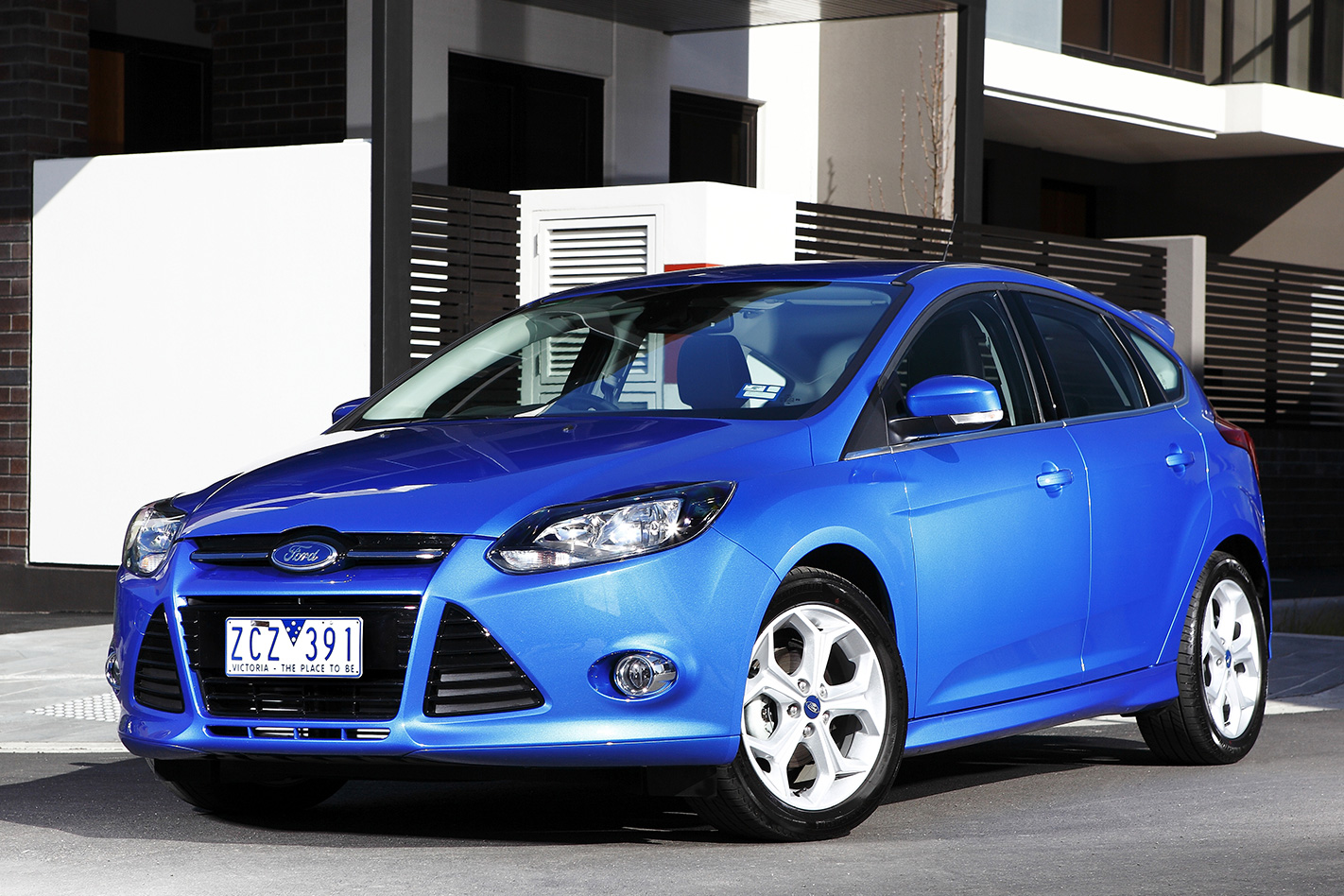
Shorter warranty period than many rivals. Mazda’s factory warranty only runs for three years (and unlimited kilometres), putting it behind a lot of key rivals when it comes to aftersales care. Kia is the leader with 7 years/unlimited kilometres, but Citroen, Ford, Honda, Hyundai, Skoda and Renault all have 5 year/unlimited warranties, while Mitsubishi offers coverage for 5 years/100,000km.
WHAT OTHER RIVALS SHOULD I CONSIDER?
There’s an abundance of small hatchbacks in the lower end of the $20K bracket, but the best of them includethe Honda Civic VTi, Hyundai i30 Active, Subaru Impreza 2.0 and Volkswagen Golf 110TSI.
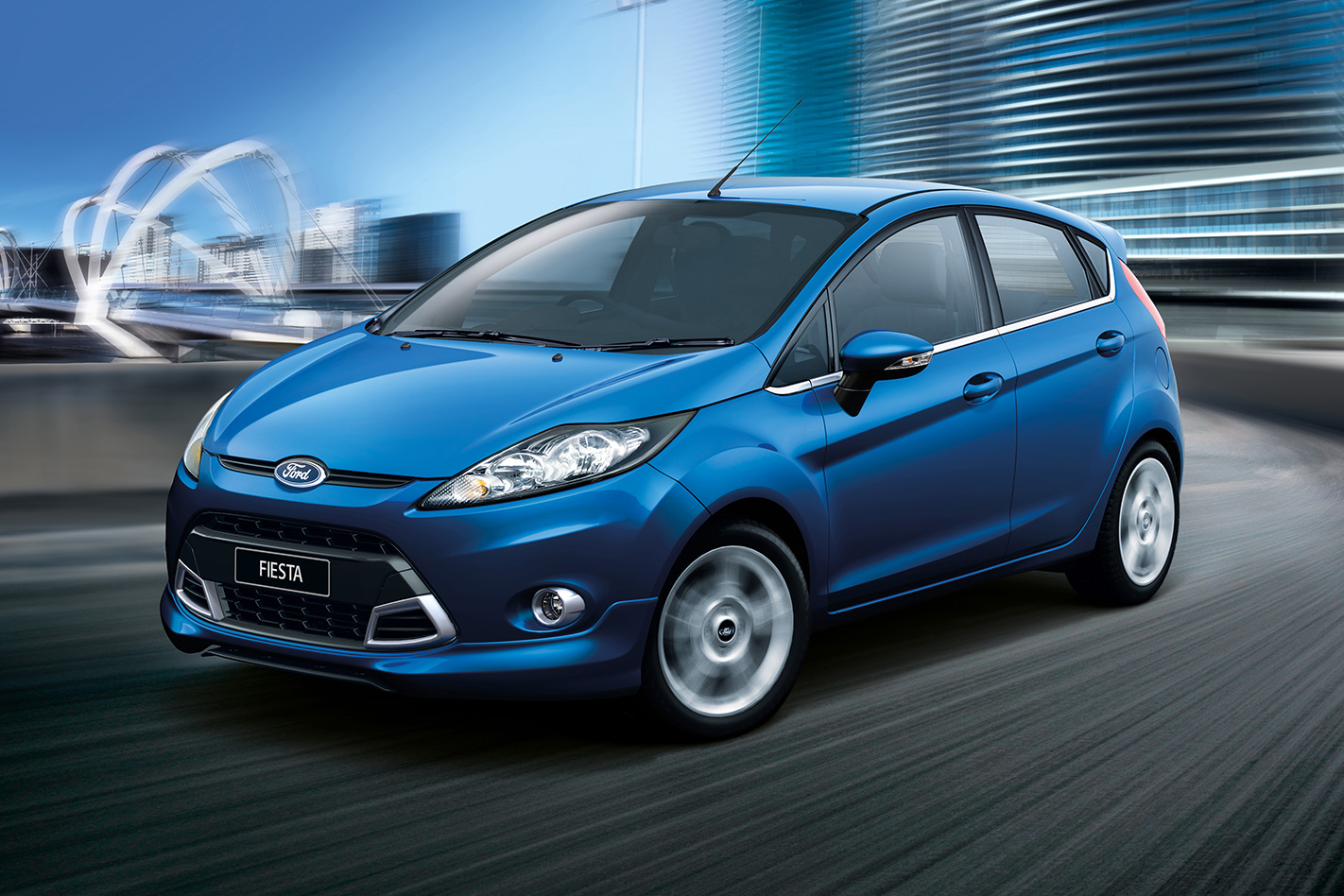
FORD Australia encouraged government officials to jump behind the wheel of one of its repaired PowerShift cars to convince them that a fix for the flood of customer complaints was working, documents show.
The vehicle, which Ford bought back from a customer who no longer wanted it, was driven by Department of Infrastructure and Regional Development staffers at Ford’s Campbellfield campus late last year. They came away convinced that Ford’s repairs to the PowerShift gearboxes were working, documents released under Freedom of Information legislation show.
The documents also include a letter sent from Ford Australia to the departmental staff in August 2017 relating to the government’s investigation into faulty PowerShift transmissions, and questions raised over how effective the car maker’s repairs were in fixing the problems experienced in two vehicles.
“Ford has identified [redacted] issues, and is implementing fixes, but does not believe the matter warrants a voluntary safety recall,” a briefing paper sent to the director of the Vehicle Safety Standards’ regulatory policy, risk and compliance section says.
The cause of the transmission problems, spelled out in Ford’s letter, are redacted from the documents.However, the documents do reveal that the department sought more information from Ford on claims that the dual-clutch transmissions were temporarily losing drive, and more reports from owners that Ford’s fixes “had not resolved the issues”.
Government representatives then drove three test cars, where a department official said they “had the opportunity to sample the vehicles as well”. “This was important, as I was able to feel what a faulty vehicle felt like,” the official said.
The same report also says that by mid-September, 2017, a software flash “that the department was aware of” was “currently at 86 percent rectification of the 72,000-vehicle population”.
“All vehicle owners have been contacted and encouraged to return vehicles for the software update,” the briefing says. “In addition, owners have been sent information highlighting the correct manner in which to drive vehicles. This information highlights that left-foot braking is not conducive of correct transmission operation for this type of vehicle.”
Department officials then concluded that Ford’s remedial action was “satisfactory for the vehicle behaviours present. If a vehicle owner presents their vehicle when the symptoms first appear there should be no issues affecting safety”.
Ford Australia said it worked closely with the department “as the safety of our customers is a top priority”.
“We gave DIRD officials the opportunity to drive a repaired Powershift vehicle, to demonstrate that the fixes available address the known product quality issues, spokeswoman Jasmine Mobarek said.
If there is a time to bargain hard for the sports car you’ve always wanted, the Friday eve of June 30 is always the time to do it.
For this first instalment of new sports car bargains we look at the A-to-Z – or, Audi-to-Volkswagen – of End Of Financial Year Sale (EOFYS) offers.
Audi and BMW have converged to a ‘savings equal to the GST’ offer, which has to be one of the trickiest deals to understand. That’s because you can’t simply wipe 10 per cent off the purchase price, but rather the GST component of the recommended retail price (RRP) and dealer delivery – but not the government, stamp duty, rego and Luxury Car Tax (LCT) bit.
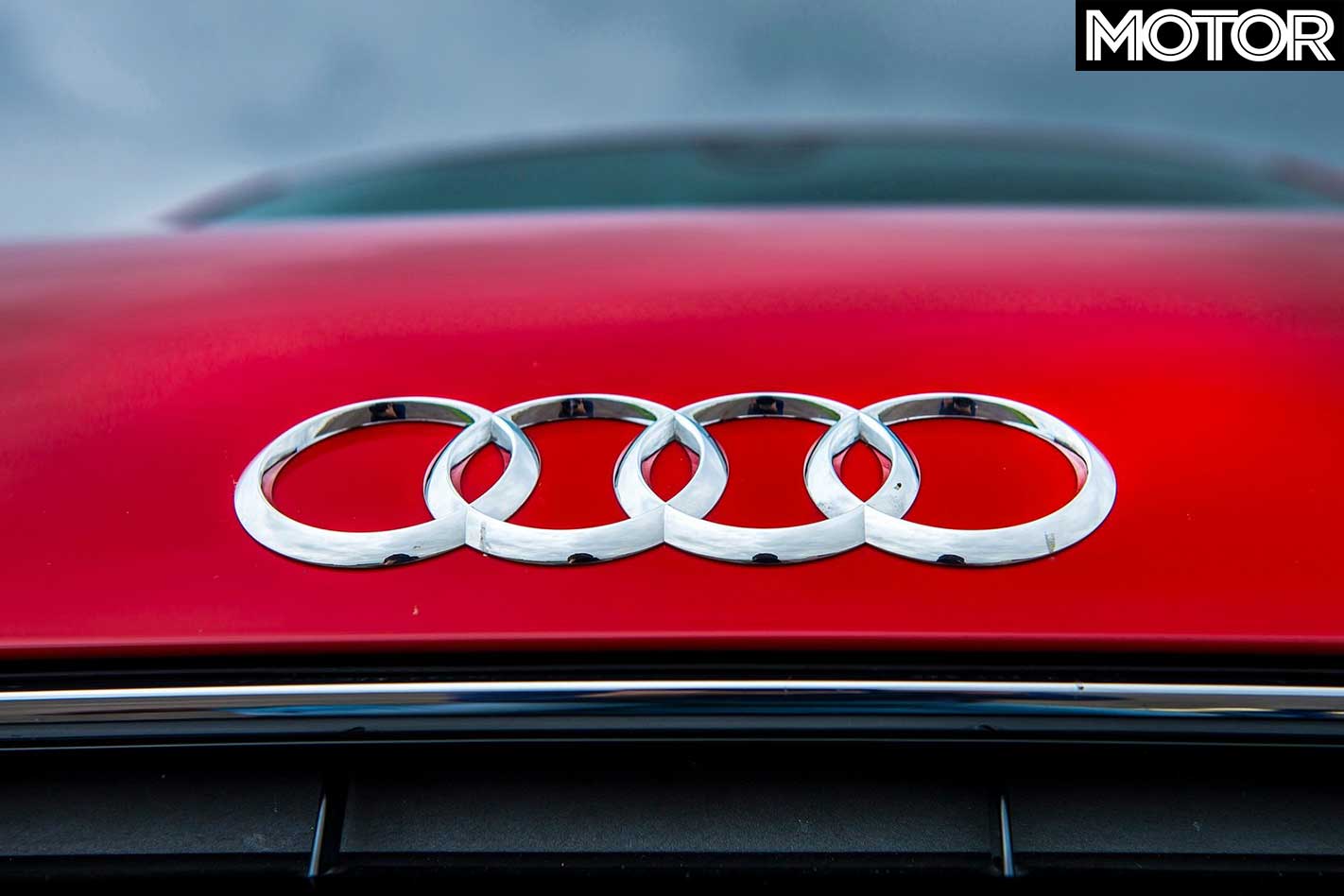
Without GST it’s $48,000, then, because plus GST is $4800 for a $52,800 total. Add $2800 in government charges and it’s $50,800 driveaway – this is a really, really round-a-bout way of chucking on-roads in for $800…
A TT 2.0 TFSI manual Sport costs $74,700 RRP, or minus $7100 for GST, bringing it to $71,100 plus on-roads. Add those and LCT, and it adds $4762.60 for $75,853 driveaway.
BMW includes all models, so an M2 Pure manual at $93,300 RRP becomes about $82,075 once GST and also in this case dealer delivery is excluded, for a $8207.50 saving. But then add $12,639.40 in on-roads plus dealer delivery and it sweeps back to $94,714 driveaway – essentially with on-roads included.
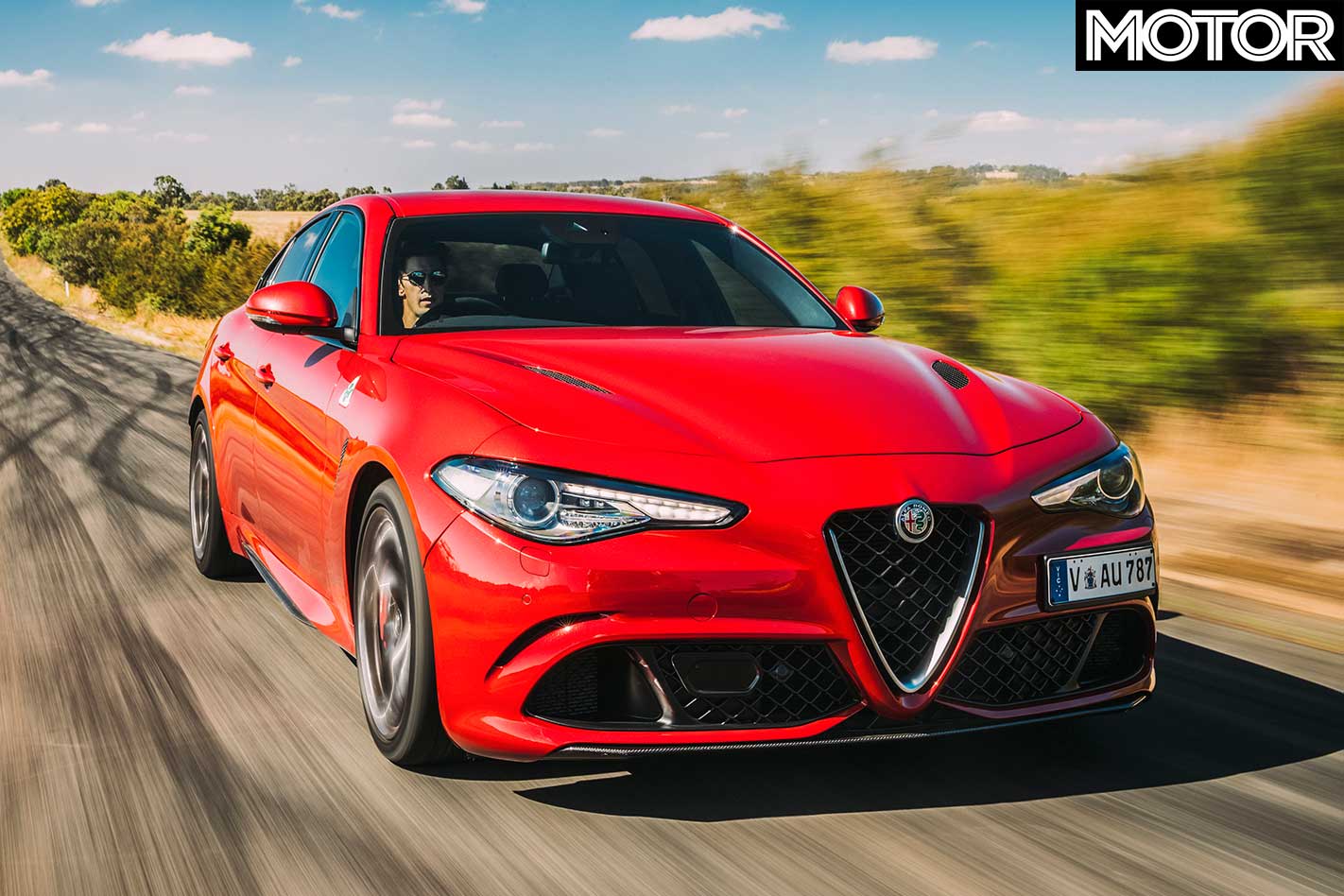
Alfa Romeo will extend the Giulia Veloce and QV warranty to five years, with roadside assistance over that period plus three years’ free scheduled servicing.
Jaguar and Land Rover are offering the same warranty extension but with five years’ free scheduled servicing. On an XE 30t that saves $1700 right up until 96,000km as well. Meanwhile, buy an MY17 Range Rover Sport or Evoque, and you’ll nab 100,000 Qantas frequent-flyer points.
Back to the Fiat Chrysler Automobiles (FCA) group, and the Abarth 124 Spider is going for $42,950 driveaway, just $960 over its recommended retail price. And the Chrysler 300 SRT Core will attempt to sweep up Commodore SS V Redline buyers with a $65,000 driveaway offer with free sunroof and navigation package.
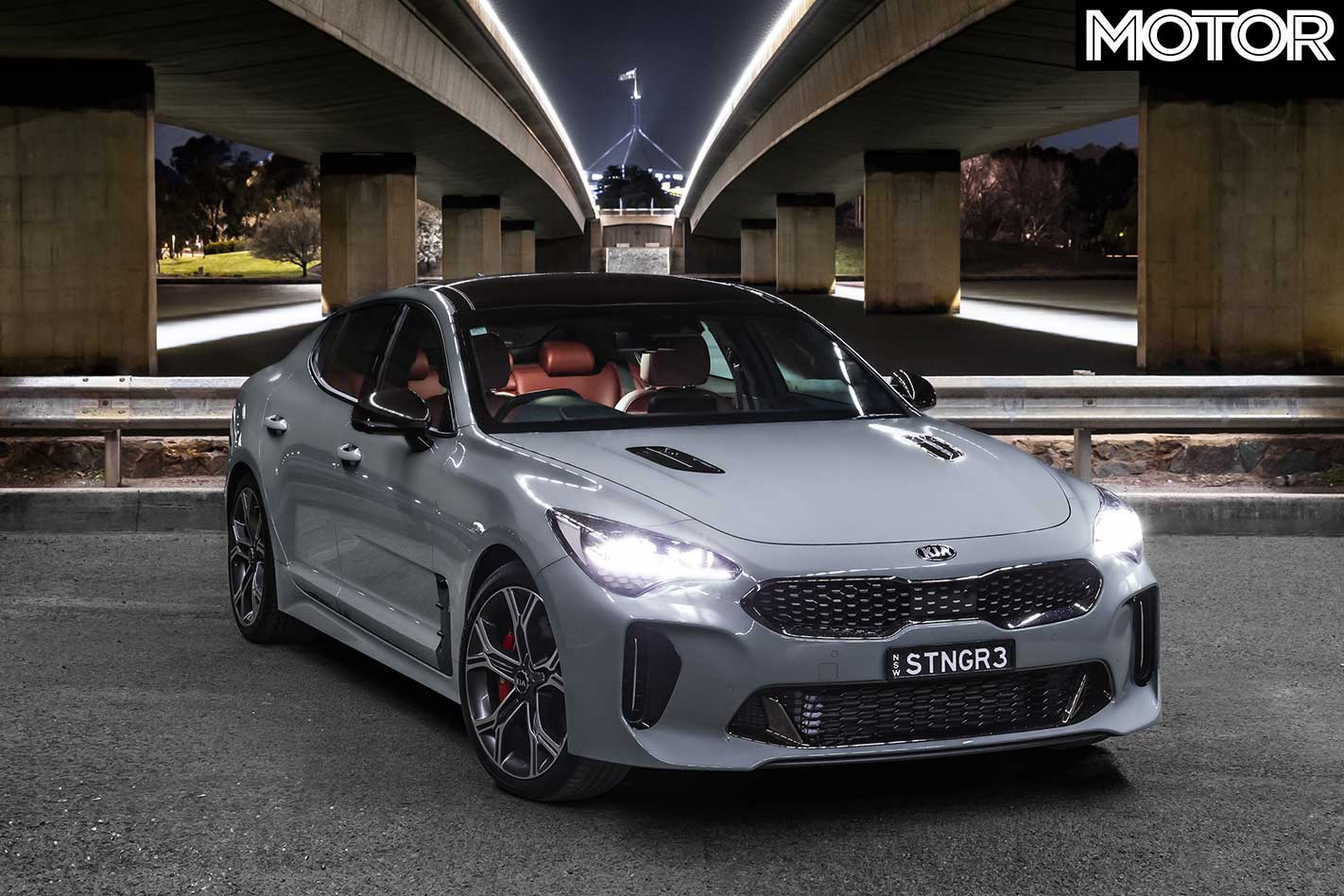
That’s the usual retail price before on-road costs and options, and for context Kia isn’t doing any deals on the $59,990 (plus orc) Stinger GT that equates to $65,196 driveaway. That’s not all, though, because existing Chrysler buyers nab another $1000 off and anyone and everyone can nab a 1.9% finance offer.
Speaking of which, Nissan will do 1% finance even on new or demonstrator 370Z and GT-R models over a three-year loan, Skoda will nab you 1.9% on 2017-build Octavia RS, and Ford will do 2.99% finance on MY17 Mustang (with a 10% deposit).
Other deals at the top-end include Maserati Ghibli, which gets a $20K GranSport pack thrown into the $143,990 (plus orc) 257kW/500Nm 3.0-litre twin-turbo V6 petrol model, with 20s, upgraded brakes, adaptive suspension, carbon trim, front spoiler, rear diffuser and leather sports seats, for $154,990 driveaway.
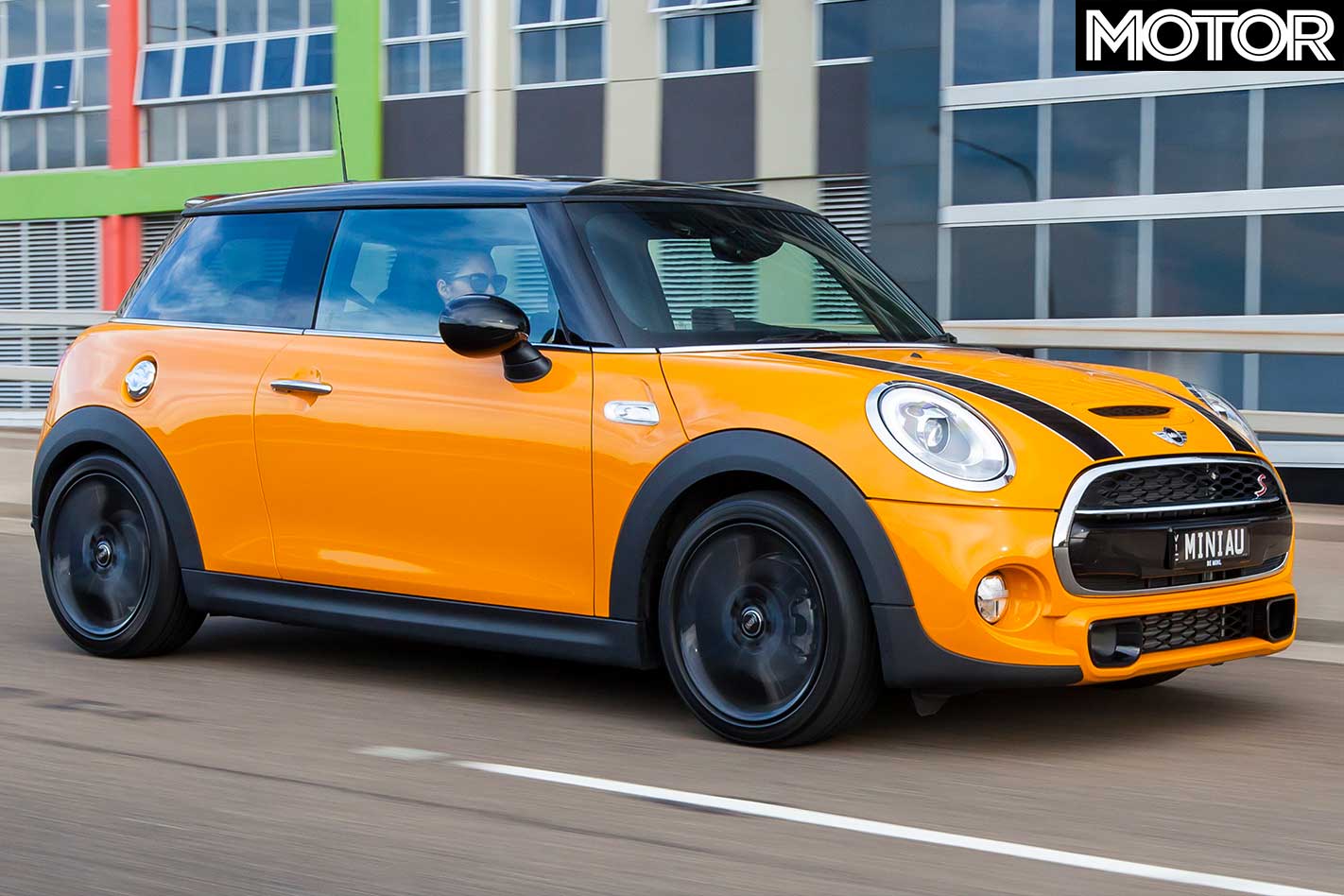
Otherwise, affordable sporty models round out the sale items: including Clio RS for $29,990 driveaway with $500 cashback, down from $30,990 plus on-road costs; the Mazda3 SP25 GT warm hatch at $29,990 with free driveaway pricing; its Holden Astra RS rival at $25,990 driveaway plus $500 cashback, down from $26,240 plus on-roads; and Mini Cooper S with free leather, 18s, metallic paint and bonnet stripes, but sadly sans driveaway deals.
Holden will also wipe another $1000 off the launch price of the Commodore RS V6, now $41,490 driveaway. And Volkswagen is continuing its amazing $1K-for-driveaway pricing on Golf GTI Original (last of the manuals at $38,490 driveaway) and Golf R Grid (likewise the last sporty manual from the brand at $48,490 driveaway). They really are beaut offers.
Stay tuned for more performance car bargains next week!
*Sydney prices used for driveaway calculations. Figures may vary from state to state.
Volvo has taken a breather from its SUV push to reveal its new S60 premium sports sedan.
Described as a true driver’s car by Volvo president and chief executive Håkan Samuelsson, the second-generation S60 is the Swedish brand’s first modern-day model to be sold without a diesel powertrain, with plug-in hybrid electric vehicles (PHEVs) topping the range as part of its 2019 electrification target.
The P in PHEV could easily stand for performance with the S 60 furnished with a choice of 254kW turbocharged T6 Twin Engine AWD powertrain and a 298kW supercharged T8 Twin Engine AWD.
Volvo’s T5 and T6 2.0-litre four-cylinder petrol engines will also be available at launch, coupled to the same eight-speed automatic transmission as the PHEVs.
A performance handling upgrade wearing the Polestar Engineered branding will be available exclusively for T8 Twin Engine plug-in hybrid and is a complete offer that swaps the car’s wheels, brakes, suspension and engine control unit, boosting combined output to 310kW.
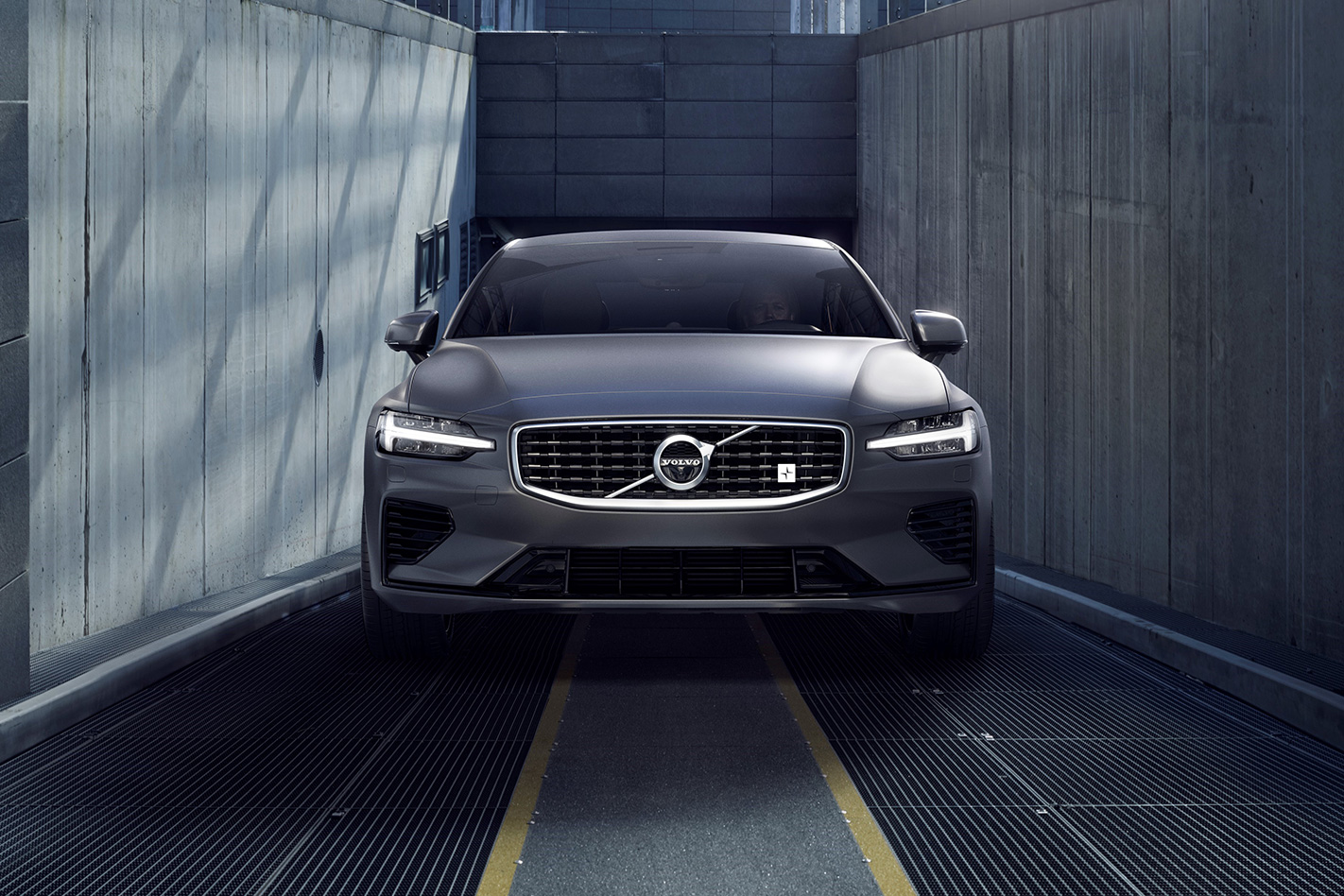
The US-built S60 shares Volvo’s Scalable Product Architecture (SPA) platform, active chassis, safety technology and infotainment system with the new V60 premium mid-size estate, launched earlier this year, as well as the top-of-the-line 90 Series cars and Wheels Car of the Year-winning XC60 SUV.
Samuelsson said this makes the new S60 one of the most engaging and safest sedans on the road.
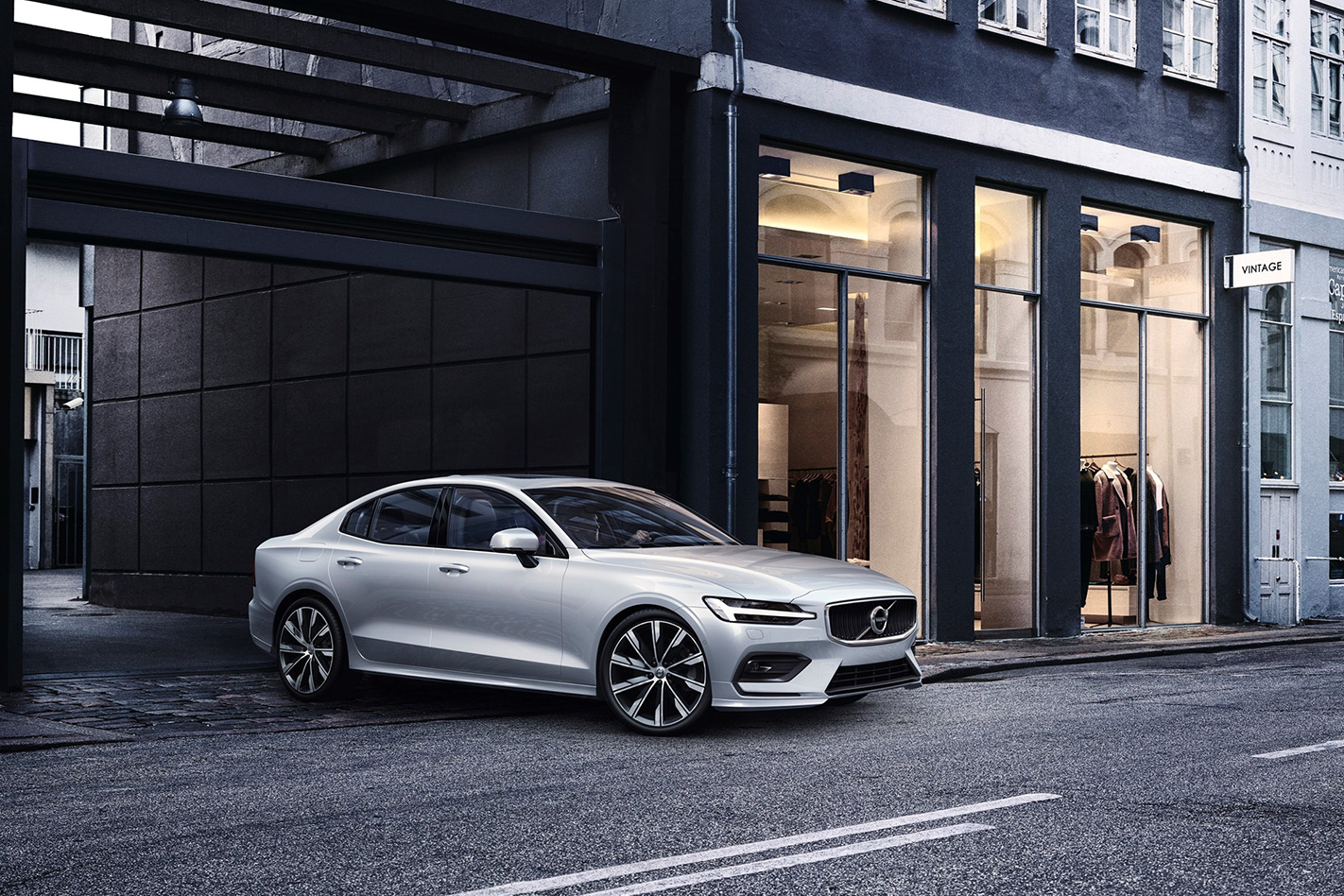
Front-end styling is also similar to its SUV namesake, and it features same rising window line, albeit with a sleeker fastback-styled silhouette.
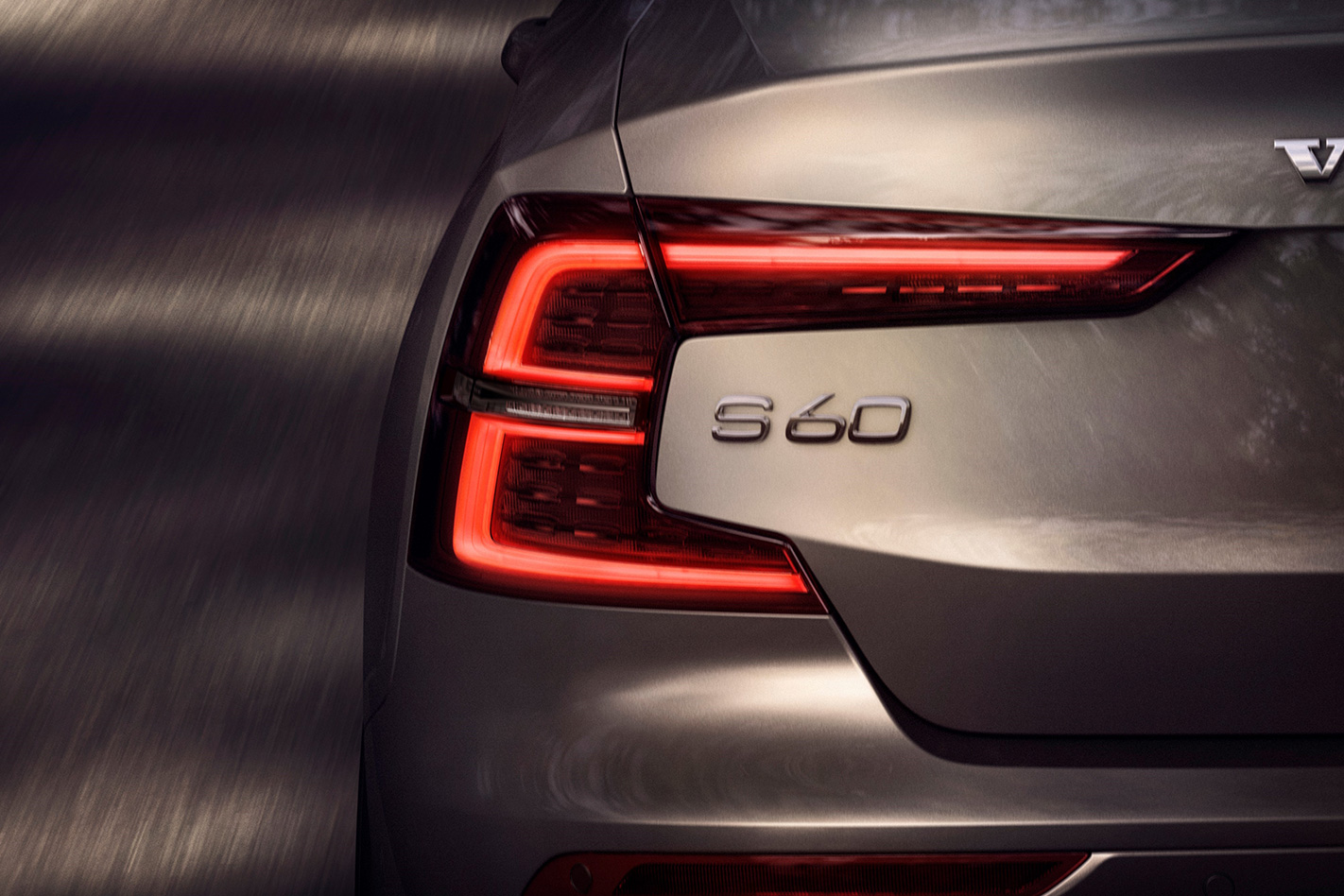
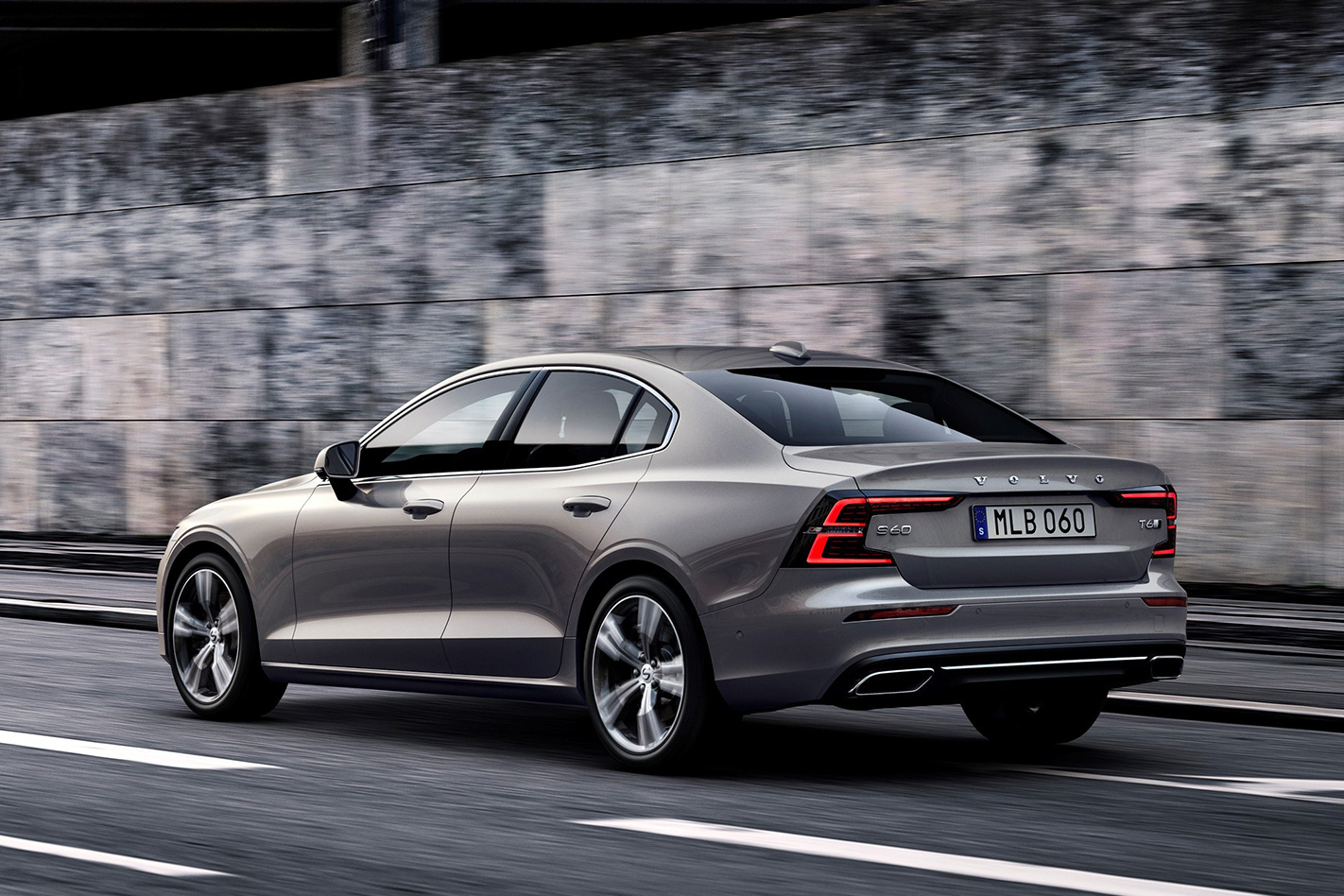
The rear-end is more unique though, with part of the LED-strip tail-light display built into the bootlid, as though to highlight the stretched “VOLVO” branding.
Inside, the dashboard adopts styling cues from the Volvo XC40, with a portrait touchscreen flanked by narrow, retro-styled air vents.
Volvo Cars Australia is yet to confirm when its Audi A4 and BMW 3-Series rival will arrive here, and which variants are due first.
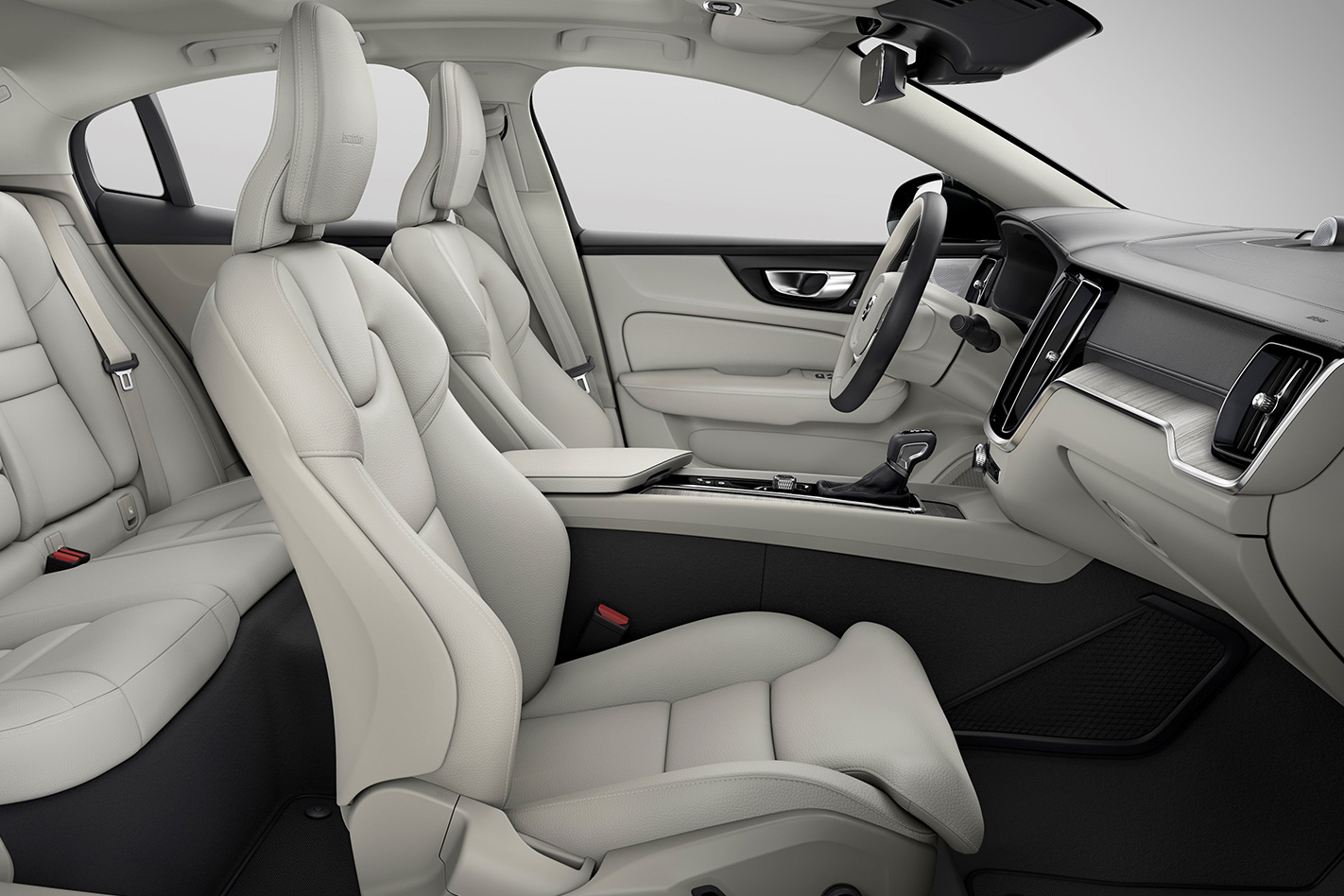
The S60 launch coincided with the opening of Volvo’s first US factory in Charleston, North Carolina, which is part of the Chinese-owned Swedish brand’s strategy to boost its American market share.
A more-powerful Mazda CX-5 could be on its way, with documents revealing a turbocharged variant is being tested in the US.
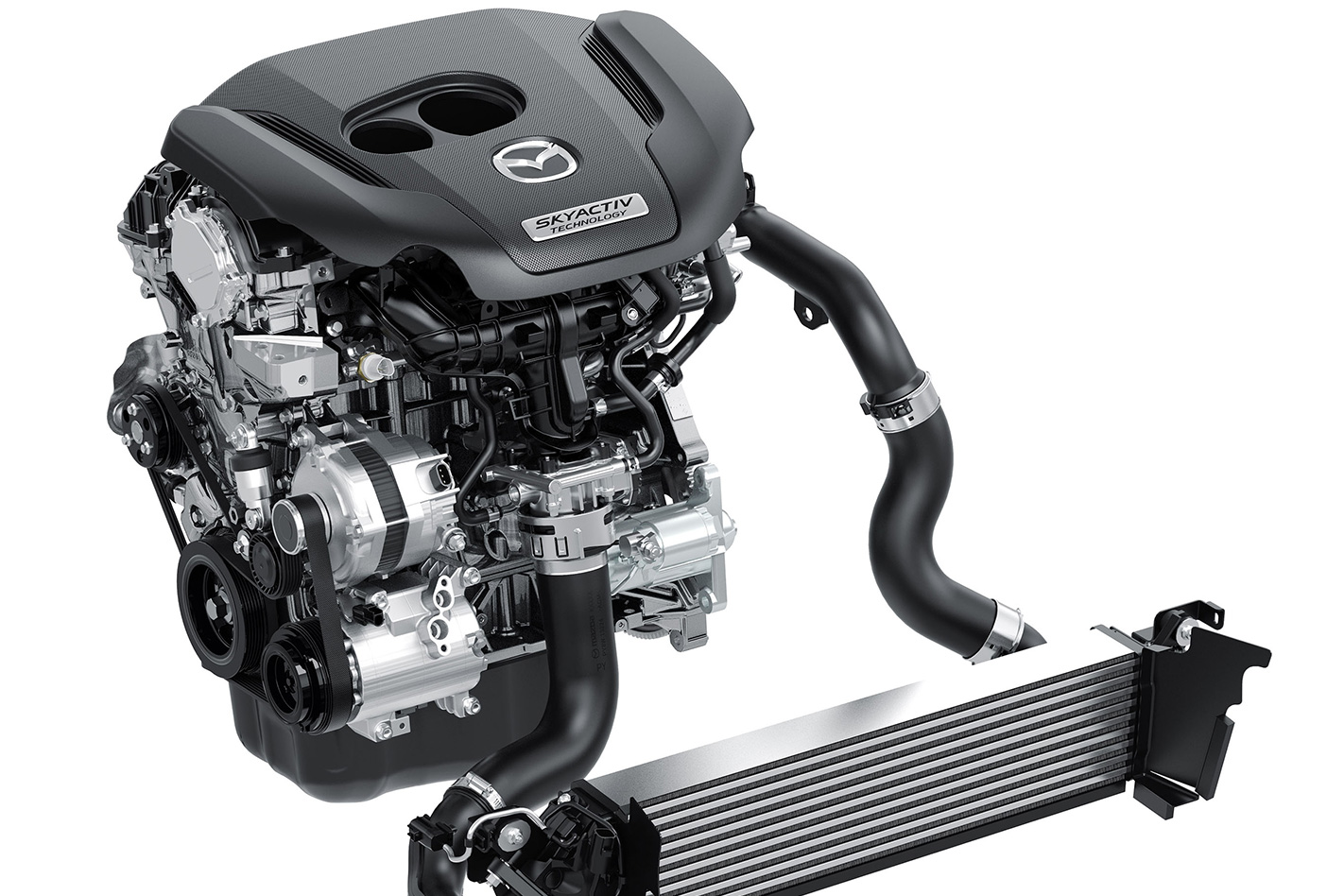
Mazda currently has two turbocharged petrol models in its showroom, with the 2017 Wheels Car of the Year-winning CX-9 large SUV and recently refreshed Mazda6 both fitted with the company’s 2.5-litre turbo engine.
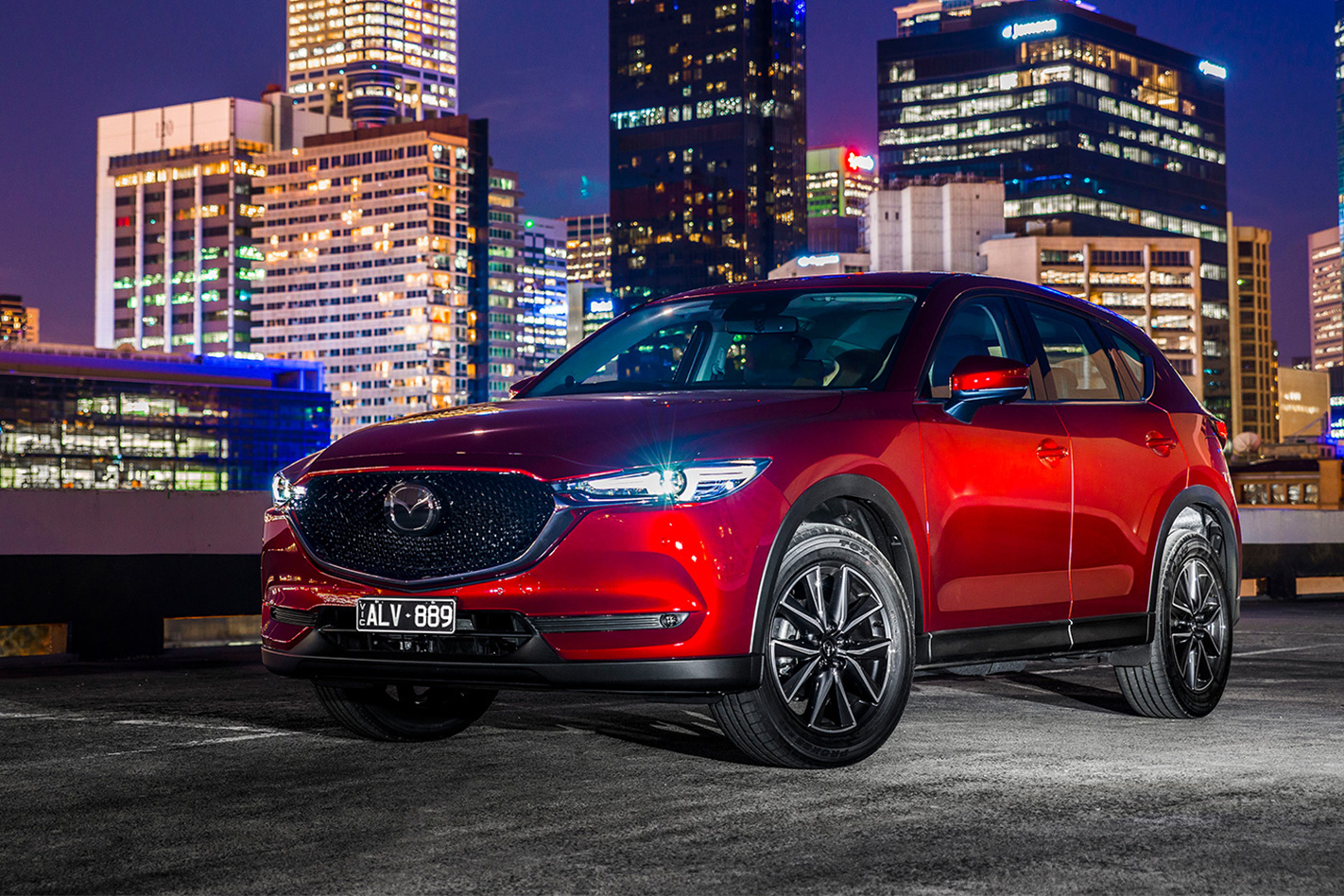
However, they could be joined by a third turbo model. Documents uncovered by website The Truth About Cars from the California Air Recourses Board (CARB) revealed Mazda is testing a CX-5 equipped with its larger sibling’s force-fed engine.
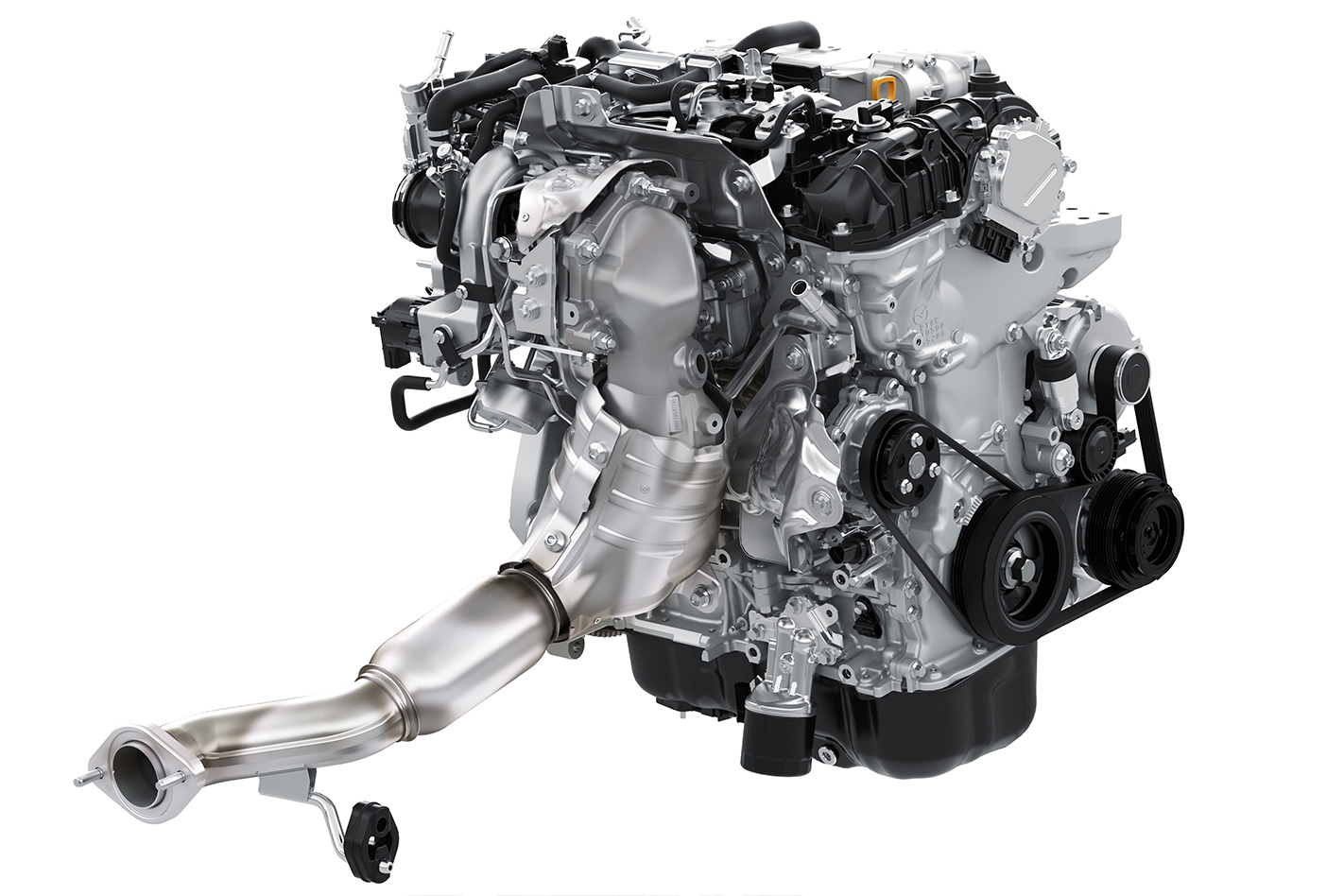
The CX-9 and Mazda6’s 2.5-litre turbo produces 170kW and 420Nm, which moves the almost two-tonne seven-seat SUV along smartly. The same unit in the smaller, lighter CX-5 could add some enthusiast spice to the best-selling mid-size SUV’s driving experience.
Currently the CX-5 is offered with a 115kW/200Nm 2.0-litre atmo petrol, 140kW/450Nm 2.2-litre turbo diesel, or 140kW/252Nm 2.5-litre naturally-aspirated four-cylinder petrol.
If the turbocharged engine is fitted to the CX-5, it’s likely it’ll be mated exclusively to an all-wheel drive drivetrain to keep traction issues at bay. However, it is unlikely the more powerful petrol variant would be revealed until at least 2019, when a mid-life update is expected to surface.
Mazda Australia has previously indicated to Wheels that it is eager to add a more-powerful CX-5 to the local line-up, however declined to comment on whether a 2.5-litre turbo variant will come here.
Aston Martin has announced it will begin using Silverstone circuit as its UK testing ground for high-speed and dynamics trials.
Aston Martin CEO Andy Palmer says the move is an exciting new development in the growth of Aston.
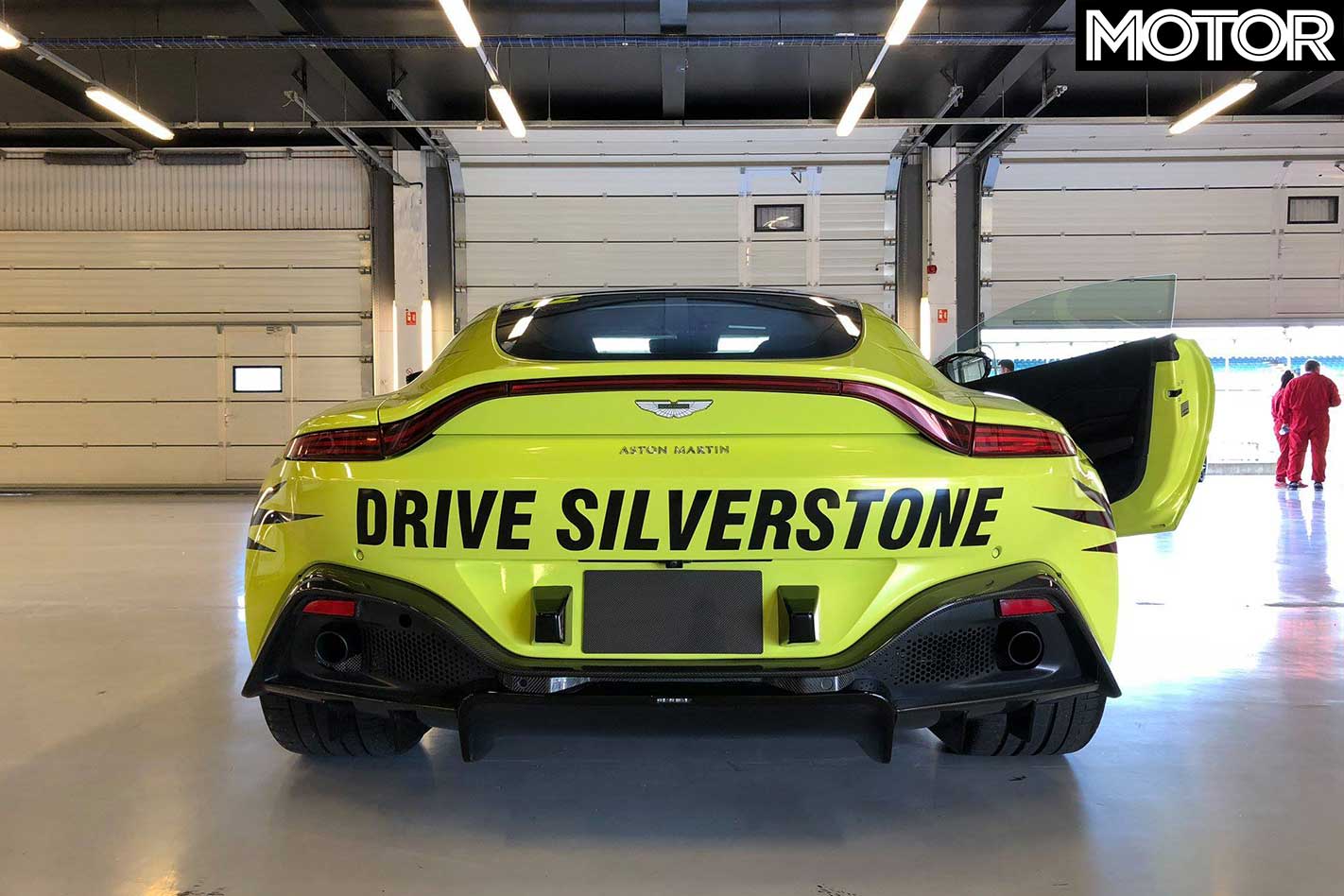
“The company is now investing for growth across the Aston Martin and Lagonda brands. I am particularly pleased that we can now call Silverstone home for dynamic testing and development.”
The iconic English track will become Aston’s base for prototype vehicle testing, which it says will focus on chassis dynamics and high-speed handling.
Aston’s chief dynamics engineer Matt Becker says it makes sense to use a track as well-known and iconic as Silverstone to test the performance and dynamics of Aston Martins.
“Every true performance car company needs a reference circuit and I can think of none more suitable than Silverstone. It is the perfect location to develop the next-generation of Aston Martins.”
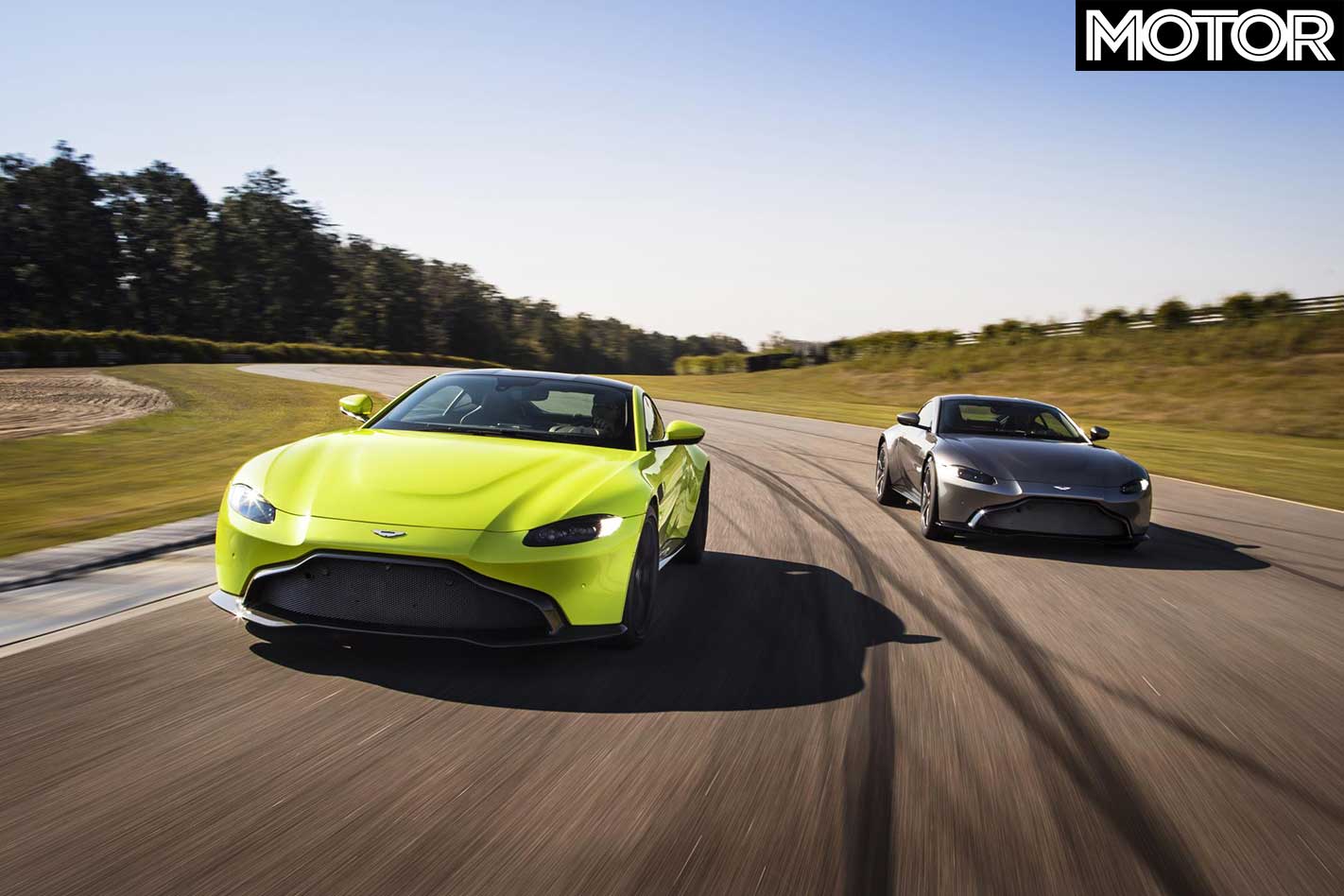
Silverstone managing director Stuart Pringle says the link between Aston Martin and Silverstone goes further than just the ‘Aston Martin Experience’, in which customers can pay to drive a new Vantage at the track.
“Automotive brand centres have always been a big part of Silverstone’s diversification plans and I am delighted to be in a position to announce that Aston Martin has chosen Silverstone as the location to open their new testing and development centre.
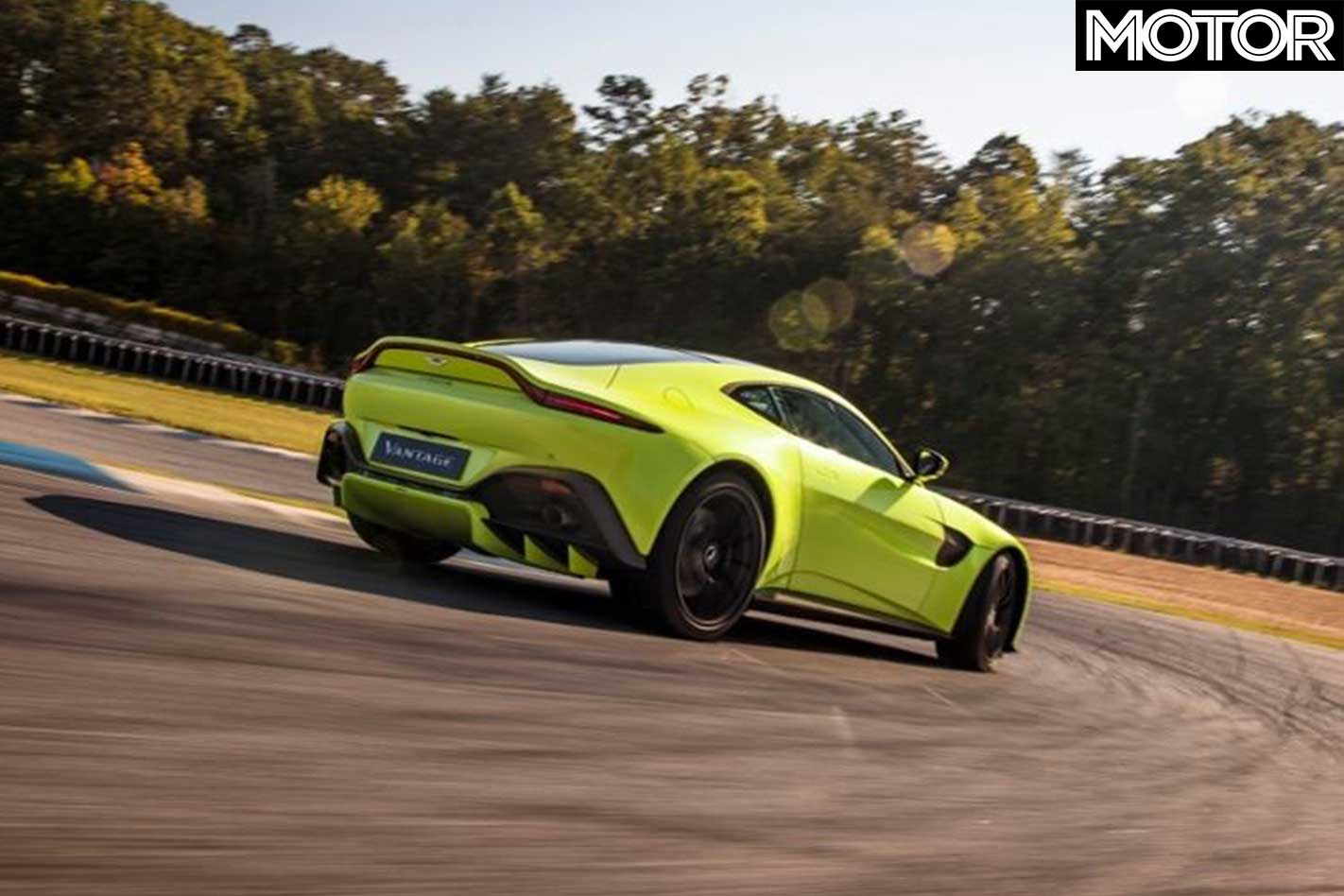
“Our two brands have such a rich British motorsport heritage and I look forward to working closely with the team at Aston Martin to build on our relationship and ensure the partnership helps deliver on key business objectives for both parties.”
Silverstone is now part of a list of 10 locations around the UK at which Aston Martin runs various operations.
