
Renault has revealed a new-look Captur small-SUV.
The five-door high-rider range has now been simplified, with variants following the same naming convention as the Clio, Megane, and Koleos models.
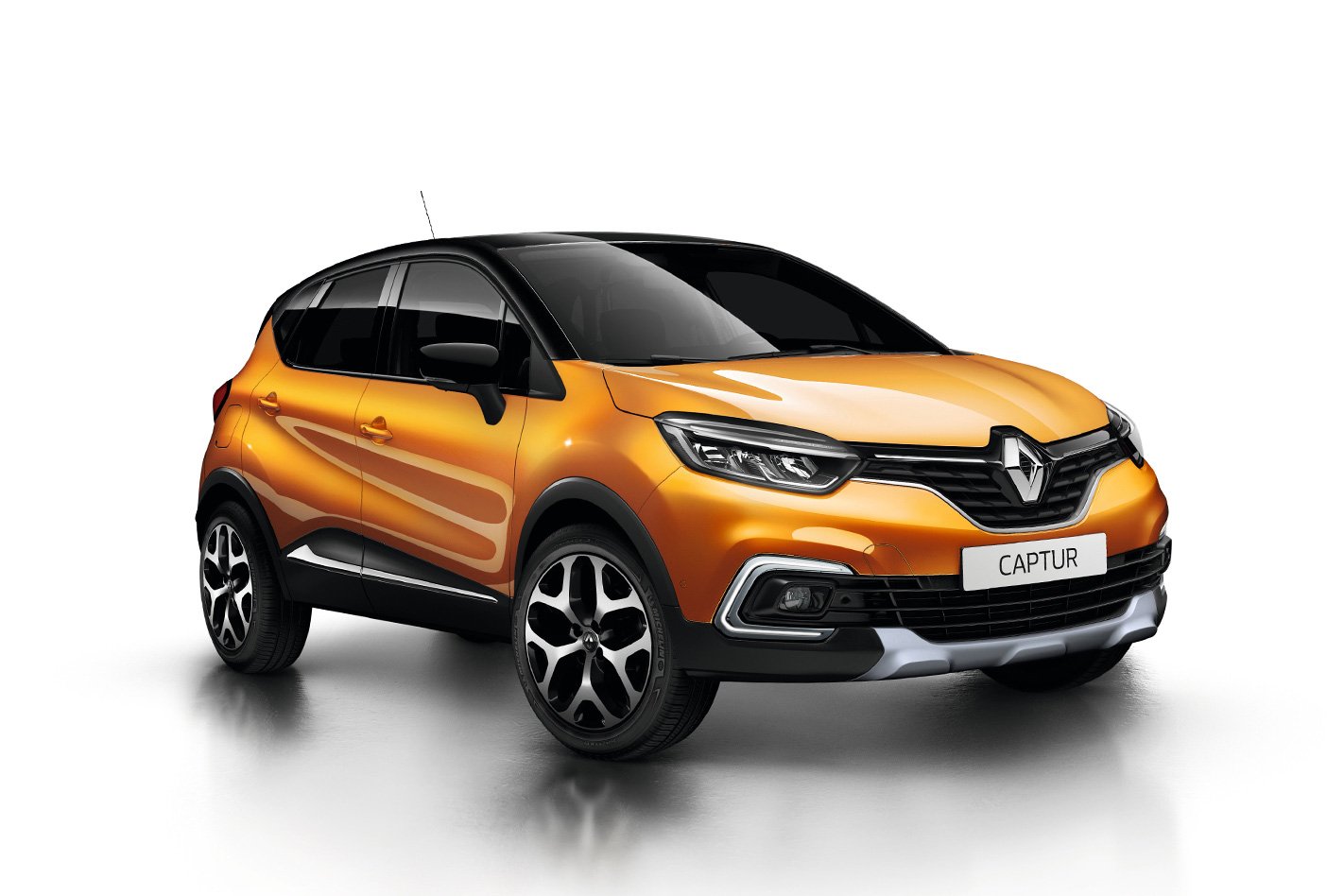
The base model Zen is available with a five-speed manual or six-speed dual-clutch automatic, while the range topping Intens is only available with the self-shifting transmission.
Both are powered by a 1.2-litre turbo four-cylinder petrol engine sending 88kW and 190Nm to the front wheels.
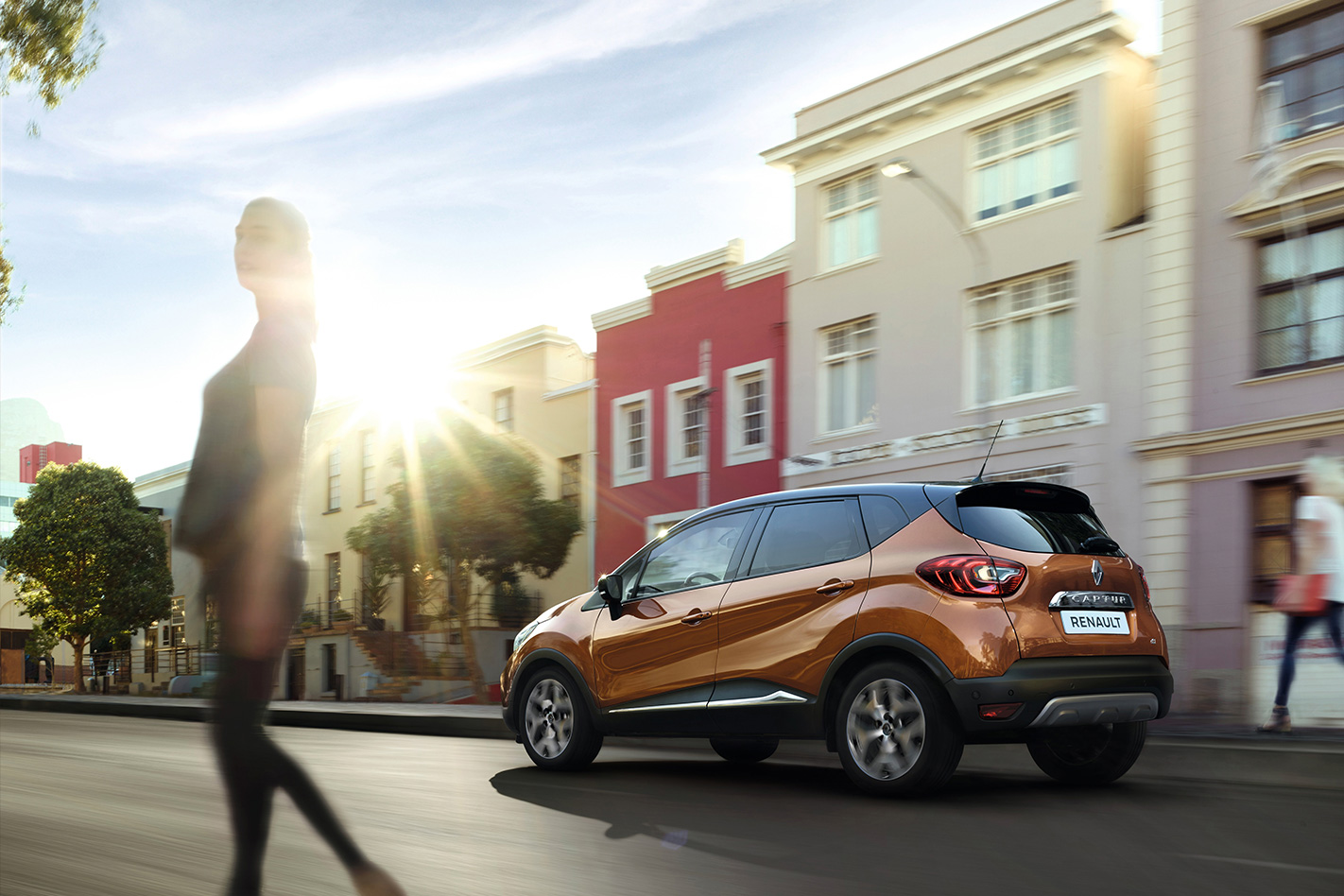
The Zen has LED daytime running lights, rear parking sensors, rear-view camera, Bluetooth connectivity, and a 7-inch touchscreen infotainment unit and 16-inch alloy wheels as standard.
The Intens ads hands-free parking, blind-spot warning, panoramic sunroof, leather seats, R-Link sat-nav, front and side parking sensors and 17-inch alloys.
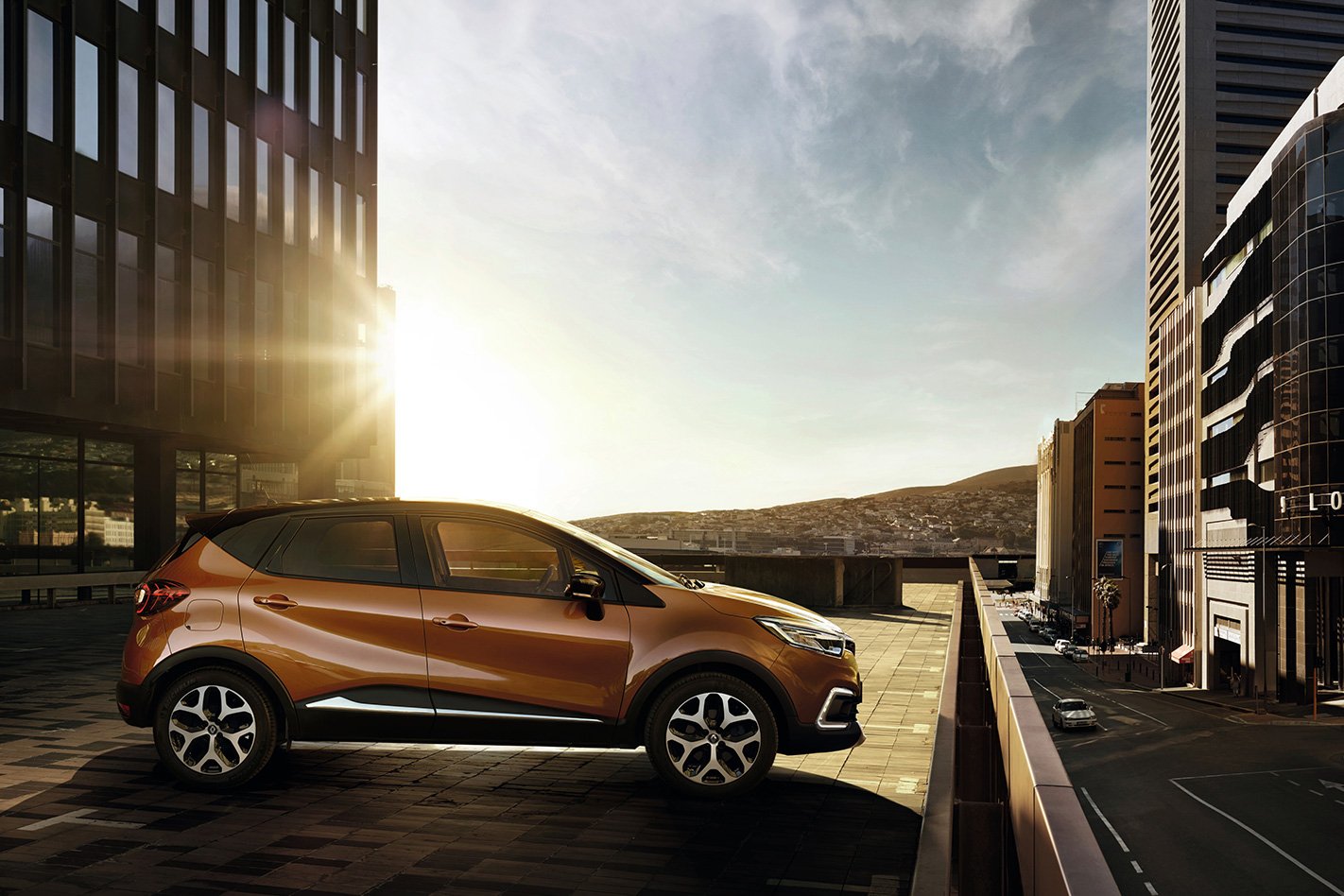
A Bose sound system is also available as an optional upgrade over the standard Arkamys unit.
Drive-away pricing starts at $23,990 for the Captur Zen manual, $26,990 for the Captur Zen auto, and $30,990 for the Captur Intens auto.
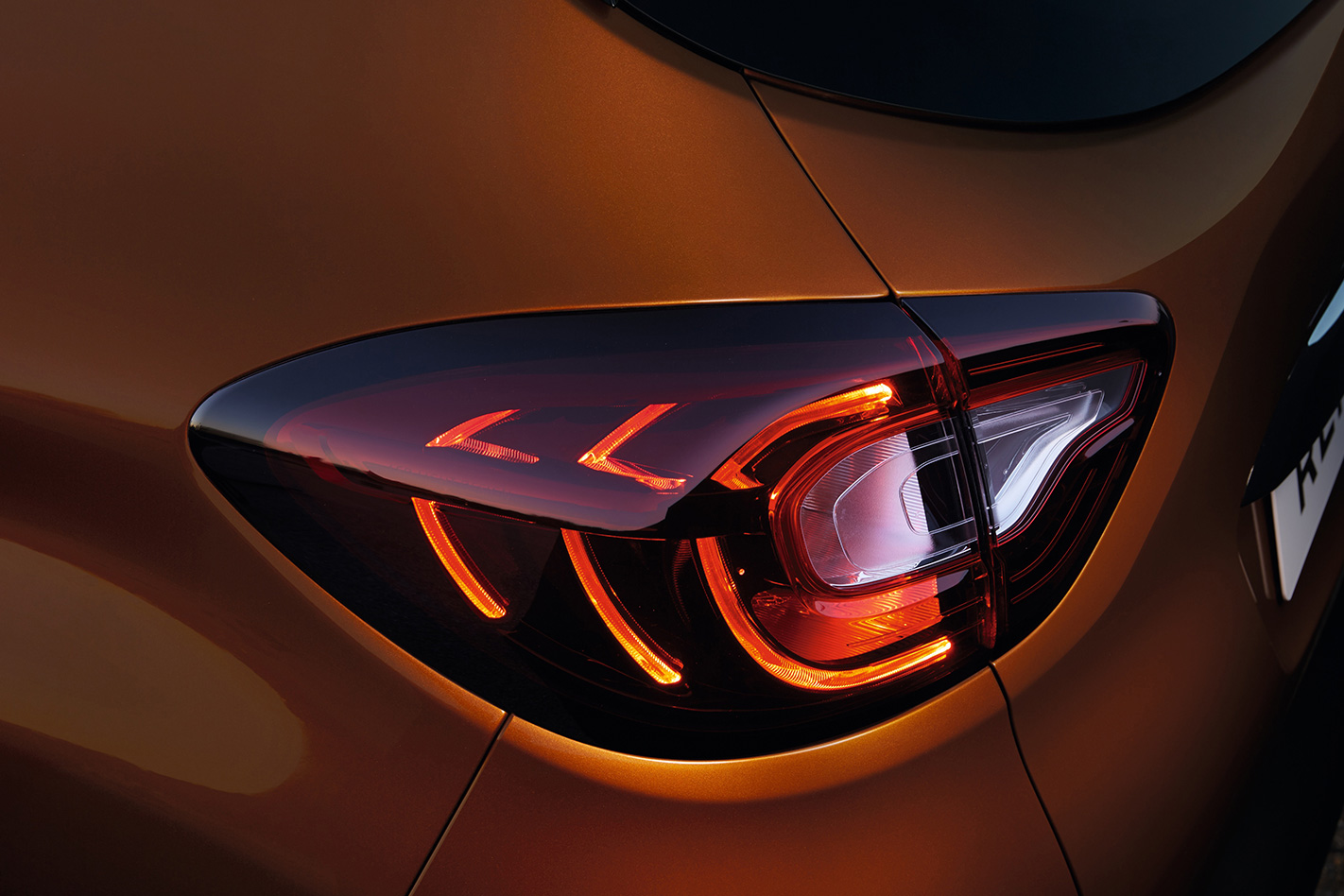
“We have added fantastic new technology and features to a package that has already been a multiple category award winner in Europe,” said Jason Miller, Renault Australia Marketing Director.
“With our sharp entry-level pricing and outstanding aftersales support, customers in the small SUV segment will quickly appreciate the appeal of the new-look Renault Captur with both their heart and their head,” he said.
A Mitsubishi is set to wear the Evolution badge once again… sort of.
Announced by the brand a month ahead of the Tokyo Motor Show, the Mitsubishi e-Evolution Concept looks to be a coupe-crossover style SUV.
Now that the Lancer Evolution is gone, the badge is technically clear for use – though that doesn’t necessary mean it should be.
To make matters more complicated, the body style won’t be the only radical departure from the ‘Evo’ badge’s previous habitat.
Mitsubishi says the “low slung aerodynamic Coupe SUV” will debut as a concept at the Tokyo Motor Show, but all we have to go on until then is one image and a few scant details Mitsubishi have clued us in to.
Aside from calling it the ‘beacon of renewed ambition’ that will return Mitsubishi “to where it belongs to better embrace the future”, the brand has also let us know that it will feature an electric 4WD powertrain – or at least a hybrid one.
The recent global push for electric and hybrid vehicles has brought us some fast petrol-free cars, but Mitsubishi will have to work hard to convince people that its electrified crossover will be as “very high performance” as it says.
In its reveal on Twitter, the response was mixed.
One user also points out that it’s not the first time the brand has brought5 back an iconic nameplate to the dismay of enthusisasts.
Regardless, the concept image has us intrigued. Mitsubishi says the e-Evolution will also incorporate “advanced Artificial Intelligence technology”, and it does look quite out-there.
It just might not have been the best move to upset the Evo fans. Time will tell.
WHAT IS IT?
Alfa Romeo’s first SUV – a critical addition to the Italian carmaker’s stable given the ever-increasing market share of high-riding luxury cars.
Based on the Giorgio architecture that underpins the Giulia mid-sized sedan, the Stelvio is lining up for a Q1 2018 arrival into the Australian market, with three variants – base, Veloce and, later on, performance-oriented Quadrifoglio.
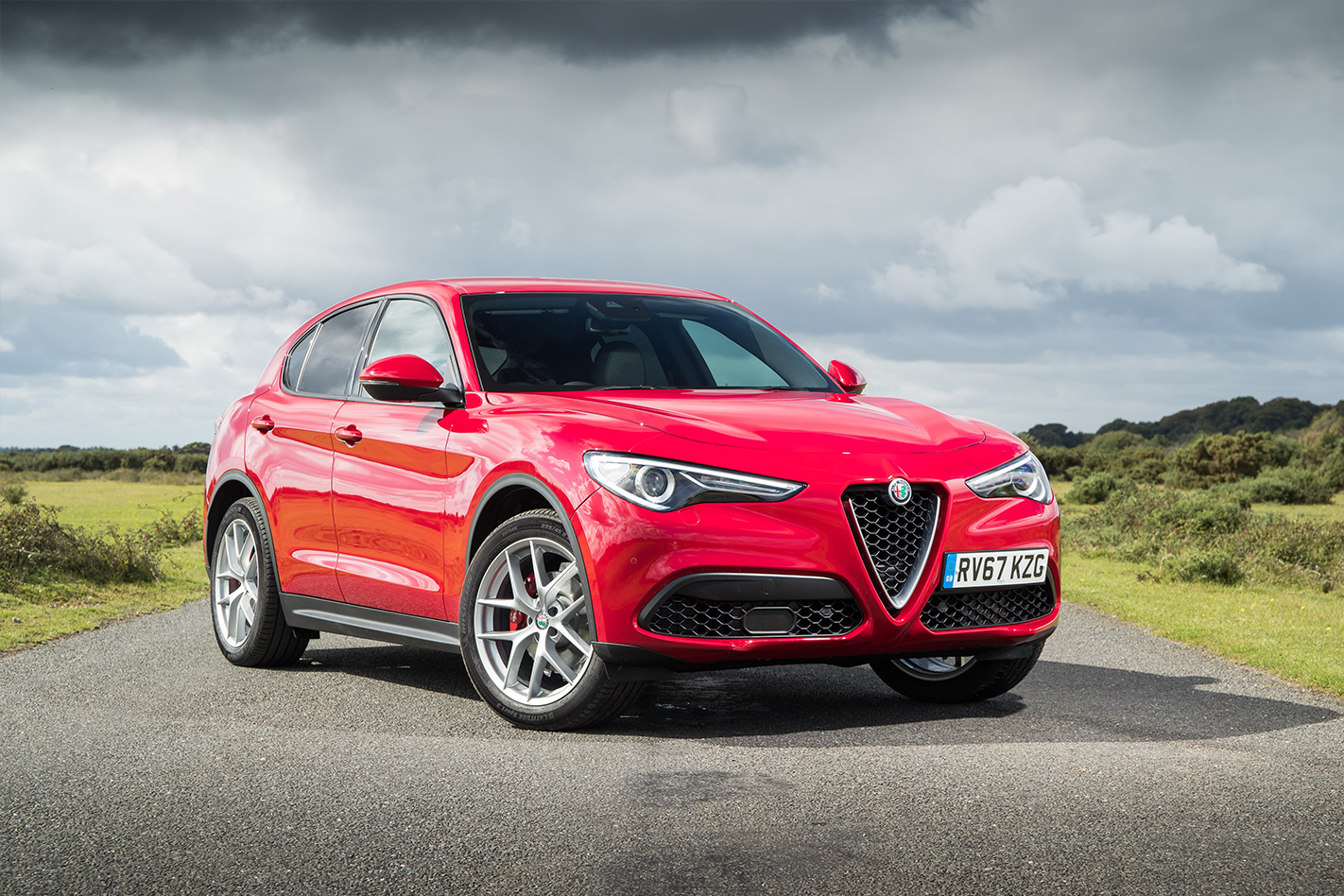
Because it has to be good. Jacking up an existing sedan and adding a tailgate isn’t enough to guarantee success and, as Alfa is already well over a decade late to the premium SUV party its first effort at one needs to be outstanding to make up for lost time.
ALFA ROMEO STELVIO MAIN RIVALS
According to Alfa Romeo, the Stelvio bridges the gap between conventional mid-size SUV wagons and their ‘coupe-style’ derivatives, meaning it lines up against not only the BMW X3 and Mercedes-Benz GLC, but the BMW X4 and GLC Coupe as well. Audi’s Q5, Jaguar’s F-Pace and the Range Rover Sport are also key rivals, and are formidable foes for Alfa’s first-ever SUV.
THE WHEELS VERDICT
PLUS: Gorgeous styling; sharp steering, great engine/gearbox combo MINUS: Brake feel; road noise; body control on rough roads; firm ride on smooth roads
DESPITE demonstrating it was capable of progressive thinking back in 2003 when it unveiled the Kamal SUV concept, Alfa spent the next 13 years sitting on its hands. But now the iconic Italian brand’s first SUV, the Alfa Romeo Stelvio, is finally almost with us, with an Australian launch set for late Q1 next year. Expectations are understandably high.
And so they should be. The arrival of the Cayenne revitalised a struggling Porsche in the early 2000s, while Jaguar – another marque renowned for swift passenger cars with no prior SUV history – has been kicking goals with the F-Pace crossover that landed in Australia last year and quickly became its top-seller. Alfa Romeo is clearly hoping the Stelvio will be the catalyst that allows it to claw back market share, and replicate the success enjoyed by European rivals.

And of the mid-size SUV crowd it certainly feels like it has an athletic edge. Weighing just 1660kg in its heaviest configuration and boasting a 50:50 weight distribution, the Stelvio feels light on its feet – a lightness that’s promoted by its fast-reacting 12:1 steering rack ratio, agile front end and good suppression of bodyroll.
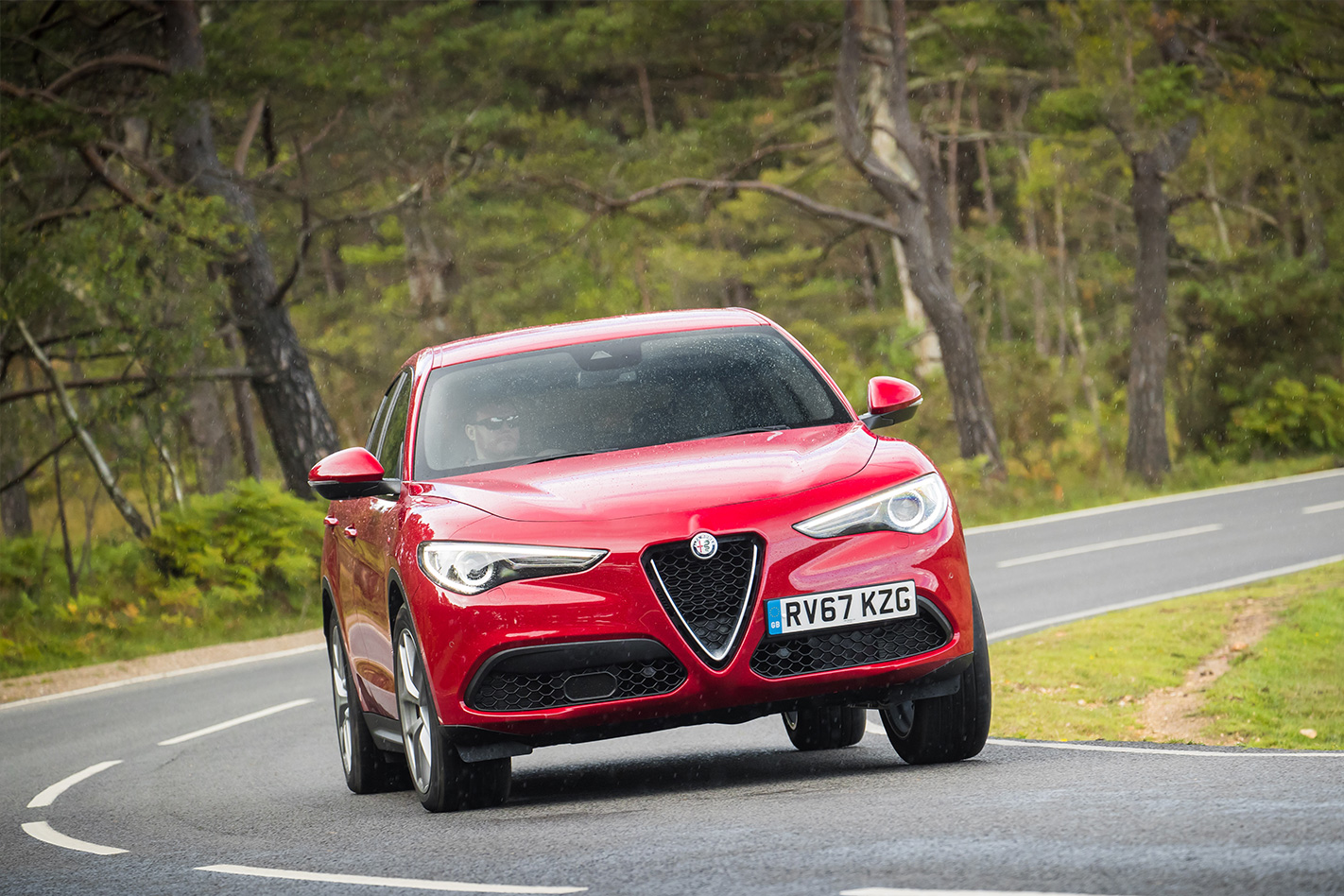
At eight-tenths driving the Stelvio is superb. The steering is not only quick at just 2.1 turns lock-to-lock, it’s connected to front tyres that bite the surface and refuse to relinquish their grip until speeds get properly inappropriate.

Pedal feel from the brake-by-wire setup is also at odds with the taut chassis and alert steering, with initial dead travel followed by an abrupt engagement that’s difficult to modulate.

With an incredibly strong midrange and a tacho needle that happily rotates right to 6500rpm, this four-pot has the muscular feel of a larger V6 – especially when the drive mode selector is twisted to ‘D’ for ‘Dynamic’. It sounds pretty rorty in the upper reaches of its rev range, too.
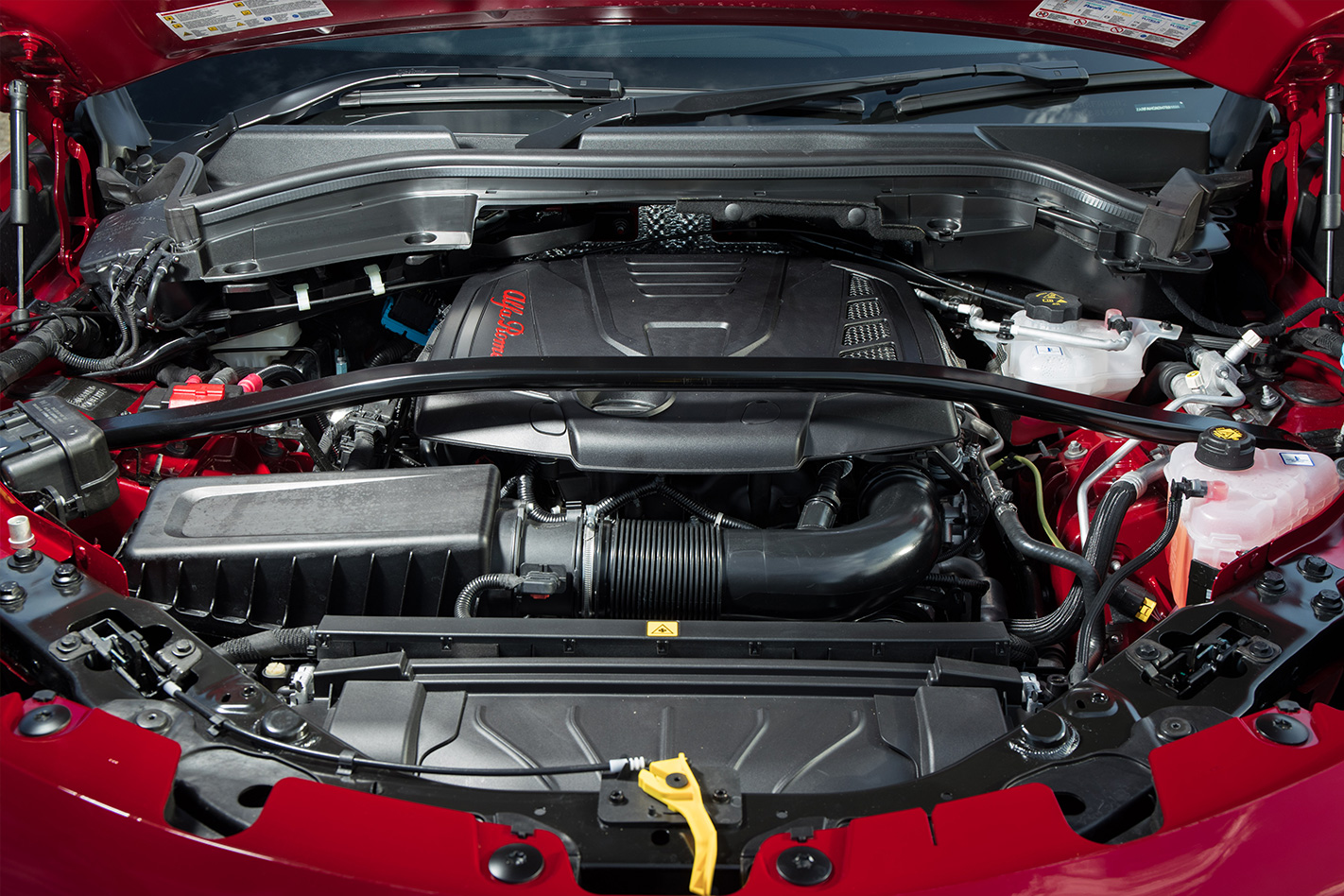
Regardless of which powertrain you choose, all Australian Stelvios will run a superb eight-speed automatic and all-wheel drive, and the traction provided on soggy Irish roads at its launch was difficult to breach. In Dynamic mode, manual upshifts are executed with a racey ignition cut that imparts an even sharper feel to what is already a very crisp-feeling transmission.
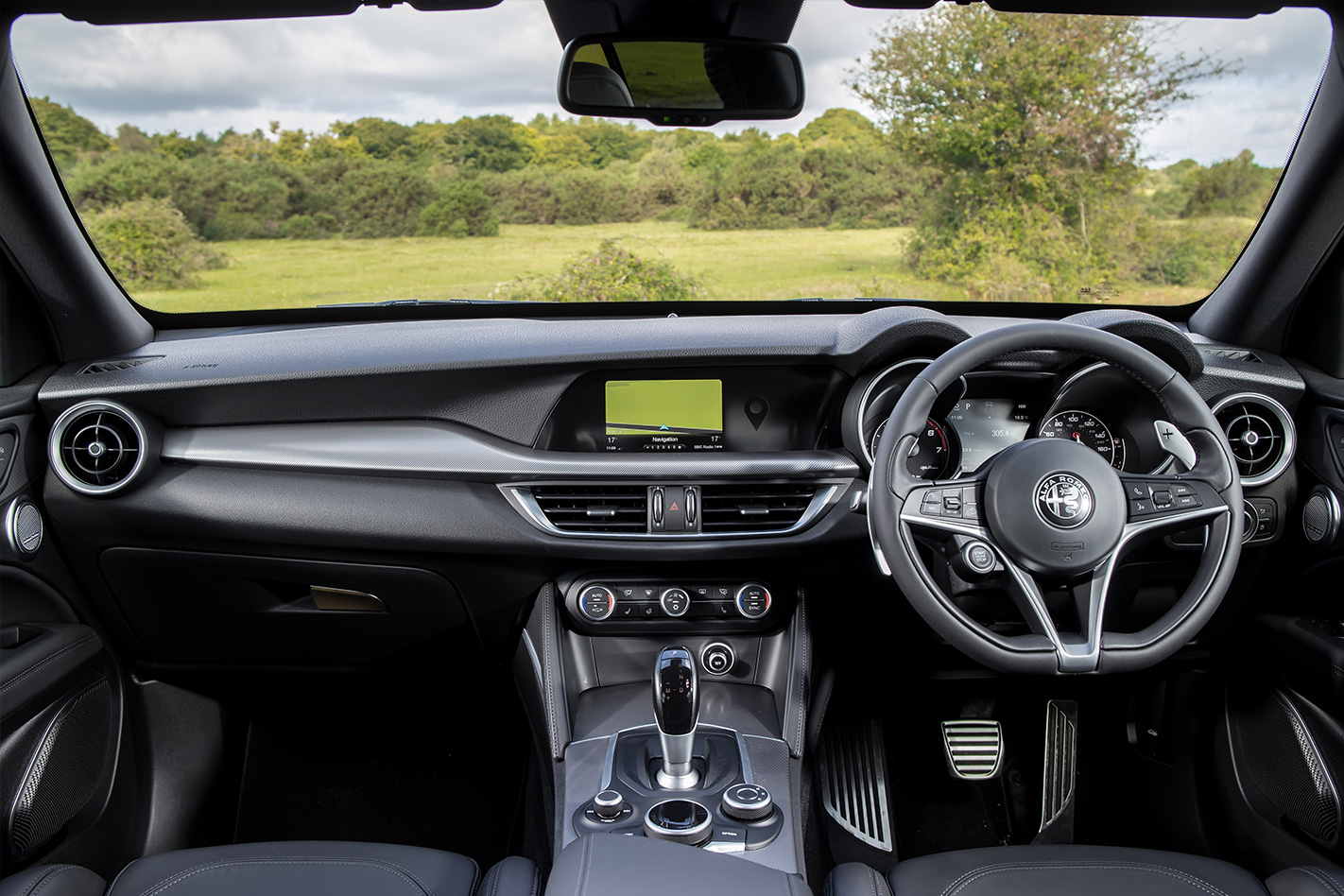
Then again, those lovely metal shift paddles are a tactile delight and encourage the use of the eight-speeder’s manual mode, while rear-seat headroom is generous given the Stelvio’s D-pillarless glasshouse.

And stand out it must.
2018 Alfa Romeo Stelvio Specs
Model: Alfa Romeo Stelvio 206kW Engine: 1995cc 4cyl, dohc, 16v, turbo Max power: 206kW @ 5250rpm Max torque: 400Nm @ 2250rpm Transmission: 8-speed automatic Kerb weight: 1660kg Fuel economy: 7.0L/100km (claimed) 0-100km/h: 5.7 seconds (claimed) Price: $77,000 (estimated) On sale: Q1 2018
MITSUBISHI will tease a hybrid-engined performance SUV at October’s Tokyo Motor Show, called the Mitsubishi e-Evolution Concept.
Hinting that the Evolution badge will finally make a comeback, but not on a sedan, the “very high performance automobile” will “blend Mitsubishi Motors’ signature 4WD and electric powertrain know-how with advanced Artificial Intelligence technology under a low slung aerodynamic SUV Coupe shape”.
That potentially means an electric motor will potentially fill the low-down torque hole that highly strung turbocharged performance cars sometimes suffer from, but wrapped in a less athletic SUV form.
The Nissan Renault Alliance flagged when it took over Mitsubishi late last year that one of the first things it would do was to share electric vehicle platforms between the group. One of the reasons behind the Mitsubishi takeover was to tap the Japanese car maker’s expertise in plug-in hybrid drivetrains, such as those developed for the Outlander PHEV.
When it is unveiled late next month, the concept car is expected to use the Nissan-Renault developed Common Module Family platform that will underpin 70 percent of the alliance’s vehicles by 2020.
The alliance unveiled a plan last week that would see it roll out 12 electric vehicles globally within six years.
Mitsubishi has traditionally based the rally-hardened Evolution on its Lancer platform. The platform that underpins the current-generation Lancer was launched in Australia in 2007. Mitsubishi’s last Evolution, the Evo X, was withdrawn from the market in 2015.

This large, box-like apparition you see on these pages is officially the third most powerful car on sale in Australia. No, truly.
Sitting just underneath the 588kW Ferrari 812 Superfast and the 544kW Lamborghini Aventador S, Jeep’s Grand Cherokee Trackhawk boasts a frankly ridiculous 527kW and a slightly breathtaking 874Nm of torque.
“Whatevs’, I hear you scoff. ‘It’ll weigh a million kilos and couldn’t out-sprint a Corolla’. Well, no. It can – and it did, in my hands – nail a 0-100km/h time of 3.7sec, it can do the quarter in 11.6sec, and it’ll top 289km/h before wind resistance has its say.
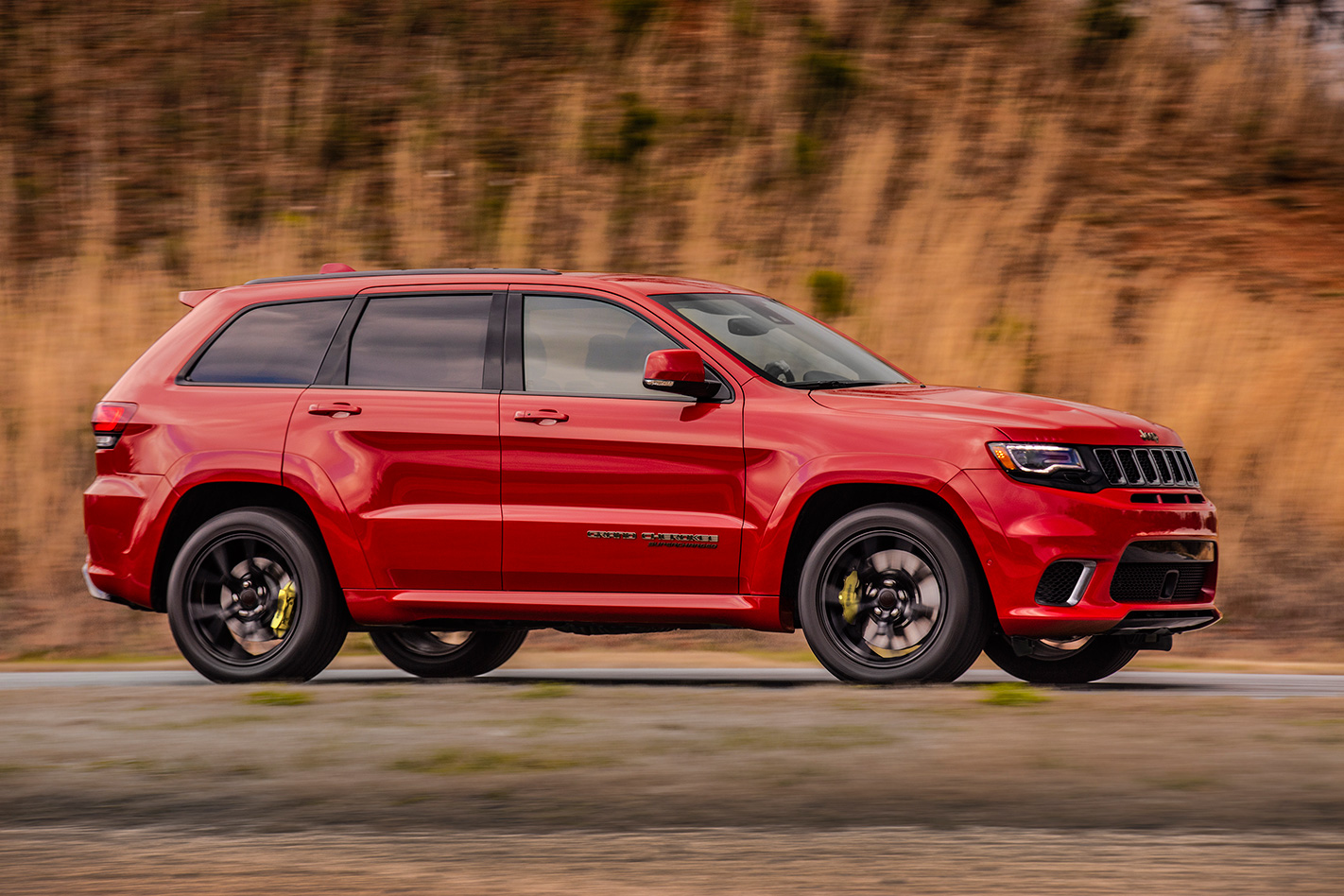
And it’ll cost somewhere around $140,000. The other two are around $850,000 each. Name another car that can do this much for that little. It’s okay, I’ll wait.
Derived from the SRT, the Trackhawk’s engine bay plays host to the Dodge-developed 6.2-litre supercharged Hemi that’s known as the Hellcat. Iron-blocked and alloy headed, the Hellcat is built to do one thing; make power, and metric craploads of it. Then do it all day long.
It’s been slightly detuned and modified for life in the Jeep, with a new air induction tract that can stuff up to 30,000 litres of fresh air to the engine via a cold-air feed routed to the lower left side of the bumper (where the fog light is on an SRT). Its camshaft is milder than the Hellcat’s lumpy monster, while a new baffled sump helps to prevent oil starvation under hard launches.
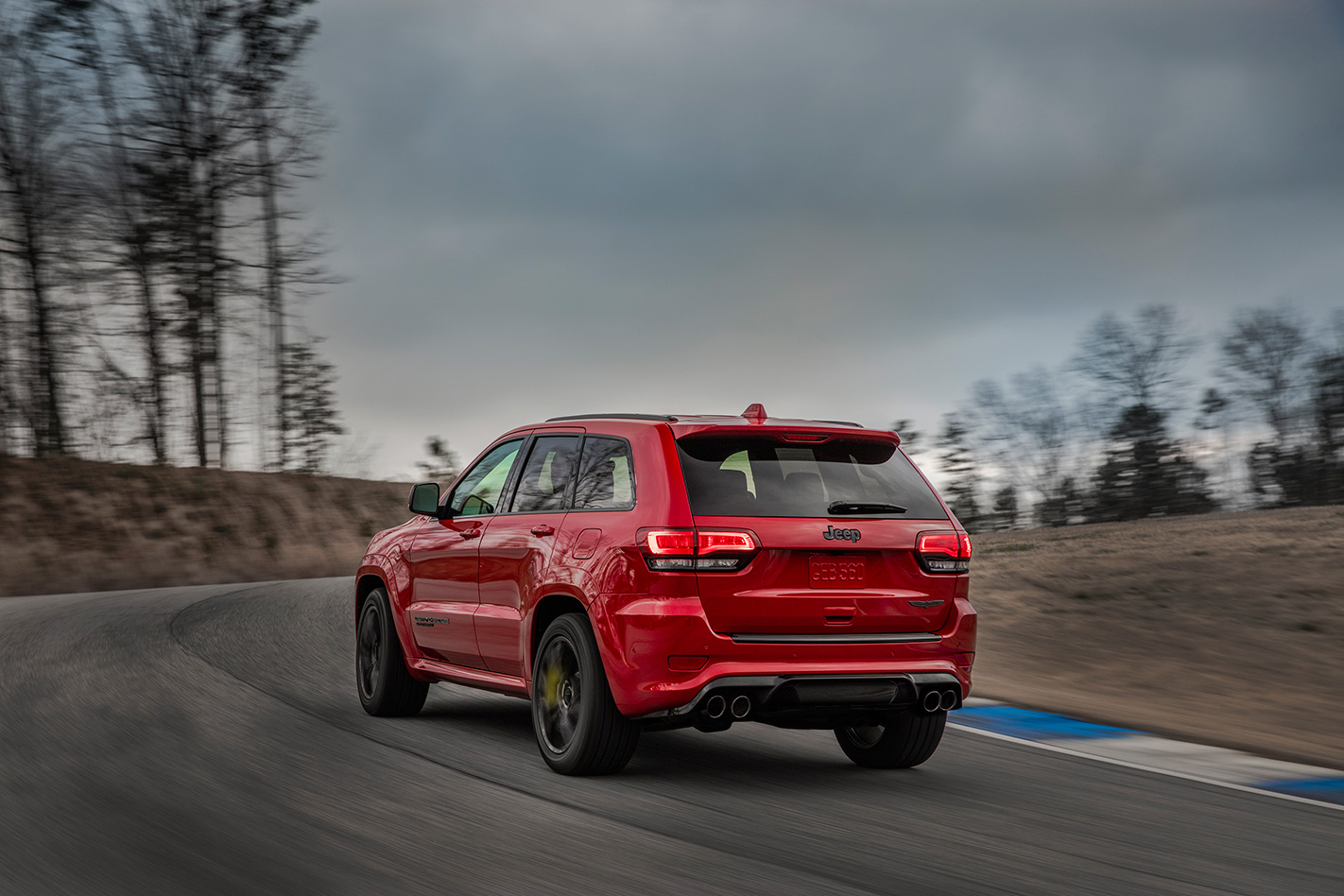
When it comes to the driveline, the ring gear and pinion is now twice as strong, while SRT engineers have devised a set of rear driveshafts that could comfortably double as bridge supports given their strength.
“Some things, like the rear hub carriers, we couldn’t change,” says senior manager of powertrain engineering Jamie Standring, “so we worked with what we had and came up with a solution.”
That solution also extended to the rear diff/transfer case unit, which was reduced in length by 20mm in order to fit in with the exhaust packaging. This is despite the team fitting a wider chain drive and thicker sprockets to the transfer case.
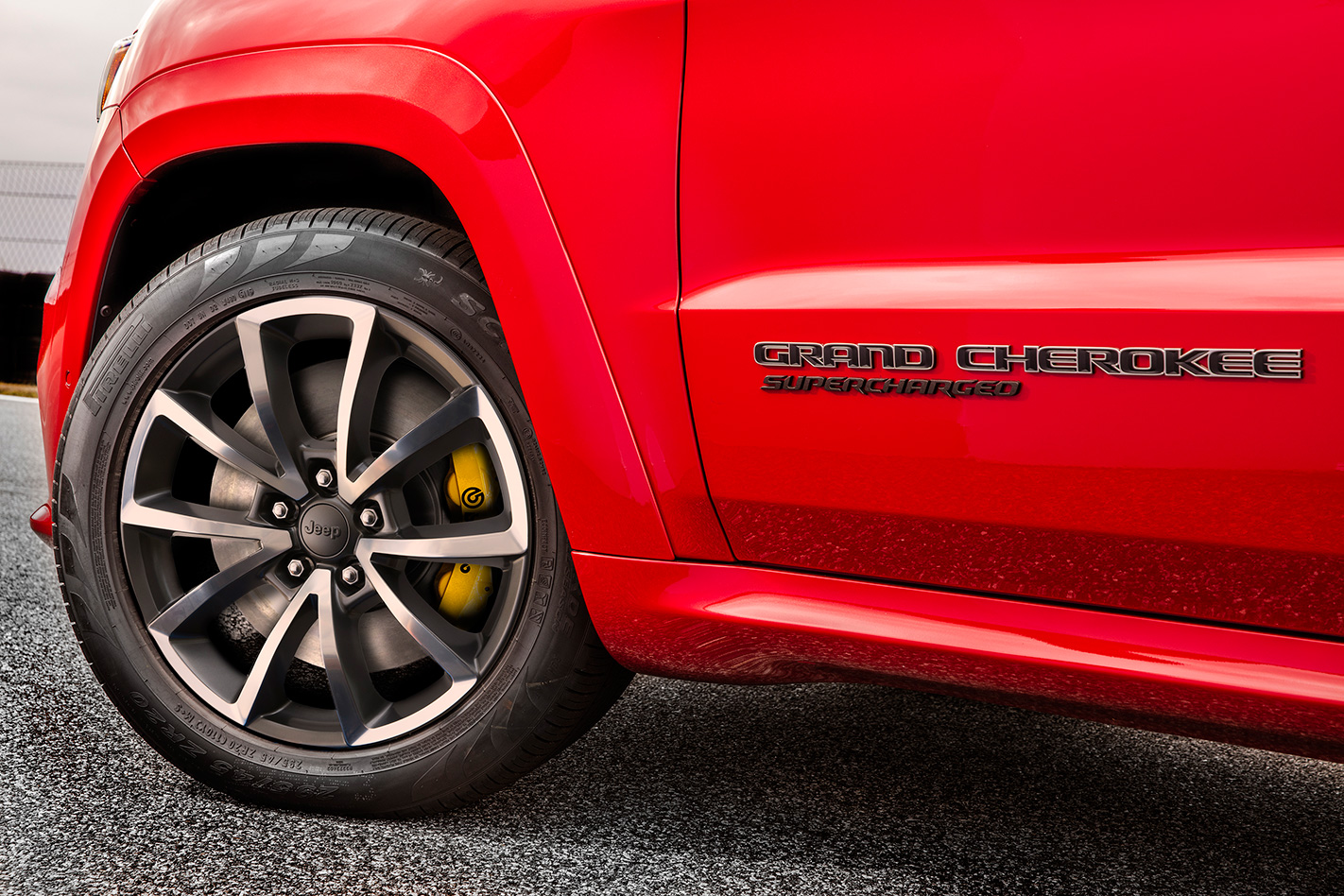
The brakes, too, are kinda special – 400mm rotors sitting within 20-inch rims are clamped by six-pot Brembos up front, and 350mm discs sit under four-piston rears. To put in into perspective, a Supercar’s front rotors are usually 395mm. Just saying.
Speaking of the wheels, the silver versions are new to the Trackhawk, while the optional black ones are carry-over items – and are actually about 1.5kg lighter each corner. Not that 6kg really matters in the scheme of a 2433kg rig…
The Trackhawk is homologated on two types of Pirellis, but we’ll bet that Aussie cars will come stock with ZR-rated 295/45 P Zeros.
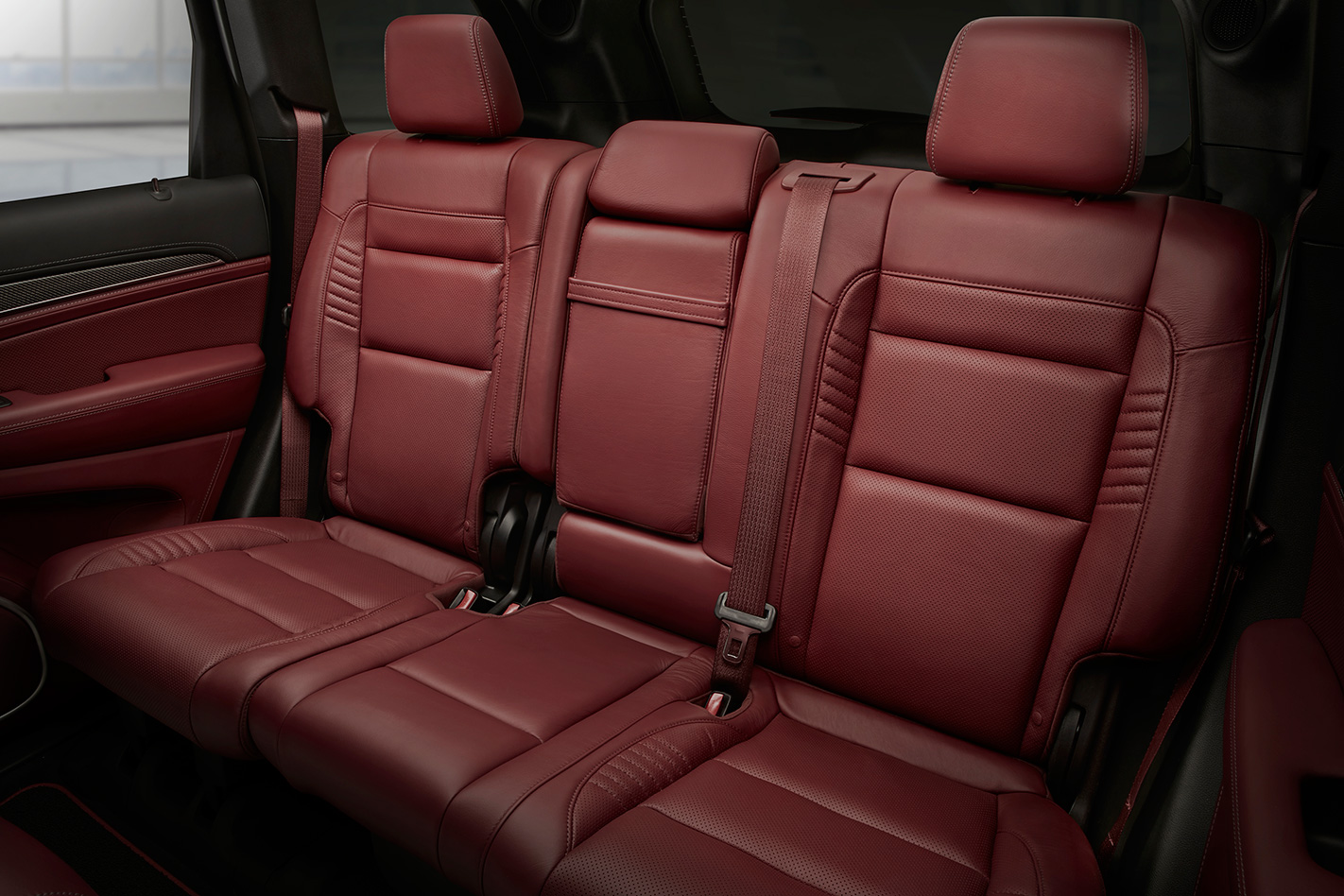
Burbling along in suburbia, and the Trackhawk is impressively sanguine and relaxed, if a little taut on its springs over broken roads. Try driving a 500kW anything else to do the weekly shopping, though.
Of course, when you open the taps…
From half throttle, many loud and frightening things happen in an insanely short space of time. The noise; the exhaust is single mode, and its primal, guttural howl emanating from the quad pipes as the revs pile in is matched only by the banshee shriek of the humongous 2.4-litre supercharger under the bonnet shoving nearly 12psi into the Trackhawk’s 92mm inlet.
Put it this way, it’s an experience.
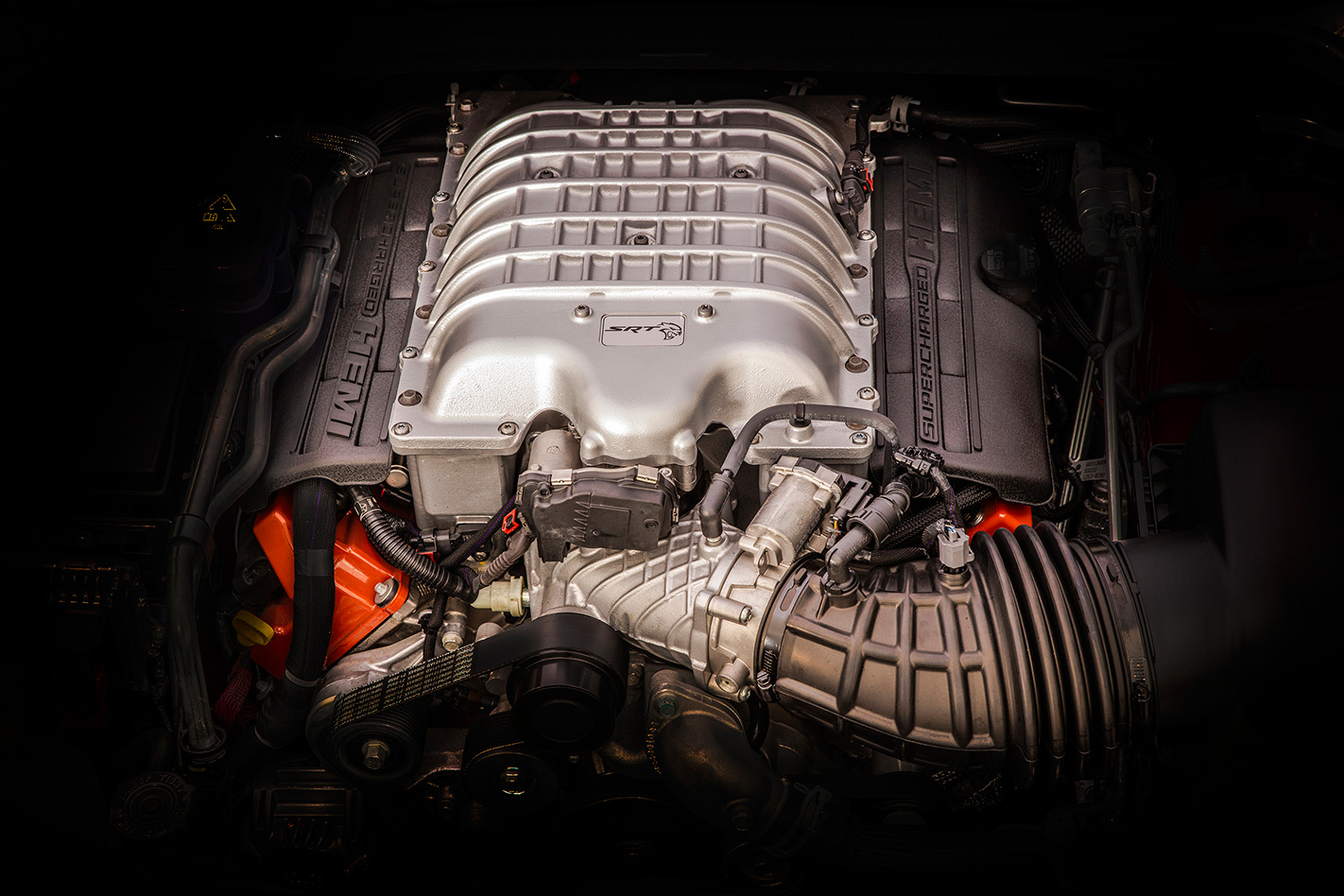
All the while, the orange-painted monster under the bonnet fires out a linear tsunami of urge that’s perfectly distributed by the heavily modified eight-speed auto gearbox that can, in Track mode, slam shifts through in a supercar-esque 150 milliseconds.
It can also send up to 70 per cent of that output to the rears if the mood takes you.
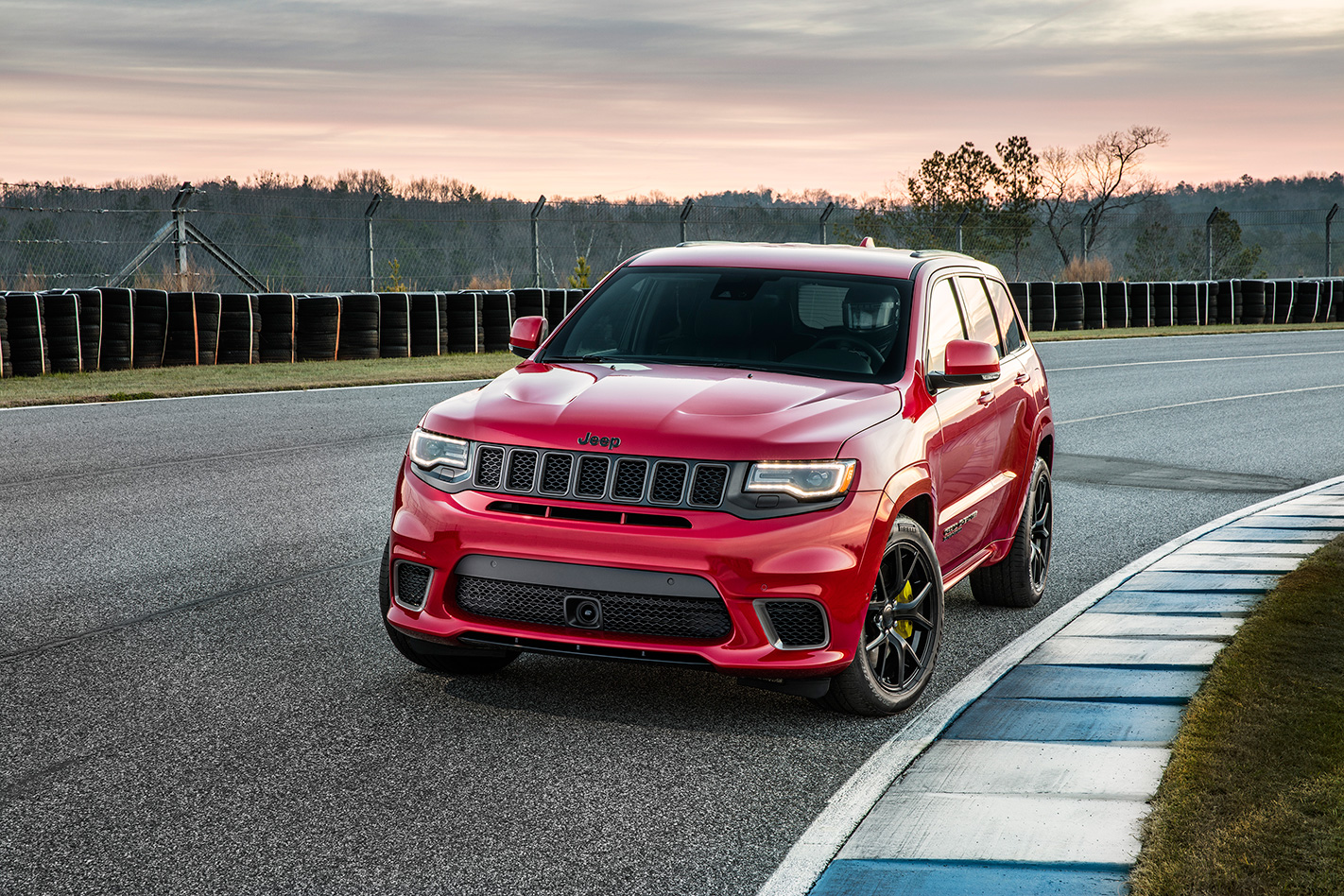
Worried about durability? Jeep backs the Trackhawk with a five-year warranty, and our test subjects had been flogged hard around the challenging Club Motorsports circuit for five days before we got to them. Other than the occasional hint of rotor distortion and the merest hint of pad grumble, the Trackhawk really showed its mettle.
Fuel use? Not as bad as you think. We actually got 12L/100km out of it on a long commute to the track, and it’s got a massive range thanks to a big 93-litre tank.
Jeep’s SRT is barmy enough, but the Trackhawk takes it to a whole new level of crazy. And yet, it’s still eminently useful as a daily driver, with none of the compromises that usually come with such high power outputs. Power-drunk Aussies will be lining up in droves for it.
4 stars out of 5 Like: What. An. Engine; Practical; can go ‘off-road’ Dislike: Not the last word in eco-friendly motoring
2018 Jeep Grand Cherokee Trackhawk specs Engine: 6166cc V8, OHV, 16v, supercharger Power: 527kW @ 6000rpm Torque: 874Nm @ 4800rpm Weight: 2433kg 0-100km/h: 3.7sec (tested) Price: $140,000 (estimated)
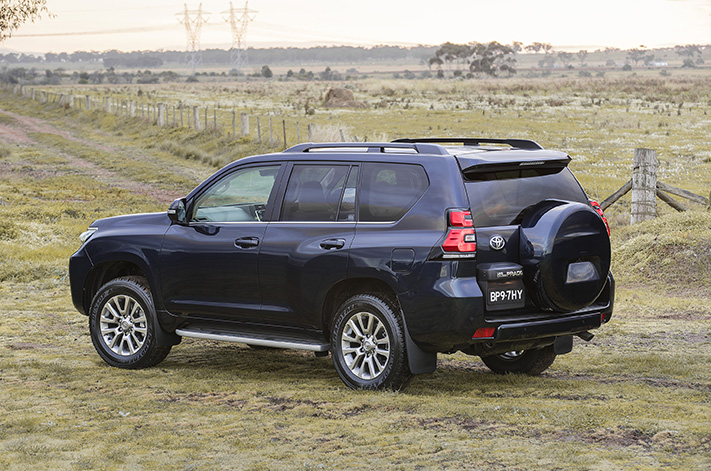
Toyota has conceded that all-new 2018 LandCruiser Prado features changes that came about through Australian testing and criticism from Wheels magazine.
Australia is a key market for the large four-wheel-drive SUV, so Toyota subjected the 2018 model, which is the first update since 2009, to some of the most punishing challenges Australia’s unique environment could offer up.
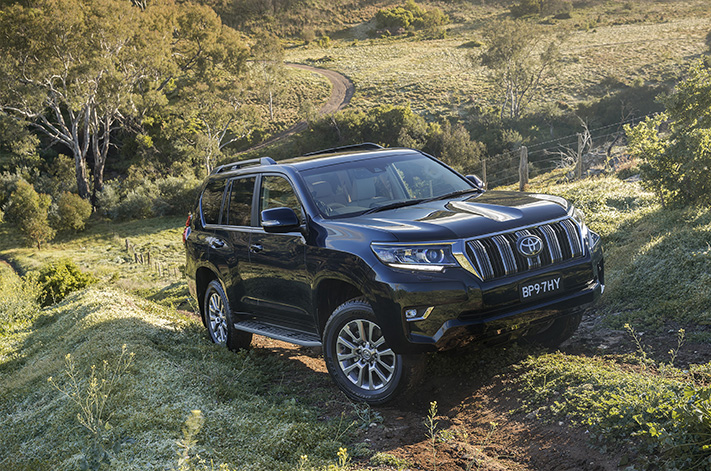
Toyota also heeded criticism levelled by WhichCar‘s sister publication Wheels at the current-generation Prado when it launched in 2009, with Toyota LandCruiser chief engineer Sadayoshi Koyari conceding that feedback provided by Wheels had directly influenced the engineering team’s focus for the new version.
“When it comes to the drive-select, when the Prado came out in 2009 [Wheels] criticised it a lot,” he said. “This was good feedback for us to check the stability and rethink the system. We had daily challenges on that.
“As a result, we changed the modes to meet the need of our customers and we also tested them in Australia so that we could be sure that this time we would meet your needs.”
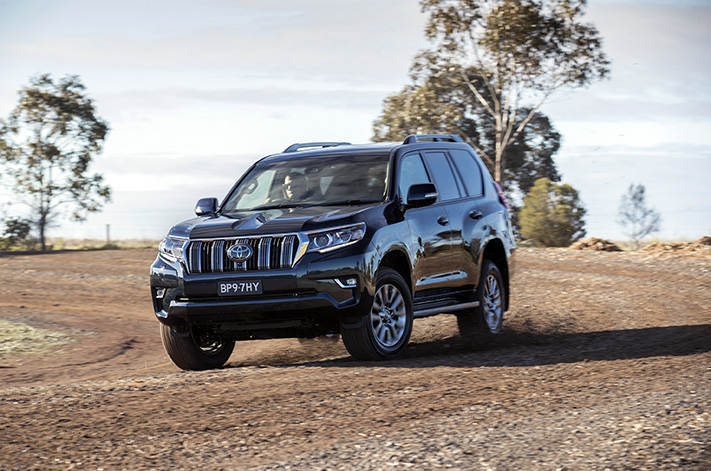
As Australia’s top selling large SUV, the Prado is a critical model for the Japanese car maker locally, and the fifth-generation model underwent an extended two-year testing and development program in central Australia.
“Australia is a very big market for us for the LandCruiser, therefore, when it comes to reliability and durability, we have to test it in Australia,” said Koyari. “Not only for a short term but for a long time.”
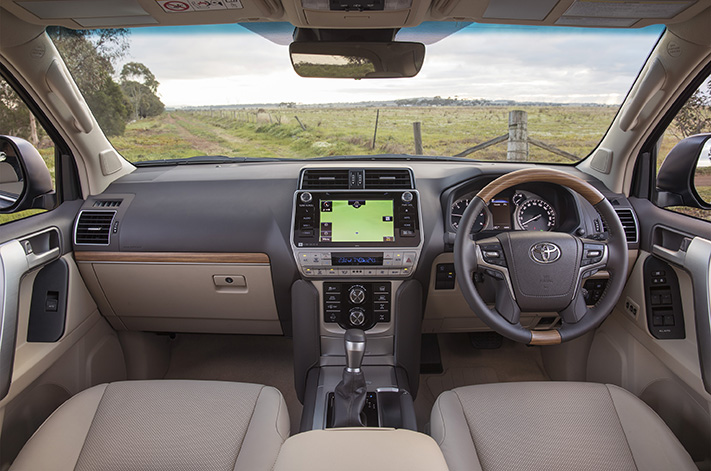
“For off-road conditions, we implemented multi-drive select feature and also the automatic crawling systems. We really had to test whether the new systems can cope with a real off-road situation. Not just a rough road but a real off-road situation.”
“These kind of voices from our customers are very important for us, not only for LandCruiser but for Toyota. We want to hear the voices of our customers and implement the feedback in our product development. This is a good example of that”.
The updated Prado arrives in November this year.
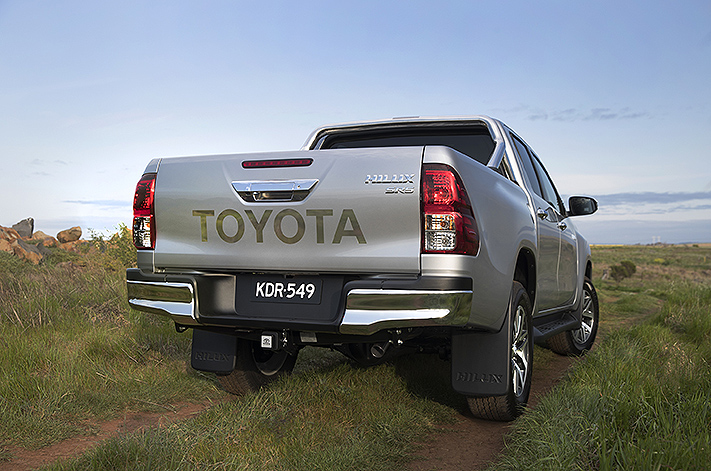
THE big-selling Toyota Hilux range has introduced even more variants including a two-wheel-drive ‘Hi-Rider’ version of the popular SR5 dual cab pick-up.
Seven new variants are added to the already diverse Toyota Hilux range including three SR extra cab-chassis variants (six-speed manual and auto) with the 2.8-litre turbo-diesel engine, three extra automatic Hi-Rider 4×2 pick-ups (a WorkMate double cab, SR extra cab and SR5 double cab), and an entry-level WorkMate grade (auto) for the 4×4 double cab-chassis.

Toyota Australia sales and marketing executive director Tony Cramb said the range revamp reflected the spread of the Hilux brand from fleet and trade sales to the private market – a trend that had helped it to top Australian vehicle sales in 2016, and lead sales nationally so far in 2017.
The shift also saw automatic Toyota Hilux models outsell manuals for the first time last year, leading Toyota to offer 17 self-shifters compared to the 12 previously on offer.
“Last year – for the first time – automatics accounted for more than half of all Hilux sales and this year the proportion has risen to almost 60 per cent and we expect it to increase further,” Cramb said.“We are also experiencing greater-than-expected demand for the two-wheel-drive Hi-Rider, so we have expanded our competitively priced offerings from three to five.”Cramb said the Hi-Rider appealed to buyers who did not need serious off-road capability, but appreciate the same looks and ground clearance as a 4×4 Hilux, half of which were SR5 variants.
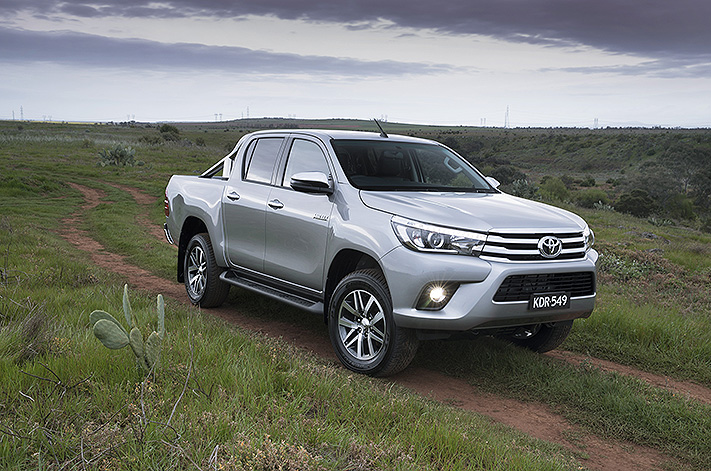
The new SR5 Hi-Rider double cab comes with the same 130kW/420Nm 2.8-litre four-cylinder turbo-diesel engine with a six-speed automatic transmission, and is priced at $49,490 – $6950 less than the 4×4 version.
As well, 4×4 SR dual-cab pick-up buyers will now have satellite navigation and alloy wheels as a $2000 option without the need to step up to the range-topping SR5 – the SR double cab manual with the option would cost $48,560 compared with $54,440 for the SR5 manual.
Some of the low-selling 4.0-litre V6 petrol HiLux models are discontinued, meaning the number of Hilux variants to choose from remains at 31. Of these 23 are workmanlike one-tonners that include all 4×2 variants and all 4×4 single and extra cabs.
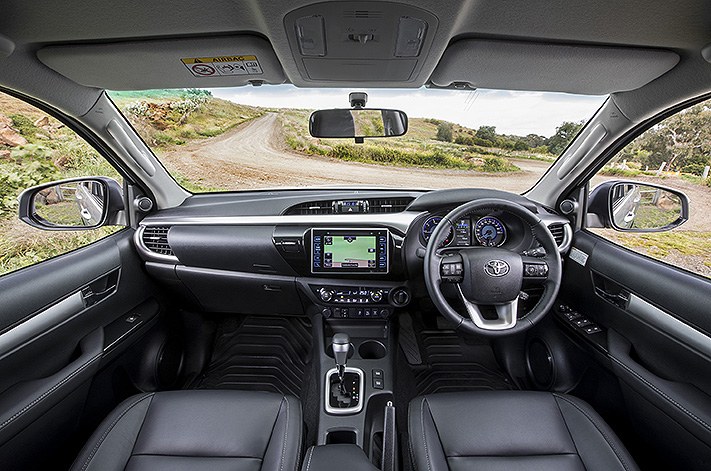
Meanwhile, SR and SR5 models receive minor enhancements and price changes. SR 4×4 double cabs gain downhill assist control, PVC flooring and black door handles for an extra $70, while SR5 prices go up $50 but gain LED fog lamps.
SR extra cab pick-ups and SR5 variants also gain a tailgate lock.
Most of the updated Hilux line-up goes on sale from October 6, with the changes to existing SR and SR5 models available now.
The current-generation Toyota Hilux is not expected to be replaced until around 2025.
2017 Toyota Hilux variant additions pricing
- Hi-Rider SR 4×2 Extra Cab (pick up) 2.8L turbo-diesel, auto – $40,190
- Hi-Rider WorkMate 4×2 Double Cab (pick-up) 2.4L turbo-diesel, auto – $39,490
- Hi-Rider SR5 4×2 Double Cab (pick-up) 2.8L turbo-diesel, auto – $49,490
- Workmate 4×4 Extra Cab (cab chassis) 2.4L turbo-diesel, auto – $42,490
- SR 4×4 Extra Cab (cab chassis) 2.8L turbo-diesel, manual – $42,910
- SR 4×4 Extra Cab (cab chassis) 2.8L turbo-diesel, auto – $44,910
- SR5 4×4 Extra Cab (pick-up) 2.8L turbo-diesel, auto – $54,440
- WorkMate 4×4 Double Cab (cab chassis) 2.4L turbo diesel, auto – $44,490
THE NEW AUSTRALIAN! Holden’s imported Commodore meets its Aussie-made nemesis.
Toyota’s 54 years of Aussie car making; Nissan 370Z adds a Nismo badge; Ford confirms Ranger Raptor; Alfa Romeo Giulia, Mercedes-AMG GT C each face their rivals
ALSO INSIDE THIS EDITION:
- Ford Australia’s boss, a year after Falcon
- Giz v Giz: Father-son battle for driveway supremacy
- 2017 Wheels Gold Star Value Awards: The best cheapies ranked
- Columns: Stahl on slippery surfaces; The Insider on hitting peak variant
- Volkswagen Golf GTI gets the 7.5 treatment
- Your guide to depreciation nightmares
- Retro: The Volkswagen Beetle
- Tested! Jeep Grand Cherokee Trackhawk, Mini Countryman JCWJoin us for the ride in this action- and adventure-packed October edition. To subscribe, go to magshop.com.au/wheels, the iPad via the iTunes Store or on Android devices via Google Play.
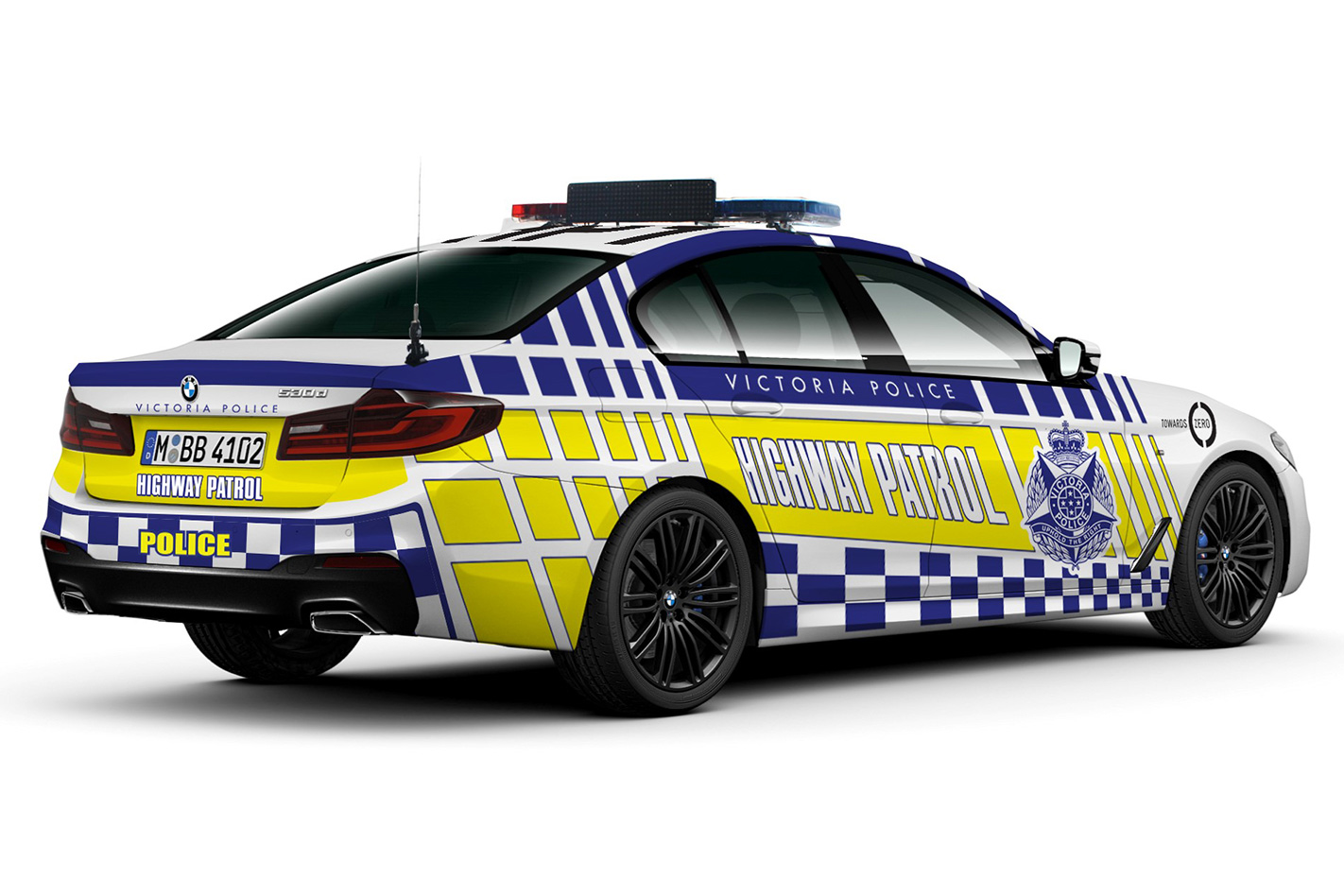
Victoria Police has confirmed BMW will provide up to 80 of its 530d sedans to be used as highway patrol cars starting in early 2018.
The turbo diesel straight-six powered executive-sized cars will be ‘fleet-spec’, or entry-level, and will not feature the luxury features expected from a regular 5 Series.
Road Policing Command assistant commissioner Doug Fryer says the BMW has been proven as an effective policing vehicle overseas in countries such as England and (of course) Germany which utilise the executive sedans.
“They are the only company to date that has been able to provide a factory fitted ‘police pack’ making the commercial agreement an extremely attractive value for money decision.
“The BMW 530d meets our safety and performance standards as it has been subjected to the evaluation tests that underpin our vehicle safety classification system.
“We are looking forward to their delivery and the opportunity to enhance the operational and performance needs of our members.
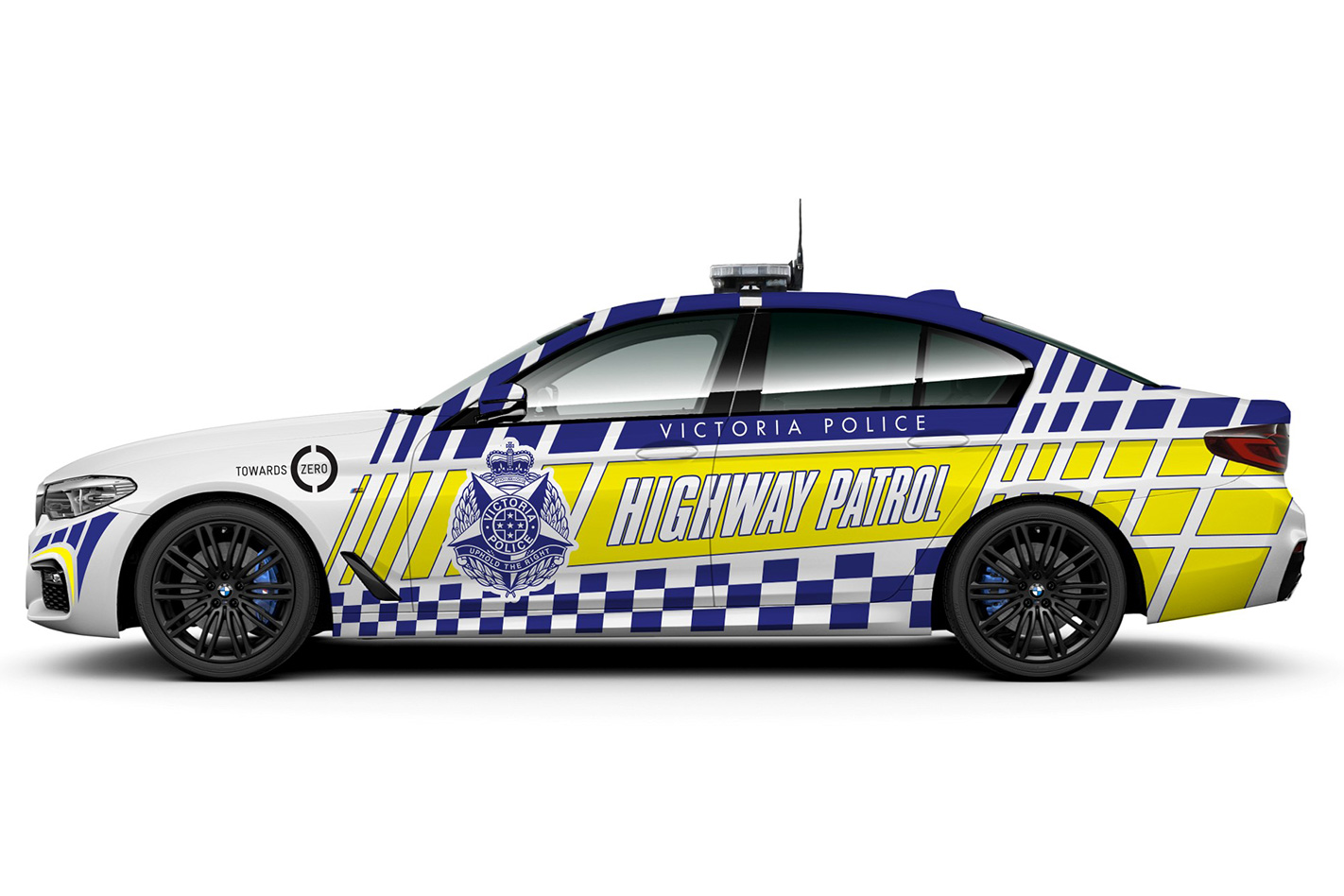
With the death of the locally built Ford, and soon Holden and Toyota, limiting future cost-effective options for Australia’s police services, they’ve had to look overseas.
This has recently resulted in a great deal of interest in Kia’s Stinger GT as a potential highway patrol car, while the Ford Mustang was also considered for a long time before it was ditched for underperformance in testing, reinstated as a candidate, then ditched again.
VicPol has already welcomed an Audi RS4 Avant and a Mercedes-AMG GLE63 S to the Highway Patrol fleet, but in more promotional roles than active duty vehicles.
This is the war cry coming to a Kia stinger GT near you.
A Stinger GT fitted with the optional bi-modal exhaust was caught being put through final testing during the model’s local launch this week.
Press were allowed to punt the 3.3-litre twin-turbo V6 powered prototype on track.
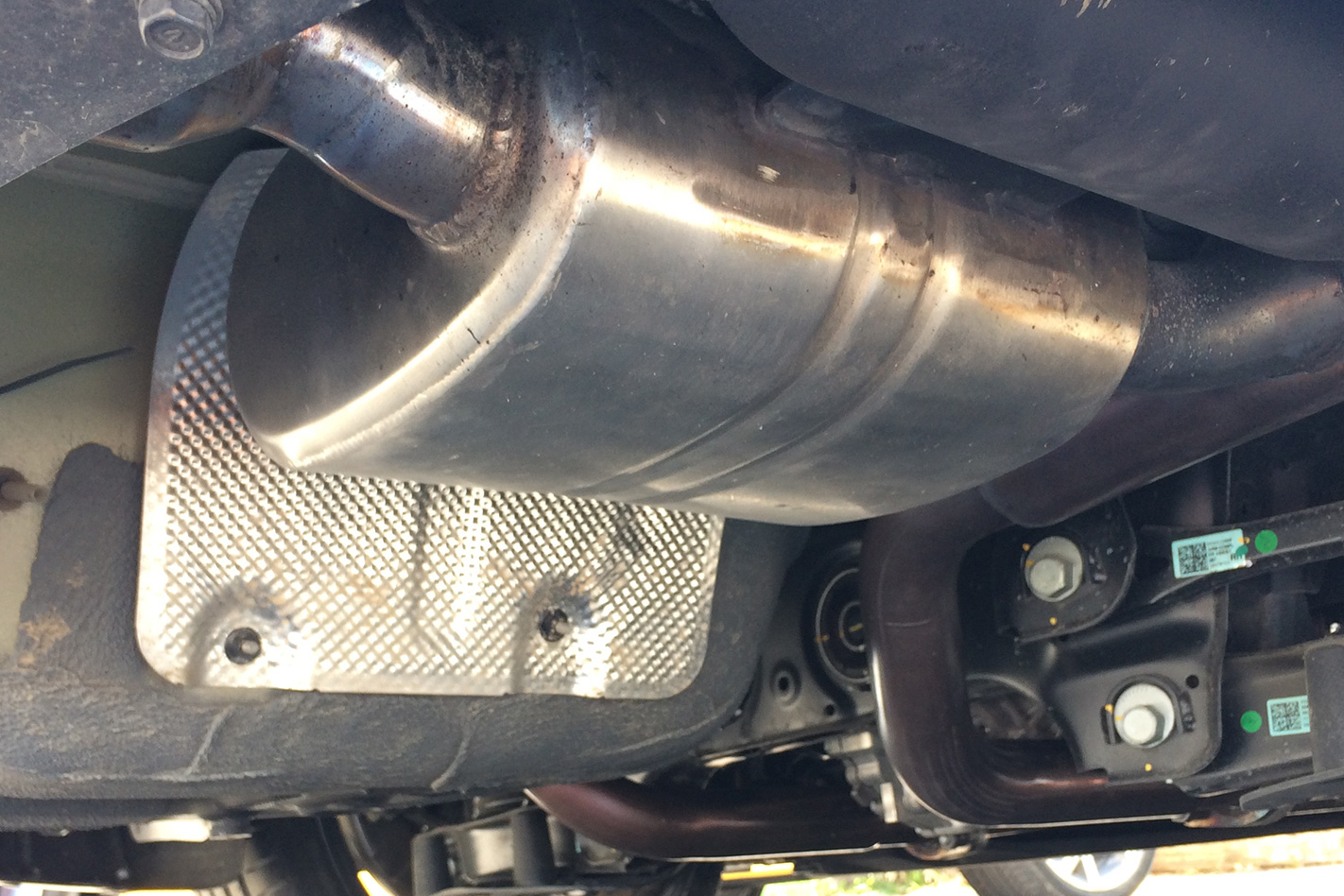
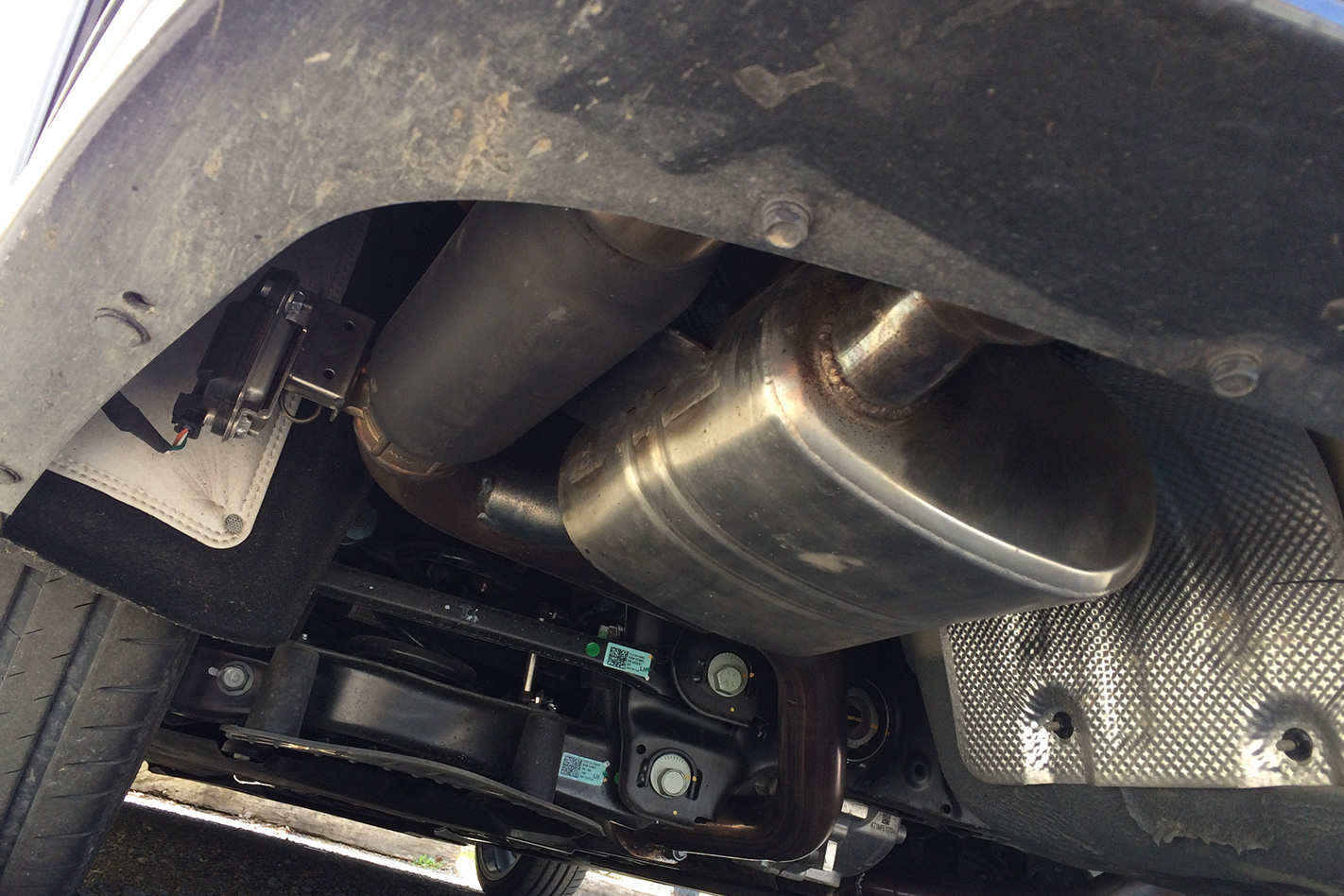
The system’s durability was put under the microscope roads surrounding Canberra, where watchful eyes monitored its mounting points over bumpy surfaces and in hard cornering.
The same testers were said to be refining the system’s switchover point. The louder setting doesn’t currently engage until 85 per cent throttle. Kia wants something closer to 60 per cent.
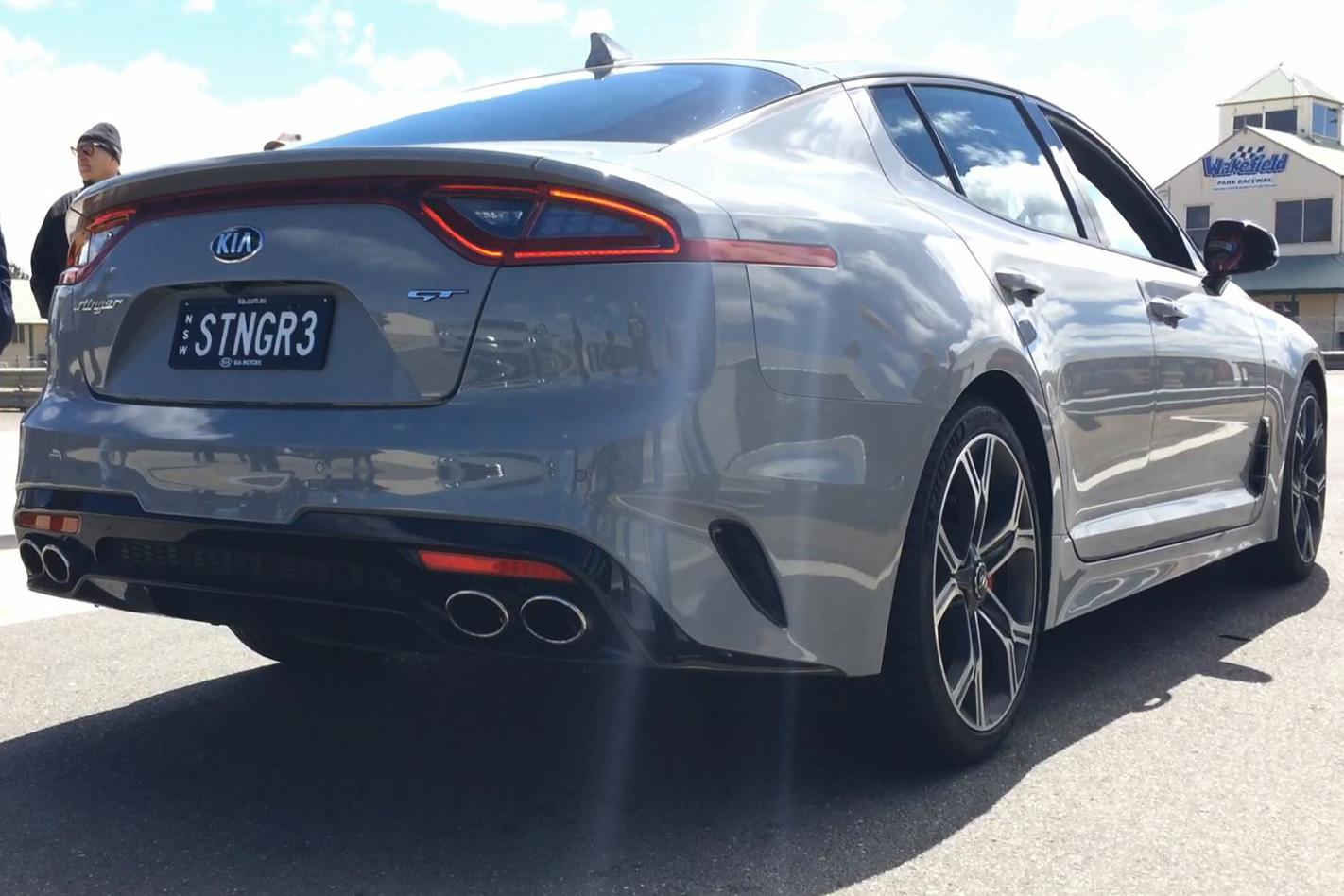
Designed by Lumens, a Melbourne based company with HSV on its resume, the system features from the rear axle pipe-join to the quad tips.
It works by routing gases away from the stock muffler canister into a more free-flowing resonated pipe.
Kia’s hoping to introduce the same product on its 2.0-litre Stingers in future.
