
THE Tasmanian government is sending out a strong message that hooning will not be tolerated on its roads with a revision of dangerous driving penalties that has increased the harshest punishment from a two-year prison term to a whopping 21 years.
Under the new laws, dangerous driving offences no longer fall under the Traffic Act but under the fiercer Criminal Code, allowing the worst offenders to be hit with far harder punishments for the most serious driving offenses – including hooning.
With the new laws now in place, dangerous driving is an indictable offence in Tasmania and will be heard in the Supreme Court with defendants given the right to a jury. As a result of the change, the most serious dangerous driving offenses are categorised with other indictable offences including robbery and murder.
Announcing the changes, Tasmania’s acting attorney-general Matthew Groom said the dramatic increase in penalty severity matched the seriousness of deliberate dangerous driving and would act as a genuine deterrent.
“I am very pleased the Government’s legislation to crack down on dangerous driving has today passed the Legislative Council,” he said.
“Dangerous driving is a scourge that can result in lives being lost and families being torn apart, and these strong laws will send the right message that it will not be tolerated on our roads.
“The offence of dangerous driving will now move from the Traffic Act 1925 to the Criminal Code Act 1924, resulting in the maximum penalty for a first offence being increased from two years to 21 years imprisonment”.
The maximum sentence can be increased by another year for incidents where death was caused by negligent driving and an additional six months for causing grievous bodily harm.
Wheels Investigation: The war on speed – Towards Zero Sense
Australian specification for the 2018 Kia Stinger has been confirmed.
Though MOTOR had previously confirmed the Stingers’ prices, specs matching each price point have now been announced.
The entry level Kia Stinger S will be $48,990, meaning punters can pick up a rear-driven 272kW twin-turbo V6 for under $50K.
The mid-spec Stinger Si will set buyers back $55,990, while the car that’s drawn the most attention, the Singer GT, will still remain under $60K at $59,990.
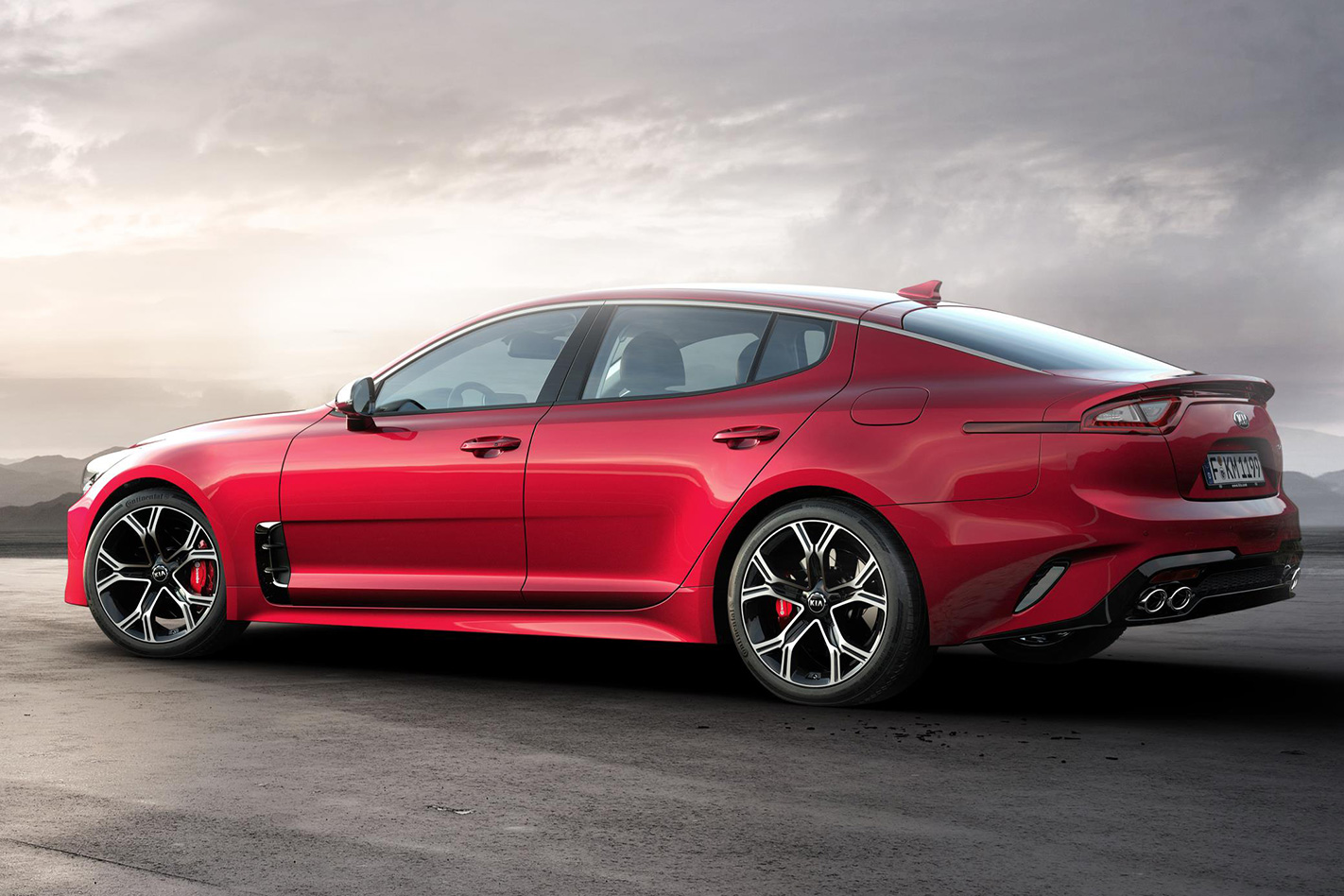
In addition, a mechanical limited slip differential, Brembo brakes, 18-inch alloys, and Continental ContiSport Contact 5 all feature on the entry-level S.
Kia Australia chief operating officer Damien Meredith says the Stinger S won’t be a ‘bare-bones’ version of the South Korean performance sedan.
“There is a belief that any entry-level model will be, for want of a better description, sparse,” Meredith says.
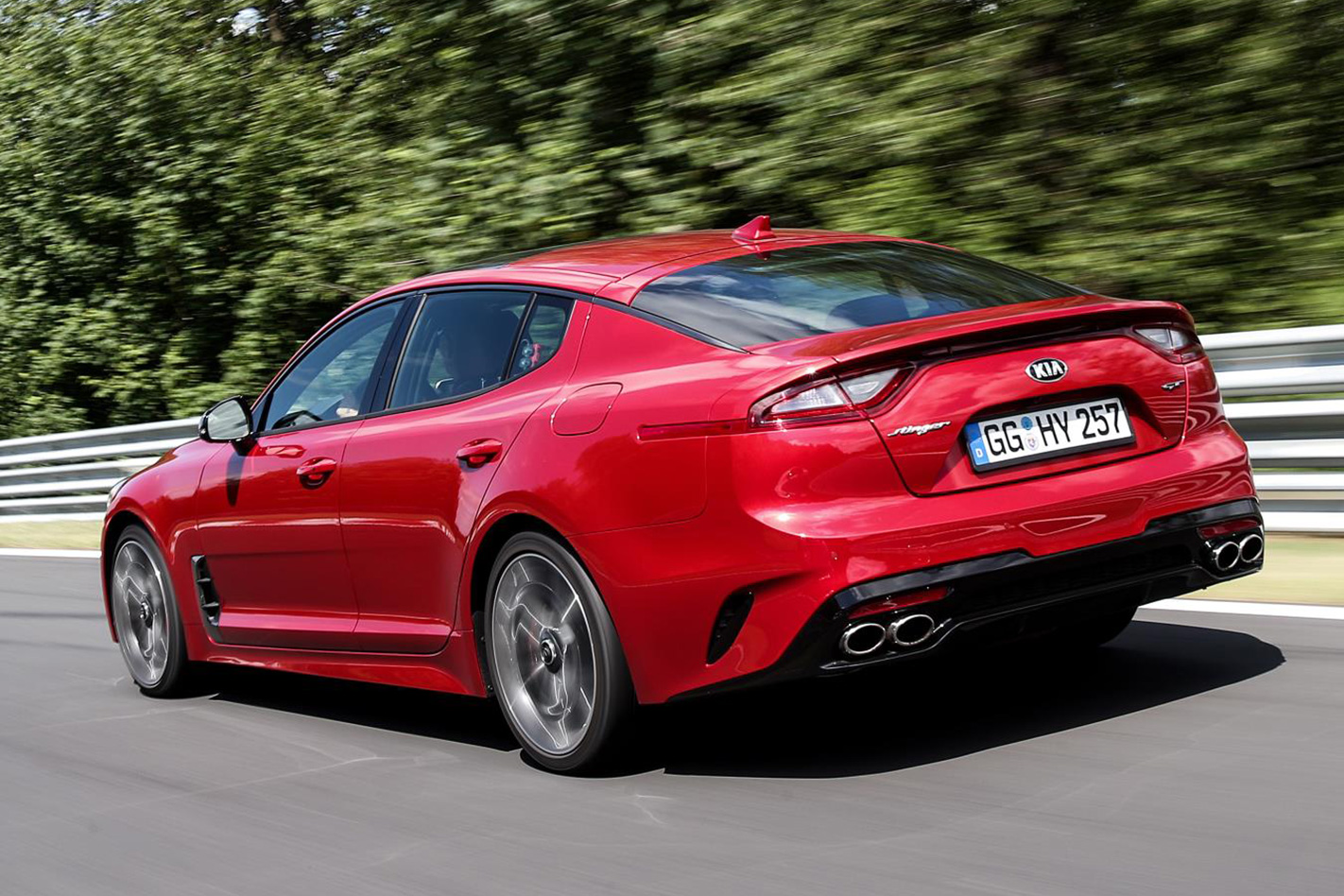
A notch up on the ladder, the Si adds 19-inch alloys, smart cruise control, a better infortainment display, underfloor luggage storage, and a better sound system.
The GT, however, is the leather-seated grand tourer its badge would suggest.
A 360-degree camera view, blind spot detection, dynamic bending lights, high beam assist and full-colour heads up display find their way onto the GT, plus an even better sound system and instrument cluster are found inside.
Outside, the Stinger GT scores LED headlights, a sunroof and two colours unique to the GT, Aurora Black and Snow White Pearl.
2018 Kia Stinger Specs Engine: 3342cc V6, twin-turbo Power: 272kW @ 6000rpm Torque: 510Nm @ 1300rpm 0-100km/h: 4.9s Transmission: 8-speed auto Weight: 1750kg Front suspension: MacPherson strut, coil springs, anti-roll bar, adaptive dampers Rear suspension: Double wishbone, coil springs, anti-roll bar, adaptive dampers Brakes: 350mm ventilated discs, 4-piston calipers (front); 340mm ventilated discs, 2-piston calipers (rear) Price: $48,990 (S); $55,990 (Si); $59,990 (GT)
THE hot hatch war looks as though it is about to escalate. Toyota, the company that has gained a reputation for the blandness of almost all its products, is believed to be readying the launch of a hot hatch-fuelled performance sub-brand.
The long-speculated move, reported on Automotive News overnight, paves the way for the Japanese car maker to launch a Gazoo Racing-fettled version of its Toyota Corolla, which will soon move to the same Toyota New Generation Architecture as the Camry due on sale late this year to replace the locally made model, the Toyota Prius, and the C-HR compact SUV.
An all-new Corolla is expected to make its debut on Toyota’s home turf, October’s Tokyo motor show, hinting that it may be in line for a hot hatch makeover. Toyota has already used this year’s Geneva motor show, held in March, to tease a Toyota Gazoo Racing-branded Yaris city hatchback, powered by a 150kW supercharged 1.8-litre four-cylinder engine and sending drive to the front wheels via a six-speed manual gearbox and Torsen split diff.
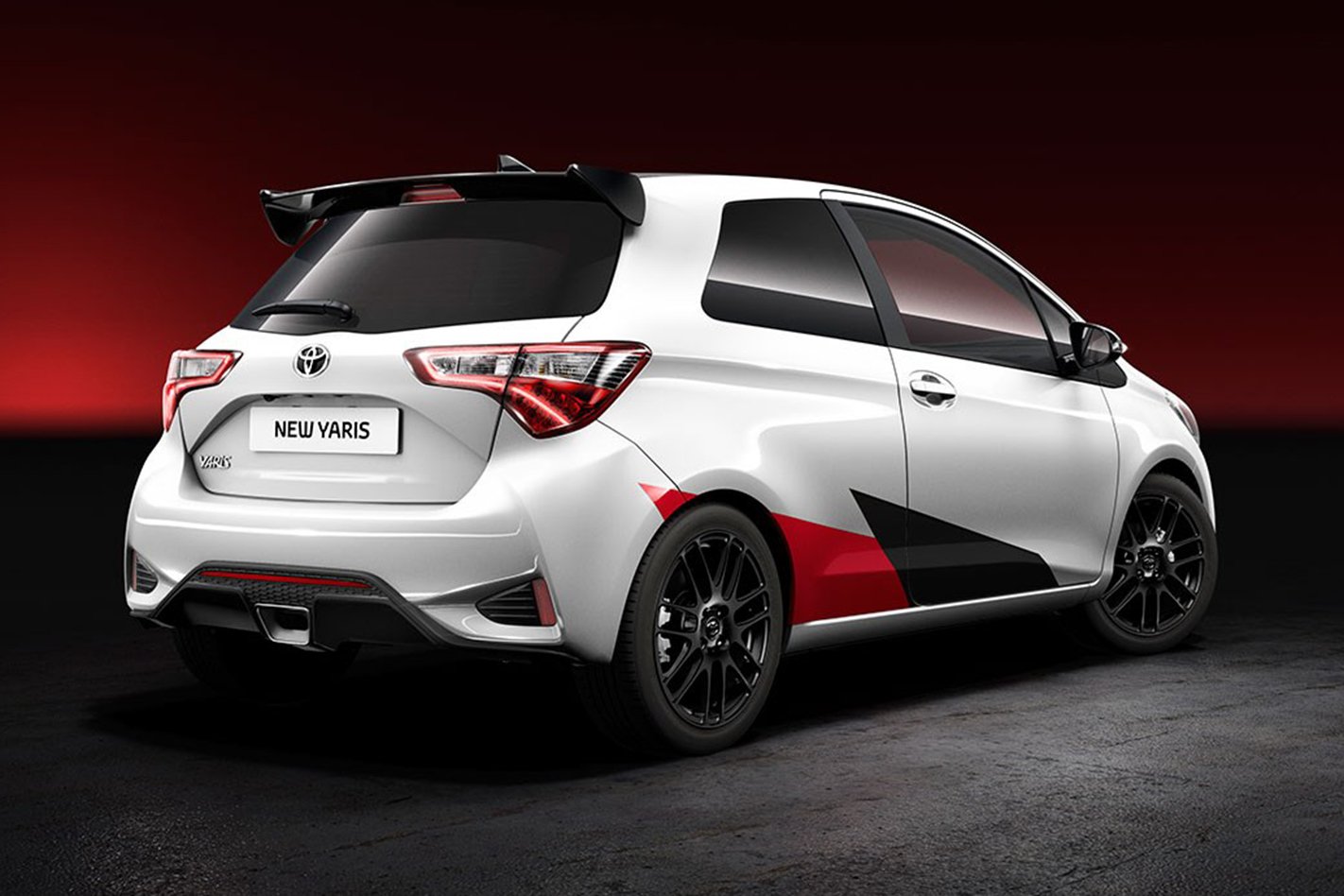
Gazoo Racing already produces limited-run GRMN-badged editions in its home market, including a heavily tweaked and tuned Toyota 86. It didn’t have any problem selling them. The motorsport division has also been given oversight of Toyota’s sports car development program.
In Australia, a stove-hot Corolla could spark an intense performance war between the established hot hatch heroes, including the Volkswagen Golf R, the Ford Focus RS, and the upcoming Hyundai i30N and Honda Civic Type R.
The Corolla’s shift to the TNGA platform will bring all the new architecture’s benefits to any performance version spun off the platform. This includes a double-wishbone rear end, extra torsional rigidity, and improved noise, vibration and harshness suppression.
The new Corolla is expected to grow in both size and wheelbase, while engines should either downsize to a choice of turbocharged or atmo three-cylinder, or carryover 1.8-litre units.
Toyota is also expected to show its spin on the next-generation BMW Z4, which will wear a Supra badge. It, too, could be in line for a Gazoo Racing makeover.
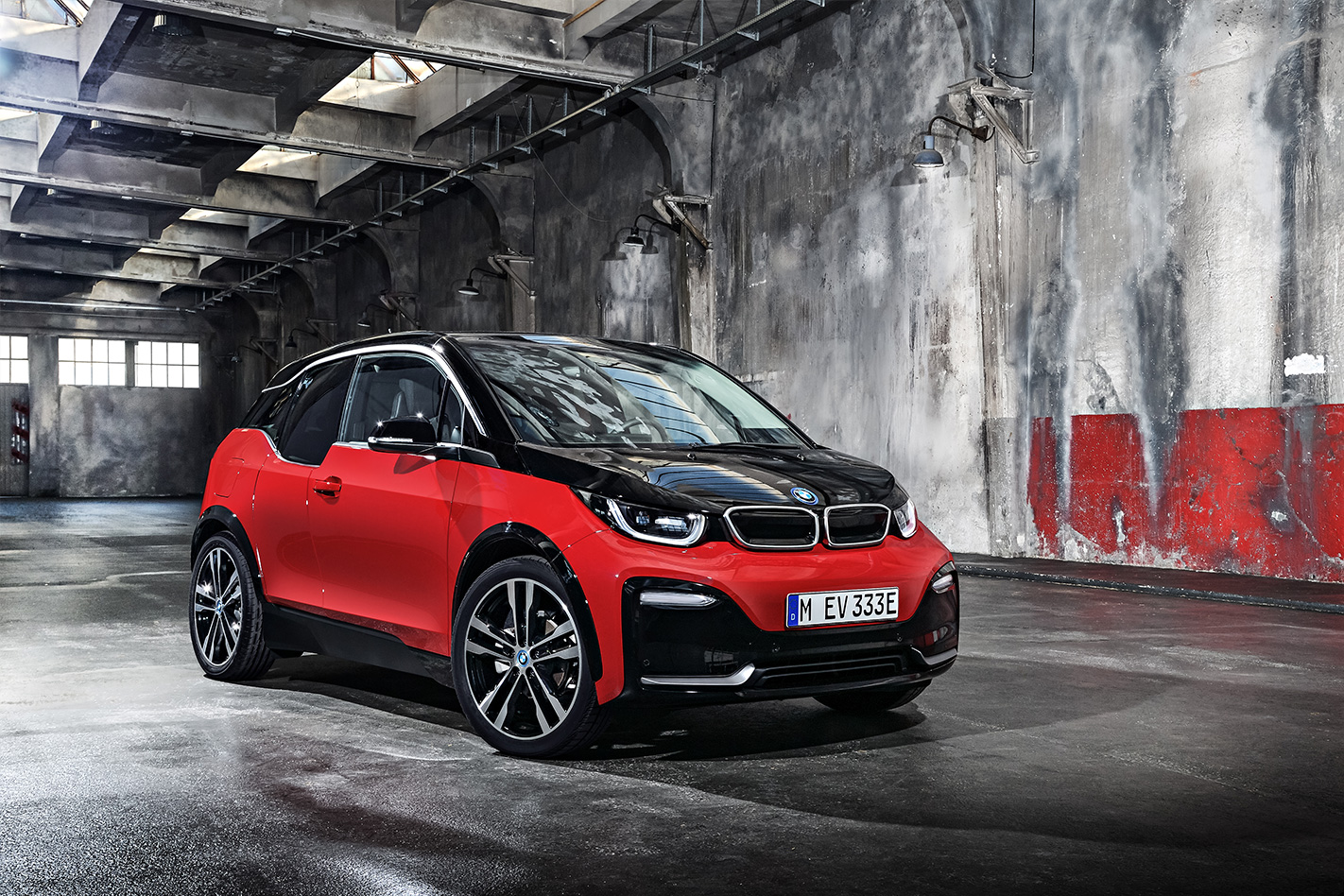
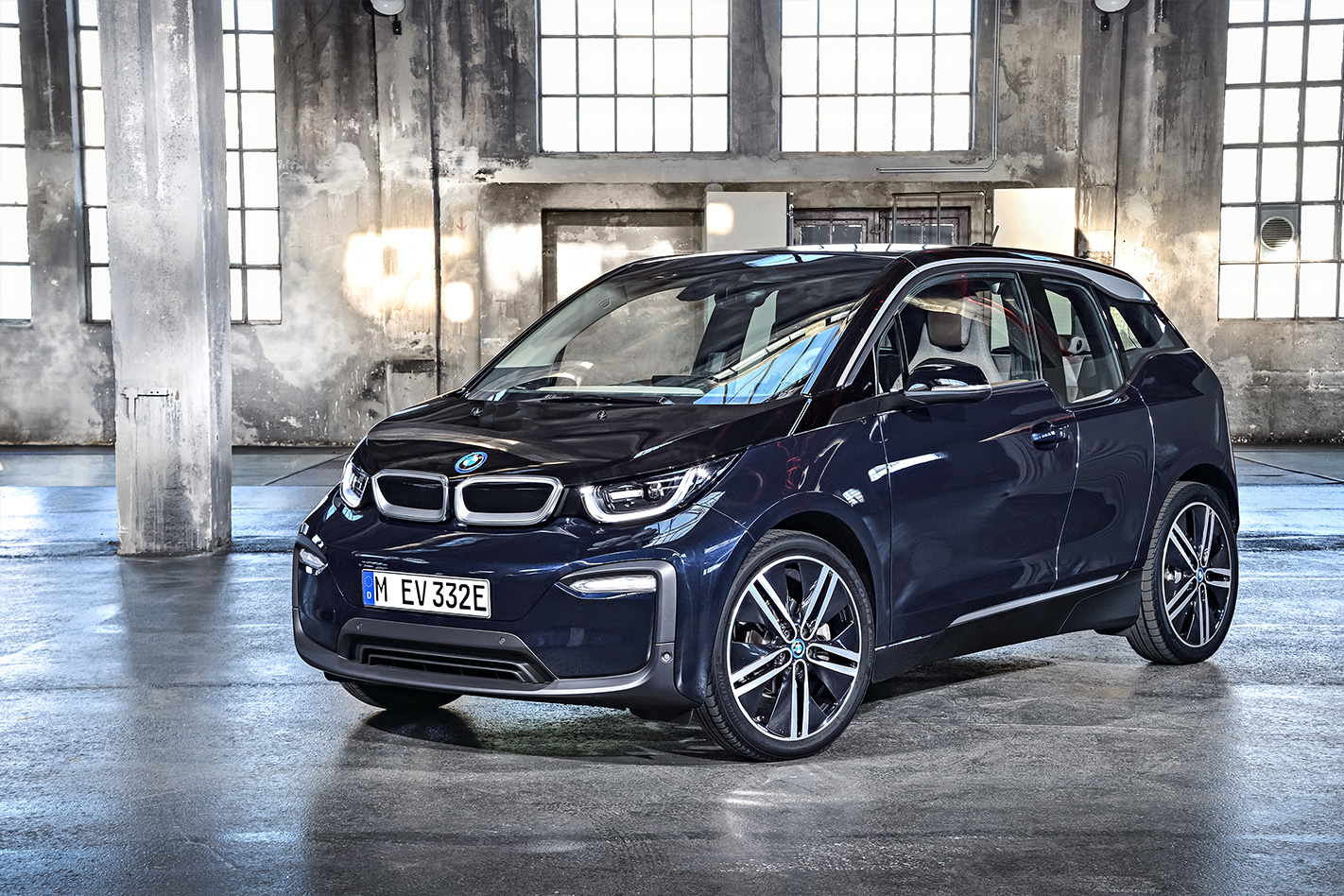
BMW has revealed a sporty addition to its i3 electric small car range with a more driver-focused i3s that will join the pure electric i3 and its range-extended version as part of the model’s mid-life update.
The more purposeful-looking and performance-enhanced BMW i3s will make its public debut at the Frankfurt motor show next month alongside its lightly updated sibling that has been doing the zero-emissions rounds since 2013.
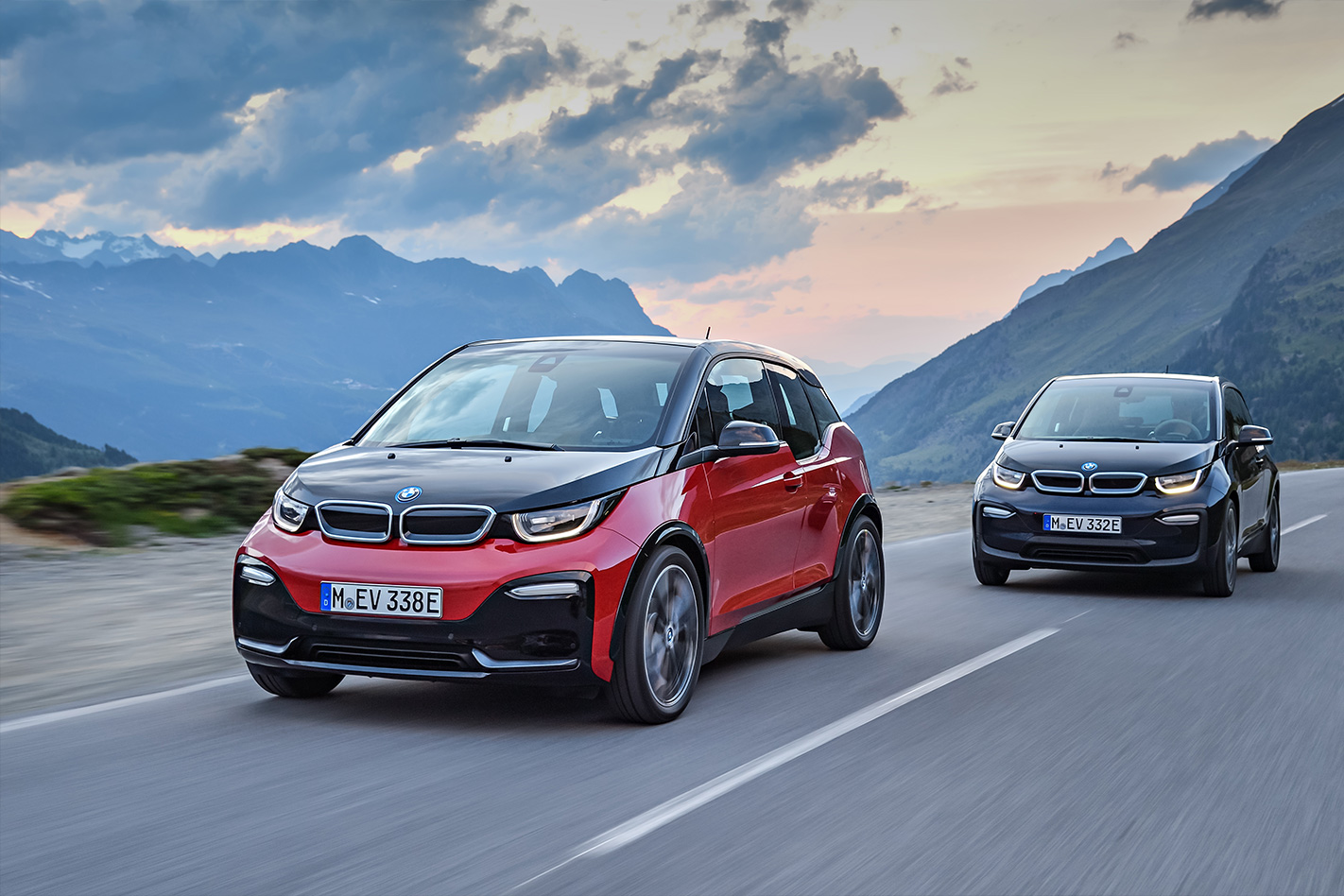
The more potent version of the i3 shares the same battery as its existing sibling, with the extra grunt liberated through a redesigned and optimised drivetrain and motor controller. The control electronics of many EVs and hybrids account for significant losses, and BMW says its new i3s offers a 40 percent improvement in that respect over the non-s i3.
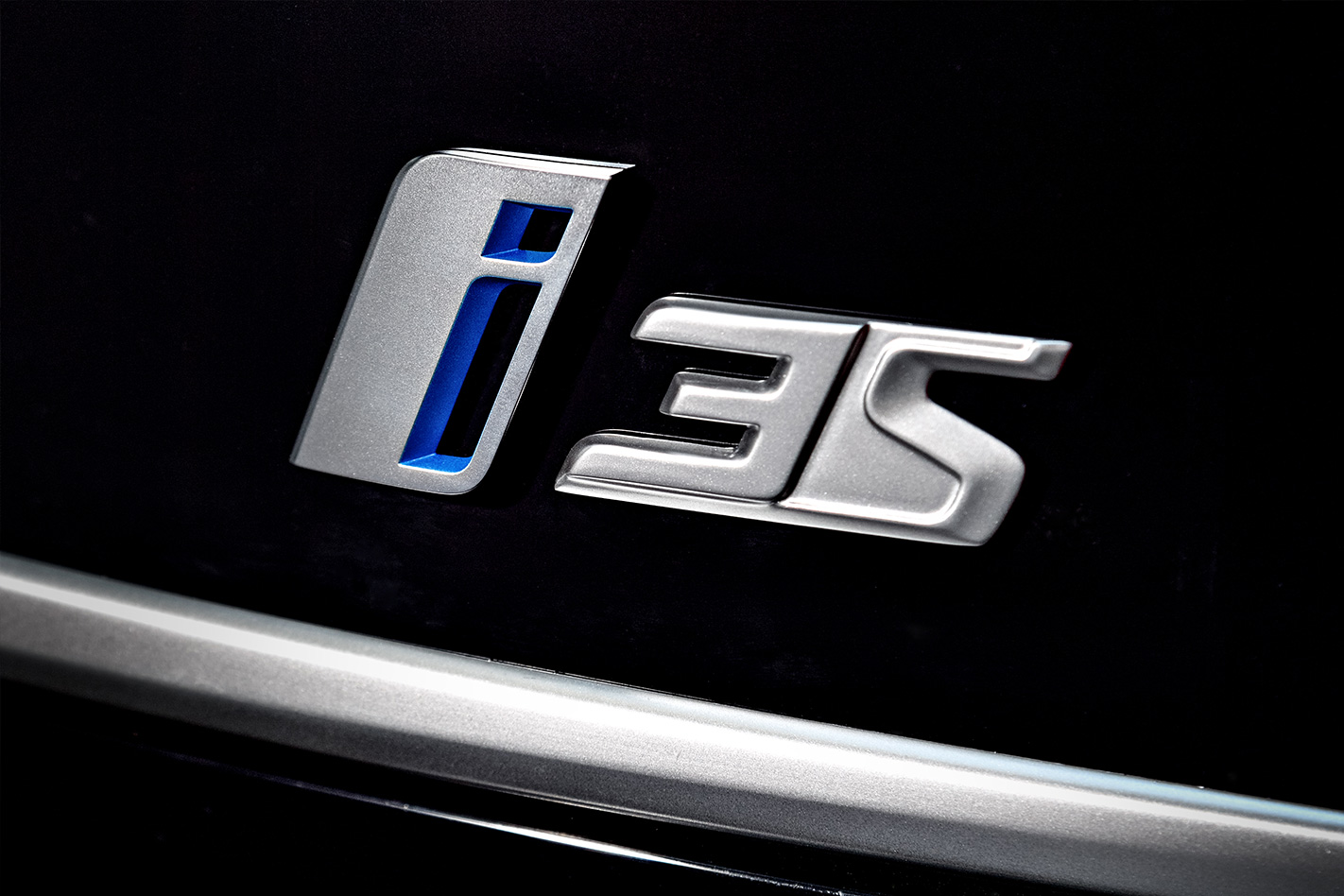
With a more competent chassis, the i3s is also allowed a higher limited top speed and a V-max of 160km/h, compared with the 150km/h limit of the non-s i3.
Among the likes of BMW’s potent M-cars and the i8 high-performance hybrid, the i3 has not previously received much recognition as a driver’s car, but BMW says the new version has a fresh stability system that even allows modest power oversteer or drifting.
The car maker describes the “everyday driving” range (the feasible distance possible when driving in urban areas in 20 degrees and using auxiliary features such as air conditioning) as around 200km for the EV version, or 330km for the range extender.
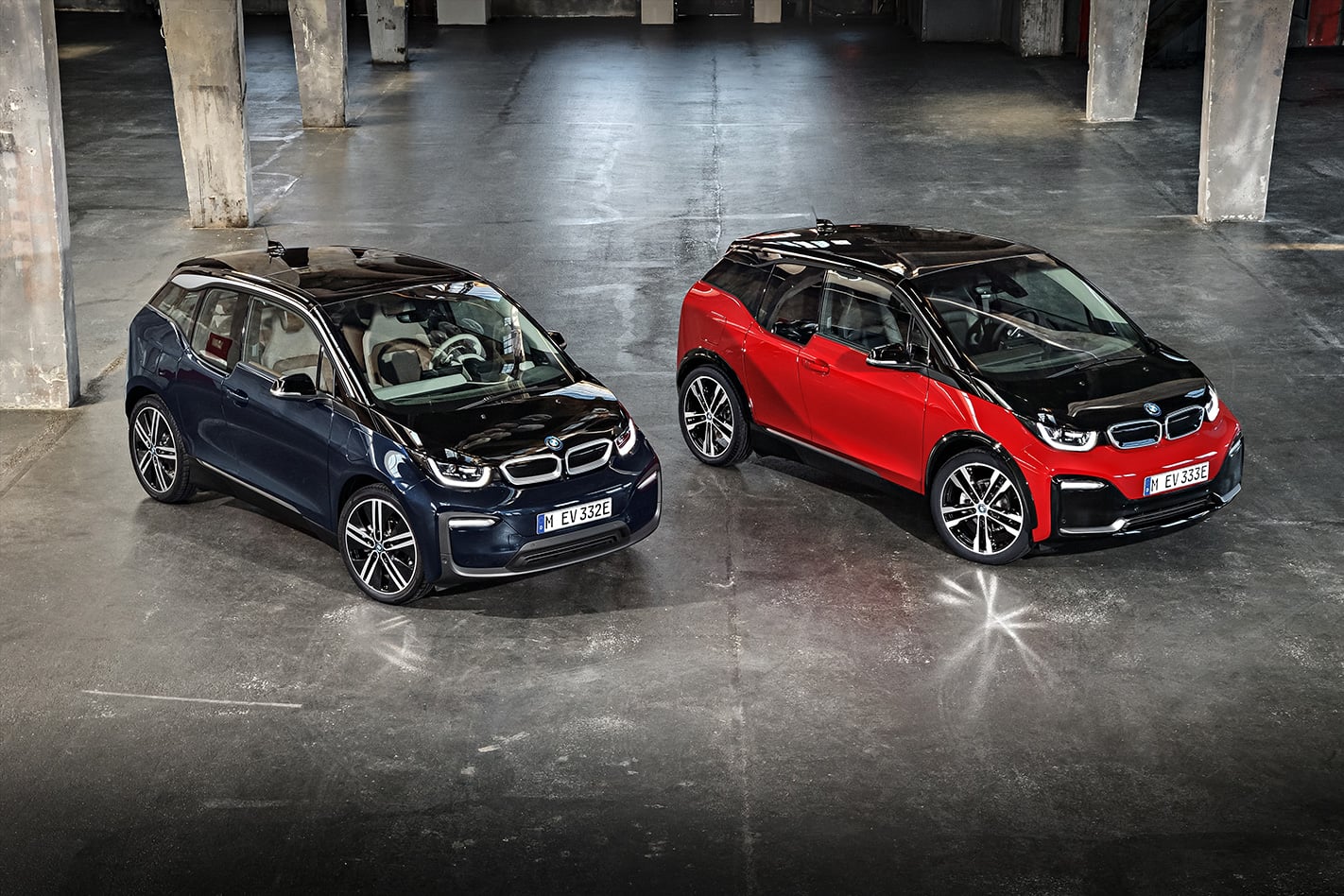
The standard version also has a new look with the update and it too gets a different front and rear styling, including all-LED headlights and a palette of special colours.
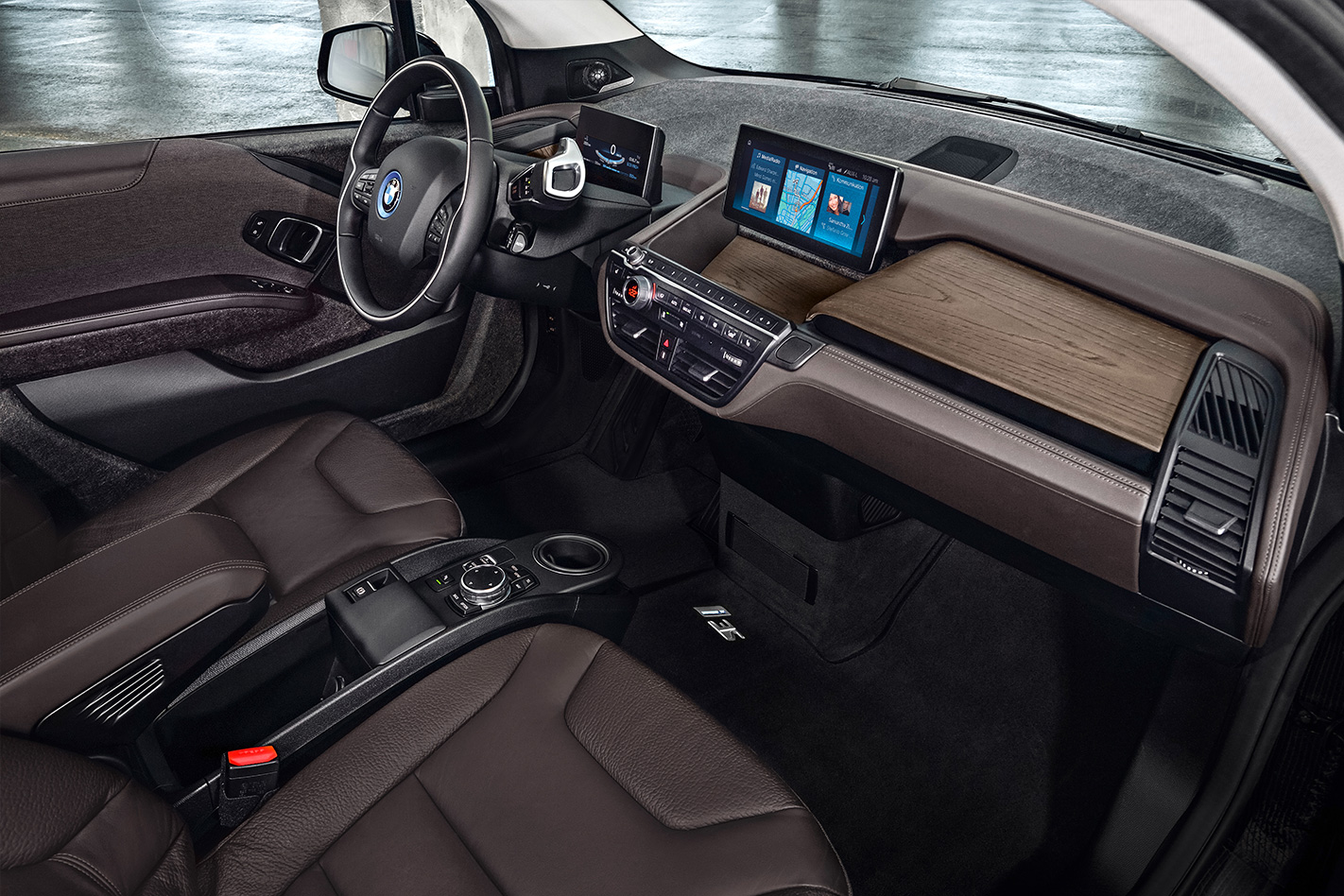
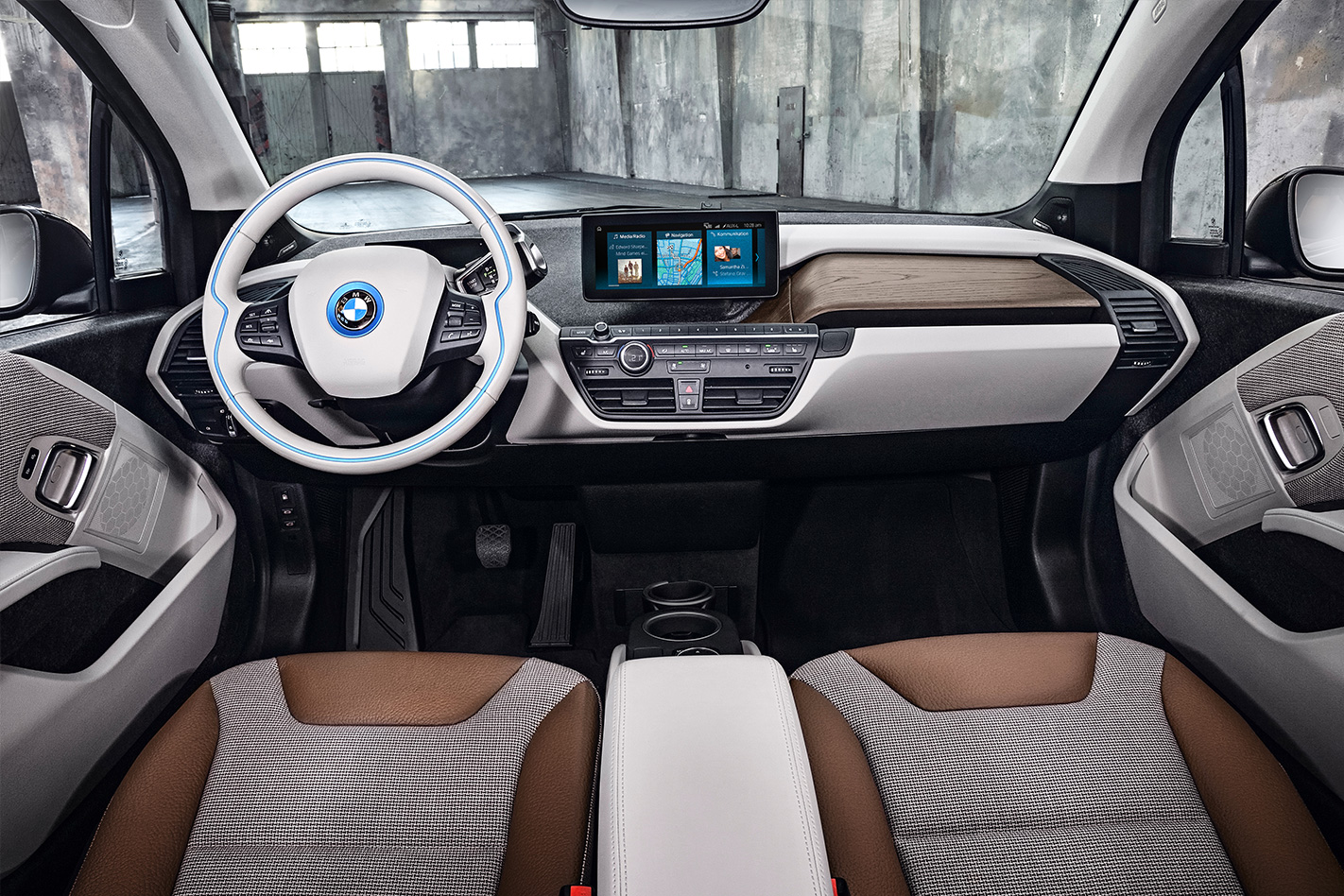
There’s new tech inside as well with the latest iDrive6 version of the infotainment system plugged into a 10.25-inch central screen with Professional navigation, and a higher 1440×540-pixel resolution display.
The new i3s and updated i3 range are expected to share the floor at Frankfurt with the new X7 concept and a significant spread of the company’s latest metal.
Australia is one of the most brand-dense car markets in the world, yet, even though we’re spoiled for choice when it comes to badges to choose from, there’s still plenty of desirable metal that’s off-limits to Aussie rev-heads.
Blame right-hand-drive availability, blame crash regulations, blame poor business cases… or blame all three. Some cars simply won’t ever be able to come here – at least not in road-registrable form anyway.
And it’s not just supercars either. We’ve gone around the Wheels office and nominated which cars we’d most like to park in our garage but are frustratingly out of reach, and the answers are surprisingly diverse.
The results are, of course, heavily weighted towards performance cars, but here’s your opportunity to weigh in as well. Tell us what forbidden fruit you lust after the most in the comments section below. The only rules are that it must be currently in production, and that it can’t be available in Australia either as a full-volume import or as a grey import.
Andy Enright, deputy editor:
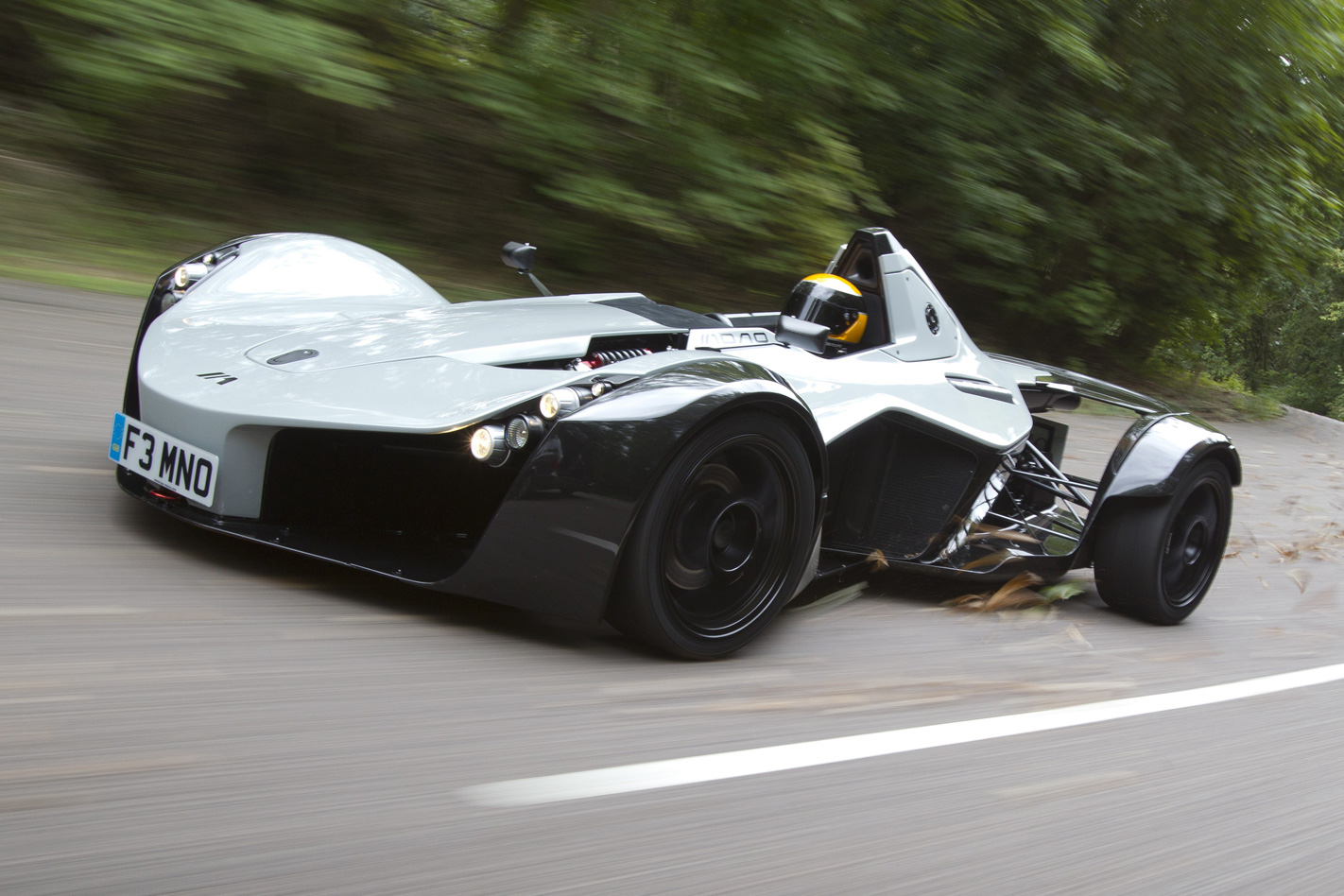
BAC Mono I’m going with the BAC Mono. With a single seat mounted in the middle of a carbon-fibre chassis and crowned by a Formula1-style air intake, the BAC Mono is an open-wheel racecar with mudguards.
Pushrod suspension, mega-sticky rubber, and an engineering philosophy that preferences outright performance probably makes the Mono about as easy to live with as a cockroach infestation, but it oozes motorsport wow factor.
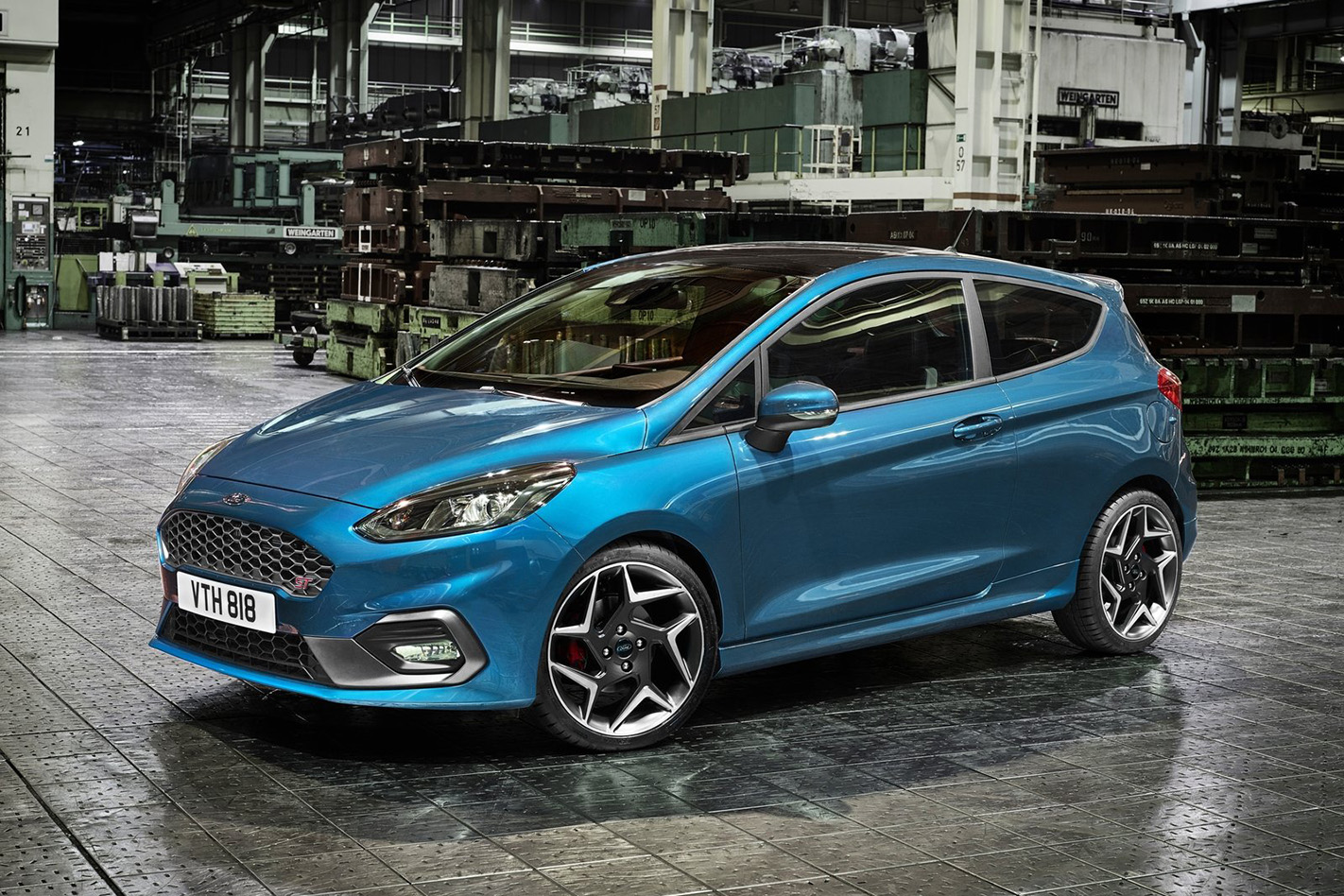
2018 Ford Fiesta ST That’s right, the Ford Fiesta ST. As in, the five-door, three-cylinder Fiesta ST that has been revealed overseas but which Ford Australia has yet to confirm for our market.
The outgoing Fiesta ST is a fun whip, but the promise of a punchy three-pot turbo and a more pleasant interior than the low-rent cabin of the current car is pretty hard to resist. Sign me up.
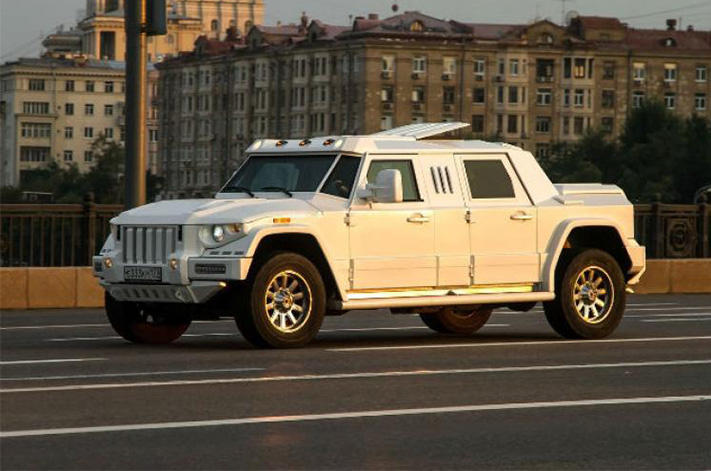
Dartz Prombron Anything built by Dartz, the Latvian manufacturer of mega-luxurious and completely ostentatious armoured personnel carriers, would do. Mainly because I’ve never sat on whale penis leather before, you have to pay in Bitcoin or some form of digital currency, and it comes from the Baltic states.
Pay enough money and Dartz will build you a car that can sustain a direct hit from a rocket-propelled grenade, plus the engines are supplied by AMG. Want.
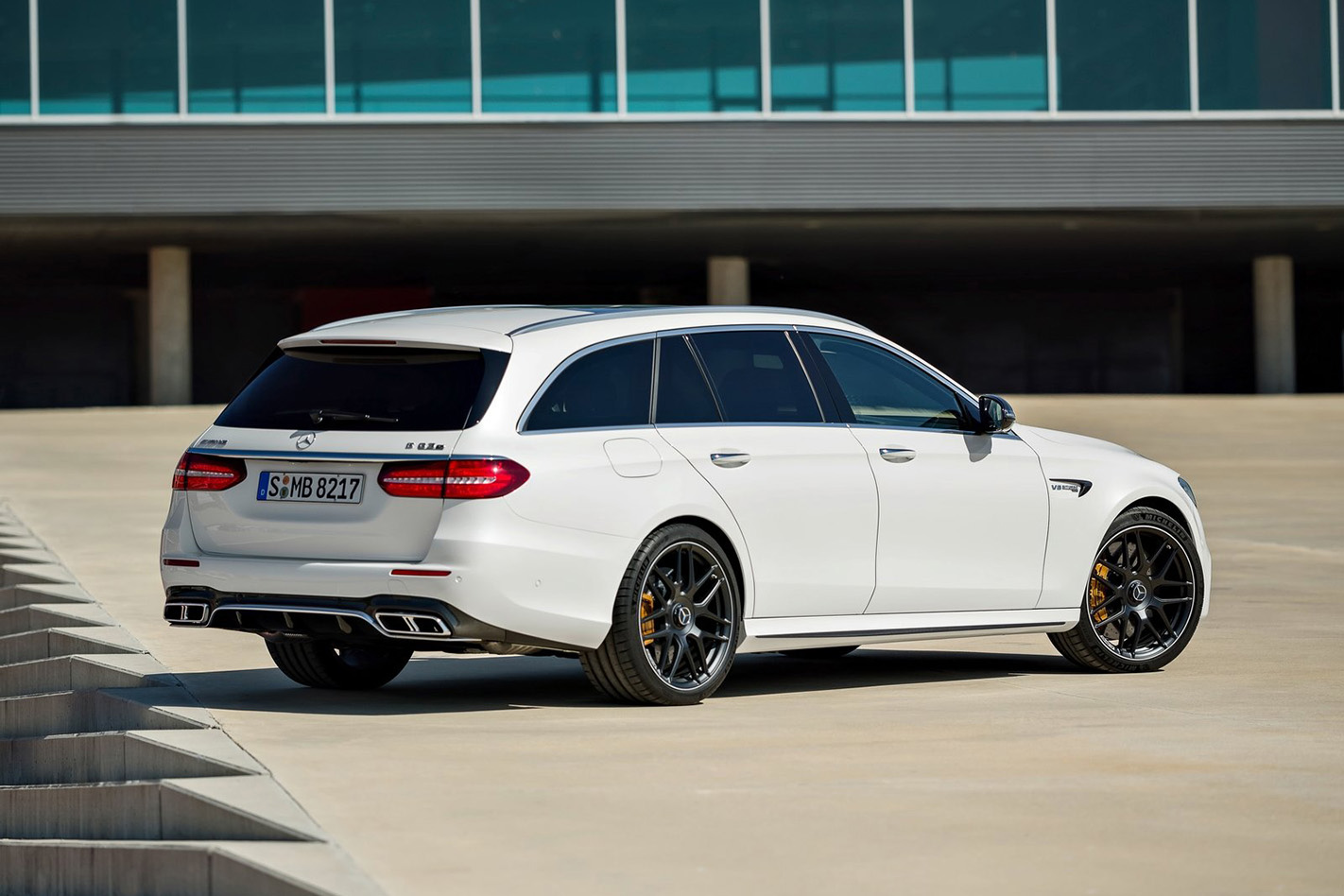
Mercedes-AMG E63 S Estate I’m going with the first car that springs to mind when talking about cars that are off-limits, and that’s the E63 wagon. There’s something about superwagons that can do everything that gets me hot under the collar like AMG’s 450kW V8 bruiser or the Audi RS6.
Though, unlike the four-ringed offering that is sold here in Oz, AMG won’t bring its hi-po hauler because buyers prefer SUVs to wagons. A crying shame.
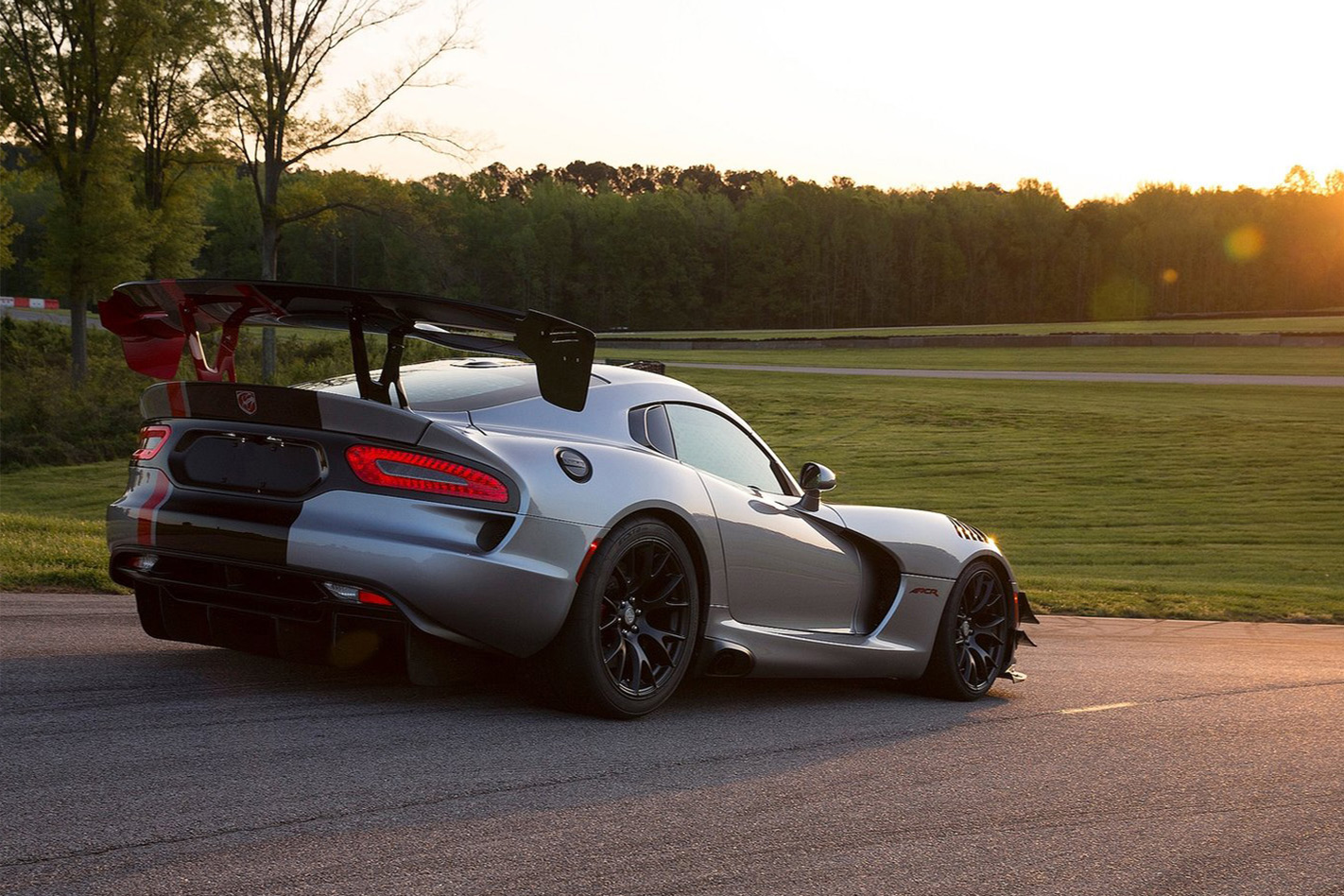
Dodge Viper ACR The American Club Racing variant of the Dodge Viper has always boasted plenty of mystique, being a track-spec version of one of America’s most outlandish sports cars, however the 2017 model is extra special.
With a Nurburgring laptime of 7:03 the ACR is not only the fastest American road car around the legendary German racetrack, but it also bests that other front-engined, V10-powered super-coupe – the mega desirable Lexus LFA, which happens to be another all-time fave of mine.
Whoever says American cars can’t handle corners is proven comprehensively wrong by the Viper ACR, but sadly this snake is an endangered species: Chrysler is shutting down the Viper plant at the end of this month. As such, it only barely slips onto this list.
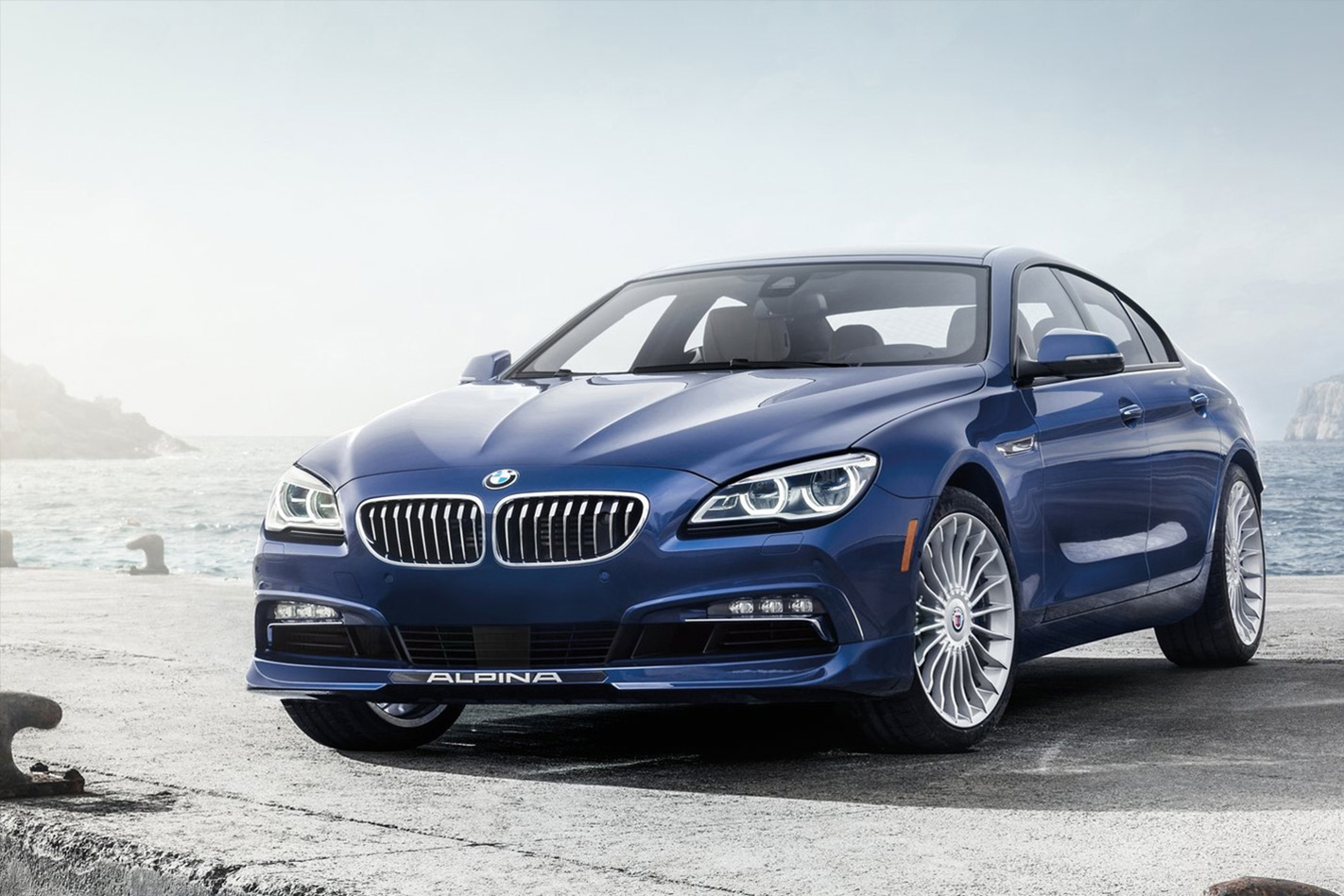
Alpina B6 Bi-Turbo Coupe and Seat Leon Cupra 300 For me it’s a tie between the Alpina B6 and Spain’s hottest hatch, the Seat Leon Cupra 300.
Alpina’s take on the BMW 6 Series’ fat coupe style is wrapped up in Alpina exclusivity and boasts M6-worrying pace courtesy of a tuned-up version of the 650i’s 4.4-litre V8. Meanwhile the Seat Leon Cupra 300 is a VW Golf in a different frock with more power than the Golf R. Yoink.
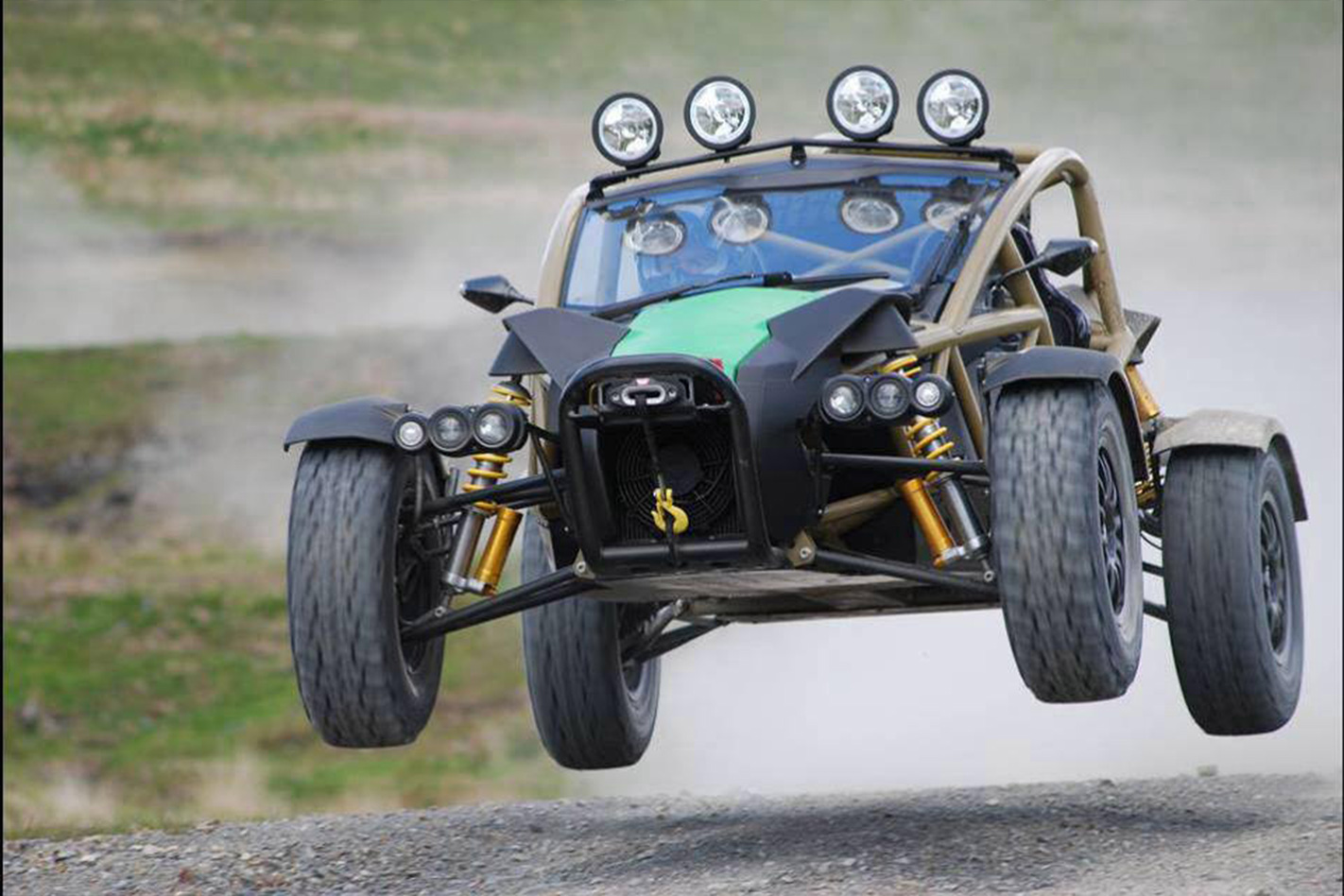
Ariel Nomad No windscreen, no doors, and no roof gets all of my attention. Described simply, the Ariel Nomad is the car for someone that hates being dry and comfortable. Luckily, I ride a motorbike, so the concept of surrendering comfort in exchange for visceral thrills is not foreign to me.
The off-road sibling to the Ariel Atom, the Nomad comes packed with beefier suspension with long-travel shocks and off-road tyres. Tipping the scales at just 670kg, the Nomad has a 2.4-litre long-stroke Honda four-pot producing 175kW and 300Nm, and revs to 7200rpm. It’ll do a sub 4.0-second 0-100km/h sprint too, making it faster than some fully-fledged race cars.
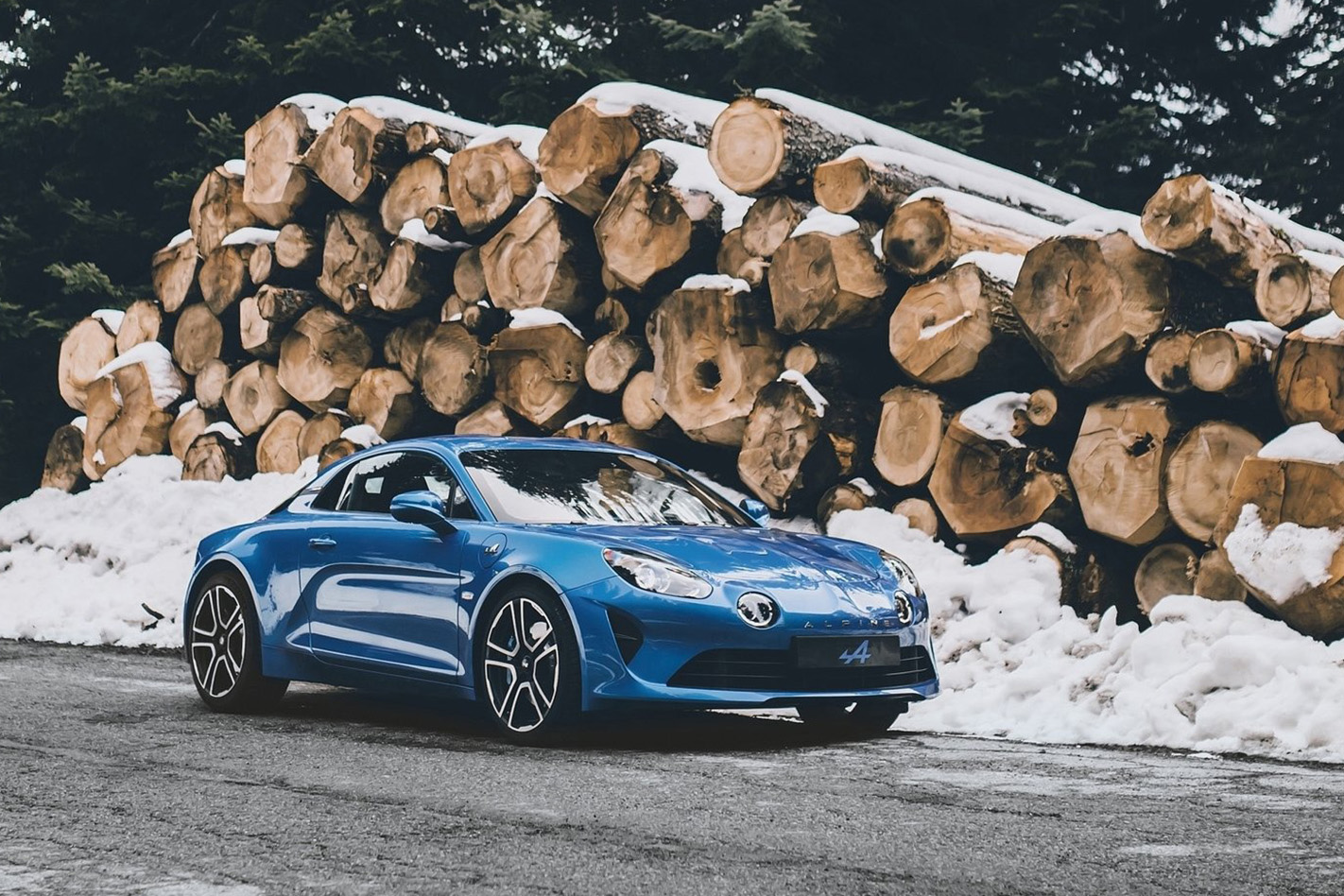
Alpine 110 We still don’t know how forbidden it is/will be, but right now it’s the Alpine 110 that’s got me salivating.
Not only does it revive a long-dormant marque with a rich motorsport history, but with RenaultSport genes infused into an aluminium-intensive mid-engined monocoque, the Alpine reboot has huge promise as a performance car. Also, have you seen how it looks?!
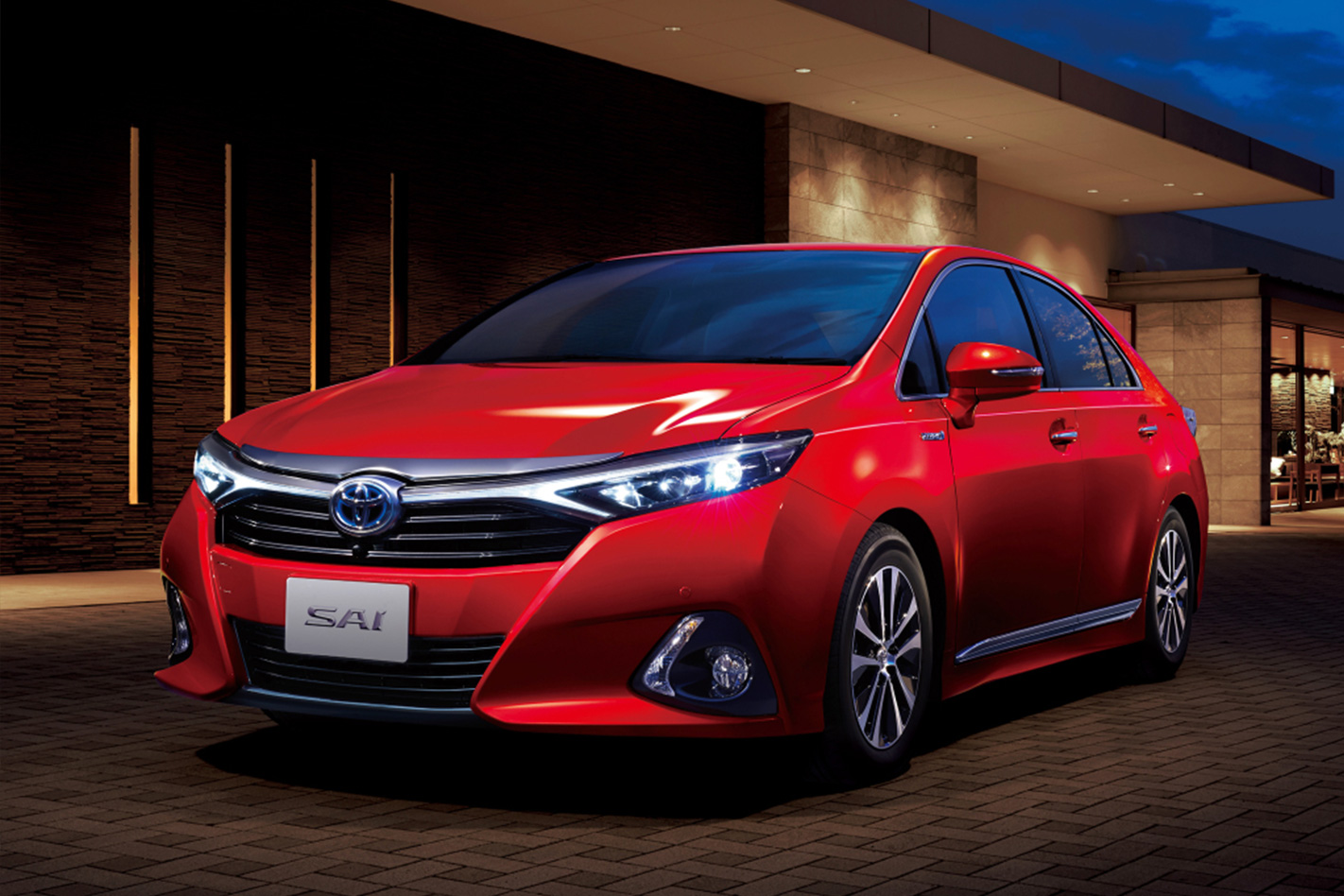
Toyota Sai and Toyota Century My vote is for the facelifted Toyota Sai, essentially a Japan-market sedan version of the Prius that actually looks, well, pretty decent inside and out as far as Toyota’s hybrid four-doors are concerned.
The Toyota Century is another oddball foreigner that’s on my wishlist, purely because it’s a V12 Toyota (and thus already unique) with time-warp styling and engineering that clings resolutely to the 1960s – strictly for those who still believe in “mechanical” luxury barges like Mercedes’ W126 S-Class of the 1980s.
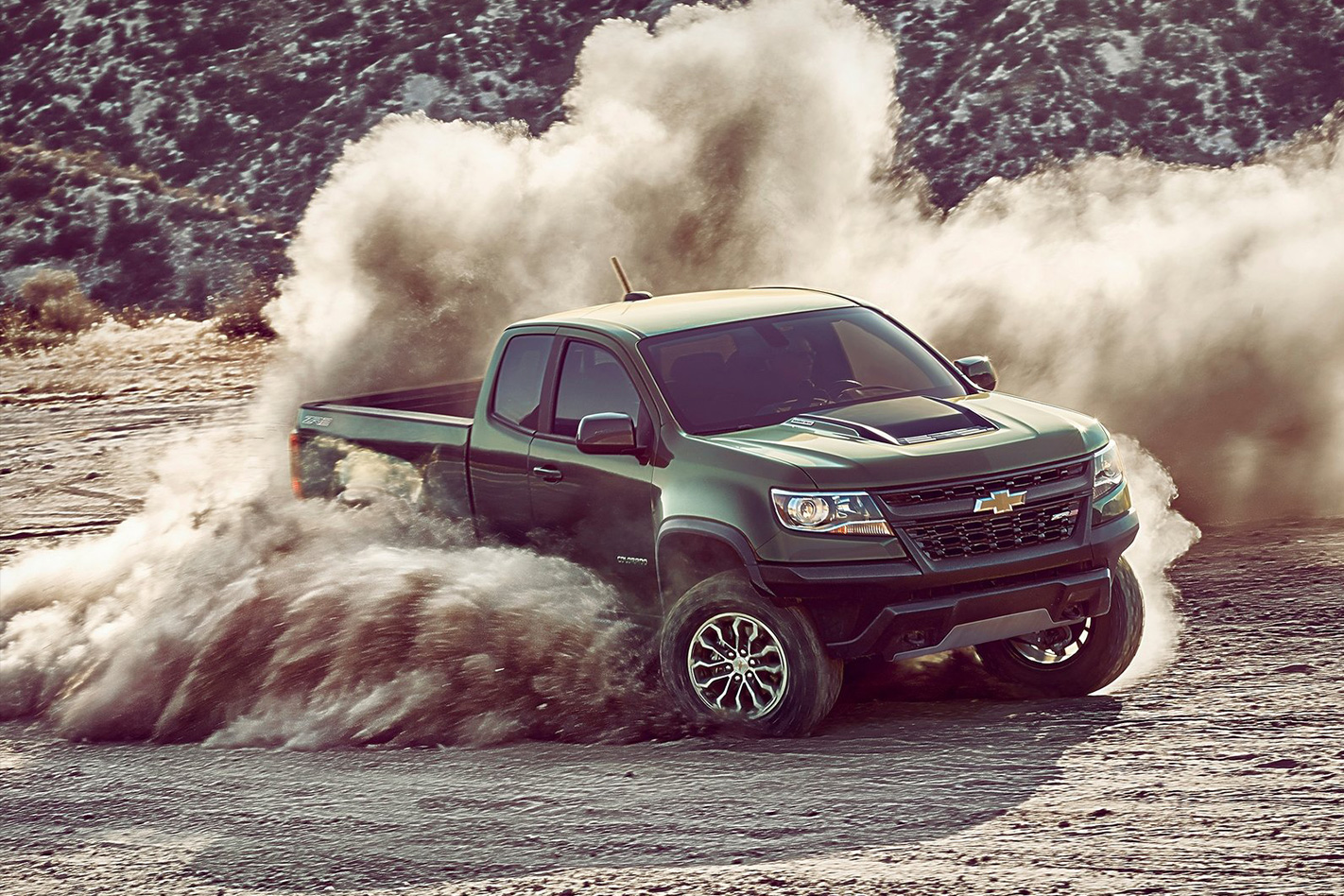
Chevrolet Colorado ZR2 Skipping past the obvious Shelby 350’s and ZL1’s, I’m going to go with the Chevrolet Colorado ZR2. With some serious off-road kit, it’s somewhat of an anti-hero to cashed-up and dressed-up trade utes like the Amarok Ultimate and Ranger Wildtrak.
With Multimatic shocks (similar to the Camaro ZL1), revised suspension anchor points, a reinforced frame, front and rear locking diffs, and proper ground clearance, it’ll tow the racecar and track supplies with no fuss. It’ll probably tow them through a river too, if you want.
It may be smaller than the gargantuan F-150 Raptor, but it is hugely more capable than the Colorado Z71 parked at the construction site down your street.
GLANCE at the shots accompanying our latest look back at Australia’s best concepts and you would be forgiven for thinking it’s a worked over VY or VZ Commodore, and not the product of Holden’s off-the-leash design team.
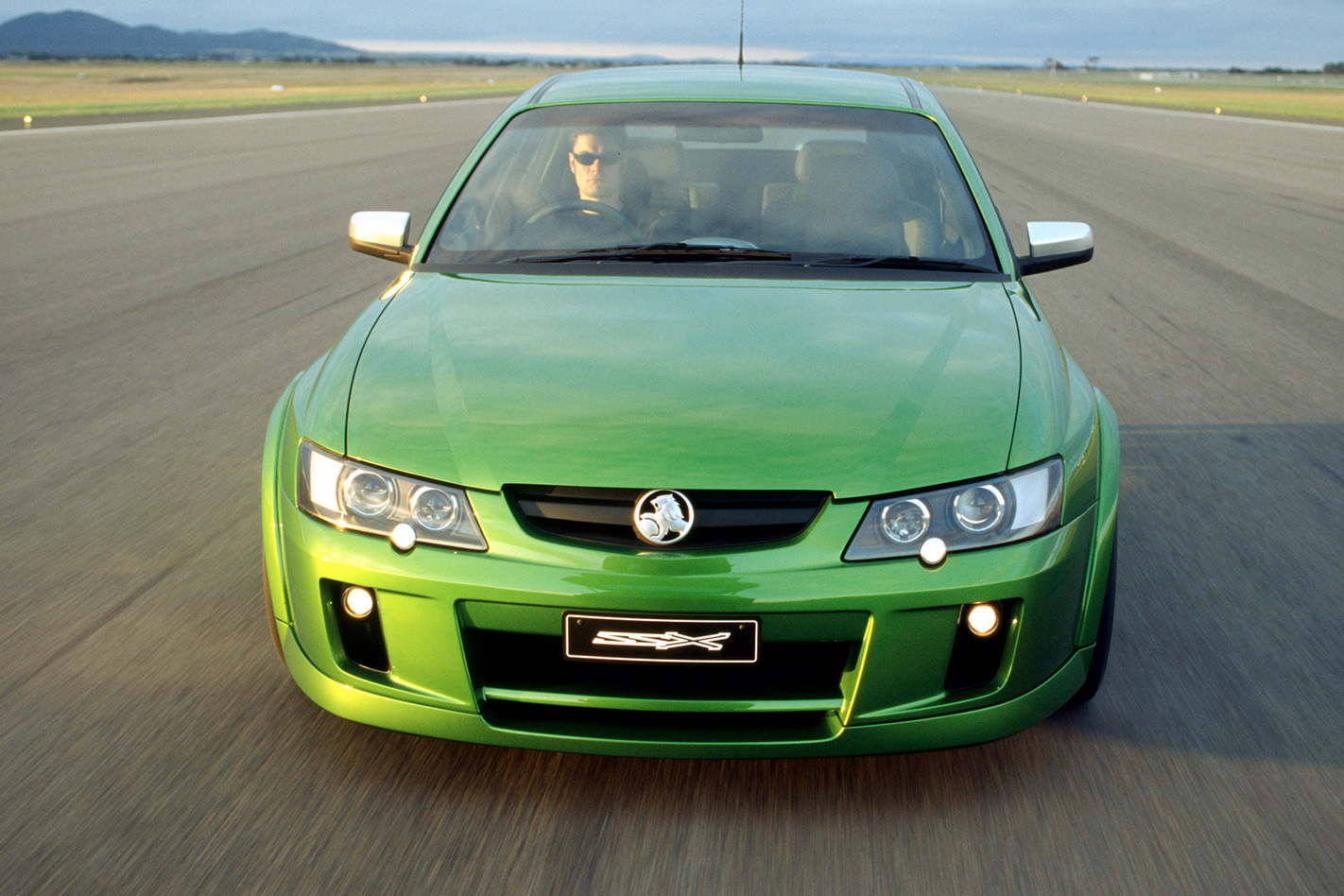
While many previous instalments in our Australia’s Best Concepts series have reviewed outlandish show cars, unapologetic designs, and mechanicals that were even more unlikely to make production than its styling, the 2002 SSX looked restrained for good reason.
In just one concept, Holden was offering a glimpse at a number of significant developments within the lion brand ranks, including the introduction of four-wheel drive and the possibility of a new home-grown hatchback.
Instead of simply throwing a new transmission under a standard Commodore and being done with the transition to all-paw, the Holden design team decided to have a little more fun and based the new technology around a concept vehicle – the metallic green machine you see here.
Its flared wheel arches with extensions weren’t just for show. It housed a 54mm widened track at the front end and a rear that sat 93mm fatter to accommodate the all-wheel drive bits as well as increasing stability with its wider stance.

That car would also be followed by other all-paw Commodore-based models such as the polarising HSV Coupe4, and the adoption of four-wheel drive is widely known.
But the SSX’s most obvious feature was its lift-back boot that hinted at Holden’s intention to deliver another notable first for the company – a new Commodore-sized hatchback.
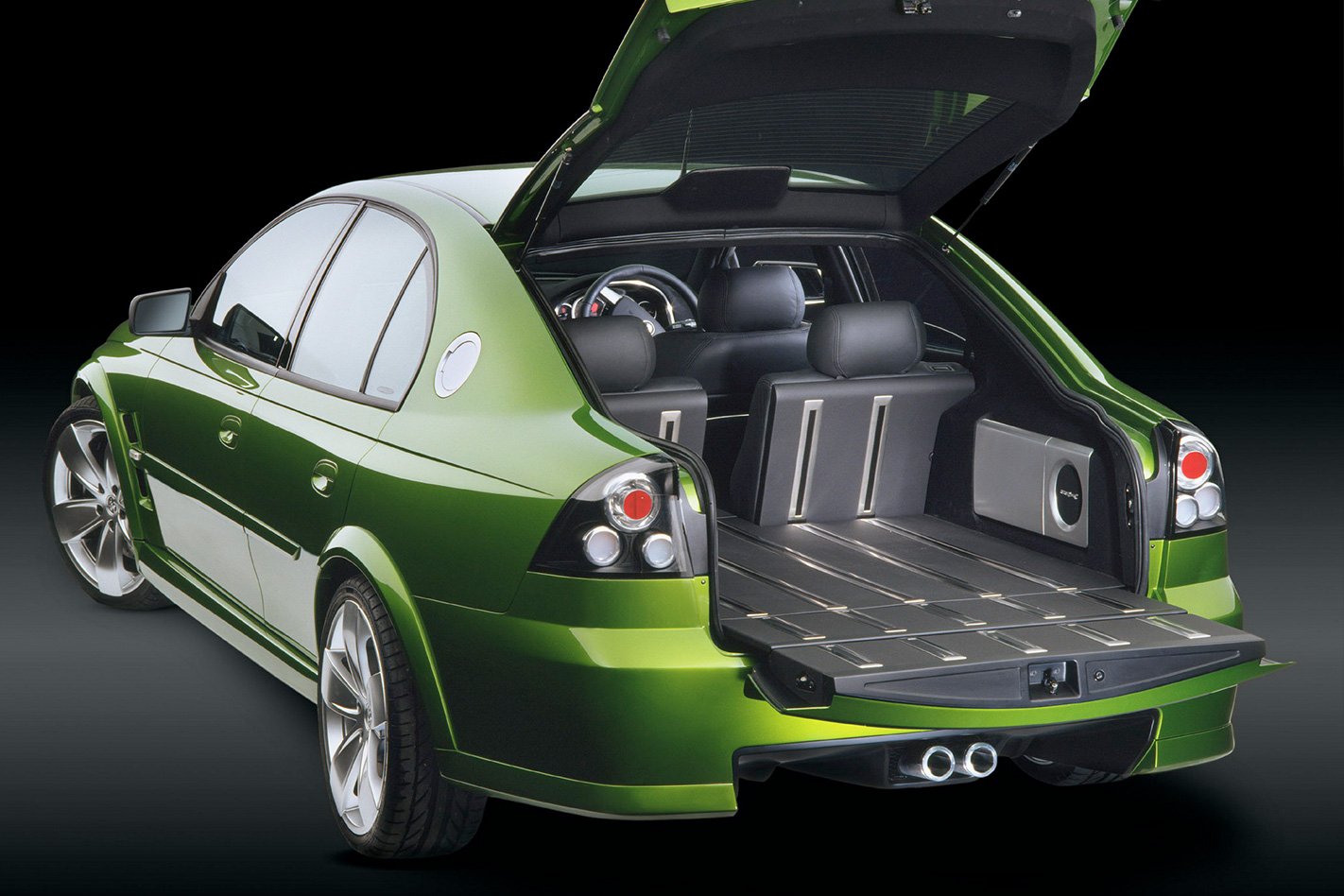
Far from a simple chop-shop mod, the new boot arrangement was a complex rethink of the VY tail with the rear glass panel shifted 200mm rewards for a more coupe roofline, complemented by broad C-pillars with more Monaro magic.
At the time, the SSX’s designer Max Woolf revealed that, while the car was destined to remain a concept, many design touches would filter into upcoming models. But what about its defining feature?

As it happened, the Torana name was not resurrected but the possibility of a hatchback Commodore was still dashed by a new range addition and the arrival of the imported Vectra C, which was offered as a sedan, hatchback, and wagon.
When the VZ Commodore succeeded the VY it undoubtedly wore headlights, taillights, and interior cues that harked back to the concept, but the SSX was all but forgotten. Could things have played out differently?

Combined with the strength of utes and sedans, McLeave said an additional hatch offered a “heaven-sent opportunity.”
“It’s an area where other people aren’t specialising, certainly within GM,” he said.
Could Holden’s prospects and business model, including the state of local manufacturing, look different today if the SSX had evolved from concept to production?
Volvo’s performance division has updated the S60 and V60 Polestars for the 2018 model year.
On the list of improvements is more carbon fibre and better downforce, though aerodynamics are cancelled out by more weight.
Developed jointly between Polestar and Cyan Racing engineers, the aerodynamic package added to the MY18 S60 and V60 has improved downforce by 30 per cent according to Volvo.
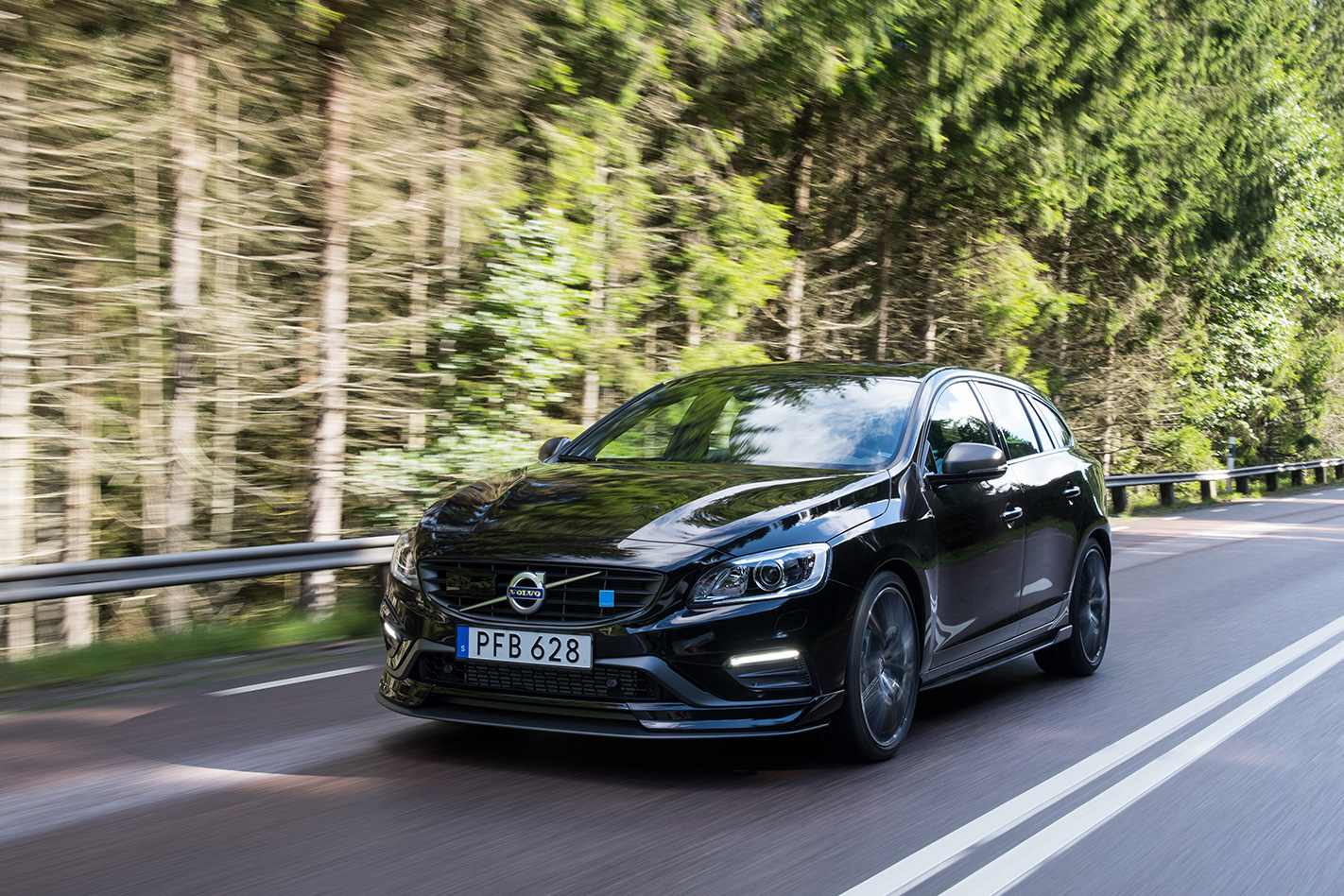
Even though the new additions to the Polestars were tested during Polestar Cyan Racing’s ‘secret’ Nürburgring record attempt for fastest four-door road legal car lap, the additional downforce and aero pack has netted no immediately obvious performance advantage.
In addition, an extra chunk of weight for the V60 (it’s gone from 1770kg to 1800kg) means it is now a tenth slower than the S60.
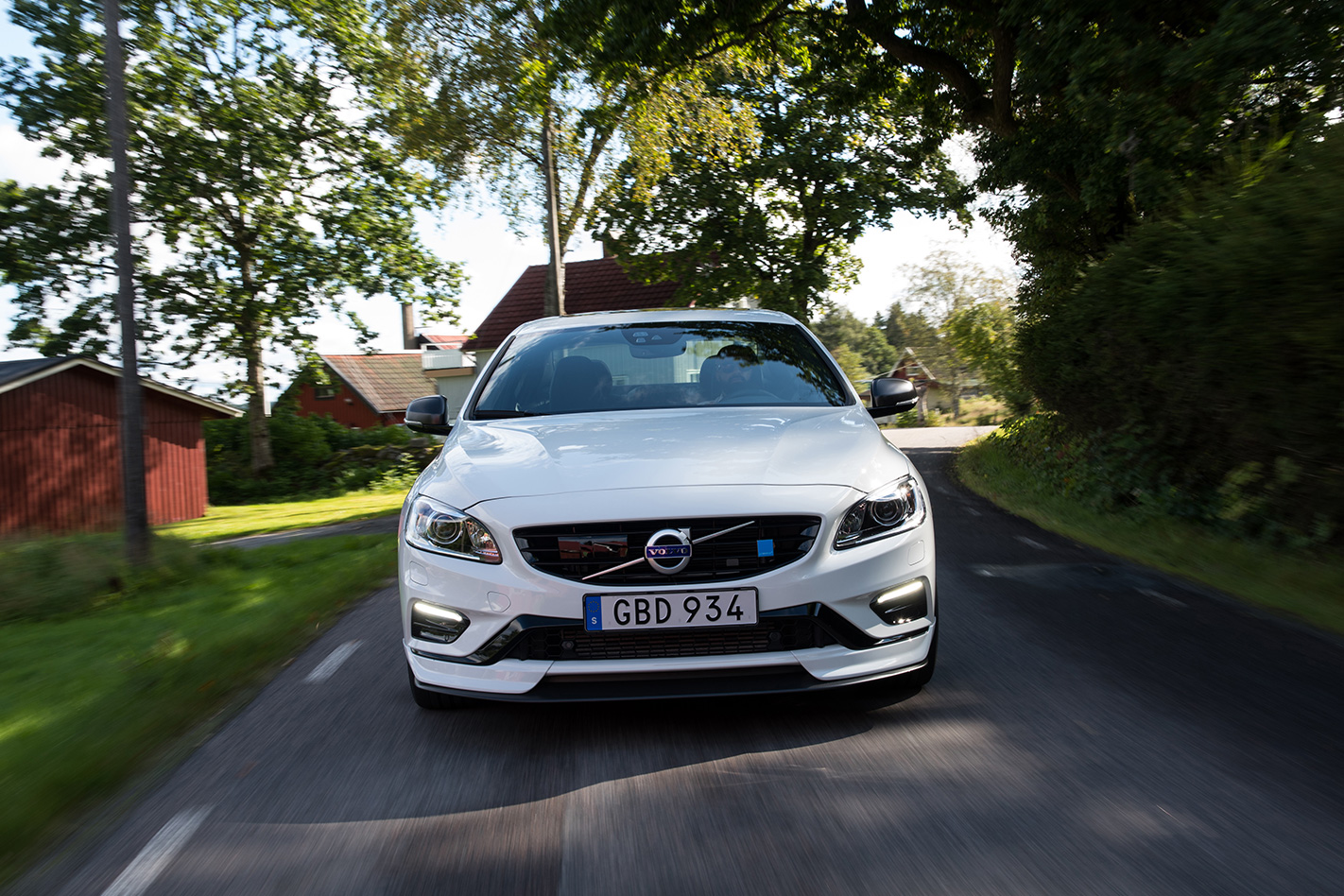
Both are electronically limited to 250km/h.
1500 units will be produced, though only 10 will be made available in Australia, with four S60 sedans and six V60 wagons available from January.
Volvo Australia told WhichCar that pricing is not yet confirmed.
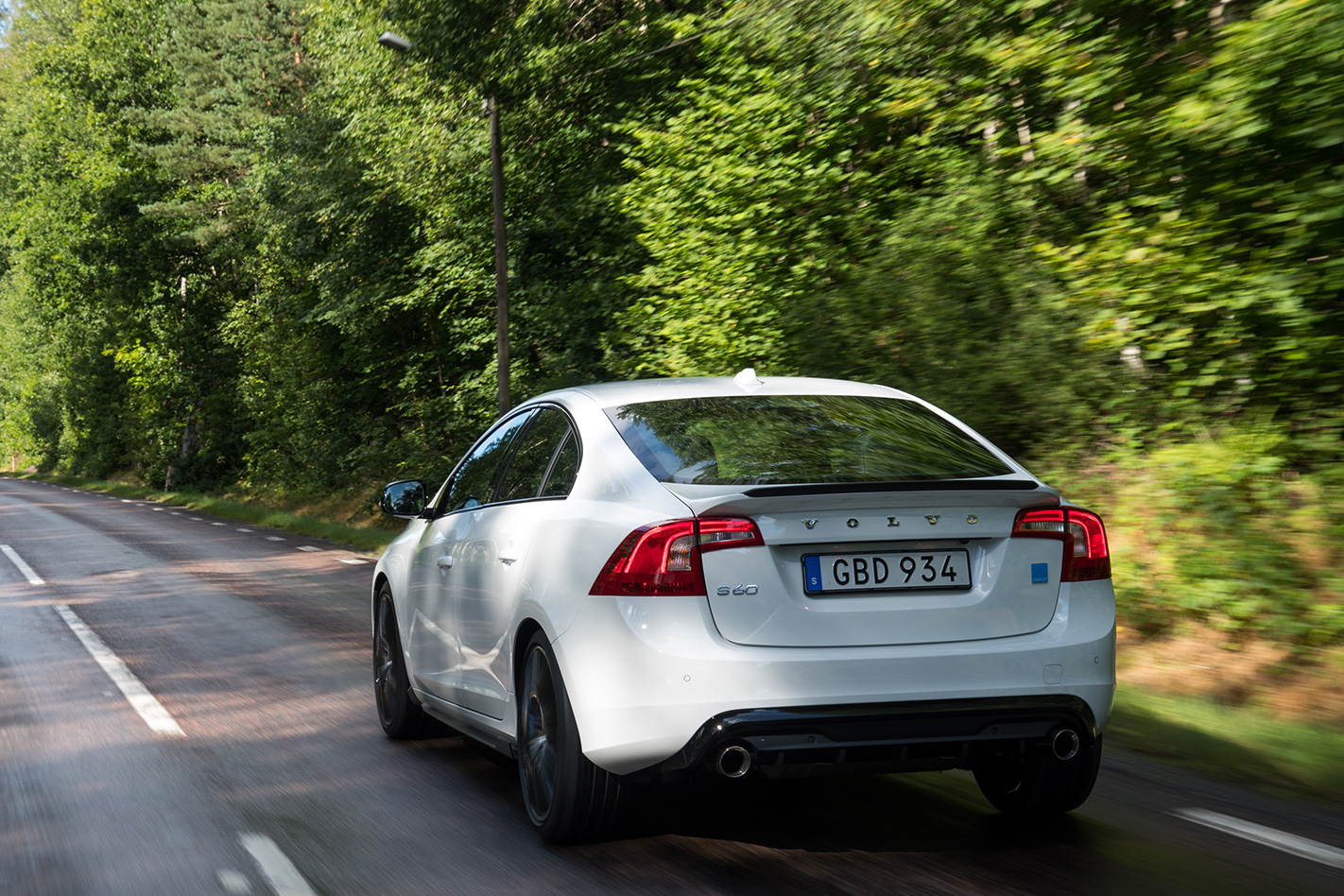
“The Model Year 18 S60 and V60 Polestar models are the pinnacle of our road car programmes that we have been developing successfully since our first road car was launched in 2013,” he says.
“The aerodynamic enhancements, combined with other small but important changes, further enhances our base philosophy of a performance car for all roads and conditions, transferring technology and learnings from track to road.”
Mercedes-AMG won’t admit it, but there’s a faster, lighter, altogether scarier AMG GT on the way, believed to be the sixth member of the brand’s Black Series, and here’s a first look at its development.
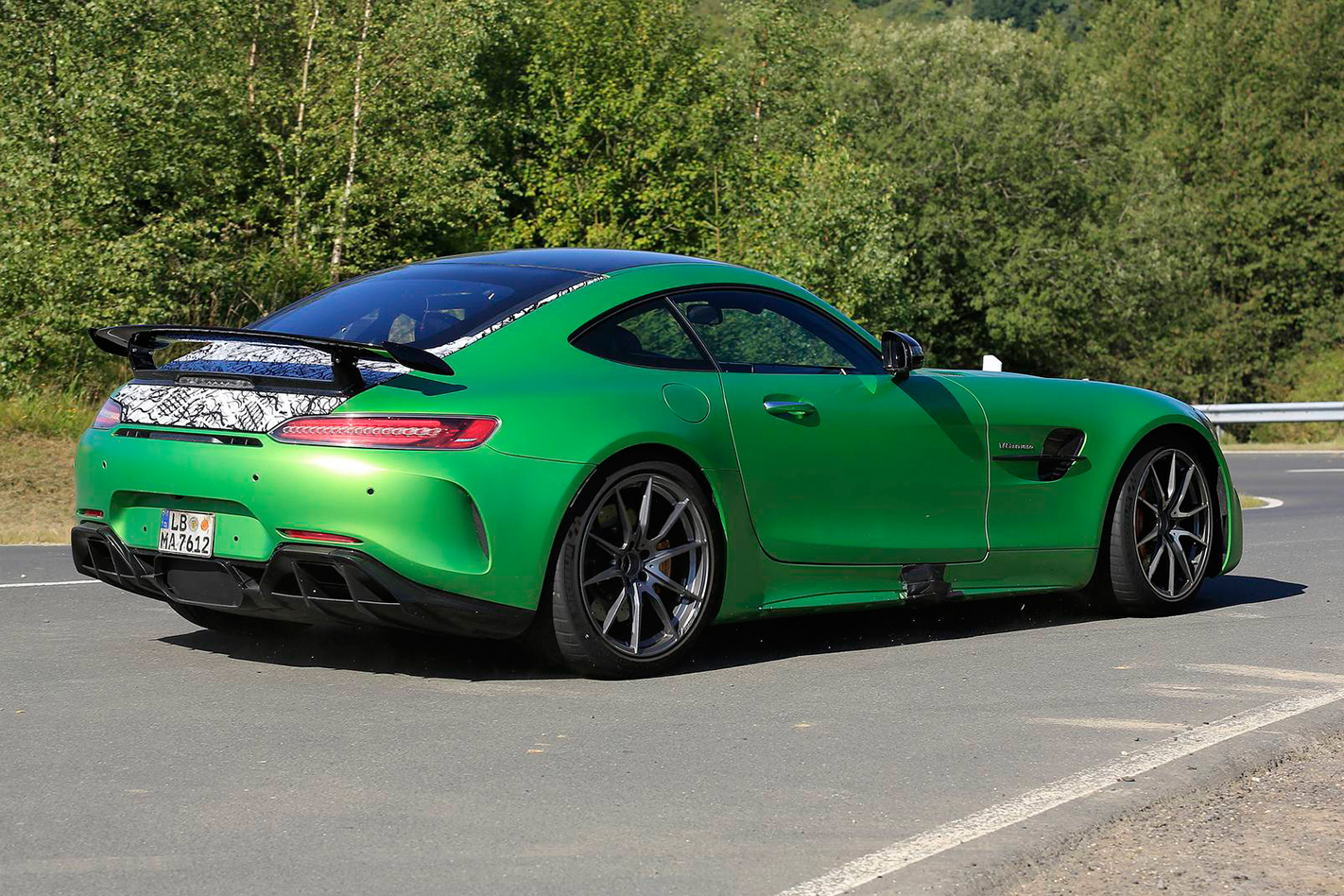
This AMG GT R mule was spotted testing at the Nurburgring with a few tell-tale differences to a normal production version – particularly around its back end.
Glued into the camouflaged rear hatch is lightweight polycarbonate in place of traditional glass. In the video above the window looks production-ready with demister grid lines wired into it. On top sits a normal AMG GT R spoiler with its adjustable blade dialled to a sharp angle for increased downforce.
Beneath the rear bumper is a modified diffuser and exhaust taken from the AMG GT4 racing car (below). It is similar in style to that of the normal GT R, though its central tailpipe has been deleted and a more conventional twin outlet system has been retained.
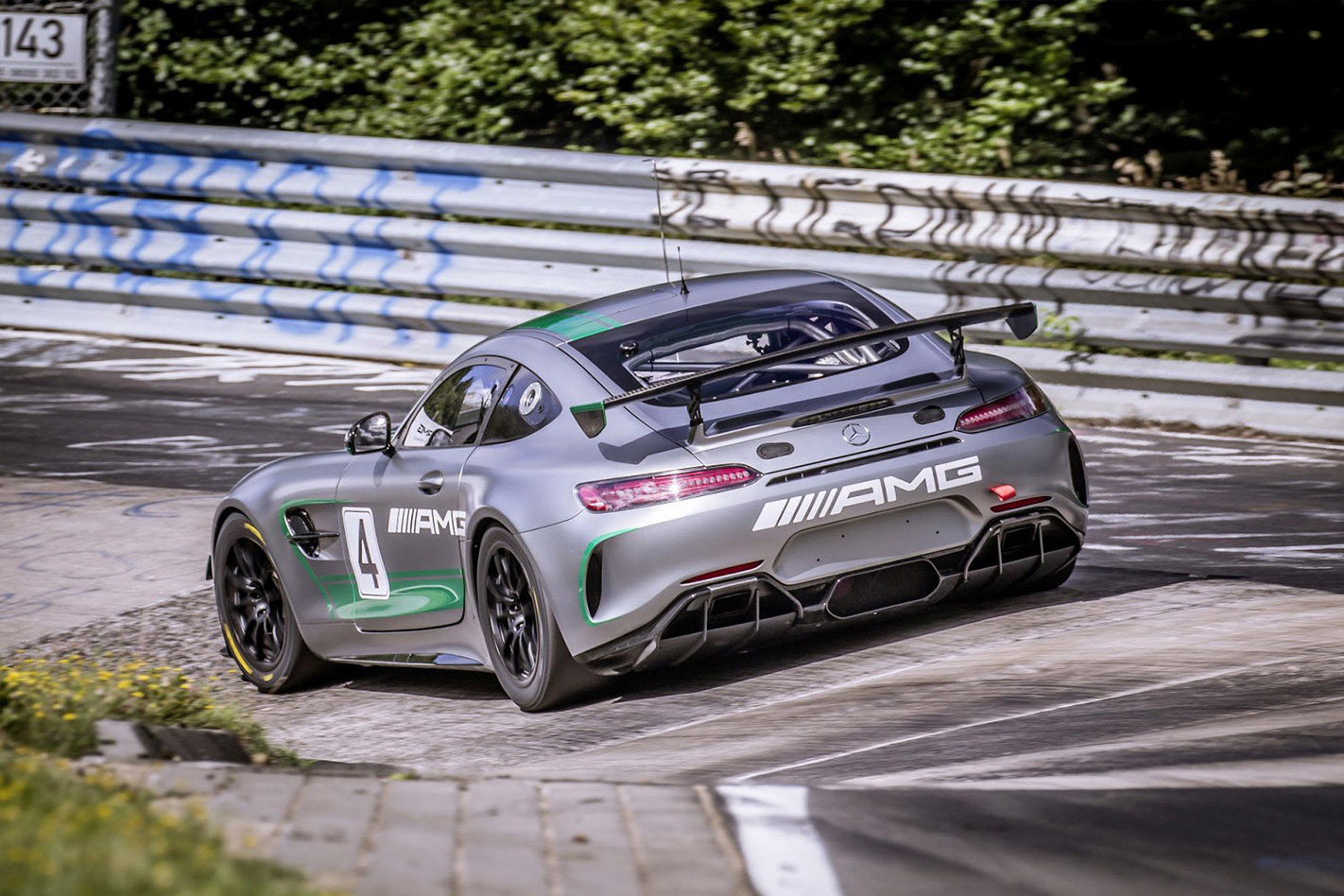
Further clues that this is an early Black Series prototype include the fitment of every optional performance-adder available for the regular GT R, including carbon-ceramic brakes (which were standard on the SLS Black Series), fixed-back bucket seats, and the Clubsport Track Package, which includes a rollover cage and four-point harnesses.
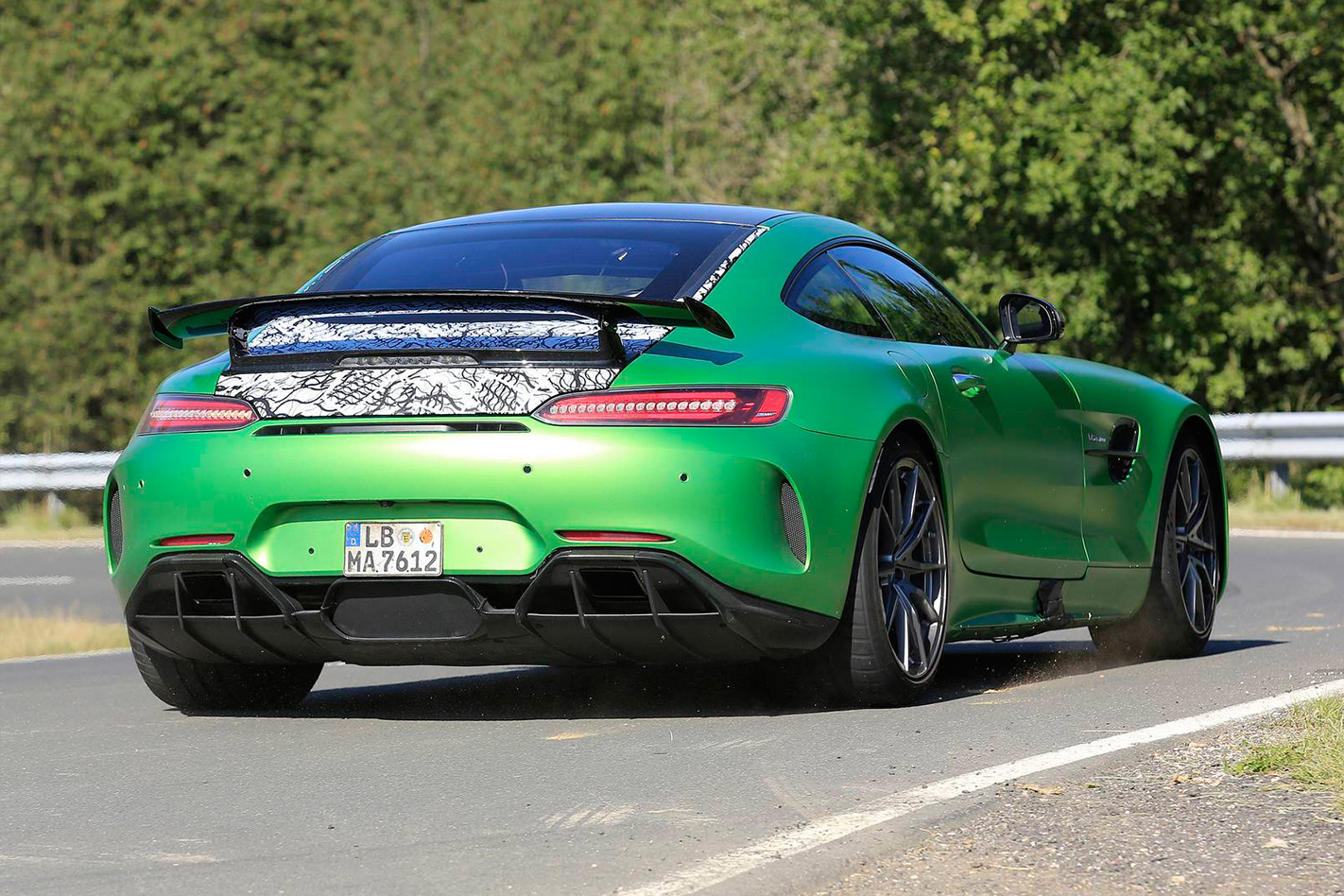
Elsewhere it’s standard GT R fare, though this car is unlikely to be testing with the regular 430kW/700Nm engine tune. AMG’s 4.0-litre twin-turbo V8 produces as much as 450kW/850Nm in the E63 S. A GT Black Series would almost certainly reclaim its flagship power status with at least 450kW, though perhaps with less torque than the top-billed E-Class.
Moers has told Wheels previously that “the chassis of the GT R is capable of a little more power output, but we’re not going to put an E63 engine into a potential Black Series, that’s not going to happen because an E-Class’ 4.0-litre V8 is a torque engine.”
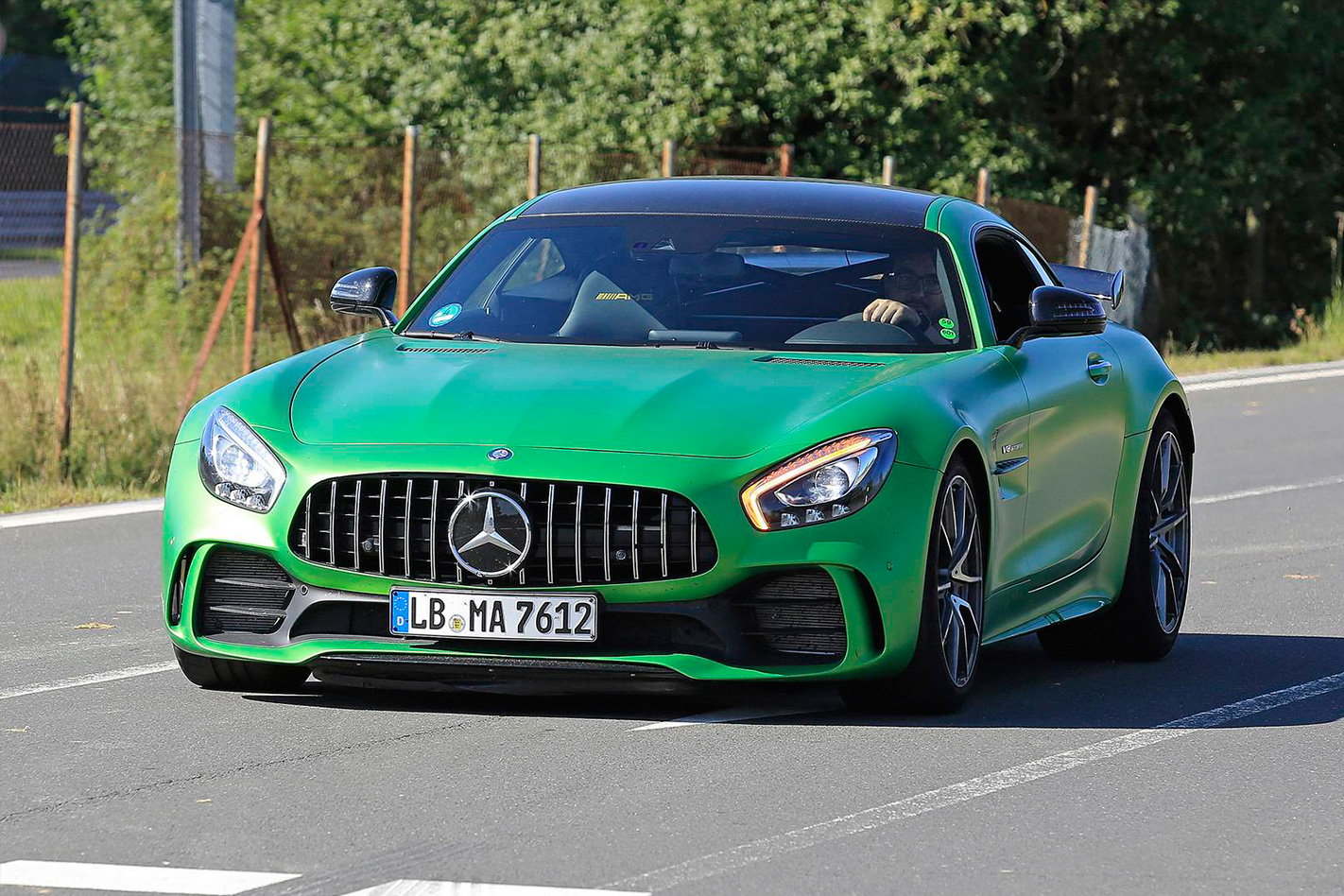
In discussing the hypothetical addition to the GT line-up Moers put the focus on driving dynamics rather than outright grunt. Reducing weight with an even more extensive use of alternative materials (such as the acrylic rear window seen above) would go some way to achieving that, as would further exploitation of the GT R’s four-wheel steering.
“With the GT R we moved the bar so far. [Black Series] needs extra driving dynamics on top of the standard car,” said Moers.
Black Series versions typically arrive at the end of a model’s life cycle and are always based on a two-door product. An AMG GT Black Series seems ripe for picking. Speculation suggests it will go on sale in 2018, and that it could be shown as early as next month at the Frankfurt motor show as part of AMG’s 50th anniversary celebrations.
Images of the 2018 Porsche Cayenne have been inadvertently leaked online by UK motoring website Auto Express, ahead of its official launch later this week.
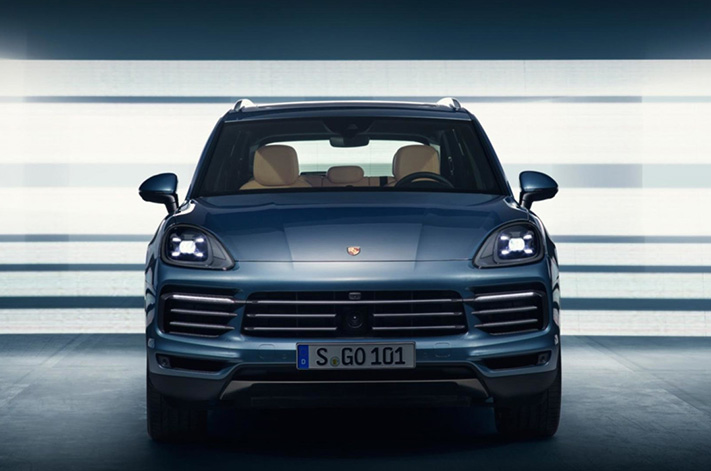
As the pics show, the new Cayenne’s designs changes are evolutionary, though the model shown in the pictures has a more conservative appearance thanks in part to its wider grille.
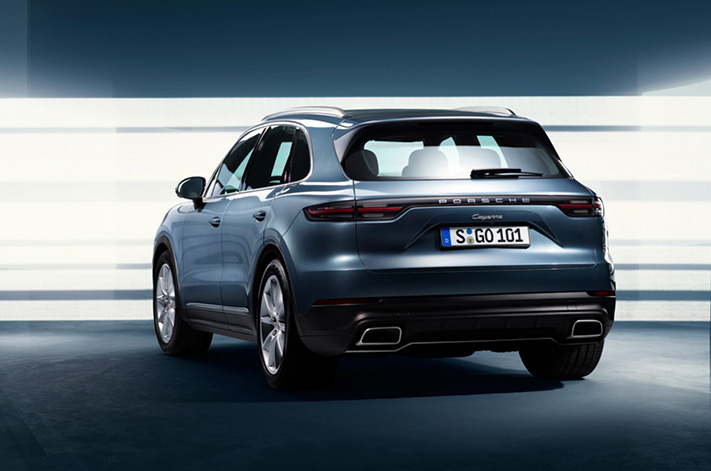
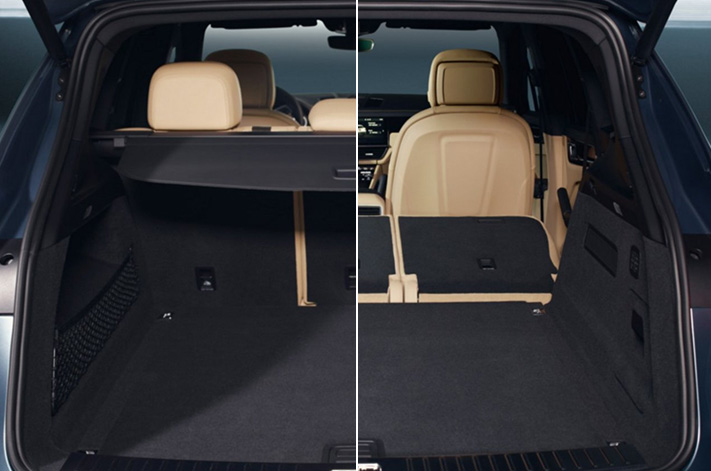
There are a few noticeable differences though, including the sleek LED tail lights inspired by the Panemera Sport Turismo wagon. The interior is also similar to the Panemera’s, particularly its dashboard that’s dominated by a large 12.3-inch panoramic touchscreen and gauge cluster with five main displays.
The “E3” Porsche Cayenne shares its MLBevo underpinnings with the Audi Q7 and is expected to use a similar engine line-up, including a more powerful version of the twin-turbo, electrically supercharged 320kW/900Nm 4.0-litre diesel V8 that powers the SQ7.
It’s also expected to carry over the 3.0-litre V6 petrol and diesel engines from the current model, as well as a smaller turbocharged 2.0-litre four-cylinder engine that is used in the Macan range, which could lead to more affordable variants.
This Cayenne should also spawn another plug-in hybrid version with a similar 4.0-litre V8-powered petrol-electric drivetrain to the 500kW/850Nm system used in the Panamera Turbo S E-Hybrid.
Rumours also suggest that this new generation Cayenne will be fully-electric capable as part of Porsche’s Mission E project once that begins to roll out to their mainstream models.
Porsche Australia is unable to reveal further information about the 2018 Cayenne, including local range details, until after the official launch on Wednesday morning (Tuesday evening in Germany).
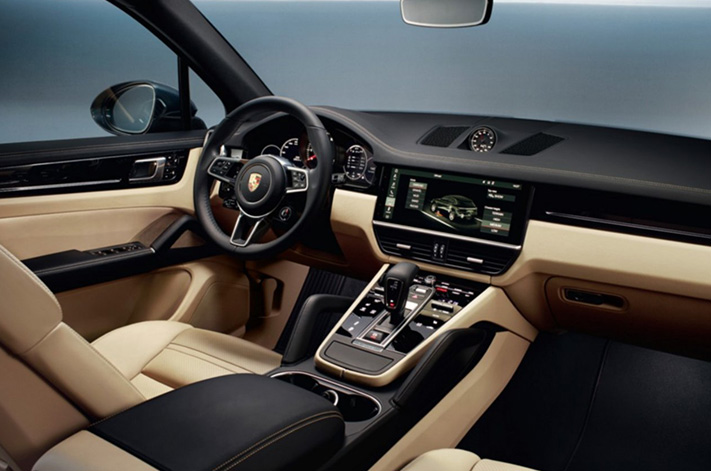
THE 2018 Porsche Cayenne has broken cover courtesy of the red-face folk at UK motoring site Auto Express, which inadvertently published pictures of it before its official unveiling this Wednesday.
As far as leaks go, it’s not terribly exciting as the new Cayenne is barely a departure from the current model. If anything, it looks a bit more conservative thanks in part to its wider grille.
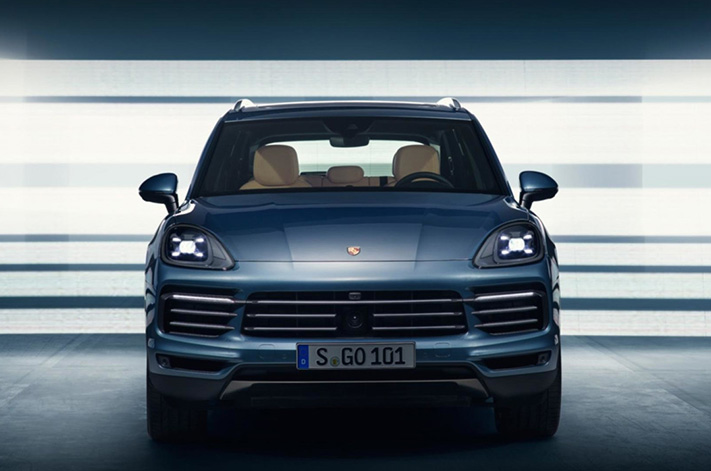
The “E3” Porsche Cayenne shares its MLBevo underpinnings with the Audi Q7 and is expected to use a similar engine line-up, including a more powerful version of the twin-turbo, electrically supercharged 320kW/900Nm 4.0-litre diesel V8 that powers the SQ7.
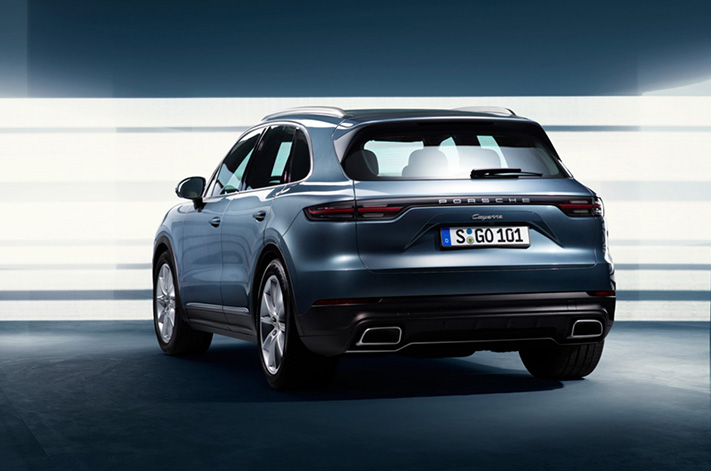
This Cayenne should also spawn another plug-in hybrid version using a similar 4.0-litre V8-powered petrol-electric drivetrain to the 500kW/850Nm system that is used in the Panamera Turbo S E-Hybrid.
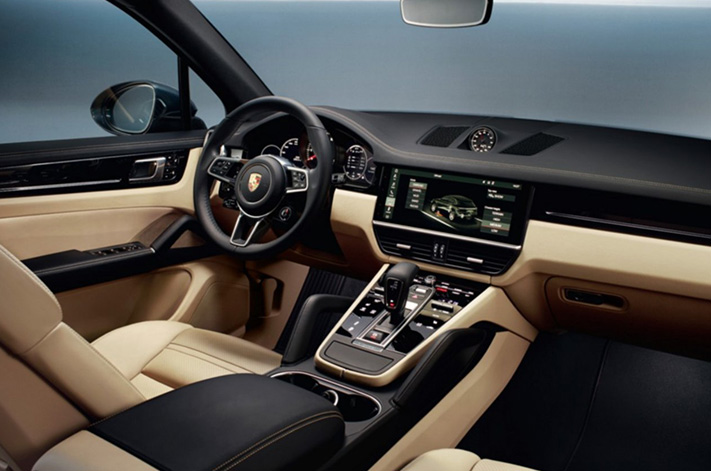
Porsche Australia is unable to reveal further information about the 2018 Cayenne, including local range details, until after the official launch on Wednesday morning (Tuesday evening in Germany).
