
If Apollo 8 was good enough to land astronauts on the moon, they didn’t need to hop out and fix the craft for its return trip.
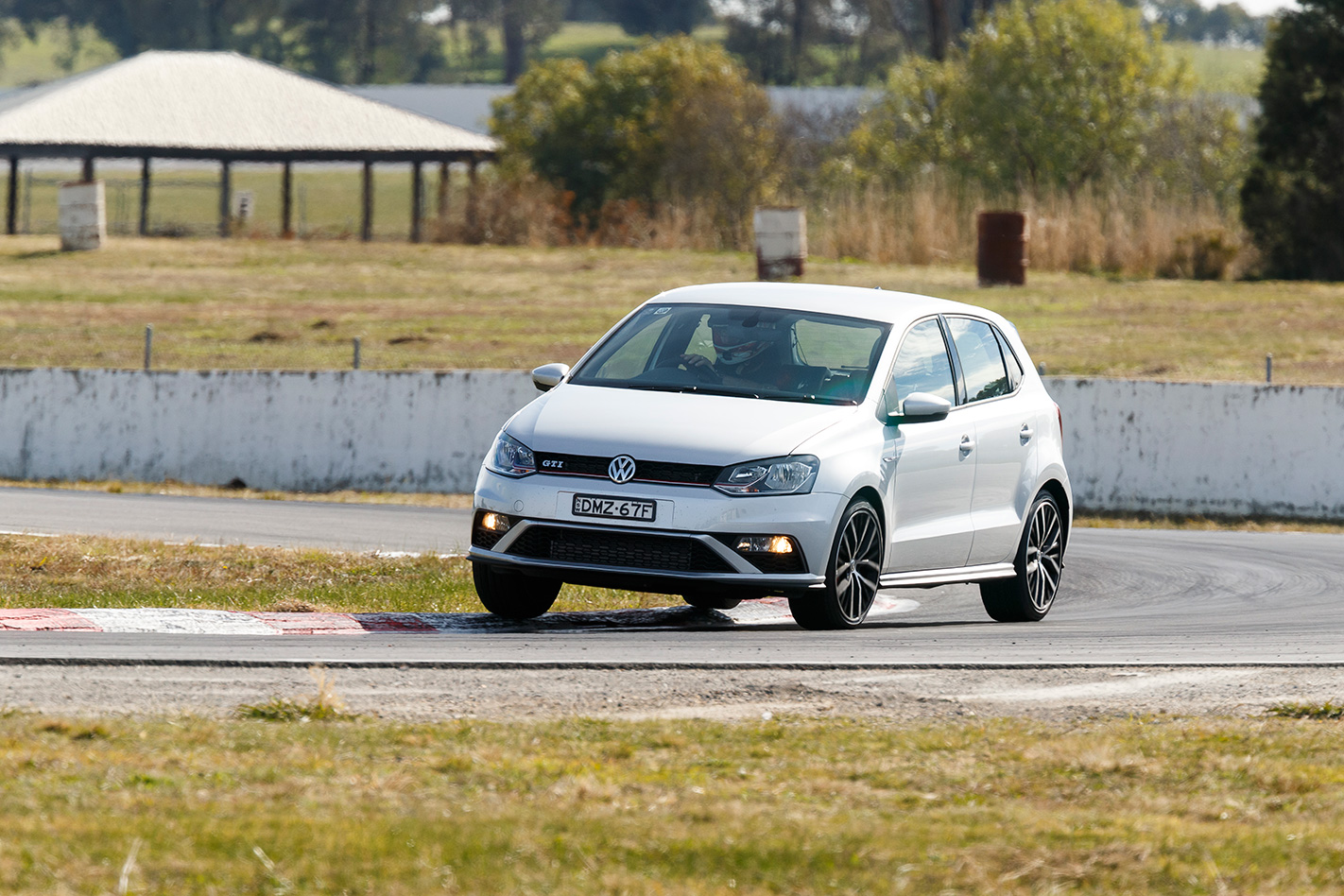
The same goes for the Volkswagen Polo GTI at Bang For Your Bucks. The addition of two-mode dampers in 2016, at no cost to its bargain price, gave it deadly fangs to sink into the competition. And it ended up swiping second in the sub-$50K category and top honours overall.
This year it seems VW didn’t fix what isn’t broke. This might be because its sizzling replacement is about to land with a bigger 2.0-litre four, but either way, the Polo GTI’s back to defend its crown without an extra arrow in its bow.
Now, conspiracy theorists might put this down to the formula’s flaws rather than the car’s talents, but let us explain. While the numbers work in dark and mysterious ways, the gist of the formula is to work out how a contender stacks up against the rest.
Which means the field’s average performance is the benchmark to beat every year. Still with us? Good.
Keeping that in mind, consider the Polo GTI has gone from being one of the meekest in the $0-$50K class to one the burliest. Mini’s fizzing JCW, VW’s big brother Golf GTI, or Peugeot’s fat-tyred 308 GTi aren’t here to hold the Polo’s head under water. And it’s used their absence to wreak havoc in track and field. Just peek at its data rankings to the left. They spank its respective third, fifth, and seventh from last year.
Okay, so you might be wondering why this hasn’t shot the baby GTI to the top of this category’s rankings if its sticker price remains so damn cheap. Well, the universe has a funny way of balancing things out.
Without the same big hitters this year, the category’s average price has dropped from $39,219 to $33,891, robbing the Polo of its relative thrift factor.
However, the ankle-biting GTI’s appeal doesn’t only lie in cold, hard data. That turbo 1.8-litre drivetrain not only feels more refined than any other sub-2.0-litre mill on test, but punches harder as well. Its meaty torque band swells early at around 2000rpm and carries past its 6000rpm redline, leaving one judge convinced it’s this Bang’s muscliest hatch.
Of course, ticking a manual box rewards it two-fold. The engine piles on another 70Nm, VW’s seven-speed dual clutch not being able to handle that, and slashes its crucial price. More importantly, though, is it’s filled with nice long second and third gear ratios.
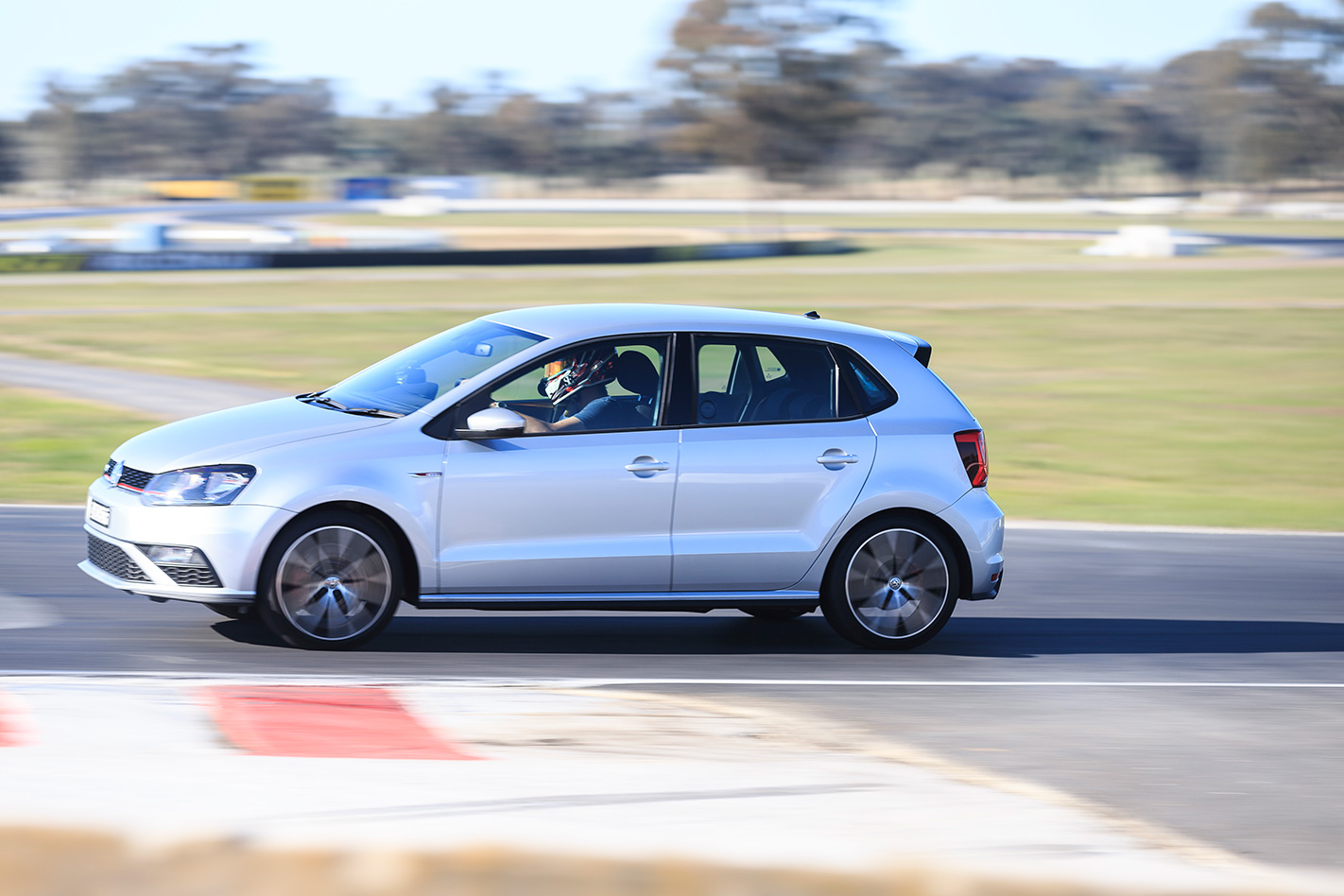
What doesn’t change with transmission choice is a solid chassis underneath the baby GTI. VW’s engineers must have hacked into the Porsche suspension department’s computers because the Polo’s dampers strike a brilliant balance between suppleness and feel.
This gifts the Polo ample grip in the bends and means it never feels like it’s going to bite. The handling setup feels tuned for stability, rather than liveliness. Although some judges reckon the GTI could channel its inner WRC if Volkswagen wound back the stability control’s intrusiveness.
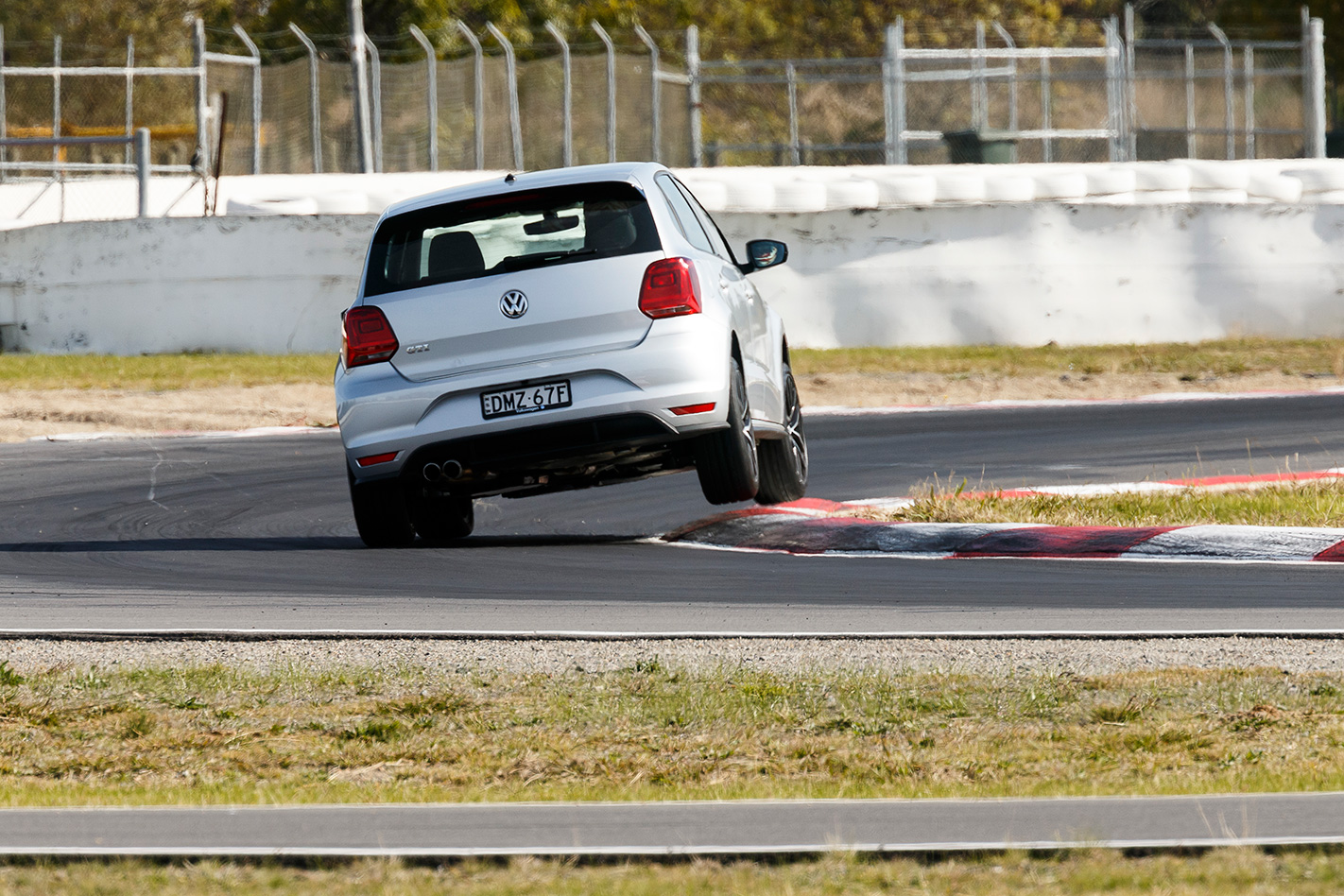
No surprise then the Polo GTI rewards clinical driving. Those front tyres have a hard enough time trying to tame such grunt with an ABS-based diff system, and early throttle will push the nose wide. But drive it cleanly and it’s a blast to punt around.
All in all, though, a category win just wasn’t to be. As new foes shifted the focus from price to performance, the little Polo GTI washed up lacking in the shadow of all but one contender. There is, however, always the top-gong to go. And if history’s any clue, the Polo GTI could be passing by the sub-$50K second place on its return trip to overall numero uno. We’ll just have to wait and see.
SPECS Engine: 1798cc inline-4, DOHC, 16v, turbo Power: 141kW @ 4300-6200rpm Torque: 320Nm @ 1450rpm Weight: 1234kg
TIMES 0-100km/h: 6.55sec (2nd) 0-400m: 14.80sec @ 156.03km/h (2nd) Lap Time: 1:43.5sec (3rd)
SCORES Price: $27,690 Bang Index: 98.5 Bucks Index: 122.4 BFYB Index: 108.1
WARREN LUFF SAYS “It’s been a mainstay of BFYB over the years and is still a worthy contender today. It’s so much fun out there, it does everything right, and feels like a traditional hot hatch. You can slide it in with the rear of the car. You can feel the electronics wanting to come back in but it’s not too bad. It gives you that fun factory along with the reassurance it’s there to catch you if it goes too far. The brakes are good. The seating position is fantastic. You can get nice and low and feel like a part of the car. Will be toward the top again this year no doubt.”
JUDGES NOTES David Morley – 3rd: “Pretty grown up for a tiddler. Good combo of ride and handling.” Dylan Campbell – 5th: “Love it to bits and would own one, I just had more fun in other cars” Louis Cordony – 4th: “Grippy chassis and grunty engine make an accomplished ankle-biter” Tim Robson – 3rd: “I’m a front-driver man, and I’m a big fan of the GTI. Lots of heart.”
WHAT IS IT?
The top-spec variant of Peugeot’s compact SUV, and the only way to opt for diesel power from the four-model 3008 line-up
WHY ARE WE DRIVING IT?
While we drove the 3008 in Allure spec ahead of the car’s local launch, this was a chance to drive the diesel and compare it back-to-back with the lower-rung turbo-petrol variants.

Mazda CX-5, VW Tiguan, Hyundai Tucson, Kia Sportage, Renault Koleos, Subaru Forester, Ford Escape
THE WHEELS VERDICT
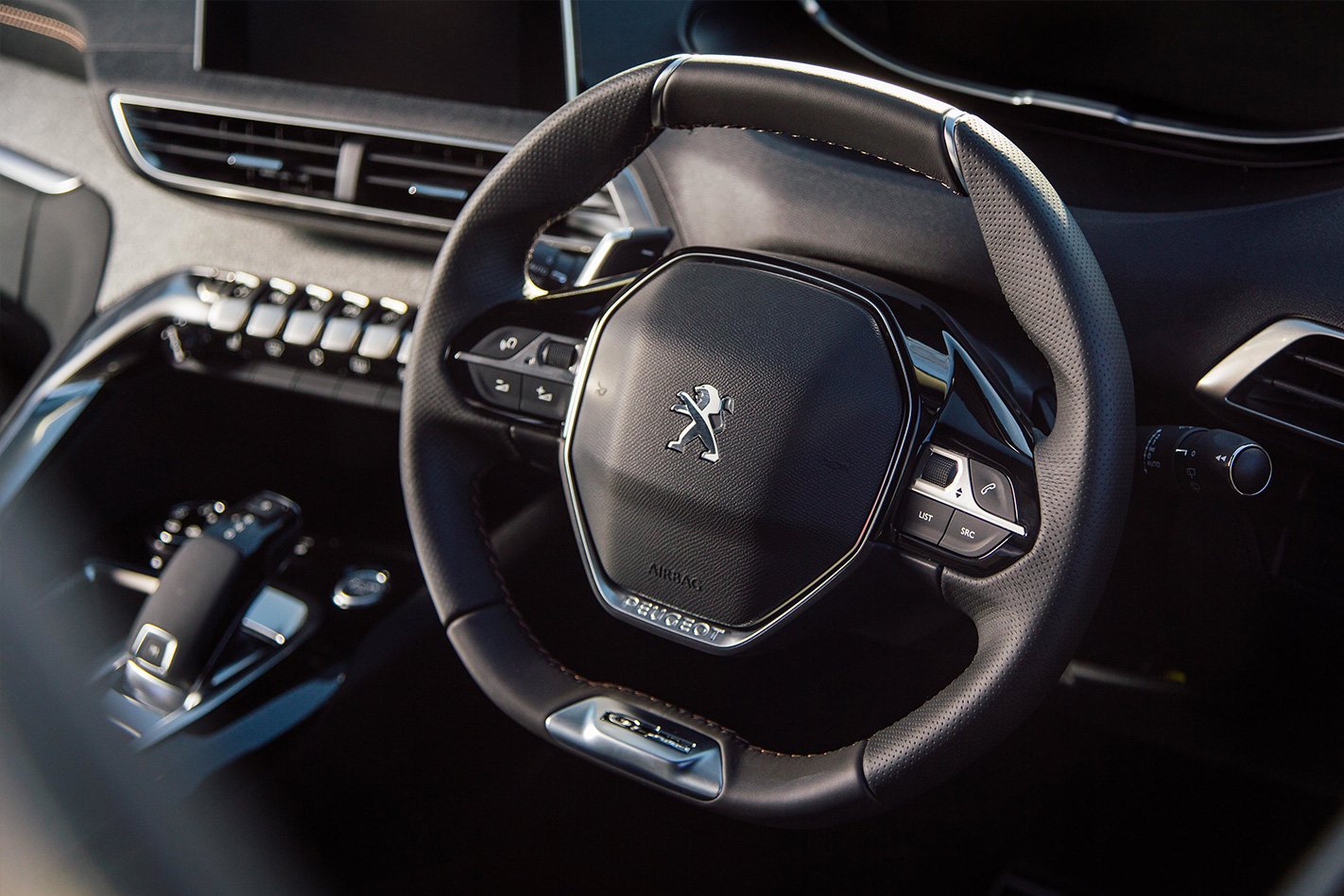
The Peugeot 3008 bristles with showroom appeal thanks to distinctive exterior styling, a premium-feeling interior, high equipment level, and decent packaging. However in the top GT spec, it’s expensive, there are features left on the options list, the engine is nothing special, and ride is restless and unsettled due to the 19-inch wheels.

MINUS: Diesel engine is a bit gruff and doesn’t like to rev, and auto can dither; 19-inch wheels punish the ride
THE WHEELS REVIEW
Think about the classic bronzed Aussie stereotype. We’re apparently a laid-back lot; unpretentious, laconic, easy-going, simple to please. Except we’re actually not, especially when it comes to cars. Somewhere along the line, we caught a taste for the good stuff, and simple doesn’t cut it anymore. We’ve become a bit up ourselves. Look at Peugeot’s model strategy with new 3008 compact SUV as evidence of the continuing trend for car buyers to shell out for a more premium experience.
The model offered as a base variant in Europe is absent here; instead we’re pointed straight toward the more generously appointed Active model as an Aussie entry point. We drove the next-rung-up Allure, and came away mostly won over by the generous helping of Gallic charm and perky 1.6-litre turbo-petrol engine.
But what about buyers who want a diesel, of whom there are still plenty in this segment? Well, Peugeot demands you head straight past the Allure, skip over the $43,490 GT Line, and pony up $49,490 for the 2.0-litre BlueHDI-powered GT model.
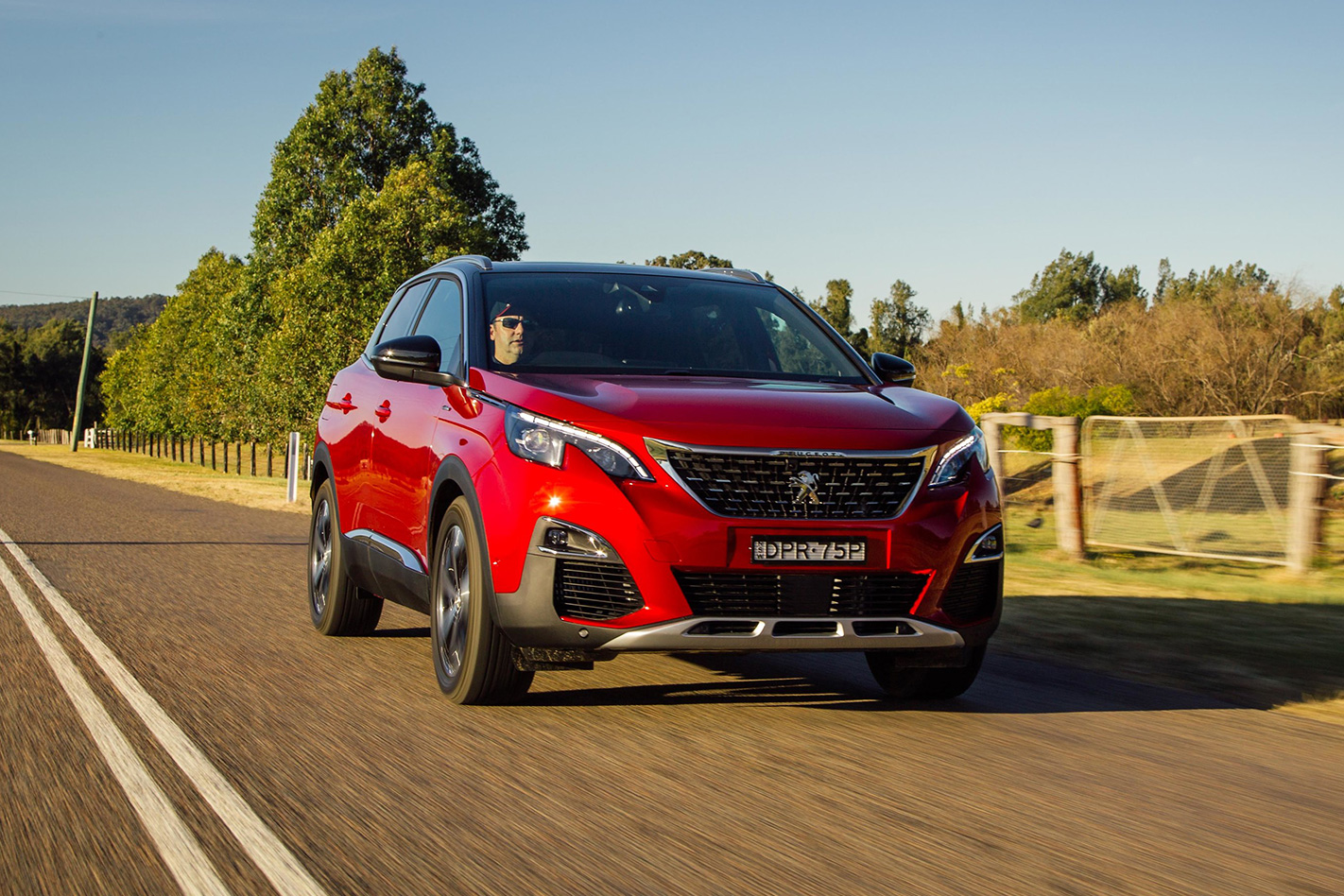
Plumping for the diesel does bring a claimed shaving of one second from the 0-100km/h time of the 1.6 turbo petrol – 8.9sec versus 9.9 – but probably more relevant for most buyers is the consumption improvement: 4.8L/100km for the diesel, versus 7.0L/100km for the likable turbo-petrol. Coincidently, according to the trip computer, it was this latter figure that we averaged in the diesel during the launch program, and is probably representative of what most owners will achieve in typical urban driving.
The diesel engine also brings a subtle but detectable shift in dynamics, with the GT feeling a bit less balanced and agile compared to the petrol-powered models. The steering feels a little weightier, probably due in part to the 19-inch wheels, as well as the extra kilos over nose, although the claimed 1433kg is only 62kg heavier than the petrol-powered GT Line. The 3008 GT points agreeably, yet there’s no real sense of connection at tyre level even in brisk driving.
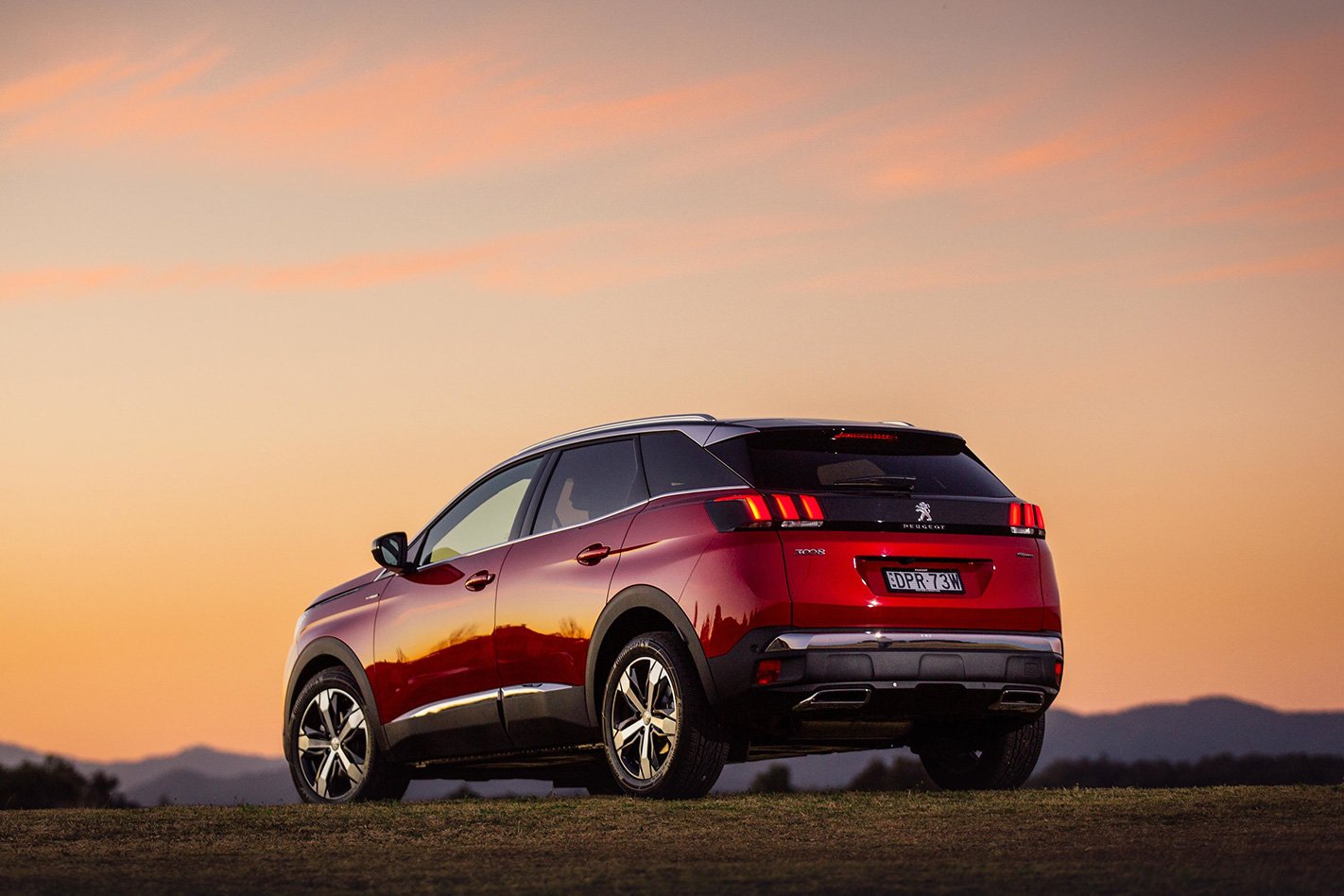
Pricewise, the diesel-only GT is a hefty $6000 jump from the GT Line model below. Main additions come in the form of quilted Alcantara trim and eight-way electric driver’s seat adjustment, seat heating for both driver and passenger, and extendable under-thigh support for both. Leaving the electric tailgate on the options list at $500 seems mean-spirited in the extreme, while the panoramic roof is $2000 not well spent, and the Nappa leather, as nice as it is, seems a bit rich at $2700. Our test car tallied to over $55,000 plus on-roads, which is BMW X1 money, and pretty much cruels the value equation.
Vote for the Peugeot 3008 to win the 2018 Wheels Car of the Year Readers’ Choice competition
SPECS
Model: Peugeot 3008 GT Engine: 1997cc 4cyl, dohc, 16v, turbo-diesel Max power: 133kW @ 3750rpm Max torque: 400Nm @ 2000rpm Transmission: 6-speed automatic Weight: 1433kg 0-100km/h: 8.9sec (claimed) Economy: 4.8L/100km Price: $49,490 (estimated) On sale: Now
At the second annual retro round of the Supercars, HRT will debut a livery inspired by the Monaros and Toranas of the ‘60s and ‘70s.
GM Design Australia exterior manager Peter Hughes says he created the style to pay tribute to HDT while keeping the car looking modern.
“This livery is a direct throwback to the glorious years of Holden’s original factory racing team, which I’m confident the fans will love,” Hughes says.
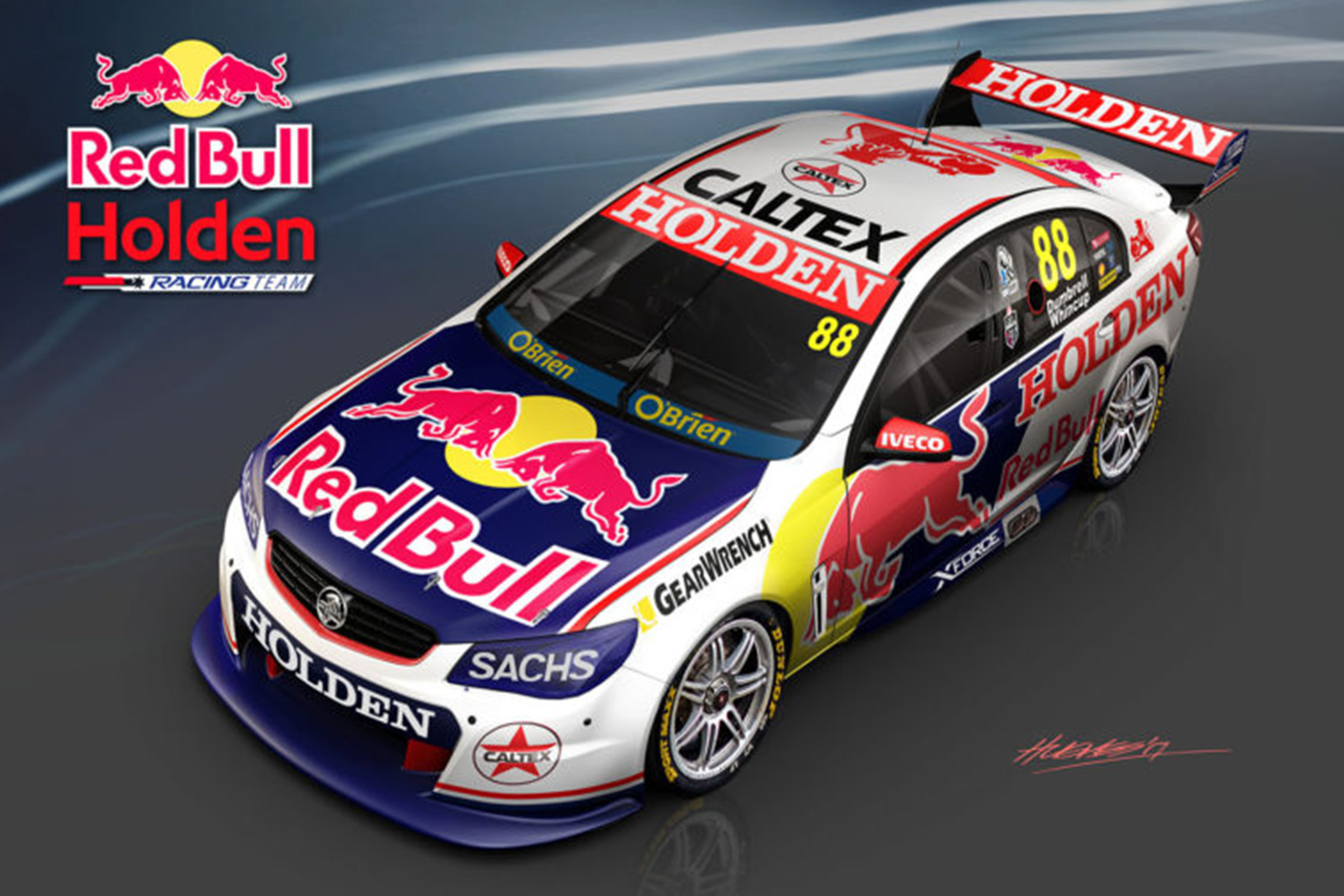
Shane Van Gisbergen and Jamie Whincup, who will be behind their respective wheels, both seem to be fans of the new look, despite neither of them having been around for the era they’re paying tribute to.
“I think our Commodores will look awesome, they’re so different to what we usually race, hopefully the fans like our throwback livery as much as we all do,” van Gisbergen says.
“I’m a bit too young to have seen the original HDT Monaros and Toranas racing, and I don’t even think Lowndesy was around back then, but I’ve been a Holden fan since I was a kid so it’s pretty special that we can now pay tribute to this historic era in our own way.”
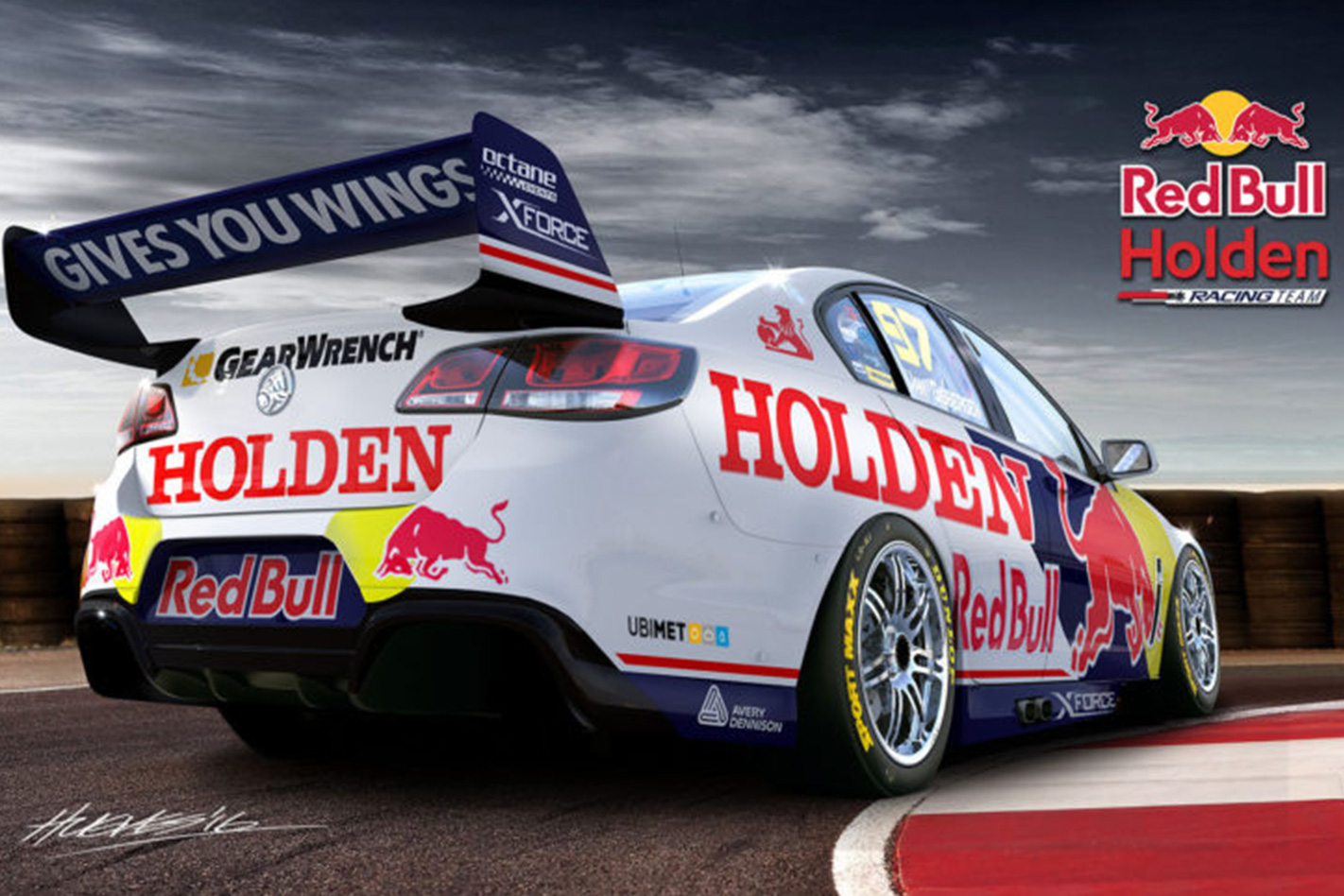
“To have a new livery on the car is exciting. We didn’t do one last year, so that makes it even more special for the team this time, but I hope we get to bust out the retro flat caps again,” Whincup says.
“I think the retro theme is a great way for both fans and competitors to celebrate the heritage of our sport and Sandown is the perfect place to do it. It has so much history and if it means we can keep racing there a few years longer, then I’m all for it.”
The Sandown 500 starts in Melbourne on the 15th of September.
Relax, it’s just a rendering.
Mercedes isn’t going to give any of its SUV models a haircut anytime soon (we’ll overlook the megadollar Maybach G 650 Landaulet, given there was more custom engineering in that one than an entire season of Pimp My Ride), so the Mercedes GLC Cabriolet we’ve concocted here is likely the closest thing you’ll see to one. Ever.
There are a few good reasons for that.
For one, Benz’s exterior design director Robert Lesnik has a personal dislike of convertibles. For him tin-top cars express greater purity of design, unspoiled by the unique packaging needs of modern convertibles. For another, he reckons the market for convertible soft-roaders is incredibly limited.
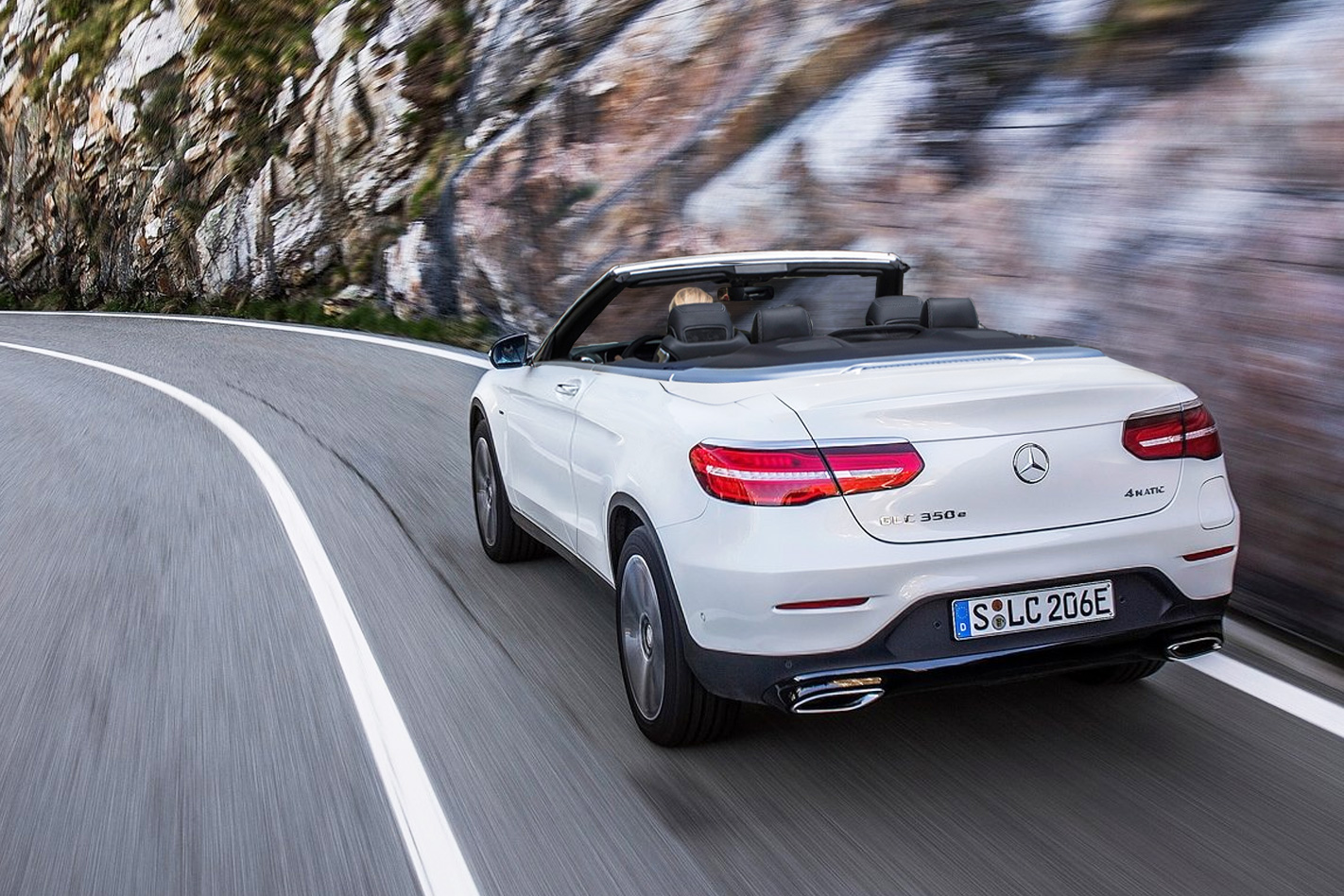
“To sell 500 cars or whatever?”
“If it’s easy to do, then why not, you could have nothing to lose. But to do a whole car for it – for an idea that nobody really asked for – well there’s a reason there’s only one car on the market,” he said, referring to Range Rover’s ragtop Evoque.
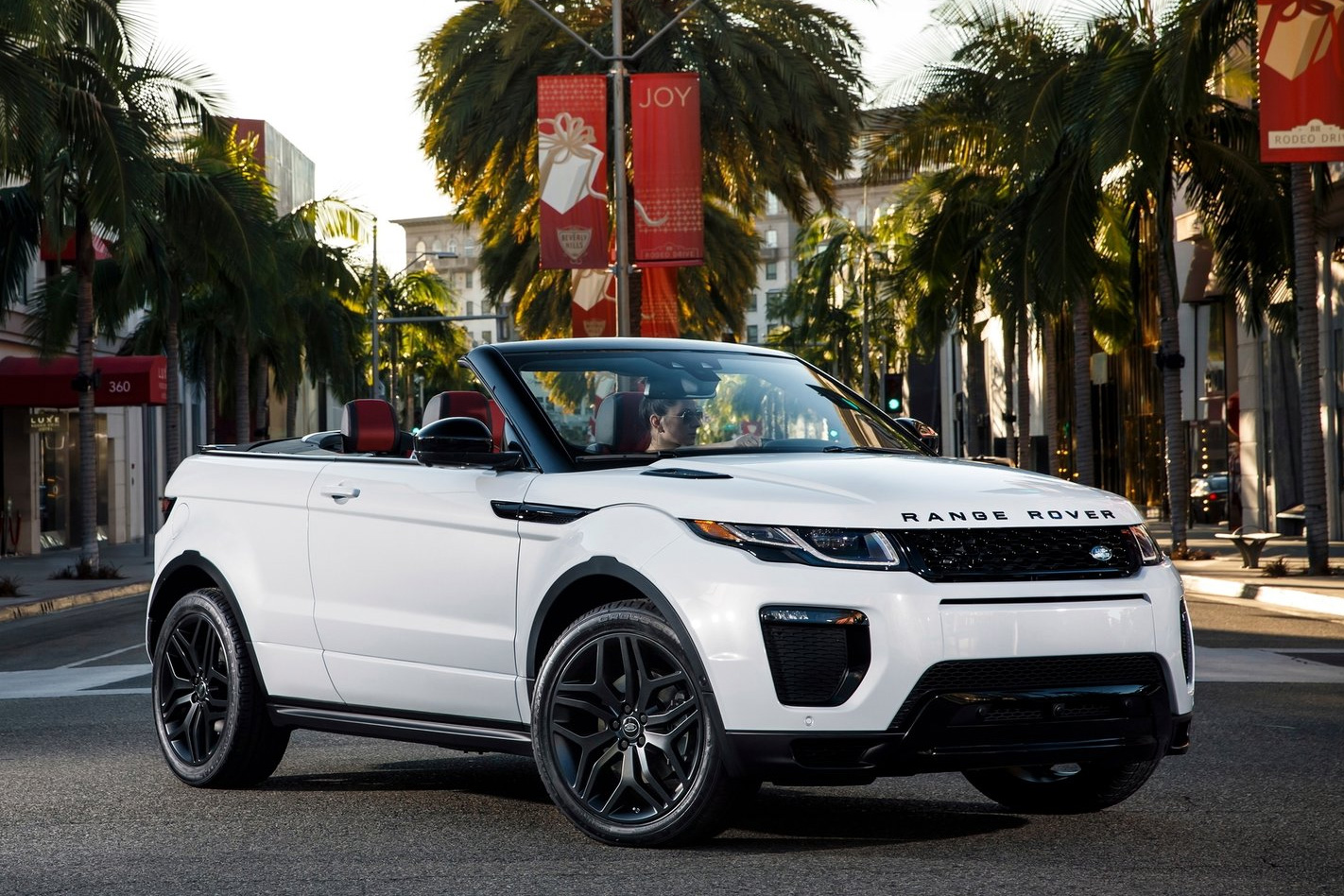
“It’s very easy to do a convertible out of a two-door car, because you have the structure,” Lesnik explained.
“The Evoque, for example, there is a five-door and a three-door. So it’s easy to do, it does not cost much.
“If you have a GLC, for example, you have to change the whole structure to do a convertible, like what Nissan did with the Murano.”
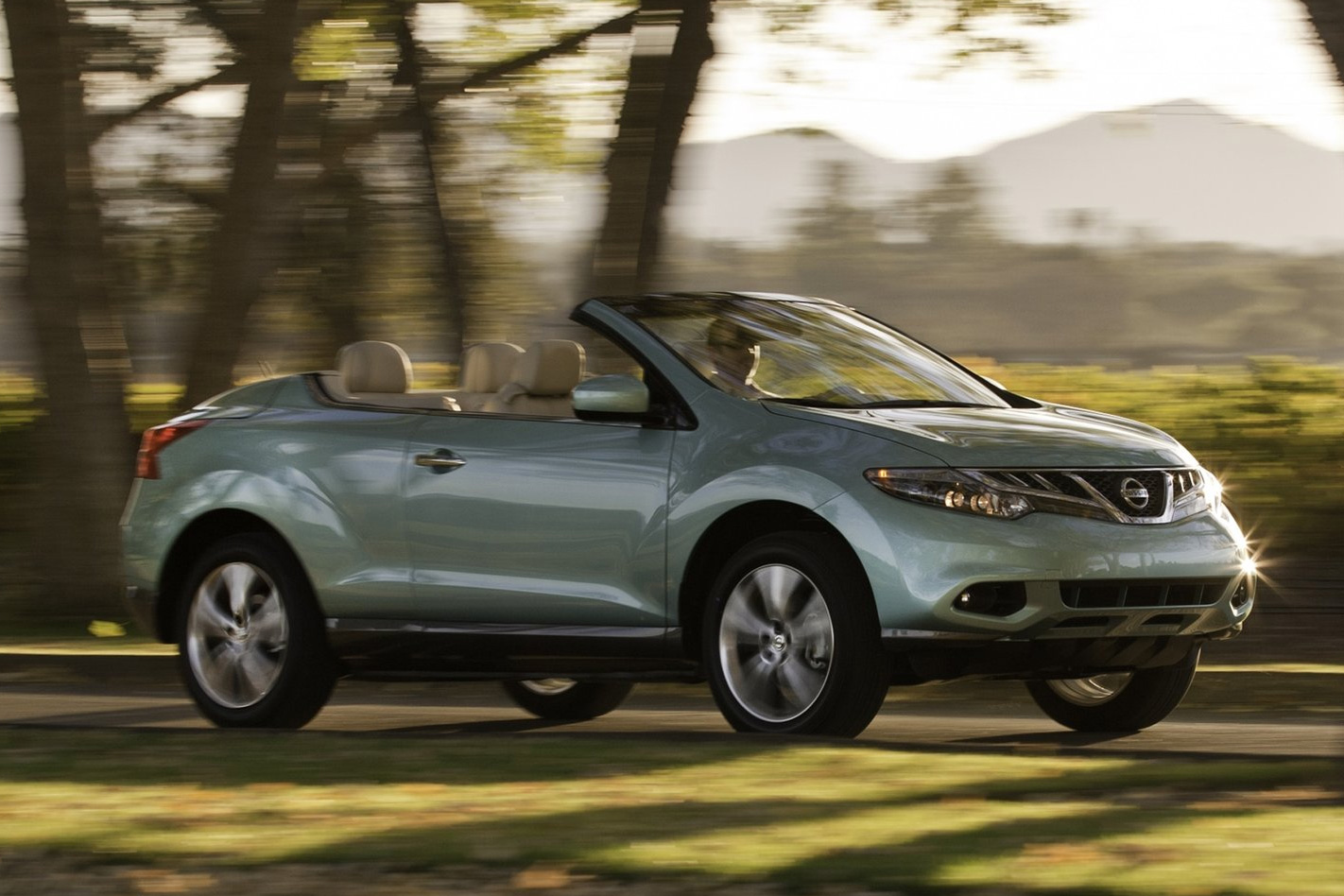
“We should not do everything,” Lesnik said.
Team Johnson is attempting to get ‘Tru-Blu’ back onto the racetrack. Kind of.
A Ford Falcon XD bearing the same ‘Tru-Blu’ livery as the Falcon driven by Dick Johnson in the Bathurst 1000 in 1980 could be entered in Touring Car Masters if rules are changed to extent the allowed entries by two years.
Currently, vehicles made after 1978 are not permitted to enter the Touring Car Masters series, with Johnson’s XD having been built only two years later in 1980.
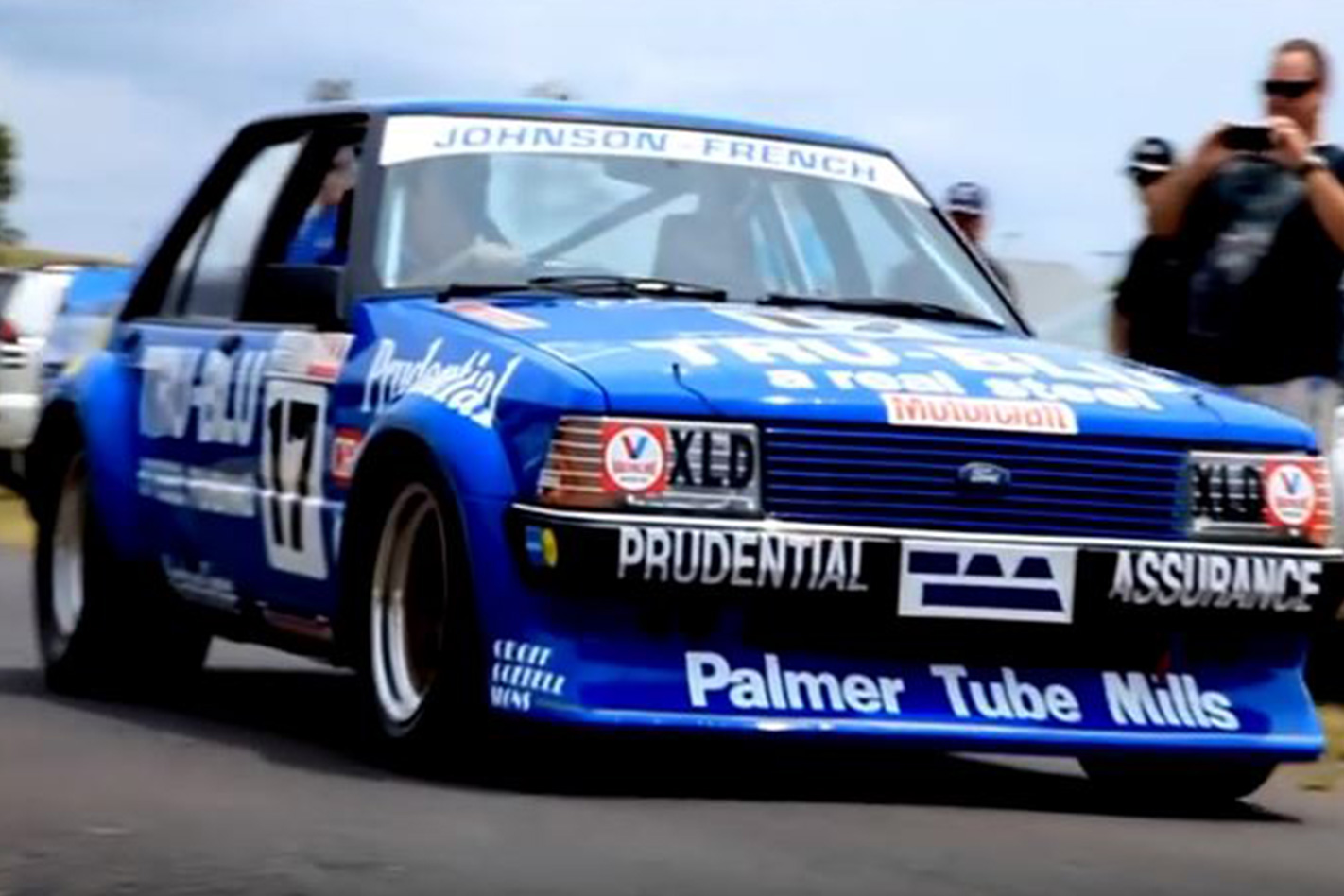
Steven Johnson currently races the Team Johnson Ford Mustang in TCM, and has recently been a strong contender. Current scoring has him 3rd, behind John Bowe in 2nd and Adam Bressington in front.
Allowing Johnson to swap into an XD much like that of his father’s would be mean a nostalgia trip for both the family, and for fans.
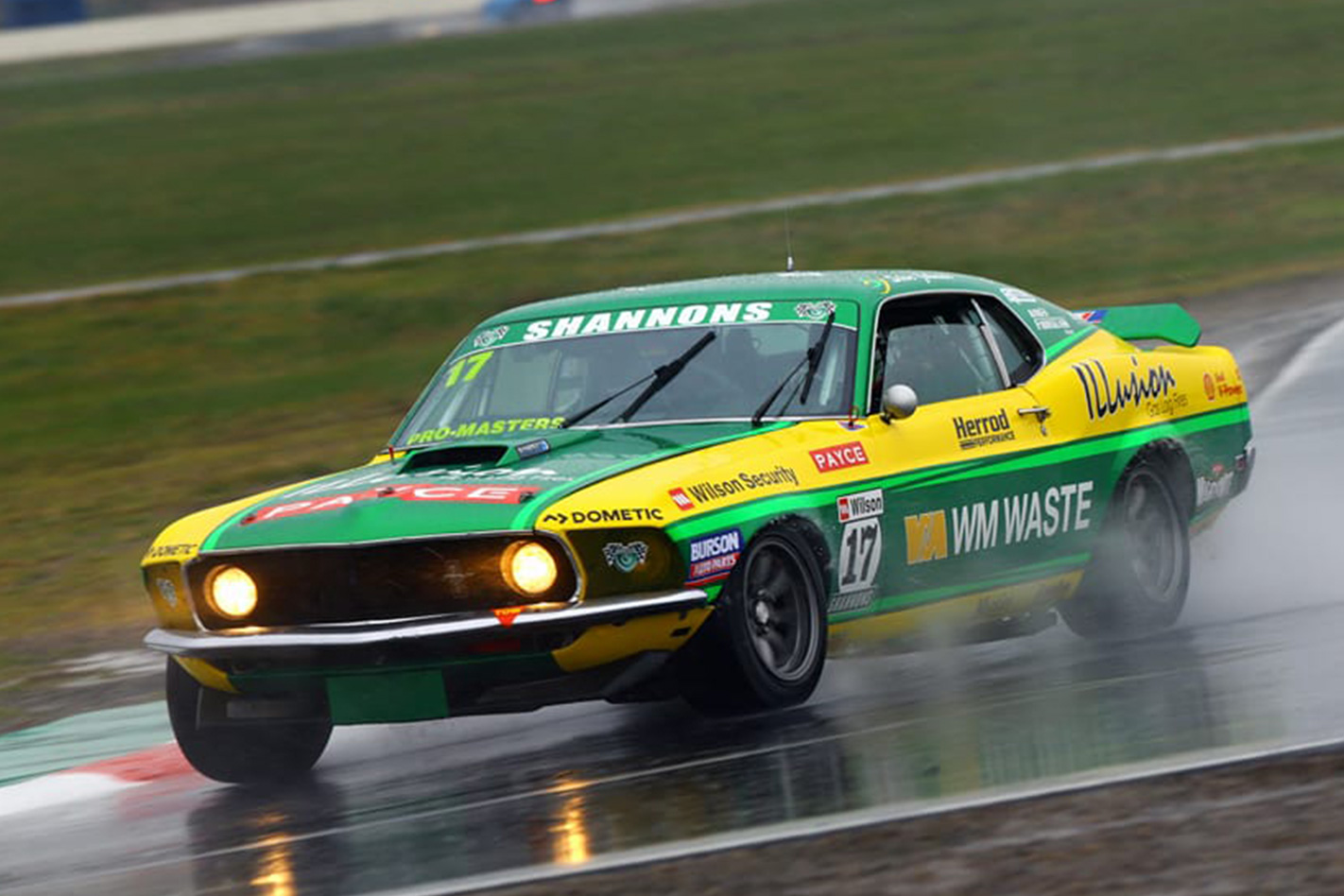
“It’s right on the edge of what’s currently run in TCM and I think most people remember and can relate to the Tru-Blu era.”
The Tru-Blu Falcon might best be remembered for the incident in 1980 when Johnson hit ‘the rock’.
Though we wouldn’t see Dick Johnson behind the wheel, the extension of allowed years for Touring Car Masters would also mean the Commodore could enter as the VB was introduced in late 1978.
After all, a VC Commodore steered by Brock and Richards took the top spot in 1980…
Honda, buoyed by the arrival of its all-new CR-V mid-size SUV, reckons it can boost its fortunes further with the addition of a subcompact crossover to sit beneath the current HR-V.
The HR-V, which shares its platform architecture with the Jazz, but measures slightly wider and longer (not to mention taller), is a small SUV that competes with the likes of the Mazda CX-3, Mitsubishi ASX, and Toyota C-HR. However, despite already existing at the small end of the SUV scale, Honda Australia believes there’s still room to slot an even smaller crossover beneath it.
The only problem is the company doesn’t have a product that fits the bill… yet.
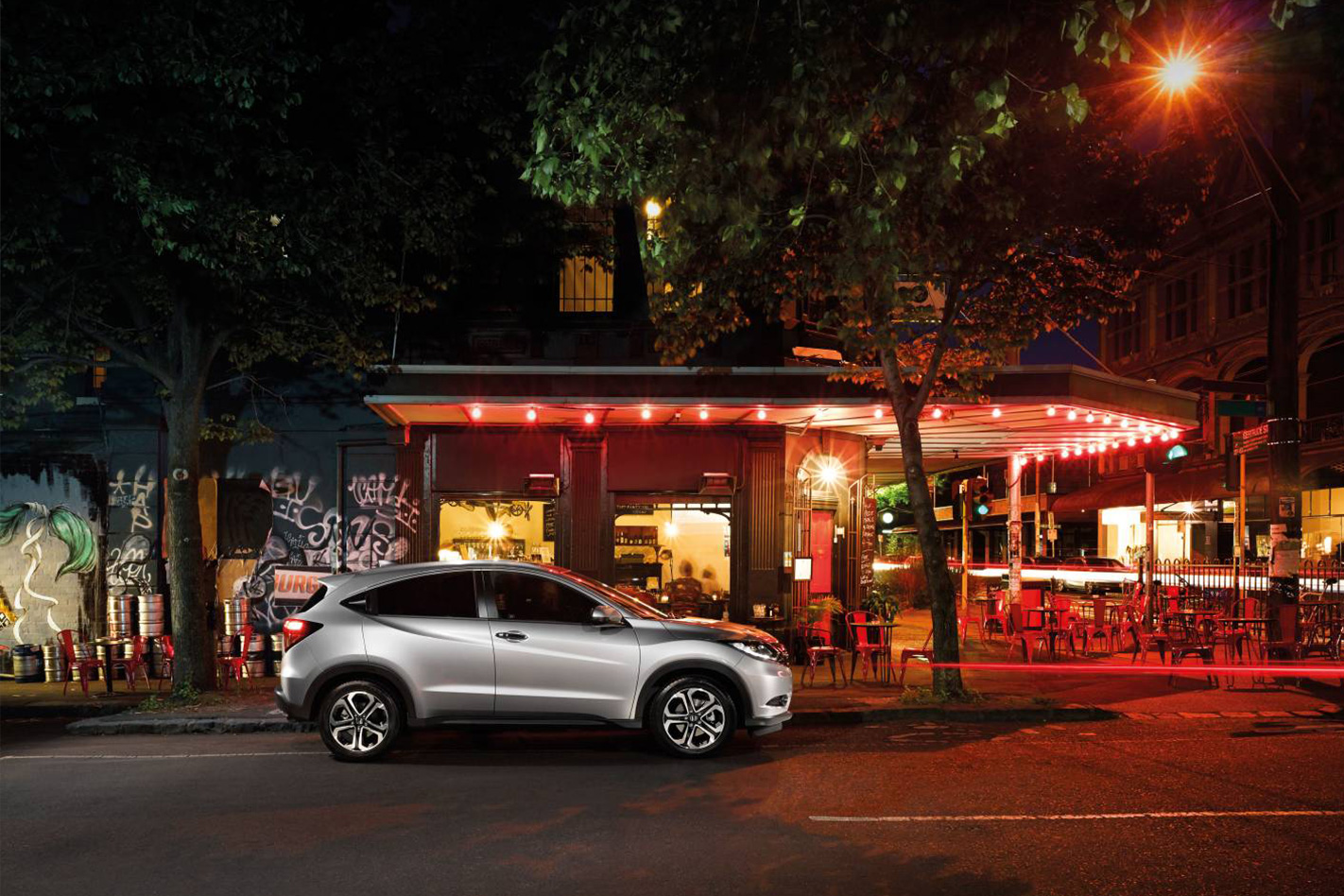
“One of our priorities for now is lighter SUVs,” Honda Australia managing director Stephen Collins said to WhichCar.
“We think it’s probably the next segment to grow.”
“Around the world there are a few options in that regard that are not presently suitable for our market,” Collins said, referring to the BR-V and WR-V crossovers currently on sale in some South East Asian countries.
“BR-V, WR-V… they’re currently made for different markets, so it’s probably not suitable [for Australia] at this generation – but you never know what’s likely to happen in the next generation.”
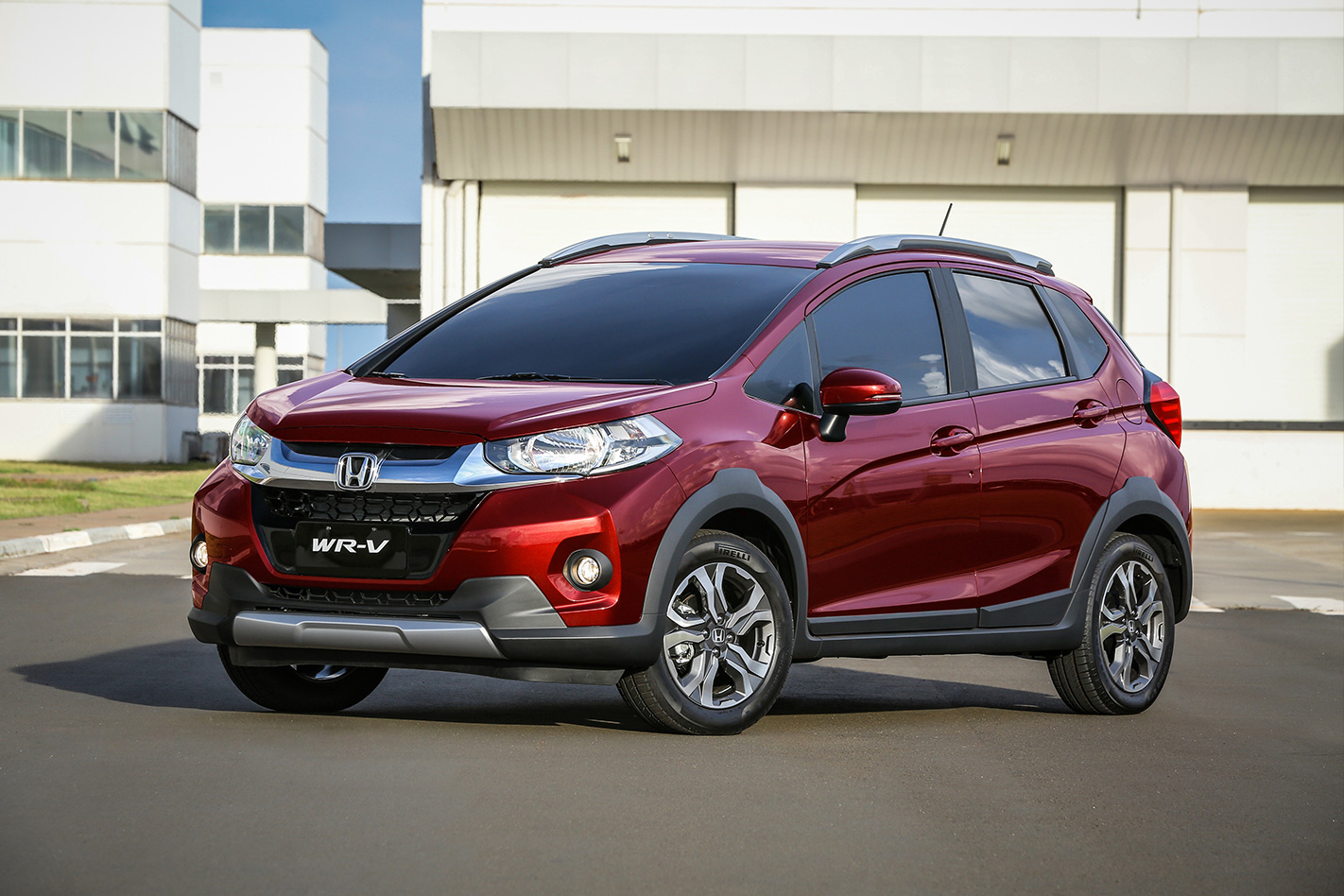
Right now the WR-V is the smallest SUV Honda makes, with external dimensions mere millimetres larger than the Jazz light hatch. However, as a vehicle designed to cater to markets like India and South America, its safety credentials are a handicap for mature markets like Australia. The BR-V in its current guise is actually slightly bigger overall than the HR-V.
Honda has also previously made crossover versions of the Jazz, with rugged plastic body armour placed over regular Jazz sheetmetal and paired with a jacked-up suspension to give the tiny Honda some off-road style charm – if not a genuine go-anywhere capability.
Right now Honda’s SUV expansion plans are still far from locked in, with Collins indicating there isn’t likely to be any new arrivals for Honda – at least not as far as SUVs are concerned – within the next 18-24 months.
“It’s not around the corner,” he said, “However we’re having a lot of discussion about what our requirements might be.”
“We’re certainly investigating it. We think that segment is going to be where most of the action is at over the next five to ten years.”
Four of the greatest Group B homologations to grace the streets (or not, in some cases) are set to find new owners at the prestigious Bonhams Pebble Beach auction.
As siblings to some of the wildest rally cars ever conceived, these rare cars have found themselves becoming ever more valuable in a market that seeks low numbers, and low mileage.
That does also mean that these cars have likely never seen their full potential utilised.
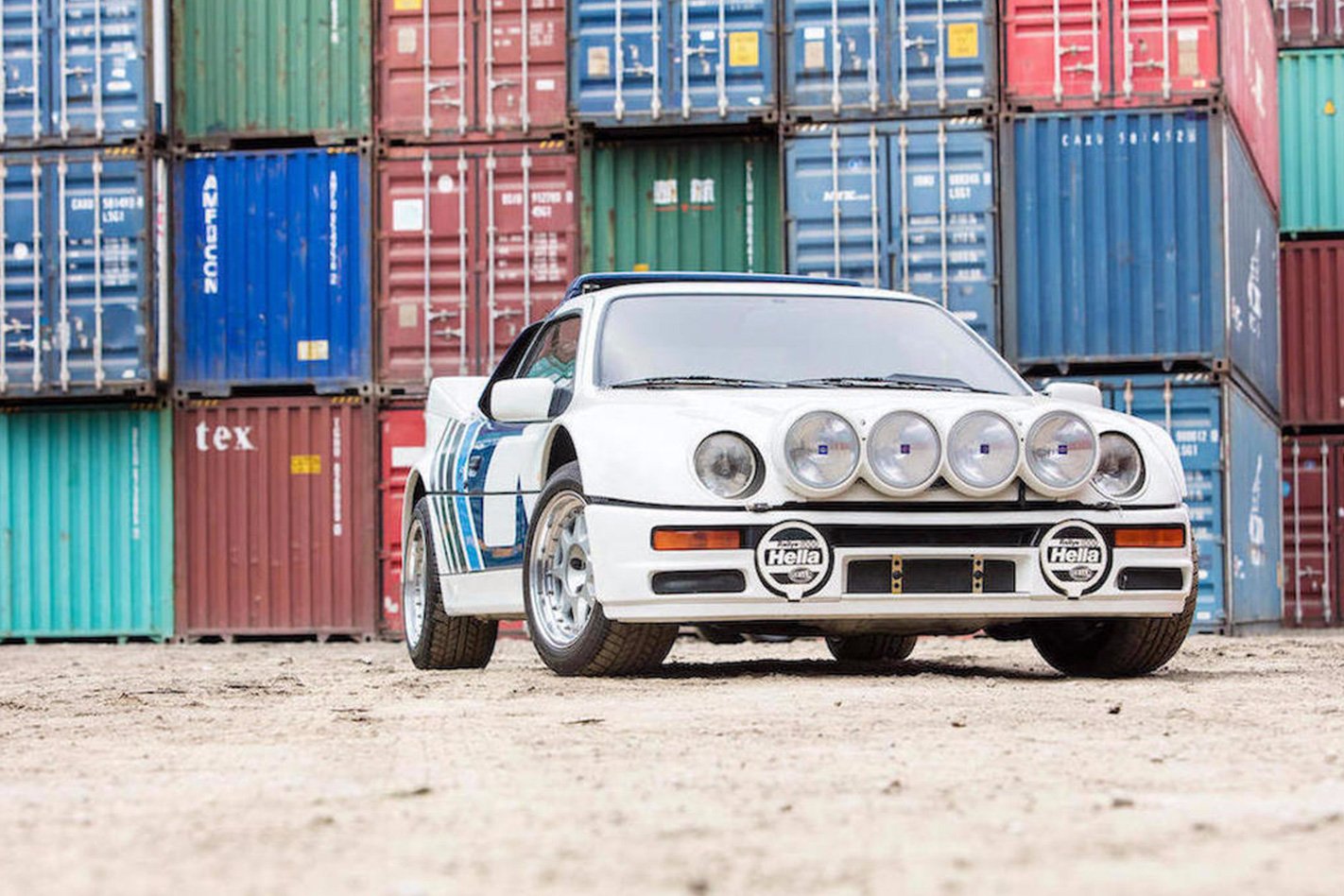
As one of only 24 built, the RS200 Evo was originally part of a run of 200 homologation cars required to permit the rallying version to race. Ford later turned 24 of those 200 into the ‘Evolution’ versions.
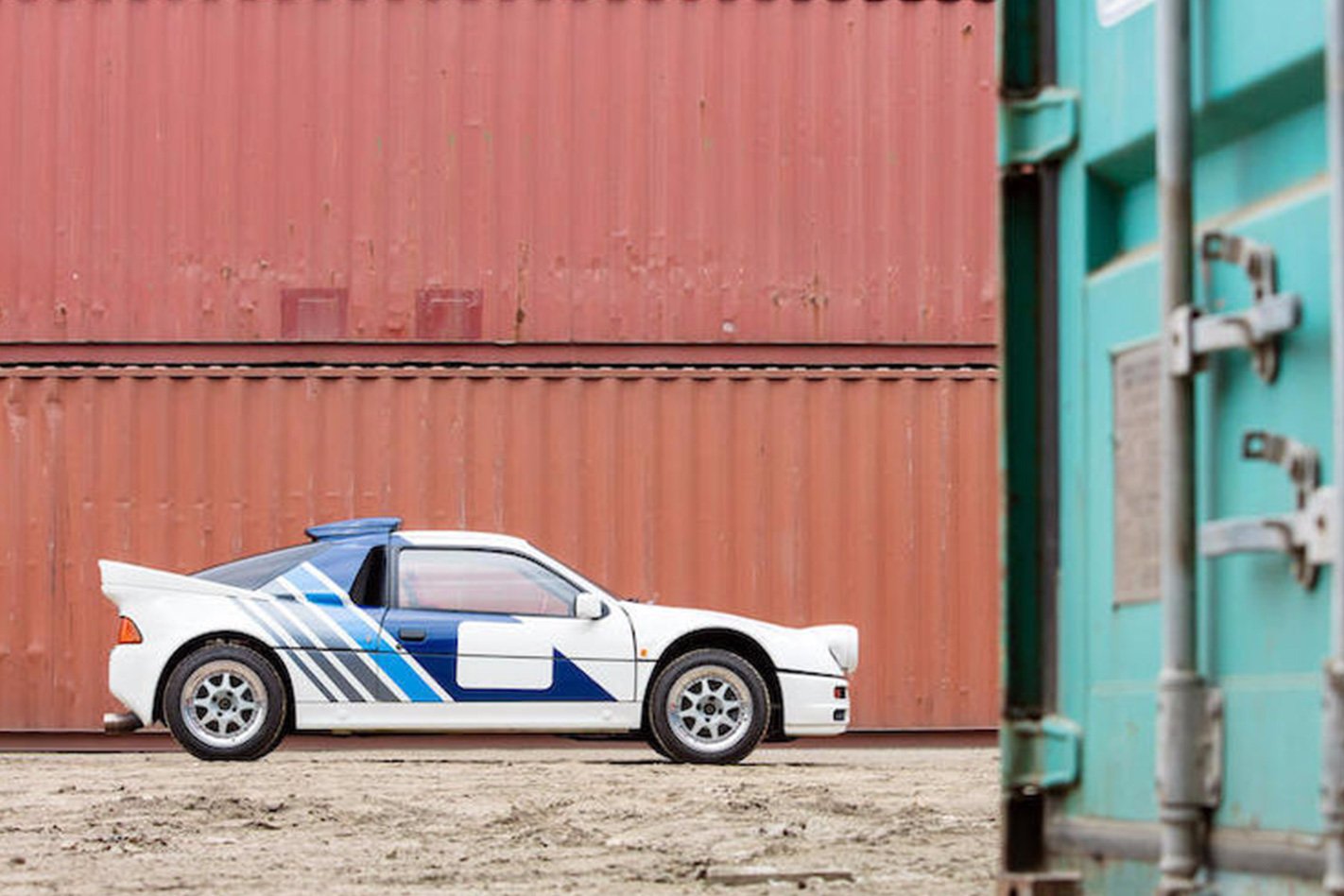
This one, however, has not run for over a decade and probably hasn’t even been taken for a lively tootle along a country road. Still, at least it hasn’t been put sideways into a haystack on someone’s driveway.
That’s not something you’d want to do to this offering, which Bonhams estimates will sell for $640,000-$760,000AUD.
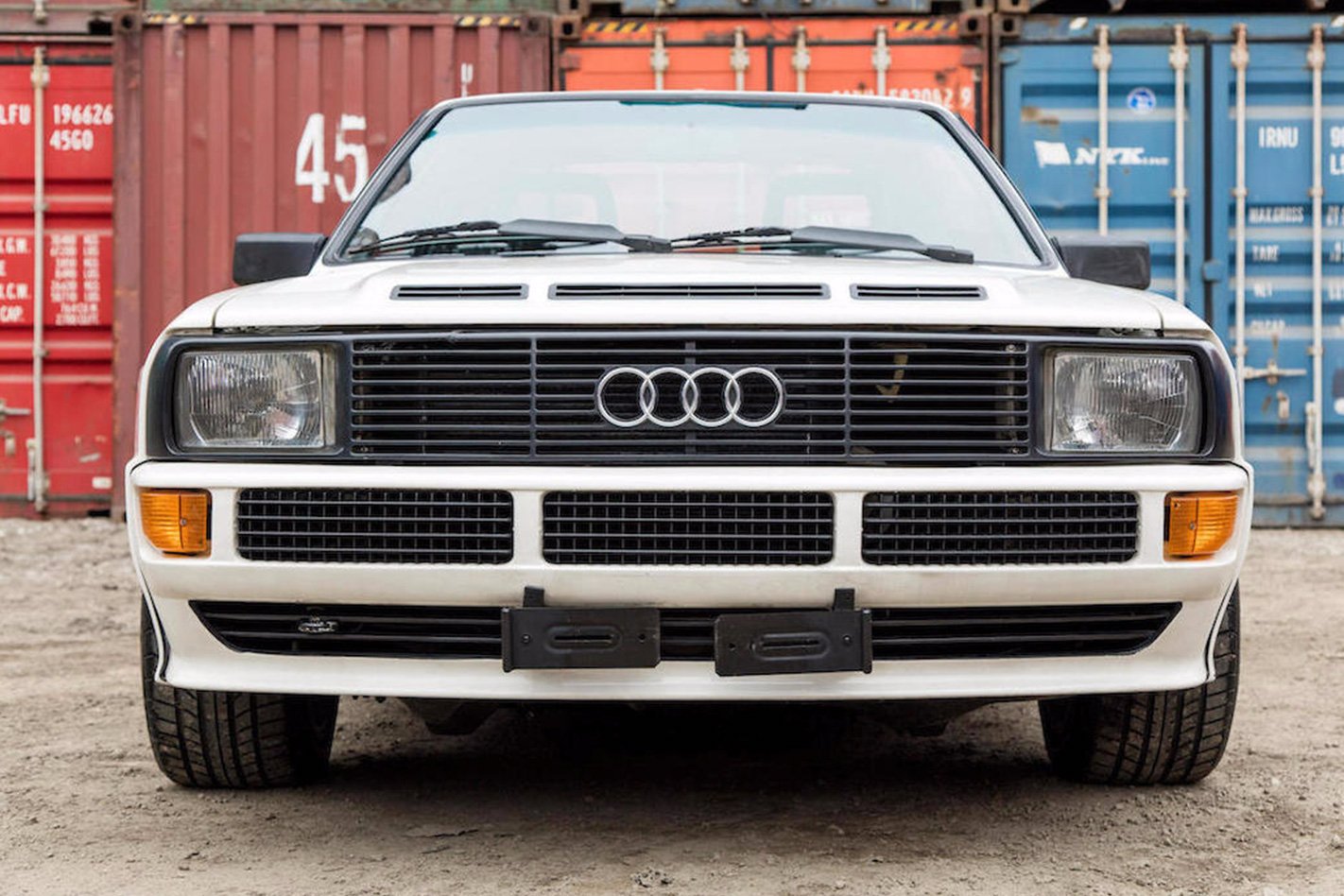
We have, however, seen a Quattro with an auction estimate of up to AU$522,000 in the past.
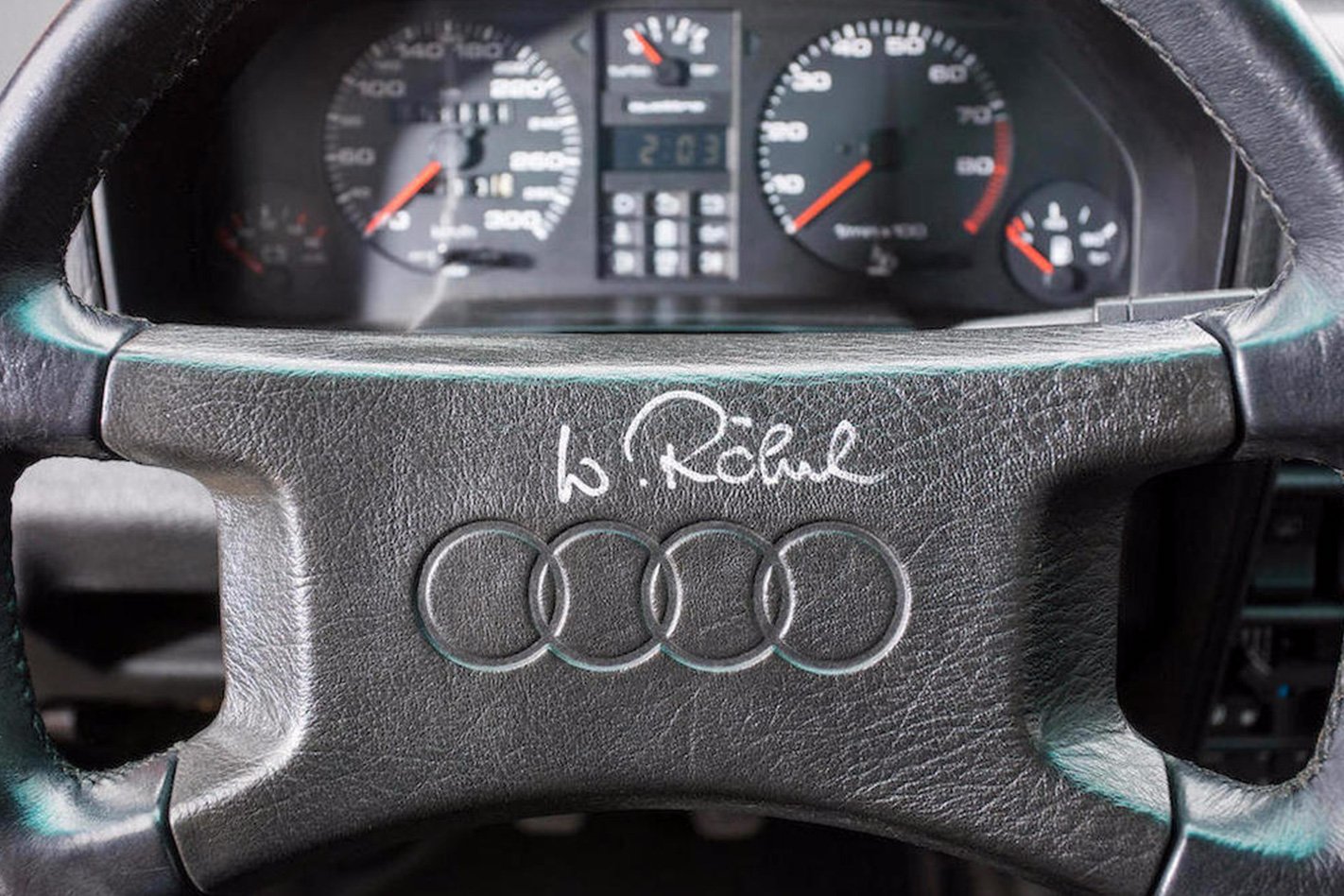
Not as rare as the RS200 Evo, the ’85 Quattro is one of 200 units, though this one-owner example will appeal to auction-goers. As will the signature on the steering wheel. W. Rohrl was here.
Similarly, a 1985 Lancia Delta S4 Stradale with less than 10,000km on the clock has likely given its one owner a few enjoyable drives, with a turbocharged and supercharged 1.8-litre putting out a modest 184kW in road-guise.
As a rally car, the Stradale would pump out over 360kW, and could get its 890kg mass flying.
This one’s estimated to sell for anywhere between $450,000-$570,000AUD.
Lastly, the increasingly valuable Peugeot 205 Turbo 16, or T16 if you like, with 1,113km on the clock and the same owner for the last 20 years is likely to pick up an impressive $300K+ earning.
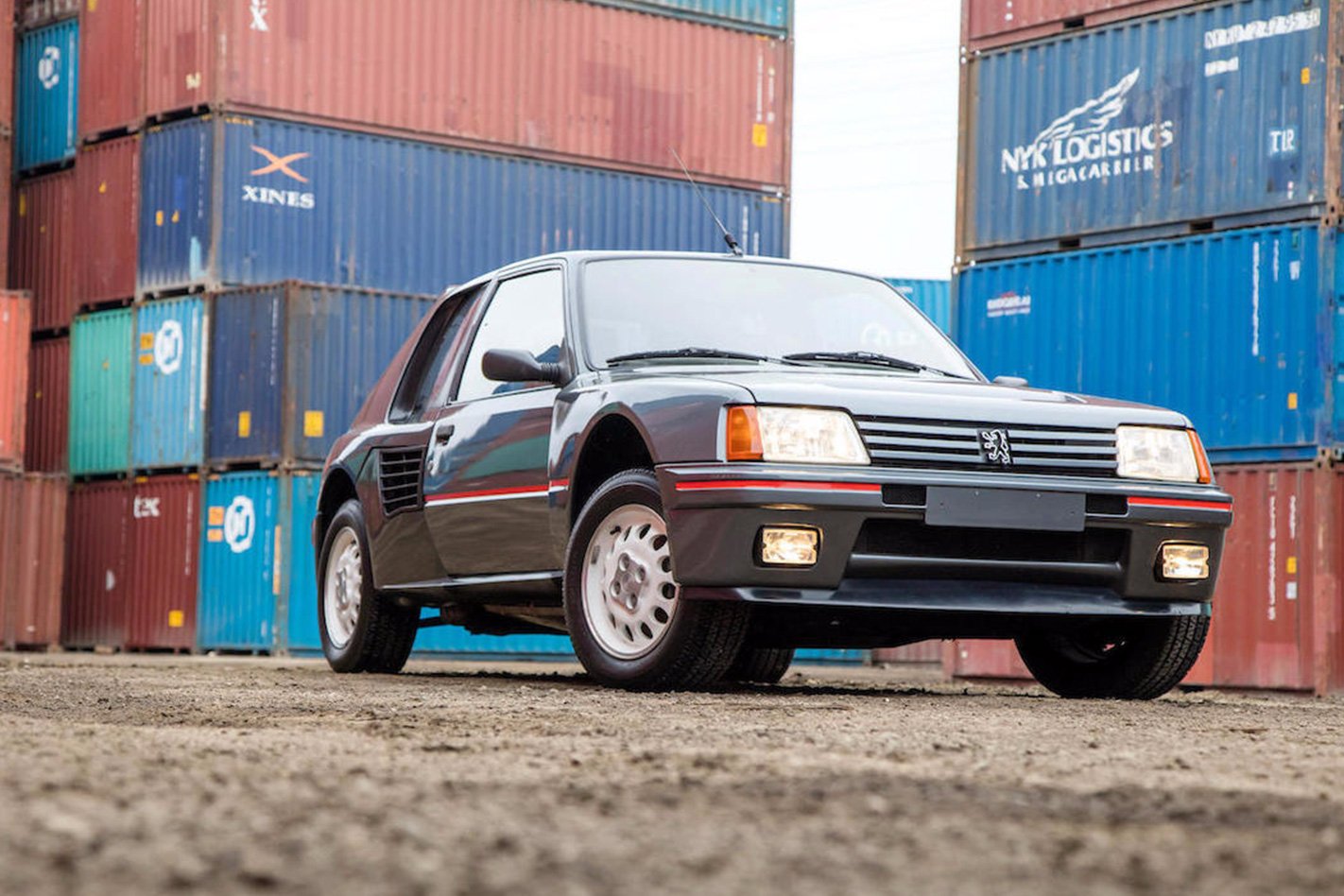
When the auction gets underway on August 18th, don’t be surprised if this car makes more money than a few of the Ferraris and Porsches it’ll be flanked by.
TELL ME ABOUT THIS CAR
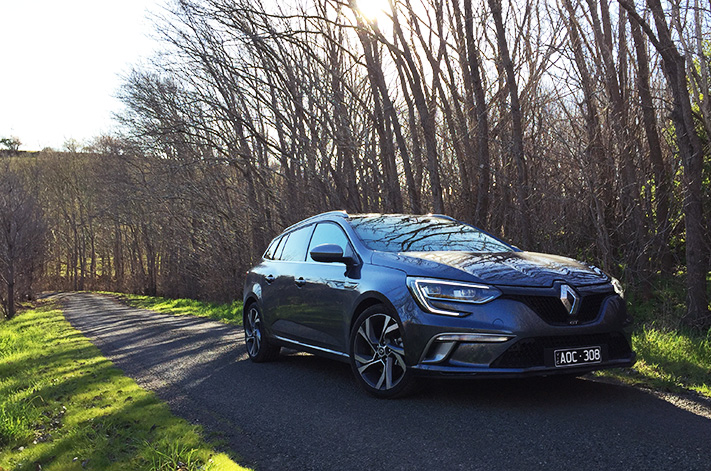
The Renault Megane hatch was joined by wagon and sedan variants in July, making it the first time all three body shapes are being sold concurrently in Australia.
The jewel among the new entrants is the Megane GT wagon, which has a longer wheelbase than Renault’s warm hatch, but similar tight handling and performance thanks to its 1.6-litre turbo engine, Renault Sport suspension, and four-wheel steering.
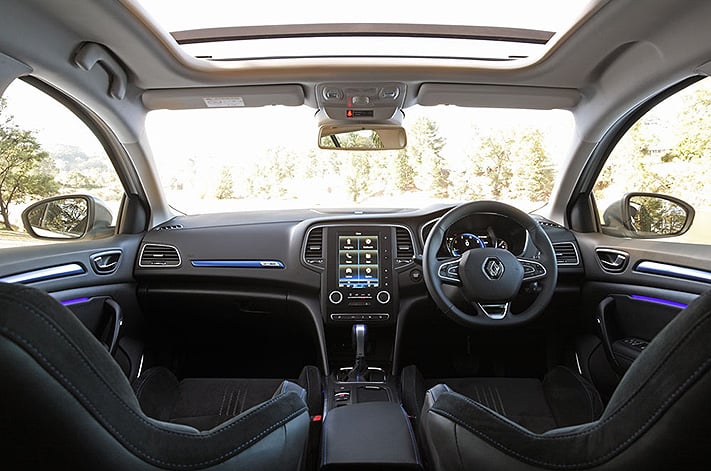
It’s roomier in the cabin, with a considerably bigger cargo area, than the hatch, but trim levels and equipment are essentially the same including its two-tone Alcantara sports seats and 8.7-inch portrait touchscreen.
STRENGHTS
- Renault’s 4Connect steering system provides the manoeuvrability of a shorter wheelbase vehicle by slightly pointing the rear wheels in the opposite direction as the front wheels at slow speeds. At speeds above 60km/h, or 80km/h in Sport mode, the rear wheels pivot slightly in the same direction as the front for greater stability.
- The precise steering is backed up by the Renault Sport suspension and excellent body control making this a joy to drive around winding roads.
- The 151kW/208Nm 1.6-litre turbo engine’s performance skirts the border of hot hatch territory, and is coupled to a seven-speed dual clutch transmission that responds well to the revvy turbo’s mid-range torque.
- It’s quieter than the hatch despite running on the same 225/40 R18 tyres, thanks to the narrow windows at the rear and a chunky, but light tailgate, which help keep out road and wind noise.
- It’s reasonably practical with its 580 litre boot that expands to 1504 litres with the 60/40-split rear seats folded down, offering substantially more cargo capacity than the hatch’s 434L/1198L.
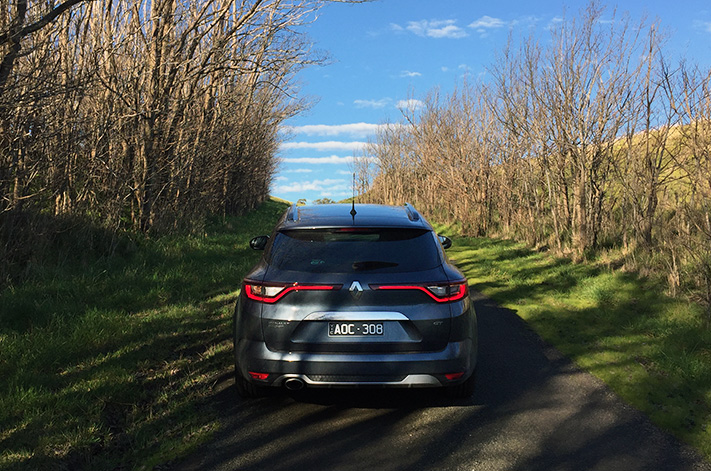
- Megane wagon and sedan models are 269mm longer than the hatch and stand astride an 11mm longer wheelbase, resulting in 37mm more rear legroom and a rear seat backrest reclines further back for better comfort.
- The 8.7-inch portrait touchscreen is about the size of an A5 notepad, a shape and size that works particularly with its excellent in-built satnav system.
- The interior is well appointed. The two-tone black and blue Alcantara sports front seats are well-bolstered and firm but comfortable. The mood is enhanced by blue metallic highlights and ambient lighting.
- It has a long list of standard features including automatic emergency braking, adaptive cruise control, RS Drive Mode with launch control, auto parking assist, LED daytime running lights, and 18-inch Magny-Cours alloy wheels.
- Its $39,490 price tag seems reasonable for a European car with premium features, warm hatch performance, and small-SUV practicality.
- The infotainment system requires a few steps to go from one function to another, and there are no physical menu buttons, which means you have to try and use the touchscreen while in motion. You can change radio stations with a dial behind the steering wheel, but I found that its operation doesn’t pair up with the selection on the centre touchscreen, particularly when listening to digital radio. It also lacks Apple CarPlay and Android Auto smartphone mirroring.
- You need long fingers to use the paddle shifters that don’t move with the steering wheel, making it difficult to change gears mid turn. Their gangly design also blocks the wiper and light stalks, meaning you don’t always know what setting they’re on.
- Cupholders are tiny, which seem to be a French protest again any coffees bigger than a short black, and the glovebox is just big enough to fit a pair of gloves.
- The lane departure warning sounds like the car has bowel problems.
There are few small performance wagons here for around $40,000, but you could chuck in the Mini Clubman Cooper S and the medium-sized Subaru Levorg GT and Skoda Octavia RS 169 TSI.
OVER the past 70 years Ferrari has given us tiny V6s, monster 12s – bent and flat – and screaming eights. But they have almost – though not quite exclusively – shared one trait: until very recently they were all naturally aspirated machines.
Turbocharging is rife these days, and we understand why. It makes small engines perform like big ones everywhere except at the pumps.
Even Ferrari adopted turbocharging for its 458 successor, the 488 GTB, partly to cut emissions, but mainly because it couldn’t meet its power and performance targets with a driveable naturally aspirated engine. The resulting F154 engine is hugely impressive, but for us even the 488 is missing something that the older cars had – an organic connection you only get when there is zero lag between the movement of your foot and the punch in the back.
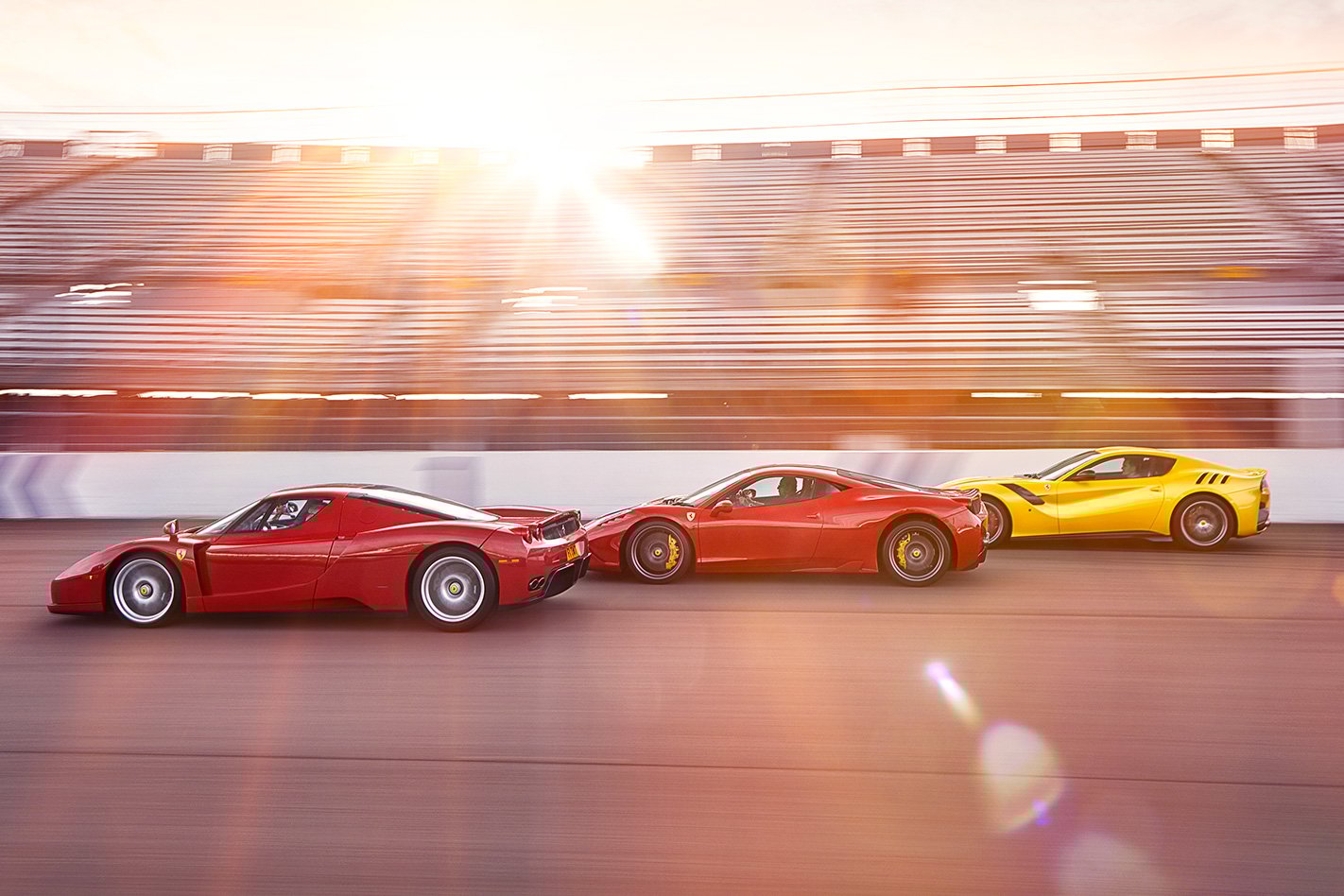
So to celebrate seven decades of instant gratification we’ve collected three of our recent favourites to represent the state of the naturally aspirated art: V12 Enzo, V8 458 Speciale, and V12 F12 tdf.
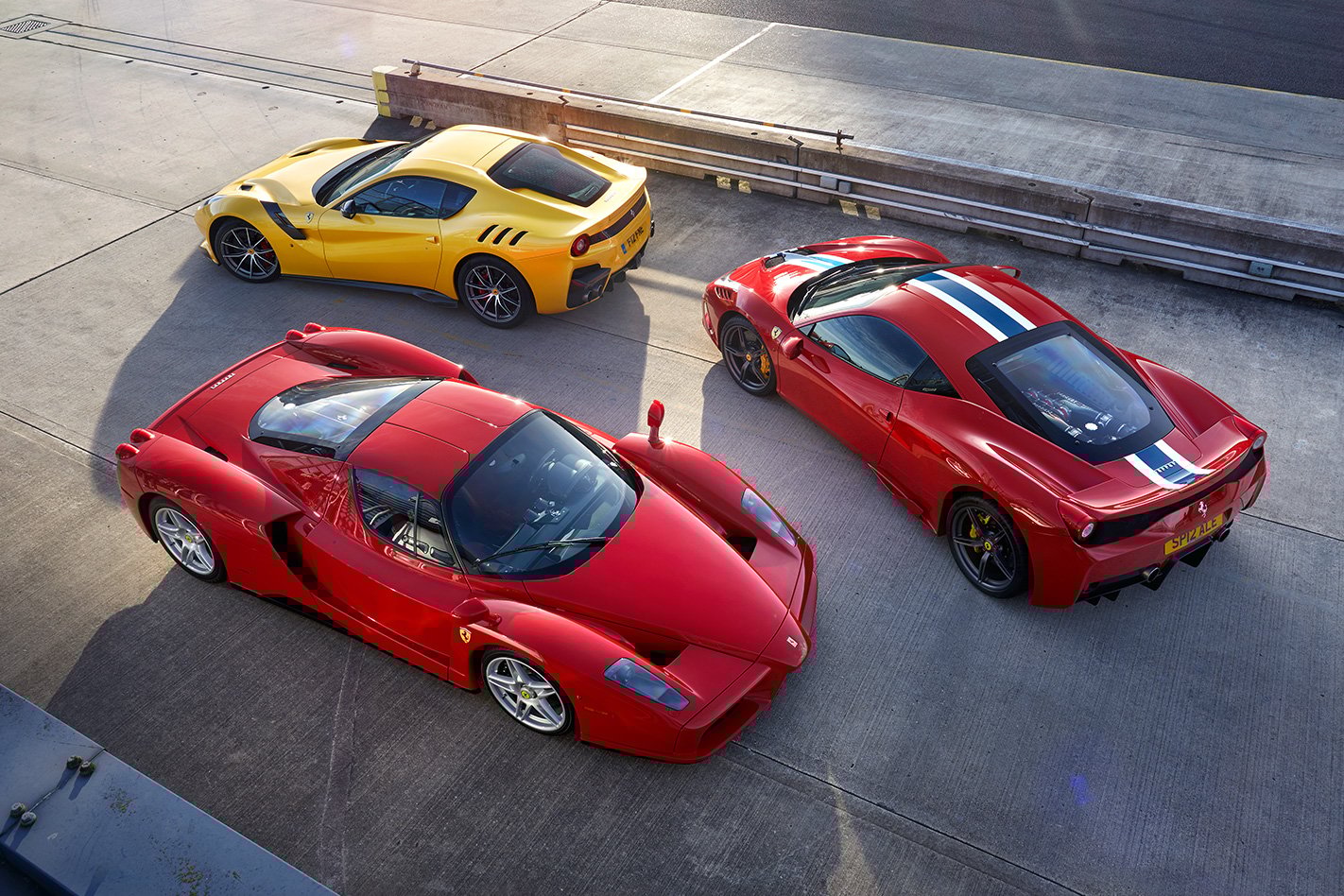
The Ferrari 458 was a game-changer. Not that the old F430 hadn’t been impressive, but even Ferrari engineers admit that beyond the new engine and active diff, it was more of a facelift on the 360 than a new car. But the 458 was the first Ferrari since the 1990s you could call beautiful, the first to get the hyper-quick steering that is now a Ferrari trademark feature, the first to be made available without the option of a manual transmission. It was the first junior Ferrari since the F355 to get you typing ‘kidney’ into eBay and selecting ‘completed listings’ to establish the going rate. Then, right at the end of 458 production, Ferrari did the impossible. It made a car that was even better.
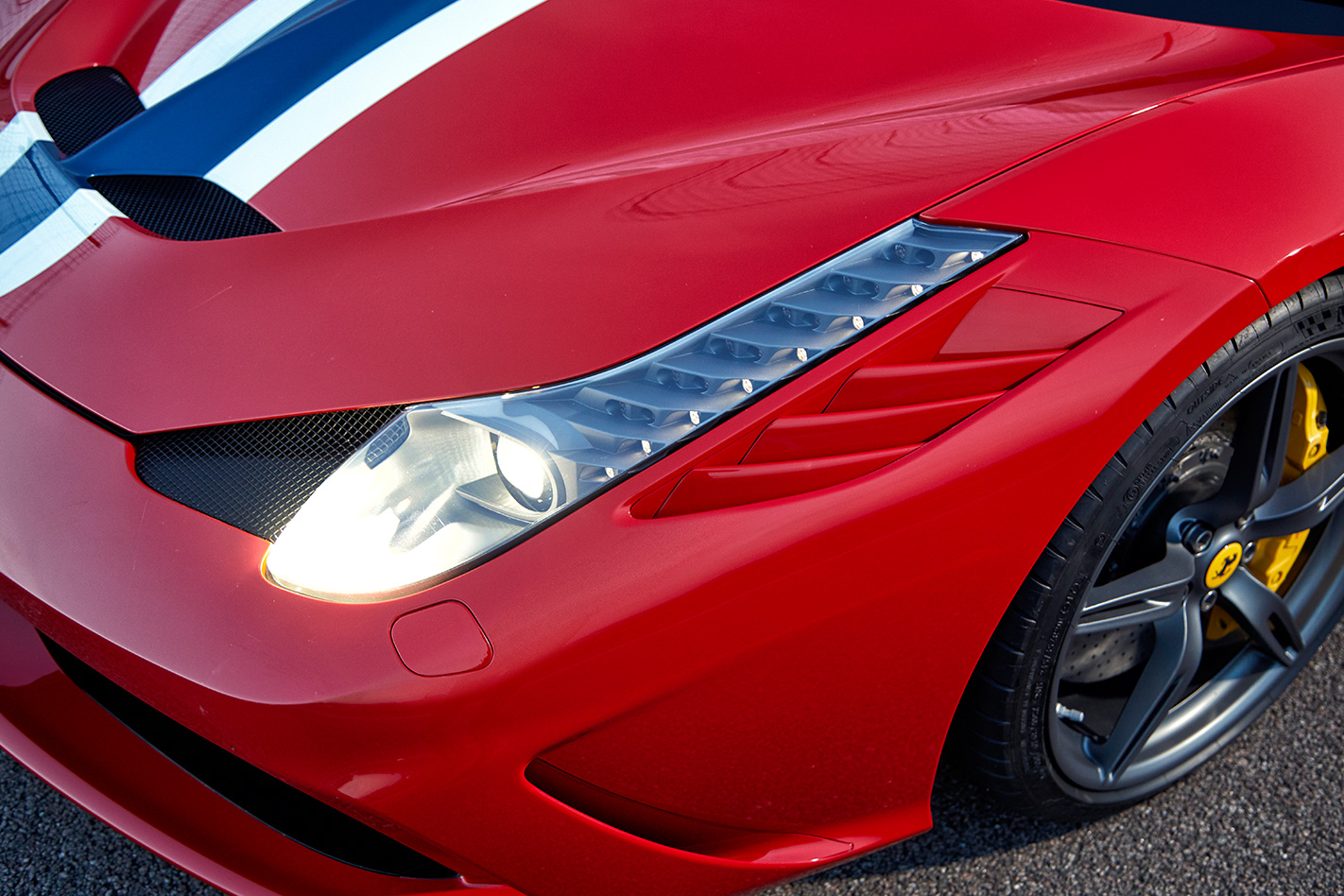
Some of that clever tech is visible below the rego plate, where flaps in the front grille open at speed to direct airflow underneath to balance the car. They’re paired with an electronically controlled diffuser to manage the way air exits the underbody: open for low drag in a straight line; closed to generate high downforce in corners. There’s nothing clever in the interior, other than the brain of any driver who can fathom how to operate either the VDA vehicle dynamics display or the nav/radio one.
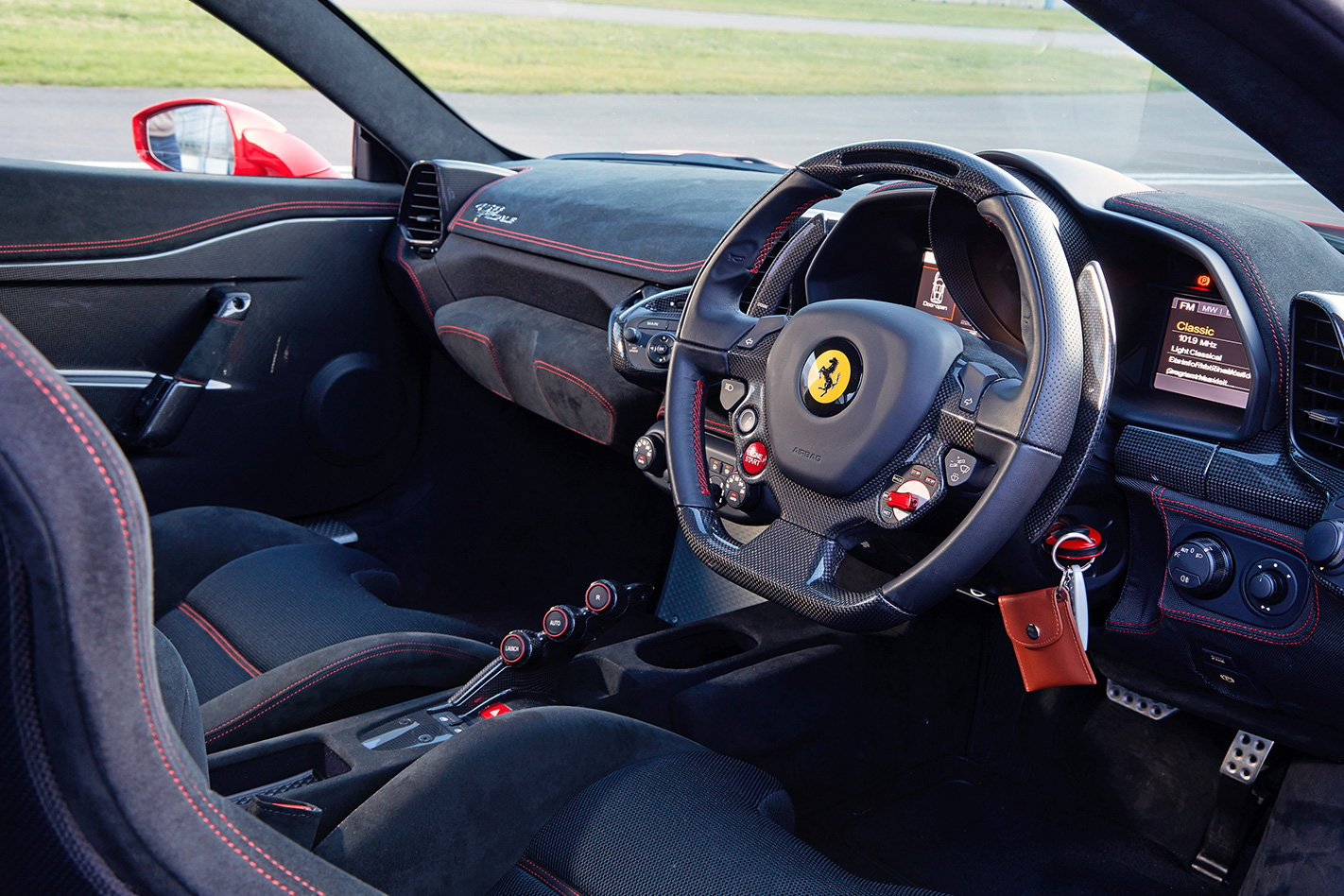
And maybe, if you have driven one before, you also feel yourself tensing up a little, because there’s nothing relaxing about a flat-plane-crank Ferrari V8. The sound is always hard, slightly strained, and the Speciale even more so. Building on the regular 458’s 4.5-litre engine – at 419kW and 540Nm, hardly a duffer – the Speciale employs a stratospheric 14:1 compression ratio courtesy of new pistons, high-lift camshafts, new intake runners and a free-breathing exhaust. Power is 445kW; the 0-100km/h sprint down two ticks to 3.0sec dead. The contrast with the current 488 is as stark as the Speciale’s cabin.
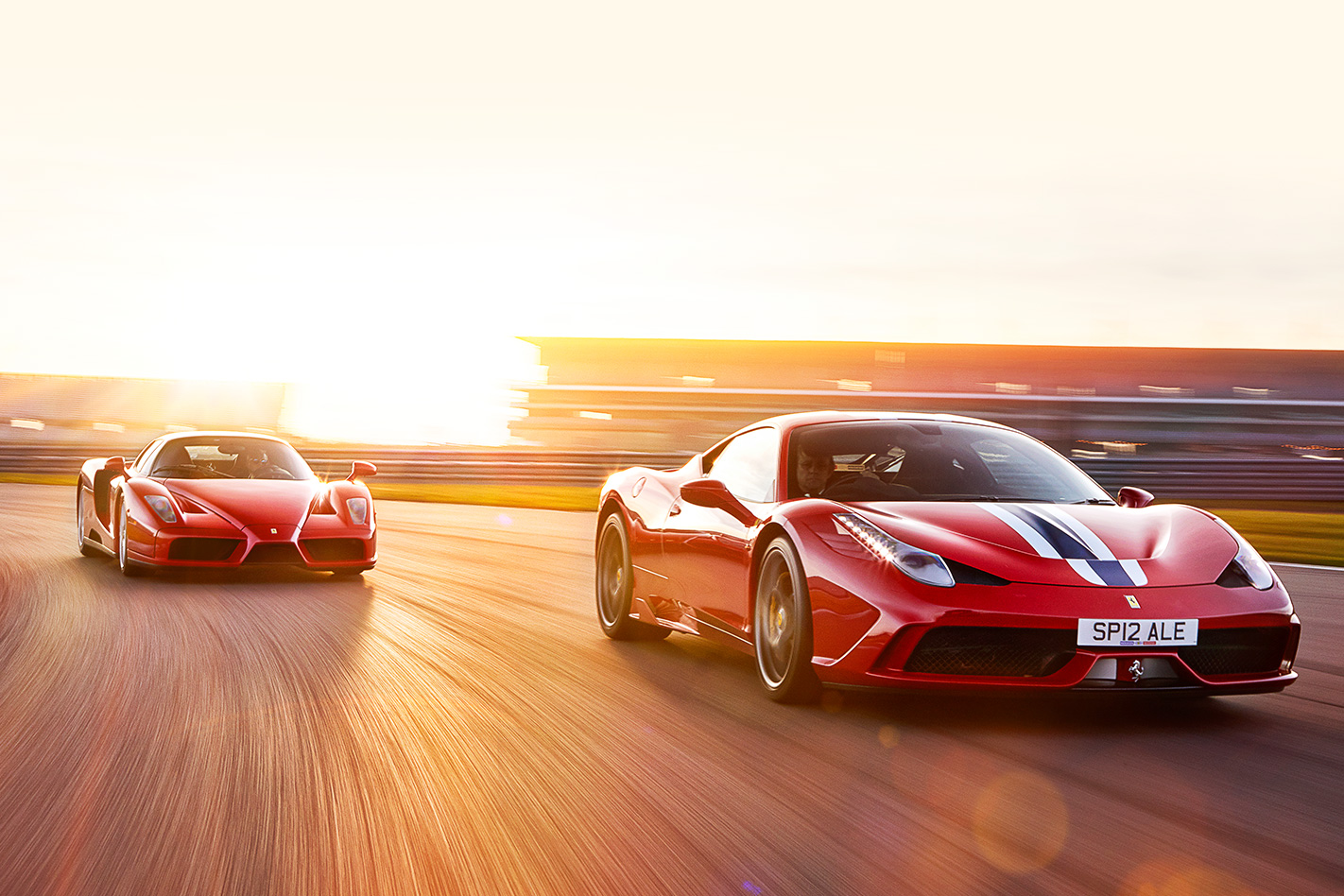
The Speciale laps Ferrari’s Fiorano test track in 1m23.5sec, which means nothing without some context, so here it is: that’s 1.5sec quicker than the 458 Italia. It’s quicker than the legendary Enzo too, by almost the same margin. It’s a testament to the pace of progress at Maranello that the Speciale, a more focused version of Ferrari’s bread and butter car (organic sourdough, with artisan-churned butter, mind) could lap its home circuit faster than what is widely considered to be the definitive hypercar of only a decade previously.
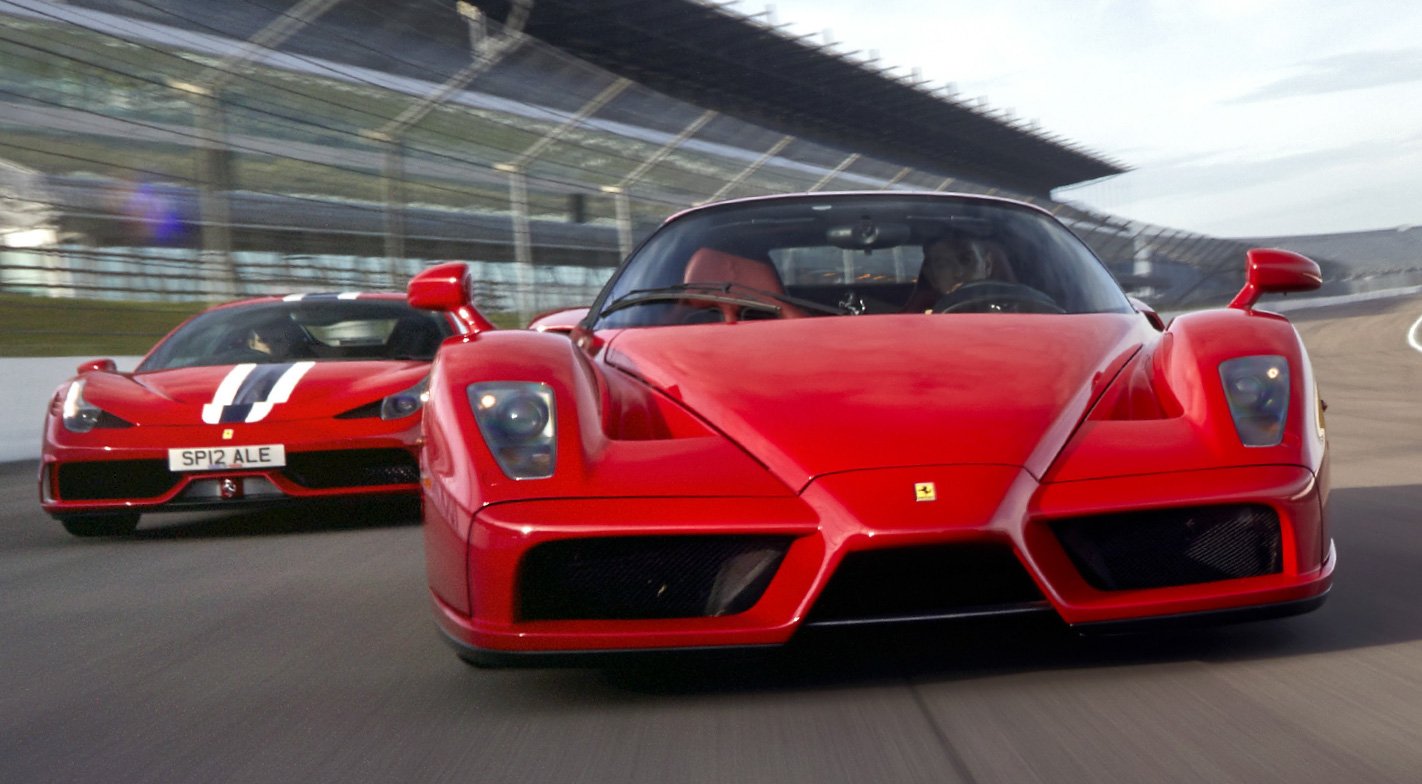
Like all of Ferrari’s special – as opposed to series – cars, the Enzo is built around a carbon chassis. That’s proper labour-intensive hand-laid carbon, not the type you’ll find on an Alfa 4C or McLaren 720S that’s technically inferior but easier to produce, and just as effective in the hands of the marketing department.
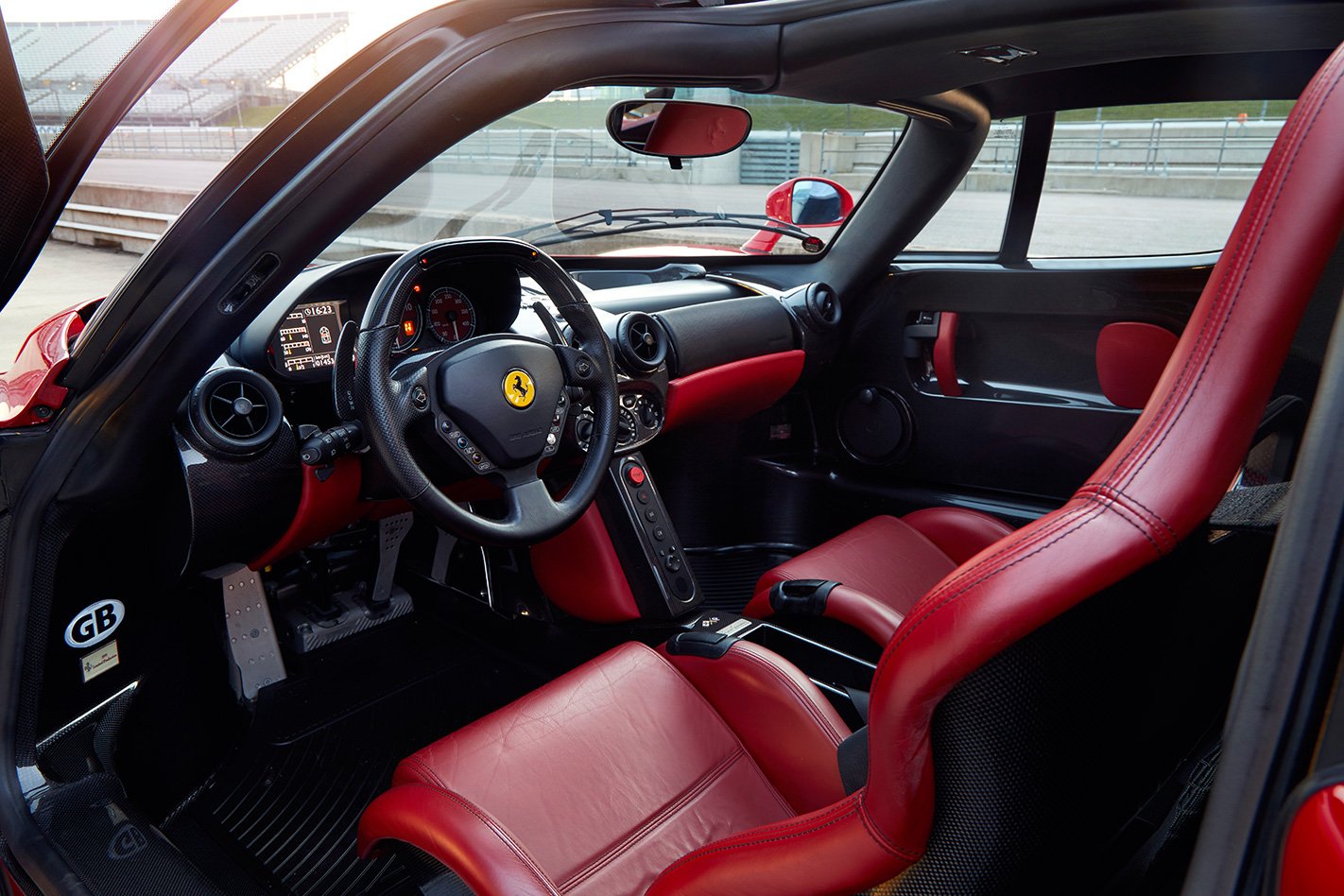
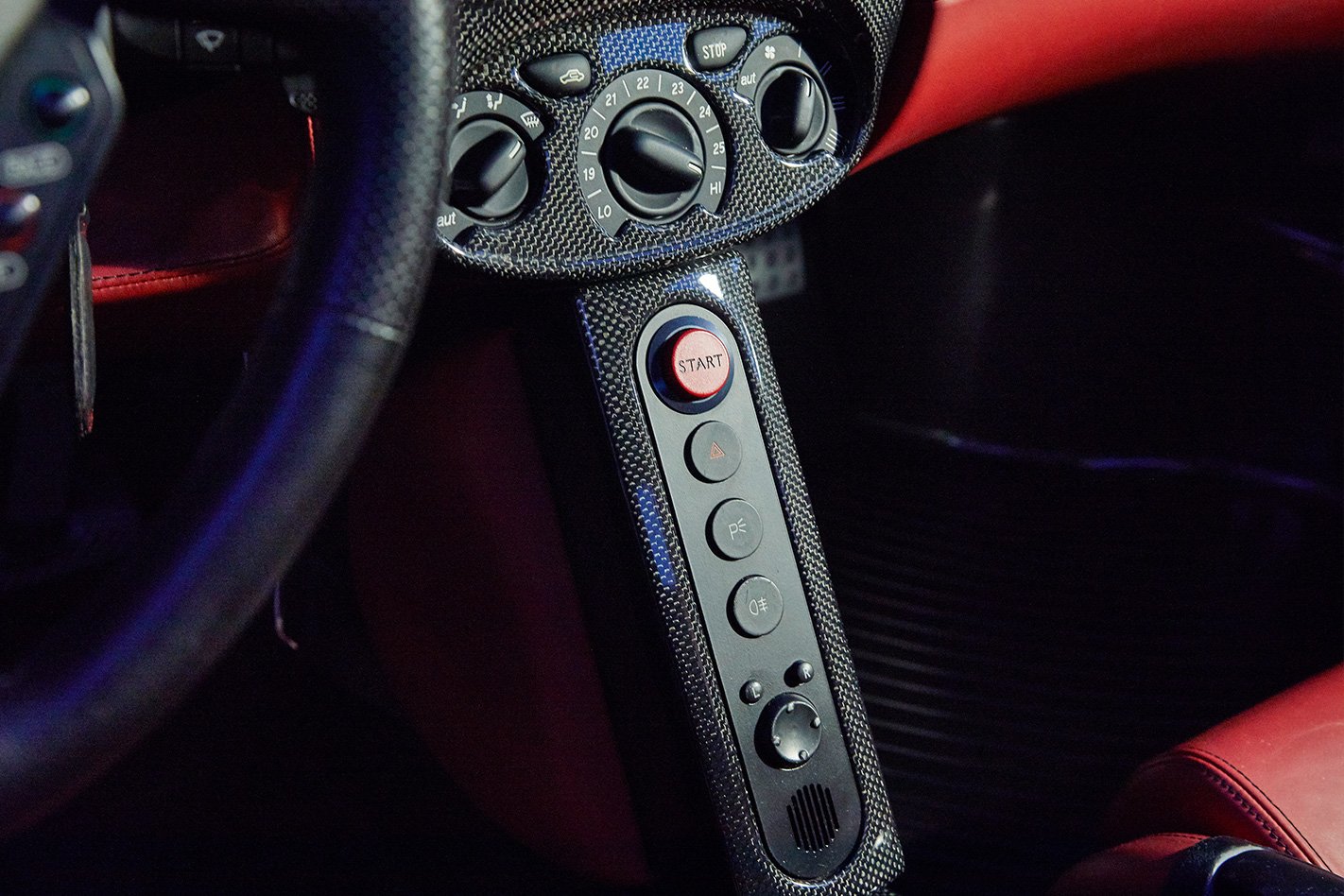
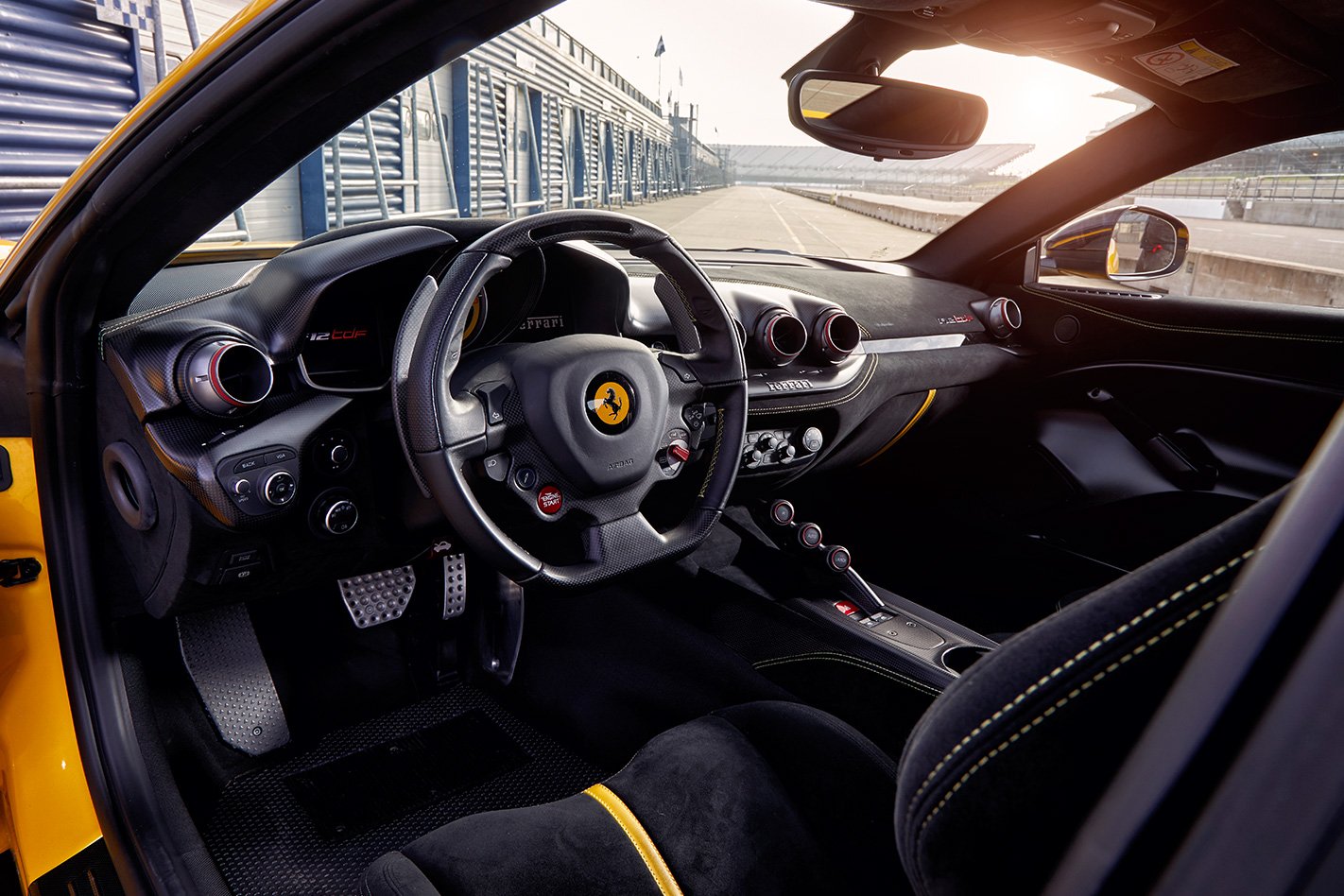
There’s no manettino drive mode dial, for instance, just a smattering of small buttons on the wheel, three simple rotary dials for the heating controls, and the starter located below them slap bang in the middle of the console. And this time you really do hesitate before putting your weight behind it. Finally prod it and 12 furious pistons start doing their damnedest to break free of their conrod tethers, filling the cabin with the most incredible mechanical noise. It’s hard-edged, yes, but there’s a sweetness here too; a rich texture you just don’t get with the V8.
For all its swagger, the Enzo’s thundering 6.0-litre V12 actually makes less power than the modern 488 GTB, and doesn’t even wind as high. And though the naturally aspirated Speciale makes less power and torque, it pushes you deeper into the seat, hitting 200km/h in 9.1sec, more than a second sooner. And that’s not the only way in which the Speciale argues that newer is better. There’s the gearbox. Dual-clutch transmissions have revolutionised modern cars. They’ve made two-pedal driving acceptable to snobs who thought an automatic was beneath them.
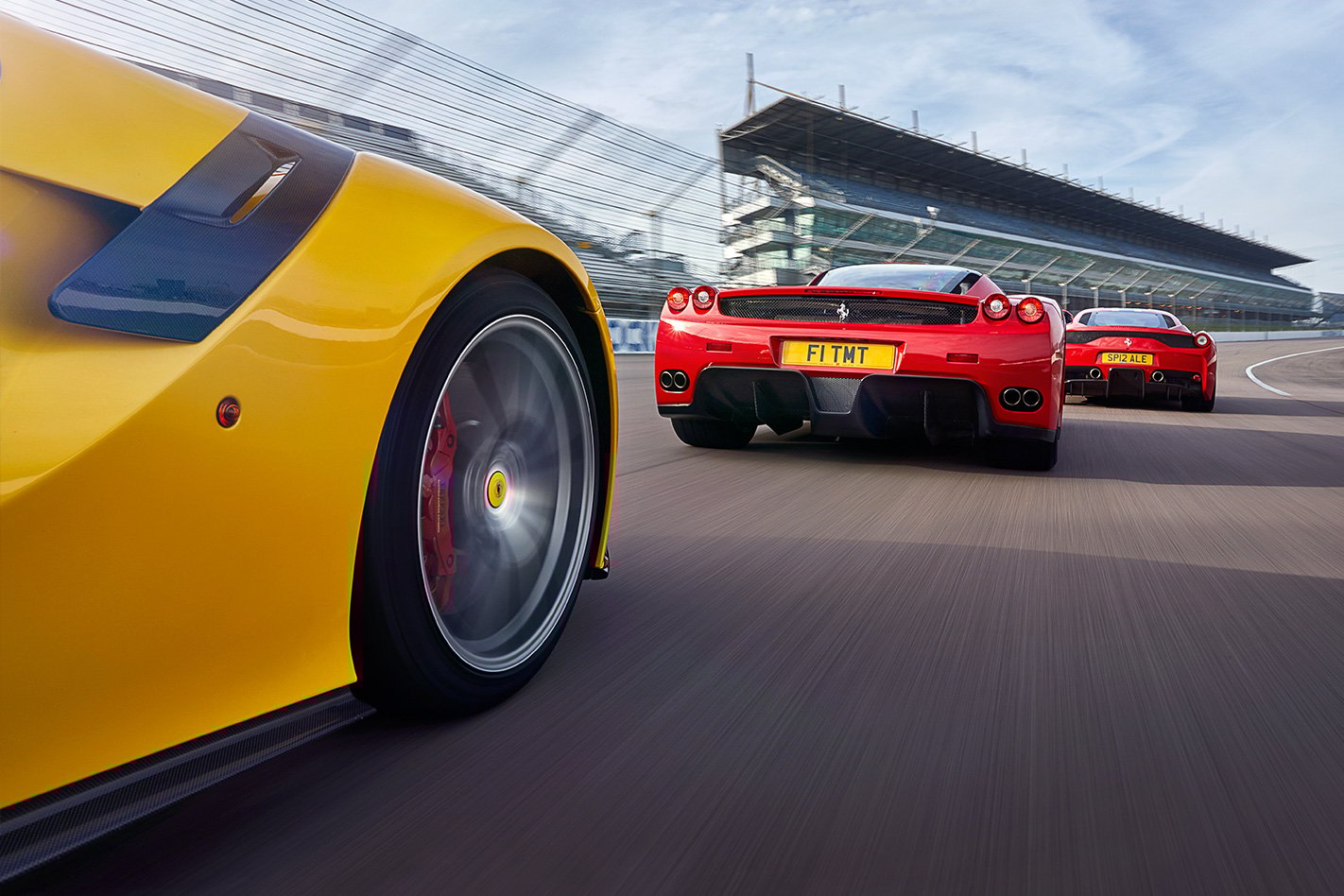
Remember those pre-DCT days when we were obsessed with shift speeds? Kiss the 8000rpm redline in the Enzo, summon the presence of mind to reach out amid the cacophony to tug the exquisite carbon shift paddle and the tranny can swap cogs in 150 milliseconds. The Enzo might not do refinement but it’s got the important stuff licked. It’s shockingly violent, and pretty wonderful. How did we forget about this car? It’s also the last of its type, because for its LaFerrari successor, Maranello fused the V12 engine with a hybrid power pack with explosive results.
But the V12 lived on, and still lives on, in its purest form, in Ferrari’s front-engined GT cars.
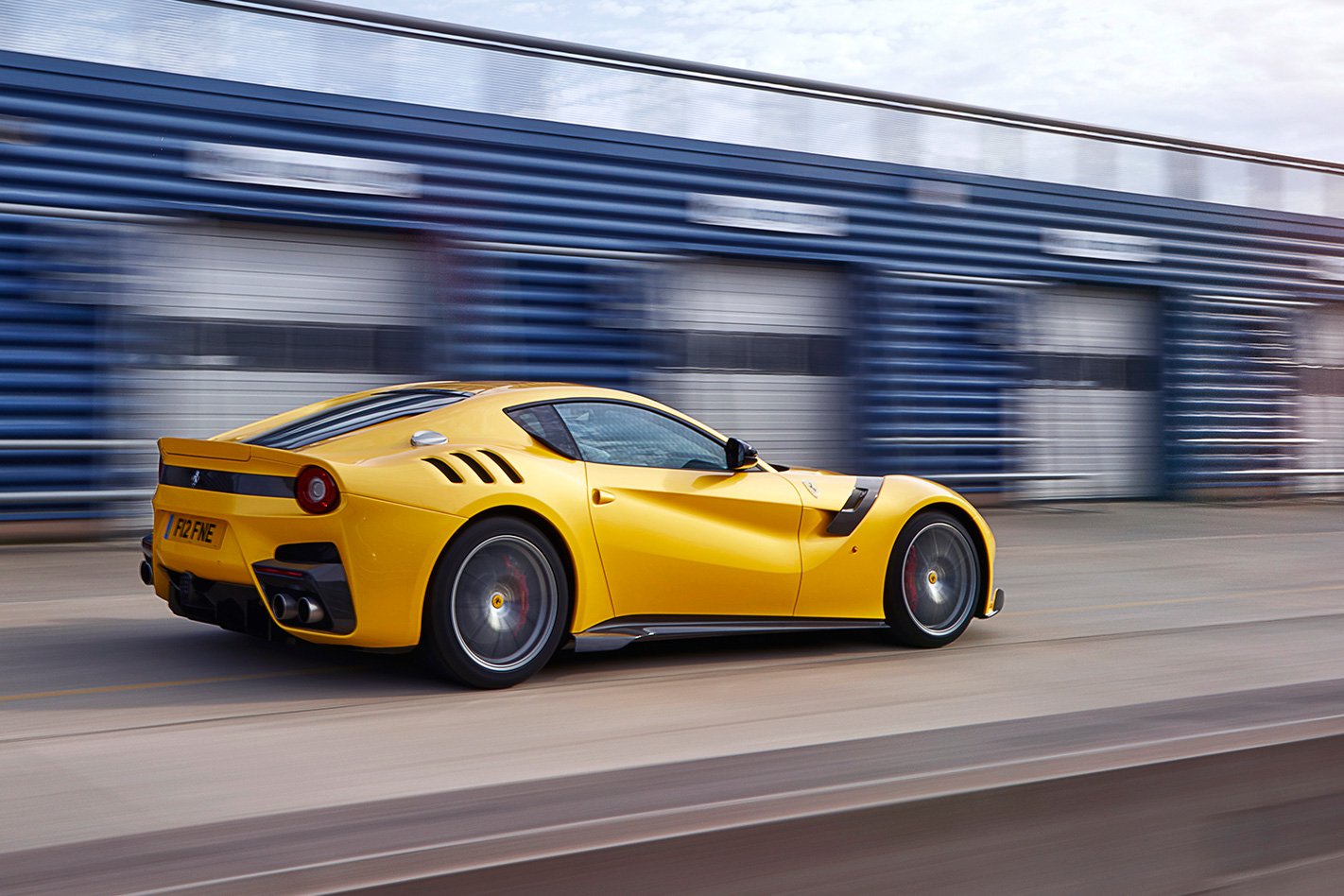
Maybe it was all those Top Trumps games, but old Jags aside, we tend to think of V12s as Italian creations, and it’s true, Ferrari’s first ever road car used a tiny 1500cc V12 that produced 88kW at 6800rpm. Consider now that the F12 tdf kicks out a stupendous 574kW that has the back tyres trying to rotate the earth like Shaggy and Scooby log-rolling across a lake to escape a pantomime yeti.
And you can forget any notion that just because the engine is up front that this is some sort of soft-touch GT. The tdf – named after the Tour de France race that front-engined Ferrari V12s dominated in the 50s and 60s – is to the F12 what the Speciale is to the Italia: one hard-nosed bastard of a car, limited to 799 units and all sold. Carpets? Don’t care for them. Ride comfort? Who needs it? Taste and decorum? You could always get an Aston if you don’t have balls.
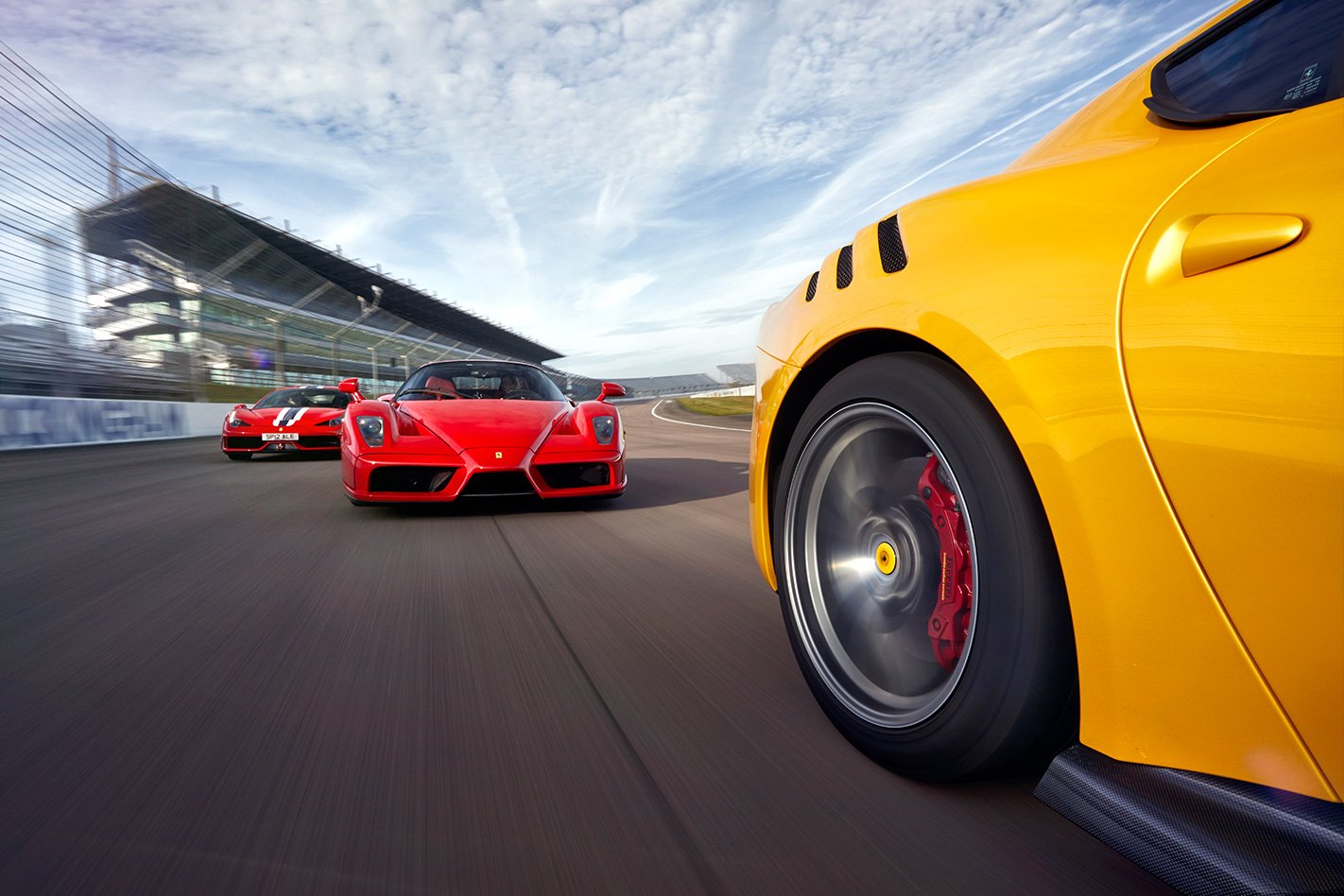
Its designers even changed the rear bodywork to create an entirely different rear window line, improving downforce without the need to resort to spoilers. Like our mid-engined pair it’s spartan inside, though the paucity of luxury feels more incongruous here. It’s a vast cabin because the F12 is vast. And so very, very fast. So fast, it’s unnerving the first time you fully open the taps, and still terrifies the next dozen times after that. Send all 574kW to the rear tyres via the swift and slick dual-clutch transmission and you’ll hit 100km/h in 2.9sec.
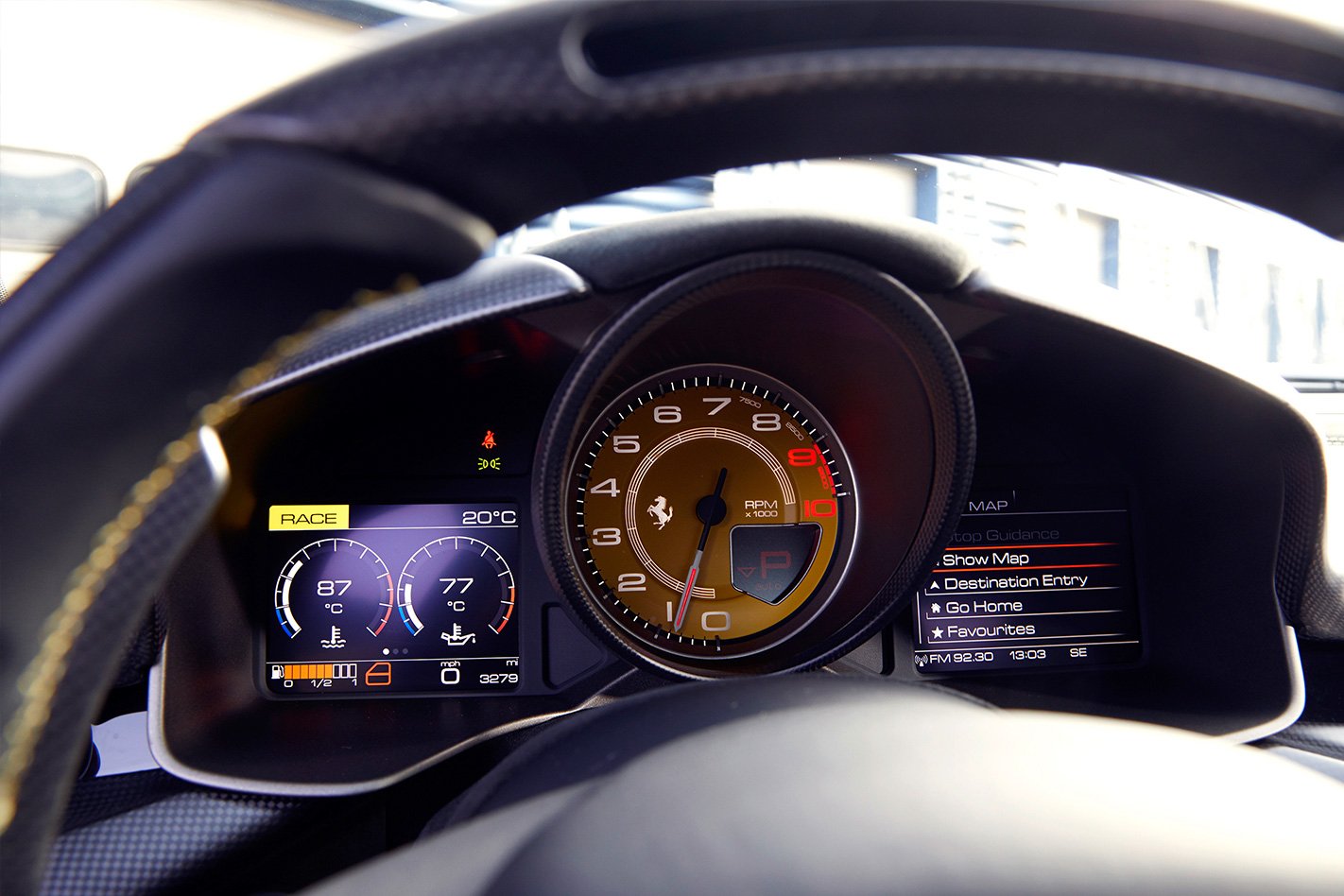
Instead everything suddenly clears and screams for the sky instead, to a place a thousand rpm beyond where even the Enzo dares to tread. The thought that this engine – and its successor in the 812 Superfast – can’t live forever is enough to bring a tear to your eye, although that could just be because I’m about to hit 9000rpm at the top of fourth in the tdf and I think I want my mummy.
Though if you’re reading this, Sergio, I expect to have snuffed it by around 2060, so if you could just hang in there with internal combustion engines until then, that’d be great.
Words that you can safely bet will never be heard in a Land Rover showroom when the company’s new midsize Range Rover Velar lands in October: “Gee honey, if only there was more choice…”
This pivotal new model for the Indian-owned British brand will launch with no fewer than 48 variants, including a fully-loaded First Edition model, powered by either the 221kW/700Nm 3.0-litre turbo-diesel V6 for $168,250, or the 280kW/450Nm supercharged 3.0-litre V6 petrol engine for $168,862.
Add the optional ‘Flux Silver’ satin paint (read, no gloss coat) for $12,860 and you’re looking at $181,722, or around the price of an entry-level model of the flagship Range Rover.
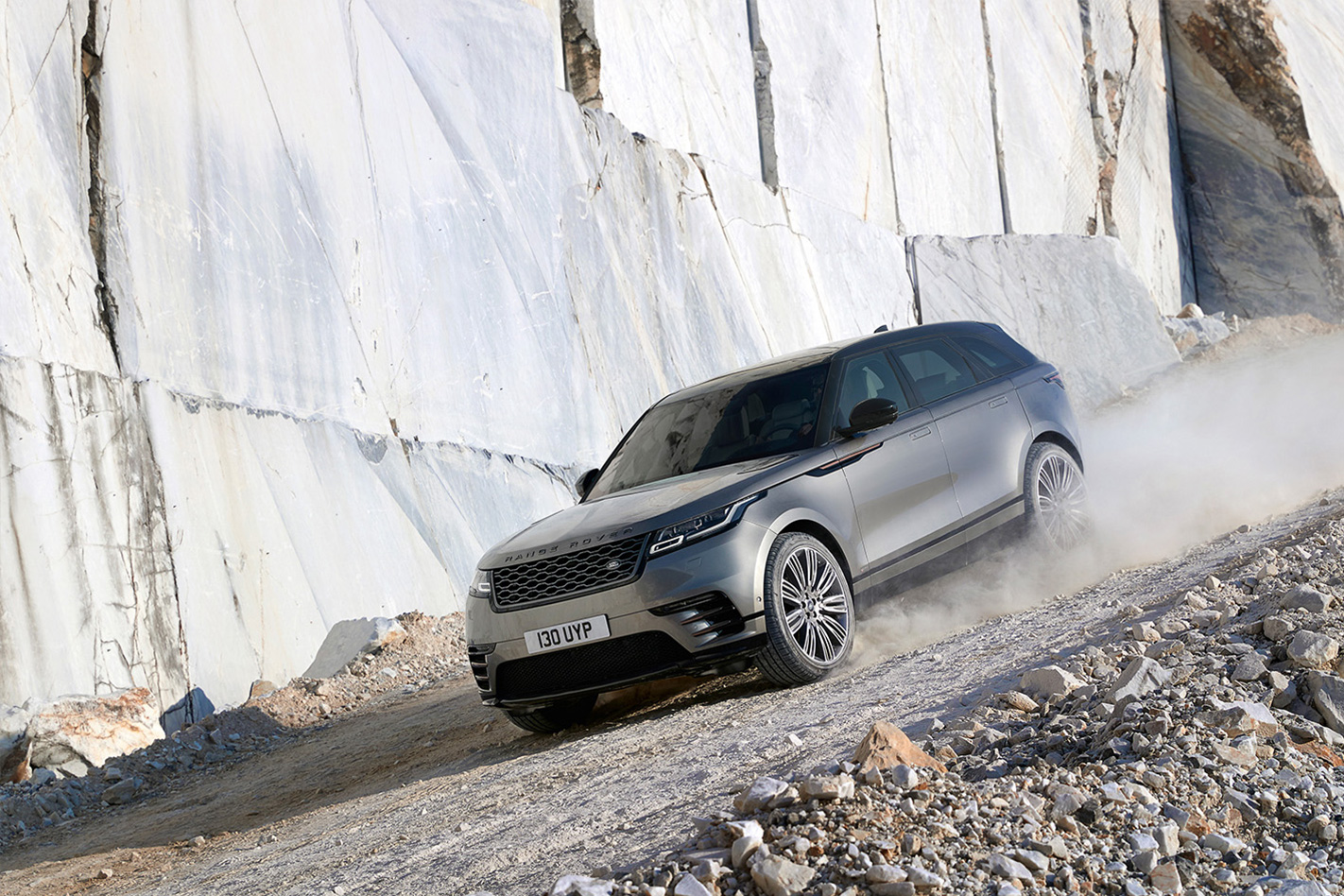
But wait, as they say in the infomercials: there’s more. Not content with the five engines so far announced (see below), Land Rover has now revealed that a sixth engine option will join the line-up in early 2018.
It’s the 221kW/400Nm 2.0-litre turbo-petrol Ingenium four that will also be made available in the updated Jaguar F-Type (set for Australian launch in the final quarter of this year starting from $107K) and will effectively add another add eight variants due the Velar’s eight equipment/trim levels on offer for each engine.
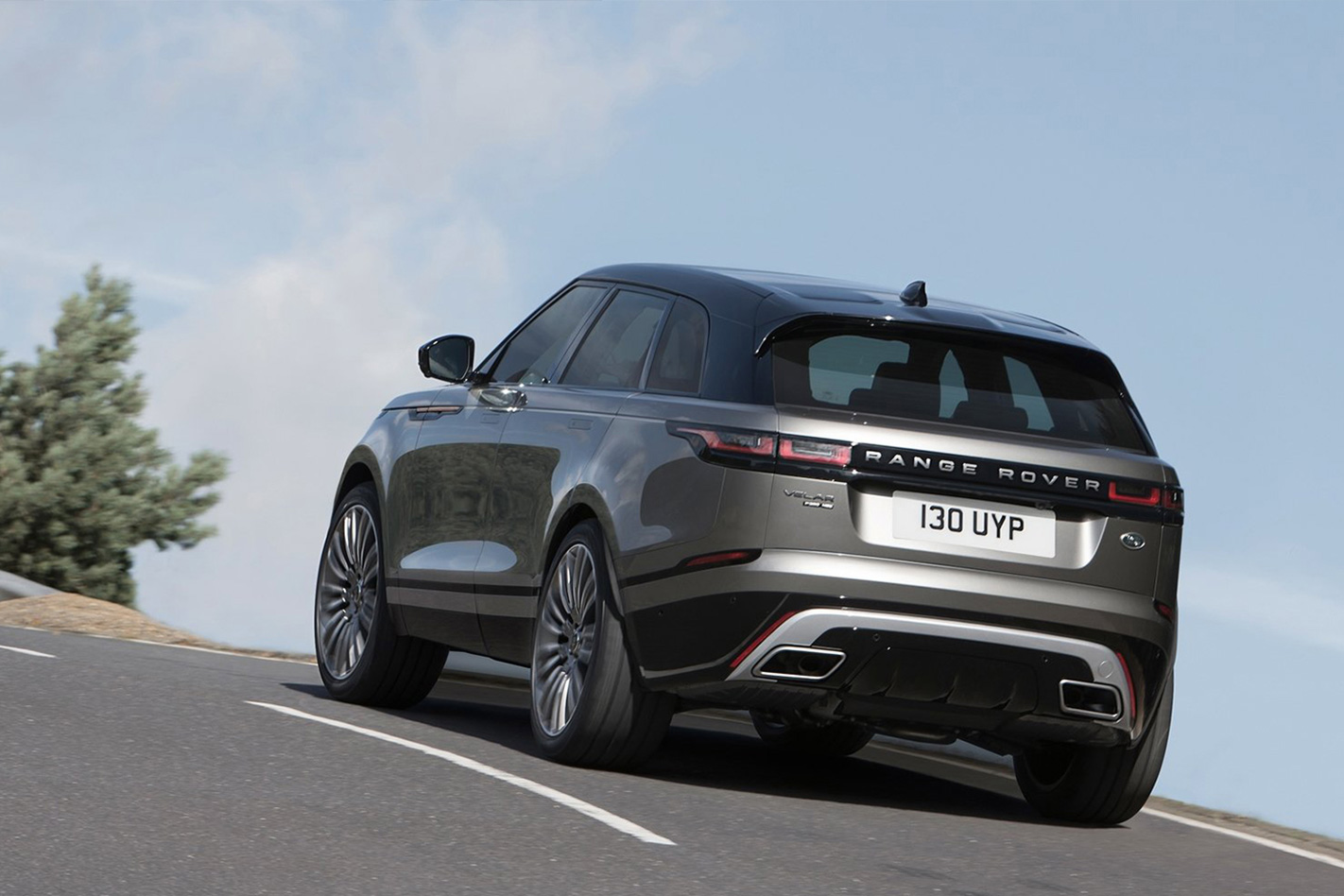
D180 2.0-litre four-cylinder turbo-diesel – 132kW/430Nm
D240 2.0-litre four-cylinder turbo-diesel – 177kW/500Nm
D300 3.0-litre V6 turbo-diesel – 221kW/700Nm
P250 2.0-litre four-cylinder turbo-petrol – 184kW/365Nm
P300 2.0-litre four-cylinder turbo-petrol – 221kW/400Nm
P380: 3.0-litre supercharged petrol V6 – 280kW/450Nm
Quickest of these, at least in terms of the 0-100km/h sprint, will be the supercharged V6, capable of a claimed 5.7 seconds. Top speed is an electronically limited 250km/h; fuel consumption a combined figure of 9.4l/100km.
However the high-output 2.0-litre petrol will not be not far off, with 0-100km/h in a claimed 6.0 seconds, which, along with the 7.7litre/100km combined fuel figure, means it’s expected to find a strong following in Australia.
All engines are teamed with an eight-speed ZF torque convertor auto with paddle shifters. The six-cylinder engines get a heavier duty version of the transmission to handle the higher torque outputs, but Land Rover tells us all engines benefit from bespoke transmission calibrations in an effort to maximise fuel efficiency and provide the most intuitive shift characteristics.
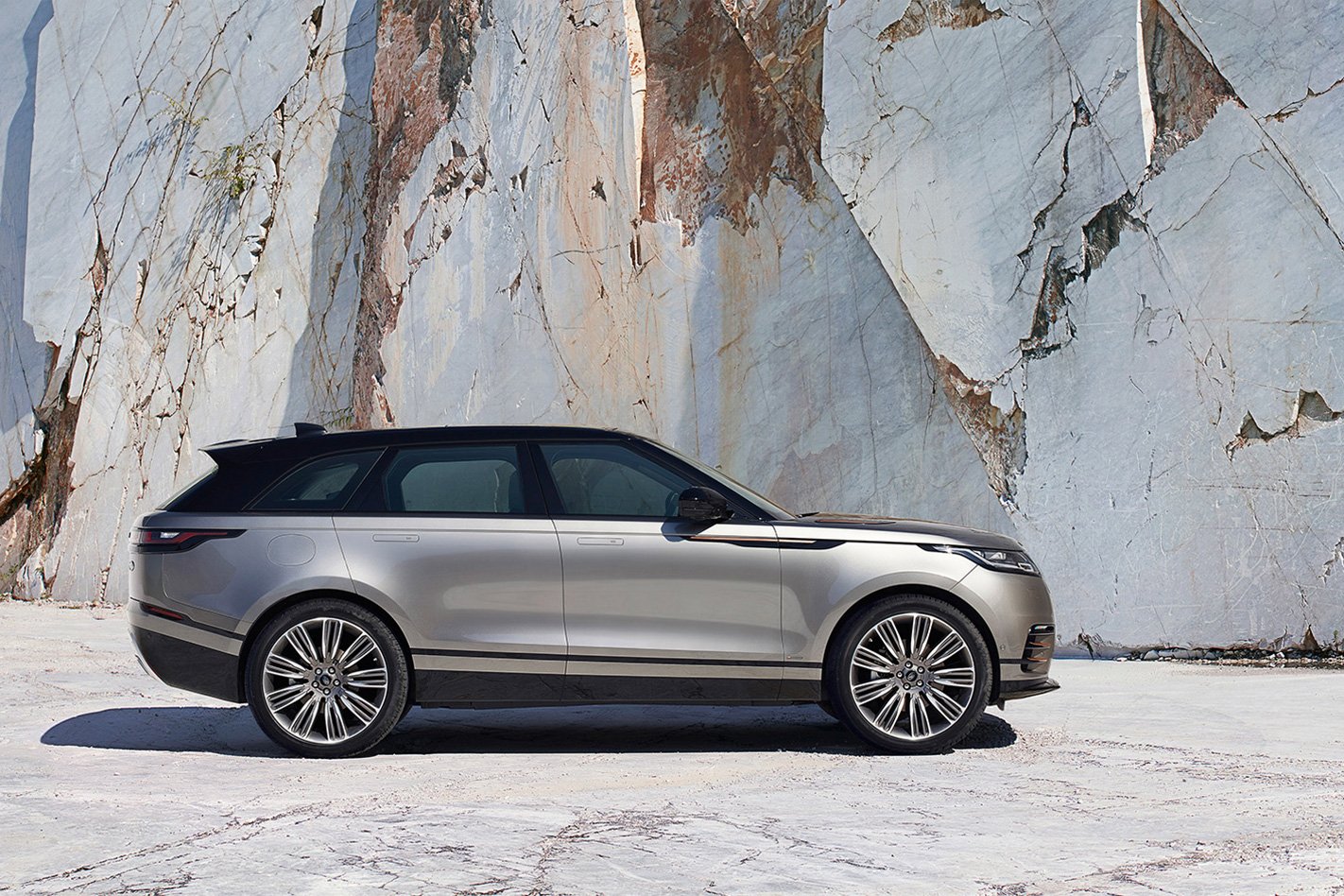
Naturally, as a Land Rover, the Velar is designed to be unafraid of getting its boots dirty. It comes with the company’s Terrain Response 2 system with switchable modes for different low-traction surfaces, and weaves in All Terrain Progress Control, Low Traction Launch, Hill Descent Control and a Grounding Detection function which is intended to alert the driver to submerged obstacles they may have been unable to see.
Models fitted with the standard coil-sprung suspension feature a class-leading 213mm of ground clearance, increasing to 251mm with air suspension (standard on V6 models, optional on higher-output four-cylinder models), along with a class-leading wading depth of 600mm (650mm with air suspension). All models get Adaptive Dynamics, which is LR’s name for adaptive damper control.
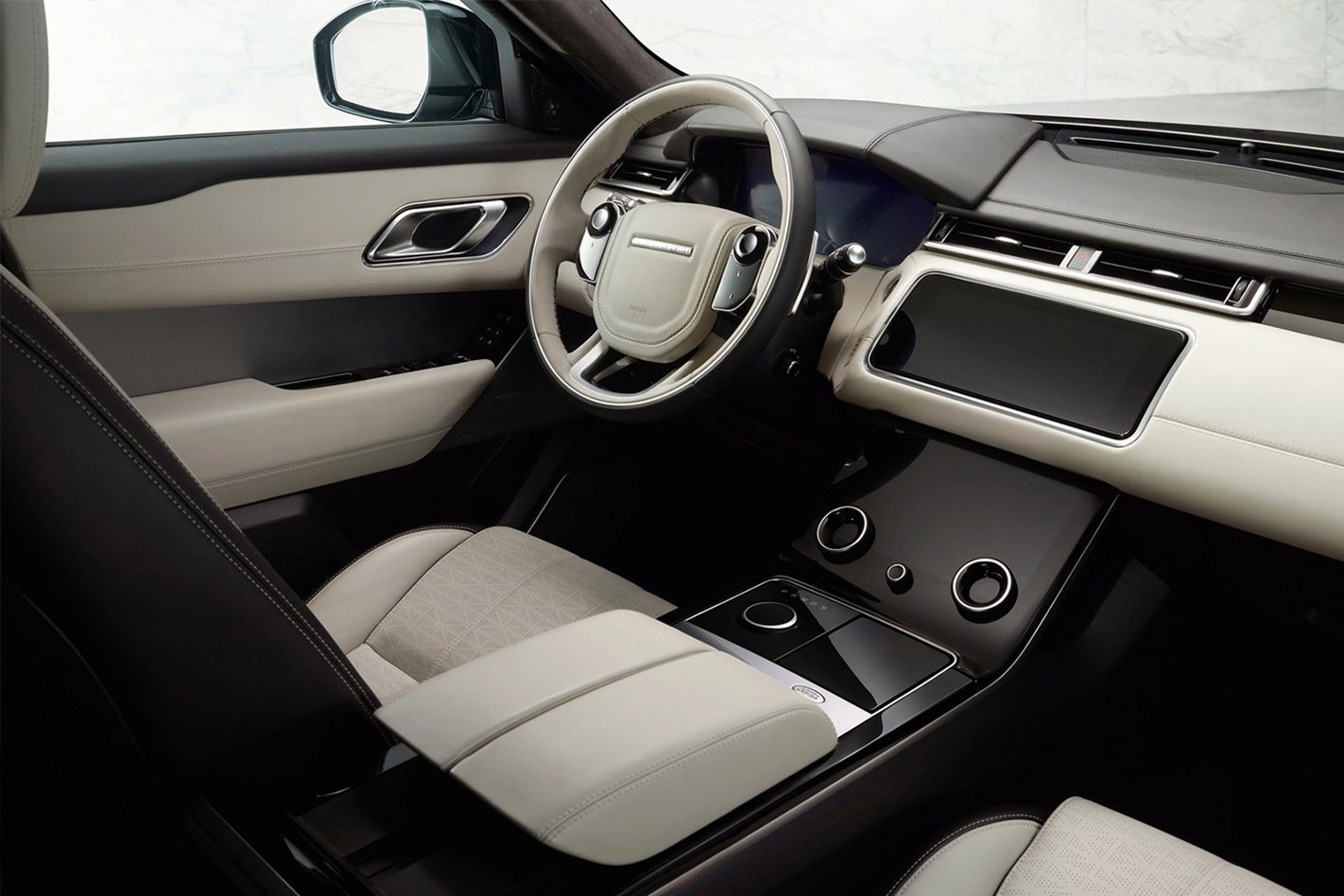
Model grades start with the eponymous Velar, then step to S, SE, and HSE. This is repeated with the addition of the R-Dynamic styling package (which adds different front and rear bumper designs, exterior trim changes, extra flashes of aluminium inside, a different steering wheel, metal pedals, and few other trim tweaks) so; R-Dynamic, R-Dynamic S, R-Dynamic SE and R-Dynamic HSE.
Would it not have been much more simple to keep the R-Dynamic exterior styling package as a $6000 addition to the four fundamental spec levels? Well, yes, we think so, but clearly LR’s local product planners don’t, and they get paid the big bucks, so here’s the range as it stands ready for launch, prior to the addition of the P300 high-output petrol four.
2018 Range Rover Velar pricing (before on-road costs)
P250 petrol four
Velar – $70,950 Velar S – $82,050 Velar SE – $90,950 Velar HSE – $107,250 Velar R-Dynamic – $76,950 Velar R-Dynamic S – $88,050 Velar R-Dynamic SE – $96,950 Velar R-Dynamic HSE – $113,250
P380 supercharged petrol V6
Velar – $93,750 Velar S – $104,850 Velar SE – $113,750 Velar HSE – $130,050 Velar R-Dynamic – $99,750 Velar R-Dynamic S – $110,850 Velar R-Dynamic SE – $119,750 Velar R-Dynamic HSE – $136,050 First Edition – $169,150
D180 diesel four
Velar $71,550 Velar S – $82,650 Velar SE – $91,550 Velar HSE – $107,850 Velar R-Dynamic – $77,550 Velar R-Dynamic S – $88,650 Velar R-Dynamic SE – $97,550 Velar R-Dynamic HSE – $113,850
D240 diesel four
Velar – $80,950 Velar S – $92,050 Velar SE – $100,950 Velar HSE – $117,250 Velar R-Dynamic – $86,950 Velar R-Dynamic S – $98,050 Velar R-Dynamic SE – $106,950 Velar R-Dynamic HSE – $123,250
D300 diesel V6
Velar – $92,850 Velar S – $103,950 Velar SE – $112,850 Velar HSE – $129,150 Velar R-Dynamic – $98,850 Velar R-Dynamic S – $109,950 Velar R-Dynamic SE – $118,850 Velar R-Dynamic HSE – $135,150 Velar First Edition – $168,250
