
When checking engine oil and coolant levels, most drivers would naturally look for the bonnet release and go to the front of the car, but engines aren’t always in the nose of a vehicle.
Pop the hood of a Porsche Boxster, BMW i8 or Lotus Elise, for example and you’ll find nothing but a place to put your gym bag, so what’s going on?
While a vast majority of cars have their engines at the front, a select few have either mid or rear-mounted engines.
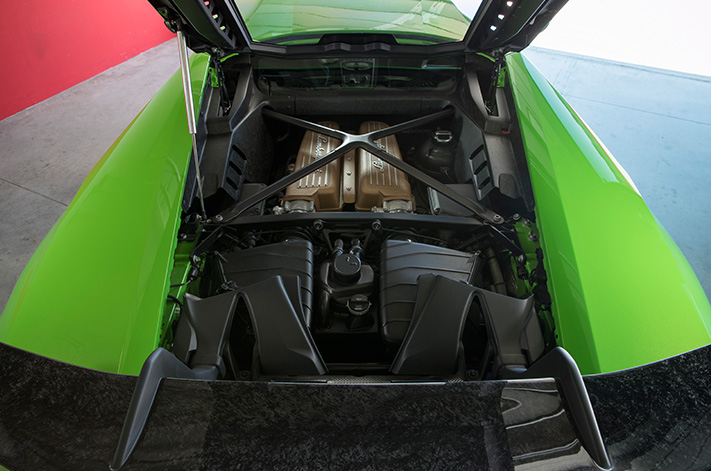
To be labelled a mid-engined car, a vehicle must have its entire engine located behind the front axle but ahead of the rear axle. If any portion falls over either axle, it is described as front or rear-engined.
As one of the heaviest components to be placed in a vehicle’s design, the position of the engine can dramatically affect how the car drives. Too far out front and the car will be reluctant to turn, too far rearward and there can be an undesirable tendency for oversteer.
If the engine can be placed close to the centre of the vehicle, it is easier to arrive at the handling Holy Grail of 50/50 weight distribution, where the total weight is shared equally by the front and rear axles. Generally speaking, these cars have desirable handling characteristics.
There is a little bit more to it than that. Mid-engined cars can be front-mid or rear-mid-engined. Confused? A rear-mid-mounted engine is typically easier to identify, with the space that would normally be occupied by a second row of seats filled up with cylinders and pistons.
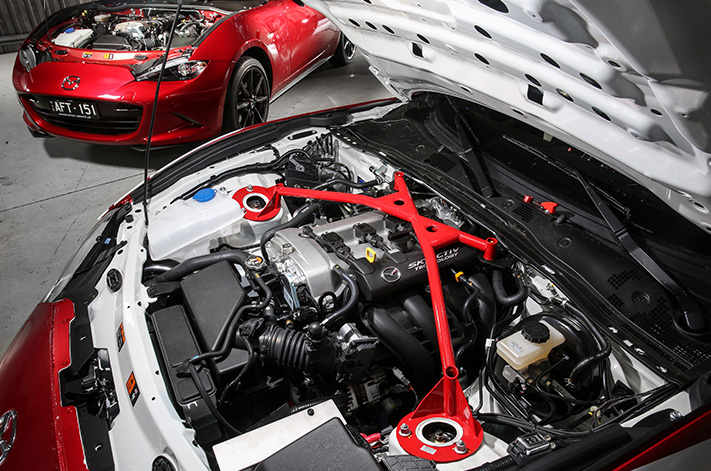
But if a manufacturer can push a front-mounted engine back far enough it can be ahead of the driver but still classed as a mid-engine.
Mid-engine layouts are favoured by high-performance car designers for their more involving experience for enthusiastic drivers.
What’s the downside? In the case of rear-mid-mounting, a second row of seating is normally sacrificed and rather than one large luggage area at the back end the storage is split into two smaller bins at either end of the vehicle.
With the engine nestled deep in the centre of the car, major servicing and repair is can be more complicated and expensive.
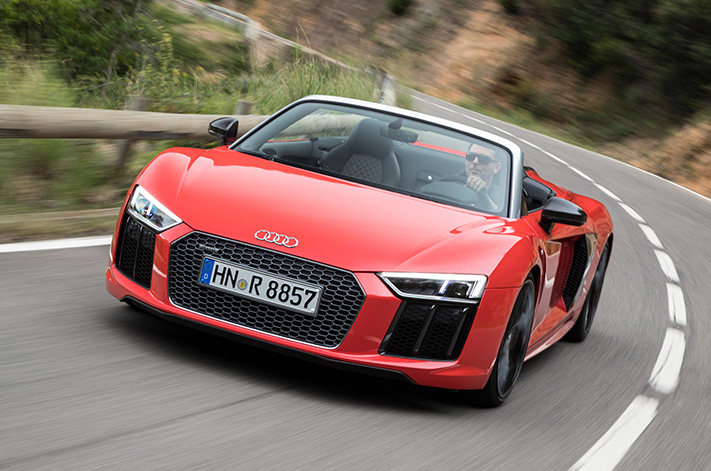
Front-mid engine cars have longer bonnets and the engine can rob cabin space from the front row occupants.
The list of rear-engined models on sale in Australia cars is short and currently limited to the Porsche 911 range, but models in other global markets include the Smart FourTwo and Renault Twingo.
Mid-engined options are more common and examples include all Lamborghinis and Ferraris, Audi’s R8 (rear-mid) and the Mazda MX-5 (front-mid).
An interesting anomaly is the previous-generation Toyota Tarago people mover which is also mid-engined but hides its engine away under the floor between the front seats in the name of practicality and maximising cabin space.
Though the E90 M3 CRT shares its infrastructure with the BMW M3 GTS, it wasn’t intended to be a hardcore track-beast.
BMW actually built the car to ‘show off’ its ability to manufacture carbon fibre-reinforced plastic, or CFRP.
The CRT moniker stands for Carbon Racing Technology, and it shows.
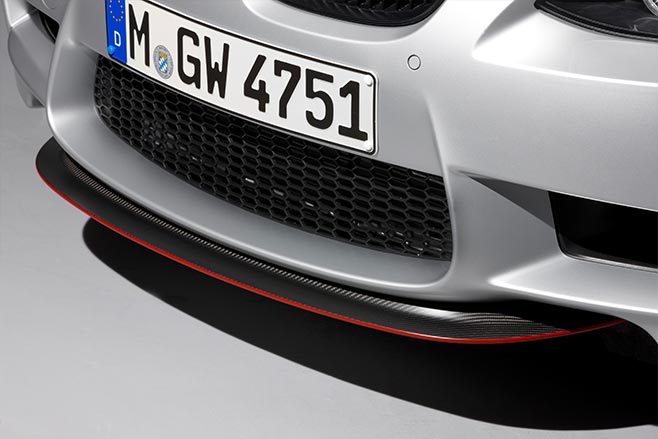
The bonnet alone had a weight reduction of 50 per cent due to being made of CFRP rather than aluminium, so once passenger cells, seats and spoilers were created in the same material, the CRT only had a 1580kg curb weight.
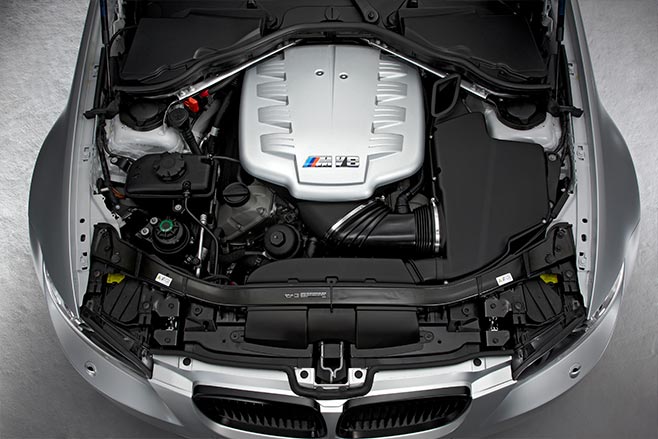
This performance doesn’t come cheap though, one’s up for sale on US luxury classified website DuPont Registry for $299,950 USD, or $396,900 Aussie dollarydoos.
With only 67 CRTs produced, it’s not surprising to see it advertised for so much money, though we imagine a right-hook example would fetch more – there are only five of those in the world.
All of them were painted in ‘Frozen Polar Silver’ metallic, with carbon trim and accents in ‘Melbourne Red’ metallic.
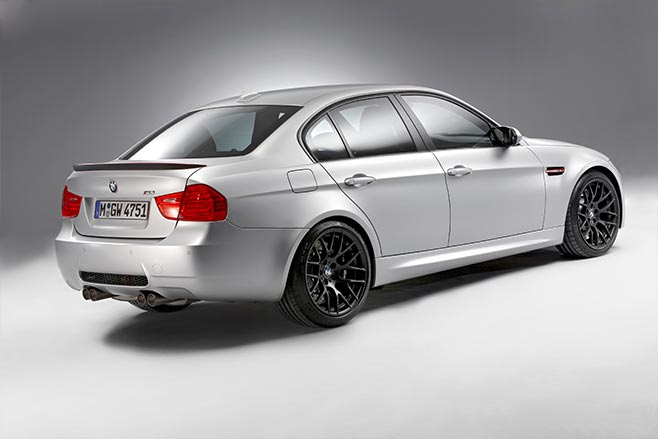
It’s essentially a ‘liveable’ GTS you could drive daily, but it had four doors, which is why it’s the ultimate E90/E92 BMW for us.
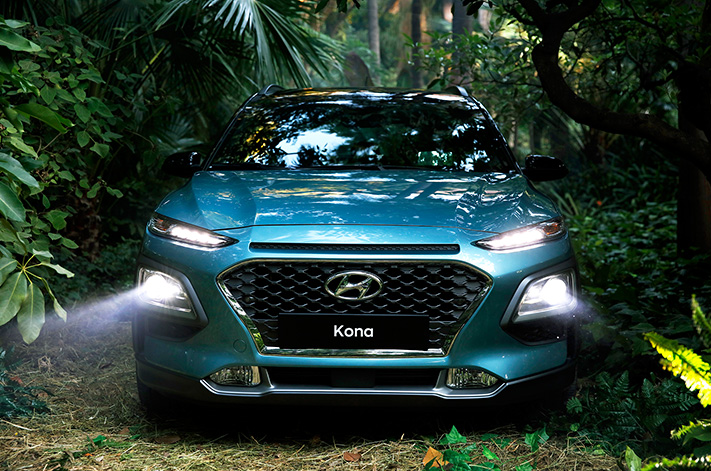
The 2017 Hyundai Kona, the Korean brand’s first European-designed compact SUV, will roll into Australian showrooms from September.
It will arrive here armed to the teeth with high-tech safety and a fully loaded infotainment kit, ready to take on the Mazda CX-3, Toyota C-HR, Honda HR-V and Mitsubishi ASX.
Kona was revealed officially today, at long last, in Seoul, South Korea, putting an end to weeks of teasers and speculation about its styling and specification. Pricing is yet to be confirmed for Oz, but here is what we do know.
A range of three, petrol-only variants, Active, Elite and Premium, will be available, led by a 2.0-litre four-cylinder (shared with the Hyundai Elantra) base model producing 110kW and 179Nm and driving the front-wheels only, through a six-speed automatic gearbox. Acceleration from 0-100km/h is claimed to take 10.0 seconds.
Mid- and high-spec Kona models will use matching 1.6-litre turbocharged four-cylinder engines with direct injection and outputs of 130kW and 265Nm. They will send drive to all four wheels via a seven-speed dual-clutch transmission and reach 100km/h from standstill in 7.7 seconds.
A normally aspirated 1.6-litre four-cylinder diesel engine and downsized 1.0-litre three-cylinder petrol engine available in Europe will not be sold here.
Active safety features including autonomous emergency braking (AEB), lane keeping assistance, automatic high-beam control, blind spot monitoring, rear cross-traffic alert and driver fatigue warning will be available on all Kona models sold in Oz, though not necessarily included as standard.
WhichCar expects a reversing camera for every trim grade, as well as Apple CarPlay and Android Auto smartphone integration software as standard across the range.
Base model Konas will likely make do with a smaller, 5.0- or 7.0-inch touchscreen, while mid- and high-spec variants will get an 8.0-inch screen and high-definition digital radio. A head-up display (HUD) will be reserved for the top-spec Kona model exclusively, placing speed and navigation information near the driver’s line of sight. Wireless smartphone charging will be available as an option on all models.
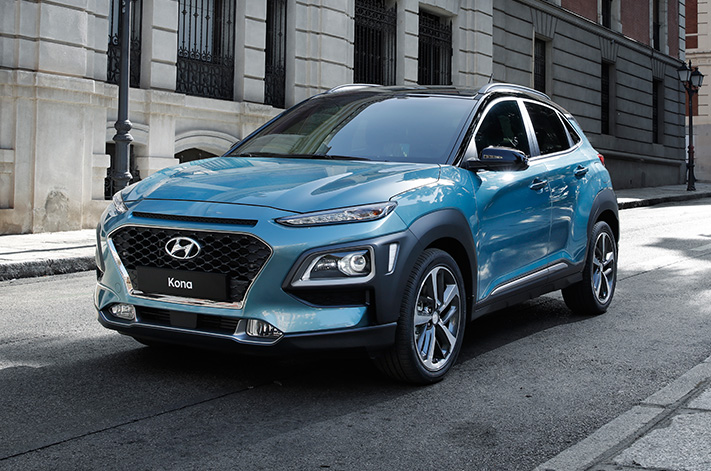
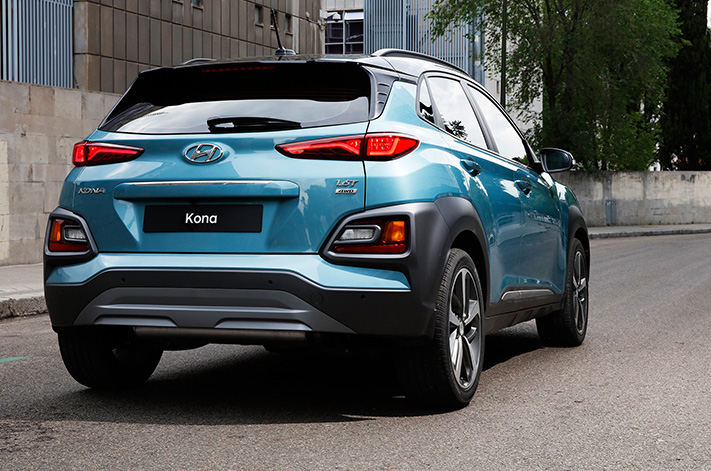
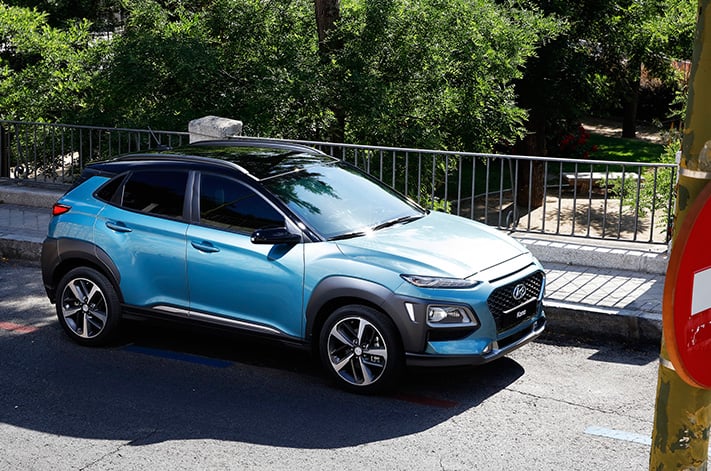
Kona’s unique, edgy styling incorporates black plastic cladding on the lower part of the car as well as the brand’s ‘cascading grille’ design signature up front, flanked by two main headlight units set midway up the car’s face with LED daytime running light strips sitting above each one, similar in execution to the Jeep Cherokee, Citroen C4 Cactus and Nissan Juke.
At 4165mm, Kona’s overall length makes it the smallest in its class. It is 110mm shorter than the Mazda CX-3, though it is 35mm wider and has a 30mm longer wheelbase, which means its wheels are positioned closer to the corners of the car, and that should open up more room inside for passengers and baggage. Official interior dimensions and cargo volumes will be announced before its local arrival.
Hyundai says Kona engineers paid particular attention to the way drivetrain components were packaged for minimal impact on cabin space. Different rear suspension layouts are used for the two drivetrain options: a torsion beam for the 2WD model and a more sophisticated and dynamically capable multi-link setup for AWD variants. A test drive in the near future will confirm whether or not the program has been successful.
The Kona name comes from a coastal region of Hawaii famous for triathlon competitions. It follows Hyundai’s penchant for naming its SUVs after travel destinations, as established with Tucson and Sante Fe.
Specific details concerning Australian Kona pricing, fuel economy figures, weights and other specification data will be fed through in the lead-up to the new model’s arrival at Hyundai dealerships in late September.
THE Hyundai Kona is Korea’s fashionably late first strike on the global compact SUV segment, and looks set to land an ultra-competitive blow to the status quo in Australia when it arrives in September.
Revealed in Seoul, South Korea, Kona is the latest roll of the dice by a brand now occupying the top spot on more local buyers’ shopping lists following its calculated push towards a more upmarket look and feel.
Kona’s eye-catching design will feature on a three-tiered line-up in Australia, with a comprehensive equipment list and an expected low-$20K entry-level price to put it toe-to-toe against the popular Mazda CX-3, and further challenge the Toyota C-HR, Honda HR-V, Mitsubishi ASX and Subaru XV as they vie for market position.
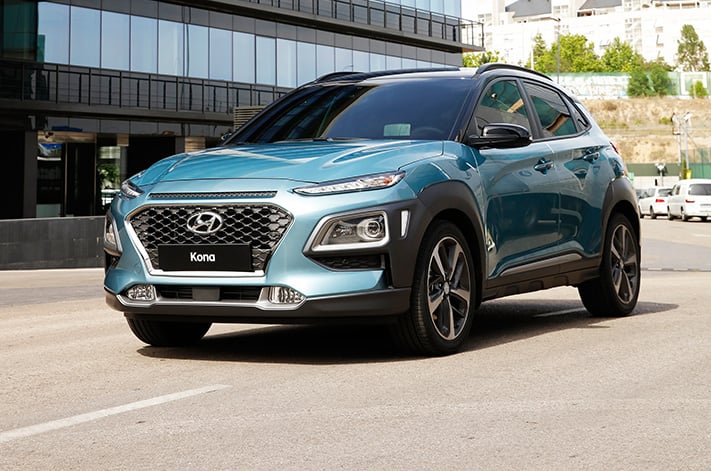
Two petrol engine options span the three Kona variants – Active, Elite and Highlander – in Oz, starting with a 2.0-litre ‘MPI’ atmo four-cylinder front-driver borrowed from the Elantra and pushing 110kW and 179Nm though a six-speed auto in the base model. That’s followed by a 1.6-litre ‘GDI’ turbo four-cylinder, shared with the Tucson, with 130kW and 265Nm powering a standard all-wheel-drive system through Hyundai’s own seven-speed dual-clutch transmission in mid- and high-spec Kona variants. Acceleration claims, 0-100km/h, are 10.0 and 7.7 seconds respectively.
Three-cylinder petrol and four-cylinder diesel engines on offer to Europe and other markets will not be sold in Australia at launch. Working against the diesel is its low uptake in the compact SUV class; Mazda’s oil-burning CX-3 only accounts for three percent of sales of the popular soft-roader.
“Extensive research clinics on Kona in Australia have been very encouraging,” said Grant. “Kona is a vehicle that manages to be distinctive to look at, inside and out, but not so challenging that it turns people away.”
At 4165mm long, Kona is 110mm shorter than the Mazda CX-3, though Kona is 35mm wider and has a wheelbase that’s 30mm longer. That should mean more interior space with Kona’s wheels pushed further out to the corners.
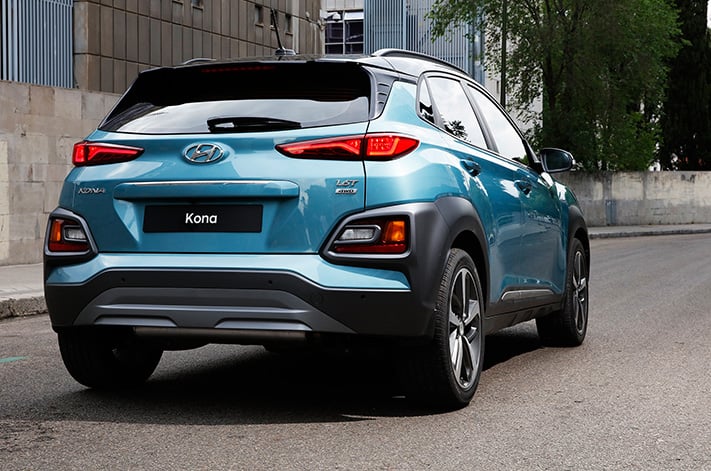
“The rear layout of the platform is also optimised to save space, with suspension, fuel and exhaust components carefully packaged to maximise rear occupant room,” Hyundai said.
An adaptation of the second-gen PD i30’s platform sits beneath Kona. A torsion beam rear suspension is used for the sole 2WD variant, whereas AWD models get a multi-link setup. Australia will carry out local suspension tuning for all Kona versions, and there’s potential for a Kona SR model down the track with the i30 SR’s 150kW engine. Look further forward and an even more powerful Kona N model with as much as 200kW isn’t out of the question.
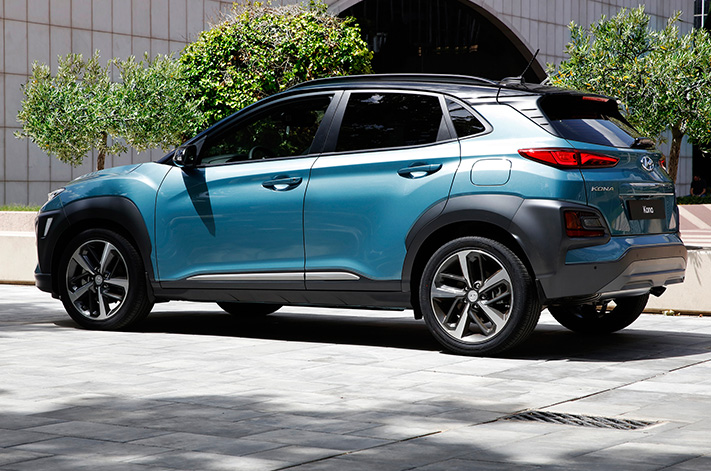
Hyundai claims to be the only car manufacturer to make its own steel for vehicle production globally. More than half of the Kona body frame is made from an advanced, hot-stamped high-strength steel to deliver what Hyundai describes as class-leading levels of passive safety.
Australian retail pricing for Kona models is listed below, though Hyundai will run driveaway deals from launch starting at $27,000 for the Active 2.0.
Engine | u00a0 | Active | u00a0 | Elite | Highlander |
2.0 MPi Petrol | u00a0 | $24,500 | u00a0 | $28,500 | $33,000 |
1.6 T-GDi Petrol | u00a0 | $28,000 | u00a0 | $32,000 | $36,000 |
MERCEDES driver Lewis Hamilton’s travails in Monaco were an ocean away as the Briton calmly pieced together a crushing lights-to-flag victory in an entertaining Canadian Grand Prix to bridge the deficit to Ferrari championship rival Sebastian Vettel from 25 points to 12.
It was a perfect fightback on a track that had always been one of his happy hunting grounds – this was his sixth win in Montreal.
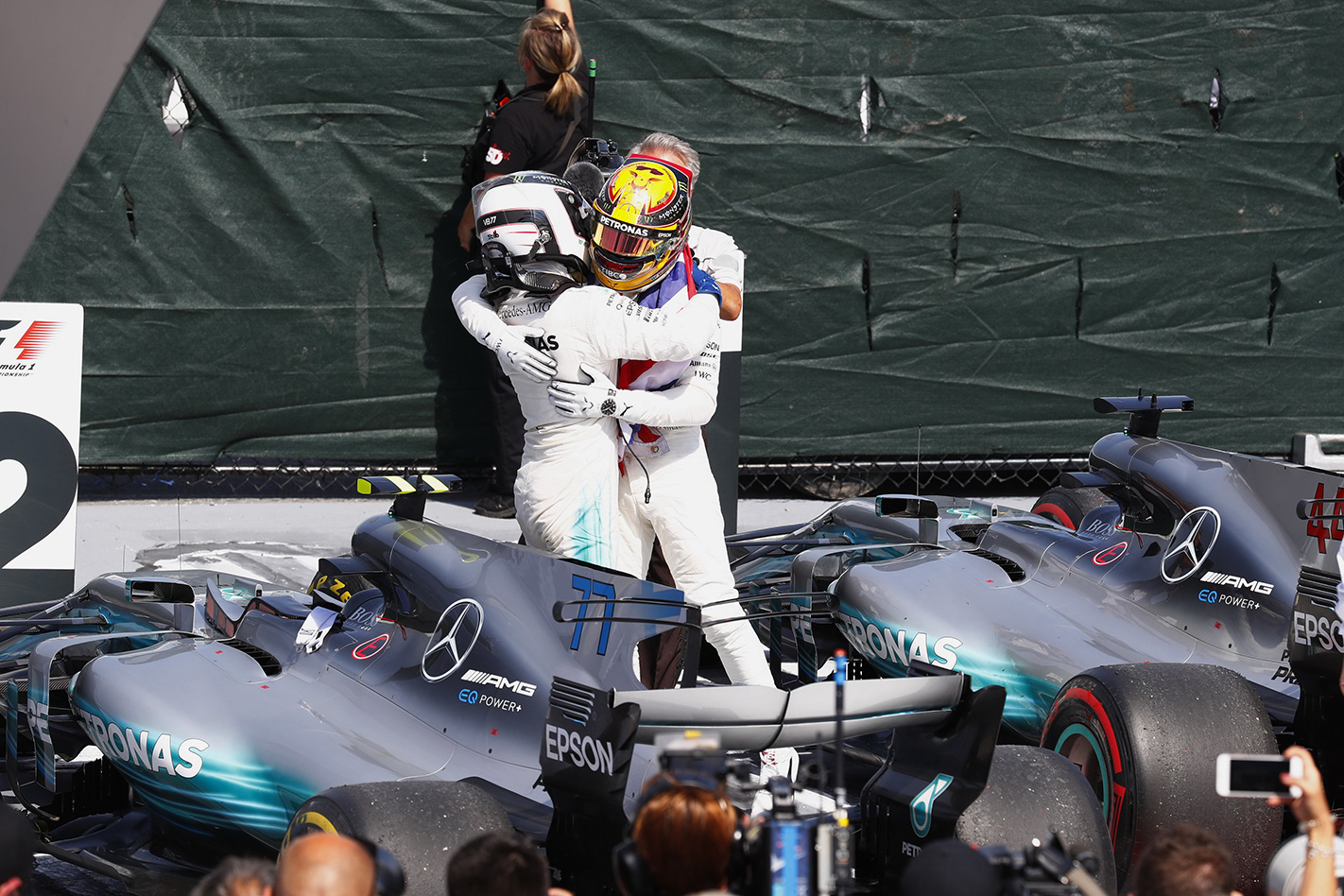
“I’m not sure I have ever seen the team come together as it has in the two weeks since Monaco.” Hamilton won by almost 20secs win over teammate Valtteri Bottas with Australia’s Daniel Ricciardo fighting off the attentions of Force India pair Sergio Perez and Esteban Ocon to take his third podium in as many races.
“Today I only had fun when I saw the chequered flag,” Ricciardo told the crowd from the podium. “It was tough; we were defending the whole race. It was getting hot and my concentration was being tested.”
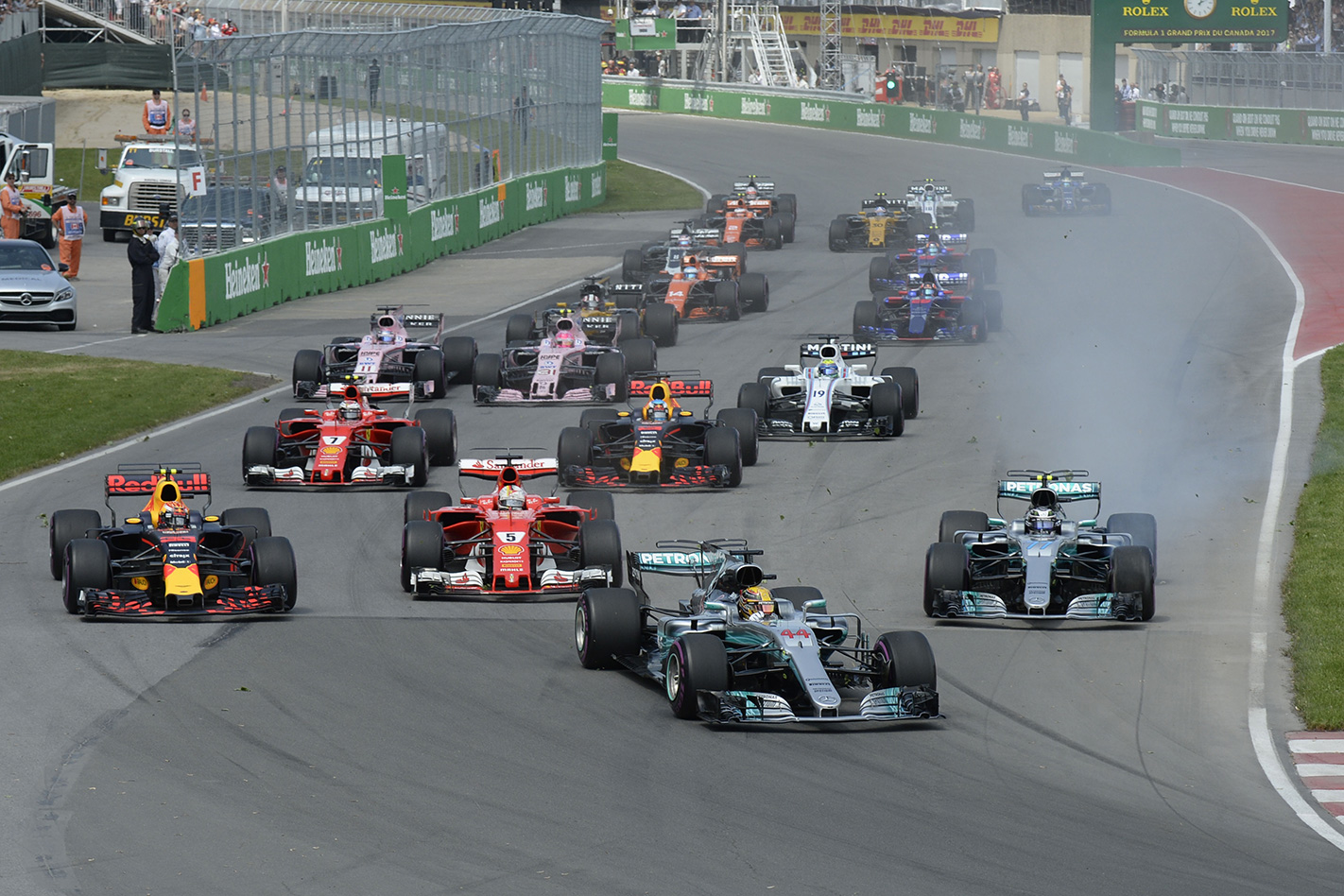
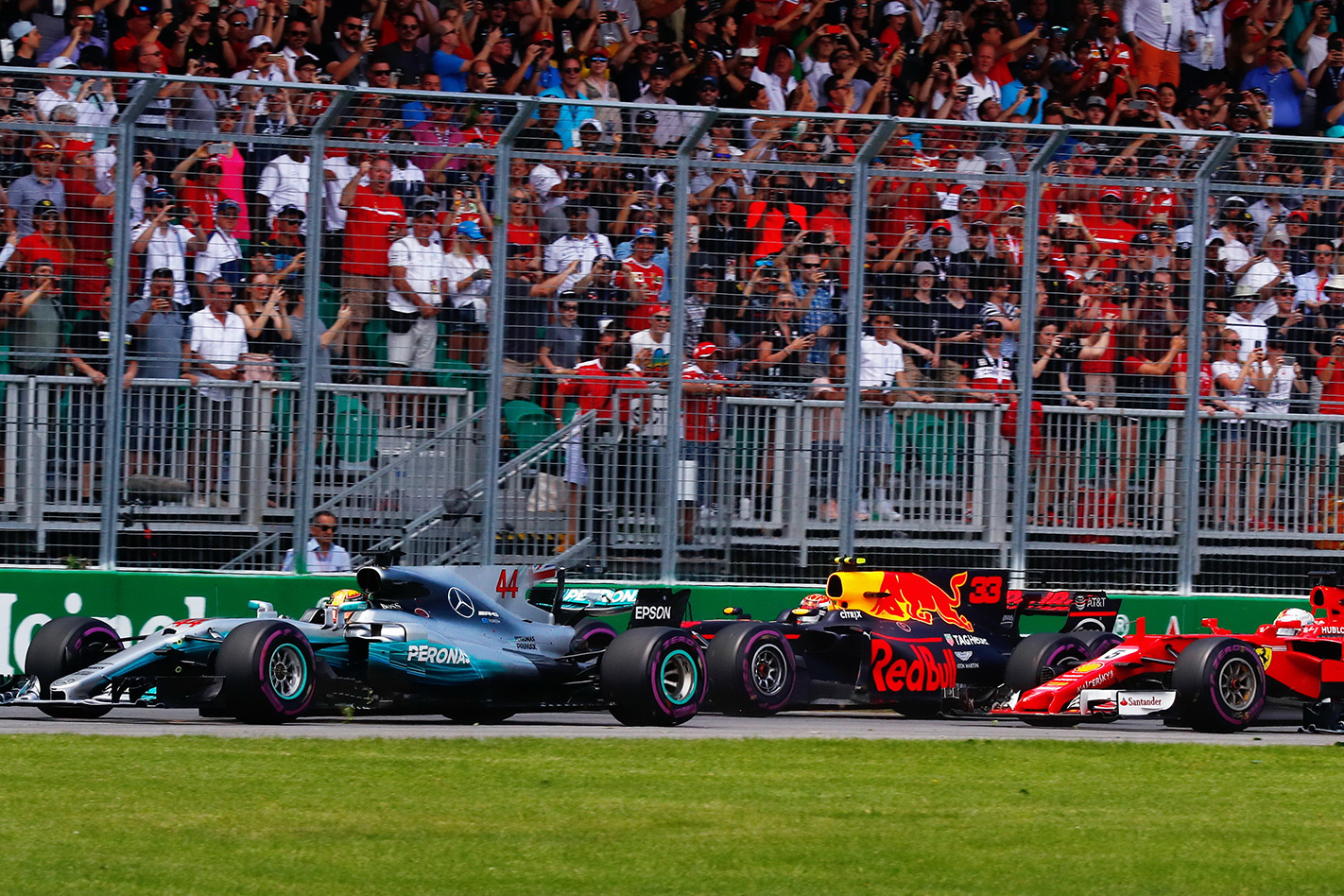
Front-wing damage to Vettel’s car from an aggressive Max Verstappen off the start line dropped the German to 18th but he never gave up and treated his tyres well to in a rough afternoon of damage limitation.
The Force India pair’s fifth and sixth may have been even better had Perez heeded the request to let through his faster teammate Ocon on fresher tyres for a shot at Ricciardo. Perez refused to cede a position and consequently Vettel raced up behind the pink machines, and then surgically dispatched one then the other back a place.
Kimi Raikkonen’s Ferrari had brake issues in finishing seventh ahead of Renault’s Nico Hulkenberg.
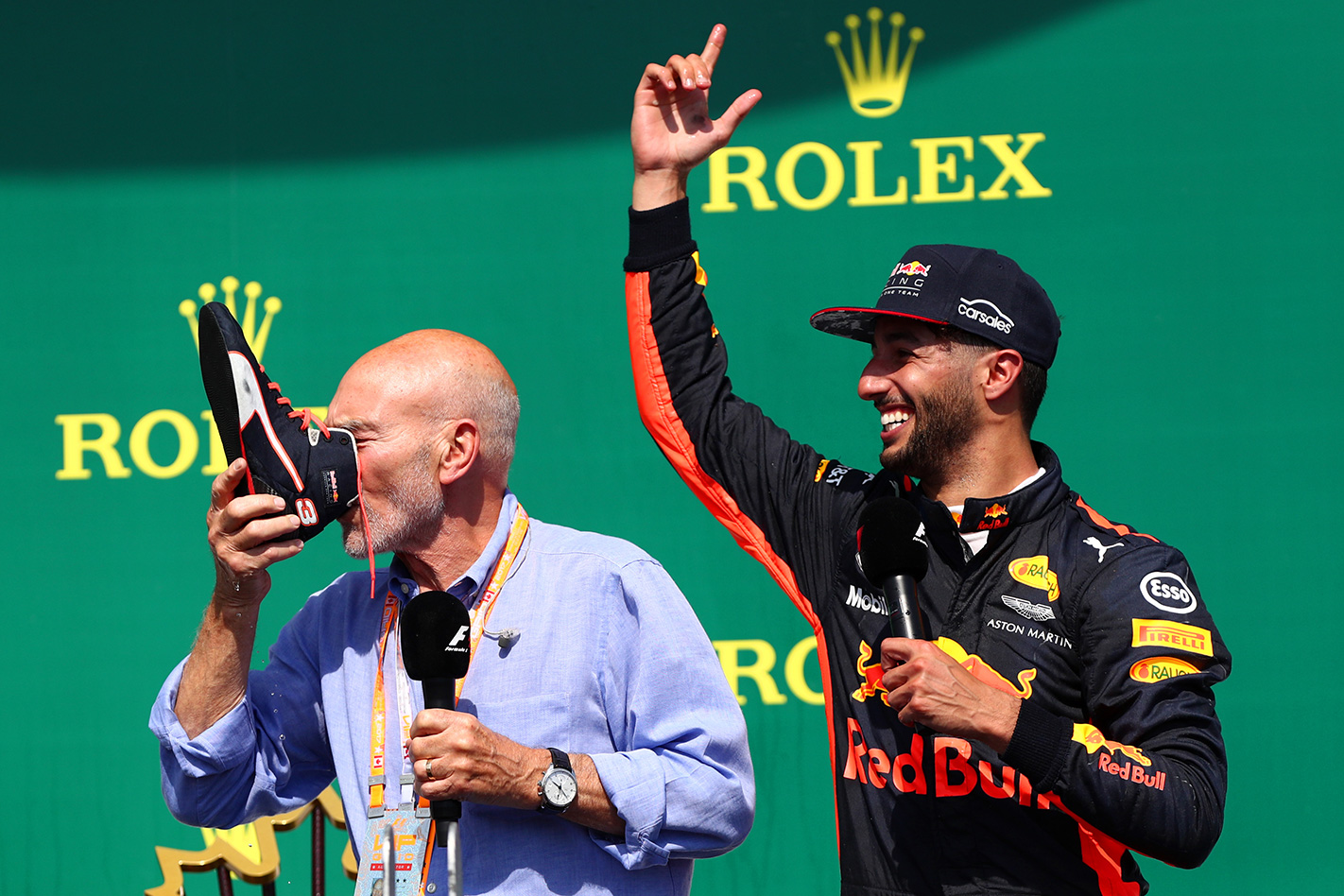
Fernando Alonso kept intact his unwanted record of non-finishes, his Honda power unit failing just over one lap from the chequer.
Really, though, this grand prix was all about the peerless Hamilton and the resurgent Mercs, although Vettel may ponder what might have been had he got through the first few seconds of the race cleanly.
Vettel and Verstappen do have some form of magnetic attraction.
***
Qualifying in Canada is the least important of all, statistically producing the lowest pole-to-win conversion rate on the F1 calendar. But that’s not to suggest it isn’t treated seriously…
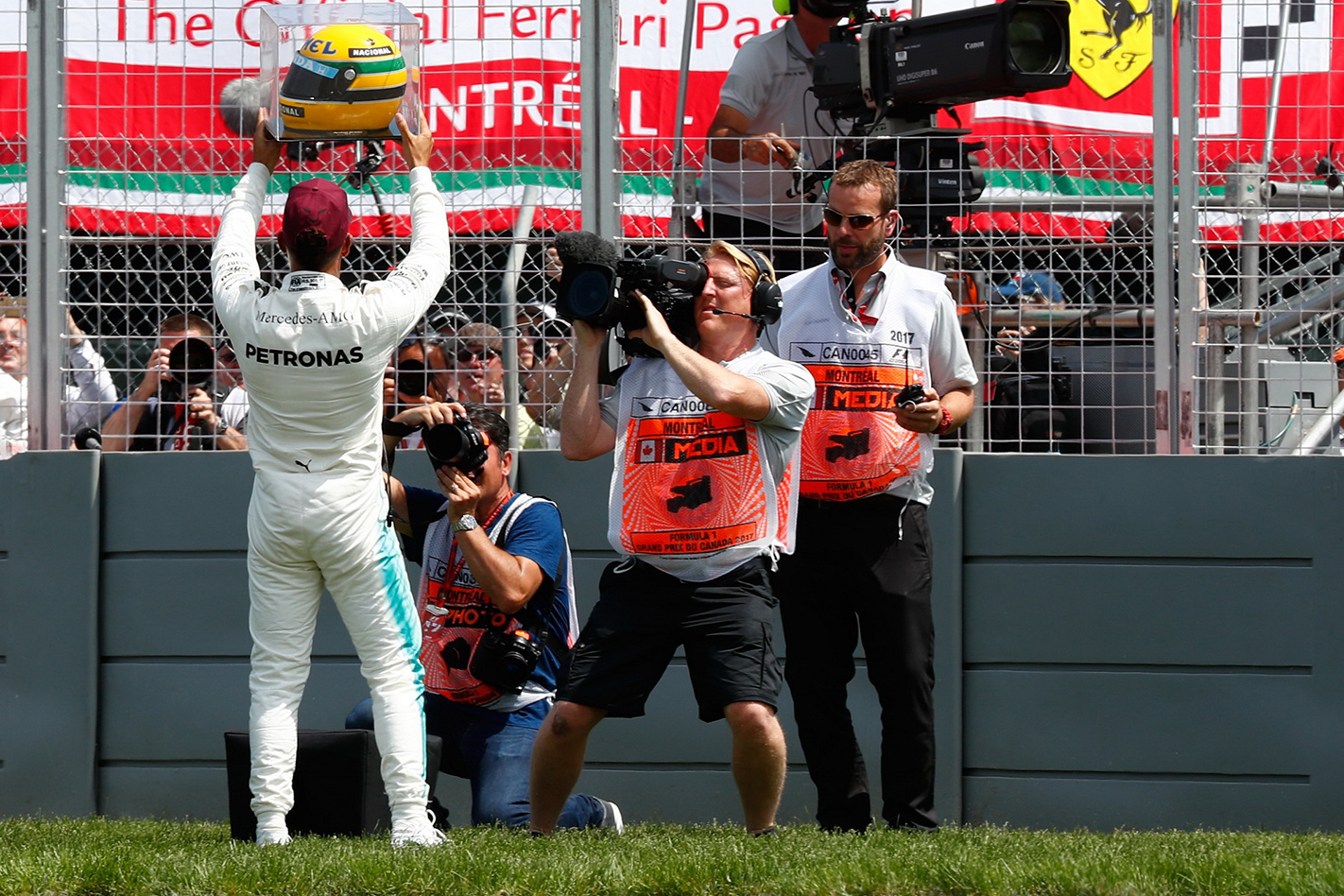
“I dug down deep… It was a great lap, a sexy lap!” said Hamilton, who put in a super lap to fully capitalise on the Mercedes engine’s top 10 shootout power boost. The gap to championship leader Vettel was all of 0.336sec. Next were Bottas, Raikkonen, Verstappen and Ricciardo.
Will Power takes crash-marred Texas IndyCar
Australia’s Team Penske driver Will Power endured a crazy night of racing on the banked 1.5-mile Texas Motor Speedway oval, winning the Rainguard Water Sealers 600 in a race of survival that finished under caution.
Power’s victory is the 31st Indy car win by the Team Penske driver, and his second of 2017.
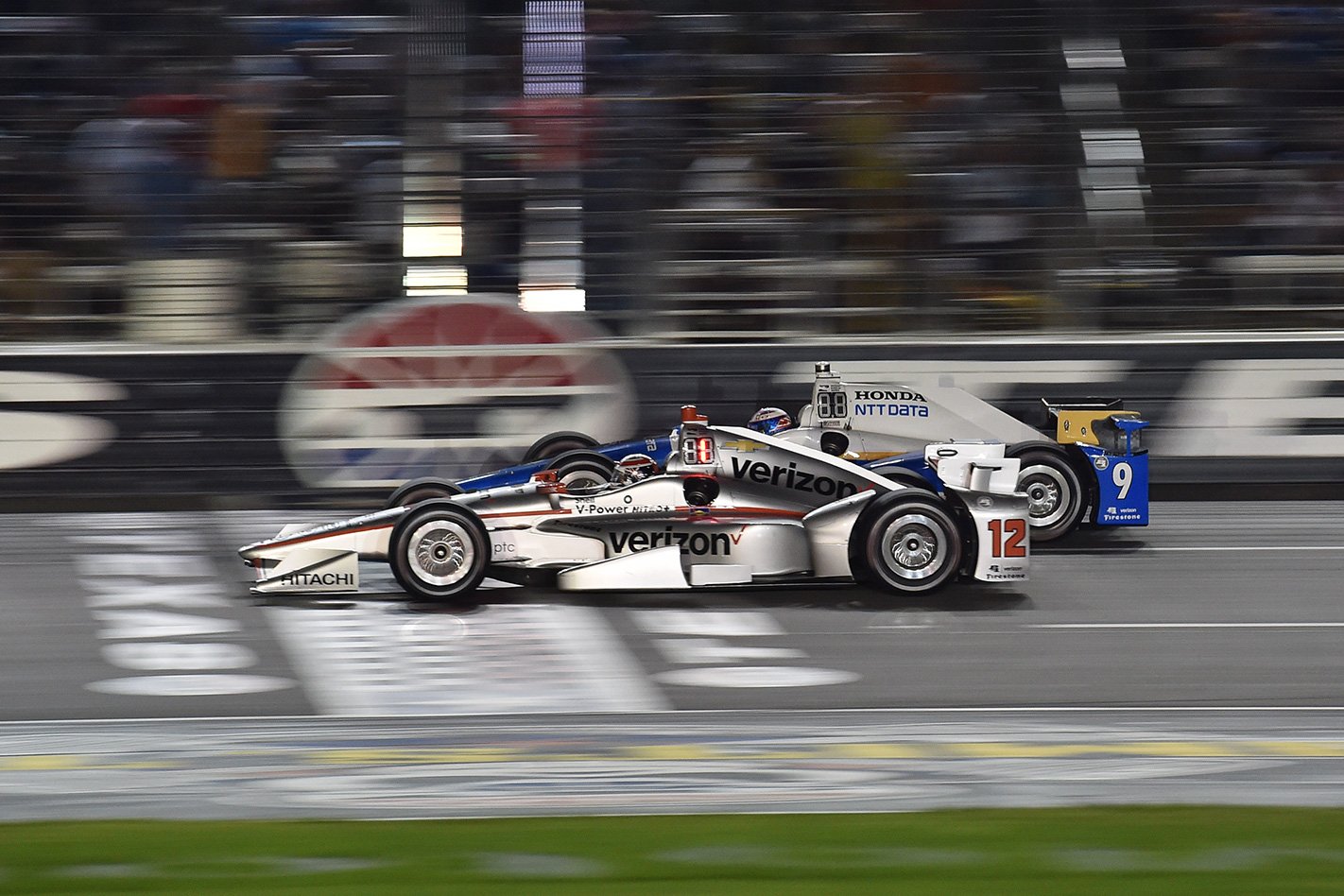
In a race neutralised for 66 of the 248 laps by cautions caused by a number of incidents, Tony Kanaan finished second but found himself under fire from officials and other drivers. He accepted responsibility, saying: “I don’t do those kind of things. I race people clean, and I want people to race me clean.
“It was definitely an honest mistake. You never, especially in a place like this, crash people on purpose. And I’ve been around it way too long to do any silly things like that, and if I did, it was really a mistake, and I apologise for it.”
Under a full moon, the big shunt of the race came on lap 152 when the cars of Kanaan and James Hinchcliffe touched and Hinchcliffe’s car veered into the barrier. Within moments a further nine cars were embroiled in the wild high-speed pile-up which brought out the red flags for 31 minutes.
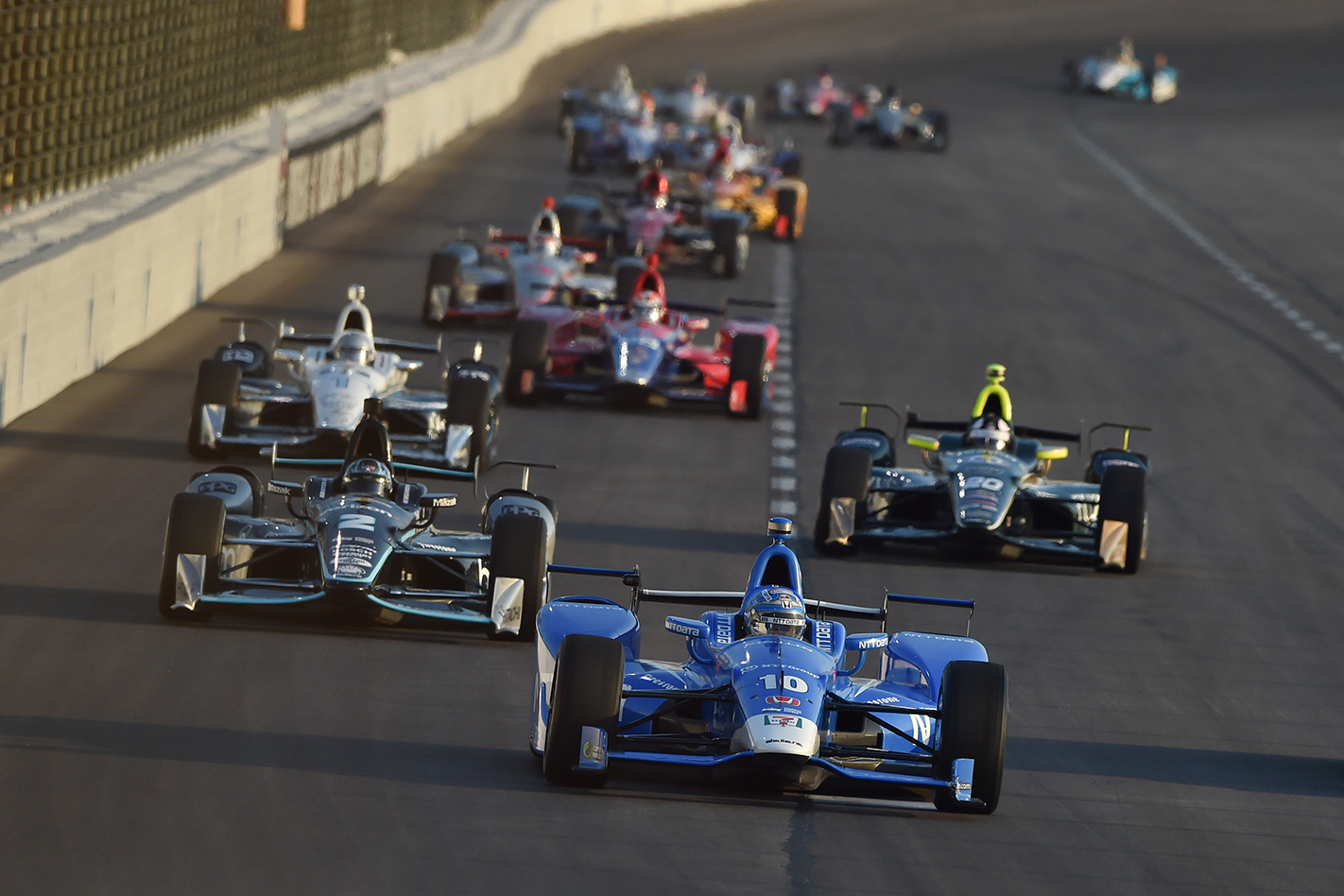
Only one lap later, Indy 500 winner Takuma Sato attempted an inside pass on Dixon for second place heading into the first turn, but his Andretti Autosport Honda clipped the grass and spun, collecting Dixon, Conor Daly and Max Chilton.
The crash triggered the final caution of the evening, allowing Power to tour to his second victory of the 2017 IndyCar Series season.
Behind Power and Kanaan at the finish were Simon Pagenaud, Graham Rahal, Gabby Chaves and Marco Andretti on the lead lap.
Dixon finished ninth and last but retained the unofficial championship lead after nine of 17 races with 326 points. Defending champ Pagenaud is second with 313, Sato third with 312, Helio Castroneves fourth with 303 and Power on the move up to fifth with 286.
Dixon refrained from criticising Sato, but no such constraints applied to his wife Emma who launched a Twitter attack on the Japanese.
WRC: Tanak breakthrough win on Rally Italia Sardegna
Estonian Ott Tanak has avoided the dramas that took out several of his rivals to take an impressive maiden World Rally Championship victory in a tough and challenging Rally Italia Sardegna held in scorching early summer conditions.
The Ford up-and-comer won with a margin of 12.3 seconds over Jari-Matti Latvala in the improving Toyota Yaris, with the Hyundai of Thierry Neuville a further 55.4 seconds back in third.
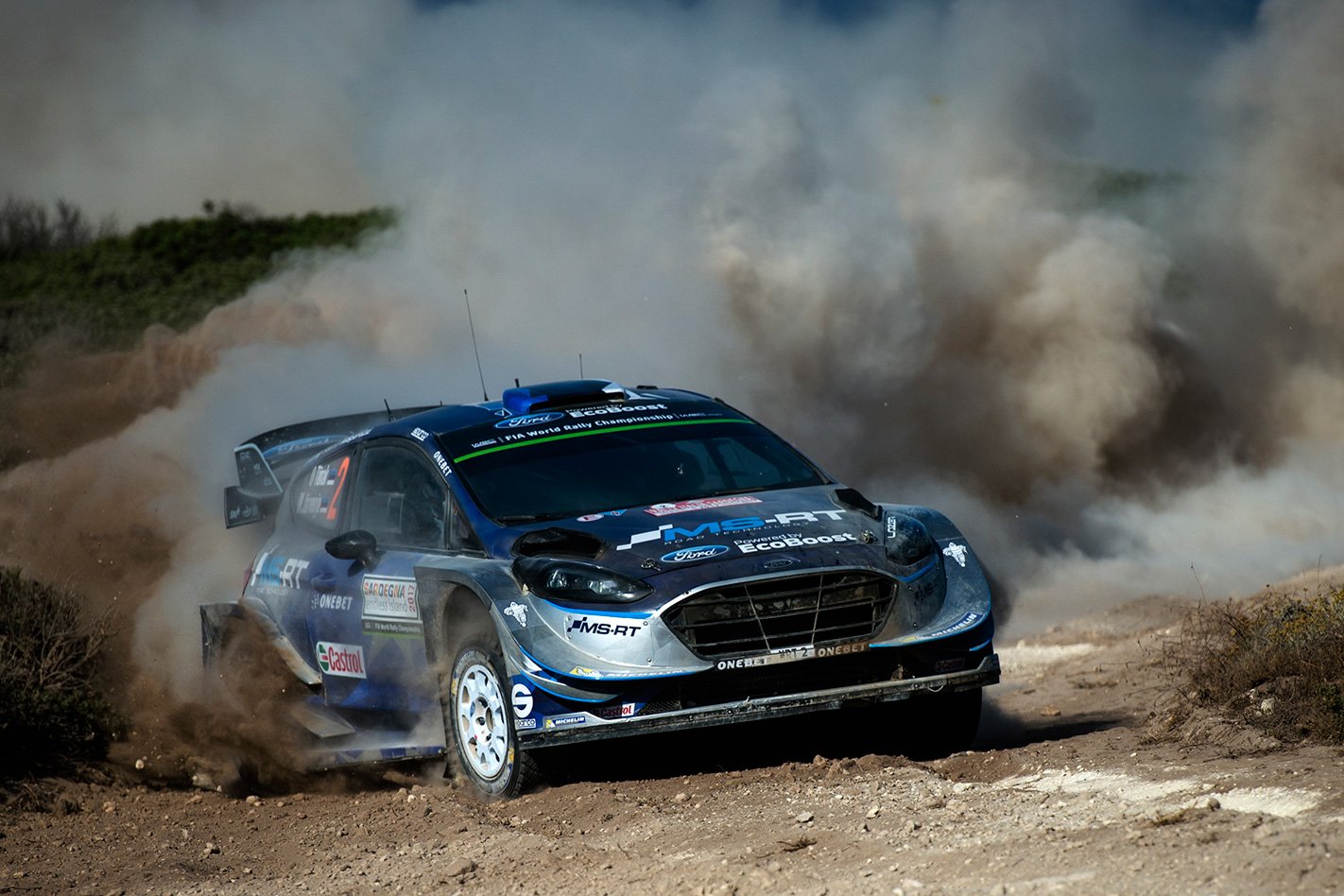
Esapekka Lappi claimed a remarkable fourth in only his second World Rally Car outing. He won six of the 19 tests in his Yaris to finish 1min 12.4sec ahead of Sebastien Ogier.
Championship leader Ogier (M-Sport Ford) was a victim of his own success. Because he led in the standings, he was stuck with the role of being first on the road, “sweeping” the loose gravel and rocky stages. He was just seventh at the end of the opening day, and (after a puncture) sixth on Saturday night.
Victory in the gruelling four-day rough road encounter was Tanak’s first success in 73 starts and he became the fifth different driver to win in seven rounds during a season notable for no clear favourite.
The 29-year-old’s win came despite a late scare when the Fiesta’s cockpit filled with dust and with his visibility seriously impaired, Tanak overshot a junction on Sunday’s opening speed test and slithered into bushes.
The rally was led at different times by six different crews.
Tanak took over the lead on Saturday afternoon after New Zealand’s Hayden Paddon ruined what had been a great run, clipping a bank and destroying the right rear of his Hyundai i20.
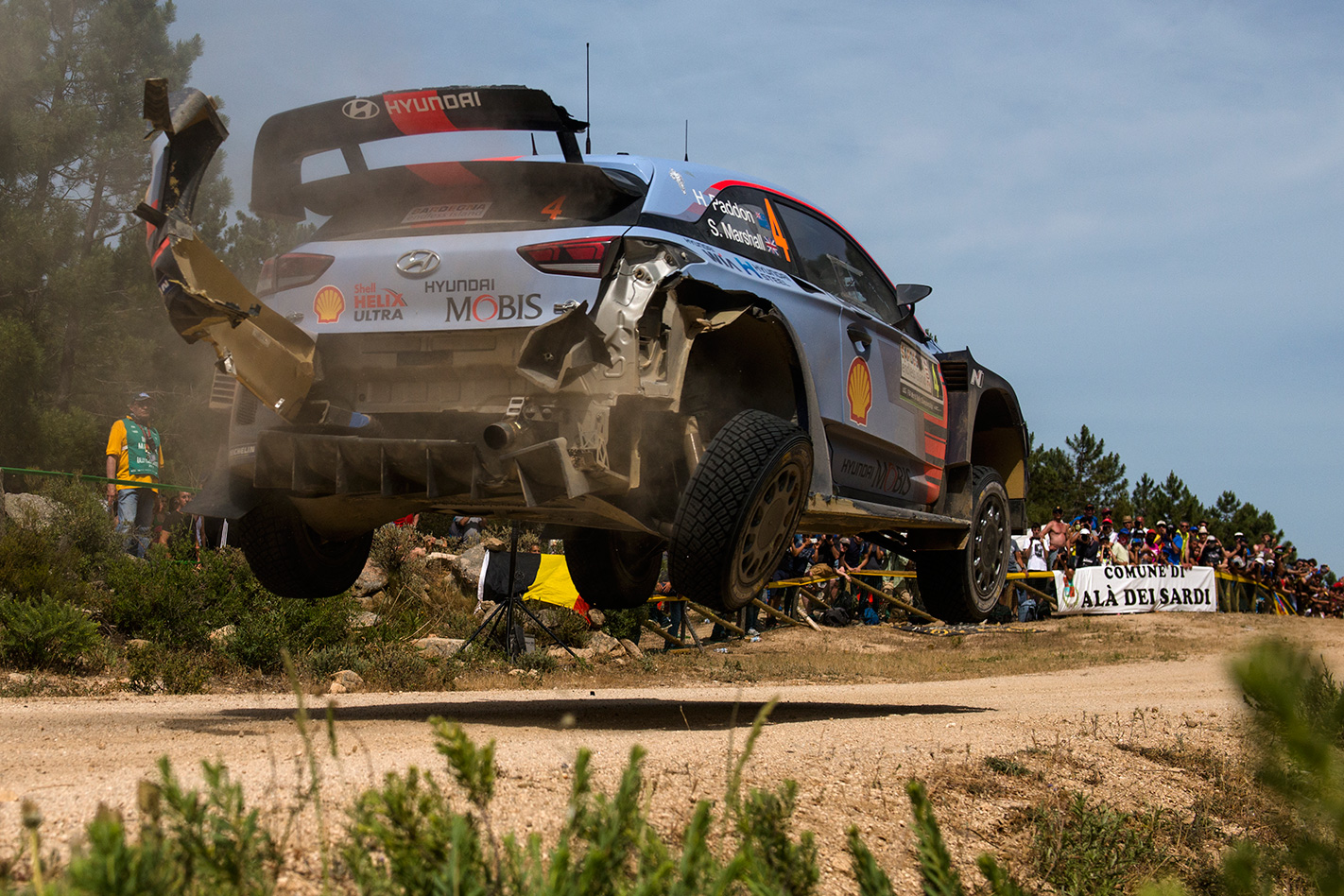
Citroen’s Chris Meeke had earlier rolled out of the lead – his third such crash of the year. Either Meeke is trying too hard or else the Citroen is not an easy machine to tame.
Belgian Neuville led initially and stayed in contention despite having to deal with the slippery gravel roads on Friday. A brake problem on Saturday cost a minute and ended his bid.
Ogier’s lead over Neuville in the championship has been cut to 18 points, with Tanak now third.
MOTOGP: Ducati’s Dovi does it again in Catalunya
Andrea Dovizioso has taken Ducati to a second MotoGP win on successive weekends, adding another maximum points haul in the Catalan GP to his triumph a week earlier in Mugello.
With air temperature at 33 degrees Celsius and a track temperature of 54, conditions were very tough on the riders, the heatwave and slippery tarmac making serious demands on their Michelin rubber.
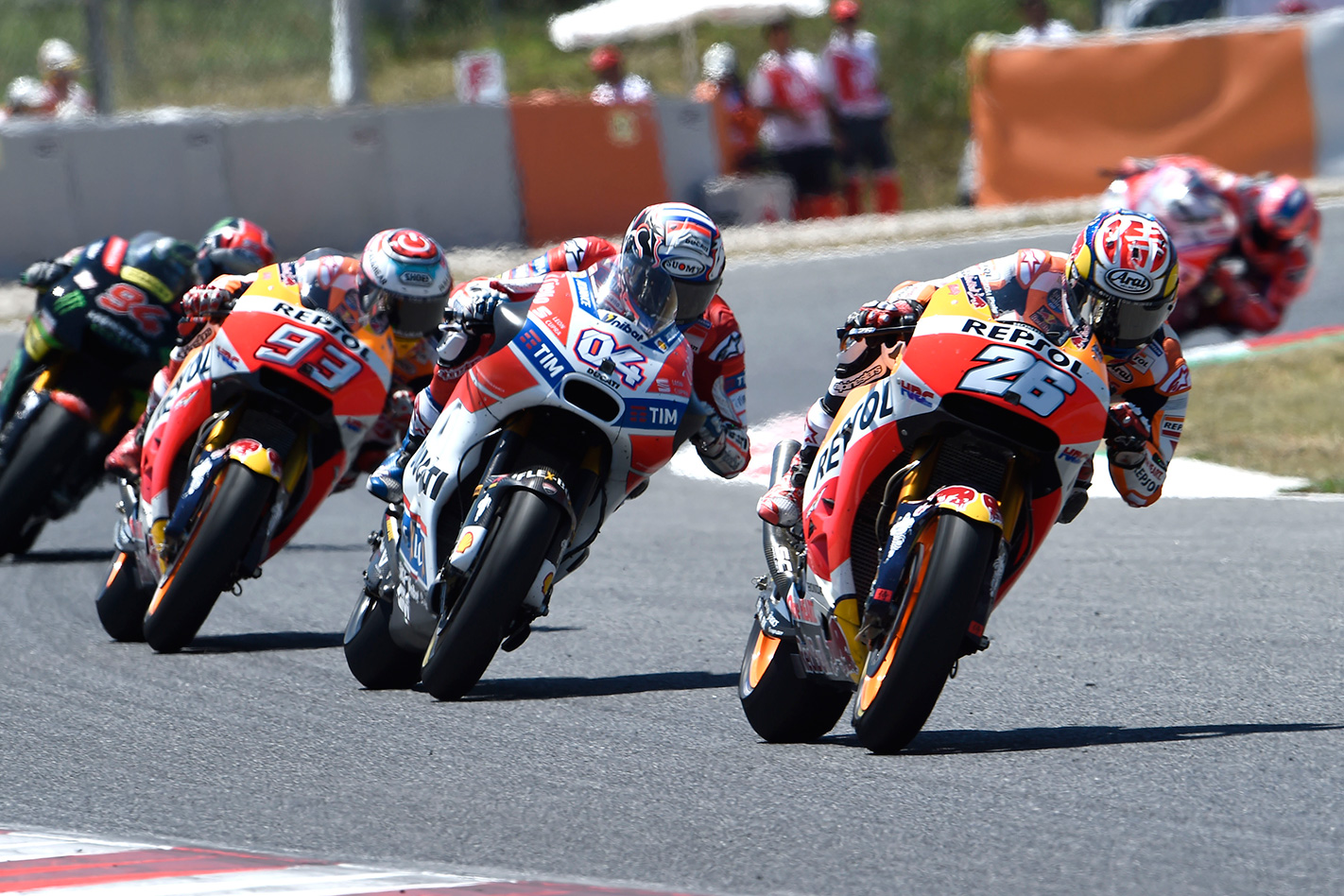
“I’m so happy but also a bit surprised by this win,” said Dovi later, adding that it was a strange race because no-one could push on any lap due to the grip limitations.
Marquez, who’d accumulated no fewer than five crashes over the weekend (four on Saturday and another in the Sunday warm-up) stayed aboard throughout, led for some laps but ultimately elected to settle for second and 20 championship points.
Pedrosa took third ahead of Ducati’s Lorenzo, with Johann Zarco (Monster Yamaha Tech 3) again performing well in his first season fifth, barely in front of his team-mate Folger. Alvaro Bautista (Pull&Bear Aspar Team) was seventh, with Valentino Rossi (Movistar Yamaha MotoGP) coming home in eighth ahead of the Ducati of Hector Barbera (Reale Avintia Racing).
The final top-10 place went to current world championship leader Maverick Viñales (Movistar Yamaha MotoGP), as he retained his lead in the title chase, but now with a reduced margin ahead of Dovizioso.
Australian Jack Miller crashed his Honda out of 10th place, doing nothing for his bid to secure a contract for 2018.
The opening day was largely a “lost” day for the riders following a safety-related decision after Friday practice to revert from a new chicane to the older, established Formula One chicane.
A new chicane, designed and built since last year’s race to provide a more generous run-off zone, proved to be unpopular, leading to the reinstatement of the old diversion used by F1 cars.
The chicane – old or new – was the least of the riders’ worries though; the tired and slippery old track surface leading to unprecedented numbers of falls.
It was easier to count the number of riders who didn’t bite the bitumen rather than tally those who did. Across all classes there were 27 crashes on Friday and Saturday, with race day to come…
It was no great shock to see local Pedrosa take pole on a track that seems to suit the Hondas. Or so we thought.
Jorge Lorenzo pulled his best quali result of the year to take second while Pramac Ducati’s Danilo Pedrucci took the last front row starting spot.
A nice quote from fourth-fastest Marquez says much about his mentality: “I’d rather be fourth on the grid and fast and crashing, than 10th and slow.”
The factory Yamahas were nowhere on Saturday, Vinales just ninth and a struggling Rossi 13th.
Local Spaniards dominated the smaller-capacity classes.
From pole, Alex Marquez stormed away from the pack to take Moto2 race. Aussie Remy Gardner was 20th.
The Moto3 maniacs again turned on the action, with championship leader Joan Mir coming from third to snatch a spectacular win on a weekend in which he signed a three-year deal to graduate to Moto2 with the classy Marc VDS squad.
LESS than a second. That’s how long a highly-strung engine lasts if it loses oil pressure at full chat, so it’s vital that a modern sports car’s lubrication system is capable of sustaining whatever gets thrown at it.
While the traditional ‘wet sump’ has served in high-performance applications adequately for decades, the increasingly athletic ability of serious road cars has called for the next step up in lubrication.
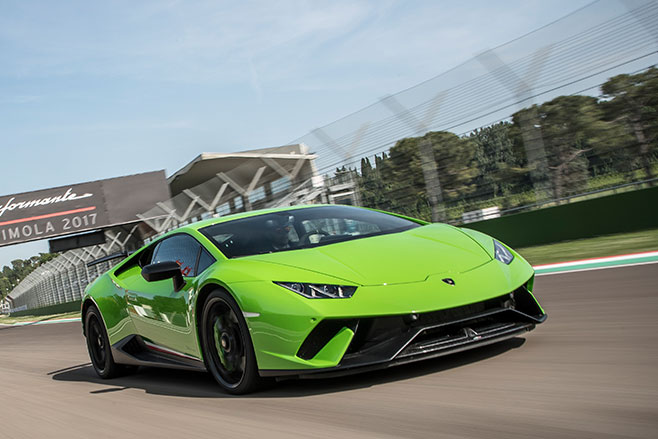
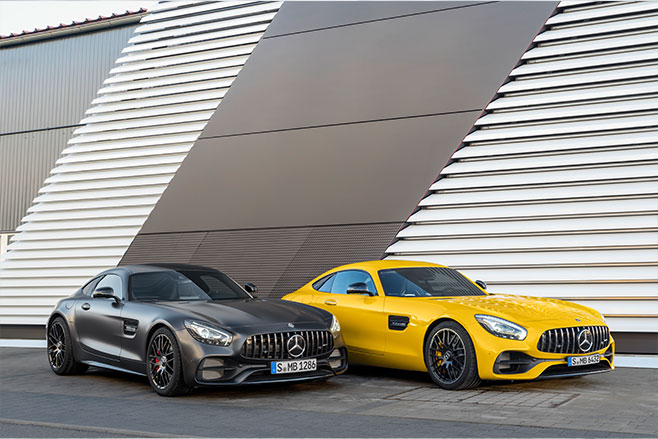
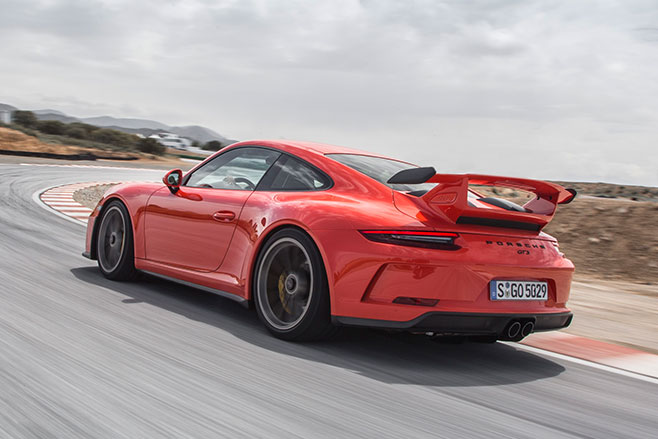
Like many innovations in the most potent road cars, the ‘dry sump’ finds it origins in racing and a growing number of showroom models including the HSV GTS R W1, Mercedes-AMG GT, Ferrari 488, Lamborghini Huracan Performante, Porsche 911 GT3 RS and Aston Martin V8 Vantage have all employed the technology, but why?
If the vital oil supply surges away from the oil pump pick-up, starvation can occur and that can lead to your engine being transformed into a big, useless, solid lump of frozen metal. It’s an expensive way of sourcing a new coffee table for the rumpus room, let’s put it that way.
At least two pumps are required for any dry-sump lubrication system, although many employ several scavenge pumps to recover oil from the pan more efficiently. A de-foamer is also commonly used to remove air from the oil before it is recirculated, while a cooler is also often placed in the system to remove heat from the oil and engine.
The advantages are many. The reservoir guarantees a supply of oil to the engine irrespective of the G forces acting on it and is far more effective than baffling a wet sump which, in some circumstances, can exacerbate starvation.
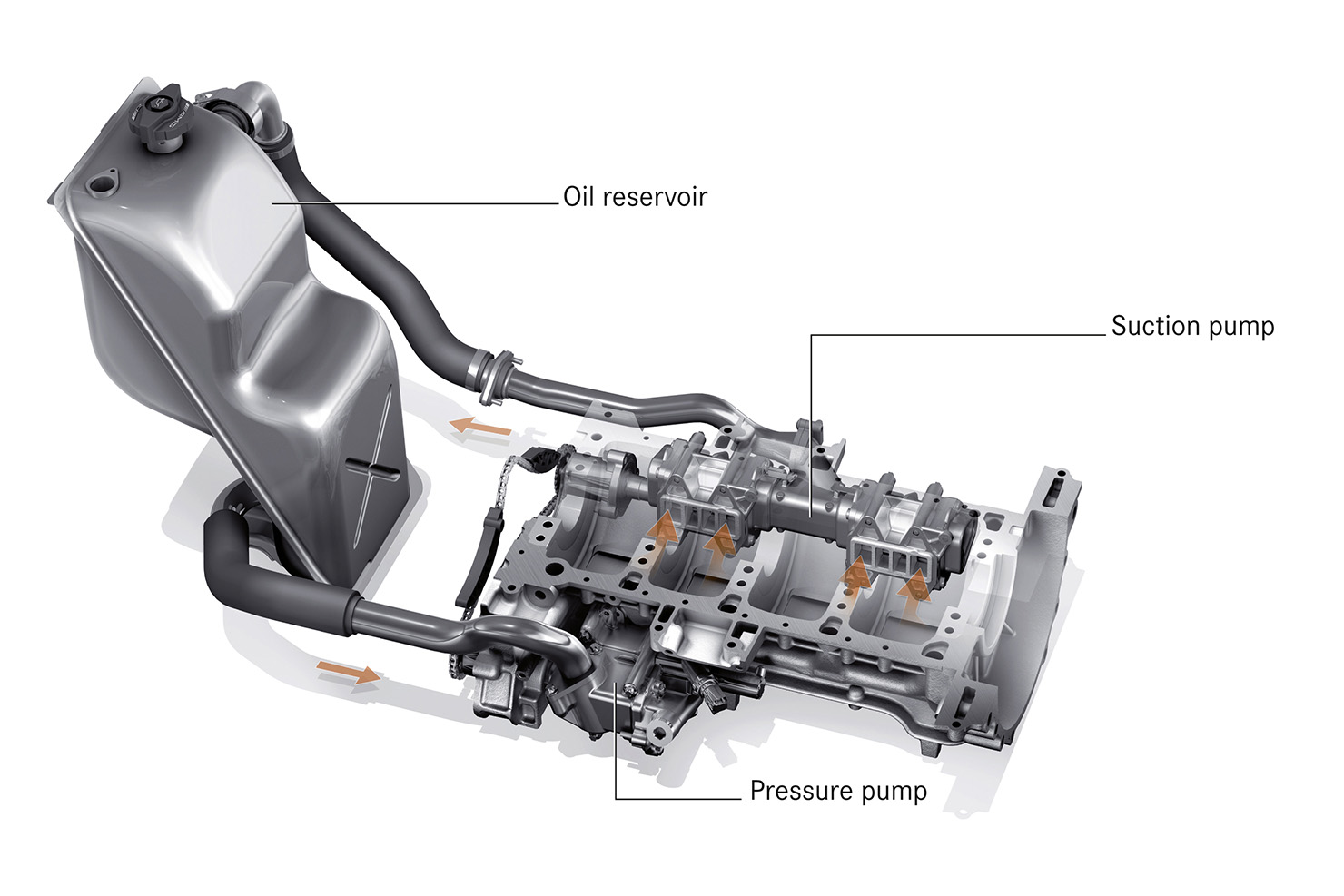
Dry-sump systems also incorporate a crank-case pressure control valve, which prevents a spiking of crank-case pressure under extreme loading and speed. Wet-sump systems are relatively hard to regulate and have a greater tendency to compromise oil seals when pressurised.
The external reservoir allows a greater capacity of oil to be stored (10 litres in the case of the HSV GTS R W1), which increases the amount of time the oil can be cooled and reduces the risk of a low oil level.
Power advantages are also possible by reducing losses experienced by the viscous resistance of the oil on moving components such as the crankshaft and pistons. The remote reservoir allows it to be located almost anywhere under the bonnet.
As with any engineering decision, there are nearly always compromises, but dry-sump lubrication has only a few, including the most obvious – cost. The system is more complex and requires more hardware which will affect the bottom line of any car.
Other than that, a few potential minor problems regarding oil starvation to components that would normally be ‘splash lubricated’ by a wet sump can be easily solved and are far outweighed by the system advantages.
With its clear benefit to performance and reliability, you can expect to see more dry sumps under hot cars on these pages soon.
- Introduction: Grunt with grace
- Update 1: Spruced up
- Update 2: Spin classes
- Update 3: Hard Choices
- Update 4: Family Ties
- Update 5: Conclusion
Introduction: Grunt with grace
WITH summer slowly turning up the dial on Melbourne’s temperature, we’re glad to welcome the Mazda MX-5 2.0 Roadster GT. But it has some mighty big tracks to fill.
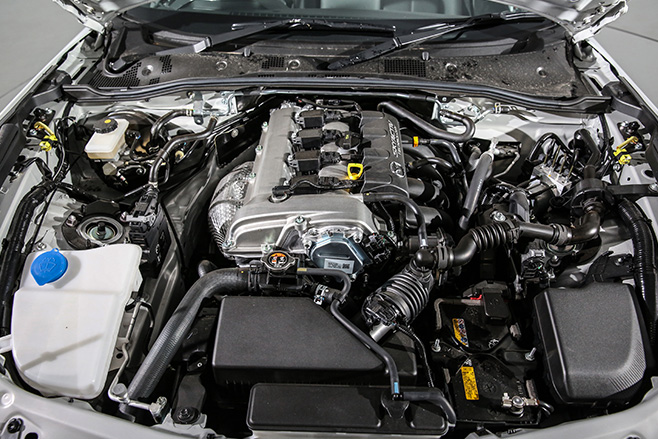
See, two months ago we bid Chrysler’s mighty 300 SRT goodbye. And in place of a huge 6.4-litre HEMI V8, our new arrival’s plucked its 2.0-litre four banger straight from a Mazda 3, which spins four less cylinders and ignites less than a third of the V8’s capacity. And this is Mazda’s ‘big-block’ variant. Gulp.
That’s right, Japan never really wanted to build this car. If it wasn’t for America stomping its feet about the 1.5-litre base roadster being a little short on poke, it would have never existed.
Yet we’re glad it does, because Mazda hasn’t done this often. Mazda Australia spiced up the second-gen MX-5 with a turbo with the locally-built SP of 2002, which Mazda HQ took inspiration from when creating the more common but less powerful SE of 2004.
Mazda has promised grunt-lovers a longer innings this time ’round, as the MX-5 launched with both the 1.5-litre and 2.0-litre donks to serve up an interesting choice between ‘purity’ and ‘power’.
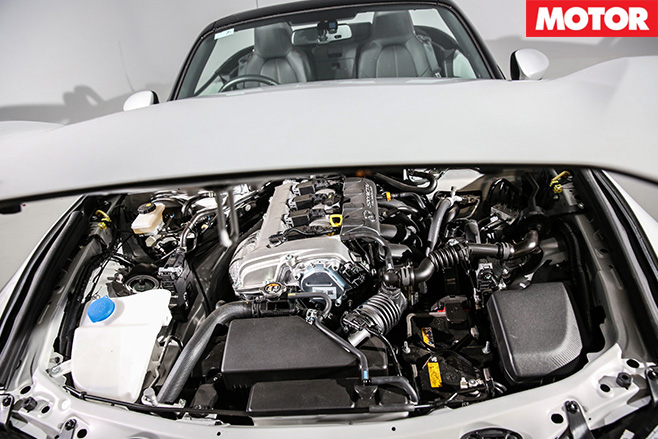
Compared to the 1.5-litre engine’s 96kW and 150Nm, the larger donk unlocks another 22kW and 50Nm. Packing 118kW/200Nm in total, we’ve seen it cut 0-100km/h in 6.54sec and the 400m in 14.68.
That’s knocking on the door of VW Golf GTI pace, covers off the mini turbo hot hatches you’d find at Ford, Peugeot, or Renault, and is more than a second healthier than its less endowed bro.
Straight-line go isn’t all you get with the bigger engine, either. Mazda also chucks in bigger wheels, beefier brakes, stickier tyres and stiffer suspension. This, it says, help deal with the engine’s extra weight.
But while 24kg counts for more in a car that weighs just over a tonne, 1033kg to be precise, it’s hardly noticed. Our MX-5’s proved lithe as a feather zipping around town and the bowser seems to agree.
Crucially, however, we’ve found the suspension bits to do more than just keep belly fat in check. The engine lets you thrust into traffic gaps more quickly, the ABS remains unfettered and violent pitch and roll has been reduced.
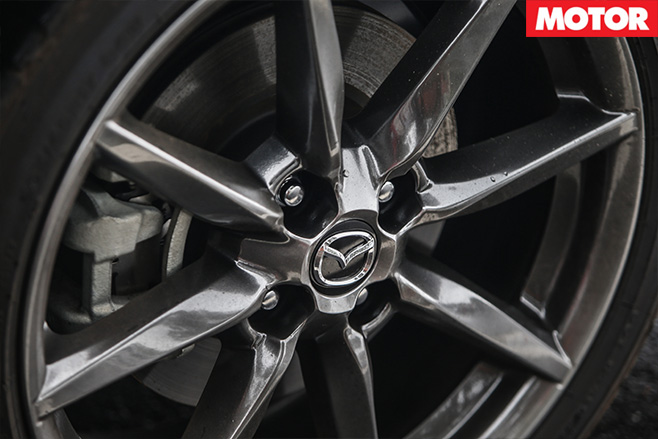
Okay, the little 1.5-litre engine’s a zingy delight to rev out, making its slick shift all the more satisfying, and it’s keener to wag its tail. But for hard-driving MOTOR-heads, the 2.0-litre washes up as the smarter choice. Better yet, at $34,490 for the base version, the 2.0-litre’s only $2500 more. And MZD connect (Mazda’s inferior imitation of BMW’s iDrive) is also thrown in to boot.
Don’t get us wrong, it’s not tuner-proof. We’d love to shrink the gap between its wheels and guards, and a couple of Jet Black MX-5s getting around Melbourne make our 2.0-litre’s Crystal White Mica paint look a little bland.
That’s fine, though, because we’ll fix that up over the next few months. The Kuroi styling pack, which proved popular on the Mazda 3, has spurned a new version for the MX-5, and we’ve put our name down for it.
We’ve also pencilled in a date with another standout from Japan. Toyota’s 86 has just been upgraded for 2017, and it’s not just a facelift. So we’ll compare our 2.0-litre to the stiffer, quicker coupe.
First impressions, otherwise, is that inside the MX-5’s certainly no Chrysler 300. We’ve bagged a GT-spec 2.0-litre, that runs up its ask to $39,550 and scores heated seats, leather, along with climate control, but you can sense the compromise around the cabin.
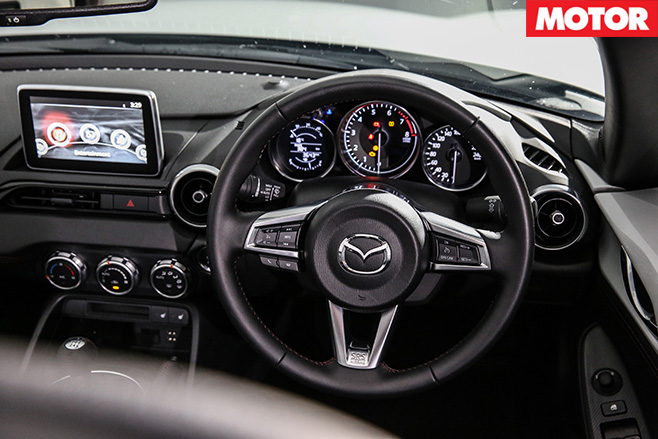
On the other hand, we love that you can slam-dunk the manually-operated roof whenever you want, and while it’s no 300 SRT to drive, that’s entirely the point. We’ve swapped a Big Mac for sashimi. And we’re relishing the taste.
MONTH ONE
Fuel consumption: 10.95L/100km Average fuel consumption: 10.95L/100km Mileage this month: 995km Total mileage: 3888km
Liked: Top-down on the rare hot day Disliked: Storing messenger bags in the boot Favourite moment: Slicing up SUVs in traffic
Update 1: Spruced up
Our Mazda checks in for a new bodykit
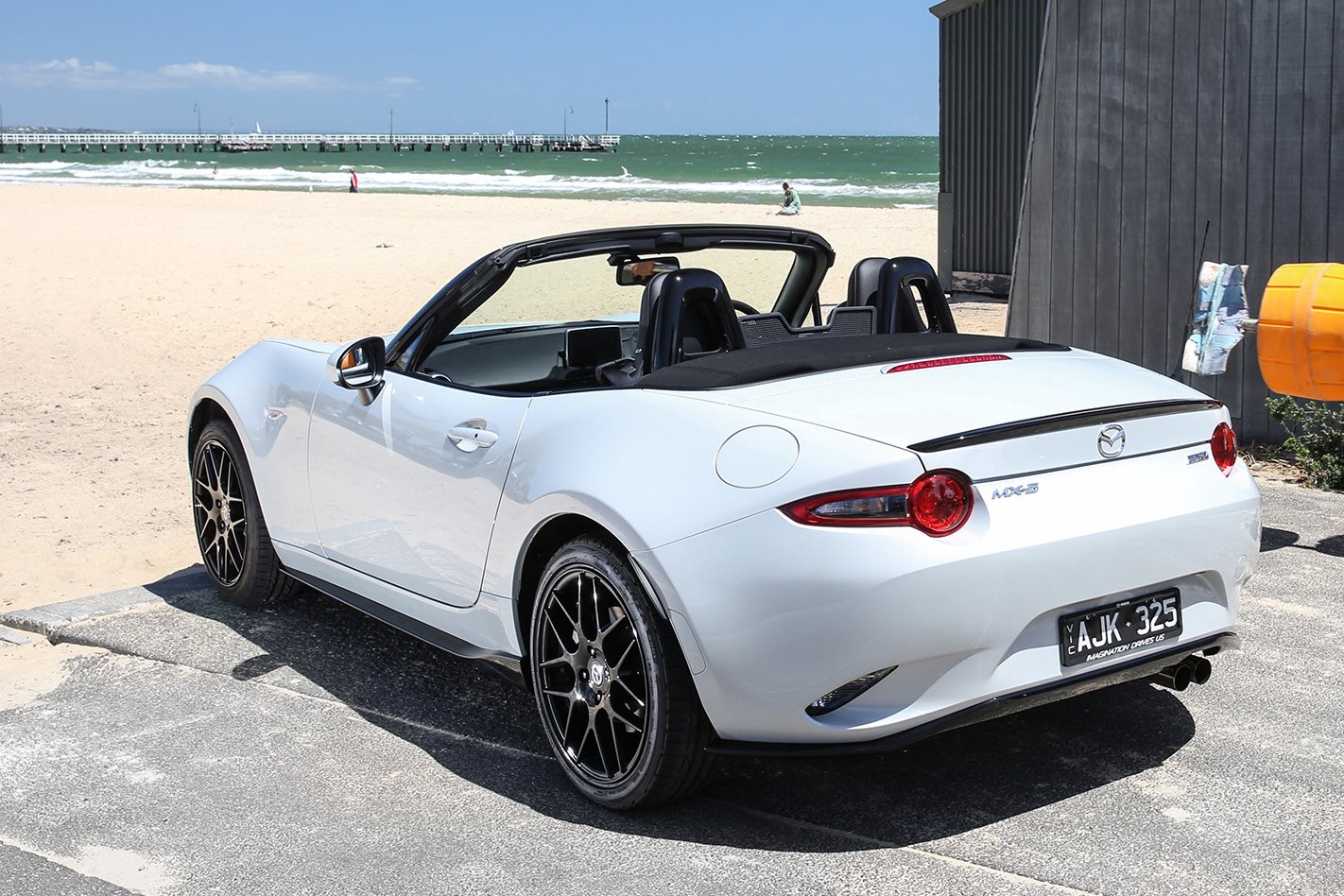
Forgive me, but what I’m about to say is a little superficial. It’s not easy to be seen in an MX-5.
Sure, the ND-series is the toughest looking generation so far with its sculpted front haunches, swoopy silhouette, and squinty eyes. But my last long-termer, a Chrysler 300 SRT, could awe a mobster. So I’ve felt a little uneasy to fold away our car’s soft-top. Hairdresser taunts start swirling in my mind. And ceramic white isn’t the most brooding shade of colour.
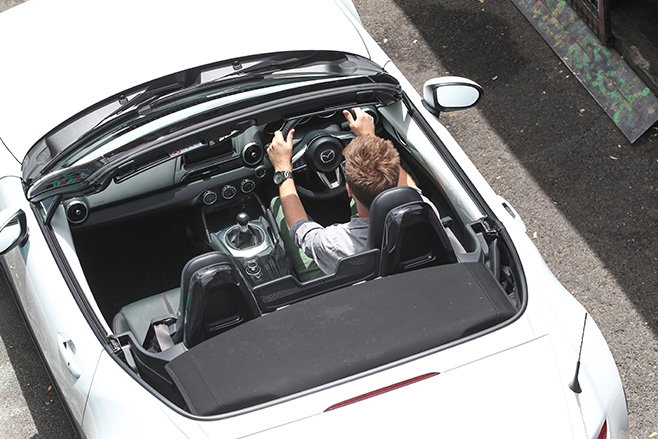
Of course if your MX-5 ambitions suffer the same anxiety there are ways to avoid this. Firstly, you could buy an MX-5 from Fiat. Its new Abarth 124 Spider hunkers lower over 17-inch wheels, offers four-pipes at its rear, and hide red Brembos behind its front wheels.
You could also venture down the aftermarket path. There is already a plethora of parts available for the MX-5. Though we’re not sure how easy coilovers and a wide-body kit would be to live with, and how well they’d get along with warranty.
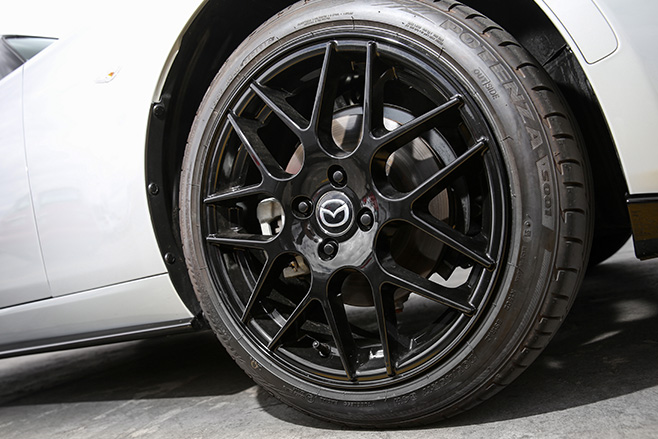
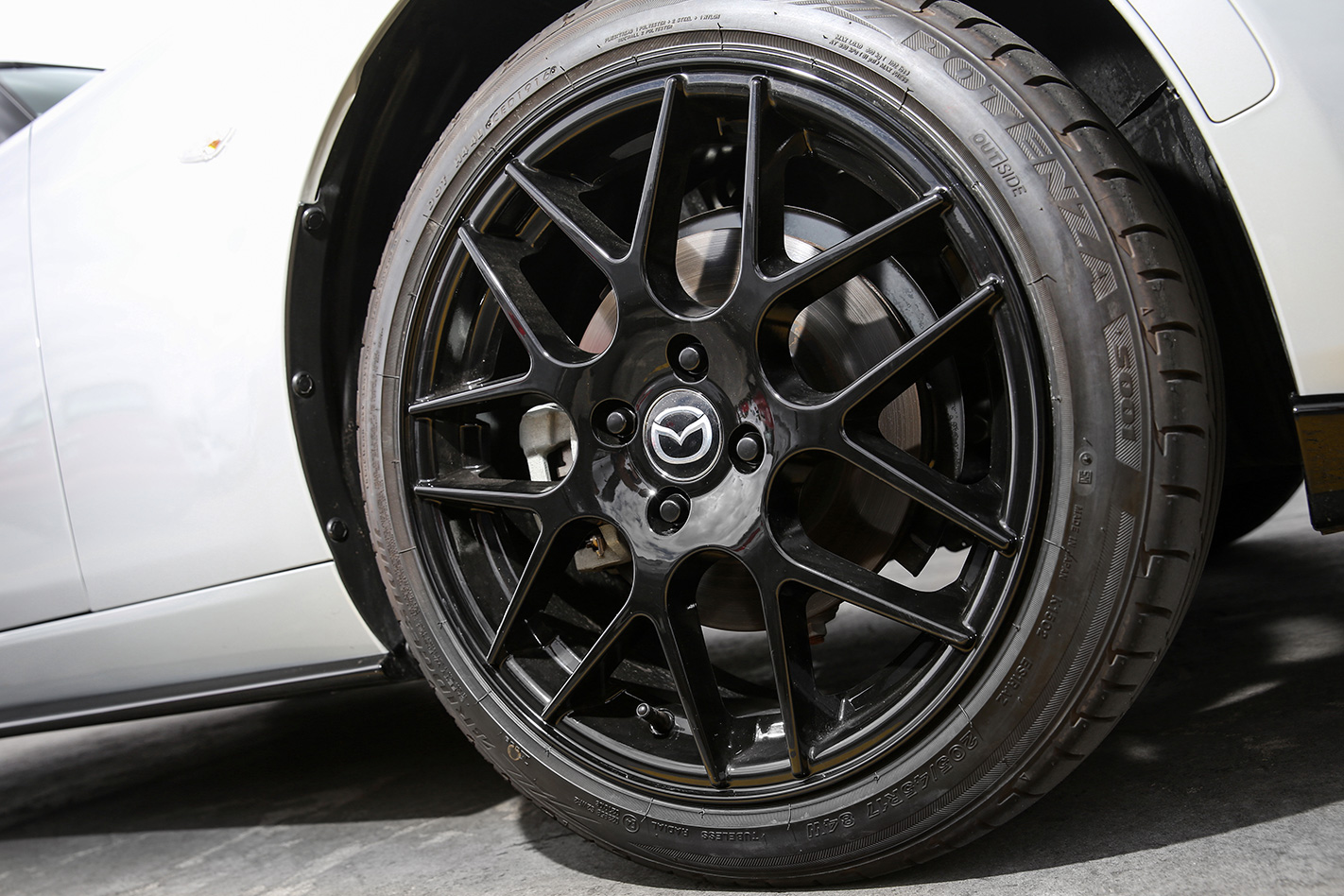
Or you can turn to Mazda, like we did, and tick the box for a ‘Kuroi’ pack. Offered across its model range it sprinkles on a slew of exterior parts. In the MX-5’s case, it pastes on a front and rear lip along with 17-inch Y-spoke alloys and a rear spoiler. All finished in black, warranty intact.
Without the risk of making our MX-5 look any blander, we signed up straight away.
How many days were we without a ride? Hardly any. Our local Mazda dealer simply wheeled the car down the road to a Mulgrave panel shop. Here the bits are bolted on in one day, and then the car was ready for pick-up the following afternoon.
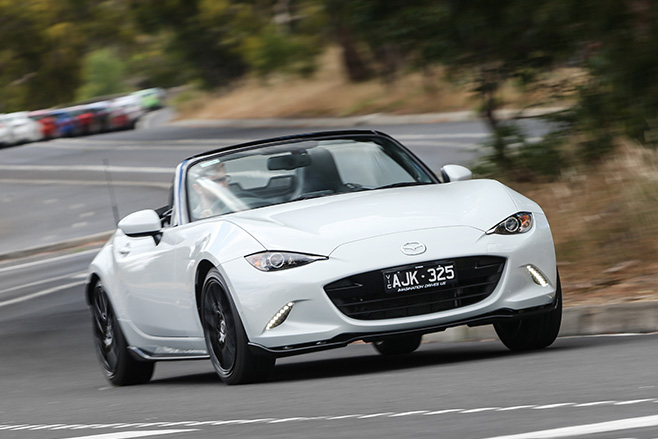
We know what you’re thinking. If it’s so easy, you could just order the parts yourself and have a crack in your garage. Well, there isn’t much point if you crunch the numbers.
After scrounging around online I found the bits for $3650, a fair bit cheaper than Mazda’s price of $4031 fitted, which amounts to a decent saving. But the boys at Police Road Panel Service revealed you’ll at least need a nut insert tool to actually fit the pack, which can run up to $200. And after dropping by to see them at work, I figured a couple hundred bucks is what you’ll heap in the swear jar anyway if you’re not a whizz on the tools.
That four grand might not be much on a BMW’s options list, however in our case it amounts to 10 per cent of a MX-5 GT’s price, or $43,851 all up. A hefty slice for some plastic parts and new wheels. You could snag an Abarth 124 Spider at that cost, and score an extra 50Nm and Brembos in the process. But the Fiat’s nowhere near as pretty.
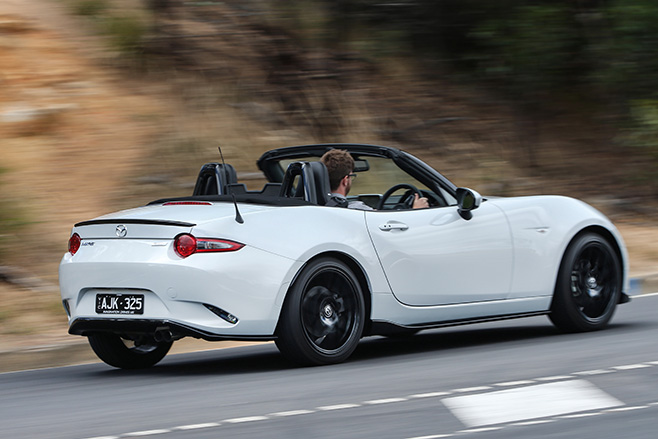
The Mazda’s new lips and skirts literally underline its sexier face and I’m not the only one who enjoys drinking in its new look. More and more eyes have been locking on to our MX-5 at traffic lights.
If there’s one thing missing, we wish Mazda Oz stole the Bilstein adjustable coilovers from the Club Edition sold over in America. A racier ride height would complete the look.
To our original point, it’s hard to say if the Kuroi pack will ward off hairdresser taunts for good. But it’s as close I’ve come to not caring.
MONTH TWO
Fuel consumption: 7.19L/100km Average fuel consumption: 9.07L/100km Mileage this month: 296km Total mileage: 4184km
Liked: It now has some visual cojones Disliked: The person who reversed into it Favourite moment: Heel-toeing. Pedals are made for it.
Update 2: Spin classes
Taking our little rear-driver for a spin – literally
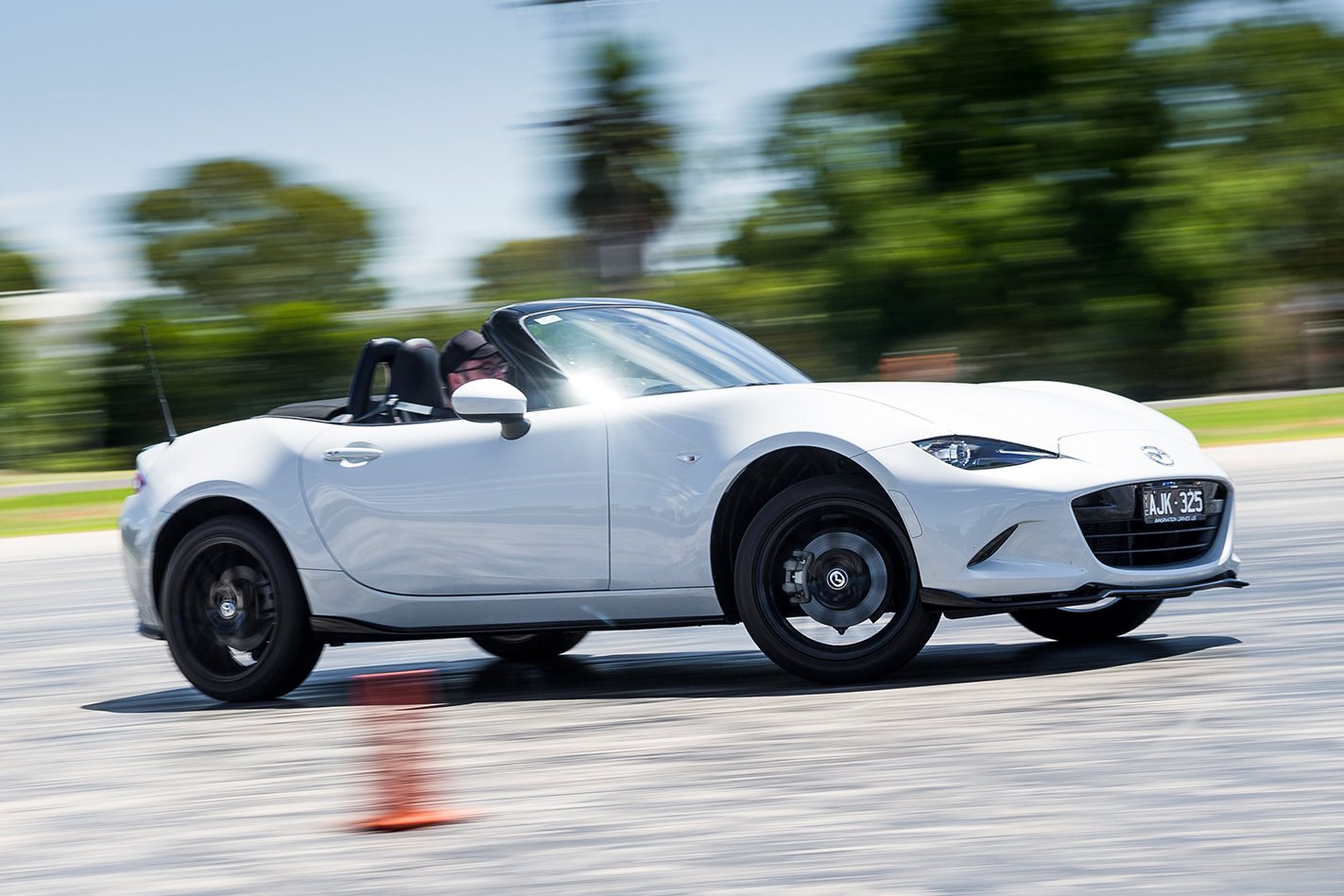
Despite what this magazine’s amazing photography might tell you, not every journalist can drift the tyres off a Ferrari. I know because I’m one of the sods who can’t handbrake turn to save his life.
Before joining chez MOTOR, my days at the track were spent keeping the car straight as possible, wary of any behaviour that saw otherwise. In fact, they still are.
The reason behind this is my first ‘performance’ car was a bum-dragger. Now, even though it was fine as front-drivers come, not even an early generation Honda Integra Type R, with its willingness to rotate under brakes, could teach you the dark art of controlled, willing drifts. That can only really be achieved with one thing, a propshaft.
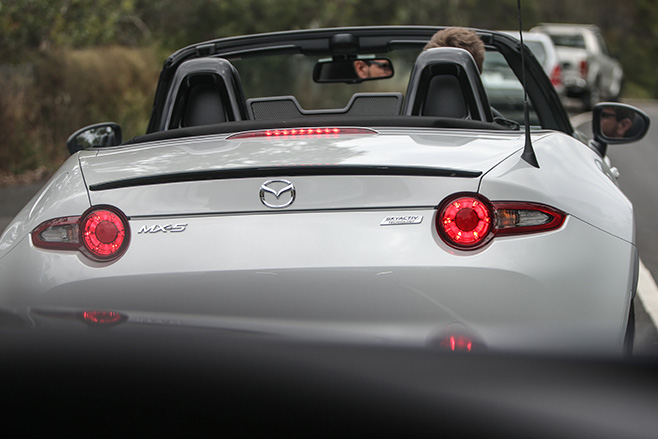
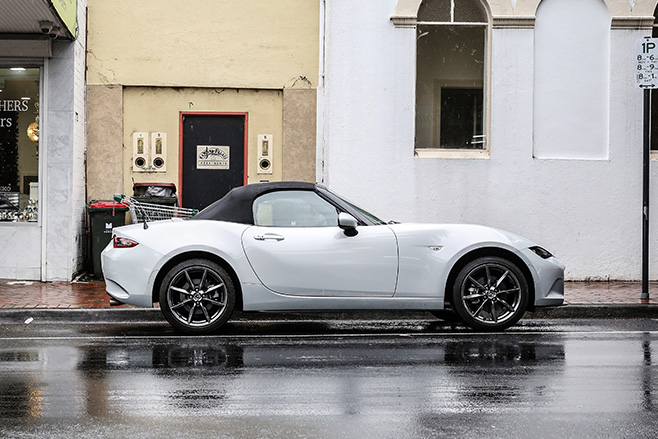
This is something the MX-5 has. But it doesn’t instantly make it, or you, a hero. I learnt this when tagging along to compare the MX-5, Abarth 124 Spider, and Subaru BRZ at DECA, in Shepparton. With its skidpan ours for half a day I seized the chance to have a few bites of sideways action.
With editor Dylan Campbell playing tutor, the instructions were to build speed, turn in, lift or brake to shift weight forward, feel the front load up, then floor the throttle to initiate the slide. Easy enough. The MX-5 didn’t need much provocation.
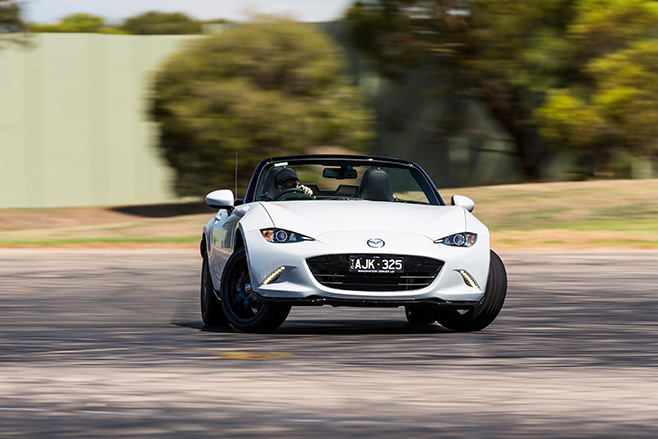
After initiating the slide it’s about balancing the throttle, power and steering to hold the slide. Which I found a little harder.
The front-end didn’t seem to have as much bite as I thought it would. And while it makes up for it with superb chassis balance, I found it hard to keep up with how quick everything happens and would heap on too much opposite lock, or throttle, to keep things straight. Transitions? Forget it.
The MX-5’s no Australian Drifting Grand Prix regular, for a few reasons. Its wheelbase measures just 2310mm. About 260mm shorter than an 86’s wheelbase, and a whopping 600mm less than a Commodore’s.
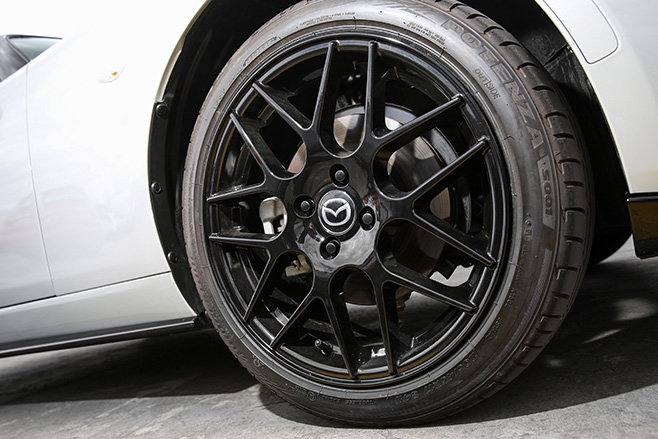
If you think I’m making excuses you’d be right – sorta. Because I can’t help feeling like a V8 Commodore would have made my day very different. A longer wheelbase would create a wider window in which to add opposite lock, and a LS3 would make more use of the right pedal’s travel. In the hope of maintaining a slide, I usually overdid the throttle and sent the MX-5 into a spin.
That’s probably why Japan’s discontinued but outrageously popular show, Best Motoring International, used the Roadster (as it’s known there) as a stepping stone for transforming a Super GT driver into a drift king.
Because in contrast to principles of ‘grip’ driving, being able to drift a low-powered car like the MX-5 indicates a developed level of skill. You’re forced to use momentum, timing, and judgement to greater effect. Which left me with the final thought that if you can drift the MX-5, you can probably can drift anything.
MONTH THREE
Fuel consumption: 7.68L/100km Average fuel consumption: 8.6L/100km Mileage this month: 642km Total mileage: 4826km
Liked: Hanging out the MX-5’s little bum Disliked: Spinning it. Many times Favourite moment: Almost linking a transition
Update 3: Hard Choices
Mazda’s fitted the MX-5 with a hard hat, how does it compare?
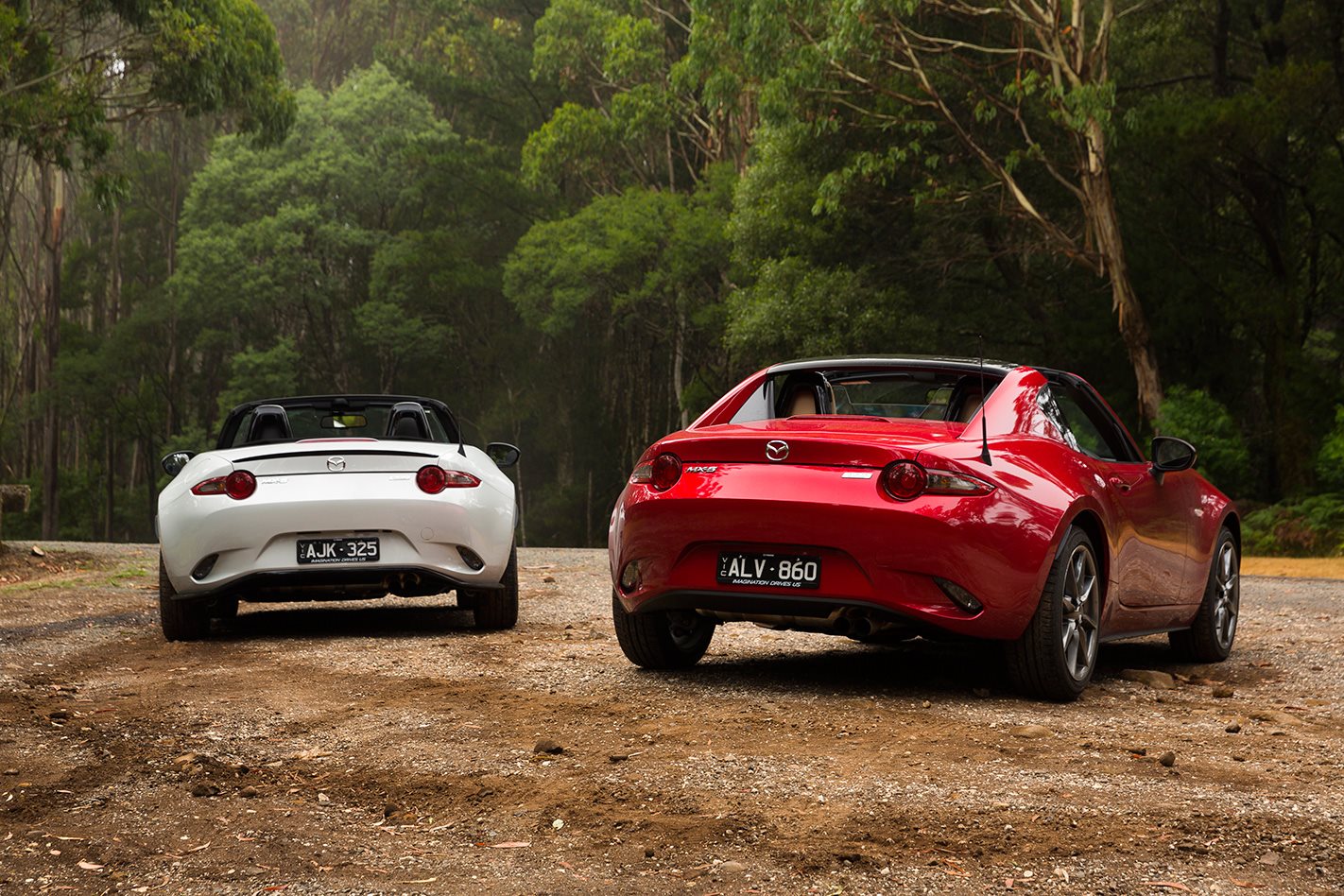
At first glance, the differences between these two might seem only skin deep.
The MX-5 Retractable Fastback (a fancy term for its metal top) and our resident soft-top measure identical in everything besides height, which is up 5mm on the RF, while underneath, the RF’s stolen the 2.0-litre soft-top’s wheels, brakes, and tyres. They’re twins on paper.
So you’ll need to peer at them from other angles to spot the differences. Like from the side. Tucked behind the RF’s seats are flying buttresses which extend the roofline halfway down the MX-5’s boot.
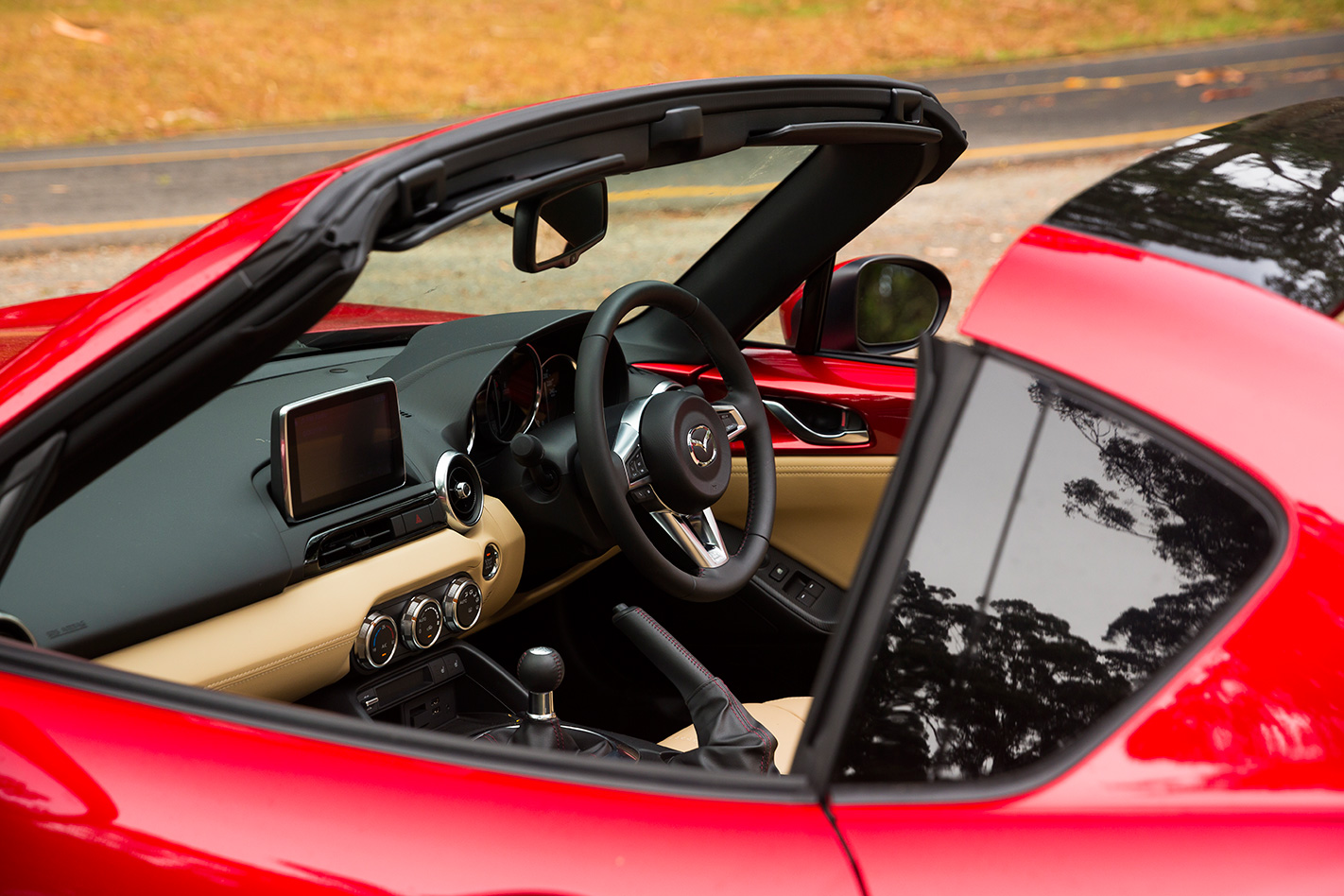
But there’s a niggling question about the RF: why’d Mazda build it? Sure, it’s pretty. But the soft-top’s no duffer. Nor have they slipped it more power to hunt down 86s or BRZs.
This aside, Mazda claims the RF is here to attract a ‘new kind of buyer’ with a ‘more premium experience’.
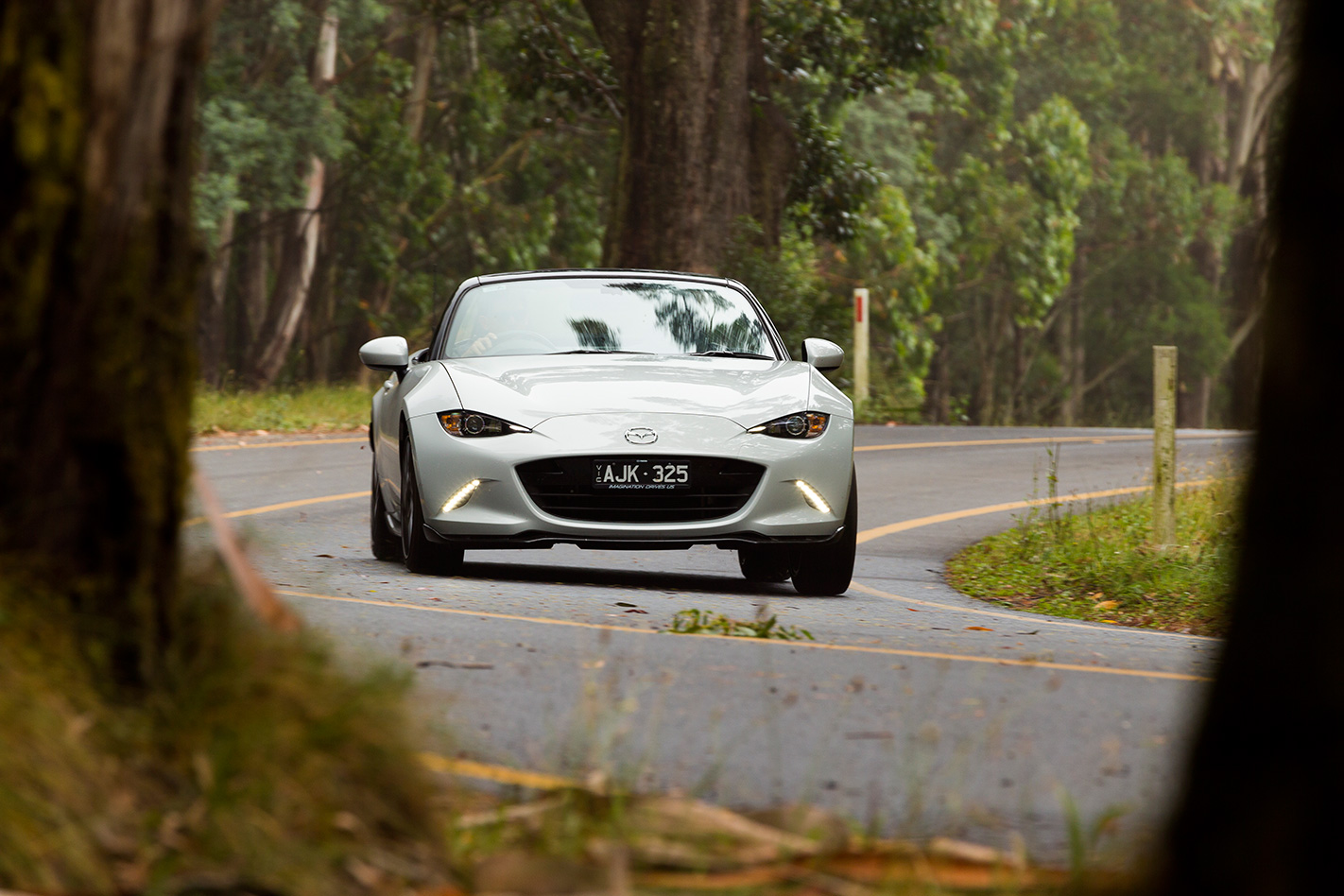
Dropping the roof, too, is no longer a chore – just a delay. Okay, 14 seconds isn’t long (except for millennials), but the RF will refuse to do it over 10km/h. So you can end up praying for stop-start traffic before the smoggy freeway tunnel you’re about to drive through for 10 minutes.
It’s a delight to watch, though, as it goes about folding away the three-piece roof like origami. The buttresses catch a lot of wind with the roof down, but cabin noise is markedly improved when up. And luggage space is only three litres poorer at 127L in the boot.
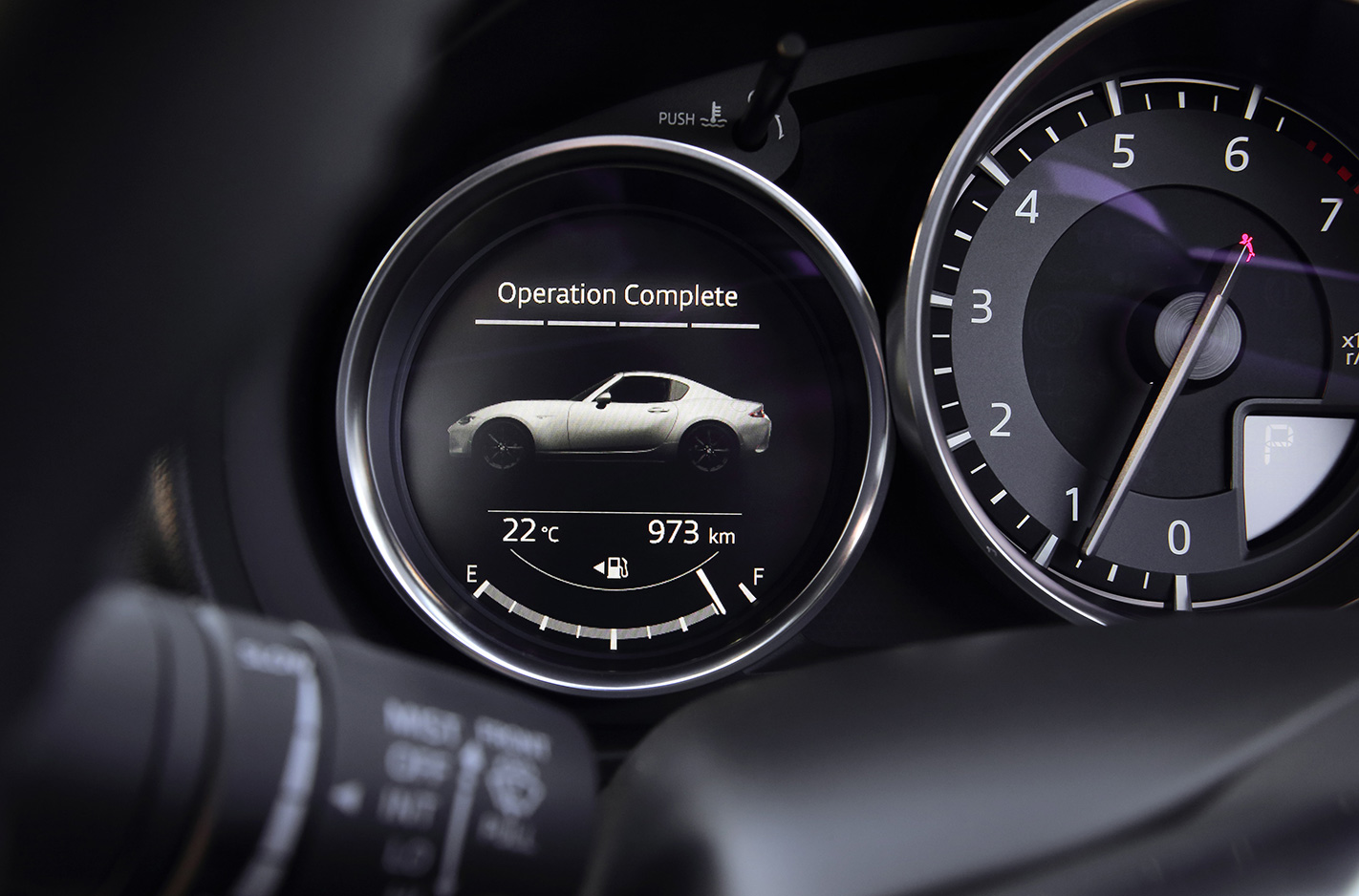
To combat the extra podge, Mazda drilled some holes in the RF’s tunnel member and regassed the suspension dampers to suit. The steering and bushes were also tweaked.
Hurrying both cars up and down some bends, then swapping for back-to-back impressions, an immediate difference between the soft- and hard-top emerges.
Cruising along at lower speeds, there’s a touch more float over bumps in the RF and the steering feels slower, and a touch heavier, at turnaround points.
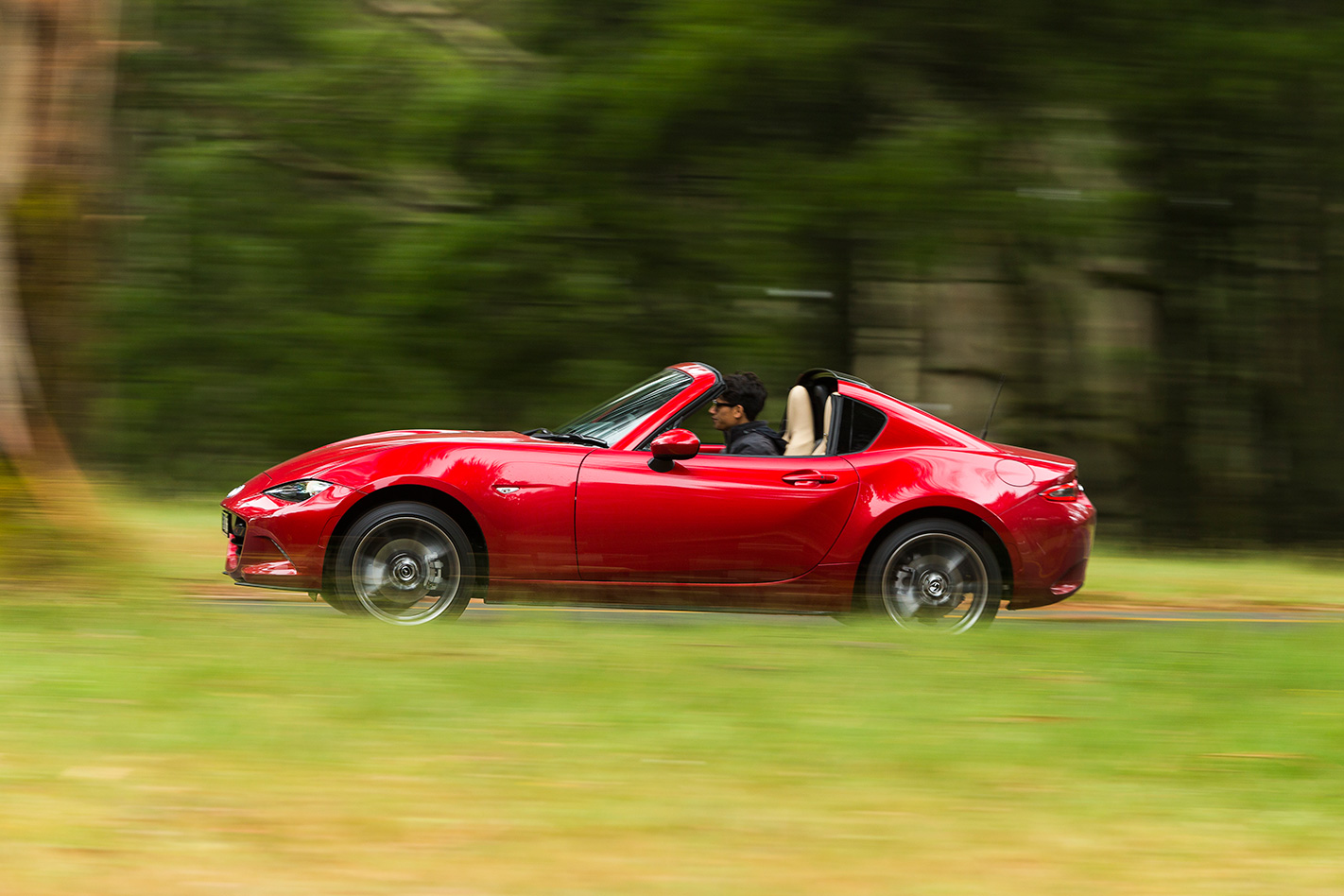
Back in the showroom, Mazda reckons the RF will make up 60 per cent of overall MX-5 sales. Ambitious when you consider its four variants are outnumbered by eight soft-tops, and the cheapest, a 2.0-litre RF manual, starts at $38,550 – or $6560 more than the cheapest 1.5-litre MX-5.
We’re not sure it’ll be quite that popular – Mazda’s already moved 2500 soft tops since launch – but we know that whoever buys one won’t be disappointed. Its extra class, practicality, and looks make it a perfect retirement present, especially if Sunday club runs will be its main use. However, if it were us, and the calendar had a few track days on it, we’d pick the softie.
MONTH FOUR
Fuel consumption: 8.57L/100km Average fuel consumption: 8.59L/100km Mileage this month: 876km Total mileage: 5702km
Liked: Crusing in the RF’s added class Disliked: The RF’s touchy ESP; its wind noise Favourite moment: Taking in the RF’s sexy shape
Update 4: Family Ties
Meeting the Mazda MX-5’s turbocharged Italian cousin: Fiat Abarth’s 124 Spider
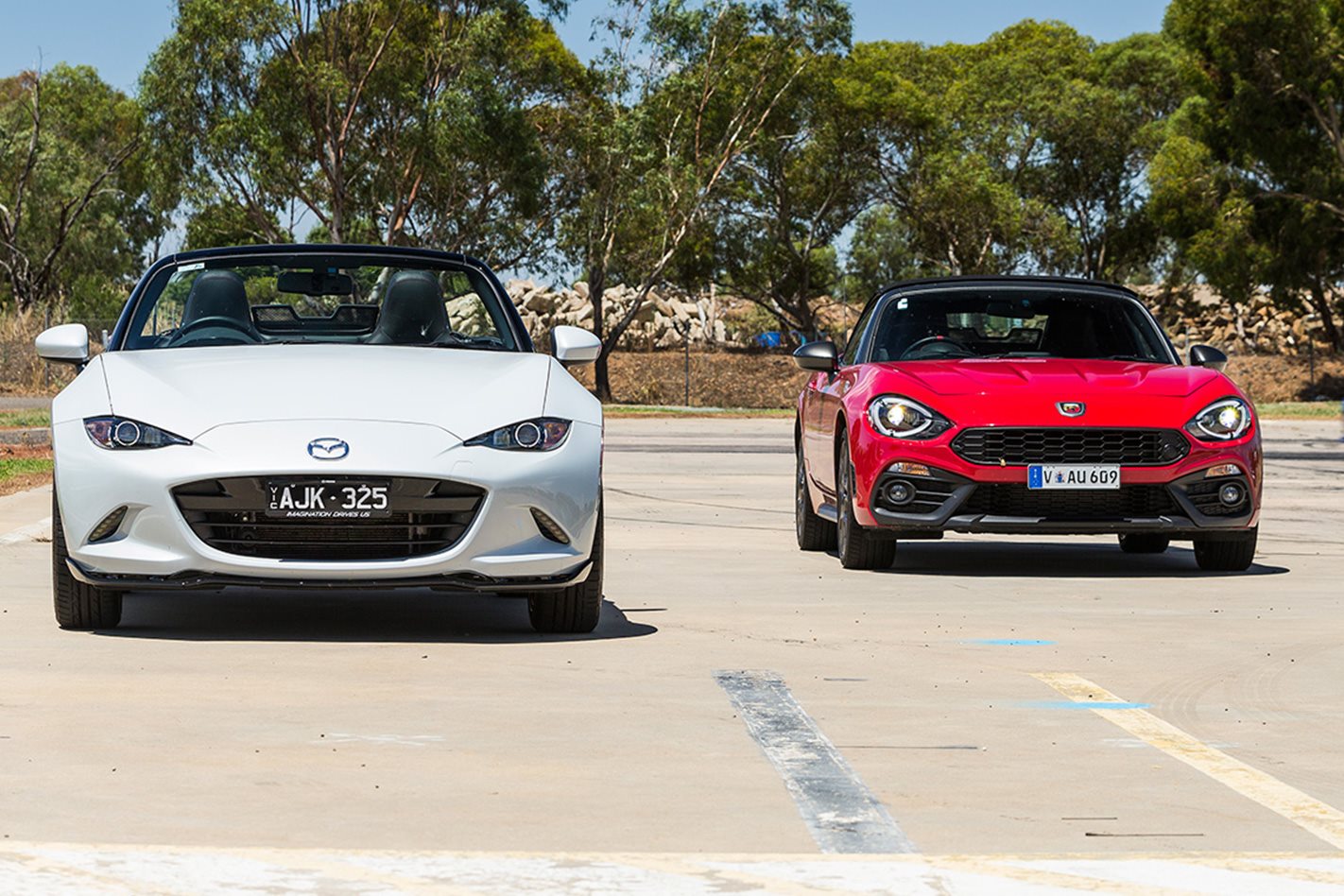
Grunt, how do you find more of the stuff?
That’s a question that surely keeps (some) Mazda MX-5 owners up at night. And one generated by my involvement in a recent comparison that included our MX-5 and Fiat Abarth’s 124 Spider.
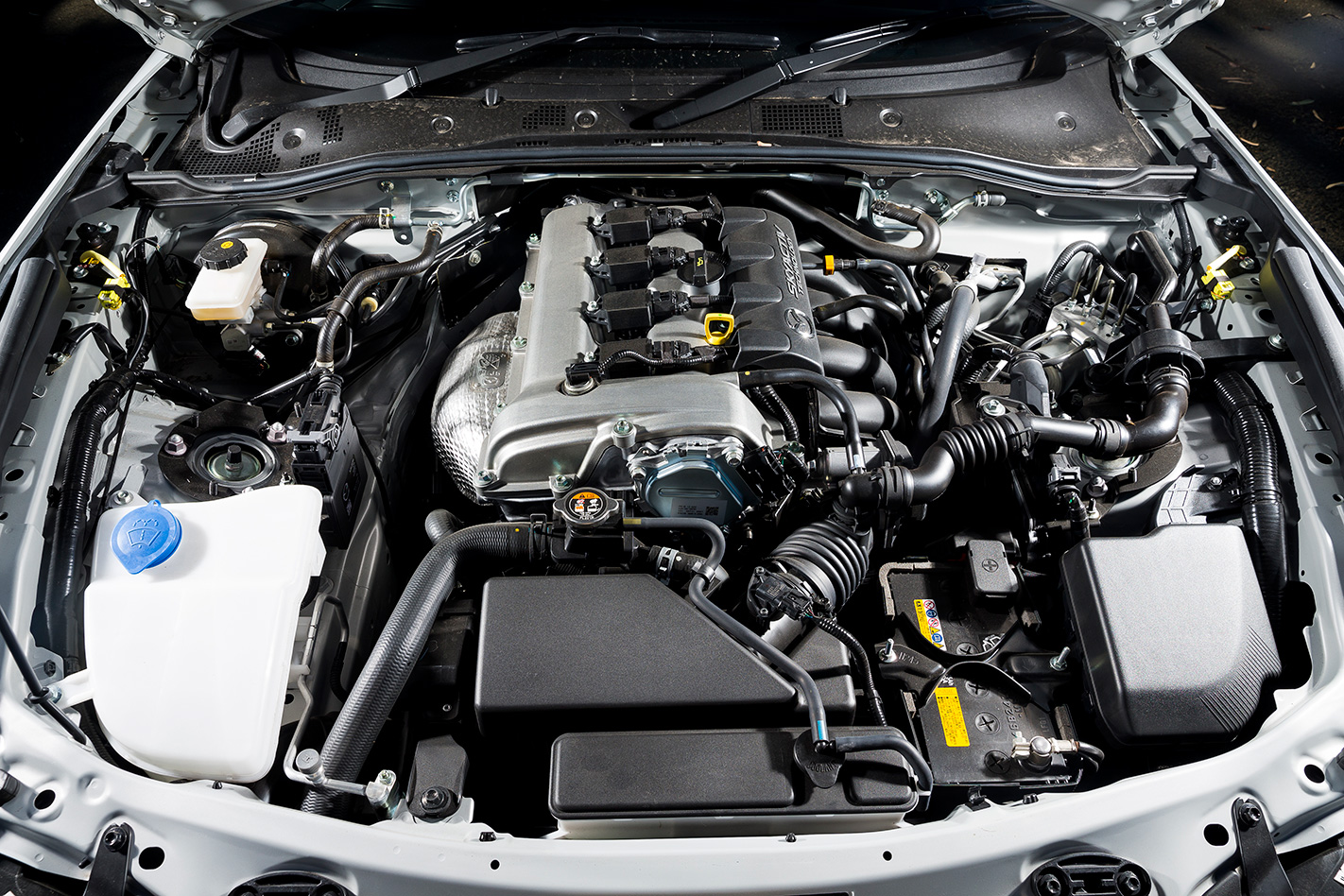
Mazda’s given us a leg-up by lending us the 2.0-litre version of the MX-5. Its 118kW and 200Nm isn’t insignificant. It’s perfect around town, helping the MX-5 fill vacant traffic gaps and tear away from lumbering SUV blindspots. Meanwhile, the linear torque curve permits second- and even third-gear getaways if you’re a mechanical sadist.
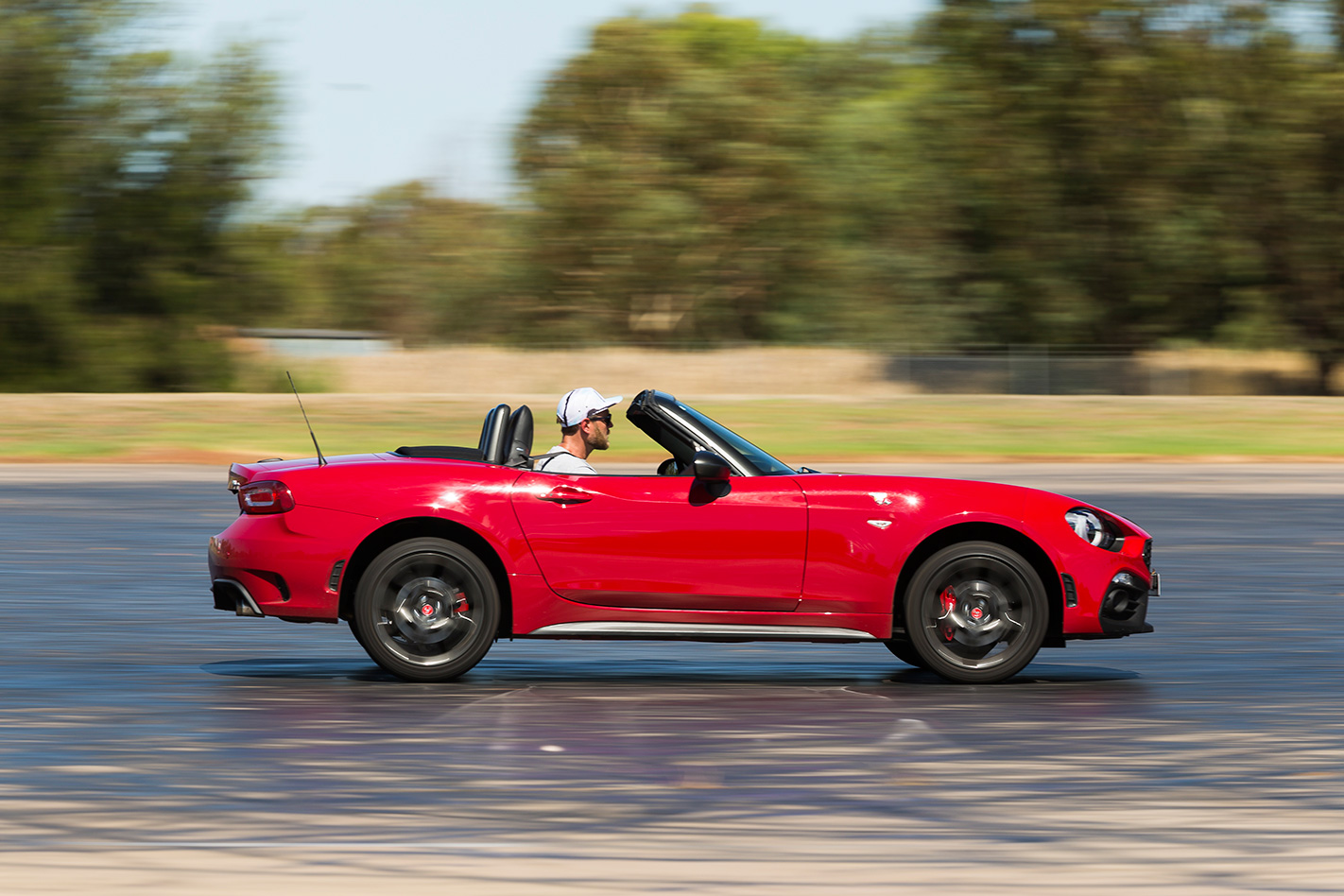
But where do you go when the acceleration fades into familiar territory? I haven’t tired of it five months in – 118kW feels reliably energetic in a car weighing 1033kg – but it’s a question that for many owners, eventually will be asked.
Open your mind so much that your brains fall out and American mob Flyin’ Miata is quite happy to sell you a kit that lets you bolt an LS3 V8 into your MX-5. You’ll cop a 172kg penalty and mess with the weight distribution, but you can imagine what 391kW does to the performance… And while the kit includes effectively a replacement powertrain (not just engine but T56 six-speed manual, custom driveshaft and Camaro rear diff) it’s not cheap – US$50K (AU$65K). And it’s BYO MX-5.
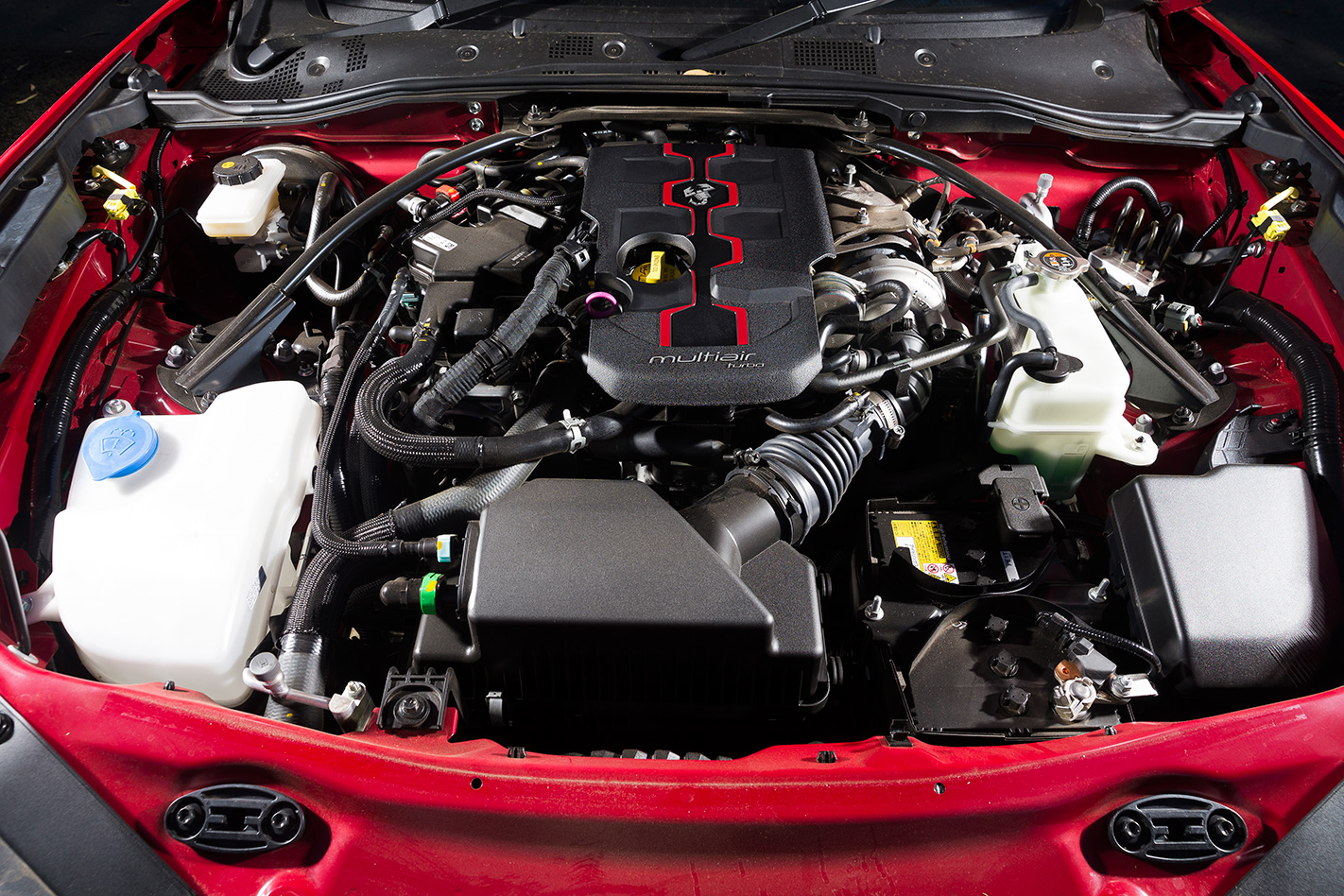
This brings me back to the Abarth 124 Spider. If you’re really into the MX-5’s roadster chassis but want to fiddle with its engine, this might be the ticket. Out of the box it’s already packing an extra 7kW and 50Nm.
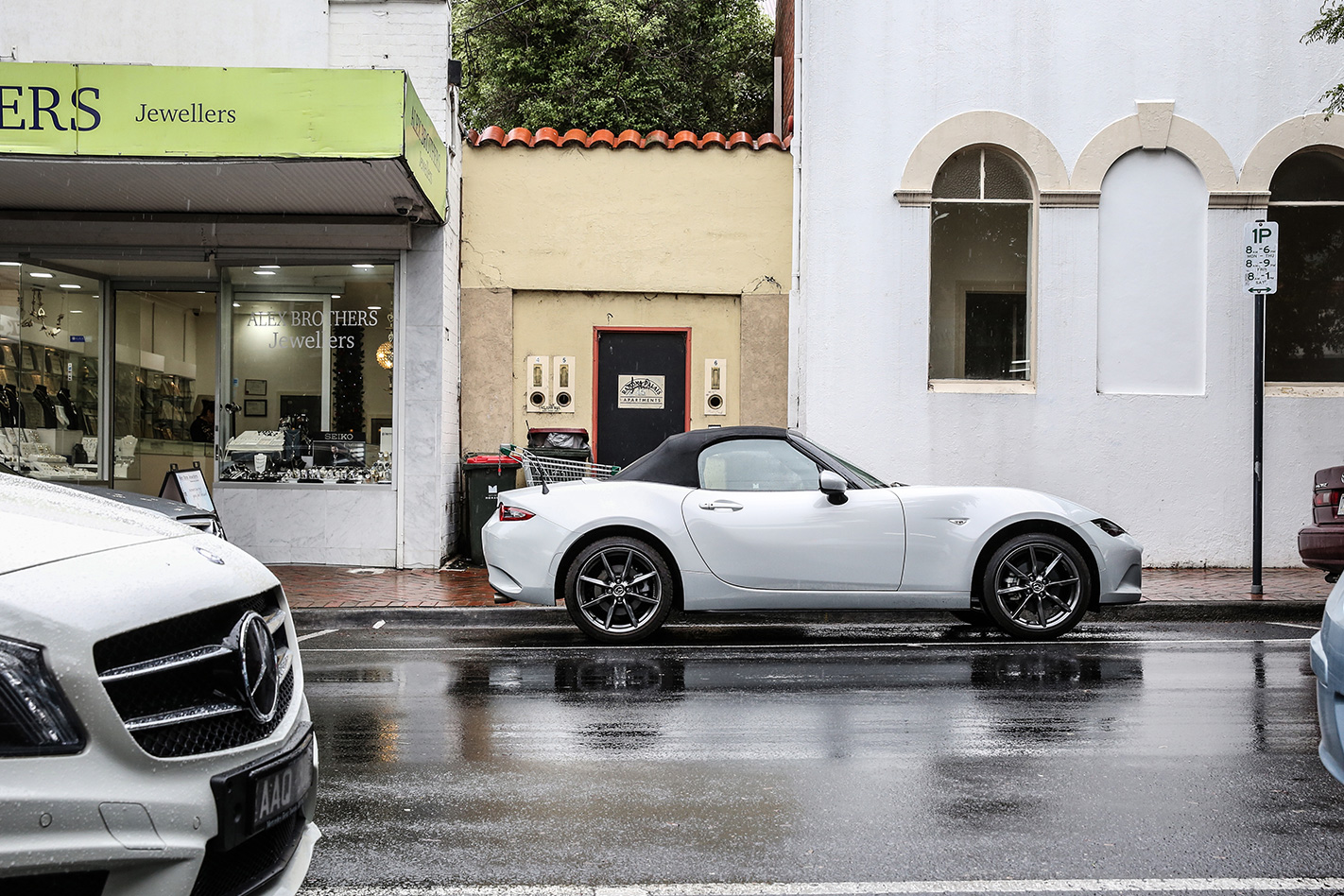
There’s also a decent amount of lag up until 3500rpm and you constantly run into the heavily undersquare 1.4-litre’s rev ceiling. But Tunehouse says a simple flash on the 124 will unlock another 20kW. And we see that high-mount turbocharger being awfully easy to replace. All the while being much easier to explain to the authorities. You get a mean noise thrown in, too. Which is nice.
You could try your best on the Mazda’s stock atmo 2.0-litre, but its finely-tuned state requires more for less. To liberate 20kW from the 124 with a tune you’ll need a new exhaust, too, Tunehouse says.
MONTH FIVE
Fuel consumption: 8.46L/100km Average fuel consumption: 8.57L/100km Mileage this month: 131km Total mileage: 5832km
Liked: The MX-5’s off-the-line pace Disliked: The 124 has a more evocative exhaust note Favourite moment: Showing up its turbo cousin on the strip
Update 5: Conclusion
After a fun six months it’s time to bid goodbye to our MX-5
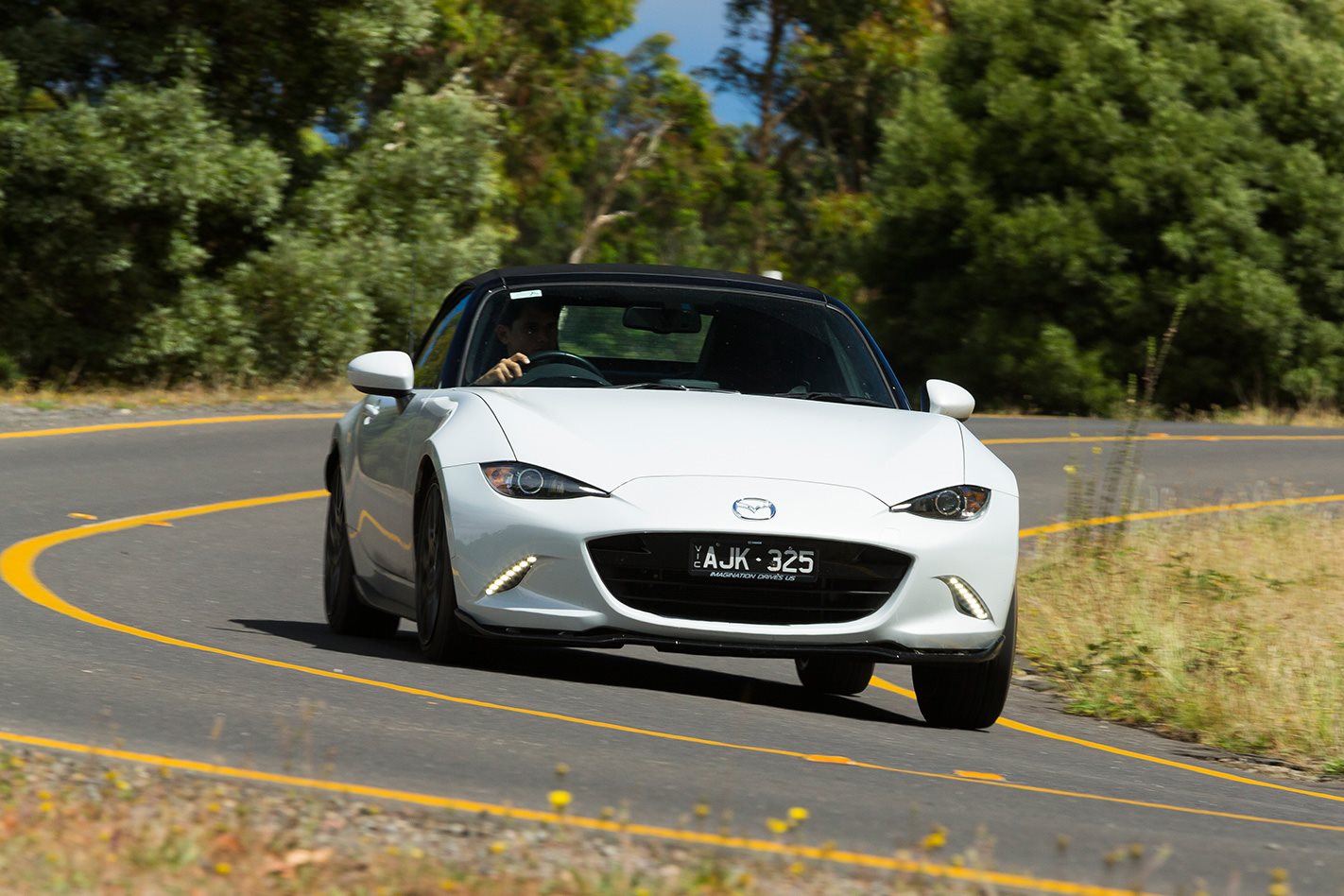
It was a dramatic change, for me, going from a Chrysler 300 SRT to Mazda’s MX-5. When the Japanese roadster replaced our American mobster six months ago, it was like going down three jean sizes.
Our butts already filled the Chrysler’s huge pews and our driving style had grown lazy with a big fat V8 under foot, which could crawl up a hill without even an ankle flex.
Then Mazda’s 2.0-litre GT, bearing the plates AJK325, rolled into our garage as my new steed. And we suddenly went from 462 litres of boot storage to a miniscule 130. We didn’t even have anywhere to store our phone. Where was our heated steering wheel, radar cruise, or thumping stereo? Like I said when I introduced the roadster, it was like swapping a burger with the lot for sashimi. And it left me a little hungry.
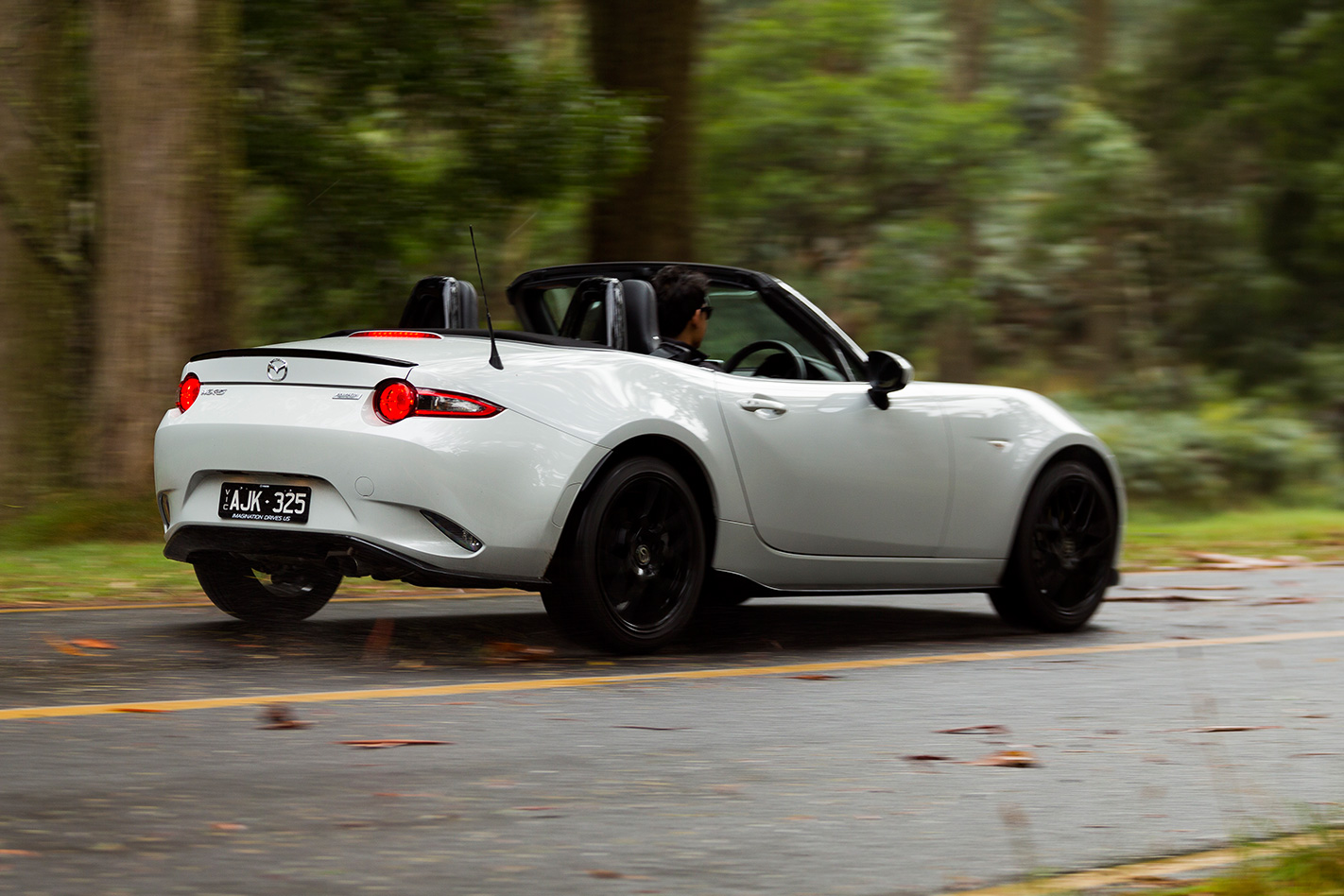
Yes, that manually operated roof was somewhat of a downgrade from the previous generation MX-5’s electrically operated one. But that mattered little when compared to the new car that came with it. Mazda was focused on aligning this generation as close to the original as possible by making it lightweight and fun.
Mr MX-5
After what I completed with the long-termer in the name of, ahem, research – sliding it across a skidpan, blasting up and down Mount Macedon with its hard-top sibling and chasing its segment rivals across rural Victoria – it’s obvious the company nailed its brief.
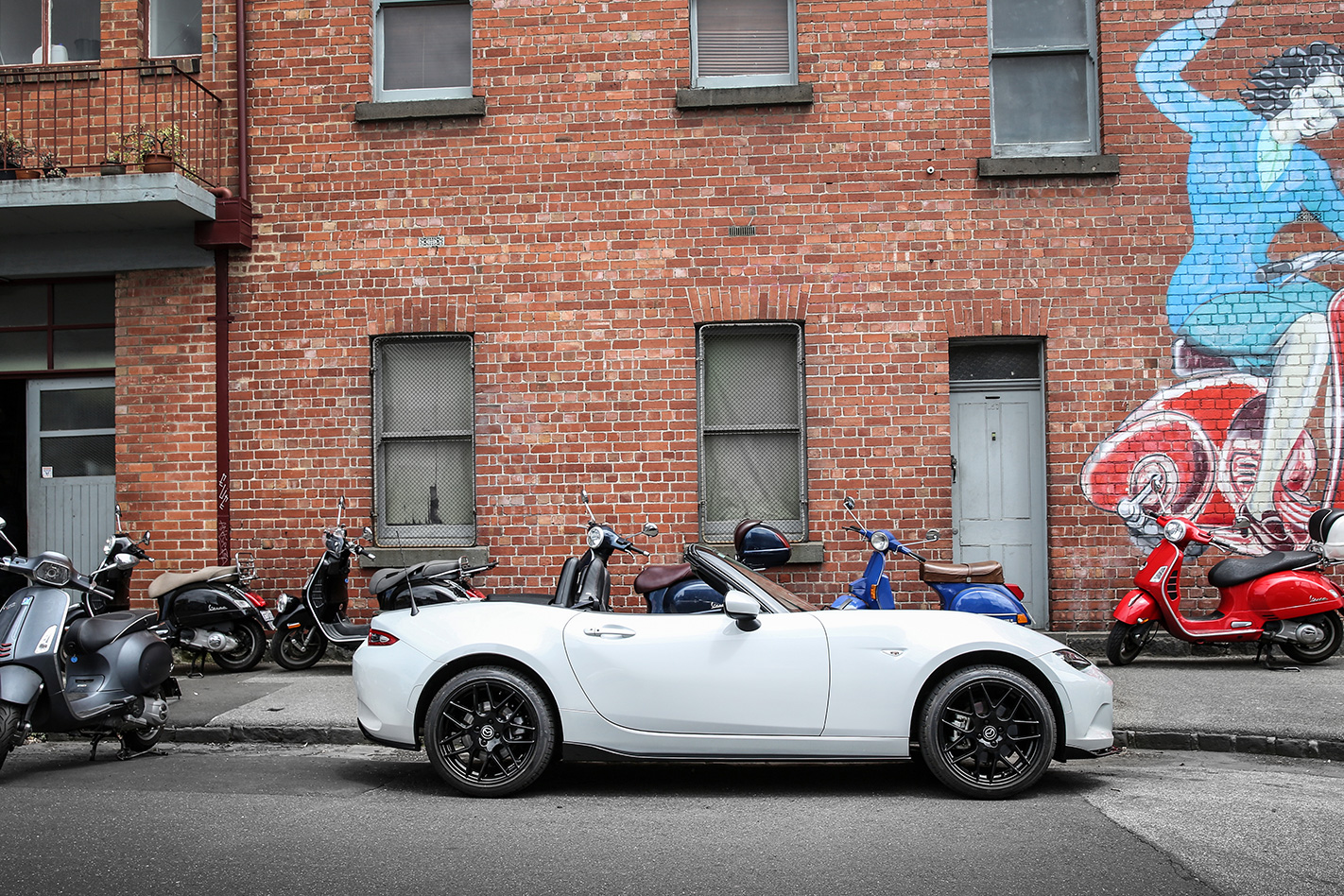
Drivers into slip, rather than grip, will find their fix much easier on the 1.5-litre’s softer suspension and smaller tyres, but I found the 2.0-litre’s stiffer package much more trusting. And that didn’t only come down to its suspension.
That 2.0-litre’s beefier torque made for rapid escapes from traffic lights and combined with the car’s retro-weight figure it’s the fastest MX-5 we’ve ever tested. Seriously, the previous generation hardtop, with 118kW and 188Nm, was good for 100km/h in 8.0sec and the quarter mile in 15.7sec. Meanwhile, our long termer thumps it with figures like 6.56sec and 14.68sec respectively.
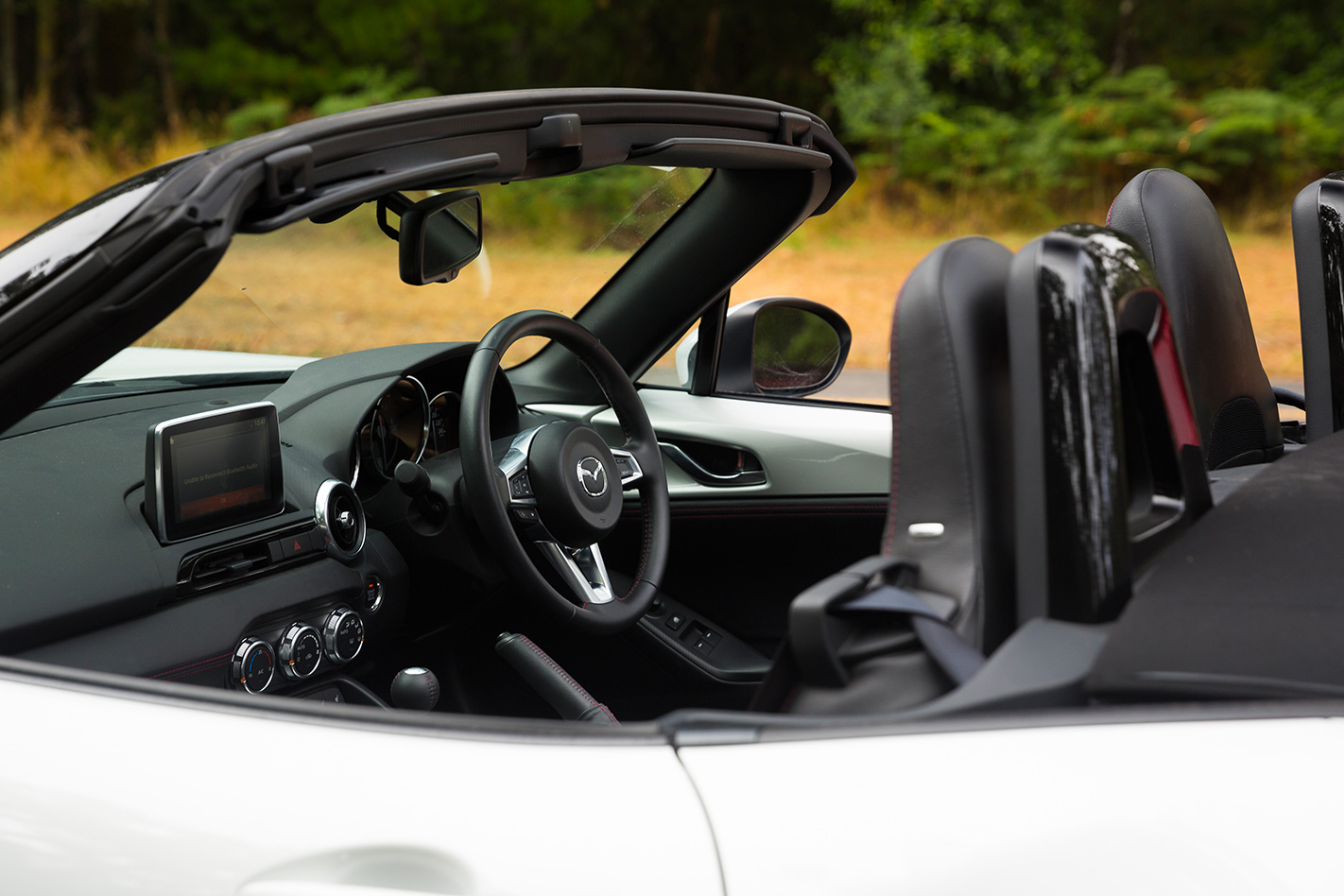
Sure, the whole hairdresser joke will follow the MX-5 to its grave, but the aftermarket’s never had an easier job fixing that. With that aggressive face, swooping silhouette, and raised rear haunches, the MX-5 has grown into an athletic-looking mite.
And the reason Mazda’s sold a million of them is because they appeal to your heart and head. Yes it’s a proper sportscar, hence it comes with appropriate downsides – a lack of storage, difficult ingress and compromised comfort (the MX-5 soft-top is rather noisy). But for less than $40K you can buy another car that’s none of those things. Or just sell your kids. Whatever it takes to get one in your garage. I know I would.
MONTH SIX
Fuel consumption: 8.25L/100km Average fuel consumption: 7.87L/100km Mileage this month: 403km Total mileage: 6226km
Liked: Sunny days; twisty roads Disliked: Transporting more than a parcel Favourite moment: Shooting down the Great Ocean Road
THE most powerful road-going Porsche 911 ever has been given a surprise public debut at a gaming convention in California.
Behold internet, it’s the new Porsche 911 GT2 RS.
Presented to a live audience at the Electronic Entertainment Expo trade show (known as E3), the GT2 RS was introduced by Forza creative director Dan Greenawalt.
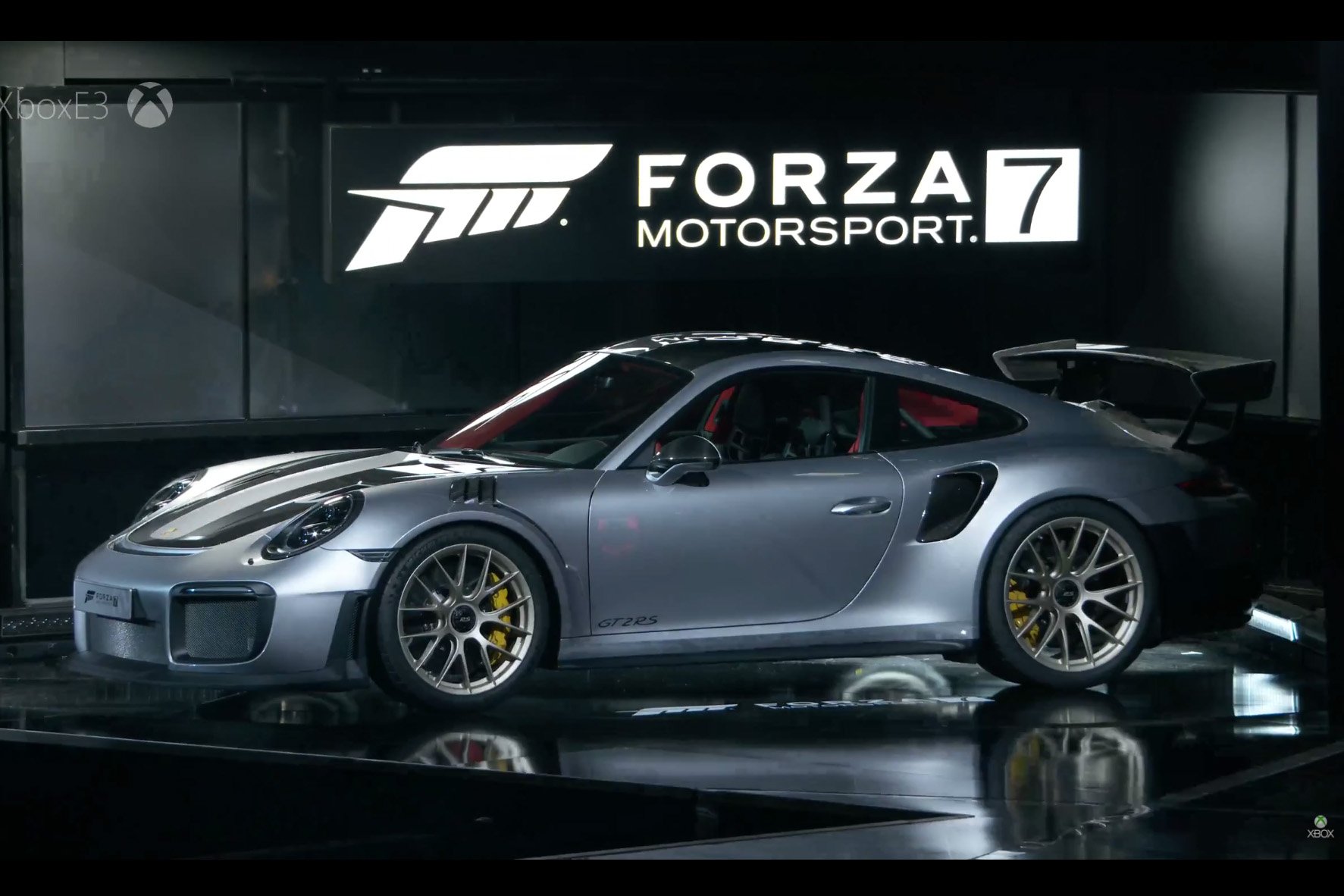
The reasoning for showing the GT2 RS at E3 is simple: it’s the cover car for the latest version of Microsoft’s racing game, Forza Motorsport 7.
Sadly the reveal didn’t provide any further technical details, but it comes barely a week after Wheels rode in a prototype GT2 RS in Germany. During that ride, Porsche’s GT boss Andreas Preninger suggested the vented, bewinged GT2 RS will be the fastest, most hardcore production 911 ever built.
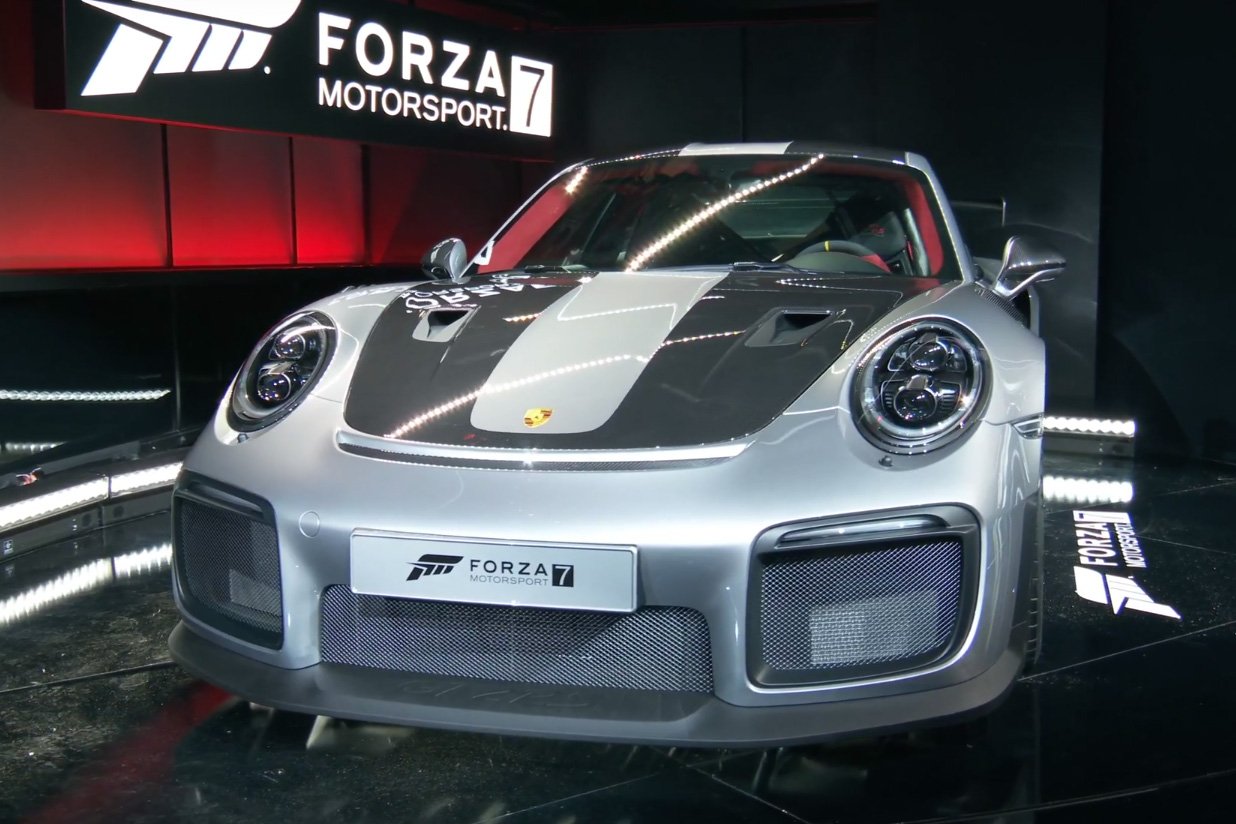
Official outputs are yet to be confirmed, but expect in excess of 480kW/750Nm to be sent solely to the rear wheels. Currently, the most powerful 911 Porsche offers is the 427kW/750Nm all-wheel-drive 911 Turbo S.
Unlike the old GT2, which was manual-only, the only transmission offered on the new version will be Porsche’s 7-speed PDK automatic. As for performance, a 0-100km/h sprint of less than 3.0sec is likely, as is a top-speed greater than 300km/h.
Expect Porsche to release official details of its top-tier 911 in the coming weeks.
THIS wasn’t ever supposed to be a comparison.
First published in the Summer 2016 edition of Wheels Magazine, Australia’s most experienced and most trusted car magazine since 1953.
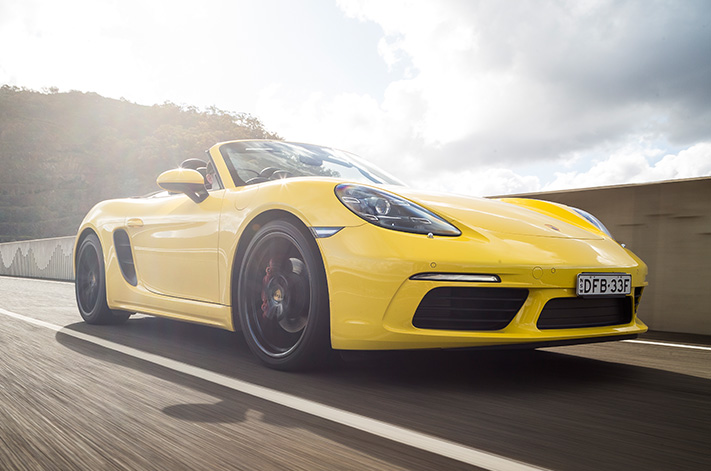
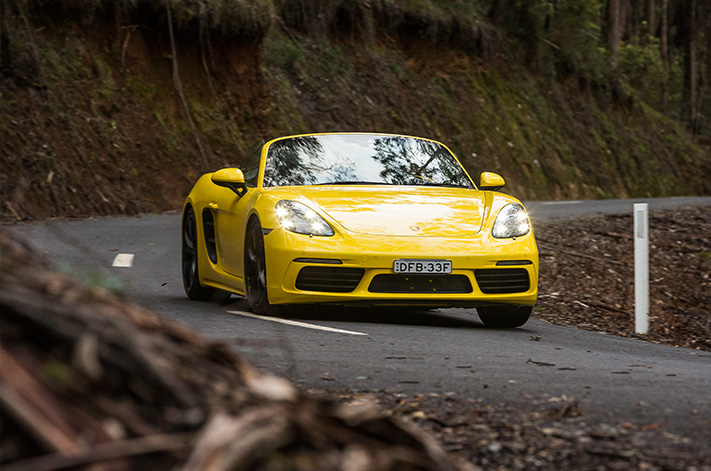
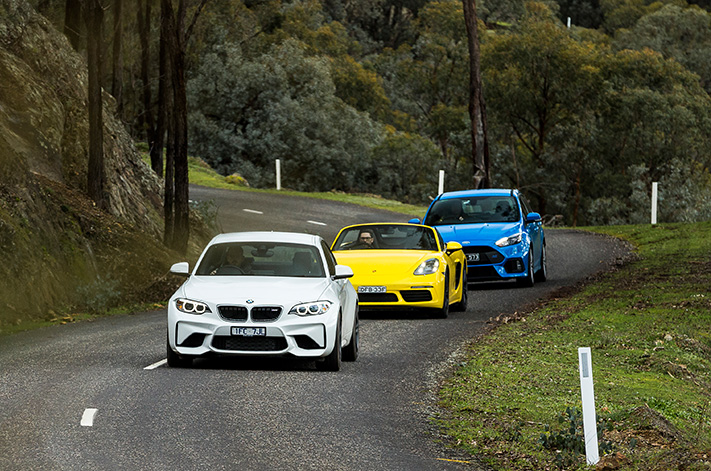
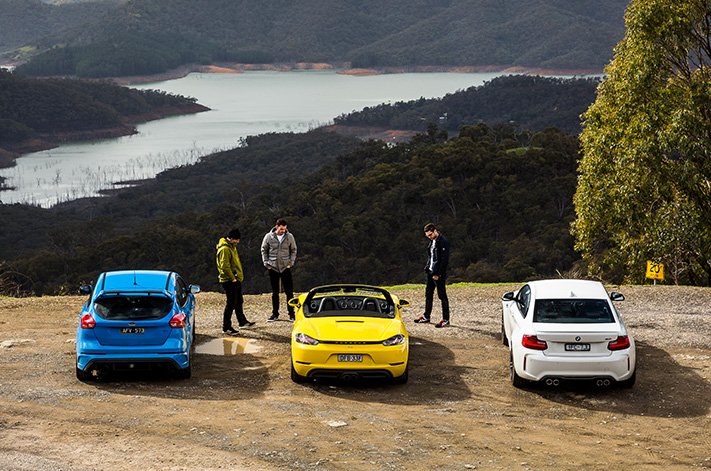
‘A celebration of 2016’s most wanted’ was the brief, and on the face of it you can see why. The Ford Focus RS, BMW M2 Pure and Porsche 718 Boxster S don’t look like natural cross-shopping candidates, the Porsche costing almost three times the price of the Focus, but at some point between the Wheels office and the hills surrounding Eildon, the brief went out the window. Things became competitive.
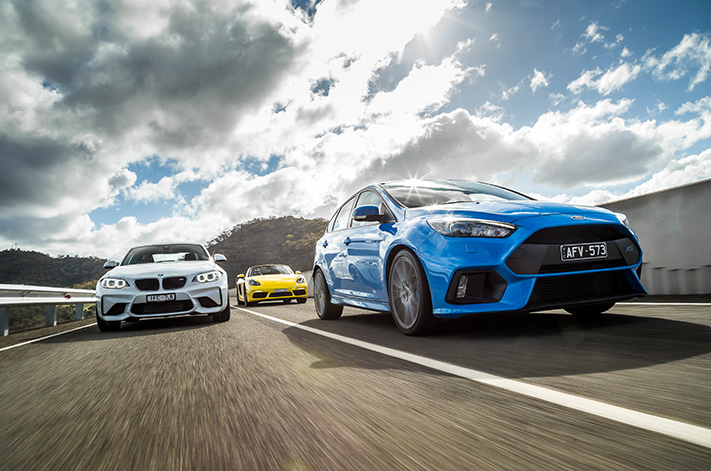
Beyond that, this divergent trio of hatch, coupe and roadster generate a host a questions for the keen driver. Can a hot hatch really level with a clean-sheet sports car on give-and-take roads? Has switching to four cylinders killed the Boxster’s charisma? Does the M2 live up to its billing as the best M car since the E46 M3 CSL? And behind these considerations, a bigger issue to chew on: Have we already peaked? Are these cars less charismatic, less tactile and less enjoyable than their celebrated forebears?
WE’RE somewhere on the road from Eildon to Jamieson. Nobody knows quite where because the mountain ash is so dense that the sat-navs have given up and we’ve lost count of the hundreds of bends draped over these hills for kilometres each way.
At this time of the evening, the highland rainforest is damp and deafeningly quiet. A breeze ruffles the treetops and then you hear it, a distant fusillade followed by a louder crack that rolls and caroms around the basin, raising birds from the canopy.
There are the rising and falling timbres of engines, the rat-a-tat of a rev-limiter being butted, the volume sliders being eased higher and higher. There are no operatic harmonies here; the sounds are discordant, thrashing and angry.
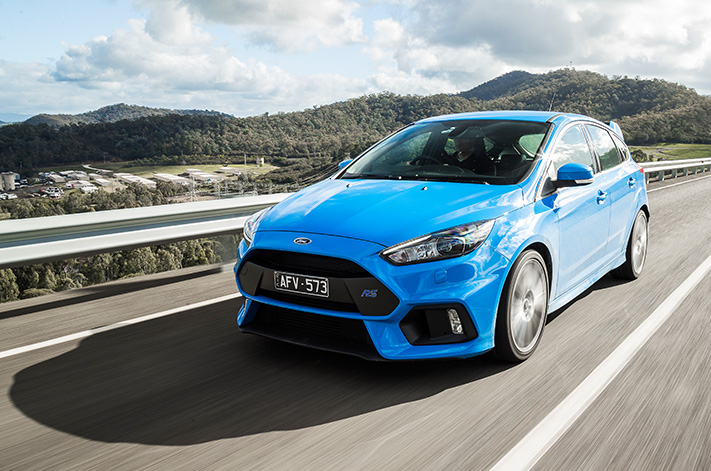
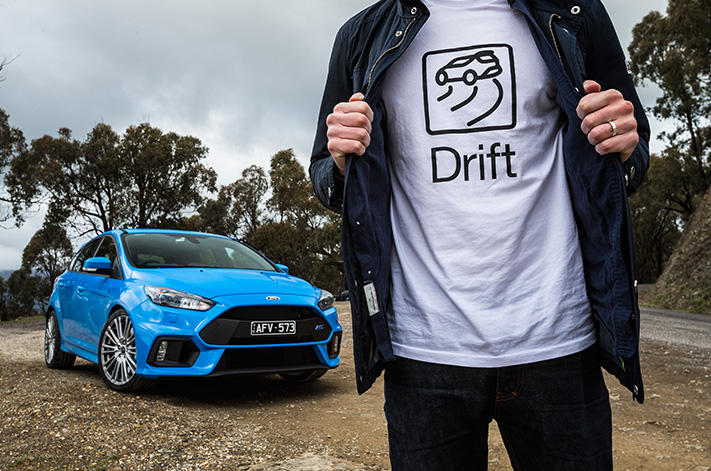
The cheapest of this trio draws the biggest crowds, and the Focus also delivers the most surprises behind the wheel. Although the five-door styling is lower-key than the blistered fist of belligerence that was its immediate predecessor, it’s still hardly the acme of discretion. It doesn’t take long to realise that it’s all a bit of a bluff and that the Ford has reserves of talent undersold by the thud-and-blunder body addenda. Drift mode will likely occupy you for five minutes or so before the novelty wears off and you begin to appreciate the subtlety the GKN-developed all-wheel-drive system delivers.
Thumb the drive controller to Sport mode to get the best from the Focus. There are two damper settings but, unless you’re on a surface that makes a Tilke track seem like a ploughed field, the switch on the end of the column stalk is best left alone. GKN is confident that this development of its Twinster system, which first saw light of day in the Range Rover Evoque, will one day supersede the traditional mechanical differential. Gearing ratios aside, the hardware is much the same, but GKN has tweaked the Focus’s response software to brilliant effect.
Tip the RS into a corner and you can feel the torque-vectoring rear clutch packs at work, directing drive to the outside rear wheel, the car subtly pivoting beneath you. In Sport mode, this means the rear end is overspeeding incrementally. Rather than generate armfuls of opposite lock, it’s merely relieving the work of the steering wheels, easing the friction circle demands of the front tyres and strangling the first sniff of understeer.
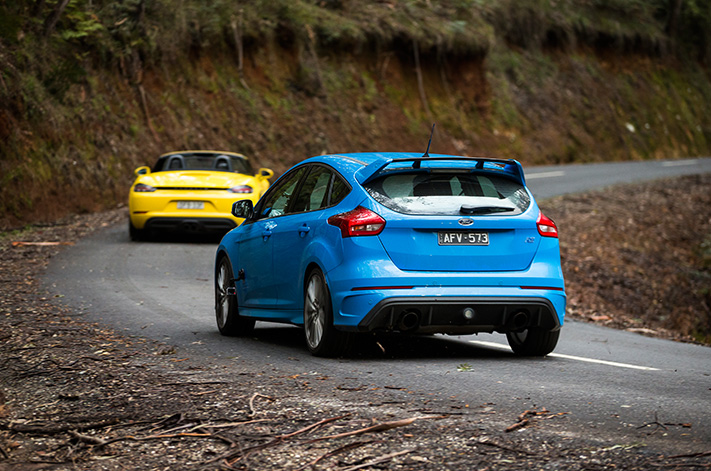
Ride quality is good given the tough body control brief, although the prosaic roots of the RS are felt in the high driving position; that elevated centre of gravity contributes to a degree of head toss that’s largely absent in the other two, lower-slung cars.
Ford Focus RS vs BMW M2 Pure drag race
One upshot of directing drive to the rears is that there’s capacity to work the front-end harder on corner entry, and the 350mm ventilated discs and four-pot Brembos certainly aren’t overkill.
The engine isn’t a straight lift from the Mustang Ecoboost, instead getting a modified Cosworth alloy head and RS-specific intake, exhaust and turbocharger, capable of running 1.8 bar compared to the pony car’s 1.2. Even with a sound amplifier that directs real engine noise into the cabin, the 2.3-litre four is never melodic, lacking the character of the old five-pot Volvo unit. It’s otherwise better in every way.
It’s 40 grand and change to step up to the M2 Pure, but it feels a world apart. The riot of competing attractions that is the Focus’s dash is replaced by typically understated self-assurance inside the BMW. Likewise, there’s the same well-judged, pared-down feel to the M2’s chassis tuning, with no adaptive damping or gimmickry, just three drive modes (Comfort, Sport and Sport+) that juggle steering weight, throttle mapping and stability control settings. Choice limits creativity. Driven in isolation, the M2 is an utter joy.
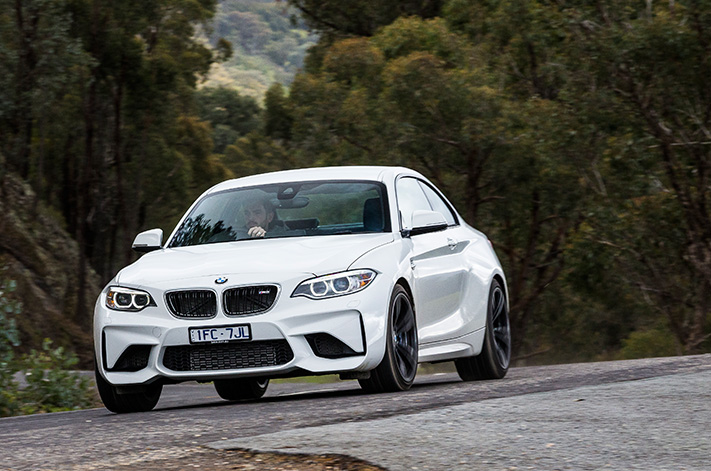
Unfortunately for the BMW, we have a Porsche 718 Boxster S along, which acts as a thudding reality check to the merits of the M2’s body control. It feels pitchy and rubbery after the Porsche, and there’s a lot more processing required to rein in its transfers of mass, by the software or by you. Often both. Consequently, you drive the M2 with a certain margin of reserve. It would be wrong to call the dynamics retro or a throwback, but the straight-six up front sending power to the rears is a time-honoured BMW staple. While the M2 never feels as spiky as the slightly unhinged 1M Coupe, it still feels as if it’s sitting on an oversquare footprint despite the fact that its track/wheelbase ratio is more benign than the Boxster’s.
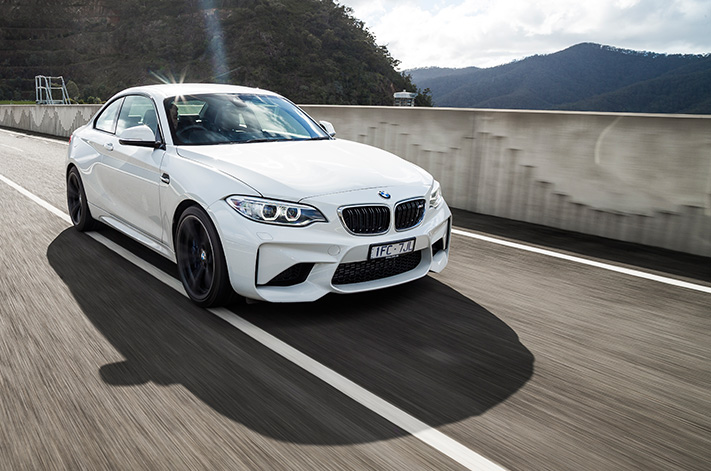
The M2 is not shy of significant merits, though. The engine is the most tuneful, the gearshift action the best of the three, and the driver’s seat is mounted good and low. Even the traditionally underwhelming M-car brakes are up to the task. Above all, the M2 feels the right size, a more natural fit for challenging roads than its overblown M4 sibling. However, I’m not certain I’d choose a manual M2; forking out an extra nine grand and getting the dual-clutch transmission would be the go, netting you a quicker and more economical car that’s packaged with keyless go, electrically adjustable heated seats, adaptive headlights, a remote alarm, launch control and a punchy Harman Kardon 12-speaker stereo. Like the Ford, there’s an old-school handbrake, whereas the Boxster has a parking brake switch, which is hidden in the nether regions of the dash and was universally hated on test.
That parking brake is about the only thing about the Porsche that strikes a bum note. Even the new four-cylinder engine sound is something we get used to, although the optional sports exhaust on the test car merely adds additional bass tones to an engine that could use a few top-note highlights. Just as you think it’s about to soar, the rev-limiter intervenes. One delightful aspect to the 718’s soundtrack is the high-pitched jet whine of the turbo spooling down as you key the ignition off.
The 718 is a mid-engine, low-compromise vehicle designed as a sports car from the ground up, rather than being the halo model of a more mundane model line. And, to be frank, it shows. There’s a gulf in the quality of feedback, and of predictability of response and mechanical grip compared to the Ford and BMW. A workout that leaves the Focus with its brakes cremated or the M2 driver flapping at the wheel like a pigeon in a box feels like 70 percent in the Boxster.
You might well expect the most expensive offering here to be the quickest, and it is. The clever VGT turbo installation in the Boxster S means that almost any gear will do, as long as you have between 1900 and 4500rpm on the clock. It feels the most aggressively boosted of the three, despite the 718’s larger engine registering 20Nm less than the Ford.
A quick press of a button switches the car into PSM Sport mode, available only with the Sport Chrono package, and the 718 instantly tenses its muscles. Rather than merely raise the threshold at which stability control intervenes, as is common with most intermediate modes, PSM Sport now dampens the initial yaw acceleration, creating a gentler transition between grip and slip.
The Focus might have drift mode, but the 718 has this hero mode where the car subtly massages your ego. You feel the difference when you hold the stability button down for a couple of seconds and PSM disengages, requiring sharper, more decisive inputs. You’re not totally on your own, however, as there’s still an ‘anchoring’ mode where PSM re-engages if it detects braking inputs beyond the ABS intervention point.
COMPARISONS can be odious and, while few would perceive these cars as rivals, representing as they do three equidistant points on a continuum of perceived sophistication, it’s tough not to play favourites. A wholly unscientific straw poll of testers present produced an almost unanimous selection and it was, on the day, the slowest and arguably most flawed car present – the BMW M2 – that took sentimental honours over the finest sports car here (the Boxster S).
All three cars represent absolute benchmarks in their respective niches and offer standout value, but the M2 delivers a purer hit of excitement and a more welcome dose of discretion than the others. On the latter point, there’s arguably a case for a sports-luxe Focus, sharing all the RS’s mechanical trickery but in a classier body.
The game has moved on, and fast. So fast that this feels like an ending of sorts, with three cars that are about as fast as you’d ever want a manual car to be. There are no losers here. Both the Ford and Porsche deliver in spades. The Focus offers a phenomenal bang for the buck while the Boxster’s mature suite of improvements more than compensates for its voice breaking.
It’s the BMW M2’s pared-back, unfussy rectitude that twangs the heart strings hardest, but remember – this wasn’t ever supposed to be a comparison. The M2 is returned as an accidental victor on a classic ticket, but whatever your take on progress, we reckon you’ve never had it so good.
THE CONTADINO who owned the fields adjoining the Lamborghini factory must feel like a lottery winner. His ship’s come in.
First published in the June 2017 edition of Wheels Magazine, Australia’s most experienced and most trusted car magazine since 1953.
For decades, the factory that Ferruccio Lamborghini built in 1963 was big enough to knock out two or three hundred cars a year. But since Audi bought Automobili Lamborghini SpA in 1998 and poured in money and resources, production has rocketed to last year’s record 3457 cars. The Urus SUV coming in 2018 should double that. And where, in the grim days before Audi, there were 300 employees, now there are 1415, and Urus will need another 500.
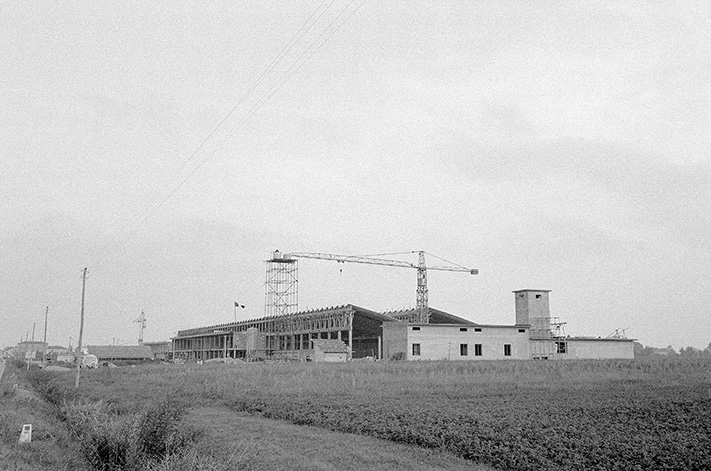
These days, the plant at 12 via Modena, Sant’Agata Bolognese, on the Emilian plain 17km east of Modena and 24km north-west of Bologna, looks familiar albeit bigger and smarter. The long Lamborghini script still stretches along its roof. But the facade of the old offices and main entrance fronting the production hall has been freshened and abuts the new museum’s long, high, glass gallery. In the 1970s, when I came here often to drive the latest and greatest, the only old Lamborghinis were customers’ cars in for service and forlorn-looking prototypes and mules dumped out the back.
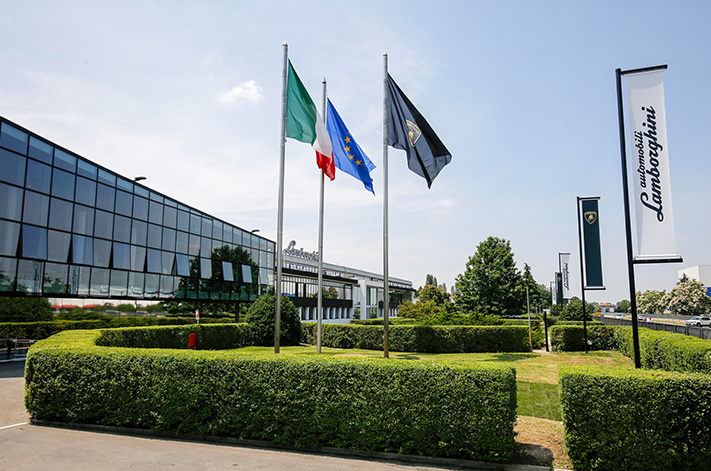
Back then, you might have encountered a couple of suppliers coming and going, or the odd owner bringing a car in for attention. Nowadays, scores of visitors – 65,000 a year – mill about outside the museum, waiting to ogle five decades of Lamborghinis and tour the factory.
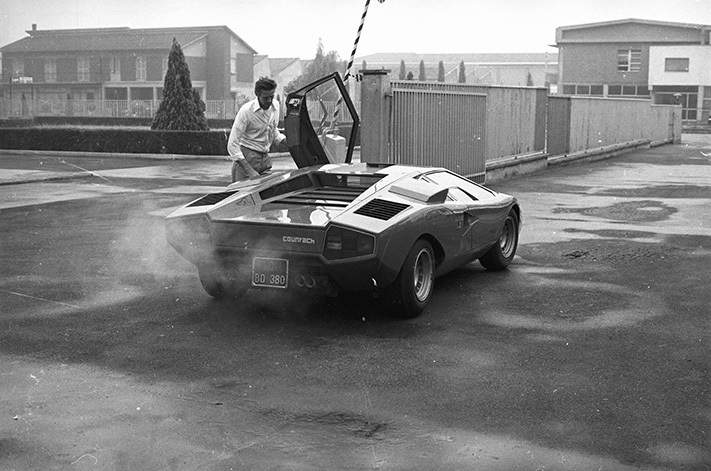
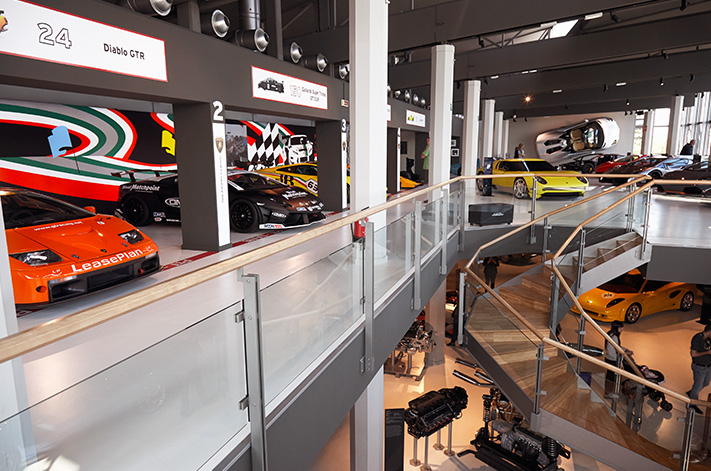
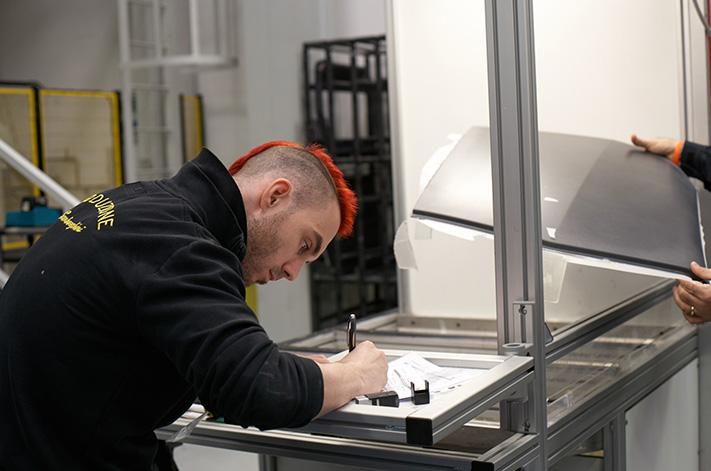
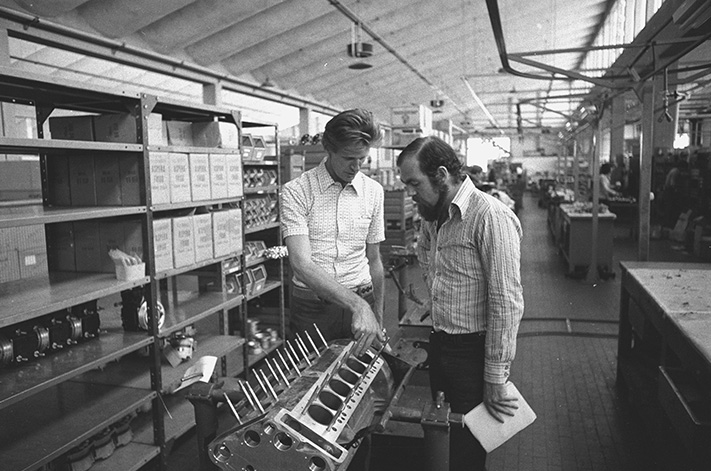
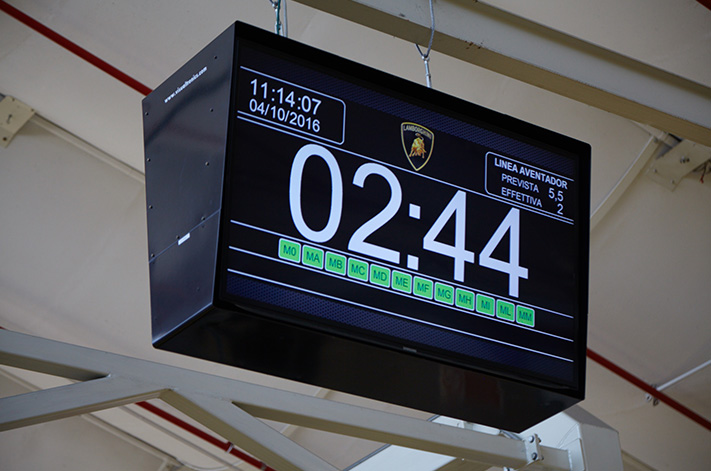
Sant’Agata’s composites prowess dates back to 1983, not long after McLaren introduced carbonfibre to Formula 1. Then-boss Giulio Alfieri commissioned a composites project to see how much weight might be cut from a Countach. Fortune smiled: aeronautics engineer Rosario Vizzini, who’d been at Boeing in Seattle designing the 767’s carbonfibre vertical stabilizers, had just returned to Italy. Lamborghini snapped him up and got an injection of cutting edge composites knowledge. Vizzini’s project was the carbonfibre frame and body of the Countach Evoluzione. It was 500kg lighter but too expensive to build. Steadily, though, more and more composites became part of Lamborghinis.
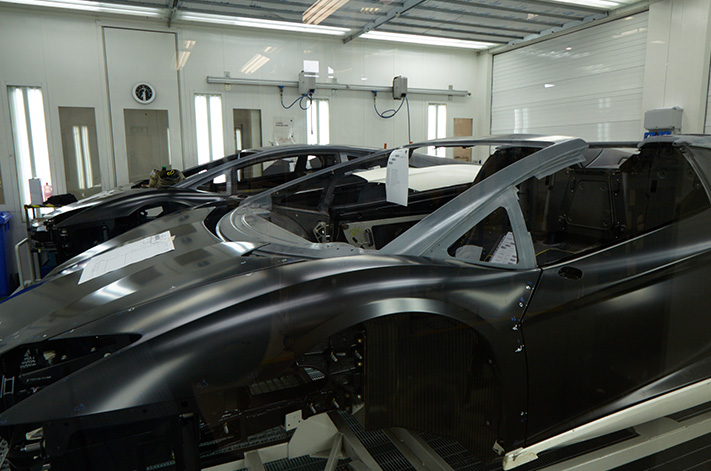
Does Lamborghini’s commitment to composites square with the Volkswagen Group’s desire for increased platform sharing? “We work closely with group marques but if a technical solution becomes too much of a compromise it’s not a solution.”
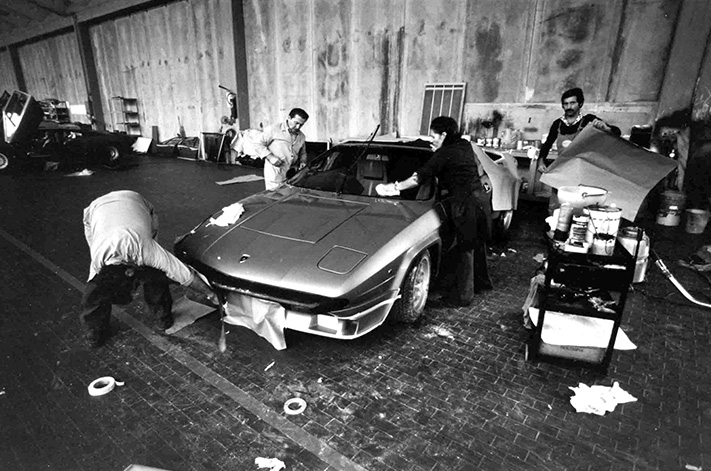
“The Huracan is a good example of one that worked. We are trying to conceive a common platform for another sports car but can’t say yet whether it will be successful because there are so many differences between the brands. My opinion is that, on a super sports car, having a platform that’s good for everybody will always be a compromise.”
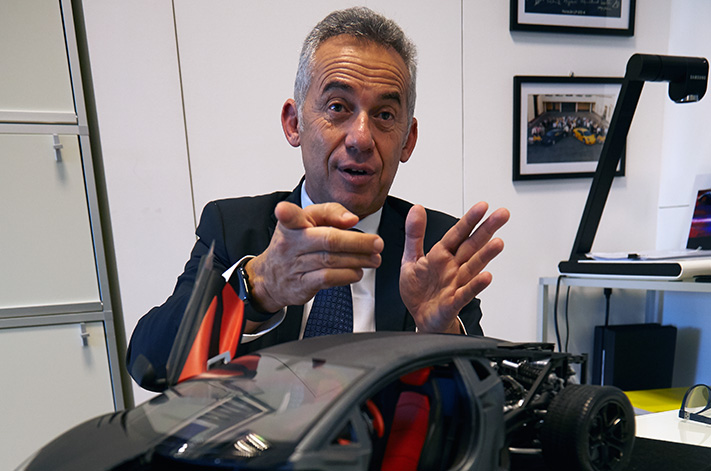
“We have one important mother,” Reggiani says. “She has allowed us to make this huge investment, achieve the results we’re now enjoying, and create a dream like the Urus in a short time.”
Reggiani, an engine man who came to Sant’Agata in 1994 after six years at Maserati and six at Bugatti, has links to Lamborghini’s engineering roots: he has worked with Paolo Stanzani and Gian Paolo Dallara, Lamborghini’s founding engineering giants. He points to a treasured photograph signed by Dallara, Stanzani and designer Marcello Gandini. “These three, as young men, built the original dreams of Lamborghini,” he says. “Dallara and Stanzani were innovators; visionaries who understood what Lamborghini stood for. They wanted to make the purest incarnation of a super sports car. Bob Wallace understood how to translate the sensation of driving a sports car on the road, and communicate that back to the R&D team.”
Mindful of his legacy, Reggiani is driving Lamborghini full-tilt into a tech-dense, scientifically analysed supercar position that includes aeronautical technology for chassis control, four-wheel steering that works up to 200mph and simulates shrinking or stretching the wheelbase, sensors embedded in tyre rubber, revolutionary aerodynamics, and neurological research into how drivers react.
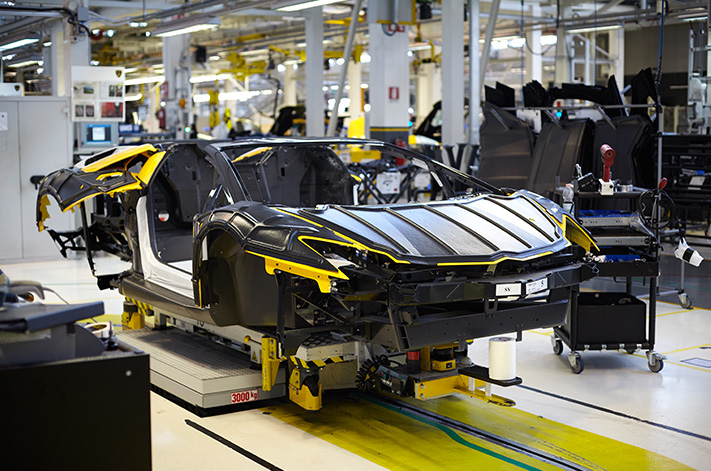
Yes, but some testers thought the original Huracan understeered too much. Reggiani says: “My immediate response is: what mode are you in? In Strada, which is biased towards understeer, if you’re not a great driver you will have great safety because you can enter bends without the rear moving too much. In Sport, we assume your skill is better so we give you more tail movement by adjusting front-to-rear torque. In Corsa, you have neutrality for optimum speed through a corner.” Nevertheless, he confirms that Lamborghini did mildly revise the front-to-rear torque calibration for the Huracan Spyder to make it more neutral in Strada.
Now there’s the four-wheel steering standard on this year’s Aventador S. At low speed, the rear wheels turn in the opposite direction from the fronts to virtually shorten the wheelbase and boost manoeuvrability. At speed, the rear wheels turn in parallel with the fronts. “It’s like elongating the wheelbase by 500mm,” says Reggiani. “It gives us great stability at high speed.”
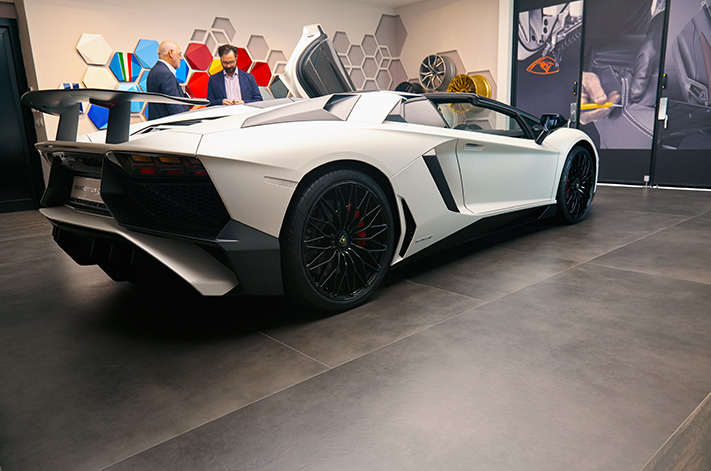
The Aventador S’s more sophisticated and dramatic nose – which generates 130 percent more downforce – rear panels, wing and diffuser are aerodynamically focused to increase stability across a wide speed range. Lamborghini has learned a lot from working with Dallara on its Huracan Super Trofeo and GT3 race cars. The Huracan Performante’s ingenious ALA active aerodynamic system is a direct practical application of this work. “Venturi effect is really important,” Reggiani says. “It’s the only thing that increases downforce without penalising driveability. Aerodynamics and weight are the two pillars where we will push to innovate as much as possible.”
Lamborghini is also continuing the research program with the neurology faculty of Rome’s Sapienza University that began during the Huracan’s development. It’s to learn more about drivers’ reactions. The scientists discovered that, in emergencies, the right side of the brain manages the left hand. So the Huracan’s turn indicators and headlight flashers are tabs on the left of the wheel where they can be worked with your left thumb. “This kind of analysis helps us be more scientific about control layout.”
What about engines? In a world moving to smaller turbocharged units, and electrification, Lamborghini’s smallest engine is a 5.2-litre V10. “Our job is to continue to be flag-bearers for the naturally aspirated V12 and V10,” says Reggiani. “New rules governing sound, fuel consumption and emissions, and taxation, will kill today’s big naturally aspirated engines. When that happens, the big task is to ensure that what comes next has the same emotion and performance.”
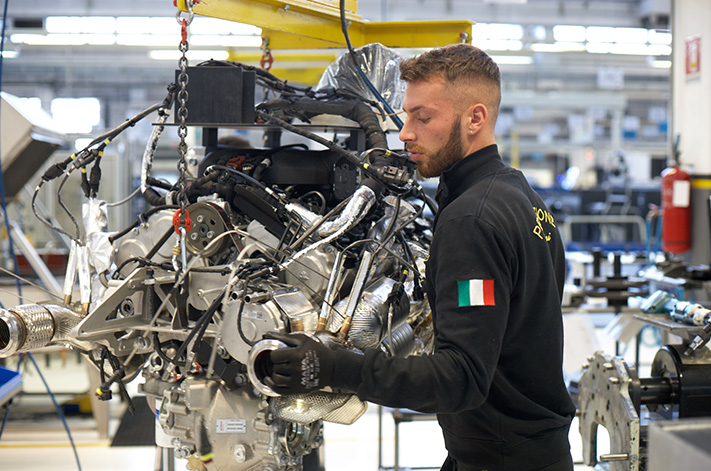
A year after launch, the petrol V8 (Reggiani makes it clear that diesels aren’t on Lamborghini’s agenda) will be joined by a hybrid, important not only for the SUV but to lower the fleet average for emissions and consumption. Hybrids for the sports cars are another matter. Although the 2014 669kW Asterion plug-in hybrid concept showed how Lamborghini can include electric power, and it has all the Volkswagen Group’s knowledge and systems to draw upon, resistance to adding 250kg or so means Sant’Agata will hold off introducing hybrid sports cars in volume until battery weights decrease and range increases. The V12 will continue until the end of the Aventador’s production life in 2022 “and possibly beyond” according to Reggiani.
His exuberance sums up the atmosphere at Sant’Agata now. While, for most of Lamborghini’s 54-year history, brilliant engineers and dedicated employees somehow, often against the odds, kept Ferruccio Lamborghini’s vision alive, they never enjoyed this kind of confidence, and this kind of capability. Stephan Winkelmann, through his 11-year stint as CEO, guided the company to this place of new dreams, and left it in rude health when he handed over to Stefano Domenicali: ex-Ferrari, locally educated and steeped in the automotive culture of Emilia-Romagna.
You get the feeling that having an Italian in charge again is the icing on the cake.
