
There’s no place like chrome. That seems to be the take-away from the latest round of VFACTS sales figures.
While the rest of the market slumped 52.3 percent compared to last month, there was one standout performer: Ram trucks.
Only one other car manufacturer posted positive figures and that was MG. While it’s easy to see why those feeling a little cash-strapped might turn to bargain basement Chinese vehicles, it’s not quite so obvious why a six-figure, two-and-a-half-tonne chrome plated symbol of excess might be proving quite such a hit with Aussie buyers.
The numbers speak for the themselves though. In April 2020, statistically the worst month for new vehicle sales in Australia since VFACTS data commenced in 1991, Ram sold 178 of its monster pick-ups. That’s up by 14.1 percent over last month and up by 27.2 percent year-to-date compared to last year. That’s amazing given that the 4×4 pick-up market in general contracted by 39.2 percent last month. Talk about bucking a trend.
According to a Ram spokesperson, part of the reason the brand avoided the market-wide crunch is national pride, with the large pick-ups being converted to right-hand drive in Melbourne.
“It is pretty unprecedented times that everyone is trying to navigate,” they told Wheels.
“But it looks like consumers are voting with their feet, and supporting Australian manufacturing, which is great news for us. We are fully aware of the situation that we are all trying to deal with.”
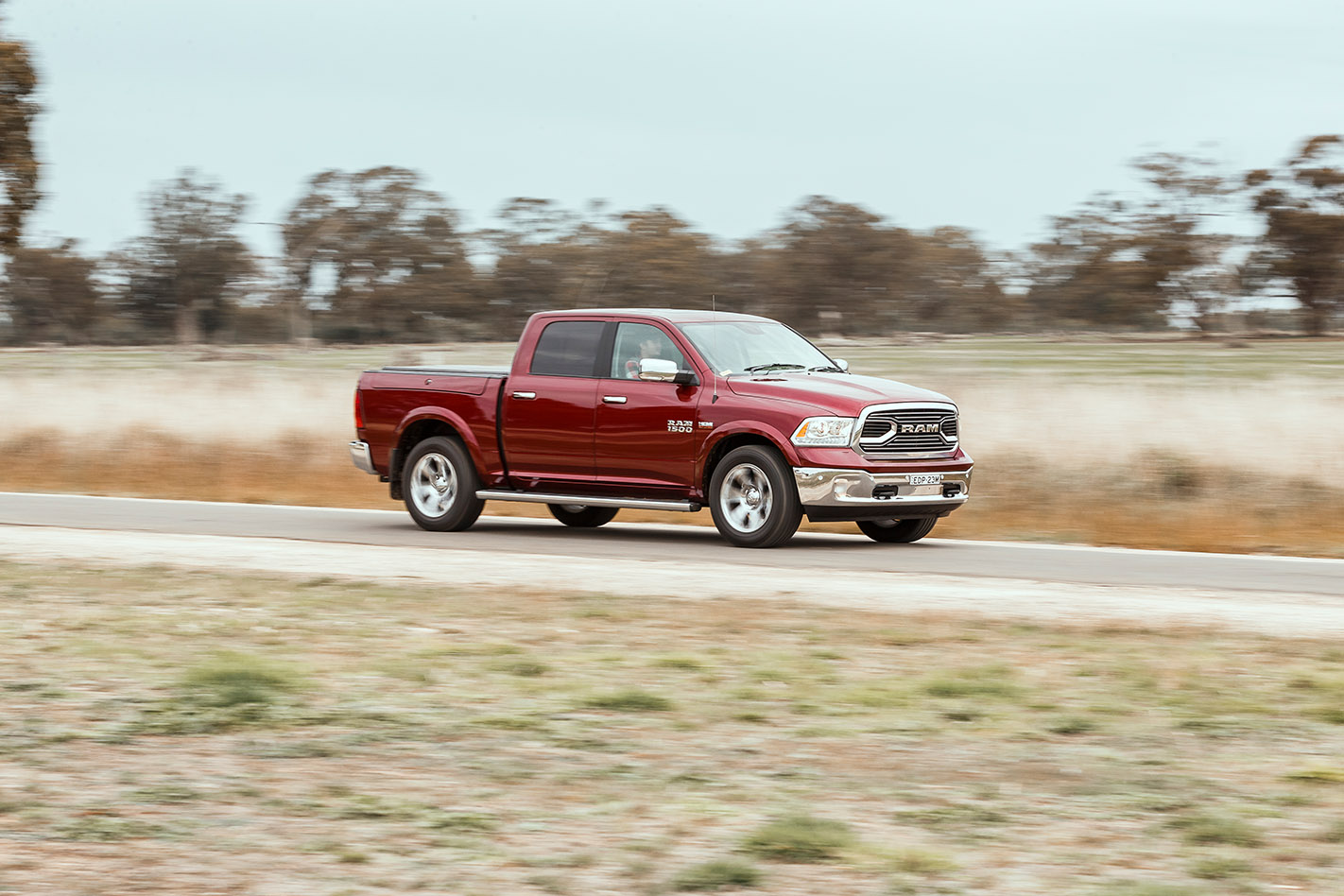
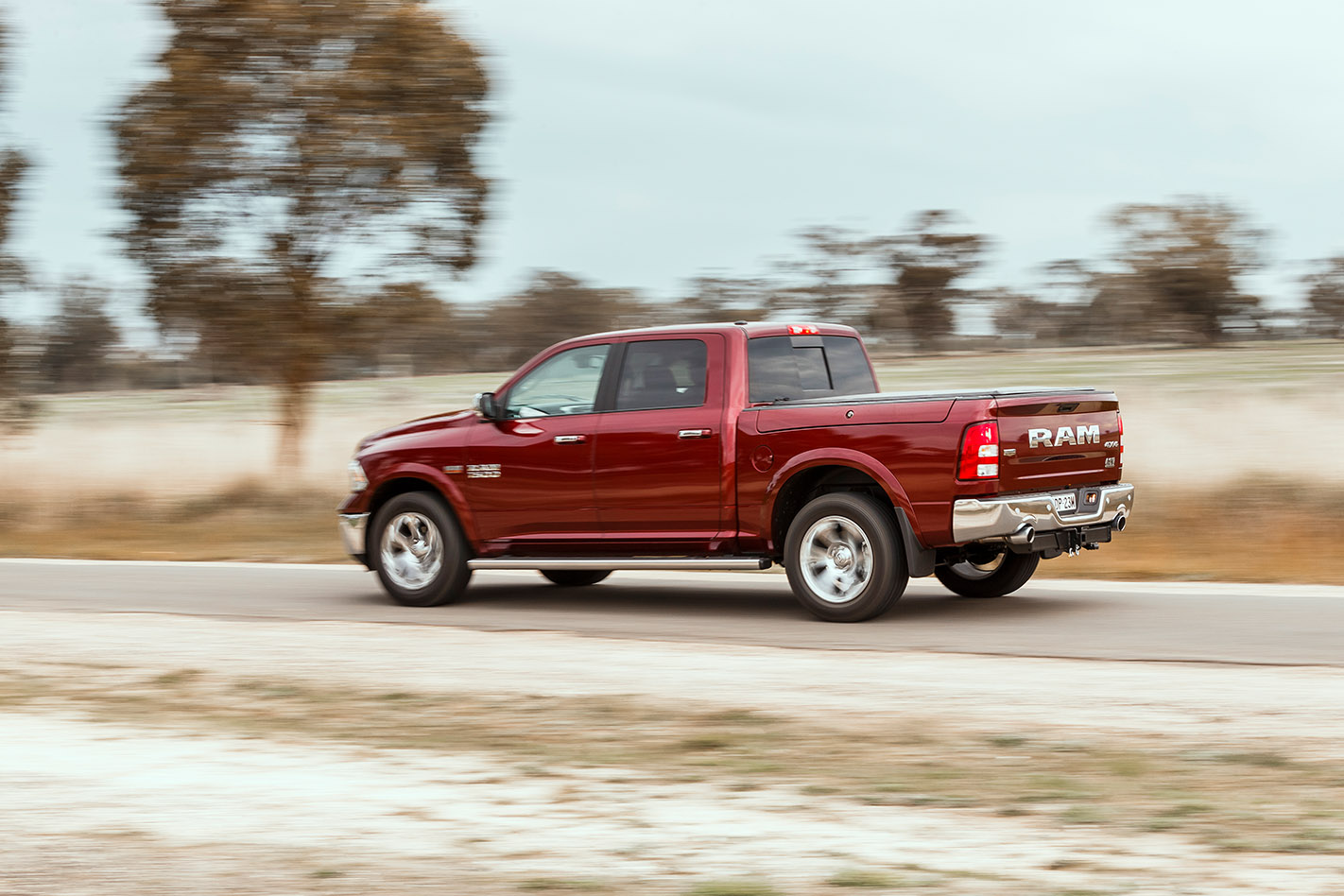
Get behind the wheel of one and it’s not so hard to understand why the Ram 1500 is popular. In short, it’s a pretty good drive, it’s well equipped and the $99,950 price point isn’t exorbitant for the amount of gear and capability you get, right-hand drive ‘re-engineering’ costs notwithstanding.
It’s certainly not clear yet whether the government’s instant asset tax write-off is having any effect on Ram’s orders, an incentive originally scheduled to expire on June 30th.
Industry analysts have noted that the very people who stood to benefit the most from this scheme, namely sole traders and small businesses, were being treated as high risks by credit institutions and were finding themselves unable to take advantage of the incentive.
There is now a call by the Australian Automotive Dealers Association to extend the scheme for another 6-12 months.
One Ram dealer told Wheels that it’s likely the current wave of sales has been driven by the tax scheme, though the Ram spokesperson downplayed the incentive’s influence on sales.
“Businesses are looking at how they can utilise that, but everyone’s personal financial situation is different, and we are not here to advise on taxation situations,” they said.
“If our customers can utilise that though, it is certainly beneficial.”
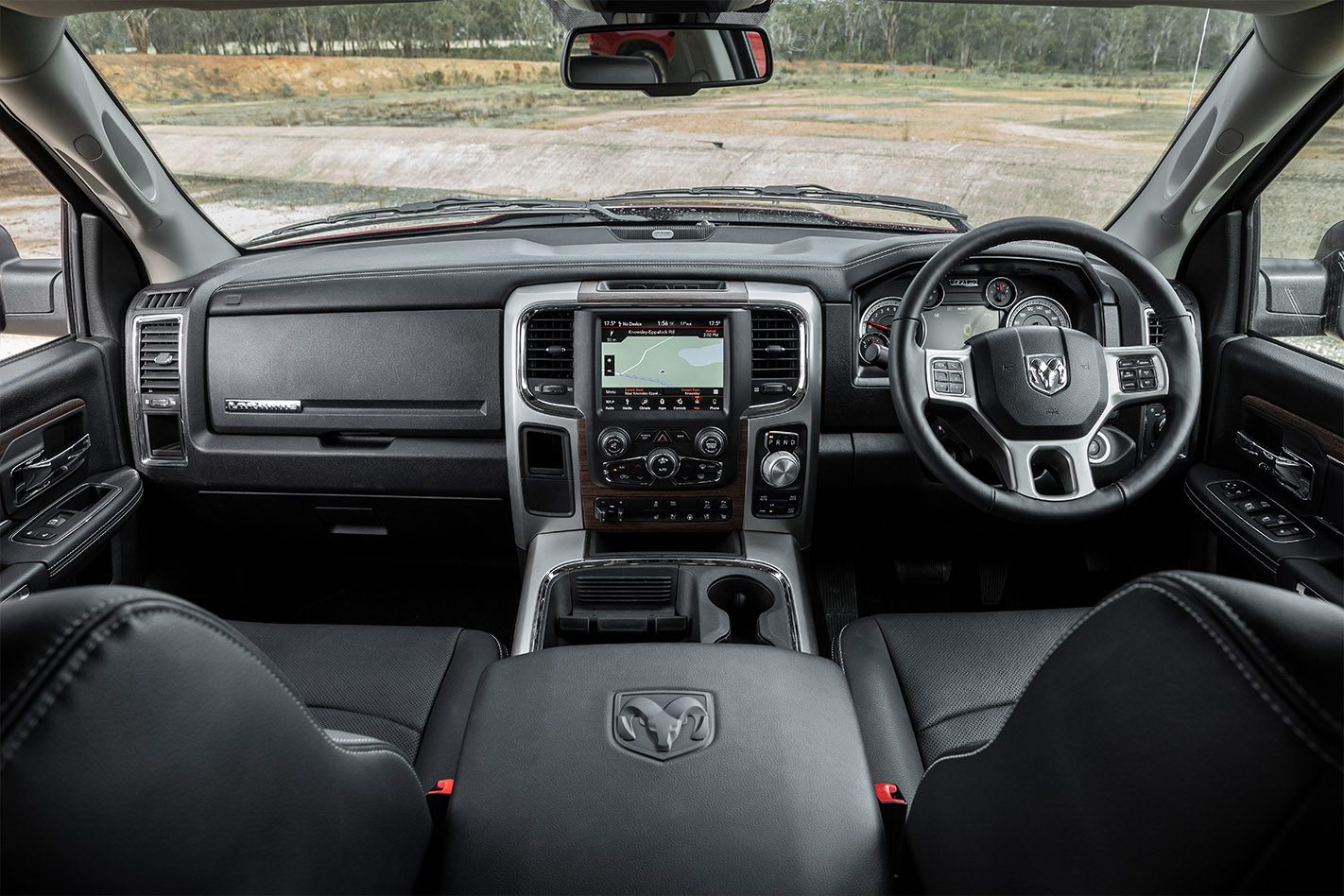
Deeper analysis of the numbers suggests that it is indeed trade sales that are driving Ram’s growth.
While sales of the luxurious RAM 1500 Laramie model have tapered somewhat, the fewer-frills RAM 1500 Express (available in quad-cab form with a longer bed length than the crew-cab Laramie) has seen registrations grow by 101.9 percent compared to last month and by 49.6 percent compared to this point last year.
“Figures recently released by the Australian Bureau of Statistics show that 31 percent of Australian citizens have experienced a decrease in income due to the pandemic,” said Federal Chamber of Automotive Industries boss Tony Weber.
“In addition, 72 percent of Australian businesses reported that reduced cash flow is expected to have an adverse impact on business over the next two months,” noted Weber.
“These conditions inevitably impact consumer confidence and purchase decisions.”
While the market as a whole makes for grim reading, with buyers clearly doing an effective job of distancing themselves from new car dealers last month, it’s reassuring to see Australian engineering helping to create one of the rare success stories.
Samsung’s Advanced Institute of Technology (SAIT) has revealed a revolutionary solid-state battery that would enable electric vehicles to drive between Melbourne and Sydney on a single charge.
With a significant leap forward in material science, the South Korean tech giant’s innovation shrinks the overall size of the battery by half, compared with the most energy-dense batteries currently (hah!) in use by EV manufacturers.
That means a vehicle’s range can be effectively doubled without requiring any extra space to store the battery. Take the Tesla Model S Long Range, for example; swap its standard battery for a Samsung unit, and its range would theoretically be boosted from about 700km to a whopping 1400km.
Even Volkswagen’s ID3 small hatchback would be boosted to in excess of the milestone 1000km range, solving one of the most common arguments against an electric vehicle’s suitability for Australia’s long road-trip culture.
Master at SAIT’s Next Generation Battery Lab and the leader of the project, Dongmin Im, explained, “The product of this study could be a seed technology for safer, high-performance batteries of the future. Going forward, we will continue to develop and refine all-solid-state battery materials and manufacturing technologies to help take EV battery innovation to the next level”.
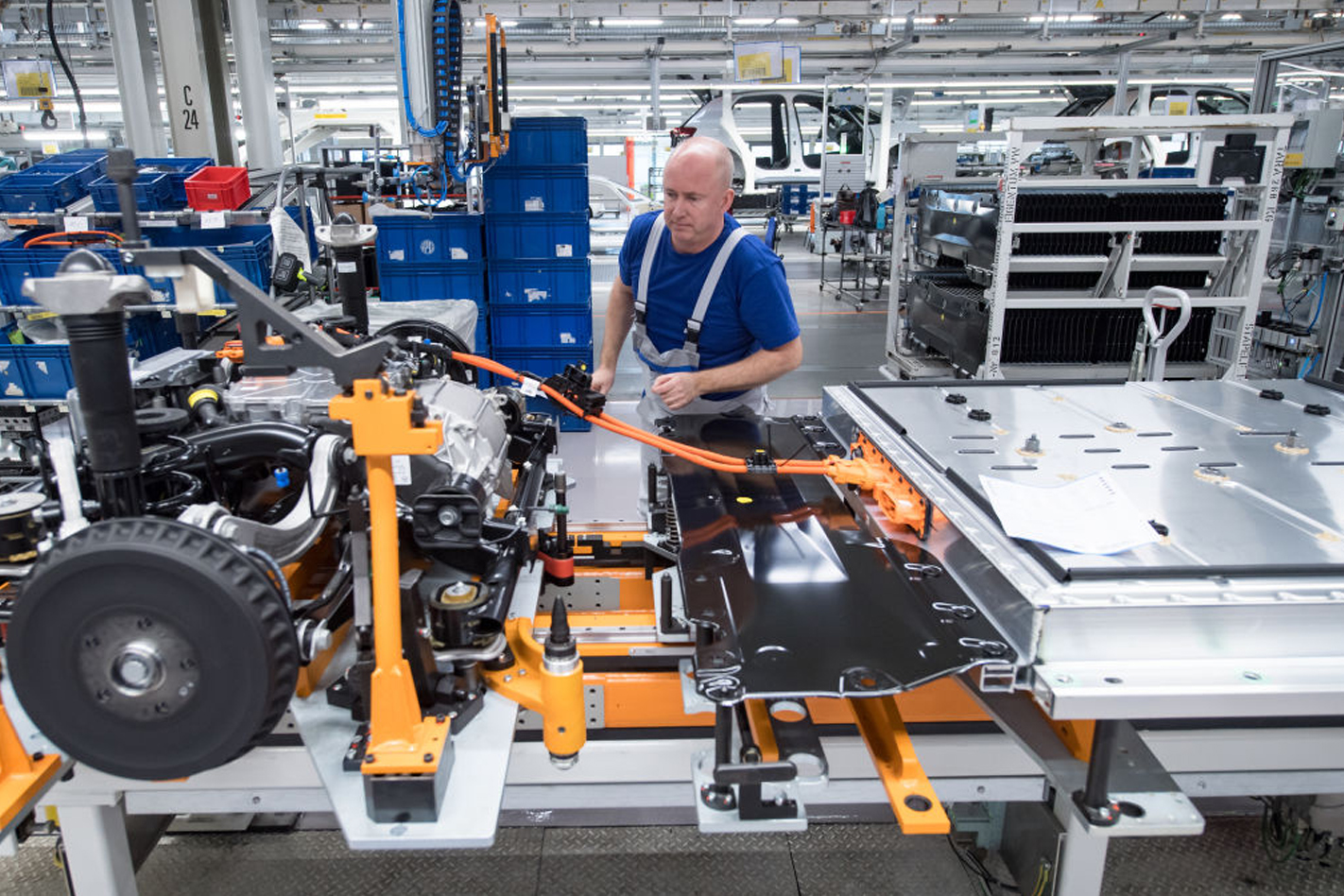
The size of a typical EV battery (right of shot)
The secret to Samsung’s super battery lies in its electrolyte. In conventional EV batteries, the electrolyte is a liquid, but Samsung’s scientists and engineers have developed solid electrolyte technology, which is far denser than the liquid approach.
While Tesla’s lithium-ion batteries, for example, have an energy density of 272 watt-hours per litre, the new solid-state battery can brag an incredible 900Wh/L. That dramatic improvement is thanks to a second significant innovation; the composition and construction of its anodes.
While the current most efficient and energy-dense batteries use lithium anodes, the Samsung solution introduces a new silver-carbon coating known as Ag-C, which is just 5.0 micrometers thick.
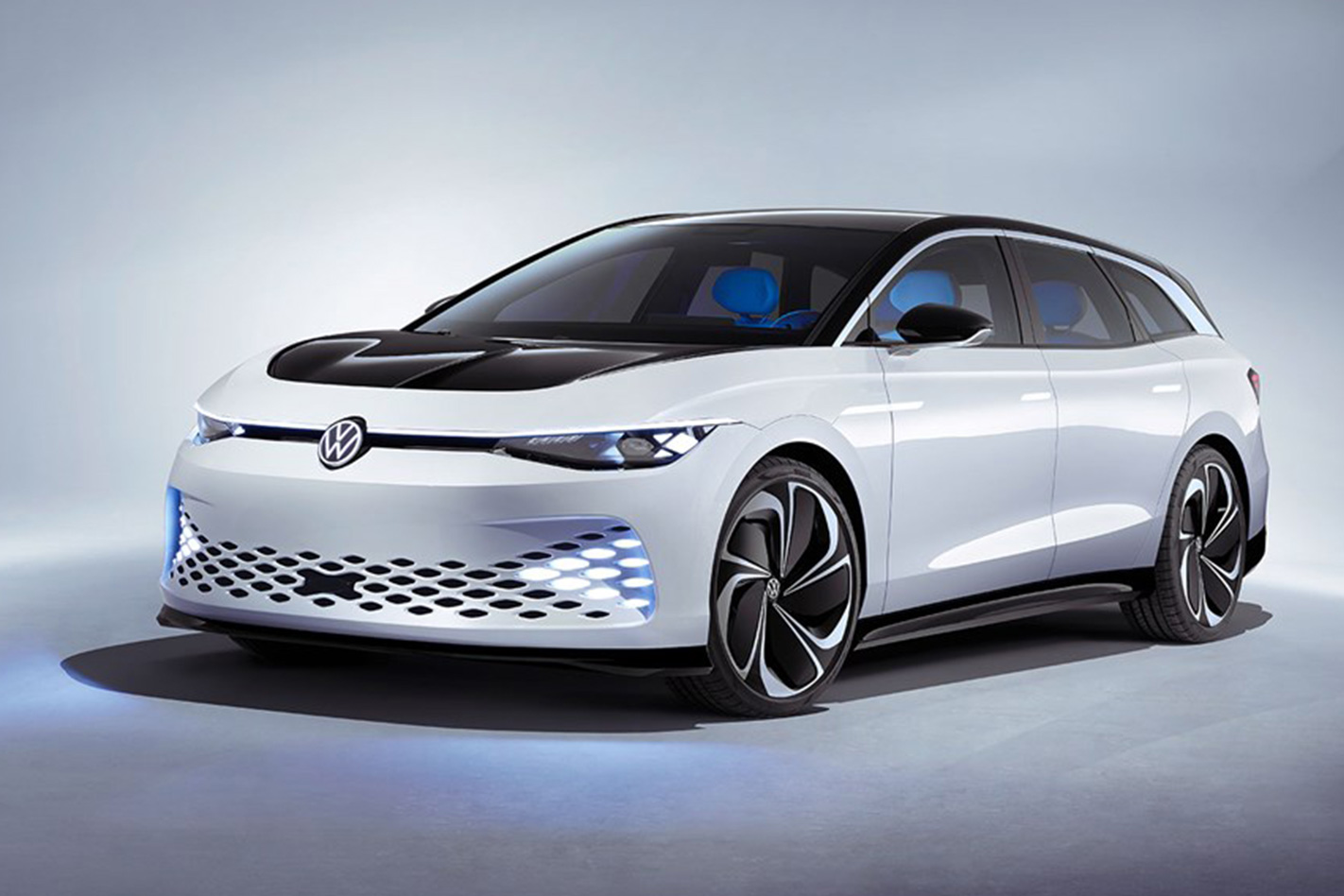
VW ID Space Vizzion
This Ag-C nanocomposite not only allows more compact packaging but resists the growth of ‘dendrites’ – the chemical formation of needle-like crystals which reduces battery capacity over many charge cycles, as well as the stability of the pack.
That means smaller, safer, higher-capacity batteries that, says Samsung, can be recharged more than 1000 times (about a million kilometres of total range) for a future of more attractive and compelling electric vehicles.
MORE Could Lexus build the first 1000km EV?
At this stage, only a relatively small prototype battery has been developed, while no mention has been made about the price of such a high-performance power pack that takes precious metals for its construction.
Its longer life and number of cycles are, however, likely to offset an initial higher unit price.
Watch this space as bigger prototype batteries roll out in larger-scale tests in the coming months and years.
Did you have a poster of a Lamborghini on your wall as a kid? Well, this kid is so keen on Lambos that he pinched his parent’s car to drive thousands of kilometres to buy one. Oh, and he’s five.
According to Utah highway patrol officers, the plucky young chap was stopped on an interstate highway, where he told officers he was heading to California to buy himself one of Italy’s finest.
Problem is – not just the fact that he’s five, and technically in a stolen car – that California is some 1200km away from Utah…
Officers noticed the SUV on one of America’s biggest highways just outside Ogden, driving in a manner that the officer involved described as ‘impaired’. Probably because our hero really couldn’t see over the steering wheel.
However, he obeyed the officer’s directions to pull over, where the whole sordid tale was revealed.
You see, his mum said he couldn’t have a Lamborghini, so while she was out, he grabbed all his cash, pinched mum’s keys to the family SUV and made a break for the coast. His financials? A whole five bucks. How far did he get? About 8km.
Apparently the young fella – tall for his age, you’d suggest – perched himself on the edge of the seat to drive, and held the brake during the stop, where the state trooper helped him to engage P. For Punished? Pop’s Going To Ground You?
It looks like the police will go easy on this real-life baby driver, but both he and his parents were interviewed by Ogden County cops. We’re pretty sure that the state troopers are the LEAST of our hero’s problems.
NOW CHECK OUT The best car fails you’ve never seen
Many industries are doing it tough in the wake of the global coronavirus pandemic and the associated economic shutdown it’s prompted, but there’s one trade that’s undergoing a strong surge in demand – video gaming.
The desire to find distraction and entertainment as the bulk of the population adjusts to social isolation measures has predictably led to a rise in interest in video games of all types, but for car enthusiasts that leads to something of a problem – hardware is now incredibly hard to find.
Besides limitations on visiting physical stores to browse gaming wheels, consoles, and simulation rigs, the unprecedented demand for games and peripherals – coupled with production pauses in China – has led to a shortage of hardware.
That’s not such an issue if you already own a PC or console and all you need is a game – digital downloads have rendered discs largely a thing of the past – but for car enthusiasts seeking to burn some virtual rubber that’s something of a problem given the best experience is with the aid of a wheel and, ideally, a proper sim rig to bolt it to.
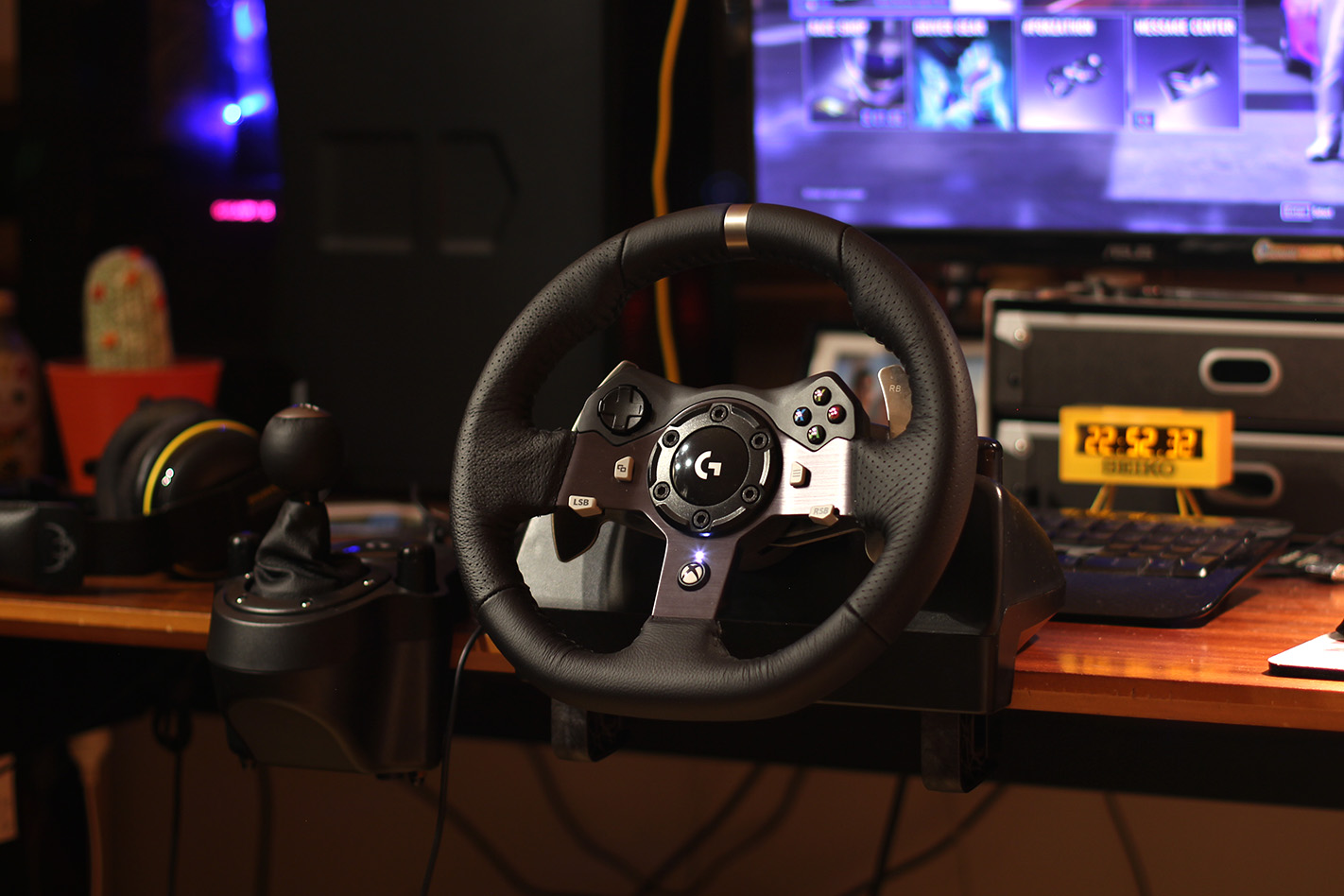
Load up JB Hifi’s website, one of the largest retailers of gaming hardware in Australia, and almost every gaming wheel and wheel rig is listed as ‘awaiting stock’ or ‘limited stock’.
Last year when we reviewed the Logitech G920 we said you’d be “kind of a chump if you pay the [$499] retail sticker” given how easy it was to find that particular wheel for as little as $298, but those cheap Logitechs have well and truly evaporated by now – you’ll either pay full retail, or you won’t get one at all.
The situation is the same in the USA. The market-watching website NowInStock.net currently lists almost every Thrustmaster and Logitech wheel – even the lowly Thrustmaster T-150 – as being ‘out of stock’ across the retailers it monitors, with the exception of the expensive Thrustmaster TS-PC Ferrari 488 Edition.
But it’s not like the pricier product is immune to this. Fanatec is widely regarded as one of the top manufacturers of simulation-grade driving peripherals, and even though its products wear a premium price tag, the company has still seen demand outstrip supply.
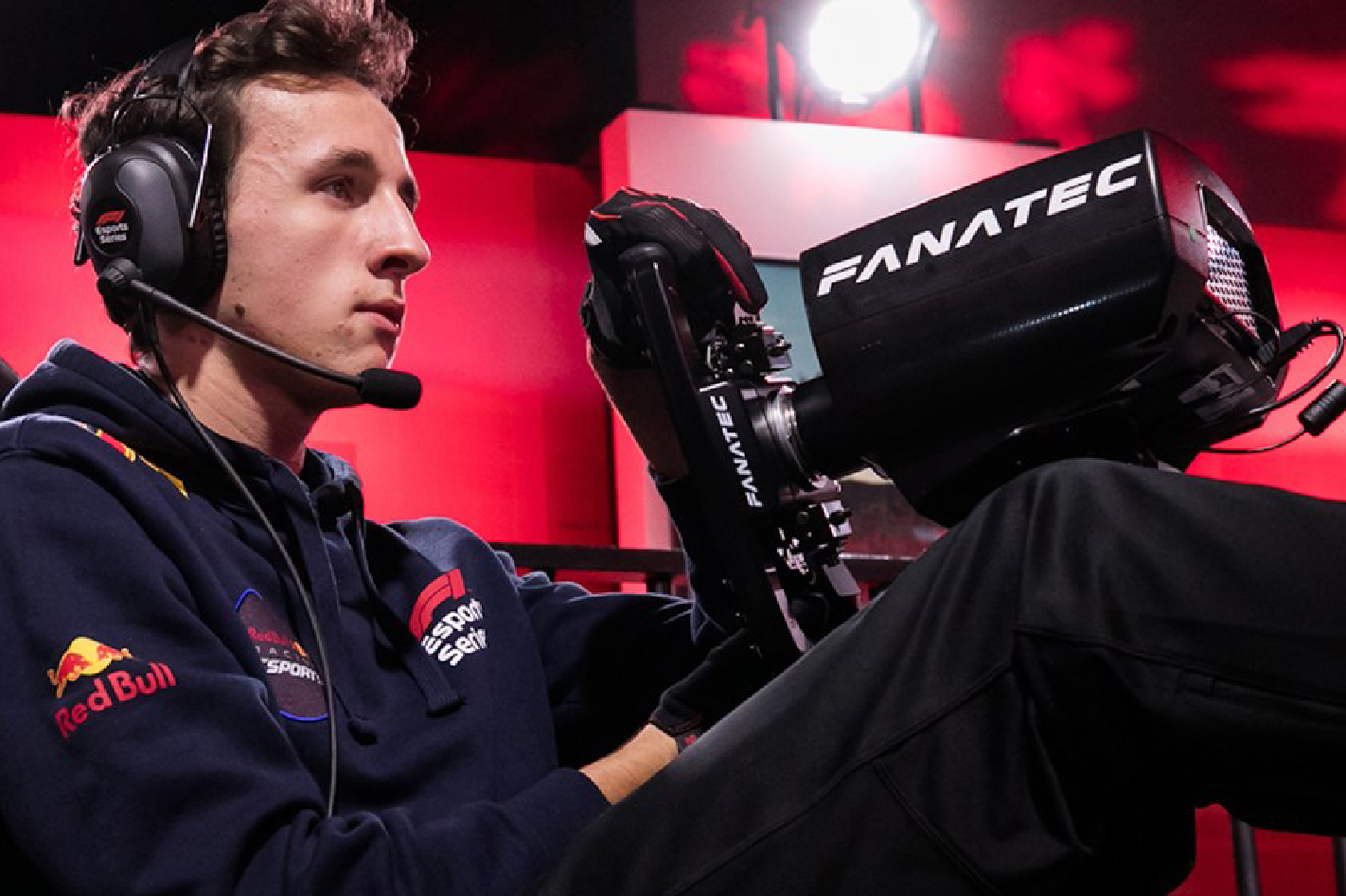
“Some products can be on pre-order for a few weeks in some regions until new supply arrives but in general, our supply chain is working well,” Fanatec’s PR manager Kim Orremark told WhichCar. “Our production was temporarily affected but is now fully operative again.”
“The combination of lockdown and the strong publicity for sim racing as a replacement for real-world racing has lead to an extremely strong demand for our products.”
Even so, many items on Fanatec’s website are listed as sold out or only available as a preorder, with deliveries starting from the end of May, or end of June in the case of some products.
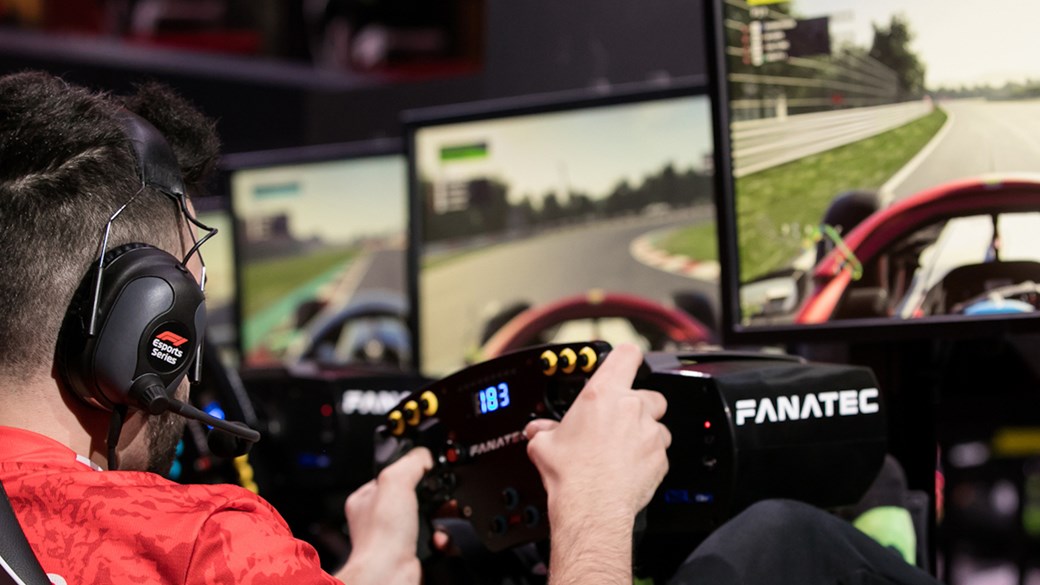
For local sim rig specialist Simworx, the boom has had a profound impact on business – in the right way. The public’s appetite for driving sims has given a huge boost to sales, and is keeping the company’s five full-time employees and its contractors incredibly busy:
“It’s been a 100 percent increase,” Jack Klaver, managing director of Simworx, told WhichCar.
“On our website normally we’d get 60-80 inquiries a day, but now it’s up to 150. Compared to April last year, our sales have more than doubled – and that’s international as well as Australian. Everything takes so much longer, but other than that, this hasn’t stopped us.”
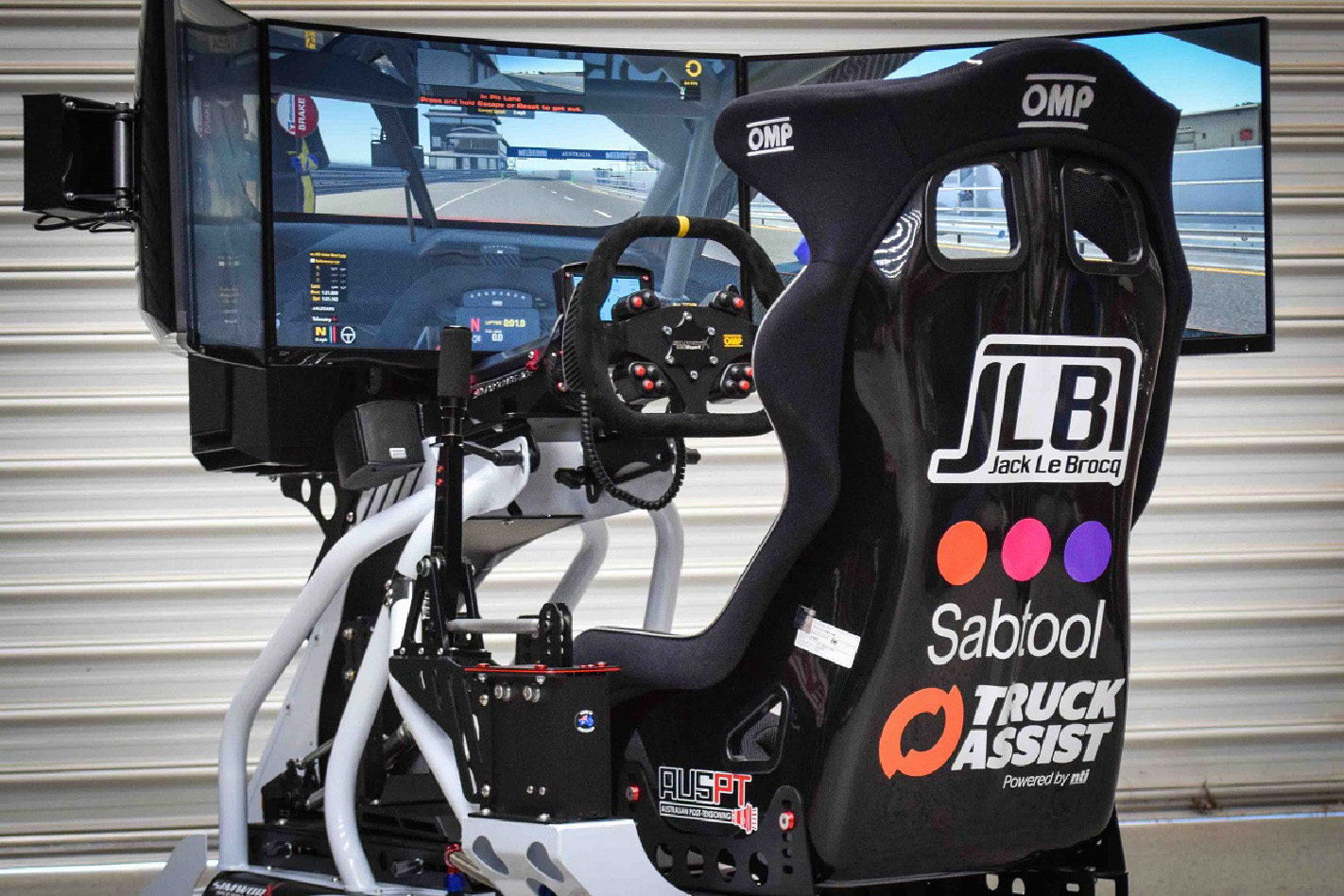
Consider that Simworx manufactures high-spec turnkey sim rigs (above) that can sell for up to $25,000, and the increase in sales interest becomes even more remarkable – punters are looking to spend big on getting the right kind of gear.
A pedal box made by the company costs $1480, yet sales are much stronger for these than they were this time last year. Ordinarily, Simworx would make pedal sets in batches of 10. That’s now been bumped up to batches of 40, but even that’s not enough to satisfy the order book.
What precisely is driving this demand for what used to be considered the preserve of nerdier gamers and car enthusiasts? Isolation-related mass boredom is obviously a sizable factor while production shutdowns in China don’t help the supply side of the equation, but the rapid rise of virtual motorsport is a huge and unexpected factor.
That’s certainly been to the benefit of iRacing, the full-fidelity racing sim that’s fast become the preferred software for many motorsport codes – including the Supercars E-series in Australia.
iRacing has so far seen a 50 percent rise in subscriptions this year, with over 160,000 users now paying an ongoing fee to race using the program and its servers. Given a one-month membership normally costs US$13 (AU$20), that’s getting close to a million dollars in extra revenue per month.
Gran Turismo Sport, Sony’s own e-motorsport title, has also experienced a similar surge with a 50 percent increase in players over the past two months.
From Formula 1 to Nascar, to Supercars and TCR, the majority of motorsport codes have transitioned to running virtual races as they await the all-clear to go back to ‘real’ racing, but that effort has shown motorsport fans the world over that racing on a computer can often be just as compelling as racing on an actual circuit.
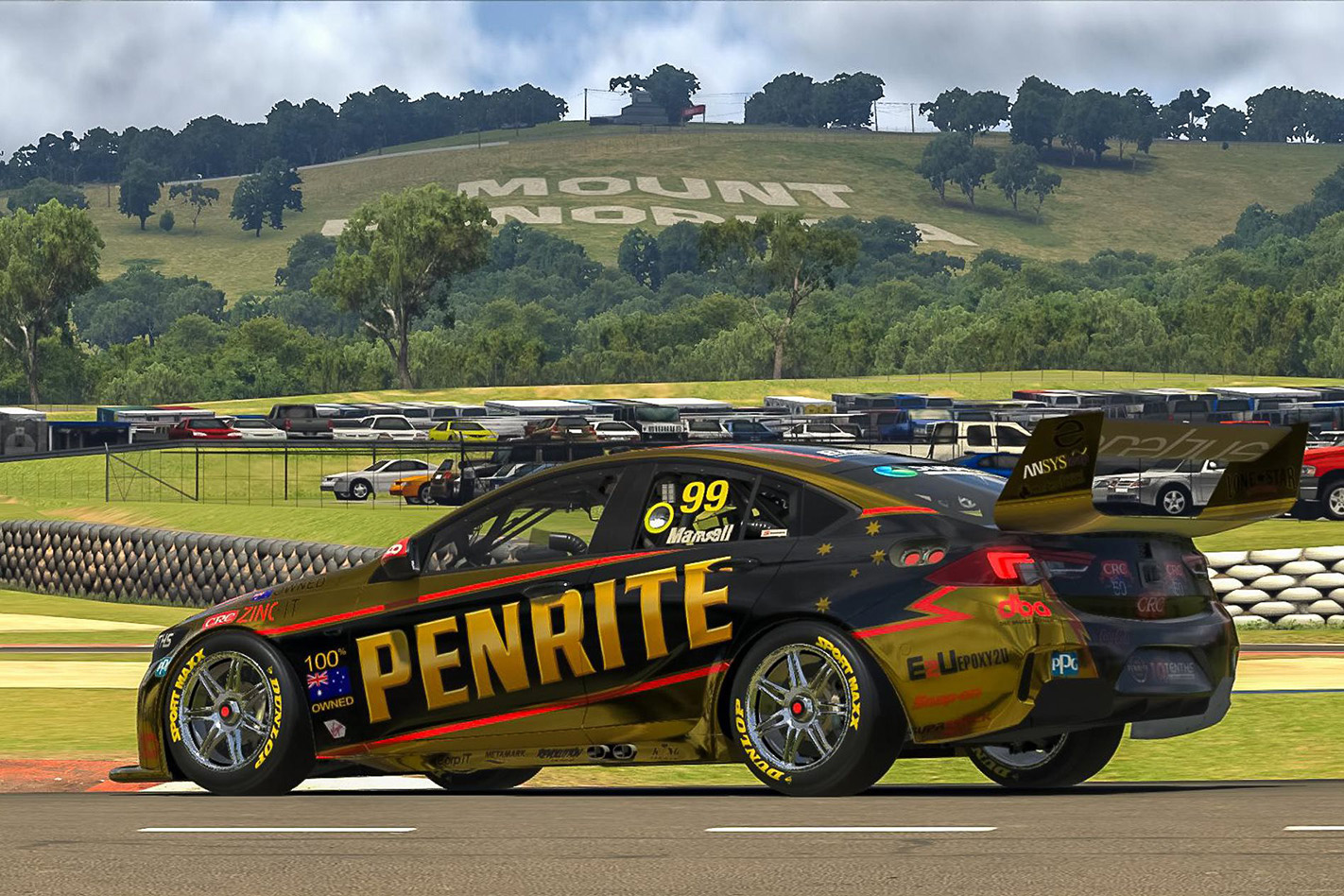
“[Sales] have certainly ramped up since the [Supercars] e-sport series started and people’s awareness of simulators increased,” Simworx’s Klaver said.
“Our products feature fairly widely because nearly half the field have got them, including Scott McLaughlin and the DJR Penske drivers, the Tickford Racing guys, they’ve got them, Nick Percat, Scott Pye, Jamie Whincup – they’re household names in the motorsport fraternity.
“This is a new era that’s just sprung up, out of desperation more than anything, but I don’t think they quite realised how successful it was going to be. In some cases, it’s like watching a real race.”
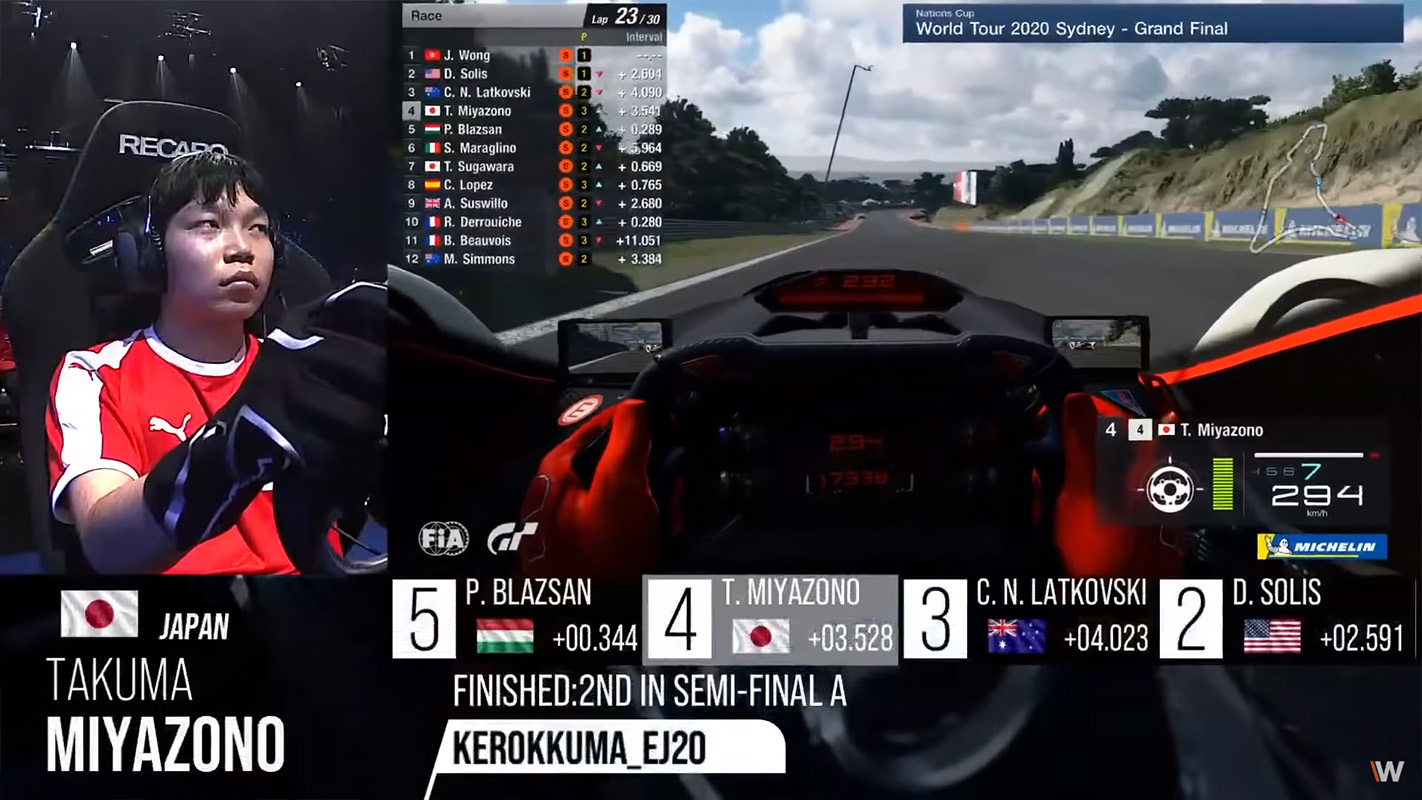
Nevertheless, Klaver isn’t expecting this boom to last forever, predicting a gradual plateau in interest as demand for hardware is satisfied and the world returns to normal.
However, it’s been something of a gold rush, the kind that can change the fortunes of companies like Simworx forever as awareness translates into sales, which translates into jobs, investment and innovation.
For now, though, best of luck finding a gaming wheel just sitting on a shelf somewhere.
Holden has recorded new low sales levels as the impact of the COVID-19 slowdown runs headlong into the company’s withdrawal from Australia.
Just 1501 Holdens were sold in April, after almost 3500 cars moved out of dealerships in the month previous.
With car dealerships falling under ‘essential services’, the slowdown is partly due to the implosion across the retail sector as Australians shelter in place at home and forsake their cars for the couch.
The figures make for sobering reading – not least because Holden sold 10,501 in the same month last year. Commodore stock is essentially depleted, with just 30 ZBs finding homes in April (down from 629 sales in March), while the run on the Trax has dwindled from the highs of March.

The seven-seat Trailblazer SUV has slowed as well with just 99 units sold, while its sibling, the Colorado, was the strongest seller of the range, moving more than half of the brand’s volume for the month.
It’s obvious now that – aside from the 4×4 Colorado – pickings are slim across the 185-strong Holden dealer group for those people looking to buy a cheap Holden on runout.
“It would be a matter of picking the eyes out of what’s left,” our industry insider told WhichCar.
“Where a couple of months ago a dealer may have been willing to swap a spec or colour with another, it’s not really worth it any more. It will only be the real odd ones left in the corners of the lot now.”
Standalone Holden dealerships are likely to be the only place to pick and choose, as multi-brand dealerships look to fill empty space with other brands.
“A few are already converting Holden space into another brand,” he said.
As well, many dealerships (and not just Holden ones) may have held back on sales in April in an effort to ensure their businesses qualified for the federal government’s JobKeeper scheme, which requires a fall in turnover of 30 per cent.
Even so, with another slow month ahead, Holden sales figures will make for more painful reading.
The Tesla Model S changed the way people saw electric cars, there’s no question about that, but for those who perhaps aren’t taken with the styling of the Model S, there’s a solution.
Relatively recently, one man decided he needed his Model S to be a wagon. The Tesla Model S Shooting Brake, as it became known, is the only one of its kind, and now it’s for sale.
Despite not adhering to the traditional 2-door shooting brake criteria, the modded Model S doesn’t quite seem a proper wagon, which is perhaps why it gets away with using the breadvan moniker.
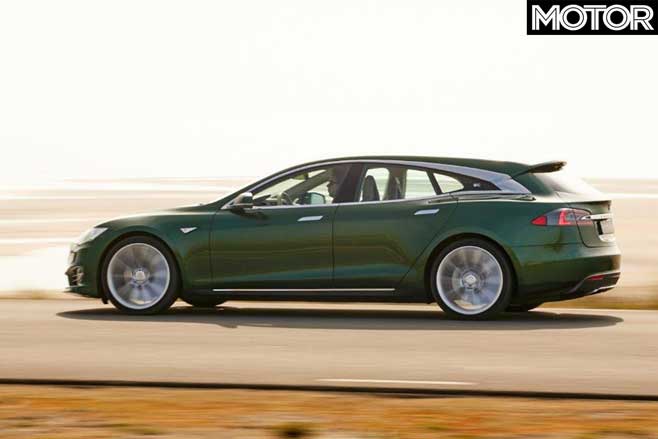
London design house Neils van Roij is behind the car, which it refers to as the ‘Model SB’, built for a Dutch buyer by the name of Floris de Raadt.
If it tickles your fancy, and you’ve got about $314,000 and a little extra for shipping, you could own it.
The Model SB is up for sale on prestige site JB Classic Cars, with a €185,555 asking price – directly converted to our aforementioned price in AUD.
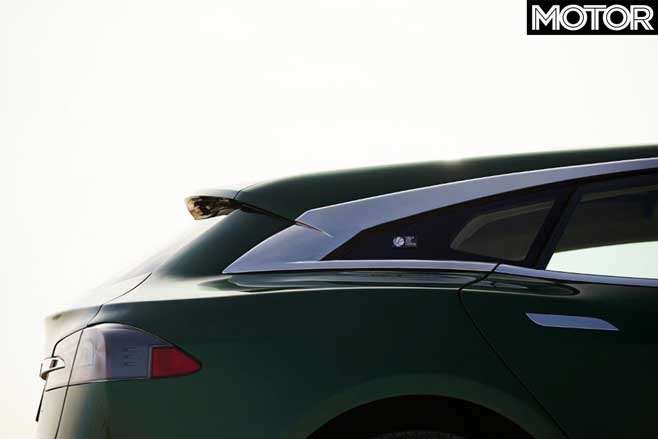
According to the seller, there were to be more Model SBs built, with pricing and execution of the project already drawn up. But “soon the build costs increased more and more and so did the selling price,” which meant the program was ditched.
Given a Model S equipped with Ludicrous Mode would, at the moment, set you back a tick over $150,000 this specific model might be a stretch, but the SB has attracted enough attention worldwide that there’s almost certainly a buyer out there willing to lay down their cash.
The McLaren Speedtail was revealed last year, but Woking has just shed more light on its slippery hypercar’s powertrain. New details released this week reveal a highly-efficient system, with a battery powered by race-proven tech.
The electric motor uses Formula E-derived tech – a series where McLaren’s Applied offshoot supplies the batteries – and is the highest performance battery installation in a production road car. Interestingly, McLaren counts both cooling and integration in that claim.
The battery in the Speedtail is four times more energy dense than that in the P1, and therefore capable of a 5.2kW/kg power-to-weight ratio. As you’d expect, that sort of power transfer generates a fair amount of heat, so the cells are immersed in a lightweight electrically insulative oil for fast dissipation. The increased transfers speeds make for higher thermal efficiency and repeatability – and it’s the first system of its kind seen outside of a race track.
McLaren Speedtail: the full engineering story
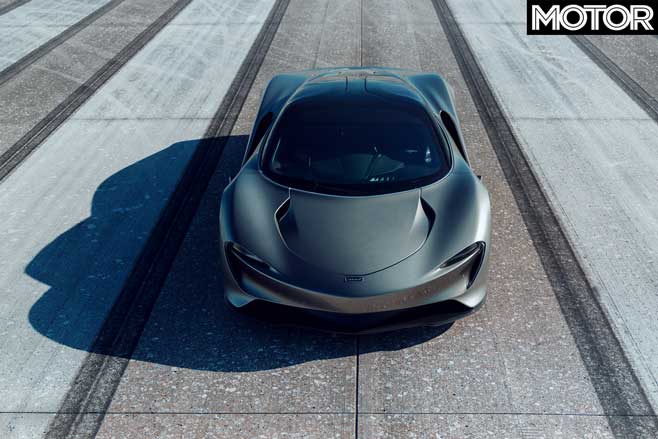
When we first previewed McLaren’s astonishing low-drag, three-seat Speedtail, powertrain details were thin on the ground – Woking refused to even confirm that its trademark twin-turbo V8 was under that streamlined engine cover.
But now we know how the car’s 772kW and 1150Nm outputs break down. Thanks in part to a four-fold increase in battery power density over the P1, McLaren’s first hybrid, the Speedtail’s electric motor alone generates 230kW and 350Nm of torque.
The V8, running in a more friendly state of tune than it does in the more extreme Senna GTR, brings 556kW and 800Nm of torque to the table. (The two power figures add up to more than 772kW because the two power units don’t deliver their peak outputs at the same time.)
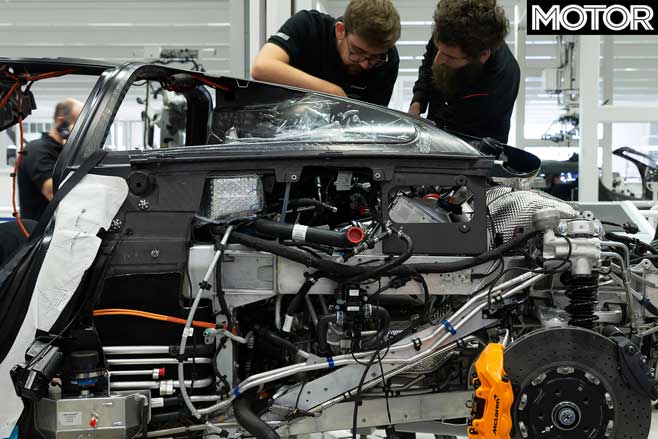
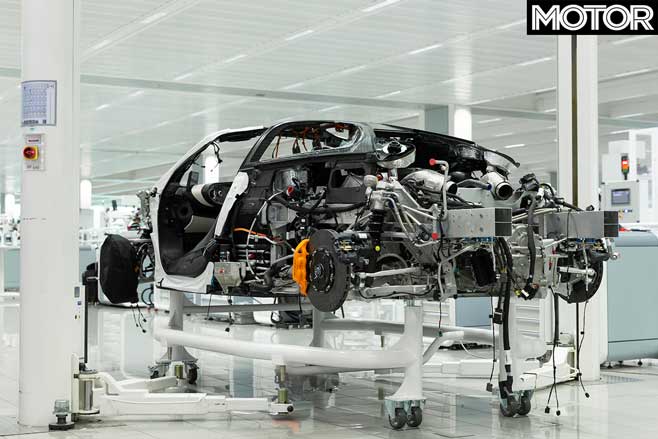
The Speedtail packages its battery low behind the passenger compartment, with the electric motor plumbed into the V8 and the compact power electronics unit up high behind the occupants’ heads, to take advantage of cooling airflow. In the nose, a wireless charger will keep the battery topped up. Unlike the P1, the Speedtail has no EV-only range. But it is lighter, and McLaren claims it’ll fire from 0-300km/h in just 12.8sec…
The McLaren Speedtail will cost £1.75 million and is the grandchild of the McLaren F1. It’s also the first model of Woking’s new Track 25 business plan.
Aero-focused streamlining
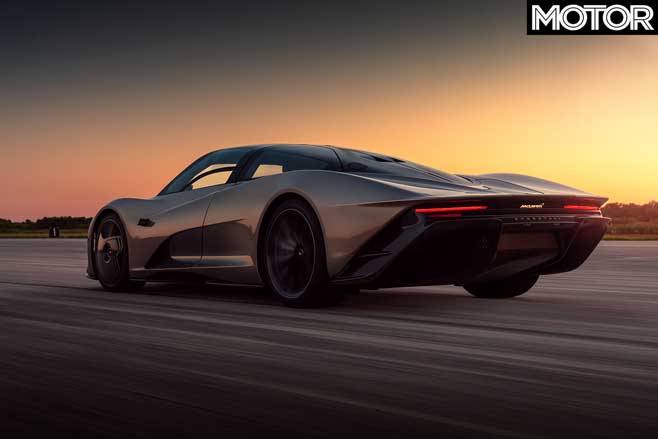
The most striking thing about the new hyper GT has to be its elongated, streamlined looks.
At 5137mm, the new Speedtail is more than half a metre longer than the P1 – but narrower – and every square inch is designed to minimise drag and maximise V-max.
The front of the Speedtail looks like a squinting version of the usual McLaren ‘face’, as ducts and air intakes have been narrowed to reduce drag. Starting with the sculpted front splitter, McLaren has used all five metres of the car to fold, tuck and direct airflow on the path of least resistance.
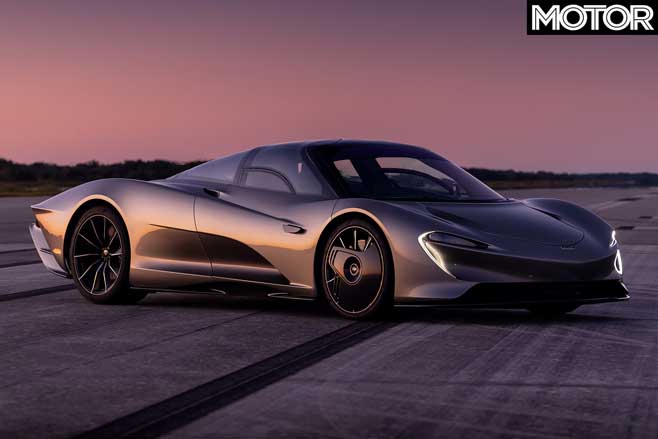
Inlets at the front of the car ease air through the sides of the Speedtail, around wheel arches and through door vents. And even engine air-intakes – situated behind the glass canopy – melt gradually into the bodywork to stop airflow separating from the car’s surface.
The Speedtail lives up to its name at the rear, and features extended rear bodywork to improve aerodynamic efficiency even further. Unlike a more abrupt design, McLaren says the back of the Speedtail cleans up air flow and draggy turbulence, allowing for a higher top speed.
Underneath, rear blades smooth airflow either side of a large, lengthy diffuser, while on the top surface of the car, movable ailerons work to generate the optimum level of downforce at any given time. Interestingly, those ailerons don’t have seams either, and actually bend the flex the Speedtail’s carbonfibre bodywork. The result? No panel gaps means minimum air disruption.
McLaren Speedtail: tricks of the trade
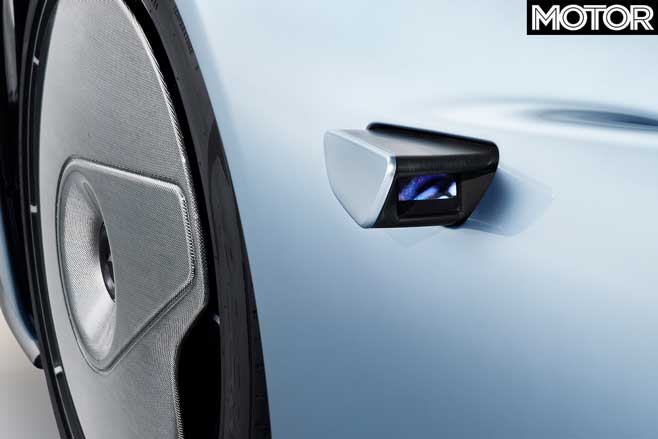
McLaren engineers have used a handful of innovative techniques to reduce the weight and turbulence of the new Speedtail. At the front-axle, carbonfibre shrouds – reminiscent of 2009 F1 cars – cover the 20-inch, 10 spoke wheels, limiting the aero effect they cause – and the Speedtail borrows an idea off the forthcoming Audi e-Tron too.
Just like Audi’s electric SUV, the McLaren Speedtail offers electric cameras instead of conventional door mirrors, reducing drag around the sides of the car. In Velocity mode – which also lowers the car by a 35mm to just 1120mm at its highest point – the cameras slot back into the car, reducing the aerodynamic wake of the Speedtail even more.
As you’d expect, the Speedtail uses carbonfibre monocoque and lighter 1K Titanium Deposition Carbonfibre body panels to weigh in at just 1430kg without fluids, but McLaren has shaved off the grams in more subtle ways, too: electrochromic glass darkens the top of the windscreen, removing the need for sun visors, and the same technology is applied to the upper section of the doors, the porthole and the rear rear-quarter lights. That’ll be worth about 300g at least, right?
McLaren is offering a bespoke luggage set to all 108 owners, that’ll match the spec of their chosen interior.
McLaren Speedtail: a fighter jet interior
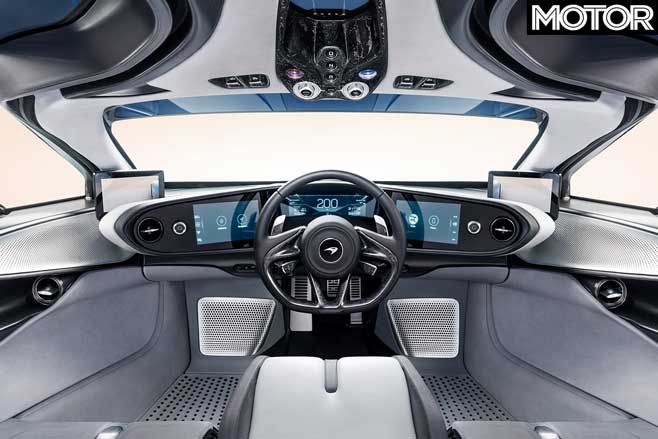
The McLaren Speedtail may be the first ‘hyper GT car’ the Woking-based firm has ever made, but inside it borrows the ideas of the McLaren F1, and executes them with the switchgear and style you’d find in a contemporary McLaren. The much-mooted three-seat configuration is here, too – with the driver’s chair edged further forward, of course – and most of the car’s instrumentation is digital.
All the other switchgear is fashioned from polished aluminum, and the engine start button – as well as the switch for the car’s velocity mode – is found on the ceiling of the teardrop-shaped cockpit, above the driver’s head.
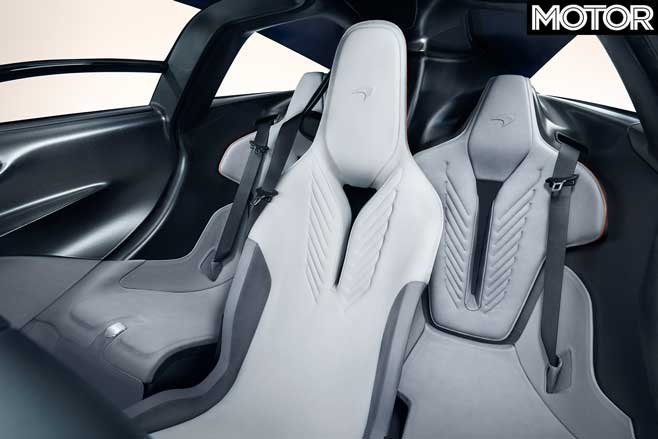
Amongst all the hand-stitched leather and bespoke materials, McLaren has also introduced ‘directional’ leather that should allow occupants to easily slip into the car, but be gripped when actually driving. It’ll be interesting to see how that works.
Deliveries will take place in Q1 2020.
Customising the beast
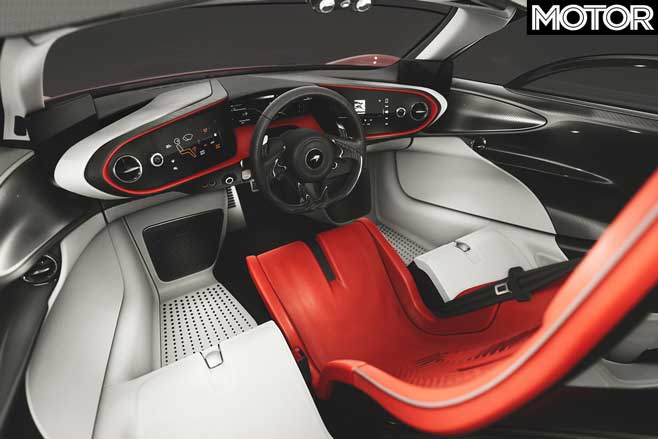
Customers on the list of 106 will be able to choose from three broad collections or looks – each containing at least three further variations. While every aspect of the car’s look can be easily personalised, McLaren thinks this theme and collection set-up will take much of the hassle out of ordering and speccing their new supercar.
The Urbane collection is supposed to offer a cool, sophisticated look to the new hypercar, with the Stratosphere theme a prime example of what McLaren is calling a ‘cool-hued look.’ The Visionary collection looks to be a little bolder, with one of the themes called Astral ‘inspired by the UK’s wealth of nautical heritage.’
Think lots of navy blue, orange and bits of silver – and you’re pretty much there. Oh, and a white gold, 18-carat badge.
Dynamic appears to be the most showy, Instagram-friendly collection, and is probably best represented by the Bloodline theme. As you can tell from the name, it’s all bursts of red and gloss black with bits of copper and white thrown in – you can check the Bloodline interior above. We think our pick would be the Urbane collection.
McLaren Speedtail: when’s it coming out?
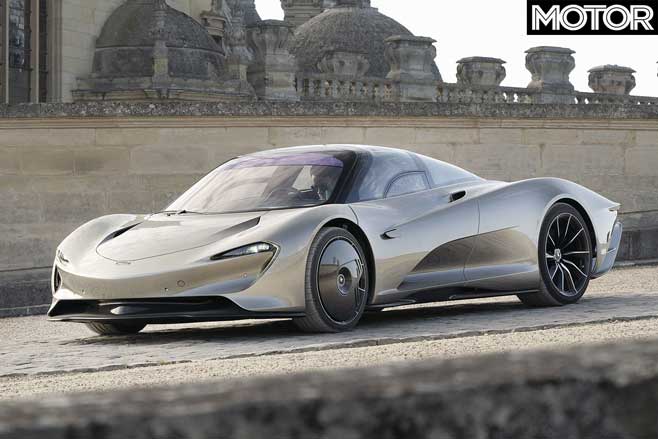
Testing for the spiritual successor to the F1 is already underway, as evidenced by a stream of photos from locations around the world. The latest round was, appropriately enough, at the Florida space centre.
As you’d expect, the testing programme will encompass a range of different conditions, and will therefore see Speedtail prototypes running in Europe, North America and Africa – both in closed and public conditions. McLaren will also be using the testing time to help customers give feedback on the Speedtail’s handling – which is rather unusual.
McLaren will start off with the prototype pictured above. Called Albert, the mule features special testing livery, but will be pretty much identical to the production car in every other way – and uses the same as-yet-undisclosed petrol-electric powertrain.
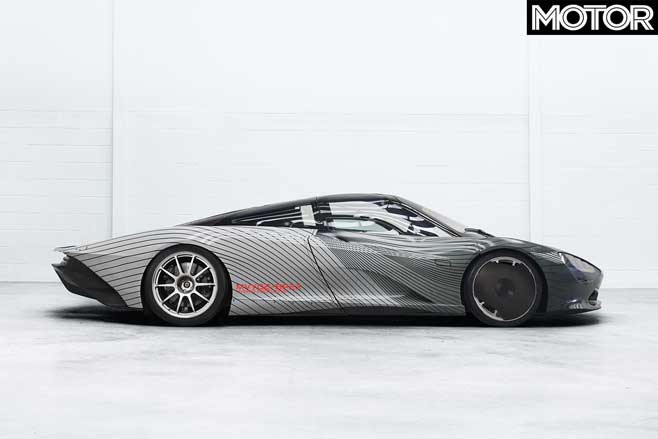
As for the name? The original McLaren F1 was also called Albert, and that was named after the Albert Drive premises in which the 1992 supercar was designed.
‘The start of real-world testing represents a major step in the development of the McLaren Speedtail.’ said McLaren’s head of vehicle development, Ben Gulliver. ‘As the first fully representative prototype, ‘Albert’ will build on the invaluable work still being put in by earlier development cars, allowing us to sign-off vehicle attributes including chassis dynamics; brake performance; damper tuning; tyres; NVH and aspects of ergonomics and comfort.
With a huge amount achieved already, the McLaren Speedtail is well on the way to fulfilling its destiny as the greatest McLaren road car ever.’
This story first appeared on our sister site Car Magazine UK.
As revealed last week, GM and the Walkinshaw Group, the parent of Holden Special Vehicles, are deep in negotiation to finalise an agreement that will result in selected North American-built Chev models converted to right-hand drive in Melbourne for local sale.
Wheels understands Holden veteran Peter ‘PK’ Keley is leading the GM investigation into what is referred to as GM Specialty Vehicles (GMSV) and may also end up leading the new venture. Keley refused to comment on the matter when contacted.
Keley’s been a senior player at Holden from the glory days of the Zeta global architecture, right through to the dismal final stanza as an importer.
Passionate and personable, he even owns a HSV GTSR W1 (as well as a WB Caprice and a Monaro GTS 308 V8 coupe).
Former Holden and current GM president Mark Reuss voiced his support for the new business model in the press release that announced Holden’s death in February.
“We do believe we have an opportunity to profitably grow the specialty vehicle business and plan to work with our partner to do that,” he was quoted as saying.
Wheels understands three possible business structures exist for the new venture.
The first is that GM simply walks away from Australia and hands local distribution rights to Walkinshaw Group.
The second is a joint-venture; shared costs and shared profits, shared risk and shared returns. GM supplies the metal, Walkinshaw engineers it for right-hand drive and remanufactures it. A dedicated, co-owned marketing and sales organisation moves it.
But the option that makes most sense is GM owns the business and simply contracts Walkinshaw to engineer and remanufacture the models it imports from its North American factories.
Walkinshaw already does something very much like this for Neville Crichton’s American Special Vehicles (ASV). It is contracted to convert a number of different models in the DS-series Ram full-size pick-up range to right-hand drive.
If the GMSV deal goes this way, for the first time since HSV was established in 1987 the Walkinshaw name would not be directly linked to new road vehicles sold to the Australian public.
If GM does have sole control, let’s hope for more competitive pricing. As Walkinshaw has discovered, it’s expensive as an independent to ship in built-up vehicles, pull them apart, remanufacture them and then put them back together. As good as it is, the Camaro has suffered here because it is so much more expensive than the Ford Mustang.
Another upside for GM of sole control of local sales and marketing would be that if it wanted to expand its local presence in the future it would have no-one to negotiate with.
Sounds unlikely? Well, don’t forget GM is investing billions in electric vehicles, and making them left- or right-hand drive is a lot less costly than converting orthodox ICE vehicles. When the world is driven by electricity, the company’s global current retraction could turn to expansion.
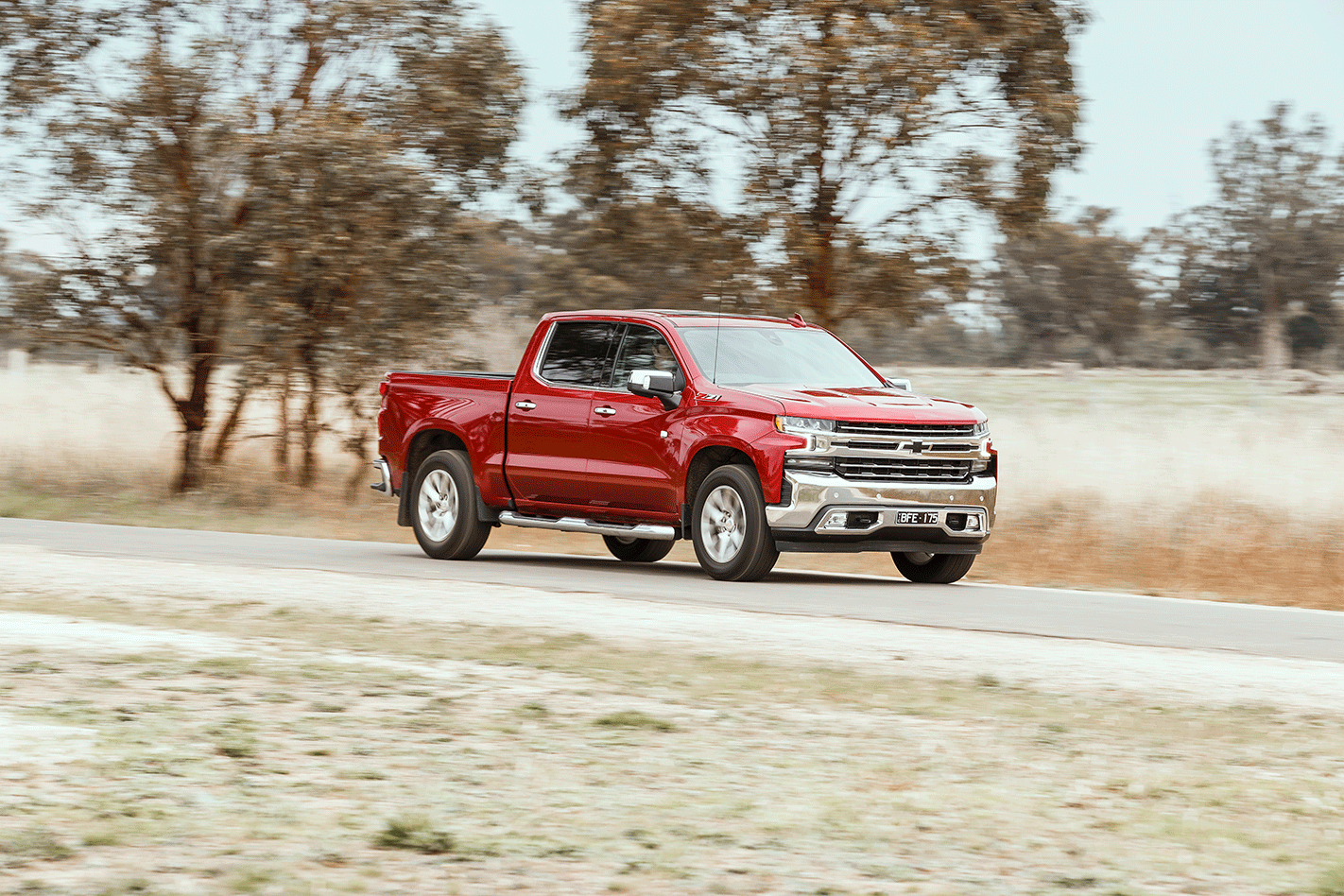
Wheels understands the mammoth Chevrolet Silverado 1500 pick-up, just launched by HSV in Australia, is a logical member of the initial GMSV range, while the Tahoe SUV is a likely addition.
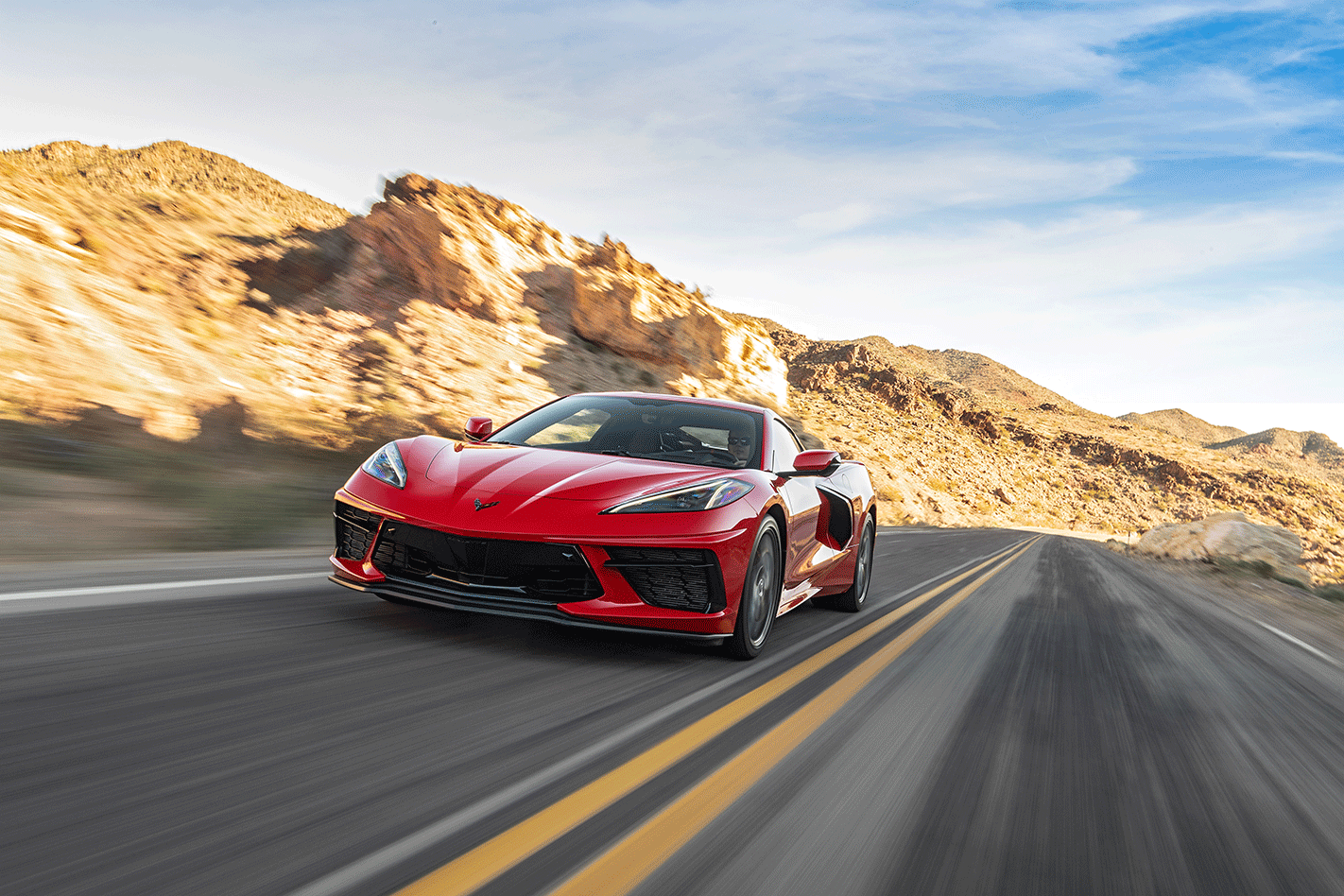
But the verdict on local sale of the right-hand-drive Chevrolet Corvette C8 remains hazy, as does the addition of the huge Suburban SUV.
Right-hand-drive Corvette production was thrown under a cloud recently as the global COVID-19 pandemic grips the automotive world. Wheels has been informed that even if GM decides to cease right-hook production for the C8, Walkinshaw is willing to convert the mid-engined V8 sports car locally.
HSV has ceased the remanufacturing process for both naturally aspirated and supercharged Camaros, and the V8 coupe remains unlikely to return to Australia – despite the success of its naturally aspirated rival the Ford Mustang.
The Walkinshaw Group has earned recognition within GM for the quality of the left- to right-hand drive conversion work it has performed on the Silverado and Camaro sold through the HSV brand.
Walkinshaw turned to remanufacturing – as it dubs conversion – when Holden’s Elizabeth plant was shuttered in 2017. That was the source of the locally developed Commodores upon which HSV built its sales and reputation and Holden itself built its identity.
Holden was axed in February in part because the cost of left- to right-hand drive conversion at overseas GM factory sources simply didn’t stack-up financially.
Under Mary Barra’s leadership, GM has contracted from marginal and right-hand drive markets. Sadly, Holden and Australia/New Zealand qualify as both.
But the local remanufacturing undertaken at Walkinshaw Park delivers GM an alternate business model that allows it to retain a factory presence in Australia.
Holden has fired back angrily at a group of its dealers over claims the company had been planning to withdraw from Australia since 2015.
It has also reinforced its view that the compensation offer on the table with its 185 dealers is fair, firing back at what it calls the “excessive nature” of the dealer group’s claims.
Since the company announced its withdrawal from the Australian market in February, Holden has been at loggerheads with a core group of disgruntled Holden dealers who have claimed that the compensation on offer from GM and GM Holden is inadequate.
The issue is now the subject of a senate inquiry, while the dealer group itself engaged a law firm to represent it. The allegations presented in the suit have now been reviewed by Holden’s own legal team – and it isn’t holding back in its assessment of the claim.
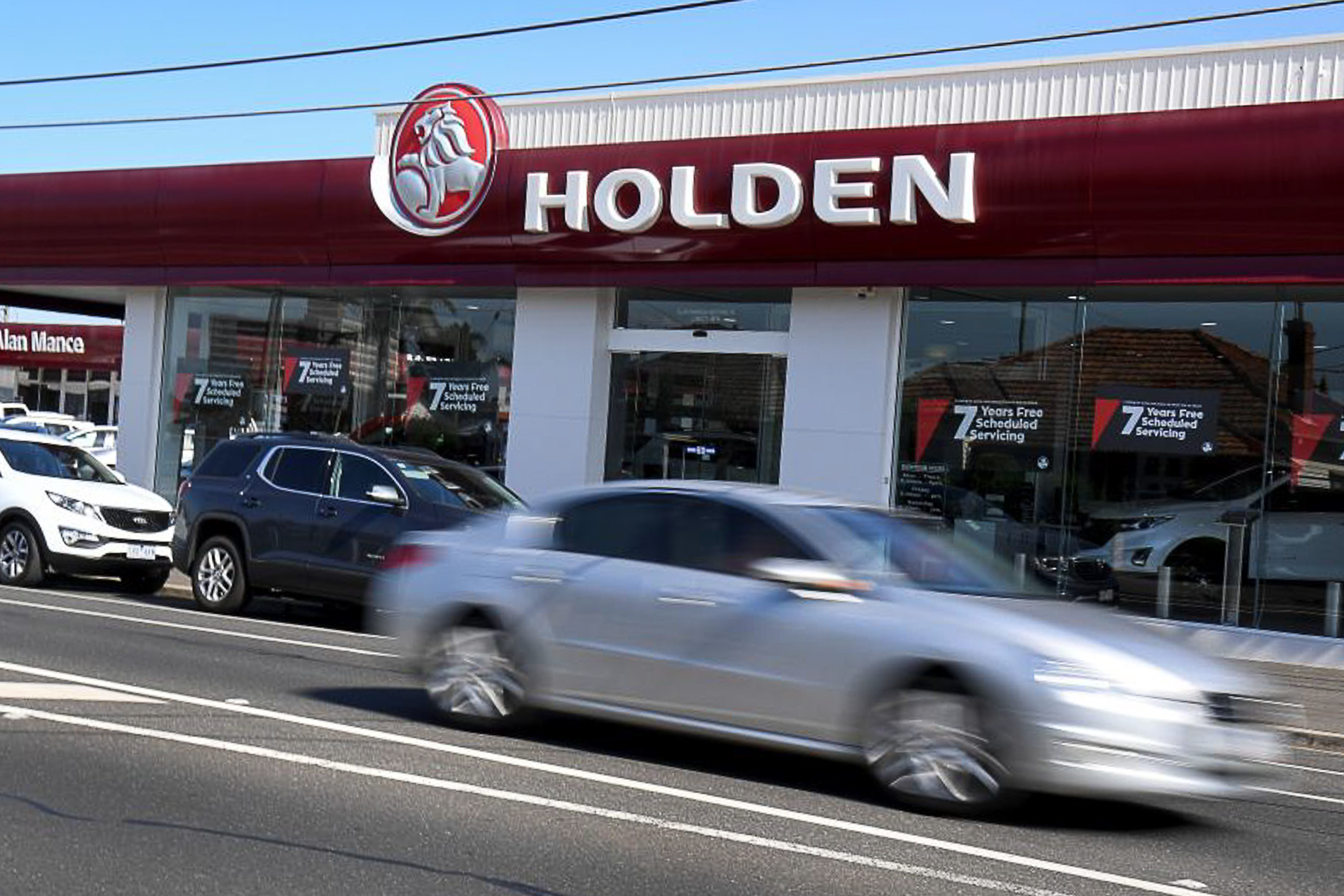
“We consider that Holden’s Transition Support Program (TSP) is more than fair and reasonable, even before the devastating impact of COVID-19 on the economy and industry,” reads a Holden statement. “The HWLE [legal] proposal made a number of inaccurate claims, assumptions and costs allocations.
“It also made baseless allegations of unconscionable and misleading conduct which are plainly wrong and unsupported by fact or law. These allegations are categorically rejected by GM Holden.”
Holden’s offer is based on three years of sales for each dealership, with a multiplier of $1500 per car applied to reach a figure.
“This compensation is over four times what the average dealer made in the new vehicle department over this same timeframe,” claimed Holden, revealing that the cited figure of $6110 per car is based on “a number of inaccurate assumptions and cost allocations.”
“For example, it omitted to factor in dealers’ opportunity to continue the service, repair, warranty and parts activities,” read the statement. “Aftersales is typically one of the most profitable parts of a dealer’s business representing on average up to 115 per cent of a dealer’s total net profit in 2019.
“GM Holden is committed to maintaining an Aftersales operation in Australia for at least 10 years to provide warranty, service and parts to Holden customers.”
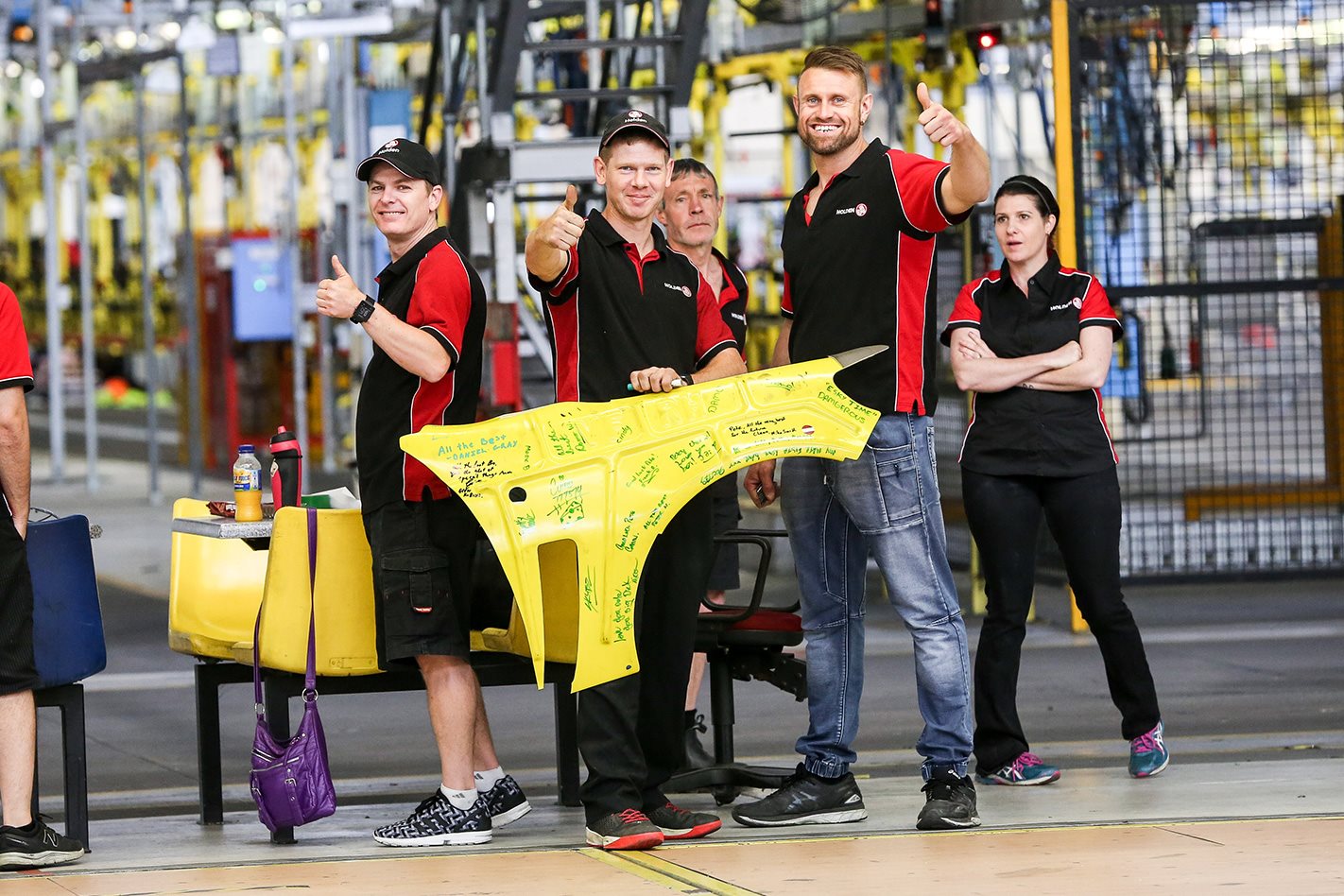
Holden also disputes the period of time the dealer group is basing its assertion on, claiming that dealers are still able to service and repair vehicles until the conclusion of the current agreement which ends in 2022.
Holden claims that its offer of $1500 per vehicle is in excess of what accounting firm PricewaterhouseCoopers has assessed.
“PwC, after making appropriate corrections and adjustments, concluded that an appropriate range of compensation is actually $350-1409 per vehicle,” claims the company.
It also takes umbrage with claims that Holden dealers will not be compensated for facilities built prior to the announcement.
“GM Holden’s offer also includes compensation for un-recouped Holden facility investments. These are valued independently and dealt with separately in addition to the compensation offered using the formula discussed above,” it claimed.
READ MORE
- Holden’s factory closure statement
- Dealer’s new $6.5m Holden showroom that will never open
- Holden’s lost heroes: the cars that could have saved the company
- What Holden’s axing means for customers
- Holden VE ute mule shown at Corvette launch
“GM and GM Holden flatly reject HWLE’s claims of misleading, deceptive or unconscionable conduct,” it said bluntly.
“These claims are based on a bizarre and illogical argument that GM has secretly planned to shut down Holden since at least 2015, but made various significant investments in programs, plans and strategies to support and promote Holden in order to mislead dealers into thinking that there was no secret plan to shut down Holden.
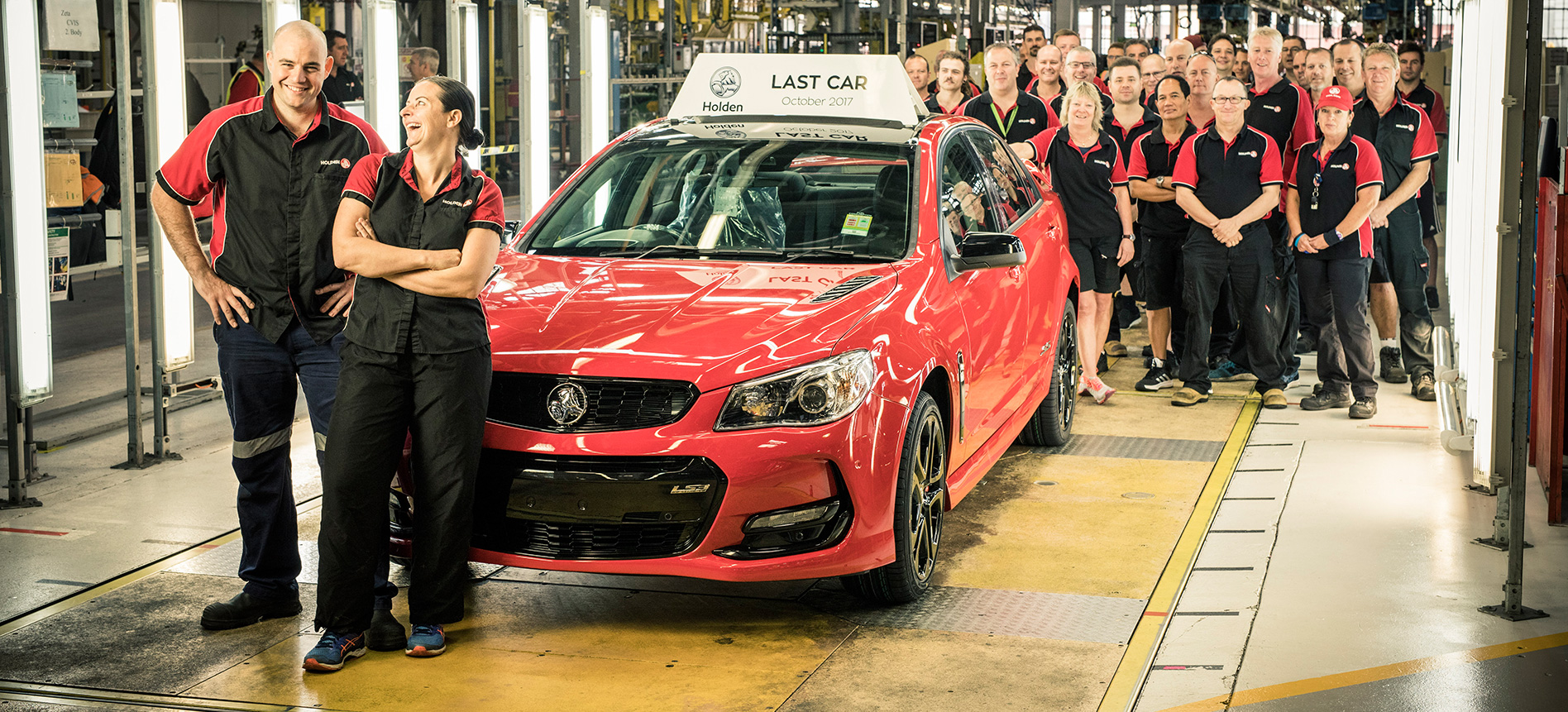
“It defies logic to believe that GM intended to close Holden while investing heavily in new or updated right-hand drive (RHD) models for the Australian market including Equinox and Acadia, launched new here in 2017 and 2018 respectively, and significantly updated Trailblazer, Trax and Colorado models introduced across a similar period.”
The statement also points to other significant investments like owner-rental scheme Maven, Holden Financial Services and the right-hand-drive Chevrolet Corvette C8, as well as campaigns and sponsorships and its Lang Lang testing ground.
“Investments such as these cannot by any logic be held to be the actions of a company that allegedly intended to close through that time,” argued Holden. “Those investments and the work undertaken by the Holden team through that period had the same objective: to turn around Holden’s sales and financial performance.”
The Australian new car market has just recorded its biggest sales decrease for a month in history.
No other year-on-year sales result has slumped as much as 48.5 percent (April 2019 compared to April 2020) since VFACTS reporting started in 1991.
With lockdowns in place due to the COVID-19 pandemic, Australian registrations fell from 75,550 in 2019 to 38,926 in 2020 and will likely see Australia fail to reach more than 1 million sales this calendar year.
Interestingly, the new car market plummeted from 81,690 sales in March 2020 to the sub-40K figure in April, resulting in a 52.3 percent capitulation month-on-month.
Federal Chamber of Automotive Industries (FCAI) chief executive, Tony Weber, said that the Coronavirus pandemic has clearly impacted not only the April results, but also the wider economy.
“Figures recently released by the Australian Bureau of Statistics show that 31 per cent of Australian citizens have experienced a decrease in income due to the pandemic.”
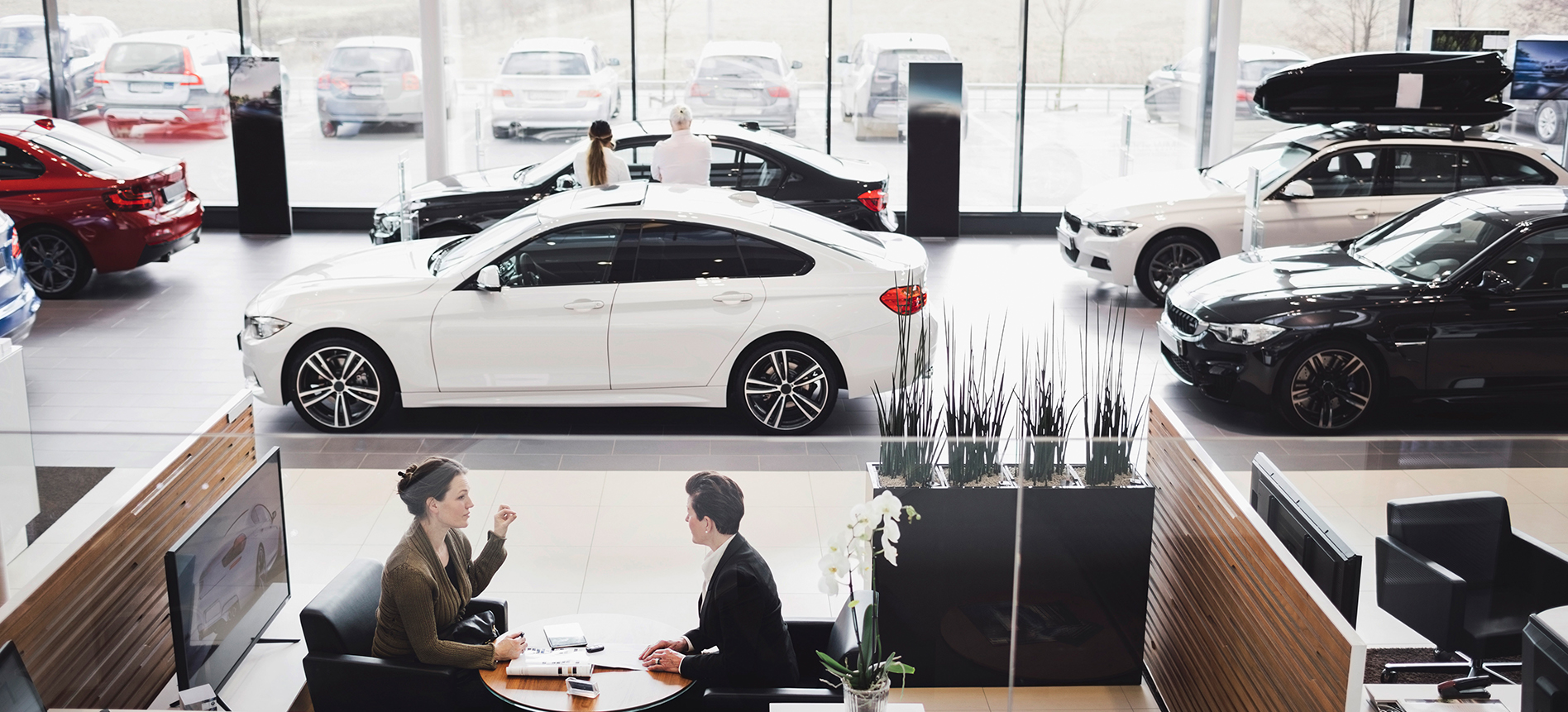
“In addition 72 percent of Australian businesses reported that reduced cash flow is expected to have an adverse impact on business over the next two months.”
“These conditions inevitably impact consumer confidence and purchase decisions,” Weber said.
While the April result is an immense hit, the Aussie market has been on a downward trend for a while now, with the most recent figures revealing 25 consecutive months of year-on-year decline.
Passenger cars plummeted by 14,659 registrations (-61.6 percent), while even the omnipresent SUV segment took a 45.7 percent slash in sales – a drop of 15,167 units.
Nearly every mainstream brand struggled (only niche players MG and RAM recorded positives sales growth), though one of the hardest hit was the Volkswagen Group.
Its biggest lowlight being an 80.7 percent fall in sales for Skoda, which registered just 107 vehicles last month. VW itself dipped by 62.1 percent.
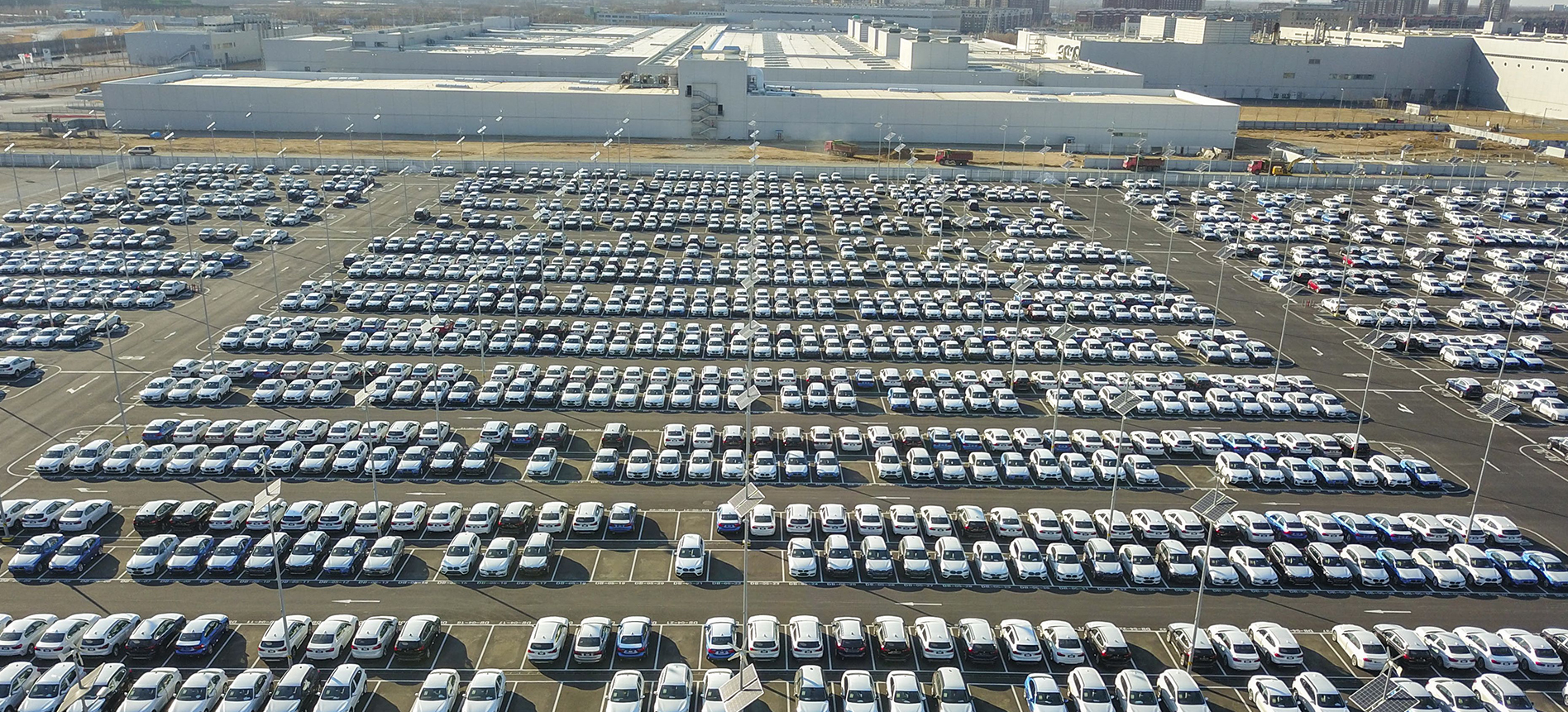
Luxury brands on a whole fared poorly, with both Audi and Mercedes-Benz seeing sales plummet 63.6 percent and 54.4 percent respectively, while BMW bucked the trend with a minimal 5.7 percent fall.
The iconic Holden Commodore fell to minuscule numbers, with just 30 Euro-grade ZBs finding their way to new homes as the Aussie company endured a 56.9 percent hit.
However, put into a global perspective, it’s not all doom and gloom.
India’s market was decimated, as the nation experienced a 100 percent decline in sales due to its total lockdown, while Italy and France suffered a heavy 98 and 89 percent drop respectively.
