
Despite common misconceptions, car journos aren’t gifted a brand new machine whenever they threaten to give out a poor review. We are, for the most part, pretty poorly paid, but the fringe benefits make up (some of) the fiscal shortfall.
No, most of us tool around on the weekends in pretty everyday machinery. And our Ford Territory is the very definition of ordinary.
We picked Terry up about 10 years ago now as a second-hand 2004 base TS model. It runs the ubiquitous 4.0-litre Barra inline six petrol engine backed by a four-speed automatic transmission, and its only claim to fame is body colour-matched bumpers and side panels.
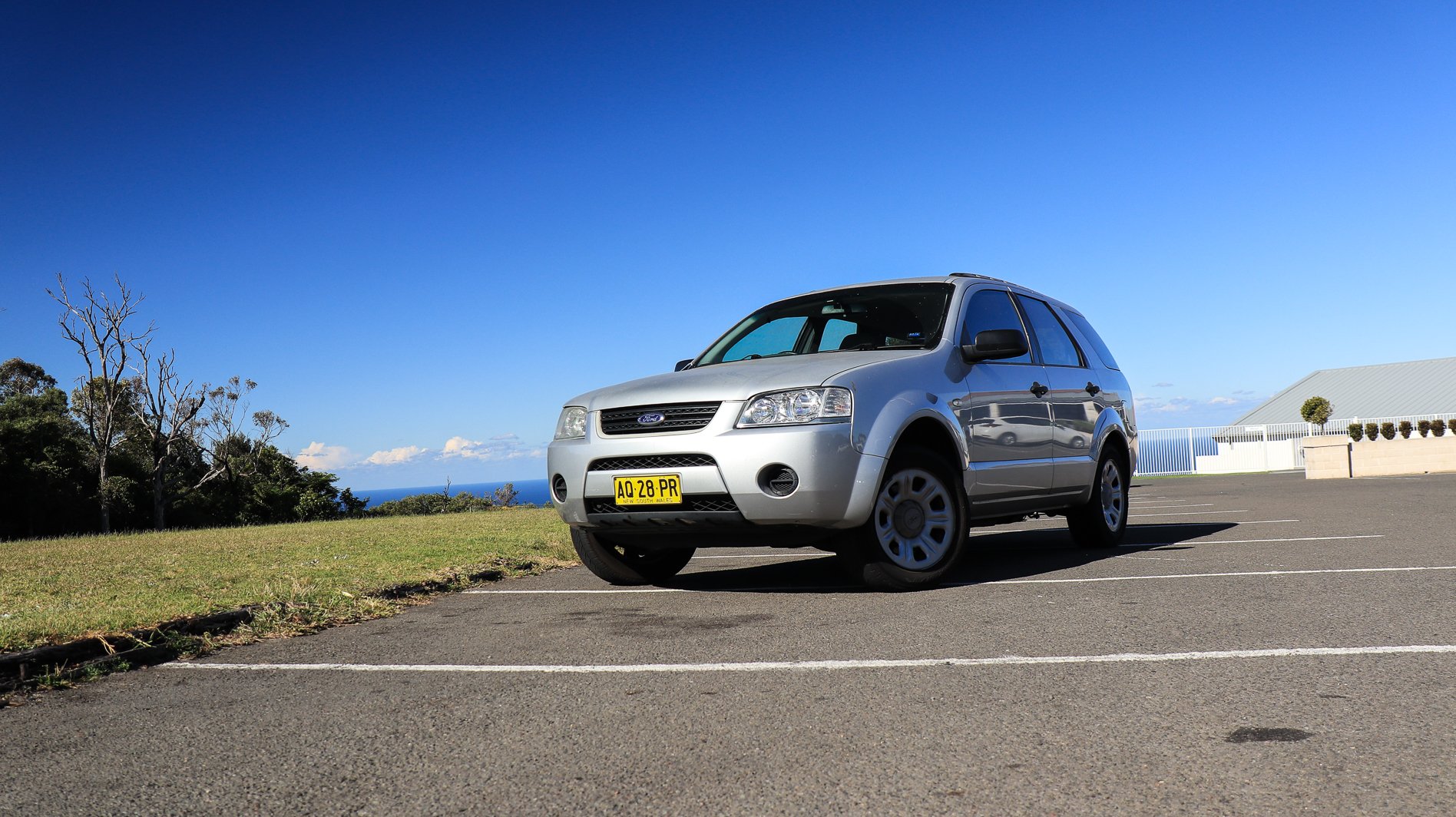
It’s got a grey and beige interior, lots of scratches, dents and bumps, and it’s been a faithful workhorse for our five-person, eight-bicycle, two-dog, one-racing car family.
It’s terrible on fuel, sure, and we’ve spent a few bucks over the years ironing out weird issues. The ignition barrel, for example, was apparently only engineered with the weight of a key and an alarm fob in mind – not a bunch of house keys and a garage opener. When it wore out four years ago, it was an $800 fix.
Similarly, when the bonnet release cable went ‘twang’, it necessitated the replacement of the lower part of our centre console and the payment of another $600.
Currently, though, there’s a bill looming that may make the Territory a goner. Terry owners will know the pain and cost of rear diff bushings crapping themselves. It’s a $1000 fix, so when it happened to ours about five months ago, I stuck my fingers in my ears and ignored it.
Predictably, it caused a brace of other bushings to wear out more quickly, including the centre driveshaft bushing, which in turn killed the centre driveshaft bearing. Great.
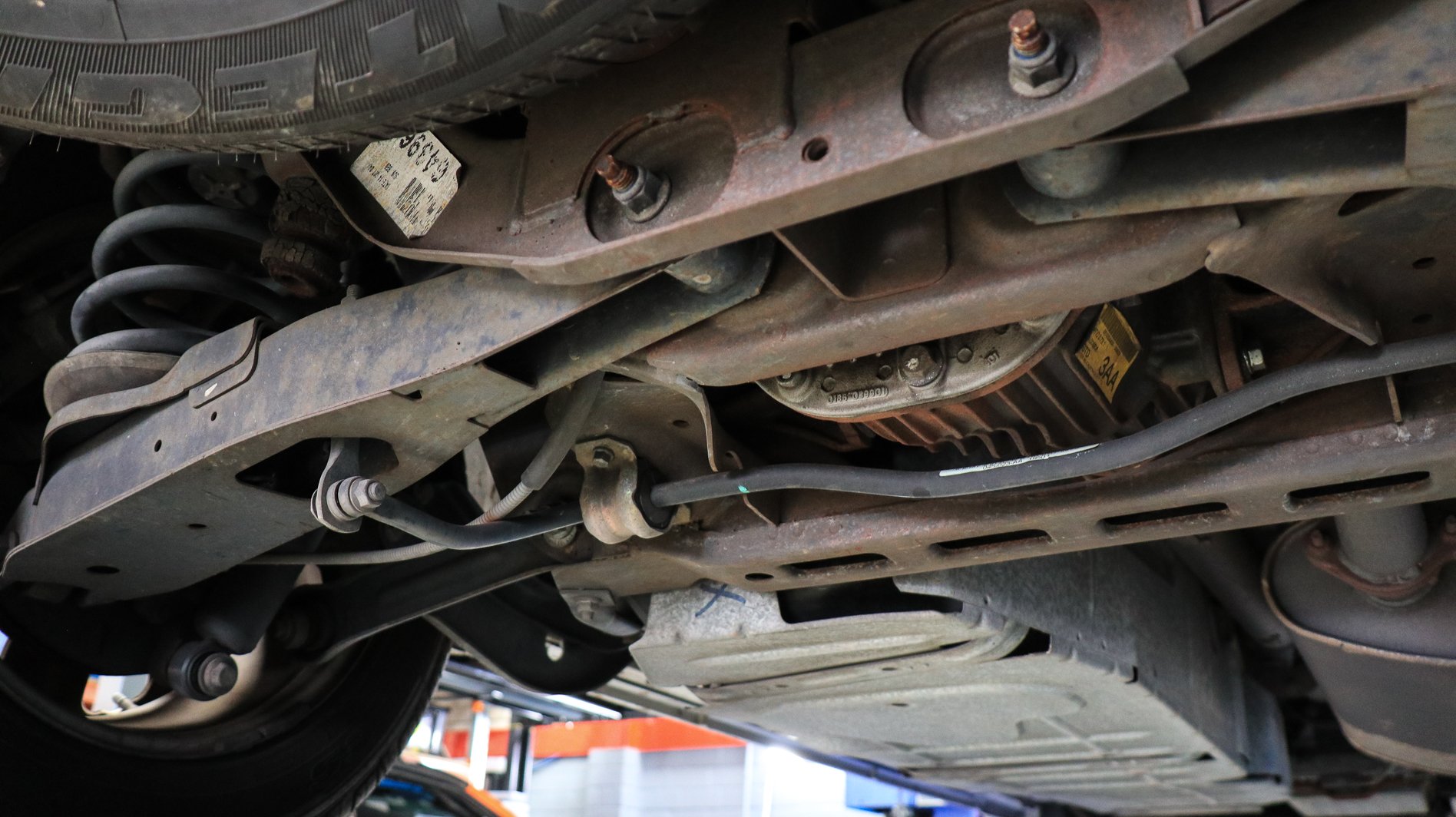
My first quote was an eye-watering $3000 including tyres, and I thought ‘no way, the car’s a dead Terry rolling’. But the simple fact is that it’s a terrible time to borrow money at the moment, and we really need to knuckle down and save hard to… well, eat.
So began the internal battle of Repair or Replace.
In the Repair corner is the fact that we have two learner drivers in the house, as well as a… ahem, somewhat untidy car keeper.
Buying a new car to have all four rims mashed and soy latte mochas leached into the carpet just doesn’t seem smart.
The aforementioned dogs, bikes and car bits also come into it.
Financially, a repair of $2500 on a known quantity is as sound a theory – to me at least – as buying another old dunger. Just because the Territory is only worth $2500 to a valuation service doesn’t reflect its true value to us.
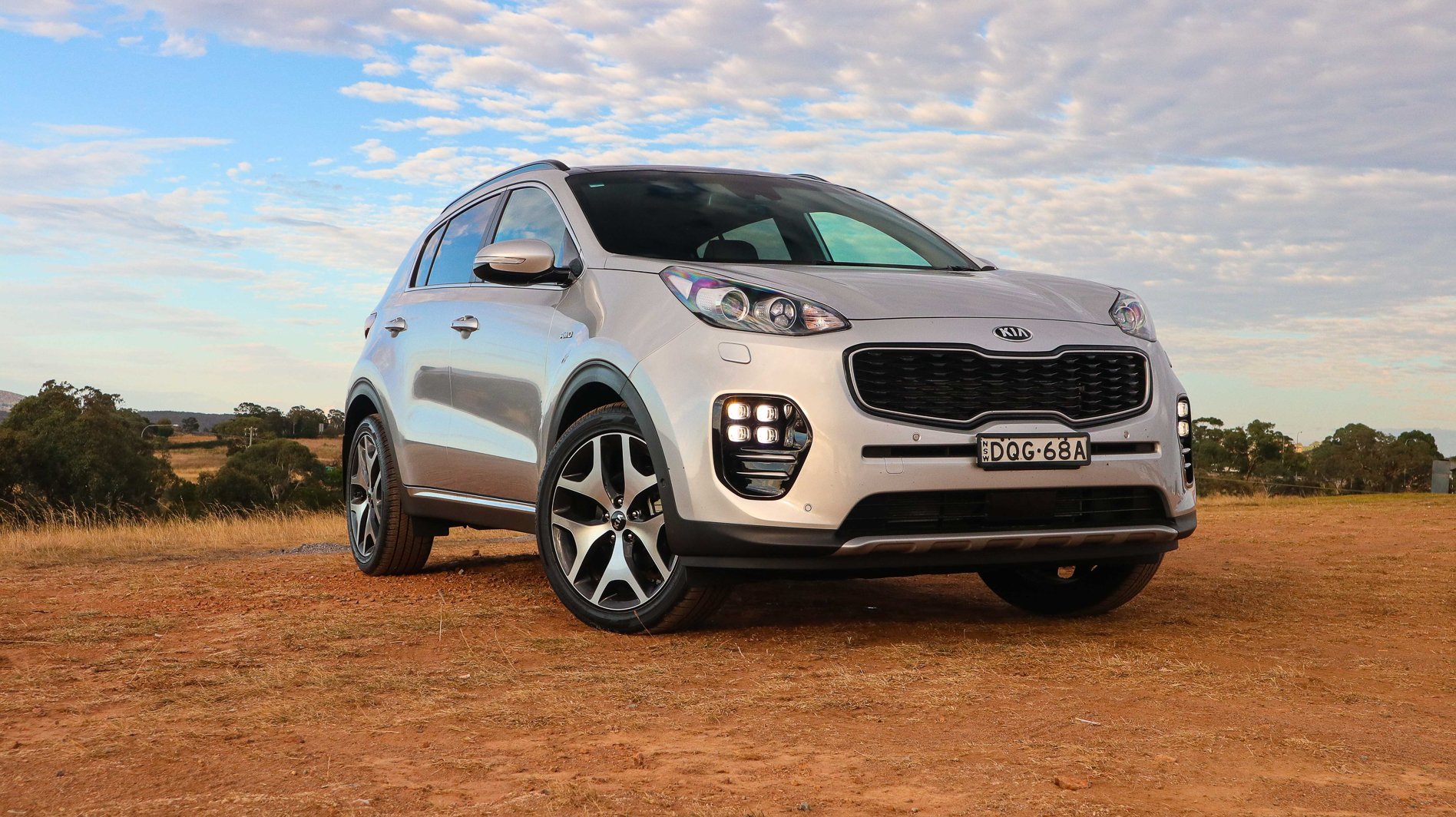
On the Replace side, though, are some compelling arguments, particularly around safety. Even a basic mid-sized SUV like a Kia Sportage (just for example, below) has AEB, rear-view camera, lane departure warning, more airbags and better traction and stability controls. The Territory has, um, two airbags.
As well, Terry is a fuelaholic. Twenty litres per 100km is his usual tipple – but that’s mainly down to his citified life.
Civilian comforts, too, like keyless entry, heated seats and Apple CarPlay are pretty big draws, too.
You can watch the video above to get a sense of what we’re looking at doing, but one of the biggest factors for me was the notion of finance. Tipping $700 a month or more into a brand new car isn’t an option, and even finding the necessary coin for a half-decent used rig isn’t easy in the current climate – unless you go to Dodgy Loans R Us.
So as I wrap up this part of the tale, the jury is swinging towards Repair. Our mechanic spent his apprenticeship swearing underneath Ford products, and he has a few ideas that will improve the car without adding a lot of cost.
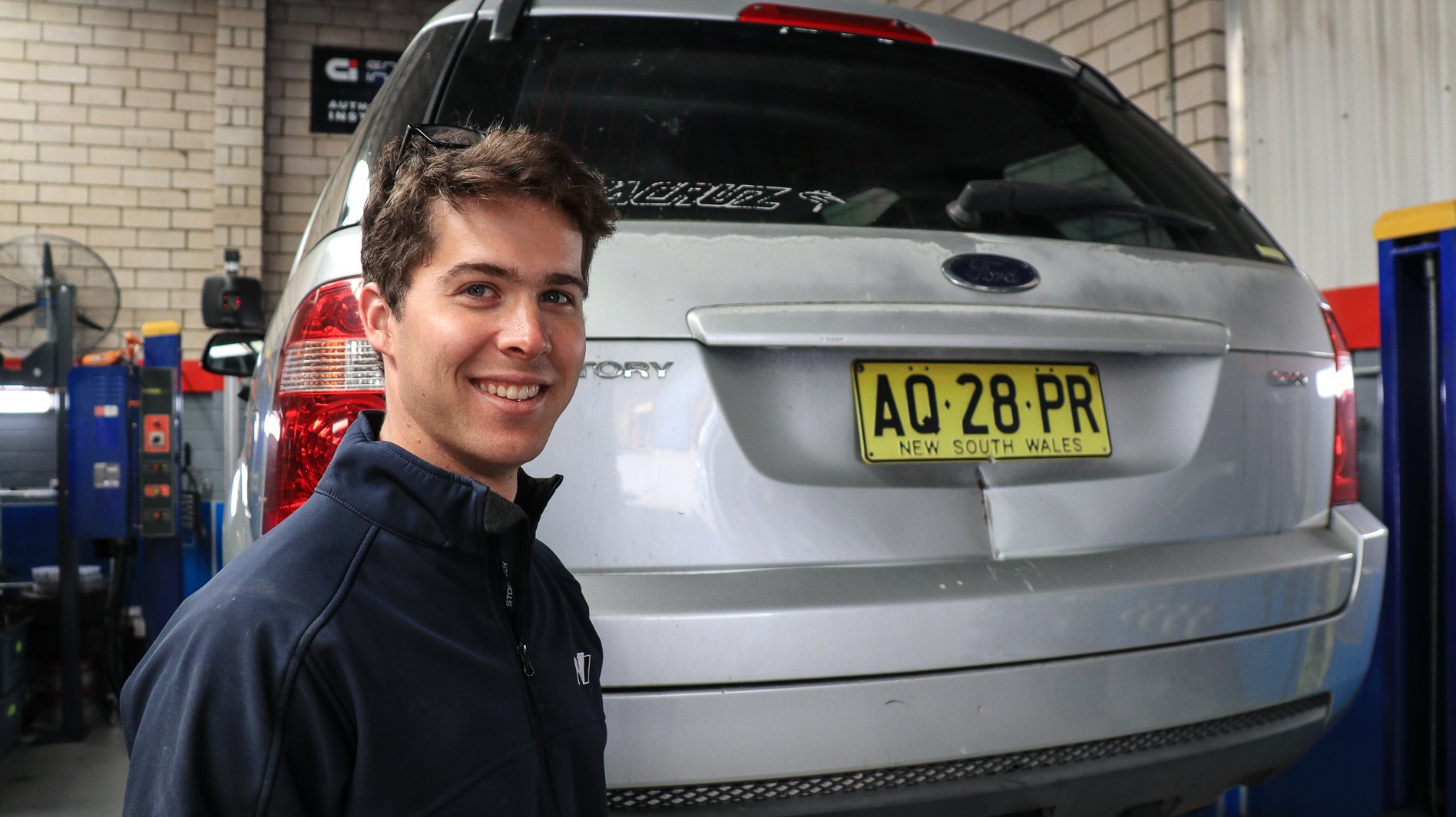
Cox Automotive’s Jordan Cox, trying not to think about Territory subframes
We’ll bring you further updates as we move on with the process, but we’d love to hear from you if you’ve been down the same path, and how you resolved it.
We’re used to things looking nothing like their picture – Big Macs, hotel rooms, internet dates – but that doesn’t stop us being a tad disappointed when reality doesn’t conform to expectation.
Vehicle concept renderings are no different. Despite knowing better, we get excited by the embellished sweeping lines, clamshell doors and Hot Wheels-like rims only to cry foul when the new Nissan Micra looks nothing like a bullet on wheels.
Needless to say, we’re a little cynical about the sketch Volkswagen put of it’s new Ford Ranger-based Amarok ute. The thing looks like a Transformer, ready to rise up on its rear wheels and open its doors to reveal laser-guided Maverick missiles. But deep down we know the production version will be a tad more prosaic.

Our scepticism has been forged by the carmakers’ marketing teams, who complement such images and concept designs with false promises; as a certain Korean manufacturer did a couple of years back in the lead-up to the launch of its latest Ceed, which is the European version of the Cerato.
Kia released a teaser sketch shortly before the big reveal showing a demonic red, coupe-like hatch with an “athletic” design “inspired by the fastback styling of the Stinger”, only for the real thing to drop a week later channelling a 2010 Subaru Impreza.
Kia is hardly alone here; Honda did similar in 2017 with Urban EV Concept that we at the time described as a breath of fresh air thanks to its deliberately simple, old-school silhouette concealing neat details such as the front-hinged suicide doors.

It finally arrived at the 2019 Geneva Motor Show to rave disappointment, with its sharp lines sanded down to the point where you’d have trouble picking it out in a line-up with alongside a Kia Picanto and Suzuki Swift.
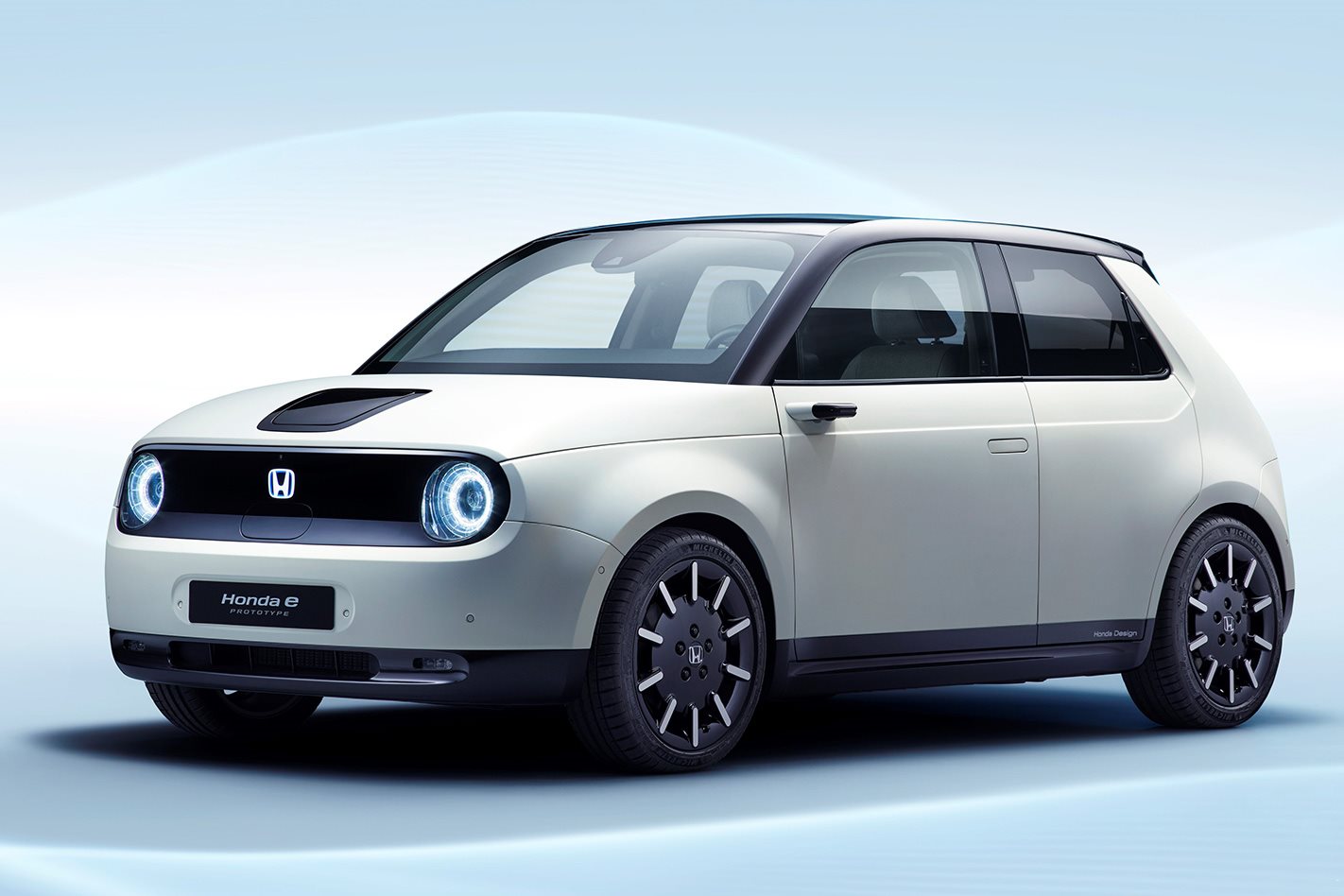
So why is there a disconnect between the renderings and the finished cars?
Paul Beranger, an automotive design consultant, WhichCar Style Award judge and the man behind cars such as the LJ Torana and the Toyota Aurion, told WhichCar that renderings were meant to be the first step in the process of selling a design to the car maker’s management, meaning they had to look as sexy as possible.
See the above picture gallery for more concept sketches versus reality
“They’ve got to reflect as strongly as possible the ambitions of the designer in terms of the creative style they want to generate in the finished design,” Beranger said.
“So it’s very important that the initial concepts are eye catching, they’re emotional and they drive people towards a more rational decision as the process of the design evolves.
“Gradually the emotion and the rational merge and as they do there’s a compromise on both sides, from a technical point of view and an aesthetic point of view.”
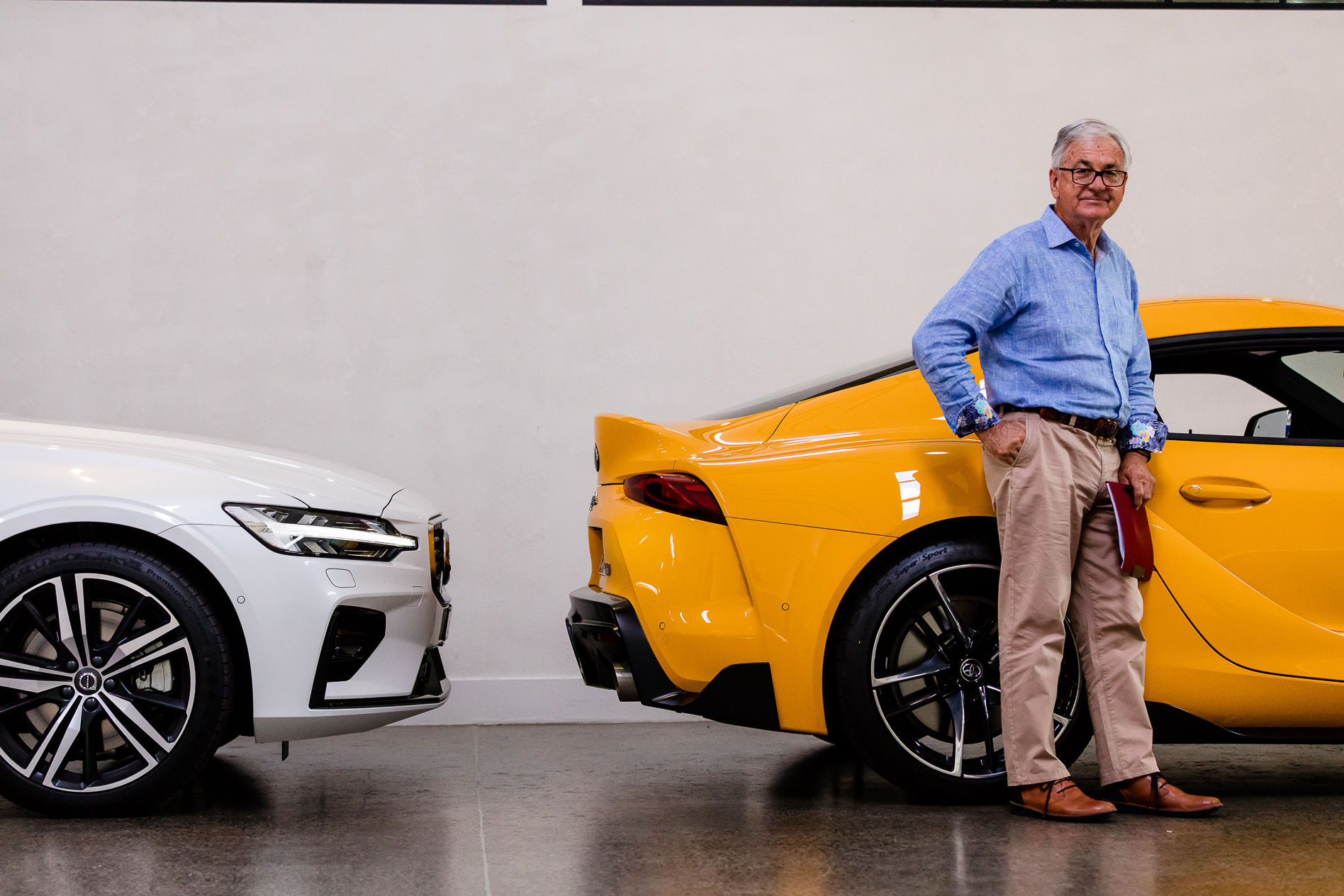
Beranger (above), who started his design career with Holden, worked around the world, and ran Toyota Australia’s design team before retiring in 2012, said it was unusual for renderings to be pitched to the public within days before a full reveal, as with the Kia Ceed.
“These days it’s almost always a teaser photograph of the finished car. When you get to launch-minus-12-months the design’s locked in, it’s then up to the marketing guys to actually start figuring out how to launch this car to the public.
“It’s always a risk. You can excite the market and I guess you can over-promise and under-deliver, but at the same time I would guarantee you 100 percent that was a strategic decision they (Kia) made for whatever reason,” he said.
“It’s just as likely the designer was asked to create a couple of sketches of the emotion about the car’s design and what it all means, so when the car is released people are already excited about it. How deflated they might get about it because it’s not like the sketch, that’s really the marketing conundrum.”

Paradoxically, renderings are often used early in a car’s launch cycle to prevent disappointment by easing people into a new look. Beranger said this is exactly what Holden did with the new Commodore.
“With the Commodore, drawings were used to softly release the car to the public, so that when the car was launched they weren’t all of a sudden hit with a five-door hatchback, front-wheel drive, four-cylinder turbo,” he said.
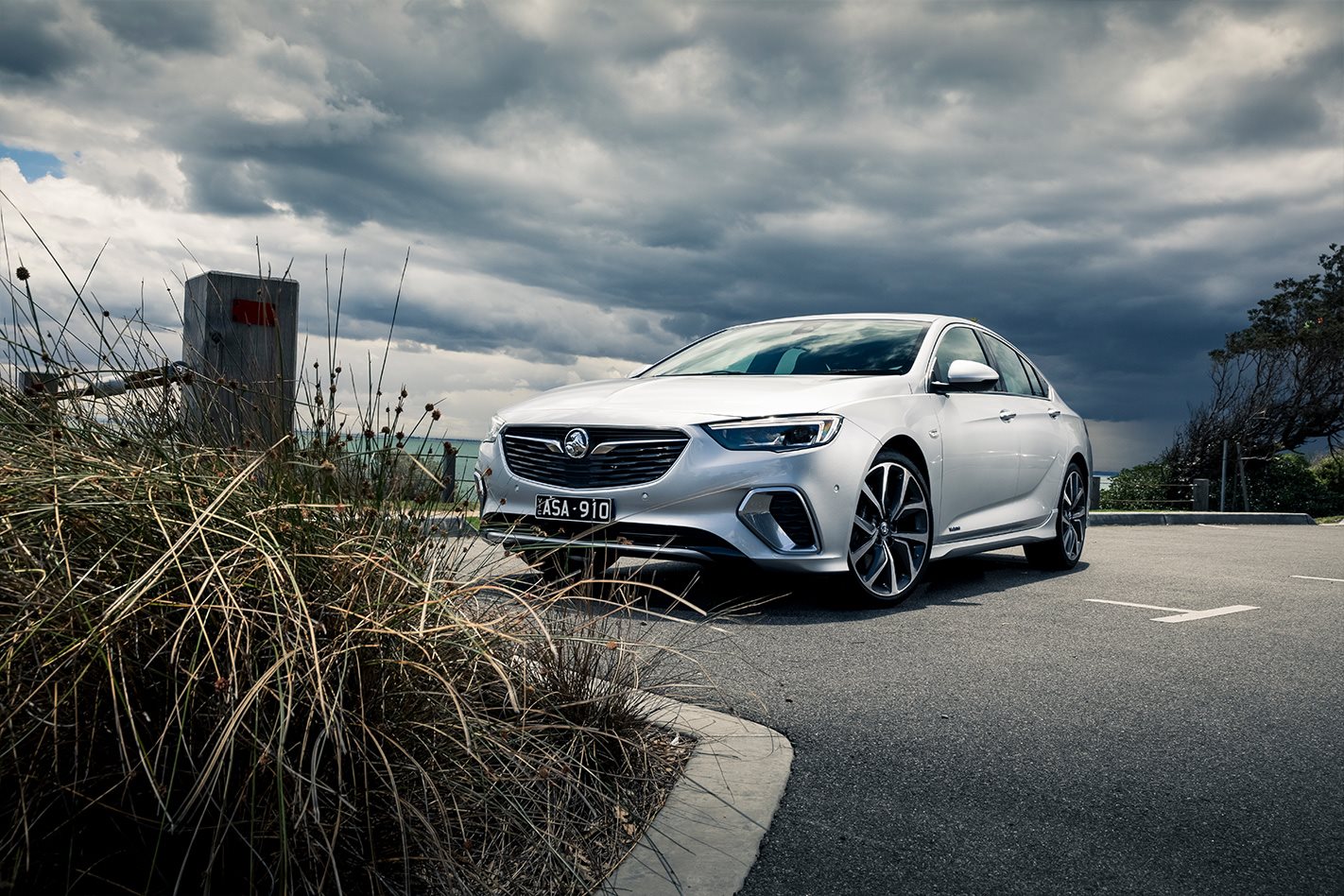
“Holden decided they would gradually leak information about the car, styling as well as mechanical, and at the point people would start to be comfortable with the car even before it was launched.
“Holden were pre-empting the negative criticism and squashing that before launch.”
The differences between the good and the great are often very small. It might be less than half-a-second on the racetrack or a couple of centimetres on the sporting field, but exploiting that final few percent is what separates the true elite.
The Hyundai i30 N isn’t a good hot hatch, it’s an excellent one, as at home lapping your local racetrack as it is carving up a mountain road or doing the weekly shopping, but it turns out it’s only a hair’s breadth away from true greatness.
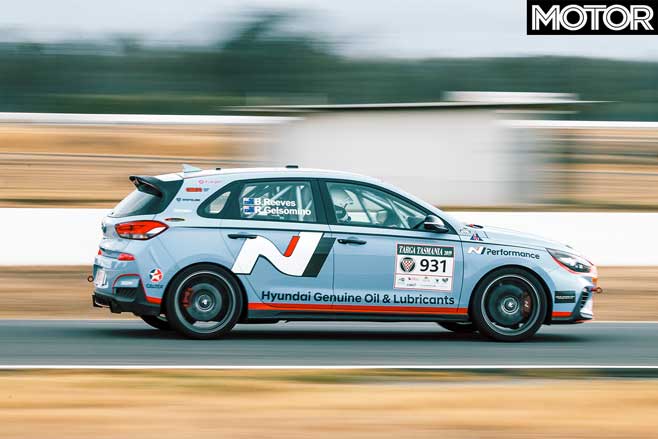
As part of the Drift Bus feature in the March 2020 issue of MOTOR Magazine, Hyundai also kindly provided its i30 N tarmac rally car for us to play with.
This is the very car that brother-sister pairing Brendan Reeves and Rhianon Gelsomino took to 15th outright at Targa Tasmania 2019; it was the first front-wheel drive machine home and sixth outright in the two-wheel drive GT2 class, behind two Lotus Exige, two Dodge Vipers and a 911 GT3 RS. Obviously, a large part of the i30’s success was down to Reeves’ undoubted ability behind the wheel, the car played a big role.
You might be expecting Hyundai’s tarmac rally car to be a steroid-fed racer tuned to within an inch of its life, but the purpose of the Targa program is to prove the worth of the standard car. As such, according to Hyundai technician Geoff Fear this i30 “is so close to production it’s embarrassing.”
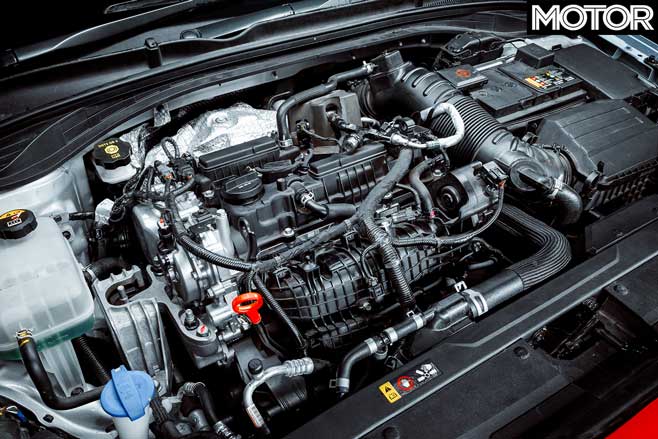
The engine is the standard, producing the same 202kW/353Nm as normal, with 378Nm available on overboost. The rest of the drivetrain is also standard, bar the inclusion of an uprated clutch and flywheel for durability reasons.
The interior has been stripped and a roll cage added, the brake pads and fluid were upgraded to competition spec, there are billet front strut tops and the tyres are Pirelli P Zero Trofeo R semi-slicks. That’s it.
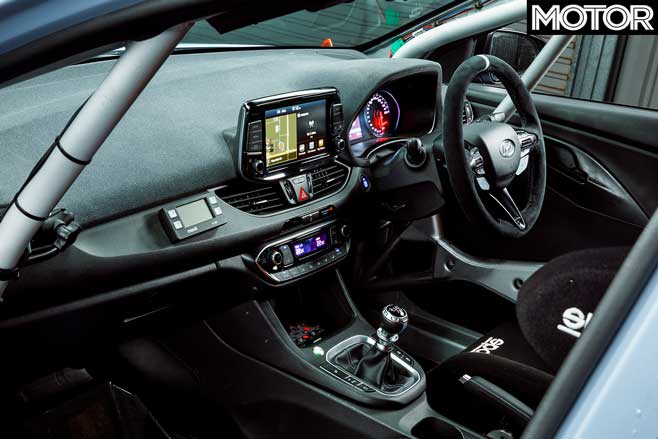
No, seriously, that’s it. The Targa car isn’t even that much lighter than standard, the weight that was saved by deleting the interior largely added back in via the roll cage; “we went heavy on the cage because you’re driving through trees,” says Fear. With Reeves and Gelsomino on board but low fuel the i30 N Targa weighs 1500kg, so kerb weight is probably around 1370kg, or 50-60kg lighter than standard.
Fear and the rest of the team instead spent their energies on optimising the base package, especially in the area of wheel alignment. Standard i30 Ns run between 0.8-1.2 degrees of negative camber, the Targa car ups that to 2.2 degrees thanks to those new front strut tops matched at the rear by 2.0 degrees neg (up from 1.5 as standard).
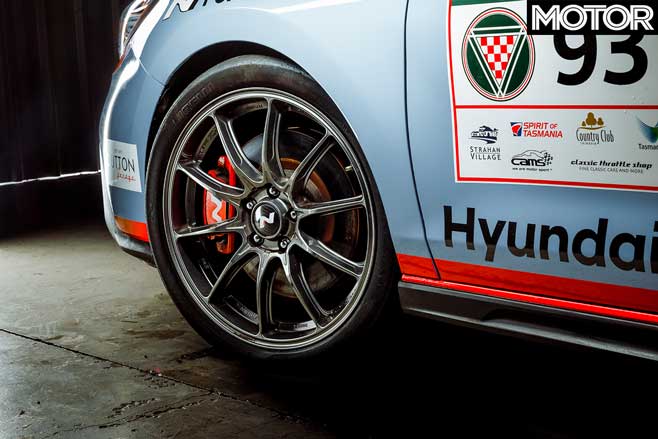
Front toe in is minimised as much as possible within the standard parameters, there’s an extra degree of castor and a redistribution of the weight lifts the back by 10-15mm to increase the forward rake. Last, but certainly not least, the suspension is Fastback-spec, including a 1mm smaller front anti-roll bar and a different damper tune in terms of internals and electronics.
The results are remarkable. This i30 is in a different league to the standard car in terms of precision and accuracy. Yes, the sticky tyres help, but Fear says the ones fitted had done more than 120 laps of Wakefield and three rallysprints so were basically toast.
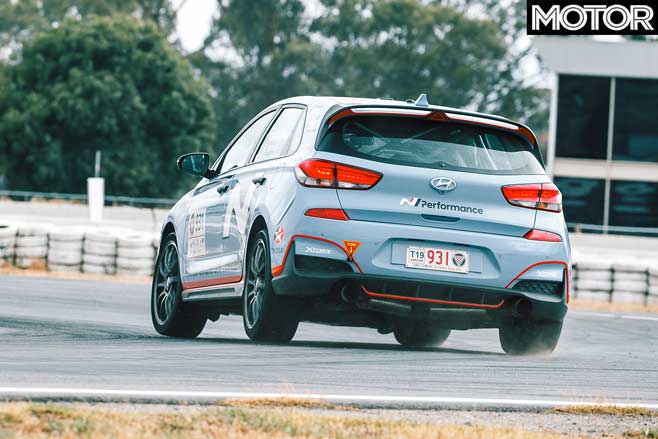
You’d swear there was a different tune in the diff; apply full power at corner apex and the front end remains nailed to the ground – no understeer, no torque steer, just brilliant traction. Apparently the alignment tweaks make the diff much more effective. Likewise, the balance is fantastic, the rear edging wide on corner entry with trail braking but otherwise stable and confidence-inspiring.
It. Is. Awesome. And quick. An attempt at a rough lap time nets a 1:38.3sec, which compares favourably to the 1:39.6sec Luffy set in the standard hatch at BFYB and suggests with new boots and a decent driver, the i30 N Targa might approach the Civic Type R’s 1:35.9sec hot hatch benchmark. I don’t want to stop driving it and don’t need to, for the brakes are holding up beautifully. It’s amazing that so few changes could transform the driving experience, but then the differences between good and great are often very small.
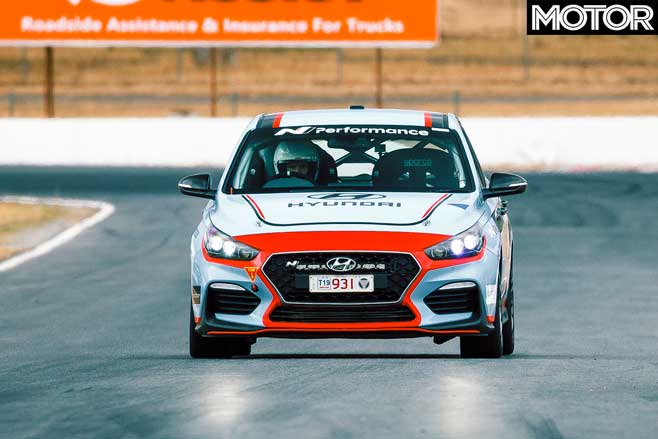
HYUNDAI i30 N RALLY CAR SPECS Engine: 1998cc inline-4cyl, DOHC, 16v, turbocharger Power: 202kW @ 6000rpm Torque: 378Nm @ 1750-4200rpm Weight: 1370kg (approx.) 0-100km/h: 6.0sec (claimed) Price: $65,000 (approx.)
Likes: Awesome handling; track durability; relatively standard Dislikes: Bitey clutch; no more grunt; want more laps (all the laps)
Rating: 5 out of 5 stars
- First four F1 races of 2020 now non-starters
- F1 leaving door open to delaying season further
- Other series including NASCAR and WEC following suit
In possibly the longest single sentence ever written, the Automobile Club d Monaco said “The current situation concerning the worldwide pandemic and its unknown path of evolution, the lack of understanding as to the impact on the FIA F1 World Championship 2020, the uncertainty with regards to the participation of the teams, the consequences with regards to the differing measures of confinement as taken by various governments worldwide, the multi-border restrictions for accessing the Principality of Monaco, the pressure on all implicated businesses, their dedicated staff who are unable to undertake the necessary installations, the availability of the indispensable workforce and volunteers (more than 1500) required for the success of the event means that the situation is no longer tenable.”
It also added that rescheduling the race was not possible.
Following the botched bail-out from the Australian Grand Prix yesterday, F1 has quickly moved to clarify that the Bahrain, Vietnam and China rounds of the championship are now formally postponed, along with the Spanish and Dutch Grands Prix.
“The global situation regarding COVID-19 is fluid and very difficult to predict and it’s right we take time to assess the situation and make the right decisions,” said Formula 1 Chairman and CEO, Chase Carey. “We are taking this decision with the FIA and our promoters to ensure the safety of everyone involved in Formula 1 and our fans.”
F! season will not start until June
However, the sport has allowed itself some wiggle room, suggesting that the proposed May start date will constantly be reviewed.
“We continue to rely on the input and advice from the World Health Organisation (WHO) and governments and will work with them throughout this unpredictable period to safeguard the fans, competitors and all of the motor sport community,” said the president of the FIA, Jean Todt.
COVID-19 has already seen a lock-down of Italy, while the virus is expected to take hold in Europe in the coming months. Disruption to the world’s economy, transport systems and the inability of people to gather in large numbers will undoubtedly place the running of the European rounds of the F1 series under huge pressure.
This could mean that the 2020 F1 championship won’t actually start until at least the start of the European summer in June in Baku, Azerbaijan.
An F1 season needs to run over at least eight races to be considered a formal championship.

“Formula 1 and the FIA expect to begin the Championship in Europe at the end of May but given the sharp increase in COVID-19 cases in Europe in recent days, this will be regularly reviewed,” read a joint FIA/F1 statement released overnight.
NASCAR, IndyCar and more postpone events
Meanwhile, other racing series around the world have announced that their respective season starts will be delayed.
The IndyCar series – featuring prominent Antipodeans Will Power, Scott Dixon and potentially Supercars champion Scott McLaughlin – announced on the eve of its season-opening round in St Petersburg, Florida this weekend that it was postponing its first four rounds, while NASCAR has postponed its next two races of its season.
The World Endurance Championship, Formula E, the 12 Hours of Sebring, WTCR, World RX rallycross and MotoGP have all announced that postponements or cancellations to races and series, after the World Health Organisation declared the spread of COVID-19 a pandemic.
However, the Indy 500 has yet to be called off.
More coronavirus news
- Multiple crew members isolated ahead of Australian GP
- Coronavirus ‘ghost flights’ emitting more CO2 than all Lamborghinis
- Gallery of abandoned Geneva Motor Show
- World Time Attack cancelled over coronavirus fears
Updated: Supercars postpones rounds until June
Closer to home, the Supercars championship has declared that it is postponing the first half of its 2020 season, with just a single round in the books.
Tasmania, Auckland and Perth will have their respective rounds rescheduled until later in the year, mirroring other race series around the world.
Supercars CEO Sean Seamer said in a statement that the sport had examined the idea of running without crowds, but decided against it.
“Our sport is a visceral experience and rather than run without crowds, we have decided, along with our key broadcast and government partners, to delay any further racing until June,” he said in a statement.
Shannons Nationals postpones Bathurst 6 Hour
As well, Motorsport Australia (formerly CAMS) has decided to postpone the opening two rounds of the Shannons Nationals, which covers TCR and S5000 amongst other categories.
“A new date will be announced [to replace round one at Sydney Motorsport Park in late March] in due course, with Motorsport Australia and ARDC to work closely together to find a suitable option for all categories scheduled to be part of the opening round of the season,” read a statement.
“For the HiTec Oils Bathurst 6 Hour, the decision was made to restructure the event, the second round of the Shannons, which will now be part of this year’s new Bathurst International event in November, 2020.”
Long rumoured but frustratingly unconfirmed, Mazda’s next ‘RX’ sports car doesn’t look like it’s coming to dealerships any time soon… and perhaps it never will. However, if you’ve got a Playstation 4 and Gran Turismo Sportyou’ll soon be able to get behind the wheel of the next best thing.
Sony has announced it will add the Mazda RX-Vision GT3 Concept to Gran Turismo Sport, joining the legion of other digital concept cars available in the game. Based on the real-world Mazda RX-Vision concept that debuted at the 2015 Tokyo Motor Show, it might be the closest we’ll get to actually driving a fourth-generation RX-7.
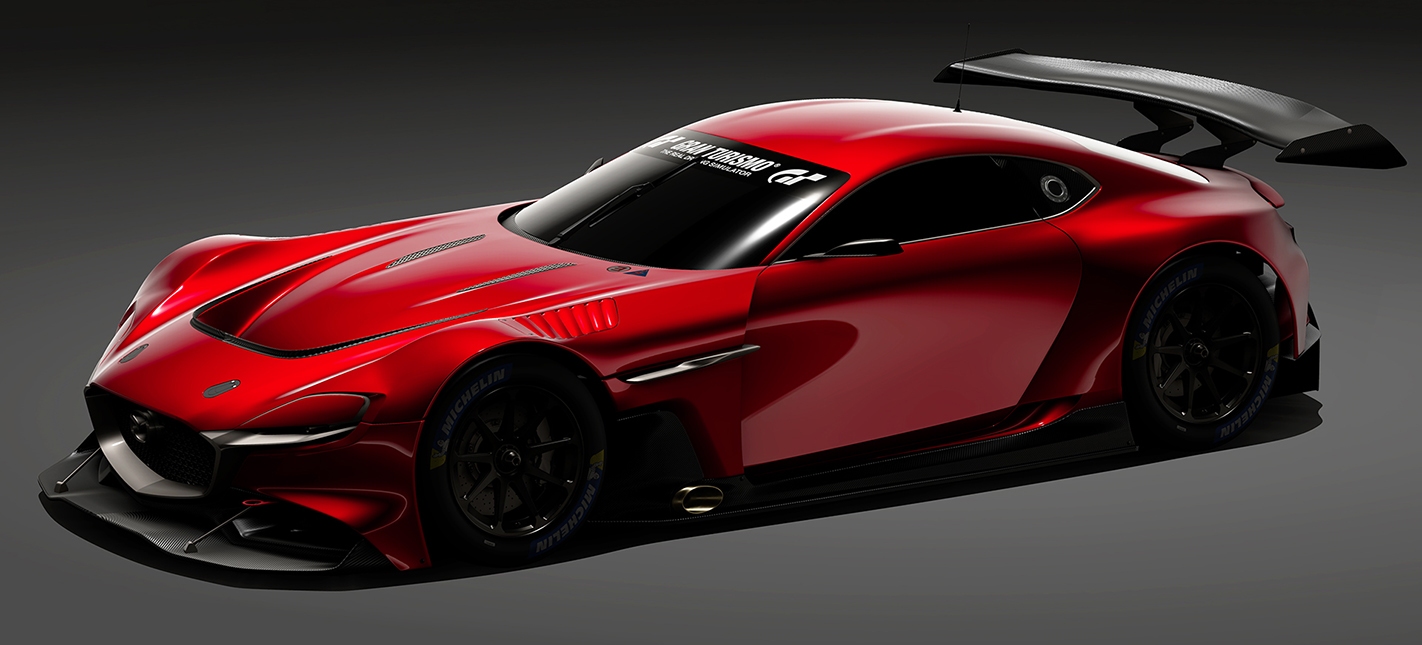
Built to comply with Group 3 regulations, the rotary-powered RX-Vision is a 419kW car-of-our-dreams that weighs around the same as a Toyota 86 – 1250kg. Performance should be brisk, albeit strictly in the virtual realm. It definitely looks the part though, with significantly wider guards, centrelock wheels, lift-reducing gills on the wheelarches, bonnet pins, vented bonnet, side-exit exhaust and a foot-amputating front splitter all meshing nicely with the actual concept’s sleek sheetmetal.
“The RX-Vision features a rotary engine at the heart of its FR layout and is a sports car that encompasses Mazda’s ‘Kodo’ (‘Soul of Motion’) design philosophy,” says a Sony press release.
Though we’ve held out for a new sports car from Mazda for some time, the fact Mazda is developing a more pedestrian variation of a rotary engine for non-performance applications is all we’ve got for now. Mazda product planners would sorely like a successor to the RX-7 in the frame, but economic realities mean it’s a low priority for the Japanese company – a relative minnow in the automotive world.
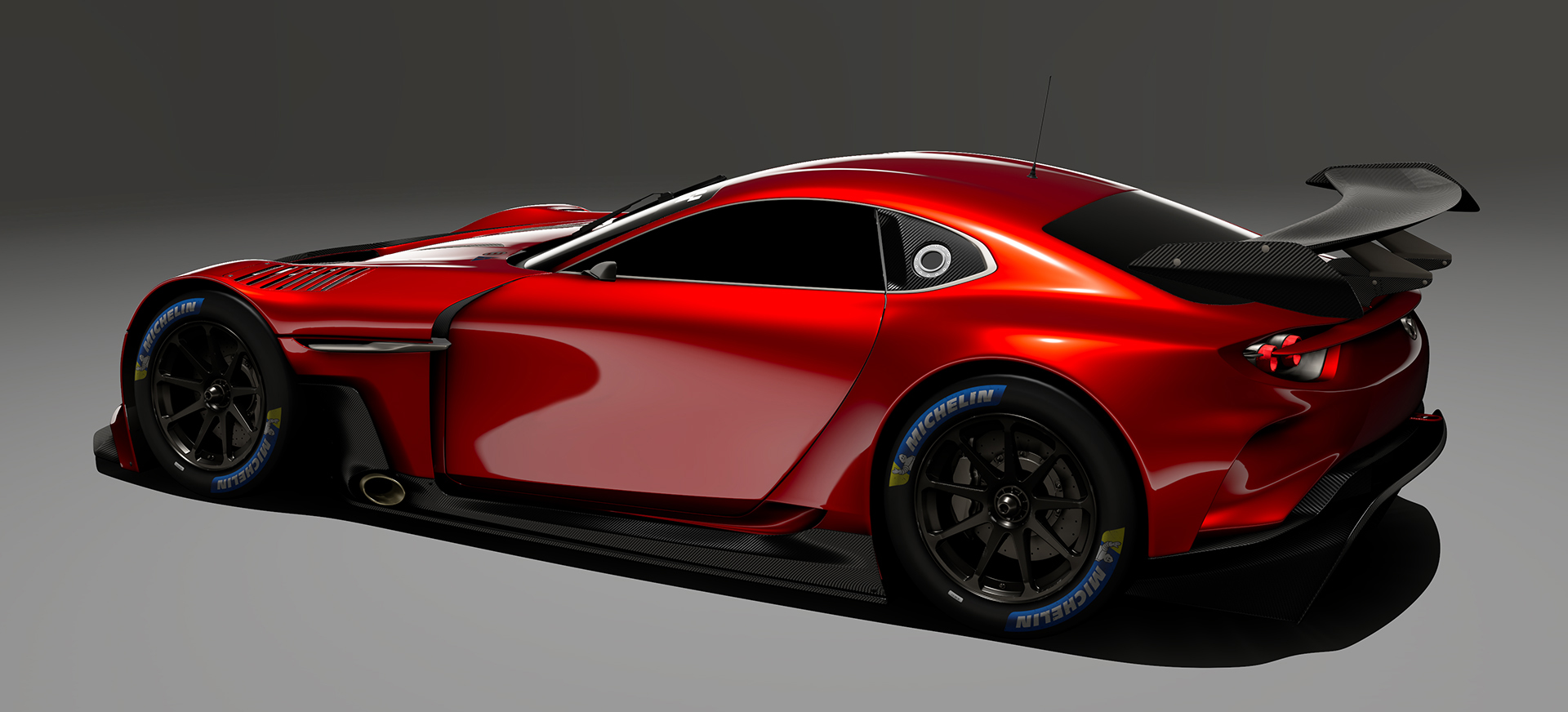
“The new Gr.3 ‘Mazda RX-Vision GT3 Concept’ is coming to GT Sport in May and is sure to be a powerful ally to all Mazda drivers of the world competing in the official FIA Gran Turismo Championships. The Gr.3 Mazda RX-Vision GT3 Concept continues the legacy of Mazda’s legendary rotary engine sports cars and will be coming to Gran Turismo Sport through an online update on 25 May.”
The online races mentioned, the FIA GT Championships, could be part of a revitalised interest in virtual racing, with most motorsport seasons for 2020 now being heavily impacted by COVID-19 restrictions.
Geely isn’t mucking around. The Chinese automotive conglomerate has managed to curtail the COVID-19 (coronavirus) outbreak in its home facilities ever since it started, and to date can claim that none of its employees has contracted the virus.
It’s all thanks to aggressive quarantine, distancing and cleaning measures that have allowed Geely to return to full working capacity while other automotive manufacturers are actively shuttering their factories worldwide.
To combat the outbreak, Geely – who owns car brands like Lotus and Volvo, and is one of China’s biggest car builders – first started by extending the Chinese New Year holiday from late January until mid-February, allowing those who could work, to work from home.
More coronavirus news
- Live rolling coverage of the Covid-19 impact
- How to minimise COVID-19 exposure in your car
- Industry reels from coronavirus as Elon Musk scoffs
- Industry shutting down as car sales tank
As of March 1, all of Geely’s Chinese operations are now back on track – albeit with strict new protocols in place. All international business travel was banned, and all guests to the company have been refused entry.
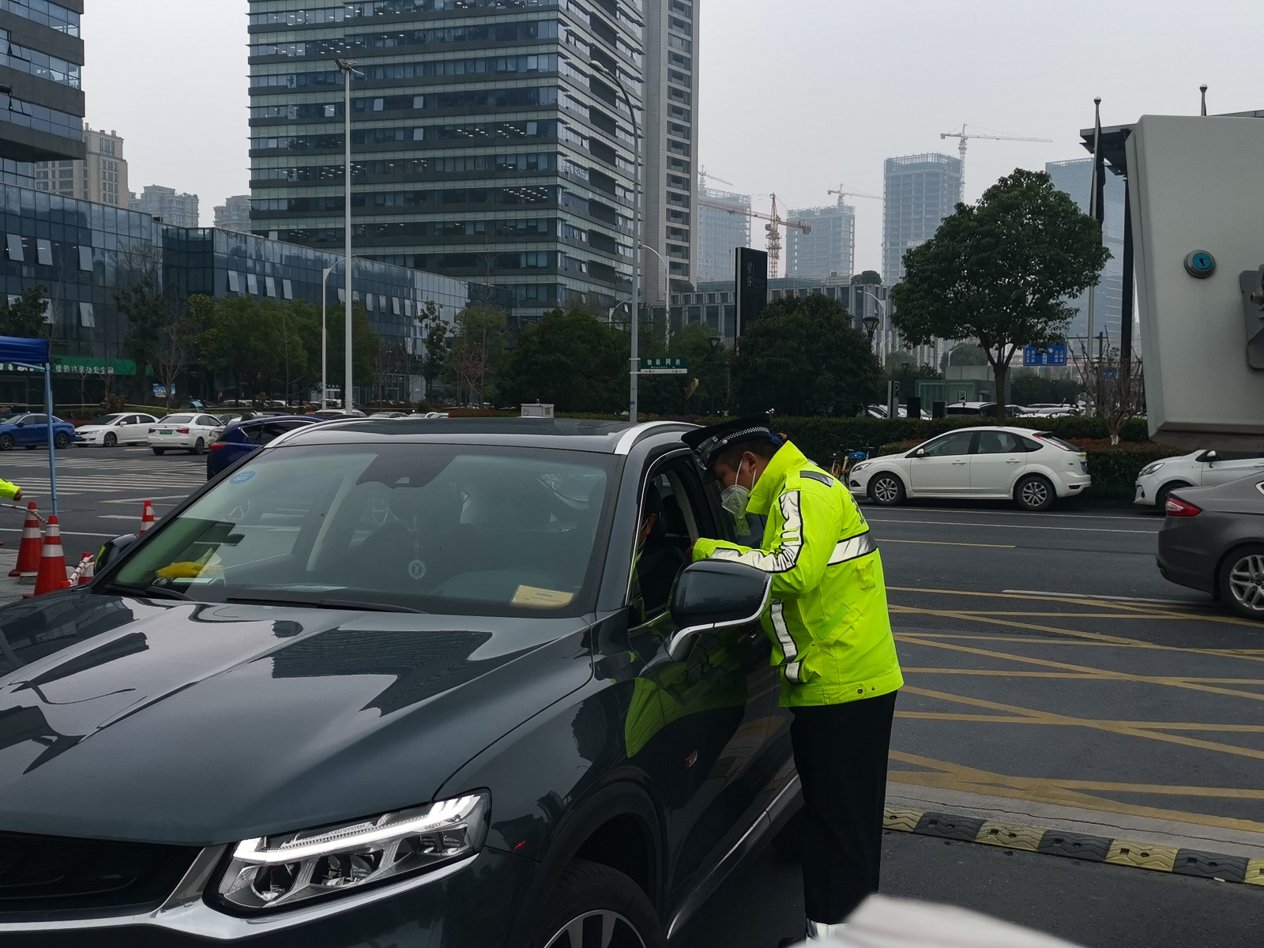
All employees must undergo temperature testing in makeshift tents situated outside the factory on the way into work, and clock-in and clock-out machines have been moved outside of main buildings to ease congestion.

Those arriving to work by car must have their temperature taken too, before driving over sanitized mats to rid any bacteria from the underside of the car. During the day, cleaning teams whip around the car park wiping down exterior door handles and touch-points of employees’ cars.
Hand sanitiser was distributed throughout major traffic areas in buildings, and there are even limits on the number of people that can share elevators.
Geely even has a policy for people queueing for printer machines, who must stand one metre apart in an orderly fashion.
All employees are given face masks which they must change every eight hours, and floor supervisors check everybody’s temperatures twice a day.
Large meetings have been cancelled and video conferencing replaces face to face interactions.
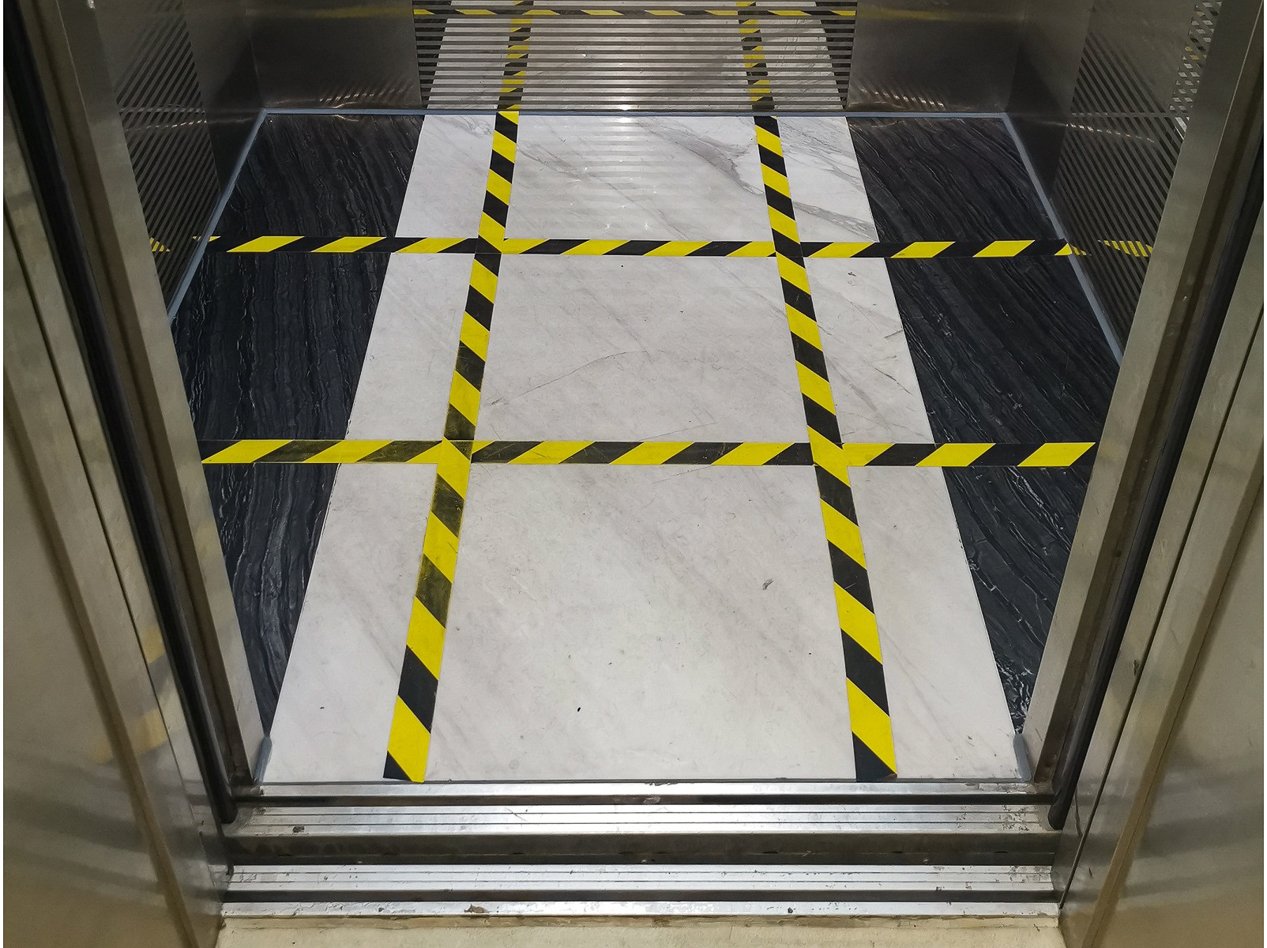
One person per square in a Geely elevator
Some of these measures might sound drastic, but they’ve enabled the Geely Group’s 60,000 employees to return to work across China with no coronavirus cases to date.
This comes at a time when factories including Honda, BMW and Toyota opted to close their doors in the UK, while GM, Ford and FCA temporarily shut their factories in the US.
An FCA factory in Italy that produces commercial vehicles has been hastily reset to allow for more space between workers, but most facilities in the world are shuttered.

For those who haven’t closed just yet, British prime minister Boris Johnson has called on manufacturers like Rolls-Royce, Airbus and Jaguar Land Rover to make 20,000 much-needed respirators from scratch in two weeks. The UK’s current number of ventilators is 5000, but this will not be enough.
Rolls-Royce has also announced that it is closing its Goodwood factory for two weeks.
Learnings need to be taken from those companies like Geely that is actively stemming the spread of coronavirus by introducing meaningful protocols.
If carmakers across the globe can introduce a similar system, that would ensure the automotive industry is in a much stronger position going forward.
If you’ve not heard of BMW tuner Hartge, you’re late to the party. The company wrapped up its efforts (reportedly through liquidation) last year after almost 50 years in the game, but it left a few absolute gems behind.
Three are set to go to auction at the next RM Sotheby’s auction in Essen, Germany. Unfortunately, COVID-19 has rendered the Essen sale postponed until at least June 2020.
Still, we can gawk at these three rare (one being totally unique) cars built by Hartge. Vale.
1988 Hartge F1 – formerly a W124 Mercedes-Benz 300E
The only one of its kind, and a rare venture for the brand, this W124 Merc is a treat. Hartge’s usual game is simple – how big can a car’s engine be? In this case, Hartge changed it up and didn’t opt for a V8 or a V10 in this Merc.
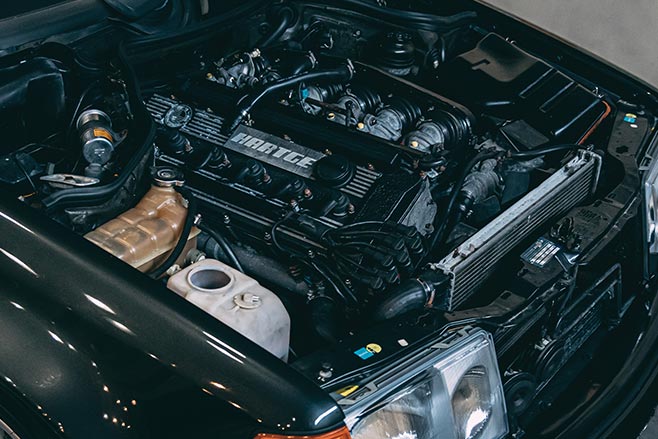
Instead, a modified version of BMW’s 3.5-litre M88 straight-six was used for the car Hartge dubbed ‘F1’. Yep, this Benz is running on BMW M1 power. Almost 245kW of it. Only one Hartge F1 was built.
1997 Hartge Compact V8 4.7 – BMW E36
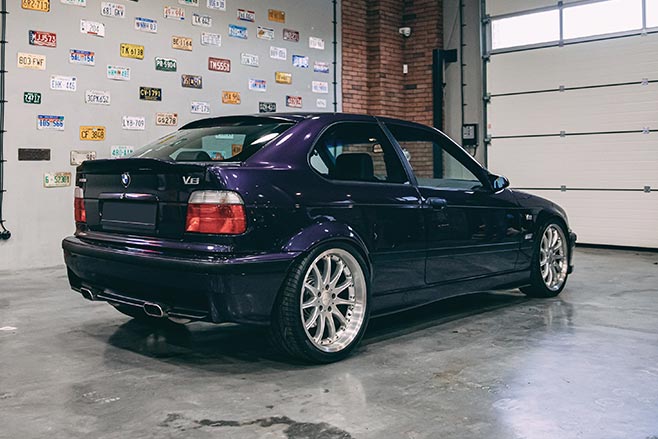
BMW’s E36 Compact wasn’t the brand’s finest creation, at least according to BMW fans, but Hartge turned two of them into something rather fun. With a V8, of course.
With what is likely a modified M62 V8 (RM Sotheby’s hasn’t specified) from BMW’s 5, 7, and 8 Series’ of the 1990s, this Compact V8 4.7 reportedly cost 146,000 DM back in 1999.
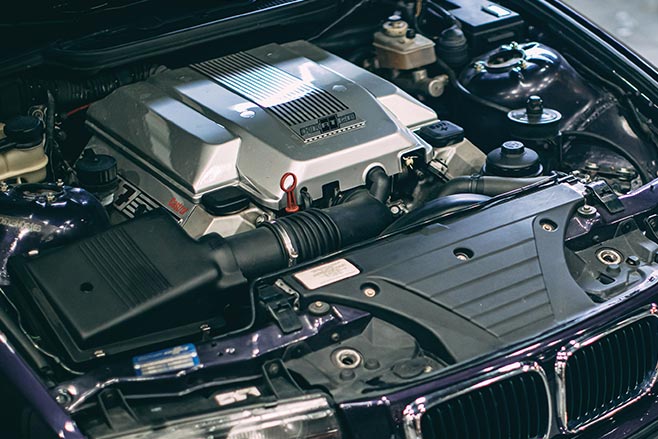
The fact Hartge altered so much of it, from the M3-derived gearbox down to the interior clock, probably has something to do with it.
1983 BMW 635CSi Hartge H6SP
RM Sotheby’s hasn’t provided much information on this specific H6SP aside from its 75,847km odometer reading, but the H6S versions of the 635 built by Hartge were said to have around 180kW and 335Nm, a little bump in power over the 160kW/310Nm or so a 635CSi could come with at its peak in Europe.
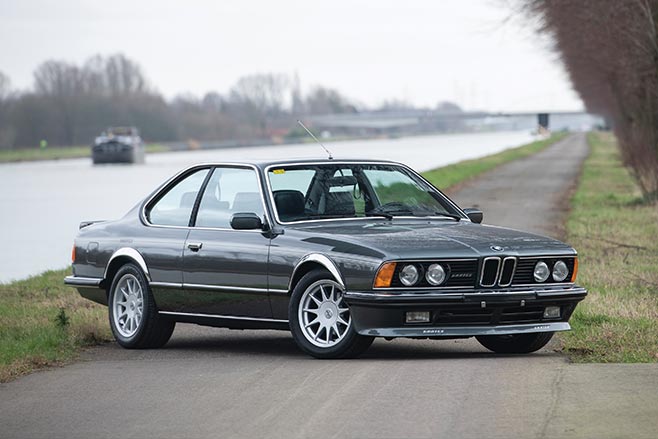
Given this is a H6SP, expect more like 190kW… and a hell of a lot more rarity.
Check out the gallery at the top of the page for more of RM Sotheby’s photography of each car!
- What’s in the stimulus package for new car buyers?
- Government response is not yet clear
- Be aware of spending up to $150k cap
And for car lovers it was easy to be tempted by the raising of the instant asset tax write-off from $30,000 to $150,000.
Instead of a Toyota Corolla or Kia Rio, though, the initial thinking was you could step up to something more exciting or exotic.
But before you go signing on the dotted line for a BMW M2 Competition or Tesla Model S be aware that there are other tax laws that mean you’ll likely be limited in what you can depreciate than you may have originally envisaged.
Not that much of it is clear at the moment…
The rush for information has accountants and tax professionals scrambling for details.
Some we spoke to were still trying to digest the rules. Similarly, online chat rooms were trying to decipher the ramifications.
We went straight to the top and contacted the Australian Tax Office, which was no help at all.
In a statement the ATO directed us to the Treasury department:
“The ATO is unable to comment on matters of policy,” an ATO spokesperson replied by email. “Until the proposed legislation is enacted by Parliament visit www.treasury.gov.au for more information or contact Treasury media.”
So, we contacted Treasury, which was, equally, of no help. After three days they came back to inform us that the government was still developing the legislation and that more information would be available once it was introduced to Parliament.
So we reached out to those in the know and all we spoke to suggested the depreciation limits would still apply, meaning the proposed legislation to allow write-offs up to $150,000 would only benefit car owners spending between the previous $30,000 limit and about $60,000.
We say “about $60,000” because there appears to be confusion around that, too.
Fleet management giant Leaseplan said businesses with a turnover of up to $500 million could only depreciate cars up to $57,581 (exclusive of GST for new cars bought by businesses registered for GST) – a limit that hasn’t changed in years.
That $57,581 is the ATO’s “car cost limit for depreciation”.
But the founder and CEO of equipment and vehicle finance specialist Finlease, Mark O’Donoghue, believes businesses will be able to depreciate up to the luxury car tax threshold.
That means at least $67,525, or $75,526 for vehicles that use less than 7.0 less of fuel per 100km.
More coronavirus news
- Live rolling coverage of the Covid-19 impact
- How to minimise COVID-19 exposure in your car
- Industry reels from coronavirus as Elon Musk scoffs
- Australian Grand Prix cancelled after COVID-19 case confirmation
“The ATO’s comments back to us were that this came out very quickly and we can’t give you a definitive answer on this but our intelligent view would be that yes, the luxury car limit would apply.”
Various online chats we read and all discussions we had with experts in the field suggested there were no provisions for depreciating the entire $150,000 for anything other than tool-of-trade vehicles such as trucks and tractors.
For those business owners who think they can get the tax department to fund their next set of wheels, it’s also worth understanding how the instant asset write-off works.
The ATO isn’t funding your vehicle purchase. It’s simply allowing a depreciation sooner for an asset that ordinarily would have been depreciated over many years.
Also, there are no tax savings. All it does is pull forward how quickly you can get your hands on a tax deduction, with the aim being to give businesses much-needed cash flow in tough times.
Although, as O’Donoghue points out, there are potentially ongoing benefits for the following financial year (FY2020/2021).
“You not only get the tax-saving at that point, every subsequent BAS [business activity statement] for the following year also has a percentage of the tax that you’ve got payable based on your last year’s profit as a percentage of your turnover,” he says.
Plus, your business needs to be profitable to benefit from the tax saving.
“This is relevant to companies that are either profitable or expect to be profitable going forward because it’s all about reduction of tax,” says O’Donoghue.
And the maximum saving is up to the company tax limit of 27.5 percent. So, you’ll get money back in the annual tax return – or money deducted from how much company tax your business would have had to pay.
Given the turmoil in the economy, clearly the profit of many businesses is likely to be hit hard in the coming months.
And, even though it’s easy to see plenty changing over coming months, for now the $150,000 write-off – which is for new and used cars – applies only until June 30.
After that the limit drops to $1000 (although since May 2015 the ATO has had an instant asset write-off of at least $20,000).
So, cancel the order for that fancy set of wheels, then…
And there’s plenty more in the detail that means you’re best chatting to an accountant before signing up for that new set of wheels.
And just to really confuse things, news reports suggest there’s every chance the government is likely to step up the stimulus spending more over coming weeks as it becomes clearer of the enormous economic impact of the coronavirus.
Happy car shopping!
Picture this: You’re driving along and an erratic driver cuts you off. You slam on your brakes but it’s too late and you suddenly you find your bonnet’s metal crushed into another car’s rear.
There’s glass covering the road, a puff of steam rising from your car, and a spray of obscenities uncontrollably leaking from your lips because you know what’s to follow.
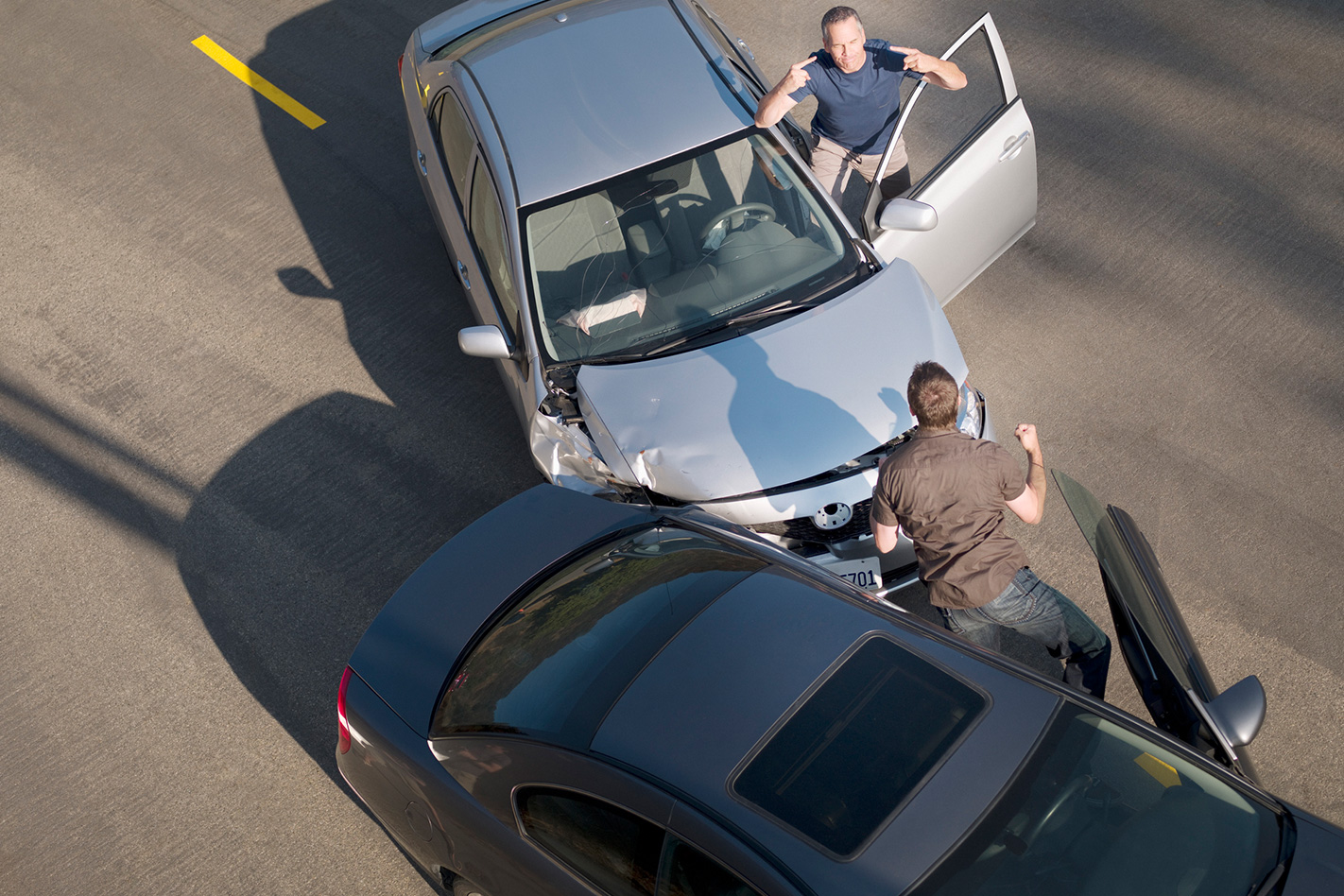
Nose-to-tail accidents are usually open-and-shut cases in the eyes of the police and insurance companies, and if it’s your bonnet in someone else’s boot, then it’s likely to be your backside on the chopping block too.
| Read next: Bizarre dash cam footage shows insurance scams are alive and well
Incidents where drivers have purposely tried to cause other drivers to ram in to the back of them (the so-called “brake check”), or desperate pedestrians jumping in front of moving cars aiming to collect a compo payout (common in some countries), have increased the popularity of dash cams. For many motorists, it’s cheap insurance.
Dash cams are dashboard-mounted cameras that record the road ahead of you as you drive and can cost anywhere from $40 to $500, depending on the level of sophistication you want. They offer a range of features including recording sound as well as vision, night-vision, GPS logging, automatic save and rear view recording. They work by continually recording and saving footage in a rolling ‘buffer’, but only saving that footage when the driver presses a button.
Nobody can predict a crash, but as long as you hit that button after the incident occurs, you’ll have at least a couple of minutes of footage leading up to that point. Models with larger memory storage can buffer more footage, and some will automatically start saving footage if sudden deceleration is detected.
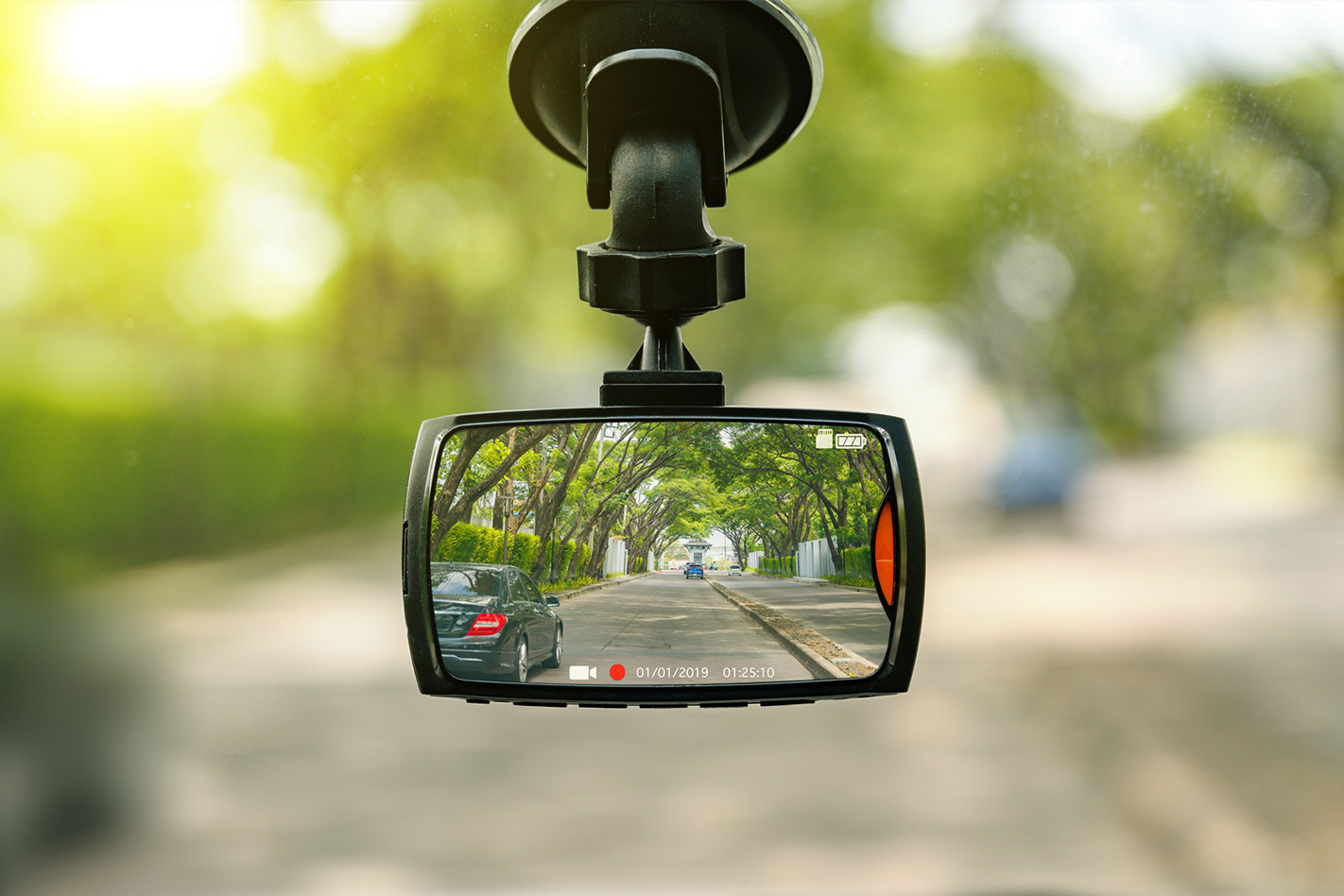
Their purpose is to offer drivers access to extra evidence when making a claim or police report, rather than purely relying on their own version of the story, which can be disputed by witnesses and the other party’s version of events.
| MORE Victorian motorist nabs dodge speed camera with dash cam
Experts suggest that while the footage can be used to support your statement, you should still take the usual steps post-accident: speaking to eye witnesses, exchanging details where possible, taking photos of the damage and filing a police report as soon as possible.
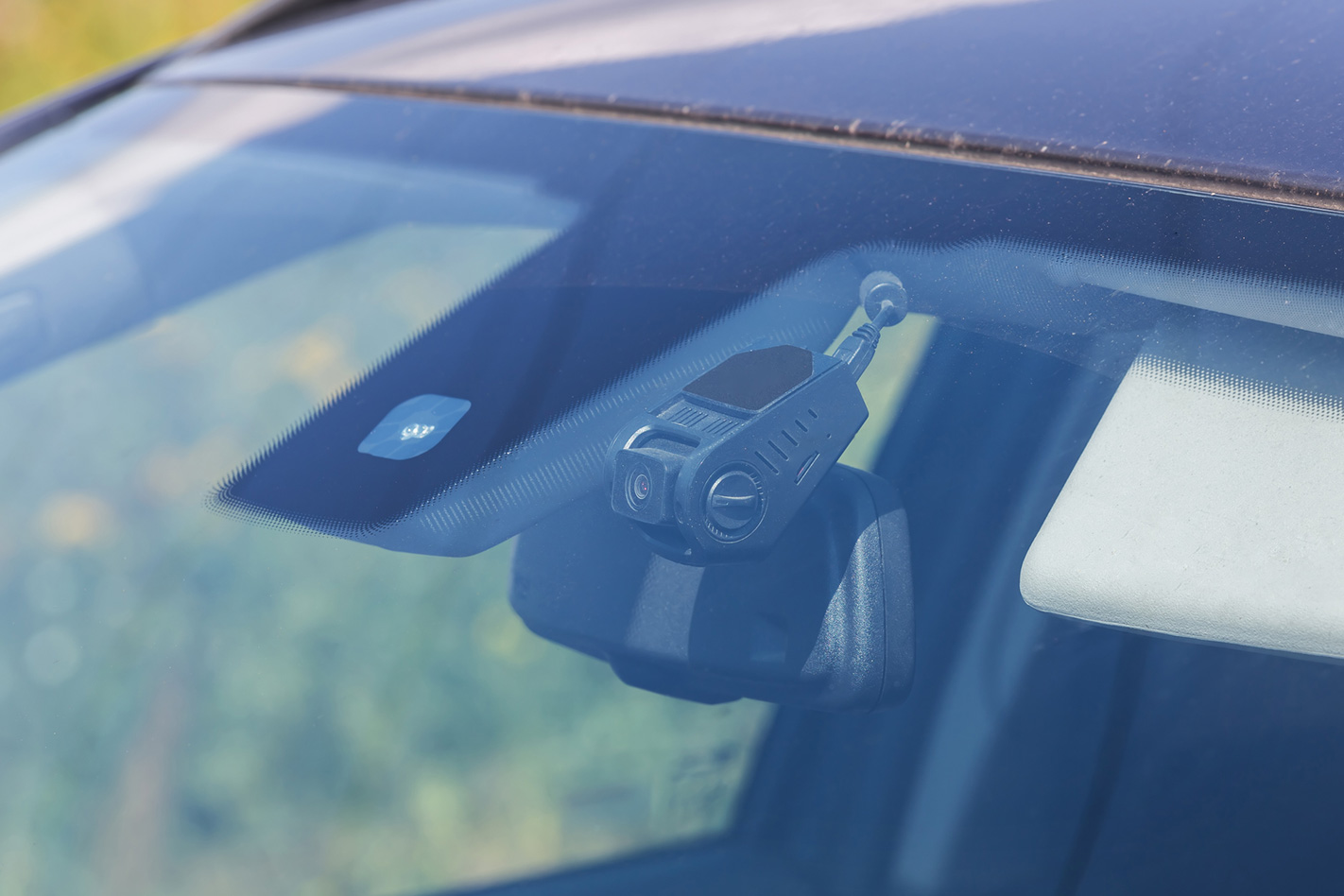
While some countries offer insurance discounts for drivers who own a dash cam, Australian insurance companies have not yet caught on to the trend, so while it may save you money on excess at claim time, it doesn’t save anything on insurance premiums.
Dash cams will also come in handy if you’ve got a young driver starting off behind the wheel, and you’re worried about how disciplined they’ll be when you’re not in the passenger seat, this is a good way to let your teen roam-free while still keeping a close eye on their driving behaviour. On top of that, some dashcams can remain powered on even when the car is parked and not running, automatically recording if they detect motion in front of them or the car is jostled by an external force – great for gathering evidence of vandalism or a hit-and-run.
Although dash cams can cost you a few hundred dollars initially, they could potentially save you thousands of dollars in the long run should you find yourself disputing an accident.
Remember the rule that front-drive cars couldn’t handle more than 150kW? It came about as whenever anyone tried, usually Saab, the end result was usually a torque-steering, tyre shredding mess. The rule no longer applies, modern tyres, clever differentials and trick suspension allowing the likes of the Honda Civic Type R and Renault Megane RS to deploy 220kW and more with few dramas.
There’s a similar rule regarding the manual transmission. Conventional wisdom suggests that anything with more than around 300kW is not going to be well suited to a DIY shifter. That level of power usually means there are enough things for the driver to concentrate on – primarily, staying in a straight line – without the distraction of three pedals and a lever to manoeuvre.
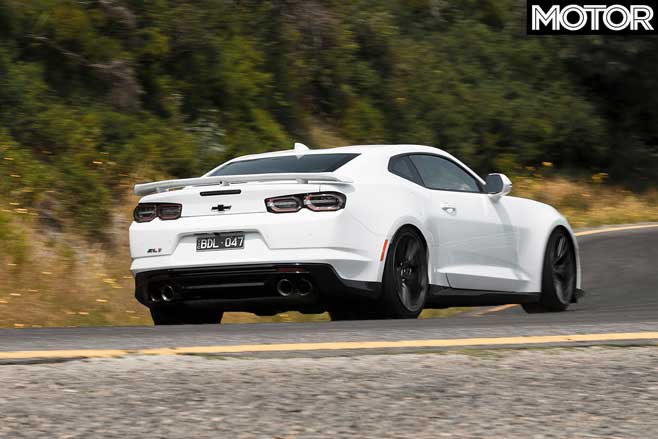
If that is indeed the case, then the Camaro ZL1 is going to be a right handful, as it has not 300kW but 477kW, ably backed by 881Nm from its 6.2-litre supercharged LT4 V8. However, as front-drivers can now handle 50 per cent more power than conventional wisdom suggests, perhaps the same is true of manuals?
The vast majority of the Camaro ZL1 is identical regardless of which gearbox you choose. There is the aforementioned 477kW/881Nm LT4 V8, MagneRide adaptive dampers, massive tyres (285/30 front; 305/30 rear), monster brakes (390mm discs with six-piston calipers front; 365mm discs and four-piston calipers rear) and the weights are within 12kg of one another, the manual being the lighter of the two.
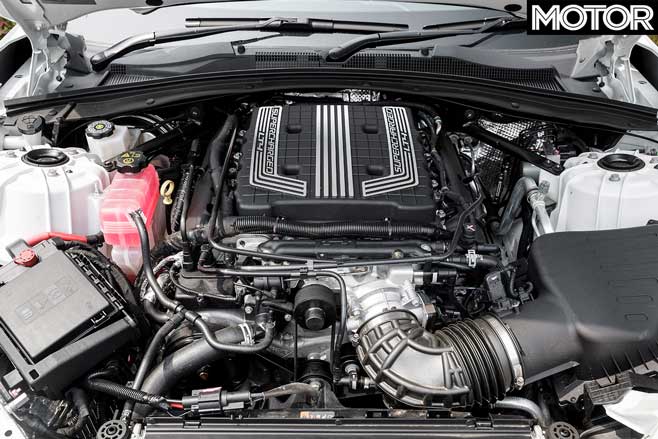
Thus, any differences in the driving experience are purely down to the bunch of cogs nestled underneath your left hand. And there are marked differences in how the two cars drive and perform. The Camaro ZL1’s manual is the venerable Tremec TR6060 HSV has used for years; however, there has been a number of varieties over the years. For instance, the GTS-R W1 used the close-ratio ‘MH3’ version, whereas the ZL1 uses the longer-legged ‘MJK’ iteration.
At its 6500rpm redline, the Camaro hits the following speeds: 100km/h (1st); 144km/h (2nd); 191km/h (3rd); 227km/h (4th); 320km/h (5th). The latter is its claimed top speed, which equates to 4580rpm in sixth. Cruise along at 2500rpm in a manual ZL1 and you’ll be doing 175km/h – best keep a close eye on that speedo.
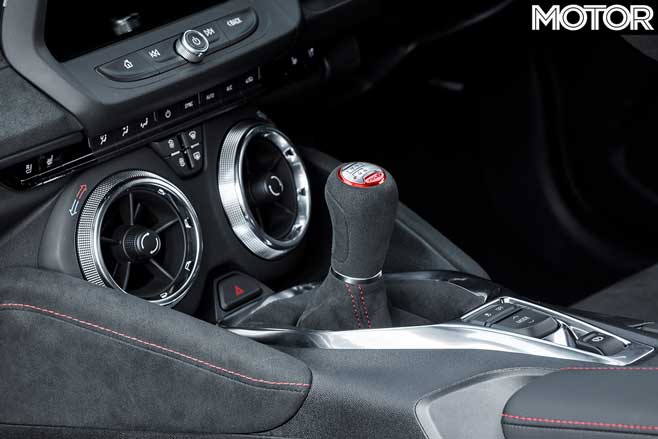
What’s truly impressive is the ZL1 doesn’t feel at all over-geared; it still rips ferociously through each ratio. It’s not as frantic as the 10-speed automatic, but the longer pauses are almost more impressive as your brain has more time to comprehend the sensation of seemingly never-ending acceleration. To give you an idea of the differences between the two variants, consider that at the end of the quarter mile the manual has just scraped into fourth gear, whereas the automatic is already well into sixth.
Tall gearing, gargantuan power and rear-wheel drive is traditionally a recipe for frustration at the drag strip, but the ZL1 is relatively straightforward. The key is to slip the clutch slightly to soften the launch – not easy as drivetrain protection attempts to kill the revs – and get the car rolling before feeding in the throttle as quickly as possible; it’s not the most mechanically sympathetic launch method, but it’s the only real way – any attempt to drop the clutch just bonfires the rear Continentals.
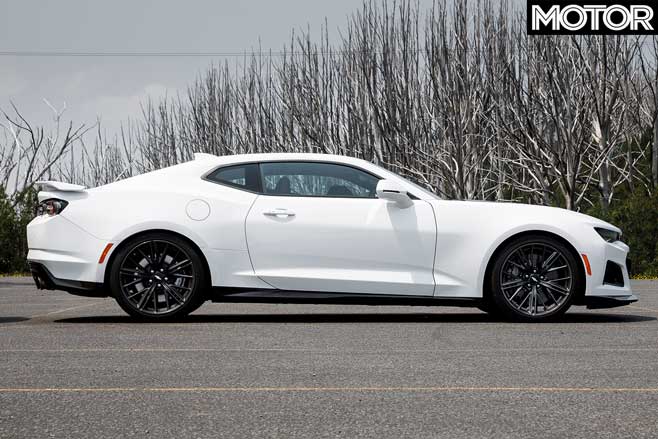
From there it’s a matter of using every available rev in first then changing gear as quickly as possible. The numbers are impressive: 0-100km/h takes 4.25sec and the quarter mile 12.12sec at 196.46km/h.
Apply one-foot rollout as you would at a drag strip and these figures drop to 3.99sec and 11.85sec at 196.51km/h. Brutal. The ZL1 really does have a preposterous amount of power; shift to fifth at 170km/h and it’ll still slam you back in your seat. Overtaking from 80-120km/h takes just 2.1sec. It’s a good shift, too, a step forward over the final locally-built HSVs, if not quite as sweet as in the Camaro SS.
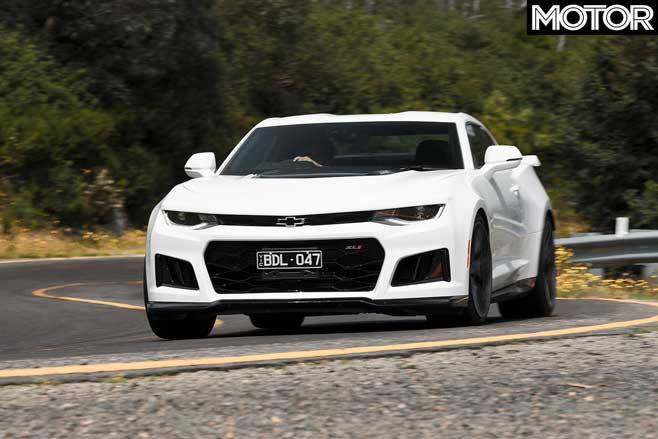
There are issues, though, primarily of the ergonomic variety. HSV doesn’t flip the centre console during the conversion process; in the automatic this is no issue – in fact, the orientation might even be preferable – but in the manual it means that anything placed in the cupholders occupies the real estate your arm requires to change gear. The pedal placement also makes heel-toe downshifts difficult, though Active Rev Match removes the need to do so.
In effect, choosing the appropriate gearbox for your Camaro ZL1 depends on your use case. If it’s a daily driver the automatic is the pick; the manual’s super-tall gearing and ergonomic quirks are annoying. Conversely, if it’s intended for weekend or track use, the manual is the one. Conventional wisdom be damned.
2020 CHEVROLET CAMARO ZL1 SPECS Engine: 6162cc V8, OHV, 16v, supercharger Power: 477kW @ 6400rpm Torque: 881Nm @ 3600rpm Weight: 1795kg 0-100km/h: 4.25sec (tested) Price: $159,900
Likes: Limitless power; involving dynamics; decent shift Dislikes: Insane fuel use; ergonomic issues
Rating: 4.5 out of 5 stars
