
Not everybody has Donald Trump’s outlandish tastes, or Mark Zuckerberg’s financial reach when it comes to choosing a new car. We can’t all afford to park a six-figure supercar in the driveway, or feed fuel into a high-performance engine that’ll do 0-100km/h in less time that it takes to get your wallet out.
Sometimes, we need to choose our next new car with a mind for economy of ownership, and that means it needs to be fuel efficient, affordable to buy, cheap to insure and service, and we want to sell it on again one day at the highest possible price.
Luckily for the more financially pragmatic new car buyer, 2019 is shaping as a year of incredible riches, with a number of $mart choices headed for Australian roads. Here is our pick of the top ten new cars for the fiscally focused consumer.
Audi A1
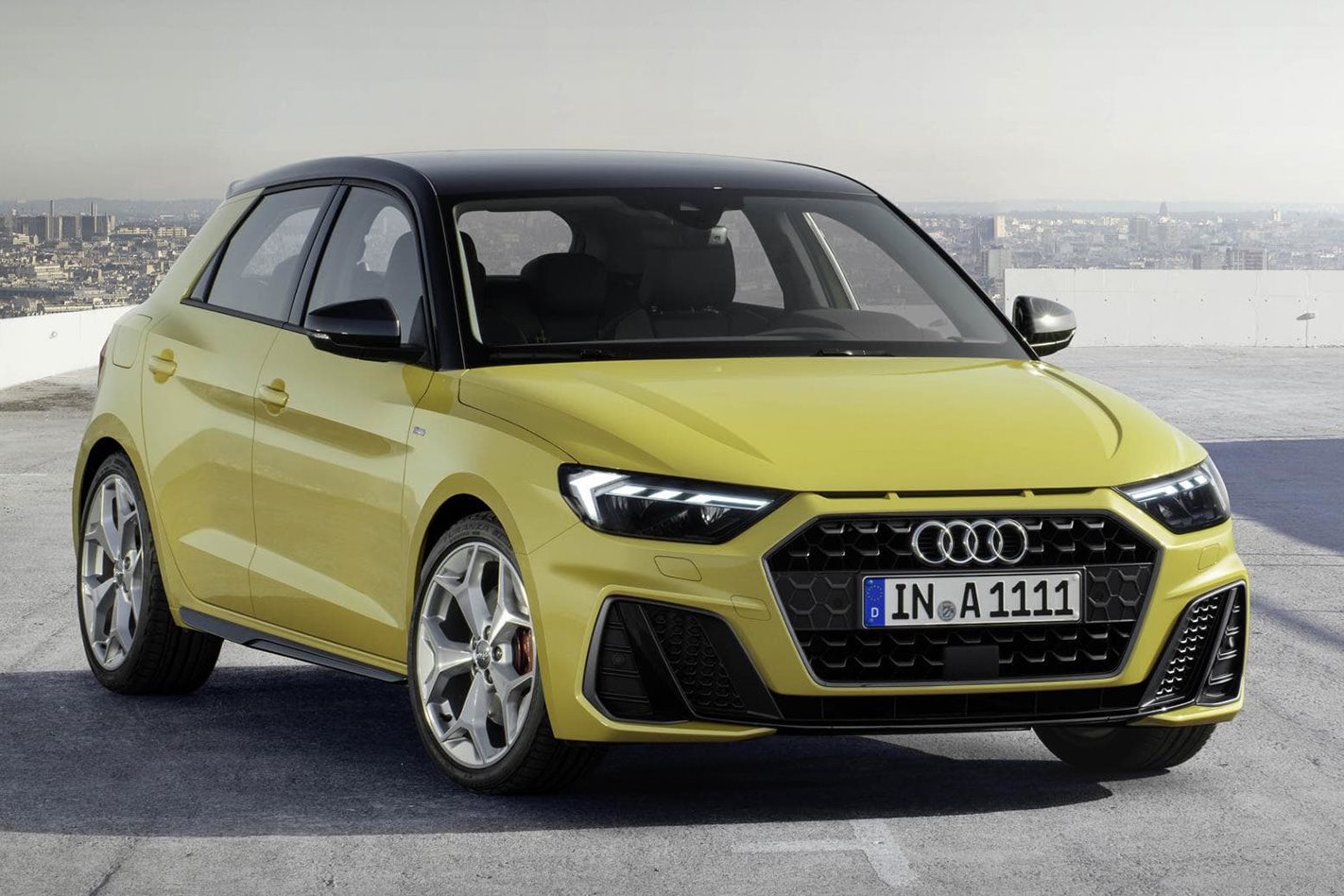
An all-new iteration of Audi’s gateway hatchback.
Price range: $30-40K
Rivals: Mini Cooper, Fiat 500
Due Date: March/April 2019
Spun-off from the new Volkswagen Polo platform, Audi’s box-fresh second-generation A1 city hatch promises to inject a great deal more sophistication into the bottom end of the German brand’s product portfolio. Now measuring over four metres long it’s physically bigger than before, but a range of new powertrains – including a 1.5-litre turbo four with cylinder deactivation – move the mechanical game along as well. Inside there’s a greater sense of maturity in the cabin furnishings, plus plenty of infotainment tech.
BMW 1 Series
Baby Beamer is now less for the baby boomer with front drive
Price: $42,000-$72,000
Rivals: Mercedes Benz A-Class, Audi A3/S3
Due: November 2019
BMW is being pretty cagey on this one, but let’s have a swing anyway… Swapping to front wheel drive for the first time, the BMW 1 Series will still yield a performance variant – only this time it’s likely to mimic the M5 by offering all-wheel-drive in conjunction with a turbocharged four-cylinder petrol engine. This will pitch it up against Mercedes-AMG’s inbound A-Class hotties.
Given the potential change to a front wheel drive layout, it does put questions marks around the fate of cars like the M140i – it may well even be given a stay of execution until BMW’s first real FWD hot hatch is, err, hatched.
Ford Focus Active
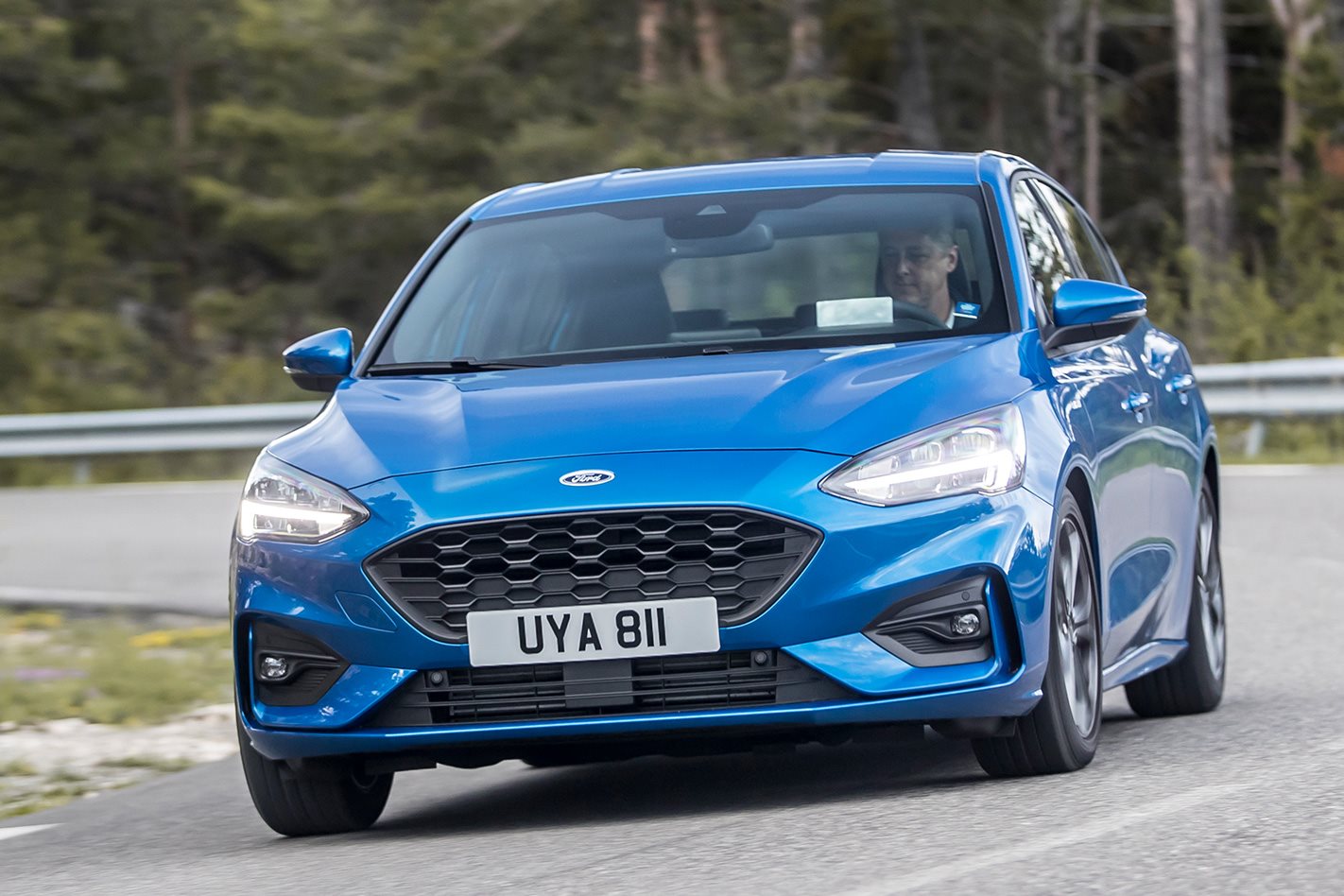
A jacked-up version of the Focus for those with an outdoorsy bent
Price range: $29,990
Rivals: Subaru Impreza XV, Fiat 500X, Citroen C4 Cactus
Due Date: second-quarter
The Focus hatch has already received its full model changeover by now, but the family will grow when the Focus Active rolls into Ford showrooms in 2019.
Following a similar format to the Impreza-based Subaru XV but described by Ford as a passenger car rather than an SUV, the Focus Active will bridge the gap between the regular Focus hatchback and Ford’s bona-fide SUV line-up. The ‘missing link’, if you will. Only one engine, a 134kW 1.5-litre turbo petrol, will be offered, and the Focus Active is strictly front-wheel drive with an eight-speed automatic.
Mazda 3 – mid-2019
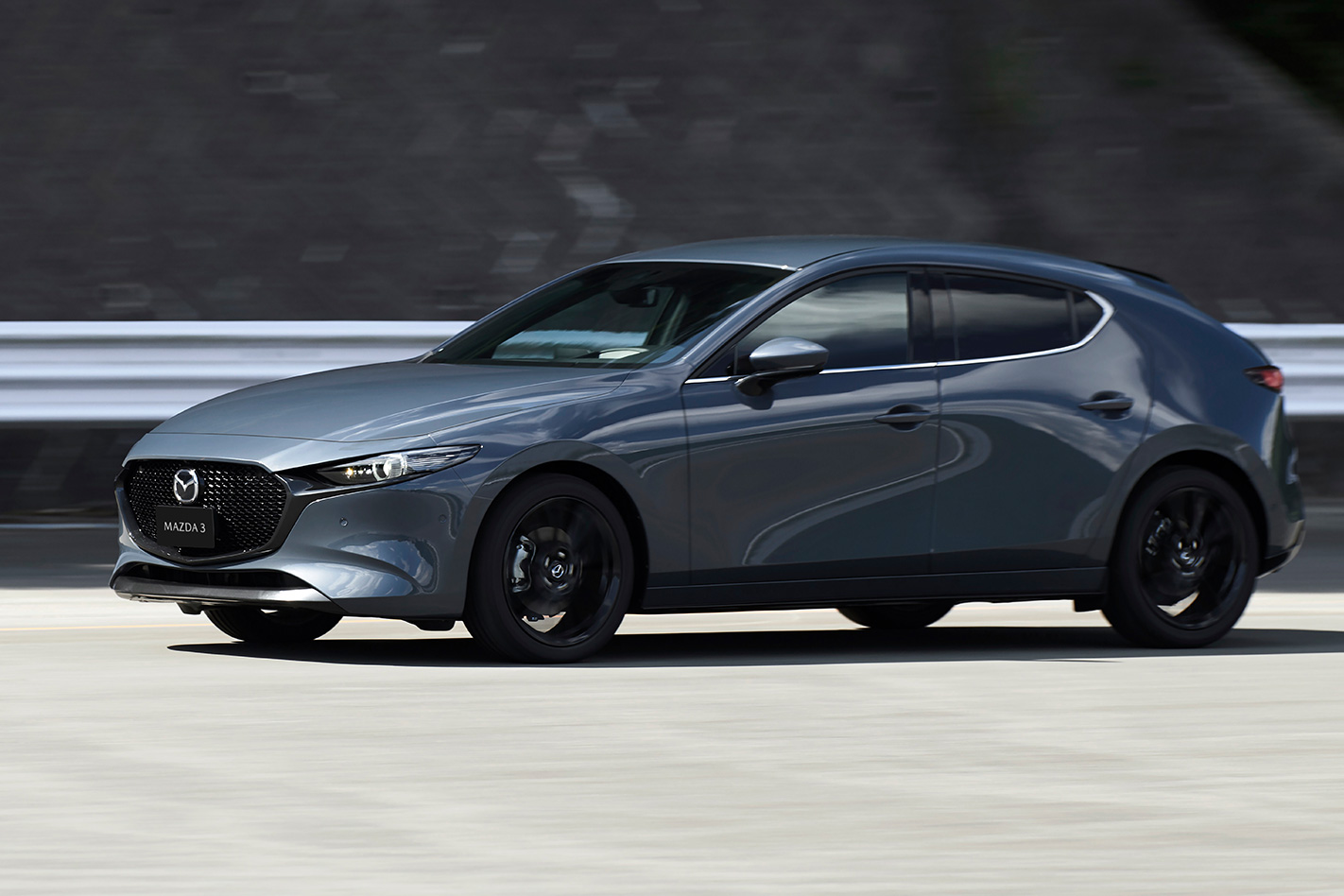
Mazda’s evergreen and much-loved all-rounder returns in its fourth generation
Price: $22,000 (estimate)
Rivals: Toyota Corolla, Hyundai i30, Kia Cerato, Volkswagen Golf
Due: June (approx.)
In the middle of the year Mazda Australia will change over its popular Mazda 3 range with an all-new generation hatch and sedan, and while local details such as range structure and pricing are still far from ironed out, the design of the new 3 shows that Mazda’s mainstay small car is set to be a real looker. The hatch and sedan will be quite visually distinct from the B-pillar rearward – certainly more so than the current generation – and the local powertrain line-up is likely to include Mazda’s innovative and ultra-efficient SkyActiv-X supercharged compression-ignition engine.
MG HS
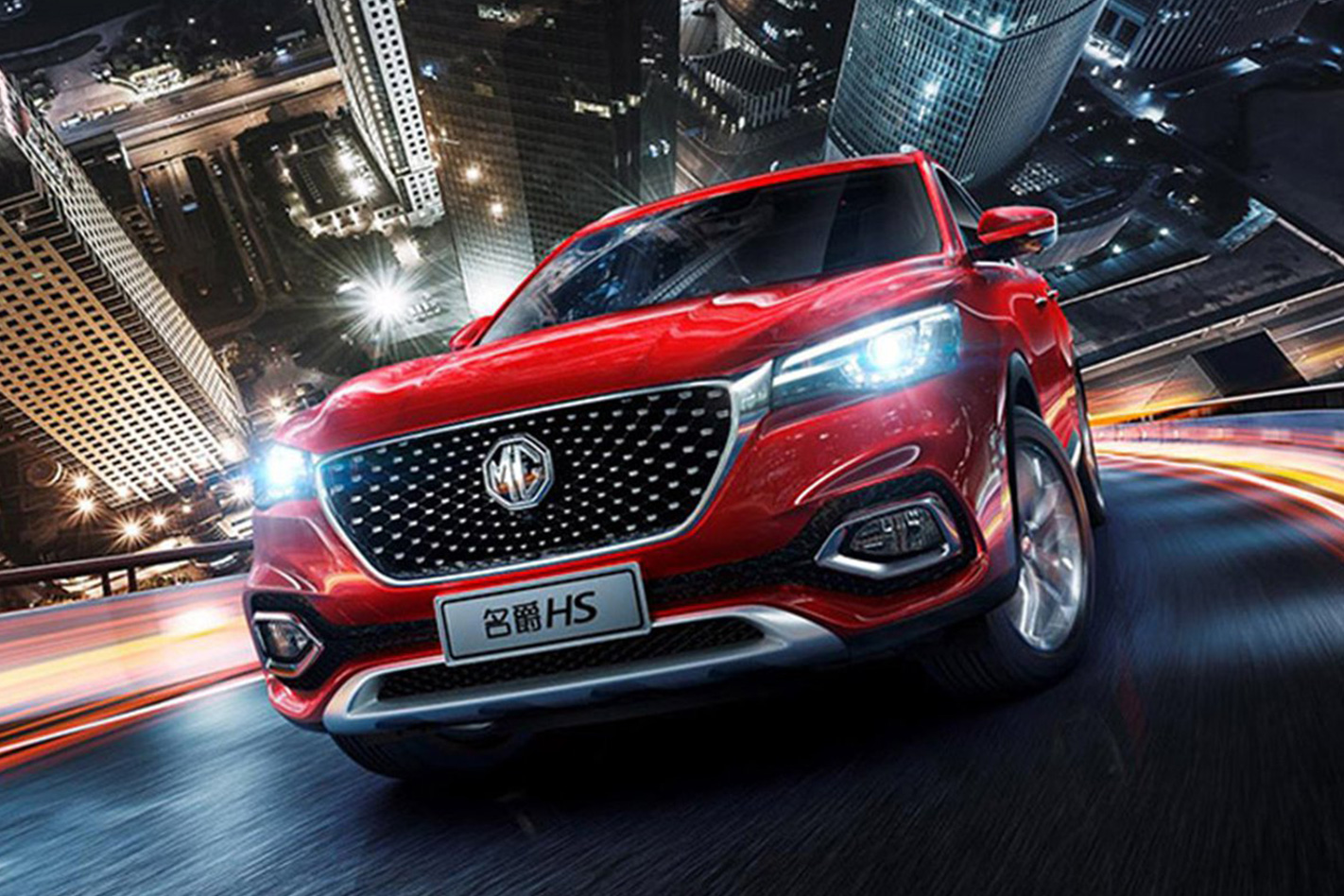
MG hopes to boost sales in Australia with its premium-equipped new-generation medium SUV.
Price range: $27,000 – $37,000 (estimated)
Due date: Late 2019
Rivals: Mazda CX-5, Toyota RAV-4, Hyundai Tucson
Based on the X-Motion concept revealed at the 2018 Beijing Motor Show, the MG HS’s attractive lines appear to have been penned to directly take on the Mazda CX-5, with state-of-the-art driver assistance tech and German-rivalling upmarket cabin appointments to sweeten the deal. The latter includes a 12.3-inch digital instrument cluster, 10.1-inch infotainment screen, soft-touch surfaces and eight-speaker Bose sound system. A gutsy 2.0-litre turbocharged petrol engine will be one of the engine options, with all-wheel-drive also available.
SsangYong Musso
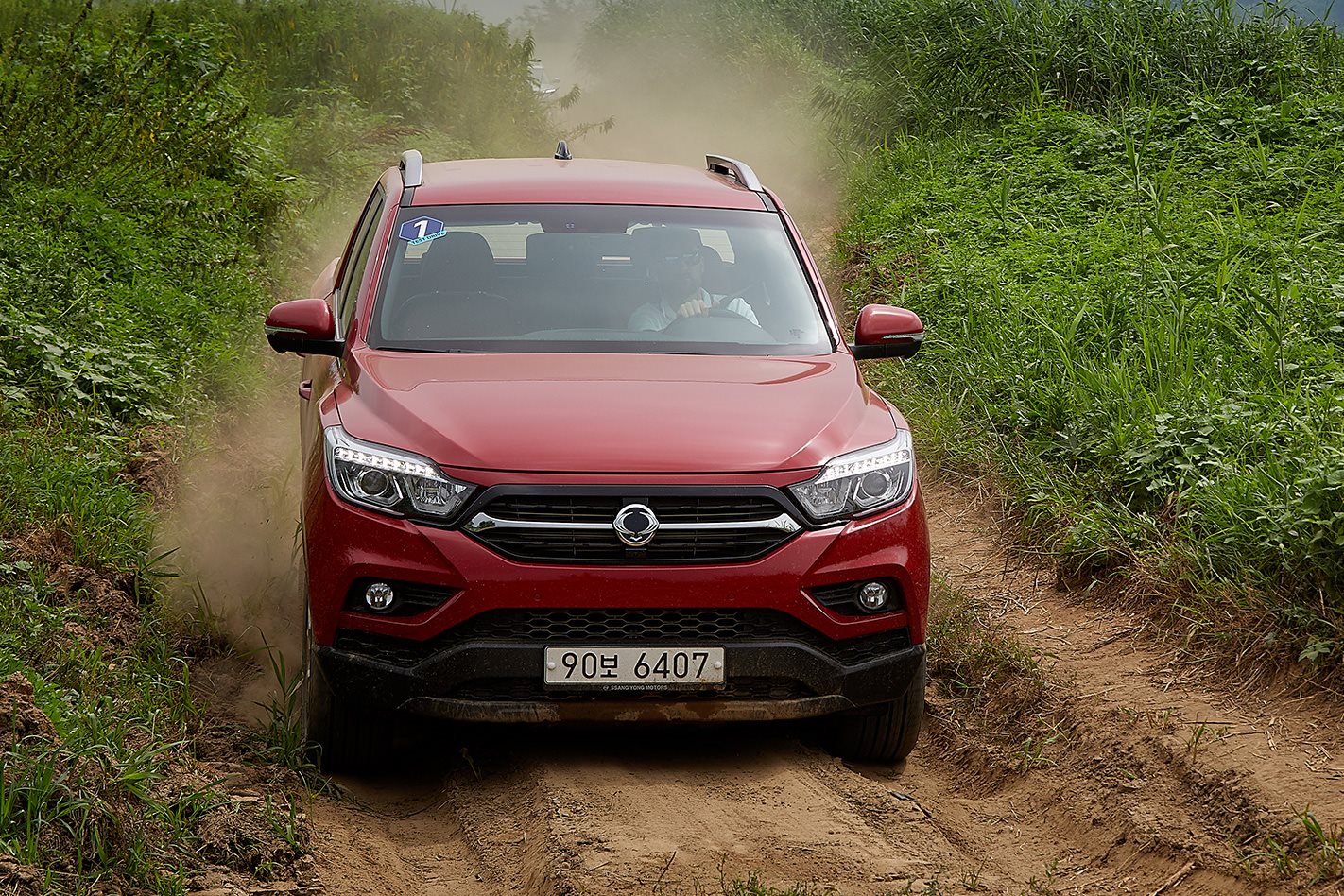
Returning South Korean ute brings sharp pricing, neat features and class-leading warranty
Price range: $30,990 – $39,990 Rivals: Toyota Hilux, Nissan Navara, Isuzu D-Max, Ford Ranger, Holden Colorado, Mazda BT-50 Due date: January
After a two-year hiatus, SsangYong is back on Australian turf with a factory backed operation and a four-model assault for its relaunch. Leading that charge is the Musso one tonner, which makes a good case for itself with standard AEB, enticing prices and an unbeatable seven-year warranty.
Been spending a bit of time underneath a late-’70s Toyota of late. Long story, short answer: I’m a weirdo.
Anyway, point being that, as the galoot who’s got to fix/refurbish the gadget in question, I am absolutely in love with the simplicity of the bugger. It’s not that I’m lazy or dim, but if the mechanical layout is such that I can understand it, get parts for it and repair it with hand tools, then I’m a fan.
The rear end in question is Exhibit A – live axle, coils, a pair of trailing arms and a Panhard rod. Not one of them fancy Watts-Linkages, you understand, a Panhard rod complete with two bushes and zero moving parts.
With a 17mm spanner, a decent workshop press and half an hour, you can completely rebuild the rear end of this car back to perfect (stay with me) condition. As in, precisely the way it left the factory. As good as it ever was.
Okay, so the flip side there is that even after that 30 minutes of intensive care and attention, the rear end is also as bad as it ever was. But I’m left wondering if that’s so bad after all.

Maybe for those of us who get their jollies on the nuances of four-wheeled dynamics, there’s an argument that yes, indeed, there’s a case to be made for the sort of sophistication that has infiltrated car design ever since we threw away the crank-handle.
I can certainly feel the difference between an independent rear end and a live axle, and I’m sure you can, too. But what about the difference between a tail-dragger with IRS and one with a well-sorted torsion-beam rear axle? Would you spot the difference every time? On every surface? I bet I couldn’t.
And what would you rather own? A simple car that is well made from quality materials or a slap-happy piece of crap that happened to have an el-cheapo version of a higher-tech solution?

If none of us chose the quality/simplicity equation over the theoretical advantage of novelty tech, nobody would ever appreciate something like a Lambo Miura or a Phase III GT HO. Because, according to the logic of techier is betterer, even a Bulgarian-built SUV with stink lines coming off it would be a more worthy car thanks to its newer and allegedly superior technology. I don’t think so. Let’s move it away from cars: I’d rather stay in a good tent than a crap hotel room. And I don’t think I’m alone.
And what about the appropriateness of technology? I’m damn sure my sainted mother would be hard pressed to tell me whether her car has two flat rear tyres or not, let alone what manner of tech was attaching them to the rest of the car.
And since stability control will generally be enough to keep her safe – especially since her only drive is about five kliks at 50km/h these days – does she really need a multi-link rear end, or will a torsion-bar deal do just nicely?

Surely, any advantage offered by the former will never be explored by Mater, even if she does somehow manage to get the old Yaris a bit squirrely. By the time she’s even worked out that something’s up, the ESP will have stepped in and done its thing.
Meanwhile, the manufacturer could redirect the same dollars it takes to license new technology into building more quality into a simpler design. I’m dead certain Mother would be better off with a simple car that would last the next 30 years with basic maintenance than a technically superior device with so many moving parts that she can’t afford to keep it roadworthy. We’re back to square one here, ain’t we?
Picture an old car that has single-cam two-valve layout, a simple semi-trailing link rear end, no power steering and a laughable specific power output (like about 120kW – on a good day – from 3.0 litres).
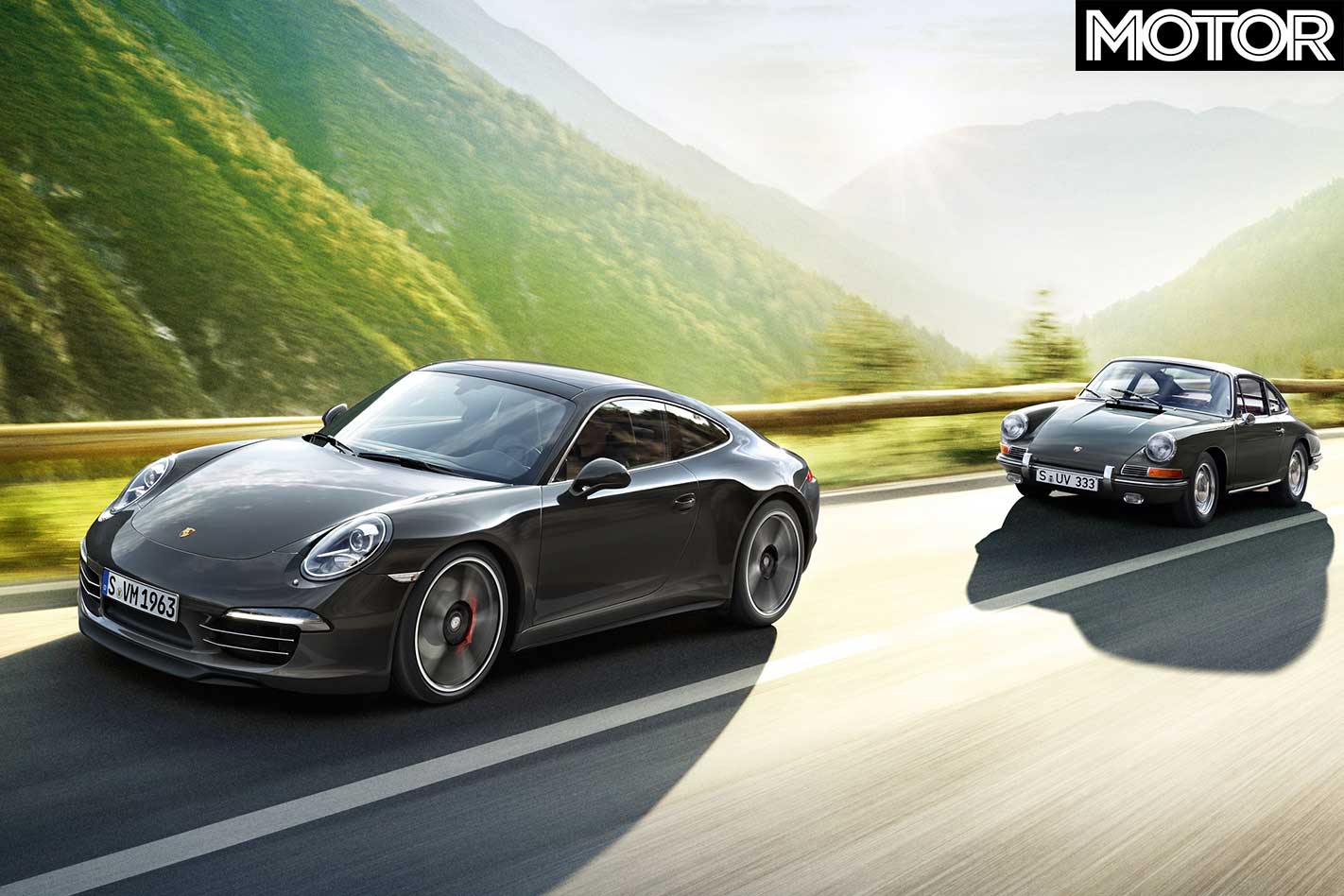
A 2018 MG 6 Plus, another sporty small car (if you trust the brochure) has DOHC, power steering, a multi-link rear end and as much power from just over half as much engine capacity. So which one ya gonna drive home in, Monkey-Boy? The MG or the early Porsche 911?
No further questions, Your Worship.
An international WRC driver, bearing one of rallying’s most famous names, meets a local lass during Rally Australia. Romance blossoms, marriage and kids ensue, and eventually, they settle in Perth. That’s how it happened for Alister McRae, 47, though there’s a lot more light and shade to his story – including the bright star of his older brother, the late Colin McRae.
Alister is the middle of three sons to Jimmy McRae, five-time British rally champion. Alister raced motocross from age 13 before making his rally debut, in 1988, on the local Kames Stages rally, as had older brother Colin three years earlier.
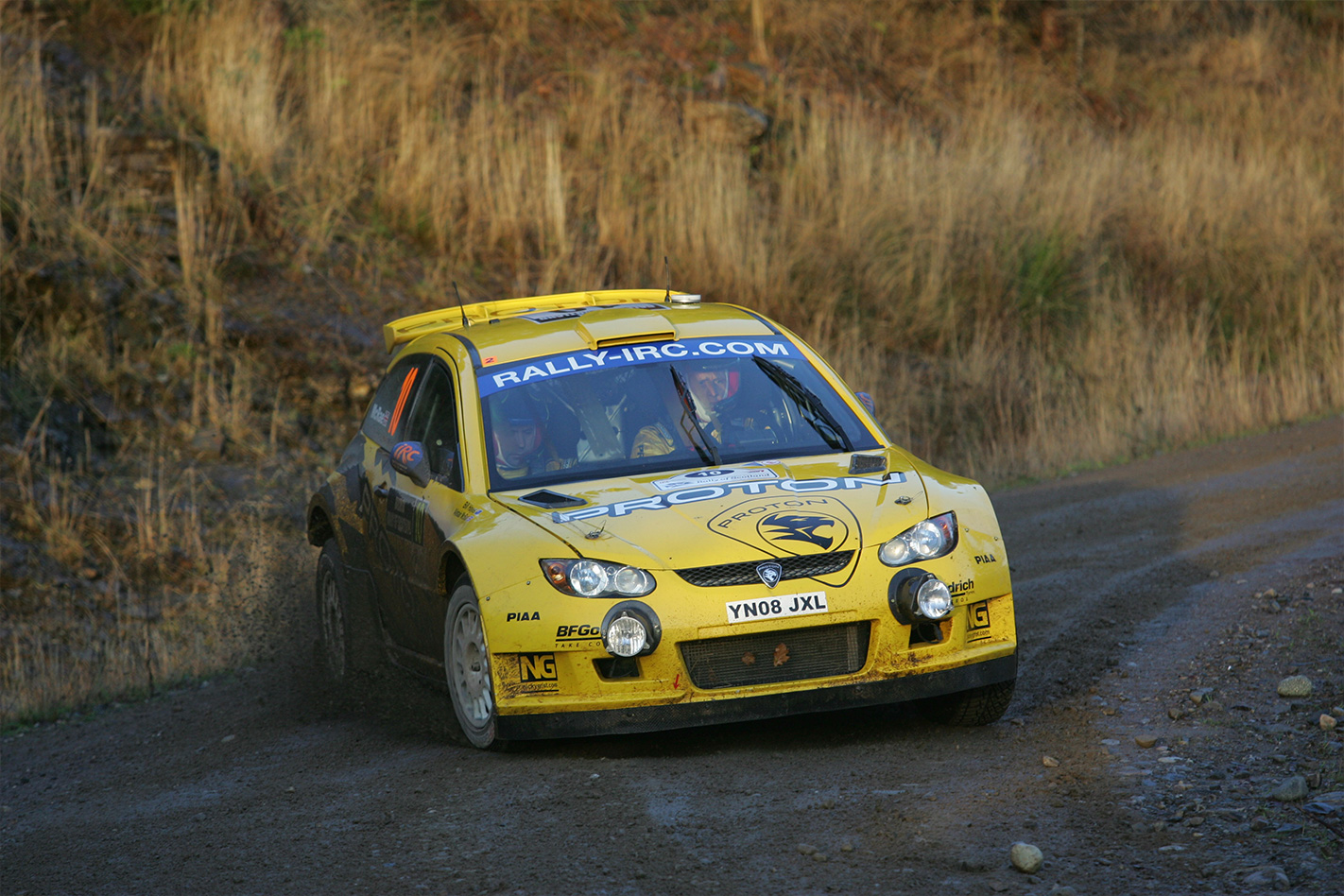
“My career then progressed from Scottish championship to British championship, to doing some WRC rounds with Nissan and Volkswagen Formula 2 … In Formula 2 we won the 1000 Lakes Rally Finland, beating [Harri] Rovanpera and [Toni] Gardemeister. To go to Finland and beat them in their own backyard, that was definitely one of the highlights.” His F2 efforts took him to WRC newcomer Hyundai in 1999, developing the Accent WRC that he would drive in 2000.
Was the McRae name a help, or a hindrance?
“Colin obviously followed in our father’s footsteps, but outgrew them when he got to WRC. But I had it with my father in the British, then with Colin in the WRC … In the early years it’s a massive help. But as I progressed, people were of the opinion that there can’t be two brothers that can do as good a job.”
Alister moved to Mitsubishi for 2002, coinciding with the uncompetitive Evo VIII WRC. For 2004 he signed for the Production WRC in a privateer Subaru. But by then, he had pleasant distractions outside of work.
“I met Tara when I was here in 1999 with Hyundai. She was working at the Sheraton, and we started chatting…
“Tara came over to Scotland and we ended up getting married there, and having our kids [Emmie, 15, and Max, 14]. But I love Perth – the fact you can jet ski, motorbike; there’s sunshine most of the time … we decided we’d come out and give it a go before the kids started school.”
Colin’s fatal helicopter crash was in September of that year [2007].
“Well, everybody’s got their opinions of him and his driving. But there was a lot more to him – he was very mechanically sympathetic in cars, he won events where he didn’t drive flat out. But he did have that ‘I want to win and I want to win everything’…”
Settled in Perth, Alister was still driving internationally, winning the 2011 Asia-Pacific Rally Championship with Proton. He also raced his KTM 500 enduro bike in the 2013 Australian Safari, winning the production class.
“I also started a partnership in a driver and safety training business here. Motorsport coaching was the fun side of the business, but the bulk was in mine-site certification; safety training for mining, oil and gas companies.”
He and Tara are these days partners in a Perth gym, McRae Fitness. Driving these days is mostly for fun.
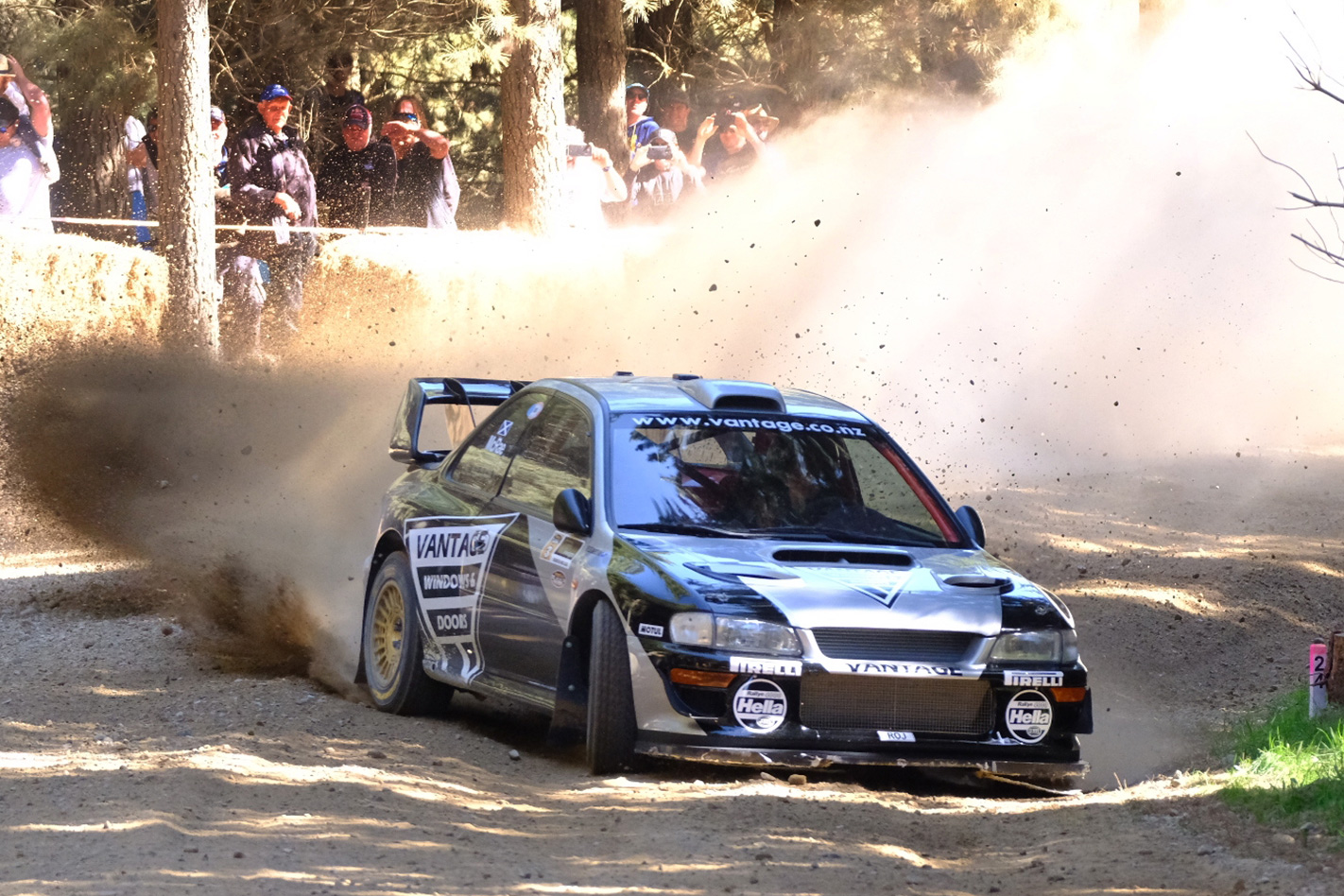
“I still do a bit of coaching and training. The driving I do now is, I don’t want to call it ‘demonstration’, but basically events like the Goodwood Festival of Speed. Recently I was in the US with DirtFish, a rally school in Seattle. While I was there I also did some filming work in a Lancia 037. In New Zealand, we’ve done quite a few hillclimbs with the Vantage Subaru.
“I look now at what my dad’s doing. He’s still driving rally cars at 75 and still going fairly quickly. I think that’s pretty special.”
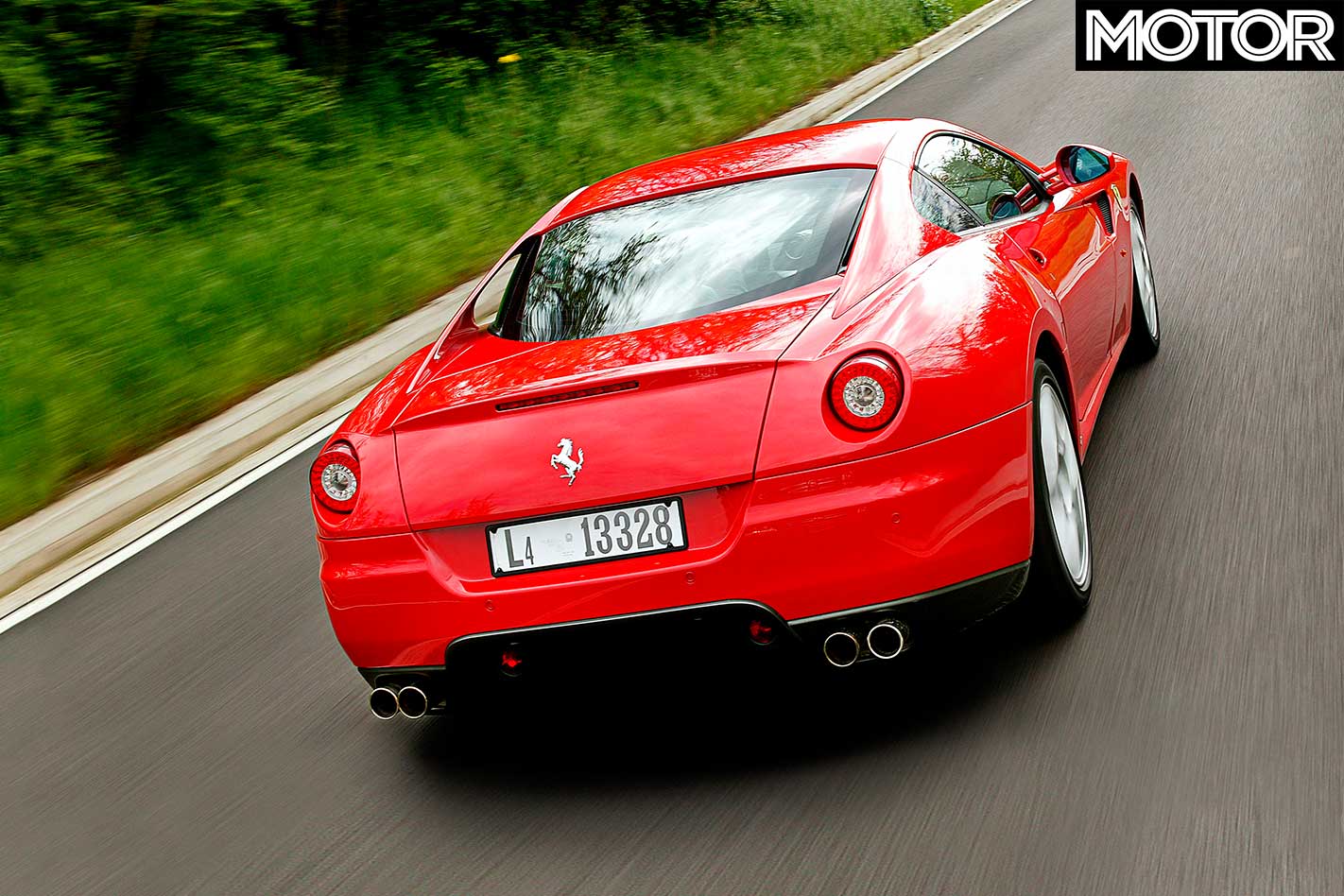
At 250km/h you’re covering 70 metres per second. Specks on the horizon rapidly become slow moving trucks and caravans, none of which is expecting your approach quite so soon. Even when most fast cars are having their fury reigned in by aerodynamic drag, Ferrari’s new flagship 456kW V12 is tearing through the air at an undiminished pace.
This review was originally published in MOTOR’s July 2006 issue
Fully intent on cracking 300km/h, my vmax run on the three-land autostrada has to be abandoned at 275km/h when a lumbering semi-trailer swerves across the middle lane an into the fast lane to avoid some debris in its path.
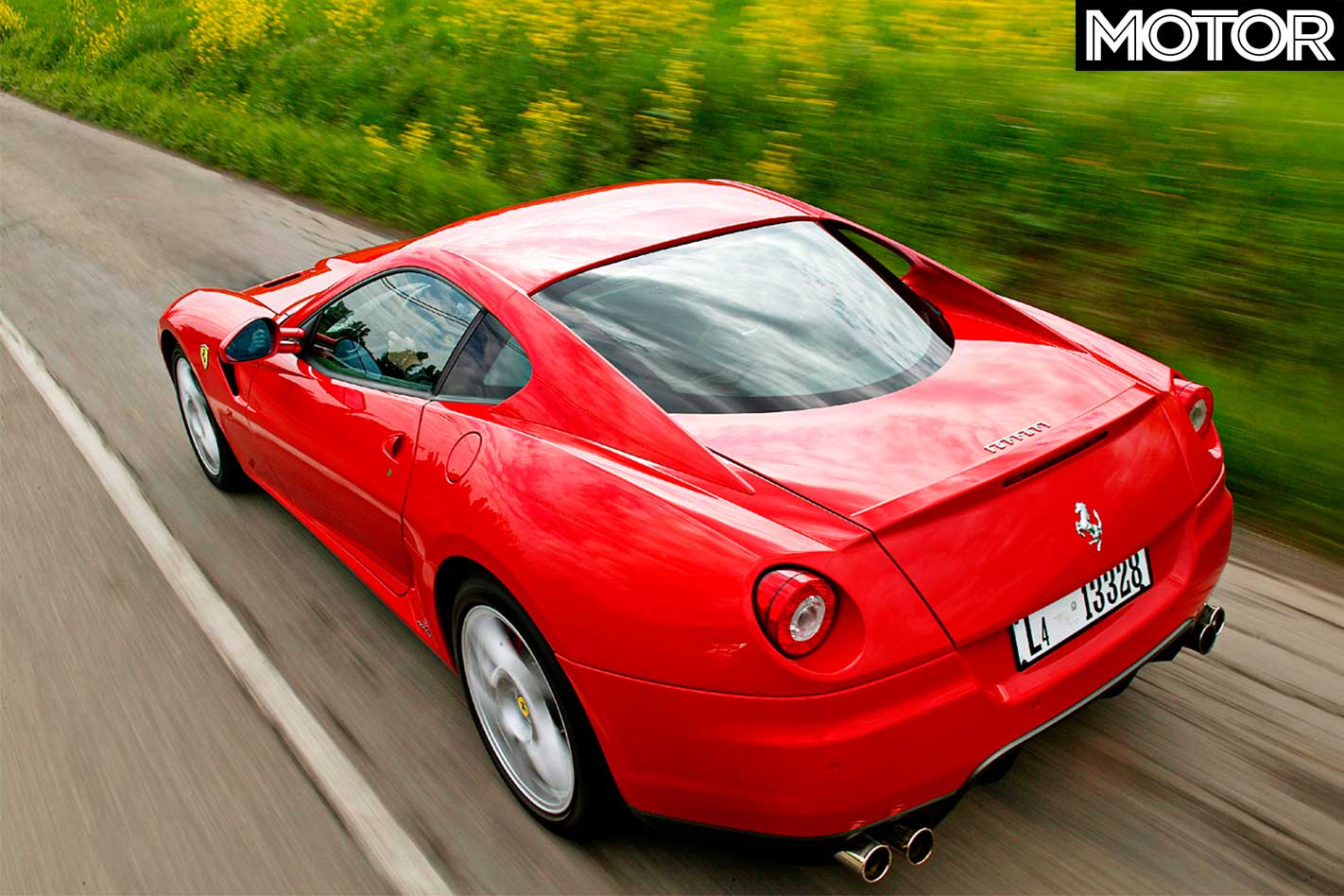
Undeterred, my co-driver gets a clearer run later in the arvo and winds the bellowing 599 GTB out ot 320km/h – a needle-width shy of the magic 200mph mark – and within shouting distance of the claimed 330-plus top whack. The rate of acceleration in sixth gear only really starts to trail off above 305km/h, with the speed building in tiny increments from 310km/h.
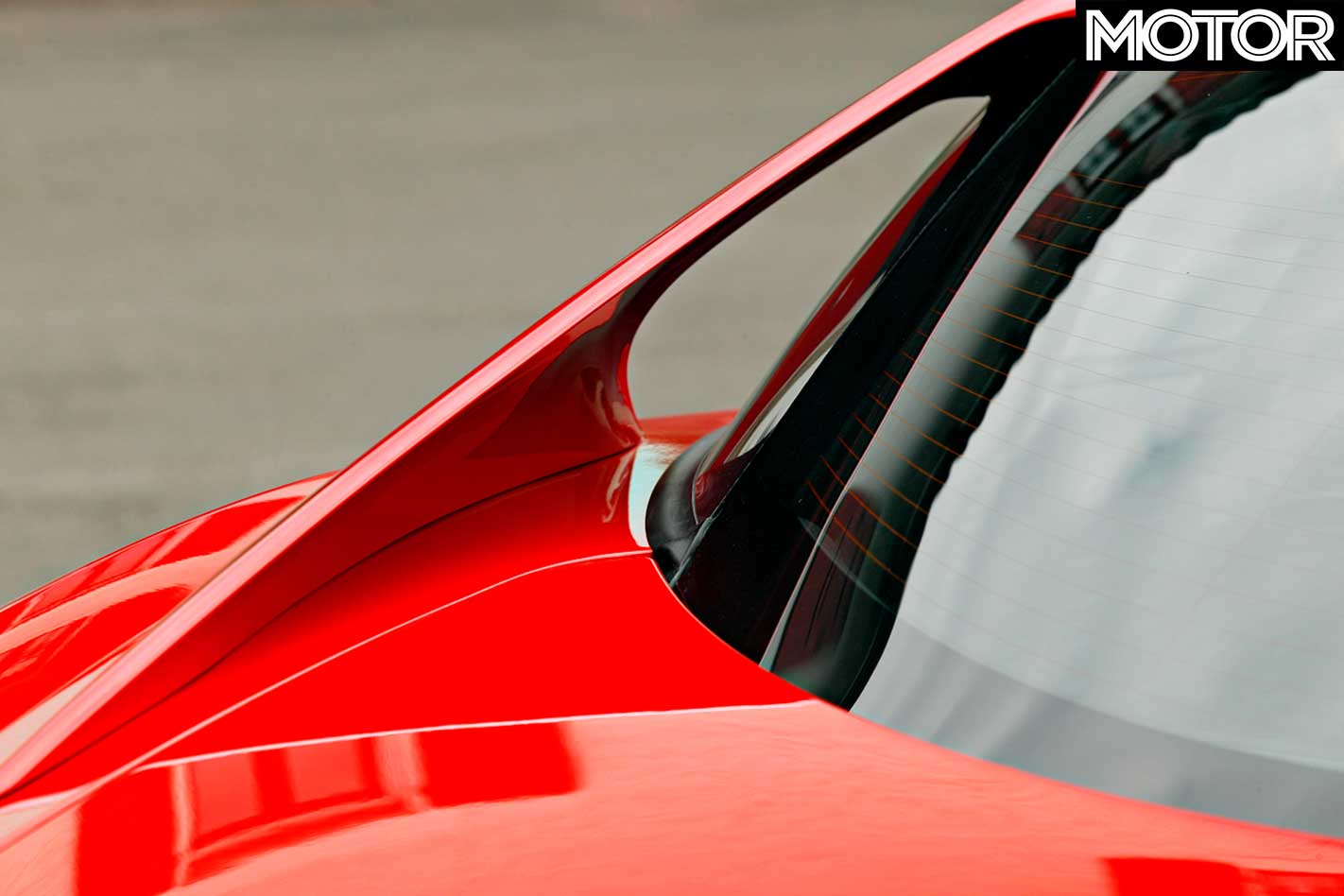
Aside from being very aware of the speed, the GTB is actually easy to drive at this incredible pace. At 300km/h there’s 160kg of downforce split 47:53 percent front-to-rear – the old 575M Maranello had zero downforce at this speed. Find the room to wind the Fezza out to 330km/hand the downforce builds to 190kg – 50kg ofwhich is thanks to the flying buttress C-pillars.
By any measure the 599 GTB is a seriously fast car. Ferrari claims a 0-100km/h blast in just 3.7 ticks of the TAG (with the aid of launch control). Keep the throttle buried and you’ll see 200klicks in 11-flat. But the real measure of the latest stallion from the Prancing-Horse stable is at Ferrari’s Fiorano test track.
Around the tight and technical 2.9km circuit, chief test driver Dario Benuzzi has clocked a best of 1:26.5sec. For reference that’s just 1.5 seconds slower than an Enzo and half a second faster than the mid-engined F430 coupe. It’s also a full 3.5 seconds quicker than the legendary F40 and the 575M Maranello it replaces.
Aside from the numbers, Ferrari brass is keen to highlight the technical differences between the old and the new V12 flagship. According to the Head of Product Portfolio Development, Massimo Furmarola, the 599 “only has the number of cylinders and [65-degree] V-angle in common with the 575M.”
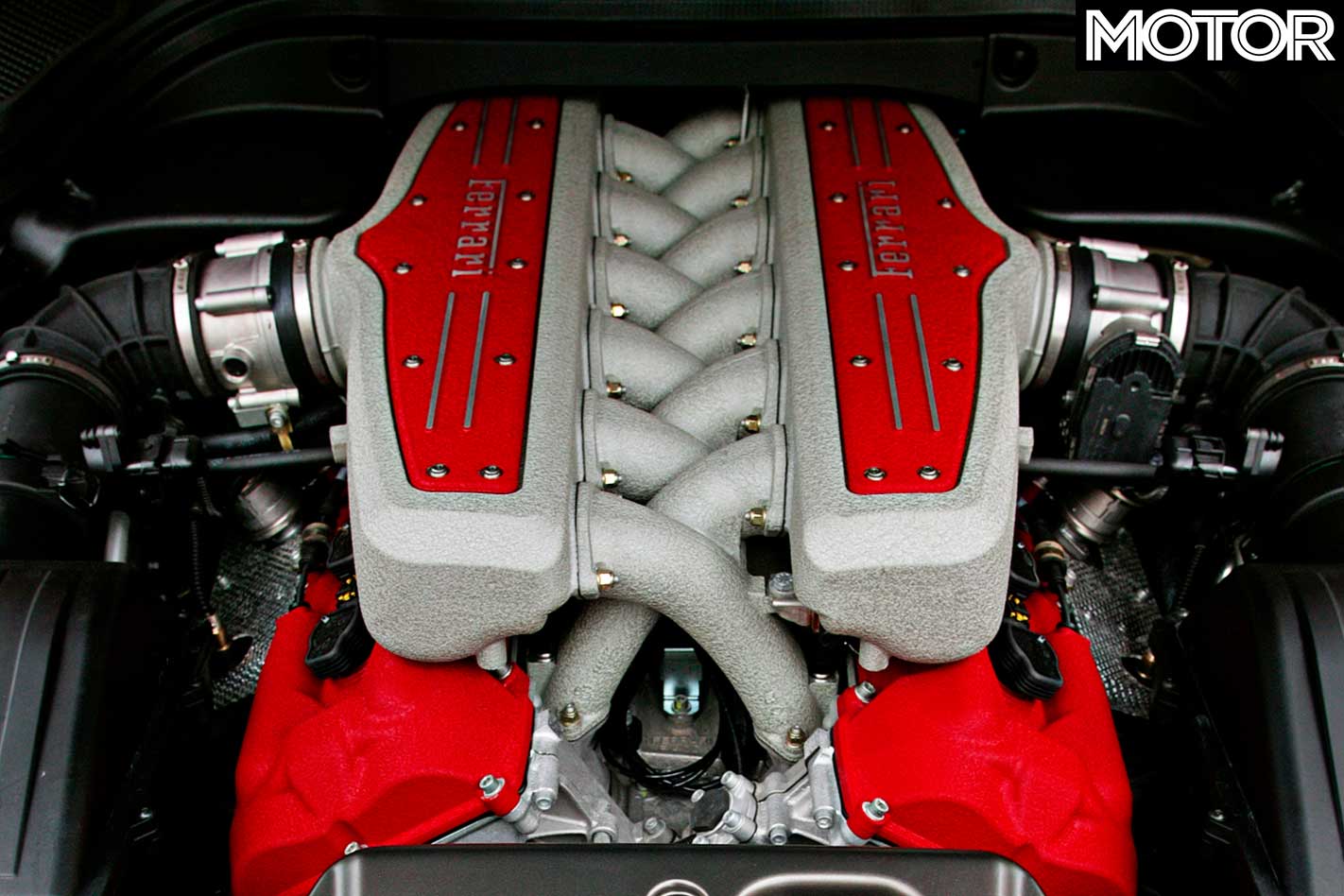
The new 6.0-litre V12 is closely releated to the 485kW unit in the limited-production Enzo, using the same block, heads and sump. Changes were made to increase service life, tractability and to reduce costs, but the major change is a shift from titanium conrods in the Enzo to more conventional forged steel rods in the Fiorano. There’s also changes to intake and exhaust to suit the front-mid-engined application.
The 456kW power peak occurs at 7600rpm but there’s still another 800rpm to go before the limiter. Torque maxxes at 608Nm at 5600rpm, but 90 percent of the peak is on song at 3500 revs. Break those numbers down per litre and you’ve got 76kW (or 102bhp) and 101Nm per 1000cc – both remarkable figures for a big capacity naturally-aspirated engine.
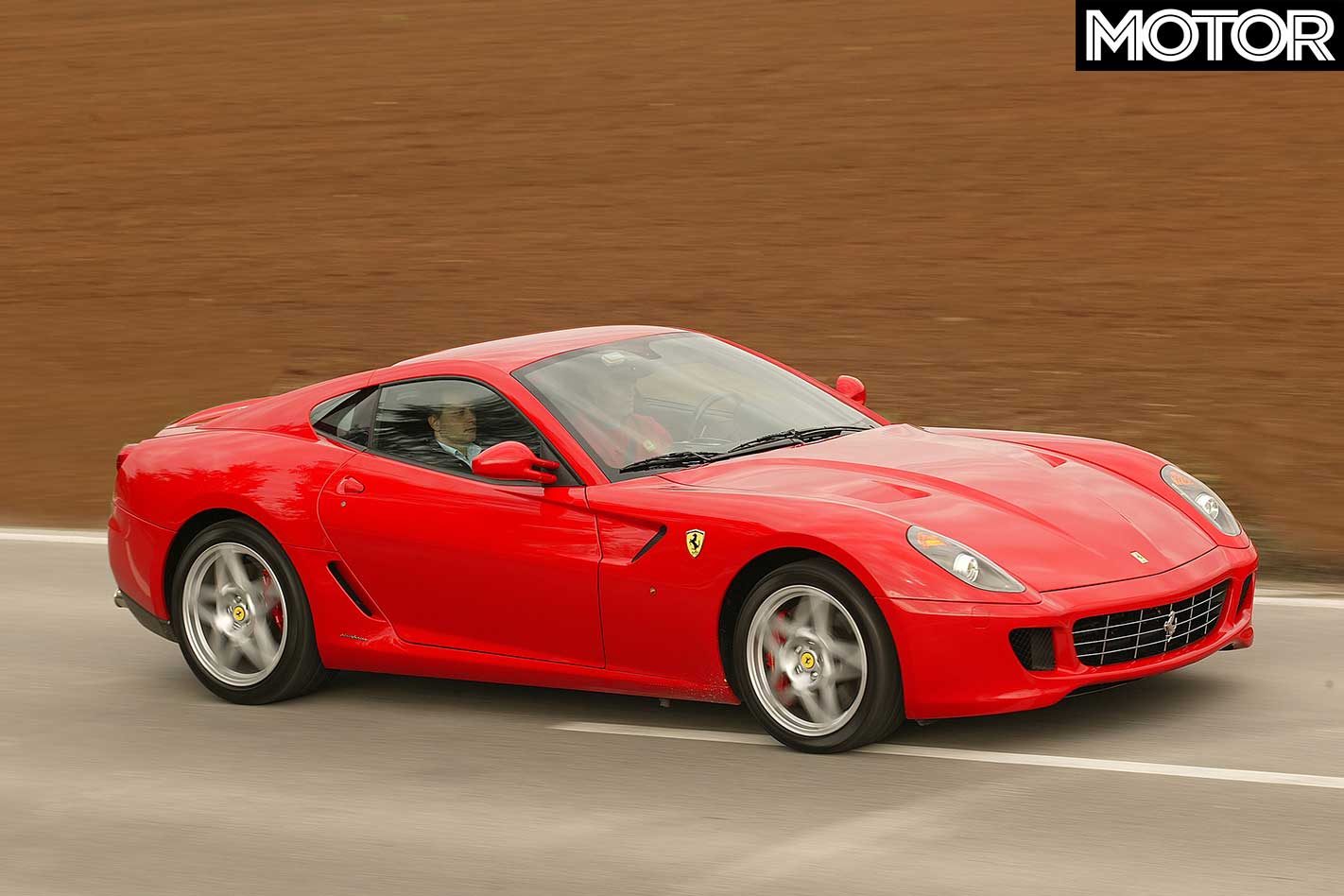
Unlike the Lamborghini Murciélago LP640 there’s no pronounced ramp up in power throughout the rev range. It’s just one long slug of addictive power and a shitload of it. And after the synthetic and anodyne note of the 575M, the new V12 sounds amazing – deep and gruff at idle, barrelchested low in the rev range and hard-edged and metallic above 6000rpm.
It’s not as shrill and manic as the V8 F430, but then this is still a true GT car to be used everyday. If you don’t bury the throttle to the bulkhead, the 599 is no louder than a V8-engined Mercedes E-Class.
Although an H-pattern gearbox will be available on the 599, all cars at the launch featured the new F1-SuperFast sequential manual ’box and it is brilliant. Total shift times with the steering wheel mounted F1-Trac manettino in Race and comp modes drops to a startling 100 milliseconds; an Enzo takes 150ms. The shift itself takes just 40ms but the rest of the time is for the clutch to release and let you nail the throttle.
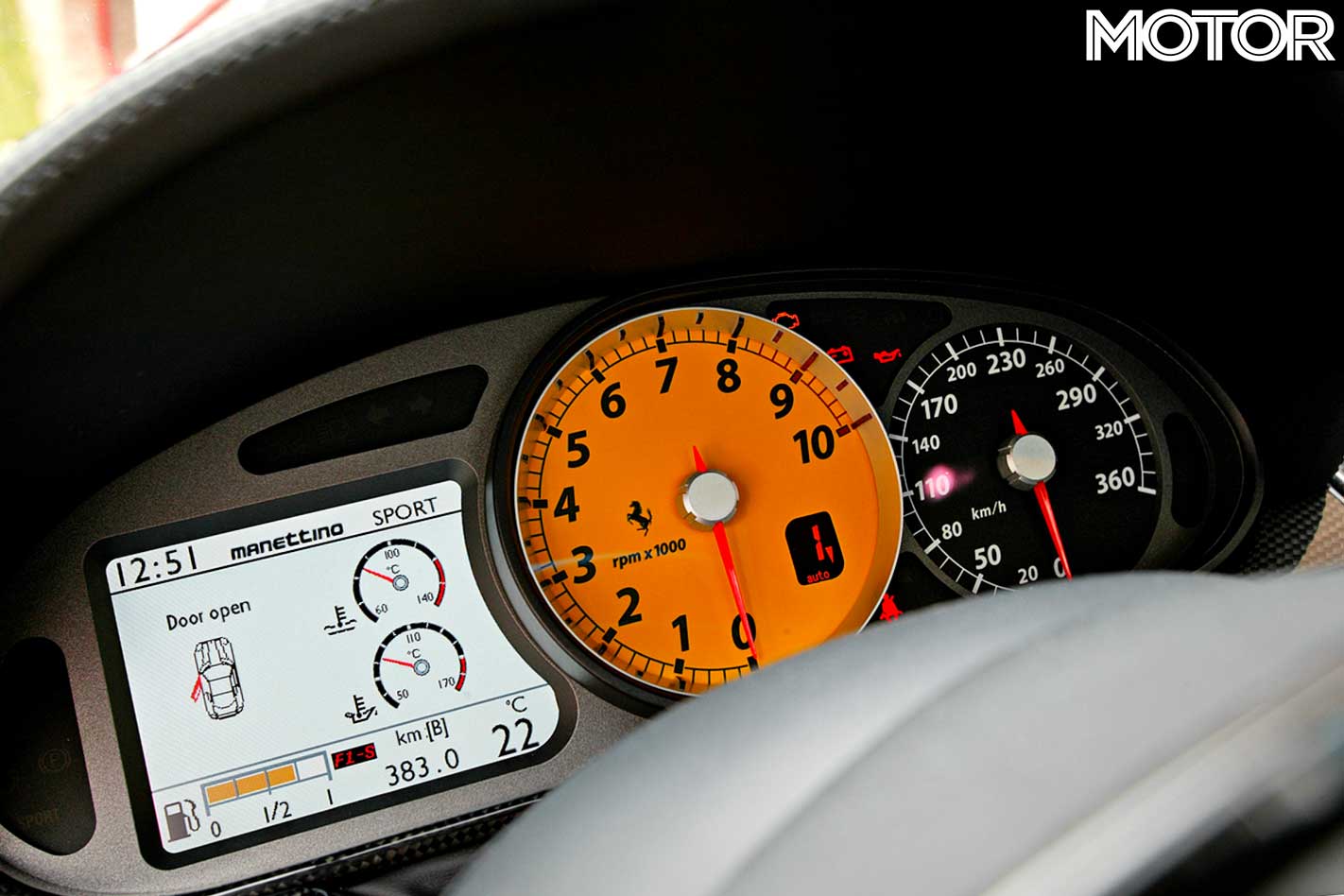
The F1-SuperFast is hands-down the best of its type in the automotive world and even the auto mode is on the money with smooth upshifts and prompt kickdown. After a day of very hard driving on road and track, it’s difficult to imagine what a conventional manual gearbox would add to the experience.
For all the pace and fury of the drivetrain, it’s the chassis that’ll leave you breathless. Using a development of Delphi’s MagneRide magnetically-controlled variable damper system first seen on the Corvette C6, the 599 delivers the absolute best compromise of ride and handling.
Okay, it’s still a bit jittery at low speed over the worst broken tarmac (it is on 20-inch rims after all), but at faster pace the GTB delivers compliance a Bentley Continental GT would fail to match. And you can also knock the manettino back to the low-grip setting to soften the dampers around town.
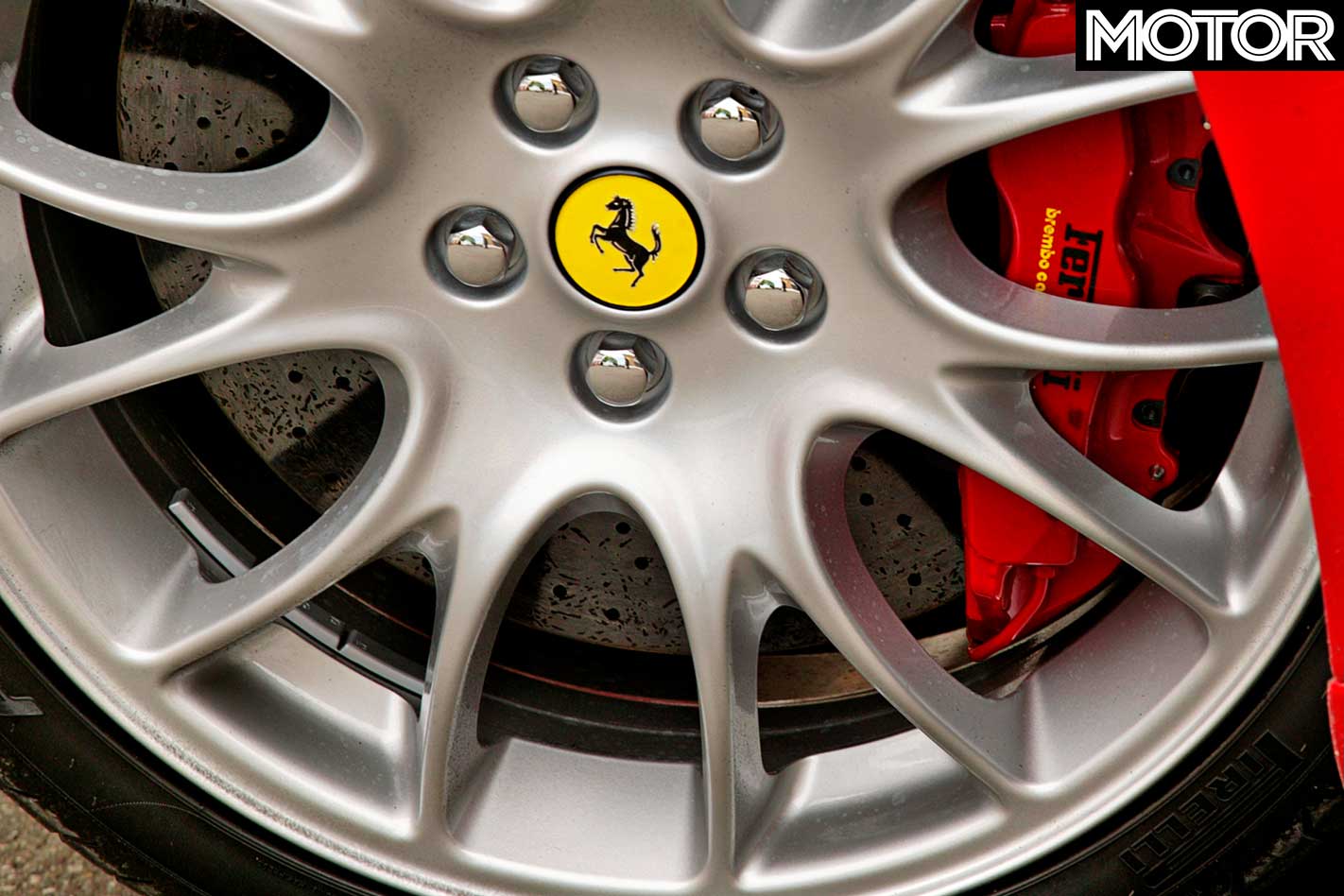
The 599 may just be the best-riding sports car of all time; certainly nothing from Porsche, Lamborghini et al can match it. One caveat to the praise about ride quality is tyre selection; both Bridgestone and Pirelli supply boots but the Bridgestones are runflats.
But you’re not reading this to hear that the best Ferrari ever made rides well. You want to know how it goes around corners. Well, after hundreds of kays of twisting Italian mountain passes and fast autostrada sweepings, I can’t recall having had a better drive. Ever.
With the amazing suspension compliance you can take liberties over backroads that’d have you bouncing into the scenery in a 911. I’ve never driven a car that’s more stable under brakes, which then allows and encourages you to dive deeper into corners.
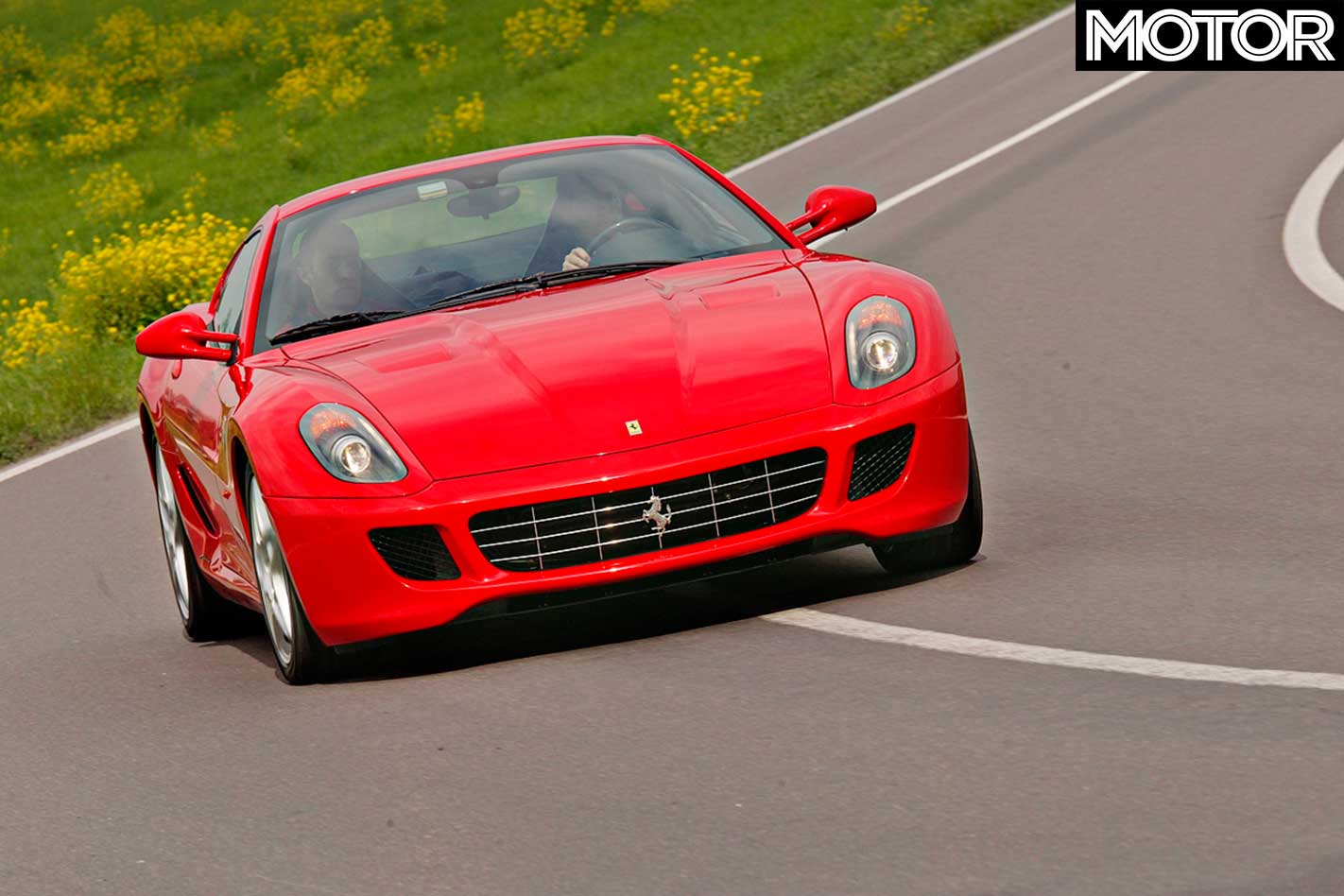
The nose faithfully follows your commands and bites hungrily towards the apex – although the steering could do with a bit more feel off-centre. Grip from the 20-inch tyres (19s are standard on the front) is all wheel drive-esque. In Sport mode you can jump hard on the power right at the apex and there’s barely a wiggle from the hips as you storm toward the exit. And remember this is a car with more than 450kW!
On the absorbing blast up and down the 30km hillclimb, my brain scanned its automotive back-catalogue for cars that would keep pace with the 599. A 911 Turbo would be in the hunt, although it’d lack the low-end punch out of the tighter corners, plus it’s a little clinical.
A Lamborghini Gallardo with its extra poke, shorter gearing, plus suspension and steering changes would be a good match, but its brakes would suffer on the punishing downhill section. Ferrari’s own F430 would run it close (we drove the same road in one the following day) but it’s not as stable under brakes.
Lamborghini’s big-hitting Murciélago LP640 certainly has the pace (on long sweepers, it’s quicker than the Fiorano) but on tighter stuff it’s still too intimidating. Where the big Lambo is scary fast, the Ferrari is purely and simply fast.
When the doom and gloom of speed cameras, oil prices, and shitty roads catch up with car enthusiasts and I’m forced to live out my love of cars on Playstation, I’ll remember that magic day in Italy in 2006 when everything I love about cars came together in the 599 GTB Fiorano.
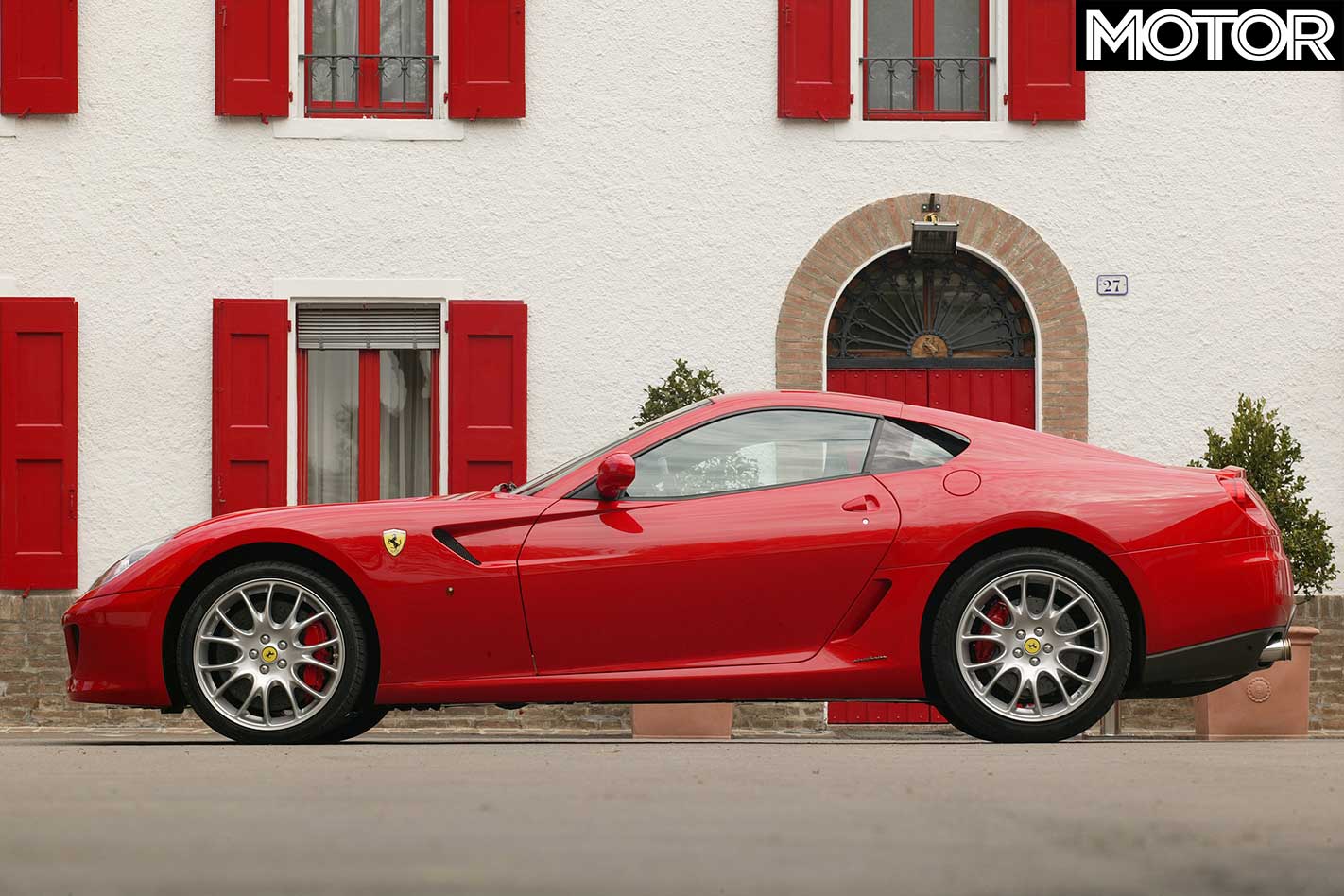
FAST FACTS 2006 Ferrari 599 GTB Fiorano
BODY: 2-door coupe DRIVE: rear-wheel ENGINE: 5999cc DOHC 48-valve, V12 BORE/STROKE: 92.0mm x 75.2mm POWER: 456kW @ 7600rpm TORQUE: 608Nm @ 5600rpm WEIGHT: 1690kg POWER-TO-WEIGHT: 270kW/tonne TRANSMISSION: six-speed automated manual SUSPENSION: double wishbones, coil-overs, Delphi MagneRide continuously adjustable dampers, anti-roll bar (f & r) BRAKES: 398mm ventilated & drilled carbon ceramic discs (optional), six-piston calipers (f); 360mm ventilated & drilled carbon ceramic discs, four-piston calipers (r) WHEELS: 20 x 8.0-inch (f); 20 x 11.0-inch (r), alloy TYRES: Pirelli P Zero; 245/35 ZR20 (f); 305/30 ZR20 (r) PRICE: $610,000 (approx) plus $35,000 for brakes and $25,000 for automated manual
F1-TRAC tech
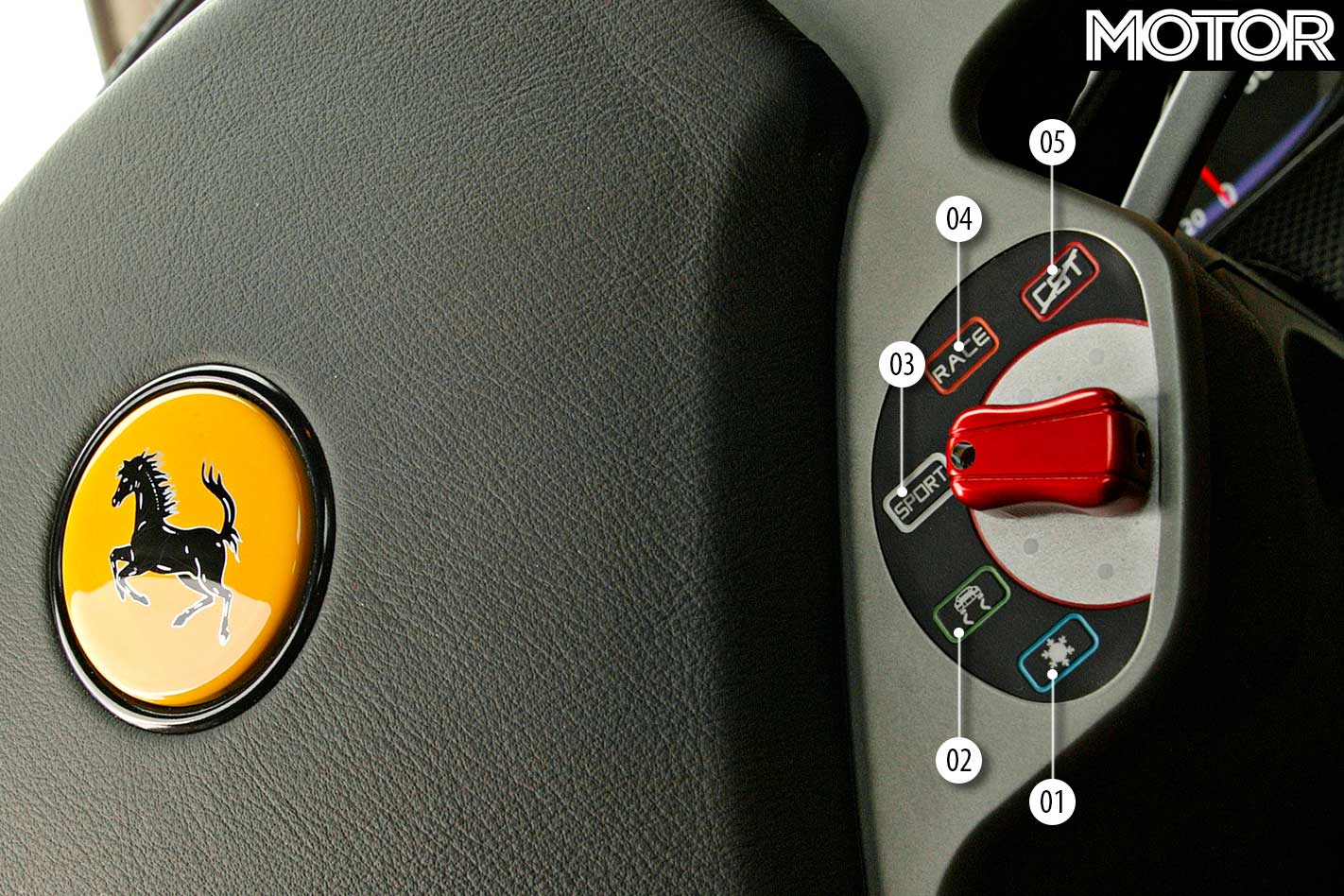
01 – ‘Ice’ mode limits rpm and provides very active electronic help 02 – ‘Low Grip’ mode has soft suspension and slower shift times. Perfect for city driving 03 – Ideal for fast road driving with faster shifts and more lenient stability programs 04 – Will still save your bacon – but it’ll frighten you silly in the process 05 – You’re on your own, buddy. Fast shifts and stiffer suspension, too
Fiorano factor
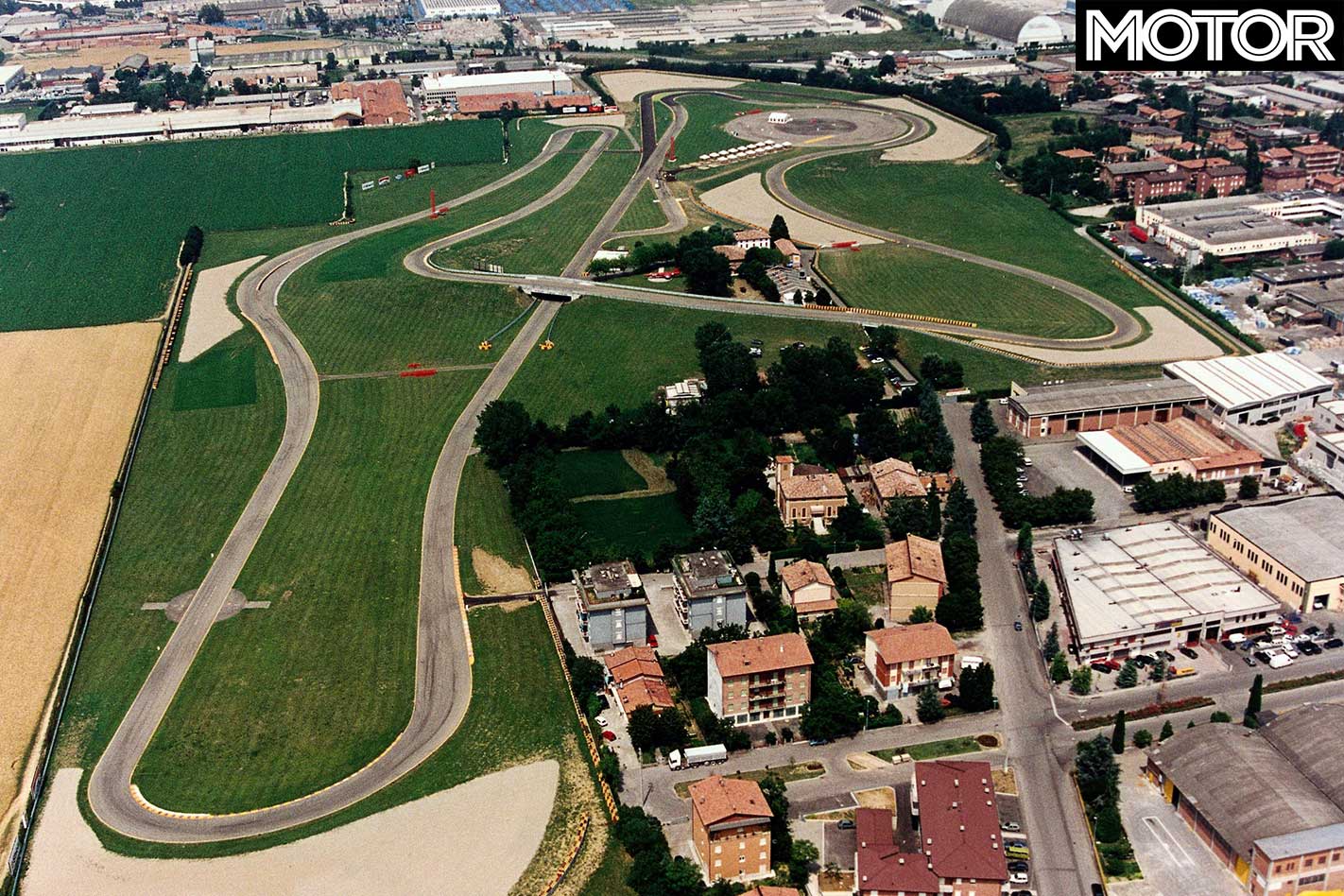
The 599 takes the kink at the end of the main straight flat in fifth at near 250km/h before leaning very hard on the anchors for the second-gear right hander.
Schumacher’s F1 car takes the same piece of tarmac flat at just over 300km/h. The race car is also an incredible 30 seconds quicker per 2.9km lap. Put another way, it’d catch the GTB every three laps.
| u00a0 | Lap time | Lap difference |
| F1 car | 55.9sec | -30.6sec |
| FXX | 1 min 17.9sec | -8.6sec |
| Enzo | 1 min 25.0sec | -1.5sec |
| 599 GTB | 1 min 26.5sec | – |
| 360 Challenge Stradale | 1 min 26.5sec | +0sec |
| F430 | 1 min 27.0sec | +0.5sec |
| F50 | 1 min 29.0sec | +2.5sec |
| F40 | 1 min 30.0sec | +3.5sec |
| 575M | 1 min 30.0sec | +3.5sec |
Naming rights
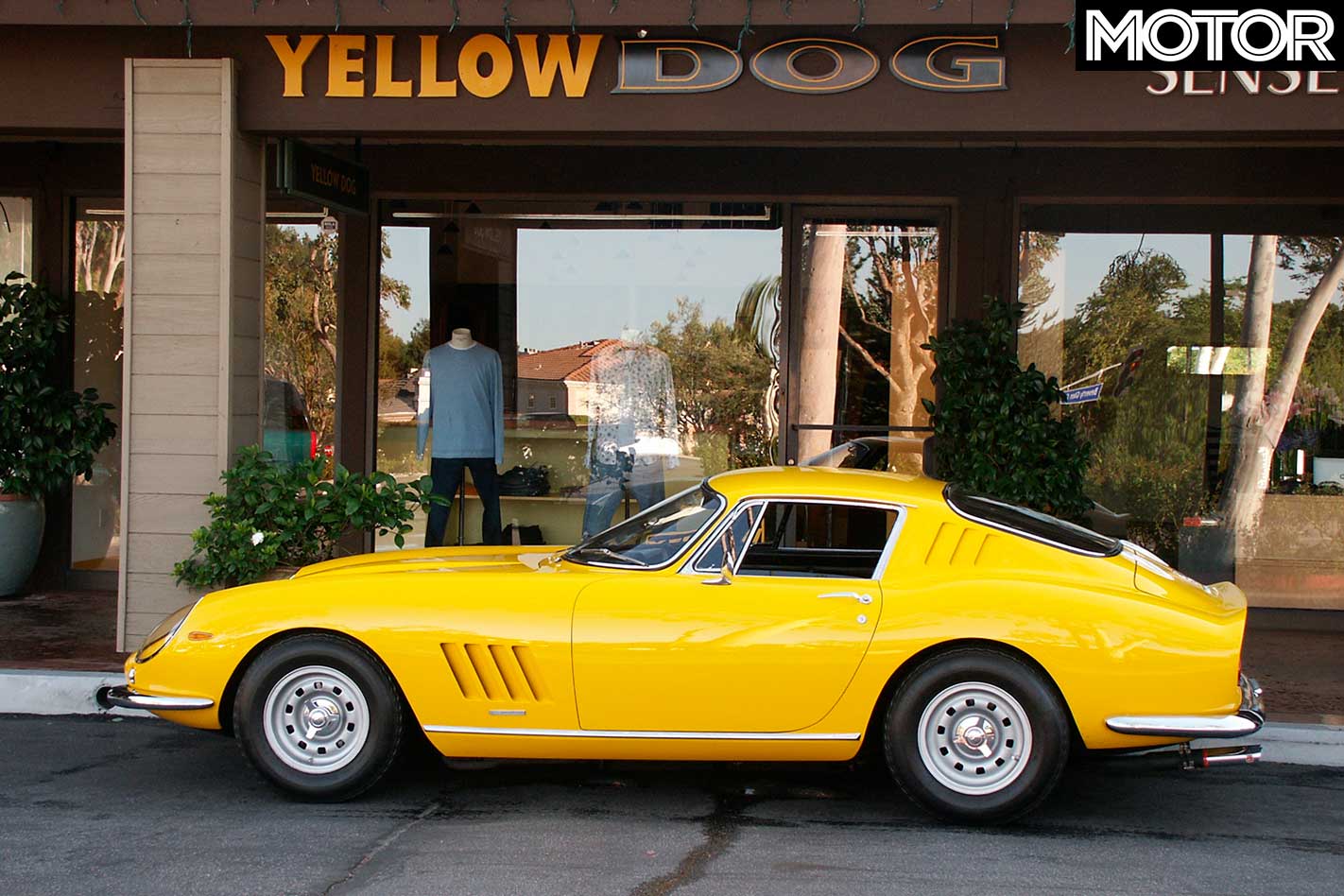
What’s in a name? A lot, according to Ferrari. The new 599 GTB Fiorano, to give the car its fully title, gets the first part of its name by dividing engine capacity by ten – 575, F430 are other examples, but it doesn’t work for the 5.75-litre 612 Scaglietti.
GTB stands for Gran Turismo Berlinetta (big coupe in other words) and the 1964 275 GTB (pictured above) was the first Ferrari to use a rear-mounted transaxle – a trait of front-engined Ferraris ever since. And the use of the Fiorano name shows the link between the road cars to the race team.
THE YEAR is 1991. Mazda has just done the unthinkable and snatched victory at the Le Mans 24 hour, embarrassing the favourites Jaguar and Mercedes in a din of quad-rotor cacophony.
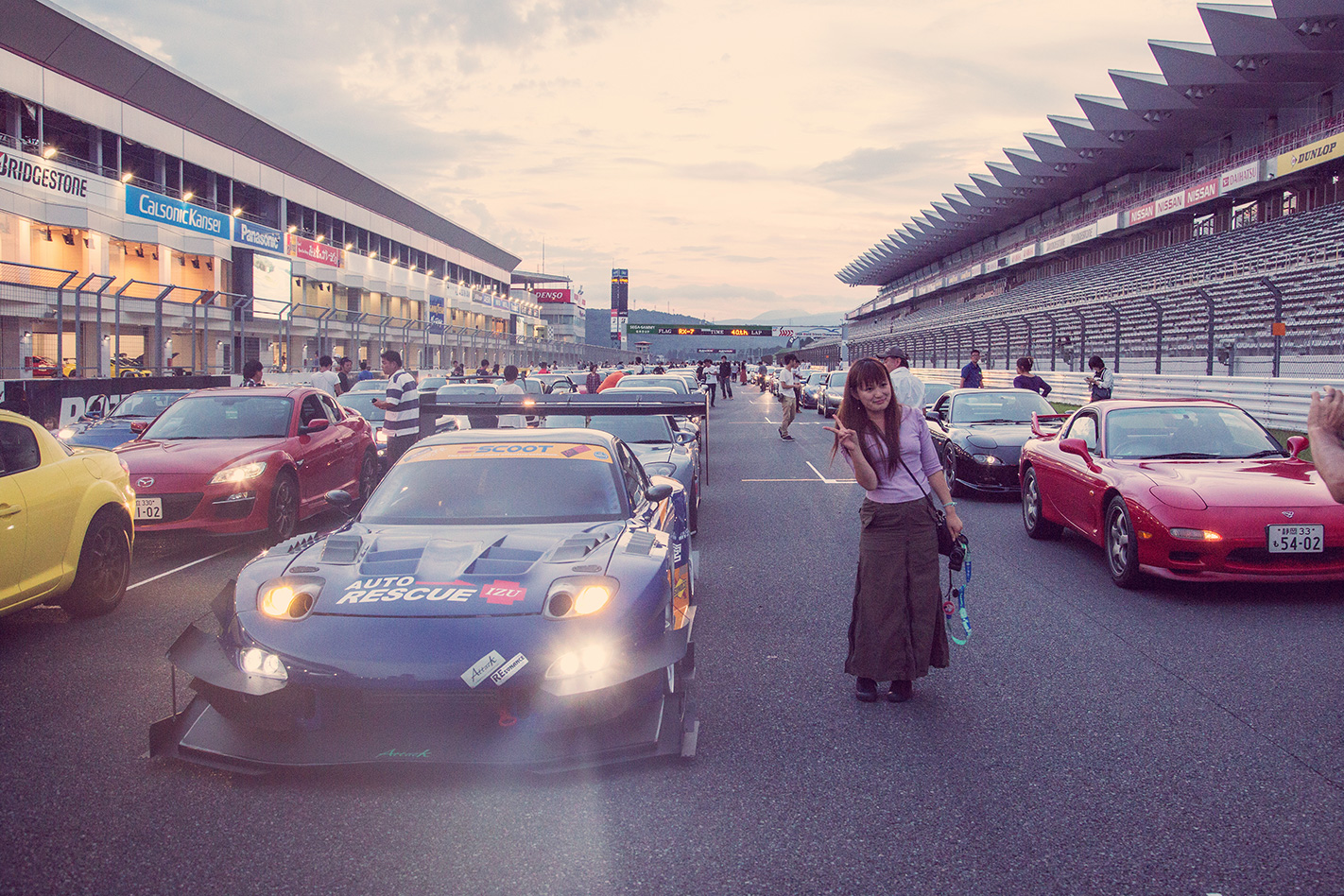
Later that year, the third generation of its RX-7 would start production, powered by a new sequential twin-turbocharged version of the evergreen 13B, marking the start of one of Mazda’s most successful rotary-powered models to date. It was a good year for the Japanese company’s cult-classic Wankel engine, but it would prove to be the peak of rotary power, and after the RX-7’s successor, the COTY-winning RX-8, went out to pasture in 2012 without producing an heir to the rotary crown, the bloodline of Mazda’s unique engine went cold.
In the shadow of ever-tightening emissions regulations and plagued by reliability problems, the design was shelved in favour of conventional reciprocating engines.
But the spirit of Mazdas past is kept alive by a veracious and dedicated following of fanatics that live, breathe and have even continued to evolve the fundamentally flawed Wankel engine long after its keeper seemingly gave up on the idea.
It’s the reason I hopped in the company’s current sports hero – the MX-5 – and came to the Fuji Speedway for a 40th-anniversary celebration of the RX-7. I want to see if people still live the rotary dream even though its characteristic brap-brap was silenced from production long ago.
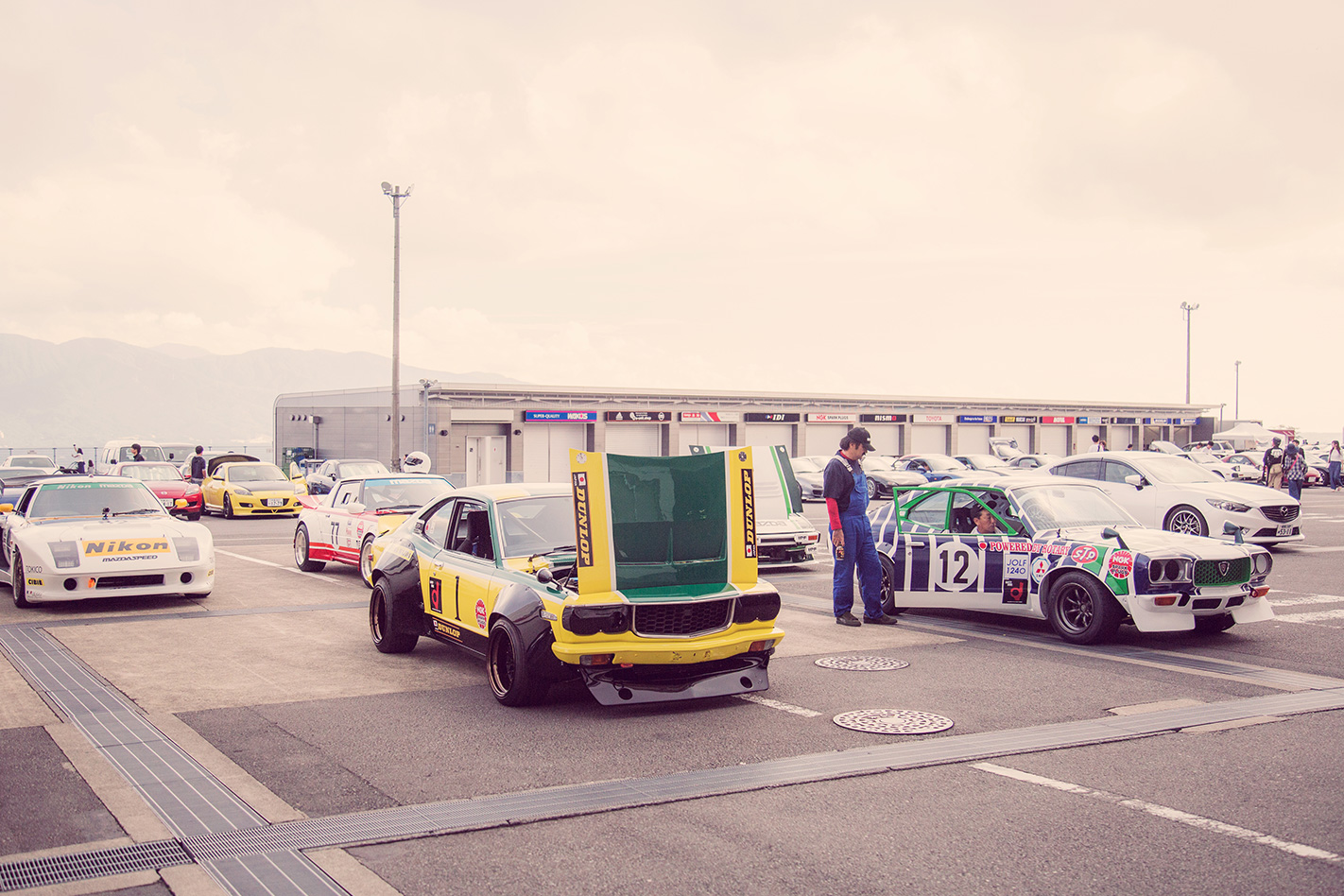
Nearly 300 RX-7s have turned out, along with countless other examples of other rotary-powered Mazdas, to brave the oppressive combination of radiating asphalt, strong autumnal sunshine and exhausting humidity. An RX-7 gathering is not like a Harley meet where all owners are cookie-cut from the leather and facial hair casting agency. The first thing that strikes you is the sheer diversity of the crowd. I’m taken aback. Young, old, groups of lads, female drivers and their male passengers, ’80s rocker throwbacks and Harajuku girls; they’re all here.
Then you get to the cars. The carpark is like a tuner’s menu, from low-mileage, near-stock examples, through every level of modification in between, to hyperbolic time-attack cars. I’m drawn to one heavily fettled FD with Lamborghini-style scissor doors, only to find it has been fitted with a twin-turbo quad-rotor that the owner fashioned from the modular casings of 13Bs. Lord only knows who made the eccentric shaft.
RE Amemiya; FC convertibles; three FDs with Porsche 911 headlights; a 20B-powered drag car with a 130mm turbo compressor; every single Bride and Knight Sports upgrade you can imagine and more. Now my head is spinning like a rotor.
I get chatting to Miyoshi-san – the owner of a mirror-wrapped FD. Not that you would recognise it from many angles thanks to the grille and lights of an RX-3, arches that have been fattened like a foie gras goose and air suspension that allows it to practically squat on its chassis.
Miyoshi has driven seven hours and 600km from his workshop in Kurashiki to be here, as if attempting to disband the notion that the rotary can’t be relied on. Although he does concede the sometimes troublesome standard twin-turbo system has been swapped out for a monster single-blower set-up and V-mounted intercooler.
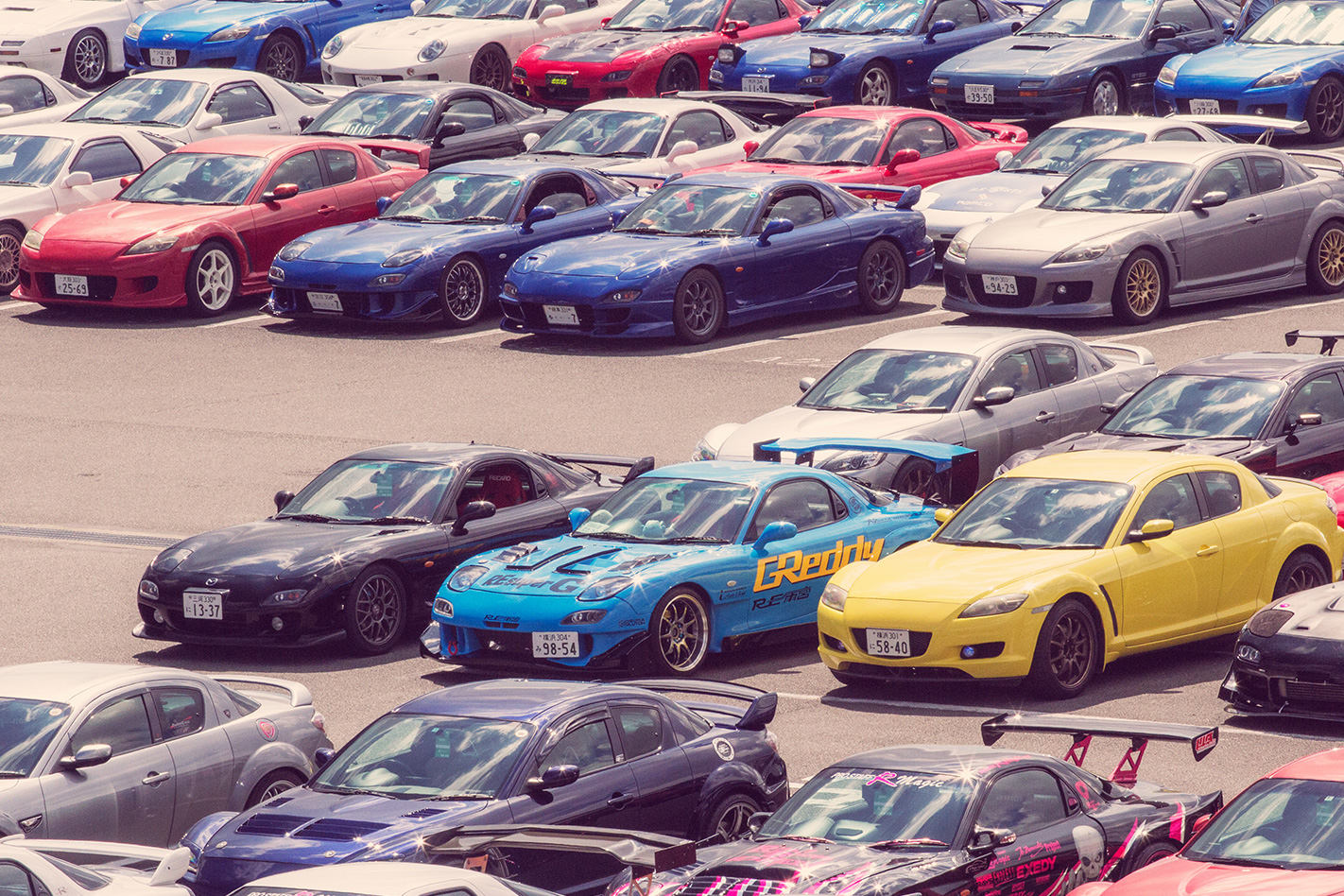
Later, I make the mistake of standing near a Mazda 13B-powered drag car as its owner revs the 1.3-litre, twin-rotor, 900kW, methanol-fuelled RX-7 to the limiter, and the resulting tinnitus is a souvenir I hadn’t planned on bringing home from Japan.
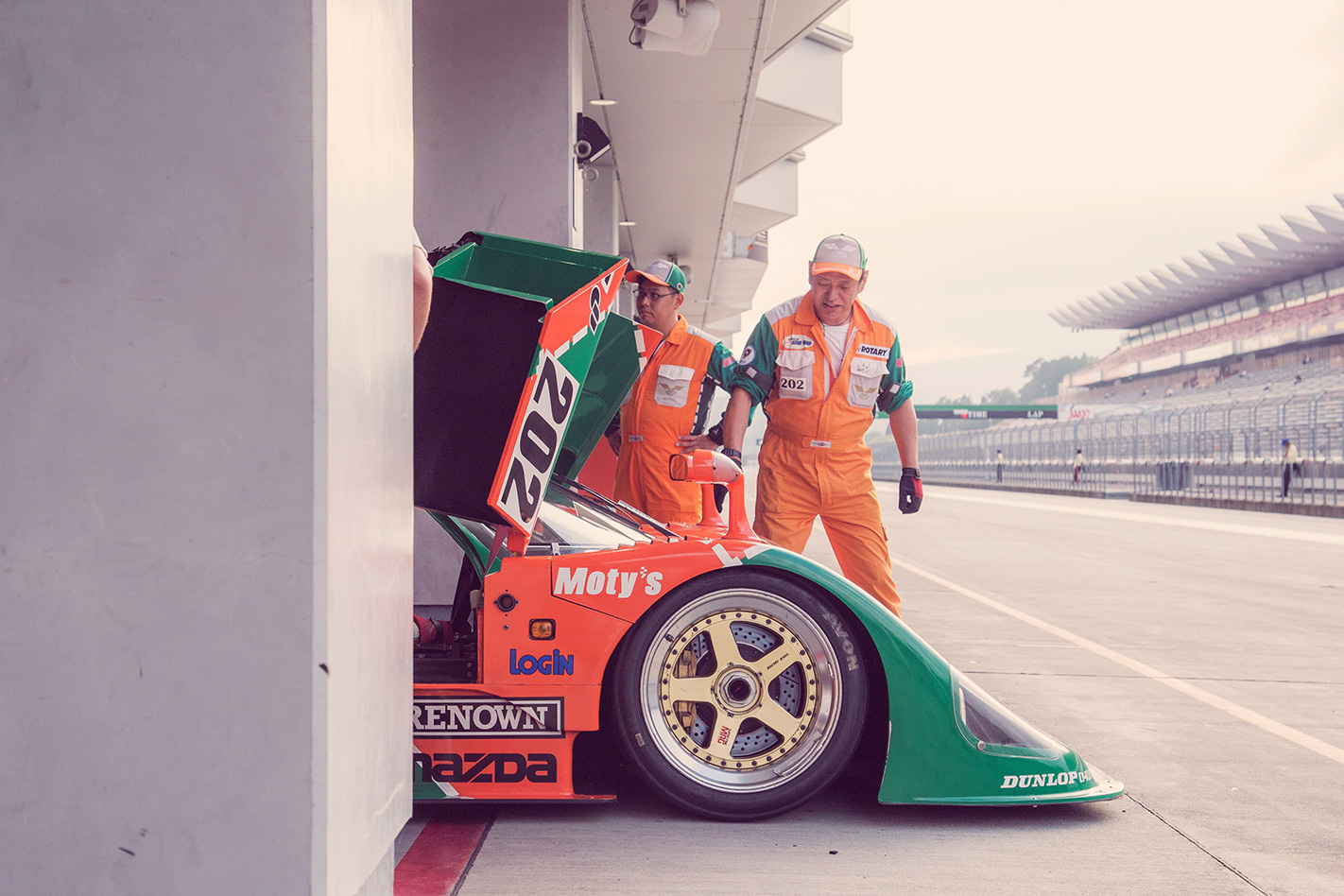
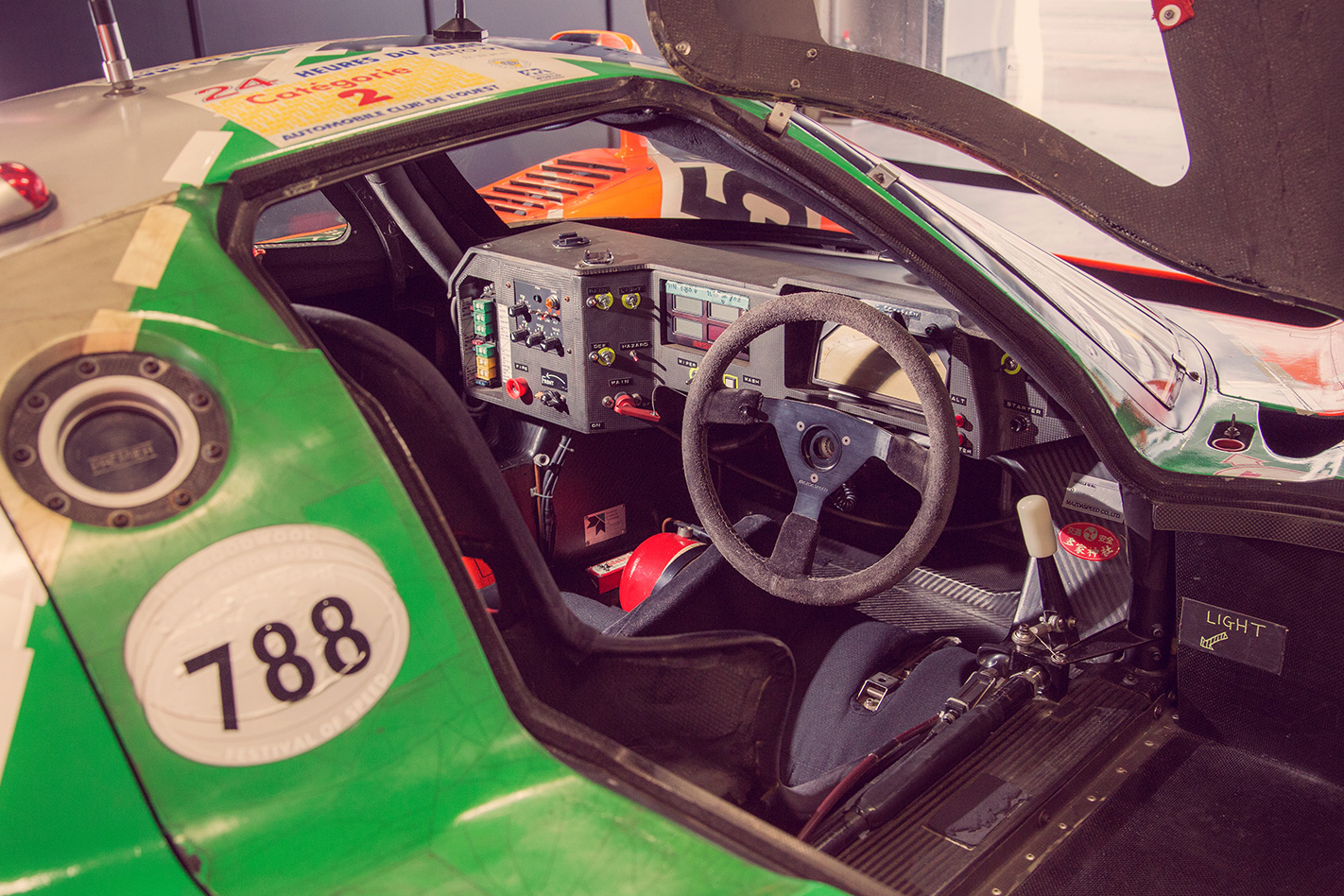
Dazed, I amble off toward the completely unguarded paddock and meander between unattended pit garages before an unexpected sight arrests me. You can count on one hand the number of times in a year Mazda’s priceless 787B and 767 racecars see the light of day, yet here before me were both, resplendent in unmistakable Renown green and orange livery. Minutes later my transfixed stare at racing royalty is broken as the engineers arrive to start warming the R26B quad-rotor engines that produce up to 670kW despite only displacing 2.6 litres with no turbos.
The ensuing howling from the pits draws in a crowd like moths to a flame and then the pair roll out into the evening light, unleashing a sound that is simply indescribable as they conclude the day’s proceedings.
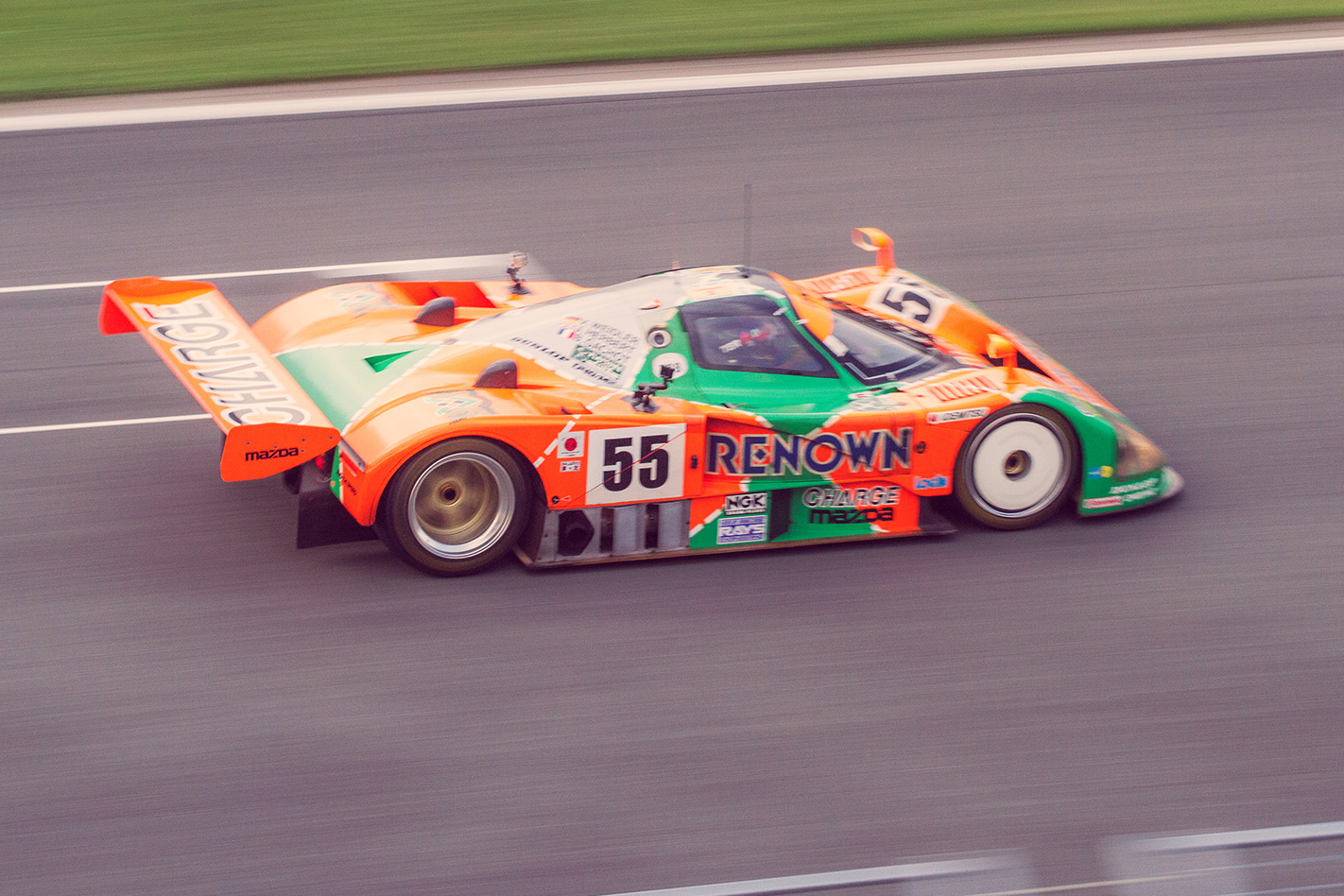
The light is starting to fade now and I run down a flight of stairs to corner 29-time Le Mans driver Yojiro Terada straight out of the 787B’s cockpit. I’m irritated at how much cooler than me he appears to be, despite just completing 10 laps of Fuji in anger.
When asked what the most challenging part of piloting the car is, Terada tells me, “It’s easy; you can do it,” although I’m still waiting for an official invitation at the time of writing.
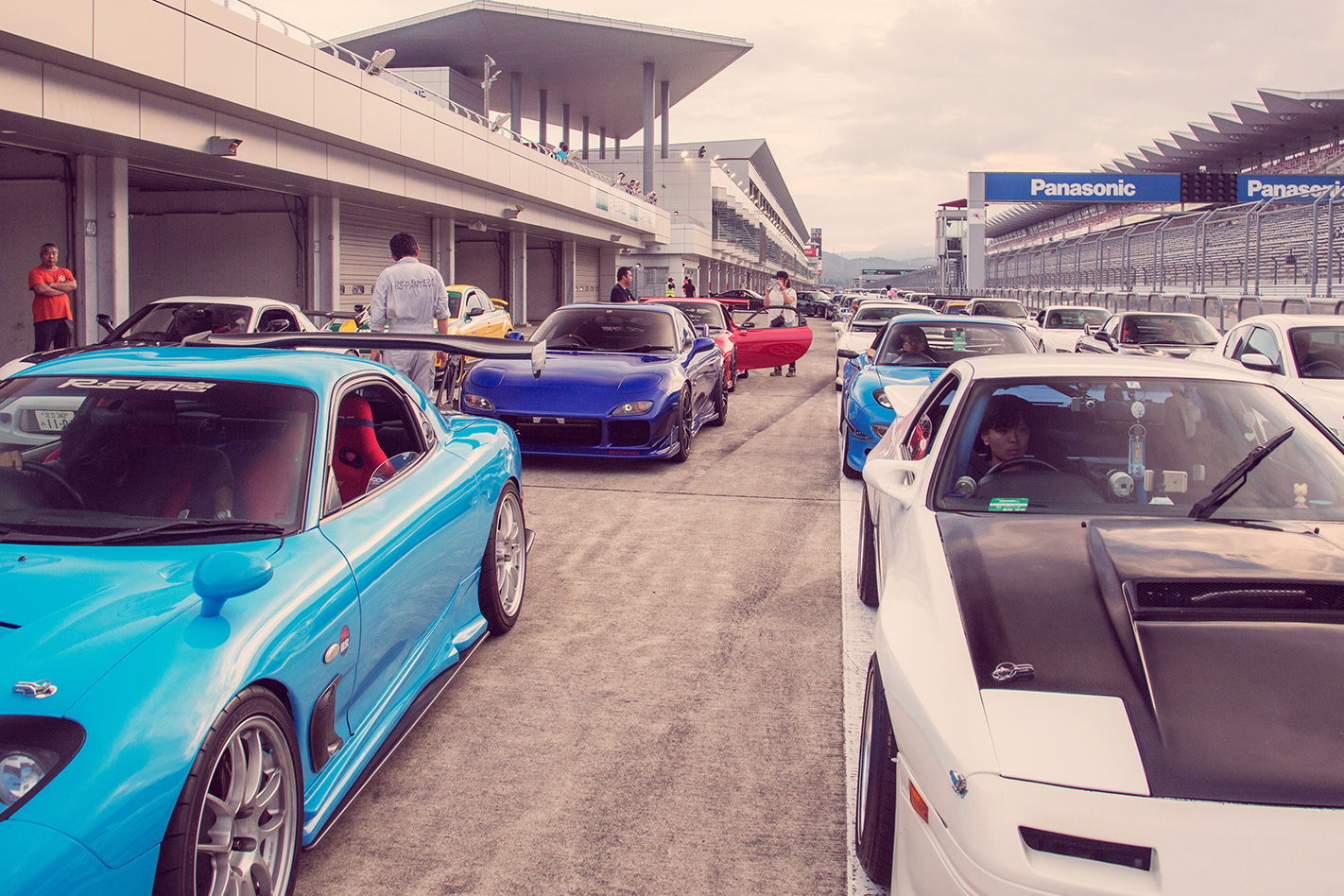
Mt Fuji, cloaked in thick cloud all day, emerges to cast an intimidating shape over the track as it fills with hundreds of cars. The attendees are forming a parting convoy to bid farewell and draw the 40th anniversary celebrations to a close.
Expensive headlight globes sparkle into life, drivers salute me with peace signs as they crawl through, and the incredible variety of cars prepares to dissipate in an orchestra of wonderful exhaust notes.
As the procession departs, the circuit falls eerily silent and I’m slumped back in the RF gathering my thoughts from the day, ears ringing like I’ve just emerged from an all-night club lock-in.
My induction into the rotary institute has been an incredibly immersive experience, but the day was tinged with sadness, like oberving the last ageing individuals of an endangered species about to die.
But my sorrow is unfounded. Just days later, Mazda confirms the rotary engine will once again return to its ranks. Rather than a demonic quad-rotor fire-spitting power hero that invokes the 787B or tuned RX-7s, the next-gen rotary will be coupled to an electric motor and be “exceptionally quiet,” says its maker.
It’s not the enfant terrible some were hoping for, including me, but a returning rotary engine rekindles a bloodline of performance potential for the brand. Yes, the revenant rotary will be quiet and fuel efficient, but details are academic at this stage. What really matters now is that Mazda’s brilliant engine will not drift into obscurity, fading from memory with each year that passes, and immortalised only by a diminishing group of cars and their diehard owners.
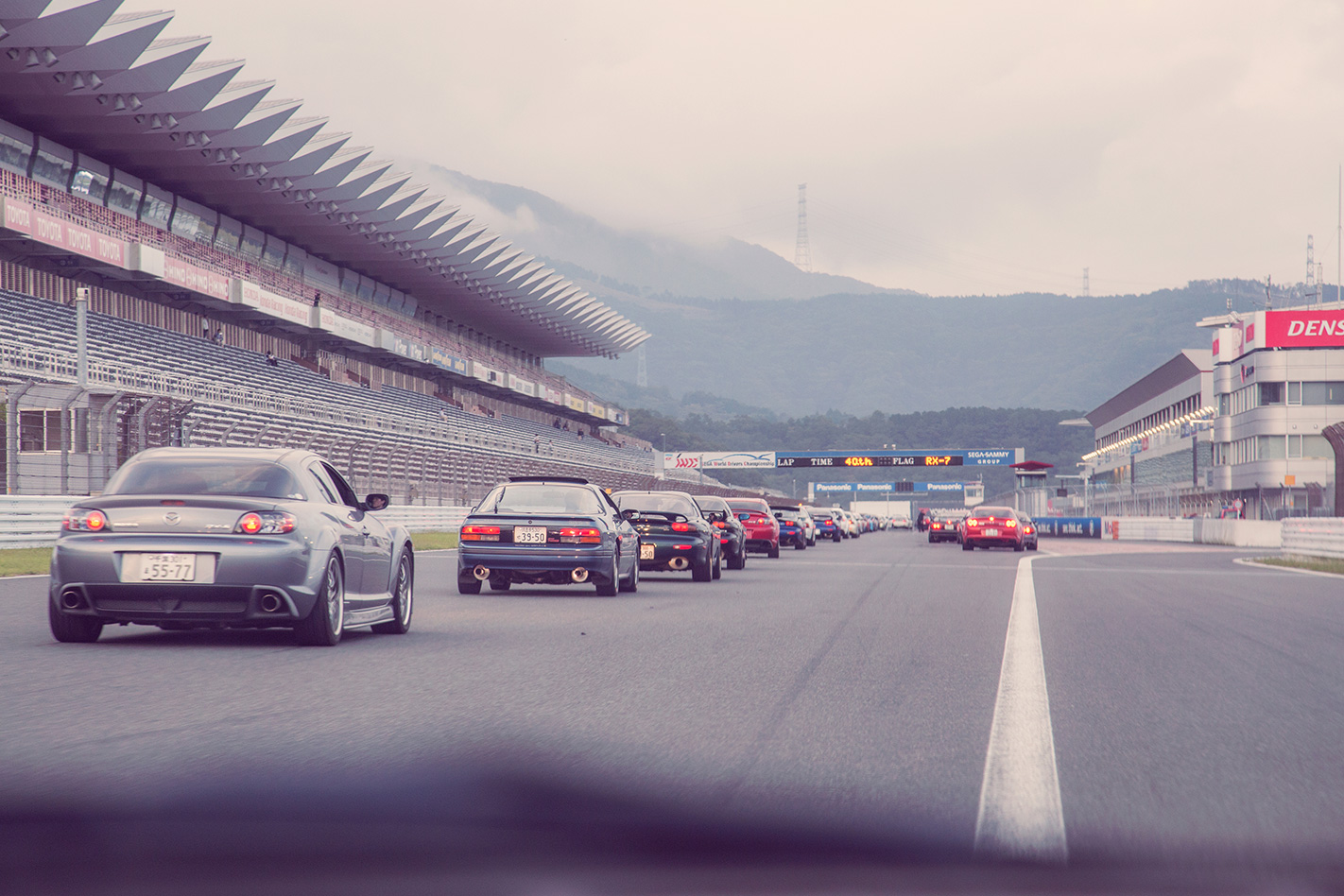
The rotary engine will return.
When it comes to keeping up with our 21st century lifestyles, we ask more from our cars than ever before. We want an economical and comfortable daily commuter that can carry the whole family, our shopping and our mountain bikes, park on a dime in narrow city lanes, traverse gravel country roads and interstate freeways with equal aplomb, and keep us connected, informed and engaged every moment of the journey.
Welcome to the world of the lifestyle car; a vehicle with many talents, broad capabilities, and the flexibility to keep up with our rapidly evolving and always entertaining lives. We’re talking vehicles like the humble dual-cab ute, once the sole domain of the tradesman, and high-riding offroad hatchbacks like the Subaru XV and Mazda CX-3. We’re also seeing an increasing number of coupe-like SUVs – we’re looking at you Mazda CX-8, BMW X4, Mercedes-Benz GLC-Coupe and co!
If your life is a multifaceted and manically busy as ours, there are plenty of new cars coming in 2019 that have been designed to do anything, go anywhere, carry everything, and keep up with your specific needs.
Alfa Romeo Stelvio Quadrifoglio
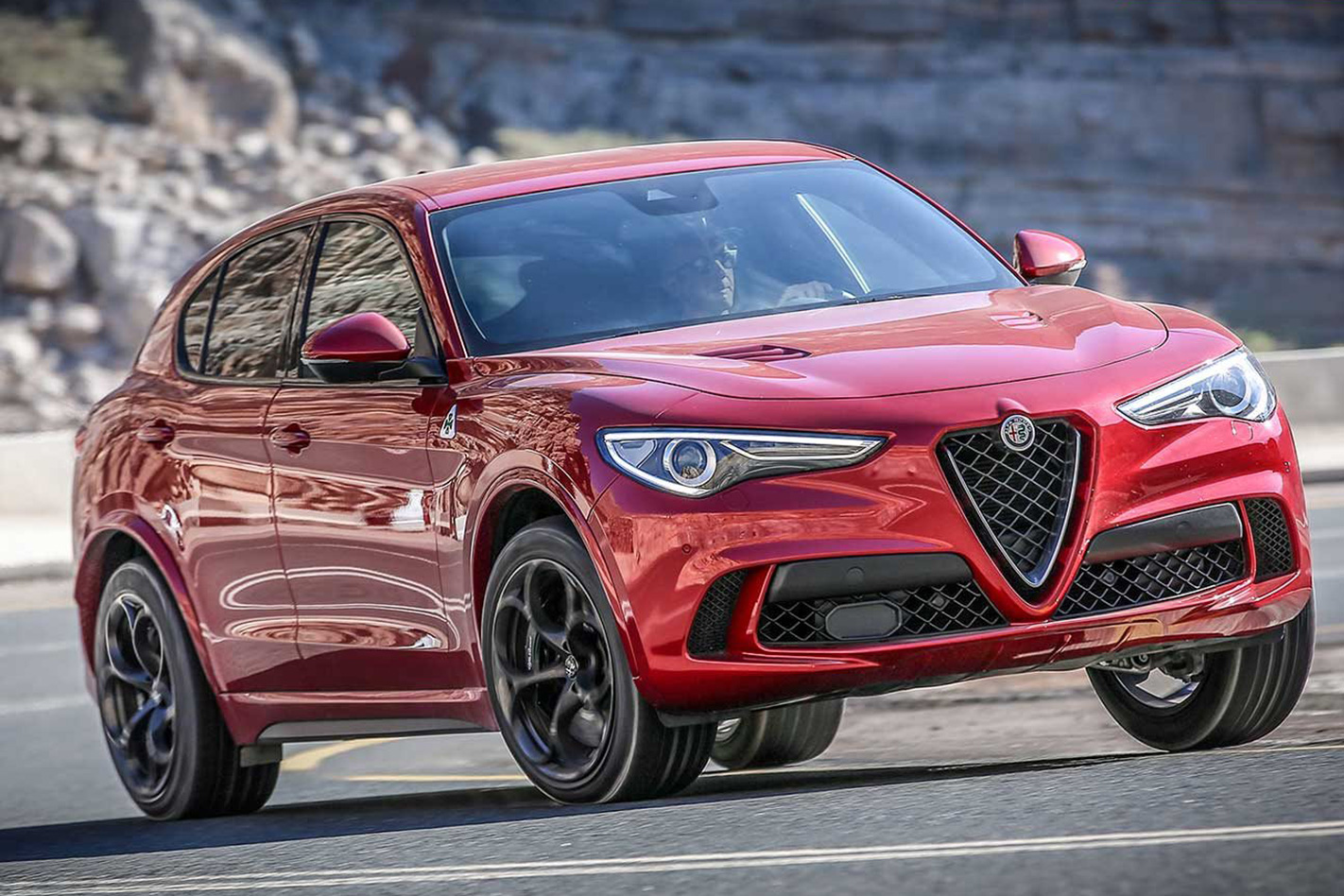
Significance: The high-performance Stelvio range topper will be the fastest SUV in its class
Price: $149,000
Rivals: BMW X3 M40I, Mercedes-AMG GLC43, Jaguar F-Pace 35t S
Due date: January 2019
The twin-turbo V6-powered Stelvio Quadrifoglio – known as the Stelvio Q in Australia – has a 283km/h top speed and a 0-100km/h time of just 3.8 seconds. The Q adds all-wheel-drive underpinnings to the Giulia Quadrifoglio’s 2.9-litre twin-turbo V6 and eight-speed automatic transmission. It also shares much of the sports sedan’s equipment levels. Apart from a significant power boost over other Stelvio models, new Stelvio flagship differs from the rest of the line-up via a more aggressive body kit and tweaks to improve aerodynamics, performance and handling.
Aston Martin DBX
Significance: The British luxury brand has thrown its hat in the crossover ring.
Price: $240,000 and up
Rivals: Maserati Levante, Porsche Cayenne
Due: October 2019
There are few details available yet on Aston Martin’s entry into the world of high-performance crossovers, but early imagery suggests that the British brand isn’t being shy about giving the high-riding DBX some off-road chops.
Based on the same platform that underpins the new DB11, the DBX will be a petrol-only proposition, with powerplants likely to be sourced from Mercedes-Benz. These could include Merc’s excellent 3.0-litre straight six at the entry level, while a flame-spitting twin turbo V8 could potentially power a range-topper.
Audi Q3
Significance: Audi’s original small SUV gains a mature new look and more equipment to separate it from the similarly sized Q2.
Price range: $45,000-$85,000 (estimated)
Rivals: BMW X2, Jaguar E-Pace, Mercedes-Benz GLA, Volvo XC40
Due date: June 2019
The all-new 2019 Audi Q3 compact SUV features bold design cues taken from its bigger sibling, the Q5, to give it a more mature and attractive appearance than its predecessor. The new Q3 should also be more family-friendly and practical than before, and will benefit from a raft of infotainment, connectivity and driver assist upgrades.
Audi Q7 e-tron quattro
Significance: Audi’s first plug-in hybrid will be the first diesel/electric SUV on the Aussie market.
Price: $139,000
Rivals: Mercedes-Benz GLE500e, Mercedes-Benz EQC, Porsche Cayenne E-Hybrid, Volvo XC90 T8
Due date: January 2019
Using the Audi Q7’s 3.0-litre V6 synced to an electric motor fed by a plug-in chargeable 17.3kWh battery, the new Q7 e-tron large SUV has a pure electric range of up to 56km and a combined fuel efficiency of just 1.9L/100km. Beyond the plug-in hybrid system, the Q7 e-tron shares the same specification as the Q7 3.0 TDI quattro, and the driver assistance and safety systems of the entire range.
Audi Q8
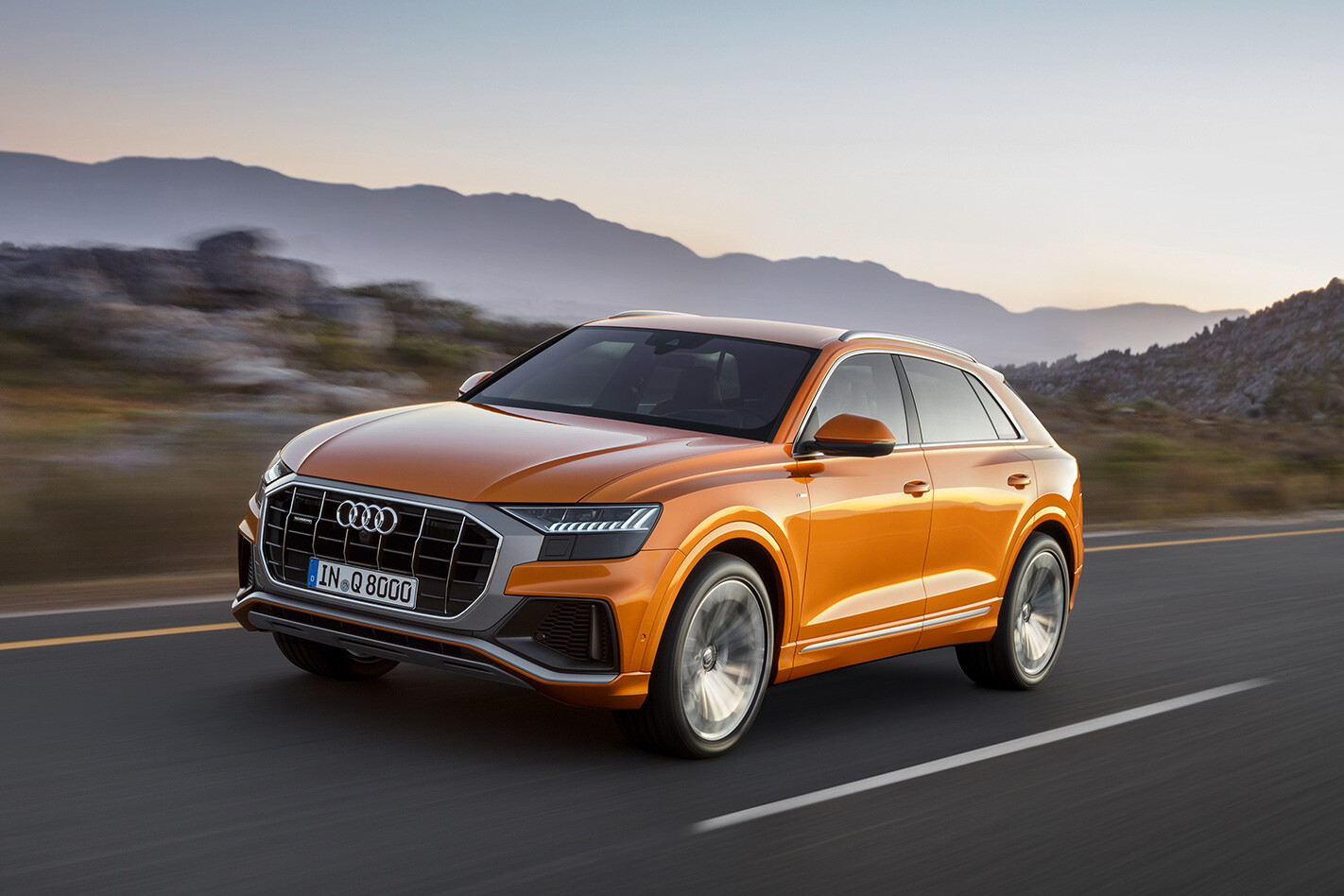
Significance: Audi’s new SUV flagship is a big coupe-like alternative to the Q7
Price range: $128,900
Rivals: BMW X6, Mercedes-Benz GLE-Coupe, Porsche Cayenne, Range Rover Sport
Due date: January 2019
Closely following the design cues teased in the Audi Q8 Sport Concept unveiled at the 2017 Geneva Motor Show, the Q8 is a sportier, more luxurious sibling to the Q7 large SUV. It will be one of the most technically advanced Audis ever and is even able to park itself while you wait outside, although this may not be offered on Australian models. WhichCar understands Australia will get a 3.0-litre turbo petrol variant initially, possibly followed by a turbodiesel.
BMW X7
Significance: The biggest member of the BMW line-up will head Down Under with a twin-turbo V8 version that won’t be available in Europe
Price range: $150K-plus
Rivals: Bentley Bentayga, Mercedes-Benz GLS-Class
Due date: June 2019 (est)
The BMW X7 is huge. Its 5.2m overall length is one the longest in BMW’s range, exceeded only by the 7 Series limousine, which cannot match the X7 SUV’s 1.8m height, 2.0m width and 3.1m wheelbase. BMW says the luxurious seven-seat X7 will feature an ‘intelligent personal assistant’ who responds to voice control, and can activate ‘in-car experiences’ including satellite navigation. A BMW digital key also allows X7 owners to unlock and start the vehicle using their smartphone. Read how it measures up to the Mercedes-Benz GLS on paper.
Citroen C5 Aircross
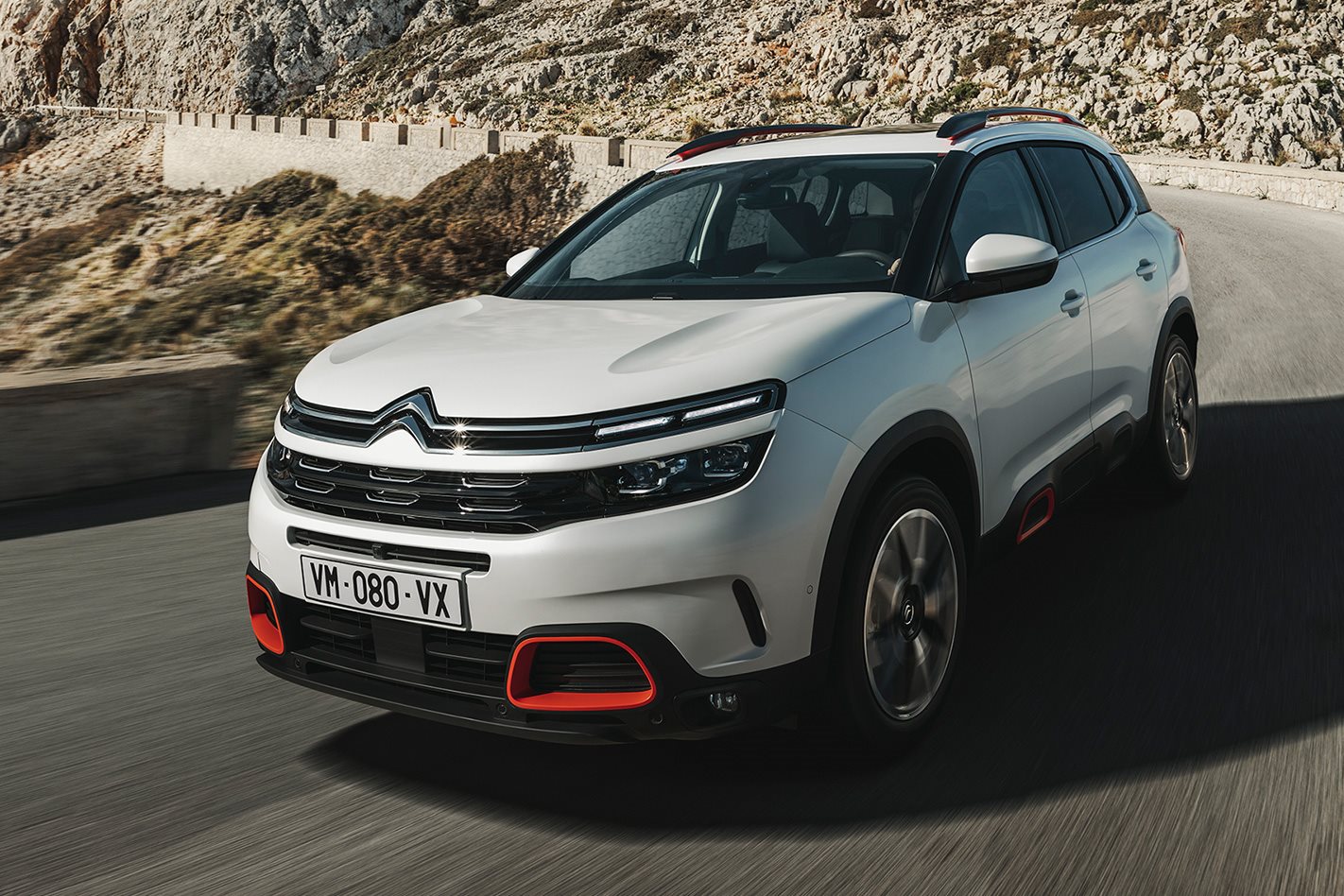
Significance: The C5 Aircross has morphed into an SUV that harks back to comfortable Citroen’s of old.
Price range: $38,000 -$55,000 (estimated)
Due date: Mid-2019
Rivals: Mazda CX-5, Subaru Forester, Peugeot 3008, Renault Koleos
Citroen says the new C5 Aircross will be the ‘most comfortable and modular SUV in its segment’ by drawing on its predecessor’s plush hydro-pneumatic suspension with tech that it calls “Progressive Hydraulic Cushions”. Ride comfort will be further enhanced by ‘Advanced Comfort’ seats that filter out road disturbances. The 4.5-metre-long C5 Aircross will make the most of its spacious interior by offering a wide centre console and flexible rear seating that can expand boot space from 580 to 720 litres.
Ford Focus Active
Significance: A jacked-up version of the Focus for those with an outdoorsy bent
Price range: $29,990
Rivals: Subaru Impreza XV, Fiat 500X, Citroen C4 Cactus
Due Date: second-quarter
The Focus hatch has already received its full model changeover by now, but the family will grow when the Focus Active rolls into Ford showrooms in 2019.
Following a similar format to the Impreza-based Subaru XV but described by Ford as a passenger car rather than an SUV, the Focus Active will bridge the gap between the regular Focus hatchback and Ford’s bona-fide SUV line-up. The ‘missing link’, if you will.
Only one engine, a 134kW 1.5-litre turbo petrol, will be offered, and the Focus Active is strictly front-wheel drive with an eight-speed automatic.
Jeep Wrangler
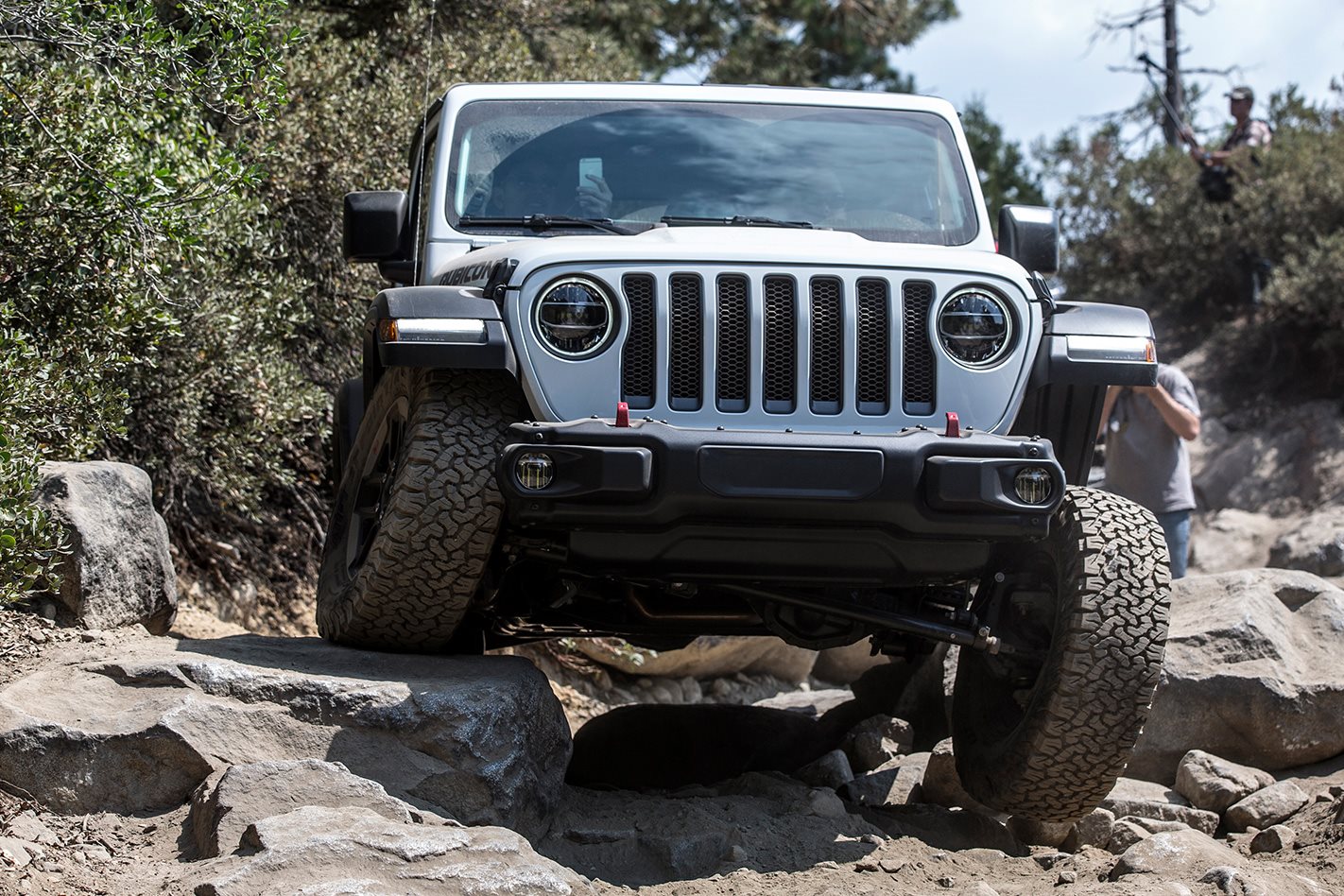
An all-new version of the archetypal Jeep arrives early next year with looks that still hark back to its 1940s origins.
Price range: $40K-$70K
Due date: January 2019
Rivals: Ford Everest, Suzuki Jimny, Toyota 76 Series Wagon
The all-new Wrangler will have plenty of 21st-century technology under its familiar looking skin including a new 2.2-litre turbo-diesel engine, eight-speed auto, and a huge leap in interior presentation and equipment. Jeep is touting even greater off-road ability, but with suspension retuning aimed at improving road manners and ride comfort to overcome the current model’s weaker points. One weak point it seemingly can’t overcome is safety – with EuroNCAP deeming it worthy of just one star out of five during independent crash testing. The 2019 Wrangler range includes the entry-level Sport, the Overland and the more off-road focused Rubicon.
Jeep Gladiator
Significance: Long-rumoured Wrangler-based pick-up finally confirmed with badass name. Price $60,000 (estimated) Rivals: Ram 1500, Ford Ranger Wildtrak, Mercedes X-Class Due date: Late 2019
Details are light on the ground at the time of writing but Jeep’s late offering in the one-tonne market will bring a more style-focused option in a carpark occupied by many forgettable designs. What is known is that the Gladiator will be mechanically almost identical to the all-new Wrangler, which is known for its go-anywhere capability. Expect Jeep’s first ute in years to be an authority when the paved road ends.
Kia e-Niro
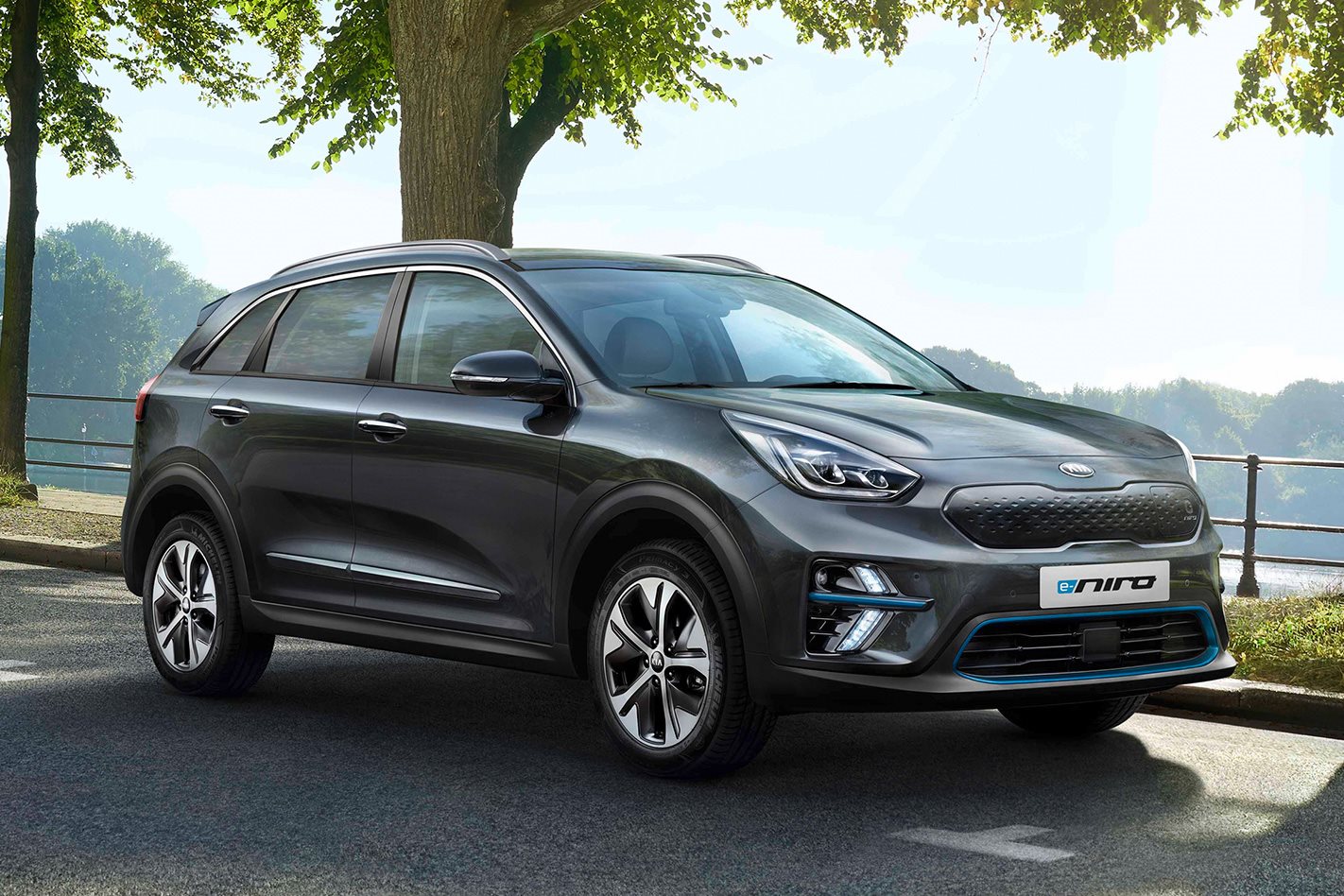
Significance: Kia’s first all-electric crossover promises a 600km urban range between charges.
Price range: From $55,000 (estimated)
Rivals: Hyundai Kona Electric, Nissan Leaf
Due date: November 2018
Kia Australia has all but confirmed its Sportage-sized e-Niro will arrive toward the end of 2019, boasting a range between charges of up to 615km that will leave more expensive European models such as the Jaguar I-Pace and Mercedes-Benz EQC in its wake. The e-Niro will also feature independent rear suspension, advanced regenerative braking technology, battery heating for cold climates, LED lighting inside and out, a 451-litre cargo area and Kia’s seven-year warranty.
Lamborghini Urus
Price: $390,00
Rivals: Porsche Cayenne Turbo S
Due: January 2019
What do you get when you blend the best elements from some of the world’s most premium brands and whack it underneath a body that a Hot Wheels designer couldn’t have dreamed up? The Lamborghini Urus.
The five-door, five-seat Urus uses a Porsche-sourced twin-turbo 4.0-litre V8 petrol engine that produces 478kW and 850Nm, powering an all-wheel-drive system with the ability to send up to 87 per cent of drive to the rear end.
It’s backed by a traditional eight-speed automatic transmission, which forms part of a multiple drive mode system that includes Strada, Sport and Corsa road modes as well as Terra (land), Neve (snow) and Sabbia (sand) settings. There’s also an Ego mode that allows for a mix of personalised settings.
The Urus uses components and tech found in cars like the Bentayga, Cayenne and Q7. It’ll do 0-100km/h in about 2.5 seconds, and its ten-piston brakes are the biggest ever fitted to any production car ever. Wow.
Mercedes-Benz EQC
Significance: Benz’s luxurious all-electric SUV will arrive in Oz boasting a 450km range and plenty of performance.
Price range: $125,000 (estimated)
Due date: September 2019
Rivals: Audi Q7 e-tron quattro, Jaguar i-Pace S, Tesla Model X
The EQC kicks off Mercedes-Benz’s electric future with an emphasis on performance as well as environmental sustainability. It packs an 80kWh lithium-ion battery capable of producing enough power to propel it from 0-100km/h in 5.1sec via two electric motors turning each axle. The EQC is very similar to the current GLC mid-size SUV in terms of size and equipment levels.
Mercedes-Benz GLE
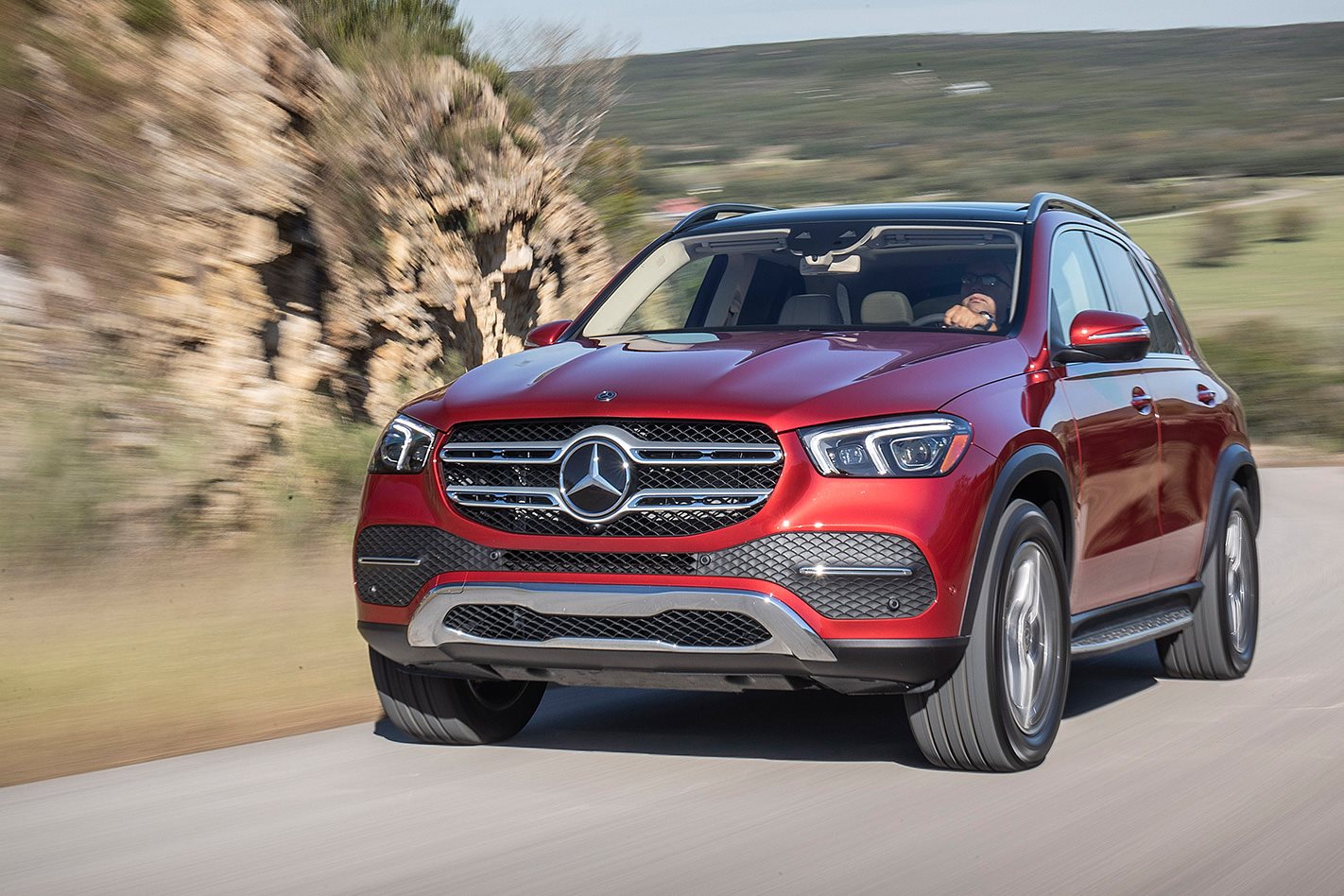
Significance: The second-generation GLE premium large SUV will be the German carmaker’s most advanced model
Price range: $100,000 – $200,000 (depending on model)
Due date: April 2019
Rivals: Audi Q7, BMW X5, Range Rover
Sporting design features that originated with the 1997 M-Class from which it descends, the new GLE-Class is set to leap-frog competitors with technology making it even more advanced than Benz’s flagship S-Class sedan. This will include 48-volt ‘E-Active Body Control’ air suspension with the ability to control pitch and squat movements as well as roll, and Active Tailback Assist’ that used live traffic data to recognise traffic jams ahead and react accordingly before the driver even sees them.
Mercedes-Benz X350d
Significance: V6 diesel joins the Mercedes ute range to worry the as-yet unchallenged Volkswagen Amarok Price: $73,270 Rivals: Volkswagen Amarok, Ford Ranger Raptor, Toyota Hilux Due date: January
Until now, Volkswagen had claimed the title as Australia’s most powerful one-tonner, but the arrival of the Mercedes X350d returns V6 fire with 190kW and 550Nm outputs. It’s pricey but the German carmaker is kitting it out with the goods to match.
MG HS
MG hopes to boost sales in Australia with its premium-equipped new-generation medium SUV.
Price range: $27,000 – $37,000 (estimated)
Due date: Late 2019
Rivals: Mazda CX-5, Toyota RAV-4, Hyundai Tucson
Based on the X-Motion concept revealed at the 2018 Beijing Motor Show, the MG HS’s attractive lines appear to have been penned to directly take on the Mazda CX-5, with state-of-the-art driver assistance tech and German-rivalling upmarket cabin appointments to sweeten the deal. The latter includes a 12.3-inch digital instrument cluster, 10.1-inch infotainment screen, soft-touch surfaces and eight-speaker Bose sound system. A gutsy 2.0-litre turbocharged petrol engine will be one of the engine options, with all-wheel-drive also available.
Mitsubishi Triton
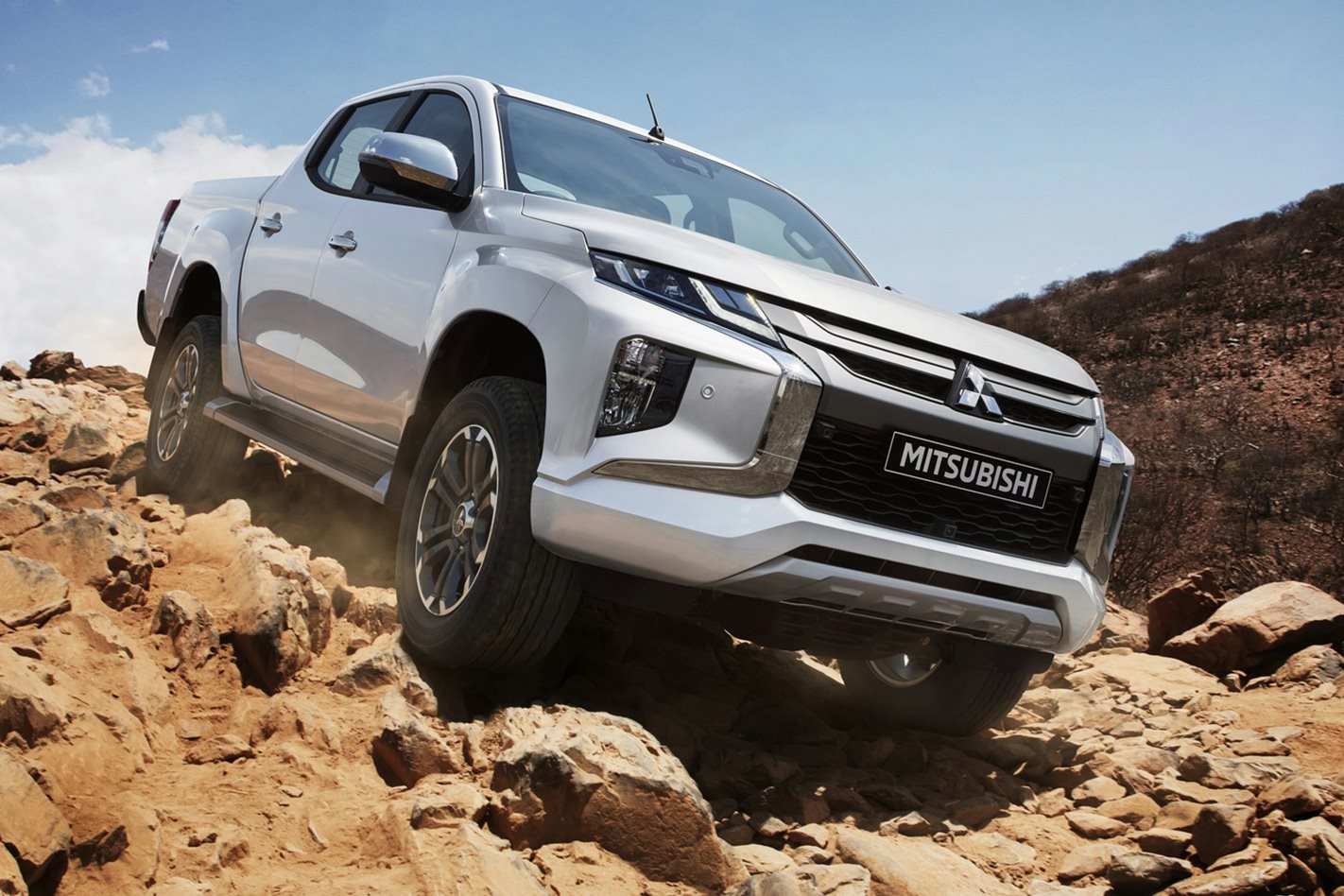
Significance: A major update and facelift of the popular dual-cab ute.
Price range: $25,000 to $50,000 (estimated) Rivals: Toyota Hilux, Nissan Navara, Isuzu D-Max, Ford Ranger, Holden Colorado, Mazda BT-50 Due date: January
It’s not quite a full new model but with more than 2400 changes including new sheet metal, updated six-speed auto, more cabin equipment and safety tech, the 2019 version is significantly different. A new flagship is also expected at a later date bringing a tough truck rival to the Ranger Wildtrak and HSV Sportscat.
Renault Alaskan
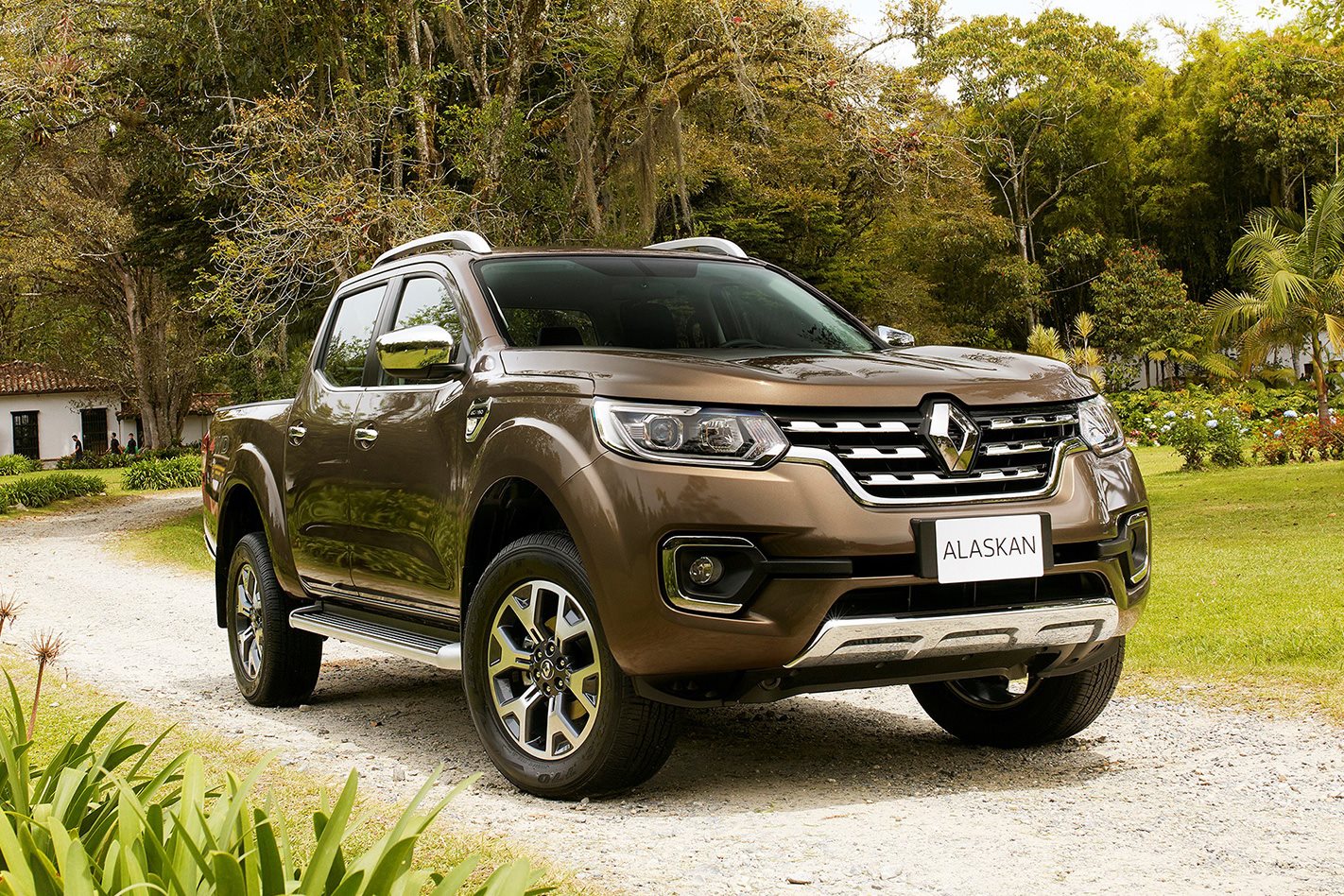
Significance: Renault joins the one-tonne ute revolution at last, but is it fashionably late? Price: $26,000 to $55,000 (estimated) Rivals: Toyota Hilux, Nissan Navara, Isuzu D-Max, Ford Ranger, Holden Colorado, Mazda BT-50 Due date: December
After a protracted gestation and a drawn out arrival date, it looks like Renault will finally weigh into the potentially lucrative dual-cab ute contest on red dirt. Like the Mercedes-Benz X-Class, the Alaskan also takes its underpinnings from the popular Nissan Navara, and although exact Australian specifications are yet to be confirmed, it’s likely the French contender will offer a high-end version with lots of kit as well as a more affordable workhorse at the entry point.
Ram 1500 diesel
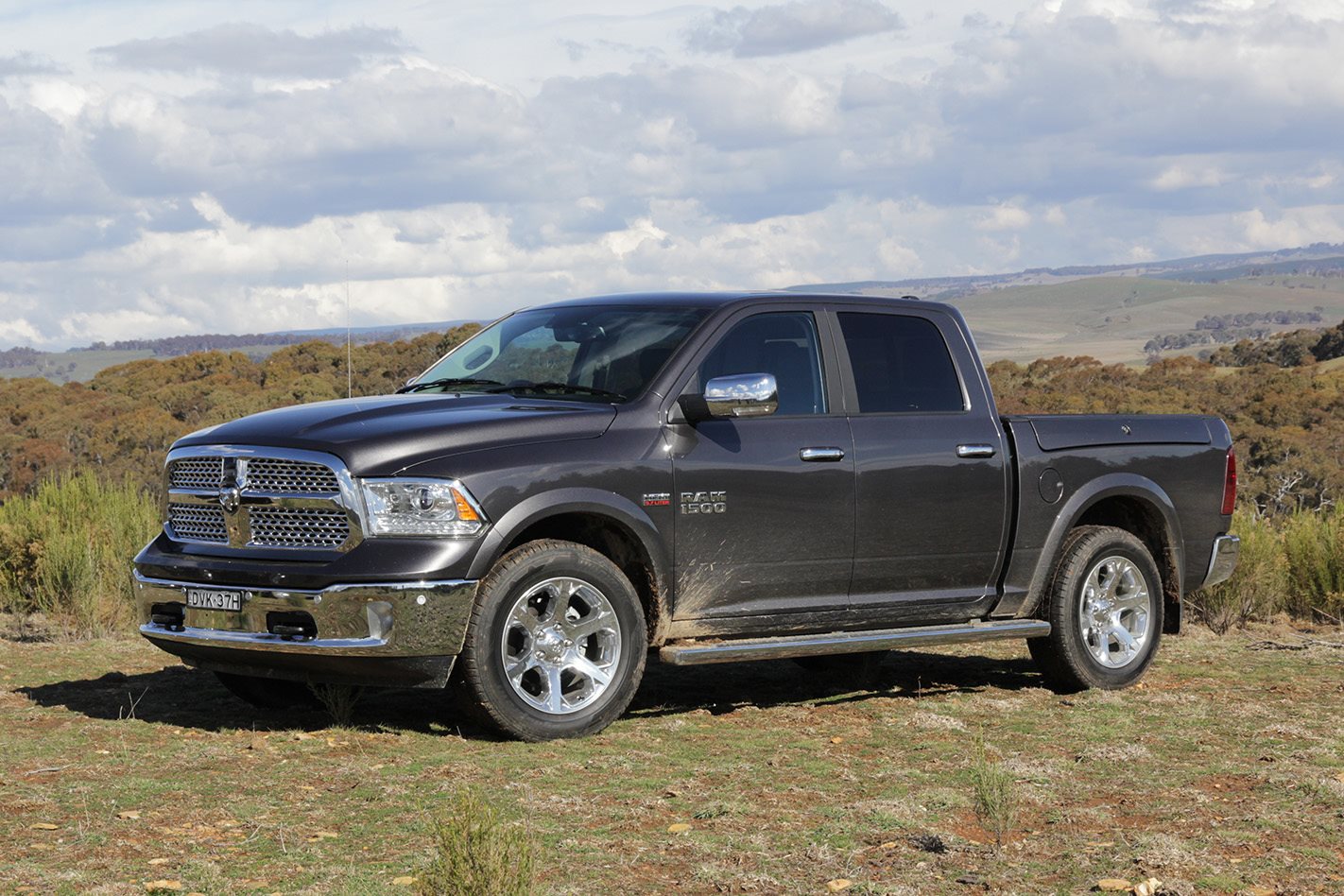
Significance: Baby of the Ram range gets a more manageable thirst without sacrificing grunt Price: $95,000 (estimate) Rivals: Ford Ranger Raptor, Chevrolet Silverado, Volkswagen Amarok V6 Due date: January/February
From launch, the smallest Ram in the line-up was available only with gas-guzzling V8 power, which likely put off a few fence-sitting fans. A V6 diesel version is on the way and it compromises little for the extra efficiency. Exact output figures are yet to be finalised for the Australian launch but the 3.0-litre V6 turbocharged diesel could produce up to 200kW and 600Nm. That compares with the current 5.7-litre V8 which pushes out 291kW and 556Nm.
Range Rover Evoque
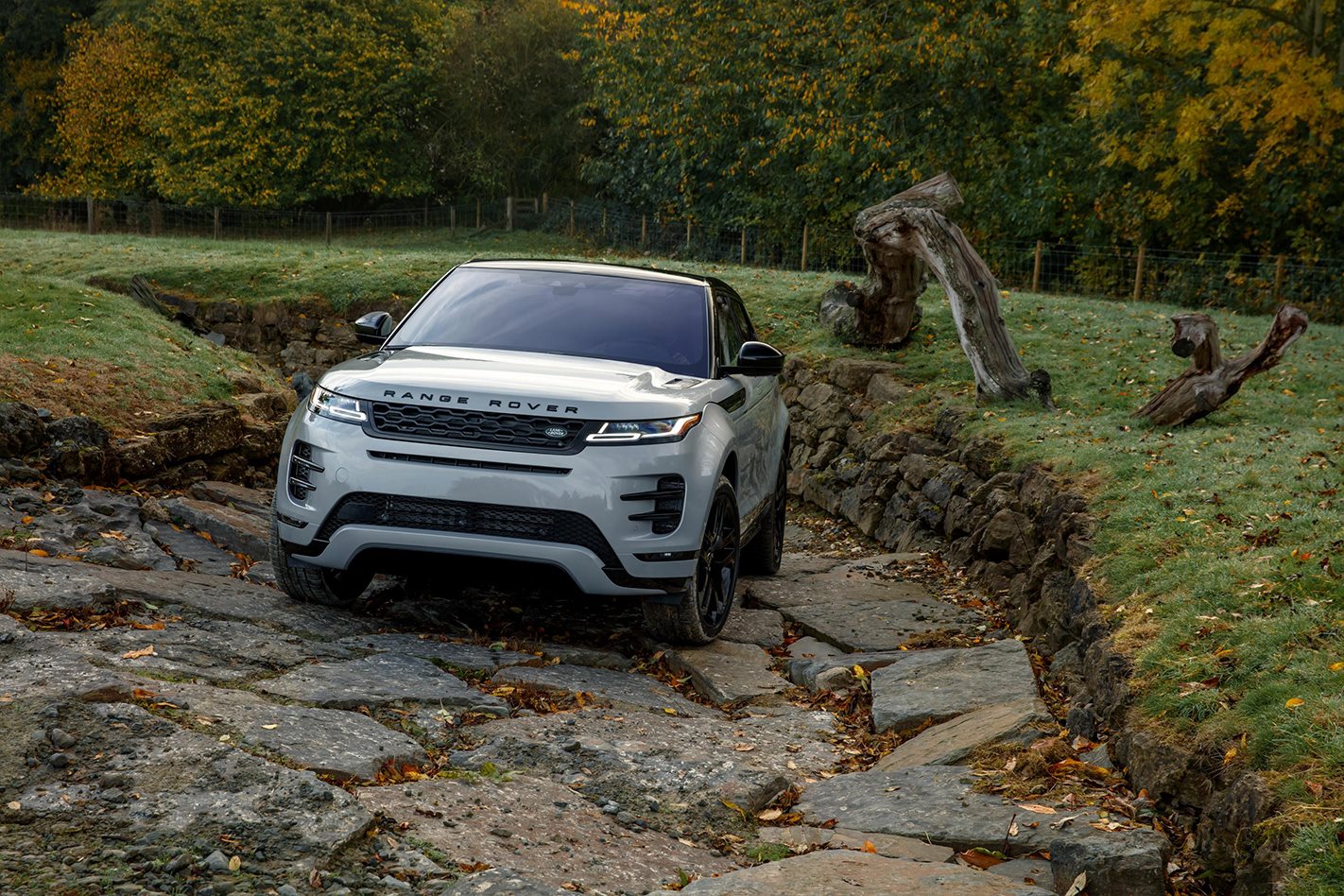
Significance: The baby Range Rover will mature to reflect its bigger siblings while offering more interior space
Price range: $64,000 – $105,000 (estimated)
Rivals: BMW X4, Jaguar F-Pace, Mercedes-Benz GLC, Porsche Macan
Due date: May 2019
Land Rover Australia is yet to detail the full 2019 Evoque line-up, but has confirmed that three diesel four-cylinder engines and three turbo petrol engines will be available with 48-volt mild hybrid technology. It’s 10mm wider and has a 20mm longer wheel base to provide more leg and elbow room, with boot space also increasing, by 10 percent, to 591 litres. The roof is 11mm lower though, resulting in a sportier coupe aesthetic resembling the Velar.
SsangYong Musso
Significance: Returning South Korean ute brings sharp pricing, neat features and class-leading warranty
Price range: 39,990 to $52,990 Rivals: Toyota Hilux, Nissan Navara, Isuzu D-Max, Ford Ranger, Holden Colorado, Mazda BT-50 Due date: January
After a two-year hiatus, SsangYong is back on Australian turf with a factory backed operation and a four-model assault for its relaunch. Leading that charge is the Musso one tonner, which makes a good case for itself with standard AEB, enticing prices and an unbeatable seven-year warranty.
Suzuki Jimny
Significance: Suzuki goes back to the future to revive its mini 4×4’s iconic styling and serious off-road cred.
Price range: $27,000 – $29,500 (estimated)
Due date: February 2018
Rivals: Jeep Compass Trailhawk, Jeep Wrangler
It has questionable road manners and safety, but if initial reaction is any guide the new Jimny will be one of the most popular releases of 2019. The boxy fourth-generation Jimny retains its ladder-frame chassis, live front and rear axles and dual-range transmission that’s still activated by a proper lever. But there a few modern touches including a large infotainment screen with Apple CarPlay and Android auto connectivity. It will also come with a more powerful 1.5-litre petrol engine (up from 1.3L) petrol four-cylinder engine with a choice of five-speed manual or four-speed automatic transmissions.
Toyota RAV4
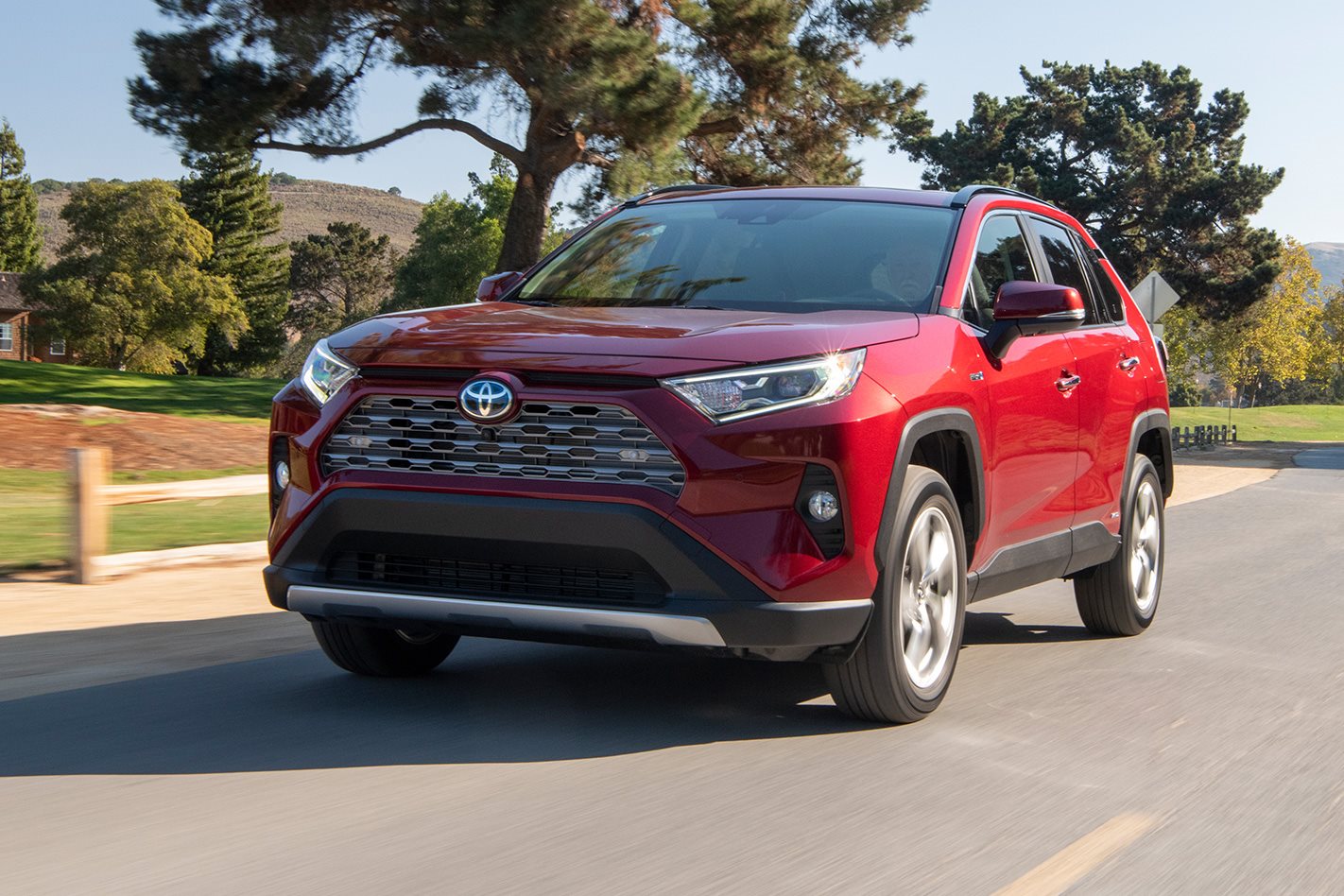
Significance: Toyota’s mainstay medium SUV has been totally redesigned and offers more comfort and technology than ever before
Price range: $30,00 – $55,000 (estimated)
Due date: April 2019
Rivals: Mazda CX-5, Subaru Forester, Jeep Cherokee
One of the most significant new cars for 2019, the all-new Toyota RAV4 promises to shake up the highly competitive medium SUV market by setting new benchmarks in terms of standard features and modern powertrains, including a petrol/electric hybrid. It will have the option of torque-vectoring AWD and multi-terrain drive modes to help it grip, and spawn a more off-road focused version called the ‘RAV4 Adventure’. The new RAV4’s bigger exterior dimensions will result in significantly more interior space and comfort, while the interior designs will be more upscale than the current model.
Volkswagen Touareg
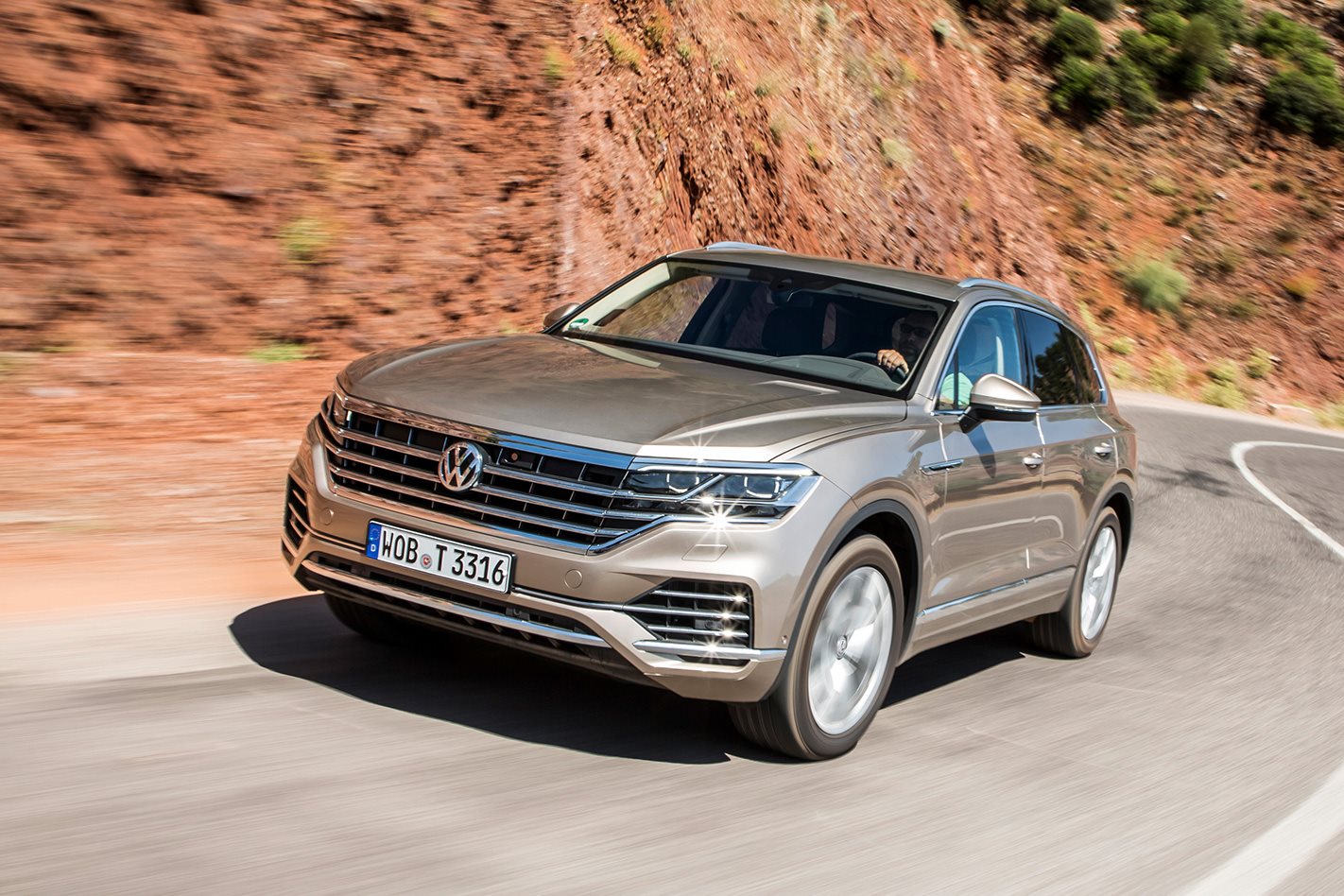
Significance: VW’s large SUV is now a truly premium offering that’s dripping with comfort and technology that rivals its Audi Q7 cousin
Price range: $83,000 – $120,000 (estimated)
Due date: May 2019
Rivals: Audi Q7, BMW X5, Lexus RX, Mercedes-Benz GLE
The first all-new Touareg since 2010 is the most luxurious and technologically advanced Volkswagen SUV yet and is built on the same platform as some of the world’s most luxurious high-riders including the Bentley Bentayga, Porsche Cayenne and Lamborghini Urus. Featuring interior trim levels that range from lounge-like to the sporty R-line, creature comforts will include VW’s biggest panoramic sunroof yet, 18-way electronically adjustable seats with high-quality leather detailing.
Why? That’s the first thing that came to mind when BMW unveiled the X4, an SUV-cum-coupe. Strong sales justify its existence, and now, in its second generation, the X4 gains a hot version. Enter the $109,900 X4 M40i.
Longer, lower and wider than before, the new X4 is more than just a gigantic kidney grille. Sitting behind it, though, is the gem of the M Performance transformation – the 265kW/500Nm B58 inline-six.
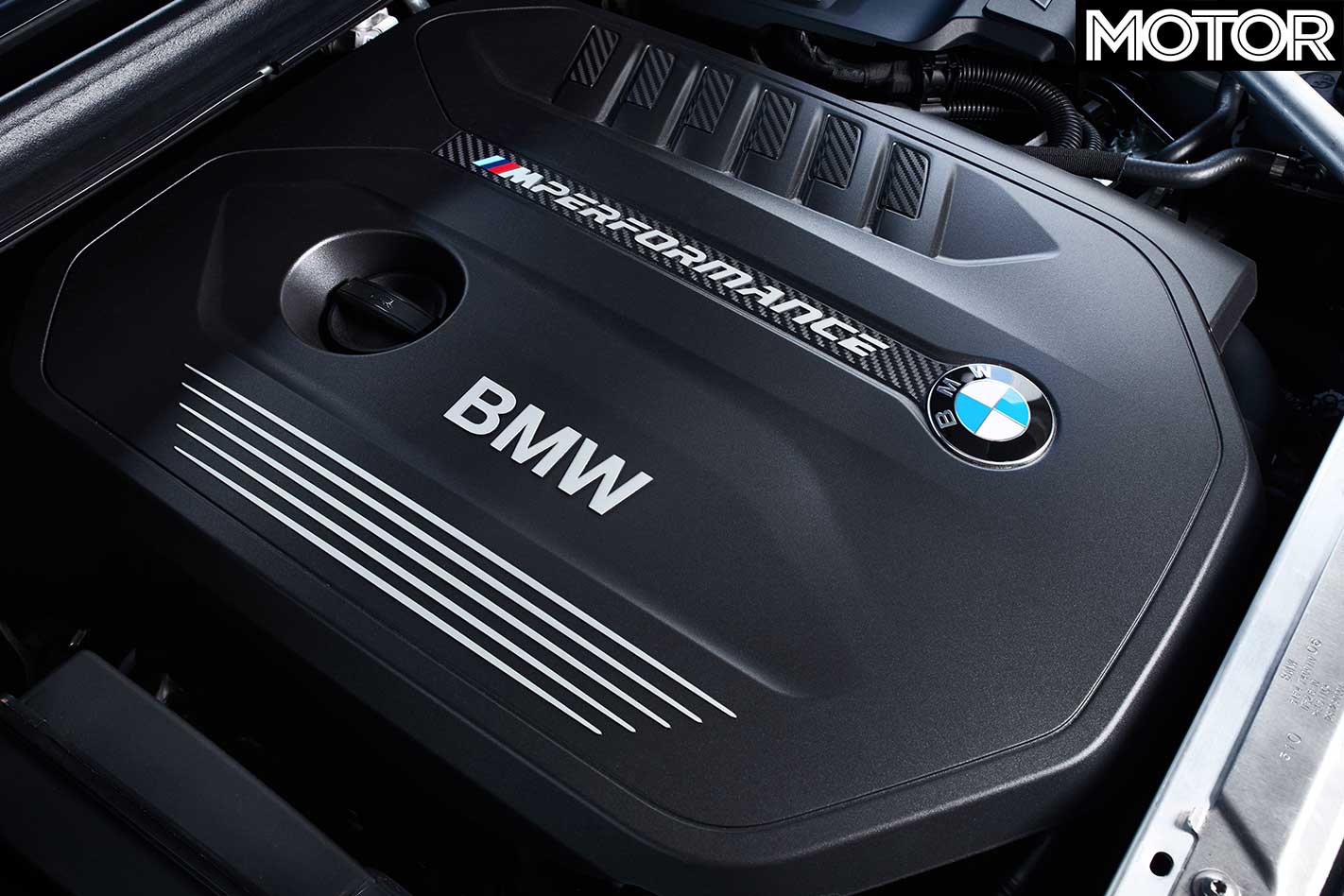
With a slick ZF eight-speed ‘box and the twin-scroll turbo six, it’s no wonder the 1825kg M40i reaches 100km/h in 4.8sec. With AWD and the torque vectoring M Differential, you can really drive the nose to the apex on the outside back wheel (30mm wider rear track over X3).
With the slackened ESC setting, exciting the X4’s bum on corner entry is even possible… which seems uncouth for an SUV that can’t totally escape its kerb weight. It sounds brilliant, too.
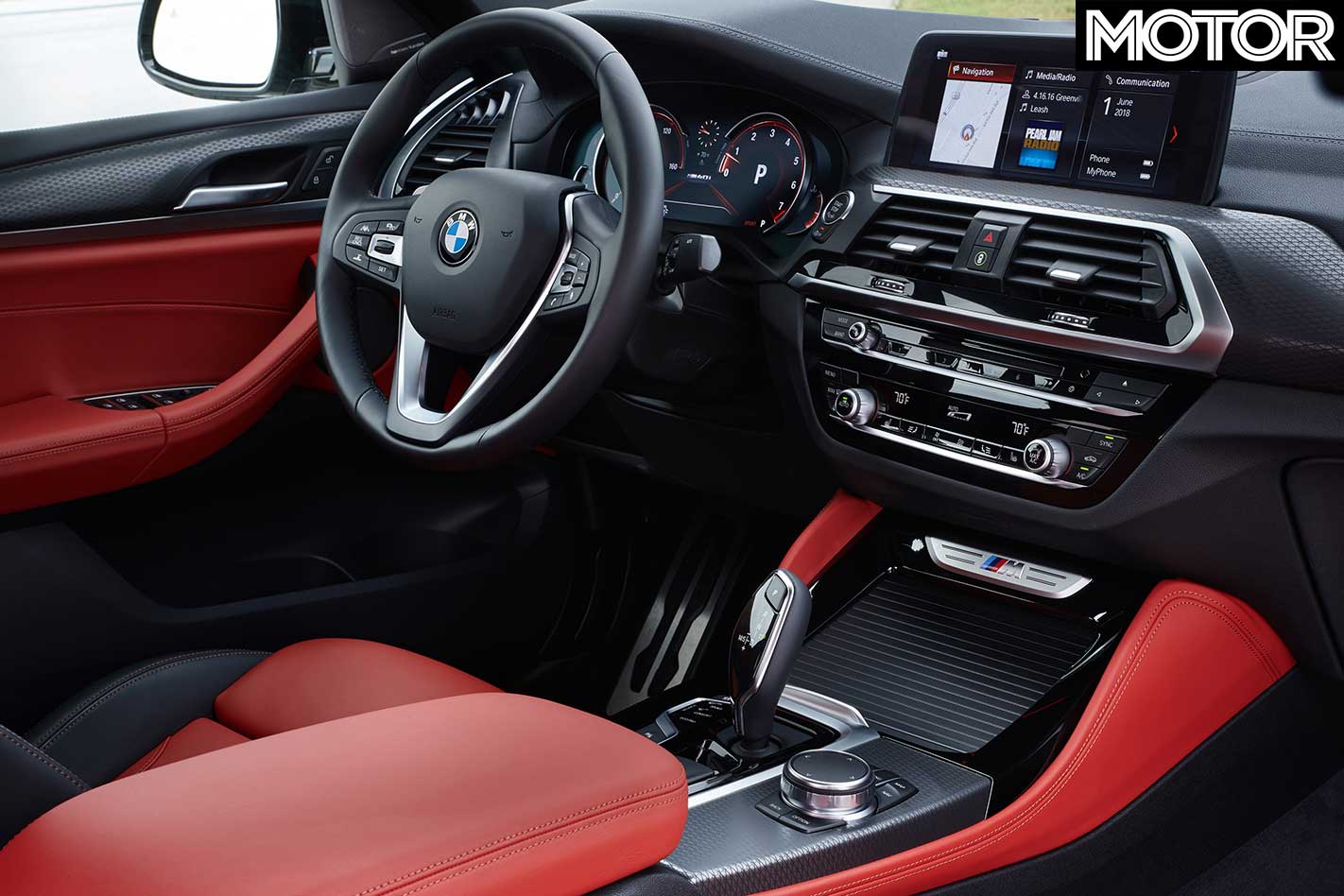
The interior receives a makeover, upping the opulence and adding a digital instrument cluster. As far as an entree to the X4M main, this coupe-esque SUV leaves us salivating for the next course. It’s unquestionably fast and surprisingly capable – almost even playful.
Maybe the X4 M40i isn’t a question of why, but why not?
2018 BMW X4 M40i SPECS: Engine: 3-litre inline-6 turbocharged Power: 265kW @ 6500rpm Torque: 500Nm @ 1550rpm Drive: AWD Weight: 1825kg Price: $109,900
Toyota has claimed the top spot in yearly new car sales for the sixteenth time in a row, selling a grand total of 217,061 new cars in Australia in 2018. Toyota’s impressive performance nearly doubled second-place-getter (Mazda, with 111,280 sales), proving that Toyota’s brand appeal remains evergreen in this country despite the departure of local Camry/Aurion manufacturing.
However, though the new built-in-Japan Toyota Camry retained its position as ‘best-selling midsize car’ for the 25th consecutive year, sales of that model slipped by a staggering 35.4 per cent. Not even the Camry is immune to the decline in passenger car sales, it seems.
The Toyota Corolla also dipped in outright sales numbers, though only by 5.4 per cent – which could easily be explained by constrained supply while running out the previous-gen model – while all Prius variants, Yaris and Tarago declined as well. Balancing that out, however, was strong double-digit sales growth across Toyota’s entire SUV portfolio – the CH-R compact SUV being the biggest winner with a massive 53.5 per cent jump.
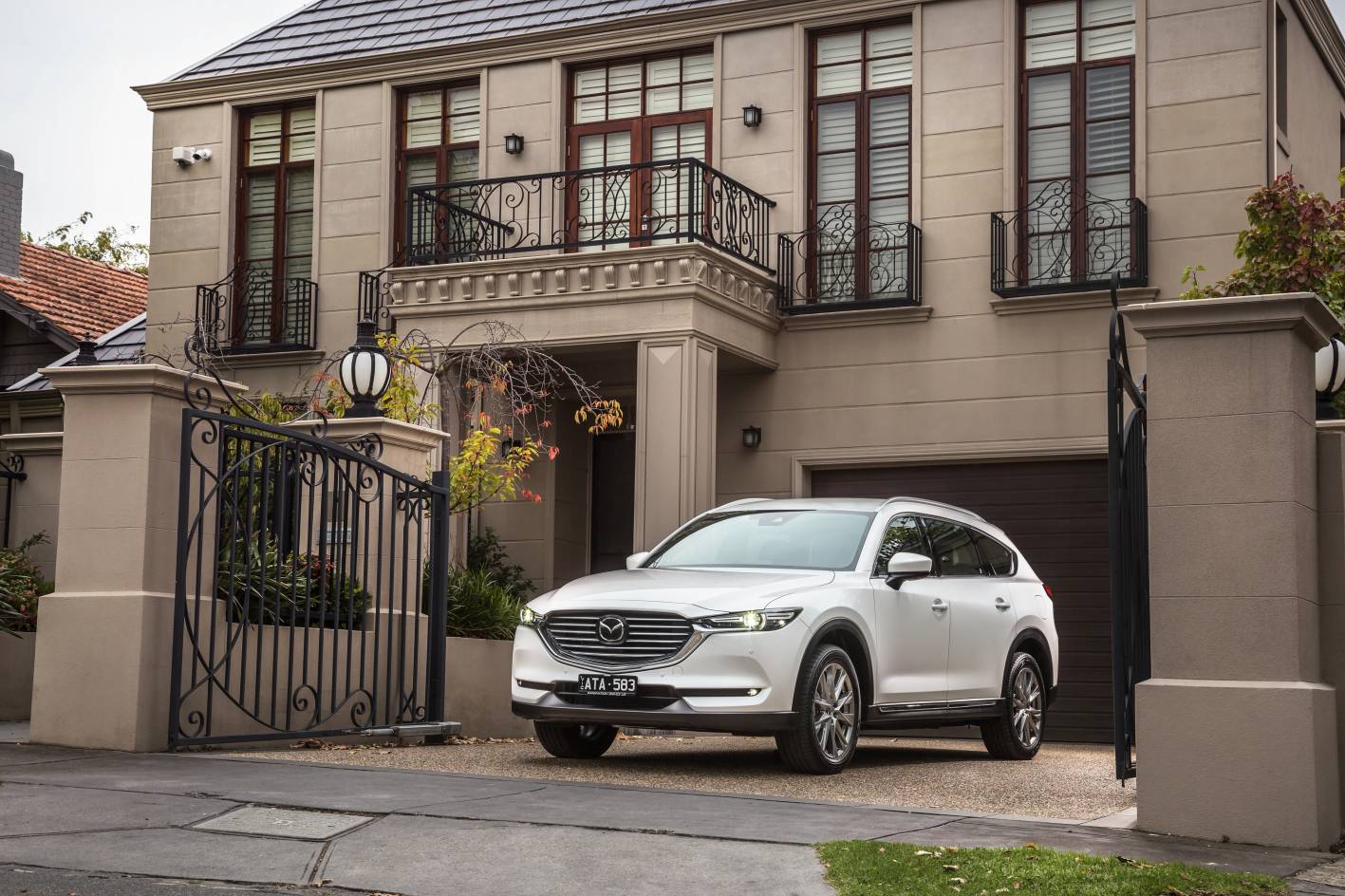
In second place was Toyota’s Japanese compatriot, Mazda. While overall sales for the Hiroshima-based company – a relative minnow in its homeland – dropped by 4.4 per cent during 2018, its outright sales figure of 111,280 was still strong enough to land it a firm claim to the runner-up position.
However unlike Toyota there were no major winners in Mazda’s showroom. Though the arrival of the CX-8 mid-year added incremental volume (1550 cars), every other model bar the CX-5 mid-sized SUV posted lower sales compared to the brand’s 2017 figures. Even the CX-3 baby SUV registered a small decrease, despite the compact SUV category boasting the strongest growth in market share over the past 12 months.
The third spot went to Hyundai, with the Korean goliath moving 94,187 new cars in 2018. It’s an admirable result considering that unlike Toyota and Mazda, Hyundai has yet to offer a body-on-frame ute in this country, thus locking it out of one of the most lucrative – and high-selling – segments in the Australian new vehicle market.

That said, most of Hyundai’s range fell slightly for the year, the sole exceptions being the Kona compact SUV, which notched up a ridiculous 358.2 per cent increase in sales (explained by its late arrival in 2017, and thus massive year-on-year growth stats), and bizarrely the mid-size Sonata sedan, which bucked market trends and improved its sales position by 5.8 per cent.
Mitsubishi came in fourth with 84,944 sales, despite an ageing product lineup, which continues to sell surprisingly well thanks to keen pricing and regular updates. The ASX and Lancer, two of the oldest cars on the Australian market, were again big performers for the Japanese automaker, while the Eclipse Cross compact SUV, which only arrived a year ago, managed a very respectable 7521 sales during 2018.
Mitsubishi also plays well to the off-roader market – a traditional strength of the diamond brand – with the Triton range being its top-performing nameplate and a strong performer in the 4×2 and 4×2 ute category.
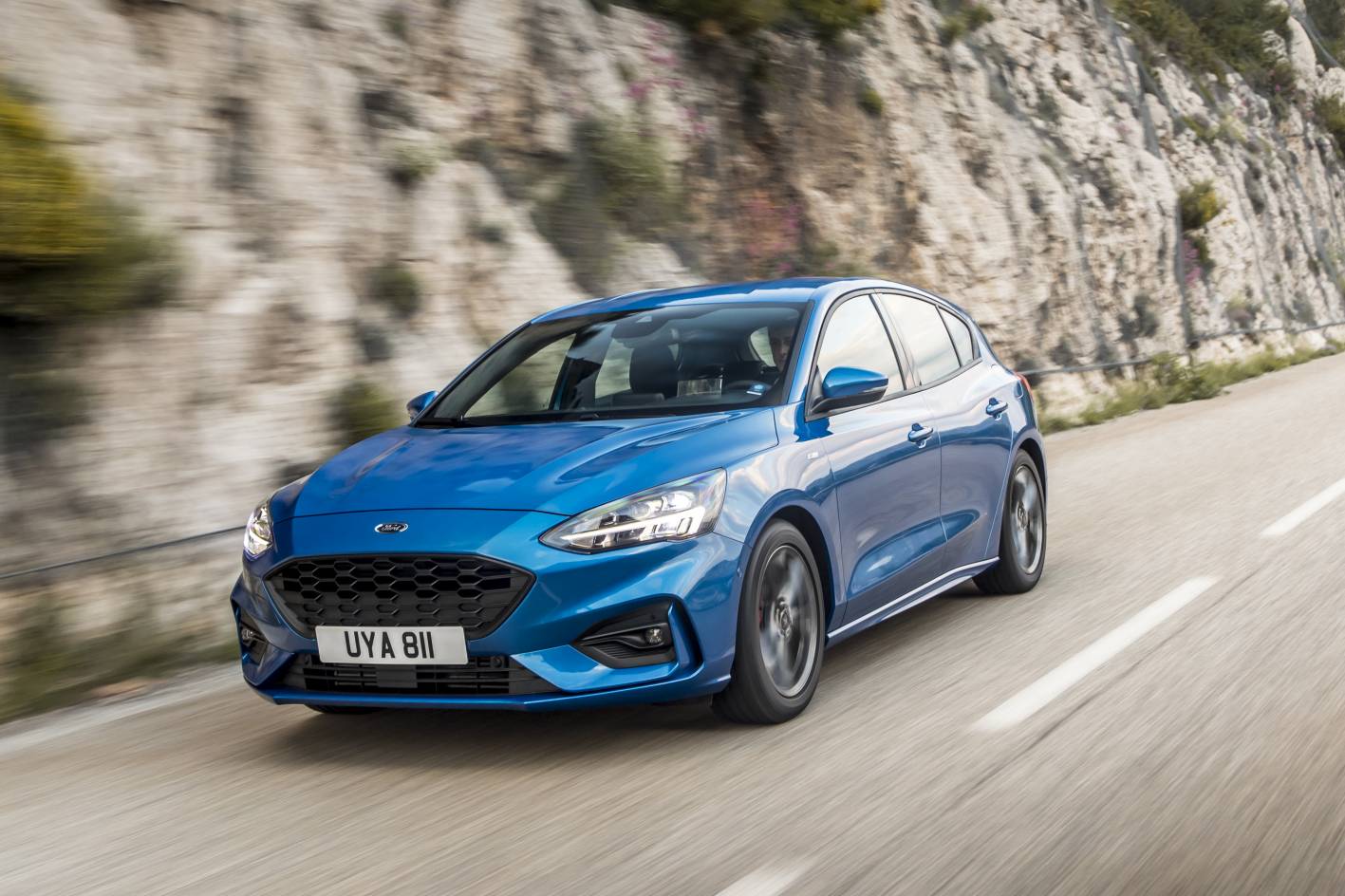
Ford slipped to fifth place with 69,081 registrations, an 11 per cent drop in overall sales volume over 2017. Ranger utility sales lagged slightly behind the dominant Toyota Hilux in the crucial commercial utility segment, but it was the steady erosion in Fiesta, Mustang and Focus sales that hurt the brand most in 2018.
A new Focus small hatch (above) is now in showrooms, however, which should see an improvement for that model over the course of 2019. That will be balanced out by the loss of the Fiesta baby hatch, which will only continue into the new generation in the form of the Fiesta ST hot hatch.
That rounds out the top five, with Holden (60,751), Kia (58,815), Nissan (57,699), Volkswagen (56,620) and Honda (51,525) filling out the rest of the top ten.
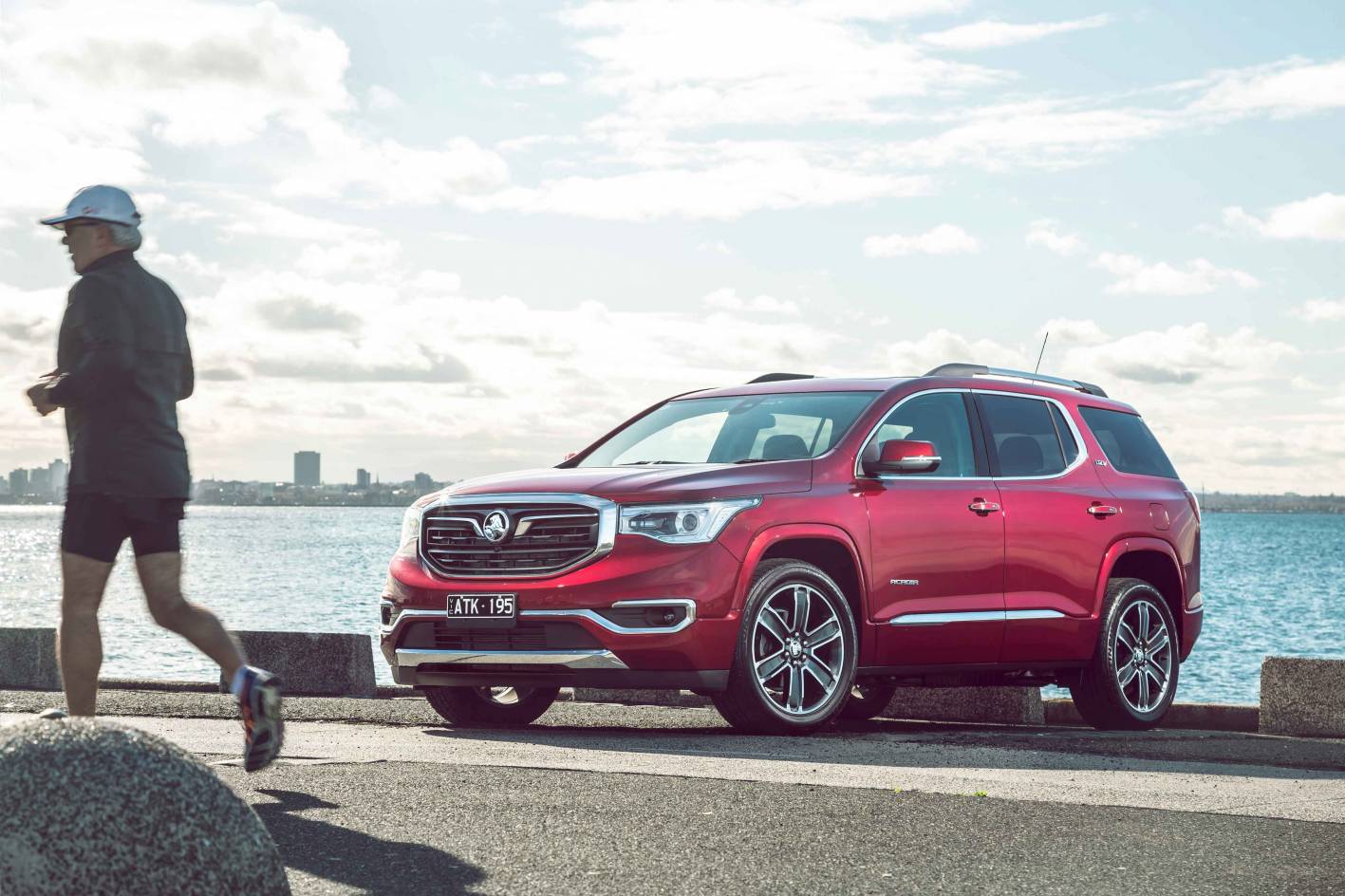
Of those, Holden has the most to worry about. The once-mighty Lion brand’s sales volume dropped by a disturbing 32.7 per cent during 2018. The loss of locally-built Commodores was a big blow, and newer SUV products like the Acadia and Equinox have yet to make up the difference. The company also needs a more convincing – and modern – small SUV entrant than the Trax to really capitalise on the booming demand for vehicles of that type.
Nissan and Honda, meanwhile, show some promise. Both went against the tide by posting increases in outright sales numbers, with Nissan up 2 per cent and Honda enjoying a very healthy 10.1 per cent growth year on year.
There were more than a few other brands that performed well but weren’t able to break into the top ten. One was Alfa Romeo, which benefited from the arrival of the Stelvio (its first-ever SUV) and delivered 21 per cent more cars in 2018, while rival Volvo saw dramatic growth in sales of its XC40, XC60 and XC90 SUVs and made a sizeable 43 per cent leap in volume as well.
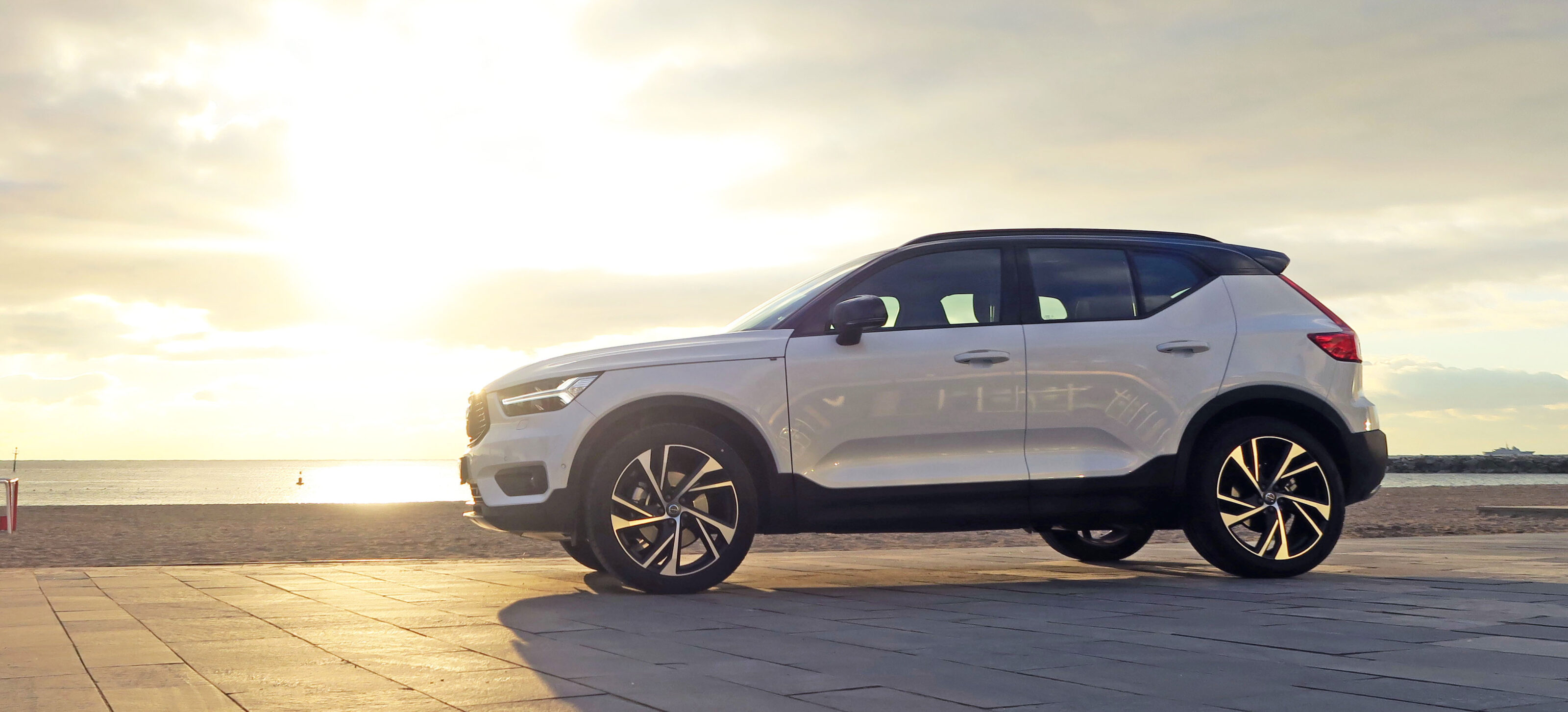
Great Wall was up by 94.1 per cent (though is coming off a low base with just 784 total sales in 2018), while MG soared by 401 per cent thanks to a product renewal that saw it notch up 3007 sales during the year, compared to just 600 in 2017.
Another surprising winner was Ram, which converted 723 of its hulking American pickup trucks to right-hand drive in 2018 to give it an 81.7 per cent rise. Are Aussies warming to the idea of super-sized workhorses? Quite possibly.
Want to know which individual models got the most love from new car buyers in 2018? Click here!
Toyota has totally revamped its warranty offer for 2019, moving it from one of the last of the three-year warranty holdouts to one of the industry’s front-runners, thanks to a new 60-day refund offer for faulty vehicles.
The money-back guarantee will be offered to customers that experience, in Toyota’s words, “any failure that prevents the vehicle from being driveable within 60 days of collecting their new vehicles”.
Australia’s consumer laws also provide customers with the ability to seek a repair, replacement or refund on a faulty vehicle, but both Toyota and Holden now offer this as a stand-alone sales feature.
As well, a five-year, unlimited kilometre warranty will be offered across the Toyota range from today, while commercially used vehicles will be limited to 160,000km within that five-year period.
This puts Toyota on the same footing as eight of the top ten car brands in Australia, including Hyundai, Mazda, Holden and Ford. It also moves it past the three-year warranty offered by Nissan, as well as premium European brands like Mercedes-Benz, Audi and BMW.
Toyota also claims that the warranty on engines and transmissions can be extended to seven years if the vehicle is regularly serviced at a Toyota dealer, while hybrid battery warranties can be extended to ten years for cars like the Camry Hybrid and Corolla Hybrid if annual inspections past Year Five are booked through Toyota.
Toyota Australia’s vice president sales and marketing Sean Hanley said the new deal, known as the Toyota Warranty Advantage, is the next step in the company’s “consumer-focused changes”.
“Toyota Warranty Advantage demonstrates the willingness of Toyota and our dealers to provide excellent customer care that matches the enviable reputation of our vehicles for quality, durability and reliability,” he said.
“Our guests have told us that being able to remain on the road, with minimal disruption and inconvenience was most important to them.”
A pair of one-tonne utes and a trio of hatchbacks can brag the title of Australia’s top-five favourite new vehicle models in 2018.
Once again, Toyota’s venerable HiLux utility is the most popular vehicle in the Australian market with a staggering 51,705 units registered in 2018, adding another 4612 to the model’s full-year score in 2017. To put that into context, fellow Japanese marque Honda couldn’t quite match the Hilux tally with its entire line-up.
In second place, Ford weighs in with its Ranger one-tonner, which posted a healthy 42,144 sales. Ford’s next best performing model is a fair way behind its pick-up hero, but with 6412 registrations, the Mustang deserves a special mention for doing what few thought a sportscar could achieve in sales.
While Mitsubishi’s Triton has previously tussled in the top five positions buoyed by compelling pricing and a solid reputation, it fell to seventh position overall and 24,896 sales, but is still Australia’s third favourite ute of the year.
The Triton’s fall makes way for three small hatchbacks to fill out Australia’s top five list.
Toyota deserves another slap on the back for the Corolla’s performance, snatching a respectable 35,320 sales last year, maintaining a safe distance from arch-rival the fourth-place Mazda 3 with 31,065. In fifth place, the Hyundai i30 battled back from a slow start following its introduction in 2017, with a score of 28,188 in 2018.
SUVs have once again dominated Australian new car sales in 2018 with just shy of half a million of these popular practrical wagons finding driveways over the last 12 months.
In the bottom half of the top ten it’s an almost all-SUV affair, lead by the CX-5 from Mazda as the most popular moderate off-road-able model with 26,173 spoken for in 2018. Despite an imminent new version arriving this year, Toyota gets in with a top-ten mention yet again with its RAV4 notching up 22,165 sales.
Filling out the final two places, and confirming Australia’s appetite for affordable mid-sized SUVs, are the Nissan X-Trail (21,192) and the Hyundai Tucson with 19,261 registrations.
These two lead the seemingly un-killable Mitsubishi ASX which found 19,034 homes despite being about a decade old, give or take a few facelifts.
A notable mention must go to Volkswagen’s Golf hatchback which narrowly missed out on the top ten, securing eleventh place with 19,076 – the highest-ranking German representative in 2018.
Speaking of the Germans, in the luxury model sales race, the ‘big three’ were unrelenting in their battle in 2018. As expected, overall volume champion Mercedes-Benz takes the title for most popular premium model with Australians falling over themselves for 5605 examples of the GLC mid-sized SUV. That’s up from the 4109 it sold in 2017.
In overall sales, Mercedes-Benz is a solid presence and its commendable passenger and SUV figure of 32,201 gets a 7336 boost if you include light commercial vehicles, of which, the Sprinter is the hero with 3230 registrations.
As well, all eyes were on the German brand’s one-tonner newcomer but, with 1545 sales of the new X-Class, its offering in the tradie truck arena is not yet worrying any of the traditional favourites.
Of the emerging premium ute options, Volkswagen continues to be a force with 9290 examples of the Amarok rolling out of showrooms and on to work sites (or boat ramps and school runs), thanks to the introduction of a new V6 diesel variant that takes the crown as Australia’s most powerful one-tonner.
BMW trailed in second place among its posh rivals with 4864 of its X3 mid-sizer sold (up from 3671 of 2017), while Audi’s best performer was the A3 with 4257 – the only one of the three premium best-sellers to slide downward in sales.
