
The increasingly vigilant users of the internet have brought forward a new set of pictures of a yet-to-be released car, this time the next Ford Focus ST.
Ford’s front-drive Focus hot hatch is seen in a warehouse wearing its hero yellow, with revised exterior and interior design features visible.
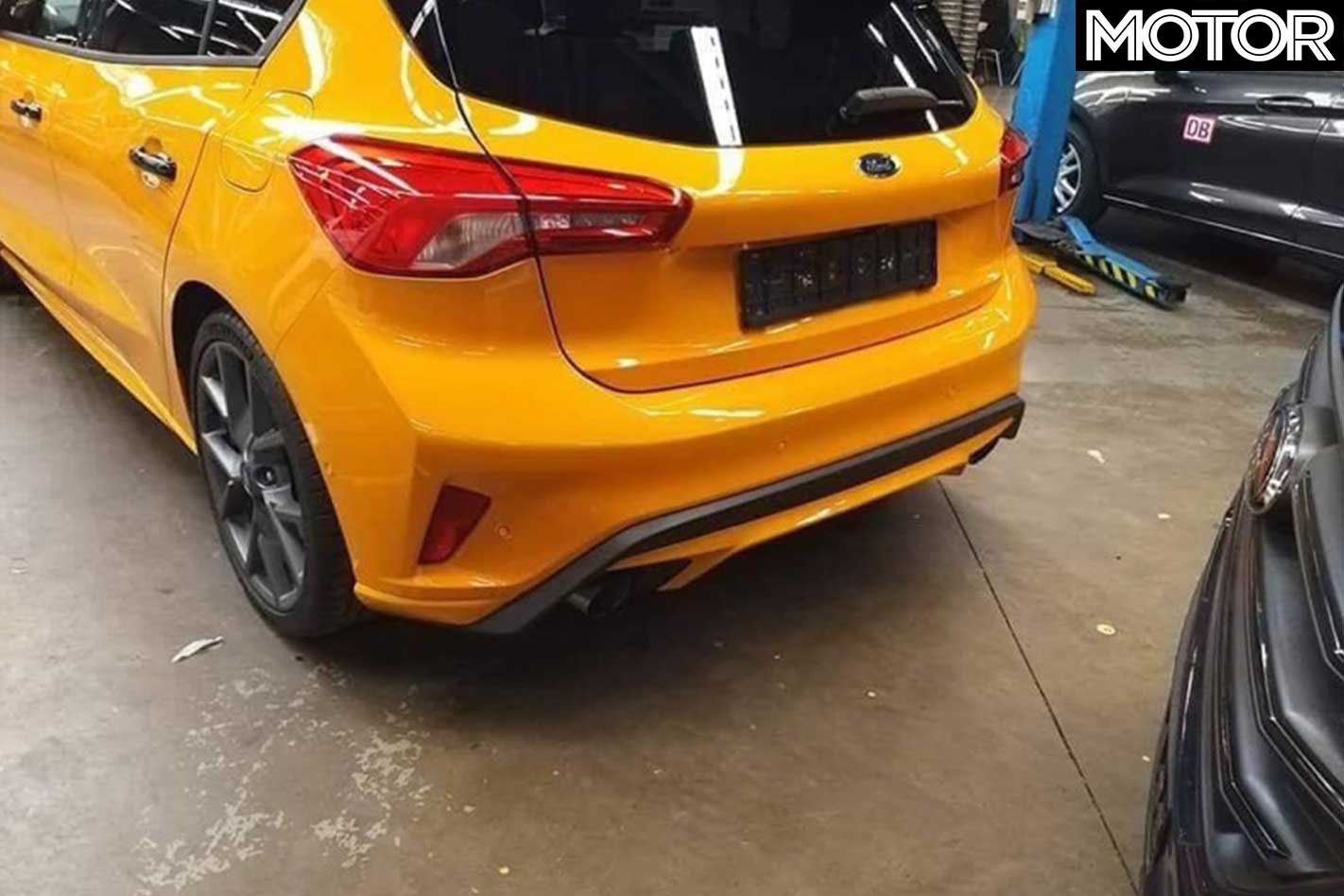
Most notably, the front grille follows the new design language and looks like the old one has essentially been flipped upside down. Surrounding that, softer body lines continue on to become part of a more rounded car, with fewer sharp angles.
Though no badging can be seen on the car’s body, the Recaro seats with ST ‘badging’ give away that this is Ford’s next GTI rival.
Better still, we spy a manual gear shift.
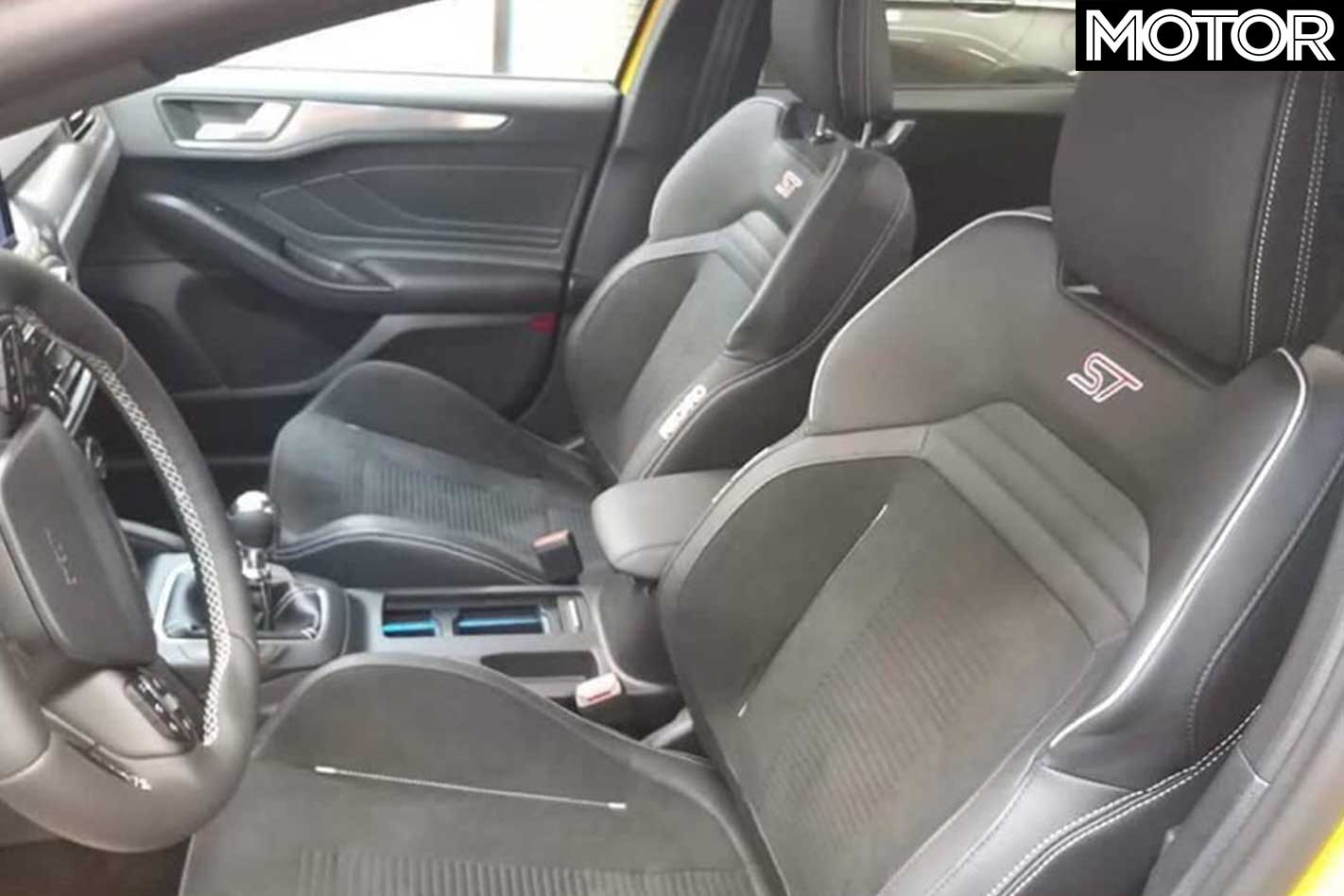
The dash and infotainment equipment is also updated, with a screen protruding from the dash tablet-style, and a more sleek and simple layout for the buttons and dials.
This isn’t the first we’ve seen of the new ST, footage of it testing in camo at the Nurburgring has been around for more than a month now, but this is the first undisguised ST we’ve seen.
If Ford is to move with the hot hatch game, we expect to see the previous generation’s performance topped. That means more than 184kW/360Nm an extra 15kW would see it placed on par with the Hyundai i30 N, and likely priced quite similarly.
It would be surprising to see the ST arrive with no limited-slip differential, given the trend of LSDs becoming standard, and the power of most hot hatches topping 200kW.
Rumours even suggest the ST could cop a de-tuned version of the Mustang EcoBoost’s 2.3-litre unit, but we’ll wait to find out from Ford before we call that confirmed.
Mount Panorama has a new official lap record, and we’ve found footage of it.
Christopher Mies was at this year’s Challenge Bathurst in an Audi R8 GT3 car to set a lap time of 1min 59.321sec.
That’s almost two seconds clear of Shane Van Gisbergen’s previous record which he set during 2017’s Bathurst 12 Hour qualifying at 2min 1.286sec. He was in a McLaren 650S GT3.
Meanwhile, the fastest V8 Supercar lap is Scott McLaughlin’s 2017 ‘unofficial’ effort of 2min 4.14sec.
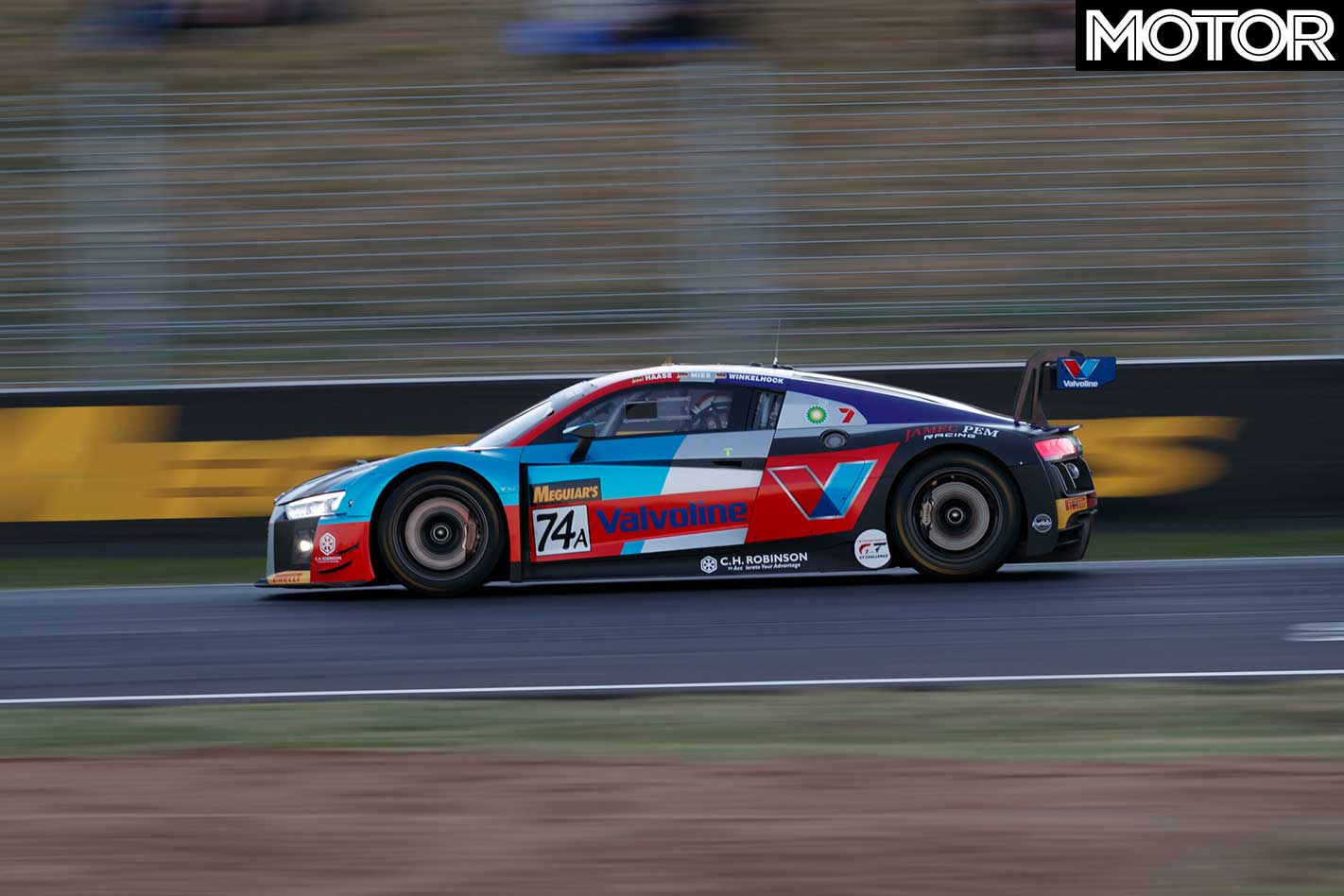
While they race in Balance Of Performance specification that does exactly what its name suggests, no such rules apply at Challenge Bathurst, a CAMS sanctioned sprint event where times are officially counted.
Mies’s 2018 Audi R8 LMS was derestricted when it set the outright lap record. That involved removing weight from the chassis and restrictors from the 5.2-litre V10’s engine to bump power by 75kW. It was making over 400kW.
The onboard footage on the factory driver’s YouTube channel reveals the car easily reaches its 291km/h top-speed on Conrod Straight before The Chase. An R8 in race trim is more likely to top out 10km/h slower than that.
The two-time Bathurst 12 Hour winner was frustratingly held up on the final corner of his lap by another competitor, leaving more time in the effort. However, his elated yells show that he was more than satisfied with the end result.
Mies was also joined by Garth Tander who managed a 2:00.3 lap against some traffic and a different set of tyres, according to Speedcafe.com.
https://www.instagram.com/p/BqOtrZ4Av7E/?utm_source=ig_embed&utm_medium=loading
If you haven’t seen the video, make yourself a cuppa, get your headphones, go full screen and enjoy the ride.
The long-awaited Genesis G70 luxury sedan will be sold in Australia with six variants and a five-star ANCAP safety rating when it launches in … well… we still don’t know because Hyundai Australia can’t tell us.
The Genesis G70 has already been on sale internationally for a year, and was originally due to launch at the start of 2018 , but its Australian launch has since been subject of several delays, with a spokesman from parent company Hyundai telling WhichCar.com.au, “we’re having a product meeting on December 17 where we’ll reveal more … expect it sometime during the first half of 2019”.
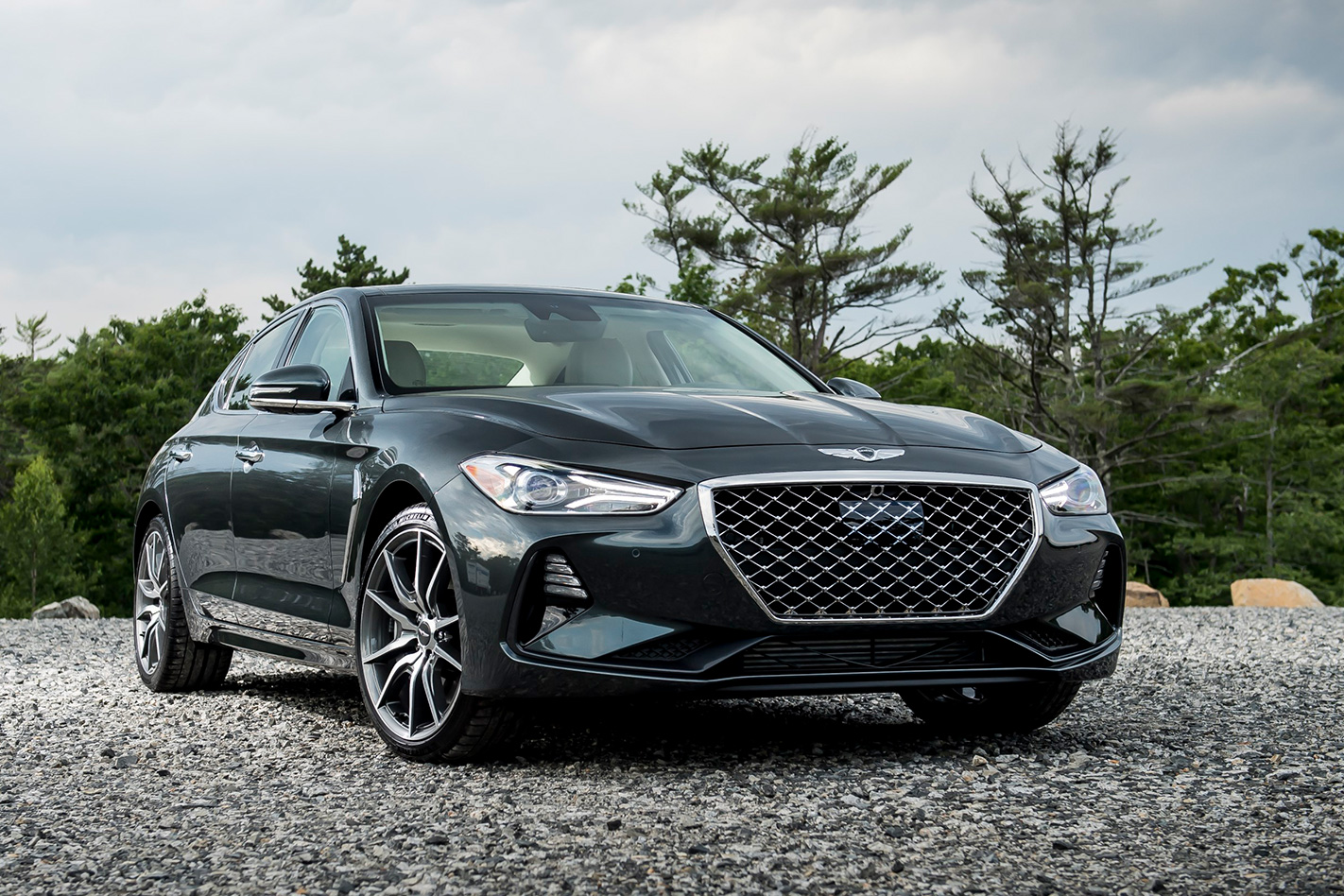
What we do know is that when the standalone Genesis brand does finally arrive, its rear-drive BMW 3-Series, Lexus IS, and Mercedes C-Class rival will be available with a choice of 2.0-litre four-cylinder and 3.3-litre V6 turbo-petrol engines, the latter being the same basic engine that powers the Kia Stinger – a brand which Hyundai also owns.
Like the Kia Stinger, each engine will be available across three specification grades:
- G70 2.0T
- G70 2.0T Sport
- G70 2.0T Ultimate
- G70 3.3T Sport
- G70 3.3T Ultimate
- G70 3.3T Ultimate Sport
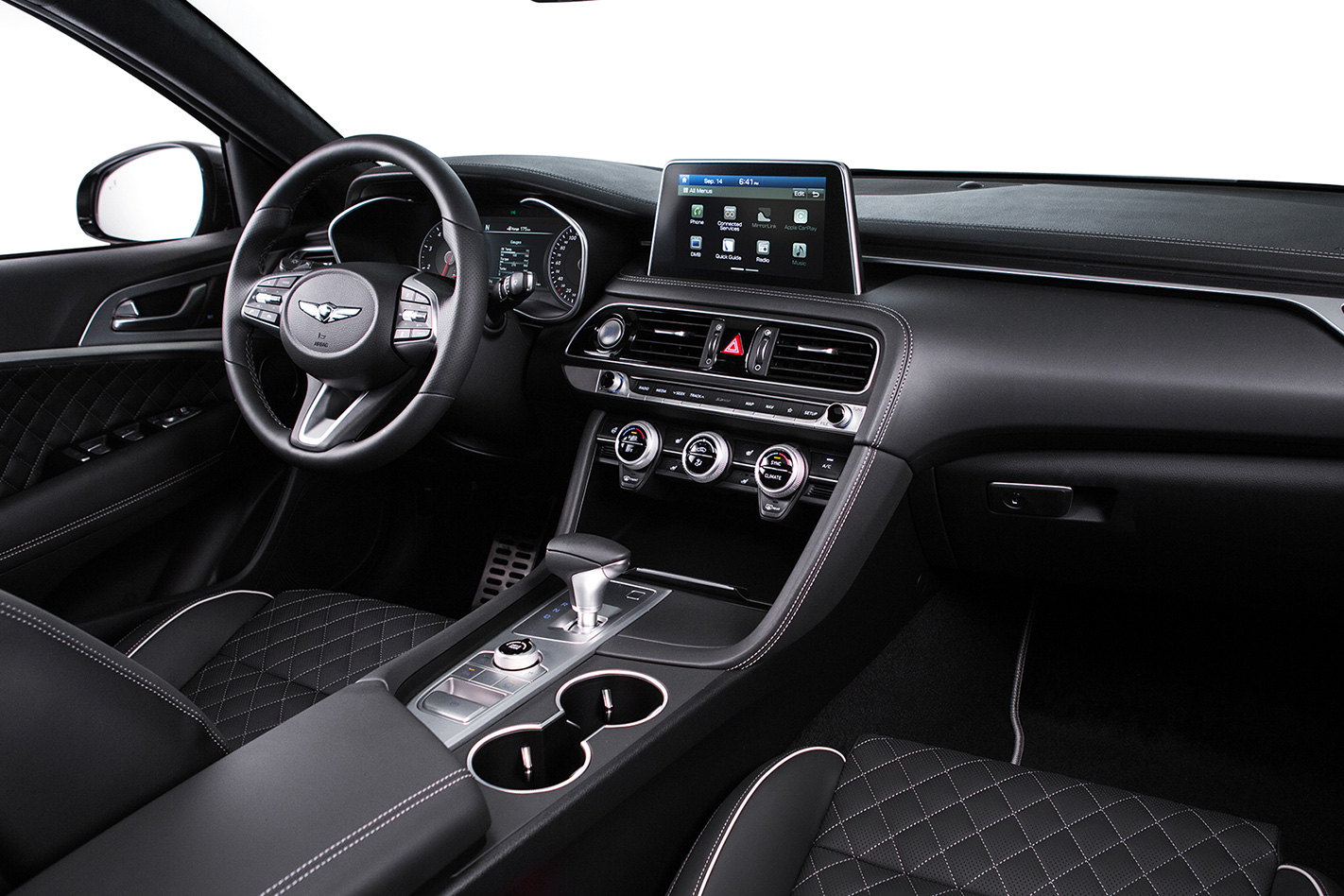
Enhanced comfort levels include a smart posture control system which takes the driver’s body information and automatically adjusts the seat, steering wheel, outside mirror, and head-up display to the optimal position.
Infotainment and connectivity includes an 8-inch touch screen display supporting MirrorLink, Apple CarPlay and Android Auto with voice recognition, while music is pumped out via a 15-speaker Lexicon surround-sound system.
As its five-star ANCAP safety report released today confirmed, the G70 is brimming with passive and active safety measures including ‘Genesis Active Safety Control’ driver assist system package, as standard.
When it finally does arrive, the Genesis won’t be sold through Hyundai dealers. Instead Genesis is opening ‘high-end retail stores’ in capital cities, a similar retail approach to Tesla.
Victoria Police have today revealed a recent break-in at Crossover Car Conversions has resulted in a black Dodge Challenger Demon being stolen.
The theft is reported to have actually taken place late last month, during which a Mustang and Soarer were also stolen. A Victoria Police report says the Mustang and Soarer have been located.
“It is believed unknown offenders cut through wire fencing to gain entry into the Hayward Road business in the early hours of 25 November.
“Three cars were stolen from the showroom, including a black Dodge Challenger Demon, a Ford Mustang and a Toyota Soarer.
“The black Dodge Challenger Demon is valued at $320,000 and is one of six in Australia.”
“Knox Crime Investigation Unit detectives are investigating and have released an image of the vehicle [top] in the hope someone recognises it.”
Crossover Car Conversions, which is run by Craig Dean and his Mustang Motorsport team, hasn’t acknowledged the theft publicly yet, but MOTOR has contacted the team for more information.
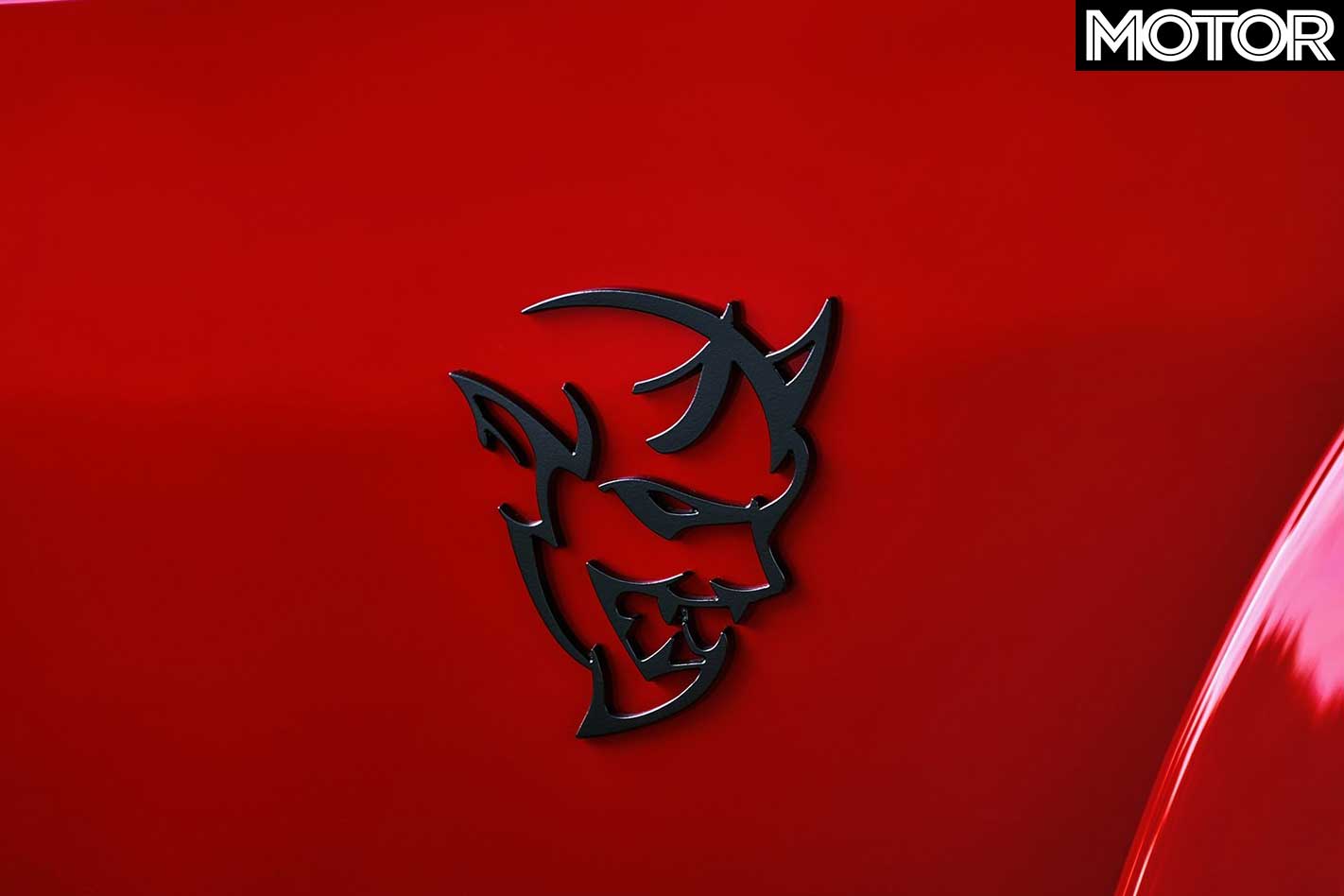
Though the visual differences between a Hellcat and Demon are relatively slight, and hard to spot for an Australian not used to seeing them, a Demon can be identified by its ‘demon head’ badges in place of the traditional Hellcat emblem.
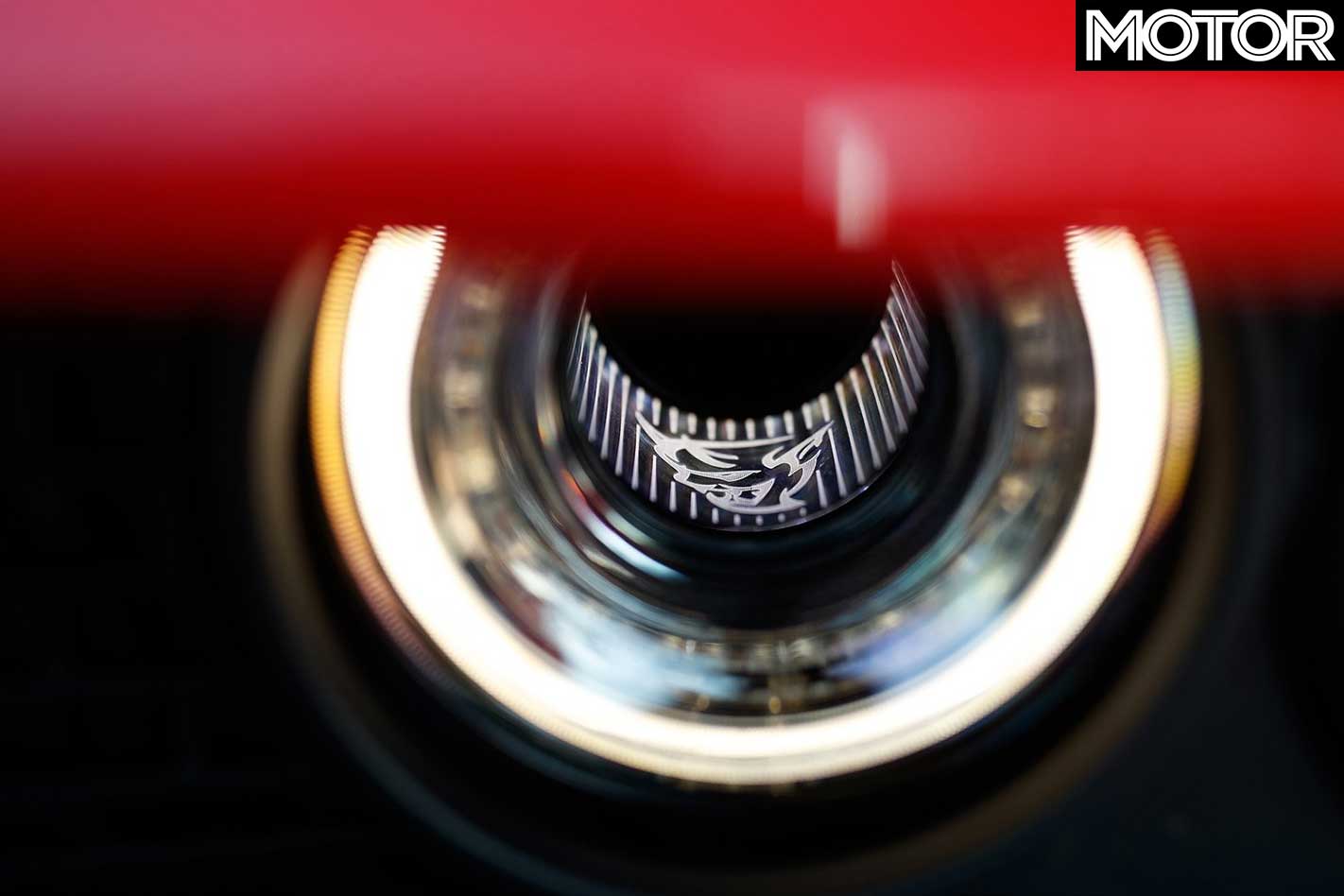
Of course, the badges may have been removed, so it’s worth keeping an eye out for any black Challenger.
It’s also possible the car has been removed from Melbourne since its theft.
If you see the Demon, or anything potentially related to its theft, contact Crime Stoppers on 1300 333 000.
Newly elected Victorian state premier Daniel Andrews is currently on a roll, and his stocks certainly weren’t harmed after he vowed to penalise roadwork operators for leaving out reduced speed limit signs when there’s no work being carried out.
Days after being re-elected to Victoria’s top job, Andrews (pictured below) posted on his Facebook page that his government will impose penalties on companies that fail to restore normal speed limits when appropriate when no work is being done such during weekends.

“I know how frustrating it is to slow right down for roadworks only to drive past an empty work site. So we’re making a new rule,” the Premier posted.
“When tools go down, speeds come back up – when it’s safe to do so.
“It’ll be safer for workers, too. No more chancing it because a site ‘looks quiet’.
“And we’ll write it in to every contract, with penalties to make sure it happens.”
Victoria is in the midst of an infrastructure frenzy, and Premier Andrews apologised to drivers.
“We’re upgrading road and rail across the state, so there will be disruption – I won’t pretend otherwise. But hopefully this will help a little bit,” he said.
Going by the more than 3000 mostly positive comments to the post, the words are music to the ears of long-suffering Victorian drivers whose commutes are becoming increasingly more tedious due to large-scale infrastructure projects.
While some of the work does involve road and lane closures that warrant ongoing speed reductions, it’s not uncommon to have to slow down to 40km/h on an unobstructed freeway for work that’s not being done at all.
Driver frustration hasn’t been lost on Victoria’s peak motorist body the RACV, which has been campaigning for better rules surrounding temporary speed signs. Earlier this year it invited motorists to report roadwork or construction speed limits when there were no workers on site.
It’s hoped the new laws will come into effect when the new Victorian Parliament sits in February 2019.
In the meantime, it’s worth remembering that roadwork speed limits are enforceable, even when there is no work going in. Speed cameras are adjusted to the lower limits, too, resulting in drivers facing heavy fines, demerit points and licence suspension for travelling at the normal speed limit even when it’s safe to do so.
And, as the RACV points out, even if there is an ‘end roadworks’ sign, you must continue at the lower speed until you pass another speed sign.
WHAT IS IT
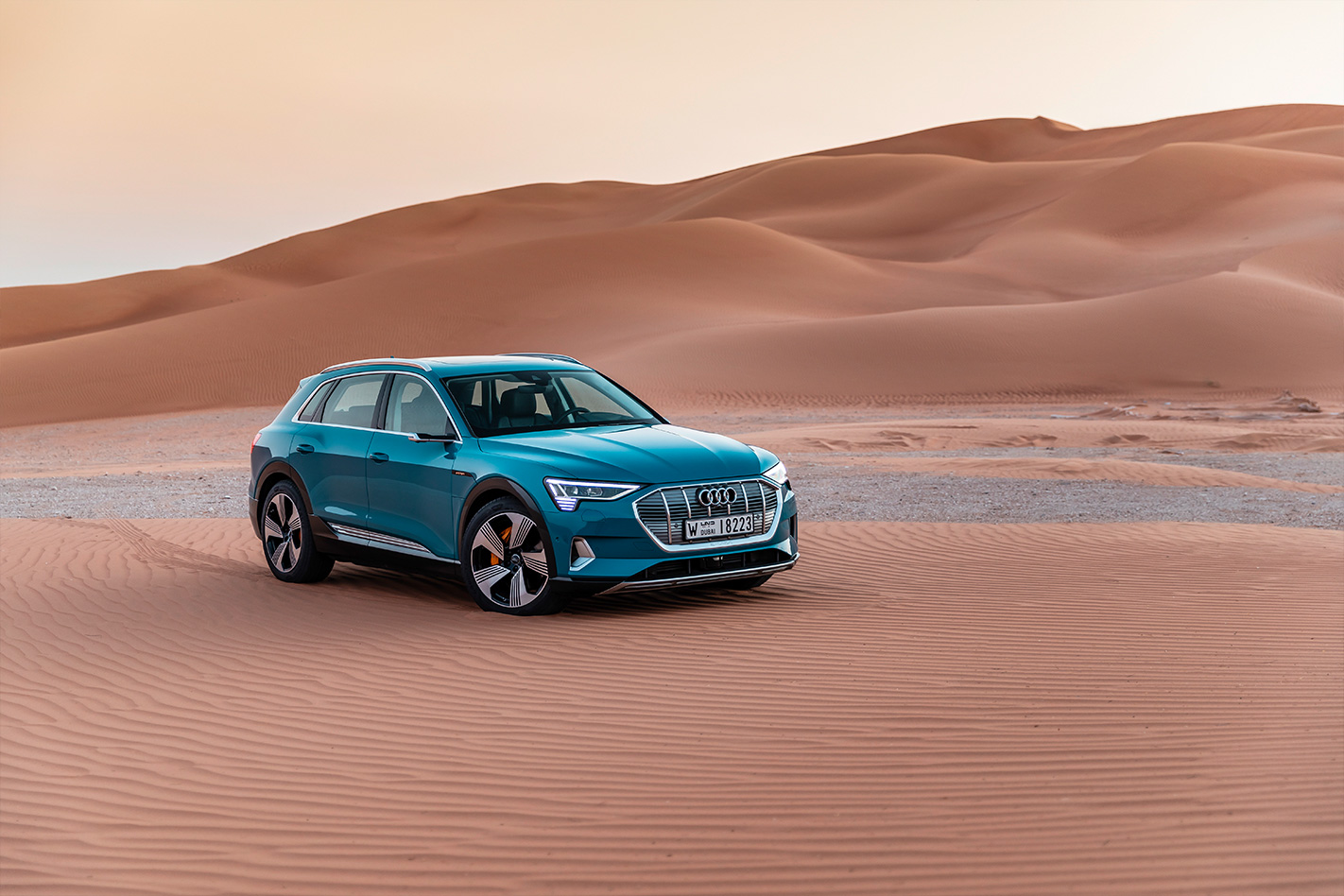
Audi’s first fully electric SUV, larger than the mid-size Q5, slightly smaller than the seven-seater Q7. It’s due in Australia around the middle of 2019.
WHY WE’RE TESTING IT
Audi has the jump on its German premium-brand rivals, making the E-Tron a hugely significant vehicle. The company has ambitions to make one third of its global production electrified by 2025, so this debut offering needs to pave the way and convince customers of the merits of an electric powertrain.
MAIN RIVALS
Jaguar I-Pace; Tesla Model X, Mercedes-Benz EQC (due late 2019)
THE WHEELS REVIEW
ON THE face of it, this first drive had the makings of a modern-day Western. An outsider in an arid and inhospitable land; sideways glances from a few slightly suspicious locals; an unspoken struggle between the past and the newcomer’s claim on the future. High up in the parched Hajar mountains that divide Abu Dhabi from Oman, we really needed a soundtrack of tumble weeds and perhaps a lone steel guitar. Instead, we had a soundtrack of … nothing.
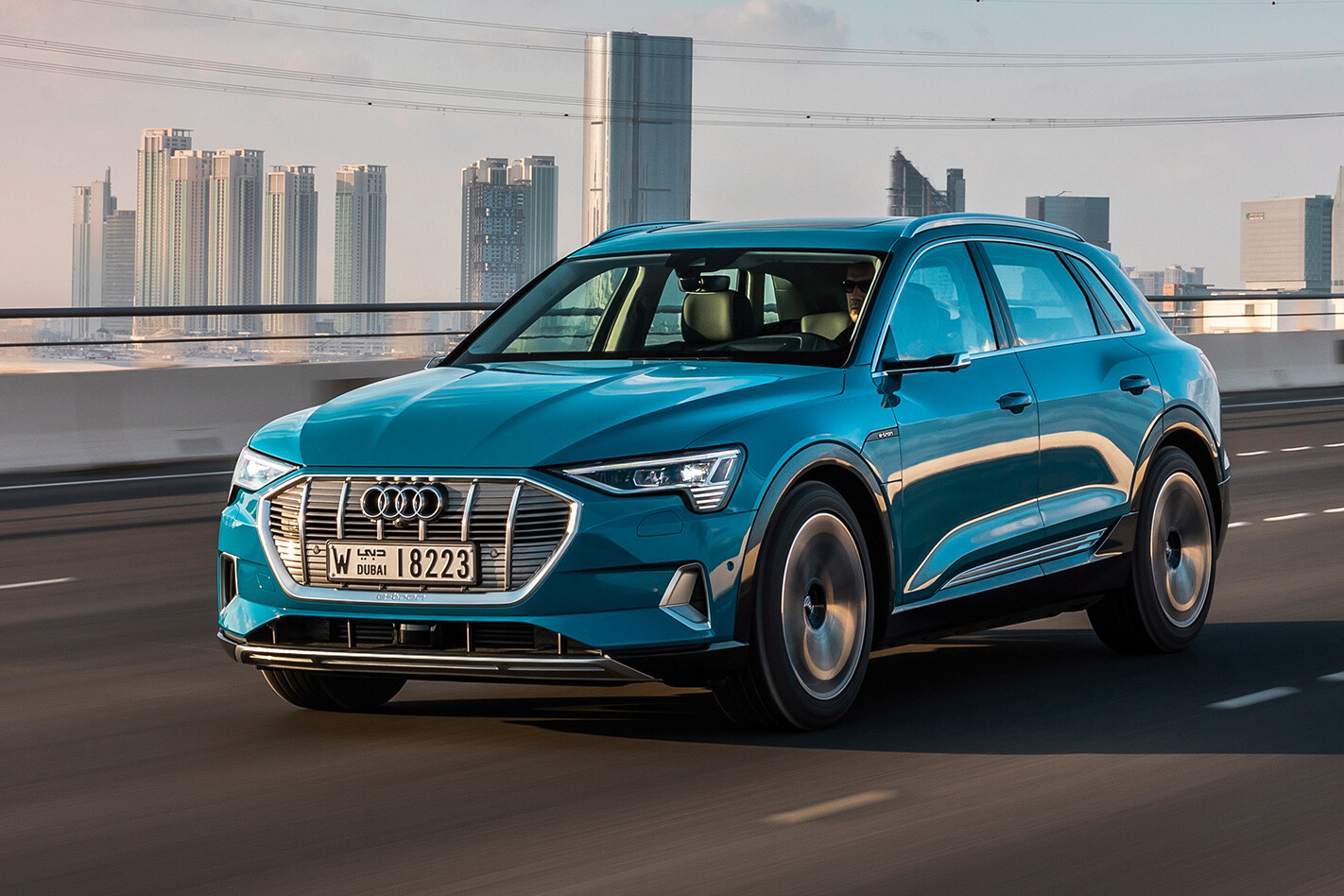
Well, not quite silence. When you demand full acceleration from the Audi E-Tron’s two electric motors, a cocked ear will detect a faint mechanical whir, but the sound is so muted it’s almost like hearing someone using an electric toothbrush from behind a closed bathroom door. Very quickly, if the audio system is off, tyres on pavement and air moving over the car’s slippery exterior are the sounds you (only just) notice.
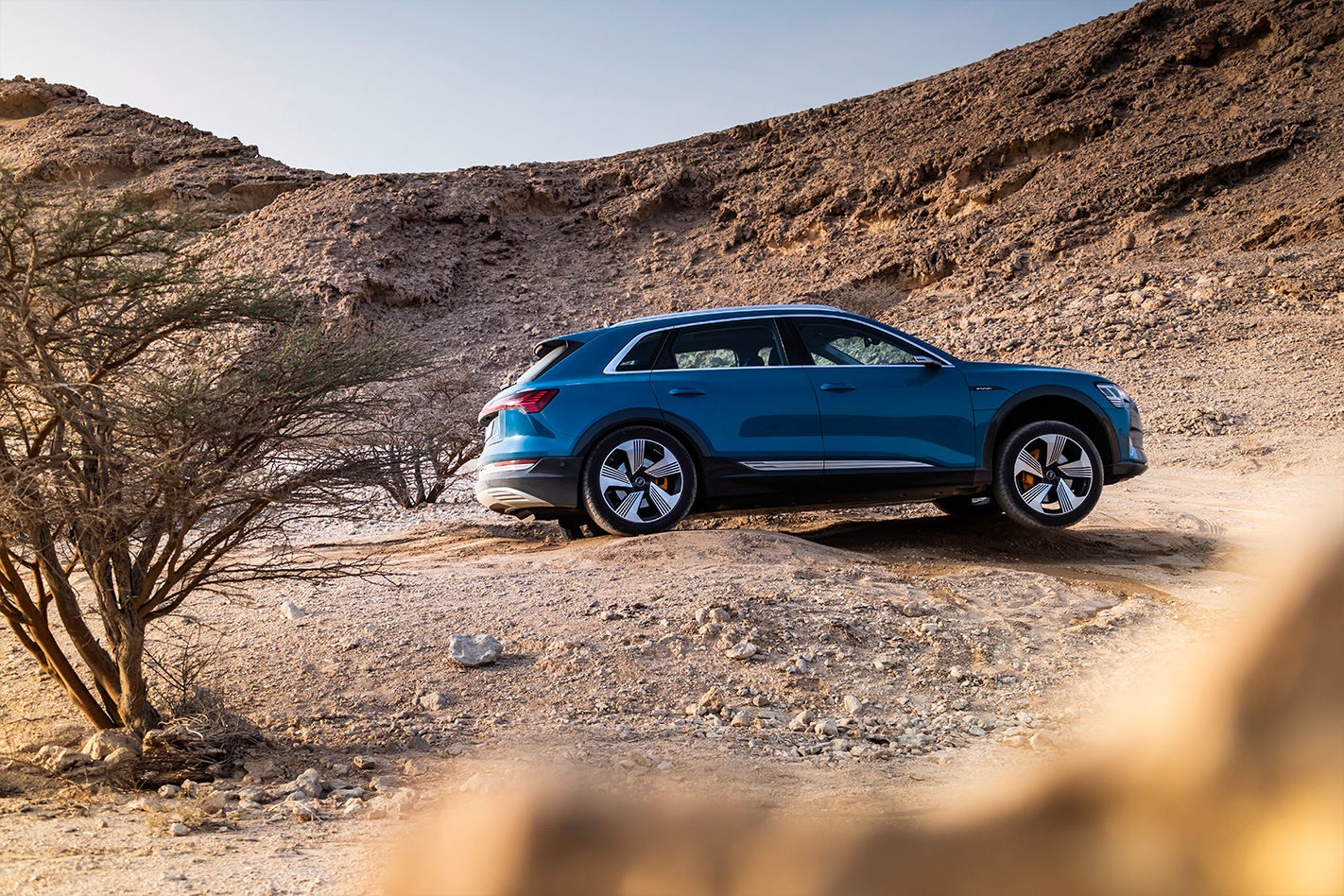
This was not our first experience of Audi’s debut EV: Wheels rode in a pilot-build car at Pikes Peak (September issue), but this was our first chance to drive the production version, on the flat lands around Abu Dhabi, up the mighty Jabel Hafeet mountain road, and over some not-too-gnarly off-road terrain.
It’s a mostly super-impressive debut, and when E-Tron arrives in Australia around the middle of 2019, it looks set to batter Tesla’s Model X in the course of going toe-to-toe with Jaguar’s I-Pace and the Mercedes-Benz EQC.
Size-wise, E-Tron is slightly bigger than stablemate Q5, but a little smaller than Q7. The packaging advantages of the electric drivetrain mean rear-seat room is generous, and the extra length (219mm) over I-Pace translates to appreciably better rear legroom than the Jaguar.
It’s impossible to ignore the I-Pace when talking about E-Tron, as the Jaguar has beaten Audi to market by about seven months, and the two luxo EV offerings are similarly priced. When the E-Tron arrives, it’s expected to sell for around $140,000, putting it in the upper end of the $120-140K zone straddled by the three-tiered Jaguar line-up.
Yes, any way you cut it, $140,000 is a hefty wedge for an Audi SUV, given that just under $100K gets you into the swift, well-sorted SQ5 quattro. That’s fully 40 percent more for an electric SUV that delivers broadly similar on-road performance, and there’s no way that the lower running costs of an EV will see an owner save anything close to the price premium over a typical ownership period. Still undeterred? Excellent.
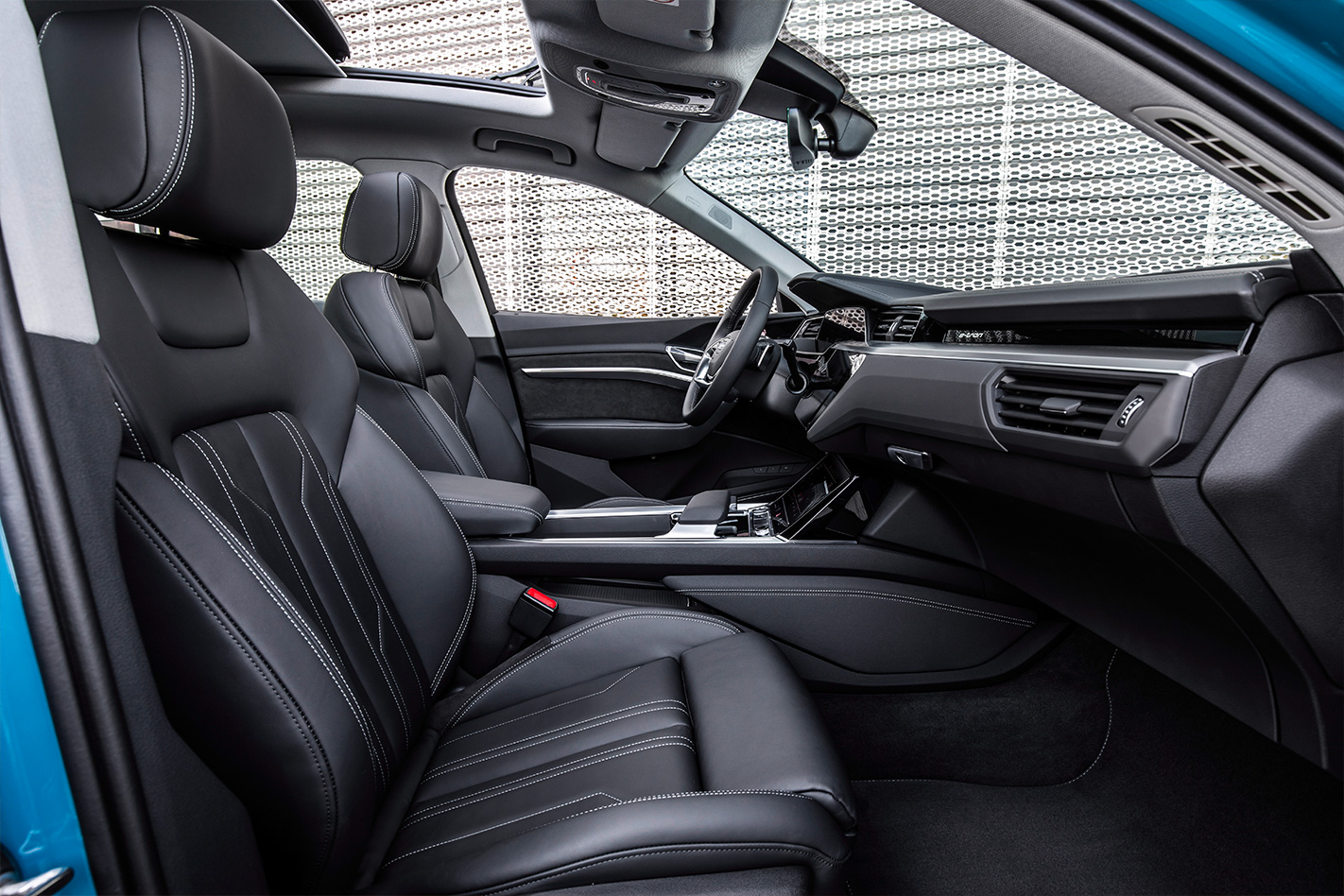
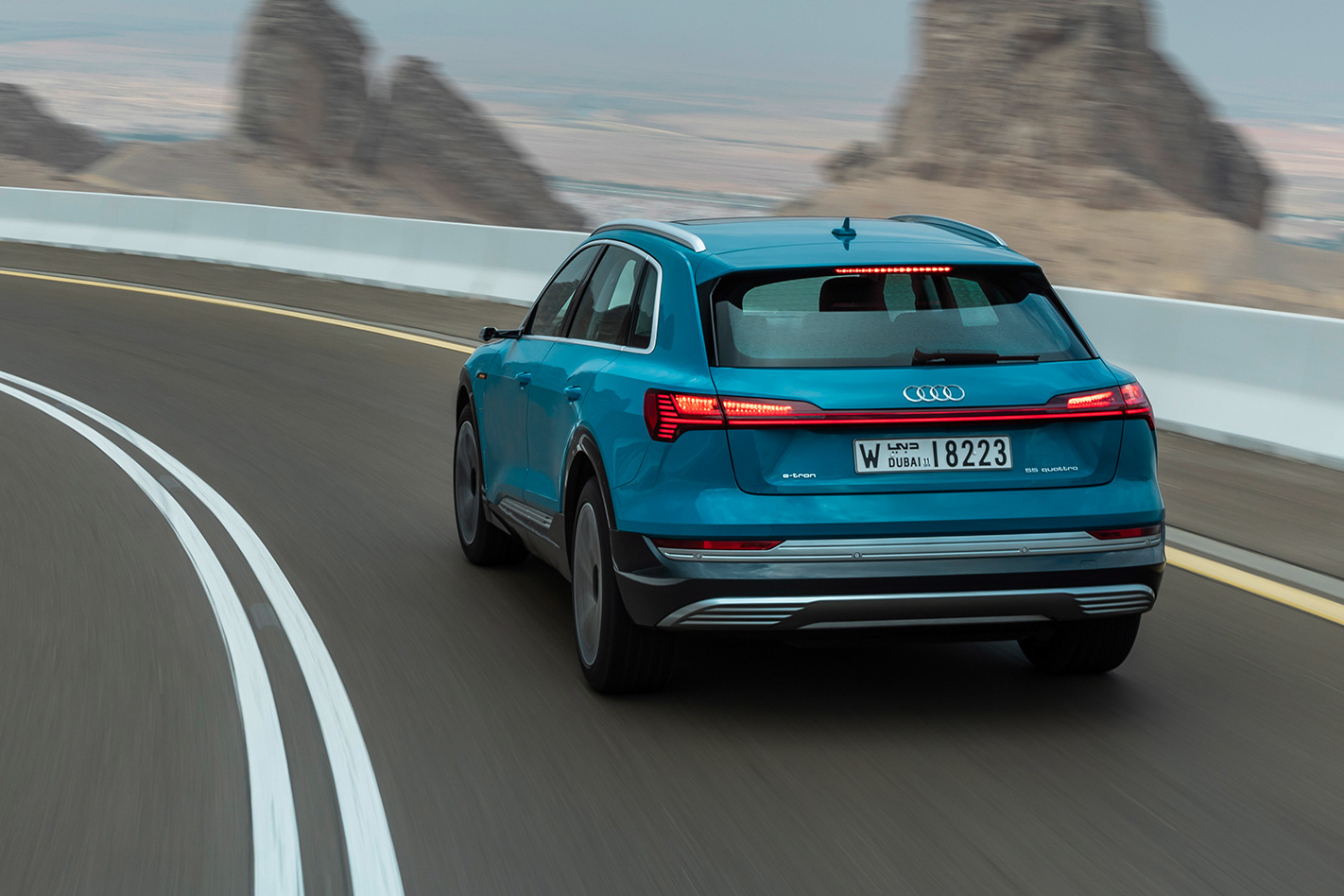
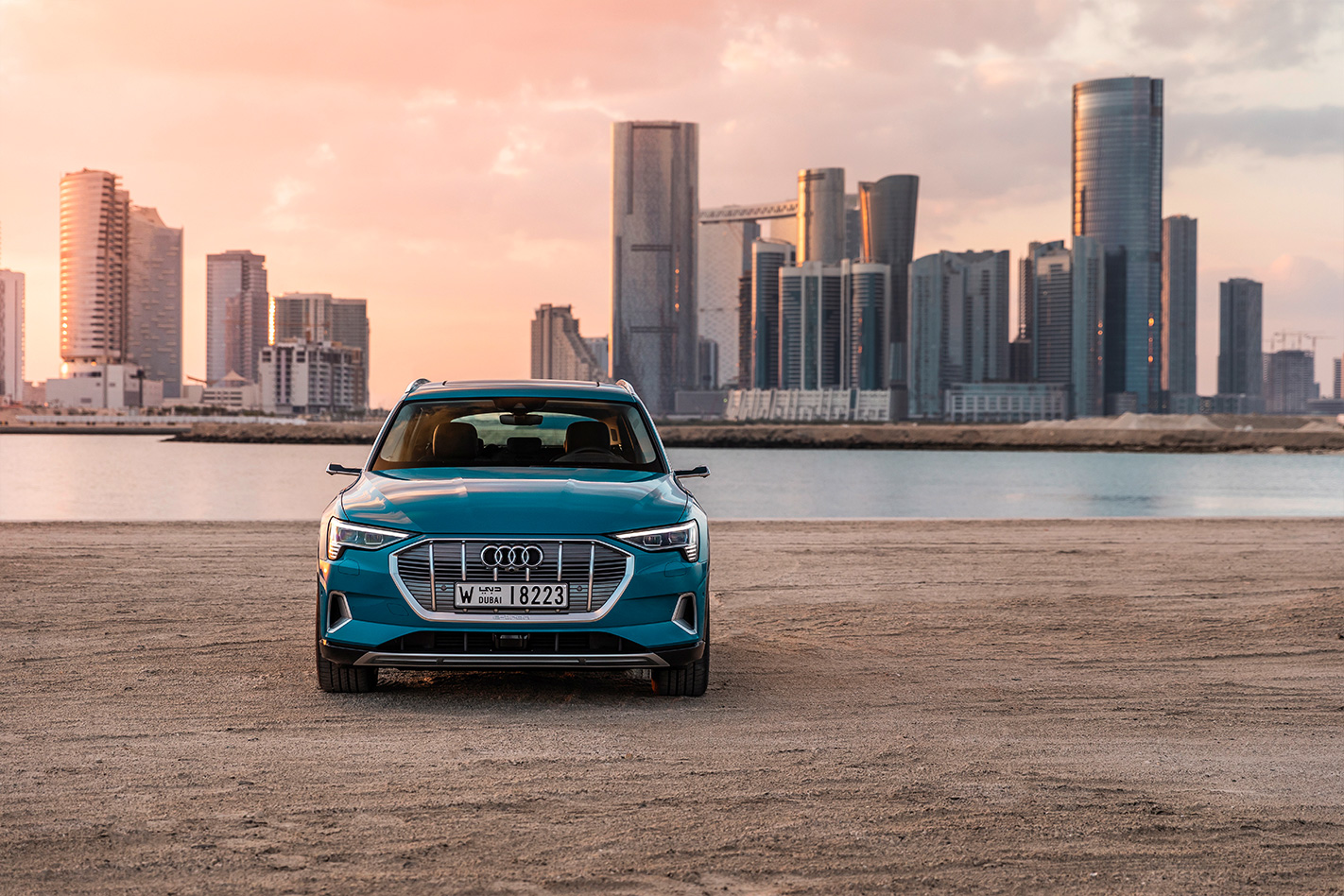
Unlike the I-Pace, which deliberately blurs segments and stylistic boundaries, the E-Tron’s exterior design treads far safer ground. Its integration into the Q-series SUV line-up is clear, but it sports a more hunkered down, stylised form that alludes to its forward-thinking aspirations. The deep sculpting of the lower sills, for example, is intended to visually highlight the fact that this is the area in which the car’s power source is packaged. And those (optional) exterior cameras, which replace air-disturbing mirrors, are all very Tron. It’s slippery, too – aerodynamic measures include active shutters in the upper grille and lower fascia to control the airflow depending on the cooling needs of the batteries, motors, and HVAC, as calculated by the complex plumbing system that circulates 22 litres of fluid through the arteries of the car.
Liquid cooling, according to Audi’s powertrain engineers, is essential to the car’s ability to deliver consistent hard acceleration. E-Tron is powered by two motors; one driving the front axle; a slightly larger one driving the rear. Combined, their output is rated at a nominal 265kW and 561Nm, however, both can operate in a ‘boost’ mode for a maximum of eight seconds to deliver a combined output of 300kW and 664Nm. In normal driving it’s the rear motor which handles the bulk of the grunt work, but electronic control allows the front motor to phase in and out as required depending on load, cornering force and available traction. All this occurs in a claimed 30 milliseconds, leaving a comparable quattro powertrain napping.
Feeding these two motors is a 95kWh battery pack (made up of 36 modules), which is sandwiched in the floor. This 700kg unit has a 150kW DC fast-charge capability, giving it a theoretical charge-speed advantage over the I-Pace. For the road-tripping E-Tron owner needing to replenish the battery away from their home wallbox supply, the time required to achieve an 80 percent charge is around 30 minutes.
So how does it drive? The challenge for us motor-scribbler types when evaluating the new breed of EVs is actually being able to deliver some kind of meaningful powertrain assessment that separates one competitor from the other. Fact is EV powertrains are brilliantly effective at the fundamental task of converting a driver’s intention and input into the desired motion. Critiquing them is the harder bit. And with no conventional transmission, there’s one less thing for us critics to moan about: no dual-clutch stumbles at low speed, no hesitation of a torque converter auto reluctant to kick down, or revving its nuts off in a too-aggro Sport mode.
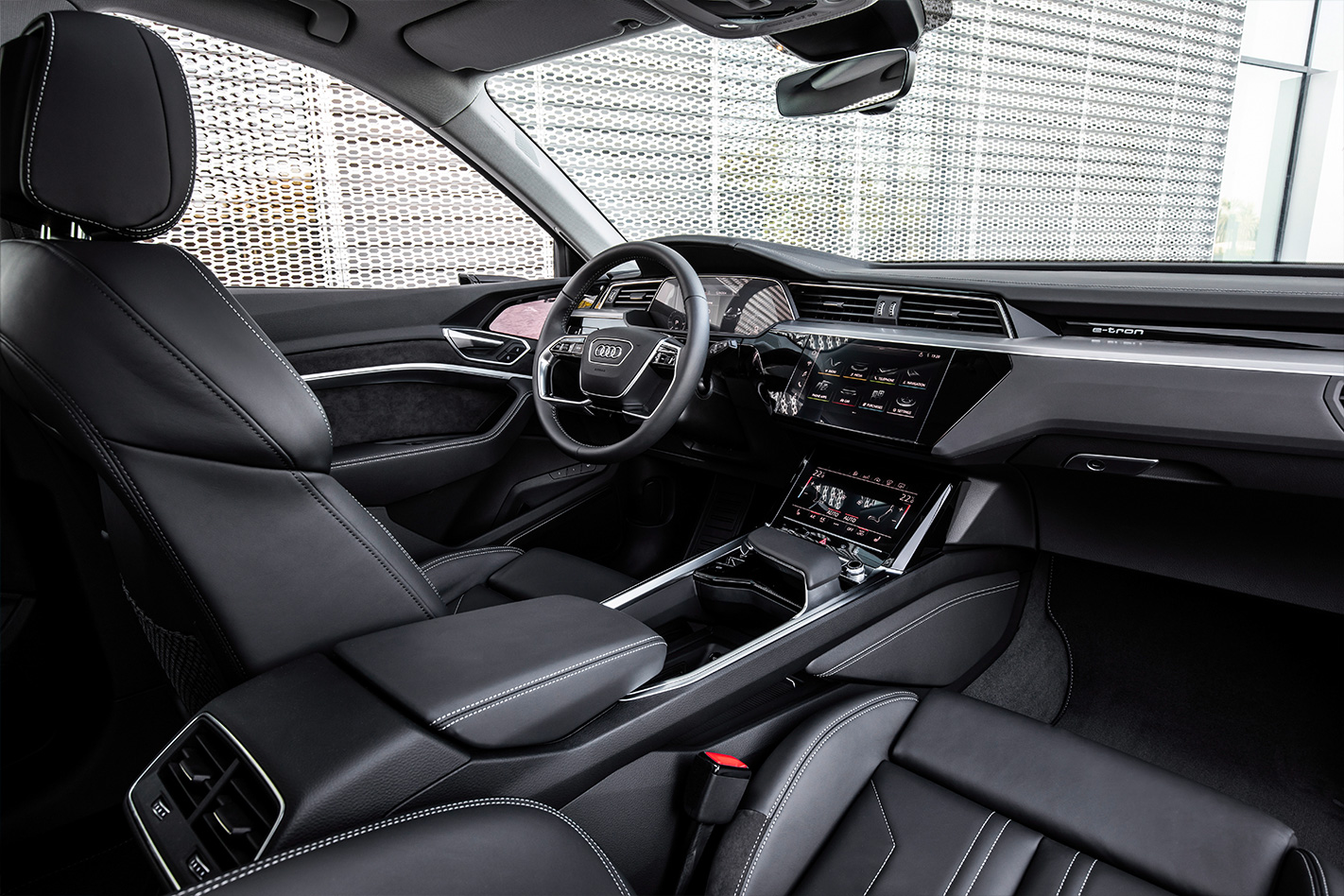
Nor is there much definable ‘character’ to dissect in terms of torque delivery, power curve or throttle response. Squeeze the go pedal and a premium EV just … goes. And so it is with the E-Tron. Okay, it’s possible that the Audi has an even greater level of mechanical noise suppression than that of the I-Pace. Beyond that, fundamentals such as the torque-to-weight ratio become more telling than anything else. In boost mode, E-Tron has 266Nm/tonne, versus I-Pace at 326Nm/tonne; numbers which help explain the near-one-second gap in their respective 0-100km/h claims. Still, the E-Tron feels swift enough at 5.7 seconds, while also feeling quicker than our (hand-timed) 3.5sec 80-120km/h overtaking acceleration figure.
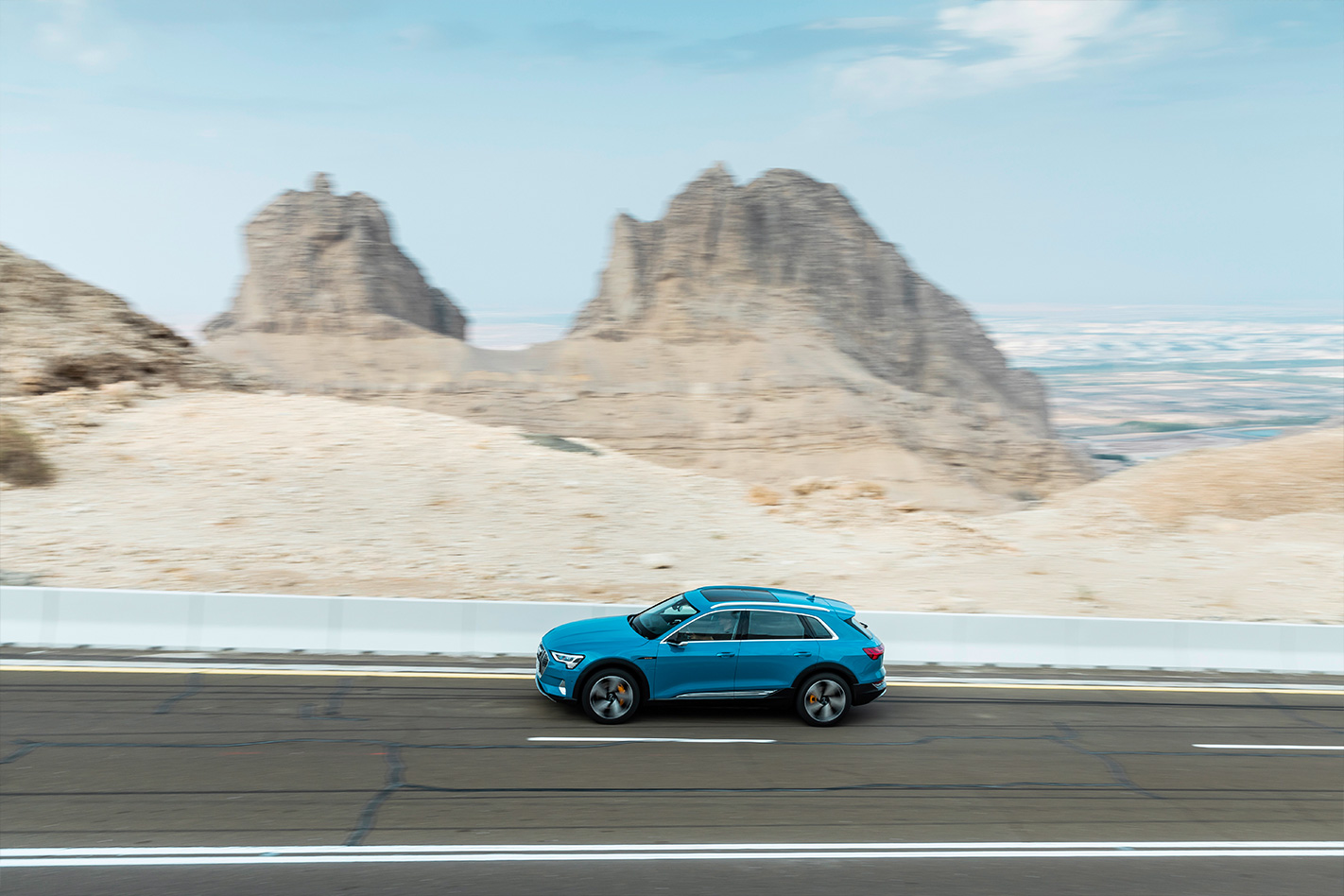
But it’s the near-instantaneousness of the response and the sense of effortless surge within a vacuum that’s more impressive than the hard numbers. The way this thing will sling you from a rolling start of say 40km/h, deep into triple digits, is properly addictive. The inherent stealth also has its own appeal. Rather than lamenting the lack of engine note, I quickly began to appreciate the absence of any aural giveaway as to exactly how hard you’re pinning the throttle each time you see some clear air. Your mother-in-law will barely look up from her Candy Crush as you slay dawdling traffic.
Driving like this will, of course, suck down those stored electrons. Audi claims a range of ‘over 400km’ on the WLTP cycle, but good luck achieving it. We saw our initial predicted range of 383km at full charge plunge to 230km after only 70km of fairly spirited driving, with claimed consumption averaging 28.5kW/100km. A more likely real-world range on a full charge will probably be in 310-340km zone. Will this be enough for most owners? Given that’s around three hours’ highway driving, the likelihood is that your bladder and your kids are will demand a break before you’d probably drive much further anyway.
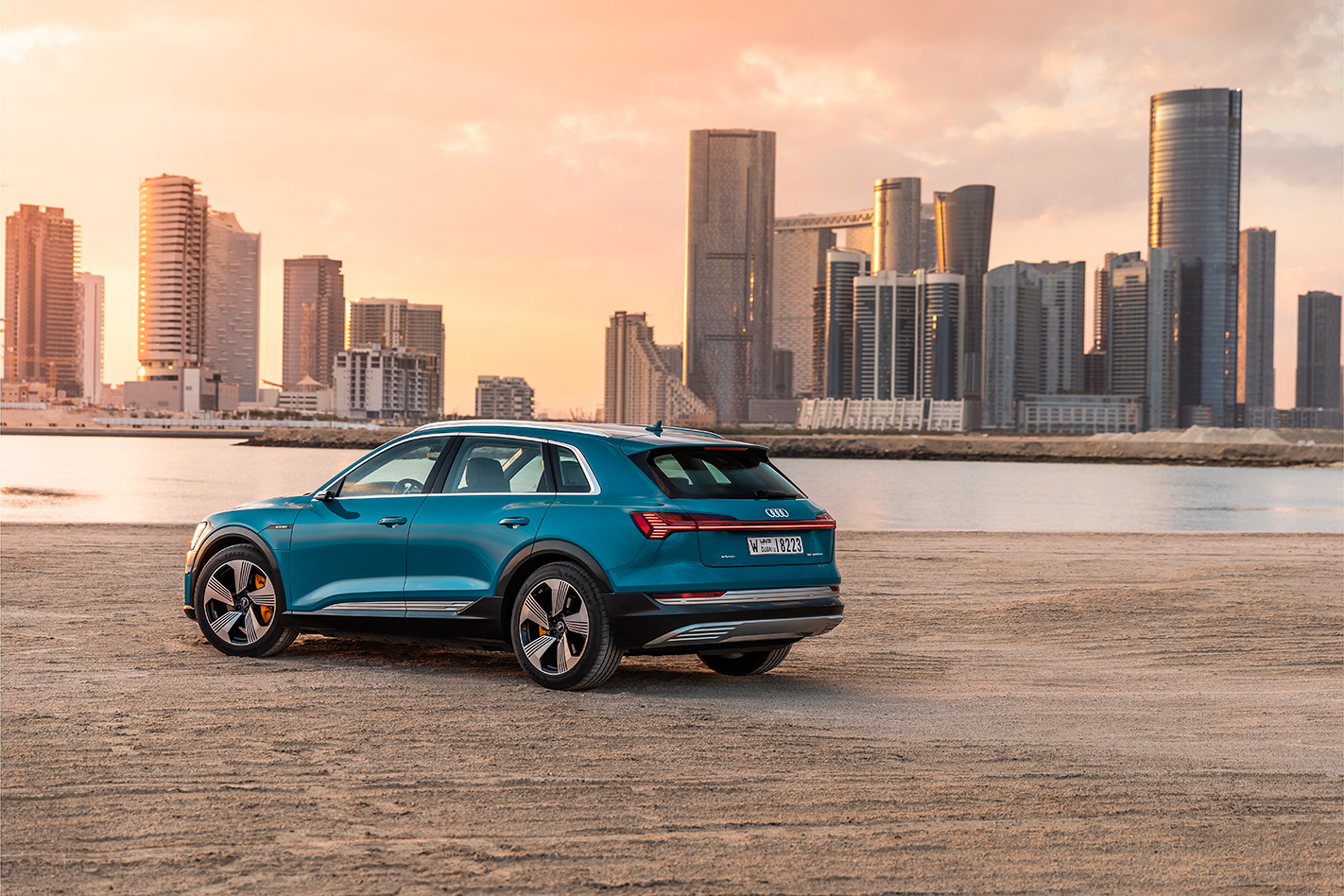
As for dynamics? First impressions are that the E-Tron’s extra weight compared with the I-Pace feels evident in corners and the Audi doesn’t quite match the Jag’s general athleticism. Driving the E-Tron hard on the amazing Jabel Hafeet mountain road on the outskirts of Al Ain in the UAE – a glassy three-lane ribbon of bitumen which climbs to an elevation of over 1200m in just under 12km – was memorable, but also an exercise in managing weight transfer and allowing a generous margin in the braking areas. The steering is quick; precise, but over-assisted at low speed, and not exactly organic in terms of feel. Also, despite the torque split, the E-Tron never feels rear-driven. Instead, it gets the electric grunt down with almost clinical all-fours efficiency, and the low centre of gravity helps give it a mostly neutral stance until you really start muscling the nose in tighter turns.
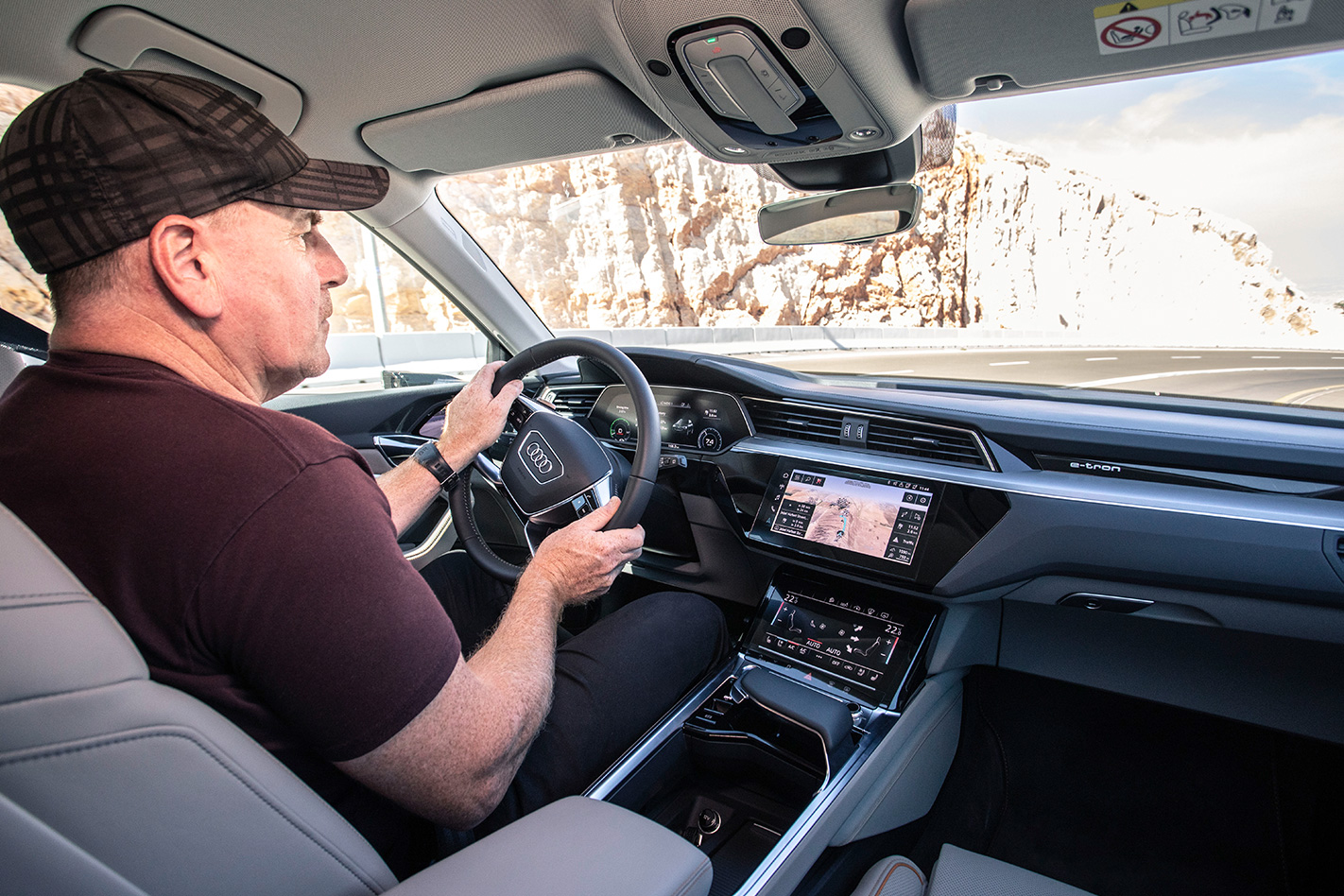
But more relevant to most owners will be the E-Tron’s exceptional cruising ability. Wind noise is brilliantly suppressed, and the car is happy to coast on a light throttle, the re-gen system able to be set via wheel paddles to be quite subtle on downhill gradients, despite its efficiency in capturing kinetic energy to charge the battery.
It all makes for utterly tranquil road-tripping, especially combined with the E-Tron’s fine ride. The combination of a long wheelbase and standard-fitment height-adjustable air suspension means it delivers real pliancy, even on the 21-inch wheels fitted to the test cars. There’s also a high-riding off-road mode that allows exploration of mildly rutted or rocky terrain, if you’re willing to chance the tyres.
So, on balance, E-Tron emerges as deeply convincing, even if it can’t quite claim to reset the existing benchmarks set by its fledgling EV opposition. Now we await the arrival of Merc’s EQC, due late 2019, for the real high-noon showdown in EV land.
THE WHEELS VERDICT
Deeply impressive in terms of refinement, interior presentation and function, roominess and general user friendliness. The fact the E-Tron’s performance and range does not trounce that of Tesla’s Model X, which has been in market since 2015, highlights the challenges faced by manufacturers of EVs in terms of batteries, energy storage and weight. Still, the E-Tron makes a superb family car, offering effortlessly swift performance, and, once the fast-charging network is fully rolled out, adequate range for touring holidays.
PLUS: Styling; powertrain refinement; ride; cabin quietness; equipment; packaging MINUS: Heavy; range not standard-setting
SPECS
Model: Audi E-Tron Motors: 2 x asynchronous Max power: 300kW (boost mode) Max torque: 664Nm @ 0rpm Transmission: single-speed reduction Weight 2490kg 0-100km/h: 5.7sec (claimed, boost mode) Economy: 28.5kW/100km (on test) Price: $140,000 (estimated) On sale: Q2, 2019
Jeep’s new JL Wrangler has been dealt a hammer blow ahead of its early 2019 launch, scoring one star out of a possible five in Euro NCAP safety testing. It’s one of the lowest safety scores ever achieved in the modern era.
While it’s still too early to determine if the Euro NCAP score will translate directly to Australian-specification cars, ANCAP does take crash data directly from its European counterparts, which negates the need to crash-test cars locally.
The test score, which came out overnight in Europe, showed that the left-hand-drive four-door Wrangler tested scored poorly in one of four categories it was marked under. Under Euro NCAP regulations, the lowest score from all four categories forms the basis of the final mark.
It draws parallels to the two-star score achieved by the Ford Mustang in early 2017, which scored poorly in the area of rear occupant protection.
In the case of the Wrangler, it scored 32 per cent in the category of Safety Assist, which involves the testing of systems like speed assistance, seat belt reminders, lane support and AEB operation. The test car wasn’t fitted with AEB.
It scored just 50 per cent in the Adult Occupant test, indicating some deformity of the A-pillar and deforming of the footwell area on the driver’s (in this case, left) side. “Deformation of the footwell showed that the structure had reached the limit of its integrity,” read part of the report.
The Wrangler scored well in two other areas, including Child Occupant (which measures impacts on passengers seated front and rear) and Vulnerable Road Users (pedestrian impact and AEB operation for pedestrians and cyclists).
A statement from Jeep’s US press office is unequivocal in its defence of the JL Wrangler.
“The new Jeep Wrangler – an award-winning vehicle with unmatched capability and worldwide appeal – meets or exceeds federal safety requirements in every market in which it is sold,” it reads.
“Further, the Jeep Wrangler is engineered to deliver superior performance and unique driving experiences under the most demanding conditions. Testing protocols that apply exclusively to urban scenarios may not align with such a vehicle.”
The statement reiterates the Wrangler’s boxed body-on-frame construction and use of high-strength steels in critical areas.
“The vehicle offers more than 70 advanced safety and security features, including four standard-equipment air bags and, starting in early 2019, an advanced Automatic Emergency Braking (AEB) system that combines the benefits of camera and radar technologies,” it concluded.
Fiat Chrysler Australia, the importers of the Jeep brand, declined to be interviewed directly, instead issuing a statement that says the company takes safety “incredibly seriously”.
“The Jeep Wrangler arrives in Australia with a long list of standard and available safety equipment, including front and side airbags, blind-spot monitoring, rear cross-path detection, parking sensors, a rear-view camera and autonomous emergency braking, all of which is paired with the use of high-strength steel in its construction designed to protect the cabin in the case of an accident,” says the company.
An FCA source has confirmed that the 2019-specification JL Wrangler will be sold locally with AEB when it hits showroom floors in March next year.
The Wrangler also carries Australian Design Rule (ADR) approval for use on Australian roads, despite any safety score issued by crash test authorities.
ANCAP, meanwhile, told WhichCar that it’s too early to determine what score the Wrangler will be attributed under the local scheme.
“We’re working with Fiat Chrysler Australia to determine the safety specification of models to be supplied locally,” said ANCAP CEO James Goodwin.
“Until the local specifications are confirmed, ANCAP is unable to assess if the European test results and subsequent star rating can be applied to local models.”
Mr Goodwin added that the European result is “disappointing”.
“I’d encourage FCA to use the opportunity to improve the safety result in time for its Australasian launch,” said Mr Goodwin.
HYUNDAI has finalised the design of a car-based ute, and its preparing it for production according to the company’s chief design officer.
Dubbed the Santa Cruz, and based on the concept vehicle of the same name shown at the 2015 Detroit motor show, the ute would be a first for the Korean manufacturer.
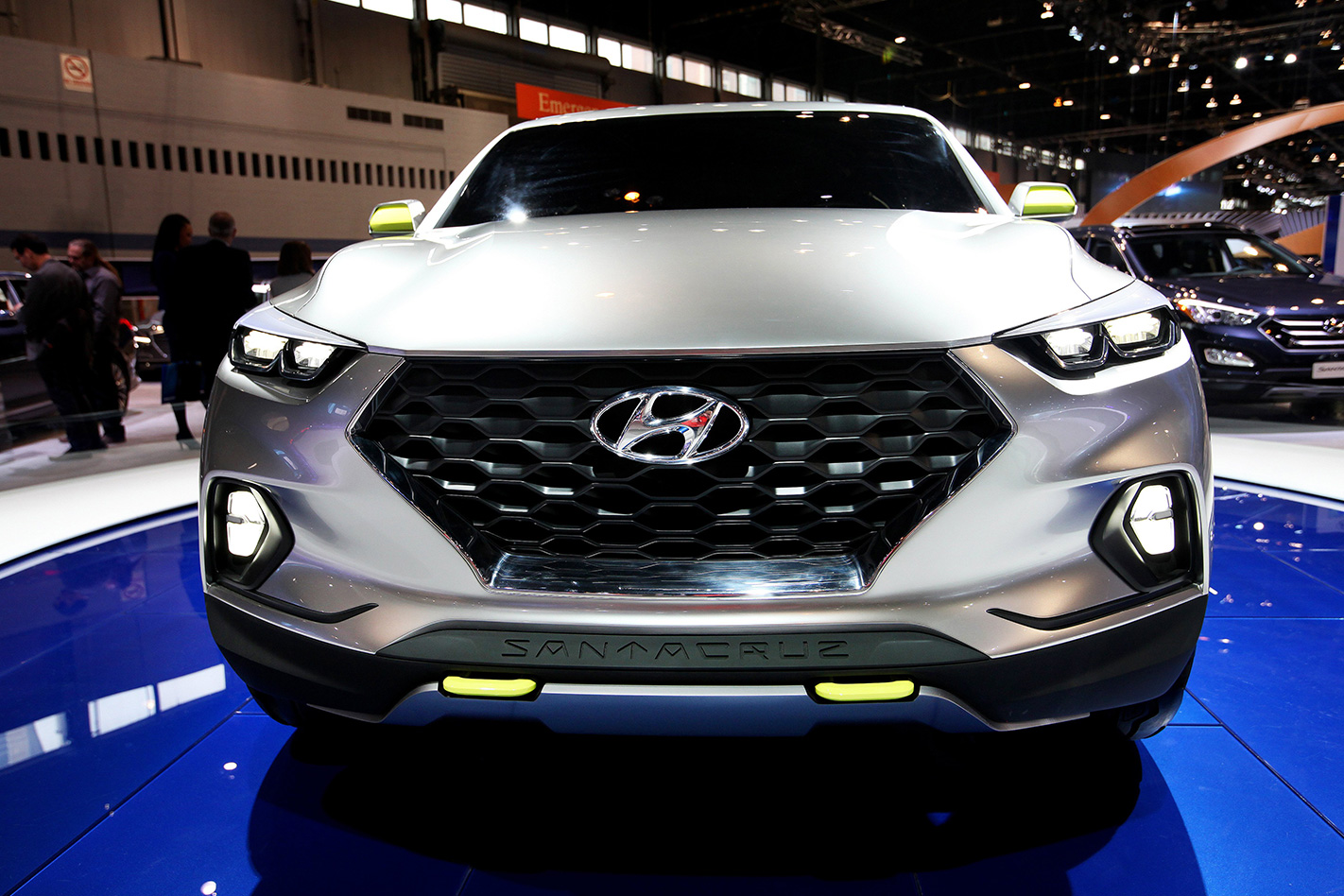
Speaking to UK publication Autocar, Hyundai Motor Group’s chief design officer Luc Donckerwolke confirmed the vehicle is currently in the advanced stages of development, and will go into production “as soon as possible”.
“From my side [design] it is finished, the process to put it into production is now under way,” he said.
A Hyundai Australia spokesperson told Wheels the company is interested in selling the ute locally, but could not confirm any details.
“We are closely monitoring the market, but there are no plans yet in regards to the Santa Cruz. However, adding a ute to our local line-up would be hugely beneficial.”
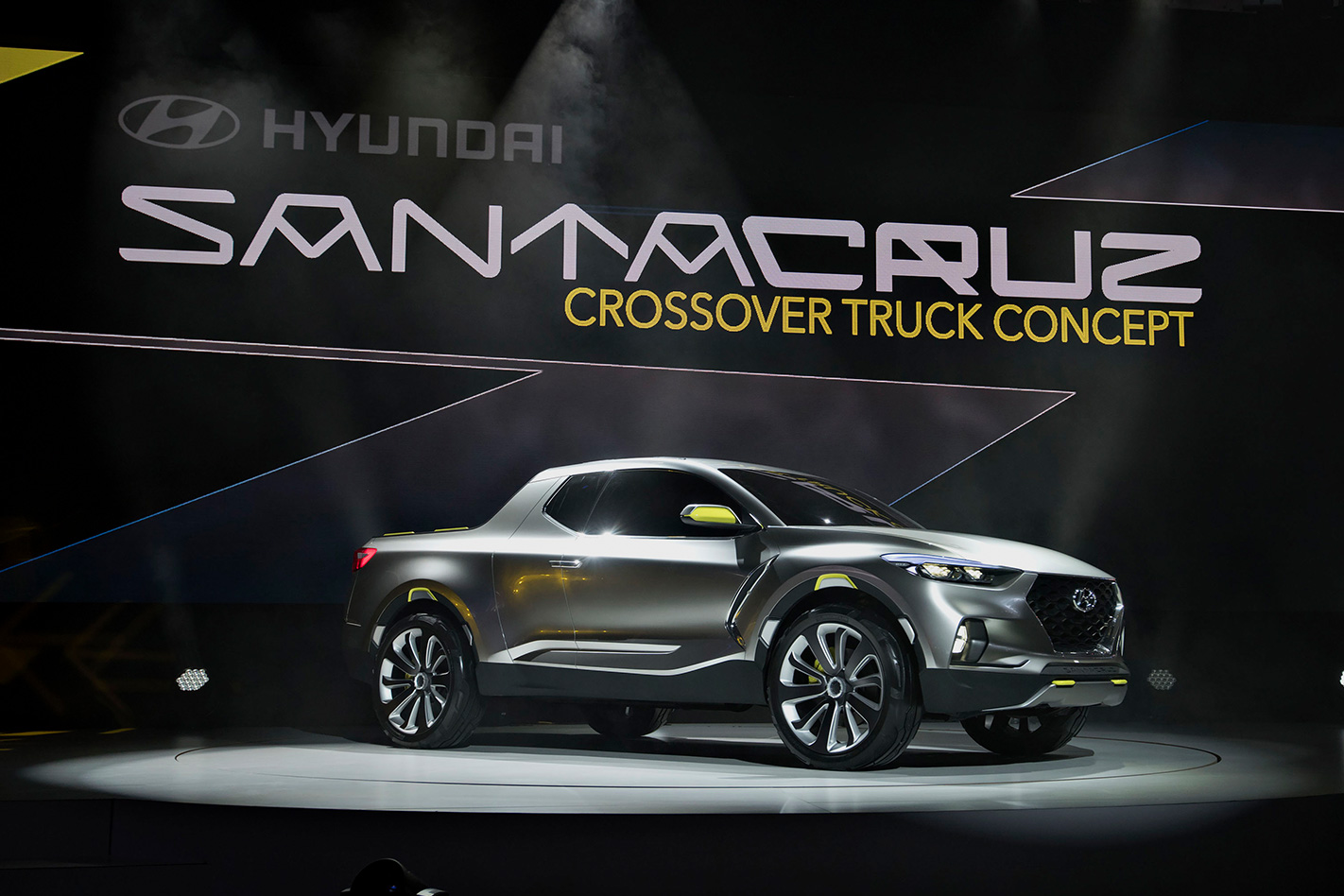
Wheels understands the Santa Cruz will not be a Ford Ranger and Toyota Hilux rival, rather a crossover ute closer in execution to the car-based Commodore and Falcon utes formerly built in Australia.
It is understood Hyundai will build the Santa Cruz in North American for domestic consumption, and there’s a chance its US focus could rule out right-hand drive production. More on that will become clear closer to its anticipated launch in 2020.
Donckerwolke also stated Hyundai’s sister-company Kia is considering building its own version of the ute, which would have different exterior and interior stylings, and launch after the Santa Cruz.
If a production version of the Santa Cruz ute does find its way Down Under, it would fill a portion of the market that has recently become vacant, putting it in good stead to find favour with local consumers.
Australian new car buyers love a dual cab ute, and while the Toyota Hilux and the Ford Ranger squabble over the number one spot on the sales charts, Mitsubishi’s faithful Triton has snuck up the order on the back of a strong November.
However, the bleeding continues in the passenger car sector, with swathes of downturns across almost every model across all size categories.
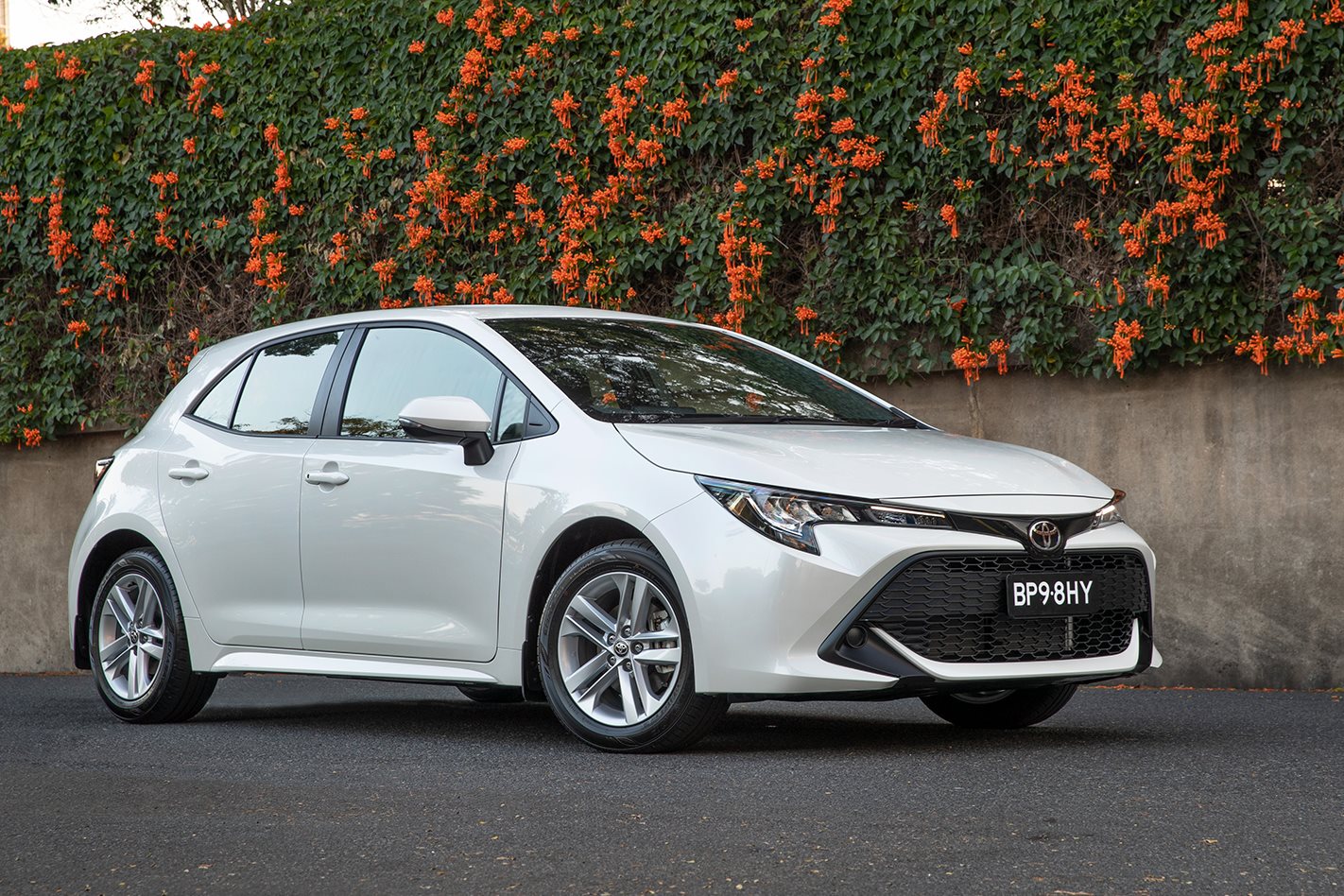
The Triton – which is set to be updated in January – has long held third spot in the ute race, but it climbed to outright fourth position for the month of November, beaten only by its two ute rivals and the evergreen Toyota Corolla.
It pushed the Subaru Forester off the bottom of the top 10 listing, which has shed a few hundred sales after its honeymoon launch phase of September.
The rest of the top ten remains reasonably static, with most models adding a few sales on the back of a slightly stronger November. More than 93,600 cars found new homes last month, compared to 90,000 the month before.
However, it’s a drop year-on-year of more the 7500 cars, even though the 2018 total crashed through the symbolic one million mark.
While consumers, on the whole, hold a pretty positive view of the world, that confidence isn’t reflected across all vehicles categories. Passenger car sales continue to plummet like a stone, with almost every single model on sale recording another negative month.
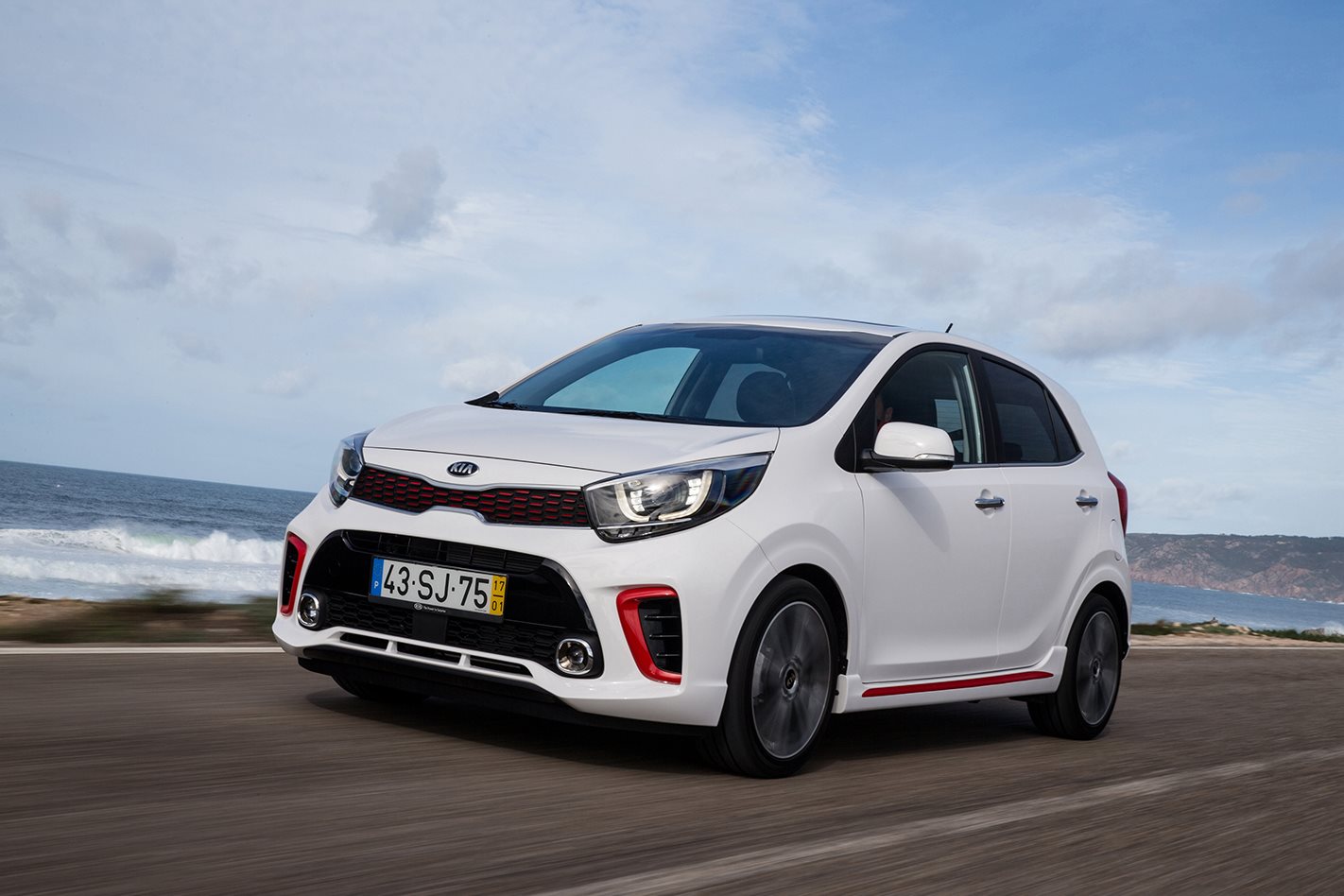
Key exceptions include the Kia Picanto (which almost doubled its sales from October), the Holden Barina (up 70 per cent month on month despite being discontinued) and the Skoda Fabia (up 75 per cent).
MG’s MG6 Plus also fired well for the Chinese company, posting a 270 per cent lift in its admittedly modest numbers.
The Mercedes-Benz C-Class – often used as a barometer of the medium-sized passenger car segment – continues its slide down the charts, though, posting just 183 sales. This time last year, the number was more like 650. Toyota’s Camry still holds a strong lead in passenger car sales (1250 in November), though its fortunes are also on the wane a since it stopped being built here.
The premium sector is holding reasonably steady, with strong sales for BMW’s X4 not quite helping the Bavarians overcome their Ingolstadt rivals at Audi for the month. A strong month for the small Q3 pushed Audi ahead by just 32 units overall. Mercedes-Benz looked to its GLC medium SUV to push it to the front of the German trio.
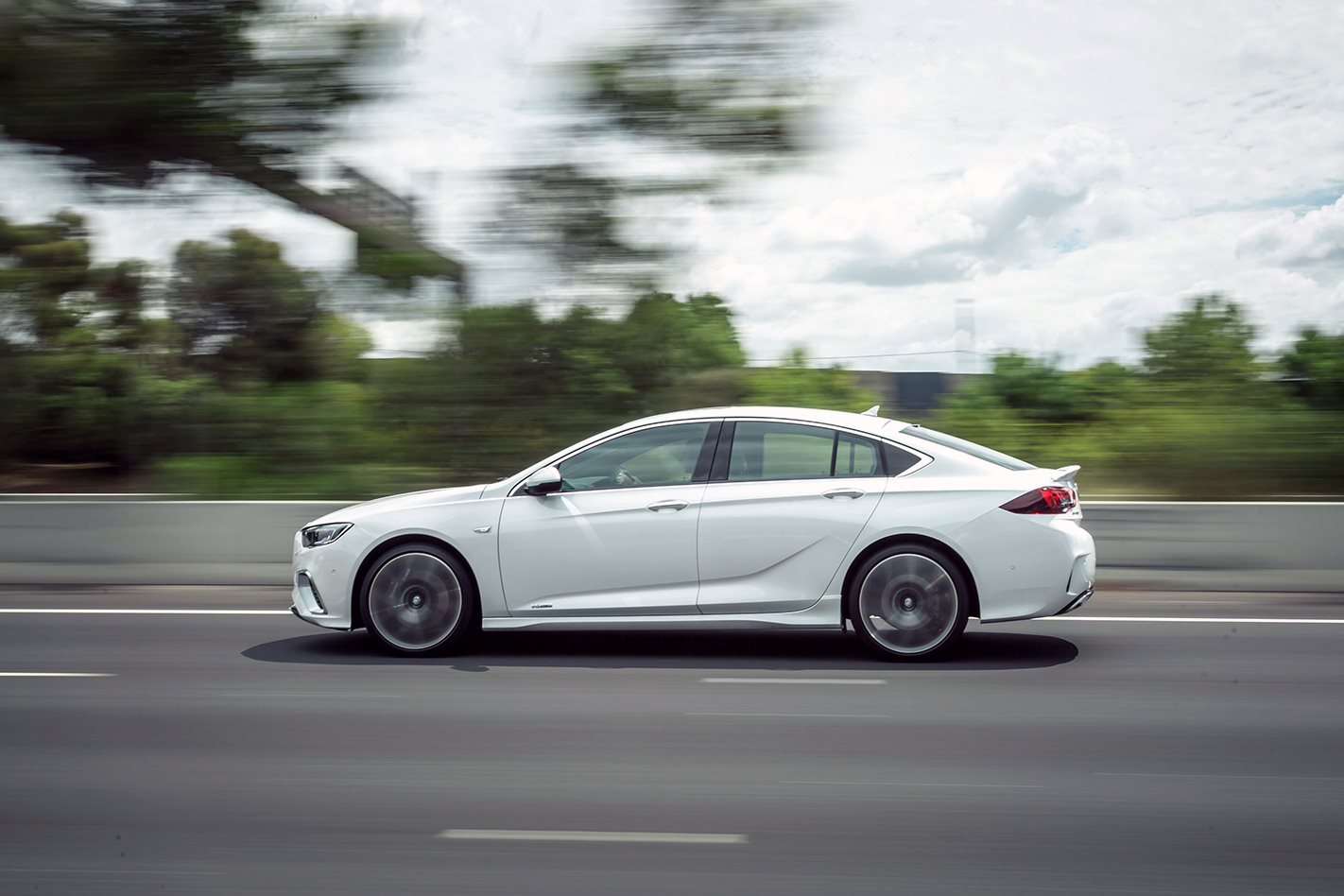
The bloodletting is no better in the large sedan class, either. The Holden Commodore has rallied slightly, posting a handful more units to punch through 700 units for the first time this year… though a small but indeterminate number of those sales can still be attributed to leftover VF stock. With 1835 cars moved this year, it’s Holden’s best-selling model… which doesn’t say much for the Equinox.
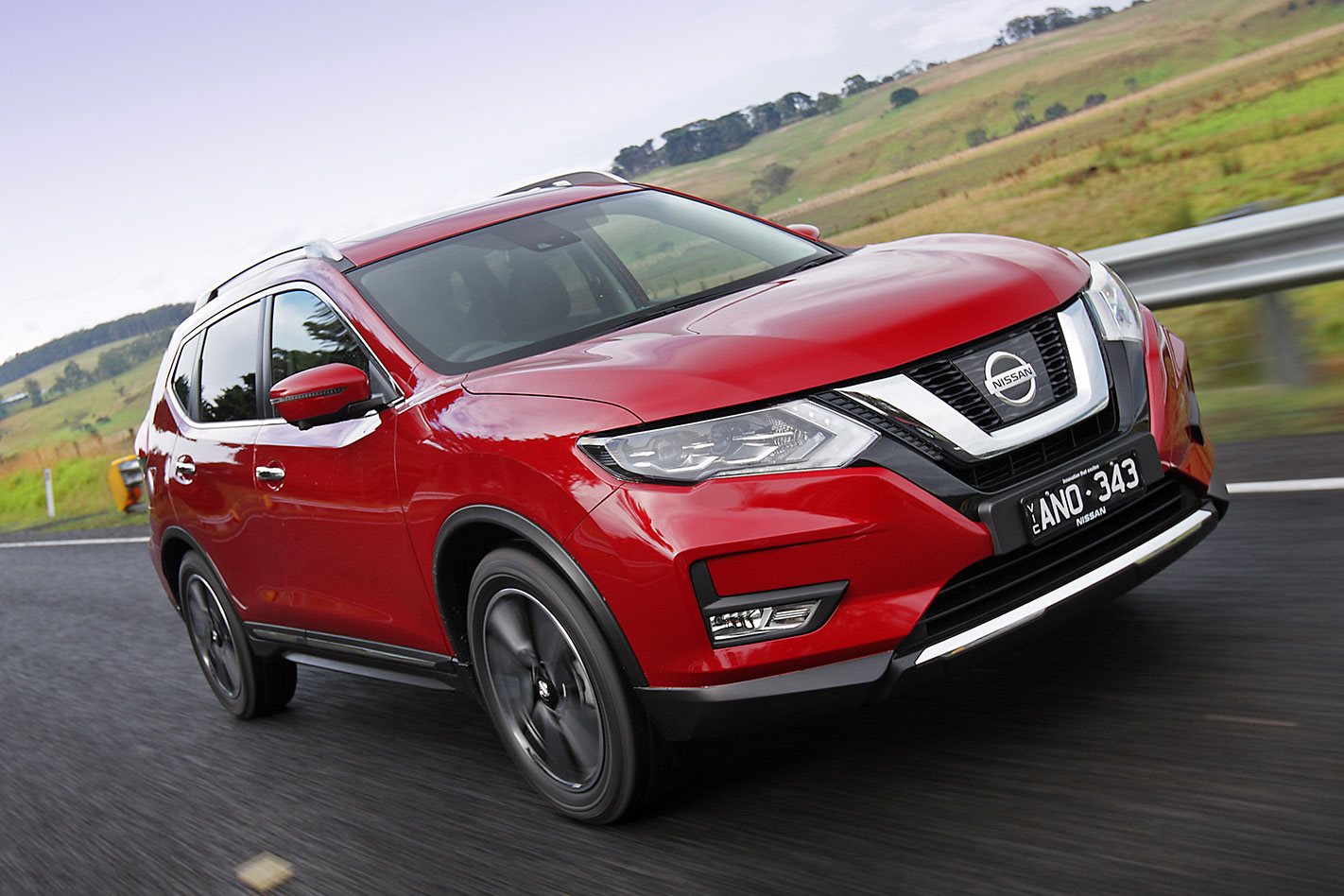
The medium SUV segment is now the biggest of them all, and vehicles like Mazda’s CX-5 (1998 sales) and the ageing Nissan X-Trail (1942 units in November) add significant bulk to their company’s respective bottom lines. However, the continuing poor performance of the Equinox (a paltry 376 sales in Australia’s strongest category) is a real concern. Ford’s Escape (nee Kuga) isn’t faring any better, with even lower scores than the Equinox.
Looking at small SUVs, the overall picture is trending slightly downwards, with only Hyundai’s Kona (1001 units) posting growth. Mazda’s CX-3, the evergreen Nissan Qashqai and the ancient Mitsubishi ASX still lead the field, but are showing signs of buyer fatigue.
It’s a similar picture at the large end of SUV town, though Mitsubishi’s Pajero Sport has mimicked its Triton stablemate by surging in sales for November. It’s posted 786 sales for the month, trailing Toyota’s dominant Kluger/Prado pairing and the third-placed Isuzu MU-X (by just 14 units) in the category.
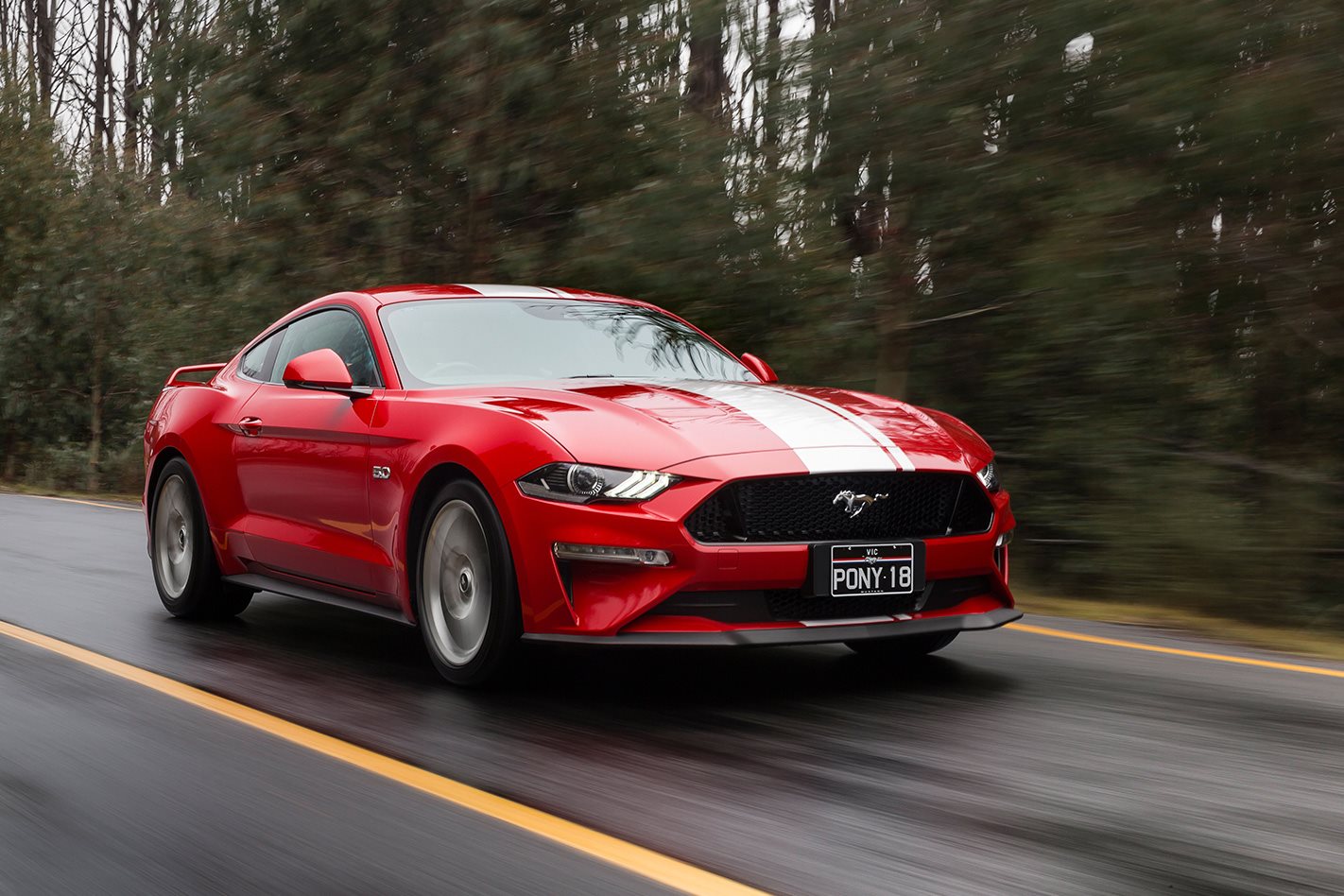
And after a solid October, the heat has come out of the sports car segment. The Ford Mustang continues to defy all expectations – its 780-unit total more than doubles the collective total of all other sports cars sold in the month! – while the new $97,000 Alpine A110 debuted strongly with 12 cars sold for the month.
Someone in Japan has had the rather unique idea to turn a Nissan R33 Skyline GT-R into a wagon. Or a shooting brake, if you like.
Unfortunately, the shape of the R33 coupe doesn’t really lend itself well to a boxy tail. Especially not if the builder just sort of ‘chucks it on’.
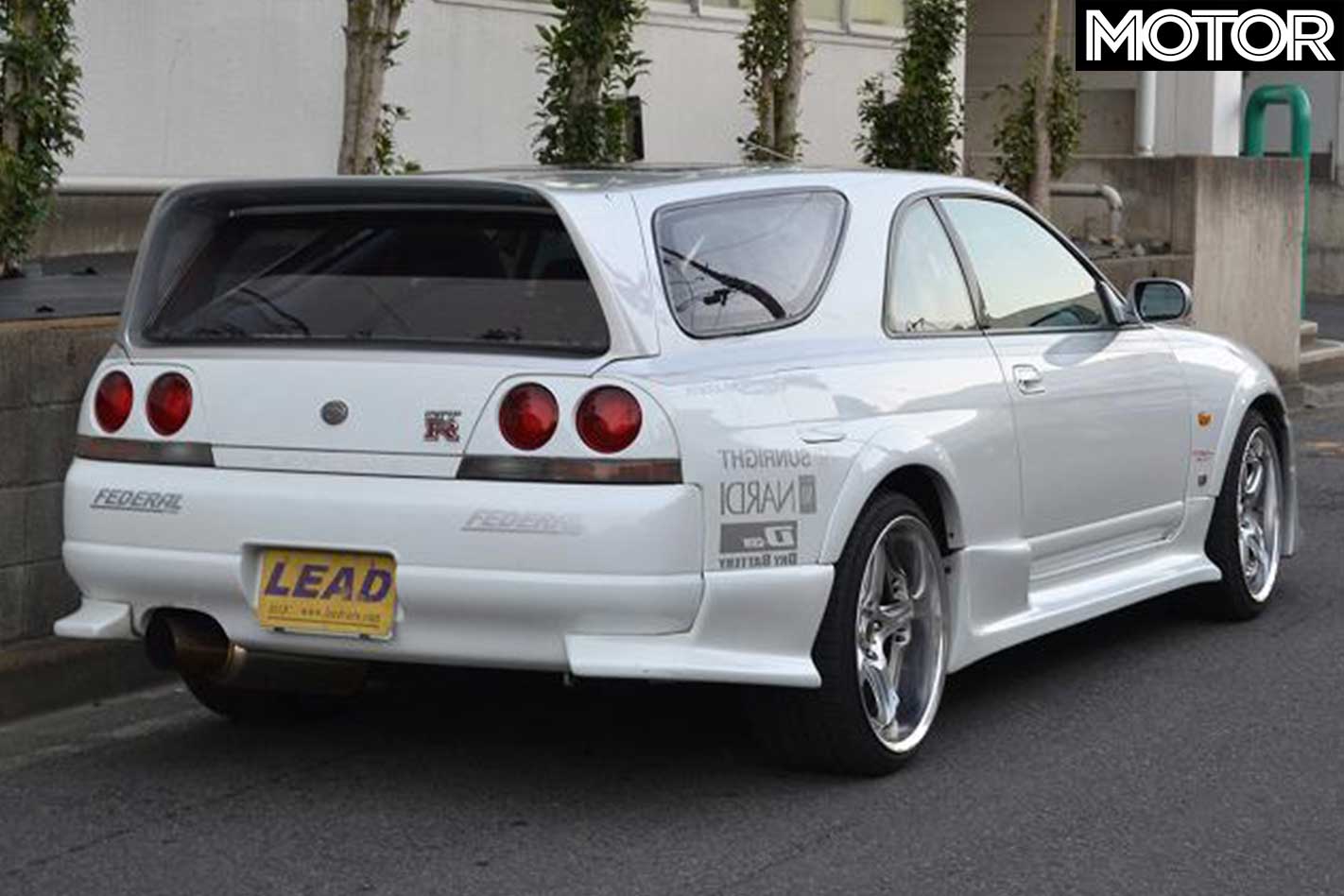
We found this thing on the Facebook page of a pretty well-known enthusiast car importer, Iron Chef Imports. He calls it the ‘R33 GT-R Sportwagonshootingbrakething’. Or simply: “a big ol’ hot mess.”
Even better, is he offers to import it – if it can somehow pass a compliance check. Asking price is just over $60,000 landed.
If someone does decide they’d like to become a laughing stock, the importer would have to source the car from Lead Cars in Japan, which has a listing and some more information about the… thing.
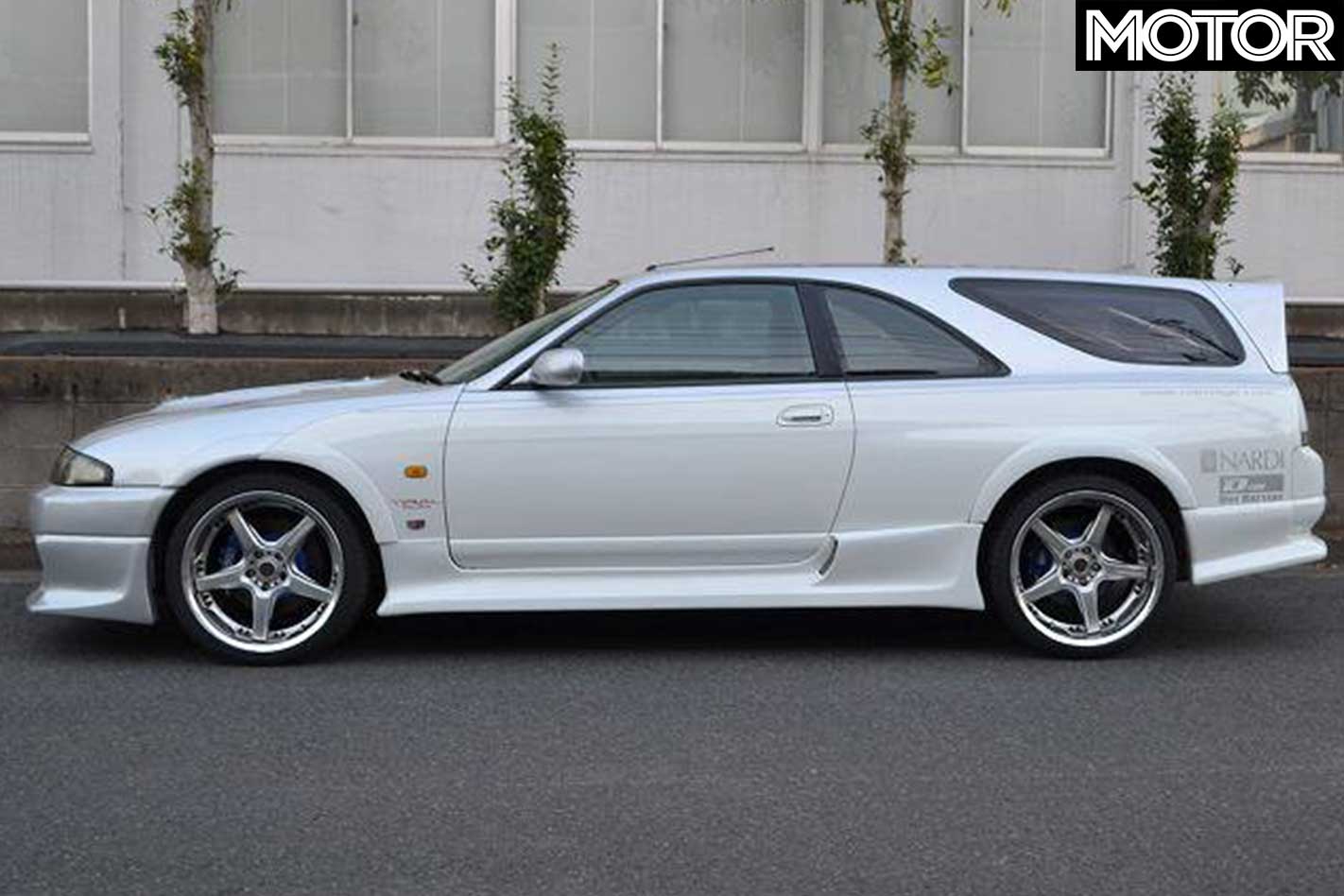
Firstly, the things we could already see. It’s got the rear body modification, obviously, with the boot space and interior structure remaining essentially the same underneath. There’s also a fully-sick sounds system.
Inside, four bucket seats sell a racecar vibe contrary to just about everything else the car is visually saying. It does have a roll-cage though.
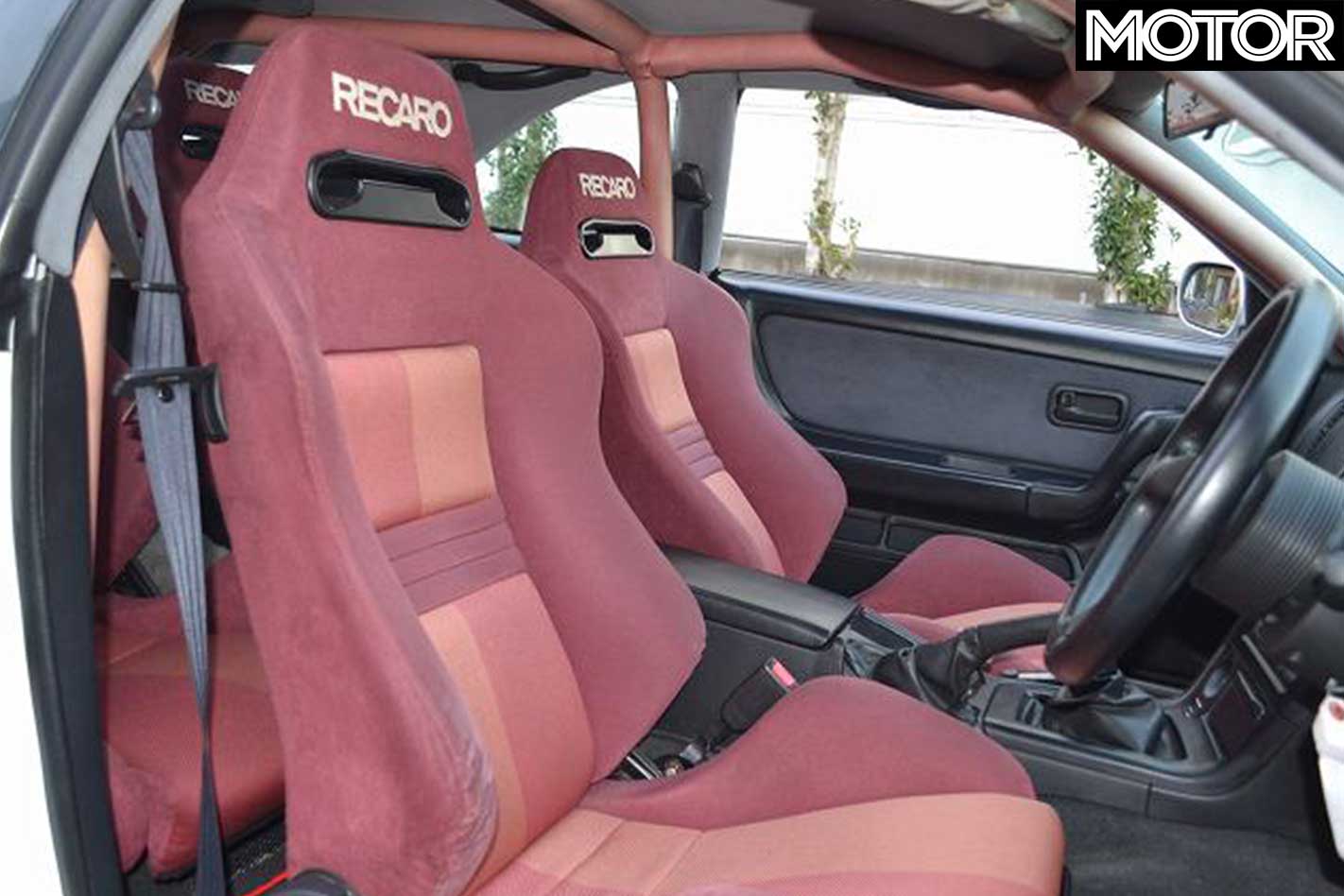
A host of HKS mods in the engine bay (around the original engine, we assume) are overshadowed by pointless additions such as track-spec roll-bars, which have been coupled with a lowered body to ensure an uncomfortable ride.
Of course, we had to have a look at the comments people were leaving on the post, but one might have summed it up best given the current popularity of R33/boat memes.
“Surely adding that much fibreglass to an R33 is just asking for boat jokes?”
