
Do you want to know what’s my favourite aspect of the insane Porsche 911 GT3 RS?
This review was first published in MOTOR’s October 2004 issue.
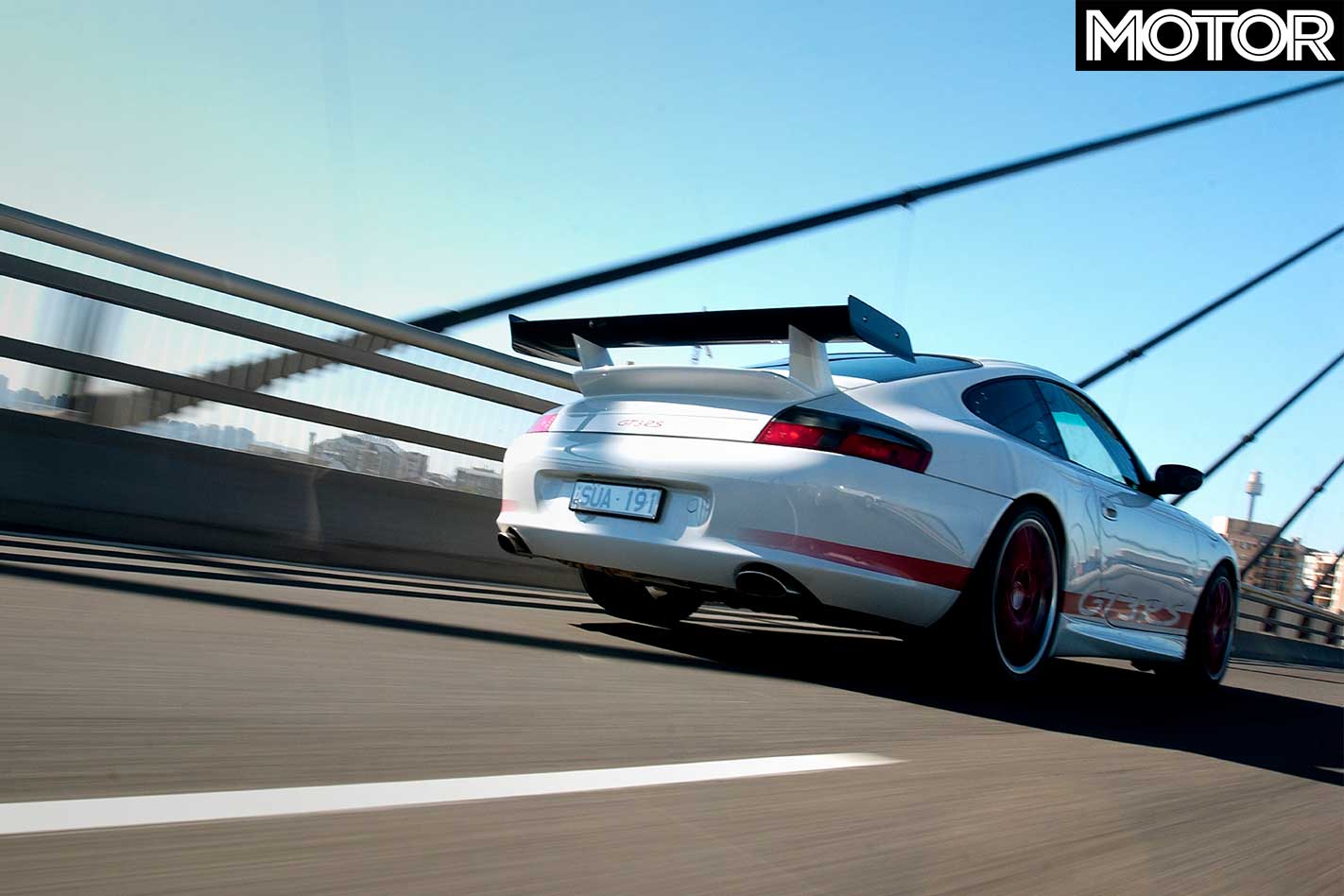
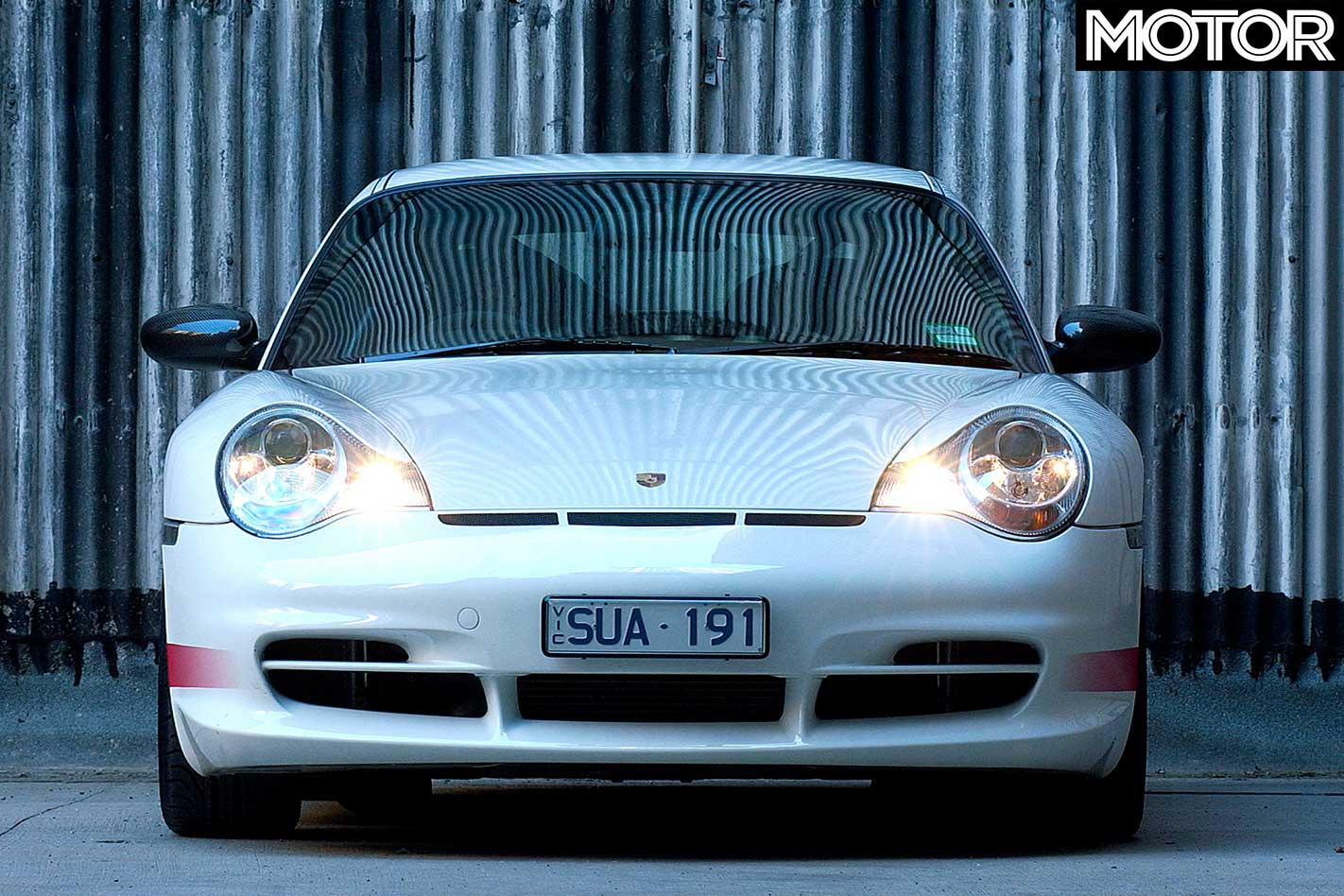
No, it’s not the 280kW pumping from its wailing 3.6-litre boxer six. It’s not its sticky Pirelli Corsa cup tyres either. It’s not the roll cage or the fire extinguisher; and it’s not even its outrageous carbon-fibre rear wing.
That’s how serious Porsche engineers were about weight reduction for this barely disguised race car for the road. Besides saving a few grams, the flat adhesive Porsche shield stuck to its nose also created the added aerodynamic benefit of uninterrupted airflow over the GT3’s Carrera White bonnet.
While its decals may be the exclamation point on the weight-loss scheme, they are by no means the only steps taken. That front sticker has been slapped onto a carbon-fibre bonnet, which has been left in its beautiful, raw, just-out-of-the-autoclave state on its underside.
Then there’s that monster rear wing atop the engine lid. Not only does the stunning carbon plane provide real downforce – the whole RS aero package faithfully mimics that found on the Carrera Cup racers – but the entire bootlid and wing assembly could be lifted with one finger. Beneath the larger wing sits a smaller ducktail, very similar in profile to the famous one found on the original 1970s RS.
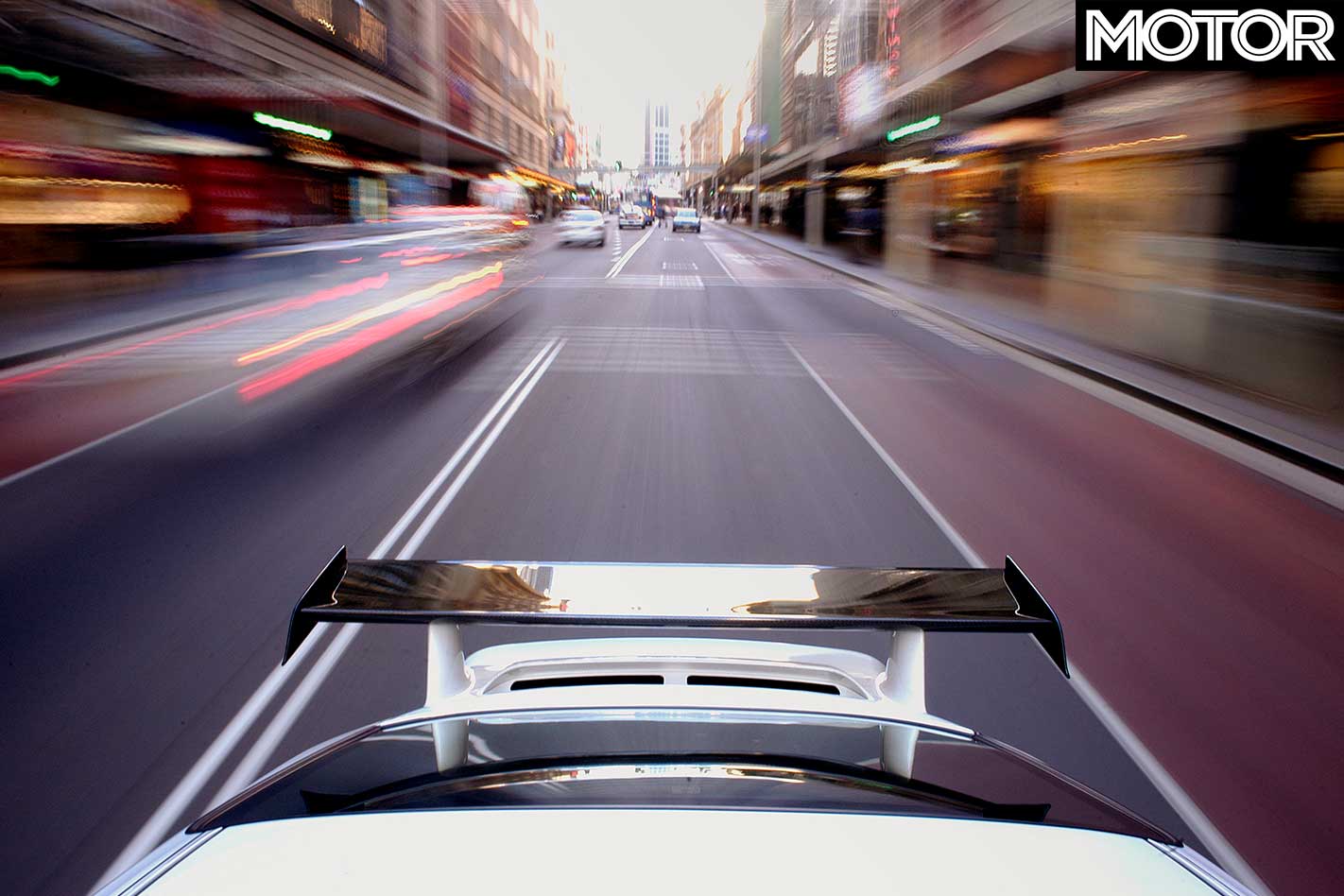
Finally, the glass rear screen has been ditched in favour of a Perspex number. Not only does this save weight – and you might be surprised, but windscreen glass is very heavy – the plastic rear screen allows better access to the guttural howl from the highly strung flat-six.
Of course, the plastic screen is no longer heated and it wobbles about a bit at speed, but if you’re worried about those sorts of details in a car like the RS, you’re probably reading the wrong magazine.
All up, the RS version is just 20kg lighter than the road-trim GT3, but an impressive 50kg slimmer than the roll-cage-equipped Clubsport model. So, with the same 280kW power output across the GT3 range, the 1360kg RS steps into the ring packing a weight-to-power punch of 4.86kg per kilowatt – genuine supercar numbers.
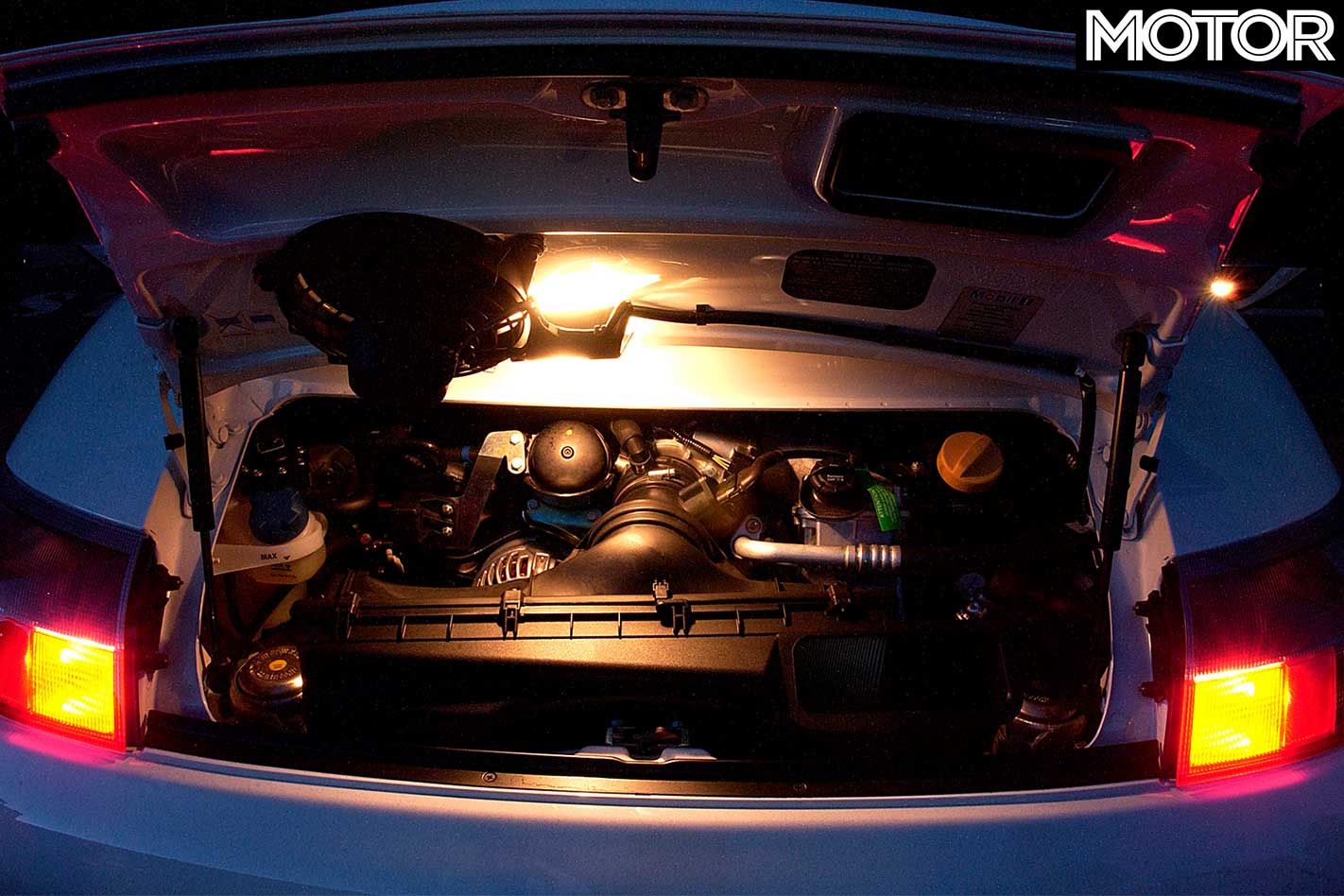
In short, the latest in the line of legendary stripped-out RS 911s is a serious bit of kit. It takes no prisoners and suffers no fools. Pedestrians hear its gruff boxer bark and know it; other motorists know better than to carve it in traffic; cops don’t want to know about it, and even the over-inflated egos of boy racers know not to mess with the RS. But it’s the driver of this latest Porsche weapon who most needs to earn the respect of the RS.
The GT3 RS is the automotive equivalent of a hard man, the kind of bloke you want on your side if something breaks out in a pub, but who may actually be the one causing the trouble in the first place. Cross the RS, and you will know about it.
Few cars can match the sense of occasion you get by dropping your bum into its full-spec, wrap-around, fire-retardant Recaro race seats and gripping the alcantara-trimmed steering wheel. There’s a huge fire bomb taking up residence in the passenger-side footwell, and a six-point harness for the driver.
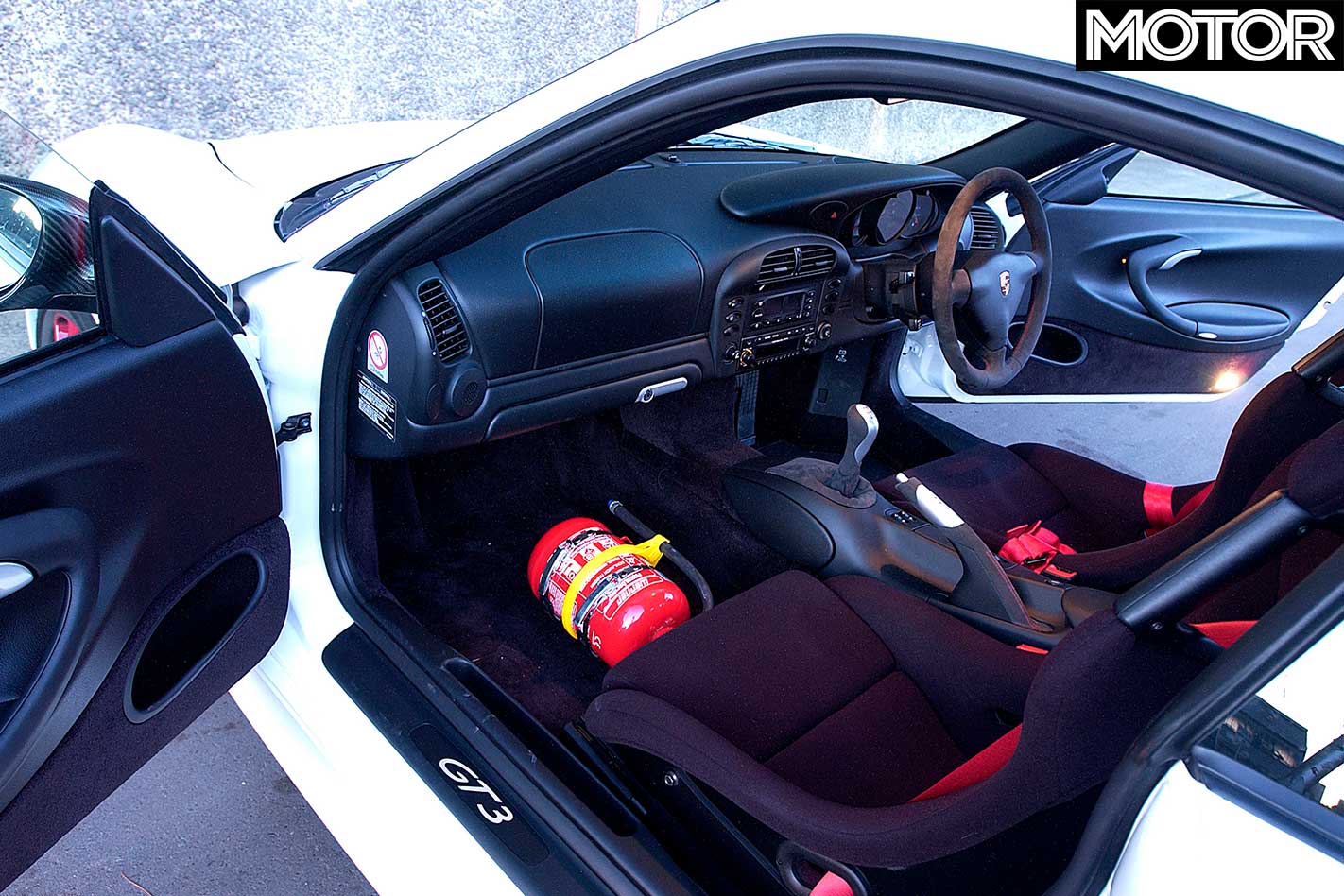
The harness and regular belts are colour-matched to your exterior sticker and alloy wheel option, red and blue being the only choices over the standard Carrera White. This is real turn-key racing.
The regular road version of the GT3 stunned me with its launch and acceleration capabilities, but the lighter, more hard-core RS floored me with its crushing ability to blast off the line and arrive at the 400-metre finishing line after just a dozen seconds.
When performance-testing a car, especially one as seriously fast as the RS, I like to work my way up to its pace, just to make sure everything’s ok with it, the track and me. So, when a reasonably conservative launch and some tentative shifting netted a 4.6-second 0-100km/h sprint, I had to check the Correvit wasn’t playing tricks on me. All systems go.
If you’re too quick with the clutch or feed in too much throttle too early, there’ll be a slew of wheelspin as the 295/30 ZR18 Pirellis struggle to transmit the GT3’s 385Nm of torque. Even with exactly the same drivetrain, the RS is harder to get off the line than the road-trimmed GT3 we tested in the August issue, and so requires more concentration to get a clean and quick getaway.
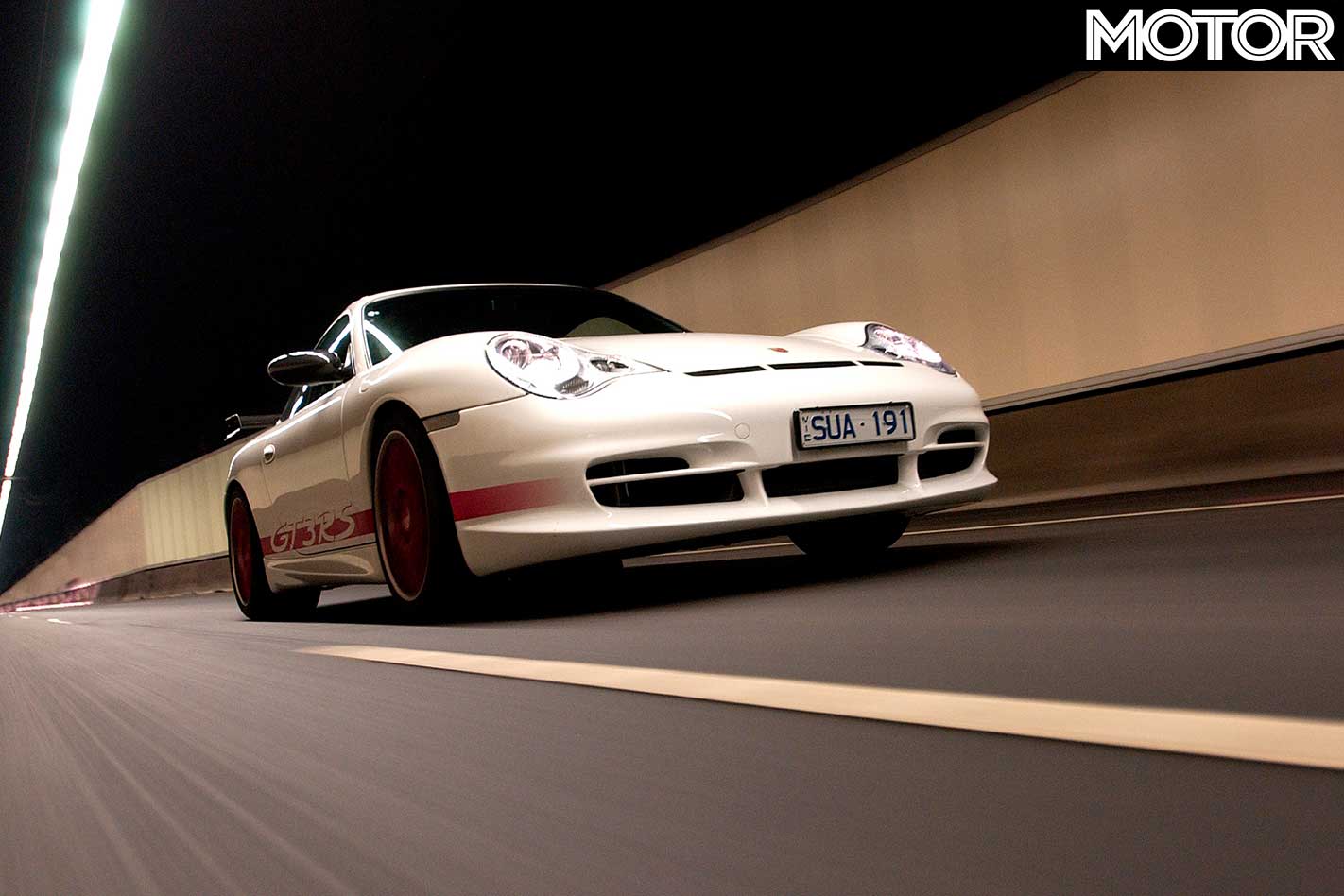
Brain up to speed and dialled in for a proper launch, the RS simply explodes off the line. Snapping shifts through the long-throw but deadly accurate six-speed gearbox, and keeping an eye on the needle as it blurs around the tacho to the redline, the RS fries the Correvit with a 4.38-second 0-100km/h. That’s V8 Supercar-quick! In fact, that’s even quicker, albeit it by a poofteenth, than Porsche’s claim.
And folks, the fun ain’t over yet. The standing quarter arrives in 12.37 seconds, by which stage the RS is travelling at a scorching 186km/h. If the road’s long enough, the RS will knock over 200km/h in 14 seconds dead. Again, that’s right on the factory claim. Here’s what our car will do, no bullshit. I like that.
Away from the drag strip, the RS is like a magnifying glass sizzling ants; it’s that focused. Every sense comes to life as this Porsche steadily delivers you more accurate ear-to-the-ground feedback than any intelligence agency can.
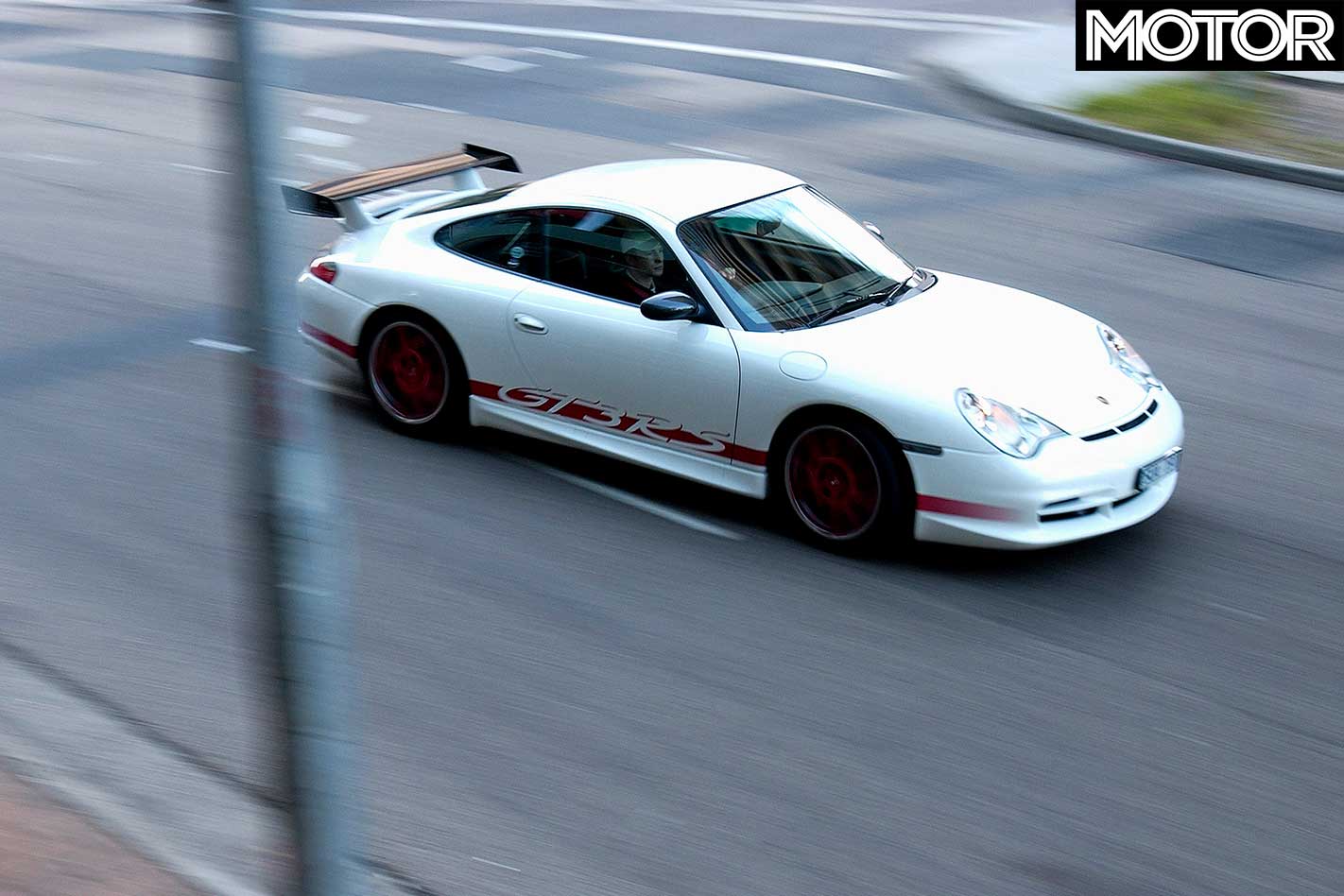
The stream of data flowing through its steering wheel is constant, telling you precisely where the front end is and how much grip is still available. Your hands work in unison with your bum, judging just how its rear is gripping, and collude tightly with your ears to detect the early onset of a slide.
In concert, your ears pick up the engine’s song, instinctively guiding your right foot to keep the flat-six up above five grand, where the RS’s best work is done. Even your sense of smell is fed useful tidbits of info about brake and tyre temperatures. And your eyes had better be ready for the scenery to arrive quicker than it’s ever come on before.
Having tested the road version of the GT3 almost back-to-back with the RS, it’s easy to spot that the Pirellis are even more temperature-sensitive than the Michelin Pilot Sports or Sport Cups found on the road and Clubsport versions of the GT3.
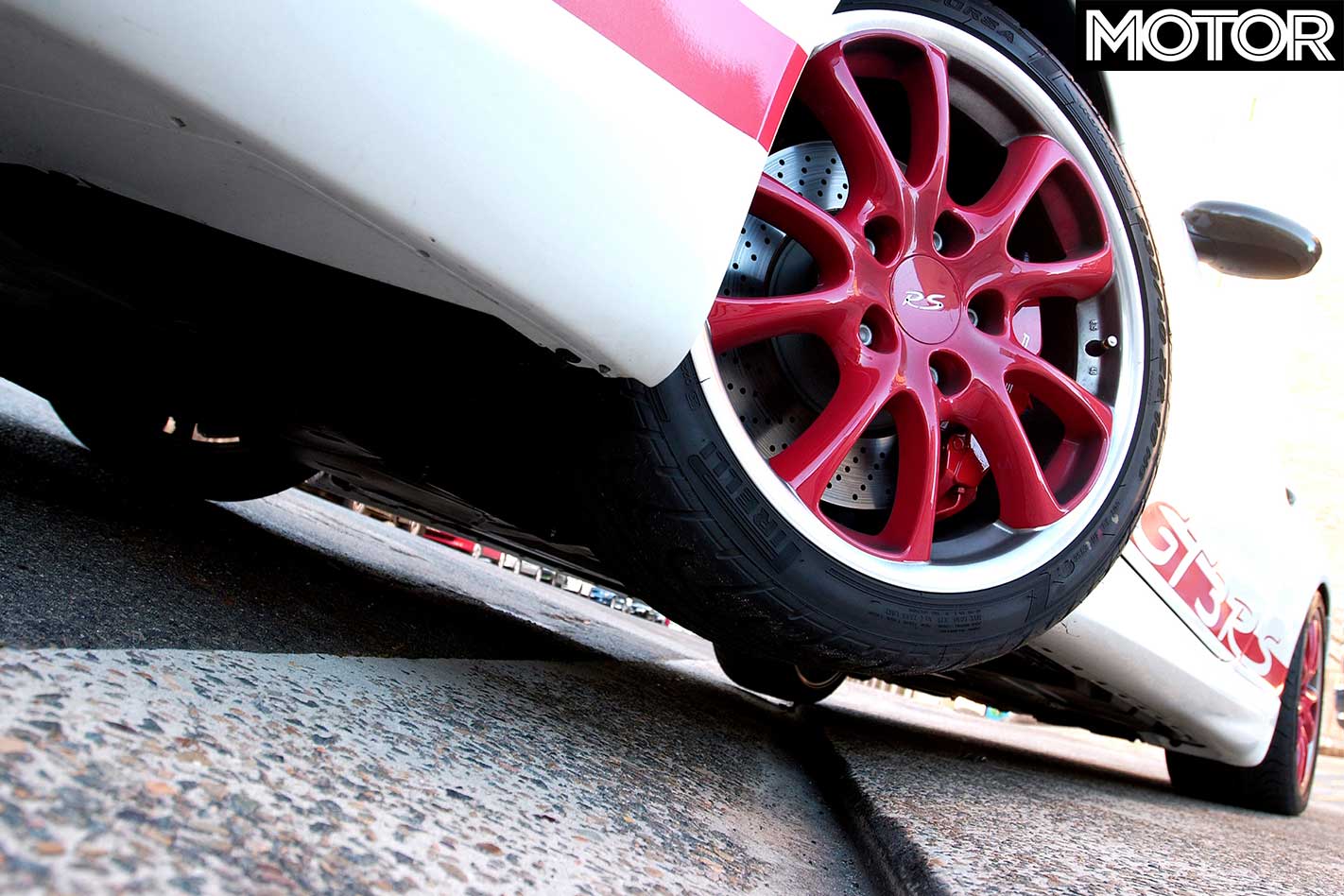
When cold, the RS is happy to wag its bum in the breeze as the barking and wailing 280 kilowatts easily overcome the grip that’s on offer. But as long as you respect the RS’s reputation, it is still friendly enough.
Nevertheless, once its Corsas are warmed to their optimum operating range, it’s easy to see why this combo makes the GT3 RS the fastest factory 911 to blast around the famed Nürburgring in Germany.
Breaking the eight-minute barrier around the Nürburgring in a standard production car has long been the goal of performance car manufacturers.
For perspective, the brand new 3.8-litre 997 911 Carrera S laps the torturous 21 kays of the Green Hell in 7:59 seconds with Porsche test driver and rally legend Walter Rohrl at the wheel – just three seconds slower than the 309kW 996 Turbo.
Although down 29kW to the Turbo, the road-version GT3, however, clocked a very sharp 7:53. But the weapons-grade GT3 RS, with its Pirelli rubber and weight savings, blasted around the ’Ring a full 10 seconds faster, in just seven minutes, forty three seconds!
Think I’ve forgotten about the ballistic twin-turbo 340kW 911 GT2? I’ll save you the internet search; the GT3 RS is four seconds quicker than that legend, too.

The RS is a car of huge numbers, and they don’t stop at its price. At $288,000 the RS is $47k over a standard GT3, and is the second most expensive 911 coupe in the range behind the $315,000 Turbo – although the batch of 20 GT2s that came to Australia in 2002 wore $400,000 stickers.
The GT3 RS will be the weekend plaything of the seriously wealthy and most of the batch of just 18 of its kind to come to Australia will see plenty of action at track days and events like Targa Tasmania.
Knowing that I’m never going to scrape together the requisite stack of readies to land an RS in my garage on a permanent basis, I couldn’t stop driving the thing.
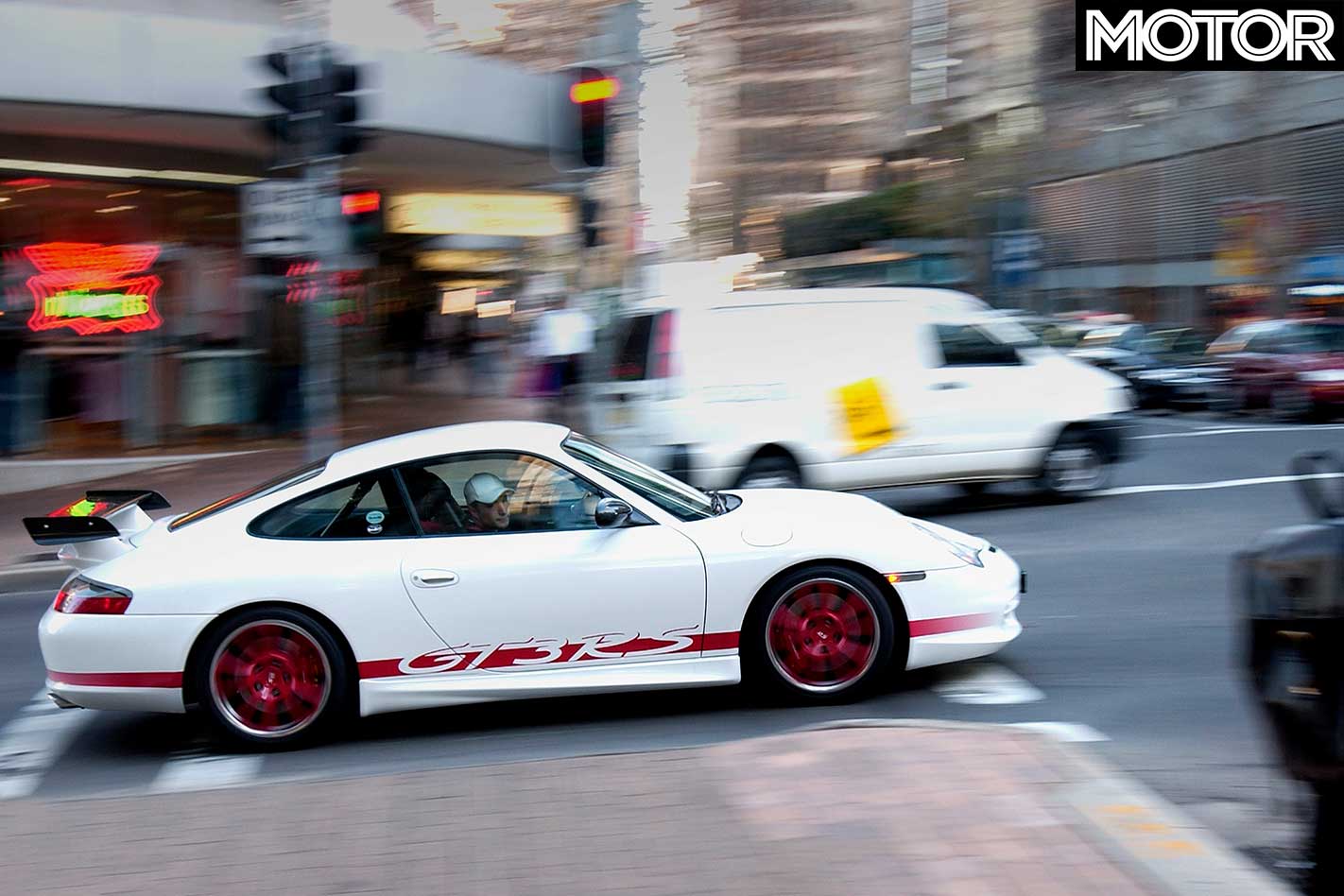
Back in the August issue in a comparison with the Lotus Exige, I opined that the road-trim GT3 was the ultimate 911. It appears I spoke too soon. This side of the flagship Carrera GT supercar, the GT3 RS is probably the ultimate Porsche.
Original Recipe
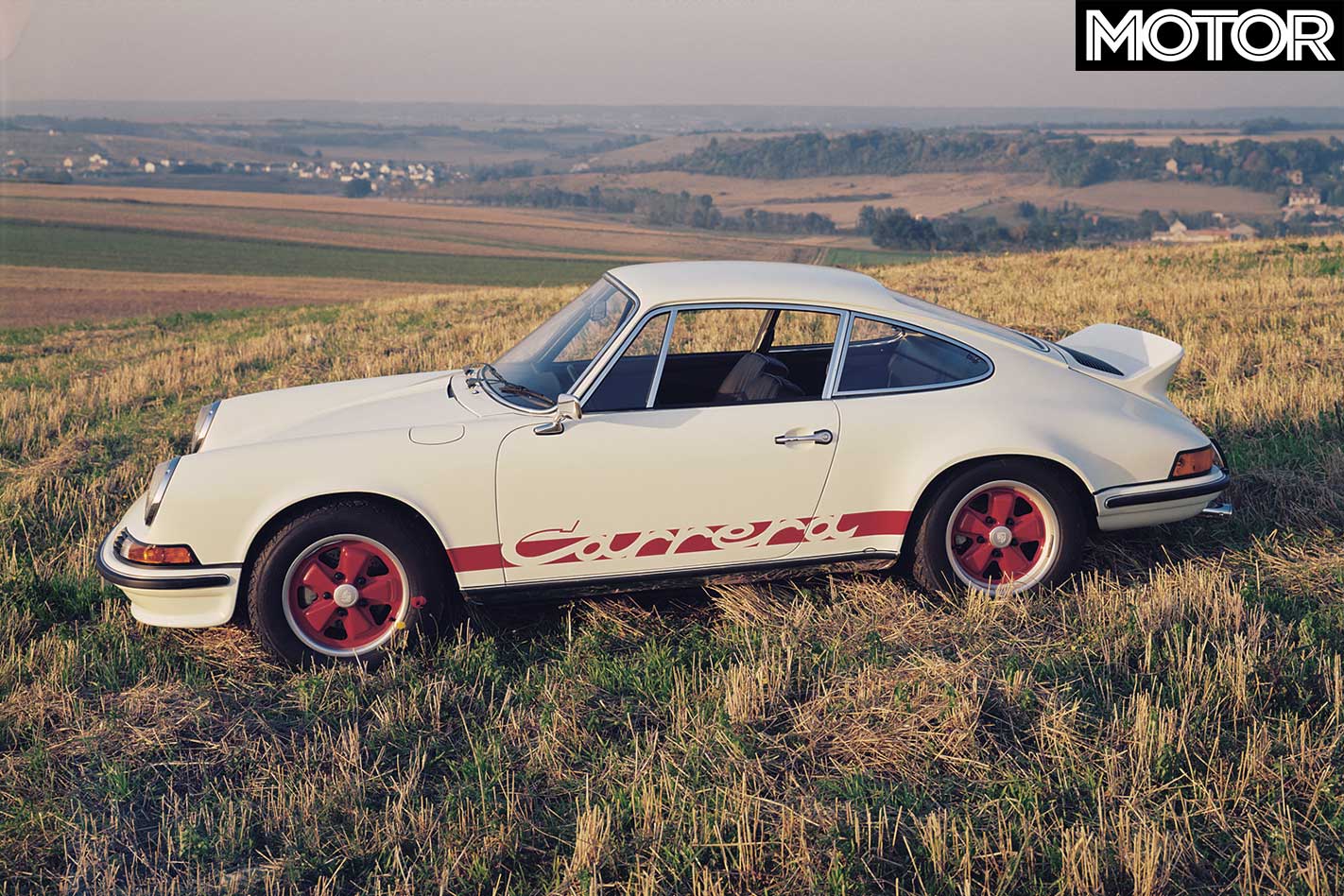
Like the current GT3 RS, the original Carrera RS of 1973 was a thinly disguised racer for the road. It was actually built to homologate Porsche’s entry into Group 4 racing and an initial production run of 500 units was planned but strong demand saw over 1500 RS 911s built.
The 2.7-litre boxer pumped out 157kW at 6300rpm, giving the lightweight RS (975kg for the Sport) startling performance in a sub-six seconds 0-100km/h and a top speed nudging 250km/h.
Stickers came in red, blue, black or green with matching Fuch alloy wheels.
FAST FACTS 2004 Porsche 911 GT3 RS
BODY: 2-door coupe DRIVE: rear-wheel ENGINE: rear-mounted 3.6-litre, DOHC 24-valve flat six POWER: 280kW @ 7400rpm TORQUE: 385Nm @ 5000rpm COMPRESSION RATIO: 11.7:1 BORE X STROKE: 100.0mm x 76.4mm WEIGHT: 1360kg POWER-to-WEIGHT: 206kW/tonne SPECIFIC POWER: 77.7kW/litre 0-100KM/H: 4.38sec (tested) 0-400M: 12.37 @ 186.2km/h (tested) TRANSMISSION: six-speed manual SUSPENSION: MacPherson struts, coil springs, anti-roll bar (f); multi-link, coil springs, anti-roll bar (r) L/W/H: 4435/1770/1275mm WHEELBASE: 2355mm TRACK: 1480mm (f); 1500mm (r) FUEL: 89 litres, PULP BRAKES: 350mm cross-drilled & ventilated discs, six-piston monobloc calipers (f); 330mm cross-drilled & ventilated discs, four-piston monobloc calipers (r), ABS STEERING: power rack and pinion WHEELS: 18 x 8.5-inch (f); 18 x 11.0-inch (r), alloy TYRES: Pirelli P-Zero Corsa, 235/40 ZR18 (f); 295/30 ZR 18 (r) PRICE: $288,000
Alfa Romeo’s first SUV has arrived in Australian showrooms with a starting price of $65,900.
The Alfa Romeo Stelvio is available at launch with a choice between two powertrains; a 2.0-litre turbo petrol and a 2.1-litre turbo diesel, which are each mated to an eight-speed automatic transmission sending power to all-four wheels via Alfa’s ‘DNA’ three-mode drive system. Two, more powerful models will follow later this year.
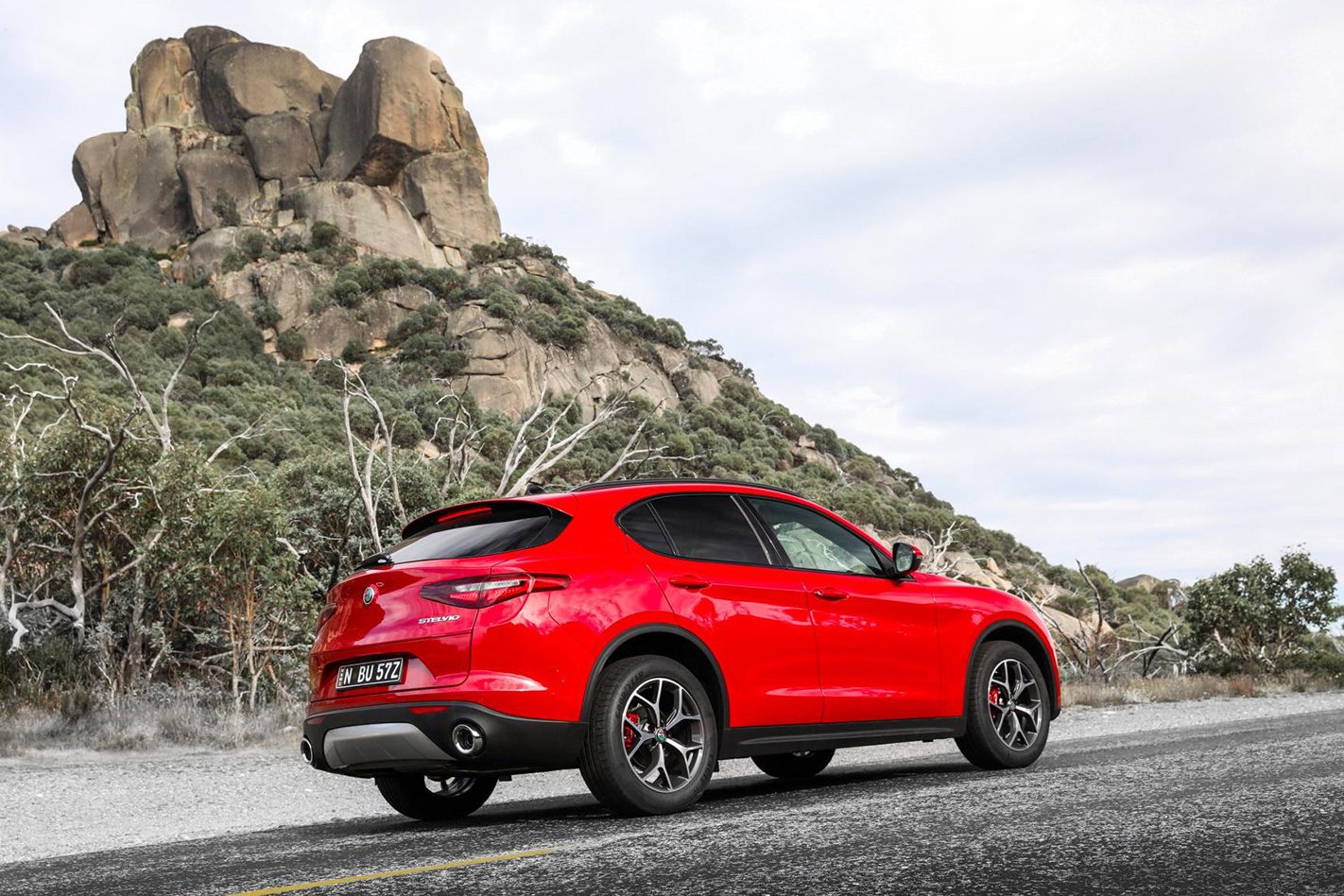
The standard four-cylinder 2.0-litre turbo-petrol produces 148kW and 330Nm resulting in a top-speed of 215km/h and 7.2-seconds 0 to 100km/h acceleration. Fuel economy is claimed at a relatively frugal 7.0L/100km.
For some extra shove, a Stelvio Ti variant will launch soon sporting a gruntier version of the 2.0-litre petrol engine producing 206kW/400Nm. Its considerable power boost results in a 1.5-second quicker 0-100km/h time of 5.7 seconds over the entry-level Stelvio; it’s also 0.9 seconds quicker than the torque-laden 154kW/470Nm 2.1-litre turbo-diesel.
Stelvio Ti will be the most powerful version of Alfa’s first-ever SUV until the Stelvio Q (Quadrifoglio) arrives in time for Christmas with a 375kW/600Nm twin-turbo V6 shared with the Giulia Quadrifoglio sedan, and carrying an estimated $150,000 price tag.
The four-cylinder diesel, meanwhile, uses an all-aluminium engine to pump out its performance figures. It has the same 215km/h top-speed as the petrol but will beat it to from standstill to 100km/h by 0.3 seconds at 5.4sec. Claimed fuel economy is a hybrid-rivalling 4.8L/100km.
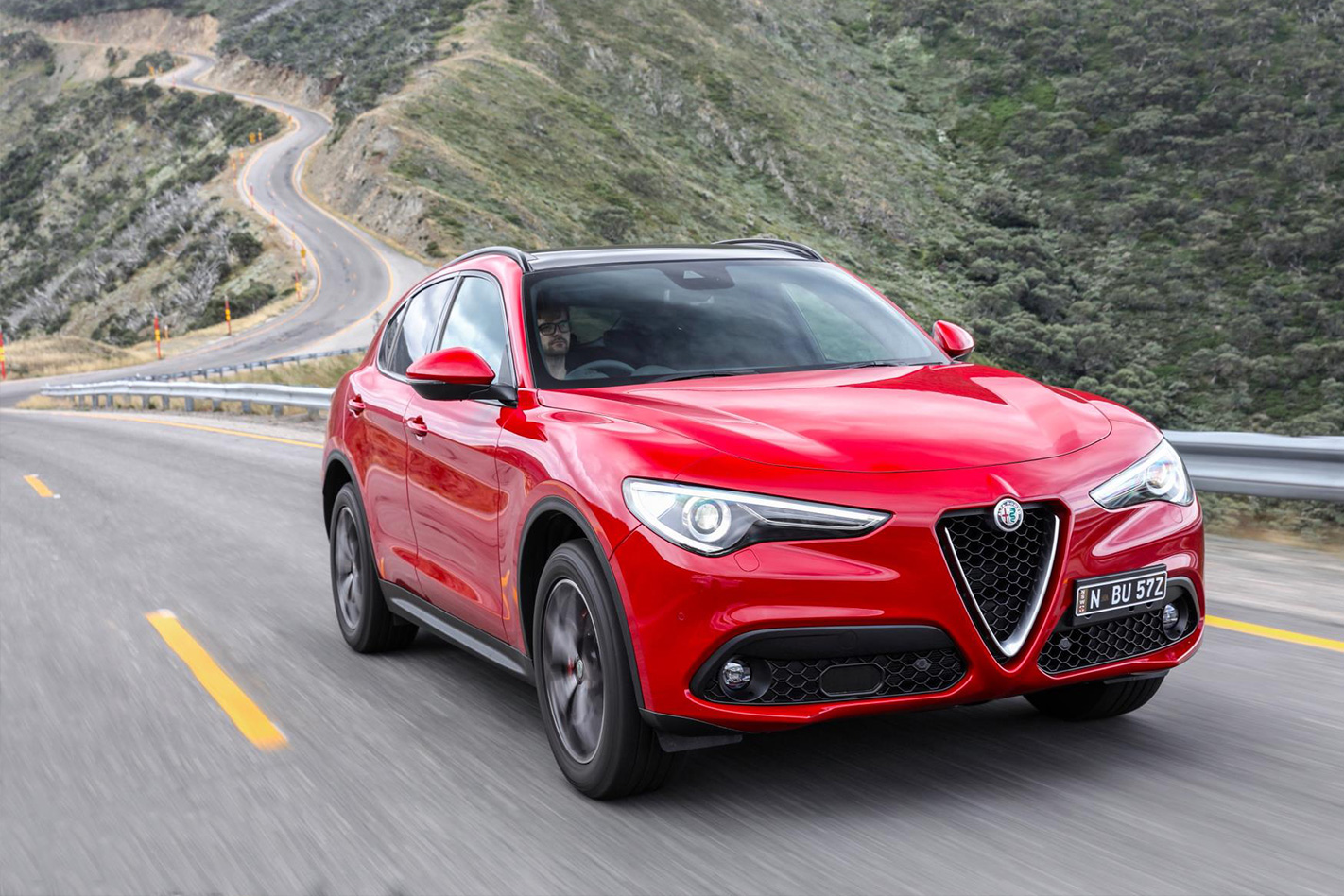
The Stelvio’s frisky performance is backed up by the sporty style you expect from Turin, with the interior featuring full-grain leather upholstery, attractive curved dashboard, broad centre console and a leather-wrapped steering wheel with racing-style start button below the left spoke, and long aluminium paddle shifters.
Infotainment is controlled via an 8.8-inch panoramic screen with the latest generation sat-nav, and entertainment from AM/FM and digital (DAB+) radio or a Bluetooth connection, and eight-speaker sound system.
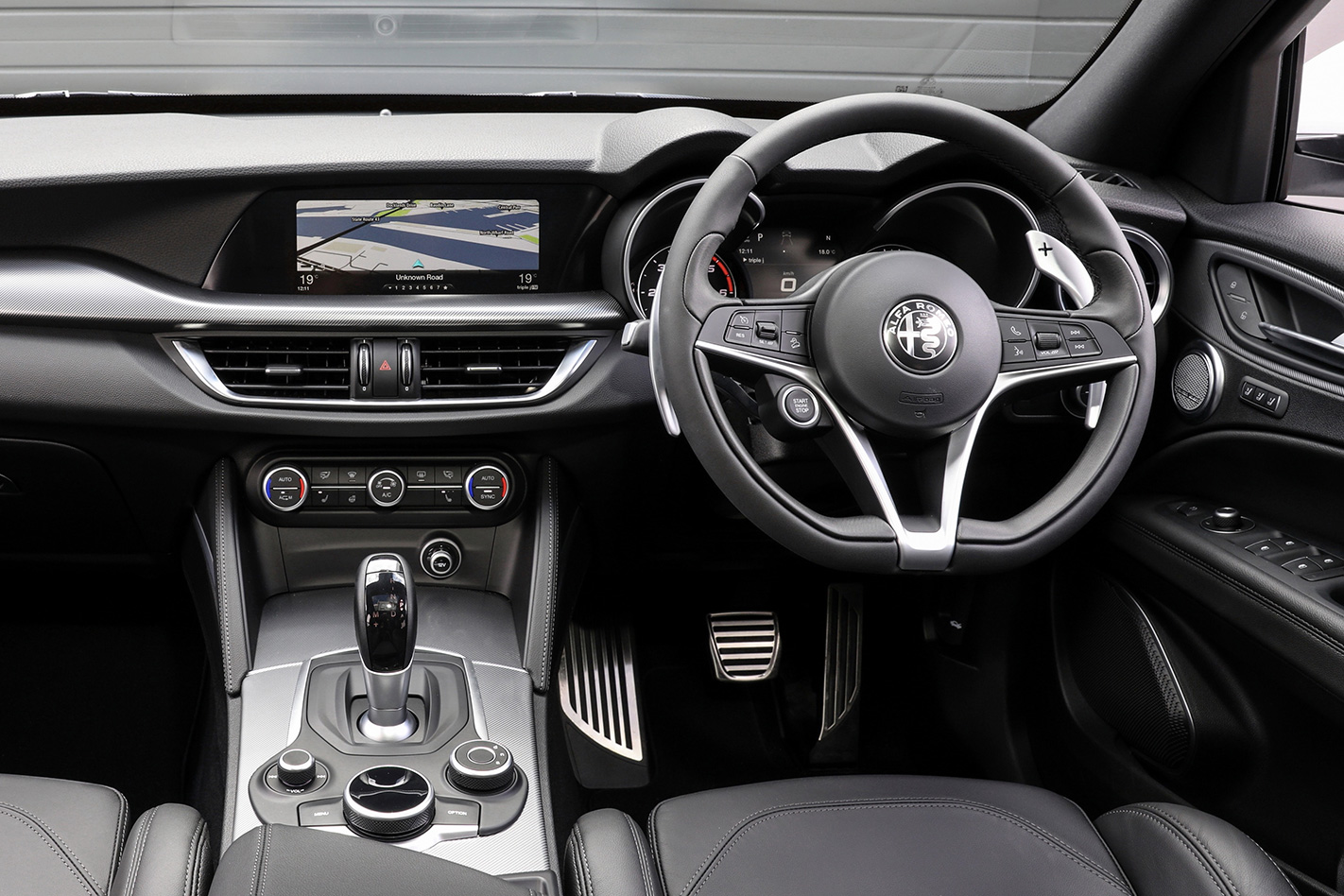
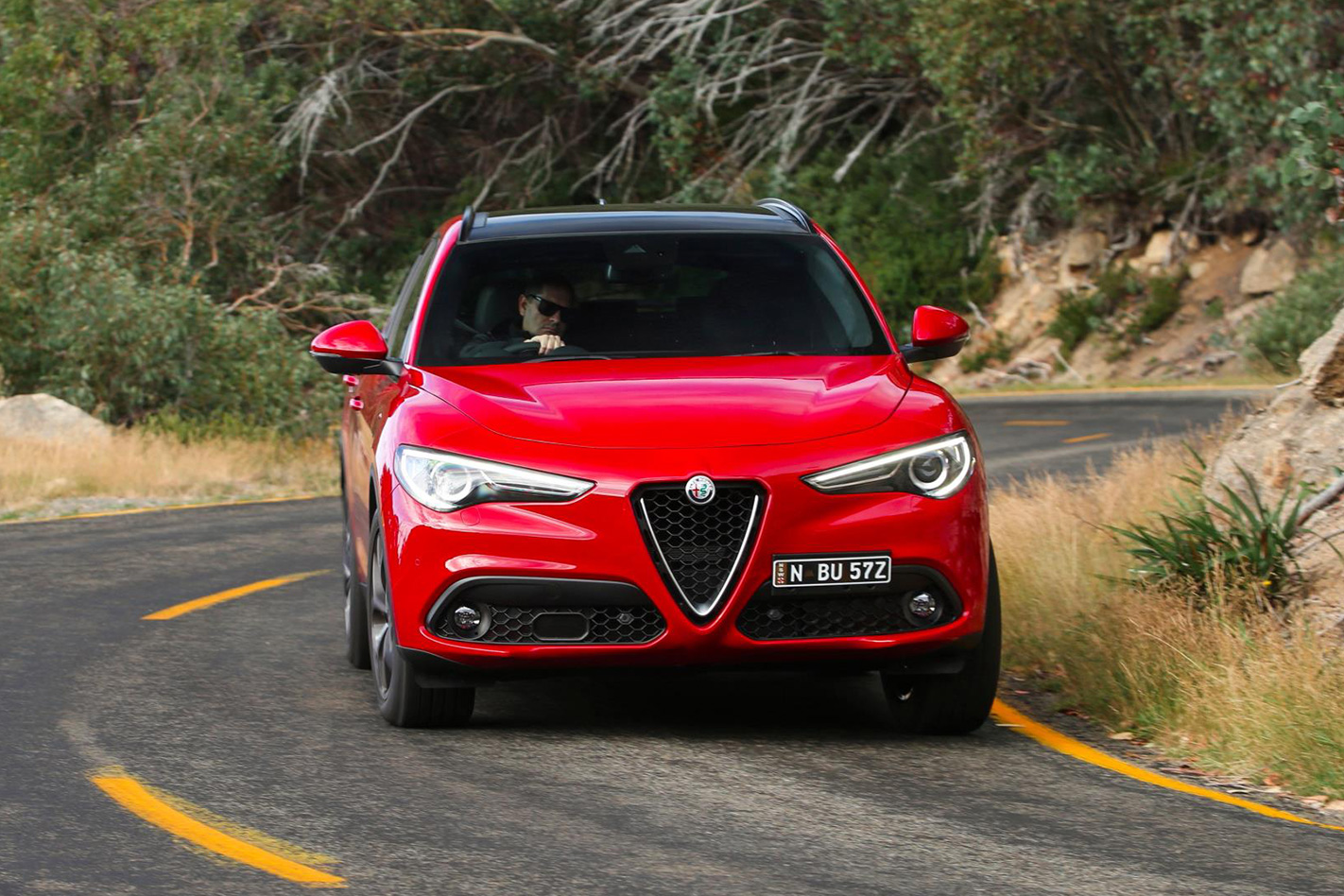
Despite the SUV shell, the exterior is faithful to Alfa Romeo’s heritage and characteristically sleek aesthetics, but with contemporary highlights including 19-inch ten-spoke alloy wheels, Bi-Xenon headlights and chrome-plated window frames, which highlight a choice of 11 eleven exterior paint colours.
Other standard features include autonomous emergency braking with pedestrian detection, lane departure warning, blind spot monitoring, cruise control, dual-zone climate control, powered tailgate, front and rear parking sensors, keyless entry and auto dimming mirror.
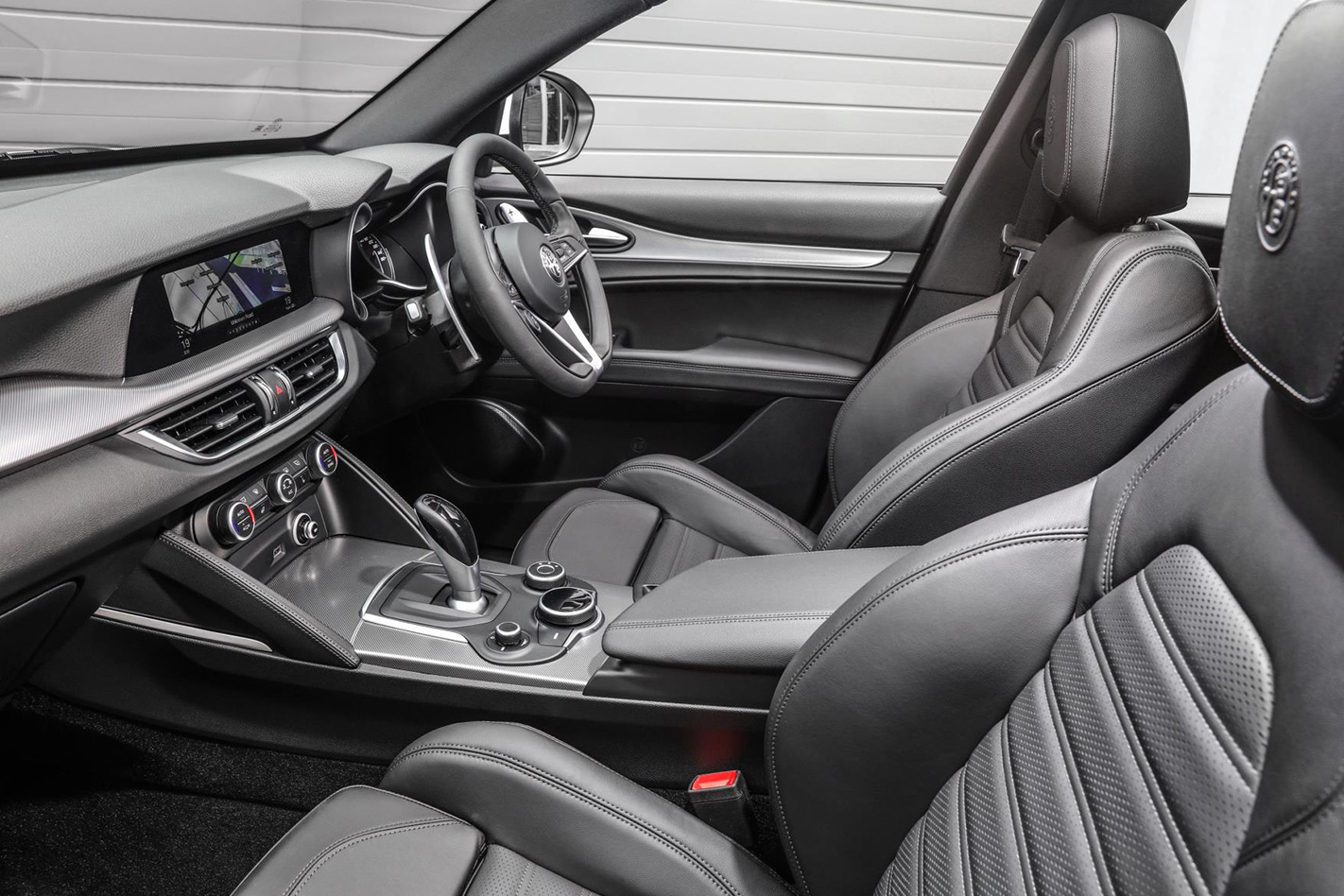
A ‘Veloce’ option pack is also available on regular Stelvio models for $5000, which adds aluminium interior trim and sports foot pedals, black painted roof rails, Koni adaptive suspension dampers, heated front seats, heated steering wheel, red painted brake calipers, sports front seats with powered bolsters and sports steering wheel.
The Ti comes with most of the Veloce options as standard including the racetrack-bred Koni dampers, plus a rear limited-slip differential, 20-inch alloy wheels, and sports-style heated front seats and steering wheel.
Meanwhile, a special, Stelvio First Edition brings the standard and Veloce features, plus a panoramic sunroof, 14-speaker 900W Harman Kardon premium audio and privacy glass. The First Edition demands a $6000 premium over the standard variants and will be limited to 300 units, split between 200 diesels and 100 petrol versions.
The Stelvio Ti will arrive later in 2018 and the Quadrifoglio in January 2019.
2018 Alfa Romeo Stelvio pricing
- Stelvio 2.0L Turbo Petrol – $65,900
- Stelvio 2.1L Turbo Diesel – $67,900
- Stelvio First Edition 2.0L Turbo Petrol – $71,900
- Stelvio First Edition 2.1L Turbo Diesel – $73,900
- Stelvio Ti – approx. $78,900
- Stelvio Q – approx. $149,000
The prospect of electrified Subaru models arriving in Australia is more a matter of when and not if, according to the Japanese carmaker’s local arm, and the company has its arm firmly in the air for its first hybrid offerings.
Subaru Australia spokesman David Rowley said the company is keen to bring hybrid models Down Under, however there are no models earmarked to arrive in the foreseeable future.
Until a more concrete forecast is made public, the most likely prospect is the Subaru XV, a plug-in hybrid version of which has been announced in the United States, where the popular crossover is known as the Crosstek.
Due for launch later this year, the Crosstek Hybrid will benefit from Subaru’s relationship with Toyota, that brought us the BRZ sports coupe, by incorporating a Toyota hybrid system with a direct-injection Subaru boxer engine driving all four wheels via an all-new transmission – which should provide some decent shove as well as improved fuel economy.
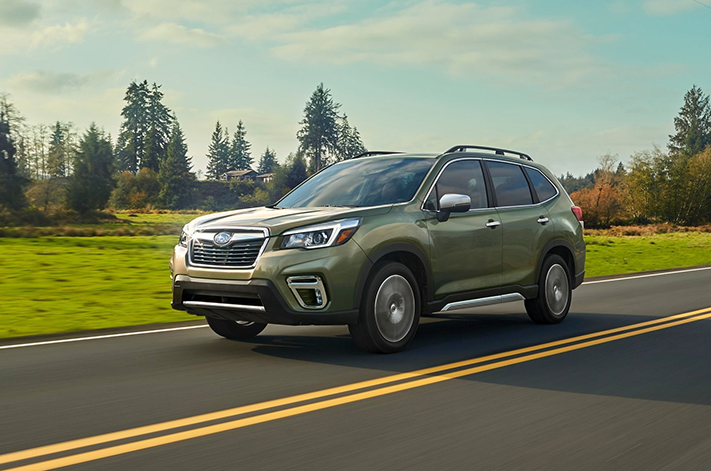
Details are sketchy about Subaru’s first plug-in hybrid. The carmaker has said it will be styled uniquely to stand out over the standard models, but technical information is still under wraps.
Rowley told WhichCar that while Subaru Australia is interested in an XV Hybrid, at this stage it’s a US-only offering.
Another contender to commence the Australian Subaru hybrid foray here will be an electrified version of the all-new Forester due later this year, but this too will find its way to other countries long before our market.
The Forester will share the same new Global Platform architecture as the XV allowing for an electrified powertrain, though Subaru Australia is still waiting to see what Japan has planned as far as engine and transmissions go.
Subaru Australia managing director Colin Christie has previously said that a hybrid model is inevitable as emissions standards become tighter.
Christie was cautious about demand for hybrids in Australia, though if the outdoor and environmentalist stereotypes are any guide, Subaru buyers may well take kindly to alternative powertrains.
To fill the gap between the drop-top AMG GT and GT C, Mercedes has revealed the 2018 Mercedes-AMG GT S Roadster.
With 384kW and 670Nm, it sits between the 350kW/630Nm of the GT Roadster, and the 410kW/680Nm of the GT C Roadster, as does its 0-100km/h sprint of 3.8 seconds and its top speed of 308km/h.
Again finding middle ground, the AMG GT S Roadster weighs 1625kg, which is 55kg over its roofed GT S sibling. AMG says they share performance times despite this.
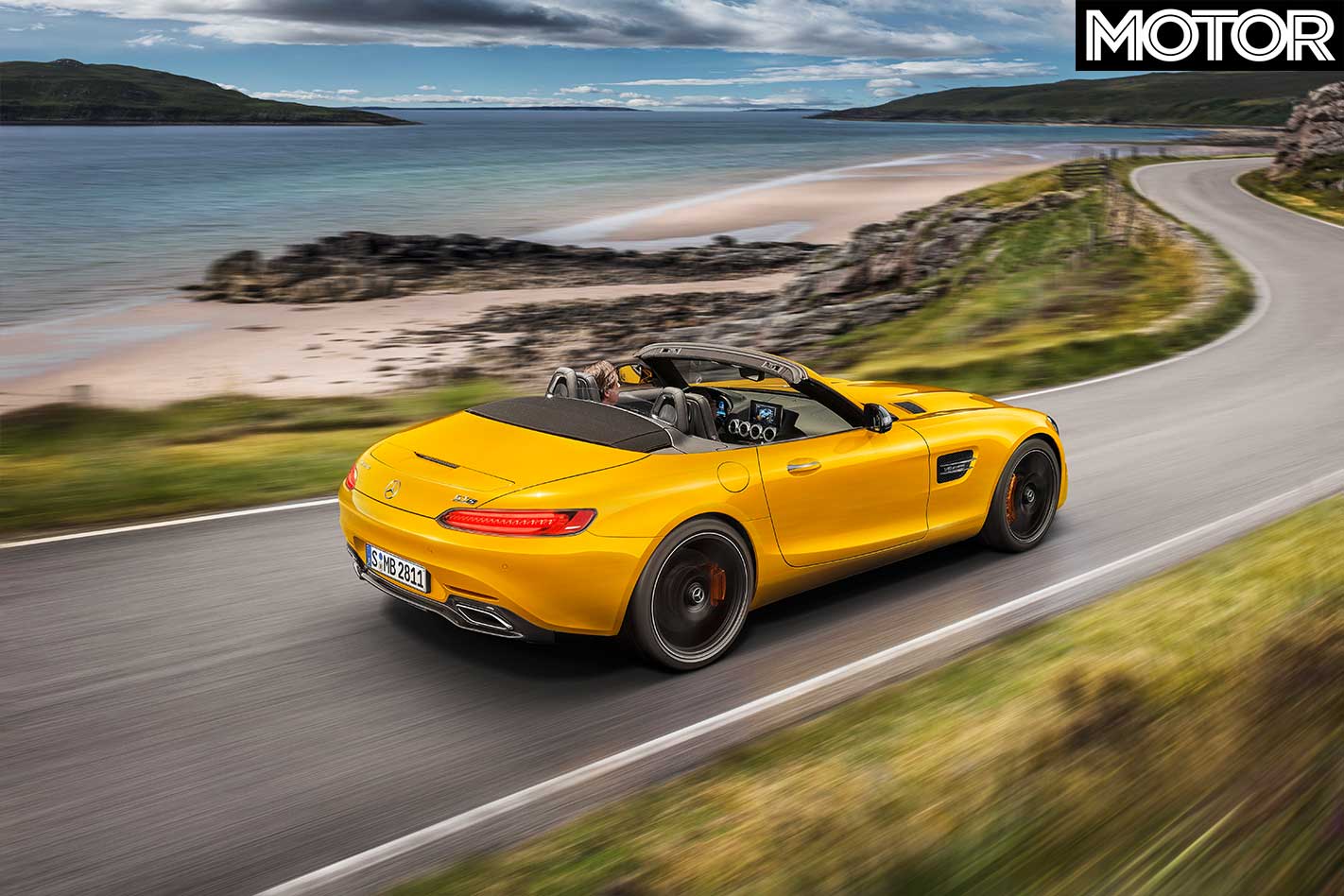
It features AMG’s adaptive damping, something the GT misses out on, while also gaining a rear-axle LSD.
It doesn’t gain the rear axle steering the GT C has as standard, though it can be optioned at extra cost – it also comes with the ‘Dynamic Plus’ pack, available to add features such as dynamic engine and transmission mounts and stiffer sports suspension.
Brakes are borrowed from the GT C Roadster, ceramic composite discs measure 390mm at the front and 360mm at the rear,
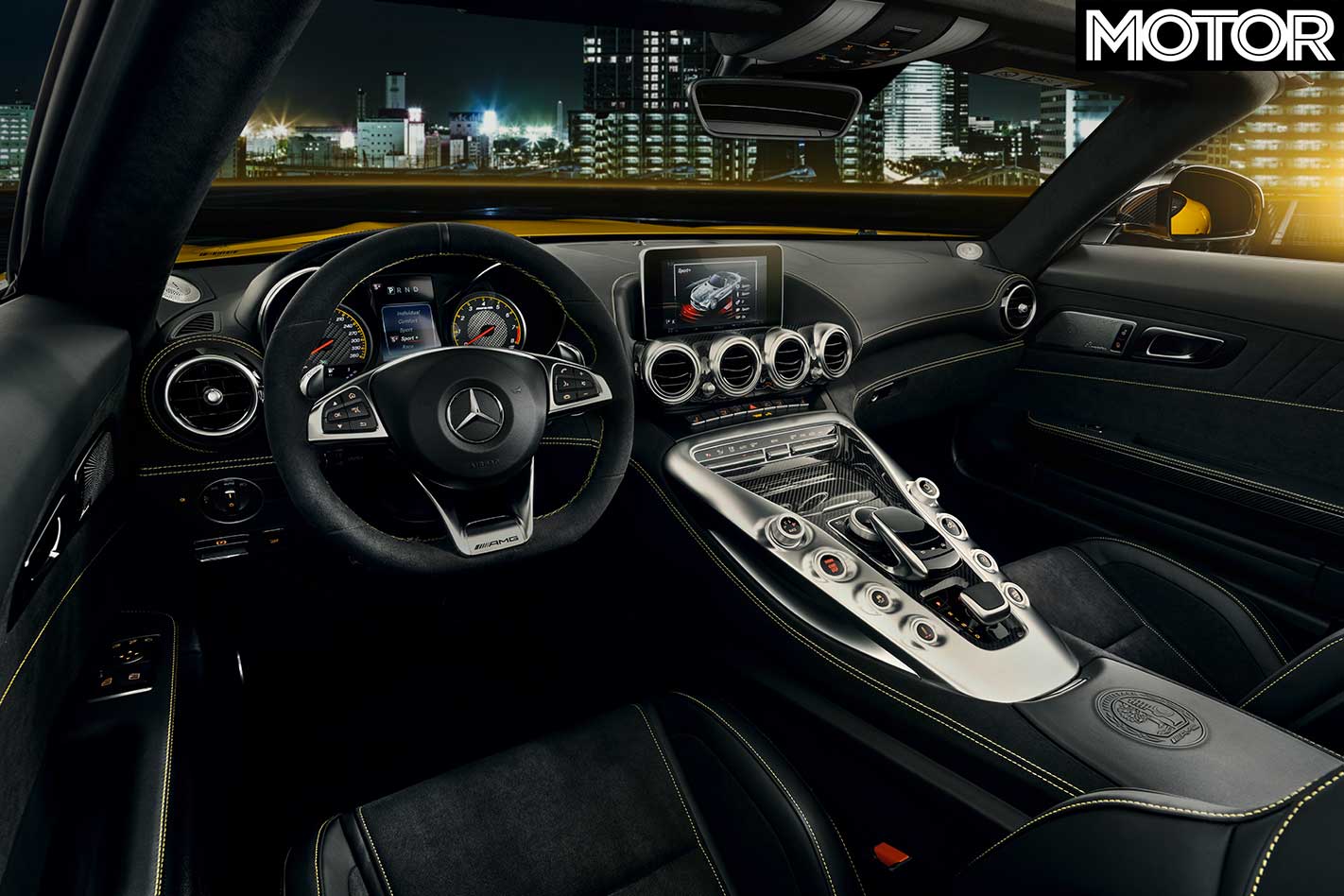
Inside, Artico artificial leather and Dynamica microfibre make up the upholstery, while the steering wheel has a touch of Nappa leather.
Of course, at extra cost, various combinations of leathers and microfibre are available as options.
A spokesperson for Mercedes-Benz Australia told MOTOR the AMG GT S Roadster will be available next year, though further details are unconfirmed. Expect to see a price tag of around $310,000 before on-road costs.
FORD managed to make just $345 for each new car it sold in 2017, while Holden made the equivalent of almost $1730 on every sale, documents filed with financial regulators show.
The documents reveal Holden made a $156 million profit in its last year as an Australian manufacturer. In contrast, Ford Australia managed to make just $27 million last year, the first profit it has made in the five years since it announced it would quit local manufacturing in late 2016 becoming a full line importer.
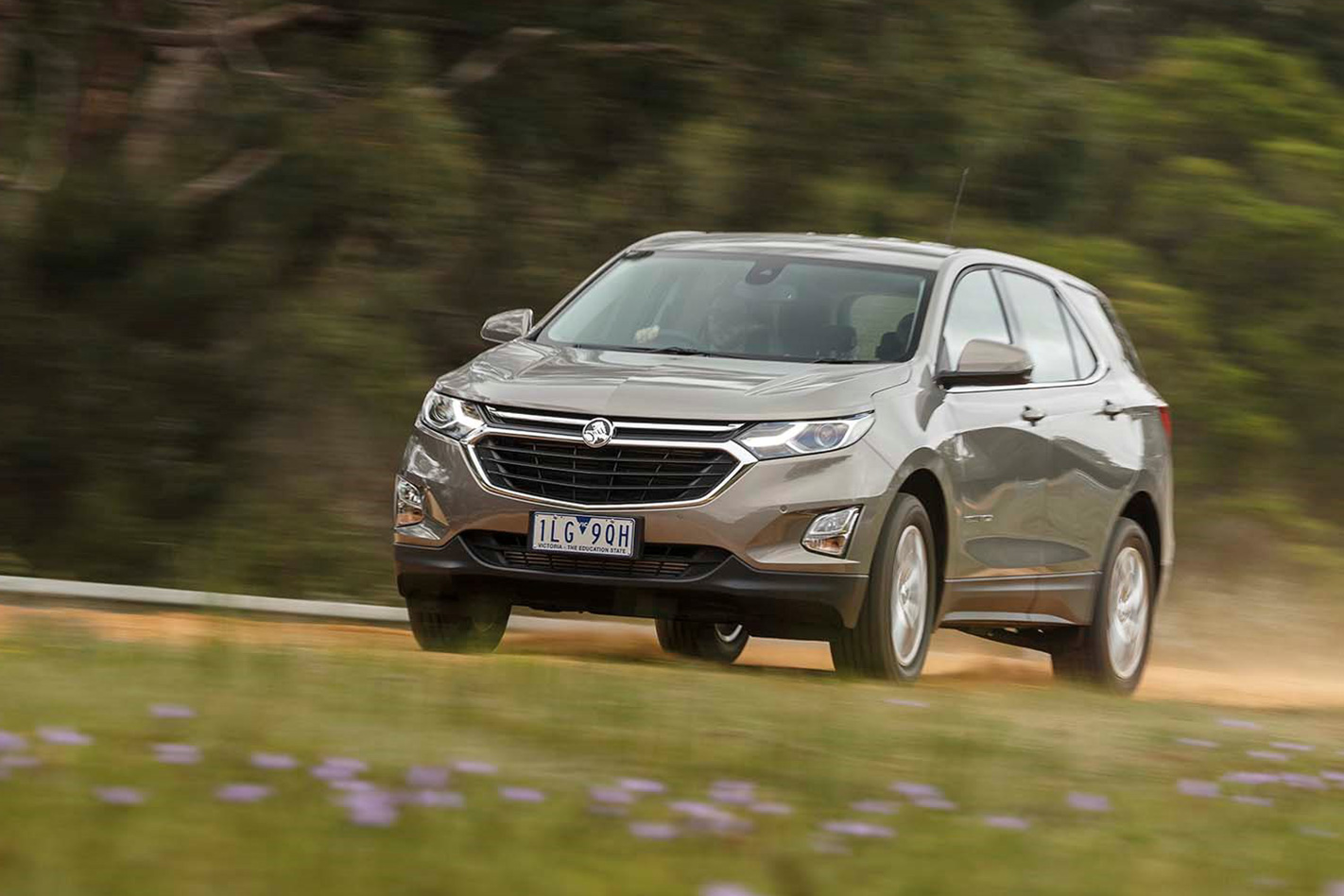
Holden’s financial statement also shows the Takata recall – the brand recently announced it would need to add 330,000 cars to the millions already caught up in the airbag scandal – is estimated to cost $53 million, which it said it would pass back on to the GM subsidiaries that built the vehicles.
Holden’s higher profit – well up on the $125.5 million it earned in 2016 – came on the back of $1.86 billion in revenue for the brand’s 90,306 sales, but down on the $2.33 billion it reaped the previous year. It paid $22 million in income tax, the documents reveal.
Ford, meanwhile, says it earned $3.52 billion in revenue off 78,161 sales after bouncing back from a $24 million loss posted in 2016. It paid no tax, the documents reveal, instead calling in losses from previous years to offset its taxable income.
Ford said 2017’s positive result showed the company was in line with its plans for “transforming and growing our Australian business”.
“Our 2017 financials reflect a significant growth in our core business as we move towards sustainable profitability,” it said in a statement. “This is tempered by ongoing decommissioning costs. Ford continues to focus on refreshing our product line-up to offer more innovative products for consumers and to drive profitable growth.”
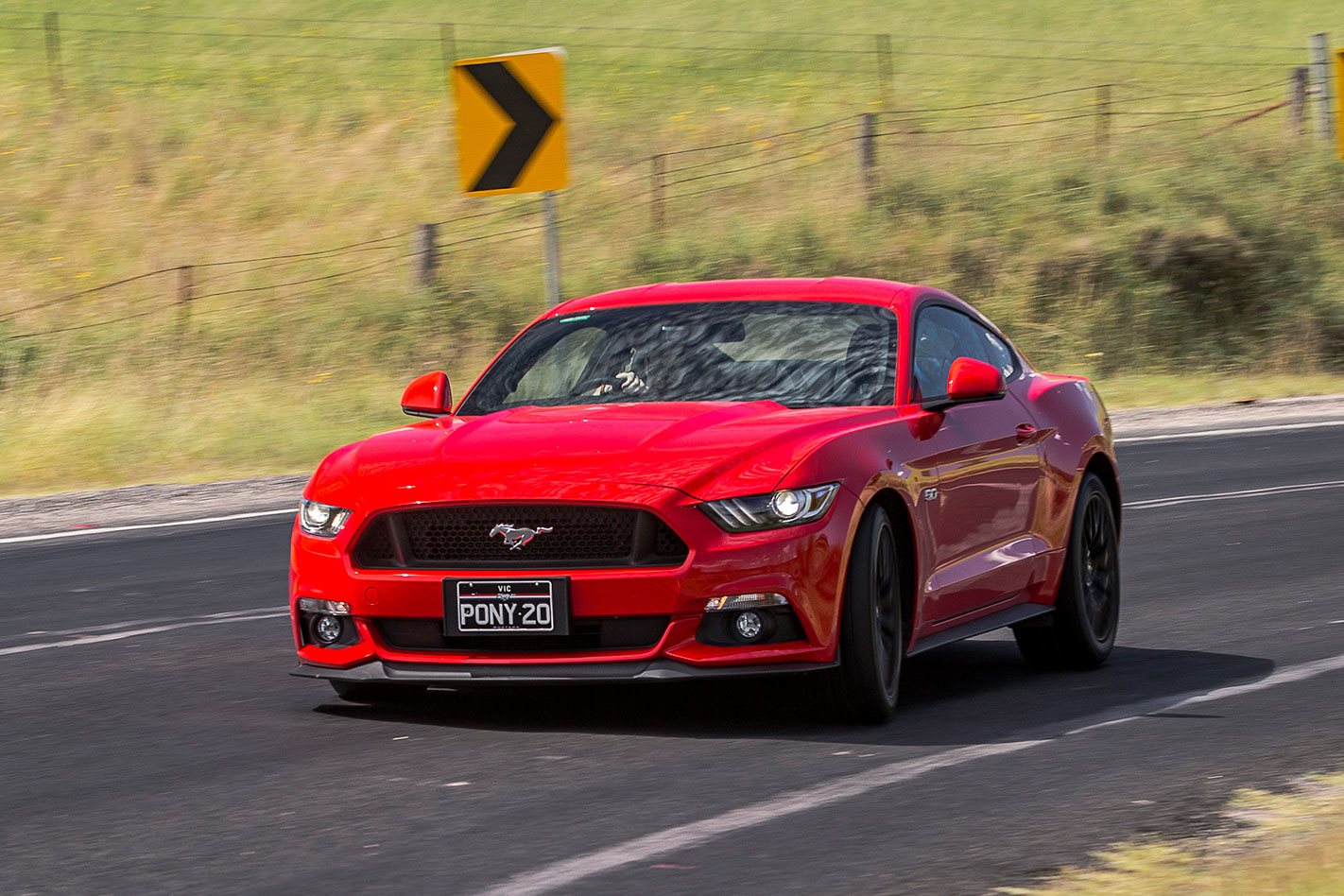
Both Ford and Holden still maintain research and development hubs in Australia. Holden said it had invested $70.7 million on its new-product efforts in 2017, while Ford allocated a $471.5 million cost to its Australian division.
Both Ford and Holden’s 2017 income included contributions from the public purse. Holden gained $36.6 million from the Federal Government’s Automotive Transformation Scheme, while $1.6 million. Holden also made $35.6 million from the sale of its property, plant and equipment after announcing the sale of both its Port Melbourne engine plant site and the Elizabeth factory site.
Aston Martin has revealed the new flagship for its DB11 range – the 2018 Aston Martin DB11 AMR – after speculation was sparked by a seemingly accidental information leak.
With the Aston Martin website having last week published a page featuring only the name ‘DB11 AMR’ and a password entry field, we expected to see the model break after not long. Aston Martin obliged.
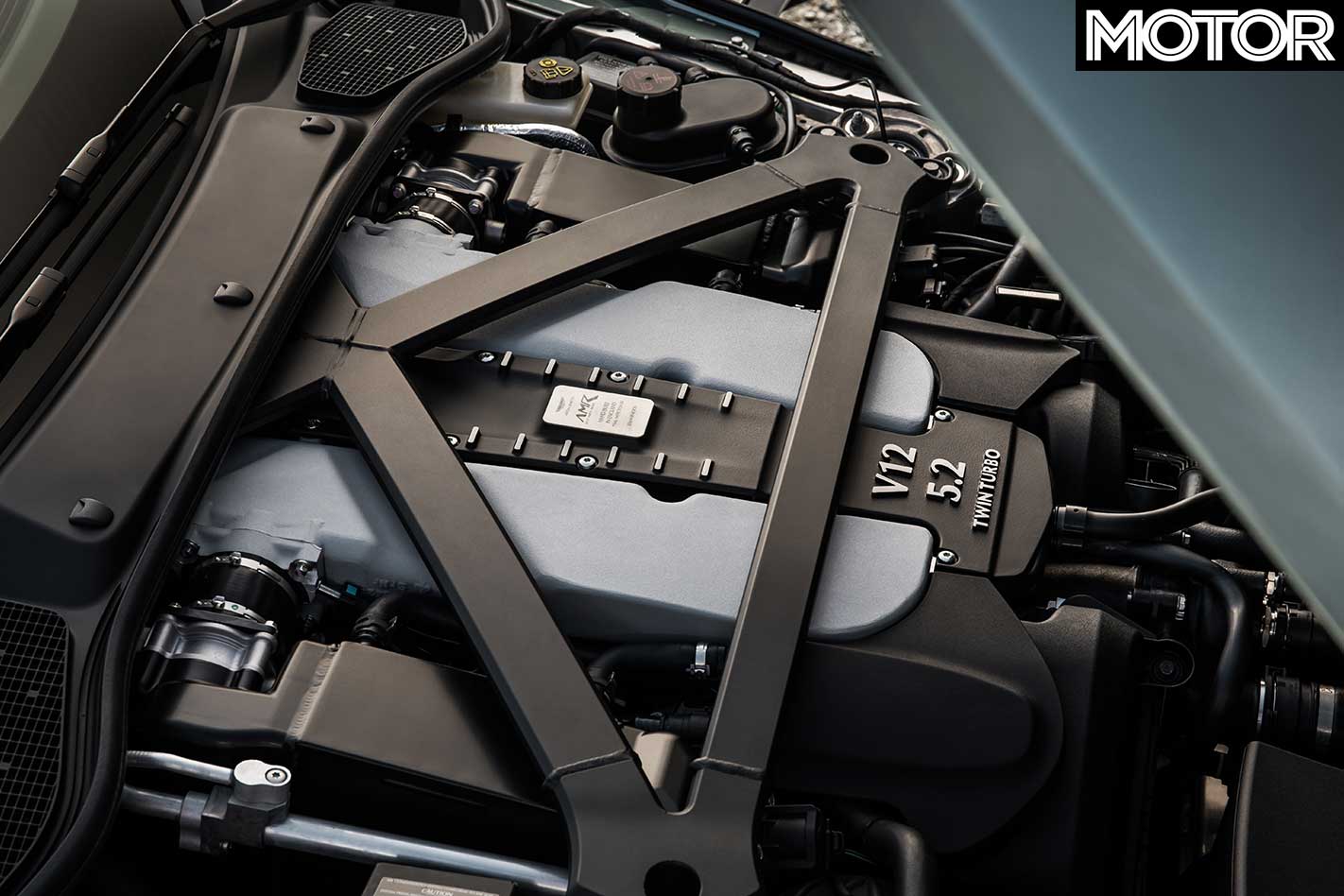
With a tuned version of Aston’s 5.2-litre twin-turbo V12 putting out an extra few kilowatts to bring total power from 447kW to 470kW. Torque remains a maximum of 700Nm. At 1870kg, however, it’s about 100kg heavier than the standard car.
With this, the DB11 AMR can reach 100km/h in 3.7 seconds from a standstill, shaving two tenths off the time made by the standard V12. Its 334km/h top speed also makes it the fastest model of Aston’s current series production cars.
Led by Aston’s head engineer and former Lotus chassis guru Matt Becker, the Aston Martin dynamics team has tuned the DB11’s chassis and handling characteristics for the AMR to be shaper and deliver a “greater sense of connection without harming the supple ride.”
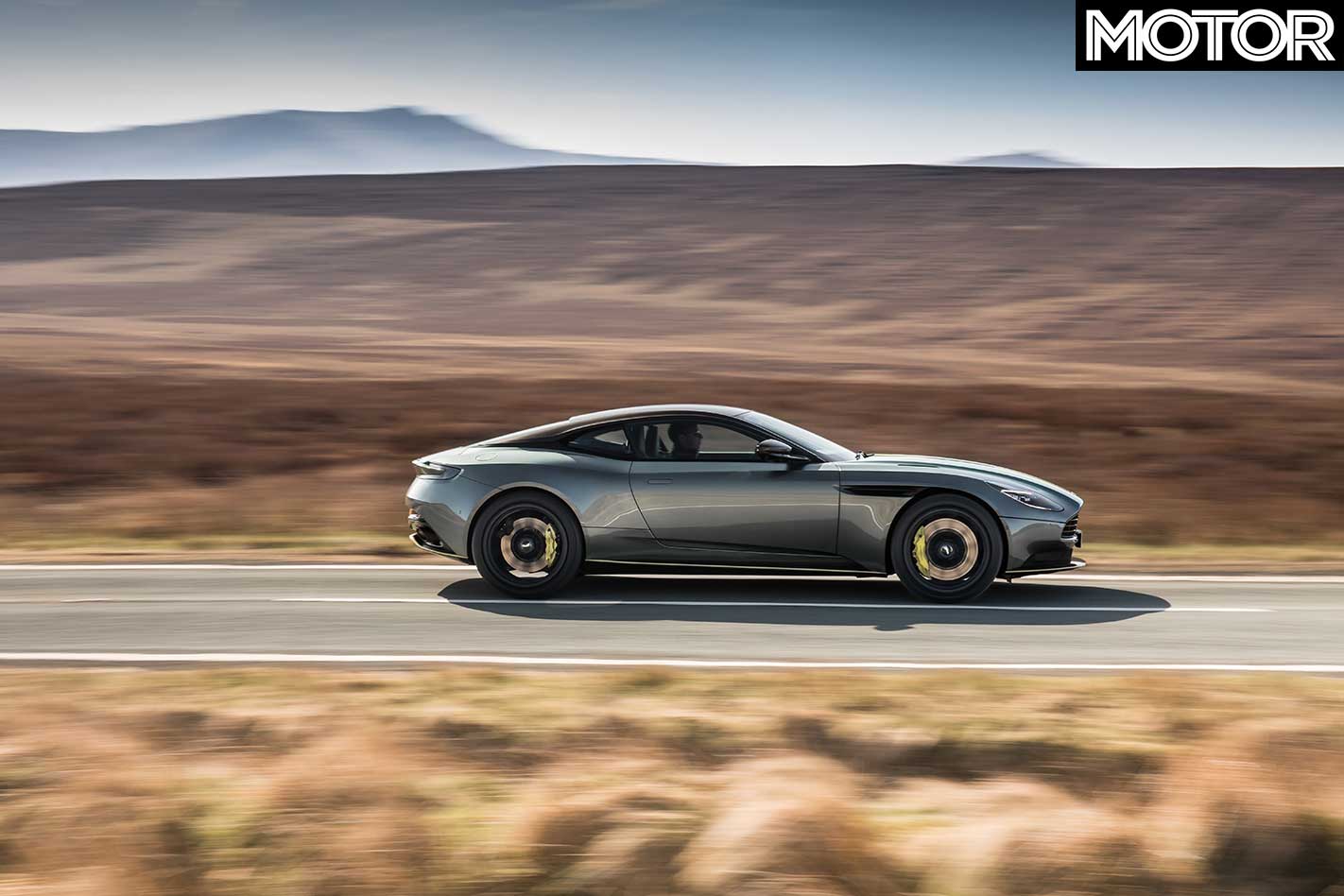
Aston Martin CEO Andy Palmer says the AMR came about as there was a clear opportunity for the V12 to “reveal more of its sporting potential.”
“By applying a suite of carefully considered performance and styling enhancements the DB11 AMR is both faster – 208mph! – and more precise,” Palmer says.
“It’s a combination that engages and cossets in equal measure to create a dynamic and seductive new flagship for the DB11 range, while consolidating the existing V12-powered DB11s as future collectibles.”
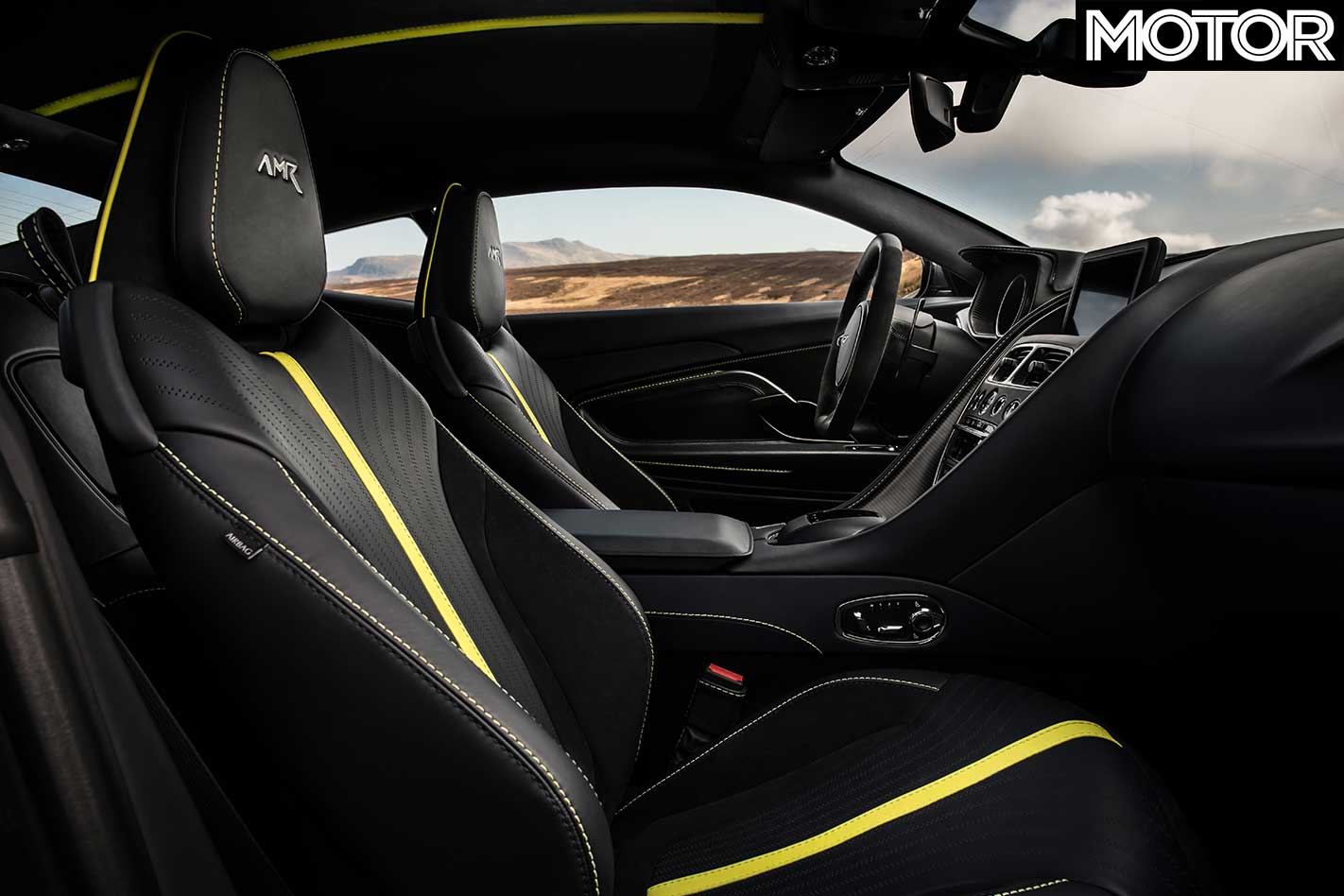
The AMR variant is visually different through its exposed carbon fibre, gloss black detailing, and of course optional ‘Stirling Green and lime’ AMR colour accents.
Audibly, the AMR is more aggressive thanks to a tweak to the exhaust note when sport mode is active.
Aston says the DB11 AMR will cost from $428,000 before on-road costs locally, with deliveries beginning very soon – during Q2 2018.
THE NORTH American International Auto Show in Detroit has lost yet another key participant, with Audi announcing it has become the latest carmaker to pull out of the event.
Audi follows fellow Germans BMW and Mercedes-Benz as 2019 Detroit motor show no-shows, along with a host of other carmakers that have pulled out in recent years including Mazda, Mini, Volvo, Porsche, Mitsubishi, Jaguar and Land Rover.
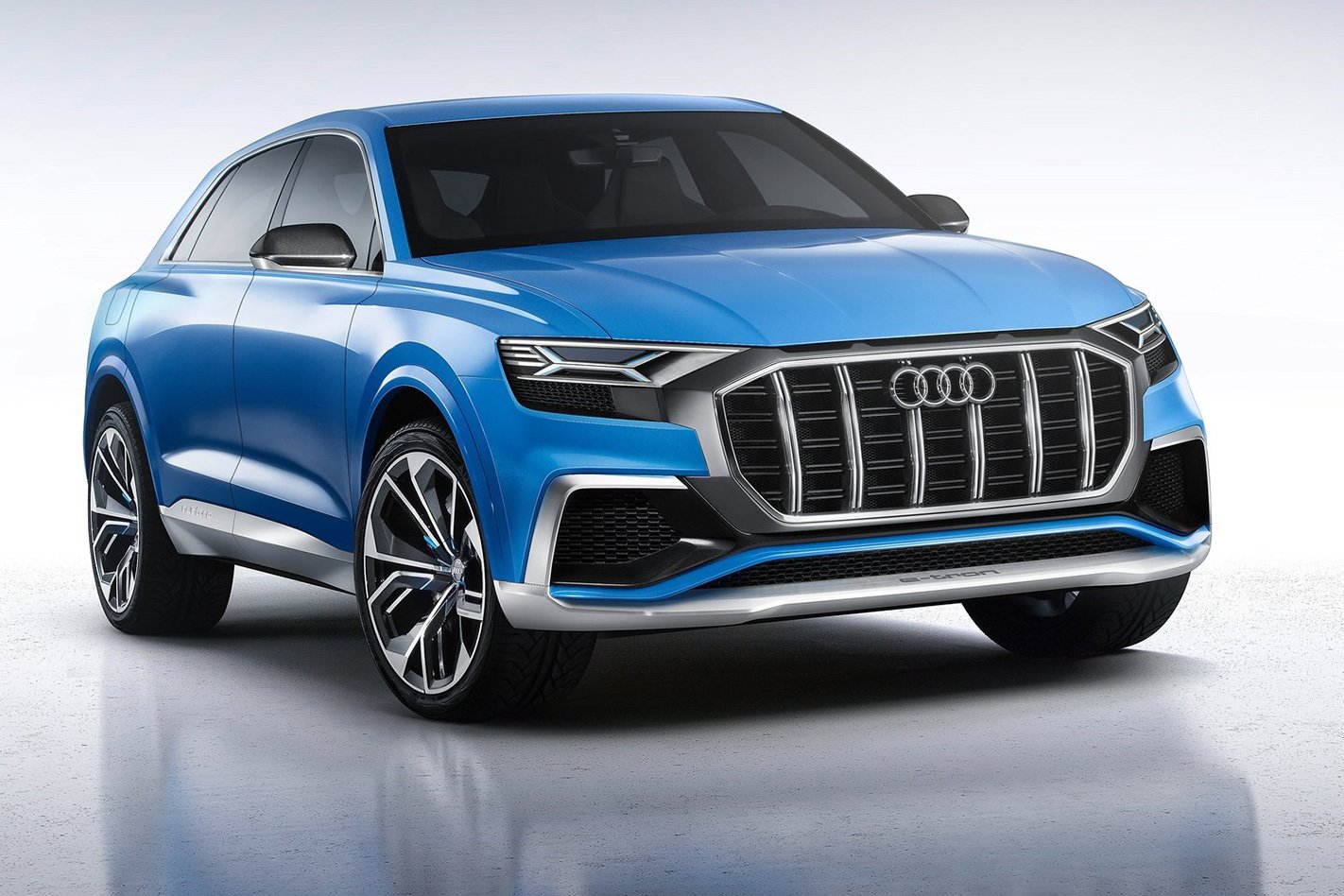
Audi, which has used Detroit for some big reveals including the 2018 SQ5 and the Q8 Concept, was vague about its reasons for the withdrawal.
“For 2019, we have decided that we will not participate in NAIAS. We will continue to evaluate auto shows on a case-by-case basis relative to the timing of our product introductions and the value the show brings from a media and consumer perspective,” it said in a statement.
Audi isn’t ditching the rest of the US motor show circuit though, confirming it will continue to attend the Los Angeles and New York events – for now.
So what of the future of the Detroit motor show, which is seen as the official kick-start to the motoring year every January?

A reason for braving the Rust-Belt city’s harsh winter was that Detroit always kicked off the motor show calendar with big reveals. However, it has since had to compete with the Consumer Electronics Show in Las Vegas, which is gaining prominence as carmakers continue to develop autonomous systems and electrified powertrains – the Detroit show was actually put back a week this year so as to not clash with CES.
Wheels attended both events in January. While there was plenty of traffic at CES, numbers at Detroit were noticeably down, even with the big-three German luxury brands in attendance.
Different reasons have been cited for the Detroit show’s downturn, including the sub-zero weather and even the decision to rebrand itself as the North American International Auto Show in 1989. But it’s probably more symptomatic of motor shows in general losing their influence as carmakers set their own agendas to tease and reveal models online before the wraps come off them on the show floor.
For its part, the Detroit Auto Dealers Association, which organises the Detroit show, was reported in Automotive News as saying it had plans to revolutionise the event to provide “a global stage that delivers cost-effective opportunities to audiences” that “only Detroit” can offer.
Ford has bolted another two years on to its Express warranty offered on all new vehicles sold from May 1 this year, extending the deal to five years and removing the 100,000km limit, matching key rivals including Honda, Hyundai, Jeep and Mitsubishi.
The increase isn’t quite enough to equal warranty leader Kia, which offers a seven-year plan for all models, MG, which covers its cars with either six or seven year plans, and Holden and Honda which has previously offered seven years on select models.
Ford’s latest deal does cover its commercial range, meaning owners of the resoundingly popular Ranger one-tonne ute and Transit will enjoy the extended warranty as well as passenger vehicle and SUV customers.
The Express New Vehicle Warranty provides road-side assistance, loan car, membership to Ford’s Auto Club, free navigation updates and Service Price Promise fixed-price servicing, as well as a guarantee on manufacturer defects and parts warranty.
Ford’s decision to boost the warranty and include commercials has been prompted partly by Australia’s insatiable demand for dual-cab utes, said Ford Australia president and CEO Graeme Whickman.
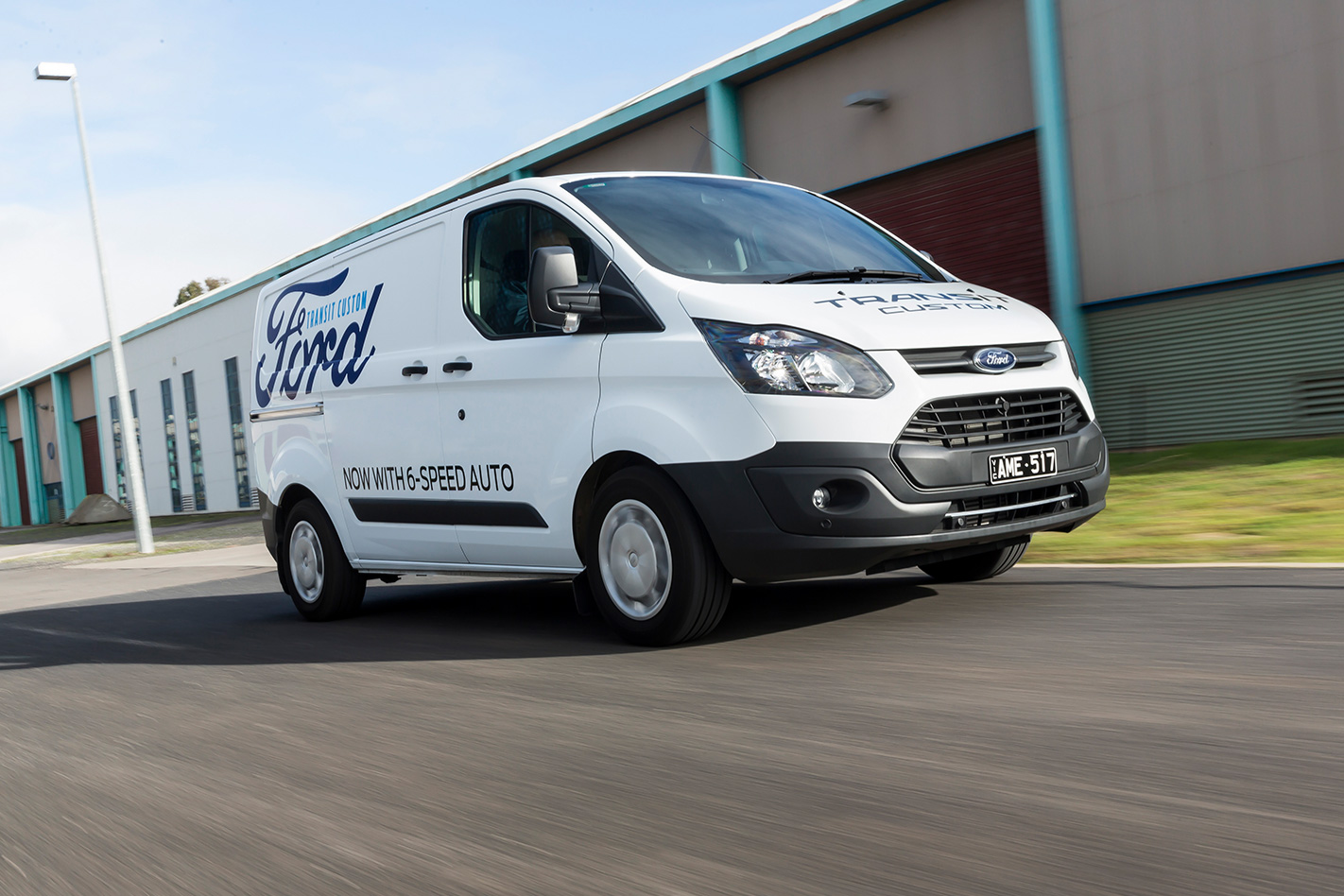
“Our Ranger and Transit owners rely on their vehicles and we want them to know Ford’s got them covered for five years and unlimited kilometres,” he said.
“At five years and unlimited kilometres, Ranger has the class leading standard warranty within the pick-up and cab chassis segment.”
Holden’s Colorado dual-cab ute is offered with a five-year warranty, with select promotions extending that to seven-years at times.
But unlike some of its competitors that introduce extended warranty as a limited deal-sweetener, Whickman said the five-year agreement was here to stay.
“This is not a special offer, it’s what customers have been asking for and it’s what we are delivering today”.
If you were worried the Porsche 991.2 911 GT3 RS wasn’t enough of a track car already, the new 911 GT3 R is here to fix that.
With a top end output of over 404kW when unrestricted, it beats its RS sibling in wattage by 21kW while also being more focused in just about every other aspect.
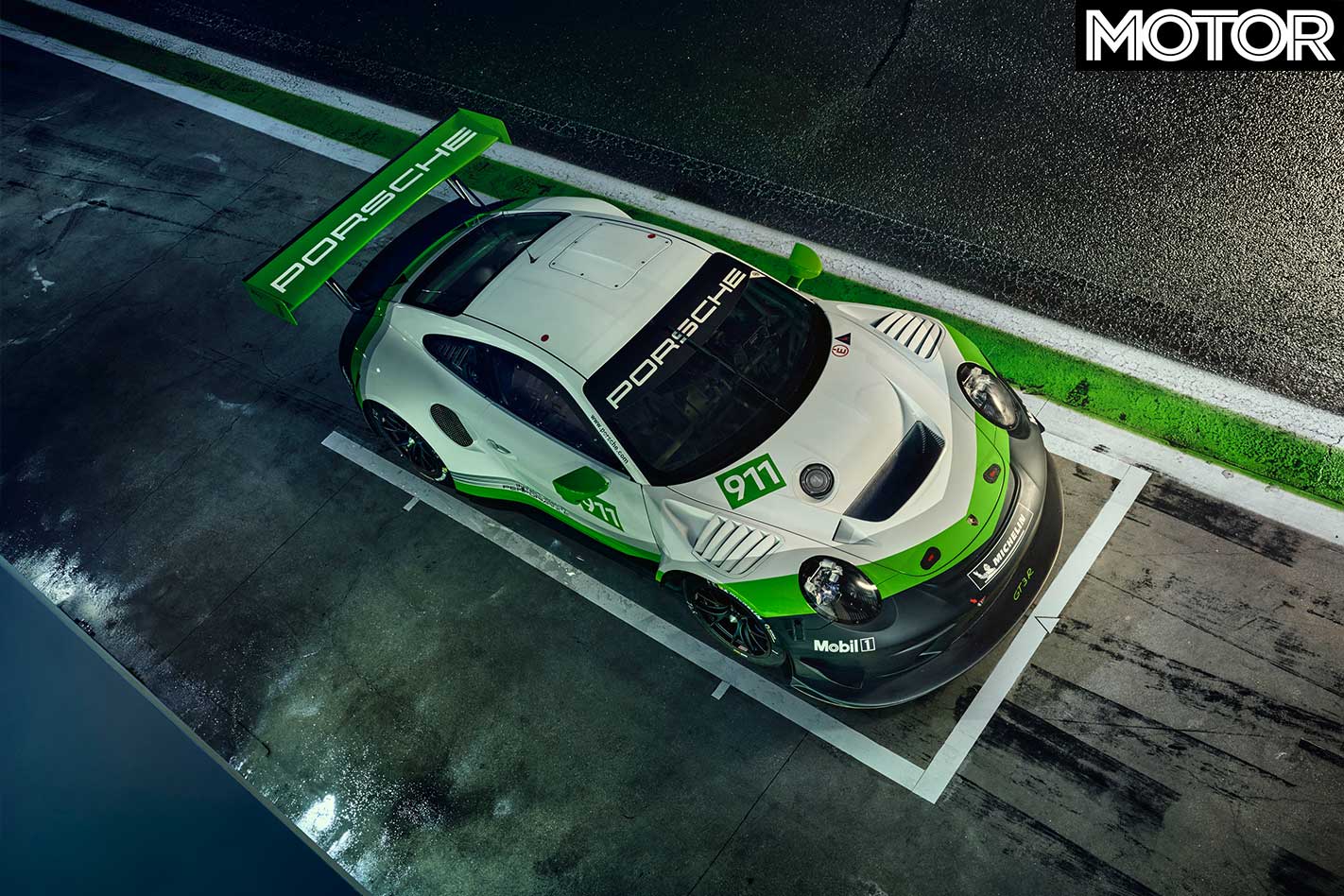
Actual power and weight of the car will vary depending on the BoP (balance of performance) restrictions, but an example of restricted weight for the previous GT3 R was 1250kg in the FIA GT World Cup race in Macau, 2017.
In addition, engine power is usually pared back to keep its power-to-weight ratio in line with other cars.
The GT3 R is able to be so much lighter than the road car (the current GT3 RS weighs 1430kg) through extensive use of an aluminium-steel composite, carbon fibre-reinforced plastic, and polycarbonate for the windows.
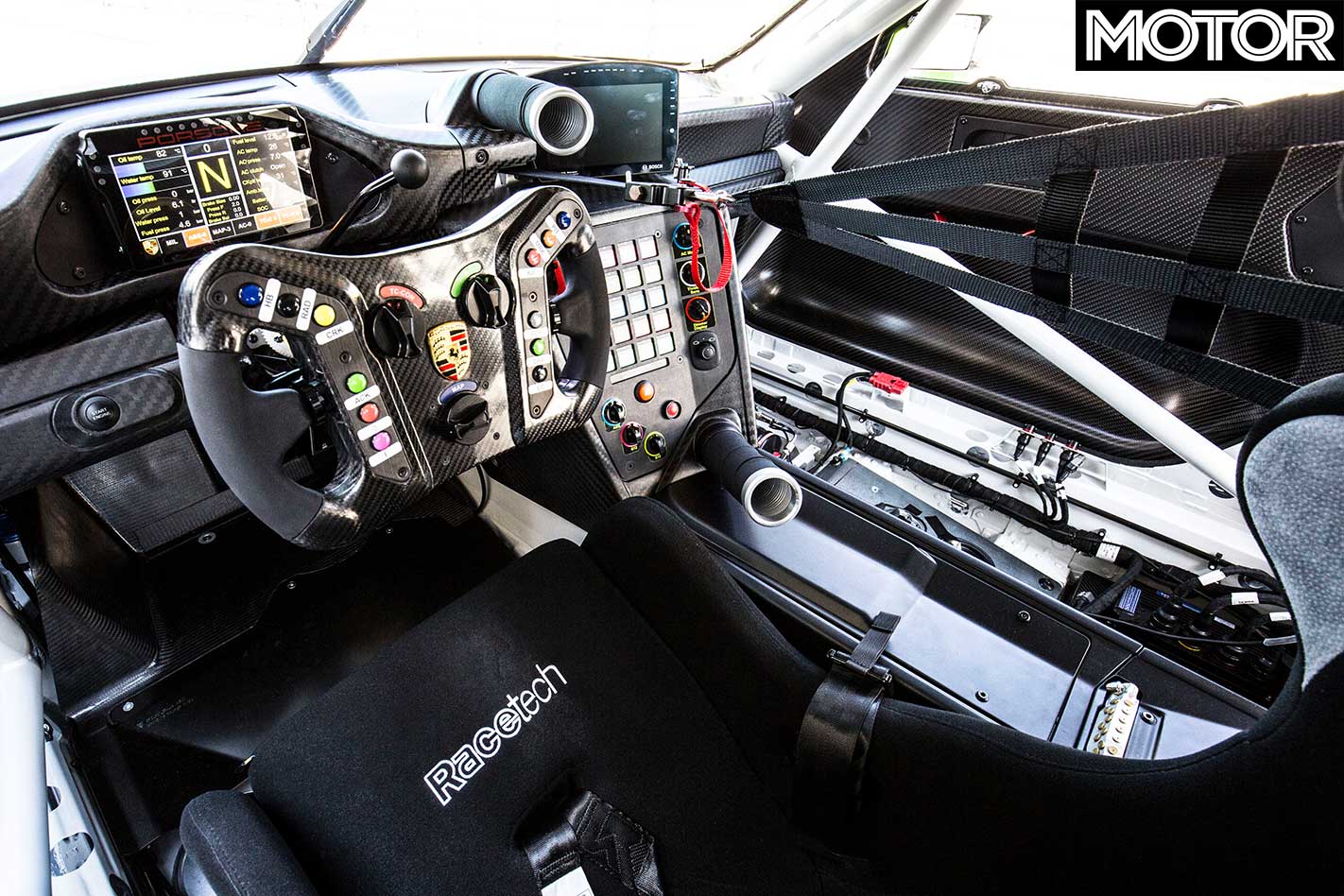
A dry-sump 4.0-litre boxer six is found, as you’d expect, at the GT3 R’s rear, hooked up to a 6-speed sequential ‘box.
The powerplant is closely related to the version used in the 911 GT3 RS, Porsche says, as is the R’s aerodynamic setup.
While the wing on the road car is hardly subtle, the race car’s 1.9-metre-wide adjustable wing tops it for spectacle.
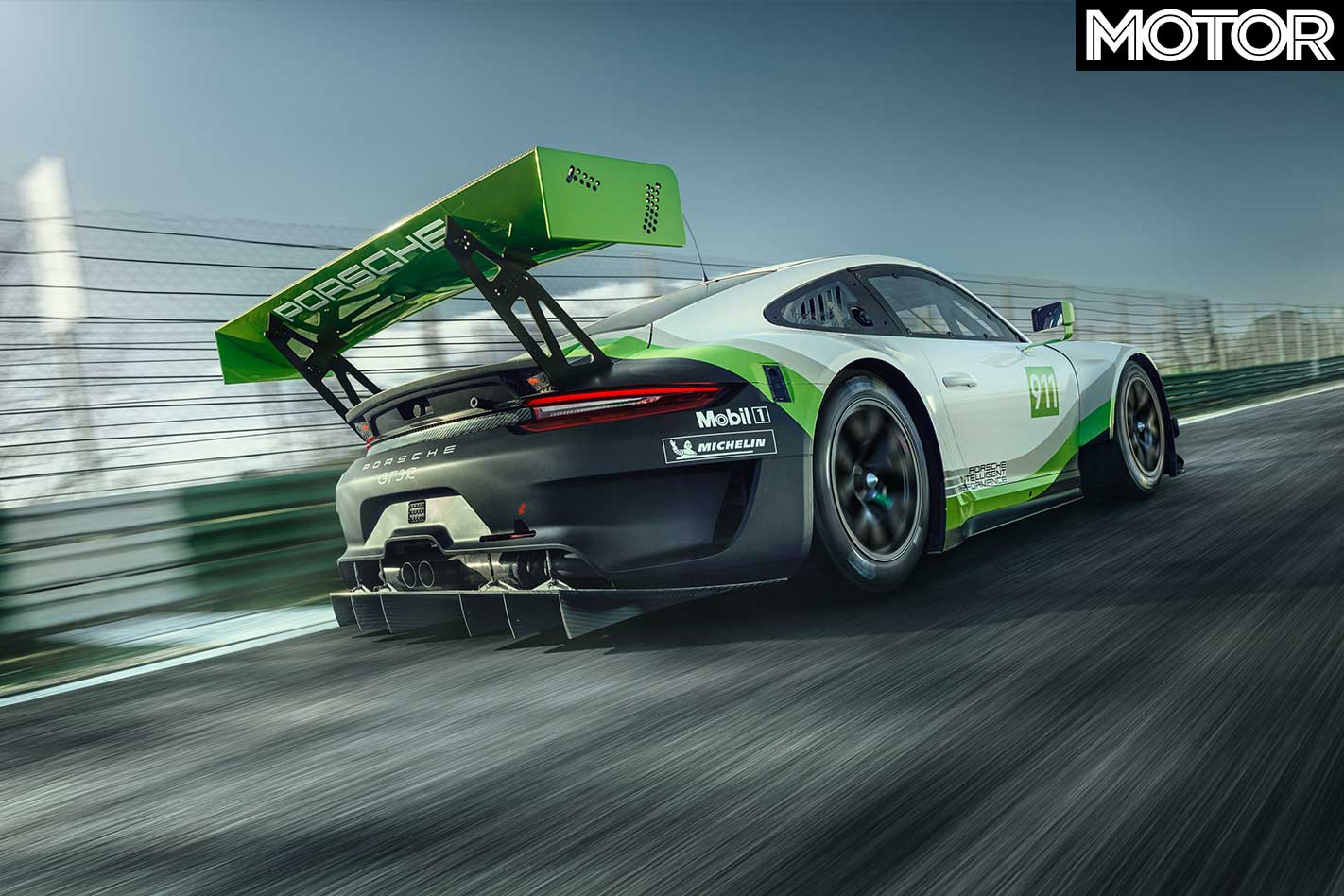
The wing, as with most of the panels and doors, is made from CFRP, and works with the front fairing and splitter to create a balance of downforce.
Porsche says its brakes have also been upgraded, with better control over the ABS system and 6-pistons at the front on 390mm discs, and fours at the rear on 370mm discs.
It has a base price of 459,000 euros before any local taxes, meaning it’ll likely set Aussie buyers back well into over the AUD$1m mark, and putting it in firm contention for the title of most expensive GT3 racer available.
IF THERE’S one car capable of keeping Honda’s front-drive Civic Type R honest in terms of sheer thrill factor for 50 big ones, it’s Subaru’s entry-level WRX STI. Yep, in 2018 you’ll need to spend $51,190 (not including on-roads) to slot yourself into even the base STI, yet what that money buys is a glorious slice of yesteryear.
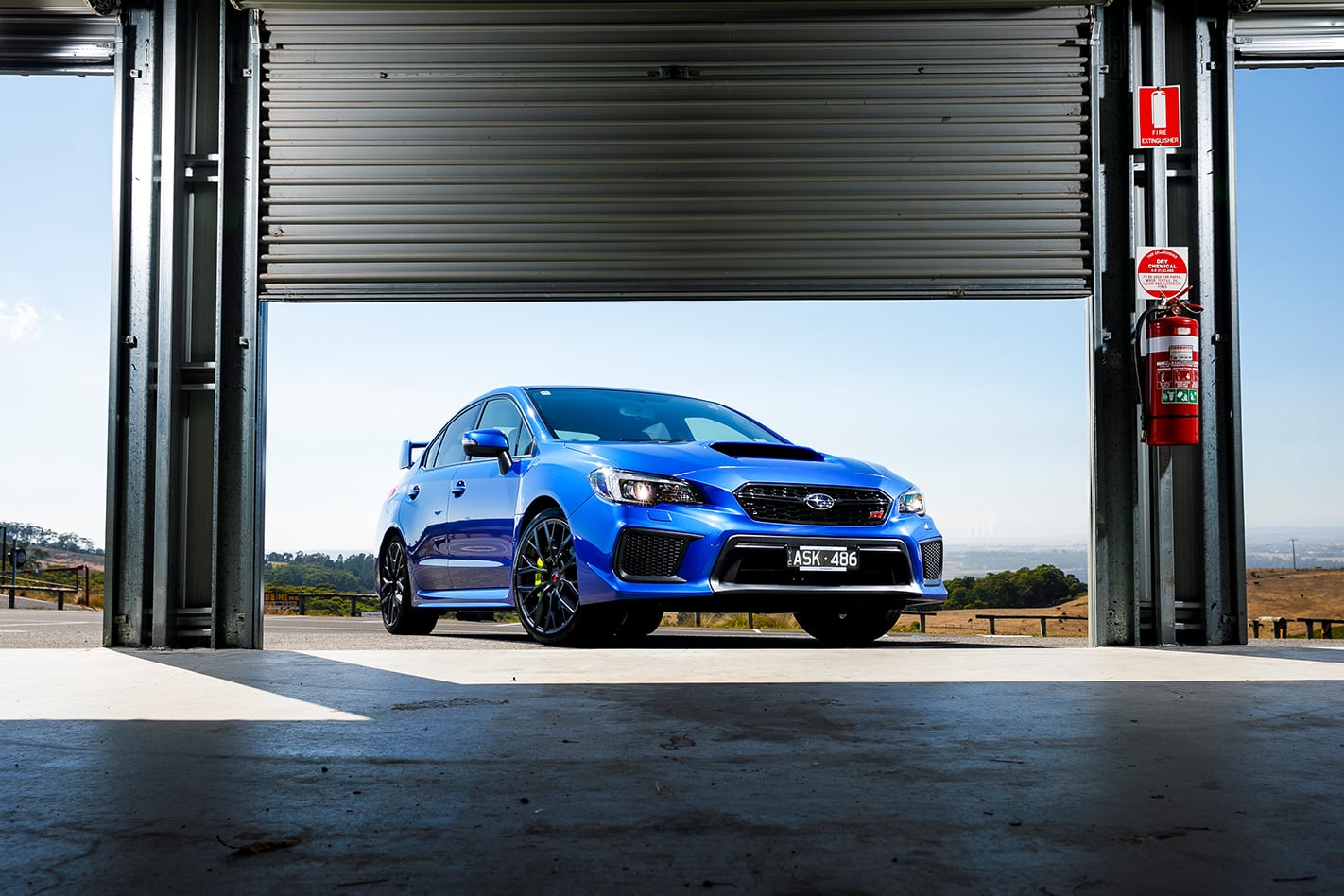
And the sort of car Subaru’s fan base probably expects when buying a WRX of any kind. Laughable steering rack rattle aside, the STI represents a clear step up from the base Rex in a bunch of key areas.
Firstly, its gearchange. The sloppy and vague piece of tat that swaps ratios in the boggo Subaru is transformed into a tighter, sweeter and delightfully positive instrument in the STI, working an engine that is both fruitier in its flat-four flavour and stronger in its mid-range. And even thirstier, making this the heaviest drinker on test.
The STI’s dynamic flavour is in keeping with its ‘back-in-the-90s’ fuel thirst. It might be more agricultural in some ways than a standard WRX, but this adds layers to its personality. And let’s be honest, who buys an STI and expects refinement?
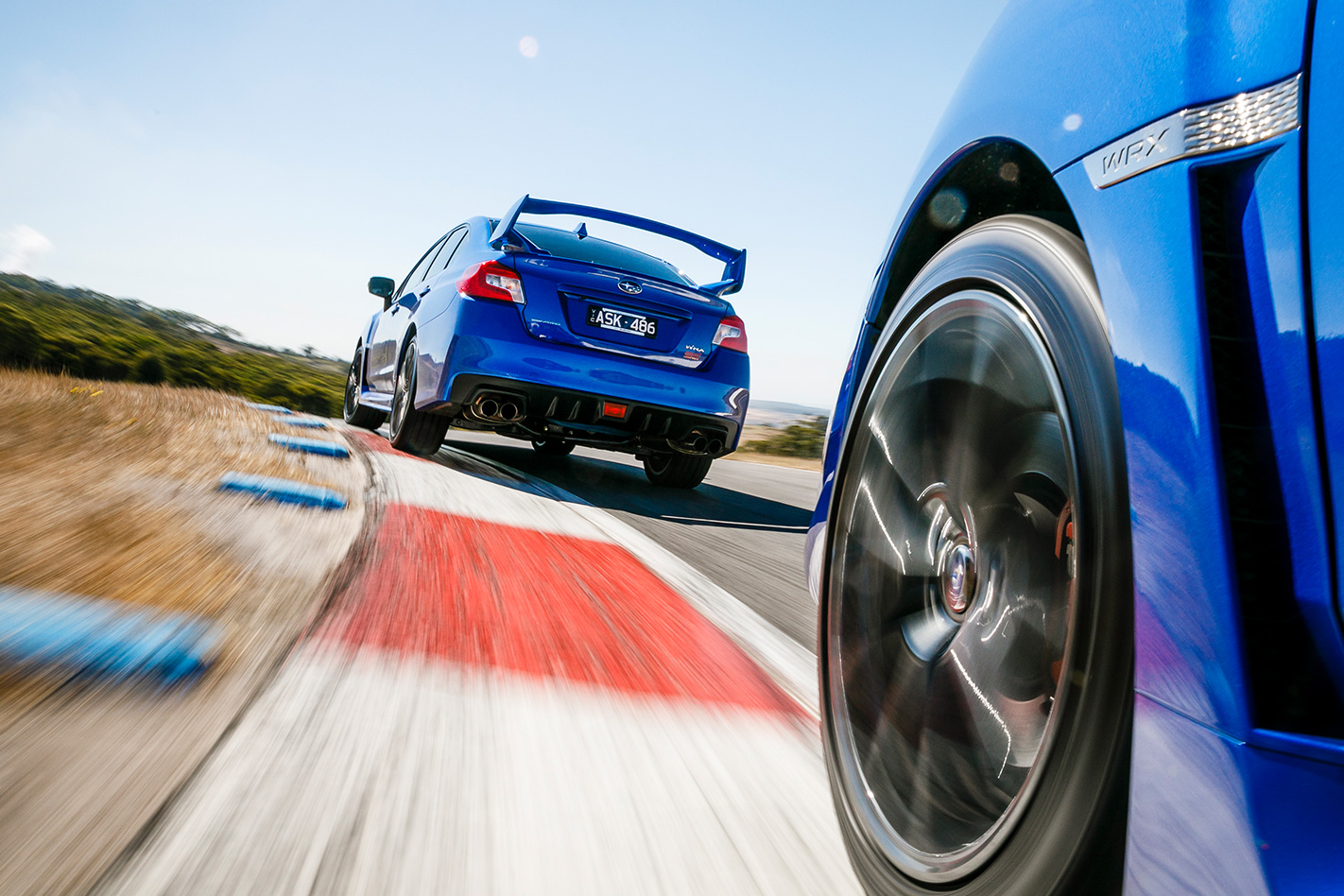
With its adjustable drive split permanently dialled to the rear, the STI is a playful and hugely capable performance car – one not entirely suited to a track like Haunted Hills, but as Renato pointed out, “if you had a faster course like Phillip Island, you would see a massive difference in lap time. Still, it’s an absolute joy to drive, certainly over the crests where other cars are struggling for grip; it also has a huge amount of mid-range torque.”
Out in the real world, the STI is one of few cars here whose overall limits far exceed what you can extract without becoming intimate with Aussie scenery. Covering ground fast in the STI is such a thrilling experience because it involves moderating its abundance of grunt, certainly in relation to the amount of grip available. And the harder you drive it, the better it gets.
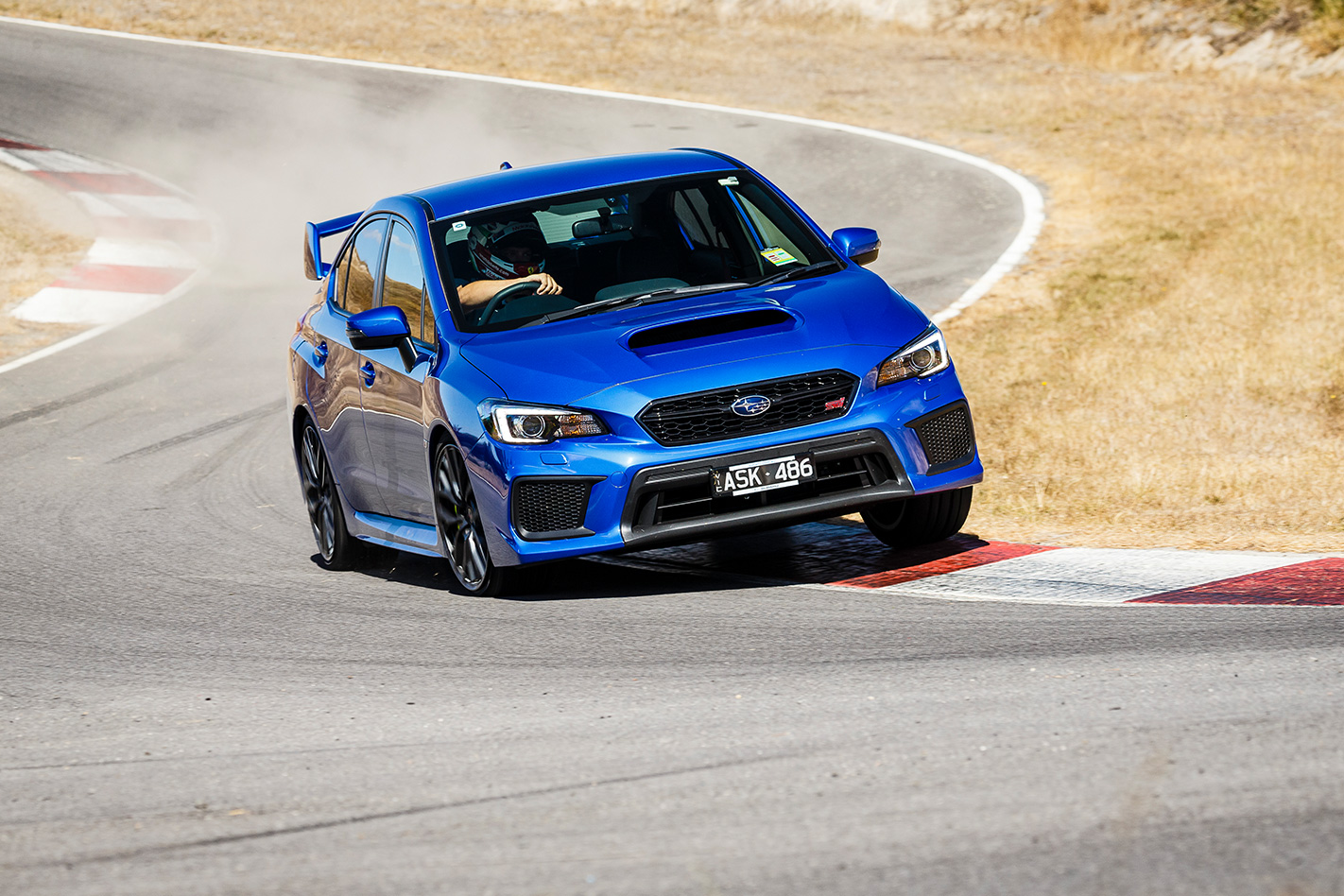
When you’re absolutely spanking the STI’s hindquarters, its over-light steering suddenly becomes animated as its drive system pumps power through the front axles, and if you’re brave enough to disengage ESC (beyond the mid-level Trac Mode setting), the STI will even serve up delightful oversteer drifts if you stomp the right pedal early enough when exiting a corner.
The STI’s advantages over the base Rex don’t stop there. A lower seating position with excellent in-house buckets creates a far superior work space, and enough detail bling to add a touch of sparkle to Subaru’s robust but workmanlike interior design elevate the STI closer to the hot-hatch (or sedan) barometer in 2018.
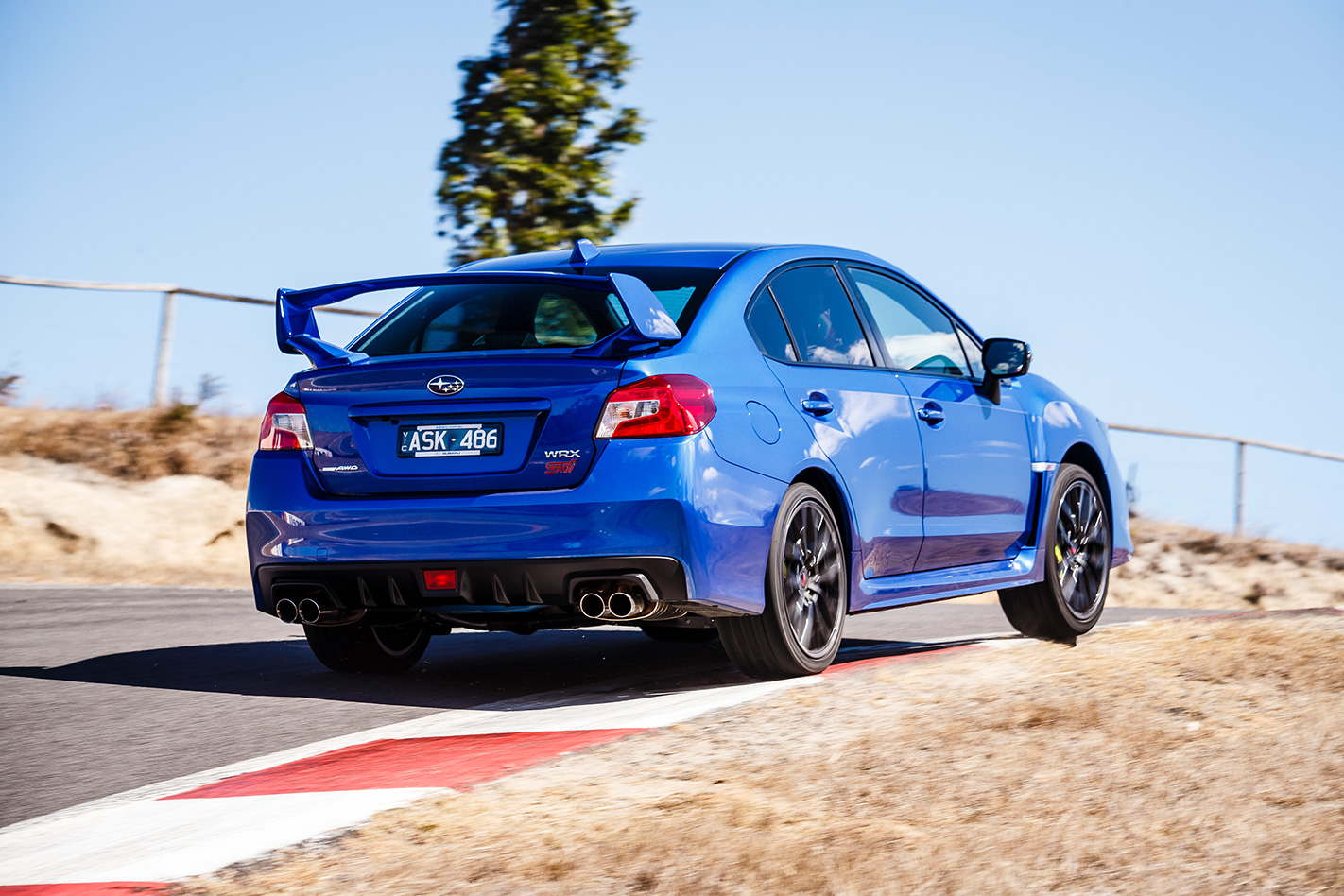
It looks better too, with 245/35R19s on retro-chic rims that fill the guards, making its Impreza sedan core look less long-nosed, high-roofed and frumpy. And it has much stronger brakes, as well as superior damping when loaded with mates (though both Subarus are a long way from delivering a level ride).
Yet there’s no escaping this is an old car trying desperately to keep up with the cool kids. And the STI makes such a racket that even its beefy Harman Kardon stereo struggles to be heard.
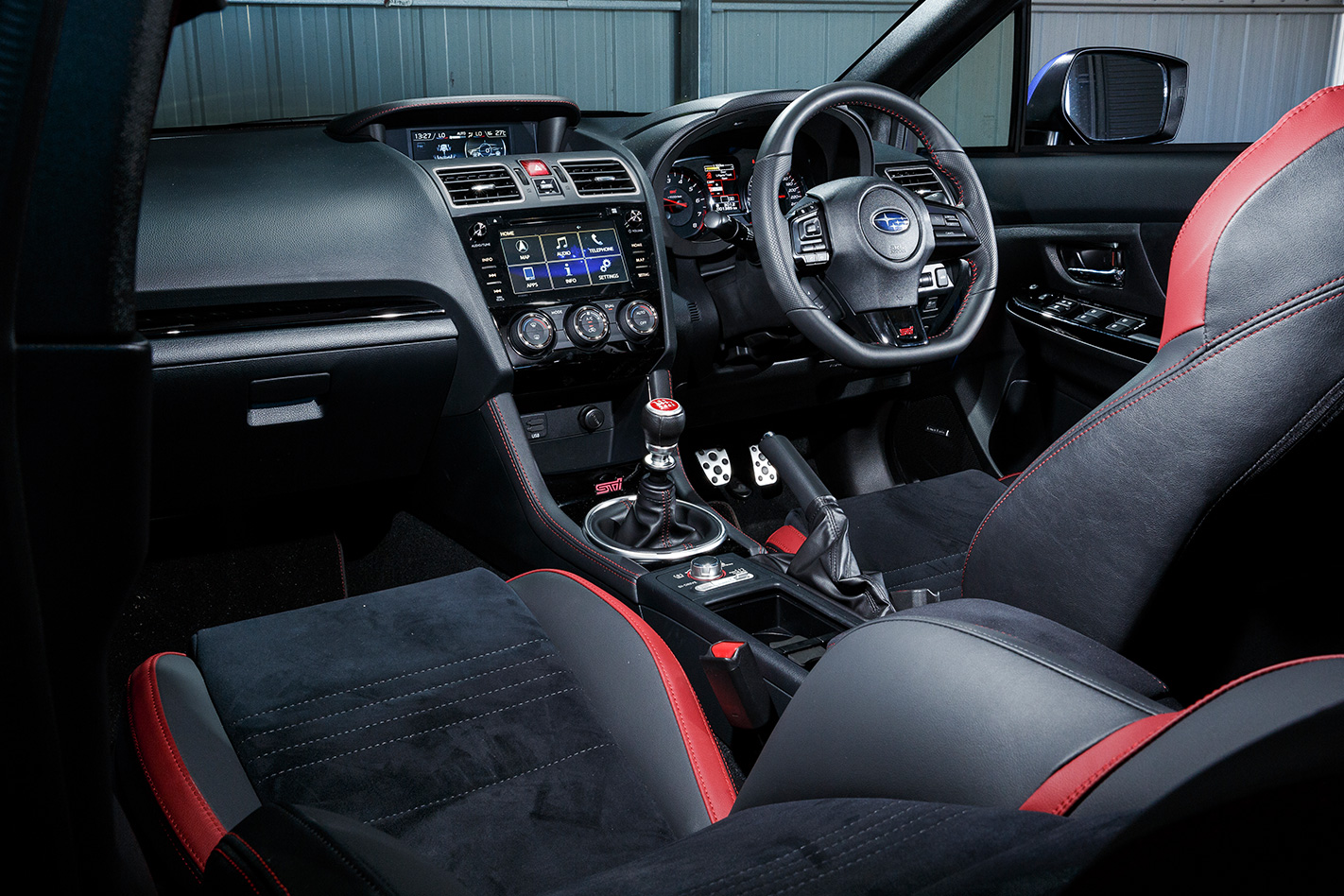
Back in 1989 when the WRX template (and the STI’s EJ-series engine) was born, Byron was lining up at Ticketek anxiously waiting to buy Roxette tickets. Almost 30 years later, wearing rally-inspired clothes hardly seems Dressed for Success. Yet there’s still lots to like about Subaru’s rough-and-ready AWD sedan.
In a world of young supermodels, the STI is Henry Rollins in new trainers. Yet when the cards are on the table, it plays a fast and engaging game.
Subaru WRX STI LAP TIME: 1:05.2sec SCORE: 7/10
Engine: 2457cc flat 4, dohc, 16v, turbo Power: 221kW @ 6000rpm Torque: 407Nm @ 4000rpm Transmission: 6-speed manual Weight: 1548kg Tyres: Yokohama Advan Sport V105 245/35R19 89W Fuel consumption: 18.2L/100km (tested) Power-to-weight: 143kW per tonne 0-100km/h: 5.2sec (claimed) Price: $51,190
Hot Hatch Megatest Contenders
12th, Score 6/10: Mini Cooper S JCW
11th, Score 6.5/10: BMW 125i
10th, Score 6.5/10: Subaru WRX Premium
9th, Score 7/10: Subaru WRX STI
8th, Score 7/10: Skoda Octavia RS245
7th, Score: 7.5/10: Ford Focus ST
6th, Score: 7.5/10: Renault Clio RS220 Trophy
5th, Score: 8/10: Volkswagen Golf GTI Original
4th, Score: 8.5/10: Volkswagen Golf R Grid
3rd, Score: 8.5/10: Peugeot 308 GTi 270
2nd, Score: 9/10: Honda Civic Type R
Winner, Score: 9/10: Hyundai i30 N
