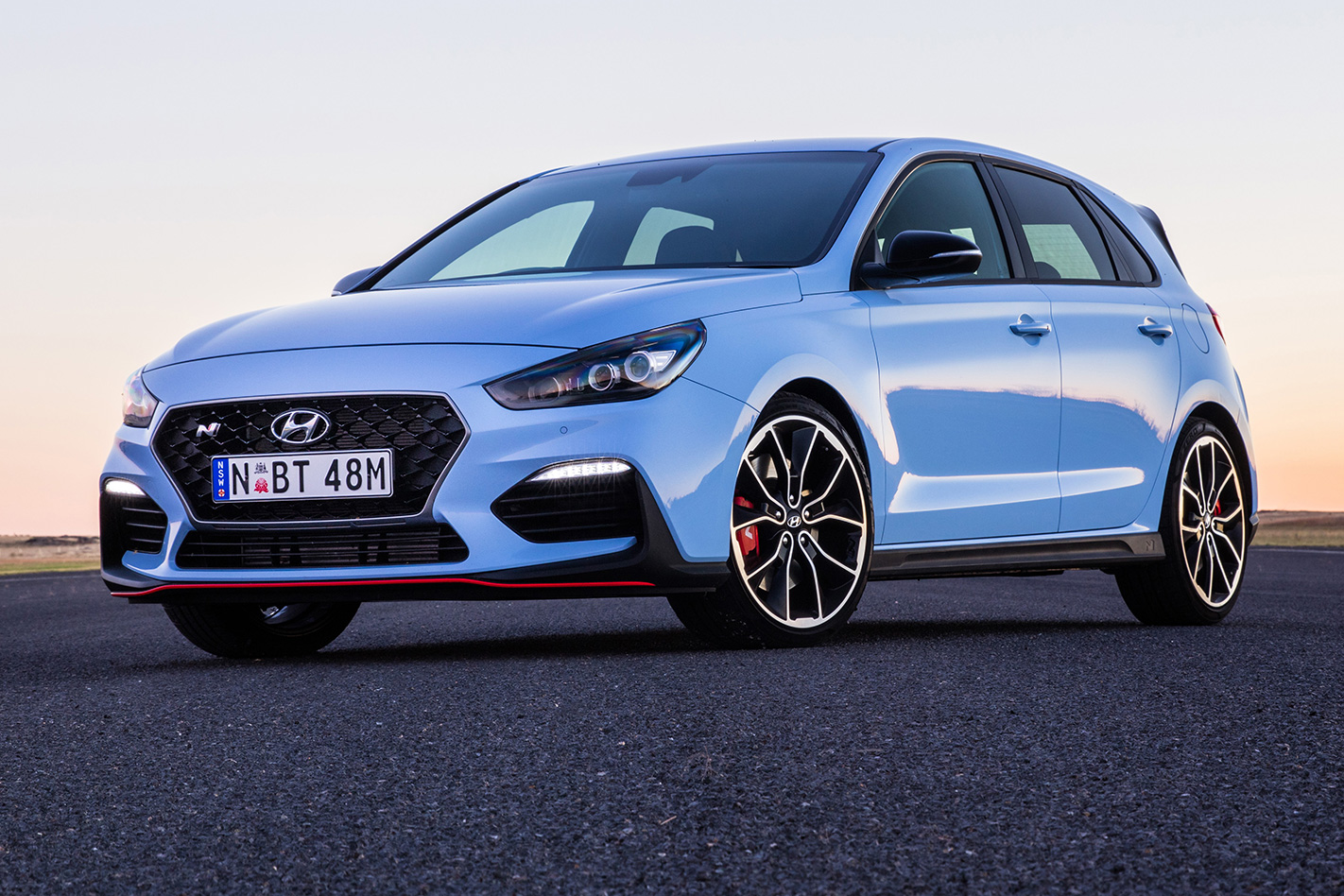
KOREA’S automotive industry has come of age, and no other car illustrates this so poignantly as the properly world-class i30 N.
WHAT IS IT?
This is the first proper attempt by Hyundai at a bona-fide hot hatch, and the first model to go on sale wearing the brand’s newly-minted ‘N’ performance badge.
WHY ARE WE TESTING IT?
Hyundai claims the i30 N is the real deal – a hot hatch that doesn’t just keep up with the Joneses, but blasts ahead of them. We need to validate that, naturally. At $39,990, it’s also one of the most affordable hot hatches on the market, but its spec sheet is full of numbers that compete with cars that are priced 10 grand above. Is the i30 N really the performance bargain that it makes out to be?
Volkswagen Golf GTI, Ford Focus ST, Subaru WRX, Peugeot 308 GTi, Honda Civic Type R
THE WHEELS VERDICT
PLUS: Superb traction for a front-driver; entertaining exhaust; adaptability; power and torque; sharp handling MINUS: Some torque steer remains; no automatic for now; sedate styling
SPOILER alert: The i30 N is bloody good. Shockingly good, when you consider that this is Hyundai’s first proper tilt at making a bona-fide hot hatch.
Beginner’s luck? Hardly. More so, the i30 N is the result of a holistic approach to crafting a performance car, rather than just turning up the wick on an existing grocery-getter’s mechanicals. Sure, it’s i30 sheetmetal that you’re looking at, but there’s so much that’s been changed underneath the skin that the i30 N may as well belong to a different genus altogether.
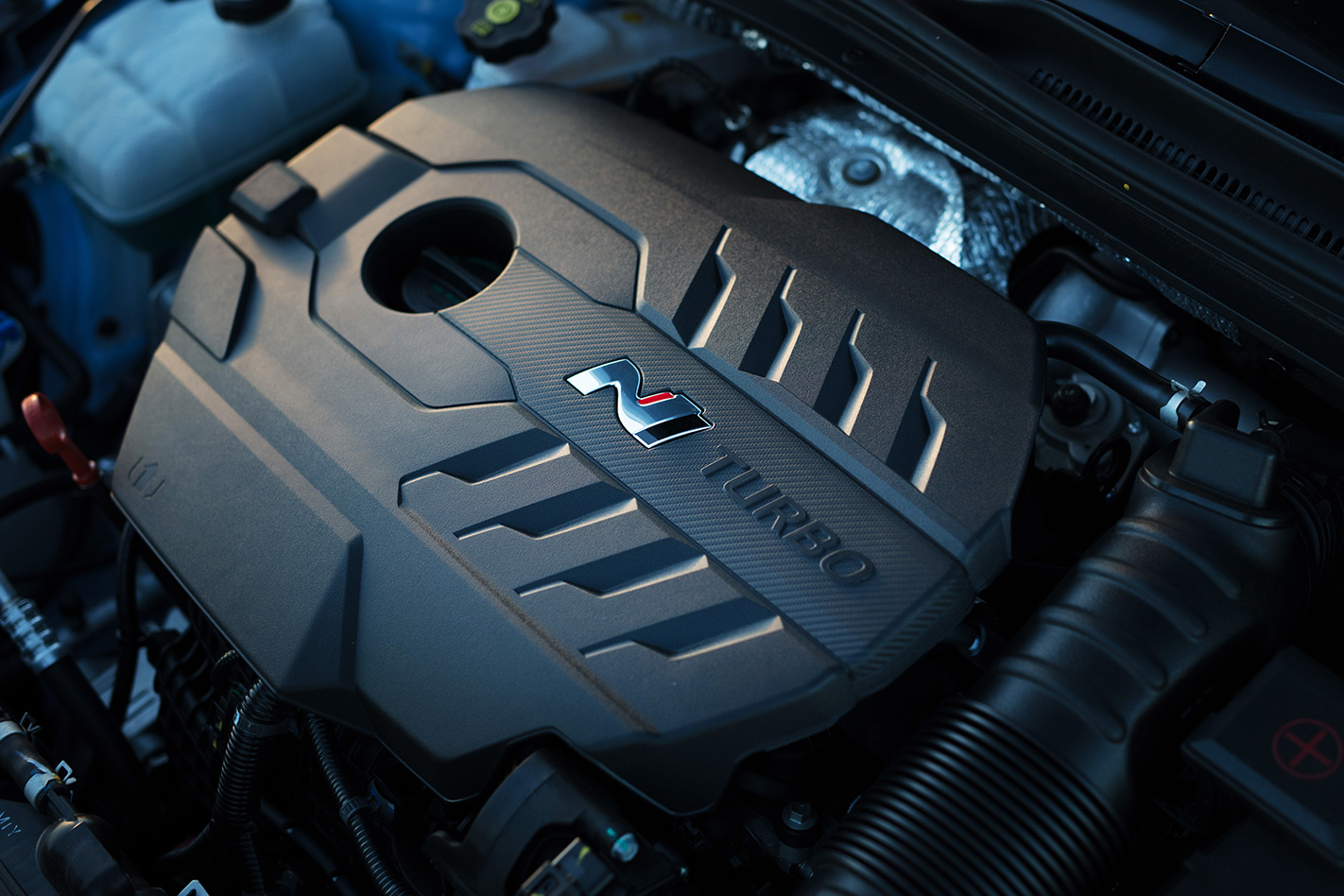
How different is the N’s DNA from a garden-variety i30 SR? Let’s start with that engine. Displacing 2.0 litres, direct-injected and huffing boost from a twin-scroll turbocharger, the i30 N’s engine is the highest-output member of Hyundai’s venerable Theta family of inline-four engines.
It’s matched with a proper mechanical limited-slip differential too, with its locking function electronically controlled. Vital when you’re channelling such hefty outputs to the front wheels exclusively, and infinitely preferable to brake-based ‘virtual LSD’ solutions used in rivals like the Golf GTI.
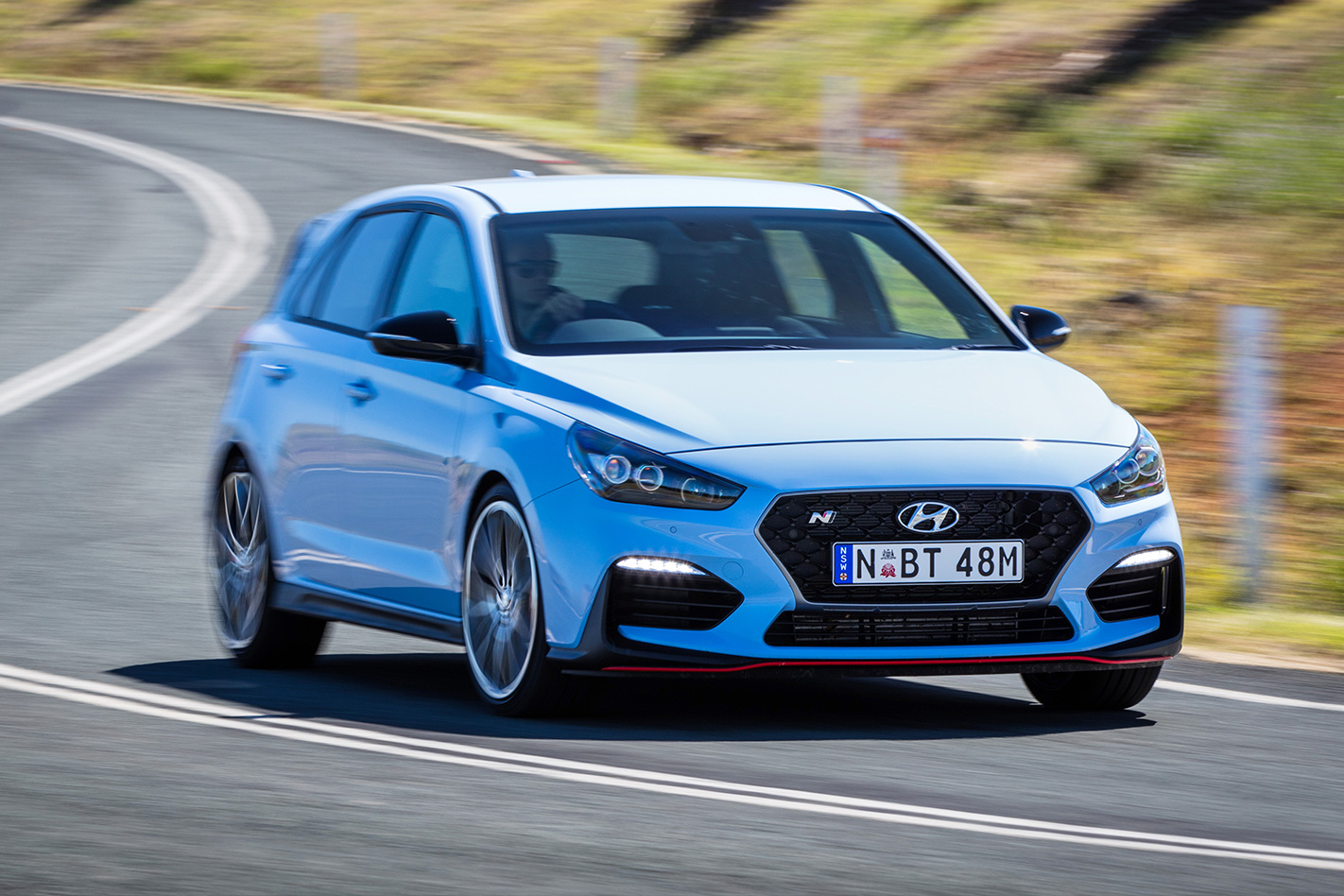
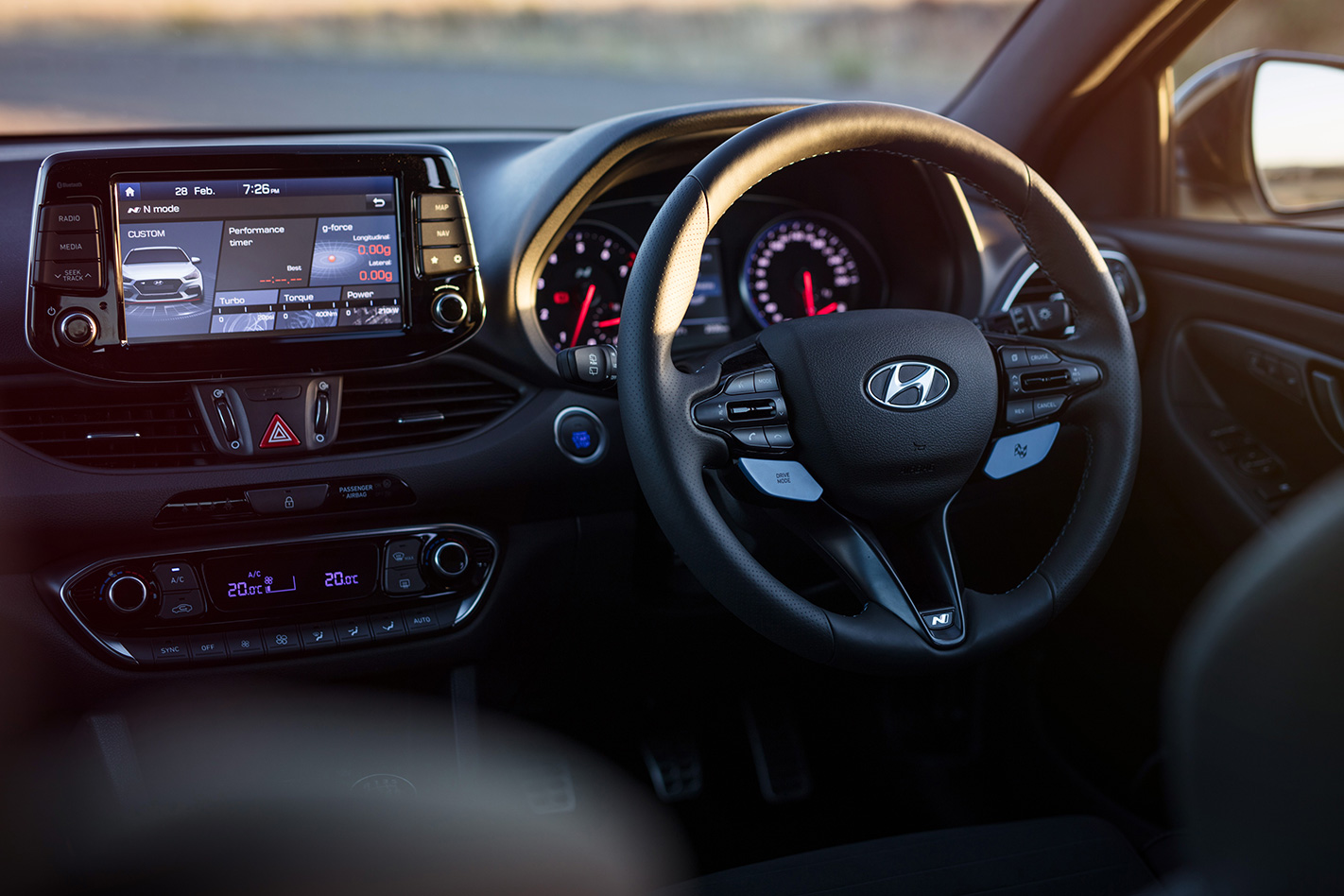
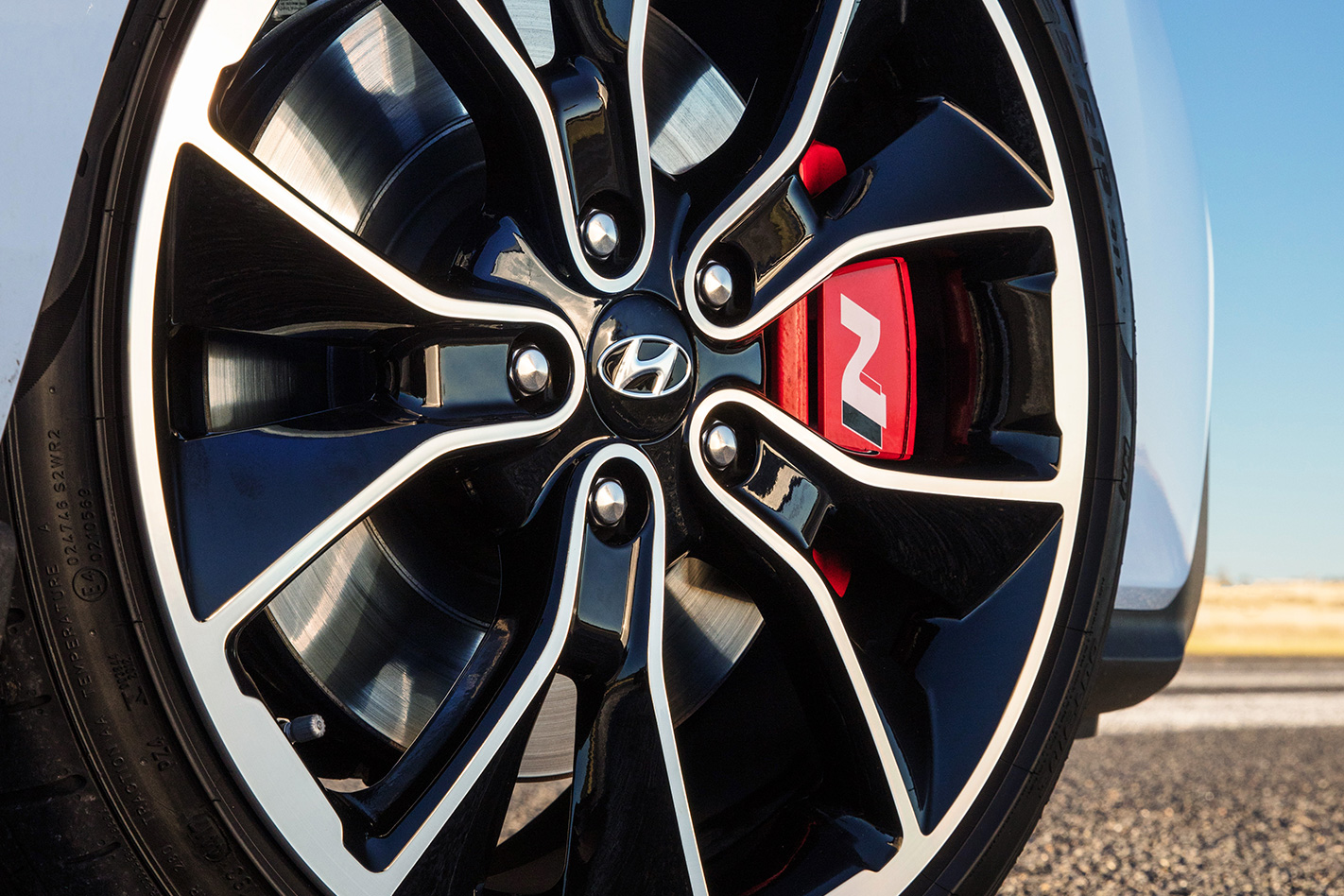
The points of difference continue, with extra structural reinforcements, rack-mounted electric power steering, bigger brake hardware and an ultra-tight gearshift gate, but here’s the net effect of all that – the i30 N isn’t just easy to drive fast, it’s a joy to do so.
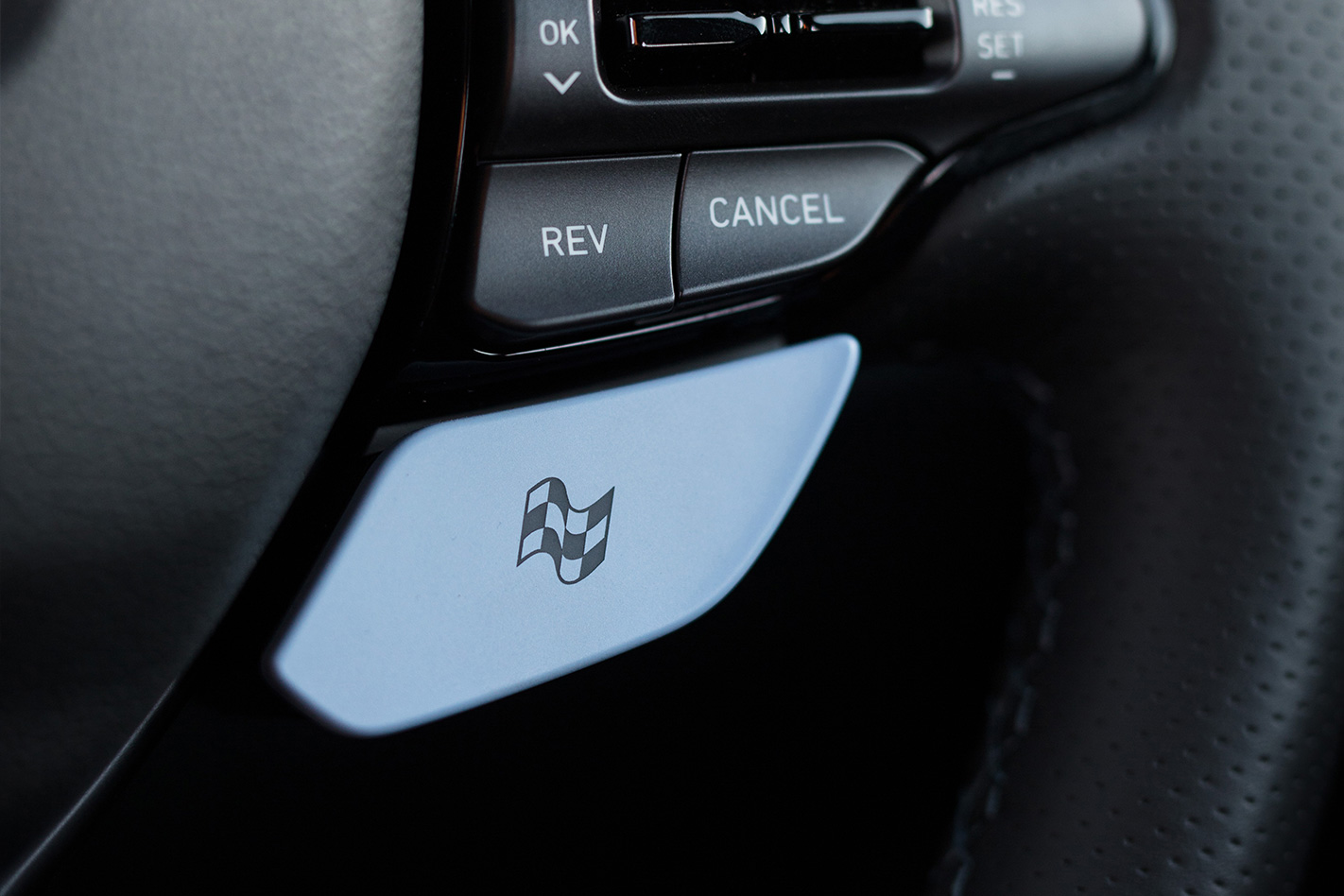
The gear shift action has slickness that’s second only to the Civic Type R, and is augmented by rev-matching tech that eliminates the need to heel-toe when braking hard. With the exhaust valves opened all the way the four-pot’s crackle-happy soundtrack offers up aural comparisons to Hyundai’s WRC cars too, thus cranking up the racecar vibes.
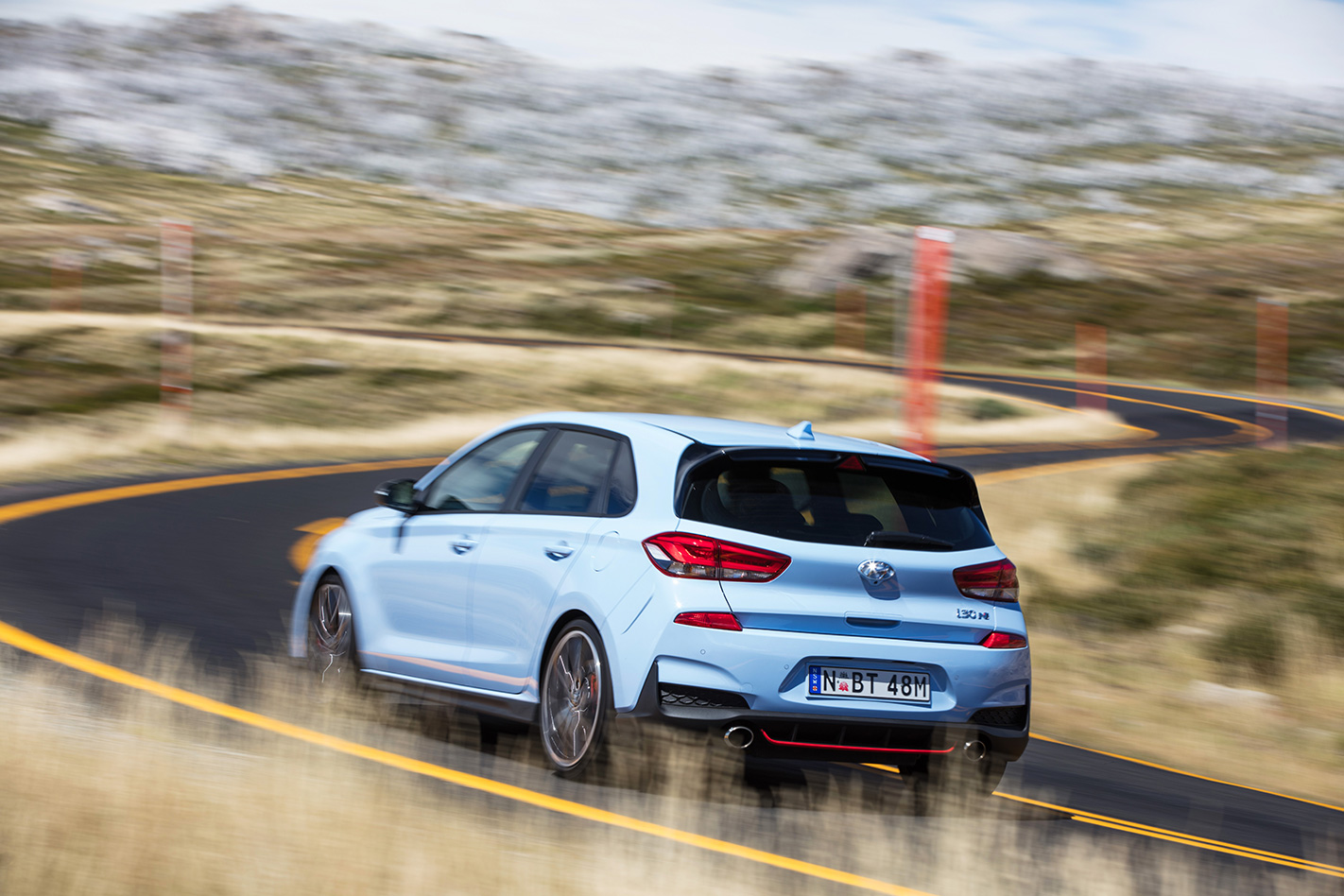
It’s a demon on mountain roads too. Grip is simply massive on the Hyundai-specific Pirelli P-Zero rubber, and the i30 N’s handling is tuned to deliver high-speed stability rather than lift-off oversteer antics. Given its ability to rapidly stack on speed, that’s a good thing.
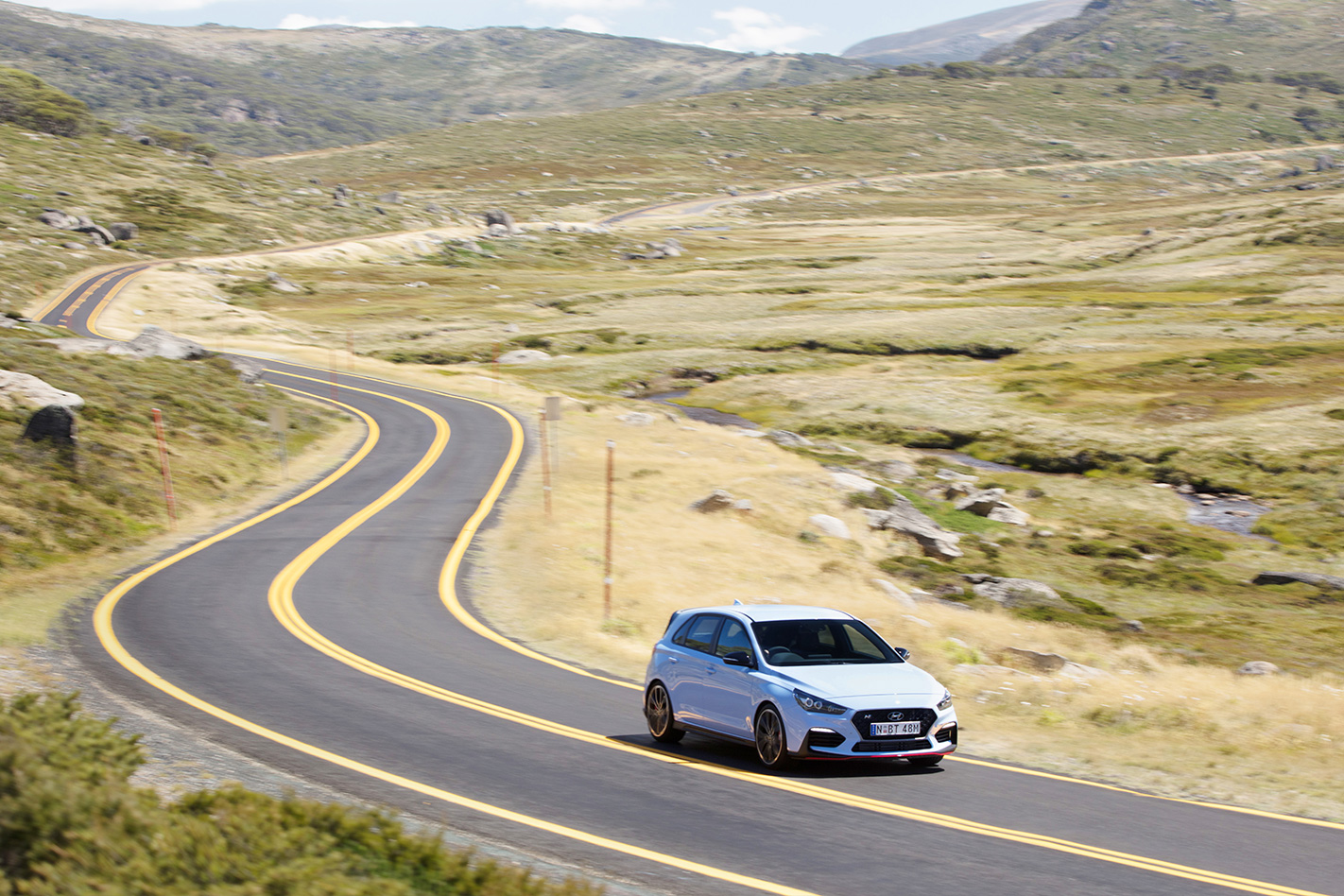
The real eye-widening stuff comes after you’ve turned in. That smart differential up front works wonders, allowing power-out techniques more akin to an AWD car than a front-driver. Get on the power earlier than you ordinarily would and let the differential sort out the traction – which it does so with admirably little fuss – and the i30 N slingshots itself out. Tight radiuses show up some torque steer, but it’s miniscule considering just how much twist is being sent to the street.
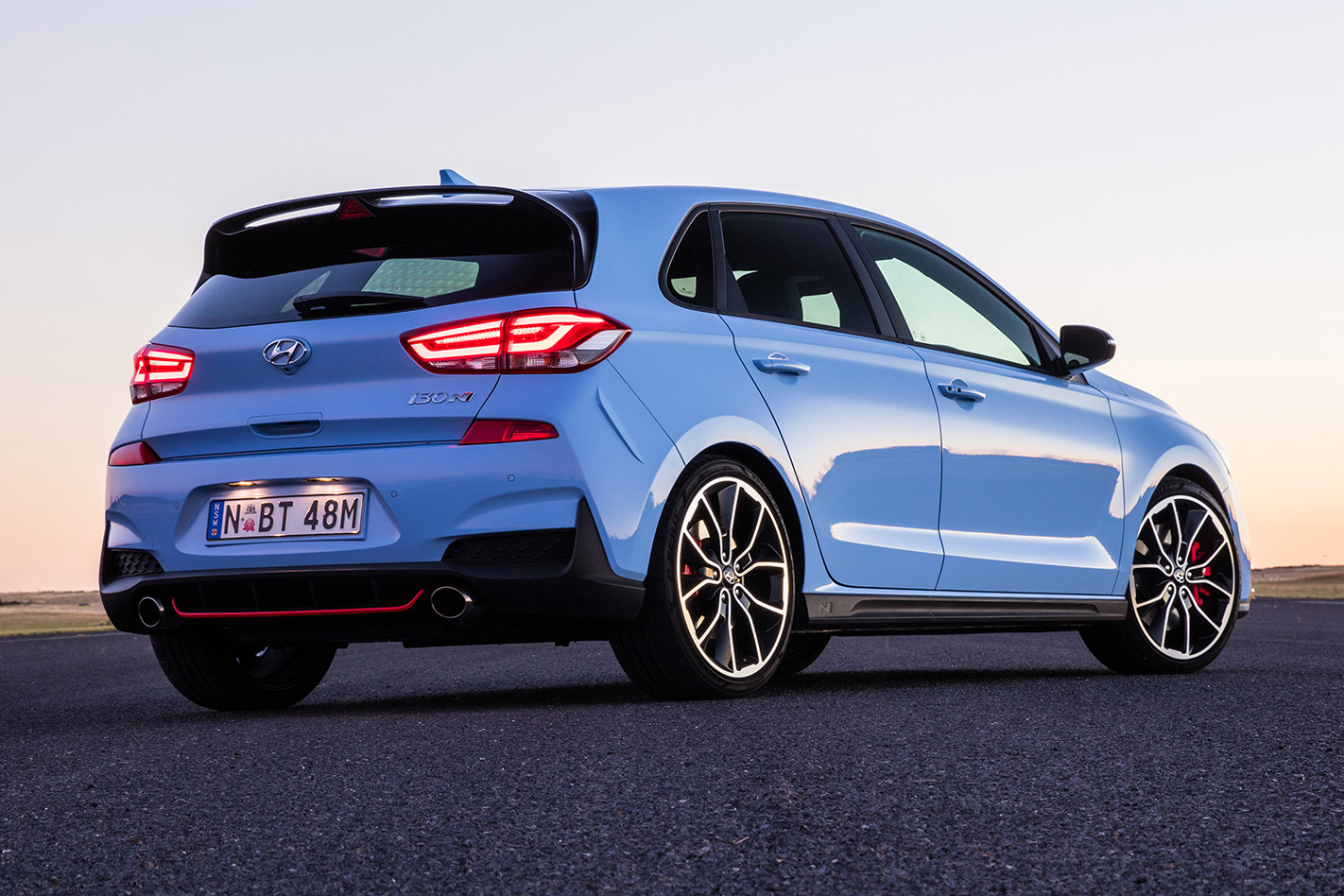
What’s more, compromises are hard to find. Hyundai Australia admits the local tune has slightly more body roll than the global tune, but it’s still barely perceptible behind the wheel. Meanwhile, body control remains excellent. The specialised bits Hyundai’s N division – overseen by former BMW M maestro Albert Biermann – has thrown at the i30 N are truly transformational.
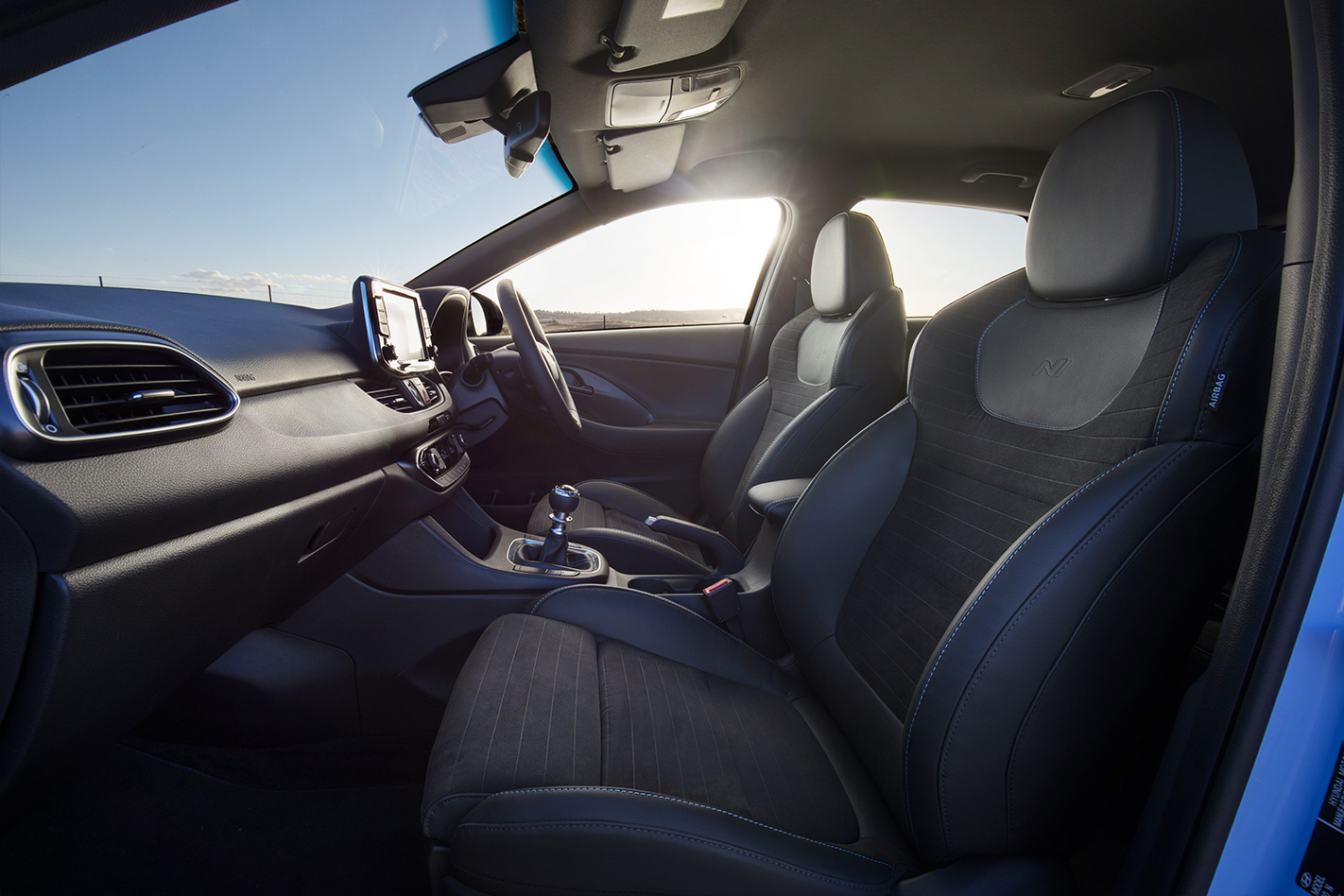
Objectively and subjectively the i30 N is a winner. Financially too, given its ultra-keen $39,990 retail sticker that makes it just $1000 more than the Ford Focus ST, while offering a level of performance that competes with a $50,990 Honda Civic Type R.
Oh, and did we mention that the i30 N carries the same five-year, unlimited-kilometre warranty as every other Hyundai – and that the company will still honour it even if you take it to the occasional track day? For a performance car, that’s an incredible declaration of confidence.
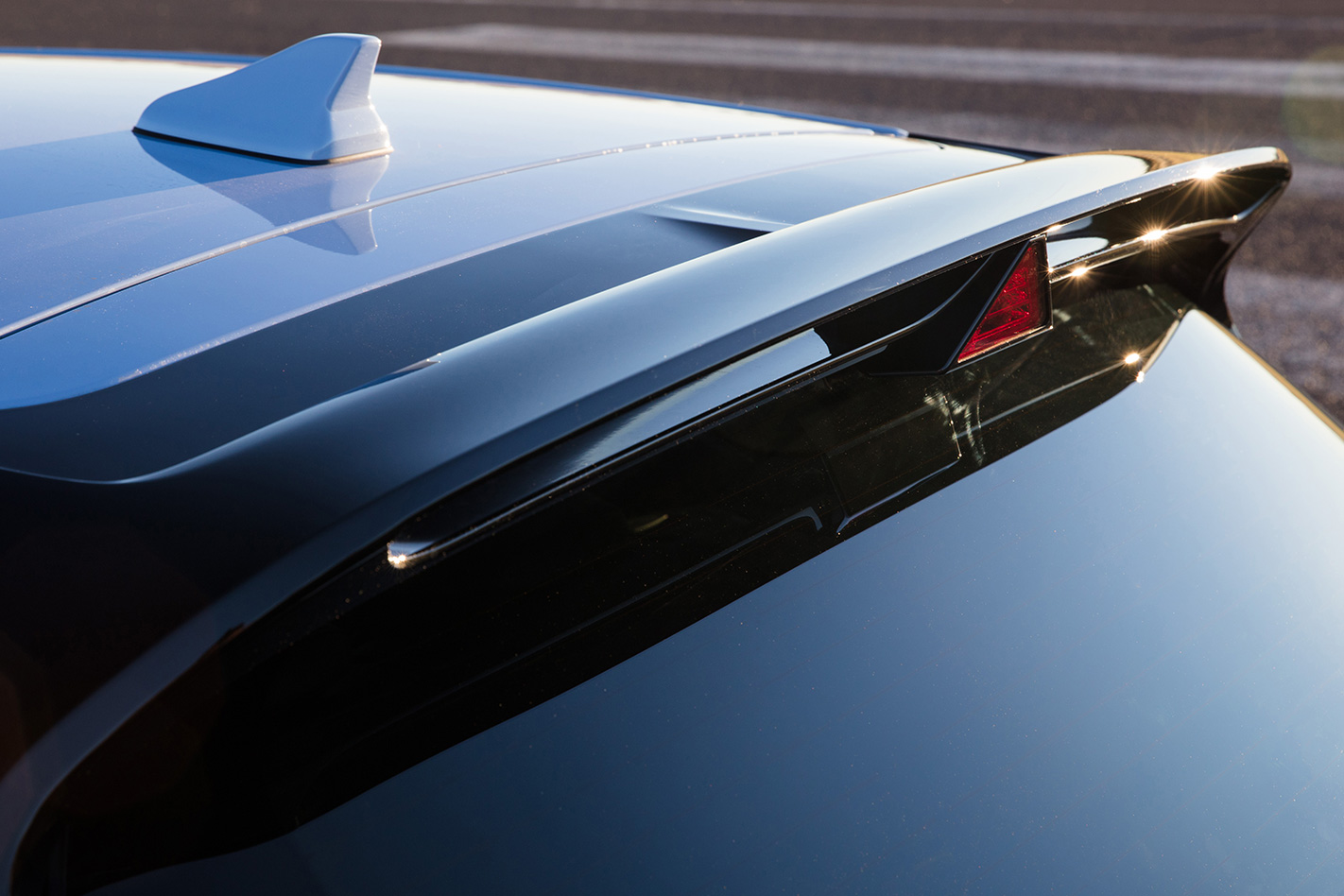
And to be fair to the i30 N, that’s really the only thing we can mark it down for. It’s not just a great first effort for a company that’s never done a hot hatch – it’s a segment leader in almost every respect.
SPECS
Model: Hyundai i30 N Engine: 1998cc 4cyl, dohc, 16v, turbo Max power: 202kW @ 6000rpm Max torque: 353Nm (378Nm overboost) @ 1450-4700rpm Transmission: 6-speed manual Weight: 1429kg 0-100km/h: 6.1sec (claimed) Economy: 8.0L/100km Price: $39,990 On sale: Now
Front driveshafts be gone! The Audi R8 RWS snubs quattro for the purity of rear-drive. Better all-round car results.
WHAT IS IT?
A watershed moment. Having spent decades building all-wheel-drive machines, Audi’s performance division has suddenly flip flopped and created a rear-drive version of its flagship supercar. That brings the promise of oversteer and a change in personality, though the R8 RWS is a limited edition model, for now. Just 40 are coming to Australia, yet despite this exclusivity, it’s also the cheapest Audi R8 you can buy.
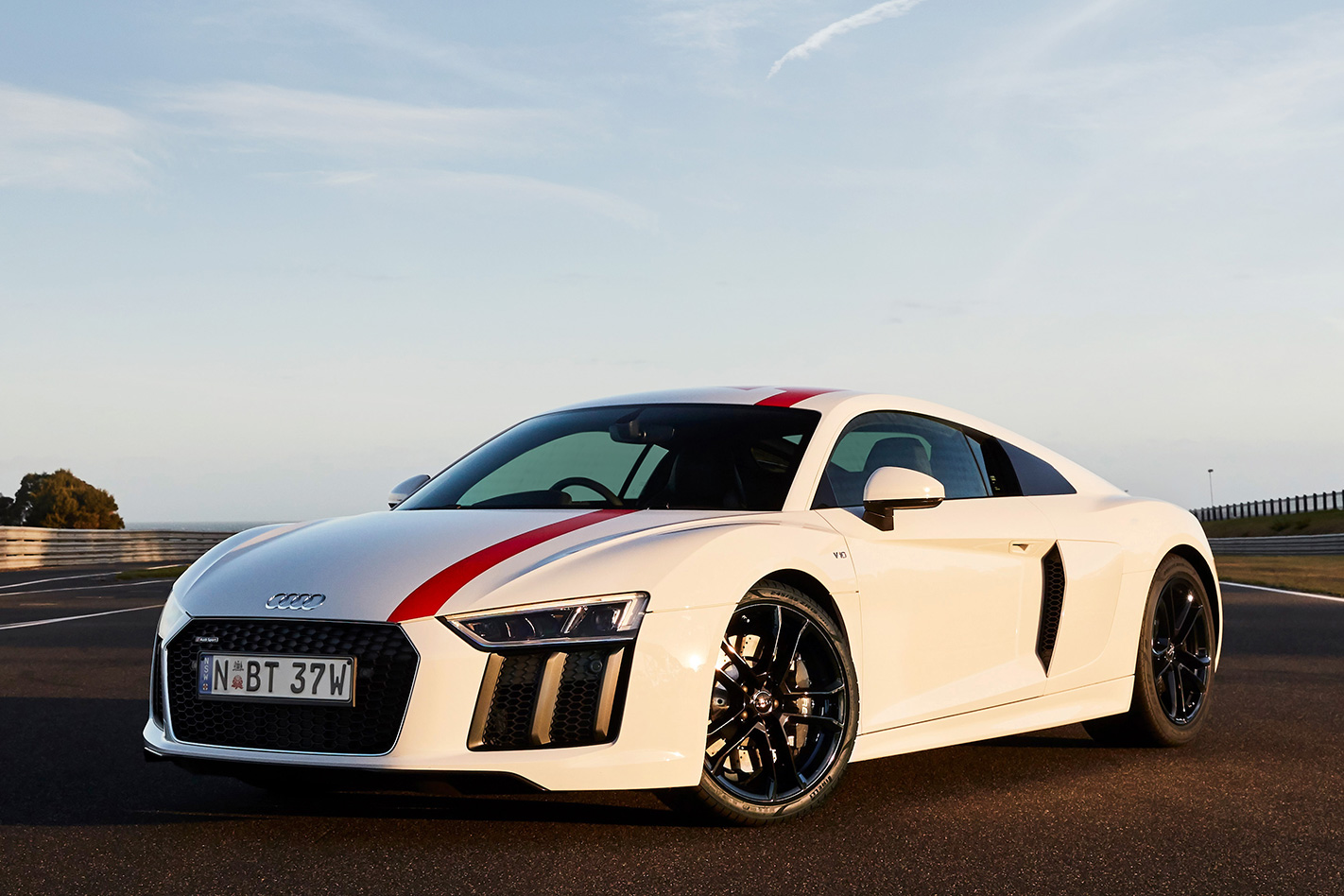
To see if the R8 RSW can live up to its on-paper promise of being a better driver’s car. And to deliver a verdict on whether rear-drive Audi’s are a good thing and something we want more of, or if the boffins at Ingolstadt should stick to what they know best: quattro AWD.
MAIN RIVALS
Porsche 911 GT3; Aston Martin V8 Vantage; Mercedes-AMG GT S; Jaguar F-Type SVR; McLaren 540C; Nismo GT-R
THE WHEELS VERDICT
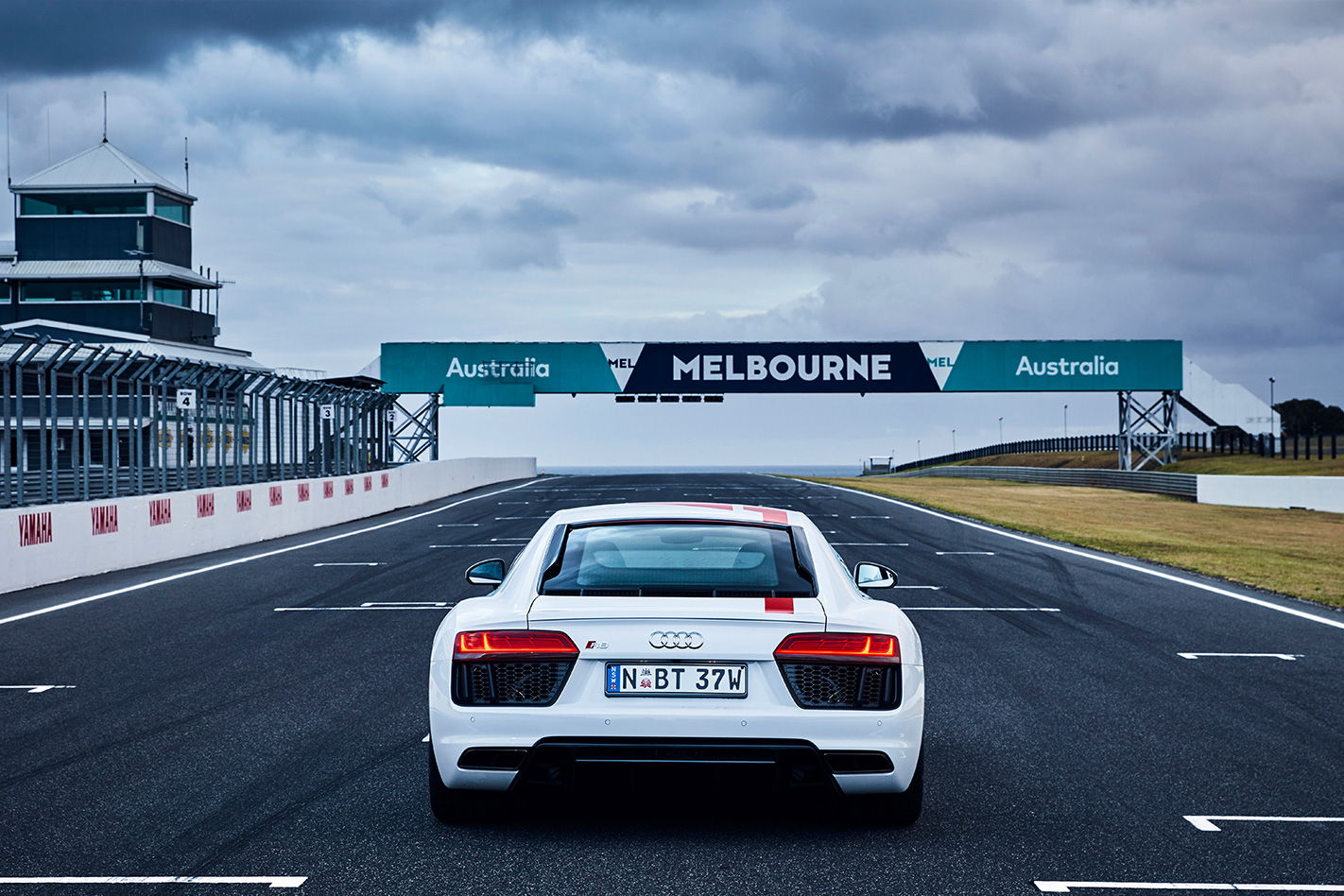
Who needs front driveshafts? R8 RWS isn’t only the cheapest R8 you can buy, it’s arguably the best. Simpler, more playful and with better steering, it forgoes the pursuit of outright grip and speed and instead focuses on providing a more involving and rewarding experience.
THE WHEELS REVIEW
THINK Audi performance cars and one word comes to mind: quattro. The German company has spent decades, and millions of marketing dollars, tying itself to the benefits of all-wheel drive, which is what makes this particular R8 so interesting.
RWS stands for Rear Wheel Series, not we should point out, rear-wheel steering as most petrolheads would assume, meaning that unlike every other performance Audi that’s gone before it, this one sends its grunt solely to the rear axle.
That brings the promise of oversteer, and also a notable shift in priorities: it suggests fun and dynamic purity are the key goals here, not outright grip and speed.
But, unlike the Porsche, this isn’t a focused hardhead with one steely eye firmly fixed on the track. Instead, the RWS is an excellent all-rounder; a well-judged entry-point that makes you question if quattro is worth the extra dosh.
There’s only one RWS spec to choose from: the V10 is the same free breathing 5.2-litre unit as the regular R8, which sends 397kW/540Nm to the rear axle through a seven-speed dual clutch.
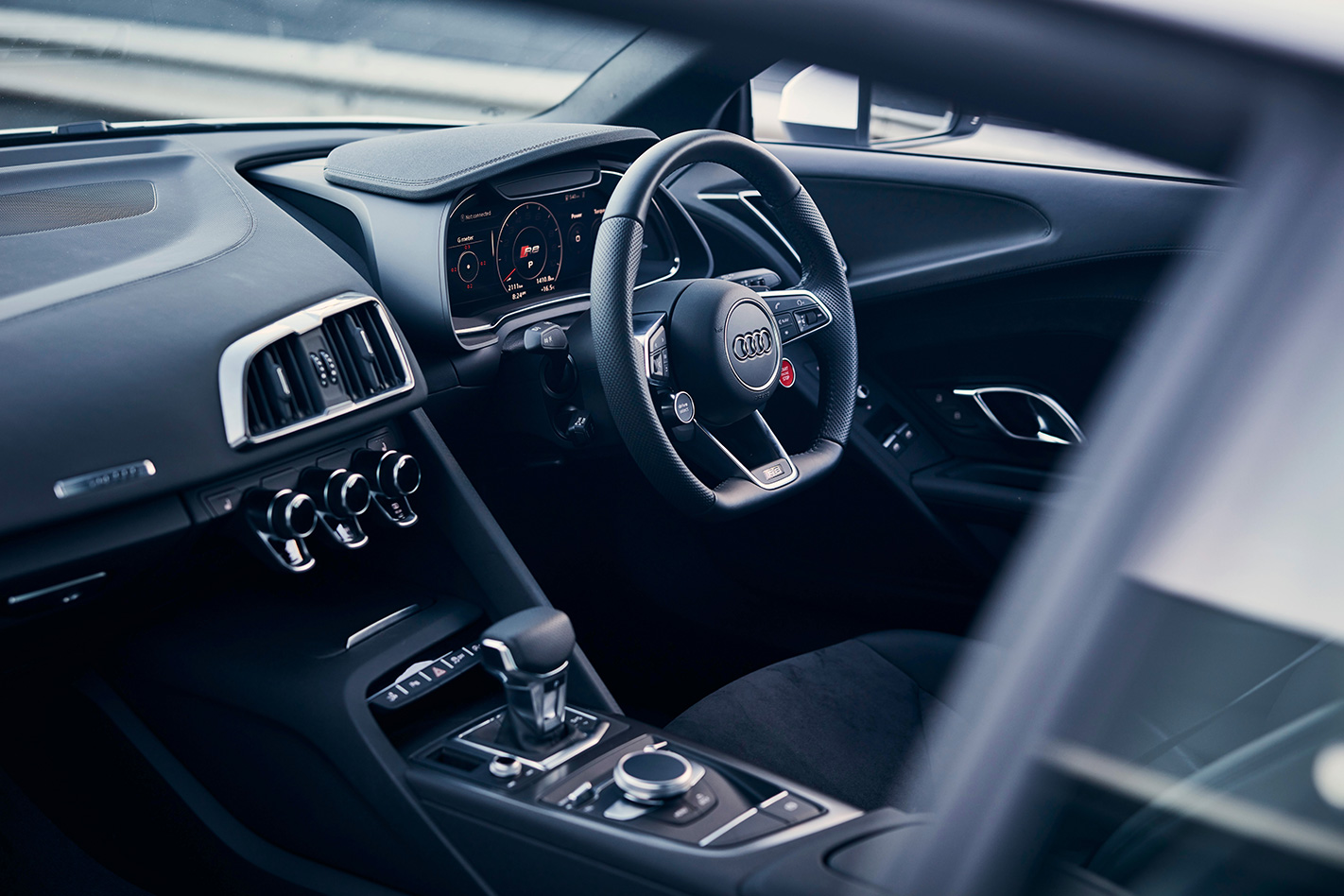
There’s new software for the fixed-ratio electric system (mercifully, Audi’s maligned variable ratio system is nowhere to be seen) and a thicker front anti-roll bar, which combine to give the RWS an immediacy off centre you don’t have in quattro R8s.
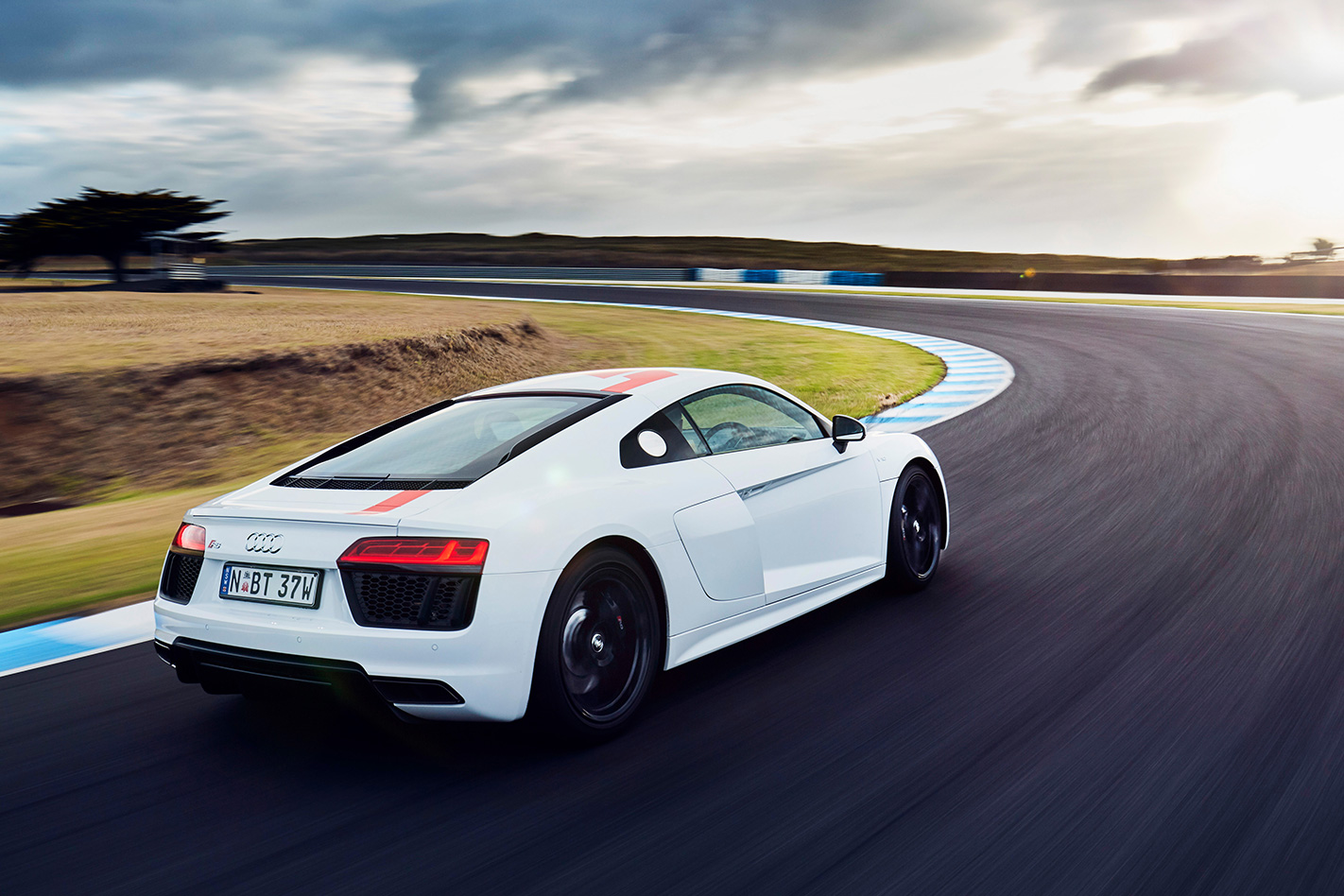
It turns in faithfully and accurately and while there isn’t a huge amount of feel through the wheel, there’s a lovely fluidity to the way the RWS handles, especially at a circuit like Phillip Island.
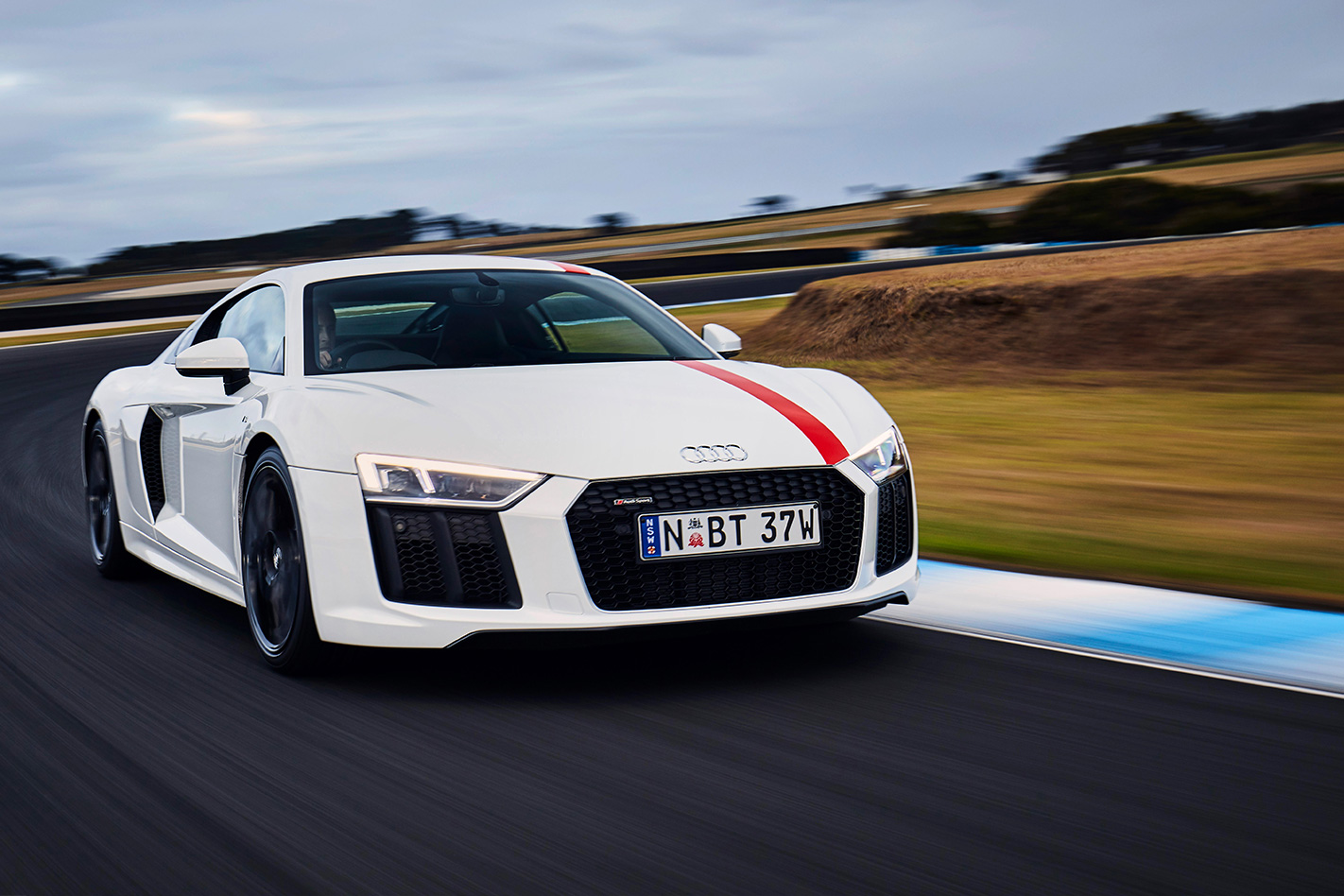
Turn in, feed in the power and the rear 295/35R19 Pirellis simply grip and go, which gives you the confidence to lean on the chassis and revel in every last rev offered by that sonorous V10.
It will slide, of course, and an RWS specific ESC tune allows for sustained drifts on corner exit, though the mechanical rear diff can feel a little abrupt as you exit the slide unless you’re silky smooth with throttle and steering.
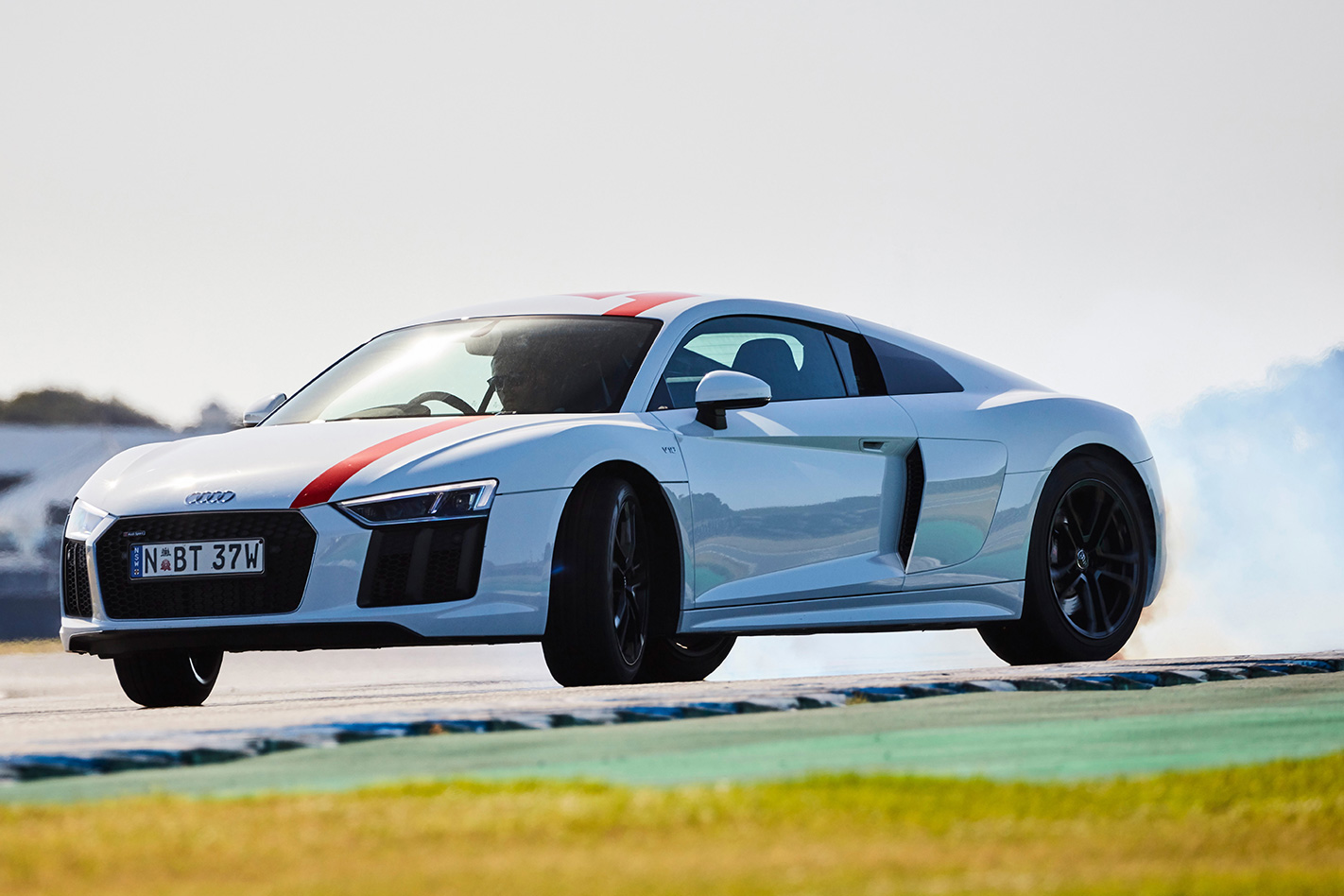
Yet it feels a simpler car; one with honest dynamics, improved steering and a playfulness that makes it more fun, if fractionally slower from point-to-point.
Which leaves us with the curious conclusion that the best R8 you can buy is also the cheapest. If you can snag one, that is.
Spot the difference
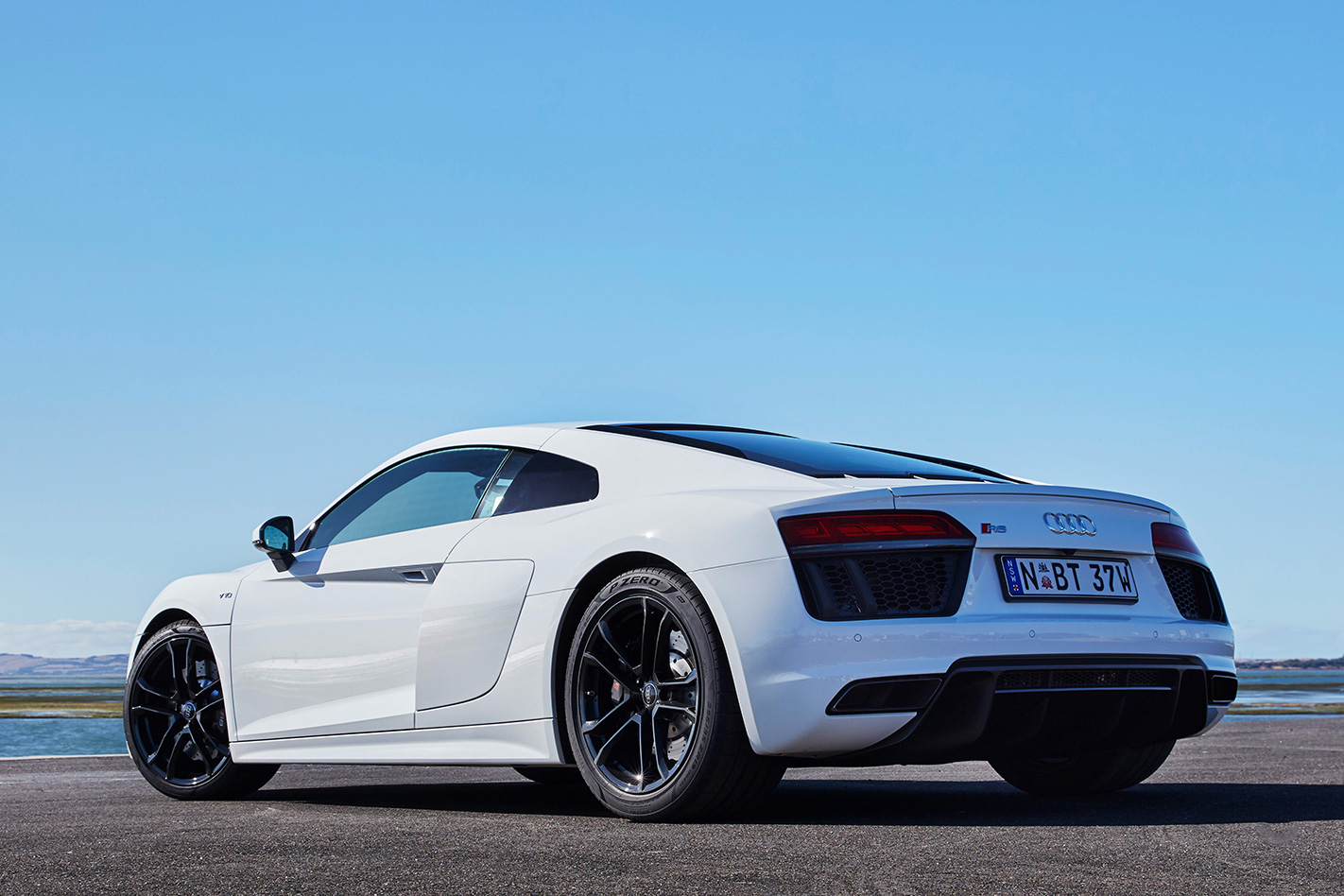
If you don’t tick the box for the lairy off-centre racing stripe, it can be quite tricky to differentiate a RWS from a regular R8. The biggest giveaway is the lower section of the sideblade, which unlike other R8s, is finished in body colour, not carbonfibre. The RWS is also the only R8 to use matte grey for the plastics around the front grille, air intakes and rear diffuser.
SPECS
Model: Audi R8 V10 RWS Engine: 5204cc V10 (90°), dohc, 40v Max power: 397kW @ 7800rpm Max torque: 540Nm @ 6500rpm Transmission: 7-speed dual-clutch Kerb weight: 1590kg Fuel economy: 12.4L/100km 0-100km/h: 3.7sec Price: $299,500 On sale: Now
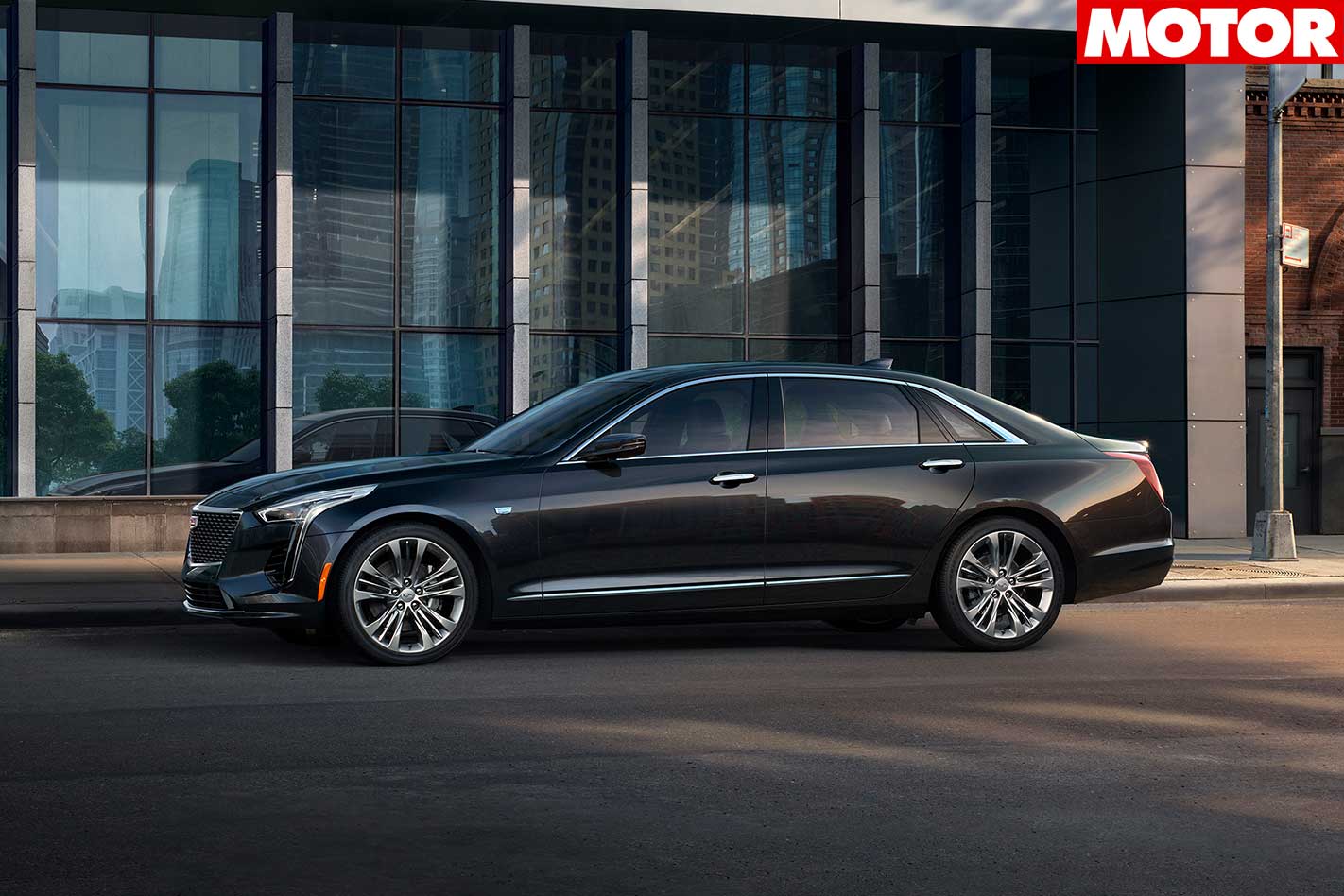
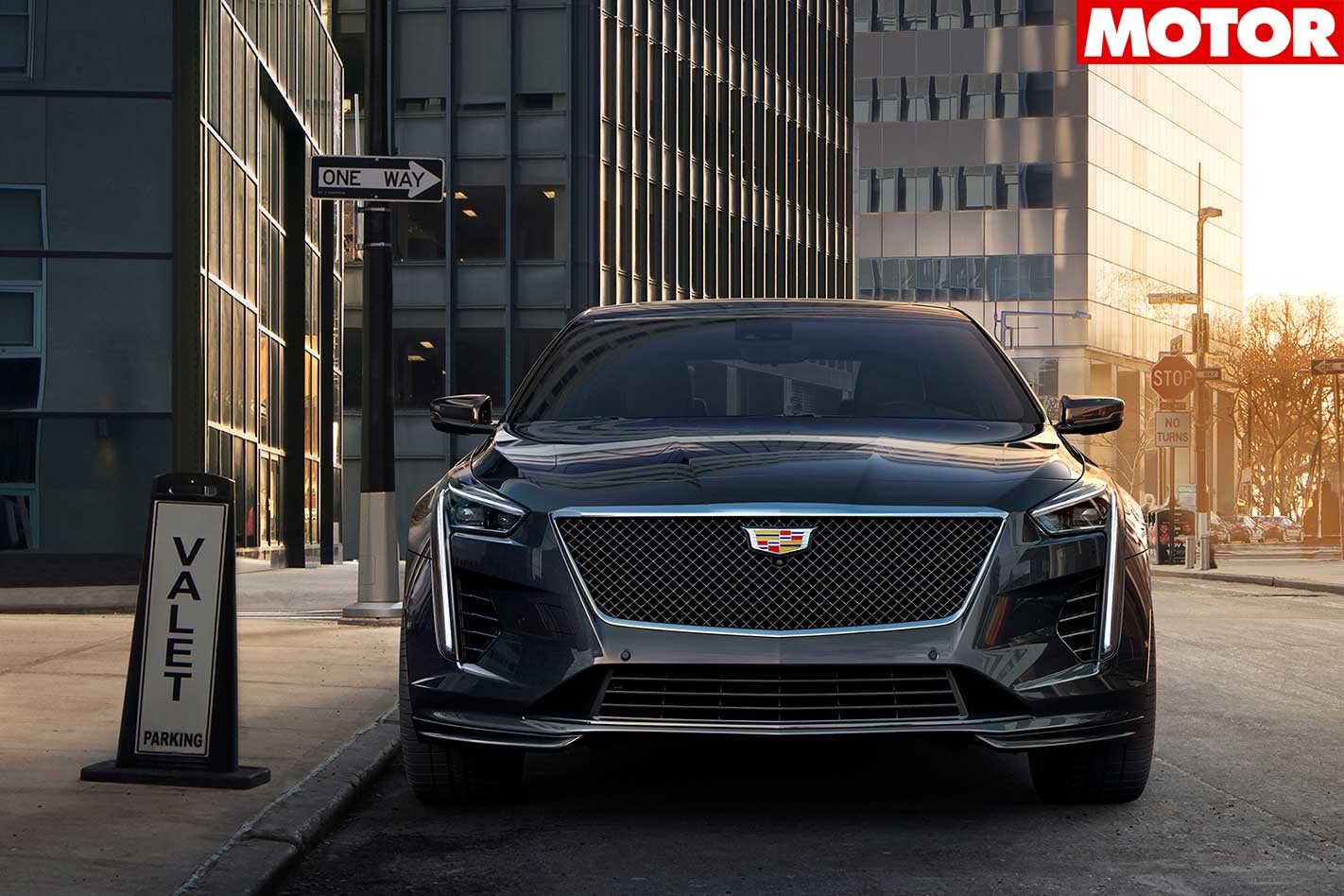
Cadillac has revealed a new performance sedan, the Cadillac CT6 V-Sport, which itself has debuted a new engine for GM.
The new engine is a twin-turbo 4.2-litre V8, sporting an ‘estimated’ power output of 410kW and 850Nm of torque.
And it’s the engine that’s most exciting for us over here in the Land Down Under because, while it’s not likely we’ll see the car show up here, there’s a chance the engine will be used in other vehicles that could.
“We’ve committed to introducing a rear-drive V8 into Australia, and I guess that’s as far as we can go,” they told Wheels.
So, a new rear-drive V8 from GM on the way to Australia, and maybe a new V8 engine to compete in the more modern turbocharged market.

It “transposes the conventional layout of the cylinder heads’ intake and exhaust systems to mount the turbochargers at the top of the engine — in the valley between the heads — to virtually eliminate turbo lag and reduce the engine’s overall packaging size,” Cadillac says.
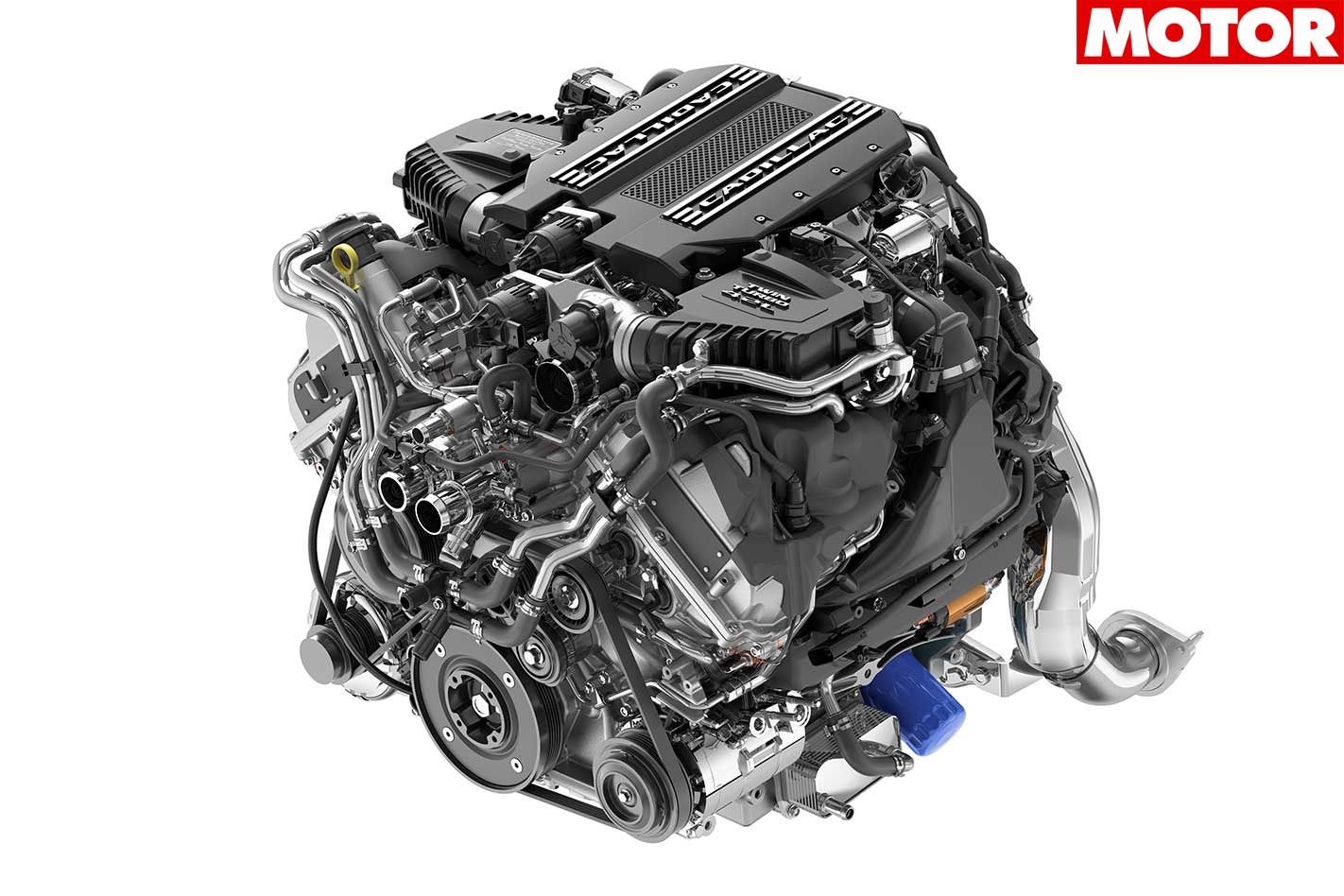
Cadillac president Johan de Nysschen seems quite proud of the engine, so it’s more than likely we’ll see it used in other vehicles in the future.
“With the introduction of the all-new CT6 V-Sport, Cadillac begins a new chapter in its performance legacy with the introduction of the brand’s first-ever twin-turbo V-8 engine,” says de Nysschen.
“It is the centerpiece of the new CT6 V-Sport, an engaging sport sedan infused with DNA of Cadillac’s world-renowned and championship-winning motorsports program.”
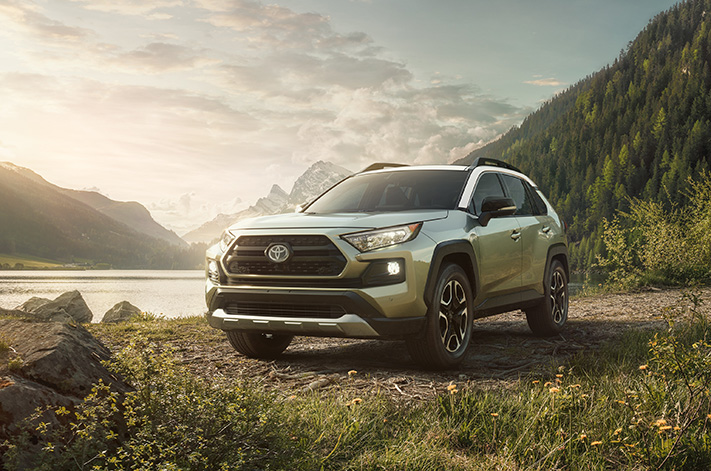
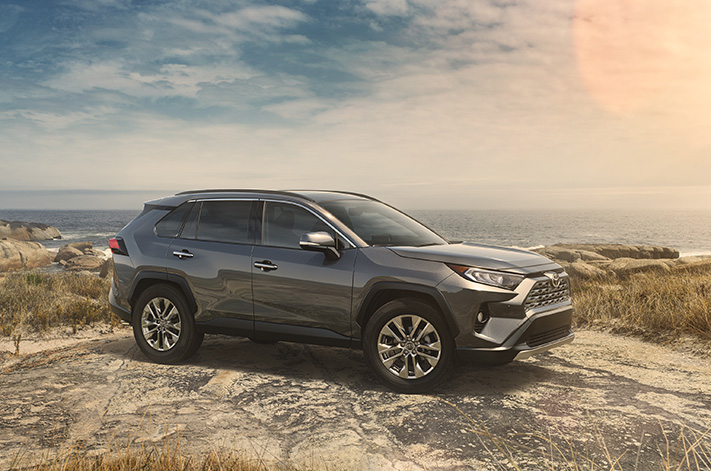
The all-new Toyota RAV4 has been revealed ahead of its public debut at the New York Motor Show, bringing with it a new hybrid powertrain and rugged styling that’s more offroader than SUV.
The fifth generation of Toyota’s ever-popular RAV4 SUV brings a bunch of firsts to the marque, including improved off-road capability, torque vectoring tect and the latest Toyota infotainment system incorporating in-car WiFi and Apple CarPlay compatibility.
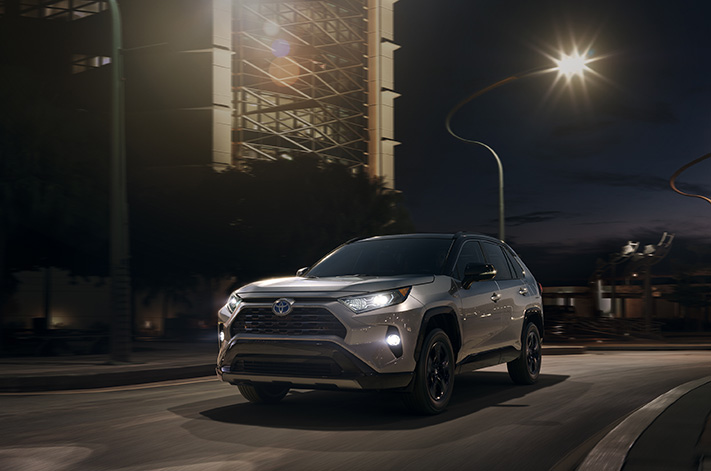
Externally the new RAV4 is a big departure from its city-centric predecessors, with a raised stance, chiselled lines, bolder nose and Jeep-like trapezoidal wheel arches. Built on the TNGA platform that also underpins the Camry, C-HR and Prius (as well as the upcoming new-gen Corolla), it has a longer wheelbase, wider track, and shorter front and rear overhangs to make it better suited to rugged terrain.
Inside, the buzzword is “refinement”, with a more sophisticated but uncomplicated layout, with a decluttered centre console thanks the adoption of an electronic parking brake and side-by-side cup holders.
Rear seat passengers benefit from increased leg and elbow room.
The RAV’s powertrain lineup includes a naturally-aspirated 2.5-litre four-cylinder engine mated to a eight-speed automatic, which also brings downshift rev-matching. Accompanying it will be a hybrid variant, also using a 2.5-litre petrol four-pot, except augmented by an electric motor and taking drive to the road via a CVT automatic.
All-wheel-drive versions feature torque vectoring control that enhances steering accuracy on all road conditions. Sending up to 50 percent of torque to the rear wheels to improve traction when needed, it reverts to front-wheel drive when all-paw traction isn’t required to save fuel and reduce rotational vibration to further improve cabin comfort.
Toyota promises a much improved ride across the range, thanks to 57 percent additional chassis rigidity and multi-link rear suspension, which also reduces cabin noise and boosts ride comfort.
Variants include the sporty XSE Hybrid, featuring two-tone paintwork, piano-black exterior accents and projector-beam LED headlamps. It’s the best performer in the range with enhanced power and acceleration and also boasts a sport-tuned suspension with tauter shock absorbers and springs. Toyota has yet to reveal performance figures, but promises class-leading fuel efficiency along with more power and improved acceleration.
The off-road focused RAV4 Adventure brings Toyota toughness including high-rise roof rails, bolder wheel arches, a more aggressive grille and front bumper design, unique fog-light surrounds and AWD as standard. Dirt driving is assisted with multi-terrain driving modes for snow, mud, sand or rocks.
The RAV4 Limited meanwhile reverts to the RAV4’s more traditional urban family hauler role, with premium styling including 19-inch alloy wheels and chrome accents outside. Interior features include a moonroof, eight-way power-adjustable driver’s seat with lumbar support and memory, and a Digital Display Rearview Mirror that lets you see out back even if the rear window is obscured.
Safety features include a Pre-Collision System (incorporating autonomous emergency braking) with pedestrian detection, radar-assisted cruise control with stop-start, lane keeping assist, lane tracing assist which recognises temporary yellow lines, automatic high-beam, road sign recognition, eight airbags, blind spot monitor, rear-cross traffic alert and 360-degree camera with all-round parking sensors.
While the reveal centres on the US RAV4 range, Australia is expected to be in line for the hybrid RAV4 – along with a petrol-electric version of the C-HR.
THERE’S something about the classic Mini Cooper that is suited to an electric drivetrain. It’s a car screaming for instant punch, and the milk-float hum wouldn’t have been out of place during the Italian Job’s legendary Turin chase scenes.
Indeed, the Mini was born out of the 1956 Suez crisis that led to petrol rationing in the UK, so one wonders what could have been if the iconic car’s designer Sir Alec Issigonis had an efficient electric powertrain at his disposal.
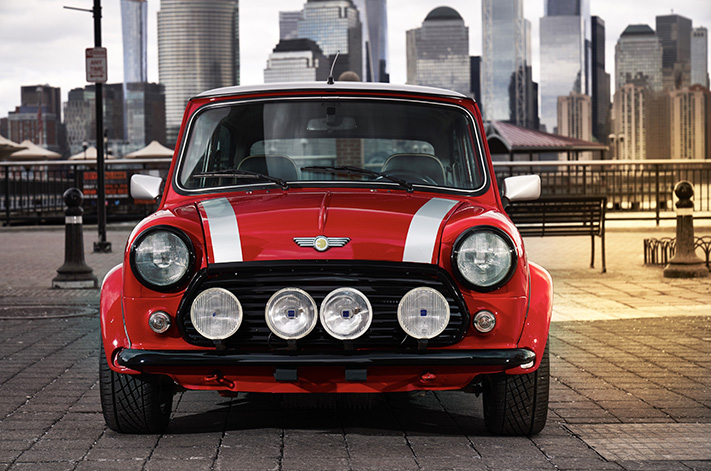
Wonder no more, because the folks at Oxford have taken an EV chassis and topped it with the gleaming shell of a classic Mini Cooper (which actually appears to be a 2000 Rover Mini Cooper Sport) just in time for the New York Motor Show.
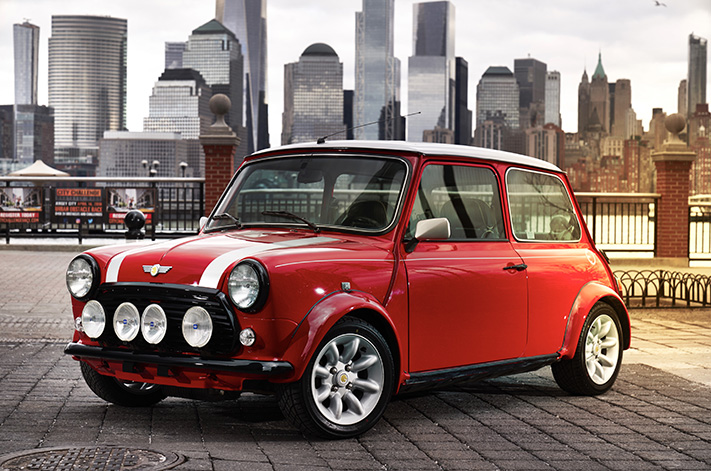
While not releasing any performance figures, Mini says the instant shove and low centre of gravity “provide a new dimension to the unmistakable go-kart feeling that helped propel the British small car in its original form to worldwide popularity”.
As well as answering a what-if, the Class Mini Electric looks to Mini’s electric future including the already revealed 2019 Mini E, born out of the Mini Electric Concept first shown at the 2017 Frankfurt Motor Show.
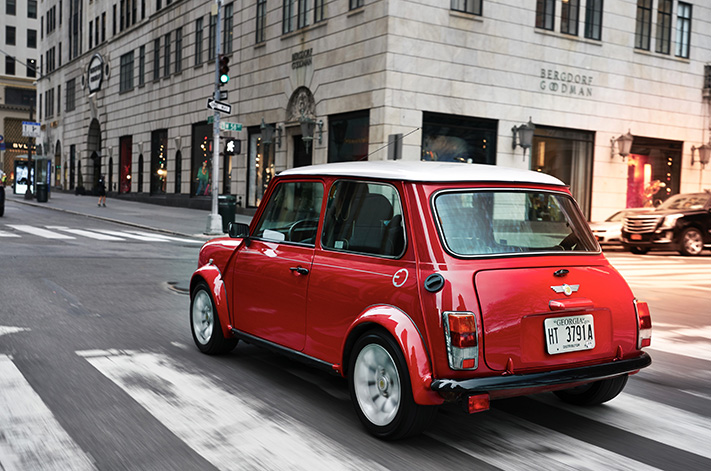
This won’t be Mini’s first foray with electrons. Back in 2009 it released its original Mini E concept, which was powered by a 25kWh lithium-ion battery that fed a single front-mounted 150kW/220Nm electric motor.
Top speed was just a tad over 150km/h and it only had a 240km range, but despite 40 going into public hands for real-world testing it was never slated for production, though the experience helped BMW develop the i3.
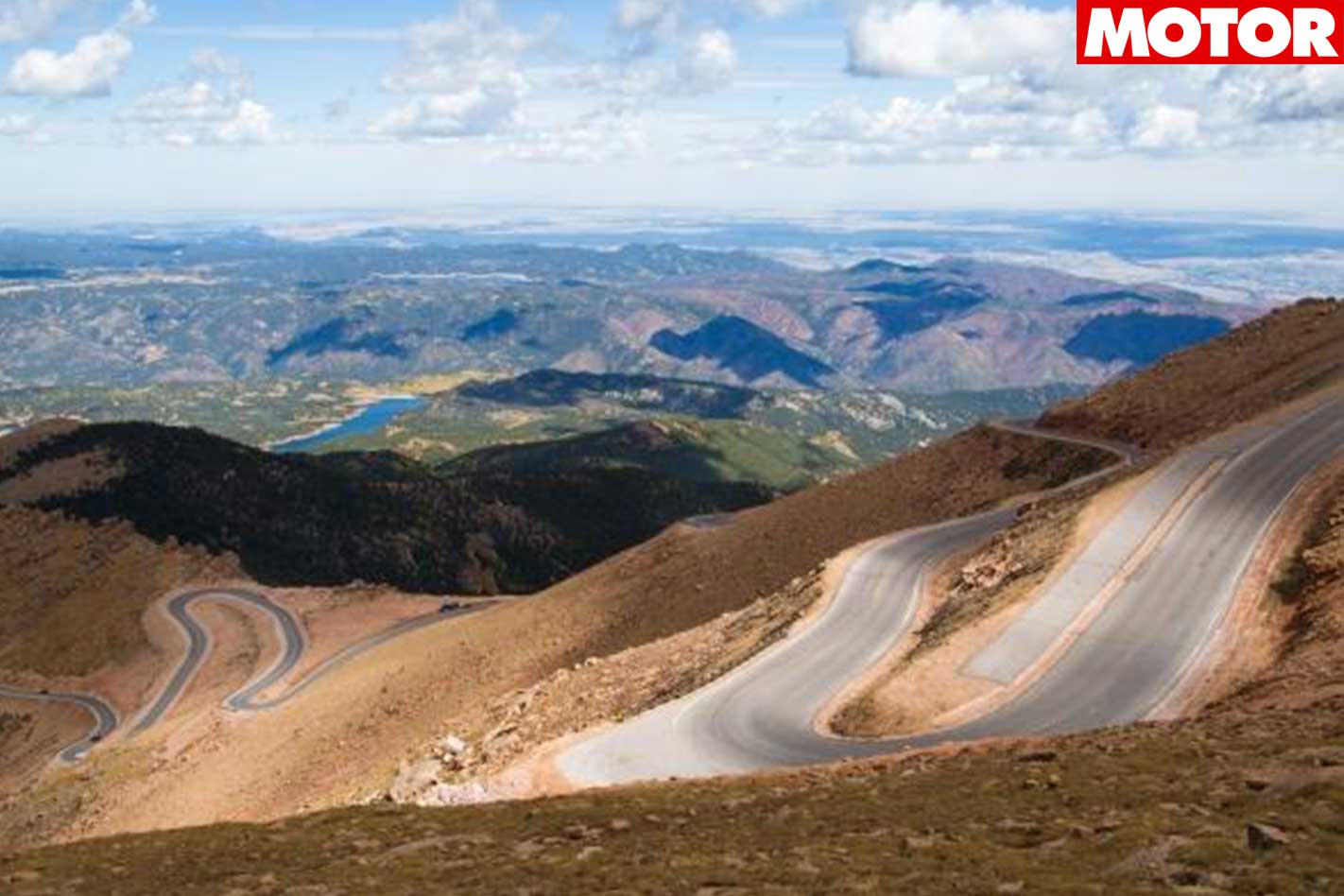
Bentley has announced two-time Pikes Peak overall winner Rhys Millen as the pilot for its next attempt at claiming a Pikes Peak record.
But Millen will be going for the SUV record, currently set at 12:35.61, and he’ll be driving a Bentayga.
The drifting pro and rally expert will take the wheel of a Bentayga built by Bentley’s motorsport department, which has been built as close to production standard as possible.
A full roll cage, onboard fire suppression system, racing seats and harnesses have been added for safety, while production-spec tyres come from Pirelli, and a custom exhaust system from Akrapovic.
Aside from that, the Bentayga will remain stock-spec down to its air-suspension.
Now 45-years-old, the driver from NZ says he’s excited to get back to the top of the mountain.
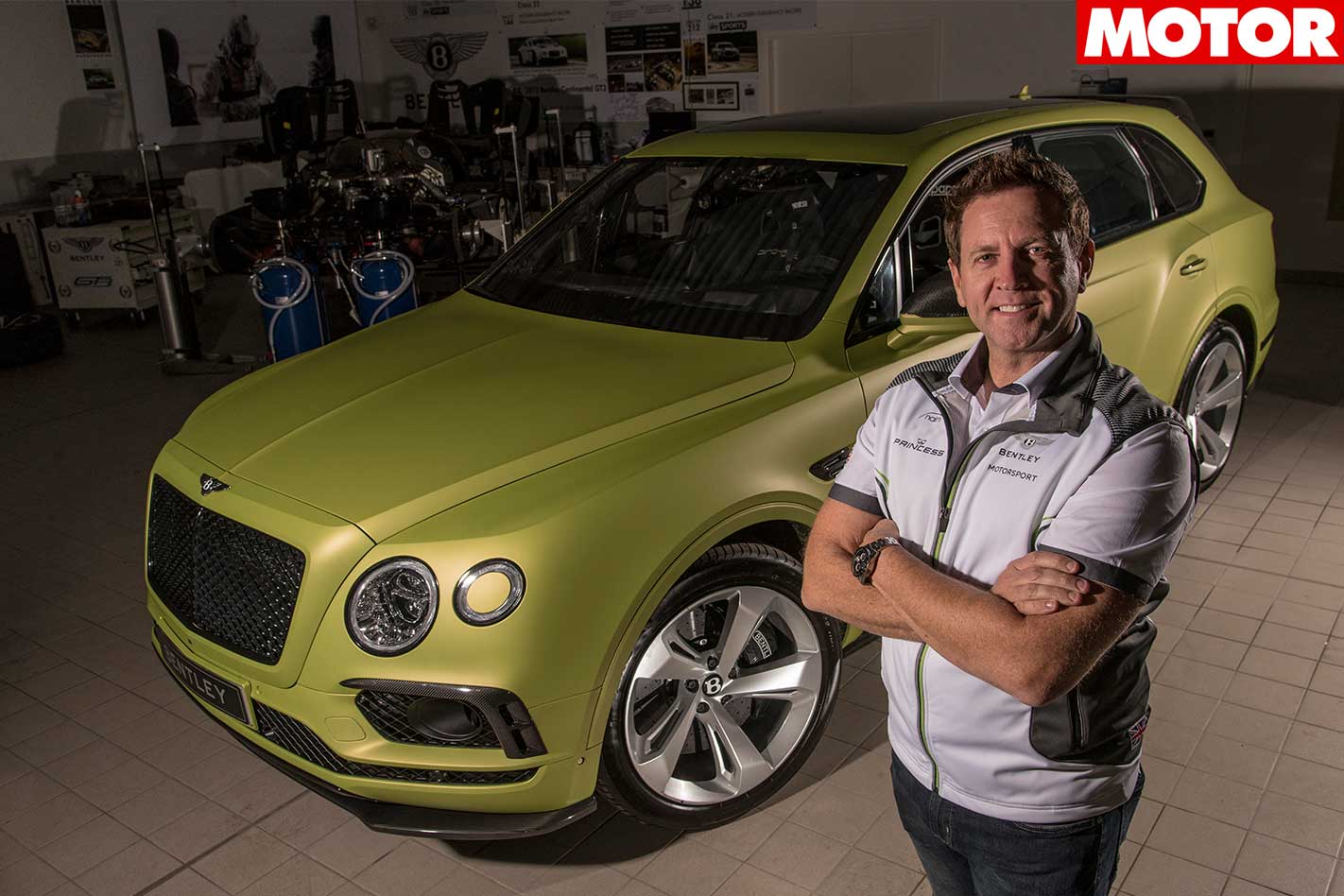
“I visited the Bentley factory in Crewe, England last month and was amazed at the level of skill that goes in to handcrafting these cars.
“I also had the chance to drive the race-prepared car for the first time and was blown away by the performance that’s already available.
“I’m really looking forward to preparing for the race, competing on the mountain with Bentley and hopefully claiming a new SUV record.”
Bentley’s motorsport director Brian Gush is confident Millen can reach that goal.
“With two previous overall victories to his name, Rhys’ credentials speak for themselves.
“His knowledge of the course, his professionalism as a competitor and his enthusiasm for the project make him the perfect choice for us.
“In the Bentayga we’ve given Rhys the perfect opportunity to claim another Pikes Peak record, and I’m confident he can set an impressive time when the race takes place.”
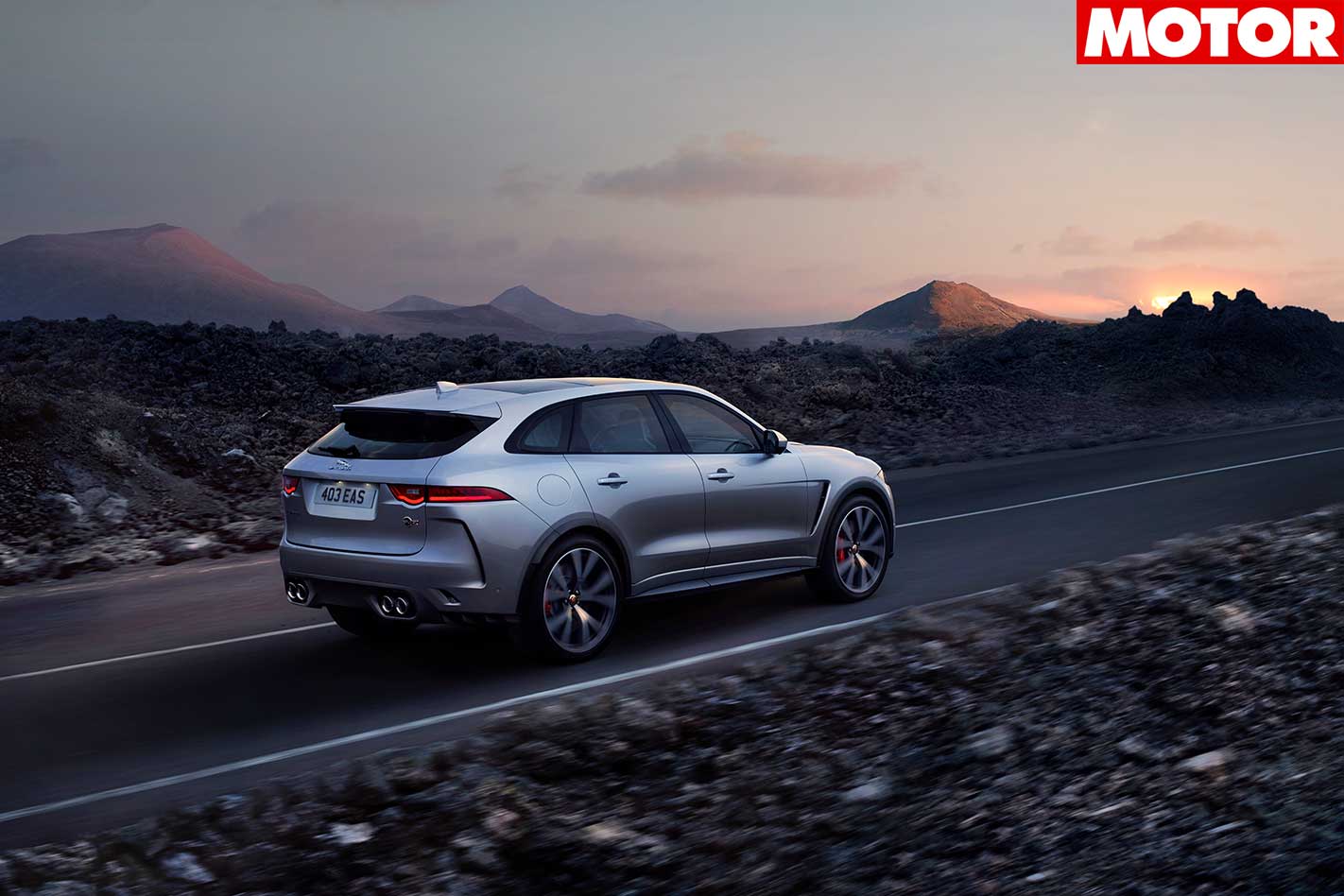
JAGUAR’S much-anticipated big cat has finally pounced.
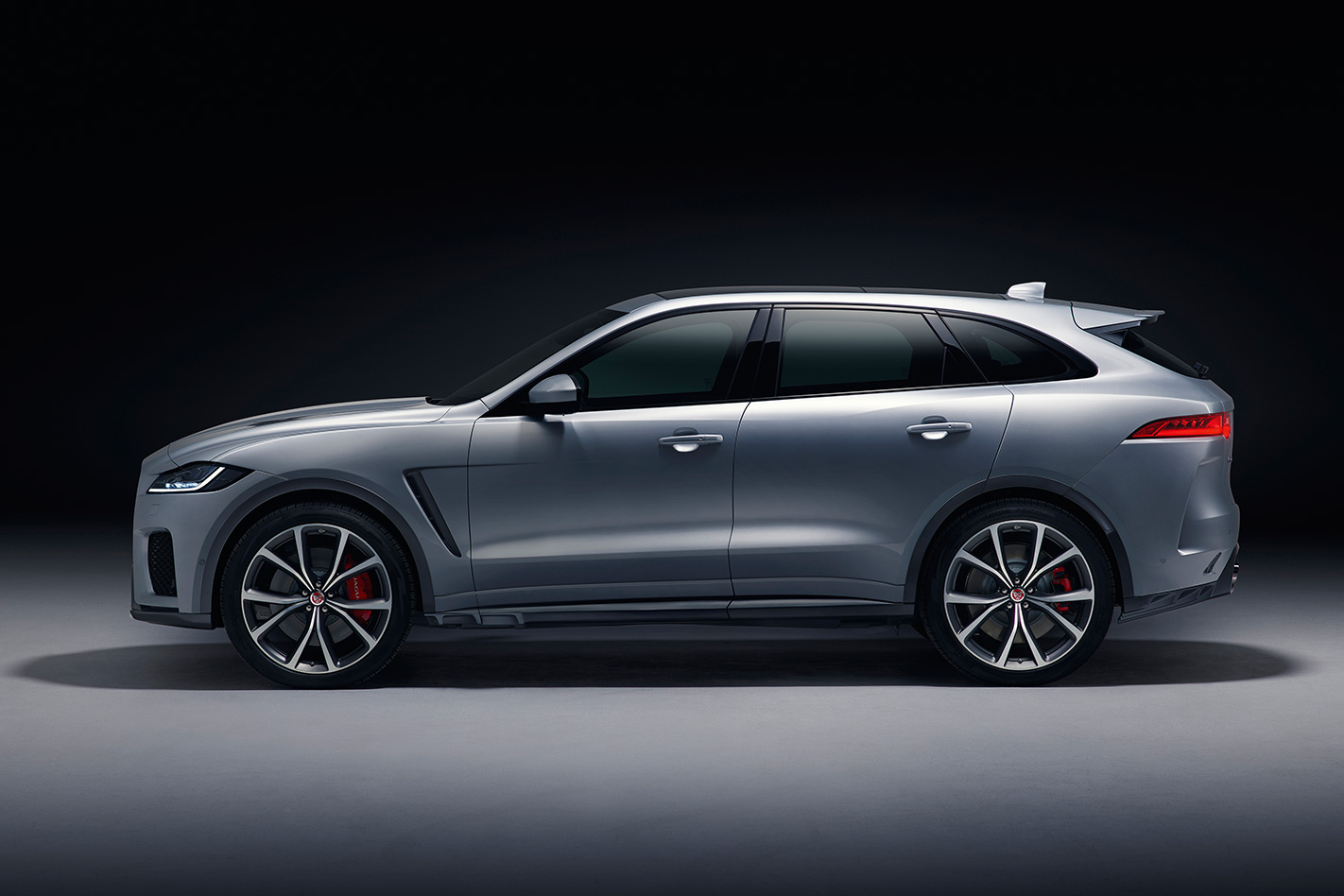
The Jaguar F-Pace SVR, a 5.0-litre supercharged V8-powered version of the first luxury SUV developed by the British luxury marque has officially leapt into view.
The numbers? The bent eight will produce 410kW and 680Nm. All that poke, the all-wheel-drive system, and a “virtual” electronic limited-slip diff will launch it to 97km/h in 4.3 seconds, and wind all the way out to 283km/h.
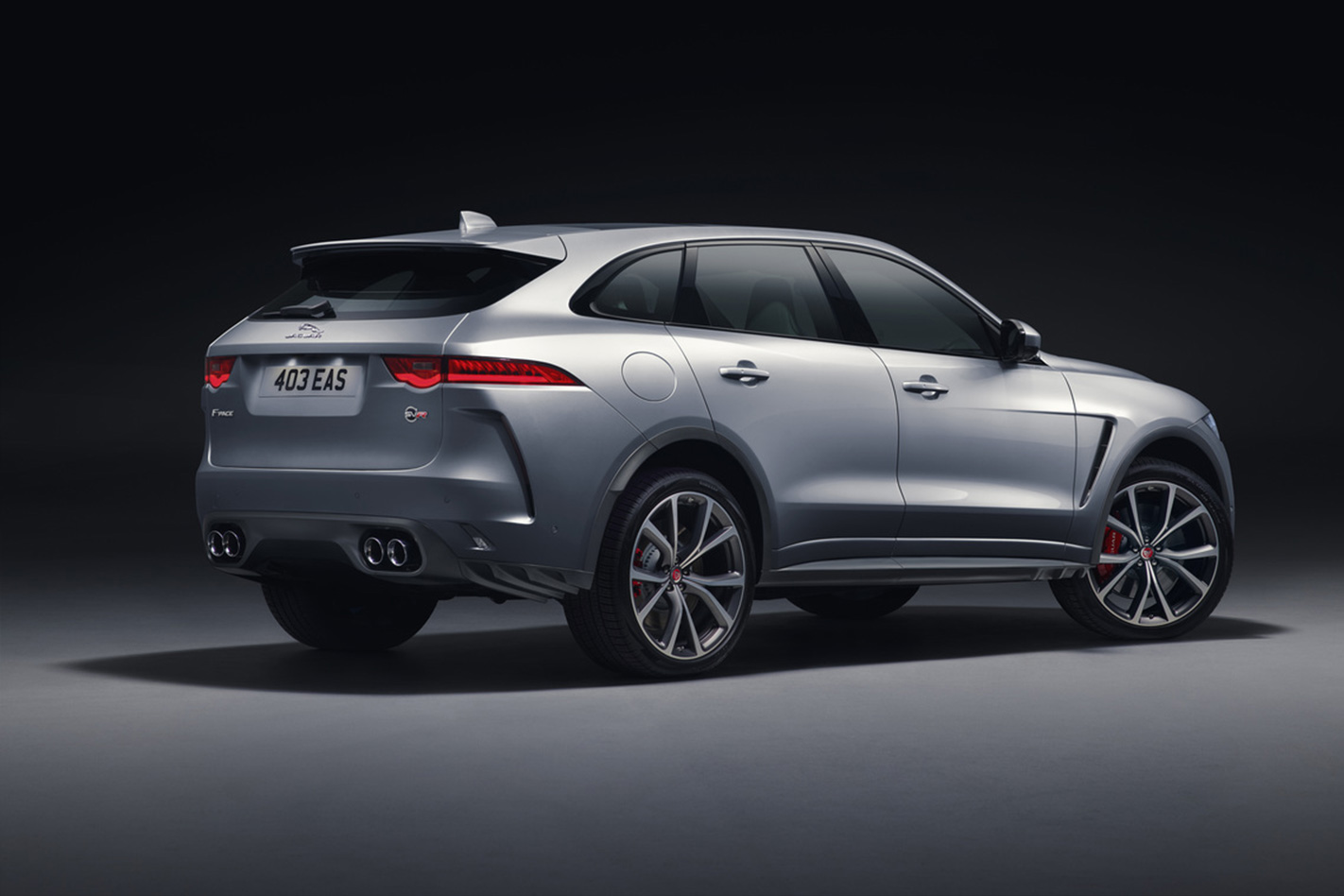
You’ll notice the F-Pace SVR growing large in your rear-vision mirror via its much larger air intakes. As it speeds past, you’ll catch the guard-mounted vents that help with airflow and high-speed stability, and the plumped guards. And as it disappears into the distance, you’ll take in the big rear spoiler, and listen as the straked diffuser with its quad active exhaust pipes, fed by 6.6kg-lighter tubes, washes the roar of the hard-working V8 over you.
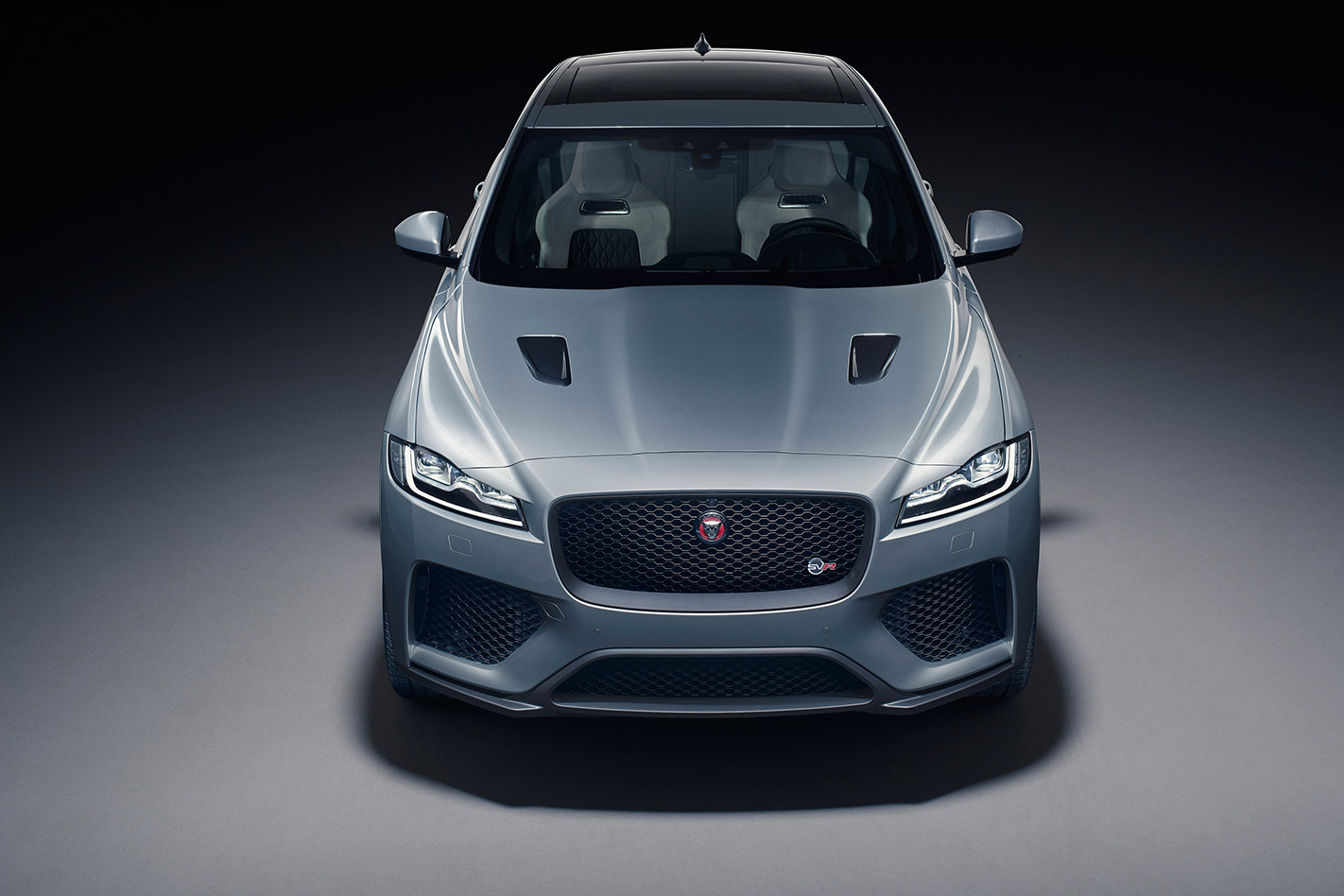
The Jaguar F-Pace SVR will sit on staggered 21- or 22-inch wheels depending on the box that’s ticked, with the rears sitting 25mm wider than the fronts. The bigger hoops are 2.4kg lighter at the front and 1.7kg lighter at the rear, and optimised to feed air into the larger 395mm front and 396mm rear brake discs.
The F-Pace SVR is the first of the Special Vehicle Operations-fettled cars to feature what it calls an electronic active rear differential, which we guess to mean the brakes will automatically grab a rear wheel that’s starting to show signs of spinning to improve straight-line acceleration. Traction is helped via on-demand all-wheel drive. As well, the SUV-SVR will use bespoke SVO-tuned active suspension, electric-assist power steering and dynamic driving modes.
There’s no word yet on an Australian arrival or pricing.
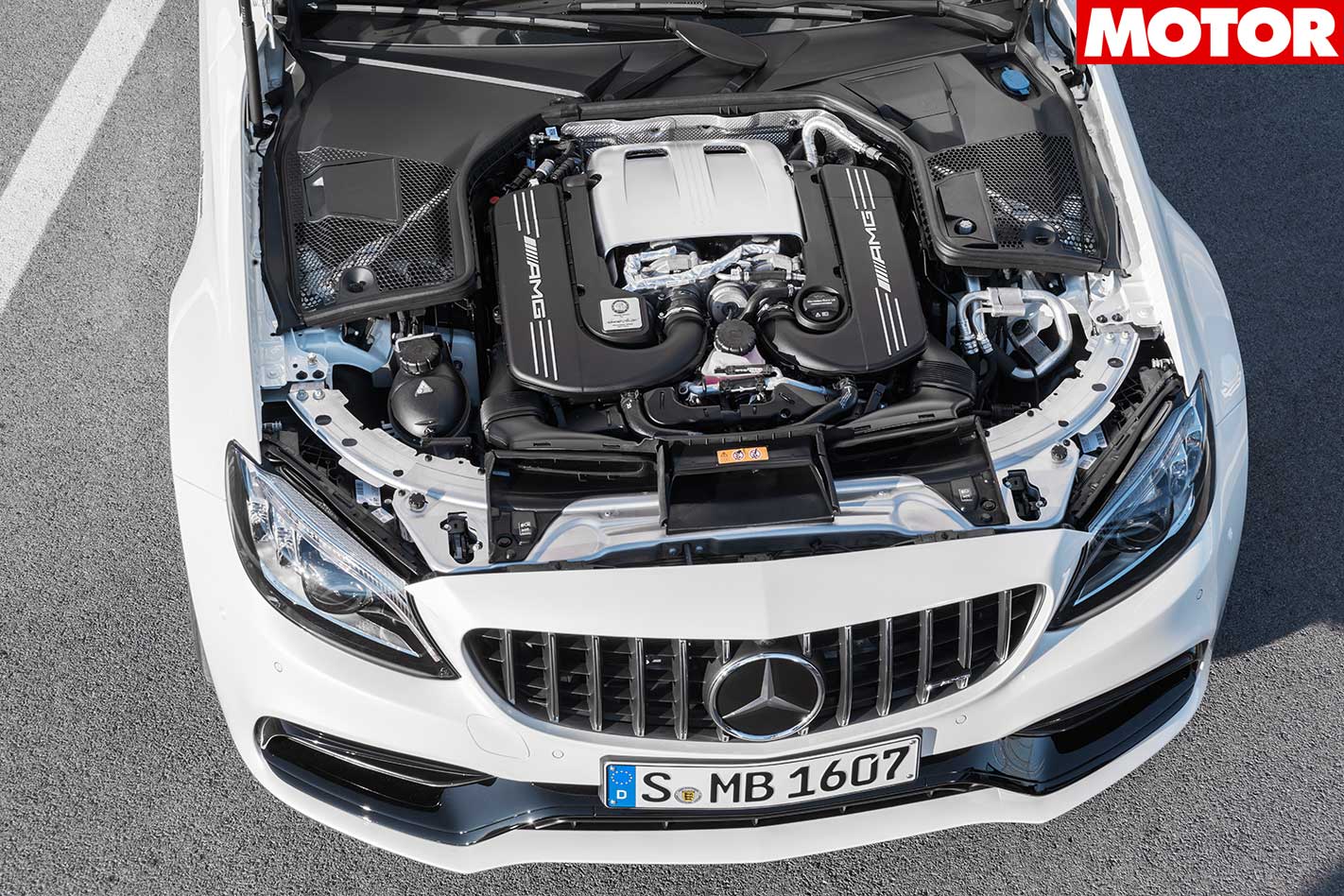
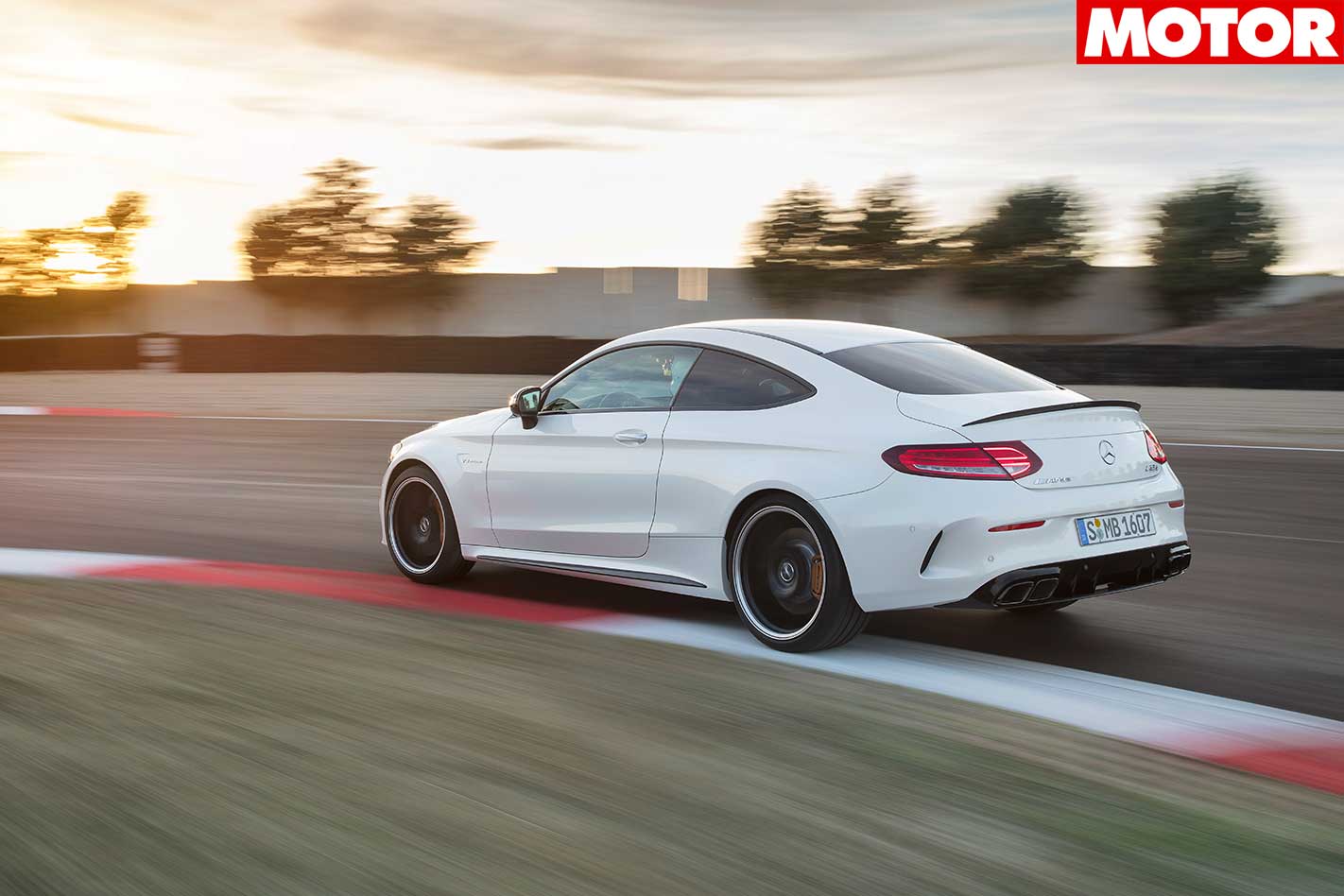
The Mercedes-AMG C63 and C63 S have received an update, giving them more features, sharper performance, and an updated design.
Engine outputs remain the same, with the C63 producing 350kW/650Nm, and the C63 S topping that with 375kW and 700Nm, but other features of the new C63 should make it a sharper performer.
Notably, the AMG C63 now features the 9-speed AMG Speedshift MCT wet-clutch gearbox, which shifts faster and weighs less than a torque converter.
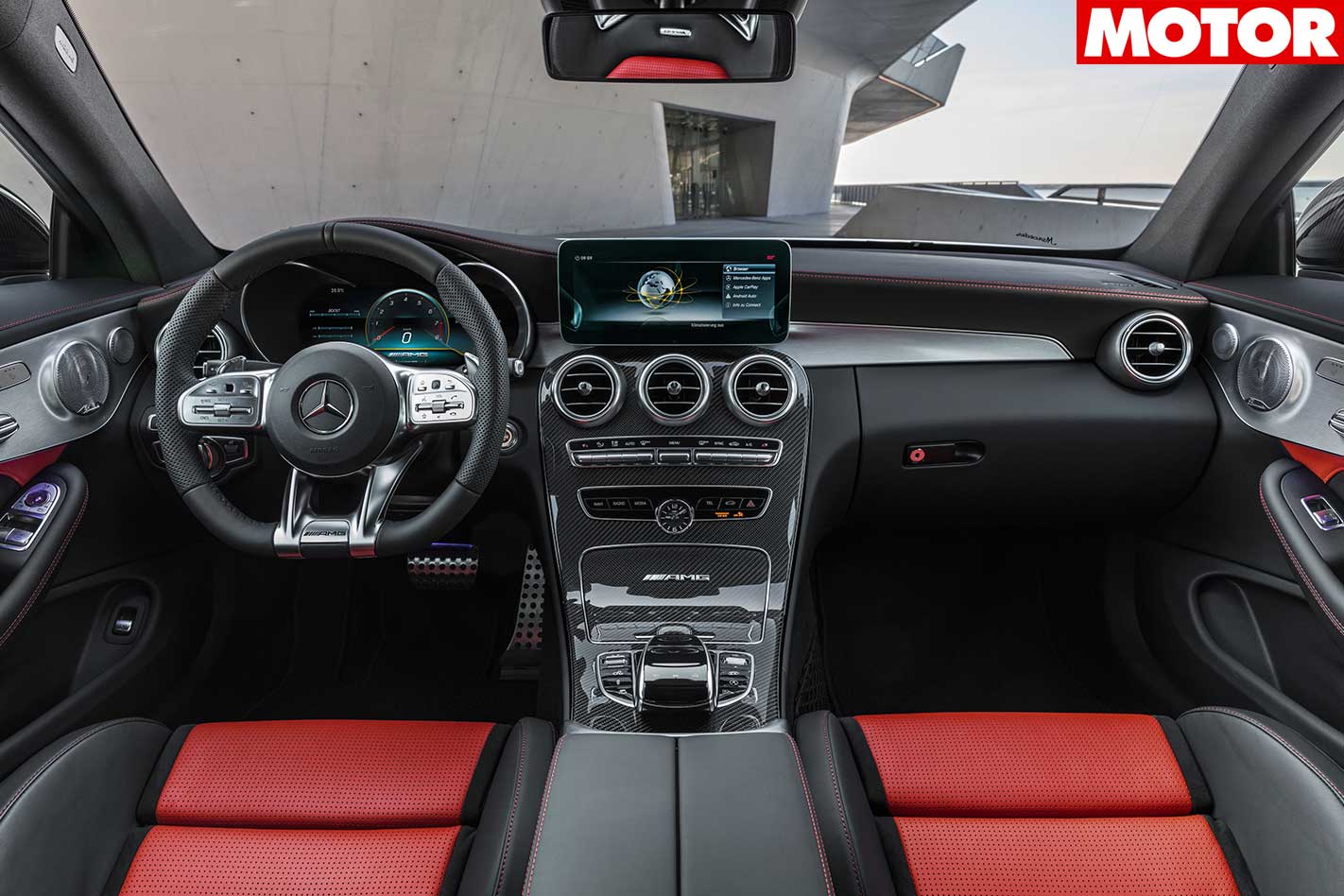
A new AMG steering wheel is found in the cabin, as well as new sports seats which have optional adjustable bolsters, heating, cooling, and neck-heating in the cabriolet variant.
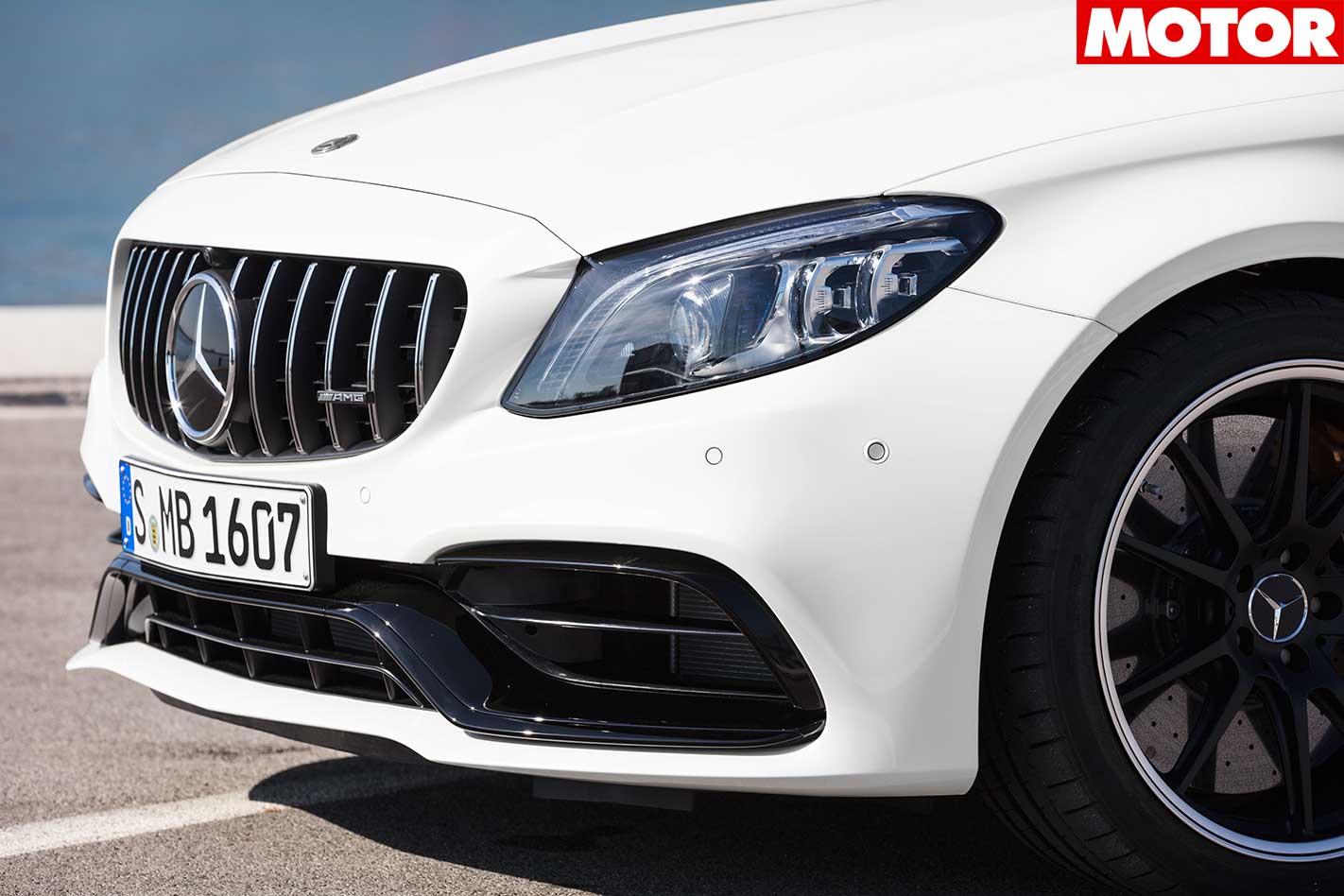
Visually, the C63 gains subtle design changes, such as a redesigned ‘transverse fin’ in the outer air inlets up front, or the altered tailpipe trim at the rear.
CEO of Mercedes-AMG Tobias Moers says It’s important the C63 remains up to date as one of AMG more popular models.
“The AMG C-Class is our best-selling model series and therefore a key cornerstone of our company’s success of recent years,” says Moers.
“As part of the latest facelift, we have upgraded all variants of the model series even more substantially.
“This relates to the 43-series models and especially, of course, to the AMG C63.
“The perfected driving dynamics and expressive design underscore the powerful, muscular character of the rear-wheel drive icon.”
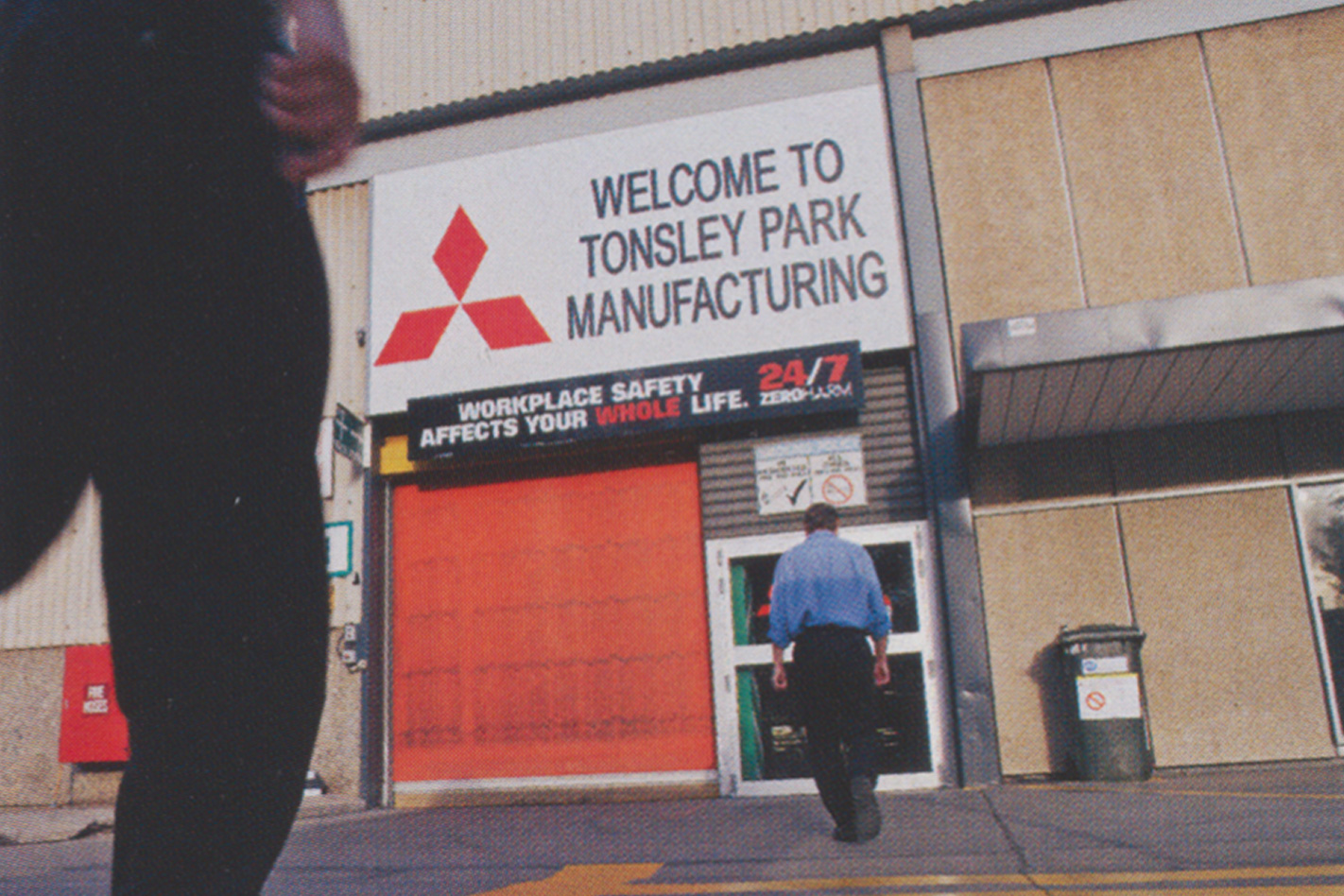
THE end of manufacturing at Mitsubishi’s Tonsley Park plant in Australia has meant the loss of 930 jobs. John Carey uncovers exactly what went wrong, and meets the workers preparing for an uncertain future.
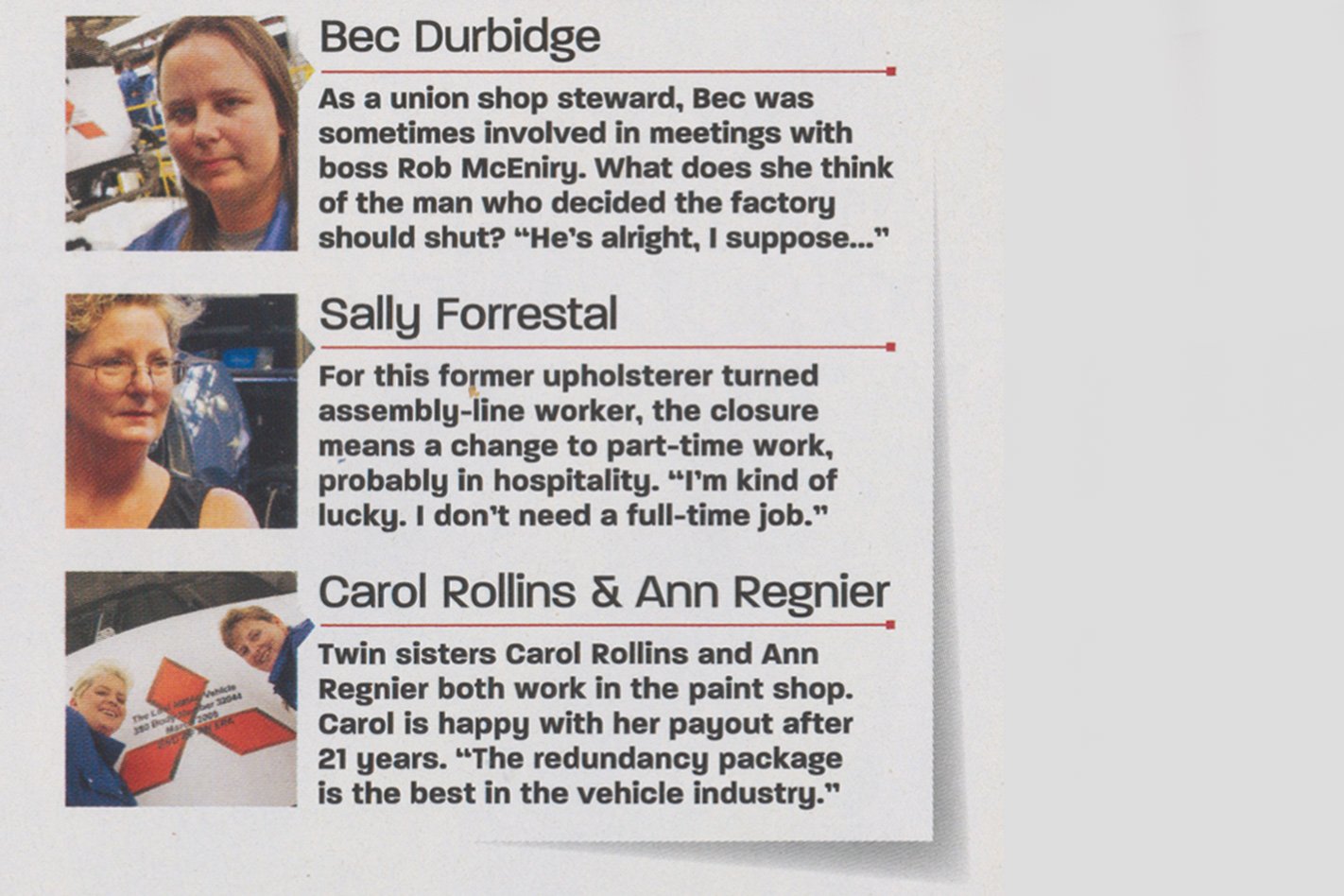
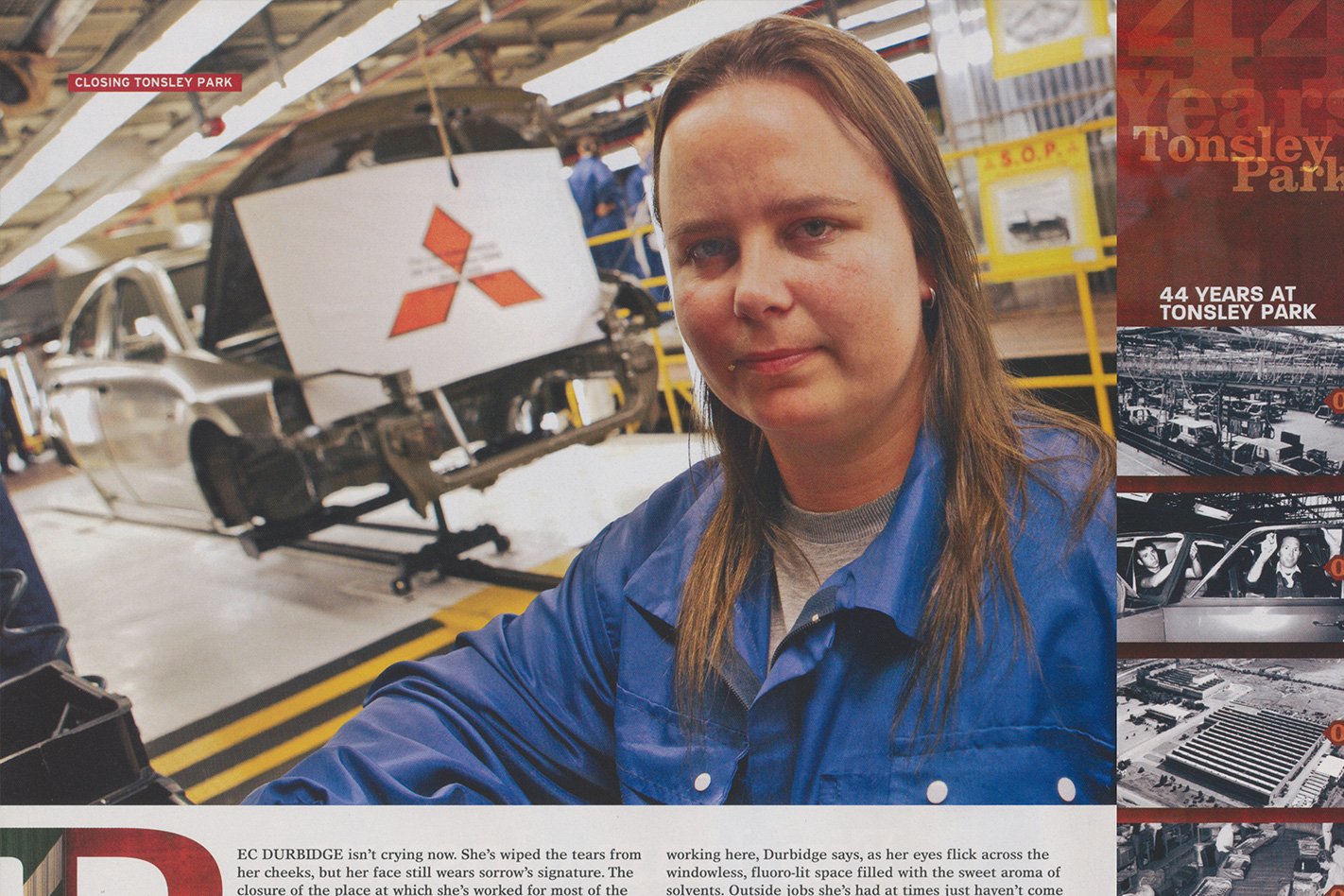
BEC DURBIDGE isn’t crying now. She’s wiped the tears from her cheeks, but her face still wears sorrow’s signature. The closure of the place at which she’s worked for most of the past 12 years is about to become very, very real. The last car body ever to pass through Tonsley Park’s paint shop will soon arrive. When the Mitsubishi 380 has been sprayed with its coat of platinum silver by Durbidge and the other paint shop workers, that’s it.
Finding Closure was first published in Wheels in May, 2008
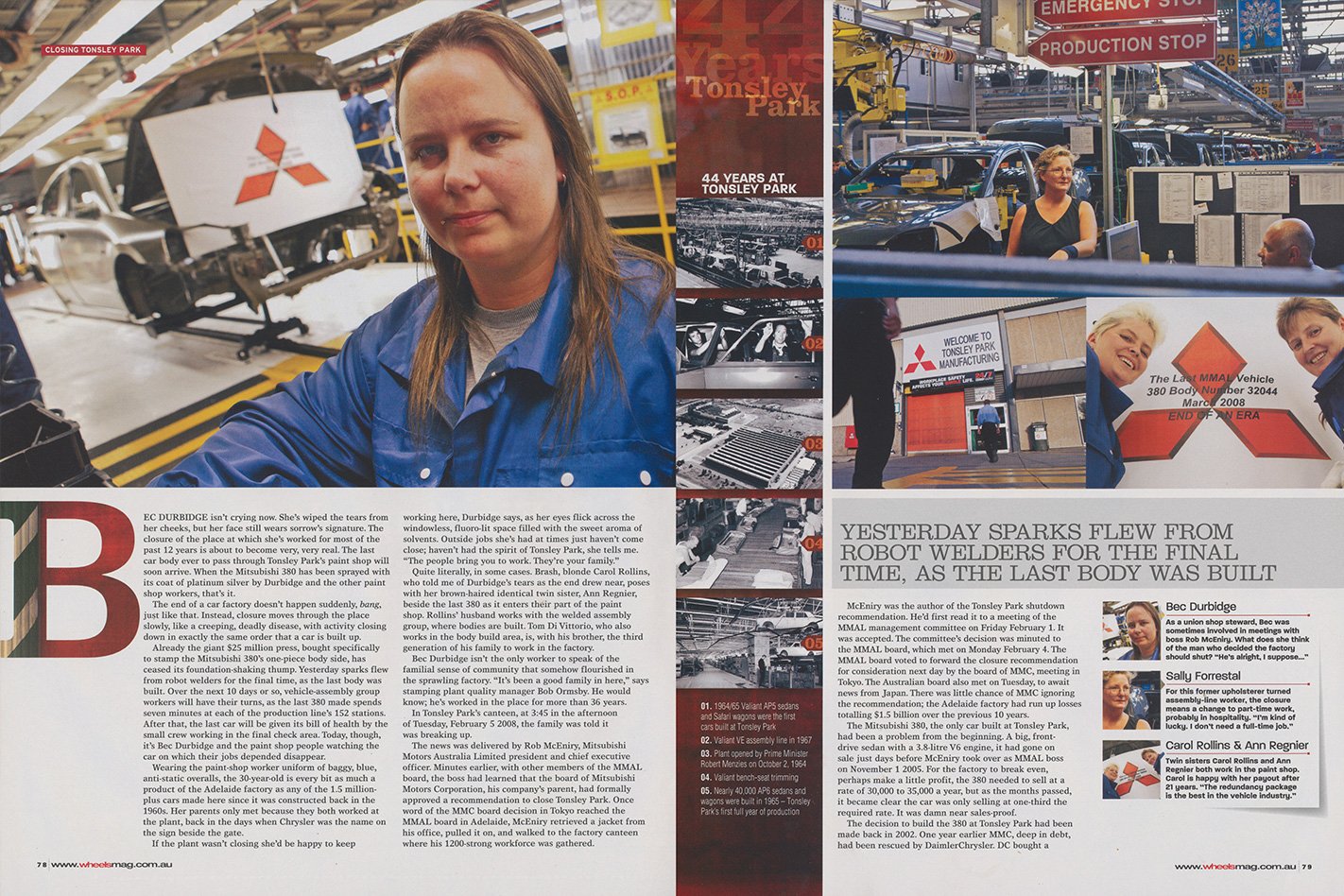
Wearing the paint-shop worker uniform of baggy, blue, anti-static overalls, the 30-year-old is every bit as much a product of the Adelaide factory as any of the 1.5 million-plus cars made here since it was constructed back in the 1960s. Her parents only met because they both worked at the plant, back in the days when Chrysler was the name on the sign beside the gate.
If the plant wasn’t closing she’d be happy to keep working here, Durbidge says, as her eyes flick across the windowless, fluoro-lit space filled with the sweet aroma of solvents. Outside jobs she’s had at times just haven’t come close; haven’t had the spirit of Tonsley Park, she tells me. “The people bring you to work. They’re your family.”
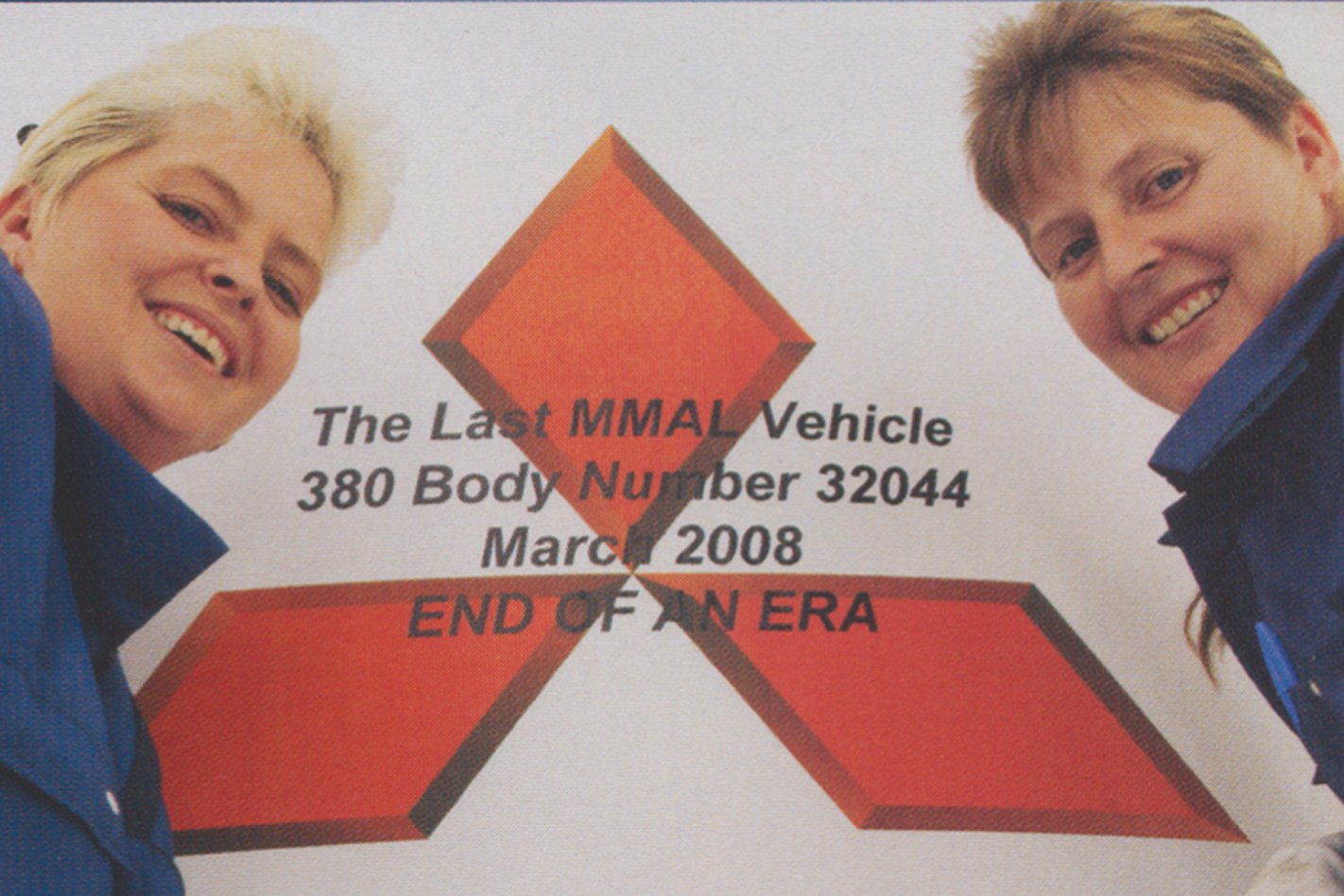
Quite literally, in some cases. Brash, blonde Carol Rollins, who told me of Durbidge’s tears as the end drew near, poses with her brown-haired identical twin sister, Ann Regnier, beside the last 380 as it enters their part of the paint shop. Rollins’ husband works with the welded assembly group, where bodies are built. Tom Di Vittorio, who also works in the body build area, is, with his brother, the third generation of his family to work in the factory. Bee Durbidge isn’t the only worker to speak of the familial sense of community that somehow flourished in the sprawling factory. “It’s been a good family in here,” says stamping plant quality manager Bob Ormsby. He would know; he’s worked in the place for more than 36 years.
The news was delivered by Rob McEniry, Mitsubishi Motors Australia Limited president and chief executive officer. Minutes earlier, with other members of the MMAL board, the boss had learned that the board of Mitsubishi Motors Corporation, his company’s parent, had formally approved a recommendation to close Tonsley Park. Once word of the MMC board decision in Tokyo reached the MMAL board in Adelaide, McEniry retrieved a jacket from his office, pulled it on, and walked to the factory canteen where his 1200-strong workforce was gathered.
McEniry was the author of the Tonsley Park shutdown recommendation. He’d first read it to a meeting of the MMAL management committee on Friday February 1. It was accepted. The committee’s decision was minuted to the MMAL board, which met on Monday February 4. The MMAL board voted to forward the closure recommendation for consideration next day by the board of MMC, meeting in Tokyo. The Australian board also met on Tuesday, to await news from Japan. There was little chance of MMC ignoring the recommendation; the Adelaide factory had run up losses totalling $1.5 billion over the previous 10 years.
The Mitsubishi 380, the only car built at Tonsley Park, had been a problem from the beginning. A big, front-drive sedan with a 3.8-litre V6 engine, it had gone on sale just days before McEniry took over as MMAL boss on November 1 2005. For the factory to break even, perhaps make a little profit, the 380 needed to sell at a rate of 30,000 to 35,000 a year, but as the months passed, it became clear the car was only selling at one-third the required rate. It was damn near sales-proof.
MMAL boss at the time, Tom Phillips, worked hard to persuade the Germans and Americans installed by DC to resuscitate MMC that Tonsley Park should be given a car to take the place of the ageing Magna. The program that was given the green light was ambitious. MMAL would build a toughened, V6-only version of the Mitsubishi Galant recently designed for the North American market that would go on sale in Australia from 2005. The program codename was PS41. The Adelaide factory would also develop a long-wheelbase version of the car, codenamed PS41L, built in both right-hand and left-hand drive from 2007. The left-hand drive versions would be exported in significant numbers.
It never happened. In 2004, the brief marriage between DC and MMC came to an end when the DC board refused to fund the next stage of an expensive turnaround plan. The Mitsubishi family of companies were forced by corporate pride to come to the rescue of their troubled carmaking relative. In the round of cost-cutting that followed the arrival of new MMC management, program PS41L was canned. Tonsley Park would only build PS41, the car that was launched in October the following year as the 380.
When McEniry arrived at MMAL, he didn’t focus immediately on the 380. There were bigger issues to be dealt with first, he believed. The Mitsubishi brand in Australia had been badly damaged, and needed urgent repairs. Imported models wearing the tri-diamond badge were mostly mediocre and outmoded, a consequence of cramped research and development, and product development budgets in Japan. Years of continual media speculation in Australia about the possible closure of Tonsley Park, led by the ABC, was another reason for people to avoid Mitsubishi dealerships.
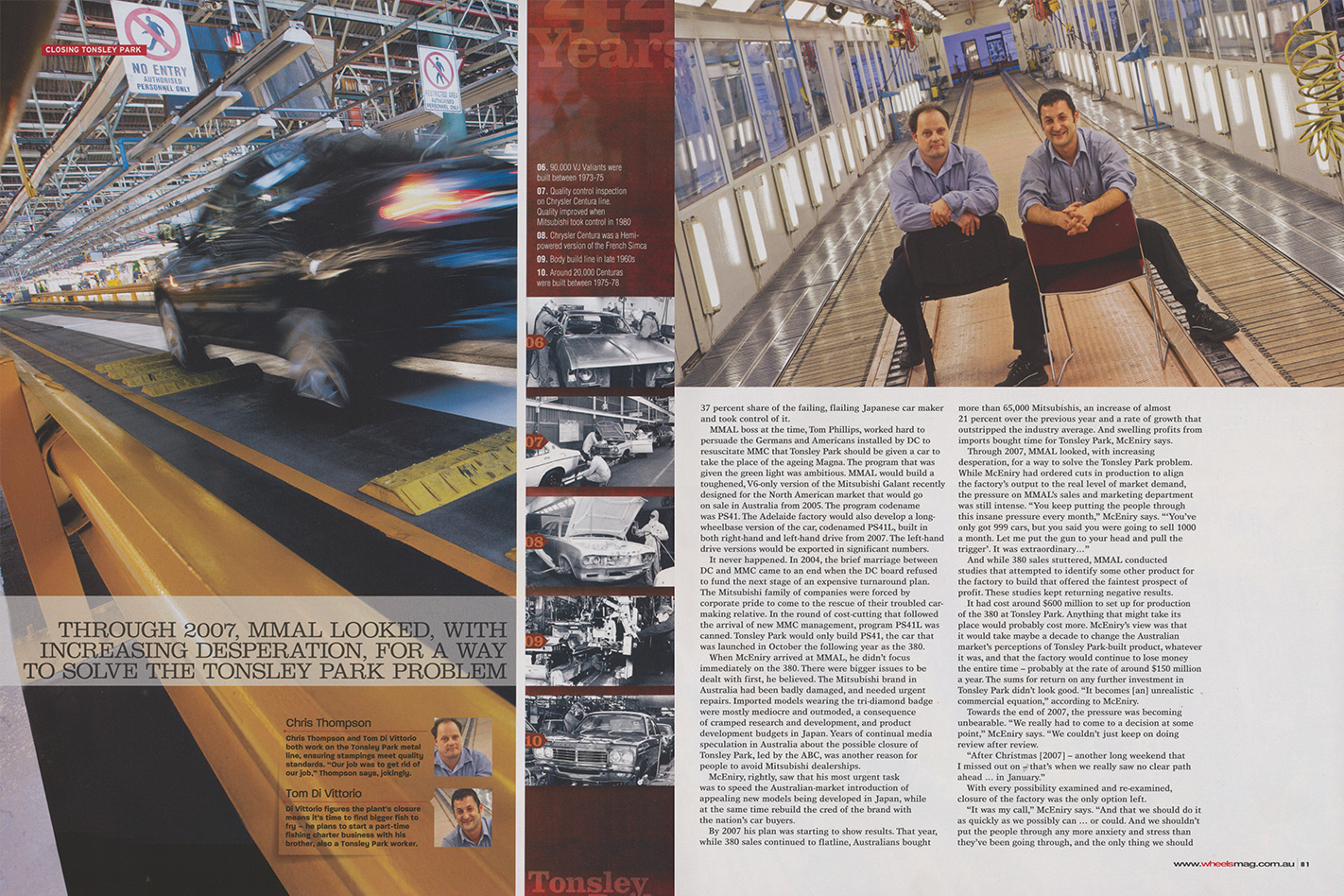
Through 2007, MMAL looked, with increasing desperation, for a way to solve the Tonsley Park problem. While McEniry had ordered cuts in production to align the factory’s output to the real level of market demand, the pressure on MMAL’s sales and marketing department was still intense. “You keep putting the people through this insane pressure every month,” McEniry says. ‘”You’ve only got 999 cars, but you said you were going to sell 1000 a month. Let me put the gun to your head and pull the trigger’. It was extraordinary …
And while 380 sales stuttered, MMAL conducted studies that attempted to identify some other product for the factory to build that offered the faintest prospect of profit. These studies kept returning negative results.
It had cost around $600 million to set up for production of the 380 at Tonsley Park. Anything that might take its place would probably cost more. McEniry’s view was that it would take maybe a decade to change the Australian market’s perceptions of Tonsley Park-built product, whatever it was, and that the factory would continue to lose money the entire time -probably at the rate of around $150 million a year. The sums for return on any further investment in Tonsley Park didn’t look good. “It becomes [an] unrealistic commercial equation,” according to McEniry.
After Christmas [2007] – another long weekend that I missed out on – that’s when we really saw no clear path ahead … in January.” With every possibility examined and re-examined, closure of the factory was the only option left.
“It was my call,” McEniry says. “And that we should do it as quickly as we possibly can … or could. And we shouldn’t put the people through any more anxiety and stress than they’ve been going through, and the only thing we should be interested in, from this point on, is the people.”
McEniry broke down as he delivered the bad news to the workers gathered in the canteen. Production of the 380 would cease at the end of March, he told them, and 930 of them would lose their jobs. The executive’s emotion made an impression. “I don’t often see men cry,” says Carol Rollins.
“It was a bit like a funeral,” recalls press shop senior leader-trainer Andrew Coad. “Quite horrible, really.” For others, the news was almost welcome. “It’s like being around someone dying a long, slow, painful death,” says vehicle assembly group leader-trainer Scott Hann of the period leading up to the closure announcement. “It’s kind of a relief when it happens.”
There was a moment of utter silence. Unbelievably, the hush was broken by applause for McEniry. The anguish he had been through was plain to see, and the workforce seemed to have understood how hard it must have been. Some of them had known for years that the factory’s future was shaky. Quality assurance and production engineering manager Peter Angrave pinpoints the 2004 decision to kill the PS41L as crucial. “Some of us realised the possible outcome,” he says. Colleagues Mark Scott and quiet quality engineer Tony Nash, nod in agreement.
Others had hoped against hope that the 380 would at least serve out the term of its natural life, around five years. “There was all this talk about an agreement with the government about continuing in production until 2010,” recalls Peter Ryan, a section manager with the vehicle assembly group. Bob Ormsby agrees. “We all thought it would be about 2010.”
Others cite high petrol prices as the big problem. It certainly didn’t help that Hurricane Katrina blew into Louisiana across the oil-rig-studded Gulf of Mexico soon after the 380’s launch, causing fuel prices to spike all over the world. But with other big Australian-made cars continuing to sell at profitable volumes, and the ever-increasing popularity of SUVs, some at Tonsley Park dispute this view. Peter Angrave is one who doesn’t buy the theory that fuel prices alone killed the 380. “People just aren’t buying family-size cars so much these days.”
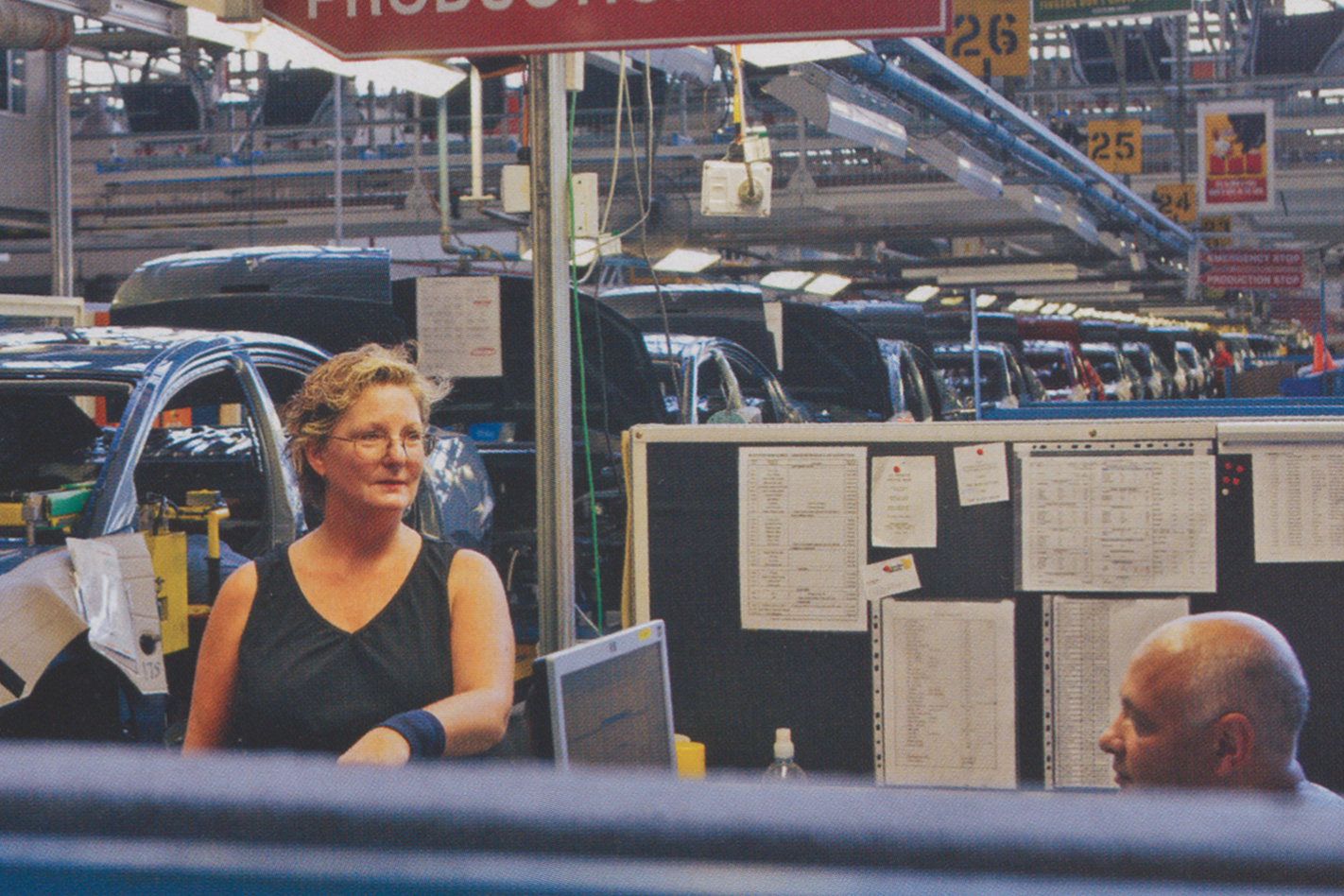
Some Tonsley Park workers believe the loss of the Magna range’s wagon, all-wheel-drive and LPG fuel options with the introduction of the 380 played a role. More frequently mentioned is the Australian market’s supposed dislike of the 380’s front-wheel-drive layout. Although many of the workers I meet are happy Magna or 380 owners, they suspect other car buyers are different. “You always hear that Australians don’t like front-wheel drive,” says grandmother of five Sally Forrestal, a leader-trainer in vehicle assembly.
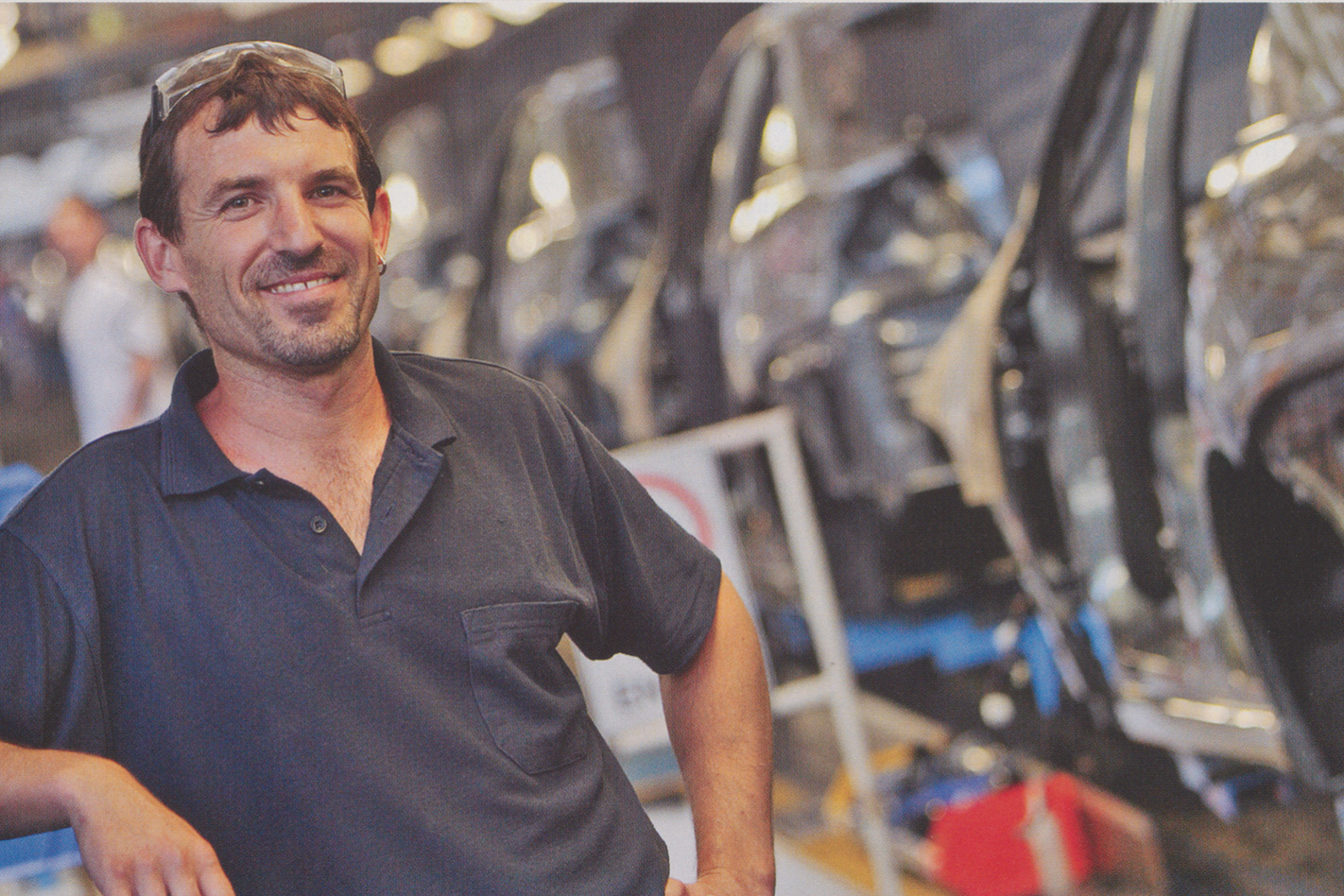
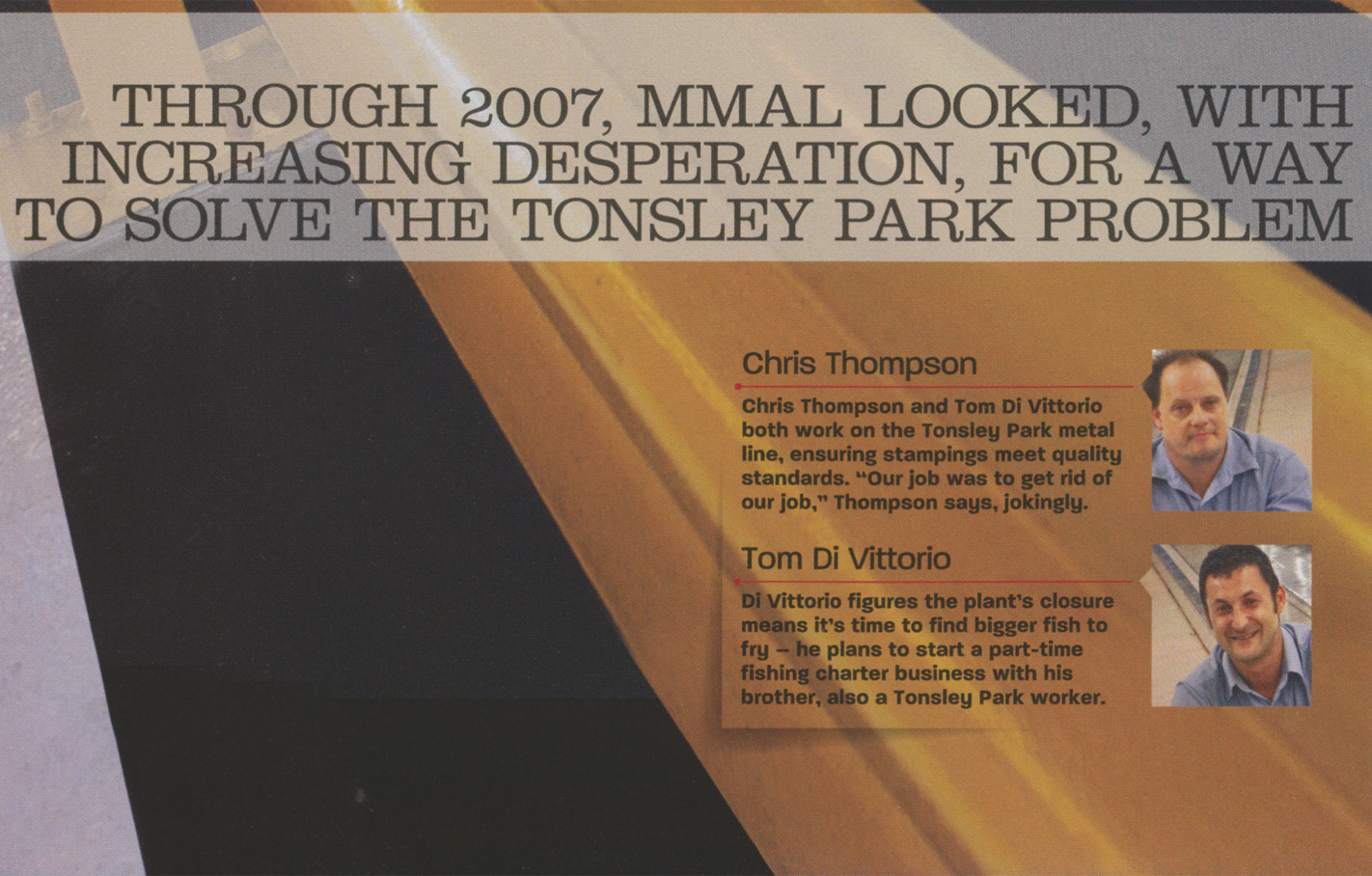
Some Tonsley Park workers are more blunt. “Australians don’t seem to care too much about quality,” Chris Thompson says. “If quality sold, we’d still be in business.” A senior leader-trainer on the factory’s metalline, he has five children and is the family’s sole breadwinner. Thompson hasn’t found a new job, but will work on at Tonsley Park until December, part of a skeleton crew selected to stay on to make a stockpile of 280,000 spare parts for the 380 and earlier Magna models.
Thompson sees the closure of his workplace for the last 16 years as a loss to the nation, and it makes him angry. “I think Australia needs to take a good, hard look at itself,” he says. “We’re good at digging stuff up, and then buying it back when it’s been turned into something else, somewhere else.” Like Thompson, some other Tonsley Park workers are profoundly pessimistic about the future of Australia’s car industry.
“You’ll be doing the Ford story in three years time,” self-appointed press-shop jester Andrew Coad tells me. “I hope they survive, but … “
Others recognise the futility of their efforts to make the 380 a success, but take pride in how hard they tried. “We all wanted to give it our best go,” says Peter Angrave. “We all bought into the struggle.” Mark Scott points to a graph showing the factory’s own analysis of 380 quality, which improved rapidly after start of production and then held below the target fault rate with astonishingly little deviation from the very low average. “As you can see, we fought one hell of a battle.”
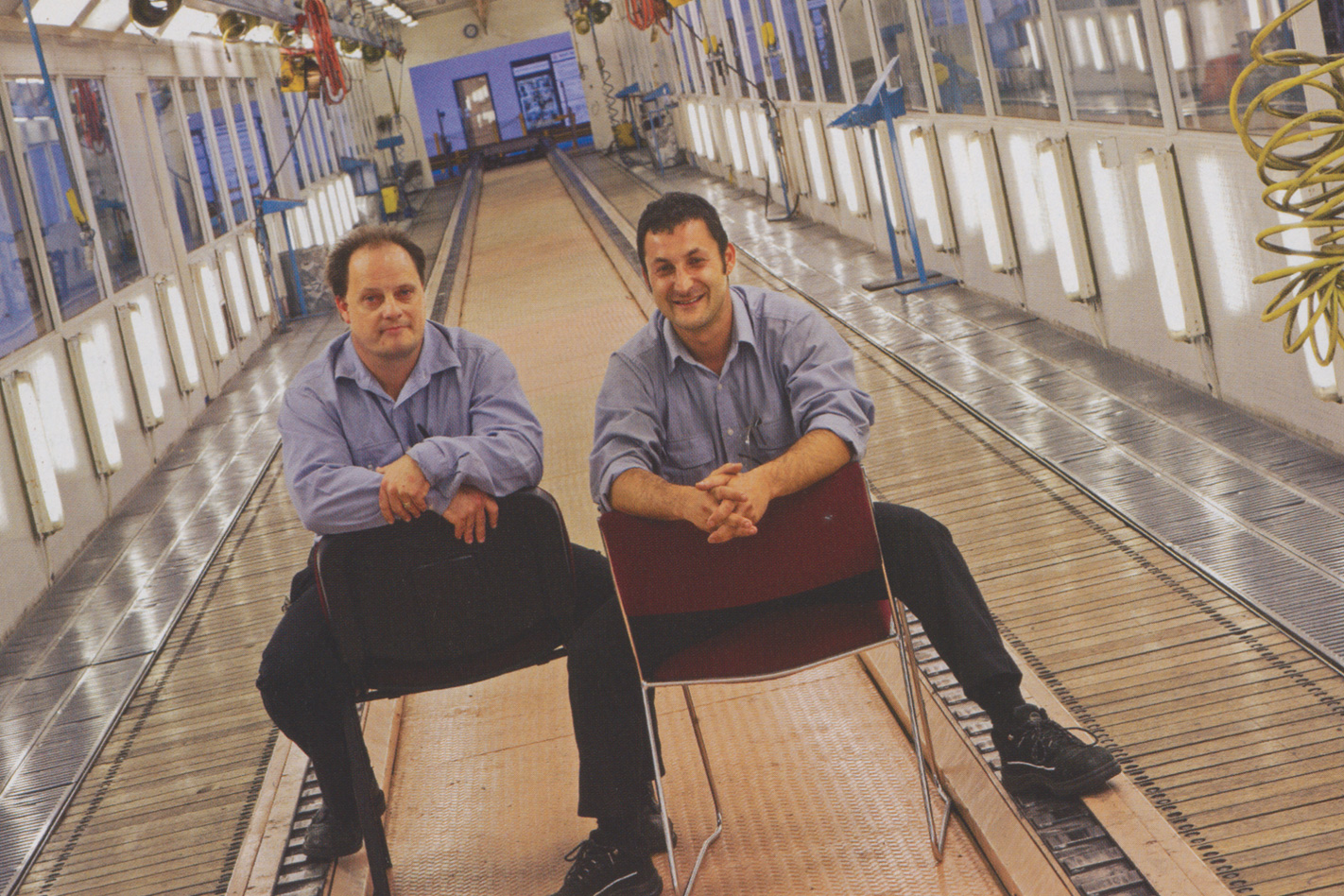
In return for the demands it made, Mitsubishi encouraged and invested in the training of Tonsley Park’s workforce. All of it. Peter Angrave, who started as a trade apprentice and gradually rose over 38 years to a senior management position, puts it succinctly. “The company has given us an education. It’s like a big university.” Angrave is certainly smart enough to see the big picture, and the threat to manufacturing industry in Australia that globalism poses. “The thing that really gets me is all the talk of a level playing field,” he says. How can Australia compete on equal terms with countries where our occupational health and safety, environmental and mandatory superannuation requirements don’t exist, he wonders.
Well trained and highly skilled, and arguably the best car makers in the country, there’s pride at Tonsley Park even as the day of defeat looms. Building cars is different, somehow, from other manufacturing industries, and MMAL’s workers know it. Robot programmer and press operator Greg Shephard will walk straight into a new job when Tonsley Park shuts. But he doesn’t think working for packaging company Amcor will provide the same problem-solving satisfaction as stamping out cars. “It’s only a box .. . “
Some of the older workers, like Bob Ormsby, Peter Ryan and Sally Forrestal, have decided they will look for part-time work. Others have decided to go into business for themselves. Tom Di Vittorio aims to launch a part-time fishing charter business with his brother, but has found a safety-net job at his old trade of panelbeating, too. Carol Rollins’ husband plans to set up a frozen-goods delivery round.
But the majority believe they’ll have to re-train. Some of the men are aiming to update their skills, or learn new ones. Trades are a popular choice, with several planning to begin mature-age apprenticeships. Bee Durbidge, too, is planning a career change. She thinks horticulture is a smart choice. “I want to get into something that’s not going to close down …”
Jaguar Land Rover has created another V8 SUV, but this time it’s wearing a Jaguar badge.
The Jaguar F-Pace SUV is a 404kW/680Nm crossover SUV thanks to JLR Special Vehicle Operations’ supercharged 5.0-litre V8.
Jag claims it’ll hit 100km/h from a standstill in just 4.3 seconds, then on to a top speed of 283km/h.
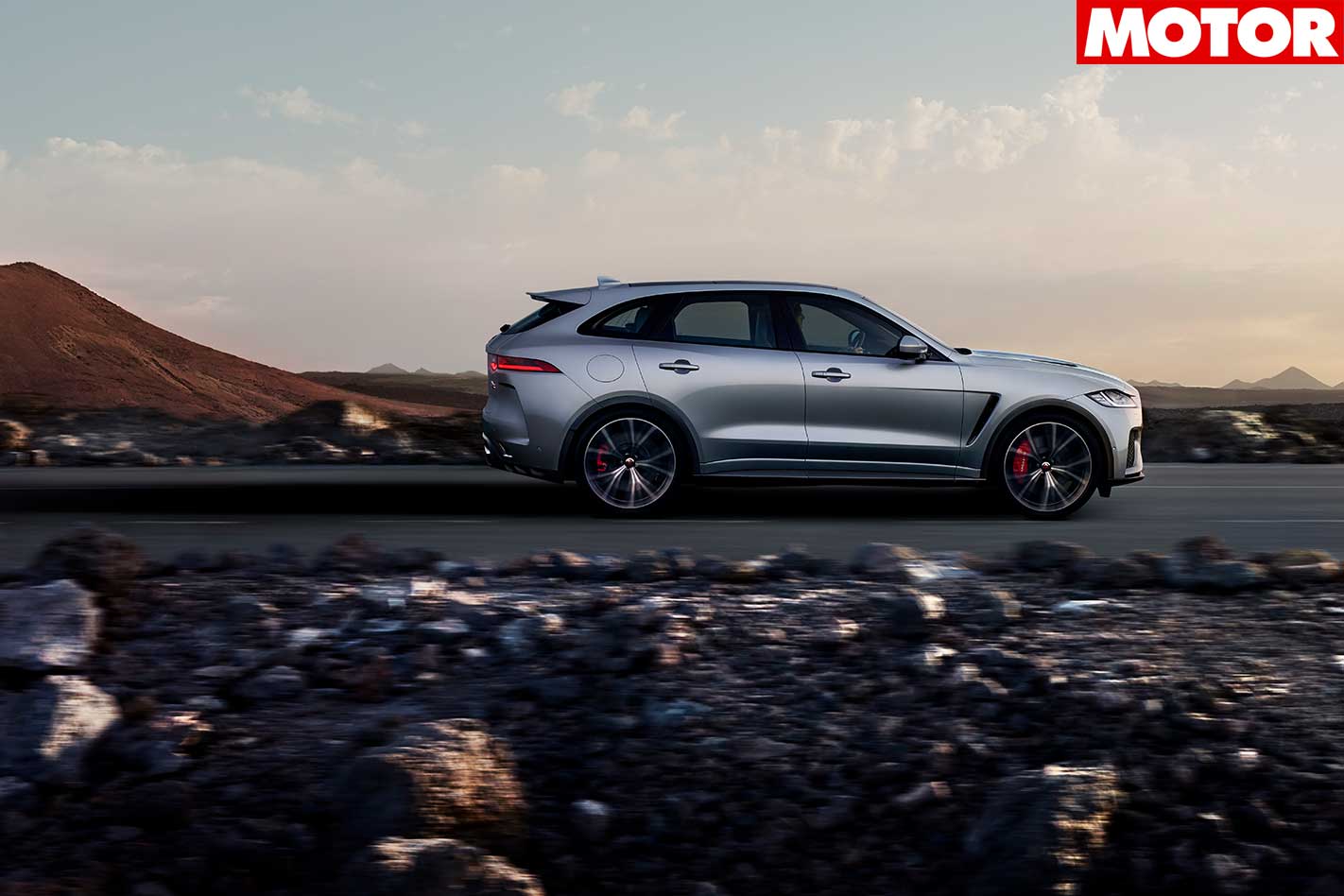
The SVR has been endowed with aerodynamic upgrades, which include larger air intakes to lower pressure in the wheel arches and provide more high-speed stability, as well as improving cooling.
It’s also been differently styled to be more muscular than other F-Paces, and the chassis underneath has progressive front and rear springs that are 30 and 10 per cent stiffer respectively.
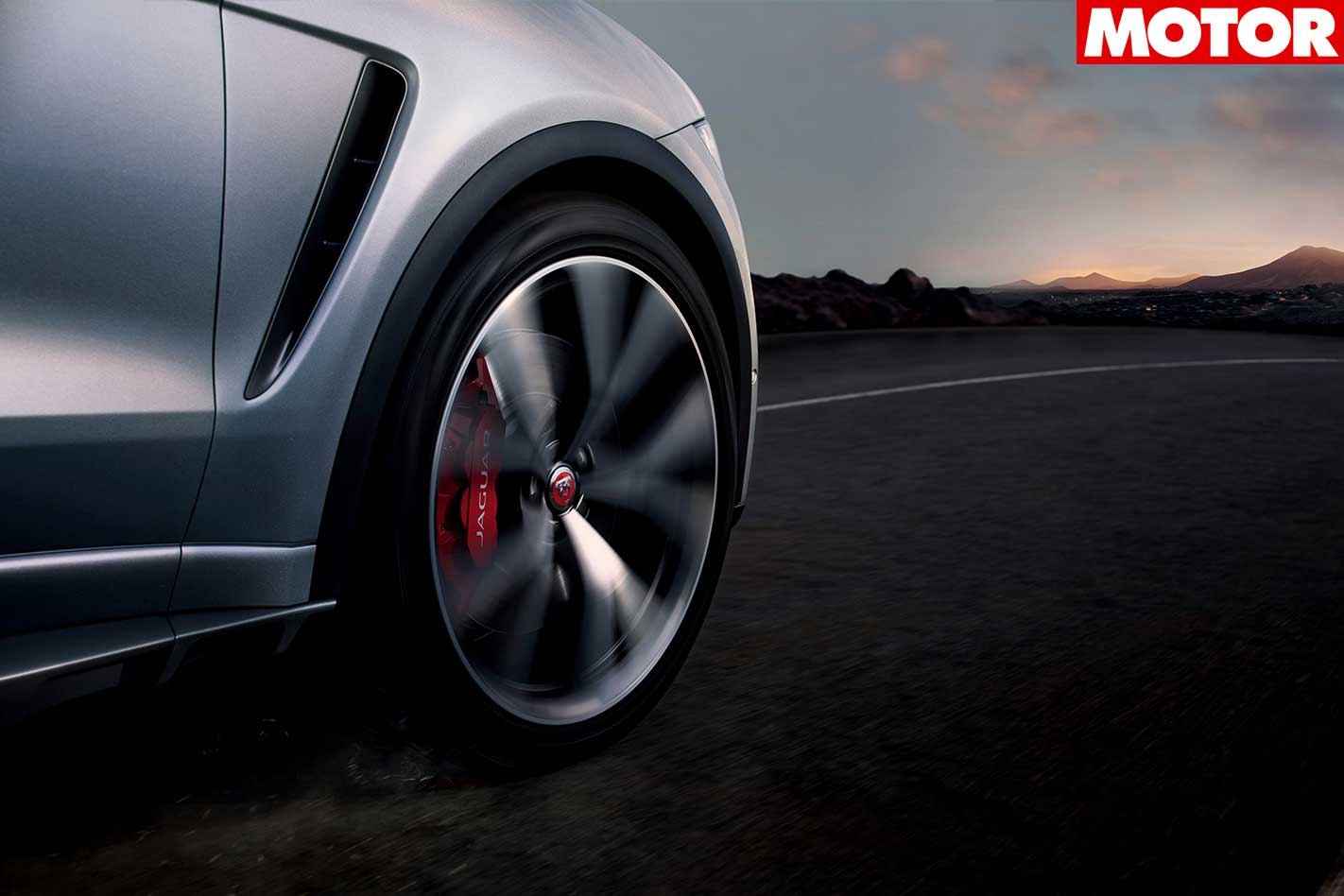
“The F-Pace SVR delivers the handling and agility to match its performance,” says Cross.
“Everything from the steering to the bespoke suspension set-up has been tuned specifically for our performance SUV and the result is a vehicle that lives up to the promise of both the F-Pace and SVR names.”
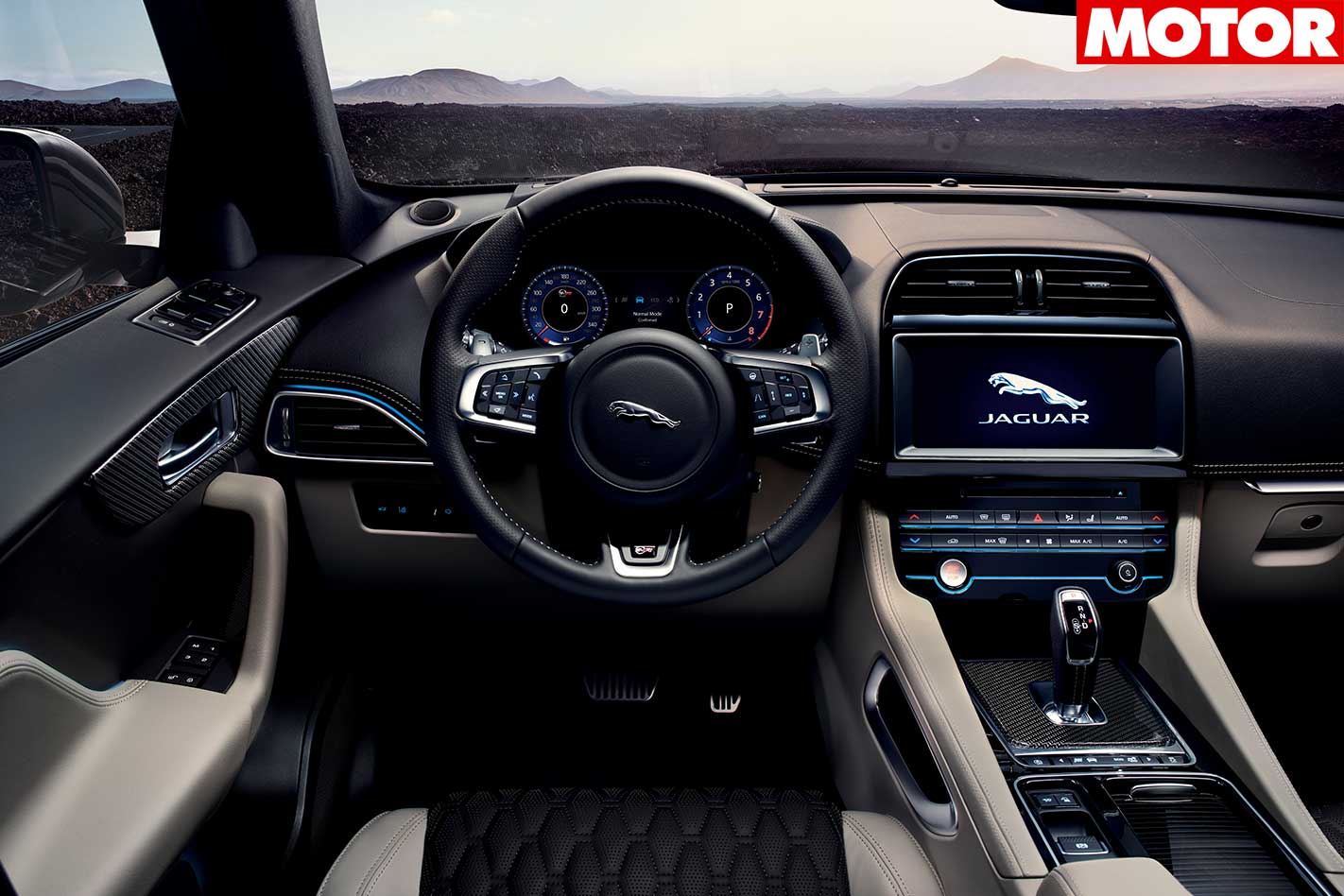
Jaguar Land Rover chief engineer Mike Cross says the F-Pace has to be set up to handle its newfound power.
The F-Pace SVR is available mid-year in the UK, with local pricing expected to be announced soon.